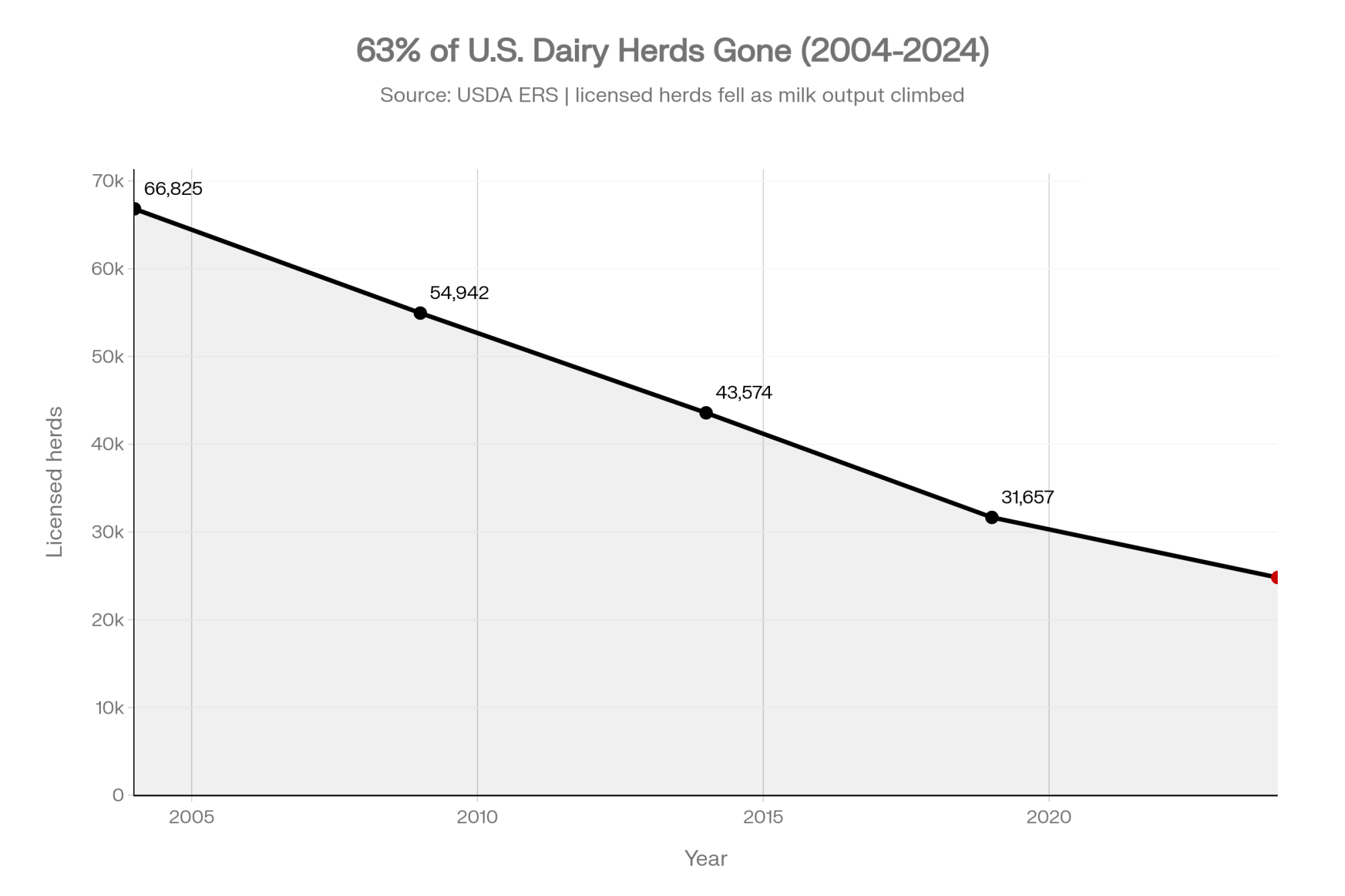
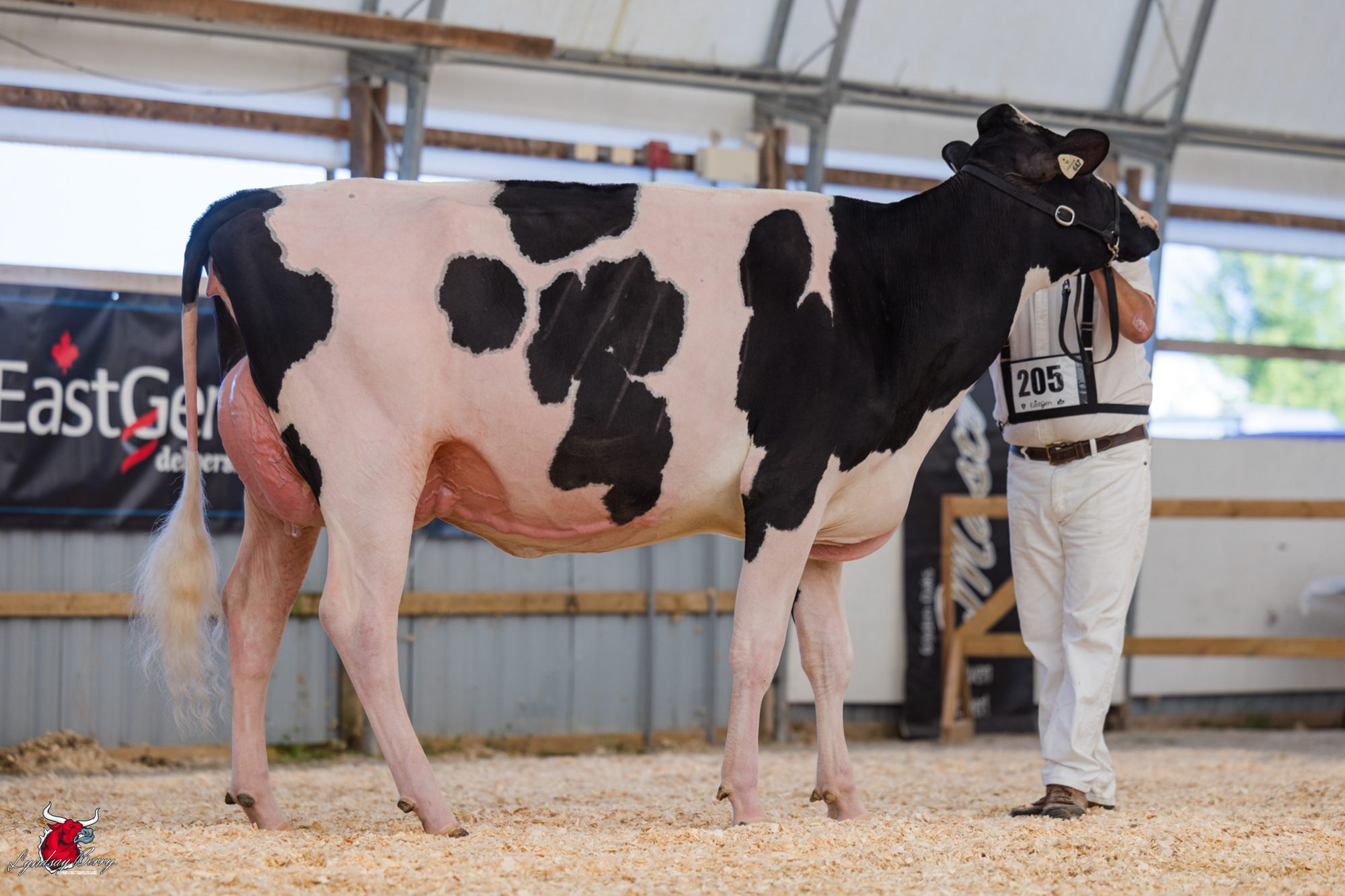
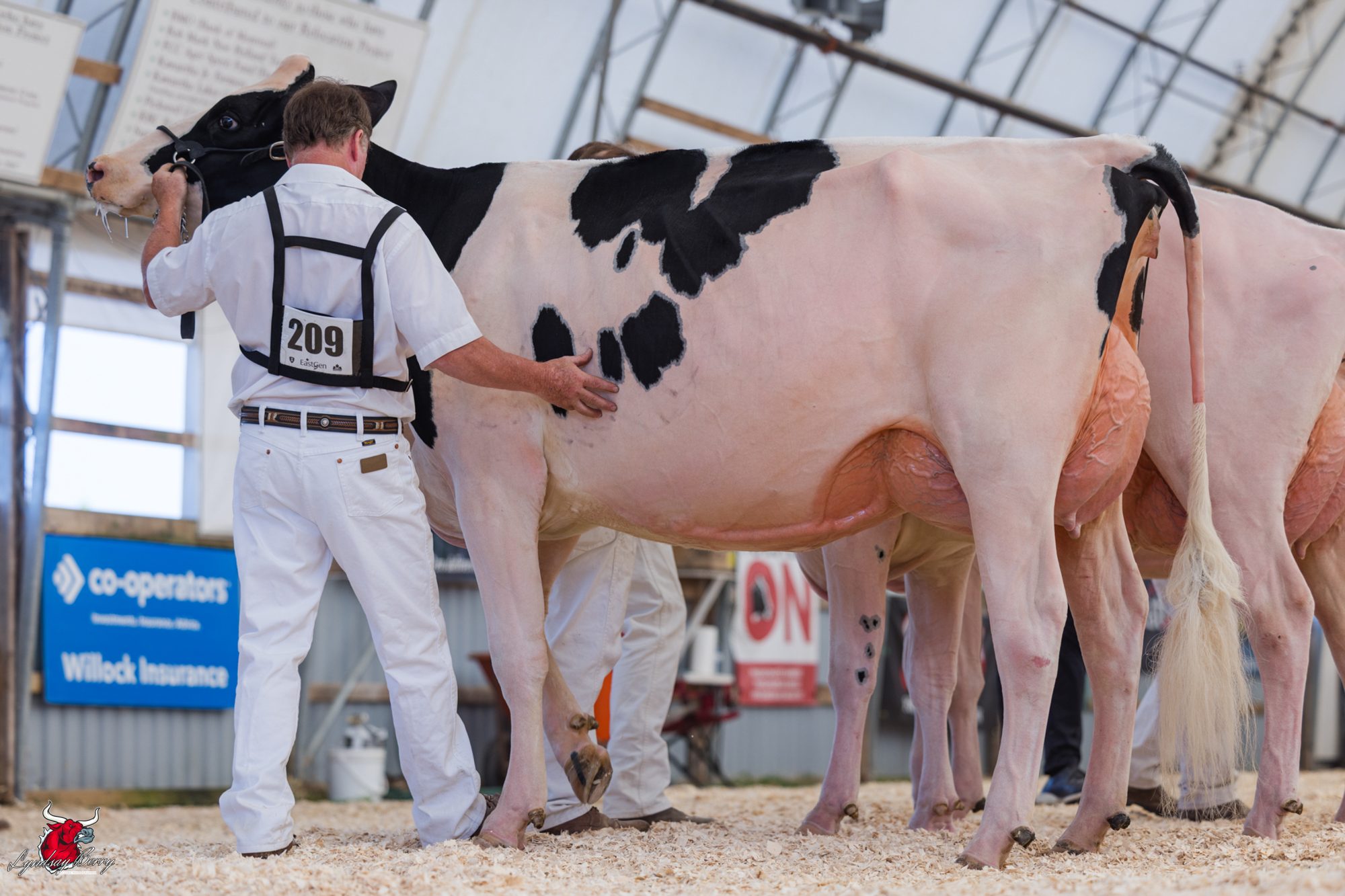
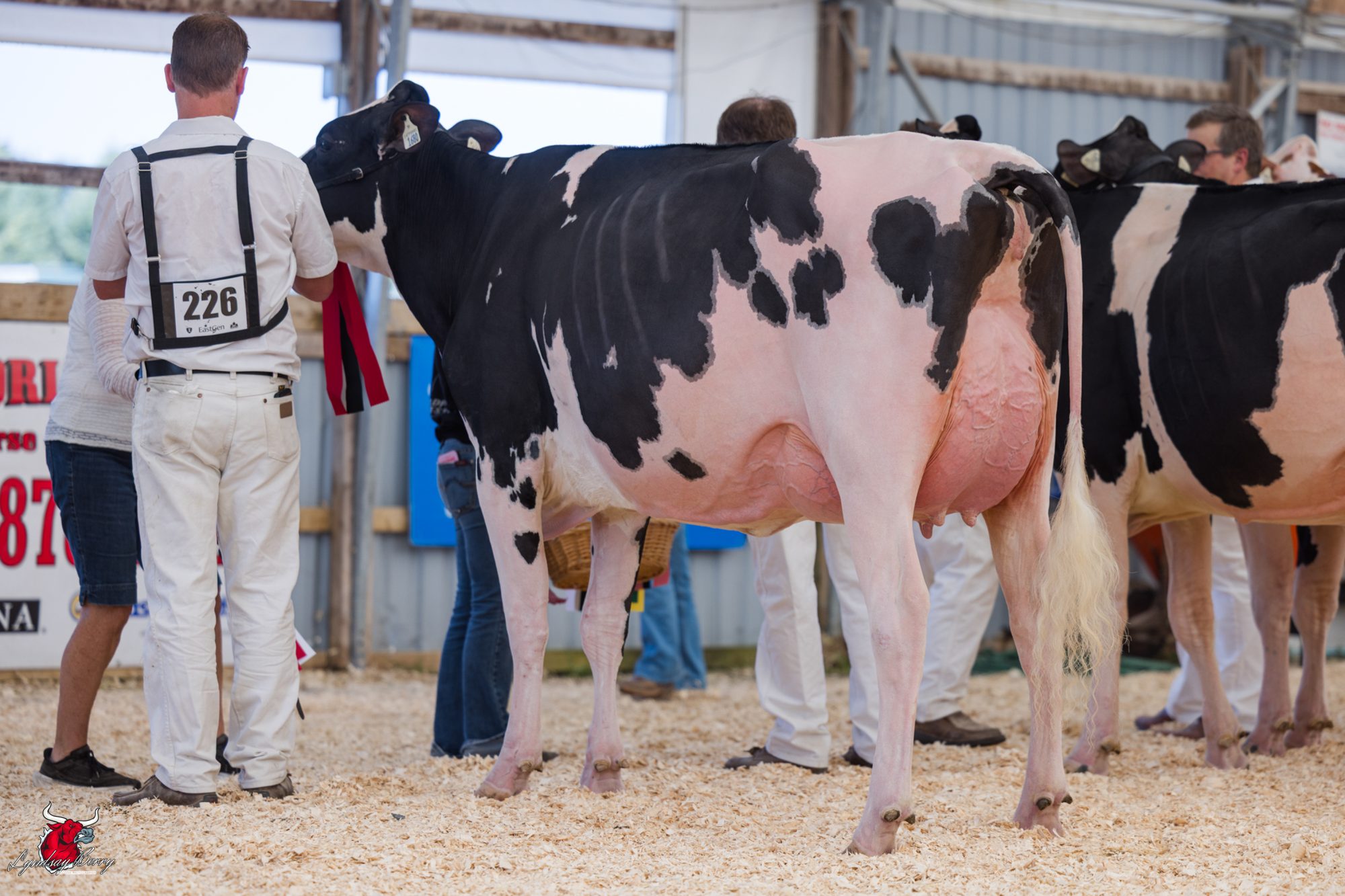
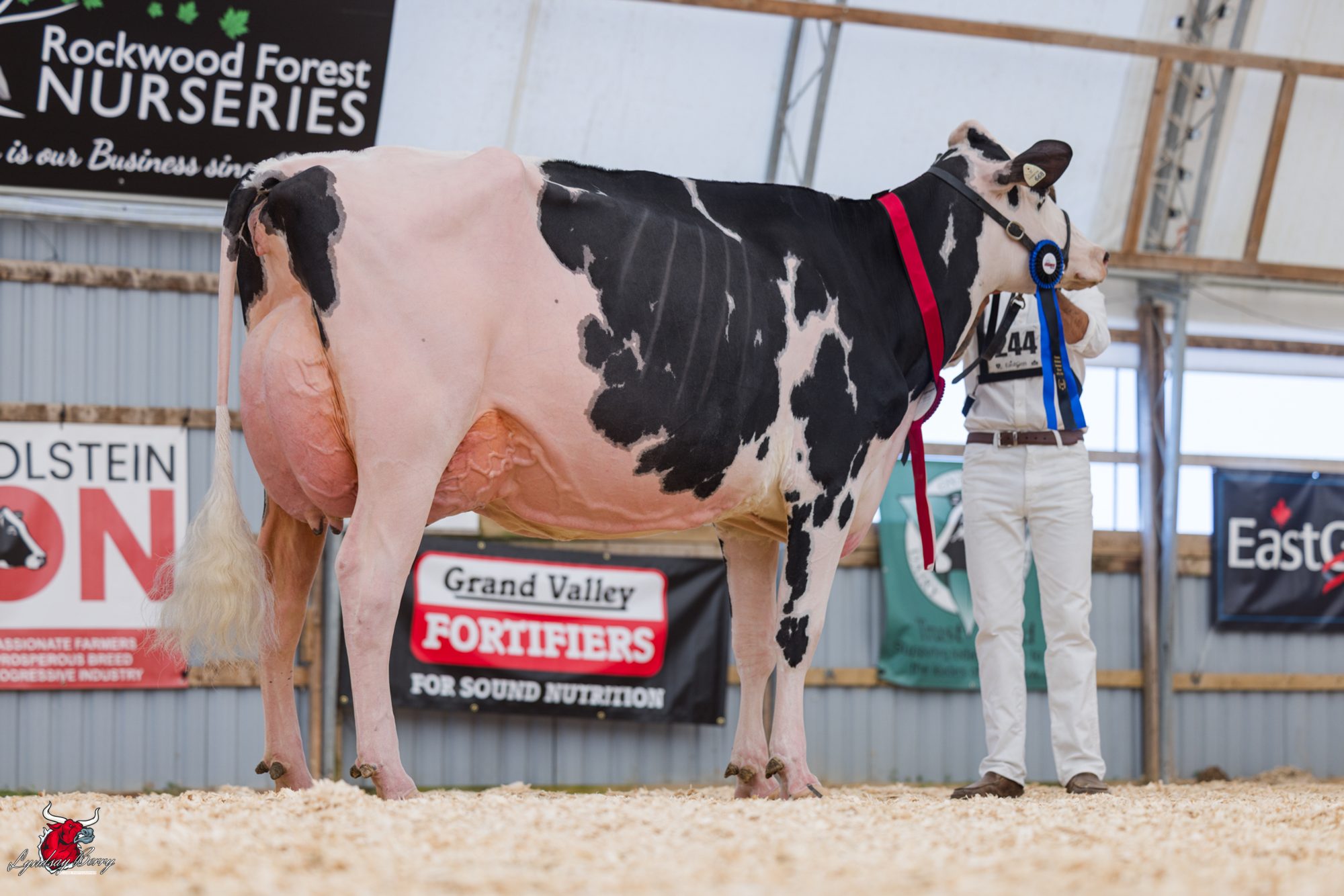
In 1970, Canada had 90,000 dairy herds. By August 2025, there were 9,048. By 2035, there may be just 3,500. Upon receiving Lactanet’s Distinction Award, Murray Hunt challenged the industry: the milk tank can’t pay for the structure we have now.
Murray Hunt thanked Neil Petreny and Paul Larmer for helping him up to the podium. “Age is catching up,” he said, “but I still love the industry.” Then the 81-year-old spent the rest of his time at the podium proving it, first by thanking the people who built his career and then by telling the people who run Canada’s dairy cattle improvement organizations that the structure he spent that career building has outgrown the milk cheque.
“In 1970 we had 90,000 herds in Canada, 25 cows each, and every farmer organization had its own silo, its own goals, its own area, and you didn’t dare get outside them,” he told the Dairy Cattle Industry Forum at the Sheraton Gateway Hotel in Toronto on September 22, minutes after Lactanet presented him with its 2026 Dairy Cattle Improvement Industry Distinction Award. Canada had 9,048 farms shipping milk on August 1, 2025, according to the latest available Canadian Dairy Information Centre data. The estimate Hunt had read for 2035 is 3,500. “The milk tank, that little spigot at the end of the milk tank, can’t pay for the structure that we have now,” he said.
Few people in that room had more standing to say it. In 1998, as executive director of the Canadian Association of Animal Breeders, he saw CAAB dissolved once its genetics work had moved to the new Canadian Dairy Network. Four years earlier, Larmer’s citation noted, he “navigated a successful streamlining and integration of research dollars, people resources, and effort” across industry organizations to create the Cattle Breeding Research Council. On Tuesday, he asked the room to do it again. “Alignment for me and Karen personally was that we were out of a job,” he said.
His 2035 number sounds extreme until you look at who actually buys dairy improvement services. Herds enrolled in milk recording fell 17.3% in five years, against 10.4% for all farms. Hold that pace, and Lactanet records roughly 3,650 herds in 2035, within 150 of Hunt’s figure. That’s a Bullvine calculation, and the math is below.
The Names Read Before His
Larmer read the roll of previous recipients before he read the résumé. Doug Blair and Robert Chicoine shared the first award in 2008. Bonnie Cooper became the first woman honoured in 2019. The 2023 forum made up for three pandemic years with Pierre Laliberté, Dr. David Kelton and a special award to Brian Van Doormaal, according to Lactanet. Gary Bowers followed in 2024, and the late Dr. Gerrit Kistemaker was honoured posthumously in 2025.
Lactanet’s announcement calls Hunt the sixteenth recipient since the award’s creation in 2008. Semex announced Chicoine’s death on September 15, so the name that opened the list was read a week later.
Jack Britt had come up from the United States for the evening. The North Carolina State dean emeritus co-wrote the 2018 Journal of Dairy Science review imagining dairy farms in 2067, a fitting guest for a speech about 2035. Hunt also thanked Van Doormaal for starting the forum at CDN and Lactanet for carrying it on.
Larmer called it “a lengthy résumé, but one of contribution, foundation building, and success that has touched on almost every aspect of our dairy improvement industry.” We covered it in full when Lactanet announced the award in August. The short version: a 1970 University of Guelph master’s thesis under Dr. Ted Burnside arguing for the maximum number of young sires in structured sampling, which at its peak meant more than 500 young bulls sampled in Canada a year. The Production Dollar Difference, Canada’s first sire ranking index built on profit and a forerunner of the Pro$ index that arrived in 2015. Eighteen years at Holstein Canada. Inaugural chair of the Genetic Evaluation Board. A seat in the Futures Group that led to Canadian Dairy Network on May 29, 1995.
A Farm Accident, a Centennial Dance and the Hardest Lesson
He was 15 when his parents, Sterling and Irene Hunt, bought Huntsdale Farm: 22 cows and a 25-acre market garden. The herd went on Record of Performance, started using AI in 1962, and was type classified in 1963. Huntsdale earned Holstein Canada’s Master Breeder shield in 1984.
University wasn’t the plan. “I had a farm accident, and she said, ‘You may not be able to farm,'” he said of his mother. “I wanted to farm. As always, mothers are right.”
He called August 5, 1967 “my greatest blessing.” It was a community centennial dance. “I’m not a very good dancer, mostly a wallflower. She did let me drive her home. We went out on a date the next day, and the rest is history.” Karen was entering her first year at McMaster; he was partway through Guelph. They married two years later. “If I have any communication skills, I learned from Karen. She’s my rock, my support, my everything.”
His first job, running Ontario’s Dairy Herd Improvement Program for the provincial agriculture ministry at 25, taught him business and human resources the hard way. “Firing people. That was the toughest thing I ever had to learn,” he said. “I had to learn to part with people in a good way.”
Larmer’s citation filled in the life around the work: more than 15 years as a 4-H leader coaching teams at what’s now the TD Canadian 4-H Dairy Classic, two decades producing the six-night Rockton Dinner Theatre with Karen to raise money for the Rockton Fair, and service as an elder at West Flamborough Presbyterian and Troy United churches. They have three children and eight grandchildren. None of the grandchildren is in dairy. He listed their careers with obvious pride, from data systems to medicine, in the same speech where he cited a 3,500-herd estimate.
How Did Milk Recording Go From 10% of Cows to 58%?
When Hunt joined Holstein Canada in 1973, he said, 10% of Canada’s dairy cows were milk recorded and 6% were type classified. “We’ve heard here today that we don’t need every animal recorded, but at one time we thought we did, so we pushed hard.”
Pushing meant travelling the country to combine the federal ROP program with the provincial DHI programs. It meant writing the first constitution of the Ontario Dairy Herd Improvement Corporation with a lawyer the Ontario Milk Marketing Board paid for. And it meant spending three hours one day explaining to Lorne Hurd, the board’s general manager, why DHI needed a checkoff. “Now whether it’s being well used or not,” he said, “Neil Petreny will have to explain that.”
It worked. In 2025, 563,492 cows in 5,333 herds were on milk recording, according to Lactanet data published by the Canadian Dairy Information Centre. That’s 58% of Canada’s 971,600 dairy cows.
Classification was the harder fix. “The type classification program may not now be meeting everyone’s needs,” he conceded, but in 1973, 47% of first-lactation cows were classified Good Plus, and there were more Goods than Good Pluses. The scores weren’t separating cows, and the recording needed to be standardized.
The answer turned up at a grounded Ottawa airport. It was February, about minus 20, and planes weren’t leaving because Ottawa didn’t have de-icing yet. Hunt got talking to a man in snow boots working on a portable device. He measured trees for a living, he said. He could only work outside for an hour and a half at a time, then went back inside and worked the data. Hunt wondered whether classifiers could use the same thing.
Dalton Hodgins, the Shawville classifier who later led Holstein Canada’s classification staff, according to Holstein Québec, took the project on with him. He’d drive out from his Brantford hotel to the Hunt home at night, where a young Andrew Hunt would pepper him with questions and then start punching keys. Hodgins would warn the boy, “Oh, don’t do that. You might break it,” Murray told the room. “Andrew’s never been afraid of computers.” Larmer’s citation credits that work as the first handheld device used to standardize classifiers’ records, and the Canadian system was adopted by multiple countries. Hunt trained classifiers in Australia, Japan, Brazil, France, Italy, Cuba, Germany and Spain.
He didn’t oversell the result. “I’m not sure we were successful in getting the right feet and legs on the cow,” he said, “but nevertheless, it was a lot of change.”
The Silo Speech
Hunt said he’d cleared it with the organizers first. “I could throw out a little bit of my bias here.” Then he told a room full of cattle people that he wasn’t there to talk about cows. “I want to challenge you on the infrastructure.”
In the 1970s, he said, Canada sampled 500 young bulls a year, and some herds generated 30% of their revenue from breeding sales. The organizations serving them stayed in their own lanes. Some of those walls have come down since. “In my opinion,” he said, “not enough.”
“It’s going to be a business model on every farm,” he said of 2035, and the milk recording service will have to become a business-model service too. “Are you prepared to take down all the silos and get together for the benefit of the dairy farmers?”
He gave three asks.
Alignment. “Yes, I said alignment, not cooperation, not collaboration, not amalgamation. Alignment.” He held up Lactanet itself, which brought CanWest DHI, Valacta and CDN together in 2019, as the model and said it needs to go further. Then he looked right at the president of Holstein Canada. “It’s going to be a challenge for you, because I think there’s rules for breeds and there’s rules for others.”
Rationalization. Each organization carries its own HR department and its own computer systems. “We need to destroy more silos.”
Innovation. “The dairy industry is bigger than Canada, and we need to be finding partners around the world to work on research and development.” Then came an admission from the man who helped shape the type program. “We used to think we had the Canadian kind. It was unique. We’re not any more unique than anything else. We’re finding out now she was too tall in front, and that chest width didn’t mean anything about how much feed she could take in.”
He also asked for modelling. The Futures Group of 1994 led to CDN the following spring. “It sounds kind of stupid now to say 1994. We were looking to the future.” His master’s was a computer model. Now he wants a new model for 2035, 41 years on.
Can 3,500 Herds Pay for Today’s Structure?
Here’s the surprise in his numbers. The milk in the tank barely moves. At 225 to 240 cows a herd, 3,500 herds is 787,500 to 840,000 cows. Add his 20% more fat and protein per cow, and total component output lands between 3% below and 4% above today’s.
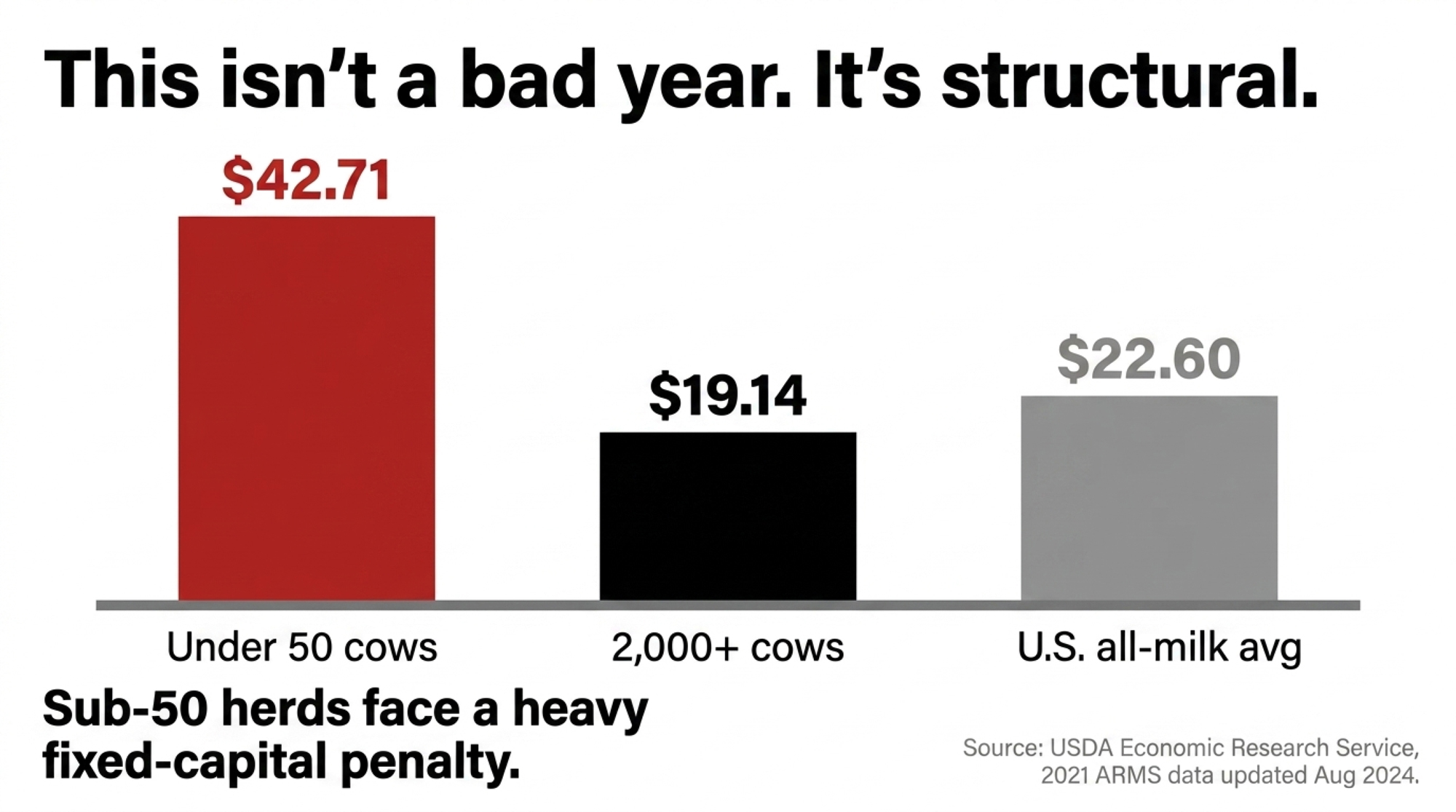
So the spigot pays about what it pays now. What changes is how many farms are left to carry the costs that don’t shrink when a herd sells out: boards, head offices, evaluation runs, software, HR.
“We need to destroy more silos.”
— Murray Hunt, Dairy Cattle Industry Forum, September 22, 2026
Bullvine calculation: how fast does the fixed-cost share per herd rise?
Path to 2035
Annual decline in herds
Herds in 2035
Fixed cost per herd vs. 2025
All-farm pace (2014–2024)
2.6%
~6,950
1.30×
Milk-recording pace (2020–2025)*
3.7%
~6,190
1.46×
Hunt’s 2035 estimate
9.1% (implied)
3,500
2.59×
All-farm pace from the AAFC Dairy Sector Profile. *Milk-recording enrolment pace, applied to all farms.
For all farms, 3,500 is aggressive. It needs herds to disappear three and a half times faster than they did over the last decade. For the herds that buy milk recording, it’s close to the current trend line.
Milk recording
2020
2025
Change
Herds enrolled
6,446
5,333
−17.3%
All dairy farms
10,095
9,048
−10.4%
Share of farms enrolled
63.9%
58.9%
−5.0 points
Enrolled herds fell 3.7% a year from 2020 to 2025. Hold that pace for a decade, and the recorded-herd base is about 3,650 in 2035. Part of that is deliberate. The forum heard the same day that not every animal needs recording anymore, and genomics has made that true for some decisions. But a deliberate exit still leaves fewer herds carrying the same systems.
Put a dollar on it. Say an organization carries $1 million a year in costs that don’t fall when herds leave. Across 9,048 farms, that’s about $111 a herd. At 6,950 farms, it’s $144. At 3,500, it’s $286. Spread only across milk-recording herds, it goes from $188 today to $274 at 3,650. That’s an illustrative model, not any organization’s budget.
What Should Board Members Ask Before 2035?
Hunt aimed the challenge at the directors and delegates in the room, and he’d been on the staff side of that table. “Elected farmer representatives are a great resource,” he said. “Being young and brash, you think you don’t need to be told, but I did.” Here’s what his three asks look like as board work.
Ask for the fixed-cost split this AGM season. Ask every organization you fund what share of its budget doesn’t fall when herd numbers do, and what that line costs per herd at 6,950 and at 3,500 farms. It’s a 30-day question. A total with no split isn’t an answer.
Price shared services before governance. Shared HR, IT and field systems attack duplicated costs without anyone surrendering a board, which is the distinction Hunt drew between alignment and amalgamation. The trade-off is control, since breed-specific rules have to survive the sharing.
Fund research with partners beyond Canada. Bigger research pools spread cost across more cows. The risk is losing Canadian pricing in the selection goal, the same logic that made PDD and Pro$ Canadian tools in the first place.
Hunt closed with John F. Kennedy, from Frankfurt in June 1963: “Change is the law of life. And those who look only to the past or present are certain to miss the future.”
He’d lived that line once already, in 1998, when the job he’d built was the one that went.
The room gave him a standing ovation. Karen was part of it, as she’s been through every chapter of this story: his biggest supporter and his biggest fan.
If the organization you pay dues to had to run on 6,950 herds tomorrow, what would it cut first, and has anyone on your board asked yet?
We’ll put that question to the organizations Hunt challenged and report their answers in The Bullvine Weekly.
Key Takeaways
Hunt’s 3,500-herd estimate for 2035 is aggressive for all farms, but milk recording is already on that track: enrolled herds fell 17.3% from 2020 to 2025, which projects to about 3,650.
On Hunt’s own 2035 figures, the tank ships about the same fat and protein, between 3% less and 4% more. What shrinks is the number of herds splitting the fixed costs.
Alignment always costs someone. In 1998 it cost Hunt his own job when CAAB dissolved, so any board asking for it should be ready to say who gives up what.
Hunt’s test for any partnership or shared-service plan: “In the end, the group that need to be profitable are the dairy farms, viable and sustainable.”
The Sunday Read Dairy Professionals Don’t Skip.
Every week, thousands of producers, breeders, and industry insiders open Bullvine Weekly for genetics insights, market shifts, and profit strategies they won’t find anywhere else. One email. Five minutes. Smarter decisions all week.
Learn More
Are You Breeding for the Future or the Past? — Align your genetic strategy directly with tomorrow’s milk cheque. Breaks down the hidden costs of outdated selection traits, arming you with the metrics needed to shift your sire criteria toward strict profit margins over show-ring appeal.
What Will the Dairy Industry Look Like in 2030? — Prepare your balance sheet for the consolidation wave Murray Hunt predicts. Maps upcoming bottlenecks in processing capacity against consumer demand, delivering concrete herd-size thresholds your operation must clear to survive the next decade.
Is Crossbreeding the Answer to Dairy’s Problems? — Challenge the purebred status quo with hybrid vigor economics. Follows the money on crossbred herds to reveal exactly how improved conception rates and reduced cull costs offset potential yield drops, fundamentally redefining baseline profitability.
Butlerview Glitter Girl stood 11th in a 61-head calf class in this Coliseum last October. Ten heifers beat her. Two of them have since lost to her in Madison.
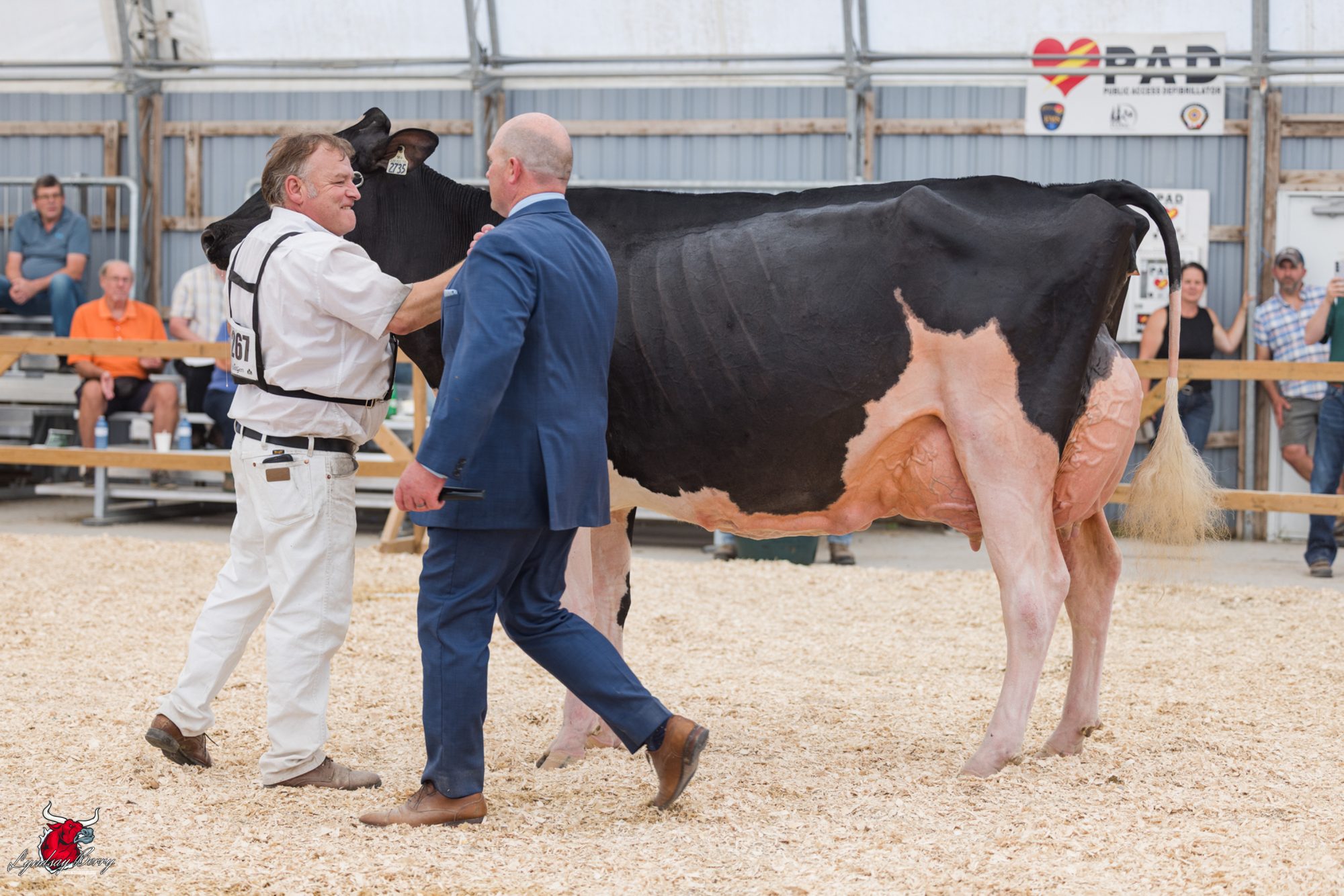
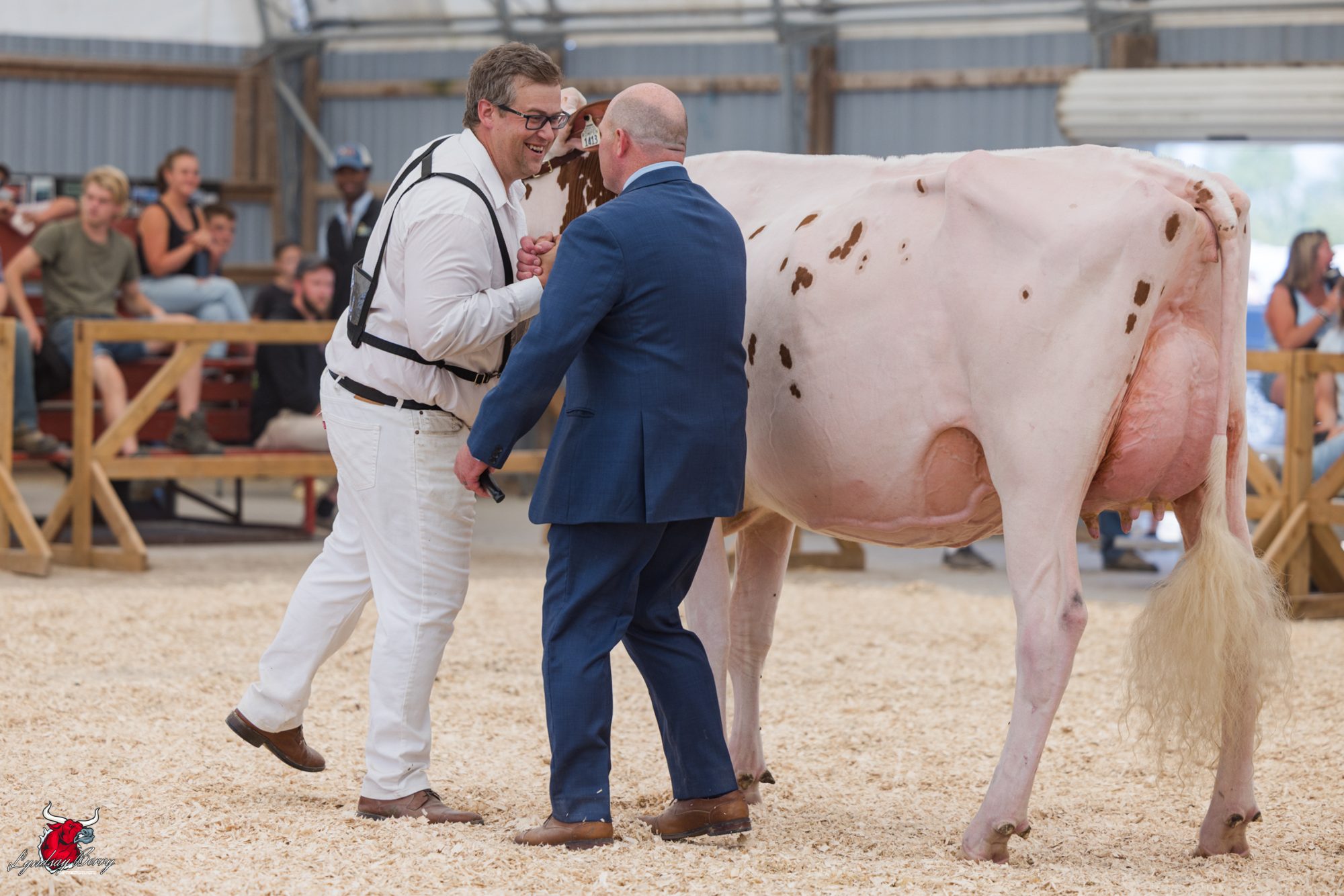
Hamburg, New York, March 2025. Ryan Krohlow, microphone still in hand, congratulates the leadsman after tapping Lovhill Sidekick Kandy Cane Grand Champion and Best Udder of Show at the New York Spring Show — the second time he had put this five-year-old on top, six months after doing it at the Eastern Fall National. He called her udder “perfect” and “symmetric.” Seven months after this handshake she was Grand Champion of World Dairy Expo. On Friday he holds the microphone at the show she won.
Harrisburg, September 2024. Ryan Krohlow taps a four-year-old Sidekick from Saskatchewan as Senior and Grand Champion of the Eastern Fall National.
Hamburg, March 2025. Krohlow again. Same cow, now a five-year-old, Grand Champion and Best Udder of Show. He calls her “on the money” — “dairy, long, and feminine yet has so much chest” — walking “so free,” with an udder he calls “perfect” and “symmetric”.
Madison, October 2025. Aaron Eaton takes one look and says it out loud: “when that 5-year-old came in the ring today, it was game over.” Lovhill Sidekick Kandy Cane — Grand Champion of the International Holstein Show, Reserve Supreme of World Dairy Expo.
Krohlow had her purple twice before Eaton ever laid a hand on her. He staked his reputation on that cow in two separate rings while the rest of the industry was still deciding. Now he holds the microphone at the show that made her famous — and Kandy Cane, since scored EX-97, has not been seen in a ring all year.
Neither has the Junior Champion who stood beside her in that final callout. Neither has the Reserve Junior Champion, the Honorable Mention Intermediate Champion, or the Honorable Mention Senior Champion. Of the nine animals who took a divisional banner in Madison last October, five have not surfaced at any of the sixteen major North American Holstein shows held in 2026 — a majority of that callout has been dark for eleven months.
One of the others surfaced in April, in Chilliwack, and won.
A caution before you bet anything: World Dairy Expo does not publish a public Holstein entry list, and entries closed August 31. Nobody outside these barns knows who is on the truck. What follows is who has earned a place in the conversation — and who has been conspicuously, deliberately quiet.
The Cow Who Beat Barabas Is Back — And She’s A Grand Champion Now
Madison, October 2025. Aaron Eaton lifts the leadsman Brian Carscadden’s hand in the Coliseum for West-Adub Lambda Sadie — Intermediate Champion and Reserve Grand Champion of World Dairy Expo, and the cow he put over Famipage Legend Barabas on being “a little cleaner” with “more quality” to her mammary system. “She runs away with it,” he said. Since this photograph she has sold part to Butlerview, calved into a four-year-old and won a Grand Champion banner of her own in British Columbia.
West-Adub Lambda Sadie was Intermediate Champion and Reserve Grand Champion of World Dairy Expo 2025. Eaton said she “runs away with it” — “so dairy, so open, so flawless in her parts” — and he put her over Famipage Legend Barabas for Intermediate on being “a little cleaner” with “more quality” to her mammary system.
She then sold at the Parade of Perfection to Butlerview Farm, with Westcoast Holsteins of Chilliwack retaining half interest. In April she walked into the BC Holstein Spring Show at the National Convention as a four-year-old and Jamie Black made her Grand Champion.
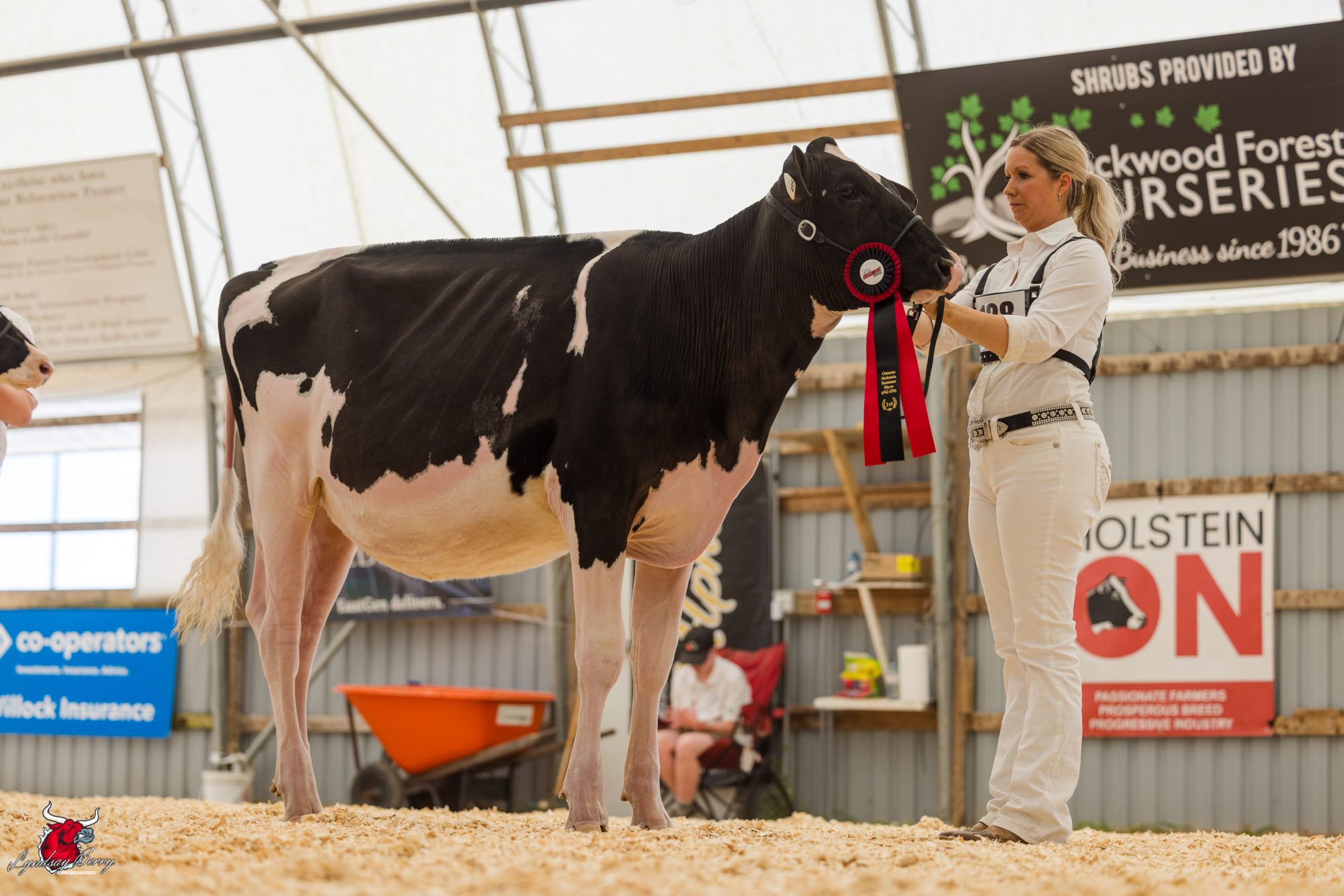
Barabas, meanwhile, aged into the same class and won Grand at the Ontario Summer Show — her second straight Ontario Summer Grand, after taking it as a senior three-year-old in 2025.
Two Grand Champions. One class. A rematch of the closest call of last year’s show. That’s Friday’s headline, and we’ll get to why it’s a fight between two completely different kinds of cow.
The Show You’re Walking Into
The scale, from last year: 468 Holsteins — 236 heifers, 169 intermediate cows, 63 mature cows. The winter heifer calf class alone ran 61 head, the spring calves 42. Judge Aaron Eaton spent two days on it.
The week starts earlier than most people think. The International Junior Holstein Show goes Friday, October 2nd at 10:00 a.m., official Ben Wallace of Stoughton, Wisconsin with associate Phillip Topp of Botkins, Ohio. That’s the junior-exhibitor ring, so it only catches the animals owned by juniors — but that list is not short this year, and it includes some of the best cattle in this preview. Sarah Hill’s Four-Hills Pazzle 71530-TW, Hayden Burrus’s Ms-AOL Alpha Ralpha, the Schmocker sisters’ Luck-E Merjack Asalia, Kolton Utecht’s winter calf, Tenley Chittenden’s JAKKS Arcitect Cupid-Red and Macie Noble’s aged cow all sit in junior hands. Watch Sunday and you get a free four-day preview of Thursday and Friday.
And it doesn’t end Friday morning. The Holstein Grand Champion goes on to the Parade of Champions at 4:00 p.m. Friday for Supreme, and the heifer Supreme is selected Thursday at 8:30 p.m. Last year Kandy Cane won the Holstein ring and still finished Reserve Supreme, beaten by the Red & White champion Golden-Oaks Temptress-Red. Winning Friday morning is not the last word.
Eleventh Place Is Now The Best Heifer On The Continent
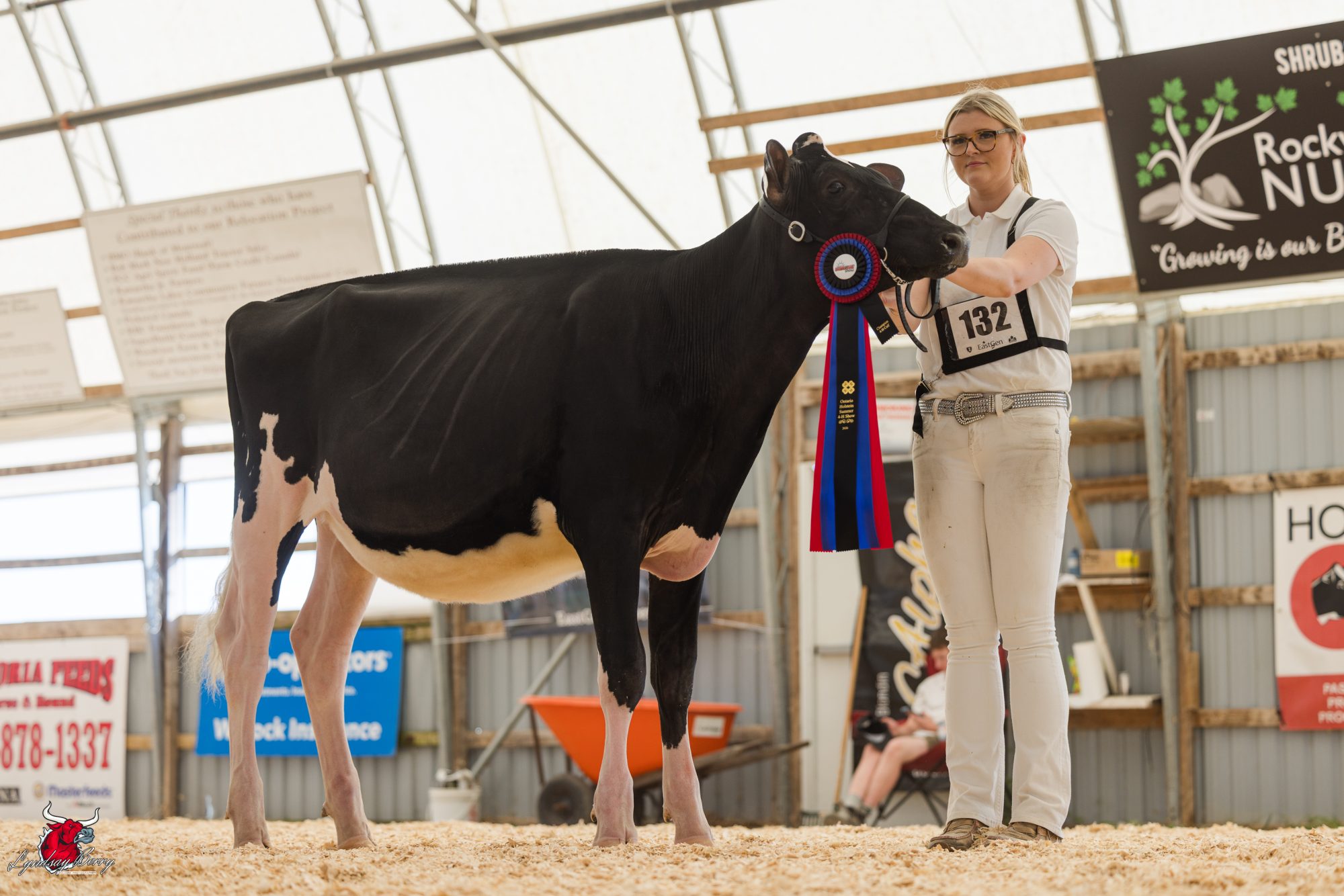
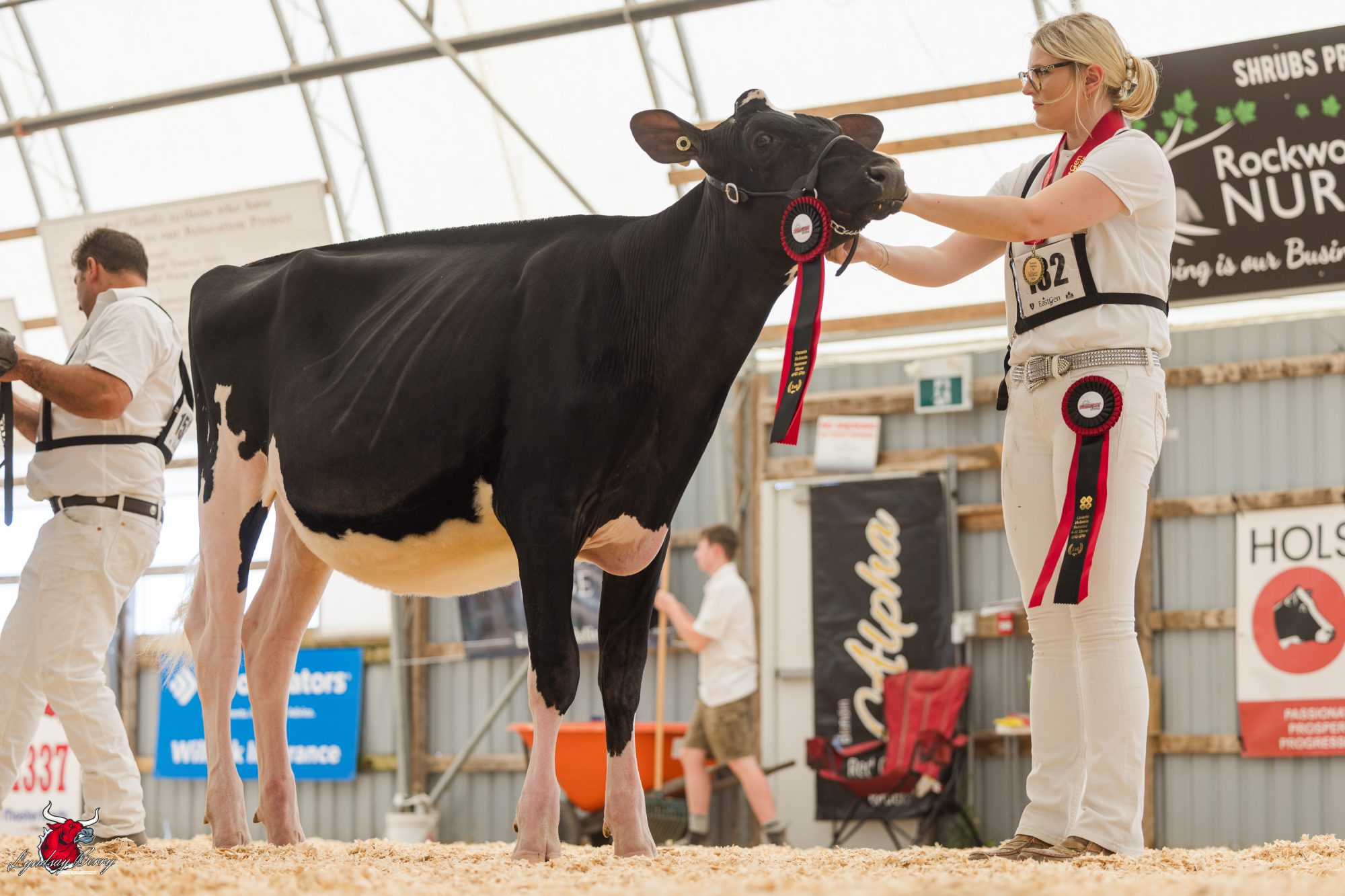
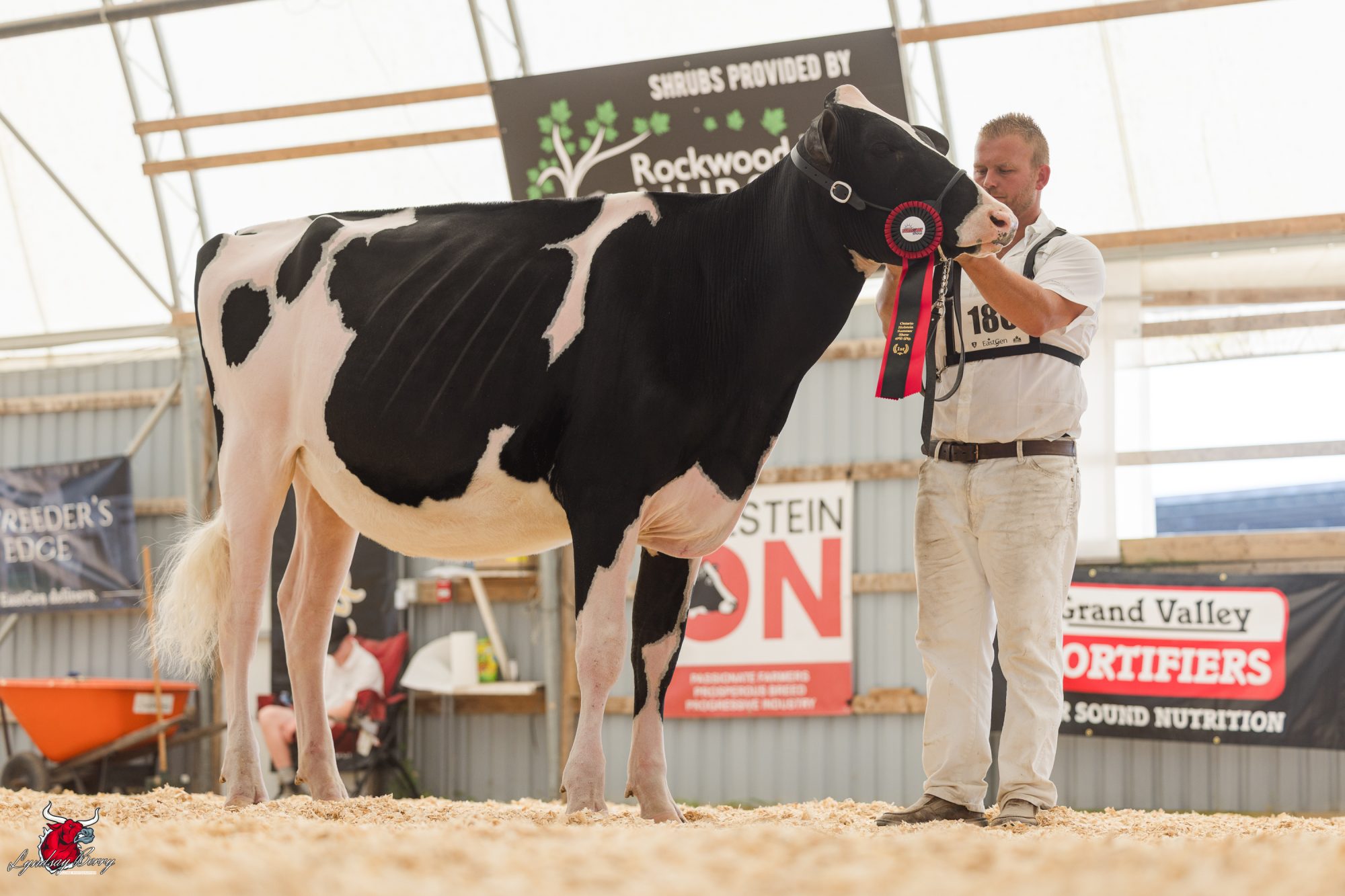
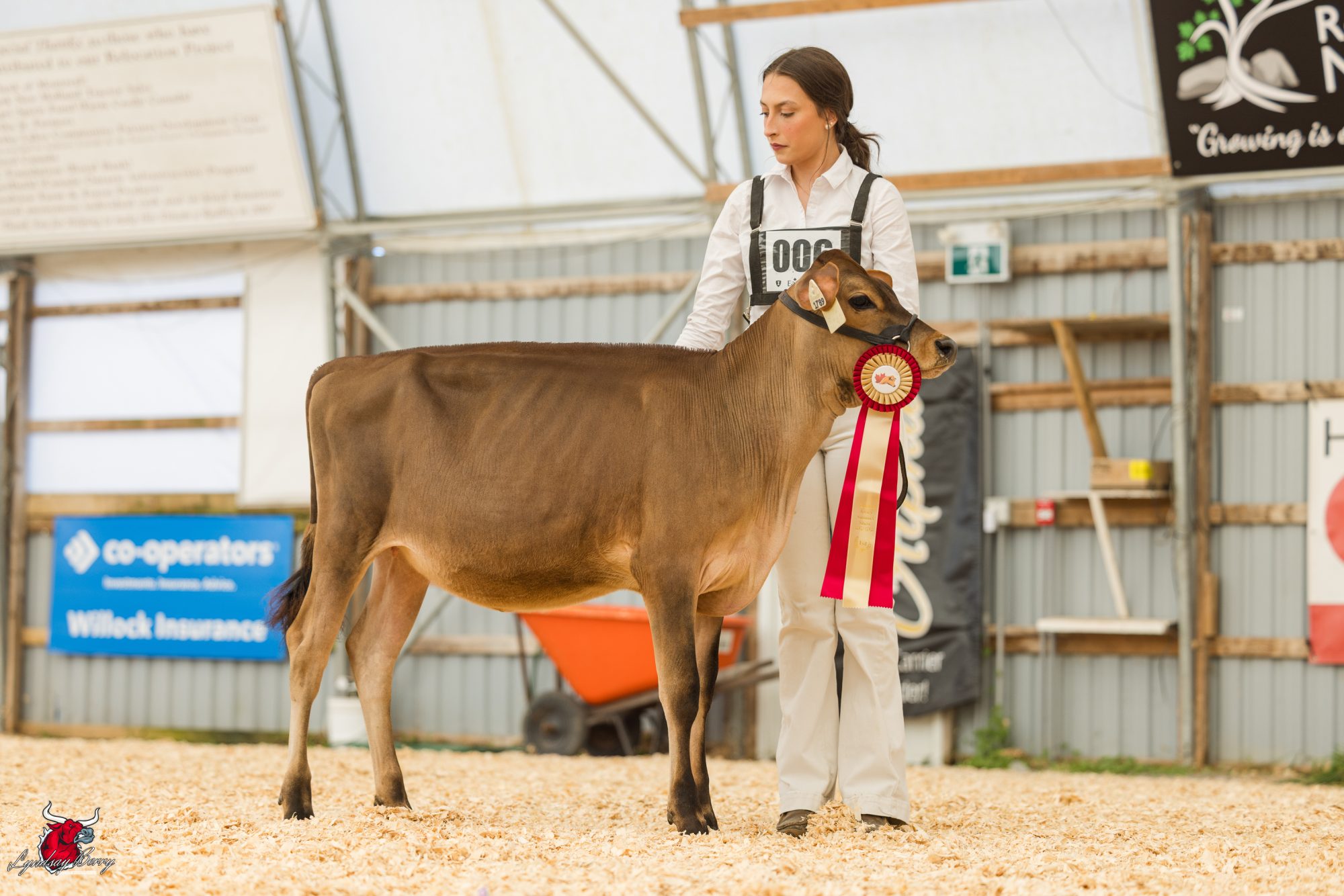
Ontario Summer Show, July 2026. Adam Hodgins lifts the leadsman’s hand for Butlerview Glitter Girl-ET — Junior Champion and Champion Bred & Owned Heifer, the third Junior Championship of her season after Midwest Spring National and Northeast Spring National. Hodgins had her on “so much length, width and body strength,” moving “free and comfortable.” Nine months before this photograph she stood eleventh in a 61-head winter calf class in Madison. Photo: Lyndsay Barry / The Bullvine
Butlerview Glitter Girl-ET finished 11th in the winter calf class at Expo last October — out of 61 head.
This season: Junior Champion at Midwest Spring National, Northeast Spring National and the Ontario Summer Show, winning the winter yearling class at all three. Brian Carscadden called her “one of the nicest heifers I’ve had the privilege to make Junior Champion in my career”.
She isn’t the anomaly. Crisdhome TStruck Abudahbi was 3rd in her class at Expo; she’s now Grand Champion of Northeast Fall National. Sandpiper Sidekick Disco was 3rd in hers; Grand Champion of the Atlantic Summer Classic. Cnossome Mirand Penelope was 4th in the senior three-year-olds; Grand Champion of Western Spring National. Ryan-Vu Awesome Rapture was 6th in the spring yearlings; Reserve Intermediate Champion of Midwest Summer National.
Five cows who got beaten in Madison came back as champions elsewhere — and Rapture did it on these exact shavings, at Midwest Summer National in August. Krohlow’s job Friday is to weigh those against the ones who haven’t shown at all.
The Cheat Sheet
Favorite = best 2026 form. Live threat = the animal most likely to beat her, which is sometimes a proven Expo performer who has gone quiet and sometimes a winner off a circuit the favorite has never faced. Dark horse (cow classes only) = the third argument in the class — a champion off a circuit nobody here has faced, or a cow whose 2026 placings are a freshness snapshot rather than a ceiling.
◆ = proven at Expo last October, unseen at any show since.
Heifers — Thursday, October 1, 1:30 p.m.
Class
Favorite
Live Threat
Spring Calf
Do-N-Joy Major Jax-ET
WSC TStorm Rattlin Bog-ET
Winter Calf
Genosource Mjr Heartatak-ET
Extondale Master Mae
Fall Calf
Nehls-Donk Best Giddy Up
Ms Vierra Back 4 More-ET
Summer Yearling
Butlerview Master Shock-ET
Curr-Vale Detective Adeen-ET
Spring Yearling
Go-Sho Detect Revenge-ET
Beers Master Tulsi ◆
Winter Yearling
Butlerview Glitter Girl-ET
Miss Master Elite-ET
Fall Yearling
Kamps-Rx Abercombi Abella
Our-Favorite Endzone-ET
◆ = proven at Expo last October, unseen at any show since.
One honest asterisk on our own aged-cow pick. Lady Crush is the form favorite on a March Grand Championship, but she was fresh since July 2025 when she won it. If Butlerview hasn’t recalved her she walks in roughly 15 months fresh, and a 15-month cow does not carry bloom. That pick is conditional on a calving date nobody outside her barn knows — which is exactly why the live threat and the dark horse in that row are both Grand Champions in their own right.
The senior three-year-olds carry two dormant Expo animals, not one: Believe won that class outright last October with Best Udder, and MD-Locustcrest P Zuriniah was HM Intermediate Champion of the whole show. Either one changes the class.
The four-year-olds are a genuine three-way, which is why the table carries two favorites instead of one. Sadie holds last year’s Reserve Grand; Famipage Legend Barabas answers it with back-to-back Ontario Summer Grand Championships. Jacobs Chief Dina is the live threat on the freshest record of the three — Grand and Best Udder of the whole show in this Coliseum five weeks ago.
One eligibility caveat, because it decides which day you watch. Several animals in this preview carry Red or red-carrier names — Cherry Lor Robin-P-Red, Golden Oaks I Altitu-Red-ET, Hilrose Ac Attababy-Red-ET, Carpsdale-J Fall-Red-ET, Ms Be Tempted-Red-ET among them. Registered Red & Whites show in the International Red & White Show, heifers Wednesday, September 30 at 2:00 p.m. and cows Thursday, October 1 at 7:00 a.m. — a different ring on a different day. Which ring any individual animal lands in depends on her registration, and we can’t confirm entries. Don’t be surprised to find one or two of these names in Wednesday’s lineup instead of Thursday’s.
Watch five and you’ve watched the show: Glitter Girl in the winter yearlings, Abudahbi in the junior threes, the three-way four-year-old fight, Aria in the five-year-olds, and the aged cows, where two 2026 Grand Champions and the cow who won this ring last October could end up in the same lineup.
What Krohlow Rewards, In His Own Words
He’s a fitter first — 18 years at it, plus three as a professional hoof trimmer, running HammerTime on 40 acres at Poynette, Wisconsin with his wife Haley and four kids, Callie, Conway, Cooper and Case, off eight to ten show heifers a year. By his own official Expo biography he prepared 17 Grand Champions at World Dairy Expo and nine at the Royalduring that fitting career, in Canada, England, Germany, Italy, Sweden, Switzerland and Mexico.
His stated ideal: “cows that are square frame, cows that are balanced and hard top, cows that walk out extremely comfortable front and rear,” with “tremendous udders, quality, texture, and symmetry.” In heifers, animals “extremely comfortable in their locomotion” with “quality from end to end” that “track straight both front and rear feet.”
Two tiebreakers repeat often enough to bet on. He splits close pairs on rib — “a tad more drop of rib,” “spring and openness all the way to her barrel,” “more depth right up in that fore rib.” And he reads the back of a rear udder hard enough to separate third from fourth on “more definition to see on the back of that rear udder” and “more seam, all the way at the bottom of that udder.”
He also forgives youth, praising one winter two-year-old as “a February heifer just moving 20 days out of being a junior two-year-old” with a “tremendous future” — and putting her top of the class over cows with more milk behind them.
The Fitter’s Eye: Why Over-Bagging Will Backfire
Eighteen years of fitting means eighteen years of hands on udders the night before a show. A man with that history knows the difference between glandular texture and fluid sitting in the rear seam, and he knows exactly what a cow looks like when she has been held too long — because at some point in 18 years he has been the one asked to do it.
His own reasons tell you he reads for the real thing rather than the volume. He moves cows up on “veination and quality all the way through her mammary system,” on “tightness right at the top of the rear udder attachment,” on “more quality and texture” in a fore udder, on “definition of the seam” at the bottom of the rear. Every one of those is a texture word, not a capacity word. And three years of commercial hoof trimming sit underneath the rest of it: he splits close cows on “bone and flatness right down in the hock,” on pasterns, on cows that “track so comfortably, so straight.” Extra weight in an udder shows up first in exactly the places a trimmer looks — a cow who roaches over her loin to carry it, or who stops handling her hocks cleanly by the second lap.
The rules are on his side, and they are not vague. World Dairy Expo lists “improper fitting practices, such as over filling and over bagging” as an ethics violation outright, alongside “treating an animal, particularly the udder, without a verifiable veterinary need… for the purpose of improving the appearance” and using any device to artificially create or enhance the udder crease. Overfilling udders carries a one-year suspension as a Category 1 violation; udder alterations are Category 2, a minimum two-year ban — and a second Category 1 inside three years is elevated automatically.
Enforcement is not theoretical either. The top one-third of every class is ultrasounded, and champions are ultrasounded and milk-sampled after their champion class and again after Supreme. Udder ultrasounds, milk sampling, hair pulls and blood draws are four of the ten testing actions every exhibitor consents to at entry. Expo also endorses the PDCA Show Ring Code of Ethics, adopted February 2025.
So the read for Friday: pushing extra capacity into a four-year-old or an aged cow to force the look of bloom risks two separate problems. It risks a judge who has spent two decades learning what fluid looks like under the lights and who scores on texture and seam definition rather than volume — and if her rear teats come off their plumb line or her top goes soft carrying it, he sees it before she finishes half a lap. Then it risks the ultrasound afterwards.
The Associate Factor: Kelly Barbee in the Big Heifer Classes
The associate is Kelly Barbee of Concord, North Carolina, and he is there because Krohlow put him there — at World Dairy Expo the official judge submits three names for associate, and the selection is then approved by a committee of Expo exhibitors. This is a pairing the official wanted.
Barbee is a territory sales manager for Trans Ova who has exhibited over 30 All-Americans or All-American nominations across multiple breeds, previously developed and boarded high-end show cattle for clients in the U.S. and Canada, and managed a large commercial herd for ten years before that. His two biggest assignments are both colored-breed: the 2010 World Dairy Expo Jersey Show and the 2008 Royal Winter Fair Jersey Show.
That Jersey pedigree is the thing to watch Thursday afternoon. A judge who has made his name sorting Jerseys is a judge trained on dairyness, clean thurls, open rib and silky hide rather than sheer scale — and Thursday’s first three classes are where those eyes earn their money. Last year the winter calf class ran 61 head and the spring calves 42. In a class that size nobody evaluates 61 animals equally; the depth of the lineup gets sorted while the top end is being walked. A coarse, round-boned calf with extra throat flesh can hide in the middle of a 60-head class under some panels. Against this one, expect her parked early.
Thursday: The Heifers
Spring Calf — the one class with no history
Born March through May of this year, so nobody holds a form line — which means pedigree is most of what you have to go on.
Do-N-Joy Major Jax-ET won 22 head at Midwest Fall for Brooklyn, Bryce & Blakely Kohls, Arlington, MN, with HM Junior Champion of the Junior Show. She’s a Robella Major out of Cresentmead Jaurora-Red-ET, born March 26. Major is the frame-and-cleanliness side of this cross; the red-carrier dam line is where the dairyness comes from, and it’s worth knowing which one she took after when she walks in — Major daughters that inherit too much substance from the maternal side get coarse, and this judging panel will not reward that.
WSC TStorm Rattlin Bog-ET (Thunder Storm) topped 38 at Eastern Fall for Hayden Weaver, Ephrata, PA — biggest spring calf class of the fall circuit. B-Will Mas Dancing Diva-ET(Master) won the class in the Coliseum itself at Midwest Summer National for Charlotte Wingert and Grace Salter, Pearl City, IL. Also Cornerest Altitud Magpie-ET (Altitude), 28 head at Northeast Fall for Kialah Nelson, and Winright Major Erica, 40 head at Ontario Summer, bred and owned by Brian Enright.
Two more with provincial credentials: Petitclerc Airdrop Samantha won the spring heifers at Le Suprême Laitier, bred and owned by Ferme Jean-Paul Petitclerc & Fils of St. Basile, QC, and Cobequid Tatoo Calypso (Tatoo) won the spring calves and took HM Junior Champion of the Atlantic Summer Classic for Ferme Val D’Espoir at Saint-Philippe-de-Neri, QC. In a class this young, a provincial final win in September is worth as much as a bigger class in August.
Winter Calf — the Canadian nobody has faced
Blacklilly Direct Lala-ET (Direct) won the winter calves at Northeast Spring for Eaton Holsteins, Glamourview Farms and Zeh & Cates Morrill of Marietta, NY — out of 12 head, which is the honest caveat on her, because two heifers in this class beat fields three and four times that size.
Extondale Master Mae (Master) won 45 head at Ontario Summer for Beckridge Holsteins, Keswick, ON — the largest heifer class held anywhere in Canada this year — and has never crossed the border. Against her: Genosource Mjr Heartatak-ET (Major) out of 40 at Eastern Fall for Billy Jo Rhodes and Chris & Jennifer Hill, Utecht Major Superstar (Major), Junior Champion of the Midwest Fall Junior Show bred and owned by Kolton Utecht, Fairmont Brielle-ET (Lombardi), Reserve Junior Champion of the Northeast Fall Junior Show for Ella Purchase, and Heritage Crazy Drama (Delta-Lambda), class winner at Midwest Summer National for Madison & Melanie Sarbacker.
Fall Calf — two circuits, one unbeaten record
Ms Vierra Back 4 More-ET won the fall calf class at Southern Spring National in March and at Mid-East Summer National, taking Reserve Junior Champion both times for Jason & Jared Pareo. She has never met the fall-circuit calves.
Those are led by Nehls-Donk Best Giddy Up, Junior Champion at Midwest Fall over 30 head for KurthHaven, Melissa Sprecher and Doug Petzel. Her cross is the interesting one: Blexys Best Sidekick-ET out of Sheeknoll Unix Giselle-ET. A Unix-sired dam again — the same maternal sire sitting under Butlerview Glitter Girl, and the same bull whose daughters held the mature end of Quebec and the Maritimes together this year. If you’re tracking why two of the best young heifers in North America both read as long, wide and strong through the body, the answer is on the dam’s side of both papers.
Oakfield Major July-ET (Major) was Reserve Junior Champion at Northeast Fall for Trina & Garret Bailey. Hilrose Ac Attababy-Red-ET (Acetylene) beat 40 head at Eastern Fall for Justine Kelsey (check the Red & White sheets first — the R&W heifers go Wednesday, September 30 at 2:00 p.m., the day before this class), and Ocean View Sassy After Dark(Master) won the class at Midwest Summer National for Evan Hathaway.
Summer Yearling — the heifer who got better all season
Butlerview Master Shock-ET (Master) is the one who kept answering: class wins over 24 head at Midwest Spring and 27 at Northeast Spring, plus Reserve Junior Champion of the Midwest Spring Junior Show, for Addison Lortie, Albion, IN. Fifty-one head beaten across two spring shows is the deepest résumé in this class.
The one to fear is Curr-Vale Detective Adeen-ET (Detective), Alphie Stoltzfus, Gap, PA. Third at Northeast Spring in March; in September she won 36 head at Eastern Fall and took Junior Champion. Heifers on that trajectory peak in October. Carpsdale-J Sidekick Timber(Sidekick) took HM Junior Champion at Northeast Fall for Anthony & Kennedy Liddle, Echo Glen Master Irina (Master) won 26 at Ontario Summer for Beckridge, shown by Lily Beckett, and SPF Angel Eyes-ET (Eye Candy) won the class at Midwest Summer National plus HM Junior Champion of the Junior Show for the Harbaugh and Loehr families, Marion, WI.
Spring Yearling — the champion, and the calf who beat her once
Go-Sho Detect Revenge-ET (Detective) is the only heifer here with an Expo class win banked — she took the spring calves last October for Pierre Boulet and Clarkvalley, then won the spring yearlings at both Midwest Spring and Northeast Spring for Butlerview.
Beers Master Tulsi (Master) stood second to her in Madison. Kale, Kley, Ryan and Logan Beer of Berne, Indiana haven’t shown her since. In a class Krohlow will split on a rib, twelve months of development is how second becomes first.
Behind them: Beslea Eyecandy C Electra-ET (Eye Candy), Junior Champion at Northeast Fall for Rick Allyn & Dan Hovden; Petitclerc Eyecandy Kayla (Eye Candy), Reserve Junior Champion at Eastern Fall for Ridgedale Farm, Jon Mortensen and Uma Thurman; Eastriver DL Carrera (Delta-Lambda), Junior Champion at Mid-East Summer; Esperanza-CC Tenacity-ET (Tatoo), Reserve Junior Champion at Midwest Fall.
Winter Yearling — the calf who beat her by nine places, and what happened next
Glitter Girl’s pedigree is the reason she went from 11th to unbeatable. She’s a Jacobs Bruins out of Rosemary Unix Goldie EX-95 — a Unix-sired dam who was an All-American in her own right. Unix daughters are what held the mature end of Quebec together this year: Sicy Unix Adriene won the senior threes at Le Suprême with Best Udder, Knonaudale Tiffaney took Grand at the Atlantic Spring Showcase, Altona Lea Unix Herminie won the aged cows at Expo. That’s the frame and dairy strength underneath Glitter Girl, and it’s why the judges keep using the same three words on her — length, width, body strength.
Carscadden had her on “precision on all four legs,” barrel spring, a clean inner thigh and refinement through the neck. Adam Hodgins at Ontario Summer had her on “so much length, width and body strength,” moving “free and comfortable,” handling her hind legs “a touch nicer down in the foot.”
And there was one animal who had her number. Curr-Vale-AE Direct Epic-ET (Direct) finished second in that winter calf class — nine places ahead of Glitter Girl. Then the two met again at Midwest Spring National, and the result inverted: Glitter Girl won the winter yearlings bred and owned, and Epic stood sixth, taking first junior exhibitor for the Osinga family, Hico, TX. A nine-place deficit became a five-place win in about six months. That is the cleanest measurement anyone has of how much Glitter Girl improved over one winter — and the reason the 11th on her Expo card tells you nothing about Thursday.
The heifer who finished closest to her in that spring rematch is Miss Master Elite-ET (Master), second in that Midwest Spring class for Grai-Rose Cattle Co. and Jeremiah Lungwitz, Petaluma, CA — and a class winner bred and owned at Midwest Fall National. She is the live threat on the table on the strength of that finish plus a class win bred and owned at Midwest Fall National — the only heifer in this conversation who has both. Third in that same Midwest Spring class was Walk-Era Aint She Fancy-ET (Direct) — the heifer who was 3rd in the 61-head winter calf class at Expo, eight places ahead of Glitter Girl, and who took the class runner-up spot and HM Junior Champion at Midwest Summer National in August. Ten heifers finished ahead of Glitter Girl in Madison. Two of them — Epic and Aint She Fancy — have since been beaten by her in the same ring.
The most recent heifer to finish directly behind Glitter Girl is Crisdhome EC Tallahassee (Eye Candy), and she got a banner for it. At Ontario Summer in July she stood second in the winter yearlings and walked out Reserve Junior Champion of the show — one place and one banner behind Glitter Girl, who took the class, the Junior Championship and Champion Bred & Owned on the same afternoon. Brian Joseph Enright, Jaquemet Holsteins and Velthuis Farms Ltd of Winchester, Ontario own her.
Her other outing tells you she doesn’t only run second to Glitter Girl. At the Quebec Spring show she was second in the winter yearlings again — this time behind Jacobs Knowhow Bike, bred and owned by Ferme Jacobs, whose full sister placed fourth in the spring yearlings the same day out of the same VG-86-2YR 3* dam. That is the honest shape of Tallahassee’s season: two shows, two seconds, no class win, beaten once by the best heifer on the continent and once by a Ferme Jacobs cow family that is only starting to arrive. She is an Eye Candy, which is the other reason to watch — the same sire has a dark horse in Friday’s summer junior twos. If Krohlow is looking for length and a clean front end behind Glitter Girl, she is the one who has already been placed there by a judge this summer.
Also live: Petitclerc Jerry Adine (Jerry Lewis), who won the class and took HM Junior Champion at Expo last year for Clarkvalley and stood third at Ontario Summer in July; Reyncrest Dundee Affable (Dundee), Reserve Junior Champion at Northeast Spring for Glamourview. And out of Madison in August: Genosource Headliner-ET (Haniko) won this class and took Junior Champion of both the open and junior shows at Midwest Summer National for Katie Ledvina and Jacob Treml, Algoma, WI, with Aint She Fancy second and HM Junior Champion.
Fall Yearling — beaten twice, and the best pedigree in the ring
Our-Favorite Endzone-ET (Lombardi) won the fall calves at Expo last year for Butlerview, then ran second in this class at both Midwest Spring and Northeast Spring. Six months to answer that.
The cow who answered both times is Kamps-Rx Abercombi Abella (Master), 17 head at Midwest Spring with HM Junior Champion of the Junior Show, bred and owned by Demi, Elliot & Alayah Kamps, Darlington, WI. Also live: Appalachian AN Amaretto-ET (Analyst), HM Junior Champion at Eastern Fall; Ranway Handsome Spade-ETS (Handsome), HM Junior Champion at Northeast Spring, bred and owned by Alexis Schultz; Hans-Gen Master Roku(Master), Junior Champion at Southern Spring for the Osingas and a winner of this same class in the Coliseum at Midwest Summer National — two class wins on two circuits.
And note who is not eligible here any more: Sco-Lo Legendary-ET (Legend) was 2nd in the fall calves at Expo, 4th at the Royal and an All-American, but she calved before July. She is a cow now, and Friday’s milking yearling class is where to look for her.
Friday: The Cows
Two class-size patterns frame the whole day.
Milking yearling classes in 2026 drew 2 head at Mid-East Summer, 2 at Atlantic Summer, 4 at Midwest Fall, 6 at Northeast Fall, 8 at Ontario Summer, 11 at Eastern Fall. Junior three-year-olds drew 1 at Atlantic Spring, 3 at Northeast Spring, 4 at Midwest Spring. Those cows exist — they were bred to hit peak on October 2, and Madison is the first ring most of them will see.
Freshness Snapshot vs. Seasonal Ceiling
There is a third category on this card, and it is the one most likely to make you look foolish: the cow who already showed in 2026 and got beaten because she was too fresh to win yet.
A cow eight days into a lactation and a cow eight weeks in are two different animals wearing the same name. The early one has no bloom in her udder, she hasn’t come out in her top line, and she gets placed where the judge finds her that morning — fourth, seventh, wherever. Six weeks later she is the cow her breeder was always describing. The results sheet records the first version and says nothing about the second.
It happens every season, and it happened in plain sight this one:
Curr-Vale Detective Adeen-ET stood third at Northeast Spring in March. In September she won 36 head at Eastern Fall and took Junior Champion. Same heifer, six months of development.
Roquet Gelatine Reddit was only third in the junior three-year-olds at Quebec Spring. By Midwest Fall she won 14 head with Best Udder and went Intermediate and HM Grand Champion.
Ms-AOL Alpha Ralpha was third in the senior two-year-olds at Southern Spring in March. Two months later at Midwest Spring she won the class, took Reserve Intermediate of the open show and Intermediate Champion of the Junior Show.
Sco-Lo Legendary-ET was 2nd in the fall calves at Expo, 4th at the Royal and an All-American — then surfaced at Ontario Summer in July placing seventh, freshly calved as a milking yearling. Read that seventh as a calving date, not a verdict.
So when you scan the class results in this preview, read every mid-pack finish with a question attached: was she beaten, or was she early? October 2 is the date the whole continent breeds toward, and a cow who placed fourth in May while a month fresh is precisely the animal a barn holds back and points at this week. She will not be on anybody’s favorites list, including ours.
The Young Cow Shopping Floor: Why Friday Morning Sets the Market
Here’s the part that makes Friday morning worth watching even if you don’t care who wins: the intermediate classes are where diamonds get found, and the people doing the finding are standing at that rail right now.
The precedent is the best cow of the last decade. Erbacres Snapple Shakira-ET was bred by Francisco Rodriguez and the Erbsen family at Erbacres Holsteins in Lanark, Illinois — who this year took the 2026 Robert “Whitey” McKown Master Breeder Award on the strength of her. The partnership of Ferme Jacobs, Ferme Antelimarck 2001, Attaboy Holstein, Kilian Theraulaz and Ty-D Holsteins bought her as a fresh two-year-old — at World Dairy Expo, in 2017. She went on to Grand Champion of the International Holstein Show in 2021 and Supreme Champion of World Dairy Expo in both 2021 and 2023, scored EX-97 4E. Somebody watched a two-year-old walk a class in Madison, did the math on her family, and wrote a cheque. That is the whole business model in one cow.
It is still running. Three of the biggest names on Friday’s card changed hands as young cows:
Millen Lambda Amelia was purchased by Ferme Jacobs and presented as a junior three-year-old at Quebec Spring, where she took Intermediate Champion with Best Udder
Famipage Legend Barabas sold for $120,000 at the International Intrigue Sale to Ron Grandy as a senior three-year-old. She has been Grand Champion of the Ontario Summer Show twice since
West-Adub Lambda Sadie sold at the Parade of Perfection to Butlerview with Westcoast retaining half interest, months after winning Expo’s Intermediate Championship as a junior three-year-old
Ferme Blondin built an entire operation on this. The Bullvine’s own profile describes the deliberate turn into “an elite cattle sales and show operation” running 90 cows milking out of 550 head total, and Holstein Québec credits their buying — not just their breeding — with diversifying the herd and developing new bloodlines. Watch what that looks like in a results sheet: at Le Suprême Laitier this year Blondin put five head into the Spring Junior Two-Year-Old class alone, and collected second place in three more young classes — Bruview Fuel Rowan in the winter two-year-olds, Hill View Randall Praline in the senior twos, Charbend Detective Beatrice in the summer yearlings — without winning a class outright, then walked off with Premier Exhibitor anyway. Volume in the two-year-old ring is the strategy, not an accident.
Pierre Boulet works the same seam from Montmagny. In 2026 alone his name sits on Go-Sho Detect Revenge, Pierstein Dempsey Lexi, JM Valley Sidekick Jacuzzi, Clayhaven Crushabull Lysanna, Dubenoit Dynasty Ever Ready and Valrick Delta Lambda Pamela — cows carrying six different prefixes, none of them his.
And look hard at Butlerview’s 2026 championship list with this in mind: Aria, Lady Crush, Dominate, Champagne, Beast, Constance, Zany, Sadie. Eight champions and class winners, eight prefixes that aren’t theirs. The home-bred exceptions number two — Glitter Girl, and Butlerview Master Shock-ET, who won her summer yearling class at both Midwest Spring and Northeast Spring but did it in Addison Lortie’s string, not theirs. That isn’t a criticism — it’s the most successful show-ring model in North America right now, and it starts with somebody standing at the rail during a junior two-year-old class writing a name in a catalogue.
So when the milking yearlings and junior twos come in Friday morning and you don’t recognise half the names: that’s the point. Some of those cows will be wearing a different prefix’s halter within six months, and one of them is a 2030 Supreme Champion that nobody in the building has heard of yet.
Milking Yearling — the fragile class, and the weather nobody talks about
This is likely to be the biggest milking yearling class of the year — nothing on the 2026 circuit topped 11 head — and it’s also the most breakable. First-calf heifers are the animals that lose a show between the trailer ramp and the wash rack: they go off feed in a strange barn, they don’t let down for a new milker, and an udder that isn’t emptied on schedule for two days doesn’t come back by Friday morning.
Madison in early October gives you both problems at once. The October normal high is about 60°F with a normal low near 40°F, and that daily 20-degree swing is the real hazard — warm, still afternoons in a full barn followed by cold night drafts through the alleys. Fresh heifers are the first to shut down at both ends of that. The strings that win this class are the ones that hauled early, kept the milking interval identical to home, and blocked the drafts before the first night, not the ones who arrived Wednesday.
One more piece of the fresh-cow paperwork that catches people out: every lactating cow needs a negative Influenza A Virus PCR test within seven days of arrival, a rule in force since 2024, and exhibitors whose travel plus exhibition time exceeds the 10-day federal interstate window may need a second round of testing to get home. For a first-calf heifer, that’s another handling event in the week she can least afford one.
Ms Campbell Run DL Konni-ET (Delta-Lambda) won 11 head with Best Udder at Eastern Fall, bred and owned by Sarah Campbell and Evan Creek, Hagerstown, MD — the largest milking yearling class of the season. Carpsdale-J Fall-Red-ET (Acetylene) won at Northeast Fall, Fraeland Alpha Precious (Alpha) took 8 head with Best Udder at Ontario Summer, Sunkist A Palma (Anders) won at Midwest Fall, and Ms Be Tempted-Red-ET (Believe-P) took the class at Midwest Summer National for Milk Source.
The one with the biggest heifer reputation in the class is Sco-Lo Legendary-ET (Legend) — 2nd in the fall calves in this Coliseum last October, 4th at the Royal, an All-American — who freshened in time to place only seventh at Ontario Summer in July. On the evidence of this class she is a seventh-place milking yearling. On the evidence of her heifer career she is nothing of the kind, and three more months of udder is exactly what separates those two readings.
The quiet one comes out of last October’s fall calf class, which split two ways this year — still-dry heifers went to Thursday, the early-freshening ones come Friday. Weeksdale Major Lea(Major) was fifth in it and the top bred-and-owned heifer in the class for Weeksdale Holsteins, Pleasant Valley, PE.
Summer Junior 2-Year-Old — a Reserve Junior Champion, in milk, in a new barn
Jolipre Master Angel (Master) was Reserve Junior Champion of the International Holstein Show last October off a summer yearling class win for Joel Lepage of Amqui, Quebec, and she was named All-Quebec for the season. She now carries JM Valley Holstein ownership — the same barn that took Grand Champion at Le Suprême with Gouldhaven Alligator Ezroyal. Nobody has seen her with a calf behind her.
On form, Fraeland Beckridge Energy Brie (Energy) is the favorite: class win with Best Udder bred and owned at Ontario Summer, then Intermediate Champion and HM Grand. Hodgins called her “a tremendous winner,” a “wide-open, hard-topped young cow,” full through her midsection with depth “all the way down” and “an unbelievable udder.” Hard top plus free movement is Krohlow’s exact vocabulary.
The U.S. answer is Walk-Era Eye Candy Rebel (Eye Candy) for Budjon, Vail, Heartland Dairy, Genosource, Farnear and Demmer, Lomira, WI — she won the summer junior two-year-olds at Midwest Summer National in August and took Intermediate Champion and HM Grand Champion in the Coliseum. Note the barn: Budjon and Vail are also the people sitting on Crackholm Lambda Cleavage. Fier-View Energy Rhegan (Energy) took HM Intermediate of the Midwest Fall Junior Show; Peace & Plenty Have Too Zack (Have Too) won 12 head with Best Udder at Eastern Fall.
Spring Junior 2-Year-Old — Grandy’s other cow
Silverdream Major Tootsie (Major) won the spring yearling class at Expo last October and was an All-American for Ronald Grandy, Beaverton, ON. She hasn’t shown since. Grandy is the man bringing Barabas to the four-year-olds, and he doesn’t miss on development.
The form pick is Ulmar Lambda Dorthe (Delta-Lambda) — 16 head with Best Udder, bred and owned, plus Reserve Intermediate at Ontario Summer for Pfister Dairy, Beckridge and Quality Holsteins. Hodgins called her “the heifer that’s the most trending today,” long and angular, “a dairy machine.” Ryan-Vu Awesome Rapture (Awesome) is the one with Coliseum form — class win and Reserve Intermediate Champion at Midwest Summer National for Arizona Dairy Co, Maple Leigh and Grai-Rose Cattle, having placed 6th in the spring yearlings at Expo last year. Jacobs Tarmac Constance (Tarmac) won the class at Northeast Spring for Butlerview, having been third to Tootsie in Madison. Ms Bratcher-Vu Di Barbie-ET (Delta-Lambda) won 14 head with Best Udder at Eastern Fall; West-Aub Architect Sage (Architect) was Reserve Intermediate at Mid-East Summer. And Armcrest Select Bandana (Master) is unseen this year — the heifer Krohlow himself put top of the spring yearlings at Hamburg on her “long and clean” neck, “silky” hide and open rear rib.
Winter Senior 2-Year-Old — where the missing Junior Champion lands
Echo Glen Master Ivy (Master) was Junior Champion of the International Holstein Show in 2025 and All-Canadian Winter Yearling, tapped for being “a little more dairy all the way through” and “maybe a rib longer in her makeup.” Ronald Grandy has not shown her anywhere in 2026.
Favorite is Winright Sidekick Champagne (Sidekick), who beat 12 head with Best Udder at Midwest Spring for Butlerview and went Intermediate Champion and HM Grand under Pierre Boulet. Her hardest 2026 opposition is Canadian: Axel Havenofear Camy won the class with Best Udder and took Intermediate Champion of Le Suprême Laitier for Ferme Jacobs, Cap-Santé — the best senior two-year-old result anywhere in Québec this year, and she has never met Champagne. Four-Hills Pazzle 71530-TW (Pazzle) was Grand Champion of the Northeast Fall Junior Show and HM Intermediate of the open show for Sarah Hill. Golden Oaks I Altitu-Red-ET (Altitude) took Reserve Intermediate at Northeast Fall; Mortenson Master Anika (Master) was second at Midwest Spring, then won the class with Best Udder at Midwest Fall.
One more absentee: Winright SK Creme Brulee-ET (Sidekick), second in the winter yearlings at Expo last year — and Krohlow’s own Junior Champion at Hamburg in 2025, where he gave her the nod on “a tad more drop of rib.” The judge has already decided he likes this cow.
Fall Senior 2-Year-Old — the Texas cow they kept home
The Osingas have won classes all year at Southern Spring and Midwest Spring. The one they haven’t shown is Kawartha Chief Bailey (Chief), who won the fall yearling class at Expo last October.
On the board: Ms Have No Fear Bet (HaveNoFear) took her class with Best Udder bred and owned plus HM Intermediate at Eastern Fall for Ernest Kueffner, Teri Packard and La Casa de Lac. AR-Line Eye Candy Aerial-ET (Eye Candy) was HM Intermediate at Mid-East Summer; Real-In-Lant Bella (Summerfest) Reserve Intermediate at Northeast Spring. Also unseen: Jacobs Alligator Bawl-ET (Alligator), winner of the milking yearling class at Expo for Budjon Farms, Peter Vail, Genosource & Farnear — her birth date decides whether she lands here or in the junior twos.
Junior 3-Year-Old — third place, twelve months, one purple banner
Abudahbi’s story is the article in one cow: 3rd at Expo last October, Grand Champion at Northeast Fall in September for Elmvue Farm, Johnstown, NY.
The cow who beat her by two places that day was Crackholm Lambda Cleavage (Delta-Lambda), for Budjon Farms and Peter Vail, Lomira, WI, and she hasn’t shown in 2026. Budjon and Vail don’t campaign a cow all summer when Madison is the target.
The rest is loaded. Roquet Gelatine Reddit (Reddit) won 14 head with Best Udder at Midwest Fall for Intermediate and HM Grand — and was only third in this class at Quebec Spring in the spring. Millen Lambda Amelia (Delta-Lambda) was Intermediate Champion with Best Udder at Quebec Spring for Ferme Jacobs. Blondin Eye Candy Salana (Eye Candy) took Reserve Intermediate at Le Suprême. Tex-Stein Unstopabull Lorel (Unstopabull) swept Intermediate, HM Grand and Champion Bred & Owned Cow at Southern Spring. Rosblais Tatoo Madisson(Tatoo) won the spring junior twos at Expo for Glamourview-Iager & Walton and is also unseen.
Senior 3-Year-Old — three Grand Champions, and the two ghosts the room is backing instead
No class carries more proven purple, and almost none of them have met. Start with what happened here last October, because it explains the rest of the class: Butlerview owned the top three of the Winter Senior Two-Year-Old class at Expo 2025 — Micheret South Believe first with Best Udder, Goldenflo Lambda Dominate second with the production award, Sandpiper Sidekick Disco third. All three aged into this class. One of them has been a Grand Champion since, one has been an Intermediate Champion since, and the one who beat both of them has not been seen since.
Micheret South Believe is that cow. She won the class and the Best Udder in it, and there is no 2026 record for her anywhere in the sixteen shows tracked here. If she walks in Friday carrying another lactation, every placing below is provisional.
Ringside agrees, and not by a little. Believe and MD-Locustcrest P Zuriniah are the two most-backed cows in this class in our Fantasy Exhibitor contest so far, at 18.4% and 18.6% of entries — 37% of the senior three-year-old vote on two cows who have not been in a ring in 2026. Our own favorite in the class, Eastern Fall Grand Champion Cedar-Crown Tatoo Amelia, sits ninth at 4.1%; Midwest Fall’s bred-and-owned Grand Champion Carlan D-Lambda Annita draws 4.4%. Read that for what it is: the people who watch these cattle for a living are discounting summer-circuit form in favour of what they saw in this Coliseum last October.
Cedar-Crown Tatoo Amelia (Tatoo) is Intermediate and Grand Champion of Eastern Fall National for Oakfield Corners Dairy. Carlan D-Lambda Annita (Delta-Lambda) is Senior and Grand Champion of Midwest Fall National, bred and owned. Sandpiper Sidekick Disco (Sidekick) is Grand Champion of the Atlantic Summer Classic for Joel Phoenix, T & L Cattle Ltd and Weeksdale Holsteins. Cherry Lor Robin-P-Red (Journey) is Senior Champion and Reserve Grand at Northeast Fall for Elmvue (check the Red & White sheets first — the R&W cows go Thursday, October 1 at 7:00 a.m., which is before Krohlow’s heifers and a full day before his cows). Miley Challenger Beth (Challenger) is Intermediate and HM Grand at Mid-East Summer.
Goldenflo Lambda Dominate-ET is the technical pick. A Farnear Delta-Lambda out of Goldenflo Fitz Rice Krispies, second lactation, she won the class with Best Udder and took Intermediate Champion at Northeast Spring for Butlerview, where Carscadden cited frame length, a smoother neck-to-shoulder transition, a more level udder floor and “seamless blending of parts.”
The ghost: MD-Locustcrest P Zuriniah (Parfect), HM Intermediate Champion at Expo in 2025 and All-National Fall Senior Two-Year-Old, where Eaton praised her as a cow that “spells milk from one end to the other” despite being eleven months into her lactation — which is the durability argument in one line, not a knock. One more lactation on her, zero rings in 2026, for Chip, Chase & Connor Savage and Tom Mercuro, Union Bridge, MD.
4-Year-Old — a clash of two archetypes, not just a rematch
This is the class of the show, and the reason isn’t the rematch. It’s that Sadie and Barabas are opposite kinds of cow, a third one has the freshest win of the three, and Krohlow’s stated preferences cut every way at once.
Famipage Legend Barabas is power. A Legend daughter — Legend being a Walnutlawn Sidekick son out of Mosnang Jacoby Legendaire VG-89 — bred by Ferme Famipage, owned by Ronald Grandy, VG-89 as a three-year-old, All-Canadian Senior 3-Year-Old of 2025. Hodgins gave her Ontario Summer’s Grand on “a little more width all the way through,” “more comfort on her pasterns” and “a touch more venation in that rear,” calling her a cow that excels in “frame, capacity and a tremendous mammary system.” Wide, deep-chested, uphill, and she keeps her udder underneath all that mass.
West-Adub Lambda Sadie is quality. A Farnear Delta-Lambda out of Winright Sidekick Salsa, with an EX-91 mammary system, tracing back through Budjon-JK Gold Chip Ellen EX-91 and Budjon-JK Linjet Eileen EX-96 to Krull-Broker Elegance EX-96-USA 3E — the Elegance tap root is the engine. Eaton’s language on her was all refinement: “so dairy, so open, so flawless in her parts,” “a little cleaner,” “more quality to that mammary system.” Cut out through the front end, silky, with an udder glued to the body wall.
Now read Krohlow’s own words against that. He wants square frame, hard top, comfortable front and rear — Barabas. He also wants texture, symmetry and definition of the seam, and he breaks close pairs on drop of rib and the back of the rear udder — Sadie. He has spent 18 years with his hands on udders, and the two hardest things he’s said about mature cows are that he’s looking for the “complete package of dairy strength” and that he’ll move a cow up for “veination and quality all the way through her mammary system.”
Eaton split them on cleanliness and mammary quality and went Sadie. Hodgins, judging Barabas alone, rewarded width and venation. Krohlow is the one judge on record valuing both halves equally, which is exactly why this could go either way on the floor of an udder.
Then there’s the third Grand Champion in the class, and a skeptic should note she has the most recent win of the three. Jacobs Chief Dina (Chief), Milk Source LLC and Ransom Rail Farms, Kaukauna, WI, won the four-year-olds with Best Udder at Midwest Spring in May — then took the class again with Best Udder at Midwest Summer National in Madison on August 26, where Ryan Weigel made her Senior and Grand Champion and Best Udder of the show out of 230 head. She won that one on the same shavings this show uses, five weeks ago, under a judge who saw her against Wisconsin’s best. Sadie and Barabas both have Grands; Dina has a Grand in the Coliseum.
Behind those three it’s still deep. Cnossome Mirand Penelope (Mirand) is Grand Champion of Western Spring National for Logan & Lauren Silveira, Chowchilla, CA — and she was 4th in the senior threes at Expo last year. Cal-Denier-I Goldwyn Hez-ET (Goldwyn) is Senior and Grand Champion of Southern Spring National for Emma England, Murtaugh, ID. Tombeth House Ariat (Helix) was Reserve Grand and Champion Bred & Owned at Midwest Summer National for Thomas & Elizabeth Kearns, Gays Mills, WI. Chrisland Ashby Dazzle (Ashby) took HM Senior at Northeast Fall, Oakfield Honour Sing-ET (Honour) Reserve Senior at Eastern Fall bred and owned, Fricosos Sidekick Lasenza (Sidekick) Reserve Grand at Mid-East Summer, Martin-View Doc Hot Shot (King Doc) Reserve Grand at Ontario Summer. The one nobody has seen is Weeksdale Unix Tiktok, second in the senior threes at Expo last year and unseen since.
5-Year-Old — the favorite with nothing proven here
Oby-Crest Victor Aria is an Our-Favorite Victor-ET out of Oby-Crest Atwood Avia, EX-94, in her third lactation. She won her class and took Senior, Best Udder of Show and Grand Champion at Midwest Spring, where Boulet said simply, “what a show — and what a great show cow.” At Northeast Spring she won the class again for Reserve Senior and Reserve Grand, with Carscadden admitting, “I’m a sucker for a great udder,” and adding “there’s not a lot of points you can’t put into this udder.”
The catch: she was not in the top six of any class in Madison last year. Two 2026 Grand Championships, no Expo record.
The cow with the Expo record is Eixdale Pwrup Alongside (Alongside) — 2025 four-year-old winner and HM Grand for MilkSource — who stood second to Aria at Midwest Spring for Reserve Grand. That’s the one clean head-to-head. Directly behind Alongside in Madison sat Jacobs Lambda Baz-ET (Delta-Lambda), unseen in 2026, with another lactation on a Delta-Lambda daughter in the year his daughters hit their prime.
Also real: Gouldhaven Alligator Ezroyal (Alligator), class win with Best Udder and Grand Champion of Le Suprême for JM Valley Holstein, London Dairy Farms & Pat Conroy, where Dominic Fortier settled the championship on udder freshness — “more bloom and more veining.” Maiden-Kine Chief Cami (Chief), class win, Senior Champion, HM Grand and Bred & Owned Champion at Eastern Fall. Elm Bend Gapster (Master), class winner at Northeast Fall for Elmvue — a cow Krohlow judged as a four-year-old in 2025 and called a “laser cow” with “so much width power and chest.”
Aged Cow — the lactation question, and the banner that got taken back
The deciding factor here is calving dates, and the class carries the most complicated history in the show. Meet the three principals first, then the standoff.
Lo-Pine-Va Lady Crush is a Maverick Crush out of Lo-Pine-VA Aftershock Lilac, EX-96, bred by Terry Perotti, owned by Butlerview. At New York Spring in March, she was in her fourth lactation and fresh since July 2025 — and she won the aged cows, Senior Champion and Grand Champion, with Carscadden saying “today is this gal’s day” and calling her “bagged perfectly.” He described the split over Jeffrey-Way Hardrock Twigs as “splitting straws,” giving Lady Crush the nod on an udder that carried tighter to the body. If she’s still on that same lactation in October, she’ll be roughly 15 months fresh, so the live question is whether Butlerview has recalved her — because a 15-month cow does not carry bloom, and bloom is what Fortier and Krohlow both decide on.
Jeffrey-Way Hardrock Twigs (Hardrock) is the counterweight: Senior and Grand Champion of Mid-East Summer National, HM Grand at Northeast Spring, scored 96 points, second to Kandy Cane in the five-year-olds at Expo last year, for Doeberiener, Bowen, Conroy, Walker and R&F Livestock.
Twigs also carries the one piece of Expo history nobody in this business has forgotten. She was named Grand Champion of the International Holstein Show in 2024 and then removed from the results roughly two months after the show, with the Grand Champion title passing to Oakfield Solomon Footloose and Reserve to Erbacres Snapple Shakira. World Dairy Expo did not state a reason, referring exhibitors to its Showring Policy and Code of Ethics in the Premium Book. She has campaigned successfully since, including that Mid-East Summer Grand this summer. If she walks back into this ring, it’s the first time she has stood in front of an Expo judge since the banner was reassigned, and that is a genuine storyline rather than a footnote.
Pierstein Dempsey Lexi (Dempsey) won the mature cow class with Best Udder at both Quebec Spring and Le Suprême, with Reserve Grand and the Bred & Owned Grand Championship at Le Suprême. Higherground Hancock 860 (Hancock) won with Best Udder, bred and owned, at Midwest Fall for Reserve Grand. Arolene Duhibou Apple Elmay (Apple Crisp) took class, Reserve Senior, and HM Grand at Northeast Fall. Nobland Delta-Lambda Book (Delta-Lambda) won the aged cows and took HM Senior of the open show plus Senior and Grand Champion of the Junior Show at Midwest Summer National for Macie Noble, Lancaster, WI — a junior exhibitor holding a Grand Championship banner on the Coliseum shavings in August. Altona Lea Unix Herminie (Unix), last year’s aged cow winner and HM Senior Champion for Dalton Faris, is unseen in 2026.
Then there’s Kandy Cane. A Sidekick out of Lovhill Diamondback Crunch, from Lovhill Gold Karat EX-93-CAN 3E — a Gold Chip daughter and maternal sister to Lovhill Goldwyn Katrysha EX-96, Supreme Champion of World Dairy Expo 2015. Sidekick over Diamondback: the frame-and-dairy-strength cross on top, the udder family underneath, and that combination is precisely what made Krohlow stop walking in Harrisburg in 2024 and again in Hamburg in 2025. Bred by Lovholm Holsteins at Balgonie, Saskatchewan, she made Lovhill the first prefix to win the Expo Holstein Grand twice.
She’s now EX-97. What nobody outside Oakfield Corners knows is where she sits in her lactation.
So here is the standoff, and it’s the most handicappable decision on the card. If Lady Crush rolls in stale — 15 months on the same lactation, milking on frame — and Kandy Cane arrives fresh and in bloom, Krohlow won’t hesitate. He has crowned that cow twice; he decides on texture and seam definition, and bloom against stale is not a close call for anyone, least of all a judge with his history.
But if they both come in late in lactation, showing on heart, rib and frame, the whole thing moves onto ground Krohlow has been unusually explicit about: bone quality, locomotion, and what the back of a rear udder does at the bottom of the seam. That’s the scenario where the cows behind them get in — Twigs at 96 points, or Lexi with two mature-cow Best Udders this season. A mature-cow class decided on hocks, pasterns, and seam definition rather than freshness is exactly how a Reserve Grand becomes a Grand.
Lifetime Production — the class where the Junior Show already voted
Luck-E Merjack Asalia (Merjack), Tessa & Stella Schmocker, Whitewater, WI — class win with Best Udder at Midwest Spring, HM Senior Champion of the open show, Senior and Grand Champion of the Junior Show. She was second in this class at Expo last year. Walk-Le Delta-Lambda Breezy (Delta-Lambda) won at Eastern Fall for Walk-Le Farm, Thomasville, PA — though honesty requires the class size: she was the only lifetime production cow entered, and Asalia’s Midwest Spring class held two. No published reasons exist on Breezy, so the case for her is structural rather than comparative: she is a Delta-Lambda daughter in the one class where the udder has to survive the most lactations, and Delta-Lambda took ten class Best Udders across the fourteen shows tracked here, more than any other sire. If Krohlow discounts an aged cow for edema or stale attachments — and his stated brief asks for texture, symmetry and a visible seam — a Delta-Lambda mammary system is the modern alternative to raw production mass. Milibro Devour Lovely won at Quebec Spring, bred and owned with Best Udder. The one nobody has seen is Peace & Plenty Doc Jubie16-ET (King Doc), who won this class at Expo in 2025 for Showbox Sires and Milk Source Genetics and hasn’t been seen since.
The Bred & Owned Board Is Where The Breeders Are Winning
If the last section made it sound like the buyers own this game, here’s the other half of the ledger — and the two halves depend on each other. Somebody has to breed the cow before anybody can buy her. The Erbsen family sold Shakira as a two-year-old and won a Master Breeder award off what she became; that’s not a cautionary tale, that’s the business working.
But the banner you cannot buy is the one that comes with a cow you bred yourself, and in 2026 the homebreds weren’t just competing on that board — they were taking open championships with it.
Higherground Hancock 860 (Hancock) is the best case. Ashley, Emily, and Roger Meligren of Zumbro Falls, MN bred her, owned her, and won the aged cow class with Best Udder at Midwest Fall — then took Reserve Grand Champion of the open show, Champion Bred & Owned Cow, and Senior and Grand Champion of the Junior Show. One family, one cow, four banners.
Carlan D-Lambda Annita (Delta-Lambda) won Midwest Fall’s Grand Championship outright, bred and owned, for T & K Kohls and R & K Mackinson. Maiden-Kine Chief Cami (Chief) took her class, Senior Champion, HM Grand and Bred & Owned Champion at Eastern Fall for John & Molly Scoville of Lowville, NY. Tex-Stein Unstopabull Lorel (Unstopabull) swept Intermediate Champion, HM Grand, and Champion Bred & Owned Cow at Southern Spring for Gavin Steinberger. Pierstein Dempsey Lexi (Dempsey) won the mature cow class with Best Udder at both Quebec Spring and Le Suprême, taking the Bred & Owned Grand Championship at Le Suprême.
At Ontario Summer, bred-and-owned cows won six of the cow classes outright: Fraeland Beckridge Energy Brie in the summer twos, Ulmar Lambda Dorthe in the spring twos, Kingsway Lambda Scoobie in the senior twos, Kingsway Crushabull Catch Me in the junior threes, Knonaudale Miranda Lambert in the senior threes, and Glitter Girl in the winter yearlings. Sicy Unix Adriene did the same in Quebec, winning the senior three-year-olds at Le Suprême with Best Udder for Ferme Yvon Sicard.
Glitter Girl is the one to watch here, because she’s the rare animal that can win both boards at once — Butlerview bred her, and she has already taken Champion Bred & Owned Heifer plus Junior Champion at the same show.
The Junior Show Is Where Friday’s Upsets Get Rehearsed
Junior Show animals go back into the open ring, and in 2026 the Junior Show repeatedly found cows the open judge had placed mid-pack. If you want a shortlist of animals capable of beating their class order in Madison, this is it.
Four-Hills Pazzle 71530-TW (Pazzle), Sarah Hill, Bristol, VT — Grand Champion of the Northeast Fall Junior Show while standing only HM Intermediate in the open show. Seven-Heaven Haniko Delilah (Haniko), Chloe & Carly Feltmann — 2nd in her open class at Midwest Fall, then Intermediate Champion of the Junior Show. Robeth Doc Penpal (King Doc), Ella Kennett & Sarah Hill — 3rd in the open four-year-olds at Northeast Fall, then Senior and Reserve Grand of the Junior Show. Miss Showtime Hadley (Showtime), George & Lucille Hoffman — 4th in the open senior threes, then HM Grand of the Junior Show. Goodtime-KTT Doc Desiree (King Doc), Kylie Taylor and Trysten Verthein — 2nd in the open five-year-olds at Midwest Fall, then HM Senior and Grand plus Champion Bred & Owned Cow of the Junior Show.
Ms-AOL Alpha Ralpha (Alpha), Hayden Burrus, Friona, TX, is the cleanest illustration of the whole pattern: 3rd in the senior two-year-olds at Southern Spring in March, then a class win, Reserve Intermediate of the open show and Intermediate Champion of the Junior Show at Midwest Spring in May. Same cow, two months, three places.
Luck-E Merjack Asalia (Merjack), Tessa & Stella Schmocker, won the Lifetime Production class with Best Udder at Midwest Spring, took HM Senior of the open show — and Senior and Grand Champion of the Junior Show. In the heifers, JAKKS Arcitect Cupid-Red-ET(Architect), Tenley Chittenden, Whiting, VT was 2nd in the open spring yearlings at Northeast Fall and Junior Champion of the Junior Show.
Master Builds The Frame. Delta-Lambda Builds The Udder.
The sire story isn’t a win count — it’s a division of labor, and the Best Udder sheets prove it.
Golden-Oaks Master-ET owns the heifer rings. Junior Premier Sire at Le Suprême, the Ontario Spring Discovery Show, the Atlantic Summer Classic and the 2025 Expo heifer show. What judges say about his daughters is consistently about skeleton and cleanliness: Krohlow on the Master spring yearling Armcrest Select Bandana — “long and clean” neck, “silky” hide, a “beautiful” rib, more open about the barrel than anything near her. On the Master four-year-old Elm Bend Gapster — a “laser cow” with “so much width power and chest.” Extreme frame, length, clean bone, and enough rump width to carry it. He is the bull you bet Thursday.
Farnear Delta-Lambda-ET owns the milking rings. Premier Sire at Le Suprême, Ontario Spring Discovery, Ontario Summer, and the International Holstein Show in Madison last year. And across the fourteen shows where we have full class results, Delta-Lambda daughters took ten class Best Udders — while Master daughters took one. Konni, Briefless, Di Barbie, Beast, Risky, Dorthe, Scoobie, Lilah, Alibi Lambda, Loa. Add Krohlow’s own read on the Delta-Lambda senior three-year-old Donacin Delta-Lambda Rain, whom he moved to the top on “tightness right at the top of the rear udder attachment” and “veination and quality all the way through her mammary system.” That’s this generation’s udder bull, and at Le Suprême his weight sat in the three- and four-year-old rings — his best daughters are walking into their prime, not out of it.
Behind those two, Walnutlawn Sidekick is the bull tying the whole show together, and the tally puts him second rather than level: six class Best Udders across the same fourteen shows— Blexys Sidekick Blex, Lovhill Sidekick Kahlula, Sandpiper Sidekick Disco, Winright Sidekick Champagne, Knonaudale Miranda Lambert and Winterbay Sidekick Della. His reach is wider than that number, though. He sired Kandy Cane. He sired Legend, who sired Barabas. He is the maternal grandsire on Sadie’s papers through Winright Sidekick Salsa. Three of the four animals at the centre of this preview trace to one bull.
Chief is quietly arriving at the mature end — Maiden-Kine Chief Cami, Jacobs Chief Dina, Genosource Cookie Dough and Kawartha Chief Bailey all carry him, three of those with championship hardware. Architect is the one stepping into the heifer and young-cow rings now: Genosource Class Act, Ms Klinedell Arch Bella, Cookiecutter Arch Raisin, West-Aub Architect Sage, JAKKS Arcitect Cupid-Red. No Architect daughter took a class Best Udder in this dataset yet, which is what you’d expect from a sire whose daughters are still two-year-olds.
One honest note: Alleyoop has exactly one animal in any of these results — a spring calf placed 31st at Expo last year. Whatever he becomes, the 2026 show ring hasn’t shown it.
Beating Butlerview Means Beating Them Three Times
The banner board tells it faster than a results list. Butlerview Farm of Chebanse, Illinois, in various partnerships, was Premier Exhibitor at Expo in 2025; Premier Exhibitor Overall and Premier Breeder & Exhibitor of the Heifer Show at Midwest Spring National; and at Northeast Spring National took Premier Exhibitor of the open show and of the heifer show both.
Underneath that: Grand Champion at Midwest Spring, Grand Champion at Northeast Spring, three Junior Championships, an Intermediate Championship, class wins in eight separate divisions, and a half-interest in the cow who won the BC Spring Show.
And one line that says it better than any banner count: at Expo last October, Butlerview owned first, second, and third in the Winter Senior Two-Year-Old class — Believe, Dominate, and Disco. All three are senior three-year-olds now, and beating that class on Friday means beating one barn three times in a row.
That’s a bench, not a cow. Standing in their way: Grandy, Ferme Jacobs, Blondin, Boulet, JM Valley, Beckridge, Mt Elgin, Westcoast and T & L Cattle out of the north — and Elmvue Farm, who took Grand, Reserve Grand and HM Grand at Northeast Fall in September out of one string.
We Compared Every Class To The Crowd, And We Lost Nine Of Twelve
We launched the Fantasy Exhibitor contest on September 19. Within a day, it had become something we didn’t plan on: an independent read on this exact card, from several hundred people who had to commit to one animal per class rather than admire the whole lineup.
So we ran our cheat sheet against theirs, class by class, and published the result even though it isn’t flattering. Twelve classes line up one-to-one with our table. Through the first day of voting, the crowd picked the same animal as us in three of them.
Every figure in this section is a snapshot as of September 20. Entries stay open until the day before the show, so these shares will move — and the classes where we’re furthest apart are the ones most likely to move.
Class
Our favorite
Where the crowd put her
Their favorite
Spring Calf
Do-N-Joy Major Jax-ET
tied 4th, 9.9%
Petitclerc Airdrop Samantha, 20.0%
Winter Calf
Genosource Mjr Heartatak-ET
2nd, 13.4%
Blacklilly Direct Lala-ET, 16.4%
Fall Calf
Nehls-Donk Best Giddy Up
6th, 6.6%
Oakfield Major July-ET, 16.2%
Summer Yearling
Butlerview Master Shock-ET
3rd, 12.3%
Curr-Vale Detective Adeen-ET, 17.8%
Spring Yearling
Go-Sho Detect Revenge-ET
1st, 19.5%
agreed
Winter Yearling
Butlerview Glitter Girl-ET
1st, 34.2%
agreed
Fall Yearling
Kamps-Rx Abercombi Abella
7th, 4.9%
Our-Favorite Endzone-ET, 22.5%
Junior 3-Year-Old
Crisdhome TStruck Abudahbi
7th, 6.0%
Millen Lambda Amelia, 22.2%
Senior 3-Year-Old
Cedar-Crown Tatoo Amelia
9th, 4.1%
Md-Locustcrest P Zuriniah, 18.6%
4-Year-Old
West-Adub Lambda Sadie
1st, 31.0%
agreed
5-Year-Old
Oby-Crest Victor Aria
3rd, 12.3%
Eixdale Pwrup Alongside, 28.5%
Aged Cow
Lo-Pine-Va Lady Crush
write-in only, ~1%
Lovhill Sidekick Kandy Cane, 46.6%
Share of Fantasy Exhibitor entries received as of September 20, 2026. Voting remains open until the day before the show.
All three classes where we agree are the ones nobody argues about: Glitter Girl, Revenge, and Sadie are the most-backed animals in the contest and the three most obvious calls in this preview. Everywhere the class is genuinely open, the room went somewhere else.
Two of our misses look like straightforward errors of weighting. We led the spring calves with Jax off a 22-head win and left out Petitclerc Airdrop Samantha, who won the spring heifers at Le Suprême Laitier bred and owned, and Cobequid Tatoo Calypso, who won the spring calves and took HM Junior Champion at the Atlantic Summer Classic. Both are now in that class section. We also had Abella as the fall yearling favorite with Endzone as her threat; the crowd inverted that pairing by more than four to one.
And in three classes the crowd is simply making a different argument than we are.
The crowd is betting on the ghosts, and that’s this whole preview
Look at where the disagreements cluster. In the junior three-year-olds, the senior three-year-olds, the five-year-olds and the aged cows — the four most loaded classes on Friday’s card — the crowd’s pick either hasn’t shown in 2026 or beat our pick in Madison last October:
Md-Locustcrest P Zuriniah, senior three-year-olds — first at 18.6%, unseen in 2026, HM Intermediate Champion of Expo
Micheret South Believe, same class — second at 18.4%, unseen in 2026, won her class at Expo with Best Udder
Those two are within two-tenths of a point of each other, and neither has been seen in a ring this year. Our favorite in that class is a 2026 Grand Champion, and she is ninth. A room of show people looked at a class containing three cows who won Grand somewhere this season and put its money on two cows nobody has laid eyes on since October.
It goes on. Crackholm Lambda Cleavage is second in the junior threes at 15.1%, unseen since finishing ahead of Abudahbi at Expo. Echo Glen Master Ivy is third in the senior twos at 10.1%, unseen since winning Junior Champion of the show. Altona Lea Unix Herminie is second in the aged cows at 23.6%. And in the five-year-olds the gap is the strangest on the board: Aria won Grand at Midwest Spring and Reserve Grand at Northeast Spring this year, and finished third at 12.3%, while Eixdale Pwrup Alongside draws 28.5% — even though Aria beat Alongside head-to-head in that Midwest Spring ring, with Alongside standing Reserve behind her. The crowd is backing the cow who lost the only direct comparison either of them has in 2026.
Nobody coordinated that. It’s the same conclusion this preview reached from the results sheets, arrived at independently: silence through a season isn’t decline; it’s a barn pointing at one date. If you only take one thing from this article, take that the market of people who watch these cattle for a living agrees with it.
The bred-and-owned cows nobody is backing
The voting rewards reputation, so the cows carrying real 2026 hardware without a famous prefix are sitting untouched:
Higherground Hancock 860 — 0.8% of aged cow entries. She won her class with Best Udder, Reserve Grand of the open show, Champion Bred & Owned Cow, and Senior and Grand of the Junior Show at Midwest Fall. Four banners, one family, less than one percent of the room.
Carlan D-Lambda Annita — 4.4% of senior three-year-olds, having won Midwest Fall’s Grand Championship outright, bred and owned.
Maiden-Kine Chief Cami — 3.3% of five-year-olds, with a class win, Senior Champion, HM Grand, and Bred & Owned Champion at Eastern Fall.
Knonaudale Miranda Lambert — 3.3% of senior three-year-olds, a class win with Best Udder, bred and owned.
Every one of those beat a field this year. If the room is backing reputation, that’s where it isn’t looking.
Two cautions on all of it. The contest splits classes differently than Expo does — it runs one Junior Two-Year-Old and one Senior Two-Year-Old class where Krohlow will judge four, so those rows can’t be compared and aren’t in the table above, and it has no Milking Yearling or Lifetime Production class at all. And an entry board is not an entry list: backing an animal doesn’t put her on a trailer, and these are Bullvine readers who chose to play rather than a market with anything at stake.
The Bullvine Bottom Line
Three questions decide Friday.
Does Kandy Cane come, and is she fresh? Krohlow crowned her Grand in Harrisburg in 2024 and in Hamburg in 2025 before Madison ever did. She’s EX-97 now and has been invisible for twelve months. If she arrives carrying bloom, the judge has no learning curve. If she arrives late in lactation, the aged cow class belongs to Lady Crush or Twigs — and Lady Crush has her own lactation question, because she was fresh since July 2025 when she won in March.
Does the four-year-old split go on frame, on quality, or on recency? Jacobs Chief Dina is the complication nobody’s talking about — she won the class and the Grand Championship in this same Coliseum on August 26. Eaton chose quality and made Sadie Reserve Grand of World Dairy Expo. Both cows are 2026 Grand Champions now, in different countries, under different judges, and they have not stood in the same ring since last October. Krohlow is on record wanting a hard-topped, square, free-moving cow and an udder with texture, symmetry, and seam definition. This class is where those two sentences collide.
Do the ghosts show up at all? Ivy in the winter senior twos, Believe and Zuriniah in the senior threes, Cleavage in the junior threes, Tootsie and Angel in the junior twos, Creme Brulee waiting in a class where Krohlow has already tipped his hand. Every one of them beat the field on these shavings a year ago. Silence through an entire season isn’t decline — it’s a barn pointing at one date.
And one thing worth holding onto while you watch him work: Krohlow isn’t only picking a class winner. Whoever he taps Friday morning has to walk back into that Coliseum at 4:00 p.m. for the Parade of Champions and stand for Supreme against the champions out of the Red & White, Jersey, Brown Swiss, Ayrshire, Guernsey and Milking Shorthorn rings. Last year the Holstein winner did exactly that and lost — Kandy Cane took the black-and-white banner and finished Reserve Supreme behind the Red & White champion, Golden-Oaks Temptress-Red.
That back half of the day tends to weigh on a judge, and it weighs in one direction. A mature cow with proven locomotion who has already held up through a long season is a safer thing to send into a 4:00 p.m. lineup than a spectacular young cow eight weeks fresh who might be tired by then. It’s an argument for the aged cows and the four-year-olds over the intermediate end, and it’s an argument that has nothing to do with which animal is better on paper at seven in the morning.
Square frame. Hard top. Walks free front and rear. An udder with texture, symmetry, and a seam you can see from the rail — and enough cow to still look like that nine hours later. It’s the same brief Krohlow used in Harrisburg two years ago on a cow nobody had crowned yet.
Everything above is just the odds.
Think You Can Call It?
With the first day’s entries in, the room already disagrees with us in nine of twelve classes — and voting stays open until the day before the show. Our picks are above with the reasoning shown, and so is every place we’re exposed — the fall yearlings, the junior threes, and a five-year-old carrying a Grand and a Reserve Grand that seven entries in eight walked past.
Classes go by birth date, not size — a senior three-year-old was born September 2022 through February 2023, a junior three the following March through August. Heifers haven’t calved; the moment a female milks, she moves to Friday’s cow classes. Banners come in three layers: class winners return for a divisional callout — Junior Champion from the heifers, Intermediate Champion from milking yearling through senior three-year-old, Senior Champion from four-year-old up — and those three stand together for Grand Champion, which is why a second-place cow can still win purple. Best Udder is awarded inside each class, and it’s the best tell in the building: at Le Suprême this year, all three Intermediate finalists arrived carrying Best Udder from their classes. Bred & Owned means the exhibitor bred her themselves.
Methodology
Favorites come from placings at fourteen 2026 Holstein shows with full class results — Atlantic Spring Showcase, Midwest Spring National, Northeast Spring National, Southern Spring National, Ontario Spring Discovery, Quebec Spring, Ontario Summer, Atlantic Summer Classic, Mid-East Summer National, Midwest Summer National, Le Suprême Laitier, Midwest Fall National, Northeast Fall National and Eastern Fall National — plus champion-level results from the BC Holstein Spring Show and Western Spring National, sixteen shows in total.
◆ animals are top-six finishers from the 2025 International Holstein Show, advanced one age bracket under Expo class definitions and checked against all sixteen. It means absent from those shows, not absent from all competition — county, district, state and European shows sit outside this dataset, and our first pass missed West-Adub Lambda Sadie’s April Grand Championship in British Columbia until we checked her pedigree, and missed Micheret South Believe, Axel Havenofear Camy, Petitclerc Airdrop Samantha and Cobequid Tatoo Calypso until we ran this preview against our own readers’ contest entries. Treat every absence as a reporting limit, not a fact about a cow.
Entry-share figures are an interim snapshot of Bullvine Fantasy Exhibitor contest entries received between the September 19, 2026 launch and September 20, reported as a share of all entries received to that point. Voting does not close until the day before the show, so every share quoted here is provisional and will change. Spelling variants and write-ins naming an animal already on the board are merged into that animal. It is a self-selected sample of our own readers, not a prediction market and not a survey. The contest’s internal point values are a game-design mechanic with no relationship to any animal’s market value, and no such figure appears anywhere in this article.
World Dairy Expo does not publish a public Holstein entry list. No animal named in this preview is confirmed entered. Backing an animal in the contest is not evidence she is entered. Lactation, freshness, and classification details are as reported at the show named and may have changed since. Corrections welcome — this piece will be updated as entries and late results confirm.
The Sunday Read Dairy Professionals Don’t Skip.
Every week, thousands of producers, breeders, and industry insiders open Bullvine Weekly for genetics insights, market shifts, and profit strategies they won’t find anywhere else. One email. Five minutes. Smarter decisions all week.
In 1967, three dairymen put their farms up as collateral on a $100,000 note so North America’s best cattle would have a ring worth hauling to. Buck Owens and Dolly Parton played the first few years to rows of empty seats, and Expo came within an inch of taking Crescent Beauty, Gray View and Norvic down with it. Next week, cattle from 37 states, seven Canadian provinces and one Australian state walk into that building again. Their names are on the trophies. Almost nobody reading them knows what they cost.
Madison, September 1967. The Dane County Coliseum was months old — 10,231 seats, a folded-plate roof, and a crowd in shirtsleeves drifting past an inflatable globe with Africa turned toward the camera. The show inside was called the World Food Exposition; nobody was calling it World Dairy Expo yet. And the Coliseum itself held food displays that first year, not cattle. Four Wisconsin men had borrowed against their farms for this. The building was finished. The show was not.
Norm Magnussen came home to Lake Mills in 1967 carrying news no farm wife wants to hear.
“I might have mortgaged the farm today.”
A farmer can insure a barn. He can book feed, cull hard, study a pedigree until the paper’s worn soft at the folds. What Magnussen couldn’t do was calculate this one. He and Allen Hetts and Gene Nelson were putting their farms behind a $100,000 bank note for a dairy show that had never opened a gate, sold a ticket, or judged a class. Howard Voegeli was down in Madison convincing the state that the same untested idea could sell Wisconsin genetics to the world. Wisconsin had pledged $50,000. The rest of the risk drove home at night and sat down at Wisconsin kitchen tables.
The line comes down through family recollection, and it’s the truest sentence in the whole founding story.
Because 1967 was no time to be guessing. Frozen semen was rewriting how genetics moved. Bulk tanks, pipeline milkers and mechanical barn cleaners were remaking every dairy that could afford them, and quietly finishing the ones that couldn’t. Cattle still rode to the big shows in railway boxcars — when a railroad could be bothered. A grand champion bull used to advertise himself standing on the tanbark; now a stud could sell him in ampules without walking him past a single breeder.
The registered cattle business was getting faster, more scientific, more international by the season.
And the show that had anchored it for half a century was falling apart.
What Waterloo Meant
You can’t understand why four solvent breeders would bet their ground unless you understand what they were trying to replace.
The National Dairy Cattle Congress opened in Waterloo, Iowa, in October 1910. Within a decade, its 7,000-seat Hippodrome had become the fall meeting place of American dairying — 87,000 people through the gates by 1919. In 1948, four national purebred dairy organizations named Waterloo the site of their national shows, and that settled it. Waterloo wasn’t a dairy show. It was where the breed decided what it wanted to look like.
Now, the thing about that era is that a national show didn’t just hand out ribbons. It set the price of your herd.
There was no video of a fresh two-year-old circling the world before morning milking. No genomic profile landing on a phone. No livestream carrying the aged cow class to a farm office in Brittany or a barn in Lancaster County. If you wanted the industry to see your cattle, you loaded them and you hauled them to wherever the industry happened to be standing.
For fifty-five years, that was Waterloo.
“The Dairy Capitol of the World” — Waterloo’s own billing, printed on a souvenir postcard. The domed Hippodrome at center was finished in 1919, the year 87,000 people came through these gates; the long hollow-tile barns below it held the cattle, and the fields of parked cars fanning out on every side are what that kind of gate looked like from the air. Fifty-five years of American dairying ran through this ground. The men in this story would spend the last of it watching the cars thin out.
The aisles smelled like every good show smells — fresh bedding, liniment, feed, and cattle that had been worked over since four in the morning. Fitters argued across stall partitions. Breed secretaries, AI men and judges wandered through pretending not to look hard at anybody’s udder, looking hard at everybody’s udder. Deals got started at the wash rack and finished over supper.
Then the math turned on them.
The Congress needed a bigger gate, so it stretched to nine days and went shopping for a crowd. Picture a fitted Holstein string standing in the alley, tails wrapped, waiting on a handler to walk them past a midway ride and a novelty stand to reach a ring that used to be the entire point of the week. The cattle accommodations got worse while the attractions got louder, and the railroads made shipping a show string slower, dearer, and less dependable every single year.
Allen Hetts smelled it before most.
By 1963 he was telling anyone who’d listen that Waterloo was losing what it had held since before his grandfather’s day. He was right, and the proof came fast. The major breed organizations pulled their national designations mid-decade. By 1966, only the Milking Shorthorn show still carried national standing at Waterloo — with cut classes and no premium money at all.
You can hear those conversations, because dairy people still have them in exactly the same tone. Did you see where they put the cattle this year? You hear what they’re cutting next fall? Who’s going to haul nine hours for that?
Hetts wasn’t fretting over ribbons. Strip away the national show and the best herds in North America lose the one place where genetics get valued, reputations get made, and the breed argues out what a good cow actually is.
So after the 1965 Dairy Cattle Congress, he pulled cattlemen into Waterloo’s Kit Kat Klub and said it out loud. Nobody drew up a business plan that night. What came out of that room was smaller and harder than a plan — a group of breeders deciding they weren’t going to stand there and watch it go.
They needed a show.
Four Men, One Problem
Allen Hetts was the one who wouldn’t let it drop.
He took over Crescent Beauty Farm at Fort Atkinson at eighteen, when his father died at forty-seven. That’ll finish a young man’s education in a hurry. The herd’s roots went back to the Crescent Beauty cattle registered by George Hart in Michigan in 1896, and to Crescent Beauty Buttermaid — bought by Allen’s grandfather and named National Grand Champion in 1913.
Allen’s contribution was blending: the stylish, clean-boned Crescent Beauty cattle crossed onto the scale and strength of the Admiral line. Then he proved it where proof counts. Crescent Beauty Lady Gloria stood Grand Champion Female at Waterloo in 1949. Da-co-ton Crescent Fannie did it again in 1958. Crescent Beauty Talent was Reserve Grand Champion Bull at that first Madison show and came back to win it outright in 1969.
And in 1970, his peers handed him the Klussendorf Award.
If you’re new to the business, here’s what that means. The Klussendorf isn’t voted on for wins. It goes to the person who carries himself the way the industry wants to be represented — sportsmanship, skill with cattle, character under pressure. Show people decide it about show people. There isn’t a higher compliment in this line of work.
So the men who knew him best had already said what they thought of him. Three years before he died, while the show he’d mortgaged his farm for was still fighting to prove it deserved to exist.
Here’s what matters about that record — Hetts wasn’t lobbying for a show from the safe side of the rail. He’d bred cattle that needed one.
In 1969, he and his brother Roy bought a three-year-old cow from Gene Acres Farm. Local records credit farm manager Ray Potter with the decision to let her go to Fort Atkinson, on the strength of what the Hetts brothers could do with a good one. Her name was Gene-Acres Felicia May Fury, and her biggest afternoon was still five years out.
Allen wouldn’t live to see it.
The family said that once Allen went into show mode, he stayed there all twelve months. But Crescent Beauty’s part in this wasn’t Allen alone. Doris Hetts handled the correspondence, typing the letters he dictated as the campaign spread across the country.
Hold onto that detail.
Institutions get announced by men at microphones. They get built by somebody at a kitchen table keeping the names, the letters, the appointments and the promises straight.
Gene Nelson brought a different kind of weight.
Gray View Farms sat in Racine County, out near Union Grove, and had been in the family since his great-grandfather started it in 1882. By the 1950s, the operation was Harvey Nelson and Sons — Harvey, Gene, and Pete. Gene took his agriculture degree at Wisconsin in 1941 and got cut from the university’s dairy judging team. So he went to livestock judging instead and helped take that squad to a national intercollegiate championship.
Think about what that does to a man. He’d been told by the people whose opinion he most wanted that his eye wasn’t good enough. He spent the rest of his life proving otherwise on somebody else’s ground, then came back to dairy and made his reputation the slow way — by being right about cattle, in public, for forty years. Breeders remembered him for total recall on pedigrees and an eye that didn’t miss much. That’s why they trusted him later, and why his name would eventually end up on an award for the cow that finishes second in the hardest Holstein class in North America. A man who’s been underestimated doesn’t hand out easy opinions, and he doesn’t forget what a close placing costs.
At Gray View, type had to earn its keep. Gray View B D Skyanne classified EX-95 and went three-time All-American, and family records credit her with putting up 29,780 pounds of milk with 1,128 pounds of fat in a mature lactation.
Twice-a-day milking.
Think about that for a second. That’s not a show cow excused from work. That’s a cow winning at the top of the breed while milking like the best cow in somebody’s herd. In 1960s Wisconsin, that combination was the entire argument.
Gray View B D Skyanne, EX-95, three-time All-American, bred by the Nelson family at Gray View Farms, Union Grove, Wisconsin.
And it paid, too. In 1959, her son Gray View Skyliner sold to Curtiss Improved Stud Service for $50,000 — reported at the time as a new high for a Holstein bull sold publicly or privately in the modern era. Later that same year, her son Gray View Skylighter topped a sale at $8,500 and followed his maternal brother to the same stud.
Fifty thousand dollars. In 1959. For a bull out of a Wisconsin farm cow.
That’s what a great one was worth when the whole industry could see her — which is precisely the argument Nelson would be making in a room eight years later.
Norm Magnussen asked the question the other three couldn’t answer: fine, but who pays for it?
Norm came to Brown Swiss through a 4-H project in 1925. He worked with good herds, including Judd’s Bridge Farm in Connecticut, then came home and started Norvic Farm at Lake Mills with his brother Vic in 1945. The prefix is in both their names, which tells you something about how that family operated.
As owner of Brown Swiss Sales Service, Magnussen managed sales in 39 states and across Canada over a thirty-year career. He knew exactly what a purple ribbon did to a catalog page four hours later. He also knew the thing breeders forget in the glow of a championship — admiration doesn’t cover the trucking bill unless something changes hands afterward.
Howard Voegeli brought the rest of the world into the room.
While Hetts, Nelson and Magnussen put their deeds behind the bank note, Voegeli pledged something just as scarce and just as hard to replace: the international credibility and political leverage to bring the State of Wisconsin to the table. Money can be borrowed. Access can’t.
Voegeli Farms near Monticello was homesteaded by Swiss immigrant Yost Voegeli in 1854, purebred Brown Swiss since 1895. Howard, a University of Wisconsin dairy science graduate by the family’s account, built international cattle contacts through Voegeli International — and his obituary credits him with helping start Expo in 1965 and serving as a director for more than 35 years.
He also played in local polka bands, which is where he met Alice.
Don’t skip past that. The man who could work a room, make a delegation from Mexico City feel welcome in Madison and talk a state agriculture secretary into believing in a cattle show — that man learned something standing on a bandstand in Green County on a Saturday night.
His line to Wisconsin Agriculture Secretary Donald McDowell was the one that mattered. This wasn’t a cattle show asking for a handout. It was a shop window for Wisconsin genetics, Wisconsin equipment and Wisconsin know-how, and the buyers would fly in from everywhere.
Four different men, four different doors.
Which was the only reason the next part was even possible.
The Farms Behind the Note
Madison had what Waterloo had stopped having: a new building and a state willing to listen.
Dane County’s Veterans Memorial Coliseum sat on a 164-acre campus off John Nolen Drive — enclosed, climate-controlled, room for around 10,000. Add the University of Wisconsin, the state agriculture department, and a dense ring of dairy organizations and businesses, and you had the makings.
Minnesota was discussed. So were Illinois, Ohio, and Chicago. Wisconsin won because Wisconsin’s breeders, university people, businesses, and officials would actually show up to the meetings.
Showing up, though, is cheaper than signing.
The state put in $50,000. The organizers still needed $100,000 from the Bank of Sun Prairie. Expo’s own official history is careful here, and so should we be: recollections differ on exactly who pledged what, but the general consensus is that Hetts, Nelson and Magnussen put their farms behind that note.
There’s no way to make that sound quaint. Crescent Beauty. Gray View. Norvic. Not investment property — working farms, breeding programs, three families’ entire livelihood and three generations of decisions standing in the barns.
And here’s what a mortgage meant in 1967, in a business where the milk cheque is somebody else’s decision. A wet spring shortens the first crop. A bad month in the tank shortens everything else. Every farmer signing that note had lived through a year where the numbers went the wrong way through nobody’s fault, and every one of them knew that this time there’d be a second set of numbers underneath the first — a show’s gate receipts, in a city, in front of a public that had never been asked to care.
If Madison failed badly enough, the failure wasn’t going to stay in Madison.
It was going to follow them home, into barns their grandfathers built.
Magnussen went at the problem the only way a sale manager knows how. He ran a fundraising sale — 78 head, $21,156, a $271 average, with ABS donating breeding service on every consignment.
Read those numbers next to a modern genomic sale and they look small. Read them right and they’re breeders turning live cattle into working capital for a show that existed only as letters, meetings, and a promise. A heifer steps up, the auctioneer finds one more bid, and a little more of the Coliseum gets paid for.
Around the four gathered everybody else — breed men, veterinarians, bankers, university people, ag businesses, state officials, farm families. Nobody built Expo alone, and the founders would have been the first to say so. What the four did was give all those other people a reason to think the risk might be worth taking.
Ten Days in September
It opened September 15, 1967, and ran ten days.
The Arena Building, September 1967. A Holstein class strung nose-to-tail down the far rail, showmen in white shirts and white caps, bunting along the upper wall, a snack bar doing business at the top of the stairs. This was the first one — billed as a World Food Exposition, with banquets and forums bolted onto a cattle show. Look at the grandstand. There are people in it. The cattle were never the part that struggled, and that is exactly what made the next four years so hard to explain.
It wasn’t called World Dairy Expo. Not yet. The billing was World Food Expo, staged by the newly created World Food and Agricultural Foundation — cattle shows in the Arena Building, banquets, World Food Forums, a tractor pull, “Cinderella of the Dairy World,” entertainment, attractions.
The name tells you everything about what the founders knew and what they didn’t. They were certain dairy needed a gathering place. They weren’t certain dairy alone could fill ten days of one.
The cattle came.
They rolled in by truck and rail, unloaded near where the Sheraton stands now and led roughly half a mile across John Nolen Drive to the barns. Picture it: strings of clipped, blanketed cattle moving through Madison traffic, halters short, handlers watching the cars and each other — the city getting its first look at what these farmers meant by a world show.
The entry numbers landed hard. 1,433 head entered. 1,182 through the ring.
That gap matters. Entries are intentions. Cattle through the ring are the people who actually hooked up the trailer.
Inside the Arena Building, the whole idea finally stood up on its feet. Breeders leaned on the rail studying cows they’d only ever seen in a Holstein World ad. Judges worked deep classes. Sale talk moved up and down the aisles. And out front turned a great revolving globe, built out of two silo roofs, a motor and an axle off a ten-ton truck.
Wisconsin farm ingenuity, welding a world out of silo roofs. If you wanted one object to explain these men, that’s it.
Bayland Crescent Charmaine was named Grand Champion Holstein, and there’s a photograph of Allen Hetts standing at her head — the man who’d argued for the show, in the winner’s spot, at the first one. Crescent Beauty Talent, bred and shown by Hetts, stood Reserve Grand Champion Bull.
The cattle standard was there from day one.
And this is where it gets interesting — because the cows came, and the crowd didn’t.
The first one. Bayland Crescent Charmaine, Grand Champion Holstein at the opening World Dairy Expo, Madison, September 1967 — bunting on the rafters, a trophy, a paper crown on the cow, and two sashes in the frame: Alice in Dairyland on the left, the Cinderella of the Dairy World on the right. Every bit of ceremony the founders could stage, staged. The seats you can see behind them are the ones the country music acts would be playing to.
Too Much Show, Not Enough Audience
Early evening, shadows all the way across the track, the stack throwing black smoke — and maybe fifty people strung out along the rail to watch it. The man in the foreground has his back to the camera and a cigarette down at his side. Somebody had to book this, stage it, staff it and pay for it, the same as the banquets and the country acts, and it was all running on money three families had borrowed against their farms. Nobody in this picture looks like they’re at a world exposition.
The founders had solved the part they understood. They’d built a show good enough to pull elite cattle out of New York and Ontario and California.
They had not solved the gate.
Joe Gilbert, recruited as a volunteer by then-executive director Bev Craig and later central to the trade show, put those years about as plainly as they can be put: “Getting some interest, getting some money, getting anything.”
Then came the entertainment gamble. Big bands hired for nightly entertainment. Buck Owens. Porter Wagoner and Dolly Parton. Bobby Vinton. The Cowsills.
Stop and look at that lineup for a minute. That is a genuine late-1960s bill. Wagoner and Parton were on television every week. Vinton had a stack of hits. And in Madison, Wisconsin, they played to a house that didn’t come close to covering them. R. Dale Jones later joked that two people showed up — an exaggeration that survived fifty years because everybody who was there recognized the truth inside it.
Funny in hindsight. Not funny when the invoices came.
Dolly Parton, mid-song — the wig, the white-fringed western dress, a pedal steel player working behind her in the dark. This was the caliber of act the founders were paying for: a performer who was on television every week, hired to fill a 10,000-seat arena in a Wisconsin city in September. The bill came whether the seats filled or not. That was the whole problem, and it took them four years and a restructuring to solve it.
Sitting in those empty seats — and knowing now that this building would hold the best dairy cattle on the continent every October for the next sixty years — is the strangest thing about the whole story. Nothing about that room in 1968 promised it. The men who’d signed the note were looking at rows of nobody.
The commercial half of the idea. A MilKeeper bulk tank, Dairyland’s Milk-O-Matic, Dairy Equipment Company, the USDA, and the American Dairy Association of Wisconsin on the stage curtain — the trade floor laid out inside the Dane County Coliseum in the early years. The picture was almost certainly taken before the doors opened, the way trade show photographs always are. It is also, precisely, what the founders were afraid of: a very good idea, correctly assembled, in a building nobody had come to yet.
Here’s what the organizers had actually done. Chasing everybody, they’d nearly lost the only people who couldn’t be replaced. Waterloo had already demonstrated where that road ends: blur what a dairy institution is for, and it stops being one.
Looking back, the fix seems obvious. It was not obvious in the middle of it.
They cut to five days and sharpened the dairy focus. The national collegiate and 4-H dairy cattle judging contests brought farm families and young cattle evaluators onto the grounds for a reason that made sense to them. Commercial exhibits grew because they served the same people the cattle show served — producers shopping genetics, milking equipment, nutrition and animal health.
The bleeding didn’t stop. Dr. Robert Walton, who’d go on to thirty-eight years on the Expo board, said it without decoration: the show “struggled through not being successful as a Food Expo and was about to go bankrupt,” with three farms still behind that note.
The National 4-H Dairy Cattle Judging Contest, Madison, 1977 — thirty-six teams, a record, the first year it was held at World Dairy Expo. Every figure on that floor is holding a clipboard. The seats are empty because nobody came to watch; they came to compete. And note where the contest came from: Columbus, Ohio, before that, and before Columbus, the National Dairy Cattle Congress at Waterloo, where it had been held since 1916. Sixty-one years after it started on an Iowa fairground, the contest finished its journey on Madison shavings. High individual that first year was Gary Noble of Minnesota.Twelve years on, the same floor from the same angle — FFA’s first national contest at World Dairy Expo, 1989. Look for the blue corduroy in the crowd. The post-secondary colleges came the same year, so by 1989 every level of the industry’s judging programme was running in one building. And these students were in the Coliseum the same October that a Senior Two-Year-Old class got re-sorted after milk-out and founded three cow families still winning today. Some of them would have been at the rail for it.
The Meeting That Saved It
By 1971 the question was no longer whether four cattlemen believed in the show. It was whether the dairy industry would own it.
The answer was a corporation — World Dairy Expo, Inc. Dairy businesses and producers bought stock, and stock bought a seat on the board. Walton bought in on behalf of ABS and started the board service that lasted the better part of four decades.
That was the turn.
The first cow crossing John Nolen Drive in 1967 proved breeders would support a new national stage. 1971 proved the industry would carry it.
Wind Drift Countess Nora, owned by Allen Dairy Farms of Mechanicsburg, Pennsylvania — the first Supreme Champion in World Dairy Expo history, and the first cow to win the title twice. The trophy is a milk can. Two dairy princesses stand at the end of the line, one sash dated, the other not. Expo had not offered this award in 1967, 1968 or 1969; it invented the Supreme in 1970, and it turned out to be the thing nobody else had — one animal named best in a building full of every breed there was.
From there, the model finally made sense. Cattle show for aspiration and genetic prestige. Trade show for revenue and commercial purpose. Education so a producer without a show animal still had a reason to drive over. Youth contests so the next generation could test its eye against the best in the country.
The trade show took its own sweet time. It crawled along until general manager Tom McKittrick handed it to Gilbert in 1988. Gilbert protested that he knew nothing about selling exhibit space. McKittrick dropped a stack of farm magazines on his desk and told him there were a lot of ads in there — call those people. Inside a year, 300 booths became more than 600.
No strategy deck. No consultant. Here are the names; start dialing. Anybody who’s run a farm business recognizes that solution.
The show was going to live. What nobody in that room could have known was which cow would prove it — or whose name she’d be carrying.
The Afternoon Allen Never Saw
Allen Hetts with the Klussendorf Award, 1970 — the highest honour given to a dairy cattle showman in the United States, awarded since 1937 for character, sportsmanship and dedication to the shows. He was the twenty-ninth man to receive it. Note the hat, the work jacket, the grin. He had taken over Crescent Beauty at eighteen when his father died, and he had two years left himself. He never saw what the show became. But every Grand Champion named at World Dairy Expo since — in every breed, every year — has been handed the Allen Hetts Trophy.
Allen Hetts died of cancer on November 14, 1973. He was fifty-two.
Five years younger than his father made it, and Allen had been eighteen when that happened. Two generations of Crescent Beauty men gone before the work was finished.
He’d seen the danger first. He’d rallied the breeders, put the farm behind the note, watched the thing nearly fail and watched it steady. Six Madison shows. A Klussendorf on the wall. And then he was gone, at an age when most good cattlemen are just getting to the part where the breeding decisions pay off.
A year later, Roy Hetts led Felicia May into the Coliseum for the last class of the week.
Think about what that walk was. The barns half-emptied already, trailers loading outside, and the Supreme Champion selection still to come — every breed’s grand champion, one ring, one decision. Holstein beside Jersey beside Brown Swiss beside Guernsey beside Ayrshire beside Milking Shorthorn. Six cows that had each already beaten everybody who looked like them.
She was eight years old, and she’d been with Crescent Beauty five of those years. Two-time All-American Aged Cow. Four-time Reserve All-American. Eventually scored EX-97-5E — a number that still stops a Holstein breeder mid-sentence, and one earned the hard way: five times through classification as an Excellent cow, by a system that made you prove it again with every re-score, in a decade when a 97 was close to the ceiling of what anyone believed a Holstein could be.
By 1974 she’d been doing this a long time. An aged cow that deep into a show career doesn’t win on freshness. She wins because everything is still in the right place — the udder still carried high and level after five campaigns, the frame still clean, still moving like she meant it on the last day of a long week. Anybody who has tried to hold a great cow together through a fifth show season knows precisely how rare that is.
Hand-tinted for the breed magazines, the way every good cow was photographed then — set up square on the grass, head up, the light put deliberately on the udder because that is what a buyer was being asked to look at. This is the cow the prose is trying to describe: rear attachment still high and wide at the end of a long career, the fore udder still blended, nothing about her breaking down. Allen Hetts bought her in 1969 and never saw her best afternoon.
The associate judges conferred. Roy set her up one more time — the way Allen had taught him, the way he’d done since 1969 — and waited with a hand on the halter while a man walked a line of six champions deciding which one was the best animal at World Dairy Expo.
He stopped at the Holstein.
Supreme Champion of World Dairy Expo, 1974. Gene-Acres Felicia May Fury, Felicia May Associates, Fort Atkinson, Wisconsin.
Not grand champion of her breed. Supreme — the top of the entire thing, any breed, any color.
Allen Hetts had spent the last decade of his life fighting to build a ring worthy of North America’s best dairy cattle.
One year after he was buried, a cow he’d bought stood above every other animal in it.
The record doesn’t need help from anybody.
The winner’s circle, 1974. Supreme Champion of World Dairy Expo — and Gene-Acres Felicia May Fury is the black-and-white shoulder behind the trophy, all but buried in her own photograph by the presentation party, the dairy queen in her sash and a cup nearly as tall as the man steadying it. That was the job Allen Hetts mortgaged a farm to create: a ring where a Fort Atkinson cow could be worth this much fuss. He had been dead eleven months when they took this picture.
What Their Names Mean Now
Walk into the Coliseum on the Saturday of Expo, and you’ll hear all four of them, whether you know it or not.
Lovhill Sidekick Kandy Cane, Grand Champion of the International Holstein Show at World Dairy Expo, October 2025 — first in the Five-Year-Old class, Senior Champion, then Grand, out of 468 Holsteins shown over two days. Exhibited by Alicia and Jonathan Lamb of Oakfield, New York; bred by Michael and Jessica Lovich at Balgonie, Saskatchewan. The grandstand behind the handshake is full to the top row. And the trophy she took home that afternoon is the Allen Hetts Grand Champion Trophy — the same man, in the hat, two photographs ago.
Lovhill Sidekick Kandy Cane won the Five-Year-Old class in 2025, took Senior Champion, and then Grand Champion of the International Holstein Show — 468 head judged by Aaron Eaton. The Saskatchewan-bred cow, exhibited by Alicia and Jonathan Lamb of Oakfield, New York, went on to stand Reserve Supreme Champion of the entire show, behind the Red & White Grand Champion, Golden-Oaks Temptres-Red-ET (owned by Milk Source, Fischer, Steincrest, and Crescentmead of Kaukauna, Wisconsin). With the Grand banner came the Allen Hetts Grand Champion Trophy.
Golden-Oaks Temptres-Red-ET, EX-95, exhibited by Milk Source, Lorie Fischer, Steincrest and Crescentmead of Kaukauna, Wisconsin — Grand Champion of the International Red & White Show and then Supreme Champion of the whole show, October 2025. Fifty-eight years after four Wisconsin men borrowed against their farms for a show that did not exist, a Wisconsin cow stood in a spotlight in Madison and was named best in the building. Look at the man on the halter. He isn’t watching the crowd.
Fifty-one years after Felicia May stood Supreme in that building, a cow standing Reserve Supreme in the same ring carried home hardware named for the man who put his farm behind the bank note so there’d be a ring at all. How many exhibitors have heard that name read over the loudspeaker without ever knowing what it cost him?
Gene Nelson and Norm Magnussen left the two halves of the same conviction — that good cattle have to be both judged honestly and sold well.
Nelson’s half is the standard. Cattle evaluated seriously on a respected stage, type measured against production instead of excused from it, breeders confident in the people running the thing. His name goes to the Reserve Grand Champion of the International Holstein Show, and in 2025 that was West-Adub Lambda Sadie, the Intermediate Champion, exhibited by Butlerview Farm of Chebanse, Illinois.
But Gray View’s real footprint isn’t a trophy. It’s in pedigrees.
Alongside Skyanne, the Nelsons bred Gray View B D Crissy, and out of Crissy came a bull calf on May 14, 1959, by Bond Haven Rag Apple Maple. They called him Gray View Crisscross.
Gray View Crisscross, born at Union Grove on May 14, 1959 — EX-96, Gold Medal, out of Gray View B D Crissy by Bond Haven Rag Apple Maple. Strohmeyer shot him square and full-length, chest forward, nothing coy about it: a bull is sold on scale, a cow on dairyness, and the photographer knew the difference. His sons and daughters took over the show rings of the 1960s and the Crissy breeding went worldwide. An Illinois herd has since recorded an eleventh-generation Excellent descendant.
He scored EX-96 himself and earned Gold Medal status.
Now, if you’re under fifty, that second part needs unpacking — because Gold Medal wasn’t a show award and it wasn’t handed out for a pretty head. A bull earned it when his daughters came back with the numbers and the type. Both. Proven in other men’s barns, on other men’s feed, by other men’s management.
Which is to say that the man who got cut from the university’s judging team bred a bull whose daughters settled the argument he’d spent his whole life making.
His sons and daughters worked the show rings hard through the 1960s, and his breeding sold worldwide. In 2002, Wisconsin Holstein named Crisscross its Bull of the Year and Skyanne its Cow of the Year, honoring Harvey, Eugene and Pete Nelson of Union Grove.
And the Crissy family kept going. Holbrich Farm in Illinois earned Excellent recognition on an eleventh-generation Crissy descendant.
Eleven generations of Excellent cows out of a Racine County barn.
Magnussen’s half is the commerce. The World Premier Brown Swiss Sale, and that whole understood relationship between a championship on Thursday and what a pedigree’s worth on Friday, traces back to a man who knew breeders can’t keep hauling elite cattle unless excellence turns into opportunity.
His name went to the young stock, and in 2025 the Norman E. Magnussen Memorial Junior Champion Award in the Holstein ring went to Echo Glen Master Ivy, the winning Winter Yearling owned by Ronald Grandy of Beaverton, Ontario.
An Ontario yearling heifer carrying the name of a Lake Mills Brown Swiss man who signed away his farm in 1967. That’s what an institution does with a memory.
Nelson lived until 2004 — long enough to watch the whole gamble come good, which of the four is the one who most deserved to. Magnussen died October 22, 1976, nine years in, before any of it matured.
Howard Voegeli’s legacy doesn’t have a trophy. It has an address on an envelope.
He died August 21, 2003, at seventy-two, after more than thirty-five years as a director. What he left is the reason a Wisconsin cattleman, a Quebec breeder, a Latin American buyer, and an equipment engineer all end up in the same aisle in October. His son Bryan later served on the Expo board and the Dairy Cattle Executive Committee, and handled the Brown Swiss cow at the 2023 signing that kept Expo in Dane County long-term.
That’s how it moves in farm families. Not a speech about succession. Somebody’s son takes the chair and does the work.
Lavender Ruby Redrose-Red, EX-96, with Mark Rueth of Rosedale Farm, Oxford, Wisconsin — Supreme Champion of World Dairy Expo in 2005, the first Red & White ever to take the title and, twenty-one years on, still the only one. He wore a red beret to lead her in. Two years later she came back to Madison and won the 125,000-pound cow class. A cow who could stand above every breed in the building and still fill a tank that many times over — which is precisely the argument Gene Nelson was making in a Union Grove barn forty years before anyone gave her a sash.
The Warning They Left With It
Here’s the part of this story that isn’t comfortable.
In 2014, 77,204 people came through Expo’s gates. In 2025, using the new counting technology Expo itself adopted that year, the estimate was 51,525 — down roughly a third. The trade floor that held 884 companies in 2017 listed around 461 in 2025, as farm consolidation and direct-to-farm selling changed how suppliers reach producers.
That doesn’t mean Madison has stopped mattering. In 2025, the cattle show still drew 2,625 head from 1,829 owners across 37 states, seven Canadian provinces and one Australian state — and the International Holstein Show put up the largest class in Expo history.
The gates open again on September 29 this year, with the cattle show starting September 27 and running through October 2. Fifty-nine years on from the note.
And on Wednesday the 30th at six o’clock, the gavel falls in the Tanbark for the 37th World Classic in 38 years — the last one Tom and Sandy Morris will manage. Twenty-one documented World Classics between 1999 and 2024 moved $24.1 million across 955 lots. Magnussen would have understood exactly what’s ending. He built the same thing in Brown Swiss, one catalog at a time, and he’d have told you what these four learned the hard way: an institution is only ever as permanent as the people who keep showing up to run it.
But history doesn’t hand out exemptions for being famous.
Waterloo went down because it lost track of what it was for. Madison nearly went down doing the same thing.
Four years in, with three farms on the line. It survived because somebody had the sense to shorten the show, hand ownership to the industry, and build the whole operation around the people who actually milk cows.
The founders’ lesson was never “build a great show and it stays great.” It was: keep deciding what you cannot afford to lose, and be willing to tear up the program to protect it. Every board, every breed association, every farm business restructuring right now is working the same problem the four of them worked in 1971.
Old Mill E Snickerdoodle — a Brown Swiss from Upperville, Virginia, exhibited by Allen Bassler Jr., Supreme Champion of World Dairy Expo in 2003 as a four-year-old. Look at how this is lit. Black ring, one spotlight, the handler already walking off with his back to the camera. Thirty-six years earlier the same event was daylight, bunting and a snack bar at the top of the stairs. She is the only cow ever to win every milking class at Madison, and when Bassler later took a cheesemaking job in Florida, he made it a condition that she came too.
Why the Ring Still Has to Exist
Ask around long enough and somebody will tell you the show ring is a costly antique.
They’ve got an argument. Genomic mating programs flag a heifer calf’s index before she’s dry behind the ears, and they’ll build her whole mating plan without anybody laying a hand on her. Robots milk her, score her gait, weigh every kilogram she eats, and email the results before breakfast. Consolidation has replaced hundreds of the registered herds that used to fill a show string with a smaller number of much larger operations, and the trade floor numbers show exactly where those suppliers went. Ten days out of the parlor at the worst time of year, the entry fees, the fuel, the bedding, the hired help covering chores — every August, somebody runs those numbers and concludes the whole exercise is sentiment.
They go anyway.
Because the ring is still the only place in this industry where pedigree, balance, functional conformation and public accountability all meet in real time, in front of witnesses, with somebody obliged to stand up and say out loud why one cow beat another.
No index does that. No robot report does that. An algorithm never has to defend its reasons to 468 head worth of breeders leaning on a rail.
They want to see her walk. They want to hear the judge say why. And they want to find out, in front of everybody, whether the good one at home can stand up to whatever Quebec and New York brought this year.
That part never changed.
Brookview Tony Charity at Madison, 1982 — the banner is in the frame, and this was the first of four Supreme Championships she would take, in 1982, 1984, 1985 and 1987. No cow has matched it in the fifty-six years the award has existed. She was never once beaten in her class. Note the sashes: the Ontario Dairy Princess on the left, Alice in Dairyland beside her, and an Ontario herd holding the trophy. Three years after this photograph she sold for $1,450,000, the first dairy animal ever to bring a million dollars — fourteen times what four men borrowed against their farms to build the ring she is standing in.
Three Farms Beneath the Ring
Fort Atkinson put Felicia May on a street corner.
She stands there now in fiberglass, painted in the likeness of the Crescent Beauty champion, part of a trail of cows through the town where Allen Hetts took over his father’s herd at eighteen. A cow that won one October afternoon in 1974, still being looked at by people who have no idea what a Supreme Champion is.
That’s the thing about what those four men built. It got into the ground.
Stand at the rail during the Holstein show and listen. Pedigrees getting argued. A judge getting second-guessed before he’s finished his reasons. Somewhere in the barns, a fifteen-year-old asleep in the straw beside a heifer she’s been washing since May. Somewhere on the grounds, a breeder shaking hands with a buyer from a country he’ll never visit. Somewhere in that crowd, somebody seeing a cow that resets what they thought a dairy animal could be.
That’s what Hetts, Nelson, Magnussen and Voegeli were trying to keep.
They weren’t prophets. They overreached badly — ten days, a tractor pull, a country music bill and a globe made of silo roofs. They misjudged the public. They ran up debt and came within an inch of losing the whole thing. Other people restructured it in 1971, and later generations built most of the trade show, the education program, and the youth contests anybody recognizes today.
Their greatness sits somewhere more believable than perfection. They saw the loss coming before the rest of the industry did. They gathered the right men around it. And they signed their names to the risk back when nobody could promise them it would work.
Every autumn, the cattle walk into a Madison ring their industry came close to never having.
Over them hang the lights, the banners, and names that now get read aloud to crowds who mostly don’t know where they came from. Under them — under every championship, every international handshake, every kid learning to defend a placing out loud — are three Wisconsin farms once pledged to a bank, a fourth cattleman who talked a state into believing, and four families who let an uncertain idea leave the kitchen table.
World Dairy Expo stands because Gene Nelson, Norman E. Magnussen, Allen Hetts and Howard Voegeli decided dairy cattle still deserved a stage — and when nobody could promise that stage would survive, they put their own ground underneath it.
The Sunday Read Dairy Professionals Don’t Skip.
Every week, thousands of producers, breeders, and industry insiders open Bullvine Weekly for genetics insights, market shifts, and profit strategies they won’t find anywhere else. One email. Five minutes. Smarter decisions all week.
Eight primary documents, one modeled 500-cow herd, and a correction to our own March numbers.
Two federal series, same year. One says the margin improved. The other says the fuel bill got away.
Period
Start
End
Change
USDA FSA — DMC margin
Jan to Jun 2026
$7.81/cwt
$10.88/cwt
+$3.07 · +39.3%
U.S. EIA — on-highway diesel
Feb 23 to Sep 14 2026
$3.809/gal
$6.285/gal
+$2.476 · +65.0%
January’s $7.81 margin triggered a $1.69/cwt indemnity at the $9.50 Tier 1 level. By June the margin reached $10.88, and the payments had been off for four months.
Diesel isn’t in the formula. Run it on a modeled 500-cow herd growing its own forage, and one excluded cost line comes to $31,980 against $4,317.50 net from the program. What follows is Bullvine’s own join of the two series, with the ERS cost line that sits between them.
What the FSA documents establish
Go to FSA’s own Prices and Updates table, not the trade-press recap of it. It publishes every input and output of the calculation, month by month. Notice DMC-99 confirms January’s result independently, along with the February 27 payment release.
How the program works. DMC pays when the margin between the national all-milk price and average feed cost falls below a coverage level the producer elects. Coverage runs from $4.00 to $9.50 per hundredweight in fifty-cent steps, on 5% to 95% of established production history. Tier 1 covers the first 6 million pounds in 2026, with production history based on the highest of 2021, 2022, or 2023. Tier 2 handles anything above that and isn’t offered above the $8.00 level, which means every herd over 6 million pounds is uninsurable at the coverage level Tier 1 herds buy. Payments are calculated monthly on one-twelfth of covered production history, so no two enrolled farms get the same dollars from the same national margin.
Premium at $9.50 in Tier 1 is $0.1500/cwt. Catastrophic coverage at $4.00 carries no premium beyond the $100 annual administrative fee, and FSA waives that fee for limited resource, beginning, socially disadvantaged, and veteran producers. The 2026 enrollment period closed February 26. The One Big Beautiful Bill Act reauthorized DMC through 2031, and as of September 18, FSA hadn’t announced the 2027 window. Treat any indemnity as taxable farm income and settle the reporting treatment with your accountant before you book it against a 2026 expense.
How the feed number is built. The formula sits in 7 CFR §1430.411, and it’s short enough to read in one sitting. National average feed cost per hundredweight of milk is three products added together: 1.0728 multiplied by the price of corn per bushel, plus 0.00735 multiplied by the price of soybean meal per ton, plus 0.0137 multiplied by the price of alfalfa hay per ton. The regulation sets the hay price as the full-month U.S. price received for high-quality alfalfa, which it defines as premium and supreme grades, from USDA NASS’s monthly Agricultural Prices.
Read it as a recipe. To make 100 pounds of milk, the formula assumes 60.08 pounds of corn at a 56-pound bushel, 14.70 pounds of soybean meal and 27.40 pounds of alfalfa hay, all at national averages. That’s 102.18 pounds of feed as fed. No line for diesel, hauling, nitrogen, electricity, labor, or interest.
Cost line
Formula coefficient
Assumed per 100 lb milk
2026 movement
Corn
1.0728 × $/bu
60.08 lb (56-lb bu)
Eased into June
Soybean meal
0.00735 × $/ton
14.70 lb
Eased into June
Alfalfa hay (premium & supreme)
0.0137 × $/ton
27.40 lb
Included in +5.5% feed line
Diesel
None
0
+65.0%
Hauling & marketing deductions
None
0
Netted out of all-milk before it enters
Nitrogen fertilizer
None
0
Urea benchmark +80% Feb→Apr
Electricity
None
0
~+5.0%
Labor and interest
None
0
Not measured in the formula
University of Minnesota Extension put it plainly during 2026 enrollment: the margin is calculated “by a predetermined USDA formula that is the same nationwide and is not determined by your dairy farm’s margin.”
The revenue side has its own gap. University of Wisconsin–Madison Extension noted in August that the formula uses the NASS All-Milk Price, a gross figure collected before hauling, cooperative dues, marketing assessments, and promotion deductions. The margin is built from a milk price above what lands in the tank check and a feed cost that excludes most of what it takes to make the feed.
That’s the boundary the program was built with. What the document settles is what gets measured, not whether anyone oversold it.
What our own spring coverage got wrong, and what that shows
Bullvine’s spring analysis of Hormuz and dairy input costs ran its model on $4.16 diesel. That was our scenario input at the time, not a market forecast, and the EIA weekly series has since printed $6.285. We were $2.13 low.
The direction was right, and the magnitude was off by half. A cost input can double the gap between a farm’s budget and its invoices inside two quarters while the federal margin that farm watches moves the other way.
We’re labeling that March page’s $4.16 diesel and $18.95 milk forecast as March 2026 scenario inputs before this piece links to it.
Is the DMC margin still tracking your margin in 2026?
FSA’s published series for the 2026 program year. National, USD per hundredweight, retrieved September 17. The all-milk price underlying it comes from USDA NASS and is subject to revision. FSA hadn’t published August as of that retrieval.
Month, 2026
All-milk
Feed cost
Margin
Tier 1 indemnity at $9.50
January
$17.50
$9.69
$7.81
$1.69/cwt
February
$18.30
$9.84
$8.46
$1.04/cwt
March
$19.70
$10.13
$9.57
none
April
$20.80
$10.26
$10.54
none
May
$21.30
$10.68
$10.62
none
June
$21.10
$10.22
$10.88
none
July
$20.30
$10.37
$9.93
none
Six consecutive monthly increases from January through June, then a $0.95 retreat in July that left the margin 43 cents above the trigger. Six points in one direction clears the four-point test comfortably. March was the first month of the program year above $9.50, and the payments stopped there.
The milk price did the lifting. Across January to June, all-milk rose $3.60/cwt while the feed calculation rose $0.53. June ran the other way: all-milk eased from $21.30 to $21.10 while feed fell from $10.68 to $10.22, so cheaper corn and soybean meal carried that month. June’s $10.88 sat $1.38 above the trigger, the widest gap of the program year so far.
April shows how fast the switch flips. All-milk jumped $1.10, from $19.70 to $20.80, pushing the margin to $10.54 and generating no payment at any coverage level for a second straight month.
The forecast record is its own small story. Penn State Extension’s January 21 enrollment article, working from projections then available, put the 2026 full-year average margin at $8.84/cwt. Bullvine calculation: the seven published months average $9.69/cwt, $0.85 higher. Anyone who budgeted off January’s outlook has been carrying a better milk price than expected and a fuel bill the January outlook didn’t include.
Against the longer record, 2026 isn’t an outlier. A University of Wisconsin–Madison Extension review of 84 months from 2019 through 2025 found an average margin of $9.48/cwt, with 39 of those months below $9.50. The same team’s August 2026 read is the sentence worth pinning above the desk: feed costs were elevated, but milk prices kept pace through most of the run, so the formula margin compressed less than producers’ on-farm costs did.
Running the Numbers: the modeled 500-cow scorecard
Modeled 500-cow herd at 24,000 lb, 120,000 cwt shipped, forage grown on-farm, 95% coverage, Tier 1 at $9.50.This is a model, not a farm’s books. No named farm, no invoices, no milk statements.
500-cow model
Financial value
Basis and constraint
DMC net indemnity received
+$4,317.50
$12,967.50 on 57,000 covered cwt (Jan and Feb below trigger), less $8,550 premium and the $100 fee
Conservative added fuel cost
−$31,980.00
120,000 cwt whole-herd exposure, 50% fuel share of the $0.82/cwt ERS line, moved by +65.0%
Net operational gap
−$27,662.50
7.4 to 1 excluded-cost-to-payout deficit
At the 25% six-year lock-in discount, the program side improves to $6,455.00, and the gap narrows to $25,525.00. At 60% and 70% fuel shares, the added cost runs $38,376 and $44,772.
Published evidence:
January margin $7.81/cwt, February $8.46/cwt — USDA Farm Service Agency, DMC Prices and Updates, national, USD, retrieved September 17, 2026
Tier 1 first 6 million lb; $0.1500/cwt premium at $9.50; $100 annual administrative fee — USDA FSA, DMC fact sheet and premium schedule, January 2026, in force
Diesel $3.809/gal February 23 to $6.285/gal September 14, 2026, up 65.0% — U.S. Energy Information Administration, Weekly Retail Gasoline and Diesel Prices, U.S. national, on-highway
Fuel, lube and electricity combined, $0.82 per hundredweight sold, Southern Seaboard region, no size breakout, 2025 estimate — USDA Economic Research Service, Milk Cost of Production, regional estimates, row read directly off the ERS dataset. This is an operating-cost line item, not ERS full economic cost, which imputes owned land and unpaid family labor and can run 40% or more above a farmer’s cash cost
Bullvine math, program side: 6,000,000 lb × 95% = 57,000 cwt/yr, or 4,750 cwt/month. January ($9.50 − $7.81) × 4,750 = $8,027.50. February ($9.50 − $8.46) × 4,750 = $4,940.00. Premium $0.15 × 57,000 = $8,550.00.
Why the on-highway price is the conservative input
Two objections land on this calculation from anyone who buys dyed fuel by the transport load. Both cut in the article’s favor, and here’s the arithmetic.
Off-road diesel is cheaper in absolute terms, not in percentage terms. IRS Publication 510 puts the federal tax on diesel at $0.244 per gallon, and only the $0.001 leaking-underground-storage-tank levy applies to dyed diesel, so the federal differential is $0.243 before state fuel taxes that also don’t apply and vary by state. On-farm and off-highway business use are listed as nontaxable uses. The farm tank price therefore sits below the EIA retail number all year.
But the exemption is a fixed amount per gallon, not a discount rate. Take an illustrative $0.40 off both ends of the EIA move, and $3.409 becomes $5.885 — a 72.6% increase, not 65.0%. The tax-free base is smaller, so the same cents-per-gallon jump is a larger percentage. Using the on-highway percentage understates what the dyed-fuel buyer absorbed.
Electricity sits in the same ERS bucket and moved nowhere near 65%. EIA’s May 2026 Short-Term Energy Outlook has U.S. residential electricity averaging 18.2 cents per kilowatt-hour in 2026 against 17.30 cents in 2025, which EIA describes as a nearly 5% increase. That’s why the conservative case assumes petroleum fuel and lube are only half the $0.82 line. Applying 65% to the whole bucket would treat a 5% electricity move as a 65% one.
Why the next four months matter more than the last seven
July’s margin sat 43 cents above the trigger. The Center for Dairy Excellence, a Pennsylvania industry organization, projected in its June 30 market review that all-milk would fall to $19.43 in August before recovering to $21.11 by December, with feed costs climbing from $9.32 in June to $9.60 in December.
Milk down and feed up is what walks the national margin back toward $9.50. Every operation enrolled at that level is about to find out whether the program switches back on in the same months its diesel bill is still running above February. The two have no mechanical connection.
Two links in the chain stay unevidenced here. How much of the 2026 diesel move traces to the Gulf conflict rather than refinery, inventory, and demand factors is not established. Neither is whether higher fertilizer costs have already moved into 2027 corn, meal and hay bids, which would put part of this shock inside the formula and turn the signal around again.
Nitrogen or potash: which line does the 2027 fertilizer call hinge on?
Nitrogen, and it isn’t close. The Food and Agriculture Organization put the affected Gulf region at roughly one-third of globally traded urea and one-fifth of ammonia. The World Bank reported the urea benchmark above US$850 per metric ton in April, 80% above February. Its 2026 forecast for muriate of potash is a rise of about 12%.
Potash rides a different supply chain. The U.S. Geological Survey reports Canada supplied 79% of U.S. potash imports across 2021 through 2024, with Russia at 12% and Israel at 3%. Freight and energy costs still travel. The chokepoint doesn’t.
If you’re pricing one nutrient hard this fall, price the nitrogen. And if your hauling deduction moved this year too, that’s the same diesel showing up in a second line the formula can’t see.
The 90-day playbook for herds enrolled at $9.50
30 days.
Put your actual monthly operating margin per cwt beside FSA’s published margin for the same month, twelve months back. Net milk revenue after hauling and deductions, minus accrual-adjusted feed, minus defined non-feed operating costs. Requires twelve milk statements and twelve months of expense detail. If you don’t have twelve, run six, or pull four quarters from your accountant’s working papers. The shorter series will diagnose a divergence, but it won’t set a band you can trust. Threshold: if the two moved opposite directions in two consecutive months, the national margin has stopped working as your proxy. Sharper trigger if you carry term debt: if your lender’s own debt-service coverage calculation has sat below its covenant floor for three consecutive quarters, this goes to the front of the list, because you no longer have room to absorb a gap you haven’t measured. Backfires if you use check-book cash flow, where a January tank fill reads as a January cost.
Put a name and a monthly due date on that reconciliation. Requires a decision, not a purchase. Threshold: if nobody owns it by month-end, it won’t happen. Watch for it drifting to whoever is least equipped to produce it.
Compute your own mailbox-to-all-milk gap from six consecutive checks, then set it against the right published number. Net pay divided by cwt shipped, compared with your own federal order’s monthly uniform price or producer price differential, not the national all-milk figure, which is collected gross and averaged across every order. Requires six milk statements and your market administrator’s monthly report. Threshold: whatever your six-month gap is, that’s a second basis you carry on top of the first, and it belongs in the same worksheet. Backfires if you benchmark against a national number and conclude your handler is the problem when the order is.
90 days.
Price 2027 nitrogen in dollars per pound of actual N, delivered and applied, netting out a current manure analysis. Requires written dealer quotes with expiry dates, your acres, and a nutrient plan. Threshold: act when a quote’s expiry falls inside your cash-flow window, not on a calendar rule. Backfires by converting price risk into prepay, storage, and counterparty risk.
Decide what job Tier 2 is doing. At the $8.00 level, FSA’s 2026 premium schedule sets Tier 1 at $0.1000/cwt and Tier 2 at $1.8130. That’s 18.1 times the price for identical coverage on milk from the same tank, and $8.00 is the ceiling. Threshold: under three months of fixed-cost runway, Tier 2 is survival coverage. Over six months, it’s a resizing conversation with your lender. Requires your accessible cash and your true monthly fixed costs, not an estimate. Our full breakdown of the Tier 2 premium election runs the 84-month version of that math.
Get your 2027 forage acres costed at current nitrogen prices before you finalize the cropping plan. Requires the dealer quotes above plus your agronomist’s rates. Threshold: if homegrown feed is still carried at last year’s fertilizer cost, your breakeven is wrong and so is every margin you calculate off it.
365 days.
Write a trigger for the farm-versus-DMC gap. A dollar limit and a direction limit, each with an attached action. Requires 36 to 60 months of matched data to set the band honestly, which is the real reason to start the reconciliation now. Opportunity signal: current fertilizer benchmarks point toward higher 2027 feed replacement costs, and if that moves into corn, meal and hay bids, the formula starts seeing part of this shock. Coverage economics at $9.50 improve for whoever kept the matched series current and can prove where their own margin sat.
Key Takeaways
FSA’s margin formula recognizes three feed inputs — corn, soybean meal and alfalfa hay, per 7 CFR §1430.411. Diesel, hauling, nitrogen, electricity, labor, and interest aren’t in it, and never were.
On a modeled 500-cow herd, one excluded cost line ran $31,980 against $4,317.50 net from the program to date in 2026. Different denominators, and only one of them shows up on your invoices.
The all-milk price feeding that formula is collected gross, before hauling, dues, assessments, and promotion, so the margin is built from a milk price above what lands in your tank check.
FSA doesn’t offer Tier 2 above $8.00, so every herd over 6 million pounds is locked out of the $9.50 level Tier 1 herds buy. At $8.00, Tier 2 costs 18.1 times Tier 1 for identical coverage.
Two statements, one check
The trade-off isn’t whether to carry DMC at fifteen cents. It’s whether you keep reading a national milk-over-feed number as a verdict on your own business while the costs it excludes move faster than the ones it includes.
So pull your January 2026 milk statement and your July 2026 statement. Net pay divided by cwt shipped, both months. Set them beside FSA’s published margins, $7.81 and $9.93. If the federal number improved more than yours did, what does your own expense ledger say moved in the gap?
Audit Your Herd: DMC Safety Net vs. Uncovered Fuel Deficit
Plug in your production history, actual cow numbers, and local forage baseline to test if 2026 DMC payments bridged your fuel bill.
Milking Herd Size500 cows
Production Per Cow / Year24,000 lbs
Diesel Price Increase (%)+65%
ERS Base Fuel & Electricity$0.82/cwt
2026 DMC Net Payout
+$4,317
Capped at Tier 1 (57k cwt)
Added Fuel Cost
-$31,980
Whole-herd volume (50% share)
Net Cash-Flow Gap
-$27,663
Deficit: 7.4 to 1
The Denominator Reality: Your herd ships 120,000 cwt, but DMC Tier 1 caps at 57,000 cwt. For every $1.00 this program deposited in net margin help, your operation absorbed $7.41 in unhedged fuel inflation.
*Math applies official 2026 FSA published margin indemnities through July (Jan $1.69, Feb $1.04, Mar–Jul $0.00). Assumes conservative 50% petroleum fuel/lube allocation of ERS baseline to isolate electricity. Whole herd production is modeled on farm-grown forage.
Methodology and limitations
All dollar figures are USD unless otherwise noted.
Sources. DMC margin, all-milk price, and feed cost figures come from USDA Farm Service Agency’s DMC Prices and Updates table, 2026 program year, retrieved September 17, 2026, national scope. The all-milk price underlying that table originates with USDA NASS and is subject to revision; it’s collected gross, before hauling, cooperative dues, marketing assessments, and promotion deductions. The feed formula and the premium-and-supreme alfalfa pricing basis are stated in 7 CFR §1430.411. Diesel prices come from the U.S. Energy Information Administration’s weekly retail on-highway series, U.S. national, February 23 and September 14, 2026. Federal diesel tax rates and the dyed-fuel treatment come from IRS Publication 510 (rev. 12/2025); the statutory exemption sits at 26 U.S.C. §4082. Electricity prices come from EIA’s Short-Term Energy Outlook, May 2026 edition.
The fuel line. Fuel, lube, and electricity combined, from USDA Economic Research Service’s Milk Cost of Production regional estimates (2025), Southern Seaboard region, no size breakout, based on the 2021 ARMS survey updated annually for price changes. It’s an operating-cost line item, not ERS full economic cost. The Southern Seaboard is the higher of the two regions we pulled, so these figures are not a national low; a lower-cost region produces a smaller number. We’re not publishing a second regional case because the second row wasn’t confirmed in this pass, and one verified input beats two where one is an estimate.
The model and its limits. The 500-cow calculation assumes forage grown on-farm; a dairy buying all its feed carries almost no field diesel, and its exposure sits in the hauling deduction and the delivered feed price instead. Substitute your own gallons before you use any figure here. The program side counts only the two months below trigger, so it’s complete for 2026 to date, while the fuel side annualizes the current price gap and therefore overstates a partial-year exposure. The program net is earned on 57,000 covered cwt against fuel spread over 120,000 shipped cwt, two different denominators reported side by side rather than netted into a single rate. No hauling, fertilizer, or electricity increase is added, which avoids double counting against either the ERS line or the DMC feed formula. The fuel-and-lube share of the ERS line is an assumption, varied across three cases, with the lowest used in every headline figure. The $0.40 per gallon used in the off-road comparison is illustrative, not a market quote. National averages may not reflect your region, herd size, management system, debt position, or market access.
If your own numbers differ, send them. We publish producer data and case studies, and we correct factual errors visibly at the top of the article rather than editing silently. Corrections and data: editor@thebullvine.com
Every week, thousands of producers, breeders, and industry insiders open Bullvine Weekly for genetics insights, market shifts, and profit strategies they won’t find anywhere else. One email. Five minutes. Smarter decisions all week.
Four Iowa consent orders held the penalty between $5,000 and $8,000, whether the kill was zero fish or 126,469, on herds from 330 cows to about 4,200. Restitution ran 6.7 times higher. In Ohio, roughly 789 dead fish produced a federal conviction, 15 months of probation and a $25,000 fine for one man.
A creek in Mercer County tested between 120 and 150 parts per million of ammonia on December 12, 2022. Thirteen ppm is considered chronic toxicity to aquatic life and 1 ppm is normal, according to Mercer Soil and Water Conservation District officials. Daily Standard Three years and nine months later, in a dairy Clean Water Act sentencing that named one man, U.S. Magistrate Judge Darrell A. Clay handed down 15 months of probation, a $25,000 fine and 100 hours of community service.
The judgment names Teunis Jan Willemsen, 54, who was serving as manager of Heartland Dairy in December 2022. USAO-NDOH The operation at 3101 Tama Road southwest of Rockford, formed in 2010 and formerly known as Rockford Dairy, is run by Heartland Dairy Holdings, LLC. Daily Standard, 2017Lima News He pleaded guilty on May 8, 2026, to negligently discharging a pollutant under 33 U.S.C. §§ 1311(a) and 1319(c)(1)(A). DOJ Environmental Crimes Bulletin Read that provision closely, because it is the part most operators get wrong: it reaches a person who “negligently violates” the Act, so the government does not have to prove intent, a plan, or a willful act. It carries $2,500 to $25,000 per day of violation, up to a year in prison, or both.
Now put that beside Iowa. A January 2026 consent order in Winneshiek County carried a $5,000 penalty and $33,470.39 in restitution and investigative costs, $38,470.39 in total, for 126,469 dead fish over 10.2 miles. Iowa DNR order 2026-AFO-02 Ohio’s federal case produced a $25,000 criminal fine and 15 months of probation on a kill of roughly 789 fish. USAO-NDOH The operations most exposed are in delegated-permit states, with a leachate or manure structure within hose reach of a swale, tile inlet, or culvert.
What the records establish, and where they disagree
DOJ’s two publications give the outcome. The mechanism comes from the Mercer district’s own field investigation, presented at its January board meeting and reported January 6, 2023, by Leslie Gartrell in The Daily Standard. Bullvine requested the district’s minutes and complaint file on September 17 and had not received them before publication, so the account that follows is that newspaper’s report of a public meeting.
The account runs on a clock. Then-Ohio DNR Mercer County wildlife officer Brad Buening called then-district technician Matt Heckler at 8:25 a.m. on December 12, 2022, reporting discolored water and dead fish where Little Black Creek crosses Erastus Durbin Road. Heckler notified Dave Schilt, then at Ohio EPA’s Division of Environmental Response and Revitalization, and Frances Springer, then at ODA’s Division of Soil and Water. Crews walking the creek found a 10- to 12-inch tile discharging foaming water above 10 ppm ammonia. At the facility, they found a pump in the silage leachate collection system with a hose running over the collection wall and discharging into the clean water swale on the north side of the operation.
Heckler described silage leachate as a corn byproduct, high in nutrients and land-applicable, and called it one of the worst potential pollutants. By 12:35 p.m., a manure applicator working for the dairy told officials he had plugged the tile in the catch basin and closed the inline water control structure. Total contamination: 5.1 miles of creek. The district found a valid pollution complaint and referred it to ODA-DLEP and Ohio EPA for enforcement. Daily Standard No state enforcement outcome has been verified, and the district had not responded before publication to a September 17 request for comment.
Three places where the records do not line up, stated rather than smoothed. DOJ’s May bulletin locates the dairy in “Rockland, Ohio,” while the county-level record puts it at Rockford in Mercer County. DOJDaily Standard DOJ describes wastewater pumped from a settling basin into a nearby ditch, consisting of manure and silage leachate, while the district found a pump in the leachate collection system feeding a clean water swale. And the May bulletin puts the non-fish toll at 1,370 animals, attributed to the Ohio Department of Agriculture, while the September release says 1,371. DOJUSAO-NDOH Neither DOJ publication states the discharge volume.
Nor does either explain how they counted the roughly 789 dead fish. Iowa publishes its method: in the Winneshiek County matter, DNR Fisheries staff Theresa Shay, Josh Hefflefinger, Caleb Schnitzler and Steve Pecinovsky surveyed 10.2 miles between March 11 and 14, 2025, using the “Narrow Stream, Incompletely Accessible” method from American Fisheries Society Special Publication 35, and the order names the method on its face. Iowa DNR order 2026-AFO-02 Iowa also runs a public fish-kill database that logs each event’s mechanism and the surveyed distance in yards, with GPS coordinates for the endpoints. Iowa DNR Fish Kill Database Ohio’s count arrives without a method.
The federal record establishes the bridge to the defendant. The bulletin says Willemsen “stated he was responsible for employees pumping the contents from the settling basin into a nearby drainage ditch.” DOJ Special Agent in Charge Allison Landsman of EPA’s criminal enforcement program in Ohio said in the sentencing release: “The defendant oversaw a discharge of ammonia-laden wastewater to Little Black Creek in the Maumee River, Ohio watershed that poisoned the water for miles and killed thousands of fish and other aquatic animals.” “Reckless and careless business practices that threaten Ohio’s environment and wildlife will not be tolerated,” U.S. Attorney David M. Toepfer said.
Employees ran the pump. The manager carried the charge. Assistant U.S. Attorney Matthew D. Simko prosecuted with EPA Regional Criminal Enforcement Counsel Sasha Reyes assisting. USAO-NDOH The reviewed federal materials identify no corporate co-defendant, which is not the same as DOJ clearing the company: Bullvine has not read the judgment, the charging document, the plea agreement, or the full docket in No. 3:26-mj-08002, and no public document explains the charging decision between entity and individual.
How does a clean water swale become a Clean Water Act charge?
Your state permit did not keep federal investigators out of this barn. Ohio EPA has held authority over the base NPDES permit program since March 11, 1974. EPA EPA’s Criminal Investigation Division, the Ohio Attorney General’s Bureau of Criminal Investigation, and Ohio EPA’s Special Investigations Unit still worked this file with support from Ohio DNR.
The pathway had three links and no independent check on any of them. A pump sat in a leachate collection system. A hose crossed a wall into a swale built for clean water. That swale fed an outlet tile connected to Little Black Creek. Daily Standard The statute reaches negligence, and the tile worked exactly as designed.
Two details raise the stakes for anyone whose permit file looks clean. Springer sent Heckler a Mercer County auditor aerial image from March 2021 showing a pump and hose already present in the leachate collection system, and the district said it cannot verify whether contamination had been continuous since then. Daily Standard No document reviewed establishes when that pump was placed, how often it was used, or whether it discharged before December 2022. Worth sitting with: that image came from the county auditor’s aerial photography, so the yard was documented years before anyone walked it. Ohio county auditors publish aerial imagery, and many county assessors elsewhere do the same. Check what your county publishes, then look at what a hose, a pump, or a stained swale would show from above.
Separately, then-ODA-DLEP program administrator Nancy Cunningham said in December, during a five-year permit-to-operate renewal, that the facility had no infractions since its permit was first granted. Daily Standard Heartland Dairy Holdings, LLC was asked on September 17 to respond to each of those findings, including the aerial image and the referral, and to say whether the company was ever charged or resolved any civil or administrative matter. It had not responded before publication. ODA-DLEP was asked the same day for the outcome of the December 2022 referral, the facility’s current permit status, and whether the no-infractions characterization was accurate. It had not responded.
Ohio already requires you to name the people who will execute your plan. Administrative Code 901:10-2-17 requires an emergency response plan identifying those responsible for implementing it, and 901:10-2-14 requires manure management procedures that minimize loss or spillage in transport with prompt cleanup.
What Bullvine got wrong in 2024, and the exact correction
On August 27, 2024, this publication told operators to designate an incident leader and split shutdown, containment, and communication duties. Bullvine, 2024 The instinct was right, and the four-hour gap between Buening’s 8:25 a.m. call and the 12:35 p.m. containment report shows why somebody has to own the response.
The wording was not right. That piece framed the assignment as settling “who is liable for what,” and internal assignments do not decide who a regulator or prosecutor may charge. Section 1319(c)(1)(A) does not read your org chart, and the Alternative Fines Act at 18 U.S.C. § 3571 means the $25,000 daily figure should not be treated as a universal individual ceiling. That page requires correction before this article links to it.
The replacement rule has four roles instead of one: an authorizer, a second trained verifier who is not the pump operator, anyone on the crew with authority to stop the pump, and a named incident leader for the response. Cornell Cooperative Extension recommends that every employee, including those not running waste equipment, know the system and how to shut valves. Cornell CCE Purdue’s response order starts with controlling the source by stopping pumps, closing valves, and breaking the siphon.
Iowa’s orders show what regulators ask for after the fact, and it is close to the same list. Foresight Farms was ordered to develop a standard operating procedure for employee training and equipment inspection. Iowa DNR order 2026-AFO-01 Jochum Agri-Services was ordered to produce five years of manure-application training records and to write mandatory release reporting into its updated procedure. Iowa DNR, Feb 27, 2025 The Winneshiek County operator was ordered to submit a professional engineer’s report on manure storage capacity, rework the grass waterway feeding the tile intake, and write a feedlot maintenance plan.
Does an LLC keep your manager’s name off the caption?
Across one federal case and five resolved state actions read from the orders, consent-order bulletins, and releases themselves, all of them Midwestern, the actor named changes with the conduct and the forum, not with the corporate form.
Action
Who was named
Documented event
Money
Legal form
Willemsen, N.D. Ohio, sentenced Sept 8, 2026
Individual dairy manager
Discharge reached Little Black Creek; roughly 789 fish and 1,371 other aquatic animals
$25,000 fine, 15 months probation, 100 hours service
Criminal conviction on guilty plea
Jochum Agri-Services, Inc., Iowa DNR, penalty due Feb 18, 2025
Sioux County respondent, ordered to produce five years of manure-application training records
Manure release
$5,000 administrative penalty
Consent order
Foresight Farms, L.C., Iowa DNR order 2026-AFO-01, signed Jan 7, 2026
Dairy LLC, 1,098 animal units at signing, Garnavillo
Umbilical hose coupler separated Oct 4, 2025; manure reached an unnamed tributary of Buck Creek; four dams and two pumps kept it out of Buck Creek, which showed no ammonia
$5,000 administrative penalty, no restitution
Consent order, appeal rights waived
Iowa DNR order 2026-AFO-02, signed Jan 30, 2026
An individual dairy operator, Winneshiek County, 330 mature dairy cattle at signing
Open-feedlot runoff entered a tile intake and an unnamed tributary of Dry Run Creek, March 2025; 126,469 fish killed over 10.2 miles; earthen basin below two-foot freeboard
$5,000 penalty plus $33,470.39 restitution and investigative costs, $38,470.39 total on a four-payment plan
Consent order
Roorda Dairy LLC, Iowa DNR, incident July 2024, enforcement Jan 16, 2025
Dairy LLC, roughly 4,200 dairy cattle per Iowa Capital Dispatch reporting on DNR records, Paullina
Blown tile during land application sent manure to Mud Creek; 107,373 fish killed, with dead fish logged along 16,900 yards, or 9.6 miles, to the Mill Creek confluence src
$8,000 penalty plus $30,791.07 fish restitution, $38,791.07 total
Consent order
Spring Valley Holsteins, Inc. and its operator, Monroe County Circuit Court, approved Dec 23, 2025
Norwalk, Wisconsin dairy corporation and its operator at the time of the judgment
Complaint alleged a faulty manure transfer system let manure escape into an unnamed tributary and Moore Creek; dead brown trout, white suckers, and dace reported May 13, 2024
$120,000, including $90,000 to Wisconsin DNR to remedy fish-kill effects
Stipulated judgment resolving alleged violations
Read the Iowa column down, and the pattern is hard to miss. The administrative penalty sits at $5,000 for a manure release in Sioux County, $5,000 for a contained release with no fish kill at Foresight Farms, $5,000 for a kill of 126,469 fish in Winneshiek County, and $8,000 for a kill of 107,373 at Roorda. Iowa DNRForesight orderWinneshiek orderRoorda The penalty barely moves, and it does not track herd size either: $5,000 on a 330-cow operation, $8,000 on one running about 4,200. What moves is restitution, which ran 6.7 times the penalty in Winneshiek County and 3.8 times at Roorda.
Iowa priced that kill at $30,923.54 for 126,469 fish, about 24 cents a fish, and added $1,750.63 in Fisheries costs and $796.22 in field office costs. Winneshiek order Apply that rate to Ohio’s 789 fish, and the natural-resource value is roughly $190. On a kill Iowa’s own rate would value near $190, Ohio’s outcome was a $25,000 criminal fine.
Metric
Winneshiek Co., Iowa
Roorda Dairy, Iowa
Willemsen, N.D. Ohio
Fish killed
126,469 over 10.2 miles
107,373 over 9.6 miles
roughly 789
Count method published
Yes — AFS Special Pub. 35, “Narrow Stream, Incompletely Accessible,” four named DNR staff
The Winneshiek County operator and Spring Valley Holsteins were both asked on September 17 to comment on the figures reported here, including Bullvine’s calculation that restitution ran 6.7 times the penalty. Neither had responded before publication.
Different statutes, different forums, different standards of conduct. That is the point. A negligent discharge charged criminally under federal law produced a personal judgment on a small kill, while administrative water-quality violations on kills more than 130 times larger produced payment plans against two operations and one operator.
Running the Numbers
Bullvine calculation: one resolved manure discharge on a 500-cow dairy. USD, U.S. Midwest, single incident, before any capital work.
Stated assumptions, kept separate. Fifty, 150, and 300 defense hours are Bullvine assumptions, not case figures. Every scenario assumes a single incident and no trial.
Bullvine math. Low: $5,000 plus 50 × $177, or $8,850, giving $13,850. Central: $38,470 plus 150 × $349, or $52,350, giving $90,820. High: $120,000 plus 300 × $349, or $104,700, giving $224,700.
Scenario
Incident total
500 cows
1,200 cows
3,000 cows
Low
$13,850
$27.70/cow
$11.54/cow
$4.62/cow
Central
$90,820
$181.64/cow
$75.68/cow
$30.27/cow
High
$224,700
$449.40/cow
$187.25/cow
$74.90/cow
Excluded, deliberately. Capital retrofit, the professional engineer’s report Iowa ordered in the Winneshiek County matter, the grass-waterway rework, permit and consulting response, lost milk, business interruption, premium increases, and lender reserve demands.
The cleanup line nobody has priced. Ohio State University Extension advises being prepared to pump 20 to 25 times the volume of manure that entered a stream. OSU Extension Heartland pumped water from Little Black Creek from December 12 until December 30, 18 days elapsed. Daily Standard Neither DOJ publication states the discharge volume, and no agency published the pumping cost, so this one stays an equation rather than a number: recovered volume equals released volume times 20 to 25, and cash cost equals that volume times your contractor’s per-gallon transfer rate. Both inputs are yours to obtain. Call your vacuum or dragline contractor for the per-gallon figure before you need it, because it is the only line in this article you can price today, and nobody has priced it for you.
Carry the conservative figure: $13,850, or $27.70 per cow at 500 cows. That case assumes a contained release, no fish kill, no restitution, and no trial. The moment fish die, Iowa’s own arithmetic says the bill multiplies by four to seven.
Against that, the control. Assume 100 transfers a year and 12 minutes for authorization, independent route verification, and first-flow confirmation. That is 20 labor hours, and at an assumed loaded $30 per hour, it is $600 a year, or $1.20 per cow on 500 cows. The $25,000 Ohio fine alone equals 41.7 years of that figure. To be exact: $600 is a Bullvine labor-time model on the two assumptions just named, not a Heartland cost and not evidence that any protocol would have changed this case.
A $600 protocol is not immunity, and nothing in these records says it would have stopped this discharge. What it buys is the ability to prove who authorized a transfer, who independently checked it, and who could stop it, on a day when a regulator is standing in your swale. Here is how to audit your transfer line over the next quarter.
The 90-Day Playbook for Herds Moving Manure in a Delegated-Permit State
30 days
Walk every clean water swale, catch basin, and outlet tile and write down where each discharges. Requires two hours and a map. Threshold: any swale within hose reach of a leachate or manure structure, the configuration documented at Rockford. Backfire: a map filed and forgotten, so post it at the pump.
Split the transfer decision. One authorizer, one independent verifier who is not the pump operator, logged with a time. Threshold: any transfer within sight of a tile inlet, ditch, or culvert. Backfire: an unfilled log is worse evidence than none, so audit five entries monthly.
Put stop-work authority in writing for every worker on the place, in every language your crew reads. Write the non-retaliation clause so the person holding the valve does not have to weigh his job against a shutdown, and name who guarantees it. Cornell Extension recommends that every employee, including those not running waste equipment, know the system and how to shut valves. Cornell CCE Threshold: new hire, new hose route, night pumping. Backfire: a policy the day shift can read and the night crew cannot is not a policy.
Pull five years of manure-application training records and see whether they exist. Iowa ordered exactly that from Jochum Agri-Services. Iowa DNR Red-flag trigger: if you cannot produce three of the last five years, this moves to the top of today’s list.
Find your own reporting window in your permit to operate and ODA’s published discharge procedure, and post the number by the pump.
90 days
Get two answers from your insurer in writing: whether the pollution exclusion reaches manure and silage leachate, and whether a named manager’s criminal defense is funded. Requires the policy, your broker, and one hour. Threshold: renewal date. Decision rule: if either answer is no, you are self-insuring that exposure, and the figure to reserve is the $90,820 central case rather than the $13,850 low one. Backfire: an oral assurance a claims file will not honor.
Ask your lender which environmental events trigger notice, default, a borrowing-base cut, or an added reserve. USDA’s Farm Service Agency treats environmental risk screening as due diligence before taking a security interest in real estate, and FDIC agricultural-lending procedures cover identifying environmental concerns and on-farm inspections. FSAFDIC If your loan documents carry an environmental covenant, the notice clause fires before the penalty is even assessed; if they carry none, the same event lands as a straight liquidity draw. Threshold: if your DSCR has been under 1.25 for three consecutive months on your lender’s calculation, a $90,820 central case is a covenant conversation, not a check.
Get a per-gallon transfer quote from your vacuum or dragline contractor and put it in the emergency file next to the storage volumes. Requires one phone call. Threshold: before the wet season. Backfire: a quote with no volume beside it, so record both.
365 days
Commission a professional engineer’s report on manure storage capacity before a regulator orders one. Iowa ordered one within 30 days of signature in the Winneshiek County matter. Iowa DNR order 2026-AFO-02 Opportunity signal: an operation that arrives at a permit conversation with drawings and a price negotiates timing; one that arrives empty negotiates nothing.
Build a five-record incident standard: structure levels, pump logs, employee assignments, weather, notifications. Threshold: any transfer season where staffing turns over. Backfire: records that contradict each other, so assign one owner per file.
The number check
Pull your permit to operate, your last three transfer records, and your liability policy onto one desk tonight, then walk the swale on the north side of your own facility and find out what its tile is connected to. Heartland Dairy Holdings, LLC held a permit that ODA-DLEP described in December as carrying no infractions since it was first granted, and a hose over a collection wall still put 5.1 miles of Little Black Creek above 100 ppm ammonia and one man’s name on a federal judgment. Daily StandardUSAO-NDOH What does your own emergency response plan actually say about who can stop the pump without asking permission?
Footnote on scope. This comparison is limited to U.S. Midwestern actions, where federal Clean Water Act authority and delegated state administrative programs operate on the same facility. For a non-U.S. reference point outside that framework: Lacpatrick Dairies (NI) Ltd, a Lakeland-owned processor, was fined £115,000 at Strabane Magistrates’ Court on August 13, 2026, after guilty pleas to 16 offenses affecting the Glenmornan River, £70,000 on seven permit offenses and £45,000 on nine water-pollution offenses.
This article is based on court and agency records available as of September 17, 2026. Comment was sought from every party named critically on September 17, with a stated deadline.
Key Takeaways
The Clean Water Act’s negligent-discharge provision reaches any person, not just the permit holder. Intent isn’t an element, which is how Willemsen drew a $25,000 fine and 15 months’ probation on a guilty plea.
Across four Iowa consent orders the penalty never left $5,000 to $8,000, whether the kill was zero fish or 126,469, on herds from 330 cows to about 4,200. Restitution is what moved, running 6.7 times the penalty.
Roughly 789 dead fish in a federal criminal case cost more in fine than 126,469 did in Iowa state penalty. The forum you land in prices the harm more than the body count does.
ODA-DLEP described Heartland’s permit as carrying no infractions since it was first granted, yet a March 2021 county aerial already showed a pump and hose in the leachate system. A clean file isn’t a clean yard.
Run Your Numbers
Farm Benchmark Snap Check — The DVI Risk Check reads your hedge position, debt load, feed share, and working capital, then bands you Strong, Watch, or Risk. Run it before you decide whether a $90,820 incident is a covenant conversation or a cash crunch.
The Sunday Read Dairy Professionals Don’t Skip.
Every week, thousands of producers, breeders, and industry insiders open Bullvine Weekly for genetics insights, market shifts, and profit strategies they won’t find anywhere else. One email. Five minutes. Smarter decisions all week.
The National Dairy Cattle Congress owned October from 1910 to 1965. Then it dropped “Dairy” from its own name and bet the building on a greyhound track. This month its fair closes two days before Expo’s gates open.
The short version, for anyone reading this in the parlor
The audience left first. World Dairy Expo attendance fell every year from 2014 to 2019 — down 19% before COVID existed — while the trade floor held near its peak.
Then the vendors followed. The floor went from 887 in 2018 to 461 in 2025, a 48% loss, with 211 of it in the three years after the farm shakeout slowed.
Cattle sit at 108% against 2016. Waterloo died the opposite way and ended up in the same place. Read the inversion below.
Norman Nabholz can still smell it. “I was captivated by it,” he told The Bullvine in 2013, remembering the National Dairy Cattle Congress in Waterloo, Iowa. “I remember everything, from the smells to the sights, sounds, and the people. It’s why I’m in the business that I’m in today.”
That’s not idle nostalgia. Nabholz has been showing since his first champion in 1974, and he wrote the book on Waterloo — literally, Millionaires in the Cornfields: The Glory Days of the National Dairy Cattle Congress. So when he read our reporting on World Dairy Expo’s decline this summer and reached for a warning in the comments, it carried weight. “Sixty-one years ago this October we were heading to Waterloo and thought we would be doing it forever.”
Do that math. Sixty-one years back from this October is 1965, the exact year the dairy establishment walked out of Waterloo. And when the gates open September 29, the 59th World Dairy Expo runs at the Alliant Energy Center in Madison, on a venue contract that extends through 2028, which makes this the moment to ask an uncomfortable question about permanence.
What Waterloo actually was
Don’t picture a county fair. Picture the center of the dairy universe.
The National Dairy Cattle Congress opened October 9–10, 1910, built by the Iowa State Dairy Association as a nonprofit exposition to grow the industry. It swung big from day one: roughly 5,500 people the first day, about 40,000 over the opening weekend, and it still turned a profit. By the accounts compiled in the National Cattle Congress’s own published history, attendance reached 87,000 by 1919, pulled in by a new Hippodrome seating around 7,000 and the growing prestige of the Belgian Horse Show.
“The Dairy Capitol of the World.” Waterloo printed that on postcards and mailed them. Look at how much of this ground is parked cars rather than barns — at Waterloo the gate was the asset. Remember that when you reach the attendance column.
The credibility followed the crowds. In 1948, four national dairy breed organizations made Waterloo their official National Show, and the National FFA dairy contests had already moved there the year before. This was where the breed sorted itself out. Best cattle, best judges, best people, one barn, every October.
Waterloo, 1928. Premier Breeder and Premier Exhibitor banners for Holstein, Jersey, Guernsey, Ayrshire and Brown Swiss — every dairy breed in America, competing in one Iowa city. Four national breed associations wouldn’t name Waterloo their official National Show for another twenty years. The hardware got there first.
Nabholz doesn’t hedge on what that meant. He’s called it “the world’s greatest dairy cattle show from 1910 to 1965.” Read that end date twice. The man who loves the place most is the one telling you when the clock started running out.
How a legend talks itself into a slow death
Big institutions rarely die in one loud crack. They erode in decisions that each sounded reasonable at the time.
Waterloo’s turn came in the 1960s, when the show started “refocusing.” The University of Northern Iowa’s Black Hawk County history is blunt: the dairy focus was slipping. Farm machinery ate more floor space. Horse shows grabbed more billing. The event stretched to nine days. Every step got sold the same way — the public wants variety, farming’s changing, give people more show. Sounds sensible. It usually does, right up until the mission gets watered down past recognition. You can watch it happen in the show’s own advertising.
Read what Waterloo was selling. This undated Dairy Cattle Congress advertisement headlines circus acts, a saddle horse show, power farm machinery, kitchen appliances, a flower show and waterfowl. Not one of its three featured attractions is the dairy cattle show. The name still said National. The billing had already moved on.
The problem wasn’t that management adapted. It’s what they adapted toward. The breed associations that had bankrolled Waterloo for decades watched a dairy show trying to be everything to everybody, and they walked. The UNI history says their frustration “came to a head in 1965,” when the National Dairy Association pulled its support and moved its shows to Madison, Wisconsin.
That’s the hinge. Everything before it was a warning. Everything after was a consequence. And here’s the part that should make every breeder wince. With the dairy backing gone, the National Dairy Cattle Congress became simply the National Cattle Congress. They dropped “Dairy” from the name. That’s not rebranding. That’s a coroner’s note.
Maurice Telleen, the secretary-manager who lived through it and later founded the Draft Horse Journal in Waterloo, said the show was no longer national but regional, and pointed to the crumbling economics of shipping cattle long distances by rail as service declined. Real enough. But only half the story. Waterloo also lost its ability to convince the dairy world it was the one show nobody could skip. Lose that, and the trucks stop coming no matter how good your rail spur is.
Madison wasn’t an accident – it was the autopsy
Here’s the twist that should rattle every Expo loyalist. World Dairy Expo exists because Waterloo failed to hold the center.
The Bullvine’s own founders’ history says Gene Nelson saw Waterloo’s “dwindling popularity” firsthand when he and three others launched a new exhibition. The first World Dairy Expo ran in 1967, two years after the dairy establishment abandoned Iowa. The biggest dairy show on earth was born straight out of the moment the old giant stopped being enough.
One detail worth clearing up, because it came up in the same comment. Nabholz pointed readers toward a book called We Need a Show. The book is real, though it tells the other half of the story: We Need a Show: A 50 Year History of World Dairy Expo, published in 2015 by W.D. Hoard & Sons and co-edited by Corey Geiger and Steve Larson. It’s Expo’s history rather than Waterloo’s autopsy. His point survives the correction, though, and the title makes it for him. Expo’s whole reason for existing was a room full of people looking at a drifting institution and saying, flatly, we need a show. That’s the verdict on Waterloo, printed on a cover.
Now the part that cuts the other way. Expo wasn’t born bulletproof either. Dairy Agenda Today’s history shows the early years were shaky, and the trade floor only took off after leadership changes in the late 1980s, when Tom McKittrick and Joe Gilbert rebuilt the commercial engine. When Madison wobbled, people made hard choices and fixed it. Waterloo drifted. Madison fought. Hold onto that difference.
The long fade – from dairy cattle to dog track
After 1965, Waterloo didn’t vanish. That’s exactly what made the decline easy to ignore. The grounds still ran. The fair still opened. The name still carried a century of history. The institution kept moving, which let everybody pretend it was still the same institution. It wasn’t.
The 1970s pushed the same diversification logic into farm implements, more horse shows, and big-name entertainment. The UNI history’s language is brutal: the National Cattle Congress was starting to look like a small-time carnival with sideshow attractions, with people showing up to ride the midway and eat the food while the livestock took a back seat. That reads as a diagnosis of a show that forgot which audience built it.
Then the money ran out. By 1984 the organization was in serious financial trouble, and the rescue plan was pari-mutuel greyhound racing. Waterloo Greyhound Park opened October 15, 1986. For exactly one year it looked like salvation: roughly $600,000 in track profit and a $519,000 gain for the Cattle Congress, figures carried in both the UNI history and the Waterloo Courier’s published NCC timeline. Sit with that. An institution built to crown the world’s best dairy cattle was betting its survival on dog racing.
The bet went bad fast. By 1989, management admitted the track was in trouble and warned that if it failed, the banks would own both the track and the Cattle Congress. In December 1992, the Meskwaki Casino opened in Tama, half an hour away, with gambling the track couldn’t touch. A 1993 bankruptcy auditor concluded the organization would have folded eight years earlier without the track’s yearly cash infusions. The Meskwaki Nation later lent the NCC bailout money and eventually foreclosed on the property. The dogs only stretched out the dying.
Then came the headline that says everything. When the Waterloo Courier ran “Cattle Congress Cuts Cows,” the show once built on elite dairy cattle could no longer afford to hold the livestock shows. That’s the cleanest definition of institutional death you’ll read: the day your institution can no longer afford to do the one thing it was built to do.
Here’s the part that should stop you cold, and it’s happening this month. The National Cattle Congress is still there. The 116th National Cattle Congress Fair runs September 24 through 27, 2026, on the same Waterloo fairgrounds, with a carnival, ranch bronc and bull riding, general admission at $15, and the tagline “Still Our Story.” The Hippodrome still stands, rented out at 20,000 square feet. The financial difficulties described above belong to that organization’s 1980s and 1990s management, and the National Cattle Congress today operates under different leadership. Their fair closes on a Sunday. Expo’s gates open two days later. The grounds survived. The National Dairy Cattle Congress, as North America’s premier dairy show, did not. The buildings outlived the mission.
Waterloo’s Hippodrome today. Somebody still mows this, still flies the flags, still repaints the trim, still rents the floor at 20,000 square feet. Institutions rarely die because nobody cared for the buildings.
Is World Dairy Expo actually turning into Waterloo?
No. But the specific mechanism is worth understanding, because it isn’t the one people watch for — and the full twelve-year record tells a different story than the headline number does.
Start with what was never in doubt at Madison. The Expo cattle show is healthy. The breeders held their end, and every year the families still hitched up and hauled the best genetics on the continent to Wisconsin. If you’re waiting for someone to say the cows have gone soft, this isn’t that article.
This is the line that went up. Fresh straw, clipped cattle, framed photos on the drapes, a crew still working the aisle — and nobody made them do any of it. Cattle on the grounds sit at 108% against 2016 while attendance sits at 67% and the trade floor at 52%. The only number still climbing is the one exhibitors pay about $3,800 a head to put there.
Here is the complete record, from Expo’s own published show and event summaries. Index values in brackets: exhibitors against 884 in 2017, cattle against 2,434 in 2016, attendance against 77,204 in 2014.
Year
Commercial exhibitors
Cattle on grounds
Attendance
2014
835 (94)
2,334 (96)
77,204 (100)
2015
871 (99)
2,296 (94)
72,427 (94)
2016
881 (100)
2,434 (100)
74,572 (97)
2017
884 (100)
2,356 (97)
68,710 (89)
2018
887 (100)
2,338 (96)
65,136 (84)
2019
859 (97)
2,331 (96)
62,240 (81)
2020
cancelled (COVID-19)
—
—
2021
663 (75)
2,306 (95)
48,502 (63)
2022
672 (76)
2,663 (109)
54,525 (71)
2023
563 (64)
2,571 (106)
56,250 (73)
2024
551 (62)
2,527 (104)
55,209 (72)
2025
461 (52)
2,625 (108)
51,525 (67)
Read the attendance column down before you read anything else. It falls in 2015. It falls again in 2017, 2018, and 2019. By the last show before the pandemic, Expo had lost 14,964 people, down 19% from 2014 — and not one of those years can be blamed on COVID. The crowd was leaving for six years, and the industry talked about it as if it hadn’t started.
Now read the exhibitor column next to it. Through all of that, the trade floor held. It peaked at 887 companies in 2018, the fifth consecutive year of falling attendance. Vendors were still buying booths at a show whose audience had already shrunk by a sixth.
That’s the finding, and it isn’t the one we expected. The audience left first. The vendors followed. They followed in two waves: 196 companies gone across the shutdown gap between 2019 and 2021, then another 211 in the three years from 2022 to 2025 — about 70 a year, in a stretch when the farm shakeout had largely run its course. The first wave has an obvious explanation. The second doesn’t.
These are not contested numbers, and Expo isn’t hiding them. Its own website currently describes the trade show as “over 450 companies from 15 countries,” which squares with the 461 it published for 2025. The disagreement here is about what the trend means, not what the figures are.
And the cattle held throughout. Head on the grounds peaked at 2,663 in 2022 and sits at 2,625 today, index 108 against 2016 and up 12% on 2014. Set that beside a trade floor at 52 and an audience at 67. Same show, same week, one line up and two lines halved or worse.
The inversion worth sitting with. Waterloo choked because management chased trade-floor novelty and entertainment at the expense of the cattle, until the breed associations stopped believing it was a dairy show. Madison faces the opposite trap: a ring full of elite cattle whose audience thinned for six years and whose commercial floor then walked. The symptom is inverted. In our view, the fatal outcome is the same: a show whose economics no longer support the thing it exists to do.
Dimension
Waterloo (National Dairy Cattle Congress)
Madison (World Dairy Expo)
Peak era
1910–1965; 87,000 attendance by 1919
2014–2018; 77,204 attendance in 2014
What management protected
Trade floor, horse shows, entertainment
The cattle ring (2,625 head in 2025, index 108)
What management lost first
The dairy mission — breed associations walked in 1965
The audience — down 19% between 2014 and 2019
The visible symptom
Dropped “Dairy” from its own name
Commercial exhibitors down 48% since 2018 (887 → 461)
Unresolved — sponsorship model not yet restructured
Terminal sign
“Cattle Congress Cuts Cows” — could no longer afford its own livestock shows
Trade-floor economics no longer support the ring they exist to fund
Meanwhile, the herd behind those numbers didn’t shrink. Farm counts fell hard, from 39,303 in 2017 to 24,094 in 2022, yet the U.S. still milks roughly 9.4 million cows, producing more milk than ever, around 226 billion pounds. Same cows. More milk. Emptier building. For the fuller picture of what dairy’s consolidation is doing to the whole show week, the pattern is the one Waterloo lived: a strong core on an eroding base nobody wanted to name.
What does a shrinking trade floor actually cost a show like this?
Run it like your own operation. The floor went from 887 companies in 2018 to 461 in 2025, so 426 gone in seven years, with the current bleed near 70 a year. Now price what one vendor represents: a booth fee, yes, but also sponsorship dollars, hospitality spend, and the reason a share of attendees fire up the truck at all. Organizers expect more than 50,000 guests from nearly 90 countries this year, and the show generated $31.8 million in local economic benefit last year. Strip half the commercial base out of an engine that size and what you lose is gravity.
This is what a full floor looks like. Expo’s commercial exhibitor count peaked at 887 in 2018 and stood at 461 in 2025 — 426 booths gone. A booth is never only a booth. It’s a sponsorship line and somebody’s reason to keep coming back.
Expo’s trade show currently runs Tuesday through Friday. Whether four selling days against Madison hotel and facility costs still pencils for a mid-size supplier is a question worth asking out loud — and one only the exhibitors who left can answer. We don’t have that reporting yet. Nobody does, which is part of the problem.
World Dairy Expo at the Alliant Energy Center, Lake Monona and downtown Madison on the horizon. Barns in the middle, cars around the edges — the same composition as Waterloo’s postcard. The lots are full. Fifty thousand people are expected. And nothing here shows you a trade floor that has lost nearly half its companies since 2018.
Here’s the piece romantics skip. A great show ring doesn’t finance itself. Prestige doesn’t cover the power bill, and legacy doesn’t make payroll. Every big show needs an economic engine, and at Expo the trade floor has long been a huge part of that engine. Waterloo’s engine shifted away from cattle and ended up at a dog track, and by the time anyone called it a crisis, the identity damage was done. Different route, same arithmetic.
The disanalogies are real, and they matter. The 1965 break came when the National Dairy Association physically walked, and Madison has no equivalent walkout. Waterloo slid from national to regional while Expo still draws from nearly 90 countries. Rail-era transport economics aren’t Madison’s problem. And where Waterloo’s management answered decline by diversifying away from dairy cattle, Madison has done the opposite, and the cattle numbers prove it. This is a complacency warning, not a collapse prophecy. Say it plainly so nobody twists it.
This is the World Dairy Expo Holstein Show — the marquee event of dairy’s premier week. The best cattle on the continent are in the ring. Look at the seats around them.The 2025 International Holstein Show at the Alliant Energy Center Coliseum, Madison. The stands sit barely a quarter full for one of the most prestigious classes in the world. Photo: The Bullvine.
So what do you actually do if it’s your show that’s fading?
Waterloo’s decline wasn’t fate. It was a stack of choices, which makes the fixes choices too, and some shows are already making them. If you sit on a committee, a breed board, or an association that runs an event, these are your live options.
Fix
What triggers it
What it costs to try
How it fails
Watch the gate before the floor
Two consecutive years of falling attendance
An afternoon consolidating existing gate data
One weather-driven year proves nothing; you need three data points before you act
Reconcile numbers to marketing copy
Any published claim older than 3 years
One editor, one afternoon
Fixes credibility, not revenue — and a sponsor’s lead data may find the gap first
Build year-round sponsorship program
Trade-floor revenue falling faster than attendance
12-month sales calendar, naming-rights inventory, education programming
Denver’s model leans on capital-campaign scale that dairy suppliers may not match
Audit the 93% you don’t invoice
Exhibitors complaining about cost
Block hotel rates, scheduling tie-ins, logistics coordination
$3,800/cow figure is composite, not audited — build policy on your own string first
Path one: watch your gate before you watch your floor. Expo’s own record shows the audience turning six years before the vendors did. Attendance is the leading indicator and booth count is the lagging one, which means a show reading only its exhibitor revenue is reading the slower number. When it works: you track gate and floor as separate series, year over year, and treat two consecutive attendance drops as a trigger rather than weather. What it requires:publishing your own numbers consistently enough to have a series at all. Risks and limits: gate counts move with weather, calendar, and ticket policy, so one bad year proves nothing. Three do.
Path two: check whether your own numbers still match your own story. Waterloo kept the word “National” in its name and on its letterhead for years after the national shows had left for Madison, right up until “Dairy” came out in 1965. The paperwork described an institution that no longer existed. When it works: you compare ten years of published figures against what your website, venue copy, and sponsor decks currently claim, and fix the gaps yourself. What it requires: one afternoon and a willingness to be embarrassed in private. Risks and limits: it fixes credibility, not revenue. If a sponsor’s own lead data finds the gap first, you lose the renewal and the credibility in the same meeting.
Path three: build a year-round sponsorship program. The National Western Stock Show in Denver paid its debt in full for the first time in decades and reached $120 million toward a $150 million capital campaign. Then it packed 750,039 people through the gates over 16 days this January, an all-time record that broke a mark standing since 2006. In the ring, the first Auction of Junior Livestock Champions in the new CoBank Auction Arena set a record at $822,500 for the top eight champions, up $185,000. Read the venue name again. A lender put its name on the arena. When it works: your commercial base is eroding but the brand is still worth investing in. What it requires: naming rights, hospitality, and scholarship alignment sold on a twelve-month calendar. Risks and limits: Denver leans on a multi-year capital campaign and named-facility partners, while dairy equipment and genetics suppliers run on tighter margins and shorter budget cycles. The operating principle survives the difference. You cannot treat commercial partners like booth-renters for five days in October and expect them to behave like stakeholders the other eleven months. Worth testing: the sponsors most likely to stay are the ones buying year-round category alignment, education programming, and naming rights rather than floor space. That’s a hypothesis about where the money is going, not a claim about what any company has said.
Path four: fix the cost math before you blame loyalty. Bullvine’s accounting puts the true cost of showing at Madison near $3,800 a cow in a five-cow string, with Expo’s own fees only about $280 of it. The other 93% is fitting, hotels, travel, and relief milking. When it works: you attack the costs you don’t invoice for, through block rates, scheduling, and tie-in logistics. What it requires: treating exhibitor cost as your problem rather than theirs. Risks and limits: the $3,800 figure is a composite drawn from exhibitor testimony, not audited accounts, so run your own string before you build policy on it.
The 30-day action. Before your next board meeting, pull ten years of attendance and vendor counts from your own published summaries and put both series on one slide. Not one line. Two, so you can see which turned first. This month, while Expo week is fresh enough to argue about. Waterloo’s fatal habit wasn’t ignorance. Plenty of people saw the slide, and nobody made the room stare at it while there was time.
Key Takeaways
Two consecutive years of falling gate is a trigger, not weather Expo’s attendance dropped in 2015, then again in 2017, 2018, and 2019 — 19% gone before COVID. The trade floor was still at peak through 2018. If your gate is sliding while your booth revenue holds, you are reading the lagging number.
If the decline outlasted consolidation, “structural” is an excuse Madison’s floor lost 211 companies in the three years after the farm shakeout slowed, roughly 70 a year. Herd size held and milk output hit records over the same stretch.
Index your three lines against each other before you call anything healthy Cattle at 108, attendance at 67, exhibitors at 52. A full ring is not an all-clear, and the ring is the only line that’s up.
Reconcile your published figures with your promotional copy this week Waterloo kept the word “National” long after the nationals left. Find the gap yourself before a sponsor’s lead data finds it in a renewal meeting.
Ringside banners will not carry a sponsorship program Denver retired its debt, raised $120M toward $150M, set a 750,039 attendance record, and posted an $822,500 junior auction, all off year-round partnership and named-facility deals.
If exhibitors complain about cost, audit the 93% you don’t invoice At roughly $3,800 a cow, only about $280 is Expo’s fee. The rest is fitting, hotels, travel, and relief milking, and a show can move more of that than it thinks.
Stella Schmocker and Luck-E Merjack Asalia, Supreme Champion of the 2205 Junior Show. No exhibitor count measures this. It is also the last thing a failing show gives up — Waterloo held its cattle classes until it could no longer afford them.
Before you decide it can’t happen here
The 116th National Cattle Congress Fair closes in Waterloo on Sunday, September 27. Two days later, the gates open in Madison for the 59th time. Carry this question through them: which of your show’s two lines turned first, and how many years ago? Pull the series before you answer, and pull it from the published summaries rather than the brochure.
Waterloo, 1958. Premier Breeder and Premier Exhibitor in the Jersey Show, a silver service, and a row of ribbons going carefully into a box. Seven years later the national dairy associations moved their shows to Madison.
Waterloo wasn’t some weak little fair nobody loved. It was enormous, prestigious, woven into generations of October traditions, and it still lost the plot, then the center, then the cattle. Nabholz wrote his book to preserve what a great show had been before the memory thinned out. The people invoking Waterloo around Madison are trying to make sure nobody has to write the eulogy.
Editor’s note: This is an opinion piece. The historical record of the National Dairy Cattle Congress is documented and sourced; the comparison drawn to World Dairy Expo, and the recommendations that follow, are solely those of the author and The Bullvine. They are not a position or viewpoint of World Dairy Expo, which did not request, authorize, or contribute to this article. We consider the long-term health of North America’s principal dairy exhibition a matter of legitimate public interest to the exhibitors, breed associations, sponsors, and producers whose time and capital it depends on. Every attendance, trade-show, and cattle-entry figure cited comes from World Dairy Expo’s own published annual show and event summaries, 2014 through 2025; the indexed comparison and loss rates are The Bullvine’s own calculations based on those published figures, and our interpretation is our own.
Learn More
The True Cost of Showing at World Dairy Expo — Pinpoints the real capital burn of competing in Madison, exposing why overhead outside entry fees drives strings to roughly $3,800 per head and forces exhibitors to audit their marketing budgets.
Is the Show Ring Still Relevant to Commercial Dairying? — Dismantles the widening divide between purebred aesthetics and commercial parlor profitability, revealing whether modern production herds still source genetics from the colored shavings or look entirely to genomic pipelines.
The Sunday Read Dairy Professionals Don’t Skip.
Every week, thousands of producers, breeders, and industry insiders open Bullvine Weekly for genetics insights, market shifts, and profit strategies they won’t find anywhere else. One email. Five minutes. Smarter decisions all week.
7.15 cents a pound. That’s what USDA added to the nonfat dry milk make allowance on cost data processors volunteered. On 500 cows, our math puts it at $97,750 to $105,800 a year — every year, at any milk price.
USDA raised all four FMMO make allowances effective June 1, 2025, and its own economic impact analysis states the plain version: those allowances had been “set in 2008 and determined using two surveys.” The decision raised them to $0.2519 per pound for cheese, $0.2272 for butter, $0.2393 for nonfat dry milk, and $0.2668 for dry whey.
The American Farm Bureau Federation then measured the result. Across the first three months, Class I prices fell 89 cents per hundredweight, Class II 85 cents, Class III 92 cents, and Class IV 85 cents — a 4–5% drop “attributable solely to higher make allowances,” totaling $337 million in lost pool revenue.
Here’s what should sit uncomfortably with anyone whose milk was voted in those referenda. Farm Bureau’s review states USDA set those numbers using “a self-selected sample of self-reported manufacturers’ cost data, not an all-inclusive, audited representation of all processors.”
The audited version was meant to follow. The One Big Beautiful Bill Act of 2025 requires USDA to survey processors’ actual manufacturing costs for cheese, butter, and nonfat dry milk. As of today, USDA’s program page for that survey lists one document: an Advance Notice of Proposed Rulemaking issued Feb. 27, 2026. Not a proposed rule. Not a survey.
What USDA Changed, and by How Much
Product
Set in 2008
June 1, 2025
Change
Increase
Cheese
$0.2003
$0.2519
+5.16¢
25.8%
Butter
$0.1715
$0.2272
+5.57¢
32.5%
Nonfat dry milk
$0.1678
$0.2393
+7.15¢
42.6%
Dry whey
$0.1991
$0.2668
+6.77¢
34.0%
All values per pound, USD, national scope, all 11 orders. Source: USDA Agricultural Marketing Service economic impact analysis, Class III and IV pricing decisions. Percentage change is a Bullvine calculation on those figures. Increase is the change in the allowance itself, not the effect on milk price — for that, see the per-class declines above.
A make allowance is what USDA subtracts from each product’s wholesale price before calculating what your Class III and IV milk is worth. Raise it, and less value reaches the producer pool. The whey line works differently again — a dozen companies’ reported sales set the survey price that drives your other-solids line, a mechanism worth understanding on its own.
This is a U.S. Federal Order mechanism. Canadian producers have no direct equivalent under supply management, though the fight over whether processor cost data gets audited is the part that travels.
What Does the Change Cost at Your Herd Size?
One detail in Farm Bureau’s numbers matters more than the headline. Every class landed inside the same narrow band — Class II and IV at 85 cents, Class I at 89, Class III at 92. Your blend price dropped by roughly the same amount whether you ship into cheese, powder, or fluid. Utilization changes the mix, not the magnitude.
Class
Price decline (¢/cwt)
Annual impact, 500 cows @ 230 cwt
What ships here
Class I (fluid)
89¢
$102,350
Bottled milk
Class II (soft)
85¢
$97,750
Yogurt, ice cream, cream
Class III (cheese)
92¢
$105,800
Cheese and dry whey
Class IV (butter/powder)
85¢
$97,750
Butter, nonfat dry milk
Running the Numbers — Bullvine calculation
Published evidence: AFBF measured per-class declines of 85–92¢/cwt attributable solely to the make-allowance change. Market Intel, Sept. 22, 2025, U.S. national scope, USD.
Stated Bullvine assumption: 230 cwt shipped per cow per year. Ours, not sourced — substitute your rolling herd average.
Method: cows × 230 cwt × per-cwt decline. Low uses 85 cents (the Class II/IV figure); high uses 92 cents (Class III).
Herd
Annual cwt
Low (85¢)
High (92¢)
200 cows
46,000
$39,100
$42,320
500 cows
115,000
$97,750
$105,800
1,500 cows
345,000
$293,250
$317,400
Per cow: $195.50 to $211.60 every year, at any milk price. The 500-cow line runs 500 × 230 = 115,000 cwt, then 115,000 × $0.85 = $97,750.
Budget off the low column. Where a verified figure is a range, the conservative end is the honest one.
“Both sides of this argument want the survey. Only one side already got its number.”
What Came Back the Other Way
Most coverage of this fight stops at the $337 million. It shouldn’t, because the same AFBF analysis prices the offsets and they’re real.
Class I differentials rose in most counties, averaging +$1.24/cwt nationally and adding an estimated $137 million to pool values across June through August — led by the Northeast at $34 million and the Mideast at $30 million. Farm Bureau’s regional breakdown shows the mismatch plainly. California and the Upper Midwest absorbed the largest allowance losses at $55 million and $64 million, and gained only $6 to $8 million each.
The return to the higher-of Class I mover subtracted $31.1 million over the same period, though AFBF notes that the formula proves its worth in volatile markets rather than calm ones.
Net all three amendments together and pool revenues fell $231.9 million in the first three months, not $337 million. Use the net figure in a boardroom. The gross number is true, and the net number is harder to dismiss. (Farm Bureau’s component figures are rounded as published, so they won’t sum precisely to the net.)
One offset arrived later than the rest. The allowance increase took effect June 1, 2025. Updated milk composition factors — the change recognizing the components you actually ship — followed on Dec. 1, six months behind, and AFBF estimates that change adds roughly $200 million a year to pool value while the interval cost producers about $100 million.
Why Did the Cut Come Before the Proof?
The processors’ underlying case was legitimate. Those allowances had sat unchanged since 2008, and converting milk into cheese takes labor, cultures, energy, testing, and packaging that all cost more than they did then. The National Milk Producers Federation, which represents dairy cooperatives, filed the proposal and testified that USDA should “provide an interim increase to alleviate the acute problems and disorderly market conditions created by the current, clearly insufficient make allowances.”
Harder to defend is the sequence. USDA set the numbers on volunteered, unaudited data, and Congress authorized the audited survey afterward. The ANPRM’s comment window ran 30 days and closed March 30, 2026. The American Dairy Coalition asked for an extension, arguing 30 days was insufficient for a rulemaking that directly determines regulated milk values.
The road back is longer than most producers assume. AFBF is explicit that even once survey data exists, any adjustment to make allowances “would still require a full hearing process before USDA to implement.” Survey rulemaking, then the survey, then the report, then a hearing.
Date
Step
Status as of Sept. 15, 2026
June 1, 2025
All four FMMO make allowances raised (25.8%–42.6%)
In force — money moved
July 2025
One Big Beautiful Bill Act requires audited processor cost survey
Enacted
Dec. 1, 2025
Updated milk composition factors take effect
In force, six months late
Feb. 27, 2026
Advance Notice of Proposed Rulemaking issued
Only document on USDA’s survey page
Mar. 30, 2026
30-day comment window closes; extension requested
Closed; no extension reflected
Still ahead
Proposed rule → survey → report → full USDA hearing
Not started
AFBF economist Danny Munch told Brownfield the law is meant “to justify the nearly dollar-a-hundredweight make allowance deductions.” Fifteen months after the deduction took effect, that justification sits at the notice stage.
Worth noting: NMPF isn’t defending the absence of audited data. The association calls mandatory biennial plant-cost studies “a key component of NMPF’s Federal Milk Marketing Order modernization proposal,” and President and CEO Gregg Doud has publicly backed legislation requiring them. Both sides of this argument want the survey. Only one side already got its number.
Who Actually Cast Your Ballot?
Federal referendum procedure is specific. Under 7 CFR § 900.304(a), “each producer shall be entitled to only one vote,” and under § 900.304(c), voting “by proxy or agent” is not permitted.
Then comes subsection (b). Except as provided in section 8c(5)(B) of the Act, “any cooperative association eligible under § 900.302 may, if it elects to do so, vote and cast one ballot for producers who are members of, stockholders in, or under contract with, such cooperative association.” The board votes your milk.
There’s a detail in that same subsection worth knowing. A cooperative casting a bloc ballot “shall submit, with its ballot, a certified copy of the resolution authorizing the casting of the ballot.” That resolution exists. It’s dated, and it records what your organization decided on your behalf.
Which matters because the cooperative model puts one organization on both sides of this formula. Cooperatives market their members’ milk and, in many cases, operate the plants that buy pooled milk. As your marketing agent, the organization wants a higher milk price. As a plant operator, it does better when that price falls.
Nobody outside those boardrooms can say whether a particular cooperative’s processing margin widened at members’ expense. The per-cwt margin figure a member would need isn’t broken out in publicly available cooperative reporting. A processing margin isn’t improper, and no cooperative has been shown to have acted against its members’ interests. The open question is whether member-owners can see how, or whether, the benefit returns.
If you’ve never seen a ballot for an order you ship into, that’s not an oversight — it’s how bloc voting decided this for you.
The Playbook
30 days — find your own number. Set one milk check from before June 2025 beside one from after, and isolate the blend-price gap after backing out obvious market movement. Requires: two statements, twenty minutes. Threshold: a residual gap near 85–92¢/cwt is the allowance, not the market. Backfire: components and utilization moved too, so don’t credit the whole delta to the formula.
30 days — ask for the resolution. If your cooperative bloc voted, request the certified copy of the board resolution that authorized the ballot. Section 900.304(b) required one to be filed. Requires: one written request. Threshold: if the resolution records no member-communication step before the vote, that’s your governance question for the annual meeting. Backfire: expect it framed as routine, because legally it was. Ask anyway.
30 days — red flag on debt service. Run the low-column figure for your herd size through your coverage ratio. Requires: your lender’s DSCR method, not yours. Threshold: DSCR under 1.2 for three consecutive months on the lender’s calculation moves this to the top of the list. Backfire: don’t stack it on a breakeven that already absorbed lower 2025 class prices; that double-counts.
90 days — check the composition-factor line. The updated factors took effect Dec. 1, 2025 and should be adding value to your solids. Requires: a post-December statement and your component tests. Threshold: if you can’t find the change reflected anywhere, have your field rep walk the line items. Backfire: the gain is smaller than the allowance loss, so finding it doesn’t make you whole.
90 days — price your components elsewhere. Ask a smaller cooperative or an independent what they’d pay. Requires: a second buyer within haul distance. Threshold: a spread that survives freight and contract terms. Backfire:hauling, volume commitments, and exit terms can erase it. Run the full pay-price comparison before you call anyone.
365 days — get into the survey rulemaking. The opportunity is real: an audited cost survey is the first mechanism that could push allowances down rather than up, and AFBF calls it “a critical step toward grounding future make allowance decisions in verifiable data.” Requires: docket monitoring at regulations.gov and willingness to submit your own cost reality. Threshold: comment the day a proposed rule publishes. Backfire: survey, then report, then a full hearing — position for the next cycle, not this one.
Where the Organic Suits Fit — and Where They Don’t
On April 28, 2026, members of the Coalition for Organic Dairy Exemption — Aurora Organic Dairy, Horizon Organic, and CROPP Cooperative/Organic Valley — filed three federal lawsuits challenging their required participation in the FMMO program as unconstitutional. Aurora and Horizon filed in the District of Colorado; CROPP filed in the Western District of Wisconsin. Seven Organic Valley farmer-members filed a separate class-action takings claim seeking compensation for six years of marketing-order payments.
Read the remedy. The coalition seeks exemption from pooling, not the dismantling of the orders and not a rollback of make allowances. Nothing has been ruled on the merits. The grievance rhymes; the legal theory doesn’t transfer, and a conventional producer has no organic-specific pooling claim. For the filings and what a pooling exemption would mean at the farm level, see the $19.89 risk on your farm.
Check Before Your Next Statement
The trade-off sits in USDA’s own documents. Processors got increases of 25.8% to 42.6% built on a self-selected sample, producers absorbed a $231.9 million net pool reduction plus a six-month wait for their own offset, and the survey that both AFBF and NMPF say should ground these numbers hasn’t reached a proposed rule fifteen months on.
So pull your two statements this week. Then ask your cooperative for the certified resolution that authorized your ballot — what does it say the board decided on your behalf?
Key Takeaways
USDA lifted the nonfat dry milk make allowance 7.15 cents a pound, a 42.6% increase, on what AFBF calls a self-selected sample of self-reported processor costs. The audited survey it was meant to rest on still hasn’t made it into a proposed rule.
At 230 cwt per cow per year, AFBF’s measured 85–92¢/cwt decline works out to $39,100–$42,320 on 200 cows, $97,750–$105,800 on 500, and $293,250–$317,400 on 1,500. Budget the low column.
The honest pool figure is $231.9 million net, not the $337 million everyone quotes. Class I differentials and the higher-of mover clawed some back, but California and the Upper Midwest lost most and gained least.
Both AFBF and NMPF want the audited cost survey. Only one side already got its number, and any correction runs through a full USDA hearing after the survey exists.
Run Your Numbers
Dairy Farm Corridor Score Calculator — This article gives you the national make-allowance number. The Corridor Score adds the part that differs by location: your state’s attrition zone and your hauling cost per cwt, then shows total structural drag as a share of gross milk revenue. Red, Yellow, or Green before you talk to your co-op.
$19.85 Milk: Your Base Year Decides If You Can Grow Into It — Exposes how cooperative fixed-base rules penalize uncommitted barn expansions, warning that stagnant nominal prices shave up to $204,765 in real purchasing power across a 400-cow herd by 2030.
Every week, thousands of producers, breeders, and industry insiders open Bullvine Weekly for genetics insights, market shifts, and profit strategies they won’t find anywhere else. One email. Five minutes. Smarter decisions all week.
$128,320 a year on 1,000 cows, and 35 cents a cow a day you don’t get back. The first U.S. dairy methane credit ever sold came off a different product entirely — and the difference is the contract.
Start with the number that belongs on every whiteboard in every barn office. A 2025 economic analysis in the Journal of Dairy Science modeled a 1,000-cow dairy feeding 3-nitrooxypropanol, the methane additive sold as Bovaer and made by DSM-Firmenich. Feeding it cut income over feed costs by roughly $0.35 per cow per day, which on that herd works out to about $128,320 a year the farm has to find somewhere other than the milk check . That’s not a worst case. That’s the modeled outcome.
Now set it beside what happened the first time an American dairy farmer got paid for methane. In January 2024, Texas dairyman Jasper DeVos generated nearly 1,150 metric tons of verified carbon credits, the first sale of its kind in the U.S. livestock market, purchased by Dairy Farmers of America through a marketplace called Athian . Here’s the detail most coverage flattened: DeVos used Athian’s first accepted protocol, built on Rumensin, Elanco’s monensin product, FDA-approved to improve milk production efficiency and cut roughly half a metric ton of CO₂e per cow per year, depending on the herd’s animals and management .
Read those two paragraphs together and you’ve got the hinge of dairy’s next twenty years. The first farmer paid for methane reduction used a tool that improves feed efficiency — it was already earning its keep before the carbon check showed up. The tool the whole industry is now being pitched costs money every day and doesn’t. So the question was never whether you can cut methane. It’s who pays when the cut doesn’t pay for itself, and that’s a contract question headed for your desk.
Why now, in 2026? Because the buyers at the other end of your milk have public deadlines. Nestlé, one of the largest dairy purchasers on the planet, has committed to cutting greenhouse gas emissions 50% by 2030 against a 2018 baseline and reaching net zero by 2050, with roughly 95% of its footprint sitting in Scope 3 . Dairy and livestock ingredients are its single largest Scope 3 source at about 30% of total emissions, and its roadmap targets 21 million tonnes of reductions from that category by 2030 . When a buyer that size sets a public target that depends on farm-level methane cuts, the cost of achieving those cuts becomes a supply-chain question. Producers are part of that chain.
The win nobody outside the barn talks about
Here’s the part that should make you stand up straighter. Between 1971 and 2020, U.S. dairy farms cut greenhouse gas emissions per unit of milk by 42% while milking about 20% fewer cows and producing roughly twice the milk. That isn’t a marketing line. It’s peer-reviewed work from Rotz and colleagues in the Journal of Dairy Science, 2024 .
The rest of that study holds up just as well: fossil energy use per unit of milk down 54%, water-use intensity down 28%, and modeled nitrogen and phosphorus runoff per unit of milk down between 27% and 51%. Cornell’s Northeast analysis lands in the same place, with milk carbon intensity down 42% across the same span and absolute emissions in that region down 24% .
So why does your kid come home from school saying cows are bad for the planet? Because the public conversation never got the memo. Two research teams, one national and one regional, landed within a point of each other on intensity.
Why “per glass” and “in total” are both true
This is the line that won’t fit on a bumper sticker. Total emissions from all U.S. dairy farms still rose about 14% across those five decades, because total production climbed and a good share of it moved west into dry regions that lean hard on irrigation. Per glass, way down. In total, up. Both real.
Why does that matter to you? Because a critic reaches for the 14% and a checkoff ad reaches for the 42%, and if you can’t hold both in one breath you sound like you’re hiding something. You’re not. The footprint of each glass fell while the country drank more of it, which is productivity, not a cover-up. The Northeast figure is your best friend in that argument: in that region, absolute emissions came down 24% while intensity fell 42%. Regional stories differ, and saying so out loud is what makes you credible.
What drove the per-glass gains wasn’t a trick, and it wasn’t hormones. USDA’s Economic Research Service reported in February 2026 that the share of milk sales from farms using bovine somatotropin fell from 35% in 2000 to 2% by 2021 . The progress came from genetics, nutrition, reproduction, and management. More milk out of every cow, every acre, every gallon of diesel, and it paid for itself on the way. That’s exactly what DeVos’s credit was built on: Rumensin improves production efficiency, and the methane reduction rode along with it. The old deal, with a carbon check stapled on. The next round breaks it.
What does feeding 3-NOP actually cost you?
The science isn’t the problem. A meta-analysis in the Journal of Dairy Science found 3-NOP reduced methane production, yield, and intensity by 30.9% to 32.7% at an average dose of 70.5 mg/kg of dry matter . Van Gastelen and colleagues followed Holstein-Friesians over a full lactation and reported 21% lower daily methane, 20% lower methane yield, and 27% lower methane intensity, with a positive effect on production characteristics — Journal of Dairy Science, volume 107, 2024. It works.
The economics are the problem, and two different numbers get confused here. Bovaer’s price has been reported in trade coverage at roughly $0.30–$0.40 per cow per day, or about $93–$105 per cow per year on a lactating-cow basis . Separately, the 2025 JDS analysis found a net income-over-feed-cost decline of about $0.35 per cow per day, driven substantially by reduced feed intake and milk yield in the trials modeled . Similar-looking figures, different metrics. The second one matters because it’s what lands on your bottom line after the production response.
Read that twice before you sign anything. You’re not simply buying a feed additive — you’re absorbing a modeled production effect. Trial results vary, and some studies report no significant yield penalty, which is precisely why you run the number against your own herd instead of against a brochure.
So run it. At the published $0.35 per cow per day net decline, here’s what your operation needs handed to it annually to stand still, applying that figure across herd scale:
Herd size
Break-even need at $0.35/cow/day
200 cows
~$25,550/yr
500 cows
~$63,875/yr
1,000 cows
~$128,320/yr
Table note: the 1,000-cow figure is the JDS-modeled annual shortfall, the study’s own number. The 200- and 500-cow rows are Bullvine’s barn math, scaling the published $0.35/cow/day across 365 days, giving $25,550 and $63,875. A straight-line 1,000-cow calculation returns $127,750, fractionally under the study’s $128,320; that difference is in the model, not a typo.
That money comes from a credit, a premium, or a buyer’s check. It isn’t coming from more milk in the tank. USDA AMS put the announced August 2026 Class III price at $16.64/cwt, up $1.12 from July , and Class III opened this year at $14.59 in January before working up through $16.16 in March . There’s no slack in that milk check to quietly absorb 35 cents a cow a day.
On the premium side, the arithmetic is thinner than the pitch. A $0.12/cwt sustainability premium on a 75-lb cow returns only about $33 per cow per year, and Elanco has publicly projected carbon-market returns around $20 per cow per year on top of that — which against a $93–$105 additive bill still leaves a gap of roughly $40–$73 per cow . We’ve walked that contract math clause by clause in the $73-a-cow gap hiding in your 2027 Bovaer contract.
Line item
Per cow / year
Per 1,000-cow herd
Source
Bovaer additive cost
−$93 to −$105
−$93,000 to −$105,000
Trade-reported price, $0.30–$0.40/cow/day
$0.12/cwt sustainability premium (75-lb cow)
+$33
+$33,000
Bullvine barn math
Elanco projected carbon-market return
+$20
+$20,000
Elanco public projection
Net gap left on the farm
−$40 to −$73
−$40,000 to −$73,000
Bullvine calculation
Modeled net IOFC decline (separate metric)
−$128
−$128,320
JDS 2025 economic analysis
Who actually keeps the carbon money?
The money is large. It just mostly isn’t yours.
Start with what a digester costs to build, because the regulator publishes its own arithmetic. CARB sets out the cost formulas it uses for dairy manure digesters in Appendix F of its Short-Lived Climate Pollutant Reduction Strategy, and the ICCT’s 2023 California renewable natural gas outlook applied them: capital expense scaling with herd size, operations and maintenance at 6% of capital, pipeline at $200,000 a mile, biogas upgrading at $8 per MCF, and a $2 million interconnection fee on a single-farm project against $5.5 million on a centralized one, plus $250,000 a truck where the gas has to move by road. theicct
Now the per-cow view. UC Davis agricultural economist Aaron Smith, in a 2022 analysis, put a digester at roughly 22.5 MMBTU of biogas per cow per year at a cost of about $636 per cow, operating cost plus capital amortized over ten years, with the gas worth about $112.50 per cow at $5/MMBTU . On the gas alone, you’d never build it.
Then come the credits. Smith calculated that the same cow’s biogas earns approximately $1,834 per cow in California Low Carbon Fuel Standard credits and another $993 per cow in federal Renewable Identification Numbers, about $2,827 per cow in policy-created value . That’s more than four times the value of the gas. Don’t read it as a guaranteed margin on a deal you’re offered today: LCFS and RIN credits are market-set instruments, their value moves with program rules and market conditions, and Smith’s figure is a snapshot of one period rather than a fixed return . What doesn’t move is the underlying dynamic — the regulatory credits, not the methane molecules, drive the cash flow. A 2025 Terrain Ag analysis found the fuel is typically the smallest share of the revenue stream, which is the same finding from the lender’s side of the table .
Project scale tells the same story. Writing in October 2024, Smith reported that data provided to CARB put a typical 2023-built digester on a 2,500-cow dairy at $8.6 million to construct, about $1.2 million a year amortized over a decade, and roughly $1.1 million a year to operate, against gas sales of approximately $230,000 at 2023 city-gate prices. Net operating cost before credits: about $870,000 a year, plus another $500,000 if the gas has to be trucked. Over the first ten years he puts the net cost of building and running a digester at $2,730 to $3,380 per ton of methane abated, and notes that California grants can cover up to half of capital costs. agdatanews.substack
None of that credit stream is hypothetical. LCFS credit generation from manure digester projects has grown roughly 1,000% since 2020 and has produced more than a billion dollars’ worth of credits. California has put about $214 million of state money into 131 dairy digester projects in the San Joaquin Valley alone, and CARB’s own August 2024 dairy sector workshop draws its project data from CDFA’s grant records, EPA AgSTAR, and verified LCFS and cap-and-trade filings. sciencedirect
So the decisive question on any digester deal isn’t whether the project pencils. The question is who holds the credits, and the contracts are written on that point. Guidance published for developers in Biomass Magazine in 2022 advises that the agreement should state the developer owns all rights to the environmental credits, tax credits, and similar benefits arising from the project; lenders and offtakers want clean title in the project entity. Compeer Financial’s 2025 producer guidance puts it plainly: understanding the fine print is crucial . DeVos got a check because his tool earned on performance first, and the carbon was upside. Digester operators sit on top of substantial public subsidy value and mostly don’t hold title to it. The difference isn’t the science. It’s the contract. Our earlier breakdown of a larger covered-lagoon project runs in $1,130 per cow, $128 back.
When does a methane tool actually pencil?
The decision rule is simple even when the answer isn’t. A methane tool pencils only when the outside payment reliably clears the break-even gap and stays cleared after the marketplace or developer takes its share.
Lever
Recurring cost to you
Who keeps the created value
Proven payout to a farmer?
Time to effect
Rumensin / monensin (efficiency + credits)
None — earns on feed efficiency
Farmer held the credit
Yes — 1,150 t sold, Jan 2024, DFA via Athian
Immediate
3-NOP / Bovaer
−$0.35/cow/day net IOFC($128,320 per 1,000 cows)
Depends entirely on the premium clause
No banked U.S. dairy credit to date
Immediate, ~31% methane cut
Manure digester
$636/cow/year to build and run
Developer-side templates assign LCFS, RINs and tax credits to the project entity
Gas only: ~$112.50/cow vs ~$2,827/cow in credits
Multi-year build, 10-year amortisation
Methane Efficiency genetics (Lactanet)
$0 on DHI-enrolled females
Farmer — it’s in the herd
No credit protocol yet; 23% heritability, >70% reliability
5–7 years to herd-level expression
For 3-NOP: you need a locked premium above $0.35 per cow per day net, roughly $25,550 a year on 200 cows and $128,320 on 1,000. A $0.12/cwt premium returning $33 a cow doesn’t reach it. A handshake or a one-year pilot price is not a floor.
For a digester: ask who holds the LCFS credits and the RINs before you ask anything else, and ask it again about any state grant that covered construction. That clause decides whether the project is your asset or your neighbor’s.
For an efficiency tool that also earns credits: a different question entirely. If the product pays its own way on performance, the Rumensin case, carbon revenue is upside rather than justification.
For genetics: the one lever with no recurring bill. Lactanet’s Methane Efficiency trait runs 23% heritability with better than 70% reliability on genotyped young animals and costs nothing extra on DHI-enrolled females, though herd-level expression takes five to seven years.
What can you do before the contract hits your desk?
Plenty, and most of it is free. The highest-value move isn’t financial: get the story straight before a reporter, a neighbor, or your kid’s teacher gets it wrong for you. A 2025 Dairy MAX consumer survey found that consumers see farmers as the most trusted source of information on dairy sustainability . Use that standing before somebody else fills the silence.
The second move is to treat every carbon pitch as a contract problem, not a science problem. The science on 3-NOP is settled enough at roughly 31% methane reduction. The open question is who keeps the value when it works. For the genetics side of that answer, see why methane-efficiency breeding beats Bovaer’s $73 gap.
The Producer Playbook: What to Do Before Signing
Run 35 cents a cow a day against any additive offer before you sign — $25,550 a year on 200 cows, $128,320 on 1,000. If the premium doesn’t clear that with margin, the answer is no.
Check what the premium actually pays. A $0.12/cwt sustainability premium returns about $33 a cow a year, roughly a third of a $93–$105 additive bill. That’s why the gap keeps landing on the farm.
On a digester, find the credits clause before you read anything else. The regulatory credits, not the gas, carry the cash flow, and developer-side contract templates assign them to the project entity.
Ask what the grant paid for. California grants can cover up to half of digester capital cost, and who took that money shapes who owns the output.
Copy the model that actually worked. The only U.S. dairy methane credit ever banked came off Elanco’s Rumensin protocol, not Bovaer: a tool already paying for itself on feed efficiency, with carbon as upside.
DeVos got a check because his tool worked twice, once on efficiency and once on carbon. Most farms won’t get that deal. So where does your operation sit right now: positioned to get paid for the methane you’re being asked to cut, or about to absorb the cost alone?
That splits hard by herd size and region. We’re building the full cost-per-cow model — 3-NOP, digesters, and carbon programs by herd size and region — in next week’s Bullvine Weekly.
Methodology Note: Long-term greenhouse-gas, energy, water, and nutrient figures come from Rotz et al., Journal of Dairy Science (2024), a national U.S. life-cycle assessment comparing 1971 with 2020. These are national averages and will not match every region or operation. Northeast figures are from Cornell CALS reporting on the same body of work. The 3-NOP economics ($0.35/cow/day income-over-feed-cost decline; $128,320/year on a modeled 1,000-cow herd) are from a 2025 JDS economic analysis in which the decline reflected reduced feed intake and milk yield in the trials modeled; individual herd results will differ with feed cost, component values, and dose, and the published figure is a single modeled central value rather than a range. Bovaer’s reported price of $0.30–$0.40/cow/day and $93–$105/cow/year is a separate figure from that net IOFC decline and should not be read as the same number. The 200- and 500-cow rows are Bullvine’s barn math scaling the published per-cow figure across 365 days. Methane-reduction efficacy of 30.9–32.7% at 70.5 mg/kg dry matter is from a JDS meta-analysis; the full-lactation figures of 21%, 20%, and 27% are van Gastelen et al., JDS volume 107 (2024). Jasper DeVos’s January 2024 credit sale used Athian’s first accepted protocol, based on Elanco’s Rumensin (monensin); Bovaer/3-NOP is a DSM-Firmenich product and was not the tool used in that sale. Digester cost formulas are CARB’s own, published in Appendix F of its Short-Lived Climate Pollutant Reduction Strategy and applied in the ICCT’s May 2023 California renewable natural gas outlook. Digester per-cow figures — $636 cost, $112.50 gas value at $5/MMBTU, $1,834 LCFS, and $993 RIN credit value — are Aaron Smith’s 2022 calculations at UC Davis; LCFS and RIN credit values are market-set and move with program rules and market conditions, so those per-cow figures describe one period rather than a current return. Project-scale figures and the $2,730–$3,380 per ton abated range are Smith’s October 2024 analysis, published at the Energy Institute at Haas and Ag Data News, drawing on data provided to the California Air Resources Board; Bullvine has not obtained individual project submissions. LCFS credit growth and cumulative credit value for manure digester projects are from peer-reviewed analysis of CARB program data; the $214 million across 131 San Joaquin Valley projects is CDFA data as cited in peer-reviewed work. CARB’s August 2024 dairy sector workshop presentation identifies its project data sources as CDFA’s Dairy Digester Research and Development Program records, EPA AgSTAR, and verified LCFS and cap-and-trade filings. Contract-structure findings are from 2022 Biomass Magazine developer guidance, a 2025 Terrain Ag/American AgCredit analysis, and Compeer Financial’s 2025 producer guidance. Class III at $16.64/cwt is the USDA AMS announced August 2026 price. Bovine somatotropin figures are from USDA Economic Research Service, February 2026. Methane Efficiency heritability and reliability figures are from Lactanet. Nestlé’s targets are from its published Net Zero Roadmap. Currency pass completed September 14, 2026. Dollar figures are USD. We welcome producer numbers and corrections.
The $73-a-Cow Gap Hiding in Your 2027 Bovaer Contract — Follows the money on processor sustainability clauses where a $0.12/cwt premium leaves up to $73 per cow in unfunded annual bills, mapping how to pair insetting with genetic indexes to defend margins.
Alberto Dairy’s $640K Worm Bet: Who Actually Gets Paid on a BioFiltro Deal? — Dismantles alternative manure vendor models by analyzing vermifiltration economics, revealing how vendor-held climate attributes shift capital risk to the barn while export contracts determine whether whole-farm nitrogen drops 4% or 38%.
The Sunday Read Dairy Professionals Don’t Skip.
Every week, thousands of producers, breeders, and industry insiders open Bullvine Weekly for genetics insights, market shifts, and profit strategies they won’t find anywhere else. One email. Five minutes. Smarter decisions all week.
A 180-acre farm near Lancaster, Ontario. A Scottish cow bought with her best calf already inside her. And the bull who turned a half-dozen villages by the Quebec line into the source of the Ayrshire breed.
The telephone calls came the following year, and each one asked the same thing.
Ayrshire breeders across the American Northeast were ringing officials at Waterloo, Iowa — home of the National Dairy Cattle Congress, the show that mattered most on that side of the border until the dairy associations pulled their support in 1965 and took the big shows to Madison. The callers weren’t asking about entry deadlines or stall assignments.
Are the LaFranchis coming to Waterloo this year?
Yes, they are.
We won’t be there, then. What’s the use?
Grown men who’d given their lives to Ayrshire cattle, men whose prefixes carried real weight — Lippitt, Meredith, the staid old Northeastern establishments — deciding it wasn’t worth loading the truck. All because three brothers from Calistoga, California had come to Iowa the previous fall with Oak Ridge Farm and walked out with seven class winners and most of the grand championships.
Norman Nabholz, who wrote Millionaires in the Cornfields about the herds that dominated Waterloo and who never owned an Ayrshire in his life, said it about as plainly as anybody could: “Probably the finest group of dairy cattle that ever existed.”
Here’s the part nobody said out loud on those phone calls, because everybody already knew it.
The LaFranchis hadn’t invented those cattle. They’d bought the engine. Six of their herd sires were bred at one place — a farm in Glengarry County, Eastern Ontario, four miles northwest of the village of Lancaster, where people still spoke with Scottish burrs and the Ayrshire cow was, as the old accounts have it, religion. Some of their foundation females came from there too.
The prefix was Glengarry. And this is how a family of Scottish immigrants working 180 acres, hauling cows between two barns on a stoneboat behind a pair of Clydesdales, ended up supplying the genetics that emptied the trucks of an entire show circuit.
ACT I: THE SCOTS BY THE QUEBEC LINE
Livestock historian E.W. Morwick, who preserved most of what we know about this farm, heard the legend as a schoolboy in short pants. Somewhere down by the Quebec border, he was told, was a tight little community — half a dozen small villages — where all the good Ayrshires came from. Names got mentioned. Bonnie Brae. Burnside. Cherry Bank. Maple Crest. But the name he heard most was Glengarry.
Then, as a teenager hauling to the Canadian National Exhibition with Holstein show herds, he stopped to listen every time the Ayrshire results came over the public address. Selwood. Sanholm. Selwood again. Never Glengarry. Never Maple Crest.
So he said what any honest kid would say: maybe those herds down by the Quebec border aren’t as good as people claim.
His verdict, written decades later, runs three words. They were better.
Now, the thing about the Ayrshire in that era — you have to picture what these people actually had standing in the tie-stalls. This was the only major dairy breed to come out of the British Isles, developed in the county of Ayr in southwestern Scotland. Red and white, medium-framed, mature cows running just over a thousand pounds. Long, light horns with dark tips, back when nobody dehorned. Remarkably straight toplines carried level over the rump, and udders good enough that breeders bragged about them in print. Milk of fine curd texture that made first-rate cheese — which mattered enormously to Scottish farmers and, later, to the men shipping into Montreal.
Scottish settlers brought them over in the early 1800s. The Quebec importers organized in 1870, Ontario’s breeders in 1872, and the two amalgamated in 1898 into the association that still registers the breed today. So by the time this story starts, Canadian Ayrshire breeding had herd books, institutions, and a settled habit of going back to the old country for fresh blood.
John Cumming came out of Kintyre, Argyllshire, in 1825 and settled at Allan’s Corners near Ormstown, in the Châteauguay Valley southwest of Montreal. His son Donald was born there on April 18, 1844.
Donald’s name first appears in Volume 2 of the Ayrshire herd book, as owner of a female called Snowball 3854, born May 6, 1886, bought from James Cottingham of Ormstown. Volumes 3, 4, and 5 list many more.
About two decades after those first Ayrshires, Donald moved the whole outfit across the St. Lawrence into Glengarry County and took up 180 acres in the McLennan Settlement. Ten children. The eldest son was Malcolm — Mac to everyone. The youngest was Donald Jr.
Those two are where a good herd becomes a dynasty.
When the old man retired in 1915 — he’d die in 1927 at 83 — he split the farms and the herds between them. Donald Jr. took the home place. Mac set up on the next concession. Their father wanted two separate operations, and on paper that’s exactly what he got.
The brothers had other ideas.
They’d own the herd sires in partnership. Every calf born on either farm would be registered under the Glengarry prefix, bred by Cumming Bros., and anything shown at a fair went into the ring under that single name.
The milk went two ways. Malcolm’s farm sat close to the tracks, so his cans went onto the train for Montreal every day under contract. Donald, on the home place, ran Glengarry Dairy — pasteurizing and bottling on the farm and selling it door to door. He bought milk from three and sometimes four other Ayrshire herds to keep the route supplied, one of them a satellite herd the brothers set up on another farm they owned.
That business ran from the 1920s until the milk marketing board arrived and banned breed-specific milk, which shut it down in 1967. Forty-odd years of selling Ayrshire milk as Ayrshire milk, ended by a regulation.
One prefix. Two herds. Two milk cheques — and, for more than forty years, one bank account between the two farms.
Both farms had bulls. Both farms had milking cows. What they shared was the right to use each other’s sires — and when a brother wanted a particular bull, Cherry Bank Brown Bomber or Edgerstounes Sir Oliver, the cow went down the road to wherever that bull was standing. On a stoneboat, the flat sled farmers dragged over bare ground or snow, behind a team of Clydesdales.
And then there was the harder decision, the one that came around every autumn.
They showed one string. One. Picked out of two barns.
Think about what that means between brothers. Every fall, two men who kept separate herds had to agree on which cows were good enough to carry the family name into the ring — and which ones, from either barn, weren’t. Nobody got a sentimental pass because the cow came out of his own tie-stalls.
That’s a standard enforced at the one place standards usually collapse: where saying no costs you something personal. Everything Glengarry became grew out of that decision, made once a year, for decades.
And don’t mistake Mac for the junior partner in the argument. He held the presidency of the local Ayrshire club from 1931 to 1948, the better part of two decades, and by 1941 he was standing in the middle of the ring at the CNE as the man placing the Ayrshire classes — the same show where young Morwick had listened in vain for the Glengarry name. Think about the endorsement buried in that. The breeder who got sent home from his brother’s barn door was the breeder Canada’s biggest fair trusted to sort everybody else’s cattle.
Two men with the eye, then. Neither one folding.
Mac Cumming, Ayrshire judge at the Canadian National Exhibition, with Holstein fieldman Bob Holtby, 1941. Morwick spent his teenage years at this fair waiting to hear Glengarry called over the public address, and never did. What he missed was the man in the middle of the ring, deciding who won.
One thing the record gets wrong, and the family has heard it repeated for years. There was never a Belgian on the place. This was Scots Glengarry, and a continental horse was not welcome in it. The Cummings kept world-class Clydesdales — good enough that by their own farm books in the 1930s, a stallion standing at stud was netting about as much as the cattle. Friends who knew exactly how the brothers felt used to ask, straight-faced, how the Belgians were coming along. Somewhere along the way the joke got written down as fact.
The Scottish Pipeline
What separates Glengarry from a hundred other capable farms is that the Cummings never settled for the genetics that happened to be nearby. Year after year, they imported from Scotland themselves or bought out of other men’s shipments.
Understand what an import meant then. No semen tank, no embryo, no genomic test to tell you what you’d bought. You paid for a living animal, put her on a ship, and prayed. Sometimes she carried the next generation inside her, and that gamble was the whole point.
Their 1927 shipment brought in Dalfibble Narcissus. In 1928 she made 22,050 pounds of milk on yearly test — the highest cow in Canada that year, any breed. Ayrshire herd averages of that era ran nearer 10,000 pounds over a full lactation, so she was better than double her breed’s ordinary. Townhead Julia and Hobsland Nancy came over in the same lot, and both founded families that mattered. Her grandfather milked her four times a day, by hand, for that lactation. The production trophy is still in Ian Cumming’s house.
But the cow who paid for that whole era a thousand times over came later, and she reached Glengarry by a roundabout road through one of the great Canadian herds.
The Honourable Frank C. Biggs, proprietor of Glen Campbell Farm near Dundas, and Ontario’s Minister of Public Works and Highways from 1919 to 1923. His 1936 order for a dozen Scottish heifers is what sent Adam Montgomerie into the Threave barnyard. Biggs never owned the yearling he found there — the Cummings bought Threave Flirt 2nd when she landed.
Frank C. Biggs — the Honourable F.C. Biggs — served as Ontario’s Minister of Public Works and Highways in the Drury government from November 1919 to July 1923, the man under whose watch the province’s paved highway system got started. He kept Ayrshires at Glen Campbell Farm out past Dundas, and they were known on both sides of the line. His cow Ardgowan Valda, bought from her Scottish breeder Sir Hugh Shaw Stewart, took grand champion at the CNE in 1936 and then laid down 31,156 pounds of milk and 1,356 pounds of fat as an eight-year-old — a world championship Ayrshire record.
Ardgowan Valda, bought from her Scottish breeder Sir Hugh Shaw Stewart and shown by F.C. Biggs. Grand champion at the CNE in 1936, and in 1937 she recorded 31,156 pounds of milk and 1,356 pounds of fat as an eight-year-old — a world championship Ayrshire record, in an era when herd averages ran nearer 10,000. The same year she won at Toronto, Biggs ordered twelve more heifers out of Scotland.
Biggs sent his son Dick to Scotland to buy, and used agents there, too. One agent was Adam Montgomerie of Lessnessock, the man the Ayrshire world would eventually call the Laird — and then, simply, the Ayrshire King.
In 1936, Biggs ordered a dozen heifers. Montgomerie, hunting something above the ordinary, went first to Colonel Houldsworth’s Threave herd at Kirkmichael in South Ayrshire.
In that barnyard he stopped walking.
Style and dairyness — that’s all the record gives us for what pulled him up in front of a yearling heifer. It doesn’t say which line caught him first. But in a Scottish barnyard in 1936, dairyness meant an open, angular sort of femininity, a level top on an animal still growing into herself, and an udder attached high and tight enough to promise she’d still be sound at ten. Whatever he saw, he stood there long enough to ask about her breeding.
Her dam was Threave Flake 3rd, the herdsman told him, and her sire was Lessnessock Corra Boy — a bull Montgomerie had bred himself out of Linhead Cora Linn 2nd, one of the celebrated cows of the 1930s, by Lessnessock Sunny Jim.
Her name was Threave Flirt 2nd.
Montgomerie bought her. And while she stood waiting for her ship, he bred her to his own herd sire, Burton Atlantic, a son of Lessnessock Atlantic.
That mating was anything but casual. Sunny Jim was Flirt’s paternal grandsire, and Sunny Jim had also sired Lessnessock Atlantic — so the calf she’d carry across the Atlantic came with two crosses to one bull. Concentrated on purpose. Montgomerie’s own sale catalog spells out the thinking: line breeding to intensify a double cross of the great cow Friendlesshead Nannie White Legs and her three sons, of whom Sunny Jim was one. The catalog claimed that cow had wider influence on Ayrshires worldwide through her sons than any other female, living or dead.
Flirt landed in Canada. The Cummings bought her.
And in early 1937, in a Glengarry County barn, she dropped the bull calf she’d been carrying since Scotland.
They registered him as Glengarry Sir Burton.
Here’s a thing worth pausing on. The same year Montgomerie stood in that Threave barnyard, a Calistoga high-schooler named Henry LaFranchi bought two Ayrshire heifers for an FFA project. Neither had any way of knowing the other existed. Twenty-four years later, their two decisions collided in an Iowa show ring.
ACT II: TWO BULLS AND A SWEEP
Sir Burton wasn’t the first great bull those brothers owned. He was the second half of a one-two punch — and the first half had already taught them a lesson they paid for once and never forgot.
Edgerstounes Sir Oliver was born in 1925 in Princeton, New Jersey, on the farm of Mrs. John Winant. His sire was Hobsland Air Pilot. His dam, Garloff Miss Olive, had topped the three-year-old class at the parish show in Ayr before Winant imported her.
A Lancaster-born herdsman named Ray Watt was working at Edgerstoune then — the Watts were another Scottish family who’d come over about when the Cummings did, settled in Châteauguay County, then crossed the river and founded Maple Crest. The story that’s come down is that Watt pulled Mrs. Winant’s son off a runaway horse, and the grateful mother handed him the bull calf.
Watt brought him home and showed him in the yearling class at the 1926 Royal Winter Fair. Picture him leading that bull out afterward — a young herdsman with a staff in one hand and the best gift he’d ever been given on the other end of the lead, walking past the rail where two brothers from Glengarry County had stopped to watch.
They took him home after the show for $700 — serious money in 1926, split between two brothers who kept their milk cheques separate. Serious money in 1926, split between two brothers who kept their milk cheques separate. And understand what they were buying: a yearling bull with no daughters anywhere, judged entirely on how he looked walking in a ring. If he’d bred nothing worth keeping, there was no A.I. contract to bail them out and no way to spread the loss. They’d have paid a serious piece of a year’s milk money for a mistake and gone on milking.
Two years later, Sir Oliver stood senior and grand champion at that same Royal.
Edgerstoune’s Sir Oliver, foundation sire of the Glengarry herd. Mac and Donald Cumming bought him out of the yearling class at the 1926 Royal Winter Fair for $700, and he came back two years later senior and grand champion. His lasting mark was quieter: an inbred daughter, Glengarry Lady Cony, whose son by Glengarry Sir Burton fused the two lines the herd was built on.
But here’s the line that tells you what kind of breeders these were. Years afterward Donald said acquiring Sir Oliver “was a great boon for our herds” — then added, “but perhaps not so good for him.” Two earlier herd sires had left daughters that weren’t what they should have been, and Sir Oliver got mated to some of them. “Had he been mated with better cows,” Donald said, “he would have made an even better showing.”
A man crediting his bull and convicting himself in the same breath. You don’t hear that often, then or now.
Get of Edgerstoune’s Sir Oliver — second prize at the 1929 Royal Winter Fair. From left: Glengarry Miss Julia, Glengarry Lady Cony, Glengarry Lou and Glengarry Fluffs Oliver. A get class asks one question, whether a sire repeats himself, and these four answered it. Second from the left is the one who changed the herd: Lady Cony, dam of Glengarry Conys Burton.
His daughters had presence anyway. Four of them stood second as a get of sire at the 1929 Royal — that’s the class where a bull is judged on a group of his daughters shown together, the oldest and most brutal test of whether a sire can repeat himself. One of those four was Glengarry Lady Cony, and she was inbred: her dam, Glengarry Olivers Cony, was another Sir Oliver daughter. Much of the Cumming reputation was built on her work.
So when Threave Flirt’s son came along, Glengarry had better cows waiting than Sir Oliver ever got. They’d learned it the expensive way.
Burton Earns a Ribbon, Then Earns His Name
As a senior calf, Glengarry Sir Burton placed second in a class of 17 at the 1937 Royal.
Glengarry Sir Burton — the calf Threave Flirt 2nd carried across the Atlantic. Note the level top and the depth through the barrel: the frame Ayrshire men were chasing in 1938, when he won the senior yearling class and stood reserve grand champion against 300 head at the Royal. Fifteen years later, his progeny took both grand championships, both reserves and the get of sire at that same show.
He came back the next fall, won the senior yearling class, and stood reserve grand champion at a show with 300 head of Ayrshires entered.
Three hundred. That one number tells you how deep this breed ran in Canada then, and how little a single banner proved.
Because a show bull wins for an afternoon. A breeding bull keeps winning long after he’s gone, through sons and grandsons and matings made by strangers who never laid eyes on him.
The cross that did it was Sir Burton on Glengarry Lady Cony, the inbred Sir Oliver daughter. Their son was Glengarry Conys Burton, and with him the two Glengarry sire lines fused into one.
This is what the old men meant by “nicking.” Not stacking good pedigrees and hoping. Finding two lines whose transmission patterns complete each other, one supplying exactly what the other lacks. Sir Oliver’s visual appeal and established female families, meeting Sir Burton’s concentrated Scottish inheritance.
It worked so well that Morwick called Sir Burton’s sons the most influential group of paternal brothers in Ayrshire history.
Conys Burton served at Glengarry first, then sold at maturity to the Stansell family’s Selwood Farm at Aylmer — Selwood, one of those prefixes young Morwick used to hear announced at the CNE while Glengarry went unmentioned. There he sired Selwood Gretas Burton and Selwood Coras Burton and a long line of heavy producers topped by Glengarry Betty Ann, dam of Selwood Bettys Commander. And because Commander’s sire was Selwood Coras Burton, that bull came out a Conys Burton double grandson.
Read that twice if you like. Glengarry cattle were now improving the herd that used to beat them.
Then there was Glengarry Bit O’Fashion, and breeders argued for years over whether he or Conys Burton was the better bull. Nobody ever settled it, partly because Bit O’Fashion went east instead of west. He saw heavy service in the leading Prince Edward Island herds and finished out his working life on Colonel F.I. Andrew’s farm — a Glengarry bull ending his days on Island soil, leaving daughters in barns a thousand kilometers from the stoneboat road.
And Glengarry Burton Prince sired Glen Campbell Lou Burton — Biggs’s cow — grand champion at Waterloo in 1949. First time a Glengarry bull sired a U.S. national winner.
Nobody in Iowa knew it yet. That was the opening shot.
Toronto, 1953
The Royal again. Sir Burton had last stood in that ring as a senior yearling back in 1938, fifteen years earlier, and his own showing days were long behind him.
His progeny hadn’t been idle.
When the judging finished, Sir Burton’s offspring had the grand championship in the male division. And the grand championship in the female division. Then both reserves. Then the get of sire.
Every summit in the show. One sire family.
You can read that as a ribbon count, and plenty did. But watch what a Canadian Ayrshire man would have done with the information on the drive home from Toronto. If one bull’s descendants have just swept the national show, next spring’s breeding decision isn’t complicated.
You get Burton blood, or you get beaten by it.
Which is precisely what happened. At the 1955 Royal, Conys Burton sired the winning senior get for Colonel S.C. Oland of the brewing family. White Pansys Burton, a Sir Burton grandson, was second in the senior get for Cumming Bros. and first in the junior get for S.S. Rose & Sons — and a substantial share of the individual class winners that day were Sir Burton grandsons and granddaughters.
At the 1956 Royal, Glengarry Pansys Burton — Sir Burton’s great-grandson, by White Pansys Burton — won his second grand championship in a row for Richard Bros. of Red Deer, Alberta. The same afternoon, he sired the junior and reserve junior champion males and the first-prize junior get, and he and three half-sisters made up his own sire’s winning senior get.
Alberta. Prince Edward Island. Ontario. And the American Midwest coming up fast.
Sir Burton had stopped being an animal in a pedigree. He’d become the frame the breed was being built on.
Foundation Animal
Key Progeny
Legacy / Modern Impact
Glengarry Sir Burton
Glengarry Conys Burton
1953 Royal Sweep; transformed Selwood herd
Glengarry Dora (EX-93)
Glengarry Lloyd Royal
4,000 calves in Year 1 of ABS; 3x Waterloo Grand Champions
Glengarry Dora (EX-93)
Glengarry Worthy Conquest
Shipped to Oak Ridge (CA); sire of Connie Kathleen
Oak Ridge Bruis Bonnie
Palmyra Tri-Star Burdette-ET
7x Premier Sire at World Dairy Expo (2013–2019)
The Cows Behind the Bulls
Sire dynasties get the headlines. Female families make them possible, and Threave Flirt 2nd wasn’t finished.
Bred back to her own grandson — Glengarry Nancys Burton — Flirt produced Glengarry Renee, classified Excellent. Renee gave three Excellent daughters — Excellent being the top grade a trained association classifier could award on conformation. And in an era when a classifier reached your farm maybe twice a year if you were lucky, an Excellent cow was a destination. Neighbors drove over to look at her.
Glengarry Dora, EX-93 — Threave Flirt 2nd’s granddaughter, sired by Cherry Bank Brown Bomber. Two of her four sons took the family beyond Glengarry County: Lloyd Royal to American Breeders Service, where he sired 4,000 registered calves in his first Wisconsin year, and Worthy Conquest to Oak Ridge in California. Morwick credited the spread of the Flirt line to two animals — Glengarry Sir Burton, and this cow.
Renee’s best was Glengarry Dora, EX-93, sired by Cherry Bank Brown Bomber — a bull bred by A.E. McArthur of Howick, Quebec, who stood at Glengarry through the 1940s and left Dora, Glengarry Pearl Star and Kinnettles Bomber Alona of Selwood fame.A clipping in the Glengarry County Archives calls Dora the world’s highest lifetime milk producer. The family says that’s the wrong cow. The world’s lifetime record went to Middle Brook Fancy Madge, bought by Meredith Farms in Massachusetts — and she was sired by Glengarry Fancy Boy, another son of White Pansys Burton.
Which is worth stopping on, because Meredith was one of the herds that stayed home from Waterloo. The old Northeastern establishment that wouldn’t load the truck against Oak Ridge owned the world’s lifetime production record, sired out of the same Glengarry County barns.
She had four exceptional ones. Two changed the map.
Glengarry Lloyd Royal, by the imported Lessnessock Lloyd, started in Paul McDonald’s Mackayr herd in Illinois. Then his first sixteen classified daughters came in averaging 89.9 points. Nine Excellent, seven Very Good.
Sixteen for sixteen, not a poor one in the group. American Breeders Service bought him on the spot.
And here the whole story shifts gear, because artificial insemination had arrived. In his first year of service in Wisconsin, Lloyd Royal sired 4,000 registered offspring.
White Pansys Burton had other sons worth naming. Glengarry Fancy Boy went to Paul McDonald in Illinois, the same herd where Lloyd Royal started, and the two lines nicked — then Fancy Boy went into A.I. himself and sired the world’s lifetime production record holder.
And Glengarry Captain Carlson stayed home. A third of his daughters classified Excellent, and by the family’s account they lasted forever. Set that beside Shirley Ura, another Pansys Burton daughter still filling a pail at seventeen, and something is clearly running through that bull on the longevity side — decades before anyone had a term for it.
Four thousand. In twelve months. Out of a cow family that had been traveling between two brothers’ farms behind a team of horses thirty years earlier. His daughters won grand champion at Waterloo in 1969, 1971 and 1973.
Dora’s other great son was Glengarry Worthy Conquest, born November 12, 1953, by the imported East Raws Lucky Way.
He’s the one who went to California.
Calistoga
Massimino LaFranchi left Switzerland in 1888 at fourteen and milked cows around Sonoma County until he’d saved enough to buy land. In 1912 he bought 500 acres outside Calistoga, in Knights Valley, and named the place for the oaks on the hillsides. Horses, chickens, pigs, cattle. An ordinary farm of its time.
The Ayrshires started with the youngest boys. Henry bought his two heifers in 1936. His brothers Al and Nick joined him, and the three of them spent the next four decades building one of the most respected herds in the country — traveling to fairs and expositions by boxcar, of all things, and taking top honors wherever the boxcar stopped.
They also broke with tradition in a way that says something about them. The Ayrshire’s horns were the breed’s glory. Henry got hurt by a set of them, and Oak Ridge became one of the first herds anywhere to dehorn.
But the cattle themselves came largely from Canada. Six Glengarry herd sires. Glengarry Pearl Star as a foundation cow. Glengarry Bondsman — the Nancys Burton son — sired Oak Ridge Bonnie Bluebird, grand champion female at Waterloo in 1960.
Worthy Conquest came down from Canada in 1957, and the California paper that noticed him the following January described him the way a herdsman would: dark-colored and short-tempered. His most influential daughter was Oak Ridge Connie Kathleen, grand champion at Waterloo in 1962 — and look hard at her pedigree, because it’s the old nick running again. Her maternal grandsire was Oak Ridge Oracle, himself a grandson of Glengarry Conys Burton.
Mated to Oak Ridge Lightning, Connie Kathleen produced Oak Ridge Flashy Kathleen, Oak Ridge Flashy Klondike and Oak Ridge Flashy Kellogg. Pull up Klondike in a bull-search database this morning and there it still sits — Connie Kathleen as dam, Glengarry Worthy Conquest as maternal grandsire.
The recognition came before the ribbons. In 1959 the LaFranchis took the Constructive Breeder Award. In 1960 came another honor requiring excellence in both production and type — the fourth such award Oak Ridge had earned.
Then the fall of 1960 at Waterloo. Seven class winners. Most of the grand championships. Then the telephone calls.
And they weren’t done. In 1975, Oak Ridge Kellys Rosid became the first cow of any breed other than Holstein named Supreme Champion at World Dairy Expo. A red-and-white Ayrshire out of Knights Valley, standing above every cow in Madison.
ACT III: WHAT LASTED
Not everything here is ribbons, and the cow who proves it never set foot in Iowa.
Shirley Ura was a White Pansys Burton daughter the Cummings bought as a 17-month-old heifer. They went back later for her full sisters, Stella Ula and Burtons Barbara Ann.
Shirley Ura became the first Canadian Ayrshire to produce over 200,000 pounds of milk in her lifetime.
Shirley Ura — a White Pansys Burton daughter the Cummings bought as a 17-month-old heifer, and the first Canadian Ayrshire past 200,000 pounds of milk in a lifetime. At seventeen she was still turning in 21,978 pounds of milk and 840 of fat. No banner made her famous. She’s the other half of the Glengarry argument: the ideal that survives twenty winters in a working barn.
Her last record: 21,978 pounds of milk and 840 pounds of fat. At seventeen years of age. Family recollection says she was still calving at twenty. And she was milked by hand.
Picture what that looks like in a tie-stall barn — an old red-and-white cow rising hind end first the way they do, still filling a pail twice a day while heifers born after her granddaughters file past on the way to the water bowl. One imagines a hand running down that topline more often than strictly necessary.
Set her against the cows you culled at six because a foot or an udder quit. Show winners prove an ideal exists for one afternoon under one judge. Cows like Shirley Ura prove it survives twenty winters on real feed in a working barn. The Cummings bred both, and if you want the whole argument in one animal, she’s it.
They kept them like it mattered, too. In MacNaughton Cumming’s day two full-time hired men brushed the cows every day through the winter and washed tails every second day — which delighted the Montreal milk inspectors when they turned up unannounced.
The Man Who Told the Ayrshire King He Was Wrong
Adam Montgomerie — the Laird of Lessnessock, breeder of the bull who sired Threave Flirt and of the bull behind her calf, whose 1946 sale moved 49 bull calves at an average of 2,267 with a top of 8,176 in Scottish money — used to visit Glengarry Stock Farm.
MacNaughton Cumming, Mac’s son, was not overawed.
“He was a smart cattleman, no doubt,” MacNaughton said, “but not nearly as clever as he thought he was. Going down the row, he would point to cows he considered our best. But usually he was way off the mark.”
There it is. The most famous Ayrshire breeder on earth walks your barn, picks out your best cows, and a farmer from Glengarry County says he had the wrong ones.
Call that arrogance if you want. I’d call it the settled confidence of a family that had been reading these cattle for three generations and had the herd book to back it.
MacNaughton was that way about everything. He kept a Quebec milk quota while farming in Ontario, and justified it with a line his family never forgot: “If you own a Cadillac, you don’t switch to a Chevrolet.” He talked about free-stall housing before dairy leaders knew what he meant. He tile-drained every acre and got scorned for “burying good money in the ground” — then landed in the hospital with an ulcer from the stress of being the man who did it anyway.
When quota became the currency of Canadian dairying, he drove every month to a smoke-filled, French-speaking hall at Ste. Martine to bid. Farm leaders sneered to his kids about why their father bothered expanding when a man could make a fine living milking thirty.
At 86, standing in the bank in his barn clothes, out of patience with waiting, he hollered through a half-open door loud enough for the whole lobby: “We got the quota so we need $250,000.”
How long do you want me to term it?
“I’m 86. So I don’t give a damn.”
Somebody once asked him whether he ever went home regretting what he’d said at Ayrshire meetings. He thought about it. “No, but I’ve come home regretting not saying more.”
Three Endings
Malcolm Cumming died in 1967, and the herd he’d built with his brother didn’t carry on as one piece. When Donald and MacNaughton went their separate ways, the original Glengarry breeding operation stopped. MacNaughton started fresh under a prefix that carried his father’s name — Glen Malcolm — and that herd is still breeding Ayrshires today. The second unit, later run by Donald’s son Norman, sold as a going concern in the mid-1970s.
That’s how these things actually end. Not a dispersal poster and one dramatic afternoon, but farms dividing, prefixes pausing, brothers deciding.
The Biggs place had gone the other way, and faster. The Honourable F.C. Biggs died in the spring of 1942, and two years later his sons Dick and Tad dispersed Glen Campbell under advertising that called it Canada’s superior all-time Ayrshire herd dispersal. The 134 head averaged $385.50.
A pair of presidents compare notes: R.O. “Dick” Biggs, left, of the Canadian Ayrshire Breeders’ Association, with Ben Thomson of the Holstein Association, 1941. Three years later, Biggs and his brother Tad dispersed Glen Campbell — the herd their father built. By 1965 he was supervising Canada’s Holstein exhibition herd on a tour of Europe.
And Oak Ridge? On the first Saturday in August 1975 — the same year Kellys Rosid stood Supreme at Madison — the LaFranchi brothers held a dispersal and sold nearly all the Ayrshires. Beef cattle moved into those barns, mostly registered Black Angus, and they’re there yet. Think about that timing. The herd that had frightened the Northeast into staying home was sold at the very top.
Great herds are fragile that way. They last exactly as long as somebody keeps choosing to keep them.
Ian Cumming, MacNaughton’s son and, for years, a columnist in the Ontario Farmer, brought the Glengarry name back on a nearby farm. In 2010 he sold and moved to New York State — 23 miles, farm to farm — where his own son Mac took over.
In 2004, Ayrshire Canada handed MacNaughton a lifetime membership. On the night of that banquet, twenty minutes from Cornwall, better than 200 Ayrshire cows on three modern farms belonging to his three sons were being milked, with grandsons already coming on behind them.
He died at milking time on a Tuesday morning in December 2014, at 92, in the house his grandfather built — where he’d lived for 90 of those years, the first two in a whitewashed log cabin whose photograph hung on the wall. The barn was across the road. The lights came on that morning, as they always had.
His son wrote the plainest epitaph a farm family can write. Dad was a farmer.
Hagerstown, Maryland
Here’s where the thread comes out the other side.
Ralph Shank Sr. built his Ayrshire herd in western Maryland out of almost nothing — he and his brothers, short of funds, buying blemished cattle and the “behind the ring animals” that hadn’t sold. His father had started the farm’s Ginger family with a purchase back in the 1940s. Ralph Sr.’s ambitions weren’t modest, though: one of the largest Ayrshire herds in the country, a number one genetic bull and cow, and bulls sold to A.I.
In 1975 — the same year Oak Ridge dispersed — the family made what his daughter, Mary Shank Creek, still calls one of their best buys ever at the National Sale.
An Oak Ridge cow. Her name was Oak Ridge Bruis Bonnie.
“She made anything ‘B’ in the herd,” Mary says. “She made tremendous females and males, and is the foundation dam of Burdette.”
Three years later, Bruis Bonnie was standing senior and grand champion female for Palmyra Farm, and decades on, she still turns up on the roster of great cows in the All-American Dairy Show’s history. But it’s that last clause of Mary’s that matters.
Burdette. Palmyra Tri-Star Burdette-ET.
If you’ve stood at the Ayrshire ring at World Dairy Expo any time this century, you know the name. He was Premier Sire at Expo seven years running, 2013 through 2019, before another Palmyra bull, Palmyra Berkely Reagan, finally knocked him off.
Mowry’s Burdette Summer, EX-95 — a daughter of Palmyra Tri-Star Burdette-ET, born July 2011, with records over 32,000 pounds of milk and named All-American Component Merit Cow in 2022. At World Dairy Expo in 2017 she took both the Total Performance and the Nasco Type and Production awards. This is the Glengarry line in colour: her sire traces to the Oak Ridge cow bought in 1975.
And the same family that bought that Oak Ridge cow bred Palmyra Berkely P Ruth-ET, EX-94. Grand Champion at World Dairy Expo in 2017 and again in 2018. Unanimous All-American both years. A record over 32,000 pounds of milk with 1,256 fat and 960 protein, and the number one Elite cow of the breed at the time. Nine of the fourteen closest animals in her pedigree were Palmyra-bred. Her daughter Ruthless took Grand Champion in 2022.
Add up what that farm has done and the numbers stop being ordinary: 83 Ayrshire bulls sent to A.I., 162 All-American nominations with 52 named All-American, thirteen Premier Breeder banners at Madison, ten cows ranked number one on the breed’s Elite list, the Ayrshire Master Breeder Award in 2011 and the Whitey McKown Master Breeder Award in 2022.
Now, I want to be straight about the limit here. Trace Bruis Bonnie back through Oak Ridge Bruis and the maternal lines of Knights Valley, and the Glengarry imprint isn’t hypothetical—it is cemented across generations of maternal strength that culminated in Burdette. What isn’t in question is where she was bred. She came out of the Oak Ridge herd, and the Oak Ridge herd was built on six Glengarry sires and Glengarry foundation females. Oak Ridge’s own people put it plainly years later: most Ayrshires from coast to coast carry some lineage back to that California herd.
So follow the chain. A yearling heifer in a Kirkmichael barnyard in 1936. A calf born in Glengarry County in 1937. Six bulls shipped to Knights Valley. A cow sold out of California in 1975 and hauled to Maryland. And a bull born in 2005 who owned the Premier Sire banner at Madison for seven straight years.
That’s not a coincidence. That’s a breeding program outliving three of the farms that carried it.
Where You’ll Find Them Now
So what’s left, beyond trophies jammed in a bookcase and curled black-and-white show photos in a drawer?
Start with what Morwick concluded after all his digging: most present-day Ayrshires trace back to Threave Flirt 2nd, through her son Glengarry Sir Burton and her granddaughter Glengarry Dora. One imported Scottish yearling, bought because an agent liked the way she was made, standing behind a breed.
But the part you can actually use is the method.
The Cummings linebred hard. Flirt to her own grandson. Sir Burton onto an inbred Sir Oliver daughter. Worthy Conquest onto a cow with Conys Burton stacked behind her. What they never did was linebreed without correcting, and they never bred a cow they didn’t respect — which is the whole reason Donald sent his own brother’s cows back down the road. Concentrate on what works. Cull without sentiment. Then find an outcross in Scotland when the herd needs one, and keep going back, right through the 1950s and 60s, when Ayrshire sale managers still wouldn’t dream of holding a major auction without a few imported animals in the catalog.
Look where that discipline left the breed. Among Canada’s four major dairy breeds, Ayrshire heifers born in 2025 carry the lowest average inbreeding — roughly 7.1 percent, against 10.3 percent in Holsteins. Ayrshire breeders kept the base wide while intensifying what worked. That’s the Glengarry playbook, running a century after two brothers wrote it on a farm road, whether the people using it know whose it is or not.
The tools have changed past recognition. Genomic evaluations. Herd books you can search from a phone in the parlor. Sires from three continents available before breakfast.
What hasn’t changed is what Donald Cumming was doing in that barn doorway in the 1920s. Somebody still has to decide which cow is good enough. No index has ever made that call for you.
Key Takeaways
Glengarry’s rule wasn’t linebreeding — it was linebreeding with a correction: Flirt bred back to her own grandson, then an imported outcross when the herd needed one. Concentrate what works, then fix what it costs.
Ayrshire heifers born in Canada in 2025 average roughly 7.1 percent inbreeding against 10.3 in Holsteins — a wide base with hard selection inside it, which is the trade the Cummings were making in 1937.
The herd chain is documented even where the pedigree isn’t: Glengarry sires built Oak Ridge, and an Oak Ridge cow bought at the 1975 National Sale is the foundation dam of Palmyra Tri-Star Burdette-ET.
Donald Cumming turned his own brother’s cows away at the barn door if they weren’t good enough. Every index since has priced that judgment; none has made it for you.
This isn’t Toronto or Waterloo
There’s a moment in this story I keep coming back to, and it isn’t Toronto or Waterloo.
It’s two brothers on a farm road in Glengarry County. Mac has hitched the Belgians, loaded a cow on the stoneboat, and driven her down to his brother’s yard because that’s where the bulls are kept. Donald comes out and looks her over. And if she isn’t good enough, she goes home unbred. Brother or no brother.
Everything else came out of that. The Scottish imports. The banners at the Royal. Shirley Ura still filling a pail at seventeen. A California show string that made hard men stay home. An old cow in Maryland who made everything with a B in her name. Four thousand calves in one Wisconsin year, from a cow family that used to travel by horse-drawn sled.
Take Glengarry out of the twentieth century, and the Ayrshire breed is measurably poorer. Oak Ridge is a good herd, not a great one. Waterloo in 1960 is just another show. The sire lines of the fifties and sixties lose their spine, and cows in barns on two continents carry a thinner pedigree.
They came out of Kintyre with nothing but a way of looking at cattle, and they handed a Scottish breed back to the world deeper and truer than they’d received it.
In the end, the Cummings left what every real breeder hopes to leave. Not a trophy. A standard. It’s still in the pedigrees, still in the show ring at Madison every fall, and it still asks the only question that ever mattered on that Glengarry County road:
Is she good enough?
Continue the Story
Yellow Briar Farms: The Cows Are Sold But The Memories Are Priceless – Built in the same era of pure red-and-white devotion, this portrait captures what happens when multi-generational Ontario families hang up the halters, proving that the real wealth left behind was never the sale average, but the standard they kept.
Vieux Village Gentleman Joy: From Grand Champion to EX-97 – Tracing the line from those early Quebec-Ontario border herds straight to the modern tanbark, this look at an EX-97 international icon shows how the relentless pursuit of dairy strength and functional udders still commands center stage.
The Sunday Read Dairy Professionals Don’t Skip.
Every week, thousands of producers, breeders, and industry insiders open Bullvine Weekly for genetics insights, market shifts, and profit strategies they won’t find anywhere else. One email. Five minutes. Smarter decisions all week.
Two six-hour relief shifts a week run $11,525 a year. To earn it back on mastitis, you’d stop 60 cases. Nobody stops 60. Teagasc found the money somewhere else entirely.
Two six-hour relief shifts a week, at the U.S. average milker wage of US$18.47 an hour, is 624 hours and US$11,525 a year. To recover that on prevented mastitis at US$192.36 a case, you’d have to stop 60 cases. Nobody stops 60 cases.
So the line item doesn’t pay for itself on disease prevention. We’re saying that first because we’ve argued the softer version of this on this site before, and the arithmetic didn’t hold.
What does pay is the thing almost nobody puts a dollar figure on. Teagasc measured two quartiles of Irish dairy farms running effectively identical herds, 112 cows against 113. The well-organized group worked 51.2 hours a week. The other group worked 70.0 hours a week. Bullvine calculation: priced at U.S. milker wages, that 18.8-hour gap is worth roughly US$14,263 a year. The hours are Teagasc’s. The dollar conversion is ours, and the inputs sit in the Methodology Note.
Before the numbers, one thing worth having in front of you.
Support Resources for Producers and Families
U.S. national — Call or text 988 (Suicide & Crisis Lifeline) · Farm Aid 1-800-FARM-AID
Canada — Crisis Services Canada / Talk Suicide Canada: 1-833-456-4566 · Do More Agriculture: domore.ag
The Counseling Line Item That Isn’t One
Wisconsin’s Farmer Wellness Program, launched with US$200,000 in Governor Tony Evers’ 2019–21 biennial budget through DATCP, provides farmers and farm family members with free in-person and telehealth counseling. The voucher program covers 210 participating providers across 60 Wisconsin counties. Tele-counseling is free, confidential, and unlimited. Ontario’s Farmer Wellness Initiative runs on the same principle.
There is no math to run on that decision. One call to 800-942-2474 and the cost side is zero.
Private rates matter only where no such program exists. In Canada, private therapy commonly runs CA$120 to CA$250 an hour by provider type, with flat-rate virtual options at CA$135 an hour in 2026, and registered psychotherapists and social workers at the lower end.
That’s the correction. The “budget US$400 a month for counseling” figure this site has run before overstates the cost of what it’s arguing for in every state and province where a funded program already exists.
How Much Does a Fatigue-Driven Miss Actually Cost?
Built from the bottom, with sourced unit costs rather than a dramatic total.
A clinical mastitis case runs US$120 to US$337 in direct costs, averaging US$192.36, based on work tracking 37 commercial U.S. dairies published in the Journal of Dairy Science in 2023. Most of that figure is discarded milk rather than drug cost. A left-displaced abomasum runs US$432.48 in first-lactation cows and US$639.51 in later lactations, from a 2016 JDS stochastic cost model. That’s the most current published estimate we could locate, and it’s a decade old, so treat it as a floor. On the cull side, our August 2026 analysis put a cull cow at US$2,340 against a replacement above US$3,500, a net swap near US$1,160. USDA AMS put replacement heifers at US$2,860 in January 2026, down from a record US$3,110 in October 2025.
Stack it all into one week, and you get US$4,000 to US$6,000. That stack combines independently sourced averages for three separate adverse outcomes, not a documented single incident. Subclinical ketosis progressing to DA is a documented pathway. Mastitis runs as a parallel risk rather than a downstream consequence of the same missed cow check. That total is a ceiling. A typical week looks like the first row below.
Line Item
Sourced Cost (USD)
Annual Exposure (1/mo)
Clears US$11,525 Relief Cost?
Clinical mastitis case
$192.36 avg (range $120–$337)
$2,308
No — needs 60 cases/yr
Left displaced abomasum
$432.48 (1st lact.) – $639.51 (later)
$5,190–$7,674
No
Cull-and-replace swap
~$1,160 net differential
$13,920
Only at 12 forced culls/yr — herd crisis, not fatigue
Counseling (WI / ON)
$0 — voucher or Initiative
$0
No cost to clear
Relief labor (the spend)
$18.47/hr × 624 hrs
$11,525
— threshold
Illustrative model. Incident frequencies are assumed for scale, not observed.
Bullvine calculation. A prevented DA at US$639.51 plus one avoided cull-and-replace at US$1,160 gets you to roughly US$1,800 against a US$11,525 spend. It doesn’t pencil at typical relief wages, and anyone selling relief labor on prevented-disease math is overstating the case. Relief labor justifies itself as continuity cover, against the risk that the one person who knows the operation is unavailable for six weeks. That’s a real argument. It belongs in front of a lender as a continuity question, not a herd-health one.
We could find no lender on record treating operator-resilience spending as a factor in a debt-service assessment. That absence is worth reporting rather than filling with a framework nobody has endorsed.
Are Your 70-Hour Weeks Buying Anything?
Teagasc’s June 2025 publication, Becoming the 50-hour farmer, reports a study of Irish dairy farms across a 150-day February-to-June window. A note on the system before the numbers: these are pasture-based, spring-calving herds, where that window is the annual workload peak, and Teagasc measured hours rather than confinement-barn routines. The study isolates work organization, and the specific practices it credits — automatic cluster removers, single-person milking, contracted calf rearing — are equipment and scheduling decisions that exist in year-round confinement barns too. The hour counts won’t transfer to a Wisconsin or Ontario freestall. The question the data poses will.
The top and bottom quartiles on work-organization effectiveness ran 112 cows against 113. The efficient quartile worked 51.2 hours a week, compared with 70.0. Labor input was 17.4 hours per cow against 20.9. Both groups started within thirteen minutes of each other, at 06:47 and 07:00. The efficient group finished at 18:25. The other finished at 19:58. The peer-reviewed treatment is The impact of work organization on the work life of people on Irish dairy farms, published in Animal in 2022.
Measure
Top Work-Organization Quartile
Bottom Quartile
Gap / Bullvine Valuation
Herd size
112 cows
113 cows
1 cow — effectively identical
Hours worked per week
51.2
70.0
18.8 hrs = 977.6 hrs/yr
Labor input per cow
17.4 hrs
20.9 hrs
3.5 hrs/cow = 392 hrs over 150 days
Start time
06:47
07:00
13 minutes
Finish time
18:25
19:58
93 minutes every day
Annual value of the gap
—
—
US$14,263 at $14.59/hr · $18,056 at $18.47 · $21,507 at $22
Same cows. Same start time. Ninety-three minutes’ difference at the end of the day, every day.
Bullvine calculation: the value of the gap. 18.8 hours across 52 weeks is 977.6 hours. Priced at U.S. milker wages — an assumption we’re stating rather than sourcing from the Irish data — that’s roughly US$14,263 at $14.59 an hour, US$18,056 at $18.47, and US$21,507 at $22. Run it Teagasc’s other way. The 3.5-hour-per-cow gap across 112 cows over that five-month window is 392 hours, about US$7,240 at $18.47.
The mechanism underneath is narrower than “work less.” Deming and colleagues, Journal of Dairy Science 102(9), 2019, found that contracting out milking cut more hours than any other single change, with only slight effects on profitability, and that the most profitable path paired efficiency gains with herd growth. Separate Teagasc Moorepark case-study work managed a 119-cow herd on under 3,000 hours a year, with the farmer contributing 77% of the labor.
University of Illinois farmdoc and USDA ERS projections put the U.S. all-milk price near US$18.95/cwt against total economic costs around US$23.66/cwt, a net economic return of roughly negative US$4.71/cwt. Be precise about what that measures. It’s full economic cost including depreciation and the opportunity cost of unpaid family labor and owned land, not cash cost. Most operators’ mental model of “my cost” is cash cost only, and the gap between the two can exceed 40%. A lender assessing your debt service coverage ratio isn’t looking at the full-economic figure. The $4.71 explains why the year feels thin. It won’t decide your loan.
Three structural pressures are landing on the same operator. The 2025 Federal Milk Marketing Order amendments raised manufacturing make allowances effective June 1, 2025, to US$0.2519/lb for cheese, US$0.2272 for butter, and US$0.2393 for nonfat dry milk. In the first three months, the American Farm Bureau Federation calculated Class III down about US$0.92/cwt and Class IV down about US$0.85/cwt from those allowances alone, with roughly US$337 million less in national pool revenue. CoBank flagged a replacement heifer shortfall near 800,000 head through 2026. A National Milk Producers Federation-commissioned 2015 survey estimated immigrants accounted for 51% of U.S. dairy labor, while farms employing immigrant workers produced 79% of U.S. milk. NMPF represents dairy cooperatives and advocates for agricultural labor reform, and that estimate is now more than a decade old. It establishes the exposure, not a current workforce count.
The consolidation figure is current. USDA NASS’s 2022 Census of Agriculture counted 24,094 U.S. farms selling milk. The 2,013 farms with 1,000 or more cows accounted for 66% of all U.S. milk sales, up from 57% in 2017. Price compression drains the cash cushion. A heifer shortfall removes the biological backup, and thin labor removes the human one. All three now sit inside fewer businesses, which is why one owner’s work organization carries more weight than it used to. Size alone doesn’t determine viability — management quality matters more than cow count — but it does concentrate the consequences.
The operator’s own load is documented. University of Guelph epidemiologist Dr. Andria Jones-Bitton surveyed roughly 1,132 Canadian farmers and found stress, anxiety, depression, emotional exhaustion, and suicidal ideation above general-population levels, with ideation at roughly twice the national rate. The National Rural Health Association puts male farmers, ranchers, and agricultural managers at about 43.2 suicides per 100,000 on 2017 occupational data, and farmers’ overall risk at roughly 3.5 times the general population.
Who Actually Gets the Message Through
Numbers don’t move this decision on their own. Delivery does, and Wisconsin has a documented model for it.
Farmer Angel Network currently lists Randy Roecker as running Roecker’s Rolling Acres in Loganville, Wisconsin, a third-generation operation milking 275 cows on 700 acres. He committed to a major expansion in 2006. Two years later, the recession hit, and he told Spectrum News1 in June 2022 that he was concerned he’d lose everything. He fought the depression that followed for seven years before speaking about it publicly, according to our own February 2026 reporting, and he has since discussed farmer mental health on NMPF’s Dairy Defined podcast in January 2023.
Leon Statz died by suicide on October 8, 2018. He was 57, a neighboring dairy farmer, and according to our February 2026 reporting, he had battled depression for more than two decades and had sought help during that time. That detail matters for the argument that follows. In his case, the barrier our coverage documented was not a failure to seek care.
That fall, according to the New York Times in April 2023, monthly meetings began in a Sauk County church hall involving Brenda Statz, Leon’s wife of 34 years. Those meetings became the Farmer Angel Network, co-founded by Brenda Statz, Dorothy Harms, and Roecker, per the organization’s own materials.
Roecker then began training milk haulers, veterinarians, and nutritionists in QPR (Question, Persuade, Refer), a gatekeeper method the network adopted rather than invented. AgriSafe Network delivers a 90-minute agriculture-specific version; contact Tara Haskins. The CDC has published an evaluation of a QPR-based agricultural pilot in which 17 initial gatekeepers went on to train 415 participants, and a 2023 study indexed by NIH examined scaling the approach. Our full account of the hauler training ran in February 2026.
Bullvine archive comparison. We first covered Roecker in August 2020 at a benefit breakfast, again in 2021, in 2023 on immigrant labor, and twice in early 2026. Every one of those ran as human interest. Meanwhile we’ve been publishing hard lender coverage since December 2025 — DSCR stress tests, covenant walkthroughs, debt-to-asset trigger points, five separate pieces through July 2026. Two registers ran in parallel on the same site for eight months. Neither one ever mentioned the other. That’s the gap this piece closes, and it was ours before it was anyone else’s.
What the evidence doesn’t contain, anywhere we could find it, is a documented case of a specific hauler starting a specific conversation that changed a specific outcome. The program-level evidence is real. The case-level evidence is absent, and we’d rather say so than fill it with an anecdote we don’t have.
Dairy Relief Labor Costs the Most. Here Are Four Cheaper Places to Start.
Step 1 — Zero-capital quick win, Day 1 to 30. Exhaust the free programs first. Call Wisconsin DATCP at 800-942-2474 or 888-901-2558, or Ontario’s Farmer Wellness Initiative, before you write a mental-health line into any budget. Where it fails: 210 providers across 60 counties still means travel in thin-provider counties, which is why tele-counseling sits inside the same program.
Step 2 — Operational audit, Day 30 to 60. Reclaim the 18.8-hour gap. Price automatic cluster removers, contracted calf rearing, and a single-person milking routine. This is where Teagasc’s evidence sits and where the US$14,263 sits. Where it fails: shedding the hours where your judgment genuinely is the variable costs more than it saves, and the capital goes out before the hours come back.
Step 3 — Continuity risk, Day 60 to 90. Build the three-person bench. Three names who could take a fresh-cow check or a milking on short notice, with the conversation had while you’re still functional. Lock the bench before you negotiate a rate. Where it fails: reliable relief is scarce, which is exactly why the bench precedes the budget line.
Step 4 — Network training. Get QPR in front of the people already in your yard. Point your bulk-tank hauler, nutritionist, or herd vet at AgriSafe’s 90-minute agriculture-specific course. Enrollment contact is Tara Haskins. Where it fails: the NRHA notes rural provider shortages, so the referral at the end of the chain has to exist locally. In Wisconsin, it does.
Step 5 — Recurring operating cost, only if Steps 1 to 4 leave a gap. Fund relief labor as a continuity shield.About US$11,525 a year at US$18.47 an hour, which is wage expense rather than capital. Take it to your ag lender as a solvency and continuity question. Where it fails: where the owner is the binding constraint on cow performance, buying hours off doesn’t buy equivalent value.
Key Takeaways
Relief labor needs 60 prevented mastitis cases to break even at US$11,525. Fund it as continuity cover or don’t fund it.
The 18.8-hour gap is worth US$14,263 to US$21,507 a year. Largest recoverable number here.
Wisconsin and Ontario counseling is already paid for. Make the call before you budget a dollar.
Price your last 90 days at US$192.36 a mastitis case and US$639.51 a DA. If you can’t produce that count, the gap is the finding.
Can’t name three people who could milk tomorrow? That’s the 30-day fix, ahead of every budget line.
QPR runs 90 minutes. Pick the person already driving into your yard.
Pull your last 90 days of herd records tonight, then check your own finish time against 18:25 and 19:58. Compare what you find against the hours gap rather than against a counseling invoice, because that’s where the recoverable money turned out to be. We’re building the full per-cwt resilience model by herd size, with the continuity-risk walkthrough for lenders, in next week’s Bullvine Weekly.
Methodology Note. Mastitis: Ruegg et al., Journal of Dairy Science, 2023, 37 commercial U.S. dairies, USD, mean $192.36 ± $8.90, range $120–$337 per case. DA: JDS stochastic cost model, 2016, U.S., USD, $432.48 primiparous and $639.51 multiparous, the most current published estimate located and treated as a floor. Replacement heifers: USDA AMS Agricultural Prices, January 2026, U.S. national, USD; cull-replace differential from Bullvine analysis, August 2026. Consolidation: USDA NASS 2022 Census of Agriculture, U.S. national. Labor force: National Milk Producers Federation-commissioned survey, 2015, U.S. national, dated and not current; NMPF advocates for agricultural labor reform. Milk price and cost: University of Illinois farmdoc and USDA ERS 2026 projections, U.S. national, USD, full economic cost including depreciation and the opportunity cost of unpaid labor and owned land — not cash cost. Labor hours: Teagasc, Becoming the 50-hour farmer, June 26, 2025, pasture-based spring-calving Irish dairy farms, 150-day February to June window, work-organization quartiles; peer-reviewed treatment: The impact of work organization on the work life of people on Irish dairy farms, Animal, 2022. The hour figures are specific to seasonal pasture systems and are not measured in year-round confinement. Wages: Indeed U.S. milker average US$18.47/hour, 36 job postings, updated August 21, 2026; range $14.59 to $22, the low end derived from Zippia’s reported $30,339 annual average over 2,080 hours. Applying U.S. wage rates to Irish hour counts is a stated Bullvine assumption, not a finding of either study. Counseling: Wisconsin DATCP Farmer Wellness Program, current as of August 17, 2026; Canadian private rates from GreenShield, 2026, in CA$. Dollar figures are USD unless marked CA$. The 977.6-hour valuation, the 392-hour per-cow calculation, the US$11,525 relief figure, and the break-even case counts are Bullvine calculations on those inputs, with assumed incident frequencies stated rather than observed. The $4,000 to $6,000 stack is a composite of independent averages for three separate outcomes, not a documented single incident. National or regional averages may not reflect your specific region, herd size, management system, or market access. If your experience differs, send us your numbers — we build future coverage from producer data. For factual corrections, reach the editorial team through the contact section at thebullvine.com/about-us.
Dairy Technology 2026: Robotics, Sensors, AI and Real-World ROI — Breaks down herd-size economics across sensors, robots, and automated feeding, revealing why 250 cows hits the 6.4-year payback sweet spot while 1,000-cow operations still rely on high-efficiency parlors below $22.91/hour labor.
The Sunday Read Dairy Professionals Don’t Skip.
Every week, thousands of producers, breeders, and industry insiders open Bullvine Weekly for genetics insights, market shifts, and profit strategies they won’t find anywhere else. One email. Five minutes. Smarter decisions all week.
The difference showed up in tissue, not on the scale — and only in calves already eating enough starter to use it. Here’s what to measure first.
When Jennifer Stamey Lanier, James Drackley and their colleagues at the University of Illinois ran Holstein calves on 18% and 22% crude-protein starters, they found something the marketing rarely mentions. Empty body weight gains between the two starter groups weren’t different.
Read that again before your next feed conversation. The study most often cited to justify a 22% starter did not produce heavier calves.
What it did show is more interesting, and more useful. The higher-protein starter drove greater visceral tissue gains and cut the fat content of gain during the post-weaning period. Same scale weight, different calf. That distinction is where the 18-versus-22 decision actually lives — and it only matters if calves are eating enough starter to make it real.
What the Illinois Trial Actually Tested
The design matters, because it’s the part that gets flattened in sales conversations.
Stamey Lanier, McKeith, Janovick, Molano, Van Amburgh and Drackley ran calves from birth to 10 weeks across both a conventional and an enhanced milk-replacer program, crossing that with two starter protein levels. The starters were formulated at 18% and 22% CP on an as-fed basis — the numbers you’d read off a tag. Analyzed, they came back at 22% and 26% on a dry-matter basis, equal to 19% and 23% as fed.
Body weight gain was greater for calves on the high milk-replacer program. It was unaffected by starter protein. Average weekly starter intake didn’t differ between the enhanced treatments either.
Where the higher-protein starter showed up was in composition and organ development — heavier reticulorumen tissue, more total protein in calves on high milk replacer plus high-CP starter, and greater plasma BHB supporting gastrointestinal development.
And here’s a line worth carrying into your next nutritionist meeting. The authors note that the NASEM model suggests 18% CP on a dry-matter basis should be adequate for calves fed enhanced milk replacer. The researchers testing the higher-protein starter said that out loud in their own paper.
Bullvine Bottom Line: The Illinois work supports 22% as a tissue-quality and rumen-development play under a high milk program. It does not support 22% as a weight-gain shortcut, and the researchers themselves flag 18% as potentially adequate.
The Long-Term Numbers Are Real — And Contested
The reason anyone cares about early-life nutrition at all traces back to Cornell.
Fernando Soberon, Michael Van Amburgh and colleagues examined test-day records in a 2012 Journal of Dairy Science study. In the Cornell herd, each additional 1 kg/day of pre-weaning average daily gain was associated with 850 kg more first-lactation milk. In the commercial herd, that figure came in at 1,113 kg. Their 2013 symposium analysis reported 42.9 kg more first-lactation milk per 100 g/day increase in pre-weaning nutrient intake.
Those are associations within study populations, not a promise attached to a feed tag.
The effect size is also genuinely contested. A separate meta-analysis of pre-weaned calf nutrition and growth produced more modest estimates of the same relationship. That disagreement isn’t a reason to ignore early-life nutrition. It’s a reason to stop treating one number as settled and start measuring what happens in your own barn.
The First Question Is Intake, Not Protein
Jim Quigley’s threshold gives you a better starting point than any tag.
His 15 kg cumulative non-fiber carbohydrate benchmark asks whether the calf has eaten enough fermentable carbohydrate for the rumen to carry more of the load once milk drops. For a starter running 50–55% NFC on a dry-matter basis at roughly 90% DM, that works out to about 30–33 kg — 67–73 lb — of cumulative starter as fed.
Daily benchmarks converge from four independent directions. AHDB puts a group ready to wean when calves are routinely consuming 1.5 kg per head per day of high-quality starter — about 3.3 lb as fed. Michigan State Extension puts early-weaned calves at 2–3 lb/head/day and accelerated-program calves at 4–5 lb/head/day. Call 3 lb your working floor.
That MSU split is the number most barns miss. The more milk you feed, the more starter a calf needs to be eating before you take that milk away.
On protein level, the NASEM 2021 guidance is a range rather than a single answer: 18–24% CP for large-breed calves, depending on the ratio of milk replacer to starter intake and your average daily gain goal. Which is another way of saying the tag can’t be evaluated without knowing the rest of the program.
Why Calendar Weaning Creates Trouble
Eight weeks is convenient. It lines up labor, grouping, deliveries, and calf movement. Convenience hides a weak transition when calves are still eating starter inconsistently.
Bullvine reporting on two Wisconsin calf programs, side by side, found the gap opens early: 1.73 lb/day pre-weaning gain on the stronger program against 1.39 lb/day on the weaker one, a 0.34 lb/day spread. The recommendation from that data was to switch the weaning trigger from age alone to starter intake plus age, stepping milk down over 7 to 10 days rather than pulling it.
Measure by pen if individual tracking isn’t practical. Offer a known amount, measure refusals at the same time next morning, divide by head count, write it on the pen board.
That gives your calf team something better than “they’re old enough.” It also tells you whether the protein you’re already paying for is being eaten in enough volume to matter — which is the only reason the cost math below is worth running. If you want the full mechanics, we’ve broken down how starter intake should guide weaning separately.
Is the Premium Worth It on Your Delivered Price?
The gap between 18% and 22% starter moves with supplier, ingredients, freight, medication, and region. There’s no honest national premium to print, so use your own quotes.
Scenario
Premium spread ($/ton)
Starter consumed (lb)
Added cost per calf
Share of a $3,100 heifer
Low-end quote, threshold intake
$35
68
$1.19
0.04%
Typical spread at the intake gate
$40
70
$1.40
0.05%
Wide spread, strong intake
$50
75
$1.88
0.06%
Fed through the post-weaning window
$40
100
$2.00
0.06%
Common planning error
$40
55 (assumed, not measured)
$1.10 — understates real cost
0.04%
Cost per calf = [(22% price per ton − 18% price per ton) ÷ 2,000] × total lb consumed.
Run it at the consumption level your intake gate actually implies. If calves are eating to that 67–73 lb cumulative threshold, a $40/ton delta over 70 lb is $1.40 per calf. A $35/ton delta over 68 lb is $1.19. A $50/ton delta over 75 lb is $1.88. Feed to 100 lb through the post-weaning window at $40/ton and you’re at $2.00.
The cost side stays small across the whole range. The milk side is where honesty matters.
USDA’s August 2026 Livestock, Dairy, and Poultry Outlook revised the all-milk forecast down 15 cents to $19.85/cwtfor 2026, with 2027 at $19.80. National benchmarks — not your mailbox price, component schedule, or basis. Use them as a sensitivity assumption:
Potential gross value per heifer = (milk response in lb ÷ 100) × your milk price per cwt.
The multiplication is easy. Choosing an honest response assumption is the hard part, and the Illinois data won’t hand you one for starter protein alone.
Now put a dollar of starter in context. USDA NASS’s January 1, 2026 Cattle report put milk replacement heifers at 3.90 million head, down again from the previous year and the smallest dairy replacement inventory in 48 years. USDA reporting had springing heifers at $3,010 nationally as of July 2025, with spring 2026 figures near $3,100 and Upper Midwest pens running $3,400–$4,400.
Against a $3,000-plus asset in the tightest replacement market since 1978, a dollar-forty of starter is not where your risk lives. The risk is a heifer that doesn’t arrive in good shape.
How Do You Run the Pen-Board Check This Month?
You don’t need a research station. You need consistent records on two comparable groups.
Day 1–30: Weigh calves at birth and weaning, or apply heart-girth estimates consistently. Track starter offered and refused by pen for at least three weeks around expected weaning. Record the milk step-down date and the actual intake number at that point.
Day 31–90: Audit treatment events through the transition window. Compare delivered feed cost per calf against weaning weights and average pen intake across both groups.
Day 91–365: Measure breeding readiness — stature and weight at 12–13 months — to see whether the earlier gains held. First-lactation milk belongs in that longer analysis, with enough animals per group that you’re not drawing conclusions from three standout heifers and one rough pen.
Don’t change every variable at once. Hold housing, calf-care routine, and weaning procedure steady, and document anything else that shifts. Otherwise you won’t know what moved the result.
Options and Trade-Offs
Stay with 18% and fix the first bottleneck. This fits when intake is inconsistent, calves transition roughly, or nobody’s built a reliable weight record yet. The Illinois authors themselves point to NASEM guidance that 18% CP on a DM basis may be adequate even under enhanced milk feeding. What it requires is unglamorous: clean water, fresh starter, dry bedding, measured intake, readiness-based weaning. The limit is real — as your gain targets climb toward the top of that 18–24% NASEM range, the adequacy assumption gets thinner. Within 30 days: establish baseline pen intake and weaning weights before changing a thing.
Move to 22% inside a defined growth program. This fits when you’re deliberately feeding for stronger early growth and calves already clear the intake gate. Expect what the research actually found — better visceral development and leaner gain composition, not a heavier calf on the scale. The risk is paying a premium while health, housing, or labor consistency does the real damage. It’s worth reading that against the full replacement-heifer cost model before you commit. Within 30 days: run one 18% and one 22% group under the same documented protocol, nothing else different.
Upgrade formulation quality before chasing the protein number. This fits when calves sort feed, leave fines, or eat erratically. Grain processing, protein source, palatability, and batch consistency can matter more than the guarantee on the tag. Premium textured starters use flaked grains and roasted soybeans for bypass protein, with prebiotic and probiotic package in both the 18% and 22% versions — so the comparison runs against your program and delivered cost, not the CP number alone. The trade-off: better physical form lifts acceptance but won’t fix a badly timed weaning. Within 30 days: put two samples side by side with your calf team and score form, fines, intake, refusals, and manure before converting the barn.
Sponsored Post
At a Glance: Matching Starter Protein to Your Program
ADG column shows observed field values from Bullvine program reporting, not recommended targets.
Liquid nutrition level
Observed pre-weaning ADG
Starter CP guidance
Weaning intake gate
Conventional
1.39 lb/day observed
18% CP, lower end of the NASEM 18–24% range
≥2–3 lb/day, 3 consecutive days
Enhanced / accelerated
1.73 lb/day observed
18% may suffice per NASEM; 22% shifts tissue composition, not gain
≥4–5 lb/day, 3 consecutive days
Cold-stressed
Maintenance demand rises before gain does
Prioritize intake volume over CP percentage
Hold weaning; add 50 g/day of milk powder for each 5°C below the thermoneutral zone
Key Takeaways
If a rep cites the Illinois study to sell you weight gain, the paper doesn’t support it — empty body weight gains didn’t differ between 18% and 22% starter.
If large-breed calves aren’t routinely eating about 1.5 kg — 3.3 lb — per head per day, fix intake before you touch the protein number.
If you feed a higher plane of liquid nutrition, your intake gate moves to 4–5 lb/day, not 3.
If you want the tissue-composition benefit, you need the high milk program too — the Illinois effects showed up under enhanced nutrition, not on their own.
If delivered price decides it, run cost-per-calf at your real consumption level — 70 lb, not 55 — and expect $1.20 to $2.00 at typical spreads.
The decision isn’t whether 18% is dated or 22% is premium. It’s whether the feed in front of the calf matches the program you’re actually running, and whether she’s eating enough of it to care.
That same fit question waits at the grower phase, where early gains either hold through breeding or quietly disappear. Next installment.
Before you pay for another point of protein, walk out to the pen board. What does it say your calves ate yesterday?
Complete references and supporting documentation are available upon request by contacting the editorial team at editor@thebullvine.com.
Every week, thousands of producers, breeders, and industry insiders open Bullvine Weekly for genetics insights, market shifts, and profit strategies they won’t find anywhere else. One email. Five minutes. Smarter decisions all week.
Every first-lactation VG score in Canada for a year — 9,860 head, 46 bulls ranked. Then we tried three ways to break the leaders. Detective held every time. Sidekick got zero from 102 VG-dam daughters.
Blondin Detective. Fifteen of his 128 VG first-lactation daughters classified 87 or better this year — 11.7%, against a national rate of 2.97%. Take the ten biggest show herds out and he still holds 9.57%.
The short version: 46 bulls ranked on 9,860 first-lactation VG scores. Six beat the breed rate by enough to prove it. Then we stripped out the ten biggest show barns, levelled the field by dam score, and demanded the same performance in both halves of the year. Blondin Detective passed all three. Nobody else did. Then we checked the whole board against Holstein Canada’s August 2026 official proofs — and found that the trait that predicts a top-end two-year-old isn’t the one being sold.
Every breeder has had the barn argument at a show. Is that bull truly stamping the elite ones, or does he just have thousands of milking daughters padding his counts?
Touting raw numbers of 87-point two-year-olds is a semen-sales metric, not an efficiency metric. So we pulled all 9,860 first-lactation Very Good scores Holstein Canada recorded over the past twelve months, opened 3,756 complete family trees by hand across the 46 major sires, and then put the leaders through three stress tests:
Strip out the top ten show barns.
Level the field by dam score — EX versus VG.
Demand it twice, in both halves of the same year.
One sire passed every test without flinching: Blondin Detective. Meanwhile some of the most-used type names in the country stumbled the moment the show halter came off.
What we’re measuring — and what we’re not
Understanding the metric. This study measures the VG Conversion Efficiency Ratio: of a bull’s first-lactation daughters that scored Very Good, what share reached VG-87 or VG-88. It does not look at daughters scoring Good Plus or lower, and it does not replace a multi-trait genetic evaluation like LPI or TPI, which account for contemporaries, herd management and production. It answers one question and one only: when a bull makes a good one, how often does he make an exceptional one?
That distinction matters, and any stud whose bull lands badly on this board will raise it — correctly — so let’s put it up front.
The denominator here is VG daughters, not total classified daughters. Take a hypothetical: Sire A gets 20% of his heifers to VG and converts 10% of those to 87+. Sire B gets 75% of his heifers to VG and converts 5%. Per straw used, Sire B is producing more elite two-year-olds — even though Sire A wins on this board. Conversion efficiency inside the VG class and absolute probability across all daughters are two different questions, and this dataset can only answer the first one.
Breed-wide, that VG Conversion Efficiency Ratio is 2.97%. About one in thirty-four. That’s the bar.
The six that clear the bar
The last column asks one thing: is this bull’s edge big enough, on enough daughters, to rule out luck? A small edge takes a lot of daughters to prove. A big edge takes fewer. And checking forty-six bulls at once will always throw up a fluke or two, so the bar allows for it. Provenmeans we’d argue the number with the bull’s owner and not blink. A dash means he might be exactly that good — there just aren’t enough daughters on the ground yet to say.
Sire
VG dtrs
86+
87+
Rate
Could really be
Proven?
Blondin Detective
128
42.2%
15
11.7%
6.1–17.3
Proven
Kings-Ransom Dropbox
52
25.0%
5
9.6%
1.6–17.6
Proven
Mattenhof Harris
63
31.7%
6
9.5%
2.3–16.8
Proven
Blondin Energy
132
34.8%
11
8.3%
3.6–13.0
Proven
Golden-Oaks Master
264
34.1%
18
6.8%
3.8–9.9
Proven
Farnear Delta-Lambda
827
31.9%
41
5.0%
3.5–6.4
Proven
The “could really be” column is the humbling one. Dropbox shows 9.6%. On 52 daughters his real number is somewhere between 1.6% and 17.6%. Only more daughters will narrow that. Anybody quoting you a rate without telling you how many daughters it came off is selling semen.
One bull under the 50-daughter cutoff is worth watching: Blondin Driven, 4 of 25 at 87+ — too few head to say anything yet, but the best feet-and-legs average of any sire in this dataset. Ask me again next year.
The middle of the board
Anything between about 3% and 6.5% here could just be the breed rate having a good year. Salute and Major both show 6.5% and I’d like to believe it — but on 92 and 108 daughters, that’s a lead, not a fact.
The five strongest of the middle:
Sire
VG dtrs
86+
87+
Rate
Could really be
Robella Major
108
32.4%
7
6.5%
1.8–11.1
Hamming Salute
92
27.2%
6
6.5%
1.5–11.6
Duckett Crush Tatoo
130
33.8%
7
5.4%
1.5–9.3
Siemers Lambda Haniko
57
31.6%
3
5.3%
0.0–11.1
Westcoast GD Blakely
78
21.8%
4
5.1%
0.2–10.0
Sire
VG dtrs
86+
87+
Rate
Could really be
MB-Luckylady Eye Candy
366
29.2%
18
4.9%
2.7–7.1
HAH Allgaud
64
26.6%
3
4.7%
0.0–9.9
Croteau Lesperron Unix
152
23.7%
7
4.6%
1.3–7.9
Blondin Alpha
152
26.3%
7
4.6%
1.3–7.9
MB-Luckylady Bullseye
290
25.9%
12
4.1%
1.8–6.4
Blondin Destination
153
24.8%
6
3.9%
0.8–7.0
OH-River-Syc Crushabull
118
27.1%
4
3.4%
0.1–6.7
Mr Ernestanthony Havenofear
88
21.6%
3
3.4%
0.0–7.2
Woodcrest King Doc
154
22.1%
5
3.2%
0.4–6.0
Walnutlawn Sidekick
227
30.8%
7
3.1%
0.8–5.3
Drewholme Leyton P
67
19.4%
2
3.0%
0.0–7.1
Siemers Rengd Parfect
143
14.0%
4
2.8%
0.1–5.5
Progenesis Ambrose
108
37.0%
3
2.8%
0.0–5.9
Bosdale Pathway
72
18.1%
2
2.8%
0.0–6.6
Comestar Loyall
79
27.8%
2
2.5%
0.0–6.0
Farnear Altitude-Red
82
30.5%
2
2.4%
0.0–5.8
Stantons Alligator
180
29.4%
4
2.2%
0.1–4.4
Stantons Chief
150
22.7%
3
2.0%
0.0–4.2
Mystique Avenger
61
18.0%
1
1.6%
0.0–4.8
Vogue A2P2-PP
135
10.4%
2
1.5%
0.0–3.5
Cherryhill Actionman
139
21.6%
2
1.4%
0.0–3.4
Melarry Fuel
172
23.3%
2
1.2%
0.0–2.8
Westcoast Randall
82
17.1%
1
1.2%
0.0–3.6
And the five lowest that still produced an 87:
Sire
VG dtrs
86+
87+
Rate
Could really be
3Star OH Ranger Red
103
15.5%
1
1.0%
0.0–2.9
Westcoast Alcove
102
8.8%
1
1.0%
0.0–2.9
Cherry-Lily Zip Luster-P
101
13.9%
1
1.0%
0.0–2.9
Comestar Lemagic
96
13.5%
1
1.0%
0.0–3.1
Vogue Illustrator-P
124
21.0%
1
0.8%
0.0–2.4
Zero for the year
Seven bulls put 50 or more VG daughters through classification and produced no 87s at all.
Context matters. Several of these sires were sampled hard for commercial profitability, milk solids and health traits rather than show type. Semex introduced Pine-Tree-I Pursuit as Canada’s number one new-release sire for both GLPI and Pro$, later publishing him at +3649 GLPI, +$3,173 Pro$, and +8 Conformation (1.66 PTAT). A bull built and sold to that spec is not being bought to make an 87-point two-year-old. The absence of high scores here reflects breeding intent and buyer intent, not commercial failure. We did not obtain current published proofs for all seven and are not characterising the other six beyond what this dataset shows.
Sire
VG dtrs
86+
87+
S-S-I PR Renegade
100
12.0%
0
Pine-Tree-I Pursuit
82
9.8%
0
Corrcroft Breakshot
75
12.0%
0
Claynook Dealmaker
62
14.5%
0
Claynook Zoar
59
16.9%
0
Sandy-Valley R Conway
56
3.6%
0
Fradon Armada
55
12.7%
0
That’s 489 VG daughters between them. At the breed rate you’d expect 14 or 15 at 87. They got none — and Renegade, Pursuit and Dealmaker each classified 30-plus daughters in both halves of the year without one in either half.
The claim is narrow and it’s worth repeating: if you were after a big score on a two-year-old, these seven didn’t deliver it this year, at these daughter numbers, in these herds. Conway is the one I’d look at twice on type either way — only 3.6% of his VG daughters even reached 86, lowest figure on the whole board.
About Delta-Lambda
He’s the reason a lot of breeders will argue with this whole metric, so let’s deal with him now.
He sired 41 of the country’s 293 top scorers, and second place has 18. He also had 827 VG daughters classify this year — one in every twelve VG-first cows in Canada.
Divide it out and he converts at 5.0%. Against the breed at 2.97%, that’s genuinely good, and on 827 daughters it’s about as solid a number as exists in this business. Against the twenty leading type sires as a group — 5.17% — he’s exactly par.
Both are true at once, and that’s the trap. Counting a bull’s 87s measures how much semen he sold. He passed away in 2023 with over 11,000 daughters on the ground (The Bullvine), so what we’re watching is the long tail of the biggest type-sire run this country has seen.
Hold onto his 5.0%. It doesn’t survive the first test unchanged.
Then we tried to break it
A ranking like that has three obvious ways to be wrong. So we ran all three at the numbers.
Test one: take the show herds out
The fair objection to any classification analysis is that it measures barns, not bulls. The big show herds feed a two-year-old right, grow her properly and have her looking her best on classification day. If a bull sold heavily into those herds, his rate rides along.
The concentration is real. Among the 293 top scorers, counting every listed owner: Ferme Blondin, Saint-Placide, QC is on 21 of them. Blondin Sires, same village, on 14.Hamming Holsteins (Vernon, BC) and Westcoast Holsteins (Chilliwack, BC), 8 each. Beckridge, Quality Farms and Weeksdale, 7 each. Stanton Bros (Ilderton, ON), Kingsway Farms (Hastings, ON) and T & L Cattle, 6 each. Provincially, Quebec makes 40% of the country’s VG-first two-year-olds and 44% of the 87s; BC converts at 3.89%, Quebec 3.31%, Ontario 2.53%, Alberta 1.64%. PEI tops the table at 5.32% off 188 head, thin enough that one strong herd moves it.
Those herds have earned their reputations — we’ve profiled Ferme Blondin and Blondin Siresbefore. But if you milk 60 in a tie stall, their results aren’t your results.
So we pulled every cow owned by those ten herds — 184 head — and re-ranked what was left. The baseline drops from 5.17% to 4.28%, which tells you how much those barns carry on their own.
Sire
All herds
Show herds removed
What happened
Mattenhof Harris
9.52% (63)
9.68% (62)
held — and took over first
Blondin Detective
11.72% (128)
9.57% (115)
held, still more than double the baseline
Duckett Crush Tatoo
5.38% (130)
5.51% (127)
held
Robella Major
6.48% (108)
6.00% (100)
mostly held
Golden-Oaks Master
6.82% (264)
5.58% (251)
slipped
Hamming Salute
6.52% (92)
5.33% (75)
slipped
Blondin Energy
8.33% (132)
5.83% (120)
dropped hard
Farnear Delta-Lambda
4.96% (827)
3.67% (791)
dropped hard
MB-Luckylady Eye Candy
4.92% (366)
3.49% (344)
dropped
Stantons Alligator
2.22% (180)
2.26% (177)
unchanged
That reshuffles the top. Harris and Detective don’t need the big barns. Harris actually goes up. Energy loses a third of his edge the moment those herds come out, and so does Delta-Lambda — there’s the answer to the question we left hanging.
It isn’t an accusation against anybody. It’s the honest arithmetic of where a bull’s semen landed. But it’s the size of effect the sceptics always claimed, and now it’s measured instead of argued.
Test two: give every bull the same cows
Second objection: the good bulls get put on the good cows. Of course Detective looks strong if he’s used on the best families in the country.
So we split every sire’s daughters by what the dam herself classified, and compared like with like.
Read this table as a snapshot, not a proof line. Subgroups under 50 head per dam tier are observational. Robella Major sits on 34 EX-dam daughters and 49 VG-dam daughters — one animal moving either way swings his rate 2.5 to 3.0 points. Only Delta-Lambda, Eye Candy, Master, Bullseye and Sidekick carry 50-plus head in both tiers.
Sire
Out of EX dams
Out of VG dams
Read
Blondin Detective
4/44 = 9.09%
10/72 = 13.89%
upgrades the cow
Blondin Energy
4/49 = 8.16%
7/63 = 11.11%
upgrades the cow
Robella Major
2/34 = 5.88%
4/49 = 8.16%
upgrades the cow — thin sample
Golden-Oaks Master
10/131 = 7.63%
7/105 = 6.67%
same either way
Farnear Delta-Lambda
23/397 = 5.79%
17/311 = 5.47%
same either way
Duckett Crush Tatoo
4/60 = 6.67%
2/47 = 4.26%
wants the better cow
Woodcrest King Doc
4/54 = 7.41%
1/74 = 1.35%
wants the better cow
Walnutlawn Sidekick
7/97 = 7.22%
0/102 = 0.00%
needs an EX cow, full stop
There’s a whole mating philosophy in that table — and note that the two strongest lines in it, Sidekick and Delta-Lambda, are also the two with the biggest samples.
Detective and Energy are upgraders. Put them on a plain VG cow and they still find you an 87 — Detective actually does it more often on VG dams than on Excellent ones. That’s the bull for the good-not-great family you’re trying to move forward.
Sidekick is the opposite, and it’s stark. Ninety-seven daughters out of Excellent dams gave seven 87s. One hundred and two daughters out of VG dams gave zero. Both groups are big enough to mean something. He doesn’t build a cow; he finishes one that’s already there.
King Doc reads the same way — 7.41% out of EX dams, 1.35% out of VG.
And look at what they were handed. Across all 3,756 animals the dam mix is dead even — 1,582 came out of Excellent dams, 1,581 out of VG. So 44% each way, and that’s the baseline for what a bull’s book looks like.
Detective’s is the most VG-heavy of any proven sire on the board. Seventy-two of his daughters came out of VG dams against 44 out of Excellent ones — 57% where the breed sits at 44%. He isn’t riding a book of elite cows. He’s got more plain ones behind him than almost anybody in the top six, and he still converts at 11.7%.
Sire
Out of EX dams
Out of VG dams
VG share
87+ rate
Sire
Out of EX dams
Out of VG dams
VG share
87+ rate
Blondin Detective
44
72
56.7%
11.7%
Blondin Energy
49
63
49.2%
8.3%
Walnutlawn Sidekick
97
102
47.2%
3.1%
Golden-Oaks Master
131
105
40.9%
6.8%
Farnear Delta-Lambda
397
311
40.0%
5.0%
Stantons Alligator
103
64
36.8%
2.2%
Alligator is the mirror image. Fifty-nine percent Excellent dams — the most elite book of any bull with 50 or more VG daughters — and a 2.2% conversion rate. Best cows on the board, worst result off them.
And at the very top it barely matters. Of the 293 cows that scored 87 or 88, 48.6% came out of Excellent dams against that 44.4% baseline. A four-point tilt. Being out of an Excellent dam helps. It is nowhere near the sorting factor most of us assume it is.
Test three: did they do it twice?
Third objection, and the one that catches most single-season rankings: one hot classification round in one big herd can carry a bull’s whole year.
So we split the twelve months in half and scored every bull twice, on separate daughters.
Sire
First six months
Second six months
Verdict
Blondin Detective
10.29% (68)
12.70% (63)
delivered in both halves
Blondin Energy
4.69% (64)
11.43% (70)
climbing hard
Golden-Oaks Master
6.14% (114)
7.14% (154)
steady
Duckett Crush Tatoo
4.60% (87)
6.12% (49)
steady
Farnear Delta-Lambda
4.09% (416)
5.52% (435)
steady, average both times
Walnutlawn Sidekick
1.60% (125)
4.63% (108)
improving off a low base
Blondin Destination
4.95% (101)
1.82% (55)
fading
Stantons Chief
3.45% (87)
0.00% (67)
fading
MB-Luckylady Bullseye
6.47% (139)
1.96% (153)
collapsed
Westcoast GD Blakely
7.14% (42)
2.56% (39)
collapsed
Drewholme Leyton P
5.88% (34)
0.00% (35)
collapsed
Note: half-year totals may sum slightly higher than the 12-month unique totals — a cow classified in both rounds counts once in each half, but only once across the year.
Bullseye is the cautionary tale. He was running 6.47% at the halfway mark — the kind of number that sells semen — then came in at 1.96% on 153 daughters in the second half. Same bull, same year. Buy him on a six-month number and you bought a mirage. Half-year groups are small and noisy, so don’t over-read any single line; the point is which bulls are steady, not which one moved most.
And the bull left standing
Blondin Detective is the only sire in Canada that passed all three tests. He clears the statistical bar on the full board. He holds with the big show herds stripped out. He converts better on ordinary VG cows than on Excellent ones. And he did it in both halves of the year, on separate sets of daughters.
Harris is right behind him and arguably cleaner on the herd test, on 63 daughters instead of 128. Energy is the most exciting bull on the board and the one with the biggest question mark — a superb second half, and a third of his edge gone without the show herds.
Then we checked it against the official proof
Three tests down, and every one of them was ours — our metric, our data handling, our judgement calls. So here’s the fourth check, and it isn’t ours at all: does Holstein Canada’s own genetic evaluation reach the same conclusions?
We pulled the August 2026 CAN-GEBV conformation proof for every bull that matters here, straight off the individual AIS records. If you want a refresher on how those figures are built and what the percentile ranks mean, we’ve written the cheat sheet.
Sire
Rel.
Classified dtrs
Conformation
Mammary
Feet & Legs
Our conversion
Blondin Driven
93%
117
+16 (99%)
+6 (88%)
+19 (99%)
16.0% (25 dtrs)
Blondin Detective
95%
319
+16 (99%)
+10 (96%)
+17 (99%)
11.7%
Kings-Ransom Dropbox
95%
311
+9 (95%)
+7 (91%)
+7 (90%)
9.6%
Mattenhof Harris
94%
224
+20 (99%)
+18 (99%)
+11 (98%)
9.5%
Blondin Energy
97%
768
+15 (99%)
+12 (98%)
+13 (99%)
8.3%
Golden-Oaks Master
98%
1,463
+13 (98%)
+11 (98%)
+6 (87%)
6.8%
Robella Major
94%
—
+17 (99%)
+11 (98%)
+11 (98%)
6.5%
Hamming Salute
92%
—
+13 (98%)
+11 (98%)
+2 (65%)
6.5%
Duckett Crush Tatoo
99%
1,572
+12 (98%)
+9 (95%)
+7 (90%)
5.4%
Farnear Delta-Lambda
99%
11,128
+12 (98%)
+8 (93%)
+11 (98%)
5.0%
MB-Luckylady Eye Candy
98%
1,219
+15 (99%)
+11 (98%)
+12 (98%)
4.9%
MB-Luckylady Bullseye
98%
1,574
+9 (95%)
+4 (77%)
+6 (87%)
4.1%
Woodcrest King Doc
99%
8,089
+6 (87%)
+4 (77%)
+3 (72%)
3.2%
Walnutlawn Sidekick
99%
7,949
+13 (98%)
+12 (98%)
+2 (65%)
3.1%
Progenesis Ambrose
94%
188
+14 (99%)
+8 (93%)
+11 (98%)
2.8%
Stantons Alligator
99%
7,220
+11 (97%)
+9 (95%)
+10 (97%)
2.2%
Stantons Chief
99%
7,443
+8 (93%)
+7 (91%)
+2 (65%)
2.0%
Rank those bulls by their official Conformation rating, then rank them by our conversion rate, and the two lists agree about half the time. That’s reassuring — the daughter scores aren’t telling a different story from the national evaluation.
But split the proof into its parts and something jumps out.
Rank them on Feet & Legs and the agreement barely drops. Rank them on Mammary System and it disappears into noise. Run it properly and only two of the five conformation measures clear the significance bar for a set this size — the Conformation composite and Feet & Legs. Mammary, Rump and Dairy Strength don’t. Statistically, they tell you nothing about which bull makes an 87.
Look at the top of the table. Driven is +19 on Feet & Legs. Detective is +17. Both 99th percentile. They’re the two highest converters in the country.
Now look at the bottom. Sidekick carries a +13 Conformation proof — 98th percentile — with Feet & Legs at +2, the 65th. He converts at 3.1%. Stantons Chief is the same shape: +2 legs, 2.0% conversion. King Doc is weak everywhere and converts at 3.2%.
Progenesis Ambrose is the sharpest disagreement on the board. A +14 Conformation proof at the 99th percentile, +11 on legs — and 2.8% conversion, below breed average, with the second-highest 86+ rate of any bull we measured. His proof says elite. His daughters say nice, not exceptional.
And then there’s the number that should stop anybody who thinks a published proof settles this.
Braedale Goldwyn’s own conformation proof is +2 — the 65th percentile — off 36,899 classified daughters at 99% reliability. That’s a middling type bull by the national evaluation. He is also, on our data, the most productive maternal grandsire in the country at 16.2%.
A proof measures what a bull’s own daughters are. It doesn’t measure what those daughters go on to breed. That’s the entire argument of the next two sections.
Look at what’s behind the ones that are working
This is the part that made me sit back.
Sire
Born
His sire
His dam
His maternal grandsire
Blondin Detective
2021
Stantons Alligator
VG-86-2YR
OH-River-Syc Crushabull
Kings-Ransom Dropbox
2020
AOT Highjump
EX-96-2E
Claynook Casper
Mattenhof Harris
2021
Farnear Delta-Lambda
VG-85-2YR
Duckett Crush Tatoo
Blondin Energy
2020
Siemers Lambda Haniko
VG-86-2YR
Walnutlawn Solomon
Golden-Oaks Master
2017
Dymentholm Mr Apples Avalanche
EX-90-4YR
Val-Bisson Doorman
Hamming Salute
2022
Mystique Avenger
EX-93-2E
Stantons Chief
Robella Major
2021
Farnear Delta-Lambda
EX-91
Walnutlawn Sidekick
Blondin Driven
2021
Brabantdale Alleyoop
VG-85-2YR
Walnutlawn Sidekick
Farnear Delta-Lambda
2015
Mr Mogul Delta 1427
EX-91-5YR
Amighetti Numero Uno
They’re young. Every bull converting over 6% was born 2017 or later; five are 2020 or newer. Delta-Lambda was born in 2015. If your mating program runs on a list from three years ago, it’s running on the wrong generation.
And look who’s behind them. Detective is an Alligator son. Major and Driven are both out of Sidekick daughters. Salute is out of a Stantons Chief daughter, Master out of a Doormandaughter, Energy out of a Solomon daughter.
Delta-Lambda is behind them too — as a grandfather, not as a competitor. Harris and Major are both direct Delta-Lambda sons. Energy is by Siemers Lambda Haniko, himself a Delta-Lambda son. Three of the bulls now out-converting him carry his name one generation up. That’s what 11,128 classified daughters buys you: not the best conversion rate in the country, but the paternal side of the bulls that have it.
Half of them also came out of an Excellent cow — Dropbox out of an EX-96, Salute out of an EX-93, Major EX-91, Master EX-90. Whatever the ad says about the bull, somebody bred a very good cow first. Which is its own argument for the brood cows that built the breed.
Now flip the pedigree around
Same 3,756 head, counted this time by maternal grandsire — the bull who sired the dam. Average inside this group: 5.17%.
Sire of the dam
Granddaughters
87+
Rate
Proven?
Braedale Goldwyn
37
6
16.2%
Proven
Col DG Crushtime
32
4
12.5%
borderline
Golden-Oaks Master
26
3
11.5%
—
Blondin Legend
28
3
10.7%
—
Stantons Alligator
133
13
9.8%
Proven
Duckett Crush Tatoo
32
3
9.4%
—
Maple-Downs-I G W Atwood
33
3
9.1%
—
Walnutlawn Sidekick
177
15
8.5%
borderline
Farnear Delta-Lambda
155
12
7.7%
—
Val-Bisson Doorman
202
13
6.4%
—
Stantons Chief
151
9
6.0%
—
Croteau Lesperron Unix
217
12
5.5%
—
Woodcrest King Doc
96
4
4.2%
—
LIRR Drew Dempsey
68
2
2.9%
—
Put that beside the sire board and there it is.
Stantons Alligator: 2.2% as a sire. 9.8% as a grandsire. Same bull, one generation apart, on 180 daughters and 133 granddaughters. And he’s one of the few bulls whose rate doesn’t move at all when you strip the show herds out, so that 2.2% is genuinely him.
Sidekick does the same thing — 3.1% as a sire, 8.5% as a grandsire, on 227 and 177.
Sitting on top of the maternal list: Braedale Goldwyn at 16.2%. Born January 3, 2000. Classified GP-84 himself.
His own August 2026 conformation proof is +2, the 65th percentile, off 36,899 classified daughters at 99% reliability. The best maternal grandsire in Canada is, by the national evaluation, an average type bull.
Read Goldwyn’s number carefully, though. A Goldwyn daughter still breeding in 2025–26 is, by definition, a survivor from a bull whose daughters have been culled for twenty years. The ones left are sitting in deep, protected maternal lines that have had generations of deliberate high-type matings laid on top of them. That 16.2% measures Goldwyn’s transmitting ability and two decades of selection on the cows carrying his name — and this dataset can’t separate the two. It’s still the most striking number on the board. It just isn’t a clean read on the bull alone.
Now go back to that pedigree table. Alligator sired the best young bull in Canada. Sidekick is the grandsire of two more. Chief, Doorman and Solomon each sit behind one. The bulls that look ordinary on their own daughter sheet are the ones building the sires that are getting it done.
The 86 machines: high conformation, low conversion
Sire
VG dtrs
86+
87+
Progenesis Ambrose
108
37.0%
2.8%
Walnutlawn Sidekick
227
30.8%
3.1%
Stantons Alligator
180
29.4%
2.2%
Farnear Altitude-Red
82
30.5%
2.4%
Ambrose puts 37% of his VG daughters at 86 or better — second-best on the whole board, behind only Detective — and converts to the top end at 2.8%, below breed average. He fills your barn with really nice 86-point two-year-olds and rarely gives you the one.
Milking for herd average, that’s a heck of a bull. Trying to breed the heifer that leads your string, it’s a different product. Two jobs. One number won’t measure both.
Polled and Red: the name-designated gap
Uncomfortable, so let’s put it up — with the caveat attached, not buried.
Group
VG-first cows
86+
87+
Rate
Polled-name-designated sires (93 bulls)
942
17.0%
12
1.27%
Red-name-designated sires (70 bulls)
541
19.4%
8
1.48%
Everything else
8,409
23.0%
274
3.26%
These groups are sorted by registered-name designation — the -P, -PP and RED suffixes — not by a full genotype audit of all 834 sires. That matters, because a name suffix and a genetic test code aren’t the same thing.
So we spot-checked it against Holstein Canada’s own codes, which appear on every AIS record: POC (polled carrier), POS (homozygous polled), POF (tested polled-free), and coat colour as R&W or B&W with RDC for red carriers.
Where we hold those codes, the name-sorting held up. Nine polled-named sires, covering 536 of the group’s 942 daughters — 57% — all came back POC or POS: Vogue A2P2-PP (POS), Vogue Illustrator-P (POC), Cherry-Lily Zip Luster-P (POC), Drewholme Leyton P (POC), Vogue Impact-P (POC), Drewholme Logic PP (POS) and others. Six red-named sires covering 257 of 541 red-group daughters — 48% — all came back R&W. Among every sire whose code we hold, exactly one carried polled genetics without a polled suffix, and none was coded R&W without RED in the name.
That’s a spot-check, not a full audit. Call the finding directional: polled-designated daughters are reaching the top end at less than half the rate of everybody else across 942 head, and the biggest polled-named sires say the same thing alone — Vogue A2P2-PP, 135 VG daughters, two at 87 and only 10.4% at 86+.
Two more honest caveats. Polled bulls skew younger with smaller daughter groups, which drags a top-end rate down by itself. And this is type at the extreme — no production, no health, no polled premium at the calf sale.
If the type gap on polled has closed, it hasn’t closed at the top of the Canadian score sheet yet.
Feet and legs: the trait nobody’s buying
Canadian classification weights it Mammary 42%, Feet & Legs 28%, Dairy Strength 20%, Rump 10%.
Of the 293 cows at 87 and 88: 273 scored 87 or better on mammary. Only 147 — barely half — scored 87 or better on feet and legs. Feet and legs was the weakest of the four sections on 42% of all 3,756 head, when chance says 25%.
Look at how differently the two sections behave inside that top group. Mammary acts like a floor: not one of the 293 scored below 85 on it, and 290 of them were 86 or better. Feet and legs acts like a spread — it runs from 83 all the way to 91 inside that same group of cows, and it sits below the cow’s own mammary score on 178 of the 293. Across all 3,756 animals, feet and legs averages 0.83 of a point lower than mammary on the very same cows.
So mammary is the prerequisite and feet and legs is the bottleneck. She isn’t in the conversation without the udder; she doesn’t get out of the 85s without the legs. That fits what breeders have always said about classifiers grading legs harder than udders on a young cow — though that’s our reading of the spread, not a published rule.
All of which is before you count what those legs are worth in her third lactation, which we’ve been through elsewhere.
And you can see it on the bulls, twice over. In their daughters: the five sires averaging 85.0 or better on feet and legs are Driven (85.96), Energy, Detective, Alpha and Dropbox — three of them top-six converters, and Driven would be first on the board if he had the daughters to qualify. And in their proofs: F&L rating tracks top-end conversion almost as closely as the whole Conformation composite does, while Mammary System barely tracks it at all.
The bulls getting it done are, mostly, the bulls fixing the thing everybody buys last.
What about the magic cross?
I went looking for it. Genuinely expected to find it.
We tested 147 sire-on-grandsire combinations with five or more daughters. Three came back looking special: Eye Candy on King Doc dams (3 of 16), Bullseye on Alligator dams (4 of 28), Destination on Delta-Lambda dams (2 of 12).
Here’s the problem. Check 147 combinations and roughly seven will look special by pure chance. We found three — fewer than random noise would have handed us. That includes the most-repeated cross in the country, Delta-Lambda on Sidekick dams: 64 head, 9.4% against his 5.0%, still inside the range of luck.
So no. The magic nick isn’t in this data. What’s real is the bull, the maternal line, and — as test two showed — the match between a bull and the kind of cow you’re putting him on.
The nine at 88
Cow
Sire × grandsire
Dam
MS
F&L
DS
RP
Craila Memory Blackout
Blondin Memory × Delta-Lambda
VG-86-3YR
88
87
90
91
Desperle Chalou Delta Lambda
Delta-Lambda × Sidekick
EX-90
89
87
90
88
Earincliffe Unix Destiny
Unix × Mystique Avenger
VG-89-2YR
88
87
90
88
Eastriver Lambda Life 38
Delta-Lambda × Claynook Barolo
VG-86-2YR
88
89
87
90
Fraeland Beckridge Energy Brie
Blondin Energy × Sidekick
VG-87-2YR
89
87
89
90
Karnview Harris Reflex
Mattenhof Harris × Alligator
VG-86-2YR
91
87
89
90
Maifield Lambda Monique
Delta-Lambda × Val-Bisson Doorman
EX-90-2E
89
86
91
88
Milibro Enzo Roselianza
Wilt Enzo × Duckett Crush Tatoo
EX-93-4E
89
90
86
90
Walnutlawn Bullseye Sadie
Bullseye × Alligator
VG-87-4YR
89
88
90
87
Three Delta-Lambdas — out of 827 daughters. One Harris, one Energy — out of 63 and 132. Sidekick twice as grandsire, Alligator twice. Not one of the nine came out of a GP cow.
So what do you do with all this?
Detective is the bull of the year, and it isn’t close. Only sire to pass all three tests.
Match the bull to the cow you actually have. Detective and Energy upgrade a plain VG cow. Sidekick and King Doc need her to already be Excellent — Sidekick got seven 87s out of 97 EX-dam daughters and zero out of 102 VG-dam daughters. Same bull. Different cow. Completely different outcome.
Don’t judge a bull only on his own daughters. Alligator converts at 2.2% and sired the best young bull in Canada. Sidekick converts at 3.1% and is behind two more. If you’ve got Alligator or Sidekick daughters in the barn, you’re sitting on a maternal group other people are paying for.
Read the legs line on the proof, not the composite. Detective is +17 on Feet & Legs and Driven is +19, both 99th percentile — the two best converters in the country. Sidekick carries a 98th-percentile Conformation proof with legs at the 65th, and converts at 3.1%. The composite hides exactly the trait that decides an 87.
Ask how many daughters, and ask for two seasons. Twenty-two of the 46 bulls beat the breed average. Six beat it by enough to prove it. And Bullseye beat it at the halfway mark before falling to 1.96%.
And remember what this metric is. It’s conversion efficiency inside the VG class. A bull who gets three-quarters of his heifers to VG in the first place may hand you more elite two-year-olds per straw than a bull who ranks above him here. Read this board next to a real proof, not instead of one.
And keep type in its place. Our own look at Canada’s twenty most-used Holstein sires found them averaging the 96th percentile for LPI and the 31st percentile for reproduction, at 11.9% inbreeding (The Bullvine, March 2026). A barn full of 87-point two-year-olds that won’t settle isn’t a breeding program. Make the type call after the fertility and health call, not before it.
That’s the board, the three tests, and the proof check. Six bulls beat the breed rate on the numbers. One beat every attempt we made to break him.
So — which bull on this board would you defend? We have the figures on all 834 sires. Name one in the comments and we’ll pull his card.
Quick answers
Which Holstein sire produces the most VG 87 two-year-olds in Canada? By raw count, Farnear Delta-Lambda — 41 of the country’s 293 top scorers in the twelve months to September 8, 2026. By conversion efficiency, Blondin Detective, who converted 11.7% of his VG daughters to 87 or better against a breed average of 2.97%.
What percentage of VG first-lactation cows score 87 or better? 2.97%. Of 9,860 females receiving a first-time VG score in Canada over the twelve months to September 8, 2026, 284 scored 87 and nine scored 88.
Does the maternal grandsire affect classification score? On this evidence, more than most breeders price in. Stantons Alligator daughters produced 87-point granddaughters at 9.8% while Alligator’s own daughters converted at 2.2%. Braedale Goldwyn, himself only GP-84, is the top maternal grandsire at 16.2% — though that figure carries twenty years of maternal selection inside it.
Does a high Conformation proof mean a bull will make 87-point two-year-olds? Only partly. Ranking bulls by August 2026 CAN-GEBV Conformation and by their VG conversion rate produces broadly similar lists, but the Feet & Legs figure tracks conversion nearly as well as the whole composite while Mammary System barely does. Progenesis Ambrose holds a +14 Conformation proof at the 99th percentile and converts at 2.8%, below breed average.
Which trait decides whether a two-year-old scores 87? Feet and legs. Mammary is close to a precondition — 273 of the 293 top cows had 87 or better there — while only 147 reached 87 on feet and legs, the section carrying 28% of the Canadian scorecard.
How we did it
Where the numbers come from. Holstein Canada’s public Top Classifying Cows report, “VG 1st” setting, visit dates September 8, 2025 to September 8, 2026, pulled September 8, 2026 (holstein.ca). Pedigrees, birth dates, dam scores, genetic and coat-colour codes and section scores from individual Holstein Canada Animal Inquiry Service records (portal.holstein.ca).
Counting rules. The report returned 11,226 owner rows and 10,190 animal-score records. Co-owned cows appear once per owner, and 327 cows were classified more than once inside the window. Every figure is built on unique animals at their highest score: 9,860 head, 834 sires. Breakdown: 85 (7,666), 86 (1,901), 87 (284), 88 (9). The herd counts in Test One are the one place we count owner listings instead of animals, and say so.
The metric. VG Conversion Efficiency Ratio = share of a bull’s VG first-lactation daughters that scored 87 or better. Breed baseline 2.97% (293 of 9,860). This is conditioned on the daughter having classified VG — it is a within-VG efficiency measure, not an absolute probability across all a bull’s daughters, and a sire with a higher share of heifers reaching VG in the first place may produce more elite two-year-olds per straw than his position here suggests. The 5.17% figure in the maternal-grandsire, cross and stress-test sections is the rate inside the twenty-leading-sire group those tables are drawn from — a tougher benchmark, kept separate throughout.
The three tests. Test one removes every cow whose listed owners include any of the ten herds appearing most often among the 293 top scorers (184 cows) and re-computes on what remains; that table’s baseline is 4.28%, not 5.17%. Test two splits each sire’s daughters by the dam’s own final classification (EX or VG), for sires with at least 30 daughters in both tiers — subgroups under 50 head per tier are observational snapshots, not established proof lines, and only Delta-Lambda, Eye Candy, Master, Bullseye and Sidekick carry 50-plus in both. Test three splits the twelve months into September 8, 2025 – March 8, 2026 and March 9 – September 8, 2026, computing each half independently at unique-animal level, for sires with 30 or more daughters in both halves; half-year movements are consistency checks, not trends.
Polled and red classification. Groups were assembled from registered-name designations (-P, -PP, RED), then spot-checked against Holstein Canada’s AIS genetic and coat-colour fields (POC / POS / POF; R&W / RDC / RDF). Codes were available for nine polled-named sires covering 57% of that group’s daughters and six red-named sires covering 48% of the red group’s daughters; every one matched its name designation. Exactly one sire in our code set carried polled genetics without a polled suffix. A full genotype audit of all 834 sires was notperformed, so these are name-designated groups and the finding is directional.
Official proofs. Conformation ratings, section ratings, percentile ranks, reliability figures and classified-daughter counts are the August 2026 CAN-GEBV evaluation as published on each bull’s Holstein Canada AIS Genetics record, read individually. Agreement between proof rankings and conversion rankings is measured with Spearman rank correlation across the 17 bulls we hold both figures for: Conformation +0.54, Feet & Legs +0.50, Mammary System +0.19, Dairy Strength +0.02, Rump +0.12. With 17 pairs, the 5% significance threshold sits at roughly ±0.48. Conformation (+0.54) and Feet & Legs (+0.50) clear it; Mammary System (+0.19), Rump (+0.12) and Dairy Strength (+0.02) do not, and are effectively indistinguishable from zero. Seventeen bulls is still a small set — treat the ordering as a signal, not a settled result. Robella Major’s and Hamming Salute’s classified-daughter counts were not displayed on their records and are shown as dashes.
Statistics. “Could really be” is a 95% normal-approximation confidence interval. Each sire is compared against the rest of the population with a two-sided two-proportion z-test. The “Proven?” column applies a Benjamini-Hochberg false-discovery correction across all 46 sires; the same logic applied to the 147 crosses kills every one of them. Bulls with zero 87s have no valid interval. The three stress tests are descriptive comparisons, not significance tests — the sub-groups are too small, and we’ve said so rather than dressing them up.
What this is not. The report lists only cows that classified VG, so daughters scoring GP or lower are invisible and this is not a daughter proof and not a genetic evaluation. A bull with 300 VG and 700 GP daughters looks identical here to one with 300 VG and 50 GP. There’s no reliability figure, no contemporary-herd adjustment, and no correction for the fact that semen doesn’t land randomly across herds. Classification is round-based and regional. On age: a 200-record sample found 179 scored 2-YR, 14 3-YR and 7 1-YR — a two-year-old population, but not purely. Twelve months is one window. National figures may not match your region, your barn or your management.
Corrections. We publish them. If you have a figure that doesn’t match what’s here — especially your own herd’s — send it and we’ll check it against the source records.
Disclosure. No bull, stud, owner or breeder named here had anything to do with this analysis, saw it before publication, or paid The Bullvine a cent. Every number came out of Holstein Canada’s public records.
Is Type Classification Dead? — Exposes how visual linear scoring prioritizes aesthetic show ring ideals over functional herd longevity, challenging conventional pedigree metrics by contrasting subjective classification data against high-ROI automated sensors, robotics, and commercial genomic indices.
ERS puts labor at $1.85/cwt on farms above 2,000 cows and $13.18 on herds under 50 — while the big farms pay the higher wages. Almost none of the gap is pay. And $12.78 of it is you.
Rodney and Dorothy Elliott left a 140-cow farm in Northern Ireland to build Drumgoon Dairy near Lake Norden, South Dakota. Nearly two decades later, they were milking 6,500 cows with 20 robots and more than 50 employees. Some of those people had been with them since the earliest years.
In late May 2025, the Department of Homeland Security audited Drumgoon’s labor records. DHS determined that 38 workers had inaccurate, outdated, or incomplete citizenship or work-authorization documentation, according to South Dakota Searchlight’s October 2025 reporting. Elliott asked them for updated papers. Most couldn’t resolve the issues, and she had to let them go.
The crew went from more than 50 to 16 (South Dakota Searchlight, October 10, 2025; Northeast Radio SD, October 2025). Most of the 38 had worked at Drumgoon for years, the Searchlight reported, and some for nearly two decades — long enough to have had a hand in building the operation they were leaving. Elliott does not know where they went. Federal rules gave them ten business days from the audit finding to resolve their paperwork or be terminated.
Now the part that matters for anyone with a payroll. She didn’t post higher wages and wait for local applicants. She spent more than $110,000 on recruiters and transportation to bring 22 H-2A visa workers up from Mexico.
The Rebuild Nobody Talks About
This was an audit, not a raid. No agents in the yard, no arrests. Drumgoon had gone twenty years without one. Elliott told the Searchlight she reviewed applicants’ documents herself and had turned candidates away repeatedly over the years when the IDs looked questionable.
Metric
Before audit (May 2025)
After rebuild (Oct 2025)
What it cost
Crew size
50+ employees
38 workers
Still 10–15 short
Immediate post-audit crew
—
16 workers
6,500 cows on 16 people
Workforce composition
Local hires, some 20-year tenure
22 H-2A visa, 16 local/temp
Visa roles legally restricted
Workers terminated
—
38 (10 business days to cure)
Most had years of tenure
Recruitment and transport
$0
$110,000+
Recruiters and travel from Mexico
Wage increase posted
—
None reported
Money went to recruiting, not pay
Robot maintenance openings
Posted
Posted
Zero applicants
South Dakota Searchlight, October 10, 2025; Northeast Radio SD, October 2025. Elliott’s account describes recruitment and transportation spending; no wage increase was reported.
Note what the visa route couldn’t do. Those permits restricted which jobs the workers could legally perform, so Drumgoon still had to fill 16 positions locally. And she did all of this in mid-2025 — a full year before USCIS issued the memo that finally wrote down how dairy H-2A petitions get judged. The pathway existed. The clarity didn’t. Even rebuilt to 38, the farm sat short of where it started.
Sixteen people were now covering a 6,500-cow operation. Elliott told the Searchlight her remaining employees were making mistakes from the long hours, or because they were new to farm work — including backing a payloader into the manure pond. Some, she said, were getting only one or two days off in a 15-day period. Nearby farms sent workers over for a couple of days at a time through the summer.
“But what else do you do? Do you just let cows starve or calves die because there’s no one there to take care of them?”
— Dorothy Elliott, co-owner, Drumgoon Dairy, to South Dakota Searchlight, October 2025
Then the detail that should stop you cold. Drumgoon had 20 robots running before any of this happened, and posted maintenance positions aimed at graduates of the Lake Area Technical College program in the same county.
Twenty robots. A technical college down the road. Open skilled positions. And as of the October reporting, nobody had applied.
This wasn’t new either. Back in October 2023, two years before anyone audited anything, Drumgoon told a county zoning process it employed 22 people, 15 of them milkers and stall management operators, and that finding local workers was extremely difficult (Dakota Free Press, October 12, 2023). That’s on the record. The empty applicant pool isn’t a post-audit excuse — it’s a documented pre-existing condition.
Elliott put the question more directly than most operators would:
“We’ve achieved our goals we set out for ourselves: build a dairy, milk cows and grow the dairy industry in South Dakota. Is it a sustainable goal if there’s nobody to work on these dairies?”
Here’s the part that reframes all of it. ERS data says the largest dairies pay the highest wages in dairy — and still carry the lowest labor cost per hundredweight of any herd size class. A sub-50-cow herd shows $13.18/cwt. A 2,000-cow herd shows $1.85. If cheap labor built the big farms, that table should read the other way around.
Your $32 Billion Talking Point Is Older Than Your Replacement Heifers
Three numbers anchor nearly every dairy labor conversation in Washington and at every co-op annual meeting. Immigrant workers make up 51% of hired dairy labor. Farms employing them produce 79% of U.S. milk. Losing that workforce would cost the economy $32.1 billion.
The figure
Where it comes from
51% / 79% / $32.1B
Adcock, Anderson & Rosson, Texas A&M AgriLife Center for North American Studies
Published
September 2015
Data vintage
Survey fielded fall 2014; employment estimates for 2013
Funder
Commissioned by the National Milk Producers Federation
Independently replicated?
No — and the 2015 report was itself an update to a 2009 study by the same team for the same client
None of it is hidden. NMPF hosts the PDF and discloses the funding. But by 2024 and 2025, those numbers were circulating in trade coverage and House Agriculture Committee documents with no date attached.
Worth being precise about what “51%” actually measures, since this article is about dating your numbers. Researchers estimated 150,418 people worked on U.S. dairy farms in 2013, and that 76,968 of them — 51% — were immigrants. Thirteen-year-old employment data, restated in 2026 as though someone counted last week.
The same 2015 study found immigrant dairy employment rose 35%, nearly 20,000 people, over the six years since the 2009 survey — a number NMPF was still promoting in a December 2018 release. Funded by an industry association with a policy position, so weigh it accordingly. But it points up, not down.
If you cite 51/79 in a memo or at a hearing, attach the year. Costs nothing, and it makes you the most credible person in the room.
Why a Sub-50-Cow Herd Shows $13.18/cwt in Labor and a 2,000-Cow Herd Shows $1.85
USDA’s Economic Research Service breaks out dairy labor costs by herd size. Here’s the full table, including the column almost nobody quotes.
Herd size
Total labor/cwt
Unpaid family
Hired
Imputed wage for unpaid labor
10–49 cows
$13.18
$12.78
$0.40
$21.74/hr
50–99
$8.14
$7.53
$0.61
$22.18/hr
100–199
$5.12
$3.84
$1.28
$23.16/hr
200–499
$3.53
$1.45
$2.08
$23.71/hr
500–999
$2.87
$0.69
$2.18
$25.03/hr
1,000–1,999
$2.60
$0.30
$2.30
$25.09/hr
2,000+
$1.85
$0.10
$1.75
$25.81/hr
USDA ERS, ERR-274 (MacDonald et al., 2020), Appendix table A2, using ARMS 2016 Dairy Version, national. Hired column derived as total minus unpaid. The imputed-wage column values unpaid family labor at opportunity cost — it is not a hired pay rate.
That last column is the argument. The imputed wage rises steadily with herd size — $21.74 on the smallest farms to $25.81 on the largest. Hired wages do the same. ERR-274 doesn’t publish the hired rate by herd class, but MacDonald reports the same direction of travel: hired wage rates, like imputed ones, run higher on larger farms. That’s the whole point — the biggest dairies pay more per hour and still land at $1.85/cwt.
MacDonald states it flatly: differences in labor costs “do not arise from differences in hourly wage rates,” because wages for both hired and unpaid labor are higher on larger farms.
So the herd that shows $13.18/cwt isn’t paying more per hour. It’s paying $21.74 an hour of opportunity cost for a lot of hours spread across very little milk, and $12.78 of that $13.18 never touches a payroll cheque. It’s your hours and your family’s. Elliott’s 6,500 cows put her in the bottom row of that table. If you’re in the top one, you’re the unpaid labor line.
Look at the hired column too. It climbs to $2.30 at 1,000–1,999 cows and then drops to $1.75 on farms above 2,000 — despite those farms paying the highest wages in the table. That’s not a wage effect. That’s enough milk per worker to bury the cost.
Productivity gap, not wage gap. Which flips the question entirely. The 51/79 framing asks who’s milking the cows. The ERS data asks how many cows one person can milk.
The Expansion Math Was Never About Cheap Wages
We went looking for the counter-argument — that cheap labor was the precondition for building operations like Drumgoon. The expansion literature doesn’t support it.
Hadley, Wolf, and Harsh at Michigan State tracked 20 dairy farms through one-time herd increases of at least 20% between 1988 and 1998, and published their findings in the Journal of Dairy Science in 2002.
Measure
Preexpansion
Postexpansion
Herd size
296 cows
569 cows (+92%)
Milk per full-time equivalent
686,656 lb
917,980 lb (+34%)
Labor expense
$5.14/cwt
$3.50/cwt (−32%)
Debt-to-asset ratio
31.3%
43.4%
Hadley et al., Journal of Dairy Science 85(8), 2002. Debt-to-asset ratio reported for 14 of the 20 farms.
They didn’t get there by paying less. A 34% gain in milk per worker produced a 32% drop in labor cost per hundredweight — the same mechanism the ERS table shows, caught in real time during the buildout decade.
It wasn’t free either. Leverage went from 31.3% to 43.4% across the 14 farms reporting it. Same strategy, different landings.
Bewley, Palmer, and Jackson-Smith surveyed Wisconsin producers who modernized between 1994 and 1998, also in the Journal of Dairy Science, and asked what actually made expansion hard. Labor management ranked high. Wage rates didn’t make the list — and their finding that larger herds relied more on nonfamily labor while finding labor management easier is the whole argument in one sentence.
When the Labor Vanished, Nobody Got a Raise
Drumgoon isn’t the only case. In July 2025, at least nine Texas dairies received Notices of Inspection over a single weekend, Tyne Morgan reported for Dairy Herd Management on July 15. An NOI is a records request, not a finding of wrongdoing.
One farm and a Texas weekend are confirming evidence, not proof. Better to say so than let a handful of cases carry weight they can’t hold.
The stronger evidence sits outside dairy, and it’s causal.
The Bracero termination. The Johnson administration ended the program on December 31, 1964, excluding almost half a million Mexican seasonal farm workers. Clemens, Lewis and Postel studied it in the American Economic Reviewin 2018 and found no meaningful rise in domestic farm wages or employment. Growers mechanized instead — tomato harvesters went from a handful of units to near-universal inside about a year. The finding has a published critic: Kaestner argued in Econ Journal Watch in 2020 that the identification is weaker than claimed. It still stands as the best natural experiment available.
California’s AB 1066. The farmworker overtime phase-in began in January 2019 for employers with 26 or more workers, stepping the weekly threshold down from 55 hours to 40 by 2022. Alexandra Hill at UC Berkeley used National Agricultural Workers Survey data for 2019 and 2020 and found employers cut hours rather than pay premiums. The share working 56–60 hours a week — just under the old threshold — fell by roughly half. The share working 46–50 hours rose by about a third. Workers earned $6 to $9 million less in weekly paychecks across those two years, and the share earning $600–$800 a week dropped by roughly a third, most shifting into the $400–$500 bracket.
Different decades, different crops, different researchers. Both pointing where Drumgoon pointed. When labor gets scarce or expensive, employers reach for visas, machines, or fewer hours before they reach for a raise.
What Would Domestic-Only Labor Actually Cost You Per Hundredweight?
Fair warning on our own math first. The $1.75/cwt hired-labor figure is ARMS 2016, and the production cost is 2021. Two vintages in one equation, against a 2026 price. We just spent a section criticizing undated numbers, so it would be cheap not to date our own.
Here’s the calculation, and you can run the same shape of it on your own payroll in about four minutes. Take hired labor for 2,000-plus cow herds, $1.75/cwt, and apply a wage premium as though you’d replaced that workforce domestically.
Formula: $1.75 × your wage premium = added cost per cwt.
ERS puts 2021 total cost of production at $19.14/cwt for 2,000-plus cow herds. The 2026 all-milk price forecast has been sliding all summer: $20.70 in June, cut 70 cents to $20.00 on July 16, then cut another 15 cents in the August 24 outlook to $19.85/cwt.
Wage premium
Added cost/cwt
Total cost
Margin at $19.85
Baseline
—
$19.14
+$0.71
+20%
$0.35
$19.49
+$0.36
+40%
$0.70
$19.84
+$0.01
+60%
$1.05
$20.19
−$0.34
USDA ERS, Livestock, Dairy and Poultry Outlook, August 24, 2026. Every margin cell moves one-for-one with the milk price.
Watch what the August revision did. At a 40% wage premium, a 2,000-cow dairy now lands one cent above breakeven — it was sixteen cents in July. Thirty cents of forecast erosion did more damage to that row than a 20-point swing in the wage assumption.
Which is the actual finding. The worst-case labor shock costs a large herd about a dollar per hundredweight. The milk price moved 85 cents in ten weeks without anyone voting on it.
One more limit. We picked 20/40/60% as a sensitivity bracket because no study establishes what premium would actually pull domestic workers into dairy at scale. The model also assumes farms would pay it. Drumgoon, Bracero, and California all say they’d restructure or buy iron first. Elliott’s $110,000 went to recruiters, not a wage sheet.
Your Robot Breakeven Isn’t One Number. Salfer’s Own Range Runs $17.11 to $27.02
Bullvine has published the $27.05/hour breakeven repeatedly — and dated it to 2018 on at least one page. We went back to the source; what we found changes how you should use it.
That number comes from Jim Salfer and colleagues at the University of Minnesota, published in the Journal of Dairy Science in 2017, modeling a 1,500-cow dairy with 25 robots against a double-24 parlor. And it isn’t a single finding. It’s one cell in a sensitivity analysis.
Salfer’s 1,500-cow model, by assumption
Breakeven labor rate
1% wage inflation, robots give up 0.91 kg/d (about 2 lb)
Salfer et al., Journal of Dairy Science 100(9):7739–7749, 2017.
Read that again. Same researcher, same herd, same model — and the answer swings ten dollars an hour on two assumptions: whether your robots hold production, and what wages do over three decades.
We’ve been quoting only the top of that range. So has most of the industry.
Now the second land-grant number. UW-Madison Extension released its AMS Transition Budgeter on February 5, 2026, and the worked example runs 120 cows, two robots, a 5% milk bump, labor at $20.00/hour, boxes near $200,000 each. Breakeven wage: $14.77/hour. Since that farm already pays $20.00, the transition pencils. The tool’s rule is simple — if your actual labor cost is higher than the breakeven number, it works.
Here’s what nobody has connected. UW’s example is a 120-cow herd. And Salfer’s paper found robots penciling at 120 and 240 cows, while the 1,500-cow parlor beat the robots. Two land-grants, nine years apart, converging on the same range — and both saying scale cuts against automation, not for it.
So the apparent chasm between $14.77 and $27.02 was never a disagreement about robots. It was a disagreement about herd size, and about whether you assume production holds.
Drumgoon is the sharper lesson anyway, and it isn’t the one in the brochures. Twenty robots didn’t stop that farm from losing 70% of its crew, and the skilled maintenance roles those robots created went unfilled. Automation changes what kind of labor you need — usually toward scarcer, better-paid labor. It doesn’t make you labor-proof.
Where the Evidence Still Runs Thin
Three honest gaps, because you’d spot them anyway.
Hadley’s cohort averaged 569 cows afterward — nowhere near Drumgoon’s 6,500. Whether the same productivity mechanism scales from 600 cows to 6,000 is an extrapolation, not a finding. And the debt-to-asset numbers come from 14 farms, not 20.
Salfer’s robot economics are from 2017, modeled on one 1,500-cow herd. Robot pricing, service contracts, and labor rates have all moved. The sensitivity logic holds; the dollar figures deserve a fresh run.
And nobody has done the direct study. No published work tests whether immigrant labor availability by region predicted where dairies expanded, holding feed cost, land price, and processing capacity constant. That’s the biggest hole in this entire debate, and it’s been sitting open for twenty years.
Options and Trade-Offs for Farmers
Path 1 — Run your own labor cost per hundredweight. Do this within 30 days.
When it makes sense: Any operation, any size; cheapest analysis here, and it tells you whether the rest of this applies to you.
What it requires: Annual payroll and annual hundredweight shipped. Divide one into the other. Work it on your own numbers — a 200-cow herd shipping 26,000 lb per cow moves 52,000 cwt a year, so a payroll of, say, $310,000 lands at $5.96/cwt. That example herd is deliberately labor-heavy. Swap in your two figures and see where you land against the $1.28 ERS reports for 100-to-199-cow herds and the $1.75 for 2,000-plus.
Risks and limits: Decide whether you’re valuing your own hours. ERS imputes $21.74/hour on sub-50-cow herds and $23.16 at 100–199. Skip that step, and you’re understating your real position — to yourself and to your lender.
Path 2 — Audit your I-9 files with counsel, also within 30 days.
The rules changed on March 16, 2026. ICE quietly updated its Form I-9 Inspection fact sheet, moving more than ten error categories from “technical” to “substantive.” Missing date of birth in Section 1. Missing date next to the employee signature. Incomplete List A, B, or C data in Section 2 — even where you kept document copies. Incomplete preparer or translator data. Electronic audit-trail deficiencies. Each now carries an immediate fine of $288 to $2,861 per formwith no cure period.
When it makes sense: Every operation with hired labor. No exceptions, and this is the risk that hasn’t priced in yet.
What it requires: Work with immigration counsel rather than alone. Ballard Spahr’s February 2026 guidance is blunt on the point — internal audits are what demonstrate good-faith compliance if a government audit lands. The statutory good-faith exception has always applied only to technical violations; that hasn’t changed. What changed is which errors count as technical. The ten-business-day cure window still exists for a shorter list: wrong Form I-9 version, missing “other last names used,” missing employee address in Section 1, missing business address in Section 2. Our full breakdown of how a Notice of Inspection unfolds walks through the mechanics step by step.
Risks and limits: You have three business days to produce every I-9 once a Notice of Inspection lands, and you must terminate workers with unresolvable documents within ten business days. Do the arithmetic on your own file count: 40 employees with one substantive error each, at the midpoint of that penalty range, is roughly $63,000 before anyone argues about aggravating factors. Drumgoon had a clean twenty-year record and a co-owner who personally checked IDs, and still lost 38 people. This reduces exposure. It doesn’t eliminate it.
Path 3 — Price your automation breakeven against your own herd size, not the brochure’s.
When it makes sense: Both land-grant models point at the same window. Salfer’s paper found robots penciling at 120 and 240 cows, while the parlor won at 1,500. UW’s worked example is 120 cows with a 5% milk bump and a $14.77 breakeven against $20.00 labor. If you’re between roughly 100 and 500 cows paying above $17/hour loaded, the math is live.
What it requires: A current dealer quote run at 1.4× installed cost, an honest production assumption, and a real budget line for maintenance skill. Drumgoon posted those positions and got nobody.
Risks and limits: The single biggest swing factor is production, not wage rate — that’s what moves Salfer’s breakeven from $17.11 to $27.02. Ask for the production guarantee in writing. And if a scale argument is doing the work in your automation decision, check it against the papers: both models put the economics at 120 to 240 cows, and Salfer’s parlor beat the robots at 1,500.
Path 4 — H-2A got clearer in June. Read what the memo actually says.
When it makes sense: Wider than early coverage suggested. On June 17, 2026, USCIS issued Policy Memorandum PM-602-0200, “Guidance on Temporary or Seasonal Need for H-2A Petitions for Dairying” — nine pages, effective immediately, binding on adjudicators. USDA welcomed it the same day. Per July 6, 2026 analysis, even dairies without a discrete breeding season may qualify by documenting materially different herdsman duties across the year, even though milking itself never stops.
What it requires: Documentation of seasonal duty variation, not of a labor shortage. And more lead time than you’d think — the contract, the certification, and a housing inspection all have to clear before anyone arrives, which puts realistic planning several months out.
Risks and limits: It’s a policy memorandum, not a regulation. It creates no legally enforceable right; any administration can rescind it, and petitions are judged case by case. Your year-round milking crew is still ineligible on its own. Elliott’s experience is the cautionary version: she was working this pathway in 2025, before the standard was written down, with counsel and $110,000 to spend — and it still left her 16 positions short. The Farm Workforce Modernization Act would put a year-round fix in statute, not a memo. It has passed the House twice and stalled in the Senate twice.
Key Takeaways
Divide annual payroll by annual hundredweight shipped. Above 500 cows and well north of $1.75/cwt, your gap is labor efficiency, not your wage rate.
Under 100 cows, value your own hours at ERS’s $21.74/hour before you call your cost of production finished. Otherwise, you’re the cheapest employee on the place, and nobody’s tracking it.
If you audited your I-9 files before March 16, 2026, that audit is stale. Errors that were curable then now carry $288 to $2,861 per form with no correction window.
Anyone quoting you one robot breakeven wage is quoting one cell of a sensitivity table. Ask which production assumption it uses. Equal production puts the bar near $17/hour; two pounds a day lost puts it near $27.
Above 1,000 cows and weighing robots? Both Salfer and UW put the economics near 120 to 240 cows, and Salfer’s parlor beat the robots at 1,500.
Modeling expansion? Track milk per FTE, not wage rate. The Michigan State cohort cut labor cost per cwt by 32% on productivity alone — and carried leverage from 31.3% to 43.4% getting there.
Financing this year? Your lender’s labor-shock question has a bounded answer — $0.35 to $1.05/cwt on large herds. The milk price moved 85 cents against you in ten weeks. Know which one you’re actually exposed to.
So where does your labor cost per hundredweight actually sit — and how much of it are you paying versus quietly absorbing? Twenty minutes with your payroll file answers both, and it’s a better twenty minutes spent before an envelope arrives than after.
We’re running the complete scenario model — all seven ERS herd-size tiers, every premium cell, formula, and assumptions on the table — in an upcoming Bullvine deep dive. If you want the full math rather than the headline version, it’ll live there.
This article draws on reporting by South Dakota Searchlight (October 10, 2025), Northeast Radio SD (October 2025), and Dakota Free Press (October 12, 2023); on USDA ERS data and peer-reviewed research as cited; and on federal policy documents current as of September 2026. Drumgoon Dairy was not contacted for this article.
Learn More
H-2A Dairy Visa Cost — Arms you with line-by-line guest worker recruitment expense data before signing agency contracts. Reveals true all-in costs averaging $877 per cow, exposing hidden legal overhead, transportation fees, and housing inspection mandates that conventional wage comparisons routinely conceal.
Dairy Cost of Production: Small Herds — Dismantles the persistent myth that milk market consolidation is driven purely by feed volatility. Exposes how imputed family labor burdens of $12.78/cwt quietly suffocate sub-50-cow operations long before hired payroll changes impact the balance sheet.
Robotic Milking ROI: Cash Flow Valley — Follows the money through a seven-year automated milking conversion to protect working capital. Breaks down why realistic 1.4× capital expenditure multipliers and $11,500 annual maintenance costs create an $8,776 yearly deficit on 140-cow setups despite brochure promises.
The Sunday Read Dairy Professionals Don’t Skip.
Every week, thousands of producers, breeders, and industry insiders open Bullvine Weekly for genetics insights, market shifts, and profit strategies they won’t find anywhere else. One email. Five minutes. Smarter decisions all week.
Twenty-four cows nobody else wanted from Kansas. One stubborn Ontario dairyman who used an outcross bull exactly once. Between them: 99.84% of every A.I. sire in your barn tonight.
In 1947, at the Wisconsin State Reformatory in Green Bay, a bull calf was loaded onto a truck bound for Kansas, and not one dollar changed hands.
The Reformatory ran the best Holstein herd of all the Wisconsin state institutions — and yes, that’s exactly what it sounds like. A prison. With a bull barn that half the Midwest wanted access to. Their blood went into serious herds, the kind of operations that produced bulls like Osborndale Ivanhoe, and a breeder who got access to it got it because somebody there thought well of him.
Elmer Dawdy had no money to speak of.
What he had was a young bull sired by Dunloggin Golden Cross — and he’d gotten that mating almost by accident. Golden Cross spent fourteen days at Dawdy’s place while en route to Colorado, and Dawdy bred one cow to him during the stopover. One cow. That was the whole opportunity, and he took it.
So he offered that son to the Reformatory, straight across, for a five-week-old calf named Wis Burke Ideal, born May 20, 1947.
They took the deal.
A five-week-old calf. Understand what that means — Dawdy wasn’t buying proven genetics; he was buying a guess. Nobody knew what that calf would become. He could have grown into nothing at all and cost Dawdy the only good bull he’d ever bred by accident.
Instead, Wis Burke Ideal sired Tidy Burke Elevation. Tidy Burke Elevation sired Round Oak Rag Apple Elevation. And Elevation — the bull Holstein International crowned Bull of the Century in 1999 — sits behind roughly half of every active Holstein A.I. sire in North America today.
The other half traces to a man in Brampton, Ontario, whose Glenvue prefix Dawdy had probably never bothered to learn, whose favorite bloodline Dawdy would have thrown him out of the barn for mentioning, and who was building the identical monument from the opposite end.
ACT I: BREEDING BLIND
Understand what these men were working with, because it changes how you read everything that follows.
When Doug Dunton bought his first Holstein in 1920, formal classification didn’t exist in Canada yet. Holstein Canada wouldn’t launch its program until 1925. And even once inspectors were coming through with clipboards and scorecards, what they left behind was a letter on a card — nothing more.
No sire summaries. No daughter averages published in a booklet you could carry to a sale. No reliability figures, no indexes, no way to compare one bull’s daughters against another’s except by driving to see them.
So that’s what you did. If you wanted to know whether a bull’s daughters had udders worth having, you got in a car — or a wagon — and you went and looked. You asked the neighbors. You trusted your eye.
Doug Dunton put it plainly years later: if you couldn’t see an animal’s ancestors to judge how good the type was, and whether it passed along, “you were working blind.”
Compare that to what’s sitting in your pocket. Genomic proofs. Reliability percentages. Haplotype screens on animals that haven’t been born yet. These two men laid the foundation of the modern Holstein cow with less usable information than you’d bring to buying a used truck.
The one cow that ended the Shorthorn experiment
Doug Dunton came to Holsteins sideways, and late.
In 1920 he signed up for a dairy short course run by the Ontario Department of Agriculture. Up to then he and his father had been crossing Dual Purpose Shorthorns — an experiment the record describes, with what I read as considerable mercy, as having “little apparent success.”
During the course, Doug got into some good Holstein barns for the first time. He came home and bought one cow. One. Not a conversion — a test.
She milked 80 pounds in a day.
Twice what any Shorthorn on the place had ever given. Picture her standing in that tie-stall row, a big black-and-white stranger among the roans, filling a pail while the home-bred cows on either side of her filled half of one.
You don’t need a scorecard to read that. Doug and his father went out and bought four more Holsteins, and the Shorthorns were finished.
Three of the four came from Lorne Davidson’s farm at Meadowvale. Two of those three built everything.
Bruach Noelle hit the ground on Christmas Day, 1928 — a daughter of King Segis Vale Spofford. She’d become the maternal great-granddam of two All-Canadian winners.
Her maternal sister, Bruach Luella Acme, was a daughter of King Toitilla Acme, the Davidson herd sire. She started the line that ran down to Glenvue Jean Inka B.
Hold onto Jean Inka B. She comes back at the end, and when she does, it’s going to land.
Dunton had no college degree. What he had instead was a conviction so fixed it worked like faith. He believed in close breeding — “breeding warm,” he called it, which is honestly the most farmer description of inbreeding ever committed to print — and he believed the King Toitilla Acme line was better than whatever anyone else was using.
In roughly four decades of breeding, Doug Dunton used an outcross bull exactly once.
The verdict on that experiment is the driest sentence in the whole record: he “didn’t do much harm,” but “neither did he do much good.”
No more outcross bulls were used. Ever.
The Kansas boy who sold his herd to buy an education
Elmer Alfred Dawdy was born in 1915 on his father’s place in Washington County, north-central Kansas. He came to dairy cattle through 4-H — with a Guernsey calf, which ought to make every Holstein person reading this smile. By the time college came around, he’d built a small herd of his own.
Then he sold it. All of it. For tuition.
He sold the herd. That’s Elmer Dawdy. He’d spend his whole life treating cattle as instruments rather than ornaments, and he opened by liquidating his own to buy an animal husbandry degree from Kansas State.
He graduated in 1938 into extension work — assistant county ag rep for Saline County, then head county agent six months later. That got him named Southwestern fieldman for the Holstein Association, seven states: Texas, New Mexico, Oklahoma, Nebraska, Colorado, Wyoming, Kansas.
And at that point Elmer Dawdy had never owned a Holstein cow in his life.
Think about the strangeness of that. The Association’s man across a seven-state territory, and he didn’t own one of the animals he was paid to promote.
But the job gave him something no amount of money could buy — he now knew where every bargain, every overlooked cow, and every seller in trouble was located across a quarter of the country.
So he bought a hundred acres in Saline County and started collecting.
Crooked cows from institutions
The Tidy Burke herd never exceeded twenty-four head of milking age.
Twenty-four. Smaller than most modern hospital pens. Smaller than the string a lot of you would cull in a bad year. That’s the operation we’re talking about.
And the cows in it were, to put it charitably, crooked. Bought for a song, many carrying some physical defect — the kind of fault that makes a breeder’s eye slide right past an animal at a sale. Dawdy fixed what he could and lived with the rest.
Two came out of Clyde Hill Farm in Clyde, Missouri. One of them, Clyde Hill Jewel Carine Mercedes, was classified Good the day he bought her.
She was never raised. Not once, the entire time he owned her.
Good. In an era when Good meant middling — the score you didn’t mention at the feed store, the cow you apologized for. Year after year the classifier came through, ran his eye over her, and left the card exactly where it was.
That cow founded the family that produced Tidy Burke Elevation.
Sit with that if you’ve ever culled a heifer on her score alone. The maternal foundation behind half the breed’s paternal lineage was a permanently Good cow from a Missouri farm, bought cheap by a man who couldn’t afford better.
The rest of the foundation reads like a list of places nobody shops for cattle.
The other Clyde Hill cow became the dam of Raven Burke Elsie — three Gold Medal sons. And at the Colorado State Home for Dependent Children, Dawdy found Posch Ormsby Johanna Bess. She’d produce Ormsby Burke Pontiac Mose, sire of Paclamar Astronaut.
An orphanage. A children’s home. A prison herd. A Missouri dispersal.
Even his first herd sire came through persuasion. Dawdy talked Sister Xavier of St. Joseph’s Orphanage into buying Sir Bess Tidy from Fred Eiten of Waterloo, Iowa — Eiten proved the bull, the orphanage owned him, and Dawdy used him artificially.
A nun financed the first sire in a program that would reshape the global Holstein population, and there’s nothing in the record suggesting Dawdy ever found that arrangement remarkable.
They would not have gotten along
Doug Dunton was pleasant. Accommodating. The kind of man neighbors dropped in on without calling first. He worked as an official classifier for the Canadian association — not a job they hand to men who can’t be diplomatic in somebody else’s barn. And when his sons Ralph and Earl came of age, they became his partners.
Elmer Dawdy could be abrasive and abrupt, inclined to speak his mind regardless of consequences. His own biographer noted that his normal ways of doing business were at times “very much at odds with accepted methods and behaviours.”
His two sons left home after high school. The record’s phrasing is nine words long and quietly devastating: they couldn’t, it seemed, get away fast enough.
There’s a whole story in those nine words, and I’m not going to pretend I know it. But anyone who’s worked a farm alongside family understands what a kitchen can feel like when the man running things is certain about everything.
Then there’s the bloodline schism, which was absolute. Dunton was a King Toitilla Acme man who braided in the Rag Apple line and spent decades weaving the two together.
Dawdy was a Burke man. Tried and true.
Mention “Rag Apple” in Elmer Dawdy’s barn, and he’d throw you out.
Not argue. Throw you out.
ACT II: THE TRADE AND THE TWELVE-LACTATION COW
A row of matched half-sisters
By the mid-1950s, Glenvue Farm at Brampton was producing cows people drove to see.
There’s a photograph from those years that captures it better than any production string could — a row of A.B.C. Midnight Joe daughters standing in Dunton’s stable, and the record notes they “made an impressive sight.”
Picture what that actually means. Half-sisters, tied side by side, matched enough in their toplines and udder attachments that a visitor walking the alley could tell before anyone said a word which bull had sired the lot of them.
That’s what breeders came for. Not one great cow — anybody gets lucky once. A row of them, predictable enough to look like they’d been stamped.
The individuals were extraordinary too.
A.B.C. Inka May (EX), All-Canadian 4-year-old in 1947, made 24,142 pounds of milk at 4.67% with 1,128 pounds of fat over 365 days, milked three times a day — that’s what “3X” means on an old record, and it was the going method for pushing a cow to her limit before anyone had heard of a robot.
In 1947. When the good cow in your neighbor’s barn made 12,000, and he talked about her all winter.
Glenvue Noelle Inka (EX-4*), All-American and All-Canadian aged cow, 1947. Haltered and posed against the gate — this is what Dunton’s type-first breeding looked like when it worked. Best in her class on both sides of the border in one season, and her line ran forward to Walkway Chief Mark.
Glenvue Noelle Inka (EX-4*) took All-American and All-Canadian aged cow in 1947 — both sides of the border in one season. Glenvue Rilla Top Grade (EX) was Reserve All-Canadian aged cow in 1951.
And Glenvue Rosalie Fond Hope (VG), out of Rilla Top Grade by Spring Farm Fond Hope, stood grand champion at the Royal Winter Fair in 1955 and took All-Canadian 4-year-old the same year — on the tanbark at Toronto, in front of a crowd that considered the Royal the only show in Canada that truly counted.
Nine Glenvue matrons made Dave Morrow’s list when he asked “Who Breeds the Brood Cows?” in the June 10, 1962 Holstein World. Nine, from one farm.
And standing above all of them, an old cow named Glenvue Nettie Jemima (EX-13*).
Glenvue Nettie Jemima (EX-13*), All-Canadian aged cow, 1954. That’s not a young cow — twelve lactations wore that frame down. In a barn culling on Good Plus, Dunton chose her twelve separate times.
Twelve lactations. 218,215 pounds of milk. 8,193 pounds of fat.
All-Canadian aged cow, 1954 — in a herd where a cow graded Good Plus or she went down the road.
The number that matters there isn’t the milk. It’s the twelve.
Because Dunton ran the hardest cull rule in the country: to stay at Glenvue, a cow had to grade Good Plus or better. One exception, only one — a two-year-old who classified Good but carried a Good Plus udder got another year, because Dunton had seen too many good udders show up late.
Everything else went down the road. No sentiment, no second thoughts.
So twelve lactations in that herd means Doug Dunton stood in front of that cow twelve separate times, in an operation where merely good wasn’t good enough, and chose her. Through her prime and well past it.
A pleasant, accommodating man who culled without mercy kept looking at Nettie Jemima and deciding, again, that she stayed.
Picture her in her later years — a big, well-worn old cow with the hips and the hollows a twelve-lactation record leaves behind, still carrying an Excellent card, standing in a barn full of animals young enough to be her great-granddaughters. Anyone who’s kept an old favorite past the point where the spreadsheet says to knows exactly what that looks like.
She paid him for every one of those decisions. She’s the dam of Rosafe Centurion, and of Magician, Signet, and Citation R.
That “13*” on her card, for anyone under fifty: the star system marked qualifying superior offspring. Thirteen of them, in an era of hand-kept records and postal reporting, was a maternal record that bordered on absurd.
The cruel part of Doug Dunton’s career
Here’s what I find genuinely hard about his story.
Those cows — and type-wise they were far beyond anything Dawdy ever bred, a man who never once placed a cow on the All-American calendar — made other men famous.
A.B.C. Inka May was sold in dam — sold while carrying the calf. A.B.C. Farms bought her mother, Temple Farm May, and under the rules of the day the buyer registered the resulting offspring under his own prefix.
So the cow Doug Dunton bred carried somebody else’s name. And her son by Montvic Rag Apple Sovereign — A.B.C. Reflection Sovereign, called by some the greatest bull the breed has produced — carried it too.
Dunton bred the brood cows. Other men banked the bulls.
In his entire career, exactly one bull carrying the Glenvue prefix achieved major impact. His name was Glenvue Clipper, and he’ll matter shortly.
What he was actually selecting for
Before the trade, sit with Dunton’s philosophy a minute, because it’s the most useful thing in this story for anybody building a mating list in 2026.
“It takes longer to breed type than production,” he told a reporter, “but once you get type, it is not so difficult to get higher production.”
Type first. Always. Forced to choose, type won.
And he selected for three things that appeared nowhere on a pedigree in his day — no index, no proof, no number attached to any of them: temperament. How a cow milks out. Longevity.
Read that list again and tell me it isn’t the conversation this industry is finally having, seventy years late, about functional traits, productive life, and whether we bred ourselves into a corner chasing yield.
Dunton was selecting for traits that wouldn’t get formal evaluations for another half-century. He did it because he’d decided they mattered more than the things he could measure.
His four stated reasons for Glenvue’s consistency, from a 1963 Farmers Advocate interview: strict culling. Slow-maturing animals — his two-year-olds were never pushed, and a thousand pounds of milk in a month satisfied him. Line breeding. The Good Plus rule.
Never pushed. In a business that has spent eighty years pushing.
1947, and the fortnight bull
Down in Kansas, Dawdy had been watching Wisconsin Admiral Burke Lad tear through the breed in the early 1940s — “witnessing the havoc,” the record says — and he jumped in with both feet.
He bought Weber Burke Hazelwooder, a Burke Lad son. Then he borrowed Weber Hazelwood Burke Raven from Jake Zarnowski.
Borrowed. Neighbor to neighbor, on a handshake, the way things actually got done before contracts.
Raven was out of an inbred Burke Lad daughter, and he sired Raven Burke Elsie plus Raven Burke Carine Mercedes — the maternal granddam of Tidy Burke Elevation.
Then came the trade.
Wis Burke Ideal, born May 20, 1947, was sired by Wis Ideal (EX-GM) out of Wis Juanita — and both of them were sired by Weber Burke Cyclone, the great inbred Burke son standing at Green Bay.
A son of Cyclone bred to a daughter of Cyclone. That’s the calf Dawdy got for a bull out of a fourteen-day stopover.
Wis Burke Ideal (VG-88 GM), born May 20, 1947. Cyclone on both sides — a son of Weber Burke Cyclone bred to a Cyclone daughter. Elmer Dawdy got him from the Green Bay Reformatory as a five-week-old calf, for a bull he’d bred almost by accident. Look at the depth through that chest. Half the Holstein breed’s paternal line runs through it.
And then he doubled down. Dawdy bred Wis Burke Ideal to a daughter of Wisconsin Admiral Burke Lad — inbreeding stacked on inbreeding, on purpose, by a man whose entire philosophy on the subject ran five words long:
“You can never get too much of a good thing.”
He meant it literally. He was spectacularly right, and — as the breed would learn expensively, decades later — he was also wrong.
The calf was Tidy Burke Elevation.
August 30, 1965
On Round Oak Farm in Virginia, out of a cow named Round Oak Ivanhoe Eve by Osborndale Ivanhoe, Tidy Burke Elevation’s son hit the ground.
Round Oak Rag Apple Elevation.
Round Oak Rag Apple Elevation (EX-96 GM), b. August 30, 1965 — Bull of the Century, 10,000 A.I. sons, and 51.06% of North America’s active Holstein sire lines. His sire came out of a 24-cow Kansas herd. Read more: Round Oak Rag Apple Elevation: The Bull That Changed Everything)
And here’s the collision that makes these two men inseparable rather than rivals.
Elevation’s sire came from Dawdy. But run up the maternal line: Elevation’s maternal granddam was Round Oak Nettie Emaline, born January 7, 1959, sired by Glenafton Gaiety — and Gaiety was sired by Rosafe Centurion, the son of Dunton’s Inka Supreme Reflection out of Glenvue Nettie Jemima.
The old twelve-lactation cow. The one Doug Dunton kept choosing.
The bull named for the Rag Apple line that Elmer Dawdy would have thrown a man out of his barn for mentioning carried Doug Dunton’s brood cow on his dam’s side.
Neither man had any say in it. Neither, so far as anyone can tell, ever met the other.
May 9, 1962 — and three years earlier, Chief
May 9, 1962 — and three years earlier, Chief
Three years before Elevation, the other half of the breed was born — and not where you’d expect. Lester Fishler’s Pawnee Farm sat on the south edge of Central City, Nebraska, and when he dispersed the herd on April 14, 1962, a pregnant cow named Pawnee Farm Glenvue Beauty sold for $4,300 to Wally Lindskoog of Arlinda Farms. She rode a train to Turlock, California, and calved twenty-five days later.
The dam was Pawnee Farm Glenvue Beauty (EX) — sired by Glenvue Clipper. Dunton’s one great bull.
The sire was Pawnee Farm Reflection Admiral (born February 16, 1960, EX, Gold Medal Sire). Admiral’s sire was Rosafe Pearl Hannibal — bred on Hector Astengo’s Rosafe farm in Ontario by mating Rosafe Shamrock Rosamond to Rosafe Sovereign Supreme, which made Hannibal a double grandson of A.B.C. Reflection Sovereign.
And Rosafe Shamrock Rosamond’s maternal granddam?
Glenvue Jean Inka B.
The cow descending from Bruach Luella Acme — one of the five Holsteins a young Doug Dunton bought in 1920, after a single cow gave him 80 pounds of milk and ended his father’s Shorthorn experiment.
Pawnee Farm Arlinda Chief (EX-94), b. May 9, 1962. Sixteen thousand daughters. Five hundred thousand granddaughters. Two million great-granddaughters — and a lethal recessive nobody would find for another fifty years. Doug Dunton bred into both sides of that pedigree and never owned a share of him.
Elmer Dawdy contributed nothing to Chief — not one gene he was responsible for placing there.
Two bulls, born three years apart. Elevation, built on Dawdy’s paternal line with Dunton’s Nettie Jemima standing in the maternal background. Chief, built on Dunton at both ends.
That’s the climax of this story, and it took two stubborn men roughly forty-five years of refusing to compromise to arrive at it.
Two men, two halves — the ledger
The Dawdy Side(paternal power)
The Dunton Side(brood cow power)
Foundation animal
Wis Burke Ideal (b. May 20, 1947)
Glenvue Nettie Jemima (EX-13*)
Scale / signature
Never above 24 head milking
Nine great matrons on one 1962 list
Key anchor bull
Round Oak Rag Apple Elevation (1965)
Pawnee Farm Arlinda Chief (1962)
Paternal share, 2010s bulls
51.06% of active lines
48.78% of active lines
Breed contribution
10,000+ A.I. sons; Bull of the Century, 1999
~14% of the modern U.S. Holstein genome
The bill that came due
Inbreeding velocity — “never too much of a good thing”
Carried HH1, the APAF1 lethal recessive
Paternal-share figures from the Journal of Dairy Science Y-chromosome study of 62,897 North American bulls born 1950–2013. Note the irony in the bottom row: each man’s signature strength produced the other’s kind of problem.
ACT III: WHAT THEY LEFT
Neither man took a victory lap
This is the part that gets me.
In the late 1960s — right as Elevation was beginning to make his name — Elmer Dawdy got rid of his cattle. And he didn’t hold a dispersal.
Brookview Tony Charity. A half-interest in this one cow brought $1,450,000 at the 1985 Hanover Hill dispersal — 2,500 people from around the world, Bob Shore working the block, buyers leaning on the rail from three continents. This is the send-off Elmer Dawdy could have had. He handed his twenty-four cows to two young men he trusted and drove home. (Read more: Brookview Tony Charity: A $47,000 Gamble That Outlived Everyone Who Doubted Her)
Understand what that means. On July 15th and 16th, 1985, the Hanover Hill dispersal at Port Perry drew more than 2,500 people from around the world. Auctioneer Bob Shore opened the bidding on Brookview Tony Charity at $50,000. When it stopped, a half-interest in that one cow had brought $1,450,000 — a Canadian record, Stephen B. Roman bidding for Romandale Farms.
That’s what a dispersal was: the moment a breeder’s life’s work got appraised in public, with buyers from three continents leaning on the rail.
Dawdy had bred the sire of Round Oak Rag Apple Elevation. He’d bred Ormsby Burke Pontiac Mose, paternal grandsire of Paclamar Astronaut. His last herd sire was Tidy Burke Cornerstone, a Mose son born in 1957. Any auctioneer in America would have fought for that sale.
He farmed his cows out to a couple of young Kansas breeders he had confidence in, and walked off.
No trumpets. Twenty-four cows quietly handed to two young men he trusted.
Doug Dunton’s ending was quieter still, and to a breeder’s eye it’s the sadder of the two.
He’d built the finest brood cow herd in Canada — and one by one the bulls carrying his blood left. Voyageur. Midnight Joe. Prefect. Radar, Sky Chief, Crown Royal. They finished their careers standing in A.I. studs, working for other people’s catalogs and other people’s prefixes, the same way A.B.C. Inka May’s son had.
Picture Glenvue after they’d gone. The tie-stall rows still full of those matched, deliberate, warm-bred cows. The row of Midnight Joe daughters aging in place. The best young bulls gone to studs whose names would go on the semen straws while the Glenvue prefix quietly stopped appearing at the top of pedigrees.
His best customers — Dawdy’s too — were farmer-breeders who lived no more than twenty miles from the farmgate. That was the distribution network. Neighbors, driving over to look at a young bull.
Twenty miles. For genetics that now circle the planet.
Where they live today — and this part isn’t sentiment; it’s arithmetic
If you breed Holsteins, both of these men are standing in your barn tonight. Not metaphorically.
A Y-chromosome study published in the Journal of Dairy Science traced the paternal pedigrees of 62,897 North American Holstein bulls born between 1950 and 2013 and found the male line had collapsed to essentially two branches.
Among bulls born in the 2010s: Chief’s line at 48.78%. Elevation’s at 51.06%. A third lineage, Penstate Ivanhoe Star, hung on at 0.16% — a whole paternal family down to a rounding error.
Split almost exactly down the middle. Dunton’s bull and Dawdy’s bull, dividing a breed between them.
The Bullvine’s own analysis puts today’s figure at 99.84% of active A.I. sires tracing to those two. Penn State’s Dr. Chad Dechow doesn’t soften it: “When people say 99 percent of Holstein sires in the U.S. today can be traced to only two bulls, both born in the 1960s, it’s absolutely true.”
Chief’s chromosomes account for roughly 14 percent of the entire U.S. Holstein genome. He left about 16,000 daughters, 500,000 granddaughters, and more than two million great-granddaughters.
Elevation sired over 10,000 A.I. sons across 45 countries, with an estimated nine million descendants — and by The Bullvine’s analysis, his DNA still makes up something close to a tenth of the CDCB genomic reference population, the dataset your genomic predictions are trained on.
The pathways run where you’d expect. Chief’s best sons were S-W-D Valiant (June 28, 1973) and Walkway Chief Mark (June 13, 1978, out of Walkway Matt Mamie, a No-Na-Me Fond Matt daughter).
On Elevation’s side: Sweet-Haven Tradition (August 18, 1974) and Hanoverhill Starbuck — born April 26, 1979, out of Anacres Astronaut Ivanhoe, an Astronaut daughter. Which means Dawdy’s Mose line shows up on both sides of Starbuck’s pedigree.
Hanoverhill Starbuck, b. April 26, 1979 — the first bull in this story anybody reading it might have actually used. 200,000-plus daughters across 45 countries. 209 proven sons, 406 proven grandsons. In Canada alone, 36,976 of his daughters got classified, and 70% of them graded Good Plus or better — Doug Dunton’s exact cull rule, cleared at industrial scale by Elmer Dawdy’s bloodline. Read more: Hanoverhill Starbuck’s DNA Dynasty: The Holstein Legend Bridging 20th-Century Breeding to Genomic Futures)
And Starbuck is where you can watch the whole thing come full circle.
He left more than 200,000 daughters across 45 countries and 209 proven sons, which led to 406 proven grandsons. In Canada alone, 36,976 of his daughters were classified — and 70% of them scored Good Plus or better.
Read that number again, because it’s the quiet miracle in this entire story.
Good Plus or better was Doug Dunton’s cull rule. The line he drew in a Brampton tie-stall barn, the standard that decided which cows stayed and which ones went down the road. Seventy percent of thirty-seven thousand daughters of a bull descended from Elmer Dawdy’s overlooked, bought-for-a-song foundation cows would have cleared Doug Dunton’s bar.
The two men never agreed on a bloodline in their lives. Their genetics still met Dunton’s standard anyway.
Ninety-five percent.
One province, one bull, one bloodline.
And in Quebec, 95% of Holsteins carried Starbuck’s genetics. Ninety-five percent — traceable straight back to a five-week-old calf that left Green Bay on a truck in 1947.
Dunton’s Glenvue Noelle Inka threw one more long shadow: her grandson Spring Farm Fond Hope was grandsire of No-Na-Me Fond Matt, and paternal great-grandsire of Hanover-Hill Triple Threat, whose daughter Tora Triple Threat Lulu produced Hanover-Hill Inspiration.
The bill that came due
If this were only a monument, I’d stop there. But these were farmer-breeders, and farmers get the whole ledger.
“You can never get too much of a good thing,” Dawdy said.
He was wrong, and the breed has been paying that invoice ever since.
Chief carried a lethal recessive nobody knew existed — a mutation in the APAF1 gene, now called HH1. One copy makes a carrier. Two copies and there is no calf at all, just a cow that comes back around.
Before it was identified in 2016, that single inherited flaw is estimated to have caused roughly 500,000 spontaneous abortions worldwide and about $420 million in losses across 35 years. Once geneticists found it, carrier frequency fell from 8% to 2% within a few years.
And the concentration those two bulls created is still tightening. Lactanet’s August 2025 figures put average pedigree inbreeding for Canadian Holstein heifers born in 2024 at 9.99%.
Here’s the practical piece, and I think both men would want you to hear it.
That “outcross” bull on your mating list probably isn’t one. When 99.84% of active A.I. sires descend from the same two bulls, a clean-looking four-generation pedigree tells you almost nothing — two animals can show no shared ancestors in three or four generations and still carry a substantial genomic relationship, because the common ancestry sits further back in Chief and Elevation, in both pedigrees, many times over.
That’s what pedigree-based screening can’t see and genomic evaluation can. Run your matings through the CDCB or Lactanet genomic tools rather than reading a paper pedigree and calling it an outcross. The number you want is the genomic inbreeding of the resulting calf, not the count of repeated names on a page.
That’s not a knock on either man. Neither had a sire summary, a daughter proof, or a haplotype screen. They were breeding by eye and by memory. They bred so well, and so consistently, that A.I. took their two best products and made them universal before anybody understood what universal would cost.
The last word
They never met. They’d have argued if they had.
One was a pleasant Ontario dairyman with no degree, two sons who stayed, and a stubborn faith in one bloodline he refused to abandon even once in forty years.
The other was a blunt, degree-holding Kansan who bought crooked cows out of orphanage herds, milked twenty-four of them, traded a fortnight houseguest’s son for a five-week-old calf that became the sire of the century, and had two boys who left and didn’t look back.
Doug Dunton bred the cows. Elmer Dawdy bred the bulls.
E.Y. Morwick spent six pages trying to settle which of them mattered more. He laid out his propositions, ran the pedigrees both directions, weighed Elevation against Chief and Astronaut against Fond Matt, and reached the only honest conclusion available to him: “So far as I can see, they come out pretty well equal.”
Sixty years of genetics have proved him right to two decimal places. 48.78 and 51.06.
And that’s the thing worth carrying out of this story. Some legacies are too large for one man, so history hands them to two — one chasing type when nobody could measure it, one chasing intensity when everybody told him to stop — and lets them build the same thing from opposite ends, in different countries, in barns eleven hundred miles apart, neither one ever knowing the other man was working.
Walk your barn tonight. Look at the udders. Watch how they milk out. Notice which old cow you keep deciding to keep, one more lactation, past what the spreadsheet advises.
Doug Dunton’s three unmeasurable traits are still the ones you’re chasing. Elmer Dawdy’s twenty-four crooked cows are standing in every animal you own.
Two barns. Eleven hundred miles. One breed.
Key Takeaways
Neither man had a sire summary, a daughter proof, or a bank account worth mentioning. Dunton had one bloodline he refused to leave; Dawdy had 24 cows nobody wanted and a trade nobody else would make. Scale was never the moat.
The cow that founded half the breed’s sire line was classified Good and never raised off it. Before you cull a heifer on her card alone, look at her udder, her mother, and what she throws.
Dunton selected for temperament, milk-out, and longevity when none of the three appeared on a pedigree. Seventy years later, that’s the functional-traits conversation the industry finally caught up to.
At 99.84% of A.I. sires tracing to Chief and Elevation, a clean four-generation pedigree isn’t proof of an outcross. Run the mating through CDCB or Lactanet and read the calf’s genomic inbreeding instead.
Continue the Story
Round Oak Rag Apple Elevation: The Bull of the Century – Step inside the world where Elmer Dawdy’s prison-calf gamble took physical form, tracing how Virginia farmer Ronald Hope guided Elevation from an unheralded young sire into the monumental sire line that conquered modern A.I. studs.
Hanoverhill Starbuck – A Legendary Sire – Walk the show barns and test herds where Doug Dunton’s strict type gospel and Dawdy’s linebred genetics finally merged, revealing how one black bull redefined Canadian breeding and proved that the foundation held across generations.
Inbreeding in the Dairy Cattle Industry: Is It Time to Panic? – Confront the modern ledger of Chief and Elevation’s absolute reign, unpacking the mounting genetic bottleneck, lethal recessives, and why today’s commercial breeders are navigating the costly consequences of two men who bred too well.
The Sunday Read Dairy Professionals Don’t Skip.
Every week, thousands of producers, breeders, and industry insiders open Bullvine Weekly for genetics insights, market shifts, and profit strategies they won’t find anywhere else. One email. Five minutes. Smarter decisions all week.
The screen kills bulls the team genuinely wants. It also produced Canada’s #1 Newly Proven GLPI sire — and a 70-head sale that cleared at €6,729.
Dann Brady is the guy who says the industry spent twenty years telling breeders not to bother looking: “Ah, you’re busy, Mr. Dairyman, don’t worry about it. We’ll make the mating for you with our computer.” His answer: “That’s not the way we were raised.”
Nicolas Lalande answered the question in French, and the translation landed harder than the original.
He’s looking for bulls without holes.
Not the highest bull on Tuesday’s genomic list. A balanced one — and Lalande put a ceiling on how much imbalance he’ll accept: one weakness. That’s it. Stack a sire’s weak trait onto a cow’s weak trait and you’ve bred a daughter with a hard ceiling on production, on herd life, or both.
Logic PP is what survives that screen. Homozygous polled, Conformation 16 at 93% reliability, full classified and milk-recorded maternal line behind him — and in August, Canada’s #1 Newly Proven GLPI sire, #3 overall. Plenty of bulls Dann Brady liked more on paper never made the list because their second dam was a blank.
On August 29, 2026, on the eve of the Welcome to Wilcor Sale in Lower Saxony, that screening rule was put under the spotlight. The next day, 70 head averaged €6,729 to buyers across seven countries. The money was in the ring, but the engine was in the semen tank.
Every Tuesday, the Same Disappointment
The catalogue and the gavel, minutes before the ring opened. August 29, 2026, 18:30, at Wilcor Holsteins in Warmsen — Blondin Sires listed as Hauptsponsor, online bidding live through GeneticsSale. Cord Hormann’s name is pencilled on the cover in his own hand. Seventy lots. Two operations. One screening rule underneath all of it.
Ferme Blondin milks 250 Holsteins in a sand-bedded freestall at St-Placide, Quebec, farms close to 2,000 acres, and carries roughly 1,000 head all told. They flush five to eight donors every Thursday. Brady does the matings. And roughly ten years ago he kept hitting the same wall.
“We couldn’t find the pedigrees that we wanted to use,” he said. “They didn’t have the full pedigrees, they didn’t have the classification or milk recording.”
Genomics was accelerating at the time, and Blondin was — still is — a believer in it. The technology wasn’t the problem. The problem was that high-genomic young sires kept arriving without classified, milk-recorded dams behind them. So Brady and the Lalandes built their own stud. Health testing, collection, bull housing, the regulatory paperwork. None of which any of them had done before.
“There was a lot to learn,” Brady said.
Tuesday is genomic day at Blondin, and a decade in, it still produces the same frustration on repeat: a bull the team genuinely likes, then a pedigree check that turns up an unclassified dam or an unrecorded second dam.
“That’s actually the hardest thing we do every week,” Brady said. The payoff, in his telling, is more reliability and more structure than studs that accept bulls with incomplete maternal records — a distinction that separates studs building from verified cow families from those buying genomic numbers off the weekly list.
Thirty Cows, Twelve Excellent, and the Same Filter
That’s the whole herd. And it arrived at Brady’s standard independently.
Hormann credits a mentor, Rolf Klöcker, with shaping the approach — deep pedigrees, generations of highly classified dams, serious milk behind them.
“Components are important too, but it’s the families, and it always comes back,” Hormann said.
When he started buying embryos overseas, he bought only out of full pedigrees with no holes, mostly EX-90-and-above dams. Holstein International profiled Wilcor in 2022 as one of the best addresses for conformation in Germany, built on cows like Wiesenfeld Austrias Magic Talent EX-92, Curtat Shottle Benzouka EX-93, and Le Moal Lheros Elaniss EX-94 — a profile that predates the Blondin partnership, which matters when weighing how independently the two operations landed in the same place. Blondin Sires now co-owns Wilcor’s show string.
The banners came regardless. Wilcor O’Kaliber Louella took both Grand Champion and Intermediate Champion at the 52nd Schau der Besten in Verden this past February, under the joint Wilcor / Blondin banner. Stablemate Wilcor Chief O’Katy stood Reserve — after winning the whole show the year before, at the 51st, on February 27, 2025.
Cord Hormann takes the Grand Champion trophy for Wilcor Chief O’Katy at the 51st Schau der Besten, Verden, February 27, 2025 — a globe wrapped in the flags of competing nations, handed over under Masterrind’s banner. Twelve months later O’Katy stood Reserve at the 52nd while stablemate Wilcor O’Kaliber Louella took Grand and Intermediate. Both out of thirty cows on 70 hectares.
Two Grand Champion banners in two years, out of a 30-cow barn.
Dann Brady’s view from the block, reading pedigrees at Warmsen the way he did years ago at the After Show Sales. A packed tent, an animal on the shavings, and buyers from seven countries who’d come to look at maternal lines. Seventy lots went through here. Not one went home.
Can You Really Cap a Bull at One Weakness?
Back to Lalande’s rule, because there’s a mechanism underneath it that’s easy to miss.
“The bulls need to have some strengths, and the strengths are really important,” he said. “But the weak points of every cow is what limits her from producing more, from living longer.”
The logic is subtractive, not additive. A cow strong in a given trait can carry a sire who’s merely neutral there. Put his weakness on top of hers in the same trait, though, and the daughter inherits the ceiling. So Lalande caps candidates at one weakness — then places that weakness deliberately, against an area where the cow is already strong.
Simon Lalande, working the pens at Wilcor the afternoon before the sale, with the catalog open, gives every animal a careful look and an honest evaluation.
He layers a second filter on top: prioritize highly heritable traits, because those are the ones a sire actually transmits. Chasing a low-heritability trait through sire selection is a slow way to be disappointed.
The clearest example sits in Blondin’s own barn. They breed Salute to Detective and Detective to Salute, because each bull covers what the other lacks. Reciprocal matings, arranged around complementary gaps.
Two or Three Traits. Then Stop.
Arnold Grings, a breeder watching from Luxembourg, asked how show enthusiasm survives as farms consolidate and labour gets thin. Brady’s answer had almost nothing to do with shows.
“It’s not rocket science,” he said. “We try and pick two or three traits we want to improve and that’s it.” No magic formula, in his framing, is going to fix ten things on a cow in a single breeding — the genetics have to come together, and too many small targets never match up.
Then he named what he thinks went wrong across the industry. “People were starting to get confused with all the mating programs and all of the new indexes and this trait and that trait. And for us, we just brought it back to being simple.”
Brady’s characterization of the pitch breeders heard for years: don’t worry about it, we’ll make the mating for you with the computer. In his reading, that convenience cost breeders the habit of looking hard at the bulls they were using. “That’s not the way we were raised.”
It’s an argument that directly challenges the algorithmic, corrective-mating software major studs have sold for the better part of two decades — and Brady co-owns a stud that benefits when breeders pick their own bulls. But whether driven by stud philosophy or commercial pragmatism, the genetic reality holds: selection pressure diluted across ten traits moves none of them.
Setting the sale order at Ferme Blondin, done the way Blondin does everything else: in a room, out loud, with the pages spread across the table. Eight people, one laptop, and a lot of pointing at photographs. The Thursday mating calls happen the same way — Brady, Nicolas, Carscadden and whoever else is around, on five to eight donors at a time. “It’s always the biggest decision of the week,” Simon Lalande says. There’s no software in this photo.
They Milk 250. They Show 15.
Brady spent more energy correcting one thing than anything else: the idea that Blondin is a show operation with a semen business attached.
They milk 250 cows. They take 10 or 15 to a show in a given year.
“Shows are just cows that have been washed and clipped up and look good,” he said. “The reason they look good is because we design them that way so they can live a long time and produce a lot of milk. That’s the idea of a show cow.”
Simon Lalande tied it to payroll. “First, we are milking cows every day. We make our living milking cows. We have lots of employees at the farm and we need to be able to pay them.”
Which produces a trait list that reads more like a freestall survival checklist than a show catalogue:
Trait
Why it’s on the list
Correct feet and leg set
Not too straight, not too sickled — a bad leg doesn’t last on concrete
Wide chest
Power to push into a full bunk and walk to the parlour twice a day
Rump angle
The trait Brady says other studs quietly ignored
Udder
Built to milk through several lactations, not one
On rump angle he didn’t hedge: “There was so many high rump angle bulls at that time. We just didn’t use them.” Go through the Blondin list, he said, and you’ll find very few bulls even a little high in the rump — and none that are really high. Canada’s classification system tracks the trait closely, and Blondin leans on that.
Simon Lalande’s version of the whole philosophy fits in one line: solid frame, good udder, good legs, more lactations, more profit.
What a Half-Lactation Is Actually Worth
Lalande made the longevity-to-profit argument on air but never put a number on it. So here it is as a scenario — not a measured result. Substitute your own herd life and heifer cost and the shape holds.
Baseline: 250 cows at 2.8 lactations = 89 replacements a year.
Target: 250 cows at 3.3 lactations = 76 replacements a year.
Net: 13 fewer heifers needed, roughly $27,000 saved annually at $2,000 a head.
The half-lactation gain is my estimate, not a Blondin claim — nothing in the broadcast ties their trait targets to a specific herd-life figure. And the model leaves something out: fewer replacements also means fewer surplus heifers to sell. If you’re moving heifers into a strong market, net the two against each other before you bank the number.
But it explains why a stud known for type keeps talking about feet, legs, and udders instead of banners.
Robots Are Rewriting the List Right Now
The pressure Blondin watches hardest isn’t the show ring. It’s labour.
“There’s just not enough workers anymore,” Brady said. A large share of Canadian herds have gone to robots — he declined to put a percentage on it, and this article won’t invent one.
The effect on sire selection is concrete. Blondin now watches daughter fertility, milking speed, and teat placement closely. Brady noted that every robot-focused breeder seems to weight a slightly different udder trait — teat placement for some, teat length for others, reverse teat angle for others still. He gave the Canadian evaluation system specific credit for adapting to those traits.
Here’s the version with a deadline attached. If a robot conversion is inside 24 months, pull the milking speed and teat placement values on every sire currently in your tank before your next semen order goes in — call it the next 30 days. Drop anything below breed average on either trait. The cows milking in your box three years from now are the ones you’re breeding this quarter, and no retrofit fixes a teat you bred into the wrong place.
Elite Type Is Wearability in Show Leather
Here’s where the show ring and the milk cheque stop being separate arguments.
Every trait on Blondin’s freestall list is a durability trait. Correct legs, wide chest, an udder built for multiple lactations — those are the same characteristics a judge rewards, described in commercial terms. A cow that scores well is a cow built to still be functional in her fourth lactation, and Nicolas Lalande put the money on that directly.
On a large operation, breeding for type isn’t a hobby line item. It’s a second revenue stream. Cows that last longer produce more sellable calves, and with North American beef-cross calf prices at levels he described as the highest he’s seen, every extra pregnancy out of a functional older cow is margin — a beef-cross calf into a strong market, or an embryo contract on a female whose record is now long enough to sell.
Lot 15, written in ballpoint. Blondin Salute Shatter VG-87 as a two-year-old with an 89-point mammary, third Winter 2-Yr-Old at Quebec Spring Show 2026 and fourth at ON Spring Discovery — and 101 ovocytes with 62 embryos already on her record. Dann Brady marked the price on his own catalogue page: $200,000, the top of Blondin’s own summer sale.
Which is why the cow families come next. They aren’t nostalgia. They’re the accumulated evidence of which lines stay functional long enough to keep paying.
Eight Generations, and One Trip to an Anniversary Show
Both operations argued that families outperform individual animals. Both had receipts, and Simon Lalande’s went personal.
His father was a good farmer and a good milk producer with no purebreds at all. But he took one trip to a Holstein Canada anniversary event and came home with a Warden-sired female from the Supra family. Lalande bred her to Starbuck, kept building on her, and that line has produced for him ever since. It’s the family he’s most attached to — alongside the Barbies, the Jasmines, and the Apples the operation has invested in since.
“Very rare that you’re going to be disappointed when you invest money in a great cow family,” he said. “Sometimes you can fail in one generation, but then the generation after, it comes back.”
There’s a longer arc behind that. Ferme Blondin has been farmed by the Lalande family since 1672 — eight generations — and the herd carried two Master Breeder shields as of 2016. Nicolas is Simon’s son and a co-owner of Blondin Sires alongside his father and Brady, stud code 799. So when Simon describes his own father’s single purchase and Nicolas talks about cow families, that’s four generations of the same decision compounding.
O Katy of Wilcor Holsteins stands triumphantly amid a shower of confetti after being named Grand Champion at the prestigious 51st Schau der Besten in Verden, Germany. Her exceptional dairy strength, balanced frame, and remarkable udder quality caught the judge’s eye, continuing breeder Cord Hormann’s legacy of excellence. This victory marks a remarkable achievement for the German breeding program that emphasizes quality over quantity, proving that with patience, attention to detail, and commitment to deep cow families, championship results are possible regardless of herd size.
Hormann’s version runs on a different clock. O Katy descends from O’Kalibra, the Swiss cow he bought embryos from before her show career took off. That purchase produced exactly one pregnancy: a red-carrier daughter who went on to market a string of high-priced calves. A great-granddaughter of that line became O Katy — a chain Hormann traced himself on air.
Louella traces to a Brittany cow family, and Hormann bought her grand dam in France. Same profile — deep pedigree, strong udders, high production and classification across generations. She was a two-year-old when Simon Lalande first saw her. This past February she took Grand and Intermediate Champion at Verden.
Lalande bought into both cows after seeing them in person, at the show where O Katy took her first Grand Championship. He was there with Brian Carscadden. “I could see in Simone’s [Simon Lalande’s] face when he spotted the cow that he likes her quite a bit,” Hormann said — his read of the moment. Lalande did buy in, on both.
Nicolas Lalande added a wrinkle worth filing away: the less famous pedigrees are often where the value hides. Blondin only ships embryos overseas out of donors they’re confident will produce — so a dam you don’t recognize in a European catalogue frequently signals an outstanding calf rather than a weak one.
That held up on sale night. Four Blondin-prefix lots landed in the top fifteen: Blondin Lambda Lacey at €13,500 to Luxembourg, Blondin Triton Deloria P at €11,000, Blondin Triton Della P at €10,400, and Blondin Armour Sunset at €9,700, the last three all to German buyers.
Two operations, one crew: the Wilcor and Blondin teams on the shavings at Warmsen after the third Welcome to Wilcor Sale, August 29, 2026. Seventy head averaged €6,729, twelve embryos averaged €1,600, and the offering cleared 100% — Mattenhof Hanna Hinge topping the night at €20,000. The animal in the middle is the whole argument: a heifer the screen let through.
Why Brady Doesn’t Expect One Red Bull to Lead
The red-and-white question drew the most candid answers of the night, and the verdict was uncomfortable.
There is no proven red bull the industry agrees on. Brady put it flatly: “There’s no proven Red Bull that people want to use.” Earlier in the same answer he’d framed the timeline — the next three years in the red, as he described them, are going to be really difficult, with breeders scattering across several sires instead of converging on one.
Simon Lalande’s solution is to refuse the trade-off entirely. He’ll breed a red cow to a black bull when the black bull offers more of what he wants, accept the red-carrier heifer, and come back to red the following generation.
“We love red, but I’m not ready to sacrifice the quality,” he said. “Every generation, you need to get what you like.”
Over the past 12 to 14 months the operation has put significant money into red and red-carrier females — his words, no figure disclosed — because it sees demand outrunning supply. The market backed the read hard. Wilcor AM Audacious Miracle Red made €15,000 to Great Britain, second-highest of the night, and Jacobs Altitude Shake Hands Red made €13,000, also to a British buyer.
One of the partners made the point that red bulls used to clear a higher bar at home: his father wouldn’t let him use one unless it matched the black and whites, and back then there weren’t many that did.
Brady also named the contradiction keeping the red market stuck. Breeders ask for something new, then refuse it because they don’t recognize the sire. “You’re only gonna get something new if we try to use something outside of our normal everyday bulls.”
Blondin posted the results on August 17, 2026: Logic PP became the #1 Newly Proven GLPI sire and #3 overall, and Major jumped for both Conformation and Milk to become the #1 Available bull. Both claims check out against the stud’s own proof-day announcement.
Bull
Conformation
Ranking
Verified against
Logic PP
16 (93% reliability)
#1 Newly Proven GLPI, #3 overall
Published August 2026 GEBV; Blondin proof-day announcement
Major
Increased on both Conformation and Milk
#1 Available bull for Conformation
Blondin proof-day announcement, August 17, 2026
Logic’s full published August 2026 GEBV: Conformation 16 at 93% reliability, Mammary System 11, Feet & Legs 12, Dairy Strength 7.
The rest of the lineup came up on the broadcast in functional terms rather than as verified figures, and that’s how they’re presented here:
Triton — the operation’s next-generation reference sire. A Logic son, described by the partners as combining high type with high index, which is the pairing Blondin has been chasing.
Detective and Salute — bred reciprocally. Salute goes to Detective, Detective goes to Salute, because each bull covers what the other lacks. This is the one-weakness rule executed in the barn rather than explained on a whiteboard.
Jacob Spear — a Triton son tracing back to Shakira. Brady flagged him twice, unprompted, as not available. Young, unreleased, and worth watching rather than ordering.
Figures and descriptions for these three come from the August 28, 2026 broadcast and have not been checked against a published evaluation.
Here’s the context the partners didn’t mention, and it works in their favour. Logic didn’t just climb the August list — the mountain moved underneath him. Lactanet adjusted the Holstein LPI Production subindex from 60% Fat / 40% Protein to 40% Fat / 60% Protein for the April 2026 release, a change the organization said would rerank top bulls toward higher-protein sires. That rewarded balanced, component-focused bulls over raw liquid volume, which validates exactly what Blondin had been breeding for. Read the ranking accordingly: it’s a real result under the current formula, and any comparison against a pre-April number is a comparison across two different formulas.
Logic remains the clearest proof of concept for the components argument. Lower milk volume, strong combined fat and protein, homozygous polled, Conformation 16 — a bull built for a component-based milk cheque, as Nicolas Lalande framed it. Brady called it “a unicorn kind of package.” He traces to Drewholme Lambda Leysure P VG-88 out of the Drewholme herd at Gowanstown, Ontario.
Drewholme Lambda Leysure P EX 3*, the dam behind Logic PP — grazing at Gowanstown, Ontario, udder still hanging like that as a mature cow. Classified, milk-recorded, three-star brood cow. This is the second-generation record Brady’s Tuesday screen is looking for, and the reason Logic cleared it while flashier bulls didn’t.
Triton’s record at the sale makes the point about balance. Both Blondin Triton lots in the top fifteen carried the P — polled cattle sitting comfortably inside the top eleven of an international type sale, which is not where polled genetics sat five years ago.
Genomics is doing something else Blondin didn’t expect: surfacing genuinely new pedigrees. A California-bred Parfect daughter the team calls Silver Elite has produced what Brady described as the #15 heifer in the world on LPI, well over 4,100, plus bulls at +16, +17, and +18 type. “She’s a complete package, but she’s a totally new pedigree,” he said. “Something that we’ve been trying to find, and we found her.”
For scale on that number: Canada’s August 2026 GPA LPI run put Stantons Overhaul-P at #1 with +4140, and nine of the top ten were new to the list since April. A heifer over +4,100 sits genuinely near the top of a list that turns over hard every run.
How Much Is a Classified Dam Actually Worth?
The filter produced a #1 GLPI sire and a sold-out sale. It’s still worth knowing exactly what part of that is statistics and what part is marketability.
Lactanet ran the numbers on the question. Across 275 Canadian-born bulls, those with a classified dam received a Conformation evaluation with a reliability 1.3 percentage points higher than bulls whose dams weren’t classified. Seventy-seven percent against seventy-six. Both groups picked up the same roughly 34.5-point gain from genomics.
One-point-three points. That’s the measured statistical premium on a classified dam, for Conformation, in that dataset.
So the filter isn’t buying Brady the reliability gulf the pitch might imply. Holstein Canada is clear that a genotype gets added to whatever information already exists rather than replacing it — parents, performance, progeny, DNA, four sources stacking up — and reliability climbs as information accumulates. Genomics did the heavy lifting: Lactanet reports average LPI reliability in young Holstein animals jumping 37 points, from 41% to 78%, once genomic evaluation arrived. A classified dam adds a rounding error on top of that.
What the full pedigree really buys is different, and Brady’s own behaviour shows it. He’s flushing five to eight donors a week and selling embryos into Europe. In that business, a dam with classification and milk records is verifiable to a buyer — a heifer in a German catalogue whose grandam is EX and milk-recorded sells differently than one whose second dam is a blank. The filter is about marketability and confidence as much as it’s about statistics.
That’s not a knock on the rule. It’s the reason to apply it where it pays instead of treating it as an article of faith.
Thirty Cows and Twenty Snapchats
One more piece of advice, aimed at breeders rather than herds.
Brady’s read is that plenty of breeders have good cattle at home and talk themselves out of it. “A lot of people have really good cows at home and they see the top ones and they think, ‘Oh, they’re not good enough.’ But part of breeding is being excited for what you have and then trying to improve on that.”
Hormann is the argument for that position. Thirty cows, 70 hectares, two Grand Champion banners at Verden in two years.
The channel rebuilding that enthusiasm isn’t the ring, in Brady’s telling. It’s the phone. He wakes up to 20 or 30 Snapchat and Facebook messages from breeders sending photos of daughters by Blondin bulls.
Dann Brady and Johnathon Honcoop at ringside during Le Suprême Laitier. Honcoop joined Blondin recently to help with marketing — which in this business means being at the rail, phone in hand, watching cattle with the person who reads the pedigrees. Brady’s mornings start with 20 or 30 Snapchat and Facebook messages from breeders sending photos of daughters. Somebody has to answer them.
“Farming is a very lonely occupation,” he said. His read on why social media matters: everybody loves cows regardless of country, there are fewer farmers every year, and at least the ones still going can share the experience.
The Blondin crew with the top seller from their own summer sale at St-Placide — Dann Brady, Brian Carscadden, and the Lalandes among them, alongside a heifer whose pedigree cleared the same Tuesday screen. Nine people in the frame for one animal. That’s the part the mating software can’t replicate.
Nicolas Lalande pointed at his own father — Simon, sitting beside him — as the counterexample to the too-busy excuse. Roughly 90 employees across the group, and the man still walks the barn to look at cows.
The Thursday mating calls aren’t one man’s either. Brady, Nicolas, Carscadden and others all weigh in on five to eight donors. “It’s always the biggest decision of the week,” Simon said. Then, deadpan: “If the calf turns out, he made the decision. If it’s a really bad calf, then I made the decision.”
What This Means for Your Operation
Screen the pedigree before the index — but know what you’re buying. Lactanet’s figure is 1.3 percentage points of Conformation reliability for a classified dam. What you’re really paying for is verifiability to a buyer and confidence in the maternal line, so apply the filter hardest where you’re selling animals or embryos rather than treating it as an article of faith everywhere.
Cap candidates at one weakness, then decide where it lands. Below breed average on more than one of your herd’s problem traits, he’s out. His single weakness should sit where your cows are already strong — that’s Detective-to-Salute logic applied to your own barn.
Pull the current LPI rank, not the one you remember. April 2026 moved the Production subindex from 60F:40P to 40F:60P and reranked the top of the list toward higher-protein sires. Comparing a bull’s rank today against a pre-April number means comparing two different formulas.
Name two or three priority traits in writing before your next order. Everything else becomes a tiebreaker instead of a criterion. Ten priorities is the same as none — selection pressure spread that thin moves nothing.
If robots are inside 24 months, screen milking speed and teat placement this month. Drop anything below breed average on either. Three-year lag between the semen decision and the animal standing in the box, and no retrofit fixes a teat you bred into the wrong place.
Count the fourth and fifth lactation as revenue, not sentiment. Every extra pregnancy out of a functional older cow is a beef-cross calf into a strong market or an embryo contract on a female with a long enough record to sell.
On reds, plan a three-year scatter rather than waiting for consensus. There’s no proven red bull the industry agrees on and Brady doesn’t expect one soon. Budget for multiple red-carrier sires, and take the black-bull generation when the black bull is genuinely better. The sale ring says the premium is real — a Red went second-highest at €15,000.
Judge a cow family across generations, not on one disappointing daughter. And price a family purchase as a five-to-ten-year position, because that’s what Hormann’s O’Kalibra embryos turned out to be: one pregnancy, then a great-granddaughter with a Verden banner.
Stop treating herd size as the constraint. Hormann runs 30 cows and sold 70 head into seven countries. The filter doesn’t scale with the barn.
Simon Lalande’s father wasn’t a purebred breeder. He took one trip, bought one Warden daughter out of the Supra family, and four generations later the family still farms ground their name has worked since 1672. Cord Hormann milks thirty cows in a Lower Saxony farmyard and has put two Grand Champions on the coloured shavings at Verden in two years.
Neither of those required scale. Both required deciding what you’re actually selecting for, then holding the line when a flashier number shows up on genomic day.
So what’s the one weakness you’ve been breeding into your herd without meaning to?
Learn More
Cull cow replacement cost: $2,340 vs $3,500 in 2026 — Exposes the real cash trap in trading sound cows for record-high heifers, arming you with the exact breakeven math needed to stop habit-based culling from bleeding $1,160 or more per stall.
Every week, thousands of producers, breeders, and industry insiders open Bullvine Weekly for genetics insights, market shifts, and profit strategies they won’t find anywhere else. One email. Five minutes. Smarter decisions all week.
She went on the list in April at 209 days in milk. It’s September, she’s still milking, and the odds she’s thin have been climbing the whole time. UBC tracked 1,171 cows through exactly this wait. Here’s what it costs.
127 Days — Average time a cow sits on the culling list before leaving the farm
82 Hours — Average time she then spends in the marketing chain before harvest
14.7× — Multiplied odds of udder engorgement or inflammation by the time she reaches the abattoir Stojkov et al., Journal of Dairy Science, March 2020
An Ontario dairy farmer, describing where responsibility for a cull dairy cow ends, put it about as plainly as anyone has. Identified only as “C2” in a University of Guelph focus-group study published in Frontiers in Veterinary Science in June 2023, he told researchers: “Once it leaves the farm and goes on the truck, it is the trucker’s responsibility, and once it leaves the truck and goes to the sale ring, it is the sale ring’s responsibility. It is, in my mind, whoever has [financial] possession of the animal.”
That’s a coherent position. It’s also the exact belief a British Columbia dataset spent eleven months quietly dismantling — and the dismantling starts earlier than the truck.
The 127-Day Number Nobody Talks About
Jane Stojkov, Marina von Keyserlingk and David Fraser at UBC, with Todd Duffield at Guelph, tracked 1,171 cows off 20 Fraser Valley dairy farms between May 2017 and March 2018. Herd size averaged 311 cows. More than 99% were Holstein. Every animal was scored for body condition, locomotion, and udder condition at four checkpoints: when she went on the culling list, before she left the farm, at auction, and at the abattoir.
Cows were flagged for culling at a mean of 209 days in milk, and left the farm at a mean of 273 DIM. But the span that matters isn’t the gap between those two averages — it’s how long each individual cow actually waited. The paper reports that span as its own figure, with its own standard deviation of 112 days: a mean of 127 days on the listbefore anyone backed up a trailer.
And their condition was already sliding before the trailer showed up. While cows were on the culling list, the odds of being thin or having poor fitness for transport increased. The decision to cull had been made. The shipping decision hadn’t.
The authors offer a straightforward explanation for at least part of it: demand for milk in British Columbia rose through the study’s baseline period, and increased demand appeared to lead to delayed culling — so more compromised cows went to slaughter. Body condition at removal averaged 3.1. By the slaughter plant it was 2.7.
Where Does the Damage Actually Happen?
Then the trailer. Published in the Journal of Dairy Science in March 2020, the study found cows spent a mean of 82 hours — plus or minus 46 — in the marketing system before slaughter. Only 5% were slaughtered within a day of leaving the farm. Forty-three percent took two to three days, 41% took four to five, and 16 cows spent between eight and sixteen days in the system.
Three of those 1,171 cows never made it through in a saleable state. One arrived dead. Two were non-ambulatory on arrival and had to be euthanized on the spot.
Shipping from farm to abattoir raised the odds of a cow being thin by a factor of 5.8 (95% CI 4.2–8.1), of showing udder engorgement or inflammation by 14.7 (10.7–20.2), and of poor fitness for transport by 7.3 (5.7–9.5).
Read “odds” literally. An odds ratio of 14.7 doesn’t mean 14.7 times as many cows arrive with udder problems. It means the statistical odds of that condition being present multiply by roughly fifteen once she’s shipped — a measure of how strongly shipping is associated with the problem, not a headcount.
The mechanism isn’t mysterious. At the livestock markets, cattle in presale pens got no feed and water at all; those in holding pens got water and sometimes low-quality hay. Repeated loading, offloading, and mixing with unfamiliar animals cuts intake and mobilizes body reserves. And the udder finding has a clock on it — research the authors cite shows that even cows producing only 10 to 15 kg a day develop increased udder pressure and elevated stress hormones that peak on day two after milking stops.
Not every cow carries the same risk into that chain. The same paper found a fourth-lactation-or-greater cow had 2.77 times the odds of poor fitness for transport compared with a first-lactation animal, and cows in the first 100 days in milk had 4.48 times the odds of udder engorgement compared with cows past 305 days. The mature cow culled in early lactation is the highest-risk animal you own on every axis the study measured.
And one marginal cow doesn’t only risk herself. Jake Jacobs, market manager at Equity Livestock in Bonduel, Wisconsin, puts it in trailer terms: “When one cow goes down, when you’re going down the highway, it creates a domino effect… you may only have one cow that’s in poor condition, but she goes down, you may have three to four or five other cows piled up over the top of her.”
The Cull Market Is Making This Worse
Cull prices are in record territory. Drovers reported in March 2026 that Southern Plains auction prices for 85% to 90% lean cows had climbed about $3 per cwt to $167 since the start of January, with the cow beef cutout up $19 to roughly $331 per cwt. Mississippi breaker-quality cows hit $175. Yield grade 1 cull bulls broke $200 per cwt in February at Mississippi and Georgia auctions, about $30 higher than the year before. Beef cow slaughter is down more than 20% year over year.
Dairy is pulling the other direction. Dairy cow slaughter is running 7.3% higher than last year, and Drovers expects it to stay ahead of 2025’s pace — the largest dairy cow herd since the early 1990s, meeting sharply lower milk prices. Strong calf prices, especially for beef-on-dairy calves, have helped hold that inventory up by offsetting the milk check.
So the salvage check has never looked better, and the incentive to keep a marginal cow one more week has never been stronger. Stojkov’s 127 days is what that instinct already costs — measured in a year when milk demand was rising rather than milk price falling.
Market or barn figure
Current level
Direction
What it does to the shipping decision
85–90% lean cows, Southern Plains
$167/cwt
+$3 since January
Salvage value rewards holding her
Cow beef cutout
~$331/cwt
+$19
Packer demand is strong
Beef cow slaughter
—
down >20% y/y
Beef side is retaining; dairy is the supply
Dairy cow slaughter
—
up 7.3% y/y
Largest dairy herd since the early 1990s meets lower milk prices
Gross on a 1,300 lb cow @ $180/cwt
$2,340
—
The number producers actually see
Trial-reported pre-slaughter loss
$112.80/cow
~4.8% of value
One JDS feeding trial, August 2024 — not an industry average
The 85% Who Can’t Dry Her Off
Brunt and colleagues, publishing in the Journal of Dairy Science in 2024, found 85% of surveyed Ontario producers did not dry off culled cows before transport. Not because they hadn’t heard the recommendation. Participants named business pressures — production demands and space limitations — as what challenged their ability to dry those cows off. The same paper independently confirmed the C2 pattern: producers disagreed on whether responsibility ended once the cow left the property.
That 85% aren’t cutting corners. Brunt’s respondents described a genuine capacity problem, and a dry-off pen you don’t have isn’t a decision you can make.
But the udder number is the one that punishes the gap hardest. Fourteen-point-seven, and the pain curve peaking on day two, against a system that held better than half these cows longer than three days.
Barn math, assumptions shown
A Journal of Dairy Science feeding trial published in August 2024 reported a $112.80-per-cow economic loss under that specific pre-slaughter feeding protocol — a trial-specific figure, not an industry average. Against a $2,340 gross on a 1,300-pound cow at $180/cwt, that’s about 4.8% of the animal’s value.
Then run the number that’s actually yours. Take your annual culls, multiply by a per-cow loss figure you trust from your own kill sheets, and see what falls out. One feeding trial isn’t your operation, and a percentage isn’t a plan.
One number to handle carefully. The widely circulated $22.4 million industry bruising loss traces to Rosse, 1974, and the researchers who keep citing it say in print that it needs revisiting.
Herman’s Cow, and Why the Trip Beats the Gate
Dr. Julia Herman, the veterinarian on the Beef Quality Assurance team, walked a University of Wisconsin–Madison Division of Extension webinar audience in December 2025 through an illustrative case — her teaching example, not a documented animal. An older cow, lactation three or four. Body condition score 3 on the five-point dairy scale. Slightly lame on a rear leg.
Two hours to a consolidation point. Held overnight, where the lame leg gets a little worse, and she’s introduced to unfamiliar cattle in an unfamiliar pen. She drops a body condition score — about 100 pounds. Another four and a half hours to the plant. Total elapsed: five days, fifteen hours on a trailer, and, because she’s a dairy cow, not milked once.
Her point about destination is sharper than the arithmetic. Across the 2022 audit, the mean final transport leg ran six hours, with a maximum of 24 hours and distances past a thousand miles. Wisconsin producers are luckier than most — a couple of market cow plants sit relatively close, which isn’t true everywhere in the US. But close doesn’t mean guaranteed. From the 2016 audit: a dairy cow sold in California was harvested at a Pennsylvania plant.
Stojkov’s data says the same thing with a map. Roughly 80% of those Fraser Valley cows were slaughtered in the United States, averaging 286 km of transport. Eleven percent went to Alberta — 1,105 km. Nine percent stayed local in BC at 62 km. And during the study, one of the six participating abattoirs stopped slaughtering cattle altogether. The authors’ conclusion is unusually direct for a journal: regions with dense dairy populations need more local facilities for slaughtering cull dairy cows.
Destination
Share of cows
Mean transport distance
Barn-level read
United States
~80%
286 km
Border crossing is the default, not the exception
Alberta
11%
1,105 km
Longest route, on the least-fit animals
Within British Columbia
9%
62 km
The only option that keeps her under two hours
Capacity change during study
—
—
One of six participating abattoirs stopped slaughtering cattle
US audit comparison (2016)
—
CA sale → PA plant
Sale location tells you nothing about the trip
Jacobs sits about 25 to 30 miles from what he calls two of the biggest kill cow plants in the US, and he tells his own producers that certain cows should go from the farm straight to the slaughter facility rather than through a sale ring. His reasoning is barn-level: haul her 30 miles the wrong direction into a sale barn, and she stands on cold concrete in a building considerably colder than the milking barn she came out of, eating dry hay instead of TMR, losing energy and condition while she waits for a truck to make the 30-mile trip back to Green Bay.
He described the pattern that gets her there: a cow diagnosed with hoof rot, treated, now under a 30-day withhold. Mid-withhold, she comes up lame on another foot. Another withhold, and her condition keeps deteriorating the whole time. His question is whether day one — diagnosis day — was the day she should have gone on the truck while she was still salvageable.
A note on the language. We’ve argued before that “market cow” is the more accurate term than “cull cow” — she’s an animal with a second career and a real carcass value, and Herman makes the same point when she reminds dairy audiences these cows don’t just become ground beef. The research literature still says “cull.” The barn doesn’t have to.
Why the Sale Ring Lies About Lameness
This finding should change how you interpret anything you see at a sale barn, and it’s the most counterintuitive result in the whole study.
Cows scored better for locomotion at the livestock market than they had on their own farm. The odds of being scored severely lame at auction were 0.37 — a 63% reduction against the on-farm baseline.
They hadn’t improved. The authors offer two explanations, both well grounded in the lameness literature. The novel environment of a sales ring — noise, unfamiliar handlers, individual penning — distracts a cow’s attention away from the pain, which suppresses the gait abnormality you’d otherwise see. And the sawdust flooring in a sales ring is a great deal softer than the concrete she was scored on at home, which improves stride length and gait symmetry.
So if you’re judging fitness for transport by watching cows move through a ring, you’re looking at the most flattering picture that animal will present all week. Score her at home, on your concrete, before anyone loads her.
One Defect Collapsed 87%. The Other Hasn’t Budged.
The audit record is more interesting than “nothing changed,” and more damning.
The 1999 National Market Cow and Bull Beef Quality Audit, published by Roeber and colleagues in 2001, surveyed 5,679 carcasses on the harvest floor. Among cow carcasses, 88.2% carried at least one bruise — which left fewer than 12% clean. By 2016, cow carcass bruising had fallen to 64.1%. The 2022 audit, published in Translational Animal Science in January 2025, recorded 66.7% across 5,762 cow carcasses and 46.4% across 875 bull carcasses — figures its own authors describe as similar to both the 2016 and 2007 results.
So the industry cut cow bruising by roughly 24 percentage points between 1999 and 2016. Then it stopped and has held flat across two audit cycles since.
Two honest caveats. BQA’s own 2022 report notes the audit “stands apart from previous (and future) audits” because collection ran through COVID-era supply chain disruption and processing backlog, which could mask movement either way. And severity matters: in 2016, over half of all bruises on surveyed carcasses were classified as only minor. The 2022 audit shifted the wrong way on that split — more major, less minimal — which Herman ties to condition. Thin cows, she notes, have less coverage to buffer contact.
Now the number that proves this is fixable. Arthritic joints appeared on 10.3% of cow carcasses in the 1999 audit. By 2016, just 1.3% of carcasses showed signs of arthritic joints. That’s a defect cut by roughly 87% between the two audits.
Roeber’s team put a figure on what was sitting on the table in 1999: minimizing quality defects, monitoring condition, and marketing promptly might have recaptured $13.82 for each cow harvested and $27.50 for each bull. Producers went after the arthritic-joint share of that. Herman’s explanation of how is straightforward — when the audits showed how many arthritic joints were arriving, the recommendation went out to cull those animals at an earlier lameness, and the number came down at the packing plant.
Worth noting what that 1999 audit found on lameness itself: only 60.8% of dairy cows showed no evidence of lameness, against 73.4% of beef cows. Roughly two in five dairy cows arrived with something.
One defect got targeted and collapsed. Bruising got the same attention and hasn’t moved in two cycles.
Why Didn’t Telling Farmers Work?
The BC study’s whole second half was an experiment. Ten farms got a one-page decision tool, the study’s own findings on transport duration and arrival condition, auction price data, a free vet consultation line, and an abattoir contact for direct shipping. A 30-minute meeting, delivered by a veterinarian. The other ten got nothing.
Providing that information to farmers did not affect the outcome measures.
Read the rest carefully, because it’s the part that matters. Outcomes did improve between the baseline period and the treatment period — thin cows shipped fell from 9.0% to 4.9%, poor fitness for transport from 25.8% to 15.7%, cows that died from 11.9% to 5.4%, and cows euthanized from 20.5% to 13.3%. The authors attribute that shift to time, not to their intervention. Milk demand had been climbing through the baseline months and then leveled off.
Outcome measure
Baseline period
Treatment period
Attributed to
Thin cows shipped
9.0%
4.9%
Not the intervention
Poor fitness for transport
25.8%
15.7%
Not the intervention
Cows that died in the chain
11.9%
5.4%
Not the intervention
Cows euthanized
20.5%
13.3%
Not the intervention
Variable that did track outcomes
—
—
Which vet clinic served the farm
But one variable did track with outcomes. The percentage of thin cows sent to auction varied by which veterinary clinic served the farm — and clients of certain clinics shipped fewer cows with poor fitness for transport. Four clinics served those twenty farms, and they did not produce the same results.
Information alone moved nothing. The veterinarian appears to have moved something.
Herman’s advice through the webinar points the same way, and it wasn’t “read more” — it was work with your veterinarian on a customized herd health plan, build treatment and euthanasia protocols, use your resource team. Her position on the culling decision specifically: veterinarians can really support producers in making these euthanasia and culling decisions. She also notes that farms certified under the National Dairy FARM Program are treated as BQA-equivalent.
There’s a harder dimension to the decision moment, too. Our reporting in January 2026 covered research finding farmer stress positively associated with the prevalence of severely lame cows — more operator stress, more severe lameness in the herd. That’s a correlation, not proof of cause, and it could run both ways. But if the person making the call is running on empty, “wait and see one more week” is the path of least resistance, and 127 days is what that looks like on a spreadsheet. Herman’s argument for written protocols lands here: a protocol takes the decision away from the producer and the employees, and makes the euthanasia call easier to make.
The Communication Barrier Jacobs Named
Ask Jacobs where the system breaks on-farm and he doesn’t blame the vet or the trucker. He points at the gap between the person who sees the cow and the person who decides what happens to her.
His words: “I think there’s some miscommunication there. We either… they don’t care or it’s an actual language barrier where, you know, this is my job, this is what I do, and I don’t worry about the next step.”
The cow he’s describing is the one who struggles to get up out of the freestall and is last to the parlor holding area every single time. And the message he wants relayed is blunt: “Hey, you know, this cow, this cow’s got really sore feet. This cow needs to either be treated, hoof trimmer, or sent to slaughter.”
He named two causes, not one. Indifference is the easy diagnosis. A crew working in a second language is the harder and more common one — and Herman landed in the same place from the veterinary side, urging producers to keep protocols and product labels in a language their workers can understand, so they know what they’re giving and where to find more information.
The Hauler Can Say Yes. That Doesn’t Make It Your Answer.
Herman’s guidance on transporters runs both directions, and the second direction is the one worth sitting with. She encourages producers to work with their hauling companies and make sure those companies haul to the welfare standards the farm expects — then challenges haulers to have the same conversation back, because if a driver doesn’t feel comfortable transporting a particular animal, something probably needs improving.
That’s a useful test precisely because it doesn’t depend on liability. A hauler can agree to load her. The plant can still condemn her — as it did for three of those 1,171 cows. And under the C2 logic, a farm that sold her at auction has already been paid and technically owns none of what happens next.
Which is why Herman doesn’t argue the point on economics. Her framing: “All of us need to consider what it means when that animal leaves your farm in that condition. Do you want that to be the billboard for our industry but also your farm?”
The Residue Story Nobody Tells at Meetings
Jacobs worked on drug residues with the FDA during his time with the State of Wisconsin, back before LA200 was pulled for lactating dairy cattle. He described a small farm — 30 cows, an older gentleman who documented every single treatment a cow ever received. One cow was injected for pneumonia with LA200. Eighteen months later, her kidneys and liver came back suspect, with residue found in the liver.
Eighteen months. On a farm with immaculate records. Jacobs believes that case contributed to LA200 coming off the shelf for lactating dairy cattle.
The Wisconsin ending is the good part. Jacobs says the state gets the violator list every week, and right now there’s one farm on it statewide — which he calls very good compared to where it was ten years ago. So when someone tells you residue management can’t improve at scale, that’s the counter-example.
Strategic Action Paths
Path 1 — Put a clock on the culling list. Stojkov’s cows averaged 127 days between the cull decision and the shipping decision, and their condition slid during that window. Set a maximum. Thirty days, sixty, whatever your capacity supports — but a named number, reviewed weekly.
Works on any operation that keeps a culling list at all.
Costs a recurring calendar entry and someone with authority to act on it.
Backfires if the clock forces you to ship into a market or a route you haven’t lined up. Set the number and the destination together.
Path 2 — Set a treatment-attempt ceiling with your herd veterinarian, in writing. Herman gave the number: “If we have a lameness we’re only going to do it twice and then we’re going to really reevaluate and then maybe we ship her instead of just continuing to retreat, retreat, retreat.” Her separate threshold for a down cow — no improvement on medical treatment inside 24 hours means euthanasia — is a welfare line rather than a judgment call.
Best where repeat treatment is common and withhold periods run long, which is exactly Jacobs’ hoof rot scenario.
Demands a scheduled conversation and a written protocol. Herman argues that the protocol protects the person who’d otherwise make the call alone.
Backfires if set so tight it culls recoverable cows. The vet owns the number, not the marketer.
Path 3 — Score her at home, and name the scale. The BC data says a cow looks 63% less lame in a sales ring than she does on your concrete. Score locomotion on-farm, on the surface she actually walks — and write down which scale you’re using. BQA’s transport guidance says don’t ship at a lameness score of 3 or more. AABP’s fitness-to-travel recommendations set the line at 4 or 5. Same country, same year, two industry bodies, two full points apart on the same cow — and that’s before you get to the Canadian Code, the Meat Institute mobility scale and the published research tool. We’ve laid all six out separately.
Backfires as a blunt rule if nobody’s calibrated. Two scorers disagreeing is worse than one scoring badly.
Path 4 — Thirty-day action: pull your last 20 market cow records and reconstruct the trip. For each cow, write down her BCS at loading, whether she was milked out, how long she sat on the culling list, and where she was actually harvested — not where she was sold. If you can’t fill the last two columns, that’s the finding. Ask your hauler.
What This Means for Your Operation
How long has your longest-standing cull been on the list? If you don’t know without checking, that’s the first number to go find. Stojkov’s average was 127 days.
Does anyone on your operation own the shipping decision, or does it default to whoever notices the trailer is coming Thursday?
With cull prices at record levels and dairy slaughter running 7.3% above last year, what’s your actual reason for holding a marginal cow another week — and would you write it down?
Where do you score locomotion? If the answer involves a sale barn or a scale-house alley, the BC data says you’re seeing her best week.
Which of your cows are mature and in early lactation right now? On every axis that study measured, those are the ones a long route punishes hardest.
Does your veterinarian find out about a cull decision before the trailer leaves, or after? Four clinics served twenty farms in that study and did not get the same results.
Do your treatment protocols and product labels exist in the language your parlor crew actually reads?
Key Takeaways
Culling is two decisions, not one — the call to cull and the call to ship. Most farm protocols govern the first and leave the second to whoever notices the trailer’s coming.
Anything you assess at a sale barn is that animal’s best presentation of the week. The lameness data proves it for gait, and it should make you skeptical of any condition judgment made on someone else’s flooring.
The lever isn’t information. Handing twenty farms their own data, a decision tool, a free vet line and an abattoir contact moved nothing measurable. Which clinic served the farm did.
Arthritic joints fell from 10.3% to 1.3% because thousands of producers each started culling a little earlier. Nobody legislated it and no pamphlet did it either — Stojkov tested that directly and moved nothing. The only variable that tracked with better outcomes was which veterinarian a farm happened to use. Canada has since written the udder threshold into law, which is one way to force the conversation. The other way costs a phone call and starts tomorrow. So, in Herman’s framing: the next cow that leaves your yard is going to be somebody’s billboard. Whose?
Run Your Numbers
Health ROI Calculator — Stojkov’s cows sat 127 days on the list because nobody had a number to act on. Plug in your herd size, culling rate, replacement heifer cost and mastitis incidence, and the calculator puts a dollar figure on what earlier, cleaner culling decisions are actually worth.
Complete references and supporting documentation are available upon request by contacting the editorial team at editor@thebullvine.com.
Every week, thousands of producers, breeders, and industry insiders open Bullvine Weekly for genetics insights, market shifts, and profit strategies they won’t find anywhere else. One email. Five minutes. Smarter decisions all week.
Nordic Holstein female coancestry climbed from 0.02% to 0.39% per year while pedigree inbreeding looked harmless. Coancestry is next generation’s inbreeding — and your current mating report only shows you one of them.
You’re placing a semen order off the August 2026 GTPI list. You take four bulls, spread across the top ten, figuring that spread covers you. Odds are three of them are sons of Ocd Thorson Ripcord-ET — he sired seven of that top ten, and eight of the top ten for Net Merit $, per The Bullvine’s analysis of that run.
Go one generation further back and it gets tighter, not looser. One great-granddam sits behind seven bulls across those two lists.
A proposal circulating in European trade press argues North American studs should voluntarily set aside index thresholds for roughly 5% of young-sire intake, so European-origin sires get a shot they wouldn’t otherwise get. It’s pointing at something real. But it picks the wrong criterion — and the evidence for that runs through a Nordic population where female coancestry climbed nearly twentyfold across the genomic-selection transition, while the pedigree analysis of the same herd found nothing wrong at all.
Holstein Is Climbing at Twice the Rate of Everything Else
Lactanet’s Inbreeding Update – August 2025, authored by Brian Van Doormaal, put Canadian Holstein heifers born in 2024 at 9.99% average pedigree inbreeding. Highest of the four major breeds — ahead of Jersey at 7.56%, Brown Swiss at 7.10% and Ayrshire at 6.89%.
That 9.99% is up from 9.61% for heifers born in 2023. A 0.38-point jump in a single birth year, against a long-run trend of +0.25%. The climb isn’t just continuing. It steepened.
The rate is the number that should bother you. For females born since 2010, Jersey has averaged +0.11% per year, Ayrshire and Brown Swiss +0.12%, and Holstein +0.25%. Better than double.
Worth noting what that rate does and doesn’t tell you. Canadienne actually carries the highest average inbreeding of any Canadian dairy breed at 10.33% — but its rate of increase since 2010 is the lowest of the group at +0.09% per year. High level, slow climb. Holstein is the reverse. Level tells you where a population has been. Rate tells you where it’s going. Hold that distinction, because the whole argument in this piece turns on a version of it.
Four breeds. One country. One evaluation system. The same genomic tools sitting on the shelf for every one of them. Holstein moving twice as fast as the others. Whatever’s driving that, it isn’t a shortage of foreign germplasm — Jersey and Ayrshire breeders in Canada aren’t running set-asides either. (See our companion breakdown: What 9.99% Inbreeding Costs in a Herd Under 50 Cows.)
The Nordic Result Everybody Quotes
At the 2022 World Congress on Genetics Applied to Livestock Production, Tenhunen, Thomasen, Sørensen, Aamand, Berg and Kargo — Aarhus University, VikingGenetics and Nordic Cattle Genetic Evaluations — presented pedigree analysis on 372,955 Nordic Holstein females born January 2016 through November 2018, traced back an average of 12.4 generations.
One term you need before the table. Effective population size — Ne — is the number of breeding animals a population behaves like genetically. Not how many cows exist; how many genuinely independent lines are contributing. A breed with two million cows can run an Ne under 50. The lower it goes, the faster relatedness accumulates. Future Ne is the same idea projected forward off coancestry: where the population is heading if current mating patterns hold. That second number is the one that matters most here.
Their finding travelled fast, and you can see why:
Birth Cohort
Period
ΔF (per yr)
ΔC (per yr)
Generation Interval
Ne
Expected Future Ne
2007–2010
Pre-genomics
0.0016
0.0018
4.86 yr
68
59
2011–2014
Transition
0.0017
0.0014
4.08 yr
71
88
2015–2018
Genomic era
0.0016
0.0018
3.17 yr
104
87
Annual inbreeding rate flat at 0.0016 before and after. Generation interval collapsing from 4.86 years to 3.17. Effective population size apparently rising by half again, and expected future Ne improving from 59 to 87. The authors reported they could not detect any increase in inbreeding or coancestry, contrary to what had been published for Dutch, French and Canadian Holstein.
Two things to hold onto before you bank that. WCGALP proceedings are conference papers, not peer-reviewed journal articles. And the analysis ran on pedigree data.
Then the Same Team Ran It With Genomics
Tenhunen, Thomasen, Sørensen, Berg and Kargo published a follow-up in the Journal of Dairy Science — 2024 Aug;107(8):5897–5912, doi 10.3168/jds.2023-24553 — covering Nordic Jersey and Nordic Holstein, comparing pedigree and genomic measures of inbreeding and coancestry before and after genomic selection, split across females, bulls and approved AI sires. It’s open access, so you can read it yourself.
Nordic Holstein went the other way.
On the genomic measures, effective population size fell from 54.3 before genomic selection to 42.8 after. Future effective population size, the coancestry-derived figure, fell from 198.8 to 42.7 across the same transition.Coancestry rate rose across every Holstein animal group, with the female population surging from 0.02% to 0.39% per year. Yearly ΔF rose for most groups in both breeds.
Two Instruments, Two Verdicts
Measure (source)
Pre-GS
Post-GS
What it says
Pedigree Ne — WCGALP 2022
68
104
Up 53% — diversity improving
Pedigree expected future Ne — WCGALP 2022
59
87
Up 47% — future looks safe
Genomic Ne — JDS 2024
54.3
42.8
Down 21% — base narrowing
Genomic future Ne — JDS 2024
198.8
42.7
Down 79% — the warning
Female coancestry rate, Holstein — JDS 2024
0.02%/yr
0.39%/yr
~20x — next generation’s inbreeding
Genomic future Ne, Nordic Jersey — JDS 2024
40.7
57.2
Up 41% — same program, opposite result
Read that table across the rows, not down the columns. These are not four readings of one quantity. Pedigree Ne and genomic Ne are computed on different scales and cannot be compared to each other by size — 68 is not “bigger than” 54.3 in any meaningful sense. What’s comparable is the arrow. The pedigree instrument said the population was opening up. The genomic instrument, run by the same team on the same population, said it was closing down. Row two and row four are the same conceptual quantity — where the population is headed — measured two ways, pointing opposite directions.
Nordic Jersey, measured the same way over the same transition, went the opposite direction from Holstein: Ne essentially stable, and future Ne improving from 40.7 to 57.2. Same program, same country, same analysis — different outcome by breed.
The authors’ summary is blunt. Genomic methods detect differences between populations and changes in ΔF and ΔC more efficiently than pedigree methods. Genomic selection produced positive coancestry outcomes in Jersey and the opposite in Holstein. Nordic Holstein “faces more pressing concerns,” and the findings “underscore the necessity of genomic control of inbreeding and coancestry with strategic changes to the Nordic breeding schemes.”
So Which Analysis Do You Believe?
The genomic one. That’s not a close call, and it’s the position the research team itself takes.
Be precise about what disagrees here. The two studies don’t offer competing readings of a single number — they used different instruments on the same population and reached opposite conclusions about the direction of travel. Pedigree analysis found diversity holding or improving. Genomic analysis found it deteriorating. One of those instruments missed something.
Pedigree inbreeding measures expected relatedness from recorded ancestry. Genomic measures capture what actually got transmitted — including relatedness that pedigree can’t see because it predates the recorded generations or runs through paths the herdbook doesn’t connect. When the two disagree, the genome is the ground truth and the pedigree is the estimate.
There’s real signal in the 2022 work that survives, and the 2024 paper confirms part of it. Generation interval genuinely fell — across every animal cohort in both breeds, more sharply in males than females. Bulls and AI sires in both breeds showed reduced generational ΔF. Nordic Holstein AI sires were the single group showing a slight decrease in yearly ΔF. The male side of the program did something right.
The Female Side Is Where It Came Apart
Female groups in both breeds showed a negative Ne trend while males were neutral or positive, and Holstein female coancestry climbed nearly twentyfold. A shorter generation interval spun the flywheel faster without widening the base underneath it.
Why the female side specifically? The 2024 paper doesn’t assign a cause, so what follows is inference from how the program is built — but the timing is hard to ignore.
Nordic genomic selection reached full implementation in 2014, the year females were included in the reference populations. Once you can rank a heifer at birth, the elite female pool stops being defined by proven performance across a lactation and starts being defined by a score available on day one. The same top-ranked heifers then get used, repeatedly, as donors. VikingGenetics program material published in 2017 described roughly 10,000 genomic tests on females annually, about 450 heifers contracted for flushing, and some 4,000 embryos produced per year. Its embryo program moves top heifer candidates to a donor station at five to eight months old for flushing or IVF. The stated aim is as many offspring as possible from the top NTM animals.
Note where 2017 sits. It falls inside the 2015–2018 birth cohort the Nordic analysis treats as the genomic era — so those figures describe the program during exactly the window where the coancestry rise shows up.
That is a deliberate and effective design for genetic gain. It is also, by construction, a narrowing of the female base — more calves from fewer dams, selected earlier, on a score that correlates strongly across close relatives. The male side of the program spread its risk across a wider set of sires. The female side concentrated.
One honest caveat in Nordic Holstein’s favour: the authors note ΔF there remains modest compared with what’s been observed in other Holstein populations. Nordic isn’t the cautionary tale. It’s the well-run program whose coancestry problem only became visible when the better instrument came out.
What the Authors Say to Do About It
This is the part that matters for your tank. The 2024 paper’s own conclusion points at mating strategy: analysis of the coancestry data hints at the potential to decrease future inbreeding through informed mating.
In practice that means the coancestry figures identify which pairings will compound relatedness before you make them, rather than showing up as an inbreeding coefficient on a calf that’s already on the ground.
Not passports. Measured relatedness. That’s a selection lever, and it’s the one a herd actually controls — which is a different thing from the supply question the set-aside raises. Hold that distinction; it matters in a minute.
Which is exactly what a Guelph-led team built the tool for.
Somebody Already Built That Tool
Makanjuola, Obari, Condello, Miglior, Maltecca, Cole, Schenkel and Baes — through the Centre for Genomic Improvement of Livestock at Guelph, with Lactanet, NC State, CDCB and Florida — published in the Interbull journal on November 17, 2025.
They pulled Lactanet data: 168,995 genotyped animals, a 616,258-animal pedigree, 8,491 bulls born 2000–2023, and 131,139 cows born 2010–2024. Pedigree completeness above 99%, maximum depth 30 generations. The reference population was active cows and heifers in milk recording with no left-herd date as of the April 2024 test day.
Then they measured how much DNA each bull actually shares with that live Canadian cow population — expected from pedigree (R-value), and realized from genotypes (GR-value).
Across all bulls, R-value ran from 9.3% to 26.5%. GR-value ran from 12.9% to 40.8%. Bulls with United States registration codes came in highest at 20.8% and 30.4%. Bulls registered in the Czech Republic came in lowest, at 17.1% and 24.3%.
Doesn’t the Czech Result Prove the European Case?
Give the set-aside argument its due first, because it raises something a relationship-value screen cannot answer on its own.
Funnel width versus screening precision. You can’t run a GR value on a bull nobody collected. Screening works on the population that already exists — bulls that got sampled, genotyped and entered into an accessible database. The set-aside is about who gets into that population in the first place. Those are two levers on two different parts of the pipeline, and a narrow funnel upstream caps what any downstream screen can possibly find. Widen the funnel and you widen the range of relationship values available to select from. The two are complementary, not competing.
Grant all of that, and the criterion still doesn’t hold.
Read what the Guelph authors actually recommend: select sires with low average relationship values to a defined reference population, as a mating strategy, to reduce or hold inbreeding at acceptable levels while preserving genetic diversity. That’s a relationship-value screen, not a passport screen — and the same logic applies to what you let into the funnel as to what you pick out of it.
The Czech figure isn’t a case for Czech genetics. A Czech-registered bull ranks low here because of how Canadian breeding history ran, not because of where he was born. Run the same math against a different national herd and the order shifts.
And look at the size of the gaps. Between the highest and lowest national groups: about 6 points on the genomic measure. Between individual bulls: nearly 28. The spread inside the bull population is roughly four and a half times the spread between countries. So if you’re going to reserve intake slots — and there’s a real argument you should — reserve them for bulls with low measured relatedness to your reference population, whatever their registration code. A 5% carve-out sorted by passport captures the 6-point axis and leaves the 28-point axis untouched. (Related reading: Genomic Future Inbreeding Shows Relatedness That Pedigree Misses.)
One catch: what the Guelph team published is a method, not a product. Someone still has to run it against your reference population and put the number in front of you. Ask your supplier whether they can — and notice what the answer tells you.
The Number That Isn’t Published Anywhere
The set-aside argument runs on the European-origin bulls that worked. What it doesn’t include is how many got sampled in North America over the same decades and never made a second lineup.
Studs have modelled sampling attrition since at least 1992, when Lohuis published on probability of success and predicted returns for progeny-test sires in the Journal of Dairy Science. Without that denominator broken out by origin, the case rests entirely on the sires that succeeded. Any group of bulls looks strong when only the successes get counted.
Industry Transparency Note: A review of public materials from CDCB, Lactanet, Holstein Association USA and NAAB found no published sire-sampling attrition data broken out by country of origin. That data is held by individual AI companies rather than evaluation bodies, and no association standard or regulatory requirement currently calls for it to be published.
Try to Price the Set-Aside
Meyer et al. (Journal of Dairy Science, 2001) described 1990s U.S. conditions with over 600 new young sires available annually. Five percent of that 1990s figure is about 30 bulls a year across the whole industry — and genomic-era intake is almost certainly lower than 600, which would shrink the number further.
Thirty bulls is small and checkable. It’s also where the math stops. No current published figure exists for genomic-era sampling volume, and no stud has published a per-bull cost breakdown running from acquisition through housing, genomic testing, collection and marketing to a usable proof.
Meanwhile the spread from Net Merit $ #1 to #10 in the August 2026 run is $47 per animal — roughly $4,700 across 100 daughters — per The Bullvine’s analysis of that run. That’s a PTA differential, not money in the tank, but it’s a number the industry can put a decimal on. What it costs to widen the funnel by thirty bulls isn’t published anywhere. (Full run detail: The August 2026 Lists, Bull by Bull.)
The One Historical Case Worth Citing
Carol Prelude Mtoto gets invoked constantly as proof that European testing unlocks genetics North America would have missed. His sire line traces to Ronnybrook Prelude, a Canadian-registered sire confirmed in Holstein Canada’s animal information records. Mtoto’s Italian proving history appears in two independent published accounts rather than a primary herdbook entry, so treat the detail accordingly.
What the case actually shows is a North American pedigree that got its shot in Italy. That’s a story about somebody widening the funnel for an unproven pedigree — which is the set-aside argument’s strongest instinct, and it has nothing to do with where the genetics came from. One case isn’t a pattern either way, and building a procurement policy on it would repeat the same shortcut. (Background: The Full Mtoto Story.)
One Study Nobody Reopened
Powell, Sanders and Norman at USDA’s Animal Improvement Programs Laboratory examined May 2005 Interbull evaluations using Holstein full-brother families — 24,611 bulls for yield traits (Journal of Dairy Science, July 2008, 91(7):2885–92). Bulls from Australia, Germany, Great Britain and Japan showed greater EBV for milk yield than their own full brothers evaluated in the United States, on all countries’ scales. Causes were reported as unknown, and eighteen years on, nobody has replicated it with genomic-era data.
Nilforooshan’s 2022 JDS invited review found that bulls proven in more than one country are “highly selected and a biased representation of the national sire populations.” Sallam et al. (2022) found MACE may not fully account for genotype-by-environment interactions. Neither quantifies direction or magnitude for sires entering North America.
Tie that back to your order. A foreign proof can read differently on a North American scale for reasons that have nothing to do with the bull’s genes — selection bias in which bulls got exported and evaluated abroad, genotype-by-environment effects the conversion may not fully absorb, and in the 2008 case something nobody has identified in eighteen years of trying. None of that makes foreign-tested bulls better or worse than domestic ones. It makes their index numbers harder to read with confidence. Which is one more argument for buying on measured relatedness to your own cow population, where the number means the same thing no matter which country ran the evaluation. An import stamp is not a genetic outcross, and a foreign index is not a like-for-like comparison.
What This Means for Your Operation
What you’re buying on
The number
What it actually means
Top 10 GTPI bulls sired by Ocd Thorson Ripcord-ET
7 of 10
Four picks off the list, three likely half-brothers
Top 10 Net Merit $ bulls sired by Ripcord
8 of 10
Switching index does not switch families
Bulls tracing to one shared great-granddam
7 across both lists
One generation back it tightens, not loosens
Net Merit $ spread, #1 to #10
$47/animal (~$4,700 per 100 daughters)
A PTA differential, not cash in the tank
Reliability: genomic young sires vs daughter-proven
65–82% vs 84–99%
On contract heifers, reliability is the decision
Canadian Holstein average inbreeding, 2023 → 2024 heifers
9.61% → 9.99% (+0.38 pt in one year)
Steeper than its own +0.25%/yr long-run rate
Trust genomic relatedness over pedigree relatedness
Nordic Holstein’s pedigree analysis reported no deterioration. The genomic analysis, from the same team, put future Ne at 42.7 after genomic selection. If your herd manages diversity off pedigree inbreeding alone, you’re reading the estimate instead of the measurement.
Audit your sire-of-sons base
Pull the last twelve months of semen invoices. List sire and maternal grandsire for every straw, then count the distinct sires of sons. Seven of ten top GTPI bulls in the August 2026 run traced to one sire — buy four off that list without checking and the odds say three are half-brothers. Vendor diversity is not family diversity.
Ask for genomic relationship values
Request GR values benchmarked against your national or herd reference base rather than trusting outcross claims on a catalogue page. Individual bulls in the Guelph study spanned 12.9% to 40.8% — roughly four and a half times the spread between the highest and lowest national registration groups. The method exists. Ask who’s willing to run it.
Ask about the funnel too, not just the screen
Screening only works on bulls somebody collected. If your supplier’s young-sire intake is narrow, no amount of GR filtering on the survivors fixes it. Ask how many bulls enter their program each year and how many distinct families those bulls come from — then ask what the relationship-value spread looks like across that intake.
Watch your own donor concentration
The Nordic female result is a warning that applies at herd level. If you’re flushing or aspirating, count how many distinct dams produced your last two calf crops. Genomic pre-selection makes it easy to keep going back to the same three heifers because the score says so. That’s how a female base narrows without anyone deciding to narrow it.
Don’t mistake a shorter generation interval for progress
Nordic Holstein cut generation interval across every cohort and still lost ground on coancestry, because the female side kept drawing on related lines. Faster turnover only expands the effective population if the parents come from genuinely different families.
Watch coancestry, not just inbreeding
Nordic Holstein female coancestry went from 0.02% to 0.39% per year while inbreeding stayed modest. Coancestry is next generation’s inbreeding. Your current inbreeding percentage won’t warn you.
Treat reliability as the decision on contract heifers
Genomic bulls in the August 2026 run carried 65–82% reliability against 84–99% for daughter-proven sires. On heifers you’re committing, that spread is the choice, not the index.
Don’t compare indexes across systems
TPI, LPI, NVI, RZG and gPFT are non-comparable without an explicit MACE-conversion caveat — and treat any foreign-tested proof as carrying an open country-of-testing question, because the 2008 full-brother finding was never revisited.
Key Takeaways
If you’re managing diversity off pedigree inbreeding alone, you’re using the instrument that found nothing wrong with Nordic Holstein. In the next 30 days, run the invoice audit above and ask your supplier for genomic relationship values against your national reference base.
Funnel width and screening precision are different problems, and you need both. A narrow intake caps what any screen can find; a wide intake sorted by the wrong criterion wastes the width.
Canadian Holstein went from 9.61% to 9.99% average inbreeding in one birth year — a steeper jump than its own +0.25% long-run rate, and better than double the pace of Jersey, Ayrshire and Brown Swiss.
Same program, same country, same genomic analysis: Nordic Jersey’s future Ne improved from 40.7 to 57.2 across the genomic-selection transition while Holstein’s fell from 198.8 to 42.7. This isn’t an argument about genomics as a technology — it’s about how a breed’s female base gets used.
If one bull sits at 30.4% genomic relatedness to your reference population and another at 24.3%, the second one is your outcross — whatever flag is on the catalogue page.
If your coancestry rate is climbing while your inbreeding percentage looks stable, that’s the Nordic Holstein pattern, and it resolves into inbreeding one generation later.
Ask your stud how many foreign-origin sires they’ve sampled and how many made a second lineup. Whether that number is even available is worth knowing before your next order.
Interbull got built because fragmentation carried a cost the whole industry felt. InterGenomics got built because accuracy had a shared incentive. CDCB publishes its base-change methodology because everybody’s numbers depend on it. Sire attrition data sits at a different level — held by individual companies, with no standard calling for it. Meanwhile the Nordic team went back with a better instrument and published a result that undercut its own earlier finding, and a Guelph-led group has already built the measurement that answers the selection half of the question — and tells you what a wider funnel should be screening for. So the question isn’t whether North America needs European semen. It’s whether anybody’s going to ask their supplier for a relationship value — and whether they’ll get one. What’s yours?
Genetic evaluation figures are from the August 2026 CDCB/Holstein Association USA run. Relationship values are from Makanjuola et al., Interbull journal, November 17, 2025, calculated against the active Canadian cow population as of the April 2024 test day. Inbreeding figures are Canadian, from Lactanet’s Inbreeding Update – August 2025 (Brian Van Doormaal), covering heifers born in 2023 and 2024. Nordic pedigree figures are from Tenhunen et al., WCGALP 2022 conference proceedings; Nordic genomic figures are from Tenhunen, Thomasen, Sørensen, Berg and Kargo, Journal of Dairy Science 2024;107(8):5897–5912, doi 10.3168/jds.2023-24553, open access — all Nordic Ne and future Ne values quoted from that paper are genomic measures compared before and after the genomic-selection transition. Pedigree and genomic Ne are computed on different scales and are not directly comparable by magnitude. Embryo-program figures are from VikingGenetics program material published in 2017, plus its current embryo program description; the 2024 paper does not assign a cause for the female coancestry trend, and the connection drawn here is The Bullvine’s inference. Both Nordic studies cover Denmark, Finland and Sweden. Analysis and conclusions are The Bullvine’s.
Learn More
What 9.99% Inbreeding Costs in a Herd Under 50 Cows — Translates Canadian Holstein’s climb to 9.99% inbreeding into immediate bottom-line impact, calculating exact lifetime margin losses per stall and exposing hidden costs in calf mortality, conception delays, and involuntary culling.
The August 2026 Proof Run: What Your Semen Tank Is Actually Buying — Dismantles the latest GTPI and Net Merit $ lists across major studs, arming commercial breeders with a three-to-five-year procurement roadmap to protect production gain while avoiding family bottlenecks.
Genomic Future Inbreeding: Why Pedigree Outcrosses Are Often an Illusion — Exposes why pedigree-based mating packages miss deep shared ancestral blocks tracing to foundation sires, proving why genomic relationship screening delivers true diversity where traditional herdbook paperwork fails.
The Sunday Read Dairy Professionals Don’t Skip.
Every week, thousands of producers, breeders, and industry insiders open Bullvine Weekly for genetics insights, market shifts, and profit strategies they won’t find anywhere else. One email. Five minutes. Smarter decisions all week.
Your last water test was pulled at the wellhead. Researchers swabbed 105 troughs — 94.3% carried coliforms, and biofilm came off two-thirds of the walls. Two bottles and $70 settles it.
You know the sequence. The bulk tank number creeps up and stays up, so you change liners. You retrain the prep routine. You pull the high-SCC cows, culture them, move them into their own group, watch the tank drop for three good weeks, and then climb right back where it started. Somewhere around month four, somebody finally asks when the trough water was last tested for bacteria, and nobody in the room has an answer.
That gap is the story. Dairy water quality gets called a nutrient in every ration textbook and treated like plumbing on every management checklist. And when researchers went looking with swabs and plates, the wellhead usually came back fine — it was everything downstream that didn’t.
The Number That Should End the “Our Water Looks Fine” Conversation
Hayer and colleagues sampled 105 water troughs across 24 dairy farms in Western Germany and published the results in 2022. Coliform bacteria turned up in 94.3% of all water samples. E. coli in 48.6%.
One caveat before that number travels any further: this is Western Germany. Trough materials, ambient temperatures, and management practices differ enough from a typical North American freestall that 94.3% isn’t a North American prevalence figure. What it tells you is that trough contamination is common, easy to miss, and invisible to a source-water test.
Biofilm was collectible from 72 of the 105 troughs — roughly two-thirds. Every single one of those biofilms contained coliforms. And on one farm, the team pulled methicillin-resistant Staphylococcus aureus (MRSA) out of trough biofilm while the water itself tested clean for it. The water sample said one thing. The wall said another.
And Ontario’s guidance says that at 15 to 20 coliforms per 100 mL, adult cows may go off feed entirely — the fresh pen backing away from a trough that looks perfectly clean.
The risk factors that team identified are things you can walk out and check before dinner: high-volume troughs, plastic or cast iron instead of stainless steel, troughs sited close to the parlour, heavy visible soiling, visible biofilm, and high ambient or water temperature. Four of the six cost nothing to change.
Why Does Clear Water Still Fail the Test?
Because the problem isn’t floating in the water, it’s cemented to the wall.
What biofilm is. A colony of bacteria embedded in a self-produced matrix that sticks to trough walls, pipe interiors, and milking equipment alike. Penn State Extension uses the image of a fort — the colony gets established inside it, protected and fed.
Why scrubbing fails. Bacteria living inside a biofilm are shielded from sanitizers that would kill the same organisms swimming free. That’s why a trough can get scrubbed Monday and be a problem again by Thursday.
Why troughs are the worst spot. Every cow that drinks leaves organic matter and bacteria in standing water that hundreds of herdmates share before the day’s out. Warm temperatures plus low flow speed up the whole process.
The same logic in the udder. Penn State Extension, citing Raza et al. (2013) and Veh et al. (2015), notes that biofilm-producing S. aureus isolates have been linked to chronic mastitis, and that strains persisting through the dry period produce more biofilm than strains that don’t. Same survival strategy, different location.
Three Ways Dirty Water Costs You
The first mechanism is well established, and it’s about intake — not infection.
Cows taste the difference and act on it. A Journal of Dairy Science invited review by Jensen (2021), summarizing work by Schultz et al. (2019), reports that lactating cows cut free water intake by 10% when offered only water contaminated with 0.5 mg of fresh manure per gram of water, and by 28% at 1 mg per gram. Given a choice between clean and contaminated, they drank the clean and left the rest.
The second is blunter. Ontario’s OMAFRA guidance puts real numbers on it: above one coliform per 100 mL, calves can scour, and at 15 to 20 coliforms per 100 mL, adult cows may scour and go off feed entirely. That’s not a subtle intake shift — that’s a fresh cow backing away from the trough.
The third is the one being argued in the field, and it deserves an honest label rather than a confident one. The proposed chain runs like this: a cow fighting a constant bacterial challenge from her drinking water has fewer immune resources left for mammary defence, so somatic cell count drifts up. It’s plausible. Practitioners report seeing it.
But the controlled research linking trough water bacteria directly to bulk tank SCC is thinner than the intake evidence — which means the case for buying equipment specifically to lower SCC is weaker than the case for buying it to protect intake. Treat the SCC connection as a working hypothesis, not a proven return.
Metric / Finding
Data / Level
Source & Context
Trough water coliform prevalence
94.3%
105 troughs, 24 farms (Hayer et al., 2022)
Trough water E. coli prevalence
48.6%
105 troughs, 24 farms (Hayer et al., 2022)
Troughs yielding collectible biofilm
72 of 105
Same survey (Hayer et al., 2022)
Calf scour threshold
>1 coliform / 100 mL
OMAFRA guidance, Ontario
Adult intake / off-feed threshold
15–20 coliforms / 100 mL
OMAFRA guidance, Ontario
Intake reduction, mild manure load
−10% at 0.5 mg/g
Schultz et al., 2019 (via Jensen 2021, JDS)
Intake reduction, heavy manure load
−28% at 1.0 mg/g
Schultz et al., 2019 (via Jensen 2021, JDS)
Farms with water quality issues
26% (none above 75 lb/cow)
243 Pennsylvania farms, Penn State (2013)
Milk difference, clean vs. contaminated
62 vs. 56 lb/cow/day
Penn State (2013) — correlation only
High vs. low SCC herd yield gap
11 lb/cow/day ($0.64/cwt)
Zoetis analysis of its own data, 489 herd-years
Lactanet SCC flagging ceiling (Canada)
200,000 cells/mL
Lactanet udder health reporting
Sulfate ceiling, calves vs. adults
500 vs. 1,000 mg/L
2021 NASEM Nutrient Requirements of Dairy Cattle
What a Trough Swab Actually Involves
Here’s the part that gets skipped, because most producers have never watched one get pulled.
Two samples, not one. Pull the first at the wellhead or pressure tank — that’s your source baseline. Pull the second from the trough serving the group you’re worried about, and take it from the water the cows are actually drinking, not from a fresh fill. The gap between those two numbers is the entire diagnostic. Clean source plus dirty trough means the problem lives in the distribution system and on the trough surface, which is a very different purchase than a source-water problem.
Handling rules that actually matter. Bottles come sterile from the lab. Don’t rinse the bottle. Don’t touch the inside of the cap. Fill it without dunking your hand. Get it cold immediately. Bacterial samples degrade fast, so most labs want them chilled and delivered within 24 hours — a Friday afternoon sample that rides in the truck over a weekend tells you nothing. Lactanet builds that constraint right into its protocol: sample Monday, Tuesday, or Wednesday only, refrigerate immediately, ship same day. Copy that discipline wherever you farm.
United States — Penn State. The Agricultural Analytical Services Laboratory prices its WD04 Agriculture/Septic package at $70, covering total coliform, E. coli, pH, total dissolved solids, and nitrate-nitrogen. WD05 Mining runs $80 and picks up sulfate, iron, and manganese. WD08 Extensive is $220. No single mid-priced option covers bacteria and the full mineral panel, so decide what you’re hunting before you order. Lab contact: 814-863-0841.
Ontario — Guelph AFL and SGS. Stay domestic, because shipping across the border blows the 24-hour window. The University of Guelph’s Agriculture & Food Laboratory is licensed for microbial drinking water testing under Ontario Regulations 318/319 and 170, covering E. coli, total coliform, and heterotrophic plate count. SGS Agri-Food Laboratories, also in Guelph at 503 Imperial Road North, holds ISO/IEC 17025 accreditation and offers packaged livestock water services. Both quote livestock microbial packages on request.
Quebec — Lactanet and a proAction gap. Lactanet runs a water analysis service for Quebec producers. Worth knowing: under proAction, microbial contamination is the only water parameter analyzed routinely. A mineral problem there won’t surface unless somebody goes looking for it.
Region / lab
Package
Price
Timing constraint
US — Penn State AASL
WD04 Agriculture/Septic: total coliform, E. coli, pH, TDS, nitrate-N
$70
Chilled, delivered within 24 hours — never sample Friday
US — Penn State AASL
WD05 Mining: sulfate, iron, manganese
$80
Mineral panel; no bacteria included
US — Penn State AASL
WD08 Extensive
$220
Order only if you don’t know what you’re hunting
Ontario — Guelph AFL / SGS Agri-Food
E. coli, total coliform, HPC (Reg. 318/319, 170); ISO/IEC 17025 livestock packages
Quoted on request
Stay domestic — border shipping blows the 24-hour window
Quebec — Lactanet water analysis
Microbial panel
Quoted on request
Mon/Tue/Wed only, refrigerate, ship same day. Under proAction, microbial is the only routine parameter
While you’re standing there with a bottle in your hand, run a finger along the inside wall below the waterline. If it’s slick, you’ve got biofilm — and an ATP swab will confirm it for a few dollars before you commit to a lab panel. No lab required for the finger test.
Bacterial Load or Mineral Load? Decide Before You Spend
These are two different problems with two different price tags, and buying the wrong fix is the most common expensive mistake in this whole category.
Diagnostic question
Bacterial contamination
Mineral load
What the panel shows
Coliforms or E. coli present; trough count exceeds wellhead count
Sulfate, TDS, iron or manganese above threshold; bacteria near zero
Where it lives
Distribution pipe and trough surfaces — biofilm
Source water and the aquifer
What fixes it
Chlorine dioxide in-line; scrub-and-drain on small herds
In-line dosing unit — lower fixed cost, ongoing chemical
RO or blending system — higher fixed cost, spread across the whole herd
Buy a bacterial solution for a mineral problem and you’ve spent real money to change nothing. The chemistry simply doesn’t touch it. Keep the full interpretation table open beside your results when they land.
The Payback Math, and Why You Should Distrust It
Two production figures get quoted constantly in this conversation. Both are real. Neither means what a quick sales calculation implies.
A 2013 Penn State study looked at 243 Pennsylvania dairy farms across 41 counties, with roughly 18,000 cows and 174 samples returned. About 26% had at least one water quality issue. Those problem farms averaged 56 pounds of milk per cow daily, compared with 62 pounds on the clean-water farms.
Two details matter before that six-pound gap goes anywhere:
Those farms opted into free water testing Penn State Extension offered in fall 2012 — a self-selected sample, not a random trial.
Not one farm producing above 75 pounds per cow had a water quality problem, while 32% of farms under 50 pounds did. Water trouble travels with other trouble. Some of that six pounds is water; some of it is everything else those herds were doing differently.
Here’s the arithmetic that gets run on kitchen tables. Six pounds per cow per day on a 200-cow herd is 1,200 pounds — about 12 hundredweight. At the September 2026 Class III settle of $16.42/cwt, that’s just under $200 a day. Almost any treatment system pays back fast against a number like that.
That is exactly why the number deserves a second look — twice over. It’s a correlation across self-selected farms, not a measured response to installing treatment. And the price input isn’t stable either: Class III has swung across roughly a $2 range through 2026, with the curve carrying September at $16.42 and December at $17.20. Build a payback case on a six-pound correlation times a moving price, and you’ve stacked two soft numbers into one confident-looking answer.
So ask for a measured treatment response instead — before-and-after production on comparable herds, with the other variables held still. Controlled on-farm data of that kind is hard to come by, which is exactly why it’s worth asking for.
Use the method, not the multiplier. Get a dated written quote for your own system with capacity in gallons per minute or head served. Measure your own wellhead-to-trough gap. Then price the decision against production you can actually attribute to water.
When This Won’t Pencil
Plenty of herds shouldn’t buy a treatment system, and the honest version of this story says so out loud.
Both counts clean. If bacteria come back near zero at the wellhead and the trough, you don’t have a distribution-system problem and a generator won’t manufacture one worth solving.
SCC is already low. The production you’re buying back is small, and the payback stretches out past the point where the math holds together.
Wrong chemistry for the problem. See the decision table above. This is where the money gets wasted.
Herd too small for the fixed cost. Spread across 60 cows is a different proposition than across 600. A smaller tie-stall herd may capture most of the available benefit from a disciplined weekly scrub-and-drain protocol instead — Penn State Extension notes troughs and watering cups get overlooked in cleaning schedules precisely because the biofilm sits where nobody looks.
Different premium math by border. All pricing here is US Class III. Canadian producers on quota work from a different premium-and-penalty structure, so pull your own processor’s schedule before you build a recovery estimate.
What Actually Kills Biofilm
If testing shows you have a bacterial problem, product choice isn’t a coin flip.
Why not chlorine. It loses effectiveness as pH climbs past 7 and struggles to penetrate an established biofilm matrix.
Why chlorine dioxide. Holds up across roughly pH 4 to 10, isn’t neutralized by organic material the way chlorine is, penetrates biofilm, and is EPA-approved for potable water treatment. It also carries enough oxidizing capacity to deactivate pathogens at lower dose rates than ozone or hydrogen peroxide.
Contact time and concentration. Per UW-Madison guidance last updated in February 2021, the Wisconsin Veterinary Diagnostic Laboratory puts calf feeding equipment sanitation at 25–50 ppm with 2 to 4 minutes of contact time, and facility or calf pen disinfection at 250–500 ppm with 5 to 10 minutes. In-line potable water treatment runs far below either — this is not a one-dose-fits-all chemical.
Dr. Donald Sockett of the Wisconsin Veterinary Diagnostic Laboratory has written that there’s tremendous variability in the actual chlorine dioxide concentration of commercial products. He lays out what to demand, and it turns into four questions you should ask before any money moves:
NSF/ANSI Standard 60 certification — is the product certified for potable water treatment?
Strong-acid activation — strong acids are roughly 60% more efficient at converting sodium chlorite into ClO₂, leave no toxic residue, and don’t leave large amounts of unreacted sodium chlorite behind. Unreacted chlorite makes your dosing unpredictable.
Measured on-farm data — do they hold before-and-after production figures from herds like yours?
How fast and how specifically a supplier answers all four tells you most of what you need to know.
Your 30-Day Water Protocol
Week 1 — Sample. Pull two bottles early in the week: one at the wellhead or pressure tank, one from the trough serving your highest-SCC group, taken from water the cows have been drinking. Chill immediately; deliver within 24 hours. Order Penn State’s WD04 at $70, or call Guelph AFL or SGS in Ontario, or go through Lactanet in Quebec.
Week 1 — Walk and feel. Run a finger along the inside trough wall below the waterline on every group. Note trough material, volume, distance from the parlour, visible soiling, and water temperature — five of the six German risk factors, checked for free.
Week 2–3 — Read the gap, not the number. Trough count materially above wellhead count means distribution-system biofilm, and scrubbing alone won’t reach the pipe reseeding it. Any coliform above zero per 100 mL is actionable. Anything in the 15–20 per 100 mL range means stop reading about SCC and deal with intake. Canadian readers: Lactanet flags herds at 200,000 cells/mL, so run your recovery math against that ceiling rather than a US schedule.
Week 2–3 — Route the problem correctly. High bacteria and clean minerals point you toward chlorine dioxide. Sulfate above 1,000 mg/L for the milking herd, or TDS above 3,000, sends you toward reverse osmosis, blending, or peroxide instead. Remember the sulfate split — 500 mg/L is a calf standard and will flag water that’s fine for lactating cows.
Week 4 — Price it honestly, or walk away. If you’re shopping, get a dated written quote with capacity in gallons per minute or head served, and run the four supplier questions. Decide your payback threshold before a quote sets it for you. If both counts came back clean and your SCC is already low, spend the money on the parlour or the pens.
Then book the next one. OMAFRA recommends roughly four tests a year so you build seasonal data on your own aquifer rather than a single snapshot that may have caught a good week.
The Bullvine Bottom Line
Ninety-four percent of those German troughs had coliforms in the water, on farms where nobody had raised a hand about a water problem. Two bottles, a cooler, and roughly $70 will tell you whether you’re one of them — less than one vet call, and OMAFRA thinks you should be doing it four times a year.
The number a salesman will quote you is six pounds per cow per day. The number that should decide your purchase is the gap between your wellhead and your trough. Those are not the same number, and only one of them is yours.
So: do you know your coliform count at the trough, or only at the well — and when did somebody last run a finger along the inside wall of the trough your fresh pen drinks from?
Pricing, milk price, and laboratory fee information current as of August 31, 2026. The Class III figure is the September 2026 CME settlement.
Run Your Numbers
Farm Benchmark Snap Check — Before you commit capital to a water system, the DVI Risk Check benchmarks your margin exposure in dollars per cow and flags whether your hedge, debt load, or feed share is the weaker lever. Three to five numbers. No sales pitch.
Learn More
The $50,000 Biofilm Crisis Your ATP Test Will Expose — Exposes how standard CIP wash cycles miss mature bacterial matrices in milking lines, delivering a $5 rapid field-testing method to audit your equipment before invisible contamination drains $38,000 in hidden subclinical losses.
Every week, thousands of producers, breeders, and industry insiders open Bullvine Weekly for genetics insights, market shifts, and profit strategies they won’t find anywhere else. One email. Five minutes. Smarter decisions all week.
At the 1989 World Dairy Expo, three Senior Two-Year-Olds came back into the Madison ring after milking. The ribbons settled one afternoon. The consequences are still turning up in pedigrees around the world.
The 1989 Class at a Glance
The class: Senior Two-Year-Old, 1989 World Dairy Expo, Madison, Wisconsin. Judge: Howard Binder. Associate judge: Paul R. King.
The result: Dupasquier Starb Winnie 1st, Comestar Laurie Sheik-ET 2nd, Aitkenbrae Starbuck Ada 3rd — reportedly re-sorted after milk-out.
Why it matters: All three founded major maternal lines still active in global pedigrees.
Winnie: GP-83 → EX-3E-CAN. WDE Grand Champion at eight (1994). 97,371 kg lifetime.
Laurie Sheik: $45,000 sale topper; four millionaire AI sires; inaugural Holstein Canada Cow of the Year, 1995.
Ada: Dam of Shoremar S Alicia EX-97-3E and Ms Kingstead Chief Adeen EX-94-2E; grandam of the Atlee/Atwood type dynasty.
The milk had come down, the udders had changed, and Howard Binder had one more decision to make.
It was October 1989 at World Dairy Expo in Madison, back when cattle people still packed the Coliseum rail to study a cow after milking — because that was when the bloom was gone, and the udder had to speak for itself. Dupasquier Starb Winnie had the class. Behind her, the tension was between Comestar Laurie Sheik-ET and Aitkenbrae Starbuck Ada.
Breed-history accounts say Ada stood second before milk-out. When the three heifers came back, Laurie Sheik moved ahead on the strength of her udder texture, cleft and vein definition, taking second and the Best Udder nod of the class; Ada went third. The documentary trail for that switch is thinner than anyone would like — it runs through breed commentary rather than a recovered official World Dairy Expo results sheet — but the final order is clear.
That would have been enough for a good Expo story. It became something much bigger, because in those few minutes Madison had placed three young cows who’d each become the head of a major maternal line. Winnie would grow into an eight-year-old World Dairy Expo Grand Champion. Laurie Sheik would turn an unfashionable mating into four millionaire AI sires and a family spread across more than 50 countries. Ada would leave Alicia, Adeen, Atlee and Atwood — a line that carried show-ring power straight into the genomic-type era.
The ribbons named a winner, a second, and a third. Time sorted them differently.
Madison, October 1989: the Senior Two-Year-Old class lines up under the Coliseum lights as Howard Binder makes his final sort. Dupasquier Starb Winnie led, Comestar Laurie Sheik-ET took second and Best Udder after milk-out, and Aitkenbrae Starbuck Ada stood third. Every cow in the top three would go on to found a maternal line still turning up in pedigrees worldwide.
Act I: Before the Numbers Won
Now, the thing about 1989 is that Holstein breeding was already in the middle of an argument.
For decades, show breeders had built programs around the cow standing in front of them: balance, openness, feet and legs, mammary systems, strength where strength had to be. Meanwhile, the genetic evaluations were gaining force, and commercial dairymen were reading milk, fat, protein, and reliability numbers with growing seriousness. One side trusted the eye. The other trusted the index. Most barns, if we’re honest, were trying to figure out how to have both — and World Dairy Expo sat right in the middle of that argument.
This was a different dairy world. Embryo transfer worked, but international work still meant hand-signed health papers, ownership transfers, customs forms, phone calls, and fax machines. You’ll see “-ET” after a cow’s name in this story; that’s the marker for an animal produced by embryo transfer, and in 1989 it still signaled something faintly futuristic.
Classification reads differently through a modern lens, too. A GP-83 two-year-old might look ordinary on paper, but in the late 1980s classifiers didn’t hand lofty scores to first-lactation heifers. A young cow could be Good Plus and still have every bit of the raw material to become a great one.
That year, Madison was already thick with history. Norm Nabholz took the Klussendorf Trophy. Roy Ormiston of Roybrook became the first Canadian honored with the Dairy Shrine Award. The Coliseum held the usual mix: cattlemen comparing notes, breeders quietly calculating what a good young cow might be worth, kids pressed along the rail trying to decide which animal they’d remember forever.
Then Winnie, Laurie Sheik, and Ada walked in.
1989 WDE Senior Two-Year-Old
Cow
1989 Owner / Exhibitor
Sire
1st · 1st BU (pre-milkout)
Dupasquier Starb Winnie
Oscar Dupasquier, Guelph, ON
Hanoverhill Starbuck
2nd · Best Udder of Class
Comestar Laurie Sheik-ET
Marc Comtois / Belgistar Syndicate, QC
Puget-Sound Sheik
3rd
Aitkenbrae Starbuck Ada
Lawson Bennett / Hygerian Associates, OH
Hanoverhill Starbuck
Best Udder credit reflects the post-milk-out re-sort described in breed-history accounts rather than a recovered official WDE results sheet.
Winnie and Ada were Hanoverhill Starbuck daughters. Laurie Sheik — contrary to a claim that keeps slipping into retellings — was not. She was by Puget-Sound Sheik. That distinction matters, because this wasn’t three Starbuck daughters in a sweep. It was two Starbuck daughters and a Sheik daughter, representing three sharply different breeding decisions.
Starbuck was still the giant in the background. Bred at Peter Heffering’s Hanover Hill Holsteins in Port Perry, Ontario, he was born April 26, 1979, by Round Oak Rag Apple Elevation and out of Anacres Astronaut Ivanhoe VG-88. CIAQ bought him as a 45-day-old calf for $2,500 — a figure that reads almost absurdly small now. He grew into a 2,580-pound bull, 73.5 inches at the shoulder, and he stamped daughters with the kind of open rib, chest, udder, and consistency that made a breeder stop walking and take a second look. The record credits him with 10 milking-age All-American daughters, more than any bull in Holstein history, plus 82 All-American nominations and 130 All-Canadian honors among his daughters. His reach eventually became so wide that the industry had to take inbreeding and mating management seriously.
But Starbuck didn’t make this class historic on his own. The story lives in what the three cows did with their chance.
Act II: Three Roads Out of Madison
Winnie and the patience to let a cow become one
Dupasquier Starb Winnie EX-3E-CAN, posed on an Ontario autumn afternoon — the frame and mammary that took a GP-83 two-year-old all the way to World Dairy Expo Grand Champion at eight. Deep-ribbed, wide through the chest, standing square on the feet and legs Oscar Dupasquier bred for. She’d finish with 97,371 kg of milk across six lactations. Photo: Patty Jones.
Oscar Dupasquier’s kind of breeding didn’t reward impatience.
Winnie was born October 13, 1986, by Starbuck and out of Allangrove AA Winnie VG-85 4* — those stars being Holstein Canada’s way of recognizing a cow whose progeny keep proving her worth. When Winnie won at Madison as a two-year-old, she was GP-83. Not a score to make a sale catalog shout, but one that asked a breeder to see past the first lactation and picture the mature cow waiting underneath. Dupasquier did exactly that. The old cattleman’s rule explains why: a cow had to be built to keep working, feet and legs had to carry the frame, the frame had to hold the capacity, and somebody had to be patient enough to let her prove whether the promise was real.
Winnie became a case study in that patience. She climbed from GP-83 all the way to EX-3E-CAN — Excellent, reclassified upward three separate times as she matured — and earned eight Brood Cow Stars along the way. Her show record built slowly, then piled up: All-Canadian and All-American Senior Two-Year-Old in 1989, All-Canadian Three-Year-Old in 1990, All-Canadian Four-Year-Old in 1991, Reserve Grand Champion at World Dairy Expo in 1993, All-American Aged Cow in 1993.
And here’s where it gets interesting.
At the 1991 Royal Agricultural Winter Fair — a 277-head show — Winnie stood Grand Champion. Her daughter, Dupasquier Black Winnie VG-88, was named Junior Champion in the same ring on the same day. Holstein Canada identifies the pair as the only dam and daughter to take those two major titles at the Royal in the same year.
Think about what that actually requires. Not one great cow — a great cow who can hand the banner forward while she’s still winning it herself. One is memorable. Two is a dynasty.
Three years later came the summit. Winnie was eight years old when she stood Grand Champion at World Dairy Expo in 1994, the third straight Starbuck daughter to win Madison. Holstein International later treated the photograph of Winnie posed with Eric Dupasquier outside the Coliseum as one of those images that carries an entire era inside it: an aged cow, a young handler, the building behind them, and proof that maturity still counted for something in a breed sprinting toward numbers.
Then she went home and worked — and this is the part that should stop a modern reader cold. Across six lactations, Winnie put 97,371 kilograms of milk in the tank. That’s 214,664 pounds, at 4.1 percent fat and 3.3 percent protein. Her 6-07 record ran 15,229 kilograms in 365 days, with 612 kilograms of fat and 477 of protein. Nobody could ever file Winnie away as a show-ring specialist. She could stand under the lights, then go home and fill the bulk tank for another year.
Laurie Sheik and the bet nobody could see yet
Laurie Sheik came from a different kind of gamble.
Marc Comtois left school at fifteen to work with cattle. By eighteen he’d bought a farm in Princeville with 44 grade cows. He married France Lemieux on April 23, 1977, and the two of them started swapping grades for registered Holsteins, one practical decision at a time. Comestar didn’t begin as an empire. It began as a young couple putting their confidence into cattle.
In 1985, Comtois bought Elysa Anthony Lea EX-15, a deep-ribbed daughter of Willowholme Mark Anthony. Then he bred her to Puget-Sound Sheik — a 1972-born VG-85 bull nobody was chasing anymore. In a business that runs on fashion as much as data, that takes some spine. The mating produced Laurie Sheik on December 1, 1986, and she came into the world wearing a broad white starburst on her forehead. A little too perfect, really.
She won the Senior Two-Year-Old class at Victoriaville in 1989, then came to Madison and finished second with the class Best Udder nod. Picture her walking back in after milking — the Coliseum lights catching that white star, her udder collapsed clean and correct the way only the good ones do. That’s the moment the whole class turned on.
“Flash gets attention; the empty udder gets respect.”
She’d go on to VG-88-CAN and 23 Brood Cow Stars. That distinction is worth making carefully: the 23 stars measure the strength of her transmitting record — they aren’t a claim that she had 23 Excellent daughters. The source record lists 18 Very Good daughters behind that total.
A pivotal moment in Holstein history as a young Comestar Laurie Sheik VG-88 23* claims second place in the Senior 2-Year-Old class at World Dairy Expo. What makes this moment especially significant is that this unassuming cow would go on to become one of the most influential matriarchs in Holstein history, producing four millionaire bulls and establishing a genetic dynasty that continues to influence dairy breeding worldwide today. This early show ring success hinted at the extraordinary genetic potential that would eventually extend to 51 countries and span multiple generations of elite Holstein breeding.
The real turn came at that first Comestar Sale in 1989, where Laurie Sheik topped the day at $45,000, and Eddy and Annie Pussemier of Bois Seigneur Holstein in Belgium bought a 50 percent interest, creating the Belgistar Syndicate. The price was a statement. Getting her genetics home was the hard part. Live-animal import restrictions meant the Pussemiers couldn’t simply load her on a plane, so the two families went the embryo route instead — a cross-border process run on the analog machinery of the day: paperwork, phone calls, faxes, health certificates, customs documents.
Consider what that decision looked like from the Belgian side. The Pussemiers were converting a beef operation into an elite dairy herd, and they’d just committed serious money to half of a young Quebec cow they had no legal way to bring home. One can only imagine the conversation on the drive back. Everything depended on embryos surviving a paper trail nobody had built yet.
It worked better than anyone had a right to expect. Laurie Sheik’s three To-Mar Blackstar daughters — Comestar Laura Black VG-87-CAN 24*, Comestar L Or Black VG-87-CAN 16*, and Comestar Lausan Black VG-87-CAN 23* — became the family’s multiplying point. Through Laurie Sheik and those branches came Comestar Leader, Comestar Lee, Comestar Lheros, and Comestar Outside: four millionaire AI sires. Lee alone was credited with 1.5 million doses and more than 183,000 daughters. The family reached 51 countries in the dossier record, and at Bois Seigneur roughly 70 percent of the herd traces to her — including Blacklaure de Bois Seigneur, credited with more than 100,000 kilograms of lifetime milk.
A mating half the breed had written off ended up rewriting AI lineups on two continents.
Laurie Sheik became Holstein Canada’s first Cow of the Year in 1995. Twenty-seven years later, in 2022, Comestar Lamadona Doorman EX-94-2E — from that same family — took the identical honor. That’s the sort of bookend most breeders only dream about.
She died April 30, 2004. But the bet Marc and France Comtois made on an out-of-fashion sire didn’t die with her. It became one of the breed’s most profitable arguments for looking past the fashionable page.
Ada’s the reminder not to turn a class placing into a permanent verdict.
Aitkenbrae Starbuck Ada was born September 13, 1986, at Aitkenbrae Farm in Holstein, Ontario. Her sire was Starbuck; her dam, Aitkenbrae Sheik Arlene, was a GP-80 daughter of Puget-Sound Sheik. Before the 1989 Expo, Lawson Bennett and Hygerian Associates — the Ohio group led by Robert Binger and William Atkins — bought Ada after cattleman Ken Empey saw her two months fresh and recognized her dairy strength. And there was plenty to see: the record describes a massive, clean-boned cow with exceptional width of chest and a highly functional mammary system — the kind of animal that looks like she was built to milk hard for years, not just for a season.
Think about the nerve that purchase took. An Ohio investment group, buying an Ontario heifer barely two months into her first lactation, largely on a cattleman’s word about what she’d become. The record doesn’t preserve what Binger and Atkins said to each other before they wrote that check, but anyone who’s ever syndicated a young cow knows the feeling — you’re not buying what’s standing there, you’re buying what you think is coming.
That’s the kind of call that separates good cattlemen from the rest of us. Some people look at cows. Others see them. But it was still a decision made on a young cow, and those can go either way.
Ada won the Michigan State Fair in 1989, then finished third in Madison. That December she sold again, this time to Gayridge and Kingstead Farms in Maryland — a move that dropped her into a donor-cow setting where a strong young show heifer could be given the chance to become something more.
She took it.
By 1990, Ada was Grand Champion at the Eastern National Show and Unanimous All-American Senior Three-Year-Old. She eventually classified EX-94-2E-USA DOM at fourteen years and two months — the 2E marking two upward reclassifications, and DOM standing, the designation for a cow whose type and production transmit reliably to her offspring. She earned four Brood Cow Stars in Canada and produced 137,732 pounds of milk across six lactations. At 2-05, she made 25,000 pounds in 362 days.
But the daughters are where Ada’s story starts to feel almost unfair.
Flushed to Donnandale Skychief, she produced two full sisters: Shoremar S Alicia EX-97-3E and Ms Kingstead Chief Adeen-ET EX-94-2E DOM. Alicia reached Excellent-97 — one of roughly 35 Holsteins in North American history to get there, by the count in the breed record. Sit with that number a second. Ninety-seven, in a system where cracking the mid-90s makes a barn go quiet. She was nominated All-American five times in milking form and stood Supreme Champion at the 2000 Royal. And Howard Binder — the same judge who’d placed Ada third at Madison in 1989 — later became a part-owner of Alicia. Eleven years after he set the original order, he ended up connected to the daughter who made that order feel wonderfully incomplete.
You couldn’t script that.
Shoremar S Alicia EX-97-3E — the Donnandale Skychief daughter who took Ada’s line to a score almost nobody reaches. Look at the mammary: high and wide behind, a clean fore attachment, veining you can read across the floor. One of roughly 35 Holsteins in North American history to reach Excellent-97, Supreme Champion at the 2000 Royal, and part-owned by Howard Binder — the judge who’d placed her dam third at Madison eleven years earlier. Photo: Maggie Murphy.
Adeen anchored the foundation at Butlerview Farms from 1999 until she died in 2011 at fourteen. The sources credit her with somewhere between 24 and more than 30 Excellent daughters — the exact count varies by record, which tells you something in itself about how many good cows she left behind. But it was Adeen’s daughter, MD-Delight Durham Atlee EX-92 GMD DOM — the GMD marking her a Gold Medal Dam for the production her progeny delivered — who turned show-ring type into an international commercial force. Atlee gave the breed Maple-Downs-I G W Atwood, the number-one proven type sire in the United States in August 2012 at +4.16 PTAT. And she didn’t stop at one. Ms Atlees Sht Aftershock came out of the same dam at +3.12 PTAT, alongside Mr Atlees AltaAmazing, Allyndale-I Atticus, Maple-Downs-I G.W. Atlantic and Ridgefield Delete.
Two sire brothers over +3.00 PTAT out of one cow. That’s the number that tells you what actually happened here. Atlee didn’t just produce a good type bull — she produced a bench of them, and that bench is what carried Ada’s branch into the genomic era as the definitive source of global high-type sire stacks for the better part of two decades. So when Ms Atlees Goldwyn Ariel EX-92 sold as part of a $1.5 million package at the 2010 Parade of Perfection Sale, it only confirmed what breeders already knew: the third-place heifer from 1989 had laid the foundation for the most dominant high-type maternal line of the genomic era.
Here’s what Ada really did, though. She made the jump from show cow to donor matriarch without giving up either side of the equation. Her family turned up in the United Kingdom, France, the Netherlands, Spain, and Japan — including Tanaka Farm’s TMR Adeen Dundee Chief-ET, grand champion at the Hokkaido Black and White Show. It also produced cattle that could compete in a world increasingly run on genomic information and type proofs.
Winnie’s family. Dupasquier Starb Winnie EX-3E-CAN 8*, whose daughter Dupasquier Black Winnie VG-88 took Junior Champion at the 1991 Royal on the same day her dam took Grand. Other Dupasquier-prefix animals in the line include Starb Whitey and Starb Winda, with Windstar Wanity EX-90-2E-CAN, Rudlph Winnie EX-90-CAN, Rose-Vue Astro Whoosh EX-93-2E-USA and Rose-Vue Damion Wooki EX-91-2E-USA appearing in the family’s later records.
Laurie Sheik’s family. From Elysa Anthony Lea EX-15 came Comestar Laurie Sheik-ET VG-88 23*, then the three To-Mar Blackstar sisters — Laura Black VG-87 24*, L Or Black VG-87 16*, Lausan Black VG-87 23*. Out of those branches: the millionaire sires Comestar Leader, Lee, Lheros and Outside. Further down the line sit Comestar Lautamie Titanic VG-89 33*, Comestar Lautama Goldwyn VG-88 22*, and Comestar Lamadona Doorman EX-94-2E, the 2022 Cow of the Year.
Ada’s family. Aitkenbrae Starbuck Ada EX-94-2E DOM, dam of full sisters Shoremar S Alicia EX-97-3E and Ms Kingstead Chief Adeen-ET EX-94-2E DOM. Adeen’s daughter MD-Delight Durham Atlee EX-92 GMD DOM produced the type-sire bench: Maple-Downs-I G W Atwood (+4.16 PTAT, #1 US proven type sire, August 2012), Ms Atlees Sht Aftershock (+3.12 PTAT), Mr Atlees AltaAmazing, Allyndale-I Atticus, Maple-Downs-I G.W. Atlantic and Ridgefield Delete — plus Ms Atlees Goldwyn Ariel EX-92, sold in a $1.5 million package in 2010.
Act III: What the Breed Saw — and What It Missed
Looking back, that class wasn’t historic because the cows photographed well or because Binder happened to find a memorable top three. It was historic because three breeding arguments walked into the same ring on the same afternoon.
Winnie was the argument for structure, patience, and the mature cow. GP-83 to EX-3E, major shows won as an aged cow, serious milk in the tank, quality passed to the next generation. Laurie Sheik was the argument for conviction — a young couple picked an unfashionable sire, sold half of their best young cow, moved embryos across an ocean and built a global AI family out of it. Ada was the argument for the long view: a third-place heifer became the dam of Alicia and Adeen, then the grandam of the animals that shaped type breeding in the genomic era.
And Starbuck? He was the current running under the whole floor, but he wasn’t the whole story.
Hanoverhill Starbuck at fifteen, still carrying the frame that got him bought as a 45-day-old calf for $2,500 — 73.5 inches at the shoulder and 2,580 pounds of bull. He’d leave more than 200,000 daughters across 45 countries and roughly $25 million in semen sales, and his DNA is estimated to persist in about 83 percent of sequenced North American Holsteins today. Two of the three cows in that 1989 Madison class were his.
The record credits him with more than 200,000 daughters across 45 countries, roughly $25 million in semen sales, and 27 Premier Sire honors between 1986 and 1995. By 2000, about 95 percent of registered Holsteins in Quebec carried his genetics, and the research dossier estimates his DNA persists in roughly 83 percent of sequenced North American Holsteins today. That reach brought enormous progress — and a hard lesson in stewardship. When one bull gets that dominant, mating plans have to get smarter.
“Genetic concentration isn’t a trophy if it quietly narrows the next generation’s options.”
Which brings us to the practical inheritance of that class, the part worth pinning to a barn wall.
Don’t confuse a first-lactation score with the finished cow. Fashion is not a breeding plan — let it make your decisions and eventually it’ll make a bad one for you. Never assume the cow standing third has finished writing her story. And when a sire gets that common? Manage the success instead of just celebrating it.
The best cattle people have always worked that way — looking at the cow, the pedigree, the numbers and the next two generations all at once.
The Tracks They Left
The banners are long folded away now.
Laurie Sheik died in 2004. Winnie lived to twelve, leaving three Excellent and four Very Good daughters behind her. Ada’s own show career gave way to Alicia, Adeen, Atlee, Atwood, and every branch still spreading from them. Starbuck died September 17, 1998, in Saint-Hyacinthe, Quebec, and the clone that followed him, Starbuck II, never entered commercial breeding after mitochondrial DNA discrepancies surfaced — a strangely fitting end to the whole idea of copying a great animal instead of breeding forward from him.
There’s sadness in that, sure. But no emptiness, because good cows don’t disappear when the halter comes off.
Open a modern type pedigree and find Atwood or Aftershock sitting in it, and Ada’s third-place afternoon is right there in the background. Watch Comestar Lamadona Doorman get named Cow of the Year, and Laurie Sheik’s white-starred gamble is still paying. Stand at the rail while a mature cow comes back after milk-out with a better udder, more strength through her middle, sound feet and legs, and that look of an animal built to last — and Winnie’s standard is still part of the conversation, whether anybody says her name or not.
That’s why the 1989 Senior Two-Year-Old class matters. For a few minutes in Madison, three young cows stood on colored shavings while a judge sorted a class, and a few hundred people thought they were watching good young cattle. What they were really watching was inheritance itself — strength, udder, family, and faith in the cow. Nobody in that ring could have known how far those daughters and granddaughters and sons would travel, across provinces and oceans, through AI studs and donor programs and genomic pedigrees. But the evidence was standing right there the whole time: in the udder after milking, in the frame still growing, in the breeder willing to trust a bull nobody wanted, and in three cow families waiting patiently to become history.
Key Takeaways
Winnie won Madison as a GP-83 two-year-old and finished EX-3E. If you’re culling on a first-lactation score, you’re culling cows before they’ve shown you what they are.
Comtois bred Elysa Anthony Lea to a 1972 bull nobody was using and got Laurie Sheik out of it. Pull one mating a year off the popular list and breed to what your cow actually needs.
Atlee threw two type sires over +3.00 PTAT. Real brood cows are rare — when one shows up in your barn, flush her while you’ve got her and give the family two generations to prove out.
Starbuck’s DNA is in roughly 83 percent of sequenced North American Holsteins. Run your matings for how deep that stacks before the safe, popular bull turns into your inbreeding problem.
Learn More
Hanoverhill Starbuck: The Bull That Changed Everything — Arms breeders with the genetic blueprint behind Starbuck’s global dominance, dissecting how his massive bloodline concentration shaped modern inbreeding levels and why managing pedigree depth determines long-term commercial longevity.
Marc Comtois: Master Breeder of Comestar Holsteins — Breaks down the high-conviction mating strategies and cross-border syndication models behind Laurie Sheik, delivering proven management tactics for turning out-of-fashion donor genetics into multi-million-dollar AI lineages.
MD-Delight Durham Atlee: The Type Queen That Built an Empire — Reveals how Adeen’s greatest daughter transformed third-place show-ring power into commercial dominance, tracing the genomic type stacks that generated six elite sire brothers and multi-million-dollar sale packages.
The Sunday Read Dairy Professionals Don’t Skip.
Every week, thousands of producers, breeders, and industry insiders open Bullvine Weekly for genetics insights, market shifts, and profit strategies they won’t find anywhere else. One email. Five minutes. Smarter decisions all week.
Canada’s dairy tariffs land September 8: what the fight is actually worth on your herd — and what already cost you four times more
Darin Von Ruden is a third-generation dairy farmer near Westby, Wisconsin, and president of the Wisconsin Farmers Union, a producer advocacy group. On August 25, he told WEAU what he’s watching for, and it wasn’t the tariff itself. “A month from now, six weeks from now, when those milk trucks start coming, and we’re hit with that probability that we won’t be selling much dairy product into Canada, just makes more of a surplus in the United States, which always drops price.”
Surplus. That’s the mechanism, and it’s the part the trade headlines keep skipping. Canada’s counter-tariffs on U.S. dairy take effect at 12:01 a.m. on September 8, 2026 — 50% on milk and cream powders, whey and milk protein concentrates, casein; 25% on cheese and curd. And the Canadian market access the U.S. is fighting to open? Smaller than the headlines suggest.
What Actually Got Signed, and What It Covers
Three things stacked up this summer, and they don’t mean what the coverage implied.
The USMCA hit its first mandatory joint review on July 1, 2026, under Article 34.7. USTR Ambassador Jamieson Greer said the U.S. “did not agree to renew the USMCA in its current form.” That reads as the deal died. It didn’t — the agreement stays fully in force, with annual reviews now running through 2036, per White & Case’s client alert dated July 1, 2026. Nothing about your milk cheque changed that day.
On July 20, three proclamations followed under Section 338 of the Tariff Act of 1930. Proclamation 11047 is the dairy one, adding 50% duties on Canadian dairy ingredients — milk and cream powders, whey, milk protein concentrate, casein, lactose. Not retail milk. Not the cheese in a grocery cooler. Inputs. Those went live August 22 after a three-day delay, once talks in Washington collapsed on August 21.
Canada’s answer, published by the Department of Finance and updated August 26, matches dollar for dollar across $27.6 billion in U.S. goods — dairy alongside steel, appliances, agricultural equipment, pulp and paper, and electronics. The dairy lines are specific: HS 0402 milk and cream powders at 50%, HS 0404 whey and whey protein concentrate at 50%, HS 3501 casein at 50%, HS 3502.20 milk albumin and whey protein concentrates at 50%, HS 3504 milk protein substances at 50%, and every named cheese category under HS 0406 at 25% — cheddar, mozzarella, brie, gouda, parmesan, provolone, havarti, Swiss, gruyère, camembert, romano. Both within and over access commitment, on every one of them.
HS code
Product
Surtax
Who feels it first
0402
Milk and cream powders
50%
Powder plants and co-op marketing arms
0404
Whey and whey protein concentrate
50%
Cheese-plant whey streams, ingredient buyers
0406
All named cheeses (cheddar, mozzarella, gouda, Swiss)
25%
Cheese exporters — Canada’s largest U.S. dairy line
3501 / 3502.20
Casein; milk albumin, whey protein concentrates
50%
Ingredient processors on both sides of the line
3504
Milk protein substances
50%
MPC and protein-blend manufacturers
Not listed
Semen, embryos, livestock genetics
None
Confirm your own HS codes with a customs broker
How Much Is the Access Fight Actually Worth to You?
Here’s the math, assumptions on the table, because the number only means something if you can check it against your own herd.
Using USDA Foreign Agricultural Service trade data, The Bullvine’s own scenario modelling puts the value of fully enforcing the disputed Canadian dairy access at roughly 5¢/cwt nationally. Model your herd at 235 cwt per cow annually — that’s our stated assumption, roughly 23,500 lbs, and you should substitute your own rolling herd average. Then set the disputed access beside what Class III actually did between March and July of this year: $16.16/cwt down to $15.52, a 64¢ drop over four months, per USDA AMS Dairy Market News.
Herd size
Annual production
Access @ 5¢/cwt (year)
Actual 64¢ Class III move (4 months)
200 cows
47,000 cwt
$2,350
$10,027 on 15,667 cwt
500 cows
117,500 cwt
$5,875
$25,067 on 39,167 cwt
1,800 cows
423,000 cwt
$21,150
$90,240 on 141,000 cwt
Per cwt
235 cwt/cow assumed
$0.05
$0.64 — 12.8x the access value
Access column: 5¢/cwt Bullvine scenario modelling applied to annual production at 235 cwt/cow. Price column: the actual 64¢ Class III decline applied to four months of production only — matching the window the price move covers, not annualized. Assumes even monthly production; real herds swing seasonally.
Read across any row. The market moved more than four times the money the entire access fight is worth, on the same cows, inside four months. Where does your breakeven sit right now? For most operations, the honest answer has very little to do with Canada.
That 5¢ figure is a scenario, not a published USDA number. We built it, and we’re labelling it. No government agency or land-grant university publishes a per-cwt dollar figure for unrealized USMCA dairy access, which is exactly why the number carries its label every time it appears.
One Law and One Clause Nobody’s Pricing In
Two structural facts explain why this won’t resolve the way the rhetoric implies.
The first is a statute. Bill C-282 — amending the Department of Foreign Affairs, Trade and Development Act — received Royal Assent June 26, 2025, per Parliament of Canada’s LEGISinfo record. It bars Canada’s Foreign Affairs Minister from committing to expand supply-managed dairy quotas or cut over-quota tariffs in trade negotiations. That’s not a posture a government softens under pressure. It’s a law Parliament would have to unwrite. U.S. producers waiting for Canadian negotiators to cave eventually are waiting on a law to change, not a mind.
The second is the retailer clause, and it’s the part that gets lost in the political coverage. Under Canada’s CETA agreement with the European Union, EU cheese enters through a retailer-eligible quota of roughly 16 to 17.7 million kilograms, per Global Affairs Canada’s TRQ notice. Under USMCA, U.S. cheese quota goes to processors and distributors — retailers excluded. The Globe and Mail reported July 20, 2026, that this asymmetry appears in Proclamation 11047’s own stated rationale. That gap is the actual legal complaint underneath the politics.
Access feature
U.S. cheese under USMCA
EU cheese under CETA
Why it matters at farm level
Eligible channel
Processors and distributors only
Retailer-eligible quota
Retail shelf access decides whether volume moves
Quota volume
6,250 t (2025) to 7,113 t by Year 19
About 16 to 17.7 million kg
The EU pool dwarfs the U.S. cheese TRQ
Over-quota tariff
About 245% MFN
Preferential under CETA
245% is a wall, not a price
Fill performance
Cheese ran 83% in 2024
Not directly comparable
All-category fill near 42% in 2022–23 — ask which product
Total market access
About 3.5% of Canada’s market
Larger and retail-facing
The whole fight is over a sliver
Scale tells you the rest. UW-Madison Extension puts the 2025 USMCA cheese TRQ for U.S. exports at 6,250 metric tonnes, rising to 7,113 tonnes by Year 19, with an over-quota MFN rate near 245%. BBC reported July 23, 2026, that U.S. producers hold tariff-free access to about 3.5% of Canada’s market — other sources put it nearer 3.6%, depending on the consumption base used. Small quota, prohibitive wall above it, no retail channel. That’s the architecture, and it also explains why you’ll see Canadian fill rates quoted two contradictory ways: cheese ran 83% in 2024, while the all-category average sat near 42% in 2022–23. Both real. Different products.
Is Your Real Risk Even Visible in Your Milk Cheque?
Probably not, and that’s the part worth sitting with.
Most U.S. milk moves through Federal Milk Marketing Order pooling before it reaches a processor. Your cheque reflects Class I–IV utilization in your marketing order — not where the finished cheese or powder eventually sells. Export exposure lives downstream, at the plant or the co-op’s marketing arm. So your milk cheque is pooled. Your risk isn’t.
Here’s how that risk actually reaches your mailbox. You won’t see a line item that says “Canada tariff.” If your co-op takes a margin hit on powder or cheese it was moving north, that shows up in the blend — a softer Producer Price Differential, thinner over-order premiums, or a smaller patronage cheque at year-end. Same money, three degrees of separation, no label on it.
So ask your co-op or processor three things: how much of what you ship gets exported, how much of that goes to Canada, and what happens to your blend price if that channel closes for sixty days. No public dataset breaks this down at the plant level — we looked. That information sits in member communications, not government data, which means the only way to get it is to ask.
Options and Trade-Offs for Farmers
Pull the Finance Canada list and check your purchase orders—within 30 days. The document is public, free, and specific down to the tariff item. If you’re a Canadian producer buying U.S. cane molasses (HS 1703.10, 50%), polyethylene sacks and bags (HS 3923.21.90, 50%), or milk-protein inputs, it tells you exactly what changes on September 8. Costs you an hour and your purchase records. Here’s the part worth knowing: goods already in transit to Canada on September 8 are exempt, so what matters isn’t when you ordered — it’s whether the truck crosses before the clock runs out.
Quantify your Canada exposure before you react. Canada took $1.31 billion in U.S. dairy exports in 2025 out of $9.51 billion total, per USDA FAS — roughly 14%, second behind Mexico at $2.58 billion on the same dataset. Agriculture and Agri-Food Canada figures reported by the Western Producer on May 4, 2026 put butterfat and cheese at approximately CA$500 million of the CA$1.06 billion Canada recorded. So this concentrates in cheese and butterfat channels rather than spreading evenly across the industry. The catch is the pooling problem above — your own exposure isn’t visible in your own cheque.
The Class III–IV spread ran $2.82/cwt in July 2026, which is the real argument for reviewing your DRP or DMC coverage. That volatility already dwarfs anything this dispute realistically moves. It’s also the argument against buying coverage in a panic — a conversation with your risk advisor beats a reaction to a headline. Where this path fails: coverage priced off a news cycle tends to cost more than it protects. And the squeeze runs both directions on a farm, which is the part Von Ruden put plainly: “It’s a double edged sword that farmers deal with all the time, knowing that our price is lower, but going to the grocery store, buying milk, cheese, butter, ice cream, and having to pay more for it than we did two months ago.”
Agricultural equipment is on Canada’s list, so if you’ve got a parlour upgrade or a mixer order pending, price it against September 8 before you sign. That’s the tighter clock of the two cross-border paths. Genetics look clearer — semen, embryos, and livestock genetics don’t appear anywhere in Canada’s surtax list, and Proclamation 11047 covers dairy ingredient lines rather than breeding stock. But get your customs broker to confirm your specific HS codes instead of assuming the exemption covers your product.
Key Takeaways
For U.S. producers — export exposure and risk
If you don’t know your co-op’s Canada-export share, that’s a phone call this week, not a headline to react to.
If your co-op moves powder or cheese north, ask specifically what a sixty-day closure does to your blend price — the hit arrives as a softer PPD or a thinner patronage cheque, never as a tariff line item.
If your annual cwt × 5¢ comes to less than one Class III swing on your own herd, the access fight isn’t where your margin is going. Look somewhere else.
If you haven’t looked at DRP or DMC since spring, the $2.82/cwt Class III–IV spread in July is the reason to — not the tariff.
For Canadian producers — inputs and equipment
If you buy any U.S. inputs, check your next 60 days of purchase orders against the Finance Canada list before September 8.
If an order is already moving, find out whether it crosses before September 8 — goods in transit that day are exempt, so the shipping date, not the order date, is what counts.
If you’ve got a parlour upgrade or mixer order pending, price it against the September 8 date before you sign. Agricultural equipment is on the list.
If you’re financing quota in Ontario or Quebec at the capped CA$24,000/kg BF, this dispute isn’t what moves that number — provincial cap policy and pooled revenue are.
For both sides of the line
If someone quotes you a single Canadian quota fill rate, ask which product category and which year before you act. Cheese ran 83% in 2024; the all-category average was near 42% in 2022–23.
If you ship genetics either direction, get your customs broker to confirm your HS codes rather than assuming the exemption holds for your specific product.
Structural decline arguments make for good op-eds and bad forward contracts. The C.D. Howe Institute — which advocates market liberalization in its published policy work, so read it as a position rather than neutral data — argued in April 2026 that Canada’s supply management will eventually disappear on economic grounds. No source attaches a date to that. The next USMCA joint review is 2027. That’s the only clock in this story with an actual number on it.
Von Ruden is watching milk trucks, not press conferences. That’s the right instinct, and it points to the two numbers worth chasing this week — neither of them a tariff rate. What share of your co-op’s volume actually goes to Canada, and where does your rolling herd breakeven sit today? Stop trading on trade-war headlines and get both. We’re running the full per-cwt model by herd size and province, with assumption tables visible, in next week’s Bullvine Weekly — that’s where the barn math lives.
THE BULLVINE BARN MATH TOOL
Custom Herd Exposure Calculator
See what the 5¢/cwt Canadian market access fight is worth on your herd vs. your actual Class III price exposure.
cows
lbs/yr
$/cwt
$/cwt
Annual Canadian Access Value (@ $0.05/cwt)
$5,875
On 117,500 total annual cwt
4-Month Market Move (@ $0.64/cwt)
$25,067
On 39,167 cwt (4-mo window)
⚡
The Bottom Line: Your 4-month Class III market volatility is
4.3x
larger than what the entire 12-month cross-border trade dispute moves on your cows.
Complete references and supporting documentation are available upon request by contacting the editorial team at editor@thebullvine.com.
Learn More
Class III Milk Price, DRP, and Your Spring 2026 Risk Plan — Arms you with a concrete framework to separate price-pool exposure from real margin risk, sorting your herd into actionable DRP coverage tiers to defend against five-figure monthly mailbox swings.
Dairy Showdown: Canadian Quotas vs. American Free Market — Exposes the structural divide between Canada’s capital-intensive quota fortress and America’s volume-driven export model, delivering the fundamental policy drivers behind ongoing trade friction and long-term producer competitiveness.
Every week, thousands of producers, breeders, and industry insiders open Bullvine Weekly for genetics insights, market shifts, and profit strategies they won’t find anywhere else. One email. Five minutes. Smarter decisions all week.
Her rumination was down five days before diagnosis. Lying time didn’t budge till the day before. Catching 30 transition cases a year on 500 cows avoids $12,000 in losses — but on health alone, that $68,000 investment takes over six years to break even.
Wearables sit on cows in 64.2% of surveyed U.S. herds, and they’ll flag a displaced abomasum two days before your best cowman does. Buying them is the easy part. Building a process that turns 40 alerts a week into decisions somebody actually makes is where operations separate.
Somewhere in the Texas Panhandle in March 2024, a set of monitoring dashboards started telling a story that had no precedent in dairy cattle anywhere in the world. Feed intake sliding. Milk dropping off a cliff. Behavior patterns bending in ways that didn’t match a single entry on the fresh-cow differential list. Local practitioners worked through the differentials, running hundreds of tests to rule out other pathogens — and it was their persistence, documented by TVMDL, that kept the investigation moving.
Then Texas A&M’s Veterinary Medical Diagnostic Laboratory in Canyon ran a nasal swab. On March 25, 2024, USDA confirmed highly pathogenic avian influenza H5N1 in dairy cattle — the first confirmation on record anywhere. That week TVMDL tested 138 samples from 12 dairies across Texas, New Mexico, and Kansas. Every farm that submitted samples came back positive.
The sensors didn’t make that diagnosis. Lab work did. But the pattern that kept people testing after the negatives stacked up came off precision dairy monitoring systems that were already watching, and that’s still the sharpest real-world argument anyone has made for this technology. It’s also a warning about what these systems can’t do.
Adoption Isn’t the Argument Anymore
A 2026 Journal of Dairy Science survey of 81 U.S. dairy operations — 48,289 cows across 17 states — found 81.5% had adopted at least one precision dairy technology. Wearables led every category: collars, ear tags, and rumen boluses at a 64.2% adoption rate.
Read that sample before you read it as gospel. Those 81 respondents average roughly 596 cows apiece, which makes this a large-herd dataset rather than a portrait of the whole industry. What it does tell you is that among herds big enough to carry a full-time herd manager, sensors have become standard equipment instead of an experiment.
USDA ERS tracks adoption of precision technologies tied to milking, breeding, and data systems, which has climbed steadily since 2000. In separate ERS work, robotic milking lifted dairy net returns by $3.15 per hundredweight on average relative to non-adopters — a robotics figure, not a wearables figure, and worth keeping straight when somebody quotes it back at you as sensor ROI.
So the interesting question has shifted. Not whether the technology detects anything. Whether your operation has a process for acting on what it detects.
Rumination Is Still the Best Single Signal You Can Buy
If you could only keep one data stream, the research keeps pointing to the same one. Healthy cows ruminate somewhere between seven and nine hours a day, and when that number moves, something is usually wrong before she looks wrong.
Work published in the Journal of Dairy Science on rumination time around dry-off found cows that went on to develop hyperketonemia ruminated 9.83 minutes less per day than unaffected herdmates. Lame cows ruminated 15.00 minutes less. Small numbers on a daily printout. Enormous numbers in a transition pen.
The displaced abomasum data hits harder. In cows that developed a DA early in lactation, rumination time started dropping as early as 12 days before calving compared with cows that stayed healthy. Twelve days isn’t an early warning. That’s a completely different management timeline.
Austrian work published in Theriogenology in 2020 put a clock on the general pattern. Using a commercial 3D-accelerometer system, Gusterer and colleagues found rumination already shorter five days before clinical diagnosis in diseased cows — 401.9 minutes a day against 434.6 in healthy controls. Cows carrying more than one disorder bottomed out at 313.4 minutes the day before diagnosis, against 392.0 for healthy herdmates. That’s a roughly 20% gap at the nadir, and it opened up while nobody was looking.
The activity picture moves on a tighter timeline. High-activity time started shortening three days out, inactive time lengthened three days out, and lying time only diverged one day before diagnosis. Rumination gives you the longest runway of the three.
One caution the sales deck won’t lead with: rumination change tells you something shifted, not what shifted. Extension guidance is blunt about it — changes in rumination pattern can’t diagnose a specific disease, only flag a change in health status or comfort that merits a look. The technology pre-sorts. You still diagnose.
How Good Is the Detection, Really?
The numbers that matter here come from Stangaferro and colleagues at Cornell, published in the Journal of Dairy Science in 2016 and still the reference work a decade on. Running a health index score built from rumination and activity data, the system flagged 98% of displaced abomasum cases (n=41), 91% of ketosis cases (n=54), 89% of indigestion cases (n=9, so treat that one loosely), and 93% of all metabolic and digestive disorders combined(n=104).
Timing is the part producers care about. The tag identified 93% of cows with metabolic disorders an average of 2.1 days ahead of clinical diagnosis — and for DA specifically, detection ran roughly two to three days in advance. That’s the honest number. Not five days, not a week.
Be careful with the specificity claims that circulate in marketing material. A 2024 review of sensor-based health monitoring noted that the Stangaferro data showed overall sensitivity of 59% and specificity of 98% when detecting metabolic disorders, mastitis, and metritis together — because throwing mastitis and metritis into the same bucket drags performance down hard. Precision monitoring is very good at gut and metabolic problems. It’s mediocre at udders.
A 2024 randomized trial made the practical case anyway. Comparing 607 cows managed on automated health alerts against 597 managed on visual observation alone, cows in the alert group were more likely to get a clinical exam and more likely to have clinical health disorders actually diagnosed. The alert thresholds were specific and worth writing down: health index score below 86, daily rumination under 250 minutes, or a milk yield drop greater than 20%.
What Are You Actually Buying When You Buy a Bolus?
Hardware watches different things, and the modality decision matters more than the brand on the invoice.
Sensor Modality
What It Measures
Detection Strength
Primary Failure Mode
Neck collar
Rumination via microphone or accelerometer, activity, heat
Best-validated for transition disease and estrus
Collar loss; interference and wear in headlocks
Ear tag
Rumination via ear movement, activity, ear temperature
Ear temperature adds a fever and hypocalcemia signal
Tag loss and retention, especially in young stock
Rumen bolus
Core temperature, rumen conditions, water intake
Reliable temperature drop 24-48 hrs pre-calving; fever spikes in H5N1-positive cows
One-way install; no visual check that it’s reading
Vision / cameras
Locomotion and lameness scoring, body condition
Repeatable, objective scoring over time — front-end and recheck
Needs clean sightlines; newer, thinner validation base
Cameras are where the early adopters are heading, and the reason is practical rather than technical. A camera score creates a documented number that persists — useful the day you catch her, useful again when you need to recheck a blocked foot two or three weeks later.
Boluses earn their place on the calving side. That pre-calving temperature drop is reliable, and in H5N1-positive herds the same device caught fever spikes tied to infection rather than parturition. One sensor, two very different answers, told apart by direction and timing.
Ear temperature deserves more attention than it gets. Ear temperature drops as a cow gets sick — the signal experienced practitioners have been reading by hand for decades, and exactly what you’re reaching for when a fresh cow goes down and the question is whether you’re looking at low calcium or something else. Watching that number trend over hours instead of guessing by hand changes how a fresh-cow protocol runs.
The Labor Savings Are Not Labor Savings
Here’s the part that gets skipped in the pitch.
Every monitoring company builds its own dashboard. Run collars plus a bolus program plus a robot, and you can end up staring at three or four platforms that don’t talk to each other — DHI data in one system, activity alerts in another, milk-component data locked inside the robot’s own software. Somebody has to reconcile who lost a tag, which readers stopped transmitting, and whether last Tuesday’s pen-wide rumination drop meant disease or a feed delivery that ran three hours late.
That reconciliation work isn’t labor savings. It’s a labor shift, and it’s the single biggest reason two herds buy the identical system and get opposite results. A JDS economic evaluation of a commercial rumen sensor system found genuine economic potential — but the return tracked with how consistently alerts were acted on, not with whether the hardware was installed.
False positives compound the problem fast. Wind events, pen moves, hoof trimming, a loose dog running through the barn — any of these throws activity alerts across an entire group at once. Extension guidance puts hoof trimming alone at a 45-minute rumination drop and estrus at 75 minutes. Chase every one and you’ll burn labor faster than the system saves it.
Know this before you sign: independent validation lags well behind commercial release. The peer-reviewed literature covers a small fraction of the systems now on the market — the 2024 review of sensor-based monitoring found published sensitivity figures for only a handful of platforms. Ask any vendor directly whether their algorithm has been validated outside their own trials, and get the citation.
And somebody physically owns the maintenance. Tags fall out. Readers drop offline. Batteries die on their own schedule, not yours. If that job isn’t attached to a name on your labor chart, it defaults to whoever notices last.
The Two-Question Check That Cuts the Noise
Practitioners who run these systems day to day describe the same two-question filter before anyone walks a pen.
Is she off compared with her own baseline? And is she off compared with her pen-mates?
A cow diverging from herself while tracking with her group usually points to something environmental — a ration change, a move, weather. A cow diverging from herself and from everyone around her is the one to put hands on. That distinction is what separates a system that pre-sorts genuinely sick cows from one that generates noise people eventually learn to ignore.
Threshold setting is the other half, and the 2024 trial gives you defensible starting points rather than guesses: health index under 86, rumination under 250 minutes daily, milk drop over 20%. Extension guidance adds a useful individual-cow trigger — investigate a sustained drop of 30 to 50 minutes a day from that cow’s own rolling baseline. Set detection tighter than that and you’ll walk cows that don’t need walking. Set it looser, and you’ll miss the ones that do.
Where the sweet spot lands also depends on your handling system, and this trade-off usually gets settled at purchase without much discussion. A herd that still restrains cows in headlocks gets a second chance at whatever the sensor missed, because eyes and hands are already on every animal at some point in the day. A pure sort-gate operation doesn’t get that second look — which argues for tolerating more false positives, because a missed cow costs more than a walked one.
Does the Precision Monitoring Math Actually Pencil?
This is where most technology conversations go quiet. So let’s do the arithmetic.
Start with what a case costs. A stochastic model of U.S. clinical disease costs published in JDS put left-displaced abomasum at $432.48 per case in primiparous cows and $639.51 in multiparous — the most expensive fresh-cow disorder in the model. Metritis runs roughly $358 per case once you add culling losses within the first 60 DIM ($85), milk loss ($83), reproductive drag ($109), and treatment ($81). Canadian work priced subclinical ketosis at $203 per case, though a systematic review of ten studies found ketosis estimates ranging from €19 to €812 — so use your own vet costs and milk price rather than a borrowed number.
Disorder
Cost per case (USD)
What’s inside the number
Confidence flag
Left-displaced abomasum, multiparous
$639.51
Most expensive fresh-cow disorder in the JDS stochastic model
Modeled, U.S. costs
Left-displaced abomasum, primiparous
$432.48
Same model, first-lactation cows
Modeled, U.S. costs
Metritis
$358
Culling loss to 60 DIM $85 · milk loss $83 · repro drag $109 · treatment $81
Component-built, auditable
Subclinical ketosis
$203
Canadian per-case estimate
Systematic review of 10 studies spans €19 to €812 — use your own numbers
Blended figure used in the 500-cow model
~$400
Rough midpoint across the sourced per-case figures
Editorial midpoint, not a published value
Now the hardware. Published and vendor-reported figures for wearable monitoring cluster in a narrower band than the marketing noise suggests: roughly $75 to $150 per cow for wearable devices, with annual subscription running around $10 per cow on top. Peer-reviewed economic modeling uses similar inputs — one U.S. analysis modeled activity meters at a $120 tag cost plus $8,000 in base infrastructure and $1,500 annually for maintenance and lost tags, and concluded the system needed to stay functional at least five years to break even, generating up to $13 per cow per year in extra profit at a seven-year service life. European work on activity meters found net returns between €7 and €46 per cow per year depending on breed and scenario.
Run it on a 500-cow herd. At $120 per cow, you’re looking at $60,000 in hardware, plus roughly $8,000 in base infrastructure, plus $5,000 a year in subscription and another $1,500 in maintenance and replacements — call it $68,000 up front and $6,500 annually.
Against that, take 40% transition-disease incidence: 200 cows through the risk window. Blend the sourced per-case figures to a rough $400 midpoint. Catch 30 of those cases early enough to change the outcome, and you’ve avoided about $12,000 a year in disease cost. Add the milk: 30 prevented incidents at roughly 800 lb each, per University of Wisconsin extension figures, is about 24,000 lb staying in the tank — near $4,800 at $20/cwt.
So roughly $16,800 in annual return against $6,500 in annual operating cost leaves about $10,300 a year against a $68,000 entry. That’s a six-to-seven-year payback on disease avoidance alone — which lines up almost exactly with the five-year break-even the peer-reviewed modeling found, and sits well outside the one-to-two-year payback that Penn State Extension notes most companies selling these systems report.
Two things about that 30. It isn’t cases flagged — at a 93% detection rate you’d flag far more than 30 out of 200. It’s cases where earlier intervention actually changed the result, and no study tells you what that conversion rate looks like on your farm. Your treatment records will.
And know what this model leaves out: it counts avoided disease only. Estrus detection carries real published return on top — that $13 per cow per year in the U.S. modeling, €7 to €46 in the European work — which shortens the payback without collapsing it. On the same 500-cow model, adding the published estrus return takes the payback from roughly 6.6 years to about four. Better. Still nothing like eighteen months. That’s the honest case for buying — not the disease math alone, which is thin, but the two streams together.
Where You Farm Changes the Whole Calculation
This is the part most technology coverage flattens, and it matters more than any spec sheet difference.
Non-quota markets — U.S., New Zealand, most of Australia. Every liter you keep in the tank is a liter you get paid for, so prevented disease shows up directly as revenue. That’s why the milk side of the calculation above — 24,000 lb from 30 prevented incidents — belongs in your model. Run the arithmetic on your own milk price and your own fresh-cow disease rate. If you’re chasing volume, the yield-protection argument is the strongest part of the sensor case.
Supply-managed and volume-capped markets — Canada, plus any herd operating under a processor or co-op volume agreement. Extra liters don’t help if you’re already at your cap, so the 24,000 lb line does nothing for you. Your return lives entirely on the cost side: avoided treatment, fewer early culls, less vet time, fewer transition failures pulling animals out of the herd before they’ve paid for themselves. Use the per-case figures — $203 subclinical ketosis, $358 metritis, $432 to $640 for a DA — and count the culling component hardest, because a replacement heifer against a fixed production ceiling is a cost without offsetting revenue.
UK and EU herds sit closer to the non-quota side since the EU milk quota system ended in March 2015, but with a component-weighted milk price and often tighter margins per liter. Weight the yield side by your own butterfat and protein premiums rather than by volume alone, and give the culling-avoidance side more credit than a U.S. herd would.
The peer-reviewed activity-meter work makes this concrete. The European modeling found net returns spanning €7 to €46 per cow per year depending on breed and scenario — a sixfold spread. Read that carefully. Same technology, sixfold difference in return, and not one euro of it explained by which hardware you bought.
Milk-pricing regime
Where the return comes from
Does yield protection count?
What to weight hardest
Non-quota — U.S., New Zealand, most of Australia
Revenue plus cost avoidance; every retained pound gets paid
Yes — 24,000 lb from 30 prevented incidents ≈ $4,800 at $20/cwt
Yield protection; strongest version of the sensor case
Supply-managed — Canada, or any processor volume cap
Cost side only: treatment, vet time, early culls, transition failures
No — at your cap the 24,000 lb line is worth $0
Culling avoidance; a replacement heifer against a fixed ceiling is cost with no offsetting revenue
UK and EU — post-quota since March 2015
Component-weighted revenue plus cost avoidance, on thinner margins per liter
Partially — weight by your own butterfat and protein premiums, not volume
Culling avoidance gets more credit here than a U.S. herd would give it
Published spread, same technology
European activity-meter modeling, net return per cow per year
—
€7 to €46 — a sixfold spread, none of it hardware
Biosecurity Rewrote the ROI Case in 2026
The H5N1 situation stopped being a 2024 story a long time ago. More than 1,000 herds across 19 states have been confirmed. Texas logged its first dairy-cattle case of 2026 in early June, and 15 dairies across Texas and Idaho came back positive inside a single 30-day window. One Ohio dairy lost $737,500 in 60 days to an outbreak, as we reported in June — a single-farm figure, not an industry average.
Then the ground moved underneath producers. In May 2026, USDA dropped the requirement that lactating cows be tested for H5N1 before crossing state lines for any farm in the 41 states now classed as “unaffected” under the National Milk Testing Strategy. Responsibility for pre-movement testing shifted onto you.
Think about what that means for those same Panhandle herds. In March 2024, they had a federal testing order coming and a diagnostic system that had never seen this virus in cattle. In August 2026, the virus is a known quantity, the lab work is routine — and for most of the country the mandatory testing gate that would have caught an incoming animal is gone.
Bulk-tank PCR remains the best herd-level screen available, and weekly sampling works as a smoke detector. But it catches herds, not individual cows, and it misses early-stage animals not yet milking into the main tank. Cow-level monitoring already watching for unusual mid-lactation milk drops and rumination changes tends to pull the alarm forward by several days — which squares with the two-to-three-day window the Cornell work documented for metabolic disease.
Industry reporting has credited sensor-equipped farms with detecting H5N1 infections five to seven days earlier than visual observation. Treat that as directional. It runs ahead of what the peer-reviewed detection-window research supports, and no published herd count or study geography backs it.
Where the Technology Still Hasn’t Landed
Almost everything commercially mature points at the lactating herd. Calves and growing heifers remain largely open ground, and the results so far are mixed — practitioners report clients who put tags on calves and stuck with them, and clients who pulled them off, usually over retention or over data that never got used rather than over the sensor itself.
Milk-component data is the other frontier. A robotic system captures temperature per quarter per milking, plus several dozen distinct variables per cow per milking depending on the platform. Most of that sits unused. The mastitis connection has proven stubborn — behavioral response varies by pathogen, so a cow with one bug behaves nothing like a cow with another. That’s exactly why the combined sensitivity in the Stangaferro data fell to 59% once mastitis and metritis entered the model.
What This Means for Your Operation
Audit your alert-to-action rate. Pull your last 90 days of logs. If fewer than 40% of flagged cows received a hands-on physical exam, halt new hardware purchases until you fix the protocol. That threshold is our judgment, not a published benchmark — but the direction isn’t arguable.
Apply validated alert thresholds. Start with a health index below 86, daily rumination under 250 minutes, or a milk yield drop over 20%, rather than default vendor settings. Those came out of a 1,204-cow randomized trial, not a sales deck.
Add an individual-baseline trigger alongside the herd threshold. A sustained 30-to-50-minute drop from that cow’s own rolling average is worth a look even when she’s still above the absolute floor.
Plan for a two-to-three-day warning window on metabolic disease. Build labor protocols around the 2.1-day average, not around claims of five-to-seven-day advance alerts. Rumination gives you the longest runway of any signal — it moves five days out, where lying time only diverges the day before.
Don’t buy wearables to catch mastitis. Broad-spectrum sensitivity drops to 59% once uterine and udder health enter the picture. Buy for metabolic and digestive monitoring, where it hits 93%.
Assign hardware maintenance to a named person. Tag reconciliation, offline reader reboots, dead batteries. Put it on the labor schedule with somebody’s name beside it, or it defaults to whoever notices last.
Build the business case on both value streams. Disease avoidance alone runs six to seven years. Add the published estrus return, and it drops to roughly four. If you can’t justify it on both, don’t sign.
Ask for the validation citation, not the spec sheet. Then ask about tag retention rates and whether somebody answers the phone at 4 a.m. Cows break things. Raccoons chew Cat 5 cable. Lightning finds the same box twice.
Set your H5N1 protocol before a neighbor tests positive. Weekly bulk-tank PCR plus cow-level watch on mid-lactation milk drops and rumination. If you’re importing cattle, run your own pre-movement test regardless of what the 41-state rule permits.
Key Takeaways
Rumination under 250 minutes plus pen-mate divergence equals a physical today. Not a note for tomorrow’s list.
Softening 10 to 12 days pre-calving is a DA and ketosis screen. Treat it as risk stratification, not a data curiosity.
Cows carrying multiple disorders bottom out near 313 minutes of rumination the day before diagnosis.Healthy herdmates sit near 392. That gap is your window.
A one-to-two-year payback quote needs interrogation. At $120 per cow, avoided disease alone pencils to six or seven years. Add estrus, and it lands near four. Peer-reviewed modeling puts minimum break-even at five.
No validation citation means no verified performance. Published sensitivity data exists for only a handful of platforms.
Pen-wide alerts point at management, not disease. Hoof trimming costs 45 minutes of rumination; estrus, 75. Check the feed truck log and the calendar before you check the cows.
Supply-managed herds count culls, not liters. If you’re already at your cap, the yield-protection argument does nothing for you — the return is entirely on the cost side.
Under 40% alert-to-action makes new hardware counterproductive. More sensors on a broken process produces more ignored data.
The herds pulling ahead on health right now aren’t the ones with the most sensors on the most cows. They’re the ones who decided, in advance, what an alert obligates somebody to do — and wrote it down somewhere other than in one person’s head.
Pull your alert log from last month and count how many flagged cows actually got a physical exam. Does that number justify the invoice you’re paying?
Run Your Numbers
Robot ROI Reality Check — This article’s six-year sensor payback is one input away from the bigger question. The tool prices a full sensor suite — activity collars, inline meters, sort gate, health alerts — against a robot quote, and shows five-year net on both. Bring your own milk price and interest rate.
Learn More
Ketosis: The Silent Threat to Dairy Herd Success — Arms you with immediate fresh-pen intervention protocols, showing how early oral propylene glycol restores up to 1.5 lb of daily milk loss when rumination alerts flag subclinical ketosis before clinical symptoms surface.
A Third of Retail Milk Tested Positive. The Map Said Under 0.1%. — Follows the money on herd biosecurity risks, exposing how an undetected H5N1 outbreak cost one commercial dairy $737,500 over 60 days while retail testing outpaced official regulatory maps.
AI-Powered Multi-Camera System Revolutionizes Dairy Cow Monitoring — Delivers an unvarnished look at wearable-free barn tracking, evaluating how spatial AI systems achieve 90% tracking accuracy without the ongoing hardware loss, ear-tag retention failures, or collar maintenance costs.
The Sunday Read Dairy Professionals Don’t Skip.
Every week, thousands of producers, breeders, and industry insiders open Bullvine Weekly for genetics insights, market shifts, and profit strategies they won’t find anywhere else. One email. Five minutes. Smarter decisions all week.
It’s August. Entry deadline’s next week, the good heifer’s coming along nice — and you’re doing the math you never write down. $3,800 a cow. Ten days gone. Only $280 of it is Expo’s. Go — but go knowing what you’re trading.
A longtime exhibitor who’s been showing since the 1970s ran the numbers out loud for us. About $3,000 to exhibit one animal, another $2,000 for travel, meals, and a hotel. Call it $5,000. Then he figured that matched a Hawaii trip for two, and said one word.
“Aloha.”
He wasn’t complaining. He was doing something most of us avoid: pricing the thing honestly and saying the number out loud.
Here’s the number we built. A family hauling their own five-cow string to Madison spends roughly $3,800 per cow, all in. Not five cows for $3,800 — $3,800 each. And that’s the efficient version, where you’re spreading a tack fee, one vet call, one fuel bill, and one hotel room across five head.
Want the benchmark that makes it real? An exhibitor who sends a single animal to ride along with someone else’s string — no truck, no tent, no crew of their own — typically pays $2,000 to $4,000 just for the tie-in, depending on age, because cows are more work than heifers. That’s before entry. Before their own travel. Before lodging. Before the days away. That’s the industry range from exhibitor conversations, not a published rate.
Sit with that for a second. Somebody pays up to four thousand dollars for the privilege of having their heifer ride in another man’s trailer.
So when you haul your own five head, and it lands near $3,800 a cow, you’re not saving money. You’re paying the same freight in a different currency — your labor, your ten days, your hired milker, your week that didn’t go to anything else.
This is not an argument against going. Read that twice. Madison is still where the dairy cattle world does business, and the education, the people, and the market that exist in that building don’t exist anywhere else. The argument is that you should go knowing precisely what you’re trading — and that “we go every year” is a decision you should make on purpose instead of by habit.
Editor’s note: This is opinion and analysis. The cost breakdowns and recommendations are The Bullvine’s alone, not World Dairy Expo’s position. The Bullvine shared this analysis with World Dairy Expo before publication. Expo responded but did not provide a statement for publication. The $5,000 exhibitor estimate and the $2,000–$4,000 tie-in range reflect composite exhibitor testimony gathered by The Bullvine — not published rates, and not one named source. Fixed fees come from WDE’s published 2025 entry materials. Hotel figures are a dated third-party booking snapshot pulled in July 2026, not a quoted Expo housing-bureau rate. Anything not a published fee is tagged [ESTIMATE]. An earlier version of this analysis modeled a single-cow entry at about $4,142; WDE’s display and tack-space fee applies to strings of 5 to 14 head, so that model overstated one line and has been rebuilt.
What Does Expo Actually Charge? Less Than You Think
Start here, because it’s the part that surprises people and it matters for where you point your frustration.
WDE 2025 ran September 30 through October 3 at the Alliant Energy Center in Madison. Per WDE’s 2025 entry materials, entry was $100 per head by the online deadline, $250 late. A substitution after the first free change ran $150. Display and tack space for a 5-to-14-head string was $450 for one booth or tent — about $90 per cow across five. Exhibitor season tickets ran a discounted $30, up to four per entry. Youth showmanship and fitting contests: $10 on time.
Entry, prorated tack, and three exhibitor tickets: about $280 per cow.
For access to the deepest concentration of elite dairy cattle, buyers, classifiers, and genetics decision-makers on the planet, $280 is not the problem. WDE’s own materials say plainly that entry fees don’t cover what goes into a walk on the colored shavings, and they’re right.
Expo’s charges are roughly 7% of what this trip costs you. The other 93% is hotels, hauling, fitting, feed, health paperwork, meals, and somebody covering your barn. That’s the part nobody itemizes, and it’s the part that’s been quietly climbing.
Where the Money Actually Goes
Fitting and prep. The animal-side money goes into fitters and full-service crews. It rarely appears in a premium book, but it’s real — and WDE’s entry agreement makes exhibitors responsible for anyone, fitters included, who preps or shows the animal. For a sense of what skilled show-barn labor commands: Chandler Barber, the first-ever Night Man of the Year at the Royal Agricultural Winter Fair, earns premium overnight rates reported at $900 a night for the cattle in his care. That’s overnight watch at another show, not a Madison clipping rate — but it tells you this work is priced like a trade, not a favor. We budget $800 per cow for the entire week [ESTIMATE, $600–$1,000 range] covering clipping, daily washing, topline work, and ring prep. Given what the market pays for skilled hands, treat $800 as a floor and substitute your own crew’s real rate.
Hotels — the largest single line and the softest sourcing here. A July 2026 booking snapshot near the Alliant Energy Center showed quiet-period rooms far cheaper and event-heavy stretches climbing into the low $300s a night. That’s a consumer aggregator checked once, months early, for a September event — not an Expo housing quote. The model uses $220–$280 a night for a shared room. If you have a real quote, use yours.
Hauling. At 11 mpg and $3.75 diesel, a 300-mile round trip burns about $102 in fuel; call it $150–$200 with wear. A 600-mile haul: $250–$350. Eight hundred-plus miles off the East Coast, $400–$500. All [ESTIMATE].
Health paperwork.APHIS updated its guidance on interstate movement of lactating dairy cattle, easing federal HPAI testing requirements for cattle moving from Unaffected states. Confirm WDE’s own current health requirements before you enter — a show’s rules can be stricter than the federal baseline, and they have changed year to year. Expect at minimum a current CVI and official RFID identification, and budget for milk testing if your state’s status calls for it. Your vet sets that price, not Expo — roughly $100–$150 for the call and CVI [ESTIMATE], and it’s the same bill whether you haul one head or ten.
Coverage at home.USDA’s Farm Labor report put hired-worker wages in the Lake Region — Michigan, Minnesota, and Wisconsin — at $19.17 an hour in the April 2024 reference week and $19.46 in October 2024. Call it about $19. Six to eight hours of daily coverage across four days runs $450–$610 in cash [ESTIMATE] — before your own unpaid time.
What Does One Cow Cost in a Five-Cow String?
Four nights, hired fitter, shared room, three exhibitor tickets, 600-mile round trip. Every figure below is per cow — string-level costs have already been divided across five head.
One farm call, split across the string; vet-set, not a WDE fee
Milk testing, where required
$30
ESTIMATE, per head
State status and show rules dependent
Bedding
$60
ESTIMATE, per head
3–5 bags
Feed increment
$72
ESTIMATE, per head
Four-day increment
Fitter/show preparation
$800
ESTIMATE, per head
Conservative floor; $600–$1,000 range
Travel, fuel and tolls
$300
ESTIMATE, prorated
One 600-mile round trip ÷ 5 head
Hotel, four Expo-week nights
$1,000
ESTIMATE, prorated
Shared rooms for the crew ÷ 5 head
Meals, two people × four days
$520
ESTIMATE, prorated
$65/person/day ÷ 5 head
Help at home
$600
ESTIMATE, prorated
Relief milking at ~$19/hour ÷ 5 head
Total per cow
≈ $3,800
Mid scenario
9 of 12 lines estimated
How to read this table: every number is what one cow costs you. Shared expenses — the truck, the rooms, the vet call, the relief milker, the food — are string-level bills already divided across five head, so a bigger string spreads them further and a single animal absorbs them alone. Bring one cow instead of five, and the prorated lines don’t shrink; they land on her by herself. That’s why a lone entry can cost more per animal than a full string.
Nine of twelve lines are estimates. This is a scenario, not a fact — and change four assumptions and it swings hard:
Scenario
Assumptions
Per cow
Lean
Own clipping, 300-mi haul, shared room off-peak, one traveler, family covers home
≈ $1,800–$2,200
Mid
Table above
≈ $3,800
Heavy
Full-service crew, 800+ mi, five nights, three travelers, full hired coverage
≈ $5,500–$6,500
Anyone quoting one number for “the cost of Expo,” us included, is quoting a scenario. Build yours before you enter, not after you get home.
The Bill That Never Gets Written
Now the part the table can’t hold, and the part that actually drives people out.
It isn’t four days. It’s closer to ten. Clipping starts the week before. Then loading, hauling, setup, four days on your feet, teardown, the drive home, unloading — and the day afterward when you’re useless. Ten days out of a farm year, gone.
Somebody else is milking your cows. You’re paying them, you’re worried about them, and you’re checking your phone at 6 am from a hotel room in Madison, wondering whether the parlor’s running. Every experienced exhibitor knows that feeling, and nobody puts it on the invoice.
The week didn’t go anywhere else. Same days, same money. For most operations, this is genuinely the family trip that didn’t happen — and that’s where the Hawaii comparison stops being a joke. It’s not that Maui is better. It’s that you only get one week, and you spent it in a barn.
The farm work that waited. The field, the repair, the breeding decision, the fence. It’s all still there when you get back, and now you’re ten days behind.
Four days of being “on.” The ring, the buyers, the small talk, the placings — and the disappointment if it goes sideways in front of people whose opinion genuinely matters to you. That’s real cost, and it lands hardest on the people who care most.
And here’s the honest other side, because a piece that only counts the losses is lying. Those ten days are also the barn at eleven at night. The people you see once a year. The kid who watches a class and decides this is what they want. The conversation by the wash rack that becomes a sale two years later. Nobody who’s been there would trade all of it away.
All of that is real. None of it is a financial return. And that distinction is the whole game.
Can You Actually Name What You’re Getting?
Here’s where we have to be straight about an asymmetry in our own reporting.
We can document the cost to the dollar. We cannot document the return.
The one concrete upside figure available is four decades old. Brookview Tony Charity walked into a 1981 ring with swollen hocks and a cooling crowd; Peter Heffering paid $47,000 anyway. Four years later, Romandale Farms bought a 50% share for a Canadian-record $1.4 million. One animal. Once. During the Reagan administration.
Scenario
What’s Included
Per-Cow Cost
Financial Return Documented?
Individual Exhibitor
Own clipping, 300-mi haul, off-peak shared room, one traveler
$1,800–$2,200
No — same asymmetry applies
Typical Herd/Exhibitor
Hired fitter, 600-mi haul, 4 nights, 3 tickets
$3,800
No — no published average resale/added-value figure exists
Depends, if they have any winners that they can market/sell.
Champion / sale animal (top tier)
Any scenario above, plus buyers already in the barn
Same as above
Yes — Brookview Tony Charity sold for $47,000 in 1981, then $1.4M for a 50% share in 1985
Beyond that, published data doesn’t give a reliable average resale or added-value figure for a typical mid-class Expo cow. We’re not inventing one, and we’re not claiming we’ve proven there isn’t one.
And the sale ring isn’t the only ledger. A twelfth-place heifer won’t pay for the trip on hammer price, but the barn aisle is a marketplace of its own — international buyers walking stalls, embryo interest, semen conversations, a cow family getting seen by people who make mating decisions for a living. That return is real, and it’s why plenty of serious breeders keep going. It also only exists if you work the aisles: standing up, talking to strangers, having your pedigrees and your story ready. Sit on the showbox for four days, and it doesn’t happen.
But the asymmetry itself is the finding. No one has produced evidence that a mid-pack Madison placing generates a measurable financial return. Absence of proven return isn’t proof of absence — for a family deciding in August, though, it functions the same way. If a benefit can’t be documented, measured, or predicted, you cannot finance a decision on it. You can still choose it. You just can’t call it a return.
At the top, the math genuinely works. A champion, a real sale animal, a flush prospect with buyers already in the barn — those trips pay, and Madison is where that ceiling exists. That’s a thin slice of the stalls, and most of us know before we load which slice we’re in.
So Should You Send Her This Year?
Here’s our position, and it’s a judgment call rather than a proven fact: for most of us, going every single year no longer pencils — and that’s fine, because it was never supposed to be an obligation.
Go when you have the animal. Sit out when you don’t. That’s not retreat; it’s how people stay in this long enough to have the year that matters.
Three questions before you enter:
Name the commercial vehicle. Is there a specific embryo contract, consignment, semen deal, buyer conversation, or classification goal this trip is meant to serve? If yes — go, and work the aisles. If no, that’s not disqualifying, but stop calling it an investment.
Make the honest ring call. Not her genomic number. Can she stand at the top of her class on that day, against that competition, under that judge? You usually know before you load.
Run the farm resilience audit. Can the herd at home absorb ten days on relief labor without something breaking? Not the money — the days. That’s the answer that usually decides it and the one people examine last.
If you’d go with zero dollars coming back, go. You’ve priced it correctly, and family, tradition, the next generation, and the love of good cattle are legitimate reasons to spend $3,800 and ten days. They’re the same reasons people spend it on Hawaii — and nobody apologizes for that.
If you’d only go if it pays, be honest about whether this is that cow and that year.
The trouble was never the cost. It’s telling yourself it’s an investment, then feeling like a failure when the ledger won’t cooperate.
Key Takeaways
Roughly $3,800 a cow in a five-cow string. Expo’s own fees are about $280 of it — the other 93% is everything around the show.
Tying in one animal runs $2,000–$4,000 before entry and travel. One animal spreads no fixed costs; five spread them all.
It’s ten days, not four. Price the whole commitment, including whoever milks and what waits when you get back.
The sale ring isn’t the only return — but barn-aisle marketing only pays if you’re up working it.
Go when you have the animal, not because it’s October. Sitting out a year isn’t quitting.
What actually happens is quieter than a decision. One August a family sits at the kitchen table, runs the numbers, looks at the ten days, thinks about the few minutes in the ring — and it doesn’t add up. Nobody announces it. They don’t enter, and then they don’t enter again, and the hardest part is that they still love it.
Going deliberately is what prevents that — the right cow, the right year, priced honestly, with your eyes open about the ten days and the milker and the week you didn’t spend somewhere else.
Madison is still worth it. It’s just worth it on purpose.
Estimate Your Costs to Show at World Dairy Expo
World Dairy Expo: Calculate Your True Cost Per Cow
Adjust your origin, string size, and labor options to model your farm’s bottom line.
Total String Cost$19,000
Cost Per Head$3,800
Includes: WDE entry & tack space, health tests, bedding/feed, fuel, hotel ($250/nt), meals ($65/day), fitting, and $150/day home relief labor.
Complete references and supporting documentation are available upon request by contacting the editorial team at editor@thebullvine.com.
Every week, thousands of producers, breeders, and industry insiders open Bullvine Weekly for genetics insights, market shifts, and profit strategies they won't find anywhere else. One email. Five minutes. Smarter decisions all week.
Thursday morning, the trailer backed up to the door, and she’s sound and bred back. The check is $2,340. Her replacement runs $3,500-plus into a heifer market at a 20-year low.
That $1,160 gap is the whole story of the 2026 dairy cull cow decision — and it runs opposite to twenty years of culling habit. The reflex that used to be free money is now the expensive side of the trade.
More stalls to fill, fewer heifers to fill them with. That’s the arithmetic behind the squeeze: USDA counted 3.90 million dairy replacement heifers on January 1, down slightly year over year and roughly a 20-year low by CoBank’s read, while the milking herd climbed to 9.57 million head.
Third lactation, milking just under herd average. Not a wreck. Not a star. For twenty years she was an obvious load. Now she’s a math problem.
The cull check is real. So is the replacement bill.
Southern Plains cull cow auction prices climbed to almost $180/cwt in late April 2026, up about $15/cwt since January, according to Southern Ag Today. Two caveats before you count that check. Leaner 85–90% cows were running closer to $167/cwt earlier in the year, so check your own grade and basis before assuming the top of the market. And this year’s seasonal increase has been smaller than normal — worth knowing if you’re timing a sale.
On a 1,300-pound cow at the top of that market, the salvage math is simple:
13 cwt x $180/cwt = $2,340
The other side has moved just as hard. USDA reported an average U.S. replacement dairy heifer price of $3,110/head in October 2025 — a record, up $100 (3%) from July 2025 and up $510 (16%) from October 2024. Dairy Star reported replacements running $3,000–$4,000/head through late 2025 as inventories tightened. By mid-2026, USDA’s January report showed the ratio of dairy heifers expected to calve had tightened to a record-low 26.1%, pushing replacement values into territory the industry hasn’t priced before.
CoBank tracked the run-up. Lead dairy economist Corey Geiger put replacement values at $1,140/head in April 2019, $2,660 by January 2025, then a record $3,010 in July 2025 — a 164% climb.¹ The bank’s models show dairy replacement inventories for the milking herd not rebounding until 2027.
So the swap, stated plainly:
Salvage check today: $2,340
Replacement heifer, current market: $3,500+
Purchase-price gap: $1,160
$3,500 – $2,340 =$1,160.00
Call that what it is — a purchase-price gap, not a verdict. It doesn’t yet include the milk she’d have shipped, her feed, her health costs, or her pregnancy status. Those are farm-specific, and they’re where the real answer lives.
What this means for your operation: if the cull candidate is bred, sound, and carrying no chronic health costs, the burden of proof shifts onto the cull decision. You have to show her replacement returns more than the $1,160 gap plus the margin she’d have earned. That’s a higher bar than “she’s below average.”
Why the heifer pipeline got thin
Every cow bred to beef produces a valuable calf and no dairy replacement. During 2023–24 that trade was rational — beef-cross calves paid real money the day they hit the ground, Holstein bull calves didn’t, and milk was weak.
The bill came due three years later. CoBank’s August 2025 analysis, authored by Geiger, put replacement heifer inventories at a 20-year low just as processors were committing to historic plant expansions. As heifer values climbed, the report noted, producers began culling fewer cows to keep milk flowing.
Bullvine’s own reporting on that analysis tracked a structural deficit of 438,844 heifers against the 2026 requirement, locked in by 2023 breeding decisions. Biology’s 30-month timeline means there’s no quick fix — only adaptation. We ran the full pipeline arithmetic when the deficit first showed up, including the forward inventory formula for calculating annual replacement need.
The pain isn’t evenly spread. USDA ERS put 2021 production cost at $42.71/cwt for herds under 50 cows against $19.14/cwt for herds of 2,000-plus. And per USDA ERS Amber Waves (February 2026), the number of licensed U.S. dairy herds fell 63%, from 66,825 in 2004 to 24,811 in 2024. A $3,500 replacement lands differently on a 60-cow dairy than on a 1,500-cow one.
When is a below-average cow still worth keeping?
Penn State Extension puts replacement animals at 15–20% of total milk production cost, ranking them the second- or third-largest production cost on most dairies, behind feed and possibly labor. When that line item roughly doubles, the threshold for shipping a cow moves with it.
Here’s the honest version of the calculation. A cow finishing a 22,000-pound lactation represents real gross milk revenue, but the retained margin depends on your milk price, ration cost, days in milk remaining, health status, and whether she’s settled. There’s no universal number, and anyone who hands you one is guessing. Run it against your own cost of production.
The direction isn’t in question. USDA’s ERS forecast the 2026 all-milk price at $18.25/cwt as of January 2026. Against a $3,500-plus replacement, a settled cow milking modestly below herd average can pencil better than the heifer you’d buy to take her stall — but that depends on your milk price, her remaining days in milk, and her health costs.
This is not a keep-every-cow rule. Chronic mastitis, repeat lameness, long withdrawal periods, genuine reproductive failure, cows eating cash — those still ship, and shipping them into a record cull market is good business. The mistake is treating every below-average cow as a replacement you can buy back cheaply. You can’t right now.
Does the math work the same in Canada?
The biology travels. The market doesn’t.
Metric
United States
Canada
Heifer inventory
3.90M head — roughly a 20-year low
Cattle inventories up year over year, Jan 1 2026
Cost to raise to first calving
15–20% of total production cost (Penn State Extension)
C$4,822 (Lactanet, 2021) to C$4,870 ± 757 (Canadian Journal of Animal Science)
Milk price exposure
Open market; ERS forecast US$18.25/cwt for 2026
Supply-managed; CDC farmgate +2.3255% effective Feb 1 2026
Where to price cows
USDA AMS regional auction reports
Brussels Livestock (ON); Les Producteurs de bovins du Québec weekly cull report
Current cull trade
Southern Plains near $180/cwt, late Apr 2026
Good Holsteins C$215–$234/cwt; medium C$200–$214/cwt (Brussels, summer 2026)
Heifers expected to calve
Record-low 26.1% ratio (USDA, Jan 2026)
Not published on the same basis — verify provincially
Three notes on the Canadian column. The rearing-cost figures come from two separate studies — Lactanet’s 2021 analysis put it at C$4,822 per heifer to first calving, while a Canadian Journal of Animal Science study calculated C$4,870 ± 757 — and both skew toward Quebec herds, so verify against your own province. The February 2026 farmgate increase of 2.3255% came from the National Pricing Formula, which weighs producer cost of production against the consumer price index. And don’t import U.S. auction prices into a supply-managed operation; the quota cushion changes how milk revenue behaves when you hold a cow an extra lactation.
One practical note on Canadian cull values: Ontario’s Brussels Livestock has been reporting good Holstein cows in the $215–$234/cwt range and medium Holsteins at $200–$214/cwt this summer. Springer and fresh-cow pricing moves separately from cull trade, so get a current quote before you budget a replacement purchase.
The transferable part: at roughly C$4,800–C$4,900 to raise a replacement to first calving, a sound settled cow carries more value than her rank in the herd average suggests.
Planning examples: the same decision at two herd sizes
These are planning examples with stated inputs, not case studies from documented farms. Substitute your own numbers.
250-cow herd — five convenience culls this quarter
Sound, bred cows shipped mainly for sitting at the bottom of the rolling herd average
Replaced at $3,500–$5,000 each
Purchase-price gap alone: $5,800 to $13,300
Lost production not included
The cost surfaces later, when the heifer pen comes up short
60-cow herd — three forced replacement purchases
At $3,500 each: $10,500 in gross purchase cash
Not a projected loss — a check you write
A 1,500-cow dairy absorbs it. A 60-cow dairy feels every dollar
Same decision, same market. The difference is whether your operation has the scale to absorb the cash requirement.
Is your cull list a plan or a habit?
Pull the current list and sort it into two piles: cows that are genuine cash drains, and cows that are merely below average. Those are different animals with different economics, and only one pile belongs on a trailer in this market.
Cow profile
Cull check @ $180/cwt
Replacement cost
Purchase-price gap
Verdict
3rd lactation, confirmed pregnant, 8% below herd average, no health events
$2,340 (1,300 lb)
$3,500
–$1,160
KEEP — below average is not a cash drain
5th lactation, open 180+ days, 3 failed breedings, milking herd average
$2,610 (1,450 lb)
$3,500
–$890
SHIP — no pregnancy, no next lactation
2nd lactation, third clinical mastitis case, chronic high SCC
$2,250 (1,250 lb)
$3,500
–$1,250
SHIP — treatment cost and dumped milk outrun the gap
4th lactation, settled, mild recurring lameness, 12% below herd average
$2,520 (1,400 lb)
$3,500
–$980
HOLD & TREAT — decide after hoof work, not at the trailer
Then check whether your pipeline can cover the departures. Divide heifers expected to freshen in the next 12 months by cows expected to leave over the same period. There’s no industry-standard threshold here — the honest test is whether that ratio covers your farm’s projected replacement need, given your cull rate and heifer survival. If it doesn’t, your herd won’t refill itself, and every voluntary cull becomes a purchase decision.
Before any cow goes on the trailer, run her through three gates:
Will she breed back?
Is she a genuine cash drain, or just below herd average?
Can your heifer pipeline absorb losing her stall?
Then reconcile the pipeline:
Match cows likely to leave against confirmed heifers due to calving
Set the maximum number of voluntary culls your pipeline can actually cover
Hold the cull list to that number until the pipeline recovers
Works on: every herd, right now. Requires: honest health and repro records. Fails when: sentiment creeps in and genuine money-losers stay on the list. Open cows and chronic problems still ship.
Option 2 — Cap beef-on-dairy by counting backward
Timeline: before the next breeding cycle
Start from replacement need, not the calf check. Work the steps in order:
Calculate annual replacement need from your cull rate — a 250-cow herd culling at 32% needs roughly 80 replacements a year
Add your own heifer loss rate to get the true springer requirement
Build your calf-to-springer conversion from your own records: sex ratio, calf mortality, heifer mortality, age at first calving, conception losses
Work backward to the number of breedings genuinely free for beef semen
Set the cap — and for herds that ran beef semen well above 40% during the boom, a lower cap is the defensible position until the pipeline recovers
Any single industry conversion factor is a farm-specific assumption, not a constant. Build it from your records.
Works on: herds that pushed hard into beef-cross. Requires: accurate cull and loss rates. Fails when: you surrender calf revenue without a real pipeline deficit to justify it.
Option 3 — Stretch productive cows, not problem cows
Extending herd life on sound, fertile, productive cows avoids replacement purchases at current prices. Bullvine’s estimate of the per-cow annual value of added longevity is a directional calculation built from CoBank replacement-cost figures and University of Wisconsin longevity research — our math, not theirs, and not a guaranteed return.
Works on: short or tight pipelines. Requires: sharper repro and hoof health. Fails when: you hold cows past their useful window and trade a shortage problem for a hospital-pen problem.
Option 4 — Secure heifer supply before you’re forced to buy
Contract growing can price below a spot-market springer when a herd is caught short, particularly in deficit regions like Texas, Kansas, California, and Idaho. Specific contract terms vary by grower, region, and duration — get current quotes in writing rather than working from reported ranges.
Works on: deficit regions with thin local heifer supply. Requires: an honest replacement forecast first. Fails when: you over-contract and end up long on heifers you can’t house.
Key Takeaways
If a cow will breed back, isn’t a genuine cash drain, and your pipeline can’t replace her, keep her off the voluntary cull list.
If your projected heifer inventory doesn’t cover projected departures, treat every voluntary cull as a purchase decision — because that’s what it is.
If beef semen exceeded roughly 40% of your breedings during the boom, rebuild your cap from your own replacement need before the next breeding cycle.
If you’re budgeting replacement purchases through 2027, use at least $3,500 per bred heifer and verify against current local auction reports.
If you milk under 100 cows, weight the cash requirement harder — three forced purchases is a five-figure check with no scale to absorb it.
If you milk in Canada, use Canadian inventory, rearing-cost, and quota economics. The U.S. price column doesn’t transfer.
Replacement availability stays constrained by breeding decisions already locked into the pipeline, and the pace of any rebuild depends on future dairy-semen use, heifer survival, and culling behavior across the industry — not on anyone’s forecast. CoBank’s models don’t show a meaningful recovery before 2027.
So the question isn’t whether heifers stay tight. It’s whether the cows on your list this month are genuinely costing you money, or whether you’re about to sell a productive cow into a record market and buy her replacement into a hotter one. Pull your heifer inventory against projected departures this week and see which pile your cull candidates actually land in. And when you’re ready to put real dollars on a specific cow rather than a market average, the full hold-versus-cull breakeven is where that math lives — replacement cost, longevity value, and the per-cow case for keeping a sound old cow.
Executive Summary: A 1,300-pound cull cow at $180/cwt brings $2,340 right now, and her replacement will run $3,500 or more — a $1,160 purchase-price gap before you count a single day of her lost lactation. USDA’s January 1, 2026 Cattle report put dairy replacement heifers at 3.90 million head, roughly a 20-year low per CoBank, while milk cows climbed 2% to 9.57 million, the largest U.S. herd since 1993. That’s the squeeze: more stalls to fill, fewer heifers to fill them, and USDA’s October 2025 national average already at a record $3,110/head. The pain scales down, not up — a 250-cow herd shipping five convenience culls this quarter is out $5,800 to $13,300 on the swaps alone, and a 60-cow dairy needing three forced buys has to find $10,500 in cash a 1,500-cow operation would barely notice. CoBank’s models don’t show replacements rebounding until 2027, and 2023 breeding decisions locked in the 438,844-head deficit, so there’s no waiting this one out. None of that means keeping every cow — chronic mastitis, repeat lameness, and genuine repro failure still ship, and shipping them into a record cull market is good business. The decision worth 30 minutes this week is sorting your list into cows that actually drain cash versus cows that sit at the bottom of the rolling herd average, then checking whether your heifer pipeline can even cover the departures.
Run Your Numbers
R/C Snapshot — This article tells you to divide heifers freshening by cows leaving. The R/C Snapshot does it in 90 seconds and tells you which band you land in: short, tight, balanced, or long. Under 1.5 and your herd shrinks whether you meant it to or not.
Editor’s note: The barn scenario below is a composite, modeled from multiple Midwest and Northeast operations facing the same cull-versus-replace decision in 2026. The market data is sourced and dated; the producer is a representative planning example, not a documented individual. Dollar figures are in USD unless marked CAD.
¹ On replacement price series: This article uses the USDA/Geiger national-average series — $1,140/head (April 2019) to $3,010/head (July 2025), alongside USDA’s $3,110 October 2025 national average. Some earlier Bullvine coverage cites a $1,720-to-$4,100+ range, which reflects top-end auction clearing prices rather than national averages. Both are defensible; national averages are the conservative basis for budgeting.
Beef on Dairy’s $3,000 Trap: 800,000 Missing Heifers and Who Pays the Bill — Exposes the multi-year macro timeline driving current replacement scarcity, detailing how crossbreeding excess drained national pipelines and showing producers how to model forward calving intervals against market demand.
Gene Editing in Modern Dairy Breeding: Where the Real ROI Lies — Breaks down emerging genetic technologies and precision reproductive tools designed to accelerate female replacement generation, bypassing traditional heifer pipeline constraints without sacrificing beef-cross calf premiums.
The Sunday Read Dairy Professionals Don’t Skip.
Every week, thousands of producers, breeders, and industry insiders open Bullvine Weekly for genetics insights, market shifts, and profit strategies they won’t find anywhere else. One email. Five minutes. Smarter decisions all week.
GOULDHAVEN ALLIGATOR EZROYAL is Grand Champion of Le Suprême Laitier 2026, exhibited by JM Valley Holstein, London Dairy Farms and Pat Conroy of Amqui. She won the Female 5-Year-Old class, took Best Udder in it, and Fortier settled the championship on udder freshness — more bloom and more veining than the cow standing beside her.
Reserve went to PIERSTEIN DEMPSEY LEXI (Butlerview Farm & Pierre Boulet, Chebanse, IL), who took Mature Cow, Best Udder in that class, and the Bred & Owned Grand Championship. Honourable Mention was AROLENE DEMPSEY ELLA (Alyson Doiron, Cap-Santé), second in the 5-Year-Old class.
The pedigree detail worth noting: two of the three finalists are Dempsey daughters. Lexi and Ella both trace to that sire, while Ezroyal is by Stantons Alligator.
Fortier Judged Udders First, Start to Finish
This is the structural story of the show, and the sheets prove it rather than merely suggest it.
Across the eleven milking classes, Fortier awarded Best Udder to the class winner every single time — Sincerly, Brazil, Atlas, Camy, Beat It, Salana, Adriene, Alibi Lambda, Ezroyal, Lexi, Rayban. Not one split decision. That is unusual, and it stands in direct contrast to a show like Agroleite 2026, where the judge moved udder awards away from his class winners in five of nine adult divisions .
The pattern then carried into the championships:
All three Intermediate Championship finalists arrived carrying Best Udder — Camy (Winter 2-Year-Old), Salana (Junior 3-Year-Old), Sincerly (Milking Senior Yearling).
Both top Grand Championship finalists carried Best Udder.
The final call itself came down to bloom and veining, not frame or stature.
His class reasons matched. In Senior 3-Year-Old he specified a fore udder attachment on the left side; in Junior 3-Year-Old, on the right side. Fortier was reading attachments quarter by quarter, which is the level of detail the PDCA scorecard’s 40 percent udder weighting is designed to reward . In the heifer divisions, where udders aren’t scored at all, he moved to the traits that carry the weight there — dairy strength at 40 percent and rear feet and legs at 35 percent — repeatedly splitting pairs on rear-leg mobility and rib width.
Premier Awards and the Sire Story
Award
1st
2nd
3rd
Premier Breeder
Ferme Jacobs (JACOBS)
Pierre Boulet (PIERSTEIN)
Ferme J-P Petitclerc et Fils (PETITCLERC)
Premier Exhibitor
Blondin Sires / Ferme Blondin
Ferme Jacobs
Pierre Boulet
Premier Sire
Farnear Delta-Lambda-ET
Croteau Lesperron Unix
Stantons Alligator-ET
Junior Breeder
JM Valley Holstein
Ferme J-P Petitclerc et Fils
Ferme Cerpolait
Junior Exhibitor
Ferme J-P Petitclerc et Fils
Blondin Sires / Ferme Blondin
Ferme Vert d’Or
Junior Premier Sire
Hamming Salute
Farnear Delta-Lambda-ET
Robella Major
Delta-Lambda swept both Premier Sire titles’ top tier — first in the adult ring, second among the juniors. His footprint in the placings is heavy: Bonaccueil Alibi Lambda winning the 4-Year-Old with Best Udder, Deslacs Lambda Pimpy second and Sicy Lambda Ange third in Junior 3-Year-Old, Pierstein Lambda Mickey second in Senior 3-Year-Old, plus Blondin Lambda Sensation fifth in the 4-Year-Old and Lambda daughters scattered through the heifer classes. This is the same bull who was Premier Sire of the International Holstein Show at World Dairy Expo 2024 — a Mogul Delta son out of a Numero Uno dam from the Lila Z family.espacesainthyacinthe+1
Unix ran second on the strength of the mature end: Sicy Unix Adriene winning Senior 3-Year-Old with Best Udder and a bred-and-owned banner, Jacobs Unix Britain third in the same class, then Jacobs Unix Carful fourth and Jacobs Unix Laddies seventh in the 5-Year-Old.
Alligator placed third and delivered the biggest single prize — the Grand Champion.
On the junior side, Hamming Salute taking Junior Premier Sire signals where the next show string is coming from: Vertdor Salute Classor won Intermediate Yearling as a bred-and-owned, and Salute daughters filled Grandpointe Salute Amazing, Jolipre Salute Amaya, Duhibou Salute Ranca and Reta. Triton and Triton PP were everywhere in the youngest classes — third in Winter Heifer, plus multiple Monten entries — which is the polled story to watch in 2027.
Herd Performance: Jacobs Breeds, Blondin Exhibits
The split between Premier Breeder and Premier Exhibitor is the most revealing line on the sheet. Ferme Jacobs won Premier Breeder but placed second as exhibitor. Blondin won Premier Exhibitor but doesn’t appear in the top three for breeder. Two different business models, both working.
Jacobs’ breeding credit came from animals scattered across other people’s strings: Jacobs Unix Britain (Ferme Gillette / T-Wave, Embrun, ON), Milk&Honey Im A Sexy Baby (Elmvue Farm, Johnstown, NY), Jacobs Tatoo Branelle (Hy-Haven), Jacobs Sidekick Bee (Hy-Haven). Their own banner was the Intermediate Championship with Axel Havenofear Camy.
Blondin’s win came from volume in the ring — five head in Spring Junior 2-Year-Old alone, plus Bruview Fuel Rowan second in Winter 2-Year-Old, Hill View Randall Praline second in Senior 2-Year-Old, and Charbend Detective Beatrice second in Summer Yearling. A remarkable number of Blondin seconds without a class win in the milking ring.
Pierre Boulet was third in both categories, the only exhibitor to manage that, with Lexi’s Mature Cow win and reserve grand plus placings in five other classes.
Bred-and-Owned Ran Deep
Seven class wins went to bred-and-owned animals, which is a genuinely strong showing at a provincial final:
Petitclerc Airdrop Samantha — Spring Heifer
Beritin Rio Destination — Winter Heifer
Axel Lemagic Laya — Fall Heifer
JM Valley Bullseye Leslie — Junior Yearling, Junior Champion and Junior Supreme Champion
Belfast Alligator Beat It — Senior 2-Year-Old, Best Udder, Intermediate B&O Champion
Sicy Unix Adriene — Senior 3-Year-Old, Best Udder
Bonaccueil Alibi Lambda — 4-Year-Old, Best Udder
Pierstein Dempsey Lexi — Mature Cow, Grand B&O Champion
Belfast Holstein Enr. deserves specific mention. A comparatively small operation from St-Patrice-de-Beaurivage, they won Senior 2-Year-Old bred-and-owned with Best Udder and the Intermediate B&O banner, took third in Winter 2-Year-Old with another homebred, and co-own the Junior 3-Year-Old runner-up. Three top-three finishes in the two-year-old and three-year-old rings against the Jacobs and Blondin strings.
Class Depth Was Uneven
Division
Head
Spring Heifer
30
Fall Heifer
25
Winter Heifer
24
Spring Junior 2-Year-Old
17
Summer Yearling
16
Summer Junior 2-Year-Old
15
Winter 2-Year-Old
14
Junior Yearling
14
Senior 3-Year-Old
14
Junior 3-Year-Old
13
4-Year-Old
13
5-Year-Old
13
Mature Cow
10
Milking Senior Yearling
9
Intermediate Yearling
8
Senior 2-Year-Old
8
Lifetime Production 70,000 kg+
1
The calf end is full — 79 head in the three heifer classes alone. The mature end thins out to 10 in Mature Cow, 8 in Senior 2-Year-Old and a single entry in the Lifetime Production class, won by Mactalla Sidekick Rayban (Crackholm Holsteins) on more than 70,000 kg from only five lactations.
Key Takeaways
Fortier gave Best Udder to the class winner in all eleven milking classes — a perfect correlation, and the clearest signal of judging philosophy on the sheets.
Delta-Lambda is the sire of the show, Premier Sire in the adult ring and second among juniors, with class wins and runners-up across three age divisions.
The Grand Champion podium was two-thirds Dempsey, an under-discussed sire suddenly holding reserve and honourable mention at a provincial final.
Breeding and showing have decoupled. Jacobs won Premier Breeder placing animals in other herds; Blondin won Premier Exhibitor on ring volume without a milking class win.
Two U.S.-linked strings won classes — T&L Cattle / Ty-D Holsteins (Mexia, TX) in Spring Junior 2-Year-Old with Best Udder, and Butlerview Farm (Chebanse, IL) with Boulet on Mature Cow and reserve grand.
Bred-and-owned took nine banners, including Junior Supreme with JM Valley Bullseye Leslie and both B&O championships.
Salute and Triton PP dominate the youngest classes, pointing to a polled-influenced junior ring in 2027.
Looking Ahead
Ezroyal’s next stage. A five-year-old who wins on bloom and veining is a cow with campaign life left. The JM Valley / London Dairy / Conroy partnership already holds Junior Supreme with Leslie in the same barn — that’s a champion at both ends of the age range from one string.
Delta-Lambda’s daughters age up. His strength here was in the three- and four-year-old ring, meaning his best show daughters at Le Suprême are entering their prime, not leaving it. Watch for a mature-cow presence in 2027 and 2028.
The thin mature end. Ten head in Mature Cow and eight in Senior 2-Year-Old at a provincial final is a distribution worth watching. If the calf classes keep running 24 to 30 head while the mature ring sits at 10, the Grand Championship increasingly comes down to which four or five herds bring a mature cow.
Context beyond the ring. This edition ran under the shadow of Canada–U.S. trade negotiations and supply management concessions, a point producers raised repeatedly in the days before judging. That backdrop makes the two American-linked class wins in Saint-Hyacinthe read differently than they would in a normal year.
GRAND CHAMPION — Le Suprême Holstein Show 2026
Grand Championship · Judge: Dominic Fortier
Grand Champion GOULDHAVEN ALLIGATOR EZROYAL — JM Valley Holstein, London Dairy Farms & Pat Conroy, Amqui (Best Udder)
Reserve Grand Champion PIERSTEIN DEMPSEY LEXI — Butlerview Farm & Pierre Boulet, Chebanse, IL (Best Udder · Bred & Owned Champion)
Honourable Mention AROLENE DEMPSEY ELLA — Alyson Doiron, Cap-Santé
Three cows, very close together — Fortier said so before he moved. Ezroyal takes the purple on more bloom to her udder and more udder veining, a five-year-old class winner who carried Best Udder all the way to the top . Lexi’s Mature Cow win and bred-and-owned banner put her reserve. Honourable mention went to Ella on rear-leg mobility over a well-balanced lineup. Two Dempsey daughters on a three-cow podium.
Intermediate Champion: AXEL HAVENOFEAR CAMY — Ferme Jacobs, Cap-Santé Reserve Intermediate Champion: BLONDIN EYE CANDY SALANA — La Ferme Hudon & Fils, St-Anaclet Honourable Mention: MS MILKSOURCE SINCERLY-ET — Charles Boulet, Montmagny
Three class winners, three Best Udder banners, and Fortier liked the whole lineup — similar cows, all with good udders and good feet and legs. Camy takes the purple on skeletal correctness and more strength over her topline, carrying her Winter Two-Year-Old win and Best Udder forward. Salana comes off the Junior Three-Year-Old class on width through her middle and openness of rib to earn reserve. Sincerly rounds it out on udder quality, adding honourable mention to her Milking Senior Yearling win.
Junior Champion JM VALLEY BULLSEYE LESLIE (B&O) — Jean-Philippe Proulx, Jeff Butler & JM Valley Holstein, St-Placide
Two of the three came out of Fortier’s own class wins and stayed exactly where he left them. Leslie takes the purple off her Junior Yearling win — the cleanest, most refined heifer in the lineup, loaded with youth and temperament through every part. Savana comes forward from her Summer Yearling win on sheer power and width, while Classor’s Intermediate Yearling victory earns her the honourable mention on width through the middle and front end plus a correct set of rear legs. Bred-and-owned banners on two of three.
Heifer Spring
Born between March 1st, 2026 and May 31st, 2026
Fortier called it a deep class with a clear foundation at the top. Samantha wins on style and correctness — longer-fronted, cleaner over the topline, and the most dairy of the group on the move. Sunnie P brings more power and body, but gives up refinement through the head and neck. Mia takes third on ring presence and a strong set of legs; Cinnamon is the growthier heifer, though she’s a touch looser in her front end. Quanta rounds out the top five with balance, needing more strength through the rib to move up.
PETITCLERC AIRDROP SAMANTHA, HOCANF122271747 Bred & Owned FERME JEAN-PAUL PETITCLERC & FILS INC, ST. BASILE, QC
DUHUIT TRITTON YSABEAU, HOCANF122163874 FERME DES MARCIL, NORMANDIN, QC
Winter heifer
Born between December 1st, 2025 and February 28th, 2026
Fortier called it exceptional youth and a close top pair, going with structure on his winner — the more correctly built, better-balanced heifer through her skeleton . Second over third came down to length: Renegade showed more length and dairyness today. Third over fourth was about the walk — Della moves more correctly on her rear legs, with more width through the front end and more strength over her topline. Fourth over fifth: Seniorita wins on width and openness of rib, over a long, tall heifer in fifth.
BERITIN RIO DESTINATION, HOCANF122199999 Bred & Owned FERME BERICHEL & FILS 2007 INC, FERME VALSY INC, SAINT-BRUNO-DE-GUIGUES, QC
MONTEN LETO TRITON PP, HOCANF122312538 ANDRE DION, LÉVIS, QC
ELIANE IMPACT RAMONE, HOCANF122095839 ANDRE DION, LÉVIS, QC
Fall heifer
Born between September 1st, 2025 and November 30th, 2025
Fortier called this a class of exceptional youth with a tight top pair, giving the nod to Laya on skeletal correctness and balance. Second over third came down to length and dairyness — Miami stretched out more today. Third over fourth was decided on the walk: Delia handles her rear legs more correctly, with more width through the front end and more strength over her topline. Fourth over fifth went to Lynley on width and openness of rib, over a long, tall heifer in fifth.
AXEL LEMAGIC LAYA, HOCANF121975289 Bred & Owned AXEL HOLSTEIN, KATELYN EVANS, NELLIE JACOBS, HONFLEUR, QC
JM VALLEY ALLIGATOR MIAMI, HOCANF122312956 JM VALLEY HOLSTEIN, AMQUI, QC
COBEQUID CROWN ROYAL VENUS, HOCANF15250938 COBEQUID HOLSTEINS, LOWER DEBERT, NS
ELIANE IMPACT RANDY, HOCANF122095838 ANDRE DION, LÉVIS, QC
ELIANE LAMBORGHINI LORMY, HOCANF122095835 ANDRE DION, LÉVIS, QC
PETITCHENE SALUTE RADIANTE, HOCANF122333249 FERME DU PETIT CHENE, SAINT-IGNACE-DE-LOYOLA, QC
BLONDIN SUPERMAN ANGELIQUE, HOCANF122190907 FERME CLAUDE ET LISE BACHAND, S.E.N.C., ST. DOMINIQUE, QC
Female Summer Yearling
Born between June 1st, 2025 and August 31st, 2025
Fortier called this an easy winner. Savana showed the most youth of the group with real temperament and power, more width through her middle and more strength over her topline. Second over third was close, but Beatrice wins on width and openness of rib. Third over fourth goes to Armour on length and the way she handles her rear legs, over a nicely balanced heifer in fourth. Fourth over fifth: Margot again on length and rear-leg mobility, with fifth conceding some power.
BLONDIN LAMBDA GLAZE, HOCANF122190861 ISABELLE HOULE & FRANCIS BILODEAU, JM VALLEY HOLSTEIN, JOÉ LEPAGE, MARY INN HOLSTEIN, RAPHAEL CHABOT, VICTORIAVILLE, QC
PETITCLERC ANEESH ADDISON, HOCANF122084691 FERME JEAN-PAUL PETITCLERC & FILS INC, ST. BASILE, QC
Fortier called Leslie an easy winner — loaded with youth and temperament, and the cleaner, more refined heifer through her frame. Second over third came down to width and openness of rib for Designer. Third over fourth was his closest call, and he switched it late: Samyra travels on better feet and legs and sets up more correctly behind when she stops. Fourth over fifth went to Lakers on cleanliness and refinement through the leg, over a strong-bodied heifer in fifth.
JM VALLEY BULLSEYE LESLIE, HOCANF122106071 Bred & Owned JEAN-PHILIPPE PROULX, JEFF BUTLER, JM VALLEY HOLSTEIN, ST-PLACIDE, QC
ROTALY CROWN ROYAL CREED II, HOCANF121826509 ROBERT GIFFEN, SHORTTS LAKE, NS
KENNEBEC MAJOR NEVERLAND, HOCANF122019956 FERME SS KENNEBEC, SAINT-THÉOPHILE, QC
PETITCLERC HARRIS ALANA, HOCANF122084677 FERME JEAN-PAUL PETITCLERC & FILS INC, ST. BASILE, QC
Female Intermediate Yearling
Born between December 1st, 2024 and February 28th, 2025
Fortier called it a class of good heifers with an easy winner. Classor showed more width through her middle and front end and traveled on a better set of rear legs, over a powerful heifer in second . Second over third came down to refinement — Skippy is the cleaner, more dairy heifer, especially through her legs, over a good-framed third. Third over fourth went to Saratoga on topline strength and length. Fourth over fifth: Survive on width through the middle and openness of rib.
Née entre le 1er septembre 2024 et le 30 novembre 2024
Fortier praised the whole class for balance, dairyness and quality mammary systems — then went to work on udders. Sincerly wins on a higher, wider rear udder and a cleaner, more refined front end, taking Best Udder with her. Clara Bow’s rear udder and added length of frame put her second. Third over fourth again came back to rear udder height, with Labelle over a fresh-only-a-few-weeks fourth. Allgaud edges fifth on udder height and width.
MS MILKSOURCE SINCERLY-ET, HO840F3283449570 Best Udder CHARLES BOULET, MONTMAGNY, QC
WINRIGHT ENERGY CLARA BOW, HOCANF15020542 BLONDIN SIRES, FERME BLONDIN, SAINT-PLACIDE, QC
Fortier opened by calling the mammary systems in this class exceptional, then split a very nice top pair on body . Brazil wins on width through the middle and more openness of rib, plus more length, and takes Best Udder. Second over third came down to udder quality and cleanliness — Lila B is the more refined cow. Third over fourth: Aquila on width and length, though Fortier preferred the fore udder attachment in fourth. Fourth over fifth went on rear udder attachment, width and openness of rib.
DUGOUFFRE EYE CANDY LEATITIA, HOCANF121687518 FERME DUGOUFFRE S.E.N.C, BAIE ST. PAUL, QC
Spring Junior 2-year-old
Born between March 1st, 2024 and May 31st, 2024
Fortier called the mammary systems in this class exceptional, then split a dairy top pair on body. Atlas wins on width through the middle, more openness of rib and more length end to end, and carries Best Udder. Second over third was decided on udder quality and refinement — Haveaball is the cleaner cow. Third over fourth went to Faith on width and length, with Fortier still preferring the fore udder attachment in fourth. Fourth over fifth: Lucia on rear udder attachment, width and openness of rib.
LEHOUX RAYPIEN ANIMATION ADELI, HOCANF121782553 B. LEHOUX & FILS INC, FERME R. THERRIEN & FILS INC, SAINT-ELZÉAR, QC
PIERSTEIN BREAKSHOT SOFIANNE, HOCANF121675892 PIERRE BOULET, MONTMAGNY, QC
T-TRIPLE-T ALPHA CRYSTAL, HO840F3278139198 FERME JEAN-PAUL PETITCLERC & FILS INC, ST. BASILE, QC
Female 2 year old winter
Born between December 1st, 2023 and February 29th, 2024
Fortier called Camy an easy winner — a long, dairy cow with real temperament and an excellent mammary system, earning Best Udder alongside the class . Rowan takes second as the cleaner cow through the front end with a higher, wider rear udder. Third went to Lucy despite being fresh a long time: more udder veining and texture, and a better set of rear legs on the move. Tarmac earns fourth on width, openness of rib and rear udder height, while Marilee’s leg mobility and tighter udder attachment hold fifth .
AXEL HAVENOFEAR CAMY, HOCANF121468032 Best Udder FERME JACOBS INC, CAP SANTE, QC
Born between September 1st, 2023 and November 30th, 2023
Fortier noted a real mix of lactation stages here — some second-calf cows, some first — and still called it an easy win. Beat It is only a couple of weeks fresh with her second calf, yet showed the most udder quality and a higher, wider rear udder, taking Best Udder on a bred-and-owned banner . Second over third came down to fore udder attachment and better rear-leg movement for Praline, over a powerful third. Three over four was tight, settled on width and the way Brizar travels. Fourth over fifth: Bonbon on dairyness.
JACOBS AMBROSE BRIZAR, HOCANF121468109 FERME JACOBS INC, CAP SANTE, QC
JACOBS AMBROSE BONBON, HOCANF121251616 FERME JACOBS INC, CAP SANTE, QC
ANDREANE GRINCH BAMBINA, HOCANF121371209 PIERRE BOULET, MONTMAGNY, QC
DESNETTE ROMANA LEYTON-P, HOCANF121421267 DESNETTE HOLSTEIN, WARWICK, QC
EASTRIVER ENERGY ANNIE 14, HOCANF14902310 COBEQUID HOLSTEINS, EAST RIVER FARMS, ELMSIDE VIEW FARMS, STRAITSIDE HOLSTEINS, LOWER DEBERT, NS
PIERSTEIN BELIEVE GOTTA-GO, HOCANF121567866 PIERRE BOULET, MONTMAGNY, QC
Female Junior 3-Year-Old
Born between March 1st, 2023 and August 31st, 2023
Fortier found two very similar udders at the top and gave it to Salana on body — more width through the middle, more openness through the fore rib, and a genuinely good mammary system that took Best Udder. Second over third came down to fore udder attachment, a wider rear udder, and the way Pimpy moves on her front end. Third over fourth again hinged on fore udder attachment, this time on the right side, plus more width across the rear udder for Ange over a balanced fourth.
BLONDIN EYE CANDY SALANA, HOCANF121397068 Best Udder LA FERME HUDON & FILS INC, SAINT-ANACLET, QC
BONACCUEIL CHERO LAMBDA, HOCANF121341924 A. & R. BOULET INC, ST-FRANÇOIS-DE-LA-RIVIÈRE-DU-SUD, QC
VERTDOR AVENGER VIGNOBLE, HOCANF121359357 PIERRE BOULET, MONTMAGNY, QC
RAYPIEN LOYALL MAEVA, HOCANF121302745 FERME R. THERRIEN & FILS INC, SAINT-SYLVESTRE, QC
PETITCLERC TATOO KAMILLE, HOCANF121433856 FERME JEAN-PAUL PETITCLERC & FILS INC, ST. BASILE, QC
Female Senior 3-Year-Old
Born between September 1st, 2022 and February 28th, 2023
Fortier called the top three exceptional. Adriene wins on udder width and a higher, wider rear udder — a bred-and-owned cow taking the class and Best Udder. Second over third was tight, decided on udder floor and teat placement for Mickey. Third over fourth came down to fore udder attachment, specifically on the left side, for Britain. Fourth over fifth: Sexy Baby on attachment and rear udder, over a long, balanced fifth.
TOMSHIPE DESTINATION MADELYNE, HOCANF121171665 FERME TOMSHIPE SENC, ST. SYLVERE, QC
JACREST DOC LISA, HOCANF14642475 FERME JEAN-PAUL PETITCLERC & FILS INC, ST. BASILE, QC
PETITCLERC LAMBDA SHEILA, HOCANF121302926 FERME JEAN-PAUL PETITCLERC & FILS INC, ST. BASILE, QC
PIERSTEIN CHIEF LEGEND, HOCANF121217365 PIERRE BOULET, MONTMAGNY, QC
TOMSHIPE MASTER JODY, HOCANF121171662 FERME TOMSHIPE SENC, ST. SYLVERE, QC
Female 4-Year-Old
Born between September 1st, 2021 and August 31st, 2022
Fortier worked through a class spanning several lactation stages and landed on balance. Alibi Lambda — just two lactations in — was the most balanced cow in the ring with more width through her middle, and she carried Best Udder on a bred-and-owned banner. Second over third went to Haberry on rear udder attachment and a wider, higher rear udder. Third over fourth: Fabia on balance, width and front-end strength. Fourth over fifth came down to rear udder attachment and udder veining.
BONACCUEIL ALIBI LAMBDA, HOCANF120729352 Bred & Owned Best Udder A. & R. BOULET INC, ST-FRANÇOIS-DE-LA-RIVIÈRE-DU-SUD, QC
DESDION LEGEND HABERRY, HOCANF120910748 FERME BLONDIN, JEAN-PHILIPPE PROULX, JM VALLEY HOLSTEIN, SAINT-PLACIDE, QC
VALRICK HYPERLOOP FABIA, HOCANF120727111 FERME VALRICK INC, ST. LOUIS, QC
PETITCLERC TATOO ALFONSO, HOCANF120830074 FERME JEAN-PAUL PETITCLERC & FILS INC, ST. BASILE, QC
BLONDIN LAMBDA SENSATION, HOCANF121174678 B. LEHOUX & FILS INC, BELFAST HOLSTEIN ENR, FERME R. THERRIEN & FILS INC, SAINT-ELZÉAR, QC
JOLIBOIS DIABLESSE LAMBDA, HOCANF120946662 FERME ROLANDALE ENR, ST. FLAVIEN, QC
PETITCLERC LAMBDA ALBANY, HOCANF121061958 FERME JEAN-PAUL PETITCLERC & FILS INC, MARK E IAGER, MATT L & SARAH HAWBAKER, WILL IAGER, ST. BASILE, QC
Female 5-Year-Old
Born between September 1st, 2020 and August 31st, 2021
Fortier called the top pair very special — a fourth-calf cow against a third-calf cow, and a close call. Ezroyal took it on a higher, wider rear udder and easier movement on her rear legs, earning Best Udder. Second over third went to Ella on width through the middle and rear udder. Third over fourth: Léonita on dairyness and better leg mobility, in a bred-and-owned win for Marican. Fourth over fifth came down to rear udder attachment and more udder texture for Carful.
GOULDHAVEN ALLIGATOR EZROYAL, HOCANF13739614 Best Udder JM VALLEY HOLSTEIN, LONDON DAIRY FARMS, PAT CONROY, AMQUI, QC
BONACCUEIL ALLISA RANDALL, HOCANF120729200 A. & R. BOULET INC, ST-FRANÇOIS-DE-LA-RIVIÈRE-DU-SUD, QC
VALRICK UNIX ALIENOR, HOCANF120553493 FERME VALRICK INC, ST. LOUIS, QC
BONACCUEIL MIMI LAUTRUST, HOCANF120131872 A. & R. BOULET INC, ST-FRANÇOIS-DE-LA-RIVIÈRE-DU-SUD, QC
Mature Cow
Born before September 1st, 2020
Fortier called Lexi an easy winner — loaded with power and width through her middle, and the strongest rear udder in the ring, taking Best Udder . Second over third was close: Diesel travels on better feet and legs and carries more strength over her topline. Third over fourth went to Bahamas on length and rear udder attachment. Fourth over fifth came down to attachment again, with Diversity showing more rear udder height and width over a balanced fifth.
PIERSTEIN DEMPSEY LEXI, HOCANF111576885 Bred & Owned Best Udder BUTLERVIEW FARM, PIERRE BOULET, CHEBANSE, IL
TOMSHIPE IMPRESSION MADY, HOCANF111174118 FERME TOMSHIPE SENC, ST. SYLVERE, QC
LONDAN DAIRY JANGLE-ET, HO840F3148033991 FERME ROLANDALE ENR, ST. FLAVIEN, QC
Lifetime production 70,000 kg and more
Born before September 1st, 2020 and having produced 70,000 kg and more
A one-cow class, and Fortier made the most of the microphone. Rayban walked in with more than 70,000 kg of lifetime production behind her on only five calves — and still showed real dairyness, plenty of temperament, and strength through every part. What he kept coming back to was the udder: an excellent mammary system for a cow this deep into her career, which is exactly what the production class is meant to reward. Longevity you can see from the rail, not just read on a sheet.
MACTALLA SIDEKICK RAYBAN, HOCANF13347397 Best Udder CRACKHOLM HOLSTEINS, RICHMOND, QC
Here’s the number that should stop every Jersey breeder in Quebec: five of the six heifer classes were won by daughters of bulls bred at Ferme Dulet in Saint-Pascal. Dulet Mr Bright sired the winning winter calf, fall calf and summer yearling. Dulet Goldorak sired the winning spring calf and winter yearling. And the entire Junior Premier Sire podium — Dulet Goldorak, Dulet Mr Bright, Dulet Mr Brown ET — carries the same prefix.
That’s not a hot bull. That’s a breeding program setting the standard for a provincial junior show.
Cartier, certified eight years and co-owner of Cerpolait with his brothers, has judged from New Brunswick’s Atlantic Dairy Championship to the New England Summer Show in Vermont. He judged this one in both official languages, class by class, and he was unusually explicit about his priorities — which makes his card readable.
The junior end is where the depth lives
Heifer classes averaged 9.8 head. Cow classes averaged 3.3, and five of the ten had two entries or fewer — the spring 2-year-old and milking fall yearling classes were single-entry walkovers. Cartier repeatedly asked for extra applause for junior classes “from first to last,” and the fall calf class earned that call specifically.
The winning heifer type is reverse-engineerable from his reasons. Dairy character first. Then width through the chest and spring of rib. Then feet and legs — flexibility through the hock and strength of pastern were the deciding differentials in at least four classes, including the winter calf and spring yearling wins.
RICAGRI MR BRIGHT VIENNA took Junior Champion for Ferme Ricagri, Leclercville — bred and owned, out of the 14-head winter calf class, and Cartier called her “very difficult to fault,” extremely angular and dairy with more strength of top line than her runner-up. Reserve went to MONTEN ESTELLE MR BRIGHT TW, Honourable Mention to RANHAVEN CC GWEN for Chris and Jennifer Versteeg — the only banner-level junior award to leave Quebec.
Five of six heifer class winners were bred and owned by their exhibitor. Quebec’s Jersey junior show is being won by home-bred cattle, not purchases.
Udders decided every cow class — literally
Every single cow class winner also won Best Udder in her class. Ten classes, ten times [Source: Official Results]. Cartier’s intermediate championship reasons confirm the mechanism outright: “look at the quality of these mammary systems… rear udders attached high and wide, a lot of texture, a lot of strength in the ligament”.
LOOKOUT CHOCOLATE LOVE won Intermediate Champion for the Neves/Lourenco and Pires families of California — a Lookout-bred cow Cartier called “an easy winner” who “dominated the class from end to end,” taking it on rear udder height, width and texture plus fore-attachment strength.
Josiane Chabot then took the next two spots with INTUITION VICTORIOUS FLY (Reserve Intermediate and Bred & Owned Champion) and INTUITION VICTORIOUS VIOLET (Honourable Mention). Both Victorious daughters. Both bred and owned.
Grand Champion went to LONE PINE JORDAN BOOSTER for Pierre Boulet and Mike Berry — a five-year-old nearly a year fresh, praised for dairy strength combined with an “incredibly strong” suspensory ligament. Reserve was JOLICHUTES VICTORIOUS BERLINGOT (Johny Jacobs, Jayden Doiron and Ferme Jacobs), winner of a ten-head four-year-old class Cartier called exceptional. Honourable Mention: LEACHLAND CRINKLE K, Ferme Pierre Boulet.
The banner math
Premier Exhibitor: Josiane Chabot, 81 points — an 18-point margin over Ferme Rolandale & Rosalie Dubois (63) and Ferme de l’Hétrière (56) [Source: Judge’s Transcript]
Premier Breeder: Lookout, 78 points — earned largely through cattle shown by others, including the Intermediate Champion and the junior 3-year-old winner
Junior Exhibitor: Monten, 37 points, over Lahetrière (35) and Versteeg (29)
Junior Breeder: Lahetrière, 35 points, over Monten (29) and Dulet (27)
Two of those four junior banners went to farms in the same village: Saint-Charles-de-Bellechasse.
Key takeaways
River Valley Victorious ET was the cow-side story (Premier Sire), with roughly ten Victorious-sired females placed, including Reserve Grand and both Intermediate runner-up spots.
Buying decision: if you’re sourcing heifer genetics for Quebec rings, Mr Bright and Goldorak semen is the demonstrated shortcut — but Cartier’s card says pastern strength and hock flexibility break close pairs. Screen for that before you screen for pedigree.
Watch the 2-year-old pipeline. Single-entry cow classes mean this show’s senior depth in 2027–2028 depends almost entirely on whether these 59 heifers stay in Quebec.
Judge Dominique Fortier (Fortale Holstein, St-Christophe-d’Arthabaska), an 11-year official with credentials from Expo Printemps, the Ontario Fall Show, Western Dairy Showcase, and international assignments in France, Brazil, Colombia, Ecuador, Mexico, and Belgium, worked through 49 head — 35 junior, 14 senior — before noon at Le Suprême Laitier. Associate JP Charest kept ring notes. What followed was a sweep story on one end of the barn, a proof story on the other, and a Grand Champion coronation that keeps a Pierre Boulet cow at the top of the Canadian Red & White conversation.
Grand Champion: Intense Devour Gorgeous stays on the mountain
Pierre Boulet’s Intense Devour Gorgeous (HOCANF120551205) took the 5-Year-Old class with Best Udder and then walked out with the purple banner. Fortier’s Grand call was uncomplicated: “beaucoup de balancement, beaucoup de tempérament laitier, avec un excellent système mammaire” — advantage on width, height, and mammary quality over a strong reserve. Tinber Alpha Superbe (Blondin Sires / Ferme Blondin), the Intermediate Champion out of the Spring 2-Yr class, was named Reserve Grand on balance and dairy strength. Sejane Altitude Karamel (Ferme Garondale), the Reserve Intermediate and Junior 3-Yr winner, rounded out the podium as Honourable Mention.
The Intermediate champion itself was the most contested championship of the morning — Fortier pulled four cows to the middle and gave Superbe the nod on mammary quality, foot vein, and locomotion, with Karamel reserve on front-end width and Garay Ambrose Belleza (Crackholm / Hodglynn) taking Intermediate HM off her Milking Senior Yearling win and Best Udder.
Junior Championship: Malic’s Damina wins it “easily”
In a heifer show that Fortier repeatedly described as “encore une très belle classe de jeunesse,” Malic Ringtone Damina (Ferme Malic / Ponderosa) won Winter Heifer and then the Junior Championship on what the judge called an easy call — dairy temperament stretched through every part, openness, and rib. Cerpolait Rompen Dairy Queen(Ferme Cerpolait), the Fall Heifer winner, was Reserve on length and udder texture; JM Valley Alpha Mia (JM Valley / MB Luckylady) took HM out of the Spring class on balance and dairy character.
The banner story: Malic sweeps all four
The scoreboard tells the structural story of the day. Ferme Malic / Ponderosa Holsteins of Lévis won every banner on offer:
Junior Breeder — 45 points (Malic), ahead of Stevio (18) and Rougette (17)
Junior Exhibitor — 45 points, ahead of Rougette (27) and Steve Boulet (18)
Premier Breeder — 60 points, ahead of a Pierstein/Jolibois tie at 25
Premier Exhibitor — 60 points, ahead of Garondale (58) and Pierre Boulet (45)
A four-banner sweep at Le Suprême Red & White is rare air. Malic also took Junior Breeder’s Herd — the only entered group, but Fortier still put on record that the group showed “beaucoup de tempérament laitier dans toutes ses parties, beaucoup d’ouverture.”
Sire read: Altitude-Red is the story, Alpha is the depth
The Premier Sire race wasn’t close. Farnear Altitude-Red-ET finished the senior side with 125 points — more than double Blondin Alpha at 50, with Progenesis Ambrose third at 29. On the junior side, Blondin Alpha, Farnear Altitude, and Midas-Touch Ringtone were the three named. That mirrors what happened in the ring: Altitude-Red daughters won or placed top-three in nearly every heifer class (Malic Altitude Dove, Anne, Anne-Sofie, Destiny, Chaluka Altitude Samia, Sejane Altitude Karamel, Jolibois Fran Altitude, Laforstar Altitude Platine, Macajo Altitude-Red Fiesta), and Ringtone daughters (Damina, Doudoune, Ester) anchored Malic’s junior sweep. Alpha’s ceiling is now proven at the Intermediate level via Superbe, with Blondin Alpha Shahira, Fleury Alpha Mickaëlle, Valrick Alpha Trinity, and Pierstein Alpha Jazzberry keeping the sire visible across five heifer classes.
Key takeaways for breeders and industry
Malic’s four-banner sweep — junior and senior, breeder and exhibitor — is the definitive breeding-program result of the season on the Red & White side in Quebec.
Altitude-Red is the current Red & White show-heifer sire in Quebec, with a 75-point margin over the next sire in Senior Premier Sire scoring and daughters placing in every heifer class from Spring back through Winter.
Gorgeous repeats as a Grand-caliber cow at Pierre Boulet’s — a third-lactation Devour daughter still setting the standard for balance and mammary in the 5-Yr class.
Polled Red is on the floor, not just in the catalog — Stevio Impact-P Faveur (Spring 1-Yr winner, bred & owned), OConnors Eveready PP Mudpie (Summer 2-Yr, Best Udder), and the Antia Brisk PP heifers all placed in class. Steve Boulet’s Stevio prefix in particular is now converting polled genetics into ring results.
Cross-border entries stayed thin — Emily Scheer (Belgrade, MT) with Winright Unstopabull Teaze in Junior 3-Yr and Intense Holstein’s Cookiecutter Ricotta-Red in Fall Heifer were the only US-tagged entries in the ribbons.
What to watch heading into World Dairy Expo and the Royal
Three lines to track. First, Ferme Malic’s junior string — Damina, Ester, Doudoune, Anne, Anne-Sofie, Destiny — is deep enough on Ringtone and Altitude that a Malic banner run at the Royal is plausible if the herd travels. Second, Tinber Alpha Superbe is now a legitimate Intermediate contender on the North American circuit; Fortier’s read on mammary and foot quality is the kind of call that repeats under other judges. Third, Gorgeous’s window — she was a comfortable Grand today on maturity, but the 5-Yr class is where Red & White cows either extend a career or hand the mountain over. Expect Pierre Boulet to point her at Madison. The under-card, especially Sejane Altitude Karamel and Garay Ambrose Belleza, will decide whether the intermediate depth in Quebec follows.
Heifer spring
Born between March 1st, 2026 and May 31st, 2026
JM VALLEY ALPHA MIA, HOCANF122312994 Bred & Owned Junior Championship – Honourable Mention JM VALLEY HOLSTEIN, MB LUCKYLADY FARM, AMQUI, QC
Reclassified under the four-tier standard, nearly 39% of U.S. heifer calves land in Fair or Poor — and the research suggests that gap follows them into first lactation.
The vet pulls blood from twelve healthy heifer calves, spins it, and runs each sample across a refractometer you already own. Nothing looks wrong. None of these calves are sick. They’re bright, they’re nursing, and they’d pass any eyeball test. Then the numbers come back — and the chart tells a different story than the calves do.
That’s the moment this whole thing turns. For twenty years, the standard said a calf either passed or failed at 10 g/L of serum IgG — and by that math, roughly 90% of calves in the USDA’s National Animal Health Monitoring System (NAHMS) Dairy 2014 study passed. A clean 90%. Sounds like a program that’s working. But it isn’t measuring what pays you back.
The Standard Quietly Changed, and Most Herds Didn’t Notice
In 2020, a group of calf experts led by Jason Lombard published consensus recommendations in the Journal of Dairy Science that retired the old pass/fail line. In its place: four tiers of passive transfer — Excellent, Good, Fair, and Poor — each with serum IgG, total protein, and Brix cut points you can read on-farm (Lombard et al., J. Dairy Sci.103:7611–7624, 2020, U.S. dairy calves).
Transfer category
Serum IgG (g/L)
Total protein (g/dL)
Brix (%)
Herd target (% of calves)
Excellent
≥ 25.0
≥ 6.2
≥ 9.4%
> 40%
Good
18.0 – 24.9
5.8 – 6.1
8.9% – 9.3%
≈ 30%
Fair
10.0 – 17.9
5.1 – 5.7
8.1% – 8.8%
≈ 20%
Poor
< 10.0
< 5.1
< 8.1%
< 10%
Now run the old NAHMS numbers through the new lens. When the Dairy 2014 data get reclassified into Lombard’s tiers, only about 35.5% of heifer calves land in Excellent, 25.7% in Good, 26.8% in Fair, and 12.0% in Poor (USDA APHIS, NAHMS Dairy 2014 info brief, U.S. national). It’s a decade-plus old, but it’s still the most recent USDA national passive-transfer survey we have. Same calves. Same blood. Nearly 39% of them are sitting in Fair or Poor.
The blood draw didn’t change. The question did. The old test asked, “Is this calf in danger?” The four-tier chart asks something harder: “Is this calf on track to pay back what she cost to raise?”
Why Is a Blood Value Really a Revenue Number?
Three separate studies point at the same target, and none of them are about scours.
Back in 1989, DeNise and colleagues followed roughly 1,000 Holstein heifers and found serum IgG measured shortly after birth was a real source of variation in first-lactation milk — a slope of 8.5 kg of mature-equivalent (ME) milk per 1 g/L of serum IgG (DeNise et al., J. Dairy Sci. 72:552–554, 1989). ME basis means the figure is standardized to a mature cow’s production, not a raw first-lactation tank weight. It’s an association from one cohort, not a guarantee. But it’s held up across the citations since, and it puts a number on a blood value most people file under “health.”
Then there’s growth. Soberon and colleagues reported that each 1 kg of preweaning average daily gain tracked with 850 kg more first-lactation milk in the Cornell herd, and 1,113 kg more in a commercial herd (Soberon et al., J. Dairy Sci.95:5254–5267, 2012). That early growth runs straight through the same colostrum window you’re testing.
And the cost of getting it wrong isn’t hypothetical. Raboisson’s 2016 meta-analysis pegged the mean total cost of a dairy calf with failure of passive transfer at about €60, with a prediction interval running to €109 (Raboisson et al., PLOS ONE, 2016). That’s before you count the milk you never make.
The Barn Math Nobody’s Running
Walk it through on one calf. Take a heifer sitting at 15 g/L — squarely mid-Fair, right where a big share of NAHMS calves live. Compare her to a herdmate at 25 g/L, the floor of Excellent. That’s a 10 g/L gap.
💸 The Leak on the Milk Check
A calf in Fair (15 g/L) instead of Excellent (25 g/L) sits at a 10 g/L deficit.
On DeNise’s 1989 slope, that gap tracks with roughly 85 kg — about 187 lbs — of lost first-lactation milk per calf, mature-equivalent (ME) basis.
Scale it: for every 25 heifers stuck in Fair that could’ve reached Excellent, that’s roughly 4,675 lbs of ME first-lactation milk you’d already paid to raise.
This is an association from one cohort, not a guaranteed yield — but it’s the direction, and it’s real.
That’s the whole tension. The math has existed since 1989. The levers are known. And on most farms it’s still filed next to the scours rate instead of next to pregnancy rate and feed conversion. A leak spread across a quarter of the heifer crop never shows up as a disaster — it shows up as a herd that’s “doing fine.”
How Do You Actually Read the Herd? The 12-Calf Scorecard
Here’s the tool. Have your vet pull serum from at least twelve clinically normal heifer calves at 24 to 48 hours of age — healthy ones, not the sick pen. Read each on a Brix or total-protein refractometer, the same one plenty of herds already use on colostrum. Sort them into the four tiers. Plot the distribution against the 40/30/20/10 target.
Tier
Serum IgG (g/L)
Herd Target (%)
Morin Benchmark
Action If Below Target
Excellent
≥25.0
>40%
—
Protocol is working; maintain
Good
18.0–24.9
≈30%
Combined Excellent+Good should exceed Morin’s 68% median
Check Brix consistency shift-to-shift
Fair
10.0–17.9
≈20%
—
Audit first-feeding volume (target ≥2.5 L).
Poor
<10.0
<10%
—
Trigger: audit volume, Brix, and timing on every calf for a month.
Two things matter here. First, sample the calves that look good, because a sick-calf test only tells you about that calf — a healthy-calf sample tells you what your whole system is producing. Second, do it early, before dehydration or illness muddies the reading. Twelve is a floor, not a ceiling; more calves sharpen the picture.
The first time a herd runs this, the chart usually looks a lot like NAHMS 2014 — about a third Excellent, a quarter Good, the rest stuck in Fair and Poor — unless they’ve already put real work into colostrum. That’s the “oh” moment. And it goes one of two ways.
Sponsored Post
What Separates the Farms That Move From the Ones That File It Away
The difference isn’t knowledge. It’s ownership. And the fixable levers aren’t complicated — they’re things that happen in the first hours after a calf hits the ground.
Morin’s herd-level work in Québec makes the levers concrete. Across 144 herds, the prevalence of adequate transfer of passive immunity ranged from 24% to 100%, with a median of 68% (Morin et al., J. Dairy Sci. 104:1122–1135, 2021). In the final model, only two things stayed significantly tied to a herd hitting adequate transfer: how consistently calves got enough colostrum volume at the first meal, and how consistently they got it fast.
Feature
Old Pass/Fail Standard (pre-2020)
Lombard Four-Tier Standard (2020)
Cut point
Single line at 10 g/L serum IgG
Four bands: <10, 10–17.9, 18–24.9, ≥25 g/L
% of NAHMS 2014 calves “adequate”
~90% pass
61.2% (Excellent + Good)
% flagged as a concern
~10% fail
38.8% (Fair + Poor)
What it actually predicts
Disease risk only
Disease risk AND first-lactation milk (ME)
Herd target
“Pass rate” — no upper tier goal
40/30/20/10 distribution across tiers
The companion calf-level study put odds on it. Calves had 2.6 times higher odds of adequate transfer when they got at least 2.5 L at the first feeding, 2.9 times higher odds with colostrum at 24.5% Brix or better, and 1.6 times higher odds when fed within three hours of birth (Morin et al., J. Dairy Sci. 104:4904–4918, 2021, Québec herds). Volume, quality, timing.
A 2025 European study drives home how much herds vary. Across 1,041 calves on 108 farms in six countries, an average of just 35.3% of calves hit Excellent — and only one country, Spain at 47.5%, cleared Lombard’s 40% bar. German herds in the study sat at 21.7% Excellent, French herds at 30.5%. Every extra liter of colostrum raised the odds of Excellent-instead-of-Poor by about 1.5 times (Fernandez-Novo et al., Front. Vet. Sci. 12:1515196, 2025; funded in part by Boehringer Ingelheim Vetmedica; per the paper’s disclosure, the funder was not involved in data analysis or interpretation). Same continent, same standard — a 26-point spread between the best and worst countries. The farms that don’t move tend to spread those levers across shifts and staff, with nobody owning the number.
Building the Dashboard: Owner, Target, Consequence
Pregnancy rate works because it has an owner, a target, and a consequence when it slips. Passive transfer distribution has none of that on most farms yet. You’d have to build it — and the science already hands you every piece.
The owner. The calf manager runs the twelve-calf sampling and the levers. The herd vet reads the chart against Lombard’s targets and connects it to health and growth. The owner owns the money side and decides what a drifting number is worth fixing.
The target. Short-term, beat Morin’s median of 68% adequate transfer, and keep Poor under 10%, Lombard’s herd standard. Medium-term, push the whole distribution toward more than 40% Excellent, around 30% Good, no more than 20% Fair.
The consequence. When Poor climbs past that 10% line, it isn’t just a health flag. Crannell and Abuelo’s retrospective cohort work found calves in the lower passive-immunity categories carried worse morbidity, mortality, and future performance than their better-transferred herdmates (Crannell & Abuelo, J. Dairy Sci. 106:2729–2738, 2023, single dairy herd). That’s your trigger to audit volume, Brix, and timing on every calf for a month.
None of this is new science. It’s a reshuffle — taking numbers that already exist and moving them into the room where the P&L conversation happens, instead of leaving them in the sick pen.
Options and Trade-Offs for Your Operation
Depending on where your herd sits, a few honest paths:
Option 1: Run the 12-Calf Scorecard This Month
Best for: Any herd that has only ever tested sick calves.
Requirement: One vet visit and about an hour of labor to pull serum from twelve clinically normal heifers at 24–48 hours, then classify each against the Lombard tiers.
Risk: None — the only exposure is discovering where the distribution actually sits.
Option 2: Lock Down the Shift-to-Shift Protocols
Best for: Herds where calf results swing depending on who worked the night shift.
Requirement: Enforcing 2.5–3 L within two to three hours, at 24.5% Brix or better (Morin et al., 2021). No capital — protocol discipline and staff buy-in.
Risk: Protocol fatigue if nobody is assigned direct ownership of the data; the chart won’t move and you’ll blame the wrong thing.
Option 3: Integrate Passive Transfer as a Boardroom KPI
Requirement: Percent Excellent-plus-Good and percent Poor on the dashboard, with a re-test schedule and a standing trigger to audit protocols whenever Poor exceeds 10%.
Risk: Treating the chart as an interesting report rather than an operational trigger.
What This Means for Your Operation
Have you ever tested passive transfer on healthy calves — or only the ones already in trouble?
What share of your last twelve heifers would land in Fair or Poor if you plotted them today?
Is your Poor category under 10%, and is your combined Excellent-plus-Good above Morin’s 68% median — the line between a working program and a coasting one?
Who on your farm actually owns the passive transfer number the way someone owns pregnancy rate?
Are your calves reliably getting 2.5–3 L of high-Brix colostrum inside the first two hours — on the night shift, not just the day shift?
When was the last time a colostrum decision showed up in a budget conversation instead of a health one?
Key Takeaways
If you’ve never sampled healthy calves, run the 12-calf scorecard this month — it’s the only way to see your real distribution instead of your assumed one.
If your Poor tier is over 10% or Excellent-plus-Good is under about 68%, treat it as a trigger to audit volume, Brix, and timing — not as a number to file.
If you can only fix one thing, fix first-feeding volume and speed: the European data showed each extra liter lifting the odds of Excellent by about 1.5 times.
If nobody owns the number, the chart won’t move — assign it to the calf manager, with the vet on interpretation and the owner on the money.
The uncomfortable part isn’t that this is hard. It’s that it’s easy — a couple of levers, a couple of hours, one refractometer — and it still slips through because it’s filed under the wrong heading. So before your next heifer crop hits the ground: if a calf leaves the maternity pen in Fair when she could’ve been Excellent, and it costs you milk two lactations out, whose job was it to catch that — and does that person know it’s their job yet?
Run Your Numbers
Complete references and supporting documentation are available upon request by contacting the editorial team at editor@thebullvine.com.
The High Cost of Raising Dairy Replacements — Exposes true per-heifer rearing costs and shows how early metabolic programming shortens the path to profitability by capturing more margin across the entire first lactation.
Every week, thousands of producers, breeders, and industry insiders open Bullvine Weekly for genetics insights, market shifts, and profit strategies they won’t find anywhere else. One email. Five minutes. Smarter decisions all week.
A guilty plea, a $100 million ceiling, a federal certificate that has banned this exact conduct since 1985 — and a one-line fix that belongs on the buyer registration card.
Since April 1985, a company submitting a fixed-price offer on a federal contract has had to certify in writing that it made “no attempt… to induce any other concern to submit or not to submit an offer for the purpose of restricting competition.”
On August 6, a manager at a bovine A.I. firm pleaded guilty to doing precisely that at cattle auctions.
The certificate is free, standard, and short. Forty-one years on the books, and no genetics tender we could find has ever asked for it. Bull semen bid rigging is now an active federal enforcement category — and the language that describes the crime has been federal boilerplate since the Reagan administration.
What the Filing Establishes, and What It Withholds
Herbert D. Lutz, 56, of Chester, South Carolina, pleaded guilty in Judge Edmund A. Sargus’s courtroom in Columbus, Ohio. He admitted that before cattle auctions, he and co-conspirators agreed in advance which company would win; the designated loser sat out or bid to lose. The conduct ran from at least October 2018 to at least May 2024. His employer acquired cattle worth more than $1.6 million through those sales.
The Antitrust Division called him “the first defendant to be charged and to plead guilty in the ongoing investigation into bid rigging in the bovine artificial insemination industry.” Prosecutors describing a defendant as “first” are describing a sequence. Charles Fox, Barry Joyce, and Le’Loni C. English handled it for the Division’s Chicago Office, with investigative assistance from USDA’s Office of Inspector General.
The charging document identifies his employer as “Company A” and a competitor as “Company B.” Neither is named. No corporation has been charged. That’s not an oversight — the absence of company names is consistent with an investigation DOJ describes as ongoing, and it’s the most informative gap in the document.
The scope definition matters as much as the names. Per the charging document, “cattle” here reportedly extends beyond live animals to oocytes and IVF-session opportunities, and the conduct covered private sales alongside public auctions. That’s broad enough to reach most of how elite genetics actually change hands.
Element of the Case
On the Record (Aug 6, 2026)
Withheld / Unpublished
Individual defendant
Herbert D. Lutz, 56, Chester SC — pleaded guilty
—
Conduct window
Oct 2018 – May 2024 (≥ 5 yrs 7 mo)
Number of affected lots or sales
Buyer-side figure
$1.6M in cattle acquired by employer
Per-head or per-sale harm to sellers
Employer identity
“Company A”
Actual corporate name
Competitor identity
“Company B”
Actual corporate name
Investigation status
Described as “ongoing”; Lutz is “first” defendant
Number and identity of remaining subjects
Corporate exposure
Up to $100M or 2× gross gain / 2× victim loss
Victim-loss estimate that fixes the ceiling
Leniency posture
Winner-take-all — one seat
Whether any application is pending
If You’ve Sold at a Public Sale
Here’s the part that matters if you’ve ever consigned a good one. The DOJ and USDA-OIG both identified the injured party, and it isn’t the A.I. company — it’s the seller. Acting Special Agent in Charge Salvador Gonzalez put it directly: “Bid rigging harms not only consumers, but also hard-working ranchers and farmers who are cheated out of competitive prices for their cattle.”
That’s the mechanism in one sentence. When two buyers who normally compete agree beforehand that only one will bid, the consignor gets a suppressed price and never knows why the second buyer went quiet on a lot everyone expected them to chase. The parent case in Columbus is where the partnership line actually sits — worth reading if you’re trying to work out whether coordinated bidding you’ve witnessed crossed a legal line or was ordinary group buying.
What nobody can tell you is how much that cost anyone. The $1.6 million figure is what one buyer paid for cattle — it is not a measure of what sellers lost. DOJ published no per-head harm estimate, no lot count, and no list of affected sales. So if you sold into that October 2018 to May 2024 window, your own sale records are the only place any individual would find evidence of anything, and even then a quiet bidder proves nothing on its own. Full order book, bad blood test, buyer who already got what he came for. Most of the time, that’s all it is.
There is one thing a consignor can do that isn’t retrospective. Ask the sale manager what the buyer registration card says. If it says nothing about independent bidding, ask why not — and keep reading, because the paperwork to fix that already exists.
What Does a $100 Million Ceiling Actually Signal?
The penalty structure is where DOJ’s intent becomes legible.
Entity
Maximum Statutory Exposure
Individual (Lutz)
Up to 10 years imprisonment; $1 million fine
Corporate (unnamed Company A / Company B)
Up to $100 million, or twice the gross gain, or twice the gross loss to victims (whichever is greater)
Victim loss in the record
Not published by DOJ
Source: U.S. Department of Justice, Office of Public Affairs, August 6, 2026; alternative-fine provision at 18 U.S.C. § 3571(d). No corporation has been charged.
That doubling provision is the structurally important part, because it means corporate exposure scales off harm rather than off the acquisition figure everyone is quoting. And since DOJ never published a victim-loss estimate, the number that actually determines corporate liability in this case is unknown to everyone outside the Antitrust Division. Not undisclosed pending review. Simply not public.
Two more signals sit in the same release. The Division runs a whistleblower rewards program paying for original information that leads to criminal fines or recoveries of at least $1 million. And corporate leniency is winner-take-all — first company through the door gets protection, and there is one seat. The effect, whether designed or not, is that silence gets expensive in a market where everybody knows everybody.
Is the Sector’s Compliance Infrastructure Built for This?
Not for procurement, and the FTC’s 2015 complaint against NAAB shows how long that gap has been sitting there. Docket No. C-4558 counted about twenty-four regular members and about twenty-seven non-voting associates, and found NAAB’s members “have market power in the market for bull semen used to inseminate dairy cows in the United States,” accounting for “over ninety percent of the dairy cattle semen sales in the United States.”
Two Code of Ethics provisions drew the FTC’s attention. One barred naming competitors: “Member competitors will not be named in printed material comparing averages between members.” The other governed prices: “The purchase price of sires, purchased at private treaty, by NAAB members shall not be disclosed by the Buyer, and the Seller shall be requested not to quote the selling price. Also, prices of bulls purchased at public auction by AI organizations shall not be quoted in their printed statements, advertising, and/or publicity material.”
The FTC’s concern was consumer harm through restricted truthful information — an advertising case, not a procurement case. NAAB removed the provisions under the resulting consent agreement, and they were gone by 2017. The conduct in the Lutz case began in October 2018, after the removal. That history speaks to price transparency in bull genetics generally, and to nothing else in this case. NAAB has not commented publicly on the current investigation.
What the industry did build, it built well on the seller side. NAAB and Certified Semen Services run established quality-certification and antitrust-compliance programs, and the CSS Semen Quality Control audit program — added in 2011 — verifies that each breeding unit contains sperm of adequate quality. Buyer-side bid certification is the gap.
The Certificate That Names This Exact Conduct
FAR 52.203-2, the Certificate of Independent Price Determination, has been in the Federal Acquisition Regulation since April 1985. Federal contracting officers must insert it in solicitations whenever a firm-fixed-price contract is contemplated, subject to a short list of exceptions. A supplier signing it certifies three things:
FAR 52.203-2 — the offeror certifies that:
(1) The prices in the offer have been arrived at independently, without consultation, communication, or agreement with any other offeror or competitor for the purpose of restricting competition.
(2) The prices have not been and will not be knowingly disclosed to any other offeror or competitor before bid opening or contract award.
(3) “No attempt has been made or will be made by the offeror to induce any other concern to submit or not to submit an offer for the purpose of restricting competition.”
Certificate of Independent Price Determination (Apr 1985), Federal Acquisition Regulation.
Read that third clause against what Lutz admitted. A designated loser who sits out or bids to lose is the precise conduct that certificate has required suppliers to disavow, in writing, for forty-one years. Canada’s Competition Bureau publishes a comparable model Certificate of Independent Bid Determination requiring bidders to certify independence or disclose any arrangement with a competitor.
What the Certificate Can’t Reach
Here’s where the channels diverge, and it matters for who can actually act. FAR 52.203-2 is prescribed for solicitations — it references “bid opening (in the case of a sealed bid solicitation) or contract award (in the case of a negotiated solicitation),” and it takes effect through a signature on a submitted offer. That’s how a federal buyer procures semen or breeding services, and it’s the model most state procurement codes are built on. A public pedigree auction doesn’t work that way. There’s no solicitation package to attach a certificate to, no written offer to sign, and no bid opening.
Two limits on that instrument are worth stating plainly. The Federal Acquisition Regulation reaches federal acquisition only — it binds no private company, no co-op, and no sale organization. And the insertion requirement carries exceptions, including purchases made under the simplified acquisition procedures of FAR Part 13, which is where a routine semen or breeding-services buy would often land. So even inside the federal system, a fair amount of genetics purchasing never triggers it. The clause is free to add anyway. Nobody has to be told to use it.
None of which means the ring is a lawful place to do this. Section 1 of the Sherman Act reaches bid rigging at a public auction, a private sale, and a federal tender alike — Lutz’s plea proves that, and it involved no solicitation at all. Where the line actually falls between coordinated bidding and ordinary group buying is the question the Columbus case turns on. What the certificate adds is deterrence and a paper trail: every bidder on written notice before the fact, and a false certification hanging over anyone who signs and does it anyway.
So the safeguard question splits in two. On the institutional side, the tool exists, is free, and slots directly into an existing RFP process. Outside it, no public example of an equivalent independent-bidder requirement in U.S. cattle or genetics sale terms could be located — a gap in what’s findable, not proof that no sale organization has ever addressed it. Either way, the conduct Lutz admitted to reached both private sales and public auctions, and neither runs on a solicitation package. The documented safeguard doesn’t reach where the charged conduct happened.
If You’re the One Calling for Bids
For co-op procurement staff, university breeding program managers, and state ag purchasing officers, this is operational rather than theoretical.
Start with the bid package you already use. If it contains no independence certification, FAR 52.203-2 is public, standard, and short — three certifications and a signature block. Add it even if your purchase sits below the threshold that would require it of a federal buyer; nothing stops you, and the certification costs a supplier nothing but a signature. Then look at your bidder history across the last three cycles: same names every year, or a pool that’s actually moved? Neither answer proves anything by itself, and small specialized supplier pools are genuinely normal in genetics. But knowing which one you have is the difference between managing a known risk and assuming you don’t have one.
The Bid-Rigging Fix Already Sitting on the Registration Card
The certificate framework wasn’t built for the ring — but the paperwork to carry it already is. Buyer registration is standard practice across the channel. Superior Livestock Auction’s terms require that “each bidder must be pre-registered and have a Buyer Number to participate in the auction.” Western Video Market issues buyer numbers through a signed Buyer Registration and Consent Agreement. DVAuction requires an approved application before granting online bidding privileges. CattleUSA states it plainly: to bid on and purchase livestock, “you must read, agree with and accept all of the terms.”
Every one of those is a signature or a click that already happens before the first lot sells. Adding a one-sentence independent-bidding attestation to standard sale conditions and digital check-in screens turns an unspoken assumption into a documented commitment on the record. And the vehicle for drafting model language already exists — the American Hereford Association, for one, publishes recommended Terms of Sale for auctions, which is exactly the kind of document breed associations are used to writing and circulating. This plea makes that harder to postpone.
Sale Channel
Existing Buyer-Side Paperwork
Independent-Bidding Attestation Today?
Marginal Effort to Add
Superior Livestock Auction
Pre-registration + assigned Buyer Number required
None on the public record
One line in existing terms
Western Video Market
Signed Buyer Registration and Consent Agreement
None on the public record
One clause in existing agreement
DVAuction
Approved application before online bidding
None on the public record
One checkbox at signup
CattleUSA
Click-through acceptance of all terms
None on the public record
One line in existing terms
Breed-association public sales (e.g., AHA model Terms of Sale)
Recommended standard terms already published
None on the public record
One paragraph in model language
FAR 52.203-2 (comparison)
Signed at every federal fixed-price bid since 1985
Yes — three certifications + signature
Already exists
Antitrust Attention Beyond This Case
Concentration in the marketed lineup is a live feature of the business on both sides of the border. On Canada’s August 2026 domestic Top LPI list — a separate market from the U.S. figures above — one marketing organization accounts for five of the top ten proven sires.
Separately, and on an entirely different legal track, the Antitrust Division has been reviewing a proposed combination between Select Sires and Inguran/STgenetics since 2023, with enforcers reported as nearing a decision as of April 2026. That is a civil merger review — different statute, different conduct, no allegation of wrongdoing by anyone, and no reported connection to the criminal matter above.
To be explicit, because DOJ’s silence on company names invites guesswork: neither Select Sires nor STgenetics has been charged in, or identified by DOJ as a subject of, the bid-rigging investigation, and nothing in this article suggests either company is involved. Neither was asked to comment, because no allegation is made against either.
What the merger review does establish is narrower and still worth saying: genetics is no longer a quiet corner of that division’s docket.
Key Takeaways
If you consigned at a public sale between October 2018 and May 2024, DOJ named sellers as the injured party but published no list of affected sales and no per-head harm figure. Your own sale records are the only place to look.
The $1.6 million everyone’s quoting is what one buyer paid for cattle, not what sellers lost. Corporate exposure runs to $100 million or twice the gross gain or loss — and that loss figure has never been made public.
If you write bid packages for a co-op, university, or state program, pull FAR 52.203-2 and check whether your current package has an independence certification. It’s free, it’s three certifications and a signature, and you can add it even on small buys that wouldn’t require it.
Sale managers already collect a signature or a click from every registered buyer before the first lot sells. A one-line independent-bidding attestation on that card is the cheapest deterrent available, and no U.S. sale terms we could find have one.
An active criminal investigation, a guilty plea entered, a whistleblower program paying at the $1 million threshold, one leniency seat, and a merger decision pending — all inside bovine genetics, all in August 2026. That’s the state of the record, and what it produces next is genuinely unknown. Anyone in this business telling you otherwise is guessing.
The certificate has been on the books since 1985. Whether breed associations, sale managers, and procurement officers adopt it now — or wait to find out whether the DOJ’s Chicago office names Company A and Company B — will determine whether the industry cleans its own house or has it cleaned by subpoena.
This article is based on public court records, the U.S. Department of Justice’s August 6, 2026 press release, Federal Trade Commission filings, the Federal Acquisition Regulation and 18 U.S.C. § 3571(d) as available on August 17, 2026, and published sale terms and buyer-registration agreements from Superior Livestock Auction, Western Video Market, DVAuction, and CattleUSA, together with the American Hereford Association’s recommended Terms of Sale for auctions. No company has been charged in the bid-rigging investigation, and the companies identified in the charging document as “Company A” and “Company B” remain unidentified by the Department of Justice. The Bullvine names no company as a participant in the charged conduct and has no information identifying either firm.
Learn More
Your Genetics Rep Has Bad News – But Won’t Tell You Until January — Arms you with a 90-day contract playbook to defend your margin against a projected $12,000 annual breeding-cost hike, revealing how to lock multi-year supplier terms before international market fallout hits domestic semen price lists.
Trans Ova Purchase of ReproLogix: The Genetics Consolidation Nobody’s Talking About — Follows the money on corporate reproductive acquisitions, delivering an actionable roadmap for 300-to-1,500+ cow herds to maintain multi-supplier diversity and avoid captive-buyer price penalties as corporate platforms integrate sorted semen with proprietary catalogs.
Every week, thousands of producers, breeders, and industry insiders open Bullvine Weekly for genetics insights, market shifts, and profit strategies they won’t find anywhere else. One email. Five minutes. Smarter decisions all week.
One sire owns 7 of 10 U.S. GTPI. One cow backs 7 bulls across two lists. Six countries, one 72-hour window, one honest question: how related is your tank, actually?
Ocd Thorson Ripcord-ET sired 7 of the U.S. GTPI Top 10 and 8 of Net Merit’s. One cow — T-Spruce Jaela 47718-ET — sits behind seven bulls across those two lists. In Canada, one full-sibling pair jumped from ranks 31 and 44 to #1 and #3. In Italy, five of ten domestic genomic slots turned over in four months. The world’s Holstein A-list came out August 11–13 across six countries — and if you order semen off it without pulling pedigrees three generations deep, you’re not diversifying. You’re buying one flush three different ways.
Every four months the numbers reset, and every four months most pedigree breeders make the same mistake: they treat a new list of names as a new set of choices. This August 2026 Holstein sire run — released inside a 72-hour window by Holstein Association USA/CDCB, Lactanet Canada, ANAFIBJ Italy, CRV Netherlands, Qualitas AG Switzerland, and vit/BRS Germany — is the cleanest case study we’ve seen for why that framing is broken. Six independent evaluation systems. Six different indexes. Six different bull populations. And underneath, one pattern the numbers can’t hide: modern Holstein genetics run through a shockingly narrow pipeline of sires, dams, and — most invisibly — single cow families.
Honestly, the awkward part is how much of this is happening at generations three and four, exactly where most producers stop reading the sire card.
A note before we dig in: almost every genomic bull named below is a first-crop sire with 0 daughters milking. Reliabilities cluster at 65–82% on the genomic side and 84–99% on the proven side. Every “Top 10” ranking mentioned here that’s genomic-based can and will re-rank at the next run. That’s not a caveat — it’s the whole reason the concentration story matters. And one internal note we use throughout: volatility score is our descriptive metric for how much a top 10 turned over run-over-run (new entrants + drop-outs + rank changes of ≥2 places). A “loud” list is roughly 15+; a “quiet” list is under 10. Not a Lactanet or CRV-published figure — just a way to compare movement between lists in this piece.
The August 2026 Concentration Snapshot
Country
Top 10 concentration this run
Turnover vs. April
USA (GTPI)
7 of 10 by Ocd Thorson Ripcord-ET
6 new entrants
USA (NM$)
8 of 10 by Ripcord; 5 trace to Sdg-Ph Delux Dominance-ET as MGS
6 new entrants
USA (Red & White GTPI)
3 of 10 are full siblings out of Aprilday Pwrstar Aurora-ET RC
New #1 (+94 clear)
Canada (GPA LPI)
5 of 10 trace to Stantons Revamp P or Remover PP
9 of 10 new to top 10
Canada (Domestic LPI)
5 of 10 marketed by Select Sires; 6 of 10 by Select + Alta
4 new entrants
Italy (Domestic Genomic gPFT)
5 of 10 marketed by Intermizoo; 3 of top 8 are Vivify sons
5 new entrants
Netherlands (Zwartbont Interbull)
4 of 10 sired by Genosource Captain
9 of 10 new to top 10
Netherlands (Roodbont Interbull)
6 of 10 owned by GGI; 3 of 10 by Sputnik Rf
4 new entrants
Switzerland (ISET Genomic)
3 of 10 share Gameday-ET as MGS
3 new entrants; 3 out of top 100
Germany (Schwarzbunt Genomic)
6 of 10 are 2025-born new entrants; Argentum sires 2 of 10
6 of 10 new to top 10
Germany (Rotbunt Genomic)
7 of 10 marketed by Phönix
1 new entrant
Indexes are not numerically comparable across borders. Sources cited country-by-country below.
Here’s the full rundown, country by country, and what a working breeder should actually do with it before Monday.
The Ripcord Effect: Why the U.S. Top 10 Isn’t 10 Choices
Start with what will drive North American mating decisions this fall. In the August 2026 CDCB/Holstein Association USA run, Ocd Thorson Ripcord-ET sired 7 of the top 10 GTPI bulls and 8 of the top 10 for Net Merit $. On a list of ten bulls at the very top of the world’s largest Holstein population, one sire owns seventy to eighty percent of the slots.
Sire concentration is the easy story — but pull one generation further and it gets tighter, not looser. Genosource Judson-ET, Genosource Jacoby-ET, and Genosource Jrue-ET — three separate names on the top of GTPI and Net Merit $ — are full brothers out of Genosource Hobbs 81451-ET from the same embryo flush. Judson and Jacoby were born the same day, July 31, 2025. Jrue was born two days earlier. Same sire, same dam, same flush. Three catalog listings, one biological choice.
And there’s one cow underneath most of it: T-Spruce Jaela 47718-ET. She sits as granddam or great-granddam behind seven bulls split across the GTPI and Net Merit $ Top 10s — Jitters, Judson, Jacoby, Jethro, Jrue, Jaco, and Patriot 76 — through four different maternal branches. That’s a cow family concentration deeper than the “Ripcord” story alone tells you, and it only shows up if you pull the sire card two generations past what most catalog spreads print.
A second cow family sits under the Delux Dominance cluster. Genosource Detox-ET, Genosource Domination-ET, and Genosource Decipher-ET share identical dam, MGD, and MGGD (Genosource Devi 77158-ET → Genosource Devoid 70904-ET → Genosource Deviate 46921-ET). One female line, three sons in the Top 10.
THE FUNCTIONAL WARNING ON THE RIPCORD LINES
Every Ripcord son in the GTPI Top 10 posts positive UDC and negative FLC — udders up, feet-and-legs down. The verified spread across the seven Ripcord sons: UDC +0.25 to +1.07 (Riptide is the strongest udder in the group), FLC −0.16 to −0.78 (Judson is the weakest leg composite). On the Net Merit $ side, the split gets sharper — Genosource Valkyrie-ET posts the worst functional-leg composite in either merit Top 10 at FLC −1.41 with UDC −0.81.
Components and productive life hold up on paper — no Ripcord son in the GTPI Top 10 sits under +176 CFP or under +3.3 PL. But the linear pattern is real, and the commercial consequence isn’t in the printed proof: stacking these sires across generations, especially onto shallow-heeled or hock-in cows, will compound mobility risk in freestall herds two lactations forward. Protected mating on foot angle and rear-leg-rear is not optional for a Ripcord-heavy tank.
The structural corrections in the matrix. Look for outcrosses whose own sire cards carry positive FLC — that’s the real fix. In this run’s outcross set, Bomaz Royalist-P-ET (UDC +1.07, FLC +0.93) on the Red Carrier list and Farnear Aircraft-ET (91–92%R, daughter-proven) on the Red/RC PTAT list are the cleanest structural pairings for a Ripcord-heavy cow group; Progenesis Espressivo-P clears the pedigree side outright. Ask for FLC on the sire card of any Jaela-line straw before you order.
Two genuine outcrosses exist in the entire U.S. run:
Progenesis Espressivo-P (Red Carrier GTPI #4, +3382, 77%R, 0 dtrs) — Beyond Hi-Level-ET × Trifecta Hike-ET × 3star Oh Ranger Red-ET on top; Progenesis Hike Escape RC × Progenesis Ranger Eskimo P RC × Progenesis Einstein Even P RC on the bottom. No traceable tie to Ripcord, Delux Dominance, Woodcrest King Doc, or T-Spruce Jaela on either side. The cleanest true outcross in the whole run.
Genosource Jaco-ET (GTPI #8, +3608, 82%R, 0 dtrs) — the closest mainstream alternative, and the biggest jumper in the Top 10 at +128 with the group’s best reliability. Still traces to the Jaela family — just not through Ripcord.
For herds prioritizing fertility and feed economics under CDCB’s rebuilt evaluation, the bulls actually worth chasing sit lower on the list. Genosource Domination-ET (NM$ #2, $1,324, ~77–79%R, 0 dtrs) posts DPR +2.8, CCR +4.9, FSC +143.0 with Feed Saved +402 — the fertility/feed anchor of this run. His linear split (UDC +0.21, FLC −0.95) is less extreme than Valkyrie’s but still Ripcord-typical. S-S-I Stagger Baelum-ET (GTPI #9, ~77–79%R, 0 dtrs) carries the best fertility in the GTPI Top 10 — DPR +3.0, CCR +5.2, FSC +154.0 — and still lost two ranks, which tells you everything about how fast the list moved.
On the Red & White side, Aprilday Pwrstar Aurora-ET RC just placed three full-sibling sons in the same Top 10: Aprilday Orphs Aesop-Red-ET (#3), Aprilday Ancho Peppr-Red-ET (#6), Aprilday Hrok Athens-Red-ET (#7). One cow, three different sires, three Top 10 sons. Pick one deliberately, or don’t pick any.
The daughter-proven anchor in this Red-list section:Farnear Aircraft-ET (Red/RC PTAT #9, +3.02, 91–92%R) is the one genuinely daughter-proven bull in the entire U.S. lookup — a real daughter file with production and udder-linear depth behind him. If you want a lower-risk anchor for a Red mating plan while genomic-only names above him swing, that’s him.
Barn-math the $47 gap. Between Net Merit $ #1 (Jentry, $1,326) and #10 (Decipher, $1,279) sits $47 per animal — roughly $4,700 in projected lifetime profitability across a 100-cow group of daughters. Real money on a first-crop genomic proof.
Canada: One Bull Jumped 30 Places, His Full Brother Jumped 41
Canada’s August 2026 GPA LPI run handed the #1 spot to Stantons Overhaul-P (GPA LPI +4140, genomic, 0 dtrs) — up 159 points from +3981 (rank 31) in April. Nine of the ten August names are new to the top 10; five never appeared in April’s Top 100 at all. His full brother, Stantons Blast Off P (GPA LPI +4124, same sire Stantons Revamp P, same dam Stantons Lambda Margaret, 0 dtrs), moved from rank 44 to rank 3 in the same run.
Five of the ten August GPA LPI slots — Overhaul-P, Blast Off P, Stantons Target PP, Stantons Raise the Bar P, Stantons Agent PP — trace to sires Stantons Revamp P or Stantons Remover PP. That’s half the top of Canada’s genomic young-sire list running through one family’s breeding program. Target PP and Agent PP share dam Stantons What It Takes P. Overhaul-P and Blast Off P share dam Stantons Lambda Margaret.
A formula note worth flagging. Lactanet’s April 2026 LPI update shifted the Holstein Production subindex’s Fat:Protein weighting from 60:40 to 40:60 (higher-protein bulls now favoured) and added Calf Health to the Health & Welfare subindex. Both the April and August 2026 runs already reflect the same post-change formula, so the movements above are on a consistent scale — but any comparison you’re carrying forward from a pre-April printout is not.
What that’s worth in dollars: the gap between the Top 10’s highest Pro$ (Adaway Reaper Myboyblue-ET at $3,871) and lowest (Stantons Agent PP at $2,709) is $1,162 per animal. Applied across a 50-daughter sample, that’s roughly $58,100 in projected lifetime-profit difference — before a single daughter classifies or milks a day.
The proven side barely moved. Stantons Remover PP (LPI +3945, 98%R) took #1 domestic LPI, up 72 points from +3873 (rank 2) in April, swapping places with Siemers Rengd Parfect-ET (LPI +3932, 99%R, which gained 18 points itself and still slipped from #1 to #2). Six of April’s proven Top 10 are still there. And the stud story: Select Sires alone markets 5 of the August 2026 domestic Top LPI Top 10, with Alta Genetics adding a sixth. On the April run, Select Sires and Alta accounted for 9 of the 10.
MACE LPI — Canada’s ranking for foreign daughter-proven bulls — is the calmest list of all. RMD-Dotterer Bolt Action-ET has held #1 in both runs (+3927 April → +3950 August, 93%R). Has Giroud jumped from rank 33 to rank 4 (+124 points, 93%R), the standout mover.
The show-ring inheritance story.Jacobs Spear P debuts at #1 with +20 Conformation (+3900 LPI, genomic). Read his dam line and it becomes something else. His sire, Fraholme Vec Triton PP, sits at #43 on the same Conformation list at +16. His dam is a VG-86 (1-yr) by Allgaud out of a VG-87 (3-yr) by Ranger-Red, out of an EX-93 by Lautrust, out of Erbacres Snapple Shakira-ET EX-97 — the two-time Grand Champion and Supreme Champion of the World Dairy Expo International Holstein Show (2021 and 2023). Shakira is owned by Ferme Jacobs and partners of Cap-Santé, Quebec — the same Jacobs name behind the new #1 genomic Conformation bull. That is what a female line looks like when show-ring wins compound long enough to hand you a genomic proof. It’s also a reminder that Canadian type genetics still live in specific barns, not just spreadsheets. Character Andres holds #2 at +19 Conformation, tied with six other bulls at the identical value — a jam at the top the kind of pedigree work above tends to break through.
Italy: Five Bulls Just Fell Out of the Top 10 in One Run
Italy’s August 2026 ANAFIBJ gPFT run is the most volatile of the six analyzed. (gPFT is Italy’s total-merit index for Holstein; IES € is the domestic economic sub-index; ICS-PR € is a production-focused economic composite. All three come from ANAFIBJ; all three move together but at different rates.) Five of ten domestic genomic top 10 bulls are new. The previous #1, ECBERT, slipped to #3. The new #1: QHR Inseme Santry ET (Rome × Cronk, Inseme) at +5487 gPFT / +1386 IES € / +1440 ICS-PR € (Rk 99, ANAFIBJ’s max genomic reliability, no daughters).
Five bulls need same-week replacement if they’re on your Italian mating list: Go-Farm Mirosh ET (was #4), DM Saxony (was #5), Isolabella Liverpool (was #6), Wil Sonador RF (was #9), GGA Jegolo (was #10 despite gaining 7 gPFT points — the list moved underneath him).
The trait swaps are cleaner than the ranking shuffle suggests:
Kg Fat / component power (Mirosh, Sonador): swap in Passini Odino (+0.28% fat) or GPlus Oakland(+0.60% fat, 107 Kg Fat).
Raw milk volume (Jegolo): swap in QHR Santry (+1,903 Kg Milk, now #1 overall).
Udder quality (Liverpool): swap in Passini Odino (Udder cmp 117, F&L 1.90 — best udder in the top 10).
Balanced type + longevity (Saxony): swap in SH Jalnus ET — AA κ-casein, Longevity 116, balanced fat/protein.
The Vivify concentration problem is real. Vivify sons hold 3 of the top 8 domestic genomic slots (Rascasse #4, Odino #6, Stormur #8). If your Italian herd is already Vivify-heavy, the outcross plays that don’t cost index are QHR Santry(Rome × Cronk), GPlus Oakland (Owen × Captain), and Gill Impeto (GTA × Beerbum).
On the daughter-proven side, Go-Farm Boero ET RF took #1 at +5241 (+79 in one run, Crisalis RF × Pursuit), unseating stablemate ZFZ Crisalis RF (–86). Boero is Italy’s highest reliability-plus-gPFT combination if you won’t bet contract heifers on genomic-only bulls.
The ceiling story worth pausing on.Denovo Locust-ET widened his Interbull-converted lead to +5613 gPFT — +126 clear of Santry, +372 clear of Boero. That’s the difference between what the Italian scale actually rewards and what an Italian breeder can safely mate to this month. If you can source him through the foreign-genomic pathway, he’s the real Italian ceiling.
And Progenesis Vivify himself graduated to foreign-proven #1 at +5491, putting Vivify and Santry inside noise of each other at the second tier. Intermizoo houses 5 of 10 domestic genomic slots (Huller, Rascasse, Impeto, Jalnus, Bangles) — the strongest single-stud grip on the Italian genomic list in the two runs directly comparable. Inseme (Santry, Stormur) and Chiacche./ABS Italia (Ecbert, Odino) are actively contesting it with the biggest movers.
The Netherlands: The Same Bull, Two Different Numbers, Same Publication
Take one thing from the Dutch August 2026 NVI run: Peak Powerstar is carrying two published values this cycle — +303 NVI on April’s Interbull-converted list, +338 NVI (78%R, 57 dtrs) on August’s national daughter-proven list. Same bull. Same genetics. Same barn. Different daughter-eligibility pool. A 35-point gap.
That’s not a re-evaluation. That’s a category migration — a bull whose Dutch daughter file grew large enough to move him from foreign-converted MACE data to the domestic proven list. Same animal, different math. If you selected off April’s Interbull number, the number on his current national-proven card is 35 points higher not because he improved, but because his daughter file crossed a category threshold.
The Zwartbont Interbull-converted list posted the loudest movement (volatility score 19 — see intro note): nine of ten April slots gone. Dg Dr. No (Captain × Crimson, Tot) now leads at +349 NVI on 273 daughters, 84%R — though his own number actually fell 11 points from a previously reported +360. The rank looks like a rise; the bull went down. Clear-Echo Rix Rimbot (Rix × Denovo 2981 Sheldon, WWS) jumped 66 points from +249 to +315 NVI on 435 daughters, 70%R — the single biggest gainer in either Dutch daughter-proven list.
Captain-sired bulls occupy four of ten slots in the Zwartbont Interbull-converted top 10 (Dg Dr. No, Dg Just In Time, Dg Peace, Sdg Gs Gotti). For breeders wanting to avoid stacking Captain, Progenesis Vivify (Royalflush × Altaplinko, +323 NVI, 284 dtrs, 79%R) and Clear-Echo Rix Rimbot (+315 NVI, 435 dtrs, 70%R) are the ones outside that sire line entirely.
On the Roodbont side, Ceh Spotlight (Sputnik Rf × Gywer Rdc) held #1 in both runs at +321 NVI (346 dtrs, 72%R). GGI owns six of the ten slots. Sputnik Rf alone sires three of the ten (Ceh Spotlight, Stb Spot-Red P, Shake Red). Breeders wanting to break from both need 3star Keane PP Red (Mars P-Red × Solitair P — still GGI, +290 NVI, 104 dtrs, 72%R) or Global Red (Gnabry × Solitair P — outside GGI and outside the Sputnik Rf line, +278 NVI, 50 dtrs, 71%R).
The deepest daughter file in the whole Dutch dataset — and it’s not on the loudest list.Bomaz Magnific-Et(Zwartbont Interbull-converted #8, +314 NVI, 876 daughters, 74%R) carries more than three times the daughter count of anything else in that top 10. Dg Dv Rammstein Red (Roodbont National-proven #4, +318 NVI, 595 daughters, 89%R) is the deepest daughter file among the Roodbont bulls. If proof stability outranks peak NVI on your list, those two are the anchors in the whole Dutch run.
Switzerland: Three Former Top-10 Bulls Just Vanished
Switzerland’s August 2026 ISET Genomic run held Progenesis Torchlight at #1 (+2 to 1521 ISET, 70–72%R, 0 dtrs). (ISET is Holstein Switzerland/swissherdbook’s total-merit index, published by Qualitas AG; it weights milk yield, components, functional traits and type on a nationally-calibrated scale — a top ISET score is not directly comparable to a top GTPI or LPI.) The real story is who’s gone. Progenesis Timeout, April’s #7 at 1476, dropped out of the top 100 entirely in one run. Les Verdaux Egan (April #9) and Sous-Moron Boston (April #8) also vanished from the top 100.
Behind Torchlight, DG Eliandro debuted at #2 (1520 ISET, 70%R, no prior top-100 ranking) on a volume-first profile — 2,063 kg milk (roughly 4,550 lb), modest components. Opposite profile at #10: Eichhof Dover (1468 ISET, 70–72%R) with just 1,416 kg milk but +0.56% fat and +0.30% protein. Same index, opposite paths.
Gameday-ET sits as maternal grandsire behind three of the current top 10 — Torchlight, Cookiecutter Hadley (1509 ISET), and TGD-Holstein Monset (1504 ISET, ITP 129 / udder 129 — the strongest type stack in the group). Herds diversifying away from that MGS line should look at DG Eliandro (MGS Altaalanzo-E) or Lars-Acres Caruthers-S (1502 ISET, MGS Van Gogh-ET, 70%R).
The domestic daughter-proven ISET list sits over 100 points below the genomic ceiling — Progenesis Topstory leads at just 1416 ISET (~94–96%R). That gap isn’t because Torchlight is a verified better animal. It’s because a 70–72% reliability genomic proof carries less statistical caution than a 90%+ reliability daughter-proven one. Three bulls vanishing from the top 100 in one run is what that caution looks like in practice.
The proven mover:Peak Leeder jumped from rank 4 to rank 3 (+26 points, 1383 → 1409 ISET, reliability climbing 94% → 96% alongside) — a genuine daughter-driven gain, not a re-rank artifact. The other one worth naming: 3Star Oh Ranger (1397 ISET, 99%R) — the highest-reliability proven sire on the entire Swiss list. If you want minimum re-rank risk into December in the Swiss population, that’s your name.
Germany: Six New Bulls Just Rewrote the Schwarzbunt Genomic List
Germany’s 11 August 2026 RZG run posted the most dramatic reshuffle of any list in this global set. Six of ten Schwarzbunt genomic top 10 bulls are 2025-born new entrants that don’t appear anywhere in April’s top 100: Harmony, Rovis, Artistic, Agent, Almonty, Smetana — every one of them at 77%R with 0 daughters.
Connect (Comet-sired, SYNETICS) held #1 at +166 RZG (77%R, RZM 150 / RZN 136 — a rare high-milk / high-fitness combination). Behind him, six former April top-10 bulls fell clear out of the top 10:
Remco (April #2 at +162) → #24 at +157
Realpower (April #3 at +161) → #13 at +158
Realside (April #4 at +161) → #19 at +157
Evenstar (April #7 at +161) → #23 at +157
Romantiker (April #8 at +161) → #16 at +158
Highmilk (April #9 at +161) → #32 at +156
If Remco or Realpower is queued in a German mating plan built off April data, that plan is running on numbers four months stale.
On the Schwarzbunt proven side, Zivet (SYNETICS, +148 RZG, 97%R, RZM 150) took #1 with a +4 gain from +144 — the largest RZG gain of any bull tracked in this global report. Former #1 Picard (91%R) fell –6 (+148 → +142) to #3.
Watch this move.Comeback jumped from rank #22 to rank #6 on a +2 RZG gain (+139 → +141, 92%R). That’s a 16-place rank climb — the sharpest rank movement on any proven list in this global run, and it happened on essentially unchanged raw genetics. That’s what a list looks like when everyone above a bull loses ground while he holds his.
Rotbunt — Germany’s Red Holsteins — is quieter. Skype Red holds #1 at +163 RZG (77%R, unchanged from April), but only because Harmonic P (April’s leader) dropped 2 points. Nine of ten anchors carried over. On the proven side, three brand-new entrants — Spooky Red (+143 RZG, 87%R), Master P (+139, 87%R), Mat Red P (+137, 85%R) — cracked the top 10 on their first appearance in the daughter-proven population as they crossed from genomic-only into proven status.
Phönix places 7 of 10 Rotbunt genomic slots, 6 of 10 Rotbunt proven slots, and 5 of 10 Schwarzbunt genomic slots. Structural, not accidental.
Reliability anchors on the German proven lists: Mirco (+140 RZG, 98%R) on Schwarzbunt, Ginger (+138 RZG, 97%R, 1,204 daughters) on Rotbunt. If you want minimal re-rank risk into December in the German population, those two are the closest to guarantees in the whole dataset.
Read the six reports side by side and the same forces keep showing up.
Sire concentration is real and getting worse. Ripcord owns 70–80% of the U.S. GTPI/NM$ top 10s. The Stantons cohort owns 50% of Canada’s GPA LPI top 10. Captain owns 40% of the Dutch Zwartbont Interbull-converted top 10. Vivify sons hold 3 of Italy’s top 8. Phönix places 7 of 10 slots in Germany’s Rotbunt genomic list. Different indexes, different countries, same problem: fewer sires and studs are producing more of the top of every list.
Cow families are the deeper concentration, and almost nobody’s counting them. T-Spruce Jaela 47718-ET backs seven bulls across the U.S. GTPI and NM$ Top 10s through four different maternal branches. Genosource Deviate 46921-ET stacks three sons in one U.S. NM$ family. Stantons Lambda Margaret produced both Overhaul-P and Blast Off P — the #1 and #3 of Canadian GPA LPI. Aprilday Pwrstar Aurora-ET RC placed three full-sibling Red & White sons in the same U.S. Top 10. When you cross-check sire, then MGS, then MGD/MGGD, most “diversified” tanks turn out to be one or two cow families in disguise.
The volatility gap between genomic and daughter-proven lists is now the story, not a footnote. Italy turned over 5 of 10 domestic genomic slots in four months. Germany’s Schwarzbunt genomic list turned over 6 of 10. Switzerland lost three former top-10 bulls out of the top 100 entirely. The Netherlands’ Interbull-converted lists posted volatility scores of 19 (Zwartbont) and 12 (Roodbont); their National daughter-proven Roodbont list scored just 4. Canada’s proven MACE LPI list barely moved. The genomic side of every index in this run rearranged itself. The deep-daughter proven lists barely blinked. That’s not a temporary quirk — it’s the structural cost of ranking bulls on parent-average and genomic markers before daughters classify.
And the Peak Powerstar case in the Netherlands shows the fourth force nobody wants to talk about: the same bull can carry two different official numbers on the same publication cycle depending on which daughter-eligibility pool he falls into. +303 NVI on the Interbull list. +338 NVI on the national proven list. Same barn, same daughters, different math.
The December Watch List
Every four months you look at a top 10 you didn’t expect. Here’s who to actually track between now and December’s runs, drawn from this cycle’s movement patterns:
Genosource Jaco-ET (USA GTPI #8) — biggest jumper in the U.S. Top 10 (+128), best reliability of the group at 82%R. If he holds through daughter arrival, the Jaela-line challenger everyone will chase in December.
Stantons Overhaul-P / Stantons Blast Off P (Canada GPA LPI #1 and #3) — one full-sibling pair, both zero daughters, both first-run entrants at these levels. First-daughter data lands and this pair either confirms the flush or gives back all 159 points.
Peak Altasamson (Netherlands Zwartbont Interbull #2) — 65%R on just 85 daughters at +348 NVI. Lowest-reliability high-index bull in the whole Dutch dataset. He either stabilises or corrects hard.
Peak Powerstar (Netherlands National-proven #4) — the category-migration case. His number moved 35 points in one publication cycle; watch which daughter pool his December number lives in.
QHR Inseme Santry ET (Italy Domestic Genomic gPFT #1) and 3STAR Huller (Italy #2) — first-run debuts at the top of the pyramid, both Rk 99 but both first-cycle on the Italian scale. Two candidates to move meaningfully next run.
Peak Altasafezone-ET (Italy Foreign Genomic gPFT #7) — biggest single-run rank jump on Italy’s foreign list, from #20 to #7 (+87 gPFT). The bull to watch next run on the Interbull-converted side.
Harmony, Rovis, Artistic, Agent, Almonty, Smetana (Germany Schwarzbunt Genomic #2–#8) — six 2025-born bulls now sitting in Germany’s genomic top 10 with 0 daughters and 77%R. At least two of these will re-rank meaningfully.
Krispy / Milo (Germany Schwarzbunt Proven #2 and #4) — first-appearance proven bulls at 88%R. The volatility plays on the proven side.
Comeback (Germany Schwarzbunt Proven #6) — the +2 gain that jumped 16 ranks. If everyone above him keeps giving ground, he’s the December #3 or #4 candidate.
The Global Outcross & Specialist Matrix
Six countries, one 72-hour publication window, one honest answer to the question “which sire should I use?”: check the pedigree, not just the ranking. Sire tells you 25% of the pedigree story. Add maternal grandsire and you’re at 50%. Add MGD and MGGD — the fields most catalogs bury — and you’ll find the T-Spruce Jaela cases and the Stantons Lambda Margaret cases before you buy the same genetics three different ways.
One table. Every named outcross, fertility/feed anchor, and reliability anchor from all six countries. Reliability and daughter counts drawn from the source articles; watch-outs are the specific trade-off the source names for that bull.
Sire
Country / list
Key index
Rel / Dtrs
Breeding role & pedigree cleanliness
Watch-out trait
Progenesis Espressivo-P
USA Red Carrier GTPI #4
+3382 GTPI
77%R / 0 dtrs
True U.S. outcross — clean of Ripcord, Delux Dominance, Woodcrest King Doc, and Jaela on both sire and dam sides
Red Carrier only (not black-and-white); modest +12 GTPI gain this run
Genosource Jaco-ET
USA GTPI #8
+3608 GTPI
82%R / 0 dtrs
Closest mainstream U.S. outcross; +128 biggest riser in Top 10
Still traces to T-Spruce Jaela family — don’t stack with other Jaela bulls
Bomaz Royalist-P-ET
USA Red Carrier GTPI #2
+3425 GTPI
Genomic / 0 dtrs
Polled/Red package (PC PO RC); elite udder + leg linears — UDC +1.07, FLC +0.93 — the rare positive-FLC option in this dataset
Bomaz Legacy cow family — check against existing Bomaz genetics
First-crop, 0 daughters — full re-rank risk stands
Carlito
Germany Schwarzbunt Genomic #10
+159 RZG
77%R / 0 dtrs
Sire Callum clears the Argentum stack
Lost −2 RZG from April to August (+161 → +159)
Zivet
Germany Schwarzbunt Proven #1
+148 RZG
97%R / proven
Largest RZG gain of any bull in this global report (+4); RZM 150
Milk-first — type takes the back seat (RZE 116)
Ginger
Germany Rotbunt Proven #6
+138 RZG
97%R / 1,204 dtrs
Deepest daughter file on any German list this run
Lower peak RZG than Rotbunt genomic ceiling
Mirco
Germany Schwarzbunt Proven #10
+140 RZG
98%R / proven
Highest reliability on the German Schwarzbunt proven list
Only #10 on RZG — reliability, not peak index
Treat genomic proofs like the weather forecast they are. Three former Swiss top-10 bulls just fell out of the top 100 entirely. Six German Schwarzbunt genomic bulls just vanished from the top 10. Peak Altasamson entered the Dutch Interbull list at 65%R on 85 daughters. Peak Powerstar’s number moved 35 points on the same publication cycle. If you’re building a contract-heifer mating plan on a first-appearance genomic bull, wait a run. The proven side is where the certainty lives — for a reason.
Within 30 days: pull your active semen inventory. For every straw, look up sire, MGS, and — for anything Genosource-branded — MGD/MGGD. Cross-check against T-Spruce Jaela 47718-ET, Genosource Deviate 46921-ET, Stantons Lambda Margaret, Aprilday Pwrstar Aurora-ET RC, and the Gameday-ET MGS line.
When the cross-check comes back positive. Three straws tracing to the same cow family isn’t a crisis — it’s a signal. Rank the traced straws by index and reliability, keep the strongest one (or the highest-reliability one if the index gap is under 20 GTPI points), and replace the others with matrix outcrosses that either clear the sire line (Espressivo-P, Jaco, Altadestino, Vertigo, Santry, Oakland, Impeto, Vivify, Rix Rimbot, Keane PP Red, Global Red, Eliandro, Caruthers-S, Duett PP, Bueno Red, Connect, Carlito) or carry proven daughter depth from outside the concentration cluster (Farnear Aircraft, Remover PP, Rengd Parfect, Bolt Action, Boero, Rammstein Red, 3Star Oh Ranger, Ginger, Mirco). The point isn’t to stop using the strongest genetics you own — it’s to stop paying for the same genetics three times.
The August 2026 run wasn’t a random reshuffle. It was six independent evaluation systems, on the same 72-hour window, quietly telling the same story: the modern Holstein A-list is narrower than it looks. Diversifying takes work most breeders aren’t doing. The good news is it’s Friday morning. You’ve got the weekend to pull sire cards, cross-check MGD and MGGD against those five cow families, and walk into Monday with a mating plan that’s actually diversified — not just diversified-looking.
The Sunday Read Dairy Professionals Don’t Skip.
Every week, thousands of producers, breeders, and industry insiders open Bullvine Weekly for genetics insights, market shifts, and profit strategies they won’t find anywhere else. One email. Five minutes. Smarter decisions all week.
Editor’s technical note. Data synthesised from official August 2026 releases by CDCB / Holstein Association USA, Lactanet Canada, ANAFIBJ, Coöperatie CRV, Qualitas AG (Holstein Switzerland / swissherdbook), and vit/BRS — scope limited to Holstein and Red Holstein sires. National indexes (GTPI, LPI, gPFT, NVI, ISET, RZG) are calibrated to different national economics and populations and are not numerically equivalent across borders; no cross-country index comparison is made here. Genomic proofs at 65–77% reliability carry meaningfully higher re-rank risk than 84–99%-reliability daughter-proven values; “volatility score” is our internal descriptive metric (new entrants + drop-outs + rank changes of ≥2 places within a top 10), not a CRV-published figure. Sources: USA — CDCB/HAUSA · Canada — Lactanet · Italy — ANAFIBJ · Netherlands — CRV · Switzerland — Qualitas AG · Germany — vit/BRS. Spot a data point that looks off? Reach out to editorial and we’ll verify against the source country’s official bulletin.
Date: August 4th and 5th 2026 Judge: Aaron Eaton, NY, USA
Agroleite 2026: De Boer Family Sweeps the Big Sashes as Castro Delivers Brazil’s Show of the Year
When Aaron Eaton stepped to the microphone at Arena Agroleite on the evening of August 7, he did something judges don’t always do. Before he said a word about a single cow, he asked the crowd to applaud itself.
“He would like to recognize and thank each one of you watching for the hospitality with which he was received here in Brazil,” the ring translator relayed. Eaton told the arena that when he travels to judge in other countries, the reception, the organization of a fair like this one, and the quality of the cattle are what make the trip worth it.
Honestly, he wasn’t just being polite. Agroleite has quietly become the show that Brazilian breeders build their whole year around — and the entry list proved it.
The Atmosphere
Arena Agroleite ran a full Holstein program across two days: 10 young-cattle classes judged August 6, then the milking classes and championships on August 7. Beyond the standard age classes, the show carried Best Udder and Dairy Merit awards in every milking division, plus Progeny of Dam, Dairy Herd, Family Group, and a National Young Female Group — the kind of full-card program that rewards depth instead of one hot cow.
The crowd stayed for all of it. Eaton’s junior championship reasons opened with a line that stuck: there were five animals in that ring that “can compete anywhere.”
Grand Champion: BUR JR. COCKPIT ANGELICA 4461
The five-year-old winner never gave up the sash. BUR JR. COCKPIT ANGELICA 4461, exhibited by Hendrik and Reinaldo de Boer of Castro, took the Five-Year-Old class, Best Udder in that class, and then Grand Champion. ACK TAQUARAL SAFIRA 536 (Albert Cristiaan Kok, Arapoti) was Reserve, and KLAAS AALTJE 2819 (Charles Hendrik Salomons) stood third.
Eaton’s reasons for the reserve tell you what he was looking at: “When you have an 11-year-old cow that’s had seven or eight calves and still looks like this…” Safira 536 didn’t just win the lifetime production championship — she swept its Best Udder and Dairy Merit too, and then beat every mature cow in the barn except one.
For the De Boers, this was a saved bullet. “It’s a cow we didn’t bring to any shows this year. We saved her to be exhibited at Agroleite, which is our focus, because it’s the most significant show,” Ronald de Boer said afterward, adding that the family farm has been in operation since 1951. “Winning a title today represents the result of decades.”
Intermediate Champion: The Same One-Two, Twice
BUR JR. SUPERNATURAL WILHELMINA won the Senior Three-Year-Old class, its Best Udder, and then Intermediate Champion — with FINI PIMBALL MAAIKE 22710 (Agropecuária Fini) behind her both times, and ARM JOYA HAPPEN 1429 (Armando Rabbers) third.
Frank de Boer, on the young cow title: “It’s a cow we’ve been working with for a long time… it’s hard to put into words, it’s very emotional. It’s the pinnacle of what we expect from a cow at the show.” He thanked the fitters, the kids, and the farm team first.
Junior Champion: C.R.A. ANEESH MAAIKE 3234 FIV
Robert Salomons’ C.R.A. ANEESH MAAIKE 3234 FIV went from winning the Bezerra Menor class to Junior Champion of the show. FINI DRPERFECT MAAIKE 25106 TE (Agropecuária Fini) was Reserve Junior Champion and KLAAS AALTJE 3730
Cow families carried this show. The Maaike family won five classes across two herd prefixes. The Aaltje family won four — from Bezerra Júnior all the way to the Four-Year-Old and third overall in the Grande Campeã.
Best Young-Cattle Exhibitor: Agropecuária Salomons Ltda – ME, 2,204 points, ahead of Robert Salomons (1,752) and Agropecuária Fini (1,234). Reynold Groenwold (1,036) and Jorge Henrique Carneiro (672) rounded out the top five of an 11-deep list. [Source: RESULTADO-MELHOR-EXPOSITOR-GADO-JOVEM]
Best Young Female Group went to Agropecuária Fini’s trio of Zoar Maaike 25653, Drperfect Maaike 25106 TE, and Pazzle Maaike 24602, with Robert Salomons’ C.R.A. trio second. [Source: RESULTADOS-JULGAMENTO-GADO-JOVEM]
The De Boers went home with the set — Grand Champion, Intermediate Champion, top Dairy Herd group, and, by Ronald’s account, best breeder and best exhibitor of the Holstein breed. [Source: Ronald-De-Boer; RESULTADO-FINAL-JULGAMENTO]
Rio Grande do Sul cracked the mature ring. C.A.M. Custodia Hotjob 156, shown by Carlos Jacob Wallauer of Salvador do Sul, RS and bred in Carambeí, won Vaca Adulta and its Best Udder — the only non-Paraná exhibitor to win a class.
Arapoti is coming. Adriaan Frederik Kok swept the top three in 1 Ano Parida and won the Family Group; Albert Cristiaan Kok took Reserve Grand; Korstiaan Bronkhorst won the Junior Three-Year-Old and its Best Udder.
What to Watch Next
Angelica 4461 is five, and Eaton picked her over an 11-year-old with eight calves behind her — she should be back. The bigger question is the junior end. Robert Salomons and Agropecuária Salomons combined for 3,956 exhibitor points in the young-cattle ring against Fini’s 1,234, and those Nely and Aaltje heifers hit the milking classes over the next two seasons. If Castro’s calf pens hold, the De Boer–Fini–Salomons three-way at the top of this show is going to get tighter, not looser.
Class 3 — Bezerra Mirim (Junior Calf)
C.R.A. DOC NELY 3302 — Robert Salomons
C.R.A. ALLIGATOR NELY 3306 TE — Robert Salomons
AFW TORETTO EVA 2555 — Albertus Frederik Wolters
C.R.A. HULU NELY 3300 TE — Robert Salomons
FINI DOORMAN MAAIKE 26149 — Agropecuária Fini Ltda
RUDIERI FARTURA PAZZLE 56 — Bruno Rudieri dos Santos
Date: August 5th and 6th 2026 Judge: Kelly Barbee, NC, USA
Santa Catarina Powerhouses Stack the Junior Ring, While a Longeva Steals the Grand
Agroleite 2026 delivered one of the deepest Jersey shows Castrolândia has hosted in recent memory, with roughly 150 head cataloged across 19 official categories — from the youngest calf class all the way through the Vaca Longeva and Grand Champion round. Exhibitors came in from Santa Catarina, Paraná, Rio Grande do Sul, Minas Gerais, and Rio de Janeiro, making this a genuinely national ring rather than a regional one.
Two storylines defined the show: Santa Catarina’s Braço do Norte cluster continued to run the Jersey heifer game, and on the mature side, exhibitor Carlos Jacob Wallauer (RS) walked away with the top three cows in the Grand Championship, headed by the Vaca Longeva winner Nanda Celebrity Avistoso [Source: Agroleite 2026 Adult Categories].
Junior Show: Real, Kniess and Tenfen Own the Heifer Barn
🥇 Junior Champion JADE TOBEFAMOUS REAL Exhibitor: Mariana Monteiro Boeng Pelegrini – Braço do Norte, SC Breeder: Vilson and Mariana Boeng – Braço do Norte, SC
🥈 Reserve Junior Champion THA LIA KID ROCK 398 DM KNIESS Exhibitor/Breeder: Marcio and Mario Kniess – Braço do Norte, SC
🥉 Honorable Mention LAILA CANADIAN REAL Exhibitor/Breeder: Vilson and Mariana Boeng – Braço do Norte, SC
The heifer ring belonged almost entirely to Santa Catarina. Jade Tobefamous Real (Lencrest Tobefamous × Jasmini Webcam Real), bred by Vilson and Mariana Boeng and exhibited by Mariana Monteiro Boeng Pelegrini of Cabanha Real, took the Bezerra Mirim class on 140 points and was subsequently tapped Junior Champion Female [Source: Agroleite 2026 Junior Categories, class 03; Junior Champion round].
Reserve Junior Champion went to Kniess-bred Tha Lia Kid Rock 398 DM Kniess out of the Bezerra Júnior class, and Honorable Mention was Laila Canadian Real (Vilson and Mariana Boeng, SC) — the Bezerra Sênior winner. In post-show comments, Mariana Boeng noted that Jade “had already participated in other stages of the national circuit, but since she’s a very small calf, she was quite tiny,” while Laila “has been part of a fair team for a while now” [Source: Jersey Junior Champion Interview].
Novilha Intermediária: Erineyde Gabryel da Waca (Mainardes, PR)
Jose Tenfen’s herd took the Premier Breeder/Exhibitor tie (Conjunto Fêmea Jovem Nacional) with Valentina 494 VIP Tenfen, Maitê 492 Horizon Tenfen and Musquie 472 Victorious Tenfen — three animals, three different sires (VIP, Horizon, Victorious), all pointing to the depth of Tenfen’s home-bred program [Source: Agroleite 2026 Junior Categories, Conjunto].
Cow Show: A Kniess Two-Year Sweep and a Wallauer Grand Champion Trifecta
Jordana Canadian Club 352 DM Kniess (Marcio & Mario Kniess, SC) — a daughter of Avonlea Chips Canadian Club-ET out of Joelma Joel 142 DM Kniess — captured the 1 Ano Parida class and went on to be Intermediate Champion, also earning Best Udder 1 Ano Parida and the Young Udder award. Marcio Kniess described the trip as bringing home “reserve champion, young female champion, and grand champion in the young cow category,” crediting his handling team for “not leaving the animals alone for a single minute during preparation” [Source: Jersey Interview].
Reserve Intermediate went to Indiana Video Real (Vilson & Mariana Boeng, SC), a ST-Lo Video daughter who also took Best Udder 2 Anos Júnior. Third place was another Boeng entry, Baronesa Contour Real, off her 3 Anos Júnior class win.
The Grand Champion round produced one of the clearest ownership stories of Agroleite 2026:
Placing
Animal
Sire
Exhibitor
Breeder
Grand Champion
Nanda Celebrity Avistoso
Galaxies Celebrity-ET
Carlos Jacob Wallauer (RS)
Ilson Loch (SC)
Reserve Grand
Fofa Dylan Dauri
JX Faria Brothers Dylan McKay
Carlos Jacob Wallauer (RS)
Dauri Loch (SC)
HM Grand
Queli Disco Guinther
Oaklane Dazzler Disco 2127-ET
Carlos Jacob Wallauer (RS)
Maria Rosinete Souza Effting (SC)
Queli Disco Guinther doubled up with Best Udder of the Show and Best Udder Vaca Longeva [Source: Agroleite 2026 Adult Categories, pp. 20–21].
Key Takeaways
Santa Catarina’s Braço do Norte corridor — Boeng (Cabanha Real), Tenfen, Luckmann, Kniess (DM), and the Loch family breeding programs — produced or bred 9 of the 11 heifer/cow class champions, reinforcing the region’s status as Brazil’s Jersey epicenter.
Sire influence was concentrated: River Valley Victorious-ET, Tower Vue Prime Tequila-ET, Avonlea Chips Canadian Club-ET and Lencrest Contour-ET each sired multiple class winners or top-three animals.
Recanto dos Passarinhos (José Delmiro Solak, PR) was the deepest single string, placing animals in nearly every category and taking the 3 Anos Sênior class with Marmota Doc.
Wallauer’s mature string shows the growing role of RS-based exhibitors campaigning SC-bred genetics on the national stage.
What to Watch Next
With Jordana Canadian Club and Indiana Video Real still in their first lactations, and Baronesa Contour Real barely into her third-year class, the intermediate ring at Expointer 2026 and the Nacional da Jersey should feature a rematch that could reshape the Grand Champion picture. If Nanda Celebrity Avistoso returns in condition, she’ll be the cow to beat — but the Kniess and Boeng youngsters coming up behind her are the story of the next 12 months.
2. VALENTINA 494 VIP TENFEN (FIV) — 126 pts Dam: Veronica Giller Tenfen | Sire: River Valley Venus VIP Exhibitor/Breeder: Jose Tenfen – Braço do Norte, SC
3. LIBRIANA MR BROWN DA FAZENDA CAMPO DO MEIO — 112 pts Dam: Mafalda Swoosh da Fazenda Campo do Meio | Sire: Dulet Mr Brown ET Exhibitor/Breeder: Marcio Brino and Rosana C. Brino – PR
4. PURURUCA BOOMERANG DO RECANTO DOS PASSARINHOS — 98 pts Dam: Pitaia Moe do Recanto dos Passarinhos | Sire: Dulet Boomerang Exhibitor/Breeder: José Delmiro Solak – PR
5. BELANY BIG RED DA WACA — 84 pts Dam: Belyta Anders da Waca | Sire: Victory Rhondas Big Red-ET Exhibitor/Breeder: Nelci Jose Pedrozo Mainardes – PR
6. GRAZYENE SAYMON DA WACA — 70 pts Dam: Grazyela Amore da Waca | Sire: Saymon Anders da Waca Exhibitor/Breeder: Nelci Jose Pedrozo Mainardes – PR
Class 5 – Senior Calf
1. THA LIA KID ROCK 398 DM KNIESS — 140 pts Dam: Lia Chrome 234 DM Kniess | Sire: Mr Kathies Kid Rock Exhibitor/Breeder: Marcio and Mario Kniess – Braço do Norte, SC
2. MAITÊ 492 HORIZON TENFEN — 126 pts Dam: Malu Marcin Tenfen | Sire: Lencrest Horizon ET Exhibitor/Breeder: Jose Tenfen – Braço do Norte, SC
3. ÉLVIA TONICO DO RECANTO DOS PASSARINHOS — 112 pts Dam: Estampa Request do Recanto dos Passarinhos (T.E.) | Sire: Tonico Chrome do Recanto dos Passarinhos (twin) Exhibitor/Breeder: José Delmiro Solak – PR
4. ESTRELA ROBIN LUCKMANN — 98 pts Dam: Larissa Governor Luckmann | Sire: Robin Valentin do Loch (A.I.) Exhibitor/Breeder: Edimar Luckmann – SC
5. AMIGA 113 KNOX DA HARMONIA — 84 pts Dam: Amora 72 Grandious da Harmonia | Sire: Kash In Knox ET Exhibitor: Nelci Jose Pedrozo Mainardes – PR Breeder: Osmar Nicolau Berndt and Agnaldo Adilio Cavalheiro – SC
6. SALAMANDA U.GHOST DO RECANTO DOS PASSARINHOS — 70 pts Dam: Salangana Chief do Recanto dos Passarinhos | Sire: Unique Ghost ET Exhibitor/Breeder: José Delmiro Solak – PR
7. SAILOR MOON STARSKI DA FAZENDA CAMPO DO MEIO — 56 pts Dam: Duda Madrid da Fazenda Campo do Meio | Sire: JX Ahlem Starsky {6} ET Exhibitor/Breeder: Marcio Brino and Rosana C. Brino – PR
8. SYOMARA BIG RED DA WACA — 42 pts Dam: Simarya Anders da Waca | Sire: Victory Rhondas Big Red-ET Exhibitor/Breeder: Nelci Jose Pedrozo Mainardes – PR
9. AYDA FLEMING DA WACA — 28 pts Dam: Alalya Skyler da Waca | Sire: Primus Caliban Fleming-ET Exhibitor/Breeder: Nelci Jose Pedrozo Mainardes – PR
Class 6 – Summer Yearling
1. FELIZ NAVIDAD 109 TEQUILA DA HARMONIA — 140 pts Dam: Fabi 38 Whistler da Harmonia | Sire: Tower Vue Prime Tequila-ET (A.I.) Exhibitor: Nelci Jose Pedrozo Mainardes – Castro, PR Breeder: Osmar Nicolau Berndt and Agnaldo Adilio Cavalheiro – Romelândia, SC
2. KISLLA 725 TEQUILA DA SCHARLAU (FIV) — 126 pts Dam: Suiane 656 Onero da Alvorada | Sire: Tower Vue Prime Tequila-ET (A.I.) Exhibitor/Breeder: Juliane Scharlau Xavier – Urussanga, SC
3. JANAA CANADIAN CLUB LUCKMANN — 112 pts Dam: Astral Chrome Luckmann | Sire: Avonlea Chips Canadian Club-ET Exhibitor/Breeder: Edimar Luckmann – SC
4. SORENA JORDAN DA WACA — 98 pts Dam: Sorte Lagacy Julia da Lapinha | Sire: Audibel Jordan ET Exhibitor/Breeder: Nelci Jose Pedrozo Mainardes – PR
6. FIM-FIM GHOST DO RECANTO DOS PASSARINHOS — 70 pts Dam: Eslovenia Fortunate do Recanto dos Passarinhos (G) | Sire: Unique Ghost ET Exhibitor/Breeder: José Delmiro Solak – PR
7. FERRARA GOLDORAK DO RECANTO DOS PASSARINHOS — 56 pts Dam: Vicenza Premier do Recanto dos Passarinhos | Sire: Dulet Goldorak Exhibitor/Breeder: José Delmiro Solak – PR
8. LAGOINHA DYLAN DA FAZENDA CAMPO DO MEIO — 42 pts Dam: Tokio Pavit da Fazenda Campo do Meio | Sire: JX Faria Brothers Dylan McKay {4}-ET Exhibitor/Breeder: Marcio Brino and Rosana C. Brino – PR
Class 7 – Junior Yearling
1. LAILA CANADIAN REAL — 140 pts Dam: Lavinia Joel Real | Sire: Avonlea Chips Canadian Club-ET Exhibitor/Breeder: Vilson and Mariana Boeng – Braço do Norte, SC
2. SANTOS REIS VICTORIOUS KIKA — 126 pts Dam: Santos Reis VIP Kitty | Sire: River Valley Victorious-ET Exhibitor/Breeder: Rui da Silva Pinto Junior – Itanhandu, MG
3. EDY GABRYEL DA WACA — 112 pts Dam: Edyene Romaryo da Waca | Sire: Gabryel Chrome da Waca Exhibitor/Breeder: Nelci Jose Pedrozo Mainardes – PR
4. JACUTINGA SINATRA DO RECANTO DOS PASSARINHOS — 98 pts Dam: Efigenia Chrome do Recanto dos Passarinhos | Sire: Ellibasco Sinatra do Recanto dos Passarinhos Exhibitor/Breeder: José Delmiro Solak – PR
5. CARNAVAL CARNIVAL DA FAZENDA CAMPO DO MEIO — 84 pts Dam: Minnie Pilgrim da Fazenda Campo do Meio | Sire: Ahlem Carnival ET Exhibitor/Breeder: Marcio Brino and Rosana C. Brino – PR
6. MEIRE SALOMONS VAN BERGENOOST 10 KNOX — 70 pts Dam: SRC Absolut 06 Diva Craze Chocochip | Sire: Kash In Knox ET Exhibitor/Breeder: Henrique Hoogerheide Salomons – PR
7. CONSTANCY DEVOUR DA WACA — 56 pts Dam: Constancia Montra da Waca | Sire: Progenesis Devour ET Exhibitor/Breeder: Nelci Jose Pedrozo Mainardes – PR
9. AURORA PRETENDERS DA FAZENDA CAMPO DO MEIO — 28 pts Dam: Acácia Gabriel da Fazenda Campo do Meio | Sire: Vierra Pretenders ET Exhibitor/Breeder: Marcio Brino and Rosana C. Brino – PR
Class 8 – Winter Yearling
1. MUSQUIE 472 VICTORIOUS TENFEN — 140 pts Dam: Marta 425 Tequila Tenfen | Sire: River Valley Victorious-ET Exhibitor/Breeder: Jose Tenfen – Braço do Norte, SC
2. GAROA 1924 PAVIT DA SCHARLAU — 126 pts Dam: Geada 322 Achiever da AJ | Sire: JX Cal-Mart Avon Pavit {3} (A.I.) Exhibitor/Breeder: Juliane Scharlau Xavier – Urussanga, SC
3. PURPURINA VICTORIOUS DO RECANTO DOS PASSARINHOS — 112 pts Dam: Pitaia Moe do Recanto dos Passarinhos | Sire: River Valley Victorious-ET Exhibitor/Breeder: José Delmiro Solak – PR
4. SAORI VICTORIOUS DOS RECANTO DOS PASSARINHOS — 98 pts Dam: Sardenha Colonel do Recanto dos Passarinhos | Sire: River Valley Victorious-ET Exhibitor/Breeder: José Delmiro Solak – PR
5. RAYANA WINDHAM DA WACA — 84 pts Dam: Carmyla Choice da Waca | Sire: TOG Altawindham-ET Exhibitor/Breeder: Nelci Jose Pedrozo Mainardes – PR
Class 9 – Fall Yearling
1. VERONICA TEQUILA DAURI — 140 pts Dam: Resquen Maike Harris Dauri | Sire: Tower Vue Prime Tequila-ET (A.I.) Exhibitor: Carlos Jacob Wallauer – Salvador do Sul, RS Breeder: Dauri Loch – Braço do Norte, SC
2. SCR ABSOLUT 11 FLORENÇA CRAZE KNOX — 126 pts Dam: SRC Absolut 03 Florença Craze (FIV) | Sire: Kash In Knox ET Exhibitor: Henrique Hoogerheide Salomons – Castro, PR Breeder: Nelson E. Ziehlsdorff and Lucas Rabbers Neto – Castro, PR
3. RAIELY WINDHAM DA WACA — 112 pts Dam: Rayssa Anaylton da Waca | Sire: TOG Altawindham-ET Exhibitor/Breeder: Nelci Jose Pedrozo Mainardes – PR
Class 10 – Yearling
1. ERINEYDE GABRYEL DA WACA — 140 pts Dam: Erysara Antenor da Waca | Sire: Gabryel Chrome da Waca Exhibitor/Breeder: Nelci Jose Pedrozo Mainardes – Castro, PR
Class 12 – Junior 2-Year-Old Cow (1 Ano Parida)
1. JORDANA CANADIAN CLUB 352 DM KNIESS — 200 pts Dam: Joelma Joel 142 DM Kniess | Sire: Avonlea Chips Canadian Club-ET Exhibitor/Breeder: Marcio and Mario Kniess – Braço do Norte, SC
2. LAVINIA RIPP DO RECANTO DOS PASSARINHOS — 180 pts Dam: Luana Go On do Recanto dos Passarinhos | Sire: JX Metcalf Ripp {5}-ET Exhibitor/Breeder: José Delmiro Solak – Piraí do Sul, PR
3. CABURÉ SINATRA DO RECANTO DOS PASSARINHOS — 160 pts Dam: Cotinha Casino do Recanto dos Passarinhos | Sire: JX Vierra Sinatra {4} ET Exhibitor/Breeder: José Delmiro Solak – Piraí do Sul, PR
4. BRAHMA 1524 VIP DA SCHARLAU — 140 pts Dam: Baviera 1021 Amore da AJ | Sire: River Valley Venus VIP Exhibitor/Breeder: Juliane Scharlau Xavier – Urussanga, SC
5. IRACEYA WINDHAM DA WACA — 120 pts Dam: Iracy Amore da Waca | Sire: TOG Altawindham-ET Exhibitor/Breeder: Nelci Jose Pedrozo Mainardes – Castro, PR
Class 13 – Junior 2-Year-Old in Milk (2 Anos Júnior)
1. INDIANA VIDEO REAL — 200 pts Dam: Indy Minister Real | Sire: ST-Lo Video ET Exhibitor/Breeder: Vilson and Mariana Boeng – Braço do Norte, SC
2. TINKERBELL VICTORIOUS DO RECANTO DOS PASSARINHOS — 180 pts Dam: Sininho Chrome do Recanto dos Passarinhos | Sire: River Valley Victorious-ET Exhibitor/Breeder: José Delmiro Solak – Piraí do Sul, PR
3. VALENTINA VICTORIOUS GUINTHER — 160 pts Dam: Riley Chrome Guinther | Sire: River Valley Victorious-ET Exhibitor: Carlos Jacob Wallauer – Salvador do Sul, RS Breeder: Maria Rosinete Souza Effting – SC
4. ARAPAPA VICTORIOUS DO RECANTO DOS PASSARINHOS — 140 pts Dam: Isis Skyclass do Recanto dos Passarinhos | Sire: River Valley Victorious-ET Exhibitor/Breeder: José Delmiro Solak – Piraí do Sul, PR
5. LICINYA GABRYEL DA WACA — 120 pts Dam: Lysara Disco da Waca | Sire: Gabryel Chrome da Waca Exhibitor/Breeder: Nelci Jose Pedrozo Mainardes – Castro, PR
6. STELLA 445 HALMARK TENFEN — 100 pts Dam: Samira Tequila Tenfen | Sire: Schultz Brook Hallmark (A.I.) Exhibitor: Carlos Jacob Wallauer – Salvador do Sul, RS Breeder: Jose Tenfen – SC
8. CARLY 458 CANADIAN CLUB TENFEN — 60 pts Dam: Clara 395 Marcin Tenfen | Sire: Avonlea Chips Canadian Club-ET Exhibitor: Carlos Jacob Wallauer – Salvador do Sul, RS Breeder: Jose Tenfen – SC
9. ROSELY NICK DA WACA — 40 pts Dam: Roselya Amore da Waca | Sire: Nick Chrome da Waca Exhibitor/Breeder: Nelci Jose Pedrozo Mainardes – Castro, PR
10. MOSCATEL COLGATE DA FAZENDA CAMPO DO MEIO — 20 pts Dam: Gama Tenório 33016 du Tonon | Sire: JX Ahlem Chrome Colgate {6} Exhibitor/Breeder: Marcio Brino and Rosana C. Brino – PR
Class 14 – Senior 2-Year-Old Cow (2 Anos Sênior)
1. SOPHIE 440 VICTORIOUS TENFEN — 200 pts Dam: Sandy Giller Tenfen | Sire: River Valley Victorious-ET Exhibitor/Breeder: Jose Tenfen – Braço do Norte, SC
2. ELLILEITE CHIEF DO RECANTO DOS PASSARINHOS — 180 pts Dam: Ellivet Amore do Recanto dos Passarinhos | Sire: JX River Valley Chief {6}-ET (A.I.) Exhibitor/Breeder: José Delmiro Solak – Piraí do Sul, PR
3. IMPERIO 058 CINZA VIDEO (twin) — 160 pts Dam: LDF Regina 155 Bellman | Sire: ST-Lo Video ET Exhibitor: Nelci Jose Pedrozo Mainardes – Castro, PR Breeder: Andre Augusto Tonet Felipe – SC
4. MAMONA VIP DO RECANTO DOS PASSARINHOS — 140 pts Dam: Madame Garnett do Recanto dos Passarinhos | Sire: River Valley Venus VIP Exhibitor/Breeder: José Delmiro Solak – Piraí do Sul, PR
5. ESLAVA FORTUNATE DO RECANTO DOS PASSARINHOS (twin) — 120 pts Dam: Estampa Request do Recanto dos Passarinhos (T.E.) | Sire: TOG Fortunate-ET Exhibitor/Breeder: José Delmiro Solak – Piraí do Sul, PR
6. NARYTA VIP DA WACA — 100 pts Dam: Narynha Marcin da Waca | Sire: River Valley Venus VIP Exhibitor/Breeder: Nelci Jose Pedrozo Mainardes – Castro, PR
Class 15 – Junior 3-Year-Old Cow (3 Anos Júnior)
1. BARONESA CONTOUR REAL — 200 pts Dam: Belinha Jive Real (twin) | Sire: Lencrest Contour-ET Exhibitor/Breeder: Vilson and Mariana Boeng – Braço do Norte, SC
2. SANTOS REIS VIP KITTY — 180 pts Dam: Katrisha Choice Terras Altas | Sire: River Valley Venus VIP Exhibitor: Rui da Silva Pinto Junior – Itanhandu, MG Breeder: Rui da Silva Pinto Junior – Resende, RJ
3. ELLIDAMA CHIEF DO RECANTO DOS PASSARINHOS — 160 pts Dam: Ellidulce Swoosh do Recanto dos Passarinhos | Sire: JX River Valley Chief {6}-ET (A.I.) Exhibitor/Breeder: José Delmiro Solak – Piraí do Sul, PR
4. ELLIFAMA RHUSS DO RECANTO DOS PASSARINHOS — 140 pts Dam: Elliseda Balin do Recanto dos Passarinhos | Sire: JX Sexing GM Rhuss {6}-ET Exhibitor/Breeder: José Delmiro Solak – Piraí do Sul, PR
5. AISHA CONTOUR REAL — 120 pts Dam: Anita Jive Real | Sire: Lencrest Contour-ET Exhibitor/Breeder: Vilson and Mariana Boeng – Braço do Norte, SC
6. HOPE 424 VIP TENFEN — 100 pts Dam: Helena 369 Oliver P Tenfen | Sire: River Valley Venus VIP Exhibitor/Breeder: Jose Tenfen – Braço do Norte, SC
7. MABEL HENRY DA FAZENDA CAMPO DO MEIO — 80 pts Dam: Magali Amore da Fazenda Campo do Meio | Sire: JX Cal-Mart Norm Henry {4}-ET Exhibitor/Breeder: Marcio Brino and Rosana C. Brino – PR
8. APARICYA DEONTE DA WACA — 60 pts Dam: Apricya Premier da Waca | Sire: Bohnerts Altadeonte Exhibitor/Breeder: Nelci Jose Pedrozo Mainardes – Castro, PR
Class 16 – Senior 3-Year-Old Cow (3 Anos Sênior)
1. MARMOTA DOC DO RECANTO DOS PASSARINHOS — 200 pts Dam: Madame Garnett do Recanto dos Passarinhos FIV | Sire: Ahlem Craze Doc 24061-ET Exhibitor/Breeder: José Delmiro Solak – Piraí do Sul, PR
2. EDYENE ROMARYO DA WACA — 180 pts Dam: Edyle Minister da Waca | Sire: Romaryo Chrome da Waca Exhibitor/Breeder: Nelci Jose Pedrozo Mainardes – Castro, PR
Class 17 – 4-Year-Old Cow (4 Anos)
1. FOFA DYLAN DAURI — 200 pts Dam: Christine Hired Gun Dauri | Sire: JX Faria Brothers Dylan McKay {4}-ET Exhibitor: Carlos Jacob Wallauer – Salvador do Sul, RS Breeder: Dauri Loch – Braço do Norte, SC
2. GEMA SOFIA QUESTÃO DETECTIVE — 180 pts Dam: Gema Questao Juiza Barnabas | Sire: Pine-Tree Chrome Detective 2019 {6} Exhibitor/Breeder: Gerzy Ernesto and Angela Maraschin – Santa Rosa, RS
3. TIMBAÚBA 364 ITAJOARA PREMIER CHROME — 160 pts Dam: Timbaúba 244 Francesa Jade Premier | Sire: River Valley CeCe Chrome-ET (A.I.) Exhibitor: Nelci Jose Pedrozo Mainardes – Castro, PR Breeder: Enedi Zanchet – SC
5. CAIENA PAVIT DA FAZENDA CAMPO DO MEIO — 120 pts Dam: Clarabela Amore da Fazenda Campo do Meio | Sire: JX Cal-Mart Avon Pavit {3} (A.I.) Exhibitor/Breeder: Marcio Brino and Rosana C. Brino – PR
6. JANA WHODAT LUCKMANN — 100 pts Dam: Lais 34 Garnett Luckmann | Sire: JX Oak Lane Whodat {4}-P-ET (A.I.) Exhibitor: Carlos Jacob Wallauer – Salvador do Sul, RS Breeder: Edimar Luckmann – SC
7. JULYNE CHIVE DA WACA — 80 pts Dam: Julyana Gameday da Waca | Sire: MFW Altachive-ET (A.I.) Exhibitor/Breeder: Nelci Jose Pedrozo Mainardes – Castro, PR
8. CRAVINA ALPHA DO RECANTO DOS PASSARINHOS — 60 pts Dam: Erica Puget do Recanto dos Passarinhos | Sire: JX Mount Rock Viceroy Alpha {4} Exhibitor/Breeder: José Delmiro Solak – Piraí do Sul, PR
Class 18 – 5-Year-Old Cow (5 Anos)
1. PEROLA DIE HARD LUCKMANN (FIV) — 200 pts Dam: Calendula Juno Headline Canario F.I.V. | Sire: JX Oak Lane Avon Die-Hard {3}-ET (A.I.) Exhibitor/Breeder: Edimar Luckmann – Braço do Norte, SC
2. TIMBAÚBA 346 IMAGEM JOEL GUINNESS — 180 pts Dam: Timbaúba 182 Delta Joel | Sire: JX Sun Valley Guinness {3} (A.I.) Exhibitor: Nelci Jose Pedrozo Mainardes – Castro, PR Breeder: Enedi Zanchet – Chapecó, SC
3. MAGNÓLIA FRANCISCO DA FAZENDA CAMPO DO MEIO — 160 pts Dam: Alana Harris 47318 du Tonon | Sire: JX Sandcreek Francisco {4}-ET Exhibitor/Breeder: Marcio Brino and Rosana C. Brino – PR
4. BEATRICY DISCO DA WACA — 140 pts Dam: Belysa Colton da Waca | Sire: Oaklane Dazzler Disco 2127-ET (A.I.) Exhibitor/Breeder: Nelci Jose Pedrozo Mainardes – Castro, PR
Class 20 – Mature Cow / Lifetime Production (Vaca Longeva)
1. NANDA CELEBRITY AVISTOSO — 200 pts Dam: Neide Excitation Avistoso | Sire: Galaxies Celebrity-ET (A.I.) Exhibitor: Carlos Jacob Wallauer – Salvador do Sul, RS Breeder: Ilson Loch – Braço do Norte, SC
2. QUELI DISCO GUINTHER — 180 pts Dam: Nilceia Velvet Guinther | Sire: Oaklane Dazzler Disco 2127-ET Exhibitor: Carlos Jacob Wallauer – Salvador do Sul, RS Breeder: Maria Rosinete Souza Effting – Nova Veneza, SC
3. 877 MEL MATE D’OURO — 160 pts Dam: Mel Vernon do Dane’s Sítio 302 | Sire: JX Ahlem Jumbo Mate {5} (A.I.) Exhibitor/Breeder: Nico and Ellen Biersteker – PR
4. EDIMYLA VALENTINO DA WACA — 140 pts Dam: Edy San da Waca | Sire: All Lynns Louie Valentino-ET (A.I.) Exhibitor/Breeder: Nelci Jose Pedrozo Mainardes – Castro, PR
5. VALENÇA CHROME DO RECANTO DOS PASSARINHOS — 120 pts Dam: Vaidosa On Time do Recanto dos Passarinhos | Sire: River Valley CeCe Chrome-ET (A.I.) Exhibitor/Breeder: José Delmiro Solak – Piraí do Sul, PR
Date: August 4th and 5th 2026 Judge: Aaron Eaton, NY, USA
For the first time in the history of Latin America’s largest dairy showcase, a Red & White Holstein is the Campeã Suprema das Raças. CONSTENTATION LOLITA SWINGMAN — exhibited by João Cornelio Los of Carambeí and bred by Alessandro H. Dekkers e/ou Marisa Caus Dekkers of Castro — took the supreme title on the closing Friday evening, becoming the first Red & White to have her name set into the exposition’s Calçada da Fama, or Walk of Fame.
She beat the Jersey three-time champion Nanda Celebrity Avistoso, shown by Carlos Jacob Wallauer, and the Black & White Grand Champion Bur Jr. Cockpit Angelica 4461 of the De Boer family at Castro.
The path there was total. Lolita won the 5 Anos class, took Melhor Úbere 5 Anos, and was named Grande Campeã of the variety for the second consecutive year.
Charles, of Fazenda Quatro Irmão in Carambeí, described the win in the post-show interview: “Yesterday we won the red and white cow again, another AgroLeite. We managed to achieve our second consecutive championship… It’s something we always dreamed of, you know, having a really different cow.” He also named the Friday objective before it happened — “we tried now, Friday, to make the first supreme, you know, in the history of AgroLeite, actually, red and white, on the Walk of Fame there”.
Grand Championship
Award
Animal
Exhibitor
Breeder
Grande Campeã
CONSTENTATION LOLITA SWINGMAN (LB5680)
João Cornelio Los, Carambeí (PR)
Alessandro H. Dekkers e/ou Marisa Caus Dekkers, Castro (PR)
Reservada Grande Campeã
BRONKHORST ROYAL 689 REDEYE RED TE (HOBRAF09960)
Korstiaan Bronkhorst, Arapoti (PR)
Same
Third
KLAAS ESTRELA 3356 (HOBRAF146804)
Agropecuária Salomons Ltda. – ME, Castro (PR)
Same
Every animal on the podium arrived off a class win, and the order held from the ring. Royal 689 won 4 Anos and Melhor Úbere 4 Anos; Klaas Estrela 3356 won 2 Anos Júnior and the Campeonato Vaca Jovem. The finish also repeats a result from five weeks earlier at the 52ª Expoleite in Arapoti, where Lolita went Grande Campeã with Royal 689 reserve — the same one-two on Bronkhorst’s home ground and then on Lolita’s.
Judge’s Read
Eaton, who officiated at World Dairy Expo in 2025, singled out the standard of the mature cows and said the animals awarded at Castro carry the genetic attributes to compete for placings at the world’s largest international dairy shows. His Jersey counterpart Kelly Barbee compared Agroleite’s structure and quality to the leading dairy expositions of North America and Europe.
That claim has support in the sheets. Eaton pinned udder and dairy-merit awards away from his class winners in five of nine adult divisions — Nevoa Redeye over Klaas Estrela 3225 for dairy merit in 2 Anos Sênior, Klaas Bela 3019 in 3 Anos Júnior, Minerva Rubels Red in 4 Anos, Jasmin Swingman in 5 Anos, Dakota Skyfire in Vaca Vitalícia — a pattern that says he was rewarding depth rather than a handful of standout cows.
Junior Show: A Complete Hoogerheide Sweep
Raphael Cornelis Hoogerheide of Carambeí filled all three placings in the Campeonato Fêmea Jovem with three homebred heifers by three different sires: RCH FLAMENGUISTA 3299 UNSTOPABULL champion, RCH JANNY 3534 ACETYLENE-RED TE reserve, and RCH JANNY 3232 ALTITUDE-RED TE third. The run brought him Melhor Expositor, Melhor Criador and Melhor Afixo Jovem of the variety.
The Hoogerheide camp put the result down to preparation, not the week: “It’s very difficult to have three young children on the same day. The work didn’t just start here at the park, it started at home. We’ve had the animals separated for about six months already, in advance… the hardest part will be maintaining it”.
He also won both National Young Female Groups — first and second, with two complete groups of three entered, all six animals homebred.
Key Takeaways
Lolita’s supreme title is the story of the show, and arguably of the decade for the Red & White variety in Brazil. First of the variety on the Walk of Fame, second consecutive Agroleite Grande Campeã.
Agropecuária Salomons won the show on points but not on banners. 3,498 points as Melhor Expositor of the variety, against 2,800 for Dekkers and 2,698 for Hoogerheide — yet no championship banner. That’s breadth: Salomons placed animals in 11 of 18 divisions.
Hoogerheide scored 2,698 points entirely from the junior show, ranking third overall with zero adult entries — the most efficient campaign at Castro.
Acetylene-Red owned the calf end, Altitude-Red the older heifers, Rompen and Redeye Red the adult ring.Acetylene-Red daughters won Bezerra Mirim, Bezerra Menor and Bezerra Júnior; Altitude-Red won Novilha Menor and Novilha Intermediária and took reserve in two more; Rompen sons’ daughters won 1 Ano Parida, 3 Anos Júnior and 3 Anos Sênior.
Class depth was thin at the top end. Vaca Adulta had a single entry, 3 Anos Sênior and Vaca Vitalícia two each, Novilha Intermediária two. The deepest classes were 2 Anos Júnior and 4 Anos with eight head, and Bezerra Menor and Bezerra Intermediária with nine.
Polled genetics are in the placings, not just the catalogue. Lex-PP-Red placed third in Bezerra Mirim and third in Bezerra Júnior, and P-Red animals from the Arkafla string took second in Bezerra Intermediária and seventh in Bezerra Menor.
Statistical Comparison: Junior vs. Adult Standings
Exhibitor
Junior points
Overall points
Adult contribution
Agropecuária Salomons Ltda. – ME
1,400 (2nd)
3,498 (1st)
2,098
Alessandro H. Dekkers e/ou Marisa Caus Dekkers
—
2,800 (2nd)
2,800
Raphael Cornelis Hoogerheide
2,698 (1st)
2,698 (3rd)
0
Korstiaan Bronkhorst
588 (5th)
2,580 (4th)
1,992
Adriaan Frederik Kok
—
1,840 (5th)
1,840
Armando P. Carvalho Filho e/ou Flavio A. Carvalho
1,120 (3rd)
1,760 (6th)
640
Johannes Franke de Jong
532 (6th)
1,292 (7th)
760
Two herds built their entire result in the adult ring — Dekkers with 2,800 points and Kok with 1,840, neither placing a junior animal. Three herds went the other way, with Hoogerheide the extreme case.
Looking Ahead
Three things to watch out of Castro.
Lolita’s next stage. She is now a two-time Agroleite Grande Campeã and the variety’s first supreme champion, at five years old. Expect the pressure to shift toward whether the Dekkers–Los partnership campaigns her internationally, given Eaton’s on-record view that Castro’s winners have the genetics for the world’s biggest rings (MilkPoint).
Hoogerheide’s adult debut. He scored 2,698 points without a single milking entry, and his Junior Champion RCH Flamenguista 3299 is a senior yearling. Bring that string into the adult ring in 2027 and the Salomons–Dekkers–Bronkhorst hierarchy at the top of the exhibitor standings comes under real pressure. His own team named the risk: “the hardest part will be maintaining it” [Source: Red-and-White-Junior-Champion-Interview.pdf].
The thin end of the show. One entry in Vaca Adulta and two apiece in 3 Anos Sênior, Vaca Vitalícia and Novilha Intermediária is not a healthy distribution for a national showcase. The junior ring is full; the mature ring is not. If that gap holds in 2027, the Grand Championship increasingly gets decided by which four-year-olds and five-year-olds a handful of herds choose to bring.
Junior Champion
The final heifer class of the Red & White young cattle show belonged entirely to Raphael Cornelis Hoogerheide of Carambeí, who brought the only two entries in the division.
Both are homebred Altitude-Red daughters, closing out a sire’s run that also produced the Novilha Menor champion, the Bezerra Sênior reserve and the Bezerra Júnior reserve — the most broadly represented bull across the older divisions at Castro.
The class capped a comprehensive day for Hoogerheide: Junior Champion Female, all three championship podium spots, the National Young Female Group, and Best Exhibitor of the young cattle show with 2,698 points against 1,400 for runner-up Agropecuária Salomons.
Class 3: Bezerra Mirim (Junior Calf) — 7 head
Pos.
Tag
Animal
Registry
Exhibitor / Breeder
1
—
REJO DALIA 2326 DE ACETYLENE-RED
HOBRAF 317090
Johannes Franke de Jong, Carambeí (PR)
2
11
REJO EVERTJE 2312 DE PRINGLE-RED
HOBRAF 317084
Johannes Franke de Jong, Carambeí (PR)
3
4
RCH MARICOTA 3694 LEX-PP-RED
HOBRAF 304746
Raphael Cornelis Hoogerheide, Carambeí (PR)
4
10
EMILIA SANDY 2413
HOBRAF 293175
Armando P. Carvalho Filho e/ou Flavio A. Carvalho, Castro (PR)
5
2
ARM EARLENE PAPAYA-RED 1791
HOBRAF 306645
Armando Rabbers, Castro (PR)
6
5
BRONKHORST HISTORIA 1185 HULU TE
HOBRAF 301486
Korstiaan Bronkhorst, Arapoti (PR)
7
9
H.F.K. JUJUBA 3087
HOBRAF 305643
Henri Martinus Kool e/ou Flavia H. B. Kool, Arapoti (PR)
Class 4: Bezerra Menor (Intermediate Calf) — 9 head
Pos.
Tag
Animal
Registry
Exhibitor / Breeder
1
22
RCH JANNY 3534 ACETYLENE-RED TE
HOBRAF 307477
Raphael Cornelis Hoogerheide, Carambeí (PR)
2
14
RCH FLAMENGUISTA 3594 ACETYLENE-RED
HOBRAF 307553
Raphael Cornelis Hoogerheide, Carambeí (PR)
3
17
RCH BARONESA 3552 ACETYLENE-RED TE
HOBRAF 307546
Raphael Cornelis Hoogerheide, Carambeí (PR)
4
18
J.C.L. 3594 LOLITA PRINGLE
HOBRAF 284638
João Cornelio Los, Carambeí (PR)
5
19
KLAAS ESTRELA 3830
HOBRAF 282968
Agropecuária Salomons Ltda. – ME, Castro (PR)
6
21
KLAAS JANIE 3817
HOBRAF 282952
Agropecuária Salomons Ltda. – ME, Castro (PR)
7
16
ARKAFLA NIVIA DE MCD P RED 7264
HOBRAF 293276
Armando P. Carvalho Filho e/ou Flavio A. Carvalho, Castro (PR)
8
15
RCH FLAMENGUISTA 3587 SWINGMAN RED
HOBRAF 285748
Cleber da Silva Machado
9
13
RUDIERI CRISTINA ACETYLENE-RED 55
HOBRAF 301008
Bruno Rudieri dos Santos, Cianorte (PR)
Class 5: Bezerra Júnior (Senior Calf) — 7 head
Pos.
Tag
Animal
Registry
Exhibitor
Breeder
1
32
BUR JR. ACETYLENE HELIOCITA 5947
HOBRAF 249722
Gabriela Deliga e Matheus Cardon
Hendrik de Boer e/ou Reinaldo de Boer, Castro (PR)
2
34
RCH DILMA 3436 ALTITUDE-RED TE
HOBRAF 307286
Raphael Cornelis Hoogerheide, Carambeí (PR)
Same
3
28
RCH NARA 3470 LEX-PP-RED
HOBRAF 264861
Raphael Cornelis Hoogerheide, Carambeí (PR)
Same
4
26
RCH FLAMENGUISTA 3502 ACETYLENE-RED
HOBRAF 307287
Raphael Cornelis Hoogerheide, Carambeí (PR)
Same
5
31
ARKAFLA MARGARIDA RONALD MCD RED
HOBRAF 285306
Armando P. Carvalho Filho e/ou Flavio A. Carvalho, Castro (PR)
Same
6
24
H.F.K. JUJUBA 2956
HOBRAF 272122
Henri Martinus Kool e/ou Flavia H. B. Kool, Arapoti (PR)
Same
7
30
KLAAS REINO 3754
HOBRAF 265313
Agropecuária Salomons Ltda. – ME, Castro (PR)
Same
Class 6: Bezerra Intermediária (Summer Yearling Heifer) — 9 head
Purdue put the homozygous polled ceiling at $4.17 a straw — 2017 dollars, so call it $5.70 today. Meanwhile, only 15% of A2 converters say anyone is paying a premium. Your semen invoice is in the office; this analysis takes four minutes.
Joel Hendrickson started converting his herd to A2 genetics at Ten Finns Creamery in Menahga, Minnesota, back in 2014. Roughly three years to reach 100%. Then in 2019 he built an on-farm creamery, inspected by the Minnesota Department of Agriculture, to bottle and sell his own milk — because that turned out to be the way to get paid for what he’d bred.
Ask him why, and the answer isn’t a spreadsheet. “I am convinced that if all the cows in the United States were A2, humans would be healthier,” he told AURI in an August 2024 interview. He milks 140 cows now, 40–50% of production going direct to institutions and retail, the rest to his local co-op. He also supplies 10 Minnesota school districts at no premium at all, because state-funded schools don’t have the budget to pay more for A2 than for conventional.
That’s the honest shape of the A2 opportunity. It exists. Capturing it meant becoming a processor.
Polled genetics sit somewhere different. There’s a peer-reviewed number attached to that trait, published in dollars per straw, and you can check it against the invoice on your desk this afternoon.
Two Traits Moving in Opposite Directions
A2A2 used to be scarce. Not anymore. Chuck Sattler, vice president of genetic programs at Select Sires, laid out the trajectory in a CentralStar Cooperative webinar: 33% of Holstein bulls in the Select Sires program were A2A2 in 2015, 56% by 2020, 70% by 2023. A November 2024 review of STgenetics’ directory found 317 of 421 Holstein sires — 75% — were A2A2, along with 62 of 72 Jerseys and all five Guernseys. Sattler’s read is that producers can now select A2A2 sires with minimal sacrifice of other traits. Worth noting he works for one of the studs selling them.
That 70% figure is nearly three years old, so today’s number is almost certainly higher. When three-quarters of the lineup carries a trait, you’re not buying an edge. You’re noticing something that came in the box.
Polled went the other direction. A heterozygous polled bull on a horned cow gives you roughly a coin flip — half polled calves, half horned. A homozygous PP bull gives you 100% polled offspring no matter what the dam carries. That guarantee still comes from a limited pool of sires, and while the merit gap against horned contemporaries has narrowed sharply, it hasn’t closed. Some polled sires still give up real production or type, and you should assume you’re choosing from a shorter list.
What Can You Pay for Polled and Still Break Even?
Here’s the number, and it’s Purdue’s, not ours. Nathanael M. Thompson, Nicole Olynk Widmar and Michael M. Schutz at Purdue, working with John B. Cole of USDA-ARS and Christopher A. Wolf, published stochastic budgets across dehorning and polled scenarios in the Journal of Dairy Science in June 2017 — volume 100, issue 6, pages 4941–4952.
Their dehorning finding: expected cost across four traditional methods ran US$6 to $25 per head, averaging $12 to $13 in 2017 dollars. Hot-iron disbudding without pain relief came in cheapest at $11.90/head — which, as Thompson told in an interview, “is consistent with what most producers are currently doing.”
Then the part that lands at the order desk. Their published conclusion, verbatim: producers could spend up to $5.95/head and $11.90/head more for heterozygous and homozygous polled genetics, respectively, compared with horned genetics — “or $2.08 and $4.17/straw of semen at an assumed average conception rate of 35%.”
So the per-straw figure isn’t a Bullvine conversion. It’s in the paper.
The 2017 Dollar Problem
Here’s what nobody quoting that $4.17 mentions: it’s a 2017 number, and you’re holding a 2026 invoice.
BLS puts CPI-U at 245.120 for 2017 and 335.123 for 2026 — a factor of 1.367, or 36.7% cumulative inflation. Run the published figures through it:
Thompson et al. figure
As published (2017 USD)
Bullvine CPI adjustment (2026 USD)
Homozygous PP break-even
$4.17/straw
≈$5.70/straw
Heterozygous P break-even
$2.08/straw
≈$2.84/straw
Cheapest dehorning method
$11.90/head
≈$16.27/head
Study’s average cost range
$12–$13/head
≈$16.41–$17.77/head
Arithmetic: $4.17 × 1.367 = $5.70. Audit it yourself. These adjusted figures are The Bullvine’s calculation, not the authors’ — Thompson’s team published nominal 2017 dollars and never claimed otherwise.
Two caveats on that column. Semen prices have risen since 2017 too, so the adjusted threshold is a directional correction, not a precise 2026 break-even. And dehorning cost is mostly labor, which has outrun general CPI over the same stretch — so $16.27/head is probably the conservative end.
One more, and it comes from the authors. Thompson’s team noted that sensitivity to individual farm semen and dehorning costs is likely to swamp the differences between their modeled scenarios. That’s not a weakness in their work. It’s precisely why the instruction here is check your own invoice rather than here’s the industry answer. The people who built the model said farm-specific costs dominate.
Where your herd sits on conception changes it too. Herd-level reproduction benchmarking shows only 16% of herds hit both a 40%-plus conception rate and a 50%-plus insemination rate, while 29% fall short on both. Irish figures run higher — ICBF’s analysis of 1.83 million dairy inseminations from 2018–2022 put conventional AI pregnancy rates at 64% and sexed at 59% — but that’s a seasonal grazing system on a different measurement basis, and it shouldn’t be read straight across to a North American freestall.
Better conception means fewer straws per pregnancy, which pushes the premium you can justify up, not down.
Where the Barn Math Actually Lands
Run the numbers off USDA NASS’s January 2026 Cattle report, and the U.S. dairy replacement pipeline is tighter than most rules of thumb assume: 2.50 million dairy replacement heifers expected to calve during 2026, against 9.57 million milk cows. That’s 26.1 heifers per 100 cows — down from 26.7 a year earlier, while the milking herd itself grew 2%. More cows, fewer replacements coming behind them.
So a 200-cow herd at that national ratio is bringing in about 52 replacements a year, not the 60-plus an older 30% rule would suggest. Both dollar frames:
52 replacements: ≈$619/year at the published $11.90/head — or ≈$846/year at the CPI-adjusted $16.27
60 replacements (30% rate): ≈$714/year published — or ≈$976/year adjusted
Your number moves with your cull rate, your heifer retention, and whether you’re buying replacements instead of raising them.
Not dramatic money either way. But it recurs annually with no further decision required, and homozygous polled eliminates the line rather than halving it. And these are gross figures. Pay the full break-even premium, and you land at zero by definition — the saving only becomes margin when your actual premium comes in under the threshold.
A second simulation brackets the same ground. A Penn State paper we haven’t been able to obtain directly, written up by C. Jones ran 10,000 iterations and put expected dehorning cost at $5.84–$22.89 (average $11.79) against polled genetics at $0.47–$22.50 (average $10.73), concluding farms could spend an additional $7.50 for polled and break even. That $7.50 comes out of the full model, not the gap between the two averages — treatment costs and complication rates do most of the work. Same 2017-era dollar caveat applies.
The model skipped a few things worth money, too: reduced calf stress, the merit difference between polled and horned sires, public perception, and the plain value of not doing an unpleasant job. The authors flagged this themselves — the value of avoiding dehorning “may be larger for the industry, and perhaps some individual farms, than initially suggested if additional value is put on calf comfort and possible worker aversion to dehorning.” So the real case for polled probably sits better than either set of arithmetic shows.
Which bulls clear the threshold is a longer conversation than this article can hold. That’s a separate piece — and it starts with the fact that you can’t compare a German RZG to a Canadian LPI without getting the answer wrong.
Why Did So Few Converters Cite the Premium?
AURI’s survey ran mid-August to mid-September 2024, drew 75 completed responses from 36 Minnesota counties — roughly 4% of the state’s dairy farms — and 92% of respondents ship to processing cooperatives. Among them, 35% were converting to A2 genetics, 9% had finished, 48% hadn’t started, and 8% didn’t know what A2 milk was.
Then AURI asked the converters why, from a preset list of eight options. 82% cited perceived consumer interest. 75% cited market opportunities. 64% said A2 is trending. 42% believed A2 milk is better than conventional. And two options tied at the bottom: 15% said their buyers were asking for A2, and 15% cited a higher selling price.
AURI’s conclusion is blunt: producers see A2 as a trending market opportunity “despite not receiving a premium price for A2 milk,” and higher prices “appear to have a limited impact on farmers’ decisions to convert their herd.” The survey also found Minnesota processors weren’t driving A2 interest at all.
Among farms not interested in converting, 60% said market opportunities don’t exist, and 50% pointed to conversion cost. One respondent: “Currently, I do not know of a market for A2 milk. I don’t see the need to switch without market or premium prices.” Another, more wistful: “I would love to make some extra income from A2, but I don’t think our co-op wants to sell A2 milk.”
Scope caveat, stated plainly — Minnesota, 75 farms, one survey window, and AURI cautions the sample may not represent the true statewide conversion rate. Whether your region reads differently is exactly what the processor call below is for.
Retail explains the disconnect, and the two figures that look contradictory aren’t. A2 dairy hit 1.3% of the total dairy category in the North Central U.S. in 2024 — milk, yogurt and ice cream combined, from SPINS scanner data across 13,000 stores — up from 0.5% in 2022, with sales growing 161%. Measured against fluid milk alone, a much narrower base, retailers told AURI A2 sits under 1%, at a 60–70% shelf premium. Different denominators, not different findings. A half gallon of A2 fluid milk averaged US$6.10 in 2024 against $5.11 in 2022.
But four brands — The A2 Milk Company, Alexandre Family Farm, Zeal Creamery and Origin — control more than 90% of the A2 fluid market. Ten Finns is among the small local brands filling the remainder. So unless you ship to one of the big four, that shelf price is describing somebody else’s brand. Same trap that catches most premium market specialization in genetics: the trait is the easy part, the buyer isn’t.
The Index Numbers Behind Both Decisions
Two things get misread constantly, and either one can cost you.
Start with what the indexes actually measure. TPI, by Holstein Association USA’s own description, applies a constant that “adjusts for our periodic base change, allowing TPI values to be comparable across time.” It’s a ranking tool. Net Merit comes from USDA-ARS and CDCB, built from 12 individual traits plus 5 composite subindexes to estimate lifetime profit in dollars, per VanRaden, Toghiani, Basiel, and Cole’s 2025 revision. Selecting hard on one doesn’t optimize the other.
Sire
Evaluation system & run
Index 1
Index 2
Reliability / note
Aurora GS Woodford-ET (#1 TPI)
Holstein USA / CDCB, Apr 2026 genomic
TPI +3565
Net Merit +$1,296
65–75% genomic reliability
Welcome Gustavsson-ET (#10 TPI)
Holstein USA / CDCB, Apr 2026 genomic
TPI +3528
Net Merit +$997
Spread across top 10: 37 TPI points = $299 Net Merit
Stantons Remover PP
Lactanet, Dec 2025 → Apr 2026
LPI +42 ↑
Pro-Dollars −$299 ↓
Same bull, same run window, opposite directions
Siemers Renegade Rozline-ET
Lactanet, Dec 2025 → Apr 2026
Lost #1 → to Parfect
Pro-Dollars −$626
Reranking event driven by 40/60 fat/protein flip
Source: Holstein Association USA / CDCB April 2026 genomic evaluation run. Genomic-only reliability, typically 65–75%
Thirty-seven TPI points. Two hundred ninety-nine dollars in Net Merit. Ranking order and profit order aren’t the same list.
So what’s the table not telling you? Those are genomic bulls at 65–75% reliability. A daughter-proven figure isn’t the same animal — a young genomic sire can re-rank hard at the next run. And when a handful of young sires get used heavily across the breed before their proofs mature, the concentration compounds: that’s how a single backup bull ended up behind seven percent of every Holstein alive.
Even a proven bull moves, and not always in one direction. Stantons Remover PP gained 42 LPI points between Lactanet’s December 2025 and April 2026 runs — while losing 299 on Pro-Dollars, dropping from #4 to #8 on that list. Same bull, same run, two indexes pointing opposite ways. Check both before you commit volume.
Canadian and U.S. indexes don’t share a scale either. LPI comes from Lactanet on Canada’s genetic base. TPI is Holstein Association USA on a U.S. base. Different trait weightings, different base populations, different base-change years — reading a Canadian daughter-proven result off an American genomic ruler isn’t a gap, it’s a category error. Never rank them side by side.
Both systems just moved. Holstein USA raised TPI’s protein weighting from 19 to 24 and cut fat from 19 to 14 — a 24:14 split inside the production slice, about 1.7 to 1 in favor of protein, which is a bigger shift than “raised protein” suggests. ABS Global put the resulting drop at roughly 35 TPI points on average. It also brings TPI’s protein weighting problem into play. Lactanet flipped Holstein LPI’s production subindex to 40% fat / 60% protein in the same window. Siemers Renegade Rozline-ET lost 626 Pro-Dollars points between those two Lactanet runs and gave up #1 to Parfect. Pin down the run date and the exact list before you quote anyone’s ranking.
Does the Robot Barn Argument Hold Up?
Polled gets marketed hard to automated milking herds. The mechanism underneath is real — but be precise about what’s proven and what isn’t.
A peer-reviewed study of 21 horned dairy herds in loose housing measured blood-in-milk incidence from horn-related udder injury at monthly rates of 0.3% to 7.8%, averaging 2.2% ± 1.9% of the herd, with visible udder damage in 38% of cases. Risk ran significantly higher during confined barn season than with pasture access — odds ratio 2.39. Pack cows indoors, and horn injuries climb.
That maps onto AMS barns structurally. Rodenburg’s 2017 Journal of Dairy Science review of robotic milking design notes AMS layouts need adequate open space near milking stations plus escape routes to enable low-stress, voluntary access. The design literature already assumes cows need room to dodge each other around the robot. In a parlor, a person handles her. In a free-traffic robot barn at 2 a.m., nobody does — one more line item for anyone still running the numbers on the robotic milking bet.
What doesn’t exist is any study measuring horned-versus-polled injury rates at a robot entry point. The mechanism is peer-reviewed; the AMS-specific measurement isn’t. Treat it as reasoned extrapolation rather than a statistic — particularly in front of a lender.
And say this plainly: nothing in the research connects A2A2 status to any AMS operational benefit. It doesn’t change milking speed, robot visits, or teat placement.
Actionable Strategies: 4 Paths Forward
Path 1: Benchmark Your Polled Premium
Action: Check your semen invoices. If the homozygous polled premium is under $4.17/straw as published — roughly $5.70 in 2026 dollars — dehorning savings cover the cost.
Works best if: You’re raising your own replacements and dehorning in-house. If you buy springers, this math doesn’t apply to you.
A2 trait strategy: With 70–75% of Holstein lineups already A2A2, treat it as a tiebreaker between otherwise-equal sires rather than sacrificing total merit rank to chase it.
The limit: Polled means a shorter list. Check each bull’s trait profile against your herd’s actual needs instead of assuming index rank covers it.
Path 2: Commit to Homozygous (PP) or Skip It
Action: Avoid heterozygous (P) sires if your sole goal is eliminating dehorning. They only cut dehorning in half while capping your break-even at $2.08/straw published, roughly $2.84 in 2026 dollars.
Works best if: You’re breeding a predominantly horned herd and want the line item gone rather than halved.
The risk: Sire availability at your merit target. Most PP bulls still on offer are genomic-only at 65–81% reliability — that’s reliability risk stacked on top of the polled decision.
Path 3: Make the Processor Call First(do this within 30 days)
Action: Call your milk buyer before ordering your next tank of semen. Three questions:
Do you currently run an A2 segregation program?
What is the minimum daily volume required?
What is the actual premium paid per cwt?
Why it matters: AURI found Minnesota processors weren’t driving A2 interest at all, and only 15% of converters said their buyers were asking for it. If yours says no, that closes the question before you breed toward a market that isn’t there. A phone call, not a project.
Path 4: Build the Channel (If Pursuing A2)
Action: If you’re pursuing A2 without a co-op premium, factor on-farm processing or direct-to-consumer and institutional contracts into your business plan.
Works best if: You already have retail or institutional relationships, or the appetite to build them. Not a fit for a farm that wants to ship and be done.
The precedent: Hendrickson took about three years to convert, then built the creamery in 2019. Holstein Canada estimates an intense breeding strategy can reach 100% conversion in three to four years. He’s now pursuing A2 butter and exploring ice cream — the value-added categories AURI found growing fastest.
The trade-off: He names his own frictions — product identity, the time cost of direct-to-institution relationships, and margin improvement that needs packaging automation he hasn’t yet capitalized on. You’re adding a business, not a trait.
On testing: A beta-casein-only milk protein test ran about US$25 per animal as of 2021 reporting. Writing in NODPA News that same year, Penn State dairy cattle genetics specialist Chad Dechow argued for genomic testing instead — modestly more expensive, but it returns production and fertility information alongside beta-casein status. Genomic testing ran $35–$45 per animal in 2026.
One More Reranking Event Is Already Here
CDCB’s August 2026 evaluations introduce three new traits: Resistance to Diarrhea (DIA), Resistance to Respiratory Problems (RSP), and First Service to Conception (FSC). The two calf health traits are the first national selection traits aimed at calfhood disease, built from more than 768,000 respiratory records and over 260,000 diarrhea records across breeds. At launch, they cover Holsteins and Jerseys, with DIA reliability at 43% for Holstein genomic sires and 48% for progeny-tested sires, and RSP at 45% and 53%.
Nothing in that work connects polled status to calf health — don’t let anyone tell you otherwise. The relevance is narrower: new traits entering the evaluation system mean another reranking event, on top of April’s TPI and LPI weighting changes. If you’re building a mating plan off a sire list, check which run it came from before you commit volume.
Key Takeaways
If your homozygous polled premium runs under $4.17/straw as published — roughly $5.70 in 2026 dollars — Purdue’s break-even says dehorning savings cover it. Above that, you’re buying something other than the dehorning savings.
If you’re using heterozygous polled sires, your break-even is $2.08/straw published, about $2.84 adjusted — not $4.17 — because you’re still dehorning about half your calves.
Every Thompson et al. figure is in 2017 dollars, and dehorning is labor-heavy, so treat the CPI adjustment as directional and probably conservative. The authors themselves said farm-specific costs likely swamp the scenario differences — your invoice beats any published average.
If your conception rate beats 35%, recalculate. Fewer straws per pregnancy raises the premium you can justify.
Before weighting A2A2 in any mating decision, call your processor. Only 15% of surveyed Minnesota converters cited a higher selling price, and another 15% said their buyers were asking for it.
If you’re shown a TPI gap and told what it costs per cow, ask for the Net Merit figure on the same bull, then check both indexes before committing. Remover PP gained 42 LPI and lost 299 Pro-Dollars in the same April 2026 run.
If the PP bull on your shortlist is genomic-only, check reliability first — 65–81% is not daughter-proven, and a bull at 70% can move hard at the next run.
If you’re working from a ranking published before April 2026, pull the current run — and never compare a Canadian LPI, a German RZG and a U.S. TPI figure as though they share a scale.
Running an AMS barn? The horn-injury case rests on real housing-density data, but no AMS-specific study exists — frame it honestly with your banker.
So Which Trait Would You Still Pay For?
Polled has a peer-reviewed break-even published in dollars per straw. A2A2 has a shelf premium four brands mostly keep, and a Minnesota survey full of farmers who bred for it because they believed consumers wanted it — not because anyone was paying more.
Find the polled line on your last semen invoice. Under $4.17 a straw as published — call it $5.70 once you adjust for nine years of inflation — and the Purdue math says you’re already ahead, before you count calf welfare, labor, or what a horn does in a robot barn at two in the morning. Then make the processor call.
Decision dimension
Polled (PP / P)
A2A2
Peer-reviewed break-even
$4.17/straw published, ~$5.70 CPI-adjusted (Thompson et al., J. Dairy Sci. 100(6):4941–4952, 2017)
None published
Supply in Holstein lineup
Limited — still a shorter shortlist
~70–75% of Holstein sires already A2A2 (Sattler / CentralStar; STgenetics directory Nov 2024)
Return mechanism
Line-item removed from replacement cost every year
Requires a paying buyer downstream
Buyer confirmation needed
No — dehorning savings are captured in-house
Yes — only 15% of MN converters report a premium (AURI A2 Milk Market Assessment, 2024)
Break-even sensitivity
Conception rate, semen premium, labor cost
Retail brand concentration — 4 brands hold >90% of A2 fluid (SPINS via AURI)
Verifiable this afternoon?
Yes — check the invoice
No — starts with a processor phone call
Know Which Transaction You’re Making
Polled genetics carry a measurable return calculated right down to the straw. A2 genetics need a buyer before they yield a dime. Hendrickson found one by building it himself. One of those you can verify on an invoice this afternoon. The other starts with a phone call you haven’t made yet.
We’re building the full Net Merit-by-herd-size comparison for the polled segment in an upcoming Bullvine Weekly — that’s where the genetic-merit side of this decision gets settled properly.
Methodology Note: Dehorning and polled break-even figures come from Thompson, Widmar, Schutz, Cole and Wolf, Journal of Dairy Science 100(6):4941–4952, June 2017 (DOI 10.3168/jds.2016-12099) — a stochastic budget model, not survey data, assuming a 35% conception rate, expressed in nominal 2017 U.S. dollars. CPI-adjusted equivalents are The Bullvine’s calculation using BLS CPI-U annual averages of 245.120 (2017) and 335.123 (2026), a factor of 1.367; they are directional, not a substitute for the published figures, and general CPI likely understates labor-driven dehorning inflation. The secondary simulation is a Penn State model, which we have not obtained directly. Replacement-heifer figures are calculated from USDA NASS Cattle, released January 30, 2026: 2.50 million dairy replacement heifers expected to calve during 2026 against 9.57 million milk cows, U.S. national. A2 supply, conversion, retail, and case-study data come from the Agricultural Utilization Research Institute’s A2 Milk Market Assessment (December 2024 / January 2025): a Qualtrics survey of 75 Minnesota farms across 36 counties conducted mid-August to mid-September 2024, retailer interviews, SPINS scanner data across 13,000 North Central stores, and an August 2024 interview with Joel Hendrickson of Ten Finns Creamery. AURI cautions the survey sample may not represent the true statewide conversion rate. Genetic evaluations reference Lactanet’s December 2025 and April 2026 Holstein runs (Canada, LPI and Pro-Dollars) and the Holstein Association USA / CDCB April 2026 genomic run (U.S., TPI and Net Merit). These systems are not directly comparable. Dollar figures are USD unless noted. National averages may not reflect your region, herd size, replacement rate, or management system. If your numbers differ, send them — we’d rather publish your math than our estimate. Underlying AURI report: reports@auri.org. Corrections to this article: contact us through thebullvine.com.
Learn More
The Missing Piece in Genomic Selection: Why the Best Herds Still Walk the Pens — Delivers a practical sorting protocol combining early genomic testing with breeding-age physical structural checks. Shows how filtering heifers before breeding prevents forced culls and protects your $3,000-plus replacement investments.
When Your “Elite” Genetics Start Costing You Real Money — Reveals the hidden financial drag of genomic inbreeding hidden beneath top TPI ranks. Arms producers with outcross mating tactics to recover up to $24 per cow in lost lifetime milk margin.
The Sunday Read Dairy Professionals Don’t Skip.
Every week, thousands of producers, breeders, and industry insiders open Bullvine Weekly for genetics insights, market shifts, and profit strategies they won’t find anywhere else. One email. Five minutes. Smarter decisions all week.
Beef-cross calves clear $575 a head over dairy bull calves — but on the cows you’d actually keep a daughter from, that premium nearly cancels out. Here’s the math that should be settling the argument.
Editor’s note: The kitchen-table scene that opens this piece is a composite, modeled from succession-research patterns and multiple multi-generation dairy operations rather than a single named farm. All statistics, dollar figures, and named organizations are sourced.
It’s February. The breeding sheets are spread across the kitchen table, and the herd’s best cow is the lightning rod — a high-component Holstein that traces back to a foundation cow your grandfather still talks about like she’s standing in the box stall. Your dad wants to flush her to a hot type bull. Your grandfather wants to know why beef-on-dairy is even in the conversation. And you’re sitting there with a milk cheque that’s tighter every month, running the math on a beef-cross calf worth $1,450 against a straight dairy bull calf worth $875.
That argument feels like it’s about genetics. It isn’t. It’s about who owns the future of the farm, and breeding is just the thing everyone’s pointing at. With 72% of U.S. herds now using beef genetics on at least part of the herd, this exact fight is playing out at thousands of kitchen tables right now. The cow is the proxy. The real stakes are who decides, who stays, and when control actually changes hands.
The Kitchen Table Math
Beef-cross calf value: ~$1,450 Dairy bull calf value: ~$875 Immediate net premium:+$575 / headReplacement opportunity cost on cows worth keeping:−$585 / service
On the cows you’d actually want a daughter from, those two numbers nearly cancel. Which is why which cows you breed beef matters more than how many.
Cow you’re breeding
Beef-cross calf premium
Replacement value traded away
Net per service
Verdict
Bottom-20% genomically verified
+$575
$0 (you weren’t keeping her daughter anyway)
+$575
Breed beef
Middle-of-herd, sound but average
+$575
−$585
−$10
Coin flip — sexed dairy still safer
Top proven family, third-lactation-plus
+$575
−$585
−$10
Sexed dairy or donor work
Any cow at beef prices below $1,580
Below crossover
−$585
Net negative
Beef stops paying
What’s Changing and Why
For decades, legacy purebred herds ran on a clean logic. Build deep cow families, protect the prefix, chase classification and the show ring, and let the genetics business help carry the farm. That logic is cracking. Genomics flattened the premium that pedigree depth used to command, the available AI bull pool has thinned sharply, and the calf cheque quietly became one of the biggest levers a commercial herd has.
Here’s how big. A 2024 Purina survey found 80% of dairy farmers now receive a premium on beef-on-dairy calves, reporting $350 to $700 per head above straight dairy calves. The spread runs wider than any single average suggests: USDA-verified auction reports had beef-cross calves at $680–$1,160 per head at New Holland, Pennsylvania, and $680–$1,100 in Wisconsin markets, while Ontario was running near $15 a pound — roughly $1,500 for a 100-pound calf, per OMAFRA’s Christoph Wand.
And the calf cheque is only half the story. The same legacy herds most likely to protect a famous cow family are the ones most exposed when that family stumbles. The Bullvine’s March 2026 concentration analysis modeled a herd whose top genomic heifers all traced back to three cow families and put the cost of that concentration at roughly $93,300 a year against a $3,110 replacement value — close to USDA’s $3,010 national average for July 2025. That’s the figure in the headline: one modeled herd, not a universal number, but the kind of exposure that hides in plain sight when pride sets the breeding plan.
Which farms carry the most exposure? The multi-generation purebred operations. The ones with banners on the wall and a parent or grandparent still making the mating calls. For a commercial herd with no show history, the pivot to beef is arithmetic you run once and move on. For a legacy herd, every beef straw on a homebred cow family feels like a vote against who the family is.
Why the timing bites now: milk margins have been thin enough that the calf cheque stopped being pocket change and started being a line item that decides whether the year pencils. When a beef-cross calf clears four figures and the bottom-end dairy bull calf is a coin flip, a sentimental breeding policy isn’t abstract anymore. It shows up at settlement.
How This Plays Out on Real Farms
The pattern repeats across succession research and farm-press profiles, and it usually starts with a spreadsheet. The next generation comes to the table showing what the numbers actually do: one herd’s calf income line more than quadrupled when it shifted from dairy bull calves at $650 a head to beef-crosses at $1,400 — the same number of calves, roughly twice the value each, according to Bullvine 2026 margin modeling. Dad agrees, with one rule written in pen at the top of the sheet. No beef on the legacy family. Grandpa doesn’t want beef semen anywhere near a cow he still considers a bull mother, full stop.
The herds that thread this needle tend to do it structurally, not emotionally. They ring-fence the top 15–20% of proven cow families for sexed dairy semen and donor work, run balanced dairy genetics through the middle, and put beef on the genomically verified bottom 20–30% of performers. Verified — not chosen on type or intuition. One Bullvine podcast laid the gap out plainly: dairy bull calves at $875, beef-cross at $1,450, a $575 premium per head.
Now run it on your own herd. Say you milk 300 cows and you move 150 of them from dairy semen to beef at that $575 premium. That’s roughly $86,000 in additional calf income for a single breeding cycle — before you adjust for calving rate and calf losses, which trim it some. Defer the decision a year because the conversation was too hard to have, and that’s $86,000 the bank quietly notices, even if nobody at the table says it out loud.
But that premium has a mirror image, and it’s the part the enthusiasts skip. At today’s replacement values, every beef service on a viable dairy dam trades away roughly $585 in expected replacement value — putting the crossover point near $1,580 per beef calf before the swap clearly pays on a cow you’d otherwise breed dairy, per our April 2026 per-service analysis. So the premium and the opportunity cost nearly cancel on your good cows.
What Does Keeping the Wrong Cow Actually Cost?
There’s a harder cost layered underneath all of this, and Swiss researchers put a number on it. Schlebusch and colleagues, publishing in Animals in 2025, tracked 3,003 cows across 29 Swiss dairy farms over five years, comparing what farmers actually did against what a bio-economic model said they should have done. Suboptimal replacement decisions cost an average of 161 CHF per farm per month.
Decision error
Cost per cow per month
Cumulative cost across 29 farms
Direction of the bias
Retaining an unprofitable cow
1.18 CHF
3,557 CHF
Farmers overestimate cull cost
Culling slightly too early
0.33 CHF
1,101 CHF
Farmers underestimate keep cost
Ratio (keep-too-long : cull-too-early)
~3.6×
~3.2×
The pride tax
Average replacement heifer benchmark
—
3,123 CHF (≈ USDA $3,010)
Ratio applies in North America
The direction of the error is what matters for your breeding sheet. Retaining unprofitable cows cost 1.18 CHF per cow per month, versus 0.33 CHF for culling a bit too early — roughly a three-to-one penalty for hanging on. Across all 29 farms, cows kept despite a negative cow value accounted for 3,557 CHF in cumulative losses against 1,101 CHF from premature culling. Their average replacement heifer ran 3,123 CHF, which isn’t far off North American replacement costs right now, so the ratio travels even if the currency doesn’t.
Farmers overestimate the cost of culling early and underestimate the cost of keeping too long. When the protected list is built on pride instead of performance, those losses hide inside the legacy families nobody’s willing to question. And they compound — a late-calving, low-component cow you kept for her pedigree is also a cow you bred dairy when you could’ve bred beef. You paid twice for the same sentiment.
The Mechanics Behind the Outcomes
So why is breeding the lever older generations grip the hardest? Harder than the equipment, the debt, even the herd-size decisions? Because genetics is authorship. You can hand over the tractor keys and still feel like yourself. Hand over the mating plan, and you’re admitting the herd’s story belongs to someone else now. Succession researchers call what’s changing hands here “psychological ownership” — the feeling of being tied to something you built. It’s exactly what gets cut when breeding policy shifts.
The Bullvine’s succession work names herd genetics, reproduction, and milk-quality knowledge as “intellectual capital that must be transferred alongside physical assets.” Wisconsin Extension frames the recurring tensions as fair-versus-equal, business-versus-family, and control-versus-inclusion. Breeding decisions sit right inside that control bucket. Which is why they detonate.
But here’s where the economics stop caring about feelings. A cow family earns its protected spot only if its daughters pay back what they cost to raise. Lactanet’s analysis of Canadian Holsteins found the average cow doesn’t hit breakeven until about 42 months of age — mid-second lactation. U.S. cost structures differ, so treat that as a Canadian benchmark rather than your own number. The direction holds either way: a line that consistently calves late and leaves before that point isn’t a legacy. It’s nostalgia drawing feed.
How the $93,300 Trap Actually Adds Up
Go back to that headline number. In the modeled herd, the top genomic heifers all traced to three cow families — which feels like a strength right up until it isn’t. The cost stacks three ways: inbreeding creeping up as you breed within a narrowing pool, the health and fertility liabilities riding along with it, and the replacement gamble if one of those families has a bad run at $3,110 a head.
The inbreeding piece is no longer a soft worry, though you have to be careful which number you’re reading. Genomic inbreeding in Holstein bulls ran from roughly 5.7% to 15.2% between 2010 and 2020 — a 168% jump in one decade. Pedigree-based inbreeding in Holstein heifers hit 9.99% in 2024, highest of any major breed. Those aren’t the same metric, and genomic measures always read higher than pedigree ones on the same animal: one study found a 7.74% pedigree average against 15–31% when calculated genomically. Compare like with like or you’ll scare yourself with the wrong figure.
The cost per point is well-established. Each 1% of inbreeding takes $23–$25 off lifetime Net Merit. That tracks closely with older peer-reviewed work — Cassell’s analysis put it at $22 to $24 in lifetime net income per 1%, and Smith’s 1998 lifetime-performance study found registered cows dropped $24.43 in fluid markets. A 10%-inbred cow versus a 5% one also gives up about 92 kg of milk per lactation and 65 days of productive life, per Canadian Dairy Network. On 500-cow herds, cutting inbreeding from 13% to 8% documented $75,000–$94,000 in improved lifetime cow value — $150 to $188 per cow.
That’s the part the show banner hides. Concentration looks like dominance when those families are winning. It turns fragile the moment one of them stops — and on a closed herd, one off year in a foundation line can echo for three lactations before you’ve bought your way out of it.
How Much Does Waiting One More Cycle Actually Cost?
More than most families let themselves admit. Start with the calf premium you skip, layer on the retained-cow losses, and add the fertility ground you don’t gain. A 2024 Journal of Dairy Science simulation — European modeling, so read it directionally — found that improving fertility and productive life from 2.8 to 3.8 years lifted profit by about €98 per cow-year, while enabling more beef semen use, not less. Better cows let you push more beef without gutting your replacement pipeline. Worse fertility traps you in dairy matings you can’t afford to skip.
So the deferral isn’t neutral, and it isn’t free. Picture two herds the same size, same milk price, same feed bill. One sorted its cow families by profit two years ago and has been banking the calf premium since. The other is still arguing about a single cow. By the time the second herd settles the fight, the first has a head start that didn’t come from better cows — just from an earlier decision. The math doesn’t pause for the family meeting.
Is the Cow Even the Real Argument?
Usually not. Strip the breeding fight back and it’s a stand-in for the conversation nobody wants to start: who decides, who stays, who leaves, and when authority actually transfers.
The real conversation isn’t “Angus or sexed Holstein on cow 403.” It’s bigger and harder. Who owns this place in 2032? How much income does the retiring generation actually need to walk away comfortable? Which decisions are being handed over now, not someday? And when does the older generation stop using the breeding sheet as proof they still run the farm? That talk is rare because the moment you put names, dates, and dollars on the table, you’re admitting somebody’s dream might not survive the transition. A mating plan is a far easier thing to argue about.
Here’s the quiet part. When the breeding fight keeps reigniting over the same cow, that cow usually isn’t the problem — she’s the only safe place to have a fight about everything else. Move the real questions to their own table and the genetics argument shrinks back down to what it should be: a technical decision about which straw goes in which cow.
Options and Trade-Offs for Farmers
There’s no single right split. Three paths keep showing up, and each one buys you something while costing you something else.
Option 1: Ring-Fence and Pivot (The Survivor Model)
The Play: Protect the top 15–20% of proven families with sexed dairy semen; put beef on the genomically verified bottom 20–30%.
When It Works: Operations with genuine seedstock or show equity and solid reproductive metrics.
What It Takes: Genomic testing to sort the core honestly — not by who’s got the famous prefix. Cap projected inbreeding at 6% in your sire-search filter and treat it as a brake, not a target.
The Catch: Over-concentrating replacements in too few lines risks the $93,300 exposure that March 2026 model found.
Option 2: Aggressive Beef-on-Dairy
The Play: Shift the majority of your matings to beef, keeping only enough sexed dairy service on your best cows to cover replacement needs. Treat crossbred calves as a primary revenue line, not a byproduct.
When It Works: High 21-day pregnancy rates, where local beef calf prices clear the $1,580 crossover threshold.
The Catch: Severe exposure to the replacement heifer squeeze. CoBank projected 438,844 fewer dairy heifers in 2026 versus 2025, driven by 398,925 more beef-on-dairy calves born; their June 18, 2026 update puts the combined 2025–2026 shortfall near 796,000 head, with only about 360,200 rebuilt across 2027–2028. Updated NAAB data trims the likely gap closer to 600,000 — but your replacement bill doesn’t care about the difference. Market replacements now run $3,010 average (USDA, July 2025) to $4,400 for top-quality at auction.
Option 3: Hold the Legacy Line
The Play: Maintain traditional dairy breeding, relying on classification, genetics, and replacement sales.
When It Works: Elite, recognized cow families positioned to capitalize on record replacement demand. Jeffrey-Way Holsteins built 384 Excellent cows out of essentially one cow family over forty years — so it can be done.
The Catch: That’s the upside case. The downside shows up elsewhere: shrinking seedstock margins, and line-breeding tight around a single family has run $10,000–$15,000 in voluntary culls in separate Bullvine modeling.
Do This Within the Next 30 Days
Run the maternal audit before your next semen order. Print three to four years of cows sorted by lifetime milk or lifetime margin, highlight the ones in third lactation or better with solid components and no chronic problems, then trace those cows back three maternal generations and circle the surnames that repeat. That’s your real protected core — not the one on the barn wall.
Pull your inbreeding coefficients animal by animal while you’re at it, and note whether your software is reporting pedigree or genomic values. A 6% pedigree herd average can hide replacement heifers sitting at 12%.
Key Takeaways
If you can’t name the maternal lines behind your top ten cows without opening the herd book, run the 30-day audit before you spend another dollar on semen or embryos.
If your top genomic heifers all trace to two or three families, price your exposure now — that concentration ran $93,300 a year in one modeled herd at $3,110 heifers.
If beef calves in your market are selling below roughly $1,580, keep beef off any cow you’d genuinely want a replacement from. At that price the $575 premium doesn’t cover the $585 in replacement value you’re trading away.
If any mating pushes projected inbreeding above your 6% cap, find a different bull. Every point costs $23–$25 in lifetime Net Merit, and the peer-reviewed work behind that number has been consistent for twenty-five years.
If you’re holding a cow because culling her feels premature, remember the Swiss ratio: keeping too long cost roughly three times what culling too early did.
If you’re deferring a breeding shift because the family conversation is hard, put a dollar figure on the delay — calf premium plus retained-cow losses — and bring that number to the table instead of the breeding sheet.
If breeding keeps triggering the same fight, stop having it in the barn. Schedule a separate succession meeting where the older generation defines the non-negotiable families and the next generation sets the performance bar those families must clear.
The question worth sitting with this week isn’t whether beef-on-dairy belongs in your herd. For most operations, some version of it already does. It’s whether your family has ever actually named, out loud and with the numbers in front of you, which cows carry the legacy and which ones carry the mortgage.
If you haven’t had that conversation, the cow is still standing in for one nobody’s brave enough to start.
Every week, thousands of producers, breeders, and industry insiders open Bullvine Weekly for genetics insights, market shifts, and profit strategies they won’t find anywhere else. One email. Five minutes. Smarter decisions all week.
This isn’t the bad year. $42.71/cwt to make it, $22.60 to sell it — and that gap quietly moves $6,000 to $12,500 off your balance sheet every month you wait.
Picture a kitchen table in western Wisconsin at 11 p.m. No single family here — this is the version thousands of small operations are living right now. The accountant’s printout is still sitting there: interest, feed, the quote for the new manure pit. The 40-cow tie-stall out the window is lit up like always, bulk tank humming like it plans to outlive everybody. And the family already knows the number in the bottom corner doesn’t work. They’ve known for a while. They just can’t say it out loud yet.
That’s the real story behind dairy’s disappearing barns. Not a market crash — a slow squeeze that plays out one delayed decision at a time. The U.S. shed about 63% of its licensed dairy herds between 2004 and 2024, from 66,825 to 24,811, even as total milk output continued climbing, per the USDA’s Economic Research Service. More milk. Fewer barns. And a lot of families deciding whether tonight’s the night they finally run the numbers for real.
What’s Actually Squeezing the 40-Cow Barn
The cost curve turned against small herds, and it isn’t turning back. ERS, using 2021 ARMS data updated in August 2024, lays the scale penalty out plainly:
Herd Size Class
Total Economic Cost (per cwt)
The Reality Check
Under 50 cows
$42.71
Heavily penalized by fixed capital overhead
2,000+ cows
$19.14
Fixed costs distributed across volume
U.S. all-milk avg (2024)
$22.60
Leaves sub-50 herds with a roughly –$20.11/cwt structural deficit
Read that bottom row twice. A sub-50-cow herd is underwater by $20.11 on every hundredweight before anyone talks about a bad month. The American Farm Bureau’s read of ERS data shows even the average U.S. dairy ran total costs near $23.65/cwt against that $22.60 all-milk price in 2024 — a real margin around –$1.05. Big herds felt it. Small ones felt it worse.
This isn’t a bad year. It’s structural. The farms getting squeezed hardest are the 40- to 120-cow operations, especially those with older facilities and upcoming capital bills. Big herds spread their fixed costs over far more milk. A tie-stall can’t. And there’s no policy cavalry coming — you cannot have cheap, abundant retail milk and keep the same number of 40-cow tie-stalls. Eventually the structural math wins.
How This Plays Out at the Kitchen Table
Here’s the pattern University of Wisconsin–Madison Extension warns about: a farm loses equity for several years, everyone hopes prices turn, and hanging on can become a continual drain on the equity that’s left. The lender usually sees it first — monthly financials instead of annuals, an operating line that won’t clear. The family sees it last.
Run the barn math. Our own breakdown of the exit-timing problem found roughly an 18-month window between the first consistent inability to pay bills on time and a forced sale — and a swing of about $380,000 in preserved equity between exiting strategically around month eight to ten and getting liquidated at month 18. Depending on asset mix and land position, we’ve seen that strategic-exit figure run as high as $480,000. We laid out the full month-by-month countdown separately. Your number will be your own — but its direction won’t surprise your lender.
So why do families who can do that math sign up for another year anyway? Because they’re not optimizing the same thing the spreadsheet is. The spreadsheet counts dollars. You’re counting your back, your marriage, your kids’ options, and whether you’re still “the dairy farm” on Monday morning. And the load is measurable: CDC’s most recent occupational data, published in MMWR in December 2023 using 2021 death records from 49 states, put men working in agriculture, forestry, fishing, and hunting at 47.9 suicides per 100,000 against 32.0 for all working-age men — about 50% higher. A 2026 cross-sectional survey in the Journal of Dairy Science found roughly 16% of dairy farmers screening above the clinical cutoff for anxiety. Under that kind of load, people reach for immediate relief rather than long-term ROI. Delaying isn’t stupid. It’s grief with a payment schedule.
And if that weight is landing hard tonight, you’re not the only one. The 988 Suicide & Crisis Lifeline is free and staffed around the clock, anywhere in the U.S. — call or text 988. Farm Aid’s hotline connects farm families to financial and legal help at 1-800-FARM-AID. And if you’re in Arizona, Colorado, Connecticut, Missouri, Montana, Oregon, Pennsylvania, Texas, Virginia, Washington, or Wyoming, the AgriStress Helpline is answered by people trained specifically in ag stress — call or text 833-897-2474.
How Much Does Waiting 30 Days Actually Cost?
More than it feels like at the time. Bullvine’s review of mid-size operations put the annual “wait and see” cost at $75,000 to $150,000 in eroded equity — about $6,000 to $12,500 a month sliding off your balance sheet while you decide. It’s not a dramatic number on any single Tuesday. That’s exactly what makes it dangerous — it never trips an alarm loud enough to force the call.
So the honest question isn’t “can we make it another year?” It’s “what is this specific year costing us in net worth, and are we choosing that price on purpose?” If you can’t answer that tonight, that’s your 30-day job: pull your last 12 months of financials and put a real number on the drain. Then sit with your lender and an extension farm-management adviser before the bank sets the timeline for you. That one meeting is the whole difference between a strategic exit and a forced one.
The Mechanics Nobody Puts on the Whiteboard
The trap is that too much of a small barn’s cost is fixed per farm instead of variable per cow. The roof, the pipeline, the bulk tank, the manure storage — you need all of it whether you’re milking 40 cows or 140. Regulators expect those systems to hit modern standards no matter your output. So the per-cow capital bill on a small herd stays brutal, and there’s no volume underneath it to soften the blow.
So the obvious move is to automate your way out of the labor. That’s where most of these families are looking right now, and it deserves a hard number instead of a brochure. University of Minnesota Extension’s Jim Salfer found robot herds cut labor cost per hundredweight to about $1.40–$1.50, versus $2.34 for conventional herds — real savings. But the whole question is what your labor was costing you in the first place, and that number moves the answer more than anything a dealer will show you.
What’s Your Break-Even Wage?
This is the number that decides the robot question, and almost nobody knows theirs. It’s the effective hourly cost of the robot doing the milking. UW-Madison’s rule of thumb is blunt: if your actual labor cost is higher than your break-even, the transition is profitable. If it’s lower — or you’re paying family labor nothing on paper — the robot doesn’t pay for itself on margin, whatever else it does for you.
The true cost:$350,000+ once you pour concrete, update the wiring, and retrofit an older barn.
The debt load: financing a $400,000 project can add $2.60 to $3.99/cwt in fixed debt service. If you’re only saving $1.50/cwt in manual labor, you’ve just dug a deeper margin hole to solve a lifestyle problem.
The capacity math:each box handles roughly 55–65 cows. Fall short of filling it, and that same debt spreads over less milk — the per-cow bill climbs fast on a small herd.
Now the break-even. The published numbers span a wide range, and that range is the actual lesson:
Heavy labor hours displaced, plus a production response
Both are right. In UW’s case, the farm was already paying $20.00/hour against a $14.77 break-even — the robot was the cheaper worker, so the investment penciled. Run that same farm at $12/hour hired labor and the machine becomes the expensive option overnight. Nothing about the robot changed. The wage did.
That’s why you cannot borrow somebody else’s break-even number — and why guessing is how families end up signing the wrong note.
UW-Madison’s Dairy Management program built the tool that calculates yours. The AMS Transition Budgeter, developed by Dr. Victor Cabrera and released in February 2026, is free and web-based. It doesn’t recalculate your whole farm — it looks only at what changes. You enter herd size, your real labor cost, your quoted robot price and financing, and it runs a 15-year simulation: labor saved and yield gained on one side, loan payments, maintenance, electricity, and pellet cost on the other. It returns your break-even wage on a gauge, tells you what year cash flow turns positive, and stress-tests the whole thing against a milk-yield miss or a rate increase.
Run it before a dealer runs their version. And note what UW’s own sensitivity analysis found: milk yield and labor rate swing the outcome hardest. In their case study, a farm that fails to deliver the assumed 5% production lift watches a $20,000 annual gain disappear. Robots don’t manage cows for you. They just milk them more often, and only if the cows cooperate.
Is a Robot a Business Decision or a Life Raft?
Both can be legitimate. But they’re not the same decision, and pretending they are is exactly where families get hurt. Iowa State economist Larry Tranel ran the real amortization on a two-robot setup. Here’s what the cash flow looks like in the early years:
Line item
Amount (annual)
What it means
System financed
$400,000 at 5.50% over 7 years
The starting hole
Ownership cost
~$62,000/yr
Depreciation, interest, repairs
Loan payment
~$69,000/yr
Cash out the door
Net financial benefit
~$1,400/yr (early years)
What the robot gives back at first
Net cash-flow gap
–$8,776/yr
The red-ink years before payoff
Note: ownership and loan costs share interest, so these rows don’t sum to the net — the –$8,776 is Tranel’s reported net cash-flow figure, not the sum of the lines above.
USDA’s January 2026 ERR-356 report finds that robots lift net returns by about 13% on average — but Tranel’s cash-flow work is a reminder that the average arrives afterthe 7-year robot cash-flow hole. Tranel and UW-Madison reach different answers because they assume different things. Which is the whole argument for running your own numbers instead of adopting somebody’s headline.
Extension will tell you this part straight. UW’s own guidance says that if you’re relying on cheap family labor, robots may not pay off financially — though they may still pay off in quality of life, and that’s a value the tool deliberately leaves for you to decide. Read that again, because it’s the honest version of the sales pitch. If the answer is “we’ll always be 60 cows” and your break-even lands above what you’re actually paying, the robot is a lifestyle purchase with a known annual price tag. It might still be worth every dollar to save your back and keep your family in the barn. Just call it what it is. The mistake isn’t buying the robot — it’s signing a six-figure note to buy time when the business underneath it is already underwater.
That debt isn’t capex anymore. For a family that’s exhausted and can’t find help, it’s emergency medicine.
Options and Trade-Offs
Most 40-to-80-cow families aren’t picking from a long menu. They’re choosing between a few hard doors.
Path
Capital Required
Where It Fails
Equity Outcome
Stay small and lean
Near zero
One shock — a knee, a tractor, a price dip
Slow bleed at $42.71/cwt cost
Go weird on purpose
$50k–$250k
Second business; 143-hr weeks reported
+$2–$4/gal, burnout risk
Scale into viability
$1M–$5M+
Rates and cycles get meaner with leverage
$1–2/cwt miss = 5 figures/yr on 300 cows
Exit on your terms now
Zero
Emotionally hardest door in the barn
+$380k–$480k preserved vs. month-18 sale
Stay small and lean. Works if your debt’s low, you genuinely want this life, and family labor is healthy and willing. Requires brutal honesty about your full cost of production — unpaid labor and depreciation included. Where it fails: one shock, a blown knee or a dead tractor or a price dip, turns “barely working” into a slow equity bleed.
Go weird on purpose. On-farm processing, direct sales, high-component or niche milk. It can lift your farmgate return meaningfully — University of Wisconsin extension figures cited by Bullvine put the bump from bottling your own at $2 to $4 a gallon. But it’s not a guaranteed escape hatch. Clark Farms ran an on-farm creamery for six years, serving dozens of accounts, then shut it down and kept milking. As Bullvine reported, the operation was running a 143-hour work week — the labor load, not the product, was the sticking point. Where it fails: it’s a second business — food and hospitality with cows attached — and the burnout is real. Line up committed buyers before you spend a dollar on infrastructure.
Scale into viability. Triple or quadruple the herd so fixed costs spread. It’s a capital commitment that commonly runs into the millions, and it takes a real appetite for risk — a $1–2/cwt miss on a 300-cow herd runs into five figures a year, real money on a herd carrying that much debt. Where it fails: rates and price cycles get a lot meaner with that much leverage.
Exit on your own terms — this month. If you’ve run negative on a full-cost basis for a couple years, book the lender-plus-adviser meeting now. This is the 30-day move, and it’s the one that preserves the most equity. Your state extension service will connect you with a transition specialist, confidentially and usually free of charge.
Three Questions to Answer Before the Week Is Out
Skip the recap. Sit down with these three, and be honest about the answers:
Do I actually know my full cost per hundredweight right now — unpaid family labor and depreciation counted — and how close is it to that $42.71 small-herd ceiling? If you can’t answer this by Friday, that’s the whole problem in one sentence. UW-Madison’s Dairy Enterprise Budget spreadsheet will get you there in an evening.
Do I know my own break-even labor wage, or am I working off a number I read somewhere? The AMS Transition Budgeter will answer it with your own numbers in one sitting. Anything less than your real number, and you’re negotiating a six-figure note on a guess.
Who at my kitchen table is quietly funding the barn — and do they know it’s a decision, not an accident? If a spouse’s town job is the reason the milk check still clears, that’s a conversation to have on purpose.
One note for Canadian readers: the cost figures above are U.S. math, and you’re not paid on a $/cwt all-milk price. Supply management gives you a softer landing — predictable pricing and real quota equity you can actually sell. But the shape of the curve still looks uncomfortably familiar. Canada went from 12,007 dairy farms in 2014 to 9,256 in 2024 while the national herd barely moved. Quota protects farm income, not farm numbers. Same direction, gentler slope.
The Last Light in the Barn
The milk trucks will keep rolling down these roads. In five years, they’ll have fewer lanes. The question in front of your family isn’t whether the squeeze is coming — the ERS cost tables settled that one. It’s whether you make your next move on purpose, eyes open and equity intact, or let a banker make it for you eighteen months from now.
So pull that printout back out. Put a real number on what this year is costing you — not in stress, in dollars — and then decide which door your balance sheet can actually carry. We’re breaking down the full cost-per-cwt model by herd size, plus the exit timeline that preserves the most equity, in next week’s Bullvine Weekly. That’s where the real numbers live.
Every week, thousands of producers, breeders, and industry insiders open Bullvine Weekly for genetics insights, market shifts, and profit strategies they won’t find anywhere else. One email. Five minutes. Smarter decisions all week.
The heifers came out swinging in the ring today, and judge Adam Hodgins had his work cut out for him. From spring calves right up through the winter yearlings, this was a deep, deep show — the kind where second and third could’ve traded places on a different day. Hodgins (Hodglynn Holsteins, a 65-cow type-and-marketing herd with a stack of All-Canadian and All-American nominees behind him) kept his lineups clean and rarely second-guessed himself, working smoothly alongside UK associate Graham Kirby of Preston, Lancashire — a Semex UK man who runs the Absolute Genetics prefix and, fittingly, co-owns Hodgland Altitude Madison right back in the judge’s own barn. A note on the calendar, too: the EastGen Challenge portion had been bumped from the week prior after smoke and poor air quality from Northern Ontario’s forest fires forced a postponement, so it ran folded into the open show.
If you want the shorthand on how Hodgins sorted them, it came down to a clear standard he stuck to all afternoon: length, openness through the rib, dairy strength, and — again and again — how a heifer handled those hind legs and foot on the move. Mid-show he unpacked the why behind it in what one commentator called “a dissertation” — building feet, legs and front-end strength for longevity in loose-housing and robot barns, and chasing chest width and barrel for the feed intake it takes to hold 40–50 litres a day (up from 23–28 back in the ’70s). It was a genuine state-of-the-breed moment, robots and sexed-and-beef semen and all.
That recipe rewarded a handful of programs in a big way. Butlerview/Clarkvalley ran the table late, grabbing the Winter Yearling win and going all the way to Junior Champion (and Junior Champion Best Bred & Owned). Beckridge Holsteins was everywhere in the yearlings, capped by Lily Beckett steering Echo Glen Master Irina to Champion 4-H Calf. And Brian Enright’s Winright prefix stayed hot — a bred-and-owned Spring Heifer winner, placings up and down the line, and the Fall Heifer champion, Winright Alpha Tahiti, who’d just sold outright to KSF Holsteins of Eastern Ontario. Enright’s crew bred and exhibited her; the banner just came with new ownership on the halter card.
This was also a genuinely international field. The winning animals traced to Nova Scotia, Quebec, Illinois, New York, Wisconsin — even Utah — and the ringside crew flagged plenty of these heifers as ones you’ll see later in the show campaign on both sides of the border. There was a nice historical thread on the reds, too: 20 years ago the winners were all white, then Goldwyn made black the “dairy” look, and now — with bloodlines like Apple driving it — the reds can walk into any black-and-white lineup and compete, exactly what Butlerview Alpha Luv-Red did in taking the R&W Junior Champion. Off the halter, the youth story was strong: the Ontario Dairy Youth Trust Fund backed the participants, and the 2026 Brian Brad Scholarship went to Kyle Meek and Charlotte House (with Charlotte picking up a second Trust Fund award).
Honestly, though, depth was the story of the day. Hodgins kept calling classes “tremendously deep” and openly admitted several third- and fourth-place heifers were “awfully close” to moving up — the sort of show where a little more polish on the halter could’ve swung a placing.
If the heifers set the table, the cows served the feast. Judge Adam Hodgins (Hodglynn Holsteins), back on the mic with UK associate Graham Kirby, worked through a milking string that had the barn standing up to applaud more than once — he literally asked the crowd to give the four-year-old class a hand just to take in the udders. His theme carried straight over from the heifers but sharpened for cows in milk: dairy strength, an open frame with depth of rib, and above all the quality, height and width of a mammary system — plus how comfortably a cow travels on her hind legs and pasterns when she’s carrying a real udder.
A few big stories ran through the day. The Fraeland/Beckridge camp out of Keswick and Fergus was everywhere — a bred-and-owned Fall Yearling in Milk champion (Fraeland Alpha Precious, now under Parallel Genetics), the Intermediate Champion (Fraeland Beckridge Energy Brie), and a stack of placings. Mt. Elgin Dairy Farms banked Premier Exhibitor honours on sheer depth of string, and Fraeland Farms took Premier Breeder. And at the very top, Ron Grandy’s Famipage Legend Barabas did it again — Grand Champion for the second year running, then Supreme Champion of the whole show over a beautiful Jersey. Hodgins summed her up simply: a cow that excels in frame, capacity and a tremendous mammary system.
Grand Champion:Famipage Legend Barabas (4-Year-Old) — Ronald Grandy, Oshawa, ON
Reserve Grand Champion:Martin-View Doc Hot Shot (4-Year-Old) — Maplekeys Farms, Aylmer, ON
Honourable Mention:Fraeland Beckridge Energy Brie (Intermediate Champion) — Beckridge Holsteins & Fraeland Farms, Keswick, ON
Hodgins didn’t hide it — the moment the four-year-old class walked in, he figured these two would “stay together the rest of the day.” An exceptional pair for Grand and Reserve: Barabas, back-to-back Grand Champion in as many years, on frame, capacity and a tremendous mammary system, with Doc Hot Shot right behind her. For honourable mention he pulled his Intermediate Champion, Brie — “a cow with a lot of future ahead of her” that matched the top pair beautifully.
Grand Champion R&W:MS Rompen Mustang-Red-ET (Senior 2-Year-Old) — Mt. Elgin Dairy Farms, Guelph, ON
The reds crowned a youthful queen: Mustang, the first-place red-and-white senior two-year-old out of the powerful Mt. Elgin string, took the coloured banner, with the veteran Lyn-Vale Julieann-Red standing reserve out of the mature class. A nice spread of ages at the top of the R&W show, and a reminder of how much depth Mt. Elgin brought across every class today.
Intermediate Champion:Fraeland Beckridge Energy Brie (Summer 2-Year-Old) — Beckridge Holsteins & Fraeland Farms, Keswick, ON
Honourable Mention:Valrick Delta Lambda Pamela (Spring 2-Year-Old) — Clarkvalley Holsteins, Pierre Boulet, Westcoast Holsteins, Woodville, ON
A tremendous young-cow show came down to two class winners, and the summer two-year-old, Brie, took the banner on the strength of that wide-open frame and standout mammary — the same udder-and-frame combination that carried her class. Dorthe, the long, angular, high-moving spring two-year-old, backed her up in reserve, with Pamela rounding out the honours. Fittingly, Brie traces right back to Fergus — a genuinely home-grown Ontario winner.
JUNIOR CHAMPION AND CHAMPION BRED & OWNED HEIFER: BUTLERVIEW GLITTER GIRL (BRUINS), 1ST WINTER YEARLING, BUTLERVIEW FARM, CLARKVALLEY HOLSTEINS, KEVIN JAY DOEBERIENER AND PAT CONROY, CHEBANSE, IL RESERVE JUNIOR CHAMPION: CRISDHOME EC TALLAHASSEE (EYE CANDY), 2ND WINTER YEARLING, BRIAN JOSEPH ENRIGHT, JAQUEMET HOLSTEINS AND VELTHUIS FARMS LTD, WINCHESTER, ON HONORABLE MENTION JUNIOR CHAMPION: MARFLOACRES MAJOR MARINO (MAJOR), 1ST SPRING YEARLING, CLARKVALLEY HOLSTEINS, WOODVILLE, ON
Hodgins pulled five heifers that “really fit the mold” — balance, open frames, free movement, femininity, hard tops — and said the top three looked very, very similar. In the end Glitter Girl was the one anybody in the barn could find: an effort that moves so precisely, with tremendous width, depth, balance and breed character to earn the banner. Tallahassee chased her hard in reserve, following so nicely with a fuller, springier midsection and moving that touch more comfortably — but Glitter Girl simply tucked her tail head down a little neater today to hold the top. A genuinely deep drive that Hodgins called himself “extremely happy” with.
JUNIOR CHAMPION RED & WHITE: BUTLERVIEW ALPHA LUV-RED-ET (ALPHA), 5TH SPRING YEARLING, BUTLERVIEW FARM AND CLARKVALLEY HOLSTEINS, CHEBANSE, IL RESERVE JUNIOR CHAMPION RED & WHITE: MALIC RINGTONE DAMINA (RINGTONE), 2ND WINTER CALF, FERME MALIC AND PONDEROSA HOLSTEINS, LEVIS, QC HONORABLE MENTION JUNIOR CHAMPION RED & WHITE: WCG STARS LIVE (STARS), 3RD SPRING CALF, WILLOWCREEK GENETICS, HAGERSVILLE, ON
A tremendous group of reds, and Hodgins went with the spring yearling for the top spot. He loved Luv-Red’s femininity, her straight lines, and just how mobile and balanced she is — calling her a beautiful heifer that edged the intermediate (winter) calf on being a shade more balanced and more proportionate today. Damina, the powerful, open, hard-topped winter heifer, took reserve on her width and openness through the chest, with Stars Live rounding out the honours. As the crew noted ringside, the reds keep closing the gap — these are heifers that can walk into any black-and-white lineup and compete.
JUNIOR CHAMPION 4-H CALF: ECHO GLEN MASTER IRINA (MASTER), 1ST SUMMER YEARLING, O: BECKRIDGE HOLSTEINS, EXHIBITED BY: LILY BECKETT, KESWICK ON RESERVE JUNIOR CHAMPION 4-H CALF: PETITCLERC HARRIS ALASKA (HARRIS), 2ND FALL CALF, O: NATE KING AND CARSON & KEATON PHOENIX, EXHIBITED BY: KEATON PHOENIX, SCHUYLERVILLE, NY HONORABLE MENTION JUNIOR CHAMPION 4-H CALF: TRENT VALLEY SK ABA (SIDEKICK), 3RD SPRING YEARLING, O: CARL PHOENIX & FAMILY AND KAWARTHA HOLSTEINS, EXHIBITED BY: CARSON PHOENIX, SUNDERLAND, ON
Five 4-H calves that all did well in their classes lined up as tremendous hard tops with great legs and open frames — exactly Hodgins’ recipe for the day. He tapped the winning summer yearling, Irina, for showing a little more openness and a cleaner frame today. He took nothing away from the extremely long-framed senior calf Alaska in reserve — she moves beautifully and simply needed her tail head set a touch nicer — nor from the extremely feminine, open-framed spring yearling Aba in honourable mention. A great result for a young exhibitor doing the work on the halter.
Spring Heifer
Born March 1st, 2026 – May 31st, 2026
Erica took the top spot the way a class winner should — calm and balanced from front to back, moving out beautifully and using her width and depth of fore rib as she went. Hodgins liked how she carried her tail head just that touch nicer than the longer-framed Bronx in second, a gorgeous heifer in her own right who simply gave a hair on cleanliness up top. Stars Live in third was a shade longer-framed and a touch cleaner all the way through to earn her the red-and-white nod, while the bottom pair separated on comfort through the topline — the higher-placed heifer just carried herself a little more correctly today.
WINRIGHT MAJOR ERICA, HOCANF15700391 BEST BRED & OWNED BRIAN JOSEPH ENRIGHT, WINCHESTER, ON
COBEQUID CROWN ROYAL BRONX, HOCANF15531042 CLARKVALLEY HOLSTEINS, PIERRE BOULET, WOODVILLE, ON
WCG STARS LIVE, HOCANF15679202 1st Red & White WILLOWCREEK GENETICS, HAGERSVILLE, ON
VALE-O-SKENE BE BLOWIN SMOKE, HOCANF15504145 M & G LINTVEDT, R SHORE & B VERTHEIN, VALE-O-SKENE HOLSTEINS, BREAMONT HOLSTEINS, WOODVILLE, ON
GRANRON A2P2 FULL HOUSE, HOCANF15200661 RONALD GRANDY, OSHAWA, ON
HODGLYNN LAMBDA BETH, HOCANF15478407 1st 4-H HOWARD-VIEW HOLSTEINS, BURGESSVILLE, ON
DAMESTAR MASTER DEBBIE, HOCANF122254697 CLARKVALLEY HOLSTEINS, FERME JEAN-PAUL PETITCLERC & FILS INC, WOODVILLE, ON
KENTVILLE SIDEKICK LASSO, HOCANF15447837 KENTVILLE HOLSTEINS, MELANCTHON, ON
WINRIGHT ALLIGATOR DAIQUIRI, HOCANF15513684 HARRIS DAIRYLAND, RICHMOND, UT
ARWAY JOHNBOY MAUNEY, HOCANF15494279 CARL PHOENIX & FAMILY, KAWARTHA HOLSTEINS, SUNDERLAND, ON
KNONAUDALE TALLADEGA NIGHTS, HOCANF15504183 BRIAN JOSEPH ENRIGHT, MT. ELGIN DAIRY FARMS, WINCHESTER, ON
DELCREEK POKER CHIP, HOCANF15605123 DELCREEK HOLSTEINS, WINCHESTER, ON
EMBRDALE ROSE VENMO, HOCANF15428509 EMBRDALE FARM, ASPHODEL-NORWOOD, ON
SIEMERS-I MAJOR DARBY 442, HOCANF15523726 JOEL PHOENIX, WERRHURST HOLSTEINS, CANNINGTON, ON
FRICOSONS MAJOR AMBITION, HOCANF15429541 FRICOSONS HOLSTEINS, NEWCASTLE, ON
LOA-DE-MEDE TRITON EMERALD PP, HOCANF15235920 LOA-DE-MEDE FARMS LTD, OSHAWA, ON
Winter Heifer
Born December 1st, 2025 – February 28th, 2026
Another huge class, and Master Mae was pretty from nose to tail. Hodgins loved the way her neck came out of the shoulder, the breed character through her head, and that natural openness and silkiness — enough to edge the long, open-framed, hard-topped Damina, who ceded just a touch on foot angle today. Sage in third was another really open, free-moving heifer that Hodgins admitted was “awfully close” to moving up, held only by how the top two carried their rumps. Down the line it stayed tight: British Josie moved a little more freely, and the higher pair simply stayed cleaner down through the bone in the hock.
EXTONDALE MASTER MAE, HOCANF15480794 BECKRIDGE HOLSTEINS, KESWICK, ON
MALIC RINGTONE DAMINA, HOCANF122342041 BEST BRED & OWNED 1st Red & White FERME MALIC, PONDEROSA HOLSTEINS, LÉVIS, QC
BRANDERLEA MASTER SAGE, HOCANF15176719 BRANDERLEA FARMS, ROCKWOOD, ON
DON-MAIR BRITISH JOSIE, HOCANF15468551 1st 4-H LOA-DE-MEDE FARMS LTD, WERRHURST HOLSTEINS, OSHAWA, ON
BRANDERLEA MASTER SASS, HOCANF15176723 2nd 4-H BRANDERLEA FARMS, ROCKWOOD, ON
BESLEA MASTER OL CHAP, HOCANF15475523 BREAMONT HOLSTEINS, VALE-O-SKENE HOLSTEINS, TAVISTOCK, ON
KINGSWAY AVENGER ZDENO, HOCANF15236981 3rd 4-H JOEL PHOENIX, WENDON HOLSTEINS, WERRHURST HOLSTEINS, CANNINGTON, ON
VELTHUIS LAMBDA VENETIAN, HOCANF15378395 VELTHUIS FARMS LTD, OSGOODE, ON
FRAELAND MAJOR BLISS, HOCANF15347661 BREAMONT HOLSTEINS, VALE-O-SKENE HOLSTEINS, TAVISTOCK, ON
MAPLEVUE CRUSH MOTLEY CRUE, HOCANF14733910 MAPLEVUE FARMS, LISTOWEL, ON
MAPLEKEYS MAJOR LIBBY, HOCANF15524879 MAPLEKEYS FARMS, AYLMER, ON
MILLEN CHAMPAGNE BRINLEY, HOCANF15321395 JOEL PHOENIX, CANNINGTON, ON
VELTHUIS LAMBDA OTTOLINE, HOCANF15378398 VELTHUIS FARMS LTD, OSGOODE, ON
MICHERET HORTIGER TRITON P, HOCANF122412384 MITCH ANDERSON, KEATON PHOENIX & AVA HEBGEN, RIDGETOWN, ON
DAPPLEVIEW EYE CANDY CHANEL, HOCANF122137425 FRANKHAVEN HOLSTEINS, INGERSOLL, ON
J-FOLTS MAJOR LEVERAGE-ET, 840003313993126 ISAAC FOLTS
GENDARRA MASTER PLAN, HOCANF15550941 GENDARRA FARM, PROSPECT HOLSTEINS, BAILIEBORO, ON
POPLARVALE BENSON LUCILLE, HOCANF14780272 BREAMONT HOLSTEINS, VALE-O-SKENE HOLSTEINS, TAVISTOCK, ON
MAPLEVUE HEAVY MACHINERY, HOCANF15589917 MAPLEVUE FARMS, LISTOWEL, ON
Fall Heifer
Born September 1st, 2025 – November 30th, 2025
A beautiful pair headed an extremely competitive class. Tahiti won it on cleanliness — more breed character through the head and neck, a more natural spring to her rib, a fuller midsection, and cleaner bone in the hock — over a stunning Alaska in second that was flat hard to take your eyes off, a long-framed heifer with tremendous loin strength who carried her top and moved beautifully. Marielle in third earned it on width, strength, and angularity, using her loin and clean bone to slide past a pretty, open-framed heifer in fourth. The bottom split on effort: the fourth-place heifer simply carried her top a shade nicer and wanted it a little more on the walk.
WINRIGHT ALPHA TAHITI, HOCANF15179498 K S F HOLSTEINS, CARP, ON
GLAMOURVIEW AVENGER FALCON, HO840F3314550367 CARL PHOENIX & FAMILY, KEATON PHOENIX, KENADIE G AND KAELYN M MACHADO, SUNDERLAND, ON
ELM BEND GROOVY, HOCANF15207543 FRANKHAVEN HOLSTEINS, INGERSOLL, ON
KARNVIEW SALUTE ABODE, HOCANF15448765 EMILY VAUGHAN, HARVDALE HOLSTEINS, STAYNER, ON
ROSETTE BRAYDEN-P DEBBIE, HOCANF15293362 FRANKHAVEN HOLSTEINS, MASON BUCKLEY, INGERSOLL, ON
KNONAUDALE MANEATER, HOCANF15042453 KNONAUDALE FARMS INC, CRYSLER, ON
RADOMERE ILLUSTRATOR CATALINA, HOCANF15230143 RADOMERE HOLSTEINS, ROSIEVIEW HOLSTEINS, ELMVALE, ON
KARNVIEW MASTER AZORES, HOCANF15448767 DEVIN MARTIN, PLUM VALLEY HOLSTEINS, ELMIRA, ON
FAMIPAGE Machine LIPTON, HOCANF122136249 AJ MARTIN, AVELINE HOLSTEINS 2005 LTD, DRAYTON, ON
REDCARPET-I HULU CRYPTO, HOCANF15340278 FAR-ROW HOLSTEINS, WOODVILLE, ON
Summer Yearling
Born June 1st, 2025 – August 31st, 2025
A tremendously deep class, and tight at the top. Irina took it on an extremely long, pretty frame with tremendous openness and cleanliness — a touch cleaner through the head, neck and point of shoulder, and just moving that bit nicer on her high legs and clean hock. Marissa in second matched her for a wide-open, deep chest and carried her top beautifully, giving only a hair from hooks to pins. Boston in third had tremendous sweep and needed only a small set-up to hold her spot, while Boom Boom Pow moved up on extra mass through the midsection. Ellie in fifth is one Hodgins flagged as ready to climb once she settles for a young leadsman.
HC14983961 SIDEKICK FREAK, HOCANF15448750 GRAYCON HOLSTEINS, ELMVALE, ON
RED-VIOLET DIVINE RIGHT-ET, HO840F3321833812 SOUTHLINE HOLSTEINS, PRICEVILLE, ON
Spring Yearling
Born March 1st, 2025 – May 31st, 2025
An outstanding class you could’ve sorted a few different ways — but the top pair separated cleanly. Marino won on a long, open-ribbed frame with real depth and a tremendous angle to her rib, plus a touch more breed character and silkiness through the head, neck and point of shoulder. Chrissy in second was all about mobility — she moves so well — and simply carried her top and tucked that tail head a shade nicer today. Aba in third grabbed the eye from the ring and used her dairyness and femininity to go over the bigger-framed Lulu in fourth, who countered with more overall mass and width of chest. Luv-Red capped the top five as a clean, open, angular effort on a beautiful set of legs.
MARFLOACRES MAJOR MARINO, HOCANF15136663 JUNIOR CHAMPION – Honourable Mention CLARKVALLEY HOLSTEINS, WOODVILLE, ON
KOZY-KOUNTRY LOYAL CHRISSY, HO840F3274421102 BRIAN JOSEPH ENRIGHT, WINCHESTER, ON
TRENT VALLEY SK ABA, HOCANF15293352 1st 4-H CHAMPION 4-H CALF – Honourable Mention CARL PHOENIX & FAMILY, KAWARTHA HOLSTEINS, SUNDERLAND, ON
LOA-DE-MEDE EYE CANDY LULU, HOCANF15235850 BEST BRED & OWNED LOA-DE-MEDE FARMS LTD, OSHAWA, ON
BUTLERVIEW ALPHA LUV-RED-ET, HO840F3288817345 1st Red & White Junior Champion – Red & White BUTLERVIEW FARM, CLARKVALLEY HOLSTEINS, CHEBANSE, IL
HARVESTACRE MAKING IT RAIN, HOCANF122086613 2nd 4-H CARL PHOENIX & FAMILY, MCCALLUM FARMS LTD, SUNDERLAND, ON
ECHO GLEN MASTER ELOISE, HOCANF15064028 ECHO GLEN FARM, DORCHESTER, ON
LORNEVA MASTER PARADISE, HOCANF15264097 FRANKHAVEN HOLSTEINS, FREEDOM FARMS INC, MOBILE HOLSTEINS, INGERSOLL, ON
WESTCOAST SALUTE ROSELYN, HOCANF14431363 3rd 4-H MAPLEKEYS FARMS, AYLMER, ON
TRENT VALLEY MAJOR LBENY, HOCANF15293355 FAR-ROW HOLSTEINS, JOEL PHOENIX, JORDAN PHOENIX, WERRHURST HOLSTEINS, WOODVILLE, ON
BUTLERVIEW MAJOR LEGEND-ET, HO840F3288817279 CLARKVALLEY HOLSTEINS, WOODVILLE, ON
GRANRON MASTER ATTRACTION, HOCANF15200649 RONALD GRANDY, OSHAWA, ON
CEDARPATCH STARS CALLIE, HOCANF15011402 CEDARPATCH HOLSTEINS, MILDMAY, ON
WILSONCREST LEGEND 930, HOCANF15233381 MARK-A-VALLEY FARM, ARTHUR, ON
SILLSWAY CAMDEN ALASKA, HOCANF12848572 BEEBROOK FARMS, CASSON HOLSTEINS, LONDON, ON
VINTAGE KAWARTHA RS ALANIS-P, HOCANF15237693 KAWARTHA HOLSTEINS, VINTAGE LAND AND CATTLE LTD, REABORO, ON
JOREN FUEL PAPRIKA, HOCANF15042138 WOODHILL HOLSTEINS, CLARKSBURG, ON
Winter Yearling
Born December 1st, 2024 – February 28th, 2025
Another tremendous class that sorted to two at the top — and Glitter Girl excelled, with so much length, width and body strength that she moved free and comfortable while using that width all the way through, handling her hind legs a touch nicer down in the foot. She’d go on to take Junior Champion (and Best Bred & Owned). Tallahassee in second was a tremendously refined heifer — cleaner and more feminine up through the neck, cleaner down the bone — over a powerful third. Down the line it was balance and depth: Adine took third on more mass and lower-rib depth, and the fourth-place heifer carried her top and handled those high legs better than a nice square opener in fifth.
BUTLERVIEW GLITTER GIRL-ET, HO840F3288815578 BEST BRED & OWNED JUNIOR CHAMPION BEST BRED & OWNED JUNIOR CHAMPION BUTLERVIEW FARM, CLARKVALLEY HOLSTEINS, KEVIN JAY DOEBERIENER, PAT CONROY, CHEBANSE, IL
CRISDHOME EC TALLAHASSEE, HO840F3208399316 JUNIOR CHAMPION – Reserve BRIAN JOSEPH ENRIGHT, JAQUEMET HOLSTEINS, VELTHUIS FARMS LTD, WINCHESTER, ON
PETITCLERC JERRY ADINE, HOCANF121919647 RONALD GRANDY, OSHAWA, ON
WEEKSDALE HAPPY HOUR, HOCANF15066421 BECKRIDGE HOLSTEINS, QUALITY HOLSTEINS, KESWICK, ON
RADOMERE BULLSEYE JEWEL, HOCANF15230112 RADOMERE HOLSTEINS, ELMVALE, ON
BUTLERVIEW HULU CLARITY, HO840F3295320086 BARRVALLEY HOLSTEINS, KEATON PHOENIX, DOUGLAS, ON
LOA-DE-MEDE MASTER 4 BELLS, HOCANF15235839 ISAAC FOLTS, NORTH COLLINS, NY
HIGH POINT ROX PAPARAZZI, HOCANF14930629 HIGH POINT FARMS, PORT PERRY, ON
KAMPY HULU ABOLISH-RED-ET, HO840F3297824328 1st Red & White CLARKVALLEY HOLSTEINS, WOODVILLE, ON
HAWDALE MASTER TRISHIA, HOCANF15151714 LANGELANDS FARMS, UTOPIA, ON
Junior Herd
3 animals all bred by the exhibitor, at least one owned by the exhibitor
Butlerview, BUTLERVIEW ADAM CLARK, Beaverton, ON
ECHO GLEN JR, ECHO GLEN JR Echo Glen, Dorchester, ON
LOA-DE-MEDE JR HERD, LOA-DE-MEDE JR John Werry, Oshawa, ON
Brian Joseph Enright, Winchester, ON
KARNVIEW Grant Barkey, Blackstock, ON
Bill Troup, Little Britain, ON
GRANRON JR HERD, GRANRON JR HERD Ron Grandy, Beaverton, ON
Junior Exhibitor
BECKRIDGE HOLSTEINS KESWICK, ON
RONALD GRANDY OSHAWA, ON
BRIAN JOSEPH ENRIGHT WINCHESTER, ON
Junior Breeder
ECHO GLEN FARM (ECHO GLEN) DORCHESTER, ON
BUTLERVIEW
WINRIGHT HOLSTEINS / BRIAN JOSEPH ENRIGHT (WINRIGHT) WINCHESTER, ON
Junior Premier Sire
GOLDEN-OAKS MASTER-ET, HO840M3139216917
ROBELLA MAJOR, HOCANM14104450
BLONDIN ALPHA, HOCANM120345248
Fall Yearling in Milk
September 1st, 2024 – November 30th, 2024
A “last-minute switch” that paid off, Hodgins said — Precious won it on her mammary system, a udder that’s high and wide with a long fore attachment and loads of quality. She was a touch coarser up front than the striking dairy heifer in second, but that rear udder carried the day; second edged third on more depth of fore udder and a cleaner head and neck. Third took fourth on overall udder quality and definition of the median suspensory, staying that bit cleaner through the hock. The fourth-to-fifth call was tight — both good-uddered — with the fourth-place cow simply longer through the fore udder over a really nice red in fifth.
FRAELAND ALPHA PRECIOUS, HOCANF14505554 BEST UDDER PARALLEL GENETICS, MILDMAY, ON
WINRIGHT SIDEKICK MADDOX, HOCANF15020557 MT. ELGIN DAIRY FARMS, GUELPH, ON
RICKHAVEN LOYALL BALLOT, HOCANF14608867 CLARKVALLEY HOLSTEINS, WOODVILLE, ON
LOA-DE-MEDE MASTER 2 BELLS, HOCANF14826359 BEST BRED & OWNED LOA-DE-MEDE FARMS LTD, OSHAWA, ON
INTENSE ALPHA GALLY, HOCANF121831462 1st Red & White STORY BOOK HOLSTEINS, OWEN SOUND, ON
HAMMING BELIEVEP BONITA, HOCANF15180534 MT. ELGIN DAIRY FARMS, GUELPH, ON
SCO-LO LEGENDARY-ET, HO840F3274949830 CLARKVALLEY HOLSTEINS, WOODVILLE, ON
“A tremendous winner.” Brie excels in both mammary and frame — a wide-open, hard-topped young cow, full through her midsection with depth all the way down and an unbelievable udder. She used that udder to slide past a quality second that Hodgins admired for definition, while Brie was simply fuller through the frame and harder over the top today. Second went over a very mobile third on the volume of her rear udder; third-to-fourth was close, split only on udder quality — the third-place cow showing a hair more polish over a very functional, wide cow in fourth.
FRAELAND BECKRIDGE ENERGY BRIE, HOCANF14505539 BEST BRED & OWNED BEST UDDER INTERMEDIATE CHAMPION HONORABLE MENTION GRAND CHAMPION BECKRIDGE HOLSTEINS, FRAELAND FARMS, KESWICK, ON
GLEANN DIRECT QUOTE, HOCANF15094228 MT. ELGIN DAIRY FARMS, GUELPH, ON
KARNVIEW MASTER JUBILEE, HOCANF15047183 BREAMONT HOLSTEINS, VALE-O-SKENE HOLSTEINS, TAVISTOCK, ON
FRAELAND ENERGY BELINDA, HOCANF14505544 BECKRIDGE HOLSTEINS, FRAELAND FARMS, QUALITY HOLSTEINS, KESWICK, ON
TRENT VALLEY MASTER NELLY, HOCANF15054362 FAR-ROW HOLSTEINS, JOEL PHOENIX, WERRHURST HOLSTEINS, WOODVILLE, ON
Hodgins went with “the heifer that’s the most trending today” — Dorthe is long, angular, a dairy machine that walks the ring beautifully (a blemish on the hock from an old injury didn’t bother her a bit), and she carried more height, width and volume to her rear than a gorgeous young cow in second. He loved the second-place cow but wanted her cleaner through the head and neck with more capacity up top. Second beat third on quartering and teat placement and a squarer front leg; third took fourth on the top of the rear udder and teat set; and fourth edged fifth purely on mobility and cleanliness through the head and neck.
ULMAR LAMBDA DORTHE, HOCANF14503013 BEST BRED & OWNED BEST UDDER INTERMEDIATE CHAMPION – Reserve PFISTER DAIRY, MITCHELL, ON
VALRICK DELTA LAMDA PAMELA, HOCANF121594214 INTERMEDIATE CHAMPION – Honourable Mention CLARKVALLEY HOLSTEINS, PIERRE BOULET, WESTCOAST HOLSTEINS, WOODVILLE, ON
BLONDIN SALUTE TEARFUL, HOCANF121589142 MAPLEKEYS FARMS, AYLMER, ON
SHADYRAIL MAJOR MISFIT, HOCANF14534486 TERRANCE YODER, MONTEZUMA, GA
MS UNIX LEA-ET, HO840F3281746374 MT. ELGIN DAIRY FARMS, GUELPH, ON
COMBALLES DRIVEN BRENDALINA, HOCANF121638396 BECKRIDGE HOLSTEINS, QUALITY HOLSTEINS, KESWICK, ON
QUALITY MASTER EVELYNN, HOCANF14627415 AGRIBER SOCIETA AGRICOLA SRL, BECKRIDGE HOLSTEINS, OSCAR & ERIC DUPASQUIER, PFISTER DAIRY, QUALITY HOLSTEINS
KNONAUDALE JELLY ROLL, HOCANF15042374 KNONAUDALE FARMS INC, CRYSLER, ON
EXCELERANT REAL HOT-RED-ET, HO840F3213061648 1st Red & White ALLARWAY HOLSTEINS, MT. ELGIN DAIRY FARMS, SUNNY TERRACE HOLSTEINS, BRANTFORD, ON
HODGLYNN ACTIONMAN HARISSA, HOCANF14971465 HOWARD-VIEW HOLSTEINS, BURGESSVILLE, ON
ERROLEA SIDEKICK ABILENE, HOCANF14860004 BECKHOLM HOLSTEINS, SUNDERLAND, ON
BLONDIN SALUTE LISON, HOCANF121589096 ISAAC FOLTS, NORTH COLLINS, NY
HIDDENVIEW MASTER BRADY, HOCANF14958426 DONOVAN MARTIN, JASON MARTIN, MASON BUCKLEY, ELMIRA, ON
ELMCROFT MAJOR AZALEA, HOCANF14740939 ELMCROFT HOLSTEINS, SUNDERLAND, ON
BESLEA LAMBDA CHOPS, HOCANF14907702 BESLEA FARMS LTD, DUANE G. ZIMMER, ROSLIN, ON
Senior 2 year old
Born September 1st, 2023 – February 29th, 2024
Hodgins admitted he was “close to a switch” at the top, but Scoobie won on dairy strength — a cow that just looks like she naturally milks, with more width and a nicer drape to the rib, a longer and more level-floored udder. She gave a little at the bottom of the udder today, but stood higher and wider in the rear. He loved the eye-catching second-place cow and her udder quality, telling her she just needed to “work a little harder” to move up; she used her femininity and rear-leg mobility to hold second over a strong-uddered third. Fourth and fifth split on rear-udder definition and dairy quality.
KINGSWAY LAMBDA SCOOBIE, HOCANF14798881 BEST BRED & OWNED BEST UDDER KINGSWAY FARMS, HASTINGS, ON
CLEAR-I EYECANDY FLAN, HO840F3268715039 BECKRIDGE HOLSTEINS, QUALITY HOLSTEINS, KESWICK, ON
CLARKVALLEY DOC ROLLER, HOCANF14641922 MT. ELGIN DAIRY FARMS, GUELPH, ON
MS ROMPEN MUSTANG-RED-ET, HO840F3281746350 1st Red & White Grand Champion Red & White MT. ELGIN DAIRY FARMS, GUELPH, ON
MS TANG EC A THOUSAND-ET, HO840F3269425894 BECKRIDGE HOLSTEINS, JENNA MASTERSON, KESWICK, ON
KNONAUDALE TOUCH OF CLASS, HOCANF14594016 KNONAUDALE FARMS INC, CRYSLER, ON
LAIDLAWN EC MACAO, HOCANF14801062 CAMERON GARCIA, ISAAC FOLTS, CALEDON, ON
MILLEN SIDEKICK AMARA, HOCANF14907823 BECKHOLM HOLSTEINS, SUNDERLAND, ON
CLOVIS ADVANCER MÉLO, HOCANF121563831 2nd Red & White BREAMONT HOLSTEINS, TAVISTOCK, ON
BRENLAND BULLSEYE HADLEY, HOCANF14071306 BRENLAND HOLSTEINS, MILLBANK, ON
BESLEA SIDEKICK CHARACTERISTIC, HOCANF14907683 BESLEA FARMS LTD, ROSLIN, ON
Junior 3 year old
Born March 1st, 2023 – August 31st, 2023
“Wow — and they’re all a little different.” Catch Me edged a beautiful, big-uddered second (Lilah, the class Best Udder) on mobility and comfort — she’s more fluid through the middle of her spine and simply walks more comfortably, even as Hodgins conceded the second-place cow had more volume and height to that udder. Second took third mainly on rump structure, being more level over the hooks. Third-to-fourth was close between two very similar mature-patterned cows, decided on the fourth-place cow’s rear-udder volume and pop; fourth over fifth on front-end strength, heart depth and width.
PHOENIXHOLM TSTRUCK STEFFI, HOCANF14314748 JAEMAR FARM, KEENE, ON
YUMA ARCHITECT 347, HO840F3268501976 1st Red & White MT. ELGIN DAIRY FARMS
GLEANN REBEL ALPHA, HOCANF14659755 2nd Red & White LENSVELT HOLSTEINS, TYNE VALLEY, PE
MILLEN SIDEKICK MAVERICK, HOCANF14725788 MT. ELGIN DAIRY FARMS, GUELPH, ON
Senior 3 year old
Born September 1st, 2022 – February 28th, 2023
A couple of really nice cows headed this one, and both moved extremely well. Miranda Lambert won on the definition of the median suspensory and the height and width at the top of her rear udder — pure udder quality — over a beautiful, open-framed dairy cow in second that Hodgins felt was “just a little overdone” today, having lost some rear-udder quality. Second held over a pretty third on more bloom and udder volume; third took fourth on cleanliness through the head and neck and end-to-end balance. The freshly-calved red cow in fourth is one he flagged to watch — “going to look a lot better in a month or two.”
KNONAUDALE MIRANDA LAMBERT, HOCANF14593941 BEST BRED & OWNED BEST UDDER KNONAUDALE FARMS INC, CRYSLER, ON
DUBENOIT DYNASTY EVER READY, HOCANF121344342 CLARKVALLEY HOLSTEINS, HEAVENLY GENETICS, PIERRE BOULET, WOODVILLE, ON
FRAELAND LEGEND ESPIONAGE, HOCANF13757907 FRAELAND FARMS, FERGUS, ON
TRANDY UNSTOPPABULL ELENOR, HOCANF14404683 1st Red & White Honourable Mention Red & White TRANDY FARMS, VALE-O-SKENE HOLSTEINS, CANNINGTON, ON
CLARKES ABF ILLUSTRATOR JEN, HOCANF14445391 KNONAUDALE FARMS INC, CRYSLER, ON
JACREST ENERGY LOVELY, HOCANF14642474 ARMCREST, HOLSTEINS & JERSEYS, BRIAN ARMSTRONG, MILLBROOK, ON
CHARWILL WARRIOR RED RUSTICO, HOCANF14235166 2nd Red & White BECKRIDGE HOLSTEINS, QUALITY HOLSTEINS, KESWICK, ON
HODGLYNN WARRIOR MARIAH, HOCANF14476535 ANTHONY PEATLING, CLARKVALLEY HOLSTEINS, HEAVENLY GENETICS
ELMCROFT ALTITUDE PETAL, HOCANF14532833 ELMCROFT HOLSTEINS, SUNDERLAND, ON
GARAY AWESOME BAHAMA RED, HOCANF14321717 BECKRIDGE HOLSTEINS, OSCAR & ERIC DUPASQUIER, QUALITY HOLSTEINS, KESWICK, ON
HODGLYNN ALTITUDE WYNONA, HOCANF14476551 MT. ELGIN DAIRY FARMS, GUELPH, ON
4 year old
Born September 1st, 2021 – August 31st, 2022
This was the class Hodgins asked the crowd to applaud just for the udders — “stand back and look at them.” Two exceptional cows headed it, very close: Barabas won on a little more width all the way through, more comfort on her pasterns, and a touch more venation in that rear over a stunning, straight-lined feminine cow in second — one Hodgins clearly adored and only wanted a shade more comfortable on her feet to move up. Second used her femininity over a powerful, big-uddered third; third took fourth on strength and rear-udder height and width; fourth over fifth on overall udder quality and venation.
FAMIPAGE LEGEND BARABAS, HOCANF120922735 BEST UDDER GRAND CHAMPION Supreme Ontario Summer Show Champion RONALD GRANDY, OSHAWA, ON
MARTIN-VIEW DOC HOT SHOT, HOCANF14391409 RESERVE GRAND CHAMPION MAPLEKEYS FARMS, AYLMER, ON
GLEANN MASTER RESERVE, HOCANF14281359 M & G LINTVEDT, R SHORE & B VERTHEIN, VALE-O-SKENE HOLSTEINS, WOODVILLE, ON
WEEKSDALE UNIX KHLOE, HOCANF14397082 BEST BRED & OWNED BECKRIDGE HOLSTEINS, QUALITY HOLSTEINS, WEEKSDALE HOLSTEINS INC, KESWICK, ON
LILYKING R LAMBDA JAZLYN, HOCANF13597059 AGRIBER SOCIETA AGRICOLA SRL, BECKRIDGE HOLSTEINS, BONNECHERE HOLSTEINS, LILYKING FARM, OSCAR & ERIC DUPASQUIER, QUALITY HOLSTEINS, RIPPLEBROOK FARM
GENDARRA LAMBDA TREMCLAD, HOCANF13920441 ANDREW DEN HAAN, MOUNT KOLB FARM, PLUM VALLEY HOLSTEINS, FERGUS, ON
KINGSWAY LAMBDA ARGENTINA, HOCANF13694505 KINGSWAY FARMS, HASTINGS, ON
MIL-EN-ROY ALLIGATOR SATURN, HOCANF14242716 FRICOSONS HOLSTEINS, NEWCASTLE, ON
MILLEN ASHBY BUTTERNUT, HOCANF14189217 GENDARRA FARM, MILLEN FARMS, BAILIEBORO, ON
5 year old
Born September 1st, 2020 – August 31st, 2021
“Not an overwhelming cow by any means — but when you get up on her, there’s just not a lot of faults.” That was Blex: angular, pretty through the head and neck, angular through the shoulder, carrying a strong loin under a high, wide, well-attached rear udder with a tremendous ligament — and just a shade more comfortable on her legs than a gorgeous, wide-chested, milky-looking cow in second. Second used balance and cleanliness through the front end over a stylish black cow in third; third-to-fourth split on teat size and shape; fourth over fifth on tighter joints and a nicer set to the thurls and pins.
BLEXYS SIDEKICK BLEX-ET, HO840F3214742199 BEST UDDER MT. ELGIN DAIRY FARMS, GUELPH, ON
KNONAUDALE MUDCHACHA, HOCANF13943469 BEST BRED & OWNED KNONAUDALE FARMS INC, CRYSLER, ON
LINDENOORD DOC SPICY 794, HOCANF14129875 K S F HOLSTEINS, PARALLEL GENETICS, CARP, ON
KINGSWAY ALLIGATOR A TWIX, HOCANF13694406 KINGSWAY FARMS, VELTHUIS FARMS LTD, HASTINGS, ON
FRAELAND CRUSHABULL ANASTASIA, HOCANF13757803 FRAELAND FARMS, FERGUS, ON
KINGSWAY CHIEF ANN ARBOR, HOCANF13694457 MT. ELGIN DAIRY FARMS, GUELPH, ON
SHADYWILLO RANDALL CAJUN, HOCANF13660347 ANDREW DEN HAAN, MOUNT KOLB FARM, PLUM VALLEY HOLSTEINS, FERGUS, ON
FRAELAND MAKE IT A SANGRIA RED, HOCANF13757785 1st Red & White FRAELAND FARMS, FERGUS, ON
Mature Cow
Born before September 1st, 2020
Just two entries in this age class, but two really nice cows. Kahlula fit the pattern Hodgins had rewarded all day — balanced, deep through the chest, open-framed and easy on the move, with a quality mammary system showing plenty of definition of the median suspensory, more rear-udder quality, and more depth of heart and rib. He took nothing away from the nice red cow in second, who’s simply carried a lot of lactations. Small class, but a clean call.
LOVHILL SIDEKICK KAHLULA, HOCANF13215180 BEST UDDER FRICOSONS HOLSTEINS, NEWCASTLE, ON
LYN-VALE JULIEANN-RED, 840003200709017 1st Red & White Reserve Champion Red & White ISAAC FOLTS, JANNALEE COLEMAN
Breeder’s Herd
3 animals from the same breeding unit.; exhibitor must own at least 1.
Gordon McMillan McMillan, HASTINGS, ON
Knonaudale Breeeders Herd, KNONAUDALE HERD Christoph & Bobbi-Jo Uhr, Crysler, ON
Two days in Lindsay, one consistent judge, one very readable pattern. Richard Osborne told the ring on Day 1 exactly what he wanted — balanced heifers walking correctly on all four feet with dairy quality from end to end — and he stayed loyal to it through every class of the milking show on Day 2. That consistency delivered a Junior Champion heifer from AJ Genetics & Golden Jerseys, a Grand Champion cow for Bridon Farms, and a milking show where Avonlea, Enniskillen and Glenholme swept the Premier banners. Weather was as pleasant as this facility has ever seen, per Dan Donor — and the depth on both days matched it.
Osborne to close the show: “A tough show to judge. Lots of friends in here, lots of people I respect a lot. I never dreamt in my life that I would get to judge Ontario Summer Show — it’s a true honour.” Two days, 103 head, one very consistent pattern from front-end refinement to rear-udder attachment — and a fall circuit that just got a lot more interesting.
Grand Champion: Riview Victorious Sophdawg ET — Bridon Farms Inc. Osborne at the drive: “Extremely well balanced, walks extremely correctly on all four feet, and has a tremendous mammary system to go along with it — length of body, frame, scale, and the way she moves gave the advantage.” Second year in the top three at this show for Bridon.
Reserve Grand Champion: Mixin Moos Victorious Rylah — Ferme Pierre Boulet & Clark Valley HM Grand Champion: Quality VIP Whimsy — Quality Farms Inc.
Intermediate Champion: Mixin Moos Victorious Rylah — Ferme Pierre Boulet & Clark Valley Reserve Intermediate: Quality VIP Whimsy — Quality Farms Inc. HM Intermediate: Enniskillen Colton Floss II ET — Enniskillen Jerseys
JUNIOR CHAMPION: SCHULTE BROS VICTORIOUS FINAL (VICTORIOUS), 1ST SENIOR CALF, AJ GENETICS AND GOLDEN JERSEYS, ON RESERVE JUNIOR CHAMPION: LEACHLAND MINI MOUSE K (CRANKS MY TRACTOR), 1ST JUNIOR YEARLING, COLIN & KAREN LEACH, LINDSAY, ON HONORABLE MENTION JUNIOR CHAMPION: LIBERTY GEN CHOCOLATE MOUSSE ET (CHOCOCHIP), 1ST WINTER YEARLING, GRANHAVEN JERSEYS, OSHAWA, ON
Schulte Bros Victorious Final walked into Lindsay a senior calf and walked out Junior Champion of the Ontario Summer Jersey Show. Richard Osborne called it a “handy winner” — balanced end-to-end, correct on all four feet, with more rear rib depth than anything else in a stacked class. When AJ Genetics and Golden Jerseys teamed up on this one, who called it back in the fall?
GRAND CHAMPION OF THE 4-H SHOW: GLENHOLME VALOROUS VIDEO (VIDEO), 2ND SUMMER YEARLING, O: GLENHOLME JERSEYS INC, EXHIBITED BY: BROOKE SLEEGERS, TAVISTOCK, ON RESERVE GRAND CHAMPION OF THE 4-H SHOW: MIRACLE VIDEO IZABELLE (VIDEO), 3RD INTERMEDIATE CALF, RACHEL TAMLIN, WOODVILLE, ON HONORABLE MENTION GRAND CHAMPION OF THE 4-H SHOW: GOLDEN MB SUSAN (MR BRIGHT), 3RD SUMMER YEARLING, BRONWYN CASSELL, ON
Glenholme Valorous Video came out second in the open Summer Yearling class this morning — then walked back into the ring and took 4-H Grand Champion of the Ontario Summer Jersey Show. That’s a 4-H heifer holding her own against Royal-caliber summer yearlings and still winning the banner that matters most to her showman. Which barn in your area is quietly building the best 4-H string right now?
PREMIER BREEDER – HEIFER SHOW: FERME MALIC, LÉVIS, QC PREMIER EXHIBITOR – HEIFER SHOW: GLENHOLME JERSEYS INC, TAVISTOCK, ON PREMIER SIRE – HEIFER SHOW: MR KATHIES KID ROCK
Female Junior Calf
Born on or after March 1st, 2026
Osborne wanted a calf that stays balanced from ring-gate to lineup, and the Educated Guest daughter from Knonaudale delivered — length end-to-end, wide chest, and the freest rear-leg movement in the class. Second-place Belle was tight to her, sorted just on body length and ring poise. Third over fourth came down to femininity and front-end strength on the Lothmann Goldorak, while the Broadway Mamie in fourth offered a longer body but gave up a touch through the loin and hips to the calf that held her topline best in fifth.
KNONAUDALE CHIP GOES TO SCHOOL, JECANF15504187 KNONAUDALE FARMS INC., CRYSLER, ON
MALIC KID ROCK BELLE ET, JECANF122307422 VC-LANGELANDS, HIGHPOINT & JORDAN HAWTHORNE, UTOPIA, ON
LOTHMANN GOLDORAK TRUDY, JECANF15637302 MARKUS & BRENDA LOTHMANN, EAST GARAFRAXA, ON
ENNISKILLEN BROADWAY MAMIE 869, JECANF15345301 ENNISKILLEN JERSEYS, ENNISKILLEN, ON
OAKRIVER CHOCOCHIP BELLA CIAO ET, JECANF122383226 THAXTER CATTLE COMPANY, ON
MAKER HIDALGO MAEVE, JECANF15326203 ARCTURUS JERSEYS, CHELMSFORD, ON
Female Intermediate Calf
Born December 1st, 2025 to February 28th, 2026
Osborne started with the calf carrying the fewest faults — Super Nina, long-bodied, beautifully necked, walking well on all four and thick through both fore and rear rib. Nadja got the nod for second on rump and rib structure over the “ultra-dairy” Izabelle, who wasn’t giving up size but placed third on her hip and pin design. Third-to-fourth was a length-of-neck call in favour of Miracle Video Izabelle, then Getaway Gal in fourth was a hair more open through her core and moved more freely behind, taking her past Glenholme’s Acquisition — a beautiful calf Osborne would like to see again in the fall.
MALIC KID ROCK SUPER NINA ET, JECANF122342042 CRESTBROOKE & MT ELGIN DAIRY, FOND DU LAC, WI
MALIC KID ROCK SUPER NADJA ET, JECANF122307417 FERME MALIC SENC, QC
MIRACLE VIDEO IZABELLE, JECANF15309115 1st 4H Heifer 4-H Grand Champion – Reserve RACHEL TAMLIN, WOODVILLE, ON
RAPID BAY MISS GETAWAY GAL, JECANF122351436 2nd 4H Heifer RAPID BAY, MAKER FARMS AND ERIC DUPASQUIER, QC
ALEXVALE CC GLAMOURPUSS, JECANF14668862 JAMES ALEXANDER, ROCKWOOD, ON
GLENHOLME CC AUTHORITARIAN ET, JECANF15343198 GLENHOLME JERSEYS INC., TAVISTOCK, ON
LOTHMANN CHOCOCHIP KINZEY, JECANF15475092 MARKUS & BRENDA LOTHMANN, EAST GARAFRAXA, ON
ENNISKILLEN KACHOW SUZETTE 862, JECANF15345294 ENNISKILLEN JERSEYS, ENNISKILLEN, ON
BRANDERLEA CHICORA LILO, JECANF15176720 TYLER & DEBBIE BRANDER, ROCKWOOD, ON
GARHAVEN FAMOUS DRAGON, JECANF15402904 TIM HUNT, TWEED, ON
BESLEA JOEL GUERRERO JR, JECANF15475524 BESLEA FARMS LTD, ROSLIN, ON
MORNINGMIST VIDEO LOOPY, JECANF15394096 MILKY HILLS FARM INC., ELORA, ON
Female Senior Calf
Born September 1st, 2025 to November 30th, 2025
Handy winner, and you could hear it. Victorious Final was balanced end-to-end, handled all four feet correctly and moved best behind of anyone in the class — plus more rear rib depth and flank than the exceptionally dairy Lucretia in second. Second over third turned on quality length of body, with Osborne preferring the head length on the winner over Bluey coming in third. From there it was open ribbing that carried Bluey past a beautifully-ribbed fourth-place Time To Shine, and rump structure plus rear-leg placement that kept Edgelea’s Postal Strike in fifth. Two heifers here that could handle a lot of company come fall.
SCHULTE BROS VICTORIOUS FINAL, JEUSAF175296565 Junior Champion AJ GENETICS AND GOLDEN JERSEYS, ON
GOLDEN GOLD LUCRETIA, JECANF15357520 1st 4H Heifer GOLDEN JERSEYS, MILDMAY, ON
MIXIN MOOS GETAWAY BLUEY, JECANF15495765 GLENHOLME JERSEYS INC., TAVISTOCK, ON
3RIDGE BOWLERS TIME TO SHINE K, JECANF15486555 2nd 4H Heifer 3 RIDGE FARMS, OWEN SOUND, ON
EDGELEA CHOCOCHIP POSTAL STRIKE, JECANF15343181 JOEL BAGG & GLENHOLME JERSEYS INC., ON
ENNISKILLEN MAGNUM PI SUZETTE, JECANF15345285 ENNISKILLEN JERSEYS, ENNISKILLEN, ON
CHARLYN JORDAN EXTRA-EDGE, JECANF15292705 ROZEVIEW & ENNISKILLEN JERSEYS, RHEIN, SK
BESLEA I GOTTA SKIDADDLE, JECANF15475511 BESLEA & F & D BORBA, ON
LOTHMANN ACCESS ORILLIA, JECANF15475083 3rd 4H Heifer MARKUS & BRENDA LOTHMANN, EAST GARAFRAXA, ON
BRIDON V BEGONIA, JECANF15223495 4th 4H Heifer MILKY HILLS FARM INC., ELORA, ON
ENNISKILLEN MAGNUM PI DAISY 856, JECANF15345288 ENNISKILLEN JERSEYS, ENNISKILLEN, ON
Female Summer Yearling
Born June 1st, 2025 to August 31st, 2025
Buckie won it on extreme length of body, openness of rib and sharpness through the front end and shoulder — a big frame with all the dairy character Osborne wanted. Valorous Video in second was the more correct, well-made heifer but got beat on that front-end refinement. Third over fourth swung on rump and hip-pin structure in Susan’s favour, then it was rib openness — especially at the top — that gave Victorious Secret the edge over Contractor Auction in fifth. Top four here could all show a long way from home.
CLARKVALLEY CC BUCKIE, JECANF15200657 GRANHAVEN JERSEYS, OSHAWA, ON
GLENHOLME VALOROUS VIDEO, JECANF15343164 1st 4H Heifer 4-H Grand Champion GLENHOLME JERSEYS INC., TAVISTOCK, ON
GOLDEN MB SUSAN, JECANF15357511 2nd 4H Heifer 4-H Grand Champion – Honourable Mention BRONWYN CASSELL, ON
VALLEY-VOLTS VICTORIOUS SECRET ET -JE840F 33139931, JE840F3313993114 3rd 4H Heifer PLUM VALLEY, HIDDEN VIEW & MASON BUCKLEY, ON
GLENHOLME CONTRACTOR AUCTION, JECANF15343176 GLENHOLME JERSEYS INC., TAVISTOCK, ON
RAPID BAY HOLLYWOOD MAGIC 1420, JECANF122351420 4th 4H Heifer ENM GENETICS, PUSLINCH, ON
LOTHMANN CC TRINA, JECANF15155540 5th 4H Heifer MARKUS & BRENDA LOTHMANN & TREVOR MARTIN, ON
LOTHMANN DREAM-MAKER KORIE, JECANF15475079 MARKUS & BRENDA LOTHMANN, EAST GARAFRAXA, ON
3RIDGE BOWLERS THREE STRIKES, JECANF15486551 3 RIDGE FARMS, OWEN SOUND, ON
LOA-DE-MEDE TOBEFAMOUS PEAR, JECANF15235882 LOA-DE-MEDE FARMS LTD, ON
QUALITY DREAMAKER WILLOW, JECANF15186540 QUALITY FARMS INC., WOODBRIDGE, ON
Female Junior Yearling
Born March 1st, 2025 to May 31st, 2025
Mini Mouse was the class from the first turn — tremendous dairy quality from end to end, style through her head, and a rib that drops away beautifully at the flank. Second-place Cowbell had that same dairy character running back through her topline and got the nod on rear-leg handling over Goodie Gumdrop in third. A little switch third-to-fourth: Osborne preferred the way Goodie Gumdrop moved on all four at all times over Hollywood Heels, who kept her advantage on angularity and dairyness over the well-grown Vidalia in fifth.
LEACHLAND MINI MOUSE K, JECANF14902402 Junior Champion – Reserve COLIN & KAREN LEACH, LINDSAY, ON
PAYNESIDE SNL MORE COWBELL TW, JECANF15179841 KEATON PHOENIX & AVA HEBGEN, FINCH, ON
ALEXVALE R GOODIE GUMDROP, JECANF14841696 GRACE BECKETT, ALEXVALE FARMS AND BECKRIDGE, ON
RAPID BAY HOLLYWOOD HEELS, JECANF122351412 RAPID BAY JERSEY FARM INC & CLARKVALLEY HOLSTEINS, ORMSTOWN, QC
A Royal Winter Fair top-three heifer last fall, and she looked every bit of it in Lindsay. Osborne called her an incredible individual — extremely well-grown, well-made throughout, open through both fore and rear rib, and walking on a very correct set of feet and legs. A one-head class in the schedule, but she earned Junior Champion Honourable Mention on merit against the whole younger end of the show, and she’ll be one to watch as she fills into her frame this fall.
LIBERTY GEN CHOCOLATE MOUSSE ET, JECANF15221236 Junior Champion – Honourable Mention GRANHAVEN JERSEYS, OSHAWA, ON
Female Senior Yearling
Born September 1st, 2024 to November 30th, 2024
A big, strong Kid Rock heifer out of the 93-point Andreas cow now at Quality — pedigree that has done its work in the show ring, and it shows here. Osborne highlighted tremendous length of body and rear on this one; she was the lone senior yearling but she cut a picture doing it, and the Kid Rock × Andreas cross keeps proving itself for Alexvale, Beckett and Beckridge.
ALEXVALE GOGO GLITTER, JECANF14841683 JAMES ALEXANDER/GRACE BECKETT/BECKRIDGE HOLSTEINS, ON
Milking Senior Yearling
Born September 1, 2024 to November 30, 2024
A single-head class, but a nice way to open the milking show — a Victorious daughter carrying the Peninsula prefix into the ring on a “good-to-be-alive” summer morning, tracing back to the late Jacob and Annie Vander Meulen’s foundation cows. Osborne noted a promising young cow with plenty of runway ahead of her. It’s always good to see a legacy prefix carrying on with the next generation of the family, and this one looks like she’ll add to it.
PENINSULA VICTORY LAP, JECANF15022241 TAYLOR AND WILL VANDER MEULEN, BRIGHTON, ON
Female Junior 2 Year Old
Born March 1st, 2024 to May 31st, 2024 . In milk or dry.
A handy winner here. Osborne called Whimsy a cow that “just excels in balance,” clean and well-blended past the withers and through the chest — very feminine, very stylish, and standing on flat, quality bone in those rear legs. That quality of bone and blend of parts put her past the Colton daughter in second. Fourth-over-fifth came down to that same “overall balance and blending of parts” — the Klondike in fourth had a hair more of it than the ultra-dairy K daughter in fifth. Consistent pattern, easy to read.
QUALITY V I P WHIMSY, JECANF14627405 Best Bred and Owned Intermediate Champion – Reserve Grand Champion – Honourable Mention QUALITY FARMS INC., WOODBRIDGE, ON
ENNISKILLEN COLTON FLOSS II ET, JECANF14705034 Intermediate Champion – Honourable Mention ENNISKILLEN JERSEYS, ENNISKILLEN, ON
ENNISKILLEN BONTINO SUZY 773, JECANF14938682 ENNISKILLEN JERSEYS, ENNISKILLEN, ON
KNONAUDALE CHIPS ROCK, JECANF15042377 KNONAUDALE FARMS INC., CRYSLER, ON
AVONLEA KR KLONDIKE ET, JECANF14883506 AVONLEA GENETICS INC, BRIGHTON, ON
BESLEA STRATHBURN VIP ECSTATIC ET, JECANF14907695 BESLEA FARMS LTD, ROSLIN, ON
Female Summer 2 Year Old
Born June 1st, 2024 to August 31st, 2024 . In milk or dry.
Osborne opened his placing straight through on dairy quality — Avonlea’s Air daughter took the top on overall dairyness, rear leg and rear-hock structure over the Treasure Map daughter in second. Fourth-over-fifth turned on width of rear — the Edgelea Val-O-Skene had more of it than the “extremely sharp” cow in fifth. Nice one to note for Avonlea, still humming along at 92 years old this year and stringing together bred-and-owned wins.
AVONLEA AIR CEDAR, JECANF15022236 Best Bred and Owned AVONLEA GENETICS INC, BRIGHTON, ON
ENNISKILLEN MAP SUE 779, JECANF14938688 ENNISKILLEN JERSEYS, ENNISKILLEN, ON
EDGELEA CHOCOCHIP PAISLEY, JECANF14221013 JOEL BAGG, LITTLE BRITAIN, ON
EDGELEA VAL-O-SKENE CHOCO BABY BRI, JECANF14221011 VAL-O-SKENE & JOEL BAGG, ON
EMERHILL PV ACCESS VULGAR, JECANF14492232 EMERHILL JERSEYS & PROSPECT VALLEY, ON
Female Senior 2 Year Old
Born September 1st, 2023 to February 29th, 2024 . In milk or dry.
The class that stole the morning. Rylah — Supreme Champion at the Ontario Spring Discovery Show — walked in with an “extreme mammary system,” tremendous height and width to both fore and rear attachments, and a mid-section as balanced as anything in the ring. That balance and mammary put her past Moonrise in second, and second-over-third came down to height and width of rear udder plus more depth of rear rib on Moonrise over Love Shack. Third-to-fourth was quality of mammary again. A serious young cow that Osborne would flag right back to the ring at the Royal.
MIXIN MOOS VICTORIOUS RYLAH, JECANF14531495 Intermediate Champion Grand Champion – Reserve FERME PIERRE BOULET & CLARK VALLEY, QC
GLENHOLME VIDEO MOONRISE, JECANF14943021 Best Bred and Owned GLENHOLME JERSEYS INC., TAVISTOCK, ON
KNONAUDALE CHIPS LOVE SHACK ET, JECANF14594025 MIKE & BRENDA SLEEGERS, BELMONT, ON
EMILOU HIRD’S COLTON MAVIS ET, JECANF13262059 PARALLEL GENETICS, ON
Vierra Video Jealous, JE840F3269949200 MT. ELGIN DAIRY FARMS
ENNISKILLEN VICTORIOUS MAMIE 761 ET, JECANF14705026 ENNISKILLEN JERSEYS, ENNISKILLEN, ON
Female Junior 3 Year Old
Born March 1st, 2023 to August 31st, 2023 . In milk or dry.
Close at the top and Osborne switched it late — he liked the texture and venation of Vanille’s rear udder plus a better blend of parts through the midsection on the move, all “small things,” but enough to nudge her past the second-year Royal veteran Shimmer. Second over third turned on height, width and volume of mammary — Shimmer had more of it than Suzette 732. Third-to-fourth was quality plus balance in Suzette’s favour, and fourth over fifth was blending of parts — especially the fore attachment — on Glamour over Rice Krispies. Handy class from top to bottom.
AVONLEA CANADIAN CLUB VANILLE, JECANF121385764 AVA HEBGEN, KEATON PHOENIX, ELLA MAY GENETICS, WI, USA
BRI-LIN VICTORIOUS SHIMMER, JECANF14280946 PLUM VALLEY HOLSTEINS & MARKUS & BRENDA LOTHMANN, ON
ENNISKILLEN AIR SUZETTE 732, JECANF14704997 Best Bred and Owned ENNISKILLEN JERSEYS, ENNISKILLEN, ON
BRIDON TBF GLAMOUR, JECANF14179426 STONEYBROOK FARM,PATTY JONES & AVONLEA, ON
AVONLEA VIDEO RICE KRISPIES, JECANF14750769 AVONLEA GENETICS INC, BRIGHTON, ON
AVONLEA MAGIC KHAOS, JECANF14750754 AVONLEA GENETICS INC, BRIGHTON, ON
Female Senior 3 Year Old
Born September 1st, 2022 to February 28th, 2023 . In milk or dry.
The Victorious daughter with Rivington influence and a 94-point Joel dam behind her walked in and looked the part immediately. Osborne wanted frame capacity and openness of rib on top, and Sophdawg had both — plus the mammary system that Osborne kept pointing to all day. Second-over-third came down to overall quality with the extra edge on the Kid Rock/Cybil Fisher-partnership cow in second. A small class in numbers, but a Grand Champion in the top spot who “he picked out in the barn yesterday” — his words at the Grand drive.
RIVIEW VICTORIOUS SOPHDAWG ET, JECANF14593929 Grand Champion BRIDON FARMS INC, PARIS, ON
AVONLEA KID ROCK BLITZ OF CF ET, JECANF14609005 Best Bred and Owned AVONLEA GENETICS & CYBIL FISHER, ON
ENNISKILLEN ASKN MAMIE 703 ET, JECANF14265160 ENNISKILLEN JERSEYS, ENNISKILLEN, ON
Female 4 Year Old
Born September 1st, 2021 to August 31st, 2022 . In milk or dry.
“High wide rear udders” — Neil Smith would’ve been proud. Osborne gave Panama the top spot mostly on length of body plus height and width up top, over Perennial’s Bontino Eve in second. Second over third turned on the way Eve’s udder blended snug into the body wall and the way she moved out down through her hock — Osborne preferred both to Enniskillen’s Victorious Floss. He gave third over fourth on rear-leg set — Floss struck a straighter set of legs — plus more height on the mammary than Tempress in fourth. Four honestly-dairy cows with real production written all over them.
ELEGANCE WEBCAM PANAMA, JECANF120822818 CLARKVALLEY HOLSTEINS & PIERRE BOULET, ON
PERENNIAL BONTINO EVE, JECANF14260714 THAXTER CATTLE COMPANY, ON
ENNISKILLEN VICTORIOUS FLOSS 693, JECANF14265150 Best Bred and Owned ENNISKILLEN JERSEYS, ENNISKILLEN, ON
LONE PINE JORDAN TEMPRESS ET, JECANF120747431 STONEYBROOK FARM,PATTY JONES & AVONLEA, ON
Female 5 Year Old
Born September 1st, 2020 to August 31st, 2021 . In milk or dry.
Another Victorious out of the famous K & C family at Avonlea, and Osborne rewarded the pattern he’d been picking all day. Keep The Kisses Coming had the balance, the mammary quality and the correct feet and legs Osborne kept lining cows up on. Second went to Glenholme’s Gunman Alexa — the same cow that won her class at the Ontario Spring Discovery Show earlier this year. Enniskillen’s Prada Sue rounded out the class in third. Short, tidy class, easy to read on his pattern.
AVONLEA KEEP THE KISSES COMING, JECANF14022102 Best Bred and Owned AVONLEA GENETICS INC, BRIGHTON, ON
GLENHOLME GUNMAN ALEXA TW, JECANF13527675 GLENHOLME JERSEYS INC., TAVISTOCK, ON
ENNISKILLEN PRADA SUE 644, JECANF13723572 ENNISKILLEN JERSEYS, ENNISKILLEN, ON
Female Mature Cow
Born prior to September 1st, 2020 . In milk or dry.
Osborne finished the individual classes with a mature-cow lineup he called “four tremendously dairy, milky cows.” Clear Appeal — a Bridon Remake America daughter with a real record book behind her and a 94-point score — got the nod on the way she rides through the ring plus the advantage on that rear udder. Second-over-third and third-over-fourth both turned on how snugly the rear udder blended into the body wall — Krackle had more of it than Vanity Fair, and Vanity Fair more than Engineer Suzette. Pattern held all the way down.
GLENHOLME CLEAR APPEAL, JECANF12667125 Best Bred and Owned GLENHOLME JERSEYS INC., TAVISTOCK, ON
AVONLEA FIZZ’S KRACKLE ET, JECANF12983164 AVONLEA GENETICS INC, BRIGHTON, ON
AVONLEA VIP VANITY FAIR ET, JECANF13638965 AVONLEA GENETICS INC, BRIGHTON, ON
ENNISKILLEN ENGINEER SUZETTE I ET, JECANF12853729 ENNISKILLEN JERSEYS, ENNISKILLEN, ON
Breeder’s Herd
A group of 3 animals – bred 3 own 2
ENNISKILLEN BREEDERS HERD, ENNISKILLEN Tim and Sharyn Sargent and Family, Enniskillen, ON
GLENHOLME BREEDERS HERD, GLENHOLME Glenholme Jerseys Inc ., Tavistock, ON
Avonlea, AVONLEA Avonlea Genetics Inc, Brighton, ON
She’s in her 7th lactation, still breeds back, still sound — and you’ve got her penciled for the cull truck. At $3,010 a heifer, that’s a $3,000 check you don’t have to write.
Gillette Emperor Smurf EX-91 grazing at La Ferme Gillette near Embrun, Ontario. She milked to 18, completed 11 lactations, and set a Guinness world record at 478,163 lb — better than four times the 2.7-lactation national average. At $3,010 a replacement heifer, that kind of longevity isn’t just a welfare story anymore. It’s deferred capital.
Back in 2012, when the animal-rights conversation around Gillette Emperor Smurf EX-91 was loudest, The Bullvine pushed back on PETA’s read of how dairy cattle actually live. The critics wanted the record-setting Holstein retired to a sanctuary, off the milk line for good. Eric Patenaude, who’d milked her for years at La Ferme Gillette near Embrun, Ontario, didn’t argue the point. He flipped it:
“They want to put her in an animal sanctuary, but I think at this point she is in an animal sanctuary.” — Eric Patenaude, La Ferme Gillette
At the time, that read like a good comeback. Read it today, with a replacement heifer costing you $3,010 a head, and it sounds like herd strategy.
Smurf lived to 18 and left behind a Guinness-certified lifetime record of 478,163 lb (216,891 kg) of milk — the most any dairy cow has ever produced. Every extra lactation a cow like her stays sound is a heifer you didn’t have to buy. Her longevity was a welfare story once. Now it’s a hedge against the exact cost squeeze wringing out mid-size dairies.
What’s Changing and Why
CoBank economist Corey Geiger has the trajectory on record: replacement heifers ran $1,140 in April 2019, $2,660 by January 2025, then a record $3,010 in July 2025 — a 164% climb that rewrote the keep-or-cull math. Top California and Minnesota auction barns have been clearing north of $4,000 a head by mid-2025, per the same analysis. And raising your own is no bargain either, running somewhere around $2,900 to $3,300 by the time she calves.
That price tag rewrites an old habit. For years, freshening an aging cow out the door and dropping in a heifer was just routine herd turnover. But that heifer is now one of the priciest line items you’ll book all year. The cow who breeds back clean at seven lactations and stays on her feet isn’t a soft-hearted keeper anymore — she’s postponing a $3,000-plus purchase.
Who feels it worst? Mid-size operations. They don’t have the scale to shrug off a replacement-market shock, and they often can’t raise heifers as cheaply as the big outfits do. But the equation lands on everybody the same way. USDA counted just 3.914 million dairy replacement heifers on January 1, 2025 — the lowest since 1978, so the longer a healthy cow keeps producing, the less exposed you are to a market that won’t loosen up until 2027 at the earliest.
How This Plays Out in the Barn
Longevity is the one thing you can’t fake, and that’s exactly why it matters. According to Guinness World Records, Smurf averaged 83 lb (37.7 kg) of milk a day across her life and lived in what Eric called a “cow palace” — her own stall, deep straw, a mattress, fresh feed pushed up regularly.
To stay in the herd that long, she had to clear the transition period over and over — those three weeks on either side of calving when milk fever, ketosis, and fresh-cow infections do their worst. Every single time, her feet, her udder, and her reproductive tract all had to hold.
Gillette Emperor Smurf EX-91 with her eleventh calf on deep straw at La Ferme Gillette. Each calving reset the clock on milk fever, ketosis, and fresh-cow infection — the transition gauntlet that ends most cows’ careers before parity three. Smurf cleared it eleven times. That’s not luck. That’s the management behind every heifer she saved you from buying.
Most cows never get close. USDA’s own inventory work pegs the national average around 2.7 lactations, with fertility problems, mastitis, and lameness pushing most cows out the door well before their bodies are done. Smurf reached parity 11 — better than four times the average — because the things that end most cows’ careers never caught up with her.
Here’s the barn math, and it’s worth running all the way out:
A 200-cow herd averaging 2.7 lactations turns over about 37% a year — roughly 74 replacements at $3,010, or nearly $223,000 in replacement capital annually. Push that average to 3.7 lactations and turnover drops to 27%: about 54 heifers, or $163,000. That one-lactation gain is 20 fewer heifers — right around $60,000 back in your pocket every year. Even half a lactation is worth roughly $35,000.
You don’t erase the cost. You stretch the interval between checks you have to write. At $3,010 a head, that interval is money — and now you can see exactly how much.
The Four Things That Keep a Cow Around
So what actually kept Smurf milking that long? Four things, done right, day after day:
Transition nutrition — controlled pre-fresh energy and mineral balance to dodge milk fever and ketosis.
Udder health — a tight, consistent milking routine: pre-dip, pre-strip, a short wait for letdown, wipe, attach, auto-detach, post-dip.
Feet — regular trimming, because lameness drags down breeding and invites more disease.
A clean uterus — one that clears infection fast enough to settle cycle after cycle.
None of that is exotic. It’s the grind of good management, and there’s economic weight behind it. A 2023 study of Swedish dairy farms found that herd average cow longevity carries an overall positive, significant link to farm economic performance — though in an inverted-U shape, meaning the payoff climbs, then eventually flattens as cows age. That’s a very different production system than most US barns, but the direction held — and the direction is the point.
One honest caveat, because it protects the whole argument. “Long life equals good welfare” isn’t a settled equation, and the longevity literature warns against oversimplifying it. The defensible version is narrower: cows carrying chronic, unmanaged problems don’t reach high parity. Smurf’s cull-free 18 years say her care cleared a very high bar. That’s strong evidence — not proof of a formula.
How Much Does One More Lactation Actually Save You?
You’ve seen the herd-level number — roughly $60,000 a year on 200 cows for a full lactation of added productive life. Per cow, the logic is just as clean, though it rides on your cull rate and whether you buy or raise:
Buying: Replacements at $3,010, top genetics north of $4,000. Not needing a heifer this year has never been worth more.
Raising: Roughly $2,900 to $3,300 — cheaper than buying at the peak, sure, but still real money tied up for two years before she gives you a drop.
So the question is simple. Where does your herd’s average productive life sit right now, and what’s it worth to move it by even half a lactation? Run it against your own replacement number before you make the next cull call. If you want the buy-versus-raise side worked all the way through, our breakdown of why raising your own heifers turned profitable again in 2025 lays out the full comparison — raising now runs up to 54% cheaper than buying at these prices.
Is Your Best Old Cow a Liability or an Asset?
Most barns have a Smurf-in-miniature standing in a back pen — a 6th- or 7th-lactation cow, still breeding back, still sound. Old habits say cull her and freshen a heifer. The 2025 math says look twice before you do.
So ask the harder question: what is she actually costing you to keep, versus what she saves you by not calling the heifer dealer? On one side, she’s proof your transition, feet, and udder programs work over the long haul. On the other, she’s a $3,000-plus purchase you get to put off for another year.
Eric Patenaude with Gillette Emperor Smurf EX-91 and her Guinness World Record certificate. The plaque in one hand, the cow’s muzzle against his cheek in the other — that’s the whole argument in one frame. The affection and the balance sheet were never at odds. The cow good management keeps around long enough to love is the same cow that saves you a $3,010 heifer check.
Cull her on age alone and you throw out both. Keep her because her health earns it — the way Ferme Gillette did with Smurf — and welfare and economics finally point the same direction. As one Bullvine analysis put it, at $3,000–$4,000 a head producers are right to “stop culling anything that still stands in a stall” — provided she’s genuinely earning her place.
Options and Trade-Offs for Farmers
If you want to turn longevity into a real hedge against $3,000-plus heifers, here’s what producers are actually doing.
Option 1: Audit Transition Management Immediately
When it makes sense: Every herd. Start this month.
What it requires: A hard look at dry-off nutrition, calving hygiene, and the first-30-day health check — attention more than capital.
The risk: Easy to launch, just as easy to let slide the first week labor gets tight.
Option 2: Re-Evaluate Age-Based Cull Policies
When it makes sense: Highest payoff where replacement costs bite hardest.
What it requires: Honest health and production records, and a per-cow call — never a blanket policy. A useful this-month check: pull your herd’s weighted-average Productive Life (PL) breeding value. If your PL sire stack averages below +3.0, you’re not making the longevity bet.
The risk: Cuts both ways. Holding a cow past her real value costs you too. The Swedish work is the guardrail — the payoff runs an inverted U, so “older” isn’t automatically “better.”
Option 3: Target Cow Comfort Investments
When it makes sense: Herds bleeding cows to lameness and mastitis.
What it requires: Real capital — bigger stalls, better flooring, cleaner bedding.
The risk: Run the payback against your own heifer bill before you pour concrete. The return shows up as fewer forced culls, not overnight.
Option 4: Document Your Fresh-Cow Protocol on Camera — Once This Quarter
When it makes sense: Any operation whose practice would survive a close look — and that’s most of you.
What it requires: One phone, one fresh-cow round filmed start to finish. Consumer-trust research consistently finds transparency moves attitudes where slogans don’t; a real barn video is the cheapest social-license asset you own.
The risk: If the footage embarrasses you, that’s not a PR problem — it’s a management signal. Fix the practice first, then film it.
Key Takeaways
If your involuntary cull rate is climbing on fertility, mastitis, or lameness, audit your transition protocol before you touch anything else — that’s where longevity is won or lost.
With replacements at $3,010 and top heifers north of $4,000, put a dollar figure on every avoidable cull before you make it. A sound old cow is deferred capital — on a 200-cow herd, a single added lactation is worth about $60,000 a year.
If your cows average fewer than 2.7 lactations, you’re replacing faster than the national herd — and paying $3,010-plus each time to do it.
Watch the top end too. Longevity’s payoff runs an inverted U — keep a cow because her health and production earn it, not out of habit.
If you’d flinch at a camera in your barn during fresh-cow chores, fix the practice before you worry about the PR.
So walk your own barn tonight and pick her out. Which cow is your Smurf — and are you managing her like deferred capital, or writing her off on age while heifer prices sit near record highs?
The industry spent a decade letting its loudest critics decide what a dairy cow’s life looks like, and the quiet, well-run majority rarely becomes the story. You don’t have to make that same trade on your own balance sheet.
Whether longevity actually pays at your scale comes down to three numbers — your cull rate, your heifer cost, and your herd’s average productive life — and we’re running the full breakdown by herd size in an upcoming Bullvine deep-dive, so it’s worth watching for.
So here’s the real question for the comments: which cow in your barn is worth more standing than she’d bring on the cull truck — and how do you know?
Run Your Numbers
Bullvine Pipeline Index Calculator — This article makes the case for keeping sound old cows. The Pipeline Index puts your herd on the scale: feed in your cull rate, heifer inventory, and replacement cost, and it flags whether your pipeline is green, yellow, or already replacing faster than you’re rebuilding. See where you stand before the next cull call.
Complete references and supporting documentation are available upon request by contacting the editorial team at editor@thebullvine.com.
Learn More
The $1,700 Longevity Paradox: How One 1,700-Cow Dairy Cut Udder Culls in Half — Dismantles chronic mastitis cycles through biofilm-disruption protocols that slashed udder-health culling from 1-in-3 to 1-in-7 on a 1,700-cow herd, putting $140,000 in annual replacement savings straight onto the balance sheet.
Every week, thousands of producers, breeders, and industry insiders open Bullvine Weekly for genetics insights, market shifts, and profit strategies they won’t find anywhere else. One email. Five minutes. Smarter decisions all week.
Dane County just cleared the first hurdle on a major Exhibition Hall expansion at the Alliant Energy Center — part of a redevelopment package the county pegs at $175 million. The catch: World Dairy Expo’s trade floor has lost more than 400 companies in eight years, and square footage isn’t the problem.
Big changes are coming to the Alliant Energy Center, and they land right on top of World Dairy Expo. On Wednesday, July 15, the Madison Urban Design Commission voted unanimously to approve plans for a major Exhibition Hall expansion — about 223,000 square feet added across the first two of three construction phases running 2028 to 2031, bringing the hall to a finished footprint of roughly 382,000 square feet, with a hotel connector, new entrances, and reworked pedestrian spaces. It’s the opening move in a broader master plan to modernize the whole campus that’s hosted World Dairy Expo for nearly six decades.
On paper, that sounds like good news for Expo — a bigger, newer building in the place the dairy world gathers every October. But dig into what’s happening on that trade floor and a harder question surfaces: does more space fix Expo’s real problem, or give the problem more room to spread?
What the county actually approved
The plan grows the Exhibition Hall north and south, adds a connector to the neighboring hotel, and updates entrances and gathering areas. Several existing structures would be demolished to make room, including the Dane County Public Works administration and storage buildings and the William H. Ferris Center. This is a Dane County project, not a World Dairy Expo one — but WDE uses the venue, so whatever happens here shapes the show.
When the state first backed the project in 2019, the Exhibition Hall expansion alone was estimated at $77.4 million, with $30 million committed from Wisconsin’s 2019–2021 capital budget. By the county’s 2024 redevelopment planning, the figure being discussed had grown to $175 million — but that number isn’t the hall by itself. Per Dane County’s own Redevelopment Committee, the $175 million covers “the Expo Hall Expansion and Related Site Improvements,” including revamped and new parking, additional storage, a new ring road, stormwater management, a new grand entrance at Rusk Road, a new sewer force main, the hotel connector, and demolition of the Huber Center. So when you see “$175 million,” read “the hall plus everything around it,” not the building alone. This week’s approval covers design and landscaping, not final funding — the county hasn’t committed the capital, and more sign-offs lie ahead.
The commission liked the architecture, approving the plans with one condition: fix the landscaping. Several proposed tree species — yellow birch, showy mountain ash, red maple — aren’t well-suited to southern Wisconsin’s climate, so the team has to swap in native plantings and diversify the shrubs. Minor stuff. The building itself sailed through.
The number nobody’s talking about
Here’s what gets lost in the ribbon-cutting excitement. In 2017, World Dairy Expo sat near its modern exhibitor peak — roughly 880 participating companies on its trade floor. By 2019, WDE was still touting 859 participating companiesfrom 28 countries, six Canadian provinces, and 41 U.S. states. Last fall, the count was 461. That’s more than 400 companies gone from a floor that used to be packed. (For the full year-by-year breakdown, see The Bullvine’s analysis of Expo’s attendance slide.)
So before anyone celebrates a bigger hall, ask the obvious thing: if the trade floor has shed nearly half its exhibitors, what does more square footage actually solve? This isn’t a space problem. It’s an exhibitor-value problem — and you can build a bigger room and watch the same slide play out in more of it.
There’s a timing wrinkle that makes it sharper. WDE signed a five-year deal in 2023 keeping it at the Alliant Energy Center through 2028, with three option years that could stretch to 2031. So the first real renewal decision lands right as the new hall comes online. Building and contract, hitting the table together. That’s when terms get renegotiated.
Two shows under one roof
The cattle show isn’t just holding — it’s setting records. WDE housed a record 2,663 animals in 2022, topping a mark that had stood since 2008, and drew 2,625 head from 37 U.S. states and 7 Canadian provinces in 2025, up from 2,331 in 2019. The best animals on the continent still load up and fill the Coliseum every October. That part works.
The trade floor is the part that doesn’t. Two different events are happening across the campus, headed in opposite directions.
Year
Trade-Floor Exhibitors
Cattle Head Shown
What It Signals
2017
~880 companies
—
Peak commercial footprint
2019
859 companies
2,331 head
Pre-pandemic exhibitor & cattle baseline
2022
672 companies
2,663 head (record)
Consolidation accelerates as cattle peak
2024
551 companies
2,597 head
Virtual launch tools mature
2025
461 companies
2,625 head
~48% fewer exhibitors, near-record cattle
Cattle figures from WDE published show summaries. Trade-floor figures from WDE show summaries and The Bullvine’s analysis of Expo’s attendance slide; the 2017 figure is an estimate near Expo’s modern peak. Dashes mark years where that metric isn’t in the public record we can verify.
The pattern is brutal in its consistency: the trade floor shed exhibitors every single year while the cattle show sat at or near all-time highs the whole time. And the bleed sped up. Roughly 40-plus companies a year walked away between 2017 and 2022, then about 70 a year from 2022 to 2025 — the same three years cattle never dropped below 2,597 head. The commercial side isn’t stabilizing. It’s accelerating downhill, even as the county lines up more space to hold it.
The companies feel it first — genetics outfits, equipment makers, and nutrition suppliers writing five-figure booth checks every fall. Their customer base is thinning fast. U.S. dairy operations are on track to fall to 15,000–16,000 herds by 2035 and under 10,000 by 2050, and the biggest 3% of operations — those over 2,500 cows — already produce about 46% of the U.S. milk supply. Farms under 500 head make up 86% of farms but just 22% of the milk. Fewer, bigger buyers change the math on a big open trade floor.
What a new building can’t buy back
Three forces compounded here. Genomics decentralized sire selection, so breeders no longer needed a trade floor to pick bulls. Consolidation shrank the pool of independent genetics and equipment brands that exist to buy booths in the first place. Then COVID normalized virtual product launches and on-farm demos — and a lot of that behavior stuck.
None of those is a square-footage problem. WDE describes its purpose as a place to learn, share, do business, and showcase competition. The competition half is delivering — record cattle prove it. The commerce half isn’t. A nicer building makes the commerce space prettier. It doesn’t touch the reasons companies stopped buying booths.
The barn math on a booth
For an exhibitor, it comes down to one cold question: is my customer still walking through that door? For many genetics companies, the honest answer is “somewhere else.” NAAB’s 2025 report shows total dairy semen unit sales fell about 6% from 2024, dropping to 45.8 million units, with 28.3 million of those exported — roughly 62–63% of volume heading overseas. (We broke down what that export tilt means for breeding strategy in why 2025’s 6% semen-sales drop is actually good news.) When two-thirds of your product ships to Brazil, Italy, or China, a trade floor in Wisconsin is brand-building, not deal-closing.
Now run the floor math. In 2017, WDE drew 77,204 attendees against roughly 880 exhibitors — about 87 attendees per booth. In 2025, attendance had fallen to 51,525 while exhibitors dropped to 461, which works out to 112 attendees per booth. Read that twice. Even with attendance down about a third, each remaining exhibitor now has more visitors to itself, not fewer. The floor thinned out faster than the crowd did.
That cuts both ways. Fewer rivals in the aisle can be a reason to stay — more share of a smaller room. Or a reason to leave, if those 112 visitors aren’t the decision-makers you need. And the booth fee is just the entry cost: add design, build, staffing, travel, freight, and marketing, and the real number climbs fast. That whole spend has to earn its keep in qualified leads and real conversations, not badge scans.
What would actually move the needle
It’s easy to stand outside a $175 million project and point at what’s broken. Harder — and more useful — is to say what we’d do if it were our call. The fix doesn’t require a single extra square foot. Four plays Expo could run.
Build and publish an exhibitor-ROI framework. WDE offers exhibitors no public way to measure booth returns. Change that: qualified-lead tracking, badge-to-meeting data, post-show analytics that tell a genetics marketing lead exactly how many real conversations their spend bought. The moment an exhibitor can prove the floor pays, the renewal conversation stops being a leap of faith.
Rethink the floor for the buyers who are left. If 3% of herds make 46% of the milk, and roughly two-thirds of genetics volume ships overseas, the old model — a big open hall and hope the right buyer wanders past — is fighting the math. Design for fewer, higher-value buyers: curated buyer-seller meetings, appointment-based selling, dedicated international-buyer programming that treats the export customer as the center of gravity, not an afterthought. A smaller room built around the people who write the big checks beats a bigger room built on foot-traffic nostalgia.
Bundle the new hall with commerce, not just space. If $175 million is going into the ground, tie it to outcomes an exhibitor can bank. Data tools. Hybrid reach that extends a booth’s audience beyond the four on-site days. A year-round digital presence so the relationship doesn’t go dark for 361 days. Make the building buy commerce — that’s the difference between an investment and a renovation.
Use the 2028 contract window as a redesign moment. The contract and the building landing together is a risk if Expo sleeps on it, an opportunity if it doesn’t. That pressure point is the best chance Expo will get to reset what a booth actually delivers — to walk into the room with a new value proposition instead of the same one at a higher rate. The leverage cuts both directions. The question is who uses it.
None of these need the shovel to hit dirt first. They need someone to decide the trade floor is a product worth rebuilding, not just a space worth expanding.
To be clear: Dane County holds the checkbook, not Expo. But Expo is the anchor tenant with the most at stake in how that space gets built — which gives it real leverage to push for a hall designed around commerce, not just square footage.
Your real competition isn’t another show
For breeders, WDE competes with Cremona, The Royal, and UK Dairy Day on ring prestige and production value. Cremona’s recent edition pulled 800-plus elite cattle from six nations and made the arena the main event — proof a smaller show can win on experience instead of scale, a lesson we dug into in what dairy shows must learn from the booming stock-show world.
But for the companies buying booths, the competition isn’t another cattle show at all. It’s every channel that reaches the same herd for less. A virtual demo. A processor-hosted supplier day. A truck rolling straight to a 2,500-cow operation where the actual buying happens. That’s what WDE is up against, and a shinier hall doesn’t answer it.
The playbook: three ways to work the new floor
If you’re the one signing off on a five-figure autumn budget, here’s how the numbers above turn into a decision you can defend to whoever signs the check. Pick the lane that matches your buyer.
Play
Best For
The Move
Warning Signal
Data-Driven Renewal
North American / mid-size commercial-herd sellers
Stay in Madison; demand qualified lead-capture and track cost-per-real-conversation, not badge scans
Cost per conversation rising while close rate flat
Pull last two shows’ lead logs; calculate real cost per high-value deal before 2028 talks
Renegotiate before the building justifies a price hike
Do Nothing
No one
Renew at higher rates on foot-traffic nostalgia
Paying more for a thinner floor
The Data-Driven Renewal — for North American players. If your buyer is still the mid-sized commercial herd owner walking the aisles, stay in Madison — but stop paying for foot traffic and hoping. Demand qualified lead-capture from Expo, and track your own cost-per-real-conversation instead of badge scans. That one number tells you whether the aisle is earning its keep or just an expensive place to hand out pens. WDE doesn’t offer that framework yet, so build the tracking yourself — before you renew, not after.
The Hybrid Pivot — for export-heavy genetics and tech brands. With 28.3 million of 45.8 million dairy semen units heading overseas in 2025, a booth in Wisconsin is doing a thinner job than your budget assumes. Shrink the physical footprint in the new hall to control travel and build-out costs, then push those five-figure savings into year-round virtual farm tours, localized international-buyer programs, and digital launches that reach the export customer where they actually are. A small booth in a big hall reads as retreat if the design’s sloppy — so make the shrink look deliberate, not defensive.
The 30-Day Audit — for every exhibitor. Before 2028 renewal talks, pull your lead logs from the last two shows and calculate your real cost per high-value deal closed. If that number’s climbing while your close rate sits flat, your own balance sheet is telling you to renegotiate space terms before the concrete dries. The time to set the price of a booth is before the building that justifies the price hike exists.
The bottom line
The money isn’t committed. This week’s vote covers design and landscaping only. The $175 million is the hall plus parking, roads, and site work — the building alone was pegged at $77.4 million in 2019. Treat 2028–2031 as a target, not a guarantee.
A bigger room won’t refill an empty floor. Exhibitors fell every year the cattle show broke records. The real fixes — an ROI framework, a floor built for consolidated buyers, a hall that sells commerce, a 2028 redesign — are decisions, not construction.
Run your own number before you sign. Cost per qualified meeting, last two shows. If it’s rising while your close rate holds flat, that’s your renegotiate-or-reallocate signal.
A thinner floor isn’t automatically fewer prospects. At 112 attendees per booth in 2025 versus 87 in 2017, each booth commands more of the crowd — the question is whether they’re your buyers.
2028 is the leverage point. The contract’s first hard decision and the new building arrive together. That’s the one moment terms are genuinely up for negotiation — for exhibitors and for Expo.
World Dairy Expo acknowledged The Bullvine’s request for comment but did not provide a statement for publication.
The Bullvine — analysis and opinion on the business of the dairy industry.
Complete references and supporting documentation are available upon request by contacting the editorial team at editor@thebullvine.com.
Learn More
World Dairy Expo: Reversing the 33% Attendance Drop — Arms you with a four-step commercial roadmap to fix trade show ROI, rebuild youth pipelines, and transform live cattle judging into high-production entertainment that draws crowds back to Madison.
Every week, thousands of producers, breeders, and industry insiders open Bullvine Weekly for genetics insights, market shifts, and profit strategies they won’t find anywhere else. One email. Five minutes. Smarter decisions all week.
A New England co-op started mailing crisis lines with the pay stub in 2018. The data says the real lever isn’t tougher farmers — it’s a workload almost nobody redesigns.
⚠️ Need help right now?Canada: National Farmer Crisis Line — 1-866-FARMS01 (1-866-327-6701), 24/7 · Talk Suicide Canada — 1-833-456-4566 · Ontario Farmer Wellness Initiative — 1-866-267-6255United States: Call or text 988 · AgriStress Helpline — 833-897-2474 · Farm Aid — 1-800-FARM-AIDIn an emergency, call 911.
In February 2018, a New England dairy farmer opened his twice-monthly cheque from Agri-Mark and found something new tucked inside. Not a premium notice. Not a hauling change. A list of suicide-prevention hotlines, mailed to all of the co-op’s roughly 1,000 members alongside a price forecast sitting near $17 per hundredweight, well under break-even. Spokesman Doug DiMento told Vermont Public the idea came from the co-op’s own board, which is made up of farmers, after they lost a member to suicide.
Sit with that for a second. The crisis number didn’t go on a poster in the milk house or a slide at a winter meeting. It went on the cheque. The one piece of paper every farmer opens. When a board of farmers decides that’s where the number belongs, they’re saying the quiet part out loud: the way this business is built is dangerous to the people running it.
And here’s the part that should stop you. The fixes we reach for don’t always help. Robots get sold as the great labor saver, yet in one Finnish study, 71.5% of the farmers running them reported stress from alarms going off in the dark. Trade the 5 a.m. grind for a 2 a.m. alert. This is a workload story before it’s a feelings story, and that’s exactly why it’s fixable.
What’s Actually Driving the Distress
For a decade, farmer mental health got treated as an awareness problem. Talk more, stigma less, hang up the helpline poster. But the research keeps landing somewhere harder to fix. A 2016 Finnish study of dairy farmers found 42% under significant stress and 9% in severe burnout, with “amount of work” among the strongest drivers. A follow-up using the Job Demands-Resources model went further — workload and loneliness tracked straight to ill health, even after the researchers accounted for burnout itself.
The Canadian numbers sharpen the point. University of Guelph surveys led by Dr. Andria Jones-Bitton found 76% of farmers reporting moderate or high stress, and roughly one in four saying they’d recently felt life wasn’t worth living. Across her team’s 1,132-farmer study, stress, anxiety, and depression all ran higher than normative data — and resilience ran lower, not higher. These aren’t people short on grit. They’re people running on a buffer that’s already spent.
Now the twist. When researchers isolated dairy on its own — a 2026 Journal of Dairy Science survey of 115 dairy farmers in Western Canada and Ontario — producers reported lower stress and anxiety and higher resilience than the broader Canadian farming population. But the same study found workload and financial pressures were the stressors most strongly tied to increased stress, anxiety, and depressive symptoms. Even the tougher, more resilient group points straight at the hours.
Is the “3.5x Farmer Suicide Rate” Even Real?
You’ve heard the stat. Farmers die by suicide “3.5 times more than the general population” — it shows up in co-op newsletters, keynotes, awareness campaigns. But pull the thread and it frays. That figure descends from an older 2016 CDC occupational study that reported a startling 84.5 per 100,000 for “farming, fishing, and forestry,” a number CDC corrected in 2018 after admitting it had misclassified farmers into the wrong occupational group. As The Counter put it, the claim “that farmers have the highest suicide rate in the country — is not supported by the study’s underlying data.” Even the National Rural Health Association’s own brief lands at 43.2 per 100,000 for male farmers, not a clean 3.5-times multiple.
So what’s real? The most recent CDC data — published in MMWR in December 2023, using 2021 death records from 49 states — put male workers in agriculture, forestry, fishing, and hunting at 47.9 suicides per 100,000, against 32.0 for all working-age men. That’s roughly 50% higher, not 3.5x. The honest version: farmers face meaningfully elevated risk, and a clean dairy-specific multiple doesn’t exist yet. You don’t need the inflated number to take this seriously.
Why does the messier stat actually make the case stronger? Because if resilience already runs below average and dairy farmers are still more distressed than the general public, resilience isn’t a tank you keep topping up. It’s mostly gone. Look at the hours alone: an Irish study of 313 spring-calving farms found the best-run quarter averaged 58.6 hours a week with 16.6 days off, while the worst-run quarter ran 82.6 hours on just 5.1 days off. Same job. A 24-hour-a-week gap, driven by how the work is built, not by how tough the farmer is.
The Mechanics: Where the Hours Actually Hide
Milking is the anchor tenant. UK CAFRE benchmarking found it eats 30–50% of total working time on dairy farms. Total labor demand runs anywhere from about 22 to 80 hours per cow per year depending on the system — a 3.5x spread for what’s essentially the same job. That range is where wellbeing lives or dies.
And the spread isn’t about herd size. It’s about how the work is built. Bullvine’s own labor analysis found the most efficient operators worked 51.2 hours a week running 112 cows, while the least efficient put in 70 hours on a virtually identical herd. Same cows, same milk, nearly 19 hours a week apart. That’s a full extra work day, every week — one farm spends it, the other reclaims it, purely on system design. The difference between a Sunday off and a Sunday in the parlor.
Then there’s the input nobody costs: unpaid family labor. Wisconsin and Minnesota organic dairy data pegged it at 25–31 hours per cow per year, and the better-run farms sometimes leaned on it more, not less. Meanwhile USDA’s Dairy Margin Coverage protects feed and milk margins but largely ignores labor and replacement-heifer costs — quietly treating a small farm’s 70-hour week as a free input. It’s the same math that makes a cash-basis farm look fine right up until the day you try to pay yourself.
So here’s the uncomfortable core. In a system where nobody wants to absorb the cost, someone already is. It shows up as long weeks, worn-out backs, and grief that lands in farmhouses — never on anyone’s balance sheet.
How Much Is a 70-Hour Week Really Costing You?
Start with what money is supposed to buy: your time and your health. If you’re logging 60–70 hours a week across milking, calves, cropping, and paperwork, the research drops you square in the zone where workload predicts ill health directly. So run it in dollars. One full-time hire at roughly $18–$20/hour CAD/USD over a 2,500-hour year lands near $45,000–$50,000 in wages alone — before benefits, housing, or payroll costs, which typically add another 15–30%.
Here’s the barn-math version, so you can map it to your own place. Say that hire takes 20 hours a week off your back — a conservative number for one good employee. Over a year that’s about 1,040 hours you’re not doing. Put your own time at that same $18–$20 CAD/USD, and you’ve effectively bought back $18,700–$20,800 worth of your own labor while the wage bill runs $45–50K. The gap is what the extra cows, fewer mistakes, and a full night’s sleep have to cover. Where does that pencil out on your herd? That’s the real question — and it moves with scale.
Which Fix Fits Your Operation?
Four structural moves keep surfacing in the research. Each one shifts the stress somewhere. None of them erases it — so pick the trade you can actually live with. Here’s how each one moves a 150-cow solo operator’s week before you stack them.
📊 Hours reclaimed per week — 150-cow solo operator Baseline: 55–65 hrs/week (70+ in peak season).
Robots → ~30–35 hrs off the pit → week toward 35–45 hrs
Beef-on-dairy → ~4–6 hrs off calf chores → 50–58 hrs
Outsource cropping → kills the 70–80 hr peaks → 45–52 hrs
Add one FTE / share-milk → down toward 35–40 hrs Stacked, not additive. Full week-by-week schedule in the deep dive below.
The paths pull different levers. Robots are capital-heavy and buy back the most raw hours, but they hand you a new kind of stress. Beef-on-dairy costs almost nothing and quietly shrinks the chore list. Outsourcing cropping kills the peak-season spikes fast. Adding labor hits the hours hardest — but only if the arrangement itself is built right. Here’s the side-by-side.
Fix
Primary Lever
Capital / Cost
What it Buys Back
The Catch
Milking Robots
Capital-for-labor
High: 7-yr negative cash flow
~75% of milking labor (6.5 → 1.5 hrs/day); +13% net returns (USDA ERR-356)
71.5% of robot farmers report stress from nightly alarms
Beef-on-Dairy
Fewer replacement animals
Very Low: incremental semen cost
18–24 months of daily chores per heifer not raised; +$22–$65/cow margin
Beef-sired stillbirths run 5% vs 2% — sire selection is critical
Outsource Cropping
Shed peak-season spikes
Low–Medium: per-acre custom rate (operating cost, not capital)
The 70–80 hr peak weeks tied hardest to burnout
Weather turns, and you’re on the custom operator’s schedule, not yours
Add Labor / Share-Milk
More hands
Medium/High: ~$45K–$50K CAD/USD per FTE/yr
Owner’s week from 60-plus down toward 40 hrs
Poor contract design just relocates the burnout onto whoever signs it
One bright spot worth pulling out of the robot row. Guelph found farmers who added automated feeding alongside robots reported lower stress, anxiety, and depression. The tech isn’t the enemy. Selling it as a standalone fix is.
The share-milking line deserves a plain warning, because it’s the one people get wrong. A New Zealand survey found 73% of contract milkers hit financial or mental-health strain and 43% reported abusive behavior on the job. Hand off the tasks the wrong way and you reproduce the same burnout on someone else’s back. The contract terms — hours, holidays, downside protection — decide whether it’s healthy for anyone.
Where does your break-even sit? Rule of thumb, not gospel: a solo operator north of about 120 cows usually hits the added-labor tipping point first, because the hours already run past what one person can safely carry. Under 80 cows milking alone, beef-on-dairy and outsourced cropping tend to move the needle faster and cheaper than a full wage. Run your own numbers before you treat either line as settled.
The 30-day move: don’t buy anything yet. Price one outsourced task. Call two custom operators this month, get a real per-acre number, and stack it against your own hours in planting or harvest. That’s a decision you can make before next calving, with no capital and no contract.
Is This Your Problem to Fix — Or the Industry’s?
Both, and it’s worth being straight about the split. You own the hours you tolerate and the fixes you install. But co-ops, processors, and policymakers own the structures that make a 70-hour week feel normal. The EU’s 2025 SafeHabitus policy brief named “excessive working hours” as a target for actual policy — not just individual coping. Agri-Mark’s own letter said it plainly: “Farm families are incredibly resilient, but…” people still need help. That “but” is the whole argument. The resilience is maxed. The design is the next lever.
Key Takeaways
If you’re logging more than 60 hours a week across milking, calves, and cropping, treat that as an operational risk metric — not a badge. The data ties that range straight to burnout.
If you’re quoting the “3.5x” number, stop. It was corrected down — say “meaningfully higher risk” instead. It’s the honest and defensible version.
If you’re solo past roughly 120 cows, run the added-labor numbers first. If you’re under 80 and milking alone, start with beef-on-dairy and custom cropping — they usually pay back faster.
If you’re eyeing robots, budget for the alarm stress and the seven-year cash-flow valley — and pair them with automated feeding, which the data links to better wellbeing.
If you’re breeding your bottom third to dairy out of habit, switch to beef. Fewer replacements means fewer 10 p.m. February chores and $22–$65 CAD/USD more margin per cow.
If share-milking is on the table, cap the hours in the contract — or you’ll just move the burnout to whoever signs it.
So here’s the number worth running this week: which single task on your place eats the most hours for the least joy — and what would it actually cost to hand it off before next calving? Do that math with your accountant at the table, not in your head at 2 a.m. And tell us in the comments which of the four fixes you’d pull first, and why — we read every reply, and the sharpest ones shape what we dig into next.
⚠️ You don’t have to run these numbers alone.Canada: National Farmer Crisis Line — 1-866-FARMS01 (1-866-327-6701), 24/7 · Talk Suicide Canada — 1-833-456-4566 · Ontario Farmer Wellness Initiative — 1-866-267-6255United States: Call or text 988 · AgriStress Helpline — 833-897-2474 · Farm Aid — 1-800-FARM-AIDIn an emergency, call 911.
Run Your Numbers
Farm Benchmark Snap Check — This piece names four levers; the Snap Check pressure-tests three of them in under a minute. Plug in 3–5 numbers and see, in dollars per cow, whether your margin exposure, heifer pipeline, and robot payback land in the Strong, Watch, or Risk band — then decide which hour to buy back first.
Complete references and supporting documentation are available upon request by contacting the editorial team at editor@thebullvine.com.
Learn More
Why 70‑Hour Weeks Are Killing Your Dairy Profits — Reveals how top operators run 112 cows in 51 hours while less efficient herds waste 70 hours on identical workloads, and arms you with a practical challenge to reclaim 19 profit-draining hours weekly.
Robotic Milking Labor Math: Fix the Problem or Grow Debt? — Breaks down the sharp trade-off between variable labor wages and $150,000+ in annual fixed robot debt, dismantling trade-show promises with a stress-test playbook to evaluate automation against your actual debt-coverage capacity.
The Sunday Read Dairy Professionals Don’t Skip.
Every week, thousands of producers, breeders, and industry insiders open Bullvine Weekly for genetics insights, market shifts, and profit strategies they won’t find anywhere else. One email. Five minutes. Smarter decisions all week.
To provide the best experiences, we use technologies like cookies to store and/or access device information. Consenting to these technologies will allow us to process data such as browsing behavior or unique IDs on this site. Not consenting or withdrawing consent, may adversely affect certain features and functions.
Functional
Always active
The technical storage or access is strictly necessary for the legitimate purpose of enabling the use of a specific service explicitly requested by the subscriber or user, or for the sole purpose of carrying out the transmission of a communication over an electronic communications network.
Preferences
The technical storage or access is necessary for the legitimate purpose of storing preferences that are not requested by the subscriber or user.
Statistics
The technical storage or access that is used exclusively for statistical purposes.The technical storage or access that is used exclusively for anonymous statistical purposes. Without a subpoena, voluntary compliance on the part of your Internet Service Provider, or additional records from a third party, information stored or retrieved for this purpose alone cannot usually be used to identify you.
Marketing
The technical storage or access is required to create user profiles to send advertising, or to track the user on a website or across several websites for similar marketing purposes.
To provide the best experiences, we and our partners use technologies like cookies to store and/or access device information. Consenting to these technologies will allow us and our partners to process personal data such as browsing behavior or unique IDs on this site and show (non-) personalized ads. Not consenting or withdrawing consent, may adversely affect certain features and functions.
Click below to consent to the above or make granular choices. Your choices will be applied to this site only. You can change your settings at any time, including withdrawing your consent, by using the toggles on the Cookie Policy, or by clicking on the manage consent button at the bottom of the screen.
Functional
Always active
The technical storage or access is strictly necessary for the legitimate purpose of enabling the use of a specific service explicitly requested by the subscriber or user, or for the sole purpose of carrying out the transmission of a communication over an electronic communications network.
Preferences
The technical storage or access is necessary for the legitimate purpose of storing preferences that are not requested by the subscriber or user.
Statistics
The technical storage or access that is used exclusively for statistical purposes.The technical storage or access that is used exclusively for anonymous statistical purposes. Without a subpoena, voluntary compliance on the part of your Internet Service Provider, or additional records from a third party, information stored or retrieved for this purpose alone cannot usually be used to identify you.
Marketing
The technical storage or access is required to create user profiles to send advertising, or to track the user on a website or across several websites for similar marketing purposes.







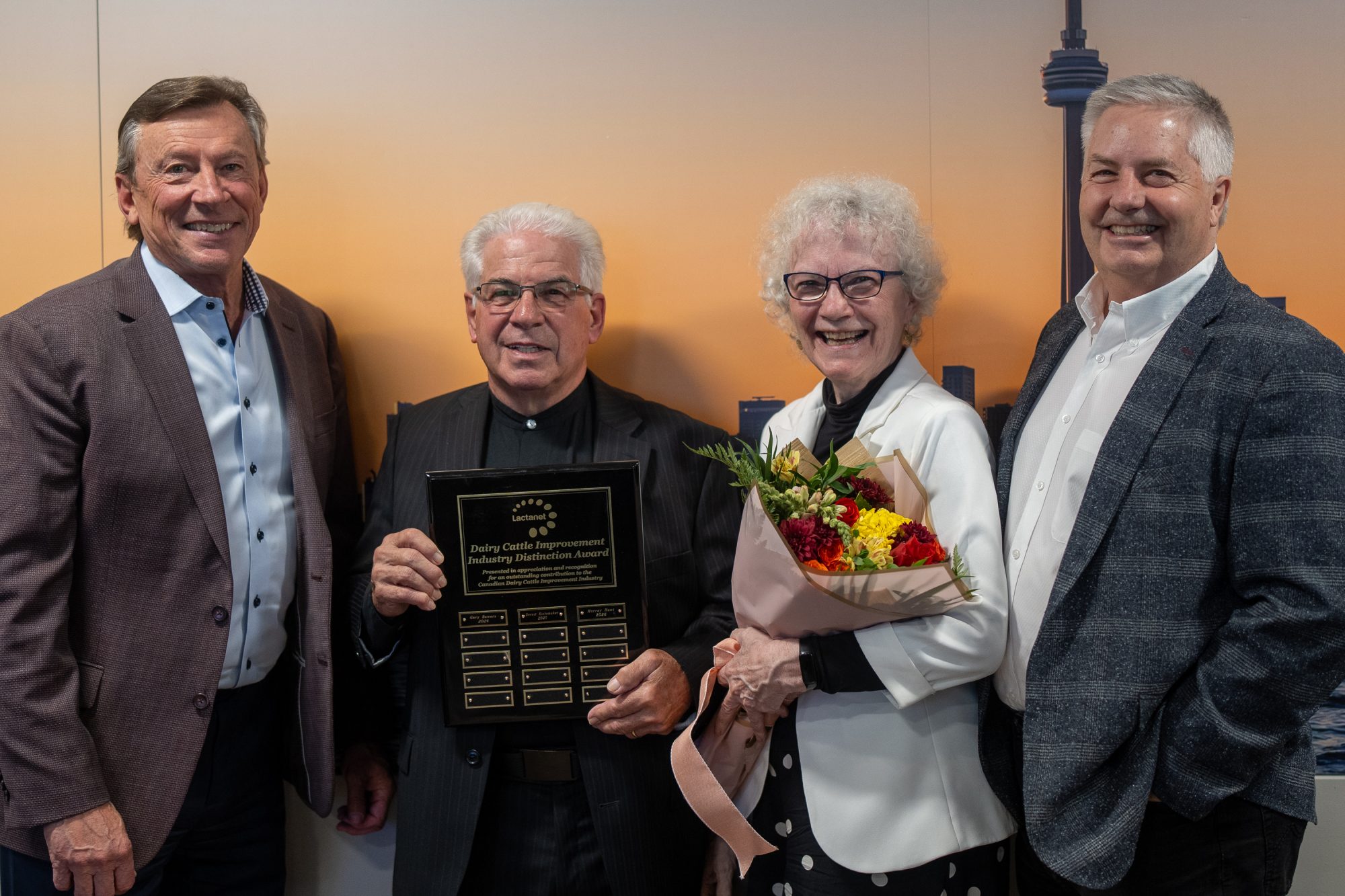
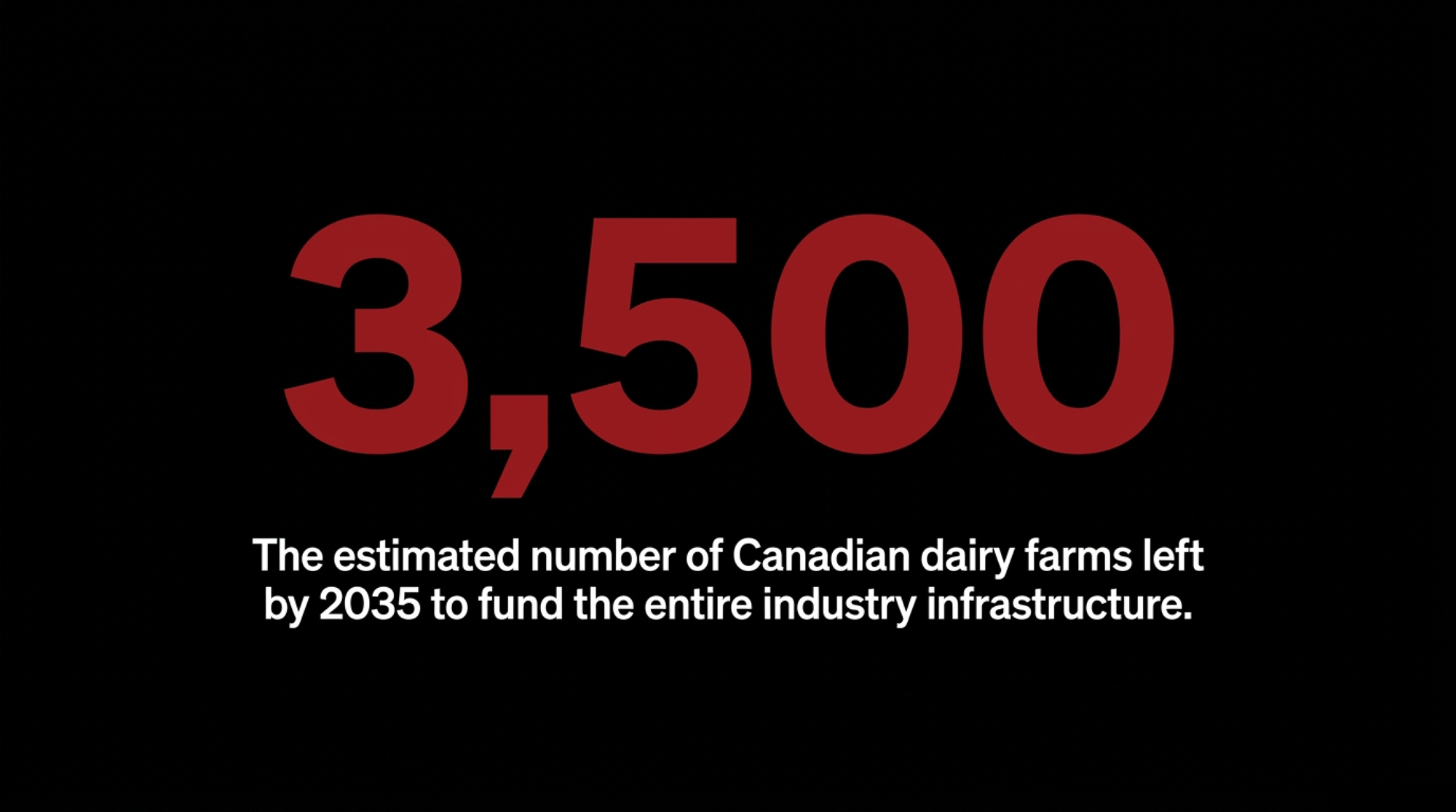
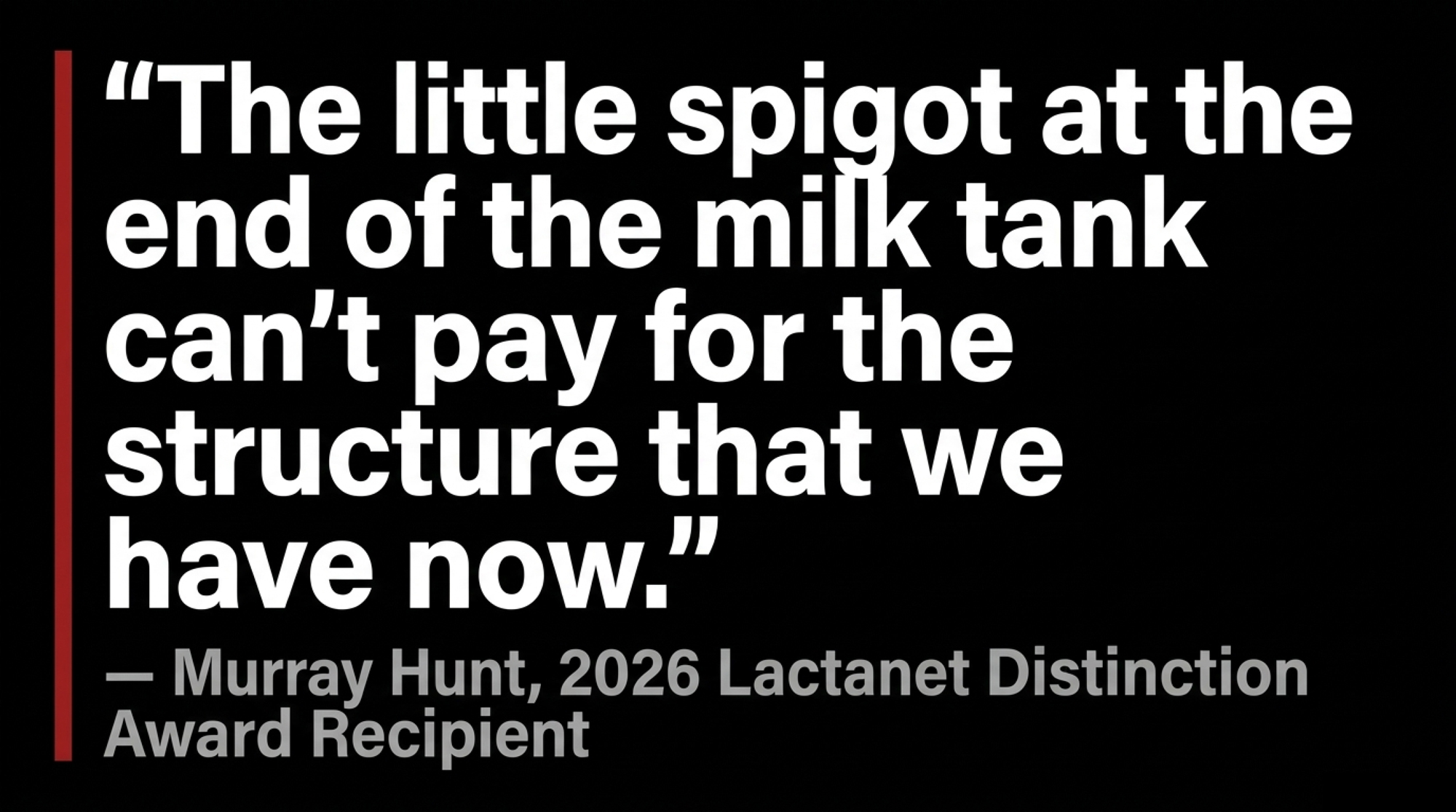
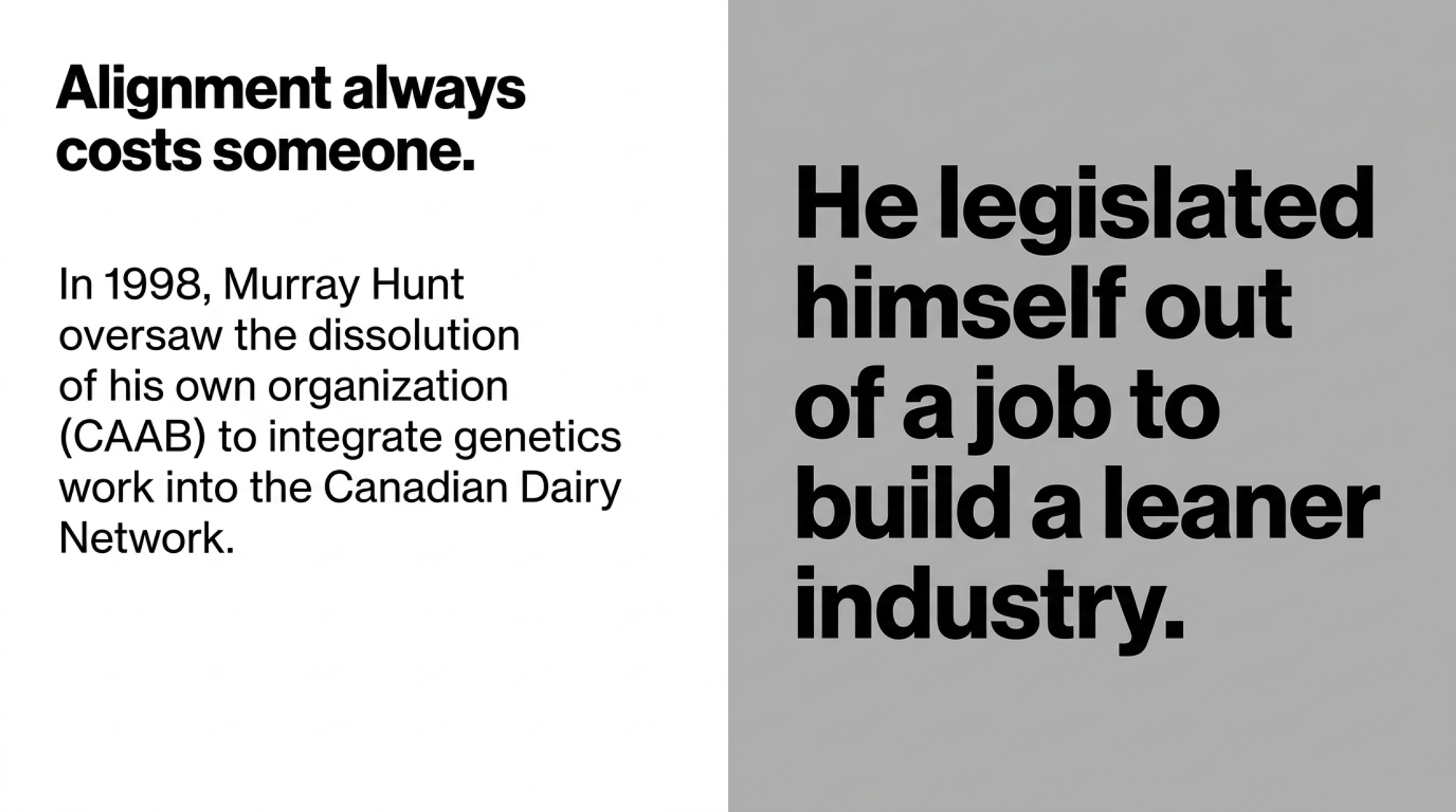
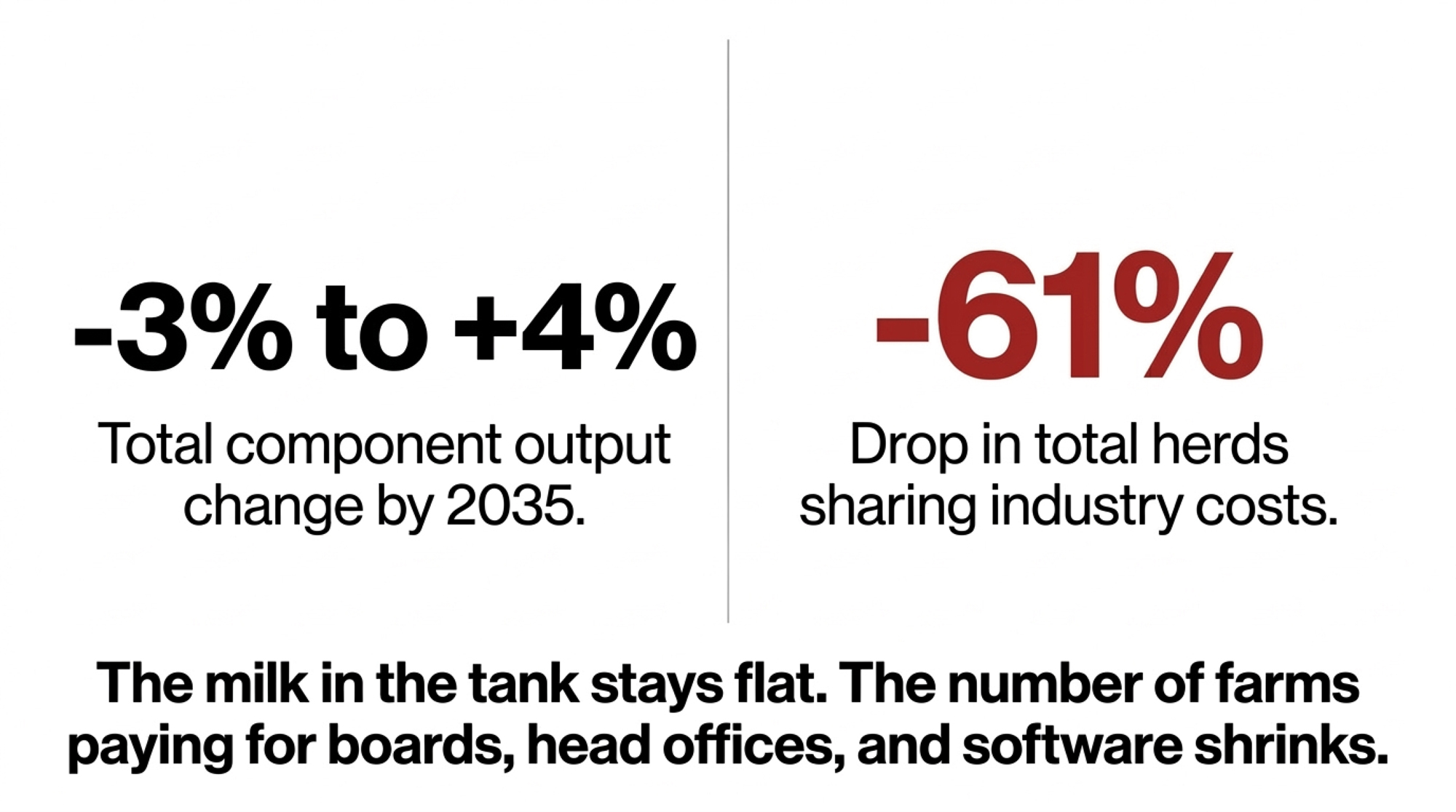
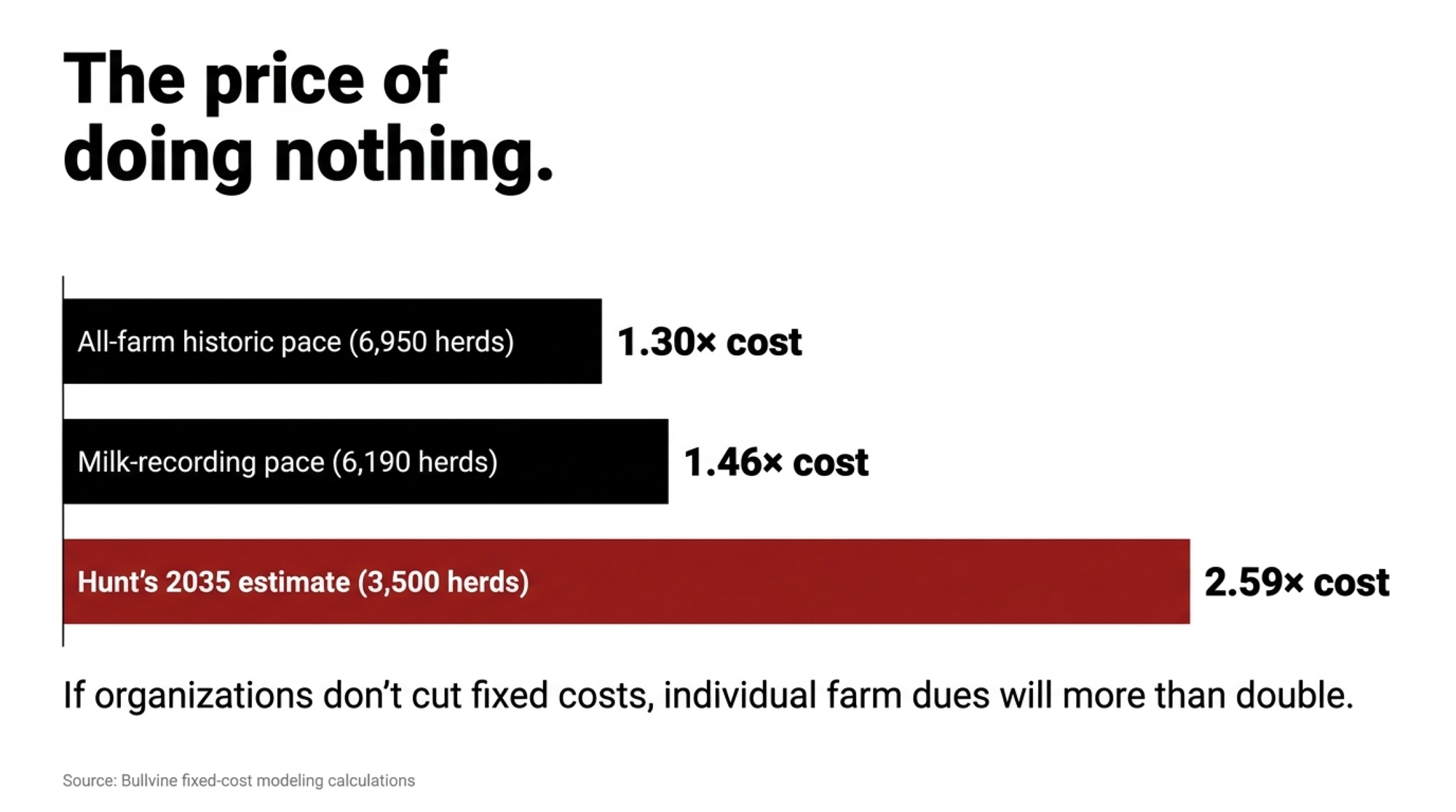

 The Sunday Read Dairy Professionals Don’t Skip.
 The Sunday Read Dairy Professionals Don’t Skip.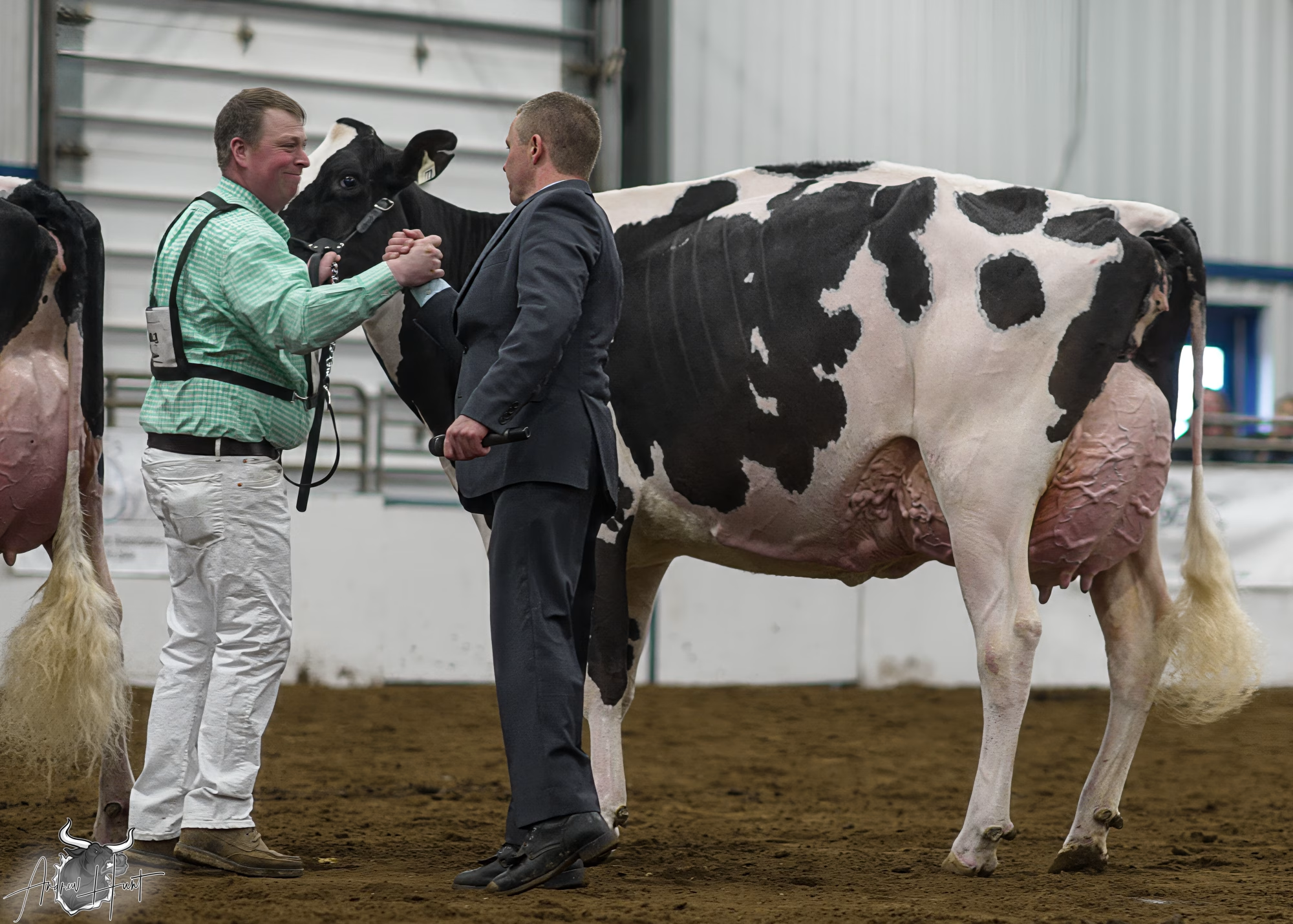
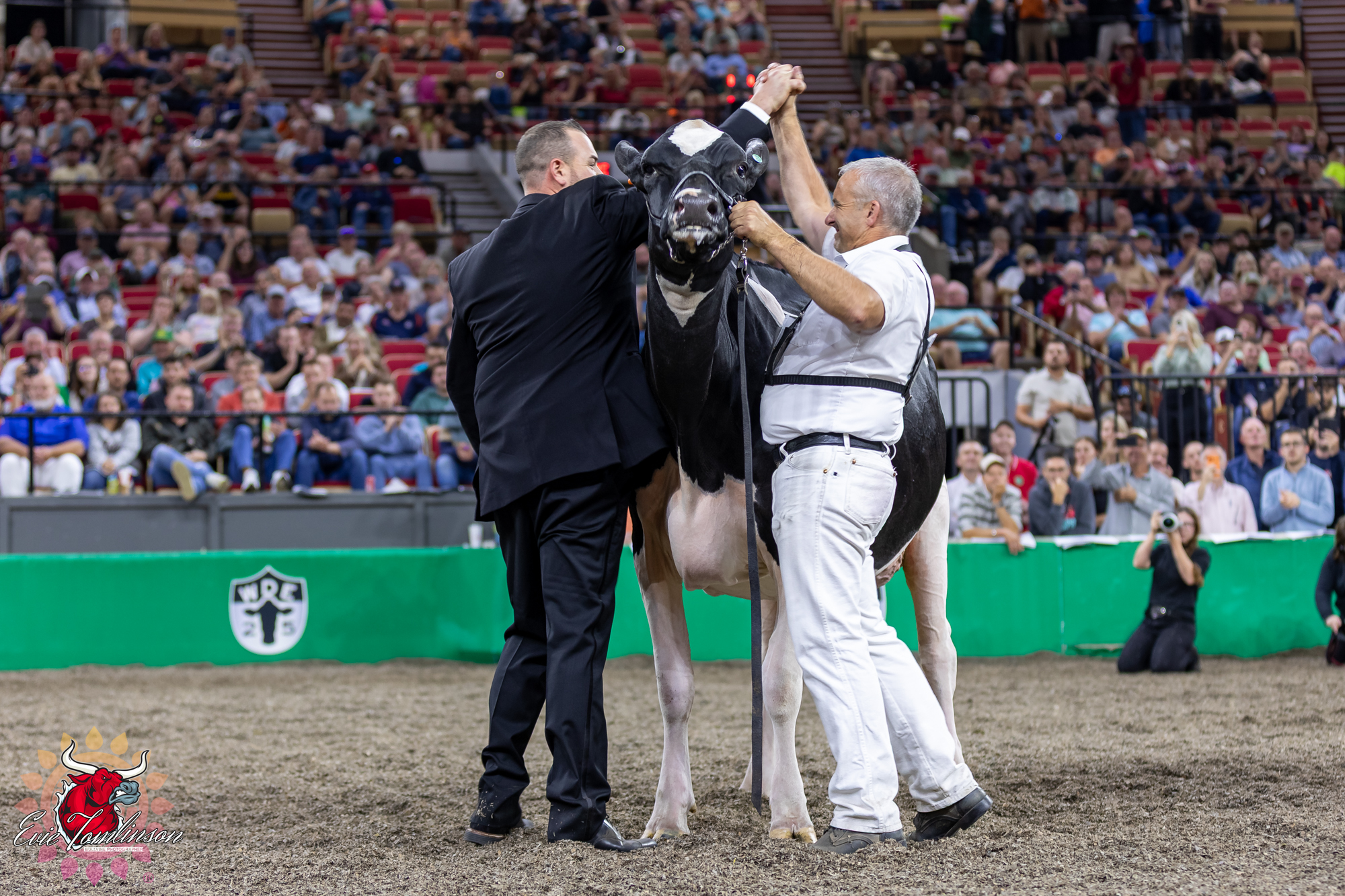

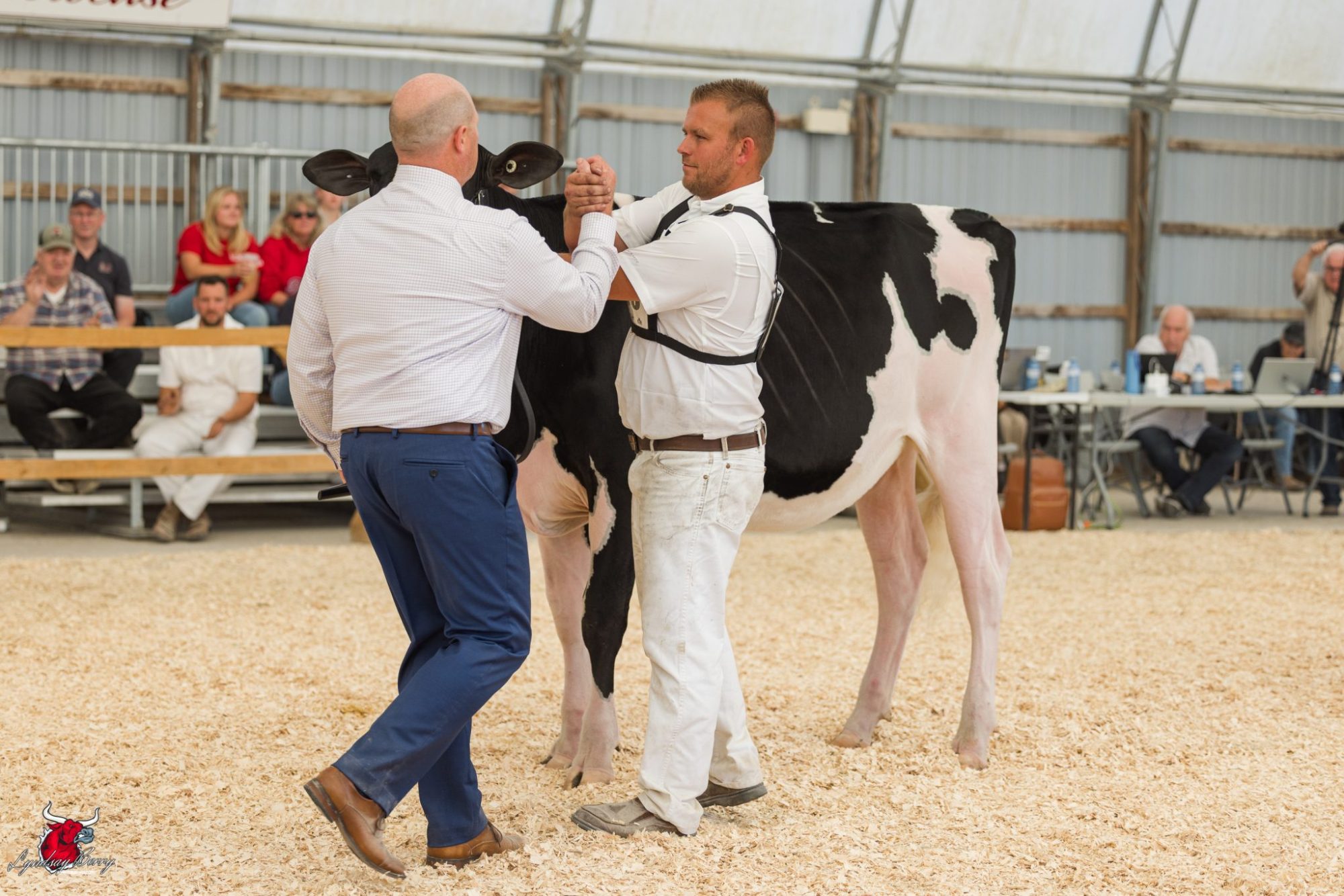

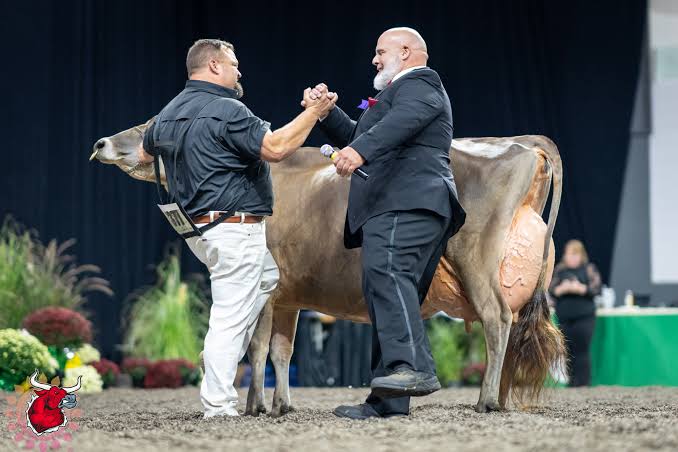

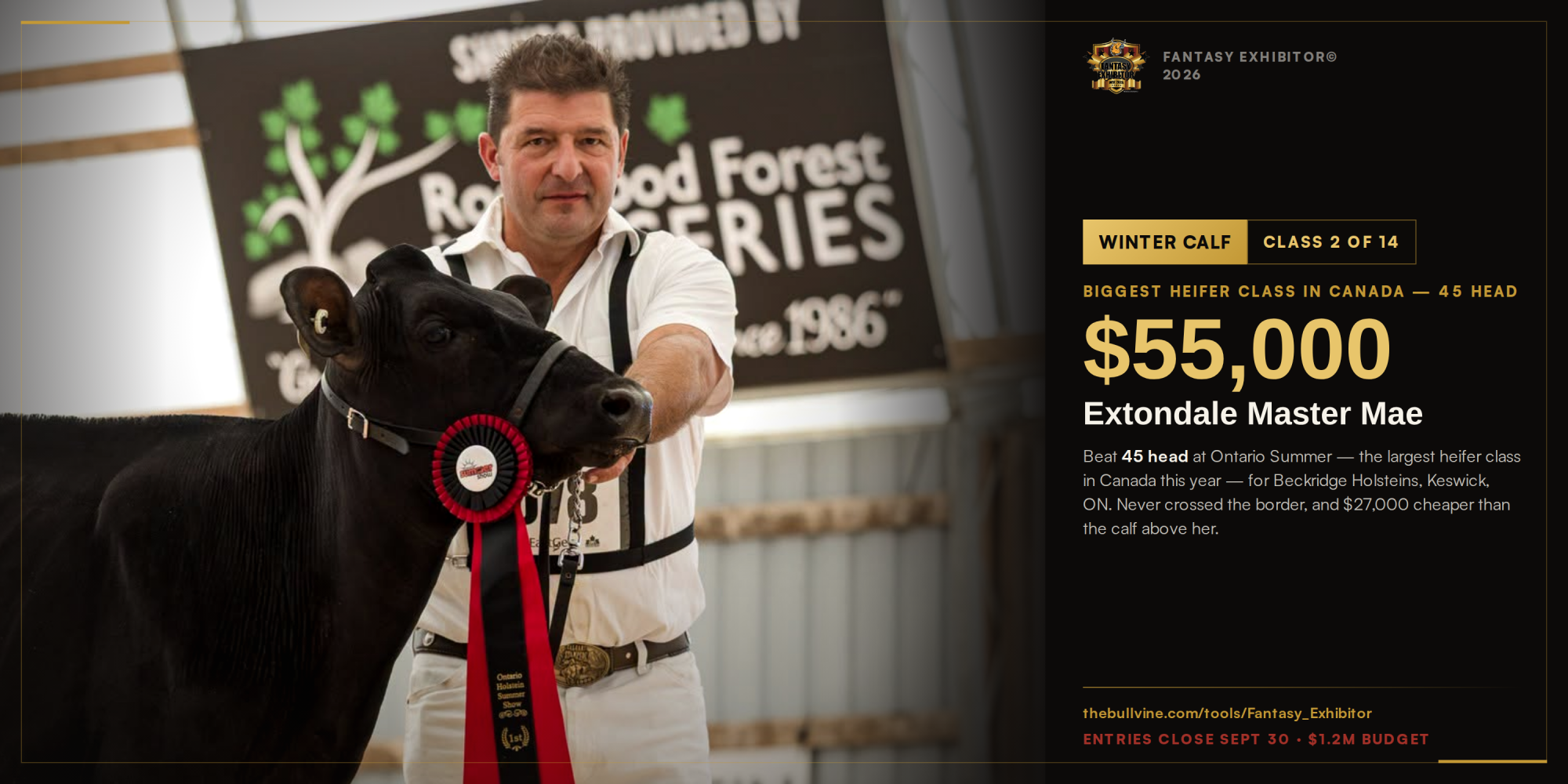

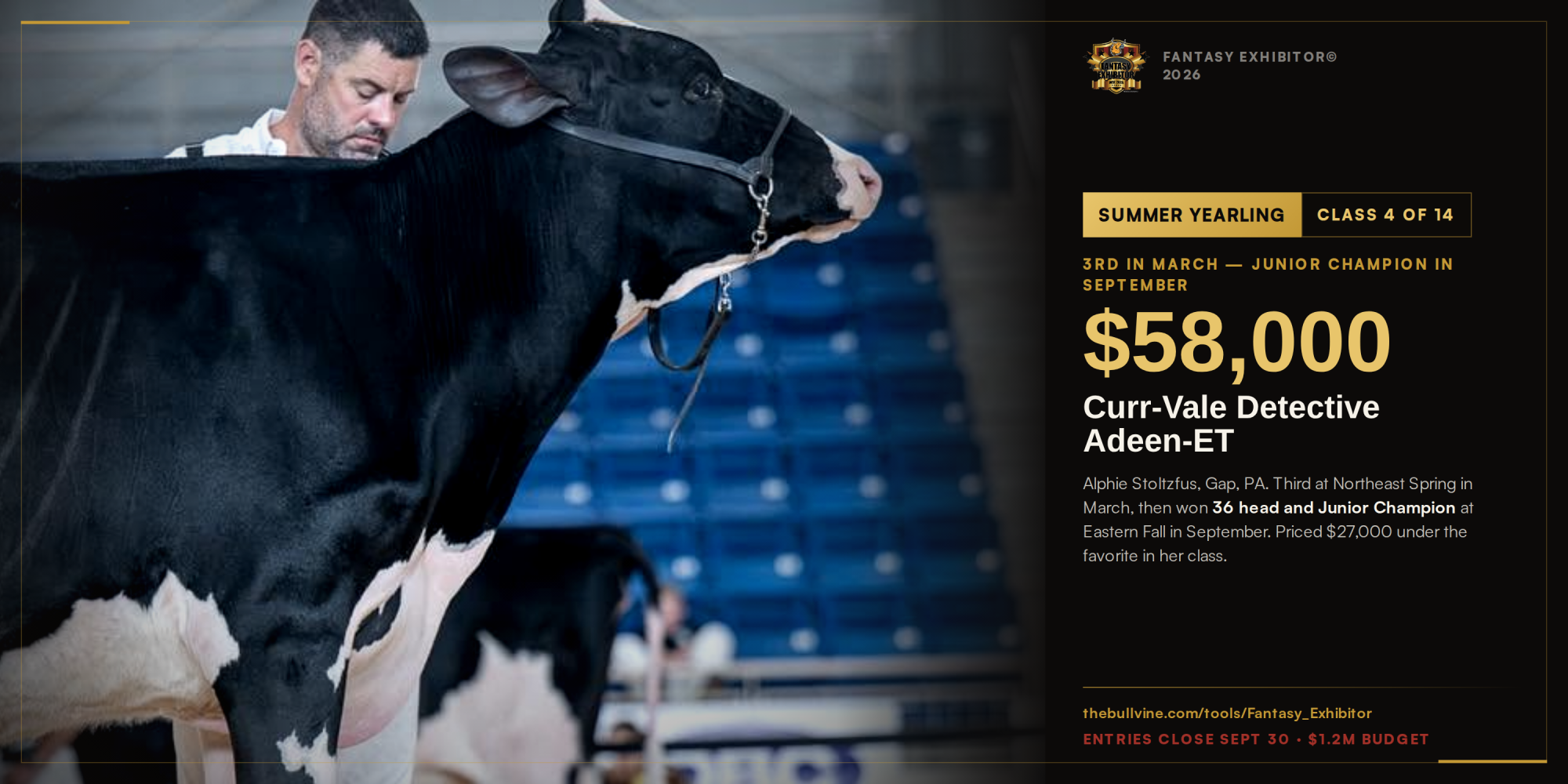



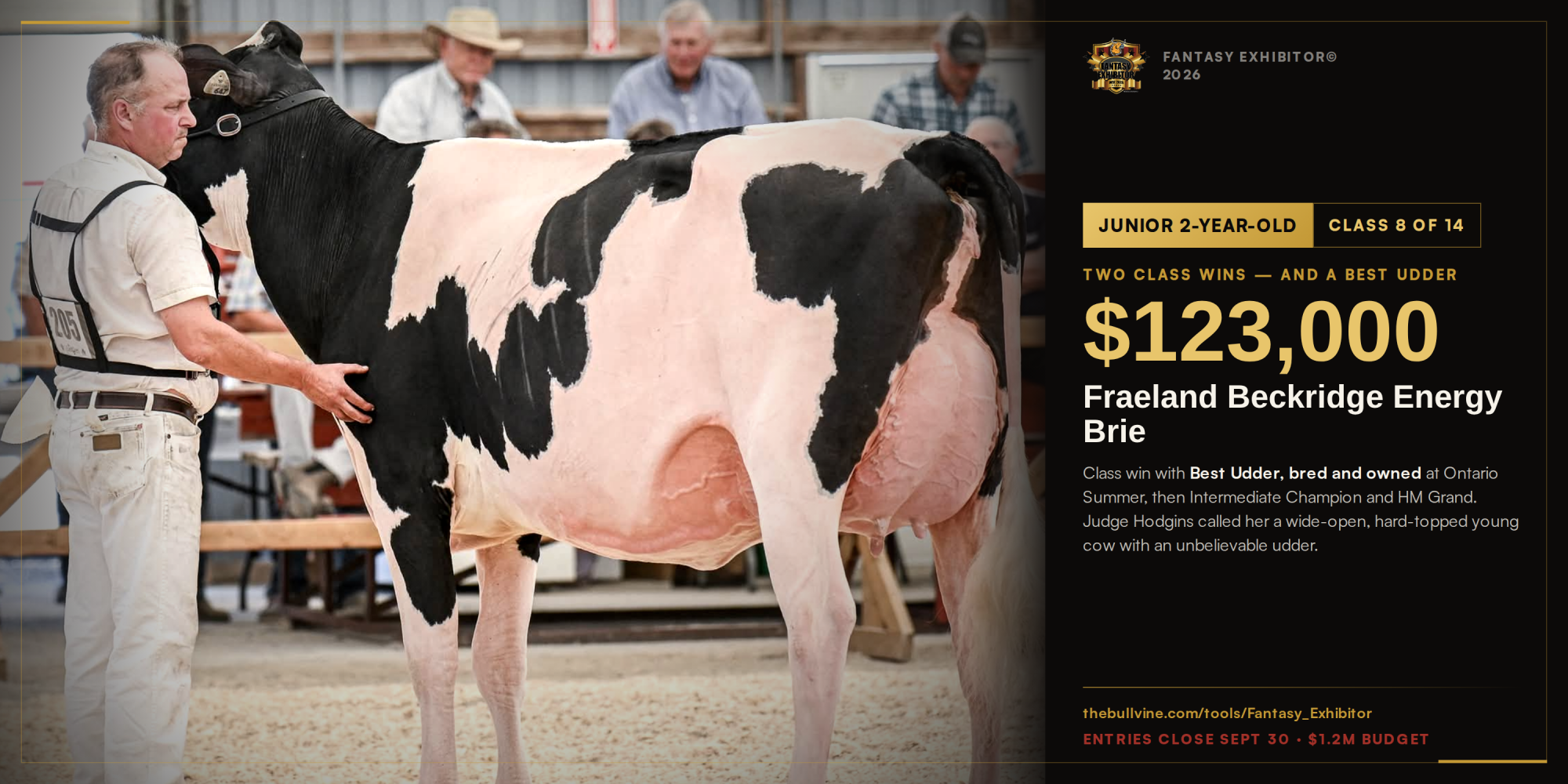
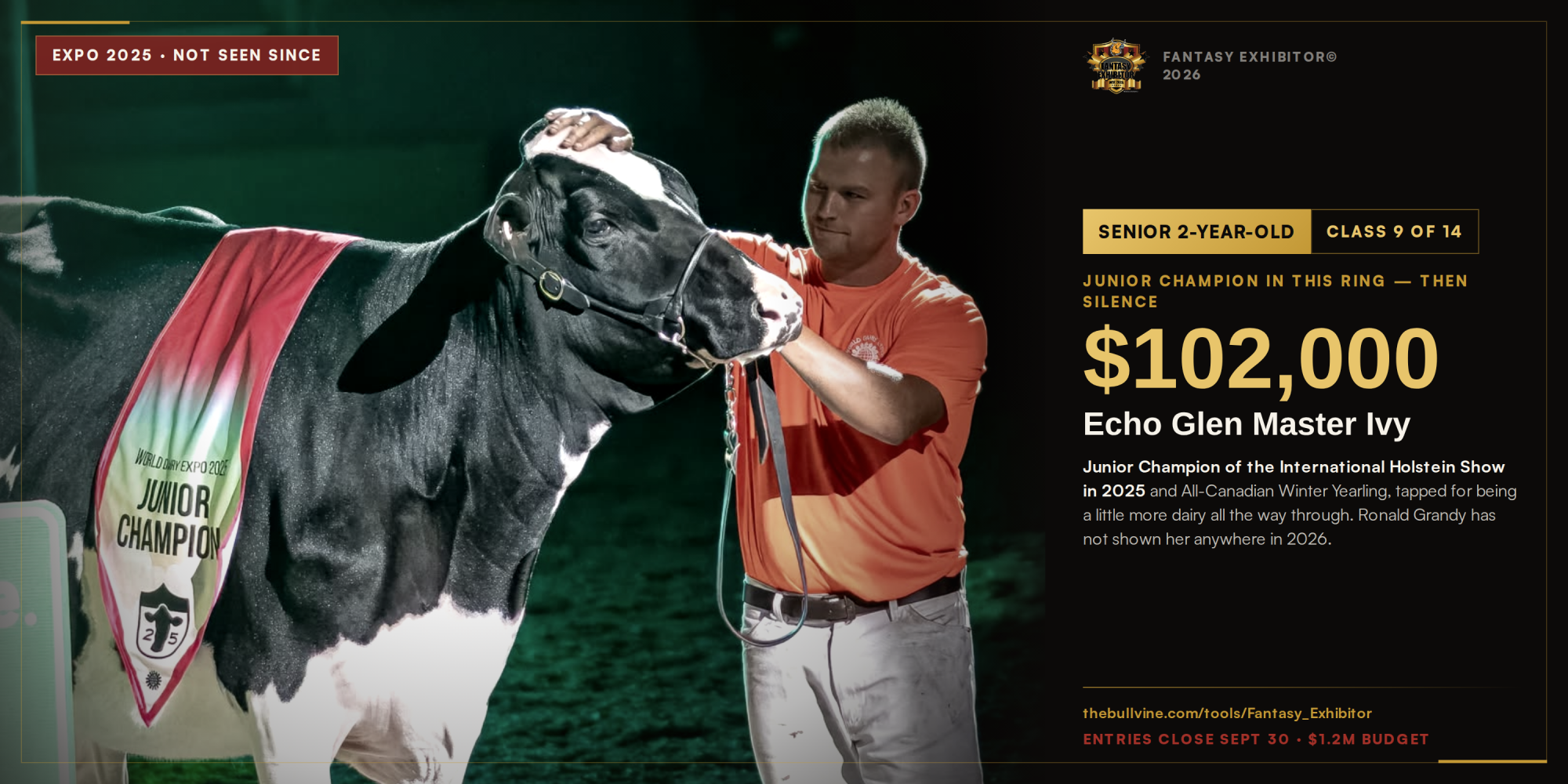
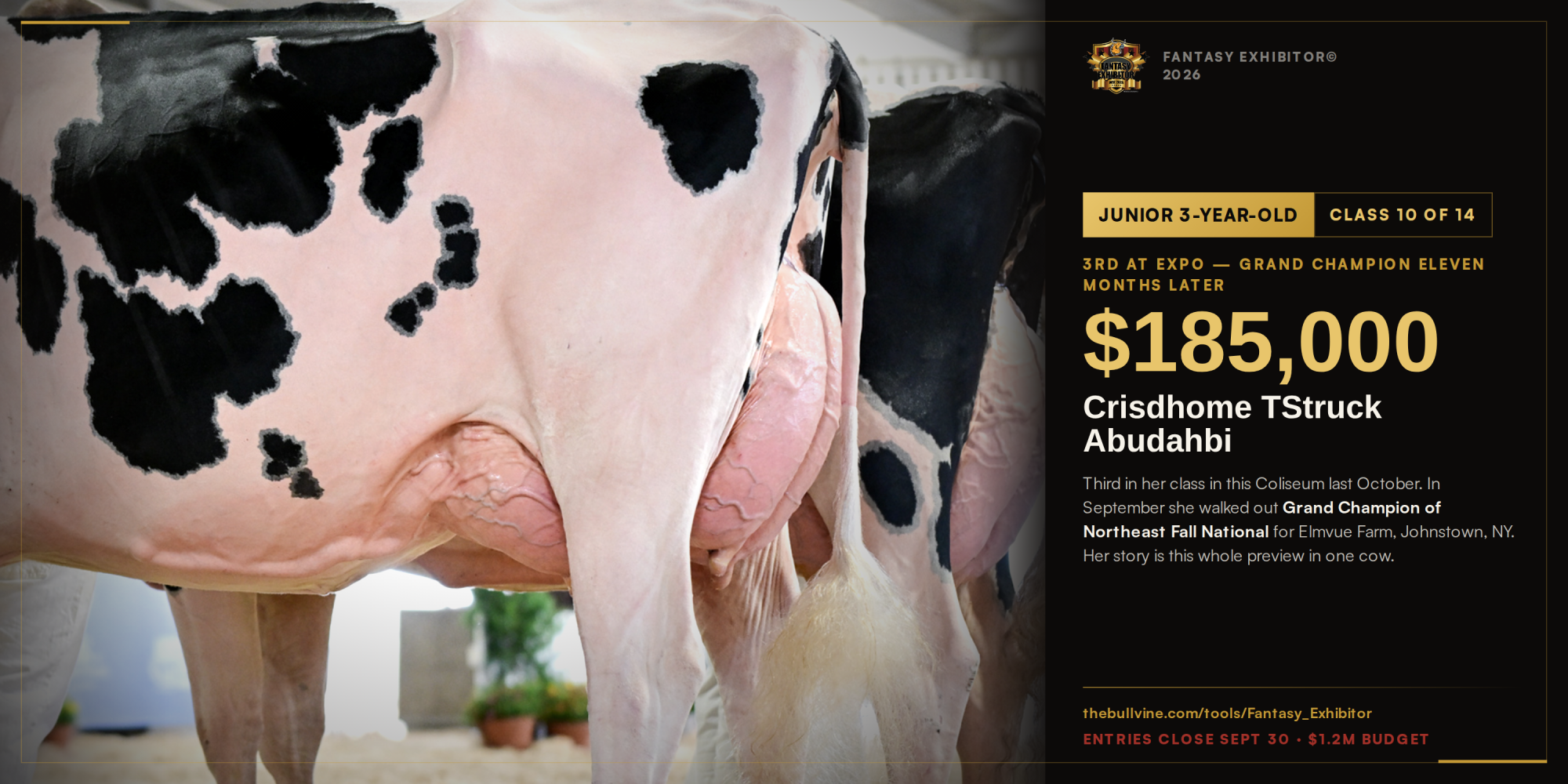

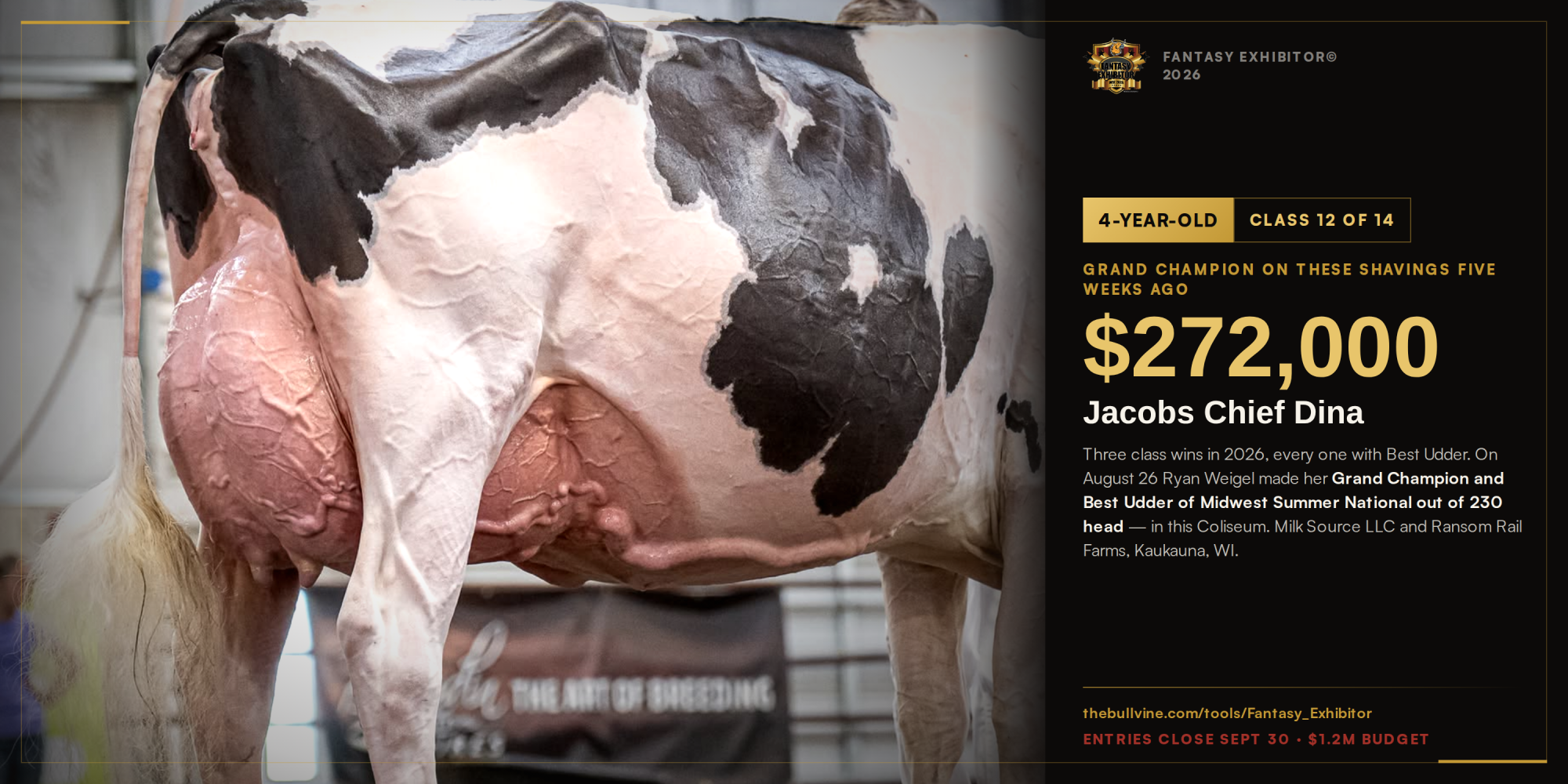
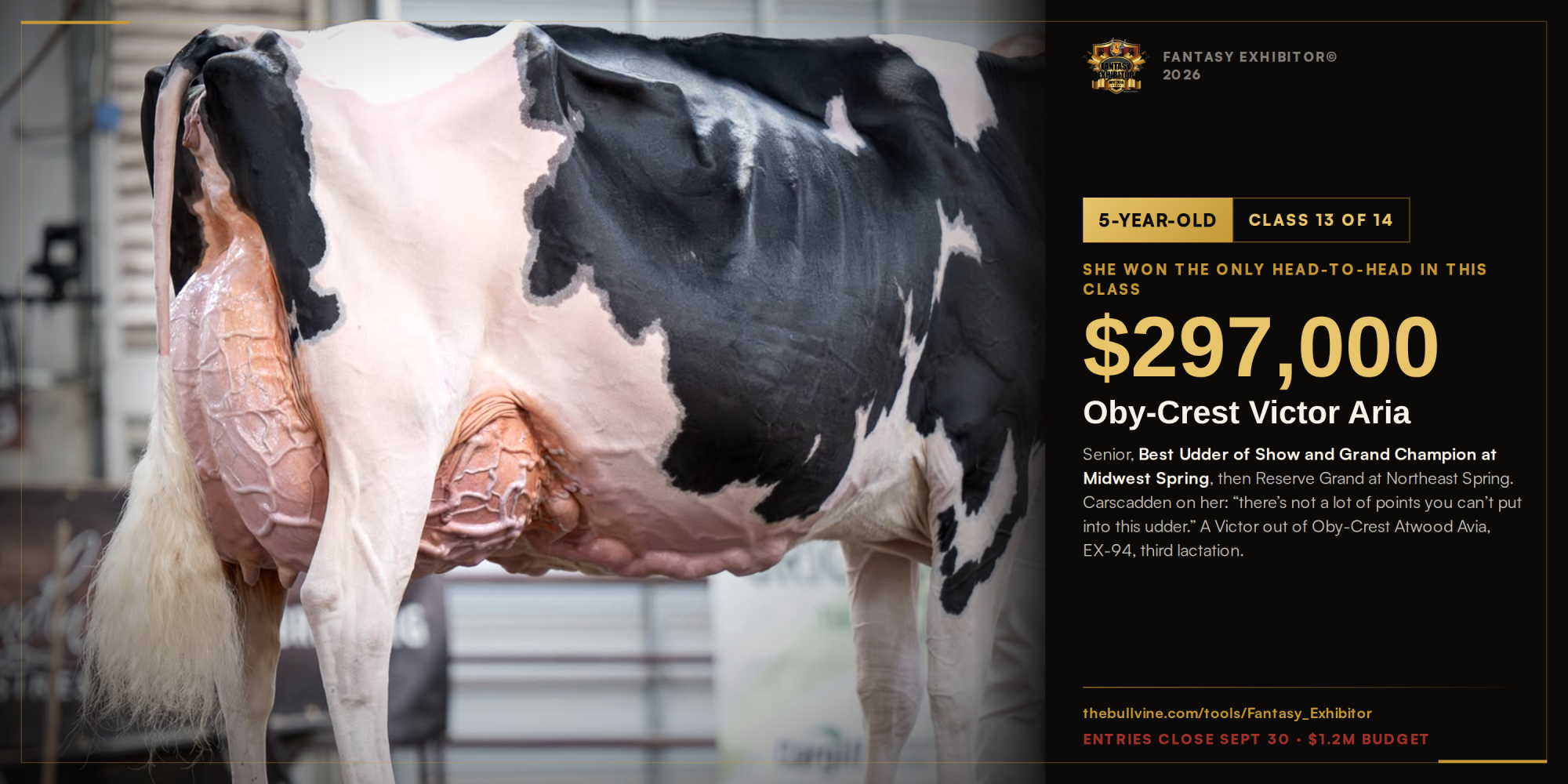
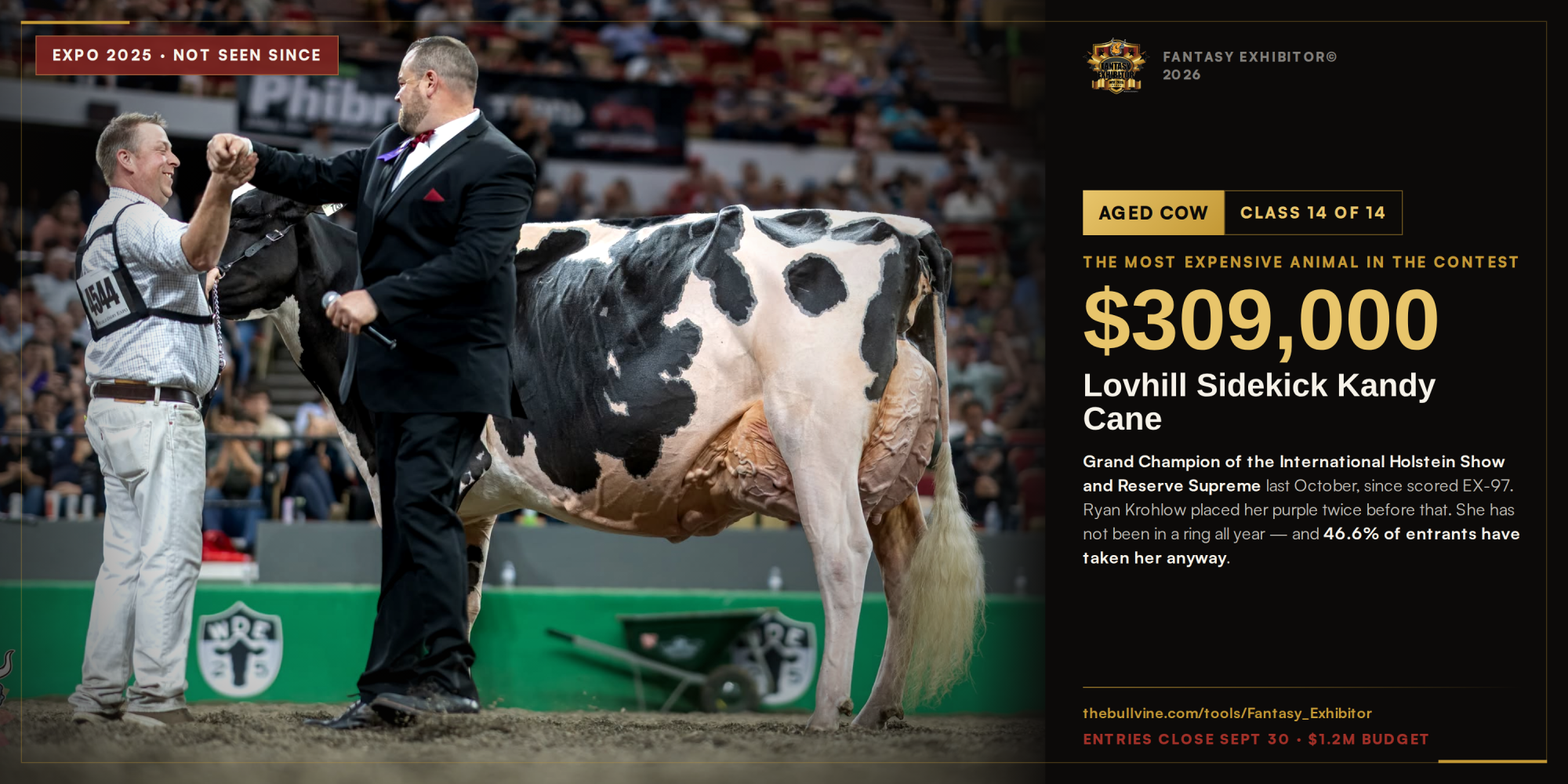

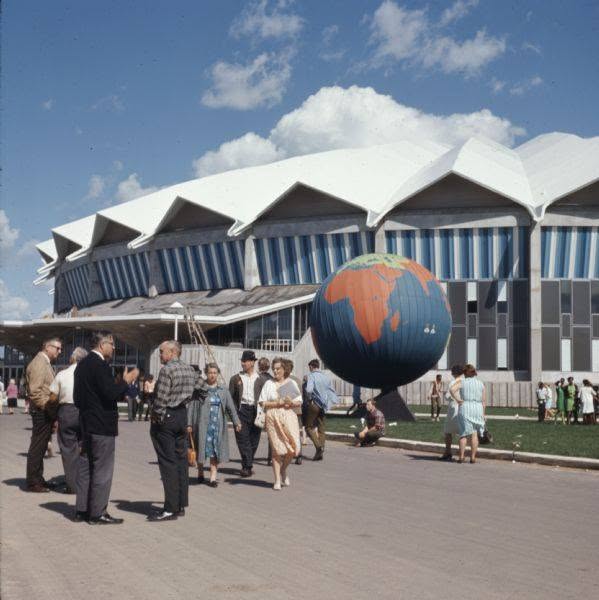
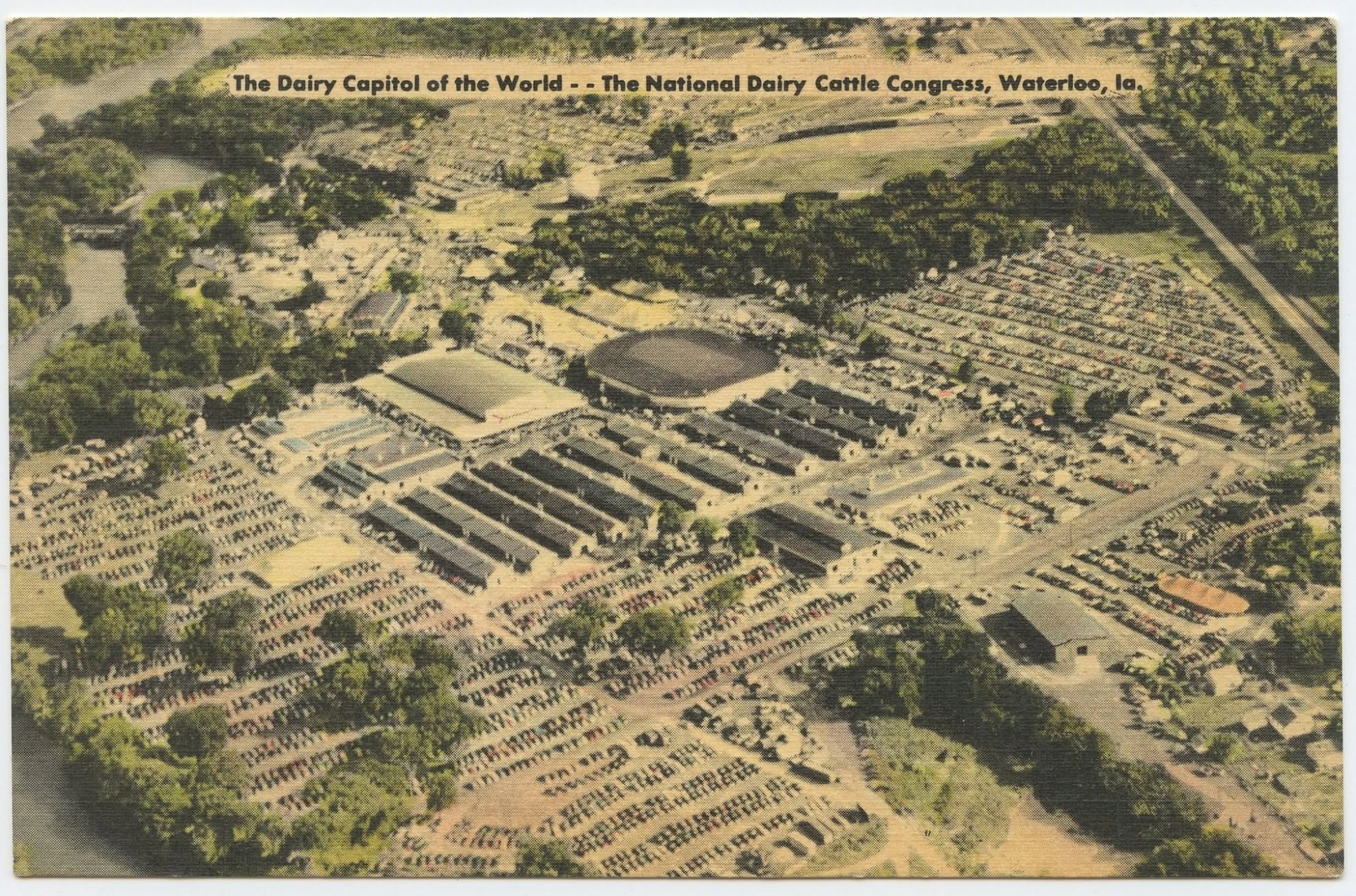
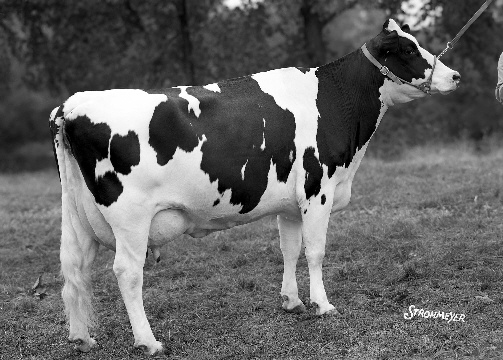
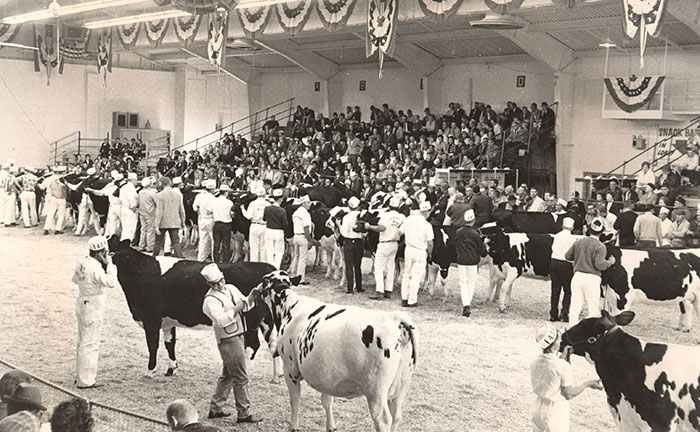
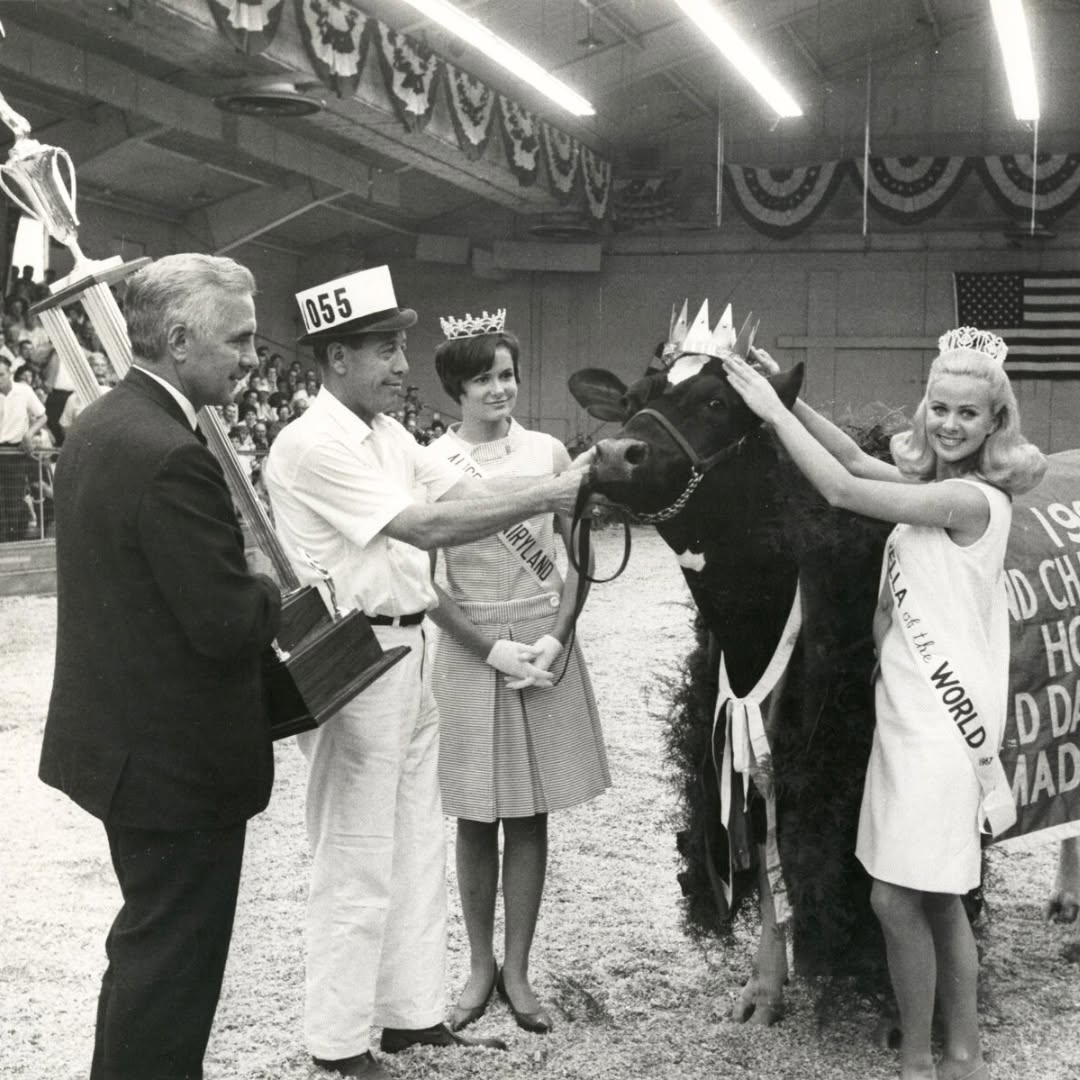
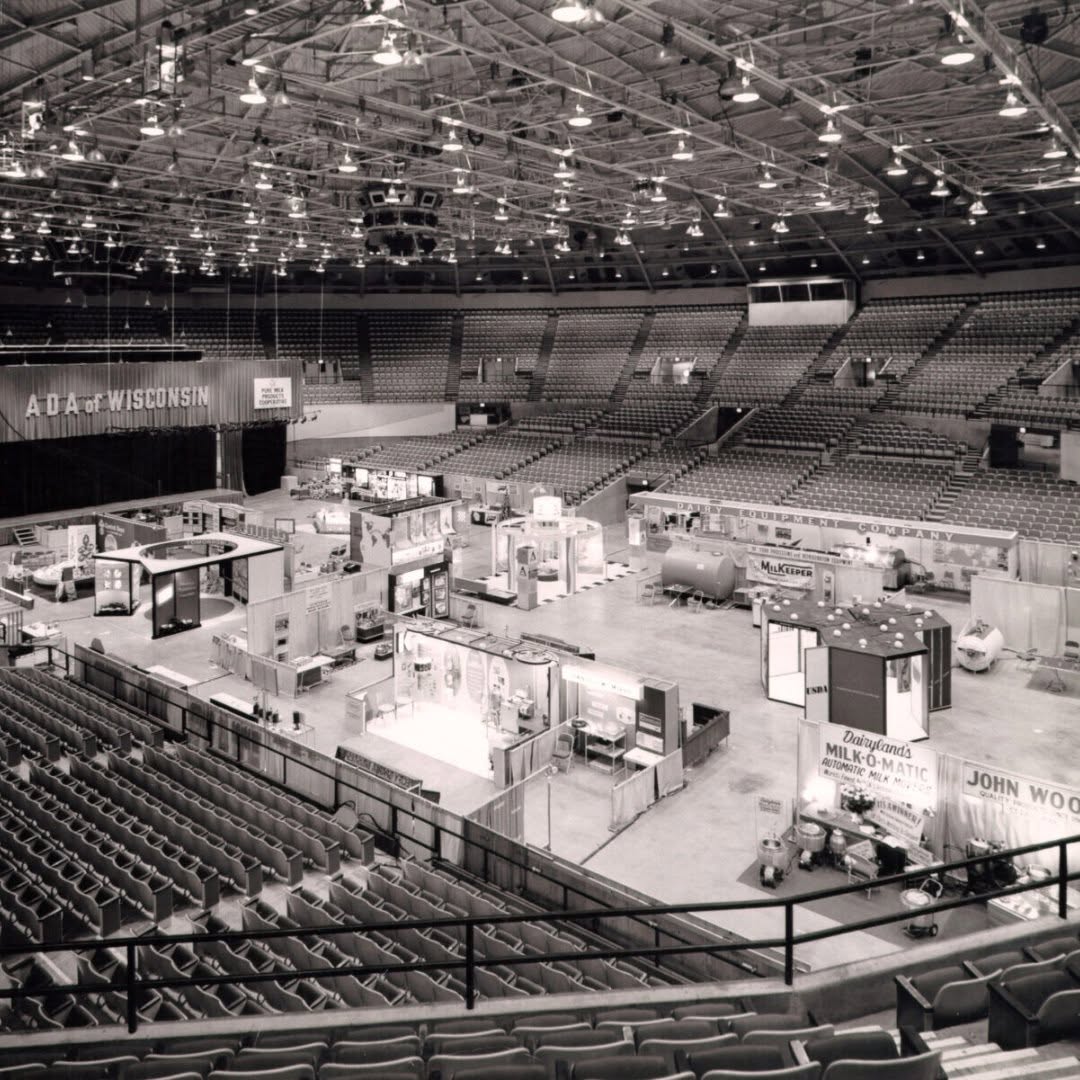
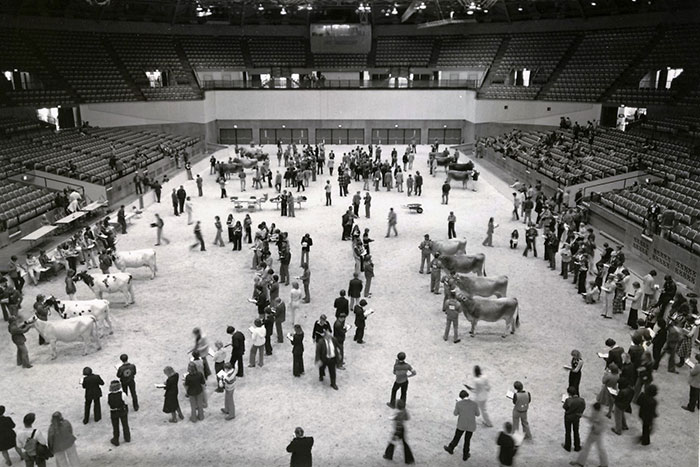
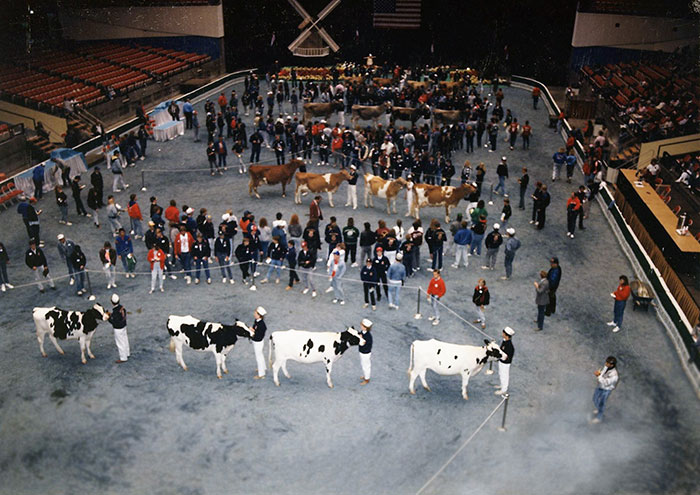
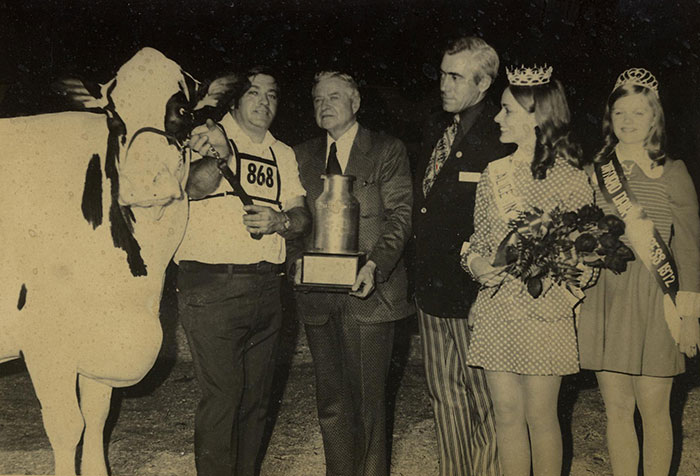
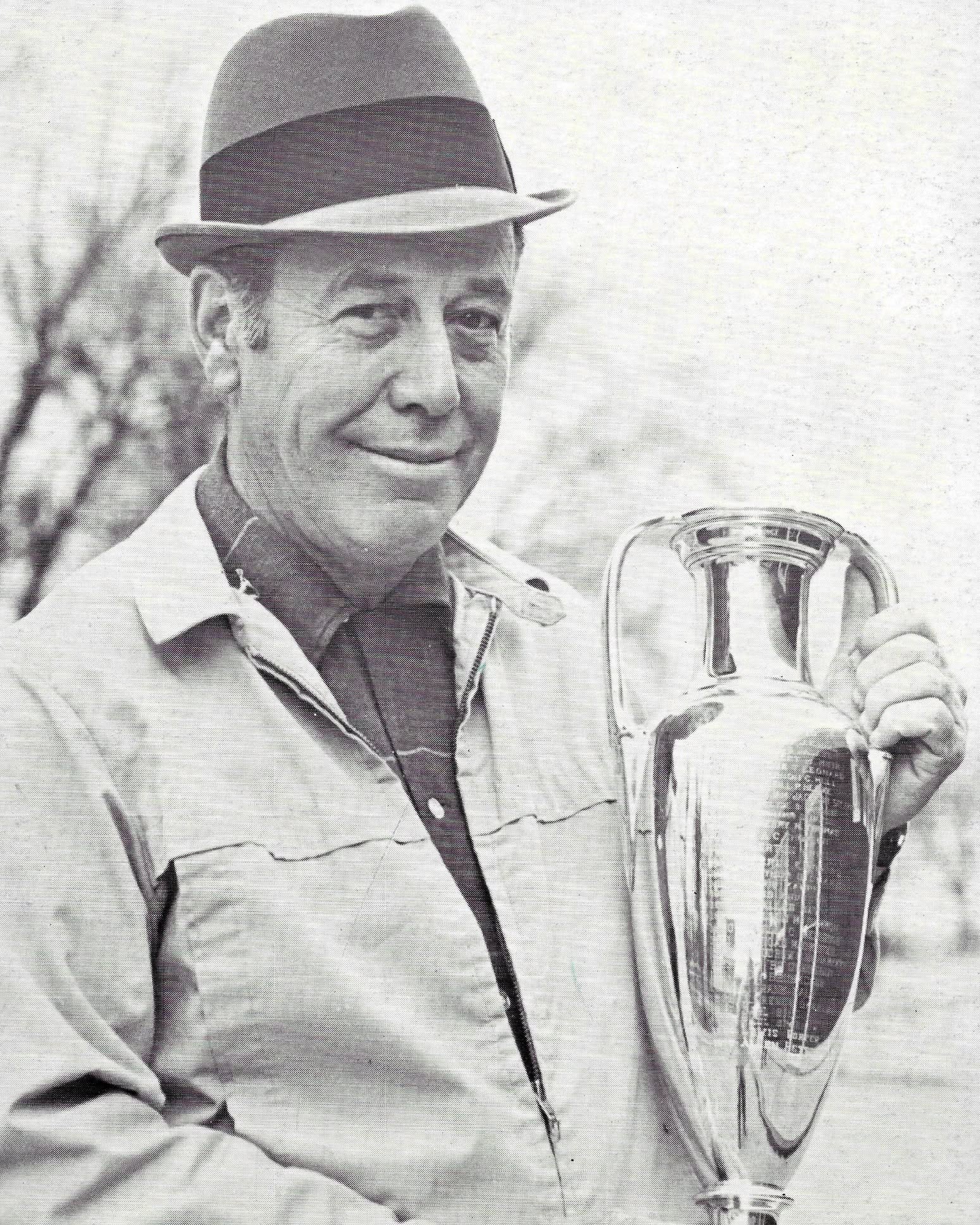
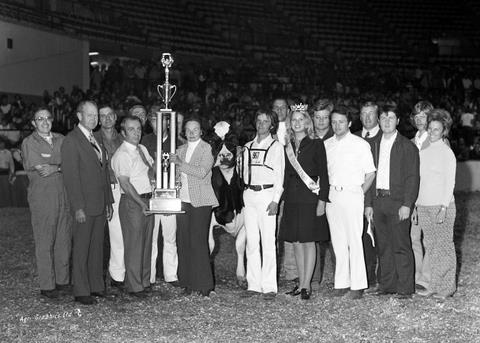
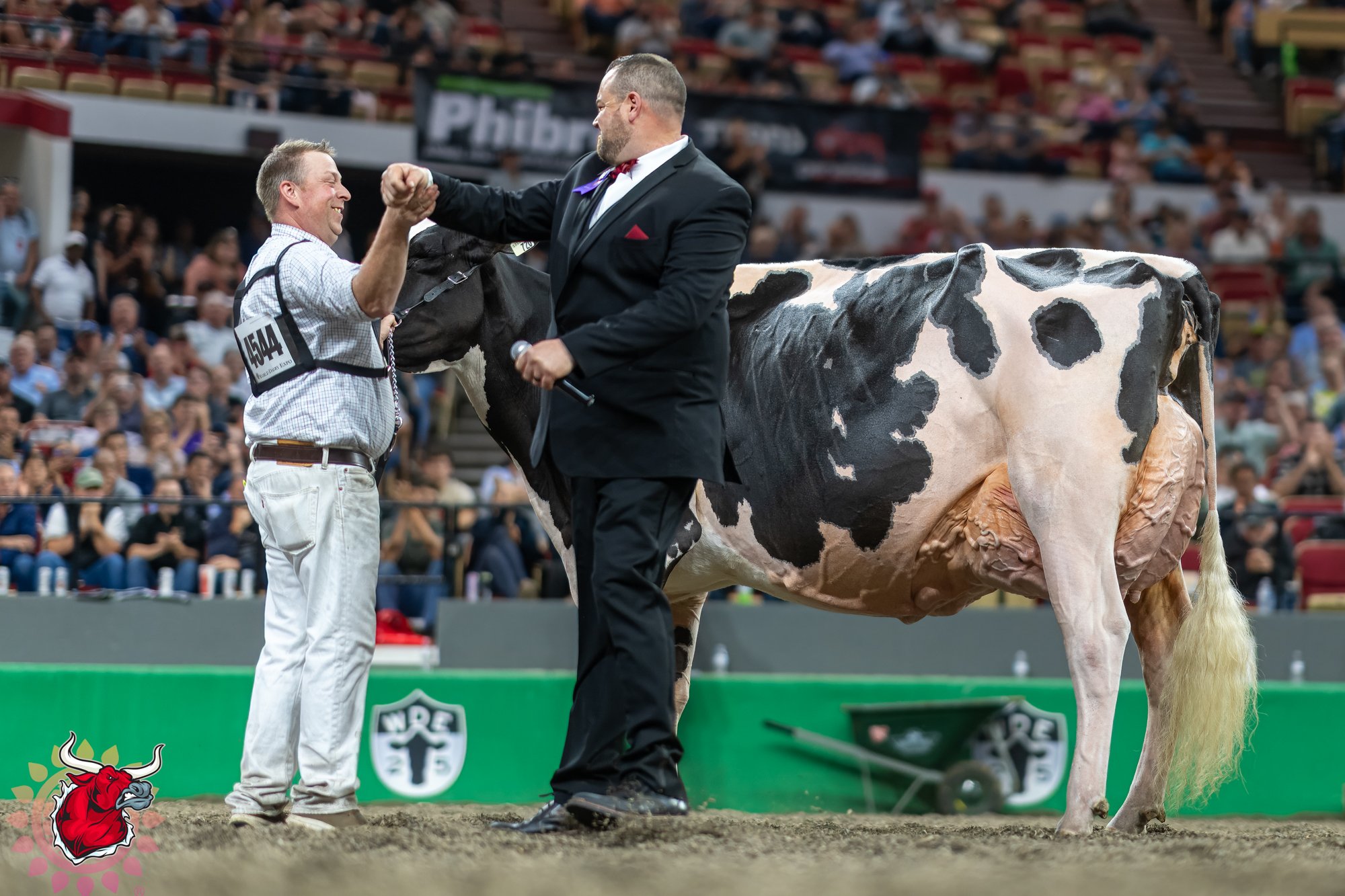
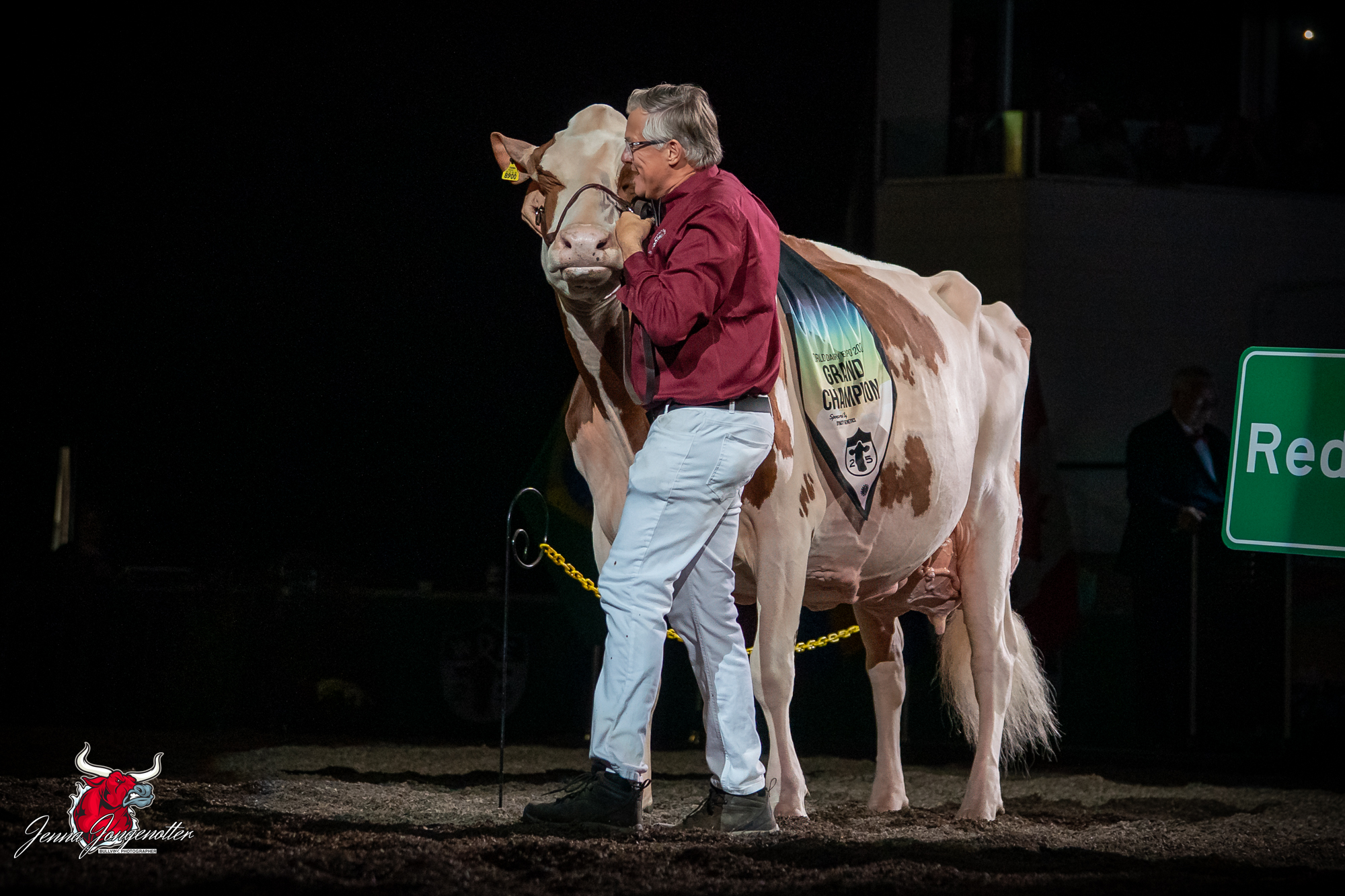
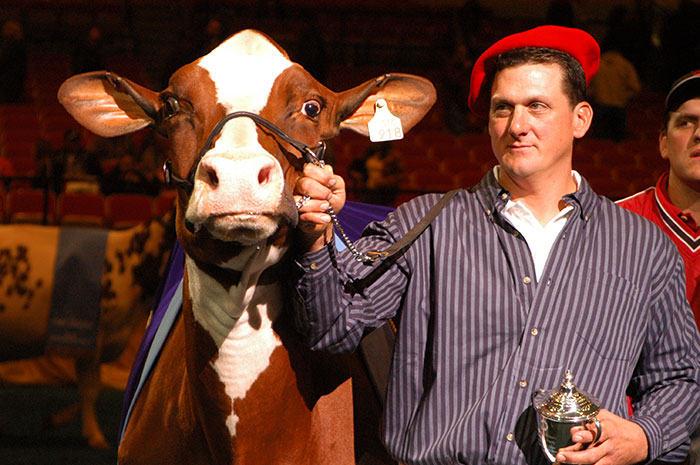
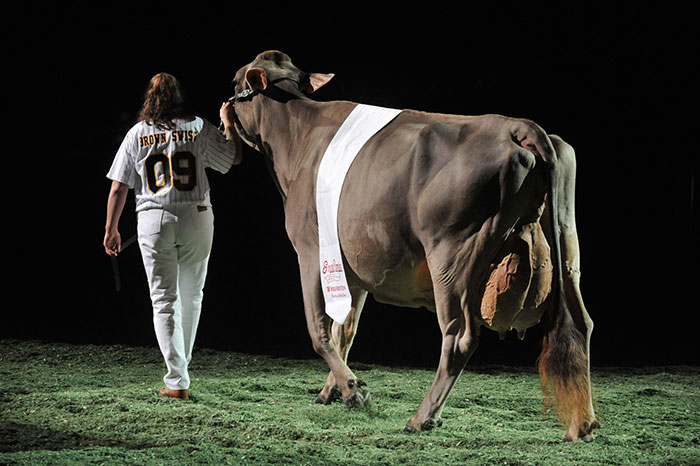
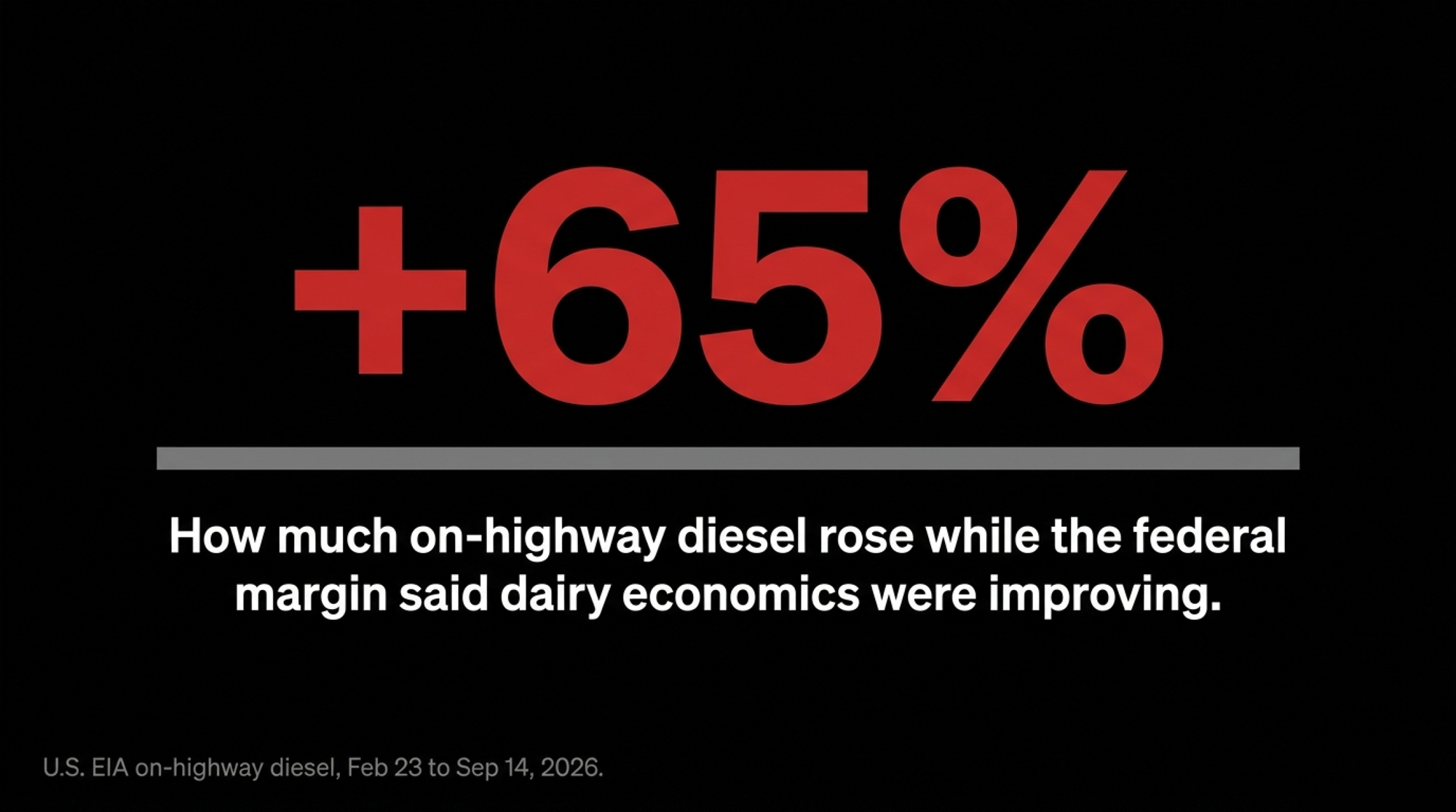
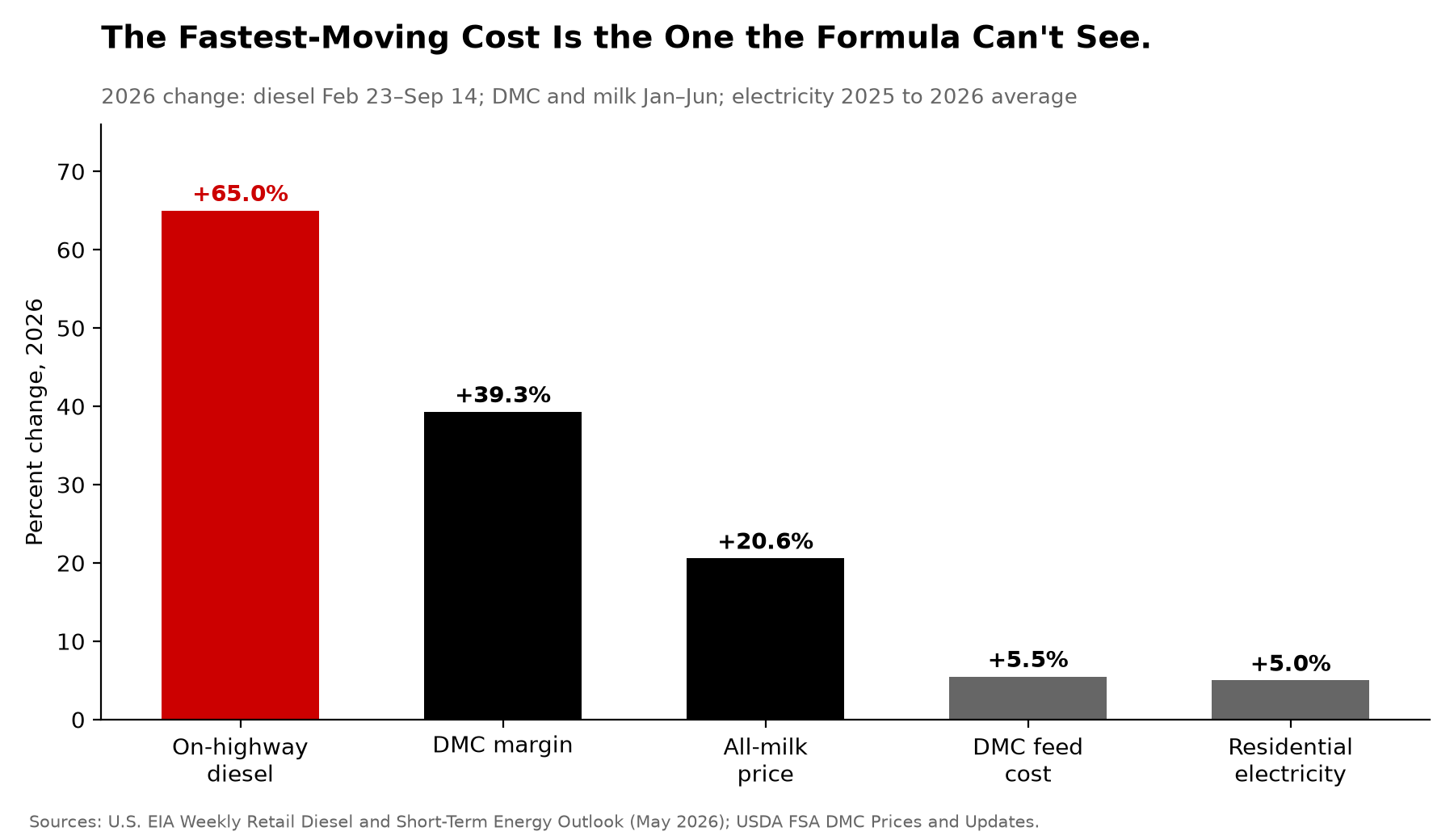
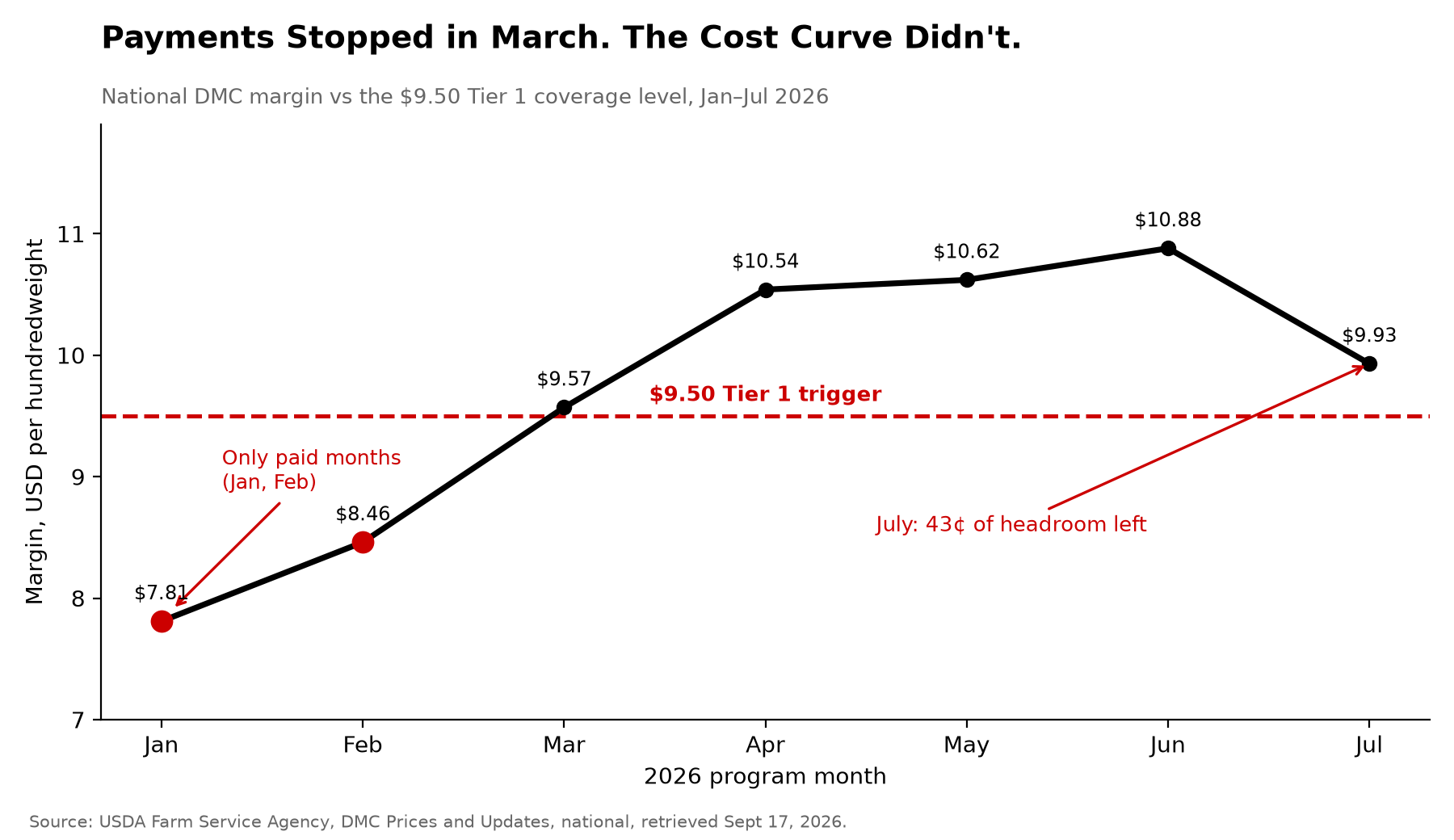
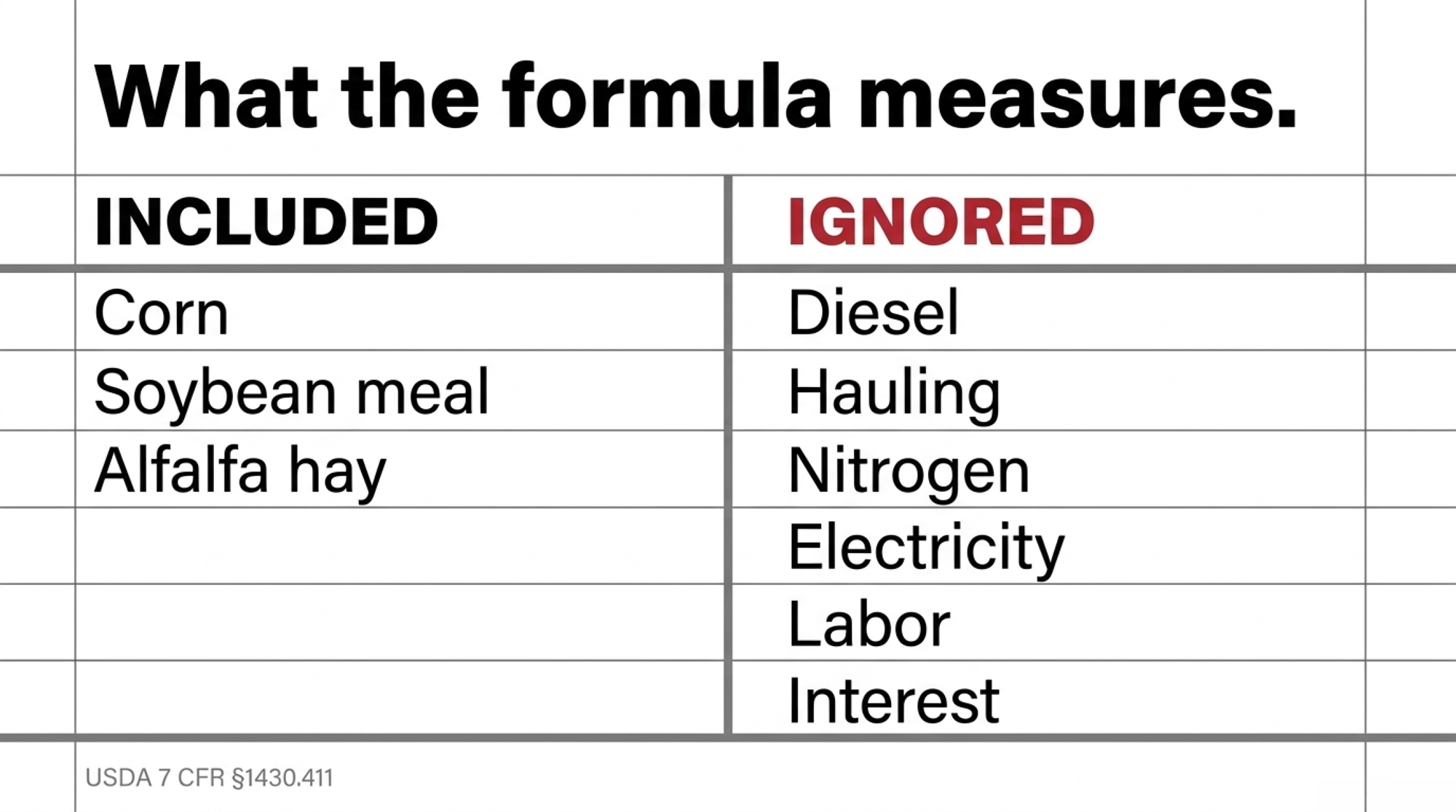
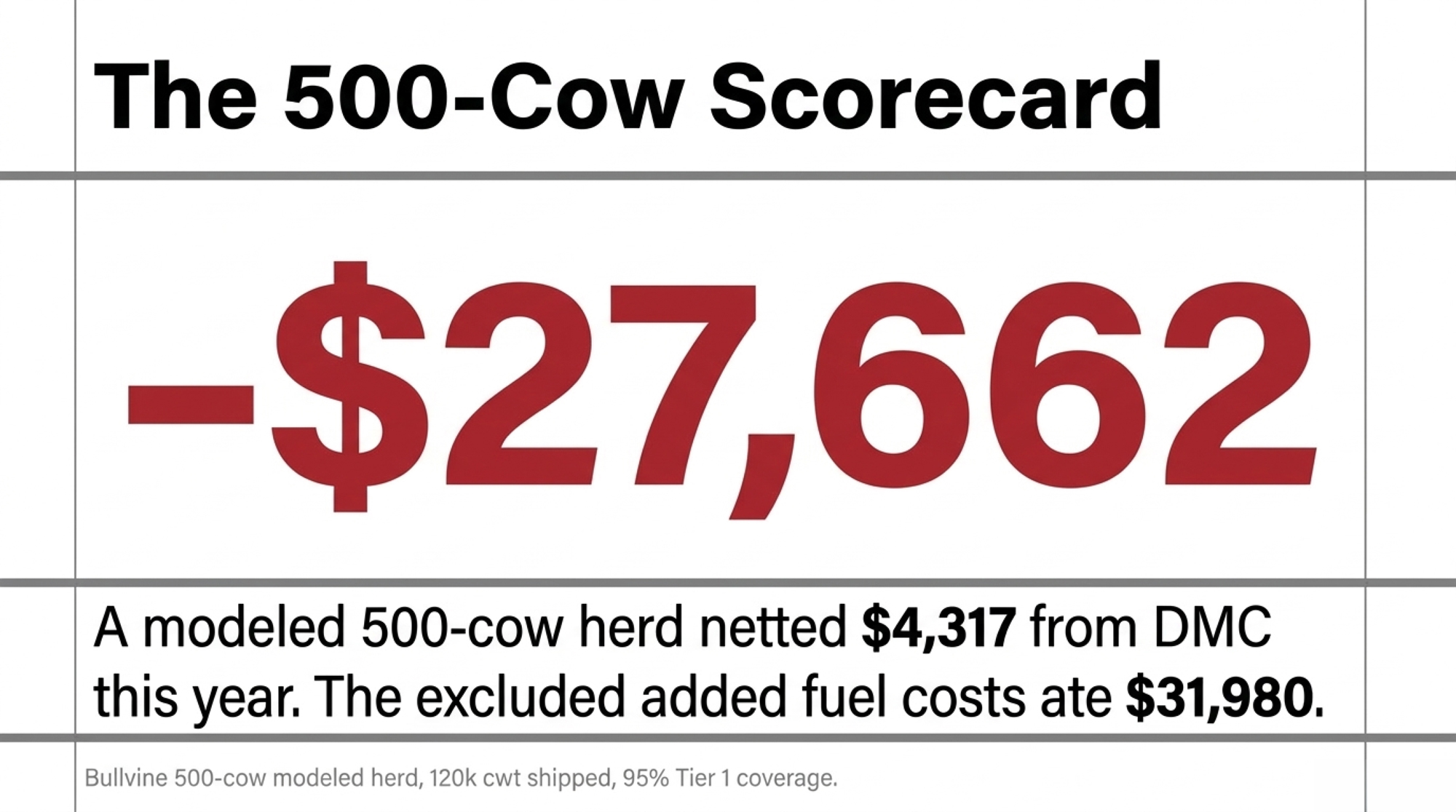


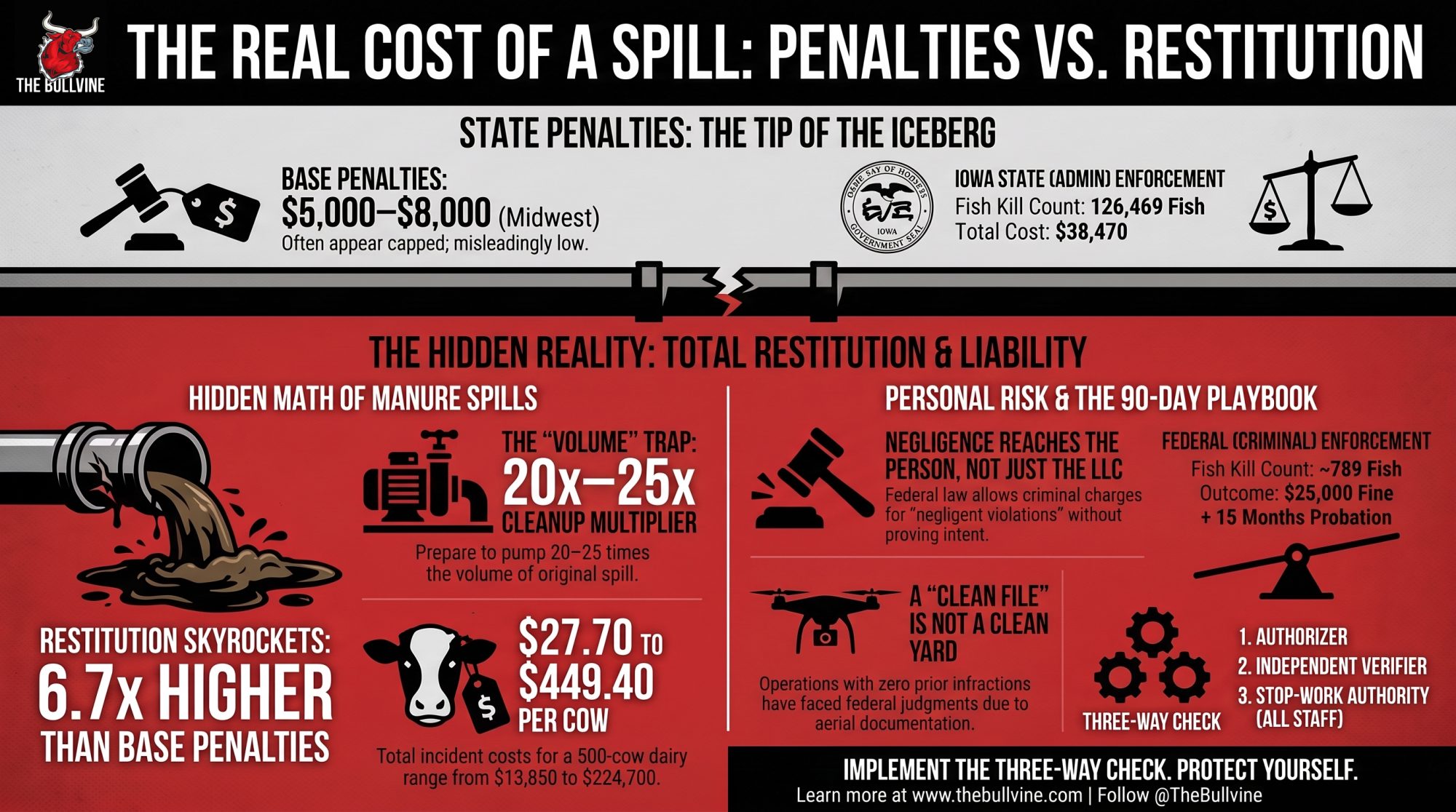

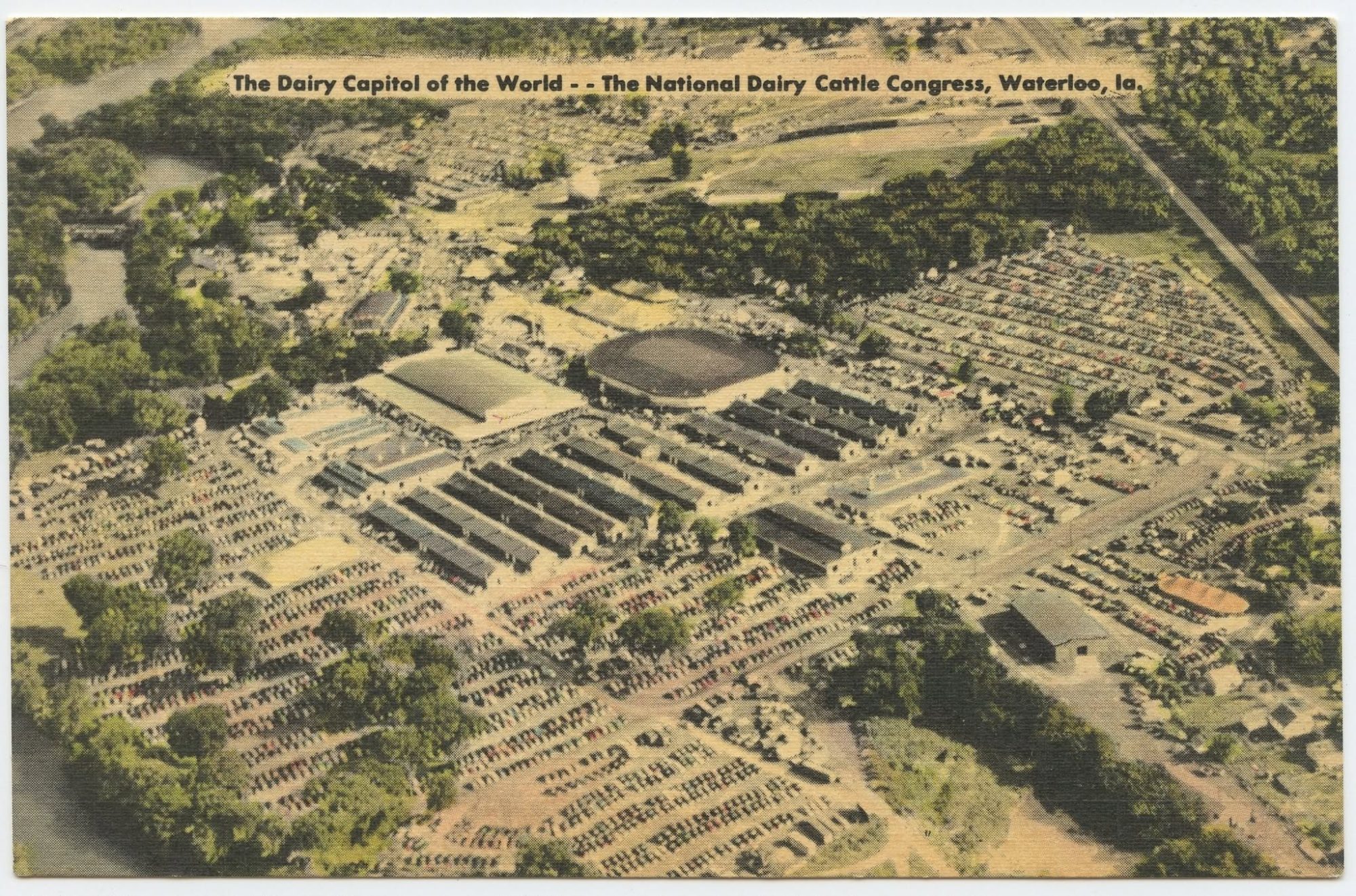

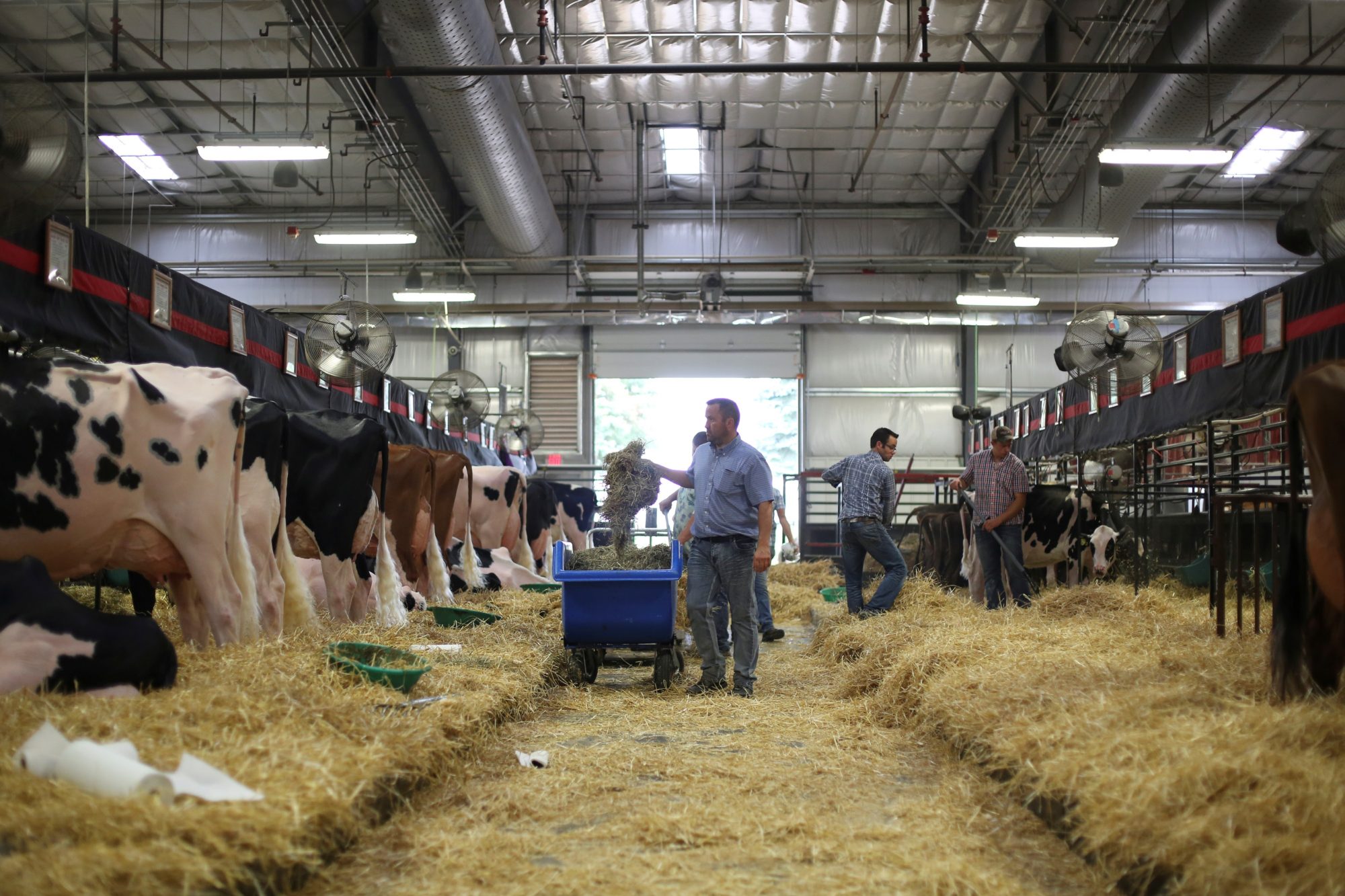
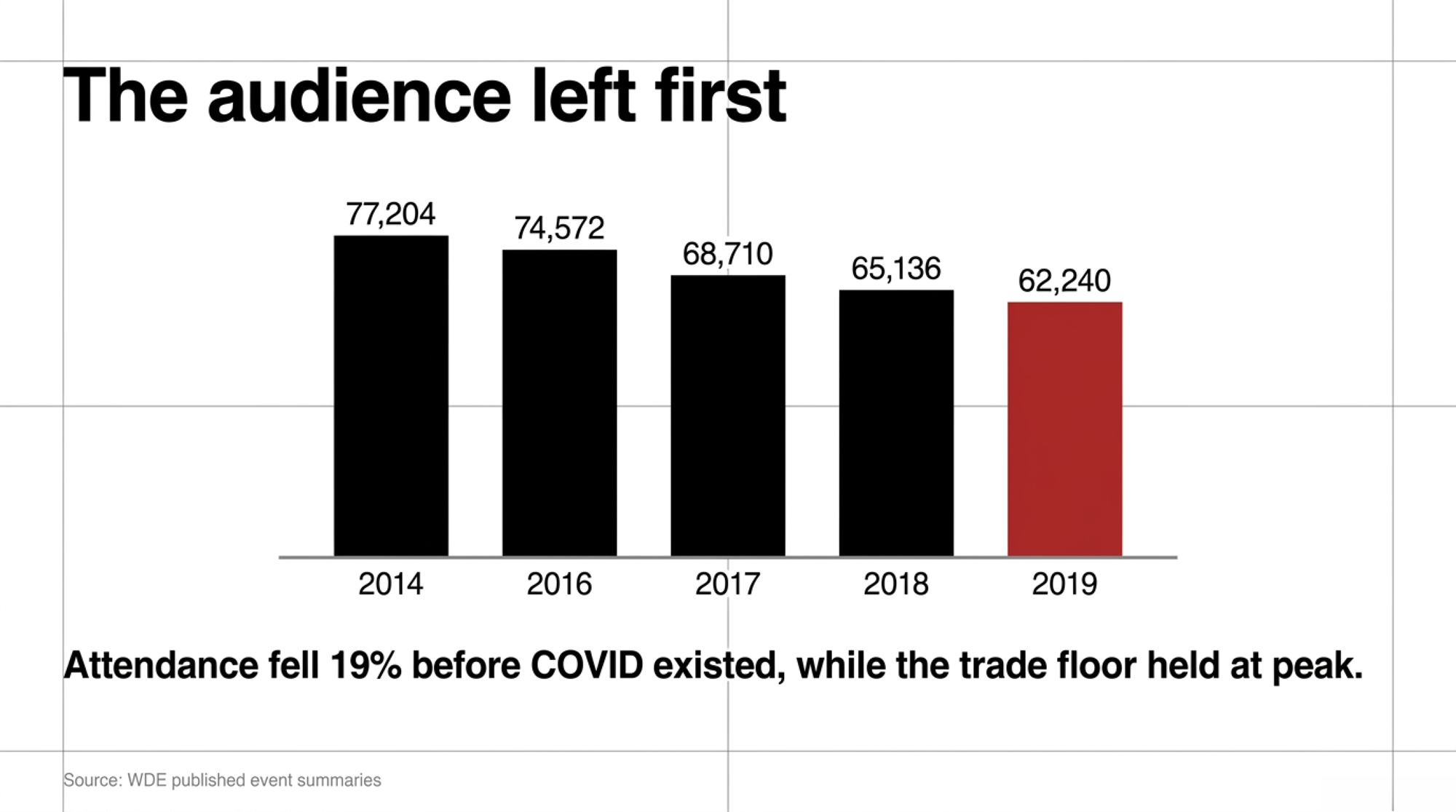
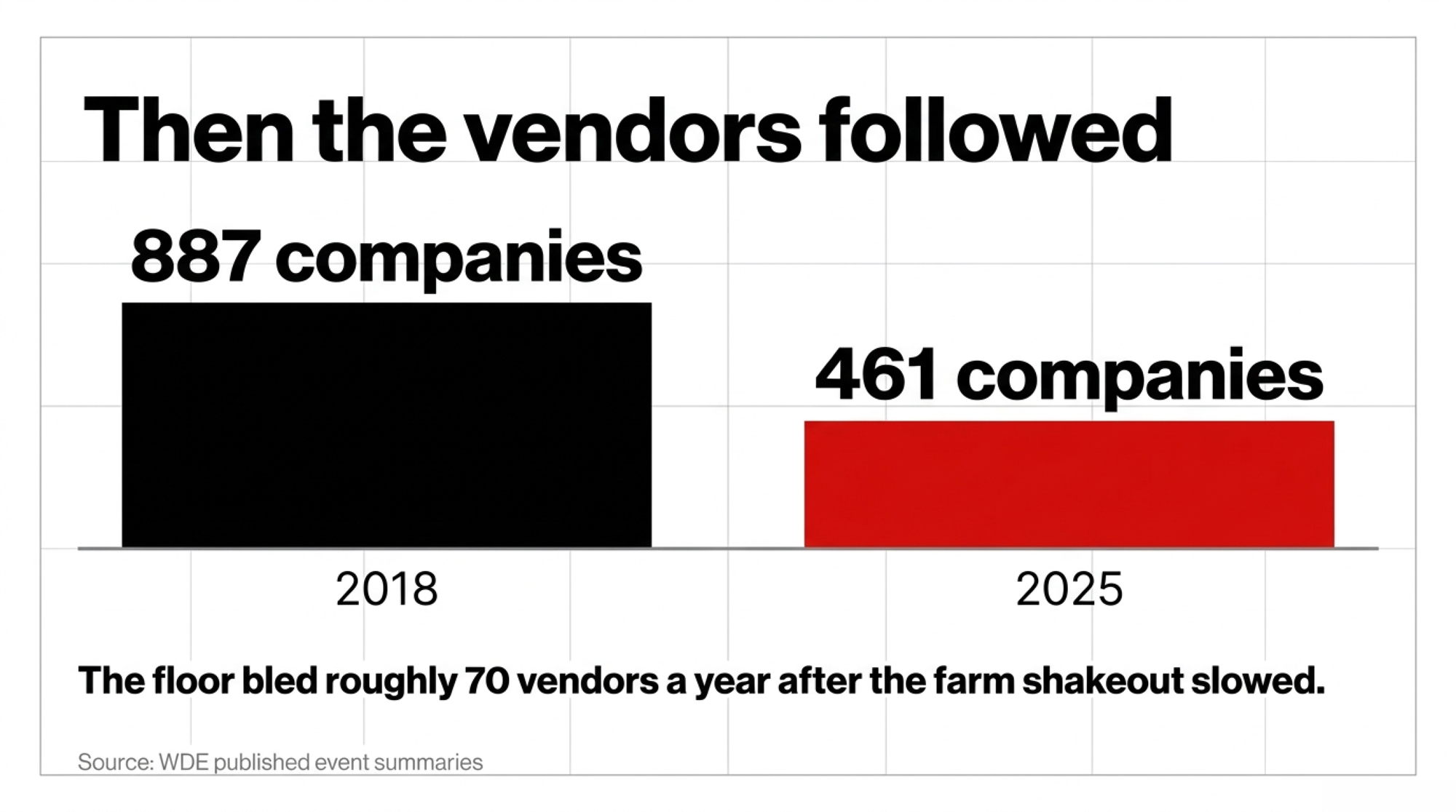
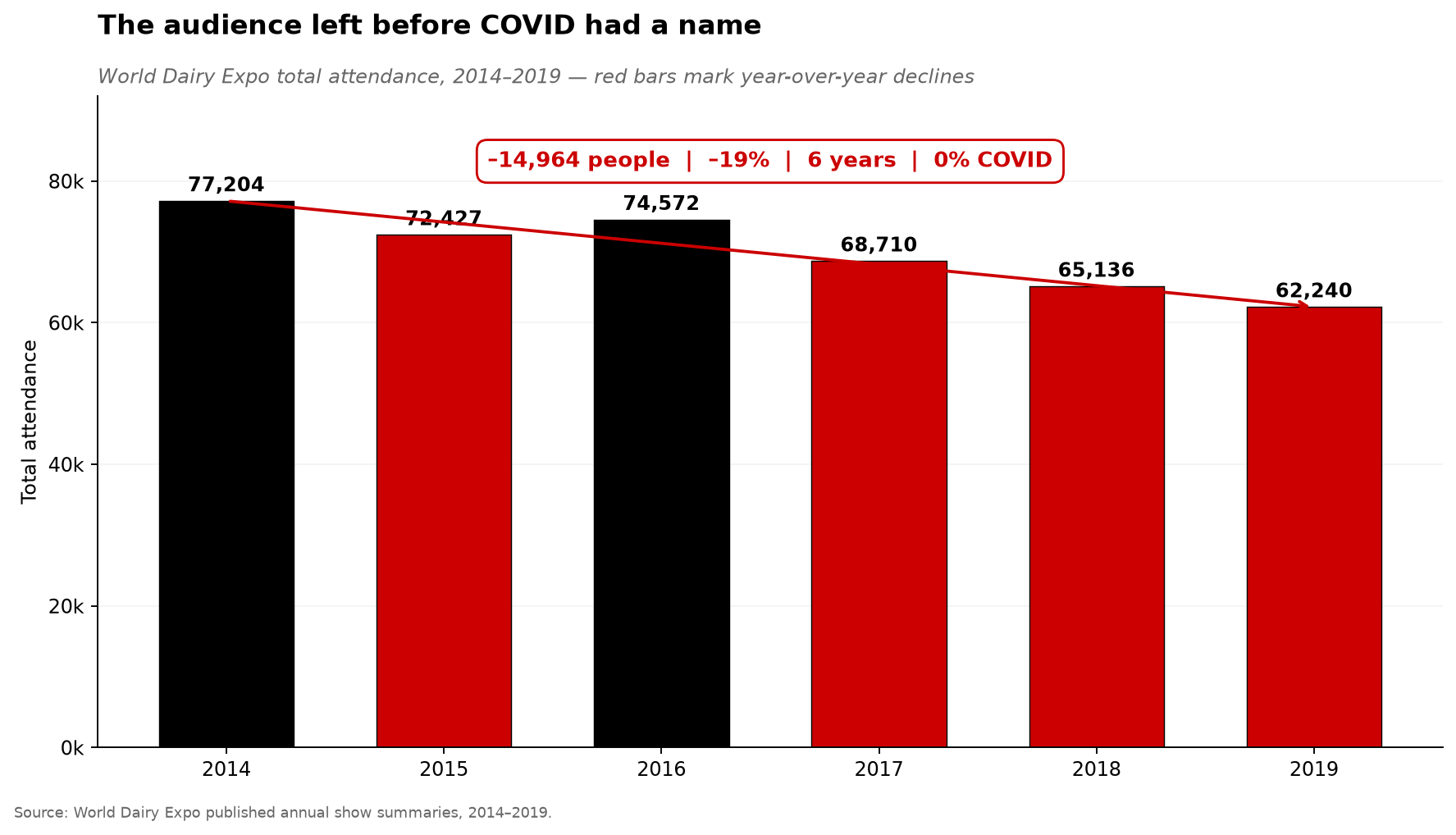
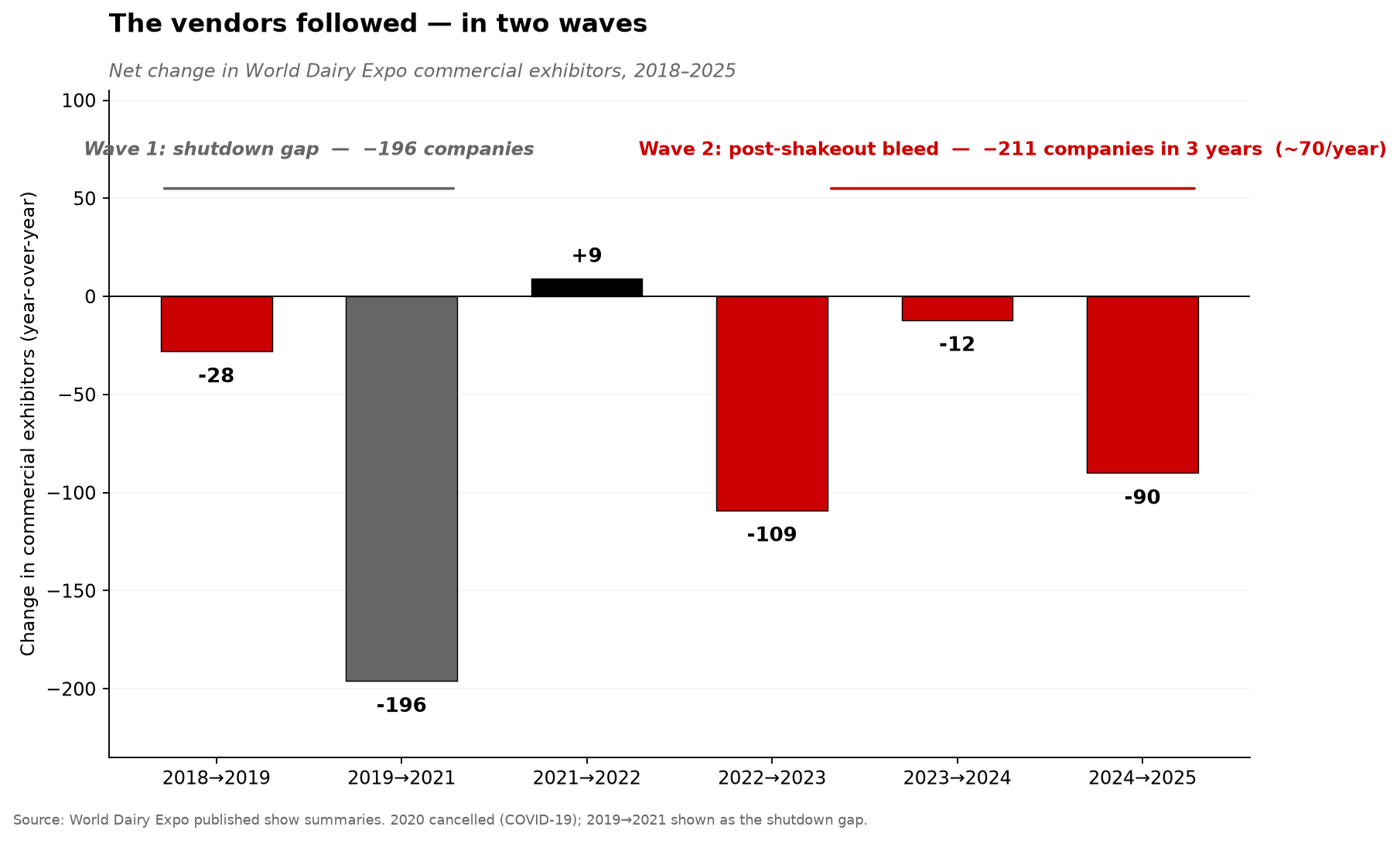
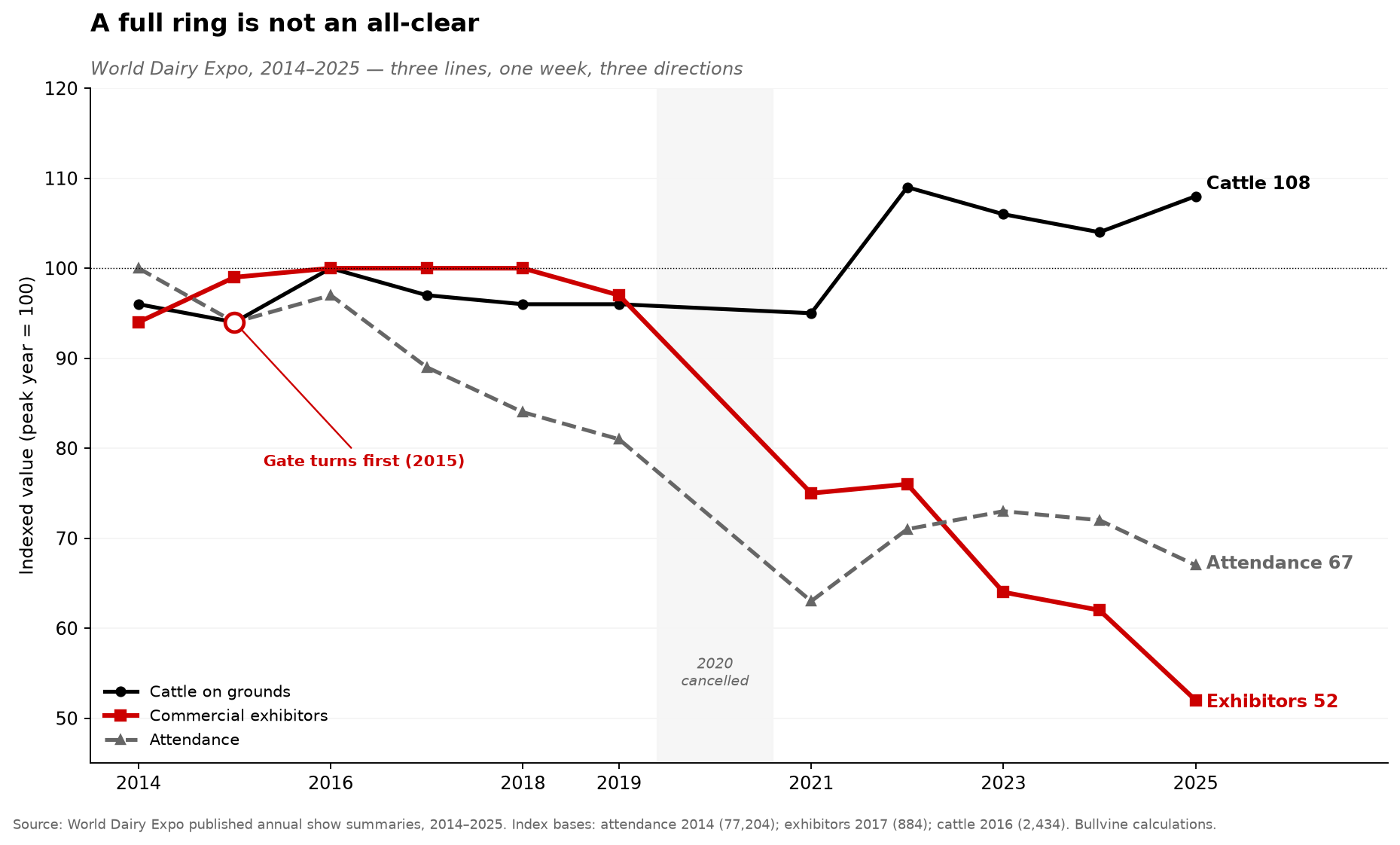
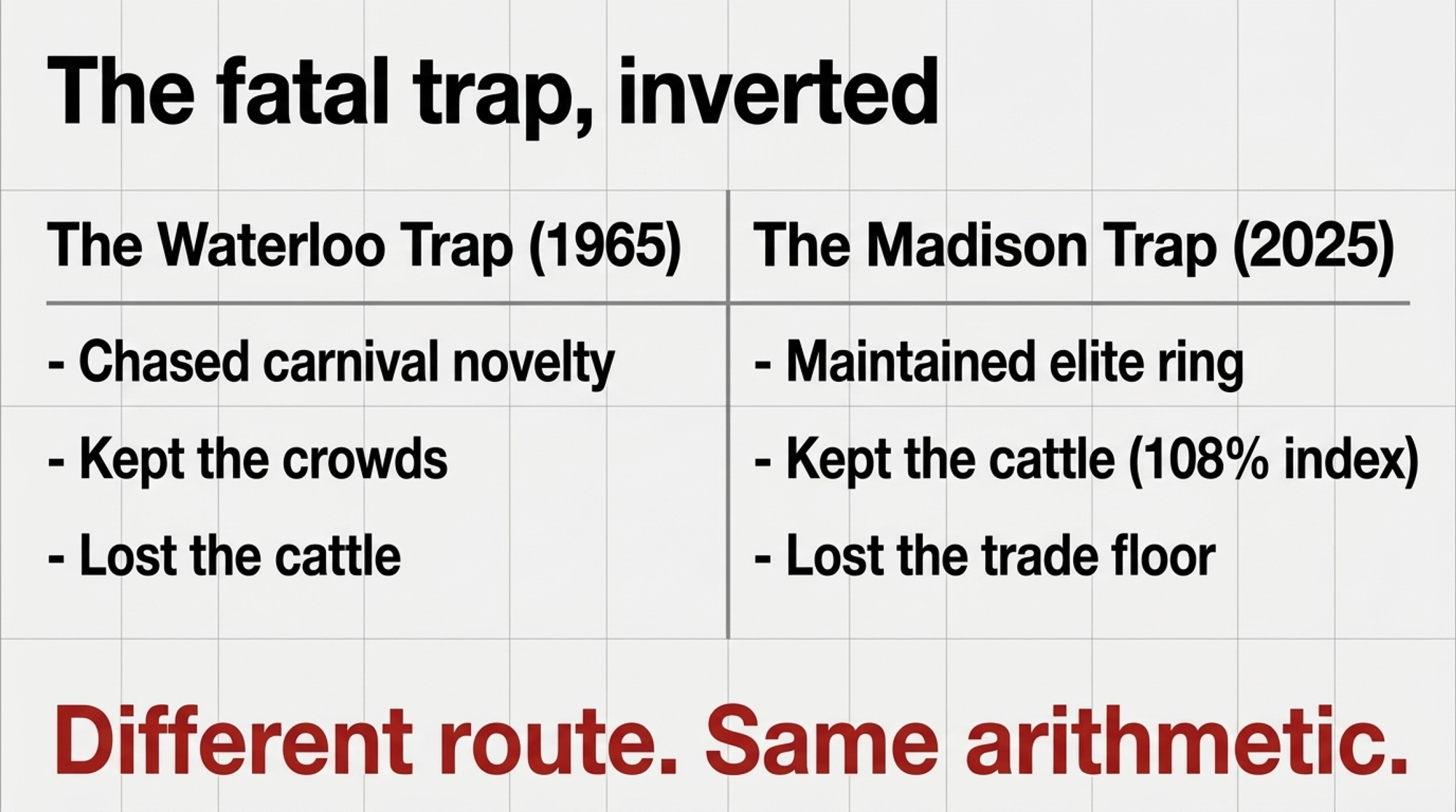
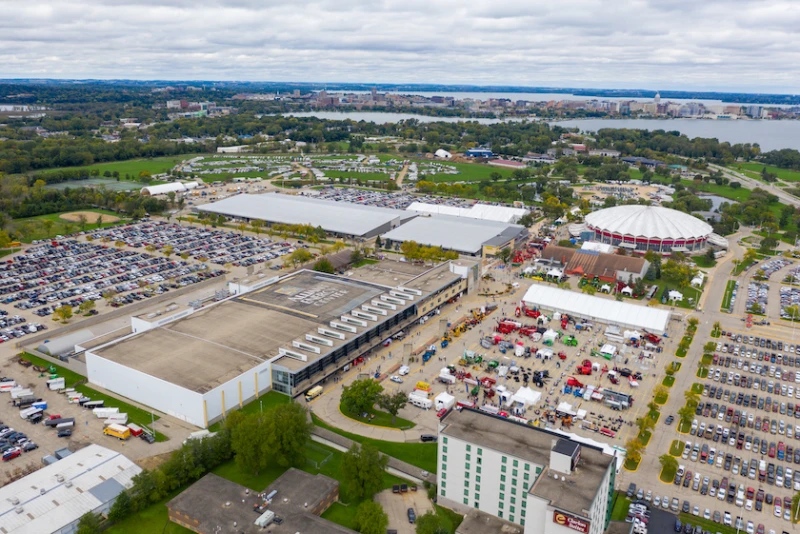
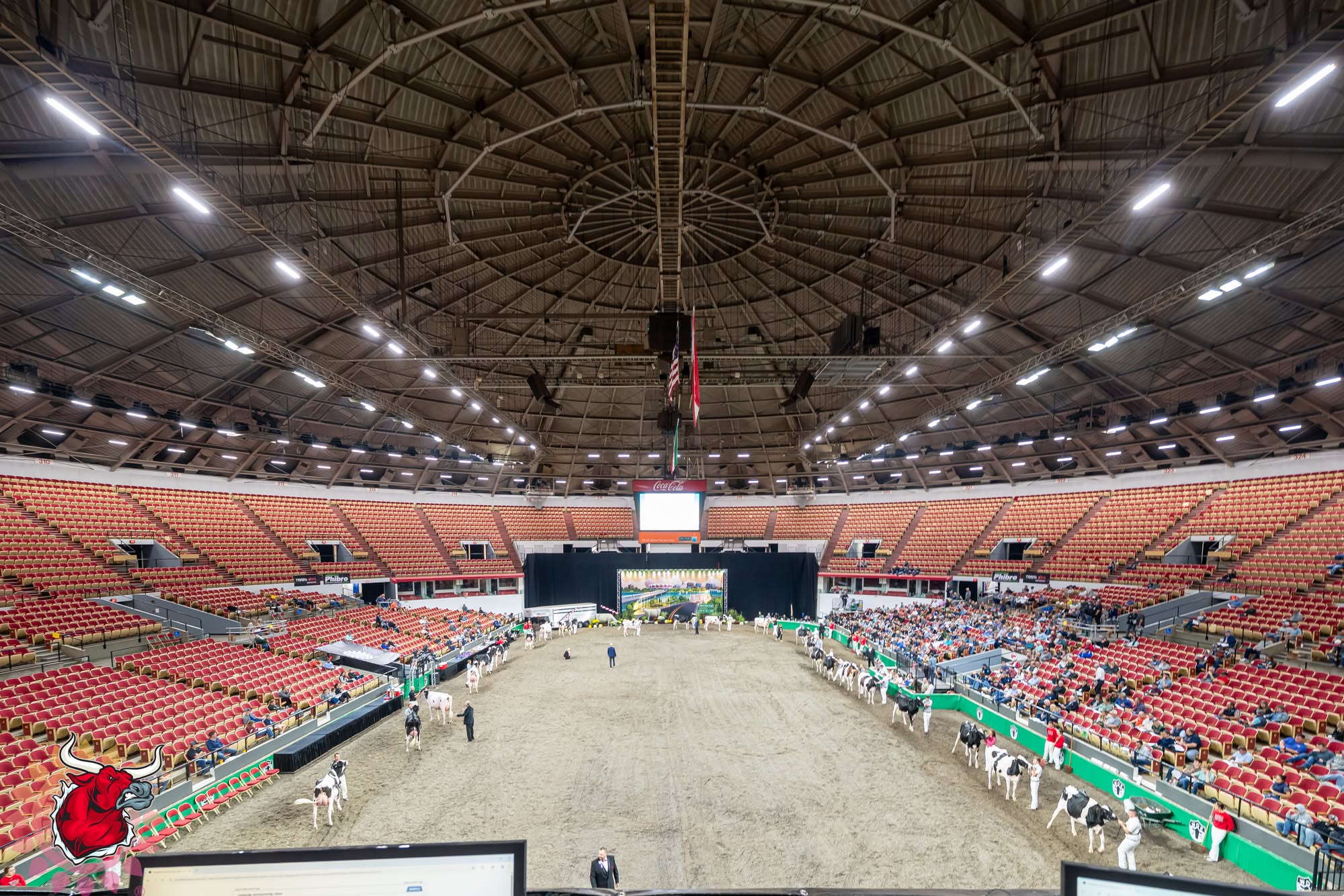
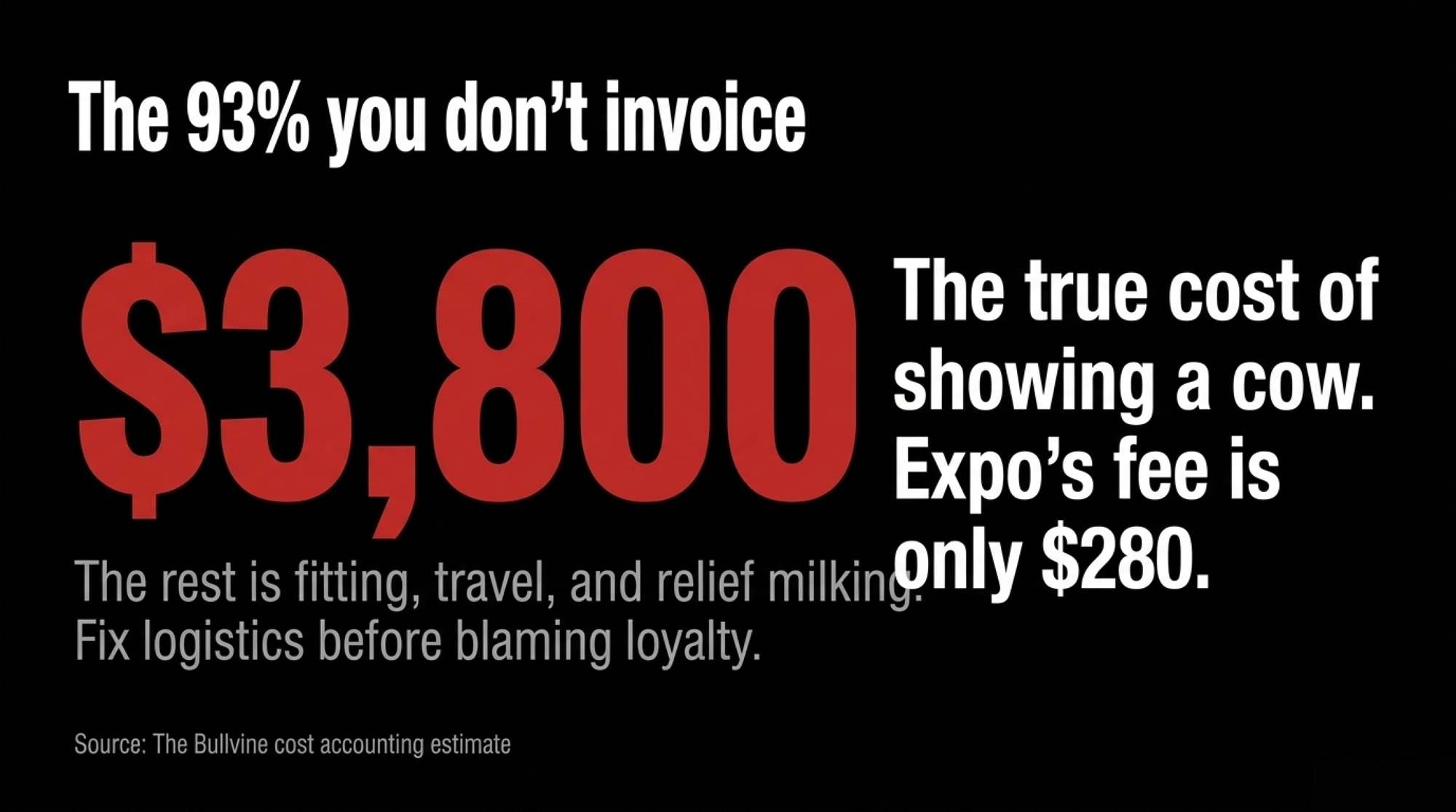
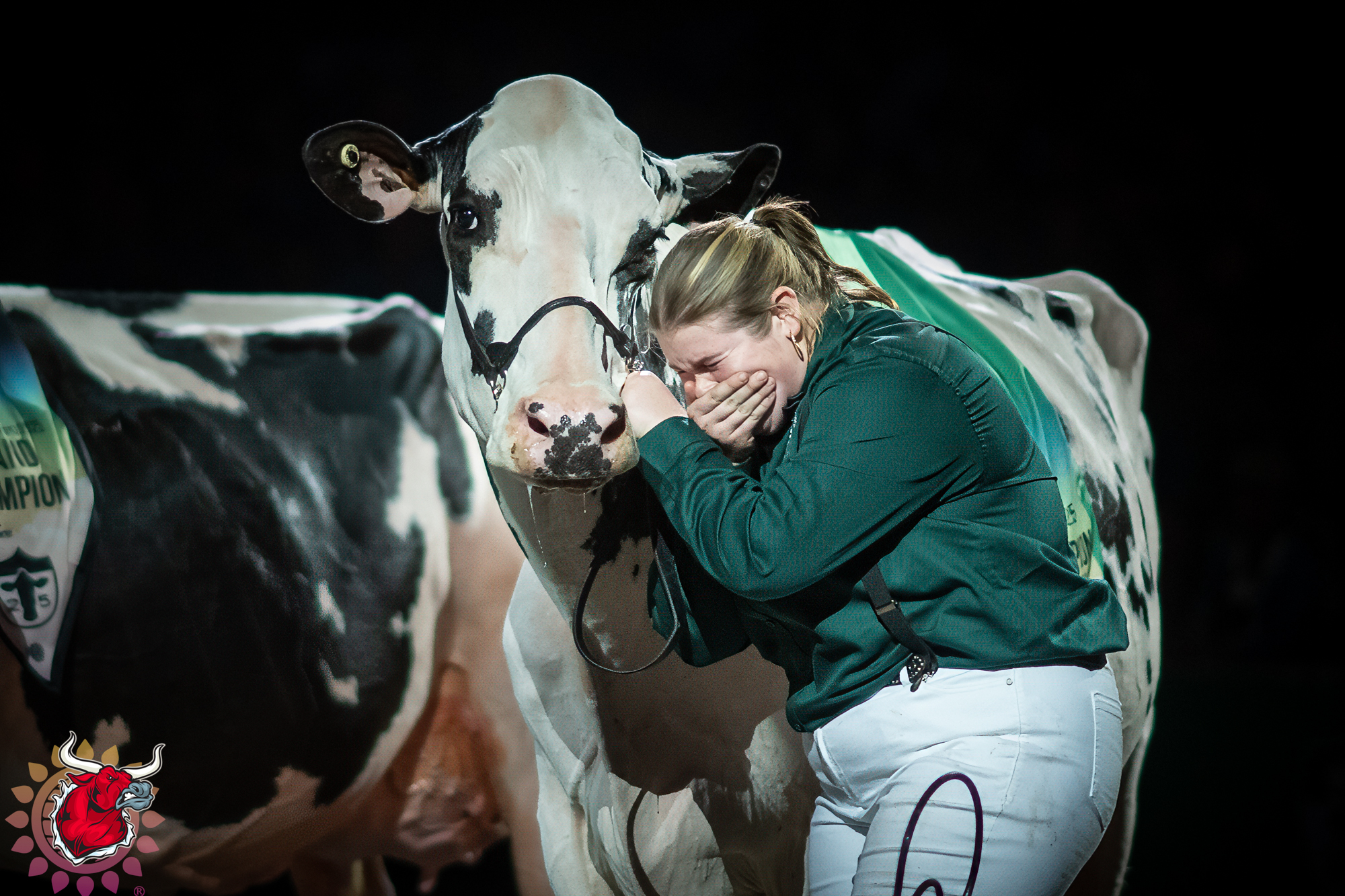


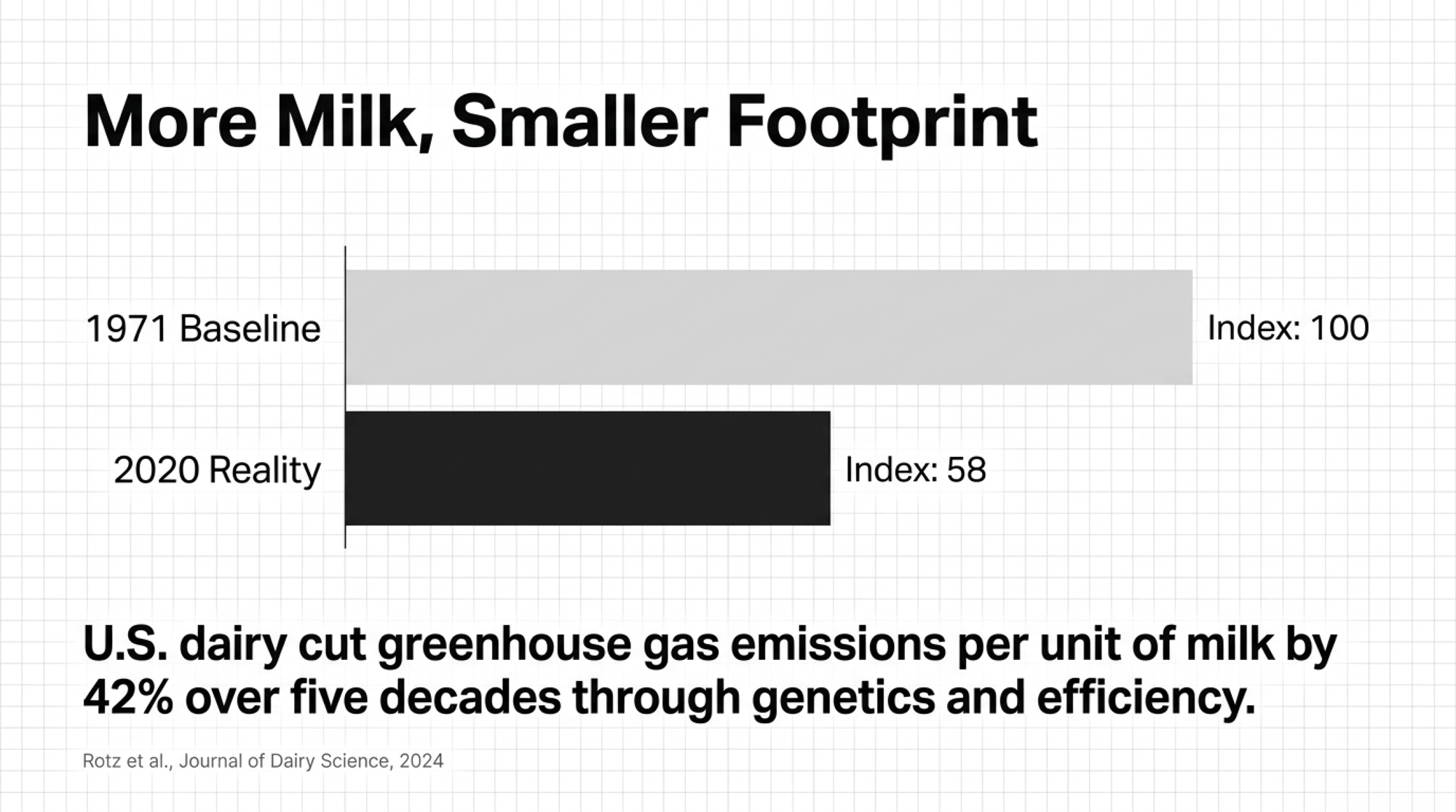
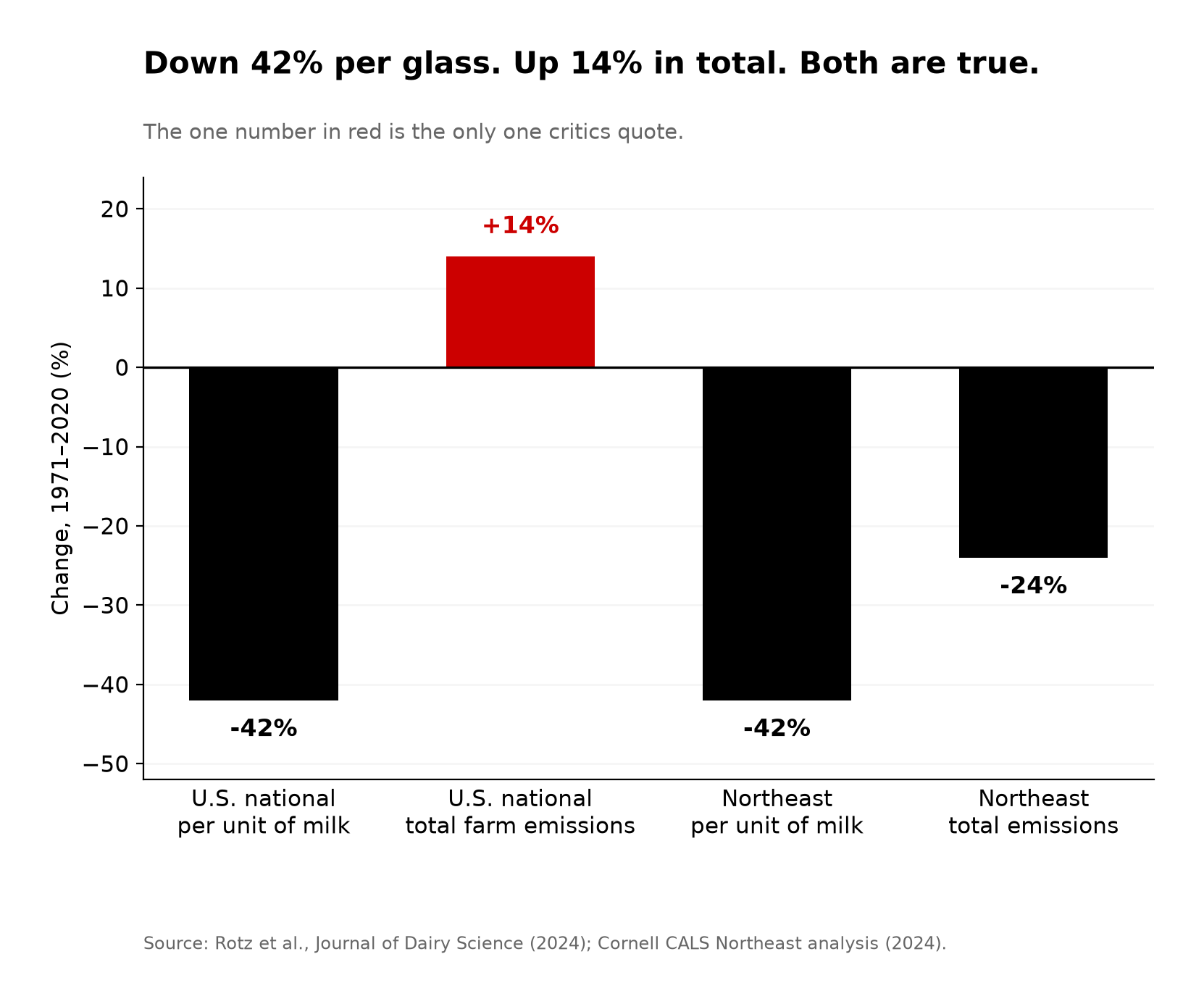
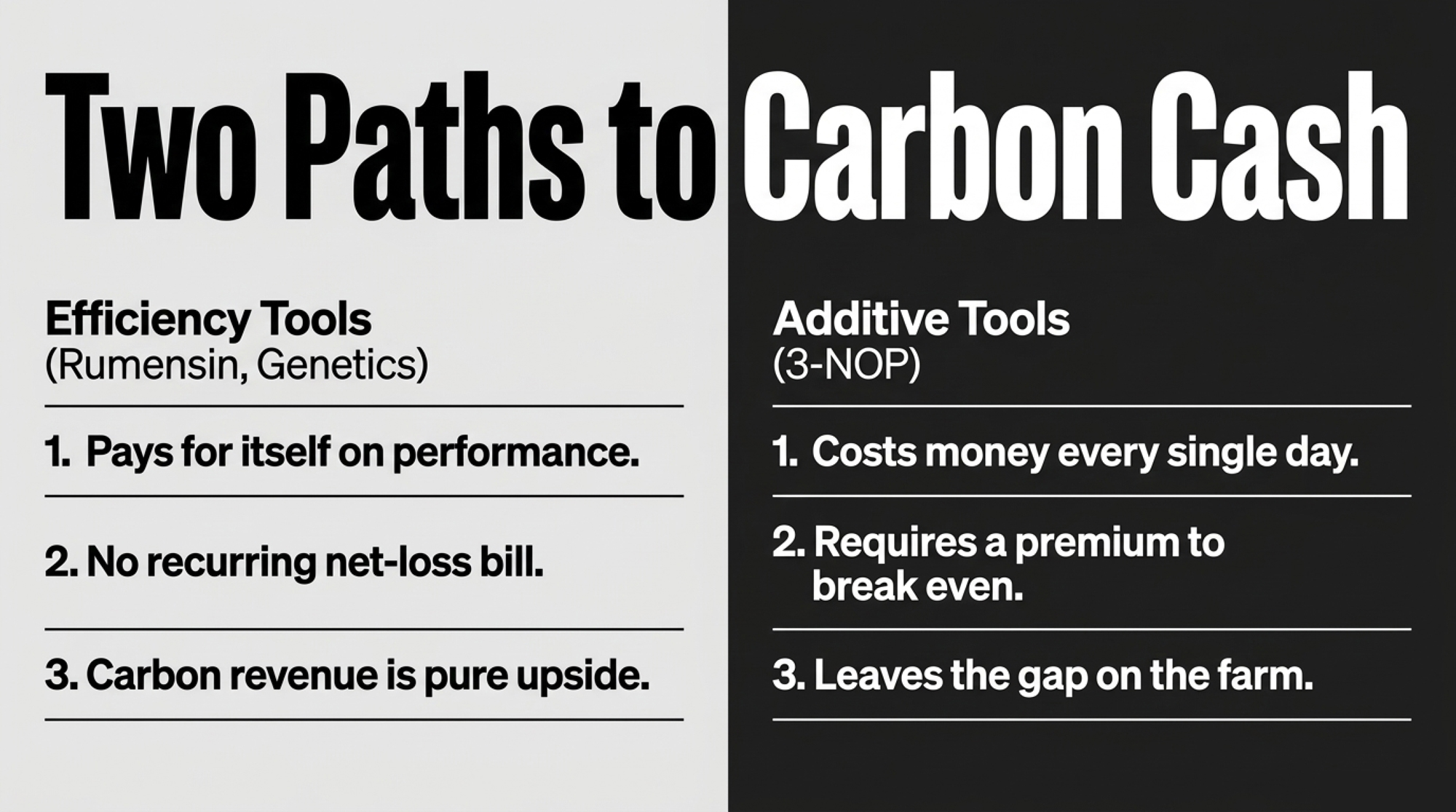
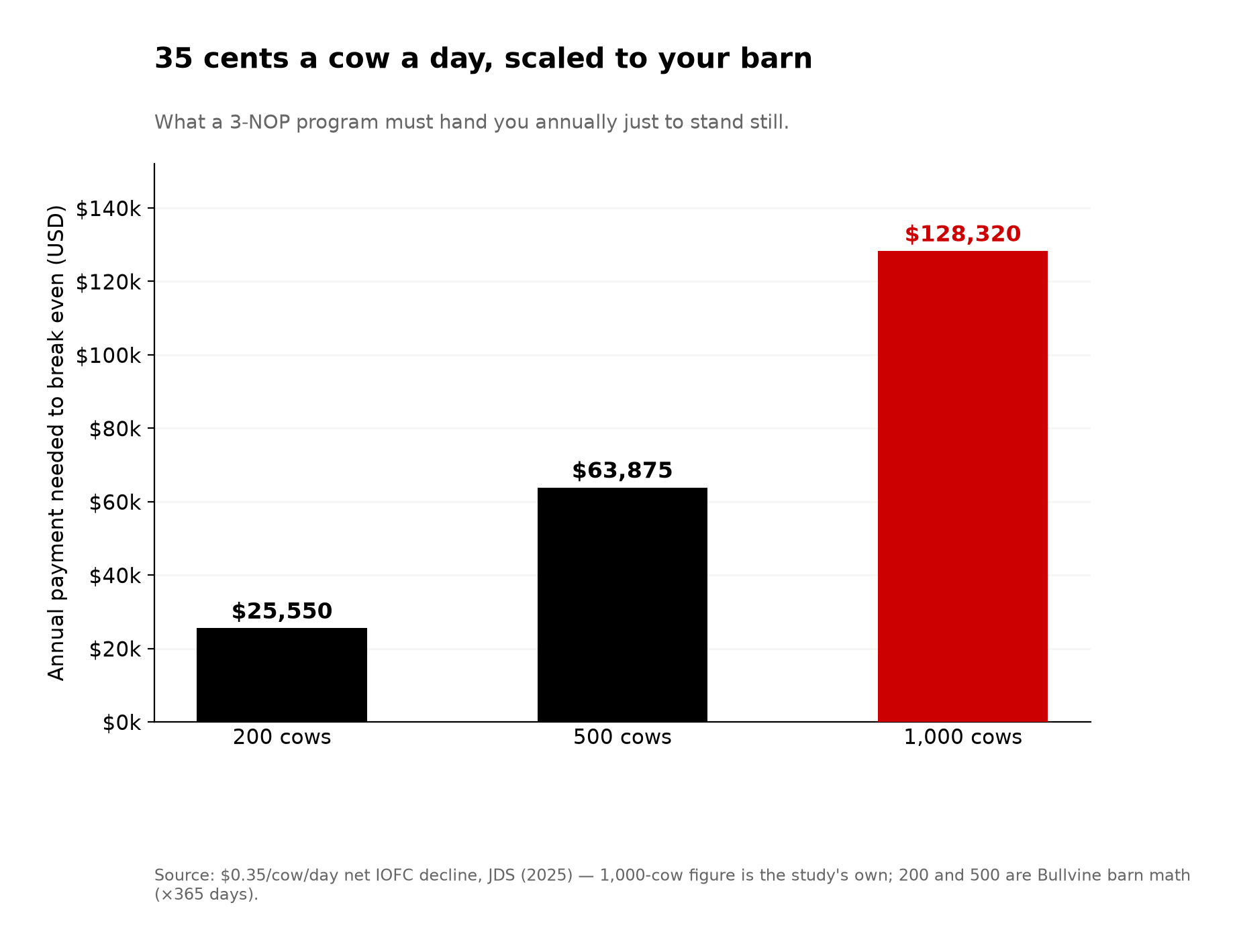
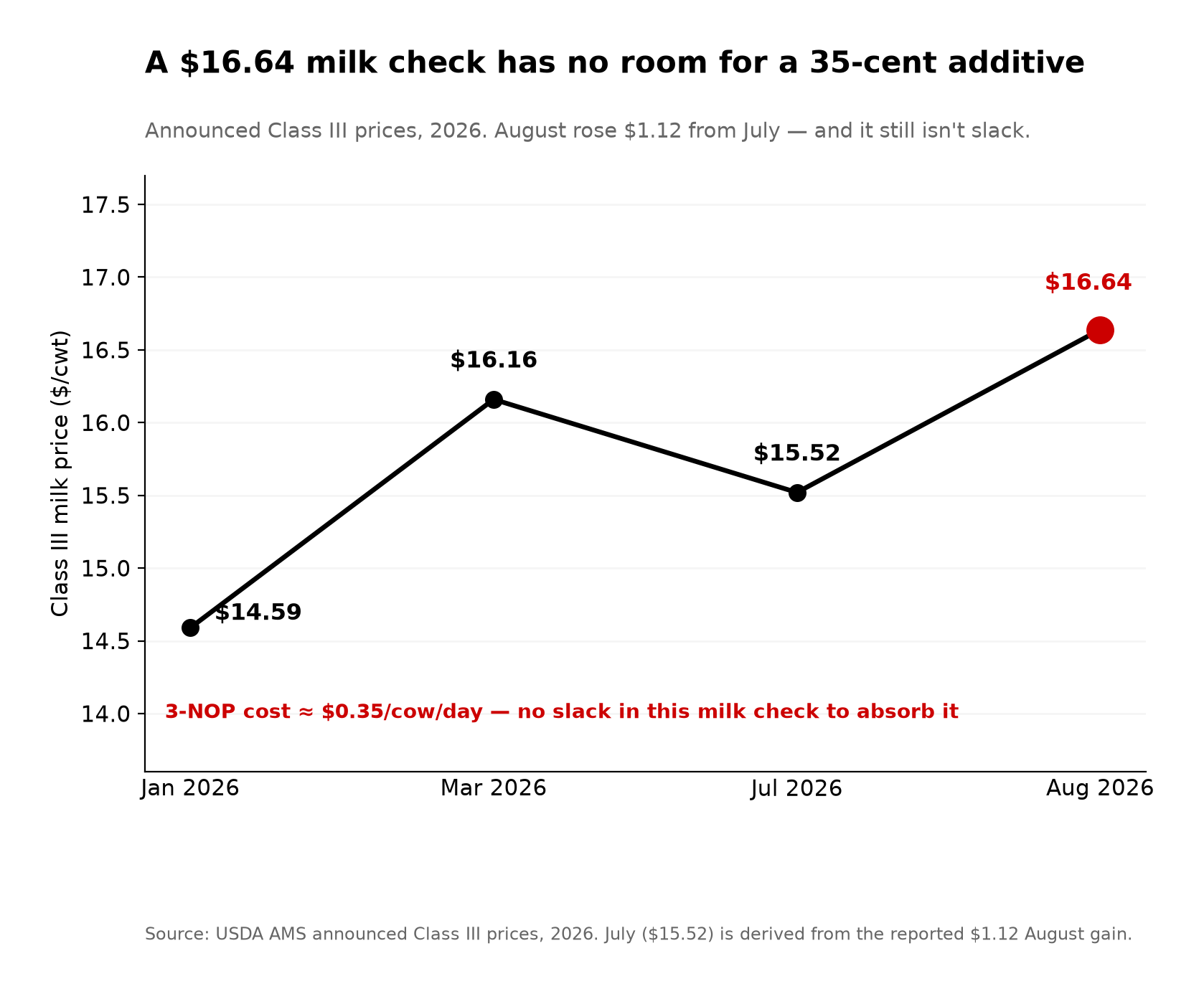
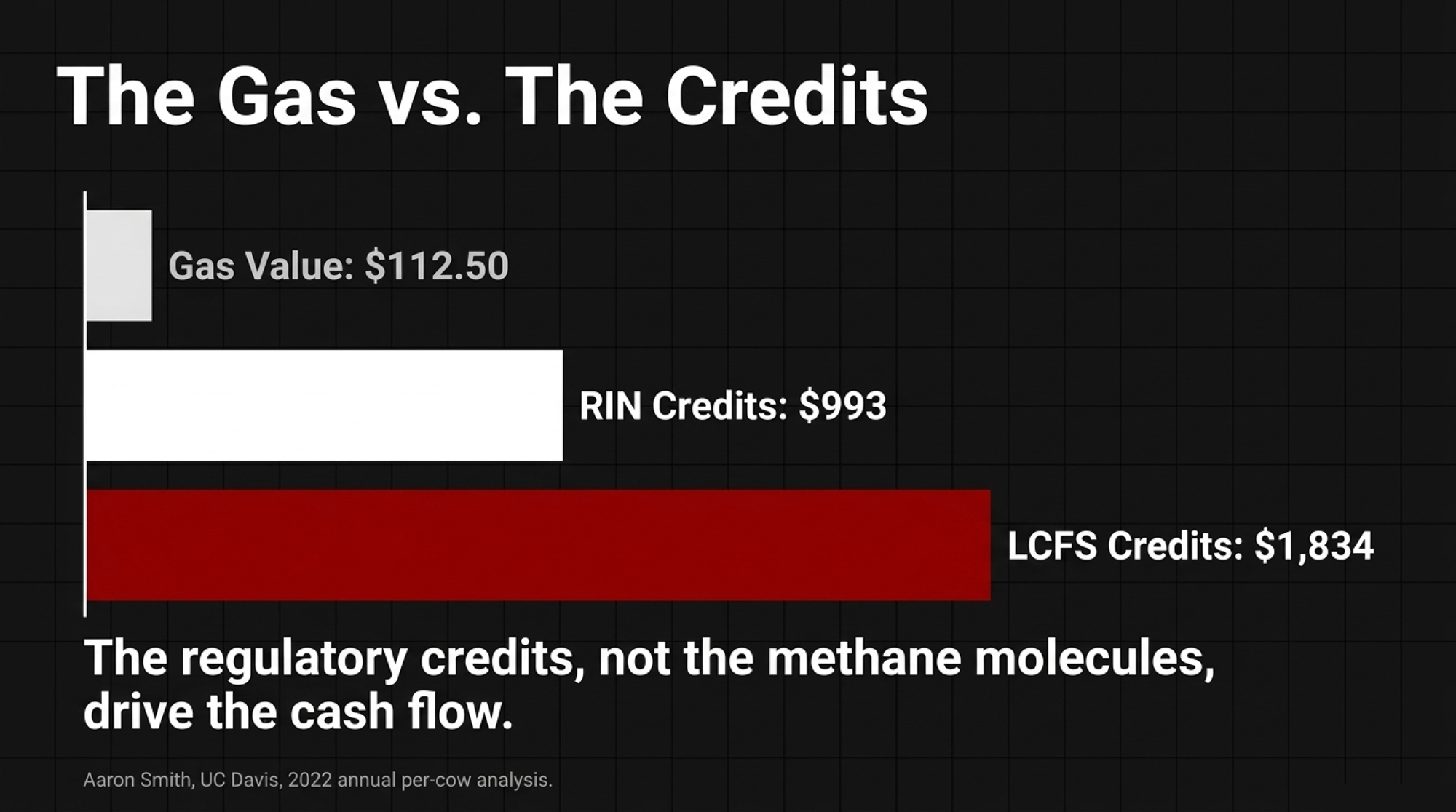
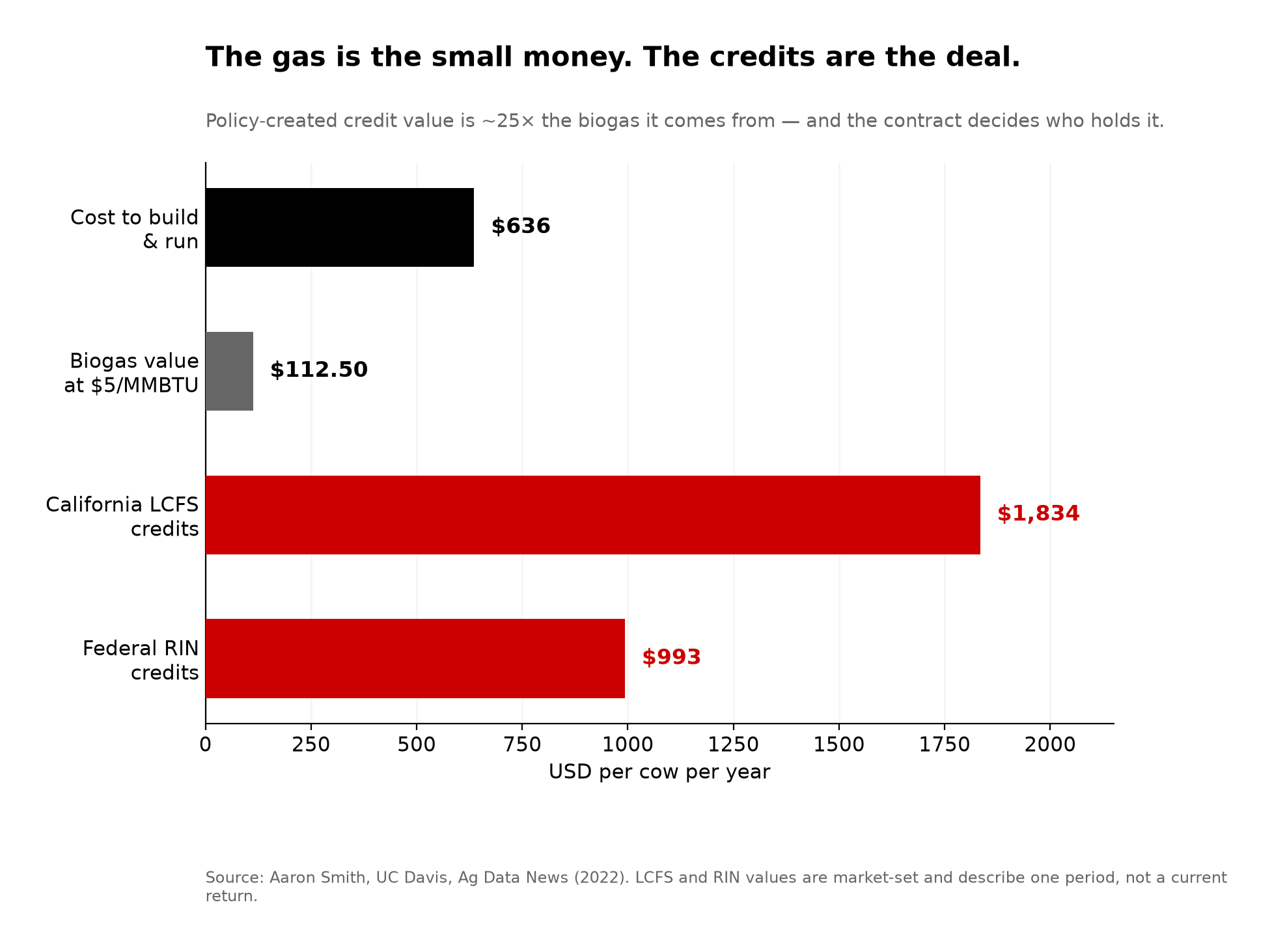
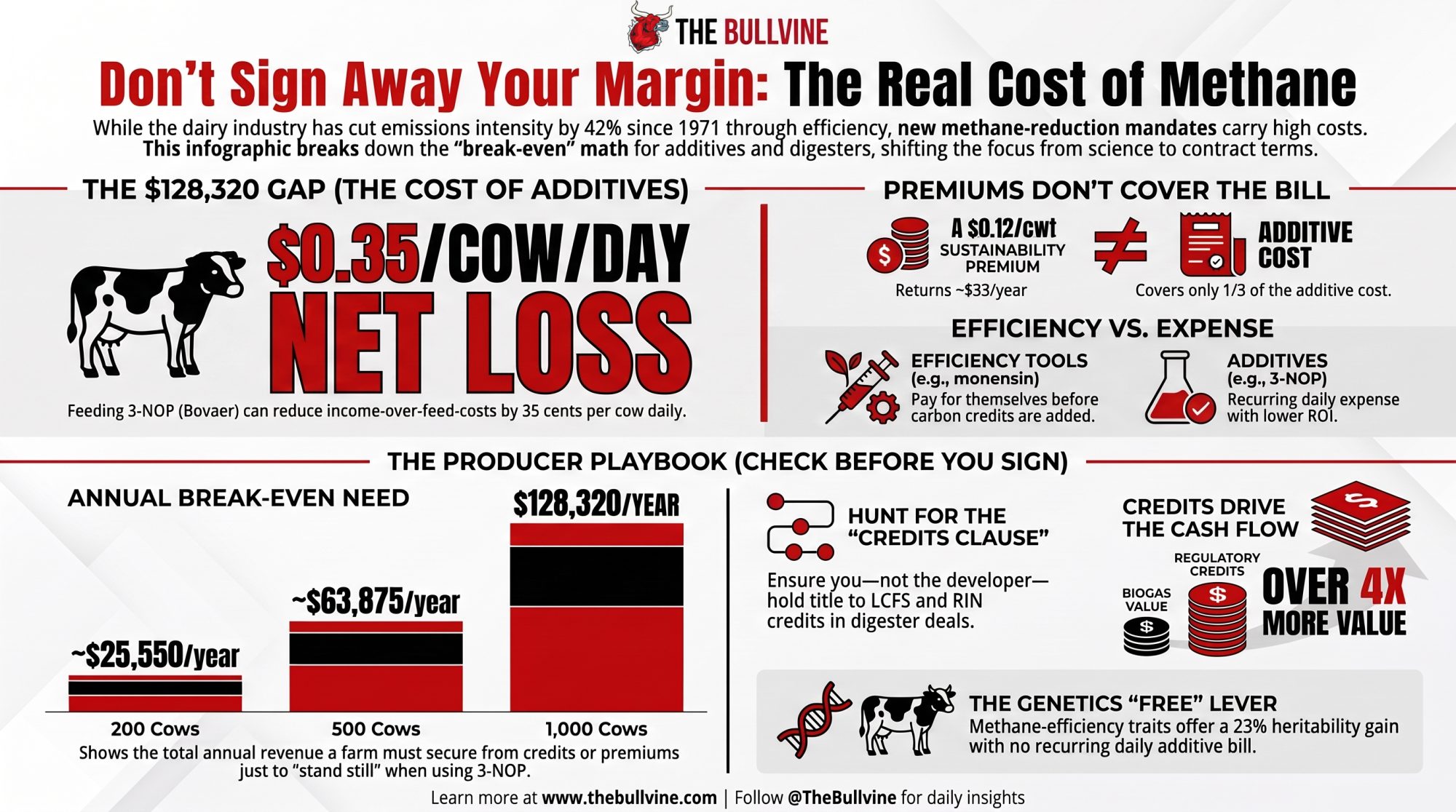
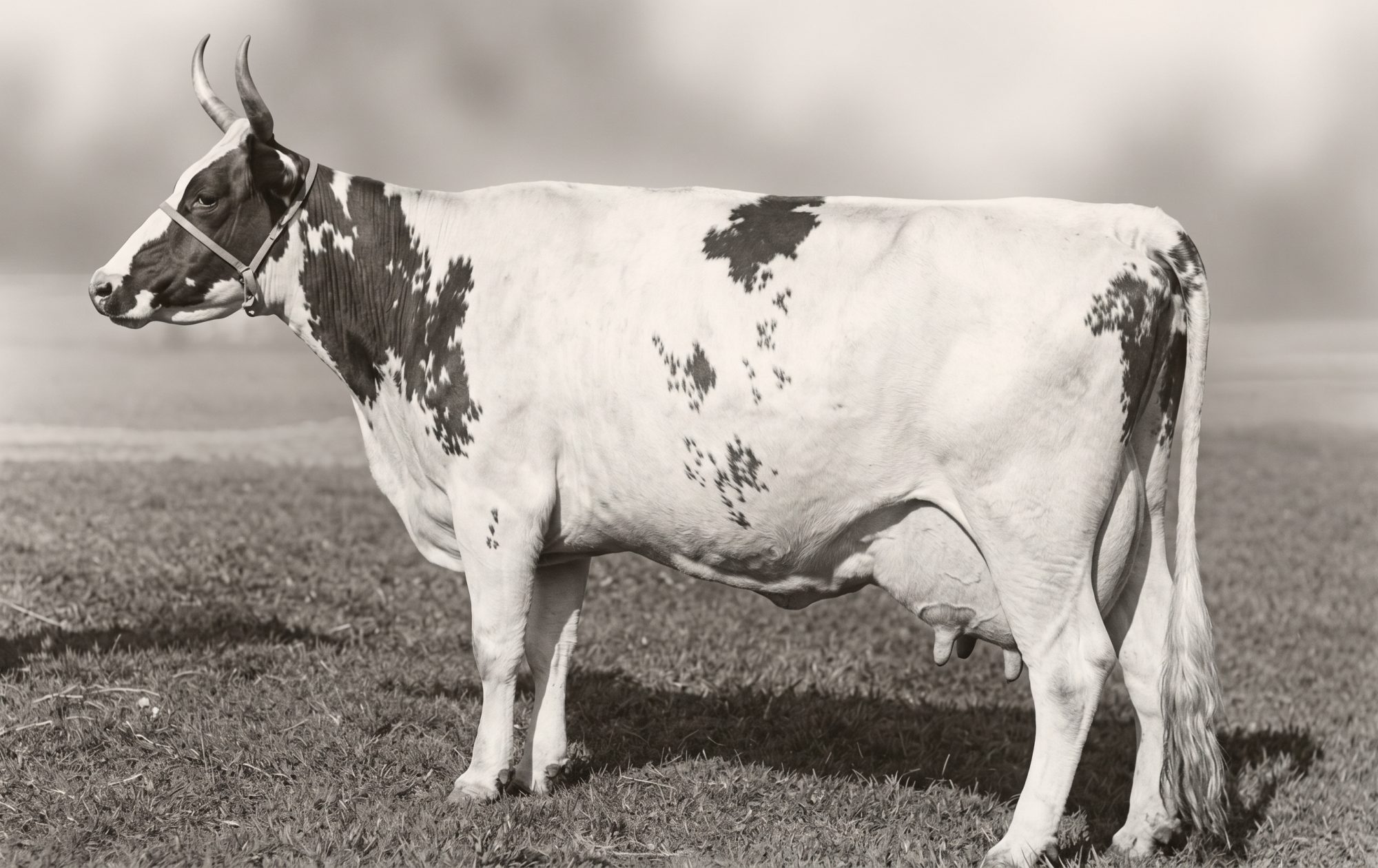
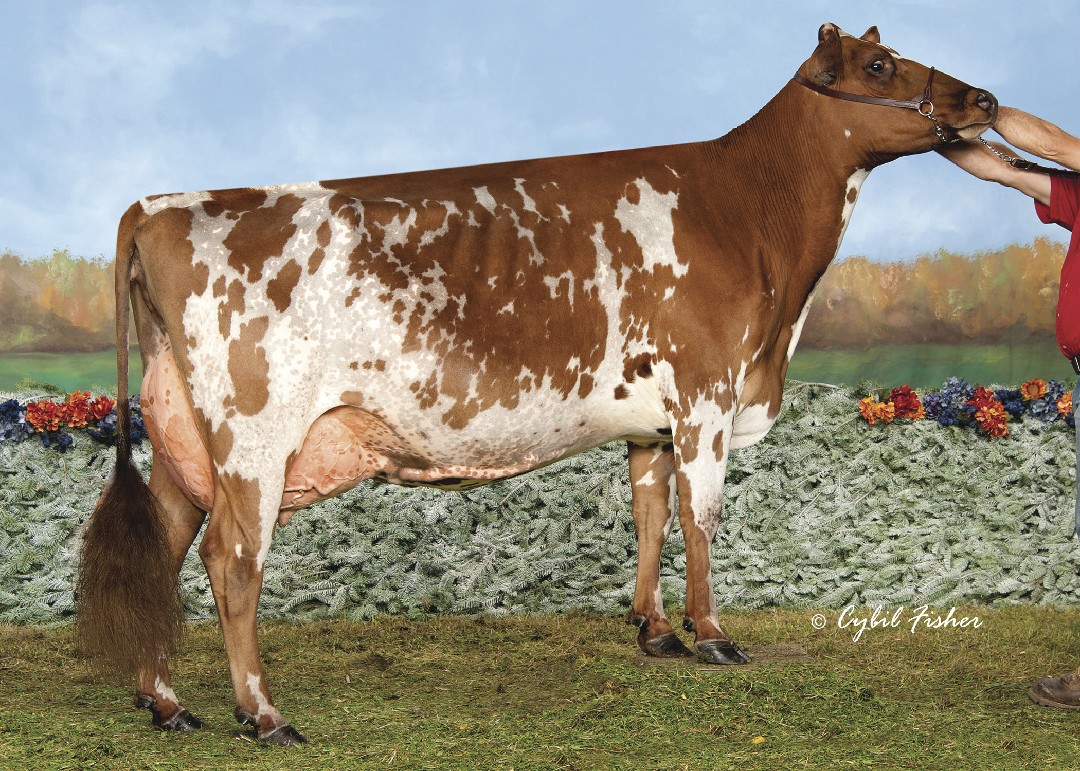


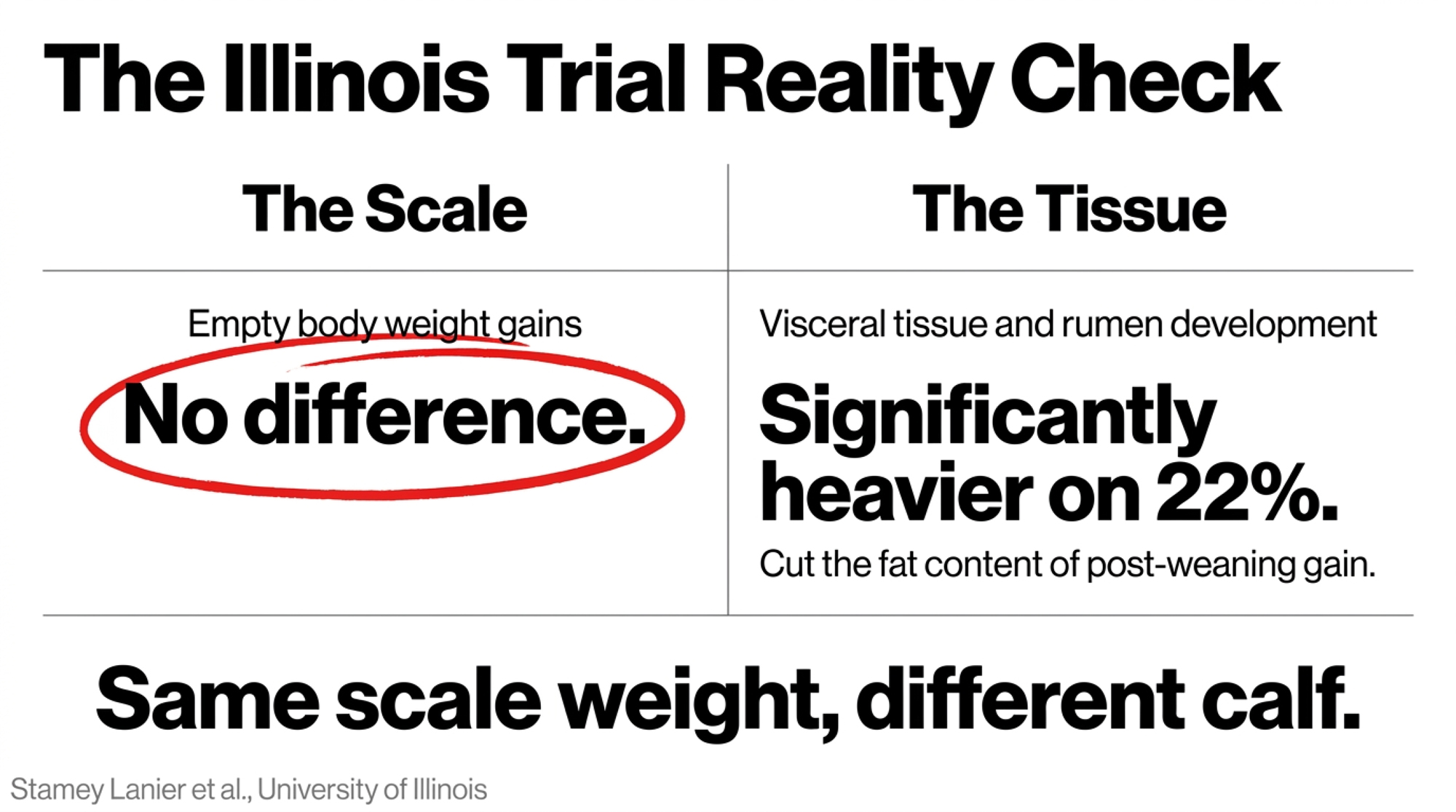
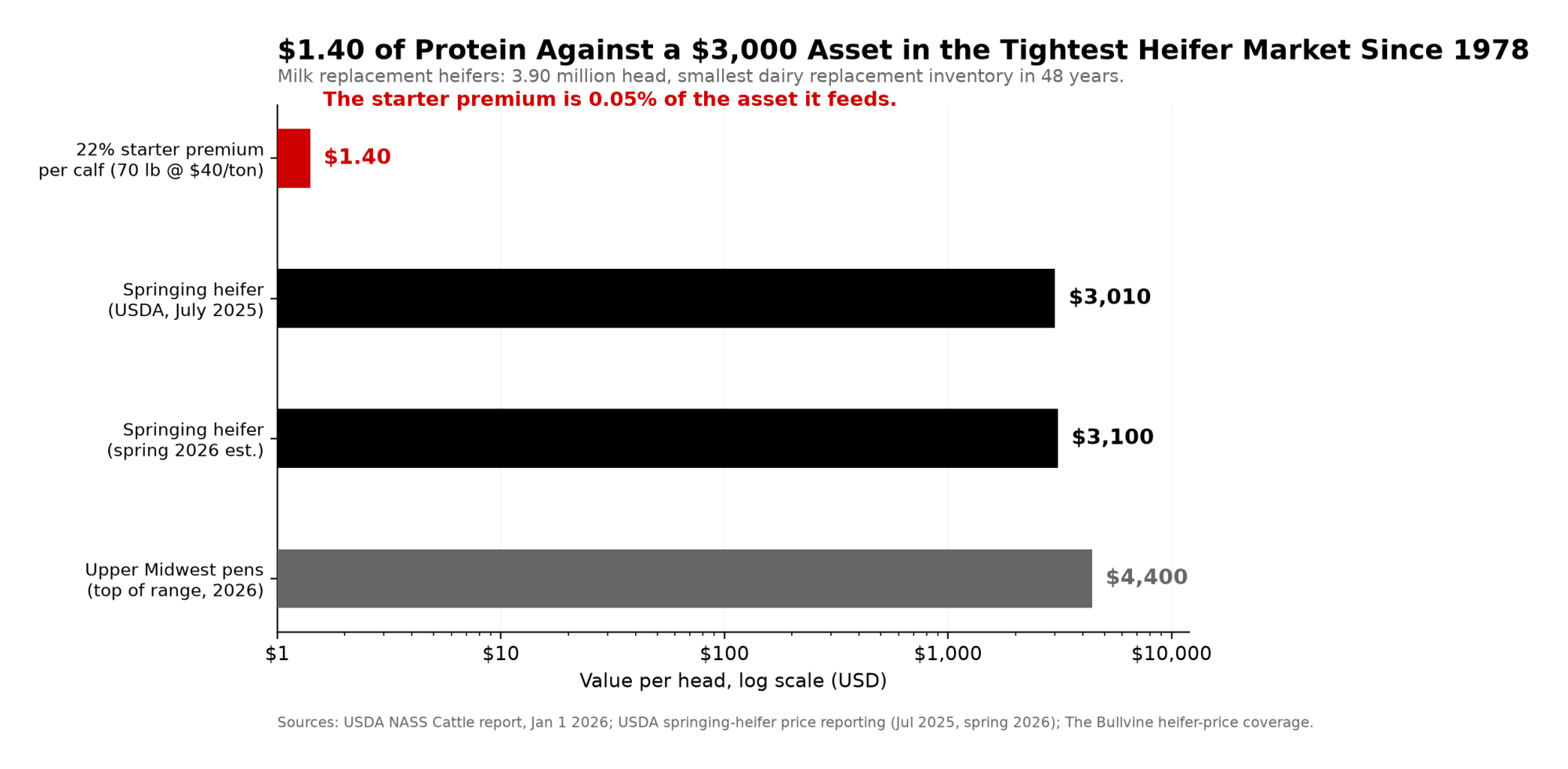
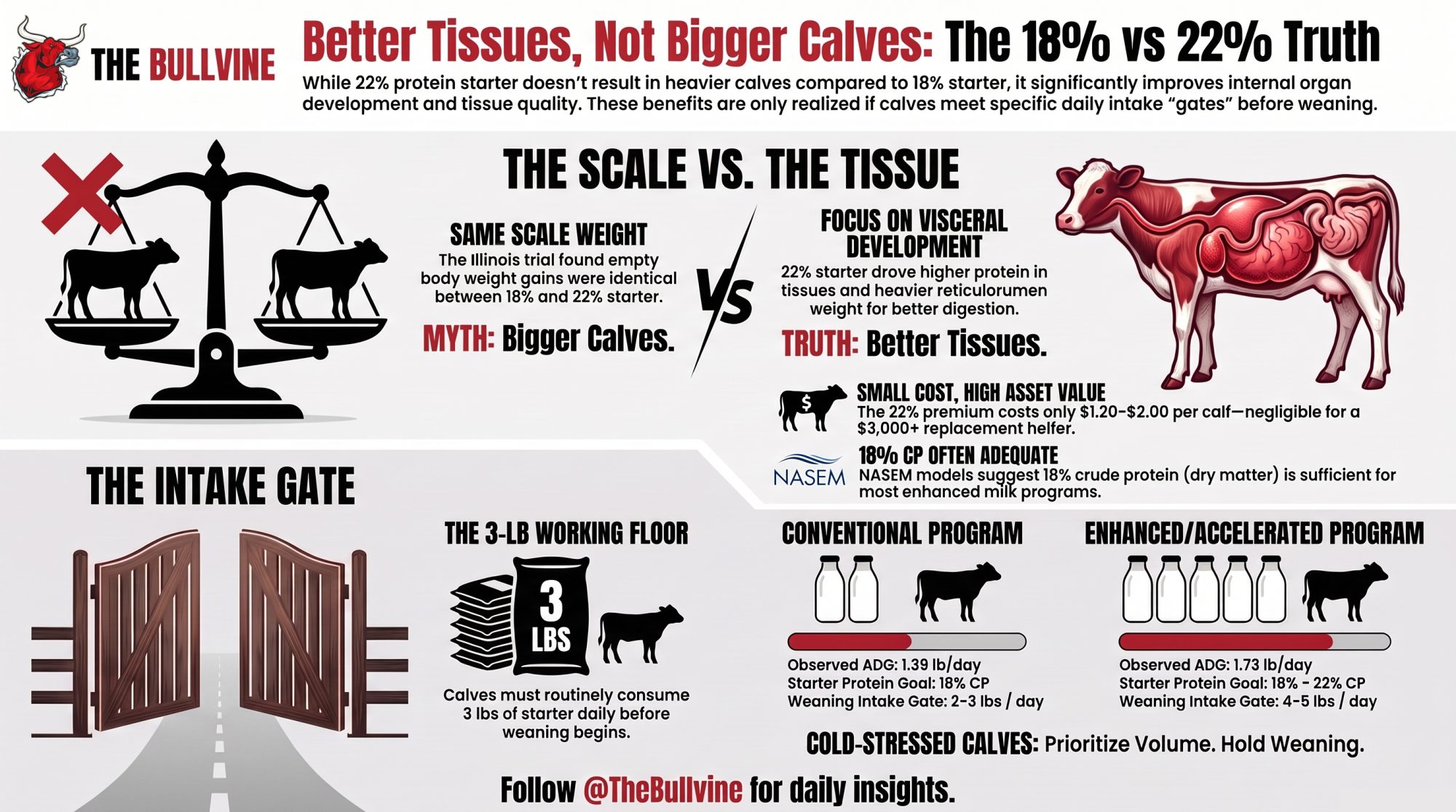
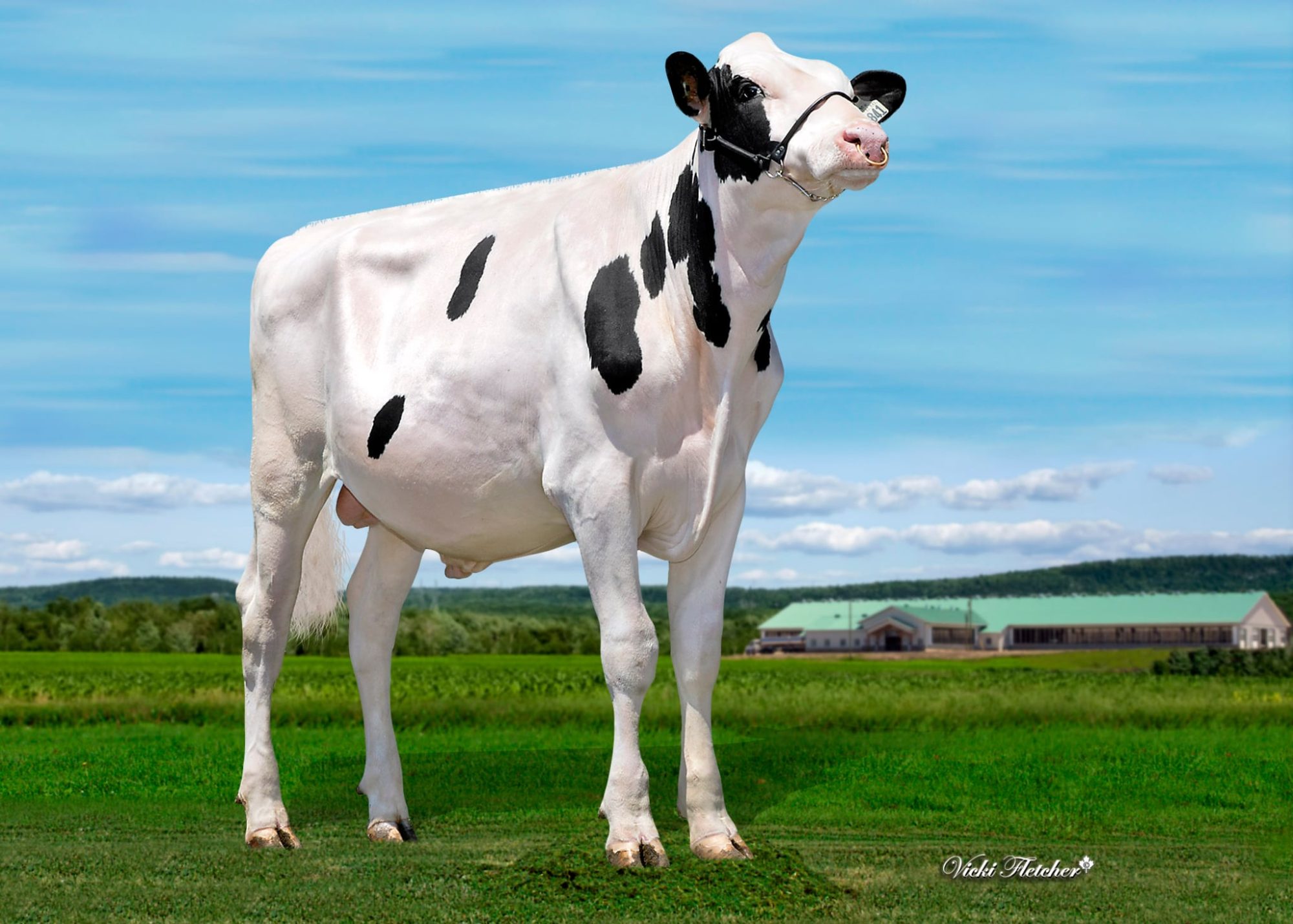
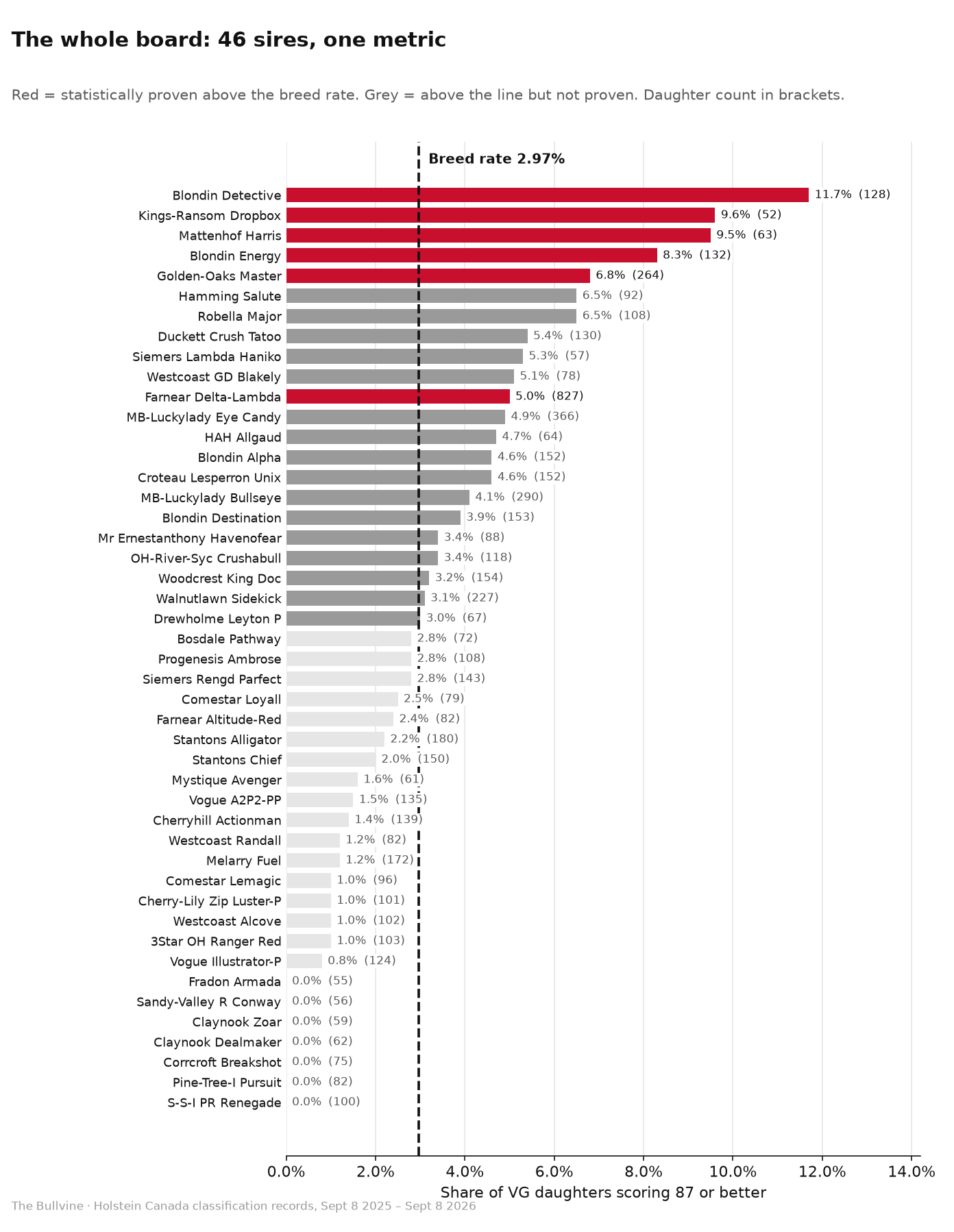
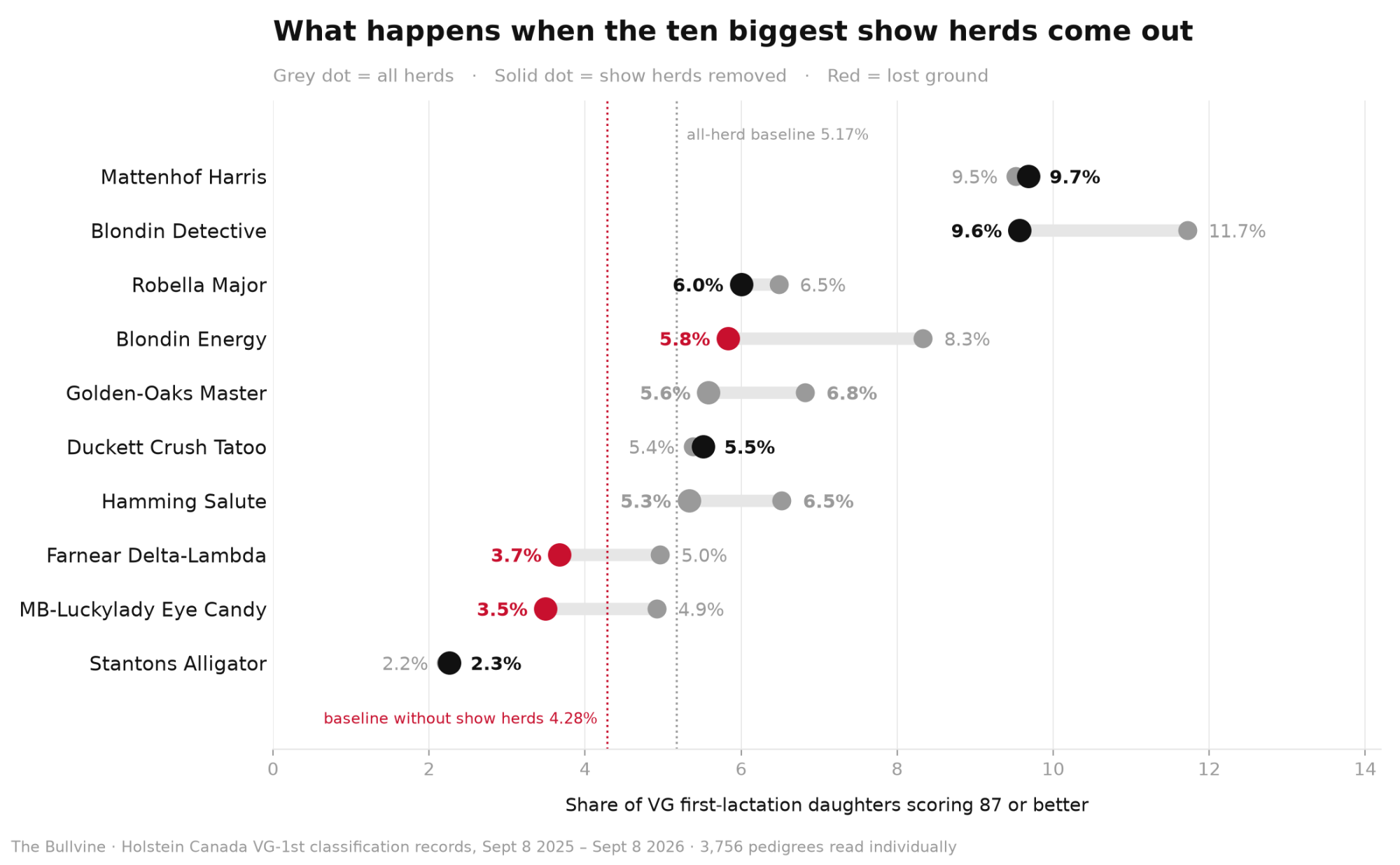
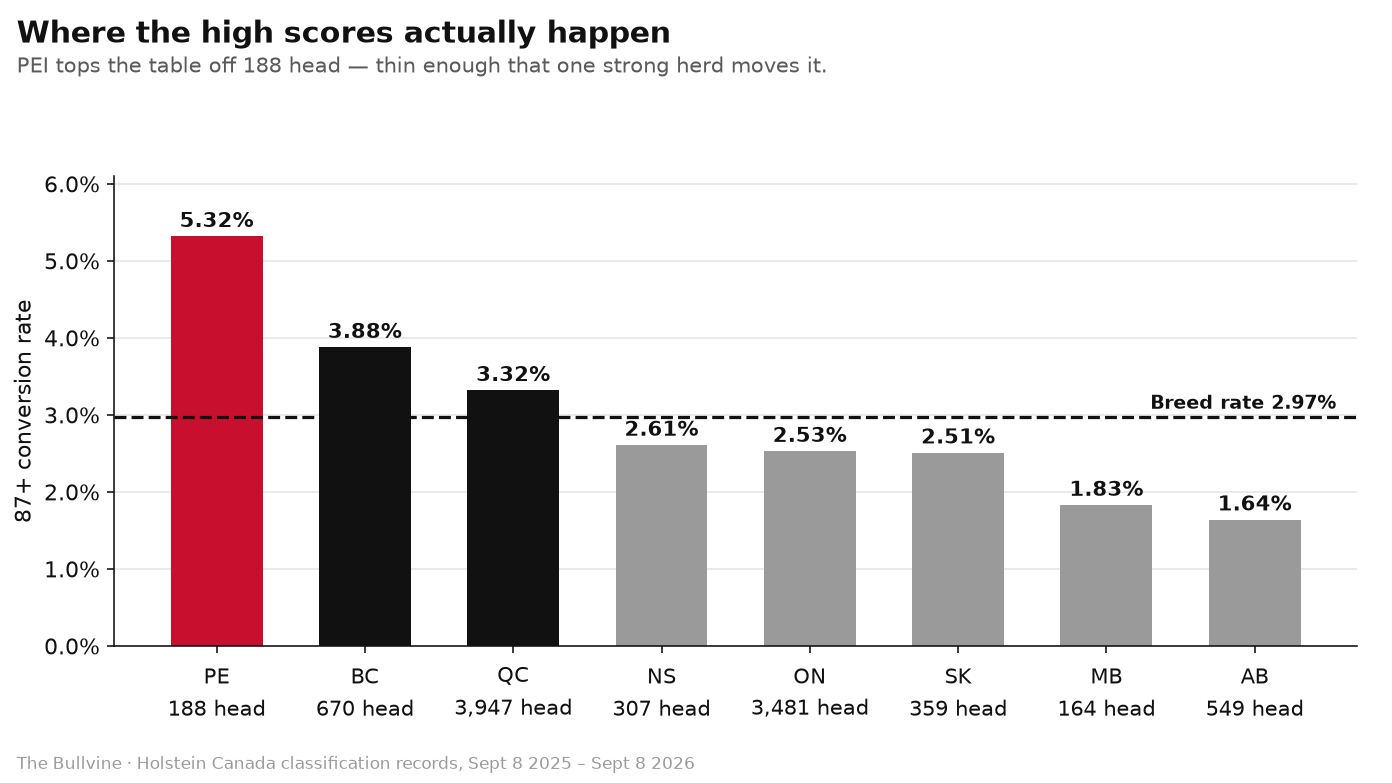
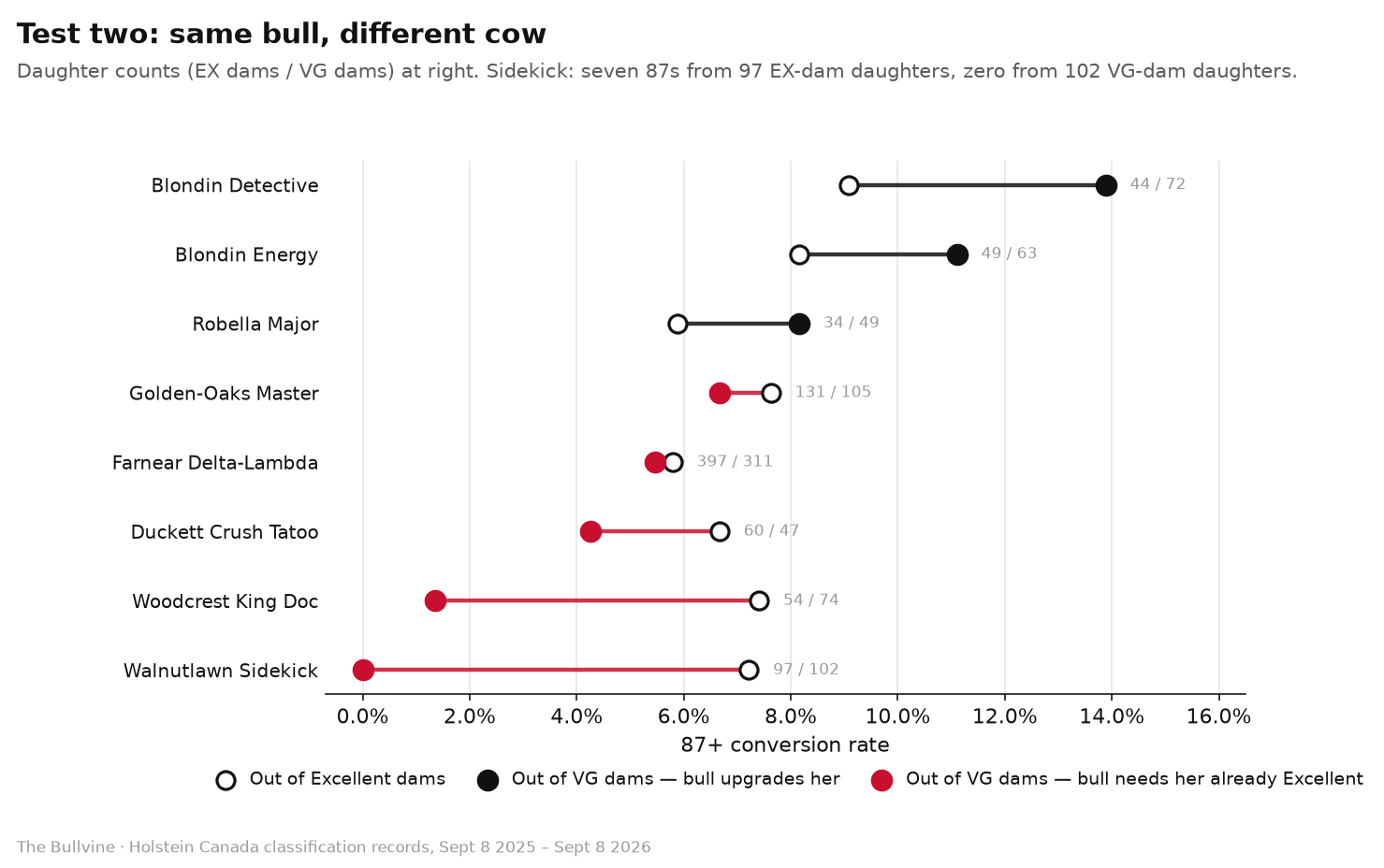
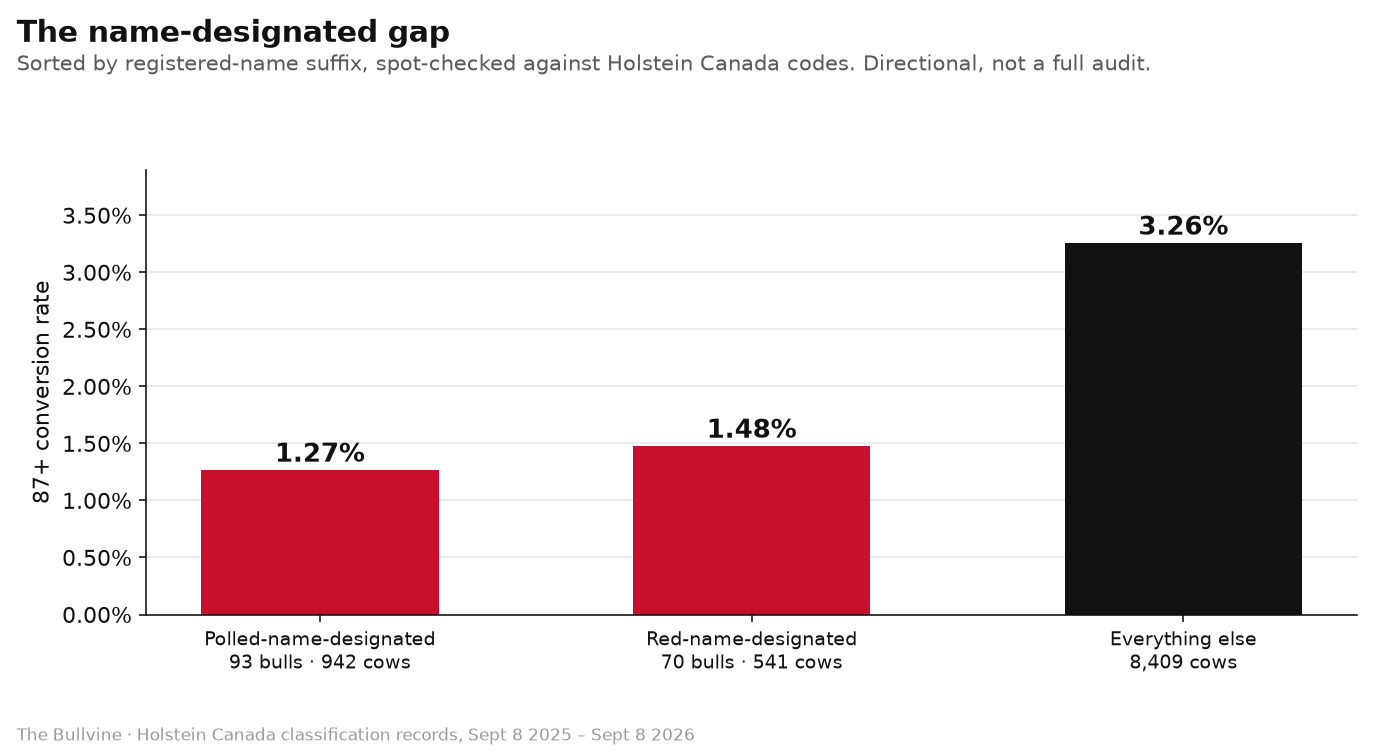
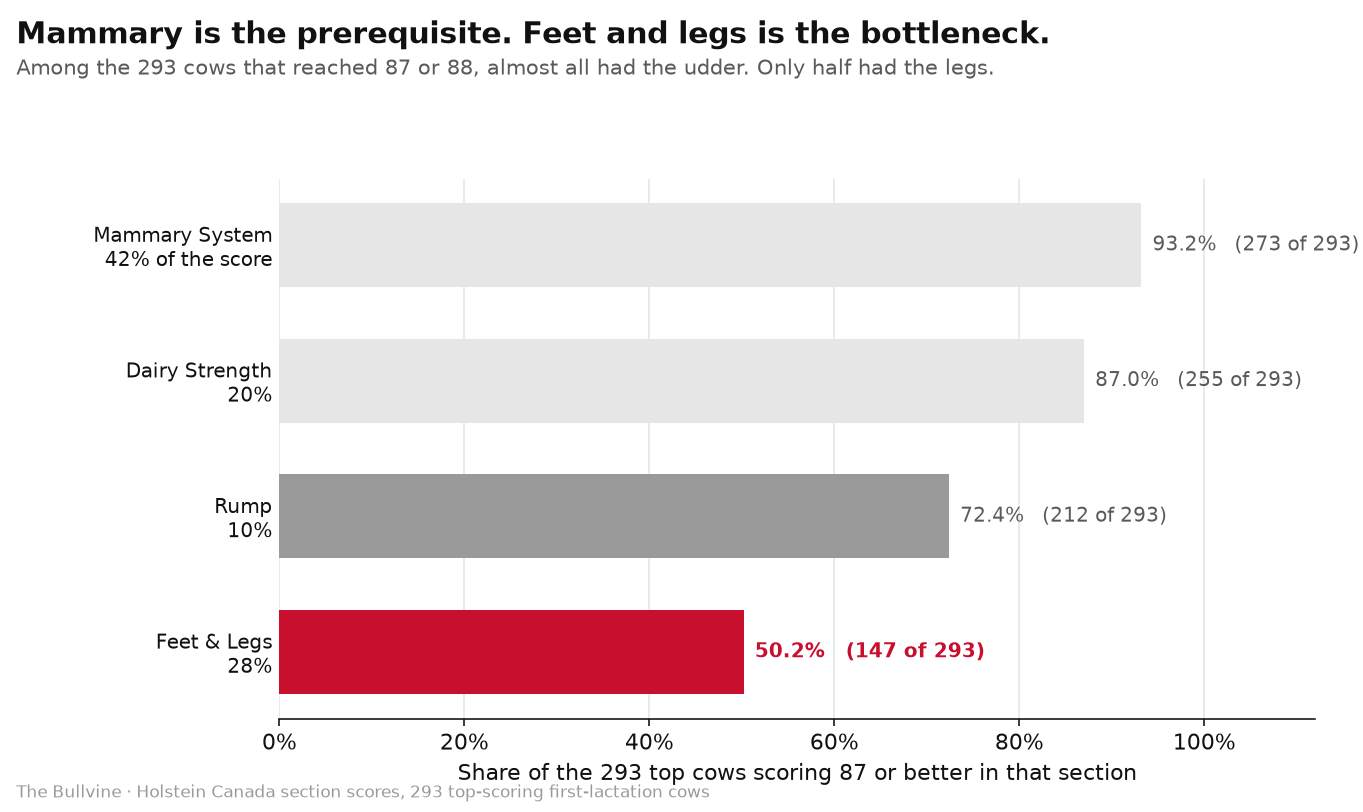
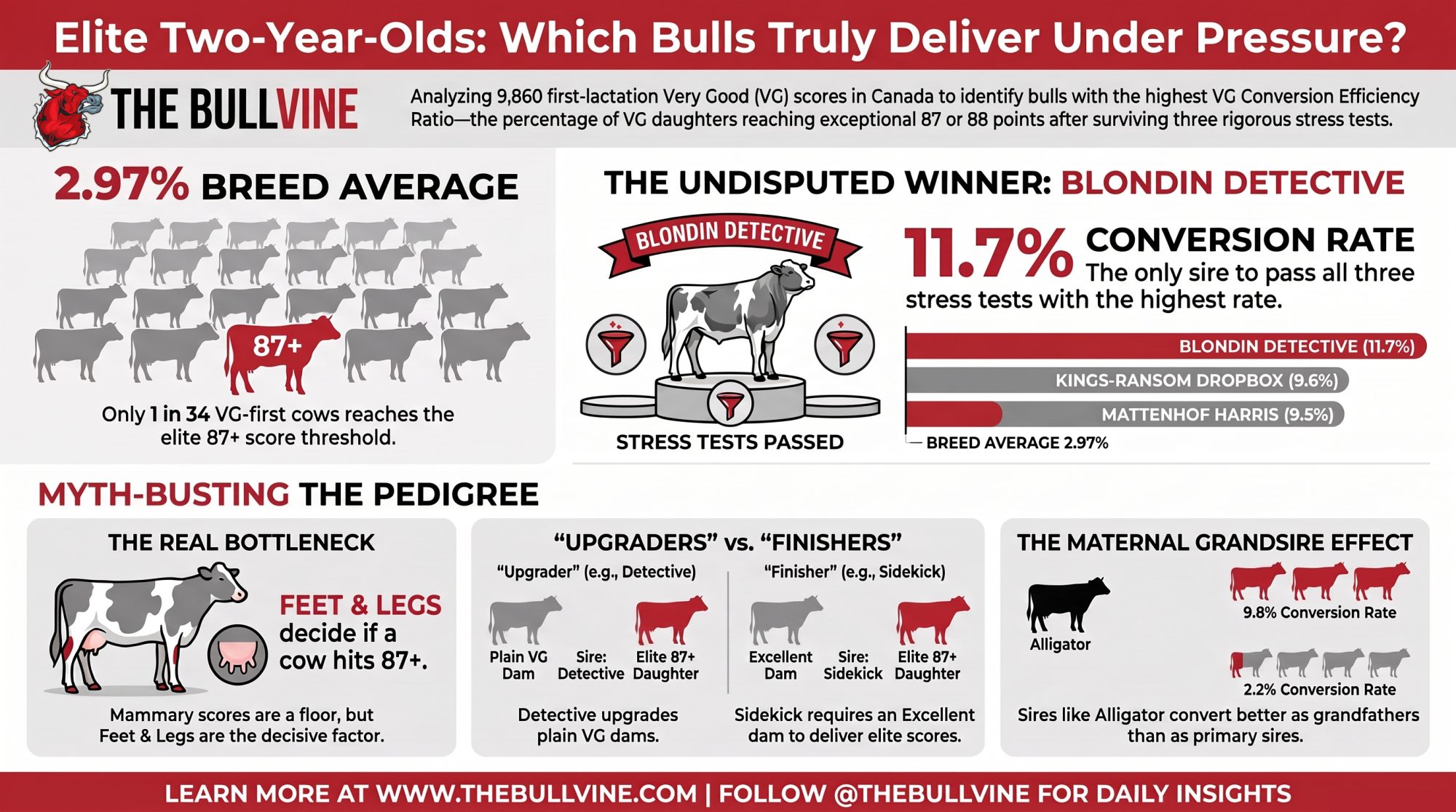
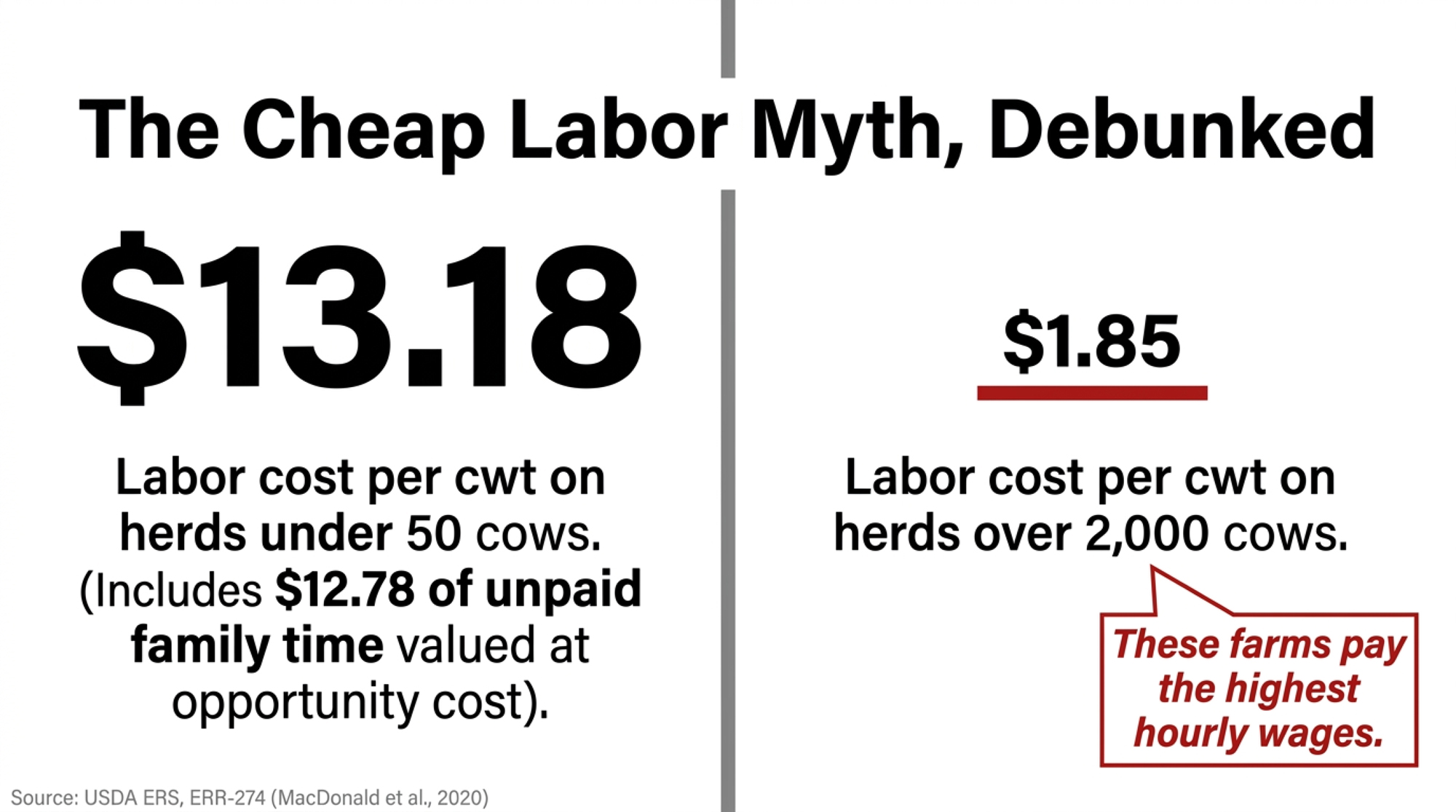
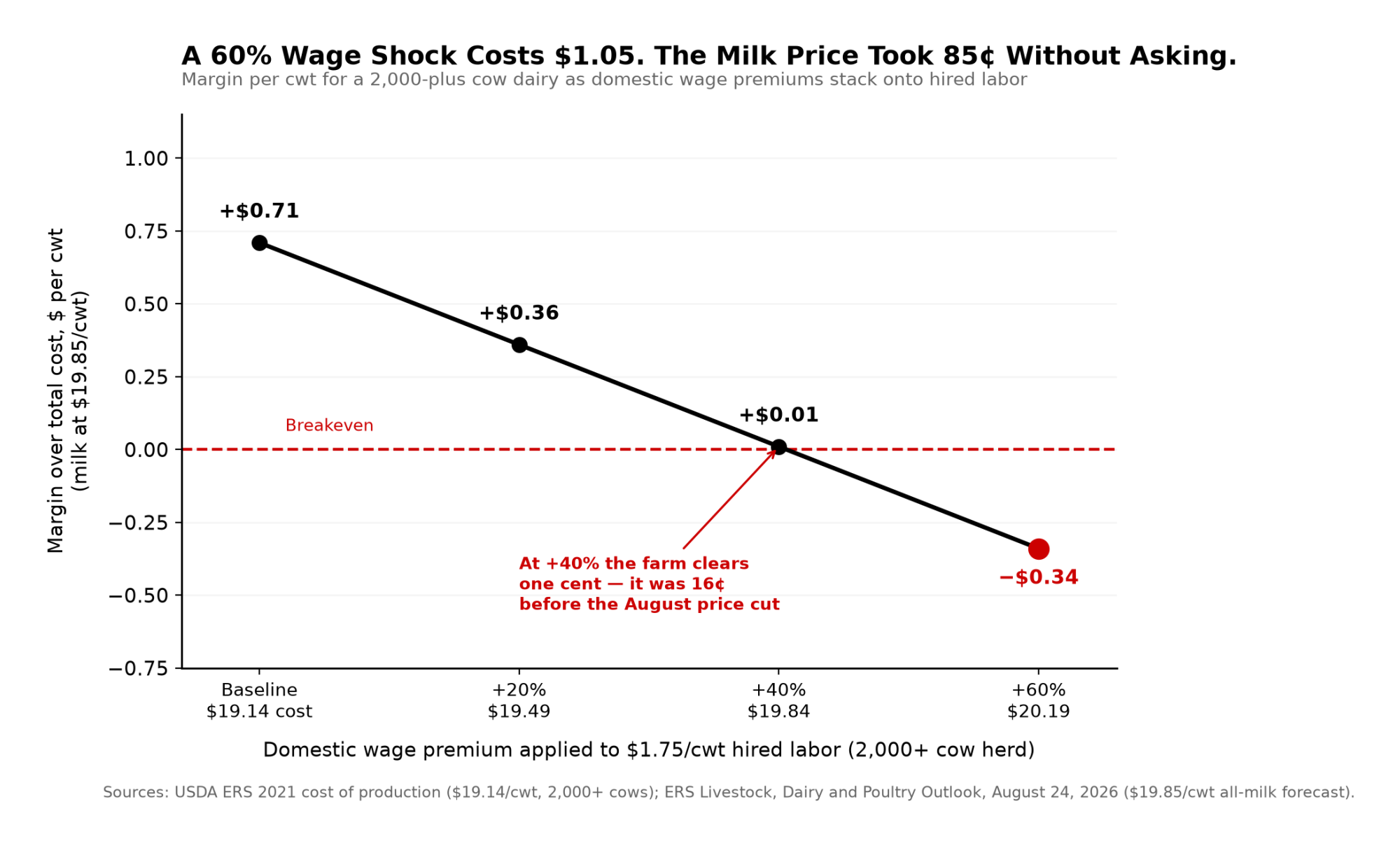
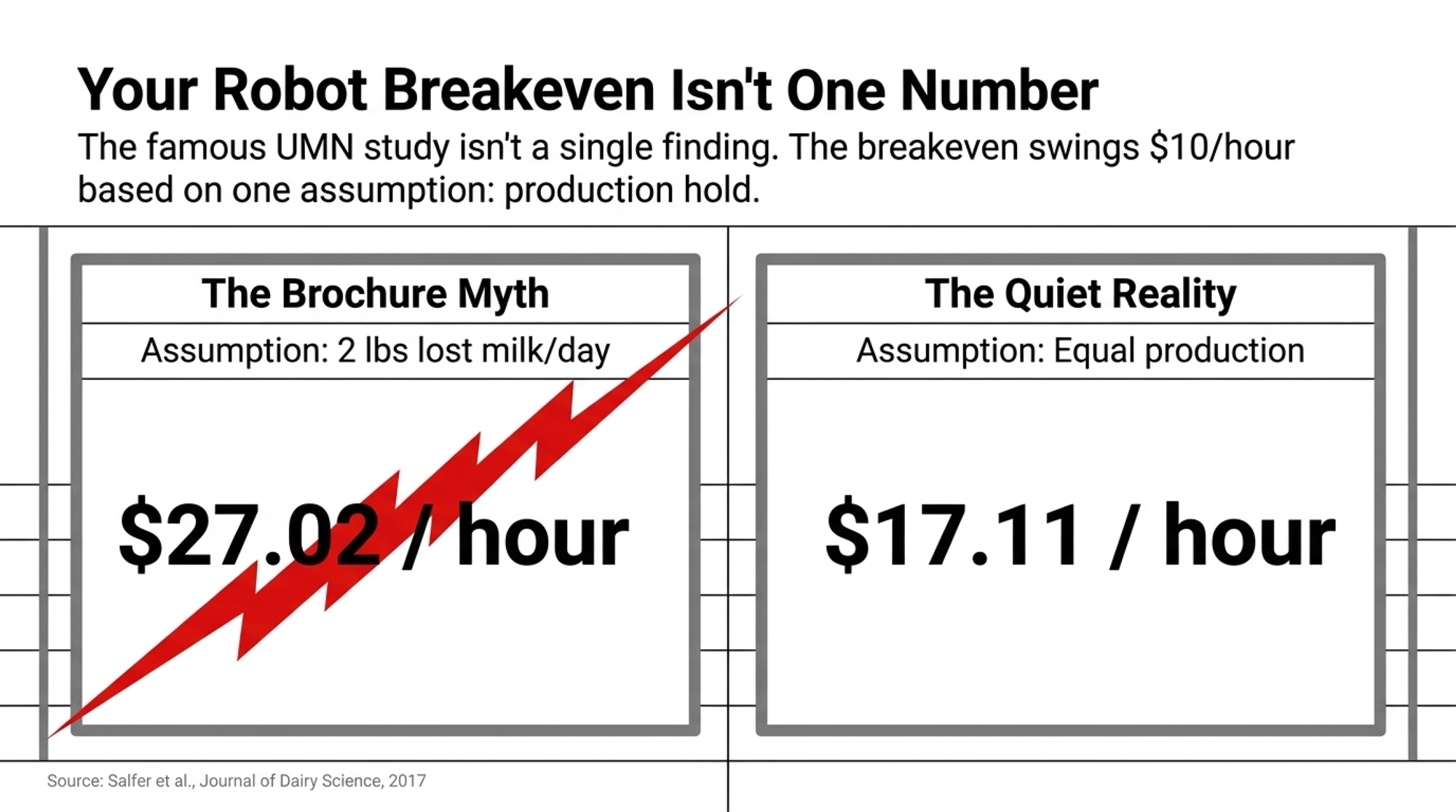
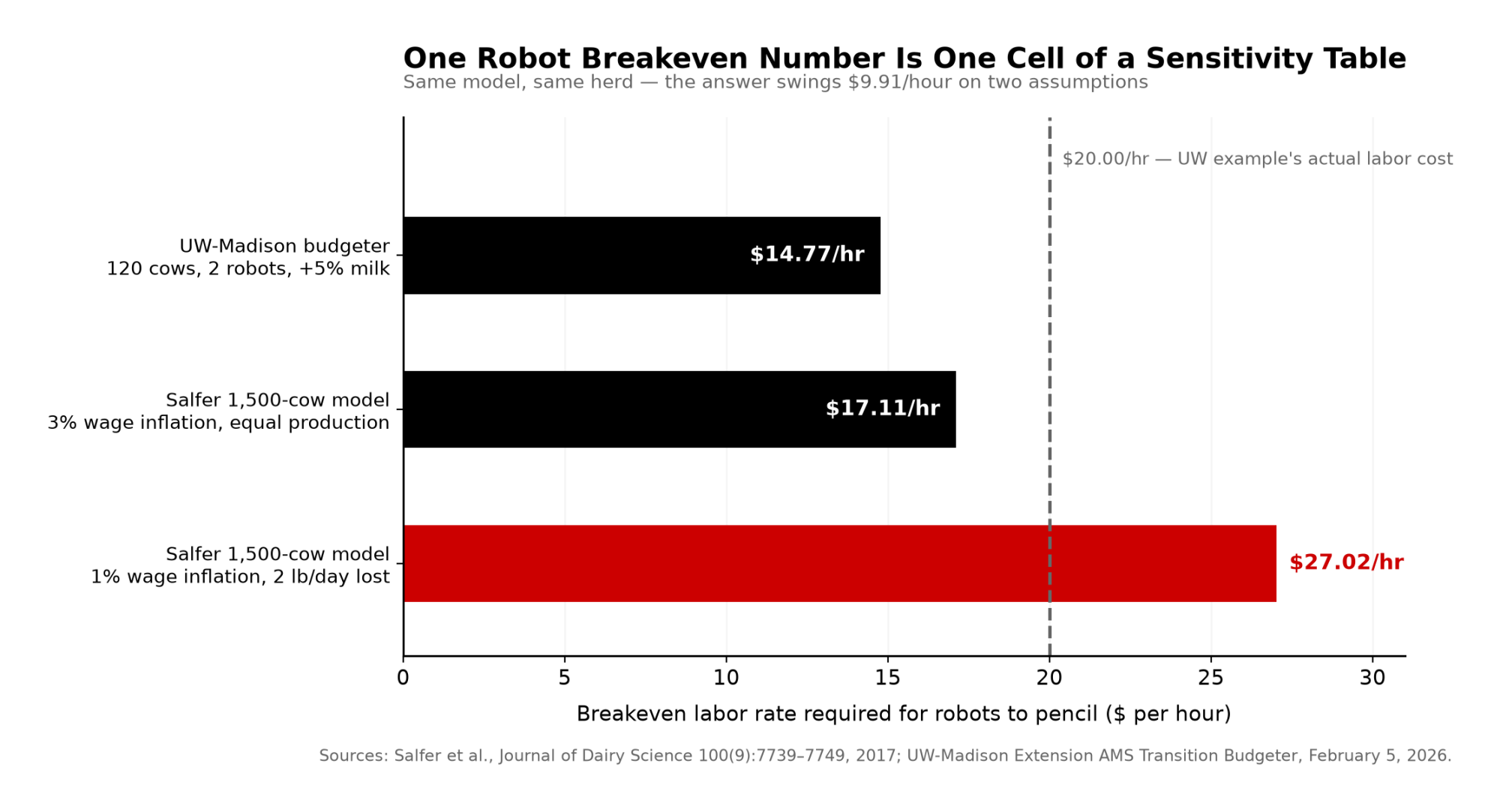
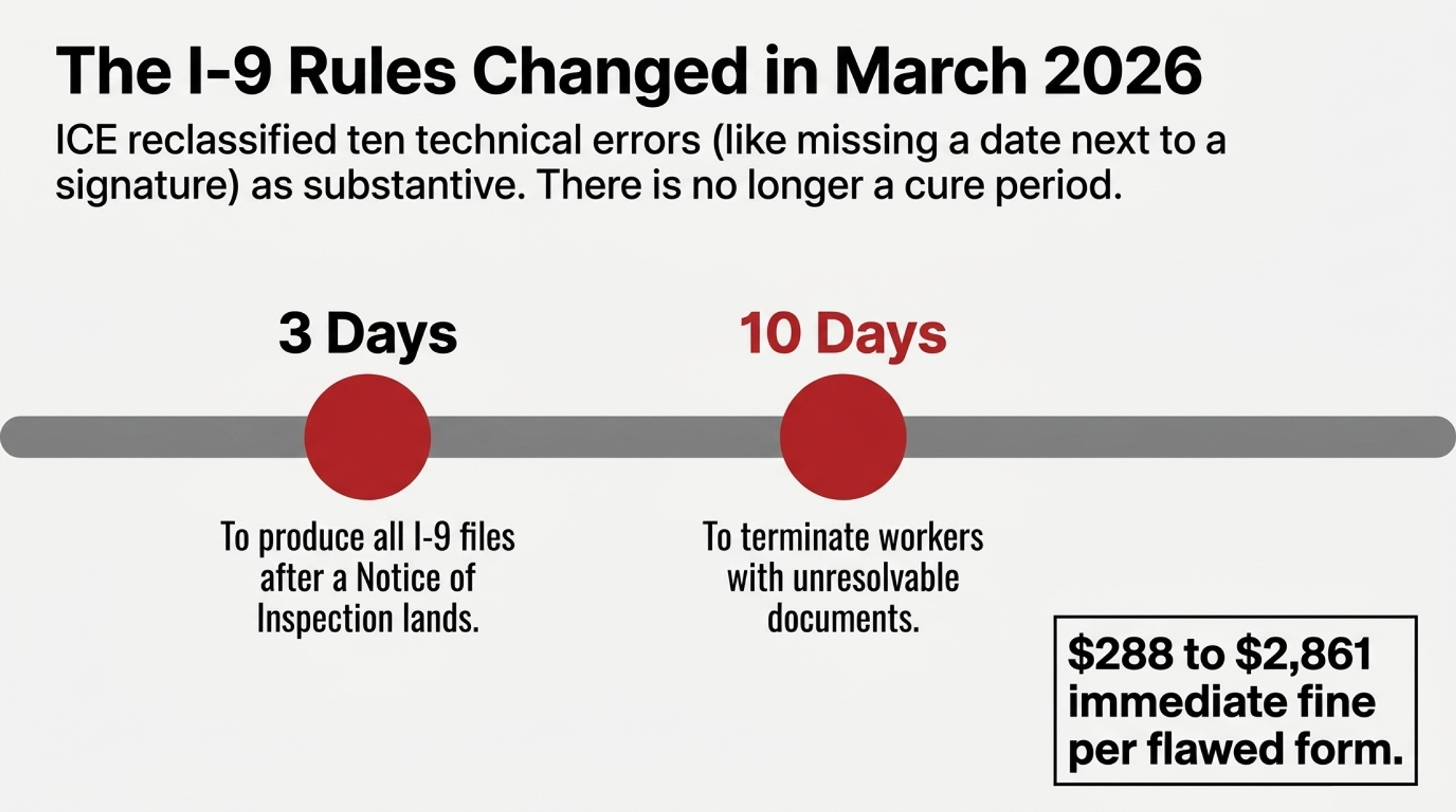
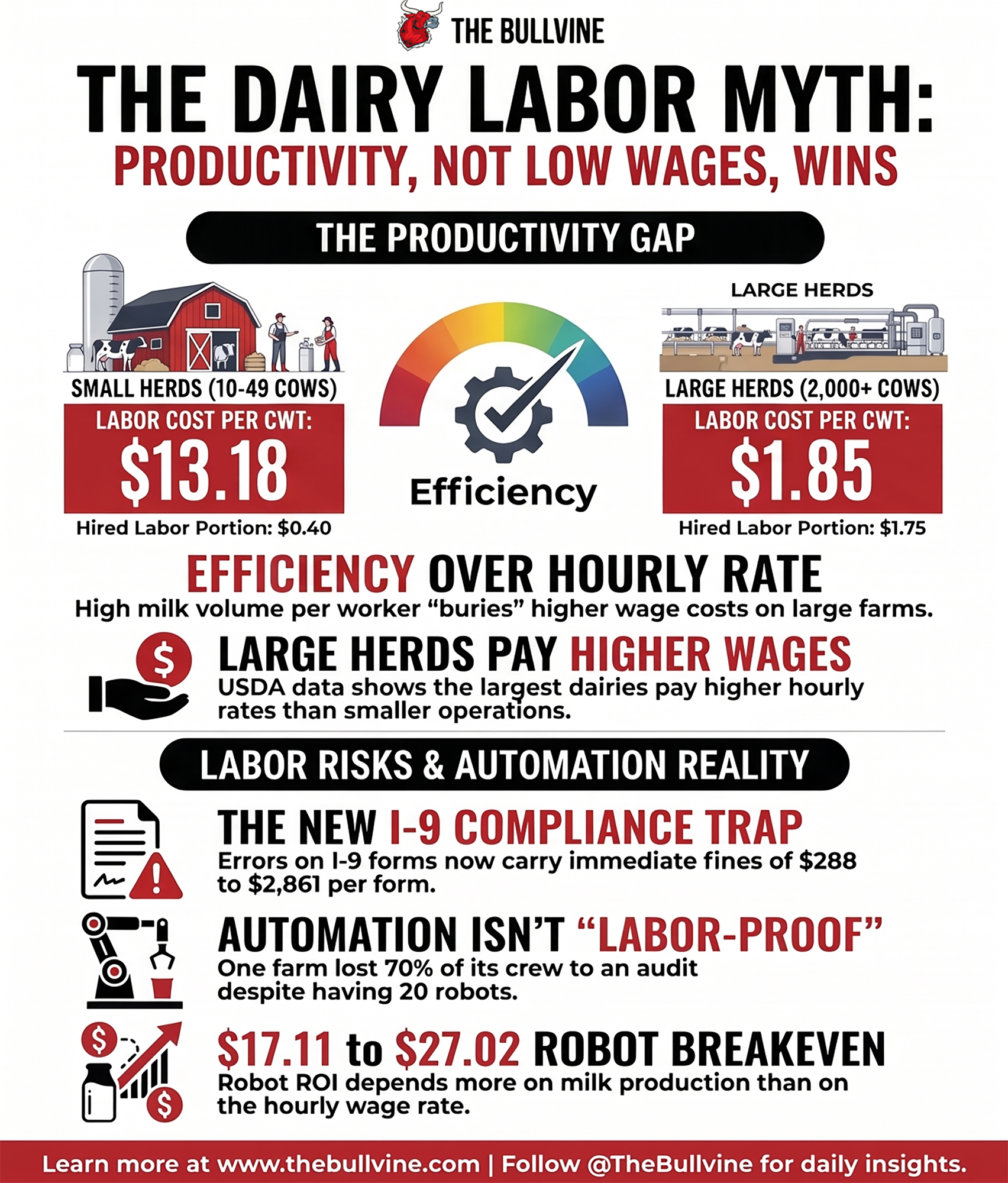
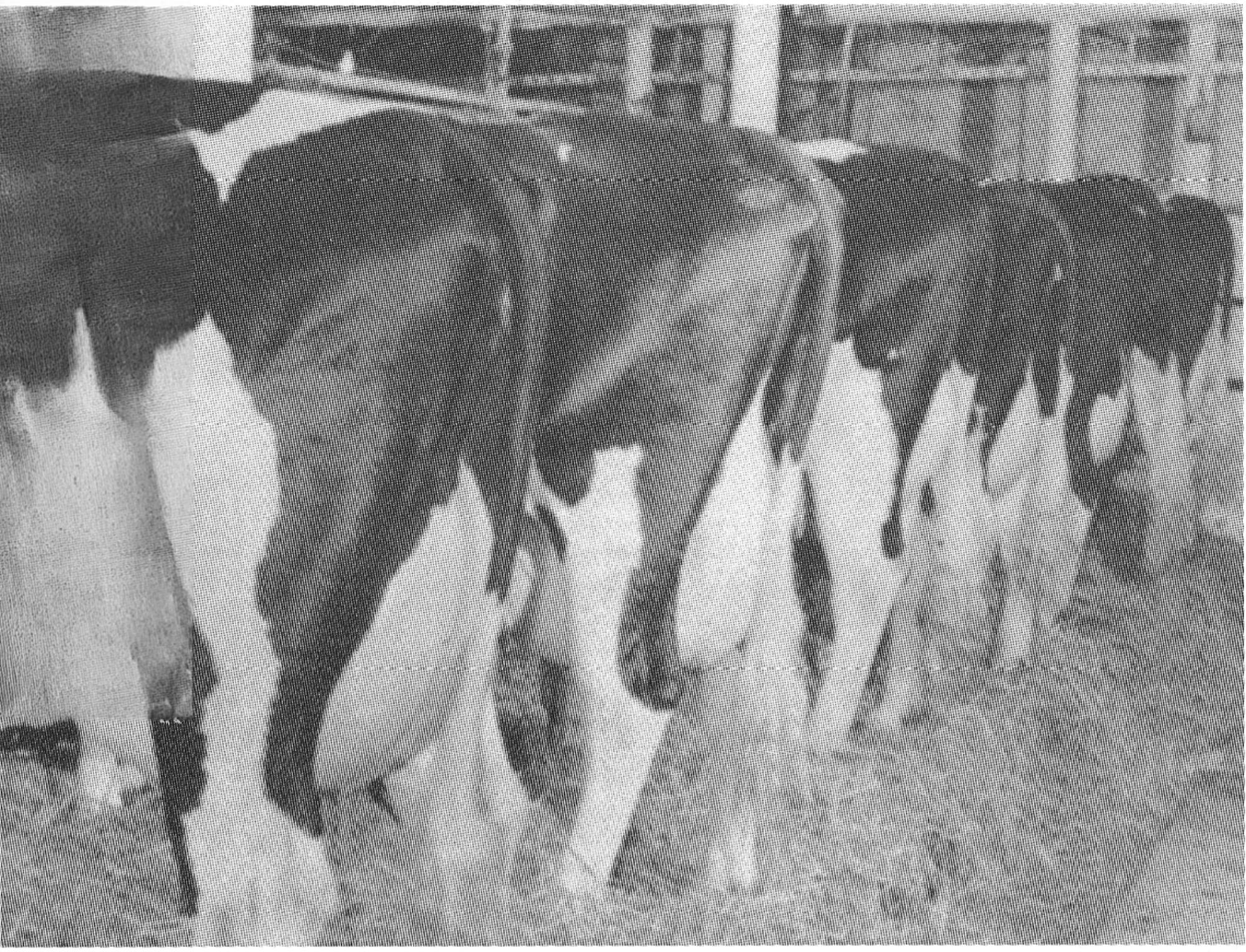
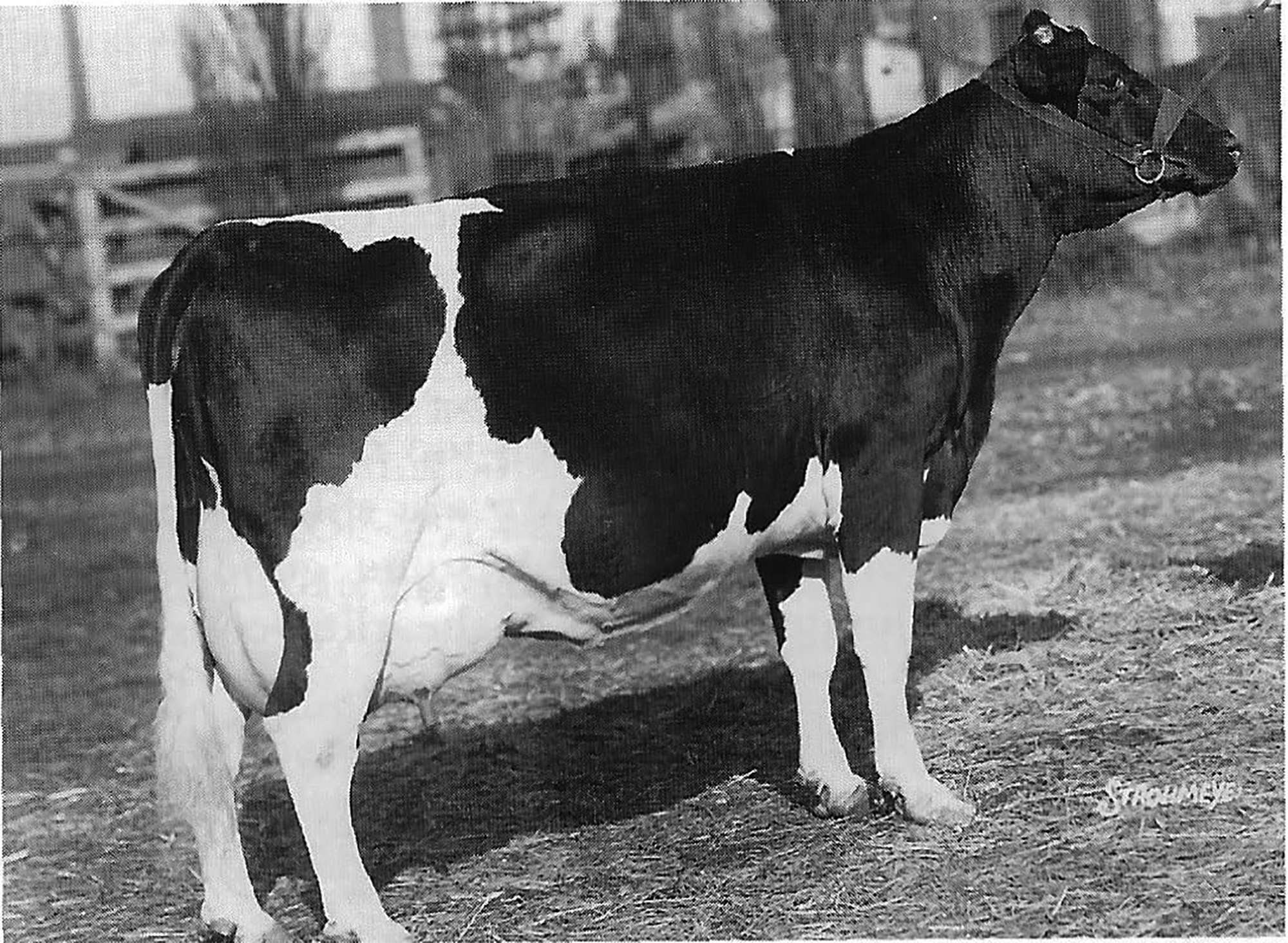
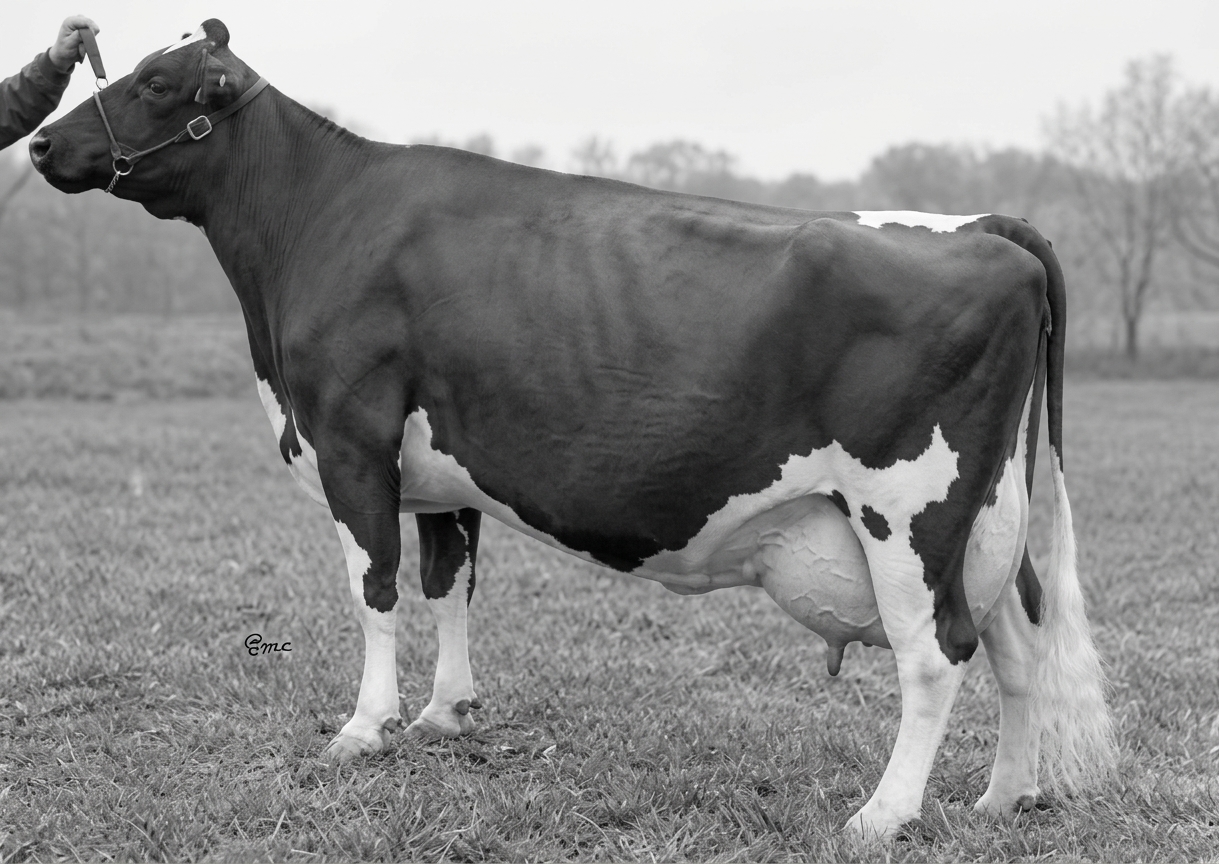
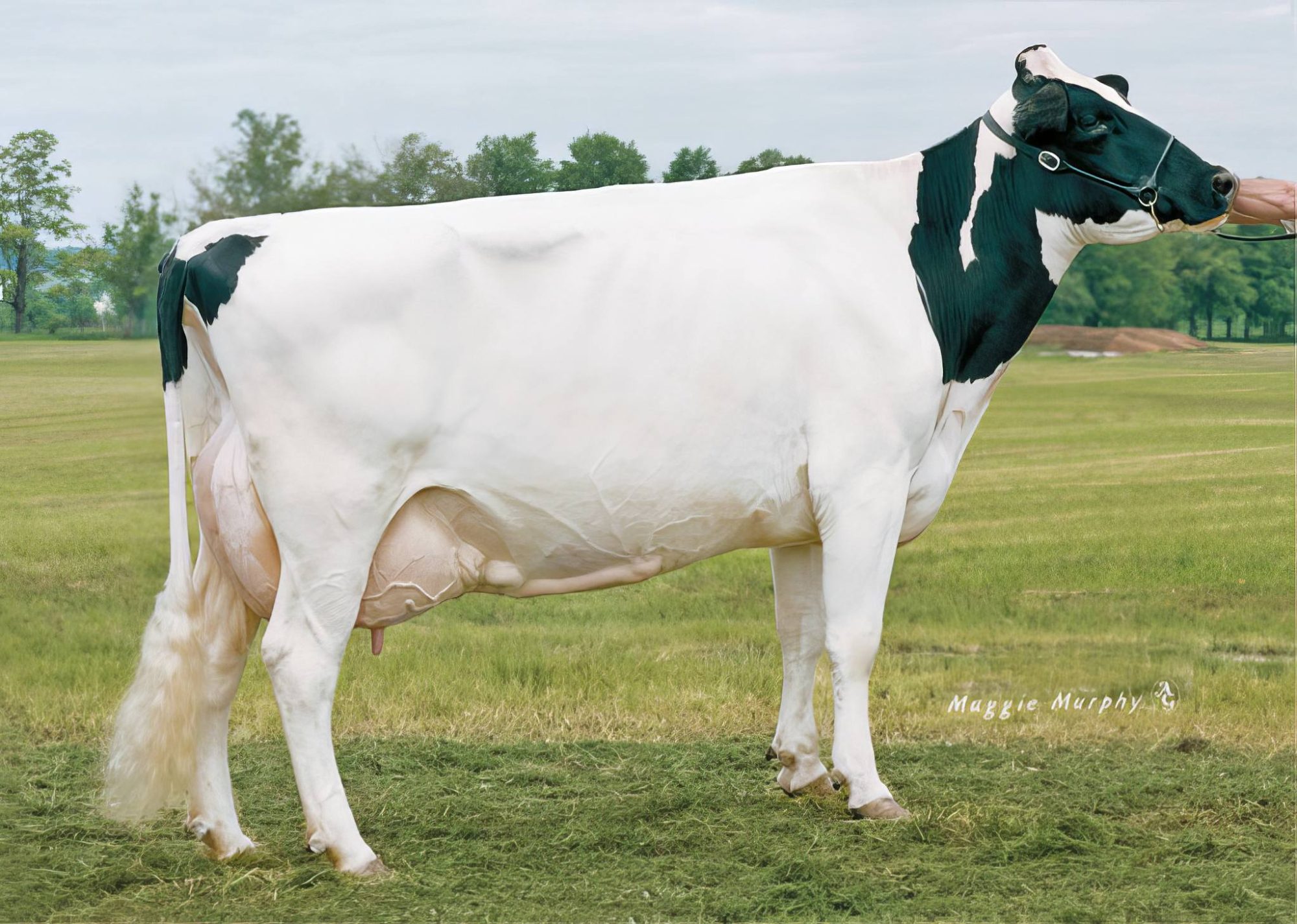
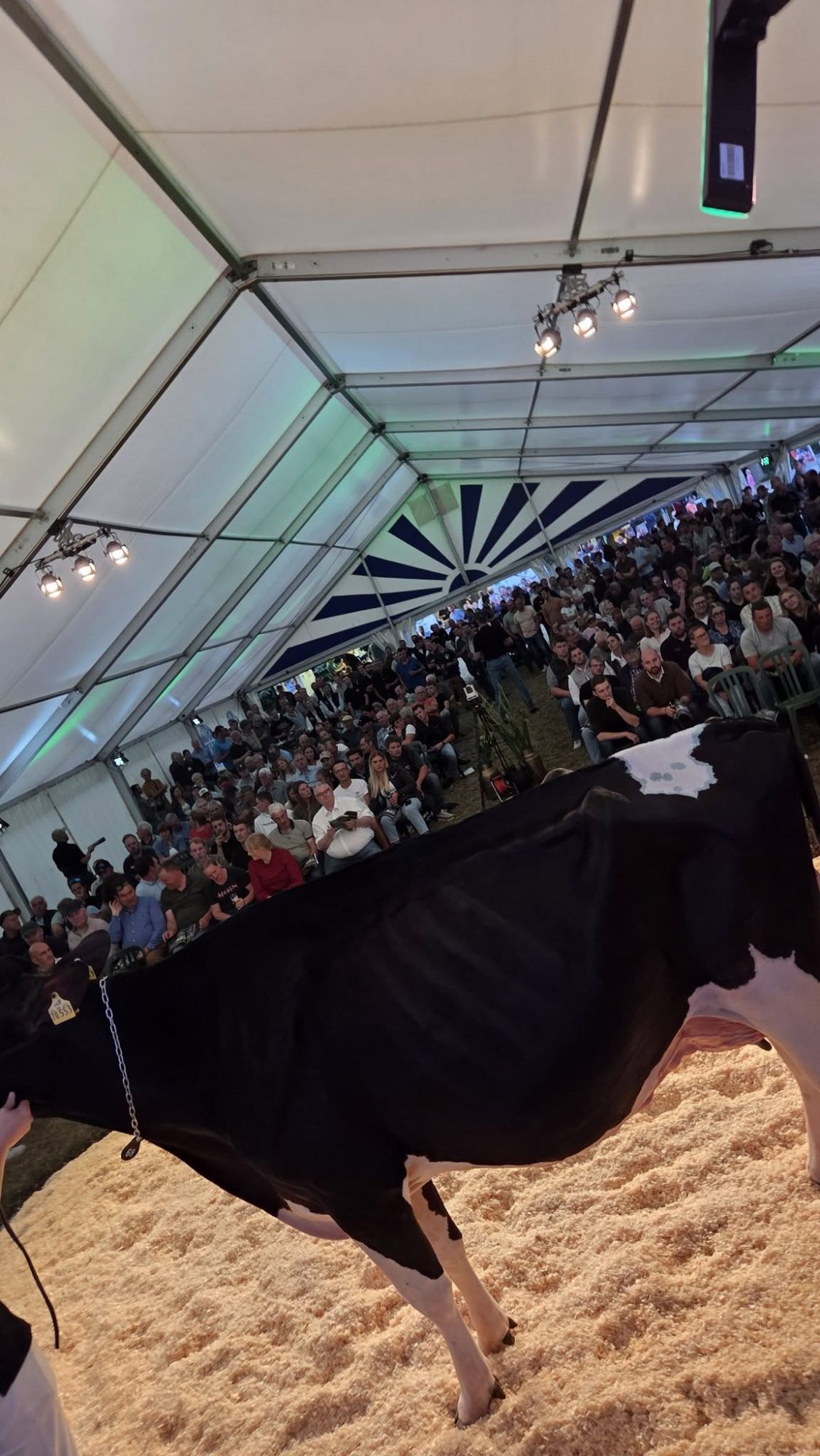
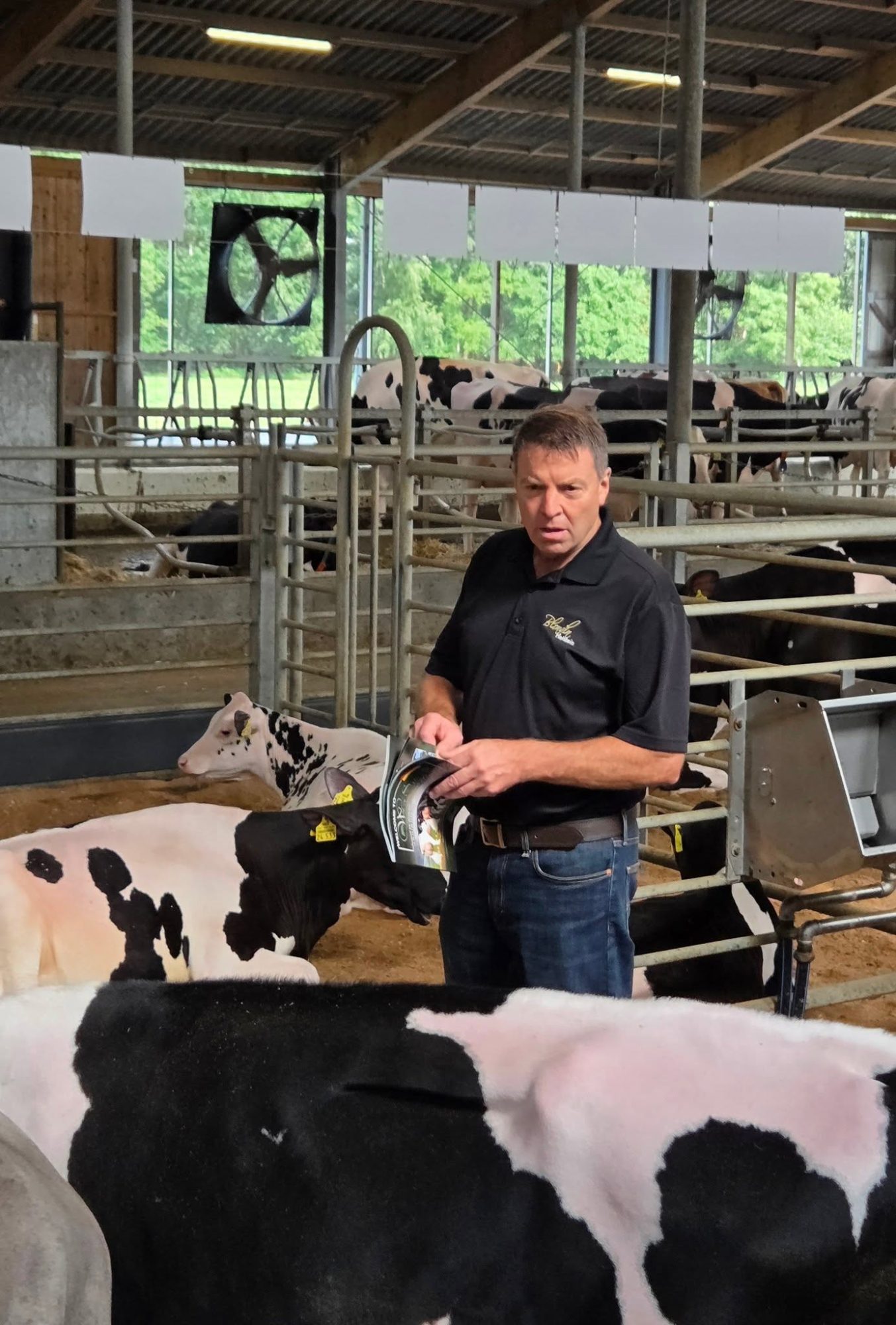
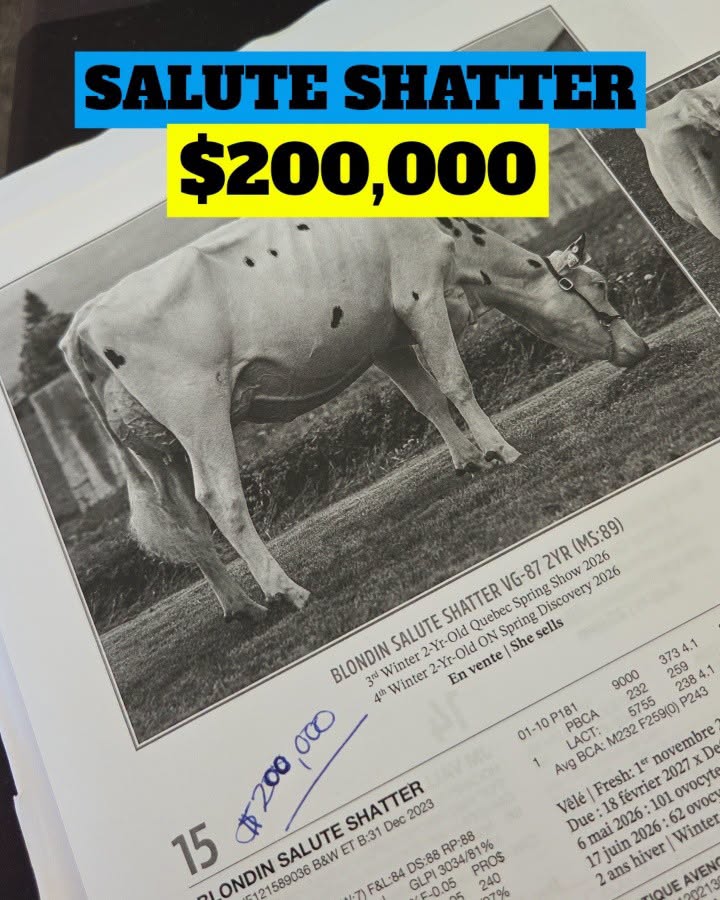
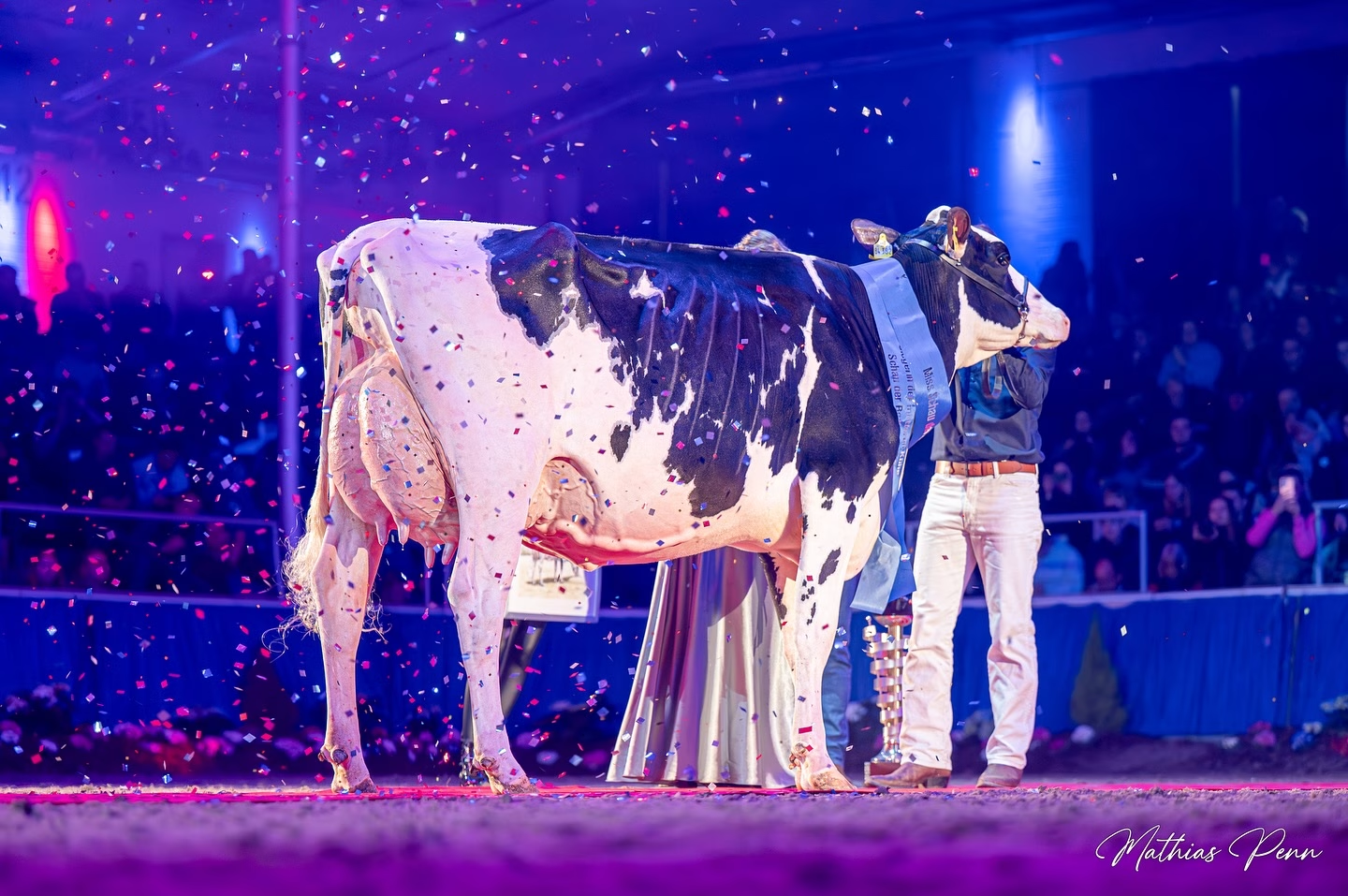
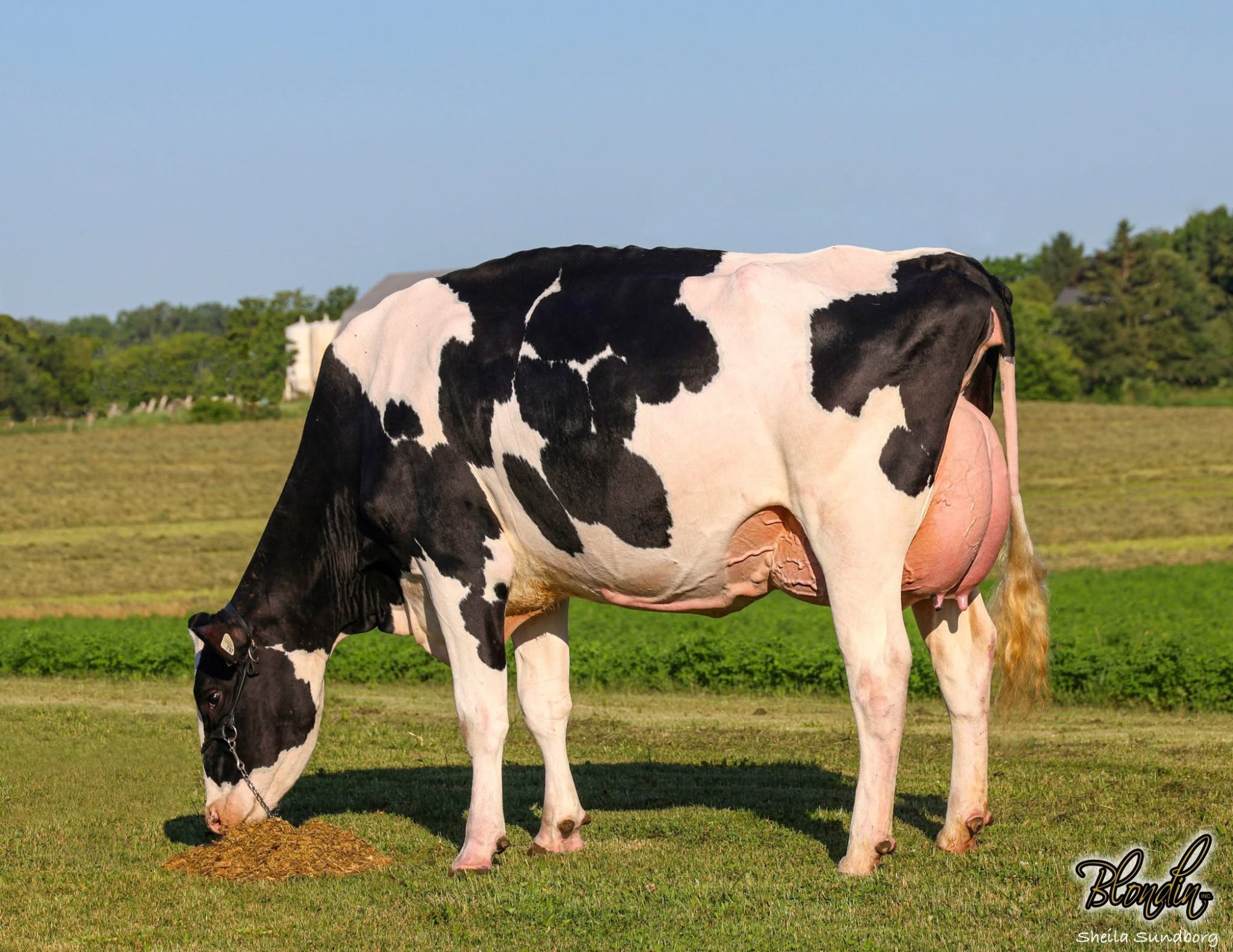
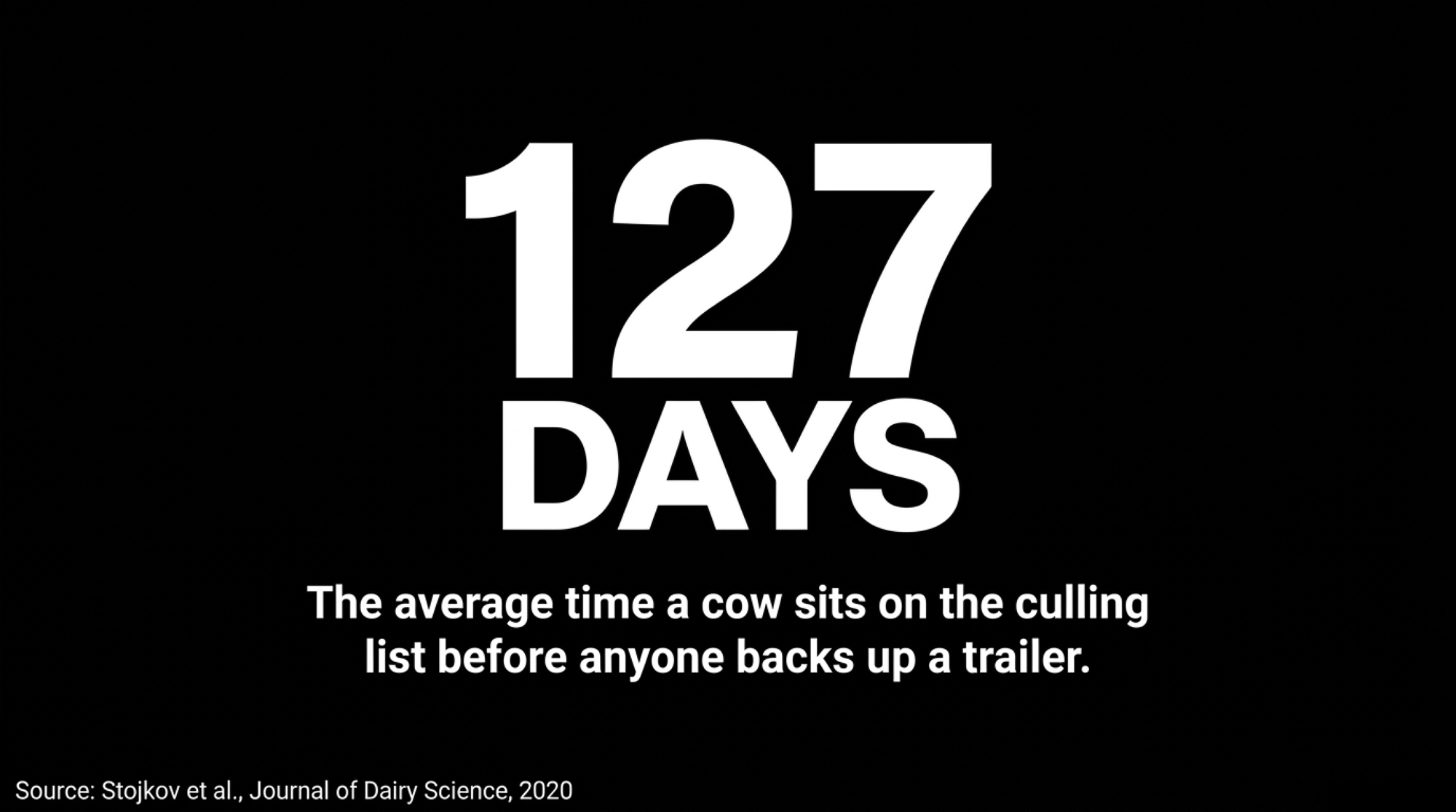
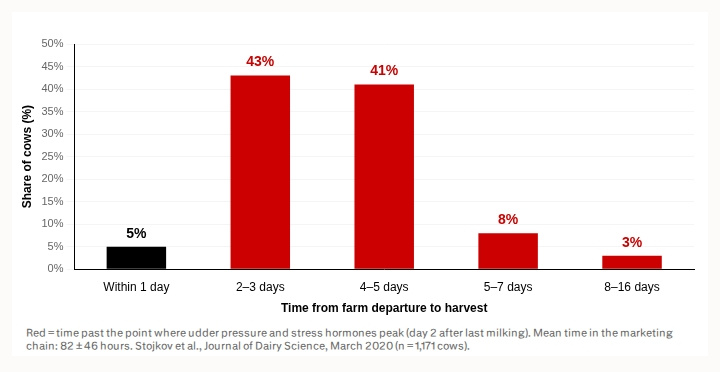
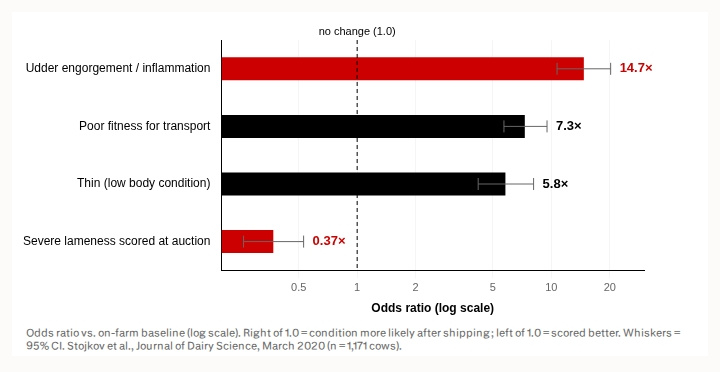
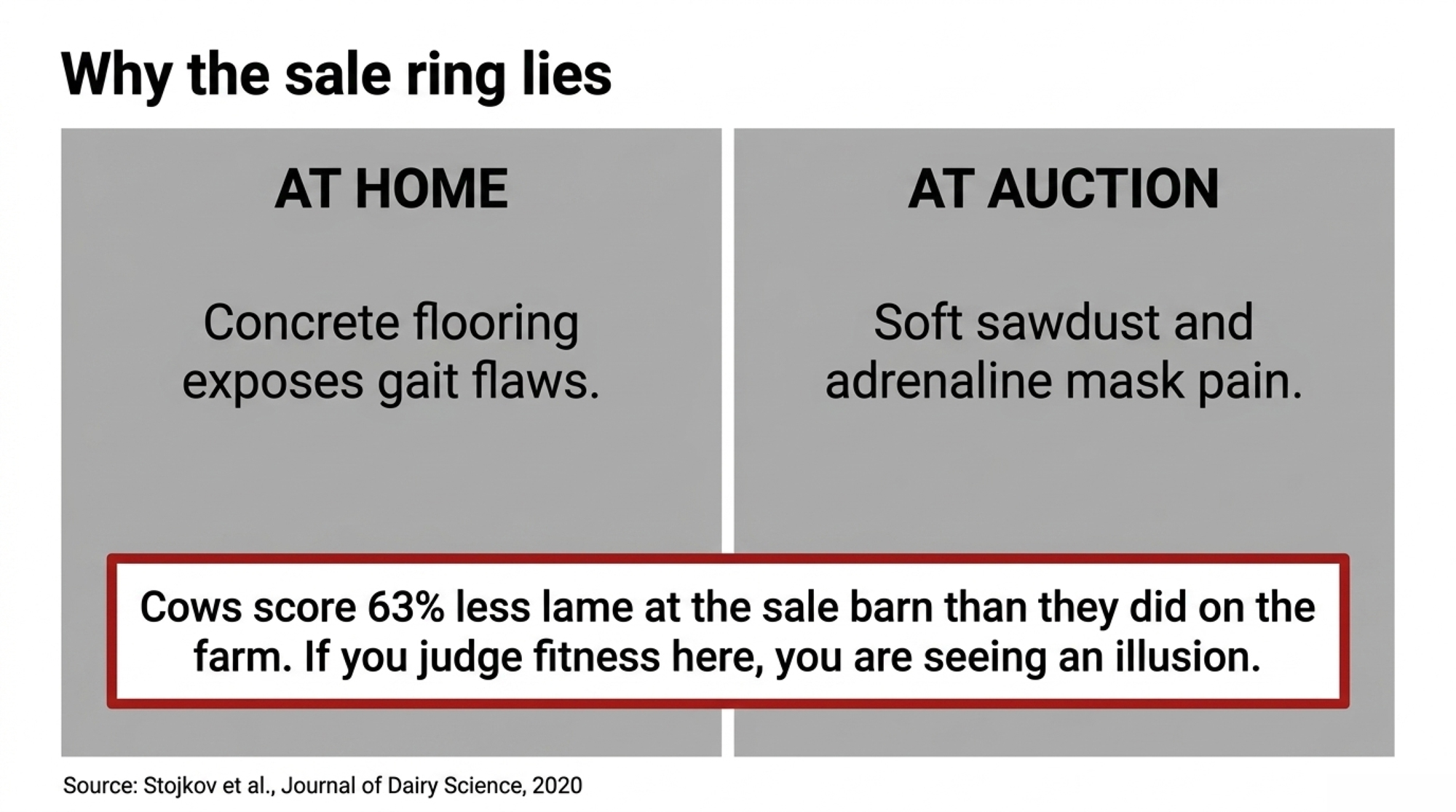
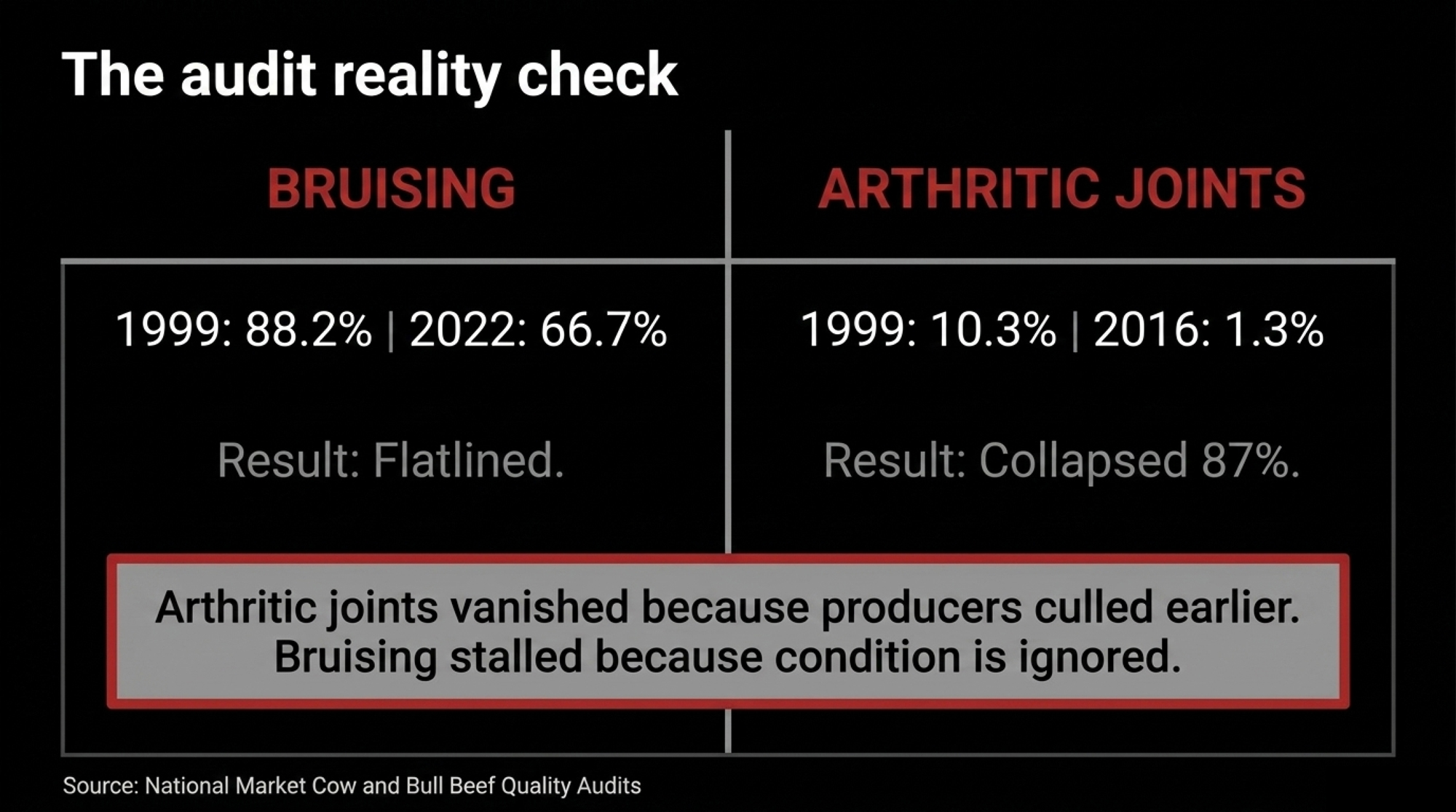
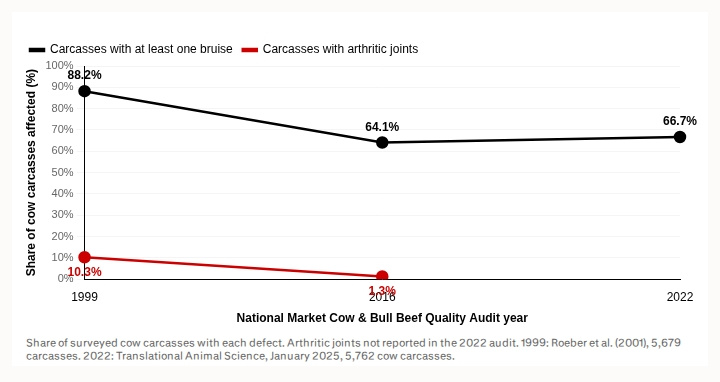
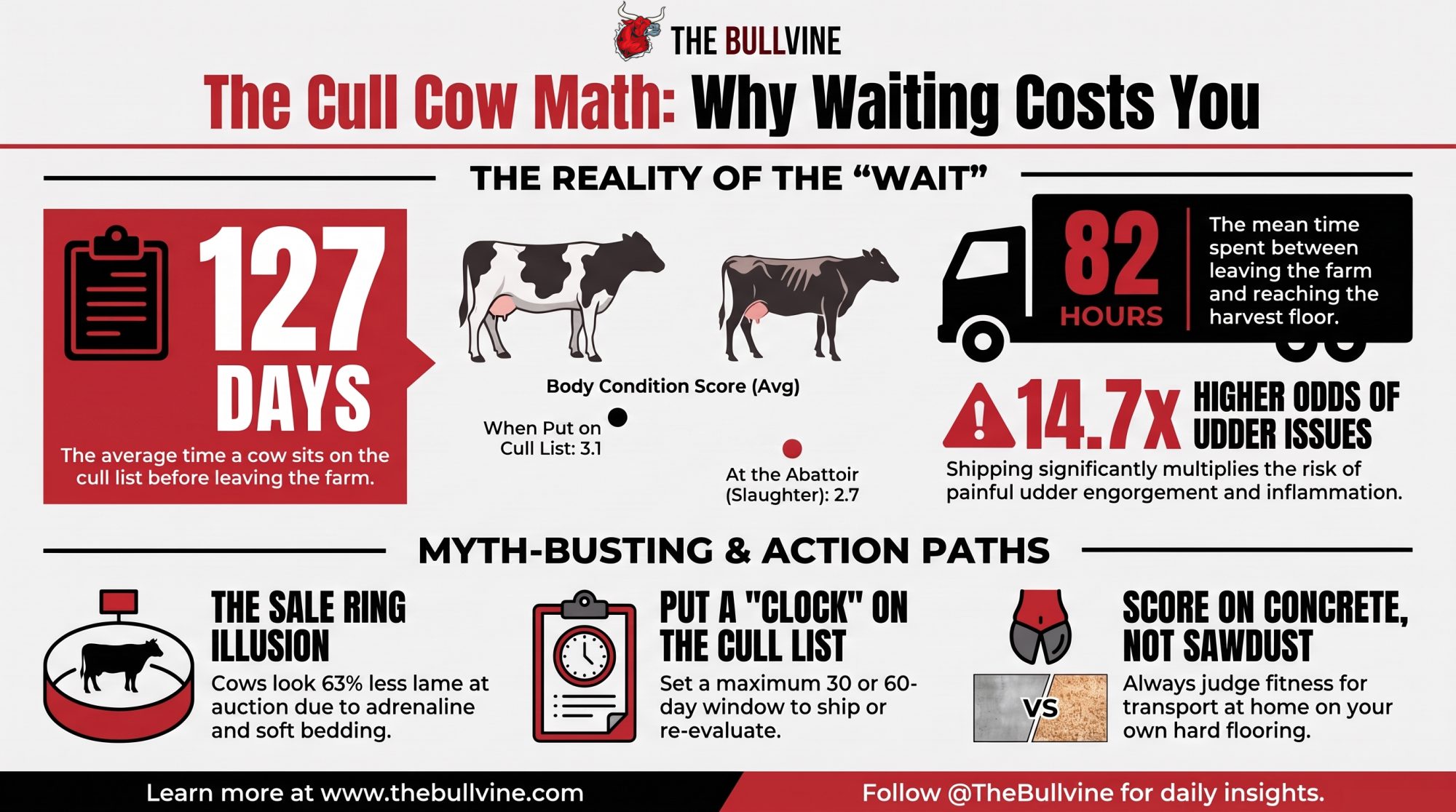

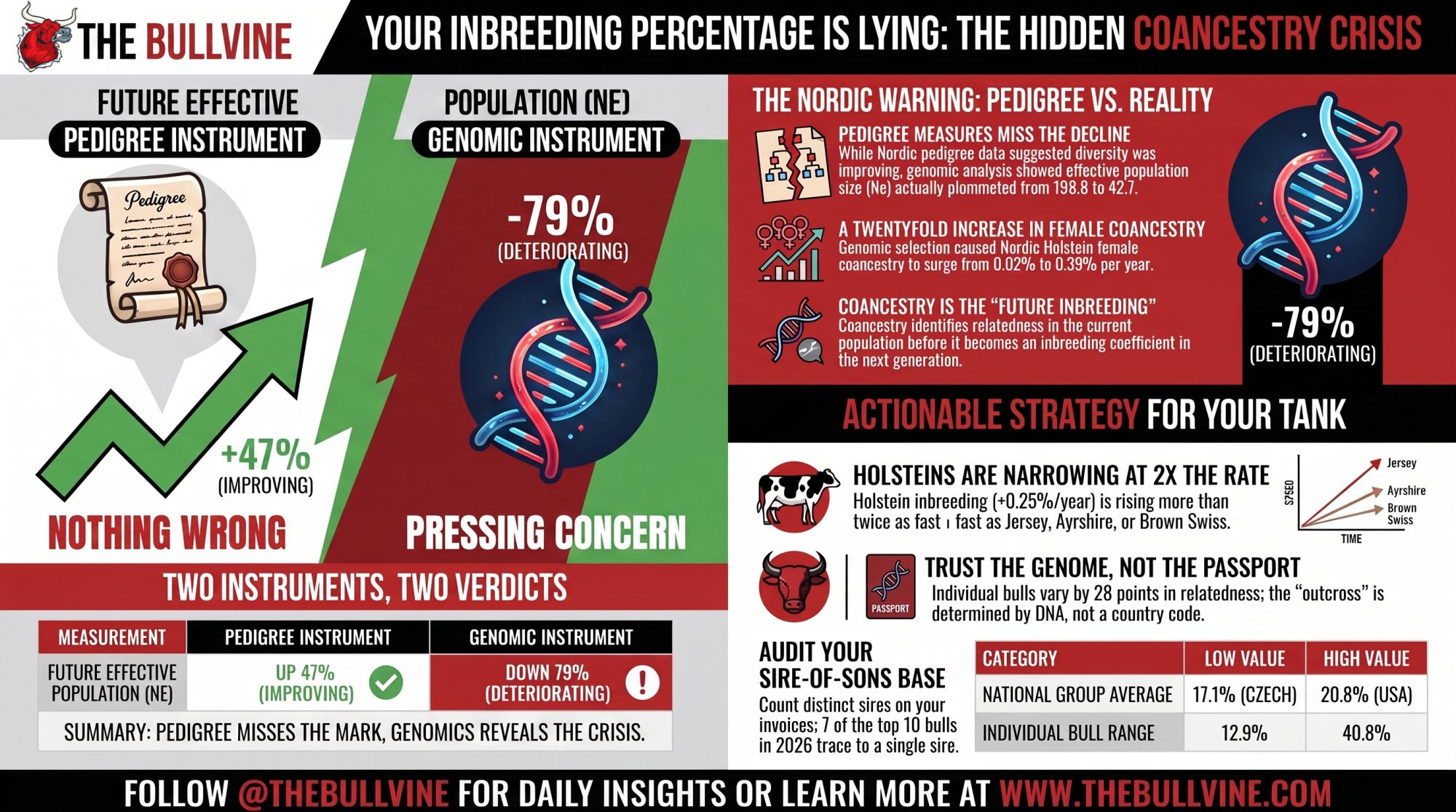

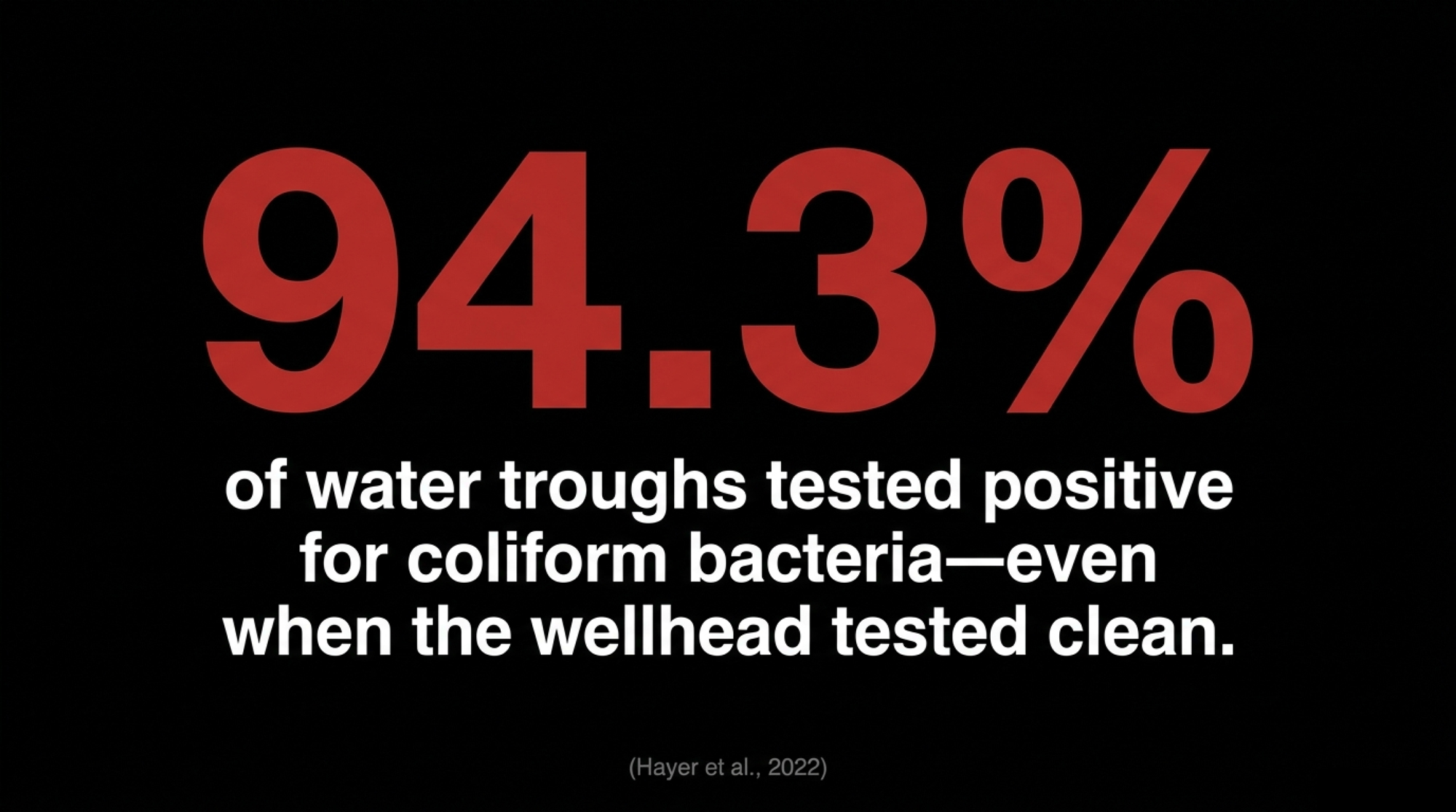
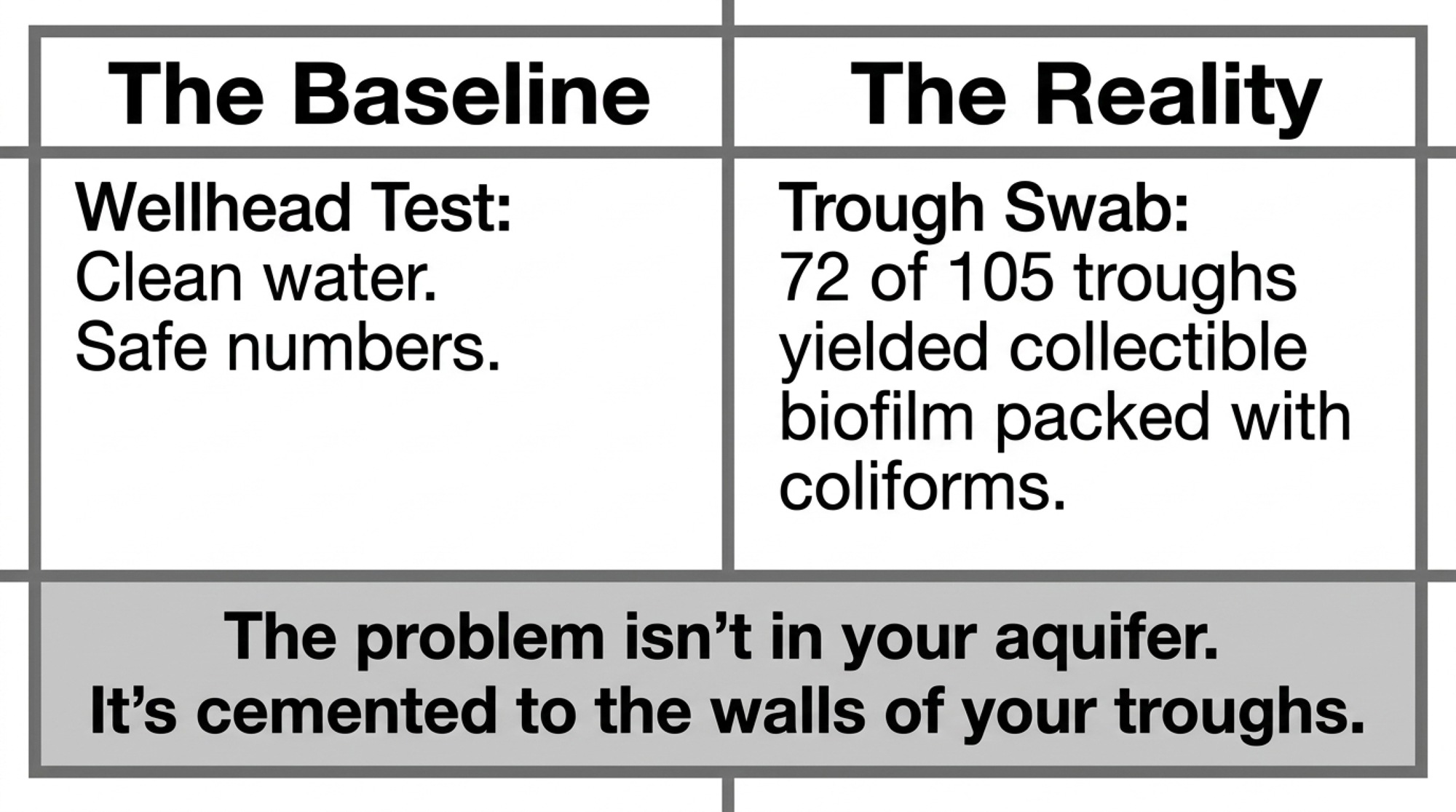
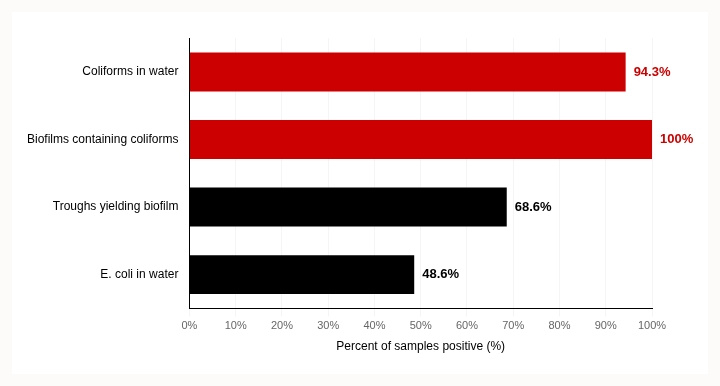
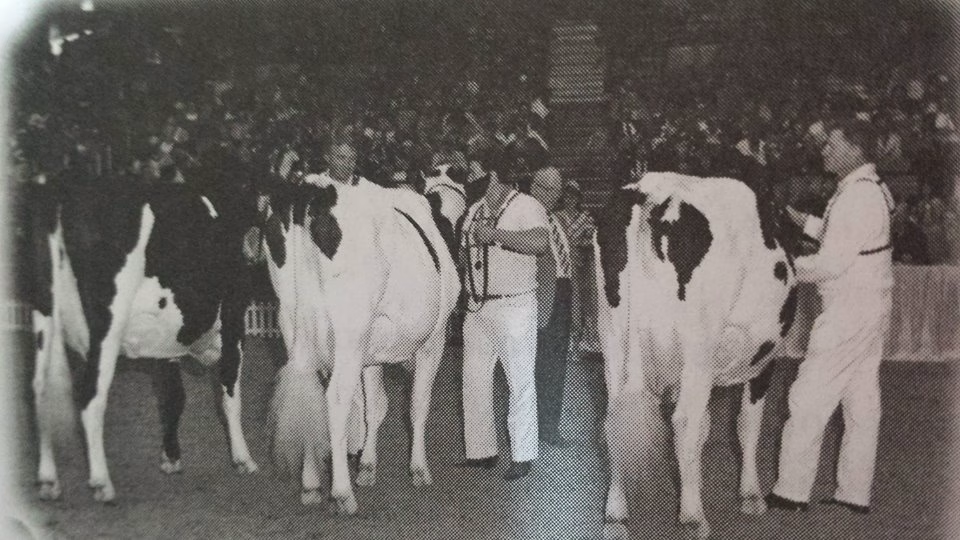
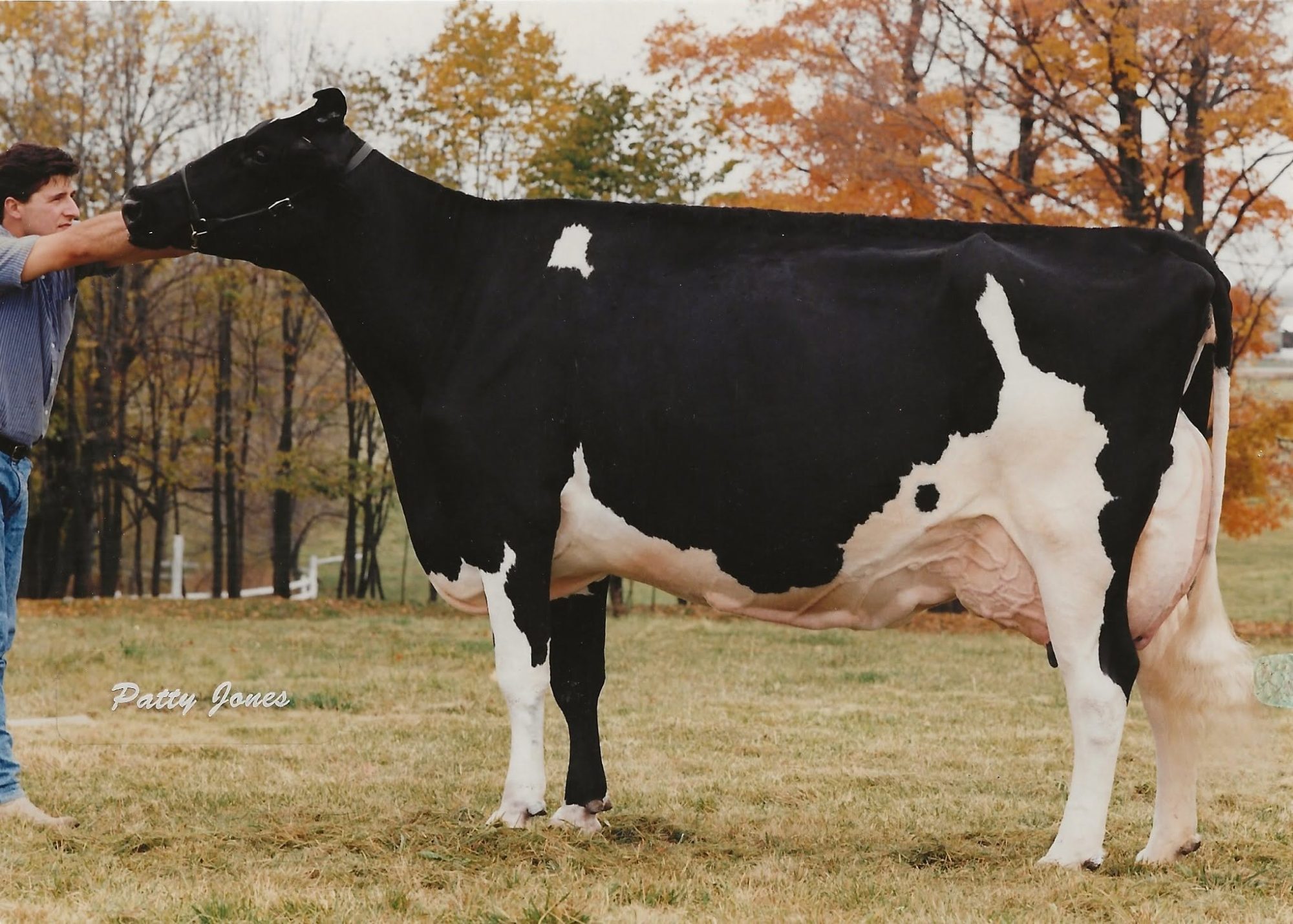

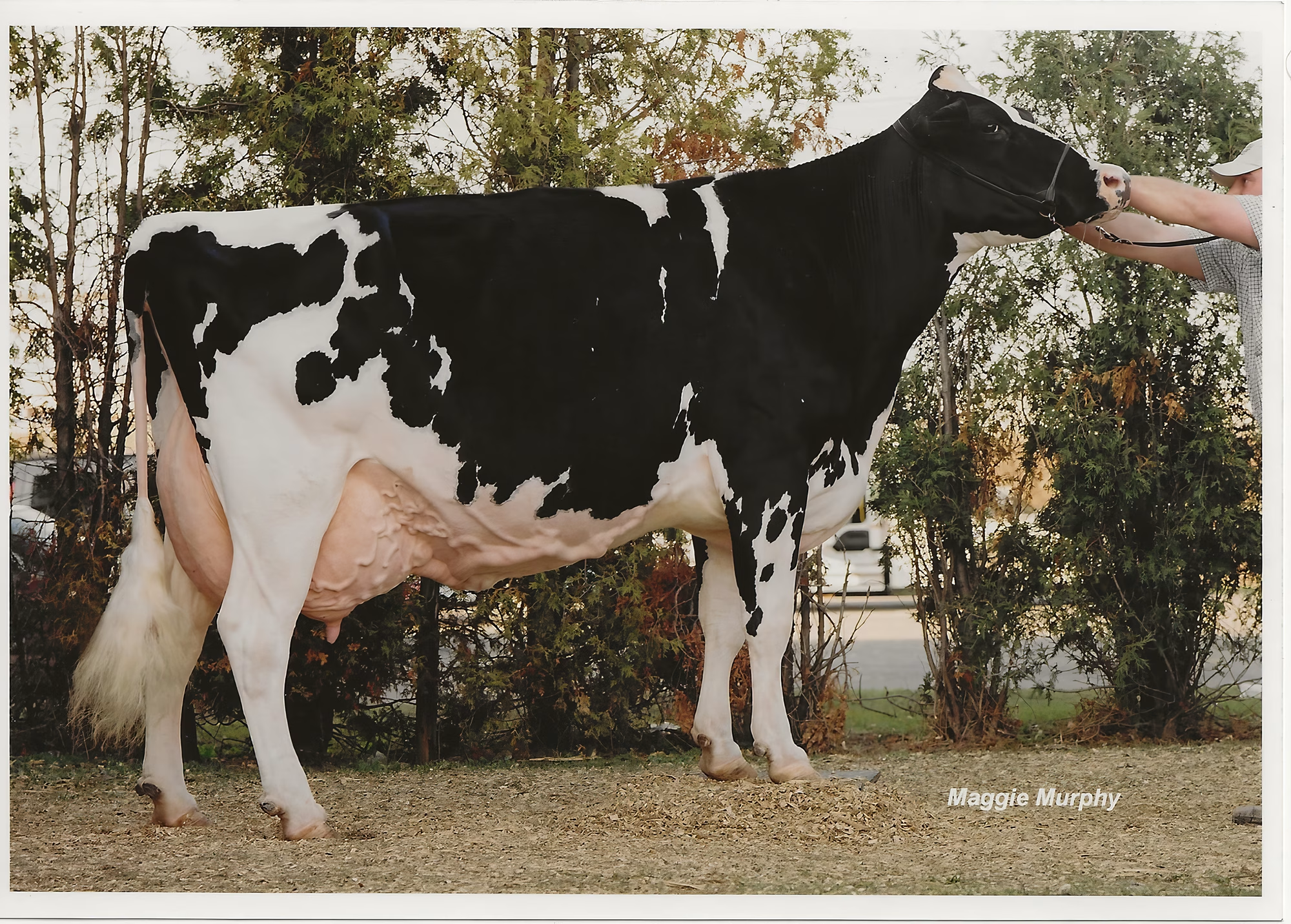
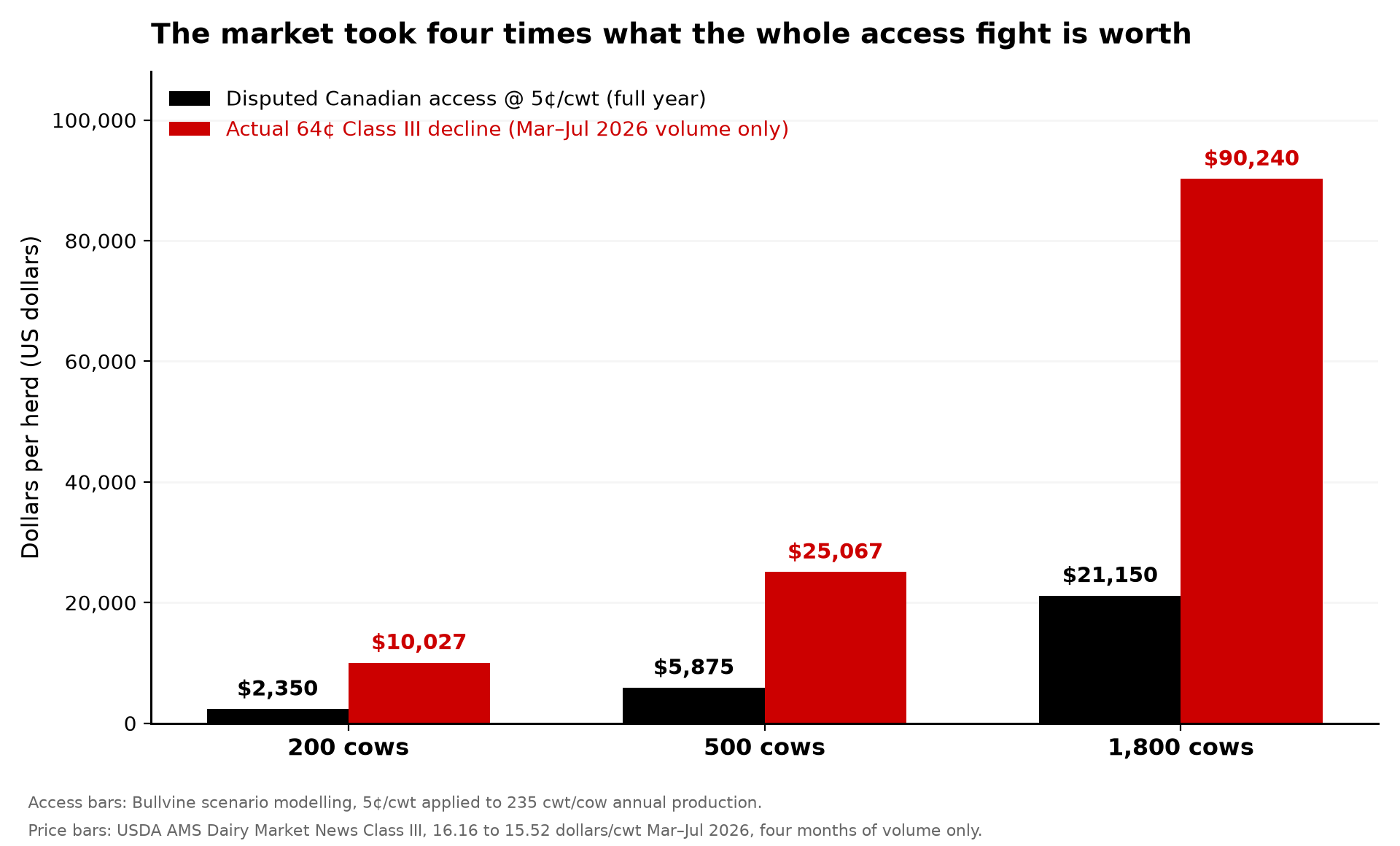
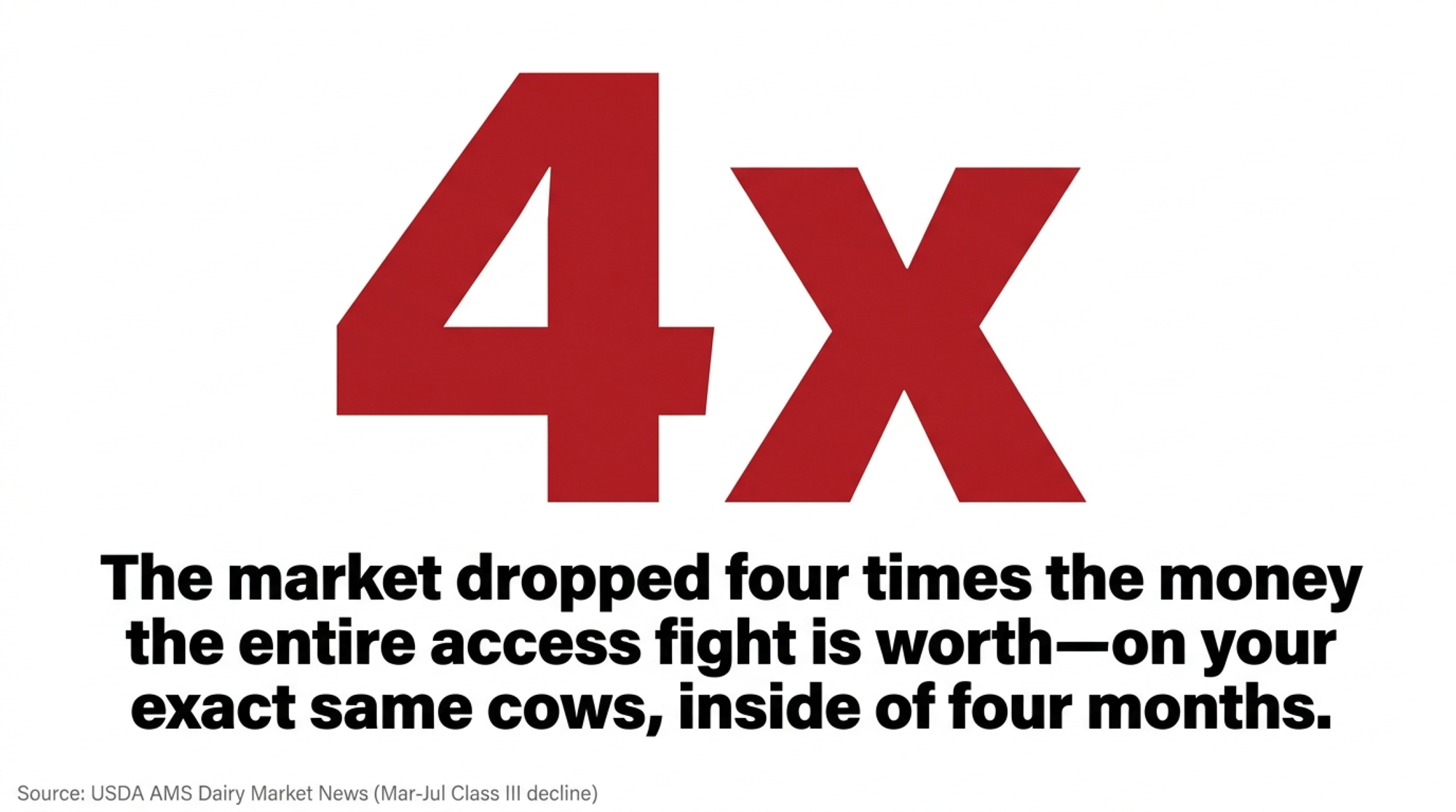
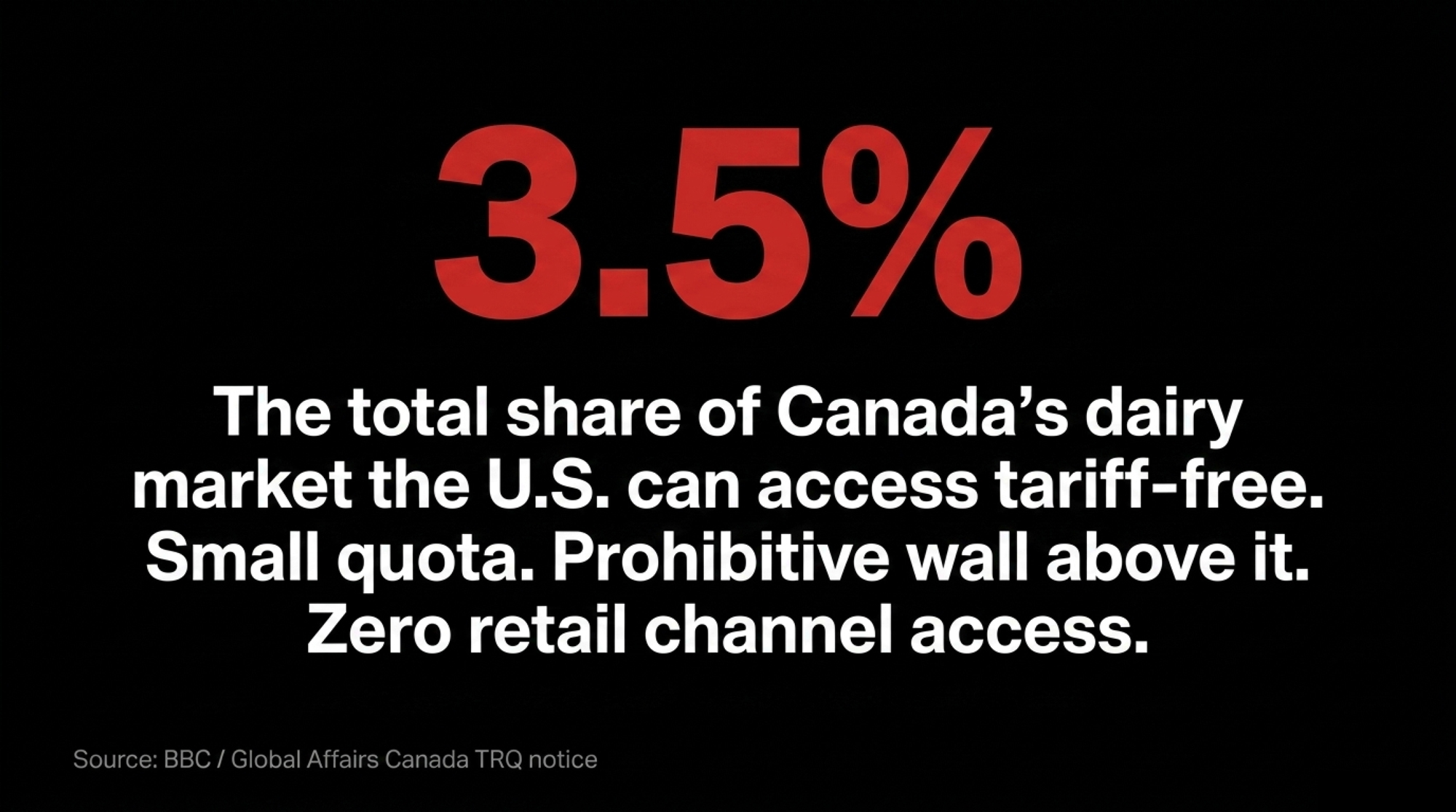
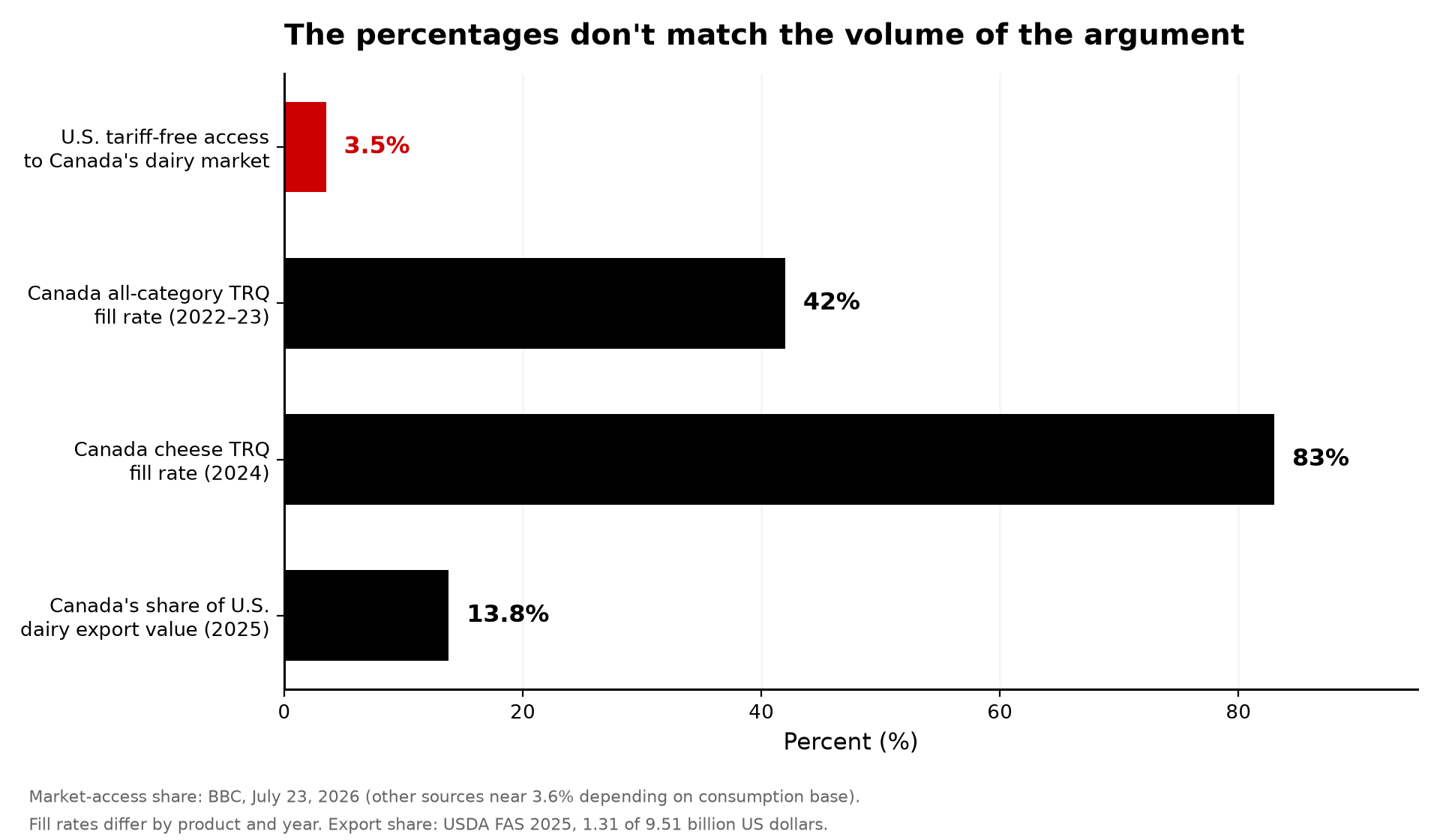
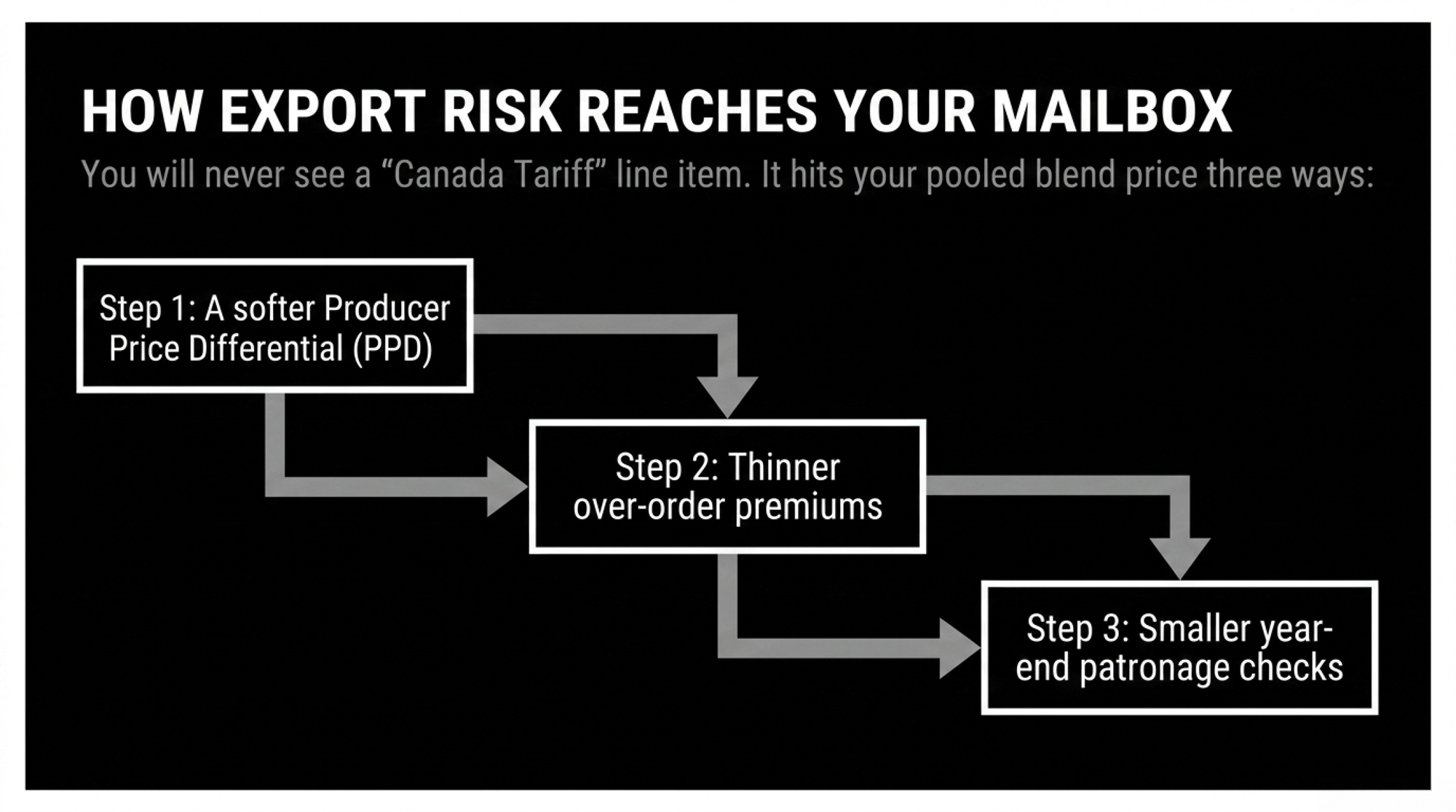
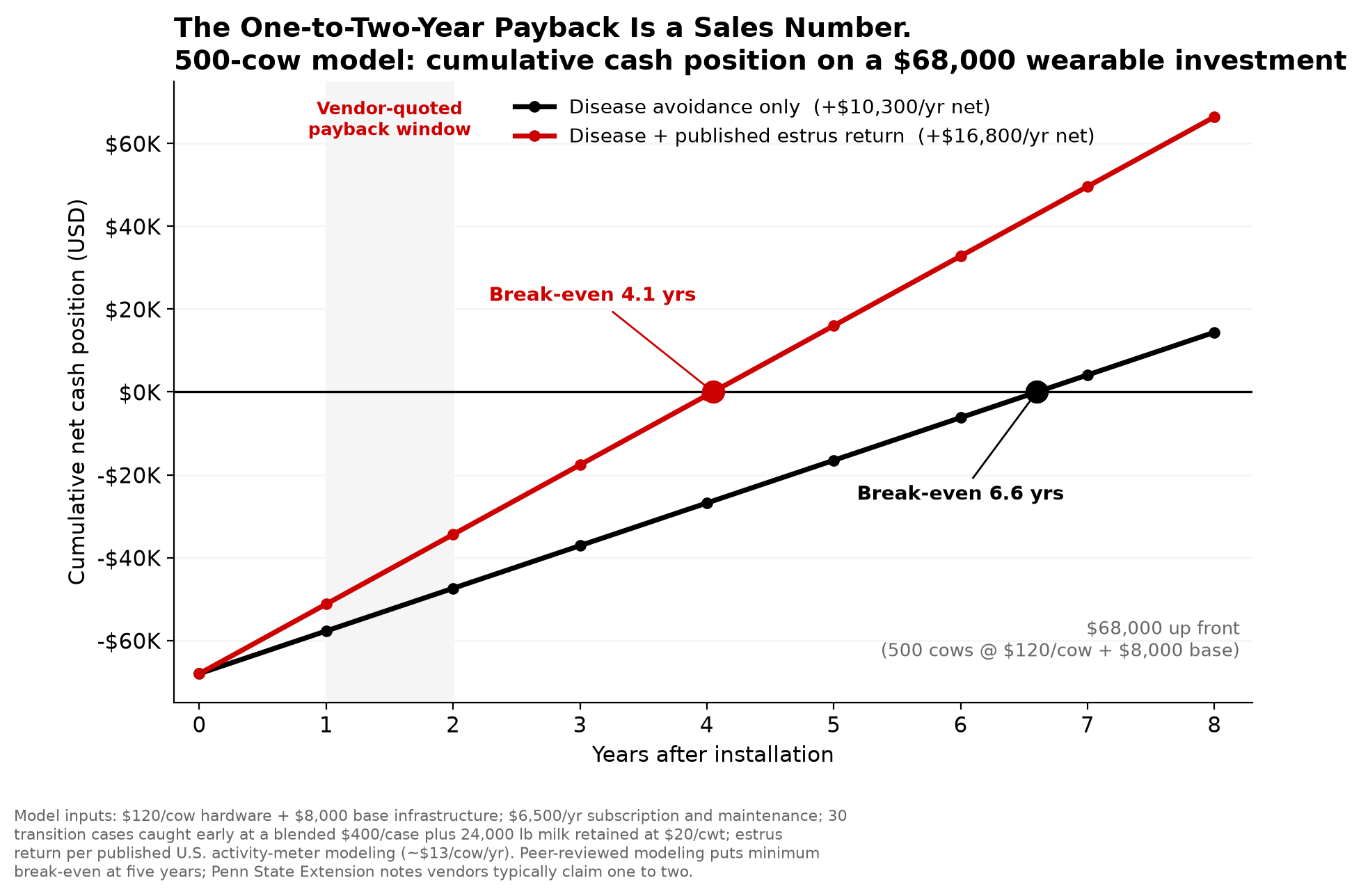
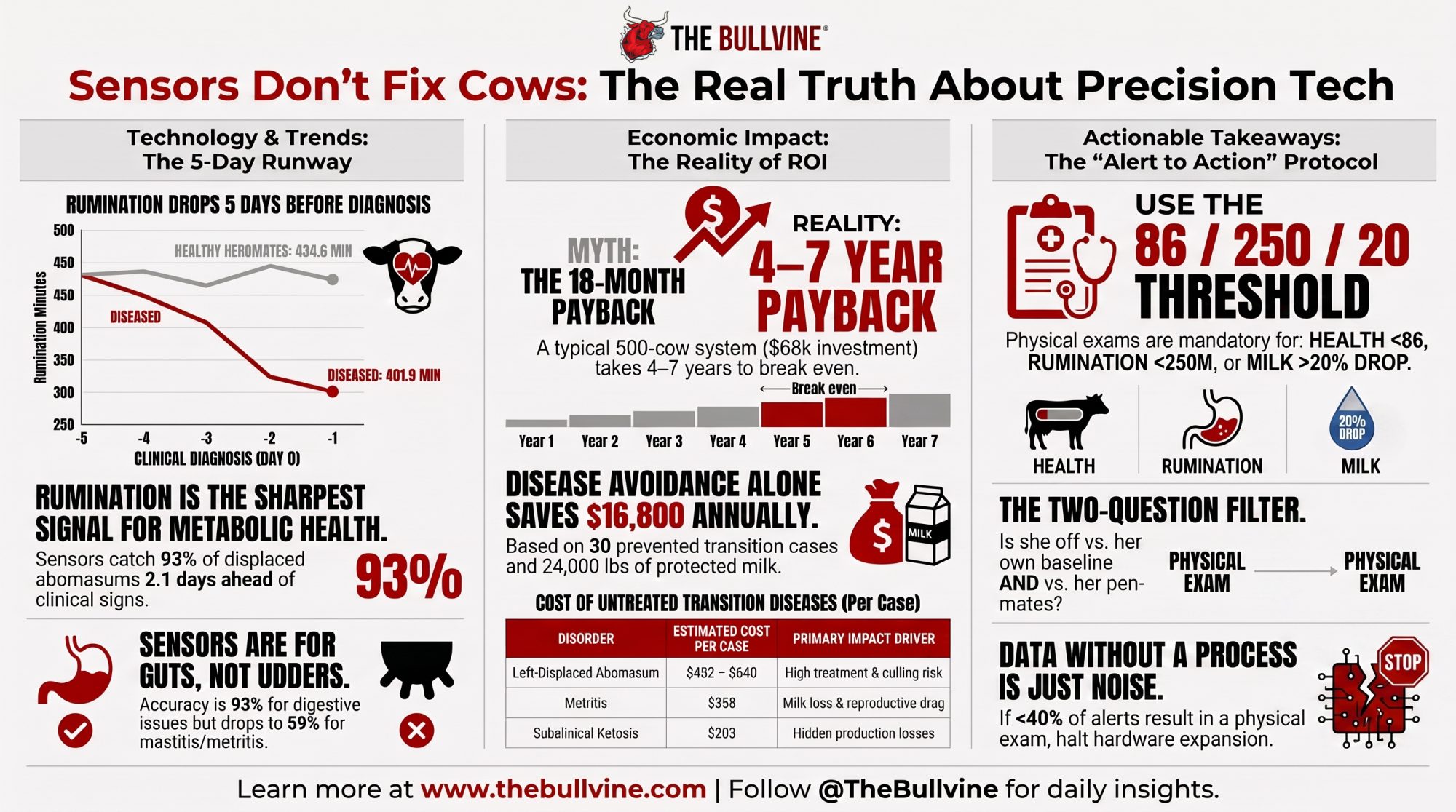

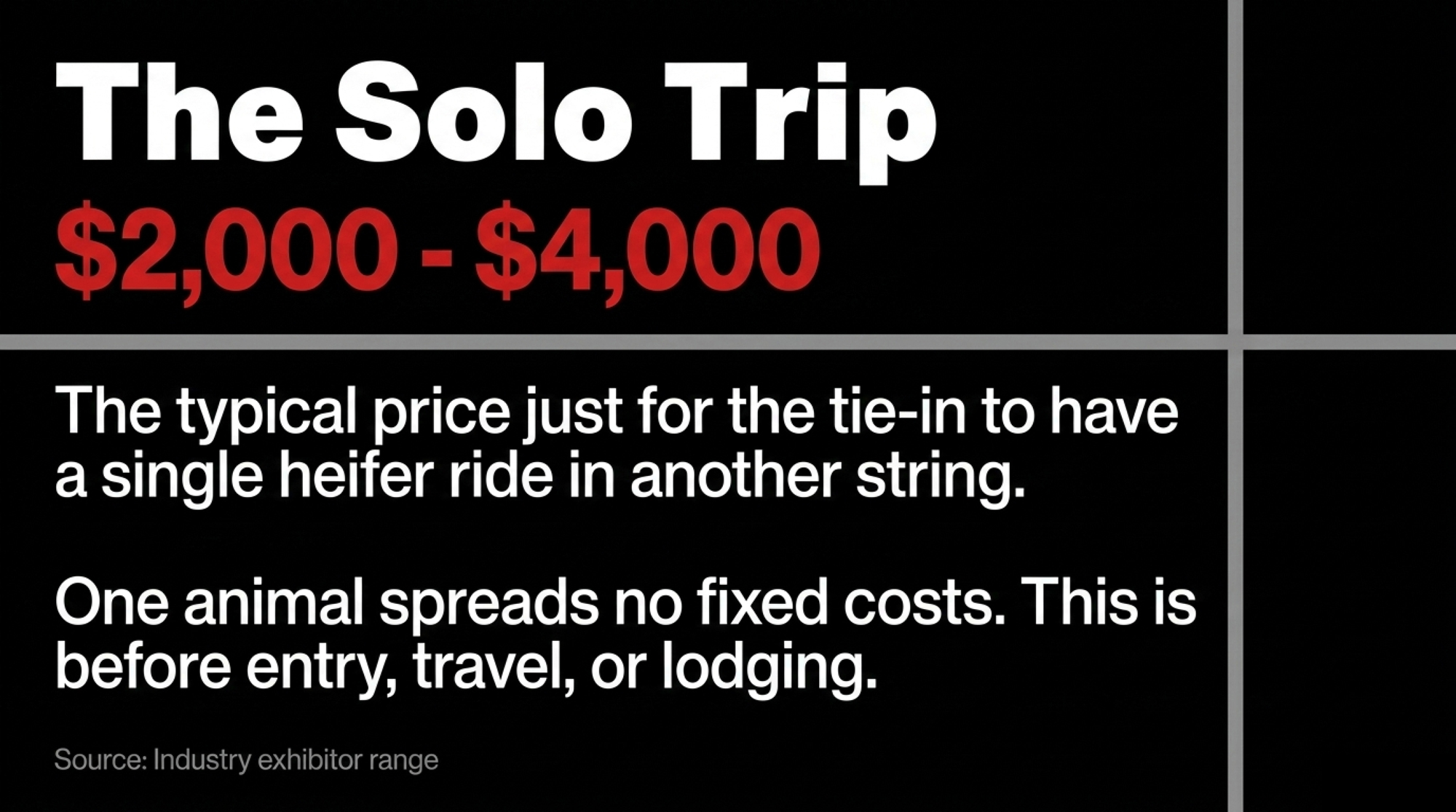
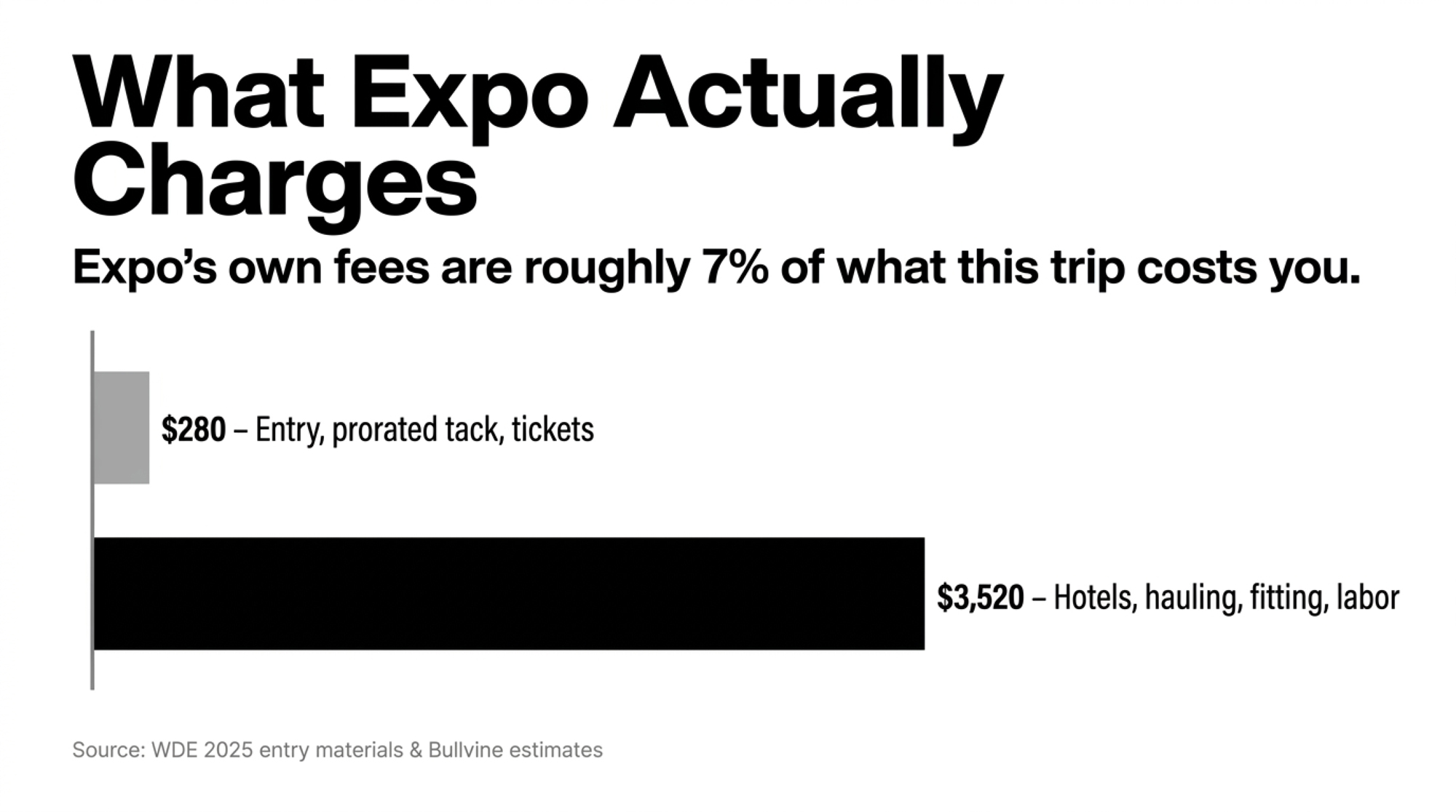
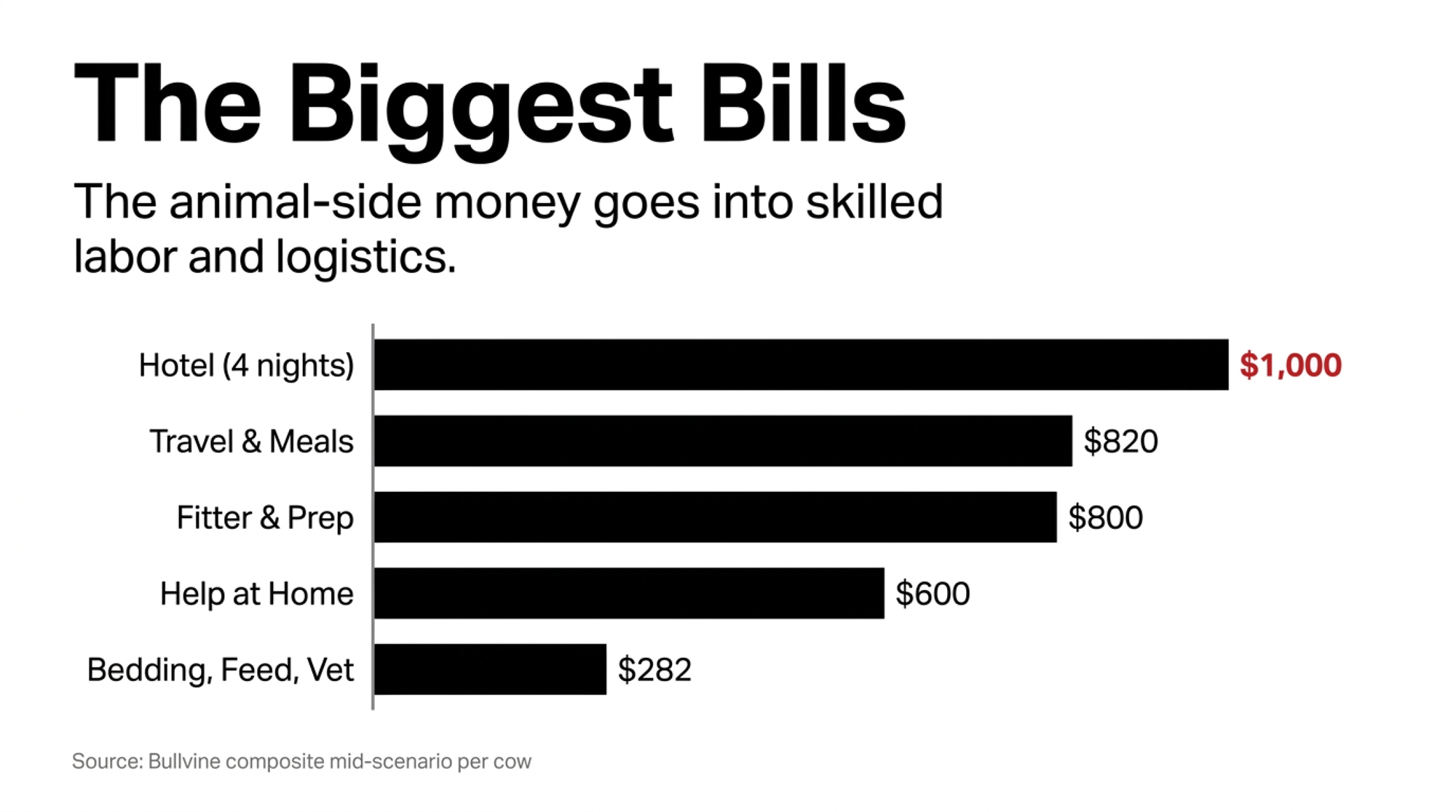

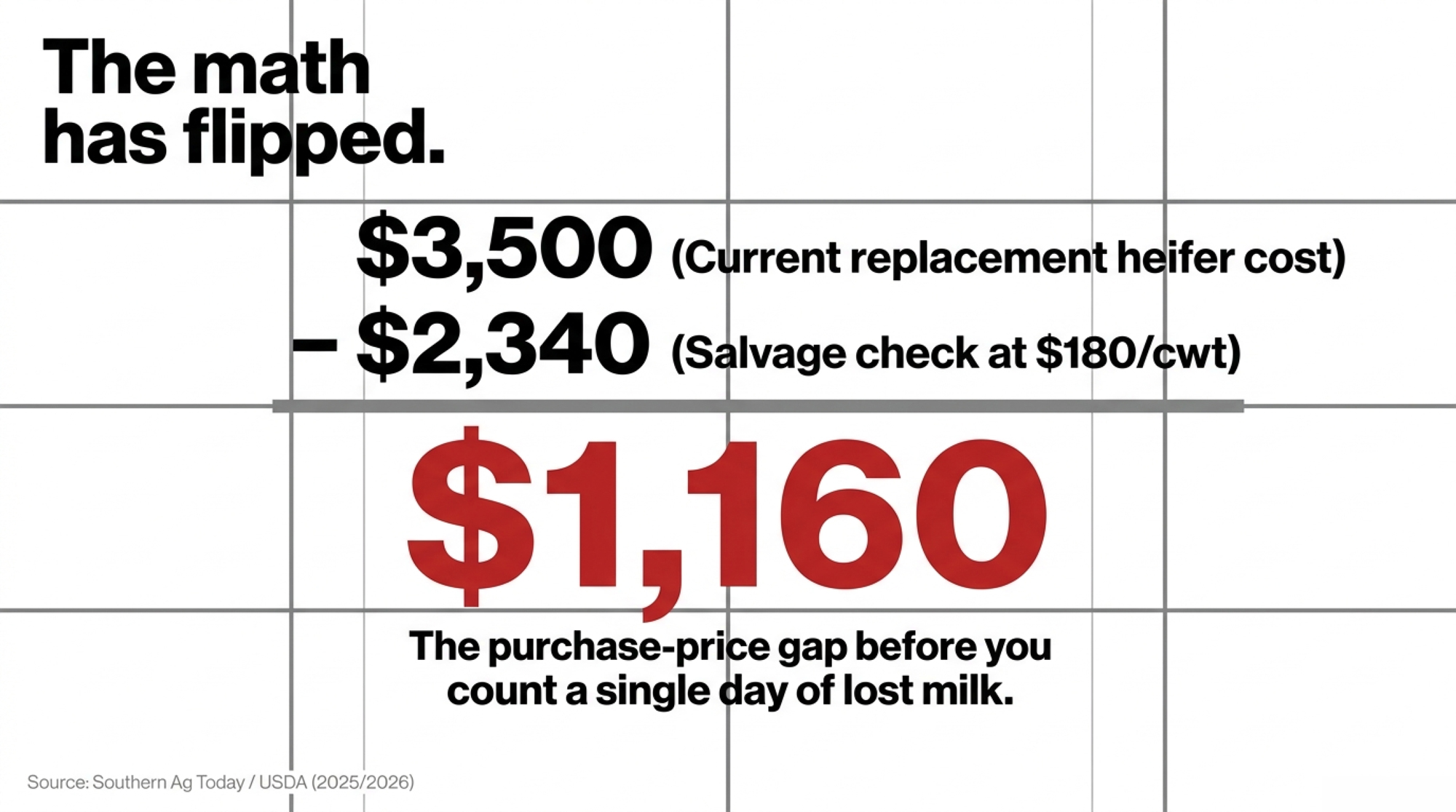
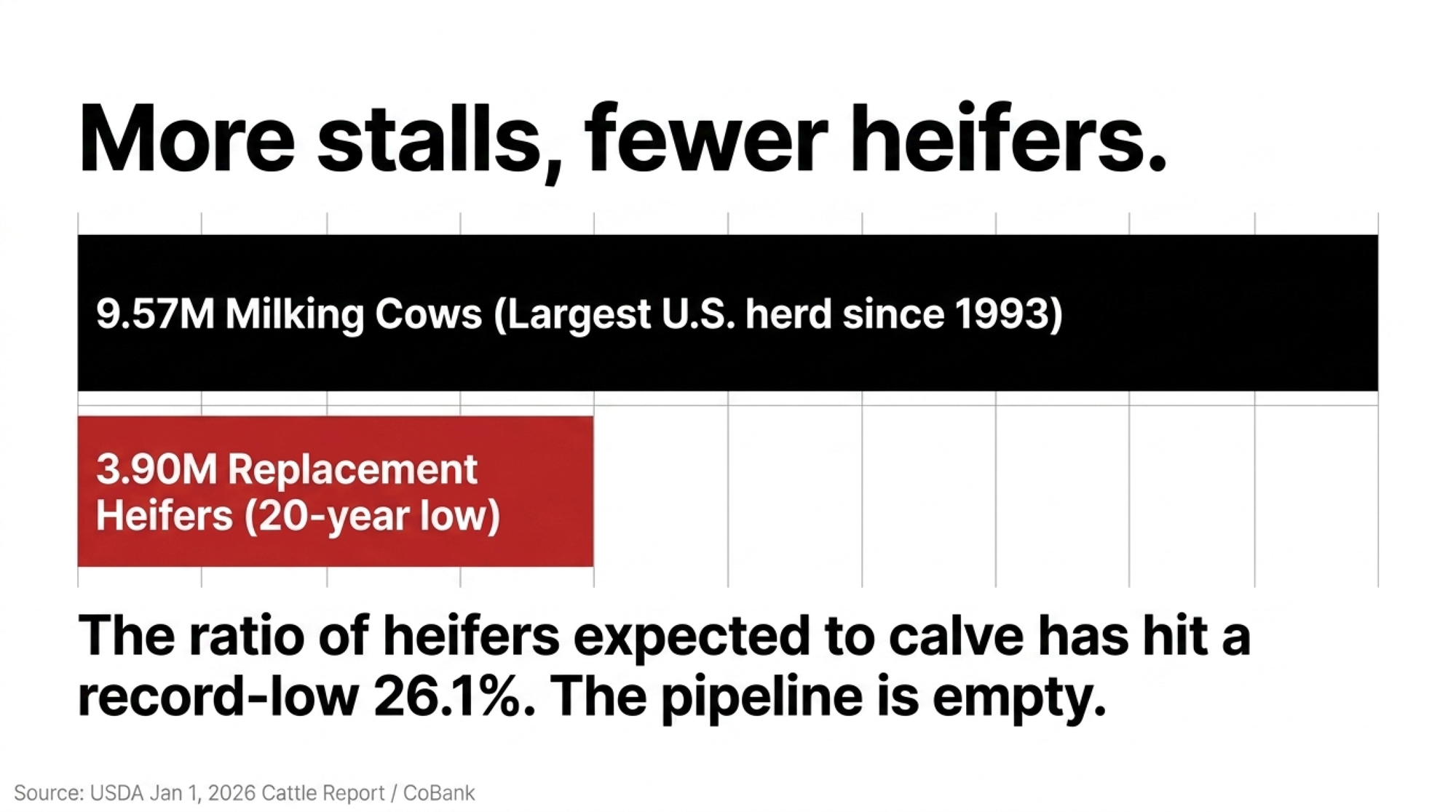
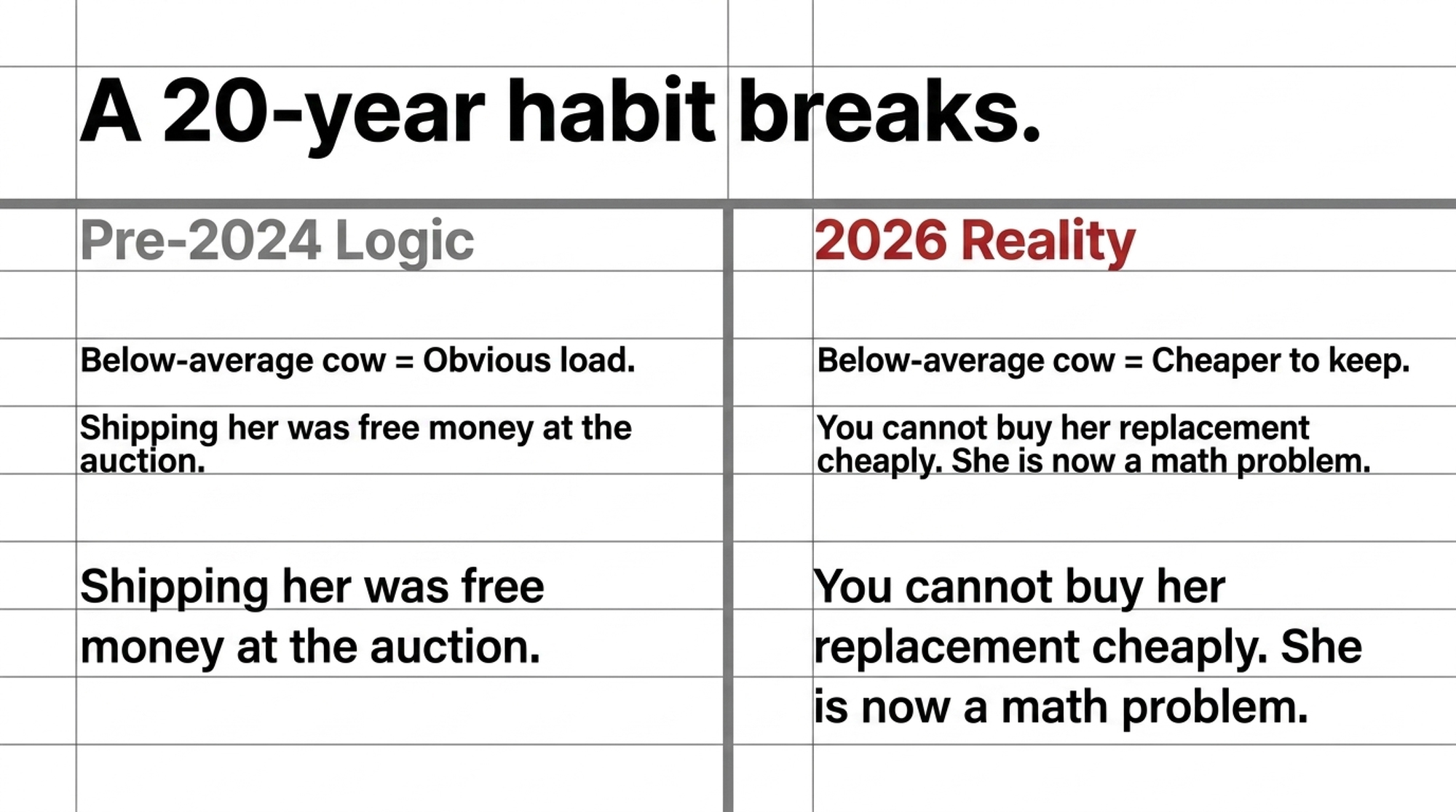
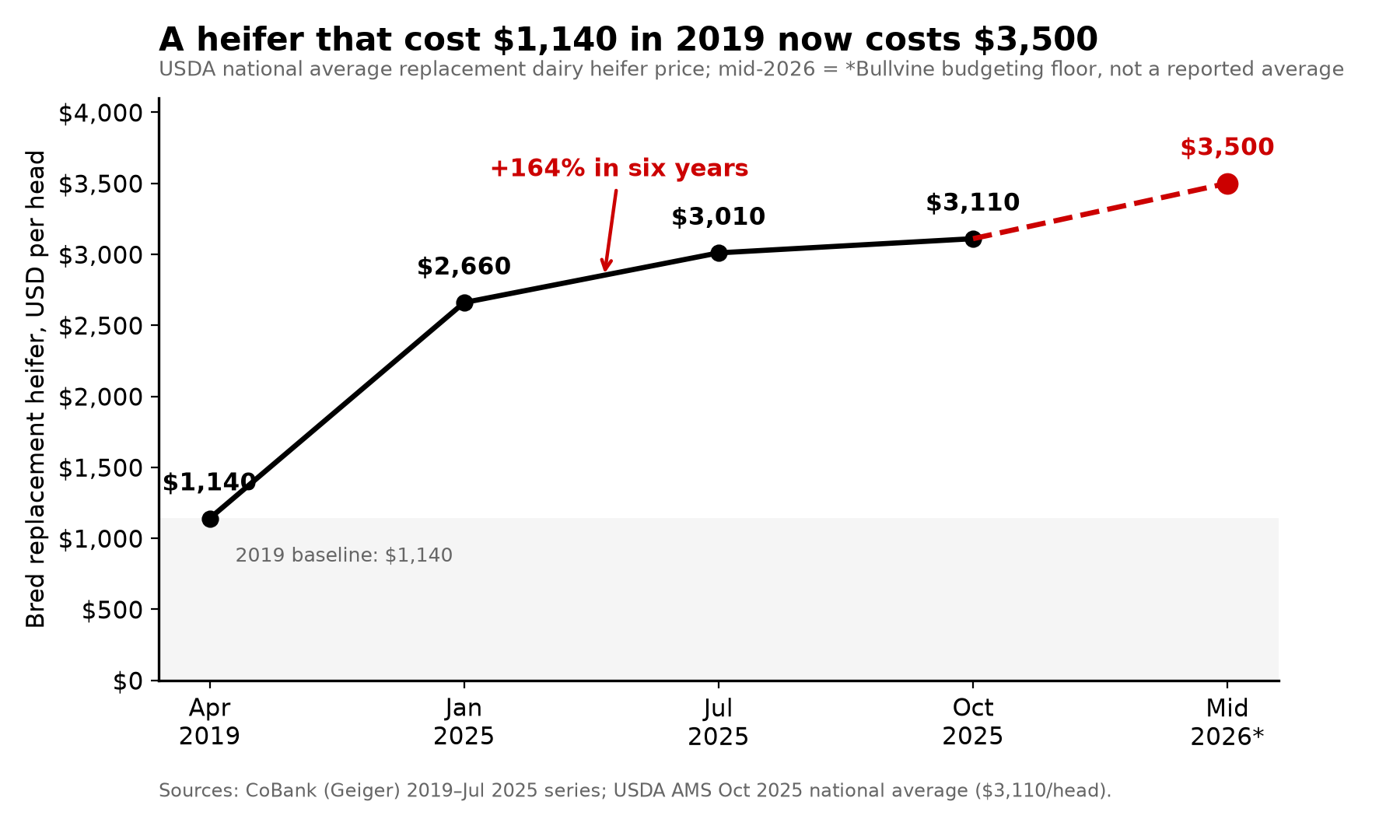
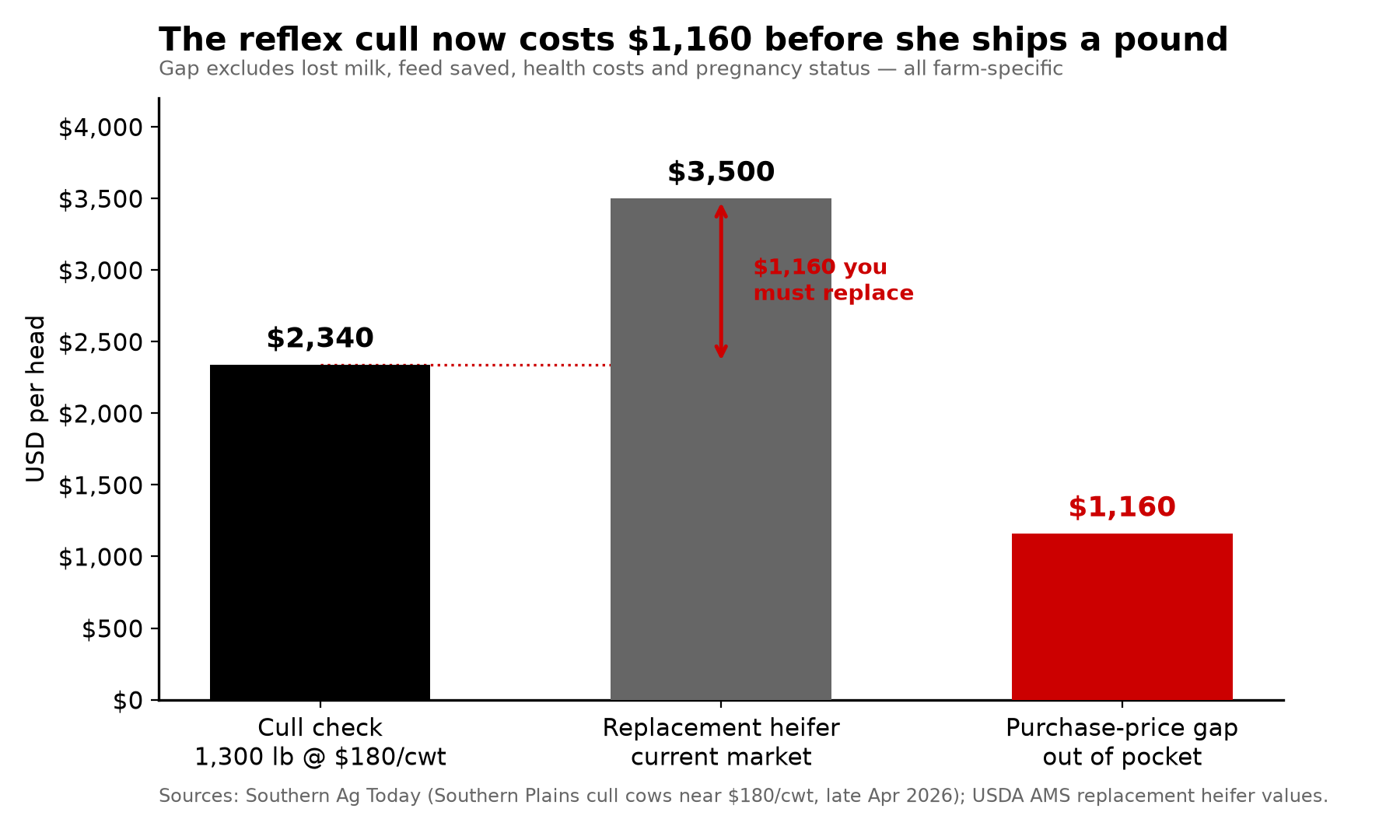
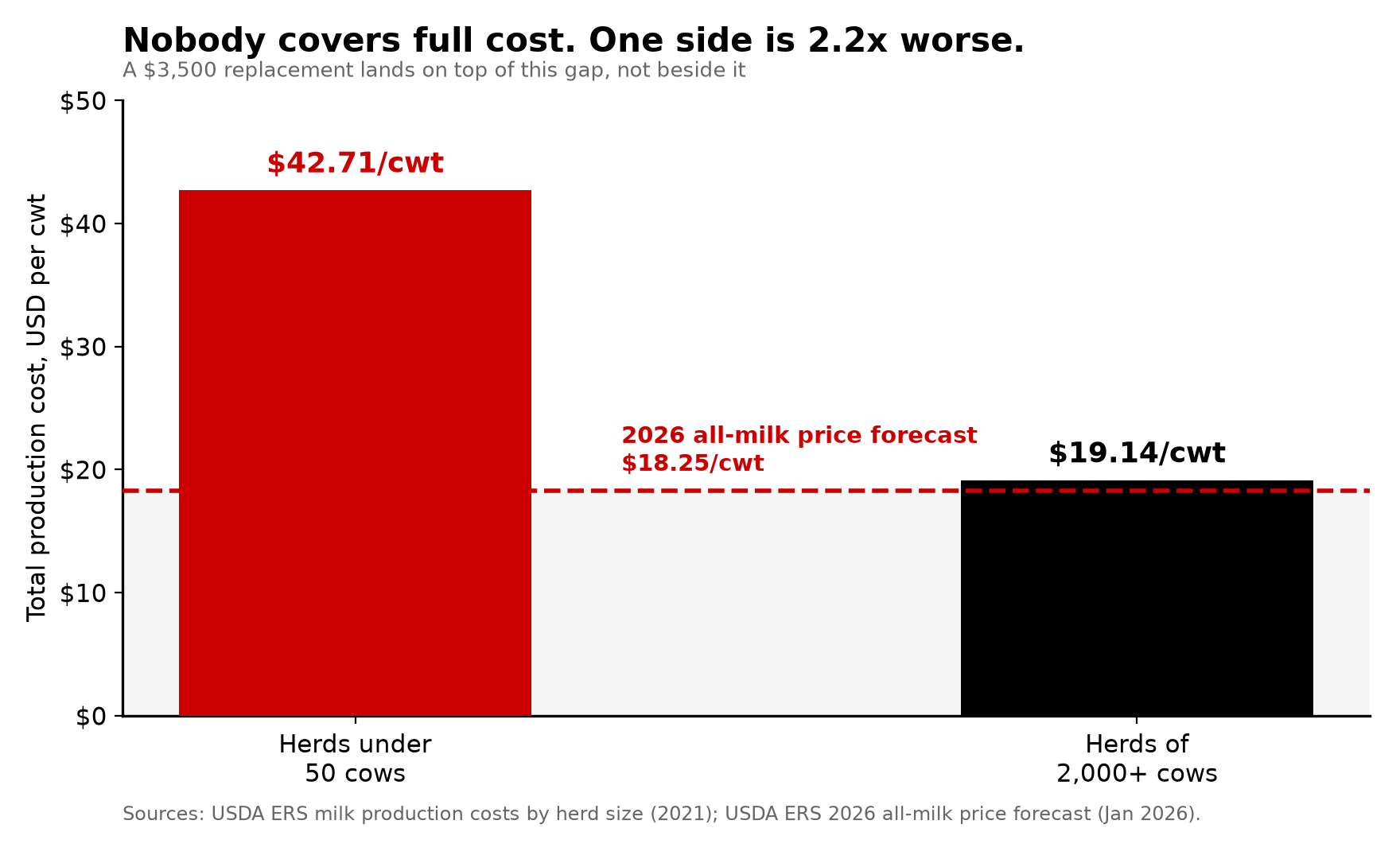
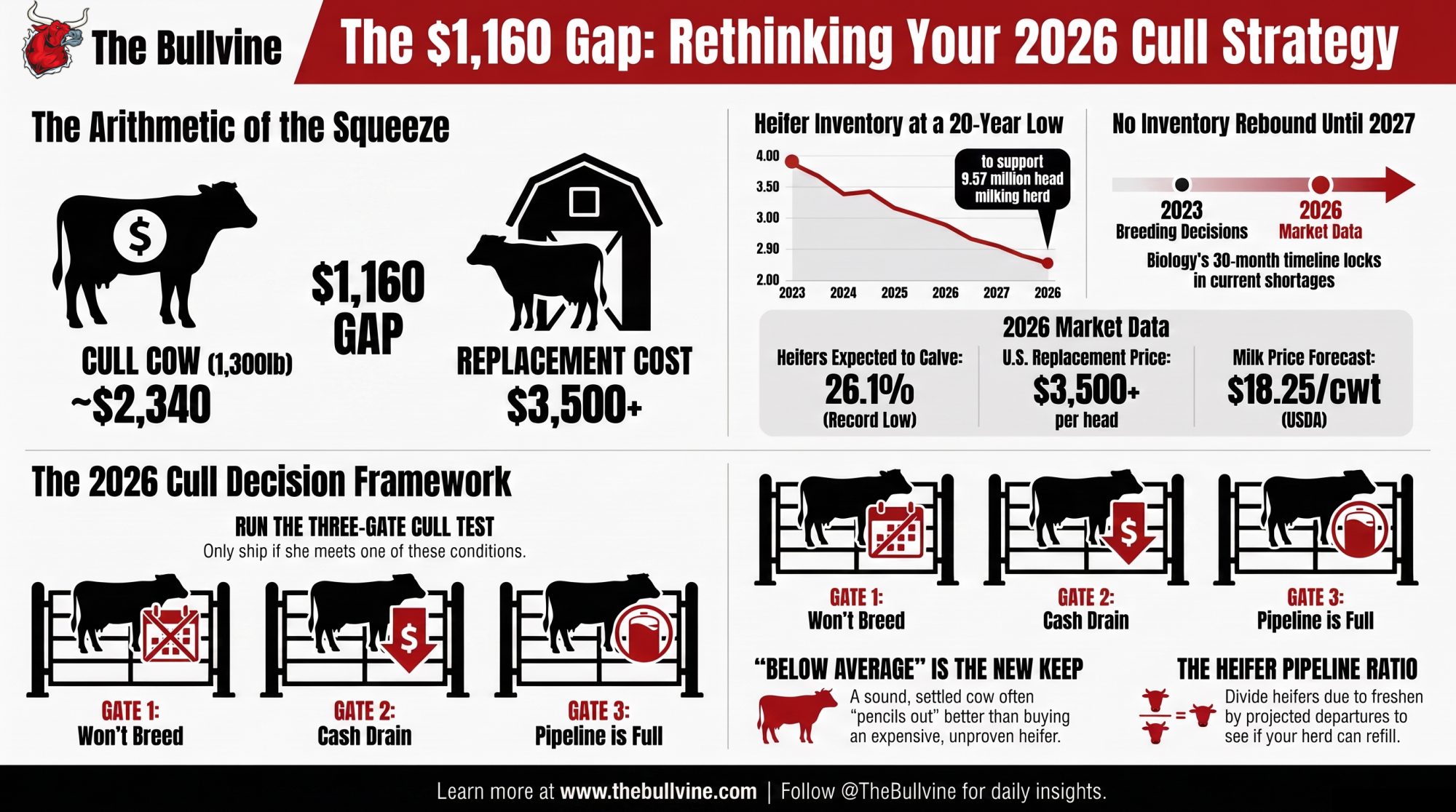



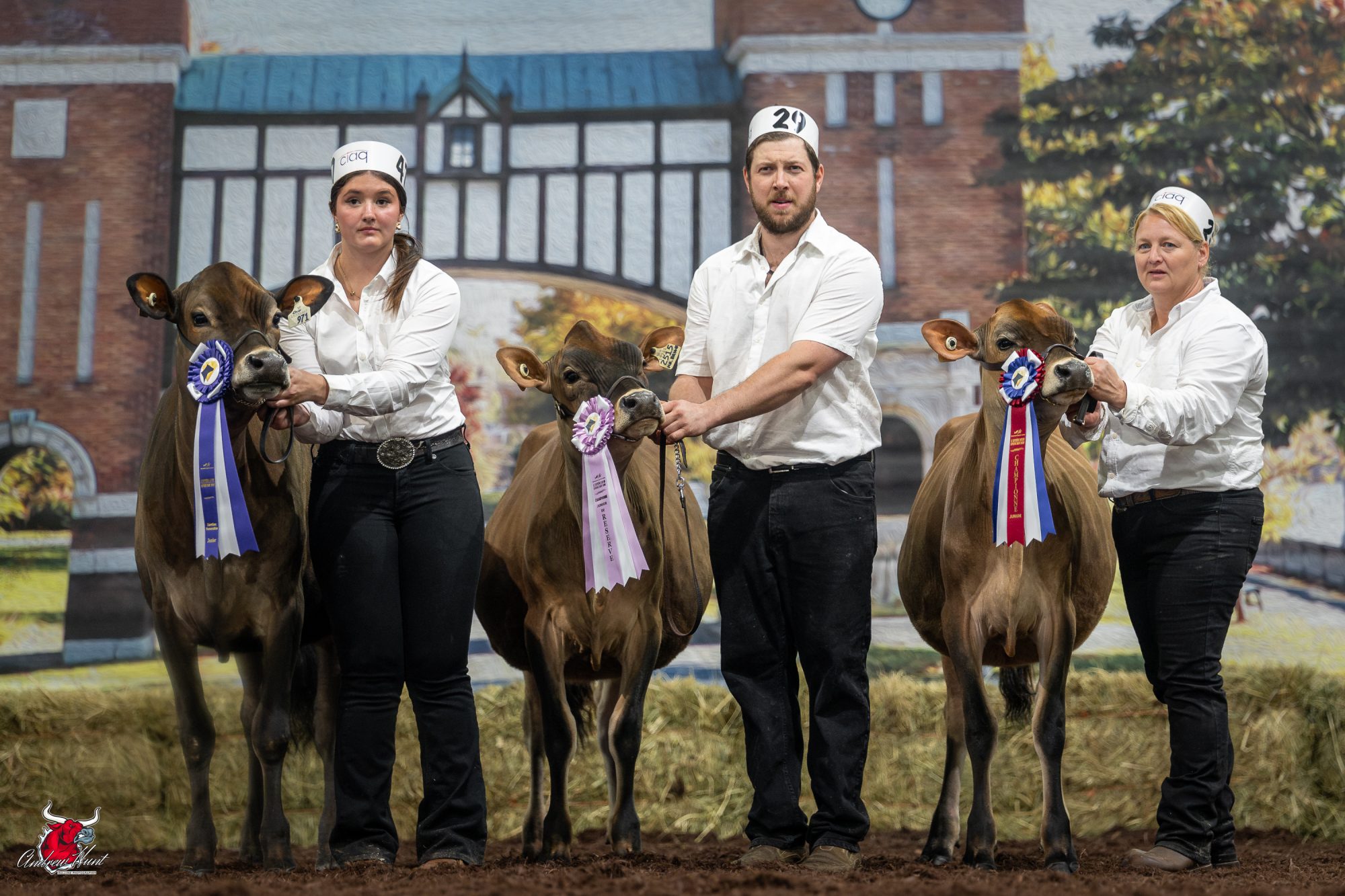
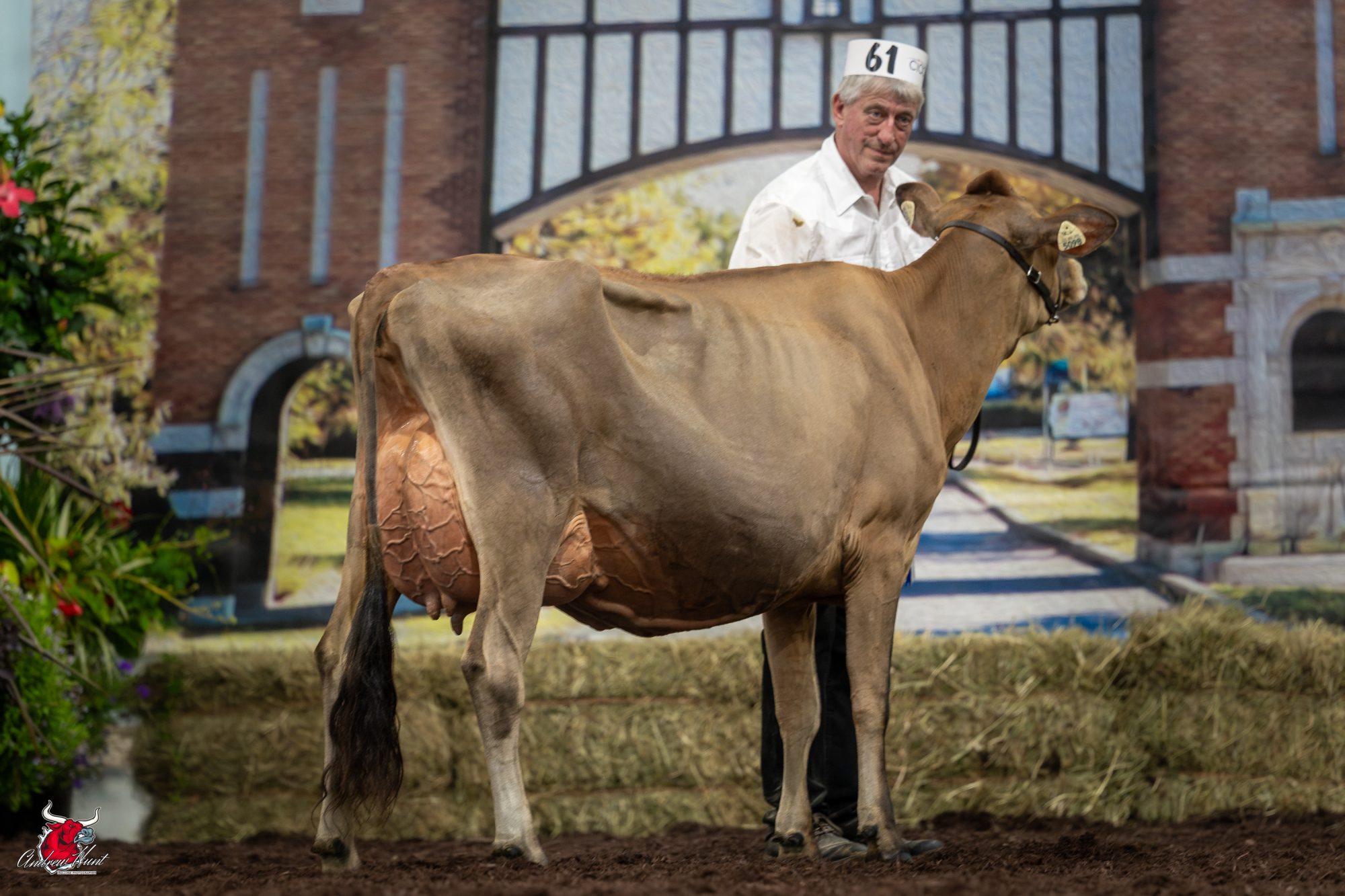
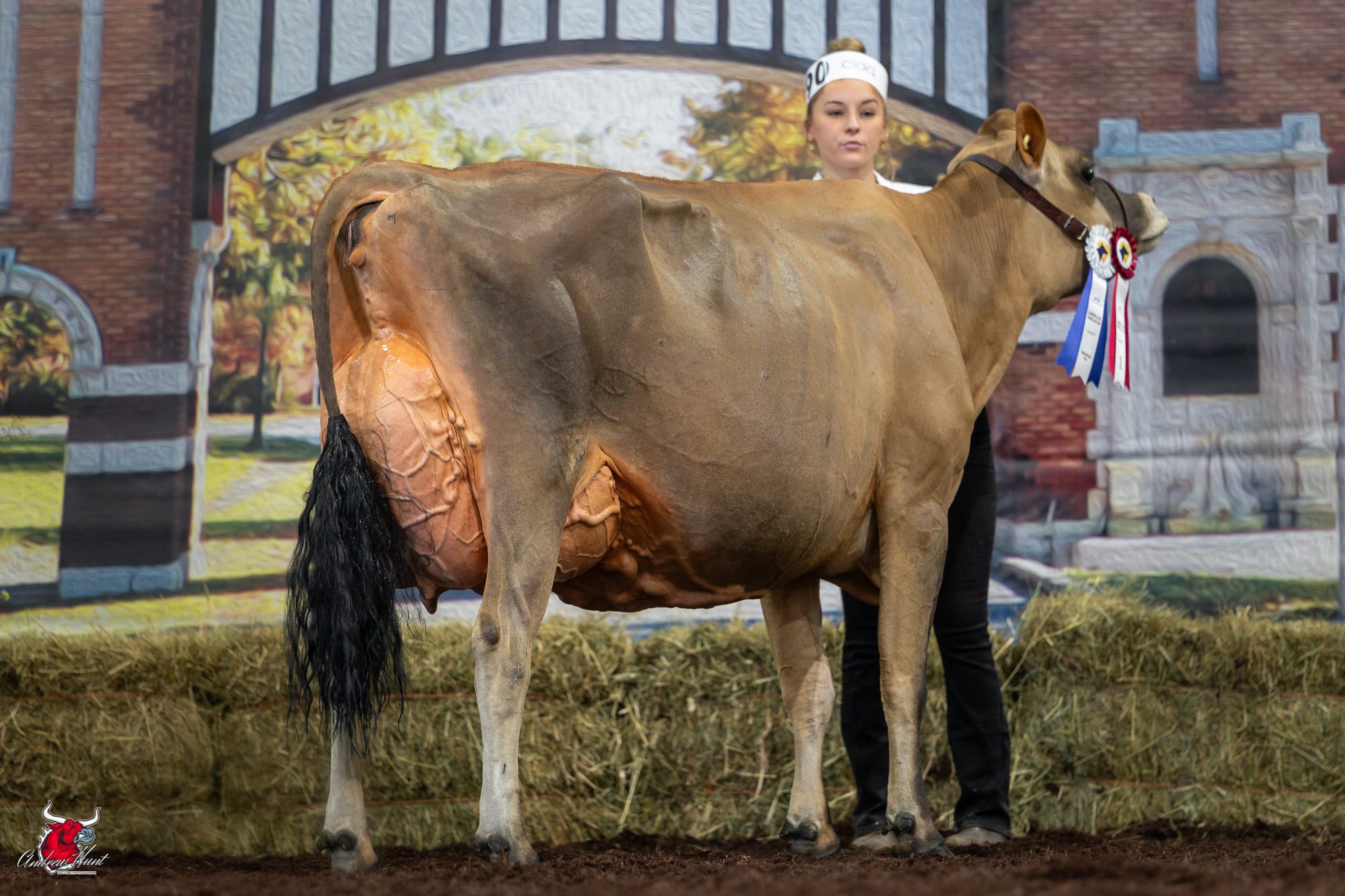
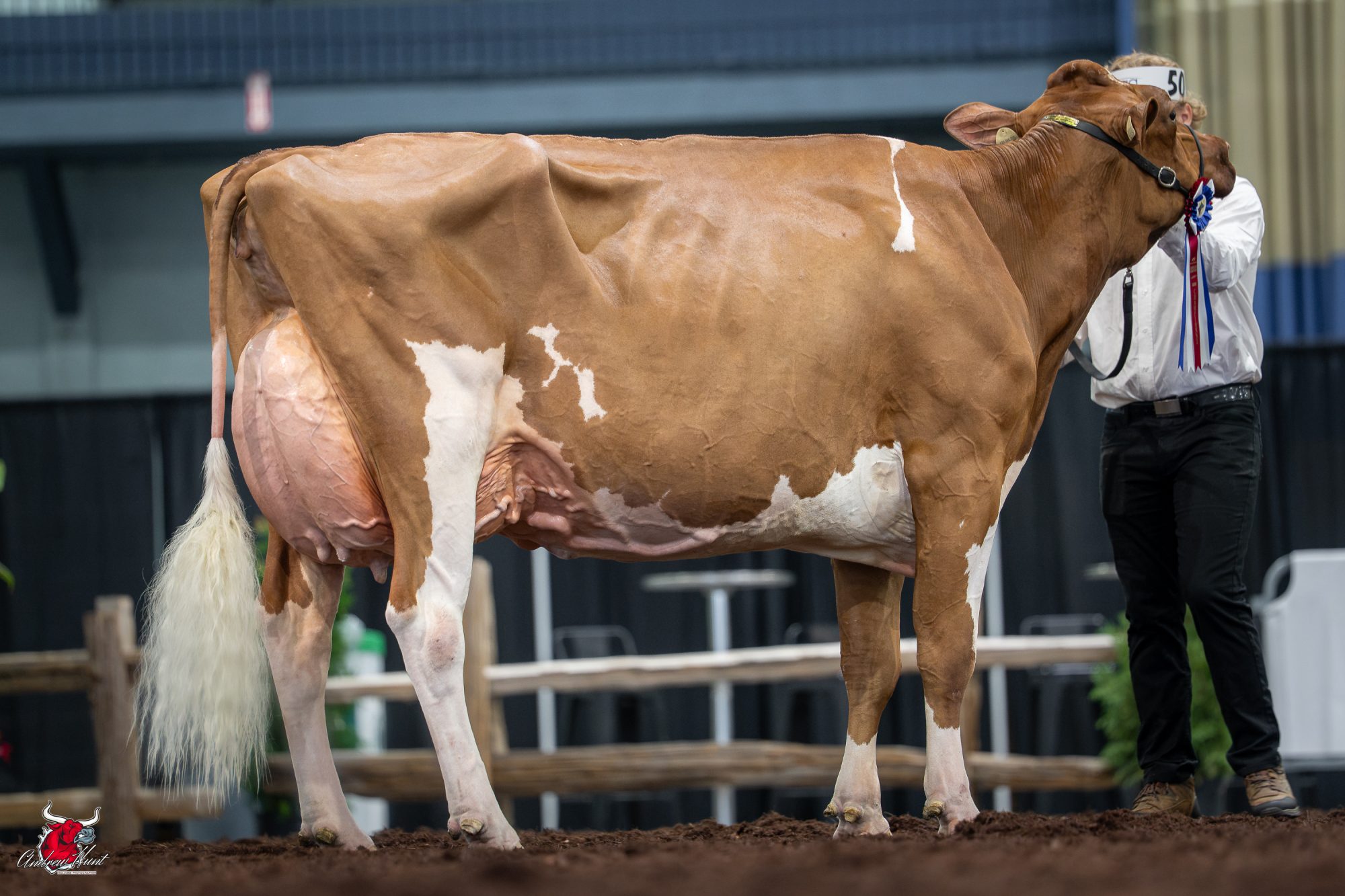
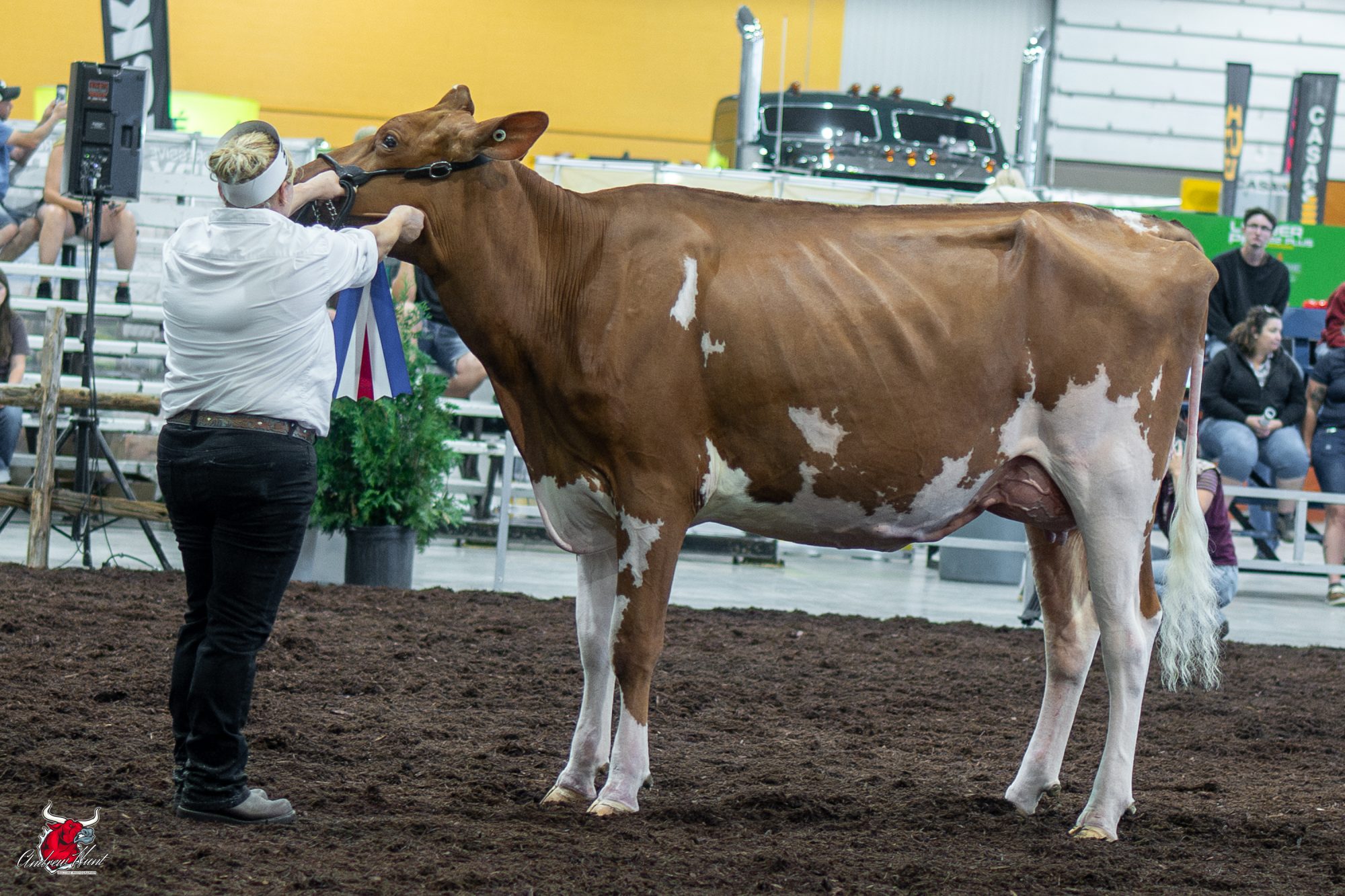
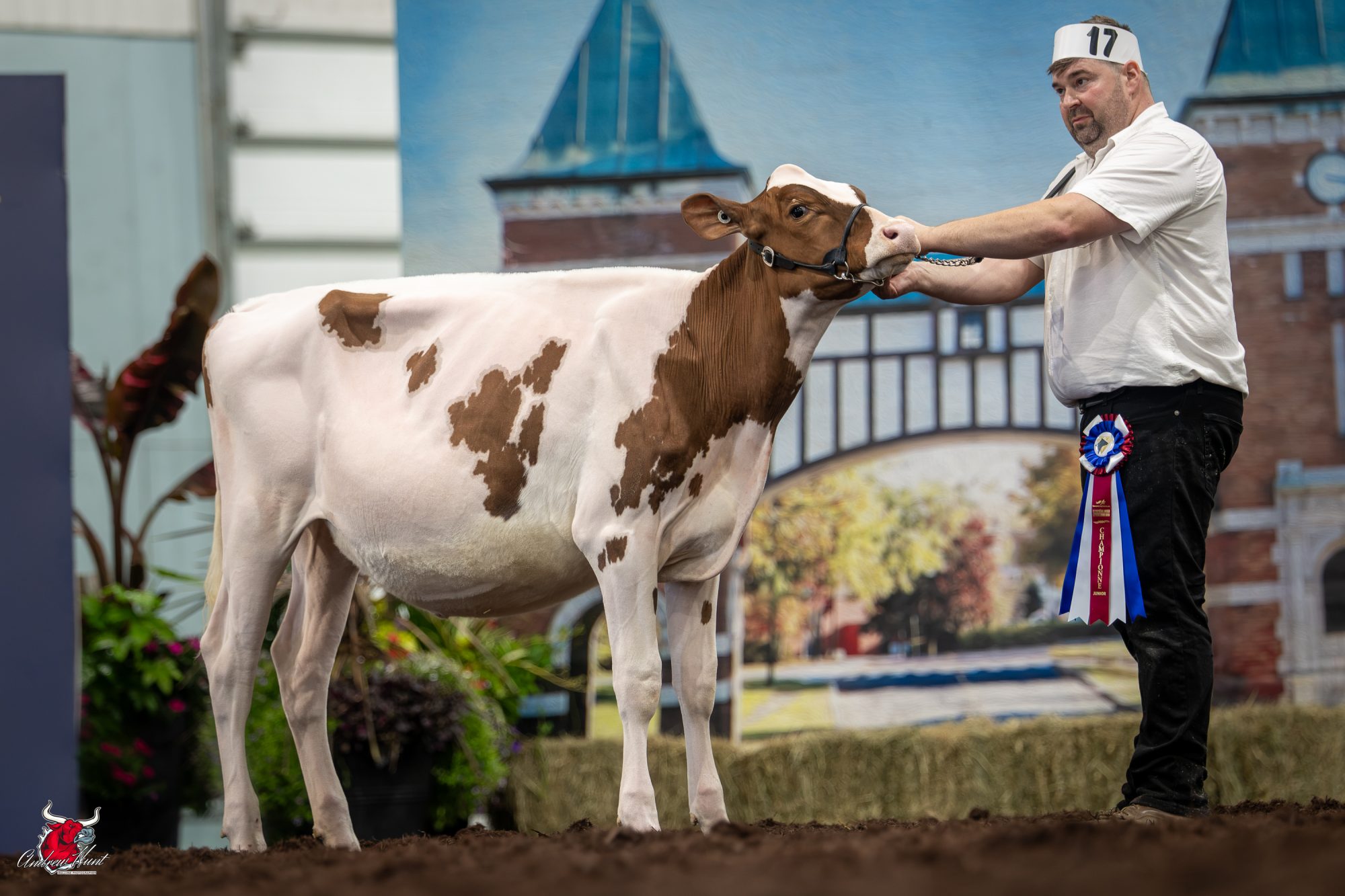
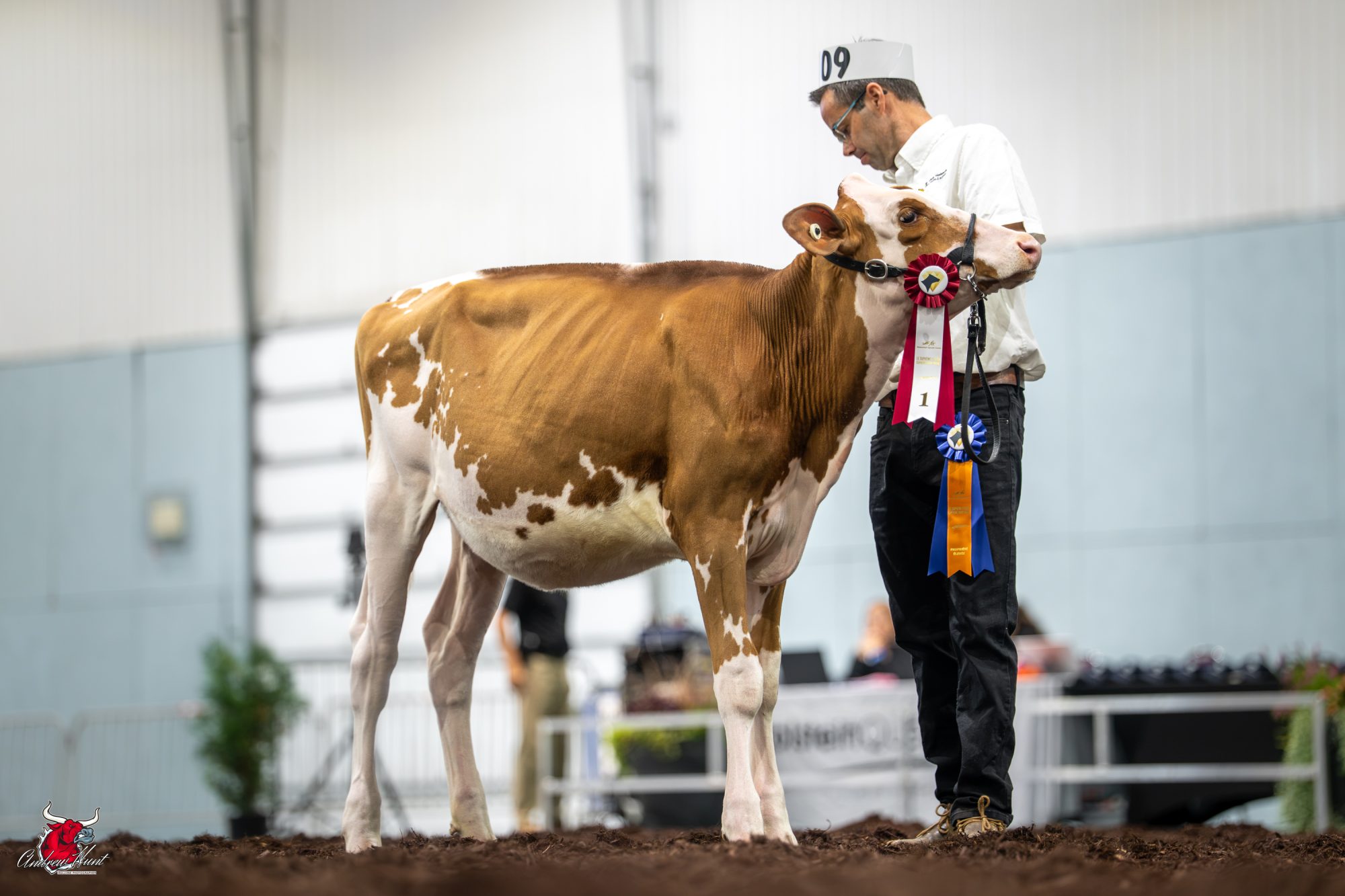
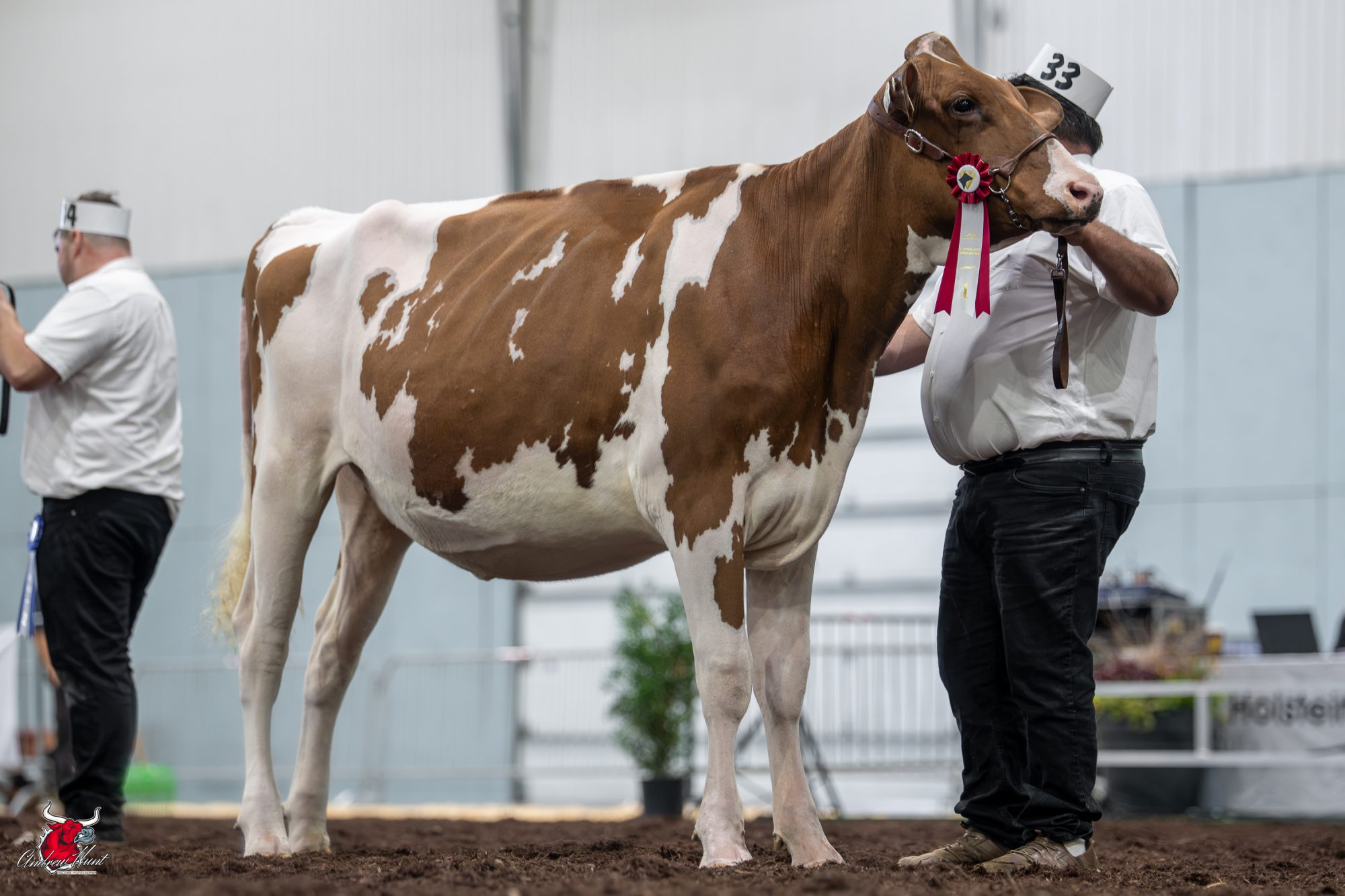
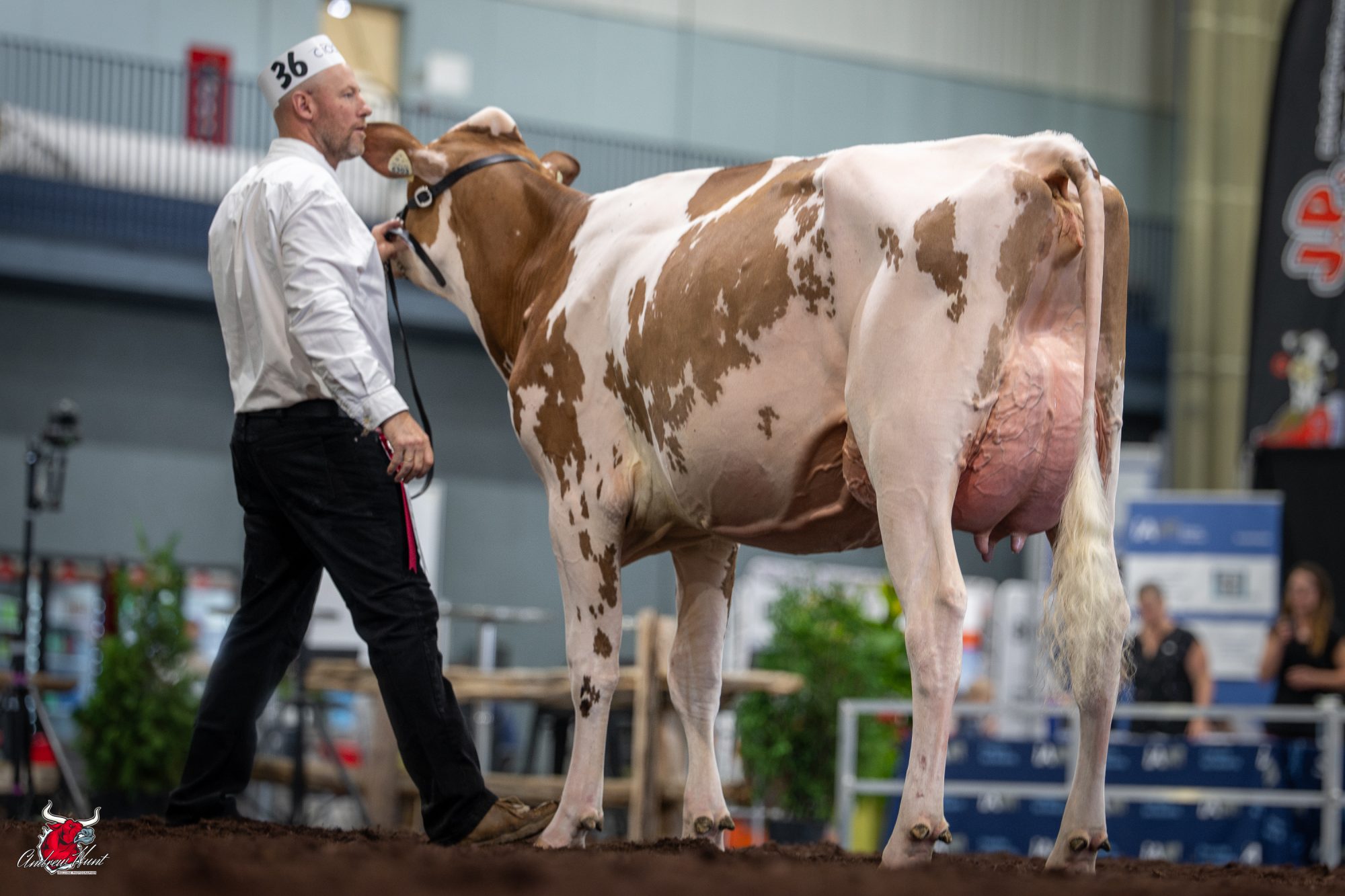
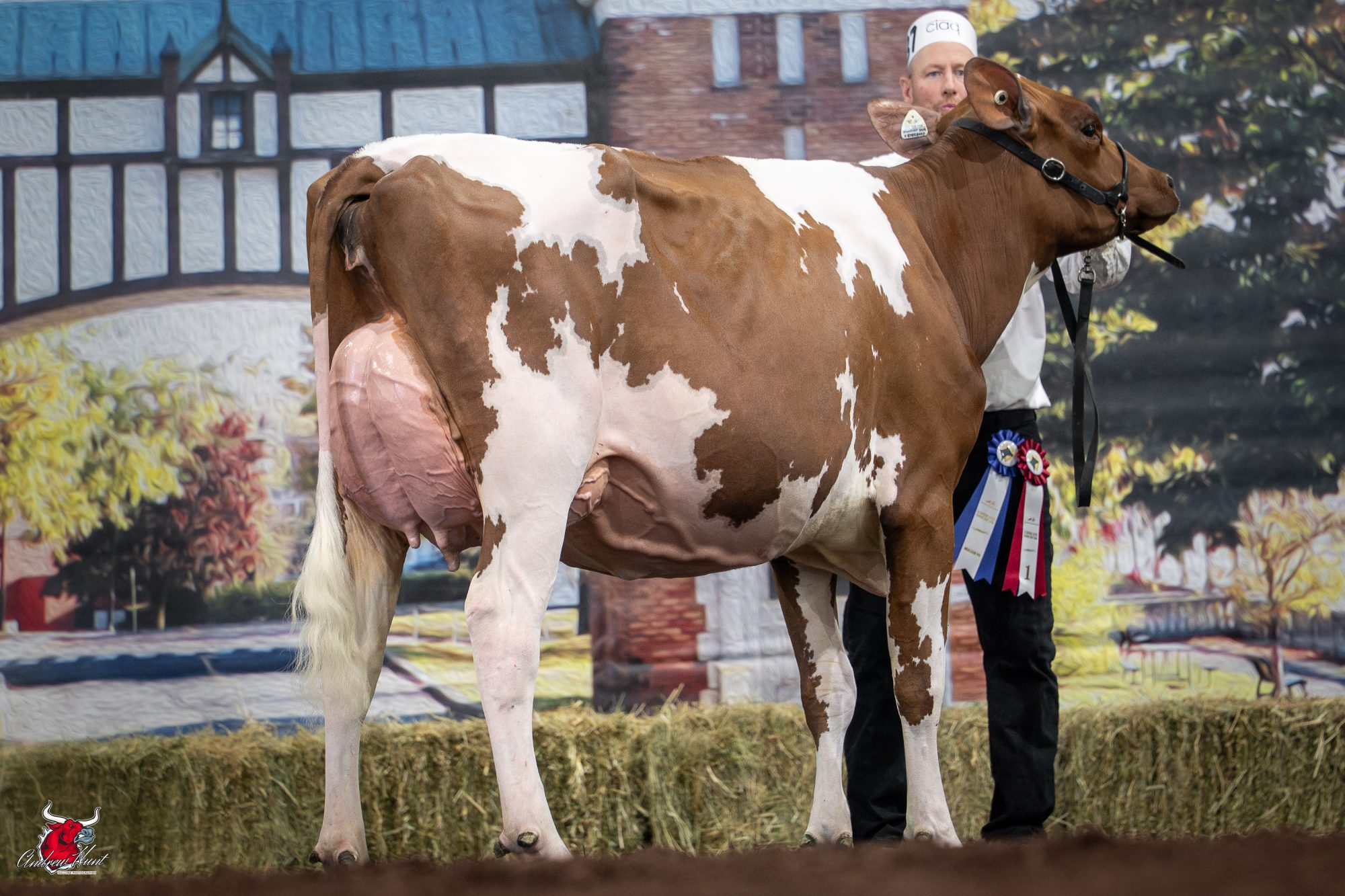
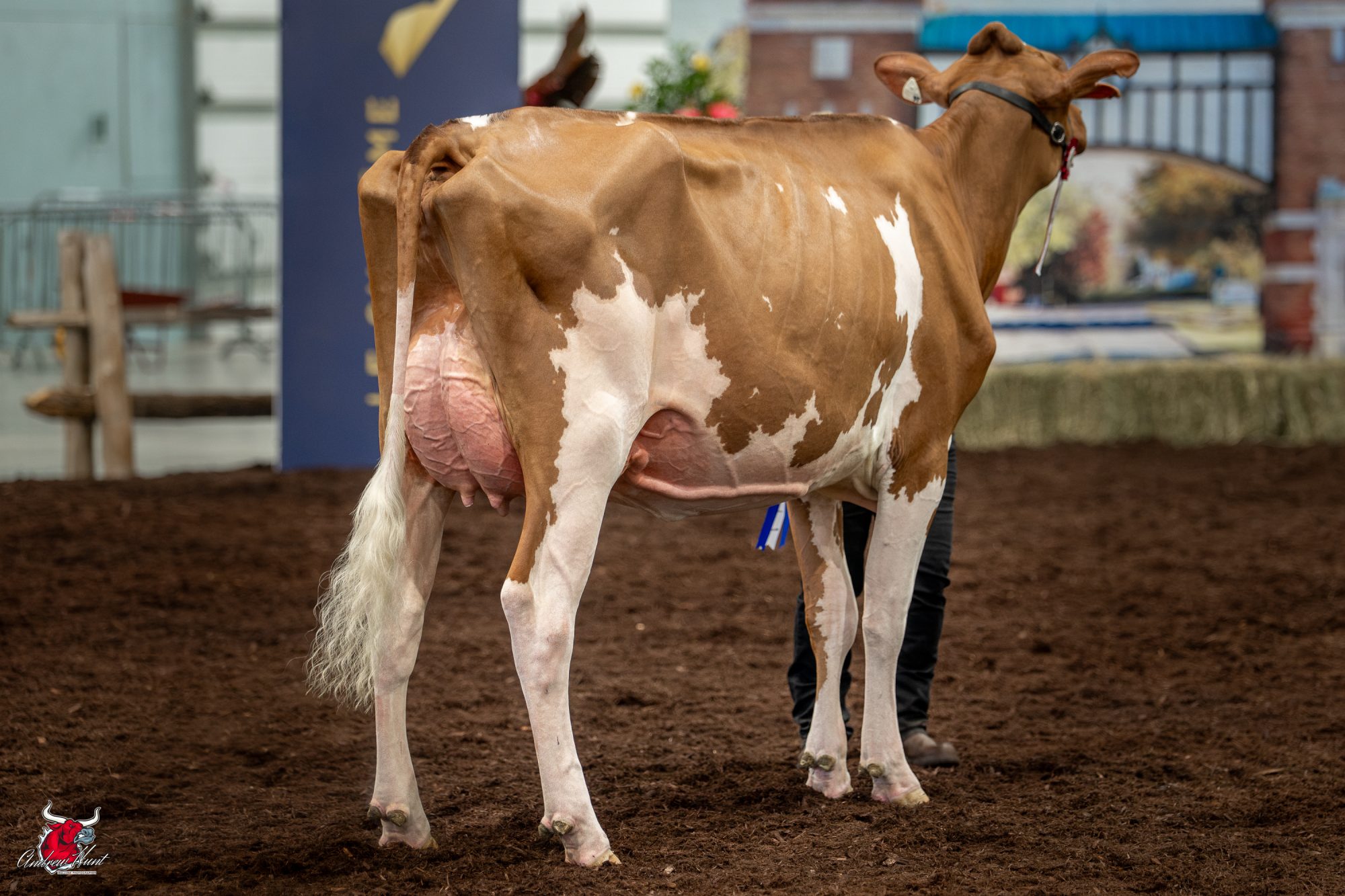
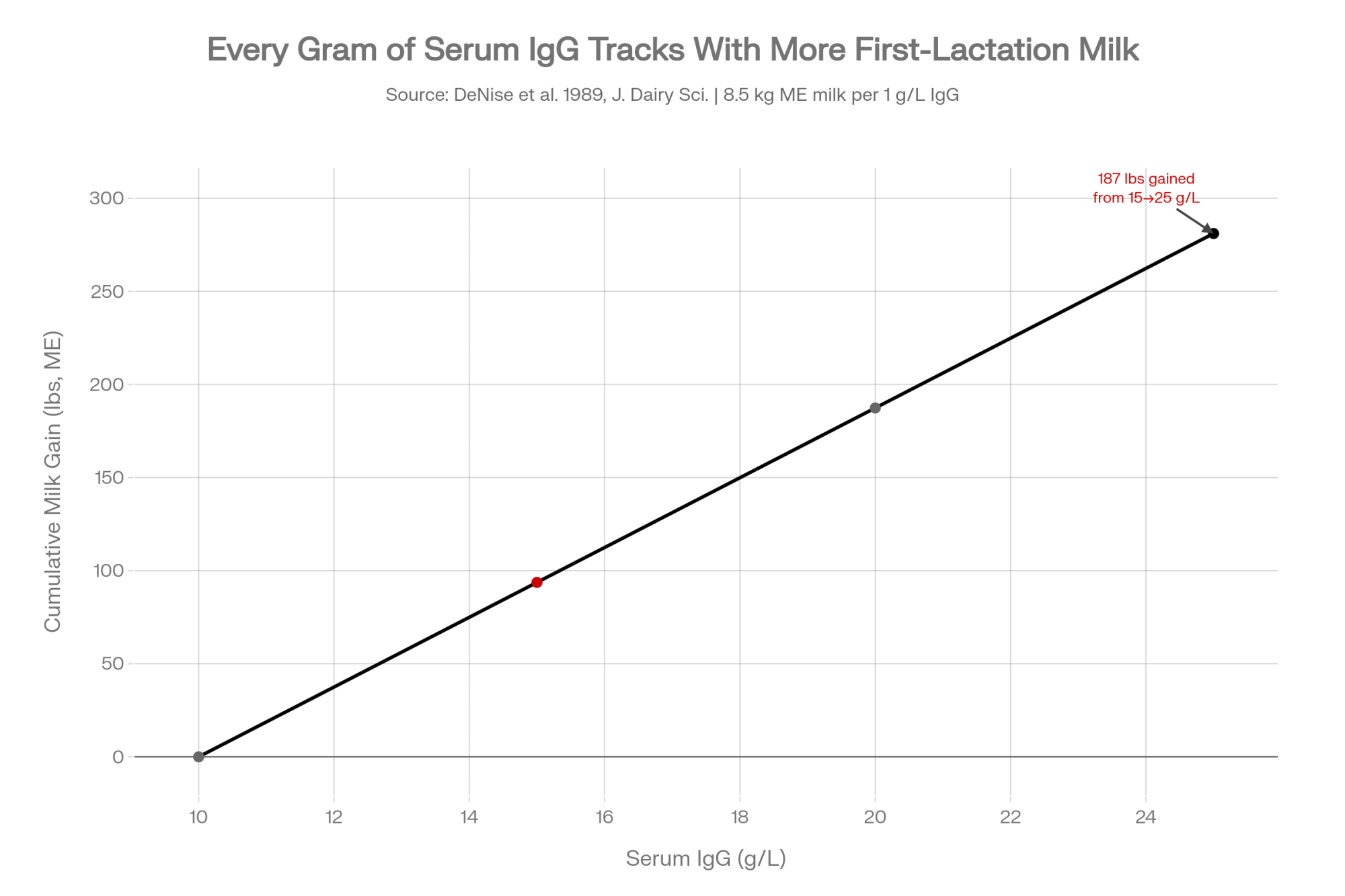
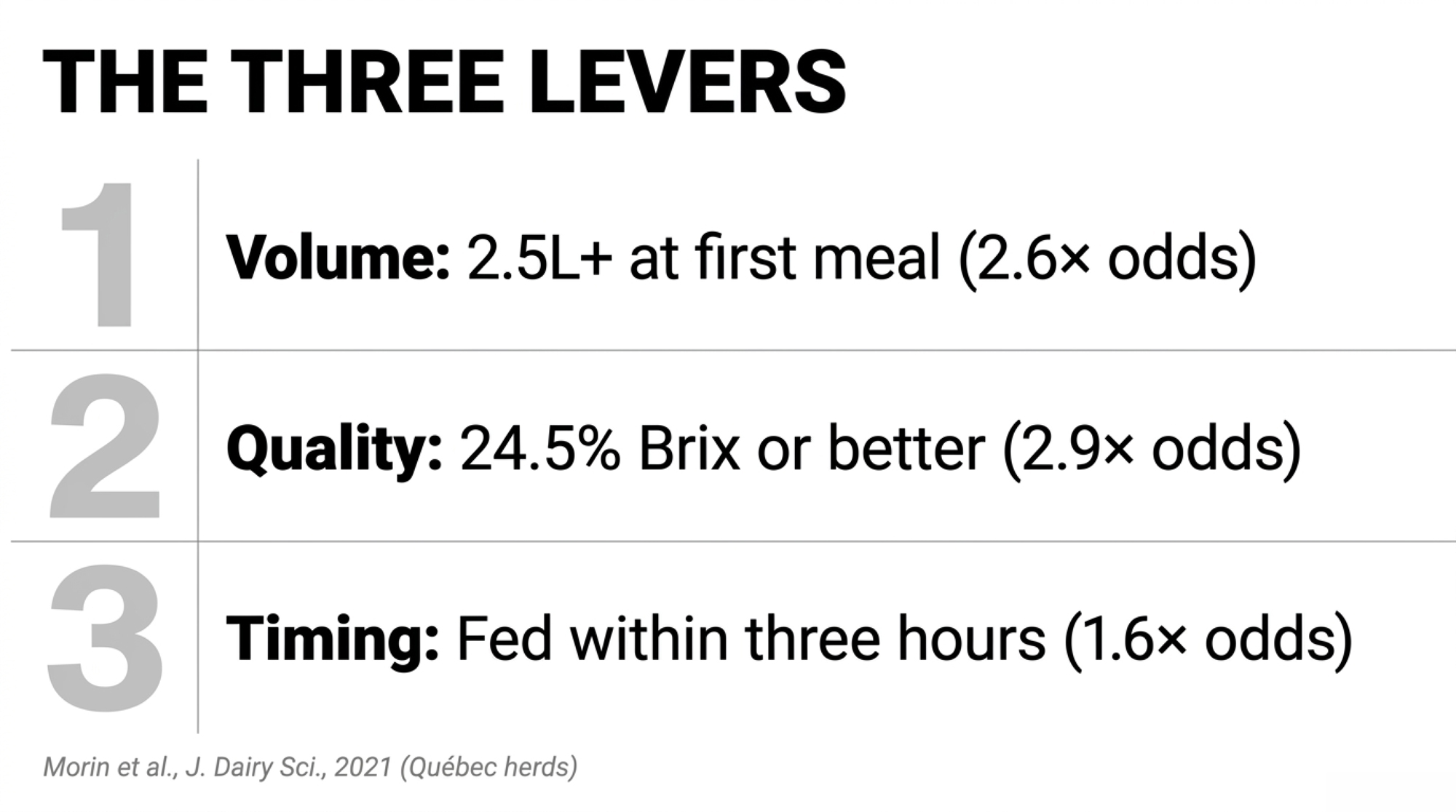
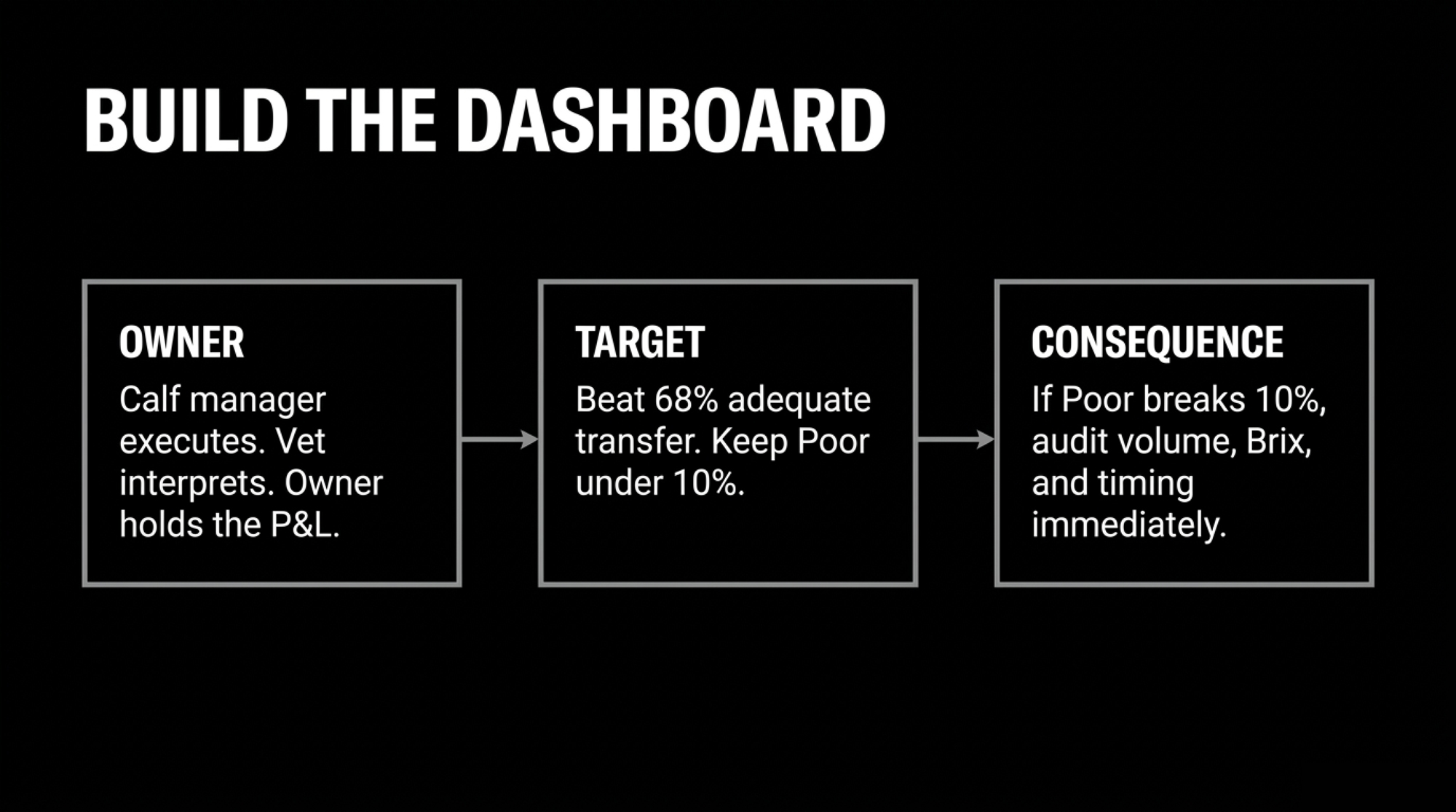
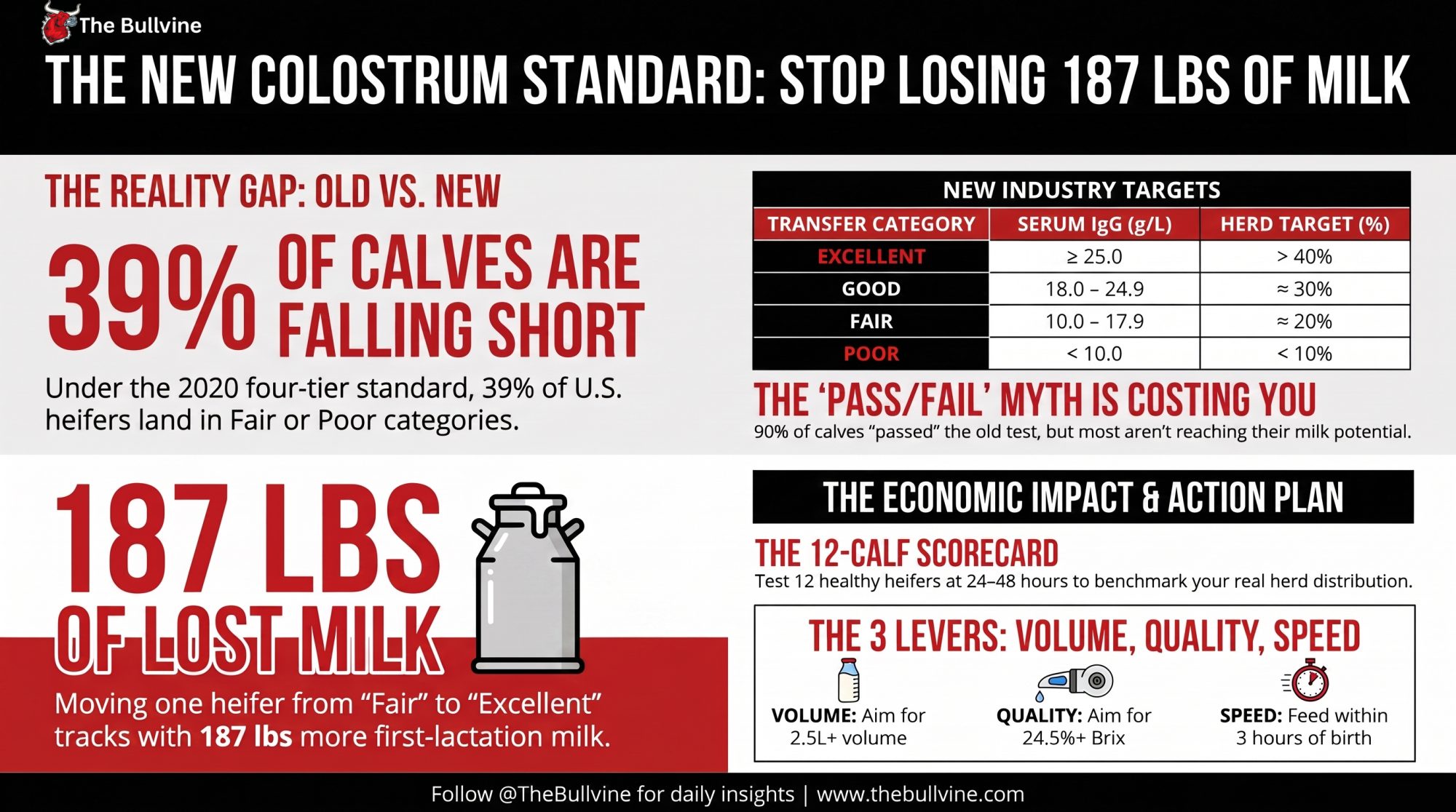
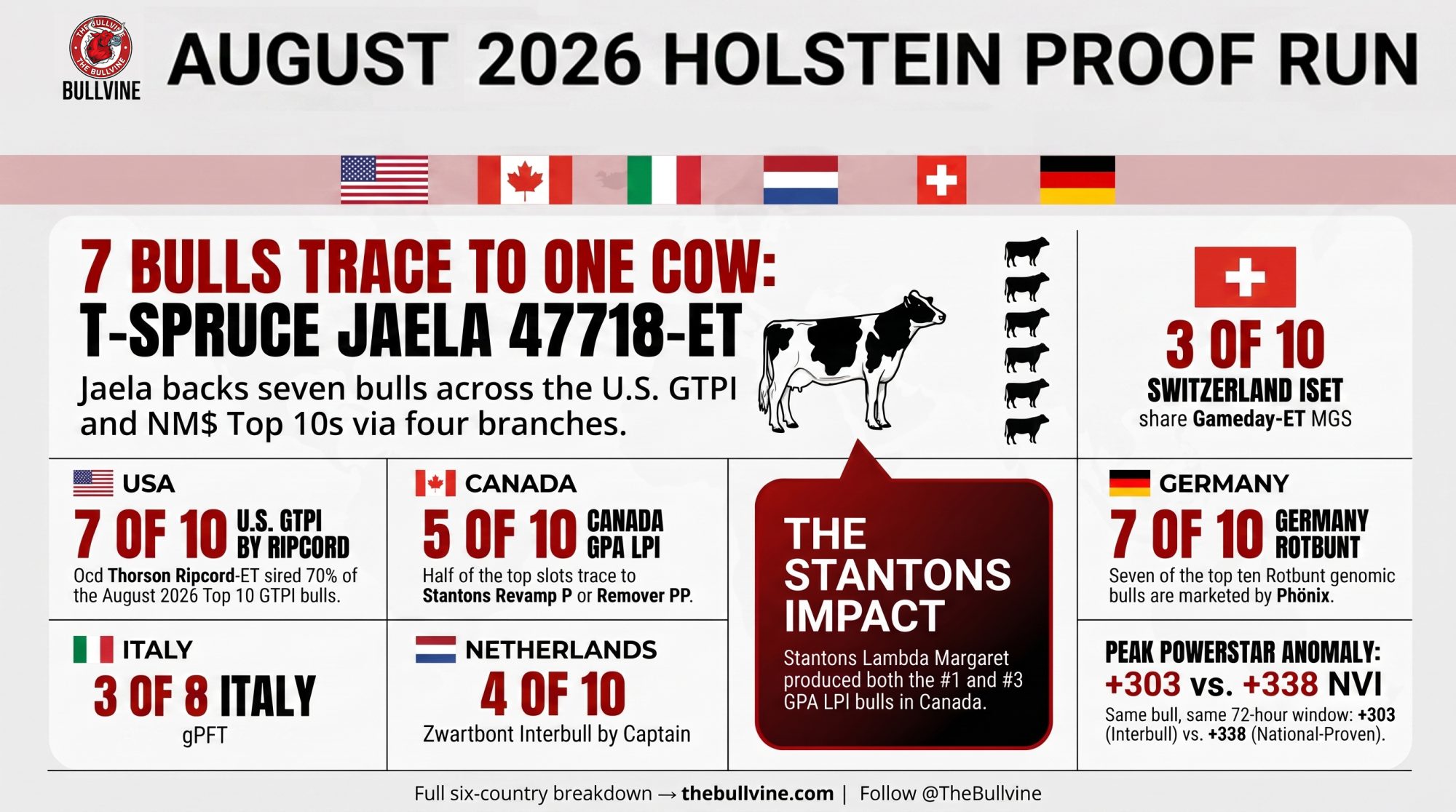
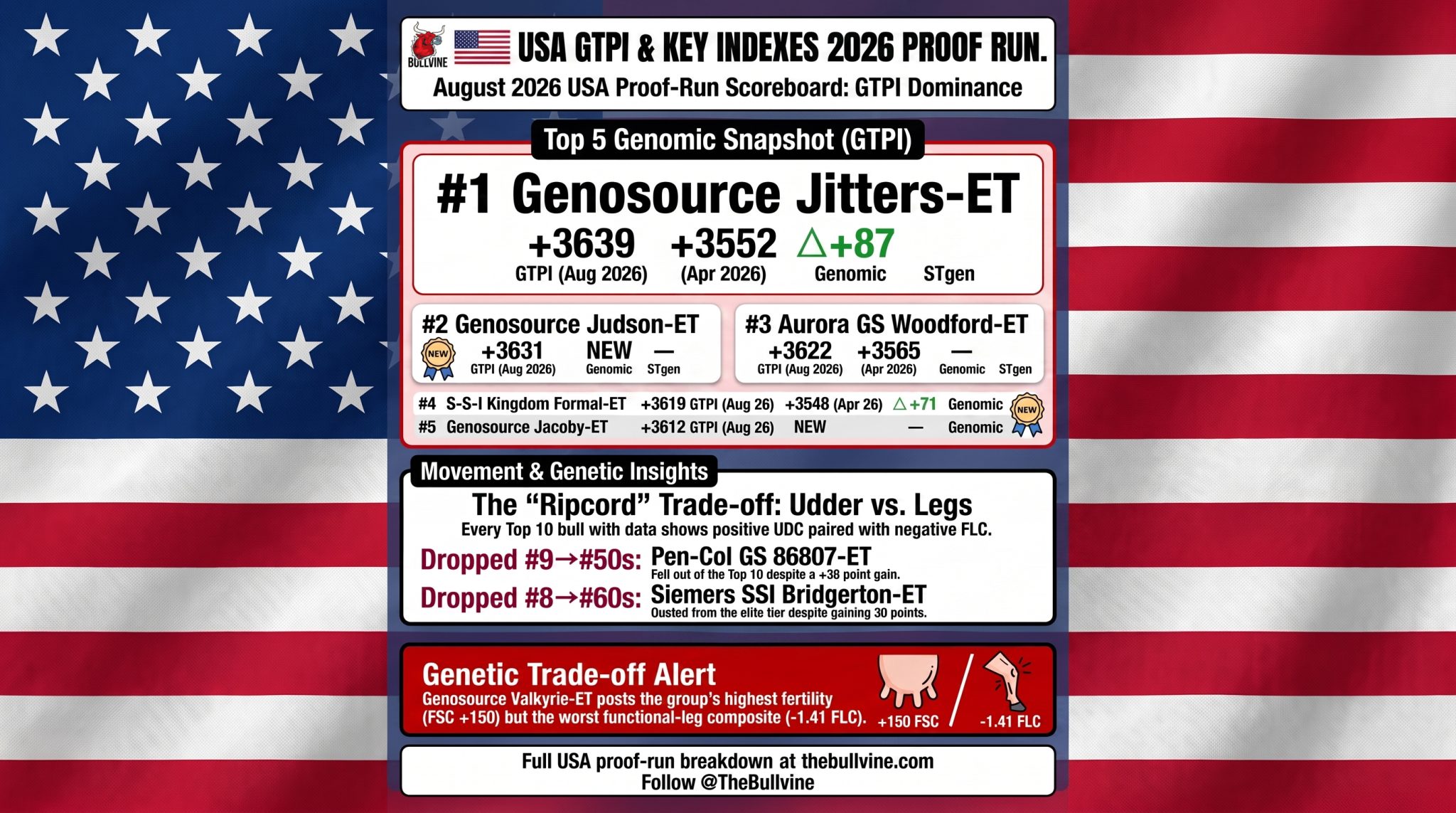
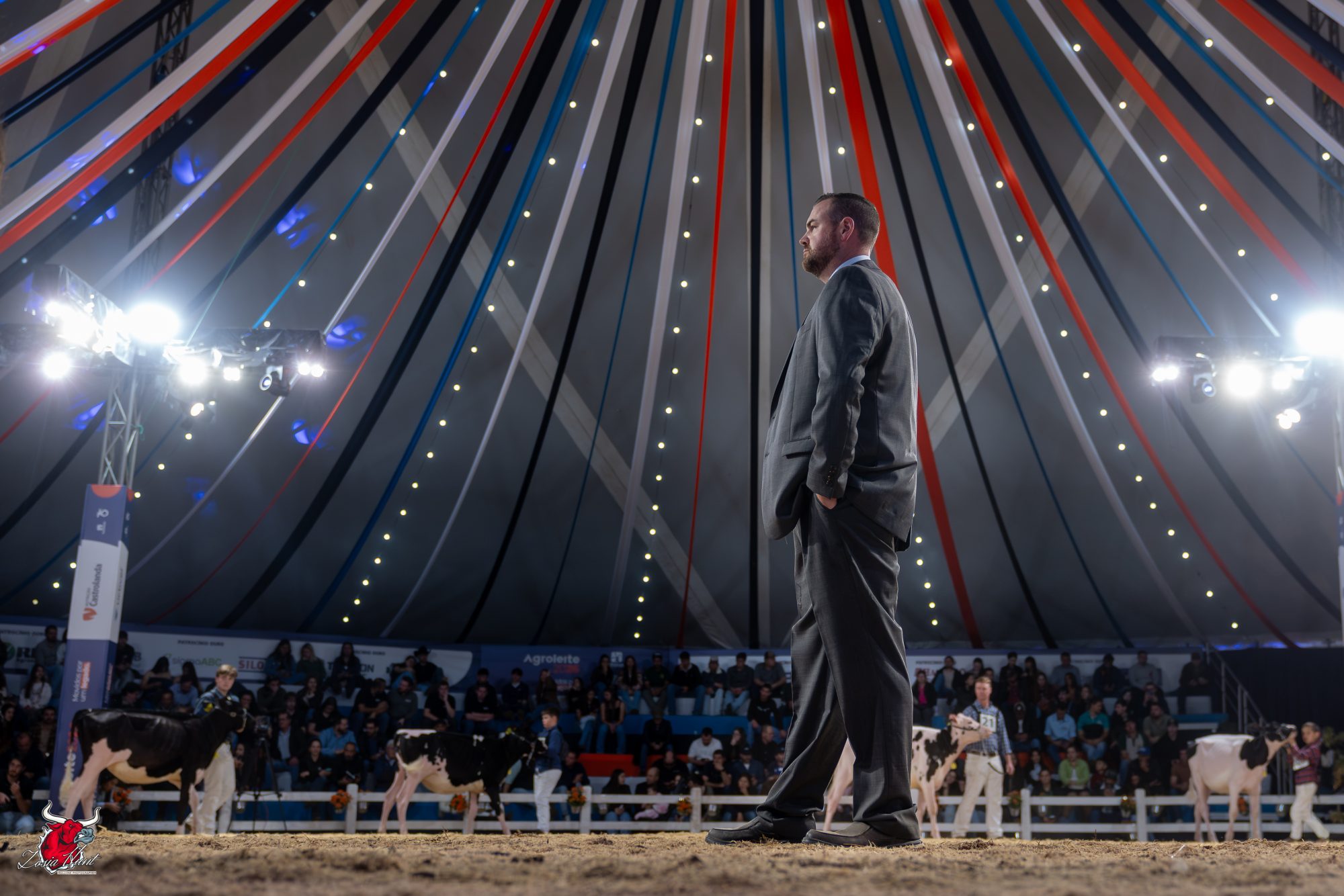
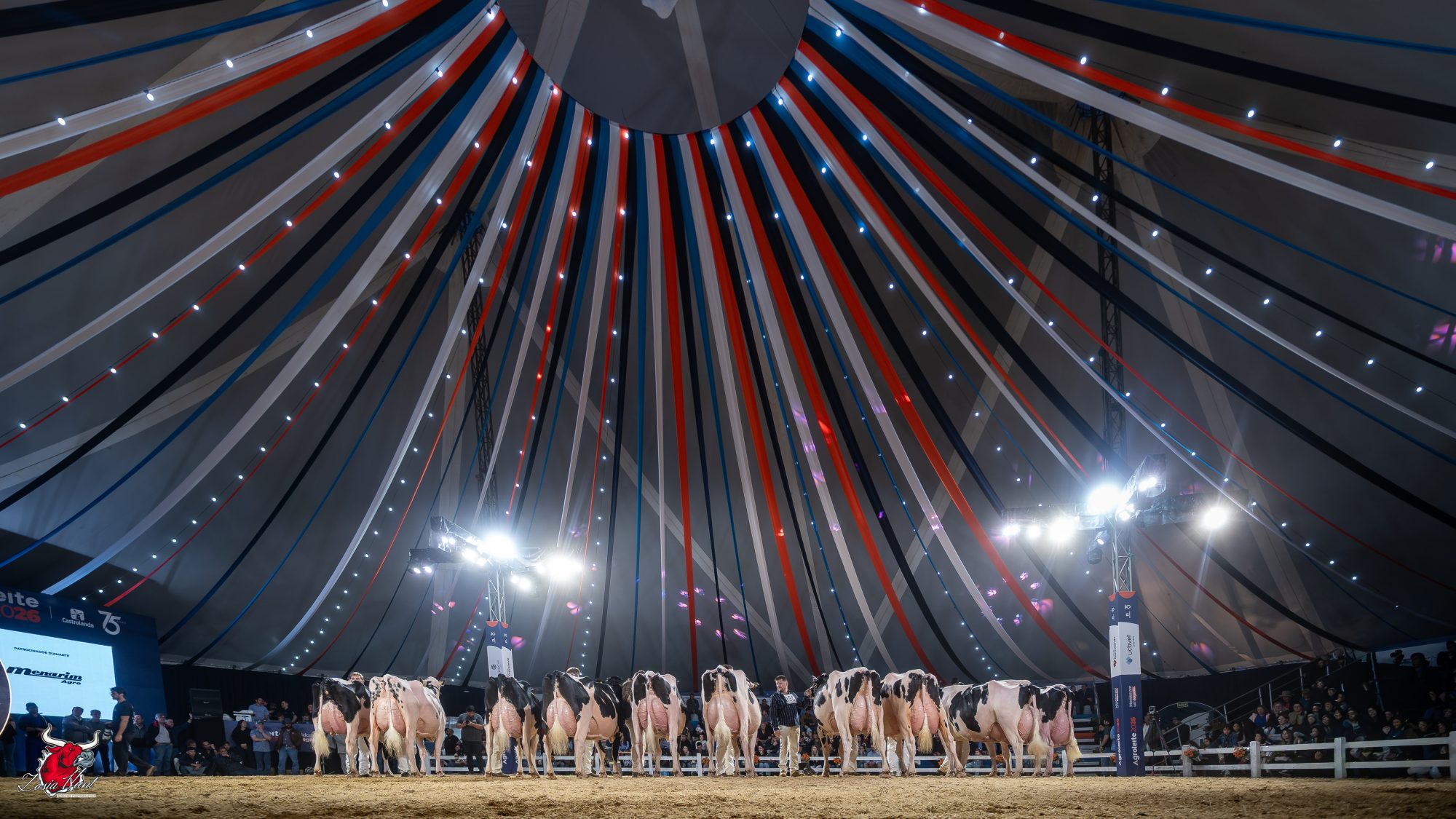
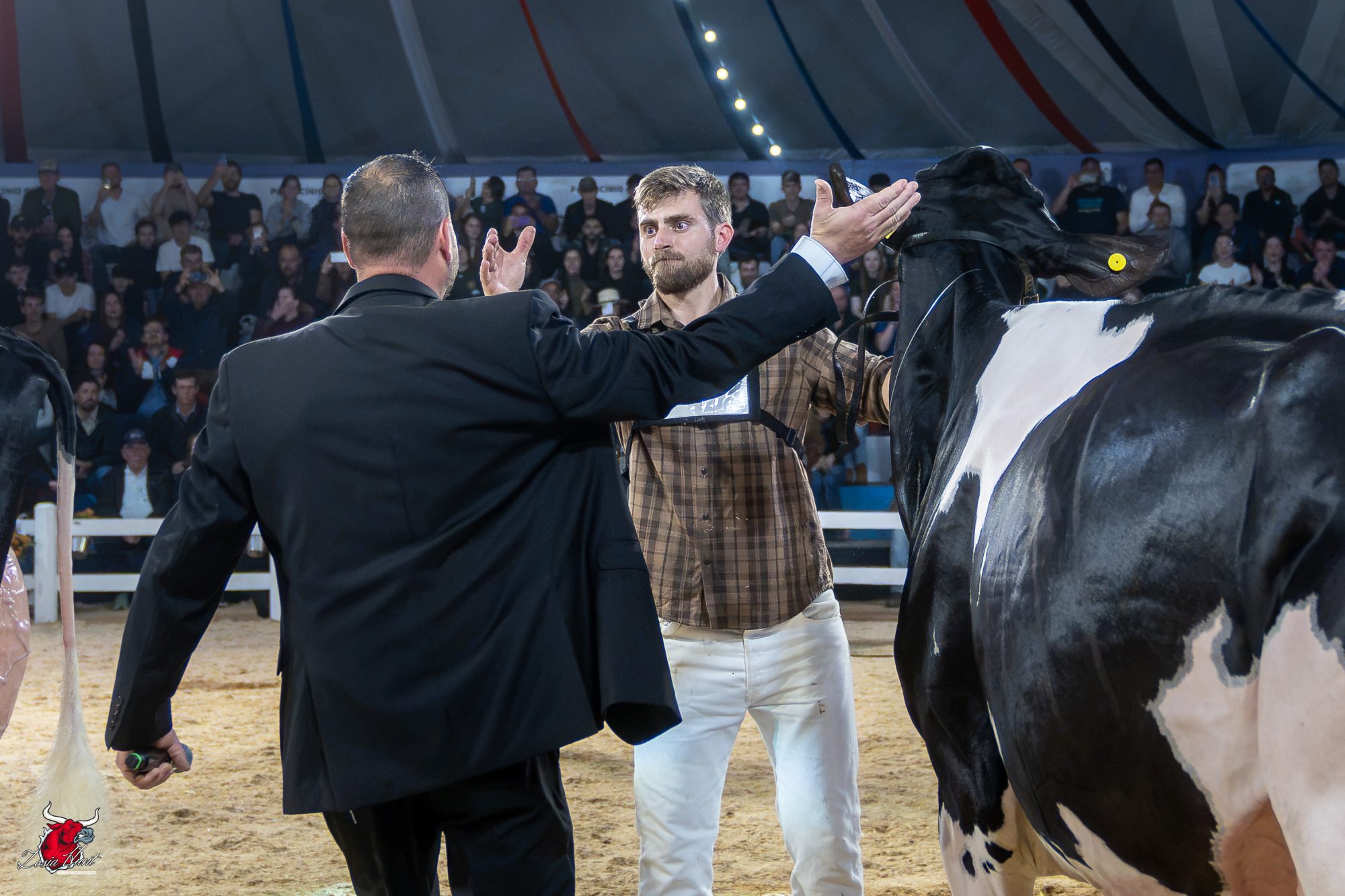
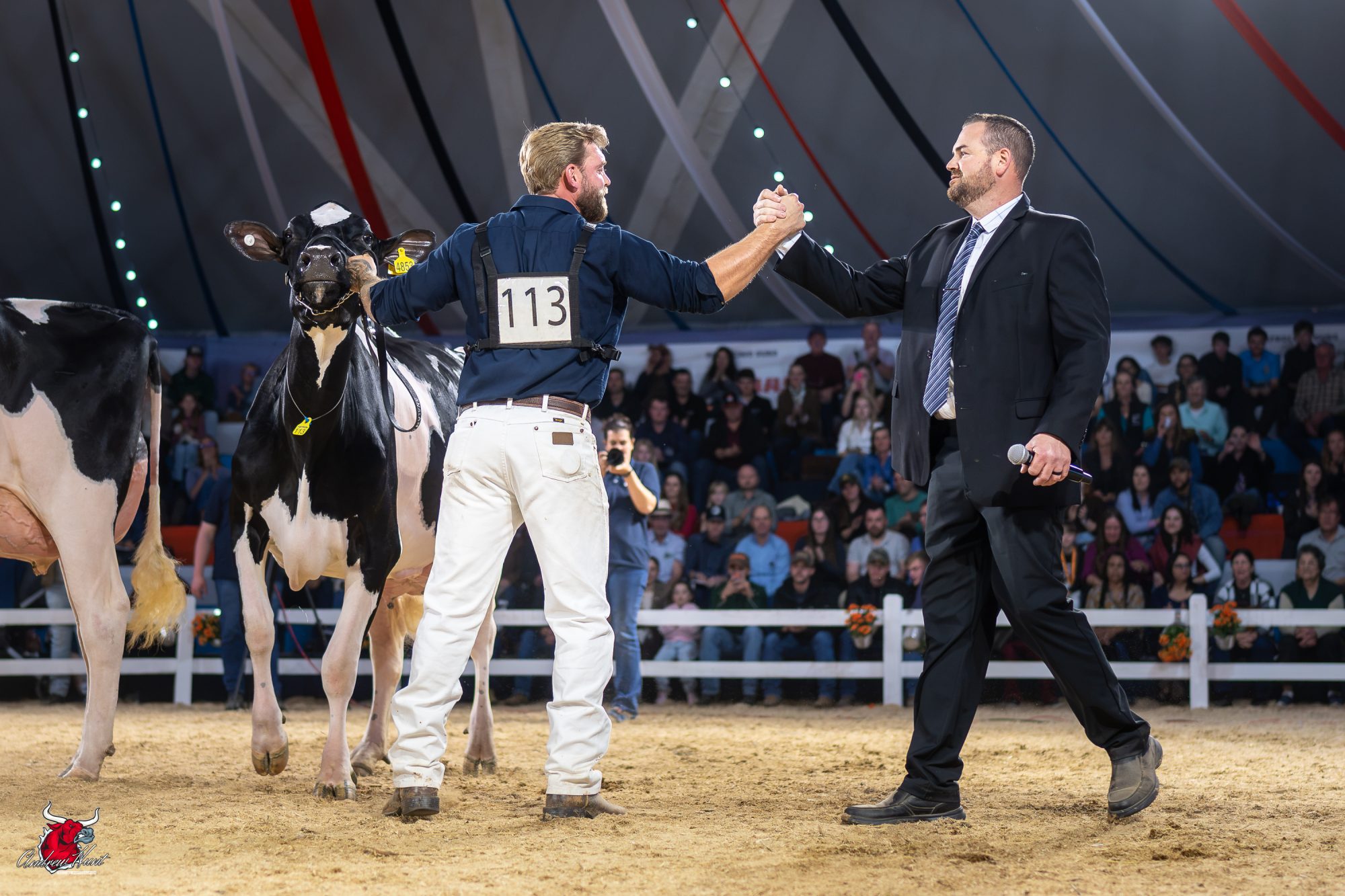

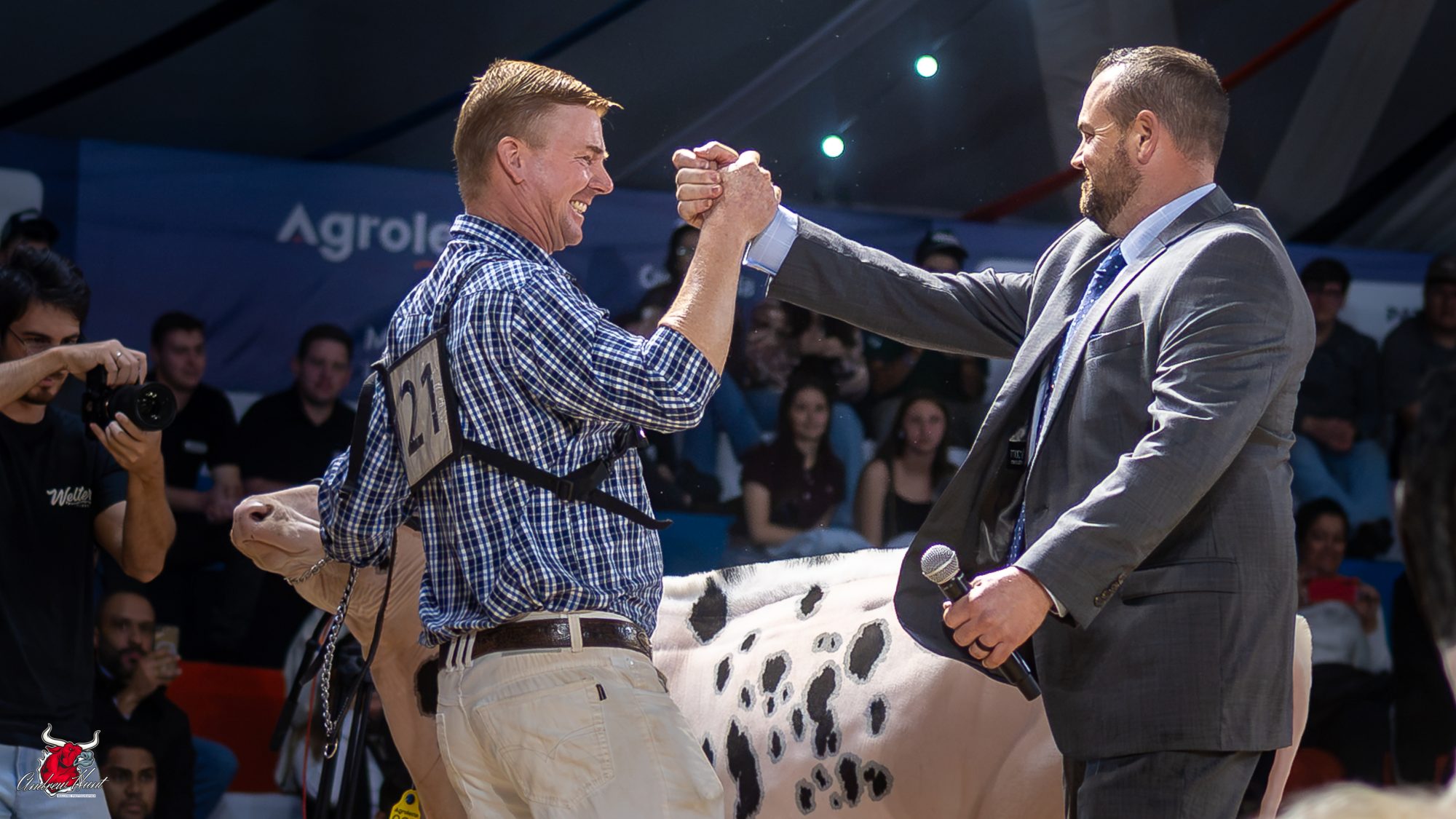
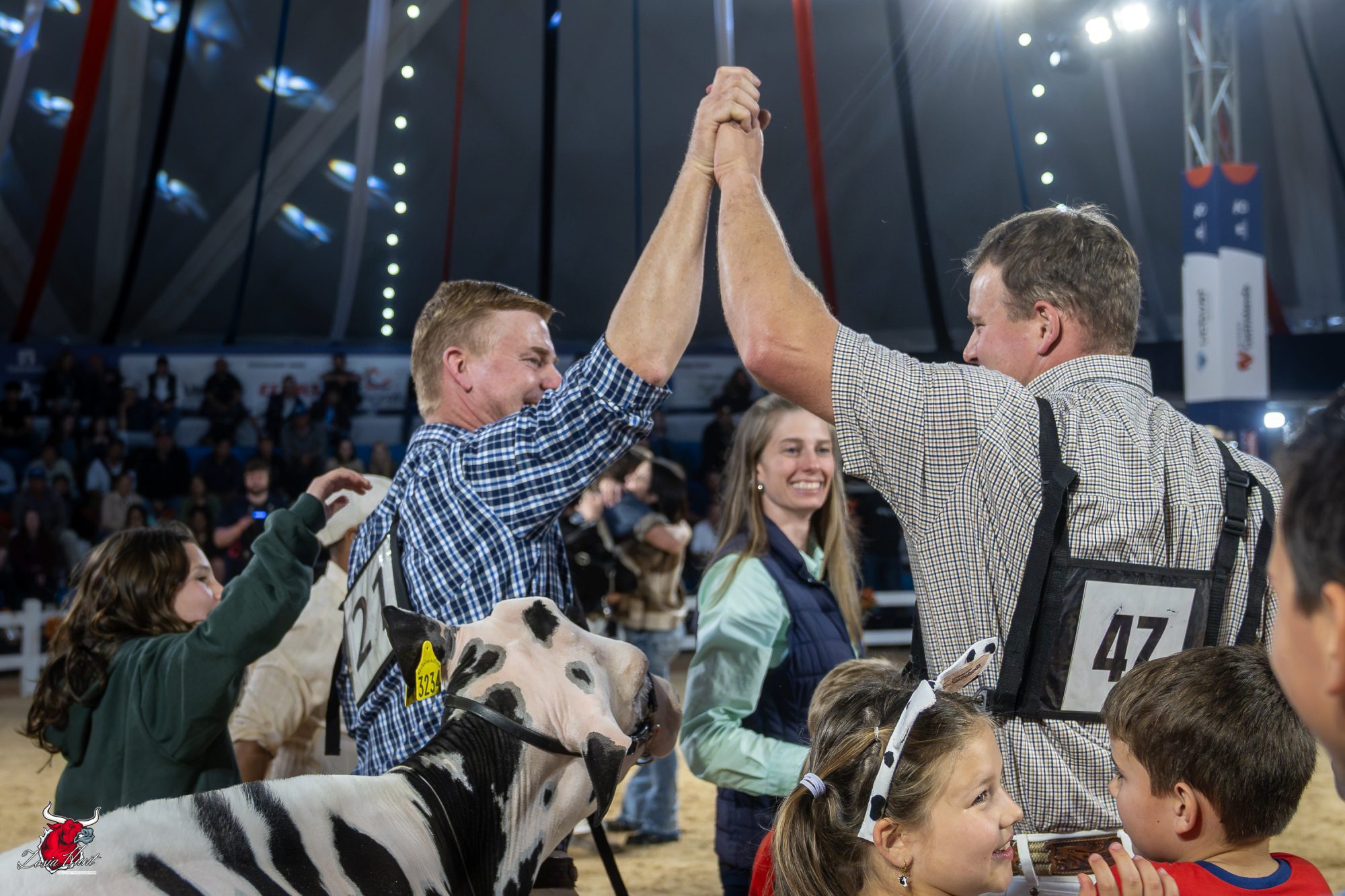
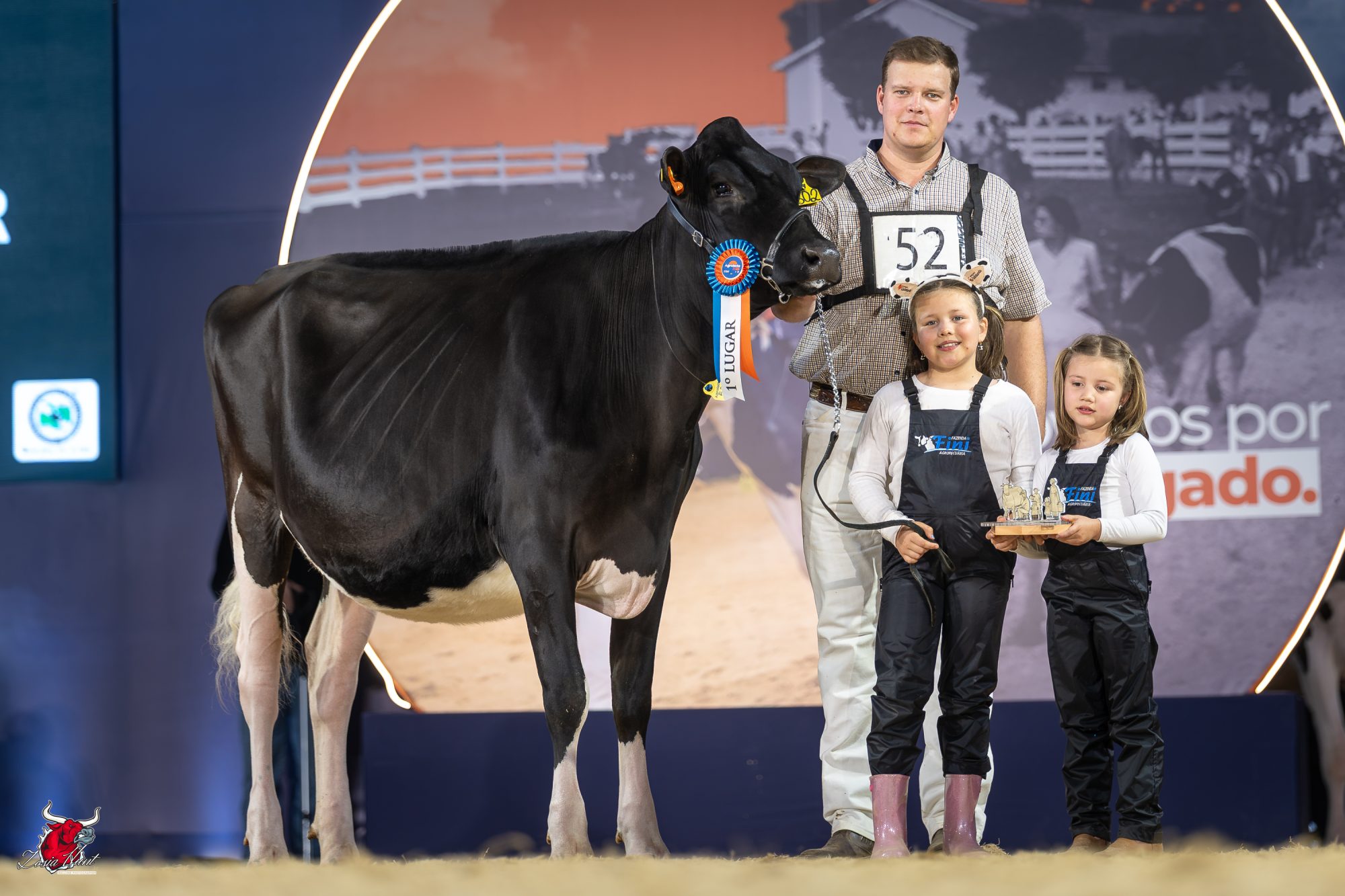
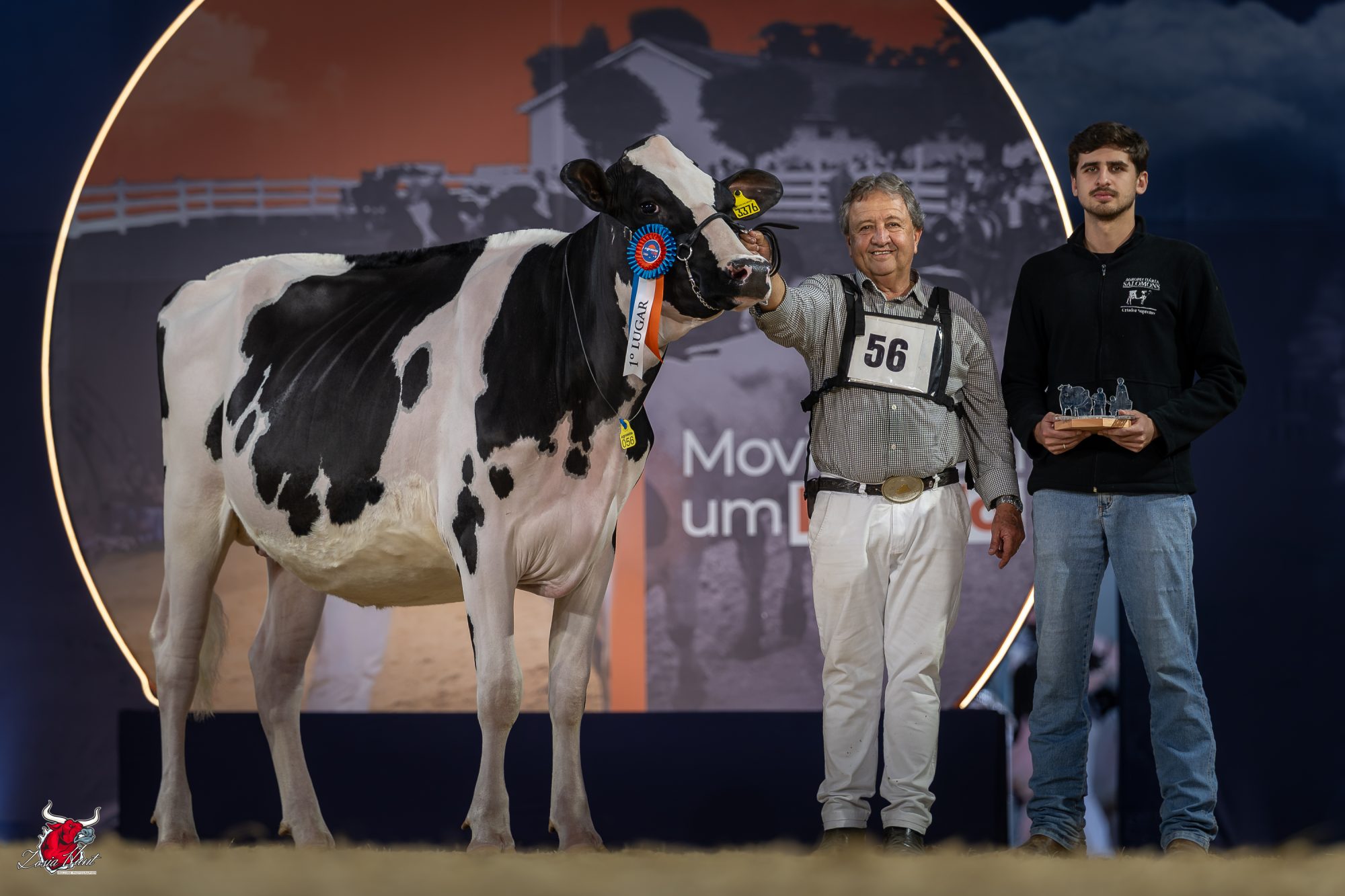
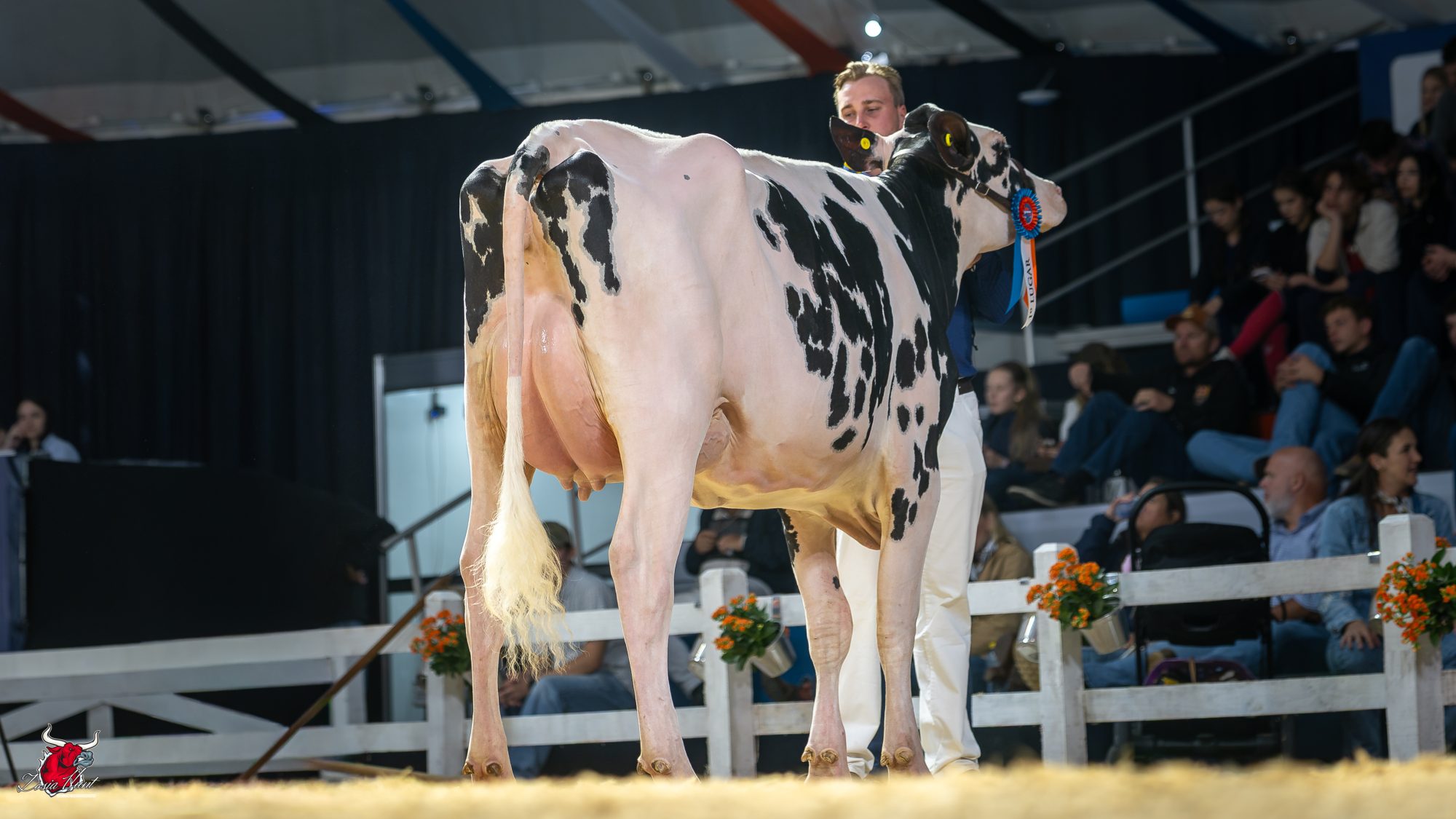
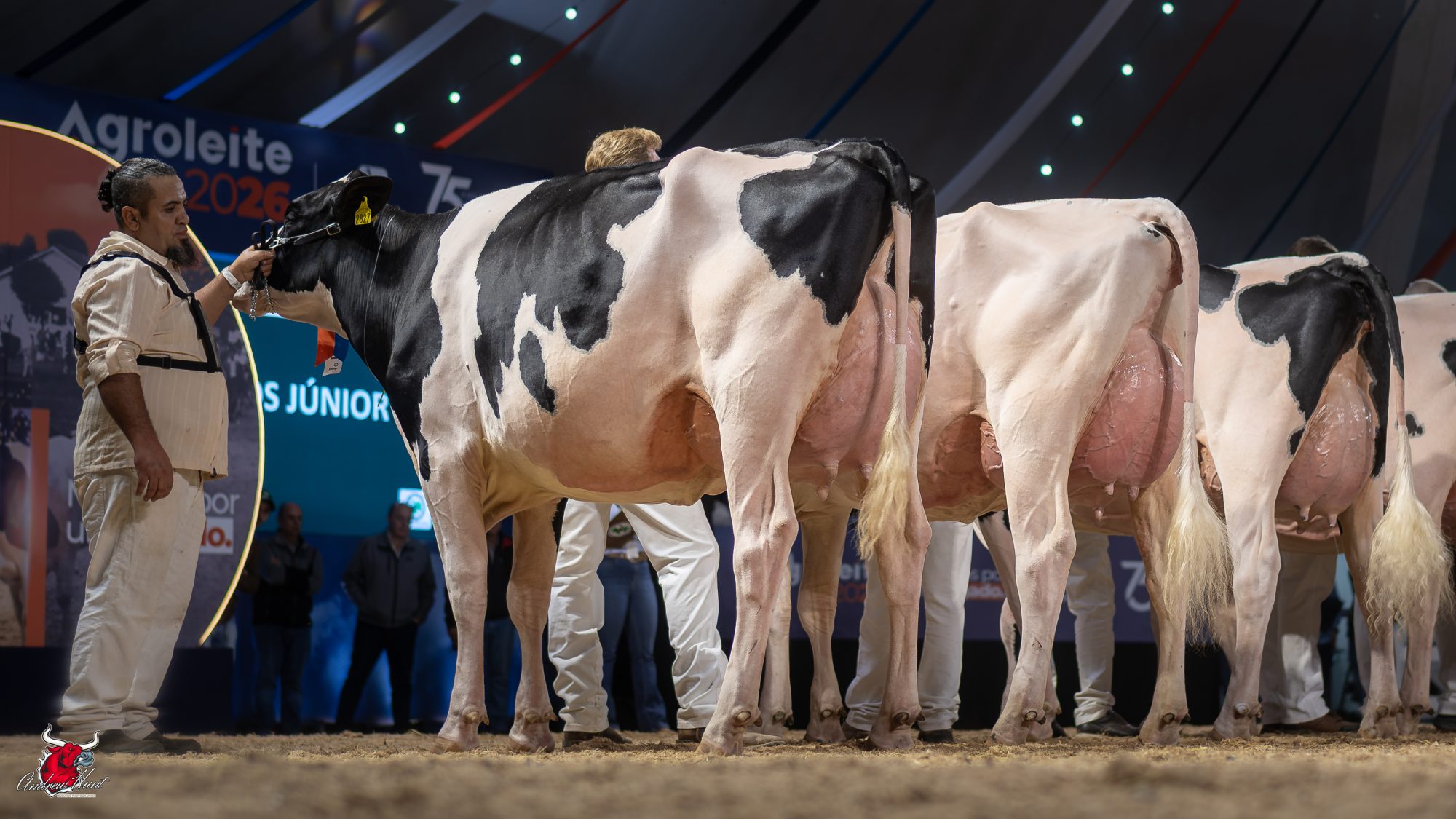
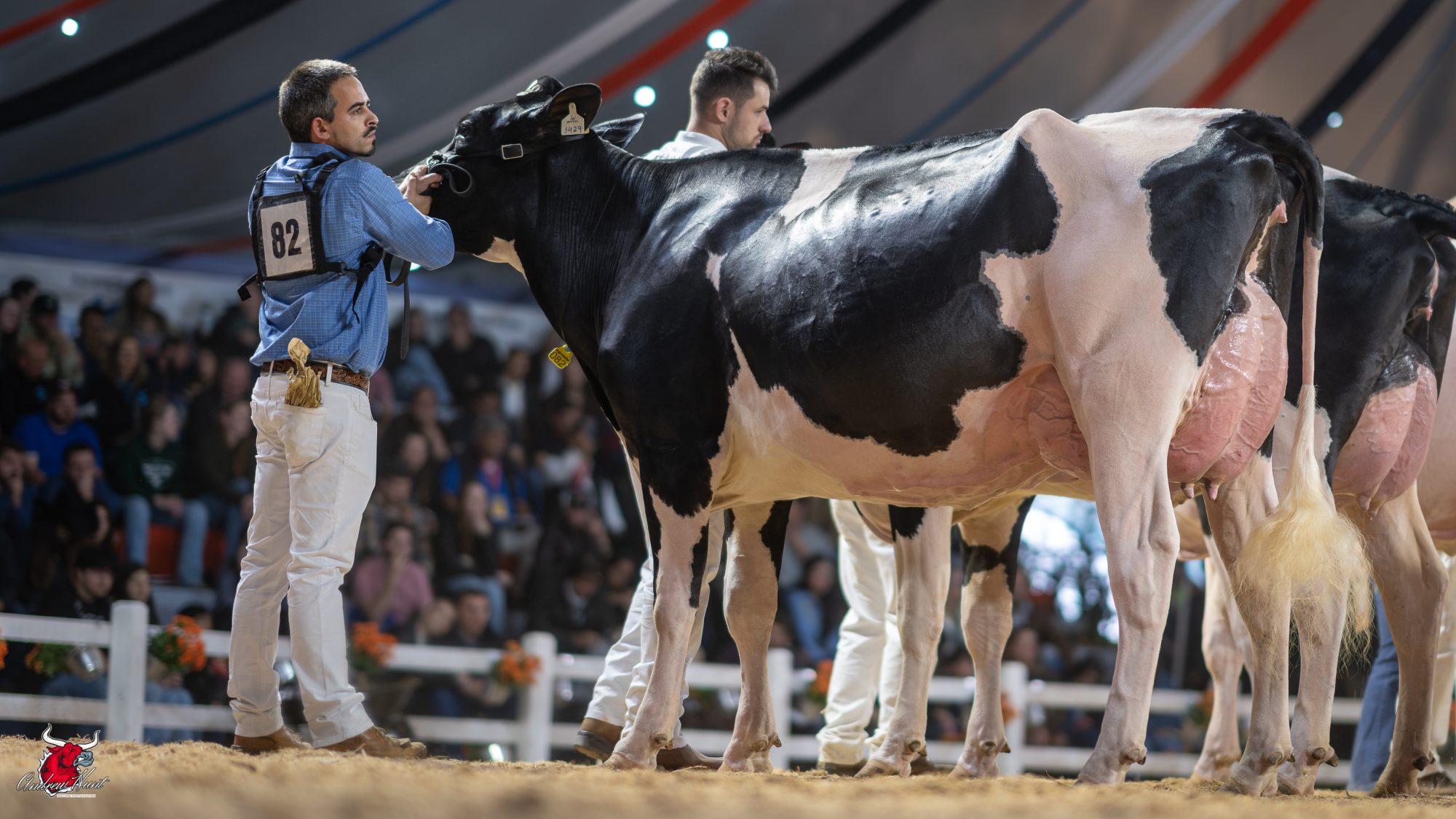
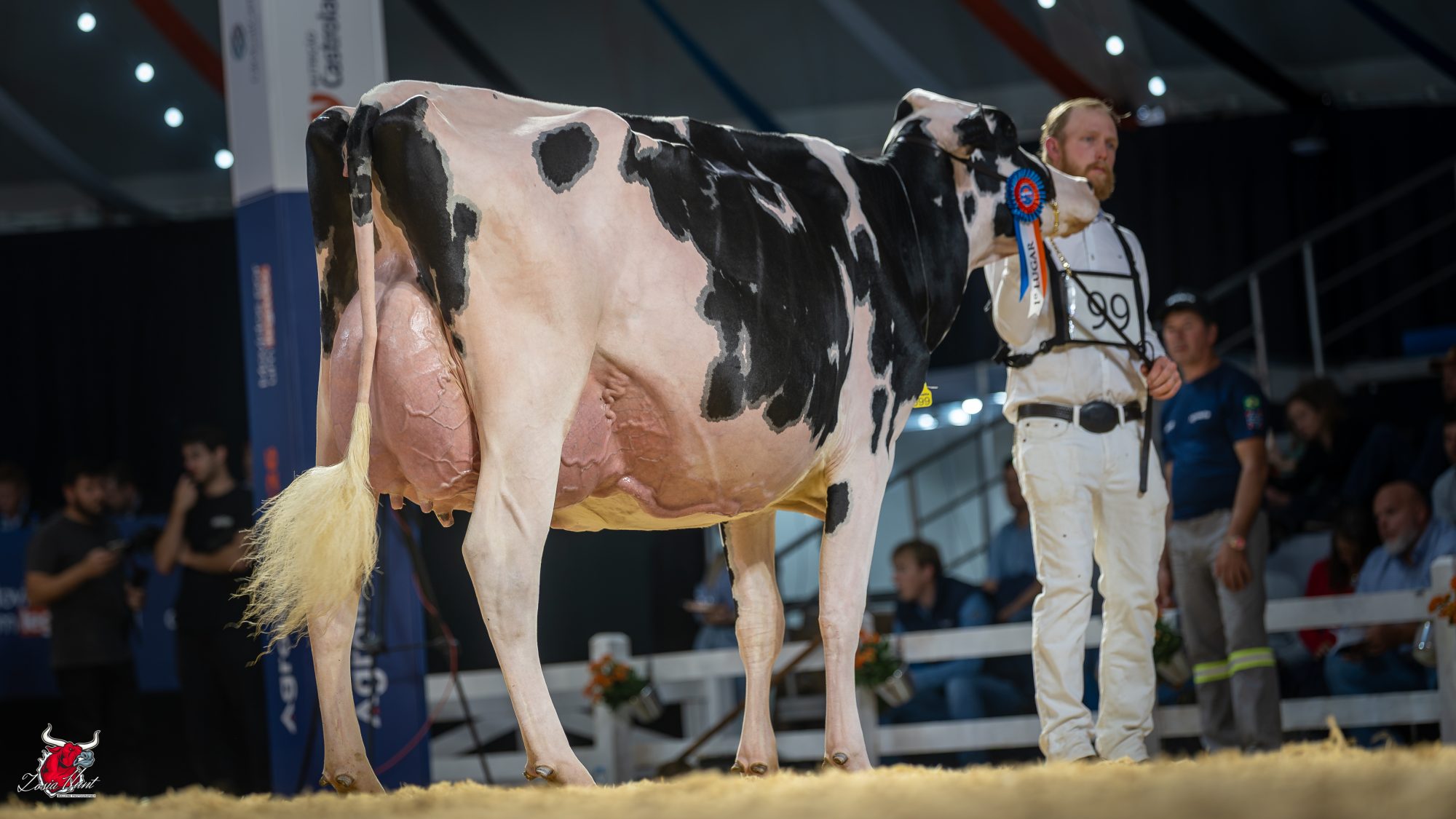
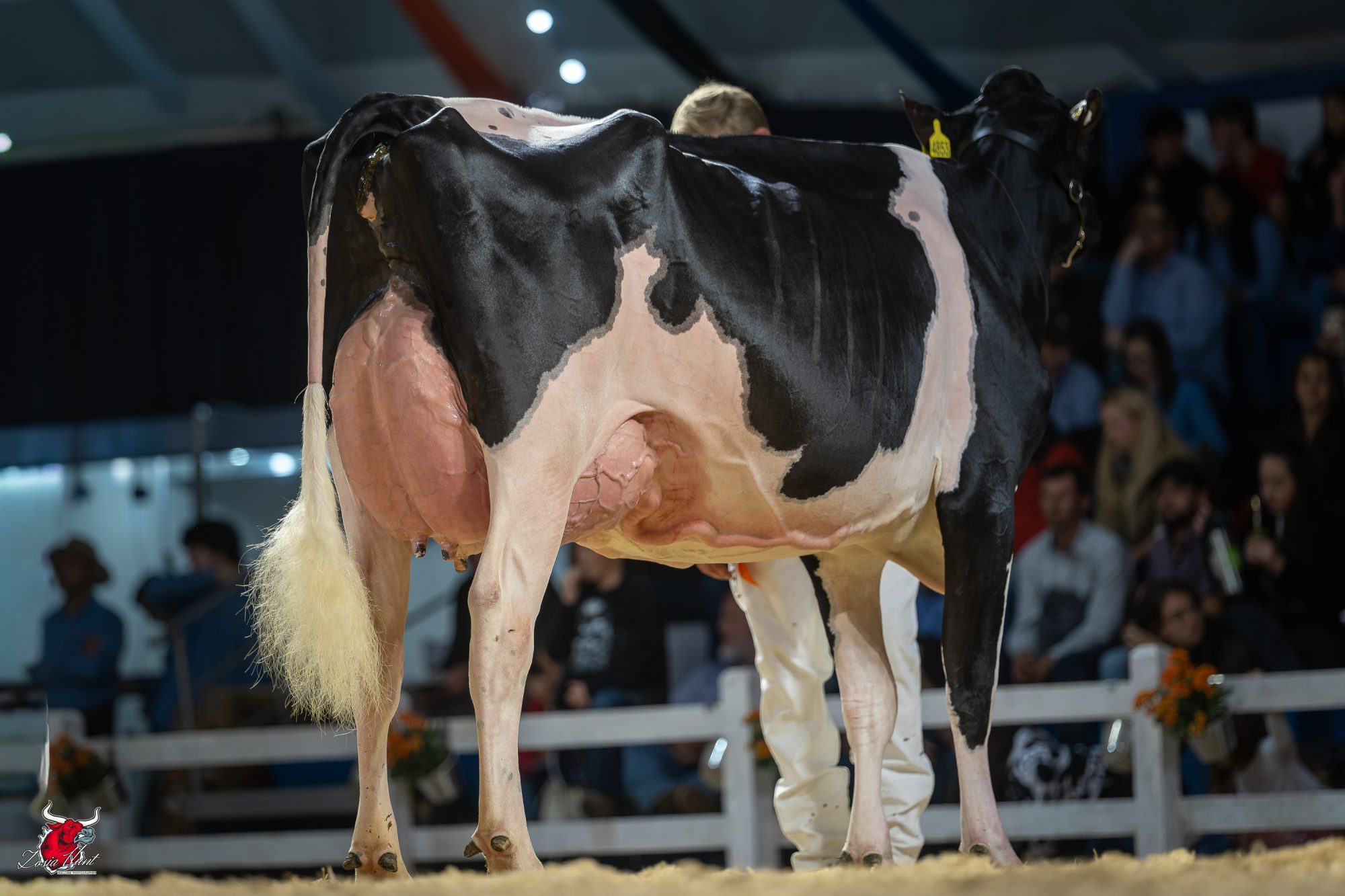
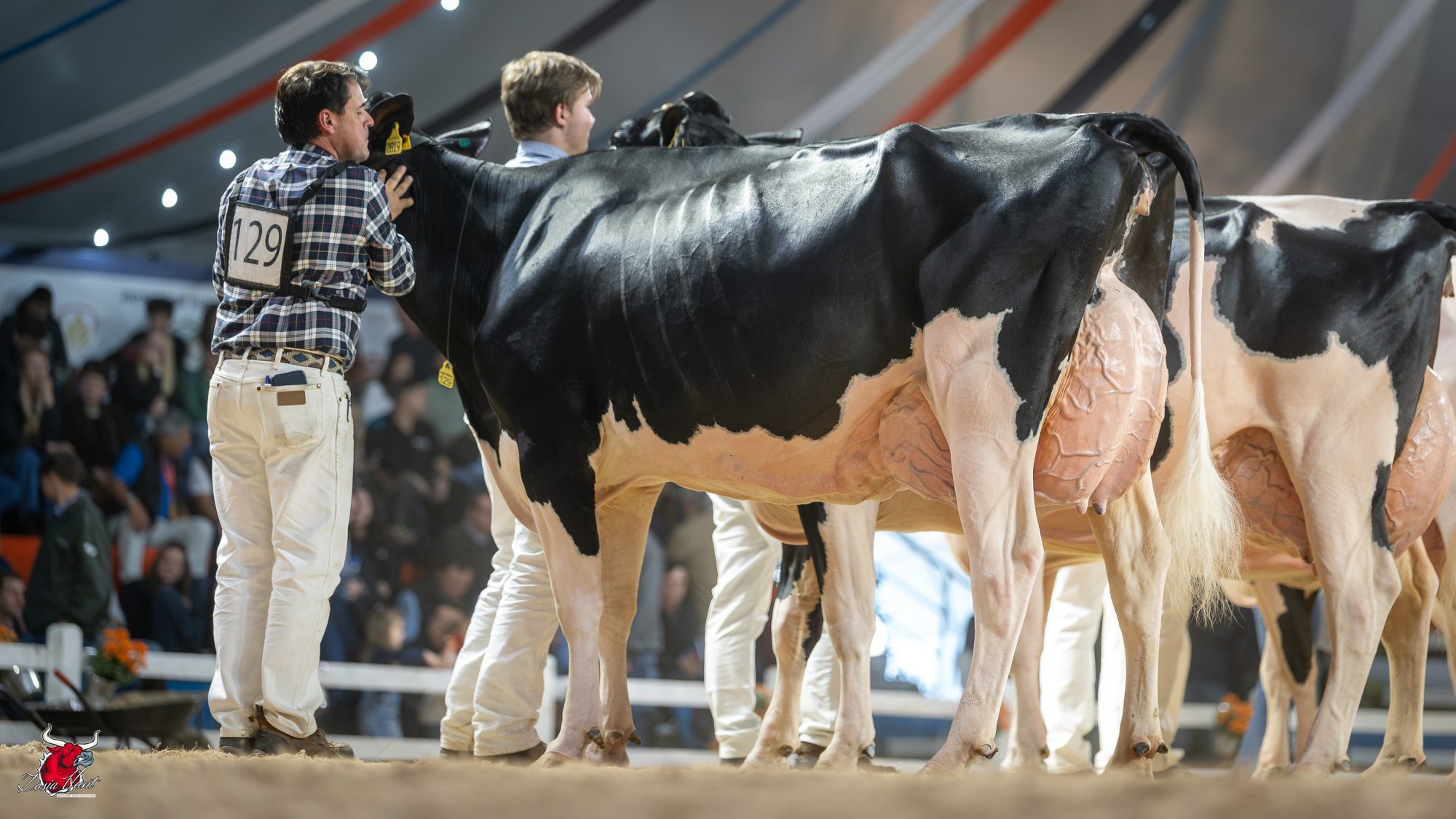
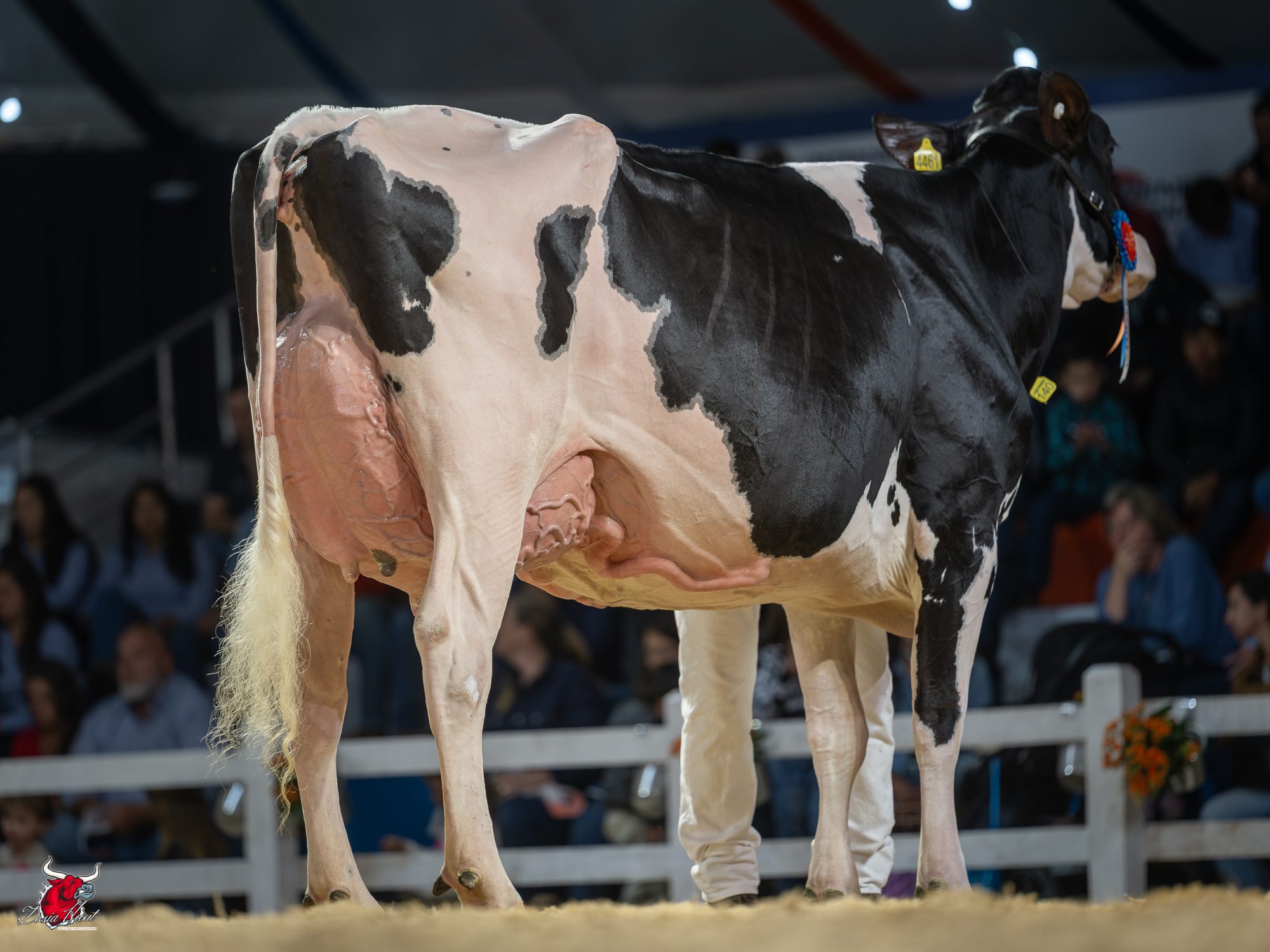
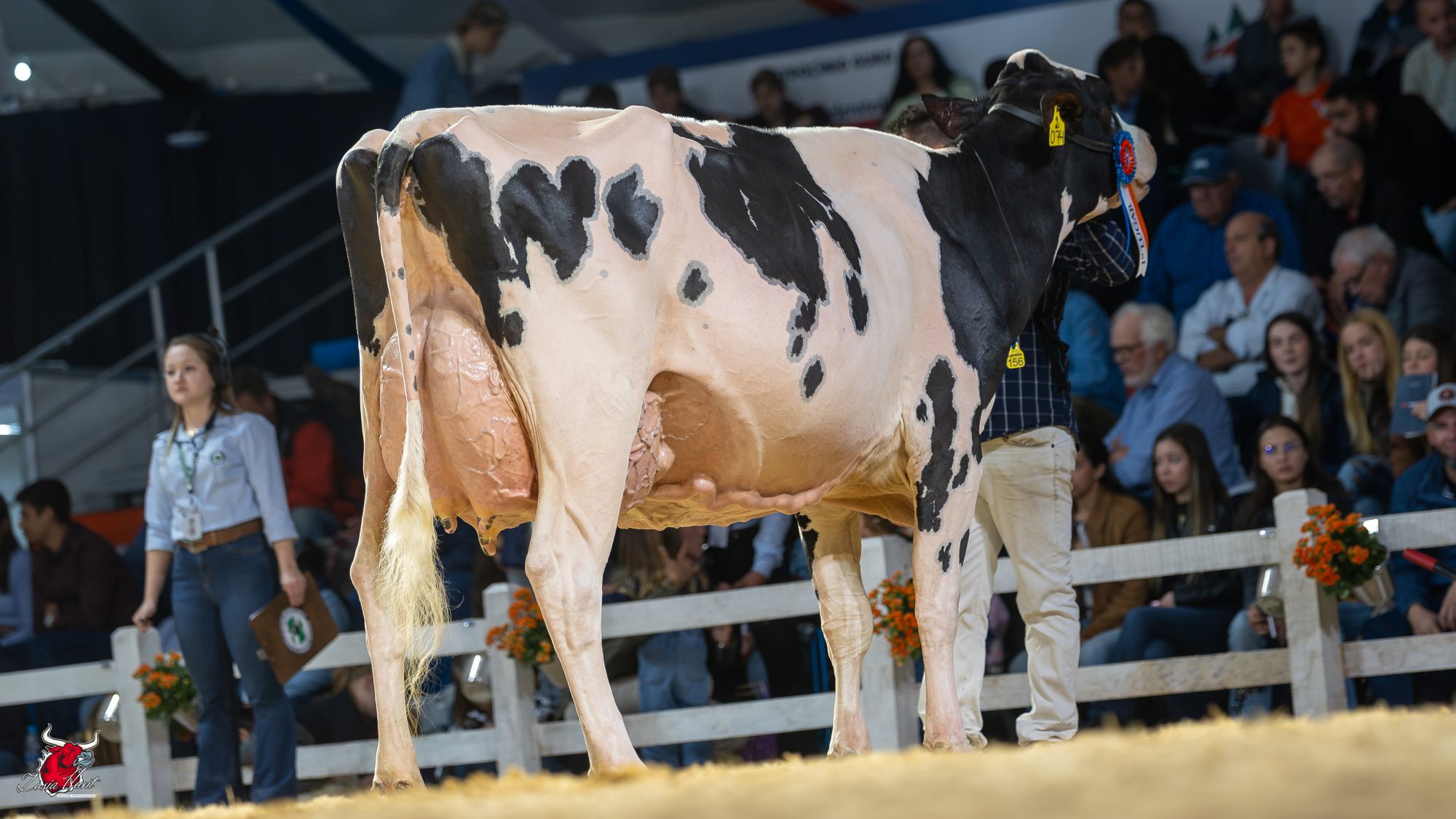
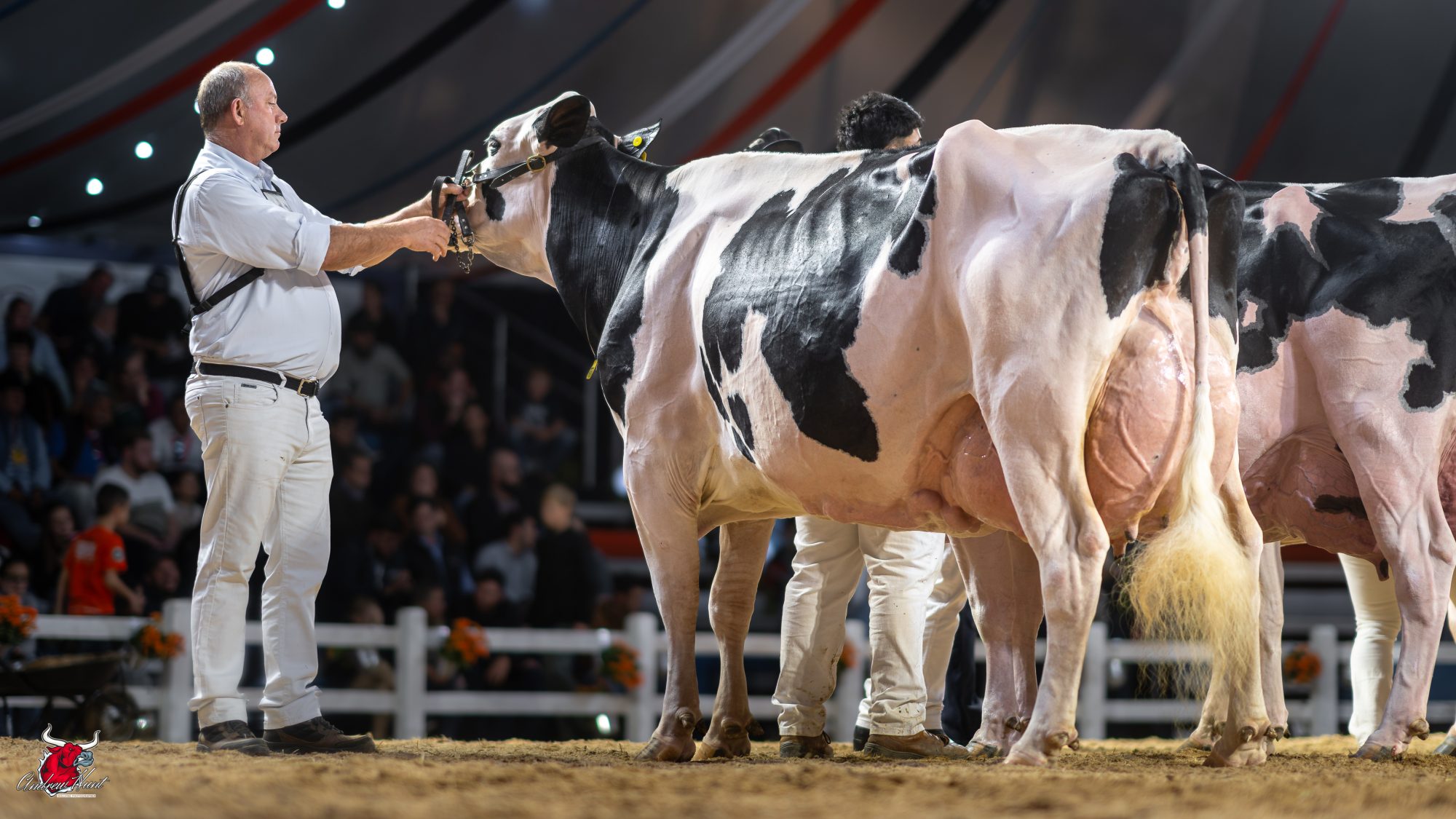
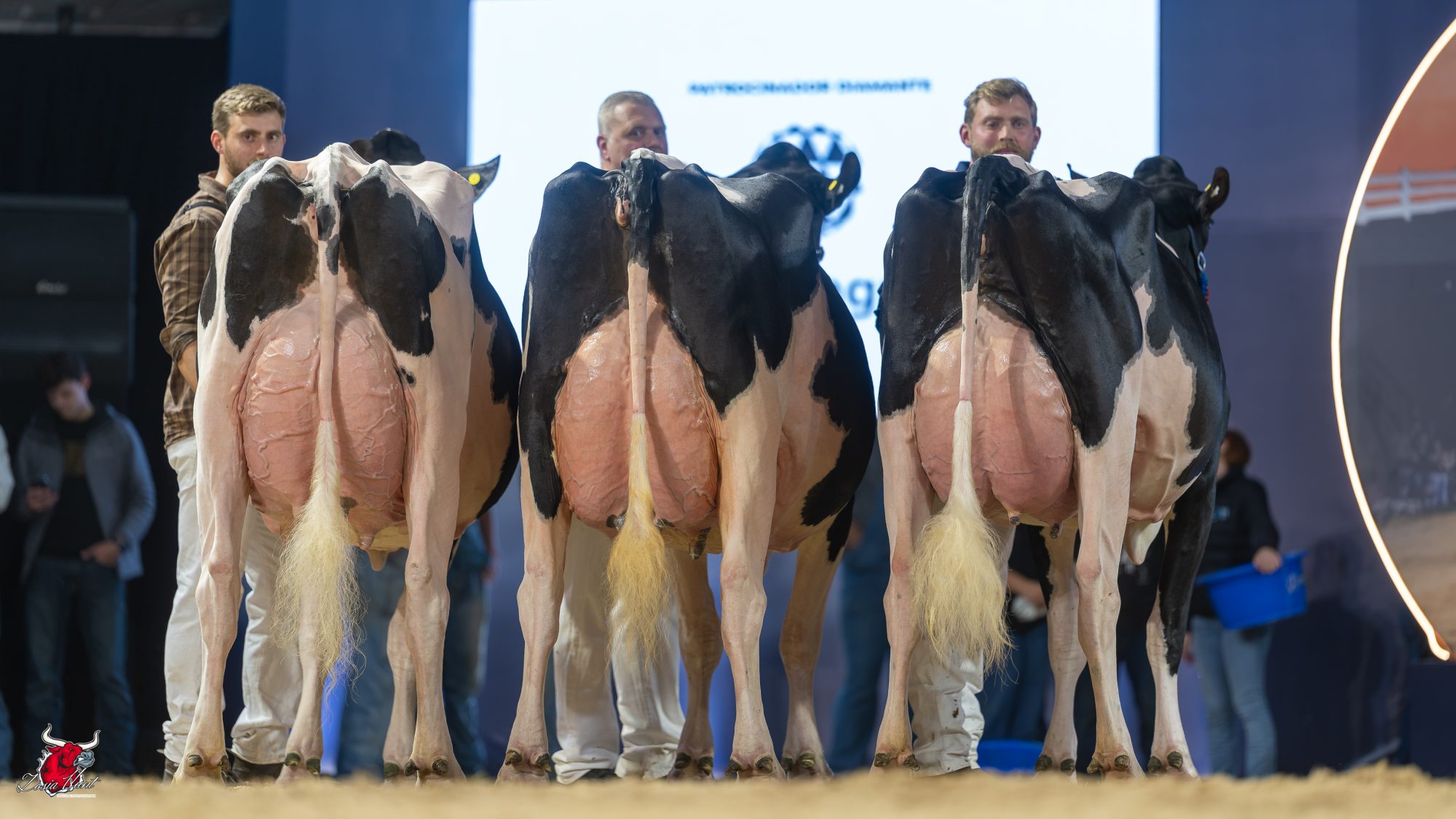
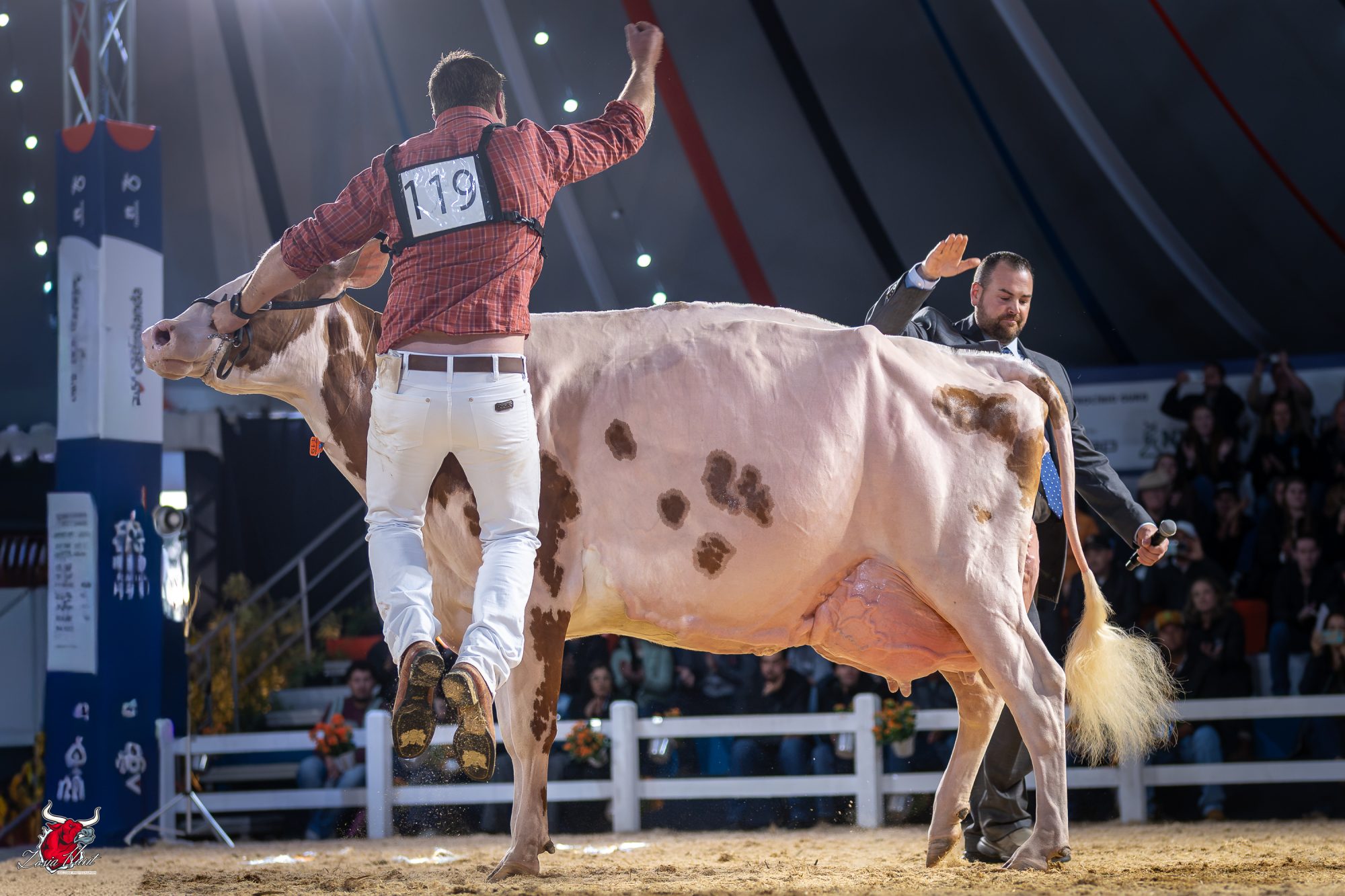
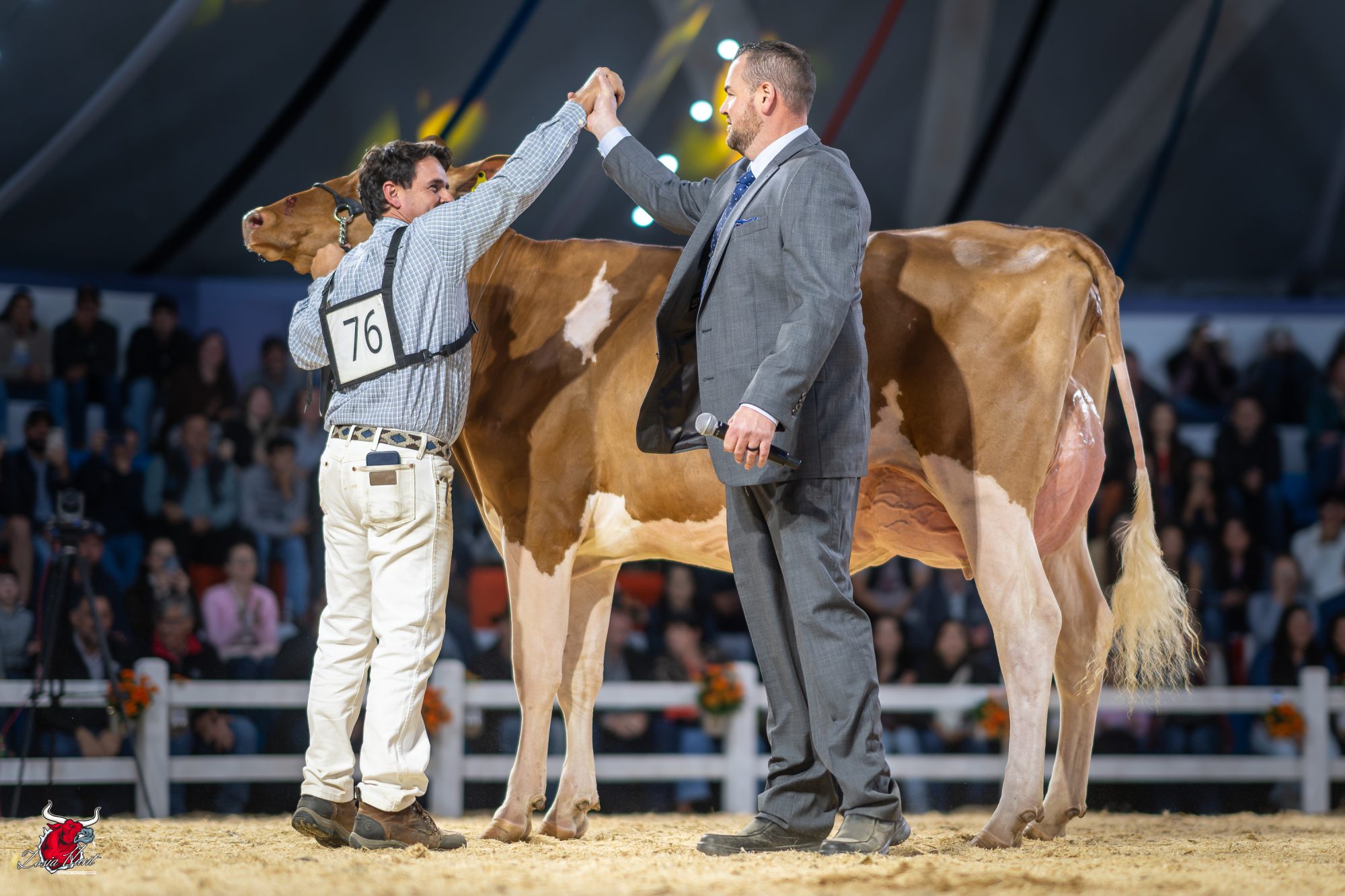
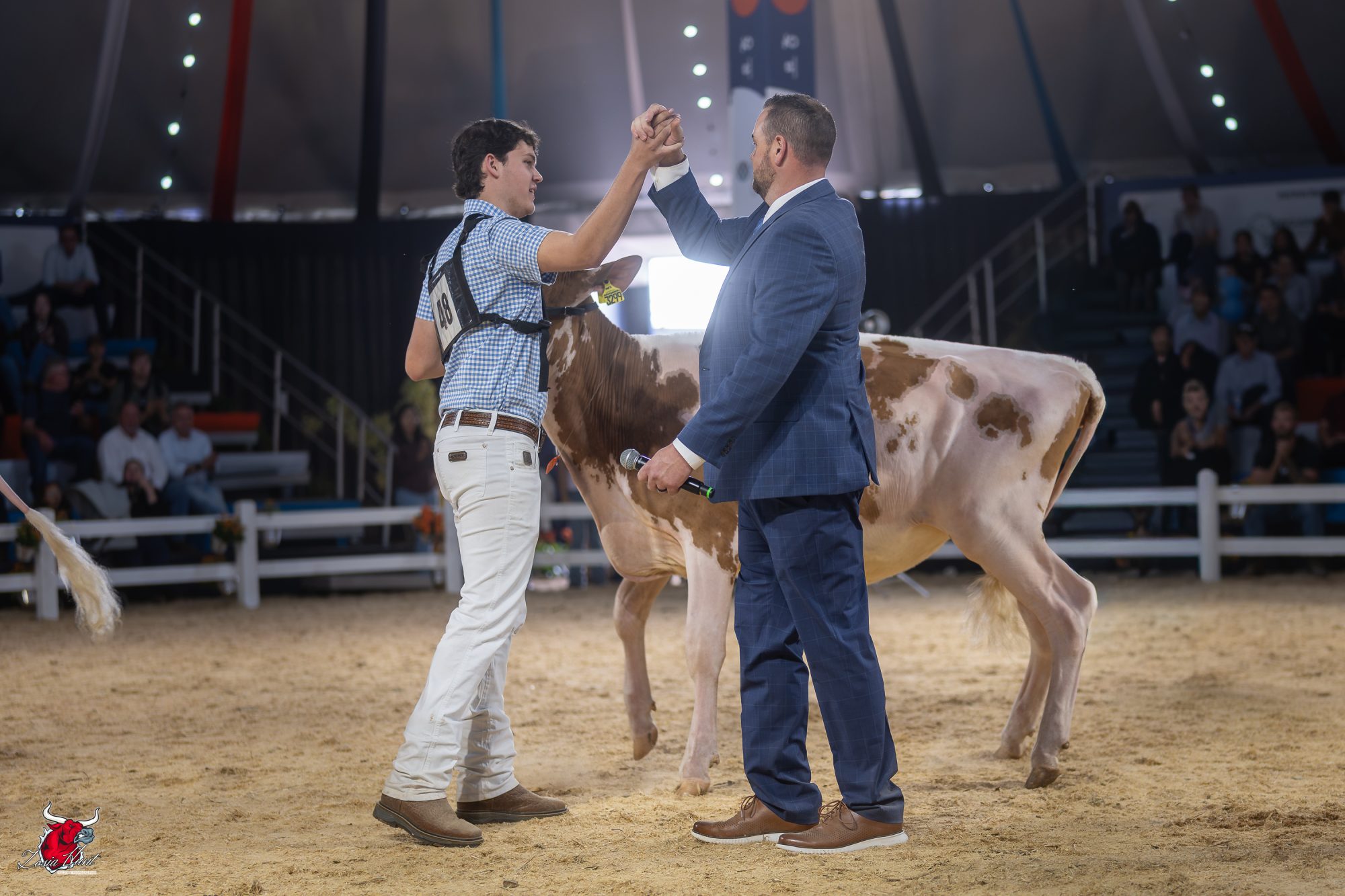
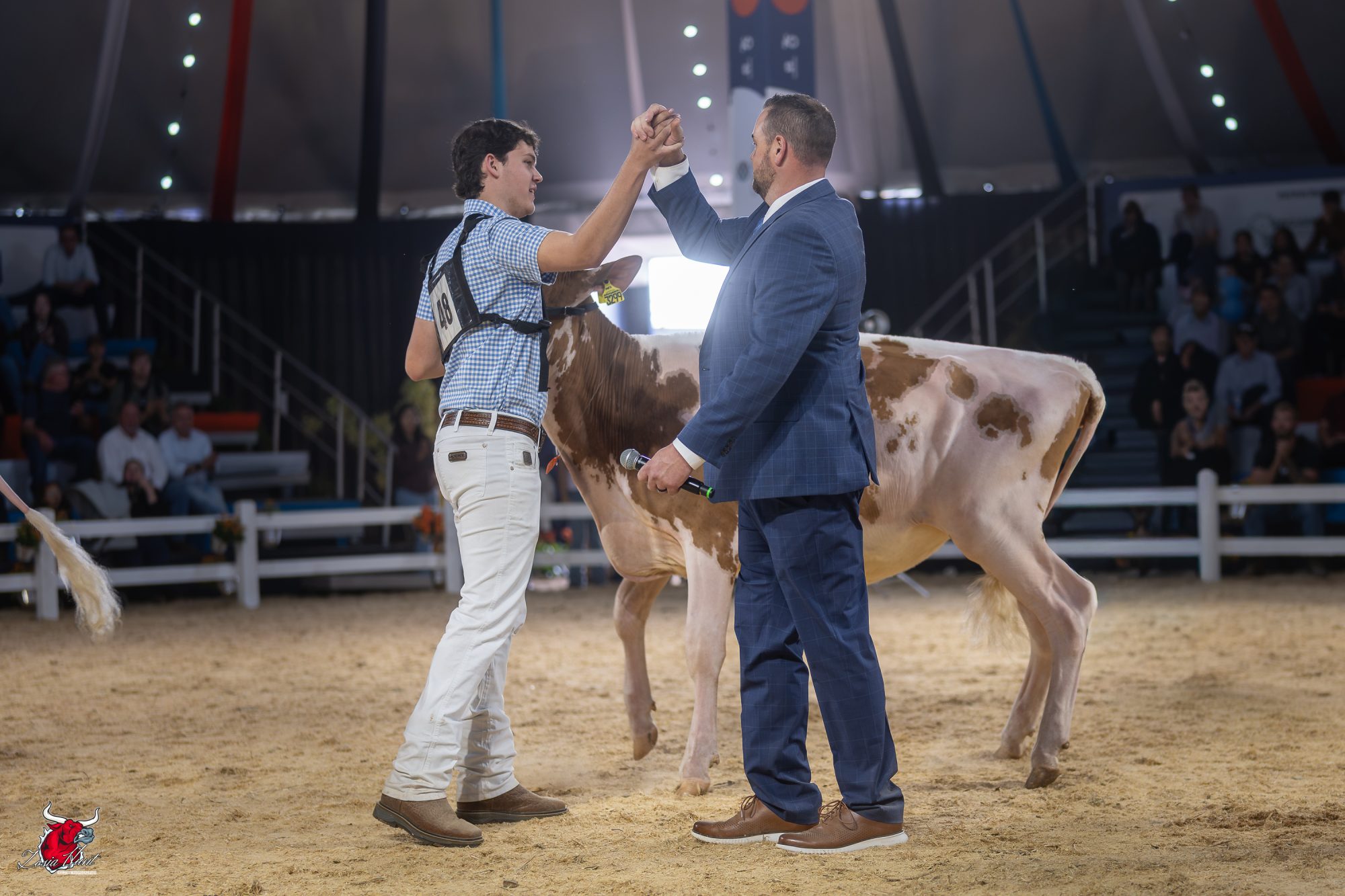
 Champion — RCH JANNY 2955 ALTITUDE RED TE
 Reserve — RCH MALHADA 2944 ALTITUDE RED