





Archive for age at first calving

The $6,600 6‑Week Weaning ‘Savings’ Trap: Why It Can Mean an $11,000 BRD and Calving Bill on a 300‑Cow Dairy

On a 300‑cow Wisconsin dairy, the milk‑replacer invoice said: “smart.” The heifer ledger quietly said the opposite.

Dave runs 300 Holsteins in central Wisconsin. For nearly a decade, he weaned every calf at 42 days and figured he was saving about $55 per head on milk replacer compared with an 8‑week program — roughly $6,600 a year across 120 heifers.
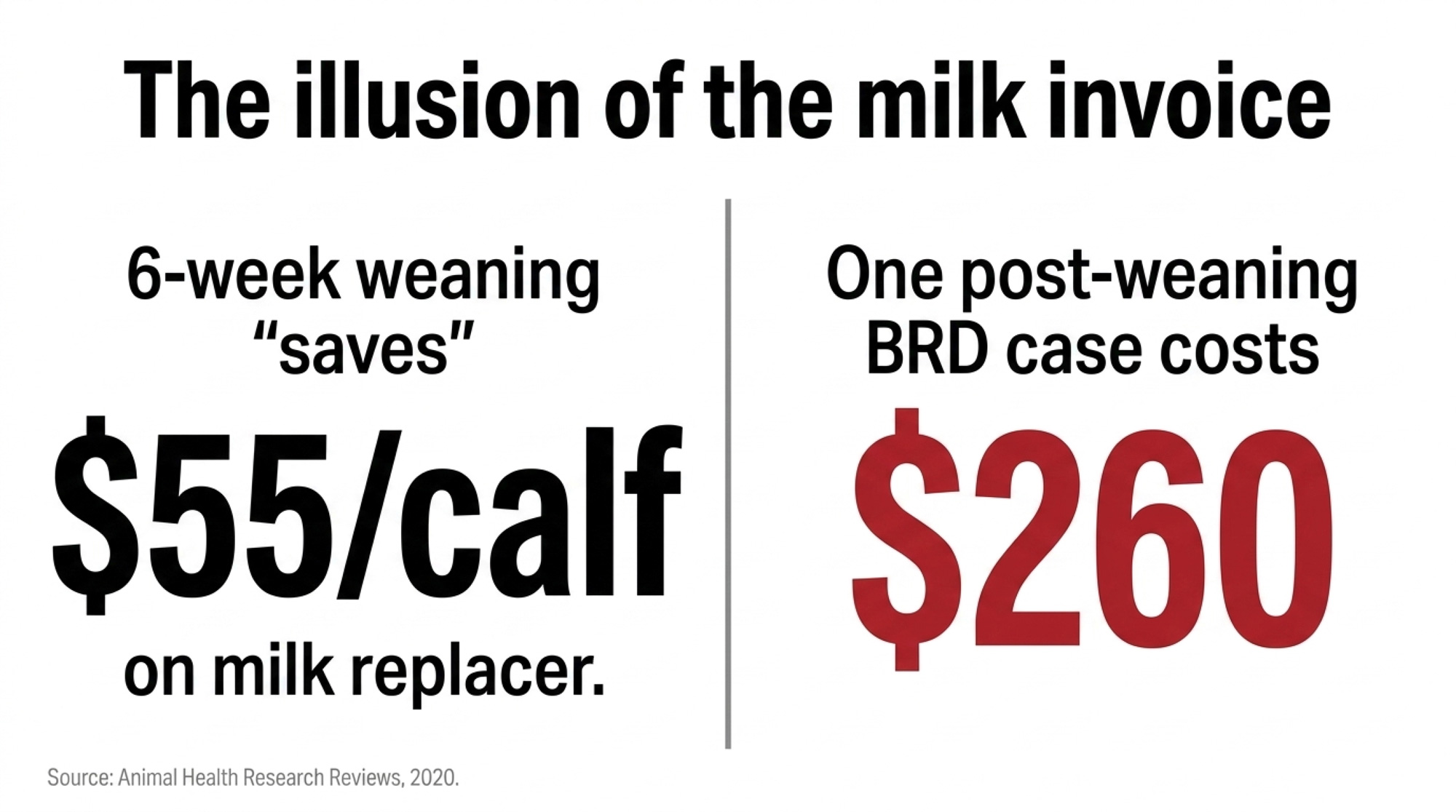
On the milk‑replacer invoice, that math looked good. When his vet put a $260 price tag on each pneumonia case, and they walked through what that did to age at first calving, the ledger flipped. The “cheap” 6‑week program looked a lot more like an $11,000 drag on the heifer enterprise.

Where Dave’s $6,600 Weaning “Savings” Actually Came From

Start with what Dave was paying for liquid feed.

He was on a 20/20 all‑milk replacer. His contracted price sat around $1.80 per pound — right in the middle of what many dairies are seeing, with 50‑lb bags often running from the mid‑$60s to the $120 range depending on formulation and brand.

His 6‑week program looked like this:

  • 1.25 lb/day of milk replacer powder
  • 42 days on milk
  • 1.25 × 42 = 52.5 lb of powder per calf

At $1.80/lb:

  • 52.5 lb × $1.80 = $94.50, call it $94 per calf

An 8‑week scenario at a slightly higher feeding rate:

  • 1.5 lb/day of powder
  • 56 days on milk
  • 1.5 × 56 = 84 lb of powder

At the same $1.80/lb:

  • 84 lb × $1.80 = $151.20, call it $151 per calf

On paper:

  • 6‑week: ≈ $94/head
  • 8‑week: ≈ $151/head

That’s a $55/head difference. Across 120 heifers a year:

  • 120 × $55 ≈ $6,600 per year

If you stop the spreadsheet at day 42 or 56 and never look past the bottle, you’d call that a win.

The trouble is, the costs don’t stop at the day you pull the nipple.

The BRD Ledger, the Milk Invoice, Never Shows

Dave’s vet didn’t start with rumen theory. He started with the sick sheet.

“How many calves are you actually treating for pneumonia after weaning?” he asked.

Over the previous couple of years, Dave’s records showed roughly 20% of his heifers — about one in five — were treated for BRD in the 30 days after weaning. Not every respiratory case hits right after the last bottle, but that’s where the spike was.

Like most producers, Dave guessed those cases cost him forty or fifty bucks each. A couple of drugs, a vet call, and some extra labor.

A 2020 paper in Animal Health Research Reviews priced it differently. Overton and colleagues looked at 104,100 U.S. dairy replacement heifers and compared animals with and without a BRD history in the first 120 days of life. They reported:

  • 36.6% of heifers had at least one BRD case in that early‑life window.
  • The estimated cost per incident BRD case was about $252 or $282 per heifer, depending on whether anticipated future milk differences were included. 

That cost rolled in:

  • Treatment drugs and vet time
  • Lost growth and delayed breeding
  • Higher culling risk as heifer and cow
  • Lower first‑lactation milk in affected animals

So the drugs are the cheapest part of the bill.

To keep the math grounded, Dave and his vet agreed on $260 per BRD case as a working number — basically the midpoint of the $252–282 range.
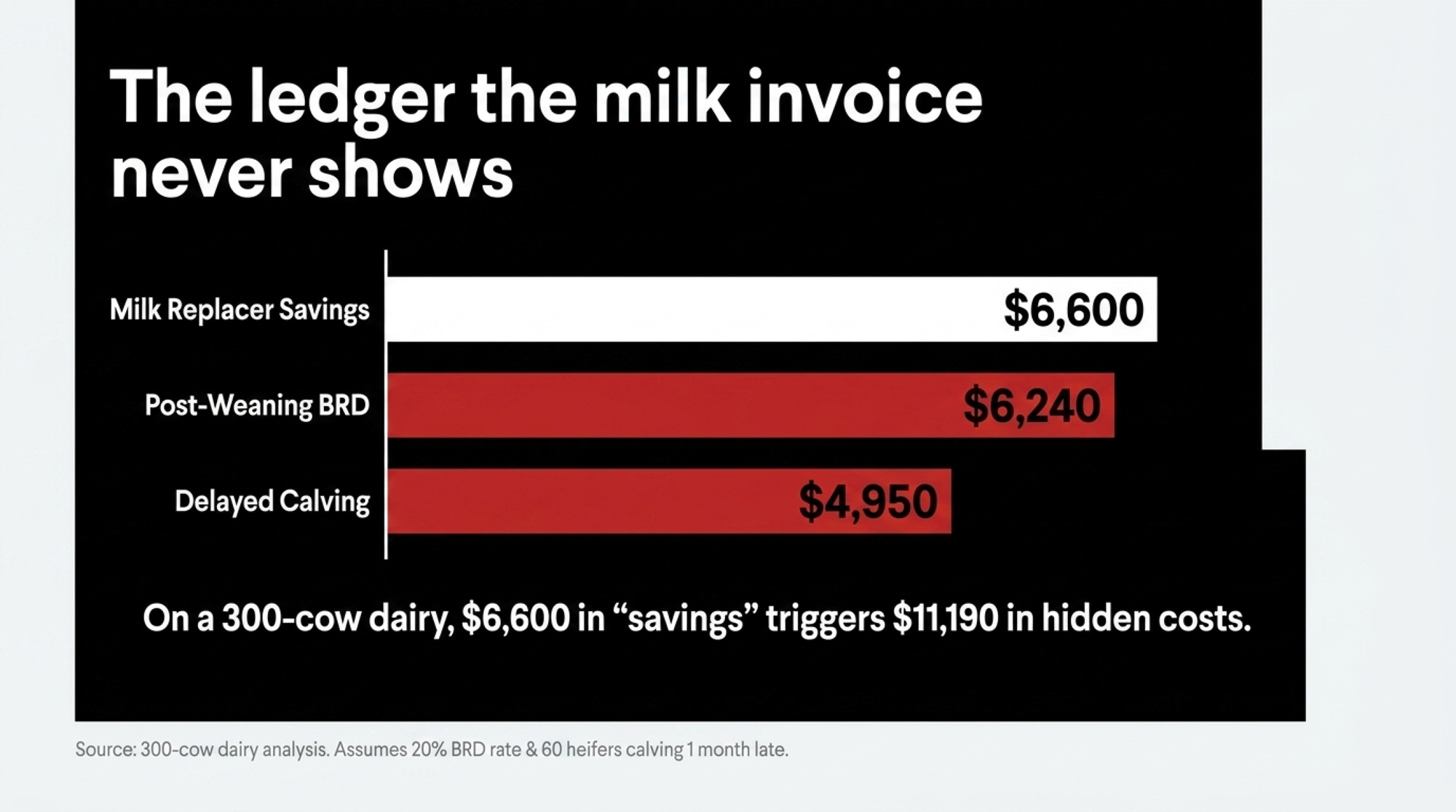
On 120 heifers a year, with a 20% post‑weaning BRD rate:

  • 20% of 120 = 24 cases
  • 24 × $260 = $6,240 per year in BRD cost

Compare that to the milk line:

  • Milk‑replacer “savings”: $6,600/year
  • BRD cost: $6,240/year

On Dave’s books, the money he “saved” on milk replacer was almost entirely eaten by pneumonia, before they even put a number on delayed calving.

Rumen Biology Doesn’t Care About Your Calendar

The next question was simple: “Why are so many calves getting sick after weaning?”

Dave’s nutritionist pulled out rumen‑development work from Jim Quigley and the latest weaning review from Aarhus University.

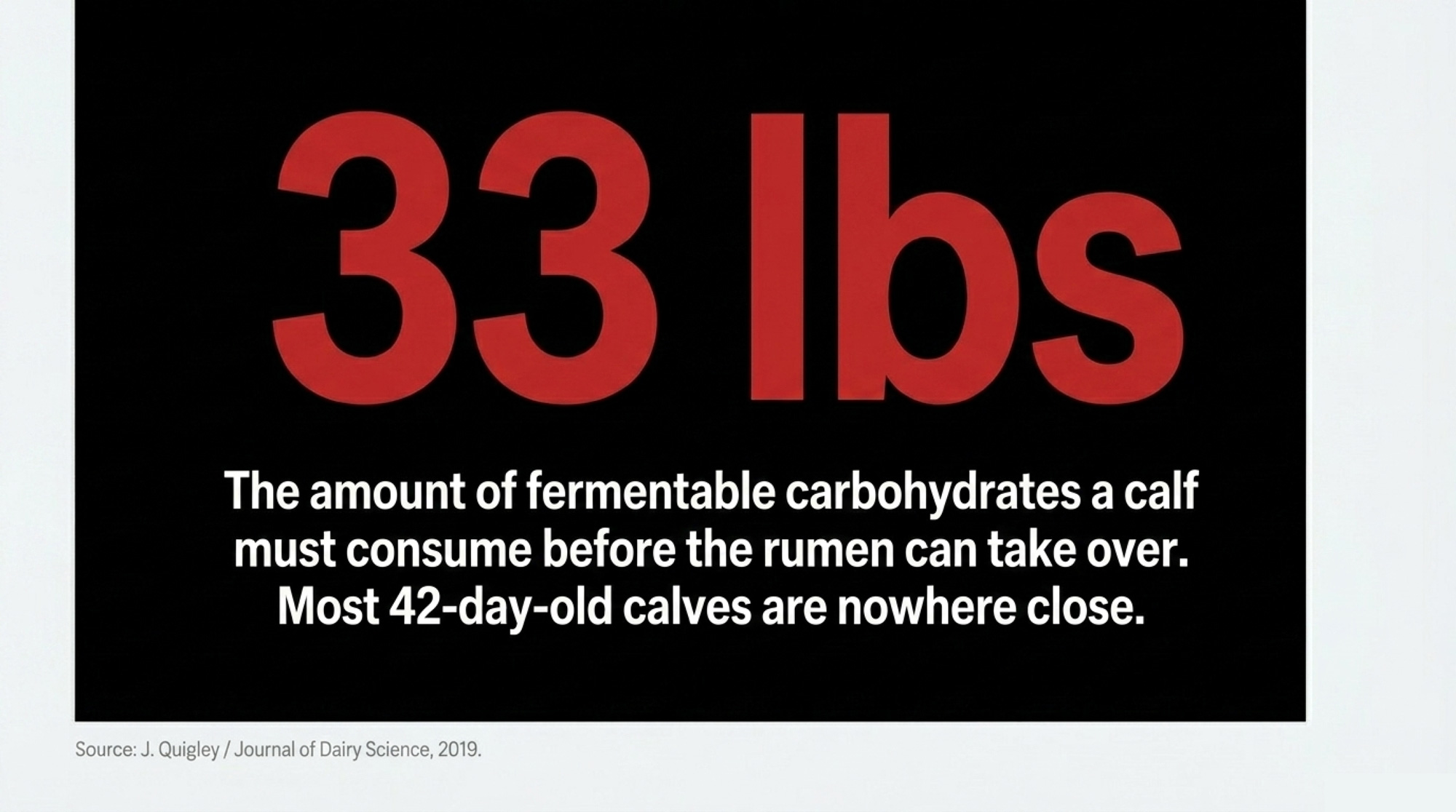
Quigley, through Calf Notes and a 2019 Journal of Dairy Science review, has pushed a specific biological threshold: a calf needs roughly 15 kg of cumulative non‑fiber carbohydrates (NFC) from starter — about 33 lb of fermentable carbohydrate — before the rumen is truly ready to take over.
The Bullvine walked through his math earlier this year:

  • On a typical 8‑week program with 6 L of milk per day, many calves only get to around 11.5–13 kg of cumulative NFC from the starter by day 56 — 1.5–3.5 kg short of the 15 kg target. 
  • On higher‑milk programs, calves often don’t hit that 15 kg NFC mark until week 9 or 10, because liquid keeps them full and slows grain intake. 

That tracks with what you see in real barns: big, shiny 6‑week‑old calves that still hardly touch the starter bucket.

A 2024 systematic review in the Journal of Dairy Science by Welk, Neave, and Jensen compiled 44 studies on weaning practices. Their conclusions matched the barn experience:

  • Calves weaned later, over longer durationsbased on starter intake, or using step‑down milk removal, were more likely to show positive growth and intake responses
  • Weaning based on starter intake produced superior growth and feed intake compared with fixed‑age, earlier weaning.
  • When pre‑weaning milk allowances were adequate (over about 6 L/day), weaning after 8 weeks supported superior weight gain

At 42 days, when Dave pulled the last bottle, most of his calves were barely at a pound of starter a day. Some less. Nowhere near the 2+ lb/day that corresponds to Quigley’s 15 kg NFC target over time.

The milk disappeared anyway.

Extension recommendations from Penn State, Cornell, and the Canadian Dairy Code of Practice all push in the same direction: don’t fully wean Holstein‑size calves until they’re consistently eating roughly 2–3 lb of starter per day for several consecutive days. That’s just a practical way of making sure biology has caught up.
When you wean on a calendar date instead of an intake gate, you’re betting that rumen development is done just because the chart says “day 42.”

How a Rough Weaning Turns Into a 25‑Month Calving Problem

The pneumonia cases were obvious. The weaning slump was there too: calves coughing, sulking, backing off the starter for a week or ten days, then slowly coming around.

What wasn’t obvious was how those ten days of weaning showed up in the heifer yard.

The Welk review and several individual trials report that calves weaned later and more gradually not only eat more starter but also gain more weight per day around weaning and carry a bodyweight advantage through the post‑weaning period, especially when milk is generous pre‑weaning. Those gaps don’t magically close.

Now put heifer economics on top of that biology.

Iowa State University’s 2024 “What’s it Cost to Raise Your Dairy Best Heifer?” budget for a conventional 26,000‑lb herd shows:

  • Total cost to raise a heifer to 24 months: about $2,651
  • Daily heifer cost: roughly $2.65/head/day when you underload labor, up to about $3.15/head/day when labor is fully charged

The same ISU sheet runs the economics of tightening that up:

  • Cutting the heifer‑raising period from 24 to 23 months saves about $93 per heifer

Work it the other way:

  • Take a midpoint of $2.75 per day
  • One extra month ≈ 30 × $2.75 = $82.50 per heifer

When Dave’s team pulled his calving records, plenty of heifers were freshening closer to 25 months than 24. Many of those files carried simple notes like “small, waited.”

If half of his 120 heifers — 60 head — were calving just one month later than they needed to because they never quite caught up post‑weaning, that’s:

  • 60 × $82.50 ≈ $4,950 per year in extra heifer costs

Stack that on top of the BRD bill:

  • BRD: $6,240/year
  • Extra heifer month: $4,950/year
  • Total downstream cost: $11,190/year

Compare that to the weaning savings:

  • Milk‑replacer “savings”: $6,600/year
  • BRD + AFC cost: $11,190/year

On Dave’s farm, the 6‑week calendar program wasn’t saving money. It was quietly burning about ,600 a year once the heifer and health costs were on the same page.

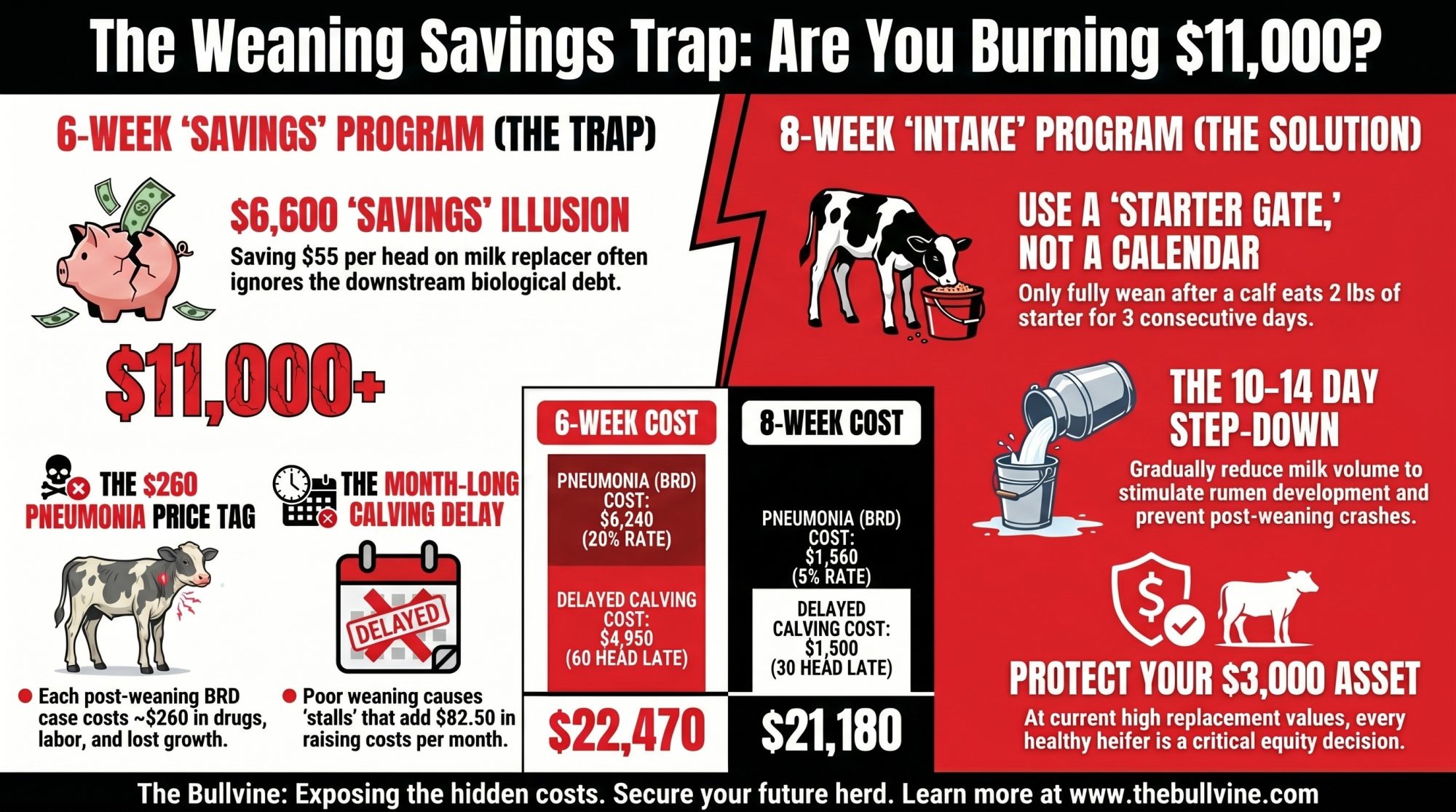
Cost Line6‑Week ‘Savings’ Program7–8 Week Intake‑Based Program
Milk replacer per year$11,280$18,120
BRD cost per year$6,240$1,560
Extra AFC/heifer‑day cost$4,950$1,500
Total annual heifer program cost$22,470$21,180

The Before‑and‑After Ledger on a 300‑Cow Herd

Once all three lines — milk replacer, BRD, and age at first calving — were in front of him, Dave could finally see what the weaning program was really doing.

Here’s how his example pencils out.

Assumptions (Dave’s Numbers)

  • Herd: 300 Holstein cows
  • Heifers raised/year: 120
  • Milk replacer price: $1.80/lb (contract)
  • BRD cost per case: $260, midpoint of the published $252–282 per case range. 
  • Post‑weaning BRD incidence (first 30 days):
    • Old 6‑week program: 20% (24 heifers)
    • New intake‑based program: 5% (6 heifers)
  • AFC drift:
    • Old: 60 heifers calving ~1 month late
    • New: 30 heifers calving ~10 days late on average

Old 6‑Week Calendar Program

Milk replacer:

  • 52.5 lb/calf × $1.80 ≈ $94.50 → $94 per calf
  • 120 × $94 ≈ $11,280 per year

BRD cost:

  • 20% of 120 = 24 BRD cases
  • 24 × $260 = $6,240 per year

AFC drift cost:

  • 60 heifers × $82.50 ≈ $4,950 per year

Total:

  • $11,280 + $6,240 + $4,950 ≈ $22,470 per year

New Intake‑Based 7–8‑Week Program

Milk replacer:

  • 84 lb/calf × $1.80 ≈ $151.20 → $151 per calf
  • 120 × $151 ≈ $18,120 per year

BRD cost:

  • 5% of 120 = 6 BRD cases
  • 6 × $260 = $1,560 per year

AFC drift cost:

  • 30 heifers drifting ~10 days: 10 × $2.75 ≈ $27.50/hd
  • 30 × $27.50 ≈ $825 per year
  • For simplicity, Dave’s team rounded this up to about $1,500 per year to stay close to ISU’s $93 per heifer‑month and acknowledge some extra variation. 

Total:

  • $18,120 + $1,560 + ~$1,500 ≈ $21,180 per year

Even with conservative rounding, the intake‑based 7–8‑week program came out roughly $1,300/year cheaper than the old 6‑week system on Dave’s farm.

Change the incidence rates or costs, and the gap will move. In some herds with very low BRD and tight AFC, 6‑week weaning might still hold its own on a full ledger.

The point is: until you put your own numbers into a similar layout, you’re guessing.

Why Those Dollars Matter More at $3,000 Heifer Values
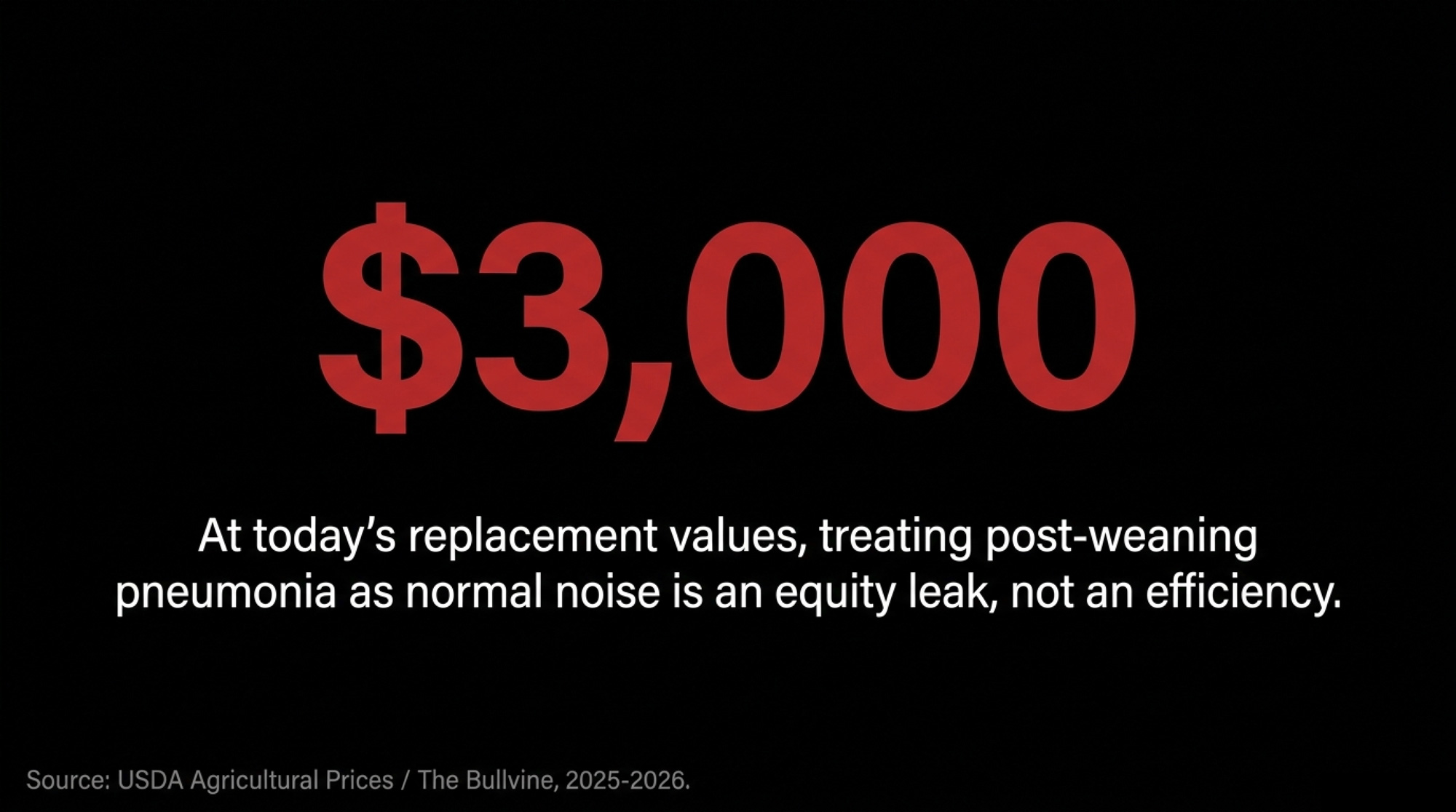
If replacements were cheap and plentiful, you might treat this like a nice‑to‑have improvement.

That’s not the market you’re in.

USDA’s Agricultural Prices reports and Ag Proud coverage show U.S. replacement cow prices averaging about $3,110 per head in October 2025, up roughly 3% from July and 16% from October 2024. By early 2026, averages had eased to around $2,860, but they were still high compared with prior years.

BRD Impact Line ItemConservative Cost per CaseCapital Context at ,000 Heifers
Drugs + vet timeSmall part of total loss
Lost early growth + delayed heat–0Pushes AFC toward 24.5–25+ months
Higher culling/poor first lact.0–0Lost future milk and genetics
Total economic hit per case≈2–28–9% of a ,000 heifer’s value

A Bullvine analysis across multiple datasets pegged average replacement heifers at about $3,010 per head in early 2026, with U.S. heifer inventories likely to tighten further before any meaningful rebuild around 2027.

At those values, every replacement in your place quietly carries a $2,800–$3,100 asset tag.

A BRD case that knocks a heifer out of your pipeline or drags down her first‑lactation performance is not just a sick‑calf problem. It’s an equity decision.

The same goes for age at first calving. If your heifers are freshening closer to 25 months than 22–24, you’re not just feeding a little extra grain. You’re tying up capital in animals that aren’t milking yet.

So the real question stops being, “How can I save $55 per calf on milk replacer?”

It becomes:

“At $3,000 per heifer, how much BRD and delayed calving am I willing to buy for a milk‑replacer ‘savings’ that only shows up if I ignore biology and time?”

What Changed in Dave’s Barn: From Calendar to Intake

Dave didn’t flip his program because somebody told him 6‑week weaning was “wrong.” He changed because his own numbers — and a few published ones — said the calendar was costing him.

The decision they made was simple:

  • The calendar no longer decides when a calf is weaned.
  • The calf’s starter intake does.

Three practical changes were made that are real.

1. Intake Became a Gate, Not a Guess

They added one line to the calf card:

“3 days at ~2 lb starter before full wean? Y/N”

Then they did a five‑minute exercise:

  • Weighed a full scoop of their calf starter and wrote on the wall: “1 scoop ≈ X lb.”

From that point forward:

  • No calf was fully weaned until she had eaten roughly 2 lb of starter per day for three consecutive days — verified with the scoop.
  • If she wasn’t there at day 42, she kept her last feeding until she hit that gate.

This lines up with Quigley’s 15 kg NFC concept — calves need to accumulate around 31–34 kg of starter at typical NFC levels to reach that threshold — and with Drackley’s extension‑level recommendation of ≥1.5 kg/day (3.3 lb) of starter dry matter for several days before full weaning.

It also mirrors what Penn State, Cornell, and the Canadian Code of Practice have been saying in plainer language: use starter intake as your weaning trigger, not age alone.

2. They Stretched Weaning Into a Planned 10–14‑Day Step‑Down

Under the old program, the milk schedule went from “full” to “none” at 6 weeks. No ramp.

Expense Category6-Week “Savings” Program8-Week “Intake” ProgramImpact of Change
Milk Replacer$11,280$18,120+$6,840 (Cost)
BRD/Pneumonia$6,240 (20% rate)$1,560 (5% rate)-$4,680 (Saving)
Delayed Calving (AFC)$4,950 (60 head late)$1,500 (30 head late)-$3,450 (Saving)
TOTAL ANNUAL COST$22,470$21,180-$1,290 (Net Gain)

Under the revised program, they:

  • Cut milk volume by about 50%, roughly two weeks before the earliest possible weaning window.
  • Held that reduced feeding while watching starter intake.
  • Pulled the last feeding only after the intake gate was met.

In practice, that meant:

  • Step‑down starting somewhere in week 6
  • Full weaning happens in week 7 or 8 for most calves, depending on their starter intake

That’s exactly the pattern the 2024 Welk review found supported smoother growth: calves weaned later, over longer durations, and based on intake had better performance through the transition, particularly when pre‑weaning milk allowances were higher.

For Dave, the visible payoff was fewer calves crashing when milk disappeared and fewer heifers falling behind by the time they hit breeding pens.

3. They Changed the Starter to Pay for the Program

The last piece was feed, not philosophy.

Dave and his nutritionist swapped out a fine, dusty pellet for a textured starter with visible grain and enough fermentable starch to actually drive rumen development. If you want calves to hit 2 lb/day before weaning, the starter has to be something they want to eat.

They also moved to a starter that included a Saccharomyces cerevisiae fermentation product (SCFP). A 2022 Journal of Dairy Science trial found that calves fed SCFP had better post‑weaning growth and feed efficiency and required fewer respiratory treatments through four months of age, even though pre‑weaning gains were similar between groups. A 2024 review on SCFP as a postbiotic outlined how these products may support immune and rumen function in calves and cows.

Weaning Feature6‑Week Calendar ProgramIntake‑Based 7–8 Week Program
Weaning triggerFixed age (42 days)Starter intake (~2 lb/day × 3 days)
Weaning durationAbrupt, <3 days step‑downPlanned 10–14 day step‑down
Post‑weaning BRD in first 30 days20% of heifers (24/120)5% of heifers (6/120)
Typical starter intake at full weanOften <1 lb/day2–3 lb/day
Heifers calving ≥1 month late (per yr)60 head30 head (about 10 days late)
Annual extra AFC + BRD cost≈$11,190≈$3,060

You can waste a lot of money on additives that don’t pay. In this case, the economics looked reasonable:

  • If better palatability and SCFP‑supported gut health pull starter intake forward and trim just a handful of $252–282 BRD cases per year.
  • The extra cost of a higher‑end starter becomes cheap insurance relative to $3,000 heifers.

Three Economic Paths for Your Weaning Program

Not every herd is Dave’s herd. Your BRD rates, milk replacer price, labor, and heifer inventory pressure will look different.

But the decision paths are similar.

Path 1: Defend 6‑Week Weaning With Your Own Data

Early weaning can still make economic sense in some herds.

When this path works:

  • Your post‑weaning BRD incidence in the first 30 days is consistently in the single digits.
  • Calves are reliably eating 2+ lb of starter per day by day 40–42.
  • Your heifers are calving around 22–24 months without a pattern of “small, waited” notes.

What it demands:

  • At least 12–24 months of calf treatment and AFC records you actually trust.
  • A simple intake check to avoid assuming calves are at 2+ lb when they aren’t.

If those numbers look good, your 6‑week program may genuinely be a savings strategy rather than a hidden cost.

If you don’t have the records, you’re not defending 6‑week weaning. You’re just hoping it’s fine.

Path 2: Triage High‑Risk Calves Into 7–8‑Week Intake‑Based Weaning

You don’t have to flip the whole calf barn at once.

Triage play:

  • Keep the 6‑week target as your default on paper.
  • Any calf that hasn’t hit your 2 lb/day intake gate by day 40–42 gets pushed into a 10–14‑day step‑down and weaned later, once she meets the gate.
  • Track BRD and 90‑day weights for this group separately.

Economics:

  • You spend more milk replacer only on calves that are biologically behind the curve.
  • These are often the same calves driving your post‑weaning BRD and extra heifer months, so improvements here have outsized ROI.

This path works well for herds that have:

  • Reasonable calf labor and discipline.
  • Chronic trouble with a specific band of high‑risk calves.

Path 3: Redesign Weaning Around Heifer ROI and $3,000 Replacements

If your post‑weaning BRD rate is in the teens or higher and your average AFC is drifting toward 24.5–25+ months, it may be time for a full reset.

What a redesign includes:

  • A standard intake gate (for example, “3 days at ~2 lb starter before full wean”).
  • A built‑in 10–14‑day step‑down that fits your chore rhythm.
  • A starter that calves actually consume, with formulation aimed at hitting Quigley’s 15 kg NFC before milk disappears.
  • Routine pricing of BRD and heifer days off your own numbers — not generic assumptions — at least once a year.

When this path pays fastest:

  • You’re raising your own replacements in a high heifer‑value environment ($2,800–3,100/head).
  • You have a clear pattern of post‑weaning disease and delayed calving.
  • You’re thinking about heifers as capital investments, not just “the young stock.”

What This Means for Your Operation

  • If your post‑weaning BRD incidence is above roughly 15–20% and you’re weaning at 6 weeks, assume your weaning program is a financial risk, not an efficiency. Once each case is priced around $252–282, and you add the cost of extra heifer days, the milk‑replacer “savings” look a lot like Dave’s — quickly eaten up by disease and delayed calving. 
  • If your average age at first calving is north of 24 months, treat that as a calf‑program red flag, not just a breeding issue. ISU’s 2024 budget puts the cost of an extra heifer month around $80–100, depending on labor. Until you understand why your heifers are late, your biggest heifer‑cost lever is probably in the calf barn. 
  • If you don’t have a simple starter‑intake gate built into your weaning protocol, you’re making a capital decision with no biological checkpoint. A weighed scoop and a “3 days at ~2 lb starter? Y/N” checkbox turn that into a gate you can manage and adjust.
  • If you’re valuing or buying heifers at $2,800–3,100 and still treating BRD as a $40 problem, you’re underpricing your own risk. Using the $252–282 per‑case economics for heifer BRD puts you in the right ballpark for capital‑level decisions, not just vet‑bill conversations. 
  • If you want a 30‑day move that doesn’t blow up your chores, start with a BRD + AFC audit. In the next month, pull 12–24 months of calf/heifer records, count your BRD cases in the first 120 days (especially the 30 days post‑weaning), calculate your own BRD cost (cases × ~$260), measure how much later BRD heifers calved, and put that next to your milk‑replacer “savings.” That one piece of paper will tell you whether your current weaning program is defensible or overdue for a redesign.
Key Takeaways

  • If your post‑weaning BRD rate is roughly 15–20% and you’re relying on a 6‑week calendar, the odds are high that you’re not actually saving money on milk replacer once you factor in BRD and delayed calving.The $6,600 that looks like savings in the calf‑feed column can be more than offset by $11,000‑plus in disease and extra heifer days on a 300‑cow herd. 
  • If your average age at first calving is over 24 months, each additional month quietly costs you about $80–100 per heifer. Until that distribution is under control, your fastest heifer‑cost improvement usually sits in intake‑based weaning and grower management, not just semen choice or breeding targets. 
  • If you’re not using starter intake as a weaning gate, your weaning program is a guess, not a strategy.Adding a simple intake trigger and a 10–14‑day step‑down is one of the cheapest, cleanest risk‑management moves you can make in the heifer enterprise.
  • If you’re handling $3,000 heifers in a tight inventory market, treating pneumonia and late calving as “normal noise” is an equity decision. The question isn’t just “Can we live with it?” It’s “Is this the risk position we want to own at today’s heifer values?”
The Bottom Line

Dave didn’t walk away from the 6‑week weaning because someone told him it was outdated. He walked away because, once he stacked his milk‑replacer spend, post‑weaning BRD cases, and ages at first calving on the same ledger, the numbers said the calendar was quietly burning cash.

If you pulled the same reports for your herd and laid them out side by side, would your weaning program look like a savings strategy — or like a risk position you haven’t really priced yet?

The numbers above are built on a 300-cow Wisconsin example with one contractor milk-replacer price and two BRD incidence scenarios. Your herd runs on different inputs — and the answer changes fast when you swap in your own BRD rate, your own replacer cost, and your own AFC. Use the calculator below to run the same ledger with your numbers.

Learn More

The Sunday Read Dairy Professionals Don’t Skip.

Every week, thousands of producers, breeders, and industry insiders open Bullvine Weekly for genetics insights, market shifts, and profit strategies they won’t find anywhere else. One email. Five minutes. Smarter decisions all week.
NewsSubscribe
First
Last
Consent

How Calving Ease and Age at First Calving Drive Milk Production

Boost milk production with calving ease and age at first calving. Are you maximizing these factors?

Summary: Calving ease and age at first calving (AFC) significantly influence dairy cow productivity and health. Research on over a million calving events across 687 farms reveals that higher calving ease (CE) scores negatively impact milk production and components like fat and protein. The study also shows a relationship between AFC and CE, with optimal ages varying by breed. Proactive management, including diligent data recording, genetic selection, and proper nutrition, can mitigate CE issues and enhance milk yield. These findings underscore the importance of strategic breeding and management practices for dairy success.

  • Higher calving ease (CE) scores can negatively impact milk production, fat, and protein components.
  • There is a significant relationship between age at first calving (AFC) and CE, with optimal ages depending on breed.
  • Proactive calving management can help reduce CE issues and improve milk yield.
  • Diligent data recording is essential for managing CE and AFC effectively.
  • Genetic selection plays a crucial role in enhancing calving ease and productivity.
  • Proper nutrition is foundational for successful calving and increased milk production.
  • Strategic breeding and management practices are key to dairy farm success.
calving ease, age at first calving, dairy farm output, operation success, CE scores, complex deliveries, cow and calf issues, herd health, milk production, fat composition, protein composition, difficult deliveries, calf growth, first few days of life, increased productivity, healthier animals, AFC, young female cow, milk output, farm profitability, optimal AFC, Holsteins, Jerseys, overall herd health, smoother calvings, milk yield, milk composition, negative consequences, high CE scores, proactive approach, managing CE, managing AFC, diligent monitoring, recording data, genetic selection, nutrition, calving management, regular health checks, peer networking, continuing education, favorable genetics, optimum feed, watchful care, milk production improvement, herd health improvement, productivity improvement

Have you ever wondered why some cows produce more milk than others? Surprisingly, the solution often rests in events before the milking process starts. Calving ease and age are crucial but usually ignored elements influencing dairy farm output. Understanding these critical variables may mean the difference between standard and exceptional milk output.

In this post, we’ll look at the subtleties of calving ease and age at first calving, using data from an extensive survey of 687 dairy farms in the United States. We’ll look at how these variables affect your cows’ milk output, energy-corrected milk, and the fat and protein composition of the milk. What’s the goal? To provide you with practical information that will help you maximize your herd’s performance and, eventually, your bottom line.

The Importance of Calving Ease 

Have you ever considered how calving ease (CE) impacts the success of your dairy operation? As stated, CE describes how cleanly a cow gives delivery. Higher ratings suggest more complex deliveries, which may lead to issues for the cow and the calves.

CE scores vary from 1 to 5, with one indicating ease and 5 indicating great difficulty. These values are essential because difficult calvings may influence overall herd health and production. For example, calvings with a CE score of more than two considerably impact milk production (MP) and the fat and protein composition of the milk. Cows earning a 4 in CE showed a significant drop in milk production, with the lowest lactation peaks among the tested breeds: Holstein (43.1 kg/d), Jersey (35.8 kg/d), and dairy hybrids.

But it isn’t just about the milk. Complications associated with difficult deliveries can affect calf growth. Poor CE scores may slow calf development, making the first few days of life especially more essential. The research, which comprised over 1 million CE observations from 687 dairy farms in the United States, offers critical insights into these effects.[[Source

Understanding and increasing CE may help your dairy farm achieve increased productivity and healthier animals. So, the next time you analyze herd performance, consider how CE ratings may impact your bottom line.

Understanding Age at First Calving (AFC)

The age at first calving (AFC) is when a young female cow (a heifer) gives birth for the first time. This milestone is essential in dairy production for a variety of reasons. Proper AFC may significantly improve milk output, herd health, and farm profitability.

Why AFC Matters 

Your cows’ AFC has an impact on their long-term production and health. For example, optimum AFC may result in higher milk production and more efficient reproductive function. Conversely, premature or severely delayed calving might have unfavorable consequences. So, what is the ideal AFC for various breeds?

Optimal AFC for Different Breeds 

According to research, the ideal AFC differs by breed. For Holsteins, the optimal AFC is about 27 months, whereas for Jerseys, it is around 22 months. This is based on thorough research that included 794,870 calving ease (CE) observations from many breeds.

The AFC-Milk Production Connection 

Your cows’ milk output is strongly linked to their AFC. Cows who calve at the appropriate age produce more milk, peak sooner, and have superior overall health. Cows having a CE score of more than 2 demonstrated a decrease in milk output and components. A CE score of 4 indicated the lowest milk output, with Holsteins, Jerseys, and crossbreeds producing 43.1, 35.8, and 39.2 kg/d of milk at peak lactation, respectively.

AFC and Herd Health 

In addition to milk production, AFC influences overall herd health. Cows who calve at the right age have fewer difficulties and higher fertility and survival rates. Breeding at the correct time helps avoid the hazards of early or late births, lowering veterinary expenditures and boosting the herd’s overall health.

Connecting Calving Ease (CE) and Age at First Calving (AFC): Impacts on Milk Production 

Connecting calving ease (CE) with age at first calving (AFC) provides insights for dairy producers. The research demonstrates that both variables have a considerable impact on milk output. Let’s see how.

First, calving ease is critical. When the CE score exceeds 2, the milk supply diminishes. Cows with a CE score of 4 produce much less milk, with Holsteins averaging 43.1 kg/d, Jerseys 35.8 kg/d, and dairy crosses 39.2 kg/d. Difficult calvings might reduce a cow’s capacity to produce milk efficiently. These limitations apply to raw milk output, energy-corrected milk (ECM), and fat and protein content.

Age at first calving (AFC) is equally important. According to the research, AFC has a quadratic effect on CE. Holsteins calving at 27 months and Jerseys at 22 months had the lowest CE values. Younger cows—those calving for the first time—tended to have smoother calvings, maximizing milk yield and composition.

The age at first calving also impacts CE’s effect. When AFC is included as a covariate, previously observed CE interactions with covariates, such as calf sex and breed, become less significant. The ideal AFC mitigates the negative consequences of high CE scores, resulting in increased milk output and healthier cows.

So, what is the takeaway? Careful management of both CE and AFC may dramatically increase your herd’s output. Ensure your cows calve easily and at the appropriate age to optimize their milk production potential. Your efforts may increase milk production, better energy-corrected milk, and more significant fat and protein content, providing more value and efficiency in your dairy business.

Boosting Milk Production: The Impact of Calving Ease and Age at First Calving

According to a survey of 687 dairy farms, cows with a calving ease score of more than 2 had lower milk output and components, with the lowest values recorded in cows with CE = 4 (source). For example, Holstein, Jersey, and dairy crosses (XD) with CE = 4 showed the lowest milk lactation peak (MLP), averaging 43.1, 35.8, and 39.2 kg/d, respectively. The study found that the linear and quadratic components of Age at First Calving (AFC) were significant, emphasizing the need to regulate CE and AFC to achieve optimum output results.

The research found that cows birthing males had higher CE scores, with Holsteins having the lowest CE at 27 months and Jerseys at 22 months AFC. Addressing these factors may increase production and improve overall dairy farm performance (source).

A Proactive Approach to Managing CE and AFC Here are some actionable tips:

To boost milk production, a proactive approach is essential when managing Calving Ease (CE) and Age at First Calving (AFC). Here are some actionable tips: 

Monitor and Record Data Diligently 

Accurate data collection is critical. Record each cow’s CE and AFC scores regularly. Technology, such as herd management software, can be used to arrange this data. Having more data helps you better analyze patterns and make educated choices.

Genetic Selection is Key 

Choose breeding bulls with a verified low CE score. According to studies, the lowest CE is often found in certain breeds at ideal AFCs—27 months for Holsteins and 22 months for Jerseys. (https://www.thebullvine.com/news/impact-of-accelerated-age-at-first-calving-on-dairy-productivity-and-fertility-a-comprehensive-study/). Investing in sound genetics is the first line of defense.

Nutrition: The Foundation of Success 

Ensure that your cows get an adequate diet according to their life stage. Proper feeding may significantly decrease calving problems. Consult a nutritionist to develop a food plan for the dam and calf.

Utilize Proper Calving Management 

Please keep a watchful eye on cows approaching their calving season. Provide a clean and pleasant birthing environment, and be prepared to help if issues develop. Early management may reduce severe CE scores and protect the health of both the cow and the calf.

Optimal Age at First Calving 

Choosing the optimal AFC requires examining both breed and individual cow circumstances. While 22-27 months is typically considered optimum, it altered according to herd statistics. First, heifers should be well-developed but not too conditioned.

Regular Health Checks 

Schedule regular veterinarian appointments to detect any health problems early. Healthier cows often produce easier calves and perform better overall.

Peer Networking and Continuing Education 

Connect with other dairy farmers and industry professionals. Join forums, attend seminars, and get industry publications. Sharing experiences and keeping current on new research may help you implement best practices.

You may improve milk production and the health and productivity of your herd by closely monitoring CE and AFC, selecting for favorable genetics, maintaining optimum feed, and giving watchful care.

The Bottom Line

We’ve examined how Calving Ease (CE) and Age at First Calving (AFC) might improve your herd’s output and overall performance. According to the study, decreased CE scores and appropriate AFC are necessary for increased milk output and healthy cows. By regularly monitoring these indicators, making educated genetic decisions, and concentrating on better nutrition and calving management, you may significantly increase the performance of your dairy farm.

So, here’s a question: Are you ready to take the next step and use these tactics to maximize your dairy farm’s potential?

Implement these tips immediately to see your herd and bottom line grow!

Learn more: 

The Future of Dairy Farming: Insights for US and Canadian Farmers!

Uncover the future of dairy farming in Canada and the US. How will trends and tech reshape your farm? Stay ahead with expert advice and insights.

Summary: In an era where the dairy farming industry faces increasing environmental and economic pressures, the future of dairy farming in Canada and the US stands at a crossroads. Competing approaches in these neighboring nations present both challenges and opportunities. While Canada adheres to a regulated dairy supply management system, the US capitalizes on economies of scale, impacting herd size, sustainability, and technological integration. Expert insights from Dr. Jack Britt and Carlyn Peterson reveal how these differing methodologies shape the landscape, with Canada’s costly entry hindering expansion despite profitability and the US’s larger, more efficient farms driving growth. Advancements in data analytics, AI, and sustainable practices, like reducing protein in cow diets and enhancing manure management, are pivotal for the future. The dairy industry in North America must embrace innovative technologies while considering the unique economic frameworks of each country to ensure a sustainable and profitable future.

  • Canada’s regulated dairy supply management system ensures balanced milk production but imposes high entry costs, hindering expansion.
  • The US dairy industry leverages economies of scale, resulting in larger, more efficient farms that drive growth despite market fluctuations.
  • Environmental and economic pressures are significant challenges for the dairy farming industry in both Canada and the US.
  • Technological advancements such as data analytics, AI, and automation are revolutionizing dairy farm management, improving efficiency and sustainability.
  • Expert insights emphasize the importance of integrating sustainable practices, such as reducing protein in cow diets and enhancing manure management.
  • Adopting innovative technologies is crucial for ensuring a sustainable and profitable future for the dairy industry in North America.

Warning: The Dairy Farming Secrets That Could Make or Break Your Future! The dairy industry in North America is at a pivotal crossroads, brimming with potential for growth and innovation. With rapid technological advancements and evolving market dynamics, Canadian and American dairy farmers face an unprecedented wave of change.  Two leading experts shared their insights at the Animal Nutrition Conference of Canada. Dr. Jack Britt, professor emeritus at North Carolina State University and chair of the Advisory Committee at the North Carolina Biotechnology Center, and Dr. Carlyn Peterson, dairy technical manager at Selko, a Nutreco brand specializing in specialty feed additives, delved into what lies ahead for the industry with a strong focus on sustainability. Here’s a glimpse into their visionary take on where dairy farming is headed.

Spotlight on Herd Size: A Comparative Analysis by Dr. Jack Britt 

“Currently, the average herd size in the USA is about 350 cows and in Canada about 90 cows,” notes Dr. Jack Britt, Professor Emeritus at North Carolina State University and Chair of the Advisory Committee at the North Carolina Biotechnology Center. 

Canadian Approach to Dairy Farming 

According to Britt, the US and Canada approach herd size management quite differently:  

“Canada has a system focused on balancing supply and demand by making it very expensive to start a dairy farm or increase herd size. This supply management system makes dairying profitable but creates a strong hindrance for farmers or families wanting to start new dairy herds. The quota fee for adding one new cow to a herd in Canada varies among provinces but can reach CAD$40,000 per head or more. This is not a true free-market system, but it meets the needs of the dairy industry and Canada’s population.”

Britt further explains this through a conversation with a young Canadian dairy farmer using a robotic milking system for almost 40 cows, the maximum the robot can service:  

“If he added a robot, he could nearly double his herd size, but the fee to add 30 cows would be two to three times the cost of the cows and the new robotic milking unit,” says Britt. 

US Dairy Farming Dynamics 

However, in the US, the startup costs are generally tied to land, cows, and facilities. US dairy herds tend to be larger, especially west of the Mississippi River, with New Mexico’s average milking herd size now at around 2,500. 

Britt notes, “Most larger dairy farms in the US milk cows three times per day around the clock, using land, animals, and equipment to their fullest extent, thus minimizing the cost of milk production.” 

Future Projections and Technological Integration 

Britt expects US dairy farms to continue growing in size due to increased efficiency and profitability per unit of milk. He also anticipates using more robot milking systems as farm labor becomes more costly.  

He notes, “We may have to start recruiting from other parts of the world. “Hourly pay is increasing quickly on farms.”

Carlyn Peterson Sheds Light on the Sustainable Transformation of Dairy Farming 

Dr. Carlyn Peterson, Dairy Technical Manager at Selko—a Nutreco brand specializing in feed additives—recently shared insights at the Animal Nutrition Conference of Canada, emphasizing the future of dairy farming with a sustainability lens. She highlighted the exceptional efficiency of the US dairy herd, which ranks fourth most significant in size globally but second in production levels, a testament to ongoing advancements. 

Peterson attributed these productivity gains to several factors: increased heifer growth rates, reduced age at first calving, optimized total mixed rations tailored for age and lactation stages, strategic genetic selection for enhanced productivity, longevity, and efficiency, and the widespread application of artificial insemination. 

On the sustainability front, dairy farmers are making strides by reducing protein in cow diets, utilizing more effective feed additives, and improving crop production and manure management. Peterson remarked, “I think small changes implemented together will continue to enhance the efficiency of our dairy systems, leading to better environmental sustainability. Additionally, many promising technologies to reduce enteric methane are still on the horizon. Precision feeding optimally meets animal requirements, and practices like increasing the average number of lactations and improving animal handling and husbandry will further progress environmental sustainability.” 

However, Peterson acknowledged the challenges in operationalizing these strategies, especially for enteric methane mitigation. “We are largely unaware of how additives combine, whether their results are fully additive or a mix of addition and subtraction,” she pointed out. “Research is crucial for understanding how to integrate these technologies into diverse individual systems, as variations are significant.”

The Bottom Line

The future of dairy farming in Canada and the US is set for a major shift thanks to technological advancements and sustainable practices. Canada focuses on sustainability and community, using smaller herd sizes to emphasize quality. In contrast, US farms operating on a larger scale prioritize high production with advanced technologies. Both countries are adopting data analytics and AI for optimal dairy farm management. This tech integration boosts productivity and aligns with ethical, sustainable farming demands. Canada and the US are setting global benchmarks by embracing innovation. As we look ahead, industry stakeholders must invest in R&D, innovative solutions, and collaborations, pushing the dairy sector toward a greener future. Each tech upgrade and sustainable practice adopted today brings us closer to tomorrow’s more ethical and efficient dairy farming landscape.

Calf Rearing Excellence: Finding the Perfect Feeding Plan for Your Farm

Discover how to tailor the perfect calf feeding concept for your farm’s future. Learn key strategies for optimal calf rearing and boost your farm’s profitability.

Calf rearing isn’t just routine—it’s the foundation for a thriving future. The calves we nurture today will be our dairy cows in two years, promising a future of high-yielding, healthy cows. This potential for future success should inspire and motivate you to invest in every aspect of calf rearing. The saying, ‘”the calf is the cow of tomorrow,'” rings true: the care you provide now paves the way for robust calf growth and future high-yielding dairy cows. So, what’s the secret? It’s about finding the right approach for your farm’s unique needs and sticking to it diligently. There’s no one-size-fits-all; the key is tailoring a system that aligns with your farm’s demands. Our article dives into various calf-rearing concepts, highlighting the importance of customized strategies to ensure robust calf growth and future high-yielding dairy cows.

Measuring Farm Success: Average Production Per Day of Life 

One way to gauge farm profitability is by looking at the average production per day of life. This metric is closely tied to calf rearing and reflects the farm’s success. To maximize this, focus on factors like age at first calving, production capability, and longevity. 

Age at First Calving marks the transition from calf to productive cow. Aim for first calving around 24 months, combining early productivity with good health without rushing the process. 

Production Capability: High production comes from well-reared calves. Vigorous, fast-growing calves are more likely to be high-producing cows. Focus on good nutrition, building immunity, and managing stress. 

Longevity: Longer productive lives reduce replacement costs and boost farm profitability. Aim for calves that grow fast but are resilient, staying healthy through multiple lactation cycles. 

In essence, optimal calf rearing lays a strong foundation for future success. Clear goals like vigorous and fast growth contribute to long-term productivity. Achieving these goals involves balanced nutrition, timely medical care, and effective management. Align these elements for better average production per day of life, reflecting farm profitability.

Exploring Diverse Feeding Concepts: Personalizing Your Calf Rearing Strategy

In calf rearing, you have various approaches, each offering unique benefits. Here, we’ll explore two feeding methods for the first six months: the Hokovit Super Heifer Method by Hofmann Nutrition AG and the Sano rearing concept from Sano Agricultural Institute. Both are backed by extensive research and practical use. 

Notably, there needs to be more than one-size-fits-all solution. The key is finding the method that fits your farm’s needs. You can raise healthy, productive cows by choosing and rigorously applying the right strategy. Success in calf rearing is not just about following a set of rules, but about personalization and dedication—discover what suits your farm and commit to it.

Prioritizing Health: The Key to the Hokovit Super Heifer Method 

At the heart of the Hokovit Super Heifer Method is a focus on robust calf health from the start. It begins with colostrum feeding, a critical step done as quickly as possible. Recognizing that many high-producing cows may not have optimal colostrum, the Hokovit system includes Calvicol supplementation to enhance quality. Additionally, Hokostar—a vitamin blend that ensures rapid efficacy—boosts immunity and vigor, which are essential in the early phase of life. 

The method includes:

  • A structured nine-week milk feeding program.
  • Targeting up to six liters per day per calf.
  • About 30 kg.

This balanced feeding promotes healthy growth without over-reliance on milk. 

For solid feed, calves are introduced to a concentrate feed formulated with Hokovit’s unique recipe, including the Calvistart micronutrient complex. This optimizes the gut microbiome, enhancing growth rate, feed efficiency, and overall health. Hay is offered free choice alongside the concentrate up to six months of age. Mixing these with molasses into a dry Total Mixed Ratio (TMR) is practical. Each calf typically consumes around 480 kg of concentrate and 200 kg of hay in this period. 

The results of the Hokovit Super Heifer Method are impressive: even with limited milk, calves usually reach an average live weight of 230 kg by six months. This underscores the effectiveness of the method in fostering vigorous, fast-growing calves that are key to profitable dairy operations. These results should give you confidence in the method’s ability to deliver on its promises.

Innovations in Calf Rearing: Insights from the Sano Agricultural Institute 

At the Sano Agricultural Institute in Hungary, an efficient calf-rearing method starts with early colostrum feeding. Each calf gets its first colostrum within 2 hours of birth, supplemented with Cotosan Plus®. Aim to feed around 10-12% of the calf’s body weight. Dr. Norbert Göres highlights the importance of testing colostrum quality with a refractometer to build a robust immune system early on, which is crucial for healthy growth. 

Next, calves follow a restrictive milk feeding plan, receiving up to 12 liters per day or opting for ad libitum feeding within the first three weeks—each meal capped at 4 liters to ensure proper digestion. The milk feeding period extends to 14 weeks to support rumen development, using only Sanolac Startino® with 50% skim milk powder for high-quality nutrition. 

In the second week, robotic feeders will be used in group housing. Regularly check and calibrate these feeders to guarantee accurate and consistent nutrition according to whether the powder quantity is set per liter of feed or water.

The Power of Dry TMR: Balancing Nutrition and Promoting Rumen Health 

A dry Total Mixed Ration (TMR) used during the milk and weaning phases offers numerous benefits. It ensures balanced nutrition, consistent growth, and optimal rumen development. A well-mixed dry TMR encourages uniform consumption, helping to avoid dietary imbalances caused by selective eating. 

Here are practical tips for preparing a dry TMR to avoid selection and support rumen development: 

  • Initial Mixing: Mix chopped hay with molasses to coat it and make it less likely for calves to pick out preferred particles.
  • Pause and Add Ingredients: After the initial mix, pause briefly before adding other dry ingredients. This ensures that the hay is well-coated.
  • Intensive Mixing: Mix at high RPM to achieve a uniform blend without over-mixing, which preserves the molasses’ sticky effect.
  • Monitoring: Regularly check the mix for consistency and adjust to maintain palatability and effectiveness.

These steps will help you create a palatable dry TMR that meets your calves’ nutritional needs and supports a smooth weaning transition.

Streamlining Dairy Farm Management: The Efficiency and Ease of BoviSync

BoviSync is a powerful platform built to simplify dairy farm operations while gathering and evaluating essential data. The BoviSync Mobile App enhances farm efficiency by standardizing tasks, ensuring each job is done consistently and accurately. This streamlines daily activities and dramatically aids in training new employees, easing their transition into the farm’s workflow. 

Standardized procedures mean everyone follows the same steps, ensuring uniform animal care and operational efficiency. The app documents critical events and actions like administering colostrum, monitoring calf health, and tracking growth, ensuring all necessary data is easily accessible for analysis. 

For new employees, BoviSync is a game-changer. The step-by-step guidance helps newcomers quickly learn and follow established protocols, minimizing the learning curve. This ensures everyone, new or experienced, works in harmony, boosting overall productivity and animal health on the farm.

BoviSync: Revolutionizing Farm Operations with Precision and Insight 

BoviSync isn’t just about collecting data; it’s a game changer for your farm. By documenting every detail through its intuitive app, BoviSync helps you spot inefficiencies and improve operations. Imagine uncovering trends and inconsistencies that you might miss otherwise. 

Take this example: Calves repeatedly falling ill were traced back to colostrum administered by a specific employee. With BoviSync’s data collection, farm management could refine their colostrum protocols, ensuring better calf health. 

This shows how targeted data analysis can significantly boost farm performance, quickly address issues, and enhance productivity and calf health.

The Bottom Line

Success in dairy farming starts with effective calf rearing. Tailored feeding strategies and advanced management systems are essential to raising solid, fast-growing calves that become productive, long-lived cows. Remember, there’s no one-size-fits-all solution; each farm has unique requirements. Explore different feeding methods and tools to find what works best for you. You’ll set up your farm for future success with dedication and suitable systems.

Key Takeaways:

  • Foundation of Future Cows: Proper calf rearing sets the stage for producing healthier, higher-yielding cows.
  • Average Production Per Day of Life: This is a crucial parameter for farm profitability, influenced by factors like age at first calving, production capability, and longevity.
  • Optimal Rearing Goals: Aim for vigorous and fast-growing calves to ensure they develop into productive cows.
  • Personalized Feeding Concepts: No single method fits all; find a feeding strategy that aligns with your farm’s unique needs.
  • Early Colostrum Feeding: Ensure calves receive high-quality colostrum immediately after birth to build strong immunity.
  • Nutrition and Micronutrients: Use a balanced mix of milk replacers, concentrate feeds, and micronutrients to promote health and growth.
  • Importance of Milk Feeding Phases: Structured milk feeding programs are essential; consider extending this phase for optimal rumen development.
  • Innovative Management Systems: Utilize management tools like BoviSync to streamline operations and standardize procedures on the farm.


Summary: Calf rearing is crucial for dairy farming, ensuring robust growth and high-yielding cows. To maximize farm profitability, focus on factors like age at first calving, production capability, and longevity. Aim for first calving around 24 months, combining early productivity with good health without rushing the process. High production comes from well-reared calves, focusing on good nutrition, building immunity, and managing stress. Longer productive lives reduce replacement costs and boost farm profitability by aiming for calves that grow fast but remain resilient through multiple lactation cycles. Optimal calf rearing requires balanced nutrition, timely medical care, and effective management. Two feeding concepts for the first six months are the Hokovit Super Heifer Method by Hofmann Nutrition AG and the Sano rearing concept from Sano Agricultural Institute.

How Age at Puberty Predicts Longevity and Productivity: Unlocking Dairy Cow Fertility

Unlock the secrets to dairy cow fertility: How does the age at puberty predict longevity and productivity? Discover the genetic connections and elevate your herd’s performance.

Have you ever considered how a dairy cow’s age at puberty impacts its entire productive life? Surprisingly, it’s a critical factor influencing fertility, longevity, and productivity. Research shows that cows reaching puberty earlier tend to have better reproductive performance, resulting in consistent milk cycles and longer lifespans. 

This relationship isn’t just theoretical; it’s crucial for dairy farmers. Predicting and optimizing reproductive performance can mean thriving or struggling in pasture-based, seasonal systems. Farmers breeding cows for early puberty traits see improvements in calving rates, milk yields, and overall herd health

Age at puberty is a critical trait that dairy farmers must prioritize. Its profound influence on fertility and productivity makes it essential for maximizing dairy operations. Understanding the genetics behind this trait can enhance herd efficiency and sustainability.

This article delves into the genetic underpinnings of age at puberty in Holstein-Friesian dairy cattle and its correlations with fertility and body size traits. It offers insights for improved dairy herd management.

Introduction: The Link Between Puberty and Productivity

The drive to boost productivity and longevity in dairy cattle compels researchers to investigate the genetic foundations of critical traits like reproductive performance and body growth. Among these, age at puberty (AGEP), mainly through blood plasma progesterone levels (AGEP4), stands out for its moderate heritability and early occurrence. 

Recognizing that early-life traits can predict future performance, this study examines AGEP4’s genetic roots and its link to fertility and physical growth in Holstein-Friesian cattle. Despite fertility traits like calving rate and pregnancy rate having low heritability, they are crucial for a cow’s productive life. The research aims to enhance breeding programs focused on fertility and productivity by pinpointing genetic markers and correlations. 

Studies, such as those by Nilforooshan and Edriss (2004), highlight reproductive timing’s impact on dairy traits. For instance, reducing age at first calving may slightly decrease productive life but positively affects lifetime profit. Conversely, increasing it can improve productive life and milk income, showing a balance that breeders must manage. 

In pasture-based, seasonal calving systems, predicting and enhancing reproductive traits boosts individual animal performance and aids the whole herd’s economic viability. This comprehensive approach to analyzing genetic and phenotypic variances and genomic associations seeks to link early-life indicators with long-term productivity.

The Science Behind Age at Puberty: Understanding AGEP4

AGEP4, or the age at first measurable elevation in blood plasma progesterone, is crucial for understanding reproductive efficiency in dairy cattle. This early-life trait is more heritable and predictable than traditional fertility metrics like pregnancy rate or inter calving interval, which are less heritable and occur later in life. AGEP4 provides an early indicator, helping farmers make informed decisions long before the first calving event. 

Our study explored the genetic and phenotypic relationships between AGEP4, fertility traits, and body size indicators such as height, length, and body weight (BW). We measured these traits in approximately 5,000 Holstein-Friesian or Holstein-Friesian × Jersey crossbred yearling heifers across 54 seasonal calving herds to reveal insightful patterns and correlations. 

We found that AGEP4 has a moderate heritability of 0.34. In contrast, traditional fertility traits like calving rate (CR42), breeding rate (PB21), and pregnancy rate (PR42) have low heritabilities, often under 0.05. This contrast highlights AGEP4’s potential as a predictor of reproductive success. Genetic correlations between AGEP4 and fertility traits ranged from 0.11 to 0.60, indicating significant genetic linkage. 

Moreover, our Genome-Wide Association Study (GWAS) identified a strong association between AGEP4 and a genomic window on chromosome 5. We also found suggestive associations on chromosomes 14, 6, 1, and 11, suggesting a complex genetic architecture. These discoveries pave the way for refining genomic predictions of fertility using AGEP4 and other early traits. 

Understanding AGEP4 enhances our grasp of reproductive genetics and provides a strategic tool for improving fertility and longevity in dairy cattle. This knowledge underscores the transformative power of genetic research in achieving efficient and sustainable dairy farming.

Age at Puberty and Longevity

Age at puberty, marking dairy cow reproductive maturity, significantly influences their lifespan. The age at first calving is tied to puberty onset, and reproductive performance is crucial for cow longevity in dairy systems. Optimal age at puberty enhances reproductive performance, boosting longevity and productivity. 

Early puberty correlates with a shorter lifespan. Nilforooshan and Edriss (2004) noted that early or late first calving impacts milk yield, fat percentage, and overall productive life. Cows calving before 700 days see more lifespan variability, underscoring the need for balanced reproductive timing for sustained productivity. 

Proper nutrition and management are crucial to achieving optimal puberty age. Balanced diets and effective health management ensure timely puberty, improving fertility, lifespans, and overall productivity. Strategic feeding, regular health check-ups, and tailored breeding programs are essential for dairy cows to develop appropriately and achieve beneficial reproductive maturity.

Age at Puberty and Productivity

The age at which dairy cows reach puberty, known as age at puberty (AGEP), is pivotal for their productivity and reproductive performance. Understanding the genetic factors behind AGEP helps us predict and enhance fertility, improving milk production in dairy systems. 

Studies consistently show that AGEP significantly affects reproductive performance, impacting traits like inter calving interval and pregnancy rates. Earlier puberty leads to better reproductive outcomes, allowing timely breeding and reducing intervals between lactations. Strategically managing AGEP enhances reproductive efficiency and extends productive life spans for dairy cows

Research highlights the link between early puberty and increased milk yield. Nilforooshan and Edriss (2004) found that age at first calving affects milk yield, fat percentage, and overall productive life. Cows reaching puberty early can be bred optimally, resulting in earlier milk production and higher lifetime yields, vital for dairy farm profitability. Reducing the age at first calving, tied to an earlier AGEP, can boost lifetime profit despite potentially shorter productive lives. 

Optimizing AGEP requires a multi-faceted approach: genetic selection, nutritional management, and herd health strategies. Using genome-wide association studies (GWAS), we can identify genetic markers linked to AGEP. Selecting for these traits allows dairy farmers to breed more advantageous heifers. Optimal nutrition during the rearing phase supports earlier puberty without compromising health. Regular health monitoring ensures early-reproducing heifers remain productive. 

In summary, focusing on AGEP optimization enhances reproductive performance and milk production. Leveraging genetic insights, improved nutrition, and robust health management practices leads to more efficient and profitable dairy operations. 

Explore further insights on the impact of accelerated age at first calving and optimal timing for breeding to maximize milk production and profitability.

Unlocking Dairy Cow Fertility

Reproductive performance is crucial for a profitable dairy operation. Fertile cows mean higher milk yields, lower culling rates, and overall efficiency. When cows conceive and calve on time, milk production synchronizes, maximizing output and minimizing input costs. Effective fertility management ensures steady income and economic stability for dairy farms. 

The key to optimizing fertility starts early in a cow’s life. Genetics, nutrition, and management are pivotal. Age at puberty (AGEP) is a critical marker; when cows hit puberty early, they are more likely to calve timely and have a healthy reproductive life. Factors like body condition, health, and environment also impact fertility. 

Monitoring AGEP is essential to managing fertility. This involves balanced nutrition, regular health check-ups, and genetic selection. Utilizing genomic data to manage reproductive traits can enhance breeding strategies and improve fertility outcomes. Dairy farmers can boost fertility rates and long-term profitability by refining these practices.

Key Findings: The Genetic Architecture of AGEP4

One of our study’s key revelations is the robust heritability of AGEP4, quantified at 0.34. This indicates that age at puberty is significantly influenced by genetics, making it a reliable early predictor for reproductive performance in dairy cattle. Conversely, direct fertility traits like calving, breeding, and pregnancy rates had markedly lower heritabilities, all below 0.05. These findings highlight the potential of AGEP4 as an alternative selection criterion to enhance fertility through genetic means. 

The genetic correlations between AGEP4 and fertility traits further underscore its utility. Our data revealed correlations ranging from 0.11 to 0.60, demonstrating a moderate to substantial genetic link between early puberty and reproductive success. This suggests that selecting for lower AGEP4 could improve fertility outcomes, promoting longer-lasting and more productive cows. 

We also explored the associations between AGEP4 and key body size traits—height, length, and body weight—measured at approximately 11 months of age. Although these traits had lower heritabilities (0.21 to 0.33), their genetic correlations with AGEP4 increased to 0.28. These moderate associations indicate that body size traits might indirectly influence or be influenced by the same genomic factors affecting AGEP4. 

Our genome-wide association study (GWAS) identified several genomic regions associated with AGEP4. A significant genomic window on chromosome 5 emerged as a strong candidate influencing AGEP4, with other suggestive associations found on chromosomes 14, 6, 1, and 11. These findings provide insight into the genetic architecture of AGEP4. However, further research is needed to understand the biological mechanisms and validate these associations. 

The practical implications are substantial. By leveraging the genetic basis of AGEP4, dairy farmers can adopt more informed breeding strategies that prioritize early puberty as a marker for better fertility. However, further studies are essential to refine genomic predictions and fully capitalize on selecting AGEP4 to enhance overall herd fertility and productivity.

The Bottom Line

Our research underscores the crucial role of age at puberty (AGEP4) in predicting the longevity and productivity of dairy cows. With moderate heritability and solid genetic links to fertility traits, AGEP4 is an early indicator for future reproductive performance. This is especially valuable given the typically low heritability of direct fertility traits. By understanding AGEP4’s genetic architecture, dairy farmers can make decisions that enhance reproductive efficiency and herd profitability. 

Attention Dairy Farmers: Incorporate AGEP4 into your herd management practices. Monitoring and selecting for AGEP4 can improve fertility rates and extend the productive lifespans of your cows, leading to higher economic returns and a more sustainable farm. 

Future research should aim to deepen our understanding of AGEP4’s relationship with dairy cow health and productivity. Refining genomic predictions and exploring the genetic mechanisms influencing AGEP4 and fertility will pave the way for better breeding strategies and herd management practices, securing the dairy industry’s future.

Key Takeaways:

  • Early puberty as a predictor: Age at puberty, particularly measured through AGEP4, is a moderately heritable trait that can provide early predictions of a cow’s reproductive success.
  • Genetic correlations: The study highlights moderate genetic correlations between AGEP4 and fertility traits, underscoring the importance of genetic screening for improved reproductive performance.
  • Body size relationship: There’s a discernible association between AGEP4 and yearling body-conformation traits like height, length, and body weight, which also hold heritable values.
  • Genomic insights: Research identifies several critical genomic regions associated with variations in AGEP4, opening avenues for targeted breeding strategies.
  • Low heritability of direct fertility traits: Traits such as calving rate, breeding rate, and pregnancy rate exhibit low heritability, making early-life indicators like AGEP4 more valuable for genetic selection.


Summary: The age at puberty in dairy cattle significantly impacts its productive life, affecting fertility, longevity, and productivity. Early puberty results in better reproductive performance, consistent milk cycles, and longer lifespans. This relationship is crucial for dairy farmers, as breeding cows for early puberty traits improves calving rates, milk yields, and overall herd health. Understanding the genetics behind this trait can enhance herd efficiency and sustainability. Researchers are investigating the genetic foundations of critical traits like reproductive performance and body growth, particularly age at puberty (AGEP) through blood plasma progesterone levels (AGEP4). AGEP4 stands out for its moderate heritability and early occurrence, making it an important factor in predicting future performance. Reproductive timing’s impact on dairy traits is highlighted by studies by Nilforooshan and Edriss (2004), which show that reducing age at first calving may slightly decrease productive life but positively affects lifetime profit. Proper nutrition and management are crucial for achieving optimal puberty age, improving fertility, lifespans, and overall productivity.

Send this to a friend