







If you’re trying to decide which dairy technology stack makes financial sense in 2026, the short answer is this: robots, automated feeding and sensors can absolutely pay, but only when you run the numbers over ten years and treat data management as seriously as milk quality and cow comfort.
At The Bullvine, we’ve spent the last several years living in this space with producers, lenders, and tech vendors, separating shiny sales claims from hard, on-farm economics. In this guide, we’ll walk through the current state of Dairy 4.0—from robotic milking systems and automated feeding to wearables, computer vision, parlour automation, ICAR/ADE standards and ROI models for 60-, 250- and 1,000-cow herds—using 2026 research and cost benchmarks as the backbone. You’ll see where the numbers really land, what Endres, Tranel and USDA’s ERR‑356 actually say, and how to avoid getting trapped in a seven‑year valley of robotic debt.
KEY TAKEAWAYS
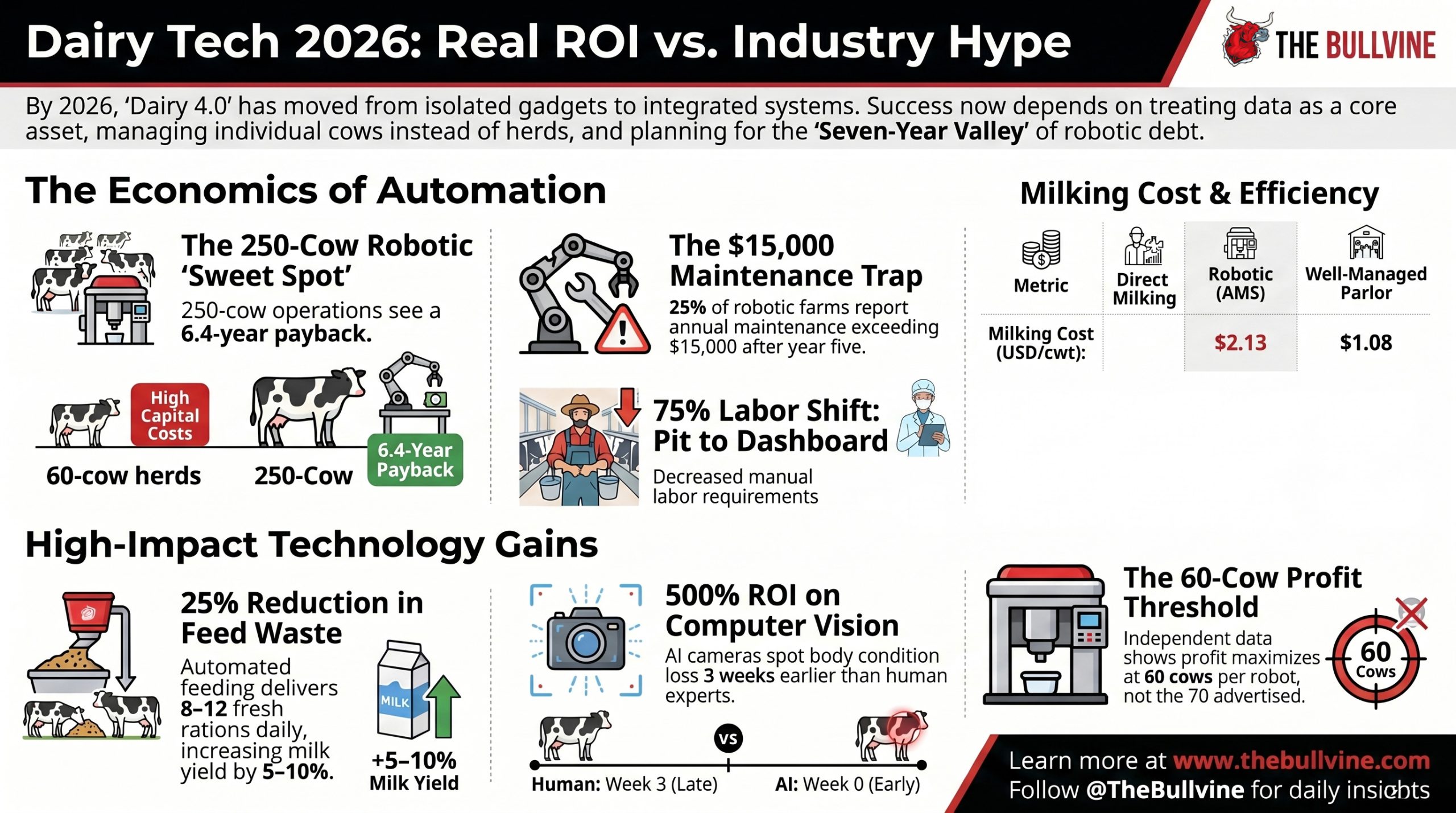
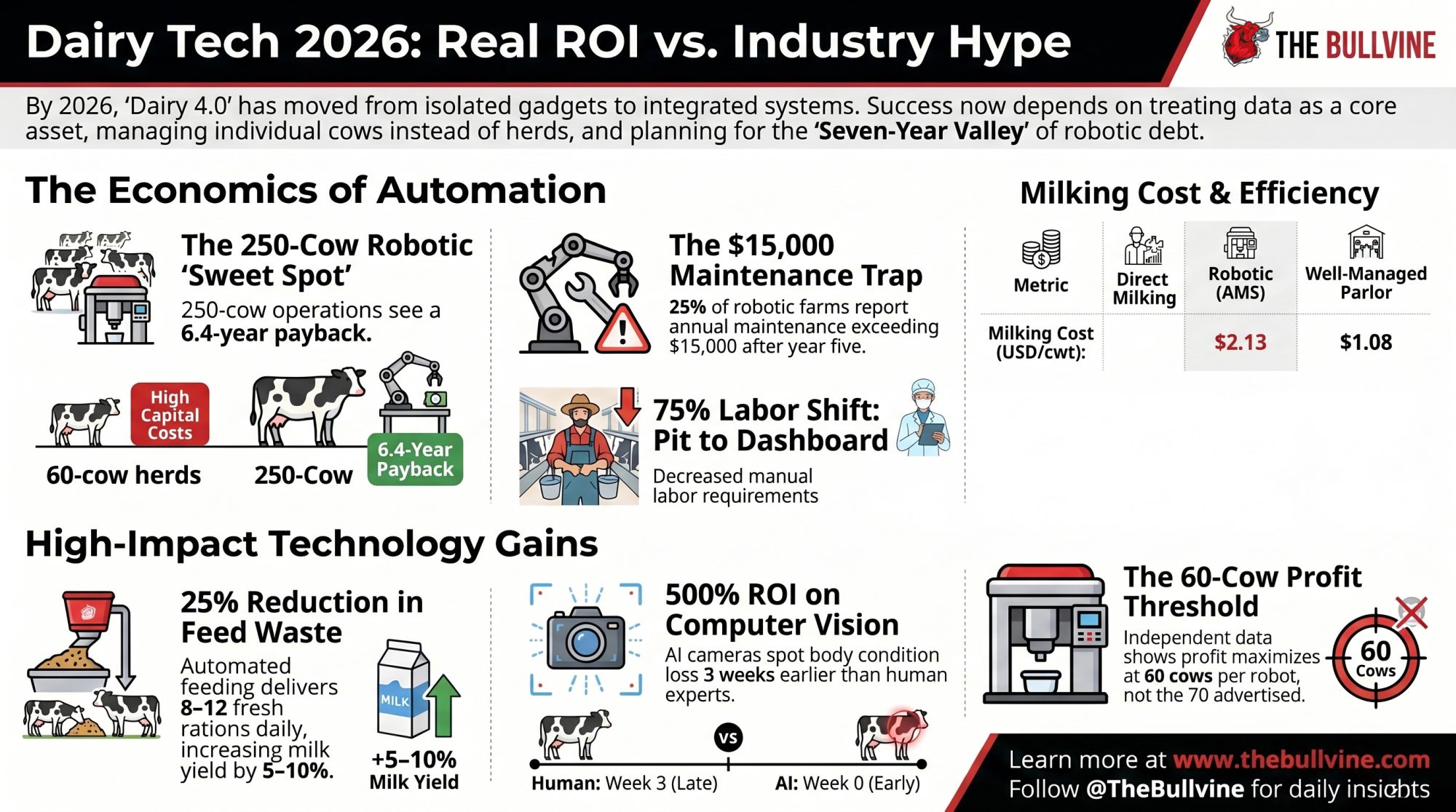
- Robotic milking systems in 2026 are rated for up to 70 cows, but independent data shows the profit sweet spot is about 60 cows per robot for high-producing Holsteins.
- Automated feeding systems deliver 12–25% feed waste reduction and 5–10% milk yield gains, but typical payback stretches 7–12 years unless you actively manage precision nutrition.
- Wearable sensors and integrated platforms like DairyComp 305, AfiFarm, UNIFORM‑Agri and PCDART now live or die on API connectivity and ICAR/ADE‑ready data exchange.
- Computer vision for BCS, lameness and facial ID is commercially viable, with >0.80 correlation to expert BCS scorers and 94.6% accuracy for individual cow identification in trials.
- For 60‑cow herds, lifestyle often drives robot decisions; for 250‑cow herds, robots and AFS hit the economic sweet spot; for 1,000‑cow herds, high‑efficiency parlours still win at 2026 labour rates.
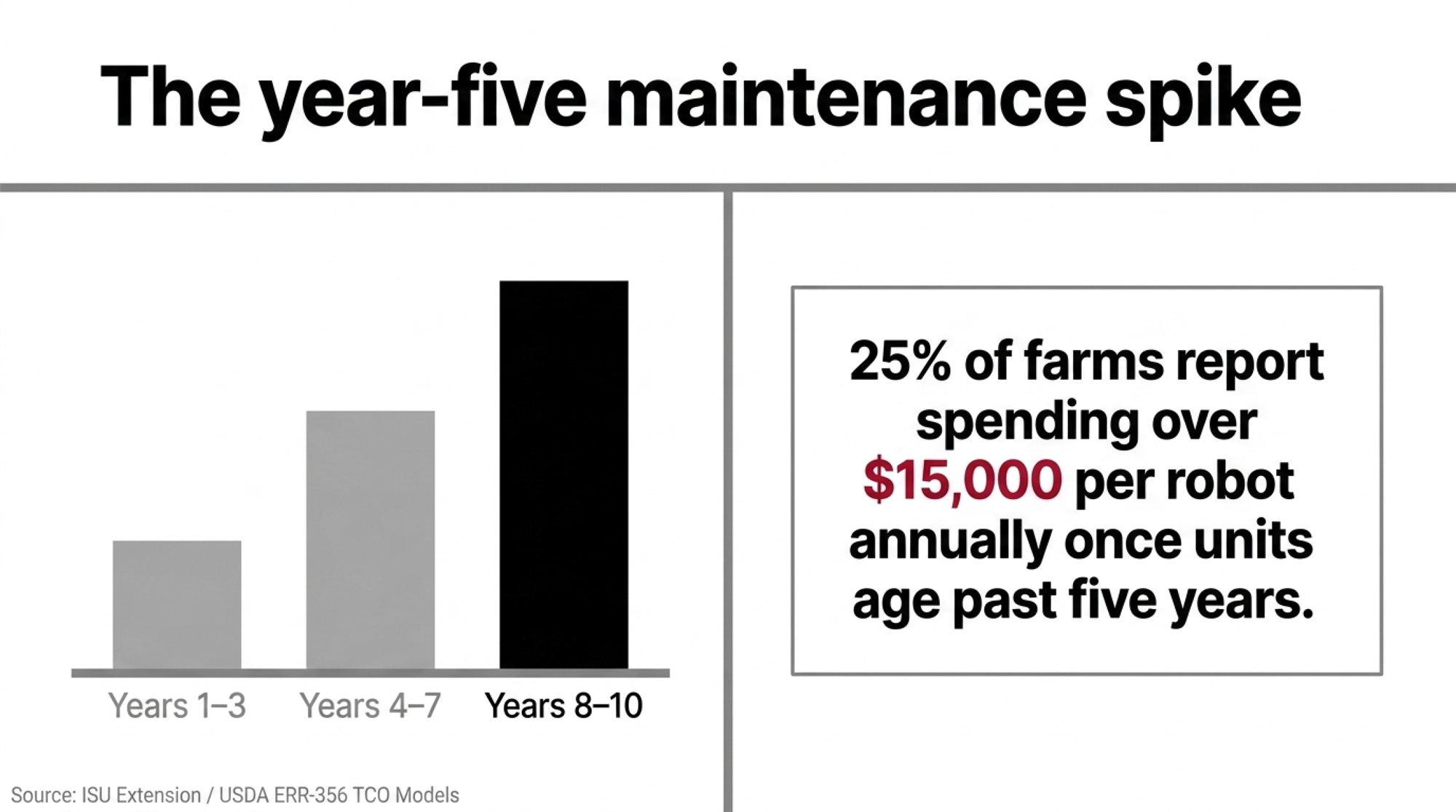
- The biggest hidden cost in robotics is maintenance: 25% of farms report >$15,000 per robot per year once units age past five years.
Dairy Technology 2026: From Gadgets to Integrated Systems
By 2026, dairy technology has moved from isolated gadgets to fully integrated Dairy 4.0 systems, where robotics, sensors and AI all talk to each other across the barn. The core shift is from managing herds to managing cows as individual production and health units.
The market numbers reflect it. Robotic milking systems alone now represent more than USD 5.7 billion globally, with fully automatic units accounting for over 62% of that market share. Feed continues to represent 60–70% of production costs, so the centre of gravity has moved toward precision nutrition and data‑driven labour efficiency.
The real question for commercial producers isn’t “does the tech work?” any more. It’s “how does this fit into my ten‑year total cost of ownership (TCO), my data governance, and my people?” That’s the frame we’ll use as we walk through robots, feeding, sensors, computer vision, parlours and ROI models in this dairy technology 2026 guide.
“Independent data says the technology works. The real risk is buying more capability than your team can actually manage.”
Robotic Milking Systems: Engineering, Economics and TCO
Robotic milking systems (RMS or AMS) are still the biggest single cheque most dairies will write for automation. By 2026, the major players—Lely, DeLaval, GEA, BouMatic and Fullwood—have converged on similar engineering goals: cut box time, reduce energy per kg of milk, and capture quarter‑level milk quality data every single milking.
Manufacturer Benchmarks vs. Independent Data
Manufacturer technical sheets for 2026 flagship models cluster in a fairly tight band for capital cost and rated capacity:
- Installed capex per box ranges from about USD 150,000 to 220,000 across the five major brands.
- Rated cow capacity usually sits between 55 and 70 cows per robot.
- Energy usage claims run from roughly 0.015 to 0.025 kWh per kg of milk depending on brand.
Key manufacturer‑sourced points:
- Lely Astronaut A5: Installed capex USD 180,000–220,000; rated for 55–70 cows; hybrid arm and laser‑guided attachment; 0.015–0.020 kWh/kg milk; Horizon software.
- DeLaval VMS V300/V310: USD 170,000–210,000; rated 50–65 cows; InSight vision/ToF attachment; 0.018–0.024 kWh/kg; DelPro platform.
- GEA DairyRobot R9500: USD 165,000–205,000; rated 55–70 cows; In‑Liner Everything; 0.017–0.022 kWh/kg; DairyPlan C21.
- BouMatic MR‑S1: USD 150,000–190,000; rated 50–60 cows; 3D ToF attachment; 0.020–0.025 kWh/kg; BouMatic Management.
- Fullwood Merlin M²: USD 155,000–195,000; rated 55–65 cows; Streampulse attachment; 0.015–0.020 kWh/kg; Fullsense platform.
Those are manufacturer numbers, and the document explicitly marks pricing and energy usage as coming from 2026 technical documentation.
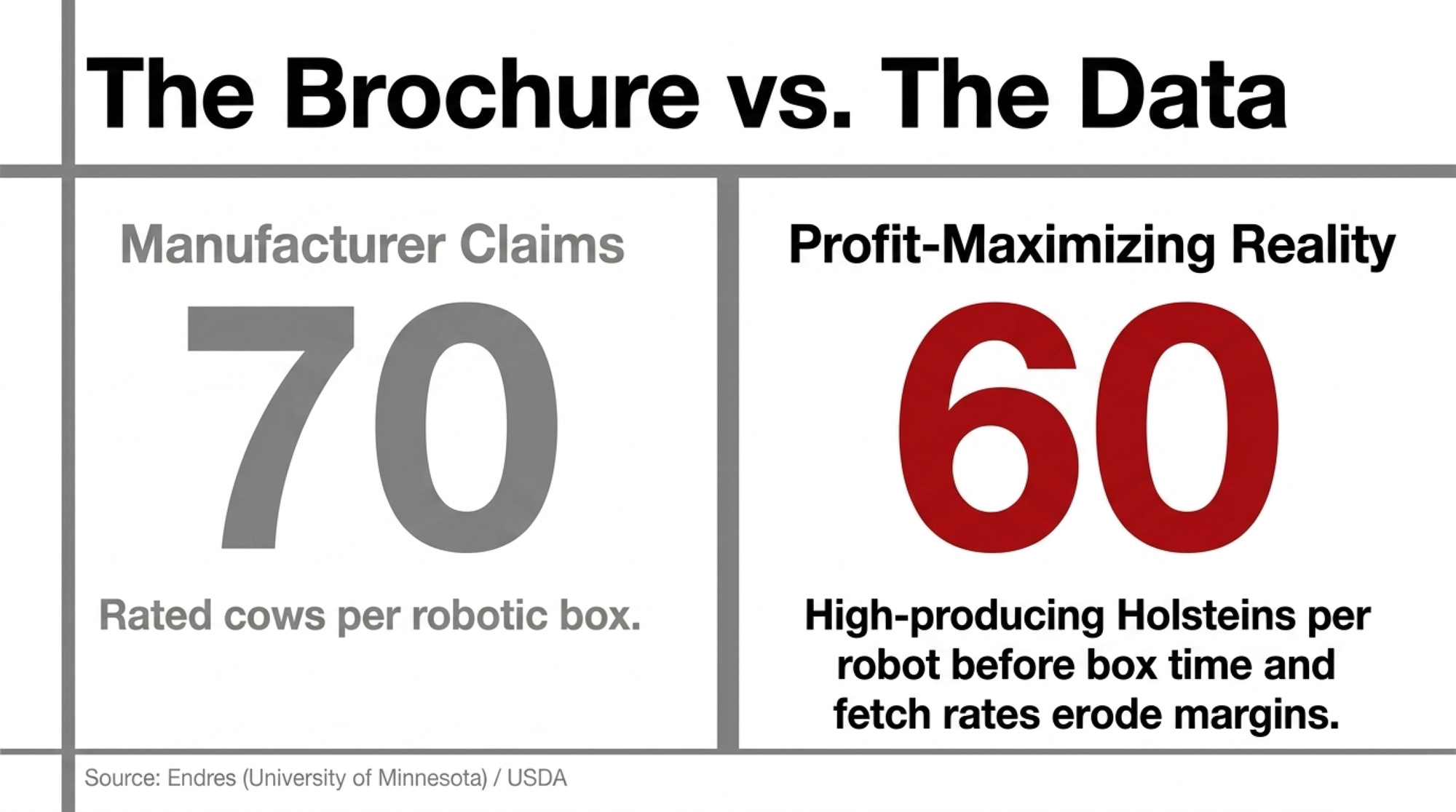
Independent work from Endres (University of Minnesota), Tranel (Iowa State) and USDA’s Economic Research Service (ERR‑356) paints a different, more grounded picture:
- For high‑producing North American Holsteins, 60 cows per robot is the realistic profit‑maximizing threshold, not 70.
- Herds moving from 2X parlours to robots typically gain 3–5% milk, or about 3–5 lb per cow per day.
- Herds coming from a highly efficient 3X parlour can actually lose 2–5% production if cow traffic and utilisation aren’t tight.
SCC, Cleaning Success and Udder Health
Somatic cell count in robotic barns is less about the machine badge and more about how consistently you hit good teat prep. Quarter‑level detachment definitely reduces over‑milking and teat‑end stress, but independent European studies show the weak spot is cleaning success.
On average, only 67% of robotic cleanings were technically successful (all four teats properly cleaned), while top farms achieved over 95% success. If you want robot SCC results that beat a good parlour, you need to be in that top tier, combining in‑line sensors, bulk tank cultures and disciplined mastitis protocols.
Labour Reduction and the Managerial Trade‑Off
The 2026 USDA ERR‑356 report is blunt about labour. Producers running “box” robots see 70–75% reductions in direct milking labour time, across both paid and unpaid labour.
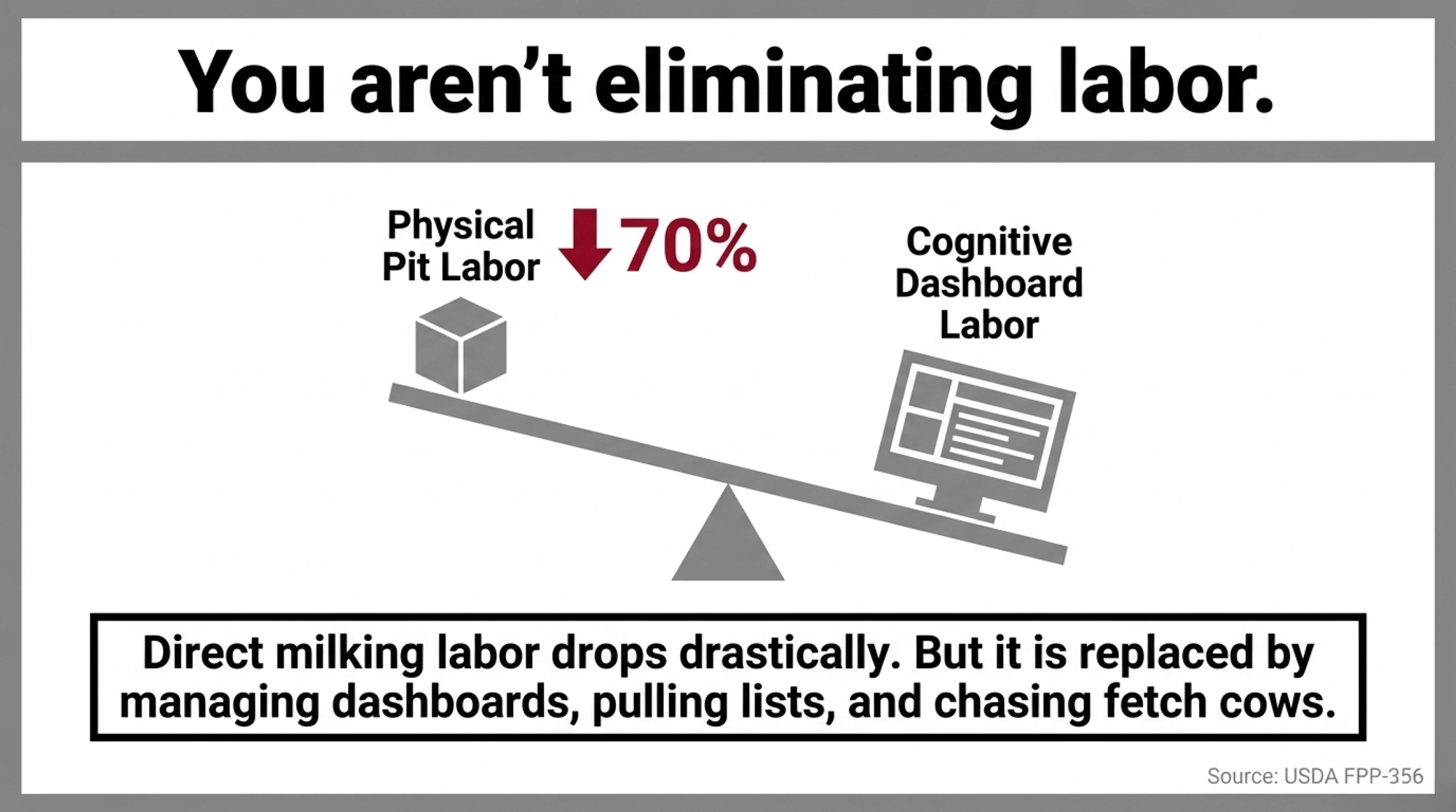
But here’s the thing. That’s offset by an increase in managerial labour—time in front of dashboards, pulling lists, and chasing “fetch” cows that won’t visit voluntarily. You’re swapping physical work in the pit for cognitive work at the computer. Not every operation is staffed or wired for that.
The 10‑Year TCO Reality
Capex is only the opening bid. The 10‑year TCO numbers in the source document are synthesised from ISU Extension and USDA ERR‑356:
Per robot average operating costs
- Maintenance & repairs
- Years 1–3: USD 5,000–7,000 per year
- Years 4–7: USD 9,000–12,000 per year
- Years 8–10: USD 12,000–15,000+ per year
- Utilities (electricity/water): USD 2,500–4,000 per year across all phases.
- Insurance & software: USD 2,500–5,000 per year.
That yields total annual opex ranges of:
- USD 10,000–16,000 in years 1–3,
- USD 14,000–21,000 in years 4–7,
- USD 17,000–24,000+ in years 8–10.
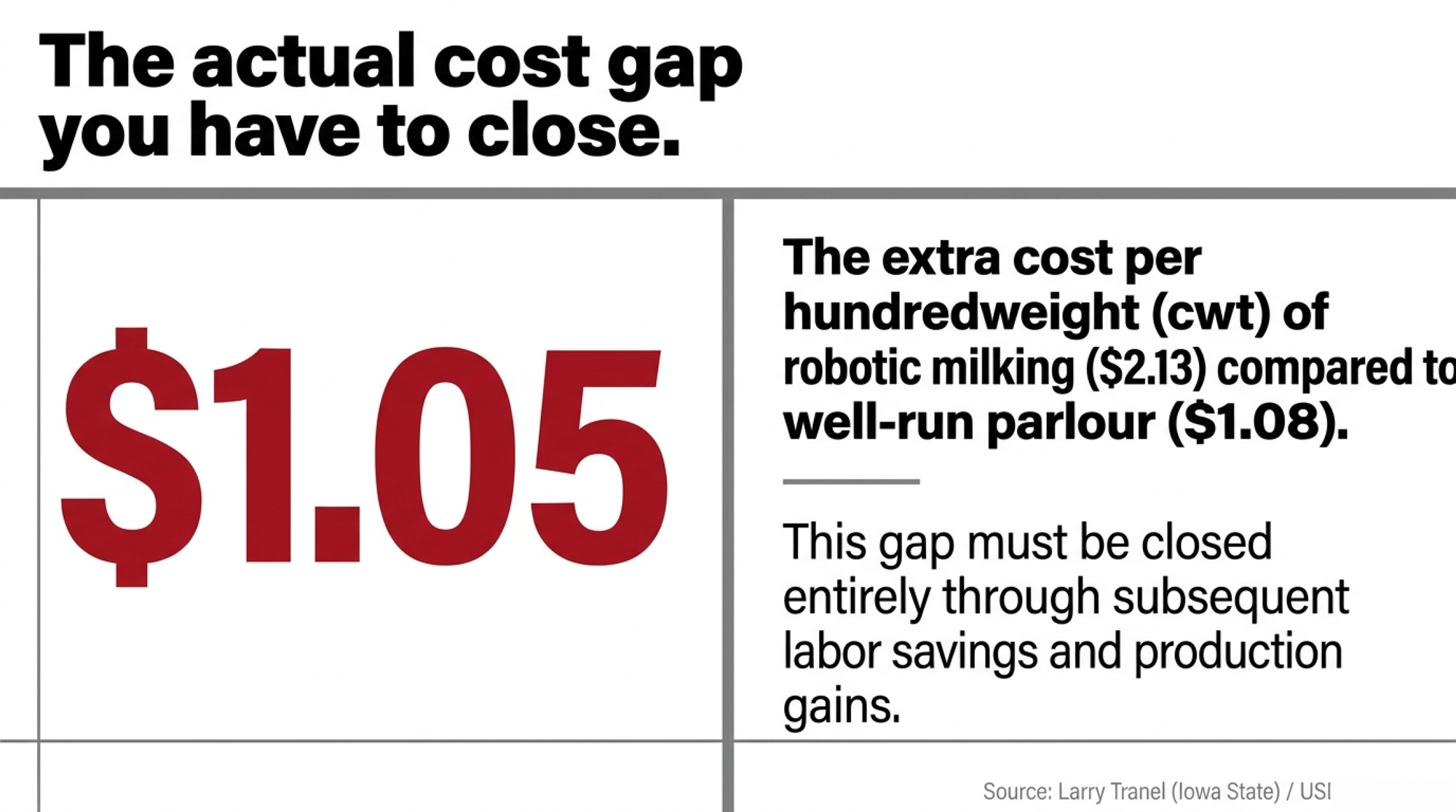
Larry Tranel’s analysis pegs milking costs in an AMS barn around USD 2.13 per cwt versus USD 1.08 per cwt in a well‑run parlour—a USD 1.05 per cwt gap that has to be closed with labour savings plus production and health gains. And 25% of farms running robots longer than five years report maintenance exceeding USD 15,000 per robot annually.
Robot economics summary table
| Metric | Robotic Milking (AMS) | Well‑Managed Parlor |
| Milking cost (USD/cwt) | 2.13 | 1.08 |
| Direct milking labour change | −70% to −75% | Baseline |
| Realistic cows/robot | ~60 | n/a |
| Typical annual maintenance (yrs 4–7) | 9,000–12,000 USD | lower |
| Farms with >15k USD/robot/year after 5 yrs | 25% | n/a |
Automated Feeding Systems: Precision Nutrition and Payback
Automated feeding has quietly become the sharpest tool for margin improvement because it hits both sides of the equation: feed efficiency and labour. In 2026, feed still represents 60–70% of production costs, so small percentage gains matter a lot.
System Types and 2026 Market Leaders
The market splits into rail‑guided systems and self‑propelled robots.
- Lely Vector: Self‑propelled, using a “feed kitchen” and a grabber that achieves 98% loading precision so delivered rations match the nutritionist’s formulation.
- DeLaval OptiDuo/Optimat: OptiDuo is a remixing feed pusher that stimulates intake; Optimat (in its “Master” version) is a comprehensive feeding system that can serve up to 1,000 cows, the highest‑capacity AFS on the market right now.
- Trioliet Triomatic: Modular, known for handling long‑cut dry hay with specialised cutting and mixing, often battery‑powered for autonomous operation.
- Rovibec DEC: Rail‑guided, powered by a conductor rail (no battery downtime), with management software that can handle up to 32 ingredients and 16 group recipes.
Turn‑key AFS installations for single‑unit layouts in 2026 range from about USD 150,000 to 275,000, and can exceed USD 1 million for large multi‑robot setups.
What Actually Drives AFS ROI?
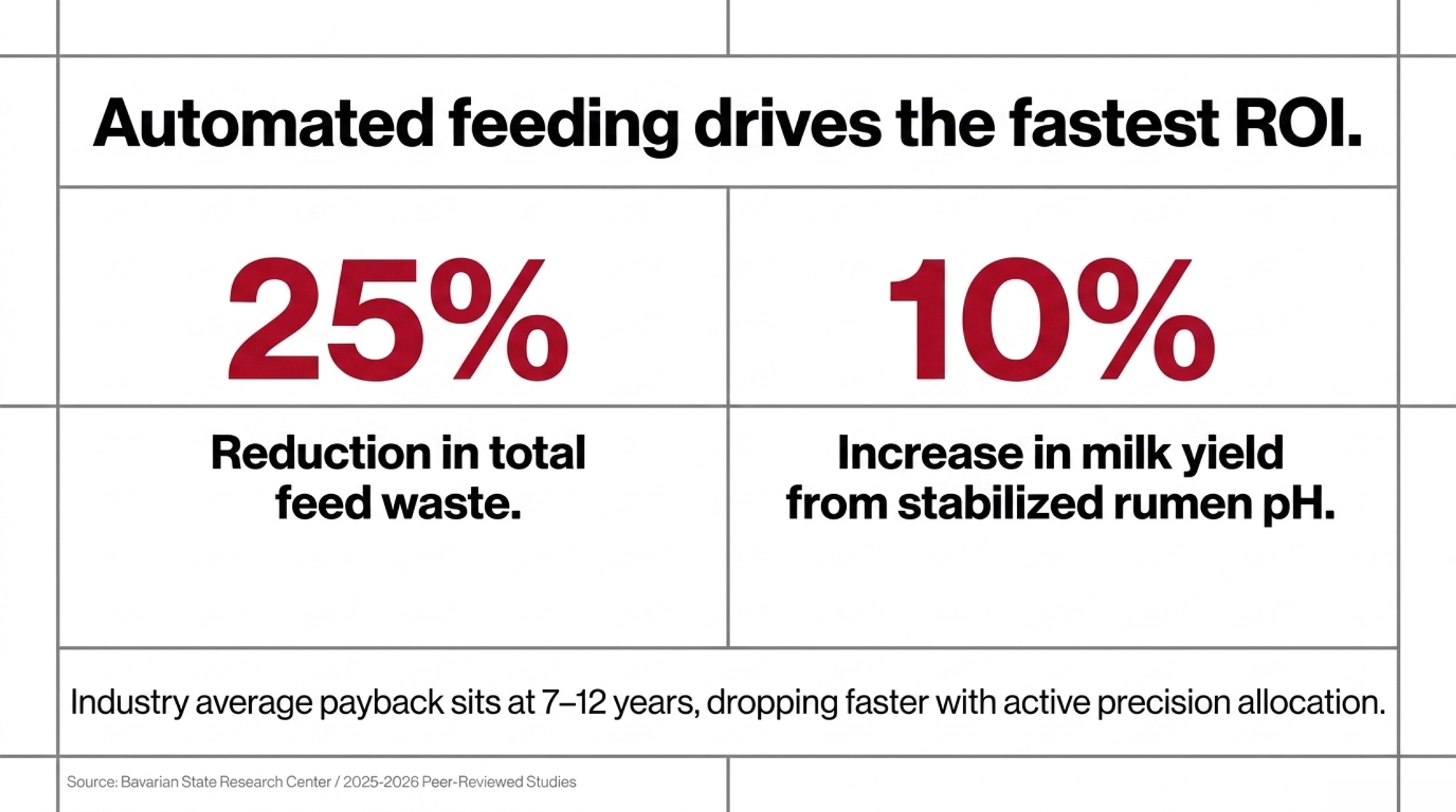
The source document pulls hard numbers from independent research, including the Bavarian State Research Center and peer‑reviewed 2025/2026 studies:
- Feed efficiency: 12–25% reduction in feed waste versus conventional TMR, thanks to 8–12 fresh feed deliveries per day and less sort‑back.
- Milk yield: 5–10% increase in milk, roughly 1 litre per cow per day, from more stable rumen pH and individualized rations.
- Labour savings: 20–30% reduction in daily feeding labour, and up to 70% of push‑up time in some barns.
- Environmental impact: Conventional tractors average 18 litres of diesel per cow per year for feeding, while robots use mainly electricity, cutting CO₂ emissions for feeding by around 85%.
The industry‑average payback period for AFS today sits between 7 and 12 years. Farms that aggressively use precision allocation based on animal health and activity bring that down faster.
Read more: precision dairy feeding research
Wearable Sensors and Herd Management Platforms
By 2026, wearables are basically standard issue on progressive dairies—neck collars, ear tags and leg pedometers are everywhere. The big shift isn’t more hardware; it’s moving from “heat detection gadget” to full transition‑cow and health monitoring using accelerometers and thermometers.
Platform Comparison: DairyComp, AfiFarm, UNIFORM‑Agri, PCDART
The pillar document calls out four herd management platforms as the brains behind the hardware:
- DairyComp 305 (Valley Ag Software)
- Global industry standard for large commercial herds.
- Deep, command‑line style analytics; integrates with DHIA and breed associations.
- Steep learning curve but unmatched for custom lists and projections (like 305‑day mature equivalents) on 500+ cow herds.
- AfiFarm (Afimilk)
- Integrated hardware‑software ecosystem built around AfiLab milk meters and AfiCollar.
- Uses real‑time sensor data to create comprehensive profiles and drive automatic sort‑gate drafting for sick or in‑heat cows.
- UNIFORM‑Agri
- Highly flexible global platform with modules for both mid‑sized (<250 cows) and large herds.
- Known for “one‑screen” data entry and ability to link with mixed‑brand milking hardware, making it ideal for non‑single‑vendor barns.
- PCDART (DRMS)
- Cooperative‑based records system with a user‑friendly interface.
- Strong on production testing and genetic evaluation support.
In 2026 the competitive edge is API connectivity. AfiFarm and DairyComp 305 now support automated synchronisation of animal ID and repro data, so an event entered in one system updates the other automatically. That keeps sort gates operating on current data and cuts human data entry errors.
Sensor Validation and Early Disease Detection
The document highlights how wearables have evolved from heat-detection toys into proactive health tools. Accelerometers and thermometers flag deviations in lying time, activity and rumination before clinical signs appear.
Independent work outside this document (e.g. University of Guelph, Kentucky) confirms high correlations between validated tags and human observation, but the pillar you gave focuses more on how those data streams are integrated and used than on a specific r‑value.
Computer Vision and AI: The Visual Dairy Revolution
The biggest step change between 2021 and 2026 is the commercialization of computer vision (CV). Instead of relying on tags alone, 3D cameras and deep learning models are now quietly watching cow backs, hooves and faces as they move through the barn.
Automated Body Condition Scoring (BCS)
Manual BCS is subjective, sporadic and easy to skip when things get busy. New 2D/3D camera systems—DeLaval BCS, Nedap, InnoCow and CattleEye—measure the geometry of the cow’s hooks, pins and tail head to estimate body condition on every pass.
Independent research shows:
- Correlation between camera‑based BCS and expert human scorers.
- Cameras can detect downward trends 2–3 weeks earlier than people in the transition period.
- ROI estimates run 200–500% annually, at a cost of about USD 1 per cow per month.
That early detection window is the difference between a small ration tweak and a full‑blown ketosis case in many herds.
Lameness Detection with Deep Learning
Lameness is still a leading involuntary cull driver. 2026 CV systems like CattleEye and Nedap SmartSight use pose estimation on cameras mounted in exits or alleys. They track head bob, back curvature and stride symmetry to spot issues before cows are visibly three‑legged lame.
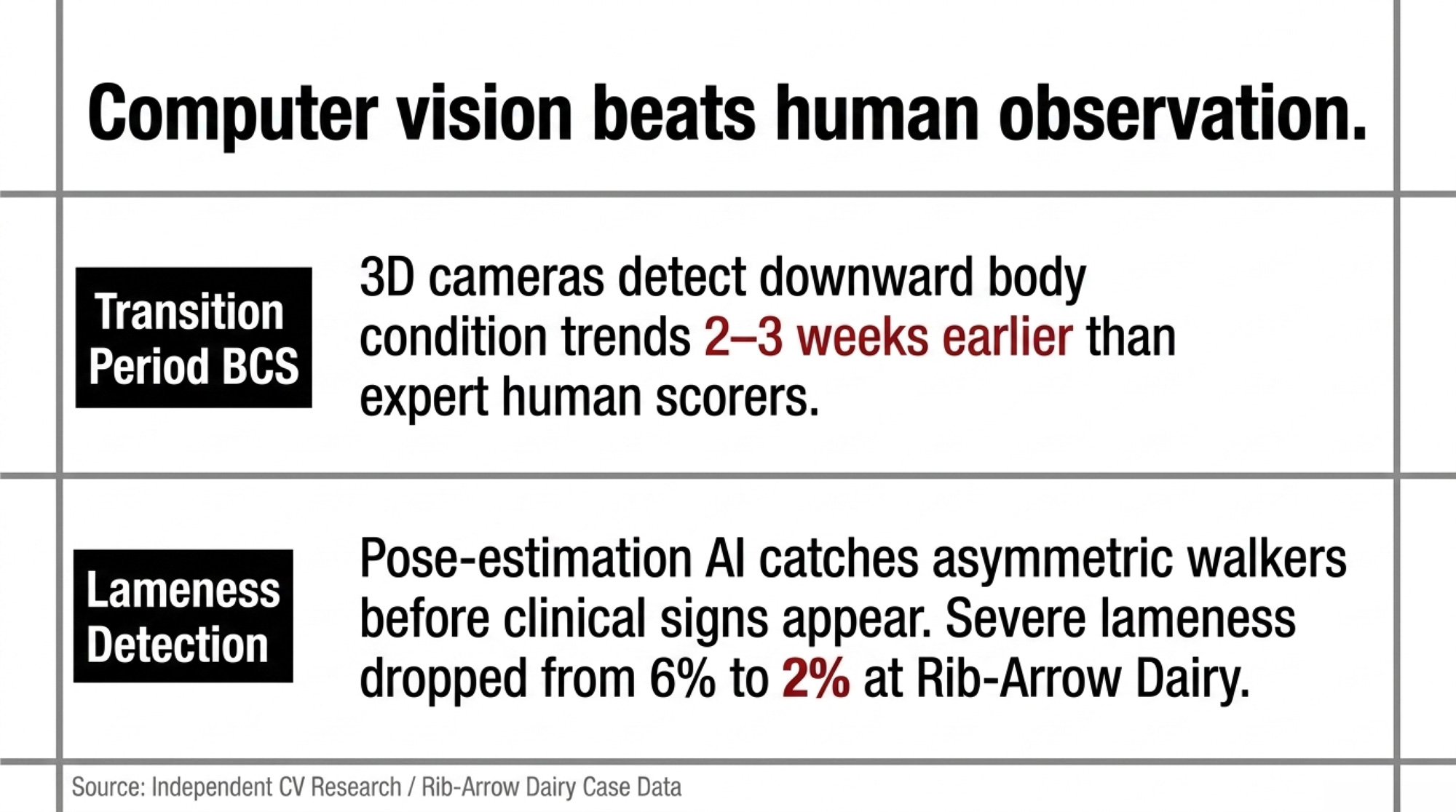
Technically, the document notes:
- YOLOv5m has emerged as a leading architecture for real‑time deployment, achieving a mean average precision (mAP@0.5) of 73.2% when detecting small features like hooves.
- At Rib‑Arrow Dairy in California, implementing vision tech cut severe lameness from 6% down to 2% by catching asymmetric walkers early.
Facial Recognition and Tag‑Free ID
RFID tags can be lost, damaged or mis‑read. Computer vision systems based on Siamese Neural Networks (SNN) now identify cows using coat pattern and facial features. Reported accuracy in trials is 94.6% for life‑cycle identification—from calf through multiple lactations.
That opens the door for non‑invasive traceability and management, even in big groups without collars.
Read more: computer vision lameness study
Parlour Automation in 2026: Rotary, Parallel and Hybrid AMS
Despite the growth of robotics, conventional parlours still dominate very large herds and operations with consistent labour. The difference in 2026 is that these parlours are now fully digitised.
Throughput, Labour and Stall Economics
The document provides a comparative table built from Progressive Dairy and Dairy Equipment Manufacturing data:
| Metric | Parallel Parlor (e.g. Double 20) | Rotary Parlor (e.g. 80‑stall) | Robotic (per AMS box) |
| Throughput (cows/hour) | 319–362 | 400–500 | 50–70 |
| Labour efficiency (cows/person/hour) | 55–85 | 80–140 | Minimal direct labour |
| Space efficiency | High (27–30″ spacing) | Low (large footprint) | Variable |
| Stall capex (USD/stall or box) | ~9,250 | 15,000–30,000 | 170,000–220,000 |
| Best herd size | 200–1,000+ | 1,000–5,000+ | 60–500 (sweet spot) |
Modern parallel parlours lean on “rapid exit” gates that open all fronts at once, eliminating the first‑cow bottleneck in older herringbones and making them 50–70% faster than herringbones of similar stall count.
Rotaries are the default for 1,000‑cow‑plus herds because they deliver top throughput. 2026 innovations like GEA’s Per Place Identification (PPID) nail 100% data accuracy by tying cow IDs to specific stalls. Robotic attachment systems such as Teatwand HD can bolt onto rotaries to carve out more labour while keeping parlor economics.
Sort Gates, Crowd Gates and ID
Sort gates are where parlours become decision tools, not just milking plants. When linked to herd software, they automatically draft cows for breeding, treatment, dry‑off or follow‑up on mastitis and lameness alerts.
Crowd gates automate bringing cows into the holding area, improving consistency but needing careful setup to avoid stress and lameness. Accurate ID—whether leg tags, collars, or platform‑based systems like PPID—is non‑negotiable if you want clean data streams into DairyComp, AfiFarm or UNIFORM‑Agri.
Data Standards, ICAR ADE and Cybersecurity on Smart Farms
As more devices come online, the bottleneck has shifted from “do I have data?” to “can I move and control data?”
ICAR and the Agricultural Data Exchange (ADE)
The International Committee for Animal Recording (ICAR) has established the Agricultural Data Exchange (ADE) standard to make cross‑vendor integrations less painful.
- The goal is to give data system developers protocols so devices can reliably link, regardless of brand.
- ADE uses standardised health codes and JSON messaging formats.
- In practice, it allows a UNIFORM‑Agri system to talk to a DeLaval robot or GEA parlour controller without bespoke coding for each farm.
That’s a huge deal if you want to avoid vendor lock‑in and keep options open for future upgrades.
Farm Data Ownership and Opt‑Out Rights
By 2026, data is officially a battleground. The document outlines a three‑stage ownership framework that’s becoming an industry norm:
- Raw data: owned by the producer.
- Intermediate data: sometimes shared or licensed.
- Processed data and analytics: often a joint right between producer and technology provider.
New guidelines emphasise that producers should be able to control how far their data flows—for instance, sharing with DHIA but opting out of secondary sharing with private breeding companies.
Cybersecurity Risk on Connected Farms
Smart farms are now genuine cyber targets. With connected robots, parlours and cloud dashboards, ransomware and data breaches have become real concerns. Industry analysis cited in the document predicts a 0.5% drag on overall market growth specifically tied to cybersecurity fears.
Practical steps: segment your barn network, insist on vendor patch policies, control user roles and logins, and know how your data is backed up and restored.
Read more: dairy data guidelines
ROI Frameworks for 60-, 250- and 1,000-Cow Herds
Here’s where it all comes together. The document uses 2026 USDA/Iowa State capital recovery models to outline three reference scenarios.
1. The 60‑Cow Operation (1 Robot)
For 60‑cow herds, lifestyle often matters as much as pure economics.
- Capex: USD 220,000 for a retrofit one‑robot install in the example.
- Required milk response: 2–5 lb/cow/day increase to breakeven within 10–14 years.
- Sensitivity: if you can’t eliminate a hired hand or take paid work with the freed‑up time, a “Seven‑Year Valley” of negative cash flow persists.
The message is: you can make it work, but capital cost per cow is brutal. If the main driver is “I don’t want to milk anymore,” call that what it is and model lifestyle explicitly.
2. The 250‑Cow Operation (4 Robots)
This is called the “robotic sweet spot” in the source document.
- Capex: USD 850,000–1,000,000 for four robots.
- Labour savings: roughly USD 44,000 per robot annually, based on USD 16/hour labour—about USD 176,000/year.
- Total annual benefit: around USD 165,000 (labour plus production gain) cited as a representative estimate.
- Payback: about 6.4 years.
At this scale, labour savings can fully offset capital recovery if cows and people are managed well.
3. The 1,000‑Cow Operation (High‑Efficiency Parlor vs. 17 Robots)
For 1,000‑cow herds, you’re at a crossroads.
Robotic option
- 17 robots, USD 4.5 million investment.
- Needs a breakeven labour rate of USD 22.91/hour to compete with a high‑efficiency parlour.
Parlour option
- Twin‑80 rotary or double‑20 parallel, with lower capital cost per stall.
- More profitable at current USD 16/hour labour rates but exposed on labour recruitment and retention.
If wage inflation exceeds 3% annually over a 20‑year horizon, the robotic system becomes more profitable on paper.
Summary Herd‑Size Table
| Herd Size | Optimal Technology (2026 model) | Payback Period | Primary Economic Barrier |
| 60 cows | Activity sensors + 1 robot | 10–15 years | High capital cost per cow |
| 250 cows | 4 robots + AFS + sensors | 6–9 years | Seven‑year loan cash flow |
| 1,000 cows | Automated rotary parlour | 5–7 years | Labour recruitment/retention |
The Path Forward: From Milker to Dairy Data Analyst
The Dairy 4.0 ecosystem has changed what it means to “run cows.” Time saved in the parlour is now spent at the dashboard, where AI features in platforms like Lely Horizon or DeLaval DelPro act as digital assistants flagging outliers and exception lists.
It’s not all rosy. The document notes that 71% of RMS producers report stress tied to nightly alarms, though newer sensor‑filtering has reduced alarm fatigue somewhat. The producers who win are the ones who treat technology as an investment in data and decision‑making, not just metal and motors.
By leaning on ICAR/ADE standards, deploying computer vision where it materially shifts health outcomes, and planning for the “Seven‑Year Valley” on robot loans, you can build a more resilient and future‑proof dairy in 2026 and beyond.
Frequently Asked Questions
How much does a milking robot cost in 2026?
Installed 2026 costs for a single milking robot typically range from USD 170,000 to 220,000, depending on brand and add‑ons like reproductive monitoring and advanced software modules. That figure includes hardware and basic installation but not barn remodels or financing costs.
How many cows can one robot realistically handle?
Manufacturers rate robots for up to 70 cows, but independent North American tests show the economic sweet spot is about 60 high‑producing Holsteins per robot. Above that, box time, refusals and fetch cows start to erode both milk and labour savings.
Does robotic milking improve milk quality and SCC?
Robots provide quarter‑level detachment and consistent milking, which should help teat health, but SCC improvements aren’t automatic. European data show only 67% of robotic cleanings are fully successful on average, so you need >90% cleaning success plus in‑line sensors and strict mastitis protocols to avoid SCC spikes.
What’s the payback period for automated feeding systems?
Industry‑wide in 2026, automated feeding systems show average payback periods between 7 and 12 years. That’s based on 12–25% reductions in feed waste, 5–10% higher milk yield, 20–30% feeding labour savings and significant cuts in diesel use and CO₂ emissions.
For a 1,000‑cow herd, are robots or rotaries more profitable?
At current USD 16/hour labour rates, high‑efficiency rotary parlours remain more profitable than a 17‑robot install. Robots become competitive if effective labour costs exceed roughly USD 22.91/hour or if it’s nearly impossible to recruit and retain parlour staff over 20 years.
Can computer vision really replace tags for cow ID?
Yes, in trials. Computer vision systems using Siamese Neural Networks can identify individual cows from facial and coat features with about 94.6% accuracy across their lifetime. That offers a non‑invasive backup to RFID, especially in groups where tags are often lost.
What are the hidden costs of robotic milking?
The big hidden cost is maintenance and repairs. Annual spend tends to climb from USD 5,000–7,000 in years 1–3 to 9,000–12,000 in years 4–7, and over USD 12,000 in years 8–10. About 25% of farms report maintenance higher than USD 15,000 per robot per year after five years.
How much labour does a robot actually save?
According to the 2026 USDA ERR‑356 report, robotic milking cuts direct milking labour by about 70–75%. However, it increases managerial labour for data analysis, troubleshooting and managing non‑visiting “fetch” cows, so the net gain depends on how good your people are at using the data.
What is the ICAR ADE standard in simple terms?
ICAR’s Agricultural Data Exchange (ADE) is essentially a universal data language for animal records and device data. It uses standard health codes and JSON formats so software like UNIFORM‑Agri can reliably exchange data with DeLaval robots or GEA parlours without custom code for every brand combination.
Is 3D body condition scoring worth the investment?
The document cites ROIs between 200% and 500% annually at an operating cost of roughly USD 1 per cow per month. 3D cameras spot condition loss 2–3 weeks earlier than humans in the transition period, allowing you to intervene before cows hit costly metabolic disease.
 The Sunday Read Dairy Professionals Don’t Skip.
 The Sunday Read Dairy Professionals Don’t Skip.
Every week, thousands of producers, breeders, and industry insiders open Bullvine Weekly for genetics insights, market shifts, and profit strategies they won’t find anywhere else. One email. Five minutes. Smarter decisions all week.




