


Archive for bovine respiratory disease

The $6,600 6‑Week Weaning ‘Savings’ Trap: Why It Can Mean an $11,000 BRD and Calving Bill on a 300‑Cow Dairy

On a 300‑cow Wisconsin dairy, the milk‑replacer invoice said: “smart.” The heifer ledger quietly said the opposite.

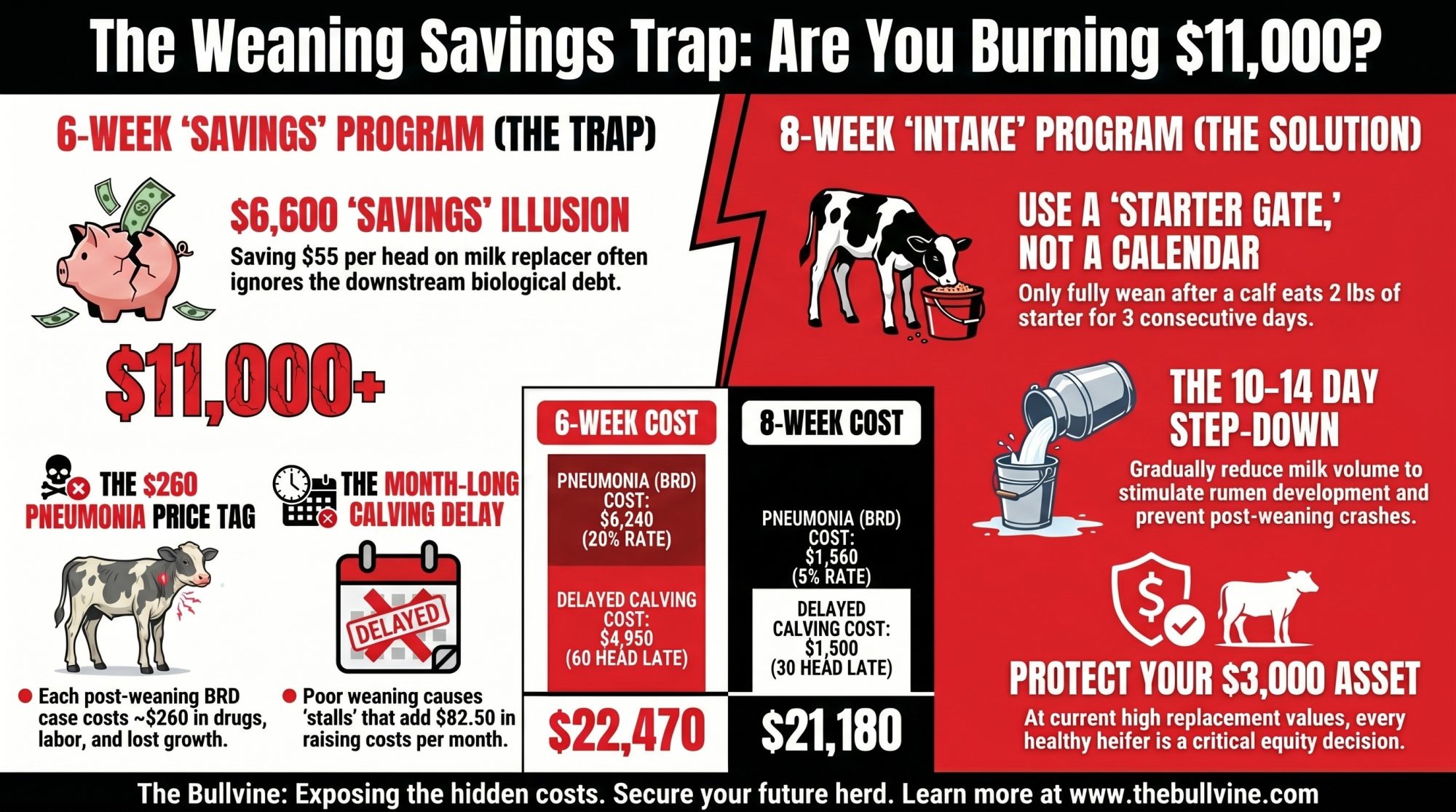
Dave runs 300 Holsteins in central Wisconsin. For nearly a decade, he weaned every calf at 42 days and figured he was saving about $55 per head on milk replacer compared with an 8‑week program — roughly $6,600 a year across 120 heifers.
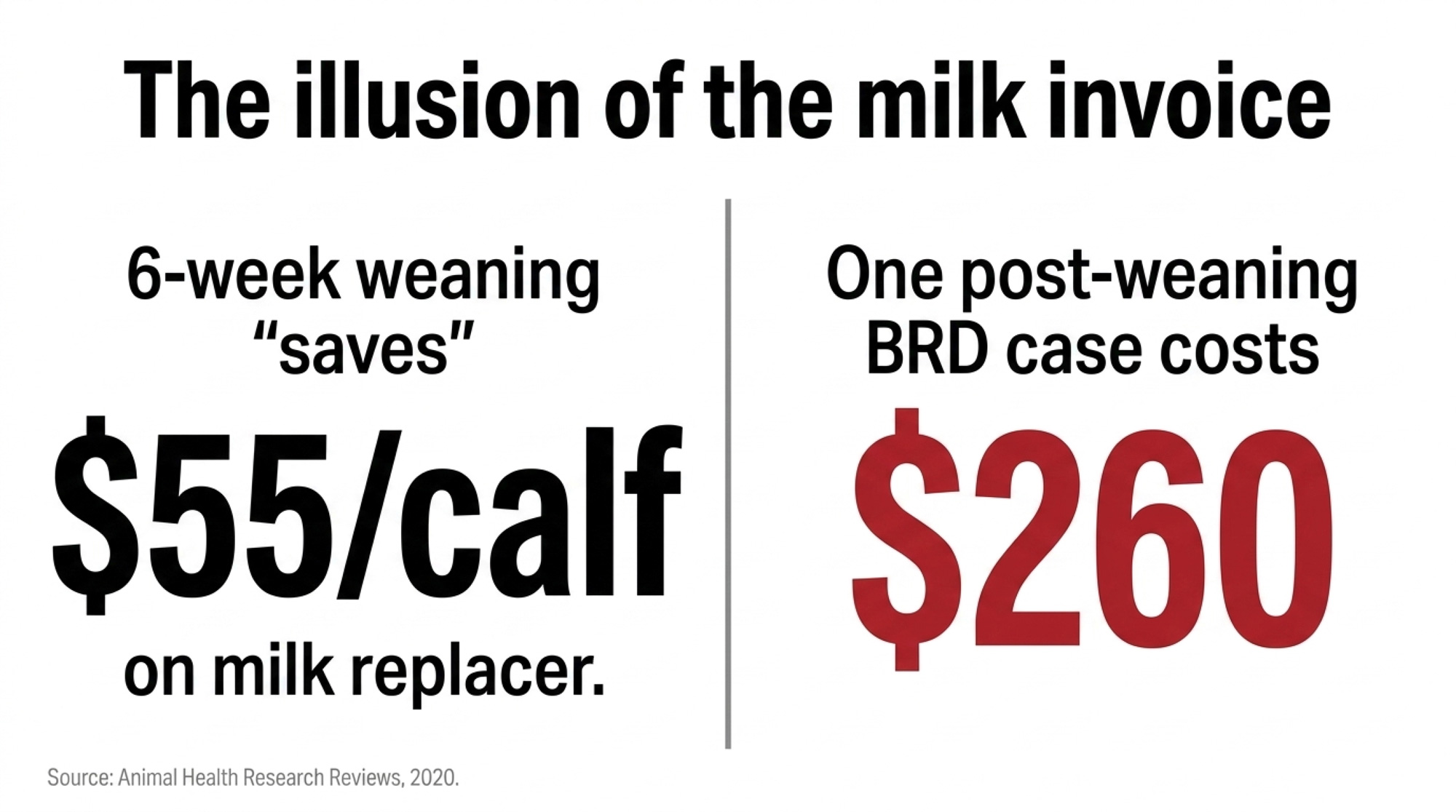
On the milk‑replacer invoice, that math looked good. When his vet put a $260 price tag on each pneumonia case, and they walked through what that did to age at first calving, the ledger flipped. The “cheap” 6‑week program looked a lot more like an $11,000 drag on the heifer enterprise.

Where Dave’s $6,600 Weaning “Savings” Actually Came From

Start with what Dave was paying for liquid feed.

He was on a 20/20 all‑milk replacer. His contracted price sat around $1.80 per pound — right in the middle of what many dairies are seeing, with 50‑lb bags often running from the mid‑$60s to the $120 range depending on formulation and brand.

His 6‑week program looked like this:

  • 1.25 lb/day of milk replacer powder
  • 42 days on milk
  • 1.25 × 42 = 52.5 lb of powder per calf

At $1.80/lb:

  • 52.5 lb × $1.80 = $94.50, call it $94 per calf

An 8‑week scenario at a slightly higher feeding rate:

  • 1.5 lb/day of powder
  • 56 days on milk
  • 1.5 × 56 = 84 lb of powder

At the same $1.80/lb:

  • 84 lb × $1.80 = $151.20, call it $151 per calf

On paper:

  • 6‑week: ≈ $94/head
  • 8‑week: ≈ $151/head

That’s a $55/head difference. Across 120 heifers a year:

  • 120 × $55 ≈ $6,600 per year

If you stop the spreadsheet at day 42 or 56 and never look past the bottle, you’d call that a win.

The trouble is, the costs don’t stop at the day you pull the nipple.

The BRD Ledger, the Milk Invoice, Never Shows

Dave’s vet didn’t start with rumen theory. He started with the sick sheet.

“How many calves are you actually treating for pneumonia after weaning?” he asked.

Over the previous couple of years, Dave’s records showed roughly 20% of his heifers — about one in five — were treated for BRD in the 30 days after weaning. Not every respiratory case hits right after the last bottle, but that’s where the spike was.

Like most producers, Dave guessed those cases cost him forty or fifty bucks each. A couple of drugs, a vet call, and some extra labor.

A 2020 paper in Animal Health Research Reviews priced it differently. Overton and colleagues looked at 104,100 U.S. dairy replacement heifers and compared animals with and without a BRD history in the first 120 days of life. They reported:

  • 36.6% of heifers had at least one BRD case in that early‑life window.
  • The estimated cost per incident BRD case was about $252 or $282 per heifer, depending on whether anticipated future milk differences were included. 

That cost rolled in:

  • Treatment drugs and vet time
  • Lost growth and delayed breeding
  • Higher culling risk as heifer and cow
  • Lower first‑lactation milk in affected animals

So the drugs are the cheapest part of the bill.

To keep the math grounded, Dave and his vet agreed on $260 per BRD case as a working number — basically the midpoint of the $252–282 range.
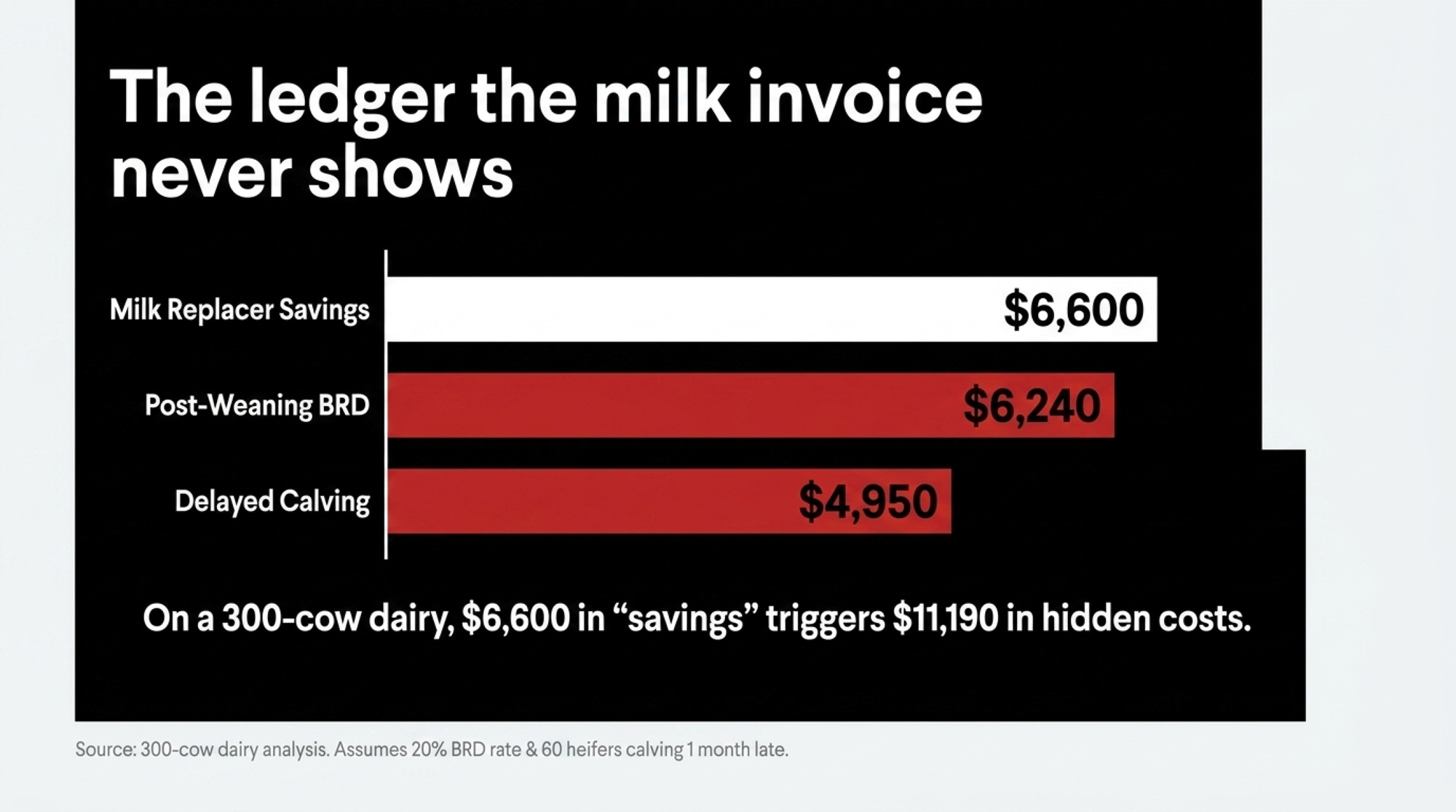
On 120 heifers a year, with a 20% post‑weaning BRD rate:

  • 20% of 120 = 24 cases
  • 24 × $260 = $6,240 per year in BRD cost

Compare that to the milk line:

  • Milk‑replacer “savings”: $6,600/year
  • BRD cost: $6,240/year

On Dave’s books, the money he “saved” on milk replacer was almost entirely eaten by pneumonia, before they even put a number on delayed calving.

Rumen Biology Doesn’t Care About Your Calendar

The next question was simple: “Why are so many calves getting sick after weaning?”

Dave’s nutritionist pulled out rumen‑development work from Jim Quigley and the latest weaning review from Aarhus University.

Quigley, through Calf Notes and a 2019 Journal of Dairy Science review, has pushed a specific biological threshold: a calf needs roughly 15 kg of cumulative non‑fiber carbohydrates (NFC) from starter — about 33 lb of fermentable carbohydrate — before the rumen is truly ready to take over.
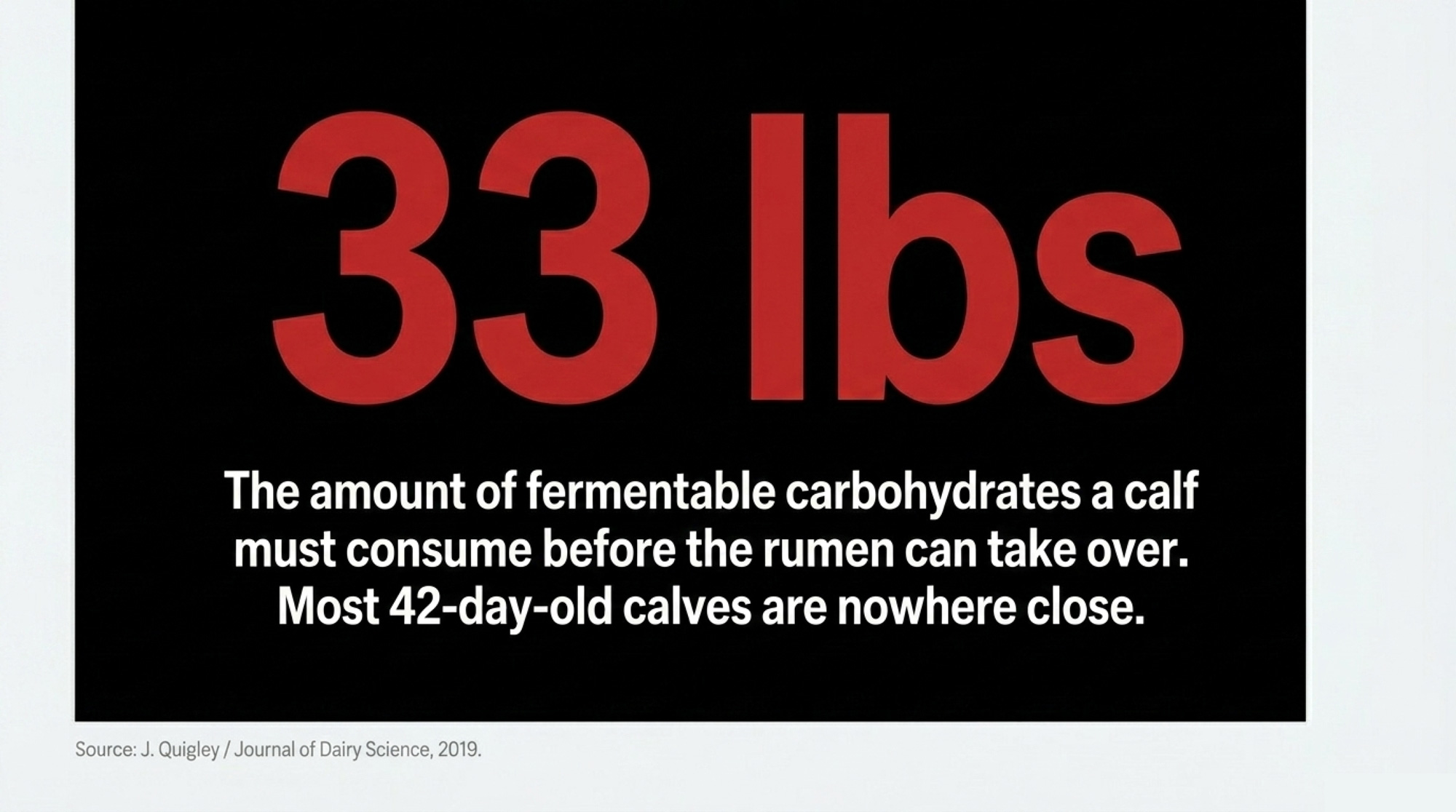
The Bullvine walked through his math earlier this year:

  • On a typical 8‑week program with 6 L of milk per day, many calves only get to around 11.5–13 kg of cumulative NFC from the starter by day 56 — 1.5–3.5 kg short of the 15 kg target. 
  • On higher‑milk programs, calves often don’t hit that 15 kg NFC mark until week 9 or 10, because liquid keeps them full and slows grain intake. 

That tracks with what you see in real barns: big, shiny 6‑week‑old calves that still hardly touch the starter bucket.

A 2024 systematic review in the Journal of Dairy Science by Welk, Neave, and Jensen compiled 44 studies on weaning practices. Their conclusions matched the barn experience:

  • Calves weaned later, over longer durationsbased on starter intake, or using step‑down milk removal, were more likely to show positive growth and intake responses
  • Weaning based on starter intake produced superior growth and feed intake compared with fixed‑age, earlier weaning.
  • When pre‑weaning milk allowances were adequate (over about 6 L/day), weaning after 8 weeks supported superior weight gain

At 42 days, when Dave pulled the last bottle, most of his calves were barely at a pound of starter a day. Some less. Nowhere near the 2+ lb/day that corresponds to Quigley’s 15 kg NFC target over time.

The milk disappeared anyway.

Extension recommendations from Penn State, Cornell, and the Canadian Dairy Code of Practice all push in the same direction: don’t fully wean Holstein‑size calves until they’re consistently eating roughly 2–3 lb of starter per day for several consecutive days. That’s just a practical way of making sure biology has caught up.
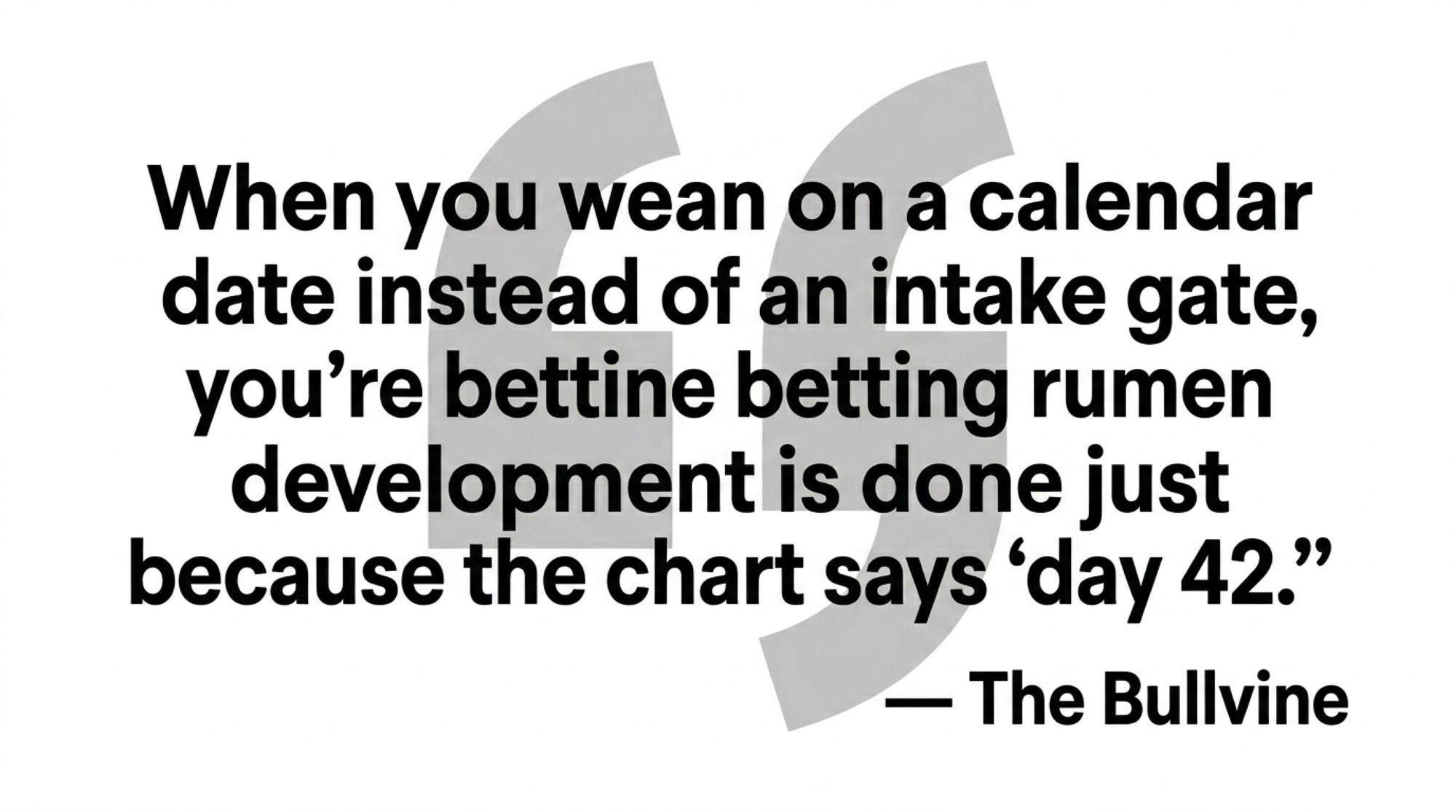
When you wean on a calendar date instead of an intake gate, you’re betting that rumen development is done just because the chart says “day 42.”

How a Rough Weaning Turns Into a 25‑Month Calving Problem

The pneumonia cases were obvious. The weaning slump was there too: calves coughing, sulking, backing off the starter for a week or ten days, then slowly coming around.

What wasn’t obvious was how those ten days of weaning showed up in the heifer yard.

The Welk review and several individual trials report that calves weaned later and more gradually not only eat more starter but also gain more weight per day around weaning and carry a bodyweight advantage through the post‑weaning period, especially when milk is generous pre‑weaning. Those gaps don’t magically close.

Now put heifer economics on top of that biology.

Iowa State University’s 2024 “What’s it Cost to Raise Your Dairy Best Heifer?” budget for a conventional 26,000‑lb herd shows:

  • Total cost to raise a heifer to 24 months: about $2,651
  • Daily heifer cost: roughly $2.65/head/day when you underload labor, up to about $3.15/head/day when labor is fully charged

The same ISU sheet runs the economics of tightening that up:

  • Cutting the heifer‑raising period from 24 to 23 months saves about $93 per heifer

Work it the other way:

  • Take a midpoint of $2.75 per day
  • One extra month ≈ 30 × $2.75 = $82.50 per heifer

When Dave’s team pulled his calving records, plenty of heifers were freshening closer to 25 months than 24. Many of those files carried simple notes like “small, waited.”

If half of his 120 heifers — 60 head — were calving just one month later than they needed to because they never quite caught up post‑weaning, that’s:

  • 60 × $82.50 ≈ $4,950 per year in extra heifer costs

Stack that on top of the BRD bill:

  • BRD: $6,240/year
  • Extra heifer month: $4,950/year
  • Total downstream cost: $11,190/year

Compare that to the weaning savings:

  • Milk‑replacer “savings”: $6,600/year
  • BRD + AFC cost: $11,190/year

On Dave’s farm, the 6‑week calendar program wasn’t saving money. It was quietly burning about ,600 a year once the heifer and health costs were on the same page.

Cost Line6‑Week ‘Savings’ Program7–8 Week Intake‑Based Program
Milk replacer per year$11,280$18,120
BRD cost per year$6,240$1,560
Extra AFC/heifer‑day cost$4,950$1,500
Total annual heifer program cost$22,470$21,180

The Before‑and‑After Ledger on a 300‑Cow Herd

Once all three lines — milk replacer, BRD, and age at first calving — were in front of him, Dave could finally see what the weaning program was really doing.

Here’s how his example pencils out.

Assumptions (Dave’s Numbers)

  • Herd: 300 Holstein cows
  • Heifers raised/year: 120
  • Milk replacer price: $1.80/lb (contract)
  • BRD cost per case: $260, midpoint of the published $252–282 per case range. 
  • Post‑weaning BRD incidence (first 30 days):
    • Old 6‑week program: 20% (24 heifers)
    • New intake‑based program: 5% (6 heifers)
  • AFC drift:
    • Old: 60 heifers calving ~1 month late
    • New: 30 heifers calving ~10 days late on average

Old 6‑Week Calendar Program

Milk replacer:

  • 52.5 lb/calf × $1.80 ≈ $94.50 → $94 per calf
  • 120 × $94 ≈ $11,280 per year

BRD cost:

  • 20% of 120 = 24 BRD cases
  • 24 × $260 = $6,240 per year

AFC drift cost:

  • 60 heifers × $82.50 ≈ $4,950 per year

Total:

  • $11,280 + $6,240 + $4,950 ≈ $22,470 per year

New Intake‑Based 7–8‑Week Program

Milk replacer:

  • 84 lb/calf × $1.80 ≈ $151.20 → $151 per calf
  • 120 × $151 ≈ $18,120 per year

BRD cost:

  • 5% of 120 = 6 BRD cases
  • 6 × $260 = $1,560 per year

AFC drift cost:

  • 30 heifers drifting ~10 days: 10 × $2.75 ≈ $27.50/hd
  • 30 × $27.50 ≈ $825 per year
  • For simplicity, Dave’s team rounded this up to about $1,500 per year to stay close to ISU’s $93 per heifer‑month and acknowledge some extra variation. 

Total:

  • $18,120 + $1,560 + ~$1,500 ≈ $21,180 per year

Even with conservative rounding, the intake‑based 7–8‑week program came out roughly $1,300/year cheaper than the old 6‑week system on Dave’s farm.

Change the incidence rates or costs, and the gap will move. In some herds with very low BRD and tight AFC, 6‑week weaning might still hold its own on a full ledger.

The point is: until you put your own numbers into a similar layout, you’re guessing.

Why Those Dollars Matter More at $3,000 Heifer Values
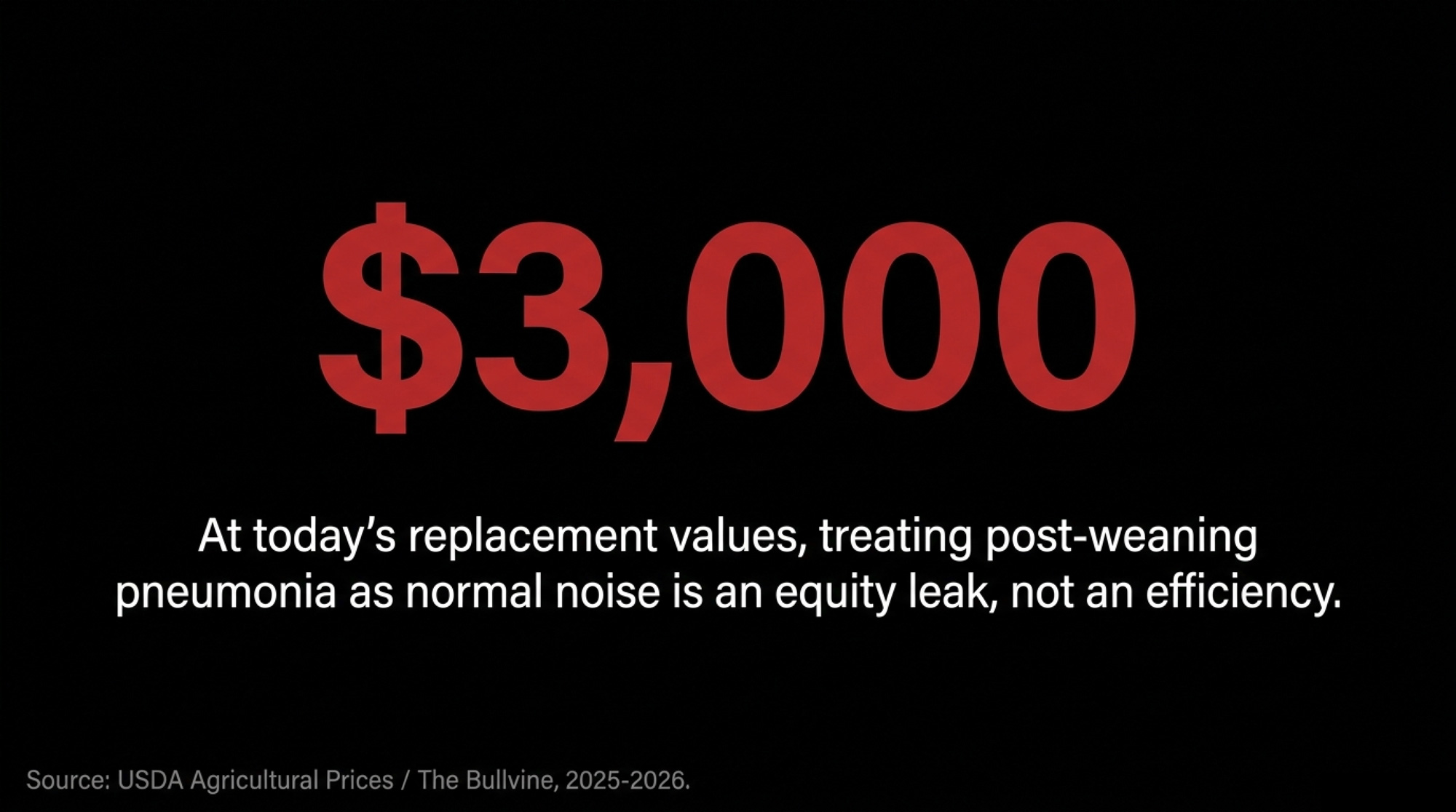
If replacements were cheap and plentiful, you might treat this like a nice‑to‑have improvement.

That’s not the market you’re in.

USDA’s Agricultural Prices reports and Ag Proud coverage show U.S. replacement cow prices averaging about $3,110 per head in October 2025, up roughly 3% from July and 16% from October 2024. By early 2026, averages had eased to around $2,860, but they were still high compared with prior years.

BRD Impact Line ItemConservative Cost per CaseCapital Context at ,000 Heifers
Drugs + vet timeSmall part of total loss
Lost early growth + delayed heat–0Pushes AFC toward 24.5–25+ months
Higher culling/poor first lact.0–0Lost future milk and genetics
Total economic hit per case≈2–28–9% of a ,000 heifer’s value

A Bullvine analysis across multiple datasets pegged average replacement heifers at about $3,010 per head in early 2026, with U.S. heifer inventories likely to tighten further before any meaningful rebuild around 2027.

At those values, every replacement in your place quietly carries a $2,800–$3,100 asset tag.

A BRD case that knocks a heifer out of your pipeline or drags down her first‑lactation performance is not just a sick‑calf problem. It’s an equity decision.

The same goes for age at first calving. If your heifers are freshening closer to 25 months than 22–24, you’re not just feeding a little extra grain. You’re tying up capital in animals that aren’t milking yet.

So the real question stops being, “How can I save $55 per calf on milk replacer?”

It becomes:

“At $3,000 per heifer, how much BRD and delayed calving am I willing to buy for a milk‑replacer ‘savings’ that only shows up if I ignore biology and time?”

What Changed in Dave’s Barn: From Calendar to Intake

Dave didn’t flip his program because somebody told him 6‑week weaning was “wrong.” He changed because his own numbers — and a few published ones — said the calendar was costing him.

The decision they made was simple:

  • The calendar no longer decides when a calf is weaned.
  • The calf’s starter intake does.

Three practical changes were made that are real.

1. Intake Became a Gate, Not a Guess

They added one line to the calf card:

“3 days at ~2 lb starter before full wean? Y/N”

Then they did a five‑minute exercise:

  • Weighed a full scoop of their calf starter and wrote on the wall: “1 scoop ≈ X lb.”

From that point forward:

  • No calf was fully weaned until she had eaten roughly 2 lb of starter per day for three consecutive days — verified with the scoop.
  • If she wasn’t there at day 42, she kept her last feeding until she hit that gate.

This lines up with Quigley’s 15 kg NFC concept — calves need to accumulate around 31–34 kg of starter at typical NFC levels to reach that threshold — and with Drackley’s extension‑level recommendation of ≥1.5 kg/day (3.3 lb) of starter dry matter for several days before full weaning.

It also mirrors what Penn State, Cornell, and the Canadian Code of Practice have been saying in plainer language: use starter intake as your weaning trigger, not age alone.

2. They Stretched Weaning Into a Planned 10–14‑Day Step‑Down

Under the old program, the milk schedule went from “full” to “none” at 6 weeks. No ramp.

Expense Category6-Week “Savings” Program8-Week “Intake” ProgramImpact of Change
Milk Replacer$11,280$18,120+$6,840 (Cost)
BRD/Pneumonia$6,240 (20% rate)$1,560 (5% rate)-$4,680 (Saving)
Delayed Calving (AFC)$4,950 (60 head late)$1,500 (30 head late)-$3,450 (Saving)
TOTAL ANNUAL COST$22,470$21,180-$1,290 (Net Gain)

Under the revised program, they:

  • Cut milk volume by about 50%, roughly two weeks before the earliest possible weaning window.
  • Held that reduced feeding while watching starter intake.
  • Pulled the last feeding only after the intake gate was met.

In practice, that meant:

  • Step‑down starting somewhere in week 6
  • Full weaning happens in week 7 or 8 for most calves, depending on their starter intake

That’s exactly the pattern the 2024 Welk review found supported smoother growth: calves weaned later, over longer durations, and based on intake had better performance through the transition, particularly when pre‑weaning milk allowances were higher.

For Dave, the visible payoff was fewer calves crashing when milk disappeared and fewer heifers falling behind by the time they hit breeding pens.

3. They Changed the Starter to Pay for the Program

The last piece was feed, not philosophy.

Dave and his nutritionist swapped out a fine, dusty pellet for a textured starter with visible grain and enough fermentable starch to actually drive rumen development. If you want calves to hit 2 lb/day before weaning, the starter has to be something they want to eat.

They also moved to a starter that included a Saccharomyces cerevisiae fermentation product (SCFP). A 2022 Journal of Dairy Science trial found that calves fed SCFP had better post‑weaning growth and feed efficiency and required fewer respiratory treatments through four months of age, even though pre‑weaning gains were similar between groups. A 2024 review on SCFP as a postbiotic outlined how these products may support immune and rumen function in calves and cows.

Weaning Feature6‑Week Calendar ProgramIntake‑Based 7–8 Week Program
Weaning triggerFixed age (42 days)Starter intake (~2 lb/day × 3 days)
Weaning durationAbrupt, <3 days step‑downPlanned 10–14 day step‑down
Post‑weaning BRD in first 30 days20% of heifers (24/120)5% of heifers (6/120)
Typical starter intake at full weanOften <1 lb/day2–3 lb/day
Heifers calving ≥1 month late (per yr)60 head30 head (about 10 days late)
Annual extra AFC + BRD cost≈$11,190≈$3,060

You can waste a lot of money on additives that don’t pay. In this case, the economics looked reasonable:

  • If better palatability and SCFP‑supported gut health pull starter intake forward and trim just a handful of $252–282 BRD cases per year.
  • The extra cost of a higher‑end starter becomes cheap insurance relative to $3,000 heifers.

Three Economic Paths for Your Weaning Program

Not every herd is Dave’s herd. Your BRD rates, milk replacer price, labor, and heifer inventory pressure will look different.

But the decision paths are similar.

Path 1: Defend 6‑Week Weaning With Your Own Data

Early weaning can still make economic sense in some herds.

When this path works:

  • Your post‑weaning BRD incidence in the first 30 days is consistently in the single digits.
  • Calves are reliably eating 2+ lb of starter per day by day 40–42.
  • Your heifers are calving around 22–24 months without a pattern of “small, waited” notes.

What it demands:

  • At least 12–24 months of calf treatment and AFC records you actually trust.
  • A simple intake check to avoid assuming calves are at 2+ lb when they aren’t.

If those numbers look good, your 6‑week program may genuinely be a savings strategy rather than a hidden cost.

If you don’t have the records, you’re not defending 6‑week weaning. You’re just hoping it’s fine.

Path 2: Triage High‑Risk Calves Into 7–8‑Week Intake‑Based Weaning

You don’t have to flip the whole calf barn at once.

Triage play:

  • Keep the 6‑week target as your default on paper.
  • Any calf that hasn’t hit your 2 lb/day intake gate by day 40–42 gets pushed into a 10–14‑day step‑down and weaned later, once she meets the gate.
  • Track BRD and 90‑day weights for this group separately.

Economics:

  • You spend more milk replacer only on calves that are biologically behind the curve.
  • These are often the same calves driving your post‑weaning BRD and extra heifer months, so improvements here have outsized ROI.

This path works well for herds that have:

  • Reasonable calf labor and discipline.
  • Chronic trouble with a specific band of high‑risk calves.

Path 3: Redesign Weaning Around Heifer ROI and $3,000 Replacements

If your post‑weaning BRD rate is in the teens or higher and your average AFC is drifting toward 24.5–25+ months, it may be time for a full reset.

What a redesign includes:

  • A standard intake gate (for example, “3 days at ~2 lb starter before full wean”).
  • A built‑in 10–14‑day step‑down that fits your chore rhythm.
  • A starter that calves actually consume, with formulation aimed at hitting Quigley’s 15 kg NFC before milk disappears.
  • Routine pricing of BRD and heifer days off your own numbers — not generic assumptions — at least once a year.

When this path pays fastest:

  • You’re raising your own replacements in a high heifer‑value environment ($2,800–3,100/head).
  • You have a clear pattern of post‑weaning disease and delayed calving.
  • You’re thinking about heifers as capital investments, not just “the young stock.”

What This Means for Your Operation

  • If your post‑weaning BRD incidence is above roughly 15–20% and you’re weaning at 6 weeks, assume your weaning program is a financial risk, not an efficiency. Once each case is priced around $252–282, and you add the cost of extra heifer days, the milk‑replacer “savings” look a lot like Dave’s — quickly eaten up by disease and delayed calving. 
  • If your average age at first calving is north of 24 months, treat that as a calf‑program red flag, not just a breeding issue. ISU’s 2024 budget puts the cost of an extra heifer month around $80–100, depending on labor. Until you understand why your heifers are late, your biggest heifer‑cost lever is probably in the calf barn. 
  • If you don’t have a simple starter‑intake gate built into your weaning protocol, you’re making a capital decision with no biological checkpoint. A weighed scoop and a “3 days at ~2 lb starter? Y/N” checkbox turn that into a gate you can manage and adjust.
  • If you’re valuing or buying heifers at $2,800–3,100 and still treating BRD as a $40 problem, you’re underpricing your own risk. Using the $252–282 per‑case economics for heifer BRD puts you in the right ballpark for capital‑level decisions, not just vet‑bill conversations. 
  • If you want a 30‑day move that doesn’t blow up your chores, start with a BRD + AFC audit. In the next month, pull 12–24 months of calf/heifer records, count your BRD cases in the first 120 days (especially the 30 days post‑weaning), calculate your own BRD cost (cases × ~$260), measure how much later BRD heifers calved, and put that next to your milk‑replacer “savings.” That one piece of paper will tell you whether your current weaning program is defensible or overdue for a redesign.
Key Takeaways

  • If your post‑weaning BRD rate is roughly 15–20% and you’re relying on a 6‑week calendar, the odds are high that you’re not actually saving money on milk replacer once you factor in BRD and delayed calving.The $6,600 that looks like savings in the calf‑feed column can be more than offset by $11,000‑plus in disease and extra heifer days on a 300‑cow herd. 
  • If your average age at first calving is over 24 months, each additional month quietly costs you about $80–100 per heifer. Until that distribution is under control, your fastest heifer‑cost improvement usually sits in intake‑based weaning and grower management, not just semen choice or breeding targets. 
  • If you’re not using starter intake as a weaning gate, your weaning program is a guess, not a strategy.Adding a simple intake trigger and a 10–14‑day step‑down is one of the cheapest, cleanest risk‑management moves you can make in the heifer enterprise.
  • If you’re handling $3,000 heifers in a tight inventory market, treating pneumonia and late calving as “normal noise” is an equity decision. The question isn’t just “Can we live with it?” It’s “Is this the risk position we want to own at today’s heifer values?”

The Bottom Line

Dave didn’t walk away from the 6‑week weaning because someone told him it was outdated. He walked away because, once he stacked his milk‑replacer spend, post‑weaning BRD cases, and ages at first calving on the same ledger, the numbers said the calendar was quietly burning cash.

If you pulled the same reports for your herd and laid them out side by side, would your weaning program look like a savings strategy — or like a risk position you haven’t really priced yet?

The numbers above are built on a 300-cow Wisconsin example with one contractor milk-replacer price and two BRD incidence scenarios. Your herd runs on different inputs — and the answer changes fast when you swap in your own BRD rate, your own replacer cost, and your own AFC. Use the calculator below to run the same ledger with your numbers.

Learn More

The Sunday Read Dairy Professionals Don’t Skip.

Every week, thousands of producers, breeders, and industry insiders open Bullvine Weekly for genetics insights, market shifts, and profit strategies they won’t find anywhere else. One email. Five minutes. Smarter decisions all week.

NewsSubscribe
First
Last
Consent

Why Your Calf’s Saliva Is the Untapped Goldmine for Revolutionary Health Monitoring

Your calf’s spit holds a goldmine of health data. Discover how saliva testing slashes costs, detects disease early, and revolutionizes calf care.

EXECUTIVE SUMMARY: Saliva is emerging as a game-changer in calf health monitoring, offering non-invasive, real-time insights into stress, disease, and immunity. Studies from Hungary and Spain reveal that salivary cortisol spikes predict birth stress severity, while biomarkers like haptoglobin flag respiratory disease 48+ hours before symptoms. Farmers can now assess colostrum uptake via salivary IgG and optimize vaccination timing using oxidative stress markers. While challenges like milk contamination and standardization persist, AI-driven biosensors and automated sampling innovations promise to transform this from a lab curiosity to an on-farm reality. Early adopters report 30% lower mortality and $18/calf treatment savings.

KEY TAKEAWAYS:

  • Saliva replaces invasive blood tests, detecting stress (cortisol), inflammation (haptoglobin), and disease 2+ days before visible symptoms
  • Non-invasive IgG testing cuts the failure of passive transfer (FPT) risks, improving colostrum management
  • Field trials show $18/calf savings in BRD treatment via early saliva-based detection
  • Milk contamination in pre-weaned calves remains a hurdle for some biomarkers
  • Emerging tech (AI, biosensors) will enable real-time herd health monitoring by 2025
calf health monitoring, salivary diagnostics, non-invasive testing, bovine respiratory disease, dairy farm innovation

The future of calf health monitoring isn’t hiding in your medicine cabinet – it’s dripping from your calves’ mouths. While the industry continues to rely on outdated, invasive diagnostic methods, the solution to slashing treatment costs, reducing mortality, and revolutionizing preventative health has been staring us in the face all along: saliva.

The Costly Delusion of Reactive Calf Management

Let’s face it – most dairy operations live in the diagnostic dark ages. You’re still taking rectal temperatures, observing behavior changes, and waiting for visible symptoms before treating your calves. By then, performance is already compromised, your medication costs are skyrocketing, and you’re fighting yesterday’s battle.

When a calf shows clinical pneumonia, you’ve already lost -95 in treatment costs, labor, and production losses – not to mention the 5-15% mortality risk you’re now facing. But here’s what should keep you up at night: for every clinical case you see, 3-4 subclinical cases silently drain your profits.

Are you comfortable with this outdated, reactive approach? Because your competitors who’ve embraced early detection technologies certainly aren’t.

What Your Calves Are Telling You – If You’d Only Listen

That clear fluid your calves are drooling? It’s not “just spit” – it’s a sophisticated biological matrix containing hormones, proteins, enzymes, antibodies, and metabolites that reveal everything happening inside your animals’ bodies. Hungarian and Spanish researchers have proven that saliva contains dozens of biomarkers signaling stress, inflammation, immune responses, and disease, days before visible symptoms appear.

Why should you care about salivary diagnostics? Because they’re:

  • Non-invasive (no stressed calves, no needle sticks)
  • Accessible (no vet required for collection)
  • Economical (sampling materials cost 40% less than blood collection supplies)
  • Practical for frequent monitoring (try getting daily blood samples during calving season)
  • Earlier detection (biomarkers change 48-72 hours before clinical signs)

The Truth About Stress Your Calves Can’t Tell You

Think you can visually identify stressed calves? Think again. Hungarian researchers found dystocic calves show 12.2% higher salivary cortisol levels than eutocic calves, with elevated levels persisting for 24 hours. But can you quantify the difference between your hutches and group housing? Between your weaning protocols? Between your transportation methods?

Salivary cortisol gives you the objective data to separate management fact from fiction.

Spanish researchers demonstrated that weaning and grouping trigger measurable oxidative stress responses in saliva, with markers increasing 50-135%. This allows you to identify which practices minimize stress, not just which ones look better to your untrained human eye.

The 48-Hour Head Start That Changes Everything

Here’s the game-changer: salivary biomarkers change up to 48-72 hours before clinical symptoms appear. This isn’t marginal improvement – it’s revolutionizing the treatment timeline:

  • Salivary haptoglobin rises 48 hours before visual BRD symptoms
  • Salivary pH drops significantly in calves developing diarrhea before you see loose stool
  • Salivary biomarker patterns can predict pneumonia with 87% accuracy using AI algorithms

A Wisconsin dairy reduced BRD treatment costs by $18/calf after implementing weekly salivary haptoglobin screening. They weren’t treating fewer cases – they were catching them earlier, when treatment is more effective and less expensive.

Are you still comfortable waiting for visual symptoms when your competitors gain a 48-hour head start on disease management?

Beyond Sick/Not Sick: Management Precision That Drives Profitability

Salivary diagnostics isn’t just about disease detection – it’s about optimizing every aspect of your calf program:

Vaccination Timing That Works

Ever vaccinated calves only to have a BRD outbreak anyway? Salivary biomarkers can tell when a calf’s system is under oxidative stress, compromising vaccine efficacy. By monitoring salivary stress markers, you can:

  • Delay vaccination during high-stress periods
  • Sequence management events to minimize immune suppression
  • Identify individual calves that need vaccination postponement

One California dairy reported a 27% improvement in vaccine response rates after implementing salivary oxidative stress monitoring. That’s the difference between actual protection and expensive placebos.

Colostrum Management That Delivers Results

Failure of passive transfer (FPT) remains stubbornly common despite decades of colostrum education. Salivary IgG testing provides:

  • Non-invasive monitoring of colostrum uptake
  • Real-time feedback on colostrum protocols
  • Early identification of at-risk calves

Farms using saliva-based IgG testing report a 30% reduction in pre-weaning mortality through targeted intervention. How many calves are you losing because you’re not identifying FPT early enough?

Why Aren’t We All Doing This Yet?

Let’s address the elephants in the room:

1. The Industry Resistance to Change

The biggest barrier isn’t technology – the industry’s stubborn “we’ve always done it this way” mindset. Early adopters are gaining competitive advantages while skeptics wait for perfect solutions that will never come. Innovation requires pioneers willing to implement workable advances.

2. Standardization Needs Work

Sampling techniques and reference ranges aren’t fully standardized yet. But this problem is being solved rapidly as interest grows. The technology is developing faster than most realize.

3. The Milk Contamination Challenge

Pre-weaned calves present a challenge: milk residues in the mouth can interfere with some assays. Current solutions include:

  • Sampling before feeding
  • Developing milk-resistant assays
  • Using biomarkers minimally affected by milk

This isn’t insurmountable – it’s just another challenge being actively addressed by researchers who understand the massive potential at stake.

The Future Is Already Here: Are You?

The most exciting developments combine salivary diagnostics, automation, and artificial intelligence:

  • Pen-side tests providing results in 10-15 minutes
  • Systems integrated with automated feeders that collect samples without human intervention
  • AI algorithms predicting disease 7-10 days in advance with 87% accuracy
  • Integration with herd management software for automated early warnings

The question isn’t whether salivary diagnostics will transform calf management – it’s whether you’ll be at the forefront or playing catch-up. Early adopters gaining 5-7% improvements in survival rates and 10-15% reductions in treatment costs will reshape industry economics.

The Hard Truth: Adapt or Get Left Behind

The dairy industry loves to talk about innovation, but when it comes to diagnostic technologies, we’re still using methods from the last century. Blood draws and rectal thermometers belong in a museum, not your modern dairy operation.

Every day you wait to implement advanced monitoring technology costs you lost calves, wasted treatments, and compromised performance. Forward-thinking producers are already implementing these systems and gaining substantial competitive advantages.

Your choice is simple: embrace the cutting edge of diagnostic technology or watch your competitors do it first. Can you ignore a technology that gives you a 48-hour head start on disease in an industry with razor-thin margins?

Here’s my challenge: Contact your veterinarian this week about available salivary testing options. Identify key transition points (arrival, weaning, grouping) where monitoring could provide the most value. Calculate your current costs from delayed disease detection and treatment failure.

The revolution in calf management isn’t coming – it’s already here, and it’s nothing to spit at.

Want to share how you’re implementing advanced monitoring in your operation? Have questions about getting started? Share your experiences in the comments below.

Learn more:

The Sunday Read Dairy Professionals Don’t Skip.

Every week, thousands of producers, breeders, and industry insiders open Bullvine Weekly for genetics insights, market shifts, and profit strategies they won’t find anywhere else. One email. Five minutes. Smarter decisions all week.

NewsSubscribe
First
Last
Consent

Your Calf Transport Shortcuts Are Bleeding Your Dairy Dry: The High Cost of “Get ‘Em Gone” Thinking

Your transport shortcuts could be bleeding thousands from your bottom line – what you don’t know about calf shipping is costing you big.

EXECUTIVE SUMMARY: Calf transportation represents a critical control point in dairy operations that significantly impacts animal welfare and profitability, yet many producers treat it as a mere logistical necessity rather than a crucial management decision. The comprehensive analysis demonstrates that transport subjects calves to multiple simultaneous stressors—including thermal challenges, social disruption, handling stress, and feed/water deprivation—triggering physiological responses that compromise immune function and increase susceptibility to costly diseases like Bovine Respiratory Disease (BRD). Particularly vulnerable are young, unweaned calves under 8 days old, who face substantial regulatory restrictions due to their immature immune systems, limited thermoregulatory capacity, and dependence on liquid nutrition. The economic consequences of poor transport practices are substantial, with treatment costs, mortality losses, reduced growth performance, and decreased carcass quality directly impacting profitability across the value chain. Implementing science-based best practices—from proper fitness assessment and vehicle design to appropriate loading densities and post-arrival management—not only fulfills ethical obligations but delivers significant economic returns through improved health outcomes and enhanced productivity.

KEY TAKEAWAYS

  • Transport is a major stressor that directly impacts your bottom line – BRD triggered by transport stress costs the North American cattle industry $800 million to over $1 billion annually, with losses of $40-$291 per affected animal through treatment costs, mortality, reduced growth, and lower carcass quality.
  • Young calves (especially under 8 days) require special handling and protection – Federal regulations strictly limit transport of very young calves to a single journey under 12 hours, with requirements for individual loading/unloading, segregation from older animals, and sufficient space to lie down comfortably.
  • Proper fitness assessment before loading is legally required and economically crucial – Animals must be categorized as fit, compromised, or unfit based on specific criteria; compromised animals face transport restrictions (12-hour maximum journey, no auction markets), while unfit animals cannot be transported except for veterinary care.
  • Vehicle design and transport conditions significantly impact outcomes – Adequate ventilation, appropriate bedding, non-slip flooring, and proper loading densities are essential for reducing stress and preventing injury, dehydration, and disease.
  • Post-arrival management is critical for recovery and performance – Immediate access to rest, water, appropriate nutrition, and a low-stress environment upon arrival, combined with vigilant health monitoring, can significantly mitigate the negative impacts of transport and prevent downstream health problems.
calf transport regulations, dairy calf welfare, shipping fever prevention, bovine respiratory disease, calf transport economics
livestock transport of cows to green meadow

Every time you rush a calf onto a trailer without proper preparation, you’re writing a check to your veterinarian, slashing your profit margins. While you obsess over milk prices and feed costs, your transport decisions silently devastate your returns through compromised calf health, reduced growth rates, and plummeting carcass values. It’s time to face facts: in calf transport, what you save in convenience today will cost you tenfold tomorrow.

The Cold, Hard Economic Reality Behind Poor Transport

Let’s cut through the bull: Most dairies ship calves, particularly those unwanted bulls and freemartins, off-farm as quickly as possible to make room for the next fresh cow. While freeing up hutches and labor hours feels financially savvy, this approach costs North American dairy producers millions in downstream losses that never appear on your balance sheet.

The numbers tell a damning story: approximately 9.5 million calves from dairy farms are transported annually in the U.S., with 43% of replacements raised offsite and 15% traveling more than 50 miles from their birthplace. Even more alarming, about 80% of non-replacement calves are shipped when less than one week old, and in western states, nearly 64% hit the road before they’re even 24 hours old.

Are you expecting these day-old calves with barely dry navels to thrive after being subjected to the most stressful experience of their young lives? Our industry has normalized practices that defy biological reality, and we’re all paying for it—though the pain isn’t usually felt until long after the truck disappears down your driveway.

Wisconsin dairy producer Mark Olson learned this lesson the expensive way. “For years, we shipped our bull calves at 24-48 hours old, thinking it was economical. Then, we tracked what buyers were paying for our calves compared to a neighboring farm that held calves for 10-14 days. The difference was consistently $65-80 per head. The math became obvious when we factored in what it cost us to keep them those extra days—about $22 per calf.”

What Transport Does to Your Calves

Research consistently shows that calves transported at 28 days versus just 14 days:

  • Arrive at their destination significantly heavier (a 26-pound advantage)
  • Develop substantially heavier carcass weights at slaughter (a 32.6-pound advantage)
  • Experience dramatically lower mortality rates (3.1% reduction)
  • Require fewer medical treatments beyond antibiotics (5.4% fewer animals needing additional intervention)

“But why should I care about those bull calves? They’re someone else’s problem after the truck pulls away!”

Here’s why: The market rapidly evolves, and your reputation travels with those calves. Order buyers and calf ranches now meticulously track sources with high treatment rates and DOAs, adjusting their pay accordingly. According to a 2023 American Journal of Veterinary Research study, Holstein bull calves from dairies with solid transport protocols can command -75 premiums per head over calves with poor protocols. Your reputation for quality—or lack thereof—directly impacts your bottom line with every calf sold.

For replacement heifers, the stakes are even higher. Research from the Journal of Dairy Science shows that first-lactation heifers experienced transport stress and subsequent respiratory challenges as calves produce up to 1,200 pounds less milk in their first lactation. When your average heifer raising cost is $2,200-2,500 per head, can you compromise future production to get calves off the property a few days earlier?

What Happens During That “Simple” Trailer Ride

When a calf steps onto that truck, it’s not just going for a ride—it’s being subjected to a perfect storm of stressors that would challenge even your toughest dry cows:

  • Thermal stress from temperature extremes (like running a milk cow without fans or sprinklers in August)
  • Social stress from mixing with unfamiliar calves carrying unknown pathogens
  • Physical stress from maintaining balance for hours (imagine standing on a mechanical bull for 6 hours straight)
  • Psychological stress from handling and novel environments
  • Immunological stress creates an open door for every pathogen they encounter
  • Metabolic stress from feed and water deprivation when they have minimal body reserves

Think of it this way: would you expect your highest-producing cows to come from calves that had pneumonia within two weeks of transport? Not a chance. Yet we continue treating our future replacements or beef animals this way, and then we wonder why health costs keep rising, and performance falls short.

The scientific evidence is sobering: one study in the Journal of Animal Science found that 31% of calves already had pulmonary lesions upon arrival at growing facilities, with 21% classified as mild and 10% as severe. Even more alarming, after just 12-27 days at the facility, the percentage with severe lesions skyrocketed to 40.1%, while healthy lungs plummeted to only 34%.

5 MUST-KNOW Transport Metrics That Impact Your Bottom Line

Impact AreaThe Numbers That MatterWhat It Means to Your Operation
Treatment Cost$42 per BRD case on averageA direct hit to your profit when raising your replacements
Mortality Loss$1,647 net loss per deathComplete loss of investment plus treatment costs
Weight GainUp to 0.98 kg/day reduction in sick calvesDelayed breeding, later calving dates, reduced lifetime production
First Lactation1,200 lbs less milk from calves with BRD$240+ lost revenue per affected heifer (at $20/cwt)
Bull Calf Value$50-75 premium for properly managed calvesImmediate revenue boost from better transport protocols

Colostrum: Your First Line of Defense Against Transport Disaster

If you’re shipping calves (especially young ones), proper colostrum management isn’t just important—it’s non-negotiable. Skipping this step is like sending your milking string into winter without a vaccination program.

Proper colostrum feeding is a vaccination against transport stress, providing the only meaningful protection during the vulnerable period when calves’ immune systems are still developing.

The industry standard requires both heifer and bull calves to receive at least 4 liters of high-quality colostrum (>22% Brix, >50g/L IgG) within 12 hours after birth, with the first feeding ideally occurring within 1-2 hours. But let’s be honest—how many operations meet this standard for every calf, especially those “less valuable” bulls and freemartins?

Progressive producers have moved beyond the basics by feeding calves 3-liter meals of transition milk for three days before switching to whole milk or replacers. Compare two groups: calves that received 2L of questionable colostrum versus those given 4L of quality colostrum followed by transition milk for 72 hours—which group would you bet on to handle a 6-hour haul to the grower operation?

Is Your Calf Fit to Load? Would You Bet $1,000 On It?

Here’s the uncomfortable truth many producers don’t want to acknowledge: a significant percentage of calves being loaded onto trailers today aren’t fit for transport under current regulations. When your calf hauler accepts that shaky-legged newborn or dehydrated calf with scours, they take a substantial legal and financial risk that could haunt both of you.

Federal laws explicitly prohibit transporting unfit animals, with a narrow exception for veterinary care. The stakes are high. Beyond potential regulatory penalties ranging from warnings to thousands of dollars in fines, the economic consequences of shipping compromised calves are severe. For your calf hauler, a DOA or suffering calf discovered at an inspection station can trigger an investigation into their entire operation. For you, it becomes a black mark on your dairy’s reputation that impacts the price every bull calf from your operation commands at auction.

“I used to take whatever calves the dairy gave me,” admits long-time calf hauler Dave Westley from Michigan. “Then I got stopped at a USDA checkpoint with three compromised calves on my trailer. The fines and legal fees cost me over $5,000, not counting the week my truck was sidelined. Now I refuse any calf that doesn’t meet fitness standards, no matter how much the dairy pushes.”

3 Questions to Ask Your Calf Hauler Today

  1. What specific fitness criteria do you assess before loading my calves? Their answer should include checking for dry navels, ability to stand unassisted, alertness, and absence of scours or respiratory issues.
  2. How do you address temperature extremes during transport? Listen for specific protocols like adding extra bedding in winter, adjusting loading density in summer, and scheduling around the coolest parts of the day.
  3. What training have your handlers received on low-stress calf handling? They should mention specific training programs, knowledge of flight zones, and alternatives to electric prods for moving calves.

Your Trailer May Be Killing Your Profit Margins

Is your transport equipment designed for live cargo or just a metal box with wheels? The trailer is more than just a container—it directly impacts the profitability of every animal that rides in it.

Just as you wouldn’t run your valuable milking herd through a dilapidated parlor with rusty stalls, you shouldn’t transport valuable calves in substandard equipment.

Ventilation ranks among the most critical design features. Proper airflow protects calves from heat stress, cold drafts, humidity, and poor air quality. Research from the Journal of Animal Science has linked poor ventilation and inadequate bedding management to higher levels of airborne pathogens—the same organisms that can trigger respiratory disease and pneumonia, just like poor ventilation in your calf barn.

Bedding isn’t just about comfort—it’s a multi-functional necessity. Quality bedding materials like straw or wood shavings absorb urine and feces, provide critical traction during transport, deliver thermal insulation in cold weather, offer cushioning against metal surfaces, and contribute to better air quality. Deep bedding is particularly important for young calves—just as essential as in your calf hutches during winter months.

What Elite Dairy Operations Are Doing Differently

Progressive dairy operations across North America are revolutionizing their approach to calf transport and reaping the economic benefits. Here’s what they’re doing that you’re probably not:

  1. Age-appropriate transport: Elite operations have stopped shipping day-old calves whenever possible. Like timing your breeding protocols for peak conception rates, they’ve recognized that older calves handle transport stress significantly better. Many implement systems to keep calves until at least 10-14 days old (preferably 4 weeks) before transport. The additional feed, labor, and housing costs are offset by dramatically stronger calves that command premium prices.
  2. Colostrum excellence by the numbers: Top dairies implement regimented colostrum protocols monitored as strictly as their parlor procedures. Every calf receives 4 liters of tested colostrum (>22% Brix) within 6 hours of birth, with the first feeding within 1-2 hours. Many continue transition milk feeding for 3 days before transport. They regularly test for failure of passive transfer using refractometers or total protein, maintaining rates below 5%.
  3. Specialized transport partnerships: Just as you wouldn’t let an untrained milker prep your best show string, elite dairies work exclusively with specialized calf transporters with proper equipment and protocols. The few extra dollars per head yield substantial returns in reduced morbidity and mortality. Many establish contracts with dedicated haulers rather than relying on the cheapest option for each load.

Idaho dairyman Carlos Vazquez implemented dedicated calf transport partnerships in 2022. “We now work with just two specialized transporters instead of the five random haulers we used before,” he explains. “Our calf mortality at the grower dropped from 4.2% to 1.7% in the first six months, and our treatment rates were cut nearly in half. The $3 extra per head we pay for premium transport is our best investment.”

What This Means for Your Operation

Here’s the brutal reality: your dairy will likely leave thousands of dollars on the table yearly through suboptimal transport practices. The conventional approach of shipping calves as quickly and cheaply as possible is fundamentally flawed, imposing biological and economic costs that far outweigh any short-term convenience.

Better transport practices aren’t just about feeling good or avoiding regulatory headaches—they’re about dollars and cents in an industry where margins are razor-thin. Every calf that avoids Bovine Respiratory Disease (BRD) represents significant saved treatment costs, reduced mortality risk, improved growth efficiency, and higher-quality end products.

For your replacement heifers, it means better lifetime productivity and longevity in your milking string. Every extra pound of milk in that first lactation is pure profit. For your bull calves, quality transport protocols translate to stronger market prices. With Holstein bull calf values already plagued by volatility, can you afford to leave money on the table? Progressive producers are now capturing $50-75 premiums per head simply by implementing proper transport protocols.

The Bottom Line

Are you managing your calf transport with the same precision you bring to your reproductive program or nutrition management? If not, why not? The most profitable dairies have already recognized calf transport as the mission-critical control point it truly is.

In the dairy business, we meticulously track somatic cell counts, pregnancy rates, and feed efficiency but too often overlook how transport stress undermines the profit potential of our young stock. When the average cost to raise a replacement heifer exceeds $2,200 and first-lactation productivity directly impacts your dairy’s profitability, can you compromise their future for the convenience of early shipping?

It’s time to stop accepting “that’s how we’ve always done it” as an answer. Challenge your team to implement at least three improvements to your calf transport protocol this month. Start tracking outcomes, measuring what matters, and connecting the dots between early transport decisions and downstream profitability. The most successful dairies in 2025 will be those recognizing every management decision, including how and when they transport calves, directly impacting their bottom line.

Rather than continuing to hemorrhage money through preventable transport-related losses, take control of this critical element of your dairy business. Your calves—and your financial statements—will thank you.

Learn more

n the Revolution!

Join over 30,000 successful dairy professionals who rely on Bullvine Daily for their competitive edge. Delivered directly to your inbox each week, our exclusive industry insights help you make smarter decisions while saving precious hours every week. Never miss critical updates on milk production trends, breakthrough technologies, and profit-boosting strategies that top producers are already implementing. Subscribe now to transform your dairy operation’s efficiency and profitability—your future success is just one click away.

NewsSubscribe
First
Last
Consent

Nearly 1/3 of UK Dairy Calves Suffer Hidden Lung Damage Costing Millions

29% of UK calves have hidden lung damage! Discover how ultrasound exposes this profit-draining epidemic traditional methods miss.

EXECUTIVE SUMMARY: Groundbreaking Royal Veterinary College research reveals 29% of UK dairy calves suffer undetected lung damage via subclinical pneumonia, costing millions annually. Traditional diagnostic methods like the Wisconsin Respiratory Score miss up to 28.7% of cases, while thoracic ultrasound (TUS) detects hidden consolidation with 94% accuracy. The disease causes £772 lifetime losses per calf through reduced growth and milk yields. Progressive farmers now combine TUS scans at 4/6/8 weeks with a 0-5 severity scoring system to identify at-risk calves. Immediate action with ultrasound-driven protocols can prevent antibiotic overuse and protect herd profitability.

KEY TAKEAWAYS:

  • 29% of UK calves show lung damage by 8 weeks via ultrasound
  • Traditional methods miss 1 in 3 cases of subclinical pneumonia
  • £772 lifetime cost per calf from BRD-related productivity losses
  • Ultrasound scoring (0-5) enables targeted intervention at critical stages
  • Vaccinate against Mannheimia haemolytica – key UK BRD pathogen
bovine respiratory disease, dairy calf pneumonia, thoracic ultrasound, BRD prevention strategies, UK dairy farming

New research reveals the silent epidemic draining profits from British dairy farms. The Royal Veterinary College’s groundbreaking study of 476 calves across 16 Southwest England dairies has uncovered a hidden crisis:

Age Range (Days)Subclinical Pneumonia (%)
1-73.2
8-148.9
50-5628.7

Data sourced from RVC research examining 3,344 weekly examinations

The study revealed that 29% of 8-week-old calves showed lung consolidation via ultrasound, with 28.7% suffering subclinical Pneumonia invisible to clinical exams. These aren’t just numbers—they represent thousands of calves with compromised welfare and reduced productivity.

Traditional diagnostic methods like the Wisconsin Respiratory Score are proving inadequate. This scoring system identifies disease based on visible signs, including cough, nasal discharge, ear position, and temperature, but misses a significant proportion of cases that show no outward clinical signs. The sensitivity of the Wisconsin calf health score chart has been measured at just 62.4%, with specificity of 74.1%.

GAME-CHANGER: How Ultrasound Technology Is Revolutionizing Calf Health Management

Thoracic ultrasound (TUS) isn’t just changing diagnostics—it’s rewriting how we understand respiratory disease in calves. The sensitivity of ultrasonography in diagnosing Pneumonia has been estimated at 80%–94%, and the specificity at approximately 94%–100%. Key findings from the research:

  • Subclinical Pneumonia (lung consolidation without clinical signs) was common in the UK dairy calf population
  • The prevalence of lung consolidation gradually increased during the preweaning period, peaking at 8 weeks of age
  • As calves aged, the percentage classified as either repeat or chronic cases increased, while new cases reduced

“The results of this study demonstrate that bovine respiratory disease, including lung consolidation identified via thoracic ultrasound, is common in pre-weaned calves born on UK dairy farms,” says lead researcher George Lindley. “Whilst the disease has negative welfare consequences, affecting growth, survivability, and future productivity, our research suggests that a significant proportion of calves born on UK dairy farms may remain undiagnosed when assessed by clinical signs only.”

PROFIT KILLER: The Real Cost of BRD to Your Dairy Operation

Let’s cut through the jargon: BRD has significant financial implications.

Impact AreaEffect
GrowthLong-term reductions in average daily live weight gain
SurvivalReduced prognoses of cure and survival with chronic lung consolidation
ProductivityAffects the future productivity of dairy calves

BRD is one of the most common and costly diseases affecting beef and dairy cattle of all age groups. The economic impact of BRD on young dairy heifers includes:

  • A two-week delay to the first calving
  • 4% and 8% reduction in first and second lactation milk yields respectively
  • A lifetime reduction of 109 days in milk caused by reduced longevity

An average BRD prevalence of almost 50% has been reported in pre-weaned dairy heifers, and nearly 70% of UK cattle farmers report BRD as a significant health challenge. Recent measurements of the prevalence of lung consolidation have been similarly variable, with studies finding evidence of consolidation in 63% of pre-weaned dairy calves in the US, 41.1% in Belgian beef and dairy herds, and 15-25% within spring-calving herds in Ireland.

INDUSTRY ALERT: Why Progressive Farmers Are Changing Their Approach NOW

The data demands a change in approach:

  1. Combine Diagnostic Methods Thoracic ultrasound alongside clinical respiratory scoring provides more comprehensive disease detection. Ultrasound is “fast and relatively easy to perform,” according to Lindley.
  2. Implement Regular Monitoring Perform thoracic ultrasound at 4, 6, and 8 weeks of age—the critical period when subclinical pneumonia peaks. A standardized ultrasound scoring system (from 0-5) can help identify at-risk calves, monitor BRD prevalence, and assess disease severity.
  3. Consider Genetic Factors Recent genomic research has identified quantitative trait loci (genetic markers linked to disease resistance), suggesting the potential for breeding more resilient animals.
Ultrasound ScoreDescription
0Normal, healthy lungs
1Pleural thickening, possible interstitial disease
2A lobular lesion with patchy consolidation (1 cm or larger)
31 lobar lesion – full thickness consolidation of 1 lobe
42 lobar lesions – full thickness consolidation of 2 lobes
53 or more lobar lesions – full thickness consolidation of 3+ lobes

THE BULLVINE BOTTOM LINE: Act Now or Pay Later

This isn’t just about veterinary science but protecting your bottom line. With approximately 1.4 million dairy calves born in the UK annually and BRD being one of the leading causes of disease and the primary driver of antibiotic use in this population, addressing this challenge is crucial.

Action Steps Today:

  1. Schedule thoracic ultrasound examinations at 4, 6, and 8 weeks of age for all calves
  2. Use the standardized ultrasound scoring system (0-5) to identify subclinical cases
  3. Discuss with your vet about implementing a BRD prevention protocol, including vaccination against key respiratory pathogens like Mannheimia haemolytica, which is commonly associated with severe BRD cases in the UK

The research is clear: Subclinical pneumonia is common in UK dairy calves, but diagnosis could easily be missed if stakeholders only observe clinical signs. Will your herd benefit from this improved diagnostic approach?

Learn more:

Join the Revolution!

Join over 30,000 successful dairy professionals who rely on Bullvine Daily for their competitive edge. Delivered directly to your inbox each week, our exclusive industry insights help you make smarter decisions while saving precious hours every week. Never miss critical updates on milk production trends, breakthrough technologies, and profit-boosting strategies that top producers are already implementing. Subscribe now to transform your dairy operation’s efficiency and profitability—your future success is just one click away.

NewsSubscribe
First
Last
Consent

Combating Bovine Respiratory Disease (BRD): Insights and Strategies for Healthier Calves and Sustainable Dairy Farming

Find practical tips to lower bovine respiratory disease in preweaned calves. Learn from the BRD 10K study on California dairies. Ready to boost calf health?

Bovine respiratory disease (BRD) is a difficult barrier for pre-weaned dairy calves, causing severe health problems and incurring significant economic costs on dairy farms. The entire cost of BRD, including direct and indirect charges, may vary between $150 and $300 per calf affected by the illness. Detailed research published in the Journal of Dairy Science digs into the complex elements contributing to BRD. It provides concrete measures for dairy producers to prevent this hazard. Understanding the causes of BRD, a leading cause of death in dairy heifers, is crucial for financial and ethical reasons. This study highlights the environmental, dietary, and managerial aspects influencing BRD, providing farmers with research-backed recommendations for raising healthier, more robust herds. This understanding is critical for improving calf health and the overall sustainability of dairy production.

Understanding the epidemiology of bovine respiratory disease (BRD) in pre-weaned calves is critical for dairy farmersaiming to enhance the health and productivity of their herds. The BRD 10K study provides valuable insights into the prevalence, incidence, and risk factors associated with BRD. Below is a table summarizing some of the key findings from this comprehensive study. 

DairyCalves BornBRD CasesIncidence Rate (cases per calf-month at risk)
Dairy 125005750.18
Dairy 232006400.16
Dairy 318003950.17
Dairy 47001600.19
Dairy 512002500.17
Dairy 615453550.18

Meticulous Dairy Selection: Ensuring Robust and Reliable Data 

The selection of dairies for this research was crucial, emphasizing management techniques, location, size, and willingness to participate. Six farms in California’s Central Valley were selected, with milking cow populations ranging from 700 to 3,200. These dairies offered a wide range of data from various sizes of activities. The dedication of each dairy to research procedures guaranteed that data was collected consistently and reliably.

Over a year, 11,945 calves were followed from birth to weaning, allowing us to capture seasonal fluctuations in BRD incidence. Treatment records and surveys by qualified people were critical in monitoring BRD cases and identifying related management practices. Seasonal visits enabled extensive data collection, emphasizing the seasonal influence on BRD incidence. This thorough method provided helpful information for enhancing calf health and reducing illness risks.

Understanding the True Burden: Prevalence and Incidence of BRD in Preweaned Calves 

Key FindingValue95% Confidence Interval (CI)
Overall BRD Study Period Prevalence22.8%N/A
Mean BRD Incidence Density Rate (per calf-month at risk)0.17 BRD cases0.16–1.74
Summer Season Hazard Ratio1.151.01 to 1.32
Spring Season Hazard Ratio1.261.11 to 1.44
Risk Reduction from Feeding Milk ReplacerSignificantSee study
Risk Increase from Housing in Wooden Hutches with Metal RoofsSignificantSee study

The research discovered that 22.8% of pre-weaned calves had BRD, significantly affecting herds. This number is critical for determining the disease’s prevalence. The average BRD incidence density rate was 0.17 cases per calf-month at risk, with a 95% confidence range ranging from 0.16 to 1.74. These findings illustrate the need for good management strategies to control BRD in dairy calves. Given that roughly a quarter of the calves in the research were impacted, BRD presents a severe clinical and economic problem to dairy producers. Implementing effective health monitoring and intervention measures may lower the incidence of BRD and enhance herd health. The variety in BRD cases, which is impacted by seasons, weather, and farm operations, highlights the significance of tailoring remedies to each dairy farm. Understanding these subtleties may result in more effective illness management techniques.

Strategic Measures for Reducing BRD in Preweaned Calves: Best Practices for Dairy Farmers 

Effective management practices are crucial in reducing BRD in pre-weaned dairy calves. This study identified several key strategies that are beneficial across various dairies. 

  • Firstly, feeding protocols are vital. Calves-fed waste or saleable milk had a much lower BRD risk than those given milk replacers. Additionally, providing more than 3.8 liters of milk daily to calves under 21 days old promoted a healthier start.
  • Bedding management also proved significant. Frequently changing the bedding in maternity pens reduced BRD risk. This simple practice minimizes calves’ exposure to harmful pathogens in soiled bedding, fostering a cleaner environment.
  • Vaccination protocols were crucial, too. Administering modified live or killed BRD vaccines to dams before calving significantly lowered the likelihood of their calves developing BRD. This proactive approach ensures calves receive antibodies through colostrum shortly after birth, offering early protection. 

By implementing these targeted feeding strategies, diligent bedding maintenance, and strategic vaccination schedules, dairies can effectively reduce BRD and promote the overall health of their pre-weaned calves. This combination of practices offers a comprehensive approach to managing factors contributing to BRD, safeguarding the productivity and longevity of dairy herds.

Identifying and Mitigating Key Risk Factors Influencing BRD Incidence in Preweaned Calves 

Several main risk factors increase the prevalence of bovine respiratory disease (BRD) in pre-weaned calves, which dairy producers should be aware of. Housing conditions are critical; calves in wooden hutches with metal roofs are more vulnerable than those in all-wood hutches, emphasizing the necessity for optimal shelter construction.

Additionally, twin births raise the chance of BRD. Twin calves are more likely to experience stress and have a lower immune system. These calves need further care and monitoring.

Environmental dust levels can have a significant impact. Dust that occurs “regularly” in the calf-raising region has been linked to an increased risk of BRD. Maintaining a clean, dust-free atmosphere is critical.

Seasonal differences can influence BRD occurrence. Summer and spring provide more significant hazards than winter, implying that warmer weather increases calves’ susceptibility to respiratory infections. Dairy producers should use season-specific measures to control and minimize BRD risk during peak incidence times.

Seasonal Patterns and Their Influence on BRD Incidence in Preweaned Calves 

SeasonBRD Incidence Rate (Hazard Ratio)95% Confidence Interval (CI)
Summer1.151.01 to 1.32
Spring1.261.11 to 1.44
Winter1.00Reference

The study’s results on seasonal effect show significant connections between time of year and BRD incidence in pre-weaned calves. Spring and summer provide a higher risk than winter, with hazard ratios of 1.26 and 1.15, respectively.

Spring’s shifting temperatures and increasing humidity might produce settings favorable to respiratory infections, reducing calf immunity. Furthermore, increased calving during spring results in more immature, fragile calves, increasing the danger of BRD epidemics.

Summer brings increased temperatures and the possibility of dust, which may irritate the respiratory system and make calves more vulnerable to illness. Heat stress during this season may further weaken calves, making it difficult for them to fight respiratory infections.

In comparison, winter often provides a more stable atmosphere. The colder temperatures may not have the same negative impact as those in spring and summer. Recognizing these trends enables tailored therapy depending on seasonal obstacles, lowering BRD risks throughout the year.

Proactive Strategies for Dairy Farmers to Combat BRD in Preweaned Calves 

Bovine respiratory disease (BRD) is a significant threat to pre-weaned calves. Research provides critical steps for dairy farmers to tackle this issue: 

  • Housing Improvements: To reduce BRD risk, use all-wood hutches instead of wooden cabinets with metal roofs. Ensure proper ventilation to minimize dust, linked to a higher incidence of BRD. 
  • Feeding Practices: Feed calves more than 3.8 liters of milk daily, especially those under 21 days old, to lower BRD risk. Milk replacers should be preferred over waste or saleable milk for better calf health. 
  • Maternity Pen Management: Frequently change maternity pen bedding to create clean and dry conditions, reducing exposure to pathogens and lowering BRD transmission.
  • Vaccination Protocols: Administer modified live or killed BRD vaccines to dams before calving to boost calf immunity via colostrum, protecting against respiratory infections
  • Addressing Twin Births: Extra care is crucial for twins, who are at higher risk for BRD. Ensure they get sufficient nutrition and monitor them closely for respiratory issues.
  • Seasonal Considerations: BRD risk is higher in spring and summer. To prevent infections, enhance feeding protocols, and increase monitoring during these seasons. 

By adopting these strategies, dairy farmers can significantly reduce BRD risk, ensuring healthier calves.

The Bottom Line

Our study of BRD in pre-weaned dairy calves provides essential insights for minimizing its prevalence. By examining management techniques and risk variables, we offer a clear path for California dairy producers to improve calf health and production. Key results from the BRD 10K trial include:

  • The benefits of utilizing milk replacers.
  • Keeping maternity pens clean.
  • Administering dam vaccines on time.

Improving housing by eliminating wooden hutches with metal roofs and minimizing dust is critical. Seasonal patterns reveal that BRD instances are more significant in the spring and summer, emphasizing the need for preventive care.

These approaches have the potential to drastically decrease the incidence of BRD while also enhancing calf and herd health. This not only improves animal welfare but also the economic health of dairies. Recognizing and treating these risk factors is critical. The dairy sector must promote these best practices to ensure a healthier and more resilient future for our calves and farms.

Key Takeaways:

  • High Prevalence and Incidence: The study found an overall BRD prevalence of 22.8% across the dairies, with a mean BRD incidence rate of 0.17 cases per calf-month.
  • Effective Management Practices: Key strategies to reduce BRD risk include feeding practices, proper maternity pen management, and timely vaccination of dams.
  • Environmental Risk Factors: Housing conditions and environmental factors, such as dust and temperature, were identified as significant contributors to BRD risk.
  • Seasonal Influences: The study underscores the increased risk during spring and summer, necessitating heightened vigilance during these seasons.

Summary:

Bovine respiratory disease (BRD) remains a significant issue for dairy producers, especially in pre-weaned calves. This extensive research, done across six varied dairies in California’s Central Valley, aimed to uncover the epidemiology of BRD and discover appropriate management techniques to reduce its risk. The research gives practical insights into minimizing BRD prevalence and incidence by meticulously following over 12,000 calves and conducting extensive assessments of calf care techniques. The results indicated a 22.8% prevalence of BRD among the examined calves, with various management techniques as significant predictors of disease risk. Essential strategies that lowered BRD risk included feeding only discarded or saleable milk or using a milk replacer. Calves under 21 days old are fed more than 3.8 liters of milk daily. The maternity pen bedding is often changed.  They are giving modified live or dead BRD vaccinations to dams before calving. Housing calves in inadequate structures and preserving a dust-free environment are critical in avoiding BRD,” said one researcher, emphasizing the need for careful calf housing arrangements.
Furthermore, the research found a seasonal effect on BRD risk, with spring and summer showing more excellent rates than winter. This highlights the need for season-specific techniques in BRD control. Dairy producers today have a robust set of data-driven approaches to tackle BRD, resulting in healthier herds and more sustainable dairy businesses.

Learn more:

Send this to a friend