








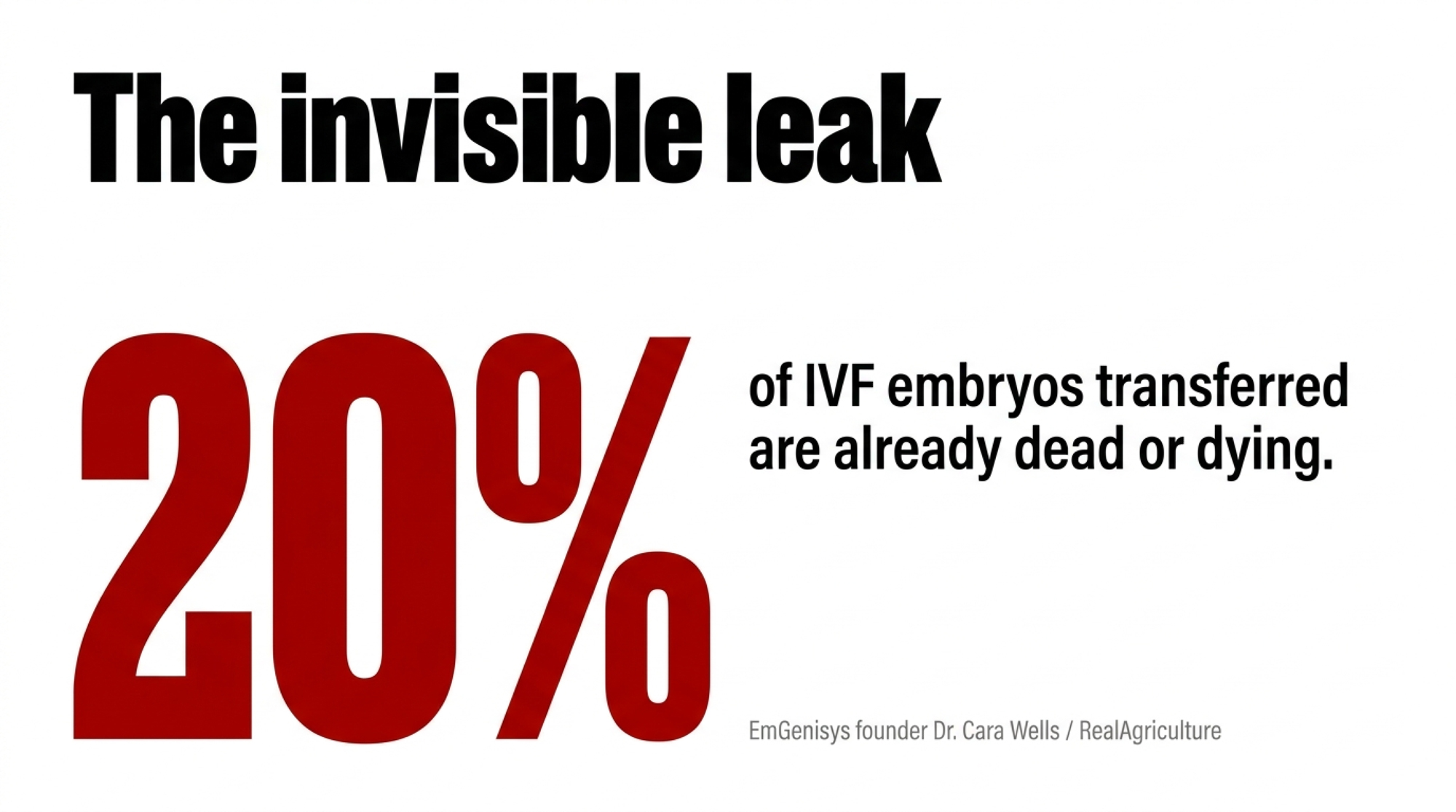
About 1 in 5 embryos you transfer may already be dead on arrival — and your microscope can’t see it. That’s not bad luck. That’s a leak.
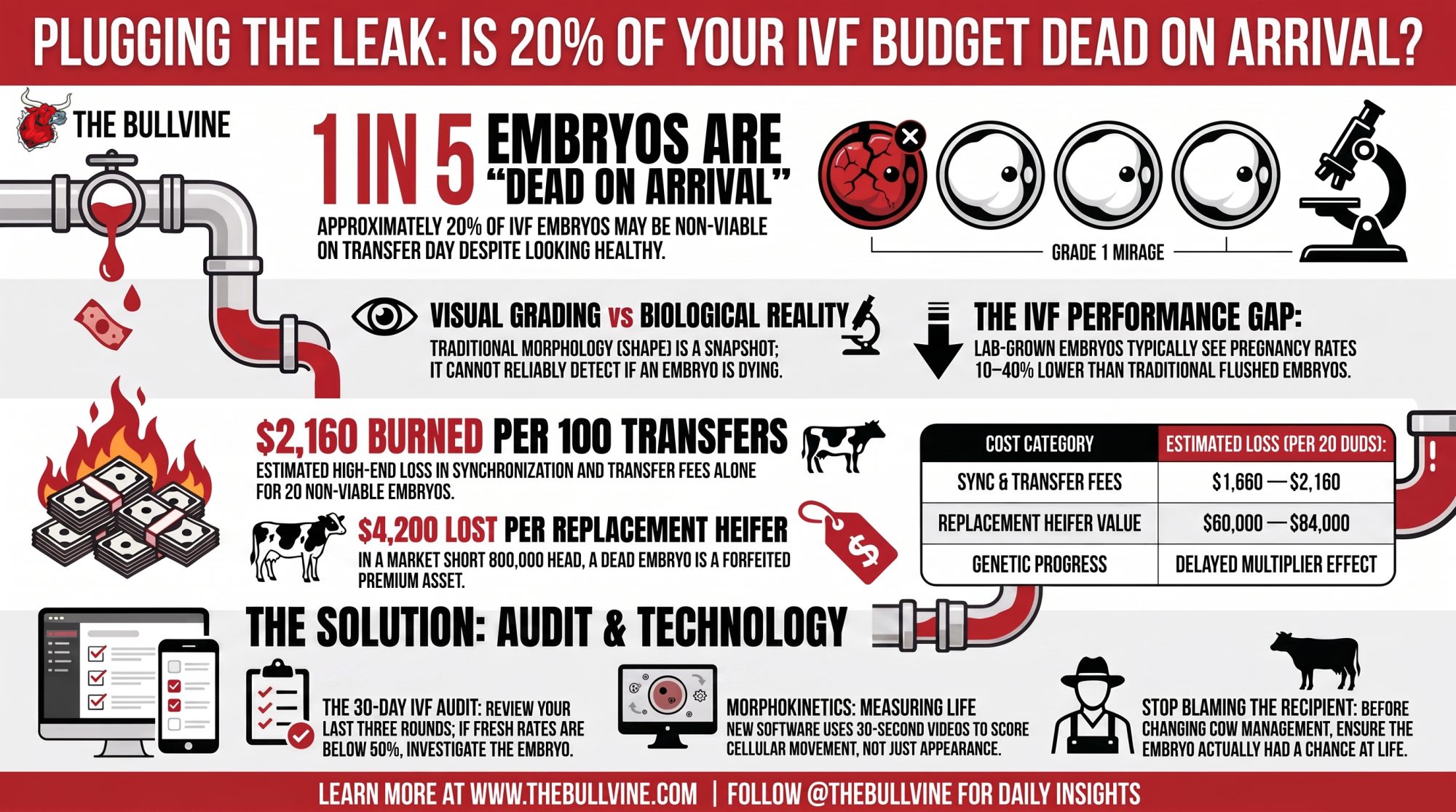
Executive Summary: About 1 in 5 of the IVF embryos you transfer may already be dead or dying on transfer day, and your microscope can’t tell you which ones. That’s the claim from EmGenisys founder Dr. Cara Wells, and even if her exact 20% is still hers to prove, the biology behind it is well documented — lab-grown embryos run pregnancy rates 10 to 40% lower than flushed ones, and field IVP outcomes sit around 42% fresh and 38% frozen. Run 100 IVF transfers on your top donors, and roughly 20 duds burn $1,660 to $2,160 in synch and transfer fees alone — before you count the pregnancy and the $3,000-to-$4,200 replacement heifer you’ll never raise in a market short 800,000 head. Wells’s fix is a $50,000 machine’s job done with software: mount a phone to the scope you already own, shoot a 30-second video, and get a 0-to-100 viability score independent of the old Grade 1-to-4 call. The catch is honest — no independent study has yet replicated her number across multiple herds, and her company sells the tool. If your fresh IVF rate has sat well under 50% for three rounds straight, the piece hands you a 30-day audit to run before you blame another recipient. And with IVF now producing roughly 80% of the world’s bovine embryos, a leak this size isn’t just your problem — it’s a brake on how quickly the whole industry moves its best genetics.
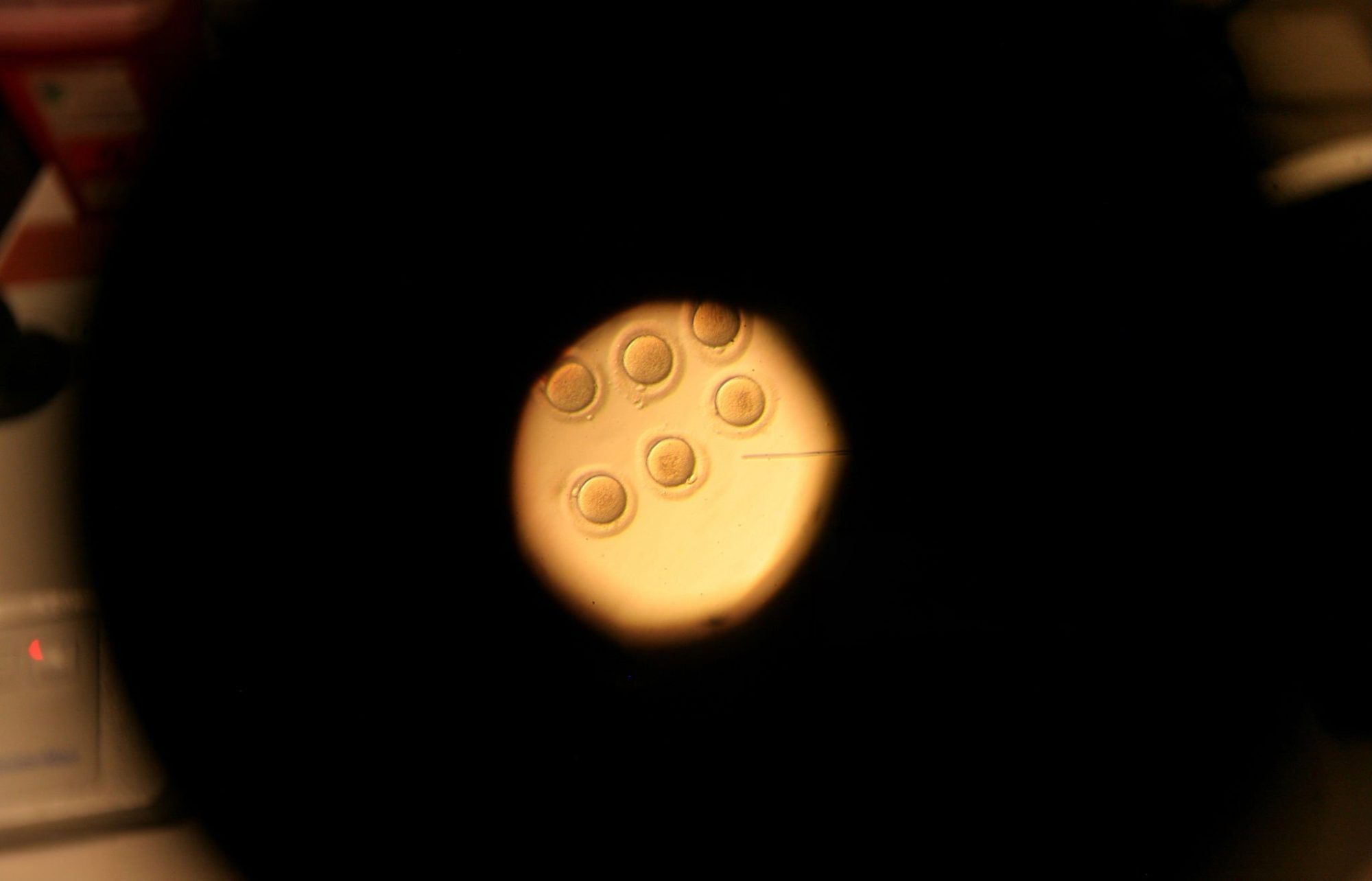
Dr. Cara Wells estimates that about one in five of the IVF embryos going into cows on transfer day are already dead or dying, with virtually no chance of making a pregnancy. Wells is a reproductive physiologist and the founder of EmGenisys, and she didn’t land on that number in a boardroom. She got there watching which embryos actually settled into pregnancies at the 35-to-60-day check — and noticing that the tool everyone trusts, the visual quality grade, couldn’t reliably tell the live ones from the dying ones. If you’re running IVF on your best donors, that’s not a lab curiosity. That’s your genetics budget leaking from the middle.
Here’s why it matters now. IVF isn’t a boutique tool anymore — it’s how the industry makes embryos. So a failure rate that hits your elite matings hardest isn’t a rounding error. It’s real money; it’s slower genetic progress; and most operations blame the recipient when the problem may already have walked in the door dead.
The IVF Takeover: Where Is the Money Leaking?
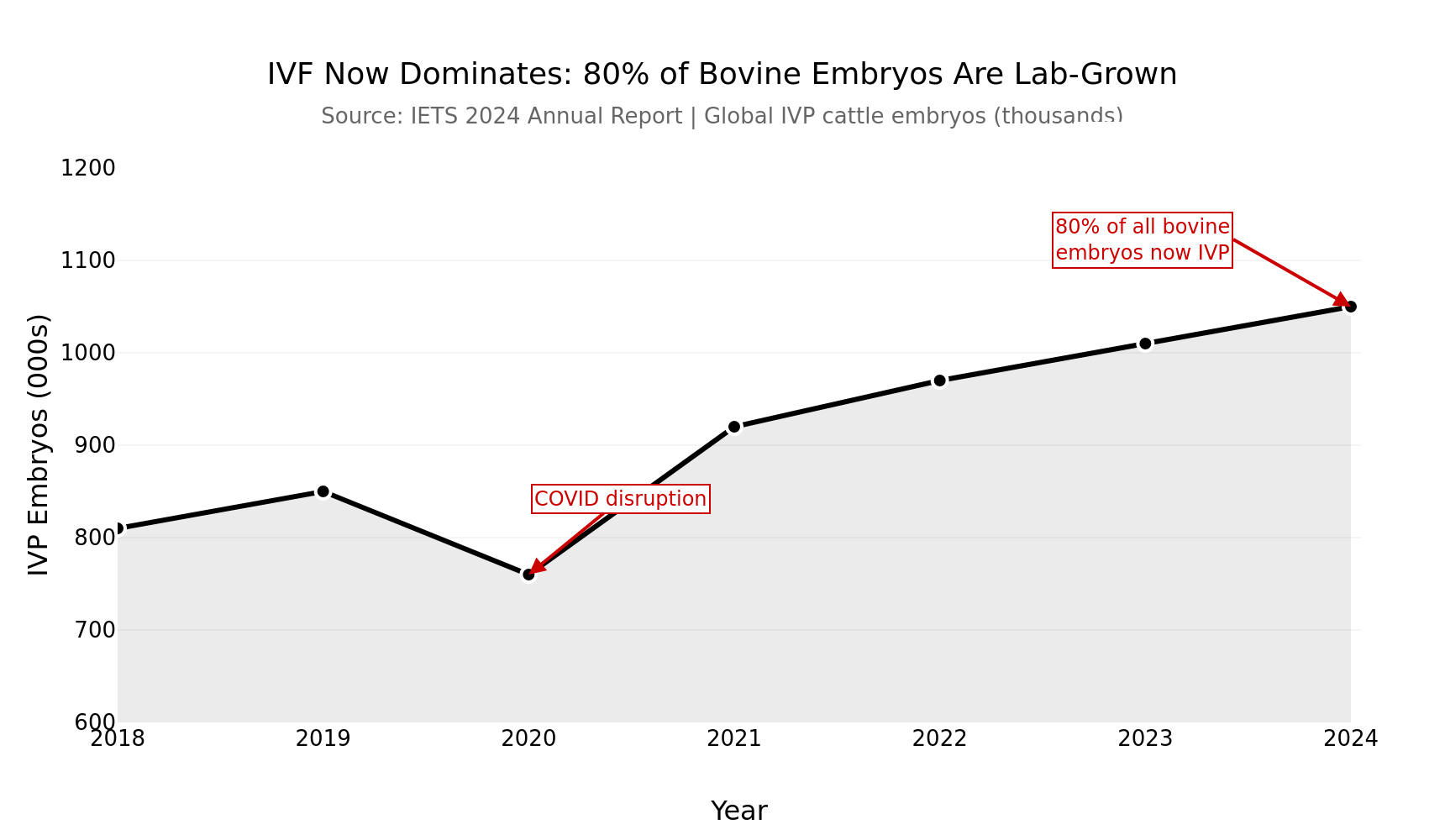
In-vitro production has taken over the embryo business. The International Embryo Technology Society counted 2,468,877 embryos collected or produced in farm animals worldwide in its 2024 report, up 2.4% over the prior year. Over a million of those were cattle embryos, and roughly 80% of all bovine embryos produced globally are now in-vitro-produced rather than flushed the old way. Most of that volume runs through a handful of labs — Trans Ova in the US, Boviteq in Canada, and a growing bench of regional providers — and that’s where your pricing and your options get set. Flushing shrinks. IVF grows. That’s the whole trend in four words.
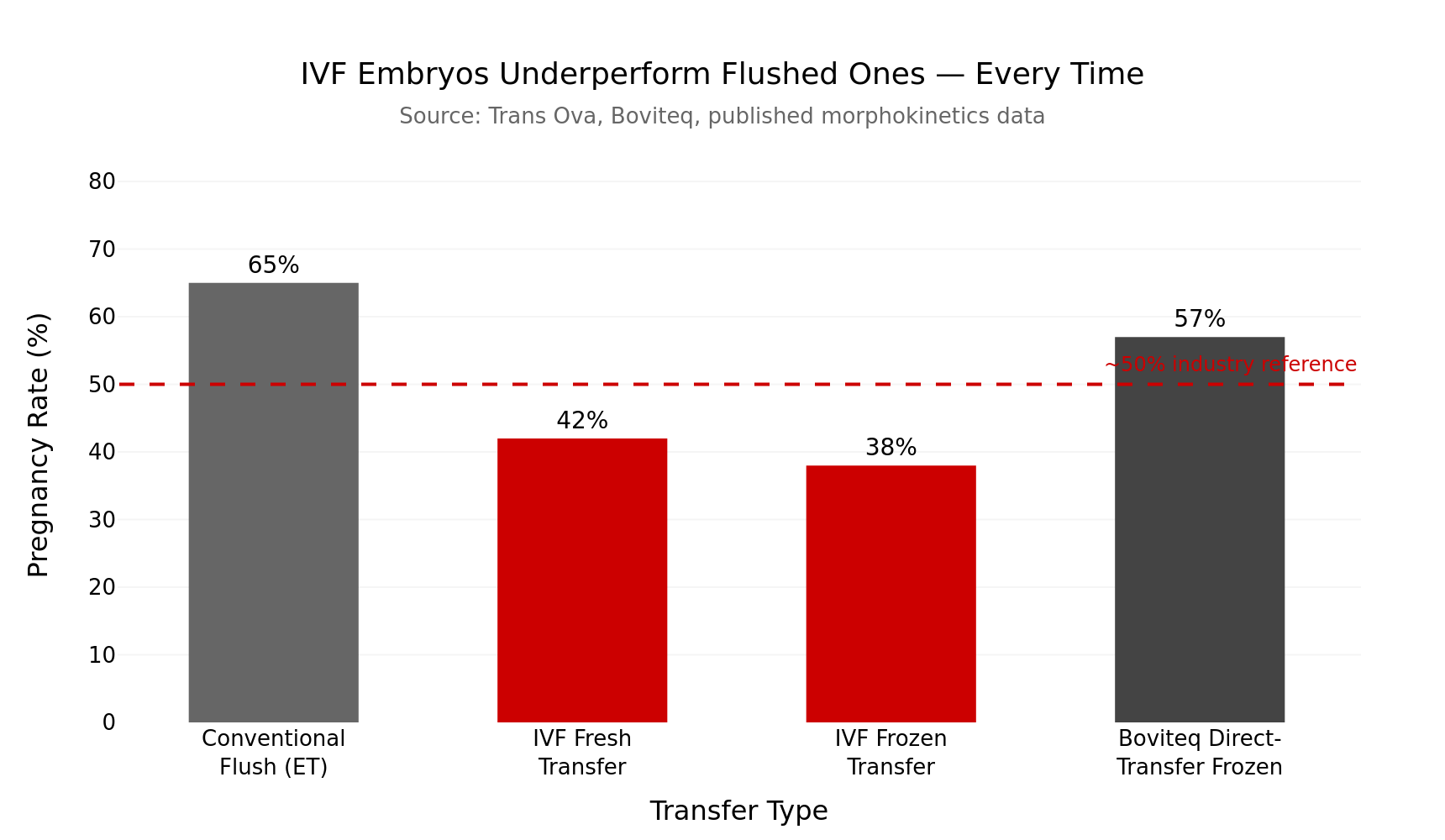
But IVF embryos don’t get pregnant as reliably as flushed ones, and both the labs and the producers planning around them have priced that in. Trans Ova puts well-managed fresh IVF pregnancy rates at around 45–50%, with frozen a little lower. Canada’s Boviteq advertises a direct-transfer frozen pregnancy rate of 55 to 60% using its own culture-media system — so the ceiling has moved, but even the good numbers still leave many embryos that don’t take.
The field study numbers are blunter. One published morphokinetic trial pegged IVP pregnancy outcomes at 42% for fresh transfers and 38% for frozen — well below what flushed embryos deliver. Your lab won’t hit those figures to that decimal place. But the headwind is real, and every IVF program is pushing into it.
For years, the fix was assumed to live downstream. Bad recipient. Thin body condition. A sync protocol that slipped a day. All real problems. But Wells flipped the question: nobody was checking whether the embryo itself was alive and developing normally when it went in.
Why Can a Grade 1 Embryo Still Be Dead on Arrival?
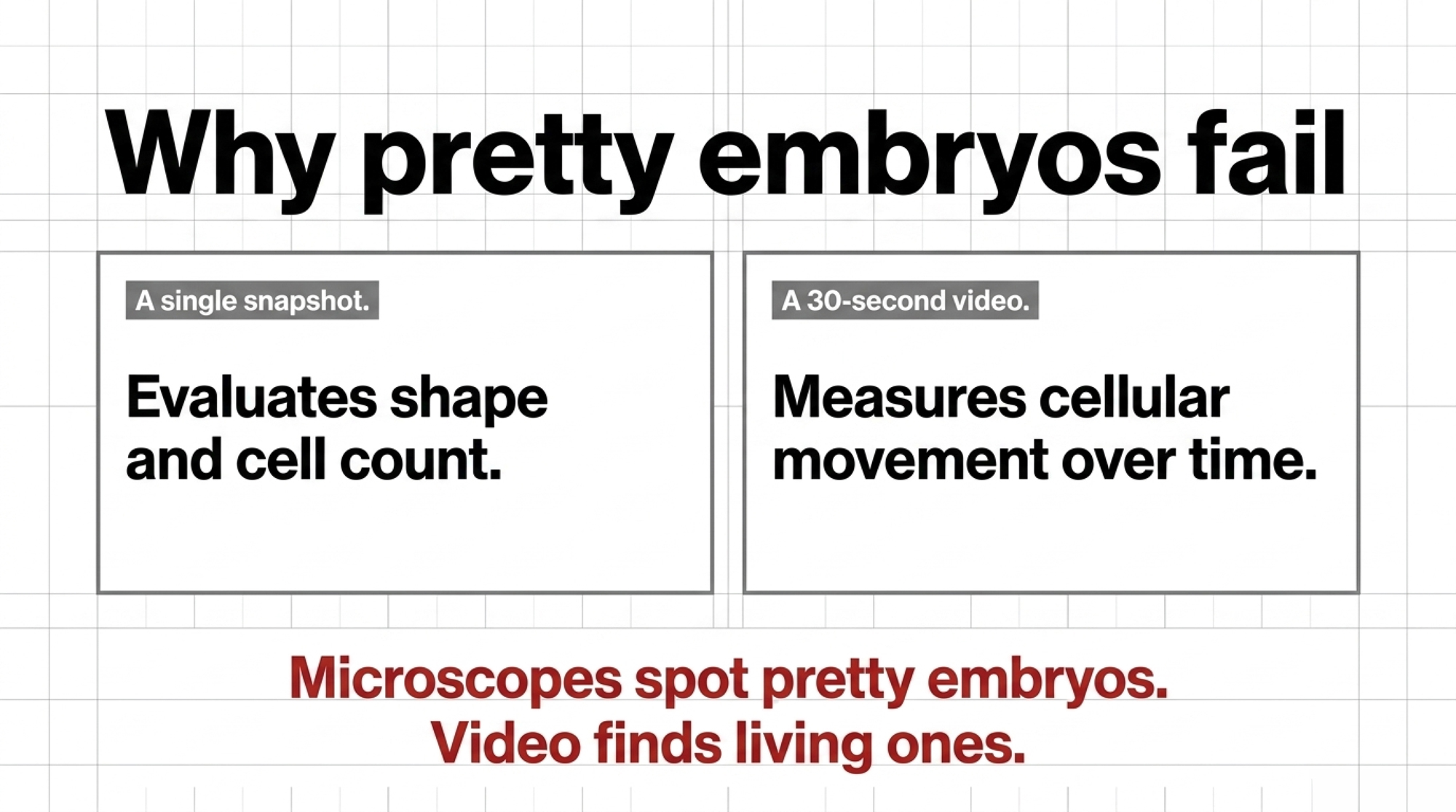
Morphology grading is a snapshot. You look under the scope once, count the cells, assess the shape, and call it a Grade 1 or 2. What it can’t tell you is whether that “pretty” embryo is actually still developing — or already shutting down.
That’s not just Wells’s opinion. Fieldwork on bovine morphokinetics found that IVP embryos rated top grade still had pregnancy outcomes in the low 40s and high 30s. The prettiest embryo under the microscope isn’t reliably the one that sticks. That’s why a Grade 1 can still be dead on arrival.
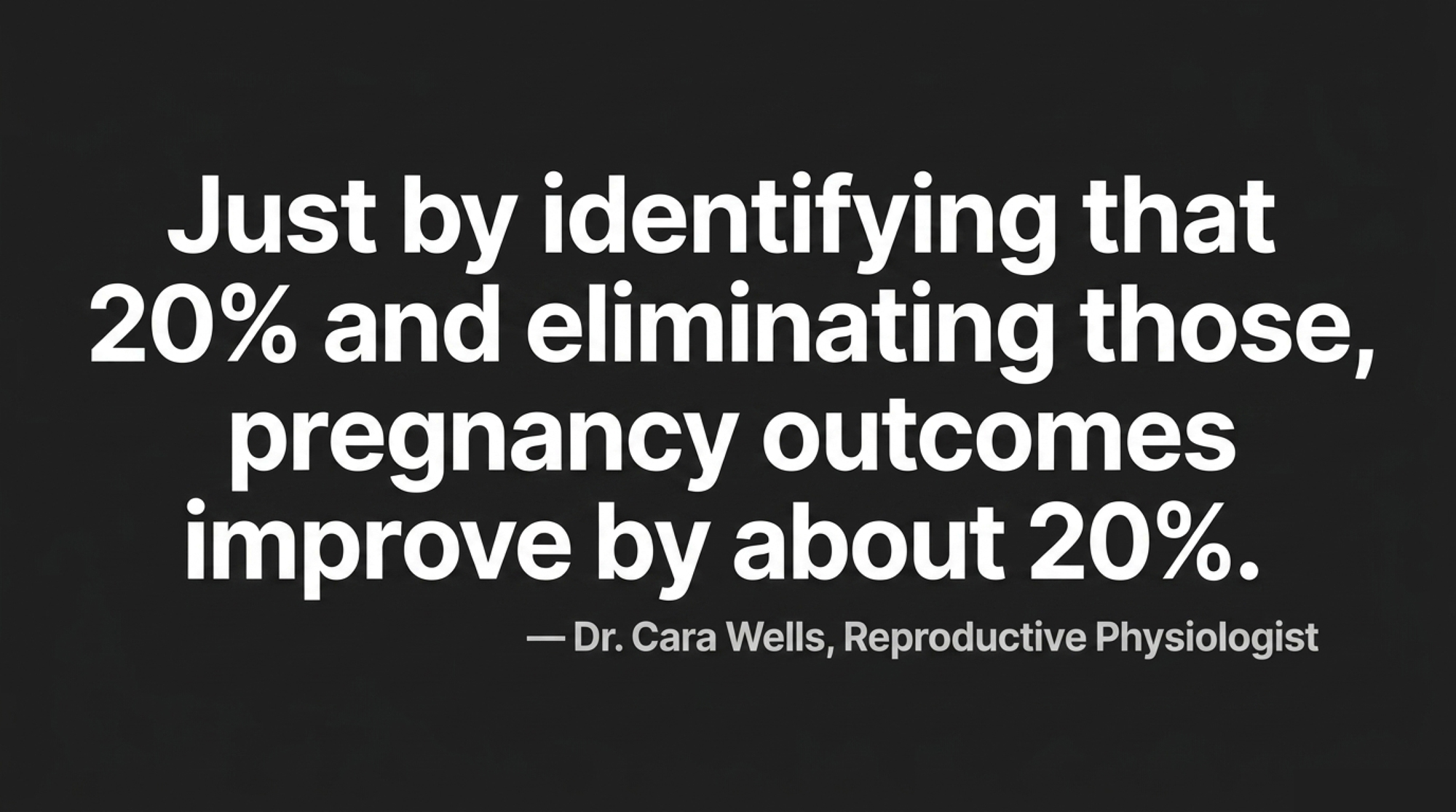
Her method records a short video and measures morphokinetics — the timing and pattern of the embryo’s cellular movement — and scores it against a model built on real pregnancy outcomes. “My research and the literature show that about 20% of all transferred embryos are actually dead or dying at the time of transfer,” Wells told RealAgriculture in September 2025. “Just by identifying that 20% and eliminating those, pregnancy outcomes improve by about 20%.” The score runs 0 to 100, so you set the bar — not the microscope.
Now, fair is fair: labs and embryologists who rely on morphology grading would push back on the size of that number. Grading remains the field’s proven, everyday standard, and no independent study has yet replicated the 20% figure across multiple herds. But the biology underneath Wells’s argument is well documented. A 2019 review of the post-transfer consequences of IVP embryos found pregnancy rates 10 to 40% lower for cattle carrying lab-produced embryos than for those carrying flushed ones. Every IVF embryo grows in artificial culture media, and that dish stresses an embryo in ways the oviduct never does. So a meaningful fraction arriving damaged isn’t a sales angle — it’s baked into how IVF works, industry-wide.
Here’s the one caveat worth saying out loud: the specific 20% figure is Wells’s own read of her research and the literature, not an independently replicated industry number, and her company sells the fix. The direction is well supported. The exact size of it is hers to prove at scale.
How a TED Talk and a Kitchen Table Started This
Cara Wells didn’t set out to build software. She’s a reproductive physiologist, and the whole thing turned on a video she happened to watch — a TED Talk on MIT’s Video Motion Magnification, a tool that reveals hidden movement in ordinary footage. Wells’s leap was simple. An embryo is a rapidly dividing organism whose cellular activity you can’t see in real time, even under the best microscope — so what if video could mine out those hidden signatures of life?
Then COVID shut everything down, and the work moved to her kitchen table. Wells sat there, measuring embryo diameters every five seconds and quantifying how each embryo’s shape shifted over time. She worked with Texas Panhandle ET veterinarian Dr. Russell Killingsworth, tracking which embryos actually made pregnancies at the 35- to 60-day checks. A pattern came out of the noise: embryos that make pregnancies show moderate, middle-of-the-curve activity, while the ones at the fast and slow extremes mostly don’t.
Six years on, that kitchen-table method is a machine-learning platform. One published study alone drew on 6,900 thirty-second smartphone videos of bovine embryos recorded during routine ET. That’s not a lab demo — that’s barn reality.
And here’s what it isn’t: a $50,000 machine. It’s software. An embryologist mounts a phone to the microscope they already own, records a roughly 30-second video, and uploads it through a web app. The system returns a viability score from 0 to 100 plus a sex prediction, both generated independently of that 1-to-4 morphology grade. It isn’t judging how the embryo looks. It’s measuring what it’s doing.
Running Your Own Numbers: 100 Transfers on a 400-Cow Herd
Say you milk 400 cows and put 100 IVF embryos on the ground this year, all from your top donor matings. Apply Wells’s estimate, and roughly 20 of them were never viable.
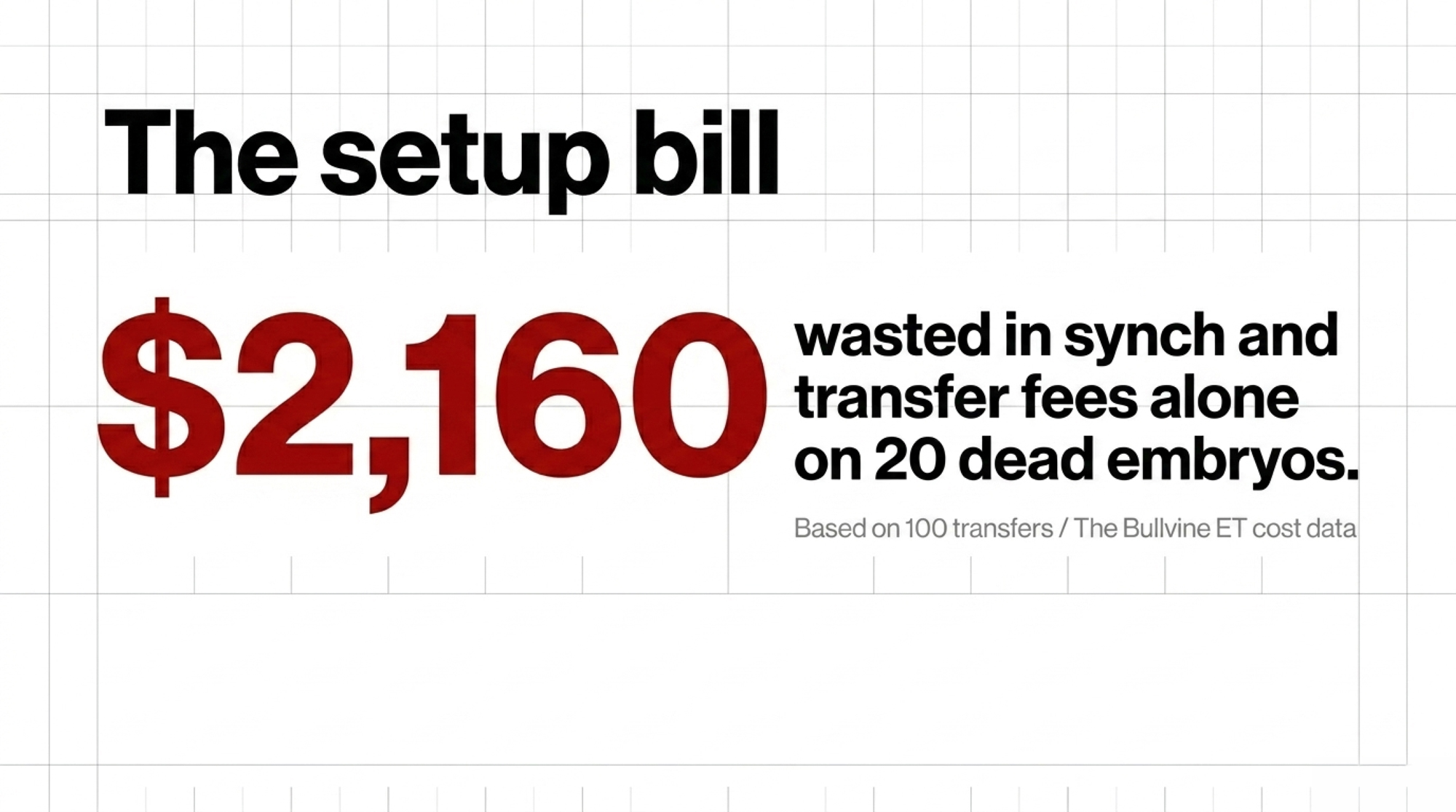
Start with the direct burn on those 20. Recipient synchronization runs about $18 to $28 a cow, and the transfer fee another $65 to $80 per recipient, per The Bullvine’s own ET cost work. At the low end, 20 × ($18 + $65) = $1,660. At the high end, 20 × ($28 + $80) = $2,160. That’s synch and transfer alone — before the recipient cow herself, her open days, or the drugs. Plug in your own embryo count and per-cow costs, and it scales straight up. And if you’ve ever watched an ET calf sell for less than it cost to make, you know the setup bill is the least of it — we ran that math in the $4,917 breakeven on ET Holstein calves.
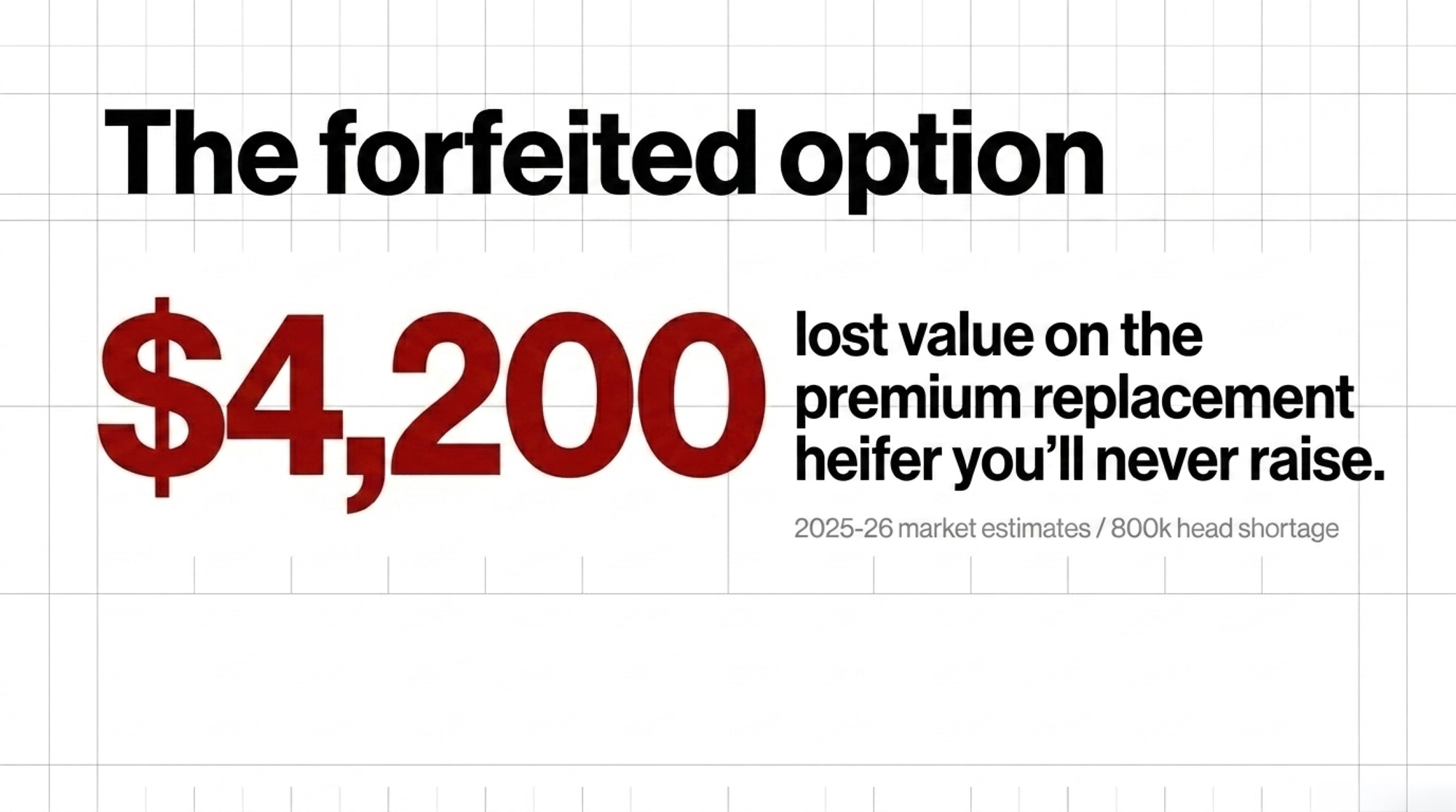
But the setup cost is the small line. University of Florida economist Albert De Vries famously pegged the value of a dairy pregnancy at $278 in 2006. Two decades later, in a market starved for replacements, that number vastly underestimates the opportunity cost. With springing heifers fetching $3,000 to $4,200 and the pipeline short an estimated 800,000 head across 2025–26, a dead embryo isn’t just a lost sync fee — it’s a forfeited option on a premium future asset, in the exact market where that option is worth the most in living memory. Want a hard per-embryo number? You’d need your own calf survival rate, heifer ratio, and rearing cost to discount that $3,000 to present value. That’s worth an afternoon with your own records.
Genetic Progress vs. Multiplied Mistakes
IVF isn’t about making embryos. It’s about multiplying your best donors — more calves a year from the cows you rate highest, carried by lower-merit recipients. Trans Ova cites one donor that failed in conventional flushing, then made 80 pregnancies in five months through IVF; another breeder aspirated 10 heifers five times each and pulled 103 female pregnancies. That multiplier is the entire point. And it only pays if the pregnancies stick.
So a dead embryo from a top donor isn’t a random miss. It’s a branch that never grows on the pedigree tree — the same slow drain we mapped in when your elite genetics start costing you real money, except here it hits before the calf is even conceived. And when your whole program leans on a handful of donors, a run of dead embryos narrows your genetic base fast — the trap we broke down in your top heifers all trace to three cow families. Multiply that across the million-plus IVF cattle embryos made every year, pulled disproportionately from the top of the pyramid, and a farm-level nuisance starts looking like a brake on how fast the whole industry moves its best genetics forward.
Options and Trade-Offs for Your Operation
| Scenario | Fresh IVF Rate | Rounds of Data | Recommended Action | Risk Flag |
|---|---|---|---|---|
| Rate well above 50% | >52% | 3+ rounds | Maintain current protocol; monitor donor-by-donor | Don’t fix what isn’t broken |
| Rate sitting near 50% | 45–52% | 3+ rounds | Audit recipient management; rule out sync issues first | Sample size may hide embryo problem |
| Rate stuck below 45% | <45% | 3+ rounds | Pull fresh vs. frozen split; pressure your lab on embryo QC | Red flag — recipient isn’t the only variable |
| High-value seedstock, any rate | Any | 1–2 rounds | Run scored vs. unscored pilot; one elite calf covers trial cost | Pilot must be large enough to be meaningful |
| Occasional IVF user | Any | <3 rounds | Wait for multi-herd peer-reviewed data | Giving up potential early gains — accept that trade |
There’s no single right answer here — there’s a right answer for your herd. Here’s how the paths break down.
Audit before you buy anything (do this in the next 30 days). Pull your last three IVF transfer rounds and calculate your real pregnancy rate, split fresh versus frozen and, if your records allow, donor by donor. If your fresh IVF rate sits well under the roughly 50% Trans Ova reference after three rounds, that’s your flag. The risk: small samples lie, so don’t blame the embryo until you’ve logged enough transfers to mean something and ruled out recipient factors. Block off one afternoon this month and do it.
Run a controlled pilot before committing to screening tech. Score one block of transfers, leave another block unscored, and compare pregnancy rates. This makes sense for high-value seedstock operations where one elite calf pays for the trial many times over, especially at today’s $3,000-plus replacement values. The risk: run it too small, and you’ll read noise as proof.
Tighten donor and recipient management in parallel. Recipient age and quality move conception on their own — one Iowa State dataset put virgin-heifer recipients at 73% pregnant versus 56% for two-year-olds — and IVP embryos start at a hardiness disadvantage. This always makes sense, whatever screening you adopt. The trap: treating management as the only lever — which is the exact blind spot this story is about.
Wait and watch, if you’re an occasional user. The signal to move from watching to piloting is multi-herd, peer-reviewed, embryo-level data confirming both the non-viable fraction and the pregnancy uplift. For smaller operations that do occasional IVF, letting the evidence mature is the cheaper, more defensible play. The trade-off is honest: wait, and you get proof, but you give up a year of possible gains if the tech proves out.
Key Takeaways
- If your fresh IVF pregnancy rate has sat well below ~50% for three straight rounds, stop assuming it’s the recipient and start asking your provider what they measure about the embryo itself.
- If a provider quotes you a pregnancy-improvement number, ask whether it’s backed by multi-herd data you can see — or a single-source estimate. Wells’s own 20% figure is the latter until it’s independently replicated.
- If you run high-value seedstock, a scored-versus-unscored pilot may pay for itself on a single elite calf in a $3,000-plus replacement market — but only if it’s big enough to mean something.
- If you’re an occasional IVF user, waiting for peer-reviewed, embryo-level pregnancy data is the defensible call, not a cop-out.

The next time a preg check comes back light, don’t reach straight for the recipient. Ask the harder question first: are you sure that embryo ever had a chance — or have you been solving for the wrong variable and calling it management? Pull your last three transfer rounds this week and run the fresh-versus-frozen split. What does your provider actually know about whether those embryos were alive when they went in — and what’s that answer worth against a heifer you’ll never get to raise?
IVF Embryo Budget Leak Calculator
Find out how much dead or dying embryos are costing your operation.
Your Operation Inputs
Your Dynamic Impact Report
Based on Dr. Wells’s 20% estimated non-viable rate at transfer.
Complete references and supporting documentation are available upon request by contacting the editorial team at editor@thebullvine.com.
Learn More
- The $4917 Breakeven: When Your ET Holstein Calves Sell for Less Than They Cost to Make — Delivers the exact line-item budget to calculate your absolute financial threshold for embryo transfer work, arming you with a critical diagnostic floor before putting high-priced duds into expensive recipients.
- From $1.5 Million to $150000: The Dairy Genetics Shakeout and Your Next Move — Details how the commercial combination of genomics and juvenile IVF slashed generation intervals down to 12 months, mapping the long-term strategic adjustments needed to survive an industry that compresses breeding cycles by 67 percent.
- From Parkinson’s Cell Therapy to 1000 Sorters: How STgenetics’ Hidden Hardware Changed Sexed Semen — Exposes the staggering 33-point conception gap between top and bottom dairy herds using identical single-cell sorting technologies, proving that back-end management can completely neutralize high-tech lab advantages.
 The Sunday Read Dairy Professionals Don’t Skip.
 The Sunday Read Dairy Professionals Don’t Skip.
Every week, thousands of producers, breeders, and industry insiders open Bullvine Weekly for genetics insights, market shifts, and profit strategies they won’t find anywhere else. One email. Five minutes. Smarter decisions all week.




