




Archive for People & Legacy

Storm Éowyn Cut Their Grass 200 kg/ha — They Still Hit 540 kg Solids

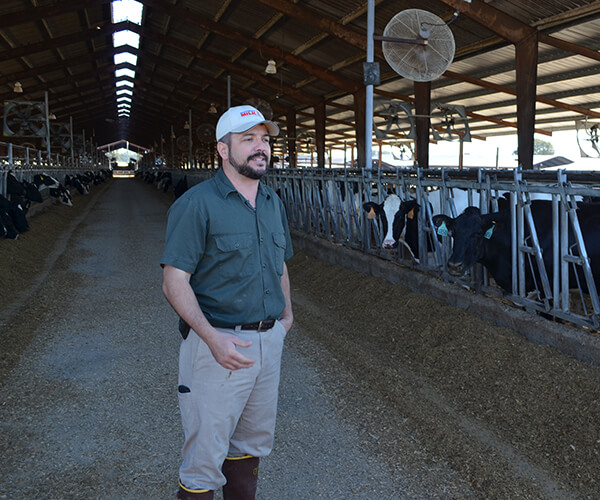
Storm Éowyn ripped 200 kg DM/ha off John Casey’s spring grass. He still milked 540 kg solids off 136 Kerry cows — because the resilience was bred and built in years earlier.

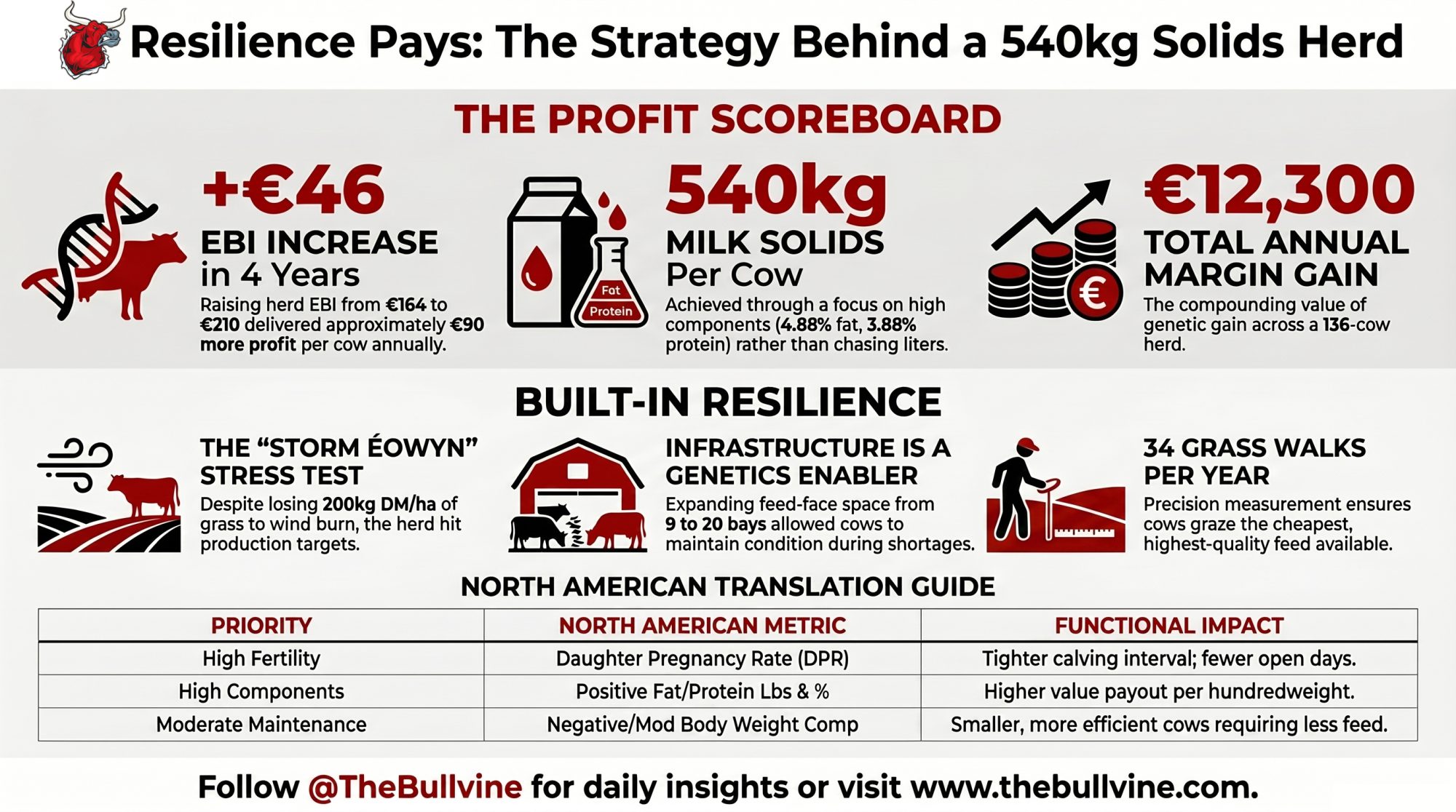
Executive Summary: Over four years, John Casey and his father Michael lifted their Causeway, Co. Kerry herd from €164 to €210 EBI while pushing milk solids from 477 to 540 kg/cow off 136 cows — enough to win Kerry Dairy Ireland’s 2025 Milk Quality and Sustainability Award against 3,000-plus suppliers. They bred for fertility and components first, litres second: 4.88% fat, 3.88% protein, SCC of 108,000, and a 90% three-week submission rate this spring. Run Teagasc’s €1.96-per-EBI-point multiplier on that €46 gain and you’re looking at roughly €90/cow/year, near €12,300 across the herd, compounding into every replacement heifer they keep. The proof it’s real resilience and not a fluke: storm Éowyn cut their spring grass cover from 850 to 650 kg DM/ha in early 2025, and they still hit 540 kg solids because the genetics, the grass discipline, and a feed face rebuilt from 9 to 20 bays gave them room to absorb the hit. None of it was dramatic — just ordinary decisions stacked for a decade. If your check pays on solids but you’re still chasing volume, this is the herd that shows what the other strategy’s worth. The euro figures are Irish and grass-based, but the logic maps straight onto NM$ / CM$ selection in any component market. 

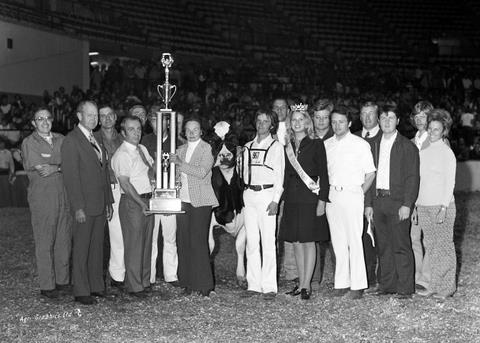
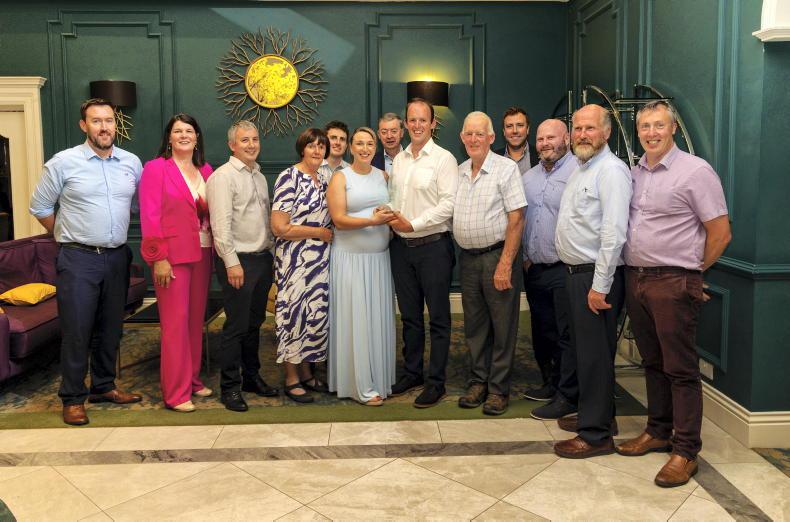
The Casey family of Causeway, Co. Kerry collect the 2025 Kerry Dairy Ireland Milk Quality and Sustainability Award — recognition for a herd that climbed from €164 to €210 EBI and 540 kg milk solids per cow. L–R: Brendan O’Neill, Ailish Moriarty, Sean McCarthy, Collette Casey, Pat Browne, Orla Casey, Pat Murphy, John and Michael Casey, Aidan Brennan, James O’Connell, James Tangney and Mike Behan.

John Casey spent the last decade putting his money into the unglamorous stuff. Soil fertility. Drainage. Reseeding. Breeding. None of it turns heads at the mart. But in August 2025, that decade of quiet spending put the Casey family of Causeway, Co. Kerry, at the top of Kerry Dairy Ireland’s supplier base of more than 3,000 farmers — winners of the 2025 Kerry Dairy Ireland Milk Quality and Sustainability Award. 

Here’s what should land for you, wherever you milk cows. Nothing they did was dramatic. No genomic moonshot, no overnight overhaul. Just a string of ordinary decisions, each one easy to put off — and each one compounding until the milk check told a different story than it had four years earlier.

That’s the part worth your time. Not the trophy. The decisions behind it — and what each one was actually worth.

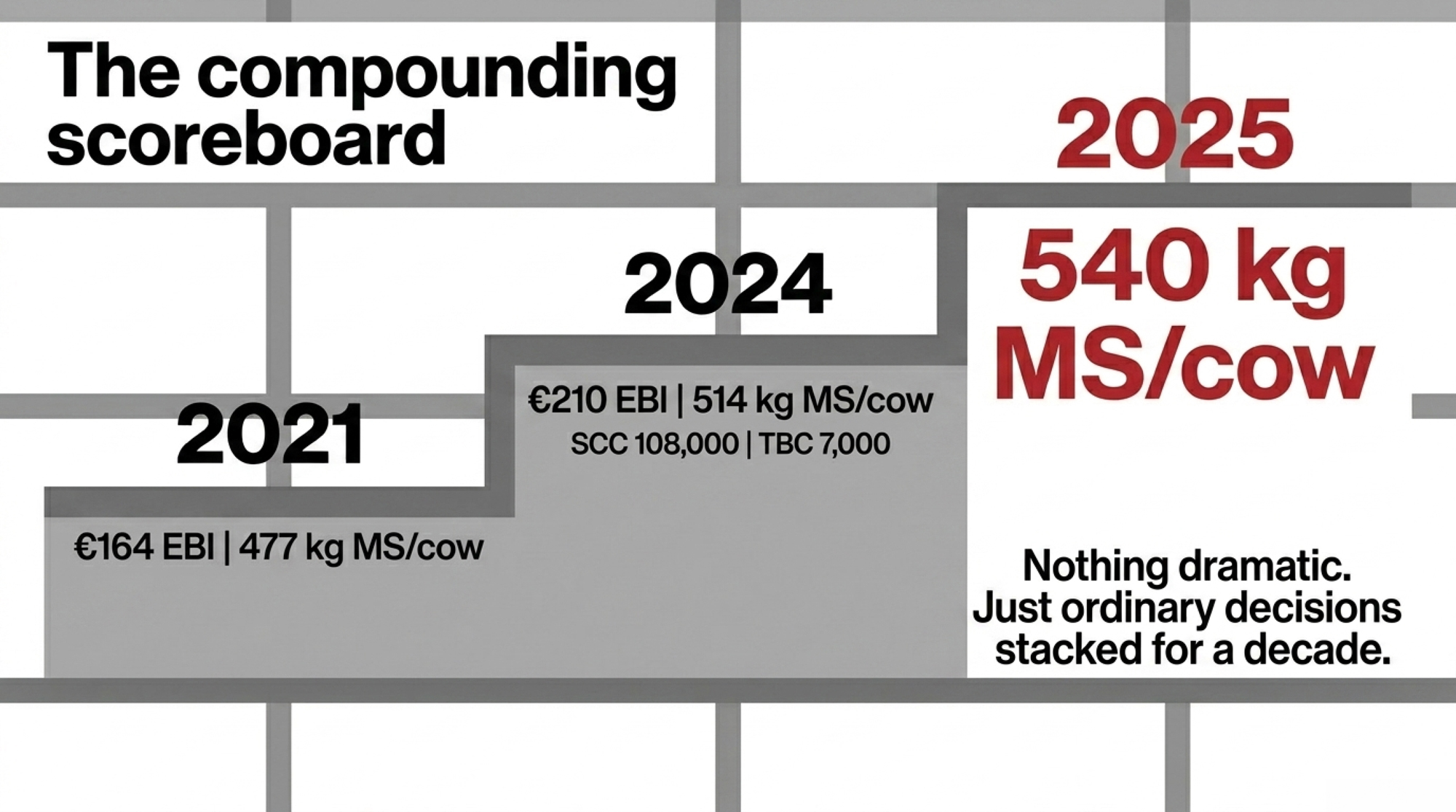
The Casey scoreboard, four years apart 2021: €164 herd EBI · 477 kg MS/cow 2024: ~€210 herd EBI · 514 kg MS/cow · 4.88% fat · 3.88% protein · SCC 108,000 · TBC 7,000 2025: 540 kg MS/cow off 136 cows

A Farm Two Generations Built

John came home for good at the end of 2014, to a farm his father, Michael, had already spent years shaping. He didn’t walk in and tear it up. He worked other farms first, learned what good looked like somewhere else, then brought it back to Causeway. 

That sequencing is the family’s actual headline advice to young farmers, delivered straight to the crowd that showed up to their farm walk: build up as much experience as possible by working on other farms and businesses before you start on your own. It sounds soft until you watch how it plays out. The habits John picked up elsewhere — labour efficiency, good genetics, measuring grass, breeding a cow that fits the system — are exactly the habits that built the award herd. He didn’t invent them at home. He imported them. 

It’s a working partnership now, not a clean handover. John farms the home place alongside his father, Michael, and the operation still runs under both their names on the Teagasc–Kerry Agribusiness joint demonstration programme. Michael built the base this whole story stands on — the land, the early herd, the standing that lets a young farmer borrow against a plan instead of a hope. 

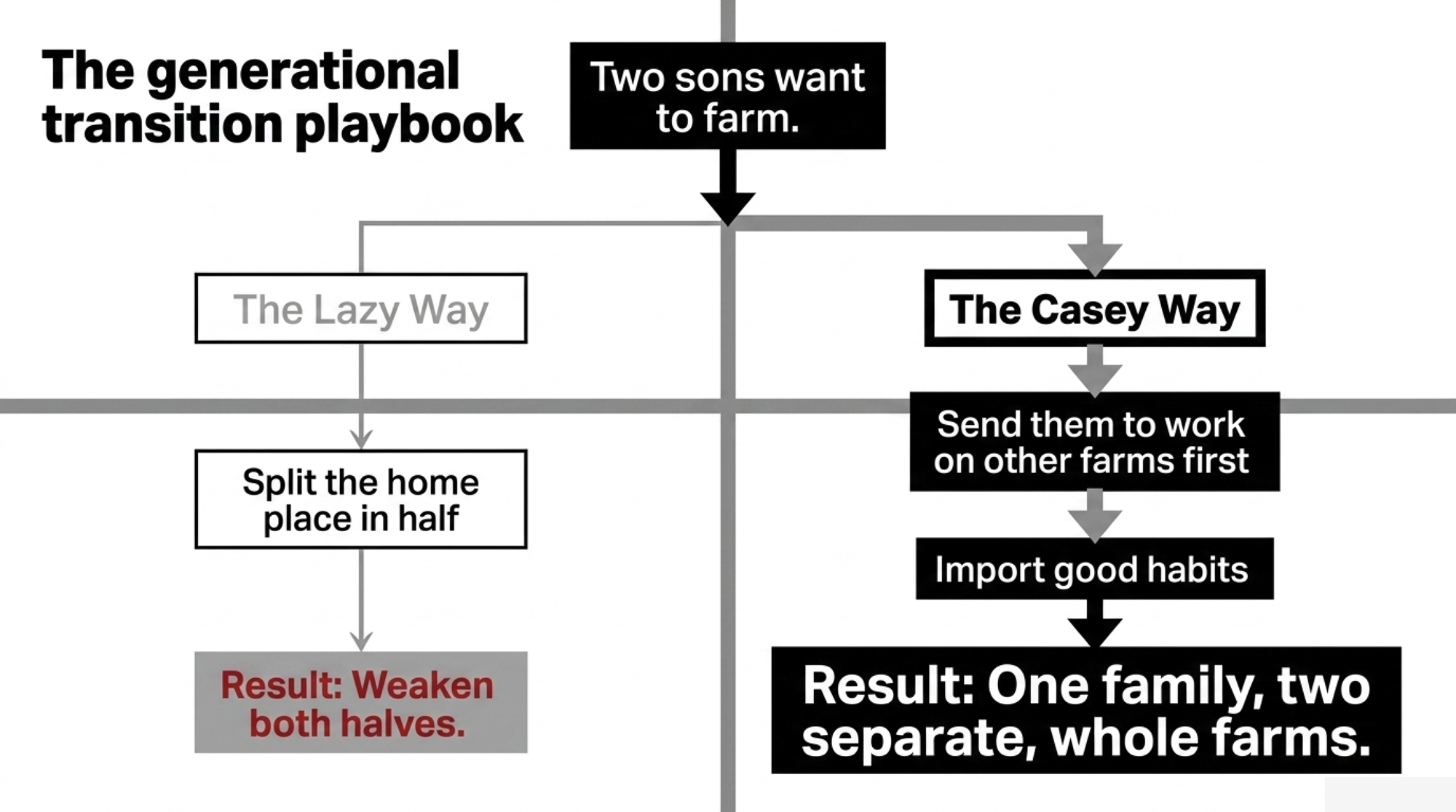
Then there’s the brother. Micheál Casey took a 15-year lease on a farm at nearby Ballyheigue at the end of 2023 and now farms in his own right. That’s the part most families get wrong. Faced with two sons who both want to farm, the lazy answer is to split the home place in half and weaken both halves. The Caseys didn’t. One family, two farms, the same playbook running on separate ground. 

What Did the Award-Winning Numbers Actually Look Like?

Start with the scoreboard. In 2024, the herd produced 514 kg of milk solids per cow — then John pushed that to 540 kg MS/cow in 2025, off 136 cows. The milk quality behind the award was just as sharp: a somatic cell count of 108,000 cells/mL and an average TBC of 7,000 cfu/mL. Fat at 4.88% and protein at 3.88% place them in the top tier among Kerry Dairy Ireland suppliers for both components. 

Those aren’t one-good-year numbers. They’re the kind you build toward, season after season, where each year’s gain sits atop the last instead of replacing it. (The award coverage in August 2025 cited 517 kg MS for the same 2024 year; the June 2026 farm-walk figure of 514 kg is the later restatement and the one used here.) 

Four years before the award, the herd EBI sat at €164, and the cows produced 477 kg MS. By 2025, the herd EBI stood at €210 — €83 in the fertility sub-index and €71 in the milk sub-index. Steady, deliberate progress. Not a leap. 

Look at where the EBI weight sits, and you can read the family’s whole philosophy off it. The fertility sub-index outweighs the milk sub-index. They bred first for a cow that goes back in calf on time and holds her condition on grass, and second for the litres. In a spring-calving, grass-based system, that ordering isn’t sentiment — it’s survival. A cow that misses her breeding window in that system isn’t a slightly less profitable cow. She’s a passenger.

How Do You Lift Herd EBI by €46 — and What’s It Worth in Your Tank?

This is the decision that pays the rent, and it’s the one most worth copying.

The Caseys leaned into good genetics over the years, breeding for components and the kind of moderate, hard-wearing cow that holds condition on a grass platform. The goal was never to fill more litres in the bulk tank. It was more solids per cow and tighter fertility. That €83 fertility sub-index tells you exactly where the weighting sat, and the discipline shows up at breeding: in a June 2026 video from the farm, three weeks into the season, John reported a 90% submission rate in the first three weeks — hitting the target the best grass herds chase every year. 

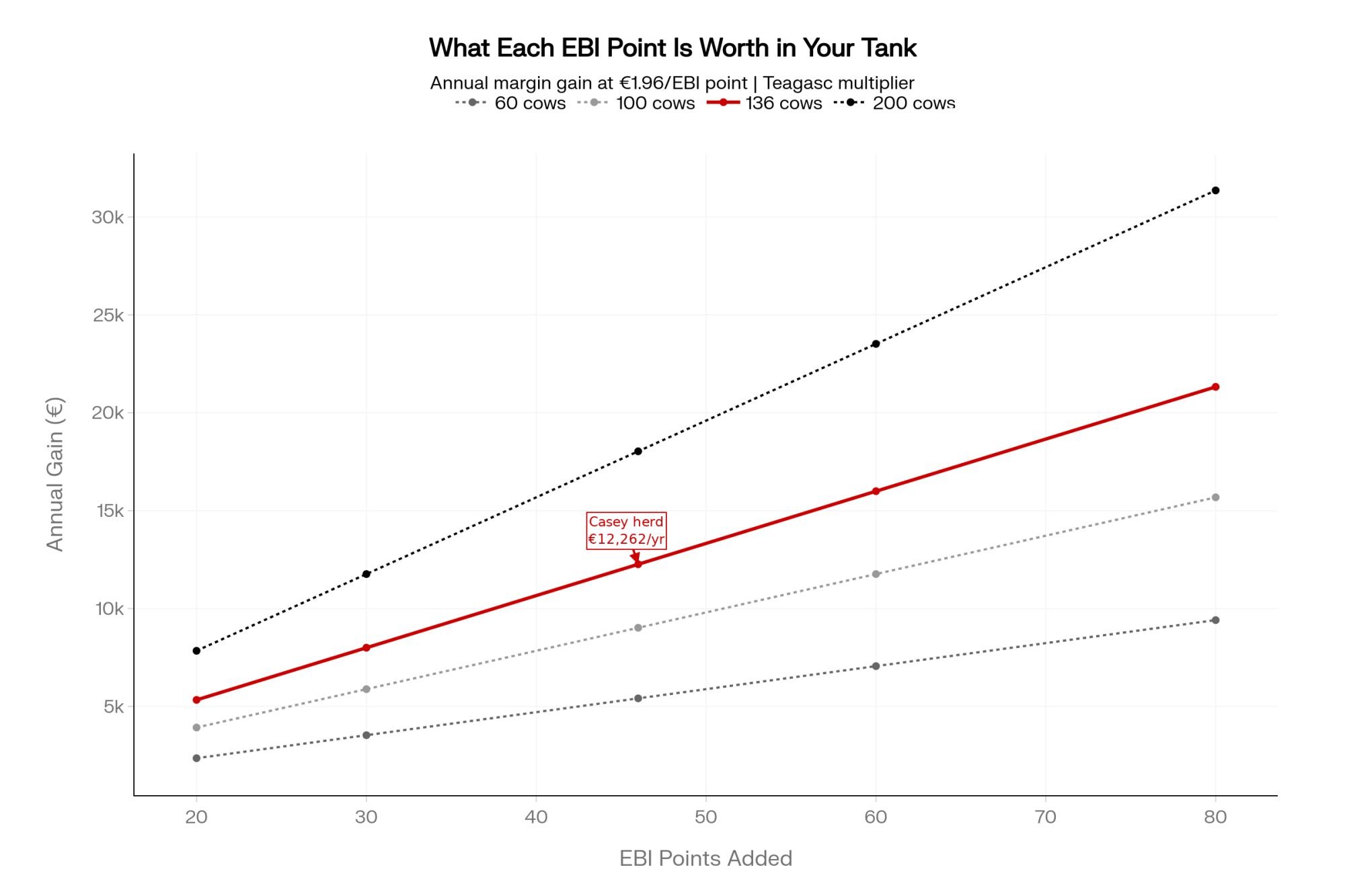
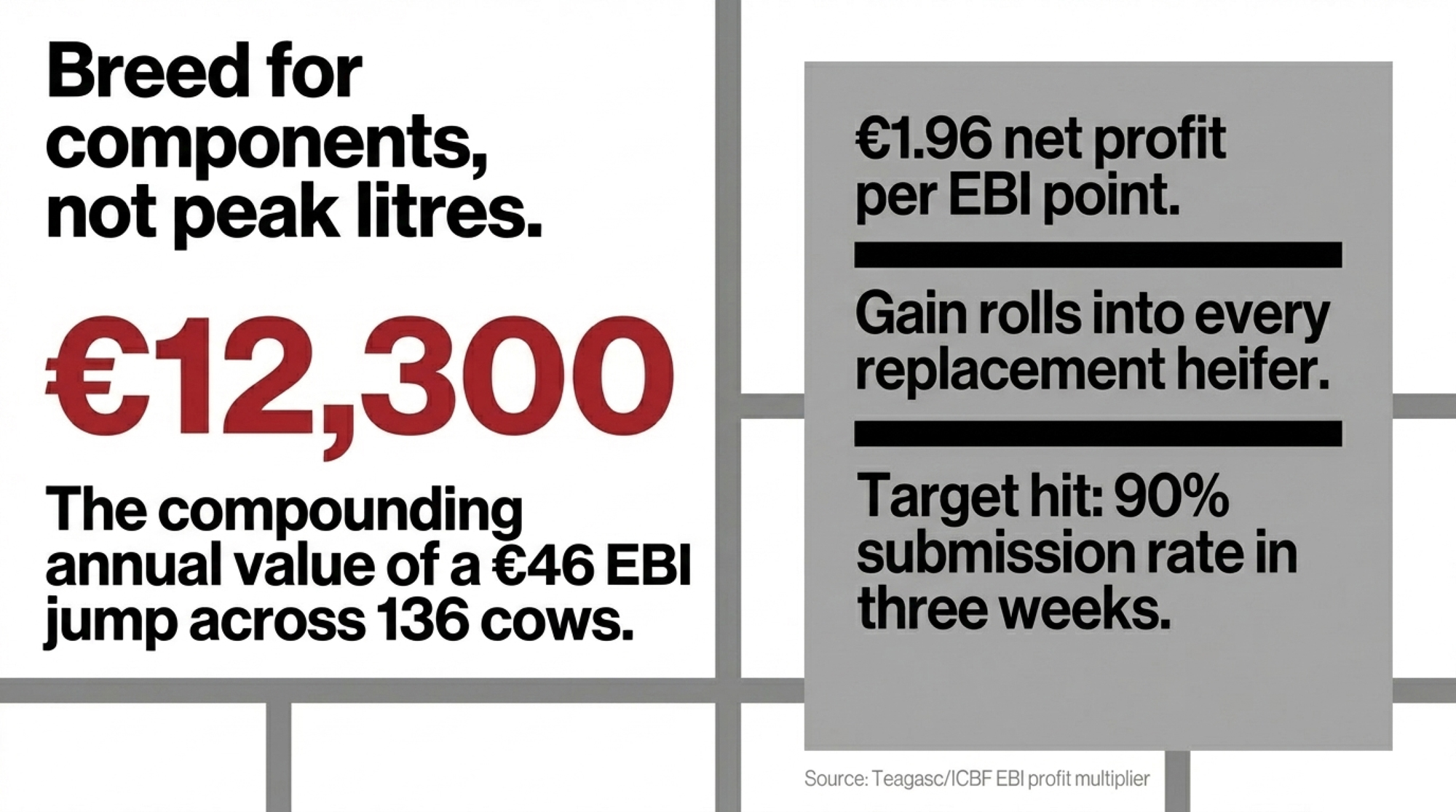
Now run the barn math, because this is where it gets real. Teagasc research, confirmed again by ICBF in late 2024, puts every €1 of herd EBI gain at about €1.96 in extra net profit per cow per year. The Caseys added €46 of EBI in four years. At €1.96 per euro, that’s roughly €90 per cow per year in additional margin from the genetics alone. 

Run that across John’s 136-cow herd — €90 × 136 — and you’re looking at roughly €12,300 a year, compounding, as a directional figure built on Teagasc’s per-cow multiplier, not a line pulled from the Caseys’ accounts. And the word “compounding” is doing real work there. That €46 of EBI doesn’t evaporate at year-end. It’s baked into every replacement heifer the herd breeds from here forward, so the gain rolls into next year’s calf crop and the one after that. 

One honest caveat: that €1.96 multiplier is an Irish EBI figure tied to a grass system. The principle travels straight to NM$ and CM$ selection in North American herds, but the exact euro value doesn’t — so model your own index, on your own ration, not theirs. 

That’s the whole point. Genetics isn’t a trade you win in one breeding season. It’s compound interest. The cost of waiting stays invisible right up until you total it.

What Do the Components Mean if You’re Paid in Dollars Rather Than Euros?

Fair question, and it matters more than most North American producers give it credit for. The Caseys are paid for fat and protein. So are you — if you ship into a Class III or Class IV pool — butterfat has carried an outsized share of the U.S. milk check in recent years, and protein isn’t far behind. 

So translate their 4.88% fat, 3.88% protein into your world. A cow built for components on a grass platform is the same animal a butterfat-driven check rewards in Wisconsin or Ontario — moderate frame, high solids, good feet, breeds back. The trait stack the Caseys chased through EBI is the same one NM$ leans on through its fat- and protein-dollar spend. Here’s the index map:

Irish EBI PriorityNorth American Counterpart (NM$ / CM$)Visual / Functional Impact in the Herd
High Fertility Sub-Index High Daughter Pregnancy Rate (DPR) / Cow Conception Rate (CCR)Calving interval tightens; fewer open days; cow stays in the optimal milk-curve window.
High Fat & Protein % Positive Fat Lbs / Protein Lbs & % traitsSmaller volume of fluid milk to haul, but a higher-value payout per hundredweight (cwt).
Moderate MaintenanceNegative/Moderate Body Weight Composite (BWC)A smaller, more efficient cow requiring less feed intake just to maintain her frame.

Mapping is directional — EBI and NM$ / CM$ weight traits differently, so treat this as a translation guide rather than a one-to-one conversion.

Different index, same cow. Where it stops translating is the feed system. The Caseys get those components from grazed grass at a low meal input — feeding around 4 kg of meal a day in early 2026, well under herd-mate farms that are pushing 6 kg or more. Pull that same genetic cow into a high-input confinement TMR and the economics shift — you’ll likely get more litres and a different cost structure. The cow travels. The system doesn’t. Know which part you’re copying. 

Does the Grass and the Concrete Really Move the Needle?

Genetics sets the ceiling. Management decides whether you ever reach it.

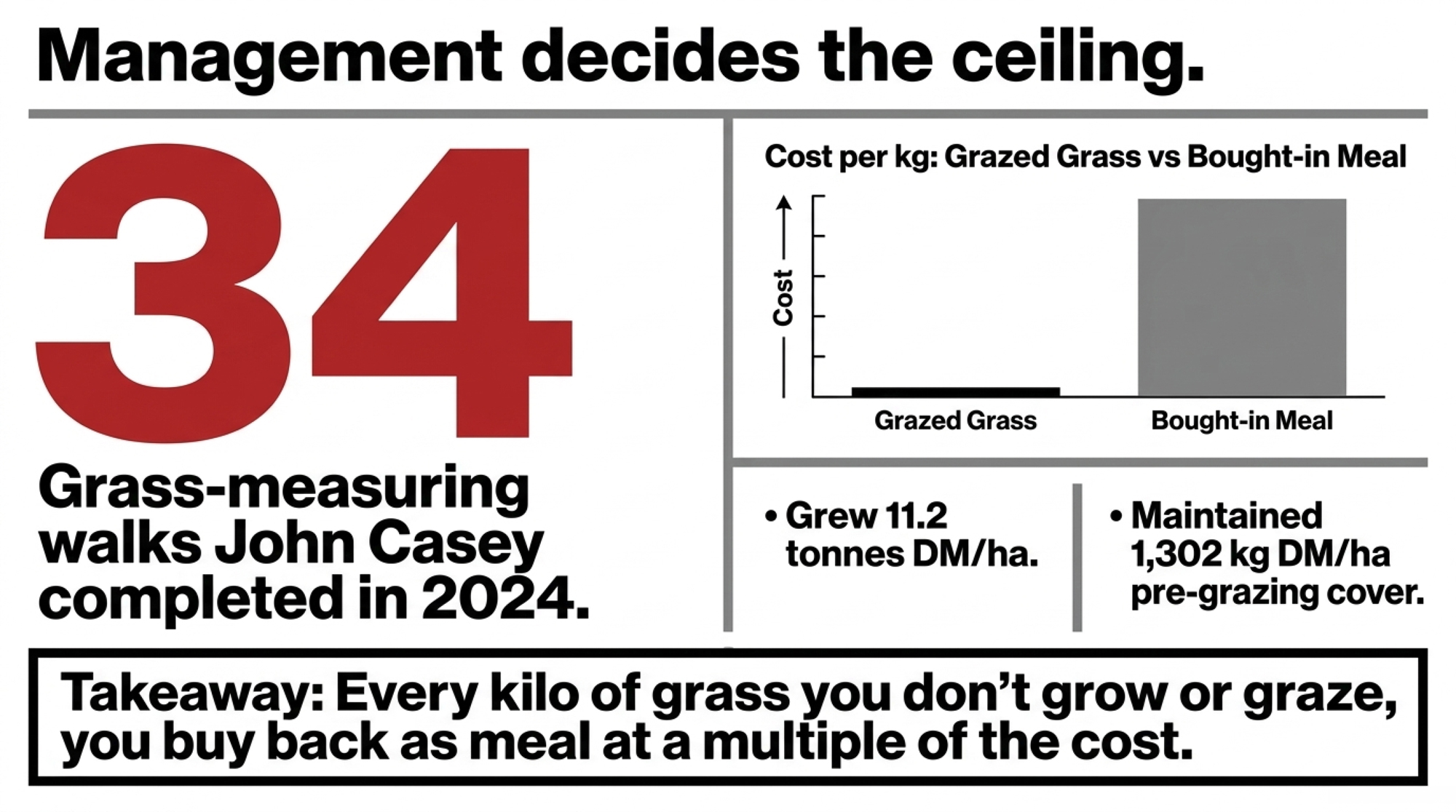
First, grass. John did 34 grass-measuring walks in 2024, grew 11.2 tonnes of dry matter per hectare, and maintained an average pre-grazing cover of 1,302 kg DM/ha. He pushes to get grass into cows early in the year, when cheap grazed grass does the most work for solids and costs a fraction of bought-in feed. That’s not a hobby. It’s the cheapest feed on the place, measured and managed like the asset it is. 

Thirty-four walks a year sounds like a lot until you price the alternative. Every kilo of grass you don’t grow or don’t graze, you buy back as meal or silage at a multiple of the cost. The walking isn’t busywork. It’s how you find the free feed before it goes to waste in a paddock heading out.

Then concrete. The Caseys reworked the yard to add feeding space, taking the number of feeding bays from nine to 20so every cow could eat at once. John tied that change straight to keeping cows adequately fed through a tough grass year. Slower bottlenecks at the feed face, better-fed cows holding condition, more solids in the tank — that was the return he was after, and it’s a return you can’t breed for. You have to build it. 

When the Atlantic Sends a Bill

The Casey farm sits within 500 metres of the sea, tucked into the north Kerry coastline, looking across at Loop Head, with some paddocks running right out to the cliff top. There are advantages and disadvantages to that. Storm Éowyn, in January 2025, was firmly in the disadvantage column. 

John put the cost in plain numbers: “In autumn 2024, we closed up with an average farm cover of 850kg DM/ha, and we opened up in spring 2025 with a cover of 650kg DM/ha. That was due to storm Éowyn in January 2025.” That’s a 200 kg DM/ha hole in his spring grass wedge — the difference between turning cows out onto a full plate and onto a thin one. He’s clear it was wind burn rather than salt burn: “It’s not that we’d get salt burn as such, but it’s more wind burn,” he said, with a couple of exposed paddocks getting a bit of extra fertiliser to help them recover. 

To cover the lost grass, he fed a bit more meal and leaned on the extra feed-face space he’d just built. 

The Strategy Lesson: A severe storm erased 200 kg DM/ha of spring grass cover. In a fragile system, that’s a financial emergency. In a resilient system backed by concrete and genetics, it’s a minor speedbump.

That’s the quiet lesson in it. The infrastructure decision, the genetics decision, and the grass discipline all bought him room to absorb a hit that would’ve knocked a thinner operation sideways. He still hit 540 kg MS/cow that year. A storm took 200 kg of cover off his spring, and the system barely flinched. That’s what the compounding actually buys you — not just more milk in a good year, but resilience in a bad one.

Options and Trade-Offs for Your Breeding Program

The Casey playbook isn’t Irish-only. The system runs on grass, EBI, and spring calving, but the underlying logic is the same as that driving NM$ and CM$ selection in North American herds. Here’s how their decisions become paths you can actually choose.

Breed for components and fertility, not peak litres. This works if your milk check pays on fat and protein — Kerry Dairy Ireland does, and so does the U.S. Class IV structure. The trade-off is real: you give up some bulk-tank volume for a cow that holds condition and breeds back on time. If you’re paid on solids but still chasing litres, you’re optimizing for the wrong number, and your breeding decisions are quietly working against your milk check.

Treat infrastructure as a genetics enabler, not overhead. Adequate feed-face space and cow comfort are what let a high-EBI cow actually express what she’s bred for — John’s nine-to-20 feed-bay change is the cheap version of that lesson. Skip it, and your best-bred cows go short at the feed face in a tight year and never pay back what you spent on the straws. The semen invoice and the concrete invoice are part of the same decision.

The 30-Day Move: Pull up your processor’s sustainability scheme this week, read the measures line by line, and enroll in every one you already qualify for before the next deadline closes. The money is sitting there for the farms disciplined enough to claim it.

Get into your processor’s sustainability program now — this month. Kerry Dairy Ireland — rebranded as Kinisla in May 2026 — runs its Evolve RegenDairy programme, which pays farmers for measures such as grass management, protected urea, low-protein feed, and lime; at launch in 2022 the scheme was worth up to about €2,000 for an average herd, and the payment band has since been revised. Whatever scheme your processor runs, the move is the same. The farms banking these payments now tend to be the same ones that moved early on EBI and grass measurement. The discipline travels — and so does the habit of acting before you’re forced to. 

Key Takeaways

  • If your herd EBI has been flat for three years, your trajectory is the problem — not today’s number. The Caseys added €46 of EBI in four years. Where will yours sit in 2029 if you do nothing different?
  • If you’re paid on components, stop selecting for peak milk. A modeled €90/cow/year swing came from breeding for solids and fertility, not volume — and across 136 cows, that’s roughly €12,000 a year that compounds into every replacement heifer you keep.
  • If cows are going short at the feed face in a tight grass year, the fix may be concrete rather than semen.John’s jump from nine to 20 feed bays is what let his cows hold condition when storm Éowyn cut his spring cover by 200 kg DM/ha.
  • If you’ve got two kids who both want to farm, don’t split the home place in half. The Caseys put John on the home farm and Micheál on a separate 15-year lease at Ballyheigue — two whole operations instead of two half ones.
  • If you’re handing a farm to the next generation, send them away first. The family’s own best advice wasn’t about cows. It was to build experience elsewhere before coming home to run the place.

Where Does Your Herd Sit?

The thing about the Casey story is how unspectacular it is up close. No single decision would’ve made a headline the day it was made. The headline only shows up when you stack a decade of them together — a father who built the base, a son who came home and kept compounding, and a brother now running the same playbook on his own ground at Ballyheigue. 

So here’s the honest question to sit with tonight: which of these moves — the EBI push, the grass discipline, the feed-face rebuild — have you been putting off because it didn’t feel urgent this week? Urgent and important aren’t the same thing, and the Caseys spent ten years betting on important. If you want to run the per-cow math behind a 40-to-50 point index jump on your own herd — mapping your specific milk check structure against your actual feed costs — that’s the kind of modeling we break down in The Bullvine Weekly. Bring your own herd sheets. That’s where this story stops being about Kerry and starts being about your bottom line.

Run Your Numbers

Component Value Tracker — The Caseys bred for 4.88% fat and 3.88% protein because their check pays on solids. Run the Component Value Tracker to see what one-tenth of a point of fat or protein is actually worth in your herd, and price PTA Fat and Protein on your next bull list.

Complete references and supporting documentation are available upon request by contacting the editorial team at editor@thebullvine.com.

Learn More

The Sunday Read Dairy Professionals Don’t Skip.
Every week, thousands of producers, breeders, and industry insiders open Bullvine Weekly for genetics insights, market shifts, and profit strategies they won’t find anywhere else. One email. Five minutes. Smarter decisions all week.
NewsSubscribe
First
Last
Consent

Kevin Spahn Won a National Title. Coming Home to 180 Cows Is the Harder Game. 

A Wisconsin farm kid anchored UW-River Falls to a historic Division III championship — and heads home this spring to a dairy where the succession math will define what happens next.

On January 4, 2026, UW-River Falls beat North Central College 24–14 at Tom Benson Hall of Fame Stadium in Canton, Ohio — capturing the program’s first-ever NCAA Division III national championship and capping a historic 14-1 season. Kevin Spahn, a 6-foot-3, 282-pound senior center out of Middleton, Wisconsin, was on that offensive line. So was the work ethic he’d built on his family’s dairy.

“It was really surreal,” Spahn told Dairy Star. “Growing up, you always dream of being able to play at a big stadium…Walking out and playing on that field at night, it was such a surreal moment that most of us on the team dreamed about since we were kids.”

He’s expected to graduate this spring with a bachelor’s degree in dairy science, management option. The trophy goes on a shelf. The question now is whether the family operation — Spahn Dairy, approximately 180 cows milked through a double-12 herringbone parlor near Middleton — can build a path that brings him back.

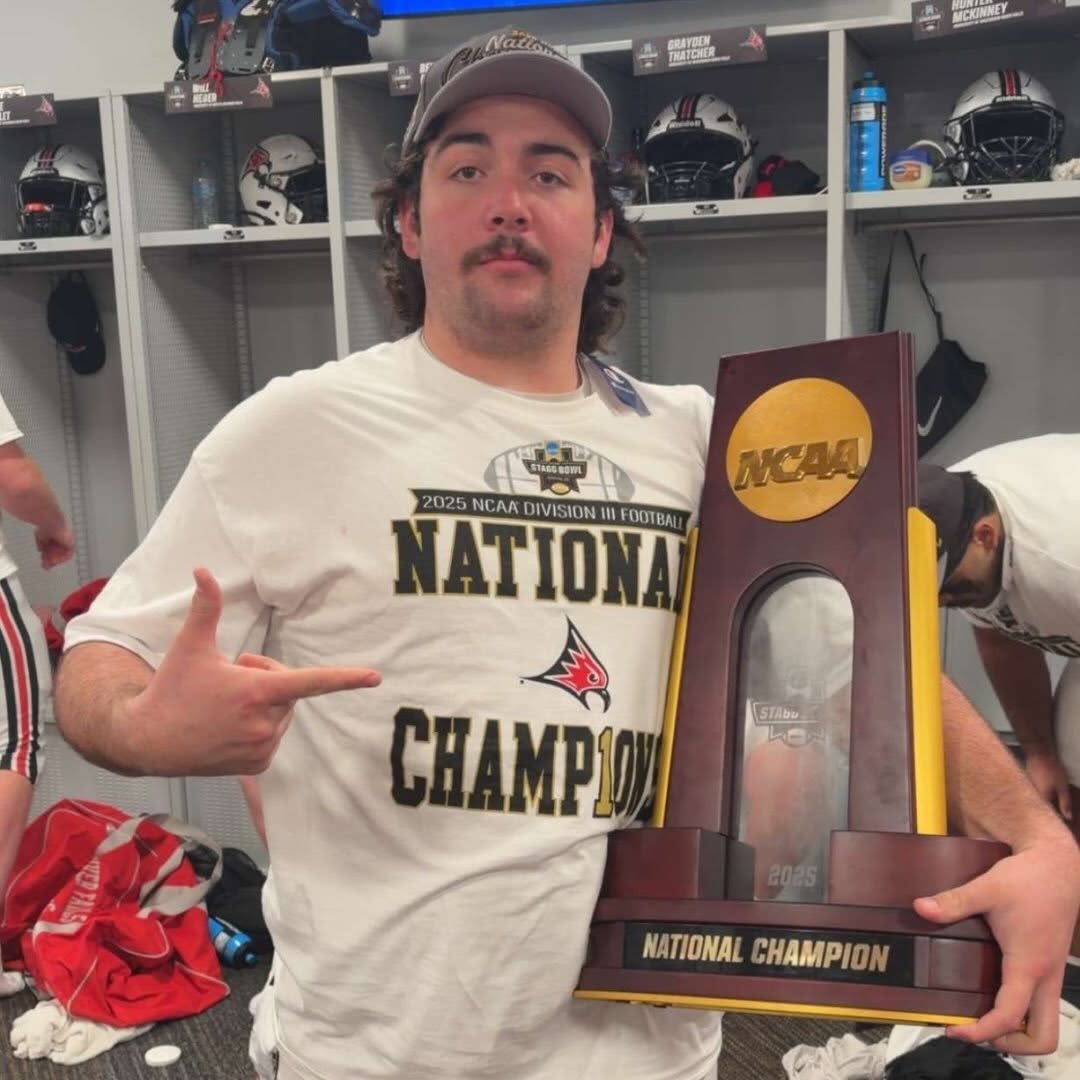
Kevin Spahn holds the Stagg Bowl trophy in the UW-River Falls locker room after the Falcons’ 2025 NCAA Division III football title. It’s the high point of a career built on early mornings in the barn — and the moment before the harder decision starts: what comes after football for a farm kid weeks from a dairy science degree.

The Season Nobody Saw Coming

UW-River Falls hadn’t made the playoffs since 1996. This team went 14-1, knocked off defending national champion North Central College — who had won 29 straight games — and did it on the biggest stage Division III football has. In the semifinal against Johns Hopkins, Blaha threw for 520 yards and five touchdowns in a 48-41 shootout that racked up 632 total yards for the Falcons. The championship was more controlled but no less dominant.

Quarterback Kaleb Blaha finished that title game with 419 total yards and three touchdowns, and broke the NCAA single-season total scrimmage yards record at 6,189 — surpassing the mark Joe Burrow set at LSU in 2019. Spahn didn’t throw any of those passes. He’s the guy who made sure nobody got to the guy who did.

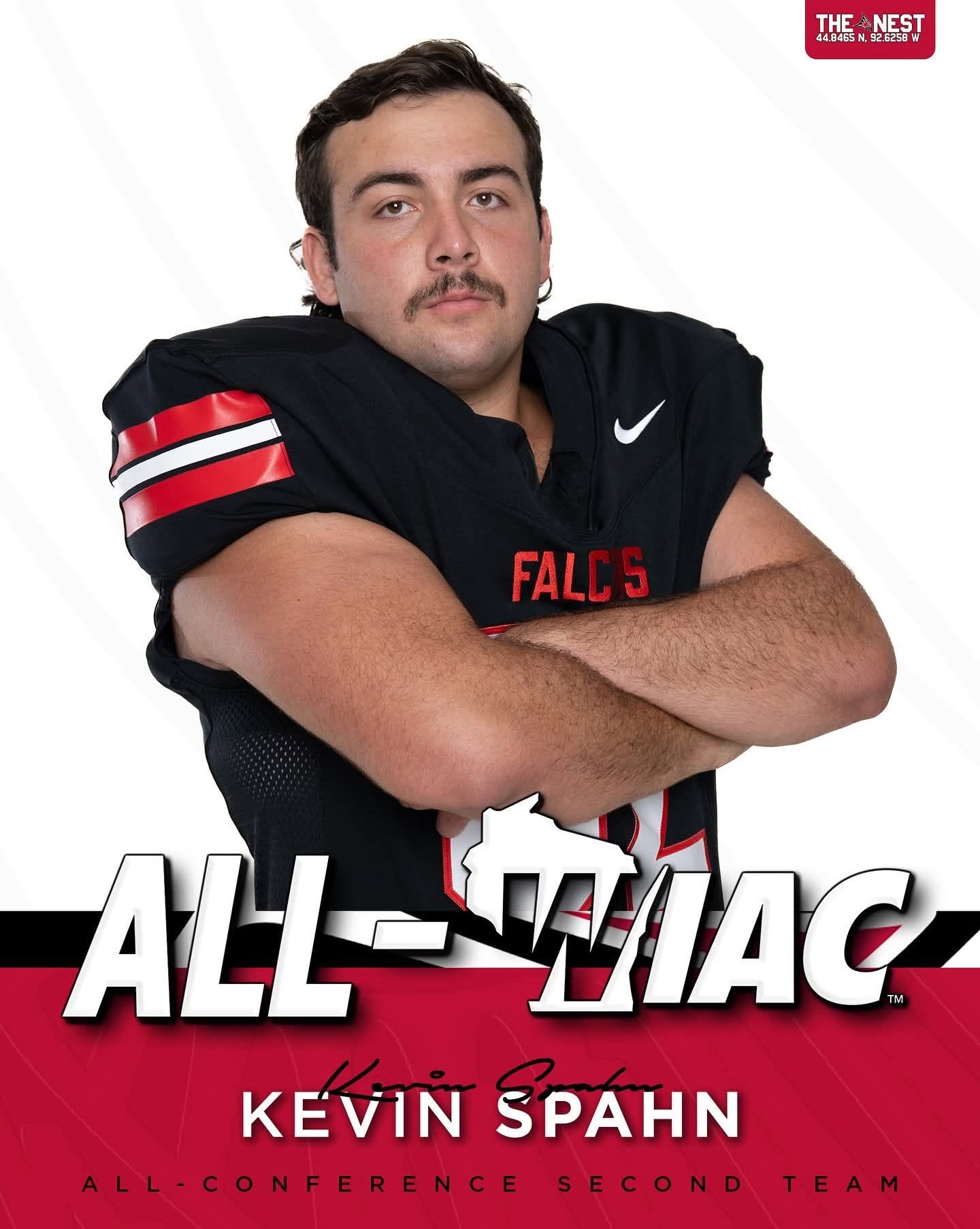
UW-River Falls recognized Kevin Spahn as an All-WIAC second-team offensive lineman, the conference honor that capped his role on a national-title team. The discipline behind it — graduating to college ball after early mornings in the parlor — is the same trait every dairy succession plan is quietly betting on.

Offensive linemen don’t make highlight reels. They make everything else possible. That tracks pretty cleanly with how dairy farms work, too.

“Growing up as a farm kid, it’s embedded to do things that aren’t going to come easy,” Spahn told Dairy Star. “That doesn’t mean you need to quit. Stay with it…You may not be better than everybody, but you can outwork everybody because hard work can beat talent if you just put your head down to work.”

What Kevin’s Dad Made Possible

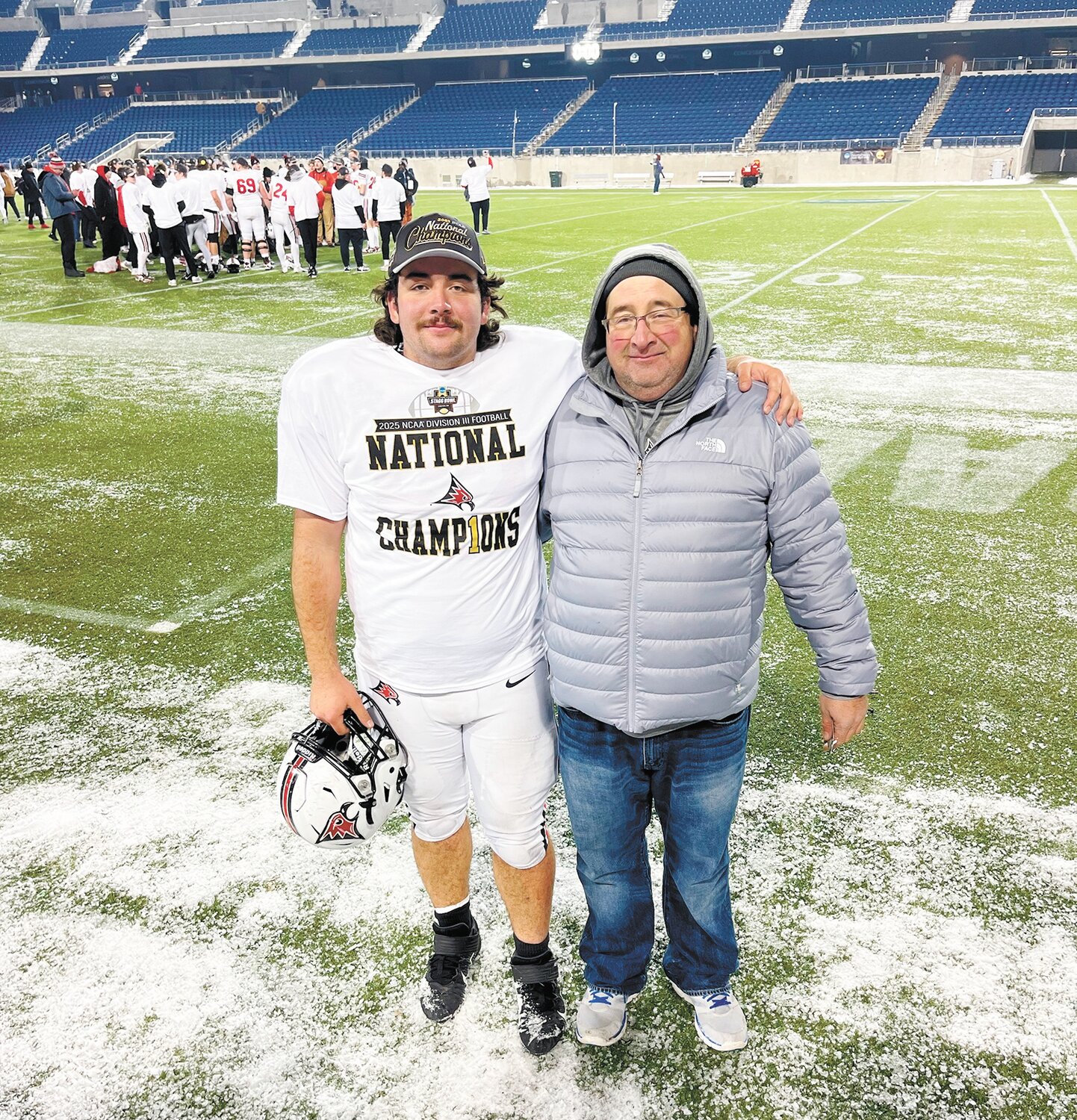
Kevin Spahn (left) and his father, Joe, on the field in Canton, Ohio, after UW-River Falls captured the 2025 NCAA Division III football national championship at the Stagg Bowl. Joe runs the family’s 180-cow dairy near Middleton, Wisconsin — the operation that raised the lineman now weighing whether he can ever come home to milk it.

Here’s what doesn’t show up in the box score.

A 180-cow dairy near Middleton doesn’t run itself. Kevin balanced summer workouts, a job near River Falls, and academics during the school year. He returned home to help on the farm during breaks — but not during football season. That means Joe Spahn, Kevin’s father, shouldered the full operation through fall practices, road games, and a playoff run nobody planned for in September.

Joe traveled to Canton for the championship game — one of the few times he’d left the farm for more than a day, according to the Dairy Star profile. Kevin described his father as someone he couldn’t remember ever taking a full day off.

“I always offered [to help],” Kevin told Dairy Star. “But my dad said no, I didn’t need to rush home to help with chores and [that I should] enjoy it [school and football] a bit.”

That one line tells a bigger story than it looks like on first read. Kevin’s account, as reported by Dairy Star, describes a father who consistently prioritized his son’s development over his own convenience — on an operation where every pair of hands matters. The labor gap was real. Joe absorbed it. Whether that dynamic translates into a workable succession plan — a question the family hasn’t addressed publicly — is the chapter that matters most.

Can Your Kid Afford to Come Home?

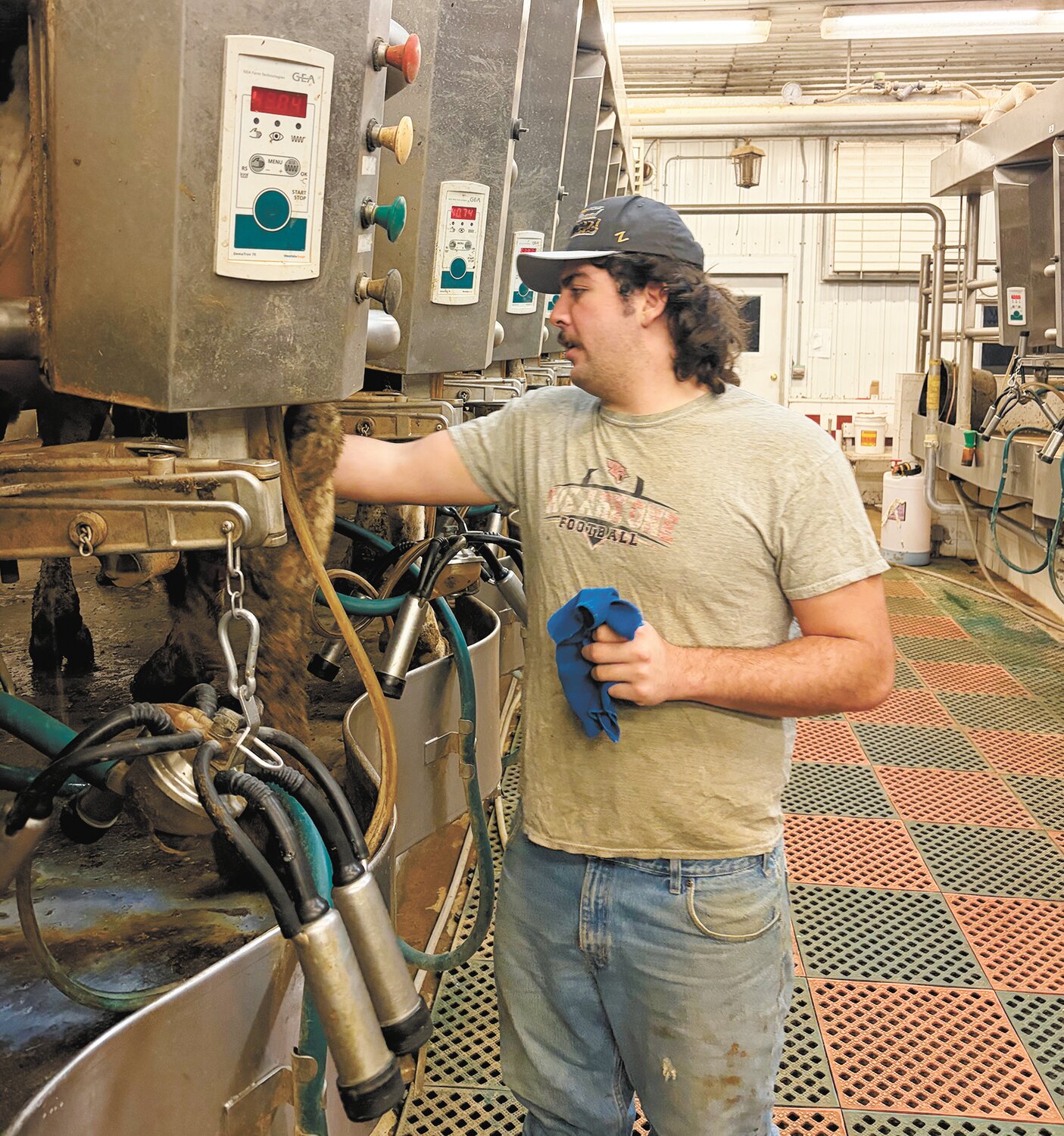
Weeks after winning a national title, Kevin Spahn cleans a cluster in the double-12 herringbone parlor at Spahn Dairy near Middleton, Wisconsin, milking the family’s roughly 180 cows over winter break Jan. 13. He graduates this spring with a dairy science degree — and the same question facing thousands of farm kids: whether the math will ever let him come home for good.

This is where the Spahn story becomes every dairy family’s story. And the math is blunt.

Dane County — where the Spahns farm near Middleton — saw agricultural land average $7,401 per acre in 2024 based on actual sales data (UW Extension Farm Management Program). But that average masks an enormous range: parcels traded for as little as $546/acre on marginal ground and as high as $15,440 where Madison’s suburban growth pushes prices. Near Middleton, where development pressure meets dairy country, usable farmland likely trades well above the county average.

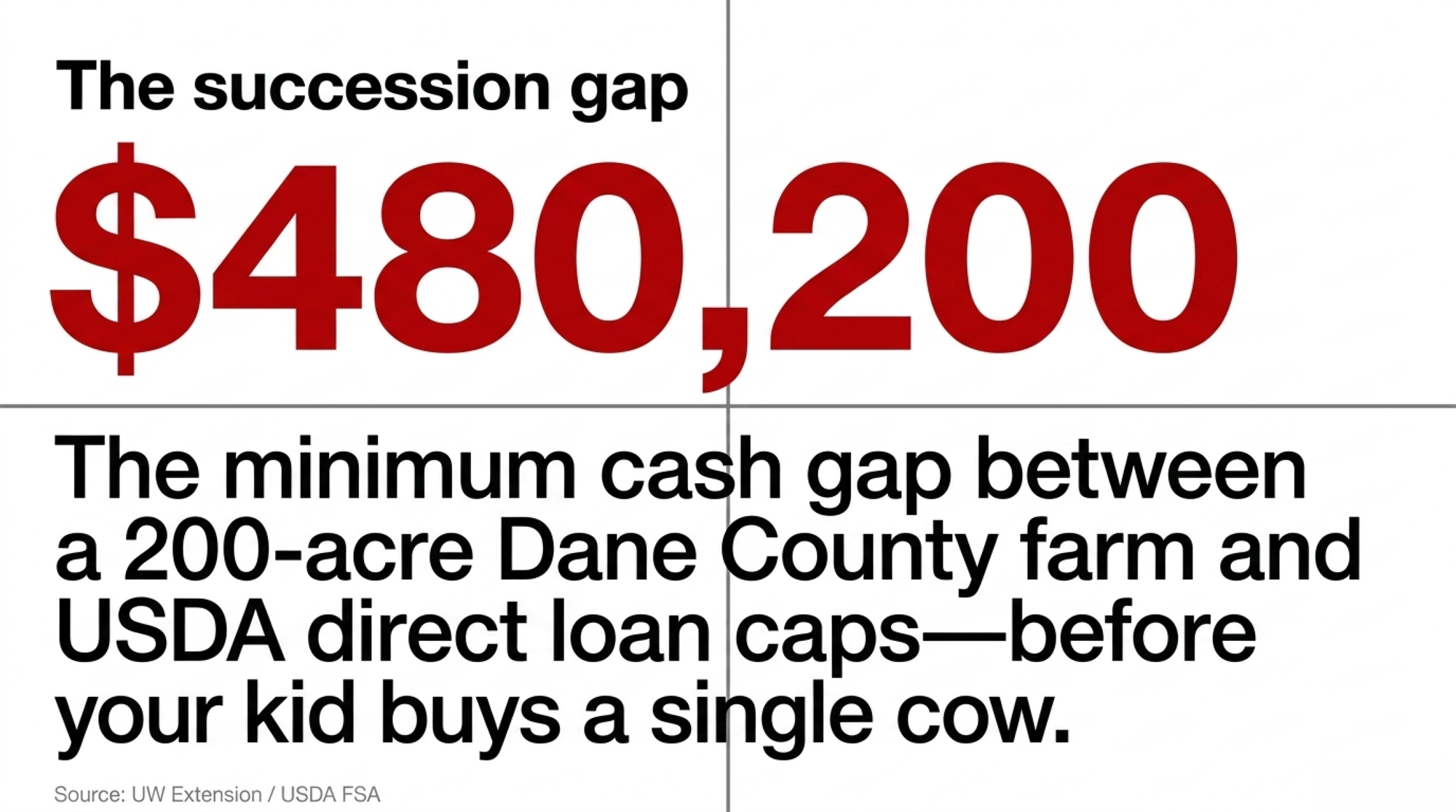
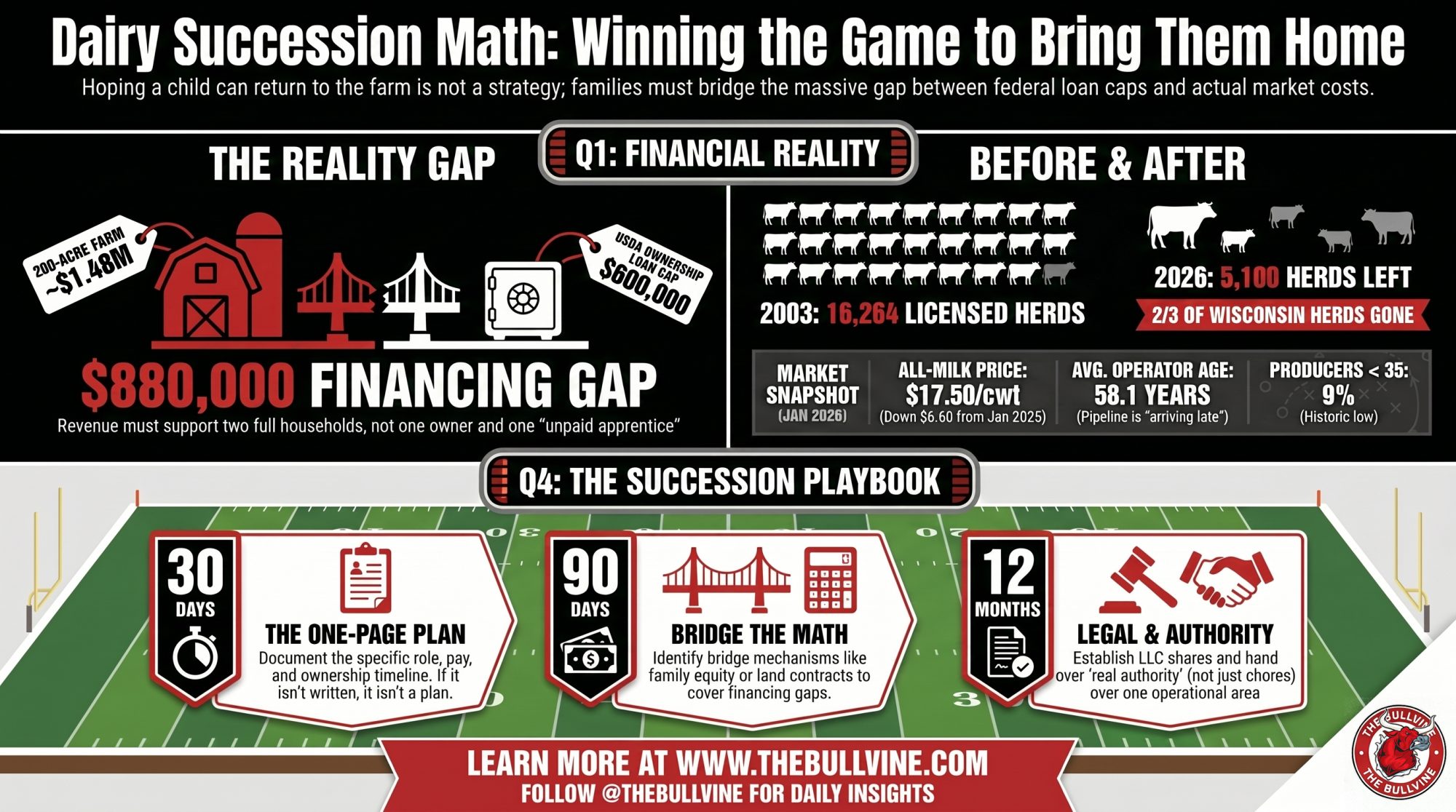
Grab a napkin: 200 acres × $7,401 = $1,480,200. Land only. No cows. No parlor. No feed storage. No equipment.

Now stack that against the available financing. USDA’s Farm Service Agency offers two direct loan programs — ownership loans for buying land and buildings (capped at $600,000) and operating loans for livestock, equipment, and feed (capped at $400,000). Combined ceiling on direct loans: $1 million. Guaranteed loans through a cooperating lender can go higher, but the borrower still needs the down payment and cash flow to qualify. The gap on direct financing alone — $480,200 before your kid buys a single cow — is where succession plans go to die.

And those numbers assume the county average. If you’re looking at parcels closer to Middleton at $10,000–$15,000/acre, the gap widens fast. Wisconsin’s statewide average runs about $6,363/acre (UW Extension, 2024 sales data), but the math doesn’t get friendlier in most active dairy counties. Revenue from 180 cows has to cover two households once the next generation arrives. Not one household and an unpaid apprentice.

Family equity, co-signing arrangements, graduated buy-in formulas, and land contracts aren’t optional workarounds. For most families without outside wealth, they’re the only way the numbers close.

MechanismHow It WorksBest ForKey RiskTypical Gap Coverage
Family Equity TransferParents gift/transfer equity stake at below-market valueEquity-rich operations with strong parent-child trustTax exposure; sibling conflictUp to 40–60% of gap
Land Contract / Installment SaleParents “hold the mortgage” directly; buyer pays over timeFamilies where parents want income stream in retirementRequires parent liquidity reservesFull gap, if structured well
FSA Guaranteed Loan (lender-backed)USDA guarantees up to 95% of loan; lender sets termsReturning farmer with some equity but no bank relationshipHigher total interest; still needs down paymentUp to ~$2.1M (2026 limits)
Co-Signing ArrangementParent co-signs commercial loan; kid qualifies for larger noteFamilies where kid has income history but limited collateralParent’s retirement assets at risk if operation failsDepends on lender terms
Graduated Buy-In (sweat equity)Kid earns ownership % annually via labor contributionOperations where cash is tight but labor is the real constraintNo legal structure = no protection for either partySlow; 10–15 year horizon
Outside Investor / Custom FarmingThird party provides capital; family retains operating controlLarge-scale operations; families comfortable with shared controlLoss of autonomy; exit clauses can be punishingPartial; covers capital, not land

5,100 Herds Left. Who’s Next?

Kevin Spahn wants to stay in dairy. He told Dairy Star he hopes to remain involved in working with dairy farms after graduation. But hoping and affording are two different problems — and the state-level data doesn’t make them any easier.

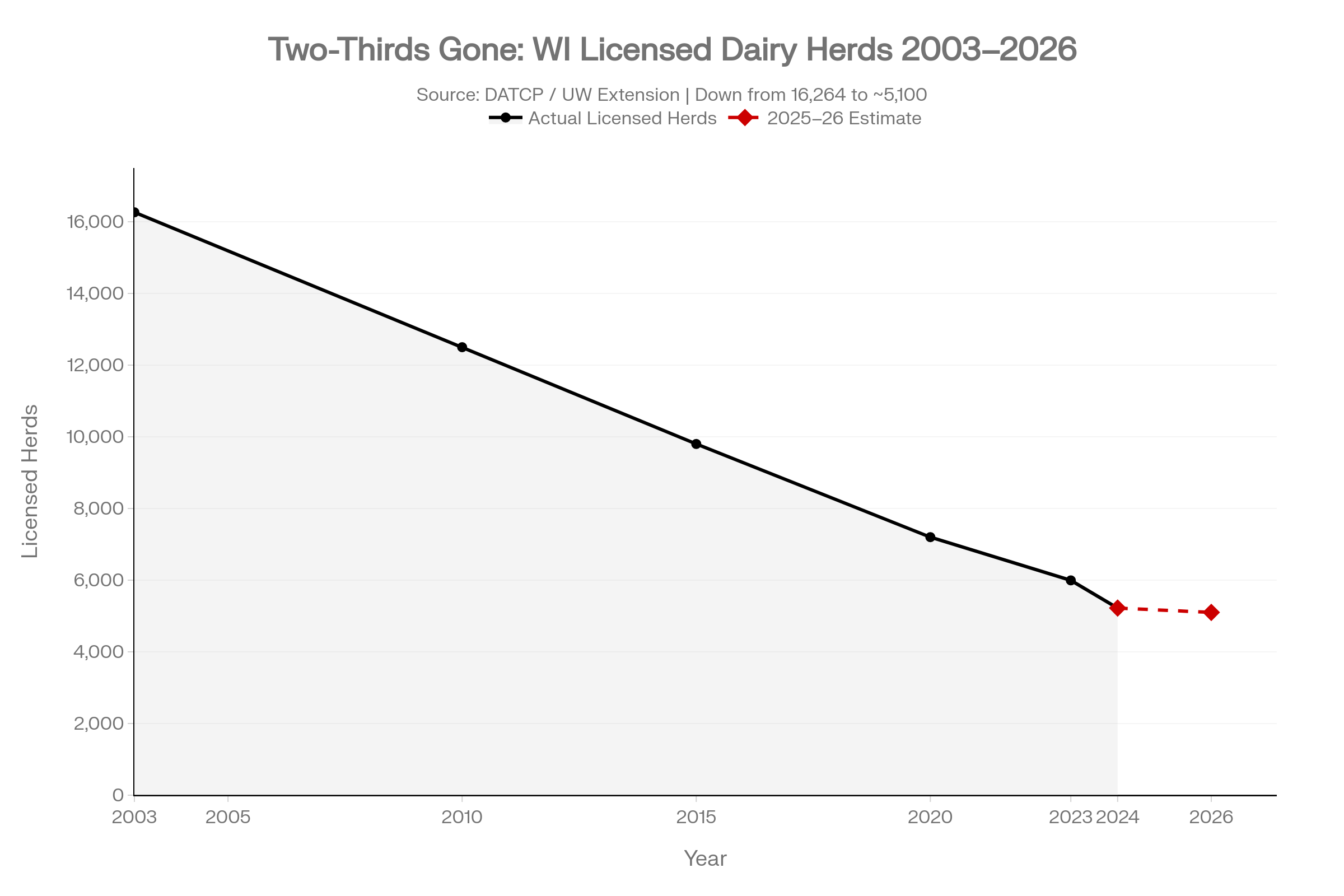
Wisconsin entered 2026 with roughly 5,100 licensed dairy herds. The state lost 455 herds in 2023 alone — a 7% decline that year (DATCP). By August 2025, the count sat at 5,222, down from 5,895 at the start of 2024. The pace has moderated, but the direction hasn’t changed. For perspective: Wisconsin had 16,264 licensed herds in August 2003. Two-thirds of the state’s dairies are gone in barely two decades.

At the current attrition rate, the question for families like the Spahns isn’t whether the decline continues — it’s who’s still milking by 2035.

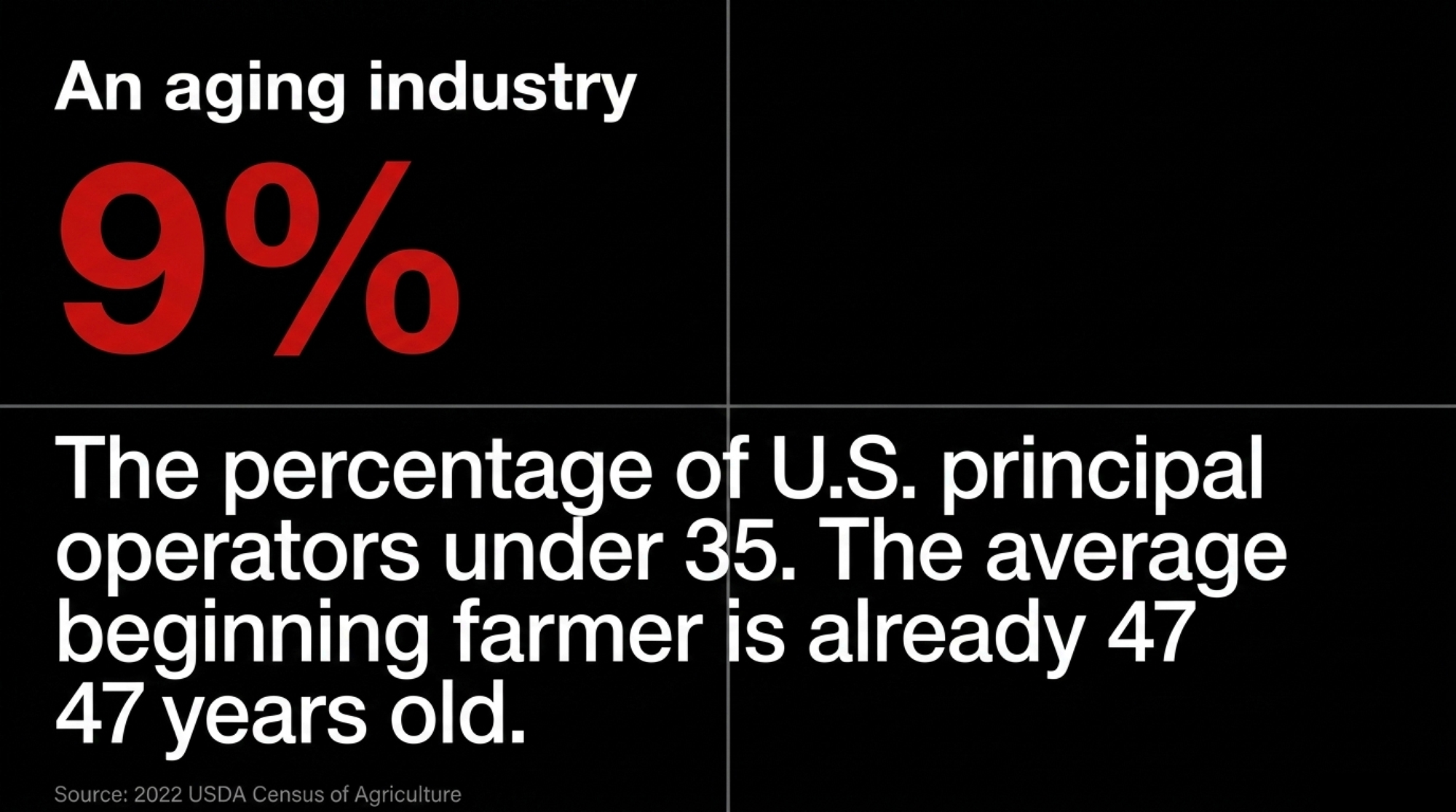
The 2022 USDA Census of Agriculture — still the most recent — pegs the average age of U.S. principal operators at 58.1. Only 9% of all producers are under 35. Beginning farmers average 47.1 years old, which means most people the USDA classifies as “new” to farming are already middle-aged. The pipeline isn’t empty. But it’s arriving late, underfunded, and walking into an industry where the price of entry keeps climbing.

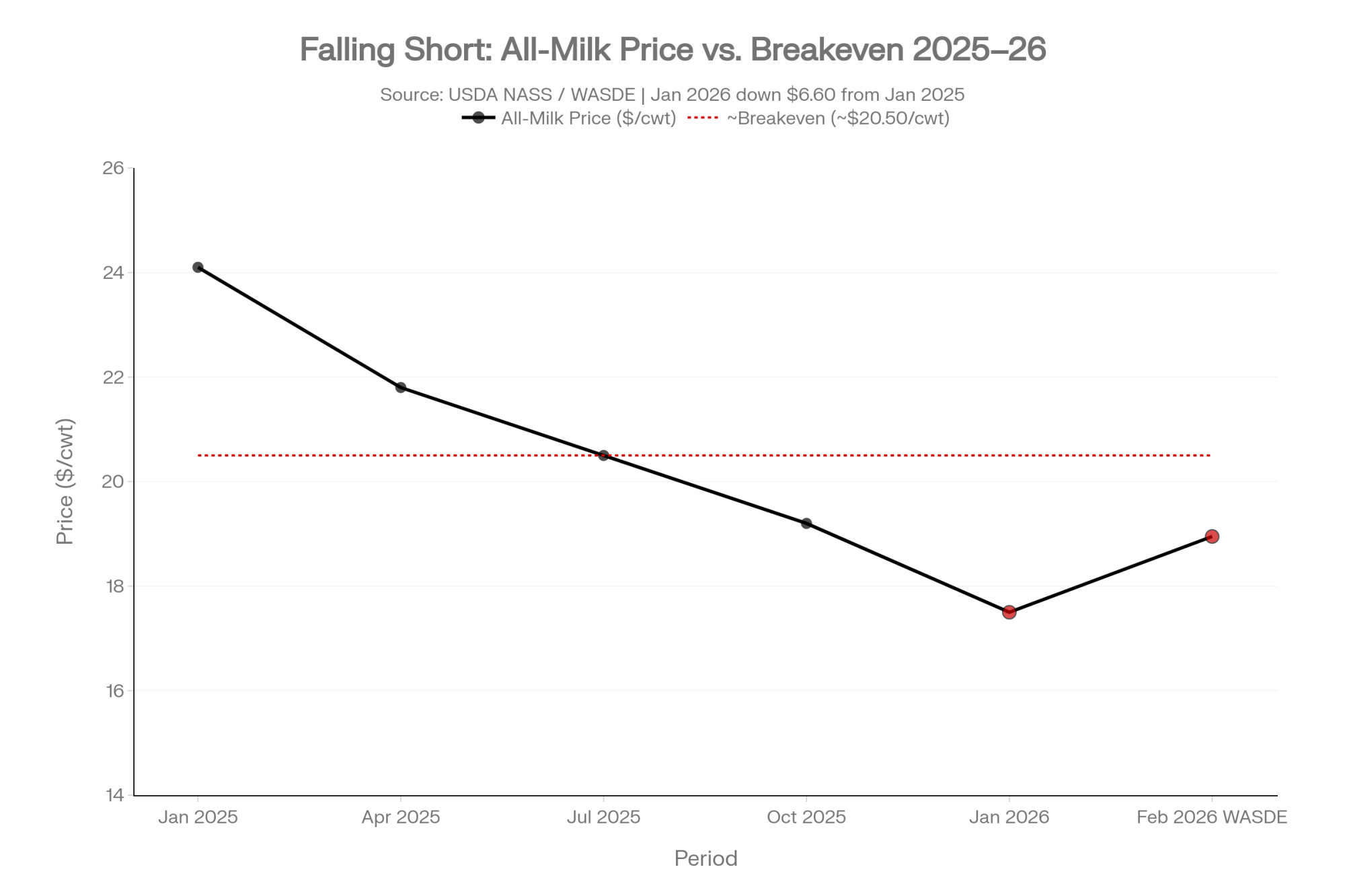
USDA’s February WASDE projects 2026 all-milk at $18.95/cwt. January’s actual all-milk price already came in at $17.50/cwt (USDA NASS, February 27, 2026) — down $6.60 from January 2025 and well below what most operations need. USDA’s own numbers suggest the 2026 all-milk forecast still leaves the average dairy in the red. Not a great backdrop for asking the next generation to buy in.

A Packers Legend Started on a 70-Cow Dairy. The Herd Didn’t Survive.

Wisconsin has seen this intersection of dairy and football before. Different era, different ending.

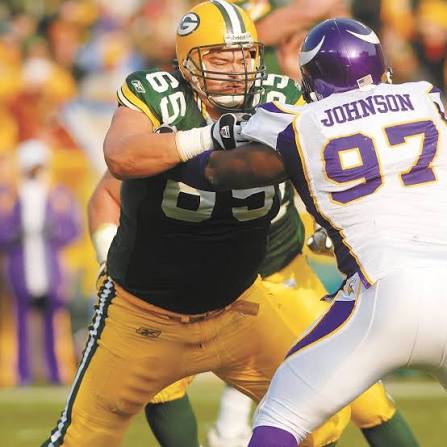
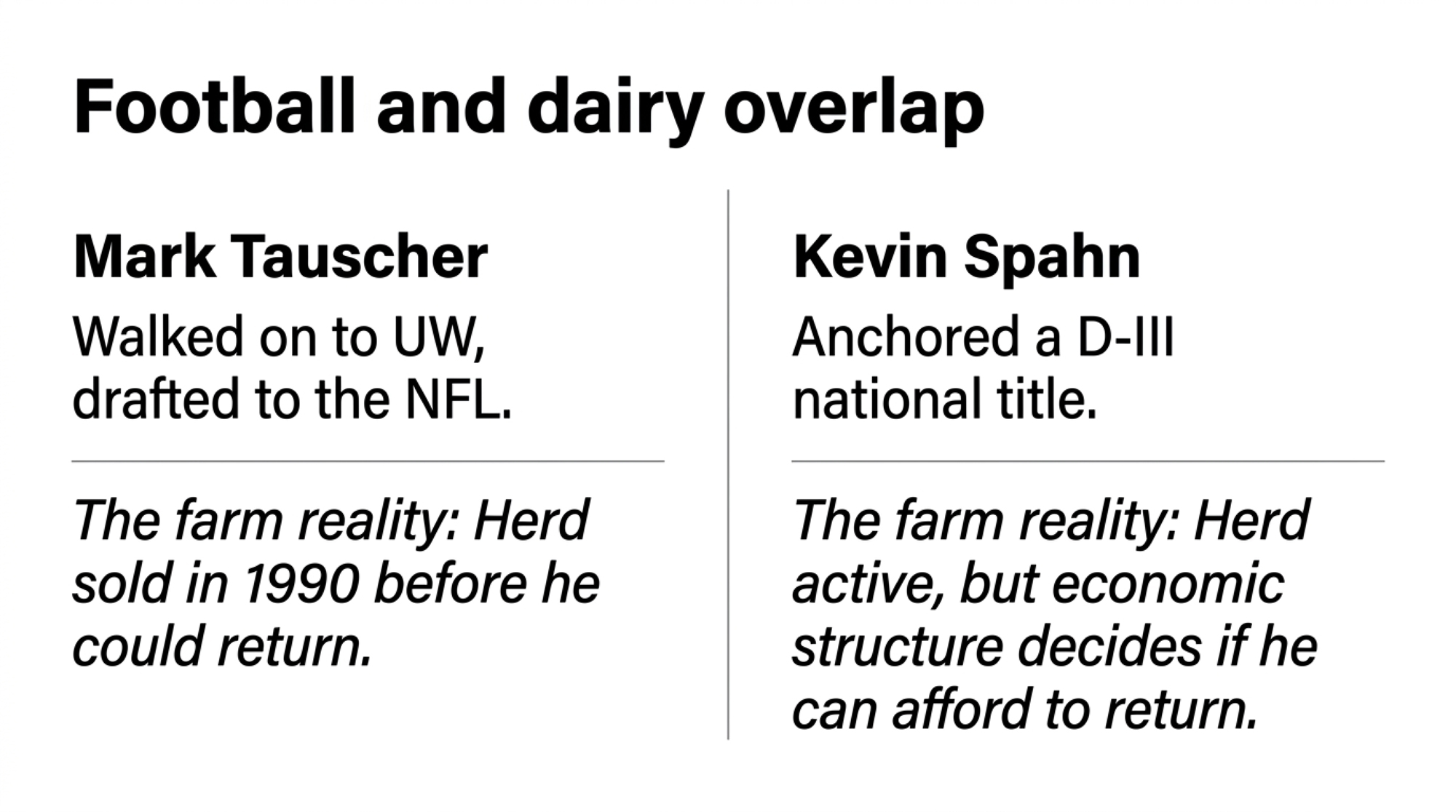
Mark Tauscher grew up on a roughly 70-cow dairy near Milladore, in Wood County. He walked on at UW-Madison after a Badger recruiting coordinator spotted him at the 1995 state basketball tournament. “Two weeks later, they asked me to walk on, and I decided to take it,” Tauscher recalled in a recent Dairy Star profile. That long shot turned into a seventh-round NFL Draft pick, 11 seasons with the Green Bay Packers, and a Super Bowl XLV ring. But the Tauscher family’s herd had been sold in 1990, while Mark was still a kid.

Growing up on his family’s dairy farm, Mark Tauscher never dreamed he would one day cap off an 11-year career with the Green Bay Packers, part of a team that brought the coveted Lombardi Trophy home to Wisconsin.

The dairy built the player. Tauscher told Dairy Star he was assigned to watch the barn cleaner chute at the age of 5. He recalled complaining to his dad about unloading hay on his birthday. His father’s response: “He told me the cows probably didn’t care it was my birthday, that you just have to go about doing your business every day.”

The work ethic carried Tauscher to the NFL. It didn’t carry him back to dairy. There was nothing to come back to — the herd was gone before he ever left home. That’s not about desire. It’s about timing and structure. And it’s the pattern that repeats across Wisconsin dairy country when the economics don’t leave anything for the next generation to return to.

The Bullvine previously covered a family that chose 5:30 AM chores over an NHL draft opportunity — a parallel story where the farm’s pull competed with elite athletics, and the outcome hinged not on the kid’s desire but on whether the family had built something financially viable to come back to.

Kevin Spahn has something Tauscher didn’t — a living herd, a father still milking, and a dairy science degree. His story doesn’t have to follow the same arc. But it won’t diverge by accident. The distance between those two outcomes isn’t talent or desire — it’s whether the family builds a structure that gives the next generation a reason to return and a way to afford it.

Options and Trade-Offs for Your Operation

If you’ve got a kid in college, playing a sport, working off-farm, or still figuring things out — and you want them to have a genuine option to come back — here’s what the economic math demands.

Within 30 days: Write a one-page return plan. Not a vague conversation. A document. What’s the role? What’s the pay? What decisions does the returning generation own? What’s the timeline to real equity? If you can’t fill one page, you’re not ready to have the conversation. This works whether you milk 80 cows or 800.

Within 90 days: Run the transition math. What does the operation need to generate to support two households, not two people, two households? If your county’s land runs anywhere near Dane County’s $7,401/acre average and FSA direct ownership loans cap at $600,000, your kid needs a bridge. Family equity, co-signing, graduated buy-in, or land contracts.

Pull up your county’s numbers from the UW Extension land price data and calculate the gap yourself. If your kid looks at the financials and sees 15 years of labor before any ownership stake, you’ve answered the succession question for them. They just haven’t told you yet.

Within 12 months: Build the legal structure. LLC or partnership shares. A buy-in formula. An exit clause for both sides. And at least one operational area — youngstock, cropping, parlor management, whatever fits — handed off with real decision-making authority. Not “help me with” authority. Actual authority over outcomes and accountability.

If signals shift — commodity prices crater, your kid picks a different path, health changes the timeline — revisit the plan. Families that survive transition treat it as a living document, not a one-time event. Families that wait too long to formalize these structures often find that consolidation decides for them.

One more thing worth sitting with. Kevin Spahn’s dad modeled something that doesn’t show up in any financial plan: he gave his kid room to build something outside the barn, then kept the lights on while he did it. On a 180-cow operation with no taxi squad, that’s a real sacrifice. And it may be the part of succession that determines whether the next generation comes home because they want to, or doesn’t come home at all.

Key Takeaways

  • If your succession plan is a conversation but not a document, it’s not a plan. Write the one-pager this month.
  • If FSA’s $600,000 direct ownership loan cap doesn’t cover your county’s land prices — and in most active dairy counties, it won’t — you need a bridge mechanism (family equity, co-signing, graduated buy-in, or land contracts) identified before your kid graduates.
  • If the operation can’t cash-flow two households at current milk prices, the financial structure needs to change before the next generation arrives — not after.
  • If your kid sees no path to ownership within 5–7 years of returning, they will find one elsewhere. Timeline matters as much as the dollar figure.

The Harder Game Starts This Spring

Succession FactorGreen Flag ✓Red Flag ✗
Documented return planWritten 1-page role/pay/equity doc existsSuccession is “understood” but unwritten
Land financing gapFSA + family equity covers 80%+ of land costGap exceeds $500K with no bridge identified
Two-household cash flowOperation generates $180K+ net at current milk priceSingle household barely cash-flows at $18–19/cwt
Equity timelineReturning gen reaches 25%+ ownership within 7 yearsNo ownership stake projected before year 10+
Legal structureLLC or partnership in place with buy-in formulaFarm is sole proprietorship with no succession docs
Decision authorityReturning gen owns at least one operational area outrightAll decisions still run through the senior generation
Milk price stress testOperation cash-flows at $17/cwt all-milkBreakeven requires $20+/cwt with no margin buffer
Operator age gapSenior operator under 62 with 5+ active years aheadOperator 65+ with no formal transition timeline

Kevin Spahn graduates this spring. He told Dairy Star he wants to stay in dairy. His family milks 180 cows near one of the most expensive land markets in Wisconsin. The championship is over. The harder game — the one where a 22-year-old with a dairy science degree tries to build a career in an industry that’s lost two-thirds of its Wisconsin herds in 20 years — is just starting.

So here’s the question for your operation: if your kid came home tomorrow, could you hand them a one-page document outlining the role, pay, equity path, and timeline? If you can’t, the Spahns’ story isn’t just their story. It’s yours.

Learn More

The Sunday Read Dairy Professionals Don’t Skip.

Every week, thousands of producers, breeders, and industry insiders open Bullvine Weekly for genetics insights, market shifts, and profit strategies they won’t find anywhere else. One email. Five minutes. Smarter decisions all week.
NewsSubscribe
First
Last
Consent

Brookview Tony Charity: A $47,000 Gamble That Outlived Everyone Who Doubted Her

She walked into that 1981 sale ring with recently swollen hocks and a cooling crowd. Heffering paid $47,000 anyway. Four years later, half of her sold for $1.45 million.

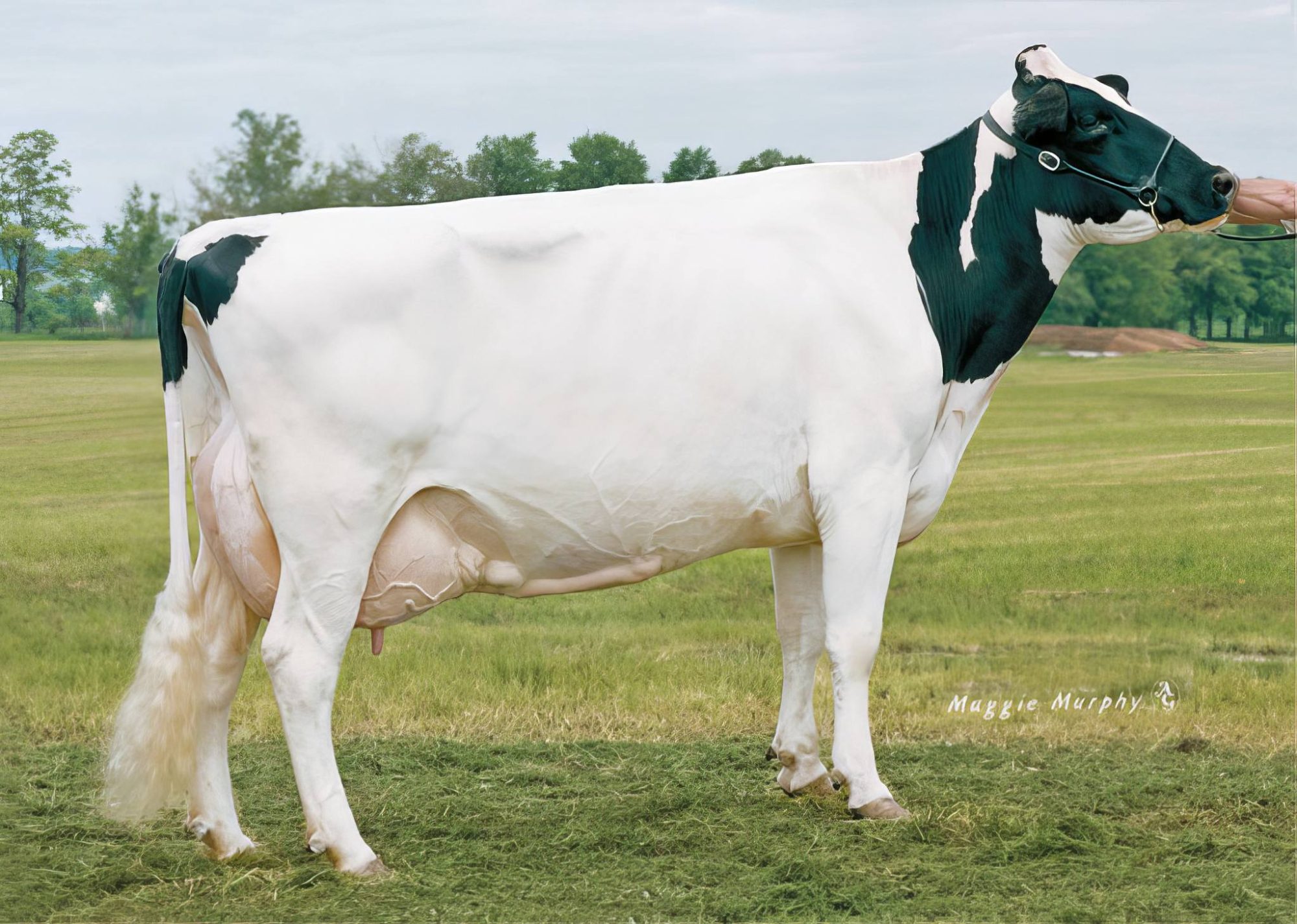
Brookview Tony Charity, EX‑97‑3E — the cow Bob Murphy called “probably the best one ever.” Not a freak of height, but a masterpiece of width: the depth of body, the high, wide rear udder, the quiet balance that made hardened judges run out of words. (Photo: Maggie Murphy)

The classifier went quiet.

Bob Murphy had spent the better part of his life crouched behind Holstein cows—running a hand down a topline, stepping back to read the set of a hock, studying the way an udder cleaved and carried. By his own reckoning, he’d put a score on something close to half a million head. A man who’s seen that many cows doesn’t rattle easily. He’s watched the great ones come and go. He knows that “perfect” is a word you save, because the day you spend it carelessly is the day it quits meaning anything.

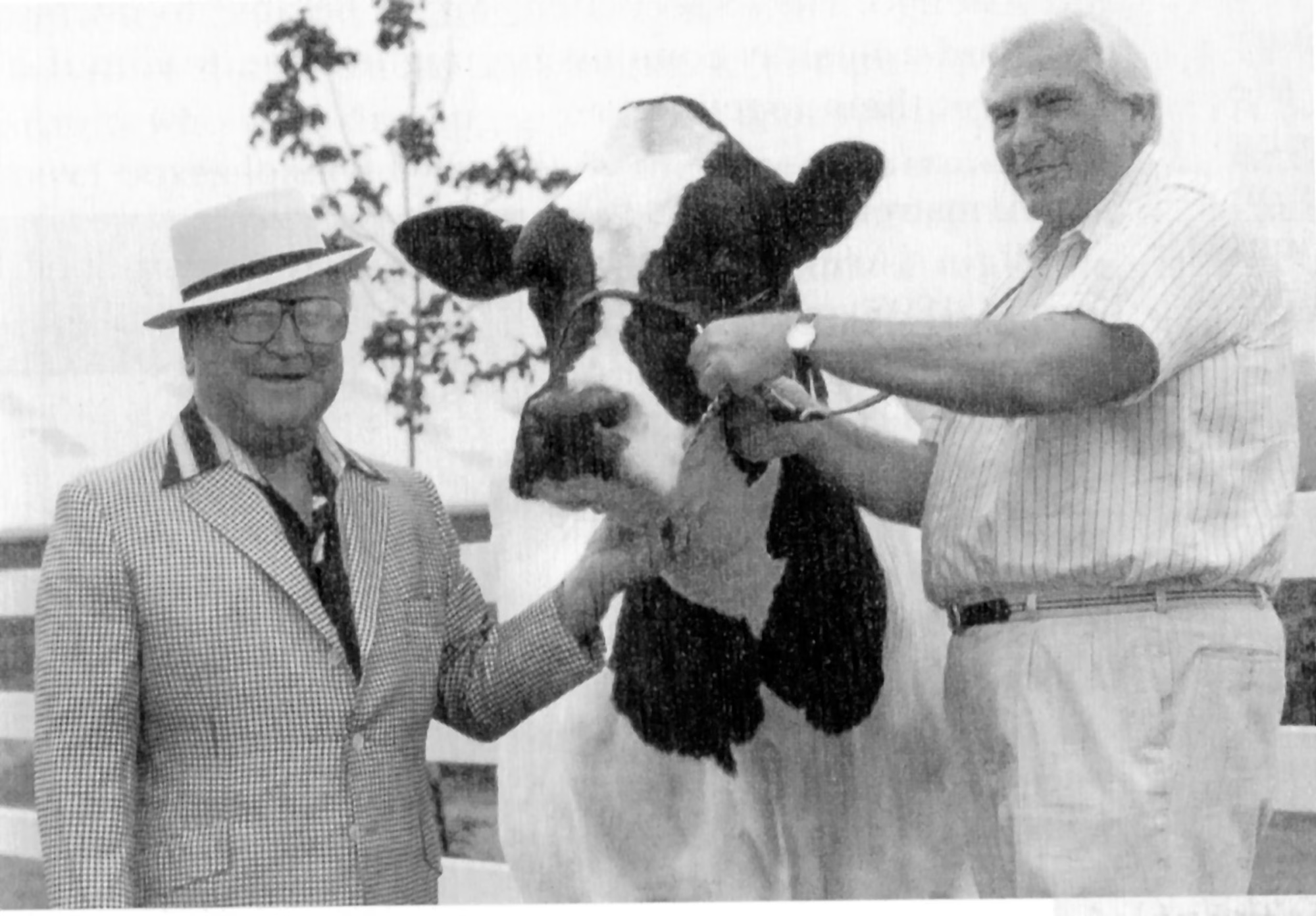
It was the mid-1980s, in a barn at Hanover Hill Farm outside Port Perry, Ontario. The cow in front of him had already worn more banners than most herds win in a generation. Murphy walked around her. Walked around her again. Then he said the thing breeders still repeat, word for word, more than forty years on—that of the tiny handful of cows ever rated at 97 points, “she’s probably the best one ever,” with the most correct overall conformation of any cow he’d ever seen.

Think about that for a second. Not the best he’d seen that year. Not the best in the barn. The best he’d ever laid eyes on—and this was a man who’d seen damn near everything the breed had to offer.

Her name was Brookview Tony Charity. And here’s the thing most folks get backward: the score didn’t make her. By the time she settled at her famous mark of EX‑97‑3E, the number was just the paperwork catching up. When she was scored on the American system in June 1984, she became the 21st Holstein in the U.S. ever to reach Excellent‑97—the highest score their program had ever awarded. The truth had been spotted years earlier—in a cold sale ring, on a cow nobody else was quite sure about.

The Night Nobody Was Sure

Now, you’ve got to understand the era to understand the gamble.

This was the early 1980s—the golden age of the North American show cow. A great female could become a household name in dairy circles. The Royal Winter Fair and World Dairy Expo were cathedrals, and a Grand Champion banner could rewrite a farm’s future. Embryo transfer was still young enough to feel like wizardry; flushing a single great donor to a half-dozen elite sires was rewriting what one cow could be worth. The big Ontario and New York outfits were assembling the cow families that would shape the breed for decades. And the people doing the buying weren’t gambling on spreadsheets. They were gambling on the eye.

Charity was born on August 6, 1978, bred by John D. and Karl E. Havens at Brookview Farm in Fremont, Ohio. Look at how she was bred, and you’ll see why old-timers nod: she was a Kanza Matt Tony daughter out of Leaderwood Elevation Charmer—and that puts Round Oak Rag Apple Elevation, the most important type bull the breed has ever known, right there as her maternal grandsire. Here’s the bittersweet part: Charmer made nearly 19,160 pounds as a three-year-old and was shipped off to Japan in 1979. Charity was the only daughter she’d ever leave behind on this continent. Matt on Elevation. Bull-power married to the great type-transmitting foundation of the era. The blend that made her wasn’t an accident.

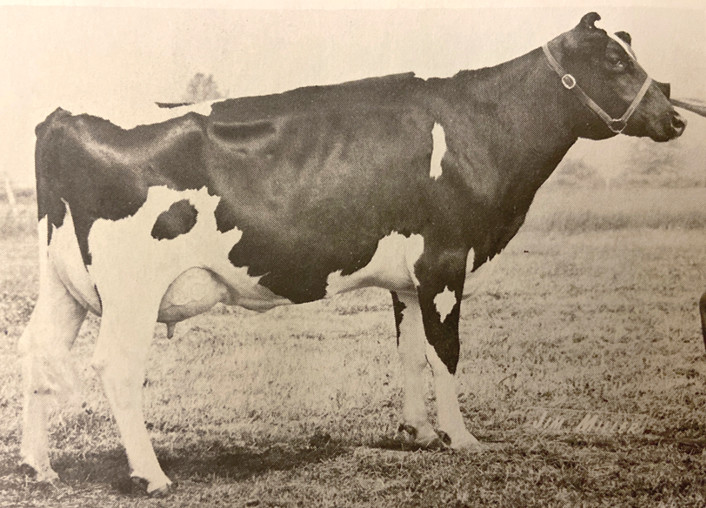
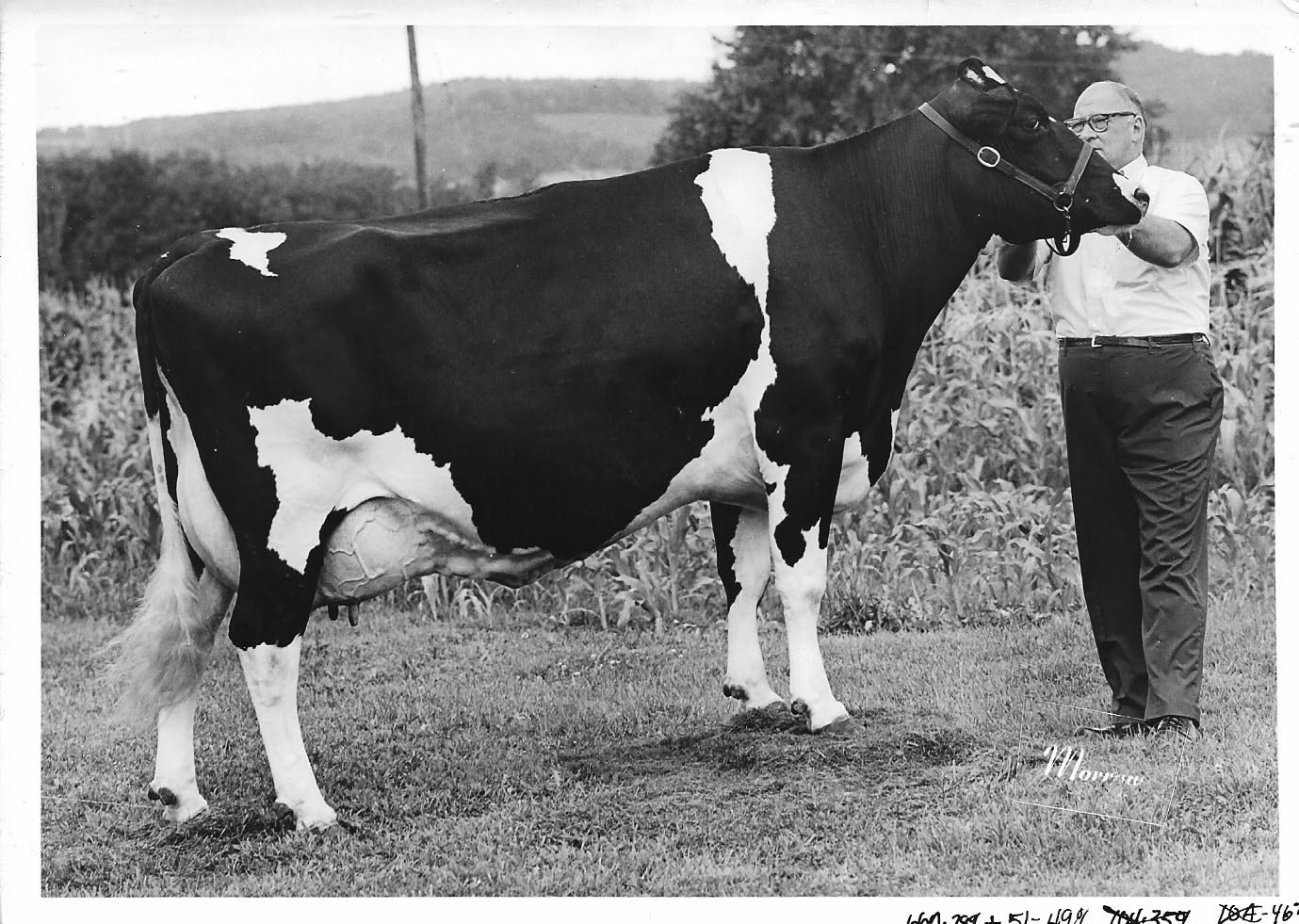
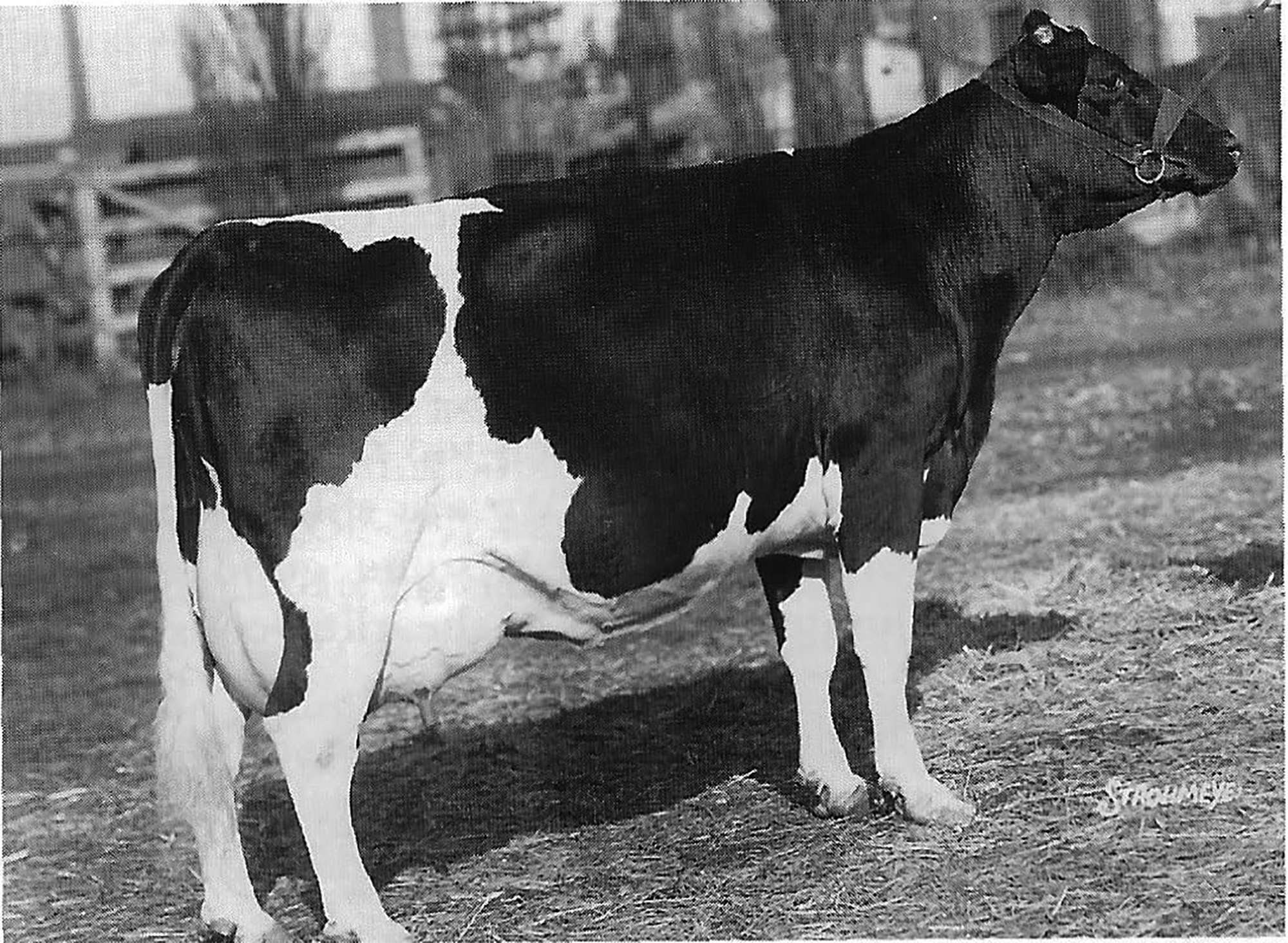
The dam who left only one. Leaderwood Elevation Charmer, VG — a Round Oak Rag Apple Elevation daughter who milked close to 19,160 pounds before she was sold to Japan in 1979. Study the frame and the udder: this is the Elevation strength and dairy quality that would come together one more time, in the white-marked heifer calf she left behind on this continent. Charmer gave the breed exactly one daughter here before she shipped out. That daughter was Charity.
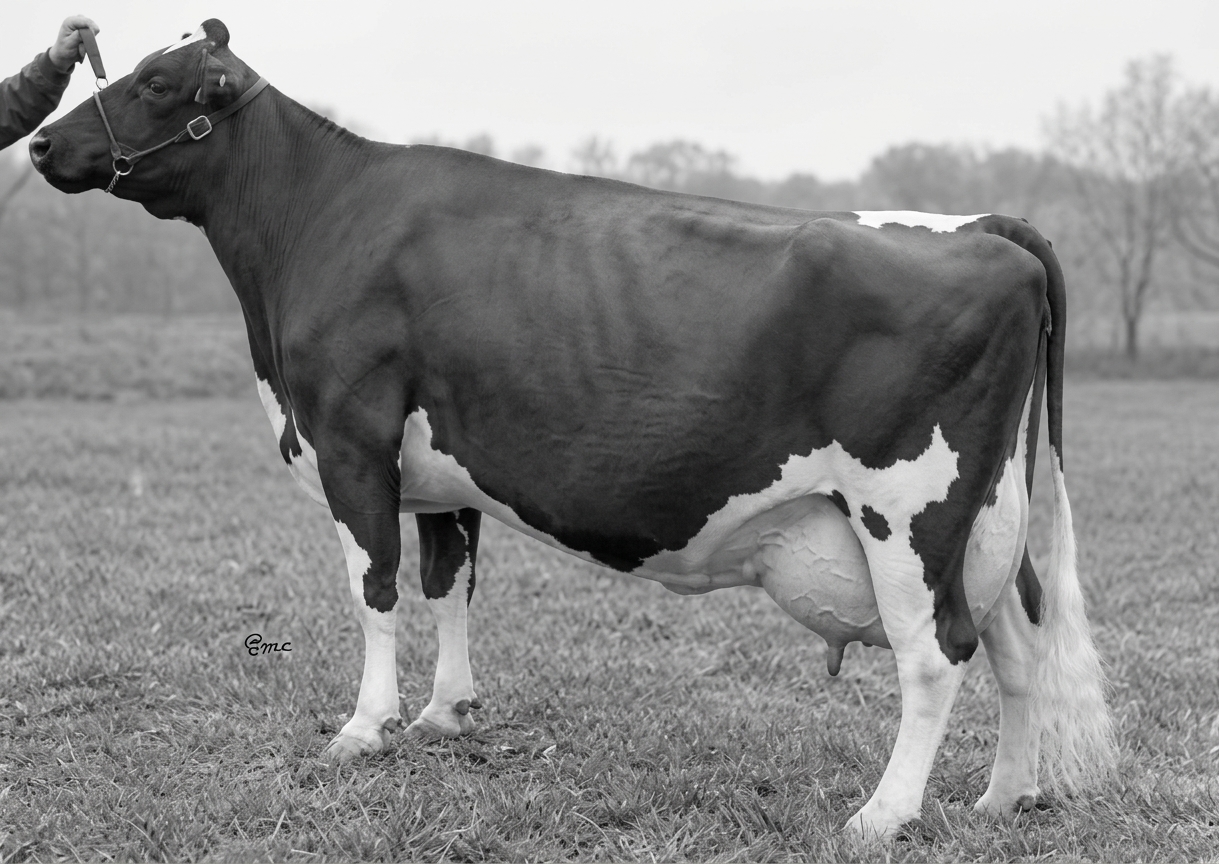
Where it all started. Leaderwood L Charmer Dora, born in 1970 — the matriarch standing behind Charity’s dam, and the foundation the whole family was built on. Look at the strength through her body and the quality of that udder for a cow of her era; this is the deep, durable Leaderwood type that Round Oak Rag Apple Elevation would later amplify into Charity herself. Greatness like Charity’s rarely comes from nowhere. Usually, it comes from a cow like this one — a generation or two back, doing the quiet work no banner ever records.

And here’s where the story damn near ended before it began.

By the fall of 1981, she came up for sale as a young cow—and she’d developed fluid in her hocks. Anyone who’s raised cattle knows that sinking feeling. Your best young cow, the one you’ve been bragging on at every coffee shop in the county, suddenly walking out stiff and swollen right when the whole world’s about to look at her. The swelling came down on its own out at pasture—slow, stubborn, on the cow’s own schedule. By sale day, she walked clean.

She didn’t start out as anybody’s sure thing. As a heifer in Ohio she was good, not great—first senior yearling and reserve junior champion at the Ohio District 9 Show, and that was the end of her early show honours. Roger Schug bought her as a bred heifer in 1980. Then, in March 1981, Albert Cormier of Cormdale Farms in Georgetown, Ontario, brought her across the border—the first Canadian chapter in a cow who’d become Canada’s most famous. (Read more: How Albert Cormier Rewrote the Rules of Global Holstein Business – and Made the Whole Industry Catch Up)

Under the Cormdale banner she had her one real humbling. At the Kitchener Championship Show, milking better than nine months, she placed tenth in the three-year-old class. Tenth. The cow who’d go on to never lose her class again, buried in the middle of a Kitchener lineup.

By that fall she was catalogued for the Designer Fashion Sale in Syracuse, New York, on November 21, 1981—and she’d developed fluid in her hocks..By sale day, she walked clean.

But word travels in this business. The buzz had cooled. A few of the buyers who’d circled her were looking elsewhere now.

Not Peter Heffering.

Heffering ran Hanover Hill with Ken Trevena, and he had the gift—the one you can’t teach, the one that separates the breeders we remember from the ones we don’t. He looked past the hocks. He saw the depth through her body, the spring of rib, that rear udder hanging high and wide like somebody had drawn it off the breed standard instead of off a living animal. He saw the way she stood—not nervous, not showing off, just there, filling the space with the kind of quiet authority great cows carry, and lesser ones never learn. (Read more: How Hanover Hill Holsteins Revolutionized the Dairy Breeding Industry)

Heffering didn’t buy her alone, and he didn’t buy her cheap-easy—he outlasted a syndicate of Ontario breeders headed by Ken Empey Jr., and a New York breeder, George Morgan of Tyrbach Farms, who wanted in too. In the end Heffering and Morgan took her in partnership for $47,000, and Charity went home to Port Perry. Two years later, when her brightest days were already showing, Hanover Hill bought out Morgan’s half for $250,000 U.S.

Read those two numbers back to back. Forty-seven thousand for the whole cow in 1981. A quarter-million for half of her by 1983. And we’re only getting started.

Looking back, what they paid would seem almost funny. We’ll get to why.

The eye that saw it: Peter Heffering leads Brookview Tony Charity out at the Ontario Spring Show, a ring of good cattle strung out behind her. This is the quiet authority he’d bought into when others backed away — a cow who didn’t fidget or grandstand, just walked to the front like the front was where she’d always stood.

What Made Breeders Drive All Night to See Her

She walked into the show ring in 1982. And here’s the line you’ll hear repeated wherever old show people gather: in her own class, she was never beaten. Not that year, not the next, not ever—across her whole career, the judge’s hand never came down on another cow in her class.

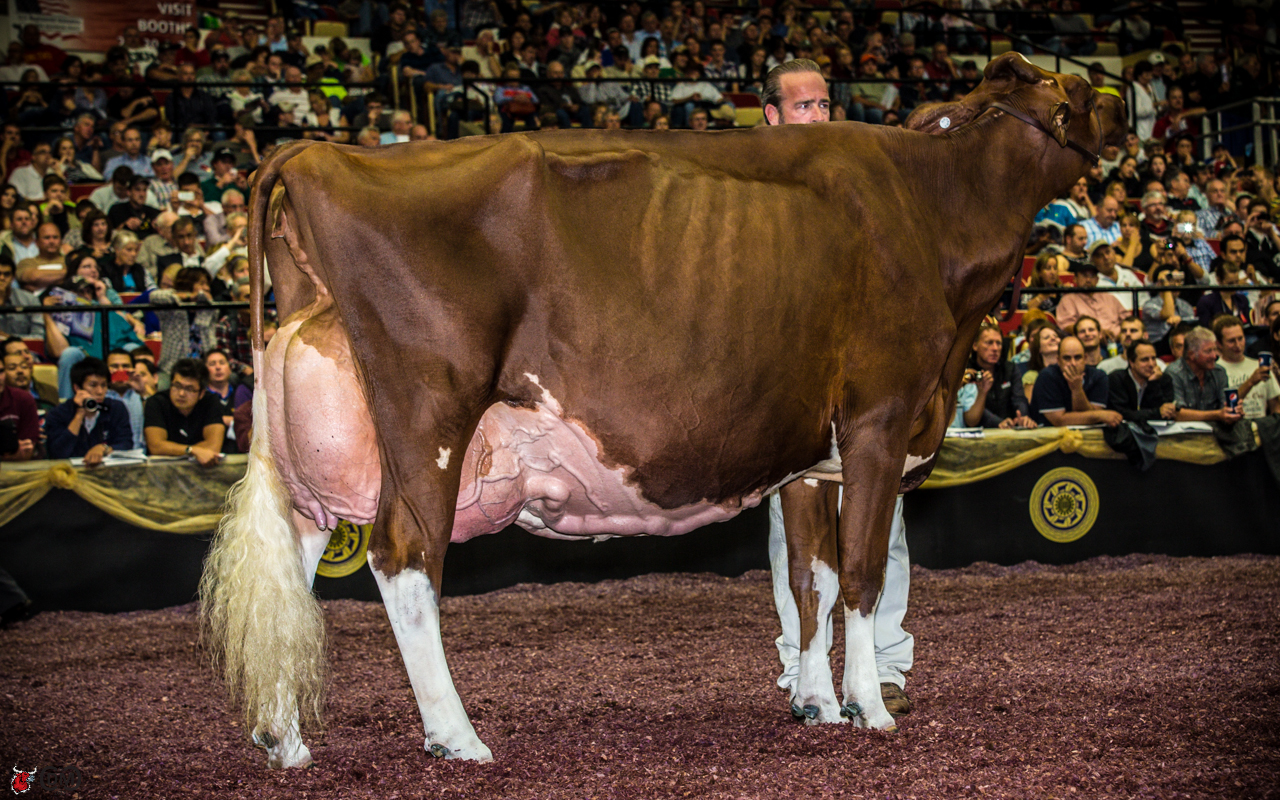
Look at the width — and look how small the man behind her seems. Brookview Tony Charity takes her second Supreme Champion at World Dairy Expo in 1984, Peter Heffering nearly swallowed up behind that barrel of a body. It’s remembered as the first time Expo crowned its Supreme on the colored shavings rather than the tanbark — a fitting stage, because there wasn’t a cow in the building who belonged on it more.

Let that settle, because in the show business, it borders on impossible. Everybody gets beaten eventually. The good ones get beaten by the great ones, and the great ones get beaten by youth, an off day, or a judge who saw it differently. Charity just… didn’t. Year after year, ring after ring, the placing came back the same.

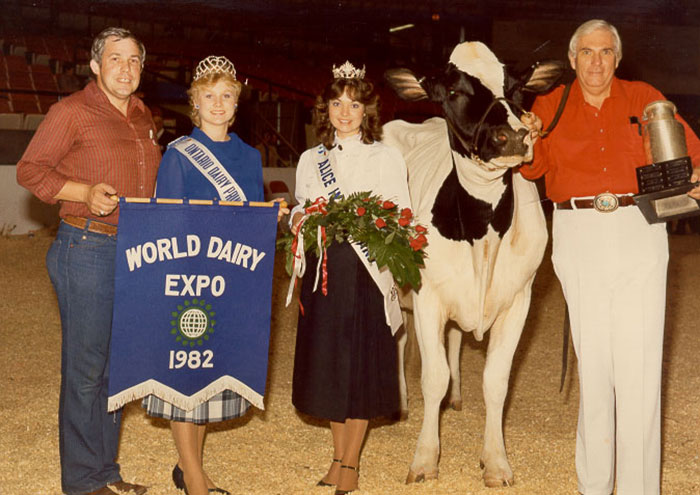
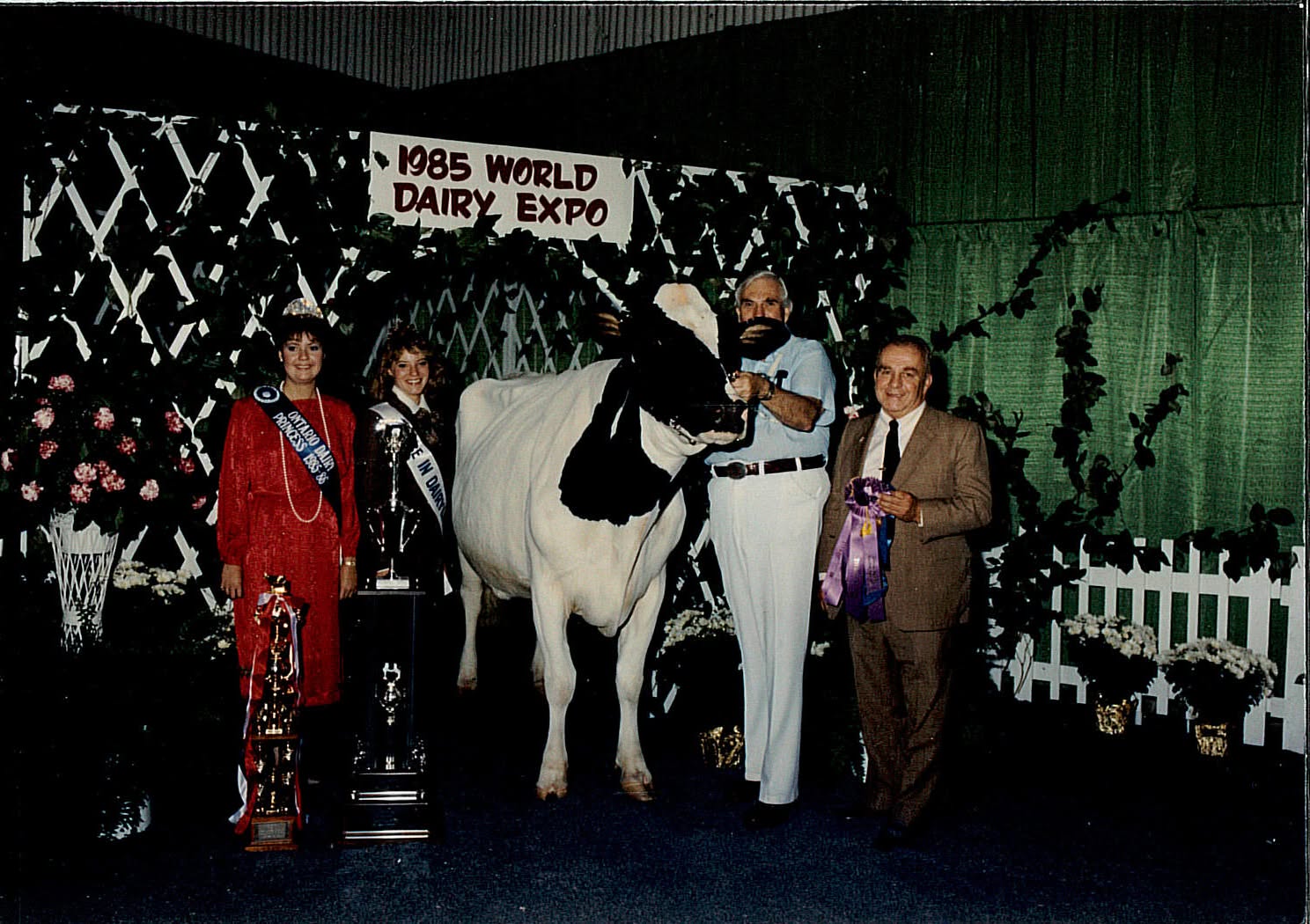
Supreme at Madison, 1985 — one of four. Peter Heffering steadies Brookview Tony Charity while Stephen Roman holds the purple rosette, flanked by the Ontario Dairy Princesses and a bank of silver. The banner behind them says World Dairy Expo; the cow in front of it said something louder. On this floor, against the best the continent could ship to Wisconsin, she simply didn’t get beaten in her class.

Read the ledger and try not to blink:

  • The Triple Crown (1982): Grand Champion at all three U.S. National Shows—Harrisburg in the East, Madison in the middle, Fresno out West—in a single calendar year.
  • The Royal Dominion: Grand Champion at the Royal Agricultural Winter Fair four times—1983, 1984, 1985, and 1987—the first Holstein ever to do it.
  • World Dairy Expo: Supreme Champion honours four times on the tanbark at Madison.
  • The full reckoning: Six superior production awards and a string of All-American and All-Canadian nominations, a résumé few cows in history can touch.
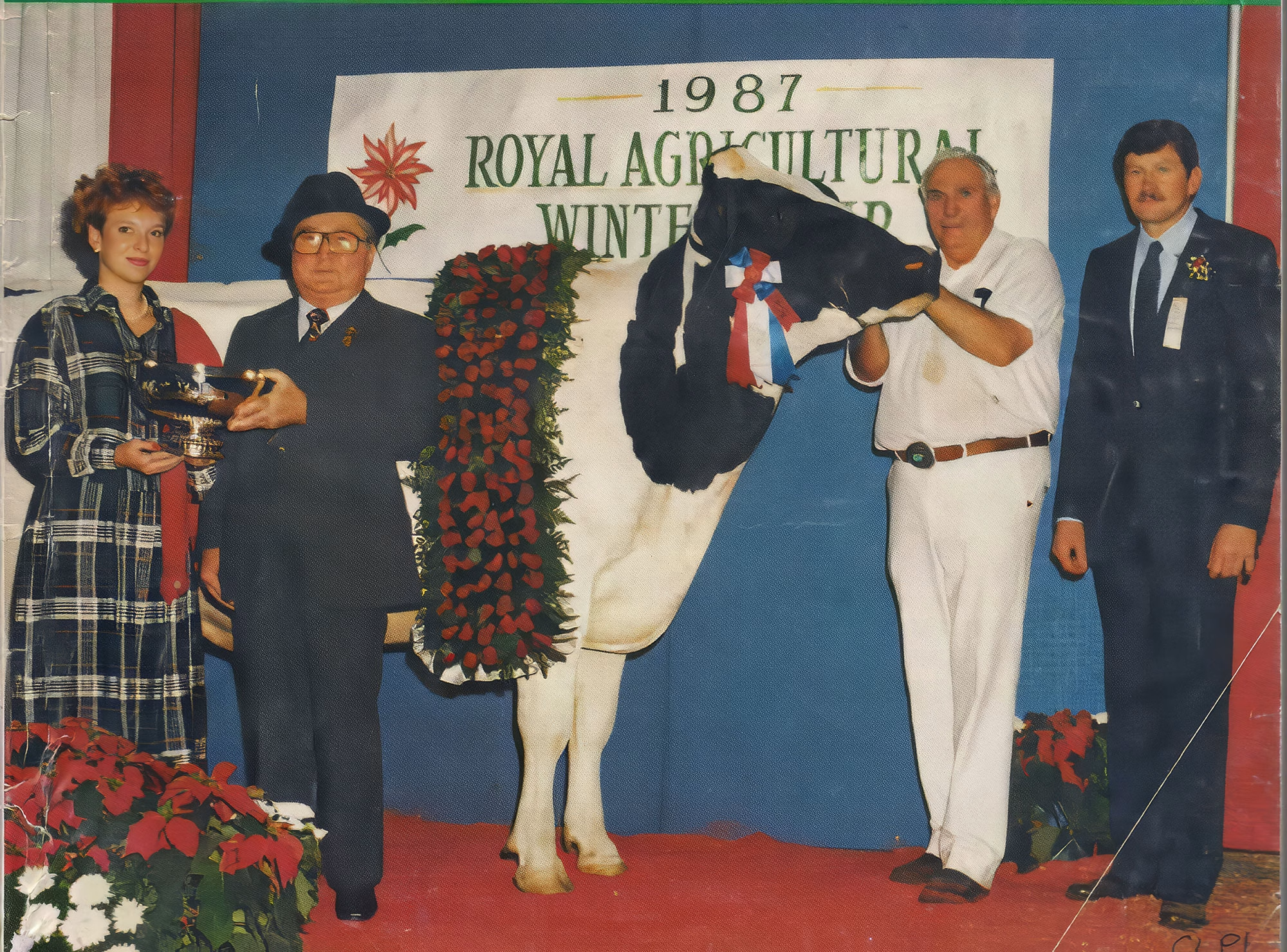
The fourth one — the one that made history. Brookview Tony Charity stands Grand Champion at the 1987 Royal Agricultural Winter Fair under Judge Jeff Nurse, draped in roses, with Peter Heffering on the halter and Stephen Roman (in the hat) accepting the trophy. No Holstein had ever won the Royal four times. When the rosette went on that November, no one ever had to wonder again.

And lest anyone think she was all ribbon and no milk pail: at five years old, she pumped out 39,015 pounds of milk at 3.6%, with 1,422 pounds of fat, milking 3X over 365 days—a record that earned her the Erle Kitchen production trophy, putting her among the most productive cows in the world in the 1980s. Show banners and a milk record like that, in the same animal. That’s the part that ought to stop a working breeder cold.

Now, about that “never beaten” business—there’s one honest asterisk, and it’s worth telling straight, because it makes the record more impressive, not less. One cow in history topped Brookview Tony Charity: Continental Scarlet-Red. But read how it happened. Charity was a four-year-old that day; Scarlet was a five-year-old. They never met in the same class. They met only at the Grand Champion drive—the final walk, where age and class fall away, and the best of everything stands together—and there, Scarlet took Grand with Charity standing Reserve. So the in-class record holds, clean and untouched. The only cow ever to beat her had to wait until the very last walk of the show to do it, across an age line, with everything on the line. That’s how close to flawless she really was.

Picture the kind of evening that made her a legend. The Royal Coliseum in Toronto—banks of seats packed in tight, the ring lights burning white against a black November evening outside. The smell of clipped hair and cedar shavings, and that low electric hum a crowd gives off when a great class is grinding toward its finish. Charity led them in. And when the judge made his walk, the hand came down where it always came down—on her.

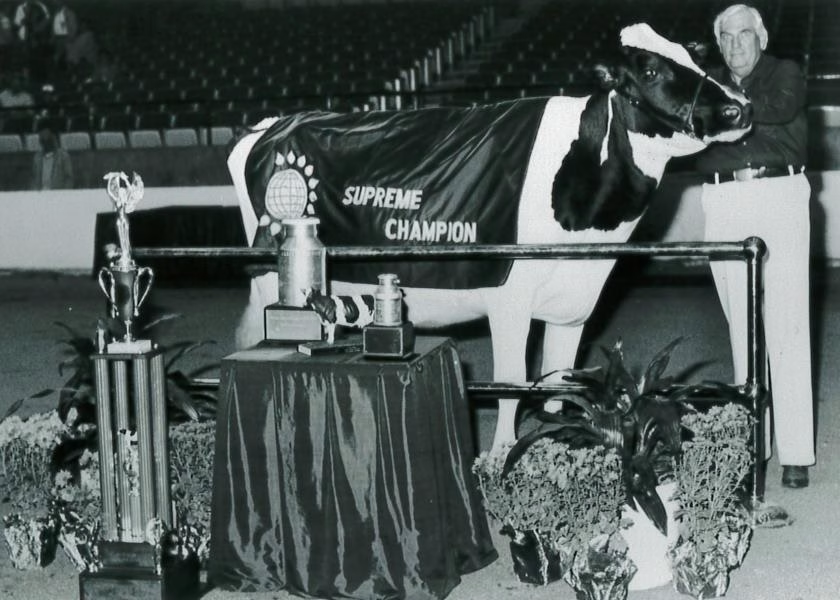
Supreme Champion, World Dairy Expo — a banner Brookview Tony Charity carried out of Madison four times. The trophies bank at her feet; the seats behind her have emptied. And the cow herself stands the way she always did when the noise died down: calm, square, and done arguing the point.

That’s how you measure a legend, by the way. Not just by the banners she carried. By how rarely, and how narrowly, anybody got close enough to take one from her.

So what made breeders load the truck and drive half the night to stand in front of one cow? Listen to the men who judged her. At Madison, Fred Foreman put it plainly: “When a cow has milked for nearly 14 months we have no trouble starting the class with her and naming her grand champion of the show.” Lowell Lindsay called her flat out “the greatest cow of the breed I’ve seen.” And Loren Elsass said her form would “make her the standard of comparison for a long time.” These weren’t soft men. They didn’t hand out words like that. They just couldn’t find a way around her.

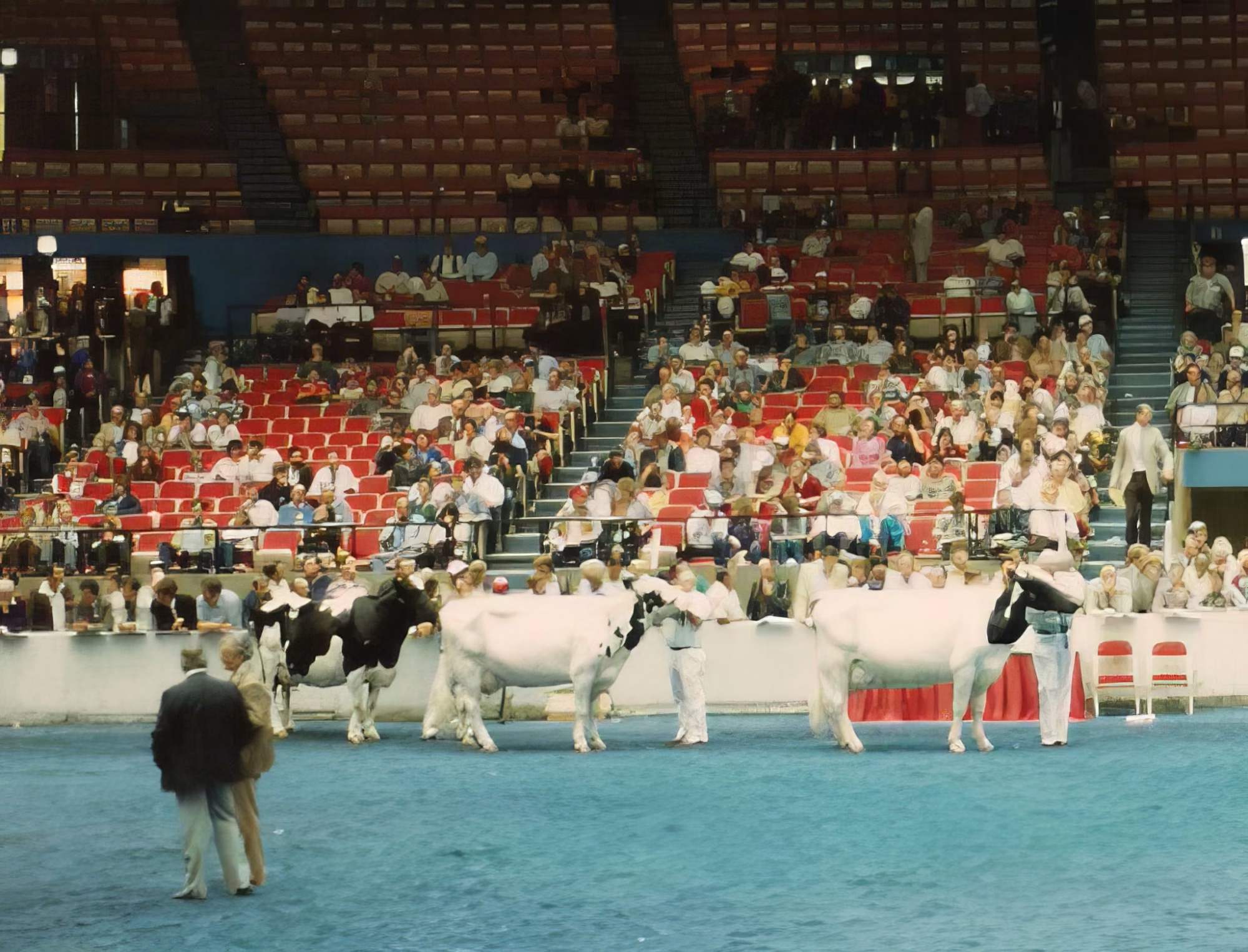
The cathedral she filled: Peter Heffering and Brookview Tony Charity in the lineup at World Dairy Expo, the great class strung across the colored shavings under the Coliseum tiers. This was the room breeders drove all night to reach — and the cow at the end of the strap was the reason the seats stayed full long after the easy classes had emptied them.

The Year She Almost Didn’t Come Back

Here’s the part the show programs never printed.

In 1983 it nearly all ended. A reaction to some of the antibiotics she’d been given cost her her appetite and her strength, and for a stretch of dark days the breed’s living definition of perfection was just a sick animal in a stall. Ken Trevena and Willis Conard practically lived with her through it—not the cow on the magazine cover, just a cow who needed them.

And that ought to stop us, because it’s easy—too easy—to talk about a legend like Charity as if she were a trophy on a shelf instead of a living thing that bled and breathed and could be lost. Anybody who’s ever had a great one knows the truth of it. Great cows aren’t made in the ring. They’re made in the dark mornings and the long nights. In the watching. In the worrying. In that flood of relief when she finally stands, eats, and walks back to being herself.

She came back.

Not just survived—came back to the ring and kept right on winning. And the breeders watching took note, because that kind of resilience isn’t a footnote to them. It’s a trait. The deep, stubborn constitution to take a hard knock and still throw strength to the next generation—you can’t pin a banner on it, but you can build a cow family on it. They would.

There’s one more decision tucked in here that tells you everything about how Hanover Hill saw her. With Charity still capable of winning anywhere they pointed her, they pulled her off the show string for a stretch and put her on an intensive embryo program instead. Sit with that for a moment. The most undefeated cow in the breed, standing home in the barn while lesser cattle paraded for banners she’d have won at a walk. It was the right call, and it was a brutal one—the kind most people can’t make even when they know in their gut they should.

Two bets, one cow. Stephen B. Roman (right), the uranium magnate whose Romandale Farms paid a record $1.45 million for half of her, and Peter Heffering (left) of Hanover Hill, the cattleman who’d staked $47,000 on a swollen-hocked unknown four years earlier — flanking Brookview Tony Charity, EX‑97. Whatever Bay Street thought she was worth, these two had their hands on the halter.

The Financial Shockwave

We said we’d get back to what she cost. Here’s why it matters.

July 15, 1985. The Hanover Hill Dispersal, Port Perry. Some 2,500 people had come from Canada, the United States, England, South and Central America—and about an hour into the second day, the cow they’d all really come for walked in. When Heffering led Charity into that sale ring, the “king and queen of the dairy world” were met with a standing ovation. Auctioneer Bob Shore opened the bidding at $50,000—and it climbed from there until a Canadian record fell. When it was over, Stephen B. Roman’s Romandale Farms had half of her for $1,450,000, outlasting a syndicate headed by Richard Witter of Taurus Service—the bidding handled, remarkably, by Witter’s 14-year-old son, John.

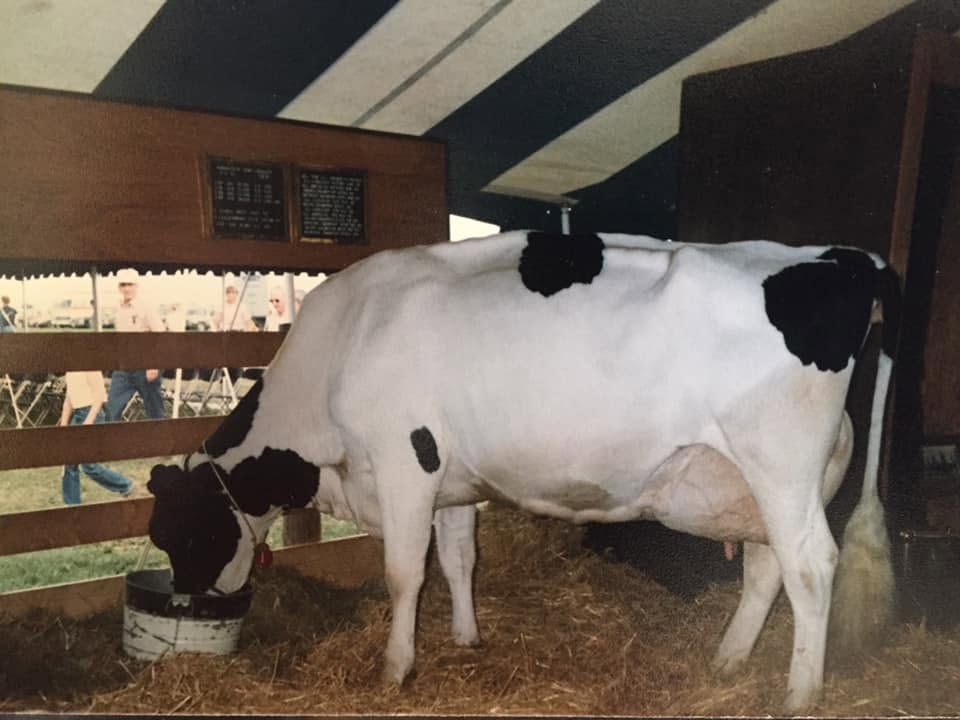
A million-dollar cow, eating her hay. Brookview Tony Charity in her pen at the 1985 Hanover Hill Dispersal, her records tacked to the board behind her, a couple of onlookers studying her through the rail. An hour later she’d walk into the ring to a standing ovation and a Canadian-record bid. Right here, though, she’s just a cow with her head in a bucket — which is exactly what the best of them never forget how to be.

When a single cow walks the road from a sale-barn purchase to an international financial instrument, you’re not watching the dairy world anymore. […] Lay it out, and the line tells its own story:

YearFinancial EventValue
1981Purchased by Hanover Hill (Heffering & Trevena) at the Designer Fashion Sale$47,000
1985Stephen B. Roman’s Romandale Farms buys a 50% share, July 15$1,450,000 (CAD), a record
1986Bay Street limited partnership built on frozen semen from six of her ET sons$3,500,000

Read that 1986 line again. Stockbrokers in a Toronto financial district, writing up share offerings on the genetics of a cow bred in Fremont, Ohio. The breed had spent a hundred years putting prices on bulls. Now the suits were trying to turn perfection herself into stock certificates.

But none of that—not the million-four, not the three-and-a-half—is really the heart of this. It’s just the world admitting, late and loud, what one cattleman had seen quietly in a sale ring with his own two eyes, years before the rest of them caught on.

The People Who Loved Her

A cow like Charity belongs to history now. But she was never alone in it, and the people around her are half the reason the story still lands the way it does.

The Havens family bred her in Ohio. Heffering saw her when others blinked. Roman backed her with a fortune. And through all the championship years at Hanover Hill, it was Ken Trevena who knew her best—not the cow on the magazine cover, but the cow in the stall at five in the morning. (Read more: THE ROMANDALE REVOLUTION: How a Uranium Billionaire & Cow Sense Conquered the Holstein World)

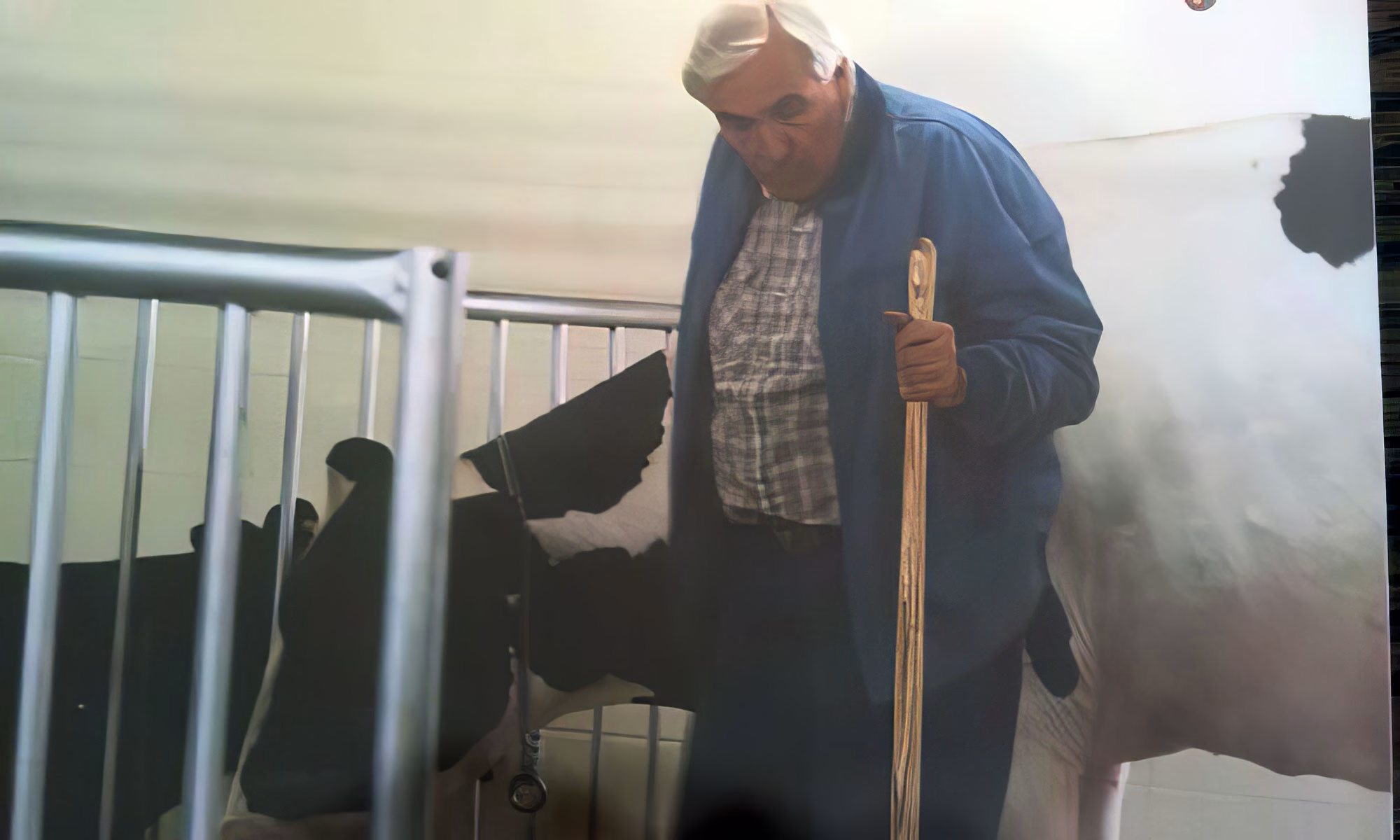
Away from the tanbark: a quiet morning in the barn at Port Perry, the great cow in her stall and the man who knew her best leaning in to check her over, fork in hand. This is where legends are actually made — not under the lights, but here, in the early quiet, with someone who cared enough to look twice before the day began.

He’s the one who saw the mornings. The feed bunk. The udder filling. The way she handled the trailer, the noise, and the strange barns, and settled in anyway. By every account, she was level-headed—all business, no foolishness, a cow who went about being great without a lick of drama. The kind you could trust at the halter, the kind that never made you nervous walking into a ring full of people.

What none of them knew, in those good years, was how little time was left.

A Photo From a Barnyard, Forty Years On

Here’s something that happened while we were writing this.

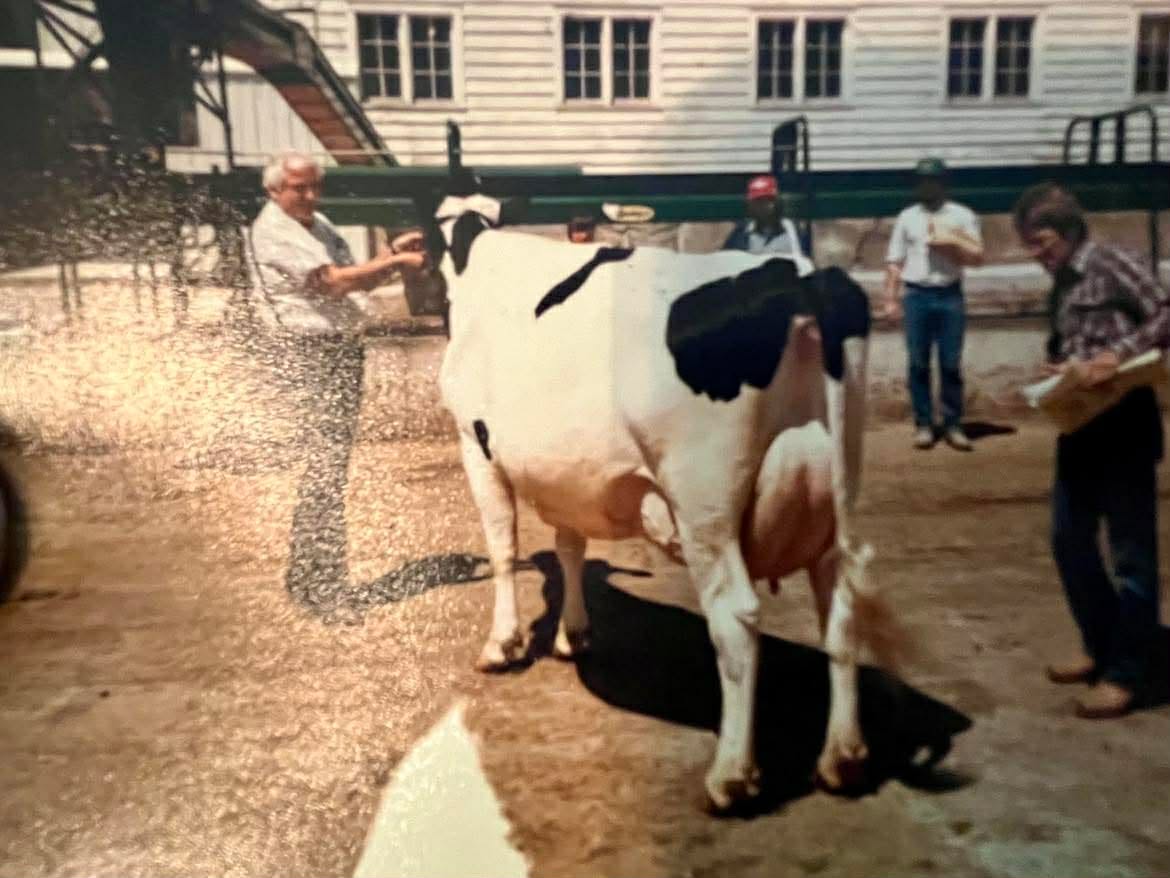
When this story first ran, a reader named Cyrus Conard picked it up and recognized a family name in it: Willis Conard, one of the two men who’d nursed Charity through the 1983 illness that nearly took her. Willis was Cyrus’s uncle — brother to his father, Wayne, who himself spent years connected to Hanover Hill. When Wayne passed away last year, the family found this photograph among his things — Charity being classified right there in the Hanover Hill barnyard, the wash water still flecking the air, the classifier working his card at the edge of the frame. By family account, it’s the day she scored the 97.

Think about what that means. The most documented cow of her generation, and the truest picture of her highest moment sat in a family’s keeping for forty years — not in an archive, not on a magazine cover, but with the people who’d been close enough to the cow to be part of her story. That’s where greatness actually lives. Not in the record book. In the family that kept the photo

The moment the number happened. Brookview Tony Charity is classified in the Hanover Hill barnyard — wash water still in the air, the classifier’s card already filling in at right. By the family’s account, this is the day she scored EX‑97. The photograph was kept for forty years by the Conard family — relatives of Willis Conard, the Hanover Hill stockman who helped nurse her through her darkest week — and surfaced only when Wayne Conard’s son found it after his father’s passing. Courtesy of the Conard family.

Twilight

She died on August 10, 1988, at Hanover Hill Farm in Port Perry. She was ten years old. Cancer.

Ten. Think about that—a cow who’d won the breed’s biggest banners four times over, whose genetics got underwritten on Bay Street, gone before she’d reached an age plenty of ordinary cows pass without anyone marking the day. There’s a particular ache in that for anybody who’s lost a good one too soon. All that public glory, the headlines and the seven-figure prices, and it ended in the most private way there is: an empty place in a barn where greatness used to stand, and a man who’d cared for her for most of her life left to find the words.

Trevena buried her right there on the farm, marked by a rock and a plaque on the idyllic Hanover Hill ground in Port Perry.

Incredible Perfection—that’s what they called her, and you could write a whole book around those two words and not improve on them. That’s not ad copy. That’s grief, trying its level best to be precise.

Where She Lives Now

Here’s the thing about a truly great brood cow, though. The finest monument to her was never going to be a plaque on a fence post. It was always going to be a daughter who makes you stop mid-stride and look twice—and then a granddaughter, and then a great-granddaughter you stumble onto three generations down a pedigree when you weren’t even hunting for her.

Now, Wikipedia will tell you her genetic history was “unremarkable” and that none of her offspring matched her own show-ring heights. And on the banner count, that’s fair. But walk the maternal line out forty years and tell me it didn’t matter.

Over in the Netherlands, Charity 504 EX‑94 stood Grand Champion at the National NRM Show back in 2004, carrying the line into a fresh generation of European admiration. In 2022, Het Uilenreef Charity 16 was named Grand Champion at the Neppelenbroek Holstein Show—another branch, still wearing the name like it means something, because it does. That same year in Austria, Jomargo Goldendreams Cheyenne‑RC took Grand Champion at the Austrian Dairy Grand Prix, tracing right back to Charity through the European family. And in Wisconsin, Sellcrest D Cheeto‑Red carried the old blood back toward the coloured shavings at Madison—her owner, Trish Brown, admitting she hadn’t even realized how remarkable Charity’s legacy was when she first bought the cow.

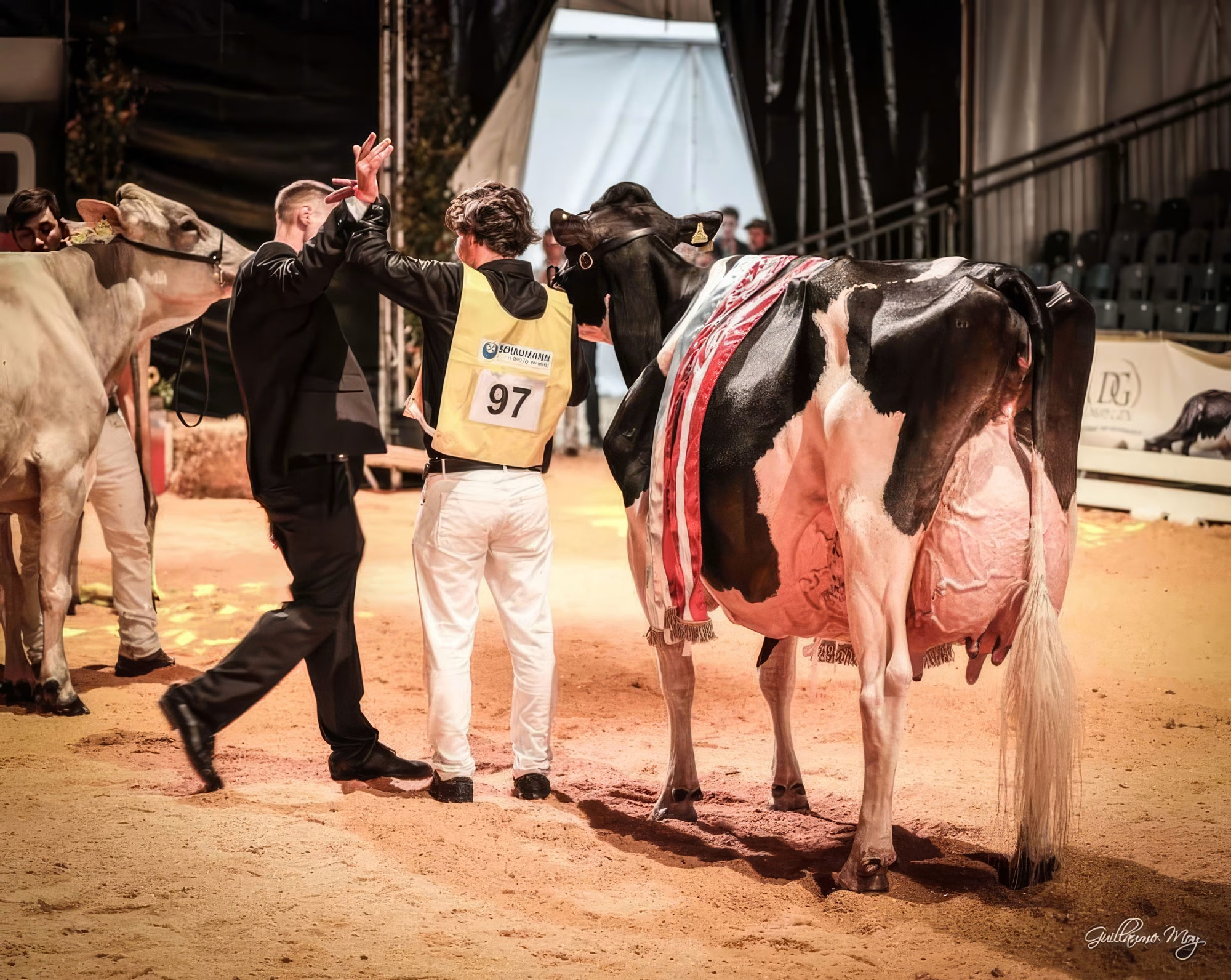
Forty years later, the line still wins. Jomargo Goldendreams Cheyenne‑RC, EX‑90, is mobbed with a high-five the moment she’s named 2022 Grand Champion at the Austrian Dairy Grand Prix for Bernard Unterhofer in South Tyrol — banner on her back, udder swung full. Trace her sires back — Golden Dreams on a Texas‑Red, a Kite‑RC, a Rubens‑RC — and the line runs straight home to Brookview Tony Charity. Look closely at the handler’s number, too: 97. Some things a pedigree doesn’t have to explain.

That’s what a real cow family does. It outruns the people who started it. It crosses oceans and languages and housing systems and forty years of shifting type fashion.

And here’s a word for the present, while we’re at it. Modern Holstein breeding often chases extreme stature—taller, sharper, more. Old-school breeders remember Charity differently. She wasn’t a freak of height. She was a masterpiece of width—chest width, body depth, dairy strength, the whole package in balance. Complete cows age better in pedigrees than flashy ones ever will. Every time a breeder today picks balance and longevity over the freak of the moment, they’re chasing something Charity already had figured out.

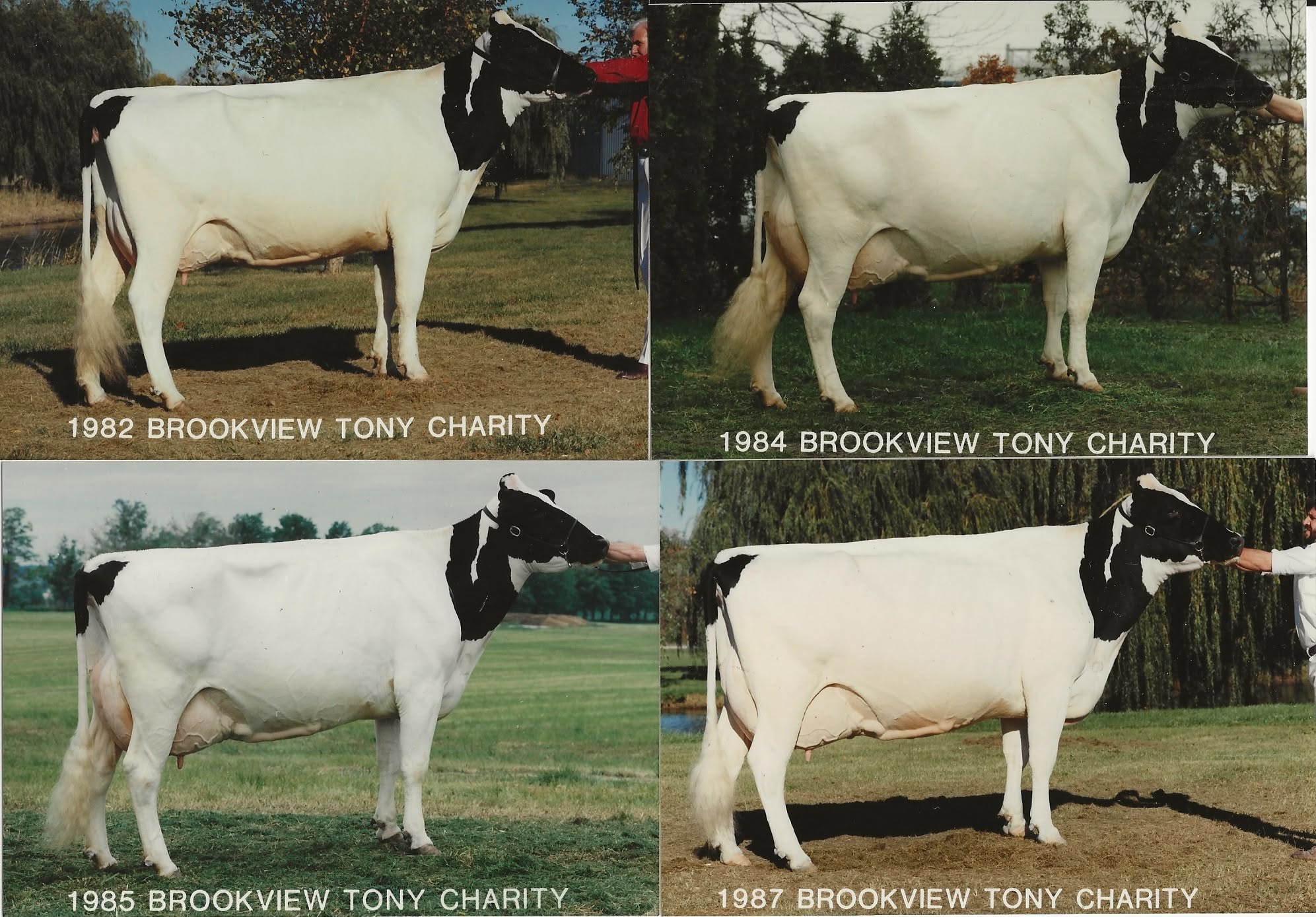
Brookview Tony Charity in 1982, 1984, 1985 and 1987 — four lactations apart. Look at what time did to her: more depth, more strength, the udder still riding high and level. This is the difference between a cow who’s merely fashionable and one who’s correct. The fashionable kind break down. Charity just kept getting truer.

The Cow They Built a Statue For

In 2017, nearly thirty years after she died, something happened that no other cow in this breed can claim. They built her a statue—a real one, eight metres tall.

It stands in Cathedraltown, a neighbourhood in Markham, Ontario, built on the former grounds of Romandale Farm. Charity, Perpetuation of Perfection, the sculptor Ron Baird called it—a life-sized Holstein worked in gleaming stainless steel, mounted high on 26-foot posts so she floats above a little parkette, catching the cold Canadian light against the open sky. It was a gift from Helen Roman-Barber, Stephen Roman’s daughter, to the land her father once farmed.

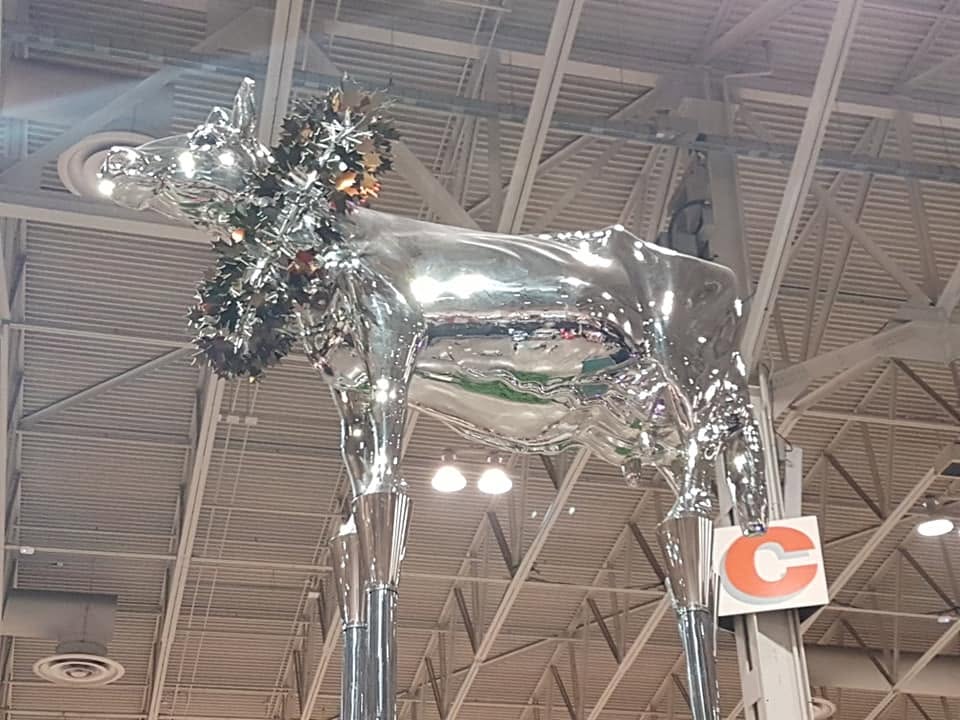
Home, at last, to the right barn. Ron Baird’s stainless-steel Charity — Perpetuation of Perfection — on display beneath the rafters of the Royal Agricultural Winter Fair, draped in a fresh garland like the four she earned here in the flesh. The permanent statue stands in a Markham subdivision she never visited. But for a few November days, eight metres of polished steel came back to the one Coliseum that was always, unmistakably, hers.

And here’s the irony only a dairy person fully feels. Charity never set hoof in Markham. Not once. From the day she landed in Canada to the day she died, she lived at Hanover Hill in Port Perry, and that’s where she’s buried. “She never went to Romandale Farm,” Ken Trevena said years later, standing by her grave. “Anyone in the Holstein business knows that.” The neighbours grumbled about the giant chrome cow on stilts; the city even talked of moving her. None of it touched the truth underneath. You don’t raise eight metres of stainless steel over a subdivision for a cow that didn’t matter.

To somebody outside the dairy world, a monument like that might seem a little strange. A statue. Of a cow.

But ask a Holstein breeder, and you won’t have to explain a thing.

Because they understand it in their bones. They’ve had one like her, or they’ve spent a lifetime hoping they would—the cow that changes how the whole barn feels, the one visitors ask to see before they’ve got their boots off, the one whose daughters you keep when good sense says sell, the one whose name turns up three generations down and makes you smile before you even know why. Charity was that cow, multiplied by history. The one who made a hardened classifier reach past his own vocabulary. The one who made judges keep arriving at the same answer—and made the one cow who ever topped her wait until the final walk of the show to do it. The one who made financiers write numbers that sounded ridiculous right up until the pedigree proved them conservative.

And maybe that’s the truest measure of her—truer than the EX‑97‑3E, truer than the four Royals and the four Madisons, truer than a record million-four for half a cow. It’s that nearly forty years after Ken Trevena laid her to rest on that farm in Port Perry, serious breeders on two continents still argue about her, still breed toward her, still run a finger up a maternal line and go quiet when they hit her name.

Brookview Tony Charity. Incredible Perfection.

She did exactly what her legend promised.

She compelled our imaginations to carry her on—and we’re still carrying.

Learn More

  • How Albert Cormier Rewrote the Rules of Global Holstein Business – and Made the Whole Industry Catch Up— Discovers how the pioneer who first risked capital on Charity navigated commercial hock issues, leveraged aggressive cow-family acquisition strategies, and utilized early embryo transfer tools to build an international genetics footprint.
  • Ken Trevena — Reveals the operational management and day-to-day husbandry strategies behind Hanover Hill Holsteins, detailing how meticulous transition nutrition and rigorous structural care converted high-potential genetic purchases into legendary, multi-year show ring champions.
  • Blondin Goldwyn Subliminal EX-97: A Final Bow for the Queen — Dismantles the modern obsession with genomics-only indexing by proving how an elite maternal line delivered over 310,000 pounds of lifetime milk while maintaining a flawless physical score across eight lactations.

The Sunday Read Dairy Professionals Don’t Skip.

Every week, thousands of producers, breeders, and industry insiders open Bullvine Weekly for genetics insights, market shifts, and profit strategies they won’t find anywhere else. One email. Five minutes. Smarter decisions all week.
NewsSubscribe
First
Last
Consent

Against All Odds: The Dreamers, Rebels, and Risk-Takers Who Built the Modern Holstein

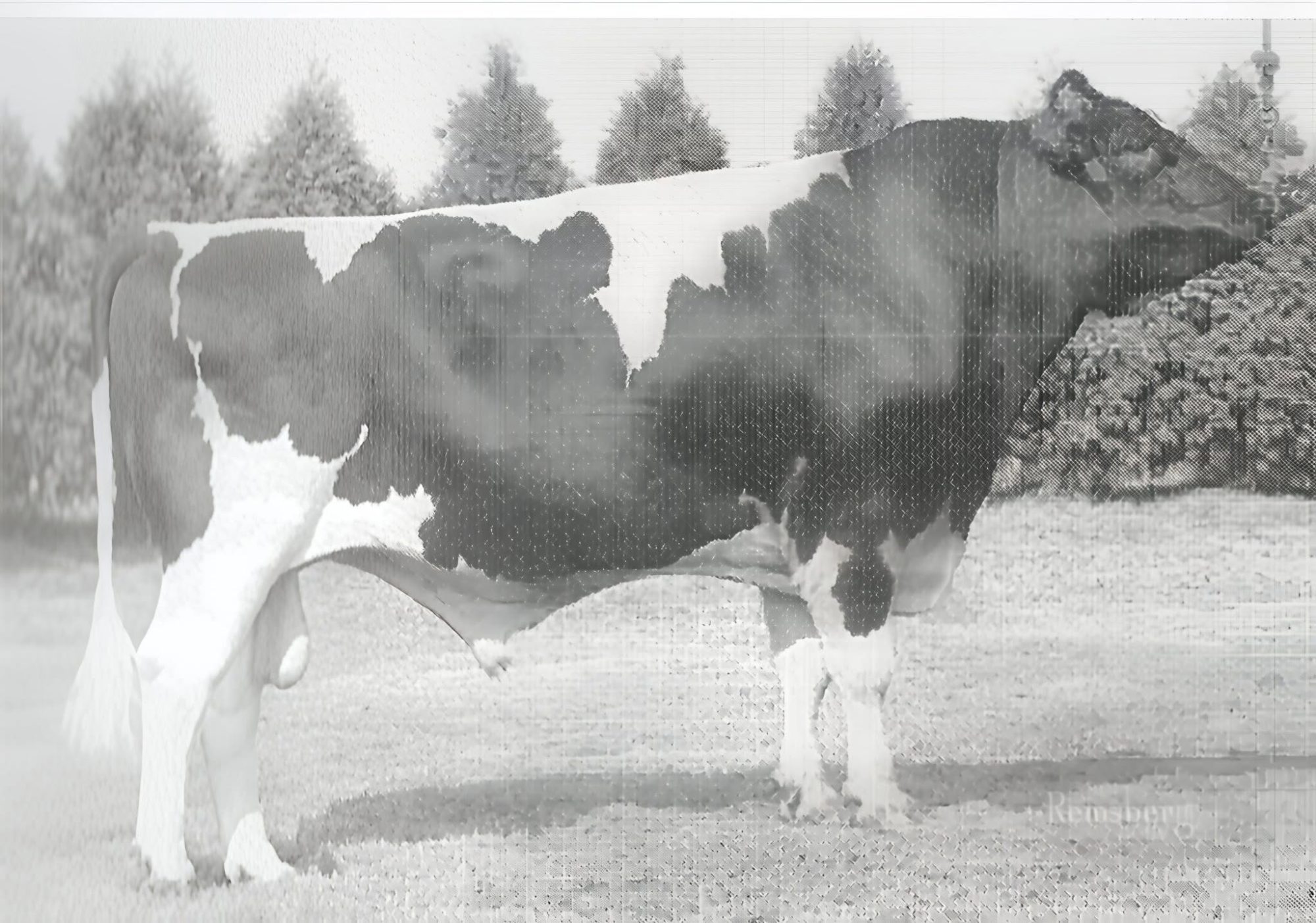
In the fall of 1972, a bright-red calf walked into a New York sale ring where the whole Holstein establishment still called his color a defect to be bred out. When the gavel cracked at $60,000—a world record—the barn erupted: “They paid WHAT for a red calf?” The ABS man holding the card had just blown clean past what his boss authorized. That calf was Triple Threat. And the bet everyone laughed at? It runs in your barn today.

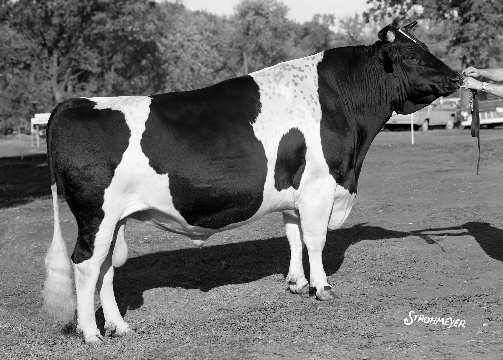
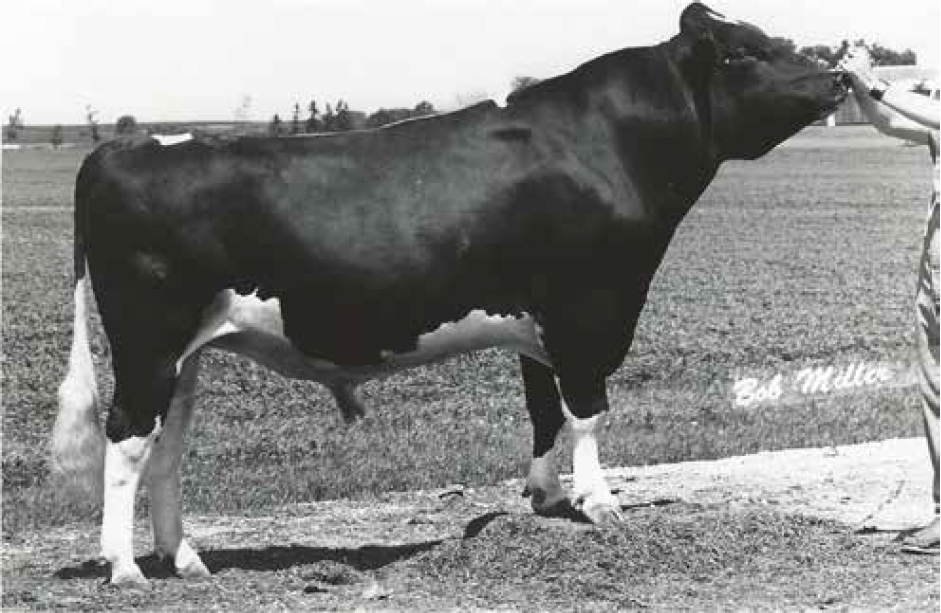
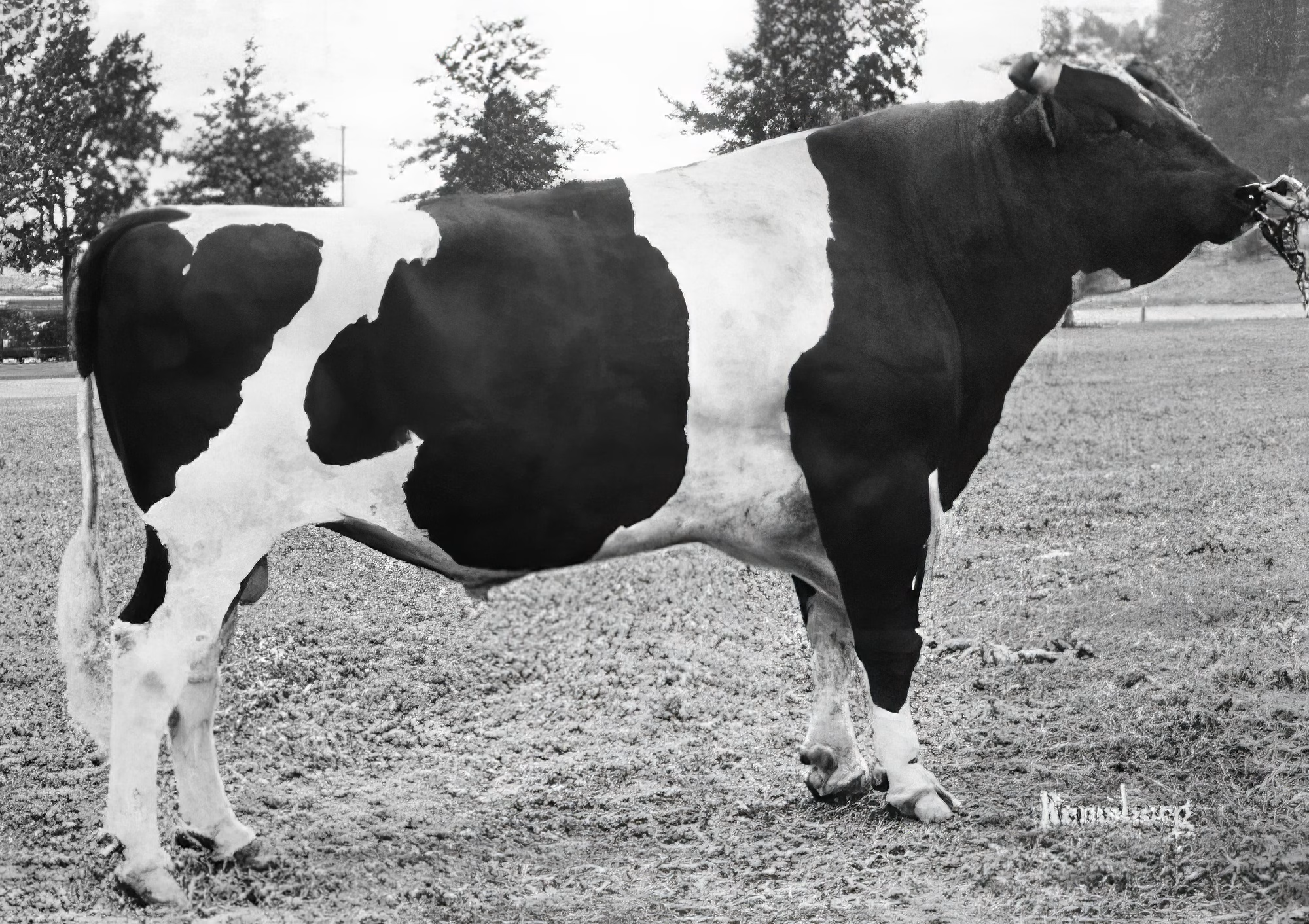
Hanover-Hill Triple Threat-Red—the red bull calf the Holstein establishment wrote off as a “defect,” who sold for a world-record $60,000 at the 1972 Hanover Hill sale. The black-and-white photo hides the very thing that made him controversial: his color. Read more: They Called Him the Three-Legged Bull. He Created the Modern Red Holstein: The Untold Story of Hanover-Hill Triple Threat-Red)

Fall 1972. Hanover Hill sale barn.

The air in that old New York barn had the usual mix—coffee, tobacco smoke, sawdust, and the sharp warm smell of washed Holsteins standing under bright sale-ring lights. Men flipped through catalogs with rough thumbs, tracing pedigrees while the auctioneer’s voice bounced off the rafters. Then a calf stepped into the ring that didn’t belong.

Bright red in a sea of black-and-white fashion, he moved across the shavings as if he’d wandered into the wrong sale. Heads turned, not because the crowd wanted him, but because they wanted to see who would be foolish enough to pay serious money for a “defect.”

That calf was Hanover-Hill Triple Threat-Red.

The man holding the bidder’s card was Ken Young from American Breeders Service.

Young hadn’t come to Hanover Hill to become a story. He came with a job and a limit. Back in Wisconsin, Dr. Bob Walton had given him the go-ahead for a “certain price” on a red calf—enough to show ABS was serious about the color, not enough to gamble the company on a long shot .

Now, the thing about that era is simple: Red & Whites weren’t just unfashionable. The Holstein establishment still treated the red gene as undesirable. There wasn’t a Red & White program to build around. Red calves were the kind of thing breeders usually tried to breed out, not lean into.

So when the bidding started, most people in that barn treated it like a curiosity. The high money that day was supposed to go to black-and-white sons of great cow families. This red calf was just there to make people talk.

The number started to climb anyway.

Past what a sensible buyer should pay for a red calf. Beyond what anybody expected an AI company to risk on something the rulebook still called a mistake. Past the figure Walton had in mind when he’d hung up the phone.

Young kept his hand in the air.

You can almost hear the cadence change as the auctioneer leans into it—fifty… fifty-five… pushing into a range usually reserved for the very best black-and-white pedigrees. In the seats, you’d have seen raised eyebrows, quick head shakes, maybe a few muttered comments about ABS losing the plot.

When the gavel finally came down at 60,000 dollars—a world record for a Red & White calf at the time—the barn didn’t just hum. It erupted. Some men clapped. Some whistled. Quite a few turned in their seats and said, “They paid WHAT for a red calf?”

Think about that for a second.

Sixty thousand 1972 dollars, for a calf whose color pattern the establishment still called a defect. This was the kind of money farms and studs were putting into fashionable black-and-white sons of great cow families, not into a calf that looked wrong the moment he stepped into the ring.

Young walked out of that sale knowing two things. He had the calf. And he had gone beyond what his boss meant by “a certain price.”

According to ABS’s own retelling, Walton asked one simple question when Young got home: “How much did you pay?” The answer—60,000—was more than the number Walton had in his head when he’d said yes . The exact words that followed have been polished in every retelling, but the sentiment everyone remembers is the same:

Sometimes it’s easier to ask for forgiveness than to ask for permission.

One can imagine the silence on the other end of that line.

If Triple Threat had been a dud, that’s all Ken Young would be remembered for: the ABS buyer who blew 60,000 dollars on a calf the breed register still called defective.

What people don’t always realize is that this wasn’t a one-person gamble. Young’s bid was the last domino in a line that started years earlier, with a young Swiss breeder who got off a Greyhound bus three miles too early and walked toward a company that had no reason to take him seriously.

The Swiss Who Wouldn’t Take “No”

In 1968, a young Swiss dairyman named Jean-Louis Schrago boarded a Greyhound bus in Wisconsin with a problem in his head and not much more than a suitcase in his hand .

Back in Europe, Red & Whites weren’t a joke. Farmers liked them. Some markets preferred them. There was real demand for cows with red coats and Holstein capacity. The problem was brutal: the top Holstein genetics—the cows rewriting the record books on type and production—were almost all black-and-white.

Most of the world had shrugged and accepted that. Schrago hadn’t.

He and a Swiss friend rode that bus toward Madison, got off in DeForest—three miles too early—and, as ABS’s own history tells it, walked the rest of the way along the side of the road, two young foreigners hauling suitcases in a country they barely knew . They finally arrived at ABS’s door, tired and probably wondering if they looked as out of place as they felt.

Dr. Bob Walton could have brushed them off. Instead, he did something small that ended up mattering a lot. He picked them up. Took them to dinner. Then paid for their rooms at the YMCA in Madison .

The next day, over a table instead of a barn rail, Schrago laid out a plan that must have sounded crazy. He wanted ABS to help him build Red & Whites that didn’t look like second-rate Holsteins. To do that, he needed the very cow families that North America had spent a generation turning into global royalty.

That brought him to Hanover Hill Holsteins.

Hanover Hill, co-owned by R. Peter Heffering, was home to some of the most talked-about cows in the world. The Barb family, in particular, had become a signal of quality in every catalog they appeared in. The idea of “wasting” one of those pedigrees on a red-factor mating sounded like heresy.

On that first go-round, Schrago asked to use a top Barb cow on a red-factor mating. Heffering said no . In his world, that was the responsible answer. Why risk the reputation of your best cow family on a color the rulebook still calls undesirable?

Here’s what made Schrago different. He didn’t throw up his hands and go home for good. He went back to Switzerland, kept working, kept talking, kept pulling together data and demand from Europe. Then he came back. And came back again. Over the next three years—not the “decade” some versions claim, but three focused years between 1968 and 1971—he stayed on it .

By 1971, he had something new to put on the table.

He’d secured two units of semen from Canadian superstar Roybrook Telstar. Getting those two units took an international phone call that, according to ABS’s own records, cost 2,500 U.S. dollars in call charges alone . Two units. 2,500 dollars. In that era, that’s the kind of bill that makes accountants nervous.

This time, the target wasn’t just any Barb descendant. It was C Tara-Hills Pride Lucky Barb EX-94—the greatest daughter in that family at Hanover Hill. Different sources list her prefix slightly differently, but everyone agrees on two things: she was a Barb, and she was very, very good. 

This is the cow that made the request sound like heresy. Pride Lucky Barb, EX-94—the greatest daughter of the Barb family at Hanover Hill, and exactly the kind of pedigree the establishment said you didn’t “waste” on a red-factor mating. Schrago wanted her bred to Telstar to make a red calf. Heffering’s first answer was no. 

Suggesting a Telstar × Pride Lucky Barb mating to produce a red-factor calf wasn’t a polite request. It was a challenge.

Something shifted. Whether it was the picture Schrago painted of the European market, the credibility he’d built by showing up in person and not sulking after that first “no,” or simply the attraction of Telstar’s proof, Heffering finally said yes.

The moment that calf hit the straw in April 1972, a lot of quiet bets came due. A flat-coated red bull calf out of Pride Lucky Barb, by Telstar, in a barn that lived and breathed black-and-white fashion. On paper, he was one of the most daring matings Hanover Hill had ever made. In practice, he was a calf that didn’t fit any existing marketing plan. 

Six months later, that calf walked into the Hanover Hill sale ring and into history.

By the time the gavel fell at 60,000 dollars and Ken Young walked out with Triple Threat on ABS’s account, three different people’s convictions had fused into one moment. 

Schrago’s belief that red cattle deserved world-class genetics.

Heffering’s willingness to risk his best cow on a mating the rest of the industry mocked.

Young’s decision to blow past a “certain price” because his eye told him this calf was different.

Look at the depth, the udder, the sheer presence—then remember the establishment once wanted this color bred out. KHW Regiment Apple-Red-ET, the “Million Dollar Cow,” carries Triple Threat’s blood in her pedigree. The red calf nobody wanted in 1972 helped build a cow the whole world wanted half a century later.

Today, you can trace that line straight into cows every breeder knows by name. Triple Threat’s blood shows up throughout the modern Red & White population, including cows like KHW Regiment Apple-Red-ET—the Apple-Red who became known as the Million Dollar Cow and changed the way the world viewed red Holsteins. Every time you see a Red & White with type and production that can stand alongside the best black-and-whites, you’re looking, in part, at the shadow of that three-mile walk from DeForest and that $60,000 bid. 

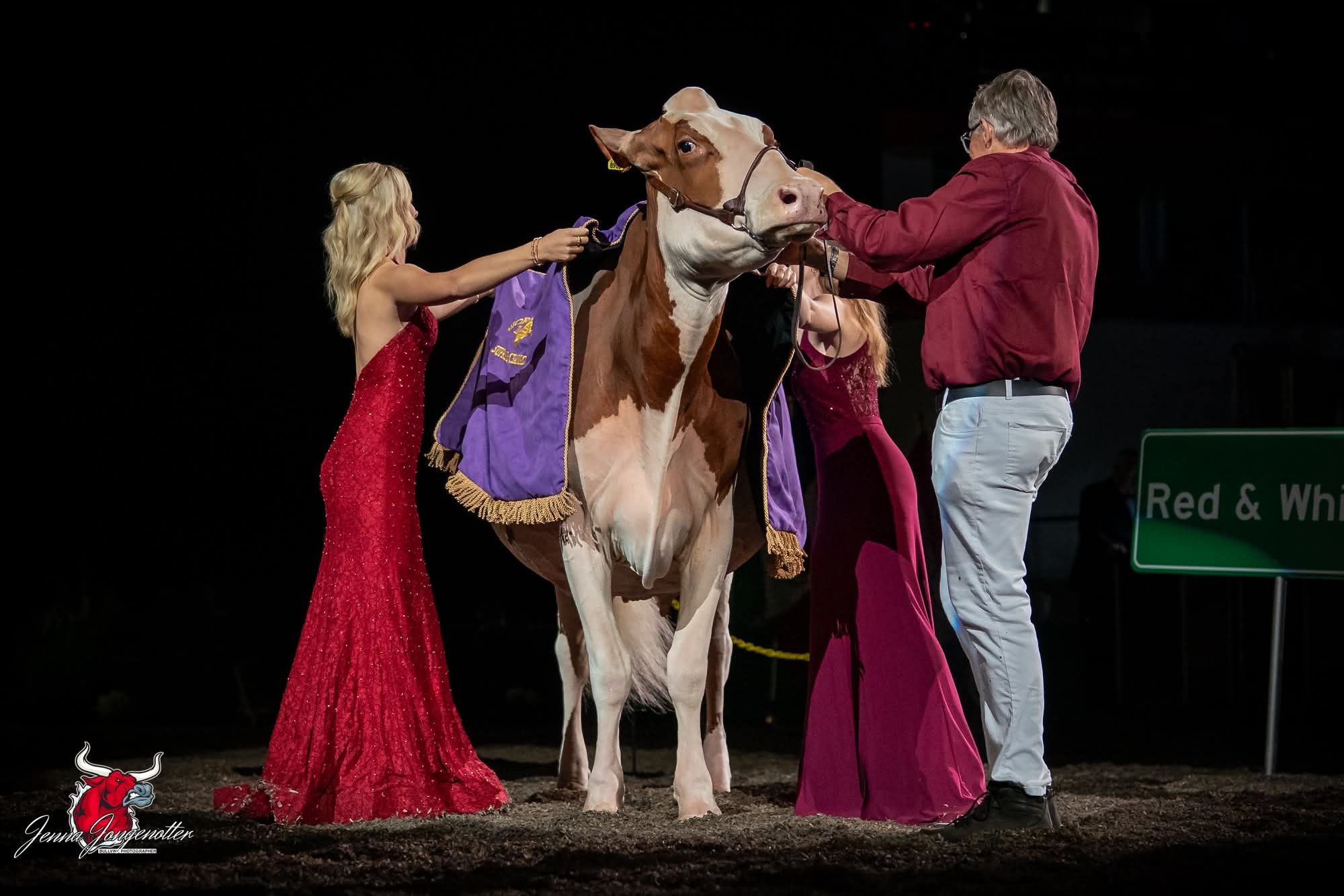
This is where that 1972 sale ring leads. A Red & White Holstein—the very color the establishment once called a defect to breed out—draped in the Supreme Champion banner, the highest honor the show ring offers. Ken Young bet his job on a red calf nobody wanted; generations later, red cattle don’t just compete with the best black-and-whites, they beat them. 

The Farmer Who Wouldn’t Let Go

If Schrago’s story is about refusing to accept someone else’s limits, Aldo Panciera’s is about what it costs to trust your own.

April 26, 1952. Osborndale Farms in Derby, Connecticut. 

A bull calf landed in the straw that morning, which did not look like anyone’s idea of a future legend. Too long in the legs, too short on strength, the kind of calf that makes a seasoned breeder mutter “too bad” under his breath and start thinking about the next one.

On paper, the mating had been special enough that Professor Osborn had reserved the calf before birth. He walked into the pen, took one look at the reality before him, and backed out of the deal. 

That should have been the end of it.

The calf had one thing going for him: a pedigree that, even in that moment, couldn’t be undone by long pasterns and a narrow frame. The cows behind him had already proven they could transmit what the breed needed. Where most people saw disappointment, Aldo Panciera saw that paper and refused to ignore it.

He talked another breeder, Causey, into coming along for the ride. Between them, they bought quarter interests in the calf for 1,250 dollars each—a serious outlay in 1950s New England. For that kind of money, a young dairyman could have bought land, equipment, or a lot of feed. Instead, they bought a scrawny bull that almost everybody else had written off. 

That calf grew into Osborndale Ivanhoe.

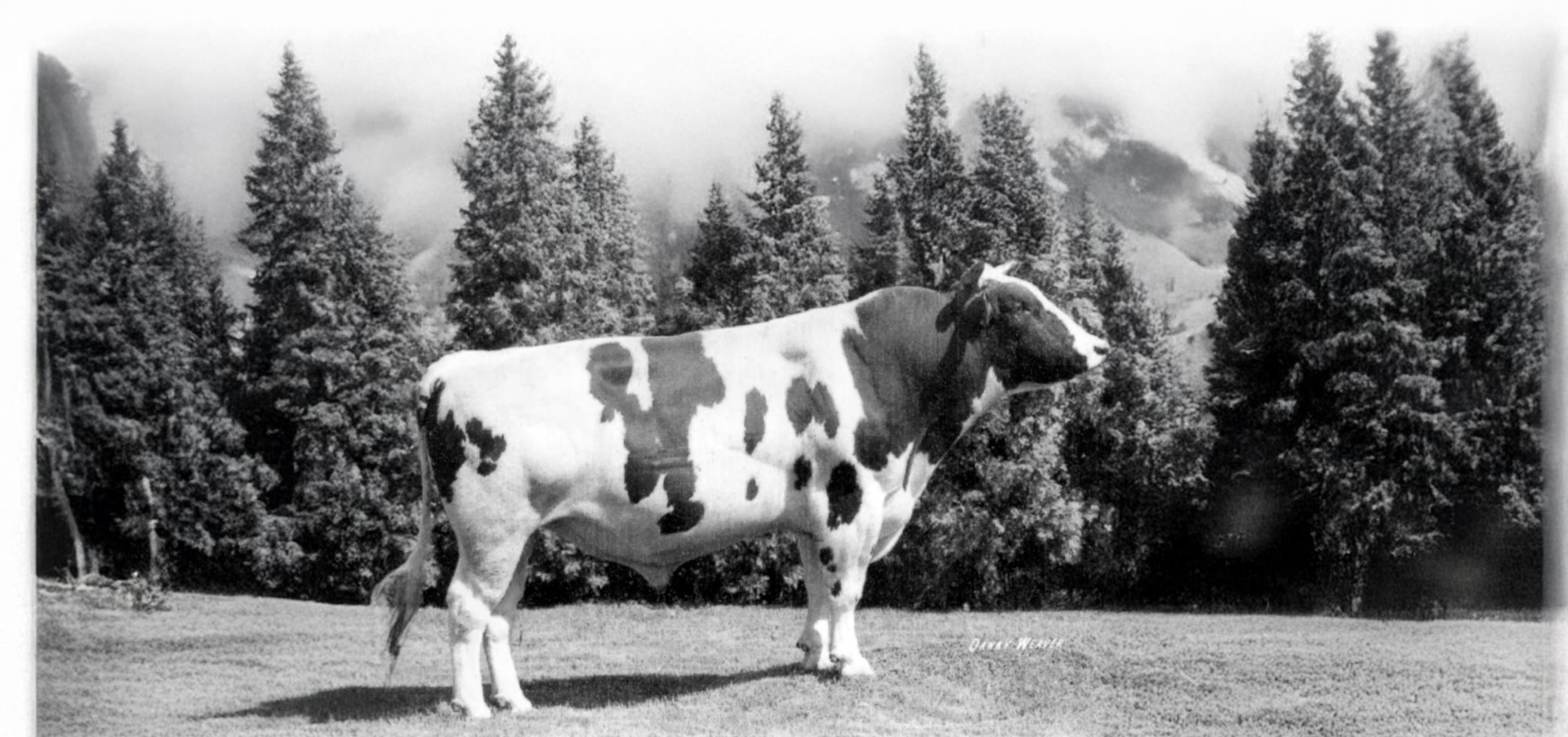
Hard to believe this is the same calf his breeder almost couldn’t give away. Osborndale Ivanhoe—long-legged and narrow at birth, rejected by the man who’d reserved him—grew into the bull that topped the U.S. Type-Production Sire Summary eight straight years, a run still unmatched. Read more: Osborndale Ivanhoe: How a “Scrawny Bull Calf” Revolutionized an Entire Breed

If this were a tidy story, Ivanhoe’s first daughters would have hit the ground looking like walking proofs, and Panciera’s neighbors would have been lining up to apologize. Reality was rougher.

The early daughters were nothing to brag about. As yearlings, they were as awkward as their sire had been. Narrow. Shallow. The kind of heifers that make AI reps shake their heads and say, “See? We told you.” The studs that had turned Ivanhoe down bragged publicly about their good judgment.

You can picture the coffee shop conversations.

“That’s the bull you spent your money on, Aldo?”

“Those Ivanhoe heifers of yours don’t look like much.”

Those years must have been heavy. Every new crop of mediocre yearlings was another round of evidence that Panciera had made an expensive mistake. There were no genomic evaluations to whisper “trust the process” to him. Just heifers, and the memories of a decision he couldn’t take back.

He didn’t bail.

Not because he was sure he was right, but because something in that pedigree and a few hints in those calves told him the story wasn’t finished yet. He held on long enough to see the daughters freshen.

That’s when everything changed.

The same heifers that had looked like poor yearling bets walked into the milking string with udders the breed badly needed—high, tightly attached, with quality and strength. They had the frame and power to go with them. They didn’t just avoid the cull rail; they started pulling up the herd average.

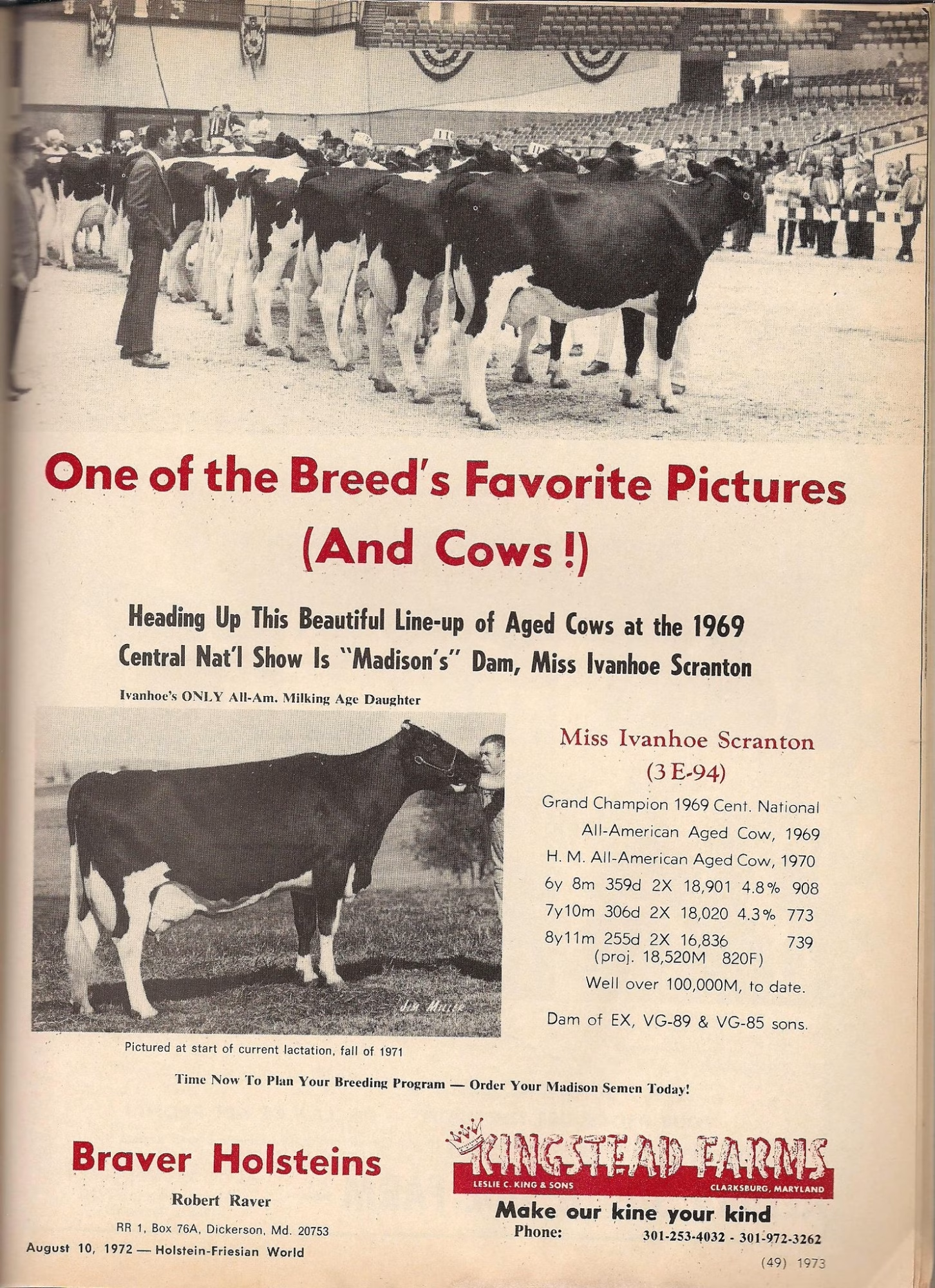
Here’s the answer to every coffee-shop crack about Aldo Panciera’s bet. Miss Ivanhoe Scranton, EX-94—Osborndale Ivanhoe’s standout show daughter—stood Grand Champion at the 1969 Central National and earned All-American Aged Cow honors that same year, all while milking well over 100,000 pounds in her lifetime. The scrawny calf had bred a champion who could fill a tank, too.

From 1964 through 1971, Osborndale Ivanhoe sat at the top of the U.S. Type-Production Sire Summary eight consecutive years—a run that, to this day, has never been matched. Eight years of data saying, “That scrawny calf you laughed at is the best sire in the business.” 

The vindication was spectacular. But the heart of Panciera’s story isn’t the eight-year reign. It’s the quiet mornings in the middle, standing by fences looking at underwhelming heifers, knowing everyone thought he’d made a mistake, and choosing, day after day, to hold his ground.

If you’ve ever bred a group of heifers to a young bull that didn’t impress early, listened to the local commentary, and still decided to give those daughters another lactation, you’ve already walked a mile in his boots.

The Family Who Trusted What They Knew

By the late 1990s, the Holstein world was running on speed.

Shorter generation intervals. Young sires on the hottest heifers. Genomic testing was starting to whisper to breeders that they could see the future in a strand of hair. The line at many barns was, “Why waste semen on old cows when you can breed your best heifers to the newest #1?”

Inside that mindset, an eight-year-old cow might as well have been a piece of furniture.

Condon Aero Sharon didn’t look like furniture to the Pickford family at Spot Acre Grange near Stafford, England. She looked like the kind of cow most herds pray for—a Holstein who had come back, year after year, with a sound udder, decent feet and legs, and milk that kept the tank honest. 

Condon Aero Sharon (EX-91) - The eight-year-old Canadian cow deemed "ancient by artificial insemination standards" whose breeding to Carol Prelude Mtoto defied every convention in the AI industry. When the Pickfords and Genus's Judges Choice program chose to "give excellence a chance" with this aging matriarch, they bet £10,000 on what would become "arguably the most powerful brood cow in United Kingdom history" - a gamble that produced Picston Shottle and revolutionized global Holstein genetics.
Condon Aero Sharon (EX-91) – The eight-year-old Canadian cow deemed “ancient by artificial insemination standards” whose breeding to Carol Prelude Mtoto defied every convention in the AI industry. When the Pickfords and Judges Choice program chose to “give excellence a chance” with this aging matriarch, on what would become “arguably the most powerful brood cow in United Kingdom history” – a gamble that produced Picston Shottle and revolutionized global Holstein genetics.

The Pickfords had been breeding Holsteins long enough to remember before TPI was a household term. Over kitchen tables and milking parlors, they’d seen hot young sires drop out of sight when the second or third proof came. They’d also seen “unfashionable” cow families quietly keep herds profitable.

Their records told a clear story about Sharon: years of solid production and trouble-free health. Visitors didn’t stop to take pictures of her. But when you watched her walk or looked at her udder attachments after that many lactations, you knew you were looking at something that mattered more than a moment in a show ring.

Here’s what most people don’t realize: when you’ve watched a cow like that hold herself together through that many calves, that’s data no proof sheet can match.

Around that time, many AI reps were pushing the same plan: flush your youngest high-index heifers to the latest genomic star. The Pickfords listened, nodded, and then did something different. Working with ABS’s Judges Choice program—a channel designed to find alternative pedigrees the mainline sampling pipeline might miss—they made the case that Sharon, an older cow well past the fashionable age, was exactly the kind of cow who deserved a shot. 

By all accounts, the logic at their table the night they signed off ran something like this: they knew this cow, they’d watched her work, and if it didn’t pay they’d live with it—but if it did, it might be something special.

They bred her to Carol Prelude Mtoto, a bull with his own twist of irony. In the UK, Mtoto had been so lightly regarded at one point that he was sold as “The £40 failure”—forty pounds sterling for a bull who would later be recognized as one of the most important sires of his time. Pairing an unfashionable older cow with a bull that had been sold off for £40 wasn’t the mating a risk-averse herd makes. 

Forty pounds sterling. That’s what this bull was sold for when the establishment decided he wasn’t worth keeping around. Carol Prelude Mtoto—”The £40 failure”—who turned out to be one of the most important sires of his era. The Pickfords were about to pair him with an old cow nobody else would have bothered to flush. 

They did it anyway.

On July 23, 1999, that mating produced Picston Shottle. 

The £40 bull’s son, out of a cow most breeders thought was past her prime. Picston Shottle went on to become a millionaire sire with EX daughters by the thousands worldwide—cows people remembered less for their scores than for the fact that they bred back, walked sound, and stayed out of the sick pen. Read more: From Depression-Era Auction to Global Dominance: The Picston Shottle Legacy

Looking back now, it’s easy to say “of course.” ABS called him a “world-famous” and “millionaire” sire. Holstein International and other analysts later ranked him among the most influential Holstein bulls in the world, one of the few European-based sires to crack that echelon in lists dominated by North American names. 

His daughters piled up Excellent classifications by the thousands, all over the world—the kind of EX-daughter count that belongs in an official registry table, not a sentence pretending we re-counted it tonight. But whatever the exact tally, it was a flood of genuinely good cows.

Ask the people who milked them what they remember, and the answers sound familiar.

“They bred back.”

“They walked out sound.”

“They stayed out of the sick pen.”

This is what those words look like in the flesh: Huntsdale Shottle Crusade EX 95 3E, a Picston Shottle daughter, working the colored shavings at World Dairy Expo, where she was named Nasco International Type and Production Award Winner. Look at the udder—the same kind of attachment that kept Shottle daughters in the milking string long after the show banners were packed away.

In an era obsessed with squeezing one more notch on the genetic progress meter, Shottle’s story—and Sharon’s—reminds you of a simple truth: there’s real power in betting on the cows you know, not just the heifers with the newest numbers.

The Hard Lessons We Didn’t See Coming

Of course, not every bull that shaped this breed leaves you with a warm glow.

Hanoverhill Starbuck is a good place to start. On the surface, he’s an almost perfect success story. Farmers loved his daughters. They worked in commercial herds and looked the part on show strings. AI studs pushed him hard. By the time the dust settled, Holstein Canada analysis and follow-up reporting showed that more than 80 percent of North American Holsteins carried Starbuck’s DNA, and in Quebec, his influence in sequenced cows was in the mid-90 percent range by 2000. 

Hanoverhill Starbuck (EX-Extra) at 15 years old with Carl Saucier in 1994, photographed at Mount Victoria Farm in Quebec—the same ground where his ancestor Johanna Rag Apple Pabst posed 66 years earlier. This legendary bull exemplifies Ivanhoe's compound genetic influence: sired by Round Oak Rag Apple Elevation (EX-96 GM), whose dam was Round Oak Ivanhoe Eve, and out of Anacres Ivanhoe Astronaut (VG-88), a daughter of Hilltop Apollo Ivanhoe (VG-GM). With Ivanhoe genetics flowing through both sides of his pedigree, Starbuck generated his own revolution—siring over 200,000 daughters across 45 countries and establishing a lineage now present in over 80% of North American Holsteins. His extraordinary impact demonstrates how Ivanhoe's genetic gifts continued to compound across generations, proving that the "earth-shaking" begun in 1952 reverberates through modern dairy herds worldwide.

Hanoverhill Starbuck (EX-Extra) at 15 years old with Carl Saucier in 1994, photographed at Mount Victoria Farm in Quebec—the same ground where his ancestor Johanna Rag Apple Pabst posed 66 years earlier. This legendary bull exemplifies Ivanhoe’s compound genetic influence: sired by Round Oak Rag Apple Elevation (EX-96 GM), whose dam was Round Oak Ivanhoe Eve, and out of Anacres Ivanhoe Astronaut (VG-88), a daughter of Hilltop Apollo Ivanhoe (VG-GM). With Ivanhoe genetics flowing through both sides of his pedigree, Starbuck generated his own revolution—siring over 200,000 daughters across 45 countries and establishing a lineage now present in over 80% of North American Holsteins. His extraordinary impact demonstrates how Ivanhoe’s genetic gifts continued to compound across generations, proving that the “earth-shaking” begun in 1952 reverberates through modern dairy herds worldwide. (Read more: Hanoverhill Starbuck’s DNA Dynasty: The Holstein Legend Bridging 20th-Century Breeding to Genomic Futures)

That’s the dream if you’re trying to build a global sire. It’s also a reminder of how quickly influence can become saturation.

When you lean that heavily on one bull, you’re not just getting more of his good traits. You’re squeezing your gene pool around him. Today, managing inbreeding back to Starbuck is basic mating-program hygiene.

Carlin-M Ivanhoe Bell tells a harder story.

Carlin-M Ivanhoe Bell. Big production, daughters that filled tanks, a milk check that told breeders to use him hard—so they did, all over the world. Nobody in this photo knew what he was also passing along, hidden in a single recessive gene. He wasn’t a villain. He was the best bull of his moment, doing exactly what the industry asked of him. Read more: Bell’s Paradox: The Worst Best Bull in Holstein History

Bell looked like the complete package for his time. Big jumps in production. Daughters who filled tanks. Breeders used him heavily because the milk checks said they should. For a while, it felt like you couldn’t afford to.

Then calves started coming wrong.

Stillborn. Twisted spines. Severe spinal deformities that punched you in the gut the second you saw them. It took years—and a lot of heartbreak—before geneticists identified Complex Vertebral Malformation, a lethal recessive mutation in the SLC35A3 gene, and traced its worldwide spread back to Bell. 

If you’ve ever had to pull one of those calves, Bell’s name doesn’t feel theoretical. You remember the cow, the night, the smell in the pen. You remember the cost.

Pawnee Farm Arlinda Chief is a different kind of warning.

Pawnee Farm Arlinda Chief, born May 9, 1962, stands as one of the most influential Holstein sires in history, contributing nearly 15% to the breed’s genome. His legacy revolutionized milk production and reshaped global dairy genetics.

Pawnee Farm Arlinda Chief, born May 9, 1962, stands as one of the most influential Holstein sires in history, contributing nearly 15% to the breed’s genome. His legacy revolutionized milk production and reshaped global dairy genetics. Read more: The $4,300 Gamble That Reshaped Global Dairy Industry: The Pawnee Farm Arlinda Chief Story

When UC Davis researchers examined the modern U.S. Holstein genome, they found that Chief and his son, Walkway Chief Mark, each account for about 7 percent of it. Taken together, that’s roughly 14 percent—nearly a sixth—of what we now call the Holstein gene pool tracing back to one sire line. 

Walkway Chief Mark (VG-87-GM) — the backup bull from Foster Walk’s Neoga, Illinois herd whose genetics now account for roughly seven percent of every Holstein genome in North America. Named one of Select Sires’ “Impact Sires of the Breed,” his udder-transmitting brilliance and structural trade-offs shaped the modern Holstein in ways nobody saw coming when this photo was taken. Read more: Walkway Chief Mark: The Backup Bull Behind Seven Percent of Every Holstein Cow

Chief’s descendants gave the breed a lot of what it wanted. But now, decades later, you can’t sit down with mating software without constantly watching how often Chief and Mark show up in the background. Every time you see a high inbreeding number, you’re often looking at a pedigree that circles back to them too many times.

None of these bulls were villains.

They were outstanding sires used by breeders who, to a large extent, were doing their best with the information they had. It’s what happened afterward that matters.

Bell’s fallout pushed the industry to adopt routine genetic testing for lethal recessives. CVM, BLAD, DUMPS—those acronyms moved from obscure papers into sire cards and then into everyday farm talk. Chief and Mark’s dominance pushed conversations about diversity from genetics conferences into AI sampling rooms. Starbuck’s saturation made it impossible to ignore the need for tools that treat inbreeding as more than an afterthought. 

The lesson isn’t “don’t use popular bulls.” The lesson is that every time we pile a generation’s hopes on a short list of sires, we’re not just shaping the next proof run—we’re deciding what the breed will look like a generation or two down the road.

Where We Are Now

Genomics was supposed to change everything.

In a lot of ways, it did.

Instead of staring at a yearling bull in a stud barn and trying to read his future off his legs and his head, you can stare at a screen full of numbers: GTPI, NM$, DPR, health traits, feed efficiency. You can make decisions on calves that don’t have a single daughter on the ground yet.

But the risk didn’t disappear. It just moved.

GenoSource Captain is a good example of what the new system looks like when it works as intended.

The proof sheet, made flesh: GenoSource Captain in front of a wall of his daughters’ udders—the first Holstein bull to top Holstein USA’s International TPI list for seven straight proof runs. But before any of those daughters existed, somebody had to look at his genomic numbers and decide to use him anyway. Same leap of faith Panciera and the Pickfords made—just with a screen full of data instead of a pedigree on paper.  Read more: CAPTAIN: The Bull That Rewrote the Rules for Modern Breeding

By GenoSource’s own account, Captain became the first Holstein bull to sit #1 on Holstein USA’s Top 100 International TPI list for seven consecutive proof runs—a run that spans the genomic-young-sire-to-daughter-proven divide. As those daughters came in, he held his place among the breed’s elite for both overall merit and production, with reliability building on his core traits the way a proven sire’s does. 

What does that mean when you’re standing in your own parlor?

It means that, in herds milking Captain daughters, you’re seeing cows that put extra milk in the tank compared to your herd average, convert feed into that milk more efficiently, and carry health and fertility traits that keep them out of the vet’s notebook and in the milking line. Those aren’t abstract gains. They’re dollars.

But here’s the part that feels a lot like the old stories: before anybody had proof sheets in hand on Captain’s daughters, somebody had to decide to use him anyway.

Sire analysts in AI offices and breeders in kitchen chairs looked at his genomic profile and chose to trust it. They didn’t have daughter pictures. They had numbers and a gut feeling about those numbers. They were doing, in a different key, exactly what Panciera did with Ivanhoe and what the Pickfords did with Sharon.

The tools have changed. The courage required to act on them hasn’t.

OCD Captain Rae 63785-ET: The genetic powerhouse behind RIPCORD. This exceptional Captain daughter isn’t just continuing her sire’s legacy – she’s amplifying it. As the dam of the high-ranking TPI sire RIPCORD (+3399 GTPI), Rae embodies the multi-generational impact of CAPTAIN’s genetics.

What These Stories Mean for Your Operation

It’s easy to treat this kind of history like something that belongs in breed books and old sale catalogs. The truth is, you’re living the same patterns every time you sit down with your mating list or flip through a sire directory.

Here’s what all of this looks like in your own barn:

  1. Question what everyone else ignores.
    Every era has its “defects” and unfashionable traits. A2A2 before processors started paying attention. Polled before labor and welfare pressures made dehorning a hot topic. Today, it might be moderate-sized, high-health cow families that don’t photograph well. Before you ship those genetics, ask yourself if you’re walking past your own version of Triple Threat because the package doesn’t fit the current fashion.
  2. Don’t confuse awkward with hopeless.
    Ivanhoe’s yearling daughters didn’t look like much. They became some of the best cows in the barn once they freshened. In a genomic world, there’s a temptation to make permanent decisions early. If a line comes from proven cows and the first calves are underwhelming, give them a fair trial through that first lactation before you write the family off.
  3. Balance your sire lineup like a portfolio.
    Starbuck and Chief teach the same lesson from different angles: leaning too hard on a short list of bulls can paint you into a corner, even when those bulls are very good. Use your Captain-type sires. Use the ones that pencil out best for your goals. Just spread the risk. Check inbreeding coefficients honestly. Make sure your future herd isn’t hanging off the same branch of the family tree.
  4. Make one deliberate “Sharon move” a year.
    Once a year, look around and pick out the cow that’s quietly done everything you’ve asked for six or eight lactations. The one who calves back, stays healthy, and raises daughters you don’t cuss at. Ask yourself what would happen if you flushed that cow or bred her to a complementary sire with your best semen, instead of always saving those doses for the newest heifer. Sharon says that kind of move can change things.
  5. Use genomics as a tool, not a crutch.
    Bulls like Captain show that genomic predictions can nail it. Bell reminds us we can still miss things. Use your genomic tests. Use your proofs. Then stack them alongside what your cows are actually doing—days open, mastitis cases, feet and legs, cull reasons. Trust the math without firing your eyes and your gut.

Whether you’re milking eighty cows or eight hundred, you’re sitting in the same seat these people sat in decades ago: making calls that will still be walking your alleys long after this month’s milk price is forgotten.

The Heart Behind the Numbers

When you sit with these stories long enough, the numbers start to fall away, and the people remain.

A young Swiss breeder walking three miles from a DeForest bus stop after getting off the Greyhound too early, carrying an idea about red cows that nobody wanted to hear .

A Connecticut dairyman leaning on a fence while neighbors question his sanity over a skinny calf he can’t quite bring himself to give up. 

An English family sitting at the table, looking at an older cow who’s been there for them every season and deciding, against the grain, that she deserves the best mating they can give her. 

None of them had a guarantee.

Schrago didn’t know that Triple Threat, born in 1972 would help build a Red & White market where cows like Apple-Red could sell for six figures and win on the world stage. Panciera had no promise that Ivanhoe wouldn’t end up as a story people told about an expensive mistake. The Pickfords couldn’t see Shottle’s daughters filling herds far beyond Stafford when they bred Sharon to Mtoto. 

They had pedigrees. Records. The evidence of their own eyes. And the willingness to live with the outcome.

Trust your judgment—but remember it’s not infallible.

Persist through doubt—but let real evidence change your mind when it comes.

And every so often, look hard at what’s standing right in front of you. Don’t let the hunt for the next big thing blind you to the quiet excellence that’s already working in your own barn.

Every time you choose a bull, keep or cull a cow, or decide which calf gets another chance, you’re writing a tiny piece of the breed’s future. Most of those decisions will never be famous. Some of them, though, will turn out to matter more than you can see from where you’re standing.

Somewhere today, a calf is lying in a pen that doesn’t look special yet. Maybe it’s out of a cow that your neighbors don’t notice. Maybe it’s by a bull that the coffee shop crowd doesn’t like. Maybe it carries a trait nobody’s paying much attention to.

Somebody’s going to see it anyway.

Somebody always does.

Key Takeaways

  • The genetics in your barn today came from people who bet on animals the experts wrote off—Triple Threat, Ivanhoe, and Shottle were all “mistakes” before they were legends.
  • Don’t cull a family on first impressions. Ivanhoe’s awkward yearlings became the breed’s best udders, so give daughters from proven cows an honest shot through that first lactation.
  • Make one deliberate “Sharon move” a year: flush or breed your best to the quiet cow who’s calved back and stayed sound for six-plus lactations, not just the newest high-index heifer.
  • Run your sires like a portfolio. Starbuck, Chief, and Mark show how fast a great bull becomes an inbreeding problem—spread the risk and check your coefficients honestly.

The Sunday Read Dairy Professionals Don’t Skip.

Every week, thousands of producers, breeders, and industry insiders open Bullvine Weekly for genetics insights, market shifts, and profit strategies they won’t find anywhere else. One email. Five minutes. Smarter decisions all week.
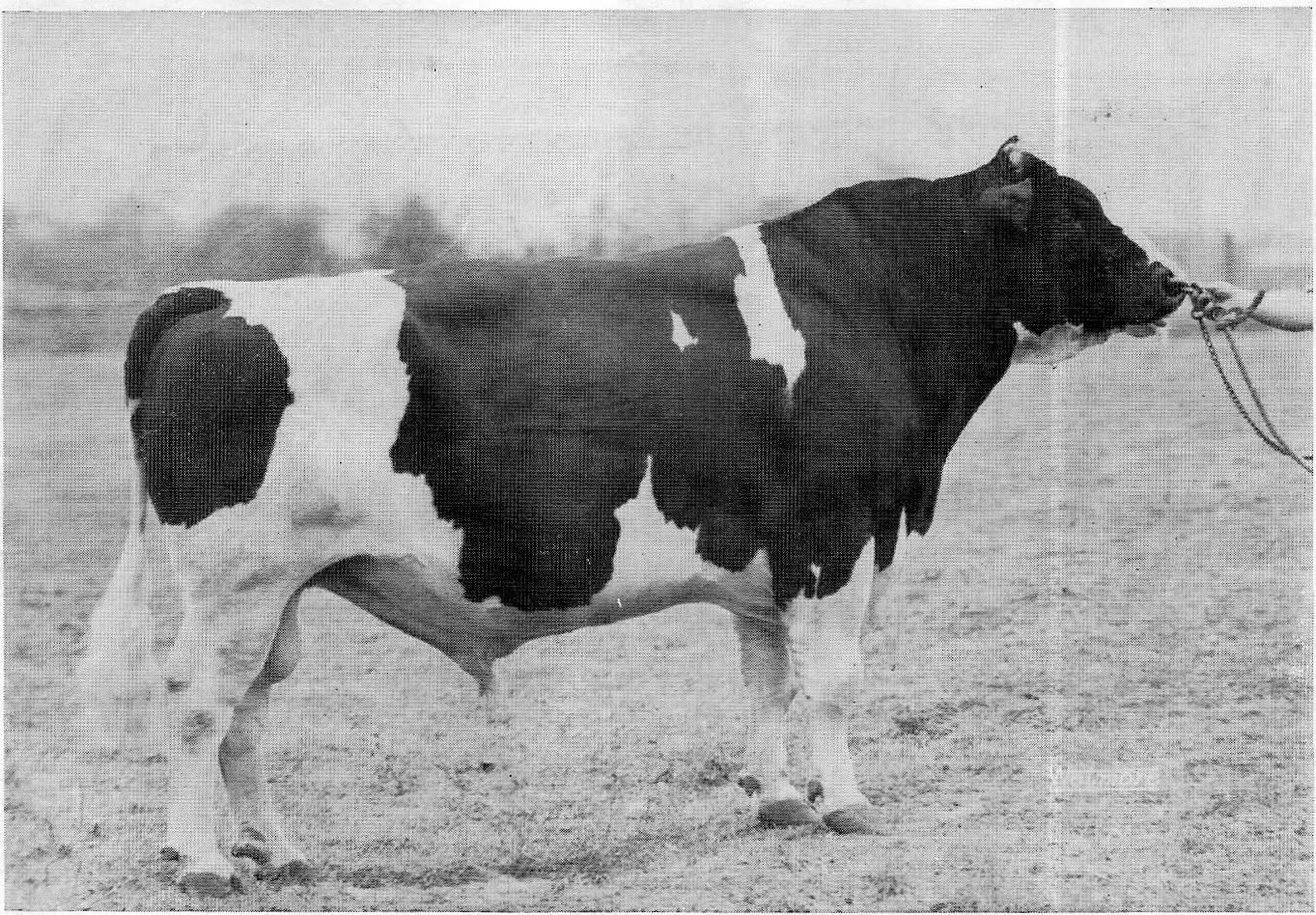
NewsSubscribe
First
Last
Consent

Learn More

The Spreadsheet Beats the Pedigree: Why Holstein USA Honored an Economist

A breed registry built on pedigree just gave its top 2026 award to CoBank’s economist — the same guy who’ll tell you why a $1,720 heifer now costs $3,010.

Same podium, different math. Corey Geiger — past president of Holstein Association USA, now CoBank’s lead dairy economist — receives the association’s 2026 Distinguished Leadership Award in Orlando on June 24. He’s pictured at the 2019 National Holstein Convention in Appleton, Wisconsin, an event he co-chaired.

Six generations of Geigers have milked cows on the same patch of Wisconsin ground near Reedsville. On Wednesday, June 24, in Orlando, the sixth generation collects the highest career honor the world’s largest dairy breed association gives — and the job he holds today is read in basis points, not classification scores.

Holstein Association USA presents its 2026 Distinguished Leadership Award to Corey Geiger — Omro, Wisconsin; CoBank’s lead dairy economist; 28 years a fixture at Hoard’s Dairyman, ultimately as lead editor, where he launched the publication’s fourth language edition. Behind the byline sits a decade-plus of national board service — Holstein Association USA president from 2019 to 2022, plus seats across the Holstein Foundation, the Council on Dairy Cattle Breeding, World Dairy Expo, and the Klussendorf Association — and, since July 2023, the role of lead dairy economist at one of agriculture’s largest lenders. Read the standard announcement and you get a career retrospective: editor, association president, author, board member. All true.

The award itself is a full-career honor — Holstein USA hands it to one person for “outstanding and unselfish leadership for the betterment of the dairy industry,” and Geiger’s case for it includes a stint as the association’s own president from 2019 to 2022. So this isn’t an outsider being let in. It’s the same man, recognized for what his career became.

And what it became is the story. A breed registry built on type and pedigree just handed its top leadership award to someone whose current value to the industry is measured in heifer-inventory models and milk-cheque math. That’s not a footnote about one man. That’s a signal about where influence in this business has migrated — and why your operation should care.

The award is the story, not the résumé

Strip away the ceremony and ask a blunt question: what is Holstein Association USA actually rewarding?

Not banners. Geiger’s deepest mark on the industry in the last three years hasn’t come from a show ring or a classification call. It’s come from analysis — the kind that tells a lender whether to extend credit, tells a processor whether the cows exist to fill a new plant, and tells a producer whether to breed for protein or butterfat heading into a base change. The association that registers the cows is honoring the man who explains what those cows are worth to the people holding the cheque-book.

For most of its history, the prestige in the Holstein world flowed toward breeders and bloodlines. The 2026 award says the quiet part out loud: in a consolidating, capital-intensive dairy economy, the person who can translate the herd into a balance sheet carries as much weight as the person who bred it.

You don’t have to agree with every call he’s made to recognize the reach. We don’t always. The influence is real regardless.

Follow the numbers he’s actually moved

Skeptical that an economist belongs in the same sentence as a breed-leadership award? Look at the specific calls his analysis has put in front of the industry. These aren’t opinions. They’re the figures shaping decisions on real farms right now.

Start with the genetic base change. In April 2025, the Council on Dairy Cattle Breeding reset its evaluation baseline from cows born in 2015 to cows born in 2020 — and Holsteins led every breed with a 44-to-45-pound rollback on butterfat and a roughly 30-pound rollback on protein (The Bullvine: 2025 U.S. Genetic Base Change). Geiger was among the first to translate the size of that rollback into plain terms: the bigger the rollback, the bigger the underlying genetic gains, and Holstein butterfat could push past 5% within a decade if nutrition keeps pace with genetics. That’s a breeding-strategy signal dressed as a statistical footnote — and most producers needed someone to decode it.

Then the heifer crunch, where the math gets uncomfortable. U.S. dairy replacements have fallen to roughly 3.9 million head, a multi-decade low, while the average replacement heifer climbed from $1,720 in April 2023 to $3,010 by July 2025 — a 75% jump in just over two years, per USDA Agricultural Prices . CoBank’s own modeling projects roughly 438,000 fewer dairy replacements entering the herd in 2026 than in 2025, with no real relief until 2027. When The Bullvine ran the math on UW–Madison’s beef-on-dairy assumptions, it was this same CoBank and sale data that reset a $2,355 textbook heifer to a $3,000–$4,100 real-world line item (The Bullvine: UW–Madison’s $51/Cow Beef-on-Dairy Trap).

Now layer the third number on top, because it’s where the first two collide: more than $11 billion in new dairy processing capacity is under construction across roughly 53 facilities in 19 states, and the national cow herd isn’t on track to fill it (The Bullvine: Processing Capacity Gap Dashboard). Record components, a heifer shortage, and a building boom all hitting at once. That collision — not a show placing — is the story the industry needs read correctly. Geiger is one of the voices doing the reading.

The beef-on-dairy loop the press release will never explain

Here’s the piece that ties the heifer shortage to your own breeding decisions — and it’s the kind of causal chain a career announcement skips entirely.

The heifer shortage didn’t happen by accident. It’s the direct, rational result of a decision millions of dairy producers made one straw at a time. Beef semen sales to dairy farmers climbed from 5 million units in 2020 to 7.9 million of the 9.7 million total units sold in 2024, while conventional dairy semen sales collapsed nearly 47% over roughly the same stretch, according to National Association of Animal Breeders data compiled in CoBank’s analysis. Every one of those beef straws is a dairy replacement that was never conceived.

Why would a rational operator breed away from his own future milk supply? Because the math, in the moment, is overwhelming. A beef-on-dairy calf has fetched well over $1,000 at under a week old in recent data, and the beef-on-dairy revenue stream now adds an estimated $5 per hundredweight or more to dairy farm income. Run that against a 1,000-cow herd shipping 240 hundredweight per cow per year: $5/cwt across 240,000 hundredweight is roughly $1.2 million in additional annual revenue, before you’ve sold a single drop more milk. No producer ignores a number like that.

But here’s the trap Geiger’s work keeps surfacing: the same decision that pads this year’s cash flow is the engine draining next year’s milking string. CoBank’s modeling puts the cost of that collective choice at roughly 438,000 fewer dairy replacements entering the herd in 2026 alone. Multiply that shortfall across a herd that’s also trying to feed $11 billion in new processing capacity, and you understand why a springer that sold for $1,720 in 2023 commands $3,010 today. The beef cheque and the heifer crisis aren’t two stories. They’re the same story, told from opposite ends of the calving pen. Reading them as one — not as separate headlines — is exactly the translation work the industry now prizes.

What this means for your operation

Forget the trophy. Here’s how the man getting it should change what you do this quarter.

  • Breed for the pay driver that’s actually coming, not the one that just paid. As Geiger laid out in a February 2026 dairy outlook presentation, his read is that protein — not butterfat — is set to be the leading milk-cheque driver in 2026, as a butterfat oversupply pulls fat values down while protein demand from ready-to-drink shakes and powder products keeps climbing . If your breeding program is still chasing the butterfat that drove your last few cheques, run your sire selection against where the premium is heading, not where it’s been.
  • Stop selling replacement inventory at convenience prices. With springers near $3,010 and CoBank modeling a structural shortage through 2026, don’t let your extra heifers go cheap just to clear slot space. Calculate your exact 24-month herd replacement needs plus your historical mortality rate. If you have a surplus, price it like the appreciating asset it now is. If you’re short, lock in purchases before the $11 billion processing build-out starves the market further — the model says no real relief until 2027.
  • Invest in translators, not just specialists. The most valuable people left in this business aren’t the deepest specialists — they’re the ones who move knowledge across silos. Geiger reads a pedigree and a basis spread with equal fluency, and that combination is what carried him from journalism to governance to finance. If you’re deciding which young person on your operation to develop, the Geiger template says push them to learn the whole chain, not one link.

The shift the trophy is really naming

Barn to byline to balance sheet. That arc is the whole story — and the institutions are voting with their trophies.

In barely two years, three different pillars of the breed-and-show establishment have converged on the same economics-first figure: National Dairy Shrine made Geiger its Guest of Honor in 2024, and World Dairy Expo named him Industry Person of the Year in 2026, citing a career that landed him “where capital meets cows” (The Bullvine: WDE Names Its 2026 Award Winners).

Now Holstein Association USA hands him its Distinguished Leadership Award. When the show barn, the dairy hall of fame, and the breed registry all reach for the same financial analyst within a 24-month window, it isn’t coincidence. It’s a white flag from the traditional establishment — an official acknowledgment that in 2026, understanding the biological cow and mastering the financial cheque are no longer separate skills. They’re the exact same job.

The 2026 National Holstein Convention runs June 22–25 in Orlando, Florida, with the award presented Wednesday, June 24 (2026 National Holstein Convention).

Key Takeaways

  • When the show barn, the dairy hall of fame, and the breed registry all hand their top honors to a balance-sheet economist inside 24 months, the message is clear: knowing the cow and knowing the cheque are now the same job.
  • Protein is set to lead the milk cheque in 2026, not butterfat. If your sire selection is still chasing the fat that paid your last few cheques, you’re breeding for a premium that’s already cooling.
  • Don’t dump replacement heifers at convenience prices. With springers near $3,010 and a structural shortage modeled through 2026, run your real 24-month replacement need first — then decide if you’re a seller or a buyer.
  • Geiger’s CoBank work is free and it’s what your banker is already reading. Get your eyes on the same heifer, component, and processing-gap numbers before your next credit conversation, not after.

Learn More

  • Heifer calf mortality: the $40,000 barn math — Arms you with a concrete protocol to stop leaking high-value genetics in the hutch row. Learn why a 2% spike in calf mortality drains $40,000 from your pipeline in a $3,010 replacement market.
  • $3,010 Per Heifer. 800,000 Short. Your Beef-on-Dairy Bill Is Due. — Delivers a clear 3-to-5-year framework to navigate the unprecedented national replacement shortage. This strategic assessment lays out four operational paths to defend herd size against soaring springer costs.
  • Beef-on-Dairy Math: $25200 Rides on Your Semen Order — Reveals how data-verified sire choices can capture up to $25,200 in premium carcass value on a typical crop. Dismantles generic-cross discounts by implementing exact electronic identification and genetic verification steps.

The Sunday Read Dairy Professionals Don’t Skip.

Every week, thousands of producers, breeders, and industry insiders open Bullvine Weekly for genetics insights, market shifts, and profit strategies they won’t find anywhere else. One email. Five minutes. Smarter decisions all week.
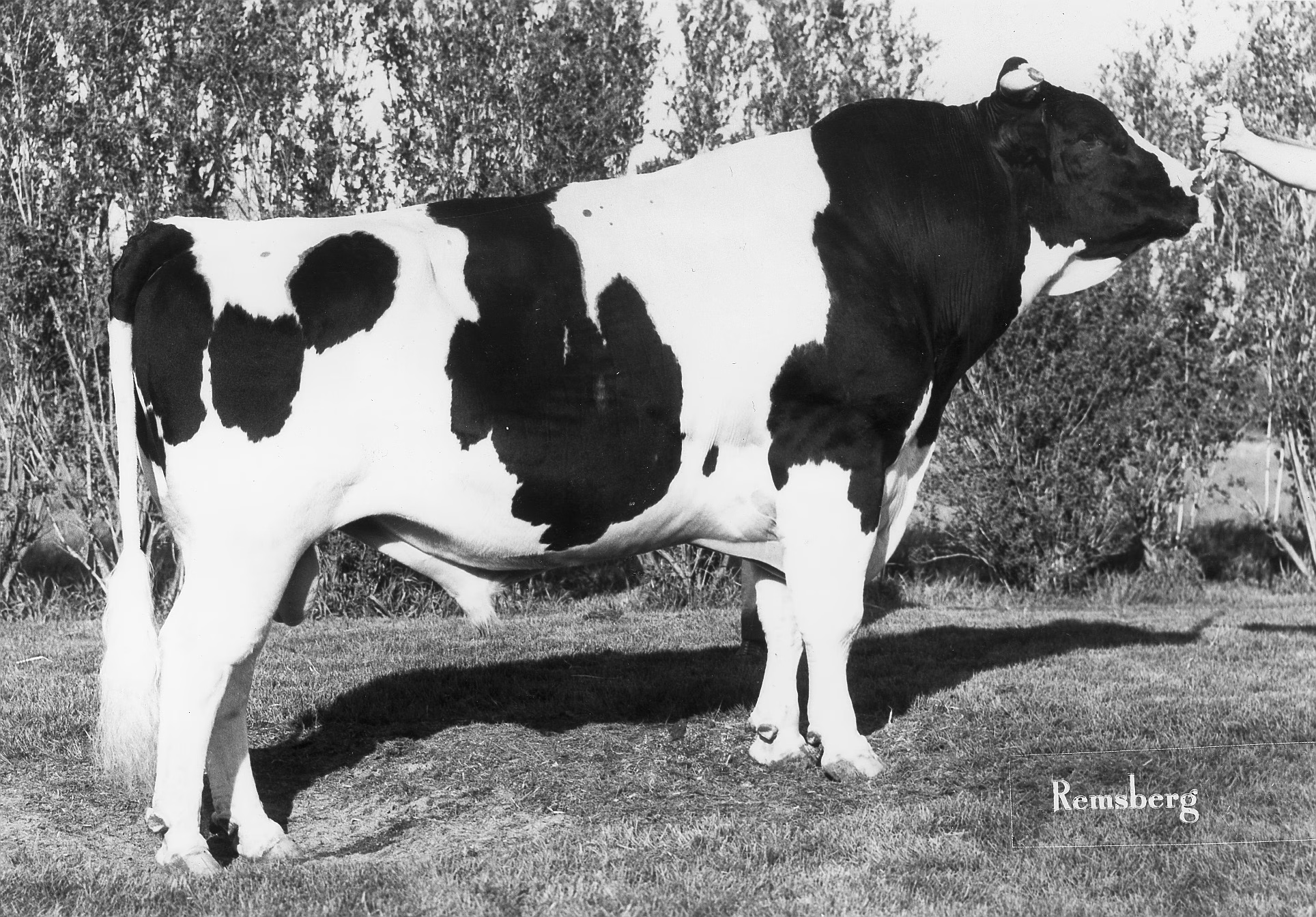
NewsSubscribe
First
Last
Consent

Curtis Vanden Berge: How Holstein USA’s 2026 Young Breeder Built a 2,800-Cow Herd Around Components

Most 2,800-cow dairies chase volume. Curtis Vanden Berge chased components — and hit 4.17% fat while one cow, Halogen 516-ET, seeded 200-plus descendants in his Bakersfield barn.

Curtis Vanden Berge

When Holstein Association USA CEO Lindsey Worden called with the news, Curtis Vanden Berge didn’t see it coming. “When CEO Lindsey Worden called me to tell me the news, I was truly surprised,” he says. “It’s nice to be recognized for the work we do every day.” 

That recognition is the 2026 Distinguished Young Holstein Breeder award, which he’ll receive at the National Holstein Convention in Orlando in June. But the real story has been building for decades on a family dairy that uprooted once, expanded, and grew into one of California’s most genetics-driven Holstein herds. 

Leaving Mira Loma, Building in Bakersfield

Curtis didn’t “find” dairying — he grew up in the middle of it. He was raised on his family’s dairy near Mira Loma, California, where his father and grandfather sparked his passion for dairy farming and genetic progress. 

In 2004, the family relocated to Bakersfield, expanding the farm and creating opportunities for the next generation. By 2010, Curtis had stepped into day-to-day management at Vanden Berge Dairy. Five years later he became a partner. Today the operation is run by Curtis and his wife Stacey, alongside his brother Trevin and his wife Heidi, while Curtis and Stacey raise their three children — Case, Tessa, and Payton — on the farm. 

2,800 Holsteins, Three Times a Day, Components First

Vanden Berge Dairy now milks about 2,800 Holstein cows in California’s Central Valley, running three-times-a-day milking. 

The numbers behind the award aren’t fluff:

  • Rolling herd average: 27,895 lb milk 
  • Fat: 1,163 lb (4.17%) 
  • Protein: 928 lb (3.33%) 

That profile isn’t accidental. Curtis is driven to continuously improve herd genetics, focusing on increasing components and making sure each generation is better than the last. Higher fat and protein pounds are the priority — and in a market where components carry more of the milk cheque every year, that focus lines up with where progressive Holstein breeders have pushed for the past decade. 

The Cows Behind the Strategy

The genetic shift took off when the first group of Registered Holsteins arrived at Vanden Berge Dairy nearly 15 years ago. One cow in particular, Longfellow Boxer Bianca, showed Curtis what Registered Holsteins could do — her performance in the herd demonstrated their value firsthand. 

Another foundation piece is Seagull-Bay Halogen 516-ET, whose influence keeps spreading through the milking string and heifer pens. Curtis can trace more than 200 descendants of that cow in the herd today, including Vanden-Berge Trpc Daphne-ET EX-90 — proof you don’t have to choose between commercial performance and high-end pedigrees. 

Genomics, Embryos and Beef-on-Dairy — With Discipline

On the tools side, Curtis isn’t dabbling. Vanden Berge Dairy leans on:

  • Genomic testing to sort heifers early and line up matings that move indexes, not just pedigrees 
  • Embryo transfer and IVF to multiply the most profitable cow families faster 
  • Beef-on-dairy to turn lower-genetic-value pregnancies into higher-value calves instead of replacements they don’t need 

That package, combined with Holstein Association USA’s programs and services, gives Curtis a feedback loop: what the cows look like, what they produce, and how it ties back to mating decisions made years earlier. It’s the same shift across top Holstein herds — genomics isn’t a “technology project” anymore, it’s just how breeding decisions get made. 

More Than Genetics: Association Leadership

This award doesn’t just recognize a numbers game. Curtis has been active with the California Holstein Association for years, serving on the board and two years as president — no small commitment while managing a large Western herd. 

That role has put him in the middle of the big questions: how to keep Registered Holsteins relevant to large-pen commercial setups, how to protect breed identity and data integrity in a world of crossbreeding and beef-on-dairy, and how state associations stay valuable when breeders are stretched thin. 

Why This Young Breeder Award Matters

The Distinguished Young Holstein Breeder Award targets breeders ages 21 to 40 who run a profitable Registered Holstein herd and contribute back to the industry. Winners receive travel and lodging for up to two people to the National Holstein Convention, complimentary tickets to the Awards Luncheon, a $2,000 cash award, and a plaque — plus their name engraved on a permanent plaque at Holstein Association USA headquarters in Brattleboro. 

Recent recipients include Tim Rauen of Iowa, Trent Hendrickson of Wisconsin, and Ty Etgen of Ohio. Curtis joins that list at a moment when Western dairies face hard scrutiny on water, emissions, and economics — and a 2,800-cow, components-driven Holstein herd run by a breeder comfortable with both genomic data and a board agenda is exactly the kind of operation that will help decide what the Holstein cow looks like fifteen years from now. 

Curtis Vanden Berge will be recognized as Holstein Association USA’s 2026 Distinguished Young Holstein Breeder during the National Holstein Convention in Orlando, Florida, on Wednesday, June 24. 

Key Takeaways

  • Components are the play. Vanden Berge runs nearly 28,000 lb of milk at 4.17% fat and 3.33% protein because fat and protein pounds are what cash the milk cheque — not raw volume.
  • Genomics, IVF, and beef-on-dairy only pay when they’re part of one system. Test heifers early, multiply your best cow families, and breed the bottom end to beef instead of making replacements you don’t need.
  • One cow can carry a herd. Halogen 516-ET left 200-plus descendants in this string — proof that finding and propagating your best family beats chasing the hot bull every proof run.
  • The award rewards more than numbers. Curtis built it with herd results plus state-association leadership, and that combination is what gets a young breeder recognized at the national level.

The Sunday Read Dairy Professionals Don’t Skip.

Every week, thousands of producers, breeders, and industry insiders open Bullvine Weekly for genetics insights, market shifts, and profit strategies they won’t find anywhere else. One email. Five minutes. Smarter decisions all week.
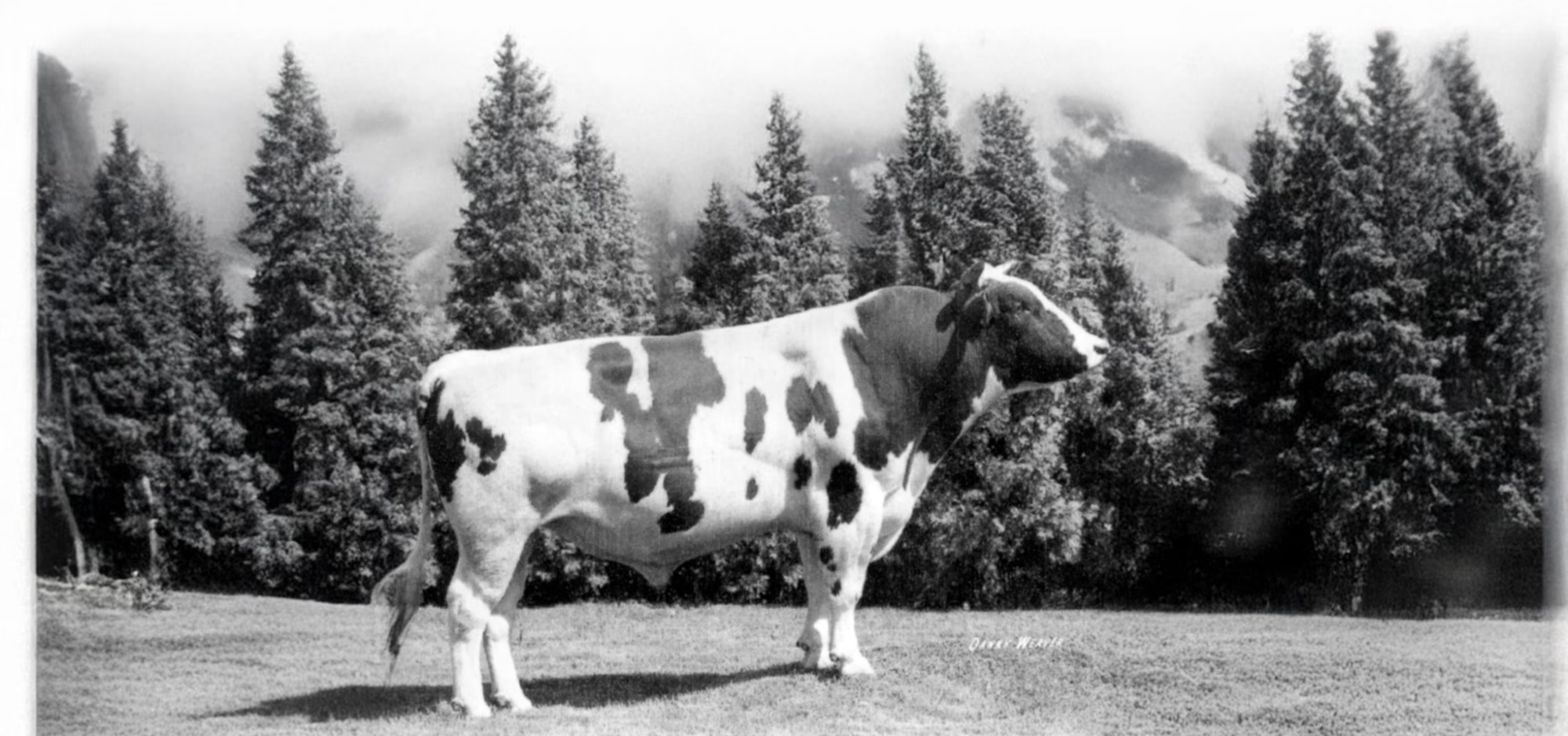
NewsSubscribe
First
Last
Consent

Burt Haugen Came Home From Vietnam in ’68 to Milk Cows. He’s One of the 0.4%.

Haugen runs an organic dairy across the highway from Joint Base Lewis-McChord. 9% of U.S. farmers served. Just 0.4% of them milk cows. That gap is roughly 3,700 trained operators dairy isn’t recruiting.

Burt Haugen at his organic dairy near Buckley, Washington — across the highway from Joint Base Lewis-McChord, where the helicopters still pull him back to 1968. Drafted into the 4th Battalion, 9th Infantry — the Manchus — and wounded twice during Tet, Haugen spent thirty years trying to outrun the war. The parlor is what finally let him stop. He’s one of the 0.4%.

Burt Haugen has spent most Memorial Day mornings of the last half-century at his organic dairy near Buckley, Washington — across the highway from Joint Base Lewis-McChord. He was a draftee in 1968. A machine gunner and radio operator with the 4th Battalion, 9th Infantry — the Manchus — in-country during Tet, when 49 men in his battalion were killed in a single day. He was wounded twice. A bullet went through the webbing of his helmet. He spent thirty years trying to forget what came after that.

He doesn’t anymore.

What pulled him out, he told this magazine in 2013, wasn’t a program. It wasn’t a counselor. It was the parlor.

“I like to work by myself. It’s quiet when you’re milking in the morning.” — Burt Haugen, Buckley, Washington

Haugen calls it “a living and a healing.” Busy hands, busy mind. He credits the rhythm of dairying — and the fraternity of fellow Manchus, with whom he reconnected through a brigade reunion website — with helping him live with PTSD and survivor’s remorse for half a century. The cows did what no civilian career could.

The 0.4% Problem

Haugen is one of 305,753 U.S. farm producers with military service counted in the 2022 Census of Agriculture. That’s 9% of every producer in America, working 289,372 operations and roughly 108 million acres (USDA NASS, Producers with Military Service, 2024). Across every sector of the U.S. economy, agriculture over-indexes hard for veterans. Dairy is the exception. That’s the story.

In the 2022 Census, 0.4% of veteran producers named dairy cattle and milk production as their primary commodity. Among non-veteran producers, the share was 1.6% (Farm Credit Administration analysis of the 2022 Census). Read it the way a recruiter would: a veteran who chooses agriculture is four times less likely than a civilian entering agriculture to land in dairy.

Where do they go instead? Beef cattle (28.4%), hay and field crops (27.1%), grains (12.7%) — pastures and combines and tractors, almost anywhere but the parlor (FCA, 2024).

The Two Flags Don’t Sit Easy

Every veteran in dairy carries two identities at once. The soldier and the dairyman. The medic and the calf manager. The flag at the door goes up, the boots go on, the parlor turns at 4 a.m. — Memorial Day, Christmas, the Tuesday after a funeral. The two flags don’t sit easy on the same pole.

Haugen’s version is the one nobody puts in a press release. Farm work — its solitude, its physical labor, its predictable rhythm — has quietly become one of the most effective and least-funded therapeutic environments combat veterans access in this country. The Farmer Veteran Coalition has been documenting that since 2008 (FVC History).

“We talk about our experiences. It’s almost embarrassing to talk with anyone else.” — Burt Haugen

The “we” is other Vietnam vets. The talking happens in barns and shops and parlors. Not in waiting rooms.

When his Manchus brigade visited the Vietnam Memorial together, the wall listed 600 of “my guys” killed during Tet — more than 100 of them from Haugen’s battalion alone. He learned about PTSD and survivor’s remorse the way a lot of Vietnam vets eventually did — through VA classes, decades after the fact. Helicopters in the distance from Joint Base Lewis-McChord still pull him back to the medevac runs of the war. Some things you don’t forget. You just learn to milk through them.

What Does Air Force Discipline Look Like in a 10,000-Cow Parlor?

What works for one man and a small organic herd at dawn doesn’t necessarily scale. Or does it? Drive across the country to Trenton, Florida, and you’ll find the same operating discipline running at a different altitude entirely.

Adam Jackanicz at the calf pens at Alliance Dairies in Trenton, Florida — about 10,000 cows under his hand at any given time. Veterinarian by training, Public Health Officer for the 932nd Medical Squadron, U.S. Air Force Reserve by commission. He runs his shifts the way the Air Force taught him to run a flight line: pre-shift brief, written checklist, after-action review. His regret about the uniform? “Not signing up sooner.”

Adam Jackanicz is a veterinarian and the Public Health Officer for the 932nd Medical Squadron, U.S. Air Force Reserve (The Bullvine, 2024). For years, he ran milk quality and animal health for Alliance Dairies in Trenton — about 10,000 cows under his hand at any given time.

Picture a Tuesday at 5:40 a.m. in the office off the parlor. The day-shift lead’s notebook is open on the desk. Pre-shift brief — three minutes, standing. What changed overnight? Which fresh cows need eyes today? Where did yesterday’s somatic cell trend on the bulk tank? It’s the same checklist culture that runs a flight line, transplanted into rubber boots. Jackanicz says the Air Force values of integrity and excellence are “indispensable” in a 10,000-cow string — not as a slogan but as the reason the same mistake doesn’t repeat in the parlor on Wednesday.

He enlisted during veterinary school after being told his eyesight ruled out aviation. He re-enlisted as fast as the paperwork would clear after 9/11, moved from enlisted to a commission, served until 2009, and came back in 2020 — in the middle of a pandemic that landed on his family and his herd at the same time. His regret? “Not signing up sooner.”

You don’t run 10,000 cows on vibes. You run them on briefs and after-action reviews and somebody who knows what to do at 2 a.m. when the calving doesn’t go right. That’s the gift a veteran brings to a parlor. Not the war movie. The way the chores actually get run.

So Why Aren’t Veterans Choosing Dairy?

Read the standard list of reasons and none of it actually fits the candidate. Capital requirements. The 24/7 cycle. Hard physical labor. Long stretches without a day off. That’s not what scares a veteran. That’s basic training with a milking schedule.

Veterans are entirely comfortable with 24/7 shifts, grueling labor, and high stress — if there’s a clear mission and a clear structure. They’ve already lived 18-month deployments on rotating watch. They’ve already done it in 110°F with 80 pounds on their back. The 4 a.m. milking isn’t the obstacle.

The obstacle is what the 4 a.m. milking is run on. Dairy, more often than industries the military funnels people into, runs on tribal knowledge instead of written protocol. The protocol lives in one person’s head. The chain of command shifts depending on who’s in the parlor that morning. The same mistake repeats on Wednesday because nobody documented what went wrong on Tuesday. To a veteran, that isn’t difficulty. That’s chaos.

The Farmer Veteran Coalition’s own programming — Fellowship Fund grants, Homegrown By Heroes, mentor networks — is built around the same observation: veterans entering ag want documented systems, not improvisation. The 0.4% number isn’t a labor problem. It’s a structure problem. And dairy can fix structure faster than it can fix a milk price.

A Family That Started With a Boot Camp

Haugen carried discipline into a one-parlor operation. Jackanicz carried it into a 10,000-cow string. In northeast Texas, Kyle Hayes carried it into the next generation — into a son who works inside the operating manual every day.

Kyle Hayes on his northeast Texas dairy — a first-generation operation he’s kept running for more than thirty years, while the U.S. herd count fell from 130,800 farms in 1992 to 24,470 by the end of 2023. Navy, 1971 to 1975. Beef cattle first, then dairy. He calls boot camp “reminiscent of a scene from Forrest Gump” and the parlor the same education in a different uniform. His son Kyle Jr. works alongside him now — raised inside the operating manual his father brought home from the service.

Hayes served in the Navy from 1971 to 1975, came home to beef cattle, switched to dairy more than thirty years ago, and built a first-generation operation by hand. His son, Kyle Jr., works alongside him now (The Bullvine, 2024).

Hayes describes boot camp as a transformative experience — “reminiscent of a scene from Forrest Gump,” in his words — and dairying as the same education in a different uniform. Hard work. Sacrifice. A job that doesn’t care if you’re tired. The discipline he learned in the Navy is what’s kept a Texas dairy alive for three decades, while the U.S. dairy farm count fell from 130,800 herds in 1992 to 24,470 by the end of 2023 — a national contraction Texas hasn’t escaped.

That’s the second flag. The one that doesn’t get a uniform of its own. Kyle Jr. didn’t follow him into the Navy. But he was raised inside the operating manual his father brought home from it. Multiply that by 289,372 farms with at least one producer who served, and you start to see what’s actually sitting inside American agriculture’s organizational DNA.

How Many Veteran Producers Actually Choose Dairy?

Here’s the uncomfortable barn math.

If you run a 1,200-cow herd and you’re trying to fill a herdsperson opening this spring, the U.S. veteran producer pool is about 305,753 people deep. The dairy slice of that pool? Roughly 1,223 veterans listed dairy as their primary commodity in the 2022 Census (305,753 × 0.4%). If veterans had chosen dairy at the same rate as non-veteran producers — 1.6% — that number would sit closer to 4,900. The gap is roughly 3,700 trained, leadership-tested workers who chose any commodity but the parlor.

Now run those numbers against the talent picture dairy keeps complaining about. McKinsey’s January 2025 dairy executive analysis put talent as the top priority for 67% of dairy leaders — up from 44% in 2022 (McKinsey, January 2025). The same complaint shows up every quarter in The Bullvine’s labor and leadership coverage.

Dairy is leaving the most disciplined mid-career talent pool in the country on the table. Every year. And then asking where the herdspeople went.

What Could a Veteran Hire Actually Fix on Your Operation?

Read what a 1,200-cow operation needs from a manager in 2026, and the overlap is almost unfair:

  • Lead 8 to 15 people across language and shift barriers. That’s a squad. Veterans run squads.
  • Execute a written checklist under pressure. Vaccination protocols, fresh-cow handling, mastitis treatment SOPs. Each one’s a battle drill in different clothes.
  • Make a clean call at 2 a.m. on a hard calving. Triage. The military trains exactly that.
  • Lead younger people through a crisis you’ve never personally seen. HPAI in the tank, a tunnel-fan failure in 102°F, a positive antibiotic test you have to dump on. That’s an after-action review made flesh.

Veterans don’t bring magic. They bring muscle memory for stress.

Here’s the part dairy still under-discusses out loud. In 2017 occupational data, male farmers, ranchers, and agricultural managers died by suicide at a rate of 43.2 per 100,000 — roughly 3.5 times the general population, and more than three times the rate of fatal farm accidents (12.4 per 100,000) (The Bullvine, January 2026, citing the National Rural Health Association).

Combat veterans have spent years inside formal frameworks for that exact risk. Buddy checks. After-action talks. VA peer groups. Haugen calls his fellow Manchus “a fraternity, ’cause you can relate.” A dairy that hires a veteran isn’t just hiring a herdsperson. It’s importing a mental-health vocabulary the industry has been begging for — and refusing to write down.

The Programs Exist. Dairy Has Barely Touched Them.

The Farmer Veteran Coalition has been operational since 2008, when founder Michael O’Gorman left commercial organic farming to run it full-time. The Coalition crossed 50,000 members nationwide in August 2024 — Fellowship Fund recipients, Homegrown By Heroes-certified producers, mentor-network participants, and state-chapter members (FVC, August 2024). USDA’s veteran-farmer provisions, established under the 2014 Farm Bill, opened microloans and conservation programs to veterans on preferred terms. NCAT’s Armed to Farm program, running since 2013, has now supported more than 3,500 military-veteran farmers through trainings, workshops, networking events, and one-on-one technical assistance (NCAT Armed to Farm).

Most of those success stories are produce, beef, mushrooms, value-added meat. The dairy column’s thin. The Coalition’s 2024 highlight reel surfaced one prominent dairy-side example: Army Captain Bob Miller, who resigned his commission in 2009 after two tours in Iraq with the 10th Mountain Division and launched Nice Farms Creamery on his family’s 201-acre Maryland farm — a pasture-based A2/A2 Jersey operation selling milk, butter, yogurt, and ice cream to local markets (Farmer Veteran Coalition, September 2024).

One feature. In a year. In a sector with 24,470 commercially licensed dairy farms as of the end of 2023. That’s a business-development gap, not a values gap.

Here’s what the FVC milestone actually means in barn terms. Even 1% of that 50,000-member network — recruited into U.S. dairy as herdspeople, parlor leads, calf managers, or first-generation operators — is roughly 500 trained, leadership-tested workers entering an industry where 67% of executives say they can’t find the talent they need. Won’t fix 24,470 farms. But it’s more than most operators are pulling from any single recruiting channel today.

Options and Trade-Offs for Your Operation

Four paths. Each one starts on a different scale, and each one carries its own honest trade-off.

Path 1 — Run your first After-Action Review (AAR) within 30 days.

  • When it makes sense: Any operation, any size. Even before you hire a single veteran.
  • What it requires: 15 minutes after something goes wrong — a missed heat-detection batch, a milk fever cluster, a tank dump. Three questions: What did we expect? What happened? What changes? No blame.
  • The trade-off: It’ll feel awkward the first three times. The senior person in the room has to be the one who admits a mistake first to break the blame culture. Then it becomes the most exportable tool from the military to dairy — and almost no dairy uses it.
  • Forward signal: Operators we’ve talked to who run AARs tend to have written SOPs in place within a year. Path 1 leads to Path 3.

Path 2 — Post your next hire through the Farmer Veteran Coalition member network.

  • When it makes sense: Any herdsperson, parlor lead, feed crew lead, or assistant manager opening you’d otherwise list on Indeed or AgCareers.
  • What it requires: A free listing through a 50,000-member national network.
  • The trade-off: The candidate pool is smaller than a major job board. But it’s pre-screened for ag intent and often shows up with formal leadership experience already on the résumé. Cheapest recruiting experiment you can run this year.

Path 3 — Convert one verbal protocol into a written SOP this month.

  • When it makes sense: Every operation that’s ever lost a step because the person who knew it was off that day.
  • What it requires: An hour with whoever currently runs that protocol.
  • The trade-off: Small ego cost on the front end — the person you ask is usually proud of holding the protocol in their head. The veterans you eventually hire won’t just follow SOPs. They’re the ones who’ll finally make you build them.

Path 4 — Treat mental-health vocabulary as an imported skill, not a soft one.

  • When it makes sense: Any operation with a crew.
  • What it requires: Identifying the veterans already on your payroll — most won’t volunteer it; ask — and letting them lead the conversation when a colleague is struggling.
  • The trade-off: This only works if you take crew mental health as seriously as you take a parlor breakdown. They’ve had buddy checks drilled into them since basic. Your nutritionist hasn’t.

If you’re a veteran-owned dairy reading this, get on the FVC member map this week. Homegrown By Heroes certification, buyer relationships, peer connections, and Fellowship Fund eligibility most dairy producers don’t even know exist — one online form opens all of it.

Key Takeaways

  • If you’ve had any operational misstep in the last 30 days, you have everything you need to run an AAR this week. Three questions. No software. No consultant.
  • If your next hire is a herdsperson, parlor lead, or assistant manager, post the opening through Farmer Veteran Coalition before you pay for a third-party listing. Free, targeted, leadership-screened — pulling from a 50,000-member national pool.
  • If your operation runs on verbal protocols that live in one person’s head, that’s a single-point-of-failure problem a veteran-grade SOP will fix. Pick the one that scares you most. Write it down this month.
  • If you’ve ever lost a colleague, neighbor, or employee to suicide — or come close — the buddy-check vocabulary your veterans already speak is the most underused mental-health tool in dairy. Ask who served. Let them lead.
  • If you’re a veteran-owned dairy and you’re not on the FVC member map, you’re leaving certification, peer support, and program eligibility on the table every week. That fix is a single online form.

The Last Flag

Nathan Roth — Vietnam-era Navy veteran, second-generation dairyman, 250 cows and 1,600 acres in Mountain Grove, Missouri, alongside his children. A year in country, then home on the G.I. Bill for an accounting degree before the family operation pulled him back. He carries the dual identity openly: veteran and dairyman, neither one a hobby. The uniform on a hanger, the hand on the herd.

Nathan Roth — a Vietnam-era Navy veteran who served a year in country and came home to use the G.I. Bill on an accounting degree before turning back to the family operation — runs 250 cows and 1,600 acres in Mountain Grove, Missouri, alongside his children (The Bullvine, 2024). He carries the dual identity openly: Vietnam veteran and second-generation dairyman, neither one a hobby. Kyle Hayes and Kyle Jr. are still working that northeast Texas dairy, a first-generation operation that outlasted most of the state’s. Adam Jackanicz, somewhere between his Reserve drill and his veterinary work, lives the same calendar as everybody else in dairy — uniform on a hanger, hand on the herd.

And near Buckley, Washington, the parlor where Burt Haugen learned to live with what Tet left him will turn the way it has turned for half a century — in the kind of quiet that, fifty-eight years ago, didn’t exist for him.

So here’s the question worth carrying past this Memorial Day: when you ran your last after-action review, who was in the room? And if the honest answer is we don’t run those yet — what would change next year if the person you hired had run a hundred of them before they ever set foot in your parlor?

Methodology Note

This article draws on the 2022 U.S. Census of Agriculture (USDA NASS, Producers with Military Service, released April 2024); Farm Credit Administration analysis of that release; McKinsey’s January 2025 article “Dairy industry executives are pressured but optimistic for 2025,” reporting the 2024 dairy executive survey results; occupational suicide-mortality data aggregated by The Bullvine in January 2026 from the National Rural Health Association (reflecting 2017 U.S. data for male farmers, ranchers, and agricultural managers); the U.S. dairy herd count from Progressive Dairy’s 2024 U.S. Dairy Statistics; the Farmer Veteran Coalition’s August 2024 50,000-member milestone announcement; NCAT’s Armed to Farm program reporting on its 3,500+ veteran reach; and prior Bullvine reporting on veteran dairy producers (2013 and July 2024). All named individuals (Burt Haugen, Adam Jackanicz, Kyle Hayes, Nathan Roth, Bob Miller) are drawn from previously published profiles linked in-line. Veteran-share figures are national averages — concentration varies meaningfully by state. Corrections, additions, or veteran-dairy stories we should be covering: editor@thebullvine.com.

Learn More

The Sunday Read Dairy Professionals Don’t Skip.

Every week, thousands of producers, breeders, and industry insiders open Bullvine Weekly for genetics insights, market shifts, and profit strategies they won’t find anywhere else. One email. Five minutes. Smarter decisions all week.
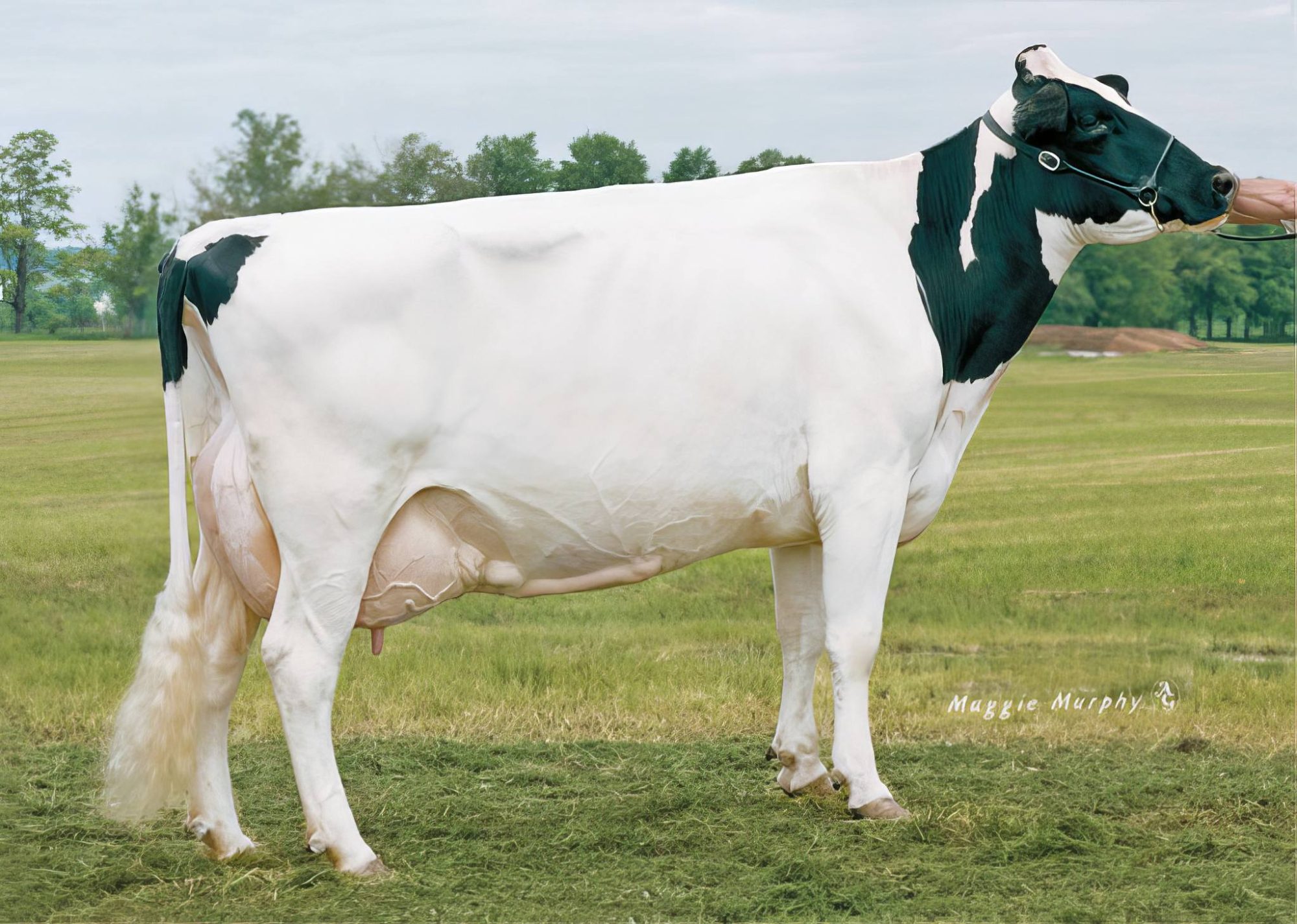
NewsSubscribe
First
Last
Consent

Kaarmona Bosa Buoy 15: How a $54,000 Jersey Took 32 Years to Build

A Northern Victoria dispersal just rewrote the Australian Jersey record book — and turned a 32-year cow family into one of the most-watched genetic estates in the country.

Kaarmona Bosa Buoy 15
Kaarmona Bosa Buoy 15 — VG89, +609 gBPI, ranked #9 nationally on Australia’s April 2026 Jersey ABV release — pictured at Kaarimba moments after selling for AUD $54,000 to Trevor Saunders and Anthea Day of Araluen Park Jerseys (left), with vendors Rohan and Graeme Sprunt and auctioneer Brian Leslie OAM on the rostrum. One cow, one hammer fall, and a new Australian Jersey cow sale record — the payoff for a 32-year partnership and a Babe-line cow family that averaged $5,680 across 51 head. Photo: Fiona Hanks Photography, courtesy Dairy Livestock Services.

The shed at Kaarimba went quiet when Lot 279 walked in.

The legendary Brian Leslie was on the mic. Two brothers — Rohan and Graeme Sprunt — were standing where they’d stood for 32 years, watching the cow they’d bred lift the gavel past anything an Australian Jersey female had ever fetched. The bidding climbed. It kept climbing. When it stopped, Kaarmona Bosa Buoy 15 — a VG89 young Jersey with a +609 gBPI ranking her #9 nationally on the April 2026 ABV release — had set a new Australian Jersey cow sale record at AUD ,000.

The buyer was Araluen Park Jerseys, the Gippsland operation Trevor Saunders and Anthea Day have built into a Jersey Australia Master Breeder herd in their own right. The seller was a 32-year partnership ending on the brothers’ own terms, dispersing what Dairy News Australia and ABS Global have both called the only stud in Australia known to hold Master Breeder awards in both Holstein and Jersey.

By the time the second day’s hammer fell, the dispersal had grossed ,653,950 at an average of ,940, with 266 Jersey cows averaging ,190 — and one cow family inside that crowd averaging ,680, according to Dairy Livestock Services. That family is the real story.

THE SHORT VERSION (for skimmers)

Kaarmona Bosa Buoy 15 set a new Australian Jersey cow sale record at AUD ,000, and her 51 herdmates from the Sprunts’ Babe family averaged ,680 — 0 a head above the full sale average and nearly ,000 in pure cow-family equity, all built from one ,200 IDW purchase in 1993. The two-day dispersal grossed $1,653,950 across 335 head and ended a 32-year partnership at peak (#5 Holstein gBPI / #7 Jersey gBPI on the April 2026 ABV release). CSCBrady, Bayden, and AltaImperial all trace to dams that just walked through that ring. Inside is the Babe family premium math, four decision Paths (with three 30-day actions), and a peer-comparison prompt that asks what your own top cow family would pull on dispersal day. If your top family can’t show four consecutive VG-or-better generations with above-average gBPI, you have a herd, not a stud — and the $5,680 vs $4,940 gap is what that costs at auction.

A Cow Family That Refused to Quit

The Babe family started cheap.

In 1993, Rohan paid $7,200 at International Dairy Week for BIE BB Babe, a daughter of a U.S.-imported cow brought in by the Bie Syndicate to widen the Australian Jersey gene pool, according to ABS Global’s “Family Ties” profile. Nobody clapped. Nobody marked it down as a moment.

Thirty-three years on, her descendants run past Babe number 400. Eight of ten generations are classified Excellent. One of them — Kaarmona Invincible Babe 323 EX93 — is a former #1 gBPI Jersey cow nationally and the dam of CSCBrady, the Agri Gene-marketed bull that has held #1 genomic Jersey sire status on Australia’s national ABV release since 2023, including the April 2026 cycle. She walked through the ring at the dispersal and sold for $40,000 to a syndicate of Jamber Jerseys and Agri Gene, who are already plotting their next Brady-line bull out of her.

Track the cash arc. A $7,200 cow in 1993 produced a $40,000 daughter in 2026 — and that daughter is the dam of one of the country’s leading Jersey sires. That’s compounding. That’s what 51 Babe-family head averaging $5,680 actually represents.

The Numbers That Made Buyers Sit Up

Strip the headline price away and look at what the wider market did with this herd.

LineFigure
Sale-wide Jersey average$5,190
Babe family average (51 head)$5,680
Legacy uplift, per head (vs Jersey average)+$490
Total Babe-family gross premium (vs Jersey average)~$25,000
Overall sale average (all 335 head, Jersey + Holstein)$4,940
Babe family premium vs overall sale average+$740/head

Run the second number out. Against the $4,940 overall average, the Babe family delivered +$740 a head. On the family’s actual 51 cows, that’s nearly $38,000 in pure cow-family equity — money that exists for one reason. Two brothers spent 32 years compounding one maternal line and refused to flinch when the bulk tank was the easier choice.

The Buyer Who Couldn’t Let Her Leave the Country

Araluen Park doesn’t buy headlines. They buy plans.

Trevor Saunders and Anthea Day have already bred Australia’s #1 BPI Jersey cow under their own prefix as of April 2025, per Dairy News Australia. Their AI program is global. Their Jersey relationships run through North America and back. When Bosa Buoy 15 walked in at VG89 with +609 gBPI and a maternal line tracing to Foundation Sooner Buoy EX91 in the U.S., she wasn’t a luxury purchase. She was insurance against the next decade of Australian Jersey genetics happening somewhere else.

That’s how the new buyer thinks. The old guard bought the look — the EX95, the show banner, the Tuesday-afternoon picture. The new guard is buying repeatability. A VG89 with +609 gBPI sitting on top of eight Excellents in ten generations isn’t a single data point. It’s a forecast. In 2026, the buyers with capital are paying for the forecast.

The Sprunts Picked the Hardest Day to Hold

The brothers came home to Kaarimba in 1994 with 100 cows — 70 Holsteins they’d just bought and 20 Jersey heifers an older brother had carried through a family hiatus from milking.

Their father John registered the first Kaarmona Jerseys in 1965. The land has been in the family since 1874. Three decades on, they were milking up to 400 cows, roughly 80% Jersey, on 240 hectares of biological farming country. Holstein Australia awarded them Master Breeder status in 2018 (VIC entry). Jersey Australia handed them the same recognition in September 2023, per Dairy News Australia’s “Master Breeders Times Two” coverage. On the April 2026 ABV release, the herd sat at #5 nationally for Holstein gBPI and #7 for Jersey gBPI.

They could have kept building. They didn’t. They walked the entire program through the ring while the data still said the herd was at the top of the country.

That’s the harder discipline. Anyone can sell a herd that’s slipping. Almost nobody picks the day the indexes are still climbing. Brian Leslie OAM, who received the Order of Australia in 2023 for service to the dairy cattle industry, brought the gavel down one last time on a Kaarmona cow.

Three Bulls in Your Tank Already Came From This Cow Family

Here’s the wake-up nobody on the floor said out loud.

CSCBrady traces directly to Kaarmona Invincible Babe 323. Her son Bayden is at Agri Gene. AltaImperial traces to Kaarmona Aldrin Impish 3 EX91, who sold the same week for $15,000 to Jamber Jerseys. Kaarmona Matt Buoy 13 EX90 — same Buoy line as the record cow — went for $15,000 to Jamber as well.

If your AI tank holds any of those bulls, you’ve been buying Kaarmona’s program for years. The dispersal didn’t end the influence. It just redistributed it.

By close of trade, Kaarmona genetics were on their way to herds in every Australian state except WA, according to Dairy Livestock Services. The Holstein and Jersey programs both vanish from active registration when the second-stage sale closes at Shepparton RLX on July 16, 2026.

How Much Is Your Herd’s Cow-Family Premium Actually Worth?

The Babe family math gives you a benchmark you didn’t have last week.

A $490 per-head premium against the Jersey-only sale average — or $740 against the full mixed-breed sale average — is now a real, marketable number to measure your own deepest family against. List your three deepest cow families. Count consecutive VG-or-better generations on the dam line. Look at the average gBPI of the live cows.

If you can’t get three families to four generations VG+ with above-average gBPI, you’re carrying a herd, not a stud. That’s not a failing — most operations are commercial herds. But it’s the difference between a $4,940 dispersal day and a $5,680 one.

Is the Genomic Era Already Past You?

Look at the bull you’re using most this season. Now look at his dam.

If you can’t name her, classify her, or recall her family, you’re buying genetics you don’t actually understand. The Kaarmona dispersal handed every Australian Jersey breeder a free lesson in why that matters: every cow in that ring, every record price, every $5,680 family average came from breeders who knew the dam line cold and refused to skip a generation.

The breeders who track which cow families those genes came from — Babe, Buoy, Tulip, Impish, Arkona — and breed them forward will be the ones writing the next record. Everyone else will be paying $54,000 to catch up.

Key Takeaways

  • If your top cow family can’t show four consecutive VG-or-better generations with above-average gBPI, you have a commercial herd, not a stud — price your exit accordingly.
  • If your top cow family can’t beat your sale’s overall average by $500/head, find the gap before the dispersal day, not on it.
  • If you’re not genomic-testing every replacement heifer this season, the cost of staying current on cull decisions is now coming out of next year’s milk cheque instead.
  • If you have no succession plan in the next decade, start the dispersal conversation now. Peak condition rewards the work; long winddowns generally don’t.
  • If you can’t name the dam of your most-used Jersey sire from memory, you’re buying genetics you don’t actually understand. Look it up tonight.
  • If a dispersal is on your regional calendar in the next 12 months, set your gBPI floor and your bid ceiling before the day, not in the ring.
  • If Babe, Buoy, Tulip, Impish, or Arkona land in a pedigree you’re considering, treat that as a signal — those families just dispersed and will appear in Australian Jersey papers for the next 30 years.

Closing

The interesting question isn’t whether Bosa Buoy 15 was worth $54,000. Araluen Park has the herd, the AI program, and the Jersey relationships to make her a defensible buy on paper.

The interesting question is the one her sale forces every Bullvine reader to ask of their own barn: if you ran a complete dispersal next May, what would your top family pull, and what would your worst 20 head do to your average?

Learn More

The Sunday Read Dairy Professionals Don’t Skip.

Every week, thousands of producers, breeders, and industry insiders open Bullvine Weekly for genetics insights, market shifts, and profit strategies they won’t find anywhere else. One email. Five minutes. Smarter decisions all week.
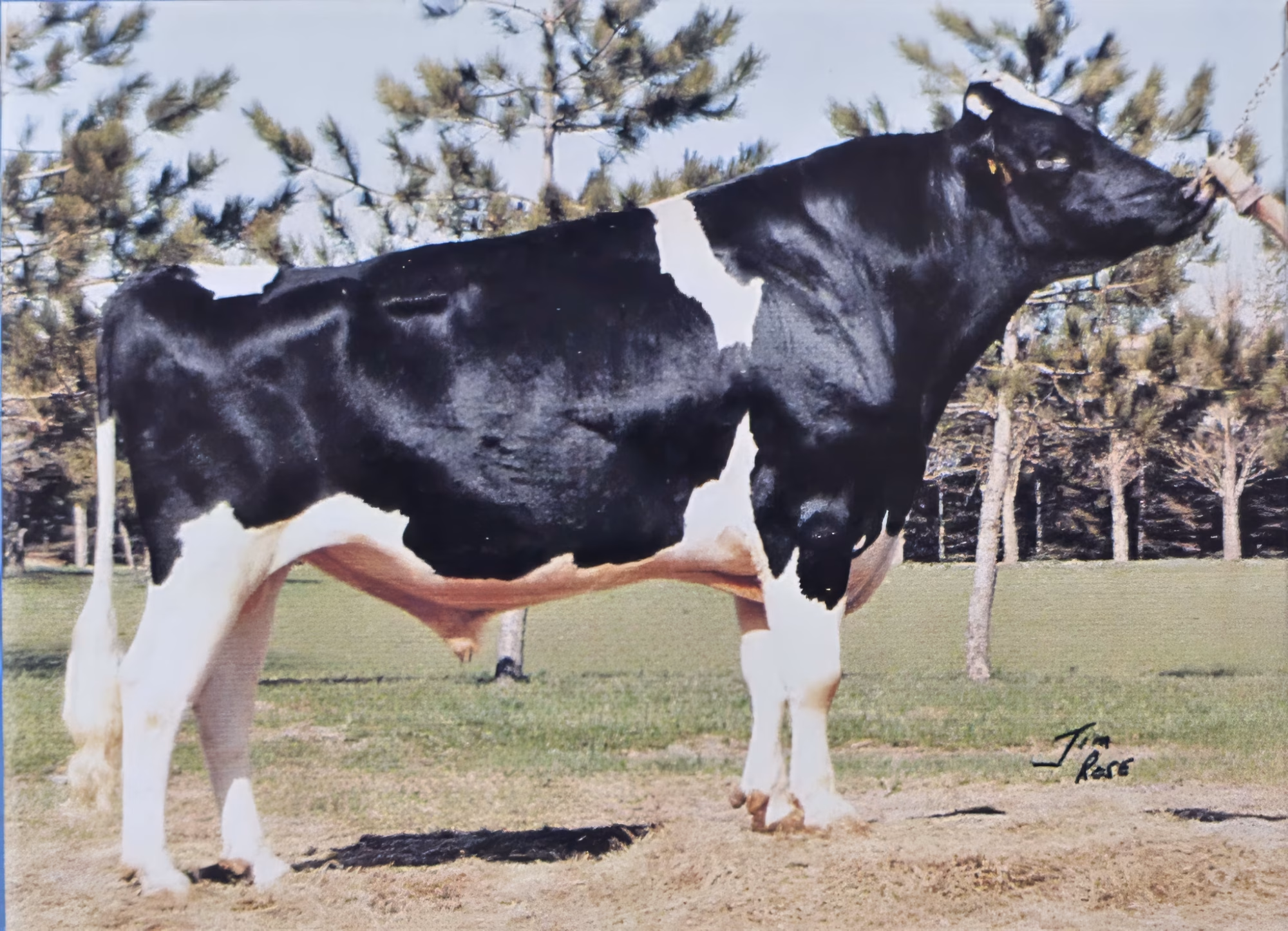
NewsSubscribe
First
Last
Consent
Send this to a friend