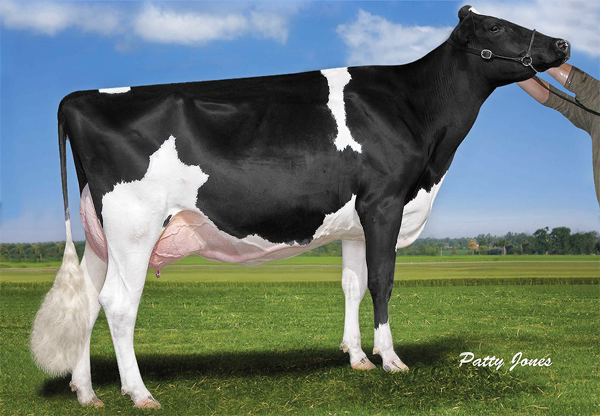
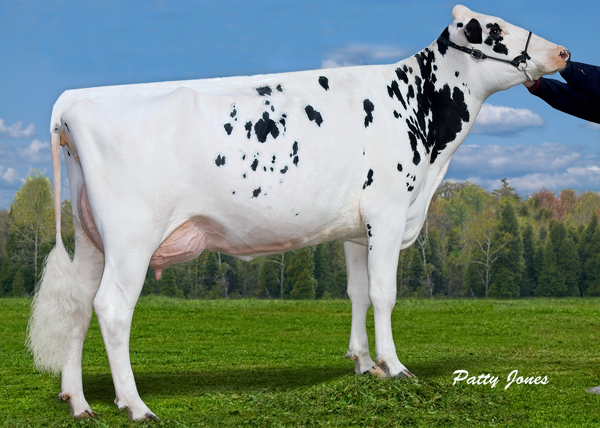
Marc Comtois bought an 18-cow farm at 18. Fifty years later, one Comestar cow family has put at least 4.5 million doses into the world, and a 2003 border closure rebuilt the farm around milk.
Comestar’s next generation and its founders, from left: Steve Comtois, Julien Turmel, Julie Comtois, France Lemieux and Marc Comtois, with a portrait of Comestar Lamadona Doorman EX-94-2E, Holstein Canada’s 2022 Cow of the Year. She’s the eighth generation of Comestar Laurie Sheik, the first Cow of the Year, in 1995.
On May 20, 2003, nine of every ten dollars Comestar Holstein earned came from selling genetics: bulls, embryos, heifers and cows. That day, Canada confirmed a case of BSE, and borders closed immediately to Canadian live animals and bovine products. The export business that had made Comestar one of the most famous prefixes in the breed stopped overnight.
That month, Marc Comtois and France Lemieux started bidding on milk quota. They have bid every month since, except one.
On September 13, 2026, the farm they started with 18 milking cows turned 50. Marc named it in 1976 for what he wanted it to become: come + star, the farm that wants to become a star. “That’s still our goal,” Marc told Le Bulletin des agriculteurs this month.
The banners are real: two Holstein Canada Cows of the Year, four millionaire AI sires and two Master Breeder shields. The more useful story is how a genetics house survived losing its main market, and what that cost in quota.
What 50 years changed, by the numbers
Metric
Earlier record
Later record
Cows
18 milking, 1976 · 119-cow herd, 2008
370 milking on six robots, 2021
Milk quota
630 kg butterfat/day, 2021
Close to 800 kg/day, 2026
Class Extra bulls bred
8, 2008
14, the all-time record for any breeder, 2021
All-Canadian nominations
51, 2008
72, 2021
Revenue mix
90% genetics / 10% milk, 2003
90% milk / 10% genetics, 2021
The last row is the story. In under two decades, Comestar flipped its revenue mix end to end without giving up the genetics that built the name.
It started with 18 cows and a father’s example.
Marc was the seventh of nine children, raised at Ferme Comtoise in Victoriaville, Centre-du-Québec. He left school at 15 to work with cattle. At 18, he bought a Princeville farm milking 18 cows. “It was a modest farm,” Marc says.
The example at home was his father, Edgar Comtois, a Holstein Canada Master Breeder in 1985. “I had a passion for cows — really for the animals more than the land,” Marc says. “We started with not much, but we moved up fairly quickly by always buying better-quality animals. I was a genetics fan. I always looked at the bull crosses and the cow crosses. That’s what took us around the world.”
Aramis Marquis sold the prefix abroad in 1979
Three years in, Comestar Aramis Marquis won his class at the Royal Agricultural Winter Fair in Toronto and went All-Canadian, the farm’s first. Italian buyers paid $8,000 for him, serious money in 1979. The ribbon and the sale took the Comestar name outside Quebec.
That set the pattern for the next 24 years: win in the ring, then sell to the world. By 2021, that single All-Canadian had grown into 72 nominations: 11 All-Canadian, 10 Reserve and 15 Honorable Mention awards.
The $45,000 cow in 40% of a year’s herdbook
In 1985, Marc bought Elysa Anthony Lea EX-15*, a Willowholme Mark Anthony daughter, and bred her to Puget-Sound Sheik. Comestar Laurie Sheik-ET arrived December 1, 1986.
Marc Comtois with Comestar Laurie Sheik-ET at the 1989 World Dairy Expo, where she placed second in the Senior Two-Year-Old class behind Dupasquier Starb Winnie. Six years later, she became Holstein Canada’s first Cow of the Year.
In 1989, she won the Senior Two-Year-Old class at Victoriaville, then went to World Dairy Expo, where she placed second and took the class’s Best Udder nod after the milk-out re-sort. That autumn, she topped Comestar’s first sale at $45,000. Eddy and Annie Pussemier of Bois Seigneur Holstein in Belgium bought half of her. Belgium wouldn’t take live Canadian cattle, so her genetics crossed the Atlantic as embryos. “Today, about 70% of our herd traces back to Laurie Sheik,” the Pussemier family says.
The mating that made her a legend was the one with To-Mar Blackstar. It produced two sons, Leader EX Extra and Lanky EX-Spain, and four famous daughters. Three stayed in Canada and went VG-87: Laura Black 24*, L’Or Black 16*, and Lausan Black 23*. The fourth, Black Laure de Bois Seigneur EX-90, was Grand Champion at Belgium’s 1996 National Show. Laura Black and L’Or Black each made the Cow of the Year final twice. Lausan Black is the only cow to put both a daughter, Lausian Astre, and a son, Stormatic, at No. 1 on Canada’s LPI lists. By 2006, Laurie Sheik sat in the pedigrees of 40% of the animals admitted to Holstein Canada’s herdbook that year.
She was Holstein Canada’s first Cow of the Year in 1995 and died April 30, 2004. Her descendant Comestar Lamadona Doorman EX-94-2E took the same title for 2022, 27 years after she did.
Four millionaire sires add up to at least 4.5 million doses
Comestar Lee 73HO2239 in a Semex Alliance ad: by Raider, out of Laura Black, Laurie Sheik’s Blackstar daughter. The pitch was “Cows Built to Last,” shown on two-year-old daughters Claustar Maree Lee GP-83 and Begette Lee Della GP-81.
“A big part of Comestar’s reputation is the bulls in the AI centres,” Marc says. “We’re the only ones in the world to have produced four millionaire bulls — bulls that produced more than a million doses. And we have one that’s a super-millionaire — more than 1.5 million doses.”
Now the floor. Lee’s 1.5 million, plus at least one million each for the other three, comes to no fewer than 4.5 million doses from one cow’s son and grandsons. That’s a minimum, not an estimate.
Three of the four trace to a single daughter. Laura Black is the dam of Lee, his brother Top Gun, and Lheros EX-97 Extra, a former No. 1 LPI sire and Canada’s first 97-point bull. Outside, EX-95 Extra came from L’Or Black. Leader is Laurie Sheik’s own son.
Lee almost never got sampled. CIAQ tested him and Top Gun off a first-calf dam scored Good Plus 84, below the Very Good bar bull studs usually demanded. Both went Extra, and Lee became the family’s super-millionaire.
A partner at home freed Marc to sell the world.
Marc Comtois gives his reasons as official judge of the 2016 National Holstein Show at the Royal Agricultural Winter Fair, his second time in that ring. He named Jacobs Gold Liann Grand Champion and called her “the cow of the future.”
Rewind to 1993, four years after Laurie Sheik’s $45,000 sale and two years before her Cow of the Year title. Overseas demand for Marc was pulling him off the farm. He and France sold half the business to Freddy and Nicole Steen, Belgian breeders who had settled in Quebec looking to buy a farm. With Freddy running things at home, Marc could travel without worrying about the farm.
The Steen years stacked up the results. The first Master Breeder shield came in 1995. In 1996, Marc won the Royal’s Curtis Clark award for exhibitor sportsmanship. A 100-cow barn went up in 1998. In 1999, Marc judged the Holstein show at the Royal. He’d take that ring again in 2016, and he has judged in more than 20 countries.
In 2000, Comestar hosted the Holstein Québec picnic for 8,000 visitors. The same year, the two-day Comestar Sale 2000 sold 269 head at an $8,036 average, topped by Comestar Model Lady VG-89 at $95,000. By 2021, Marc had sold more than 7,000 embryos into 33 countries.
May 20, 2003, turned a genetics house into a milk business
When the border shut, milk made up just 10% of Comestar’s revenue. Marc and France didn’t wait for exports to reopen. They started buying quota to rebalance the farm between milk and genetics.
“Since May 20, 2003, there’s been only one month we didn’t bid on milk quota,” Marc says. Twenty-three years of that discipline adds up to this:
Value at the cap: 800 × $24,000 = about CA$19.2 million
Growth since 2021: 630 kg to about 800 kg = about 170 kg, or 27%, roughly CA$4.1 million at the cap
How scarce it is: on Quebec’s July 2026 exchange, buyers bid for 29,453.80 kg and got 588.74 kg, a 2.0% fill rate
Comestar’s gain since 2021 equals about 29% of everything sold on the entire provincial exchange that month.
The $19.2 million is a ceiling value, not a sale price. It ignores debt, doesn’t split holdings between Comestar and the family’s second company, and starts from a rounded “close to 800.” What the math does prove is that in a market filling 2% of bids, nobody reaches 800 kg by waiting for a good month.
Genomics rewrote the market, and Comestar bred against it
The second shock was genomics, which Semex dates to 2008. AI companies started producing their own bulls and wouldn’t release semen from their top young sires to breeders. Heifers mattered more than cows, the selling window for one shrank, and outside the elite genomic heifers there was no good market for the rest.
“Genomics changed the way I could do business,” Marc told Semex in 2021. “My sales changed. My job of making bulls didn’t exist anymore. It changed my vision.”
Steve Comtois pushes up feed at the bunk. By 2021, he was overseeing the herd’s genetics, its breeding decisions and the new barn. Today he runs the genetics, and his father says he’s excellent at it.
Comestar’s answer went against the grain. In 2021, the herd was still bred about 80% to proven bulls, 10–12% to young genomic sires, and the rest to beef, with sexed semen on every first and second breeding. The farm raised more heifers than it needed and sold the surplus as fresh heifers and second-lactation cows. Marc’s breeding target was a cow that calves three or more times, and he had raised four that reached 18 years old.
The cow family kept delivering on both sides of the switch. Comestar Lautamie Titanic VG-89 33* was Canada’s No. 1 LPI cow in 2006, 2007 and 2008. Lamadona, from the same Laurie Sheik line, won the Junior Three-Year-Old class and the Genetic & Production trophy at World Dairy Expo in 2016, went Reserve All-American that year, and was HM All-Canadian in 2015 and 2016. She’s the eighth generation of Laurie Sheik to classify VG or EX. The 2023 Comestar Legacy Sale still topped at $42,000.
Succession came before the robot barn.
Even before the genomic shockwaves hit the market, Comestar had already begun future-proofing its ownership. In 2007, Marc and France bought back the Steens’ half, since the Steen children weren’t interested in farming. Julie, her husband Julien Turmel, and Steve had told them they wanted in.
The family handed over the farm in stages. In 2010, it created Oli-Fay Holstein, named after the first two grandchildren, Olivier and Marie-Fay. In 2013, Julie, Steve, Kathleen and Julien became shareholders, and consultant Ann Louise Carson spent three months helping the family set roles, weekly meetings and decision rules.
Comestar Holstein from the air, 50 years after Marc Comtois and France Lemieux started with 18 milking cows. The farm now holds close to 800 kg/day of quota, and the family’s 2020 robotic barn went up near the original farm.
The barn came last. Cows started milking in the new robotic freestall on October 13, 2020: 722 by 142 feet, 586 sand-bedded stalls and room for eight DeLaval VMS 300 units. Natural herd growth filled it without a single purchased animal.
Cows in Comestar’s robotic freestall. “The first cows to move into the new freestall barn were our tiestall cows, because our cows can work anywhere,” Marc told Semex in 2021. “They are all built the same.”
Steve runs the genetics now, and he’s excellent at it, Marc says. Julie handles herd management and the reporting that comes with it. Julien does the embryo transfer and runs the crops. Nicole Steen still keeps the books, 19 years after the partnership ended. Two of the four children, Julie and Steve, are in the business today, and the grandchildren are already showing an interest in farming.
Marc Comtois and France Lemieux (centre) with three generations of the Comtois and Turmel families. “My dream is to see my grandkids have the same passion for cows as I do,” Marc told Semex in 2021.
Five decades of honors
1995, 2009: Holstein Canada Master Breeder
1996: Curtis Clark Award, Royal Agricultural Winter Fair
2007: Premier Breeder, Royal Agricultural Winter Fair
2008:National Dairy Shrine Distinguished Dairy Cattle Breeder, the 36th recipient and the second Canadian, after Roy Ormiston in 1989. “It goes to a breeder who has distinguished himself, who shows sportsmanship and who sets a good example,” France says.
Ask Marc for his proudest achievement, and he doesn’t have to think long. “Being in the Agricultural Hall of Fame in Quebec and in Canada,” he says. “That sums it all up.”
What Comestar’s 50 years say to a breeder today
Stress-test your revenue concentration. In May 2003, 90% of Comestar’s income ran through export channels. If one border, one buyer, or one stud carries more than half your revenue, write down now what you’d do the week it closes.
Build a cow family, not a star cow. Laurie Sheik multiplied through four Blackstar daughters on two continents. One of them, Laura Black, gave AI three Extra bulls, including a super-millionaire her own first-lactation score nearly kept out of sampling. One great cow tops a sale. Several strong daughters make a breeding program.
In quota provinces, bid every month your cash flow can carry it. At a 2% fill rate, the herds that end up with kilograms are the ones in every exchange, not the ones timing it. Price each bid at the full cap (in Quebec, $24,000/kg) and run it past your lender first.
Settle ownership before you pour concrete. Comestar went from new entity (2010) to shares and outside facilitation (2013) to barn (2020). The barn was built for people who already owned the business.
Half a century after an 18-year-old named a Princeville farm for a star it hadn’t reached yet, Marc still says the goal hasn’t changed. By any measure the breed keeps, they reached it a long time ago. The family is still acting like they haven’t.
Learn More
The Proof You Waited Three Years For Averaged a $72 Markdown — Arms you with the math to stop waiting on daughter proofs. Runs the Hold-to-Proof Cost Simulator to quantify the maintenance overhead per sire, exposing why acting on early genomic predictions outpaces the traditional sampling model.
Revolutionary Sperm Testing Exposes Hidden Bull Fertility Crisis — Secures your AI investment against hidden subfertility that conventional testing misses. Breaks down how time-dependent metabolic analysis catches rapidly deteriorating semen, preventing an $8,200 annual drain on your margins from extended calving intervals.
The Sunday Read Dairy Professionals Don’t Skip.
Every week, thousands of producers, breeders, and industry insiders open Bullvine Weekly for genetics insights, market shifts, and profit strategies they won’t find anywhere else. One email. Five minutes. Smarter decisions all week.
A 180-acre farm near Lancaster, Ontario. A Scottish cow bought with her best calf already inside her. And the bull who turned a half-dozen villages by the Quebec line into the source of the Ayrshire breed.
The telephone calls came the following year, and each one asked the same thing.
Ayrshire breeders across the American Northeast were ringing officials at Waterloo, Iowa — home of the National Dairy Cattle Congress, the show that mattered most on that side of the border until the dairy associations pulled their support in 1965 and took the big shows to Madison. The callers weren’t asking about entry deadlines or stall assignments.
Are the LaFranchis coming to Waterloo this year?
Yes, they are.
We won’t be there, then. What’s the use?
Grown men who’d given their lives to Ayrshire cattle, men whose prefixes carried real weight — Lippitt, Meredith, the staid old Northeastern establishments — deciding it wasn’t worth loading the truck. All because three brothers from Calistoga, California had come to Iowa the previous fall with Oak Ridge Farm and walked out with seven class winners and most of the grand championships.
Norman Nabholz, who wrote Millionaires in the Cornfields about the herds that dominated Waterloo and who never owned an Ayrshire in his life, said it about as plainly as anybody could: “Probably the finest group of dairy cattle that ever existed.”
Here’s the part nobody said out loud on those phone calls, because everybody already knew it.
The LaFranchis hadn’t invented those cattle. They’d bought the engine. Six of their herd sires were bred at one place — a farm in Glengarry County, Eastern Ontario, four miles northwest of the village of Lancaster, where people still spoke with Scottish burrs and the Ayrshire cow was, as the old accounts have it, religion. Some of their foundation females came from there too.
The prefix was Glengarry. And this is how a family of Scottish immigrants working 180 acres, hauling cows between two barns on a stoneboat behind a pair of Clydesdales, ended up supplying the genetics that emptied the trucks of an entire show circuit.
ACT I: THE SCOTS BY THE QUEBEC LINE
Livestock historian E.W. Morwick, who preserved most of what we know about this farm, heard the legend as a schoolboy in short pants. Somewhere down by the Quebec border, he was told, was a tight little community — half a dozen small villages — where all the good Ayrshires came from. Names got mentioned. Bonnie Brae. Burnside. Cherry Bank. Maple Crest. But the name he heard most was Glengarry.
Then, as a teenager hauling to the Canadian National Exhibition with Holstein show herds, he stopped to listen every time the Ayrshire results came over the public address. Selwood. Sanholm. Selwood again. Never Glengarry. Never Maple Crest.
So he said what any honest kid would say: maybe those herds down by the Quebec border aren’t as good as people claim.
His verdict, written decades later, runs three words. They were better.
Now, the thing about the Ayrshire in that era — you have to picture what these people actually had standing in the tie-stalls. This was the only major dairy breed to come out of the British Isles, developed in the county of Ayr in southwestern Scotland. Red and white, medium-framed, mature cows running just over a thousand pounds. Long, light horns with dark tips, back when nobody dehorned. Remarkably straight toplines carried level over the rump, and udders good enough that breeders bragged about them in print. Milk of fine curd texture that made first-rate cheese — which mattered enormously to Scottish farmers and, later, to the men shipping into Montreal.
Scottish settlers brought them over in the early 1800s. The Quebec importers organized in 1870, Ontario’s breeders in 1872, and the two amalgamated in 1898 into the association that still registers the breed today. So by the time this story starts, Canadian Ayrshire breeding had herd books, institutions, and a settled habit of going back to the old country for fresh blood.
John Cumming came out of Kintyre, Argyllshire, in 1825 and settled at Allan’s Corners near Ormstown, in the Châteauguay Valley southwest of Montreal. His son Donald was born there on April 18, 1844.
Donald’s name first appears in Volume 2 of the Ayrshire herd book, as owner of a female called Snowball 3854, born May 6, 1886, bought from James Cottingham of Ormstown. Volumes 3, 4, and 5 list many more.
About two decades after those first Ayrshires, Donald moved the whole outfit across the St. Lawrence into Glengarry County and took up 180 acres in the McLennan Settlement. Ten children. The eldest son was Malcolm — Mac to everyone. The youngest was Donald Jr.
Those two are where a good herd becomes a dynasty.
When the old man retired in 1915 — he’d die in 1927 at 83 — he split the farms and the herds between them. Donald Jr. took the home place. Mac set up on the next concession. Their father wanted two separate operations, and on paper that’s exactly what he got.
The brothers had other ideas.
They’d own the herd sires in partnership. Every calf born on either farm would be registered under the Glengarry prefix, bred by Cumming Bros., and anything shown at a fair went into the ring under that single name.
The milk went two ways. Malcolm’s farm sat close to the tracks, so his cans went onto the train for Montreal every day under contract. Donald, on the home place, ran Glengarry Dairy — pasteurizing and bottling on the farm and selling it door to door. He bought milk from three and sometimes four other Ayrshire herds to keep the route supplied, one of them a satellite herd the brothers set up on another farm they owned.
That business ran from the 1920s until the milk marketing board arrived and banned breed-specific milk, which shut it down in 1967. Forty-odd years of selling Ayrshire milk as Ayrshire milk, ended by a regulation.
One prefix. Two herds. Two milk cheques — and, for more than forty years, one bank account between the two farms.
Both farms had bulls. Both farms had milking cows. What they shared was the right to use each other’s sires — and when a brother wanted a particular bull, Cherry Bank Brown Bomber or Edgerstounes Sir Oliver, the cow went down the road to wherever that bull was standing. On a stoneboat, the flat sled farmers dragged over bare ground or snow, behind a team of Clydesdales.
And then there was the harder decision, the one that came around every autumn.
They showed one string. One. Picked out of two barns.
Think about what that means between brothers. Every fall, two men who kept separate herds had to agree on which cows were good enough to carry the family name into the ring — and which ones, from either barn, weren’t. Nobody got a sentimental pass because the cow came out of his own tie-stalls.
That’s a standard enforced at the one place standards usually collapse: where saying no costs you something personal. Everything Glengarry became grew out of that decision, made once a year, for decades.
And don’t mistake Mac for the junior partner in the argument. He held the presidency of the local Ayrshire club from 1931 to 1948, the better part of two decades, and by 1941 he was standing in the middle of the ring at the CNE as the man placing the Ayrshire classes — the same show where young Morwick had listened in vain for the Glengarry name. Think about the endorsement buried in that. The breeder who got sent home from his brother’s barn door was the breeder Canada’s biggest fair trusted to sort everybody else’s cattle.
Two men with the eye, then. Neither one folding.
Mac Cumming, Ayrshire judge at the Canadian National Exhibition, with Holstein fieldman Bob Holtby, 1941. Morwick spent his teenage years at this fair waiting to hear Glengarry called over the public address, and never did. What he missed was the man in the middle of the ring, deciding who won.
One thing the record gets wrong, and the family has heard it repeated for years. There was never a Belgian on the place. This was Scots Glengarry, and a continental horse was not welcome in it. The Cummings kept world-class Clydesdales — good enough that by their own farm books in the 1930s, a stallion standing at stud was netting about as much as the cattle. Friends who knew exactly how the brothers felt used to ask, straight-faced, how the Belgians were coming along. Somewhere along the way the joke got written down as fact.
The Scottish Pipeline
What separates Glengarry from a hundred other capable farms is that the Cummings never settled for the genetics that happened to be nearby. Year after year, they imported from Scotland themselves or bought out of other men’s shipments.
Understand what an import meant then. No semen tank, no embryo, no genomic test to tell you what you’d bought. You paid for a living animal, put her on a ship, and prayed. Sometimes she carried the next generation inside her, and that gamble was the whole point.
Their 1927 shipment brought in Dalfibble Narcissus. In 1928 she made 22,050 pounds of milk on yearly test — the highest cow in Canada that year, any breed. Ayrshire herd averages of that era ran nearer 10,000 pounds over a full lactation, so she was better than double her breed’s ordinary. Townhead Julia and Hobsland Nancy came over in the same lot, and both founded families that mattered. Her grandfather milked her four times a day, by hand, for that lactation. The production trophy is still in Ian Cumming’s house.
But the cow who paid for that whole era a thousand times over came later, and she reached Glengarry by a roundabout road through one of the great Canadian herds.
The Honourable Frank C. Biggs, proprietor of Glen Campbell Farm near Dundas, and Ontario’s Minister of Public Works and Highways from 1919 to 1923. His 1936 order for a dozen Scottish heifers is what sent Adam Montgomerie into the Threave barnyard. Biggs never owned the yearling he found there — the Cummings bought Threave Flirt 2nd when she landed.
Frank C. Biggs — the Honourable F.C. Biggs — served as Ontario’s Minister of Public Works and Highways in the Drury government from November 1919 to July 1923, the man under whose watch the province’s paved highway system got started. He kept Ayrshires at Glen Campbell Farm out past Dundas, and they were known on both sides of the line. His cow Ardgowan Valda, bought from her Scottish breeder Sir Hugh Shaw Stewart, took grand champion at the CNE in 1936 and then laid down 31,156 pounds of milk and 1,356 pounds of fat as an eight-year-old — a world championship Ayrshire record.
Ardgowan Valda, bought from her Scottish breeder Sir Hugh Shaw Stewart and shown by F.C. Biggs. Grand champion at the CNE in 1936, and in 1937 she recorded 31,156 pounds of milk and 1,356 pounds of fat as an eight-year-old — a world championship Ayrshire record, in an era when herd averages ran nearer 10,000. The same year she won at Toronto, Biggs ordered twelve more heifers out of Scotland.
Biggs sent his son Dick to Scotland to buy, and used agents there, too. One agent was Adam Montgomerie of Lessnessock, the man the Ayrshire world would eventually call the Laird — and then, simply, the Ayrshire King.
In 1936, Biggs ordered a dozen heifers. Montgomerie, hunting something above the ordinary, went first to Colonel Houldsworth’s Threave herd at Kirkmichael in South Ayrshire.
In that barnyard he stopped walking.
Style and dairyness — that’s all the record gives us for what pulled him up in front of a yearling heifer. It doesn’t say which line caught him first. But in a Scottish barnyard in 1936, dairyness meant an open, angular sort of femininity, a level top on an animal still growing into herself, and an udder attached high and tight enough to promise she’d still be sound at ten. Whatever he saw, he stood there long enough to ask about her breeding.
Her dam was Threave Flake 3rd, the herdsman told him, and her sire was Lessnessock Corra Boy — a bull Montgomerie had bred himself out of Linhead Cora Linn 2nd, one of the celebrated cows of the 1930s, by Lessnessock Sunny Jim.
Her name was Threave Flirt 2nd.
Montgomerie bought her. And while she stood waiting for her ship, he bred her to his own herd sire, Burton Atlantic, a son of Lessnessock Atlantic.
That mating was anything but casual. Sunny Jim was Flirt’s paternal grandsire, and Sunny Jim had also sired Lessnessock Atlantic — so the calf she’d carry across the Atlantic came with two crosses to one bull. Concentrated on purpose. Montgomerie’s own sale catalog spells out the thinking: line breeding to intensify a double cross of the great cow Friendlesshead Nannie White Legs and her three sons, of whom Sunny Jim was one. The catalog claimed that cow had wider influence on Ayrshires worldwide through her sons than any other female, living or dead.
Flirt landed in Canada. The Cummings bought her.
And in early 1937, in a Glengarry County barn, she dropped the bull calf she’d been carrying since Scotland.
They registered him as Glengarry Sir Burton.
Here’s a thing worth pausing on. The same year Montgomerie stood in that Threave barnyard, a Calistoga high-schooler named Henry LaFranchi bought two Ayrshire heifers for an FFA project. Neither had any way of knowing the other existed. Twenty-four years later, their two decisions collided in an Iowa show ring.
ACT II: TWO BULLS AND A SWEEP
Sir Burton wasn’t the first great bull those brothers owned. He was the second half of a one-two punch — and the first half had already taught them a lesson they paid for once and never forgot.
Edgerstounes Sir Oliver was born in 1925 in Princeton, New Jersey, on the farm of Mrs. John Winant. His sire was Hobsland Air Pilot. His dam, Garloff Miss Olive, had topped the three-year-old class at the parish show in Ayr before Winant imported her.
A Lancaster-born herdsman named Ray Watt was working at Edgerstoune then — the Watts were another Scottish family who’d come over about when the Cummings did, settled in Châteauguay County, then crossed the river and founded Maple Crest. The story that’s come down is that Watt pulled Mrs. Winant’s son off a runaway horse, and the grateful mother handed him the bull calf.
Watt brought him home and showed him in the yearling class at the 1926 Royal Winter Fair. Picture him leading that bull out afterward — a young herdsman with a staff in one hand and the best gift he’d ever been given on the other end of the lead, walking past the rail where two brothers from Glengarry County had stopped to watch.
They took him home after the show for $700 — serious money in 1926, split between two brothers who kept their milk cheques separate. Serious money in 1926, split between two brothers who kept their milk cheques separate. And understand what they were buying: a yearling bull with no daughters anywhere, judged entirely on how he looked walking in a ring. If he’d bred nothing worth keeping, there was no A.I. contract to bail them out and no way to spread the loss. They’d have paid a serious piece of a year’s milk money for a mistake and gone on milking.
Two years later, Sir Oliver stood senior and grand champion at that same Royal.
Edgerstoune’s Sir Oliver, foundation sire of the Glengarry herd. Mac and Donald Cumming bought him out of the yearling class at the 1926 Royal Winter Fair for $700, and he came back two years later senior and grand champion. His lasting mark was quieter: an inbred daughter, Glengarry Lady Cony, whose son by Glengarry Sir Burton fused the two lines the herd was built on.
But here’s the line that tells you what kind of breeders these were. Years afterward Donald said acquiring Sir Oliver “was a great boon for our herds” — then added, “but perhaps not so good for him.” Two earlier herd sires had left daughters that weren’t what they should have been, and Sir Oliver got mated to some of them. “Had he been mated with better cows,” Donald said, “he would have made an even better showing.”
A man crediting his bull and convicting himself in the same breath. You don’t hear that often, then or now.
Get of Edgerstoune’s Sir Oliver — second prize at the 1929 Royal Winter Fair. From left: Glengarry Miss Julia, Glengarry Lady Cony, Glengarry Lou and Glengarry Fluffs Oliver. A get class asks one question, whether a sire repeats himself, and these four answered it. Second from the left is the one who changed the herd: Lady Cony, dam of Glengarry Conys Burton.
His daughters had presence anyway. Four of them stood second as a get of sire at the 1929 Royal — that’s the class where a bull is judged on a group of his daughters shown together, the oldest and most brutal test of whether a sire can repeat himself. One of those four was Glengarry Lady Cony, and she was inbred: her dam, Glengarry Olivers Cony, was another Sir Oliver daughter. Much of the Cumming reputation was built on her work.
So when Threave Flirt’s son came along, Glengarry had better cows waiting than Sir Oliver ever got. They’d learned it the expensive way.
Burton Earns a Ribbon, Then Earns His Name
As a senior calf, Glengarry Sir Burton placed second in a class of 17 at the 1937 Royal.
Glengarry Sir Burton — the calf Threave Flirt 2nd carried across the Atlantic. Note the level top and the depth through the barrel: the frame Ayrshire men were chasing in 1938, when he won the senior yearling class and stood reserve grand champion against 300 head at the Royal. Fifteen years later, his progeny took both grand championships, both reserves and the get of sire at that same show.
He came back the next fall, won the senior yearling class, and stood reserve grand champion at a show with 300 head of Ayrshires entered.
Three hundred. That one number tells you how deep this breed ran in Canada then, and how little a single banner proved.
Because a show bull wins for an afternoon. A breeding bull keeps winning long after he’s gone, through sons and grandsons and matings made by strangers who never laid eyes on him.
The cross that did it was Sir Burton on Glengarry Lady Cony, the inbred Sir Oliver daughter. Their son was Glengarry Conys Burton, and with him the two Glengarry sire lines fused into one.
This is what the old men meant by “nicking.” Not stacking good pedigrees and hoping. Finding two lines whose transmission patterns complete each other, one supplying exactly what the other lacks. Sir Oliver’s visual appeal and established female families, meeting Sir Burton’s concentrated Scottish inheritance.
It worked so well that Morwick called Sir Burton’s sons the most influential group of paternal brothers in Ayrshire history.
Conys Burton served at Glengarry first, then sold at maturity to the Stansell family’s Selwood Farm at Aylmer — Selwood, one of those prefixes young Morwick used to hear announced at the CNE while Glengarry went unmentioned. There he sired Selwood Gretas Burton and Selwood Coras Burton and a long line of heavy producers topped by Glengarry Betty Ann, dam of Selwood Bettys Commander. And because Commander’s sire was Selwood Coras Burton, that bull came out a Conys Burton double grandson.
Read that twice if you like. Glengarry cattle were now improving the herd that used to beat them.
Then there was Glengarry Bit O’Fashion, and breeders argued for years over whether he or Conys Burton was the better bull. Nobody ever settled it, partly because Bit O’Fashion went east instead of west. He saw heavy service in the leading Prince Edward Island herds and finished out his working life on Colonel F.I. Andrew’s farm — a Glengarry bull ending his days on Island soil, leaving daughters in barns a thousand kilometers from the stoneboat road.
And Glengarry Burton Prince sired Glen Campbell Lou Burton — Biggs’s cow — grand champion at Waterloo in 1949. First time a Glengarry bull sired a U.S. national winner.
Nobody in Iowa knew it yet. That was the opening shot.
Toronto, 1953
The Royal again. Sir Burton had last stood in that ring as a senior yearling back in 1938, fifteen years earlier, and his own showing days were long behind him.
His progeny hadn’t been idle.
When the judging finished, Sir Burton’s offspring had the grand championship in the male division. And the grand championship in the female division. Then both reserves. Then the get of sire.
Every summit in the show. One sire family.
You can read that as a ribbon count, and plenty did. But watch what a Canadian Ayrshire man would have done with the information on the drive home from Toronto. If one bull’s descendants have just swept the national show, next spring’s breeding decision isn’t complicated.
You get Burton blood, or you get beaten by it.
Which is precisely what happened. At the 1955 Royal, Conys Burton sired the winning senior get for Colonel S.C. Oland of the brewing family. White Pansys Burton, a Sir Burton grandson, was second in the senior get for Cumming Bros. and first in the junior get for S.S. Rose & Sons — and a substantial share of the individual class winners that day were Sir Burton grandsons and granddaughters.
At the 1956 Royal, Glengarry Pansys Burton — Sir Burton’s great-grandson, by White Pansys Burton — won his second grand championship in a row for Richard Bros. of Red Deer, Alberta. The same afternoon, he sired the junior and reserve junior champion males and the first-prize junior get, and he and three half-sisters made up his own sire’s winning senior get.
Alberta. Prince Edward Island. Ontario. And the American Midwest coming up fast.
Sir Burton had stopped being an animal in a pedigree. He’d become the frame the breed was being built on.
Foundation Animal
Key Progeny
Legacy / Modern Impact
Glengarry Sir Burton
Glengarry Conys Burton
1953 Royal Sweep; transformed Selwood herd
Glengarry Dora (EX-93)
Glengarry Lloyd Royal
4,000 calves in Year 1 of ABS; 3x Waterloo Grand Champions
Glengarry Dora (EX-93)
Glengarry Worthy Conquest
Shipped to Oak Ridge (CA); sire of Connie Kathleen
Oak Ridge Bruis Bonnie
Palmyra Tri-Star Burdette-ET
7x Premier Sire at World Dairy Expo (2013–2019)
The Cows Behind the Bulls
Sire dynasties get the headlines. Female families make them possible, and Threave Flirt 2nd wasn’t finished.
Bred back to her own grandson — Glengarry Nancys Burton — Flirt produced Glengarry Renee, classified Excellent. Renee gave three Excellent daughters — Excellent being the top grade a trained association classifier could award on conformation. And in an era when a classifier reached your farm maybe twice a year if you were lucky, an Excellent cow was a destination. Neighbors drove over to look at her.
Glengarry Dora, EX-93 — Threave Flirt 2nd’s granddaughter, sired by Cherry Bank Brown Bomber. Two of her four sons took the family beyond Glengarry County: Lloyd Royal to American Breeders Service, where he sired 4,000 registered calves in his first Wisconsin year, and Worthy Conquest to Oak Ridge in California. Morwick credited the spread of the Flirt line to two animals — Glengarry Sir Burton, and this cow.
Renee’s best was Glengarry Dora, EX-93, sired by Cherry Bank Brown Bomber — a bull bred by A.E. McArthur of Howick, Quebec, who stood at Glengarry through the 1940s and left Dora, Glengarry Pearl Star and Kinnettles Bomber Alona of Selwood fame.A clipping in the Glengarry County Archives calls Dora the world’s highest lifetime milk producer. The family says that’s the wrong cow. The world’s lifetime record went to Middle Brook Fancy Madge, bought by Meredith Farms in Massachusetts — and she was sired by Glengarry Fancy Boy, another son of White Pansys Burton.
Which is worth stopping on, because Meredith was one of the herds that stayed home from Waterloo. The old Northeastern establishment that wouldn’t load the truck against Oak Ridge owned the world’s lifetime production record, sired out of the same Glengarry County barns.
She had four exceptional ones. Two changed the map.
Glengarry Lloyd Royal, by the imported Lessnessock Lloyd, started in Paul McDonald’s Mackayr herd in Illinois. Then his first sixteen classified daughters came in averaging 89.9 points. Nine Excellent, seven Very Good.
Sixteen for sixteen, not a poor one in the group. American Breeders Service bought him on the spot.
And here the whole story shifts gear, because artificial insemination had arrived. In his first year of service in Wisconsin, Lloyd Royal sired 4,000 registered offspring.
White Pansys Burton had other sons worth naming. Glengarry Fancy Boy went to Paul McDonald in Illinois, the same herd where Lloyd Royal started, and the two lines nicked — then Fancy Boy went into A.I. himself and sired the world’s lifetime production record holder.
And Glengarry Captain Carlson stayed home. A third of his daughters classified Excellent, and by the family’s account they lasted forever. Set that beside Shirley Ura, another Pansys Burton daughter still filling a pail at seventeen, and something is clearly running through that bull on the longevity side — decades before anyone had a term for it.
Four thousand. In twelve months. Out of a cow family that had been traveling between two brothers’ farms behind a team of horses thirty years earlier. His daughters won grand champion at Waterloo in 1969, 1971 and 1973.
Dora’s other great son was Glengarry Worthy Conquest, born November 12, 1953, by the imported East Raws Lucky Way.
He’s the one who went to California.
Calistoga
Massimino LaFranchi left Switzerland in 1888 at fourteen and milked cows around Sonoma County until he’d saved enough to buy land. In 1912 he bought 500 acres outside Calistoga, in Knights Valley, and named the place for the oaks on the hillsides. Horses, chickens, pigs, cattle. An ordinary farm of its time.
The Ayrshires started with the youngest boys. Henry bought his two heifers in 1936. His brothers Al and Nick joined him, and the three of them spent the next four decades building one of the most respected herds in the country — traveling to fairs and expositions by boxcar, of all things, and taking top honors wherever the boxcar stopped.
They also broke with tradition in a way that says something about them. The Ayrshire’s horns were the breed’s glory. Henry got hurt by a set of them, and Oak Ridge became one of the first herds anywhere to dehorn.
But the cattle themselves came largely from Canada. Six Glengarry herd sires. Glengarry Pearl Star as a foundation cow. Glengarry Bondsman — the Nancys Burton son — sired Oak Ridge Bonnie Bluebird, grand champion female at Waterloo in 1960.
Worthy Conquest came down from Canada in 1957, and the California paper that noticed him the following January described him the way a herdsman would: dark-colored and short-tempered. His most influential daughter was Oak Ridge Connie Kathleen, grand champion at Waterloo in 1962 — and look hard at her pedigree, because it’s the old nick running again. Her maternal grandsire was Oak Ridge Oracle, himself a grandson of Glengarry Conys Burton.
Mated to Oak Ridge Lightning, Connie Kathleen produced Oak Ridge Flashy Kathleen, Oak Ridge Flashy Klondike and Oak Ridge Flashy Kellogg. Pull up Klondike in a bull-search database this morning and there it still sits — Connie Kathleen as dam, Glengarry Worthy Conquest as maternal grandsire.
The recognition came before the ribbons. In 1959 the LaFranchis took the Constructive Breeder Award. In 1960 came another honor requiring excellence in both production and type — the fourth such award Oak Ridge had earned.
Then the fall of 1960 at Waterloo. Seven class winners. Most of the grand championships. Then the telephone calls.
And they weren’t done. In 1975, Oak Ridge Kellys Rosid became the first cow of any breed other than Holstein named Supreme Champion at World Dairy Expo. A red-and-white Ayrshire out of Knights Valley, standing above every cow in Madison.
ACT III: WHAT LASTED
Not everything here is ribbons, and the cow who proves it never set foot in Iowa.
Shirley Ura was a White Pansys Burton daughter the Cummings bought as a 17-month-old heifer. They went back later for her full sisters, Stella Ula and Burtons Barbara Ann.
Shirley Ura became the first Canadian Ayrshire to produce over 200,000 pounds of milk in her lifetime.
Shirley Ura — a White Pansys Burton daughter the Cummings bought as a 17-month-old heifer, and the first Canadian Ayrshire past 200,000 pounds of milk in a lifetime. At seventeen she was still turning in 21,978 pounds of milk and 840 of fat. No banner made her famous. She’s the other half of the Glengarry argument: the ideal that survives twenty winters in a working barn.
Her last record: 21,978 pounds of milk and 840 pounds of fat. At seventeen years of age. Family recollection says she was still calving at twenty. And she was milked by hand.
Picture what that looks like in a tie-stall barn — an old red-and-white cow rising hind end first the way they do, still filling a pail twice a day while heifers born after her granddaughters file past on the way to the water bowl. One imagines a hand running down that topline more often than strictly necessary.
Set her against the cows you culled at six because a foot or an udder quit. Show winners prove an ideal exists for one afternoon under one judge. Cows like Shirley Ura prove it survives twenty winters on real feed in a working barn. The Cummings bred both, and if you want the whole argument in one animal, she’s it.
They kept them like it mattered, too. In MacNaughton Cumming’s day two full-time hired men brushed the cows every day through the winter and washed tails every second day — which delighted the Montreal milk inspectors when they turned up unannounced.
The Man Who Told the Ayrshire King He Was Wrong
Adam Montgomerie — the Laird of Lessnessock, breeder of the bull who sired Threave Flirt and of the bull behind her calf, whose 1946 sale moved 49 bull calves at an average of 2,267 with a top of 8,176 in Scottish money — used to visit Glengarry Stock Farm.
MacNaughton Cumming, Mac’s son, was not overawed.
“He was a smart cattleman, no doubt,” MacNaughton said, “but not nearly as clever as he thought he was. Going down the row, he would point to cows he considered our best. But usually he was way off the mark.”
There it is. The most famous Ayrshire breeder on earth walks your barn, picks out your best cows, and a farmer from Glengarry County says he had the wrong ones.
Call that arrogance if you want. I’d call it the settled confidence of a family that had been reading these cattle for three generations and had the herd book to back it.
MacNaughton was that way about everything. He kept a Quebec milk quota while farming in Ontario, and justified it with a line his family never forgot: “If you own a Cadillac, you don’t switch to a Chevrolet.” He talked about free-stall housing before dairy leaders knew what he meant. He tile-drained every acre and got scorned for “burying good money in the ground” — then landed in the hospital with an ulcer from the stress of being the man who did it anyway.
When quota became the currency of Canadian dairying, he drove every month to a smoke-filled, French-speaking hall at Ste. Martine to bid. Farm leaders sneered to his kids about why their father bothered expanding when a man could make a fine living milking thirty.
At 86, standing in the bank in his barn clothes, out of patience with waiting, he hollered through a half-open door loud enough for the whole lobby: “We got the quota so we need $250,000.”
How long do you want me to term it?
“I’m 86. So I don’t give a damn.”
Somebody once asked him whether he ever went home regretting what he’d said at Ayrshire meetings. He thought about it. “No, but I’ve come home regretting not saying more.”
Three Endings
Malcolm Cumming died in 1967, and the herd he’d built with his brother didn’t carry on as one piece. When Donald and MacNaughton went their separate ways, the original Glengarry breeding operation stopped. MacNaughton started fresh under a prefix that carried his father’s name — Glen Malcolm — and that herd is still breeding Ayrshires today. The second unit, later run by Donald’s son Norman, sold as a going concern in the mid-1970s.
That’s how these things actually end. Not a dispersal poster and one dramatic afternoon, but farms dividing, prefixes pausing, brothers deciding.
The Biggs place had gone the other way, and faster. The Honourable F.C. Biggs died in the spring of 1942, and two years later his sons Dick and Tad dispersed Glen Campbell under advertising that called it Canada’s superior all-time Ayrshire herd dispersal. The 134 head averaged $385.50.
A pair of presidents compare notes: R.O. “Dick” Biggs, left, of the Canadian Ayrshire Breeders’ Association, with Ben Thomson of the Holstein Association, 1941. Three years later, Biggs and his brother Tad dispersed Glen Campbell — the herd their father built. By 1965 he was supervising Canada’s Holstein exhibition herd on a tour of Europe.
And Oak Ridge? On the first Saturday in August 1975 — the same year Kellys Rosid stood Supreme at Madison — the LaFranchi brothers held a dispersal and sold nearly all the Ayrshires. Beef cattle moved into those barns, mostly registered Black Angus, and they’re there yet. Think about that timing. The herd that had frightened the Northeast into staying home was sold at the very top.
Great herds are fragile that way. They last exactly as long as somebody keeps choosing to keep them.
Ian Cumming, MacNaughton’s son and, for years, a columnist in the Ontario Farmer, brought the Glengarry name back on a nearby farm. In 2010 he sold and moved to New York State — 23 miles, farm to farm — where his own son Mac took over.
In 2004, Ayrshire Canada handed MacNaughton a lifetime membership. On the night of that banquet, twenty minutes from Cornwall, better than 200 Ayrshire cows on three modern farms belonging to his three sons were being milked, with grandsons already coming on behind them.
He died at milking time on a Tuesday morning in December 2014, at 92, in the house his grandfather built — where he’d lived for 90 of those years, the first two in a whitewashed log cabin whose photograph hung on the wall. The barn was across the road. The lights came on that morning, as they always had.
His son wrote the plainest epitaph a farm family can write. Dad was a farmer.
Hagerstown, Maryland
Here’s where the thread comes out the other side.
Ralph Shank Sr. built his Ayrshire herd in western Maryland out of almost nothing — he and his brothers, short of funds, buying blemished cattle and the “behind the ring animals” that hadn’t sold. His father had started the farm’s Ginger family with a purchase back in the 1940s. Ralph Sr.’s ambitions weren’t modest, though: one of the largest Ayrshire herds in the country, a number one genetic bull and cow, and bulls sold to A.I.
In 1975 — the same year Oak Ridge dispersed — the family made what his daughter, Mary Shank Creek, still calls one of their best buys ever at the National Sale.
An Oak Ridge cow. Her name was Oak Ridge Bruis Bonnie.
“She made anything ‘B’ in the herd,” Mary says. “She made tremendous females and males, and is the foundation dam of Burdette.”
Three years later, Bruis Bonnie was standing senior and grand champion female for Palmyra Farm, and decades on, she still turns up on the roster of great cows in the All-American Dairy Show’s history. But it’s that last clause of Mary’s that matters.
Burdette. Palmyra Tri-Star Burdette-ET.
If you’ve stood at the Ayrshire ring at World Dairy Expo any time this century, you know the name. He was Premier Sire at Expo seven years running, 2013 through 2019, before another Palmyra bull, Palmyra Berkely Reagan, finally knocked him off.
Mowry’s Burdette Summer, EX-95 — a daughter of Palmyra Tri-Star Burdette-ET, born July 2011, with records over 32,000 pounds of milk and named All-American Component Merit Cow in 2022. At World Dairy Expo in 2017 she took both the Total Performance and the Nasco Type and Production awards. This is the Glengarry line in colour: her sire traces to the Oak Ridge cow bought in 1975.
And the same family that bought that Oak Ridge cow bred Palmyra Berkely P Ruth-ET, EX-94. Grand Champion at World Dairy Expo in 2017 and again in 2018. Unanimous All-American both years. A record over 32,000 pounds of milk with 1,256 fat and 960 protein, and the number one Elite cow of the breed at the time. Nine of the fourteen closest animals in her pedigree were Palmyra-bred. Her daughter Ruthless took Grand Champion in 2022.
Add up what that farm has done and the numbers stop being ordinary: 83 Ayrshire bulls sent to A.I., 162 All-American nominations with 52 named All-American, thirteen Premier Breeder banners at Madison, ten cows ranked number one on the breed’s Elite list, the Ayrshire Master Breeder Award in 2011 and the Whitey McKown Master Breeder Award in 2022.
Now, I want to be straight about the limit here. Trace Bruis Bonnie back through Oak Ridge Bruis and the maternal lines of Knights Valley, and the Glengarry imprint isn’t hypothetical—it is cemented across generations of maternal strength that culminated in Burdette. What isn’t in question is where she was bred. She came out of the Oak Ridge herd, and the Oak Ridge herd was built on six Glengarry sires and Glengarry foundation females. Oak Ridge’s own people put it plainly years later: most Ayrshires from coast to coast carry some lineage back to that California herd.
So follow the chain. A yearling heifer in a Kirkmichael barnyard in 1936. A calf born in Glengarry County in 1937. Six bulls shipped to Knights Valley. A cow sold out of California in 1975 and hauled to Maryland. And a bull born in 2005 who owned the Premier Sire banner at Madison for seven straight years.
That’s not a coincidence. That’s a breeding program outliving three of the farms that carried it.
Where You’ll Find Them Now
So what’s left, beyond trophies jammed in a bookcase and curled black-and-white show photos in a drawer?
Start with what Morwick concluded after all his digging: most present-day Ayrshires trace back to Threave Flirt 2nd, through her son Glengarry Sir Burton and her granddaughter Glengarry Dora. One imported Scottish yearling, bought because an agent liked the way she was made, standing behind a breed.
But the part you can actually use is the method.
The Cummings linebred hard. Flirt to her own grandson. Sir Burton onto an inbred Sir Oliver daughter. Worthy Conquest onto a cow with Conys Burton stacked behind her. What they never did was linebreed without correcting, and they never bred a cow they didn’t respect — which is the whole reason Donald sent his own brother’s cows back down the road. Concentrate on what works. Cull without sentiment. Then find an outcross in Scotland when the herd needs one, and keep going back, right through the 1950s and 60s, when Ayrshire sale managers still wouldn’t dream of holding a major auction without a few imported animals in the catalog.
Look where that discipline left the breed. Among Canada’s four major dairy breeds, Ayrshire heifers born in 2025 carry the lowest average inbreeding — roughly 7.1 percent, against 10.3 percent in Holsteins. Ayrshire breeders kept the base wide while intensifying what worked. That’s the Glengarry playbook, running a century after two brothers wrote it on a farm road, whether the people using it know whose it is or not.
The tools have changed past recognition. Genomic evaluations. Herd books you can search from a phone in the parlor. Sires from three continents available before breakfast.
What hasn’t changed is what Donald Cumming was doing in that barn doorway in the 1920s. Somebody still has to decide which cow is good enough. No index has ever made that call for you.
Key Takeaways
Glengarry’s rule wasn’t linebreeding — it was linebreeding with a correction: Flirt bred back to her own grandson, then an imported outcross when the herd needed one. Concentrate what works, then fix what it costs.
Ayrshire heifers born in Canada in 2025 average roughly 7.1 percent inbreeding against 10.3 in Holsteins — a wide base with hard selection inside it, which is the trade the Cummings were making in 1937.
The herd chain is documented even where the pedigree isn’t: Glengarry sires built Oak Ridge, and an Oak Ridge cow bought at the 1975 National Sale is the foundation dam of Palmyra Tri-Star Burdette-ET.
Donald Cumming turned his own brother’s cows away at the barn door if they weren’t good enough. Every index since has priced that judgment; none has made it for you.
This isn’t Toronto or Waterloo
There’s a moment in this story I keep coming back to, and it isn’t Toronto or Waterloo.
It’s two brothers on a farm road in Glengarry County. Mac has hitched the Belgians, loaded a cow on the stoneboat, and driven her down to his brother’s yard because that’s where the bulls are kept. Donald comes out and looks her over. And if she isn’t good enough, she goes home unbred. Brother or no brother.
Everything else came out of that. The Scottish imports. The banners at the Royal. Shirley Ura still filling a pail at seventeen. A California show string that made hard men stay home. An old cow in Maryland who made everything with a B in her name. Four thousand calves in one Wisconsin year, from a cow family that used to travel by horse-drawn sled.
Take Glengarry out of the twentieth century, and the Ayrshire breed is measurably poorer. Oak Ridge is a good herd, not a great one. Waterloo in 1960 is just another show. The sire lines of the fifties and sixties lose their spine, and cows in barns on two continents carry a thinner pedigree.
They came out of Kintyre with nothing but a way of looking at cattle, and they handed a Scottish breed back to the world deeper and truer than they’d received it.
In the end, the Cummings left what every real breeder hopes to leave. Not a trophy. A standard. It’s still in the pedigrees, still in the show ring at Madison every fall, and it still asks the only question that ever mattered on that Glengarry County road:
Is she good enough?
Continue the Story
Yellow Briar Farms: The Cows Are Sold But The Memories Are Priceless – Built in the same era of pure red-and-white devotion, this portrait captures what happens when multi-generational Ontario families hang up the halters, proving that the real wealth left behind was never the sale average, but the standard they kept.
Vieux Village Gentleman Joy: From Grand Champion to EX-97 – Tracing the line from those early Quebec-Ontario border herds straight to the modern tanbark, this look at an EX-97 international icon shows how the relentless pursuit of dairy strength and functional udders still commands center stage.
The Sunday Read Dairy Professionals Don’t Skip.
Every week, thousands of producers, breeders, and industry insiders open Bullvine Weekly for genetics insights, market shifts, and profit strategies they won’t find anywhere else. One email. Five minutes. Smarter decisions all week.
Most 2,800-cow dairies chase volume. Curtis Vanden Berge chased components — and hit 4.17% fat while one cow, Halogen 516-ET, seeded 200-plus descendants in his Bakersfield barn.
When Holstein Association USA CEO Lindsey Worden called with the news, Curtis Vanden Berge didn’t see it coming. “When CEO Lindsey Worden called me to tell me the news, I was truly surprised,” he says. “It’s nice to be recognized for the work we do every day.”
That recognition is the 2026 Distinguished Young Holstein Breeder award, which he’ll receive at the National Holstein Convention in Orlando in June. But the real story has been building for decades on a family dairy that uprooted once, expanded, and grew into one of California’s most genetics-driven Holstein herds.
Leaving Mira Loma, Building in Bakersfield
Curtis didn’t “find” dairying — he grew up in the middle of it. He was raised on his family’s dairy near Mira Loma, California, where his father and grandfather sparked his passion for dairy farming and genetic progress.
In 2004, the family relocated to Bakersfield, expanding the farm and creating opportunities for the next generation. By 2010, Curtis had stepped into day-to-day management at Vanden Berge Dairy. Five years later he became a partner. Today the operation is run by Curtis and his wife Stacey, alongside his brother Trevin and his wife Heidi, while Curtis and Stacey raise their three children — Case, Tessa, and Payton — on the farm.
2,800 Holsteins, Three Times a Day, Components First
Vanden Berge Dairy now milks about 2,800 Holstein cows in California’s Central Valley, running three-times-a-day milking.
The numbers behind the award aren’t fluff:
Rolling herd average: 27,895 lb milk
Fat: 1,163 lb (4.17%)
Protein: 928 lb (3.33%)
That profile isn’t accidental. Curtis is driven to continuously improve herd genetics, focusing on increasing components and making sure each generation is better than the last. Higher fat and protein pounds are the priority — and in a market where components carry more of the milk cheque every year, that focus lines up with where progressive Holstein breeders have pushed for the past decade.
The Cows Behind the Strategy
The genetic shift took off when the first group of Registered Holsteins arrived at Vanden Berge Dairy nearly 15 years ago. One cow in particular, Longfellow Boxer Bianca, showed Curtis what Registered Holsteins could do — her performance in the herd demonstrated their value firsthand.
Another foundation piece is Seagull-Bay Halogen 516-ET, whose influence keeps spreading through the milking string and heifer pens. Curtis can trace more than 200 descendants of that cow in the herd today, including Vanden-Berge Trpc Daphne-ET EX-90 — proof you don’t have to choose between commercial performance and high-end pedigrees.
Genomics, Embryos and Beef-on-Dairy — With Discipline
On the tools side, Curtis isn’t dabbling. Vanden Berge Dairy leans on:
Genomic testing to sort heifers early and line up matings that move indexes, not just pedigrees
Embryo transfer and IVF to multiply the most profitable cow families faster
Beef-on-dairy to turn lower-genetic-value pregnancies into higher-value calves instead of replacements they don’t need
That package, combined with Holstein Association USA’s programs and services, gives Curtis a feedback loop: what the cows look like, what they produce, and how it ties back to mating decisions made years earlier. It’s the same shift across top Holstein herds — genomics isn’t a “technology project” anymore, it’s just how breeding decisions get made.
More Than Genetics: Association Leadership
This award doesn’t just recognize a numbers game. Curtis has been active with the California Holstein Association for years, serving on the board and two years as president — no small commitment while managing a large Western herd.
That role has put him in the middle of the big questions: how to keep Registered Holsteins relevant to large-pen commercial setups, how to protect breed identity and data integrity in a world of crossbreeding and beef-on-dairy, and how state associations stay valuable when breeders are stretched thin.
Why This Young Breeder Award Matters
The Distinguished Young Holstein Breeder Award targets breeders ages 21 to 40 who run a profitable Registered Holstein herd and contribute back to the industry. Winners receive travel and lodging for up to two people to the National Holstein Convention, complimentary tickets to the Awards Luncheon, a $2,000 cash award, and a plaque — plus their name engraved on a permanent plaque at Holstein Association USA headquarters in Brattleboro.
Recent recipients include Tim Rauen of Iowa, Trent Hendrickson of Wisconsin, and Ty Etgen of Ohio. Curtis joins that list at a moment when Western dairies face hard scrutiny on water, emissions, and economics — and a 2,800-cow, components-driven Holstein herd run by a breeder comfortable with both genomic data and a board agenda is exactly the kind of operation that will help decide what the Holstein cow looks like fifteen years from now.
Curtis Vanden Berge will be recognized as Holstein Association USA’s 2026 Distinguished Young Holstein Breeder during the National Holstein Convention in Orlando, Florida, on Wednesday, June 24.
Key Takeaways
Components are the play. Vanden Berge runs nearly 28,000 lb of milk at 4.17% fat and 3.33% protein because fat and protein pounds are what cash the milk cheque — not raw volume.
Genomics, IVF, and beef-on-dairy only pay when they’re part of one system. Test heifers early, multiply your best cow families, and breed the bottom end to beef instead of making replacements you don’t need.
One cow can carry a herd. Halogen 516-ET left 200-plus descendants in this string — proof that finding and propagating your best family beats chasing the hot bull every proof run.
The award rewards more than numbers. Curtis built it with herd results plus state-association leadership, and that combination is what gets a young breeder recognized at the national level.
The Sunday Read Dairy Professionals Don’t Skip.
Every week, thousands of producers, breeders, and industry insiders open Bullvine Weekly for genetics insights, market shifts, and profit strategies they won’t find anywhere else. One email. Five minutes. Smarter decisions all week.
Roxy, Dellia, Blackrose and seven more didn’t just make famous pedigrees. They built the cow families still showing up in bull books, embryos and your best heifers.
Mother’s Day in the dairy business doesn’t look much like the card aisle.
It looks like a cow family that just keeps paying rent.
You know the kind. Pull up a pedigree in a good Holstein barn, go back four generations, then six, then eight, and suddenly there she is. Maybe it’s Roxy. Maybe Dellia. Maybe Blackrose, Laurie Sheik, Altitude, Missy, or Barbie.
And you catch yourself thinking: “There she is again.”
That’s the thing about great donor cows. They don’t really leave. They just stop standing in the barn and start showing up everywhere else.
This isn’t a show-cow ranking. It isn’t a prettiest-picture contest either, though some of these cows could stop you cold in a photograph. This is a Mother’s Day history piece about the cows that kept giving the breed daughters, sons, granddaughters, embryos, sale-ring moments, AI sires, and cow families breeders are still building around.
So pour the coffee. Let’s talk about ten mothers who helped build the Holstein breed.
Glenridge Citation Roxy: The Queen Who Made the Picture Famous
Glenridge Citation Roxy didn’t become a legend because of one perfect photo. The photo became famous because Roxy kept showing up where it mattered most: in daughters, cow families, bull books, and pedigrees breeders still recognize generations later. Read more: Glenridge Citation Roxy: The Legendary “Queen of the Breed”
There’s a famous story about Glenridge Citation Roxy getting photographed at Mil-R-Mor in Dundee, Illinois. Bob Miller took one shot. Just one. Roxy was clipped, filled, and standing like she knew exactly who she was.
But honestly, the photo didn’t make Roxy great.
Roxy made the photo great.
Born April 15, 1968, at Lorne Loveridge’s Glenridge herd in Saskatchewan, Roxy became one of those rare cows whose name moved from pedigree line to breed language. The Bullvine profile records her as EX-97-4E-GMD, a third-generation 200,000-pound milk producer, and the first Holstein cow reported to have ten Excellent daughters. She eventually had 16 Excellent daughters . A Holstein Plaza family report also lists Roxy as the dam of 16 Excellent daughters, seven of them Gold Medal daughters.
That’s not a cow family. That’s a franchise.
Her daughter Mil-R-Mor Roxette became Canada’s first 30-star brood cow. Branches through Roxette, Lana Rae, Tony Rae, Debutante Rae, and others kept sending the Roxy influence into type, production, red-carrier lines, sale-ring value, and modern pedigrees.
Roxy sits at the top because she wasn’t just a great individual. She became a structure the breed kept building on.
That’s what great mothers do. They don’t just have a moment. They create a direction.
Snow-N Denises Dellia: The Cow Who Ended the Either-Or Argument
Snow-N Denises Dellia looks almost quiet here, but her influence wasn’t. Through Durham, Die-Hard, Million and generations of daughters, she helped prove type and production didn’t have to live on opposite sides of the barn. Read more: Snow-N Denises Dellia: The Holstein Legend Who Redefined Dairy Genetics
Before Dellia, breeders loved to argue like type and production had to live on opposite sides of the barn.
Then Snow-N Denises Dellia walked in and made the argument feel a little tired.
Born in 1986 on Bob Snow’s Wisconsin farm, Dellia was a Walkway Chief Mark daughter from Snow-N Dorys Denise, a Bell-family cow with the kind of maternal depth breeders spend lifetimes trying to stack. ALH Genetics describes Dellia as the breeder of Regancrest Elton Durham and the source of influential cattle including Die-Hard, Million, and Altiota.
And then there was Durham.
Regancrest Elton Durham became one of those sires who connected eras. He had enough cow sense for breeders who still trusted their eyes, and enough transmitting power for the modern proof-sheet crowd. Through Durham, Die-Hard, Million, and the wider Dellia family, her influence spread through elite type, commercial usefulness, and genomic-era pedigrees.
The reason Dellia ranks this high is simple. She changed what breeders believed could come in one package.
She wasn’t just pretty. She wasn’t just productive. She wasn’t just useful.
She was all three, and she passed enough of it on that people had to stop treating balance like a compromise.
Stookey Elm Park Blackrose: The Bankruptcy Calf Who Became Genetic Gold
Some cow families start with perfect timing, polished facilities, and everyone already paying attention.
Blackrose didn’t get that kind of entrance.
The Bullvine’s Blackrose story starts in the middle of financial wreckage: Jack Stookey’s collapse, Curt Prange’s rescue work, and a calf that could easily have been scattered into history before anyone understood what she was . That calf was Stookey Elm Park Blackrose, a To-Mar Blackstar daughter from Nandette TT Speckle-Red.
And what a cow she became.
The Bullvine profile records Blackrose as EX-96, a 42,229-pound producer at five years old, All-American as a junior two-year-old and junior three-year-old, and Grand Champion at the 1995 Royal Winter Fair . Holstein Plaza also identifies her as EX-96-3E-GMD-DOM .
But Blackrose’s real Mother’s Day case isn’t one banner. It’s what came after.
Her family helped shape Red and White breeding through cattle like Indianhead Red-Marker and Lavender Ruby Redrose-Red, the Red and White cow who went on to become Supreme Champion at World Dairy Expo , .
That’s why Blackrose belongs here. She’s the reminder that breed history isn’t always tidy. Sometimes the cow that changes everything comes out of a mess, lands with people who can see past the noise, and spends the rest of her life proving them right.
Comestar Laurie Sheik: The Cow That Built an Empire
Comestar Laurie Sheik was already making people look twice at Madison in 1989. The bigger story came later, when that same cow became the foundation of a Comestar family that kept winning, breeding, and travelling far beyond Quebec. Read more: The Cow That Built an Empire: Comestar Laurie Sheik’s Unstoppable Genetic Legacy
Comestar Laurie Sheik didn’t begin as the obvious global answer.
That’s part of why her story is so good.
Marc Comtois bred Elysa Anthony Lea to Puget-Sound Sheik, and in December 1986, Comestar Laurie Sheik arrived . She would become VG-88-23*, the foundation of one of the most recognizable cow families in the world, and the cow behind a Comestar line that travelled far beyond Quebec .
Holstein International describes Laurie Sheik as the inaugural Canadian Cow of the Year in 1995. That same article notes that family member Comestar Lamadona Doorman EX-94 won Canadian Cow of the Year in 2022, which tells you something important: this wasn’t a one-generation firework .
Laurie Sheik’s family runs through cattle like Lylehaven Lila Z and Comestar Goldwyn Lilac, and through a wider maternal line that helped make the Comestar name feel almost like shorthand for balanced breeding , .
You don’t build that by accident.
Laurie Sheik belongs near the top because she did what only the best brood cows do. She made a prefix mean something. When breeders saw the name, they didn’t just see ancestry. They saw expectation.
Kamps-Hollow Altitude-ET RC: The Red Gene That Became a Revolution
Kamps-Hollow Altitude-ET RC carried red quietly, but her descendants made sure the breed noticed. Through Advent, Apple, Acme, Jotan and the generations that followed, she turned a recessive gene into a serious breeding lane. Read more: Kamps-Hollow Altitude: The Red-Carrying Cow Who Rewrote Breeding History
Kamps-Hollow Altitude carried red quietly.
Her descendants did not.
Altitude was a Durham daughter born January 11, 2000, later classified EX-95, and remembered as one of the defining brood cows in modern Red Holstein breeding . ALH Genetics reported that Kamps Hollow Durham Altitude RC EX-95 died at 15 years old and identified her as the mother of Advent, Acme, and Jotan, the grandmother of Amor Red, Absolute Red, Big Apple, and Armani, and the great-grandmother of Aikman and Addiction P Red .
And of course, there was Apple.
KHW Regiment Apple-Red was the daughter who made Altitude impossible to ignore. She took the red carrier story from pedigree talk to center ring, then sent it back into breeding programs through a cow family everyone wanted a piece of. Read more: KHW Regiment Apple-Red – Beauty, performance, and even more record accomplishments
ALH names KHW Regiment Apple Red EX-96 as Altitude’s best-known daughter . That alone would put Altitude in the conversation. But when you add Advent-Red, Acme, Jotan, Aiko, Absolute, Armani, Addiction P, and the later Apple branches, you get something bigger than one popular cow family , .
You get a turning point.
Altitude made the red factor feel less like a novelty and more like a serious breeding lane. She gave Red and White breeders style, marketability, type, and sons people actually wanted to use.
That’s why she’s here. In the right cow, behind the right udder, with the right people paying attention, a recessive trait stops being a footnote.
It becomes history.
Wesswood-HC Rudy Missy: The Phone Call That Rewired the Genomic Era
Wesswood-HC Rudy Missy didn’t need a show-ring spotlight to change the breed. One phone-call purchase put her in the right hands, and her family later surfaced through genomic-era names like Shauna, Supersire, Mogul, Silver and Balisto. Read more: The Phone Call That Built a Genetic Empire: The Wesswood-HC Rudy Missy Story
The Rudy Missy story has one of those scenes you can almost hear.
A sale. Buyers drifting. Interest softening. A cow that should have been getting more attention than she was.
Then a phone call.
The Bullvine profile tells the story of Matt Steiner buying Wesswood-HC Rudy Missy by phone and follows the family into Pine-Tree, Ammon-Peachey Shauna, Supersire, Mogul, Silver, and Balisto . Holstein International reports that Rudy Missy was selected as its Global Cow in 2014 after finishing second in 2012 and 2013 . The same article points to Mogul, Supersire, Silver, and Balisto as examples of her influence .
Missy’s power was not sentimental. It was practical. She hit the genomic era where it mattered: influential sires, high-use pedigrees, elite females, and commercial relevance.
That’s why she ranks ahead of some cows with more glamorous stories. Missy’s family didn’t just look good in a feature. It moved through breeding programs at scale.
The lesson is pretty simple, and a little uncomfortable.
The next great mother may not be the cow everyone is clapping for in the sale ring. She may be the one one person quietly refuses to let go cheap.
Larcrest Cosmopolitan: The Spotted Heifer From Minnesota
Larcrest Cosmopolitan never needed much noise to make her point. From a spotted Minnesota cow came a family that made Larcrest mean repeatability in bull books, embryo lists and the genomic-era pedigrees breeders kept coming back to. Read more: Larcrest Cosmopolitan: How a Spotted Minnesota Cow Built a Dynasty
Larcrest Cosmopolitan’s story doesn’t come at you with fireworks.
It sneaks up on you.
She was a Picston Shottle daughter born in September 2005 at Jon and Ann Larson’s Larcrest herd in Albert Lea, Minnesota . The Bullvine traces the family back through Larcrest Juror Chanel and the registered heifers Raymona Larson bought with her teacher’s retirement savings , .
That detail always gets me.
A teacher’s savings. A few heifers. A cow family that eventually becomes one of the most recognizable maternal lines of the genomic era.
Cosmopolitan turned that family into a brand. The Bullvine identifies Larcrest Crimson as her daughter and describes Crimson’s sons Calibrate, Camelot, Chavez, Conquest, Casual, and Cyclone as AI-stud staples . The same profile points to Larcrest Commander as another later family example with cross-border relevance in U.S. TPI and Canadian LPI conversations .
Cosmopolitan wasn’t loud. She didn’t need to be.
She made Larcrest mean repeatability. That’s a different kind of fame, and in many barns, a more useful one.
Harborcrest Rose Milly: The Cow Who Came Over the Hill
Harborcrest Rose Milly was the kind of cow that made people stop talking when she came over the hill. Her bigger legacy came through Paclamar Astronaut, turning one great cow into thousands of daughters and decades of Holstein influence. Read more: Harborcrest Rose Milly: From Pig Money to Holstein Royalty
Some cattle stories need a whole crowd.
Milly just needs one hill.
The Bullvine profile tells the scene from June 1961 in West Salem, Ohio: Dick Brooks visiting John Snoddy, cows coming over the rise, and Harborcrest Rose Milly walking at the head of the line . You can almost see it. The kind of cow that makes the conversation stop for a second.
Milly was later recorded as EX-97-GMD, a three-time All-American Aged Cow, and the dam of Paclamar Astronaut . The King Barn Dairy MOOseum also identifies Astronaut as born in early 1964 to Harborcrest Rose Milly and describes Milly as a widely known All-American cow with a strong dairy record .
Her legacy runs through Astronaut.
The Bullvine profile credits Astronaut with 59,949 tested daughters and connects his daughters to later breed-shaping lines including Hanoverhill Starbuck and Startmore Rudolph . ABS Global’s bull database identifies Paclamar Astronaut as a proven Holstein bull born January 19, 1964 .
We don’t need to overstate it. The verified story is strong enough.
Milly produced Astronaut. Astronaut carried her influence into thousands of daughters. Those daughters helped open pathways into some of the most important bloodlines that followed.
That is maternal influence at breed scale.
One son. Thousands of daughters. Decades of echo.
Plushanski Chief Faith: The Cow Her Owner Would Not Sell
The Bullvine profile frames Plushanski Chief Faith around Charlie refusing to sell her before mating her to Pawnee Farm Arlinda Chief . Faith was born in November 1968, classified EX-94-4E-GMD, and credited in the profile with lifetime production of 242,863 pounds of milk and 11,353 pounds of fat . Holstein Plaza also identifies Plushanski Chief Faith EX-94-4E-GMD as a foundation cow in the Quality Gibson Finsco pedigree .
Faith’s strength came through daughters.
The Bullvine identifies Plushanski Valiant Fran, Plushanski Job Fancy, Plushanski Dawn Fayne, and Plushanski Star Faith as daughters that carried different parts of the family forward . The profile also connects the Faith line to Quality BC Frantisco, the EX-96 cow who became a two-time Royal Winter Fair Grand Champion through the Fran branch , .
This one feels less like a glossy genetics story and more like something every breeder understands.
Sometimes the whole future turns on a cow you decide not to sell.
Charlie Plushanski didn’t know he was protecting history. He just knew enough to trust the cow in front of him.
That’s not luck. That’s stockmanship.
Regancrest-PR Barbie: The Brood Cow Who Made Type Personal
Regancrest-PR Barbie looked good enough to get attention.
Then her daughters made her impossible to ignore.
The Bullvine profile places Barbie at the 2004 Minnesota State Fair as Reserve Grand Champion and follows her into one of the most concentrated type-transmitting stories of the modern era . By 2010, the profile says Barbie had produced eight Excellent and 19 Very Good daughters, with all but one of her 27-plus daughters classified VG or better on first lactation . The Bullvine’s earlier Golden Dam finalist profile also treated Barbie as one of the defining donor females of her era .
That’s the kind of family where even people who don’t follow every branch still recognize the landmarks . Eurogenes has also continued to identify top PTAT animals tracing back to Regancrest-PR Barbie, which shows the family remained visible in modern type rankings .
Barbie ranks tenth here only because the first nine cows have longer historical arcs or wider breed-building records. In almost any other feature, she could be the headline.
That says more about this list than it does about Barbie.
What These Mothers Knew
There’s a funny habit in dairy history. We talk about the bulls.
The bull got the stud code. The bull got the proof sheet. The bull got the semen tank, the ad, the argument, the daughters counted in tidy rows.
But behind the bull was usually a cow someone believed in first.
Roxy gave the breed a family that reproduced excellence. Dellia made type and production feel less like enemies. Blackrose turned a financial wreck into Red and White power. Laurie Sheik made Comestar a global name. Altitude made red serious. Rudy Missy helped wire the genomic era. Cosmopolitan made Larcrest repeatable. Milly gave Astronaut the maternal base to move through the breed. Faith rewarded one farmer’s refusal to sell. Barbie reminded everyone that type still needed mothers.
That’s the real Mother’s Day story.
Not the soft-focus version. Not the greeting-card version.
The real story is quieter and better. It’s a breeder standing in a barn, looking at a cow, and thinking, “There’s something here.”
Sometimes they’re right.
And when they’re really right, the rest of us are still seeing that cow generations later. In the heifer pen. In the bull book. In the embryo catalog. In the sale ring. In the pedigree of the cow that just freshened better than expected.
So walk the barn a little slower this Mother’s Day.
Find the cow that always breeds back. The one whose daughters freshen right. The one nobody makes much noise about because she simply works.
Pull her pedigree. Go back far enough.
Odds are, one of these mothers is waiting there.
Key Takeaways
Don’t give the bull all the credit. The cow family behind him often tells you more about repeatability, risk, and long-term value.
Pull the pedigrees on your best heifers and look for the mothers that keep showing up. That’s where the next breeding decision starts.
Great cow families aren’t built from one perfect mating. They come from breeders who notice the right cow early and keep stacking the right daughters.
Legacy still has barn value. If a family keeps breeding back, classifying well, and making useful daughters, don’t let fashion talk you out of it.
Continue the Story
From Laurie Sheik to Robotic Milking: Bois Seigneur Holstein’s Journey of Innovation – While Laurie Sheik provided the maternal spark, Marc Comtois built the engine. Step into the Quebec barns where this exact historical timeline played out, proving what happens when visionary stockmanship meets the right foundation cow at the perfect moment.
Edward Young Morwick – Country Roads to Law Office – Every legendary sire in a stud book traces back to a mother someone refused to cull. Explore the bull side of this history through the eyes of a Master Breeder, where names like Astronaut and Durham pushed maternal foundations into millions of modern pedigrees.
KHW Regiment Apple-Red-ET – Everything and more – When Altitude made the red factor a serious breeding lane, she laid the groundwork for an absolute dynasty. Trace how her most recognizable daughter took that exact foundation and relentlessly dominated both the shavings and the global genomic era.
The Sunday Read Dairy Professionals Don’t Skip.
Every week, thousands of producers, breeders, and industry insiders open Bullvine Weekly for genetics insights, market shifts, and profit strategies they won’t find anywhere else. One email. Five minutes. Smarter decisions all week.
Summer 2005, Lylehaven Lila Z on the block, gavel falls at $1.15M — first Holstein past seven figures in 20 years. But the real disruption wasn’t the price. It was what that cow became, and why the Canadian co-op system had to adjust its playbook to keep up with the man who sold her.
Fall of 1981. A heifer named A Brookview Tony Charity is booked into the Designer Fashion Sale, and Peter Heffering walks up to take a look. One glance at the hock — swollen up like a grapefruit — and most buyers would’ve been halfway back to the truck. Not Albert Cormier. He’d already seen past the swelling to the cow underneath.
A Brookview Tony Charity — the swollen-hock heifer Albert Cormier saw past in the fall of 1981, and the 1984 Royal Winter Fair Grand Champion he’d warned Peter Heffering he “might need to reconsider selling.” One glance, one grin, one cow that announced the kind of eye the whole Canadian Holstein industry would spend the next four decades catching up to.
A few months later, out in a summer pasture, that swelling had melted clean away. The heifer looked — well, she looked like 1984’s Royal Winter Fair Grand Champion in waiting. Albert, half-teasing, half-serious, told Heffering he “might need to reconsider selling her.” Heffering, the story goes, nearly came unglued. That little moment — the eye that saw past the hock, the grin that knew exactly what it was holding — is pure Cormier. It’s where any honest conversation about the man who pried Canadian Holstein genetics open to the world has to start.
Four decades on, the two men who took the keys from him — Dave Eastman at GenerVations, Yvon Chabot at Cormdale Exports — don’t reach for business-school adjectives when you ask about Albert. They reach for something plainer. “Positive. Tackle things head on — good and bad. Ability to switch gears, refocus, fast. Adaptable. Also a pile of energy,” Eastman says. Chabot nods from Quebec: “He was always very positive, about the markets, about the future of a cow or a new business venture. He believed in the dairy business, and that always improving genetics was the key to success.”
Albert Cormier leading Skys-the-Limit Claire ET to Intermediate Champion at World Dairy Expo, Madison, 1997 — the half-interest purchase that would change everything. Claire’s ET son, Calbrett-I HH Champion, hit #1 LPI in Canada five years later. This is the photo of a thesis being proven in real time: buy the elite female, stack her with the right mates, turn her sons into the bulls the co-op catalogues can’t beat. One banner in Madison. One bull out of her flush. One private Ontario program suddenly competing on the same stage as the institutions.
Honestly? If you want to understand how Canadian dairy got to where it is in 2026, you have to understand the P.E.I. kid with what his peers called “unmatched cow sense.” Albert refused to pick a lane between type and production. Between Ontario and Quebec. Between Canadian pride and European pedigrees. That refusal reshaped a whole breed.
Albert Cormier with Calbrett-I HH Champion — the ET son of Skys-the-Limit Claire who climbed to #1 LPI in Canada in 2002 and hit “Millionaire” sire status by 2007. A private Ontario stud’s bull, bred off a cow Albert bought a half-interest in, outpacing the co-op catalogues. Proof that the kid from St-Philippe had been right all along: type and production could go together, and a private operator could prove it on the national stage.
LEGACY AT A GLANCE
A Brookview Tony Charity — 1984 Royal Winter Fair Grand Champion
Calbrett-I HH Champion — #1 LPI sire in Canada, “Millionaire” sire status (2007)
Lylehaven Lila Z — $1.15M in 2005, first seven-figure Holstein in 20+ years; granddam of Lexor and Lavaman, 5th dam of Lambda
Calbrett Kingboy Miranda P — #1 heterozygous polled female for type and feet & legs in her era; the only cow ever named 2x Global Cow of the Year by Holstein International (and the first polled cow ever to take that honour), plus Polled Cow of the Year
Master Breeder Shields for Calbrett — 2002 and 2018
Certificate of Superior Accomplishment — Holstein Canada, 2017
International footprint: OGER partnership (France — early ’90s); customer barns in Holland, Italy, Germany, UK, U.S.
Why 2026 matters to this story
We’re sitting inside a genomics-driven, semen-and-embryo-exporting industry juggling a lot at once. Lactanet’s Methane Efficiency index for Holsteins is bedding into breeder programs. Feed-efficiency evaluations are working their way into commercial proofs. North American A.I. consolidation is rolling through another wave. And the export side is eyeing shifting U.S. trade posture and tighter EU BTV-3 health certificate paperwork.
Here’s the thing. If Albert were in the barn today, he wouldn’t be fighting the Methane Efficiency index. He’d be figuring out which cow family transmitted it best before the first proof was even published. That’s the whole point of this piece.
The Belfast Kitchen Table
Spring of 1983. Young Yvon Chabot picks up the phone at the family farm in Belfast, Quebec. An Ontarian wants to drive down and see a Marshfield Elevation Tony daughter — interesting pedigree, he’s heard.
By the time the sun goes down, that Ontarian — Albert Cormier, driving fast, asking faster — has crossed the province, talked his way into two barns, and bought two cows he hadn’t laid eyes on that morning. Beaucoise Tempo Kimo had just won her 2-year-old class at the Quebec Spring Show over at Les Fermes Turmel; Chabot pointed the way. The Tony heifer was at Ormstown. Done and done, both on the same trip.
“Both cows have done very well for him,” Chabot says, with the understatement of a man who’s seen a lot of cattle move.
What Chabot might not have clocked that day was that he’d just auditioned for a job. A few years later, as Cormdale’s consulting arm grew, Albert called again — this time to hire him full-time. That’s how Albert worked. Fast. Positive. Decisive. Actually — scratch the adjectives. Let me show you.
The Man in the Barn
Ask Chabot what Albert was actually like working a barn and the answer comes quick. “Patience, willing to share his experience and respect for other people’s opinion. Recognize efforts and success of others. Trust people working with you.” That’s the character sketch in the man’s own words. The physical memory lines up with it — not a big voice, a quick one, and a French that slid into English mid-sentence whenever a conformation point got him fired up, which was often. He didn’t linger. He moved. Every five minutes felt like the start of a new trip. People who only met him at sales describe a man with a half-grin and a notebook. People who rode shotgun between farms describe someone who’d hang up from a client in Saint-Hyacinthe and take the next call from Herefordshire without missing a beat.
That restlessness shaped how he dealt, not just how he drove.
The Deal Maker
Why He Never Got Attached to a Pedigree
Ever wonder why the Cormdale barn was famous as a hard place to walk out of without writing a cheque? Chabot has your answer.
“He loved to do business,” he says. “I very often saw him buying a calf or a cow at a sale and selling her the same day for sometime a not so important profit and sometime a bigger profit. He always said the best time to sell is when you have someone interested in buying.”
Read that again. That’s not a tactic — that’s a worldview.
Most breeders get attached. You nurse a heifer through classifications, wait for the big day, brag a little at the coffee shop. Albert’s line, the one Eastman still quotes: “Life is too short to breed them up and never be afraid to sell them.”Cattle should move. Money should roll. Pedigrees should land with people who’d push them further. In a breed culture where some folks sit on a cow family for three generations waiting for the perfect mating… it was borderline radical.
That ethos shaped the whole operation. Cormdale’s on-farm sales became the kind of auctions where a young Quebec consignor could drop a heifer on the sale card, watch Albert’s network push the price, and walk home with his prefix suddenly known in France and Germany. “With the many sales organized at the farm, many breeders purchased foundation animals, or as consignors got their name and prefix exposed to the world,” Chabot says. “It got many nice Master Breeders started that way.”
And when a deal went sideways? No lawyers, no grudges. “If a client is not happy with his purchase, for any reason, try to see what the problem was and if needed, do something to keep good relationship.” In an era when every other month brings another sale-barn contract dispute hitting the trade press, that one-liner still holds up.
The Million-Dollar Moment
Lylehaven Lila Z — the $1.15 million cow who broke a 20-year ceiling in the summer of 2005 and then kept paying out in pedigrees. Albert and Dave bought her from the Gen-I-Beq / Mary Inn / Yvon syndicate as a Junior Yearling in 2003, fresh off her All-Canadian win, classified her VG-89 at home, and marketed her like a Super Bowl spot. The gavel price was news for a week. The granddam of Lexor and Lavaman, fifth dam of Lambda — that was the thesis. A cow could be a show-ring beauty and a genomic powerhouse at the same time. Lila Z proved it.
Summer 2005. The cow on the block is Lylehaven Lila Z. Albert and Dave had bought her two years earlier from a syndicate (Gen-I-Beq / Mary Inn & Yvon), picking her up as a Junior Yearling right after she took All-Canadian Junior Yearling in 2003. They brought her home, classified her VG-89 — the highest first- or second-lactation score available under Holstein Canada’s classification system at the time — and built a marketing campaign around her the way Madison Avenue builds one around a Super Bowl spot.
The bidding crawled, then sprinted. And then:
$1.15 MILLION — first Holstein past seven figures in over 20 years.
People in the room remember the hush first. Then the whistle. Then the handshakes that didn’t stop for 20 minutes.
Here’s what most retellings miss. Lila Z wasn’t a price. She was a thesis. Albert had been arguing for years that a cow could be a show-ring beauty and a genomic powerhouse at the same time. Lila Z proved it — she went on to become the granddam of Lexor and Lavaman, top genomic sires that anchored the GenerVations lineup for a decade, and she sits as the 5th dam of Lambda. Lexor became the #1 genomic LPI sire in Canada. Calbrett-I HH Champion had already taken the #1 LPI crown and hit “Millionaire” sire status in 2007. The price was news for one week. The genomic result reshaped proofs for a decade.
Calbrett Goldwyn Layla-ET (EX-96-2E-1*) at the Royal Agricultural Winter Fair — the Durham daughter of Lylehaven Lila Z, 2013 Reserve All-Canadian Mature Cow, and living evidence that Albert’s thesis held two generations deep. Lila Z made the auction-block history. Layla made the showring answer to it. Same cow family, same Calbrett prefix, the complete cow Chabot always argued for — type and production, side by side, under the lights at the Royal.
The Fortress, and the Man Who Walked Through the Gate
Here’s where Albert’s story gets interesting — not because he was shut out of the Canadian system (he wasn’t; he sold plenty of bulls into it over the years) but because he forced it to broaden.
Through the ’80s and into the ’90s, Canada acted like a genetic fortress. Our cows were the best in the world — full stop — and the cooperative A.I. system was built to protect that story. The fortress argument officially leaned on sanitary and disease-control grounds. Every importing country has a rational stake in bluetongue, IBR, BVD, and the rest of the watchlist — that’s real. But under the sanitary logic sat a much more commercial motive. The Canadian co-ops had spent decades building the “Canadian Holstein” as a premium export brand, and a private Canadian operator importing Dutch, Italian, French, German, and American genetics straight back into the domestic market didn’t fit the brand story. It widened what a Canadian dairy farmer could put in the tank.
So when Cormier started doing exactly that… a few people got, let’s say, less than thrilled.
“When he started promoting the use of genetic index in breeding decisions and selecting animals with high production potential, and using American bulls or importing US cows to diversify bloodlines, it wasn’t well received by many here in Canada,” Chabot says. “Also, importing semen from foreign countries to distribute in Canada — and later creating an AI company — made a few people not very happy.”
Eastman puts it bluntly — Cormdale was “really at the forefront of Holstein globalization at the time.”
The resistance
Chabot remembers the early reception being frosty enough to need its own fridge. The established co-ops weren’t shy about passing the message that their rep network and their preferred distributors were expected to stick to the domestic catalogue. Private importers learned fast that certain barns were closed doors if the co-op fieldman got there first. Cormdale’s workaround was the thing that made them dangerous — they built their own rep network, ran their own on-farm sales, and shipped directly to the breeders who wanted the imported bloodlines, while still working with the co-ops wherever the bull lineup fit.
And here’s the part that made the old structure stretch. The Canadian A.I. system through that era ran on provincial lines — Eastgen (then EBI / WOBI / United), Eastern Breeders, and CIAQ carving up the east; Western Breeders and BCIA the prairies. A bilingual operator from P.E.I. who could work a Quebec kitchen table in French on Tuesday and an Ontario sale ring in English on Wednesday wasn’t just selling cattle across a provincial border. He was selling across a structural seam that the co-op system had historically used to keep territories tidy. That fluency wasn’t a soft skill. It was a competitive weapon.
Chabot has a line that sticks about the reception Albert got abroad versus at home. Travelling with him was an education, he says: “You could see the respect that people had for him. He was also well respected among other people in the industry in Canada and US as well — even among people that did not agree with him.” Walk a barn in Normandy with Albert and watch a French buyer treat him like a visiting cousin. Land in the UK filling an order of commercial females and watch a British importer already recognize his bull lineup before the handshake.
Albert refused the binary. He was one of the first in Canada to really lean into genetic indexing — American TPI, Canadian LPI — to keep his cattle marketable to commercial dairiesand A.I. companies at the same time.
“Cow families are extremely important,” Chabot says. “A Holstein cow should milk easily, so never neglect production and components when doing mating. Type and production can go together.”
Eastman has his own way of describing how Albert ran the sire side: “Fast to use new high-ranking bulls. Own and market from some of the highest daughters if possible. Advertise to create value and demand — great pictures.” And on the heifer side: “Started investing in females early on to better control, make bulls we wanted to sample — Lila Z, Oman Elita and her daughter Shottle Evett, examples of few.”
That short list is the whole strategy. Find the elite female, flush her early and often, stack her with the right mates, turn her sons into revenue, turn her daughters into the next elite females — and then do it all again.
“Life is too short to breed them up and never be afraid to sell them.” — Albert Cormier, via Dave Eastman
Here’s the part that lands hardest in 2026. Albert was an early, aggressive user of embryo transfer and IVF to multiply those elite females long before flushing was common practice. The whole industry’s current obsession — genetic-progress-per-cow, Lactanet’s methane-efficiency and feed-efficiency indexes, smaller herds producing more per head — sits on exactly the reproductive-tech foundation Albert was pushing when most Canadian breeders still thought IVF was exotic. When genomics hit in the late 2000s and the rest of the industry lurched into a new era, Cormier’s program didn’t lurch. It glided. Because he’d been obsessing over cow families, parent averages, and transmitting ability for twenty years. “When you have a cow family, you have genomics” was the operating theory. The data just confirmed what the pedigree already knew.
The Cliff Edges
GenerVations was never all smooth bidding floors and handshake deals. Eastman tells a story most people outside the boardroom never heard.
“Several times we lost close to 50% of our product line for semen from mergers, sales of companies,” he says. “Never lost reps. Key was distribution and motivated, loyal staff.”
The move that crystallized the whole operating model — and the one Albert would point to years later — was the OGER partnership in France in 1991 through Modern Sires. Picture Albert on one of those long flights out of Toronto. Sale book on his knee. A French phrasebook in the seat pocket he didn’t really need. By the time the wheels hit tarmac, he had a handshake deal to proof young sires simultaneously in Canada and France — effectively doubling the speed and reach of a young-sire program when no single Canadian co-op was structured to do it solo. A few years later he split the export and semen divisions, quietly laying the track for the succession that would change Eastman’s and Chabot’s lives.
Forty Miles of Gravel Road, Sixty Herds
Want to understand why Quebec breeders trusted Albert when plenty of Ontarians couldn’t find Trois-Rivières on a map? Look at 1988.
That’s the year Cormdale Consultant Ltd. went full steam, with Chabot and Ghyslain Coté running a consulting operation that at peak served over 60 Quebec herds — full-herd mating, classification, purchase advice, export sourcing. Sixty herds. Think about what that means in practice. Two guys in trucks, splitting the province, gravel roads in February, tourtière at the kitchen table, talking bull selections on fresh cows heading into their second lactation — and in between, filling orders for UK clients who wanted Canadian type grafted onto British herds.
Albert’s edge? He could sit at that kitchen table in either language. Truly bilingual. In an industry where Quebec is a massive slice of the elite Holstein market, where Anglo-Franco trust is earned one barn visit at a time, and where the co-op system itself had been built along provincial boundaries… that fluency wasn’t a soft skill. It was the whole ball game.
The Handshake Built to Last
Anyone who’s watched a private ag business change hands knows this — the succession is where legacy goes to die. Albert refused to let it.
Early 1997, he starts talking about slowing down. Picture one of those conversations you can almost smell — a Cormdale farm office, coffee going cold, sale-book pages fanned out across the desk, Albert leaning back and floating the word “partner” like he’s tossing a hay-hook onto a stack. Three businesses in play: the farm (Cormdale Genetics), the semen side (GenerVations and Sire Lodge), and the export arm (Cormdale Exports). Two lieutenants who’d earned something bigger. What he drew up was almost old-fashioned. A five-year buyout. No private-equity theatrics. No earn-out clawbacks. Partner up, work the plan, pay him out on schedule.
Dave Eastman and Albert Cormier with Calbrett-I HH Champion at Sire Lodge, Cardston, Alberta — the bull who put the GenerVations crest on Canada’s #1 LPI list in 2002 and hit Millionaire sire status by 2007. Two men, one bull, a five-year buyout quietly running in the background. The hand on the halter was the mentor’s. The hand on the shoulder was the successor’s. No earn-out clawbacks, no private-equity theatrics — just partner up, work the plan, pay him out on schedule. This is what a continuity machine looks like before anyone calls it one.
Eastman took the semen side. “Albert offered me chance to become partner in semen business, and that was when we started GenerVations together in 1999, with structure to buy him out over 5 years, which was in 2004,” he recalls. “At same time, Yvon Chabot offered same chance to take over export and embryo side of business as Cormdale Exports.”
Chabot’s version tracks: “I have been Albert’s partner for 5 years, the time I had repaid him in full for the complete control of it.”
“Smooth,” is how Eastman describes it. “I had worked with Cormdale Genetics before as sales manager, so easy transition.” That word undersells something important. What Albert built wasn’t an exit — it was a continuity machine. The reps stayed. The customers stayed. The international contacts kept taking the calls. Same year — 2004 — Albert and Eastman jointly bought Sire Lodge Inc. and expanded it into a 300-bull custom-housing facility in Cardston, Alberta, which became GenerVations’ production engine. Even in “retirement,” Albert was writing infrastructure cheques.
The operating principles both men carried forward are worth naming. Eastman, who’d worked inside several European and U.S. A.I. houses before Cormdale, came back with a conviction about flat organizations — “Key was involve reps in discussions, product, programs, as they were key to success. (Not sure it happens in many today).” Chabot boils his version down to four words: “Honesty and be loyal.” Then adds the rest — stand behind what you sell, give advice when asked, keep promises. Both cite the same mental model on tough calls: deal with it head-on, today, not next week. And both were pushed onto the world stage by a mentor who insisted on it. “Over the years he had given me confidence to meet people of the industry around the world and always encouraged me to pursue my judging career,” Chabot says. You can draw a line from that kind of mentorship straight to the next generation of marketers — Andrew Hunt, who founded The Bullvine, openly credits Albert and Dave for the “breeding ground” that shaped his instincts about how dairy cattle get sold to the world. Fair warning: a lot of the house style you’re reading right now has Cormdale DNA in it.
The Philosophy That Outlived His Voice
Here’s the single sentence that sums up Albert’s breeding worldview, courtesy of Chabot: “Type and production can go together.”
Sounds obvious today. Wasn’t then.
Through the ’80s and into the ’90s, Canadian Holstein breeders were sorted into two tribes — type breeders chasing Royal banners and production breeders chasing pounds of milk and butterfat numbers. Albert refused the split. He was one of the first in Canada to really lean into genetic indexing — American TPI, Canadian LPI — to keep his cattle marketable to commercial dairiesand A.I. companies at the same time.
Sit with that a second. You’re running a private A.I. company through the Canadian A.I. consolidation era that built today’s Semex footprint, and partnerships keep rearranging underneath anyone not at the head of the biggest co-op. Half your product line evaporates overnight. The bulls you were distributing are suddenly flowing through your competitor’s pipes. What do you do Monday morning?
You pick up the phone. You call the reps — the ones who’ve been out in the trucks selling for you for ten years, the ones whose kids you know, the ones whose loyalty was never actually to the catalogue. You tell them straight: here’s what we lost, here’s what we’re re-sourcing, here’s what I need from you this week. Eastman says not one of them walked. That’s not luck. That’s what Albert had taught him about who the company actually was.
Product comes and goes, but the two things mergers can’t take are your distribution network and your sales force. Protect those. Everything else you rebuild. That instinct — ride the staff, re-source the product — is exactly what a lot of smaller A.I. outfits are grappling with right now as another wave of consolidation works its way across North American genetics.
The 2014 sale of GenerVations to Select Sires wasn’t a surrender. By then Eastman had been sole owner for a decade — he’d completed the buyout in 2004 — and the deal was a calculated exit that gave the GenerVations lineup the global distribution runway it needed. The roots of that lineup, though, traced straight back to the cow-family investments Albert had set in motion years earlier. The sale wasn’t the end of his influence. It was the export of it.
The Legacy Sale
The hardware caught up eventually — two Holstein Canada Master Breeder Shields for Calbrett, in 2002 and again in 2018, a rare double that bridged the classical and genomic eras, plus the 2017 Certificate of Superior Accomplishment citing his “unmatched cow sense” and his work with Tony Charity and Lila Z. Plaques are nice. What happened two years before the second Shield was bigger.
Albert Cormier, flanked by family, accepting Calbrett’s second Holstein Canada Master Breeder Shield — presented at the 2019 National Convention on Prince Edward Island, the province he left as a young man and returned to, decades later, with two shields and a stroke that had taken his voice but not his grin. A rare double that bridged the classical and genomic eras: Shield #1 in 2002 for the cow-family program that built Calbrett-I HH Champion; Shield #2 in 2018 for the polled and genomic era that followed. The plaque in the photo is bronze. The real award was the room — the sons, the grandson, the family who’d watched him build it all — standing beside him while the industry finally said thank you out loud.
Cold day in 2015. Brubacher Sales Arena. The room fills up — Europeans, Americans, both Canadian coasts. A stroke had taken Albert’s speech by then, but not his stubbornness. The sale book was his autobiography written in pedigrees. The bidding was the industry’s way of saying thank you.
People who were there describe the same thing in different words. When Miranda P — that polled female Eastman calls one of the legacy’s finest achievements — went through the ring, the room got quiet in that specific way rooms get quiet when everyone realizes they just witnessed a handoff. Not a sale. A handoff. Someone coughed. Someone else wiped their eyes without pretending they weren’t. A couple of the French buyers in the front rows — men who’d built their herds on Cormdale embryos over two decades of OGER-era partnership — caught each other’s eyes and held the look a beat longer than usual. Albert watched from his seat. He couldn’t speak. He didn’t need to.
The Polled Bet, and Why It Matters More Now
Worth sitting with, because this one matters now more than it did then.
Albert was an early advocate for the polled (naturally hornless) gene in Holsteins, back when most of the industry treated polled animals as a novelty or a compromise. One of his crowning achievements there was Calbrett Kingboy Miranda P — the #1 heterozygous polled female for type and feet & legs in her era, and the only cow ever to be named Holstein International’s Global Cow of the Year twice. She was the first polled cow ever to take that honour, and she also claimed Polled Cow of the Year. Eastman flags her as one of the absolute highlights of the legacy: “Miranda would be one of best achievements. Sold in Legacy Sale in ’15, went on to do great things.”
Calbrett Kingboy Miranda-P-RC — the polled red-carrier heifer who retired the old “yeah, but you give up type” argument in a single generation. Top-selling lot at the 2015 Legacy Sale at $34,000 to Vogue Cattle Company, later named Holstein International’s Global Cow of the Year twice — the first polled cow ever to take that honour — plus Polled Cow of the Year. Elite type, feet and legs, components, and a naturally hornless head, all in the same animal. Albert’s earliest polled investments, bought when most of the industry treated the trait as a novelty, were suddenly the welfare-audit answer European retailers would be asking for a decade later.
“Great things” isn’t just sentiment. Miranda P represented the kind of polled female that proved breeders didn’t have to choose — you could have polled genetics and elite type, components, and feet and legs in the same animal. That proof of concept mattered. Before Miranda P’s generation, the polled conversation was often dismissed with “yeah, but you give up type.” After her, that argument got a lot harder to make in front of a well-informed buyer.
So what’s the deal in 2026? The welfare conversation around dehorning isn’t quietly going away. Several European buyers we’ve spoken with — operators navigating their own retailer and cooperative welfare-audit requirements — are showing noticeably more interest in polled lines from proven type-and-production cow families. Canadian retailers are asking harder questions too. And the NFACC Code of Practice review cycle has the Canadian dairy community itself debating where disbudding standards should land. The debate’s as heated as you’d expect, and it should be. Breeders who invested in polled genetics 15 and 20 years ago aren’t the early adopters anymore. They’re the suppliers. If you’re a mid-size family operation trying to think three breeding decisions ahead, Albert’s polled bet isn’t a quirky side note. It’s a case study.
Chabot, still active in the Quebec dairy industry and spending his judging weeks watching where type-and-production balance is headed, has been pretty clear with the next generation: keep improving genetics using every tool available, stay open to changes, and don’t be afraid to buy and sell. That’s a 2026 voice delivering a 1983 philosophy. The math still works.
What to Do With This in 2026
Here’s the part that matters for whoever’s reading this with a barn boot still on.
If you’re sitting on an ET-eligible heifer from a solid cow family right now, Albert’s playbook is almost embarrassingly simple.
Get involved. Buy a great foundation — embryo, heifer, cow — and develop her. Keep improving with every tool science gives you: classification, milk testing, genomics, IVF, whatever comes next. And right now “next” looks like Lactanet’s Methane Efficiency index, feed-efficiency genomics moving into commercial proofs, and polled lines earning premium interest from European buyers worried about their own welfare audits. Stay flexible when the market shifts. It will shift, probably by next quarter — ask anyone who’s tried to book a June embryo shipment into Germany lately, or anyone watching Class 4a and CUSMA-era TRQ language getting reargued every few months. And don’t be afraid to sell. Keep cattle moving. Stagnation is the real killer.
Walk into a barn in Quebec, France, or southern Alberta today and the odds are real good you’re looking at a cow carrying some Calbrett or GenerVations somewhere in her pedigree. Not sentimentality. Math. But the bigger legacy isn’t in the ear tags. It’s in the posture of the whole Canadian Holstein industry toward the world — from defensive sanctuary to confident exporter, from type-vs-production tribalism to the complete-cow synthesis, from co-op monoculture to a marketplace where private innovators can build global brands alongside the co-ops, not against them.
The Grand Champion He Never Got to Hang
Chabot drops one unrealized dream into the record — the goal he says is still chasing the next generation: “to breed or own a Royal Winter Fair Grand Champion.”
Brookview Tony Charity became the first 4X Grand Champion Holstein at the Royal Winter Fair in 1987,
Tony Charity did it for Hanoverhill and Romdale in 1984. Forty-two years later, that Grand Champion banner is still the crown the old man never got to achieve. Somebody’s going to finish that sentence. Might as well be someone who learned from him.
The hum of milking parlours from Orton to Ormstown to the OGER barns in France still carries something of Albert Cormier in every pulse.
So — which Albert Cormier bet are you making in your barn today?
The polled one? The imported-semen one? The sell-her-the-same-day-you-bought-her one? The flush-her-early-and-often one? Or the quieter one — the decision to treat the first-time Quebec consignor and the big French A.I. house with the same level of show-up?
Let us know in the comments. The next chapter of this story is being written in real Canadian barns right now, and we want to hear whose cow family is going to finish the sentence.
Continue the Story
From Show Ring Legend to Industry Innovator: The David Dyment Story — Dyment credits Albert Cormier with teaching him to “consider bloodlines others might overlook.” This is the story of another contrarian who wrestled with the same type-vs-production divide Albert refused to accept — and built AG3 Genetics on the other side of it.
Dad at 80: How Murray Hunt Revolutionized Canadian Dairy Genetics — Before Albert pushed LPI-based selection into commercial practice, Murray Hunt built the Dollar Difference Formula that made index thinking possible. This is the intellectual landscape Albert was navigating — and the generation of thinkers who made his bet on numbers over ribbons a viable one.
9.99% Inbreeding and Rising: How Blondin Sires Turned a Holstein Bottleneck into 75% Growth — Dann Brady and Simon Lalande couldn’t find the deep-pedigreed bulls they wanted in the big AI catalogues — so they built their own stud. A Quebec-rooted private AI company challenging the co-op establishment? That’s Albert’s playbook, updated for the genomic era, with Yvon Chabot’s Blondin name on the door.
The Sunday Read Dairy Professionals Don’t Skip.
Every week, thousands of producers, breeders, and industry insiders open Bullvine Weekly for genetics insights, market shifts, and profit strategies they won’t find anywhere else. One email. Five minutes. Smarter decisions all week.
The Lambs sold her at their 2019 Spring Sensations Sale, bought her back in 2022, and rode her to 178,000 lbs lifetime and three Eastern Fall National banners. Worth the round trip.
Oakfield Solomon Sunset-ET has been named the 2025 Star of the Breed by Holstein Association USA. Sunset is owned by Jonathan and Alicia Lamb of Oakfield, New York. Photo Credit: Andrew Hetke Photography
Holstein Association USA just handed its top honor to a cow who wasn’t supposed to come home again. Oakfield Solomon Sunset-ET EX-96 2E is the 2025 Star of the Breed—bred by Jonathan and Alicia Lamb at Oakfield Corners Dairy in western New York, sold to Adam Liddle in 2019, and bought back three years later when it became obvious she was the one that got away.
This isn’t a lifetime achievement handshake. The Star of the Breed is the only award in the Registered Holstein® world that forces a cow to deliver in the barn and the ring—top-five at a National show, a completed lactation in the last year, TriStar enrollment, and an official classification score. No split-decision winners.
Show Herd Manager Jamie Black, who looks after her every day, puts it plainer: “She’s a cow that grabs your attention as soon as you look at her. She looks like a cow that works hard every day and does it easy.”
The Buy-Back Story
Start with the dam. The Lambs bought Bella-Rosa GW Sara-ET EX-96 3E at the 2013 National Holstein Convention Sale—a cow Alicia describes as “not the prototypical show cow at the time. She wasn’t super tall. But she was just perfectly balanced.” Sara later did her damage at Madison in her later years.
By 2019, Sara had thrown a fall group of Solomon, Avalanche, and High Octane daughters. Oakfield Corners dropped three of Sara’s fall calves into the ring together at the Spring Sensations Sale on choice. Adam Liddle took first pick—and then agreed to take all of them. Sunset went with him.
The Lambs saw her again as a fresh two-year-old at the Greenwich state show. Asked the price. She wasn’t bred. They walked. When she calved as a three-year-old, they came back and brought her home in 2022.
Jamie doesn’t sugarcoat the early days. “Her first big show, she didn’t pay at the New York State show. We went to Harrisburg and I basically walked her backwards the whole time, because she just was not having any.”
Then she figured it out.
2022 Eastern Fall National — First in class, Grand Champion, Best Bred & Owned, Supreme Bred & Owned
2023 Eastern Fall National — First in class, Grand Champion, Best Bred & Owned
2024 Eastern Fall National — First in class, Reserve Grand (beat by Candy Cane), Best Bred & Owned
2025 Northeast Spring Show — Bred & Owned winner, a full year in milk when the judge questioned it
Three straight Best Bred & Owned titles at Harrisburg. “Probably one of the proudest things we as breeders have in our inventory,” Jamie says.
The Classification Day That Almost Wasn’t
Sunset’s EX-96 moment nearly didn’t happen. “She had been put up once before and had one of her sunset days, where she didn’t want to do anything right,” Jamie recalls. The classifier came back around the next visit. She passed “very easy.”
The tell, Jamie says: “Every time you walk in the barn, she looks the exact same.”
The Pedigree Behind Her
Sunset’s by Solomon—a bull Jonathan describes as “popular for a bit, dropped off, then came back once a few daughters calved.” Behind Sara sits Linette Spend Deed EX-90, and behind her Spending Spirit EX-95, honorable mention All-American Aged Cow. “A lot of All-American in the pedigree. Very deep.”
The Breeding Philosophy
Jonathan isn’t chasing the tallest cow in the tent, and he’ll tell you so.
“We don’t want to have the biggest, but we want to have the most correct. And we certainly want them to have plenty of width and power and strength.”
Translation for anyone still stuck on stature: functional type is winning again.
Is She Transmitting?
Early signs say yes. Adam Liddle has an EX Tattoo daughter that keeps gaining points each scoring. The Lambs’ favorite mating so far is Crushable, which produced two daughters inside the top three at National shows in milking form this past year. Every other Crushable daughter they have is still a two-year-old.
“Her calves and heifers in the hutches—they all have the same look,” Jamie says. “Very striking. Deep-ribbed, hard-topped, good-legged heifers.”
Jonathan tempers the hype appropriately. “Those were our first daughters from her. They’re turning three this year, so very young. It’s going to be a lot of fun as more of her daughters calve.”
What’s Next for Sunset
She flushes consistently—not extreme, but “every time we flush, we’re going to get at least one or two calves,” Jonathan says. She’s still milking well. She still looks incredible. The open question in the Oakfield office right now: one more show, or keep her home, happy, and healthy?
“We’ll make a decision fairly soon.”
How the Award Actually Works
Most people nod along at “Star of the Breed” without knowing the filter. Here’s the real one, in place since 2007:
Top-five placing at a National Holstein Show
Completed lactation within the last year
Herd enrolled in the TriStar℠ program
Official classification score on file
From the eligible pool, HAUSA runs this calculation:
Combined ME Fat and Protein + Age-Adjusted Classification Score × (Breed Average ME CFP ÷ Breed Average Age-Adjusted Score)
A weighted blend that refuses to let a show queen with mediocre components win, and refuses to let a component monster with a weak udder win either. Both, or nothing.
Oakfield Corners, By the Numbers
Jonathan is a 12th-generation farmer—his family has been farming in the U.S. since arriving from England roughly 200 years ago, most of it in western New York. Today, Oakfield Corners milks about 11,000 cows across four locations: three in western New York, one in western Ohio. The marketing strategy runs on two parallel tracks: gTPI/NM$ index cattle aimed at the next sire dam, and show-cow matings engineered for marketable heifers through sales like Spring Sensations.
Jonathan’s operating principle, straight from the podcast: “Continual improvement. Find the bottlenecks, fix them, move on to the next ones.”
What Recognition Means Here
“It’s humbling,” Alicia says. “For a cow we’ve bred and worked with, and a cow family we really love and appreciate, to be recognized at this level—it’s a great honor for us. A great honor for Sunset.”
Jonathan frames it against Sara’s legacy. “We didn’t bring Sara to national shows because we didn’t think she was big enough at times. Sunset is a little more modern—not one of these huge cows either—but excessive in width and power and strength. That exemplifies the type of cows we’re trying to breed today.”
The Orlando Recognition
Sunset will be officially honored at Holstein Association USA’s 140th Annual Meeting, part of the 2026 National Holstein Convention in Orlando, Florida, June 22–25. Registration is open through May 20, with two new all-inclusive packages this year. Details at holsteinconvention.com. Deeper profile in the Spring 2026 issue of The Pulse, plus the full Holstein Connections podcast episode at linktr.ee/holsteinconnections.
Every week, thousands of producers, breeders, and industry insiders open Bullvine Weekly for genetics insights, market shifts, and profit strategies they won’t find anywhere else. One email. Five minutes. Smarter decisions all week.
Sixteen years, 80-ish cows, and a 39,430-lb ME average with 1,707 fat – the Kestells just made the Herds of Excellence list again, alongside Fustead and Doorco. All three are Wisconsin.
Wisconsin swept Holstein Association USA’s 2025 Herds of Excellence list, with three Registered Holstein® operations — Fustead, Doorco, and Ever-Green-View — clearing the bar on both conformation and production. The headline? Ever-Green-View’s Kestell family just notched their 16th consecutive year on the honor roll, a run that’s starting to look less like a streak and more like a dynasty.
Who Made the Cut
The Fust family at Fustead Holsteins was recognized as a 2025 Herds of Excellence. Pictured are (back row) Shannon, Tyler, Wendy Brian, Aiden, Adam and (front row) Tanner, Savannah, Sarah, Darleen, Jennifer, Connor, and Bailey.
The Vandertie family at Doorco Holsteins has been named a 2025 Herds of Excellence. Pictured are Dan, Julie, Austin and Bridget.
The Kestell family at Ever-Green-View Holsteins, LLC has been named a 2025 Herds of Excellence for the sixteenth time. Pictured are (back row) Tom, Chris, Jennifer and Gin and (front row) Cole and Will.
Three herds, three stories, one state. Here’s how they stacked up:
Holstein USA doesn’t hand these out. Herds need a recent classification, an age-adjusted classification score (AACS) of 83+, at least 70% homebred genetics, and enrollment in the TriStar℠ production records program. Then come the production hurdles, which get steeper as herd size shrinks:
Large (500+): 15% above breed average ME for milk, fat, and protein
Medium (100–499): 20% above breed average
Small (10–99): 25% above breed average
The logic is straightforward — smaller herds have fewer cows to absorb variability, so the bar climbs.
CEO’s Take
“The Herds of Excellence award celebrates the families who work together, year after year, to build outstanding Registered Holstein herds,” said Holstein Association USA CEO Lindsey Worden, framing the honor around homebred genetics and cow family depth rather than splashy one-off scores.
What’s Next
The three families will be recognized at Holstein USA’s 140th Annual Meeting in Orlando, Florida, with full write-ups landing in the Spring 2026 issue of The Pulse. Registration details for National Holstein Convention are at holsteinconvention.com.
The Sunday Read Dairy Professionals Don’t Skip.
Every week, thousands of producers, breeders, and industry insiders open Bullvine Weekly for genetics insights, market shifts, and profit strategies they won’t find anywhere else. One email. Five minutes. Smarter decisions all week.
Keigo Miwa and RESPECT HOLSTEIN of Gunma Prefecture captured their first Grand Champion title with the Hancock daughter.
RESPECT Lattes Hancock delivered a breakthrough win for Keigo Miwa and RESPECT HOLSTEIN of Gunma Prefecture, Japan, taking Grand Champion honors at the Central Japan Holstein Show.
The Hancock daughter started the day by winning the Five-Year-Old class. From there, she was named Senior Champion, then rose again to claim Grand Champion of the show.
For Miwa, it marked a first Grand Champion honor. That matters. In a show ring built on years of breeding decisions, daily work, and the nerve to bring one out when she is ready, first-time wins hit differently.
Lattes Hancock had the kind of day breeders chase. She moved from class winner to division champion to the final slap with no wasted steps. Mature cow power still counts, and this result proved it.
The show was evaluated by the Fukuya brothers. Hideto Fukuya of Elm-Lane Holsteins, Eniwa, Hokkaido, served as official judge, while Shigeo Fukuya of ST Genetics Japan, Obihiro, Hokkaido, served as associate judge. Both men previously trained at Indianhead Holsteins, adding another international layer to a Japanese show-ring result with deep global pedigree ties.
And the pedigree backs up the moment.
RESPECT Lattes Hancock is sired by Hancock and traces through Goldsun, Doorman, Godfrey Latitude Rose, Lightening, Gibson, Budjon-JK Encore Elegant EX-92-USA, and Krull Broker Elegance EX-96-USA GMD DOM.
That is not just a string of names. It is a maternal line with real show-ring gravity. The Elegance family has long been associated with the kind of dairy strength, frame, balance, and udder quality that still shows up when the championship banners are on the line.
For RESPECT HOLSTEIN, this was more than a good show. It was a statement win.
Show Highlights
Grand Champion: RESPECT Lattes Hancock Exhibitor: Keigo Miwa, RESPECT HOLSTEIN, Gunma Prefecture Class: First Place Five-Year-Old Division: Senior Champion Sire: Hancock Official Judge: Hideto Fukuya, Elm-Lane Holsteins, Eniwa, Hokkaido Associate Judge: Shigeo Fukuya, ST Genetics Japan, Obihiro, Hokkaido
Pedigree
RESPECT Lattes Hancock Hancock x Goldsun x Doorman x Godfrey Latitude Rose x Lightening x Gibson x Budjon-JK Encore Elegant EX-92-USA x Krull Broker Elegance EX-96-USA GMD DOM
Congratulations to Keigo Miwa, RESPECT HOLSTEIN, and all exhibitors at the Central Japan Holstein Show.
The Sunday Read Dairy Professionals Don’t Skip.
Every week, thousands of producers, breeders, and industry insiders open Bullvine Weekly for genetics insights, market shifts, and profit strategies they won’t find anywhere else. One email. Five minutes. Smarter decisions all week.
Four Minnesota farmers bet $25,000 on a calf they could still pick up. A century later, his hidden gene produced a World Dairy Expo Supreme Champion.
Sir Inka May at Carnation Milk Farms, the “Crown Prince” whose black‑and‑white frame quietly carried the red gene that would reshape Holstein history and help pave the way to a Red & White Supreme Champion.
The auctioneer’s chant bounced off the rafters in that Philadelphia sale barn like hoofbeats on a wooden bridge. It was the Fourth Brentwood National Sale in 1925—one of those days when you could look down the rows and see every kind of dairyman, from small‑town breeders in their Sunday coats to corporate buyers with sharper suits and even sharper pencils. Then the next lot stepped into the ring: a two‑year‑old bull with that big‑time show bloom and a catalog page that read like a wish list. Sir Inka May. When the gavel finally crashed at 12,000 dollars to Carnation Milk Farms out in Seattle—and word buzzed through the crowd that Carnation had been willing to go to 30,000 if they had to—you didn’t need a crystal ball to know this bull was going to matter.
What nobody in that ring could see—not the auctioneer, not the Minnesota men who’d raised him, not even the Carnation buyer signing off on the biggest bull check of his career—was that this wasn’t just a sale. It was the opening scene of a story that would run a hundred years, stretch from a 75‑cow outfit in Austin, Minnesota, to the colored shavings at World Dairy Expo, and peak with a Red & White cow named Golden‑Oaks Temptres‑Red‑ET walking out of Madison as Supreme Champion. The thread that ties those moments together is the bull the Mower County News once called the “Crown Prince of the Inka herd”—and one small, recessive gene the Holstein world wanted nothing to do with at the time.
Act I – A Crown Prince in a Little Powerhouse
To really understand Sir Inka May, you’ve got to start in Austin, Minnesota. Not the Seattle of Carnation advertisements, but a place where cream cans rattled down gravel roads, and neighbors knew which barns housed the good cows.
In 1919, Vere Culver and his partner Alpha Eberhard set out to build more than just a herd there. They created the Minnesota Holstein Company. On the surface, it was a small Holstein operation. In reality, it was an early boutique genetics program. The herd never topped 75 head, youngstock included, yet in eight years they piled up 85 first‑place ribbons and 14 championships at national Holstein shows. In 1925, they attended the National Cattle Congress in Waterloo, Iowa, and returned with both the Premier Breeder and Premier Exhibitor banners. Think about that for a second: a herd you could walk through in under an hour, being called the best in the country that year.
Here’s what made that possible. Her name was May Walker Ollie Homestead.
May Walker Ollie Homestead (left) on the showgrounds, 1924—the cow whose 31,608 lbs of milk and 1,521 lbs of butterfat made test sheets look like misprints and gave Sir Inka May the maternal firepower that changed a breed.
By all accounts, she was the kind of cow that made people change their travel plans. On December 18, 1922, just as winter settled in, she wrapped up a lactation that made test sheets look like misprints—31,608.6 pounds of milk and 1,521.59 pounds of butterfat. This was the era of hand milking, wooden stanchions, and hay and grain. That record didn’t just push the envelope; it blew it right open. Her butterfat record held nearly five years. She went on to be the dam of three All‑Americans and an All‑American produce of dam, and the Farmers Independent noted that no other animal had performed so “sterlingly for the upbuilding of the dairy industry.”
Now, put yourself in Culver and Eberhard’s boots. You’ve got a cow like that in your barn. You’ve watched the milk scales, felt the spring in her pasterns after months of that kind of production, seen her hold condition. What keeps you up at night? The hope that she’ll give you a son who can pass it on.
On April 8, 1923, hope hit a straw. May Walker Ollie Homestead calved a bull by Sir Inka Superior Segis. The Mower County News didn’t play coy. “This introduces you to the Crown Prince of the Inka herd,” they wrote, adding that he was being “groomed to keep up the family trait of being American champion of something.” That’s rural Minnesota in 1923—half humor, half prophecy.
Sir Inka Superior Segis already had a reputation for siring winners. The Minnesota Holstein Company had six All‑Americans on the farm at one time; this calf came from the very center of that genetic storm. No wonder breeders were watching.
Sir Inka May’s pedigree page in The Carnation Milk Farms News—a 1920s proof sheet showing the “Crown Prince” as the only All‑American sire of two All‑American daughters, backed by May Walker Ollie Homestead’s record 31,608‑lb lactation and a stack of red‑carrier ancestors the breed didn’t yet understand.
A few months later, four breeders from McLeod County sat down at a kitchen table with that calf’s future in front of them. By all accounts, that’s when talk turned to numbers that made thumbs drum against the tabletop. They decided to buy a 50% interest in Sir Inka May for $ 25,000. In today’s money, that’s around 476,000. That’s not “let’s see how he does” money. That’s a level of risk that makes your stomach feel light when you sign.
You can picture it. Catalogs pushed aside, coffee cups cooling, someone saying, “We’re not going to see another one out of a cow like May Walker any time soon.” Another answering, “If he sires like she milks, we’ll be glad we did it. If he doesn’t…” Silence. Then somebody pushes his chair back, walks over to the desk, and does the hardest part of any breeding decision: puts pen to paper.
The next year, 1924, the wider Holstein world got its first real look at the “Crown Prince.” The All‑American program had just been formalized in the Holstein‑Friesian World in 1922. Sir Inka May went into the junior yearling bull classes and came out as an All‑American Junior Yearling—one of the first bulls to carry that new national “ideal” All‑American title beside his name. According to dairy historian Ron Eustice, he didn’t stop there. He became the first All‑American bull to sire an All‑American daughter, proving that his show-ring quality wasn’t going to stop with him.
Back home in Minnesota, he was doing the quieter work that really builds a legacy. During his tenure there, Sir Inka May sired at least 70 calves in the state, more than 30 of them in those McLeod County herds. This was still pre‑A.I. If his daughters looked good, the neighbors saw them. If they milked like their granddam, the talk at the local creamery reflected it.
Nobody in those conversations was thinking about coat color genetics. Red calves popped up here and there in the breed, usually met with frowns or quiet culls. The Holstein identity was black and white. Folks talked about Segis, Rag Apple, and Clothilde; recessive alleles were still a mystery. Sir Inka May’s promise, as far as anyone knew, was about more milk and better-looking cows, period.
Act I ends in that sale ring, with a great Minnesota hope going west—and a gene nobody understood hitching a ride in his semen.
Act II – Carnation, Red Calves, and a Breed That Wasn’t Ready
Now, the thing about that 1925 Brentwood Sale is that it wasn’t just a fancy auction; it was a snapshot of where the Holstein breed was headed. The sale grossed 88,950 dollars—serious money in an era when the average cow was a 3,000‑pound milker. Buyers came from 18 states and three countries. Breeders sent cattle there to make statements.
Carnation Milk Farms didn’t come to watch. They came to buy.
Carnation King Sylvia on tour in 1918—E.A. Stuart’s $106,000 “whistle‑stop” calf, paraded under the CARNATION STOCK FARMS banner, proving long before Sir Inka May that big Holstein bulls and bigger cheques could turn genetics into nationwide marketing.
Owned by the Carnation milk products company—which would later end up under Nestlé—Carnation Milk Farms was built around a simple idea: breed cows so productive that their numbers alone would sell semen back to the dairymen whose milk Carnation was hauling. At a time when the national average cow gave about 3,000 pounds of milk in 1900 and 7,000 pounds by 1950, Carnation was recording herd outputs of 37,000 pounds as early as 1927. They weren’t there to hang ribbons. They were using genetics as part of a corporate business plan. (Read more: When Cows Were Kings: Revisiting Carnation’s Golden Age of Dairy Breeding)
Carnation’s own ad for Sir Inka May on the July 1, 1930 cover of The Holstein‑Friesian Register—proof that the “Crown Prince” from Minnesota had become the headline sire in a program built on turning big records into even bigger semen sales.
Sir Inka May arrived in Seattle with exactly what they were looking for: All‑American credentials, a dam with a world‑record butterfat test, and a growing reputation for prepotency. The fact that they’d been prepared to pay 30,000 if necessary tells you just how badly they wanted him in their bull barn.
One can imagine those first Sir Inka May daughters freshening in the Carnation barns. Long, airy concrete barns, lime dusting the floor, the new sound of milking machines chugging where hand milking used to echo. Herdsmen with clipboards, watching test weights and butterfat numbers, circling the ones that made their eyebrows go up.
Within a few years, his calves had already racked up over 90 blue ribbons in the 1926 and 1927 show seasons. By October 1940, Holstein‑Friesian World wrote that he had 11 daughters over 1,000 pounds of fat and 45 over 800—more than any other living sire of any breed. In the records, only Matador Segis Ormsby sat ahead of him. The magazine concluded that “the Sir Inka May production and his influence on the breed today is perhaps greater than that of any other sire now living.” Carnation’s own people later said no bull had ever had more impact on their program.
Sir Inka May featured in a 1927 issue of The Carnation Milk Farms News—pitched as the All‑American champion sire whose daughters and All‑American heifers, Inka Pontiac and Inka Bonnie, were proving that one Minnesota bull could stamp both type and production across Carnation’s herd.
Behind those numbers were bulls and cows that carried his name. By 1940, Sir Inka May had sired four of Carnation’s main herd sires, and at least six of his grandsons were also serving as herd bulls there. At that point, you could walk down the bull line and see his influence in every pen.
But while the production records were climbing, something in the calving pens was making the company nervous.
Between 1928 and 1937, Sir Inka May sired at least 13 red‑and‑white calves at Carnation. His sons, used in that same herd, also threw red. This wasn’t entirely new—Carnation’s records show a red calf as early as 1915, and a bull named Carnation Segis ProspectRC siring red calves in 1923–24. But when your top sire, the bull you’ve hitched your program to, starts throwing that color in your best cow families, the stakes feel higher.
Picture a scene from those years. A Carnation herdsman, coat collar turned up against Washington drizzle, is in a box stall with a Sir Inka May daughter whose test sheet has been making everybody smile. The calf hits the straw; they wipe it off with a sack; the lantern light hits the coat, and it’s not black. Not mostly black with a funny cast. It’s clearly red and white. There’s probably a long pause. Maybe a muttered, “Well, that’s not what we ordered.”
Breeders hate mysteries in a pedigree. To explain the red calves, a story started that you still hear in some corners today: that Sir Inka May’s red gene came from an unrecorded Ayrshire in his background—a fence‑jumper somewhere along the line. It was a convenient way to pretend “true” Holsteins didn’t carry that gene.
Eustice’s research shuts that down. The red factor was already present in the Holstein breed through imported Dutch cattle such as Clothilde and Coronet. Sir Inka May’s sire, Sir Inka Superior Segis, was a known red carrier. His full sister, May Walker Inka Segis—sold to Senator A.C. Hardy in Ontario at the Minnesota Holstein Company dispersal—was a red carrier. A maternal brother, Sir Bess Ormsby May, went to Osborndale Farm in Connecticut and sired red calves. The gene was woven into some of the breed’s most elite families. No Ayrshire needed.
Carnation, though, had a brand to protect. As late as 1963, long after Sir Inka May was gone, their own magazine ran a line that many old‑timers still remember: “The red factor is becoming so much a problem in some places that it does not seem advisable to run the risk of further spreading the factor throughout the breed.” One Carnation editor, looking back on the red calves those years later, wrote that they made some folks “nervous” even when the numbers on their dams were spectacular—numbers like Sir Inka May’s daughters were posting. That tension between what the eye liked and what the ledger demanded was playing out in real time in their barns.
They weren’t alone in that attitude. Both the Holstein‑Friesian Association of America and its Canadian counterpart held the line for decades against registering Red & Whites. Some state associations placed ads arguing that adding red cattle to the herdbook would damage the Holstein “brand.” Red calves were not just unfashionable; they were seen as a threat.
Sir Inka May himself kept doing the only job he knew. He worked at Carnation until about a year before his death. On July 15, 1943, they euthanized him at the farm. He was 20 years old, a venerable age for a bull that had seen the breed shift from hand milking to milking machines and watched new bulls come and go while his daughters stayed in the milking string.
By then, his official record was sealed: 18 All‑Americans and 15 Reserves, 33 banners in total; 11 daughters with 1,000‑pound fat records and 45 with 800 pounds or more, more than any living bull of any breed at the time; four sons and six grandsons at work in the Carnation bull barns. If his story had ended right there, he would still be remembered as one of the great sires of that era.
But the gene nobody wanted was still out there, riding quietly in the pedigrees of the cows and bulls he’d made famous.
And this is where the story that started with that 12,000‑dollar bid in 1925 starts climbing toward its peak.
Act III – Sovereign, Outcasts, and a Red & White Supreme
The Minnesota Holstein Company itself didn’t last long on paper. In 1927, after only eight years, they dispersed the herd. At that sale, 61 head averaged 1,078 dollars—about three times the industry’s average cow price of 376 dollars at the time. The buyers might not have been thinking about recessive color genes, but they definitely recognized elite cattle when they saw them.
Minnesota Holstein Company Dispersal Makes History with $1,078.69 Average” — the 1927 Holstein‑Friesian World spread that proved Culver and Eberhard’s 75‑cow “boutique” herd was no hobby, with buyers from across North America paying triple the going rate for cows like May Walker Ollie Homestead and the families behind Sir Inka May.
Looking back, Eustice wrote that through its cattle, the Minnesota Holstein Company “unknowingly and irrevocably disseminated the recessive gene for red hair color throughout the North American Holstein population.” That word “unknowingly” sits heavily. Culver, Eberhard, and the McLeod County breeders—they were chasing performance, type, and banners. They didn’t set out to change the breed’s palette. They just happened to put a powerful red gene carrier at the center of a very influential program.
The survival and eventual triumph of that gene runs through one key link: Montvic Rag Apple Sovereign.
Sovereign was born April 17, 1942, at Mount Victoria Farm in Hudson Heights, Quebec, under the eye of another legend: T.B. Macaulay. Macaulay had a very specific vision. He wanted Holsteins that could consistently test 4% butterfat with udders that would stand the strain year after year. At a time when breeders sometimes accepted leaky udders in exchange for big production, that was a clear, disciplined breeding philosophy.
Montvic Rag Apple Sovereign—born at T.B. Macaulay’s Mount Victoria in 1942, sold as a two‑month‑old for $4,075, and then, through early A.I., the great‑grandson of Sir Inka May whose semen spread the red gene into more Holstein pedigrees than any other bull of his era.
Sovereign was a great‑grandson of Sir Inka May. When the Mount Victoria dispersal came in 1942, he was only a two‑month‑old calf, but he still fetched 4,075 dollars from Tom Dent and Clark Brown. That price told you everything: people believed in the breeding behind him, not his size on sale day.
Here’s where timing helped. Artificial insemination was stepping out of its experimental phase. Sovereign became one of the bulls to ride that first real wave of A.I. At one point, he had more registered offspring in the Canadian herdbook than any other sire. Instead of influencing a handful of herds the way a natural service bull would, his genetics spread coast to coast—and beyond.
The line sharpened again at ABC Farms in Brampton, Ontario. There, ABC Inka May EX showed what Sir Inka May’s family could do from the female side—a four‑year‑old All‑Canadian with a record of 24,141 pounds of milk and 1,128 pounds of fat. She was sired by Inka Supreme Reflection and traced back to Temple Farm May, a 400‑dollar purchase that turned out to be one of those cows whose price looks comically small in hindsight.
When ABC Inka May was mated to Montvic Rag Apple Sovereign, they produced A.B.C. Reflection Sovereign EX‑Extra. The bull books tell you what happened next. Reflection Sovereign dominated the show ring in the 1950s, siring seven All‑Canadian Gets and five All‑American Gets. Breeders across North America built cow families on his daughters. Because he carried the red gene from Sir Inka May, those lines quietly banked that recessive factor even as the official herdbooks still refused to print “Red & White” beside a registration number.
A.B.C. Reflection Sovereign EX‑Extra—the Sovereign son from ABC Inka May whose daughters dominated the 1950s show strings, with seven All‑Canadian Gets and five All‑American Gets, quietly banking Sir Inka May’s red gene in the very cow families the breed was most proud of.
Meanwhile, the institutional resistance was still in full swing. The Holstein‑Friesian associations in both the U.S. and Canada stood firm against the registration of Red & Whites. Some state associations ran ads warning that letting red cows into the registry would tarnish the Holstein image. As late as 1963, Carnation’s magazine was still warning that the red factor was “becoming so much a problem… that it does not seem advisable to run the risk of further spreading the factor.” That line tells you all you need to know about how deep the prejudice ran.
But the cows—and the data—were winning. Around the world, demand for high‑production Holstein genetics often meant buying semen from bulls that happened to carry the red gene. The first Red & White show at World Dairy Expo was held in 1968. Canada opened its herdbook to Red & Whites in 1969. The U.S. followed in 1970. In 1969, Carnation themselves—the same outfit that had spent years trying to breed red out of their own herd—introduced Red & White bulls into their A.I. lineup to meet global demand. Talk about coming full circle.
By that point, as Eustice notes, almost all Red & White and red‑carrier Holsteins in the world could be traced back to Montvic Rag Apple Sovereign. Follow that line back a little farther, and you land squarely on Sir Inka May. A bull who’d once been valued for his black‑and‑white daughters and fat records had become, through his great‑grandson, the backbone of a color variety the breed had spent decades trying to keep out.
And this is where the story that started with that high price in Philadelphia finally hits its peak.
Fast‑forward to Madison, Wisconsin, 2025. If you’ve been to World Dairy Expo, you can smell it just thinking about it—sawdust, coffee, hoof black, and cool fall air. In the International Red & White Show, Golden‑Oaks Temptres‑Red‑ET walks into the ring. The minute she does, you can tell the class has just changed. Classified EX‑94, she’s got that welded‑on udder, that long, clean frame, that way of carrying herself that makes judges forget their lunch breaks.
There’s that familiar hush in the Coliseum—the kind where you can hear a shank chain rattle three rows over—while the Supreme lineup stands under the lights. Then there are her numbers. As a three‑year‑old, Temptres had already rung up 37,030 pounds of milk and 1,510 pounds of butterfat in 365 days. Put that beside May Walker Ollie Homestead’s 1922 record—31,608.6 pounds of milk, 1,521.59 pounds of fat—and it sends a little chill up your spine. Different eras, different rations, different technology, same kind of ridiculous capability in the milking parlor.
Her pedigree is a Red & White road map. Dam: Miss Pottsdale DFI Tang‑Red EX‑94. Granddam: Al‑N‑Tine Debonair Tart‑ET EX‑92 3E. Further back, C Alanvale Inspiration Tina EX‑95 2E, plus a list of elite red and red‑carrier names that any modern breeder will recognize. Underneath it all, if you walk the branches back far enough, you find Sovereign, Reflection Sovereign, and the Inka lines that lead back to Sir Inka May.
When the announcer in Madison finally says it—Temptres named Supreme Champion of World Dairy Expo 2025—everything that had come before folds into that moment. This isn’t just a Red & White cow winning her color show. This is a Red & White cow, carrying elite production and elite type, standing as the top Holstein on the grounds. The gene Carnation, once called “a problem,” and the associations that once wouldn’t register are under the spotlight, and nobody’s complaining.
That’s the climax. That’s the peak. A story that started with a record cow in Minnesota, a high‑priced bull calf, and some red calves that made people mutter in the barn has finally walked to the colored shavings and taken the whole show.
Golden-Oaks Temptres-Red Supreme Champion – World Dairy Expo 2025 Milk Source, Fischer, Steincrest & Crescentmead Kaukauna, WI
Why Sir Inka May Still Matters in Today’s Barns
So why should a producer in 2026, juggling feed costs, labor, and breeding decisions, care about a bull born in 1923?
First off, Sir Inka May is living proof that influence in this breed doesn’t spread out evenly. If you’ve ever flipped through a pile of pedigrees and seen the same name pop up three, four, five times in four generations, you’ve seen what happens when one bull ends up at the center of multiple powerful herds. Put a highly prepotent sire in a boutique show herd like the Minnesota Holstein Company, then move him to a corporate production herd like Carnation, and you’re not just making a good bull. You’re laying down a genetic highway that his traits can travel for generations.
Another thing his story says, loud and clear: you don’t get to choose which genes tag along with the ones you’re chasing. We assess milk, fat, udder quality, feet and legs, and health traits. The rest of the package—fertility quirks, disease resistance, coat color—climbs into the trailer with them. Sir Inka May was used heavily because he made the kind of daughters Carnation needed and sired sons that bred true. The red gene never asked permission. It just stayed in the blood and kept moving forward.
Stand him between Culver and Eberhard at that kitchen table in Austin and the Carnation team reading test sheets in Seattle, and you can watch the breed walk from kitchen tables to conference rooms. On one side, you have a small herd, big goals, and a lot of faith in what you can see in front of you. On the flip side, you have herd records, planned matings, and a corporate mindset that uses genetics as a tool in a larger business machine. Sir Inka May is a reminder that the tension you feel today between what the computer says and what the cow in front of you looks like has long been part of this breed.
And if you’re milking Red & Whites today—or even just using red‑carrier bulls in a black‑and‑white herd—this isn’t ancient history. Every time you trace a Red & White pedigree back and find Sovereign or Reflection Sovereign, every time you see RC show up in a bull’s proof and shrug because his daughters are exactly what you want in your free stalls, you’re staring right down the line that runs back to Sir Inka May. Every Supreme Champion Red & White at Madison, Temptres included, is another banner hanging on the same genetic rope he helped string.
A Quiet July Day, and a Long Echo
Let’s go back, one last time, to Carnation Milk Farms in July of 1943. By then, Sir Inka May had been walking those alleys for nearly two decades. He’d seen the barn change around him—new paint on the walls, new milking units, new bulls on either side of his stall. His daughters had filled the milking strings, and his grandsons were already standing in the bull pens.
The records tell us, not the memories, that he was euthanized on July 15. One can imagine the day. Summer haze over the fields. A few of the long‑time herdsmen pause as they walk by his pen, thinking of the calves they’d pulled from his daughters, the fat tests that had rolled off the tester’s scale, the herd sires with his name on their registration papers. For them, the bull wasn’t just a list of numbers; he was a fixture.
By then, Holstein‑Friesian World had already called his influence on the breed “perhaps greater than that of any other sire now living.” Carnation had acknowledged that no bull had shaped their program more. On paper, his story was staggering: 18 All‑Americans, 15 Reserves; more 1,000‑pound‑fat daughters than any other living sire of any breed; four sons and six grandsons in the Carnation bull barns.
If that were all he’d done, Sir Inka May would still deserve his place in Holstein history. But we know now that the deepest part of his legacy wasn’t visible in those 1940s scorecards. It was in the quiet way a recessive gene slipped out from under the shadow of prejudice, stayed alive in elite families, and eventually walked into the center ring at Madison with a Supreme banner over its head.
Without Sir Inka May, Carnation’s production records would have different numbers beside them. Mount Victoria’s breeding experiments might have taken a different turn. Sovereign’s widespread impact on A.I. would look different in the herdbook. Without him, the Red & White pedigrees behind cows like Temptres would read another way, and it might have taken longer for the breed to admit what the cows had been saying all along: that excellence comes in black and white—and in red and white.
Every time a breeder today opens a catalog and sees RC next to a bull’s name, every time a Red & White calf hits the straw and the reaction is a smile instead of a sigh, there’s a little bit of Sir Inka May in that moment. When Golden‑Oaks Temptres‑Red‑ET walked out of the ring in 2025 as Supreme Champion of World Dairy Expo—with a 37,000‑pound record and a pedigree that leads back through Sovereign to Minnesota’s Crown Prince—that was his echo, loud and clear.
In 1923, a small-town newspaper introduced a newborn bull as the “Crown Prince of the Inka herd” and joked that he’d be groomed to be “American champion of something.” A hundred years later, we can say they were right in ways they never could have imagined. He helped lift a little Minnesota herd into the spotlight. He gave Carnation the sires they needed to rewrite what “high production” meant. And he quietly carried a red gene that turned out to be one of Holstein history’s greatest stories of redemption.
So the next time you watch a Red & White cow circle the ring at Madison, or look at a red‑carrier bull’s proof, wondering how his daughters will look in your barn, remember that quiet July day at Carnation and that loud day in the Philadelphia sale ring. Remember the world‑record cow in Austin, the four farmers betting 25,000 dollars on her son, and a corporate herd that tried to keep the red gene behind the curtain even as it rode their best pedigrees.
You’re not just looking at color. You’re looking at the long echo of a bull born in 1923 whose influence ran farther and lasted longer than anyone in that first barn could have guessed.
Crown Prince, indeed.
Key Takeaways:
Sir Inka May turned a 75‑cow Minnesota show string into a global genetic force, anchoring both Carnation’s record herds and the emerging A.I. era.
His daughters’ 1,000‑lb fat records and multiple All‑Americans made him a sire-of-sires at Carnation—even as his red calves were treated as a problem to erase.
The red gene he carried spread quietly through elite lines to Montvic Rag Apple Sovereign and A.B.C. Reflection Sovereign, seeding almost all modern Red & White and RC Holsteins.
Association resistance to Red & Whites finally broke in 1968–1970, setting the stage for cows like Golden‑Oaks Temptres‑Red‑ET to stand Supreme at World Dairy Expo.
For today’s breeders, his story is a reminder that you can’t cherry‑pick only the “good” genes—concentrated influence always brings hidden passengers along for the ride.
Continue the Story
The Vision of Mount Victoria: T.B. Macaulay’s Holstein Legacy – In the same era Sir Inka May was transforming Carnation, T.B. Macaulay was applying actuarial science to create the Rag Apple bloodline. This profile explores how Macaulay’s quest for 4% butterfat parallelled the high-production dreams born in Minnesota.
Sire Spotlight: The Backup Bulls Who Created Holstein History – Deepen your understanding of the historical world these bulls were navigating. This retrospective examines the industry forces and “backup” status of legends like O-Man and Elevation, proving that the foundation held even when the experts looked elsewhere.
A.B.C. Reflection Sovereign – Trace the line from Sir Inka May’s hidden gene to the bull who carried it into the modern era. This analysis shows how Reflection Sovereign became the ultimate genetic bridge, proving that excellence and color could finally walk the same path.
The Sunday Read Dairy Professionals Don’t Skip.
Every week, thousands of producers, breeders, and industry insiders open Bullvine Weekly for genetics insights, market shifts, and profit strategies they won’t find anywhere else. One email. Five minutes. Smarter decisions all week.
A runner-up at the biggest Holstein show in Japan doesn’t usually get a second act. This one did.
Sakuland Hasit Loewe ET — a Has It All daughter bred and owned by Naoki Miyahara, Sakuland Holsteins, Miyazaki, Japan — lines up at a Japanese Holstein show. Two years old, and the udder and frame are already delivering everything the pedigree promised.
She wasn’t the one who won at All-Japan. She was the one who almost did.
Sakuland Hasit Loewe ET — a Has It All daughter — placed second in her class at the 2025 All-Japan Holstein Show, the event Japan holds once every five years. Impressive, but not the banner. Then she sold for $27,000 USD at the Golden National Sale, shipped south to Kyushu, and landed at Sakuland Holsteins in Miyazaki Prefecture.
At the All-Kyushu Black & White Show, the wait paid off. Loewe entered the 2-Year-Old Junior class, won it, and kept going — all the way to Grand Champion.
Both Rocket and Loewe trace their maternal line back to the same foundation: C Glenridge Citation Roxy EX-97-4E-GMD — born April 15, 1968, on Lorne Loveridge’s farm at Grenfell, Saskatchewan. The pathway runs through Mil-R-Mor Roxette, the branch of the Roxy family that Bob Miller developed after purchasing Roxy in 1973.
Roxy’s career lifetime production totaled 209,784 lbs of milk at 4.5% fat and 9,471 lbs of fat — a third-generation 200,000-lb producer. She was the first cow in the world to have ten daughters classified as Excellent. Sixteen eventually scored EX. She earned the title Queen of the Breed twice, was named Top Cow of the Century and International Cow of the Century, and was part of eight All-American and All-Canadian groups.
The Bullvine’s own research into the Roxy family has documented over 381 descendants achieving Excellent classification — branches producing Grand Champions, high-genomic sires, and elite donors across North America, Europe, and now Asia.
That a Roxy-family heifer just claimed Grand Champion in Kyushu — seven generations deep and half a world away from Saskatchewan — says more about the durability of that maternal line than any genomic printout ever could.
$27,000 Was a Read, not a Gamble
Here’s what’s easy to miss: this wasn’t a long shot. Loewe placed second at the biggest Holstein show in Japan, from one of the most documented cow families in breed history, and moved to a region where she could develop and compete.
In North American show circles, $27,000 USD for this kind of pedigree depth wouldn’t raise an eyebrow. In Japan’s intensely competitive but smaller-scale Holstein show culture, it was a deliberate, conviction-driven purchase — the kind of move that only makes sense if you trust the cow and trust the bloodline.
Six months later, the cow proved the read was right.
From Hokkaido to Kyushu — That Climate Jump Matters
Hokkaido is Japan’s northern dairy heartland: cool climate, large-scale operations, conditions that feel closer to Wisconsin or the Netherlands than to anything subtropical. Kyushu sits at the opposite end of the country. Heat, humidity, and conditions that stress Holsteins hard.
Loewe made the transition and went Grand. The Roxy family has now produced Excellent and Grand Champion females on four continents, across vastly different management systems and climates — from Grenfell, Saskatchewan, in 1968 to Kyushu in 2026.
What This Means for Your Breeding Program
Show banners don’t automatically translate to profit — we’ve said it before. But deep cow families with this kind of documented, multi-generational track record aren’t just show-ring nostalgia. Over 381 EX descendants across multiple countries and management systems is evidence that the genetic floor in this family is genuinely high.
If you’re building a donor program or evaluating embryo purchases, the Roxy family’s record is worth a look. And if someone tells you cow families don’t matter in the genomic era, point them to Kyushu.
Loewe placed second at All-Japan, sold for $27,000, and went Grand Champion at All-Kyushu. The pedigree — seven generations back to Roxy EX-97 — told you she would.
The Roxy legacy is real and still growing. Over 381 documented EX descendants. Sixteen Excellent daughters from one cow. Career lifetime production of 209,784 lbs at 4.5% fat. The family keeps delivering because the genetic floor is that high.
$27,000 bought a cow family, not a placing. There’s a difference between paying for a show result and paying for seven generations of proven maternal depth.
Loewe moved from Hokkaido-bred genetics into Kyushu’s subtropical heat and went Grand. Cow families that hold up across environments aren’t just show assets — they’re breeding stock that travels.
Learn More
Glenridge Citation Roxy: The Legendary “Queen of the Breed” – The full deep dive into the cow behind Loewe’s maternal line. Breaks down Roxy’s 381+ EX descendants, the Mil-R-Mor Roxette branch, and how one Saskatchewan-born cow’s genetics ended up dominating show rings on four continents.
Every week, thousands of producers, breeders, and industry insiders open Bullvine Weekly for genetics insights, market shifts, and profit strategies they won’t find anywhere else. One email. Five minutes. Smarter decisions all week.
Trace Elevation back twenty dams and you land on a cow imported from North Holland in 1879. Starbuck goes back to the same farm. So does half your herd.
On a cold Massachusetts morning in the late 1850s, a small group of state men rode up the lane to Winthrop Chenery’s Belmont farm and walked straight past the house toward the barn. They weren’t there for coffee. They were there to shoot his cows.
Rinderpest—cattle plague—had slipped into his little group of Dutch black‑and‑whites, and the Commonwealth had ordered the whole lot destroyed, sparing only one young bull in a last attempt to salvage something from the wreck. By all accounts, Chenery was a big man—six‑foot‑four, three hundred pounds—and he’d already seen enough of these cattle to know they weren’t like the native stock he’d been dealing in. One of the cows from his later shipment, Texelaar 51 H.H.B., would go on to put up a 76 lb 5 oz day and 744 lbs 12 oz in ten days in 1865, but on that rinderpest morning he was watching an earlier group of Dutch cows hit the ground one by one.
Nobody wrote down what he said while the rifles cracked. The records just tell us that, the very day the cattle were condemned, he sent word back to Holland for another lot. That’s all we really need to know about what was going through his mind.
They rode past the farmhouse with rifles, came for his Dutch cows, and still, before the day was over, Winthrop Chenery had already ordered another load from Holland.
Now, the thing about that era is that the American dairy cow was still a compromise. The typical “dairy” animal was a dual‑purpose Shorthorn or local native—good enough to pull the wagon and fill a pail, but not built for specialized commercial dairying. The Erie Canal had already turned New York into a grain corridor. After the Civil War, when grain prices sagged, you suddenly had a whole region where dairying looked like the next way to make a living. A big, true dairy cow with a stomach like a cement mixer and an udder to match made a lot more sense than a do‑everything ox.
The Dutch had already built that cow. She was big and black‑and‑white, from Friesland and North Holland, and she could outmilk almost anything in America at the time, both in pounds of milk and in butter when you put her on a seven‑ or thirty‑day test. Chenery saw that early. When the state shot his first imports, he didn’t go back to Shorthorns. He doubled down.
That stubbornness, plus one quirky error in a government report, set the stage for everything that came next.
Act I – A New Kind of Cow in a New Kind of Country
After the 1861 shipment landed—a bull and four more cows that escaped disease—Chenery finally had a little nucleus of Dutch cattle anchored by that surviving bull, Dutchman 37. He called them “Dutch cattle” in his own catalogs and letters, but in 1864 he sent an article to the U.S. Department of Agriculture in which he quoted Professor T. Low about the “Dutch or Holstein” breed. Somewhere in the editing room, “Holstein” drifted out of the quotation and into the heading.
When the first Holstein herdbook was printed in 1872, the name had stuck. A Dutch scientist, G.H. Hengeveld, fired off a letter pointing out that Holstein cattle were a different type and that these cows were actually Friesland and North Holland animals. Chenery later said he’d used “Dutch” in his original manuscript and blamed the change on officials in Washington, but he never went to war over it. The name “Holstein” rolled forward anyway, and three casual words in a government document ended up on millions of ear tags.
Chenery’s own cattle didn’t become the dominant cow families themselves—the historical record is blunt about that. His real contribution was scattering those Dutch genes into the countryside. By 1870, herds based on his cattle were operating in Vermont, Rhode Island, Connecticut, New York, Pennsylvania, Ohio, Iowa, Oregon, California, and at home in Massachusetts. His farm proved the type. Other men would prove what the type could do.
And that brings us to New York State.
If Chenery lit the match, New York was the tinderbox. New York City was the port where European cattle came ashore. The Erie Canal funneled those cattle, and everything they stood for, straight into the heart of a farm economy that was already shifting from grain to milk. Some families went west and helped build the dairy industries of Michigan and Wisconsin. Others drifted to the cities. A lot stayed put and turned to cows.
The men who started importing Holsteins into that setting weren’t fly‑by‑night speculators. They were orchardists, nurserymen, landed families, storekeepers turned breeders. The principals of Smiths & Powell already ran big nursery and fruit operations along Onondaga Lake near Syracuse. T.G. Yeomans in Walworth had 150 acres of orchards knit together with sixty miles of tile drains, with a line running within five feet of every pear tree. Gerrit S. Miller farmed land his grandfather had carved out of Oneida territory and grew up in a world where people like John Brown turned up at the house to talk about ending slavery.
Most of them had enough money—or enough nerve—to take a real risk. It cost around $300 a head to bring cattle from Holland at a time when the average man was making about $1 a day. That’s not dabbling. That’s pushing chips to the middle of the table.
Before they filled herd books and proof sheets, the first Holsteins to matter here were seasick Dutch cows on wooden decks, gambling their way across the Atlantic in rough weather.
Gerrit S. Miller – Three Great Cows and a Herd Called Kriemhild
If Chenery proved the Dutch cow could make it in America, Gerrit S. Miller showed just how far she could go.
In the late 1860s, Miller was at Harvard, studying science and the liberal arts and captaining what’s credited as the first organized football team in the country. When he walked out from Cambridge for exercise, he kept noticing a herd of black‑and‑white cows near Belmont—Chenery’s cows—and they made enough of an impression that when he went home to Peterboro he asked his father to let his brother, Charles Dudley, bring some over from Holland.
Dudley found his way to a cattle market at Weiner in West Friesland, way up at the northern tip of the Netherlands, and bought four head: the bull Hollander and the cows Crown Princess, Dowager, and Fraulein. He rode the ship back with them, took them by train to Canastota, then drove them along an old plank road to the Miller farm. That 1869 load was only the third pure Dutch shipment to the U.S., after Chenery’s 1857 and 1859 importations.
A young Charles Dudley Miller walked into a West Friesland cattle market in 1869 and walked out with four black‑and‑whites that would change North American dairying.
Dowager completed the first full annual milk record in the United States—12,681 lbs 8 oz on a record closing March 10, 1871. In a letter to Holstein pioneer Frank N. Decker, Miller explained that in 1868 a cow that did 6,000 lbs a year and 12 lbs butter in seven days was still considered exceptional. Dowager did that and then some, on two‑a‑day milking, with no grain at all in June, July, and August and grain made half of wheat bran the rest of the year. Fifty pounds of milk was her biggest day on that early record, and she hit it twice in one lactation.
Miller kept importing and selecting. In 1878 he went to Holland “with the express purpose” of buying the best milk cow he could find. He found Johanna in the herd of K.J. Akkerman in North Holland, brought her over, and in 1880 she stood first as milk cow over all breeds and ages at the New York State Fair. She wasn’t perfect on paper—a sloping rump, lots of white with specks—but she had extreme dairy quality and a big engine. Miller used her hard in his breeding program.
Two years later, while she was still in full flight at Peterboro, he turned Johanna out with another star, Empress, in the lush pasture by the Mansion House. Both old cows pushed up to 88 lbs in a day. Over a thirty‑one‑day stretch, Johanna averaged 80 lbs a day and made 2,407 lbs of milk. While she was at that height, Wisconsin breeder W.J. Gillett stopped in to buy a cow. On August 24, 1881—Miller’s diary spells it out—he wrote, “sold Johanna to Gillett & More of Wis. for $500.00.” In Gillett’s herd at Rosendale, Johanna really left her mark.
If Johanna was the workhorse, Empress was the model. Imported in 1879, she became Miller’s ideal of Holstein type. He said flat‑out that she was “the type I have been trying ever since to reproduce.” Compared with his big bull Billy Boelyn—weighing around 2,300 lbs—Empress measured twelve inches longer in body, an inch taller, and larger in every measurement except around the neck and front legs. She carried a one‑day milk record of 109 lbs and a yearly record of 19,714.5 lbs, world‑class in that time.
Then there was Ondine. Imported in 1879, she had already taken first prize as a three‑year‑old at Rotterdam in 1878. Under Miller’s ownership, she walked into the ring at the 1880 New York State Fair and beat Smiths & Powell’s previously unbeaten Netherland Queen for the championship. She then became the first Holstein cow in America to give over 90 lbs in a day, with individual records of 90½ lbs in one day and 2,545½ lbs in 31 days.
Looking back, those three cows—Johanna, Empress, and Ondine—were Miller’s Triple Crown. Everything else he bred over the next sixty years, he built around them.
Miller’s sire battery matched the quality of his cows. The foundation bull, Billy Boelyn, was chosen by a Dutch dealer with twenty years’ experience, who called him the best young bull in the country. He had the classic Dutch markings—black head, white mark on the forehead—and became the backbone of Kriemhild linebreeding. Empress and Billy Boelyn combined to produce Empire, the bull Miller rated as his best sire.
There’s a little farmyard story from Holland that tells you as much about Miller as any statistic. One day, a Dutch farmer waved him and his brother over. He said he had nothing for sale, but he’d like to show them his cows. Miller watched the herd, listened to the man talk about the cheese he was making, and one heifer caught his eye. He bought her. Only when the bill of sale was signed did the farmer put his name to it: Gerrit Smit. He suggested naming the heifer after his little daughter, Annitje. At that point Miller told him his own name—Gerrit Smith Miller—and that his grandmother and sister were both named Anne. Registered here as Nannie Smit, that heifer later headed the two‑year‑old class at the 1880 State Fair and became a key piece of the Johanna Rue branch of the family.
From these cows and sires Miller stacked generations. Johanna’s granddaughter Ononis, out of Onyx and by Empire, was sold in calf to Frederick C. Stevens. The calf, Sir Henry of Maplewood, grew into the leading show sire of the 1890s and one of the great ancestors of the breed. Sir Henry’s grandson Colanthus Abbekerk became Canada’s premier early foundation sire.
And Ondine? Her female line kept right on transmitting. About eighty years later, a bull named Round Oak Rag Apple Elevation was born. Ondine is his twentieth dam on the bottom side of his pedigree. Elevation sits at the absolute top tier of Holstein history, and his blood runs through bulls like Hanoverhill Starbuck. Starbuck, in turn, traces back not just to Ondine through Elevation, but directly to Johanna on his maternal line.
Think about that for a second. You could walk through a Canadian barn in the 1980s, look at Elevation and Starbuck daughters, and not realize you were looking at Kriemhild cows talking across a century.
Smiths & Powell – Turning Great Cows into a Population
While Miller was working away at Peterboro, a pair of nurserymen down by Onondaga Lake were paying close attention.
Wing and Judson Smith had started in cattle a year or two earlier, looking mostly for manure for their orchards and nurseries. They’d heard about a man in Madison County with a shipment of “Dutch‑Friesians” that were beating their Milking Shorthorns and brindle crosses. So they drove over to Peterboro to see for themselves.
They bought the bull Uncle Tom and the cows Aegis, Iris, Juniata, and Sappho from Miller and took them back to their operation at Lakeside Stock Farm. Those cows did exactly what the rumors said they’d do in the milk pail. The Smiths saw two things immediately: this breed was special, and Miller was making very good money. They decided to cut out the middleman and go straight to Holland.
They teamed up with William Brown Smith and son‑in‑law Edward Powell as Smiths & Powell and, starting in 1878, began importing Holsteins on a scale nobody matched. Over the years they brought in 1,293 head—about one‑sixth of all pure Dutch Holsteins imported to North America.
But here’s what really set them apart: it isn’t the number that matters as much as the names.
Their first Holland trip brought thirteen females, including Netherland Queen, who stood first as a yearling and as a two‑year‑old at the New York State Fair in 1878 and 1879 and made a 2‑year‑old yearly record of 15,614 lbs of milk. A year later they brought in her dam Lady Netherland and Lady’s calf Netherland Prince, who had been born after purchase and before shipment. They already had Netherland Princess and Netherland Duchess in the barn and later added Netherland Dowager, the paternal granddam of Prince.
From that group they built the Netherland family, known for size, strong type, and big milk with good butterfat. The bull Netherland Prince took his place alongside Neptune (from Aaggie) and Miller’s Billy Boelyn as one of the three great imported foundation sires. Prince’s sons—Netherland Monk, Prince Imperial, Netherland Carl, Netherland Statesman, Netherland Alban, and others—spread his genetics all over.
Their second major family came from a cow whose name Holstein people still say with respect: Aaggie.
Imported in 1879 as a five‑year‑old, Aaggie went on yearly test in 1880 with Aegis (one of Miller’s cows now at Lakeside). Early in lactation Aegis hit 82 lbs in a day; Aaggie topped her at 84. Over 365 days, Aegis made 16,823 lbs. Aaggie finished at 18,004 lbs, the first cow in the United States to cross the 18,000‑lb mark on a yearly record.
Her daughter Aaggie 2d, imported as a calf by their kinsmen T.G. Yeomans & Sons, produced 17,746 lbs of milk as a two‑year‑old, beating all previous records except her dam’s. Aaggie and Aaggie 2d both traced to the Dutch bull Rooker, whose blood had also yielded the record cowLady Clifden. The Smiths & Powell crew scoured Holland for daughters and granddaughters of Rooker’s sons, naming them all with the Aaggie prefix. They ended up with about 100 “Aaggie” animals.
The third pillar at Lakeside was Clothilde. Born in 1879 and imported in 1880, she produced 26,021 lbs of milk in 1885, setting a world record and proving that Holsteins could compete with Jerseys for butter production when put on proper tests. She was large, strong, and transmitted those traits. Seven of her daughters were by Netherland Prince, and their sons spread Clothilde’s blood across North America.
You can see their reach today if you open an old herdbook and walk the pedigrees forward:
Gerster 1917 H.H.B., imported by Smiths & Powell in 1881 and sold to Chapman Bros. in Ohio, stands behind bulls like Cook‑Farm Starbuck Flip, Canyon‑Breeze Allen, and Whittier‑Farms Apollo Rocket.
Aaggie Ida 2600 H.H.B., imported in 1882, shows up behind cows like Donnandale Skychief Jemima, Riverside Boast Ormsby Dad, and Southwind Bell of Bar‑Lee.
La Polka 2d 2774 H.H.B., from their 1882 imports, is back in Homestead Susie Colantha and Marshline Ormsby Blossom.
It wasn’t just that they imported a lot of cows. They imported the right cows, tested them hard on milk and butter, and then sold their sons and daughters across the country.
What most people don’t realize is that many red‑and‑white Holsteins today trace their red genes back to these same herds. After Miller brought in outcross bulls like Clothilde Monk and later used Aaggie Cornelia 4th’s Clothilde, red and white calves started appearing. Those patterns increased when Smiths & Powell leaned into the Clothilde and Aaggie bloodlines. That history is still lurking in the pedigrees of today’s roan and red Holsteins.
Henry Stevens – Reading Cows by Feel
If Miller was the master cow man and Smiths & Powell were the big engine builders, Henry Stevens of Brookside Farm was the bull man.
Brookside sat just south of Lacona, New York, on land granted to Henry’s great‑grandfather for Revolutionary War service. Henry’s first Holsteins—cows May and Juno—were bought straight out of Miller’s herd for $300 apiece. From there he built his program around four foundation cows: DeKol 2d, Netherland Hengerveld, Belle Korndyke, and Helena Burke.
On paper, each of those cows made solid official records for their day—mid‑20‑lb butter tests, strong yearly numbers. Their real magic came through their sons:
DeKol 2d’s son DeKol 2d’s Butter Boy and grandson DeKol 2d’s Paul DeKol built the DeKol line.
Belle Korndyke produced Pontiac Korndyke, a key figure in the long Pontiac bull family.
Netherland Hengerveld’s line ran through Hengerveld DeKol, linking those families together.
Helena Burke’s son DeKol Burke led to the Burke family, which eventually produced bulls like Wisconsin Admiral Burke Lad.
The twist in Stevens’ story is that he did some of his best work after he lost his sight.
An illness in middle life left him blind, but he didn’t quit. People remembered him walking down the cow alley at Brookside with a hand on the halter rope, then turning loose and letting his fingers do the judging. He’d follow the curve of a rib, feel the spring in the barrel, test the pliability of an udder, even trace hair to tell where black gave way to white. His sons trusted his hands more than their own eyes when it came time to decide which heifers stayed and which bulls went out. The records back that faith up.
Blind before his best years as a breeder, Henry Stevens still “saw” cows better than most men with sight—reading frame, rib and udder with nothing but his hands.
DeKol 2d herself was imported by B.B. Lord & Son in 1885, sold to J.B. Dutcher & Son, and later bought by Henry Stevens & Sons, Lacona. From there, her descendants spread everywhere. Holstein historians calculate that her blood is shared in common with roughly 7.2% of the modern general herd—an astonishing saturation for one cow.
By the 1920s, Henry’s sons, trading as Stevens Bros.–Hastings Company at Liverpool, New York, were running what the Importers history calls “the most influential Holstein farm of the 1920s,” anchored by the bull King of the Pontiacs. The bull power that started with those four Brookside cows and a blind man’s hands helped carry Holsteins into the machinery era.
You see “DeKol” or “Pontiac” stacked three or four times in an older pedigree, and you’re looking straight back at Brookside and a breeder who literally felt his way into the future.
B.B. Lord & Son – A Bridge North
Head west across New York and you come to Sinclairville in Chautauqua County. Just south of the little bridge over Mill Creek lies what used to be Sinclairville Stock Farm, 110 acres owned and worked by Bela B. Lord and his son Clarence.
From 1882 to 1889, B.B. Lord & Son shipped 178 head of Holsteins to Canada—about 12.5% of all Canadian imports—and many of those animals ended up as foundation cows. Working in partnership with Michael Cook & Son of Aultsville, Ontario, they put together almost all the main building blocks of the Posch‑Abbekerk strain:
Tidy of Downie, dam of Tidy Abbekerk, one of the cornerstone cows.
Aaltje Posch 4th, foundation female of the Posch family.
Hiemke 3d, dam of Abbekerk Prince 2d.
Mercena, whose female line produced Pauline Colantha Posch and ultimately King Toitilla Acme.
From those cows came the Mount Victoria Farms herd at Hudson Heights, Quebec, and sires like Prince Colanthus Abbekerk Extra, Canada’s first Class Extra bull and a worldwide influence. Another Lord cow, Disone 6268 H.H.B., went to H.M. Williams and then to A.B. Mallory. Her descendants include May Echo Sylvia (seven world records in 1916), Re‑Echo May Burke EX (world champion in 1950 at 35,314 lbs milk and 1,261 lbs fat in an 11‑year‑old 3X record), and A.B.C. Reflection Sovereign EX‑Extra, sire of multiple All‑American get‑of‑sire groups.
Even Lord cows that stayed in the States made noise. Milly 5153 H.H.B., imported in 1883, shows up as sixth dam of May Walker Ollie Homestead, dam of Sir Inka May. That ties in Shadeland Daisy and other Shadeland blood further back.
Lord’s operation gradually drifted toward horses—French Coach, Percherons, Standardbred trotters—and Holsteins slid out of focus. But by then the cattle they’d picked and shipped were already planted all over Canada and the northern U.S. If you work with Posch‑Abbekerk descendants, Pauline Colantha Posch blood, or some of the old King Toitilla Acme lines, you’ve got a little bit of Sinclairville running in your herd.
Regional Pioneers – The Web Tightens
Once the big New York pipelines were flowing, a second wave of importers stepped in. Their names might not be as famous on the surface, but if you spend any time chasing deep pedigrees, you bump into them constantly.
Take Alonzo Bradley of Lee, Massachusetts. He was a lumberman before he turned to farming and made six trips to Holland between 1879 and 1884, picking cattle off the ground himself. Among his imports were Segis 5765 H.H.B.,Pietertje 2d 3273 H.F.H.B., and Aaltje Salo 5868 H.H.B. Those cows became the headwaters of the Segis, Pietertje, Rag Apple, and Ormsby families—names that echo later in bulls like King Segis and Johanna Rag Apple Pabst. Bradley sold just twelve young females to H. Rust & Bros. in Wisconsin. From that small group came, generations later, cattle like Hanover‑Hill Triple Threat and Snow‑N Denises Dellia and the cow families they started.
They started with grade cows and manure on their trousers. They built every genomic proof you chase today.
The year was somewhere in the mid‑2000s, and if you were lucky enough to lean on the rail at World Dairy Expo with a coffee in your hand, you felt it. The big banners and spotlights still belonged to the cow show—the Goldwyns, the Durhams, the glossy strings from famous prefixes—but when the sire lists went up on the bulletin boards outside the Coliseum, a different set of names rose to the top in black and white: Durham. Goldwyn. O‑Man. Rudolph. Shottle. Marshall. Mountain.
Now, the thing about that era is this: if you judged the future by those glossy ads and center‑spread photos, you’d have sworn the next great sires would all come out of investor barns with brass nameplates and full‑time fitters. But what a lot of people didn’t realize was that the real engine of change was turning miles away—in grade‑started herds where the breeder’s trousers were more likely streaked with manure than show sheen, and where the biggest “promotion” was a good proof and a paid‑off feed bill. Between roughly 1991 and 2010, a handful of farmer‑bred bulls, show‑ring architects, and fitness warriors quietly built the cow population that genomics would later “discover.”
Most of those bulls and cows are long gone now, except in the pedigrees. This is the story of how they earned their place there.
Act I – Hillsides, Sale Rings, and the Bulls Nobody Expected
If you want to understand how this Golden Age began, you don’t start in Madison or Toronto. You start on a Vermont hillside in 1946.
Everett’s Hills and the Mathematics of Manure
Bis‑May Farm sat in the rolling hills around Moretown, Vermont, about 17 miles west of Montpelier. It wasn’t a show palace. Everett and his father, Ralph, started with a grade herd; a few cows had papers, but most just had to earn their keep in a tie‑stall barn where every empty stanchion hurt. In 1950, they bought Kearsarge Governor Jean from C. Leland Slayton in New Hampshire, and a few years later, Everett’s fascination with the old Mount Victoria Rag Apple cattle pushed him to buy nine Canadian cows rich in Rag Apple blood, including Marie Pabst Lochinvar.
Through his college years, Everett had pored over Holstein‑Friesian World, thumbing through pictures of Montvic Rag Apple Gladiator and the rest of Thomas Macaulay’s great cattle. The Mount Victoria dispersal had already happened in 1942. The sale was over. But in his mind, those cows still had something to say.
Here’s the thing—Everett believed the math. There are thousands of farmer‑breeder herds. There are only a handful of Pabsts, Skokies, and Carnations. If great sires come from good cows, and there are vastly more good cows in ordinary barns than in famous ones, where do you think most of the real genetic power is hiding?
When he became chairman of the little Central Vermont Breeding Association, whose entire A.I. battery was Jersey bulls, he pushed the group to buy a Holstein: Walker Homestead Dawn, proven at Howacres in Vermont for high butterfat test and “exceptionally good type.” They did. Everett used him so heavily that when Dawn died, he bought 100 extra doses and kept right on breeding Dawn daughters.
Out of that web of grade cows, Rag Apple immigrants, and Dawn blood came three bulls no one would have picked out of a show catalog: Bis‑May Astro Jupiter, Bis‑May Tradition Cleitus, and Bis‑May S‑E‑L Mountain.
Mathematical probability, with manure on its boots.
Jupiter: Astronaut’s “Second Son” and the Brood Cow Maker
In the Paclamar Astronaut era, the headlines went to Bridon Astro Jet, and rightly so. But at Eastern A.I. in Ithaca, New York, there was another Astronaut son quietly doing the heavy lifting: Bis‑May Astro Jupiter, born in 1972. He was out of Bis‑May P Admiral Jana VG‑88‑GMD, a high‑lifetime Irvington Pride Admiral daughter backed by Bis‑May Homestead June, one of Everett’s precious Walker Homestead Dawn cows.
Jupiter’s daughters had that farmer’s wish‑list look—usually only medium for stature, but wide in the muzzle and chest, deep in the rib, and carrying big, capacious rear udders that could hold up to full meters of milk. The New York cow Welcome Jupiter Gala VG‑GMD‑DOM put up 31,360 pounds of milk at 4.1 fat as a 2‑11 365‑day record—a state record when she made it. When you asked her breeder, Bill Peck of Welcome Stock Farm, what kind of cow he wanted to breed, he’d tell you: “wide in the muzzle, wide in the chest, and wide in the udder.” When you asked which family did that best, he pointed straight at the Jupiter Galas.
Gala’s daughter, Welcome Valiant Gingersnap VG‑GMD‑DOM, produced Mark CJ Gilbrook Grand VG‑GM by Walkway Chief Mark, and Grand, in turn, became the double grandsire in the pedigree of Braedale Goldwyn—siring both Shoremar James (Goldwyn’s sire) and Braedale Gypsy Grand (Goldwyn’s maternal granddam).
So every time you see a Goldwyn daughter step into the ring at Madison, there’s a little strand of Bis‑May Astro Jupiter and Walker Homestead Dawn hiding in the fine print of that pedigree.
On the home farm, another Jupiter daughter, Bis‑May Jupiter Mabel VG, made a top record of 31,159 milk, 3.6 fat, and 3.3 protein—but she only classified Good Plus for udder. Her dam line, back through Zion‑View Amys Prince and U.N.H. Burke Ideal Graduate, was all about body capacity and power. The Maynards bred Mabel to the udder specialist Cal‑Clark Board Chairman, and the resulting daughter, Bis‑May Chairman Merri VG‑87‑DOM, made two heifer records, both over 28,600 pounds, with 3.3 protein.
Midway through Merri’s second lactation, they flushed her to Lekker Valiant Royalty. When they consigned Merri and her five Royalty pregnancies to the North‑East Kingdom Sale, Steve Smith and Chet Crosby of Shade‑E‑Lane bought the package for $14,500. One of those Royalty calves would make the whole thing look cheap.
Mountain: The “Poor‑50” Bull Whose Daughters Didn’t Read His Proof
To‑Mar Mountain Helen VG — a stylish Bis‑May S‑E‑L Mountain daughter whose frame, udder, and balance give breeders a rare visual glimpse of what the famous 50‑point “homely anti‑hero” was actually capable of siring.
Under the Shade‑E‑Lane roof, one of those Royalty calves grew into Bis‑May S‑E‑L Mountain. He was proven at Sire Power in Pennsylvania. He had two flush brothers. When Sire Power analyst Steve Neeley had to choose between them, he did what sire analysts do: he looked at type, frame, legs, and testicles—because bigger testicles meant earlier and heavier semen production. Mountain got the nod.
Then the classifier came.
The classification report on Mountain is one of those documents you’d frame if you like irony: “Poor. Fifty points. Straight legs and almost no middle.” That’s almost comical in an era when Good still meant something—back when a 50‑point score really meant “don’t bother taking his picture.” For a moment, you can imagine folks at the stud wondering if they’d backed the wrong brother.
But the classification sheet didn’t tell the whole story. As Mountain daughters freshened, their proofs started rolling in, and they were “pumping out the protein like nobody’s business,” as one contemporary account put it. They weren’t all pretty, but they were resilient producers with better‑than‑average type and solid milk.
When A.I. centers started using Mountain sons because of those daughters, the people rose in protest. Holstein‑Friesian World and the Holstein Association were flooded with cranky letters about a 50‑point bull being used as a sire of sons. The cows didn’t care. They just milked.
From that “homely anti‑hero” came an elite trio of 100% U.S. blood bulls scattered around the globe: Jesther CV in France, Etazon Addison in the Netherlands, and Elite Mountain Donor in Australia. Another daughter, Emerald‑Acr‑SA Tannice VG, produced Emerald‑Acr‑SA Dawson, a popular protein sire in the early 2000s.
Think about that for a second. In a time when breeders still slapped bull pictures on the fridge, one of the defining protein sires of his era was a 50‑point bull whose best “photo” might have been his proof sheet.
Cleitus: The Milk Bull That Slipped in the Side Door
If Mountain taught the industry not to judge a bull by his picture, his herdmate Bis‑May Tradition Cleitus EX‑GM taught it not to judge a bull by his dam’s index.
When Bis‑May Conductor Coral VG‑88‑GMD‑DOM, a tall, deep‑bodied Wapa Arlinda Conductor daughter out of Bis‑May Bold C Coconut VG‑87 (by Nicolk Sunshine Bold Chief), dropped an early Sweet‑Haven Tradition son in 1987, his numbers were low enough that the first A.I. stud the Maynards approached turned him down. Tradition semen was hard to get, and Coral’s index didn’t look like bull‑mother material on paper.
Eastern A.I. remembered what Jupiter had done for them and decided to roll the dice. The young bull they took was named Bis‑May Tradition Cleitus.
Cleitus grew into one of the key production sires of his time and one of the best Elevation grandsons in the books. His best son, Norrielake Cleitus Luke EX‑GM, stood at Alta Genetics in Alberta and sired Dixie‑Lee Aaron EX‑GM and Lexvold Luke Hershel GM, both out of Mascot daughters. Aaron daughters clicked beautifully with O‑Bee Manfred Justice to produce bulls like Long‑Langs Oman Oman VG‑GM, while Hershel’s sons included Sandy‑Valley Bolton EX‑GM, a big milk and protein bull that earned a reputation as a serious freestall sire.
Norrielake Cleitus Luke EX‑GM — the powerful Alta Cleitus son whose Aaron and Hershel lines carried Bis‑May blood straight into Oman Oman, Bolton, Snowman, and the protein‑driven pedigrees of the genomic age.
Another Cleitus son, Paradise‑R Cleitus Mathie EX‑GM, was selected by Charlie Will for Select Sires and sold upwards of two million doses, making him the highest semen seller in Holstein history at the time.
By the late 1990s and early 2000s, you could hardly scan a top TPI or Net Merit list without bumping into Cleitus, Luke, Aaron, or Hershel in the pedigree. Everett’s Hill Farm in Vermont had done exactly what his probability instincts predicted: stock the A.I. shelves from farmer‑bred cows.
Act II – Madison Architects and Fitness Warriors
All that milk, type, and protein needed a frame to live on—and a body that would last long enough to pay for itself. That’s where the second act of this Golden Age really takes hold.
Dellia, Durham, and Five Years at the Top of Madison
Snow‑N Denises Dellia EX‑95‑2E‑GMD‑DOM wasn’t bred as a glamour cow. She was a Bell x Mark granddaughter developed by Bob Snow and young herdsman John Steinhoff out of a hard‑doing family that had to travel down a pasture, cross a creek, and walk back up to the barn every day. By all accounts, there were nights when she walked into the parlor carrying three gallons of sand in her udder.
Frank Regan saw Dellia and couldn’t shake her from his mind. He came back. Looked again. Eventually, he bought her, on the condition that she show one more time at the Wisconsin Spring Show in 1991 before heading to Regancrest in Iowa.
The night before the show, Dellia looked a little drawn. So the crew did what cow people do: they fed her four bales of hay, warmed up her beet pulp—Dellia liked it that way—and let her settle down. The next day, judge Niles Wendorf walked her out first in the four‑year‑old class, gave her the best udder, and slapped her grand champion of the show. That creek‑bottom cow had just crossed a completely different kind of river.
Back at Regancrest, Frank called Select Sires’ Charlie Will. “What should I use on her?” he asked. The answer came back: Emprise Bell Elton, a Bell son whose daughters were building a reputation for udders, feet, and legs, and longevity. The Dellia x Elton flush produced four sons. First choice went to Japanese buyers for $20,000. The second choice went to Alta Genetics for similar money. Select Sires took the third bull, Regancrest Elton Durham. The Regans used the fourth.
Nobody in that semen office knew they’d just picked up the bull who’d become Premier Sire at World Dairy Expo five years in a row, 2003 through 2007—a run that, as the Durham profile notes, may stand for a very long time.
Sheeknoll Durham Arrow EX — a signature Regancrest Elton Durham daughter, captured in her World Dairy Expo moment, showing exactly the kind of balanced frame and welded‑on udder that kept her sire on the Premier Sire podium for five straight years.
The thing about Durham daughters is that you could pick them out from the stands: long bodies, flat and wide rumps, and udders that looked like they’d been hung with a level—high rear udders, smooth fore udders, clean teat placement. More than one dairyman has said his Durhams weren’t always the highest milk cows on the test sheet—but they were some of the most trouble‑free cows he ever milked. They bred back, they walked well, and they often looked their best at four and five—exactly when the milk check really starts to count.
Durham sons—Mr. Sam, Duplex, Damion, Modest, Drake, D‑Fortune, Primetime—filled type lists from Canada to Europe. His daughters—Kamps‑Hollow Altitude, Lylehaven Lila Z, MD‑Delight Durham Atlee, Regancrest‑PR Barbie, Scientific Debutante Rae—founded families that still show up behind modern genomic stars.
Looking back, the signs were there: Durham gave the breed a blueprint for “classic” dairy cow architecture exactly when the industry was learning to care about cell counts, fertility, and productive life as much as it cared about banners.
If Durham was the architect of style, Braedale Goldwyn GP‑Extra was the finisher who wouldn’t leave a seam out of place.
Goldwyn was born January 3, 2000, a Semex young sire out of Braedale Baler Twine VG‑86, the Maughlin Storm daughter of Braedale Gypsy Grand VG‑88, both cows deeply rooted in Sunnylodge breeding. His sire was Shoremar James GP‑Extra, a Mark CJ Gilbrook grandson out of an Aerostar daughter.
His pedigree is a masterclass in line breeding. Goldwyn carries three close crosses to Madawaska Aerostar (through James, Storm, and Moonriver), and three to Walkway Chief Mark (through James, Gypsy Grand, and Sunnylodge Chief Vick). There’s also a tight knot in the ninth, tenth, and eleventh dams involving Hays Inspiration and Ajax Sovereign B, both tied to Montvic Rag Apple Sovereign and the anchor Dutch cow Vrouka 9198 H.H.B.—the same foundation that produced Osborndale Ivanhoe.
Put simply, Goldwyn didn’t just pop out of nowhere. Canadian breeders deliberately stacked old Sovereign and Rag Apple blood, via Aerostar and Chief Mark, because they believed those cows still had something to say—if you lined them up just right.
On diets and bedding that looked a lot more modern than Dellia’s creek‑bottom pasture, Goldwyn daughters made people rethink what “mammary perfection” meant. Their udders were high, silky, and veiny, with square teat placement and rear udders that looked welded onto the pelvis. They carried long, stylish dairy frames and near‑perfect feet and legs.
RF Goldwyn Hailey EX-97—the next dynastic champion who captured Supreme Champion at World Dairy Expo in 2012 and 2014, ensuring Goldwyn daughters wore the ultimate crown for four consecutive years.
In 2008, Goldwyn ended Durham’s run and became Premier Sire at World Dairy Expo—the youngest sire in 25 years to win it and the first bull at the top of Canada’s LPI list to do so. You could feel the shift in the Coliseum that night. The banners still said “Madison,” but the cow families and sire stacks behind those udders were starting to look a lot like the pedigrees that would soon feed into genomic flush programs.
When Eastside Lewisdale Gold Missy EX‑95 sold for roughly $1.2 million in 2009 and then went on to be grand at Madison and the Royal, it wasn’t just a big number. It was proof that deep Canadian cow families, carefully line‑bred back to Vrouka and Sovereign, could still ring the cash register in an era about to be dominated by SNP chips.
Eastside Lewisdale Gold Missy EX‑95 — the $1.2‑million Goldwyn daughter who turned mammary perfection into both Madison and Royal banners, proving just how valuable those deep Canadian cow families still were in the genomic age.
And if you trace a Goldwyn pedigree far enough, you still find Welcome Jupiter Gala, Mark CJ Gilbrook Grand, Walker Homestead Dawn tucked into the background—the same farmer‑bred math that was quietly powering Mountain cows in commercial parlors.
If there’s a single moment where you can say “everything changed,” it’s probably that 2008 Premier Sire banner. Durham had ruled Madison for five straight years. Goldwyn took his place while sitting at or near the top of LPI for conformation, and the genomic era was just around the corner. The old show‑ring order had just shaken hands with the future.
O‑Man and Formation: The Fitness Wars
Now, while all that was happening under the Madison lights, another battle was raging in the proofs—a battle over fitness. Cows were getting taller and fancier, but fertility was slipping, and cows weren’t lasting like they used to. The industry needed bulls that could keep daughters in the herd.
O‑Bee Manfred Justice (O‑Man): The Fitness Turning Point
The fitness story starts with a cow called Rynd‑Home Valiant Cutie EX‑91, who earned the “Mama Protein” nickname by producing two sons, Cubby and Curious, who topped protein lists in 1992. Her son Osdel‑Endeavor Bova Cubby EX‑94‑GM sired Ha‑Ho Cubby Manfred GP‑GM, bred by the Grose family in North Carolina.
Manfred’s proof at Accelerated Genetics was a strange mix: high production, deep udders, plain type—but with outstanding fertility and longevity numbers. As Net Merit shifted to reward health traits, Manfred suddenly looked like “America’s answer” to the longevity and fertility concerns of the early 2000s.
His best son was O‑Bee Manfred Justice, EX‑GM, known everywhere as O‑Man. Bred by Obert Bros. of Illinois, O‑Man was a Manfred son out of Meier‑Meadows El Jezebel EX‑92‑GMD, an Emprise Bell Elton from an Arlinda Melwood daughter, backed by Chief Mark and Rockalli Son of Bova.
When O‑Man’s proof hit in 2002, it landed like a rock in a pond. At a time when the whole world was suddenly worried about fertility, he scored positive for all the major health traits—productive life, daughter fertility, somatic cell score—with enough milk and type to keep most programs comfortable. Holstein International even called his appearance a “turning point in global Holstein breeding.”
By August 2009, O‑Man sons held five of the top ten spots in high‑ranking sire reports. Long‑Langs Oman Oman VG‑GM (from a Dixie‑Lee Aaron dam) and Schillview Garrett GM (from a Carol Prelude Mtoto dam) were near the very top. Schillview Oman Gerard EX‑GM, out of Schillview Marsh Glash VG‑89‑DOM, tied Marshall’s production to O‑Man’s health.
And then came Flevo Genetics Snowman 388965513, O‑Man’s high‑type son from Broeks MBM Elsa EX‑90, the Mara‑Thon BW Marshall daughter named Global Cow of the Year 2009, and later recognized again in 2010 by World Wide Sires Germany. Snowman’s genomic numbers were so strong that he became a worldwide sensation before his daughter’s proofs were even in; he died during the waiting period, but not before his genetics were widely used.
Looking back, it’s hard not to see O‑Man as the hinge where health traits stopped being an afterthought and started driving breeding decisions.
Formation: Burke Lad 33 Times Over
Shen‑Val NV LM Formation EX — the white Leadman son loaded with 33 crosses to Admiral Burke Lad, whose balanced udders and stay‑in‑the‑herd daughters made him the quiet longevity specialist of the fitness revolution.
Running alongside the O‑Man wave was a quieter bull: Shen‑Val NV LM Formation, a Leadman son whose pedigree carried 33 crosses to Wisconsin Admiral Burke Lad.
Formation daughters weren’t extreme—they were correct. Good udders, strong ligaments, enough strength, and cows that just kept coming back through the parlor doors. His biggest contribution to this era came through Lylehaven Form Laura EX, who produced Lylehaven Lila Z EX‑94, the million‑dollar Durham daughter that anchored a host of Goldwyn and genomic descendants.
Lylehaven Lila Z EX‑94 — the million‑dollar Formation granddaughter whose sweeping rib and welded‑on udder turned a quiet longevity sire into one of the most respected brood‑cow makers of his time.
At the time, most folks saw Formation as “one of those good Leadman sons.” Decades later, breeders would recognize that he’d helped pipe Burke Lad’s balanced, long‑lasting daughters straight into some of the most intensively used cow families in the world.
Act III – Shottle, Rudolph, Marshall, and the Hand‑Off to Genomics
By the early 2000s, A.I. had truly gone global. British cows were shaping American proofs, Canadian cow families were being flushed to Italian and German bulls, and American fitness sires were showing up in Dutch programs. As the genomic era dawned, three bulls sat right at the intersection of all those threads: Picston Shottle, Startmore Rudolph, and Mara‑Thon BW Marshall.
Picston Shottle: Sharon’s Son and the Bull No One Could Knock Off
The Shottle story starts at Don McLean’s Condon dispersal in Ontario.
At that 1991 sale, Condon Inspiration Sally VG‑87, a Hanover‑Hill Inspiration daughter from the Cranford Sovereign Marjorie family, walked through the ring with a nine‑month‑old Madawaska Aerostar heifer at her side named Condon Aero Sharon. Sharon sold for $4,400 to an English buyer who eventually moved her to joint ownership between John and Helen Pickford (Picston) and Anthony Brough (Tallent).
Under their care, Sharon became a force. By the time the smoke cleared, Condon Aero Sharon EX‑91‑60* had earned 60 brood cow points based on 37 daughters averaging 87 points and seven sons with a median score of 91. She was, as the Shottle profile says outright, one of the most powerful brood cows in U.K. history.
When the Pickfords and Brough sat down to pick a mating, they chose Carol Prelude Mtoto EX‑SP, a bull known for strong, functional type and low somatic cells whose sire stack—Prelude, Blackstar, Chief Mark, Bell, Elevation, Bootmaker—and maternal Holtex Peggy line were full of respected Canadian and U.S. names.
The calf from that mating, born July 23, 1999, was registered as Picston Shottle. According to pedigree expert Douglas Blair, Shottle had “the best proof in the world” at the time, and Blair noted he’d never seen a modern pedigree with so many respected Canadian bulls and prefixes lined up in a row. Helen Pickford later admitted they still had to “pinch themselves” when they thought about the impact he’d made—the kind of remark that tells you how surreal it felt even to the people who bred him.
On the ground, Shottle’s daughters weren’t prima donnas. You could park a Shottle daughter in a 400‑cow freestall or in a county fair front row, and she’d look like she belonged in both places—quiet, correct, with an udder that didn’t need excuses. They milked, they bred back, they walked well, and they did it in barns from Staffordshire to Wisconsin to northern Italy.
Huntsdale Shottle Crusade EX‑95‑3E — Nasco International Type and Production Award winner at World Dairy Expo, living proof that Picston Shottle’s daughters didn’t just win banners but milked their way through multiple lactations with the kind of trouble‑free udder that changed what breeders expected from a type sire.
For a stretch in the mid‑2000s, Shottle sat at or near the top of type and production lists in the U.S., Canada, and Italy at the same time. In late 2010, ABS sire summaries still showed him at +1334 milk, +63 fat, +36 protein, and +2.95 on overall type, on 30,049 daughters in 7,276 herds, with semen at $100 a dose. Round after round, new proofs came and went, but breeders kept finding one constant at the top of the page: Old Shottle, still sitting there.
If Durham gave the blueprint and Goldwyn fine‑tuned the udder, Shottle was the bull you used when you wanted a cow that would work anywhere on the planet.
Startmore Rudolph: The Brood Cow Fountain
Startmore Rudolph VG‑Extra — the Aerostar son from Jim‑Mar‑D Astronaut Gail’s family whose daughters became the most prolific source of brood cows in modern Holstein history, with eleven lines still running through Genosource Captain alone.
Then there’s Startmore Rudolph VG‑Extra, born July 17, 1991, on Earl Start’s farm near Woodstock, Ontario.
Rudolph’s story really begins at the Reflections of Milly Sale in May 1976 in Henrietta, New York. Earl had been a Guernsey man all his life—official judge, major shows, the whole bit. But by the mid‑’70s, he’d decided to move into Holsteins. That wasn’t easy emotionally; his family had gotten their first Guernsey for doing a neighbor’s fall plowing back in 1931, one of the worst years of the Depression.
He and his neighbor, Gerry Row, drove down to the sale with their wives. As they walked up to the Monroe County Fairgrounds sheds, they saw a big black cow being led to water. That was it. They could hardly think of anything else. The cow was Jim‑Mar‑D Astronaut Gail EX‑11, Honorable Mention All‑American 3‑year‑old the year before, an Astronaut from a 30,000‑pound Rosafe Shamrock Perseus granddaughter.
Jim‑Mar‑D Astronaut Gail EX‑11 — the Honorable Mention All‑American 3‑year‑old whose combination of Astronaut power and Perseus production made her the sale‑ring purchase that ultimately put Startmore Rudolph and his brood‑cow dynasty on the map.
“The more we looked at her, the more we liked her,” Earl recalled some 35 years later, although he didn’t think they could touch the price. Gerry finally said, “Well, Earl, I’d like to buy half,” even though either man could have bought her alone. They bought them together for $15,500.
Back home, when an investor group came sniffing around, Earl did some mental math on ten flushes and quoted what he figured she was worth. “I didn’t say I’d sell her for that,” he told them. “I’m just giving you an idea of what she’s worth.” He and Row started flushing her, taking turns picking bulls. Earl leaned on S‑W‑D Valiant, Row favored Nelacres Johanna Senator, and later Earl added Butlerview Mattador after seeing a group of Mattador daughters at an Eastern Breeders display.
Gail’s daughters and granddaughters—Startmore Chanel (by Valiant), Startmore Rachelle (by Mattador), and others—built a family of cows that were, as one account put it, “virtually royal,” packed with brood cow power. Out of Rachelle by Madawaska Aerostar came Rudolph.
As a young proven bull, Rudolph debuted at the top of Canada’s LPI list in August 1996 and sat there for four consecutive years. His young sire semen allotment sold out so quickly in 1992 that Canadian breeders nearly cleaned him out before any daughters calved. By the end of his career, he’d sold 1,495,000 doses, just shy of the “super‑millionaire” status (1M+ units) only nine bulls in the breed had ever achieved.
At first, he was used for high type and production. Later, as fitness traits entered the indexes, people realized his real gift was late maturity, longevity, and low cell count—a gift traced back through his maternal grandsire, Butlerview Mattador EX‑ST, one of the top longevity and fertility bulls of his day.
Wesswood‑HC Rudy Missy EX‑92‑3E‑GMD‑DOM — the deep‑ribbed Rudolph daughter whose production, fertility, and bull‑making consistency turned a good cow family into the genomic powerhouse behind Mogul, Supersire, and an entire generation of TPI leaders. (Read more: The Phone Call That Built a Genetic Empire: The Wesswood-HC Rudy Missy Story)
Rudolph’s daughters turned into a who ’s-who of brood cows. By the mid‑2000s, sale catalogs read like a roll call of Rudolph daughters—Wesswood‑HC Rudy Missy, Windsor‑Manor Rud Zip, Ladys‑Manor Ruby Jen, Gloryland Lana Rae—anchoring the footnotes on bulls that would dominate the TPI lists for a decade. Rudy Missy sits behind Mogul, Supersire, Silver, Balisto; Rudy Zip behind Miss OCD Robst Delicious and sons like Delta and Denver; Ruby Jen behind Ruby D and Ladys‑Manor PL Shamrock; Lana Rae behind a string of Excellent daughters, including Gloryland Liberty Rae EX‑95.
The 2025 Rudolph feature spells out just how deep that influence goes: modern superstar Genosource Captain carries Rudolph 11 times in his pedigree, and Global Cow winner Siemers Lambda Paris traces to Rudolph nine times. Permanently and intensely interwoven, as the article put it.
If you want one bull story that sums up the quiet side of this Golden Age, Rudolph is it: a bull whose sons did fine, but whose daughters changed the breed.
Mara‑Thon BW Marshall: The Needle in a Haystack from Hemingway Country
Mara‑Thon BW Marshall VG‑GM — Charlie Will’s “needle in a haystack,” the Upper Peninsula Bellwood son whose protein daughters and Rudolph‑cross sons now thread through nearly every modern TPI pedigree.
Finally, we come to Mara‑Thon BW Marshall VG‑GM, a bull from a place almost no one associates with global Holstein influence: the Upper Peninsula of Michigan, the same country where Ernest Hemingway wrote “Big Two‑Hearted River.”
Marshall was bred by Mara‑Thon Associates—a partnership of Brad Morgan of Sears, Michigan, and the Brunink family of McBain. His sire was Maizefield Bellwood, and his dam, Morgan‑Valley Elton Mara VG‑87‑GMD‑DOM, was an Emprise Bell Elton daughter out of a tall, strong, wide Mel‑Est Valiant Irose Melvin EX‑GM cow whose structure clearly stamped Marshall’s daughters.
Marshall’s sire stack reads like a who ’s-who of high‑production sires: Pawnee Farm Arlinda Chief, Glendell Arlinda Chief, Arlinda Rotate, Arlinda Melwood, Maizefield Bellwood. Many of his best sons came from Brabant Star Patron and Startmore Rudolph daughters: Jenny‑Lou Mrshl Toystory GM and his full brother Jenny‑Lou Marshall P149 VG‑Extra out of Jenny‑Lou Patron Toyane VG‑89‑GMD; Regancrest‑HHF Mac EX‑GM and Regancrest‑HHF Marcus EX‑GM out of Rudolph daughter Regancrest Rudolph Dena VG‑89; England‑Ammon Million EX‑GM out of Regancrest‑HHF Maya VG.
Jenny‑Lou Mrshl Toystory — the Marshall son from Mystic Valley Dairy who sold over two million units of semen worldwide, turning Mitch Breunig’s quiet, balance‑and‑longevity breeding philosophy into one of the most commercially successful Holstein stories ever written. (Read more: Mystic Valley Dairy: The Secret Behind Their Jaw-Dropping 125-Pound ECM Average)
His daughter, Broeks MBM Elsa EX‑90‑5Y, out of Ever‑Green‑View Elsa VG‑89 (by Dixie‑Lee Aaron), was named Global Cow of the Year 2009 and later recognized again in 2010 by World Wide Sires Germany. Elsa became the dam of Flevo Genetics Snowman, O‑Man’s high‑type son. Elsa’s own maternal line, bred at Tom and Gin Kestell’s Ever‑Green‑View herd in Wisconsin, stacked Ever‑Green‑View Elsie EX‑92 by Emprise Bell Elton, then Excellent daughters by Drendel Melvin Grant and Stardell Valiant Winken.
In 2009, another family member, Ever‑Green‑View My 1326 EX‑92, set a world milk record at 72,036 pounds of milk in 365 days, sharing the same granddam, Elsie, with Broeks MBM Elsa. That’s the kind of tribe Marshall walked into.
Charlie Will, who bought Marshall for Select Sires, later called him proof that not all good sires come from elite cow families. “Just like in the days of Blackstar,” he said, “I view Marshall as a needle that was found in a haystack.”
By the time Shottle and Rudolph proved out, and Marshall’s daughters hit the big lists, it was clear the Golden Age had done its job. The genomics era was putting numbers to what cow people had already built.
Key Takeaways
The Holstein’s Golden Age was driven by farmer‑breeders, not investor show strings—people like the Maynards, Starts, and Kestells quietly breeding great cows in everyday barns.
Durham and Goldwyn defined a new “classic” cow: Madison‑winning style on udders, feet, and legs that still hold up in big freestall herds.
O‑Man, Formation, and their kin dragged fertility, longevity, and low SCC onto the front page of breeding goals and baked fitness into modern Holsteins.
Shottle and Rudolph knit North American and European cow families together, flooding proofs with daughters that became brood‑cow factories.
Today’s genomic headliners—Captain, Paris, Snowman, Oman Oman, Bolton, and more—stack multiple lines to these sires, so every “hot” proof still sits on Golden Age foundations.
The Bottom Line – Names in the Small Print, Foundations Under Genomics
Today, when you pull up a proof sheet for a hot young bull, your eyes go straight to the genomic numbers. That’s just how the business works now. But scroll down into the pedigree, and those same old names keep peeking out of the fine print: Jupiter. Cleitus. Mountain. Durham. Goldwyn. O‑Man. Formation. Shottle. Rudolph. Marshall.
Every time you admire a Goldwyn udder, you’re seeing the echo of Walker Homestead Dawn and a New York cow family that Bill Peck insisted be “wide in the muzzle, wide in the chest, and wide in the udder.” Every trouble‑free Durham daughter in your freestall pen carries a little bit of Dellia’s creek‑bottom toughness and the Elton flush that almost went somewhere else.
Every time your herd’s somatic cell count runs lower, and cows stick around for one more lactation because of O‑Man, Rudolph, or Marshall blood, that’s the fitness revolution those bulls kicked off in the early 2000s, finally paying out in your own bulk tank. And when you see a modern sire like Genosource Captain with eleven lines back to Rudolph stacked on top of O‑Man, Goldwyn, Marshall, and Shottle, you’re not just looking at a clever genomic mating—you’re looking at three decades’ worth of cow people betting on the right kind of cows long before a computer told them they were right.
Genosource Captain and his breeding team — a barn‑aisle snapshot of the genomic era, where coverall‑clad farmer‑breeders quietly distilled Rudolph, Marshall, O‑Man, Shottle, and Goldwyn into the TPI‑topping kind of bull the old show herds could only dream about. (Read more: CAPTAIN: The Bull That Rewrote the Rules for Modern Breeding)
If there’s one equation that sums up this Golden Age, it might be the one borrowed from the Durham story: Classic = Quality + Time. Durham and Goldwyn gave the breed quality you could see from the stands at Madison. O‑Man, Formation, Rudolph, Marshall, and the Bis‑May bulls made sure that quality would still be there in ten years by hard‑wiring fitness, protein, and durability into the bones of the cow population.
So the next time you lean on the rail at Expo or flip through a proof list in the pickup with the radio low and the windows fogged, pause when you see those names in the small print. Remember the Vermont hills and the creek in Wisconsin, the Milly sale ring in New York, the Upper Peninsula snow, the British sale barns, and all those kitchen tables spread with bull pictures. These aren’t just sires. They’re the architects of the most quietly revolutionary era our breed has ever seen—and the foundation under every genomic number we chase today.
Continue the Story
From Depression-Era Auction to Global Dominance: The Picston Shottle Legacy – Explore another parallel journey of a farmer-bred legend built in the same era. This narrative honors the patient builders at Condon Farm who developed the maternal line that eventually produced the global icon, Picston Shottle.
Sire Spotlight: The Backup Bulls Who Created Holstein History – Deepen your understanding of the historical world these bulls were navigating. This retrospective examines the industry forces and “backup” status of legends like O-Man and Elevation, proving that the foundation held even when the experts looked elsewhere.
When Lightning Strikes: The Braedale Goldwyn Story That Changed Everything – Connect the line from then to now by tracing how Goldwyn carried forward the genetic engine of his predecessors. This piece highlights his lasting influence on conformation and how his impact is still visible in today’s genomic headliners.
The Sunday Read Dairy Professionals Don’t Skip.
Every week, thousands of producers, breeders, and industry insiders open Bullvine Weekly for genetics insights, market shifts, and profit strategies they won’t find anywhere else. One email. Five minutes. Smarter decisions all week.
From bachelor farmers to world-class photographers, meet the visionaries who trusted the maternal line when nobody else did — and reshaped the breed one daughter at a time. This is the story of seven of them. And of the breeders who recognized what they had before anyone else did.
One shot. That’s all they took that day.
It was sometime in the mid-1970s at Mil-R-Mor Farm in Dundee, Illinois, and the cow standing in front of that camera was Glenridge Citation Roxy — clipped, washed, full of milk after a visit from a group of Japanese buyers. Miller’s son held the halter. His wife worked the trunk. And in that single frame, Miller captured what many consider the finest Holstein photograph ever taken.
Glenridge Citation Roxy EX‑97‑4E — Queen of the Breed I & II, International Cow of the Century (1999), first cow in the breed with 10 Excellent daughters and more than 300 Excellent descendants, foundation of the only 4‑generation direct line with 11+ Excellents and the family behind 30* brood cow Mil‑R‑Mor Roxette, EX‑96 Tony Rae, EX‑97 Rustler‑Red and countless high‑production Roxy daughters worldwide.
But here’s the thing about that picture. It didn’t make Roxy famous. Roxy made the picture famous. Because behind that perfect broadside image stood a cow who would produce 16 Excellent daughters, generate 50 direct maternal lines of four-plus generations of Excellents, and earn more popular-vote titles — Queen of the Breed I, Queen of the Breed II, Top Cow of the Top Ten Cows of the Century, International Cow of the Century — than any Holstein before or since.
She wasn’t the only one. In the three decades between 1968 and 2001, a handful of Holstein cows emerged whose genetic impact was so profound and commercially transformative that calling them “great cows” doesn’t begin to do them justice. They were franchise cows — biological engines that didn’t just win shows or set records but built entire empires of daughters and sons that reshaped the breed worldwide. Good luck finding a sale catalogue without a Roxy on page three.
This is the story of seven of them. And of the three breeders — a bachelor farmer, a livestock photographer, a bankruptcy trustee’s unlikely partner — who recognized what they had before anyone else did.
I. The Photograph and the Cow Behind It
Glenridge Citation Roxy was born on April 15, 1968, on Lorne Loveridge’s farm at Grenfell, Saskatchewan — about as far from the corridors of North American Holstein power as you could get. Loveridge’s grandfather had milked Ayrshires. His father, Gordon, switched to Holsteins in the 1920s. When Lorne took over management in 1957, he changed the prefix from Norton Court to Glenridge and set about his life’s work.
Roxy’s sire was Rosafe Citation R. Her dam, Norton Court Model Vee (EX-6*), was a Star Brood cow whose own dam, Norton Court Reflection Vale (VG-4*), was a Roeland Reflection Sovereign daughter. That gave Roxy two close A.B.C. Reflection Sovereign crosses — and, possibly, the red factor that would surface generations later in one of her most celebrated descendants.
What the pedigree doesn’t tell you is what Roxy looked like in person. Andy Clawson, the classifier who scored her 96 points in 1976, said she was closer to perfection than any cow he’d ever scored. Avery Stafford, who gave her 97 two years later when she was ten, said the same thing. Between them, Clawson and Stafford had classified half a million cows.
R.F. Brown — Bob Brown, who owned Green Elms Echo Christina, a cow who ranked right up there with the best in any era — called Roxy the best he’d laid eyes on. Brown was known for fair assessments, not flattery.
And then there were Doug Blair and Lowell Lindsay. Blair owned Alta Genetics; Lindsay was the sire procurement officer for United Breeders. They’d visited the Loveridge farm a few months before Miller, seen Roxy, and been overwhelmed. They discussed buying her on a 50-50 basis. At the end of the day, they couldn’t come up with the kind of money Loveridge was asking. One has to wonder how long that decision haunted them.
The Move to Illinois
Miller, a transplanted Canadian from Brome, Quebec, worked part-time as a livestock photographer. In 1973, he was summoned to Grenfell to photograph Roxy and her dam. He’d been searching for a cow family for some time, and he had very specific requirements: type, production, and longevity. Roxy and her family met all three.
Loveridge, for his part, was beginning to realize that his farm’s remote location precluded visitors from seeing the cow. Miller’s Illinois base was better suited for promotion and merchandising. Within a year, Miller had bought Roxy and a half-interest in Vee and moved the pair to Dundee.
Even though embryo transfer was still in its infancy — this was the early 1970s, when flushing a cow was more gamble than science — Miller put Roxy on an ET program. Over the years, she produced 30 ET offspring and three natural calves. Twenty daughters. And she became the first cow in the world to have ten of those daughters classify Excellent. By the time the final tally came in, 16 daughters had earned the Excellent designation.
Bob and Kaye Miller at Mil‑R‑Mor’s Golden Anniversary Sale, standing beneath the iconic one‑shot photograph of Glenridge Citation Roxy that helped turn their quiet Illinois herd into one of the most influential cow families in Holstein history.
In Miller’s hands, Roxy made four records over 1,000 pounds of fat, reaching 26,470 pounds of 4.4% milk and 1,166 pounds of fat in her best year. Career total: 209,784 pounds of milk at 4.5% butterfat and 9,471 pounds of fat. She rounded out three generations of 200,000-pound producers — her dam and granddam had both hit that mark. At 12 years of age, she earned a 4E rating, and her show record included All-Illinois honors from 1976 through 1979, a win in the dry-aged class at the 1979 Central National Show, and membership in eight All-American, All-Canadian, or Reserve All-Canadian groups.
The Empire She Built
But the real story wasn’t what Roxy did. It was what her daughters did. And her granddaughters. And their daughters after them.
Seven of Roxy’s daughters earned Gold Medals. By 2004, according to Holstein World, 50 direct maternal lines of at least four generations of Excellents descended from Roxy, with Roxy appearing as the second Excellent dam in each. Her 16 Excellent daughters produced 34 Excellent daughters. Those 34 had 52. Those 52 had 48. That’s the kind of cow family that just keeps writing cheques your herd can cash.
Until 1977, Miller had never sold a Roxy daughter. He relented that year when he consigned Roxy’s Elevation daughter, Mil-R-Mor Roxette, born on Valentine’s Day the year before, to the National Convention Sale at Columbus, Ohio. Peter Heffering bought her for $25,000, the third-highest price of the sale, and took her to Hanover Hill Farms at Port Perry, Ontario.
The transaction nearly collapsed. Miller hadn’t understood his heifer would be sold on investor terms — one-third down and the balance over two years. But years later, Miller acknowledged he was glad Roxette ended up at Hanover Hill. She eventually became an Excellent Gold Medal Dam who lived into her late teens, produced over 100 pregnancies, left 13 Excellent daughters and eight Excellent sons, and added upwards of two million dollars to Hanover Hill coffers.
The Roxette daughters branched in every direction. There was Hanoverhill Star Roxy (EX-92-3E-GMD-DOM), a Starbuck daughter developed by the Conard family at Ridgedale Farm in Sharon Springs, New York, whose Leadman daughter produced a Milestone-Red granddaughter, who in turn produced Sir Ridgedal Rustler-Red (EX-95) at Trans-World Genetics. Rustler became enormously popular in Germany — so popular that grateful German breeders arranged an all-expense-paid trip for Wayne Conard and his wife in 2006.
There was Mil-R-Mor Toprox (EX-94-3E-GMD), Roxy’s highest-record daughter and one of the breed’s first 2,000-pound fat cows, who became the fountainhead of the Brigeen herd’s Roxy family. Mary Briggs of Brigeen Farms described the Roxys this way: “Healthy and fertile — the indexes around the world for somatic cell count, fertility and longevity highlight the family’s real strengths. They just go along doing their business,”
Liddlehome Beemer Rockstar ET EX‑92 — a modern, high‑type show cow whose pedigree runs Beemer × Durham Rhonda EX‑95 × Miss Ridgedale Rhonda EX‑92 × Hanover‑Hill‑R Rhonda EX‑94 × Hanover‑Hill Star Roxy ET EX‑92 × Mil‑R‑Mor Roxette EX‑90 × Glenridge Citation Roxy EX‑97, proof that Roxy’s maternal line is still throwing frame, udders, and banners generations later.
If you’ve ever bought into a cow family and watched it perform under your management the same way it did under theirs — no drama, no fuss, just daughters that score Excellent and milk like freight trains — you know exactly what that consistency feels like.
That’s the kind of cow Roxy was. And her daughters were the same. Wide through the rear end, correct in the rump, sound on their feet, and absolutely relentless at the milk pail. No drama. Just production and reproduction, generation after generation.
On July 8, 1984, Glenridge Citation Roxy died at 16 years of age. A stone monument on the Mil-R-Mor farm reads:
Glenridge Citation Roxy 4E-97-GMD. April 15, 1968 – July 8, 1984. Lifetime 209,784M-4.5%-9,471F. First cow in the world to have ten daughters classified Excellent. First cow in the world to accomplish 4E-97-GMD plus be a 3rd generation 200,000-lb. milk producer.
II. The Bachelor, the Sale Bill, and the Black Cow at Bob Snow’s
Snow‑N Denises Dellia EX‑95 — the quietly powerful brood cow behind Durham, Dundee and Derry, pictured here doing what she did best at Bob Snow’s farm: looking like “just another cow” while building one of the most profitable maternal lines the Holstein breed has ever seen.
Here’s how different the Dellia story is from Roxy’s. No livestock photographer. No Illinois showplace. No Japanese buyers. Just a bachelor farmer sitting in a kitchen corner while his mother made lunch, thumbing through the Holstein-Friesian World.
Robert Snow — “a sober man of direct gaze and resolute jaw; not a man who moves on a whim; reflective; prudent,” as one neighbor described him; “never a man to be anybody’s fool” — started farming in 1951 on a grade herd inherited from his father in Monroe County near Sparta, Wisconsin. The county extension workers pushed him toward purebreds, and Snow liked the idea. There was more to life, he felt, than milking a bunch of grades.
He chose his prefix early. “I wanted to use my last name,” Snow explained, “but I thought just plain ‘Snow’ was too simple. So I added an ‘N’. I can’t tell you why I chose the letter ‘N’. It doesn’t stand for anything. I could just as well have chosen X, Y, or Z. I just thought it sounded nice — ‘Snow-N’.”
That last week of July 1970, what caught Snow’s eye in the magazine was a sale advertisement for the Adolph Buergi dispersal, one of Barron County’s finest groups of registered Holsteins. Buergi had been at the game for 32 years. On the first page of the ad, below a banner headline touting “A Foundation Daughter of Creator Fobes Governor,” were four photographs of the same cow: Ce-Buerg Homestead Governor Jo. Broadside view. Three udder shots — left, right, and rear.
Rice Lake was 125 miles away, and Snow was of no mind to waste time and gasoline. “I wasn’t interested in the middle or the bottom,” he confided 35 years later. “If I was going to the sale, I would buy off the top.”
He picked up an old uncle who lived near Rice Lake and took him out for the day. They bought a sandwich and coffee at the sale, sat down, and watched the cattle come through. Snow bid only on the top animals, as promised. The high seller was the “Jo” cow at $2,800 — Snow was the runner-up bidder. By day’s end, he’d bought three head: an open two-year-old at $1,500, a yearling at $800, and Ce-Buerg Creator Hartog Fobes, an inbred three-year-old right up to calving who looked like a million dollars. Snow paid $2,500 for her.
Almost three decades later, Snow wasn’t entirely sure which of those three cattle was Dellia’s direct ancestor. Turned out he’d bought both dam and daughter — Hartog Fobes and her St. Croixco Pioneer daughter, Ce-Buerg Creator Fobes Garnet — and they became the seventh and sixth dams, respectively, in the maternal line of Snow-N Denises Dellia.
A Breeding Strategy Built on Balance
Now, the thing about Snow’s approach — and this is what made Dellia possible — was his alternating-sire philosophy. He’d follow a strength bull with a dairy one, then back to strength, always maintaining balance and striving for a functional dairy type. Garnet got Cedardale Corporal, a calving-ease sire. That daughter, Edith, got Harborcrest Happy Crusader — strength, substance, square rumps, particularly good udders. Crusader’s daughter, Ellen, inherited Arlinda Commander’s stature and clean bone. Commander’s daughter Ella got MD-Sunset-View R A Wonder — an Elevation son who sired large frames, wide chests, and ample bone.
Snow-N Denises Dellia, the legendary Holstein matriarch, sired by Walkway Chief Mark and out of Snow-N Dorys Denise, with maternal grand sire Carlin-M Ivanhoe Bell. This EX-95 cow revolutionized dairy genetics with her exceptional balance of production and type, leaving an indelible mark on the industry. Her legacy continues to shape modern Holsteins worldwide
Then, in the winter of 1983, Snow won two units of Carlin-M Ivanhoe Bell semen at a barn meeting. He used them on his two best animals. One was Snow-N Ellas Dory, a virgin. From that mating came Snow-N Dorys Denise — a typey cow with considerably more strength than the average Bell daughter, a shapely udder, and correct feet and legs.
Peter Blodgett later explained why the combination worked so well: “There have been thousands of Marks out of Bells, but I think the thing that makes Dellia different is MD-Sunset-View R A Wonder, her granddam’s sire. Wonder was one of those extreme bulls that sired a lot of bone. It’s rare that you combine a bull like Wonder with Bell. The fact that those two bulls were combined is the work of a ‘master breeder’ for sure.”
When it came time to breed Denise, Snow’s hired man, John Steinhoff — a young man just out of high school from the Tomah area who was “up” on his bulls — picked Walkway Chief Mark. The Mark-Bell combination was already considered one of the “golden crosses,” with Mark joining width, capacity, and udders to the correct feet and legs of Bell daughters.
The resulting heifer calf, born December 20, 1986, was registered as Snow-N Denises Dellia.
“Who Is That Cow?”
At the Wisconsin Championship Show, judged by Loren Elsass, Dellia placed second in the senior two-year-old class behind Miklin Starbuck Beth in a class of 23, but won best udder. Frank Regan, one of the partners at Regancrest Farms in Waukon, Iowa, happened to be at the show. It had rained early that morning, and when Frank looked out at his recently cut hay, he decided there’d be no haying that day and bundled up his family for the drive.
They arrived about noon. As Regan walked into the arena, they were starting the two-year-old class. He saw a black cow coming through the gate and said to himself, “Wow! Who is that cow?”
That’s the moment that changed everything — for Regan, for Dellia, and, it’s no exaggeration to say, for the Holstein breed.
After the class, Regan followed her back to the barn. He approached Bob Snow and asked his price. The figure was high, so Regan thought, we’ll get a daughter instead. Snow was flushing Dellia to Blackstar and agreed to sell a Blackstar daughter.
But Regan couldn’t let go. The truth was, he was looking for a herd-building kind of cow — a franchise dam he could flush and make some money on — and he’d looked at other Chief Marks. Dixie-Lee Chief Liza, others. It kept coming back to the black cow at Bob Snow’s. The farm was only a hundred miles away, so Regan made it his business to stop often.
“I started at $10,000,” Snow said. “And every so often, I boosted it by $5,000. I got up past $50,000 pretty quick.”
A couple of weeks before the Wisconsin Spring Show of 1991, Regan paid Snow another visit. Dellia was entered and looked like she might win. They settled on a price. Regan would lead her at the show; Snow would own the cow until after, then Regan would take her home.
The day before the show, Orville Kemmink came up to Regan. “Are you the kid who bought this cow?” Regan said he was. “Don’t you think you paid too much?” Kemmink asked. Dellia had been flushed several times, and a lot of embryos had been sold. “You won’t get your money back,” he warned.
That night, over supper, Regan asked Snow to guarantee a number of embryos. “How many do you want?” Snow replied.
But that night, Dellia looked empty. She had a perfect udder but was a little shallow in the body, and they needed to fill her out. So Regan bought four bales of hay — three grassy and one alfalfa — and a bag of calf feed to mix with her grain. “She likes warm water with her beet pulp,” Snow told him.
Regan started feeding her, and by the next morning, she began to straighten out. By ten o’clock, people were filing into the barn to see her. The word had spread. Instead of looking like a racehorse, Dellia had started to look like a winner.
With Niles Wendorf judging, Dellia topped the four-year-old class, won best udder, and was named grand champion of the Wisconsin Spring Show of 1991. After the show, Bob Snow had to back his car into the arena to load all the trophies.
“There were a lot of disgruntled people,” Snow recalls. “They were upset that a ‘nobody’ could come in and clean up.”
The Dellia Dynasty
What Regan and his partners built from that one cow defies easy summary. According to Regancrest records, Snow-N Denises Dellia produced 76 registered daughters by 21 different sires. Forty-four sons were A.I.-sampled. Three earned Gold Medals: Regancrest Elton Durham, Regancrest Dundee, and Regancrest Emory Derry. Official figures show 34 Excellent and 49 Very Good offspring. Dellia was very fertile, averaging 15 embryos per flush — she once produced 25 Melwood embryos in a single collection.
Sheeknoll Durham Arrow EX‑96, Grand Champion of the 2016 World Dairy Expo, celebrating on the colored shavings and showing exactly what Snow‑N Denises Dellia bred true for through Durham — balance, power, and the kind of udder that still wins when the announcer calls for champions.
Durham, by Emprise Bell Elton, went to Select Sires. Dundee, by Mar-Crest Encore, was proven by A.B.S./St. Jacobs in Canada and eventually scored EX-95. Derry, by MJR Blackstar Emory, landed at Select Sires as well. These three bulls, alongside grandsons like Erbacres Damion (EX-94-GM) and Regancrest-HHF Mac (EX-92-GM), flooded A.I. barns across North America and beyond.
Tim Abbott while at A.B.S. Global put it this way: “Dellia and her family are all about type — just everyday nice-uddered cows that people are happy with. People consistently say their Durham daughters are trouble-free cows. They’re good-uddered young cows that don’t cause any problems and just kind of blend with the herd.”
Scott Culbertson while at Select Sires went further: “Dellia’s impact through her daughters has sent more dollars back into farmers’ pockets across the world than any other cow.”
DH Gold Chip Darling EX‑96‑CH, Swiss Expo Champion and Dellia descendant, lighting up the ring and reminding everyone that Snow‑N Denises Dellia didn’t just make bull mothers — she bred the kind of balance, udder and ring presence that still wins under the brightest lights.
Two months after the Regans took Dellia home from the Wisconsin Spring Show, she took a crampy spell and started kicking at her belly. The vet recommended surgery, cut her open, and removed three gallons of sand from her stomach. Snow had a sandy farm with a creek behind the barn; cows sometimes stirred up the water and drank sand. After the operation, Dellia bounced right back. She was that kind of cow.
S‑S‑I Doc Have Not 8783‑ET EX‑92 — a modern proof that Snow‑N Denises Dellia still stamps cows the same way decades later: tall, sharp, snug‑uddered and built to work, carrying Dellia’s genetics into today’s high‑index, high‑production Holstein era.
She lived until December 8, 2001, with a lifetime record of 180,240 pounds of milk at 3.9% butterfat, 7,108 pounds of fat at 3.2% butterfat, and 5,723 pounds of protein. Even near 15 years old, she walked on a perfect set of legs and feet. The Regans’ tribute in Holstein World read: “She has influenced our lives in ways we never would have imagined. Her legacy will live on not only through her offspring but in the lesson she taught to many — that the demand for high type plus production never goes away.”
Now here’s a story that couldn’t have been invented.
Nandette TT Speckle‑Red EX‑93 — the red‑and‑white Triple Threat daughter whom judge David Houck called “a happy combination of strength, breed character, and sufficient angularity.” When the investor empire around her collapsed, Louis Prange saw what the bankruptcy trustees couldn’t: the cow who would become Blackrose’s dam.
Nandette TT Speckle-Red was bred by Burdette Holt of Delavan, Wisconsin, born November 11, 1978, sired by Hanover-Hill Triple Threat. She first showed up in the magazines in November 1981 when she placed sixth in the two-year-old class at Madison. Her owner at the time was Elm Park Farms Limited, Sheboygan Falls, Wisconsin — Louis Prange’s outfit.
A month later, Prange took Speckle to the Royal Winter Fair in Toronto. His string was tied beside the Browndale and Cher-Own herds of R.F. Brown and his son, David. Dave Brown took a shine to the heifer and helped get her ready. On show day, Prange got the bad news: Speckle was eight days too old for the two-year-old class. She had to show as a three-year-old and placed third.
Two months later, Dave Brown went down to Wisconsin and bought her. Prange’s price was $60,000, and Brown paid it. Title transferred to Browndale Farm.
Speckle aborted her calf and wasn’t shown in 1982, came back in 1983, placing sixth as a four-year-old at Madison, then was second at the Royal that fall behind Brookview Tony Charity, whom judge Doug Wingrove later made grand champion.
Then Jack Stookey showed up.
The Investor Era’s Wild Ride
Flush with investor money, Stookey bought Speckle from the Browns on investor terms: $275,000, one-third down and the balance in two annual payments. He paid the deposit and took her home.
What followed was textbook investor-era madness. Stookey went on a buying rampage, picking up top cows on similar contracts. Before long, he was taking home Premier Exhibitor banners at major shows, including Madison. Under Stookey’s ownership, Speckle showed as a five-year-old at the 1984 Wisconsin Spring Show, where judge David Houck made her grand champion, calling this red-and-white cow “a happy combination of strength, breed character, and sufficient angularity with plenty of chest and heart.”
But the stories were already starting. Some had truth; many were fiction. People whispered that an angry investor had dynamited the porch off Stookey’s house. That the Mafia was involved. That he was a smooth talker who couldn’t follow through.
The reality was messier but more mundane. Stookey’s books were a disaster — piles of paper two feet deep covered the office floor. He’d charge investors $750,000 for cows he’d bought for $250,000. When the returns didn’t materialize, investors stopped paying. Stookey couldn’t honor his own contracts with the breeders who’d sold him the cattle. By the late 1980s, it all collapsed. Bankruptcy. Creditors — including the Browns, who’d only ever seen the initial down payment on Speckle — received legal notices listing large debts and meager assets.
Most took one look and decided there was no point chasing it.
Prange’s Rescue
And this is where the story takes its most improbable turn. Louis Prange — the same man who’d originally owned Speckle before selling her to Brown — received an order for embryos from a Brazilian buyer who wanted the best. Prange knew Stookey’s cattle were now under the control of a bankruptcy trustee. So he went to Leesburg, Indiana, to talk.
He leased a dozen of the Stookey cows, took them home, and flushed them. After filling the Brazil order, he realized what a nucleus he had. He negotiated a longer-term arrangement: Prange would pay all expenses and take full ownership of male calves; all females had to be sold before age two, with sale proceeds divided half to Prange, a quarter to the bank, and a quarter to Stookey.
Stookey insisted on one thing: all calves had to carry the Stookey prefix. He still dreamed of someday returning and winning Premier Breeder banners.
He got his way.
Nandette TT Speckle was one of the cows in the Prange-Stookey ET program. Prange had visited To-Mar Farm in Iowa and been impressed with To-Mar Wayne Hay, dam of To-Mar Blackstar. He thought Blackstar would suit Speckle perfectly. Stookey’s preferred sires were Rosafe Citation R and Browndale Commissioner, and he pushed hard for them. Prange told him to send the semen.
A day or two later, Stookey called back: “Can’t send you the semen, Louie. My semen tank ran dry.”
So Speckle was flushed to Blackstar instead.
Stookey Elm Park Blackrose was born on March 24, 1990 — a cow who never would have existed if Jack Stookey had managed to keep his semen tank topped up.
From $5,400 to Show Ring Royalty
In December 1991, fitter and breeder Mark Rueth of Oxford, Wisconsin, was working the Elm Park Red Futures Sale. His friend Mark VanMersbergen of Lynden, Washington — a Guernsey man switching to Holsteins — was looking for brood cows. Rueth pointed him to an 18-month-old Blackstar heifer: deep-ribbed, wide-rumped, the kind that catches a cattleman’s eye.
They bought her for $5,400 — Rueth, VanMersbergen, and later Bob and Karyn Schauf of Indianhead Holsteins in Barron, Wisconsin, who took a one-third interest in exchange for housing her. The Schaufs were known for big-framed, deep-pedigreed cows and a low opinion of pure index breeding.
What happened next was extraordinary. Blackrose was voted All-American and All-Canadian junior two-year-old in 1992. All-American and All-Canadian junior three-year-old in 1993. In 1995, she became one of the few U.S.-bred cows to win grand champion at the Royal Winter Fair — and was named Reserve All-American and Reserve All-Canadian five-year-old. She came back in 1997 as a Reserve All-American and Reserve All-Canadian aged cow.
Even though she was a Blackstar daughter with two records over 40,000 pounds of milk, Blackrose was never really treated as an “index cow.” Her type credentials told a different story: +3.77 PTAT with udder and feet-and-leg composites of +2.78 and +2.87, making her the No. 1 type cow in the breed at that time.
Stookey Elm Park Blackrose EX — the $5,400 Blackstar daughter born from a bankrupt semen tank, whose massive frame, textbook udder, and +3.77 PTAT made her the No. 1 type cow in the breed and the foundation behind Talent, Advent‑Red, and the EX‑95 Supreme Champion Lavender Ruby Redrose‑Red.
A Brood Cow Without Equal
By 2004, Blackrose had 30 Excellent sons and daughters. Her sons included Markwell Kite (Skychief), marketed by St. Jacobs and A.B.S., who sired KHW Kite Advent-Red; Indianhead Red-Marker (Stardust), a former No. 1 type sire; Rosedale Reflection (Starbuck) at Foundation Sires; and Rosedale Big Sky (Skychief) at Semex. They were promoted under a line that summed it up: “At a time when our breed most needed an infusion of substance and strength, Blackrose and her sons were there.”
The culmination of a dynasty: Lavender Ruby Redrose-Red (EX-96). In 2005, she achieved the impossible, becoming the first and only Red & White cow ever named Supreme Champion at World Dairy Expo, proving the enduring magic of the Blackrose line.
The most remarkable branch came through Kinglea Leader, a red-factor son of Ca-Lill Standout Cavalier from a Conductor dam. Leader to Blackrose produced five Excellent daughters, two of whom — Rosedale Lea-Ann and Markwell Leader Rose — founded the family’s strongest branches. Leader Rose produced the Storm son Ladino Park Talent (EX-ST), a rump and udder specialist at Semex Australia who became one of the most popular red-factor sires of his era. And from Lea-Ann, through a Rudolph daughter named Northrose-I Lavender, came Lavender Ruby Redrose-Red (EX-95) — All-Breed Supreme Champion at World Dairy Expo in 2006.
Ladyrose Caught Your Eye EX‑96 — three consecutive World Dairy Expo Senior Champion titles, dam of champions and high‑demand A.I. sires — showing the rear‑udder width, substance, and sheer presence that trace straight back through the Blackrose dynasty born from a $5,400 bankruptcy‑sale heifer and an empty semen tank.
Speckle herself lived to 18, dying at TransOva in 1996. All nine of her daughters owned by Prange were eventually classified as Excellent. Stookey Elm Park Blackrose died at Alta Genetics in 2004, with seven Excellent daughters, 17 Very Good daughters, and offspring registered in Holland, England, Germany, and Japan.
Jack Stookey never did come back to win those Premier Breeder banners. After leaving the cattle business, he worked as a hospital administrator. His wife, Darla, studied for the ministry at Oral Roberts University and later served as a minister. Jack Stookey died in 2007. But those calves still carry his prefix — and the greatest of them was born because his semen tank ran dry.
IV. The Supporting Cast: Faith, Kaye, Pala, and the Hiawathas
Roxy, Dellia, and Blackrose were the headliners. But they weren’t the only franchise cows rewriting the Holstein playbook in those years. A handful of others — less celebrated, perhaps, but no less consequential — were building their own dynasties in their own quiet corners of the dairy world.
The Cow Charlie Plushanski Wouldn’t Sell
Plushanski Chief Faith EX‑94‑4E — the deep‑bodied, wide‑fronted brood cow Charlie Plushanski refused to sell in 1973, built on heavy‑duty production sires and an udder that defied Chief’s reputation, and whose four main branches would later dominate Locator Lists, fuel Japanese bull sales, and put cows like Quality B C Frantisco in the centre of the Royal ring.
Charlie Backus tried to get her consigned to the National Convention Sale. Pete Heffering, assembling the first cows for Hanover Hill, tried to buy her outright. Neither man could get it done.
When it came to Plushanski Chief Faith, Charlie Plushanski wouldn’t budge. It wasn’t about money. It went deeper.
Plushanski had come home from World War II — where he’d been a Marine Corps boxer who once had a ringside match stopped by none other than Jack Dempsey, who put on the gloves himself and knocked out the winner — and settled on a farm in Berks County, Pennsylvania, at a place called Kutztown. In the fall of 1965, his brother Henry, who worked for what would become Sire Power, told him about a dozen Kingpin daughters on Allen Yoder’s farm in Selinsgrove. Charlie bought the lot. One of them — Ady Whirlhill Frona, exactly one year old that day — became Faith’s dam.
Faith, born in November 1968, scored EX-94 with a 4E rating and piled up lifetime totals of 242,863 pounds of milk and 11,353 pounds of fat. Her early adulthood came just ahead of widespread ET use, so her first calves were natural — and that was fitting, because the Plushanski philosophy was never about show ring flash. The sires they used were heavy-duty production bulls. None of them would ever be accused of siring a show ring champion. They fathered solid type — dairy character, deep barrels, functional legs, and mammary systems — but they weren’t bulls who’d ever threaten to win Premier Sire at Madison.
The four main branches — through Astronaut Frolic (EX-DOM), Valiant Fran (EX-35*), Nugget Fobes (VG-88-GMD), and Job Fancy (VG-87-GMD) — spread across North America. When Plushanski sold Valiant Fran to Paul Ekstein of Quality Holsteins in Woodbridge, Ontario, it was to acquaint Canadians with what this family could do. Fran’s 35 Star Brood Cow points made her the highest-numbered Canadian brood cow, and her descendant Quality B C Frantisco was twice grand champion at the Royal Winter Fair, five times All-Canadian, and International Cow of the Year in 2005.
Quality B C Frantisco‑ET EX‑96‑3E 18* — the twice Royal Winter Fair grand champion and 2005 International Cow of the Year — carrying Plushanski Valiant Fran’s blood and proving just how far Plushanski Chief Faith’s family could climb when given a bigger stage.
By 1996, four of the top 20 animals on the national Locator List were from the Chief Faith family. When Charles Plushanski died in 1991, his obituary noted that more Plushanski-bred bulls had gone to Japan between 1985 and 1991 than from any other herd.
Fred Rice found the source of his family’s future contentment the old-fashioned way: he offered to do chores for an ailing neighbor.
Jay Knepper, down the road, called his place Terracelane. While Knepper recovered from surgery, Fred milked his cows. The first day, he noticed something. One bunch of cows, about five head, seemed to milk way better than the others. Milked their heads off, in fact. Fred checked them out. They were all related.
When Knepper later sold off his heifers, Fred and his brother Dale bought one: Terracelane Ideal Star. She scored 76 points as a two-year-old — nothing to write home about — but climbed to VG-88 at eight and piled up 207,000 pounds of milk lifetime. She was creating a family.
Several generations later, through Ricecrest Elevation Ella and Ricecrest Ned Boy Noreen, came Ricecrest Southwind Kaye — and the protein floodgates opened. Three dozen Kaye sons entered A.I. service. In September 1999, three of them — Ricecrest Lantz, Ricecrest Brett, and Ricecrest Marshall — all placed on the Top 100 TPI list simultaneously, with Lantz at number one. No other Holstein cow had ever accomplished that.
Ricecrest Southwind Kaye EX‑90 — the modest‑looking brood cow who quietly rewrote the TPI lists, dam of three Top 100 TPI sons that all hit No. 1 and the protein powerhouse behind the Ricecrest phenomenon.
Holstein International dubbed it “The Ricecrest Phenomenon.” The herd had placed 10 bulls on the TPI list. Detractors pointed to the family’s modest type scores. Elite sale selectors often walked right past them. “Just good milk bulls, that’s all,” said several anonymous insiders. But through Kaye’s full sister Ricecrest Southwind Amy’s descendants, and through Ricecrest Bwood Brianne at the Bauer brothers’ Sandy-Valley herd, came Sandy-Valley Bolton (EX-GM) — the Luke Hershel son who ranked No. 1 on TPI lists in 2006 and 2007, standing alongside Shottle and Goldwyn as one of the defining bulls of the 2000s.
Next time someone tells you type doesn’t matter, ask them who Bolton’s great-granddam was.
Kaye’s critics don’t have much to say about Bolton.
Jim and Nina Burdette started dairy farming in 1974 on a rented farm with 19 Ayrshires and four Holsteins. They bought cows other men didn’t want — animals with minor defects, maybe slow milking — as long as they had compensating features: strong frames, broad rumps, chest width. Burdette’s quick fix for subpar udders was Round Oak Rag Apple Elevation. On this type of animal, Elevation worked particularly well.
When Quality Ultimate’s daughters swept the four-year-old class at World Dairy Expo in 1983, Burdette rushed home and used Ultimate on two of his cows. One was Windy-Knoll-View Creek Pauline (VG-88). On March 14, 1985, she produced Windy-Knoll-View Ultimate Pala.
It dawned on Burdette how powerful Pala was when she produced Melvin twins, one of whom — Windy-Knoll-View Priss-Twin — was All-American summer yearling of 1990 and later scored EX-93. At the 1991 Pennsylvania Spring Show at Harrisburg, Pala accomplished something that had never been done before: she furnished four class-winning daughters by four different bulls. The five females — Pala and her daughters — won the produce of dam, dam-daughter, and best three females classes.
Three generations in one frame: Windy‑Knoll‑View Pledge‑ET EX‑95‑3E leads the way, followed by her dam Windy‑Knoll‑View Promis‑ET and the matriarch herself, Windy‑Knoll‑View Ultimate Pala EX‑94‑3E‑DOM — the cow who furnished four class winners by four different sires at Harrisburg and whose maternal line stretches 21 generations back to an 1884 Dutch import.
Over time, Pala produced 18 Excellent offspring and 33 Very Good. By 2007, she was dam, granddam, or great-granddam of 23 All-American or Junior All-American nominations. But the A.I. industry, deep in an index binge, wanted nothing to do with her sons because of Quality Ultimate so close in the pedigree.
It took Jim Burdette’s friend Jeff Resner and a marketing pitch called “My Three Grandsons” — brought to Dick Witter at Taurus Service in Mehoopany, Pennsylvania — to break through. Witter, who’d known the Burdettes for years and shared their conviction that the industry put too much emphasis on production indexes, liked the idea. Popular, Promote, and Powerhouse — all Outside grandsons — entered the Taurus lineup.
“The sire analysts focus on the sire stack,” Witter said, “which resulted in the overlooking of the Palas because of the presence of Quality Ultimate. At Taurus Service, we have always selected from a complementary mating sire standpoint and put extra weight on the maternal side of the pedigree.”
Pala’s maternal line goes back 21 generations to Xanthe 8793 H.H.B., imported from Holland in 1884. Sometimes the long view is the only view that matters.
The Hiawathas: A Half-Million-Dollar Heifer and the Kitchen-Table Breeder Who Made Her Possible
The Hiawatha family didn’t begin in the investor-era frenzy that made it famous. It began at a kitchen table in Hoosick Falls, New York, where Sherman Herrington sat with Bill Weeks, the developer of the aAa system, and hammered out a breeding philosophy. Herrington liked Weeks’ way of thinking, but he pushed it further. “I focused on longevity,” he explained. “In my view, a cow was at her best when she was 10 years of age.”
From Herrington’s Sher-Mar Farm came Sher-Mar Lee Mitzi (EX), top Honor List cow for 1979, and her daughter by the Marquis son Puget-Sound Highmark: Sher-Mar Highmark Hiawatha (EX-94-2E), the cow who gave the family its name. In 1981, Hiawatha claimed second position on the Honor List by producing 34,970 pounds of milk, 5.0% fat, and 1,763 pounds of fat as a six-year-old. The June 25, 1980, Holstein World even put a four-generation Hiawatha group on its cover — “these cows had everything,” one observer wrote, “production and pulchritude, both.”
Tyrbach Valiant Hiawatha EX‑94‑DOM — a powerful S‑W‑D Valiant daughter from Dreamstreet Rorae Hesper and Sher‑Mar Highmark Hiawatha, carrying the Sher‑Mar Hiawatha family from Sherman Herrington’s kitchen‑table breeding program into the big‑money investor era without losing the frame, udders, and longevity that made the line famous.
That was when George Morgan of Dreamstreet Holsteins in Walton, New York, stepped in. When news broke that Morgan was buying into the Hiawathas, people were strangely relieved. “This is good for the industry!” they said. “They’re bringing together some great cattle!” — the same people who, not long before, had muttered darkly about the whole investor craze.
Later in 1981, Dreamstreet sold Sher-Mar Highmark Hiawatha privately to Mansion-Valley Farm in South Kortright, New York, for $280,000, where Dave Rama was manager. At Mansion-Valley, Hiawatha produced Mansion-Valley Niagara, a daughter of Ocean-View Sexation born in September 1982. Niagara went through the Designer Fashion Sale of 1983 at the exact same $280,000 price her mother had brought. Hilltop-Hanover Farms, Yorktown Heights, New York, signed the cheque. At 95 points, Niagara became the highest-classified Sexation daughter in the breed and, later in life, completed an eleven-year-old record of 48,910 pounds of 4.0%, 3.0% milk — the highest record for age in North Carolina history under her then-owner Edgar Miller of Winston-Salem.
Back at Sher-Mar, Hiawatha had left more than one mark. She birthed six Excellent daughters, among them Mansion-Valley Precious (EX-94) by Mars Tony. Precious, in turn, was dam of the Blackstar daughter Clover-Mist Black Peach (EX-92), who left Excellent daughters in Ireland and the Netherlands. But it was Precious’s Elevation daughter, Dreamstreet Rorae Pocohontis (EX-93), who lit the biggest fire.
Pocohontis first went through the Designer Fashion Sale in 1981, selling at ten months of age for $225,000 to the Pocohontis Syndicate of Turner, Maine. Two years later, in the 1983 Designer Fashion Sale, she came back as a milking two-year-old and hammered down for $530,000. The buyer was William Ogden, a banker from Stamford, Connecticut. At the time, that price put her in the same rarefied air as the highest-valued cattle in Holstein history.
Ogden boarded Pocohontis at Golden Oaks Farm in Wauconda, Illinois. Golden Oaks’ owner, John Crown, was so impressed by the cow that he wanted a piece of the action himself. Rather than trying to buy her outright, he concentrated on her daughters. He bought Sexation and Valiant daughters from Pocohontis, and each one he took home eventually made an Excellent daughter for him.
One of those branches ran straight into Japan. Ogden Hanover Sexy Prudence (EX), a Sexation daughter from Pocohontis, was sold young to Japanese buyers. Before she left, though, Sexy Prudence dropped a Chief Mark daughter: Golden-Oaks Mark Prudence. As her dam was being exported, Prudence stood in the Golden Oaks heifer pen looking every inch the brood cow. They decided to flush Sexy Prudence to Chief Mark one more time. The flush resulted in four full sisters, among them Golden-Oaks Mark Marion (EX-92) and Golden-Oaks Mark Merle (EX), both of whom found their way to Don Mayer’s Mayerlane Farm in Bloomer, Wisconsin, while another sister went to California and became the dam of four Excellent Prelude daughters.
Mayer later bought Golden-Oaks Mark Prudence herself in the Golden Oaks Top 10 Sale. She’d already been flushed to Prelude and had left two daughters: Golden-Oaks Prelude Pru (EX), who went to Rolling Lawns Farms in Illinois, and Golden-Oaks Prelude Pie (EX), who stayed at Mayerlane. Then, under Mayer’s ownership, Mark Prudence set the world’s highest 3X milk record in December 1996: 62,981 pounds of milk in 365 days — just shy of the 2X record but a world record for three-times-a-day milking.
Ms Crushable Carolina, Reserve Intermediate Champion at World Dairy Expo 2022, carrying a stacked Golden-Oaks Rae family pedigree (Crushabull × Golden-Oaks By Charlotte EX‑90 × Golden-Oaks MCC Charlina EX‑90 × Golden-Oaks ATWD Charla EX‑93 × Golden-Oaks Champ Rae EX‑93) that proves the Roxy–Rae maternal line is still writing banners in the modern show ring.
By the late 2000s, Don Mayer was working with members of several famous maternal lines — Roxy, Dellia’s tribe, and the Hiawathas, among them. Asked to compare them, he didn’t hesitate. “We work with cows from several top families,” he said, “but the Hiawatha family is my absolute favorite. They have a lot in common with the Roxys, and we have a few of those in production here. Both families consistently produce cows with lots of frame and lots of milk.”
It was a neat kind of symmetry: a kitchen-table breeder obsessed with ten-year-old cows, an investor-era banker willing to write a half-million-dollar cheque, a Midwestern dairyman pushing cows to world records — all of them orbiting a family that, like Roxy’s, turned frame and longevity into a global brand.
V. The Long Shadow
What ties all these cows together isn’t just Excellent scores or Gold Medal dams or A.I. contracts worth hundreds of thousands of dollars — though there’s plenty of all that. Here’s the thing nobody wants to say out loud: the conviction, held by a handful of breeders against the prevailing wisdom of their eras, that the maternal line matters.
Bob Snow spent 35 years building toward Dellia — alternating strength sires with dairy sires, generation after generation, never rushing. Bob Miller searched for years before he found a cow family that met his requirements for type, production, and longevity. The Plushanskis used heavy-duty production bulls that would never win a show, but built a family that dominated TPI lists and shipped bulls to Japan. Fred Rice noticed five head that milked their heads off in a neighbor’s barn and had the sense to buy their relative. Jim and Nina Burdette bought cows that other men didn’t want and saw past Quality Ultimate when the rest of the industry couldn’t. Sherman Herrington bred ten-year-old cows while the world chased short-term numbers.
These weren’t accidents. These were philosophies, held with patience and executed over decades.
The Bottom Line
Today, you can’t pick up a sale catalogue without finding a Roxy descendant tracing back to her in the direct maternal line. You can’t look at a TPI list without seeing Dellia’s influence through Durham and Dundee and their sons. Blackrose’s type credentials echo in every Talent or Advent-Red daughter walking into a show ring. Bolton — Kaye’s great-grandson — helped define what a modern sire proof looks like. In Pennsylvania, Pala’s grandsons and great-grandsons are still siring the kind of udders that make a dairyman stop and stare in the milking parlor. And scattered from Illinois to Japan, the Hiawatha daughters and granddaughters carry forward that big-frame, big-milk profile that made them investor darlings in the first place.
Bob Miller took one photograph that afternoon at Mil-R-Mor. One shot, one cow, one moment caught in silver gelatin. But the cows in this story — Roxy, Dellia, Blackrose, Faith, Kaye, Pala, the Hiawathas — they weren’t one-shot wonders. They were the biological engines of a breed, the franchise mothers whose influence would outlast every index revision, every genomic recalculation, every shift in breeding fashion.
They go along doing their business. And the breed is better for it.
So the next time a sire analyst tells you a cow family doesn’t matter because the genomic index says otherwise, ask them one question: where do they think those indexes came from?”
KEY TAKEAWAYS
The maternal line is the most overlooked profit center in your herd. Every franchise cow here was built by breeders who invested decades in dam lines while the industry chased sire stacks. Roxy’s family is still producing Excellents 40 years after her death. Your current genomic rankings won’t be.
The best brood cows don’t announce themselves. Terracelane Ideal Star scored GP-76 as a two-year-old. Blackrose cost $5,400 from a bankruptcy sale. Bolton’s great-granddam was a cow elite sale selectors walked right past. Look harder at what’s already in your barn.
Bob Snow bred strength-dairy-strength-dairy for 35 years. The result was Dellia. One cow. Three Gold Medal A.I. sons. Seventy-six registered daughters. A family that, according to Select Sires’ Scott Culbertson, “sent more dollars back into farmers’ pockets across the world than any other cow.”
The type-vs.-production debate was settled by the cows themselves. Roxy: 97 points, 209,784 lbs lifetime milk. Dellia: EX-95, three Gold Medal sons. Kaye: modest type, three sons on Top 100 TPI at once. The answer was never either/or — it was knowing what your cow family does best and breeding to it.
When the hot sire of 2024 is forgotten by 2027, the brood cow who throws Excellents regardless of the bull she’s mated to is the one asset that holds its value. These seven families prove it. Cow families aren’t nostalgia. They’re the genetic insurance policy genomics can’t replace.
Continue the Story
The 10 Greatest North American Holstein Breeders of All Time – While Miller and Snow were carving out legacies with Roxy and Dellia, these masters were operating in that same high-stakes world. Discover the other visionaries who defined the golden age of pedigree breeding alongside them.
The 10 Most Influential Holstein Sires of All-Time – These franchise mothers didn’t work in a vacuum; they were mated to the giants. Deepen your understanding of the sire side of the era, exploring the genetic forces like Elevation and Starbuck that shaped these dynasties.
Snow-N Denises Dellia – The Empress of the Breed – Follow the thread from a single barn-meeting semen prize to the global dominance of Durham and Dundee. This feature traces how one cow’s influence carried forward to build the very foundation modern Holstein breeders stand upon today.
The Sunday Read Dairy Professionals Don’t Skip.
Every week, thousands of producers, breeders, and industry insiders open Bullvine Weekly for genetics insights, market shifts, and profit strategies they won’t find anywhere else. One email. Five minutes. Smarter decisions all week.
Your top genomic heifers probably trace to three cow families. In a $3,110 heifer market, that concentration can be a $93,300‑a‑year mistake.
Executive Summary: Replacement heifers averaged $3,110 per head in late 2025, inventories are sitting at a 47‑year low, and that makes your heifer pipeline one of the biggest financial risks on your farm. This article shows how herds like Glenn Kline’s — with every heifer genomic‑tested and beef‑on‑dairy dialed in — can still end up with most of their “best” heifers tracing back to just two or three cow families that don’t consistently last three or more lactations. When those same maternal lines also dominate your AI sires, you’re quietly concentrating inbreeding and fragility, not diversifying. On a 400‑cow herd, that concentration can mean 20–30 extra replacements every year, tying up about $93,300 in replacement capital at current prices. You get a concrete 30/90/365‑day playbook: add a cow‑family column to your data, run survival and culling by family, re‑aim sexed/IVF/beef rules at proven‑durable lines, and double-check your sire list by maternal line. The bottom line: genomics and beef‑on‑dairy still drive progress and cash flow — but adding cow family as a sorting column turns your breeding program into a risk‑management tool instead of a ,300‑a‑year gamble.
USDA’s October 2025 Agricultural Prices report pegged the average U.S. replacement dairy heifer at $3,110 per head— the highest figure ever recorded in that series. By January 2026, the national average eased to $2,860, but top springing heifers in California and Minnesota were still clearing above $4,000. U.S. replacement inventories? A 47‑year low, with CoBank estimating the country is short roughly 800,000 dairy heifers across 2025–2026.
At his Holstein herd in Pennsylvania, Glenn Kline has built exactly the kind of genomic program those prices reward: every heifer is genomic‑tested, lower performers are bred to beef, and IVF is used to multiply the top cows. “Back in 2011, we started on genomic testing, and boy, that’s made a huge difference in our herd,” he told the CDCB industry meeting at World Dairy Expo 2025. When he expanded and had to buy animals in, the gap was obvious. “There was really a significant difference with our original animals lasting longer,” Kline said.
The genomics worked. The bought‑in cows didn’t hold up. But here’s the question Kline’s spreadsheet doesn’t answer — and that most progressive breeders aren’t asking either: which cow families do his best genomic heifers actually belong to? And what does it cost when a handful of famous families quietly dominate your replacement pipeline in the tightest heifer market in five decades?
The Cull Math That Changes Everything
Penn State Extension’s cull‑rate benchmarking using USDA/NAHMS data shows how many cows never reach the point where they’ve truly paid their way. In U.S. dairy herds tracked by NAHMS, the annual combined cull and death rate is around 37–38%, with about 73% of culls involuntary — driven by infertility (23.3%), mastitis (18.6%), lameness, and other biological failures rather than planned marketing decisions.
Penn State and other economic analyses put the full heifer‑rearing cost from birth to calving in the $1,800–$2,400range, depending on system, with roughly $2,000 per head as a solid 24‑month benchmark for many U.S. herds. At that cost level, most operations need three or more lactations before a cow starts delivering a longevity dividend instead of just paying back her childhood.
But NAHMS data still shows average productive life below that three‑lactation mark in many herds, with a large share of cows leaving before they finish a third lactation. Every cow that reaches a fourth lactation saves you at least one replacement you didn’t have to rear or buy and delivers another year of mature‑cow production.
The replacement side of the equation flipped fast. CoBank’s Corey Geiger tracked national averages moving from around $1,140 per head in April 2019 to $2,660 by January 2025, then surging to $3,010 in July 2025 — a 164% jump from that 2019 low. That’s the backdrop for every breeding decision you make right now.
When your genomic‑tested heifer pen is dominated by daughters from three famous cow families, and your AI lineup is stacked with sons and grandsons of those same families, you’re doubling up maternal lines from both sides of the pedigree. The Expected Future Inbreeding (EFI) number on a bull proof might still look acceptable, but EFI is calculated against a base population that’s itself more inbred than it was a decade ago. You’re measuring water depth in a boat that’s already taking on water.
Doekes et al. (2020) analyzed Dutch Holstein Friesians and found roughly 36–99 kg less 305‑day milk per +1% increase in genome‑wide homozygosity, along with longer calving intervals and higher somatic cell scores. That’s the kind of quiet drag you feel when fresh‑pen performance doesn’t match the proofs. Misztal and Lourenco’s 2024 Journal of Animal Science review warned that genomic tools accelerate unfavorable changes in fitness traits alongside production gains, and that management alone can’t fully counteract them if inbreeding continues to rise.
Cow family tracking doesn’t fix inbreeding on its own. It lets you see where you’re stacking weight onto the same thin branches before your fresh‑cow pen and replacement budget start screaming.
What Does a $1,200 Beef‑on‑Dairy Calf Really Cost Your Replacement Program?
On paper, the beef‑on‑dairy logic is clean. You genomic‑test your heifers, rank them by index, breed the bottom slice to beef — capturing a $900–$1,400 beef‑cross calf premium in many 2024–2025 U.S. markets — and point sexed semen or IVF at the top slice to make replacements. The beef check shows up in 90 days. The genomic ranking tells you you’ve kept the “best” heifers.
Then you put the cow family on top. The picture shifts.
In a composite analysis built from several 300–500‑cow Holstein herds, one “plain” family that rarely produced chart‑topping genomic heifers quietly averaged 3.7–4.0 lactations in the parlor. Two fashionable high‑index families averaged 2.4–2.6 lactations, with disproportionate reproductive and transition‑disease culls. Those are herd‑record numbers, not theory. Your exact figures will differ, but the pattern probably feels familiar: some families stay; some don’t.
Genomics lets you see PL, DPR, and health indexes. But if your filter is still mostly “top overall index,” the families that rise fastest aren’t always the ones that handle your transition, lameness, and reproductive pressure best.
Metric
Family A (Durable)
Family B (Fragile)
Family C (Fragile)
Average lactations completed
3.9
2.4
2.6
Share of genomic-tested heifers
22%
31%
27%
Average GTPI rank (percentile)
68th
82nd
79th
Involuntary cull rate
28%
42%
39%
Top culling reasons
Mastitis, injury
Repro, transition
Lameness, repro
Running the Numbers: The Trade
Take a 400‑cow Holstein herd:
Herd size: 400 milking cows
Turnover target: 35% → about 140 replacements per year
Replacement purchase cost (national average): $3,010–$3,110 per head in mid‑ to late‑2025
Durable families: ~3.8 lactations average (turnover ~26% per year)
Fragile families: ~2.5 lactations average (turnover ~40% per year)
In a balanced scenario, overall turnover sits close to 35%. Replacement needs stay near 140 head. Now imagine your replacement pipeline is heavily tilted — 60–70% of your genomic‑tested replacements come from fragile families, rather than a more even mix. Based on the composite herd data, those herds saw replacement needs rise by 20–30 extra heifers per year.
At $3,110 per purchased replacement:
30 × $3,110 = $93,300 per year in additional capital
as long as that concentration-turnover gap persists.
Metric
Durable Families
Fragile Families
Average lactations completed
3.8
2.5
Annual turnover rate
~26%
~40%
Replacements needed (400-cow herd)
104 per year
160 per year
Extra replacements vs. baseline
—
+30 per year
Annual replacement cost at $3,110/head
$323,440
$497,600
Additional capital tied up
—
+$93,300/year
You didn’t make that choice explicitly. You made it when you set beef‑on‑dairy and IVF rules strictly by genomic rank, without asking which families actually survive in your barns.
The 400‑Cow Herd That Added the Cow Family Column
Here’s how those composite herds actually changed their breeding rules — built from several progressive Holstein operations that tracked maternal lines and shared data with their advisors.
Step 1 — Tag every female by maternal line. They added a “CowFamily” field in herd software. Every female was assigned to a family tied back to a base cow, defined strictly by maternal lineage — not marketing labels.
Step 2 — Build one combined heifer file. For every genomic‑tested heifer: ID, sire, birthdate, CowFamily, GTPI or NM$, PL/DPR/health indexes, and dam’s lactation number and culling status. For the first time, genomic scores, cow families, and real survival data lived in the same table.
Step 3 — Run family‑level stats. Average lactations completed, lifetime milk and components, primary culling reasons by family. The pattern was striking: some high‑index families had excellent longevity — gold. Others underperformed their genomic potential, with many second‑lactation exits. Several mid‑index families quietly averaged nearly 4 lactations, with fewer involuntary culls.
The lesson wasn’t “don’t trust genomics.” It was “don’t let genomics outrun what your cow families are telling you about your own barns.”
Step 4 — Rewrite three breeding rules.
Sexed semen allocation. Top heifers within each proven‑durable family got priority, even if their GTPI was mid‑pack.
IVF and donor lists. IVF on high‑index heifers from fragile families was capped; donor status went first to heifers from families that could reach third lactation under current management.
Beef‑on‑dairy targets. Beef semen was pointed at over‑represented, short‑lived families after enough replacements were secured from the durable families.
Within about two years, those herds consistently reported: no single family supplied more than ~30% of replacements, the annual increase in genomic inbreeding slowed, and a higher share of cows reached third and fourth lactation.
These aren’t randomized trials. But they’re real herd‑record results that line up with the math.
Your Sire Analyst’s Quiet Role in This
Your sire analyst isn’t out to sabotage your herd. They’re working with the same tools and incentives: genomic rankings, strong proofs, and semen that sells. When an AI program finds cow families that reliably produce top‑ranking sons, it’s logical to double down. Those families become donors and bull dams for everyone else. Over time, more bulls in your semen tank share the same grand‑dams and great‑grand‑dams, even if the sires change.
NAAB and industry reports show a concentrated semen market, with a small number of large organizations controlling most of the U.S. AI business. That’s efficient for pushing genetic gain. It also amplifies maternal‑line concentration in the client herds unless you actively steer away.
For breeders like Kline, the practical question isn’t whether AI companies are “wrong.” It’s whether their female programs are quietly overriding their own herd’s economics. If your bull list is heavy with sons of cow families that already account for a big chunk of your heifer pen, you’re not diversifying. You’re doubling down.
The Playbook: What to Do Before Your Next Breeding Cycle
In the Next 30 Days
Add the cow family column. Export your female inventory, add a “CowFamily” field, and tie each animal back to a base cow.
Run a concentration check. Pull your genomic‑tested heifer list, sort by GTPI or NM$, and look at the top 25–30%. If three or fewer families supply 60% or more of that group, you’re carrying the concentration risk this article describes.
Cross‑check your main sires. Note the cow families in their maternal pedigrees. If those match your over‑represented families, flag them as “use thoughtfully” instead of default choices.
In the Next 90 Days
Calculate family‑level survival from your own data. Average lactations completed, average lifetime milk, voluntary vs involuntary cull ratio, and top culling reasons — by cow family.
Identify your “insurance” families. Families averaging 3.5+ lactations with lower involuntary cull rates are your built‑in pipeline stabilizers.
Rewrite three core rules: Sexed semen priority goes to daughters from durable families. IVF donor lists start with high‑health, high‑PL heifers from durable families before fragile ones. Beef semen is allocated first to over‑represented, short‑lived families once replacement needs from durable families are met.
In the Next 365 Days
Audit your sire lineup by maternal line. For each bull you use heavily, record the cow family of his dam and grand‑dam. Don’t let half your semen volume come from bulls out of the same two or three families.
Set a practical inbreeding guardrail. Work with your genetic advisor to flag matings in which both the sire and dam come from your most common cow families.
Track outcomes, not intentions. As the first heifers under new rules freshen, watch average lactations completed by family, voluntary vs involuntary culling by family, and total replacements needed per year vs your target.
Timeline
Action
Output / Deliverable
Next 30 Days
Add cow family column to herd software
Every female tagged with maternal line ID
Next 30 Days
Run concentration check
% of top genomic heifers from 3 families
Next 30 Days
Cross-check main sires by maternal line
List of sires that double-up over-represented families
Next 90 Days
Calculate family-level survival stats
Average lactations, cull reasons by family
Next 90 Days
Identify “insurance” families (3.5+ lact.)
List of durable families for priority breeding
Next 90 Days
Rewrite sexed/IVF/beef rules
Updated protocols prioritizing durable families
Next 365 Days
Audit sire lineup by maternal line
Maternal diversity report for bull list
Next 365 Days
Set inbreeding guardrails with advisor
Flagged mating pairs from same families
Next 365 Days
Track outcomes by family as heifers freshen
Lactation/cull metrics by family, quarterly
Ongoing
Monitor replacements needed vs. target
Annual replacement count and cost by family
What This Means for Your Operation
Your genomic ranking list is a tool, not a verdict. It doesn’t know which cow families actually survive under your feed, facilities, and disease pressure. Your cull and longevity records do.
Replacement cost has changed the tolerance for fragility. Going from $1,140 per head in 2019 to $3,010–$3,110 in 2025 means being wrong about cow family durability isn’t a nuisance — it’s a five‑ or six‑figure swing in capital exposure.
Inbreeding penalties are already in your tank and your parlor. The depression numbers from Dutch Holsteins — up to 99 kg less milk per +1% genomic inbreeding — aren’t abstract; they describe what happens when you stack too many related lines.
Beef‑on‑dairy decisions need a family filter. Before you write next season’s beef semen rules, pull the last 50 heifers you bred to beef and tag them by cow family and dam’s lactation. If your best longevity families are taking the hit, your protocol is backwards.
IVF amplifies whatever you point it at. If you aim your IVF budget at cow families that don’t last in your system, you’re multiplying fragility in the tightest replacement window in decades.
Key Takeaways
If three or fewer cow families supply 60%+ of your top genomic heifers, you’re carrying the concentration risk this article lays out. Put a hard cap on your breeding protocols and deliberately feed replacements from underrepresented, proven‑durable families.
If your annual replacement rate has drifted above the mid‑35% range without obvious disease crashes, check whether short‑lived families are quietly driving that turnover. Run replacements‑needed per year by cow family and compare that to your longevity and cull data.
Before your next beef‑on‑dairy semen order, block out an hour to run one report: last 50 heifers bred to beef, tagged by cow family and dam’s lactation number. If durable families are over‑represented in the beef column, fix the rules before the next breeding season.
On your next call with your sire analyst, ask one extra question: “Which bulls in your lineup come from cow families we don’t already have stacked in this herd?” Make maternal‑line diversity part of the conversation, not an afterthought.
The Bottom Line
Open your genomic heifer list right now. Add a cow family column. Sort by family instead of GTPI. How many maternal lines are you actually betting your next three years of replacements on — and do the families carrying the most weight have the track record in your barns to justify it? If you’re already doing what Kline did — leaning into genomics early, pushing for better cows — this isn’t about blaming you. It’s about upgrading the tools so your cow families, not just your proofs, protect the herd you’ve worked hard to build.
Complete references and supporting documentation are available upon request by contacting the editorial team at editor@thebullvine.com.
$3,010 Per Heifer. 800,000 Short. Your Beef-on-Dairy Bill Is Due. – This analysis reveals how to survive the 800,000-heifer deficit by auditing your breeding rebalance and processor contracts. You’ll gain four concrete capital-preservation paths to ensure your operation stays in the group processors treat as long-term partners.
9.99% Inbreeding and Rising: How Blondin Sires Turned a Holstein Bottleneck into 75% Growth – Exposes the hidden 9.99% inbreeding ceiling and delivers unconventional outcrossing strategies to reclaim genetic diversity. This disruptor-focused piece breaks down how to use European genetics and niche pedigrees to flip a genetic bottleneck into a competitive growth engine.
The Sunday Read Dairy Professionals Don’t Skip.
Every week, thousands of producers, breeders, and industry insiders open Bullvine Weekly for genetics insights, market shifts, and profit strategies they won’t find anywhere else. One email. Five minutes. Smarter decisions all week.
The untold stories of Rudy Missy, Blackrose, and the stockmen who saw what the experts couldn’t
It was early October in Madison, Wisconsin, and World Dairy Expo week had arrived.
For the Genosource team back in Iowa, this year carried extra weight, this year carried extra weight. Ladyrose Caught Your Eye—the Unix daughter they’d acquired immediately after Madison in 2021—had already achieved EX-95, cementing her place among the breed’s elite. Now she was back on the colored shavings, a three-time class winner, an All-American, an All-Canadian, representing a bloodline that had defied the odds for three decades.
Ladyrose Caught Your Eye on the colored shavings at World Dairy Expo—a three-time class winner whose EX-96 mammary system tells only part of the story. The real story is the three decades of setbacks, second chances, and stubborn belief that put her there.
“She is one of those rare cows that combines cow family, show-winning type, and high genomics,” Tim Rauen of Genosource recalls. Standing in that ring in October, she was living proof.
I’ve covered many Expos over the years I’ve been writing about this industry. But what keeps bringing me back to this cow isn’t the banners or the scores—it’s knowing the decades of setbacks, second chances, and stubborn belief that led to her standing in that ring.
Because here’s what most people watching that week didn’t fully understand: they weren’t just witnessing one cow’s achievement. They were seeing the living proof of stories that began with barn fires, bankruptcy courts, rock stars investing in Holsteins, and phone calls that changed everything.
And those stories—the ones behind the cow in front of them—are what this is really about.
The Call That Changed Everything
Twenty-one years earlier, on a February afternoon in 2003, snow was falling sideways outside the Wisconsin Holstein Convention Sweetheart Sale.
The room was emptying. Experienced breeders—men who had driven through farm country slush and missed morning milking to be there—were already heading for the exits. A five-year-old Holstein named Wesswood-HC Rudy Missy stood in the ring, and the bidding had stalled at a price that felt almost insulting.
Her rump “wasn’t entirely balanced.” That’s what they were saying. And in the unforgiving world of elite cattle auctions, that phrase might as well be a death sentence.
Steve Hayes watched another bidder shake his head and walk away, and felt that familiar mix of disappointment and creeping doubt that every breeder knows—the voice that whispers whether you’ve been fooling yourself all along. This cow he’d helped develop, believed in, poured years into. Was she really going to slip through the cracks like this?
Then the phone rang in the back office.
Matt Steiner’s voice crackled through from Pine-Tree Dairy down in Ohio. The man had never even laid eyes on this cow in person. But something about her—maybe thirty years of studying what makes genetics tick, maybe an instinct honed through decades of disappointment and triumph—told him everything he needed to know.
Seagull-Bay Supersire-ET stands proudly at Select Sires, representing the commercial pinnacle of the Wesswood-HC Rudy Missy genetic legacy. From a cow that couldn’t attract buyers at $7,000 to a bull achieving millionaire status in AI sales, Supersire embodies how exceptional maternal genetics can reshape an entire industry. His success validates what Matt Steiner saw in that 2003 phone bid—sometimes the most transformative genetics come in unexpected packages.
I keep thinking about that moment. A roomful of experts walking away from a cow that would reshape the breed, and one man on a phone line three states away who saw what they couldn’t. Today, her descendants include Seagull-Bay Supersire—with over 100,000 daughters worldwide—and Genosource Captain, who held the #1 TPI position for seven consecutive proof runs through December 2024 and remains among the breed’s most influential sires. The genetic value flowing from that single $8,100 phone bid has generated hundreds of millions in semen sales.
But here’s what I keep coming back to when I think about this story. It’s something Steve Wessing, Missy’s original co-breeder, said when reflecting on her journey: “I don’t think she would’ve ever scored EX-92 at our place.”
That’s the kind of honesty you don’t hear often enough—recognizing that cattle reach their potential in different environments, under different management systems. Matt Steiner didn’t just buy a cow that day. He gave her a stage where she could finally perform.
Of course, Steiner didn’t know that’s what he was doing. Nobody did. That certainty only comes later, when you’re telling the story. Living it is different.
The Two Steves: A Friendship Built Across a Fence Line
To understand how Rudy Missy even existed, you have to go back to a different Wisconsin pasture in the early 1990s.
Steve Wessing had started with eighteen registered Holsteins from the Milkstein herd—animals that came with warnings. “There wasn’t a lot of type in that herd,” the industry veterans told him and his wife, Cheryl. And honestly? The experts weren’t wrong. When those first cows got classified, only one scored Very Good: Milkstein Citation Della.
Nothing about Della screamed “genetic goldmine.” She was just a cow that showed up every day, did her job, and kept producing. The kind of cow you don’t think twice about.
But Steve Wessing trusted his eyes over other people’s opinions. And his neighbor, Steve Hayes, was paying attention.
Here’s what I love about this part of the story. Hayes walked past that fence line between their places every morning. He’d pause and study those young cows—the depth through their hearts, how they moved around the feed bunks. That quality you recognize when you see it, even if you can’t quite name it yet.
When Della’s granddaughter Wesswood Elton Mimi came along, both Steves knew they were looking at something special.
“She was a treasure of a cow, very low maintenance, easy to work with,” they’d later recall. “When new feed was delivered, she made sure she had her own place at the front of the line.”
I can picture her so clearly from that description. The kind of cow with personality. The kind you remember long after she’s gone.
Then the fire came.
The Night Everything Almost Ended
Anyone who’s been through it knows that a barn fire is the nightmare that never fully leaves you. The smell of smoke mixing with the panicked bellowing of cattle. The helplessness of watching years of work potentially disappear into the night air. The questions that come later—what could I have done differently, was there something I missed, why us?
Devastating flames tore through the Wisconsin barn one night, and thirteen-year-old Claudette—Mimi’s grandmother, who had already pumped out a quarter million pounds of milk for the Wessings—stood among the smoke and chaos. She survived, thank God. But hip problems from the trauma meant her production career was effectively over. She would have easily hit 300,000 pounds.
Steve Wessing stood in that ash-covered milking parlor afterward, doing the math that nobody wants to do. Adding up what was lost. Subtracting what insurance might cover. Trying to figure out if there was a path forward, or if this was the ending he’d never planned for.
By December 1994, he made the call that went against every farming instinct he had: dispersal sale.
Anyone who’s ever had to let go of something they built knows what that decision costs. It’s not just business. It’s admitting that sometimes the thing you poured yourself into doesn’t get to continue the way you planned. It’s signing the paperwork and then going home to a barn that feels different. Quieter. Wrong.
But then—and this is the part that still gets me—something happened that only happens when people genuinely care about each other.
Steve Hayes had worked out an understanding with his neighbor before the auction: if Hayes bid highest on Mimi, they’d own her together.
Think about that for a moment. A neighbor, watching another neighbor face the unthinkable, steps in instead of standing back. Not to buy cheap—to share the burden. To make sure the genetics survive. To keep his friend connected to something worth saving.
Watching Hayes keep raising his hand as the price climbed past what made most breeders squirm was something those present never forgot. When the gavel fell, two friends from rural Wisconsin suddenly owned what would become one of the most valuable cows in Holstein history.
Neither of them had any clue what they’d just bought.
The Heifer Calf Nobody Expected
When Mimi was bred to Startmore Rudolph—a breeding the AI stud specifically wanted because they expected a bull calf—the two Steves stood in that pasture together, both knowing this decision would either validate their partnership or haunt them for decades.
In 1997, a heifer calf was born: Wesswood-HC Rudy Missy.
At the time, a heifer when you wanted a bull just feels like the universe not cooperating. Again. You do the math on what you were hoping to sell, and you adjust. You move on. It’s only looking back that you can see how the thing that frustrated you became the thing that mattered most.
But that’s cold comfort when you’re standing in the barn wondering what went wrong.
As a cow, though, Missy became what geneticists call a “genetic multiplier”—ultimately producing eighteen sons in AI service and forty-two daughters classified Excellent or Very Good.
What nobody talks about is the waiting. You make a breeding decision, and you won’t really know if it worked for years, sometimes longer. You’re betting a piece of your future on outcomes you can’t see yet. Every one of these breeders lived through stretches where they just had to trust the process and keep showing up—not knowing whether they were building something or wasting their time.
Today, the Steiner family atPine-Tree Dairystill welcomes Holstein enthusiasts during Ohio Holstein Convention tours. The legacy Matt Steiner’s phone call started continues through his sons, who initially had their doubts about Missy’s curved legs and long teats but learned to trust their father’s eye.
“We acquired her immediately after Madison in 2021,” Tim Rauen of Genosource recalls about Caught Your Eye, another cow woven into this genetic tapestry. “She is one of those rare cows that combines cow family, show-winning type, and high genomics.”
You see the same thing happening, over and over: stockmen seeing what others miss, trusting instinct over auction-day consensus, waiting to find out if they were right.
Breeding Gold from the Ashes of Financial Disaster
While Rudy Missy’s story unfolded in Wisconsin, another drama was playing out that would prove equally consequential—this one born from complete financial collapse.
The 1980s Investor Era had transformed dairy breeding into a playground for tax-bracket-chasing bankers. Section 46 of the Internal Revenue Code allowed wealthy outsiders to write off cattle purchases against their personal income, and prices went absolutely insane. Bulls that should have commanded $50,000 were selling for ten times that.
This was the era when John Lennon of The Beatles invested through George Morgan’s Dreamstreet operation—”threw so much money in the pot that they had to get rid of some of it very quickly,” as industry insiders recalled. Spring Farm Fond Rose, purchased for $56,000 with Lennon’s investment, sold for $250,000 just a few years later. Even rock royalty couldn’t predict which bloodlines would endure—but the money flowing into Holstein genetics signaled something extraordinary was happening in American agriculture.
Jack Stookey was the perfect man for that era—smooth as silk, could charm anyone. He built an empire on other people’s money, snapping up champions and dominating shows.
But bubbles always burst. They always do.
When the IRS started challenging these tax schemes, the money dried up overnight. What followed is hard to tell, even now.
On a Saturday afternoon in winter 1985, Stookey couldn’t pay his hired help, so he instructed them to load a trailer with bull calves destined for slaughter—animals he had previously planned to sell for breeding purposes. Among them were three sons of Continental Scarlet. An AI stud had already spoken for one of the bulls, but Jack couldn’t wait. The bills couldn’t wait.
I think about the hired hands who had to load those calves, knowing what was coming. About Jack making that call because there was no other call to make. About genetics that could have shaped the breed for generations, gone because the bills couldn’t wait another week.
There’s no clean way to tell that story. It’s just loss, compounded.
The Man Who Saw Something in the Wreckage
But where most people saw only the ashes of Stookey’s empire, Louis Prange saw something else entirely.
While everyone else was running from the mess, Prange looked at that barn full of world-class cattle sitting in legal limbo and recognized what nobody else could see. Decades of careful breeding don’t just vanish because someone files for bankruptcy, right? The genetics are still there. The potential is still there.
Prange worked out a deal with the bankruptcy trustee to lease the best cows, flush embryos, and split the proceeds. Among those salvaged genetics was Nandette TT Speckle-Red—the same red-and-white cow that had been dominating shows just years before.
What Prange did next still strikes me as quietly brilliant.
He planned what’s called a “corrective cross”—mating two animals whose strengths perfectly complement each other’s weaknesses. He wanted to breed Speckle to To-Mar Blackstar, a production powerhouse who could pump out incredible milk volumes but needed help on the structural side.
Jack, even in bankruptcy, was still trying to call shots, pushing for different bulls. When it came time to deliver the semen: “My tank ran dry,” he told Prange during that famous phone call.
So Prange went with his gut.
On March 24, 1990, Stookey Elm Park Blackrose came into this world—born in the shadow of bankruptcy court, conceived through a vision of what could be rather than what was.
Of course, standing in that barn in March 1990, nobody knew any of this. Prange had a calf. That’s all. Whether she’d amount to anything—whether any of them would—was still just hope and guesswork. The certainty only comes later, when you’re telling the story. Living it means showing up every day, not knowing if the bet will pay off.
First and Only: The Red Revolution That Changed Everything
The legendary Stookey Elm Park Blackrose, a cow whose massive frame and amazing udder, captured here, hinted at the genetic revolution she would unleash.
When Blackrose hit the auction block in December 1991, she was just an 18-month-old Blackstar daughter selling for $4,500.
Mark Rueth was fitting cattle at that sale, and he had this feeling about her. He told his buddy Mark VanMersbergen: “This heifer’s got something special. Deep-ribbed, wide-rumped… you just know.”
They partnered with the Schaufs from Indianhead Holsteins on what turned out to be one of the most significant cattle purchases in Holstein history.
Blackrose grew into a massive, commanding presence that dominated wherever she went. Her numbers were off the charts: 42,229 pounds of milk at five years old, with 4.6% butterfat and 3.4% protein. That EX-96 classification put her in conversation with the most structurally perfect cows ever evaluated.
But the real magic was what she produced.
The culmination of a dynasty: Lavender Ruby Redrose-Red (EX-96). In 2005, she achieved the impossible, becoming the first Red & White cow ever named Supreme Champion at World Dairy Expo, proving the enduring magic of the Blackrose line.
Her lineage eventually led to Lavender Ruby Redrose-Red, who in 2005 did something that still stops me when I think about it—first Red & White cow ever named Supreme Champion over all breeds at World Dairy Expo.
First and only. Let me tell you what that moment meant.
For decades, breeders working with red genetics had been told—sometimes subtly, sometimes not—that their cattle were “second tier.” Beautiful, sure. Competitive within their color class, absolutely. But Supreme Champion material? The conventional wisdom said no.
When Redrose-Red stood alone in that Coliseum at the Alliant Energy Center in Madison, above every black and white champion in the building, it wasn’t just a win. It was permission. Permission to finally exhale. To stop defending what they’d chosen to love. To know, just once, that the doubters had been wrong all along.
For people who had spent their careers hearing “not quite good enough,” watching that cow take her place in history meant something that went bone-deep. The kind of vindication you wait a lifetime for and aren’t sure will ever come.
From bankruptcy to the history books in fifteen years.
And now, two decades later, that same bloodline flows through Ladyrose Caught Your Eye—the EX-95 cow who dominated the colored shavings at World Dairy Expo 2024 and proved the dynasty is far from finished.
What the Industry Still Gets Wrong
Here’s the uncomfortable truth that these stories reveal, and it’s something most people in our business don’t want to admit:
We are systematically terrible at recognizing genetic value when it stands right in front of us.
Rudy Missy’s “unbalanced rump” had breeders heading for the exits. Designer Miss sold for $2,100—the lowest price at the legendary 1985 Hanover Hill dispersal—while Brookview Tony Charity commanded $1.45 million at the same sale. Blackrose went for $4,500 at a bankruptcy auction. Even Lennon’s money couldn’t predict which Dreamstreet genetics would endure and which would fade.
Every single one of these so-called “rejects” outperformed the million-dollar sure bets.
The conventional wisdom of their eras dismissed them. The data available couldn’t fully capture what made them special. And yet, stockmen like Matt Steiner, Louis Prange, and the two Steves saw something—felt something—that the catalogs and classification scores couldn’t quantify. (For more on influential maternal lines, see The 7 Most Influential Holstein Brood Cows of the Modern Era.)
Today’s genomic tools are powerful. They tell us more than we’ve ever known. But even now, in December 2025, with all our technology, the fundamental challenge remains the same: the biggest mistake in dairy genetics isn’t buying the wrong cow—it’s walking away from the right one because she doesn’t look perfect on paper.
The Living Proof
As I write this, the legacies of these matriarchs aren’t historical footnotes—they’re actively shaping breeding decisions on farms from Wisconsin to New Zealand.
Genosource Captain—who held the #1 TPI position for seven consecutive proof runs through December 2024 and remains among the breed’s elite sires—traces directly back to Rudy Missy. The cow everyone walked away from at that Wisconsin sale barn is now the grandmother of one of the most influential bulls of his generation.
Ladyrose Caught Your Eye has produced four high-type sons by Lambda—currently one of the breed’s most sought-after sires for type—while continuing to dominate show rings. Her lineage traces directly back to Blackrose, the bankruptcy-born cow that rewrote what was possible for Red Holsteins.
And here’s something that keeps me thinking: Rudy Missy’s great-granddaughter, Ammon-Peachy Shauna-ET, was named 2015 Global Cow of the Year—making grandmother and great-granddaughter back-to-back Global Cow winners. That kind of consistency across generations isn’t luck. It’s something deeper.
Ammon-Peachy Shauna-ET in front of the milkhouse at Seagull Bay Dairy.
The Steiner family at Pine-Tree Dairy continues hosting tours for Holstein enthusiasts, passing on the philosophy that maternal lines matter more than we ever thought.
I’d be lying if I said these outcomes were inevitable. Good decisions help. But so does timing you can’t control, and breaks that could easily have gone the other way. The two Steves were skilled, but they were also lucky—lucky the fire didn’t take more, lucky Hayes had the cash to bid, lucky that heifer calf had the genetics she had. Skill positions you. Luck decides.
What This Means for All of Us
I’ve spent months with these stories, and what strikes me most isn’t the scale of the achievement—it’s how human the whole thing is.
These aren’t tales of corporate breeding programs with unlimited resources. They’re stories of neighbors becoming partners across fence lines. Of a man betting his career on a phone call to buy a cow he’d never seen. Of someone salvaging genetics from a bankruptcy court when everyone else had given up. Of friendships that turned into dynasties.
What drove all of them forward wasn’t just data or dollars. It was observation, intuition, and the willingness to trust what they saw when everyone else was walking away.
What I don’t want to do is make this sound easy—like all you need is good instincts, and everything works out. For every Rudy Missy, there are cows that didn’t pan out. Partnerships that didn’t survive. Bets that cost people money they couldn’t afford to lose. The stockmen in these stories weren’t right every time. They were right often enough, and they kept going anyway. That’s the part that’s harder to teach.
The lessons these matriarchs leave us are simple to say, harder to live:
Trust your eyes over conventional wisdom. Steve Wessing bought cattle that others warned him about. Matt Steiner bid on a cow he’d never seen. Louis Prange invested in genetics that everyone else had abandoned.
Build partnerships with people who share your vision. The two Steves created more together than either could have alone. Great genetics need great teams.
Focus on transmission, not just individual performance. The cows that built empires weren’t always the flashiest—they were the ones who consistently passed their best traits to the next generation, regardless of the environment.
Be patient through adversity. Fires, bankruptcies, dismissive auctions—these setbacks became stepping stones for those who kept going when quitting would have been easier. And quieter. And probably smarter, on paper.
The Question That Matters
The next time you’re at a sale—or walking through your own barn before dawn, studying a heifer that doesn’t quite fit the mold—I hope you’ll think about these stories.
That heifer in the back pen, the one with the slightly off topline your neighbor dismissed last week. Maybe she’s nothing special. Or maybe she’s carrying something you can’t see yet—something that won’t show up for another generation or two.
Somewhere right now, a cow that nobody’s paying attention to is quietly carrying the genetics that will reshape our industry for the next fifty years. The question isn’t whether she exists.
The phone’s ringing. The room’s going quiet. The experts are walking away.
And somewhere in that ring—or in your own barn tomorrow morning—there’s a cow nobody’s fighting for.
Maybe that’s the one.
KEY TAKEAWAYS:
$8,100 built a genetic empire. Matt Steiner bought Rudy Missy by phone while experts walked away. She became the 2014 Global Cow of the Year—her descendants are worth hundreds of millions.
The cheap cow won. Designer Miss: $2,100. Brookview Tony Charity: $1.45 million. Same 1985 sale. The “reject” outperformed the record-breaker.
Friendship outlasts disaster. When fire forced Steve Wessing’s dispersal, his neighbor bid to share the loss—not profit from it. That partnership built a dynasty.
Bankruptcy can’t kill great genetics. Louis Prange salvaged Blackrose from court chaos. Fifteen years later: the first and only R&W Supreme Champion in World Dairy Expo history.
The cow nobody’s fighting for might be the one. Every empire here started with an animal that the industry dismissed. The next Rudy Missy is in someone’s barn right now. Maybe yours.
Why This Dairy Market Feels Different – and What It Means for Producers – Double your genetic progress using targeted breeding programs that deliver 2% annual productivity gains. This blueprint for robotic ROI breaks down how technology investments translate into actual margin instead of just higher debt.
The Sunday Read Dairy Professionals Don’t Skip.
Every week, thousands of producers, breeders, and industry insiders open Bullvine Weekly for genetics insights, market shifts, and profit strategies they won’t find anywhere else. One email. Five minutes. Smarter decisions all week.
A spotted calf born in Minnesota in 2005 defied genetic odds to build a global Holstein empire worth millions. This is her remarkable story.
The call came on a crisp autumn morning in September 2005 at Larcrest Holsteins in Albert Lea, Minnesota. Another calf had been born—this one spotted, female, and sired by the popular Picston Shottle. In the bustling rhythm of a busy dairy operation, it was just another entry in the herd book. Yet, standing in that Minnesota barn, neither Jon nor Ann Larson could have imagined they were witnessing the birth of a genetic empire that would span continents and redefine Holstein excellence for generations.
Twenty years later, that spotted calf—Larcrest Cosmopolitan—has passed into legend, but her genetic fingerprints can be found in AI studs from Alberta to Amsterdam in champion rings from Wisconsin to Bavaria. Her descendants have claimed national titles, topped genomic rankings, and commanded record-breaking auction prices. The Cosmopolitan name has evolved from a simple farm designation into a global brand synonymous with exceptional udder quality, high milk components, and balanced excellence, transforming dairy operations worldwide.
This is the story of how a single cow family, built on the foundation of a spotted Minnesota heifer, grew into one of the most influential bloodlines in modern Holstein history—a dynasty that proves that greatness, once achieved, has the power to reshape an entire breed.
Against All Odds: The Foundation Story
The Cosmopolitan dynasty began not with certainty but with a series of genetic near-misses that could have easily prevented this entire bloodline from ever existing. Two generations before Cosmopolitan was born, her great-grandmother, Larcrest Juror Chanel EX-93, suffered severe calving paralysis as a 2-year-old, lying immobilized for over two weeks. In most cases, such an ordeal proves fatal. Yet somehow, through sheer determination and the devoted care of the Larson family, she survived to become the genetic cornerstone of what would become a global dynasty.
The next generation brought another brush with genetic extinction. Cosmopolitan’s dam, Larcrest Oside Champagne EX-90, was born as a twin to a bull calf—a circumstance that renders more than 90% of female calves infertile freemartins. The logical decision would have been immediate culling. Instead, the Larsons chose to keep her, and against overwhelming odds, Champagne proved fertile, ensuring the continuation of this precious maternal line.
“We’ve been lucky,” Jon Larson reflects with characteristic humility. “The Juror had calving paralysis as a 2-year-old and was down for 2 weeks. She probably should have died, but somehow, she had the drive and spirit to survive. Then the Outside was a twin with a bull, and for some reason, we kept her, and we were lucky enough that she bred.” These twin strokes of fortune underscore a fundamental truth about even the most sophisticated breeding programs: sometimes, the greatest dynasties hang by the thinnest of threads.
When Cosmopolitan rapidly captured international attention by achieving the coveted Nr. 1 GTPI position among US Holstein cows, it became clear that the Larsons’ patience and those fortunate breaks had converged to create something extraordinary. Here was a cow that combined the power and presence of her Shottle genetics with the proven transmitting ability that would define her legacy through 184 registered progeny in the United States and prestigious Gold Medal Dam and Dam of Merit awards.
The Heart of the Empire: Where Science Meets Passion
Larcrest Crimson-ET EX-91 93-MS GMD DOM, the Ramos daughter of Cosmopolitan who became the beating heart of the global dynasty. Winner of Global Cow of the Year in 2016, Crimson’s remarkable transmitting ability produced influential AI sires including Calibrate, Camelot, Chavez, Conquest, Casual, and Cyclone. “Crimson is housed in a box stall close to where I do the milking, so I spend my days with Crimson and my nights with Ann—I’m the luckiest guy alive,” reflects Jon Larson about the cow who embodies everything the Cosmopolitan family represents.
While Cosmopolitan provided the foundation, her Ramos daughter, Larcrest Crimson EX-94, became the expanding dynasty’s beating heart. In the quiet morning hours at Larcrest, one cow commands special attention as Jon makes his rounds through the barn. Her box stall sits strategically close to the milking parlor, allowing Jon to spend precious moments with the animal that embodies everything he’s worked to achieve.
“Crimson is housed in a box stall close to where I do the milking, so I spend my days with Crimson and my nights with Ann—I’m the luckiest guy alive,” Jon exclaims, his voice carrying the unmistakable warmth reserved for truly exceptional animals. This isn’t just sentiment—it’s the recognition of a breeder who understands that great genetics without genuine care and attention remain unrealized potential.
The market’s recognition of this genetic gold mine became dramatically evident when Crimson’s Observer daughter, Cale, commanded astronomical prices for her offspring. Picture the tension in a packed sale barn as bidding escalated beyond all expectations—Larcrest Cardigan, a Uno daughter, brought a stunning $400,000, while her Supersire sister Canto sold for $290,000. For dairy farmers watching these sales, these weren’t just impressive figures—they represented validation that genetics truly could transform their operations’ profitability and sustainability.
Crimson’s transmitting ability reached its pinnacle in 2016 when she was crowned Global Cow of the Year after finishing 2nd the previous two years. Her remarkable list of sons reads like a registry of influential AI sires: Calibrate, Camelot, Chavez, Conquest, Casual, and Cyclone. Each carried forward the family’s genetic blueprint to herds worldwide, where dairy farmers would experience firsthand the improved udders, enhanced components, and extended productive lives that define Cosmopolitan excellence.
Building Excellence Through Strategic Partnerships
De Su Commander 9026 2y VG-85, a striking example of Larcrest Commander’s transmitting ability in action. Sired by the Mogul son who ranked No. 31 TPI in the US and No. 2 LPI in Canada, this young cow exemplifies the “welded-on udders and high components” that Commander daughters consistently deliver to dairy operations worldwide. Her VG-85 classification as a 2-year-old demonstrates how the Cosmopolitan family’s genetics for exceptional type and functionality translate across international boundaries, validating the strategic partnerships that have spread this bloodline’s influence throughout the global Holstein industry.
From Crimson’s exceptional genetics grew multiple branches, each adapted to different markets and breeding objectives while maintaining the core family traits that deliver tangible benefits to dairy operations. Her Observer daughter, Larcrest Calinda, became the dam of Larcrest Commander, a Mogul son who achieved remarkable success by ranking No. 31 TPI in the US and No. 2 LPI in Canada. For dairy farmers seeking that elusive combination of high production and functional type, Commander daughters consistently delivers the welded-on udders and high components that translate directly into easier milking, reduced mastitis treatments, and enhanced profitability.
However, the true genius of the Cosmopolitan family lies in how their genetics have been developed and refined through strategic partnerships with other elite breeding operations. Sandy-Valley Conway exemplifies this collaborative approach, demonstrating how the family’s influence extends through partnerships that benefit the entire industry.
Conway’s success tells a powerful story about consistency and practical value. Ranked Nr. 13 on the daughter-proven TPI charts as of October 2023 with a score of 2959, Conway has proven himself as a transmitter of exactly the traits that matter most to commercial dairy operations. “Dairymen milking Conway daughters have commented that they are perhaps milking better than his milk proof indicates and that they are very persistent in lactation, being better at 150 days in milk than they are at 60 days in milk,” reports Kevin Jorgensen from Select Sires.
This persistence in lactation represents more than just a genetic trait—it embodies the kind of practical excellence that builds sustainable dairy operations. Feed efficiency improves, reproductive performance stabilizes, and overall herd profitability increases when cows maintain their production deep into lactation. Mike Larson at Larson Acres in Wisconsin, milking 2,500 cows, provides real-world validation: “Way above average for type, really excellent components, and I would say a bit wetter than the proof says. Conway is very consistent in what he does, with moderate size, welded-on udders, and no glaring type deficiencies.”
Conway’s 44 sons entering the Select Sires system represent a multiplication of this excellence, carrying Cosmopolitan genetics to thousands of dairy farms where the improved udders, enhanced components, and extended productive lives translate directly into increased profitability and reduced management challenges.
Global Champions and Local Heroes
O’Katy, a stunning 3-year-old Stantons Chief daughter, stands as Grand Champion at Schau der Besten 2025, exemplifying the continued global dominance of Cosmopolitan genetics. Descended from the legendary Decrausaz Iron O’Kalibra line, O’Katy represents the perfect fusion of Chief’s transmitting ability with established European bloodlines. Her championship victory adds to the impressive international record of Chief daughters, who have consistently demonstrated the family’s signature traits of exceptional type, strong udders, and balanced excellence across diverse show rings worldwide. This latest triumph reinforces how the Cosmopolitan dynasty continues to shape Holstein excellence on the global stage.
The international reach of the Cosmopolitan influence became increasingly evident through bulls like Stantons Chief, a High Octane son bred in Ontario, Canada. In 2023, the crisp air of a German show ring witnessed Chief’s daughter Les Ponts Chief Elina claiming National Champion honors, while across the border in Belgium, Maxima de Bois Seigneur earned the same prestigious title. Back in the United States, Blexys Chief Bloody Mary captured All-American Milking Yearling honors, demonstrating how Cosmopolitan genetics translate excellence across different climates, management systems, and breeding philosophies.
Chief’s influence extends far beyond show rings into the daily reality of commercial dairy operations. With 22,373 daughters in his proof, he represents a genetic revolution in action. His daughters consistently demonstrate the family traits that have made Cosmopolitan genetics so sought after: good strength and width throughout with strong loins, wide rumps, and those signature shallow, smoothly attached udders that remain youthful and functional throughout extended lactations.
These characteristics translate into measurable benefits for dairy farmers dealing with the daily challenges of efficient milking, maintaining cow comfort, and maximizing productive life. Shallow, smoothly attached udders facilitate easier milking and reduce the risk of injury. Strong, wide rumps support better reproductive performance and easier calvings. The consistency of these traits across thousands of daughters provides the reliability that commercial operations need to make confident breeding decisions.
The Science of Sustainable Progress
At Larcrest Holsteins, the breeding program evolved into a sophisticated operation that masterfully balances cutting-edge technology with time-tested genetic principles—and, most importantly, with the practical needs of modern dairy farming that increasingly prioritizes animal welfare, environmental sustainability, and economic viability.
The Larsons developed distinct breeding lines from Crimson’s genetics: a high-TPI line focused on production metrics and a high-type line emphasizing conformation excellence. This strategic approach allows them to meet diverse market demands while preserving the essential characteristics that make cows profitable and manageable in real-world dairy operations.
“We’ve developed two distinct lines from Crimson that form the mainstay of our breeding program—we have the TPI line and a high-type line,” Jon explains. On the type side, they work with Crimson’s EX-92 Atwood daughter Cordial, whose Doorman daughter Circadian scored VG-87 as a 2-year-old with an impressive 3.5 gPTAT. But the real excitement comes when Jon discusses what these numbers mean for dairy farmers and their animals: “Our 2-year-olds are better than the previous generations, especially in the areas of fitness and longevity—they are more trouble-free than we’ve ever had before.”
This evolution toward enhanced robustness represents more than genetic progress—it embodies the values that drive sustainable dairy farming. When cows require fewer veterinary interventions, maintain better body condition, and extend their productive lives, the benefits cascade through every aspect of farm management. Feed efficiency improves, labor demands decrease, animal welfare increases, and profitability grows. Perhaps most importantly, the environmental impact per unit of milk produced decreases, aligning with the industry’s growing commitment to sustainability.
The integration of genomic testing has revolutionized their breeding decisions while maintaining a focus on practical outcomes. “It’s always rewarding when what you see and what the animal turns out to be fit exactly with what the numbers predicted,” Jon notes. “And that is just as important to us whether we are using it to pick out the high milk heifer from a group of siblings or the high type heifer.” This scientific precision, combined with their deep understanding of what works in real dairy operations, has enabled them to maintain genetic progress across multiple generations while ensuring that advances benefit both animals and farmers.
“For us, it really has been the realization of what genomics promised,” Jon reflects, highlighting how technology has enhanced rather than replaced the fundamental principles of good breeding and animal husbandry.
The International Network of Excellence
CRV’s impressive daughter display showcasing Vekis Chevrolet daughters at a major European exhibition, demonstrating the international reach and commercial success of Cosmopolitan genetics in the Netherlands. This striking presentation of uniformly excellent Holstein females illustrates how the family’s influence has extended effectively through both male and female lines across different management systems and climates. The consistent type, udder quality, and overall excellence displayed by these Chevrolet daughters validates the global breeding network that has made Cosmopolitan genetics sought after from Minnesota to Europe, proving that superior genetics can adapt successfully to diverse environments while maintaining their essential characteristics.
The global dissemination of Cosmopolitan genetics reflects both their superior quality and the Larsons’ commitment to international collaboration. “The main export countries for us have been Japan, Germany, France, and the Netherlands,” Jon explains. “We really value our international clients and enjoy working with them.” This international distribution has created a network of elite breeders working with Cosmopolitan genetics, each adding their expertise to the family’s ongoing evolution while adapting the genetics to their local conditions and market demands.
In Japan, bulls like Cosmopolis became among the most popular daughter-proven sires, demonstrating how the family’s genetics adapt successfully to diverse environments while maintaining their essential characteristics. Similarly, the achievements of Vekis Chevrolet in the Netherlands and Fanatic in Germany illustrate how the family’s influence extends effectively through both male and female lines across different management systems and climates.
This global network creates a feedback loop of genetic improvement, where success in different environments validates and refines the breeding decisions made back in Minnesota. Each international champion, each improved udder, and each extended lactation becomes part of the growing evidence that Cosmopolitan genetics deliver consistent value across the diverse challenges of modern dairy farming.
Current Momentum and Future Vision
OCD Captain Rae 63785-ET, a powerful Genosource Captain daughter who exemplifies the continuing evolution of Cosmopolitan genetics into the future. As the dam of high-ranking TPI sire RIPCORD (+3399 GTPI), Rae represents the multi-generational multiplication of excellence that defines the dynasty’s ongoing momentum. Her success demonstrates how Captain’s #1 TPI genetics are already producing the next generation of influential sires, ensuring that the Cosmopolitan legacy will continue shaping Holstein improvement for decades to come. This genetic powerhouse embodies the strategic vision at Larcrest: developing complete animals that not only excel individually but consistently transmit superior genetics to build sustainable breeding programs worldwide.
Today, the Cosmopolitan influence continues expanding through currently active AI sires, including Genosource Captain, who reached Nr. 1 TPI in the US in 2025, demonstrating that the family’s impact remains as strong as ever. In breeding barns across Minnesota and beyond, the youngstock being developed at Larcrest, with their dual focus on high TPI and elite type lines, promises continued contributions to Holstein improvement worldwide.
Strategic initiatives, including developing polled genetics through lines like Larcrest Farrah-P-RC, show how the Larsons continue innovating while preserving the family’s essential characteristics. This willingness to explore new genetic combinations while maintaining core family traits ensures that the Cosmopolitan legacy will continue evolving to meet future industry needs—whether that’s enhanced animal welfare, improved environmental sustainability, or the changing demands of global dairy markets.
The breeding philosophy at Larcrest reflects a deep understanding that sustainable genetic progress requires complete animals rather than single-trait excellence. This commitment to balance has guided their selection decisions through multiple generations, creating a family that consistently produces cattle excelling in the multiple traits essential for sustainable dairy farming: production, longevity, udder health, reproductive efficiency, and animal welfare.
Legacy Measured in Transformation
Sandy-Valley Conway, the Renegade son who exemplifies the practical transformation that Cosmopolitan genetics deliver to commercial dairy operations worldwide. Ranked Nr. 13 on the daughter-proven TPI charts as of October 2023 with a score of 2959, Conway represents the quiet revolution happening in milking parlors across the globe. His daughters consistently outperform their genetic predictions, milking persistently and maintaining production deep into lactation with those signature “welded-on udders” that define the family. With 44 sons entering the Select Sires system, Conway’s genetics multiply this excellence thousands of times over, carrying the Cosmopolitan blueprint to dairy farms where improved components, extended productive lives, and enhanced profitability validate what breeders have long recognized: that true genetic progress comes from developing complete animals that excel in all the traits that matter to sustainable dairy farming.
Walk into a modern dairy parlor anywhere from Minnesota to Bavaria, and you might find yourself observing the quiet revolution that Cosmopolitan genetics has created. Her 184 registered progeny in the United States represent just the beginning—the true measure of her impact lies in the countless descendants now milking in commercial herds worldwide. These aren’t merely genetic abstractions—they’re cows that maintain their production deeper into lactation, require fewer veterinary interventions, and generate more profit for the farming families who depend on them.
Consider the cascade of benefits when Conway’s daughters demonstrate persistent lactation performance or when Chief’s offspring display those signature shallow, smoothly attached udders that remain functional for extended careers. Each improved udder reduces mastitis risk and treatment costs. Each enhanced component percentage increases milk check values. Each extended productive life reduces replacement costs and improves herd efficiency. Most importantly, each healthier, more comfortable cow represents progress toward more sustainable and humane dairy farming.
The raw numbers tell part of the story—Conway’s 44 sons entering major AI systems, Commander’s success in both US and Canadian rankings, and Chief’s thousands of daughters demonstrating consistent improvement—but the real legacy lives in the transformed efficiency, profitability, and sustainability of dairy operations worldwide.
The Enduring Dynasty
Though Cosmopolitan has passed away, her genetic legacy continues expanding through each new generation of descendants. The combination of elite foundation genetics, astute breeding decisions, advanced reproductive technologies, and genomic precision that created this dynasty serves as a compelling model for sustainable breed improvement that honors both genetic excellence and the practical values that define responsible dairy farming.
The Cosmopolitan story ultimately transcends genetics and numbers. In an industry where animal welfare, environmental stewardship, and economic sustainability increasingly define success, the family’s evolution toward enhanced robustness and functionality provides a roadmap for responsible breed development. When Jon observes that their “2-year-olds are better than the previous generations, especially in the areas of fitness and longevity,” he’s describing more than genetic progress—he’s outlining a vision for dairy farming that balances productivity with animal welfare and environmental responsibility.
Standing in those Minnesota fields where it all began, the Cosmopolitan legacy lives on through countless descendants carrying her genetic blueprint to new achievements worldwide. Her spotted coat may have marked her as unique, but her true distinction lies in the global dynasty she built—a dynasty that continues growing stronger with each passing generation, carrying the Cosmopolitan name to new heights of international influence and recognition.
The story continues writing itself in breeding barns from Minnesota to Munich, from Ontario to Osaka, wherever dedicated breeders recognize that true genetic progress comes not from chasing trends but from developing complete animals that excel in all the traits that matter to sustainable dairy farming. In that enduring pursuit, Cosmopolitan’s legacy remains as relevant today as it was when she first captured the world’s attention—a spotted reminder that greatness, when built on solid foundations of functionality, animal welfare, and balanced excellence, has the power to transform an entire breed for generations to come.
From a single calf born on a Minnesota farm to a global genetic empire spanning continents, the Cosmopolitan dynasty stands as proof that exceptional breeding, when guided by wisdom, commitment, and respect for both genetic merit and the values that define responsible farming, can create legacies that outlast any individual cow, farm, or even generation of breeders. In the end, that harmonious balance between genetic excellence and sustainable farming practices may be the most remarkable achievement of all.
Key Takeaways
Against All Odds Origins: Cosmopolitan’s bloodline survived two genetic near-extinctions—her great-grandmother’s severe calving paralysis and her dam being born co-twin to a bull—before producing a global dynasty
Record-Breaking Market Value: Cosmopolitan daughters commanded astronomical auction prices, with Larcrest Cardigan selling for $400,000 and sister Canto bringing $290,000, validating the family’s genetic worth
Global Championship Legacy: Family descendants have claimed national championships in Germany, Belgium, and the US, with Stantons Chief alone siring 22,373 daughters worldwide demonstrating consistent genetic improvement
Sustainable Breeding Model: The family exemplifies modern dairy values by producing cattle with enhanced fitness, longevity, and functionality, with recent generations requiring fewer veterinary interventions while maintaining high production
Continuing Innovation: From achieving #1 GTPI in 2005 to Genosource Captain reaching #1 TPI in 2025, the Cosmopolitan genetics remain at the forefront of Holstein improvement, proving the lasting value of balanced breeding programs
Executive Summary
Larcrest Cosmopolitan, a spotted Picston Shottle daughter born in September 2005, overcame genetic near-misses in previous generations to become the foundation of one of the most influential Holstein bloodlines in modern history. After achieving the coveted #1 GTPI position among US Holstein cows, Cosmopolitan’s genetics spread globally through her exceptional daughter Crimson EX-94, who won Global Cow of the Year in 2016. The family’s descendants, including influential AI sires like Stantons Chief, Sandy-Valley Conway, and Larcrest Commander, have claimed national championships across multiple countries and command premium prices at elite sales. With genetics exported to Japan, Germany, France, and the Netherlands, the Cosmopolitan family consistently transmits superior udder quality, high milk components, and enhanced longevity. Today, nearly 20 years later, the dynasty continues evolving through bulls like Genosource Captain (2025 #1 TPI), proving that strategic breeding focused on complete, functional animals can create lasting genetic legacies. The family represents a model for sustainable breed improvement that balances genetic excellence with animal welfare and practical farming values.
Learn more:
Larcrest Holsteins: Outstanding Type, Modern Health Traits and High Components – An in-depth profile of the Larson family’s breeding philosophy and the early development of the Cosmopolitan cow family, including insights into their “complete cow” breeding approach and the foundation genetics that made this dynasty possible.
Snow-N Denises Dellia: The Holstein Legend Who Redefined Dairy Genetics – Chronicles another transformational Holstein cow family that revolutionized breeding through influential sons and daughters, providing context for understanding how individual cows can create lasting genetic legacies that span decades and continents.
The Sunday Read Dairy Professionals Don’t Skip.
Every week, thousands of producers, breeders, and industry insiders open Bullvine Weekly for genetics insights, market shifts, and profit strategies they won’t find anywhere else. One email. Five minutes. Smarter decisions all week.
Learn about the Michael Heath Overall Fitter Award at the 2024 World Dairy Expo. How will this tribute inspire future dairy generations?
Michael Heath’s sudden death in the spring of 2023 was a profound loss to the dairy community. With his infectious enthusiasm and unwavering dedication, Heath was more than a familiar face at exhibits and fairs; he was a mentor, friend, and irreplaceable member of the dairy community. As we prepare for the 2024 World Dairy Expo, the Michael Heath Overall Fitter Award will be introduced, honoring not just excellence in fitting but also Heath’s unique culture of fellowship and mentoring.
Michael Heath: A Multifaceted Pillar of the Dairy Industry
Michael Heath’s impact on the dairy business is broad and diverse. His progression through numerous roles—from fitter to sales manager, showman, and judge—established him as a community leader. Heath’s fitting ability was unsurpassed; he could make any animal into a showpiece, a talent both contemporaries and newcomers admired.
As a sales manager, Heath’s keen eye for quality and potential guaranteed that top-tier animals got new homes where they could thrive. His engaging presence at sales events increased engagement, created a feeling of community, and fueled enthusiasm. Heath infused every sale with a sense of potential and excitement, making each transaction seem like a victory for all parties involved.
Heath’s status as a showman was also crucial. His extensive knowledge of cattle and superb showmanship made him a frequent presence in winner’s circles throughout the country and the world. His understanding of animal genetics and pedigrees was famous; he recalled the animals and their ancestors, helping to build cow families and generate exceptional bulls.
Heath’s fair and wise judgments gained him significant recognition as a judge. He had an exceptional capacity to detect potential and quality, ensuring that the best animals were given the credit they deserved. Michael had a knack for making shows exciting to watch. From his creative reasons to his dramatic naming of champions, Michael left memories we will never forget.
Memories That Showcase True Mentorship
One of my best recollections of Michael Heath is during a cold morning at the Ontario Spring Show. I was a new exhibitor, still learning to fit and present cattle. Michael greeted me with his typical warm grin and a sparkle in his eye, deftly converting a stressful situation into an opportunity. “Let’s see what you’ve got,” he remarked, examining my heifer. His critique was accurate and insightful, but his patience and genuine concern for my growth struck me the most. He made me feel that my efforts were essential to the industry, not just myself.
Another story that springs to memory occurred during the Paris Fair. Michael had a gift for detecting potential champions and focused on a novice exhibitor who had to control a boisterous calf. Instead of going by, he gave courteous, hands-on assistance. By the end of the day, the calf was strolling peacefully, and the young exhibitor had acquired new confidence and admiration for Michael.
These anecdotes glimpse Michael Heath’s profound impact on everyone he met. His ability to inspire and mentor, whether through casual conversation or more focused guidance, was unparalleled. His passing has left a void in the dairy community, but his legacy lives through the countless lives he touched and the traditions he helped establish.
Building Bridges: Michael Heath’s Unifying Influence on the Dairy Community
Heath’s impact on the dairy sector extended well beyond the confines of his farm. His many excursions to cattle exhibitions, fairs, and farms around the nation expanded his knowledge of cattle. They helped him build an unrivaled network of contacts. At national showcases such as Madison, Harrisburg, and Louisville, his appearance was not only expected but highly anticipated. Heath distinguished himself with his ability to memorize pedigrees and those who worked and developed them. This talent enabled him to build long-lasting bonds, making each contact meaningful and effective.
Furthermore, his trips were not only appearances. He made an impact wherever he went with his sharp eye for quality and extensive understanding of cattle genetics. It is hardly an exaggeration to suggest that Heath understood the genealogy of several herds better than some farmers. This astounding recollection was more than a party trick; it demonstrated his devotion and enthusiasm for the profession, as well as his genuine interest in the individuals who work with the animals.
His approachability and genuine interest created trust and camaraderie within the dairy community. Heath spanned industry and age boundaries by being both a friend and a coworker, affecting numerous lives. This personal connection was at the heart of his legacy, which continues to inspire and lead the community long after he died.
The Birth of a Lasting Tribute
Following Michael Heath’s tragic death in March 2023, the dairy community acted quickly to ensure his legacy was carried on. Heath’s friends and family recognized his enormous effect on the business. They chose to build a unique memorial in his honor. Thus, the Michael Heath Overall Fitter Award was created to honor Heath’s spirit of mentoring, devotion, and outstanding ability in cattle fitting.
Presenting this award at the World Dairy Expo is a significant tribute. The Expo is not just a venue; it symbolizes the pinnacle of success and recognition in the dairy industry. Heath’s iconic Bing, Bang, Boom speech, showcasing his top-tier fitter, judge, and mentor abilities, is a testament to this. The award, presented at such a prestigious event, underscores its importance and reflects Heath’s towering status in the industry.
The Michael Heath Overall Fitter Award: Celebrating Excellence and Dedication
The Michael Heath Overall Fitter Award exemplifies attention to the art of fitting and reflects Heath’s beliefs. This coveted prize will be handed to the best fitter in the event, rewarding their expertise and perseverance. The winner will receive a $1,000 reward, a commemorative plaque, and their name engraved on a permanent award exhibited at the World Dairy Expo headquarters. This permanent memorial commemorates Heath’s legacy and focuses on the young people who exemplify the same enthusiasm and devotion he advocated for his whole life.
A Legacy of Excellence: From 2023’s Triumphs to 2024’s Anticipation
At the 2023 World Dairy Expo, there was a distinct sense of community and rivalry. Among the numerous highlights, Savannah Crack of Quebec received the Overall Top Fitter Award. This award highlighted her extraordinary abilities and was a moving homage to Michael Heath’s enduring legacy. She was given a $500 prize in Heath’s memory, which elegantly memorialized his commitment to youth and achievement in the dairy sector.
As we approach 2024, the anticipation grows. The Michael Heath Overall Fitter Award promises to be even more critical, with the best fitter earning $1,000, a commemorative plaque, and having their name inscribed on a forever medal. This forthcoming tournament will likely attract keen competitors, each motivated by Heath’s legacy and the chance to make history at the World Dairy Expo.
The Bottom Line
Michael Heath’s effect on the dairy sector was substantial and far-reaching, affecting everyone from seasoned experts to aspiring young people. The Michael Heath Overall Fitter Award is a moving memorial to an irreplaceable friend and a sign of his dedication to excellence and guidance. This honor assures that his enthusiasm, devotion, and generosity are forever woven into the fabric of the dairy community.
As we prepare for the 2024 World Dairy Expo, remember Heath’s principles and endeavor to uphold them through our actions. His legacy is more than just a remembrance; it is a call to emulate the same spirit of friendship and effort that he demonstrated. By doing so, we keep his legacy alive, motivating and elevating future generations in the profession. In a world where heroes are sometimes overlooked, Michael Heath’s legacy reminds us of the lasting power of compassion, competence, and community.
Summary:
In an emotional tribute to a genuinely impactful figure within the dairy industry, the Michael Heath Overall Fitter Award will be awarded for the first time at the 2024 World Dairy Expo fitting contest. This award commemorates Michael Heath, a respected friend, showman, and mentor, whose sudden passing in 2023 left the community seeking ways to honor his legacy. Heath’s contributions ranged from developing prominent cow families to supporting young dairy enthusiasts, making this award a fitting homage. Designed to inspire future generations, the award celebrates excellence and dedication in fitting, embodying the spirit of a man who touched countless lives. Heath’s fitting ability was unsurpassed, transforming any animal into a showpiece, and his deep understanding of genetics and pedigrees built trust and camaraderie within the dairy community. The Michael Heath Overall Fitter Award stands as a moving memorial to his dedication and expertise.
Bullvine Daily is your essential e-zine for staying ahead in the dairy industry. With over 30,000 subscribers, we bring you the week’s top news, helping you manage tasks efficiently. Stay informed about milk production, tech adoption, and more, so you can concentrate on your dairy operations.
Len Vis, owner of Mapel Wood Farms, says his motto has always been: “Invest in the best and forget the rest”. It was the driving force behind his first investment in 1991 in Mark Diamonds who became the brood mare of Mapel Wood Farms and it is what led him and his partners to invest in Bombi and Lilac. “Investing in top cow families never lets you down. You may not get it this generation or the next generation but those genetics always breed through eventually.” On any measurement scale, records, show ring, progeny or the bottom line these two families represent where Len sees his farm going in the future!
TO THE TOP BABY!
Len points to the dramatic changes happening in the dairy industry not only in the past five years, but in the last year. He says, “The biggest change is that 90% of people coming to Mapel Wood are interested in heifers.” This was not previously the case when people wanted to look at cows. “I have never flushed so many virgin heifers as I have in the last year and we are getting big money for their embryo’s.” Knowing what the market wants and providing it for them is another part of aiming for the best!
COMESTAR GOLDWYN LILAC - VG 89, Goldwyn x Lila Z GLPI 2753 ALL-ONTARIO SR.2-YR 2008 NOM. ALL-CANADIAN SR.2-YR 2008
YOU’VE GOT TO “DO YOUR HOMEWORK”
In every area of running the Mapel Wood operation, Len relies on getting his homework done right. This means investing in the right people to work with. He speaks with pride about his full-time employees, Chris Naves and brother Harold Vis and that he can rely on them 100% to keep things running smoothly and sale or show ready every day. Choosing the right investing partners is more homework done right that pays off. Len says it is important for partners “to have the same philosophy, goals and commitment.” For him it has been a great experience. “My two best partners have been GenerVations, Dave Eastman, and the O’Connor Brothers, Sean and Kelly.”
DON’T DO ANYTHING ON A WHIM
When you get to the real homework behind success in the cattle business Len is emphatic. “I never go to a sale on a whim. If I’m in the market I have animals that I’ve got premarked in my catalogue.” This is only the start of the decision-making process. For him the next thing is conformation. “I look at the ones I’m interested in. If they don’t make it on conformation, they’re scratched!” He has the steps clearly prioritized. “Cow families first. Then sire stack. Then I start doing history on flush history.” Vis says there is nothing worse than buying something that doesn’t flush. You can be sure he always asks the seller about the flush history of the family. He looks at records. He thinks Holstein Canada’s free service is great. “A lot of times you just go on Holstein Canada. If you see 10 daughters from one mating, you know the family flushes.” Homework isn’t finished until he has checked out pictures. “For marketability, I like to see the dam and granddam all pictured.” Having said all that, the real test of getting your homework right is that final decision, to buy or not to buy. Len cautions, “Remember the Calf in the sales ring has to look the part. Conformation is still the most important thing when it comes down to the final bid. If she’s in the ring and you gut says something isn’t exactly right. Pull back. You’ve got to love that calf 100%!”
GEN-I-BEQ SHOTTLE BOMBI VG-89-6YR-CAN 2*, Shottle x Champion x Baler Twine, GLPI +2750
MAPEL WOOD MATH
Success for Len Vis and Mapel Wood Farms means making sure that all the numbers add up! Years of experience have given him some benchmarks for investing. Investment benchmarks have changed pretty dramatically. “It used to take 1 kilo of quota to buy a good animal. Today it takes 3 or 4 kilos of quota.” He feels the right animal will pay for your quota. “When I started out in the business, if the right animal came across I would be willing to sell a kilo of quota to buy her.” He explains, “Your investment can triple in one year. A lot of guys don’t know that. Quota takes forever to pay off but buy into the right cow family you can have it paid off in no time.” That’s MapelWood math.
GENOMICS! THE NEW MATH!
For better or worse, Genomics is on everybody’s page these days. “You can’t be in the dairy business without genomics affecting you.” Regardless of all the controversy Len hears and wonders about he says, “Genomics have helped every farmer because hopefully Semex or your semen company is not buying those bulls that don’t have a chance ever to make it.” That’s the good news. He goes on, “Five years ago I did not sense Genomics was going to be this big. I don’t think anybody did. What studs thought they would be selling young sire semen for $100?” He knows it is the ongoing debate. “There are so many different army camps of people… some are all for it …. Some are sitting on the fence waiting to see.” Waiting is not a key part of Len’s goal setting.
ONE STOP TO SHOP
Len’s goal is that people will come to Mapel Wood Farms as the “one stop to shop”. He aims to be the “Wal-Mart of the cattle investing world.” The aim is to offer the best in several areas. “We want to have high genomic cows and heifers, show cows, red and white genetics, and polled genetics.” Aiming to have the best he is very enthusiastic. ”Currently we’re buying embryos from Europe and still buying heifers and cows. Just recently we just sold a six year old cow for big money.” It pays to do your homework!
STICK TO THE GAME PLAN
Len is looking forward but he points to his own history. “Diamonds was a good investment but it was three generations later that I realized what a great investment that was. Sometimes when you invest you don’t reap the benefits the next day. That doesn’t mean you just sit and wait.” Obviously Len feels you must have a timeline like he and his partners did with Bombi and Lilac. “Five years ago we had a game plan. Today we are up to 300 head. We have been buying recipients. We’re constantly flushing.” From the beginning there was a target. “We are gearing up for a sale in November 2012. Nothing has been done on a whim. We are going to see the results of our five-year game plan.”
BOTTOM LINE: Aim to be the Best!
“When you invest in the best – cow families, embryos, and heifers – your farm will rise to the top.” Len Vis, Mapel Wood Farms.
Not sure how much to spend on that great 2 year old?
Want to make sure you are investing your money wisely?
To provide the best experiences, we use technologies like cookies to store and/or access device information. Consenting to these technologies will allow us to process data such as browsing behavior or unique IDs on this site. Not consenting or withdrawing consent, may adversely affect certain features and functions.
Functional
Always active
The technical storage or access is strictly necessary for the legitimate purpose of enabling the use of a specific service explicitly requested by the subscriber or user, or for the sole purpose of carrying out the transmission of a communication over an electronic communications network.
Preferences
The technical storage or access is necessary for the legitimate purpose of storing preferences that are not requested by the subscriber or user.
Statistics
The technical storage or access that is used exclusively for statistical purposes.The technical storage or access that is used exclusively for anonymous statistical purposes. Without a subpoena, voluntary compliance on the part of your Internet Service Provider, or additional records from a third party, information stored or retrieved for this purpose alone cannot usually be used to identify you.
Marketing
The technical storage or access is required to create user profiles to send advertising, or to track the user on a website or across several websites for similar marketing purposes.
To provide the best experiences, we and our partners use technologies like cookies to store and/or access device information. Consenting to these technologies will allow us and our partners to process personal data such as browsing behavior or unique IDs on this site and show (non-) personalized ads. Not consenting or withdrawing consent, may adversely affect certain features and functions.
Click below to consent to the above or make granular choices. Your choices will be applied to this site only. You can change your settings at any time, including withdrawing your consent, by using the toggles on the Cookie Policy, or by clicking on the manage consent button at the bottom of the screen.
Functional
Always active
The technical storage or access is strictly necessary for the legitimate purpose of enabling the use of a specific service explicitly requested by the subscriber or user, or for the sole purpose of carrying out the transmission of a communication over an electronic communications network.
Preferences
The technical storage or access is necessary for the legitimate purpose of storing preferences that are not requested by the subscriber or user.
Statistics
The technical storage or access that is used exclusively for statistical purposes.The technical storage or access that is used exclusively for anonymous statistical purposes. Without a subpoena, voluntary compliance on the part of your Internet Service Provider, or additional records from a third party, information stored or retrieved for this purpose alone cannot usually be used to identify you.
Marketing
The technical storage or access is required to create user profiles to send advertising, or to track the user on a website or across several websites for similar marketing purposes.









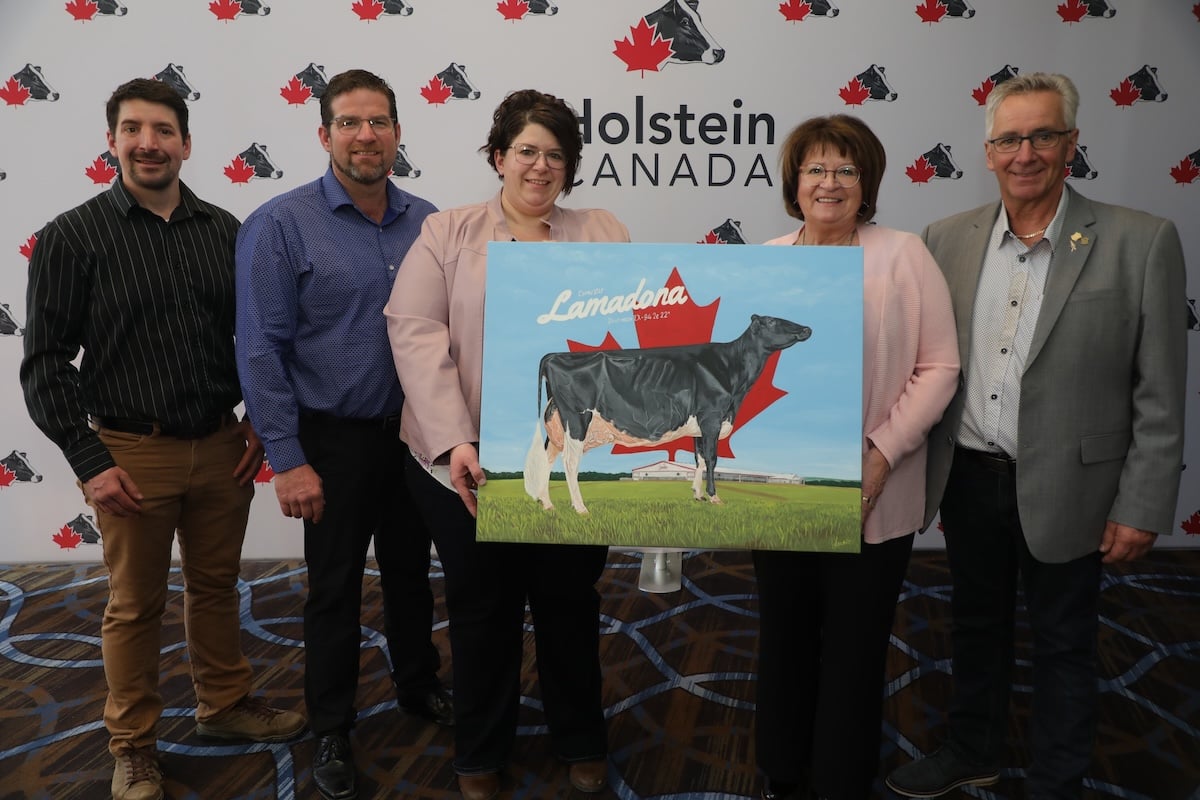
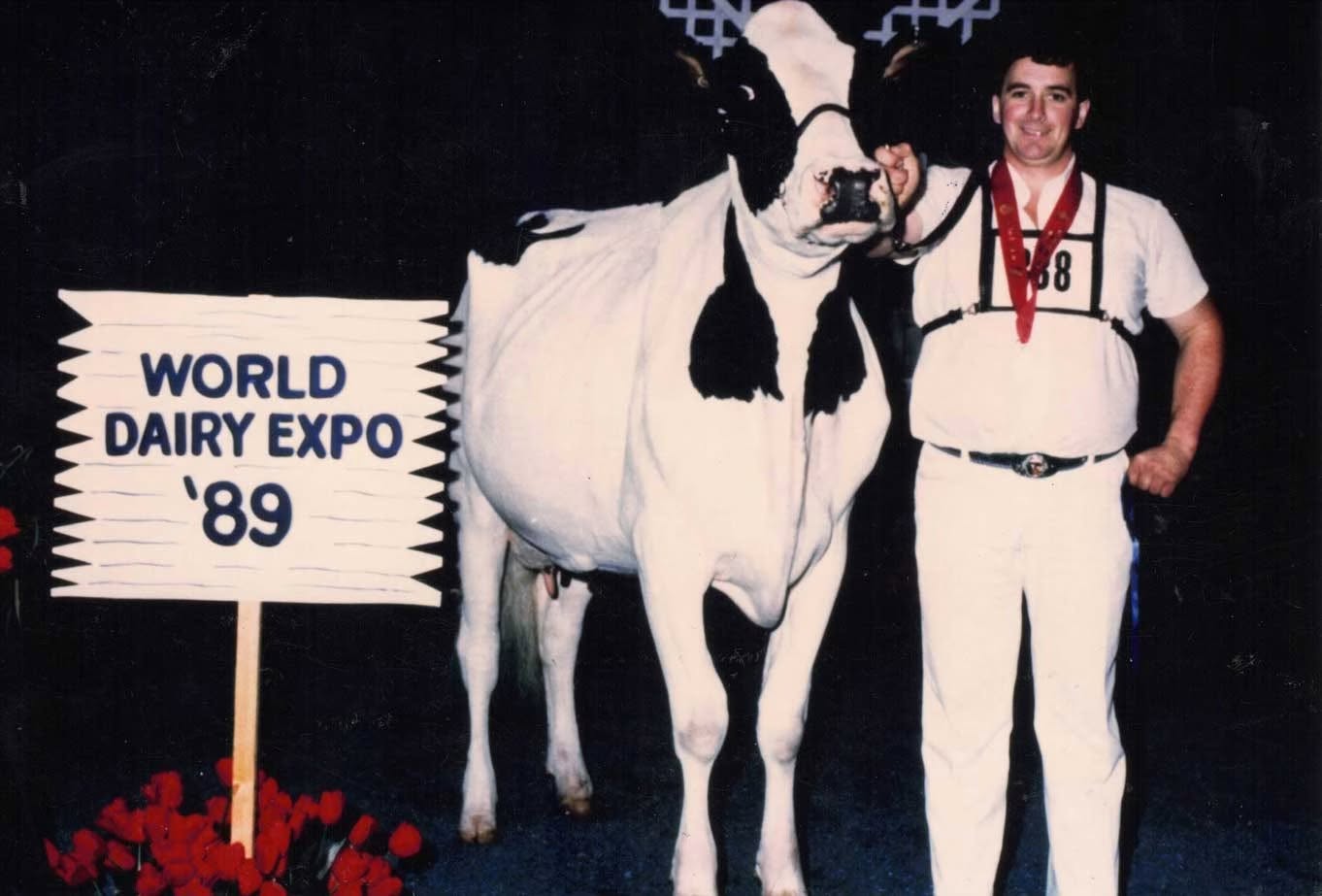
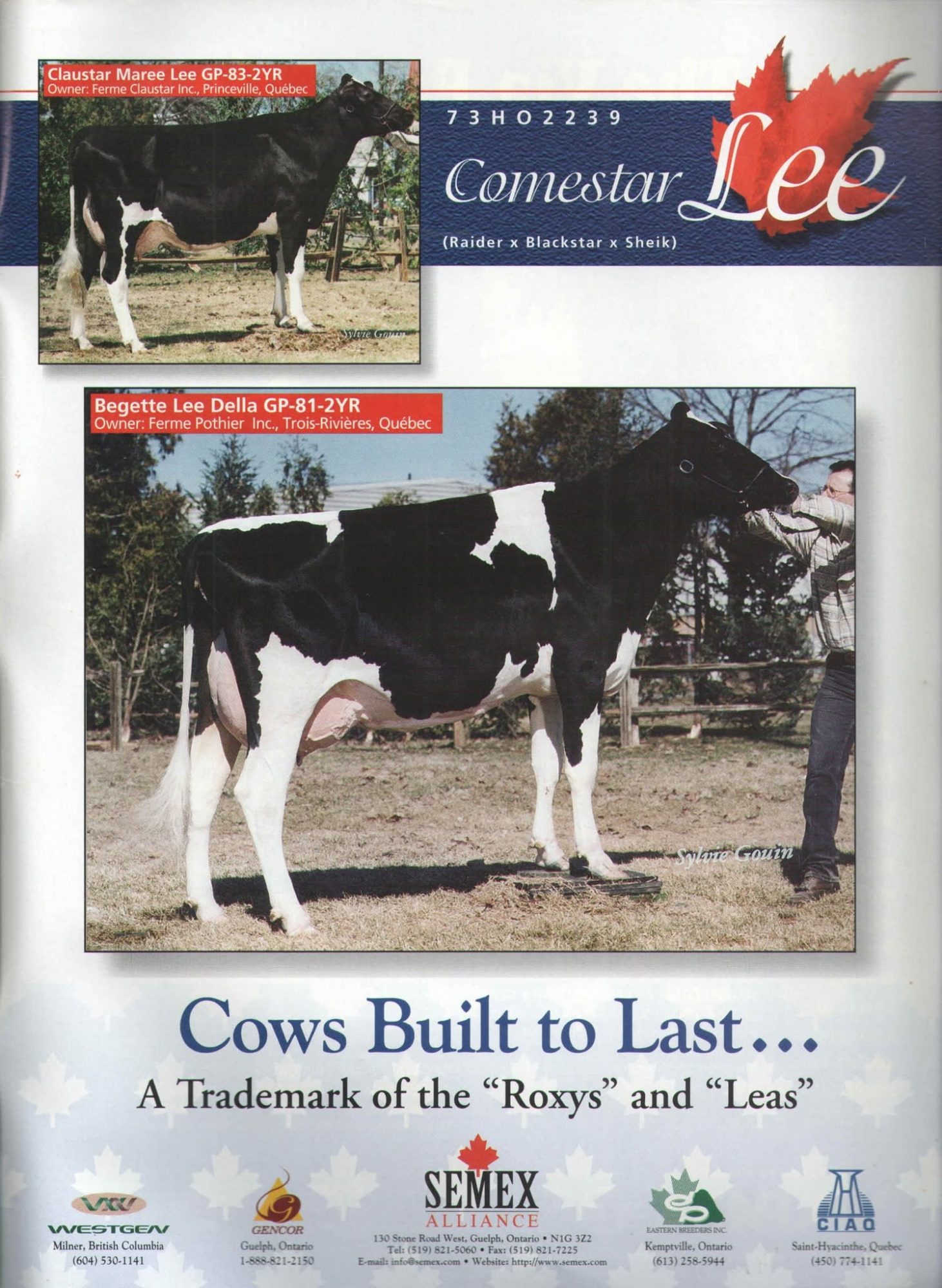
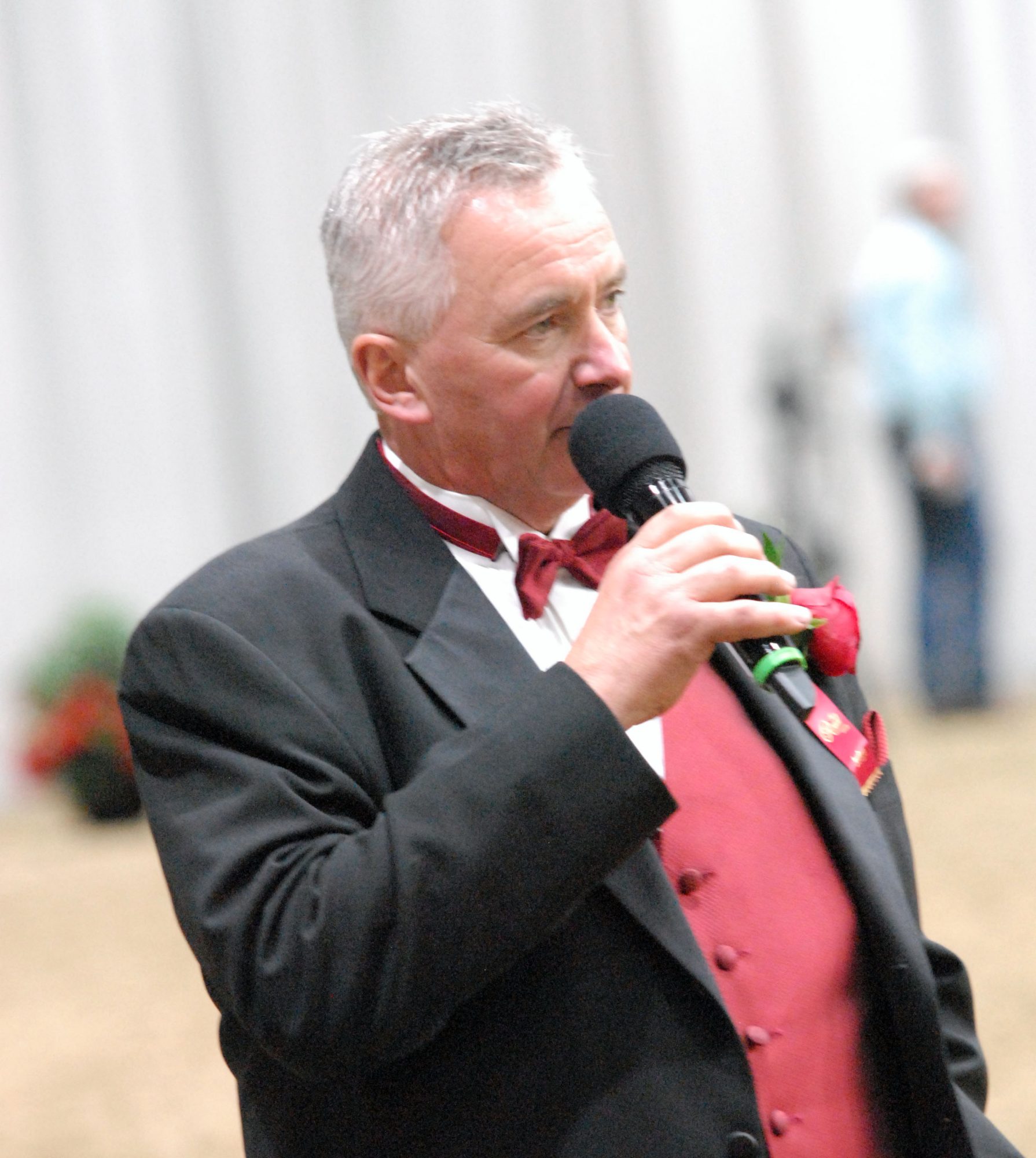
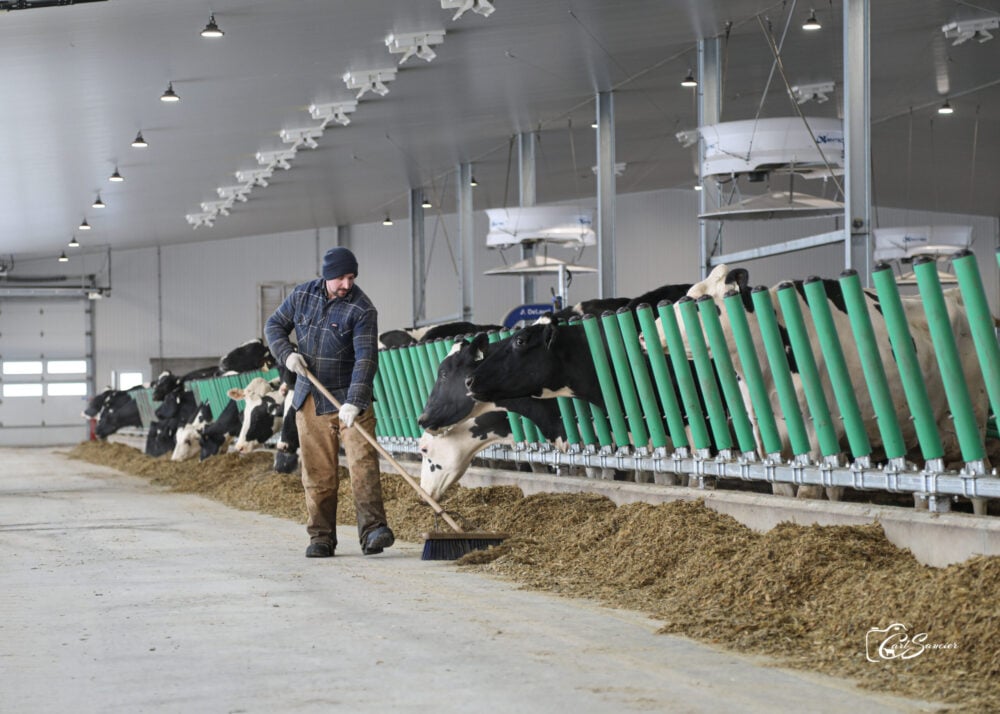
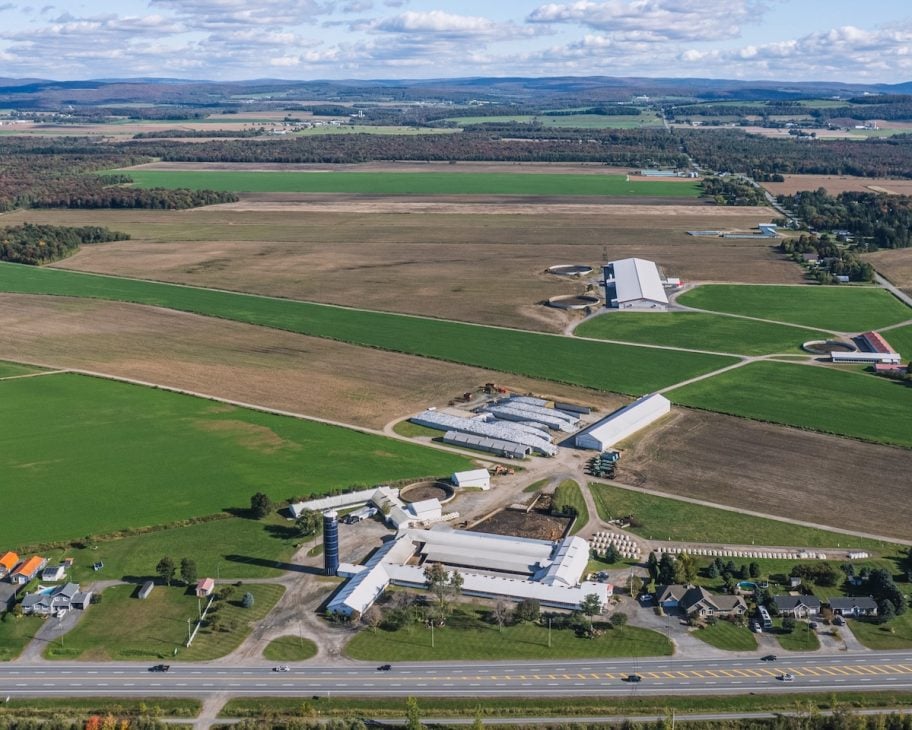
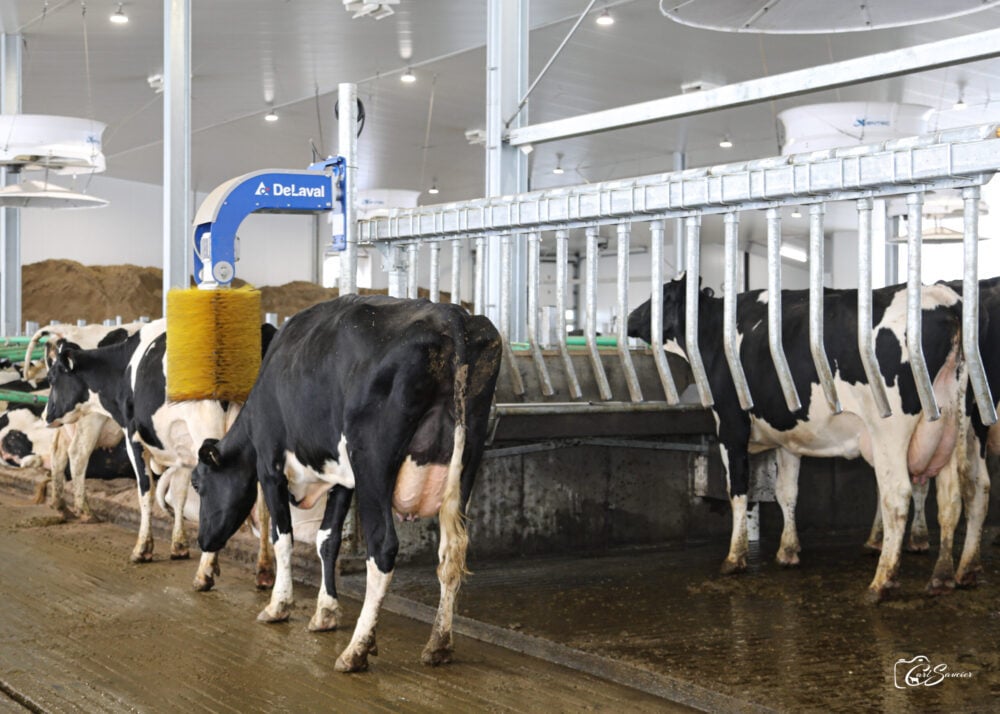
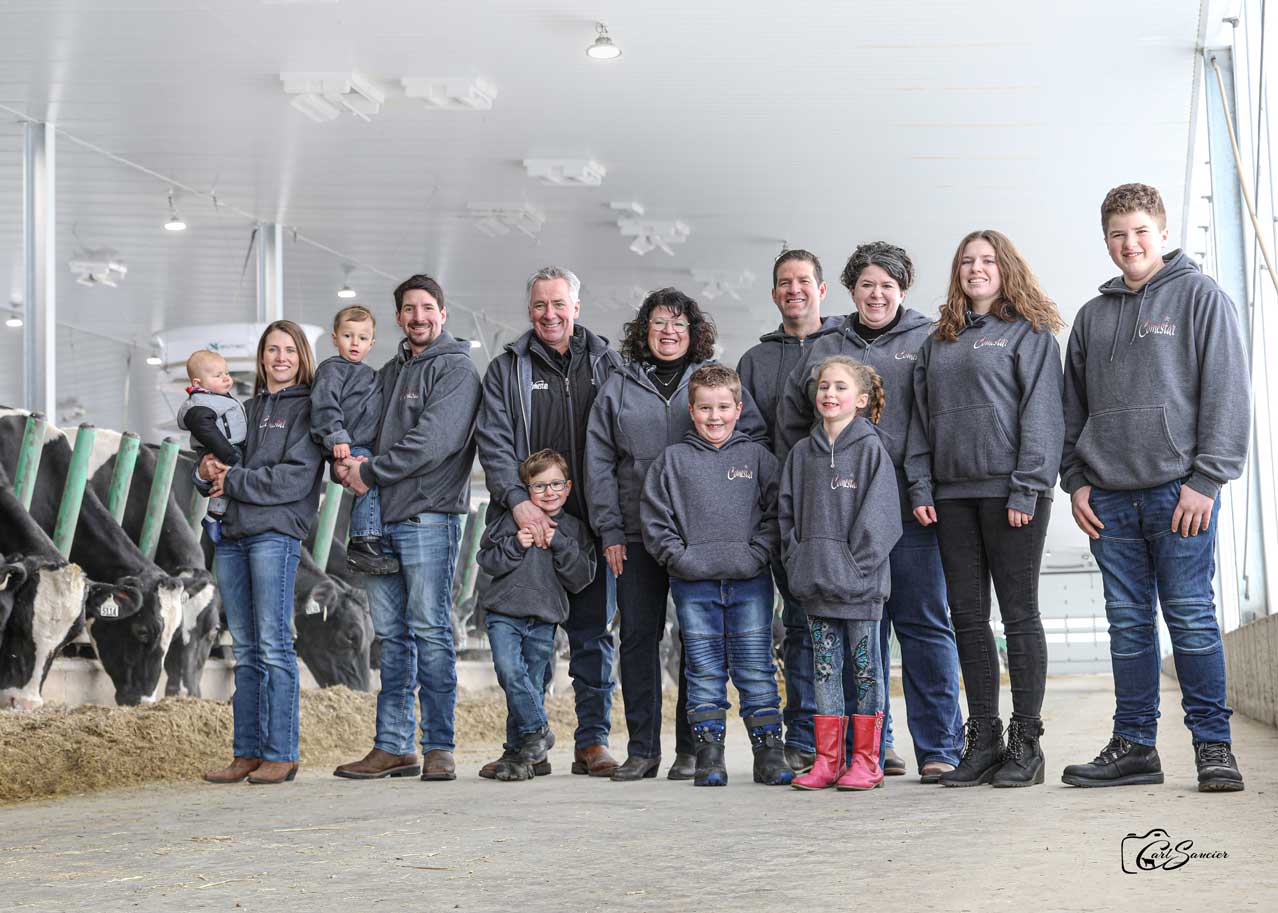
 The Sunday Read Dairy Professionals Don’t Skip.
 The Sunday Read Dairy Professionals Don’t Skip.
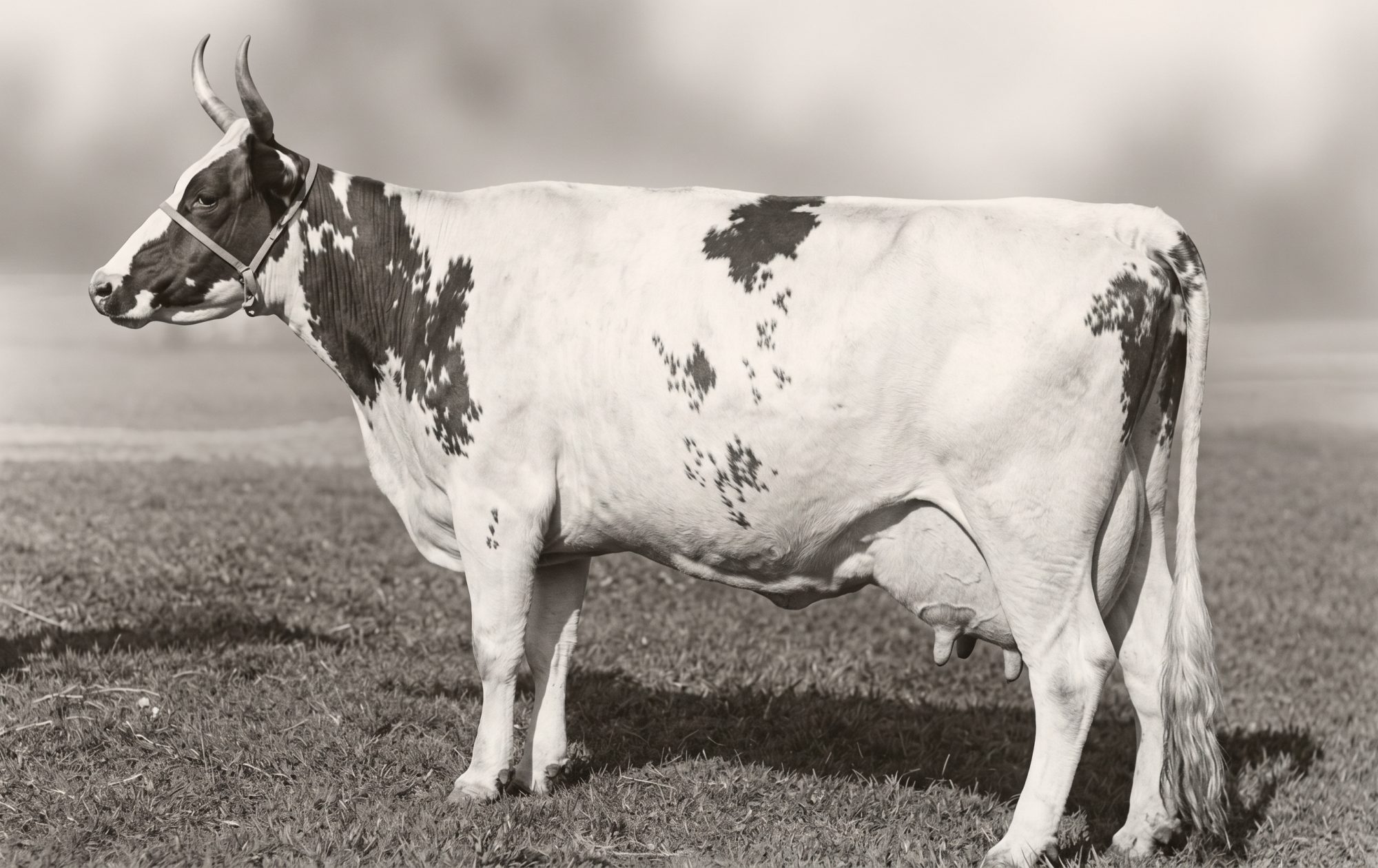
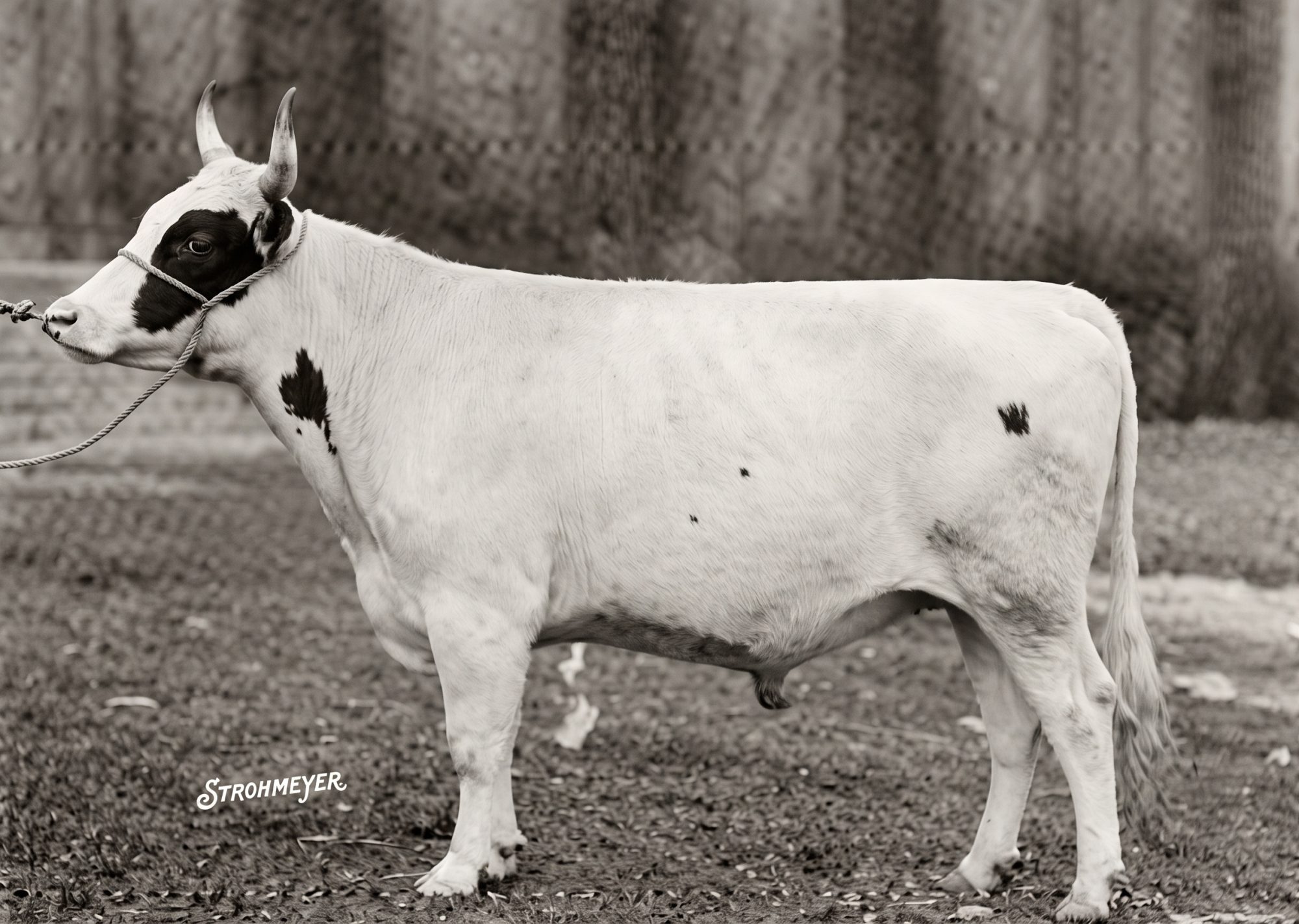
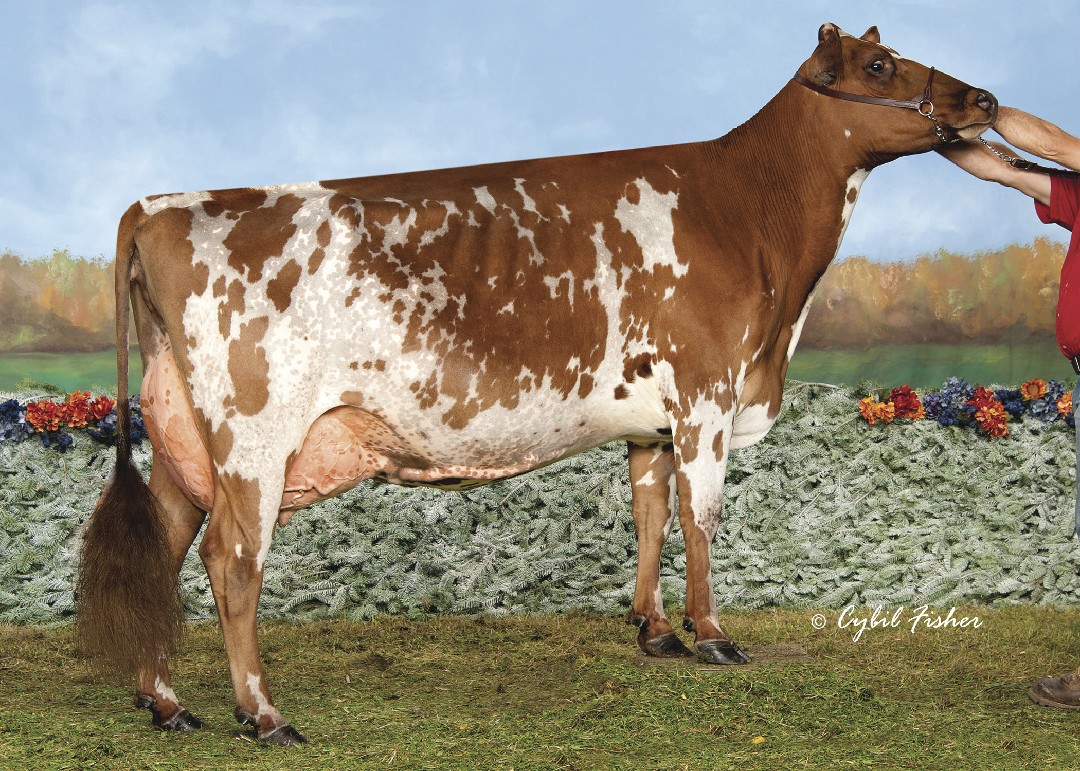
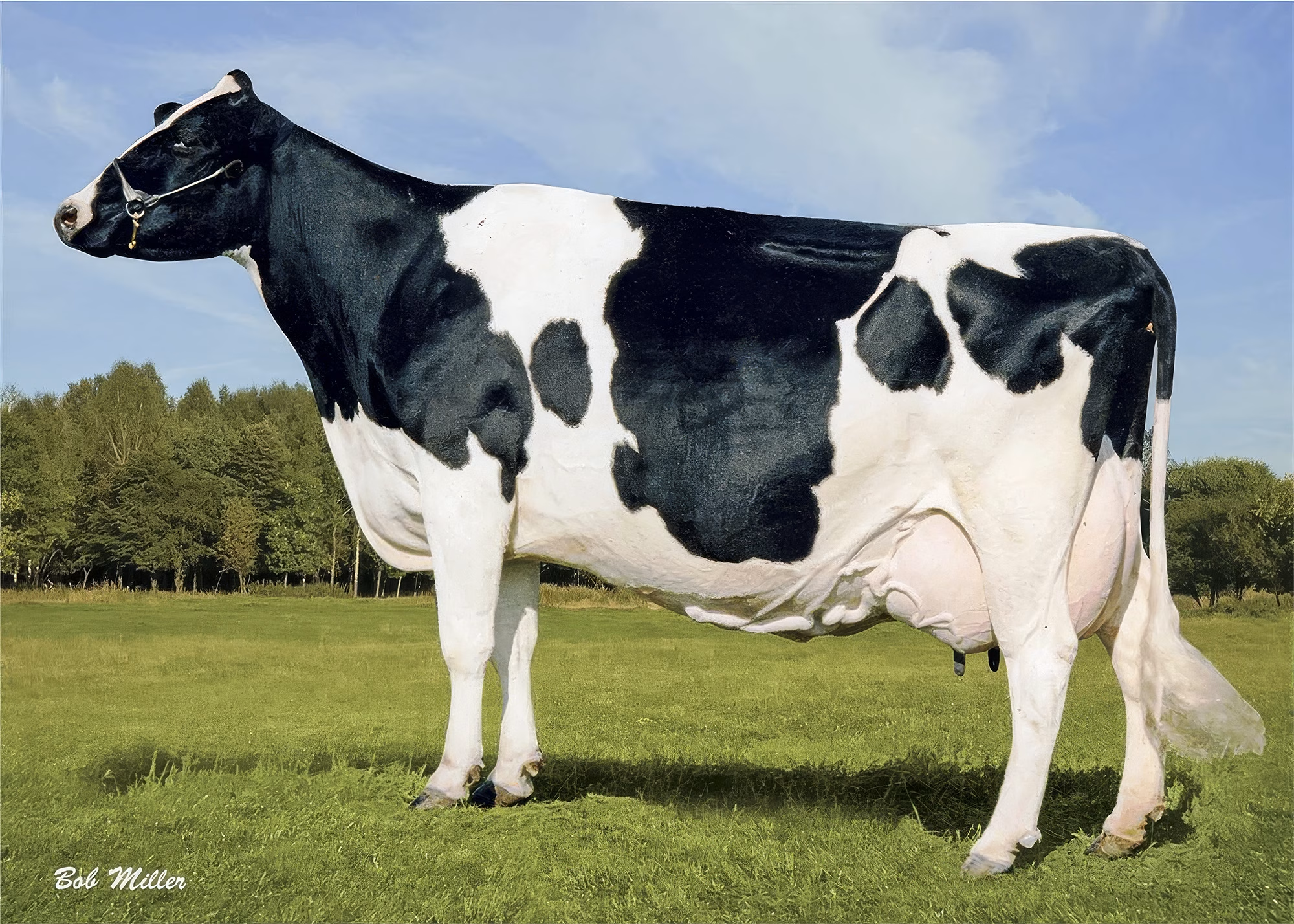
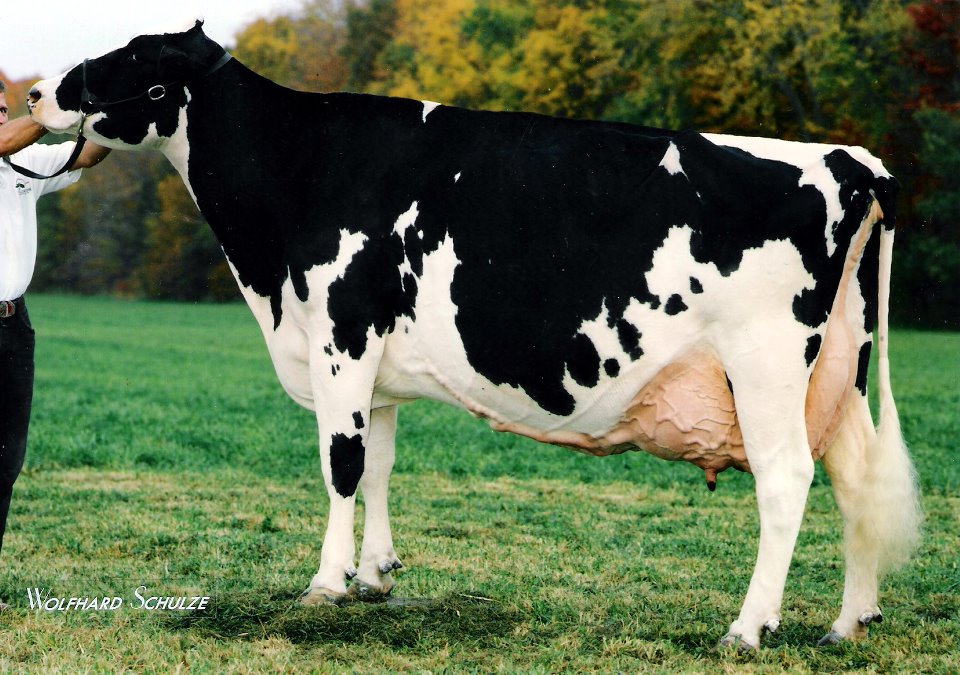
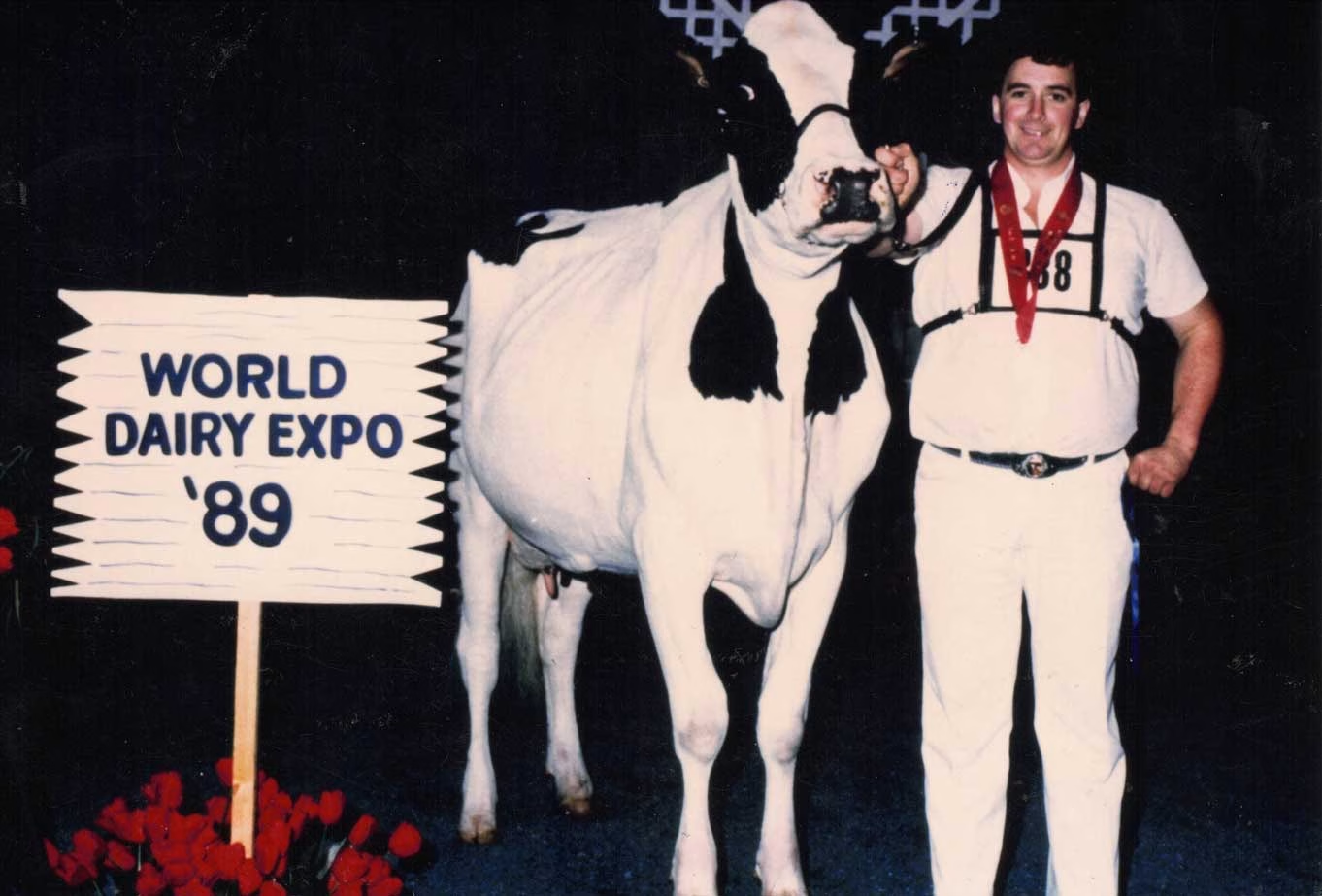
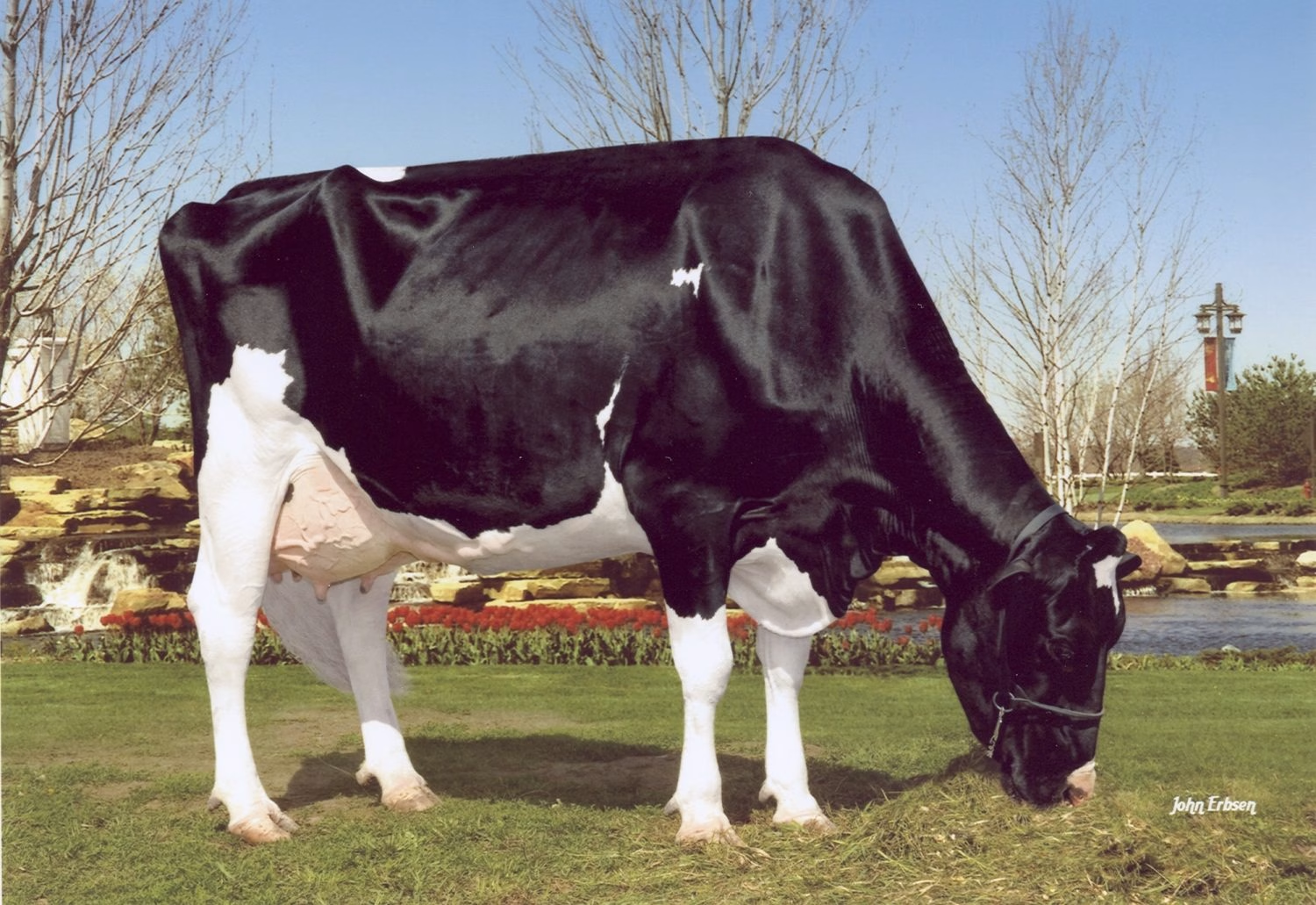
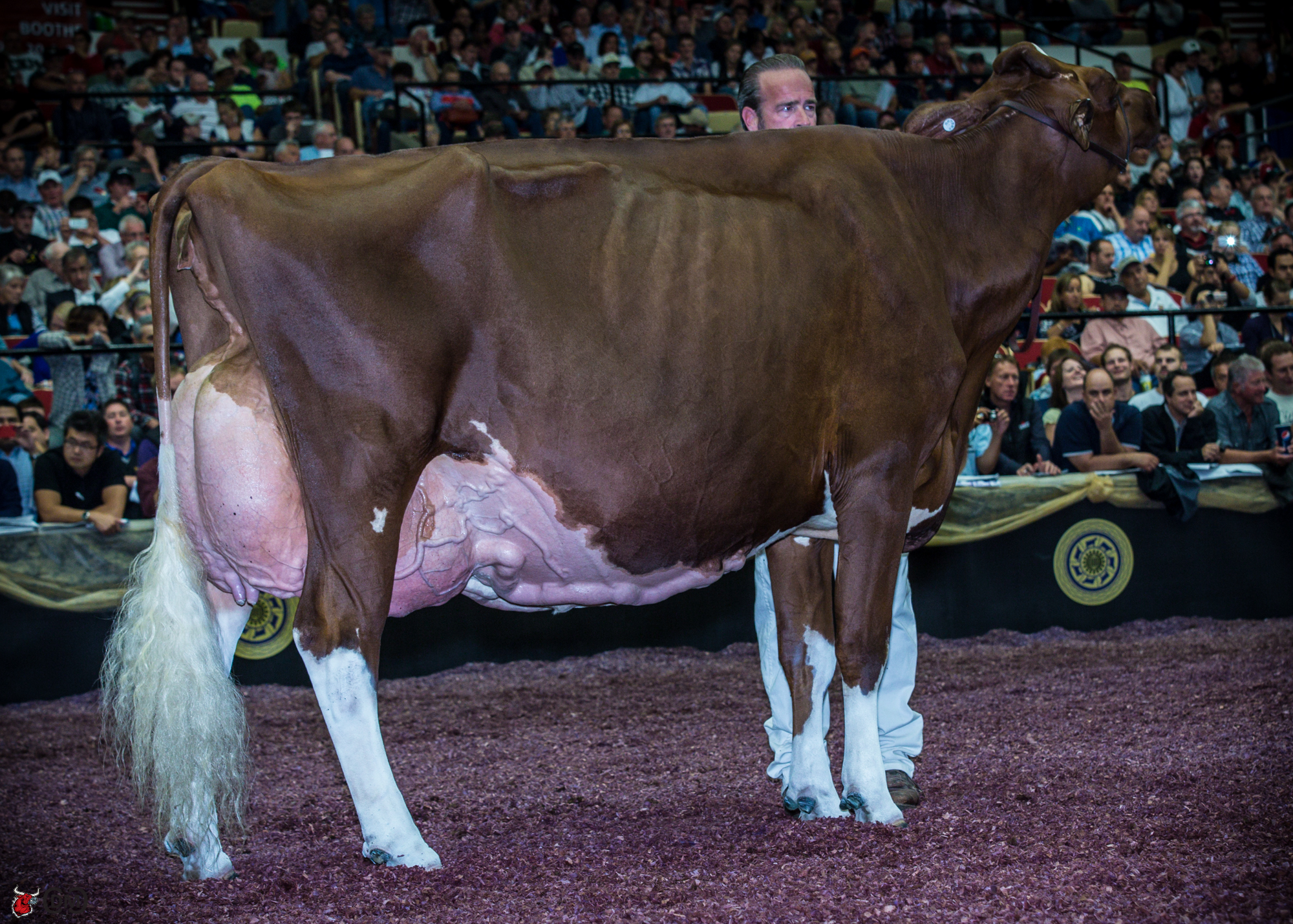
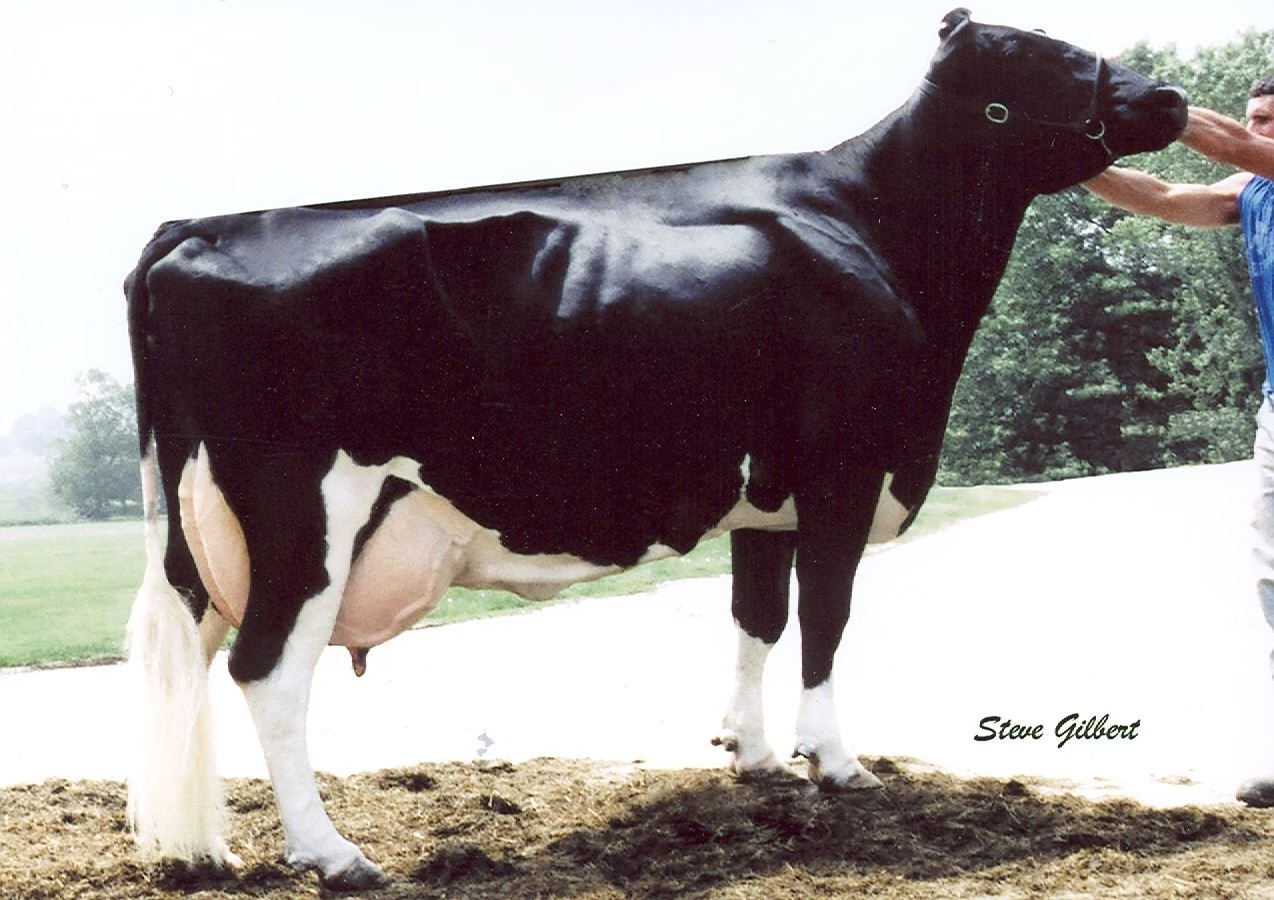
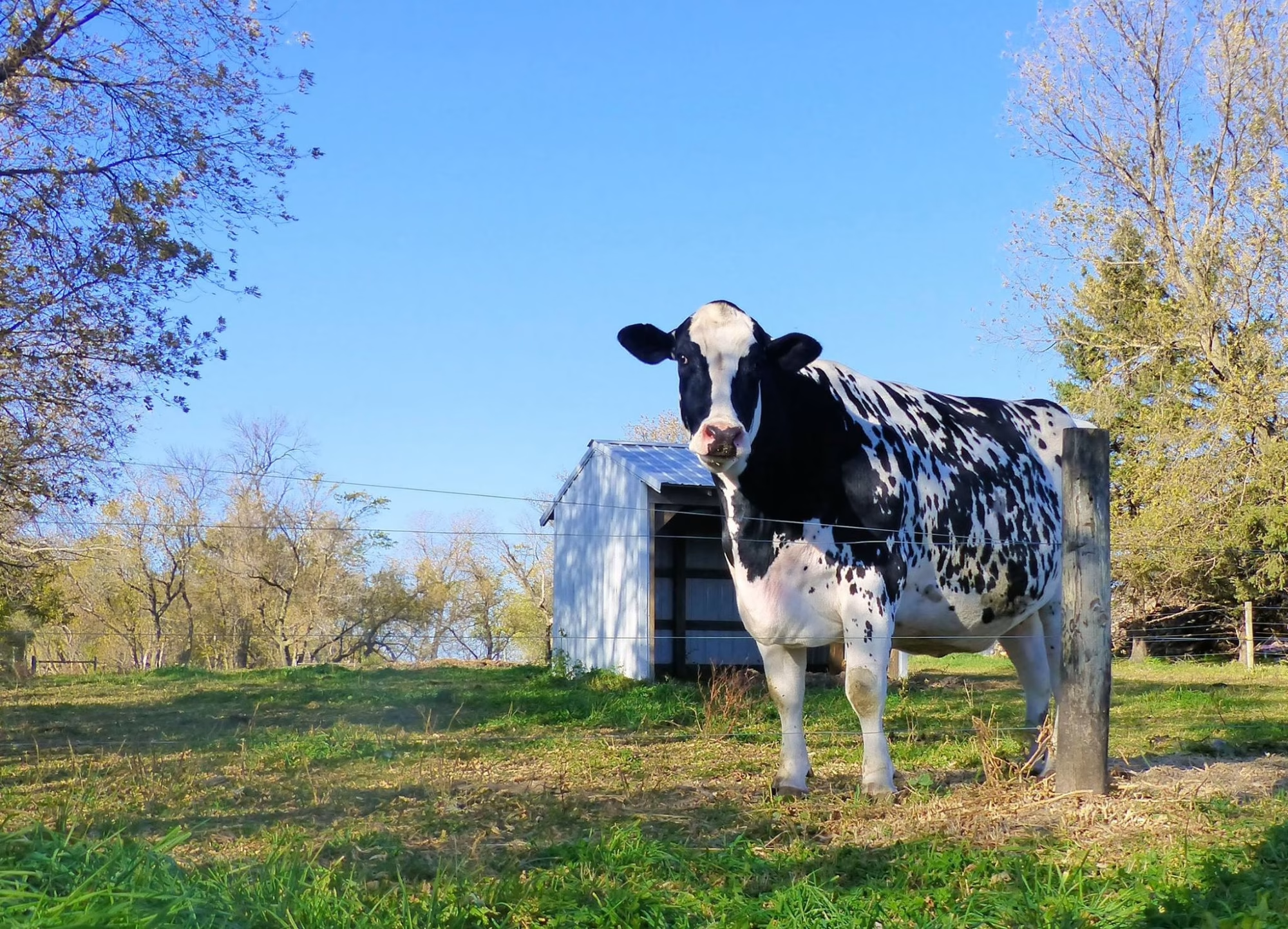
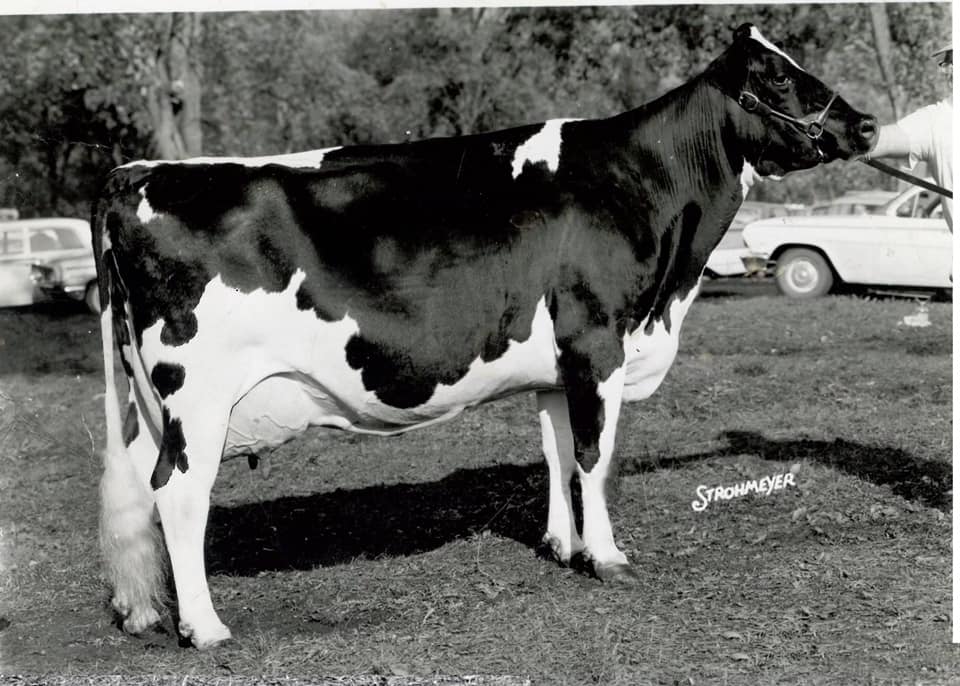
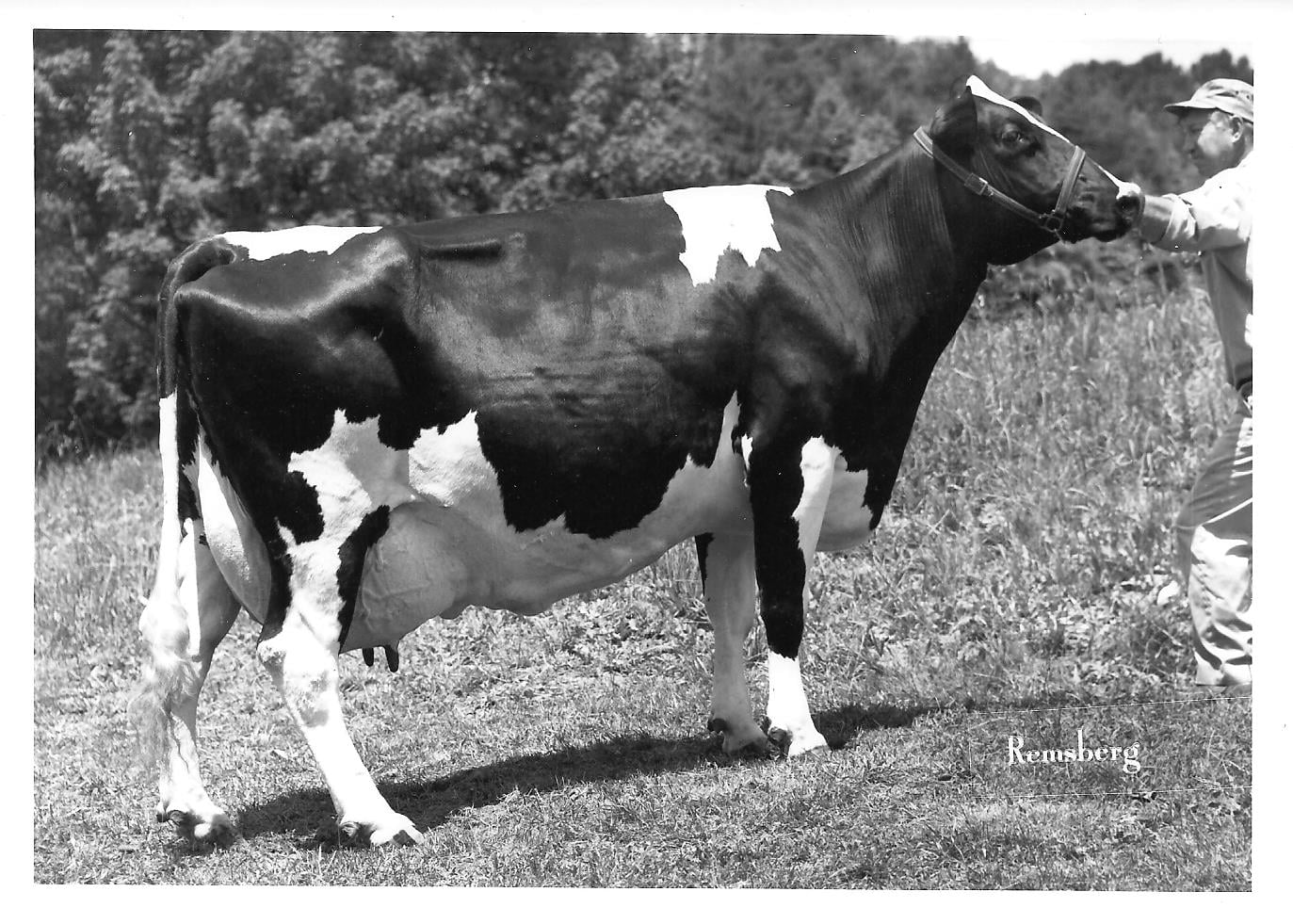
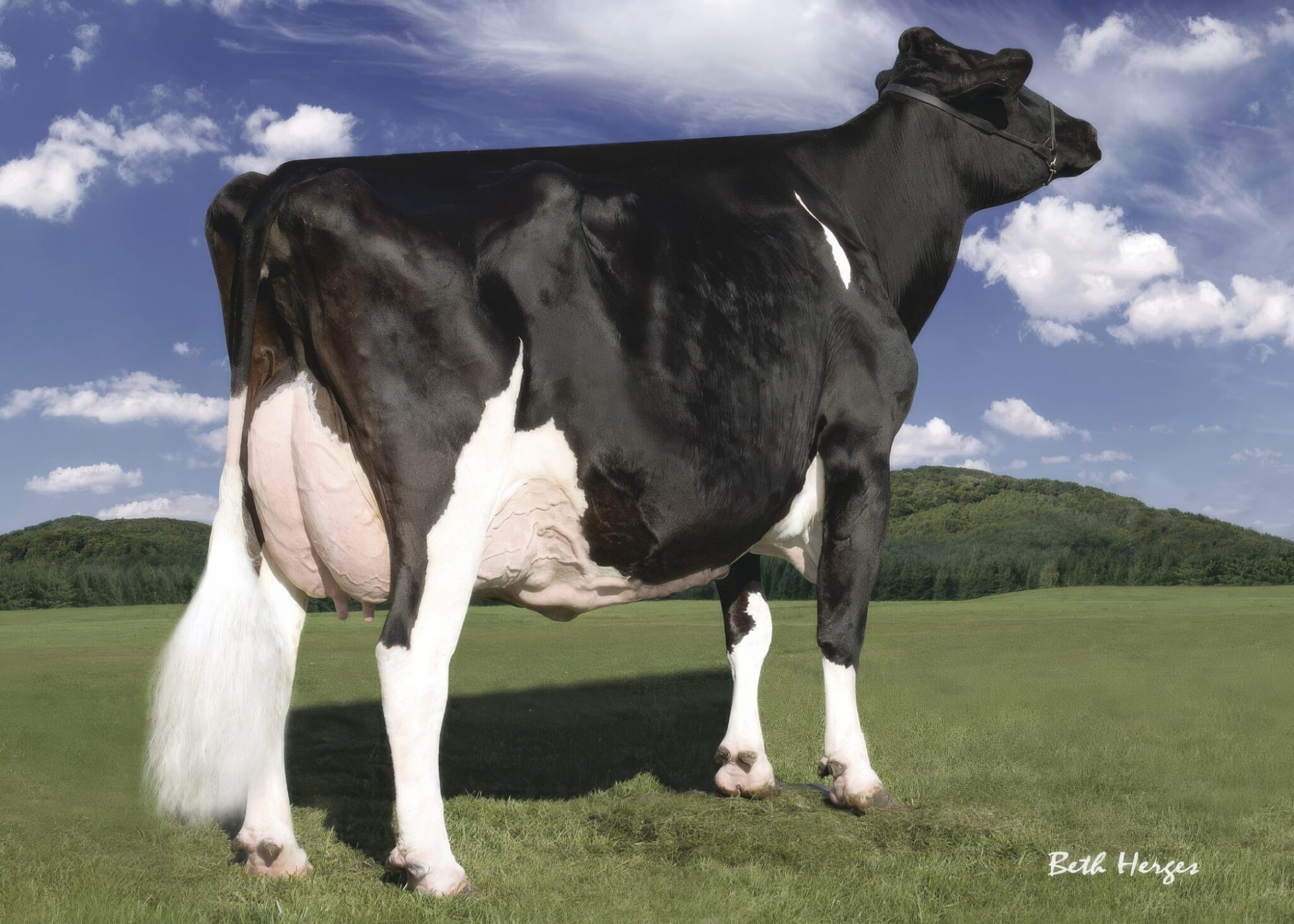
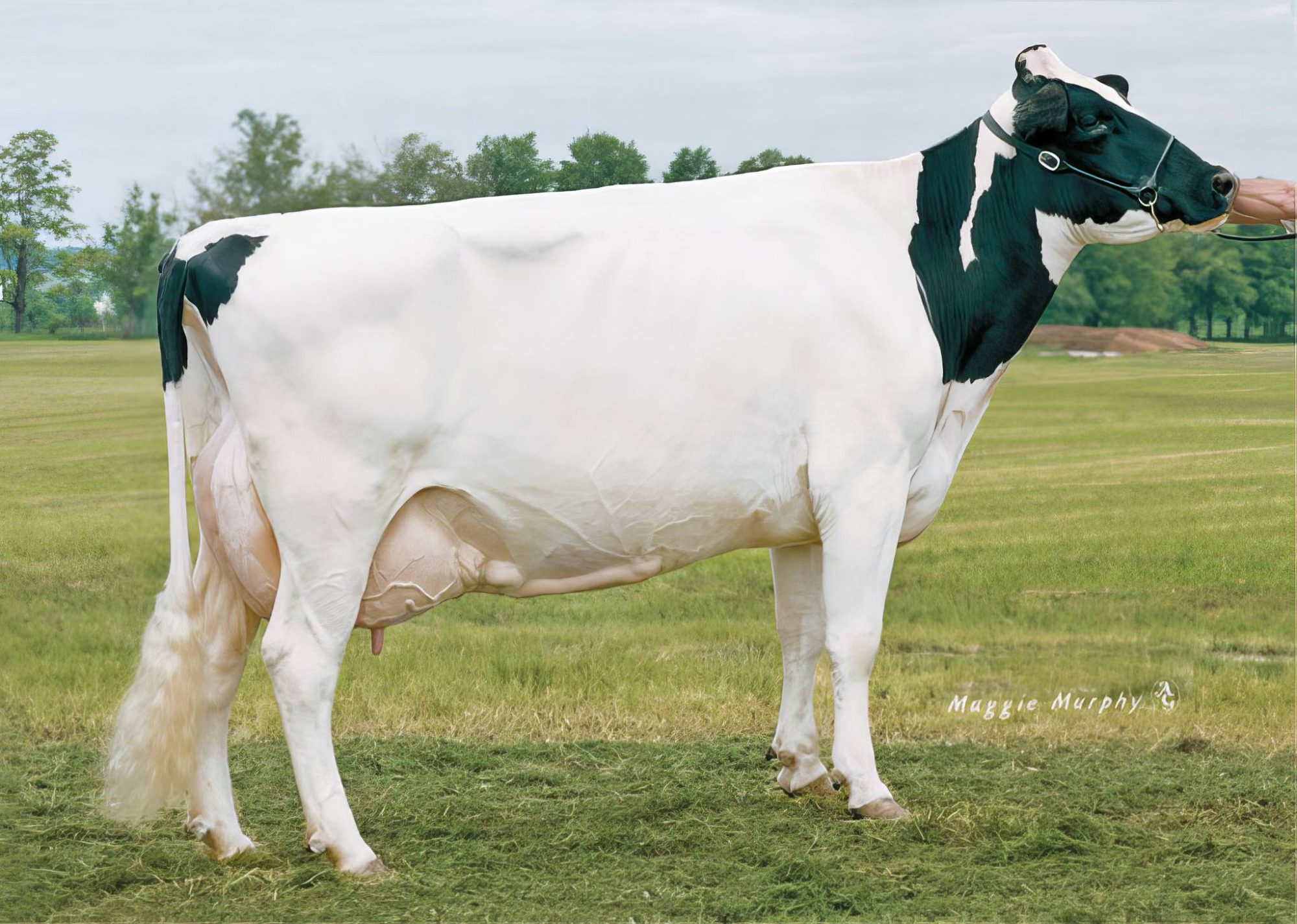
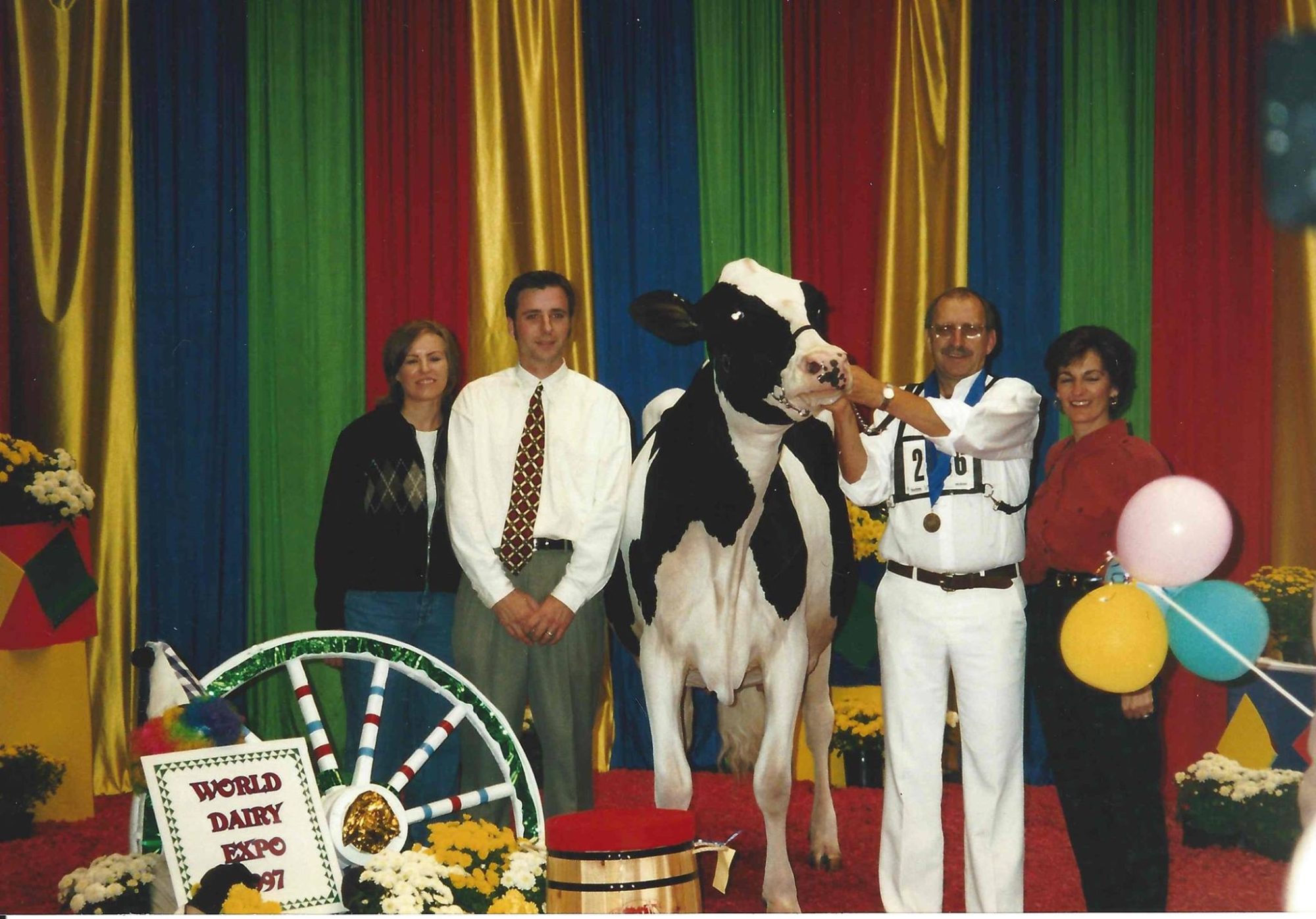
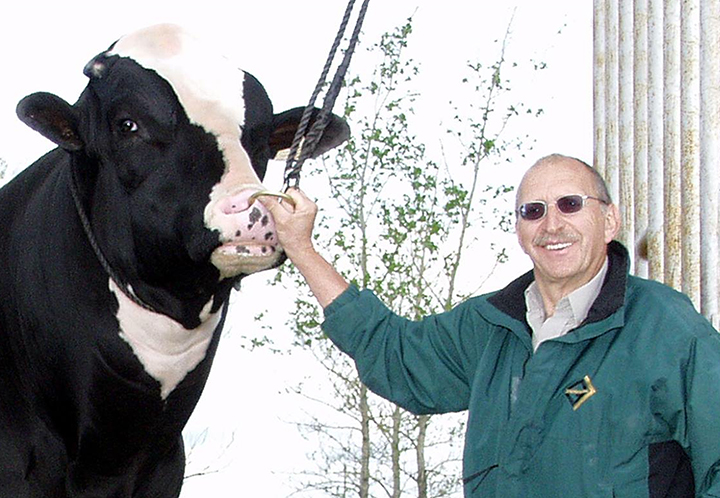
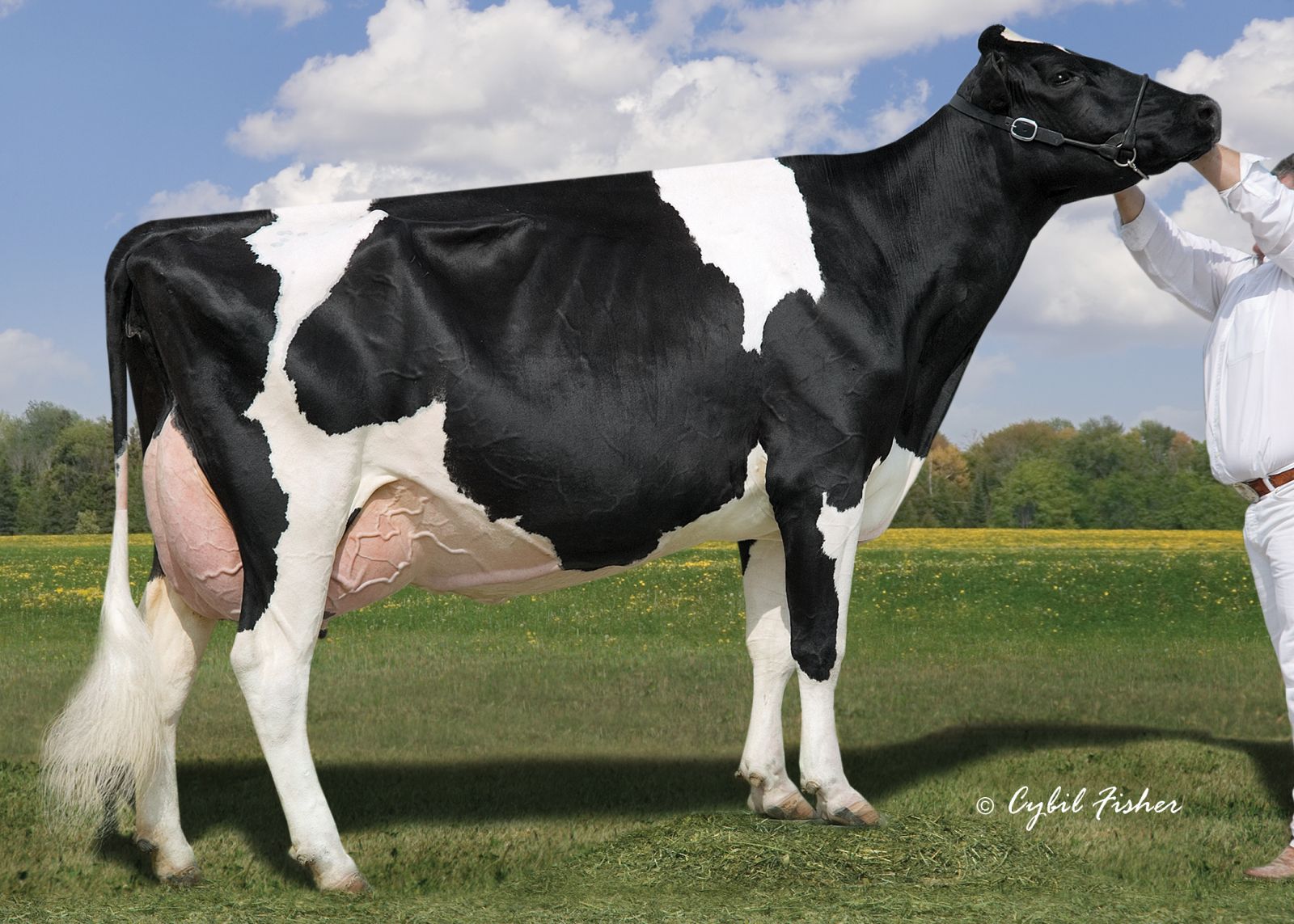
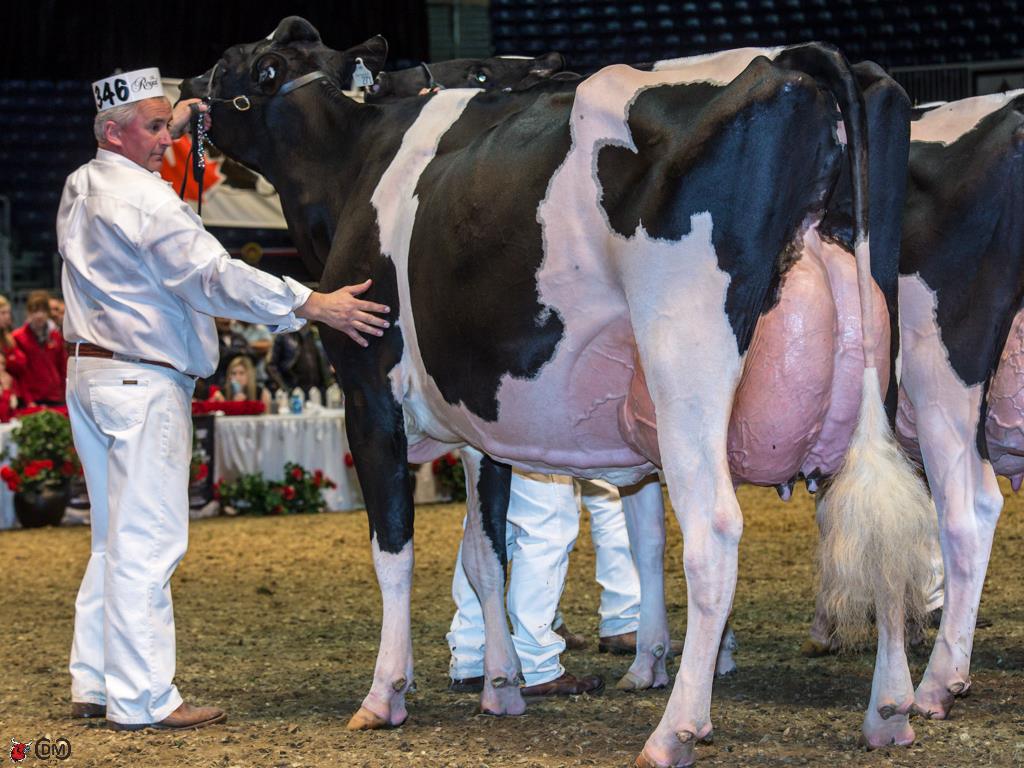
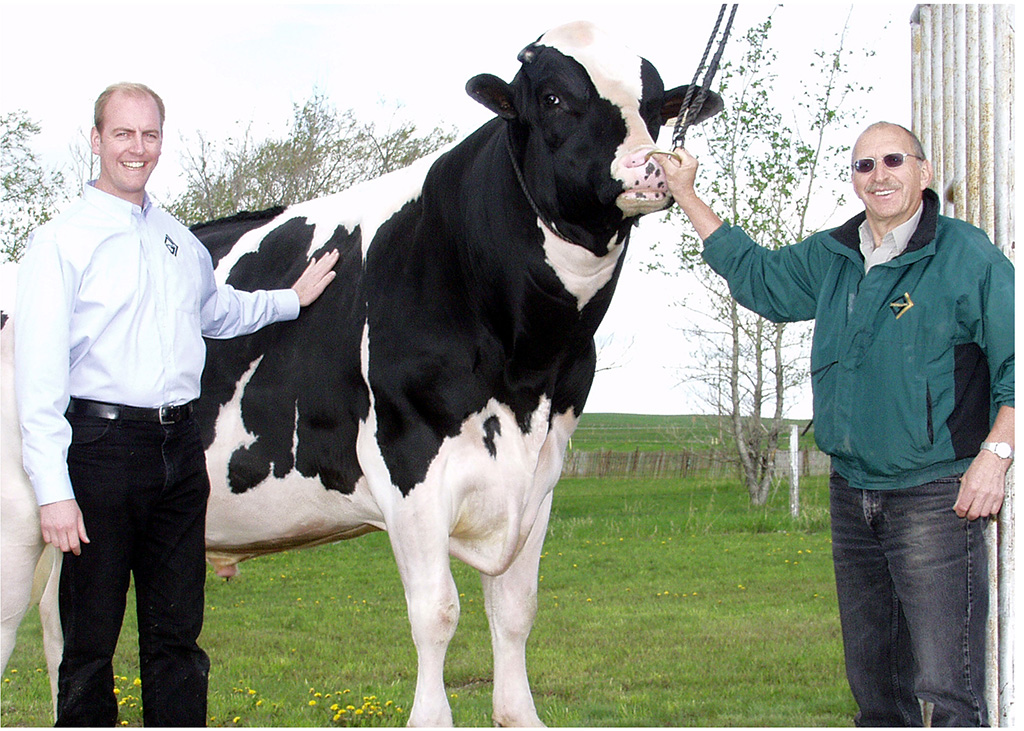
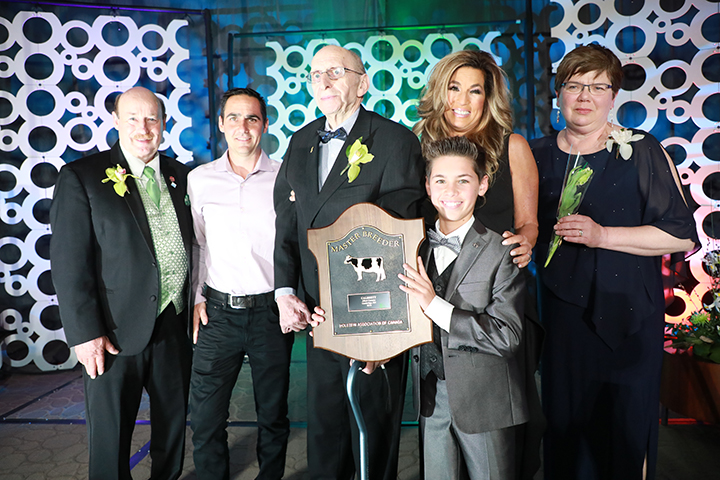
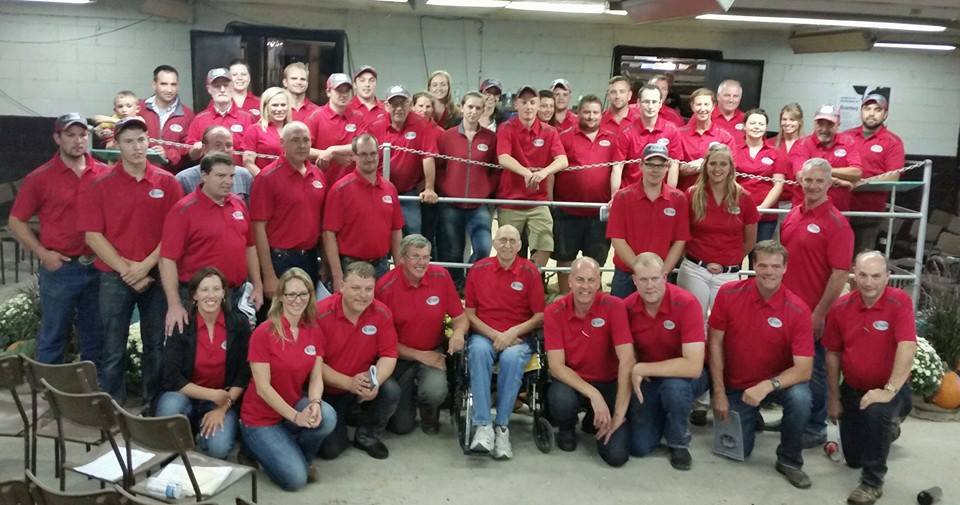
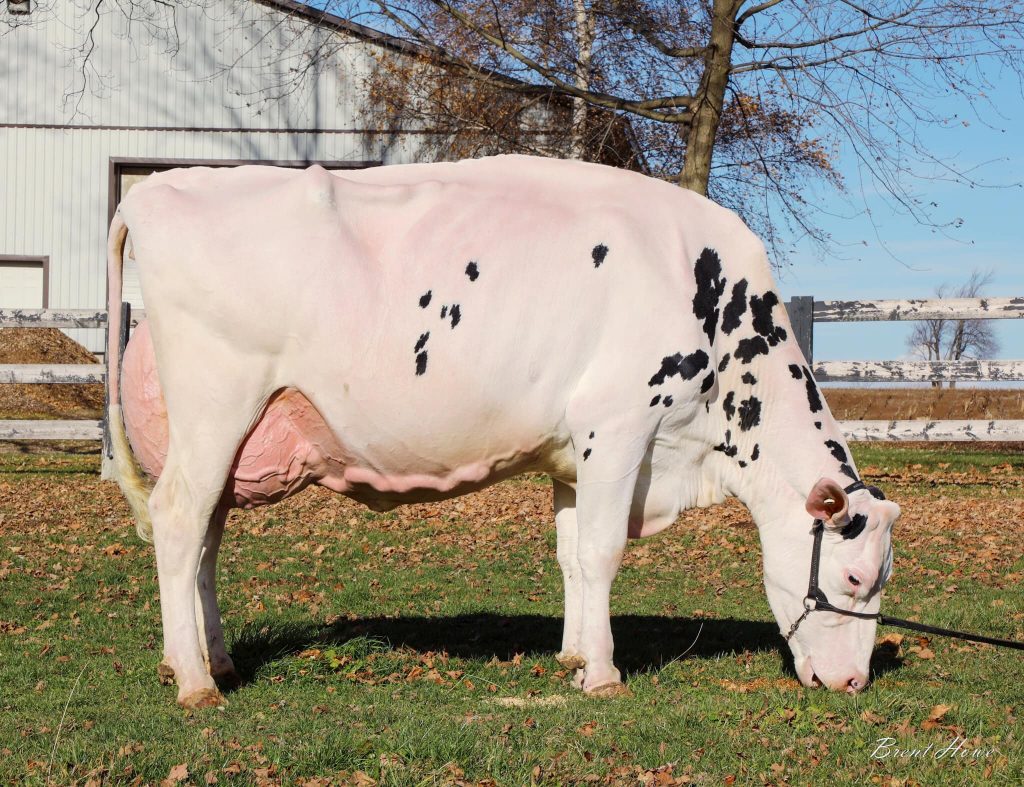
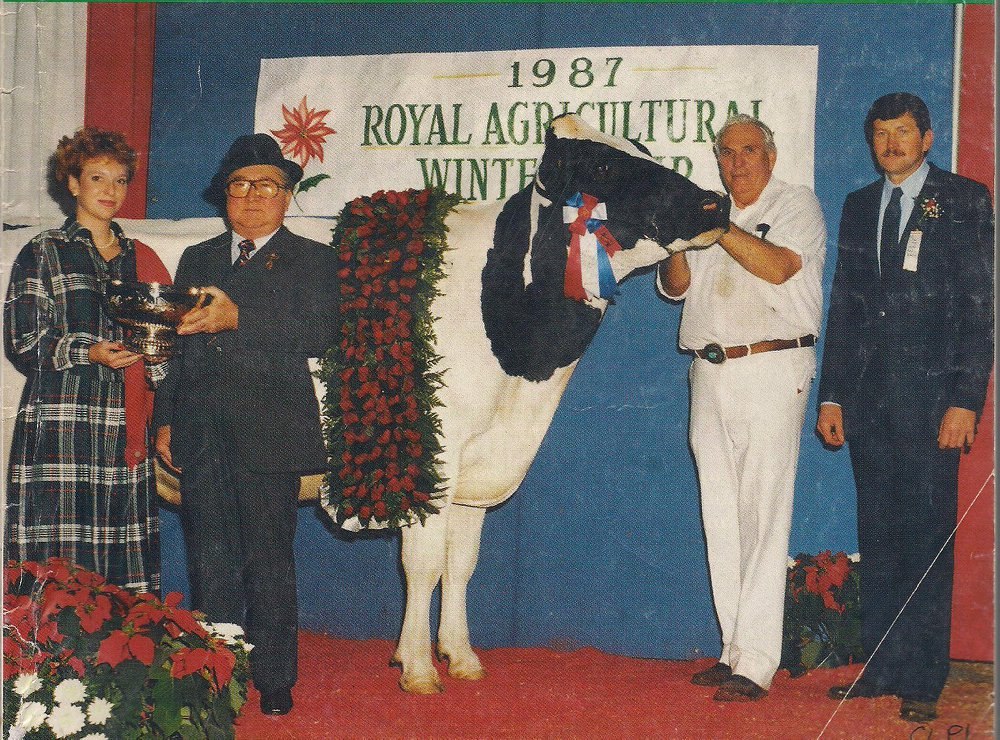
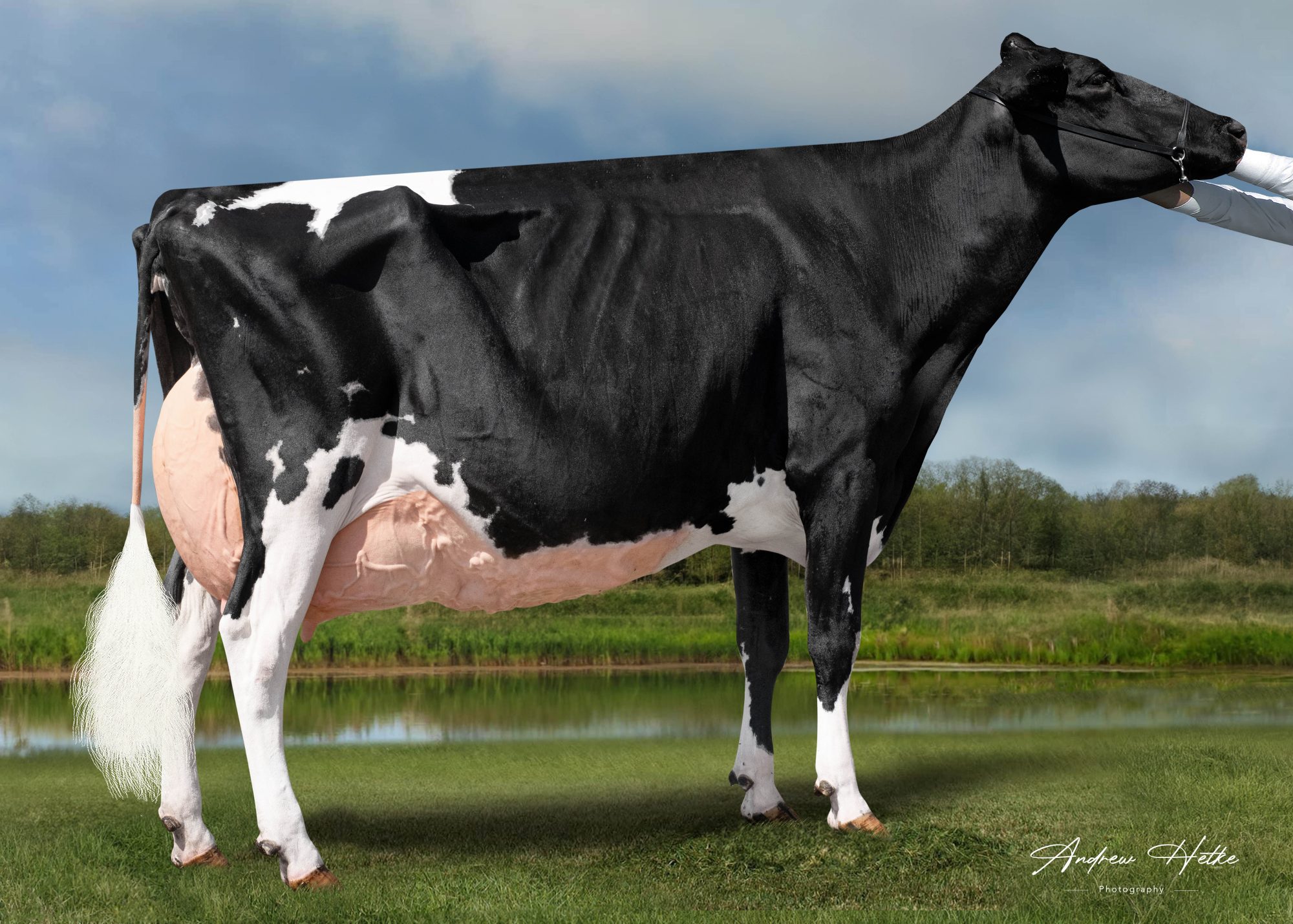
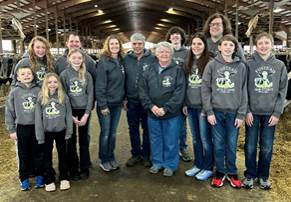
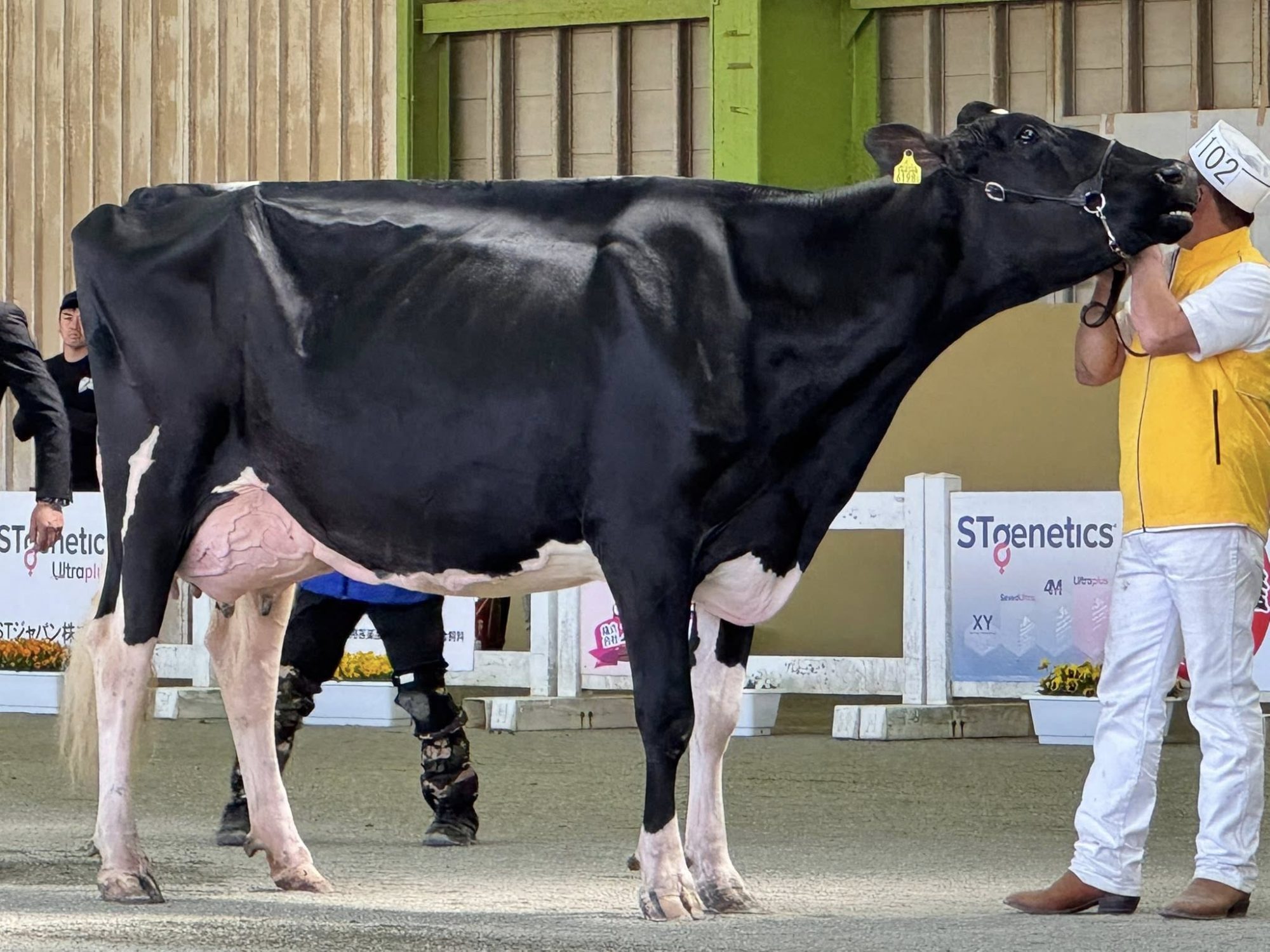
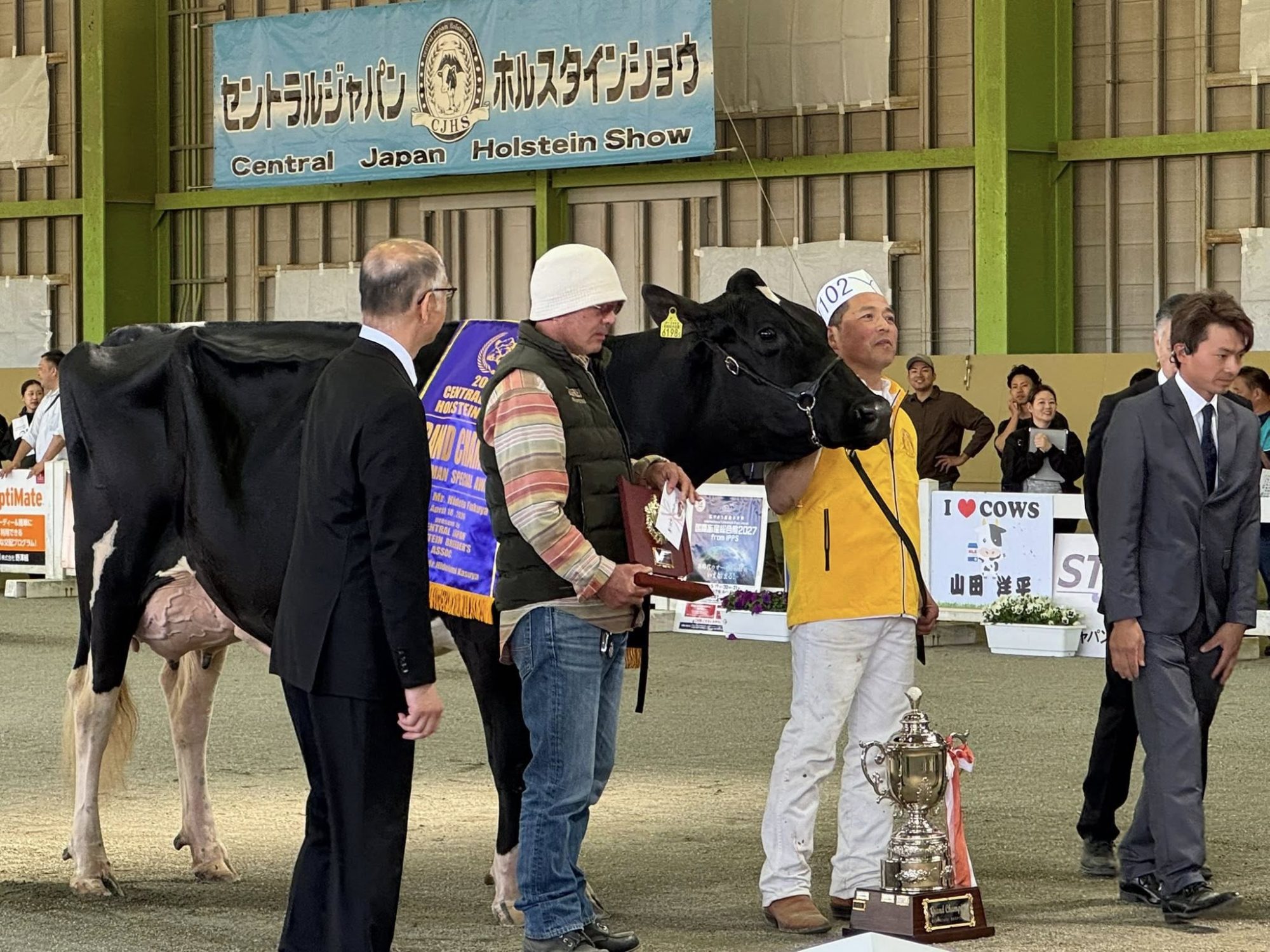
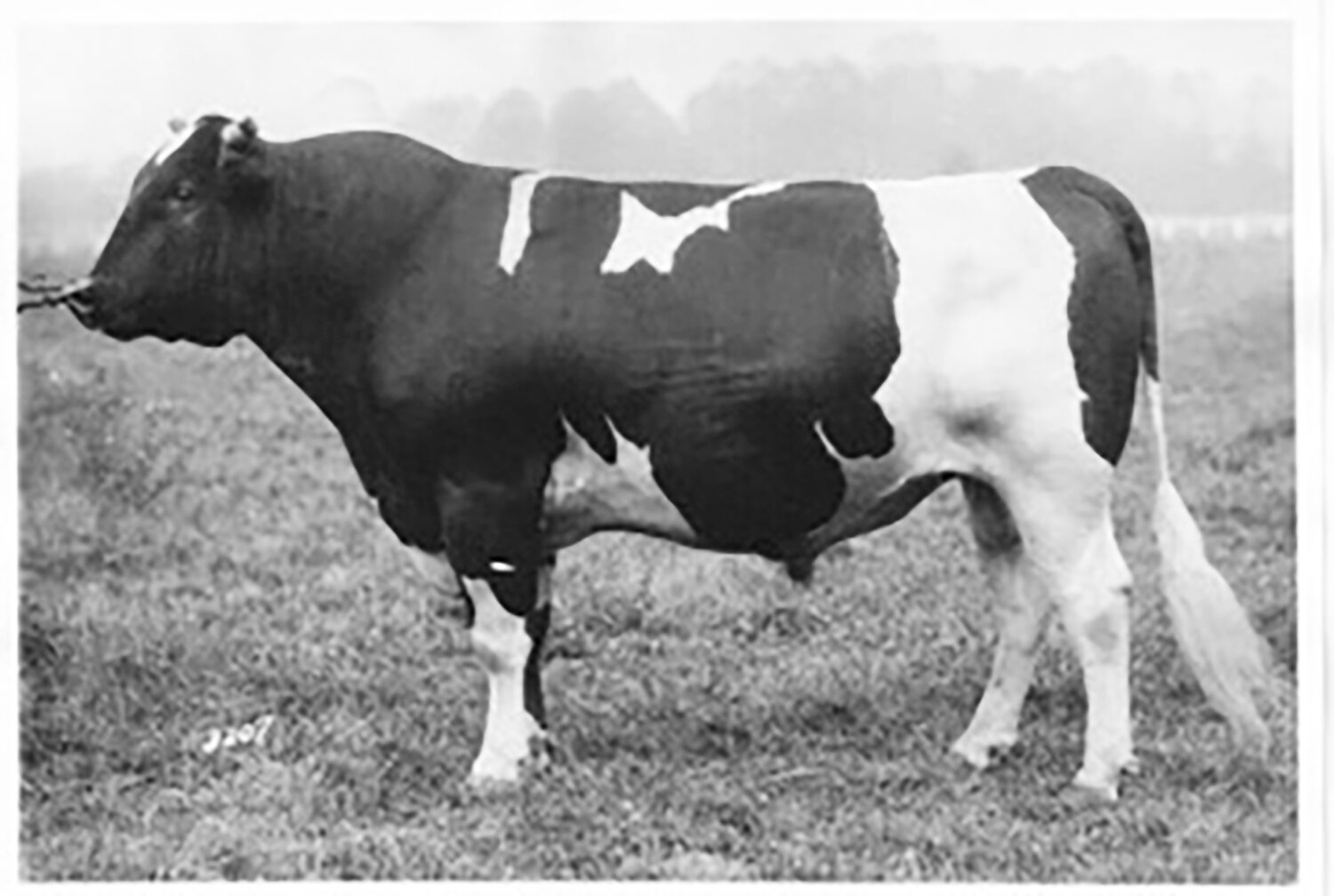
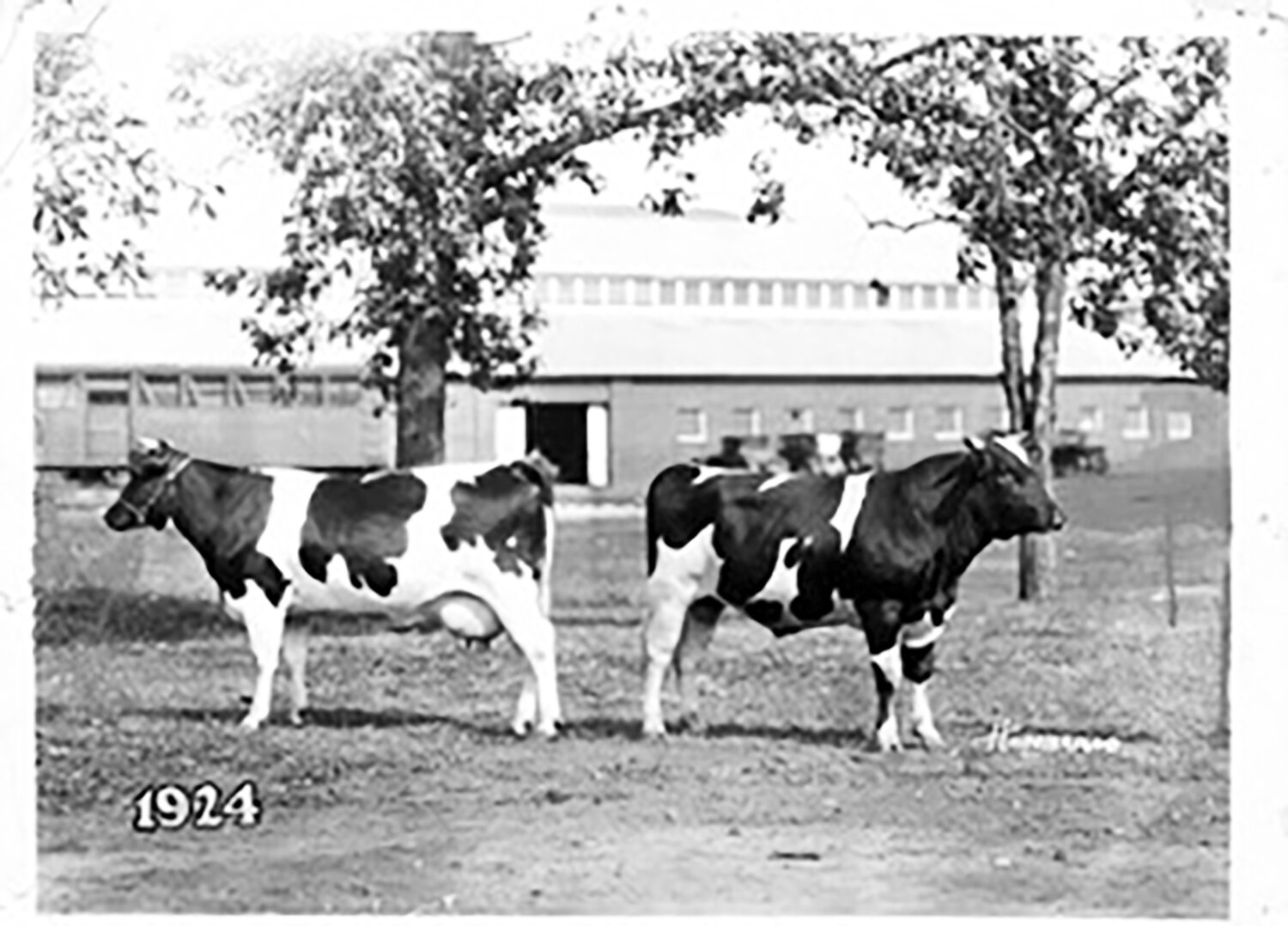
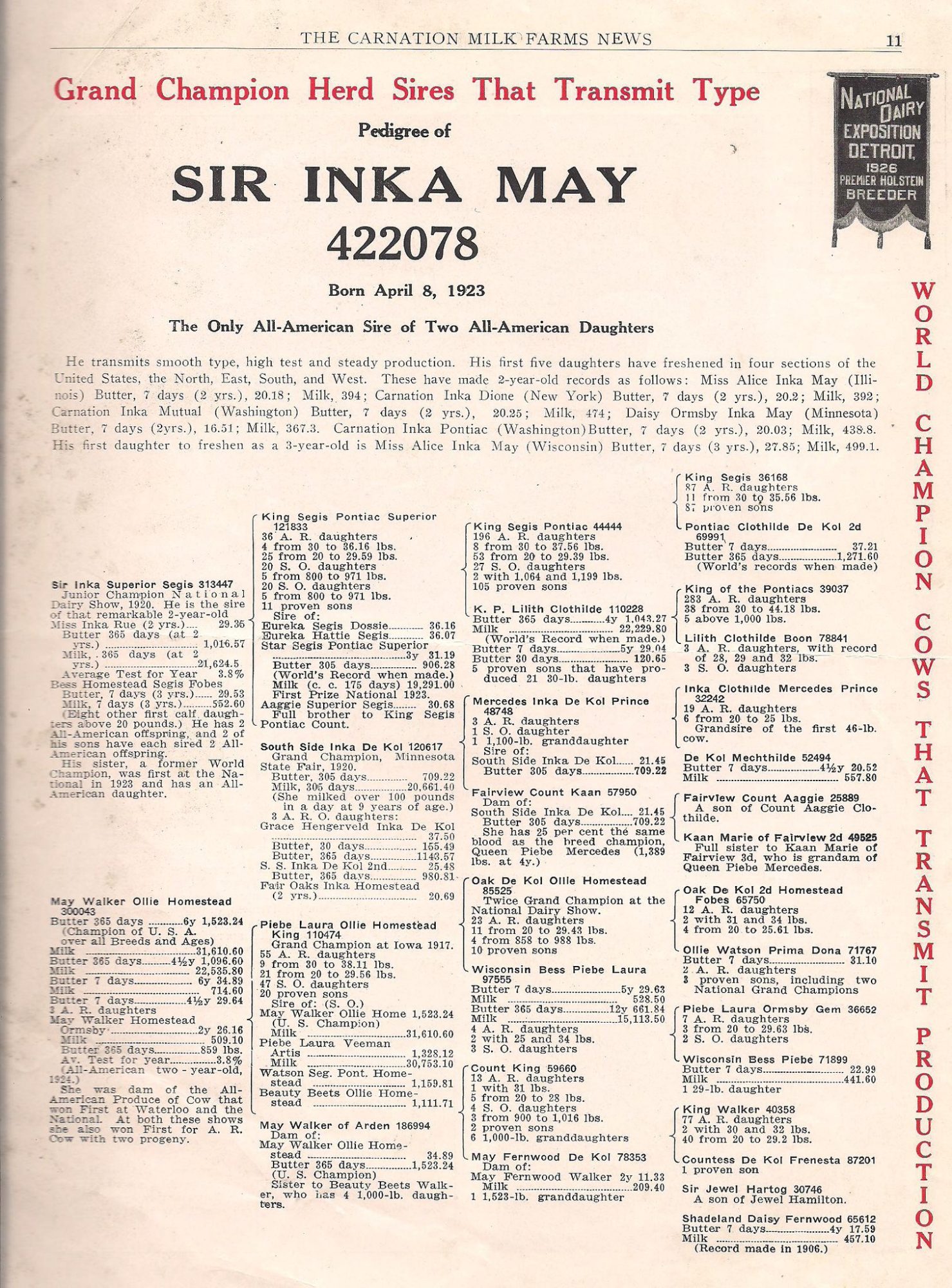
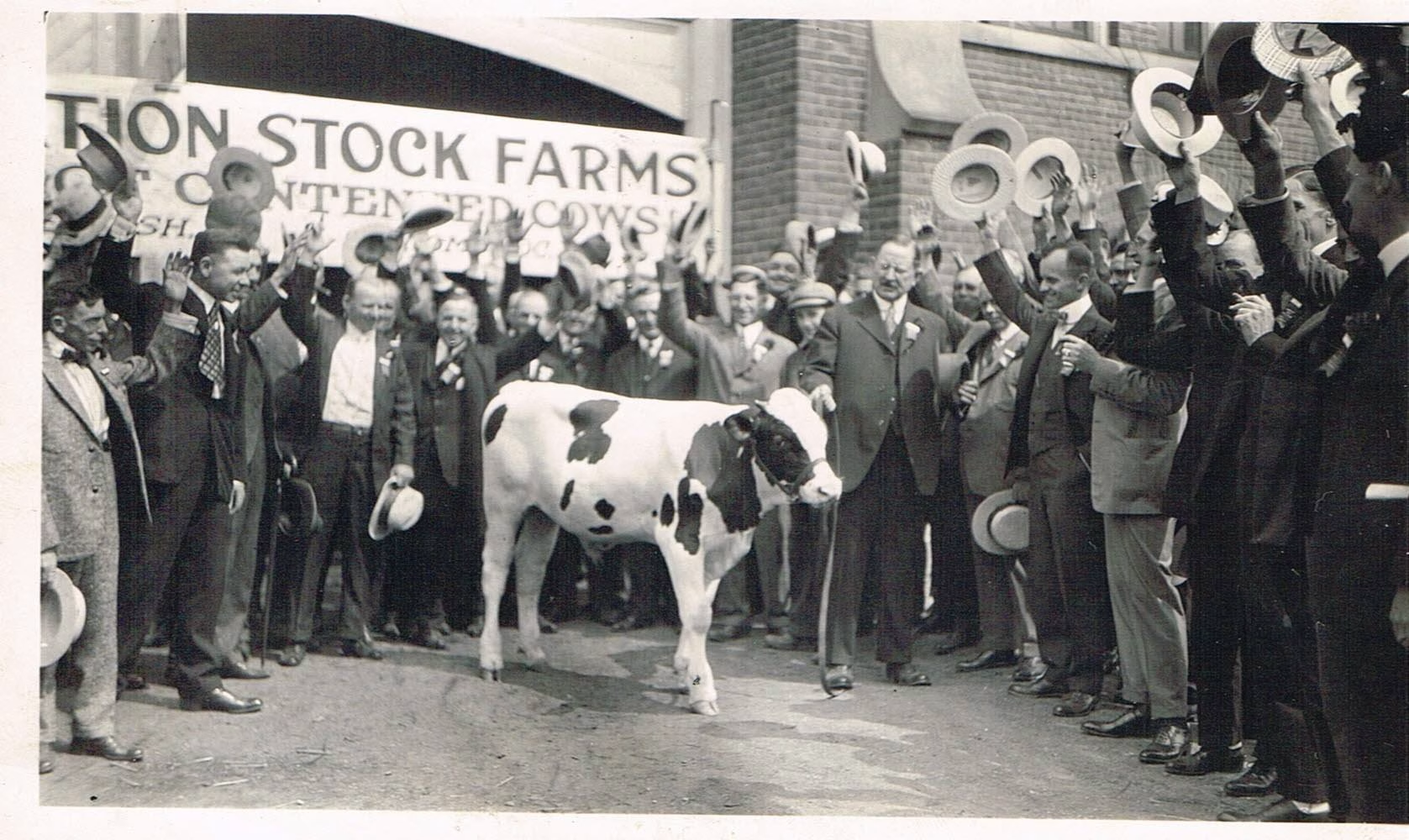
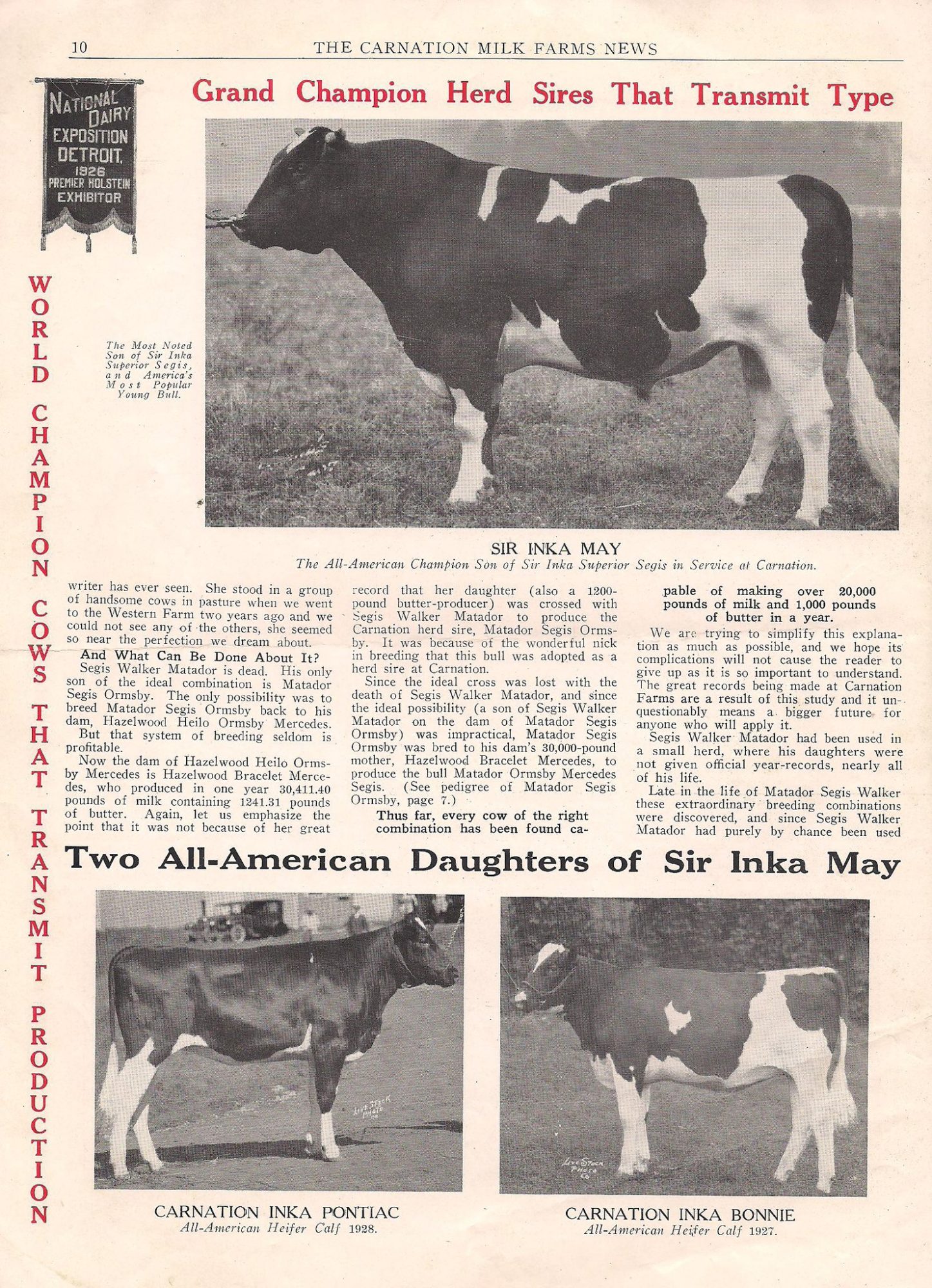
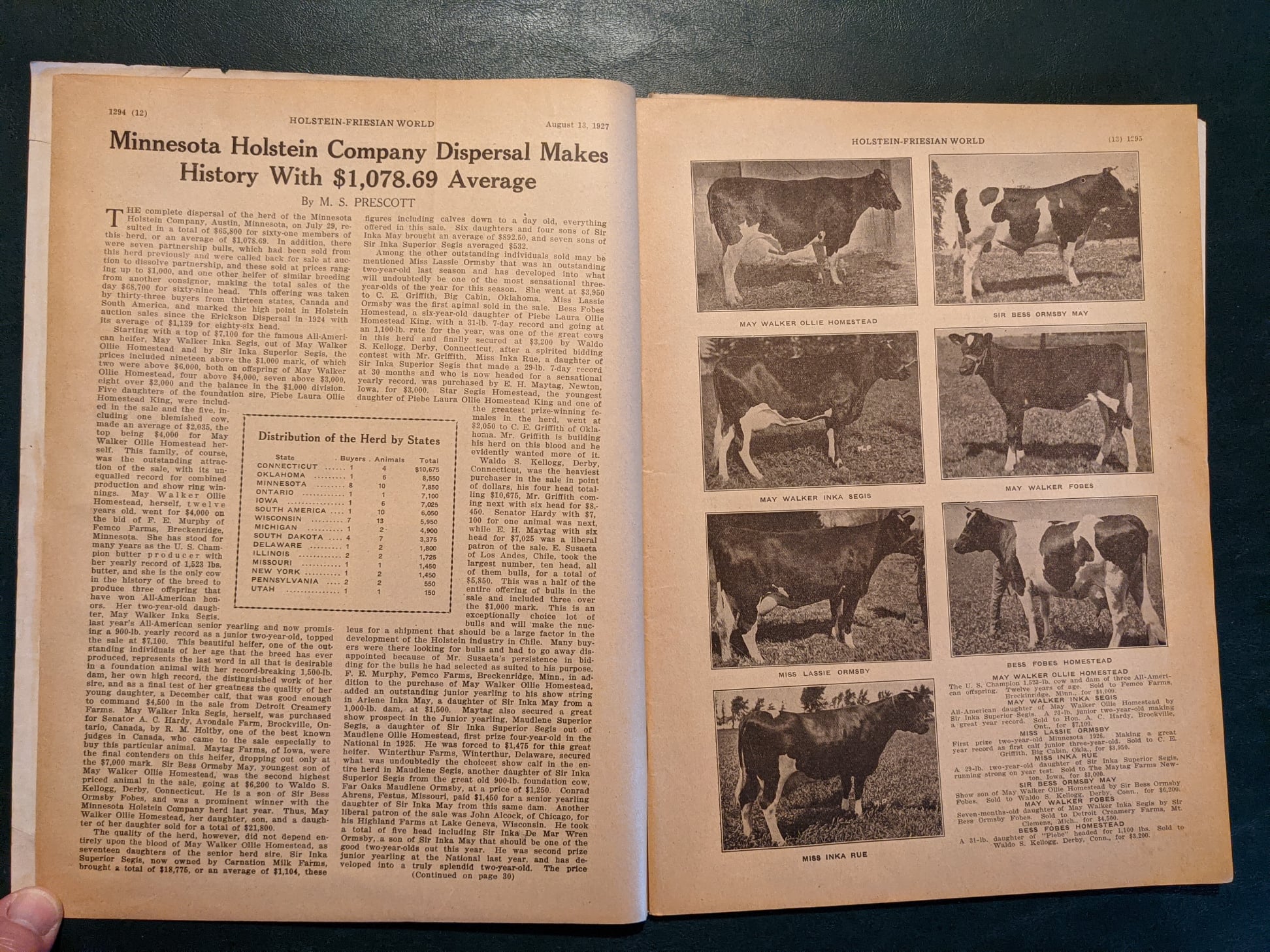
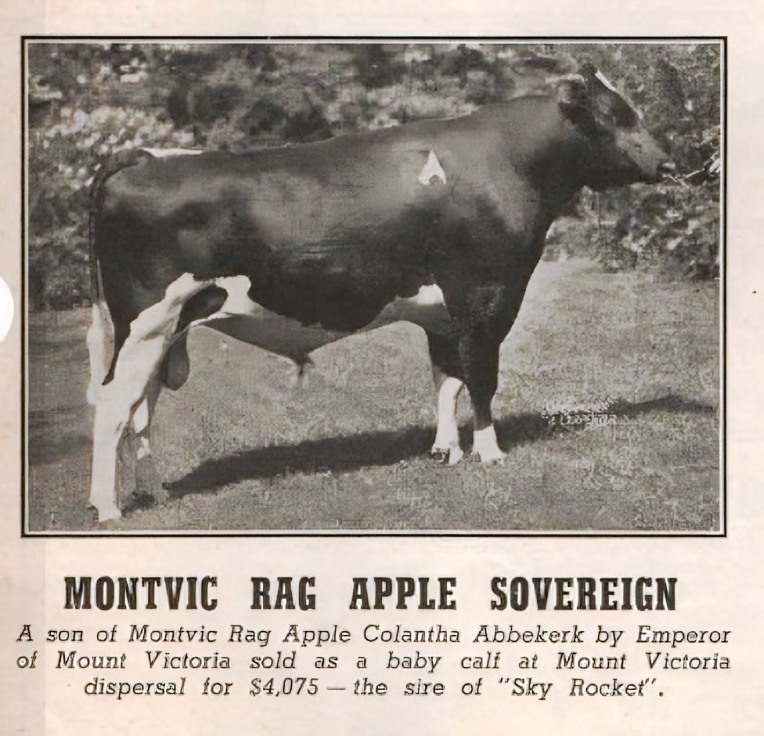
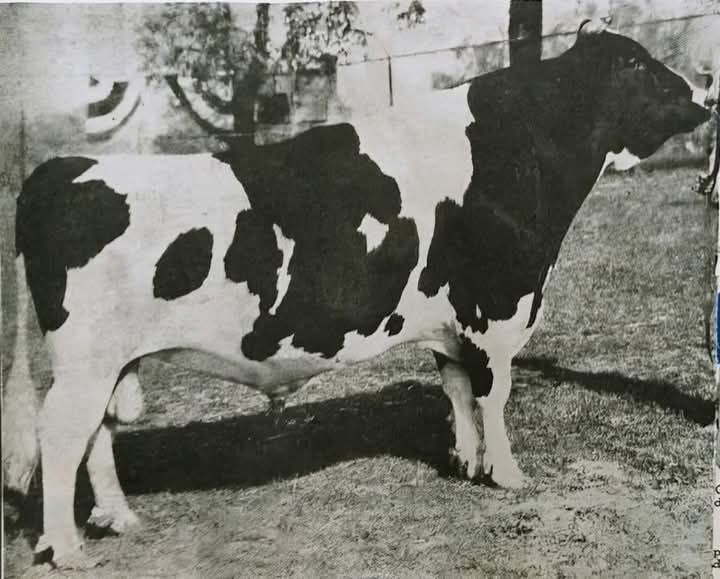
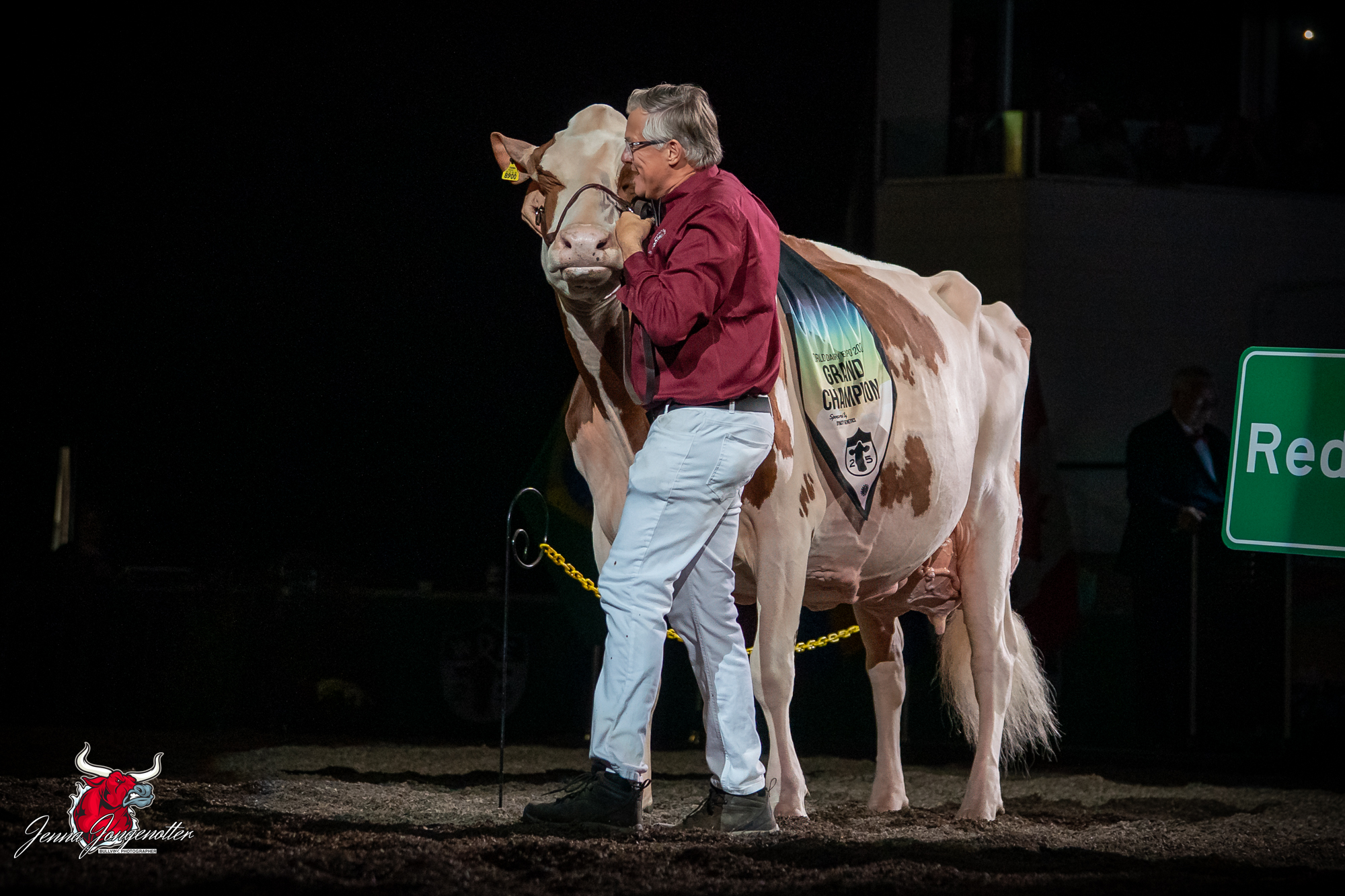
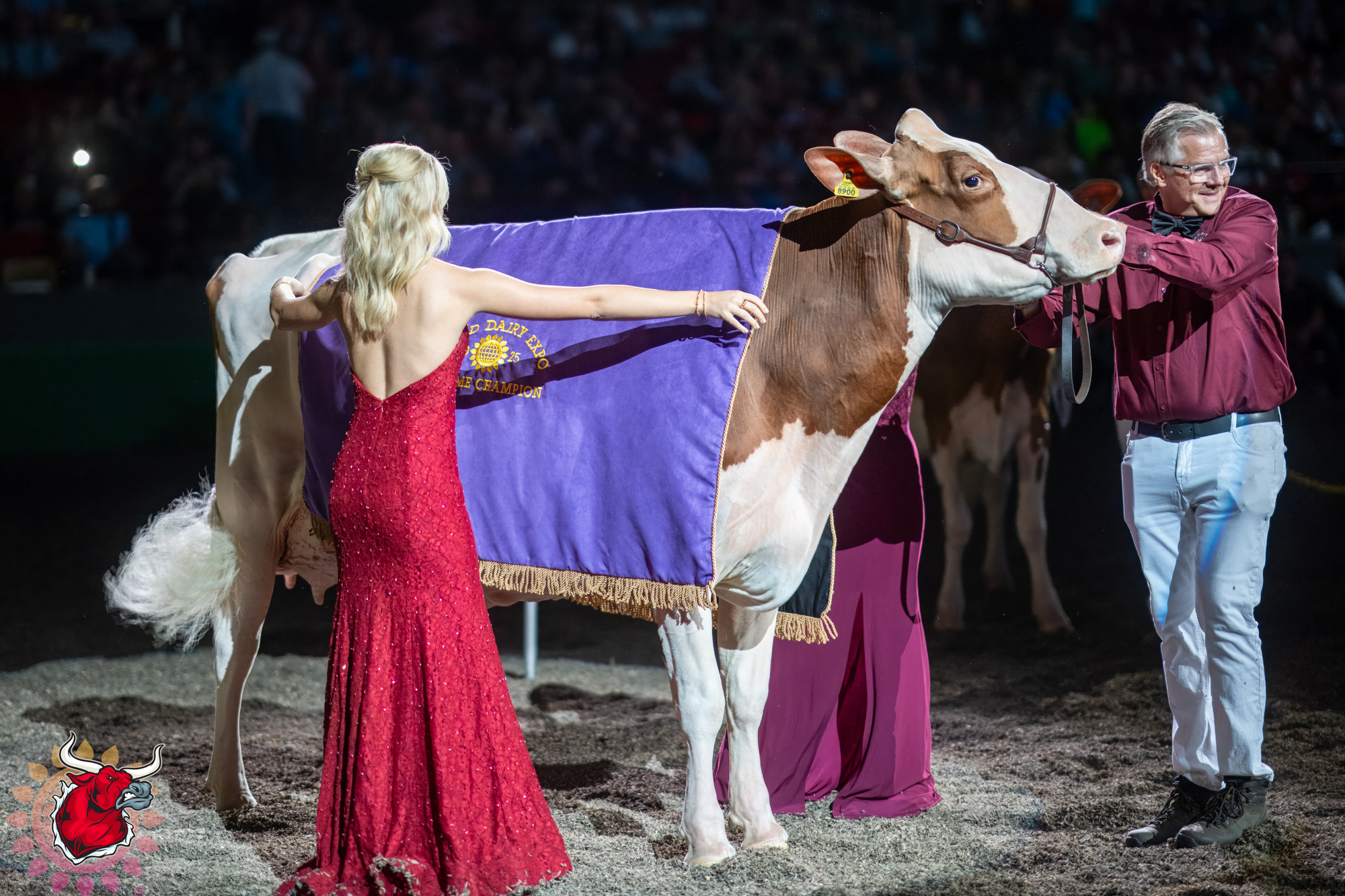
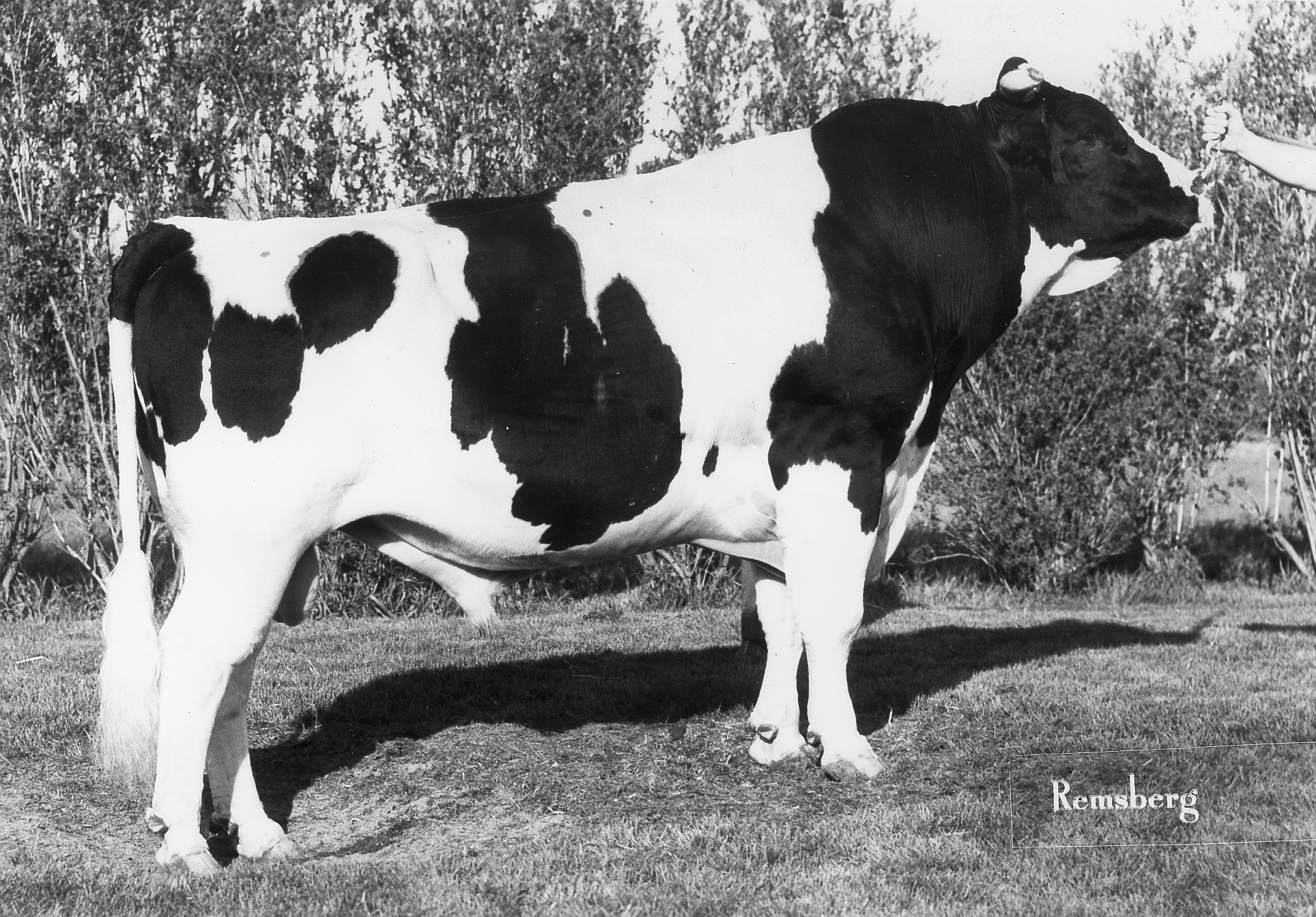
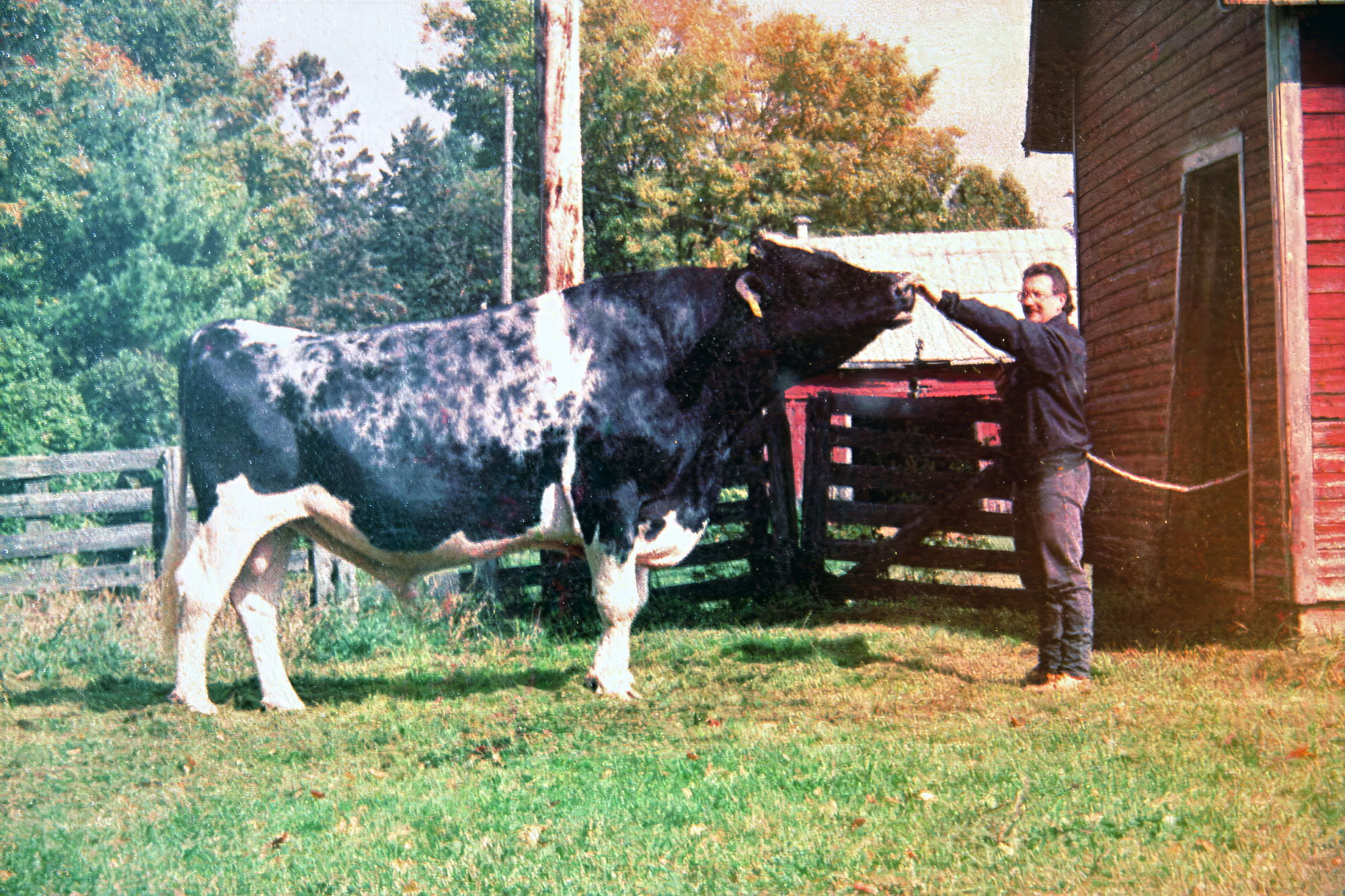
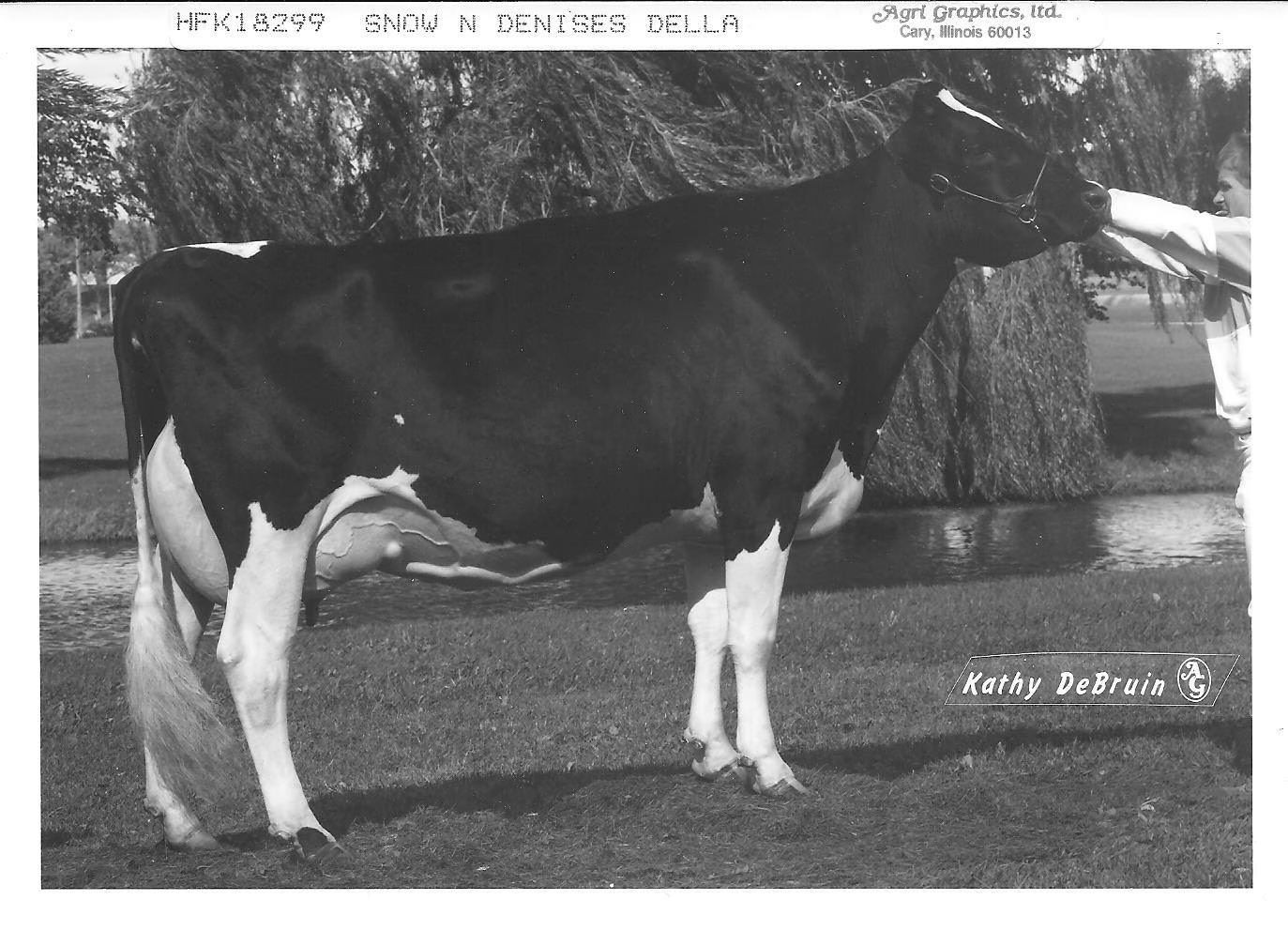
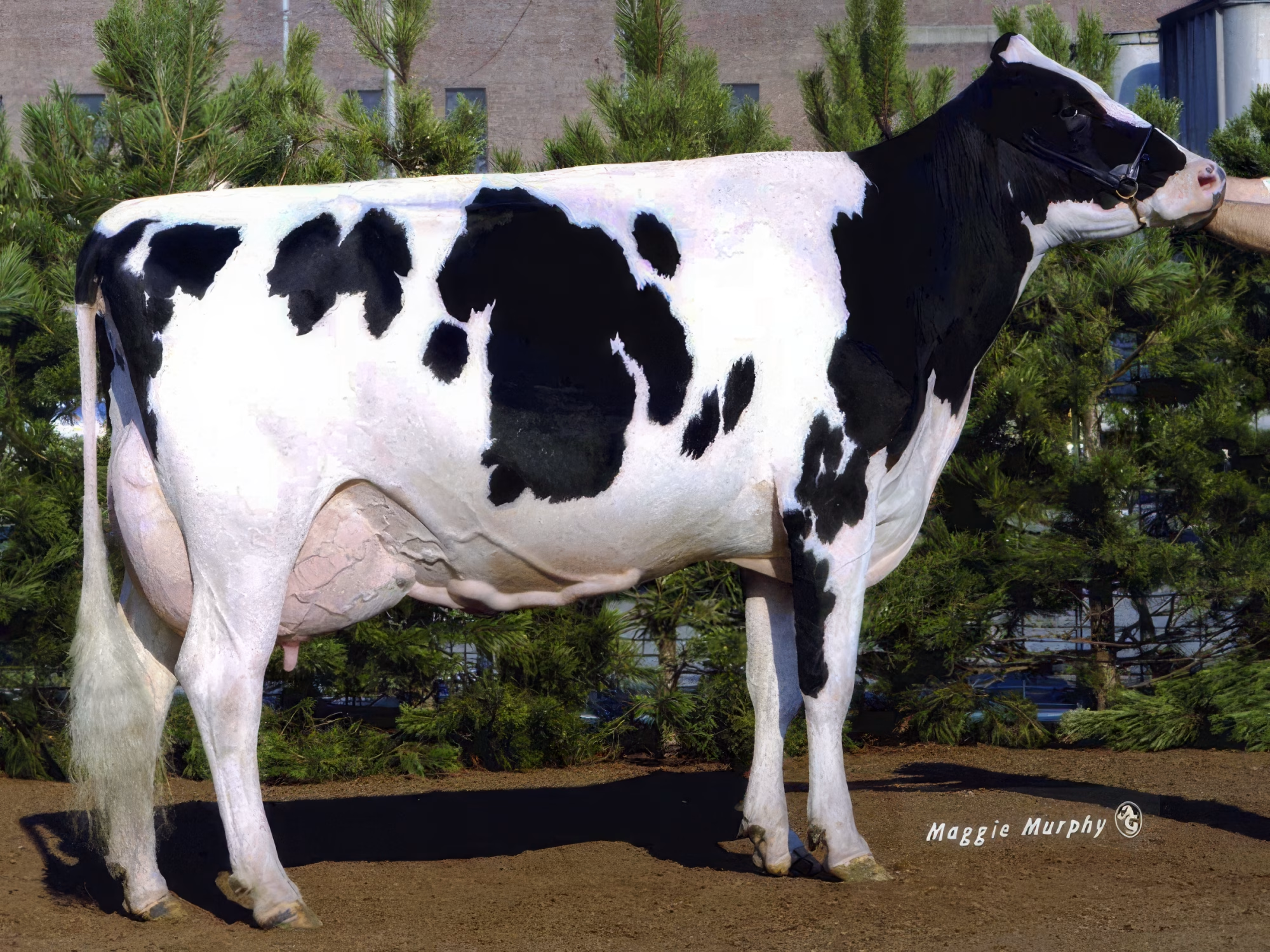


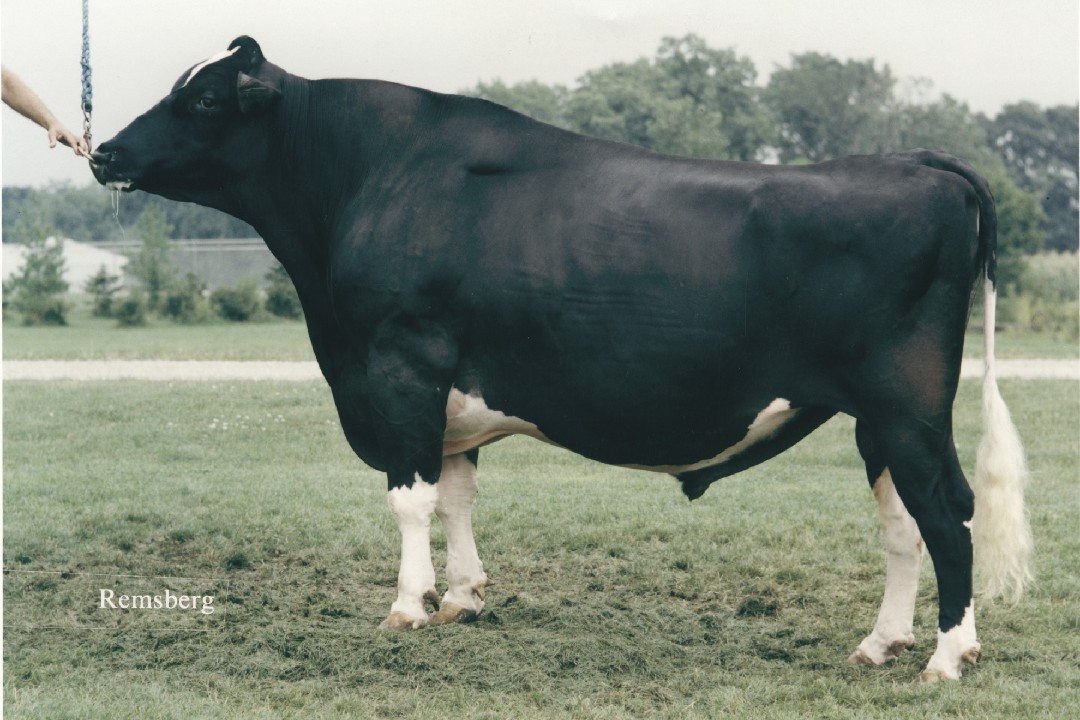


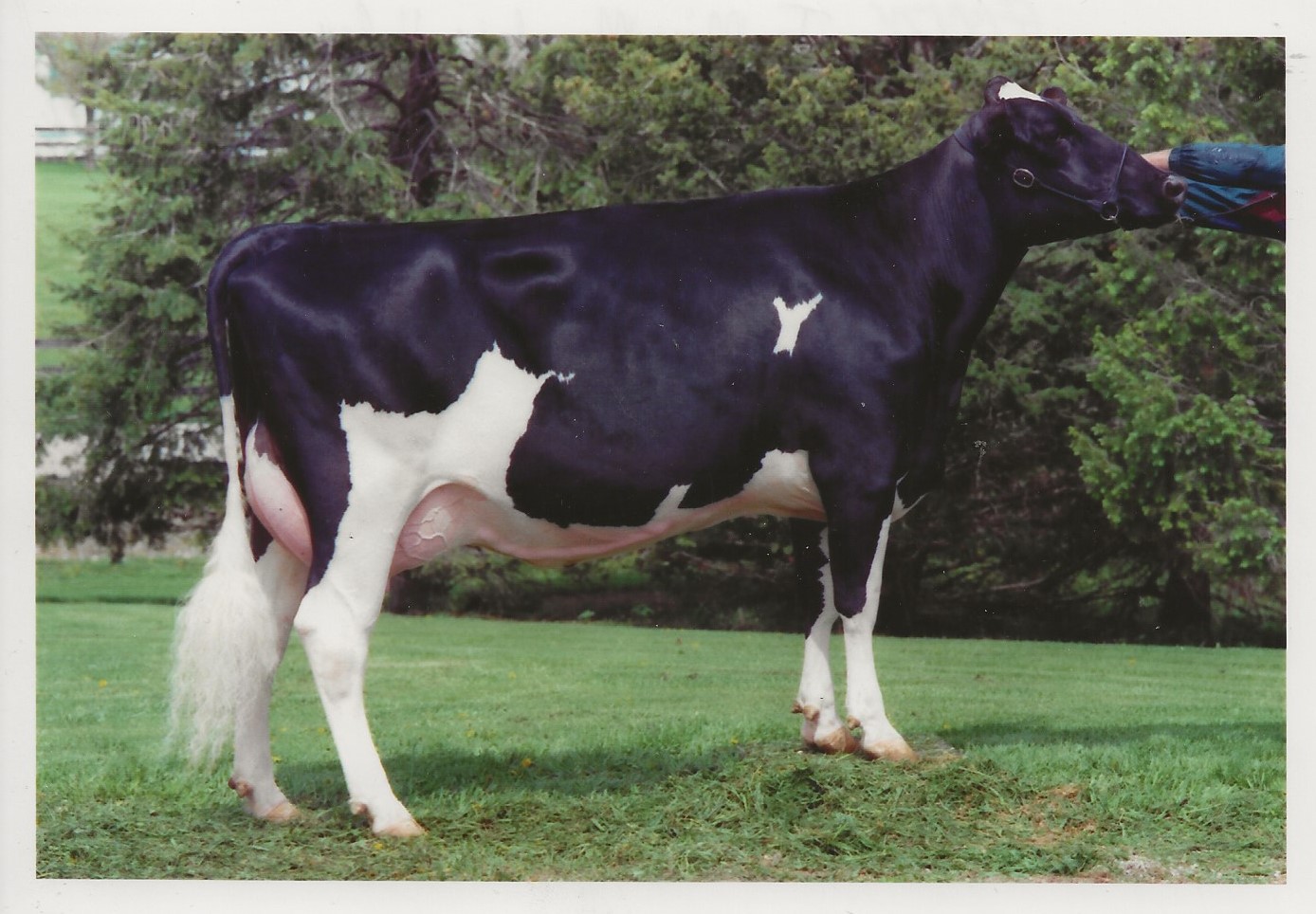
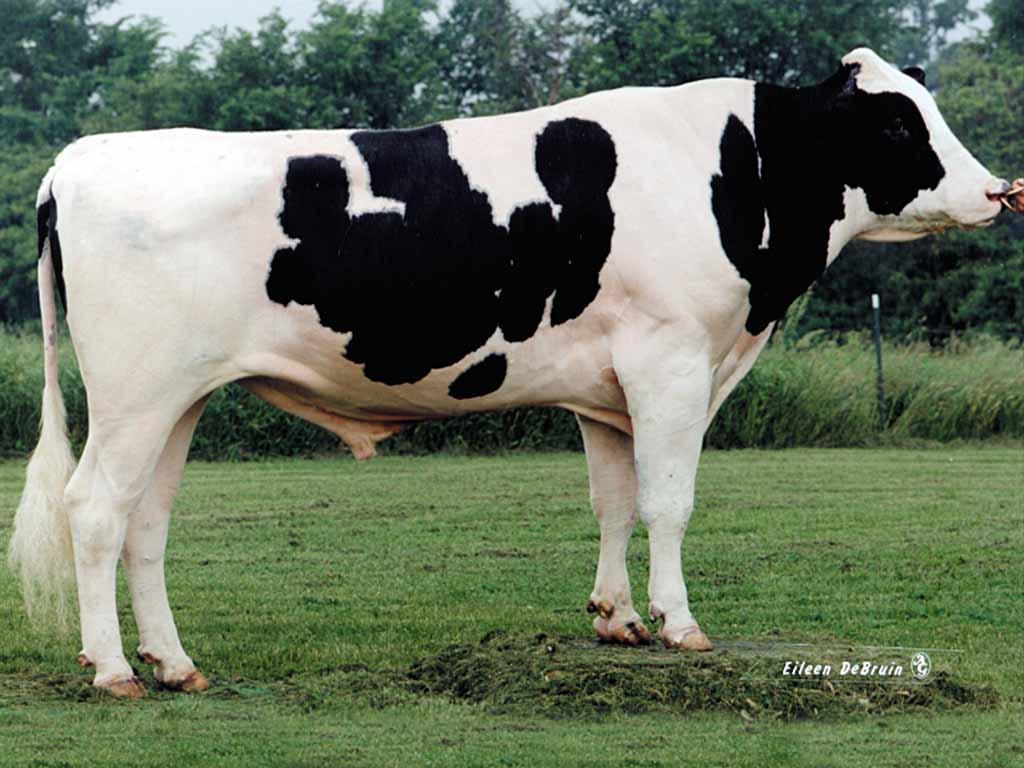
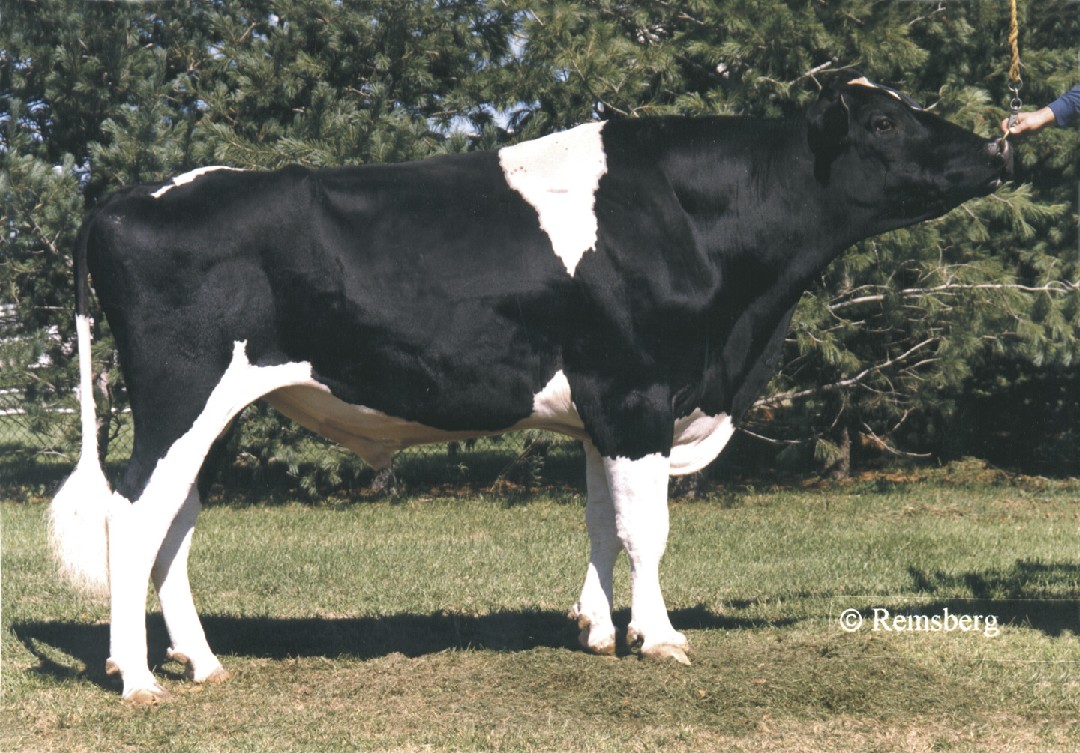
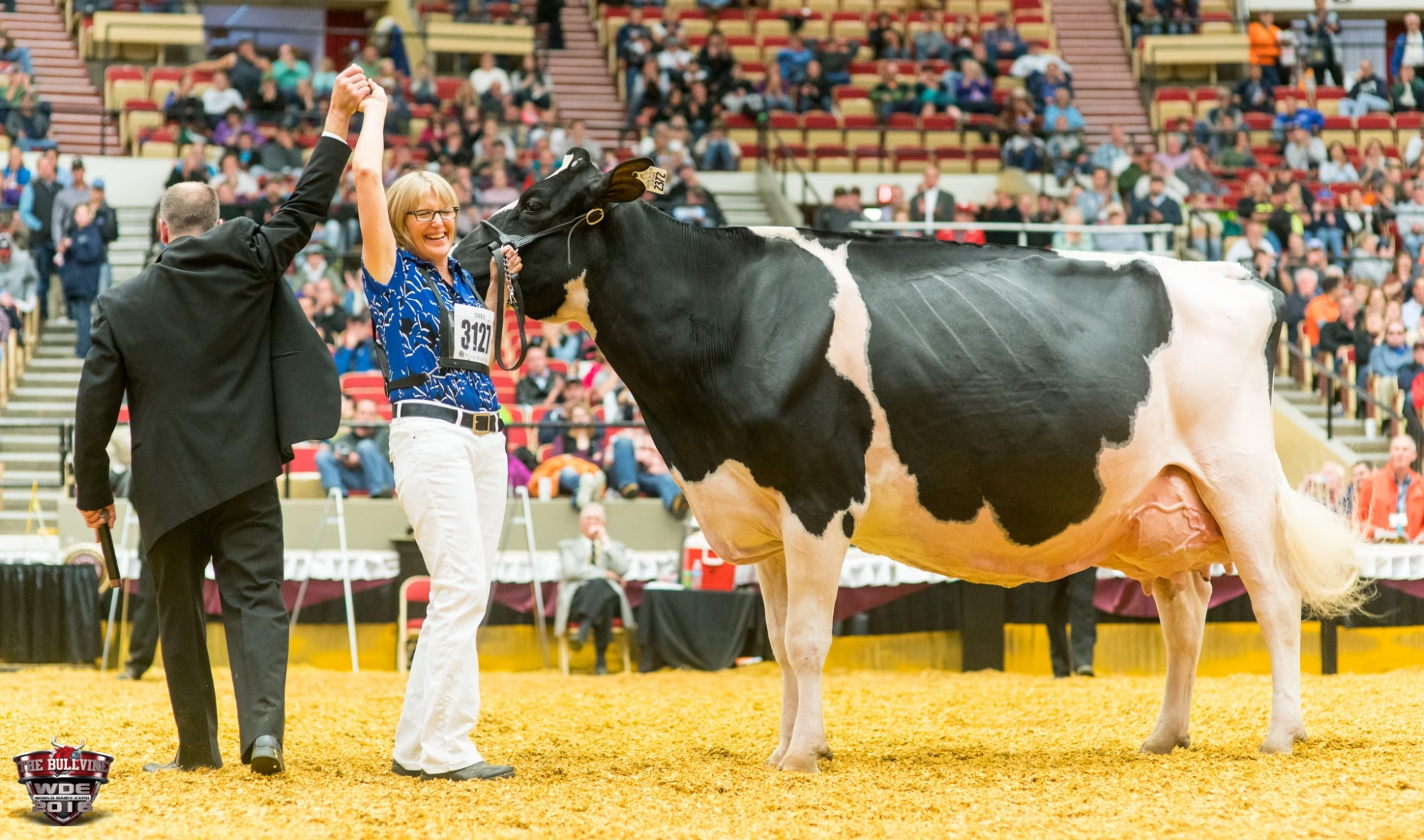
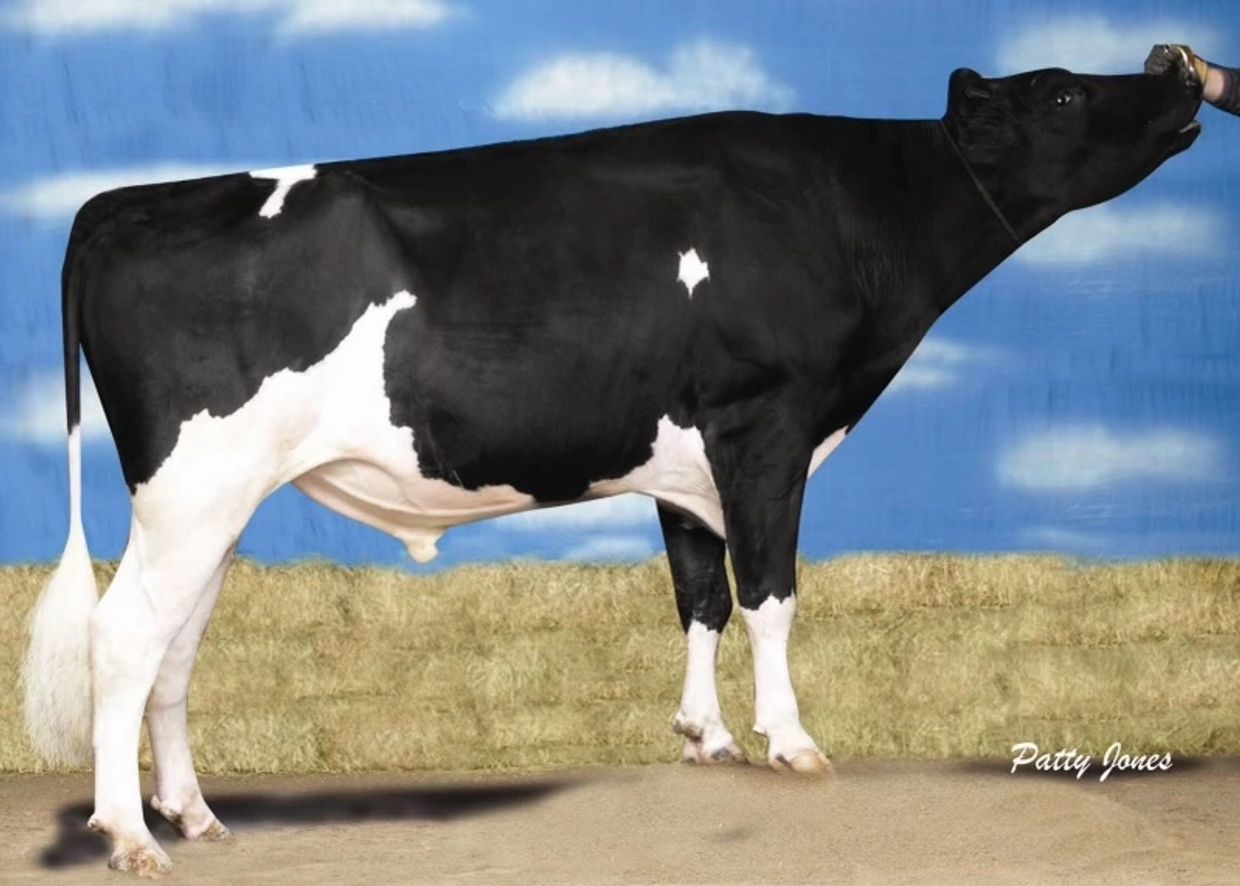

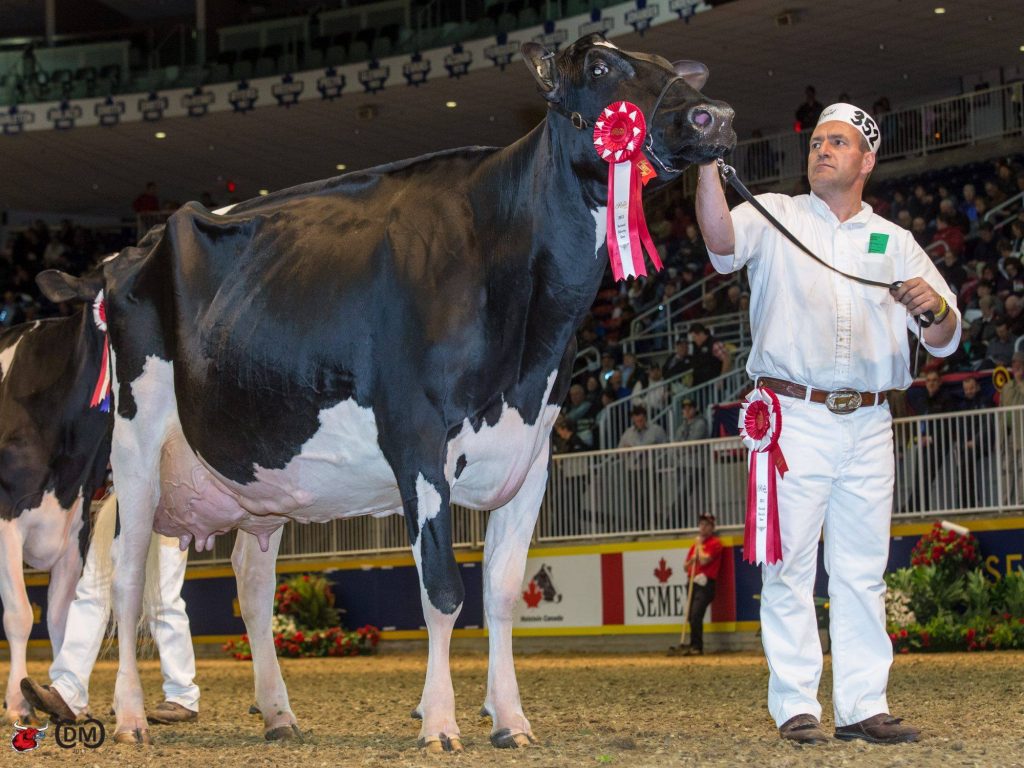
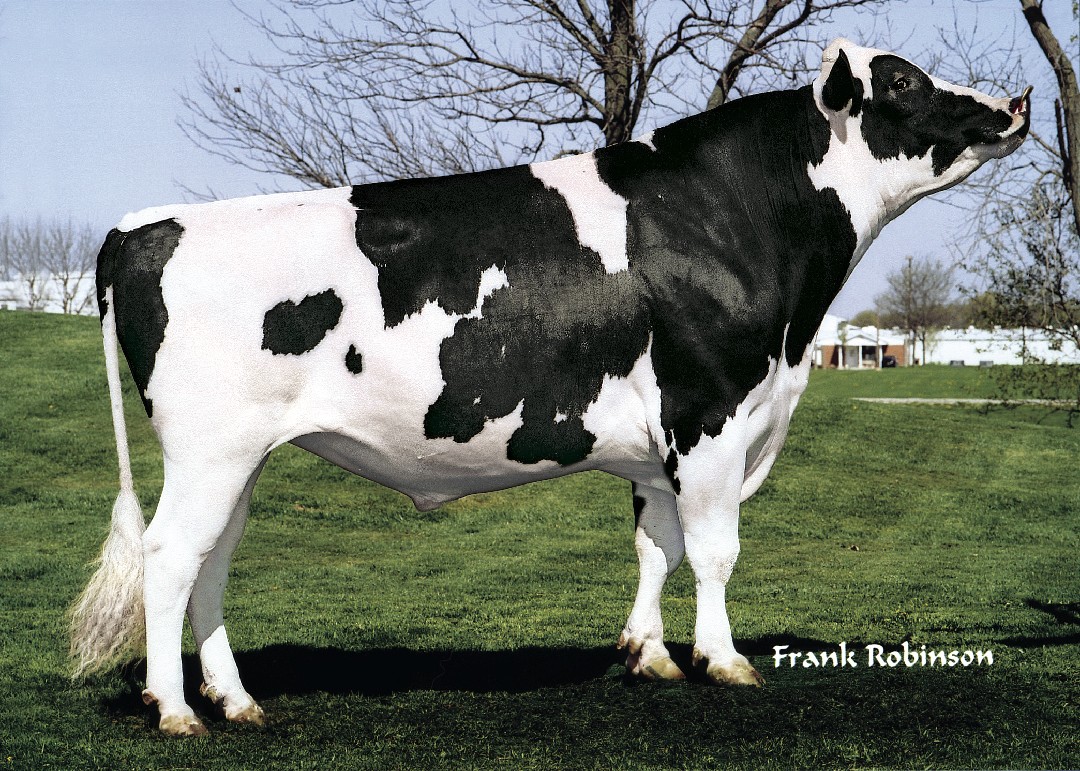
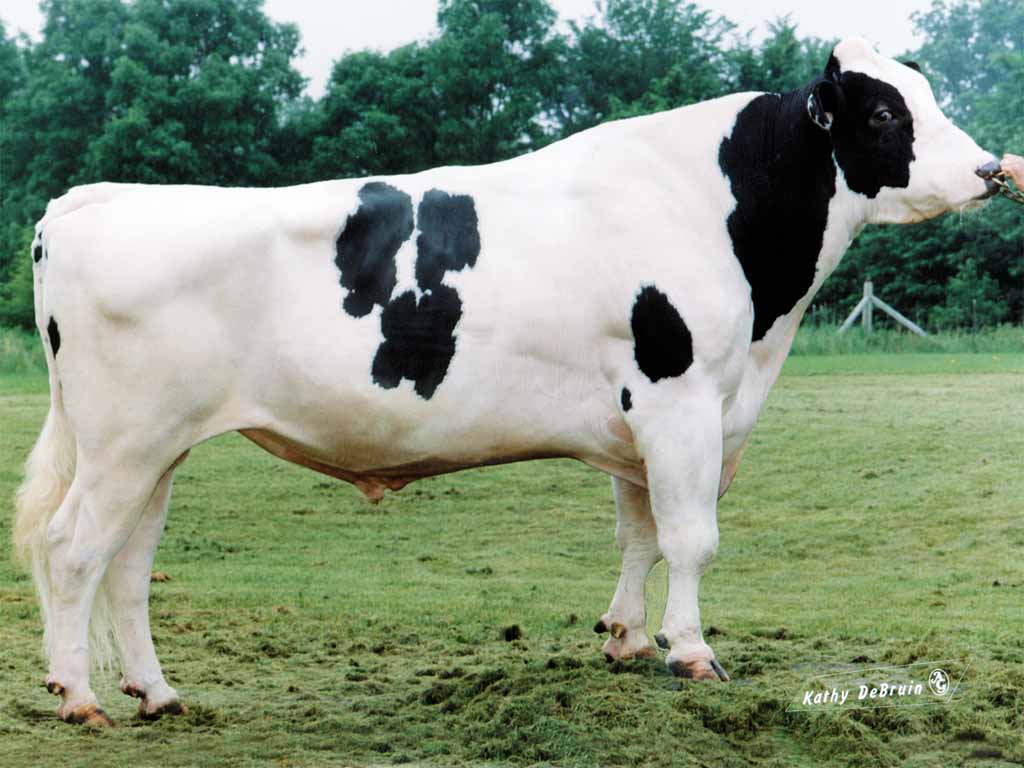
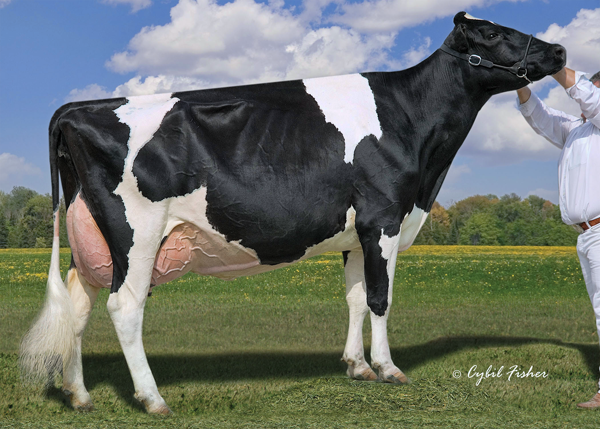
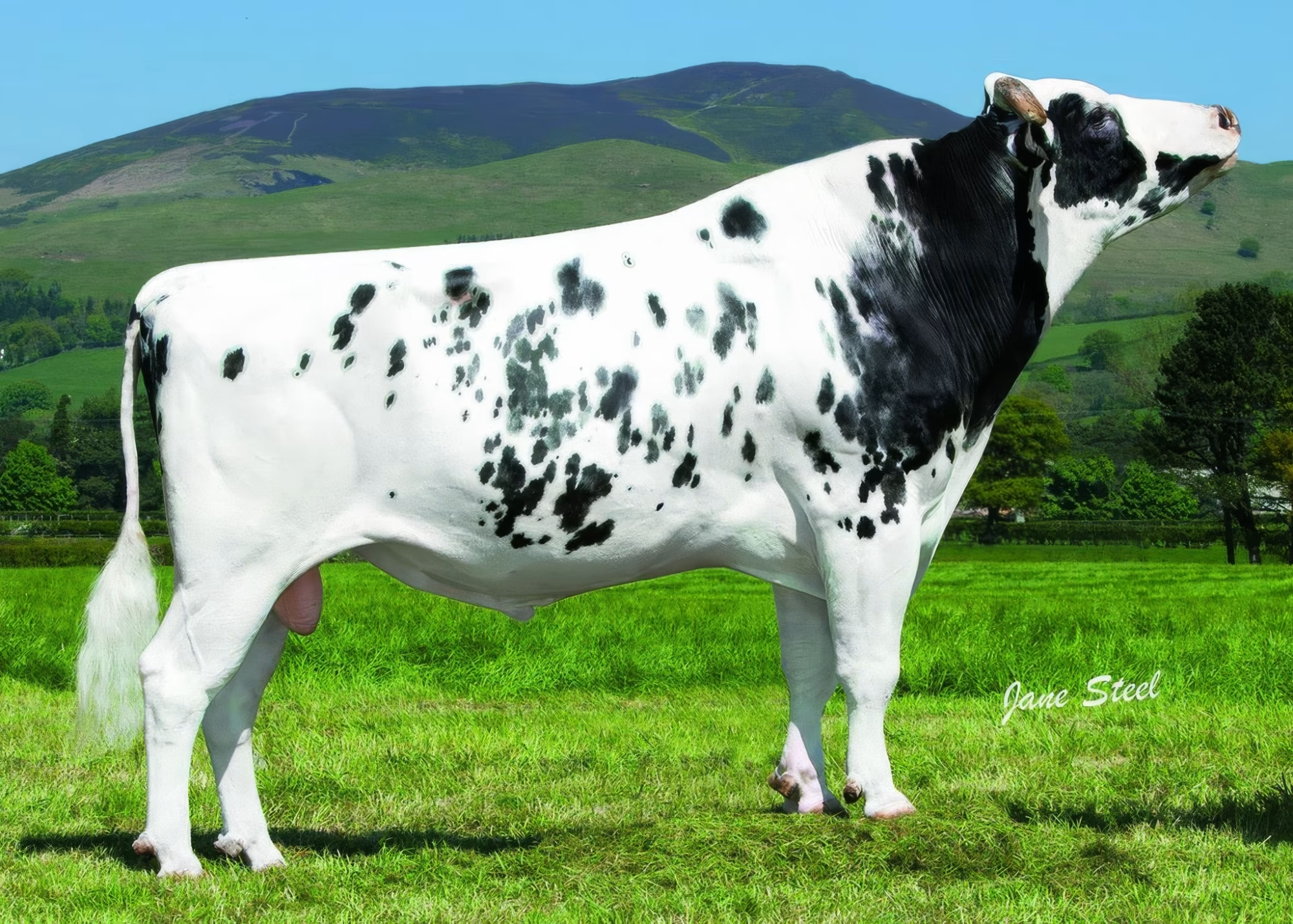
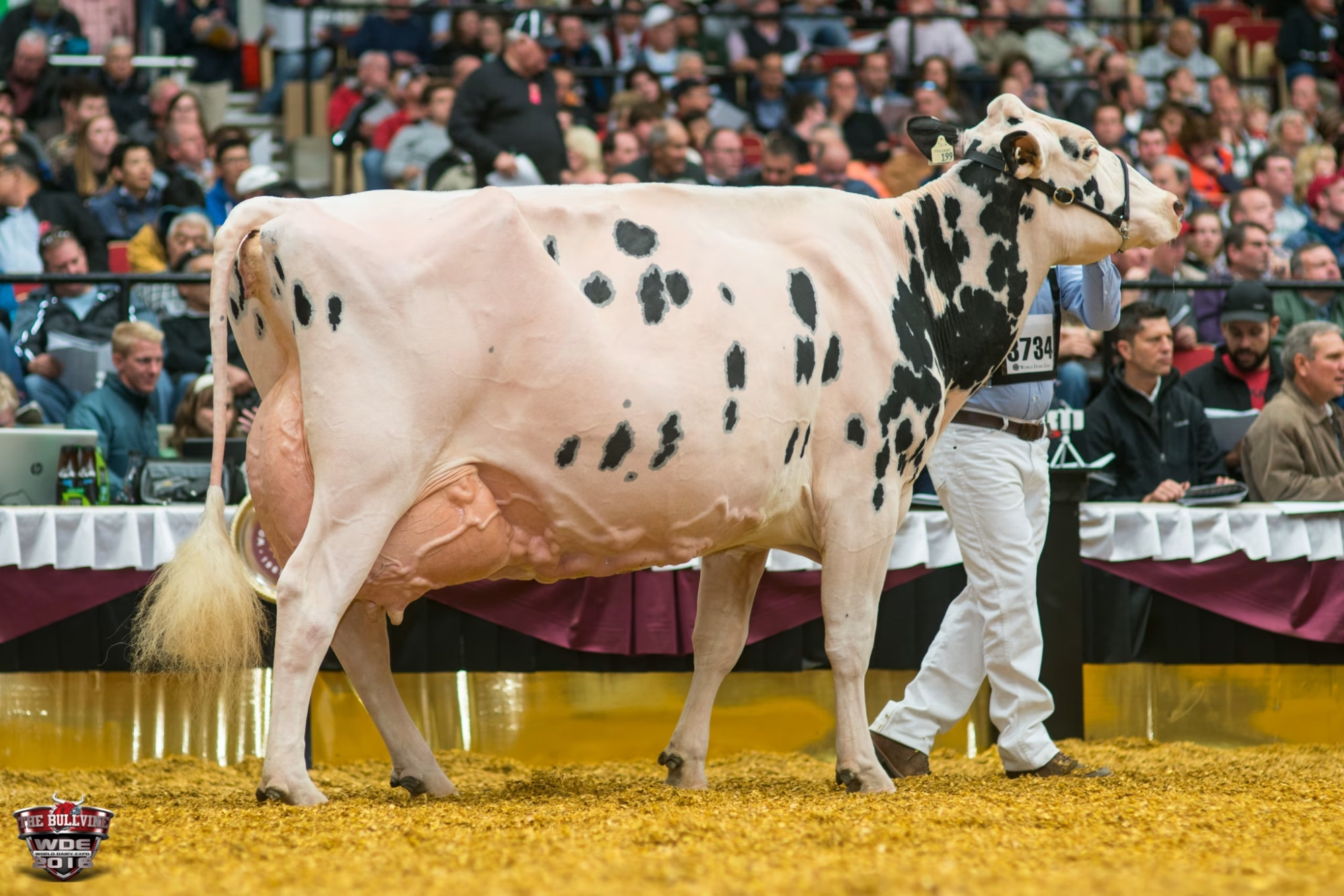
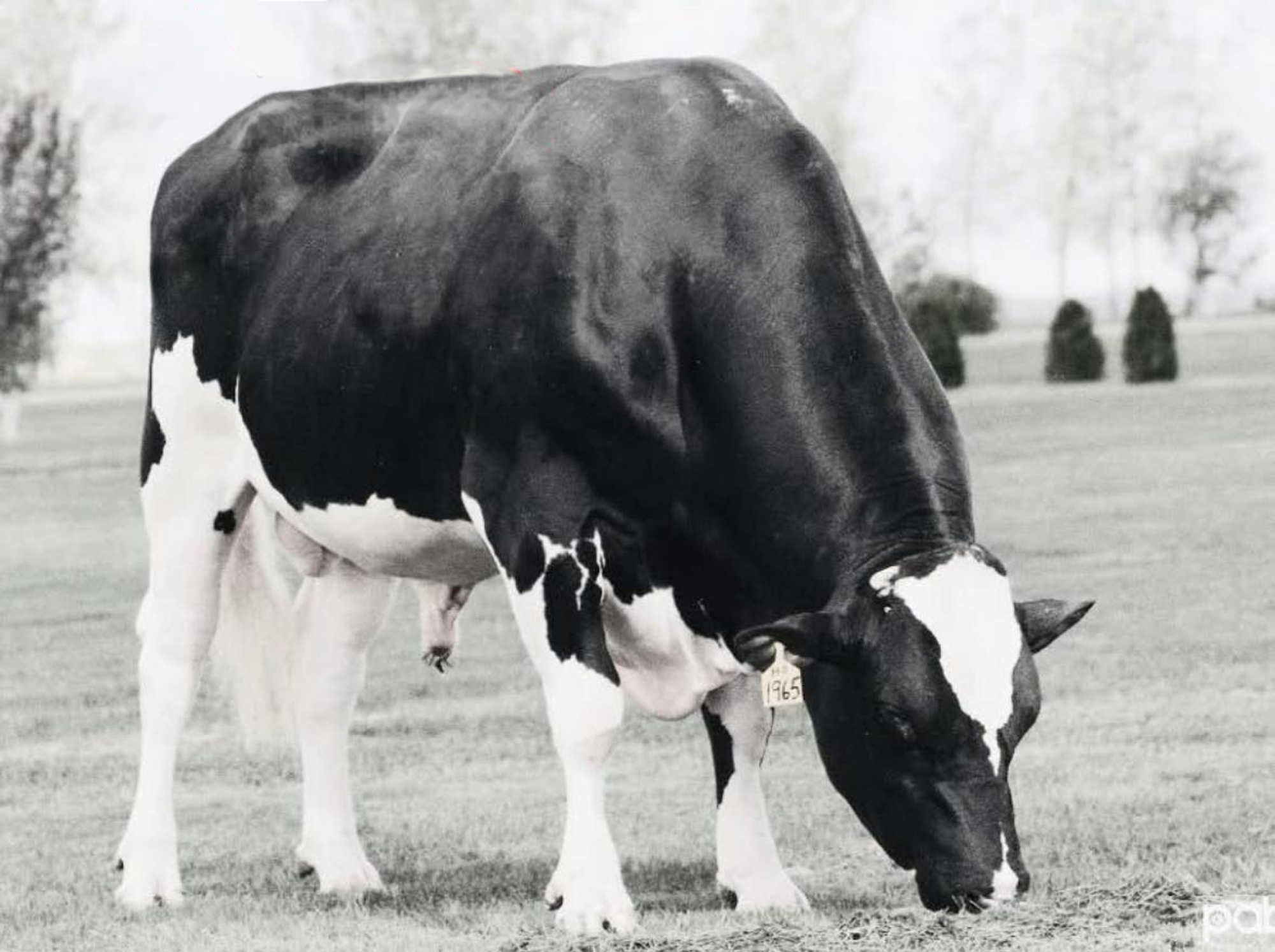
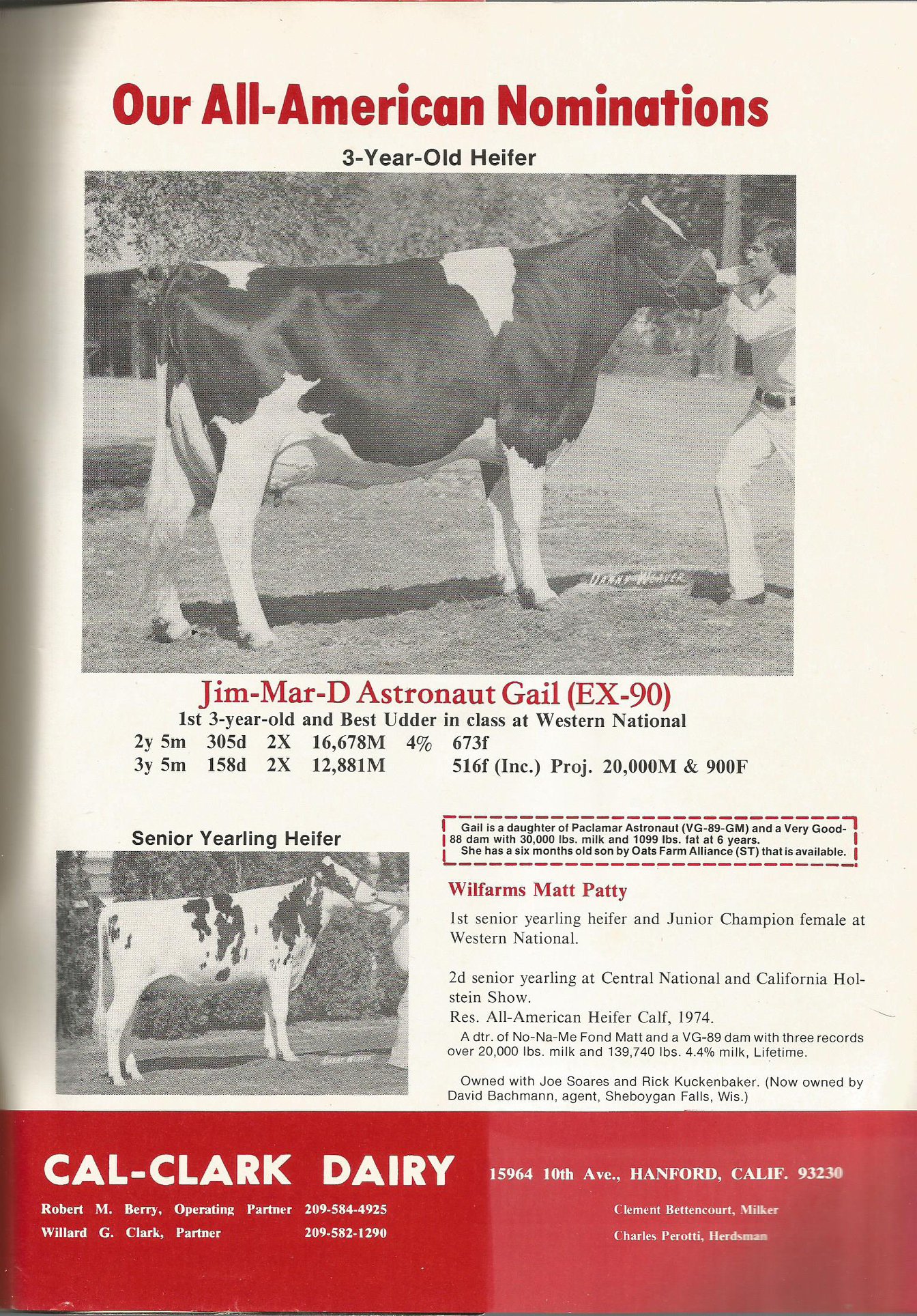
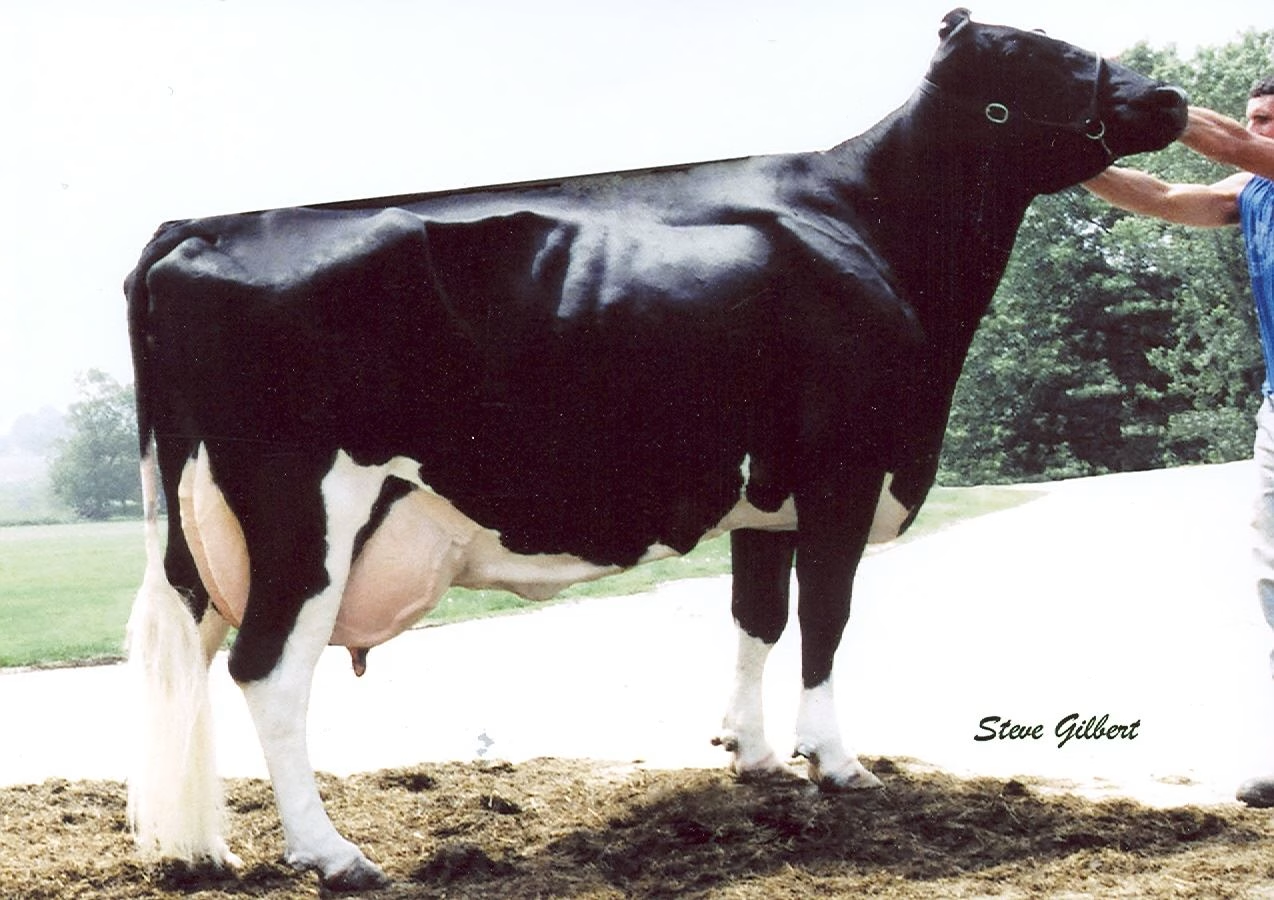
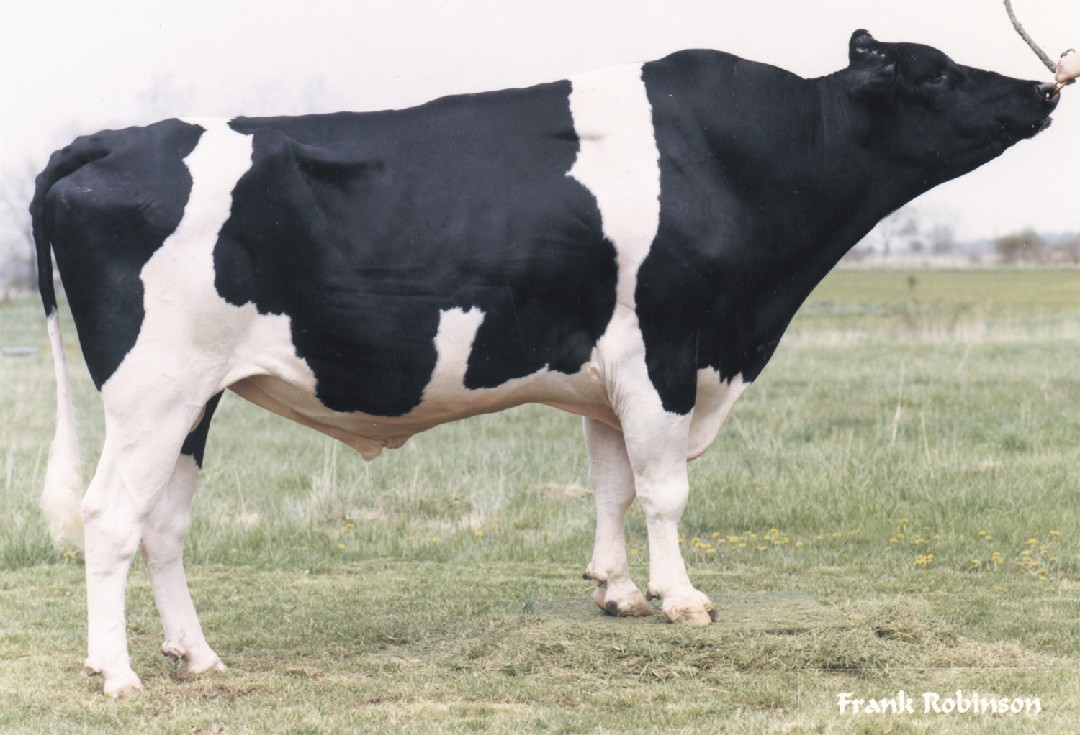
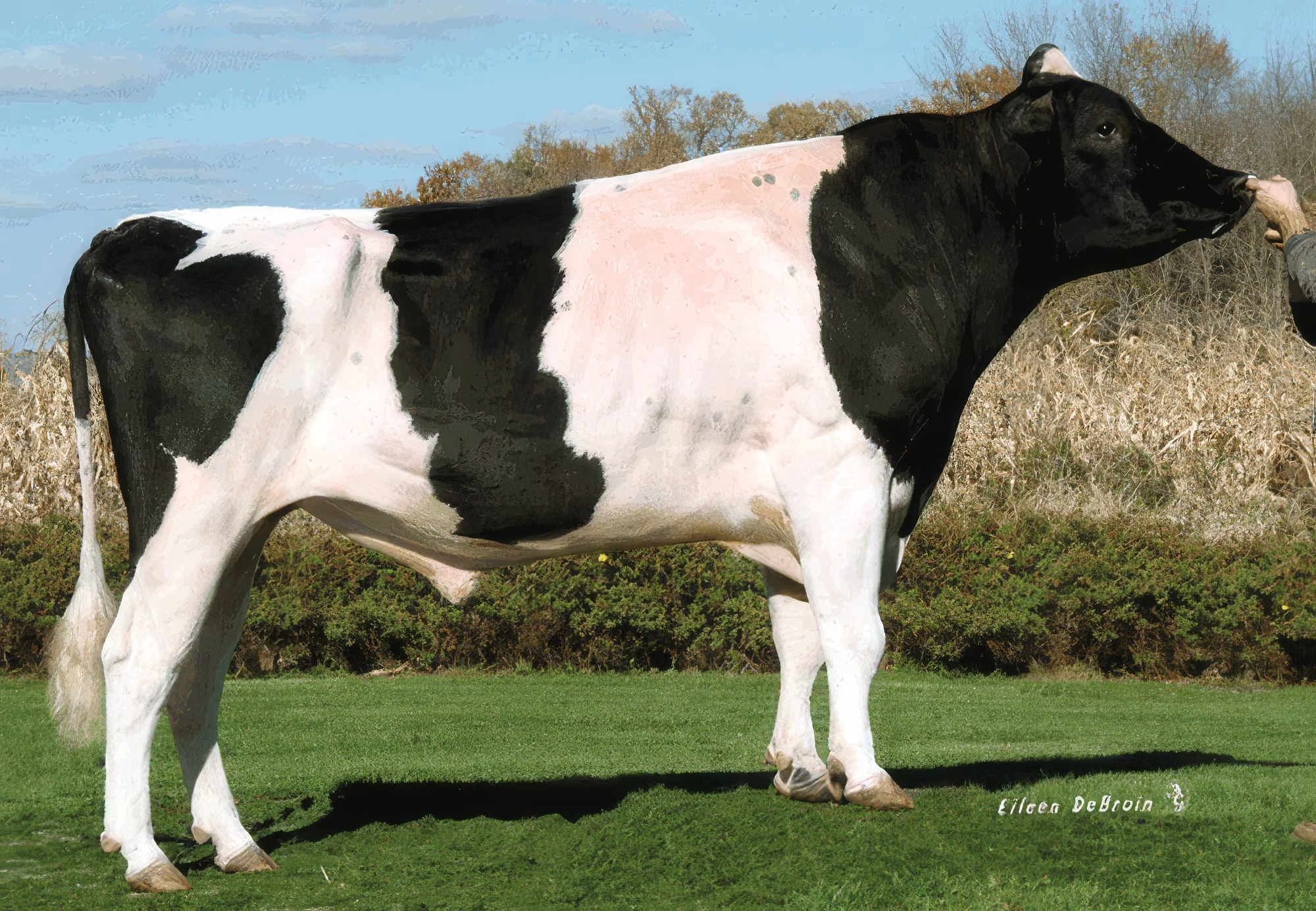
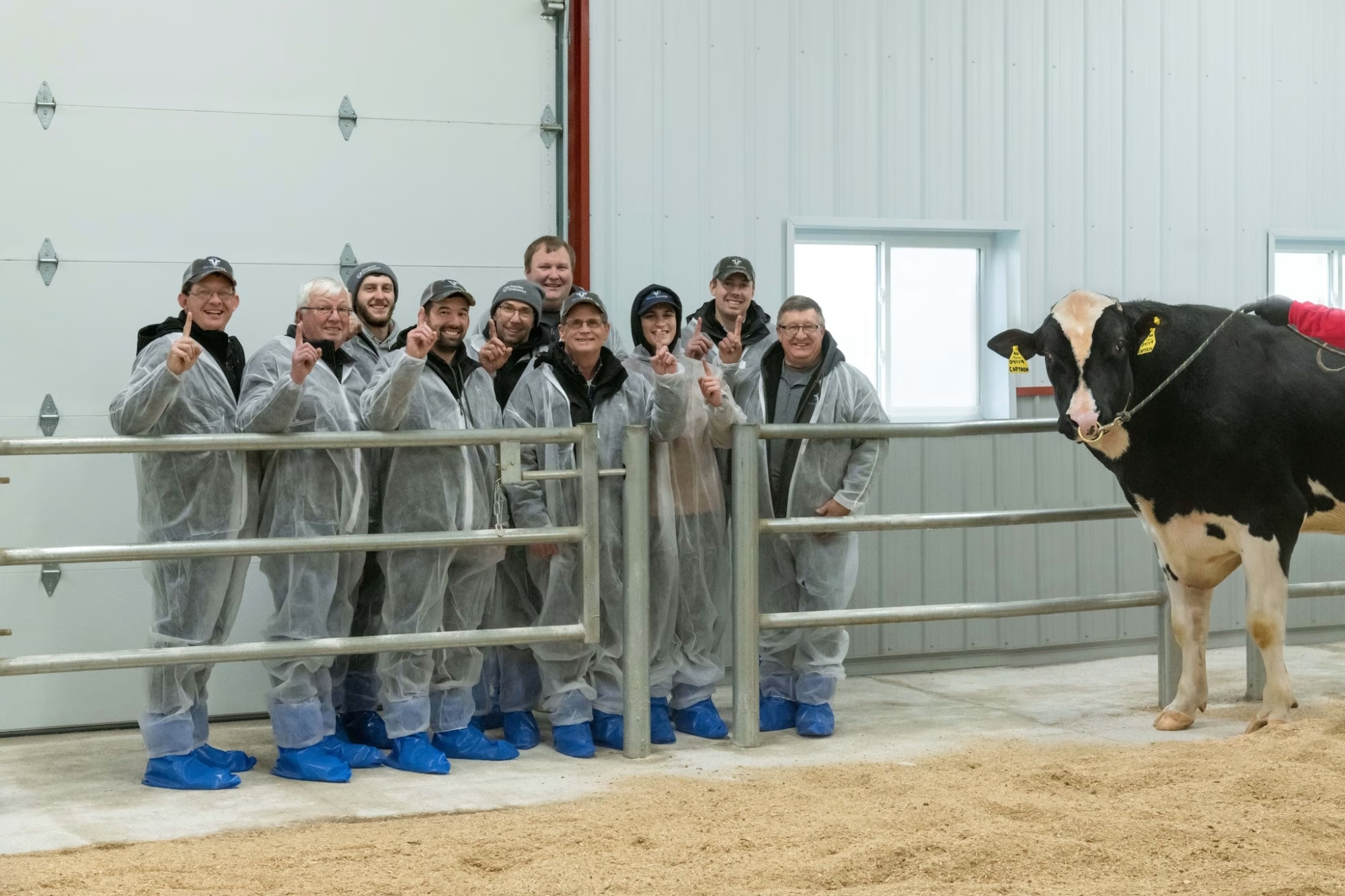
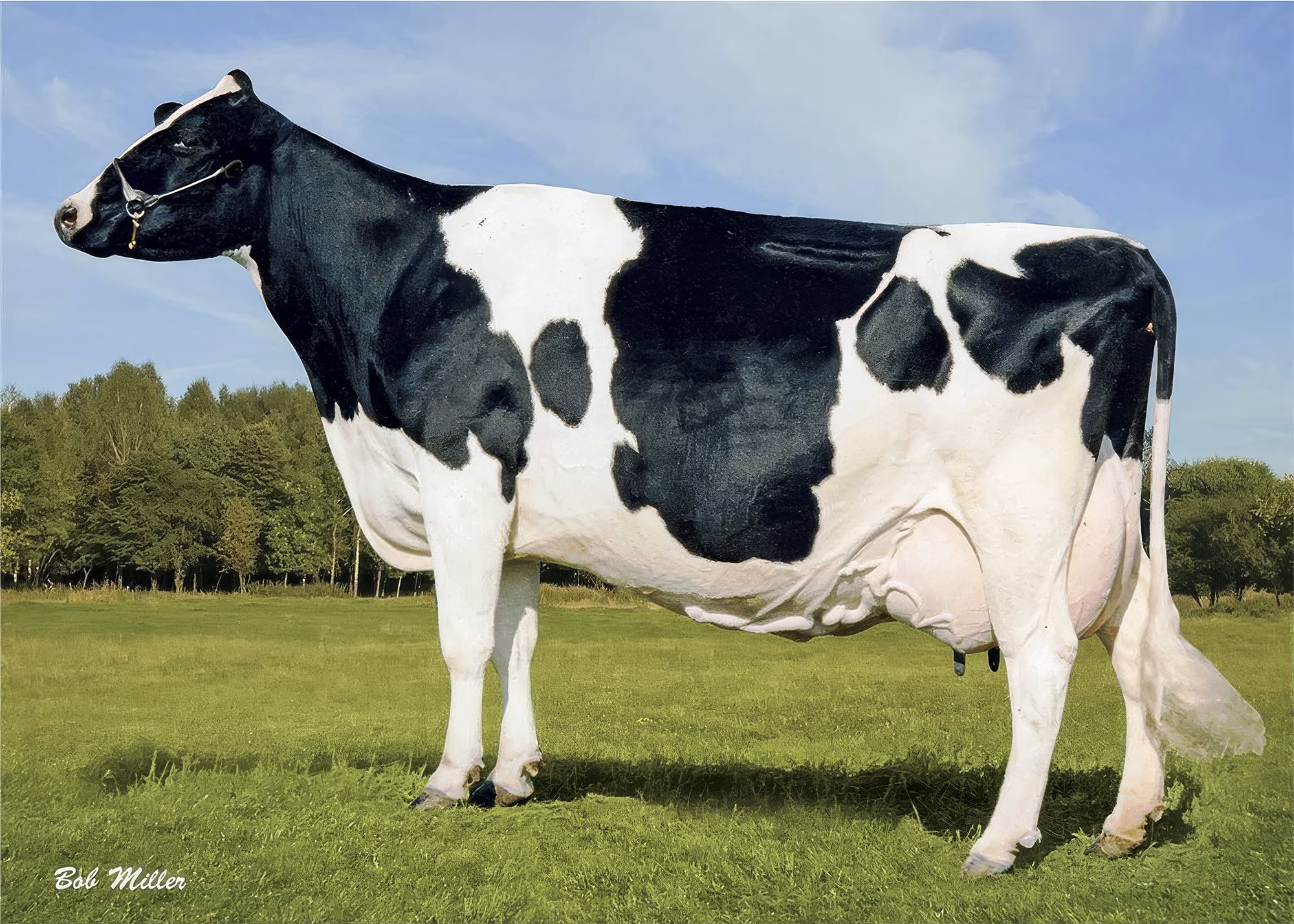
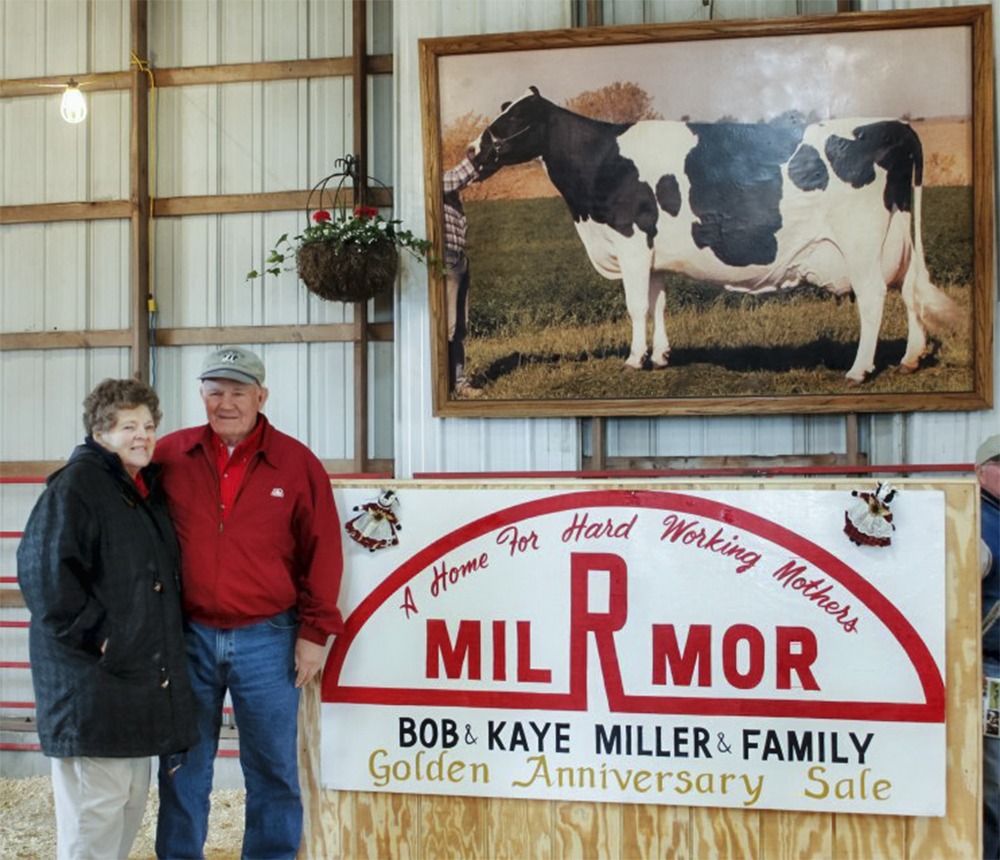
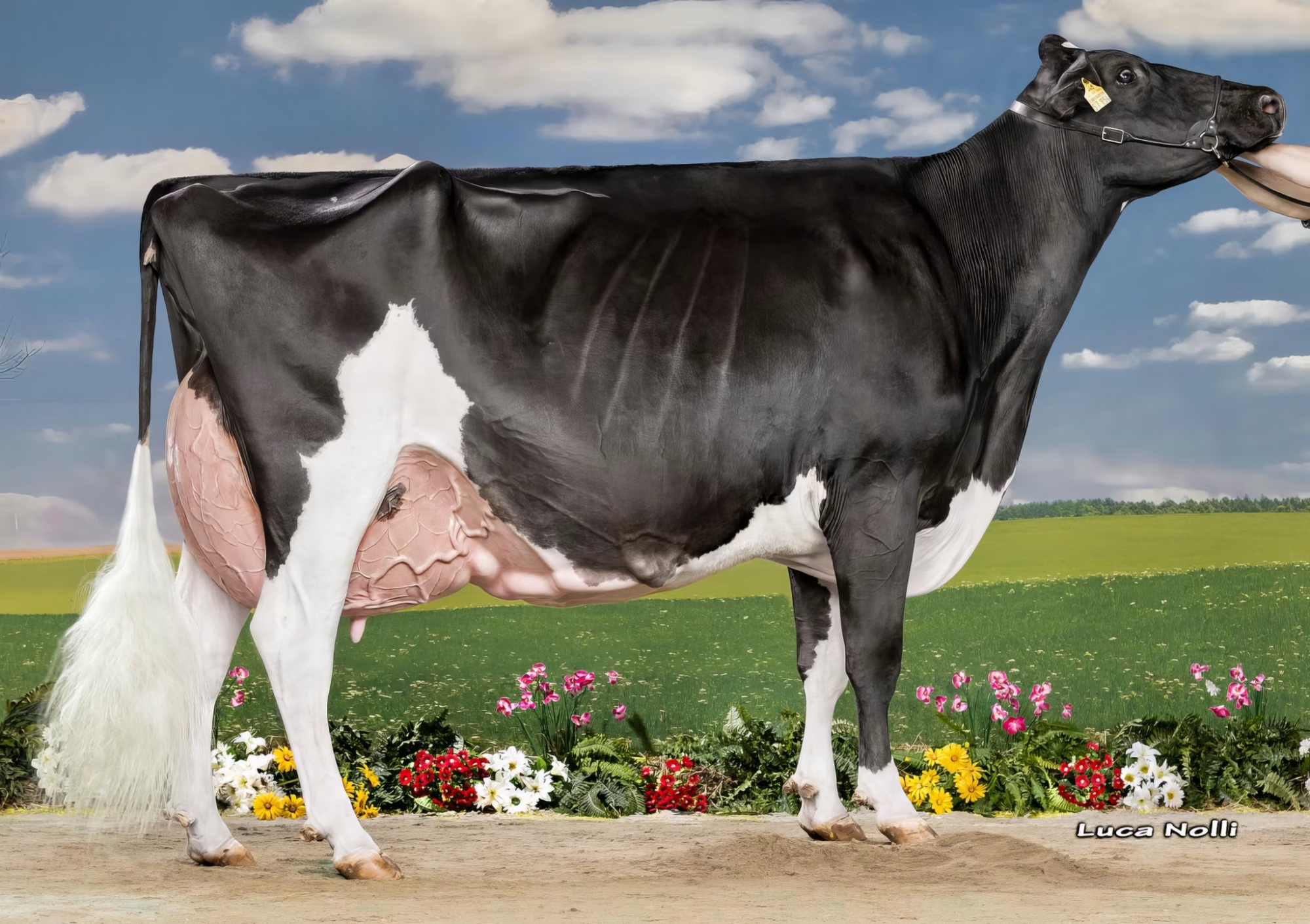
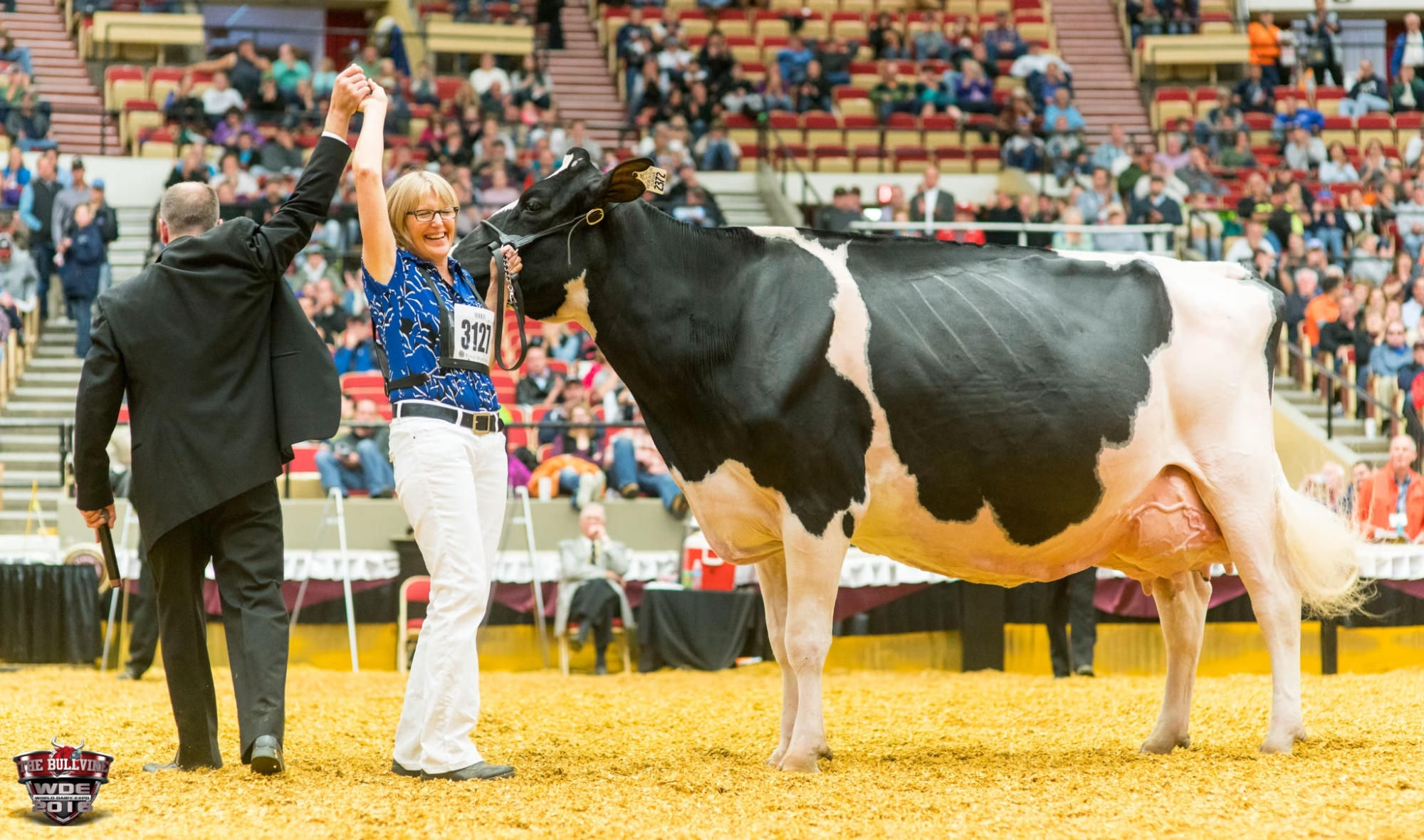
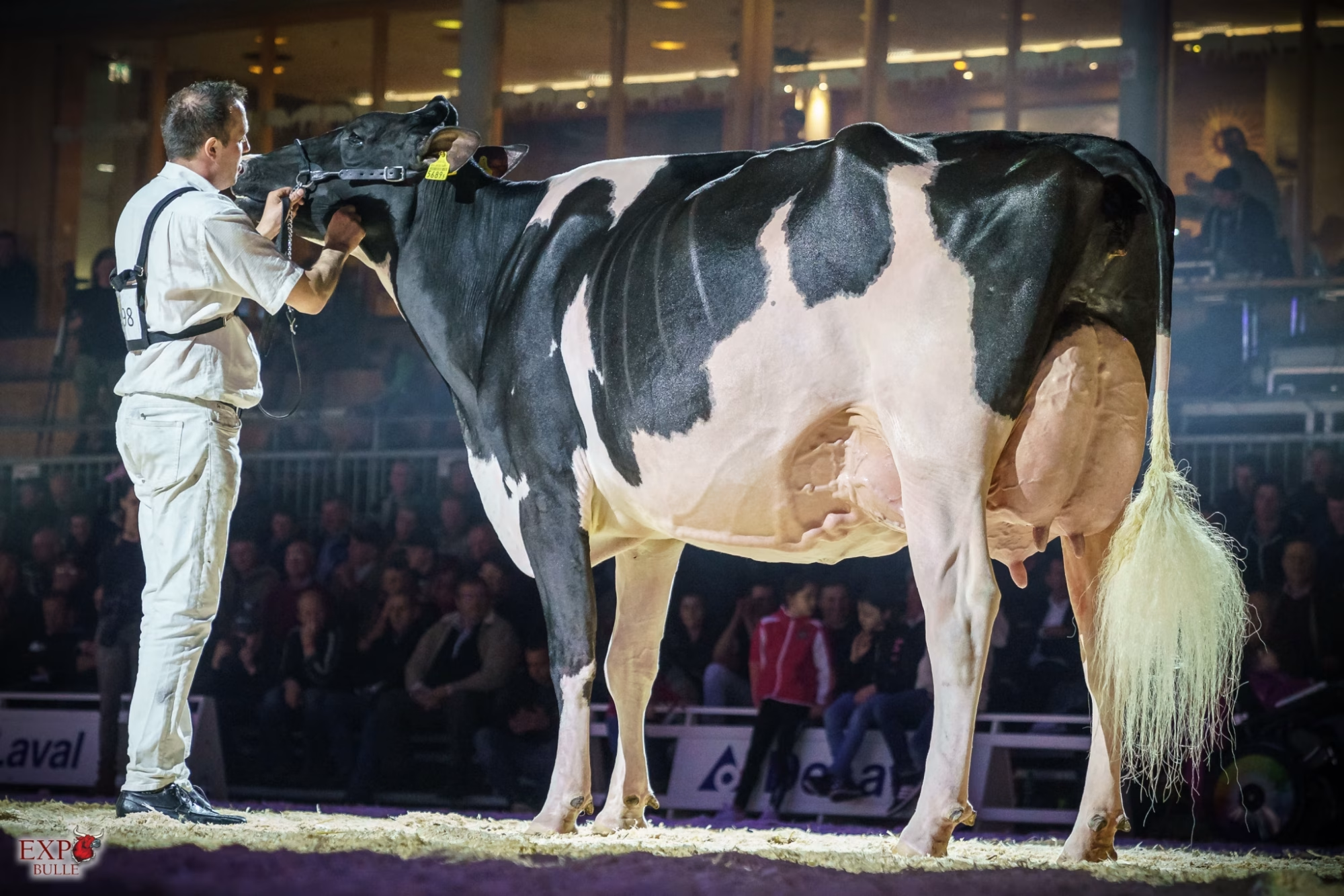
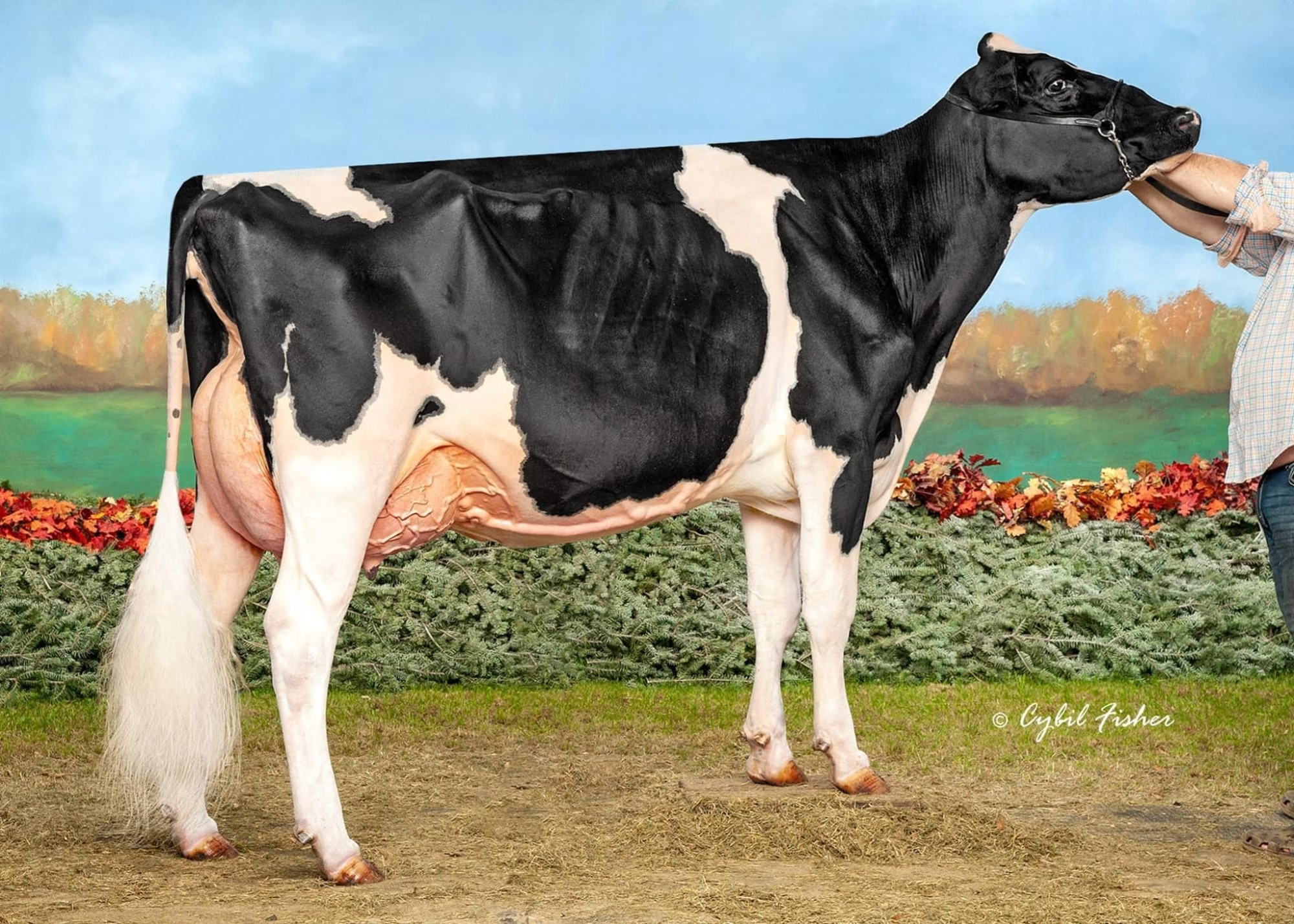
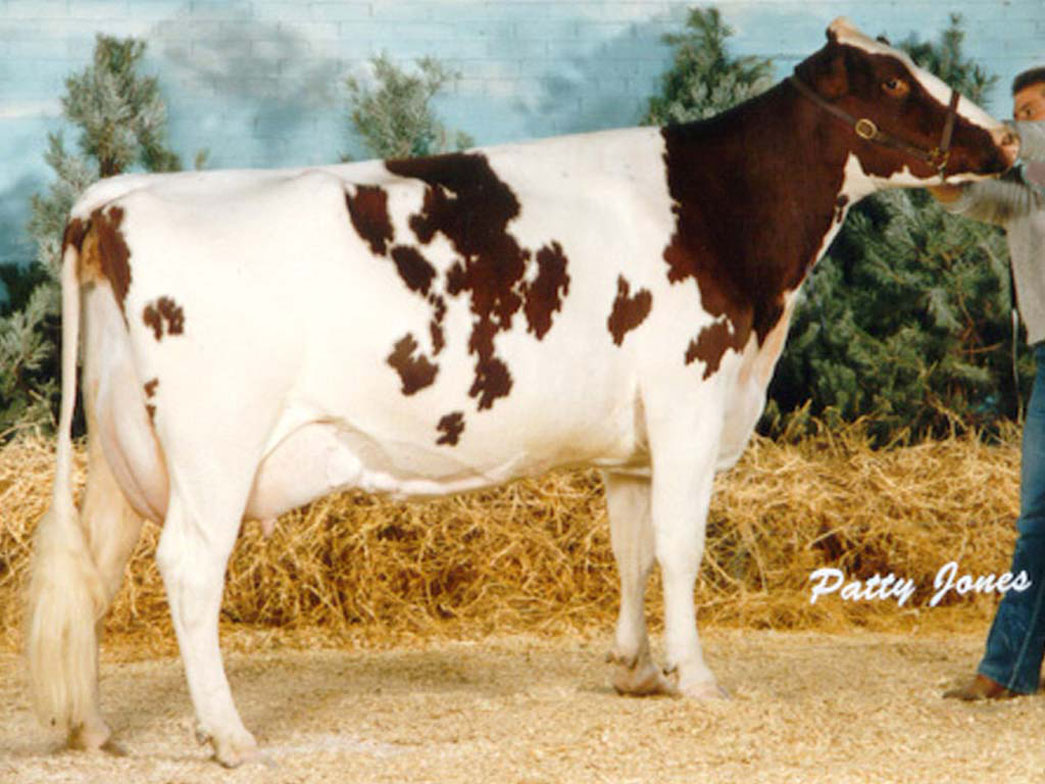
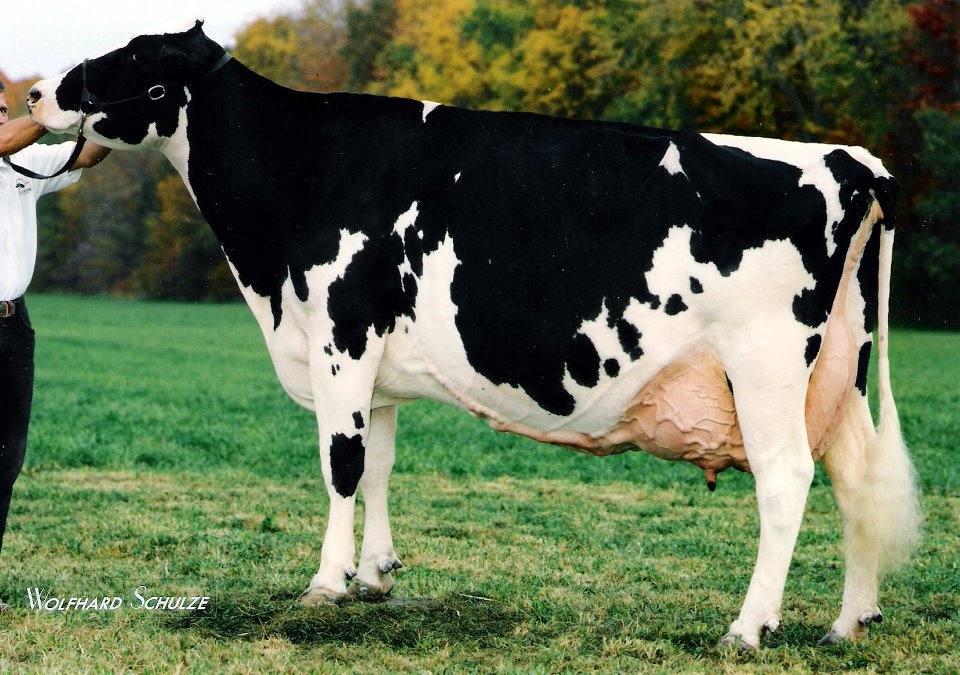

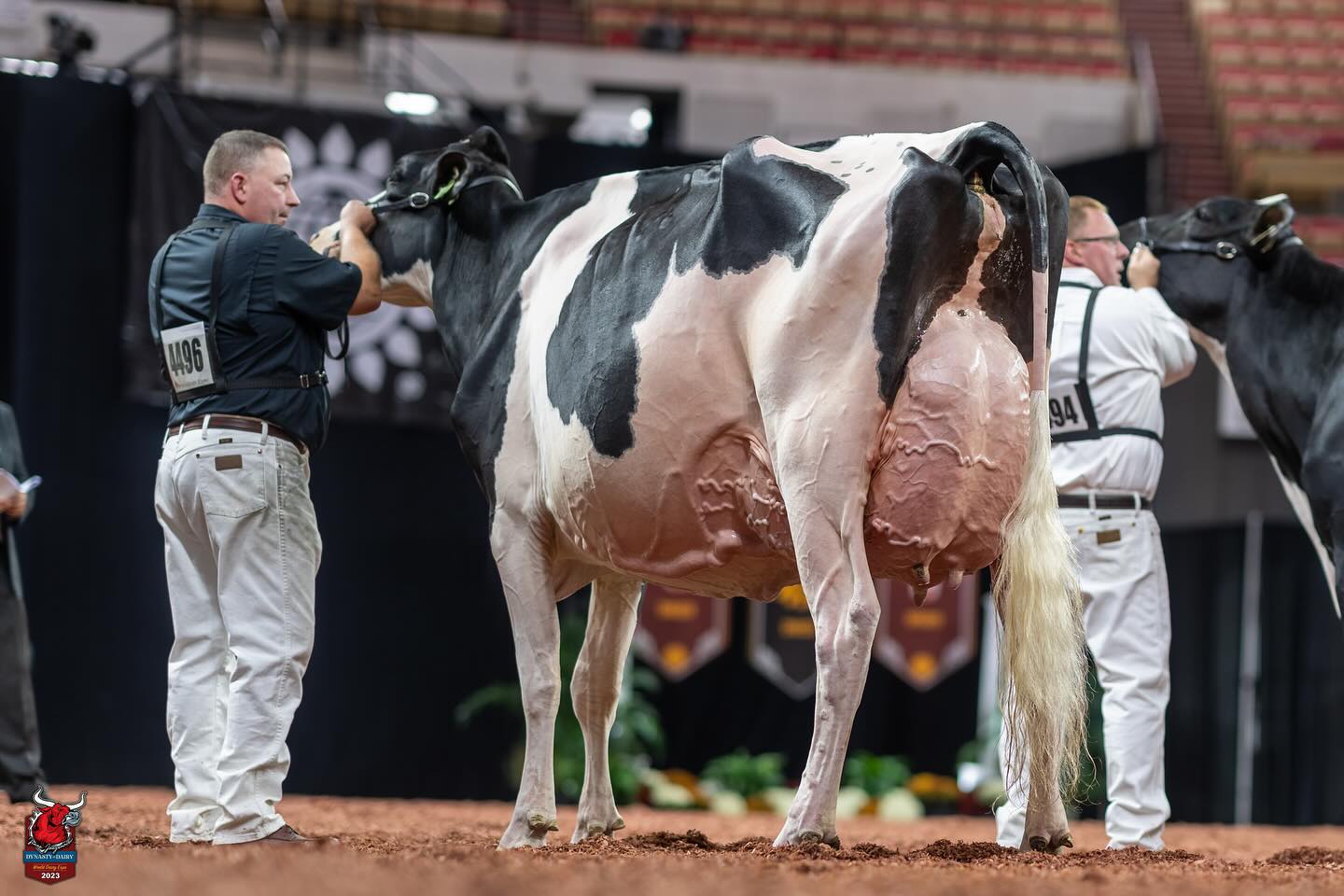
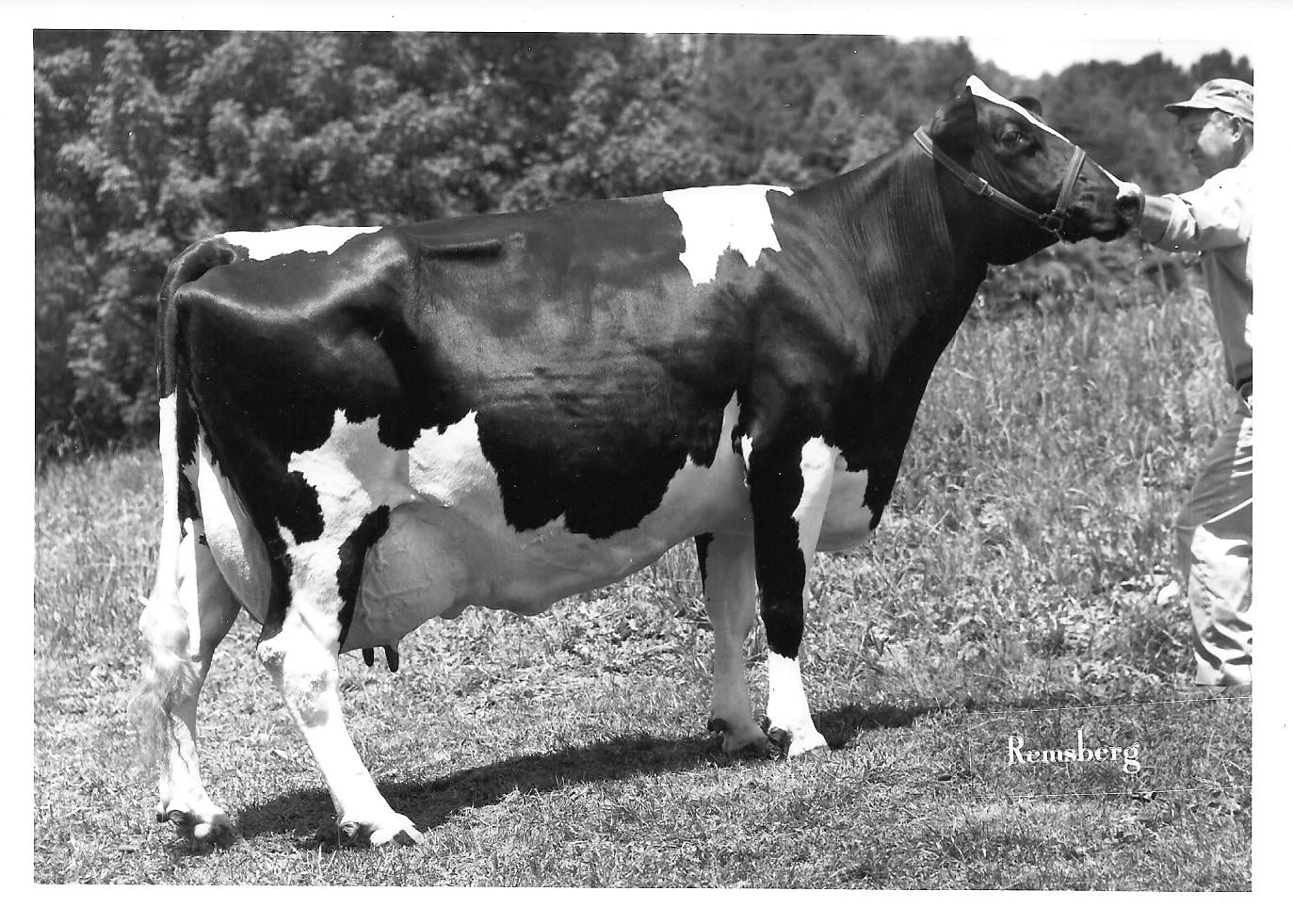
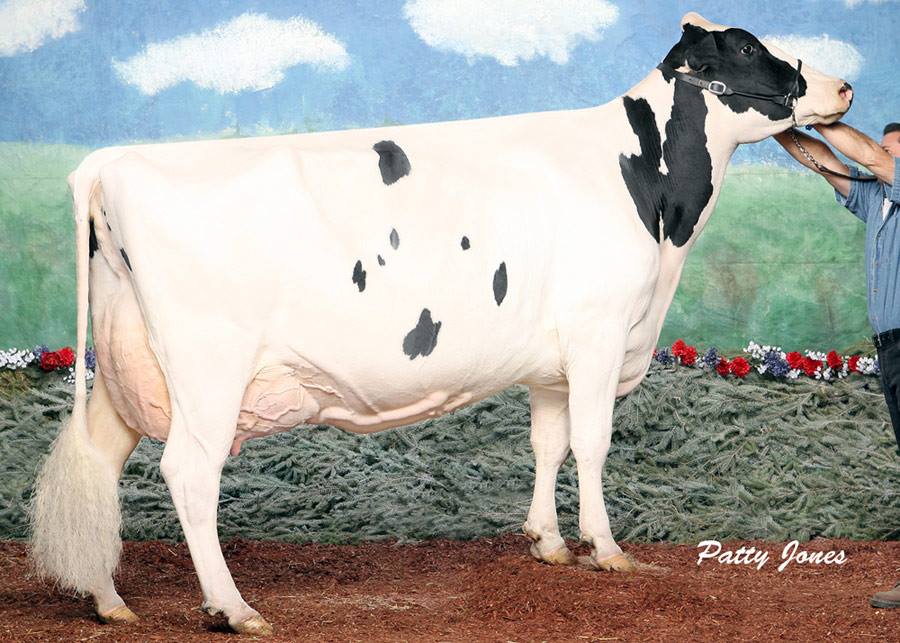
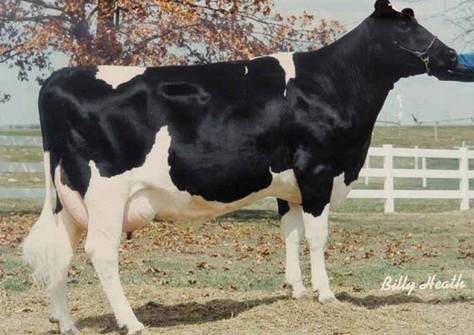
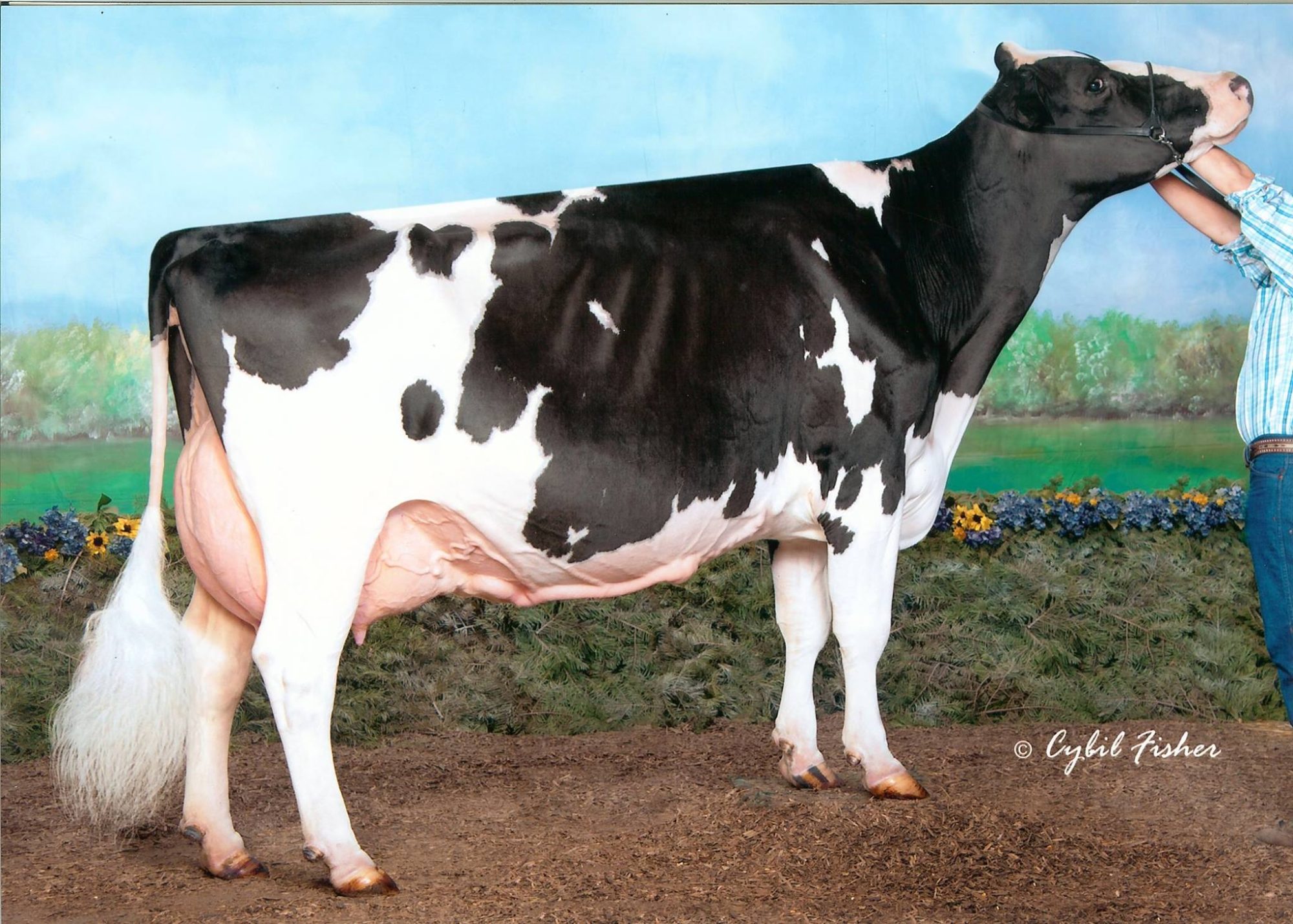
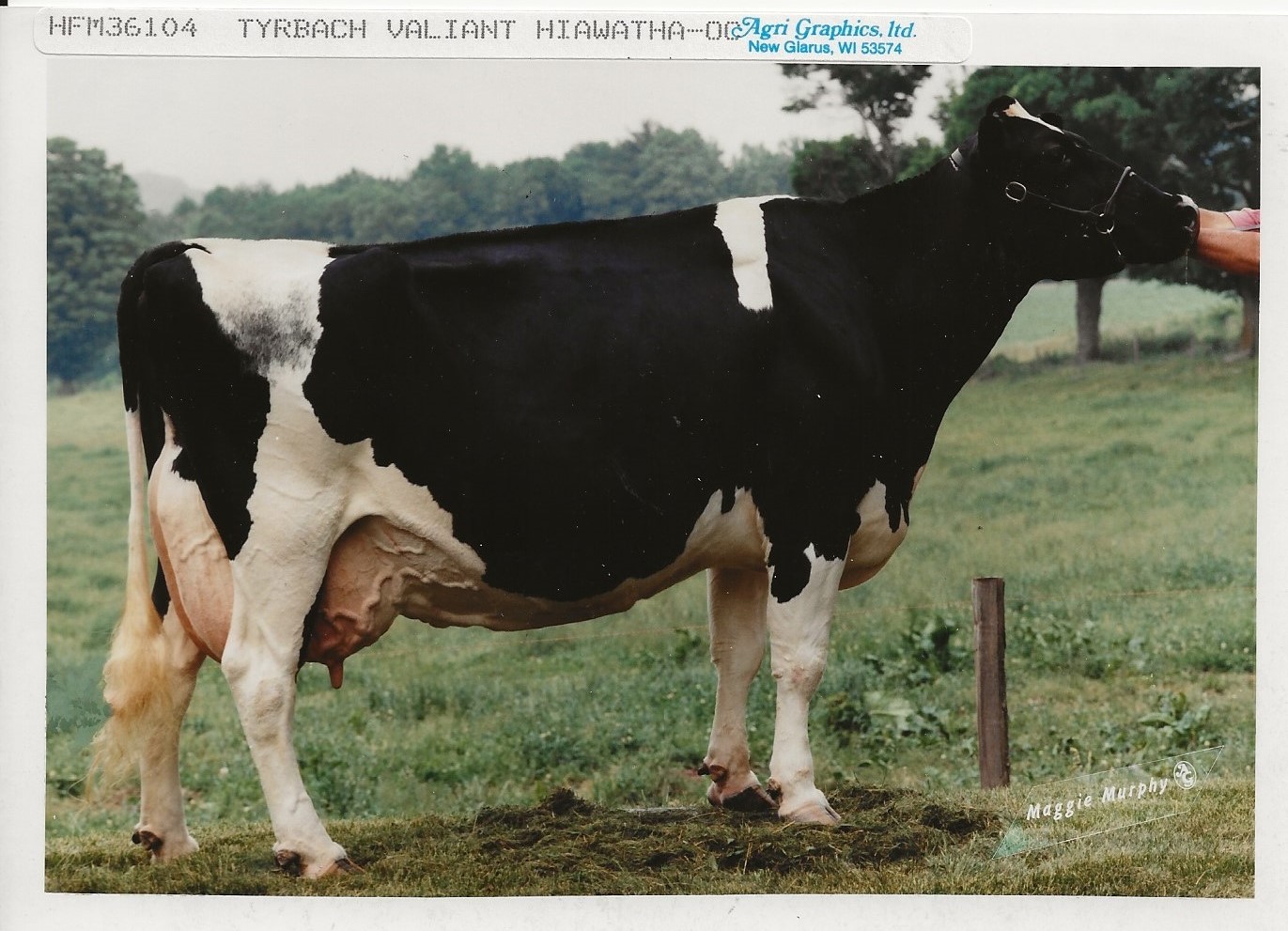
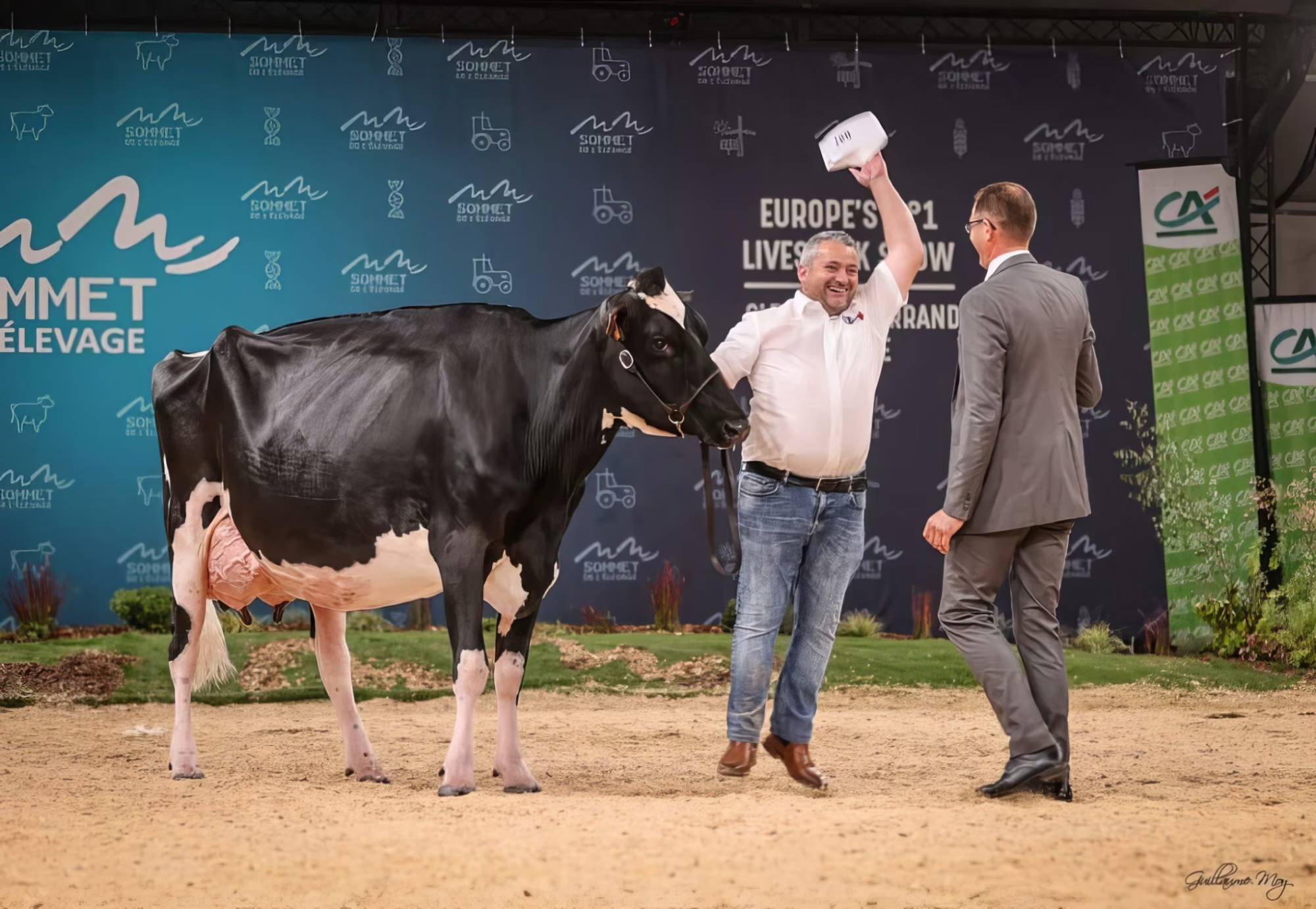
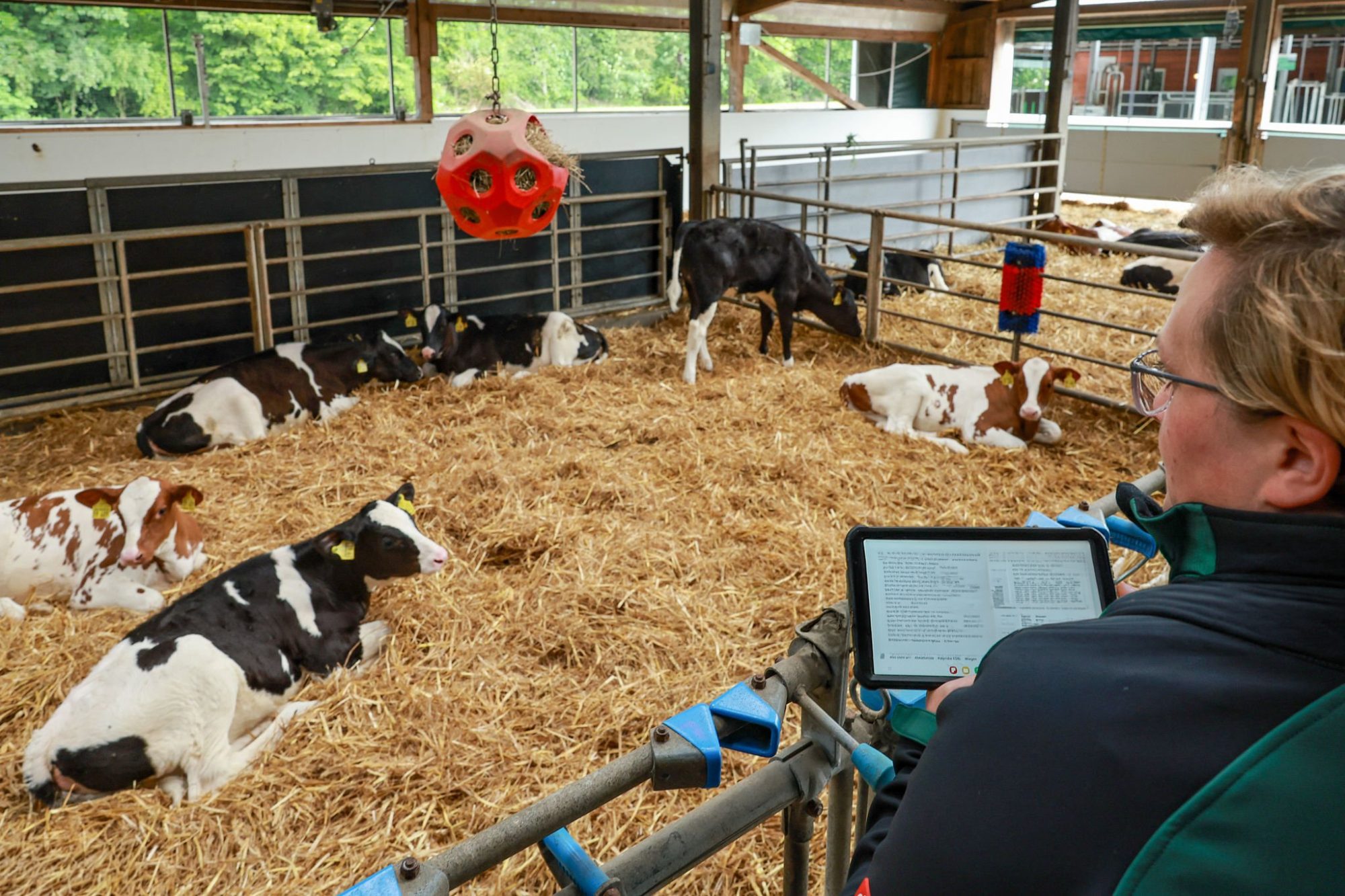
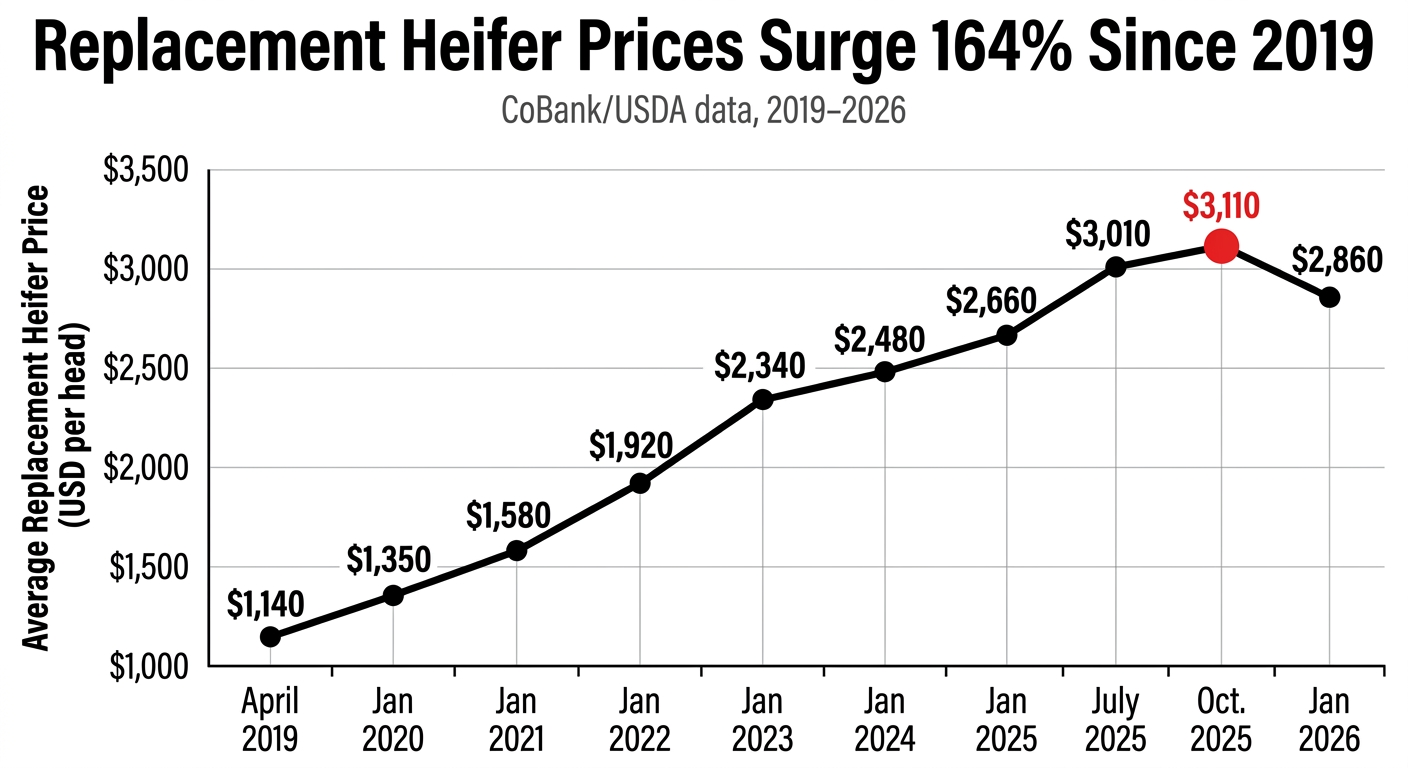
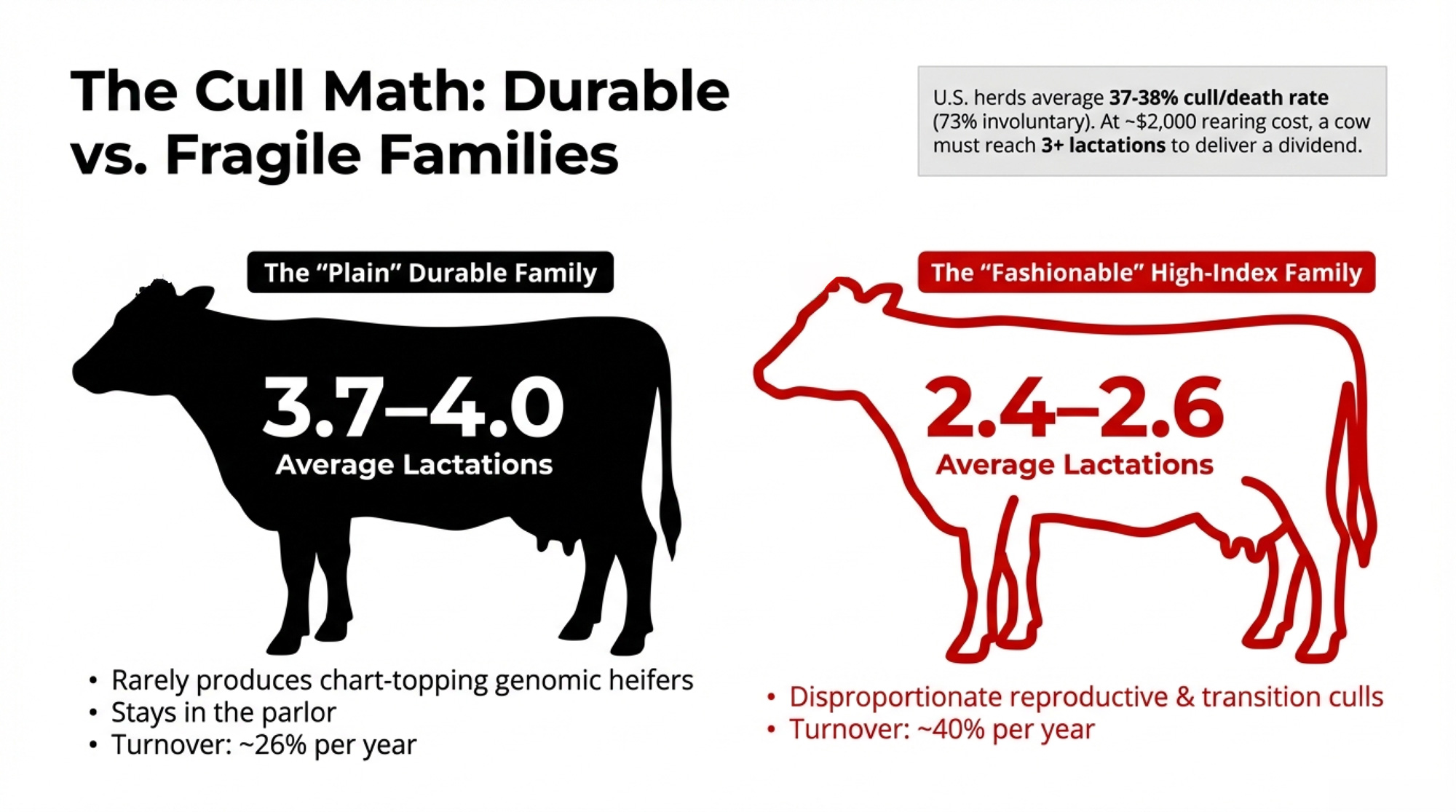
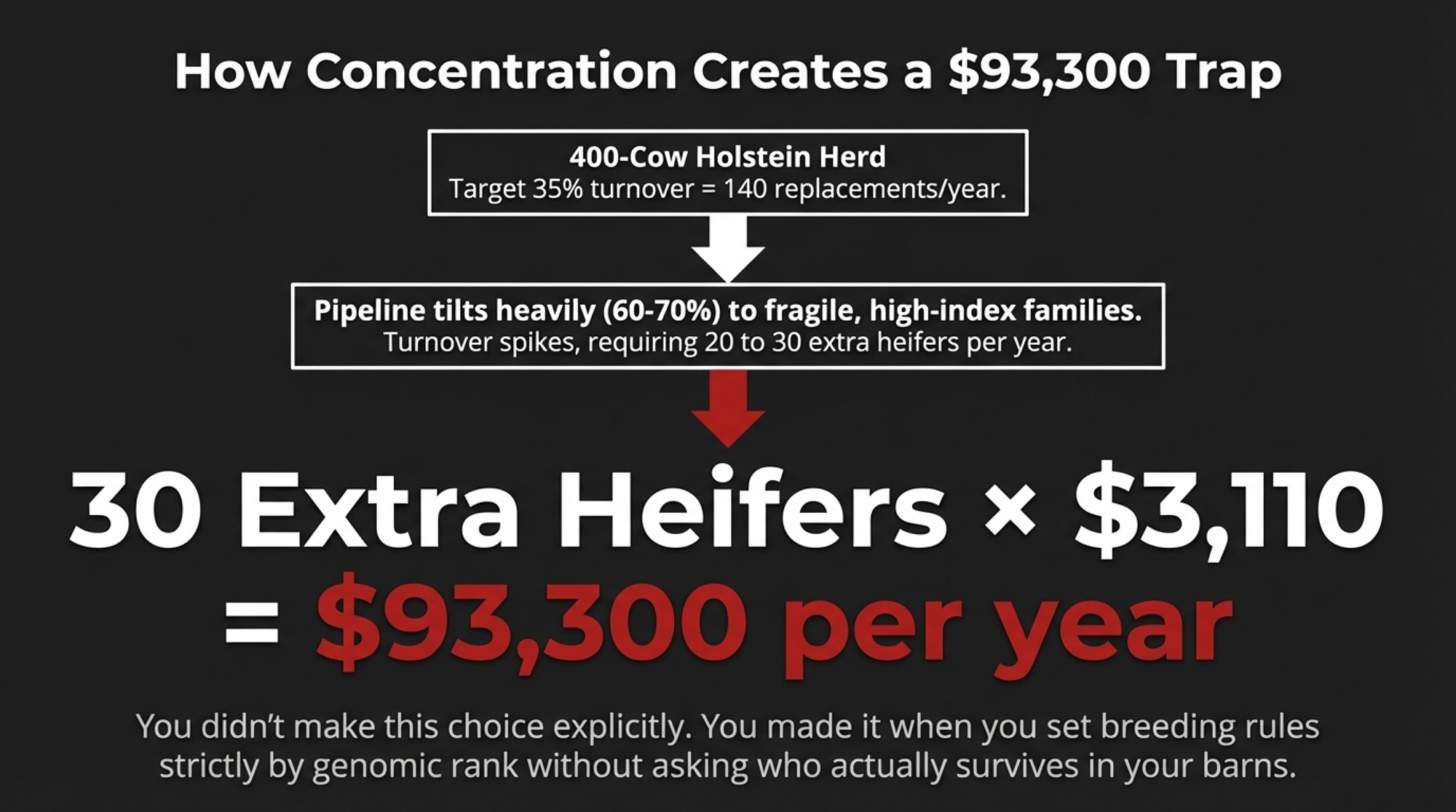
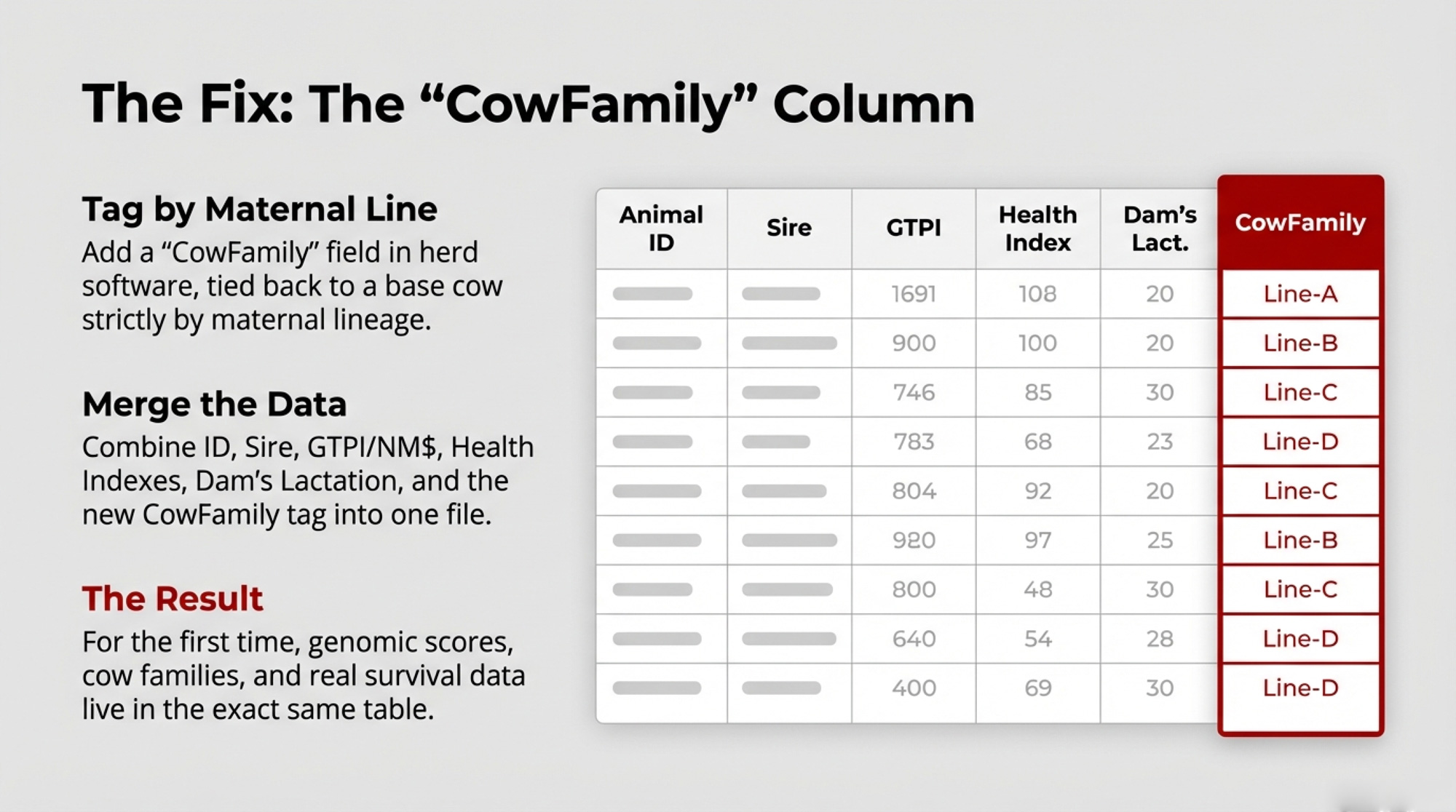
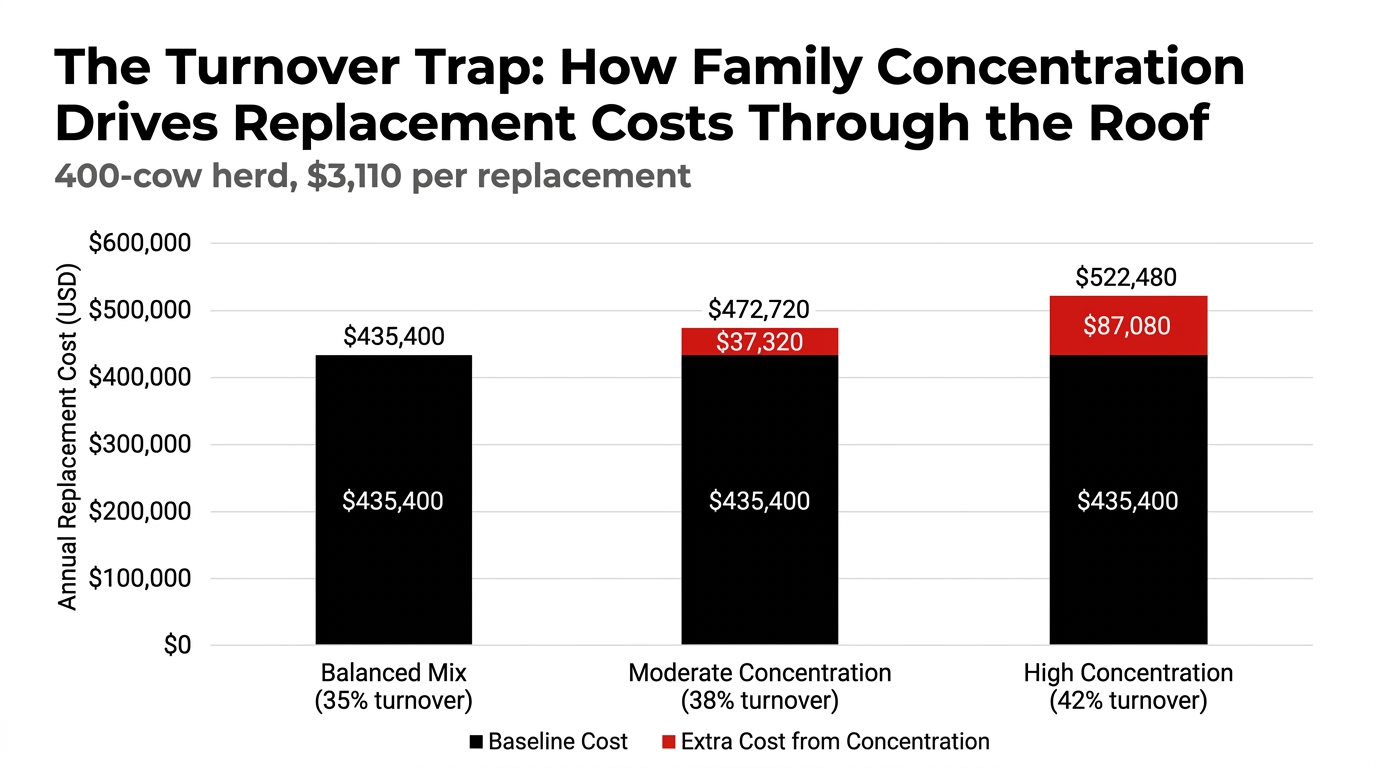
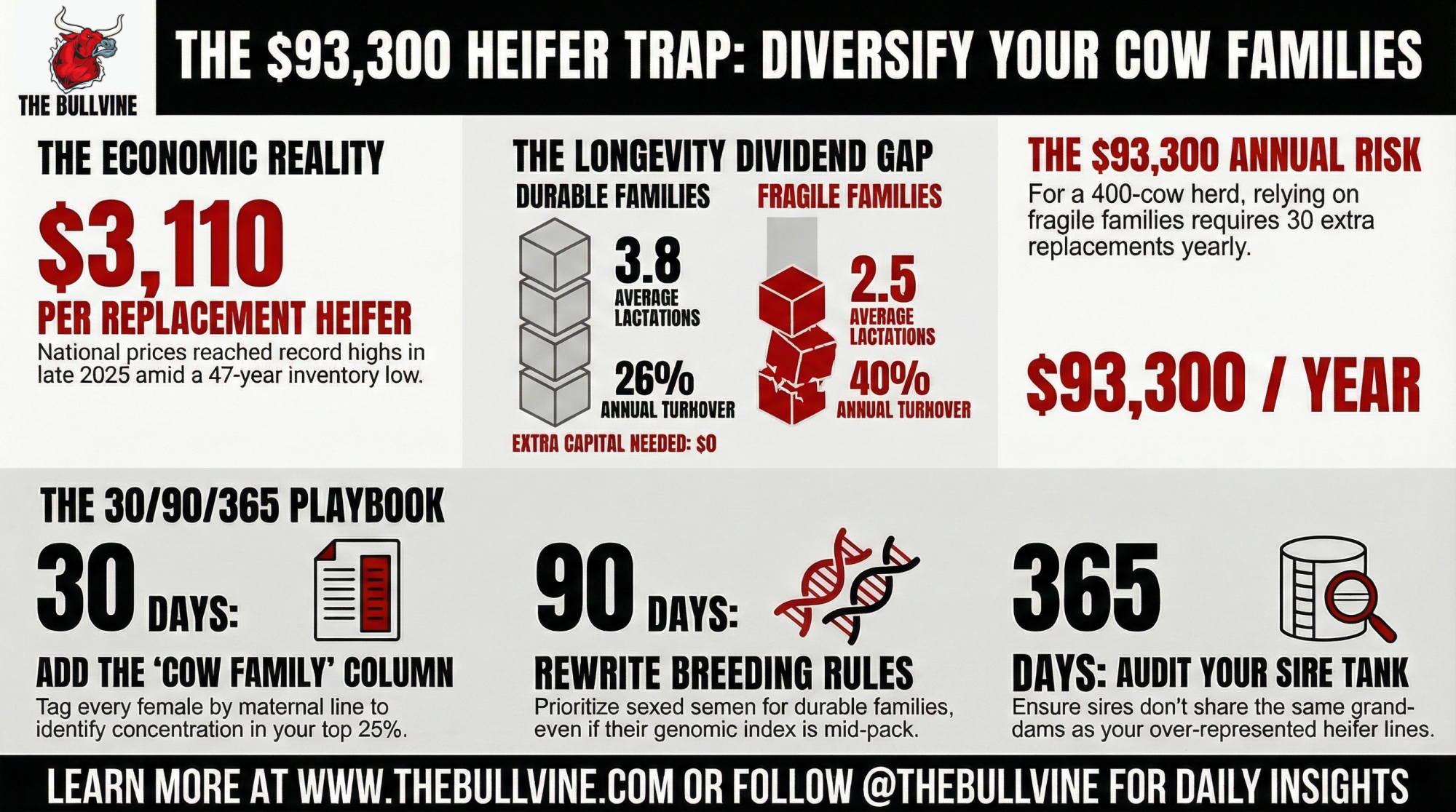
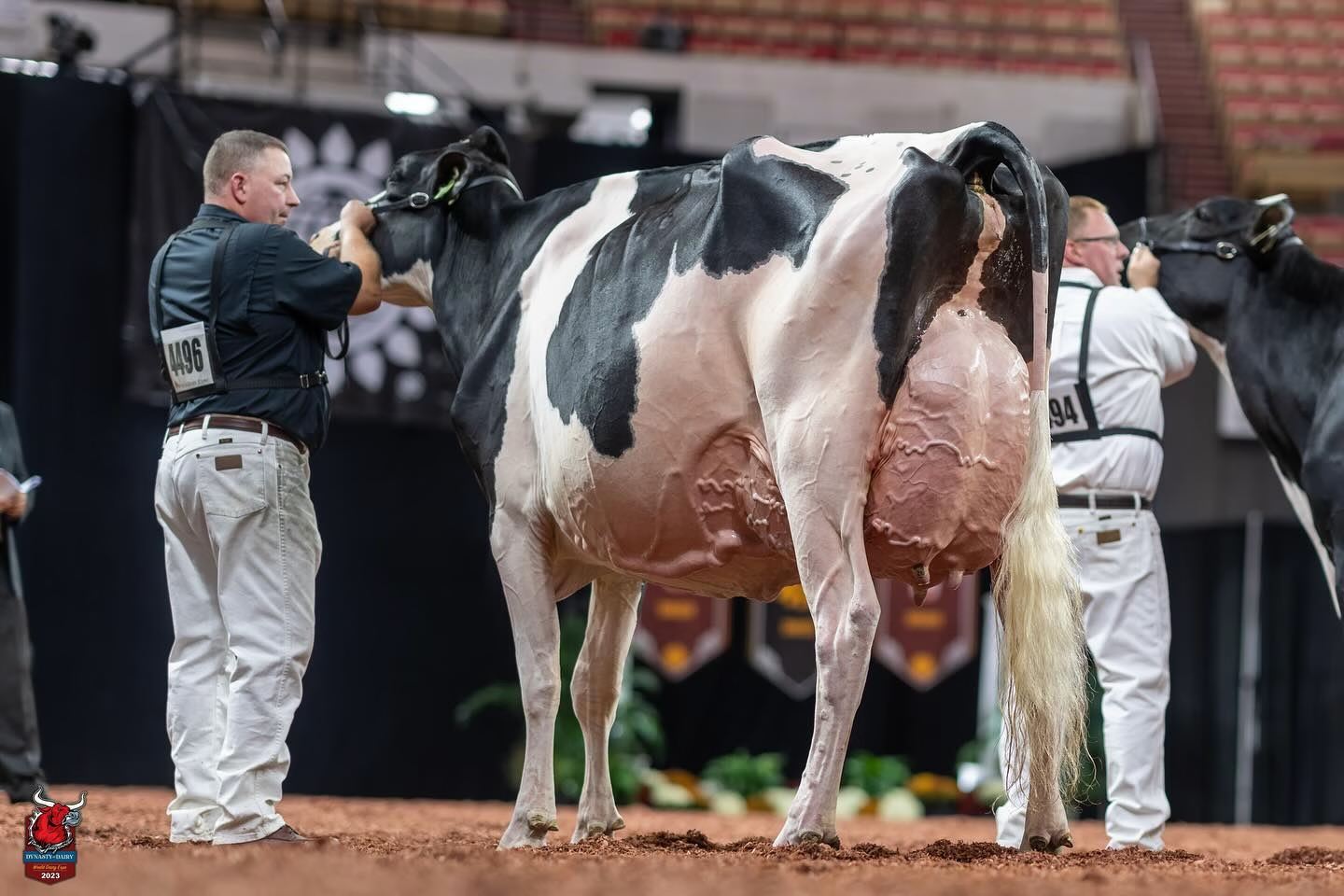
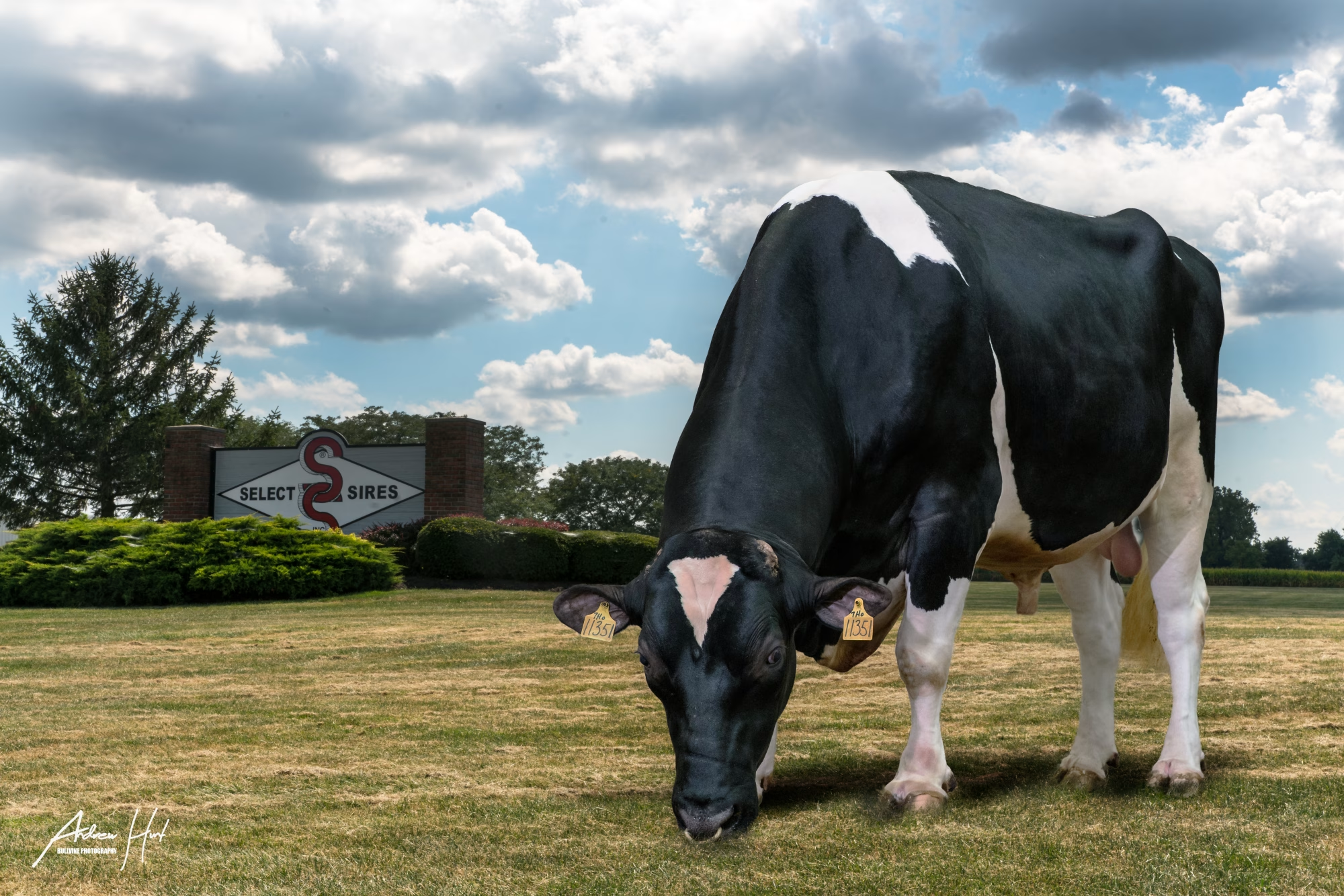
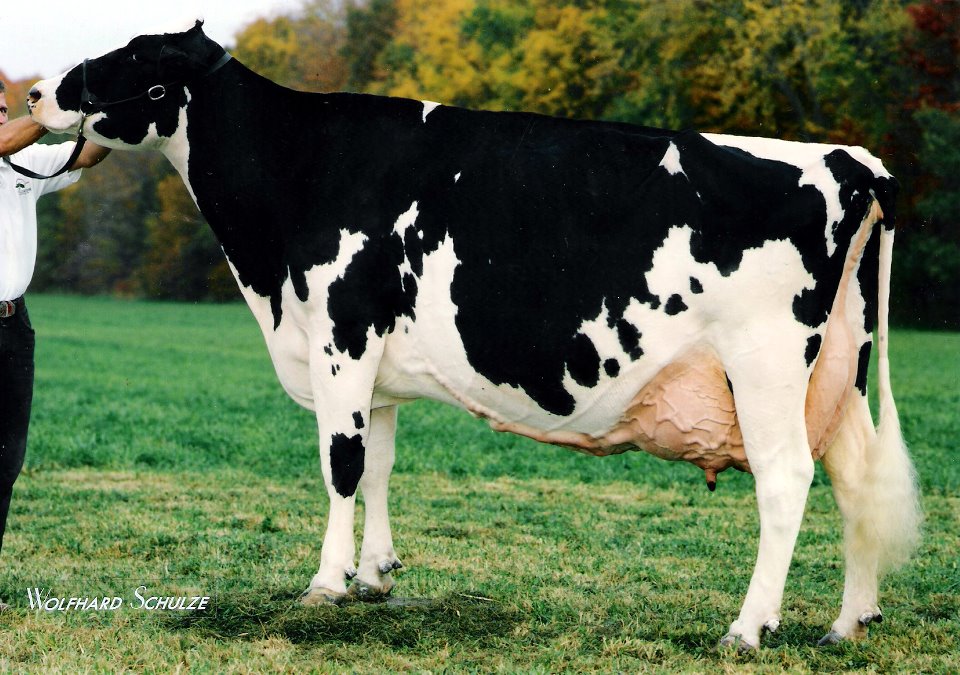
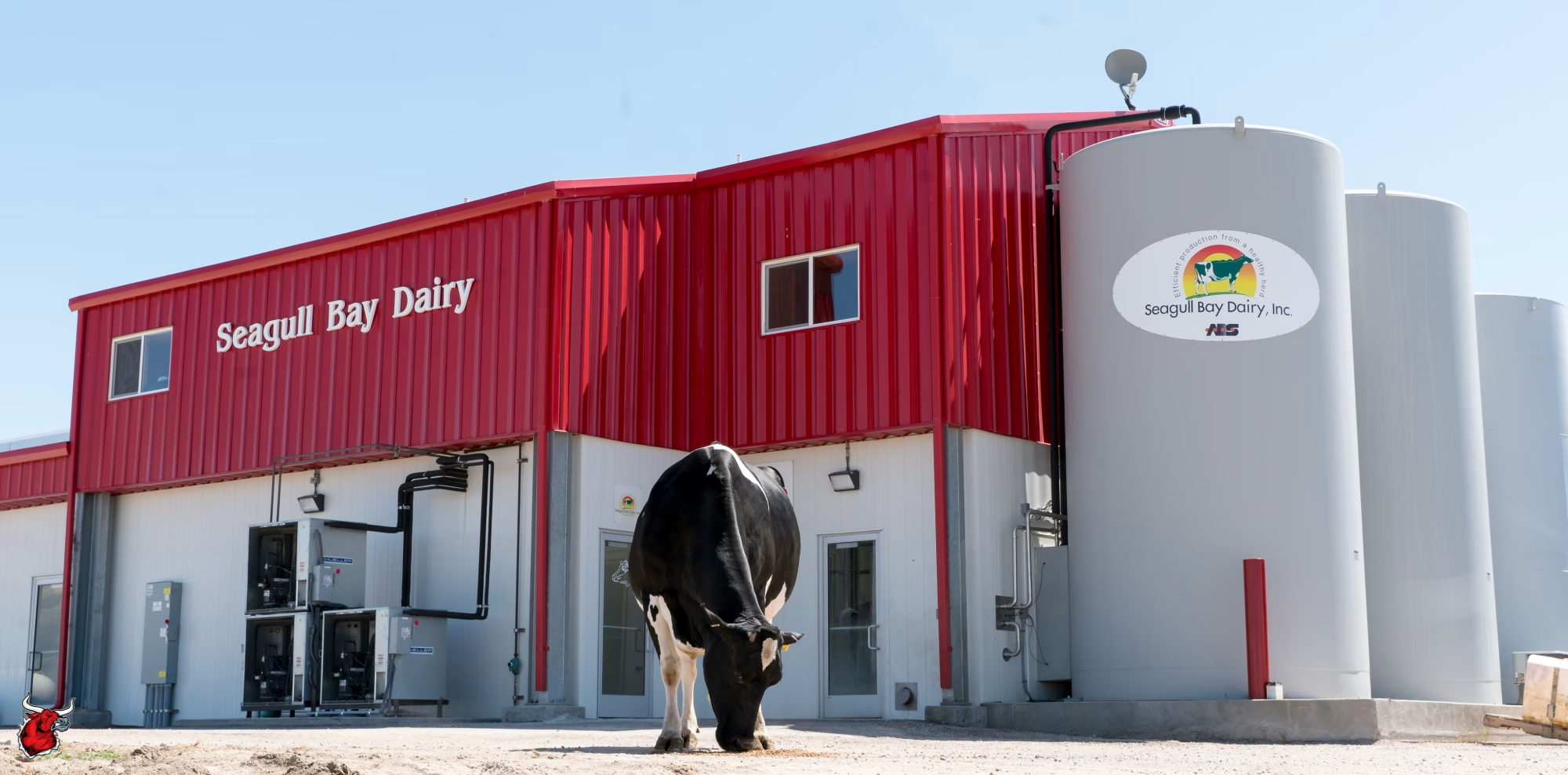



 Join the Revolution!