Archive for brood cow

Three Gold Medal Sons From One Cow the Studs Didn’t Want

Select Sires passed on her—her two-year-old milk didn’t clear their index. Bob Snow’s 35-cow herd bred her anyway. She threw three Gold Medal sons. The eye beat the formula.

The Bullvine has profiled Dellia’s genetic legacy and her place among the mothers who built the breed. This is her story—the one about the cow the big studs passed on.
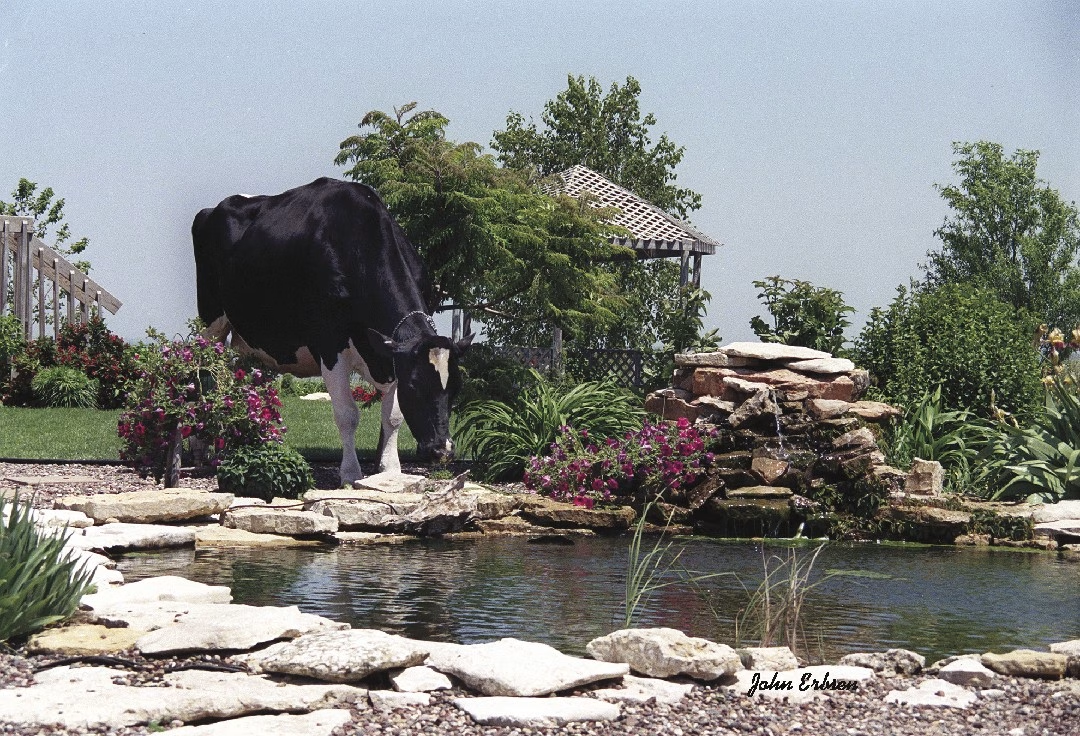
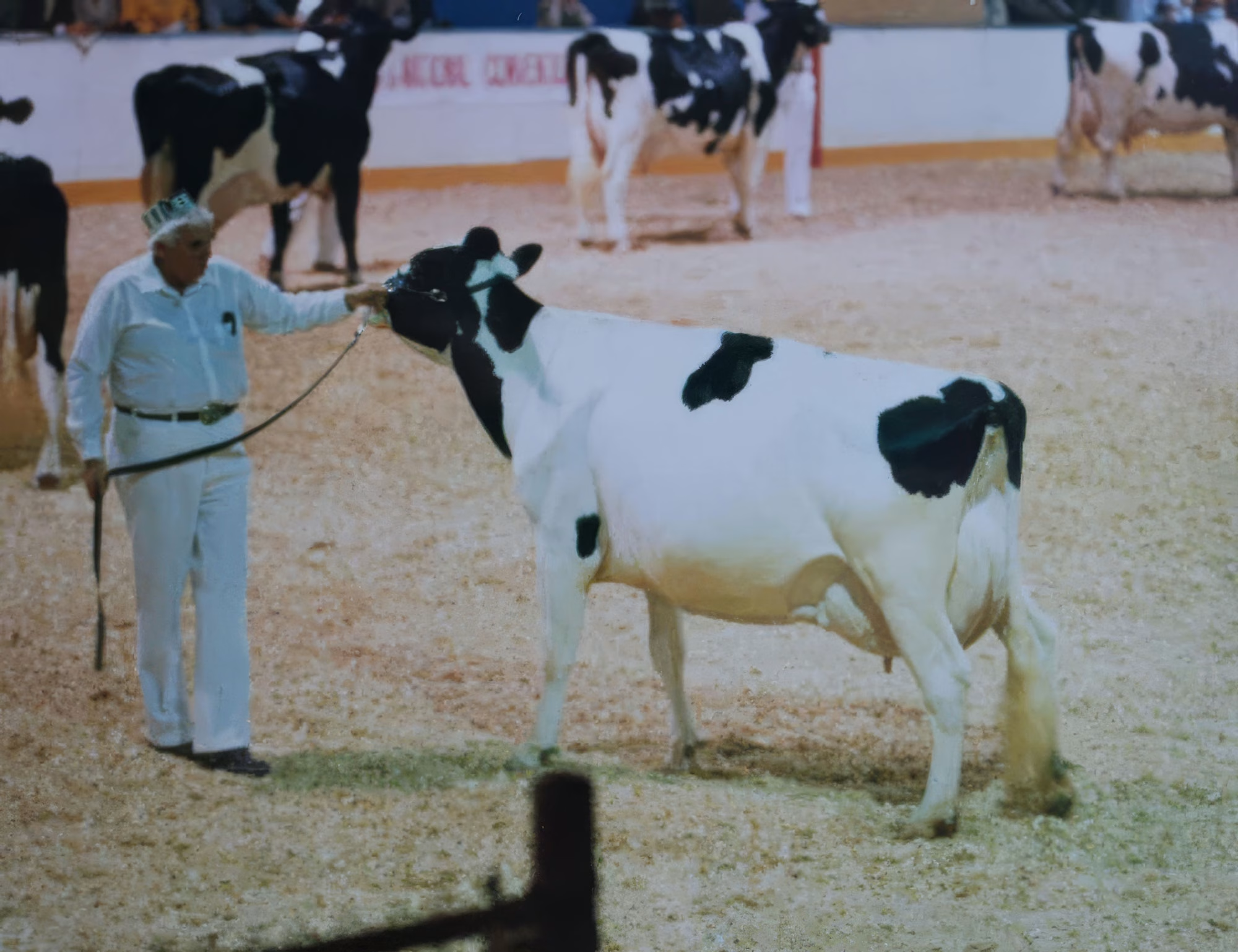
Snow-N Denises Dellia, EX-95-2E-GMD-DOM, pauses at the water’s edge at Regancrest—a quiet echo of the sandy creek back at Bob Snow’s, whose grit nearly killed her two months after her 1991 grand championship. The cow Select Sires passed on threw three Gold Medal sons and 76 daughters. 

The rain had quit by noon, and Frank Regan figured his fresh-cut hay was a lost cause anyway. So he loaded up the family and pointed the car toward West Salem for the 1989 Wisconsin Championship Show. They walked into the arena right as the senior two-year-olds were filing through the gate.

That’s when he saw her.

Snow-N Denises Dellia. A tall, jet-black cow—longer through the body than most Bell daughters, wider through the chest, carrying an udder that looked sculpted rather than grown. She moved through that gate like she owned the building. Regan said it to himself, half under his breath: “Wow. Who is that cow?”

Here’s the part nobody in that arena could have known: the big A.I. studs had already looked her over and taken a pass. Select Sires wasn’t interested. Yet this “nobody” cow, from a 35-head herd in the Wisconsin coulees, would go on to breed three Gold Medal sons, leave 76 registered daughters, and become the foundation of one of the most consequential Holstein families of the modern era.

Frank Regan just knew he couldn’t stop thinking about her.

Where the Sandy Creek Ran

To understand Dellia, you’ve got to understand Bob Snow’s place. His farm sat in the coulees of southwestern Wisconsin—hilly, modest, the kind of outfit where a man milked 35 head and knew every one by her walk. There was a creek behind the barn where the cattle waded in to drink. Remember that creek. It matters later.
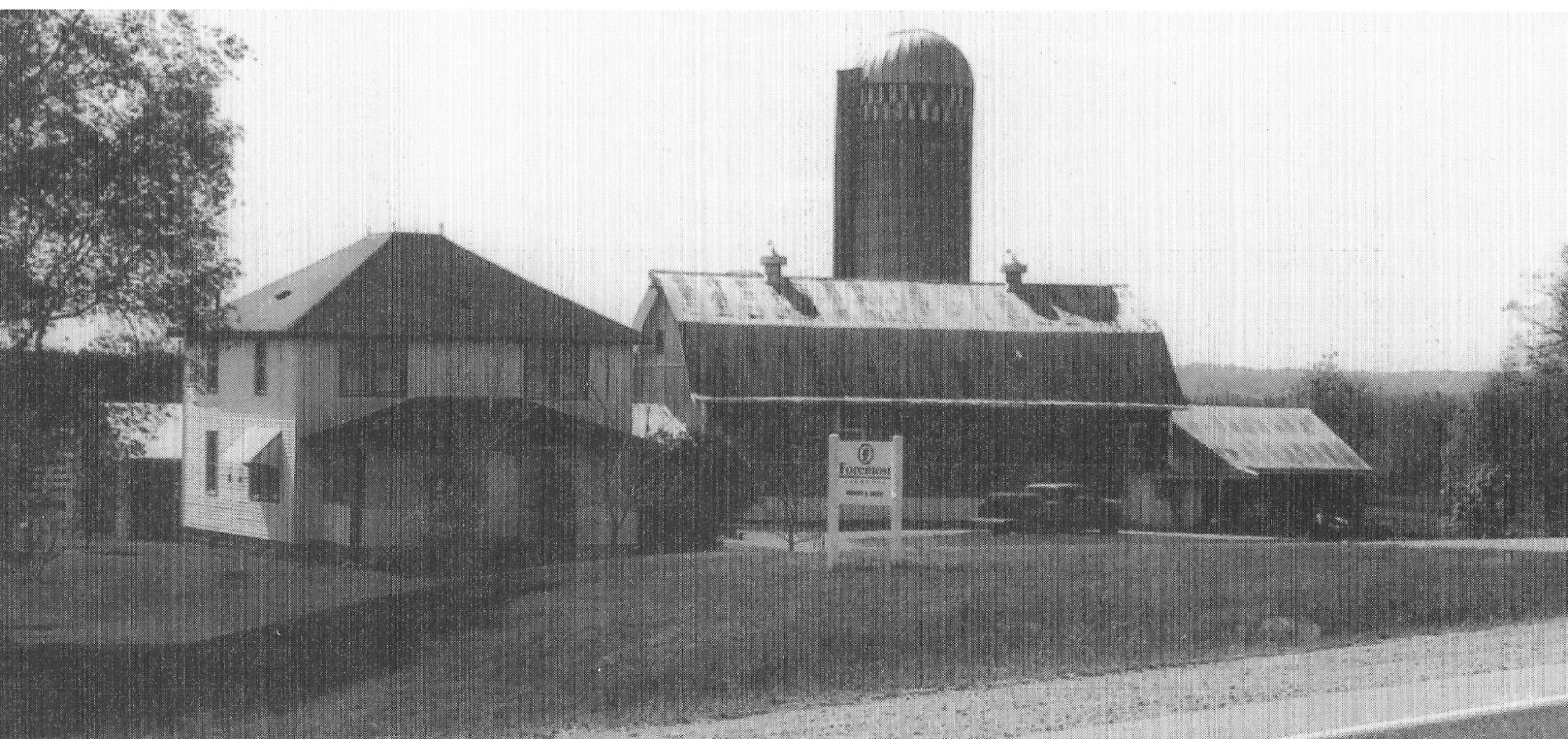
Bob Snow’s dairy near Sparta, Wisconsin—the 35-cow outfit in the coulees where Snow-N Denises Dellia was bred. No franchise money, no famous address: just a modest hillside barn, a good plan followed with patience, and a sandy creek out back that would one day nearly cost Dellia her life.

Snow wasn’t chasing the sire-of-the-month. What he did was almost musical—follow a strength bull with a dairy one, then swing back toward strength, keeping the pendulum moving toward balance. Functional dairy type, always. He’d bought his foundation stock at the Adolph Buergi dispersal on August 24, 1970—the sale records name Buergi as the herd dispersed—bringing home a three-year-old, Ce-Buerg Creator Hartog Fobes, and her daughter, Ce-Buerg Creator Fobes Garnet. Two quiet cows from a quiet sale. Nobody wrote them up in the breed magazines. Nobody needed to. They’d become Dellia’s seventh and sixth dams.

Then came the patient work. From Garnet, Snow bred to Cedardale Corporal—chosen for one plain reason, calving ease on a virgin heifer. That gave him Snow-N Garnet Corporal Edith. Next, Harborcrest Happy Crusader, a bull who stamped strength, square rumps, and especially good udders. Then Arlinda Commander to clean up the bone and add stature. Then MD-Sunset-View RA Wonder, an Elevation son known for big frames, wide chests, and ample bone.

Here’s where most folks’ eyes glaze over—five generations of cows nobody’s heard of, bred by a man milking three dozen head in the hills. But the late Peter Blodgett, who spent decades tracking cow families inside the A.I. business, saw the architecture for what it was. As he was quoted as saying in the contemporary account of Dellia’s life, “It’s rare that you combine a bull like Wonder with Bell. The fact that those two bulls were combined is the work of a ‘master breeder’ for sure.”

Snow-N Ellas Dory, the Wonder daughter, was the cow who’d close the circle.

How Do You Breed a Dynasty Cow? It Started With Two Straws.

Winter of 1983. Bob Snow went to a barn meeting and won two units of Carlin-M Ivanhoe Bell semen. That was the whole prize. Two straws. He drove home and used them on his two best animals. One was Snow-N Ellas Dory, still a virgin at the time.

Think about that for a second. Two donated straws, won at a local meeting, used on a heifer from a 35-cow herd. No grand plan. No embryo-transfer syndicate. No six-figure purchase at a national sale. Just a working dairyman making a smart mating with exactly what he had in his hand.
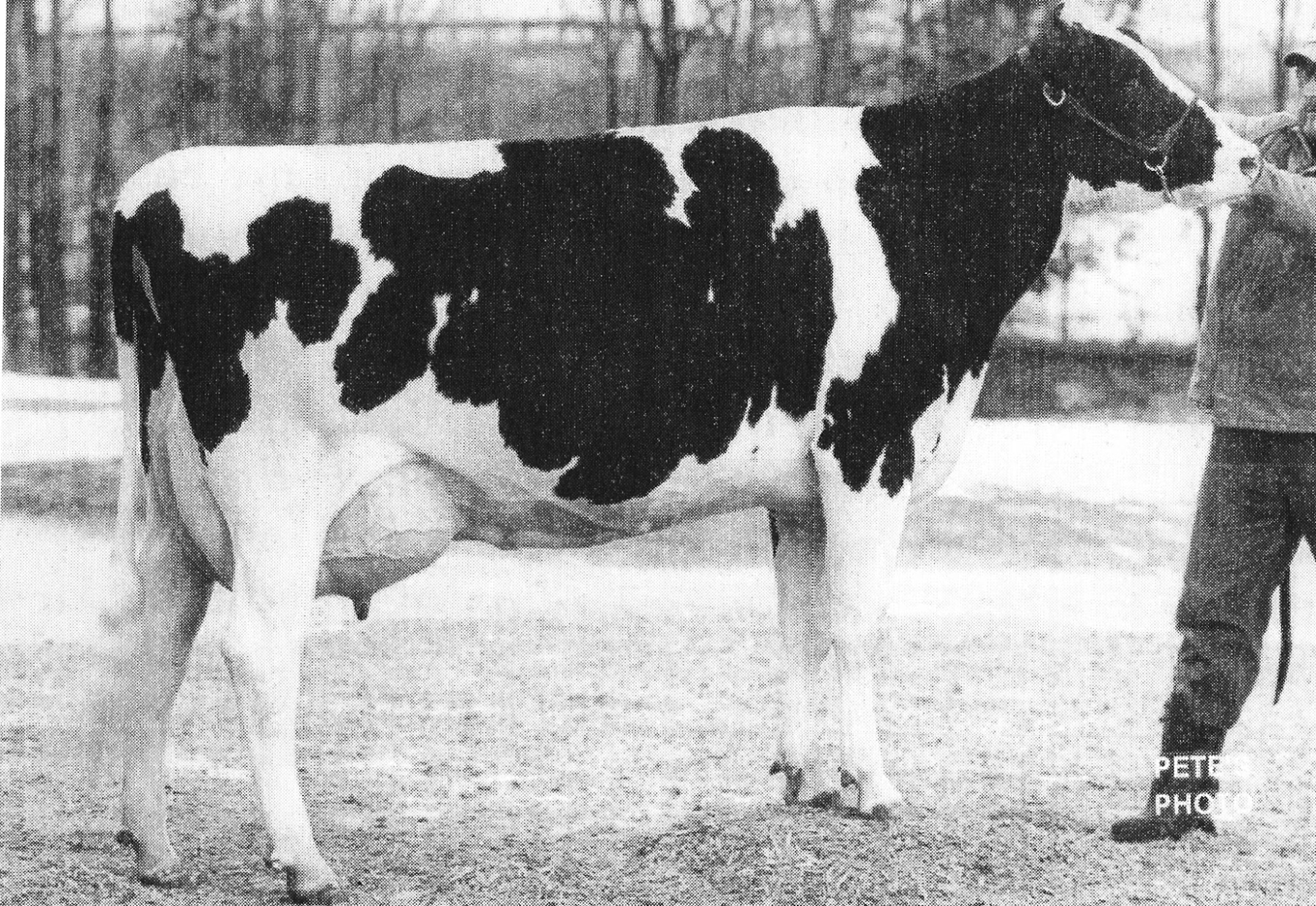
Snow-N Dorys Denise, EX-90-2E-GMD-DOM—the Bell daughter that came of Bob Snow’s two donated straws, posed here with the strength and well-hung udder that ran in the family. Bred to Walkway Chief Mark, she gave one calf that changed everything: Dellia. Her own best record read 33,350 lbs of milk in 365 days. (Photo: Peters Photo)

The heifer that came of it was Snow-N Dorys Denise—a typey Bell daughter, but with more strength than most of her sire’s get, a shapely udder, correct feet and legs. And when John Steinhoff, a kid fresh out of high school who’d come to work for Snow, picked the next bull for Denise, he reached for Walkway Chief Mark. The Mark-Bell cross was already whispered about as one of the golden combinations in the breed—Mark bringing width, capacity, and udders; Carlin-M Ivanhoe Bell bringing those correct feet and legs.

On December 20, 1986, the resulting heifer calf was registered as Snow-N Denises Dellia.

That calf—the one from a barn-meeting prize—would change everything. Three Gold Medal sons, though no one in that barn could have dreamed it yet. Nobody saw it coming.

The Nobody From Nowhere

Steinhoff liked to show cattle, and he talked Snow into hauling a string out. The first animal they took anywhere was Dellia, as a winter yearling in 1988. Second in a class of 25 at the Wisconsin Champion Show under Howard Binder. Sixth in a class of 31 at Madison under Bert Stewart. Reserve All-Wisconsin senior yearling.

Not bad for a cow from a herd nobody’d heard of.

Snow figured she had something. He flushed her—and on that first flush, Dellia dropped a dozen embryos. Some went to Europe. Snow implanted others himself. Over time she’d be flushed to Blackstar twice and once to Nowerland Trifecta.

Then came the first sting. Select Sires took a look and passed. Their benchmark for a two-year-old back then ran 23,000 to 25,000 pounds of milk, and Dellia hadn’t hit that number yet. And that’s the thing about the late ’80s A.I. business—the studs were leaning hard on production indexes, PTA milk chief among them, to decide which cows were worth a bull contract. A cow got screened by her numbers on paper first. Dellia was a visual masterpiece with deep maternal architecture behind her, but a young cow who hadn’t yet posted a big milk figure didn’t light up a corporate index model. The eye saw a bull mother. The formula saw a two-year-old short of the milk cutoff. So the stud that would one day beg for her sons wanted nothing to do with her.

But the show ring was telling a different story. As a two-year-old in 1989, Dellia won grand at the Wisconsin District 2 show at Viroqua and again at the Wisconsin Spring Show. At the Championship Show that fall, under Loren Elsass, she stood second in a senior two-year-old class of 23—and walked out with the best udder award.

And that’s the day Frank Regan walked in out of the rain.

“Who Owns This Cow?”

Regan followed her back to the barn after the class. He found Bob Snow and asked what he wanted for her. The number was high—too high for a spur-of-the-moment buy. So Regan pivoted: Snow was flushing Dellia to Blackstar, so how about a Blackstar daughter instead? Snow agreed.

But Dellia had lit a fire. Sire analysts came calling. Visitors kept showing up at the farm. Snow started fielding offers. “I started at $10,000,” he recalled in the contemporary account. “And every so often I boosted it by $5,000. I got up past $50,000 pretty quick.”

Back home, Dellia classified VG-89 as a two-year-old. “We just about lived in the pen with her that day,” Snow remembered. “I always clipped and washed on classification day. I figured it was always worth an extra point or two. The initial impression is so important.”

The next year, 1990, Snow didn’t show her—she was busy being flushed. But Regan kept coming back. The Snow farm was only a hundred miles from his own place at Waukon. Cross the Mississippi at Prairie du Chien, drive an hour, and there you were. Regan was hunting a franchise cow—a herd-building female he could flush and build a program around. He’d looked hard at Dixie-Lee Chief Liza, who’d sold through the 1990 Top Ten Breeders Invitational with $106,000 in signed contracts. But it always circled back to the black cow at Bob Snow’s.

One visit, he found Dellia standing in a stanchion, due in December to Stardell Valiant Winken. He told Snow she was too big to be tied in a stall like that—it was apt to ruin her. The truth, of course, was simpler. He wanted her. And a couple of weeks before the 1991 Wisconsin Spring Show, the two men finally shook on a price. The deal: Snow would own her through the show, Regan would lead her, and afterward she’d ride home to Iowa.

The Night Before the Show

Now here’s where it gets interesting.

The day before the show, Orville Kemmink—a name that carried weight around Wisconsin—walked up to Regan and squinted at him. “Are you the kid who bought this cow?” Regan said he was. “Don’t you think you paid too much?” Kemmink pressed, pointing out that Dellia had been flushed several times already and a pile of embryos had gone out the door. “You won’t get your money back,” he warned.

That evening, Frank Regan and Bob Snow sat down to supper at a place called the Country Kitchen. Regan told Snow about Kemmink’s warning. The doubt was creeping in. This cow’s apt to embarrass me, he thought. So he asked Snow point-blank if he’d guarantee several embryos. Dellia had done right by Snow over the years, so he just said, “How many do you want?”

But the more immediate trouble was this: Dellia looked empty. Flawless udder—but she could go a little shallow in the body, and right then she looked more like a racehorse than a champion.

So Regan went and bought four bales of hay. Three of grassy hay, one of alfalfa, to fill her out. He hit a feed store for a bag of calf feed to mix into her grain. “She likes warm water with her beet pulp,” Snow told him.

He started feeding her that night. By morning she was straightening out. By ten a.m., people were drifting back to the far barn to look at her—back where the 4-H kids usually kept their calves. Word had gone through the aisles: there’s an outstanding cow back there. And instead of a racehorse, Dellia was starting to look like a winner.

Grand Champion — and Then, Three Gallons of Sand

With Niles Wendorf judging, Snow-N Denises Dellia topped the four-year-old class, took the best udder trophy, and was named grand champion of the 1991 Wisconsin Spring Show. Wendorf called her tall, sharp, clean, beautifully uddered, and trouble-free.
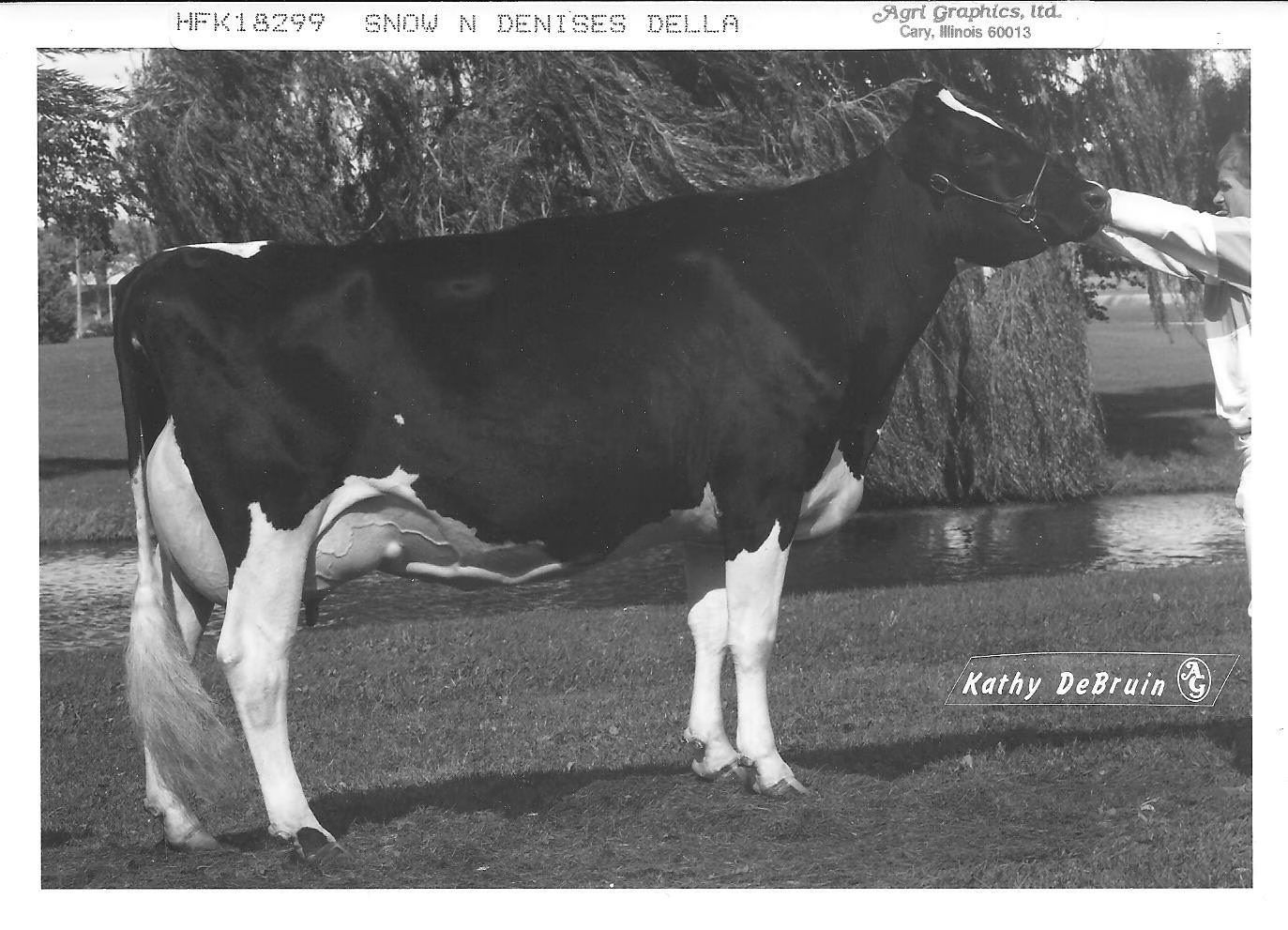
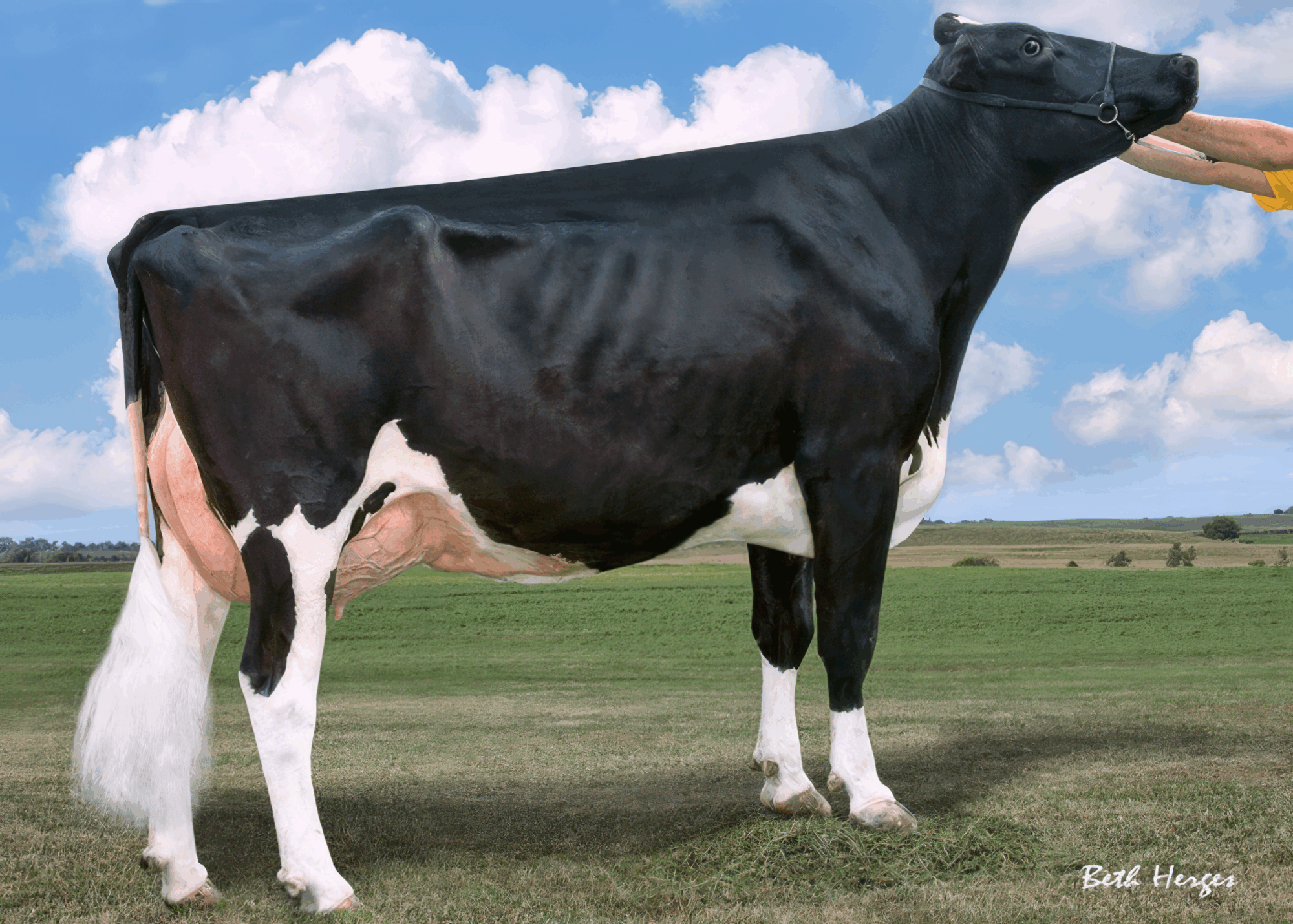
Snow-N Denises Dellia, EX-95-2E-GMD-DOM—Walkway Chief Mark out of Snow-N Dorys Denise, with Carlin-M Ivanhoe Bell as maternal grandsire. “Tall, sharp, clean, beautifully uddered, and trouble-free,” judge Niles Wendorf called her the day she stood grand champion at the 1991 Wisconsin Spring Show. This is the cow Select Sires had passed on. (Photo: Kathy DeBruin / Agri-Graphics)

Afterward, Bob Snow had to back his car right into the arena to fit all the hardware in the trunk. And plenty of folks weren’t happy about it—upset that a “nobody” could waltz in and clean up. So much so that Ray Kuehl came over to Regan and asked flat out, “Who owns this cow? A lot of people are talking about it.” Regan explained the arrangement. “That’s all I want to know,” Kuehl said, and walked off.

Dellia went home to Regancrest, the champion of Wisconsin. But a champion in the ring is one thing—a cow tough enough to build a dynasty is another, and the breed was about to find out which one Dellia really was. Two months later, she nearly died.

She took a crampy spell. Started kicking at her belly. The vet recommended surgery, and she looked like she might not pull through. So the veterinarian opened her up—and pulled three gallons of sand out of her stomach.

That creek behind Bob Snow’s barn. The cattle would wade in, stir the sandy bottom, and the cows drinking after them swallowed the grit. It had been settling into Dellia’s gut, silent, for years.

After the operation, she bounced right back. Of course she did. Dellia was never a cow who knuckled under.

Building the Dynasty at Regancrest

Now the real work started. Frank Regan chased bulls that sired good type, and he mated Dellia wide—76 registered daughters by 21 different sires. She averaged fifteen embryos a flush. One time she gave 25 on a single flush to Arlinda Melwood.

Not every cross worked, and here’s a lesson worth pinning to the barn wall: the Melwood and Maizefield Bellwood matings threw heifers that freshened with udders “like balloons,” as Regan put it. He sent them to the stockyard. No sentiment. A breeder who builds a dynasty knows exactly when to cull—even out of a great cow.

But when Dellia clicked, the results stopped people cold. Picture a Dellia daughter going down the alley on classification day—the classifier working her over slow, then straightening up and calling it: Excellent-94. Then another, by a different sire. Then another. Darlene classified EX-94. Della, Dolly, Denyse, Deborah down the line—daughter after daughter, each by a different bull, each stacking up records that’d be the pride of any herd. Think about what that took. Not one lucky nick. Different bulls, same result, over and over. Type and production, handed down like she couldn’t help herself.
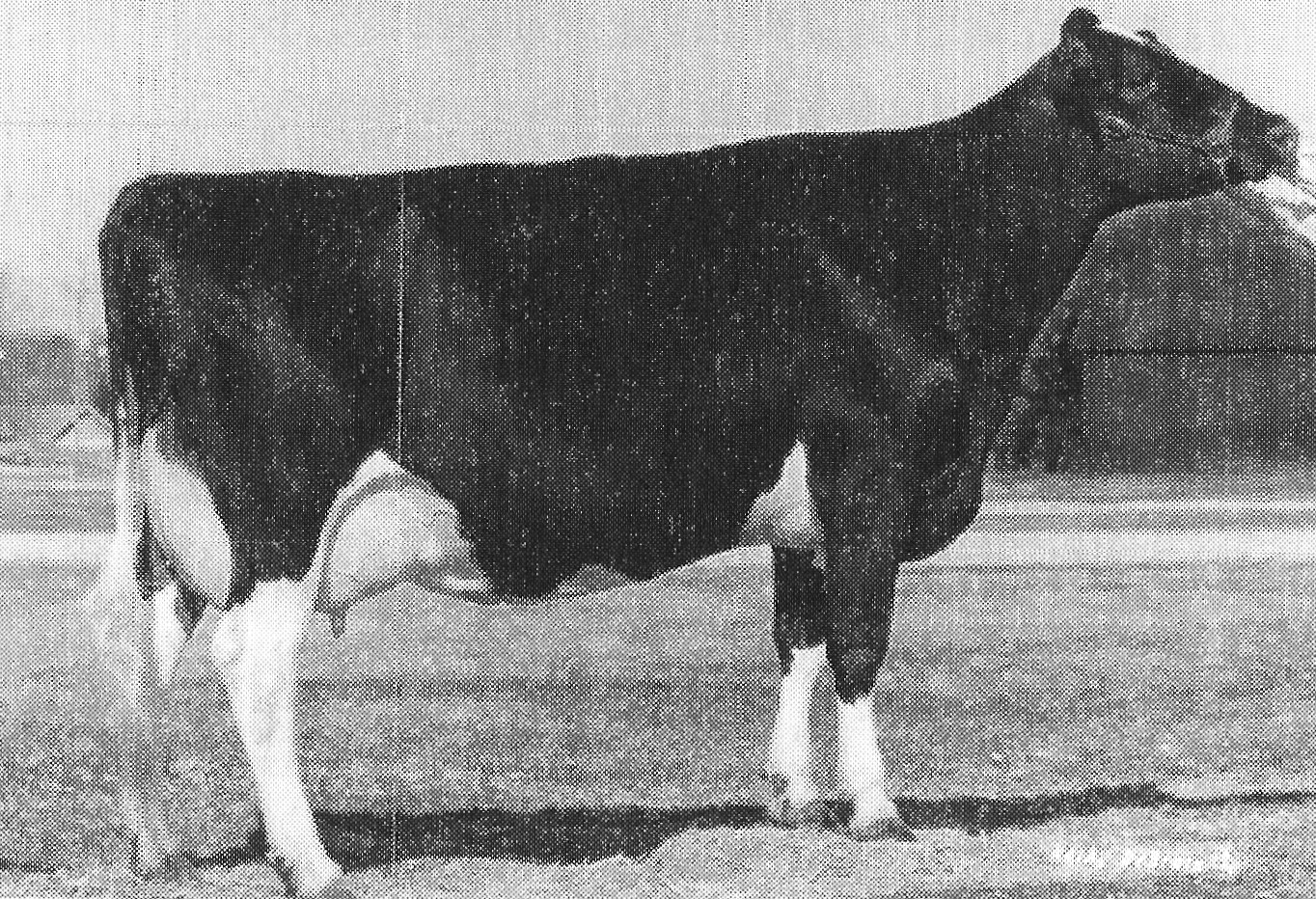
Snow-N Dellias Darlene, EX-94-GMD-DOM—Dellia’s Blackstar daughter and, by Frank Regan’s own reckoning, maybe the finest cow the Regans ever led. She made 32,080 lbs at 4.1% fat as a two-year-old and bred Regancrest Jed Deborah, EX-95, before a twisted caecum took her early. Proof the type carried straight down the line.

Her Blackstar daughter, Snow-N Dellias Darlene (EX-94-GMD-DOM—Gold Medal Dam and Dam of Merit, the era’s marks for a cow who both scored high and transmitted it, back when those letters were earned the hard way over a whole string of daughters), might have been the finest cow the Regans ever led—32,080 pounds at 4.1% fat and 3.6% protein as a two-year-old, and dam of Regancrest Jed Deborah (EX-95), a cow Frank Regan flat-out called one of the nicest you’d ever see. But they lost Darlene to a twisted caecum. Even in a story like this one, the dairy business exacts its toll.

The others kept climbing. Regancrest Tesk Della (EX-90-GMD-DOM) made 35,510 pounds as a mature cow and produced the Gold Medal bull Regancrest RBK Die-Hard. Regancrest Leadman Dolly (EX-90-GMD-DOM). Regancrest Starbk Denyse (EX-92-3E). One after another, the Dellia daughters stacked up records that’d be the pride of any herd—and then they threw sons that went to A.I. studs around the world.

What Made Dellia’s Sons — Durham, Dundee, Derry — So Valuable?

Here’s what really set Dellia apart from every other great brood cow of her time. The bulls.

Forty-four of her sons were sampled in A.I. Three of them earned Gold Medals. And those three—Regancrest Elton Durham, Regancrest Dundee, and Regancrest Emory Derry—didn’t just make the lineup. They redrew it.

Durham, by Emprise Bell Elton, was proven at Select Sires—the very stud that had once passed on his dam. His Durham daughters were the kind commercial men dream about: good-uddered, trouble-free, the sort that blend into a herd and keep milking. Tim Abbott of A.B.S. Global summed up the barn-floor verdict this way in the contemporary account: “People consistently say their Durham daughters are trouble-free cows… The milk volume is lower but the fact is they last a little longer and have a little more stable type pattern.”

Dundee, by Marcrest Encore, was proven by A.B.S./St. Jacobs in Canada and scored an eye-popping EX-95-ST. He was a full brother to Regancrest Encore Dahlia (VG-89) and Regancrest Encore Darel (EX-91-GMD-DOM). Between the two of them, Durham and Dundee stamped a generation of Holsteins on two continents.

Derry, by MJR Blackstar Emory, went to Select Sires. A third Gold Medal bull, from the same cow, by a third sire. Most breeders go a whole lifetime without producing one Gold Medal sire. Dellia produced three.

“Dellia’s impact through her daughters has sent more dollars back into farmers’ pockets across the world than any other cow.” — Scott Culbertson, then sire analyst at Select Sires, in the contemporary published account.

And it was the Durham daughters above all—their longevity, their trouble-free udders—that turned that impact into dollars in working herds.
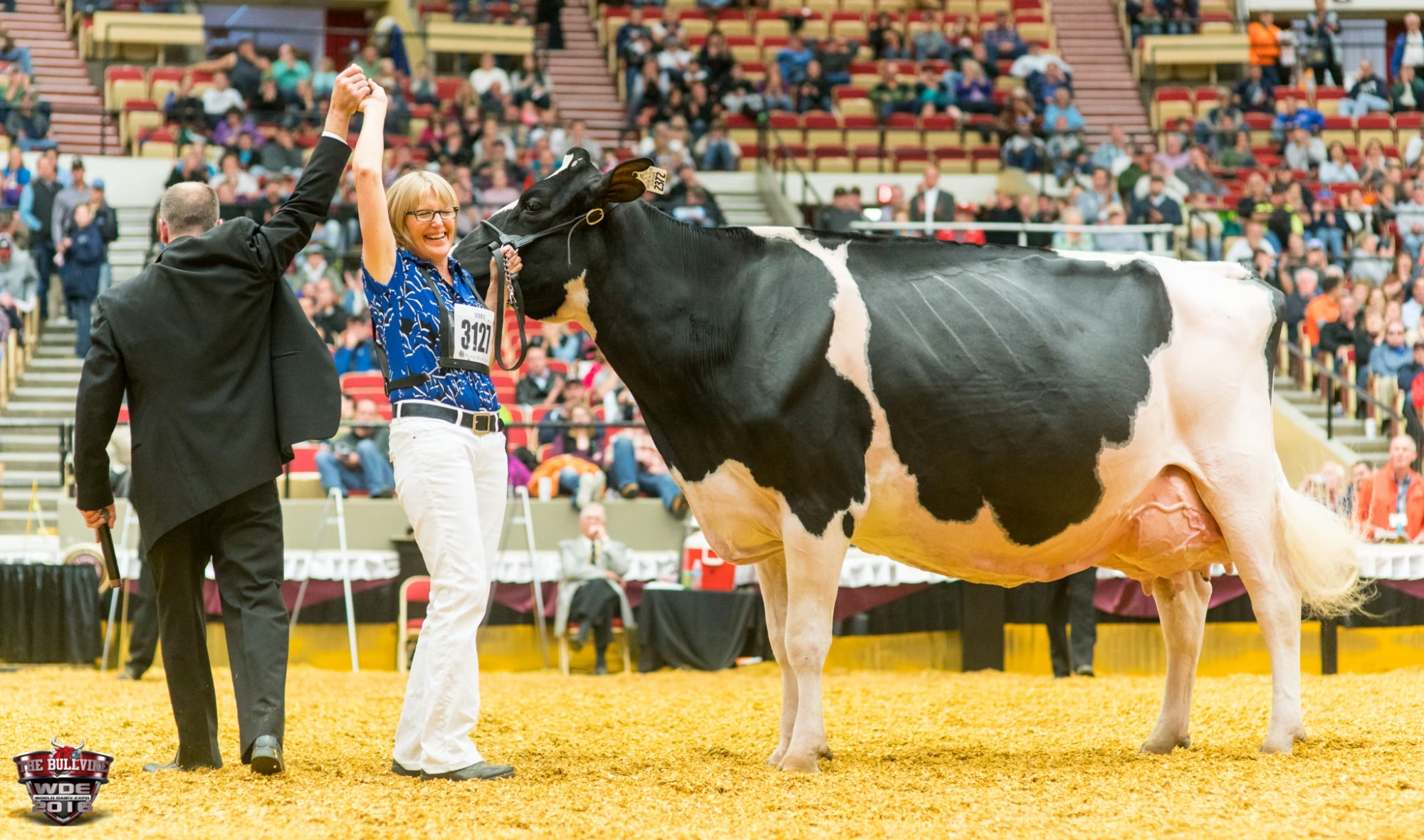
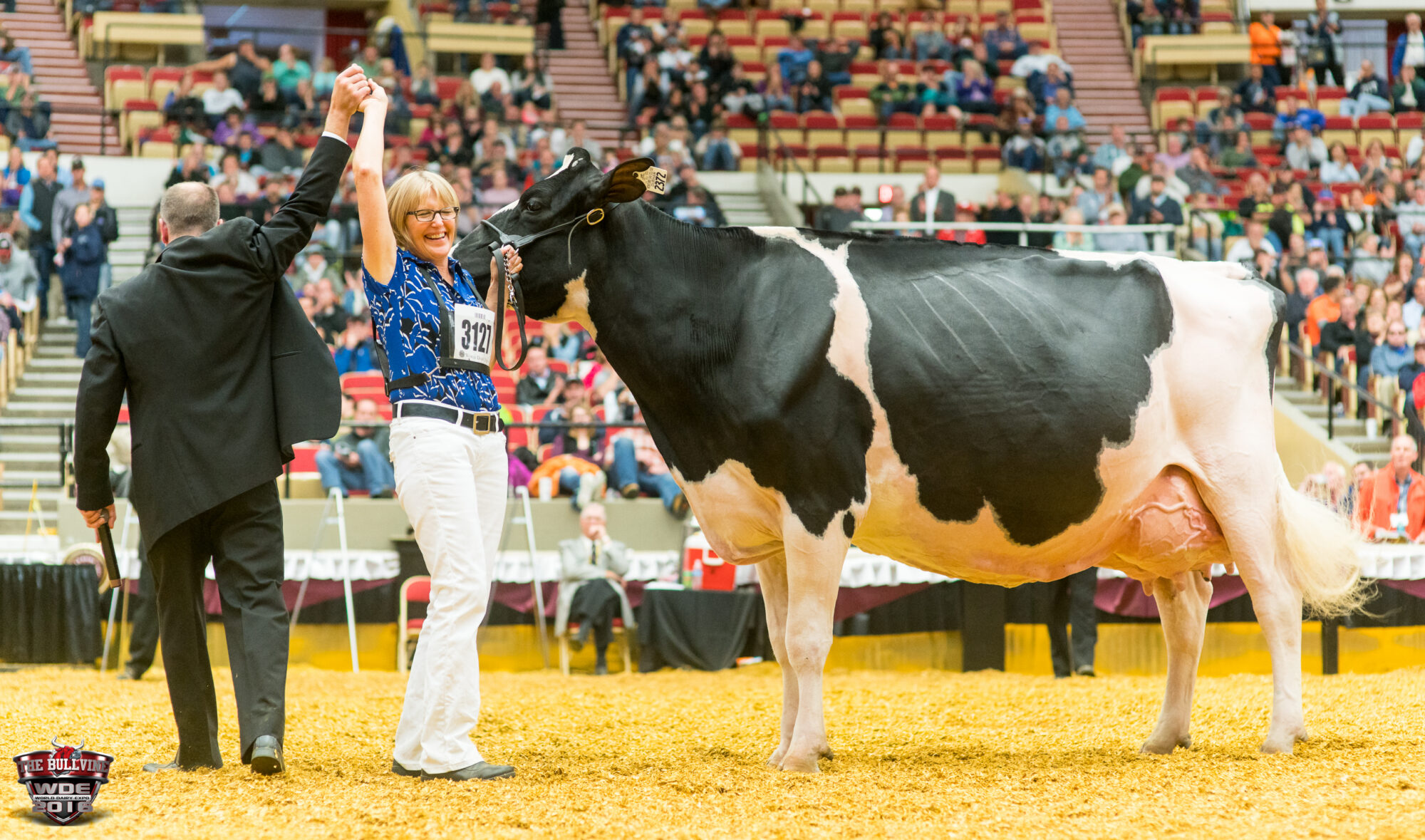
Sheeknoll Durham Arrow, EX-96—a Durham daughter, Grand Champion at the 2016 World Dairy Expo. Twenty-five years after Dellia took her own grand banner at a Wisconsin spring show, her son’s daughter stood atop the tanbark in a packed Coliseum. That’s the maternal architecture from Bob Snow’s coulees, still doing its quiet work.

And here’s what makes her more than a history lesson. Dellia’s influence didn’t stop when the genomic era arrived. The traits her sons and Regancrest daughters carried—sound feet and legs, stable, trouble-free udders, the kind of durability that keeps a cow in the string for extra lactations—are exactly the functional traits breeders still chase on today’s proof sheets. Every time a Durham-descended cow freshens quiet and lasts, that’s the same maternal architecture Bob Snow built in the coulees, still doing its quiet work three decades on.
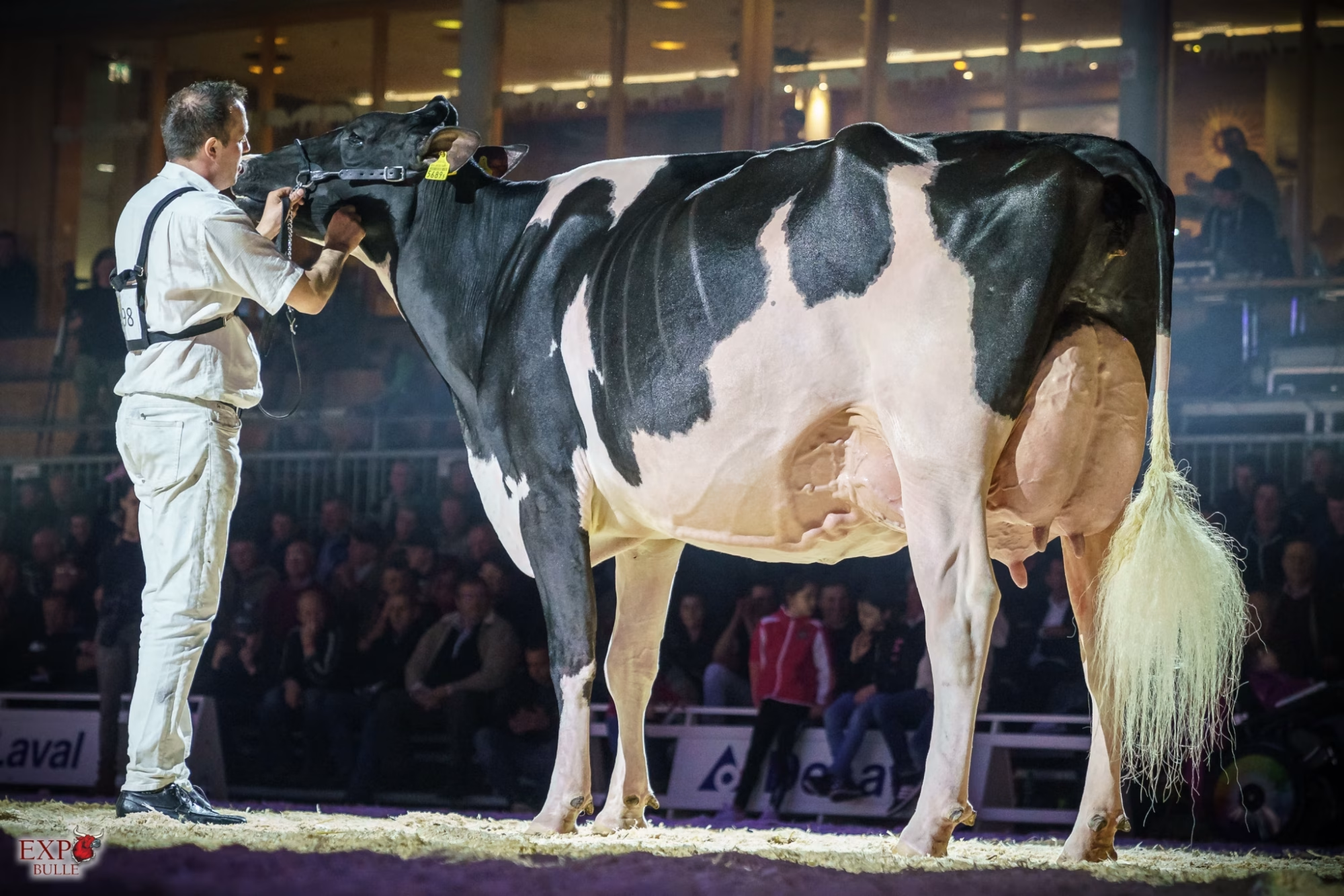
DH Gold Chip Darling, EX-96—a European show champion said to trace back to the Dellia family. If the pedigree holds, she’s the far side of the story Bob Snow started: Durham and Dundee stamped Holsteins on two continents, and here’s that same architecture standing under the lights an ocean away. 

And the pipeline didn’t stop with those three. Erbacres Damion (EX-94-GM). Regancrest-HHF Mac (EX-92-GM), out of her Rudolph daughter. England-Ammon Million, a Comestar Outside son from Mac’s full sister. In the year she died, a look through the 2001 Red Book turned up six of Dellia’s sons and four grandsons already graduated into A.I., with more waiting on proofs.

Snow-N Denises Dellia — The Record
Final classification: EX-95-2E-GMD-DOM
Lifetime production: 180,240 lbs milk · 7,108 lbs fat (3.9%) · 5,723 lbs protein (3.2%)
Best lactation (6 yrs): 35,230 lbs milk at 4.0% fat
Registered daughters: 76, by 21 different sires
Sons sampled in A.I.: 44 — including three Gold Medal sires
Born: December 20, 1986 · Died: December 8, 2001

December 8, 2001

Snow-N Denises Dellia died on December 8, 2001. She was nearly fifteen years old.

The record above tells you what she did. What it can’t quite capture: even nearing fifteen, she still walked on a perfect set of feet and legs—the same sound frame that carried her through a decade of flushing and never once let her down.

It was never just that she had those traits. It’s that she handed them down, generation after generation—and that’s the thing that set her apart from every contemporary she ever stood beside.

In her obituary that ran in Holstein World following her death in December 2001, the Regans wrote: “We at Regancrest have been blessed by God to have had the opportunity to work with such a unique animal… Her legacy will live on not only through her offspring but in the lesson she taught to many—that the demand for high type plus production never goes away.”

What Dellia’s Story Means for Your Barn

Strip away the show trophies and the Gold Medal sons, and Dellia leaves working breeders three plain lessons—as true in your barn today as they were in Bob Snow’s:

  • Breed for balance, not for the trait of the month. Snow’s patient pendulum—strength, then dairy, then strength—built a cow that transmitted. Look at your best cow’s whole mating history, not just her last score.
  • Judge a cow by what she throws, not just what she scores. Dellia’s EX-95 was lovely. Her transmitting ability was priceless. Ask what your donor’s daughters actually look like in second lactation.
  • Cull like you mean it—even out of your best. Regan shipped Dellia’s balloon-uddered daughters without a second thought.

And don’t ever let a fancy address decide for you. The best cow in your county might be standing in a 35-cow tie-stall right now, ignored by the big studs.

A Permanent Place

Here’s what a cow like Snow-N Denises Dellia teaches you about this breed, if you’re paying attention.

She didn’t come from money. She came from a sandy farm where the creek ran behind the barn, and a man won two straws of Bell at a meeting and used them wisely. She was bred by people whose names never rode the cover of a sale catalog, developed by a kid fresh out of high school who knew which bull to reach for, and sold to a man with the eye to see what she’d become. She stands today among one of the most consequential Holstein families the breed has ever known.

Durham. Dundee. Derry. Damion. Mac. Die-Hard. Read that roll call slow. Every one of those bulls traces to her. And every time a good-uddered Durham daughter freshens quiet in somebody’s parlor and goes to work, that’s Dellia—still milking, in a way, twenty-some years after they laid her to rest.

Snow-N Denises Dellia. EX-95-2E-GMD-DOM. Born December 20, 1986. Gone December 8, 2001. The black cow nobody wanted, who proved—for every breeder who ever looked at a plain barn and a plain pedigree and dared to see more—that greatness never did require a famous address. Just the right blood, the right hands, and the patience to let a good plan unfold.

So here’s the question worth chewing on tonight: who’s the unheralded cow standing in your barn right now—and are you breeding her the way Bob Snow bred Dellia?

Your turn. Did a “nobody” cow ever surprise you and build something real in your herd? Drop her name and her story in the comments—The Bullvine wants to hear about the next Dellia hiding in a tie-stall somewhere.

Key Takeaways

  • The best brood cow in your county might be standing in a 35-cow tie-stall right now. Snow-N Denises Dellia was home-bred nothing-special on paper—and she threw three Gold Medal sons.
  • Select Sires passed on her because her two-year-old milk didn’t clear their PTA-milk cutoff. A single number screened out a cow the eye would’ve kept. Watch what a formula alone might cost you.
  • Judge a cow by what she transmits, not just what she scores. Dellia’s value showed up in 76 daughters and 44 sampled sons—transmitting ability the index couldn’t see at two years old.
  • If you’ve got a cow the studs won’t sample but your gut won’t quit on, that’s the whole story here. Bob Snow flushed her anyway, and Durham, Dundee and Derry trace back to that call.

Continue the Story

  • Hanoverhill Tony Rae: The Story of a Legend – Built in the very same era when rigid production indexes threatened visual masterworks, this profile captures another legendary cow family that defied corporate formulas through pure, functional maternal architecture.
  • The 10 Greatest North American Holstein Brood Cows of All Time – Deepen your understanding of the fierce type-production debate that defined late-twentieth-century breeding circles, and see how Dellia’s transmitting ability earned her a permanent place alongside the absolute giants of the breed.
  • Regancrest S Chassity – 2012 Golden Dam Contest Finalist – Discover how the genetic line from Bob Snow’s coulee farm carried forward into the high-stakes genomics era through Dellia’s direct descendant, proving that her legendary foundation of sound feet and udders held true across generations.

The Sunday Read Dairy Professionals Don’t Skip.

Every week, thousands of producers, breeders, and industry insiders open Bullvine Weekly for genetics insights, market shifts, and profit strategies they won’t find anywhere else. One email. Five minutes. Smarter decisions all week.
NewsSubscribe
First
Last
Consent

Brookview Tony Charity: A $47,000 Gamble That Outlived Everyone Who Doubted Her

She walked into that 1981 sale ring with recently swollen hocks and a cooling crowd. Heffering paid $47,000 anyway. Four years later, half of her sold for $1.45 million.

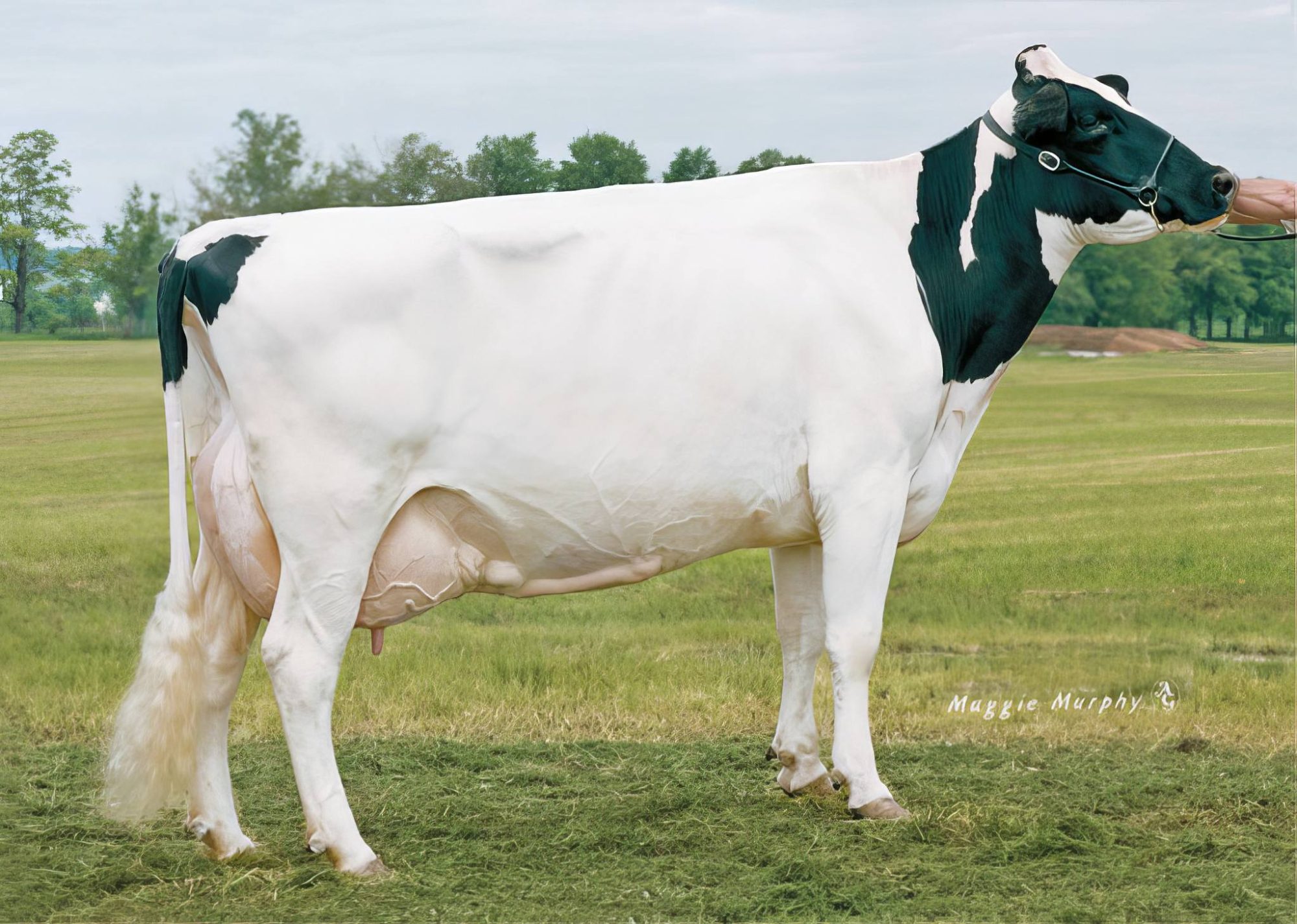
Brookview Tony Charity, EX‑97‑3E — the cow Bob Murphy called “probably the best one ever.” Not a freak of height, but a masterpiece of width: the depth of body, the high, wide rear udder, the quiet balance that made hardened judges run out of words. (Photo: Maggie Murphy)

The classifier went quiet.

Bob Murphy had spent the better part of his life crouched behind Holstein cows—running a hand down a topline, stepping back to read the set of a hock, studying the way an udder cleaved and carried. By his own reckoning, he’d put a score on something close to half a million head. A man who’s seen that many cows doesn’t rattle easily. He’s watched the great ones come and go. He knows that “perfect” is a word you save, because the day you spend it carelessly is the day it quits meaning anything.

It was the mid-1980s, in a barn at Hanover Hill Farm outside Port Perry, Ontario. The cow in front of him had already worn more banners than most herds win in a generation. Murphy walked around her. Walked around her again. Then he said the thing breeders still repeat, word for word, more than forty years on—that of the tiny handful of cows ever rated at 97 points, “she’s probably the best one ever,” with the most correct overall conformation of any cow he’d ever seen.

Think about that for a second. Not the best he’d seen that year. Not the best in the barn. The best he’d ever laid eyes on—and this was a man who’d seen damn near everything the breed had to offer.

Her name was Brookview Tony Charity. And here’s the thing most folks get backward: the score didn’t make her. By the time she settled at her famous mark of EX‑97‑3E, the number was just the paperwork catching up. When she was scored on the American system in June 1984, she became the 21st Holstein in the U.S. ever to reach Excellent‑97—the highest score their program had ever awarded. The truth had been spotted years earlier—in a cold sale ring, on a cow nobody else was quite sure about.

The Night Nobody Was Sure

Now, you’ve got to understand the era to understand the gamble.

This was the early 1980s—the golden age of the North American show cow. A great female could become a household name in dairy circles. The Royal Winter Fair and World Dairy Expo were cathedrals, and a Grand Champion banner could rewrite a farm’s future. Embryo transfer was still young enough to feel like wizardry; flushing a single great donor to a half-dozen elite sires was rewriting what one cow could be worth. The big Ontario and New York outfits were assembling the cow families that would shape the breed for decades. And the people doing the buying weren’t gambling on spreadsheets. They were gambling on the eye.

Charity was born on August 6, 1978, bred by John D. and Karl E. Havens at Brookview Farm in Fremont, Ohio. Look at how she was bred, and you’ll see why old-timers nod: she was a Kanza Matt Tony daughter out of Leaderwood Elevation Charmer—and that puts Round Oak Rag Apple Elevation, the most important type bull the breed has ever known, right there as her maternal grandsire. Here’s the bittersweet part: Charmer made nearly 19,160 pounds as a three-year-old and was shipped off to Japan in 1979. Charity was the only daughter she’d ever leave behind on this continent. Matt on Elevation. Bull-power married to the great type-transmitting foundation of the era. The blend that made her wasn’t an accident.

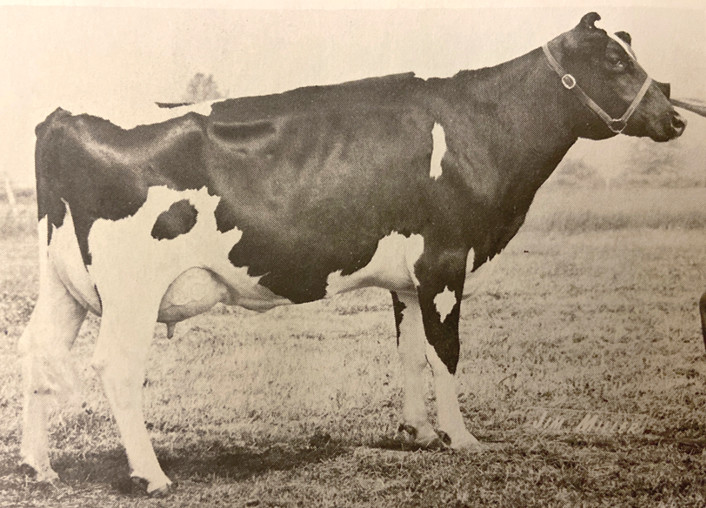
The dam who left only one. Leaderwood Elevation Charmer, VG — a Round Oak Rag Apple Elevation daughter who milked close to 19,160 pounds before she was sold to Japan in 1979. Study the frame and the udder: this is the Elevation strength and dairy quality that would come together one more time, in the white-marked heifer calf she left behind on this continent. Charmer gave the breed exactly one daughter here before she shipped out. That daughter was Charity.
Where it all started. Leaderwood L Charmer Dora, born in 1970 — the matriarch standing behind Charity’s dam, and the foundation the whole family was built on. Look at the strength through her body and the quality of that udder for a cow of her era; this is the deep, durable Leaderwood type that Round Oak Rag Apple Elevation would later amplify into Charity herself. Greatness like Charity’s rarely comes from nowhere. Usually, it comes from a cow like this one — a generation or two back, doing the quiet work no banner ever records.

And here’s where the story damn near ended before it began.

By the fall of 1981, she came up for sale as a young cow—and she’d developed fluid in her hocks. Anyone who’s raised cattle knows that sinking feeling. Your best young cow, the one you’ve been bragging on at every coffee shop in the county, suddenly walking out stiff and swollen right when the whole world’s about to look at her. The swelling came down on its own out at pasture—slow, stubborn, on the cow’s own schedule. By sale day, she walked clean.

She didn’t start out as anybody’s sure thing. As a heifer in Ohio she was good, not great—first senior yearling and reserve junior champion at the Ohio District 9 Show, and that was the end of her early show honours. Roger Schug bought her as a bred heifer in 1980. Then, in March 1981, Albert Cormier of Cormdale Farms in Georgetown, Ontario, brought her across the border—the first Canadian chapter in a cow who’d become Canada’s most famous. (Read more: How Albert Cormier Rewrote the Rules of Global Holstein Business – and Made the Whole Industry Catch Up)

Under the Cormdale banner she had her one real humbling. At the Kitchener Championship Show, milking better than nine months, she placed tenth in the three-year-old class. Tenth. The cow who’d go on to never lose her class again, buried in the middle of a Kitchener lineup.

By that fall she was catalogued for the Designer Fashion Sale in Syracuse, New York, on November 21, 1981—and she’d developed fluid in her hocks..By sale day, she walked clean.

But word travels in this business. The buzz had cooled. A few of the buyers who’d circled her were looking elsewhere now.

Not Peter Heffering.

Heffering ran Hanover Hill with Ken Trevena, and he had the gift—the one you can’t teach, the one that separates the breeders we remember from the ones we don’t. He looked past the hocks. He saw the depth through her body, the spring of rib, that rear udder hanging high and wide like somebody had drawn it off the breed standard instead of off a living animal. He saw the way she stood—not nervous, not showing off, just there, filling the space with the kind of quiet authority great cows carry, and lesser ones never learn. (Read more: How Hanover Hill Holsteins Revolutionized the Dairy Breeding Industry)

Heffering didn’t buy her alone, and he didn’t buy her cheap-easy—he outlasted a syndicate of Ontario breeders headed by Ken Empey Jr., and a New York breeder, George Morgan of Tyrbach Farms, who wanted in too. In the end Heffering and Morgan took her in partnership for $47,000, and Charity went home to Port Perry. Two years later, when her brightest days were already showing, Hanover Hill bought out Morgan’s half for $250,000 U.S.

Read those two numbers back to back. Forty-seven thousand for the whole cow in 1981. A quarter-million for half of her by 1983. And we’re only getting started.

Looking back, what they paid would seem almost funny. We’ll get to why.

The eye that saw it: Peter Heffering leads Brookview Tony Charity out at the Ontario Spring Show, a ring of good cattle strung out behind her. This is the quiet authority he’d bought into when others backed away — a cow who didn’t fidget or grandstand, just walked to the front like the front was where she’d always stood.

What Made Breeders Drive All Night to See Her

She walked into the show ring in 1982. And here’s the line you’ll hear repeated wherever old show people gather: in her own class, she was never beaten. Not that year, not the next, not ever—across her whole career, the judge’s hand never came down on another cow in her class.

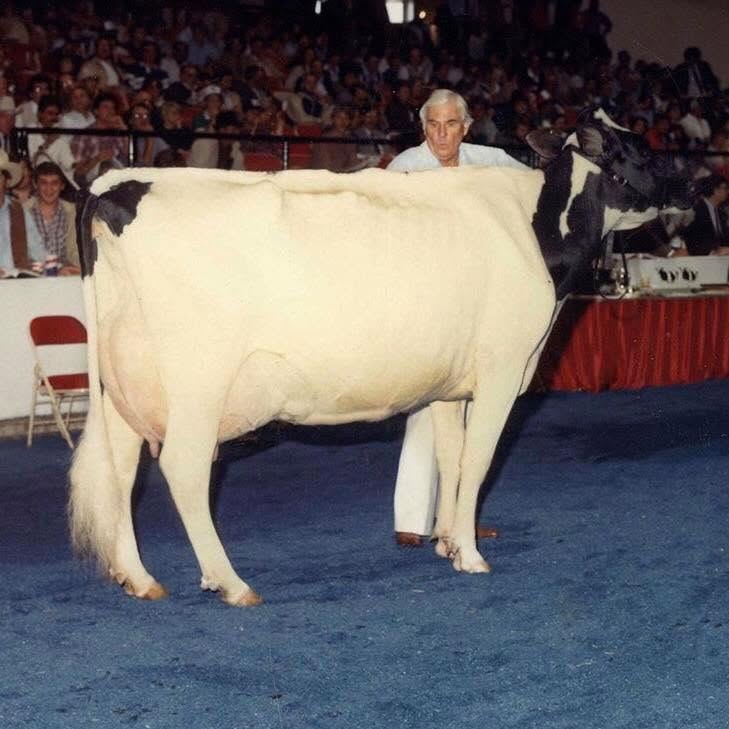
Look at the width — and look how small the man behind her seems. Brookview Tony Charity takes her second Supreme Champion at World Dairy Expo in 1984, Peter Heffering nearly swallowed up behind that barrel of a body. It’s remembered as the first time Expo crowned its Supreme on the colored shavings rather than the tanbark — a fitting stage, because there wasn’t a cow in the building who belonged on it more.

Let that settle, because in the show business, it borders on impossible. Everybody gets beaten eventually. The good ones get beaten by the great ones, and the great ones get beaten by youth, an off day, or a judge who saw it differently. Charity just… didn’t. Year after year, ring after ring, the placing came back the same.

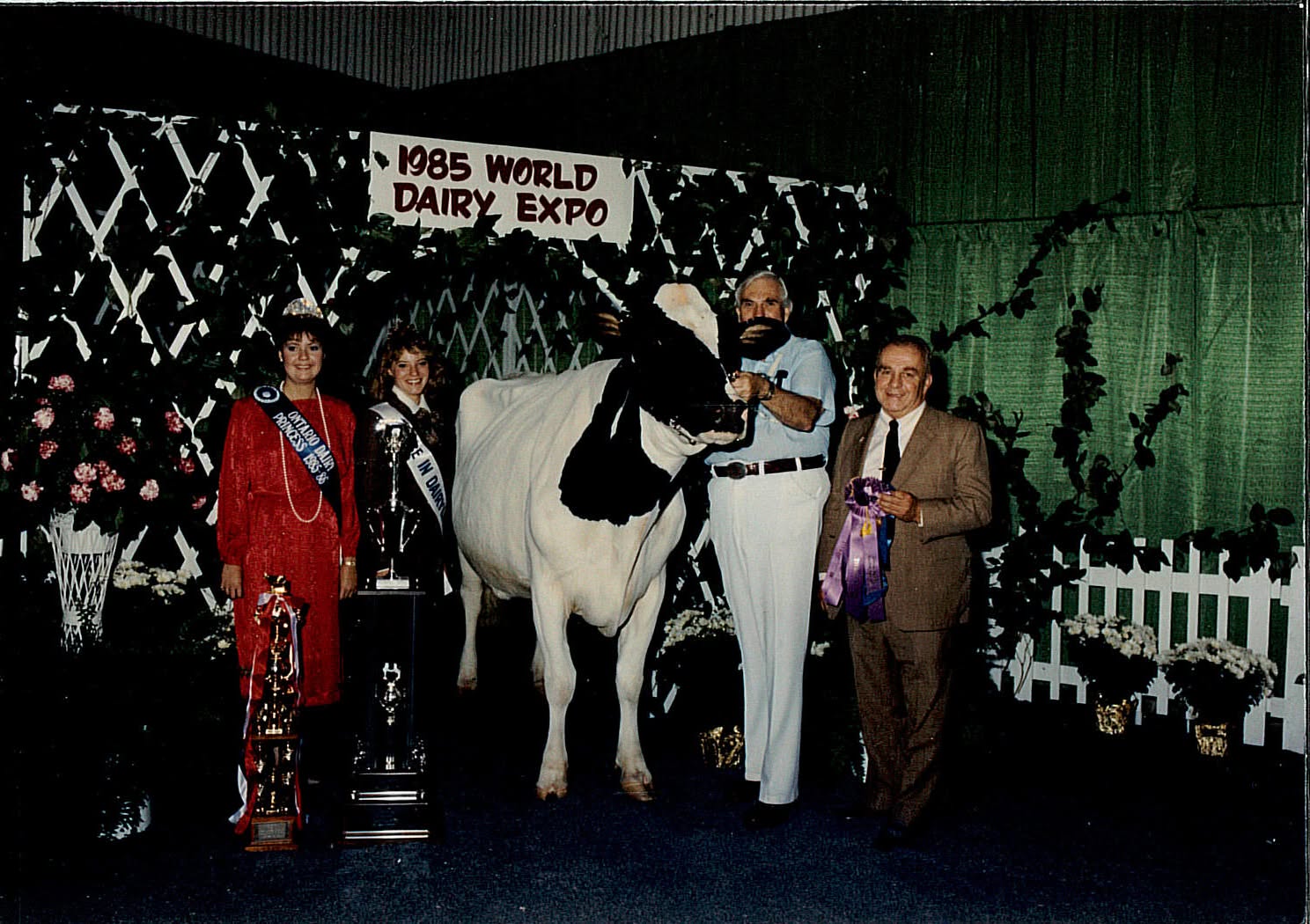
Supreme at Madison, 1985 — one of four. Peter Heffering steadies Brookview Tony Charity while Stephen Roman holds the purple rosette, flanked by the Ontario Dairy Princesses and a bank of silver. The banner behind them says World Dairy Expo; the cow in front of it said something louder. On this floor, against the best the continent could ship to Wisconsin, she simply didn’t get beaten in her class.

Read the ledger and try not to blink:

  • The Triple Crown (1982): Grand Champion at all three U.S. National Shows—Harrisburg in the East, Madison in the middle, Fresno out West—in a single calendar year.
  • The Royal Dominion: Grand Champion at the Royal Agricultural Winter Fair four times—1983, 1984, 1985, and 1987—the first Holstein ever to do it.
  • World Dairy Expo: Supreme Champion honours four times on the tanbark at Madison.
  • The full reckoning: Six superior production awards and a string of All-American and All-Canadian nominations, a résumé few cows in history can touch.
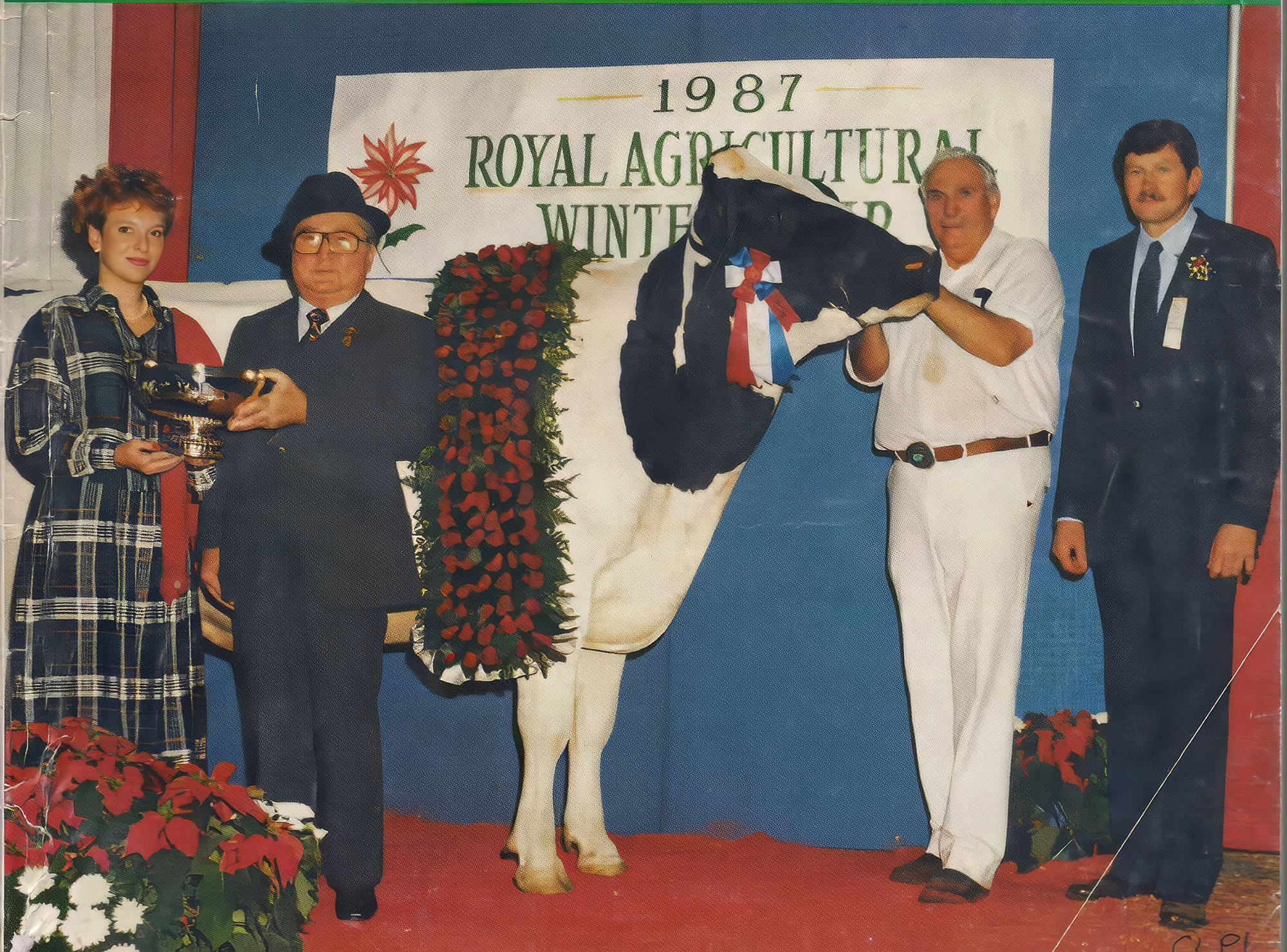
The fourth one — the one that made history. Brookview Tony Charity stands Grand Champion at the 1987 Royal Agricultural Winter Fair under Judge Jeff Nurse, draped in roses, with Peter Heffering on the halter and Stephen Roman (in the hat) accepting the trophy. No Holstein had ever won the Royal four times. When the rosette went on that November, no one ever had to wonder again.

And lest anyone think she was all ribbon and no milk pail: at five years old, she pumped out 39,015 pounds of milk at 3.6%, with 1,422 pounds of fat, milking 3X over 365 days—a record that earned her the Erle Kitchen production trophy, putting her among the most productive cows in the world in the 1980s. Show banners and a milk record like that, in the same animal. That’s the part that ought to stop a working breeder cold.

Now, about that “never beaten” business—there’s one honest asterisk, and it’s worth telling straight, because it makes the record more impressive, not less. One cow in history topped Brookview Tony Charity: Continental Scarlet-Red. But read how it happened. Charity was a four-year-old that day; Scarlet was a five-year-old. They never met in the same class. They met only at the Grand Champion drive—the final walk, where age and class fall away, and the best of everything stands together—and there, Scarlet took Grand with Charity standing Reserve. So the in-class record holds, clean and untouched. The only cow ever to beat her had to wait until the very last walk of the show to do it, across an age line, with everything on the line. That’s how close to flawless she really was.

Picture the kind of evening that made her a legend. The Royal Coliseum in Toronto—banks of seats packed in tight, the ring lights burning white against a black November evening outside. The smell of clipped hair and cedar shavings, and that low electric hum a crowd gives off when a great class is grinding toward its finish. Charity led them in. And when the judge made his walk, the hand came down where it always came down—on her.

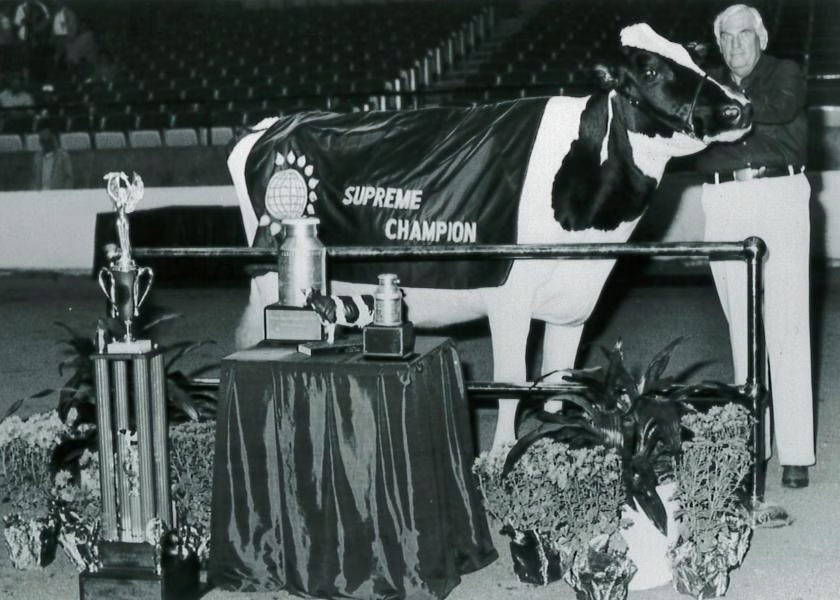
Supreme Champion, World Dairy Expo — a banner Brookview Tony Charity carried out of Madison four times. The trophies bank at her feet; the seats behind her have emptied. And the cow herself stands the way she always did when the noise died down: calm, square, and done arguing the point.

That’s how you measure a legend, by the way. Not just by the banners she carried. By how rarely, and how narrowly, anybody got close enough to take one from her.

So what made breeders load the truck and drive half the night to stand in front of one cow? Listen to the men who judged her. At Madison, Fred Foreman put it plainly: “When a cow has milked for nearly 14 months we have no trouble starting the class with her and naming her grand champion of the show.” Lowell Lindsay called her flat out “the greatest cow of the breed I’ve seen.” And Loren Elsass said her form would “make her the standard of comparison for a long time.” These weren’t soft men. They didn’t hand out words like that. They just couldn’t find a way around her.

The cathedral she filled: Peter Heffering and Brookview Tony Charity in the lineup at World Dairy Expo, the great class strung across the colored shavings under the Coliseum tiers. This was the room breeders drove all night to reach — and the cow at the end of the strap was the reason the seats stayed full long after the easy classes had emptied them.

The Year She Almost Didn’t Come Back

Here’s the part the show programs never printed.

In 1983 it nearly all ended. A reaction to some of the antibiotics she’d been given cost her her appetite and her strength, and for a stretch of dark days the breed’s living definition of perfection was just a sick animal in a stall. Ken Trevena and Willis Conard practically lived with her through it—not the cow on the magazine cover, just a cow who needed them.

And that ought to stop us, because it’s easy—too easy—to talk about a legend like Charity as if she were a trophy on a shelf instead of a living thing that bled and breathed and could be lost. Anybody who’s ever had a great one knows the truth of it. Great cows aren’t made in the ring. They’re made in the dark mornings and the long nights. In the watching. In the worrying. In that flood of relief when she finally stands, eats, and walks back to being herself.

She came back.

Not just survived—came back to the ring and kept right on winning. And the breeders watching took note, because that kind of resilience isn’t a footnote to them. It’s a trait. The deep, stubborn constitution to take a hard knock and still throw strength to the next generation—you can’t pin a banner on it, but you can build a cow family on it. They would.

There’s one more decision tucked in here that tells you everything about how Hanover Hill saw her. With Charity still capable of winning anywhere they pointed her, they pulled her off the show string for a stretch and put her on an intensive embryo program instead. Sit with that for a moment. The most undefeated cow in the breed, standing home in the barn while lesser cattle paraded for banners she’d have won at a walk. It was the right call, and it was a brutal one—the kind most people can’t make even when they know in their gut they should.

Two bets, one cow. Stephen B. Roman (right), the uranium magnate whose Romandale Farms paid a record $1.45 million for half of her, and Peter Heffering (left) of Hanover Hill, the cattleman who’d staked $47,000 on a swollen-hocked unknown four years earlier — flanking Brookview Tony Charity, EX‑97. Whatever Bay Street thought she was worth, these two had their hands on the halter.

The Financial Shockwave

We said we’d get back to what she cost. Here’s why it matters.

July 15, 1985. The Hanover Hill Dispersal, Port Perry. Some 2,500 people had come from Canada, the United States, England, South and Central America—and about an hour into the second day, the cow they’d all really come for walked in. When Heffering led Charity into that sale ring, the “king and queen of the dairy world” were met with a standing ovation. Auctioneer Bob Shore opened the bidding at $50,000—and it climbed from there until a Canadian record fell. When it was over, Stephen B. Roman’s Romandale Farms had half of her for $1,450,000, outlasting a syndicate headed by Richard Witter of Taurus Service—the bidding handled, remarkably, by Witter’s 14-year-old son, John.

A million-dollar cow, eating her hay. Brookview Tony Charity in her pen at the 1985 Hanover Hill Dispersal, her records tacked to the board behind her, a couple of onlookers studying her through the rail. An hour later she’d walk into the ring to a standing ovation and a Canadian-record bid. Right here, though, she’s just a cow with her head in a bucket — which is exactly what the best of them never forget how to be.

When a single cow walks the road from a sale-barn purchase to an international financial instrument, you’re not watching the dairy world anymore. […] Lay it out, and the line tells its own story:

YearFinancial EventValue
1981Purchased by Hanover Hill (Heffering & Trevena) at the Designer Fashion Sale$47,000
1985Stephen B. Roman’s Romandale Farms buys a 50% share, July 15$1,450,000 (CAD), a record
1986Bay Street limited partnership built on frozen semen from six of her ET sons$3,500,000

Read that 1986 line again. Stockbrokers in a Toronto financial district, writing up share offerings on the genetics of a cow bred in Fremont, Ohio. The breed had spent a hundred years putting prices on bulls. Now the suits were trying to turn perfection herself into stock certificates.

But none of that—not the million-four, not the three-and-a-half—is really the heart of this. It’s just the world admitting, late and loud, what one cattleman had seen quietly in a sale ring with his own two eyes, years before the rest of them caught on.

The People Who Loved Her

A cow like Charity belongs to history now. But she was never alone in it, and the people around her are half the reason the story still lands the way it does.

The Havens family bred her in Ohio. Heffering saw her when others blinked. Roman backed her with a fortune. And through all the championship years at Hanover Hill, it was Ken Trevena who knew her best—not the cow on the magazine cover, but the cow in the stall at five in the morning. (Read more: THE ROMANDALE REVOLUTION: How a Uranium Billionaire & Cow Sense Conquered the Holstein World)

Away from the tanbark: a quiet morning in the barn at Port Perry, the great cow in her stall and the man who knew her best leaning in to check her over, fork in hand. This is where legends are actually made — not under the lights, but here, in the early quiet, with someone who cared enough to look twice before the day began.

He’s the one who saw the mornings. The feed bunk. The udder filling. The way she handled the trailer, the noise, and the strange barns, and settled in anyway. By every account, she was level-headed—all business, no foolishness, a cow who went about being great without a lick of drama. The kind you could trust at the halter, the kind that never made you nervous walking into a ring full of people.

What none of them knew, in those good years, was how little time was left.

A Photo From a Barnyard, Forty Years On

Here’s something that happened while we were writing this.

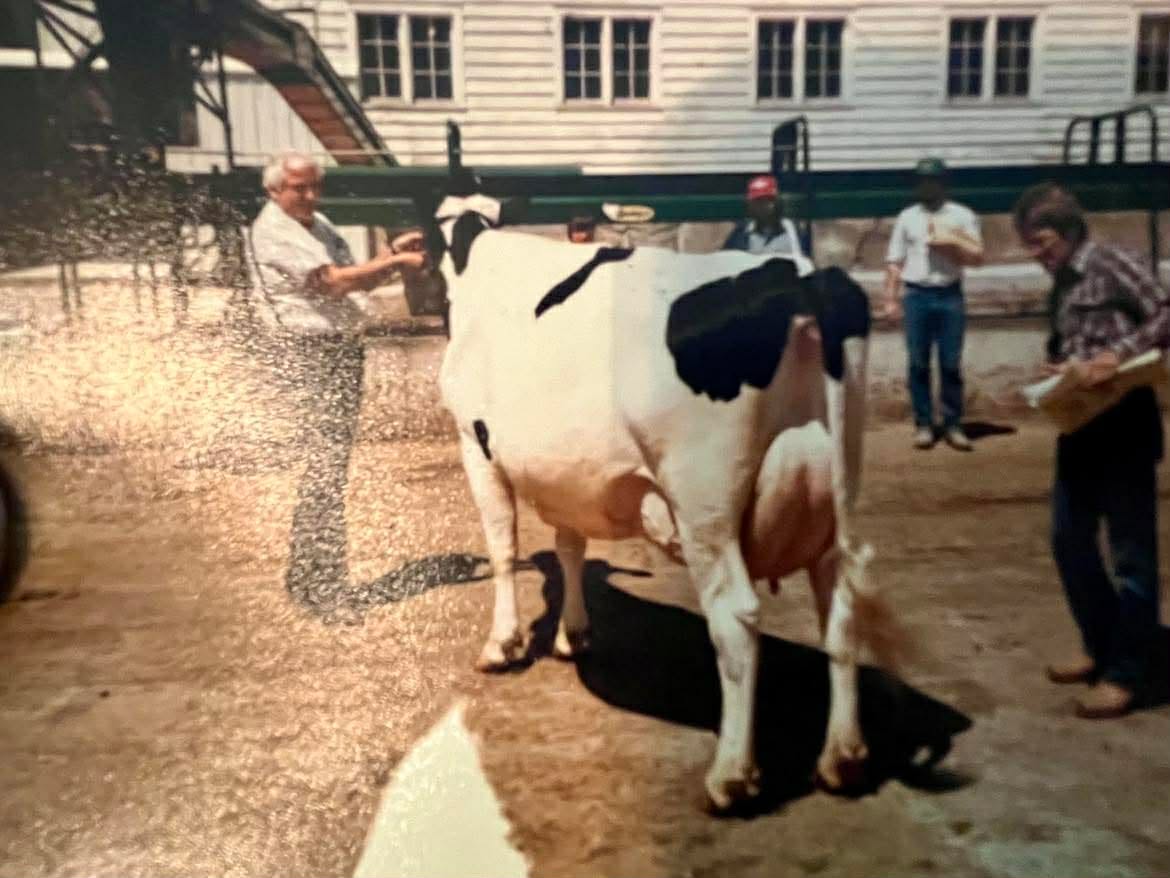
When this story first ran, a reader named Cyrus Conard picked it up and recognized a family name in it: Willis Conard, one of the two men who’d nursed Charity through the 1983 illness that nearly took her. Willis was Cyrus’s uncle — brother to his father, Wayne, who himself spent years connected to Hanover Hill. When Wayne passed away last year, the family found this photograph among his things — Charity being classified right there in the Hanover Hill barnyard, the wash water still flecking the air, the classifier working his card at the edge of the frame. By family account, it’s the day she scored the 97.

Think about what that means. The most documented cow of her generation, and the truest picture of her highest moment sat in a family’s keeping for forty years — not in an archive, not on a magazine cover, but with the people who’d been close enough to the cow to be part of her story. That’s where greatness actually lives. Not in the record book. In the family that kept the photo

The moment the number happened. Brookview Tony Charity is classified in the Hanover Hill barnyard — wash water still in the air, the classifier’s card already filling in at right. By the family’s account, this is the day she scored EX‑97. The photograph was kept for forty years by the Conard family — relatives of Willis Conard, the Hanover Hill stockman who helped nurse her through her darkest week — and surfaced only when Wayne Conard’s son found it after his father’s passing. Courtesy of the Conard family.

Twilight

She died on August 10, 1988, at Hanover Hill Farm in Port Perry. She was ten years old. Cancer.

Ten. Think about that—a cow who’d won the breed’s biggest banners four times over, whose genetics got underwritten on Bay Street, gone before she’d reached an age plenty of ordinary cows pass without anyone marking the day. There’s a particular ache in that for anybody who’s lost a good one too soon. All that public glory, the headlines and the seven-figure prices, and it ended in the most private way there is: an empty place in a barn where greatness used to stand, and a man who’d cared for her for most of her life left to find the words.

Trevena buried her right there on the farm, marked by a rock and a plaque on the idyllic Hanover Hill ground in Port Perry.

Incredible Perfection—that’s what they called her, and you could write a whole book around those two words and not improve on them. That’s not ad copy. That’s grief, trying its level best to be precise.

Where She Lives Now

Here’s the thing about a truly great brood cow, though. The finest monument to her was never going to be a plaque on a fence post. It was always going to be a daughter who makes you stop mid-stride and look twice—and then a granddaughter, and then a great-granddaughter you stumble onto three generations down a pedigree when you weren’t even hunting for her.

Now, Wikipedia will tell you her genetic history was “unremarkable” and that none of her offspring matched her own show-ring heights. And on the banner count, that’s fair. But walk the maternal line out forty years and tell me it didn’t matter.

Over in the Netherlands, Charity 504 EX‑94 stood Grand Champion at the National NRM Show back in 2004, carrying the line into a fresh generation of European admiration. In 2022, Het Uilenreef Charity 16 was named Grand Champion at the Neppelenbroek Holstein Show—another branch, still wearing the name like it means something, because it does. That same year in Austria, Jomargo Goldendreams Cheyenne‑RC took Grand Champion at the Austrian Dairy Grand Prix, tracing right back to Charity through the European family. And in Wisconsin, Sellcrest D Cheeto‑Red carried the old blood back toward the coloured shavings at Madison—her owner, Trish Brown, admitting she hadn’t even realized how remarkable Charity’s legacy was when she first bought the cow.

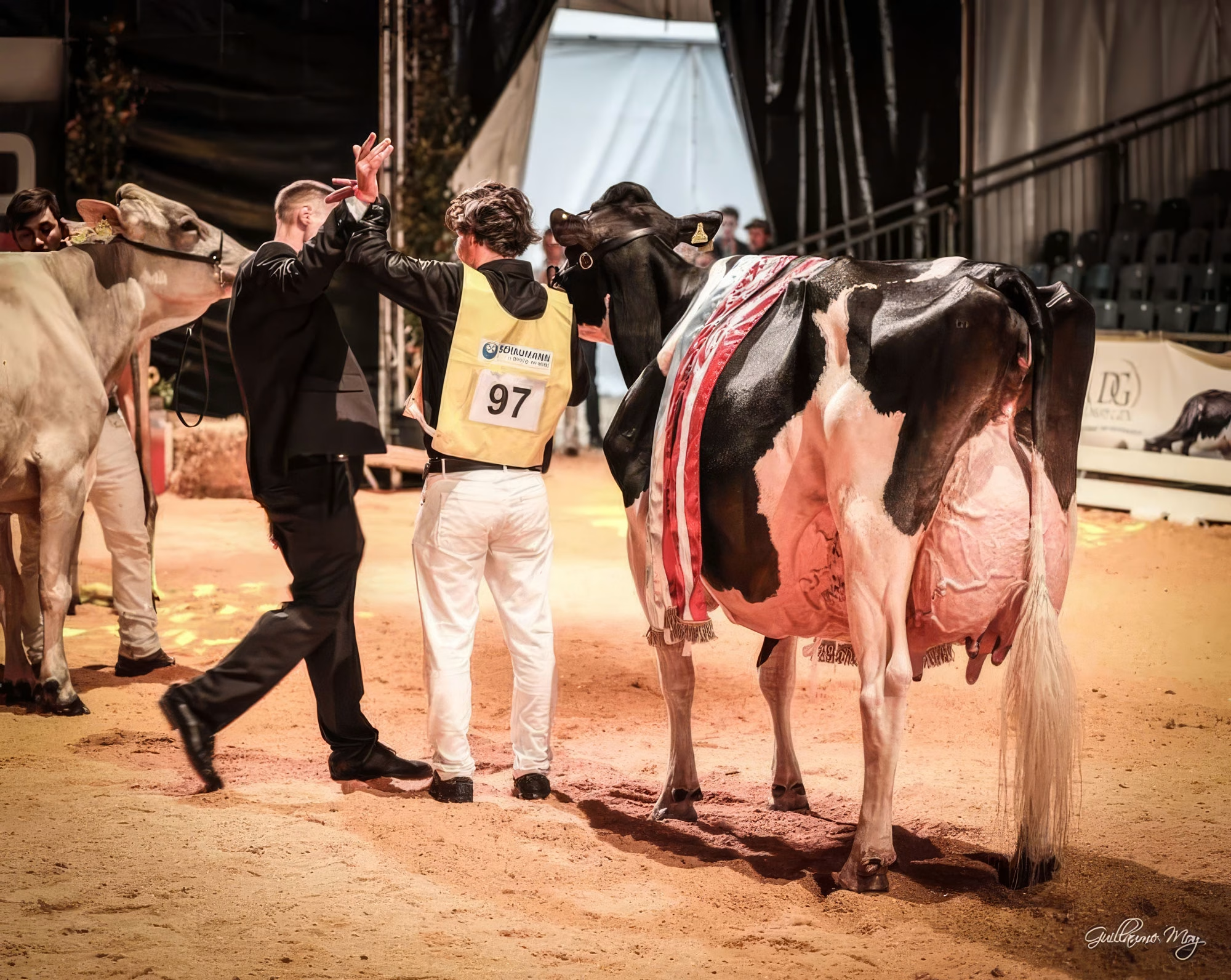
Forty years later, the line still wins. Jomargo Goldendreams Cheyenne‑RC, EX‑90, is mobbed with a high-five the moment she’s named 2022 Grand Champion at the Austrian Dairy Grand Prix for Bernard Unterhofer in South Tyrol — banner on her back, udder swung full. Trace her sires back — Golden Dreams on a Texas‑Red, a Kite‑RC, a Rubens‑RC — and the line runs straight home to Brookview Tony Charity. Look closely at the handler’s number, too: 97. Some things a pedigree doesn’t have to explain.

That’s what a real cow family does. It outruns the people who started it. It crosses oceans and languages and housing systems and forty years of shifting type fashion.

And here’s a word for the present, while we’re at it. Modern Holstein breeding often chases extreme stature—taller, sharper, more. Old-school breeders remember Charity differently. She wasn’t a freak of height. She was a masterpiece of width—chest width, body depth, dairy strength, the whole package in balance. Complete cows age better in pedigrees than flashy ones ever will. Every time a breeder today picks balance and longevity over the freak of the moment, they’re chasing something Charity already had figured out.

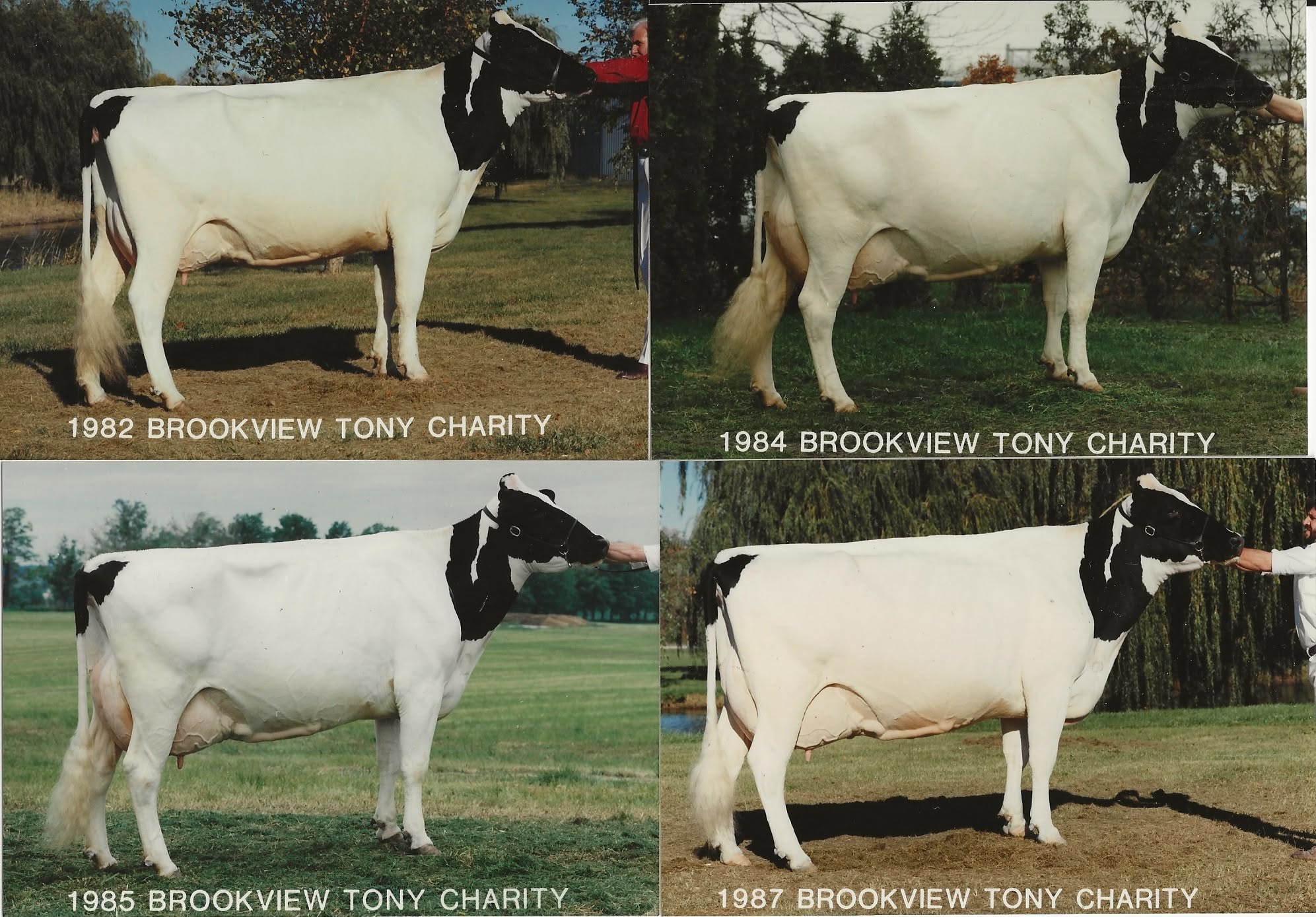
Brookview Tony Charity in 1982, 1984, 1985 and 1987 — four lactations apart. Look at what time did to her: more depth, more strength, the udder still riding high and level. This is the difference between a cow who’s merely fashionable and one who’s correct. The fashionable kind break down. Charity just kept getting truer.

The Cow They Built a Statue For

In 2017, nearly thirty years after she died, something happened that no other cow in this breed can claim. They built her a statue—a real one, eight metres tall.

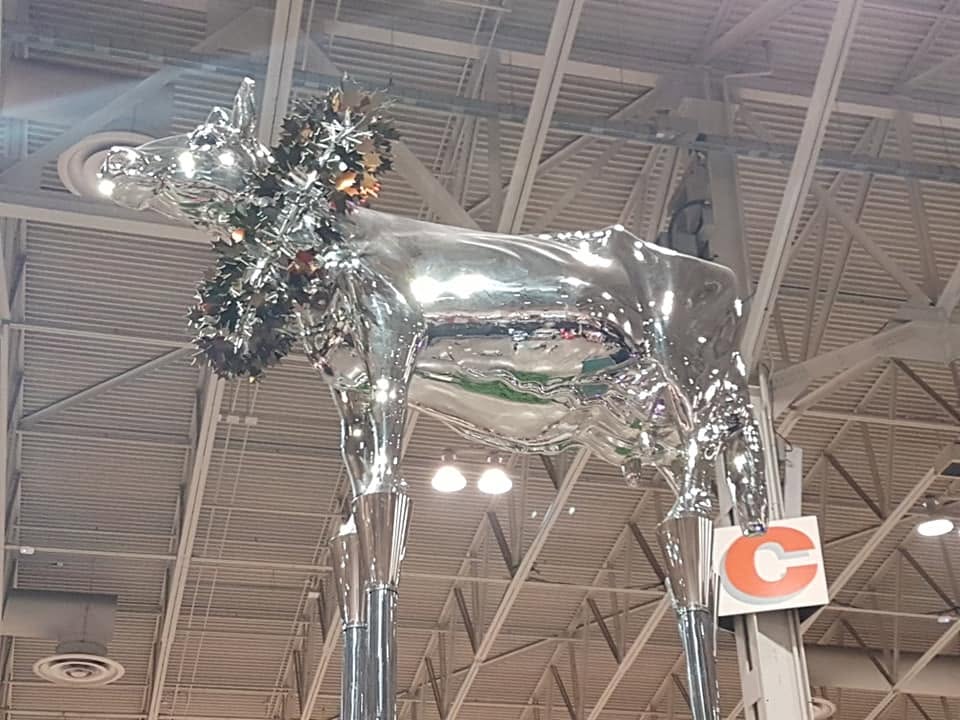
It stands in Cathedraltown, a neighbourhood in Markham, Ontario, built on the former grounds of Romandale Farm. Charity, Perpetuation of Perfection, the sculptor Ron Baird called it—a life-sized Holstein worked in gleaming stainless steel, mounted high on 26-foot posts so she floats above a little parkette, catching the cold Canadian light against the open sky. It was a gift from Helen Roman-Barber, Stephen Roman’s daughter, to the land her father once farmed.

Home, at last, to the right barn. Ron Baird’s stainless-steel Charity — Perpetuation of Perfection — on display beneath the rafters of the Royal Agricultural Winter Fair, draped in a fresh garland like the four she earned here in the flesh. The permanent statue stands in a Markham subdivision she never visited. But for a few November days, eight metres of polished steel came back to the one Coliseum that was always, unmistakably, hers.

And here’s the irony only a dairy person fully feels. Charity never set hoof in Markham. Not once. From the day she landed in Canada to the day she died, she lived at Hanover Hill in Port Perry, and that’s where she’s buried. “She never went to Romandale Farm,” Ken Trevena said years later, standing by her grave. “Anyone in the Holstein business knows that.” The neighbours grumbled about the giant chrome cow on stilts; the city even talked of moving her. None of it touched the truth underneath. You don’t raise eight metres of stainless steel over a subdivision for a cow that didn’t matter.

To somebody outside the dairy world, a monument like that might seem a little strange. A statue. Of a cow.

But ask a Holstein breeder, and you won’t have to explain a thing.

Because they understand it in their bones. They’ve had one like her, or they’ve spent a lifetime hoping they would—the cow that changes how the whole barn feels, the one visitors ask to see before they’ve got their boots off, the one whose daughters you keep when good sense says sell, the one whose name turns up three generations down and makes you smile before you even know why. Charity was that cow, multiplied by history. The one who made a hardened classifier reach past his own vocabulary. The one who made judges keep arriving at the same answer—and made the one cow who ever topped her wait until the final walk of the show to do it. The one who made financiers write numbers that sounded ridiculous right up until the pedigree proved them conservative.

And maybe that’s the truest measure of her—truer than the EX‑97‑3E, truer than the four Royals and the four Madisons, truer than a record million-four for half a cow. It’s that nearly forty years after Ken Trevena laid her to rest on that farm in Port Perry, serious breeders on two continents still argue about her, still breed toward her, still run a finger up a maternal line and go quiet when they hit her name.

Brookview Tony Charity. Incredible Perfection.

She did exactly what her legend promised.

She compelled our imaginations to carry her on—and we’re still carrying.

Learn More

  • How Albert Cormier Rewrote the Rules of Global Holstein Business – and Made the Whole Industry Catch Up— Discovers how the pioneer who first risked capital on Charity navigated commercial hock issues, leveraged aggressive cow-family acquisition strategies, and utilized early embryo transfer tools to build an international genetics footprint.
  • Ken Trevena — Reveals the operational management and day-to-day husbandry strategies behind Hanover Hill Holsteins, detailing how meticulous transition nutrition and rigorous structural care converted high-potential genetic purchases into legendary, multi-year show ring champions.
  • Blondin Goldwyn Subliminal EX-97: A Final Bow for the Queen — Dismantles the modern obsession with genomics-only indexing by proving how an elite maternal line delivered over 310,000 pounds of lifetime milk while maintaining a flawless physical score across eight lactations.

The Sunday Read Dairy Professionals Don’t Skip.

Every week, thousands of producers, breeders, and industry insiders open Bullvine Weekly for genetics insights, market shifts, and profit strategies they won’t find anywhere else. One email. Five minutes. Smarter decisions all week.
NewsSubscribe
First
Last
Consent

When Breeding Genius Meets Perfect Timing: How Regancrest-PR Barbie Shaped the Future of Holstein Genetics

Every breeder at Madison talks about the ‘Barbie genetics. Her descendants dominate 36% of today’s top PTAT rankings.

Regancrest-PR Barbie: The unassuming heifer who walked into the Minnesota State Fair ring in 2004, little did anyone know she was about to redefine Holstein genetics and kickstart a multi-million-dollar dynasty.

Look, I’ve been around long enough to know that most “legendary” cattle stories start sounding the same after a while. But every now and then, you come across one that stops you cold. This is one of those stories.

Picture this: it’s 2004, and this sleek black-and-white heifer is standing in the Minnesota State Fair ring. Nice enough cow, solid Reserve Grand Champion placement. The judge liked what he saw, the crowd appreciated her style, and that was that. Just another promising young cow in another show string.

Except… what nobody in that ring could’ve predicted was that they were watching the debut of what would become the most game-changing brood cow of our time.

That heifer was Regancrest-PR Barbie. And her story? Well, it’s the kind that makes you completely rethink what real genetic impact looks like.

The Iowa Boys Who Got It Right

So you’ve heard the name Regancrest thrown around at Madison, right? Seen it on those high-dollar consignment catalogs that make the rest of us shake our heads at the prices?

Here’s what most folks don’t realize—this operation, sitting on Iowa’s highest point in Allamakee County, has been quietly revolutionizing Holstein genetics since 1951. While half the industry was still figuring out AI, William Regan was already all-in on Registered Holsteins and artificial insemination.

I was talking with some producers at World Dairy Expo last fall—you know how those conversations go by the barns after the shows wrap up—and when Regancrest came up, this guy from Wisconsin just shook his head. “Those Iowa boys,” he said, taking a sip of his coffee, “they’ve been breeding the kind of cows we’re all chasing with genomics… for decades.”

The man wasn’t wrong.

The Regan family—William and Angella started it all, now their sons Ron, Charlie, Bill, and Frank run the show with the grandkids coming up—they’ve got something figured out that most of us are still learning. But here’s where it gets interesting… Frank’s daughter Sheri, grew up in that environment where every single mating decision mattered.

“At a young age, I had a great passion for showing cows and the Registered Holstein part of our family’s business,” Sheri told me when we caught up at a genetics meeting a few years back. That childhood spent studying pedigrees and watching how bloodlines played out across their herd? That wasn’t just farm work—that was genetics graduate school, live and in living color.

And by 2001, when a particular calf hit the ground in their nursery, all that careful planning was about to pay off in ways nobody could’ve imagined.

That “Alignment of Stars” Moment

Look, we’ve all tried linebreeding. Sometimes it works beautifully, sometimes… well, sometimes you get a train wreck that takes years to fix. But what the Regancrest team pulled off with Barbie was something entirely different. They called it an “alignment of stars”—and honestly, that’s the only way to describe what happened.

See, Barbie’s pedigree wasn’t just good bloodlines thrown together. Walkway Chief Mark appears three times in her background. Three times! That’s not luck—that’s surgical precision in a breeding program.

Her sire, Durham EX-90 GMD, was already making serious waves as the best son of Chief Mark’s very best daughter, Snow-N-Denises Dellia. Durham would eventually claim Premier Sire at World Dairy Expo five straight years and become the leading sire of Excellent cows in the US—over 4,400 of them.

Sheeknoll Durham Arrow (EX-96), a magnificent daughter of Durham EX-90 GMD, Barbie’s illustrious sire. Arrow’s success in the show ring highlights the profound influence Durham had on type and excellence, qualities he unmistakably passed on to his most famous daughter, Regancrest-PR Barbie.

But here’s the real kicker… this wasn’t just lucky breeding. The Regancrest crew had been systematically building toward this moment through eight generations, starting with their foundation cow, Zubes Ormsby Fayne EX-90. Every mating, every decision, leading up to this concentrated genetic package.

I remember Frank Regan explaining it to me once: “We knew we had something special brewing, but even we didn’t expect what Barbie would become.”

The Numbers That Changed Everything

When Barbie first freshened at two and a half years old, her production looked solid: 26,700 pounds of milk with decent components. Nothing earth-shattering there—thousands of cows hit those numbers every year.

But then the type evaluations started rolling in. High VG as a first-calf heifer, bumped to EX-92 after her second calving. And when she hit the show circuit in 2004… that’s when people really started paying attention.

Minnesota State Fair—Intermediate and Reserve Grand. World Dairy Expo—fifth in class. Solid showing for sure, but here’s what really mattered: she claimed the #1 PTAT Cow position with a CTPI of 2178 and PTAP of 4.50.

Now, for those keeping score at home, PTAT measures genetic transmission ability for type traits—basically, how well a cow passes her good stuff to her kids. It’s one thing to be a great individual cow; it’s entirely another to consistently pass those superior traits to your offspring. And that’s where Barbie separated herself from every other cow of her generation.

When the Daughters Started Making Noise

Here’s where the story gets absolutely wild. Of Barbie’s 27-plus daughters, all but one were classified VG or better on first lactation. Think about that for a minute. By 2010—and this is what had the breeding world buzzing—she’d produced eight Excellent and 19 Very Good daughters.

I remember being at a genetics seminar around that time, and this old-timer from Pennsylvania—a guy who’d been breeding Holsteins longer than I’d been alive—stood up during the Q&A and said, “Boys, I’ve been in this business 40 years. What Barbie’s doing up there in Iowa… I ain’t never seen anything like it.”

The room went dead quiet. When a guy like that speaks up, you listen.

The PTAT lists started looking like a Regancrest family reunion. Three of her daughters hit #1 PTAT Cow at different times. At least eleven consistently ranked in the top 25.

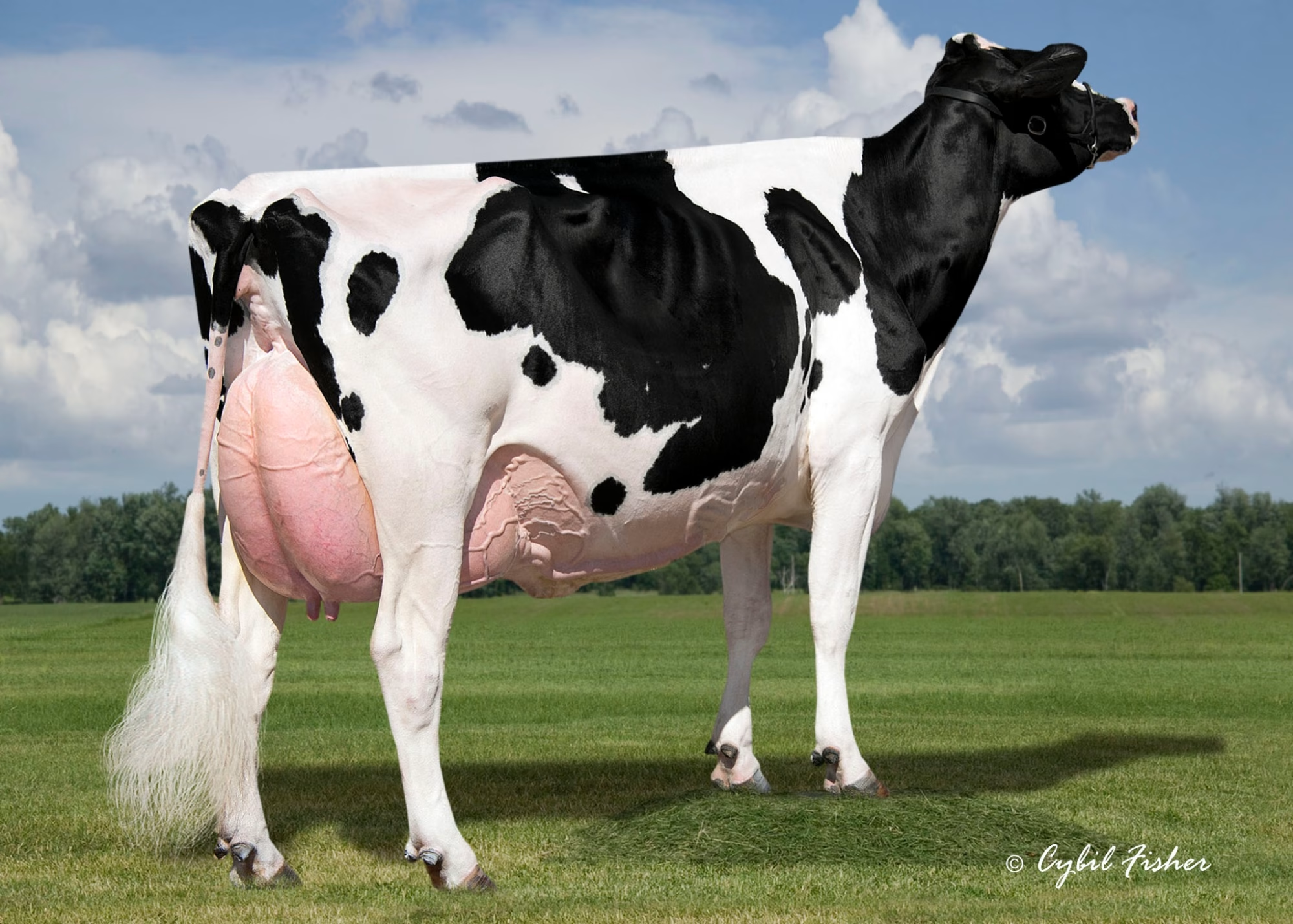
Regancrest Breya (EX-92), a Shottle daughter of Barbie and another one of her progeny to hit the #1 PTAT Cow spot. Breya’s success was part of the stunning collection of daughters who turned the PTAT lists into a Regancrest family reunion.

Names that became household words in our business: Regancrest G Bedazzle (Goldwyn)—first daughter to reach #1. Regancrest Breya (Shottle)—another #1 PTAT Cow. And then there’s Regancrest G Brocade (Goldwyn), whose sale with offspring for $900,000 announced to the whole world that the Barbie family wasn’t just about genetics anymore—they were about investments.

Regancrest G Brocade (EX-92), a Goldwyn daughter of Barbie, whose $900,000 sale with offspring was an early signal that the Barbie family’s genetic impact was translating into unprecedented market value.

The Genomic Revolution Amplifier

Just when traditional progeny testing was validating Barbie’s incredible transmission ability, the industry got completely turned upside down. Genomic selection hit around 2009, and suddenly, young bulls with high genomic indexes were threatening all the established bloodlines.

A lot of folks were worried. Would genomics make the old genetic families irrelevant? Would all that careful progeny testing get tossed aside for flashy genomic numbers?

But here’s where Barbie’s story gets even better. Instead of genomics hurting her influence, it amplified it exponentially. Her vast network of grandsons and great-grandsons started lighting up those genomic evaluations like Christmas trees.

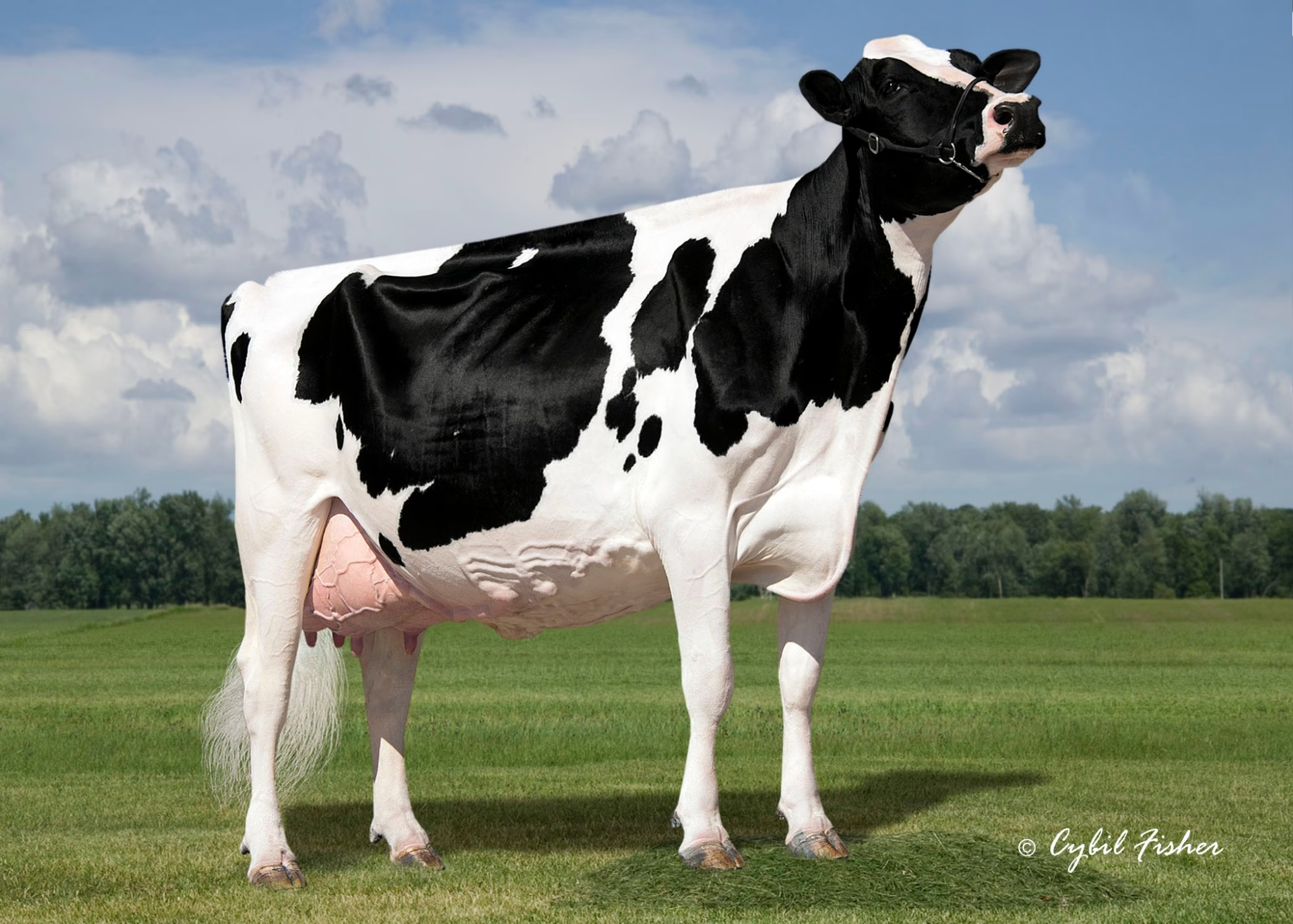
DH Gold Chip Darling (EX-96), a Gold Chip daughter who exemplifies how Barbie’s genetics were amplified by the genomic era. Through her sire, one of Barbie’s most influential grandsons, Darling showcases the enduring type and high-level quality that this dynasty continues to transmit in today’s genomic-driven breeding programs.

Bulls like Gold Chip, Colt 45, Bradnick, and Cashcoin—they became foundational sires in today’s AI market. Her daughter, Regancrest Mac Bikas, became dam of the high genomic type sire, MR Atwood Brokaw. The family just kept producing.

And the numbers today? Get this: Nine Barbie-family heifers in the top 25 PTAT rankings, eight cows in the top 25. In an era where new genomic superstars emerge every proof run, that kind of sustained dominance is absolutely unheard of.

Million-Dollar Market Validation

You want to know when the market really figured out what the Barbie family represented? When Regancrest G Brocade was sold with offspring for $900,000. Then Regancrest S Chassity went for $1.5 million with 14 offspring. Then Regancrest Brasillia hit $1.5 million in another package deal.

Regancrest S Chassity (EX-92), a daughter of Barbie, who, along with her 14 offspring, sold for $1.5 million . Chassity’s record-breaking sale showed the world that Barbie’s genetics were not just about individual merit; they were a multi-generational genetic portfoli that smart buyers were willing to pay millions for.

Notice the pattern here? These weren’t individual cow sales—they were genetic portfolio investments. Smart buyers understood they weren’t just purchasing animals; they were investing in proven transmission ability that would compound over generations.

I was talking to Tom, a consignment manager I’ve known for years, at a sale last spring. He put it perfectly: “When a Barbie comes through the ring, buyers aren’t asking ‘what’s she worth?’ They’re asking, ‘what can we afford to pay for genetics we know work?'”

That shift in thinking—from individual merit to genetic portfolio—that’s what Barbie created. She proved that consistent transmission ability is worth more than any individual record or show placement.

Understanding the Science Behind the Magic

Now, with all the genomic technology we’ve got in 2025, we’re finally starting to understand why Barbie became such a phenomenon. That “alignment of stars” the Regancrest team achieved wasn’t just breeding intuition—it was concentrating beneficial gene combinations with surgical precision.

Modern genomic analysis has validated what those Iowa breeders figured out through careful observation: certain genetic packages produce consistently superior results. Barbie represented one of those rare combinations where favorable alleles aligned perfectly to create predictable excellence.

The 2025 genetic base changes—dropping Holstein PTAs by 750 pounds of milk and 45 pounds of fat—really highlight how much progress we’ve made since Barbie’s time. But here’s what’s fascinating: her descendants are still holding their relative positions in the rankings.

With Net Merit 2025 launching this April, emphasizing butterfat production, feed efficiency, and cow longevity, the traits that made Barbie special are more relevant than ever.

Real-World Impact in 2025

Famipage Legend Barabas (EX), a Legend daughter tracing back to Barbie, proves that this dynasty’s genetics continue to deliver on both type and production. Projected to produce over 16,000kg (35,600lbs) of milk, she’s a perfect example of Barbie’s enduring legacy in a modern dairy.

Walk through any major dairy operation today, and you’re seeing Barbie’s influence everywhere. Check the pedigrees of the top AI sires in your catalog, and her name pops up with surprising frequency.

Walnutlawn Lambda Beyonce (EX-93) is a striking example of Barbie’s deep and lasting impact, with Regancrest-PR Barbie as her 5th dam. Her quality proves that the systematic breeding vision behind Barbie created a genetic legacy that continues to produce elite animals, even five generations down the line.

Perfect example: Oh-River-Syc Byway—the bull who became the #1 daughter-proven type bull with 3.70 PTAT. His dam, Sandy-Valley Atwood Barbie EX-91, is Barbie’s granddaughter. That’s genetics working two generations later, still producing elite sires.

Midas-Touch Montery 1127 (EX-94-CAN), a Monterey daughter from the Barbie family. Owned by Ferme Jacobs and Crackholm Holsteins in Canada, her Grand Champion win at the 2022 Quebec Spring Show demonstrates how Barbie’s genetics continue to produce top-tier show animals and have spread far beyond the Iowa farm where her story began.

The Regancrest operation itself tells the whole story: 263 Excellent cows carrying the Regancrest prefix, 430-plus Regancrest bulls sold into AI programs, current herd averaging 107.1% Breed Age Average—#1 in the nation for their herd size.

Just this past October at World Dairy Expo, when Oakfield Solomon Footloose claimed her 2nd Grand Champion of the International Holstein Show, guess what was in her pedigree? Yep—Barbie genetics.

Butz Butler Goldwyn Barbara (EX-95), a stunning Goldwyn granddaughter of Barbie, demonstrates the continued show ring prowess and enduring genetic legacy of this exceptional family. Her success at top shows like World Dairy Expo underscores the consistent quality Barbie’s bloodline transmits across generations.

What This Actually Means for Your Operation

Here’s the practical takeaway from the Barbie story, and why it matters to every one of us making breeding decisions right now.

With genomic young bulls dominating today’s AI catalogs—we’re talking 42% of bulls marketed by AI companies themselves—the fundamentals that made Barbie great are more relevant than ever. The April 2025 genetic base changes and increasing concerns about inbreeding underscore the need for a more informed approach to genetic diversity while still pursuing progress.

Barbie’s success stemmed from concentrated excellence, but it was the result of systematic concentration over multiple generations. Not throwing everything at one mating and hoping for the best.

Looking at current trends—sexed semen at 37% market share, beef-on-dairy at 32%—we’re making more targeted breeding decisions than we’ve ever made before. The lesson from Barbie? Those decisions compound over time. Every mating is building toward something bigger.

And with new traits like Milking Speed coming online in our evaluations, we’re getting even more tools to make those systematic improvements.

Lehoux Perle BABY (VG-87-FR 2yr) is a stunning Goldchip daughter from the heart of the Barbie family. Her presence illustrates how Barbie’s foundational genetics, even through grandsons like Goldchip, continue to produce elite animals and shape herds globally in 2025.

The Human Touch That Made It All Happen

You know what really gets me about the Barbie story? It’s Frank Regan’s simple statement that still guides them today: “I just want to breed bulls that will improve herds for people everywhere”.

That’s not corporate marketing speak—that’s the mission of a family who dedicated their lives to genetic improvement. When you see them hosting thousands of international visitors annually and serving as “USA Holstein Ambassadors,” you understand that they recognize that success carries responsibility.

Sheri Regan’s childhood memories of studying pedigrees and watching bloodlines develop… that’s institutional knowledge you can’t buy or replicate overnight. It’s the intersection of science and art that created something extraordinary.

I think about operations like the 2024 Holstein Canada Master Breeders—farms like Kentville Holsteins with their 10 family Master Breeder shields spanning generations, or Cherry Crest surviving three complete dispersals and still earning their third shield. That’s the same kind of multigenerational thinking that created Barbie.

Where We’re All Headed

As we move deeper into 2025—with genetic indexes expanding rapidly, inbreeding coefficients climbing, and fewer distinct bloodlines dominating AI catalogs—the Barbie legacy raises some important questions we all need to think about.

How do we balance genetic progress with maintaining breed diversity? With concentrated excellence becoming harder to achieve responsibly, what’s the path forward?

Recent industry discussions about genetic consolidation—like the Trans Ova purchase of ReproLogix—show how much the breeding landscape continues to evolve. The companies controlling our genetics are changing, but the fundamental principles that created Barbie remain constant.

But here’s what gives me hope: the Regancrest team proved that with vision, patience, and systematic breeding, one exceptional cow can reshape an entire breed. That possibility still exists today—maybe even more so with our genomic tools.

The Bottom Line for All of Us

Regancrest-PR Barbie proved something fundamental about dairy genetics that we can’t afford to forget: excellence isn’t accidental. It’s the result of systematic planning, careful observation, and the patience to execute a vision over multiple generations.

In 2025, as we navigate genetic base changes, inbreeding concerns, and rapidly evolving reproductive technologies, her story reminds us that the most profound improvements still happen when science meets art—where technical knowledge combines with an intuitive understanding of what makes truly great cattle.

The young heifer who stood in that Minnesota State Fair ring in 2004 became something much greater than a show champion. She became proof that with the right approach, dedication, and a little luck with that “alignment of stars,” ordinary breeding decisions can create extraordinary legacies that last generations.

And somewhere in Iowa, on the county’s highest point, the Regan family continues that work—still breeding bulls to improve herds for people everywhere, still proving that the pursuit of genetic excellence is far from finished.

That’s the real magic of Regancrest-PR Barbie: she showed us that in an industry focused on the next big genomic breakthrough, the most lasting impact still comes from understanding that greatness is built one generation at a time—and shared with the world.

The question for each of us is simple: what are we building toward in our own herds? Because somewhere out there, the next Barbie is being planned, one careful mating at a time.

Key Takeaways:

  • Follow the money—genetic transmission beats everything: Barbie’s descendants just sold for $1.5M and control 36% of today’s top PTAT rankings, proving smart buyers pay for proven genetics, not pretty cows
  • The Regancrest formula works: Eight generations of systematic breeding + three doses of Walkway Chief Mark = a cow whose 27 daughters ALL went VG or better (zero failures in genetic transmission)
  • Your genomic bulls trace back to traditional bloodlines: Gold Chip, Bradnick, Cashcoin—the foundational sires in your catalog are Barbie grandsons, showing how elite genetics transcend technology changes
  • Start planning like Iowa winners: With 2025’s genetic base changes and rising inbreeding coefficients, systematic concentration over multiple generations beats chasing the latest genomic superstar every time

EXECUTIVE SUMMARY:

Here’s what blows my mind—one dead Iowa cow is making more millionaires than any living animal in dairy. Regancrest-PR Barbie’s descendants control 36% of today’s elite PTAT rankings, and her genetics just commanded $1.5 million at auction, proving the Regancrest family’s “alignment of stars” wasn’t luck—it was genius. They concentrated on Walkway Chief Mark three times in her pedigree through eight generations of systematic breeding, creating a cow whose 27 daughters all classified VG or better (eight reached Excellent). When genomics hit in 2009, instead of making old bloodlines irrelevant, it turned Barbie’s grandsons into the foundational sires every producer knows: Gold Chip, Bradnick, Cashcoin. What’s happening in your breeding program right now? Because somewhere out there, the next Barbie is being planned—one careful mating at a time—by producers who understand that sustained excellence isn’t accidental. This Iowa family proved that with vision, patience, and systematic breeding over multiple generations, you can literally reshape an entire breed and create a genetic legacy worth millions.

Complete references and supporting documentation are available upon request by contacting the editorial team at editor@thebullvine.com.

Learn More:

The Sunday Read Dairy Professionals Don’t Skip.

Every week, thousands of producers, breeders, and industry insiders open Bullvine Weekly for genetics insights, market shifts, and profit strategies they won’t find anywhere else. One email. Five minutes. Smarter decisions all week.
NewsSubscribe
First
Last
Consent

Legendary Holstein Matriarch Dubeau Dundee Hezbollah Passes at 18: A Tribute to a Global Icon

At 18, Dubeau Dundee Hezbollah’s legacy lives on through 200+ progeny worldwide. How one phenomenal cow rewrote Holstein Breeding history

The dairy world bids farewell to one of its most influential foundation females, Dubeau Dundee Hezbollah EX-92 EEEEE (“Hez”), who passed away on March 4, 2025, at the remarkable age of 18 years and 3 months. Her genetic legacy has reshaped Holstein’s breeding worldwide, leaving an indelible mark on the industry.

A Life That Defined Excellence: From Show Ring Glory to Brood Cow Greatness

Born December 1, 2006, Hez’s journey began in the bright lights of the show ring. She first captivated breeders and judges by claiming Intermediate Champion honors at the World Dairy Expo as a two-year-old in 2009. This early recognition set the stage for her future influence, as her stunning conformation and dairy strength earned her All-American and All-Canadian Senior Two-Year-Old titles that same year, solidifying her status as one of the breed’s rising stars.

Her competitive fire continued to burn brightly as she matured. In 2011, she claimed Reserve All-American Four-Year-Old honors and Grand Champion at the Midwest Spring National Show. However, her promising show career was tragically cut short by a significant udder injury sustained later that year after earning Honorable Mention Senior Champion at Madison. While this setback ended her time in the ring, it redirected her toward a far greater destiny as one of Holstein’s most influential brood cows.

The Numbers Behind Her Legacy: Rewriting Genetic Records

Hez’s influence on Holstein’s breeding is truly global, as evidenced by the staggering statistics she leaves behind. Over her lifetime, she has produced more than 600 embryos and registered over 200 progeny globally, from Australia to Canada. Her offspring have made their mark in Japan, Europe, Mexico, and the United States, demonstrating her unparalleled influence across continents. This global reach is a testament to the power of strategic breeding and the potential for one exceptional cow to shape the industry worldwide.

Her transmission rates are nothing short of extraordinary. By 2018, of her classified daughters in North America, an astonishing 89% scored Very Good or Excellent, with nearly 30% achieving Excellent status. These numbers far exceed industry benchmarks for elite brood cows, where only 10-15% of offspring typically reach the Excellent classification. Hez’s ability to consistently pass on superior genetics challenges conventional assumptions about transmission reliability and raises the bar for what is possible in Holstein breeding.

Shattering Stereotypes: Dual Excellence in Type and Production

While Hez’s conformation excellence captured immediate attention, she was more than just a show cow. Her production records proved that elite type and high milk yield can coexist. Her four-year-old lactation is proof: 4-03 2x 365d 42,050 lbs milk with 4.4% fat (1859 lbs) and 3.1% protein (1299 lbs). These numbers rival production-focused cows while maintaining exceptional udder quality and dairy strength.

This dual excellence challenges outdated notions that show cows sacrifice production for type. Hez demonstrated that truly elite individuals can excel in both arenas simultaneously—a lesson that continues to influence progressive breeding programs worldwide.

Strategic Breeding Decisions: Unlocking Genetic Potential

Hez’s success wasn’t accidental; it was the result of strategic breeding decisions that maximized her genetic potential. Certain sire combinations, such as Goldwyn crosses and Atwood matings, proved particularly magical with Hez. These pairings consistently produced elite offspring, including daughters who scored EX-94 and EX-92[3]. This strategic approach to breeding, combined with Hez’s inherent genetic quality, was a key factor in her success.

Her son, HEZTRYRC (by DestryRC), became an influential sire in his own right, with several All-American nominated daughters enhancing his reputation. Her global impact extended further with a Destry*RC daughter claiming Grand Champion honors at the Mexican National Show 2016[3]. These results highlight the importance of thoughtful sire selection in maximizing genetic outcomes—a lesson for breeders looking to replicate Hez’s success.

Multi-Generational Impact: Prepotency Redefined

What makes Hez’s legacy particularly fascinating is how her influence extends into subsequent generations. Her granddaughters have emerged with remarkable type scores—several testing nearly +4 points on type—demonstrating her ability to stamp her traits consistently through multiple generations. This generational transmission represents what geneticists call prepotency: the rare ability of an individual to pass on desirable characteristics predictably.

In an era dominated by genomic evaluations, Hez’s story reminds us that prepotency is critical to breeding success. Her descendants’ achievements suggest that linebreeding on truly exceptional individuals can yield consistent results that random matings cannot match.

Holstein breeding, Dubeau Dundee Hezbollah, dairy genetics, brood cow, longevity

Defying Age: Lessons from Hez’s Longevity

Hez continued to defy expectations even into her later years. At nearly 17 years old in 2016, she thrived at Interstate Calf Care in Maryland while undergoing regular IVF programs. Her remarkable longevity raises essential questions about modern herd management practices. With average productive lifespans declining across dairy operations globally, could breeding for structural correctness and overall robustness—as exemplified by Hez—help reverse this trend? This is a crucial question that underscores the urgency and relevance of the work of dairy farmers and breeders.

Her extraordinary, productive life offers valuable insights into the economic and ethical advantages of prioritizing durability alongside production and type. This strategy could benefit dairy farmers facing increasing pressure to optimize herd performance.

Economic Ripple Effect: The True Value of a Foundation Female

The economic impact of Hez’s contributions is incalculable but undeniably immense. Beyond the direct value of her embryos and offspring sold worldwide, consider the multiplier effect of her genetics through generations of descendants improving herds globally. This economic ripple effect underscores the long-term value of investing in genuinely exceptional foundation females-a strategy that pays dividends far beyond initial costs and highlights the significant economic impact of the work of dairy farmers and breeders.

Her son, HEZTRY*RC, entered the AI service, exponentially extending her influence through thousands of daughters worldwide. Her exceptional daughters became foundation females, commanding premium prices at elite sales. The ripple effect from these animals continues expanding with each generation—creating lasting value for dairy farmers who may never have heard Hez’s name but benefit from her genetic contributions.

This economic multiplier underscores the long-term value of investing in genuinely exceptional foundation females—a strategy that pays dividends far beyond initial costs.

Saying Goodbye to a Legend: One Cow Changed Everything

Dubeau Dundee Hezbollah’s passing marks the end of an era in Holstein breeding but leaves behind a legacy that will endure for decades. As breeders worldwide reflect on her contributions, Hez is a powerful reminder that true excellence transcends time.

Her descendants will continue shaping show rings, milking parlors, and breeding programs across continents—proving once again that sometimes, one cow can change your life.

Key Takeaways

  • Extraordinary Transmission Rates: Hez’s ability to consistently produce elite offspring (30% reaching Excellent classification) far exceeded industry norms, redefining what’s possible in genetic reliability.
  • Dual-Purpose Excellence: Hez shattered the false dichotomy between show type and production ability, proving elite cows can excel in both arenas simultaneously—a blueprint for modern breeding programs.
  • Strategic Mating Decisions Matter: Specific sire combinations (particularly Goldwyn and Atwood) consistently yielded exceptional results with Hez, highlighting the critical importance of thoughtful mating selection over simply chasing top genomic numbers.
  • Economic Multiplier Effect: Hez’s influence extends beyond her direct offspring through her son HEZTRY*RC in AI and numerous daughters becoming foundation females, creating lasting economic value across global dairy genetics.
  • Longevity Advantages: At 18+ years, Hez’s remarkable productive life challenges current industry practices and highlights the potential benefits of breeding for structural correctness, robustness, and durability in modern dairy operations.

Executive Summary

Dubeau Dundee Hezbollah “Hez,” who passed away on March 4, 2025, at 18, transformed Holstein breeding through her exceptional genetic influence spanning multiple continents. Beginning as a World Dairy Expo Intermediate Champion before becoming a legendary brood cow, Hez produced over 600 embryos and 200+ registered progeny worldwide, with an unprecedented 89% of her daughters scoring Very Good or Excellent. Her dual excellence in show ring type and production (over 42,000 lbs of milk with high components) challenged industry stereotypes. At the same time, her extraordinary longevity and prepotent genetics influence dairy herds globally through strategic breeding decisions that maximize her genetic potential. Hez’s legacy demonstrates how one exceptional individual can create an economic ripple effect that reshapes an entire breed for generations.

Learn more

Join the Revolution!

Join over 30,000 successful dairy professionals who rely on Bullvine Daily for their competitive edge. Delivered directly to your inbox each week, our exclusive industry insights help you make smarter decisions while saving precious hours every week. Never miss critical updates on milk production trends, breakthrough technologies, and profit-boosting strategies that top producers are already implementing. Subscribe now to transform your dairy operation’s efficiency and profitability—your future success is just one click away.

NewsSubscribe
First
Last
Consent
Send this to a friend