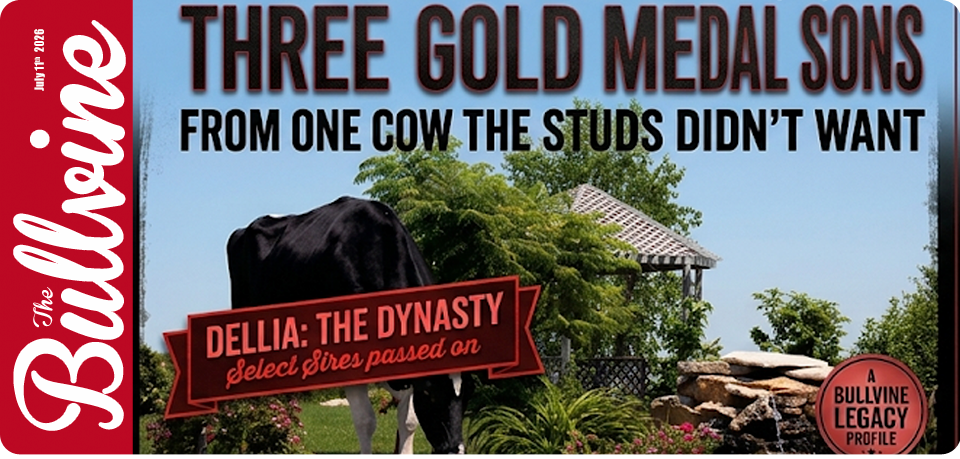




Select Sires passed on her—her two-year-old milk didn’t clear their index. Bob Snow’s 35-cow herd bred her anyway. She threw three Gold Medal sons. The eye beat the formula.
The Bullvine has profiled Dellia’s genetic legacy and her place among the mothers who built the breed. This is her story—the one about the cow the big studs passed on.
The rain had quit by noon, and Frank Regan figured his fresh-cut hay was a lost cause anyway. So he loaded up the family and pointed the car toward West Salem for the 1989 Wisconsin Championship Show. They walked into the arena right as the senior two-year-olds were filing through the gate.
That’s when he saw her.
Snow-N Denises Dellia. A tall, jet-black cow—longer through the body than most Bell daughters, wider through the chest, carrying an udder that looked sculpted rather than grown. She moved through that gate like she owned the building. Regan said it to himself, half under his breath: “Wow. Who is that cow?”
Here’s the part nobody in that arena could have known: the big A.I. studs had already looked her over and taken a pass. Select Sires wasn’t interested. Yet this “nobody” cow, from a 35-head herd in the Wisconsin coulees, would go on to breed three Gold Medal sons, leave 76 registered daughters, and become the foundation of one of the most consequential Holstein families of the modern era.
Frank Regan just knew he couldn’t stop thinking about her.
Where the Sandy Creek Ran
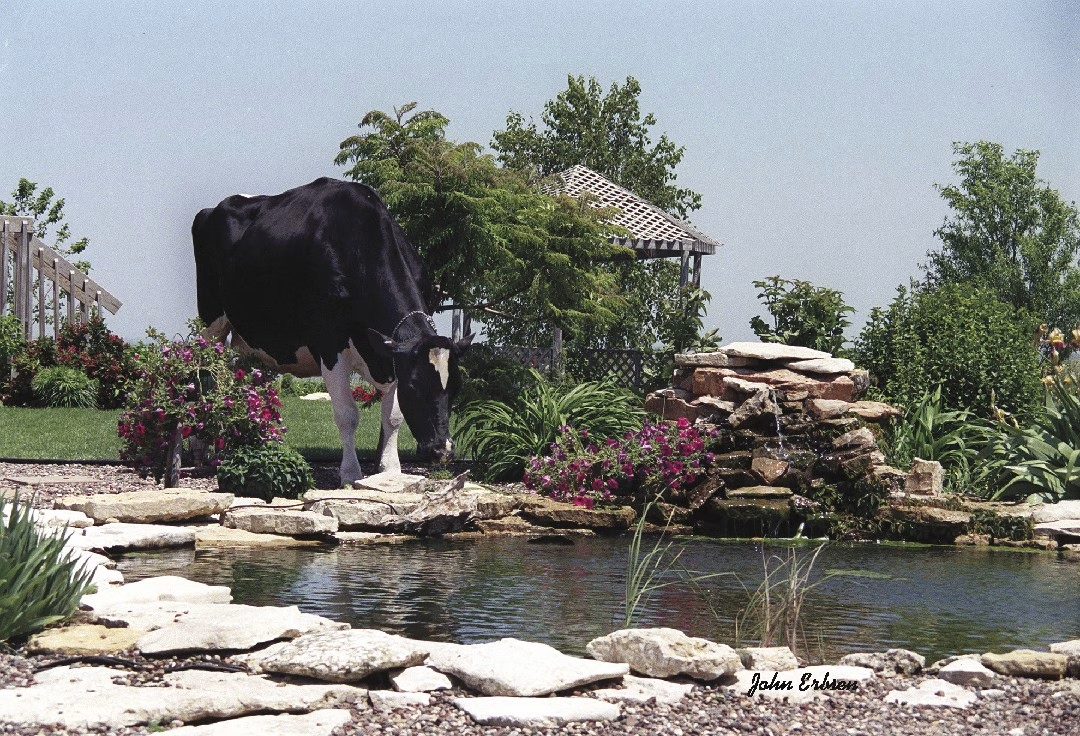
To understand Dellia, you’ve got to understand Bob Snow’s place. His farm sat in the coulees of southwestern Wisconsin—hilly, modest, the kind of outfit where a man milked 35 head and knew every one by her walk. There was a creek behind the barn where the cattle waded in to drink. Remember that creek. It matters later.
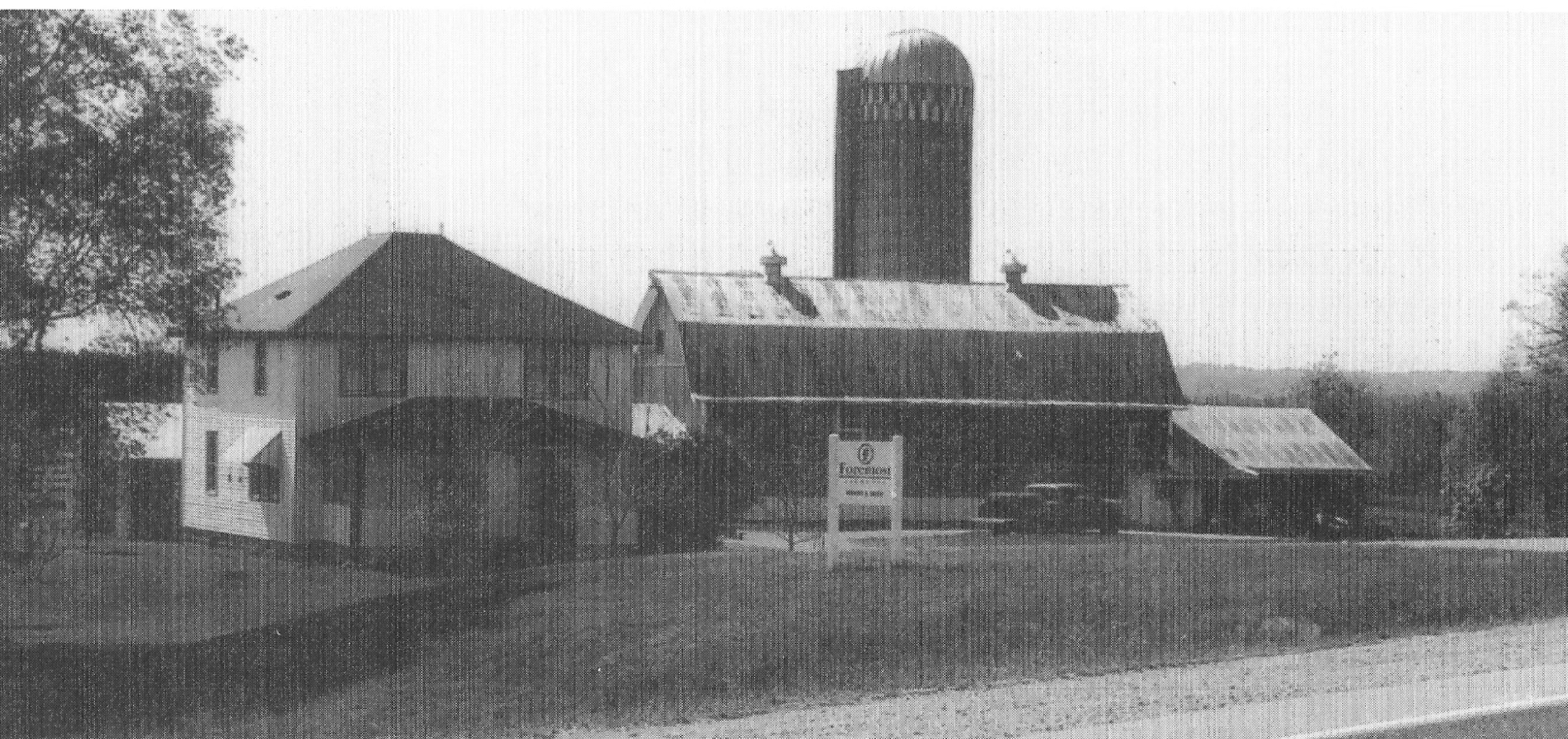
Snow wasn’t chasing the sire-of-the-month. What he did was almost musical—follow a strength bull with a dairy one, then swing back toward strength, keeping the pendulum moving toward balance. Functional dairy type, always. He’d bought his foundation stock at the Adolph Buergi dispersal on August 24, 1970—the sale records name Buergi as the herd dispersed—bringing home a three-year-old, Ce-Buerg Creator Hartog Fobes, and her daughter, Ce-Buerg Creator Fobes Garnet. Two quiet cows from a quiet sale. Nobody wrote them up in the breed magazines. Nobody needed to. They’d become Dellia’s seventh and sixth dams.
Then came the patient work. From Garnet, Snow bred to Cedardale Corporal—chosen for one plain reason, calving ease on a virgin heifer. That gave him Snow-N Garnet Corporal Edith. Next, Harborcrest Happy Crusader, a bull who stamped strength, square rumps, and especially good udders. Then Arlinda Commander to clean up the bone and add stature. Then MD-Sunset-View RA Wonder, an Elevation son known for big frames, wide chests, and ample bone.
Here’s where most folks’ eyes glaze over—five generations of cows nobody’s heard of, bred by a man milking three dozen head in the hills. But the late Peter Blodgett, who spent decades tracking cow families inside the A.I. business, saw the architecture for what it was. As he was quoted as saying in the contemporary account of Dellia’s life, “It’s rare that you combine a bull like Wonder with Bell. The fact that those two bulls were combined is the work of a ‘master breeder’ for sure.”
Snow-N Ellas Dory, the Wonder daughter, was the cow who’d close the circle.
How Do You Breed a Dynasty Cow? It Started With Two Straws.
Winter of 1983. Bob Snow went to a barn meeting and won two units of Carlin-M Ivanhoe Bell semen. That was the whole prize. Two straws. He drove home and used them on his two best animals. One was Snow-N Ellas Dory, still a virgin at the time.
Think about that for a second. Two donated straws, won at a local meeting, used on a heifer from a 35-cow herd. No grand plan. No embryo-transfer syndicate. No six-figure purchase at a national sale. Just a working dairyman making a smart mating with exactly what he had in his hand.
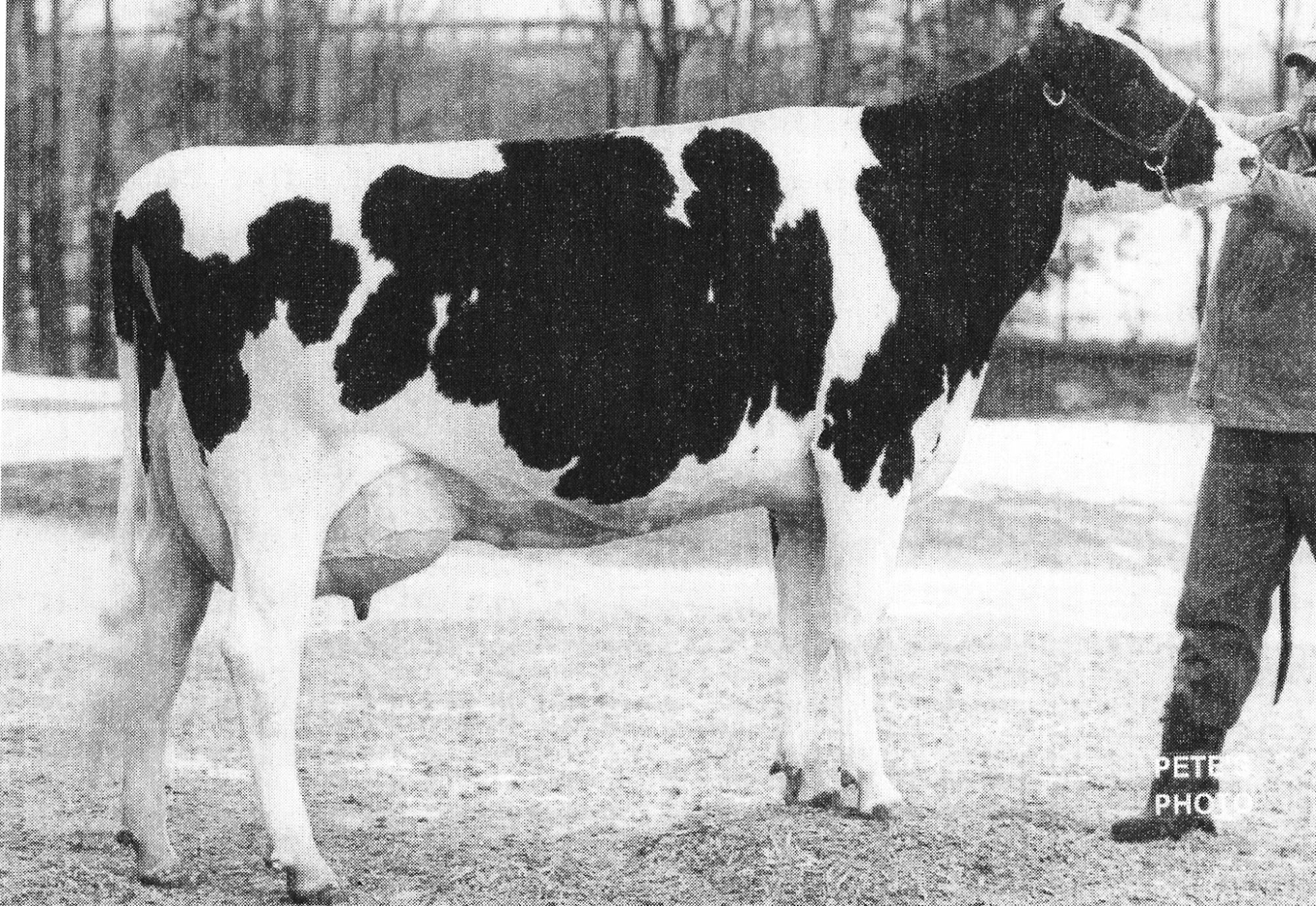
The heifer that came of it was Snow-N Dorys Denise—a typey Bell daughter, but with more strength than most of her sire’s get, a shapely udder, correct feet and legs. And when John Steinhoff, a kid fresh out of high school who’d come to work for Snow, picked the next bull for Denise, he reached for Walkway Chief Mark. The Mark-Bell cross was already whispered about as one of the golden combinations in the breed—Mark bringing width, capacity, and udders; Carlin-M Ivanhoe Bell bringing those correct feet and legs.
On December 20, 1986, the resulting heifer calf was registered as Snow-N Denises Dellia.
That calf—the one from a barn-meeting prize—would change everything. Three Gold Medal sons, though no one in that barn could have dreamed it yet. Nobody saw it coming.
The Nobody From Nowhere
Steinhoff liked to show cattle, and he talked Snow into hauling a string out. The first animal they took anywhere was Dellia, as a winter yearling in 1988. Second in a class of 25 at the Wisconsin Champion Show under Howard Binder. Sixth in a class of 31 at Madison under Bert Stewart. Reserve All-Wisconsin senior yearling.
Not bad for a cow from a herd nobody’d heard of.
Snow figured she had something. He flushed her—and on that first flush, Dellia dropped a dozen embryos. Some went to Europe. Snow implanted others himself. Over time she’d be flushed to Blackstar twice and once to Nowerland Trifecta.
Then came the first sting. Select Sires took a look and passed. Their benchmark for a two-year-old back then ran 23,000 to 25,000 pounds of milk, and Dellia hadn’t hit that number yet. And that’s the thing about the late ’80s A.I. business—the studs were leaning hard on production indexes, PTA milk chief among them, to decide which cows were worth a bull contract. A cow got screened by her numbers on paper first. Dellia was a visual masterpiece with deep maternal architecture behind her, but a young cow who hadn’t yet posted a big milk figure didn’t light up a corporate index model. The eye saw a bull mother. The formula saw a two-year-old short of the milk cutoff. So the stud that would one day beg for her sons wanted nothing to do with her.
But the show ring was telling a different story. As a two-year-old in 1989, Dellia won grand at the Wisconsin District 2 show at Viroqua and again at the Wisconsin Spring Show. At the Championship Show that fall, under Loren Elsass, she stood second in a senior two-year-old class of 23—and walked out with the best udder award.
And that’s the day Frank Regan walked in out of the rain.
“Who Owns This Cow?”
Regan followed her back to the barn after the class. He found Bob Snow and asked what he wanted for her. The number was high—too high for a spur-of-the-moment buy. So Regan pivoted: Snow was flushing Dellia to Blackstar, so how about a Blackstar daughter instead? Snow agreed.
But Dellia had lit a fire. Sire analysts came calling. Visitors kept showing up at the farm. Snow started fielding offers. “I started at $10,000,” he recalled in the contemporary account. “And every so often I boosted it by $5,000. I got up past $50,000 pretty quick.”
Back home, Dellia classified VG-89 as a two-year-old. “We just about lived in the pen with her that day,” Snow remembered. “I always clipped and washed on classification day. I figured it was always worth an extra point or two. The initial impression is so important.”
The next year, 1990, Snow didn’t show her—she was busy being flushed. But Regan kept coming back. The Snow farm was only a hundred miles from his own place at Waukon. Cross the Mississippi at Prairie du Chien, drive an hour, and there you were. Regan was hunting a franchise cow—a herd-building female he could flush and build a program around. He’d looked hard at Dixie-Lee Chief Liza, who’d sold through the 1990 Top Ten Breeders Invitational with $106,000 in signed contracts. But it always circled back to the black cow at Bob Snow’s.
One visit, he found Dellia standing in a stanchion, due in December to Stardell Valiant Winken. He told Snow she was too big to be tied in a stall like that—it was apt to ruin her. The truth, of course, was simpler. He wanted her. And a couple of weeks before the 1991 Wisconsin Spring Show, the two men finally shook on a price. The deal: Snow would own her through the show, Regan would lead her, and afterward she’d ride home to Iowa.
The Night Before the Show
Now here’s where it gets interesting.
The day before the show, Orville Kemmink—a name that carried weight around Wisconsin—walked up to Regan and squinted at him. “Are you the kid who bought this cow?” Regan said he was. “Don’t you think you paid too much?” Kemmink pressed, pointing out that Dellia had been flushed several times already and a pile of embryos had gone out the door. “You won’t get your money back,” he warned.
That evening, Frank Regan and Bob Snow sat down to supper at a place called the Country Kitchen. Regan told Snow about Kemmink’s warning. The doubt was creeping in. This cow’s apt to embarrass me, he thought. So he asked Snow point-blank if he’d guarantee several embryos. Dellia had done right by Snow over the years, so he just said, “How many do you want?”
But the more immediate trouble was this: Dellia looked empty. Flawless udder—but she could go a little shallow in the body, and right then she looked more like a racehorse than a champion.
So Regan went and bought four bales of hay. Three of grassy hay, one of alfalfa, to fill her out. He hit a feed store for a bag of calf feed to mix into her grain. “She likes warm water with her beet pulp,” Snow told him.
He started feeding her that night. By morning she was straightening out. By ten a.m., people were drifting back to the far barn to look at her—back where the 4-H kids usually kept their calves. Word had gone through the aisles: there’s an outstanding cow back there. And instead of a racehorse, Dellia was starting to look like a winner.
Grand Champion — and Then, Three Gallons of Sand
With Niles Wendorf judging, Snow-N Denises Dellia topped the four-year-old class, took the best udder trophy, and was named grand champion of the 1991 Wisconsin Spring Show. Wendorf called her tall, sharp, clean, beautifully uddered, and trouble-free.
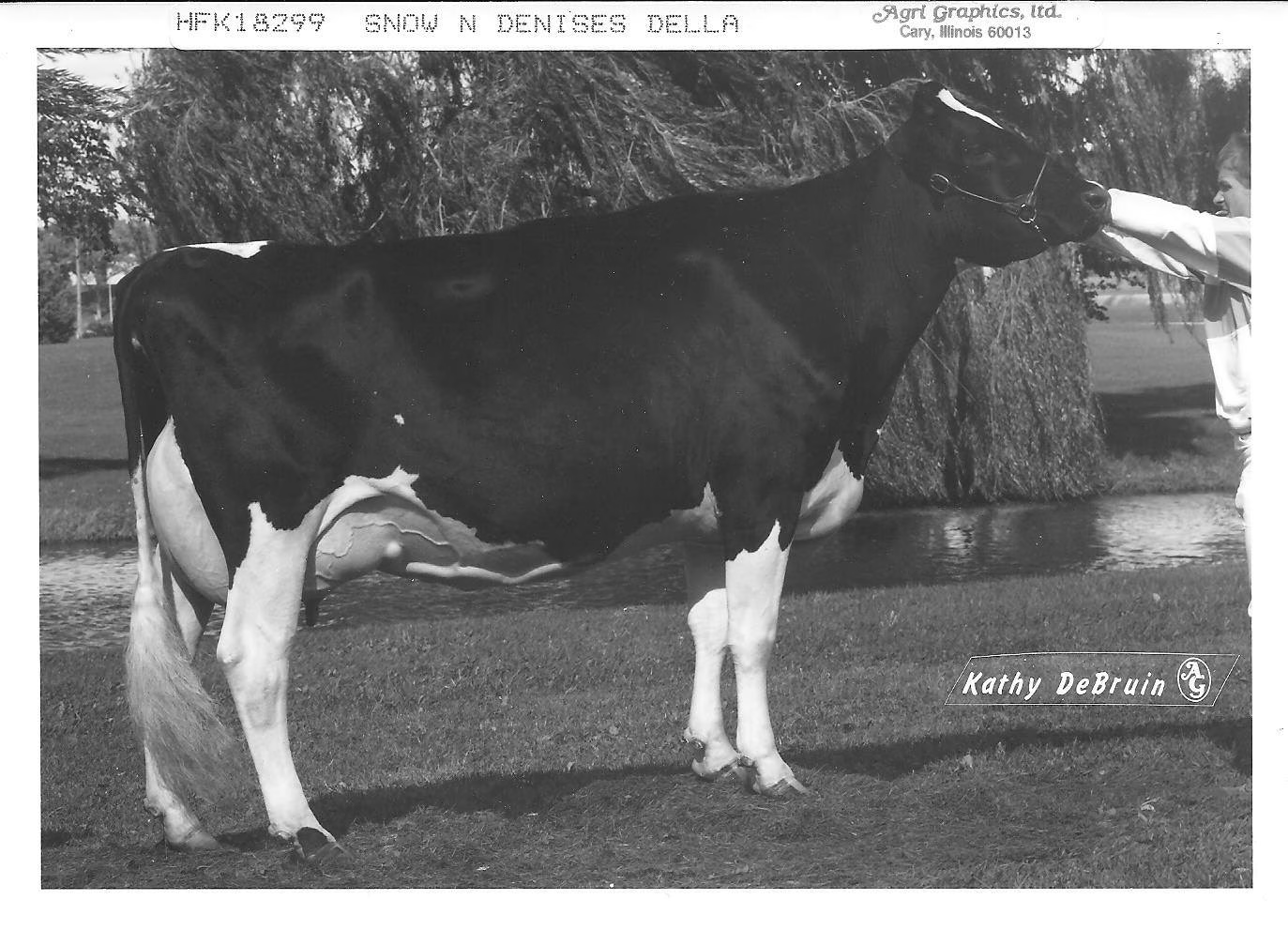
Afterward, Bob Snow had to back his car right into the arena to fit all the hardware in the trunk. And plenty of folks weren’t happy about it—upset that a “nobody” could waltz in and clean up. So much so that Ray Kuehl came over to Regan and asked flat out, “Who owns this cow? A lot of people are talking about it.” Regan explained the arrangement. “That’s all I want to know,” Kuehl said, and walked off.
Dellia went home to Regancrest, the champion of Wisconsin. But a champion in the ring is one thing—a cow tough enough to build a dynasty is another, and the breed was about to find out which one Dellia really was. Two months later, she nearly died.
She took a crampy spell. Started kicking at her belly. The vet recommended surgery, and she looked like she might not pull through. So the veterinarian opened her up—and pulled three gallons of sand out of her stomach.
That creek behind Bob Snow’s barn. The cattle would wade in, stir the sandy bottom, and the cows drinking after them swallowed the grit. It had been settling into Dellia’s gut, silent, for years.
After the operation, she bounced right back. Of course she did. Dellia was never a cow who knuckled under.
Building the Dynasty at Regancrest
Now the real work started. Frank Regan chased bulls that sired good type, and he mated Dellia wide—76 registered daughters by 21 different sires. She averaged fifteen embryos a flush. One time she gave 25 on a single flush to Arlinda Melwood.
Not every cross worked, and here’s a lesson worth pinning to the barn wall: the Melwood and Maizefield Bellwood matings threw heifers that freshened with udders “like balloons,” as Regan put it. He sent them to the stockyard. No sentiment. A breeder who builds a dynasty knows exactly when to cull—even out of a great cow.
But when Dellia clicked, the results stopped people cold. Picture a Dellia daughter going down the alley on classification day—the classifier working her over slow, then straightening up and calling it: Excellent-94. Then another, by a different sire. Then another. Darlene classified EX-94. Della, Dolly, Denyse, Deborah down the line—daughter after daughter, each by a different bull, each stacking up records that’d be the pride of any herd. Think about what that took. Not one lucky nick. Different bulls, same result, over and over. Type and production, handed down like she couldn’t help herself.
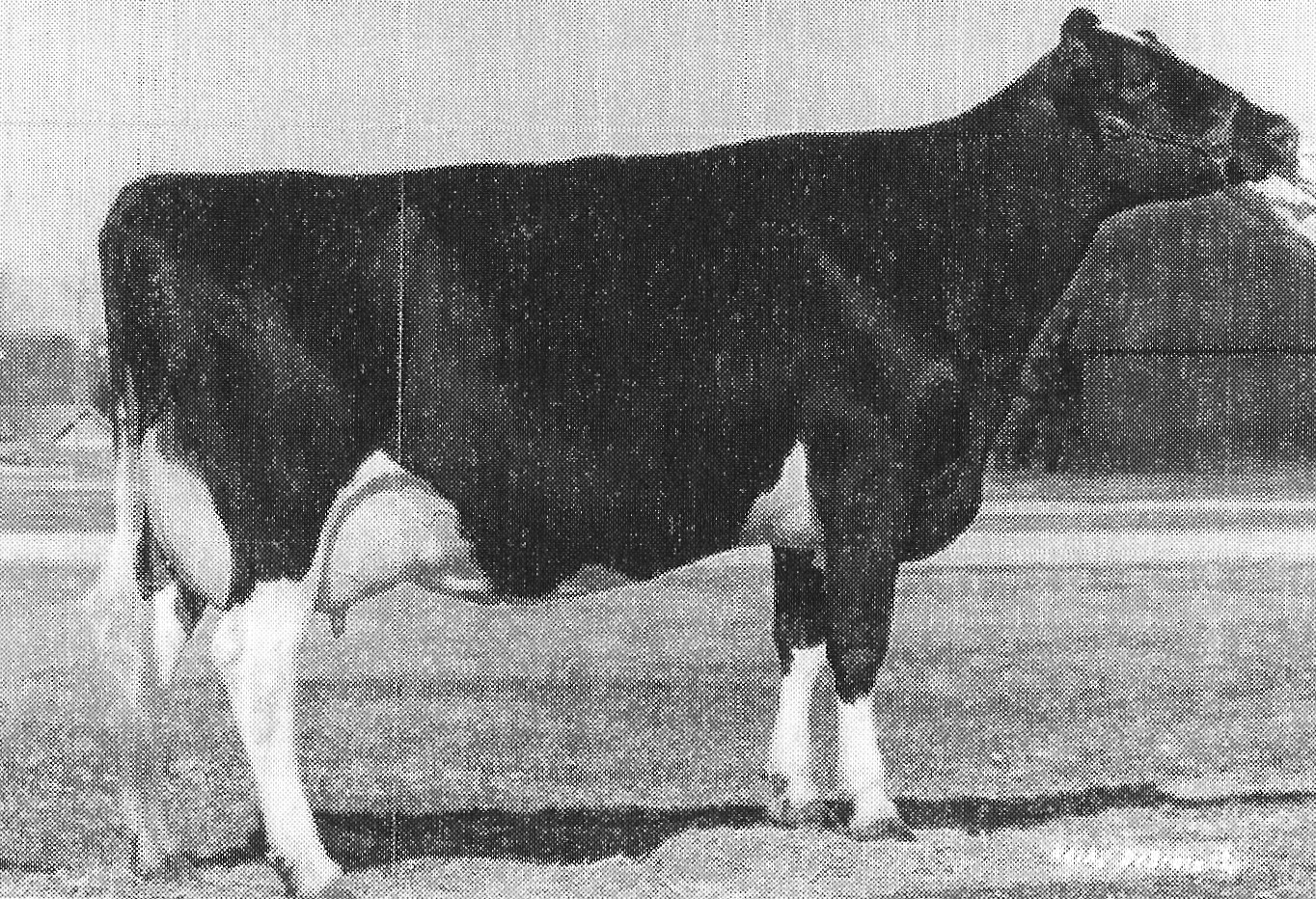
Her Blackstar daughter, Snow-N Dellias Darlene (EX-94-GMD-DOM—Gold Medal Dam and Dam of Merit, the era’s marks for a cow who both scored high and transmitted it, back when those letters were earned the hard way over a whole string of daughters), might have been the finest cow the Regans ever led—32,080 pounds at 4.1% fat and 3.6% protein as a two-year-old, and dam of Regancrest Jed Deborah (EX-95), a cow Frank Regan flat-out called one of the nicest you’d ever see. But they lost Darlene to a twisted caecum. Even in a story like this one, the dairy business exacts its toll.
The others kept climbing. Regancrest Tesk Della (EX-90-GMD-DOM) made 35,510 pounds as a mature cow and produced the Gold Medal bull Regancrest RBK Die-Hard. Regancrest Leadman Dolly (EX-90-GMD-DOM). Regancrest Starbk Denyse (EX-92-3E). One after another, the Dellia daughters stacked up records that’d be the pride of any herd—and then they threw sons that went to A.I. studs around the world.
What Made Dellia’s Sons — Durham, Dundee, Derry — So Valuable?
Here’s what really set Dellia apart from every other great brood cow of her time. The bulls.
Forty-four of her sons were sampled in A.I. Three of them earned Gold Medals. And those three—Regancrest Elton Durham, Regancrest Dundee, and Regancrest Emory Derry—didn’t just make the lineup. They redrew it.
Durham, by Emprise Bell Elton, was proven at Select Sires—the very stud that had once passed on his dam. His Durham daughters were the kind commercial men dream about: good-uddered, trouble-free, the sort that blend into a herd and keep milking. Tim Abbott of A.B.S. Global summed up the barn-floor verdict this way in the contemporary account: “People consistently say their Durham daughters are trouble-free cows… The milk volume is lower but the fact is they last a little longer and have a little more stable type pattern.”
Dundee, by Marcrest Encore, was proven by A.B.S./St. Jacobs in Canada and scored an eye-popping EX-95-ST. He was a full brother to Regancrest Encore Dahlia (VG-89) and Regancrest Encore Darel (EX-91-GMD-DOM). Between the two of them, Durham and Dundee stamped a generation of Holsteins on two continents.
Derry, by MJR Blackstar Emory, went to Select Sires. A third Gold Medal bull, from the same cow, by a third sire. Most breeders go a whole lifetime without producing one Gold Medal sire. Dellia produced three.
“Dellia’s impact through her daughters has sent more dollars back into farmers’ pockets across the world than any other cow.” — Scott Culbertson, then sire analyst at Select Sires, in the contemporary published account.
And it was the Durham daughters above all—their longevity, their trouble-free udders—that turned that impact into dollars in working herds.
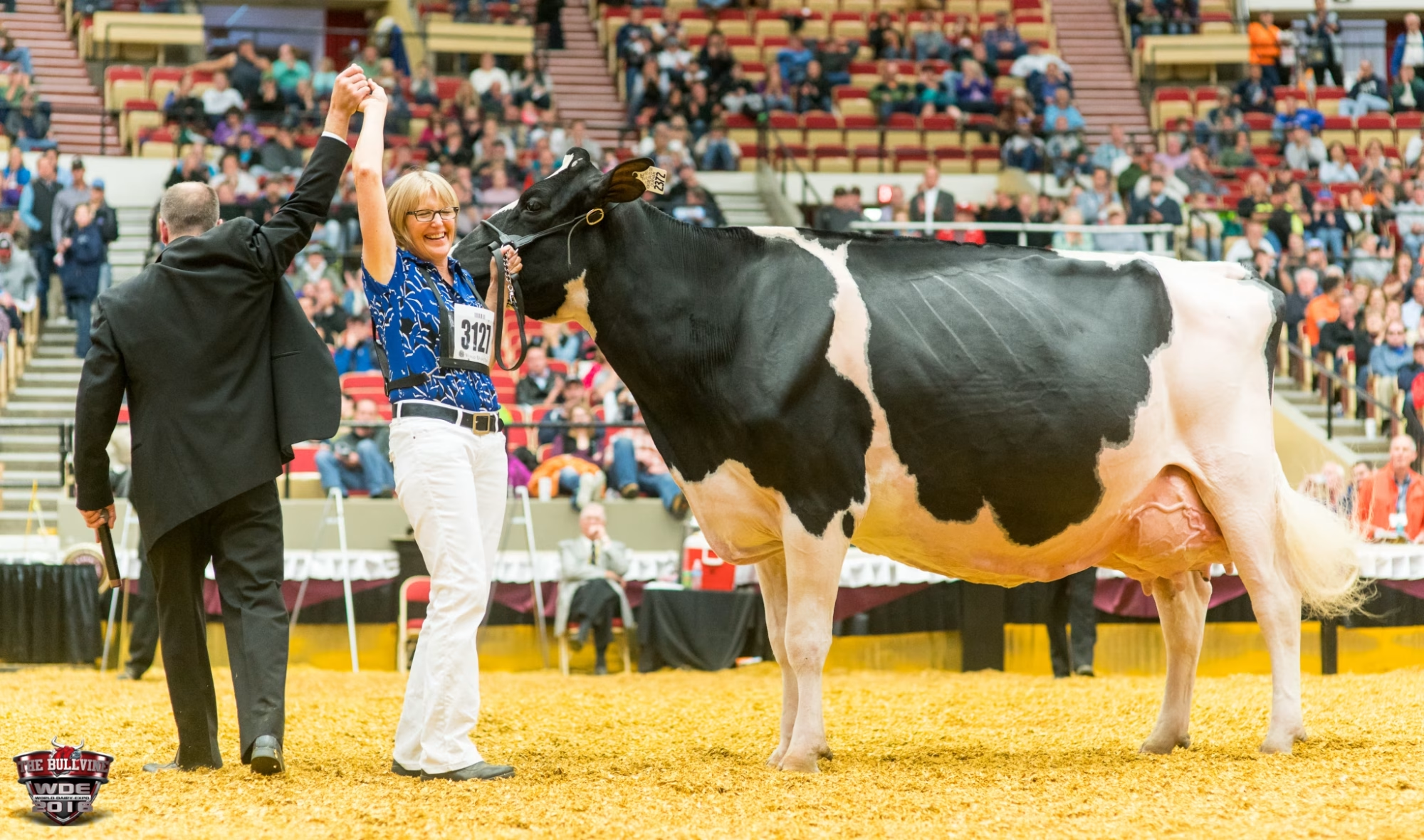
And here’s what makes her more than a history lesson. Dellia’s influence didn’t stop when the genomic era arrived. The traits her sons and Regancrest daughters carried—sound feet and legs, stable, trouble-free udders, the kind of durability that keeps a cow in the string for extra lactations—are exactly the functional traits breeders still chase on today’s proof sheets. Every time a Durham-descended cow freshens quiet and lasts, that’s the same maternal architecture Bob Snow built in the coulees, still doing its quiet work three decades on.
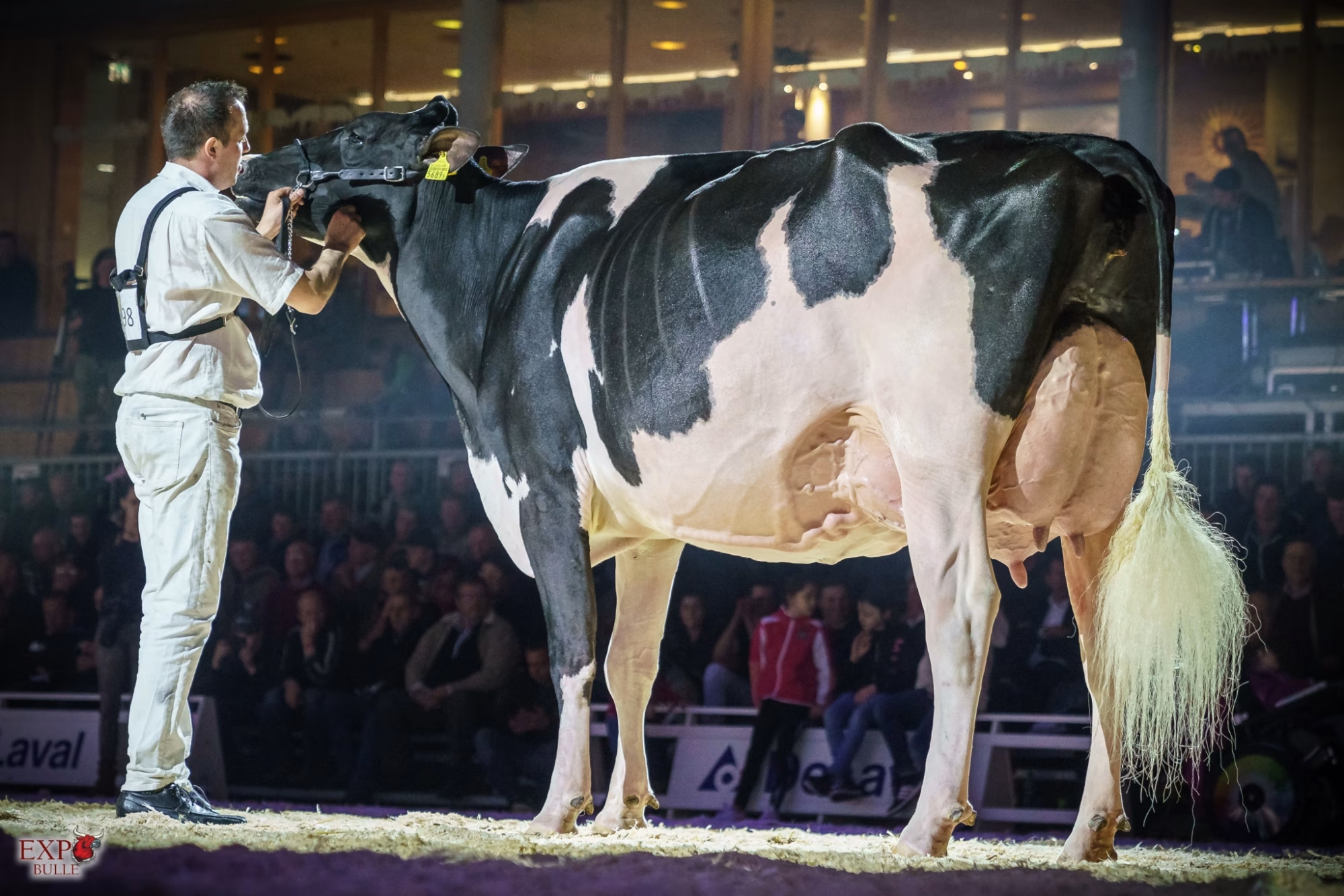
And the pipeline didn’t stop with those three. Erbacres Damion (EX-94-GM). Regancrest-HHF Mac (EX-92-GM), out of her Rudolph daughter. England-Ammon Million, a Comestar Outside son from Mac’s full sister. In the year she died, a look through the 2001 Red Book turned up six of Dellia’s sons and four grandsons already graduated into A.I., with more waiting on proofs.
Snow-N Denises Dellia — The Record
Final classification: EX-95-2E-GMD-DOM
Lifetime production: 180,240 lbs milk · 7,108 lbs fat (3.9%) · 5,723 lbs protein (3.2%)
Best lactation (6 yrs): 35,230 lbs milk at 4.0% fat
Registered daughters: 76, by 21 different sires
Sons sampled in A.I.: 44 — including three Gold Medal sires
Born: December 20, 1986 · Died: December 8, 2001
December 8, 2001
Snow-N Denises Dellia died on December 8, 2001. She was nearly fifteen years old.
The record above tells you what she did. What it can’t quite capture: even nearing fifteen, she still walked on a perfect set of feet and legs—the same sound frame that carried her through a decade of flushing and never once let her down.
It was never just that she had those traits. It’s that she handed them down, generation after generation—and that’s the thing that set her apart from every contemporary she ever stood beside.
In her obituary that ran in Holstein World following her death in December 2001, the Regans wrote: “We at Regancrest have been blessed by God to have had the opportunity to work with such a unique animal… Her legacy will live on not only through her offspring but in the lesson she taught to many—that the demand for high type plus production never goes away.”
What Dellia’s Story Means for Your Barn
Strip away the show trophies and the Gold Medal sons, and Dellia leaves working breeders three plain lessons—as true in your barn today as they were in Bob Snow’s:
- Breed for balance, not for the trait of the month. Snow’s patient pendulum—strength, then dairy, then strength—built a cow that transmitted. Look at your best cow’s whole mating history, not just her last score.
- Judge a cow by what she throws, not just what she scores. Dellia’s EX-95 was lovely. Her transmitting ability was priceless. Ask what your donor’s daughters actually look like in second lactation.
- Cull like you mean it—even out of your best. Regan shipped Dellia’s balloon-uddered daughters without a second thought.
And don’t ever let a fancy address decide for you. The best cow in your county might be standing in a 35-cow tie-stall right now, ignored by the big studs.
A Permanent Place
Here’s what a cow like Snow-N Denises Dellia teaches you about this breed, if you’re paying attention.
She didn’t come from money. She came from a sandy farm where the creek ran behind the barn, and a man won two straws of Bell at a meeting and used them wisely. She was bred by people whose names never rode the cover of a sale catalog, developed by a kid fresh out of high school who knew which bull to reach for, and sold to a man with the eye to see what she’d become. She stands today among one of the most consequential Holstein families the breed has ever known.
Durham. Dundee. Derry. Damion. Mac. Die-Hard. Read that roll call slow. Every one of those bulls traces to her. And every time a good-uddered Durham daughter freshens quiet in somebody’s parlor and goes to work, that’s Dellia—still milking, in a way, twenty-some years after they laid her to rest.
Snow-N Denises Dellia. EX-95-2E-GMD-DOM. Born December 20, 1986. Gone December 8, 2001. The black cow nobody wanted, who proved—for every breeder who ever looked at a plain barn and a plain pedigree and dared to see more—that greatness never did require a famous address. Just the right blood, the right hands, and the patience to let a good plan unfold.
So here’s the question worth chewing on tonight: who’s the unheralded cow standing in your barn right now—and are you breeding her the way Bob Snow bred Dellia?
Your turn. Did a “nobody” cow ever surprise you and build something real in your herd? Drop her name and her story in the comments—The Bullvine wants to hear about the next Dellia hiding in a tie-stall somewhere.
Key Takeaways
- The best brood cow in your county might be standing in a 35-cow tie-stall right now. Snow-N Denises Dellia was home-bred nothing-special on paper—and she threw three Gold Medal sons.
- Select Sires passed on her because her two-year-old milk didn’t clear their PTA-milk cutoff. A single number screened out a cow the eye would’ve kept. Watch what a formula alone might cost you.
- Judge a cow by what she transmits, not just what she scores. Dellia’s value showed up in 76 daughters and 44 sampled sons—transmitting ability the index couldn’t see at two years old.
- If you’ve got a cow the studs won’t sample but your gut won’t quit on, that’s the whole story here. Bob Snow flushed her anyway, and Durham, Dundee and Derry trace back to that call.
Continue the Story
- Hanoverhill Tony Rae: The Story of a Legend – Built in the very same era when rigid production indexes threatened visual masterworks, this profile captures another legendary cow family that defied corporate formulas through pure, functional maternal architecture.
- The 10 Greatest North American Holstein Brood Cows of All Time – Deepen your understanding of the fierce type-production debate that defined late-twentieth-century breeding circles, and see how Dellia’s transmitting ability earned her a permanent place alongside the absolute giants of the breed.
- Regancrest S Chassity – 2012 Golden Dam Contest Finalist – Discover how the genetic line from Bob Snow’s coulee farm carried forward into the high-stakes genomics era through Dellia’s direct descendant, proving that her legendary foundation of sound feet and udders held true across generations.
The Sunday Read Dairy Professionals Don’t Skip.

Every week, thousands of producers, breeders, and industry insiders open Bullvine Weekly for genetics insights, market shifts, and profit strategies they won’t find anywhere else. One email. Five minutes. Smarter decisions all week.