She walked into that 1981 sale ring with recently swollen hocks and a cooling crowd. Heffering paid $47,000 anyway. Four years later, half of her sold for $1.45 million.
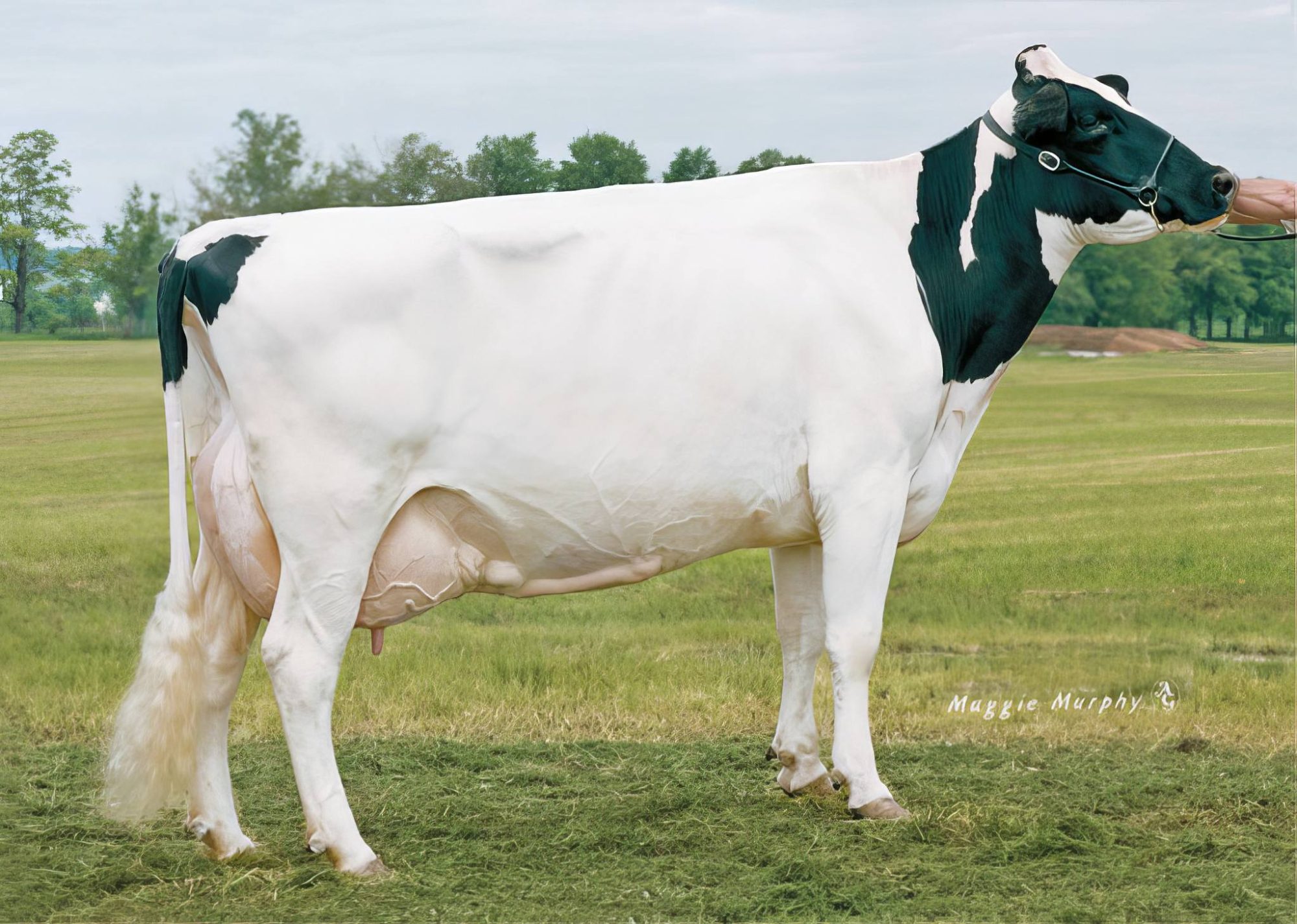
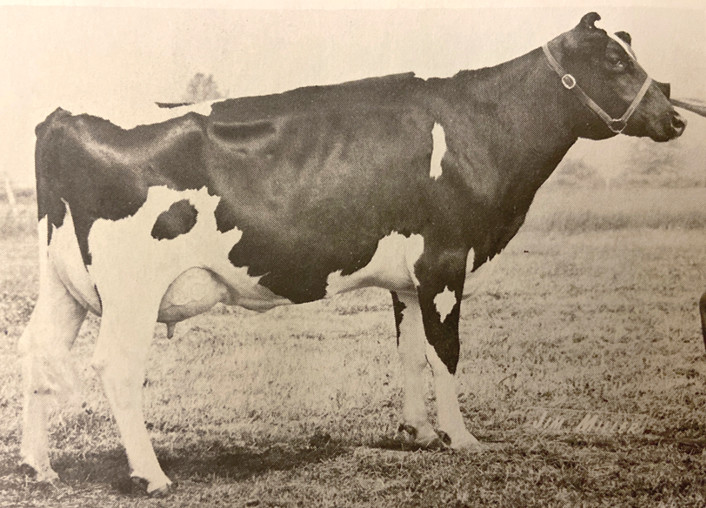
Brookview Tony Charity, EX‑97‑3E — the cow Bob Murphy called “probably the best one ever.” Not a freak of height, but a masterpiece of width: the depth of body, the high, wide rear udder, the quiet balance that made hardened judges run out of words. (Photo: Maggie Murphy)
The classifier went quiet.
Bob Murphy had spent the better part of his life crouched behind Holstein cows—running a hand down a topline, stepping back to read the set of a hock, studying the way an udder cleaved and carried. By his own reckoning, he’d put a score on something close to half a million head. A man who’s seen that many cows doesn’t rattle easily. He’s watched the great ones come and go. He knows that “perfect” is a word you save, because the day you spend it carelessly is the day it quits meaning anything.
It was the mid-1980s, in a barn at Hanover Hill Farm outside Port Perry, Ontario. The cow in front of him had already worn more banners than most herds win in a generation. Murphy walked around her. Walked around her again. Then he said the thing breeders still repeat, word for word, more than forty years on—that of the tiny handful of cows ever rated at 97 points, “she’s probably the best one ever,” with the most correct overall conformation of any cow he’d ever seen.
Think about that for a second. Not the best he’d seen that year. Not the best in the barn. The best he’d ever laid eyes on—and this was a man who’d seen damn near everything the breed had to offer.
Her name was Brookview Tony Charity. And here’s the thing most folks get backward: the score didn’t make her. By the time she settled at her famous mark of EX‑97‑3E, the number was just the paperwork catching up. When she was scored on the American system in June 1984, she became the 21st Holstein in the U.S. ever to reach Excellent‑97—the highest score their program had ever awarded. The truth had been spotted years earlier—in a cold sale ring, on a cow nobody else was quite sure about.
The Night Nobody Was Sure
Now, you’ve got to understand the era to understand the gamble.
This was the early 1980s—the golden age of the North American show cow. A great female could become a household name in dairy circles. The Royal Winter Fair and World Dairy Expo were cathedrals, and a Grand Champion banner could rewrite a farm’s future. Embryo transfer was still young enough to feel like wizardry; flushing a single great donor to a half-dozen elite sires was rewriting what one cow could be worth. The big Ontario and New York outfits were assembling the cow families that would shape the breed for decades. And the people doing the buying weren’t gambling on spreadsheets. They were gambling on the eye.
Charity was born on August 6, 1978, bred by John D. and Karl E. Havens at Brookview Farm in Fremont, Ohio. Look at how she was bred, and you’ll see why old-timers nod: she was a Kanza Matt Tony daughter out of Leaderwood Elevation Charmer—and that puts Round Oak Rag Apple Elevation, the most important type bull the breed has ever known, right there as her maternal grandsire. Here’s the bittersweet part: Charmer made nearly 19,160 pounds as a three-year-old and was shipped off to Japan in 1979. Charity was the only daughter she’d ever leave behind on this continent. Matt on Elevation. Bull-power married to the great type-transmitting foundation of the era. The blend that made her wasn’t an accident.
The dam who left only one. Leaderwood Elevation Charmer, VG — a Round Oak Rag Apple Elevation daughter who milked close to 19,160 pounds before she was sold to Japan in 1979. Study the frame and the udder: this is the Elevation strength and dairy quality that would come together one more time, in the white-marked heifer calf she left behind on this continent. Charmer gave the breed exactly one daughter here before she shipped out. That daughter was Charity.Where it all started. Leaderwood L Charmer Dora, born in 1970 — the matriarch standing behind Charity’s dam, and the foundation the whole family was built on. Look at the strength through her body and the quality of that udder for a cow of her era; this is the deep, durable Leaderwood type that Round Oak Rag Apple Elevation would later amplify into Charity herself. Greatness like Charity’s rarely comes from nowhere. Usually, it comes from a cow like this one — a generation or two back, doing the quiet work no banner ever records.
And here’s where the story damn near ended before it began.
By the fall of 1981, she came up for sale as a young cow—and she’d developed fluid in her hocks. Anyone who’s raised cattle knows that sinking feeling. Your best young cow, the one you’ve been bragging on at every coffee shop in the county, suddenly walking out stiff and swollen right when the whole world’s about to look at her. The swelling came down on its own out at pasture—slow, stubborn, on the cow’s own schedule. By sale day, she walked clean.
She didn’t start out as anybody’s sure thing. As a heifer in Ohio she was good, not great—first senior yearling and reserve junior champion at the Ohio District 9 Show, and that was the end of her early show honours. Roger Schug bought her as a bred heifer in 1980. Then, in March 1981, Albert Cormier of Cormdale Farms in Georgetown, Ontario, brought her across the border—the first Canadian chapter in a cow who’d become Canada’s most famous. (Read more: How Albert Cormier Rewrote the Rules of Global Holstein Business – and Made the Whole Industry Catch Up)
Under the Cormdale banner she had her one real humbling. At the Kitchener Championship Show, milking better than nine months, she placed tenth in the three-year-old class. Tenth. The cow who’d go on to never lose her class again, buried in the middle of a Kitchener lineup.
By that fall she was catalogued for the Designer Fashion Sale in Syracuse, New York, on November 21, 1981—and she’d developed fluid in her hocks..By sale day, she walked clean.
But word travels in this business. The buzz had cooled. A few of the buyers who’d circled her were looking elsewhere now.
Not Peter Heffering.
Heffering ran Hanover Hill with Ken Trevena, and he had the gift—the one you can’t teach, the one that separates the breeders we remember from the ones we don’t. He looked past the hocks. He saw the depth through her body, the spring of rib, that rear udder hanging high and wide like somebody had drawn it off the breed standard instead of off a living animal. He saw the way she stood—not nervous, not showing off, just there, filling the space with the kind of quiet authority great cows carry, and lesser ones never learn. (Read more: How Hanover Hill Holsteins Revolutionized the Dairy Breeding Industry)
Heffering didn’t buy her alone, and he didn’t buy her cheap-easy—he outlasted a syndicate of Ontario breeders headed by Ken Empey Jr., and a New York breeder, George Morgan of Tyrbach Farms, who wanted in too. In the end Heffering and Morgan took her in partnership for $47,000, and Charity went home to Port Perry. Two years later, when her brightest days were already showing, Hanover Hill bought out Morgan’s half for $250,000 U.S.
Read those two numbers back to back. Forty-seven thousand for the whole cow in 1981. A quarter-million for half of her by 1983. And we’re only getting started.
Looking back, what they paid would seem almost funny. We’ll get to why.
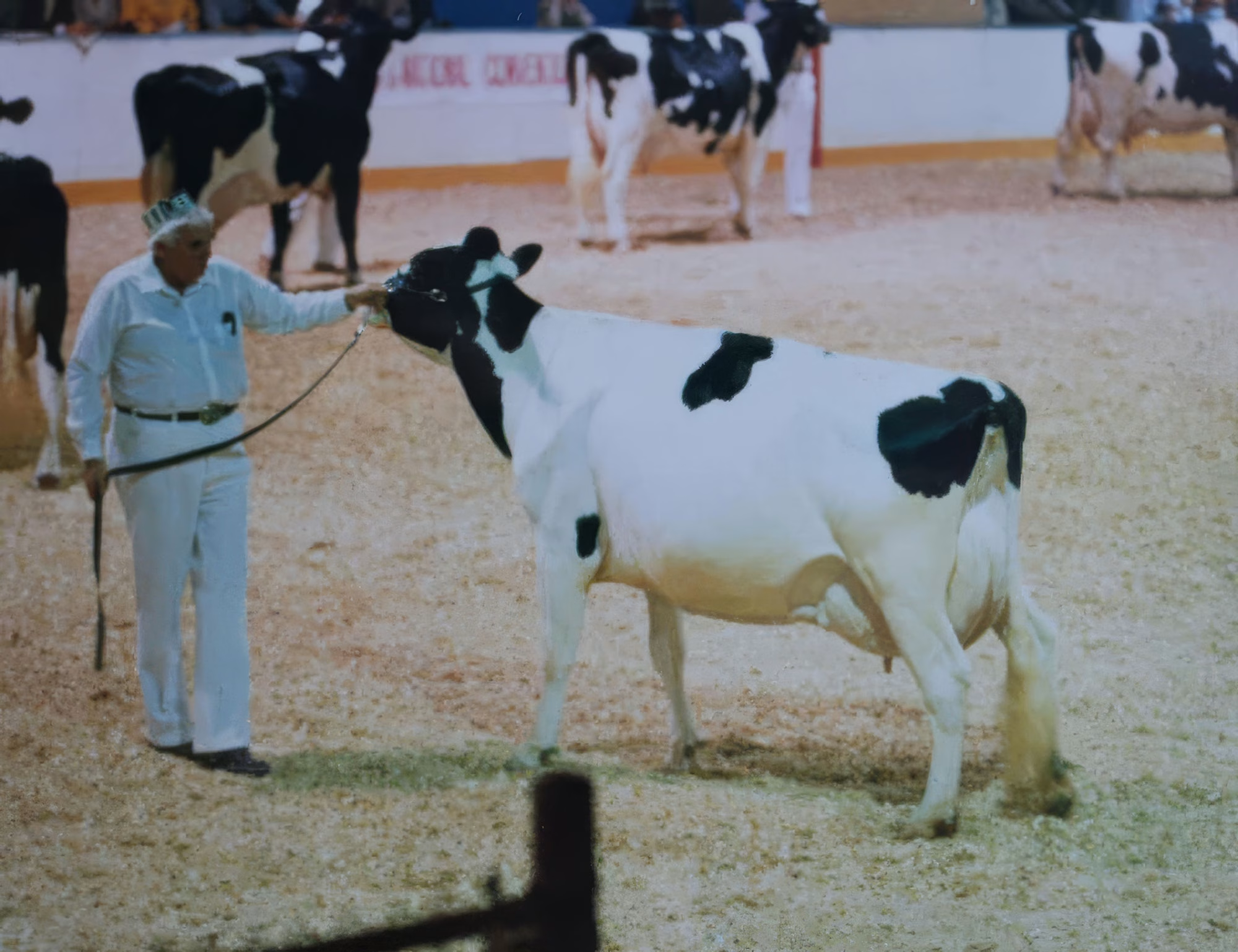
The eye that saw it: Peter Heffering leads Brookview Tony Charity out at the Ontario Spring Show, a ring of good cattle strung out behind her. This is the quiet authority he’d bought into when others backed away — a cow who didn’t fidget or grandstand, just walked to the front like the front was where she’d always stood.
What Made Breeders Drive All Night to See Her
She walked into the show ring in 1982. And here’s the line you’ll hear repeated wherever old show people gather: in her own class, she was never beaten. Not that year, not the next, not ever—across her whole career, the judge’s hand never came down on another cow in her class.
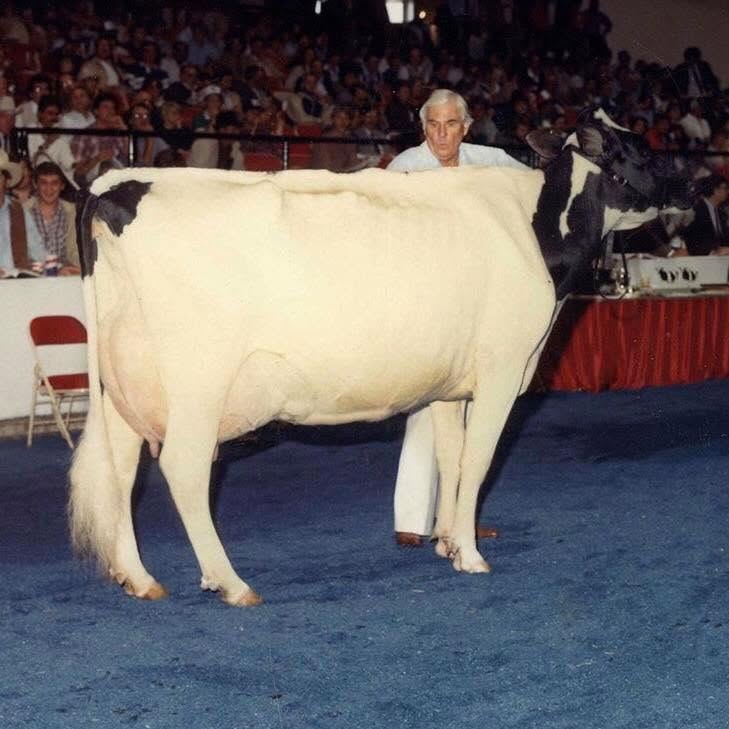
Look at the width — and look how small the man behind her seems. Brookview Tony Charity takes her second Supreme Champion at World Dairy Expo in 1984, Peter Heffering nearly swallowed up behind that barrel of a body. It’s remembered as the first time Expo crowned its Supreme on the colored shavings rather than the tanbark — a fitting stage, because there wasn’t a cow in the building who belonged on it more.
Let that settle, because in the show business, it borders on impossible. Everybody gets beaten eventually. The good ones get beaten by the great ones, and the great ones get beaten by youth, an off day, or a judge who saw it differently. Charity just… didn’t. Year after year, ring after ring, the placing came back the same.
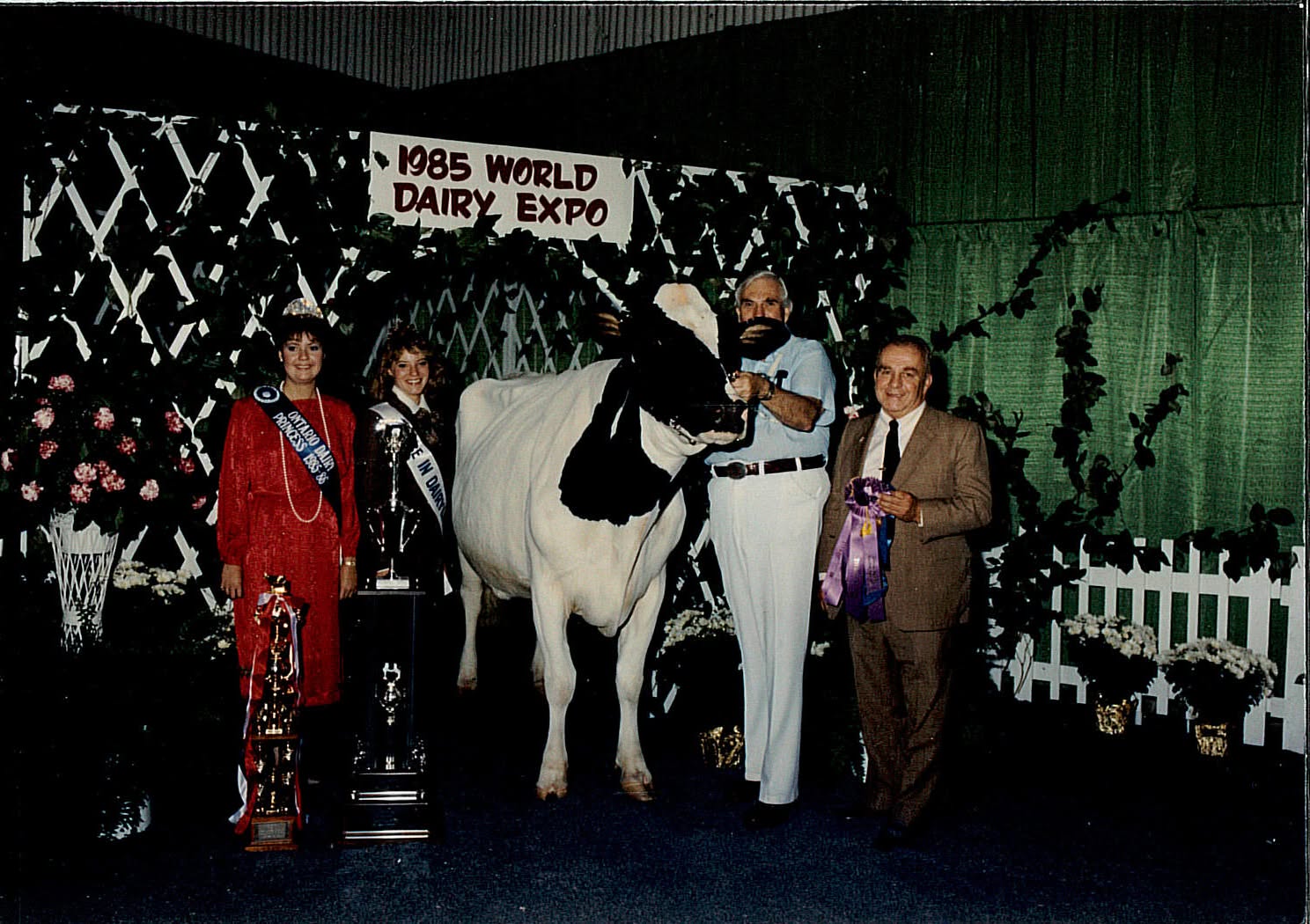
Supreme at Madison, 1985 — one of four. Peter Heffering steadies Brookview Tony Charity while Stephen Roman holds the purple rosette, flanked by the Ontario Dairy Princesses and a bank of silver. The banner behind them says World Dairy Expo; the cow in front of it said something louder. On this floor, against the best the continent could ship to Wisconsin, she simply didn’t get beaten in her class.
Read the ledger and try not to blink:
The Triple Crown (1982): Grand Champion at all three U.S. National Shows—Harrisburg in the East, Madison in the middle, Fresno out West—in a single calendar year.
The Royal Dominion: Grand Champion at the Royal Agricultural Winter Fair four times—1983, 1984, 1985, and 1987—the first Holstein ever to do it.
World Dairy Expo: Supreme Champion honours four times on the tanbark at Madison.
The full reckoning: Six superior production awards and a string of All-American and All-Canadian nominations, a résumé few cows in history can touch.
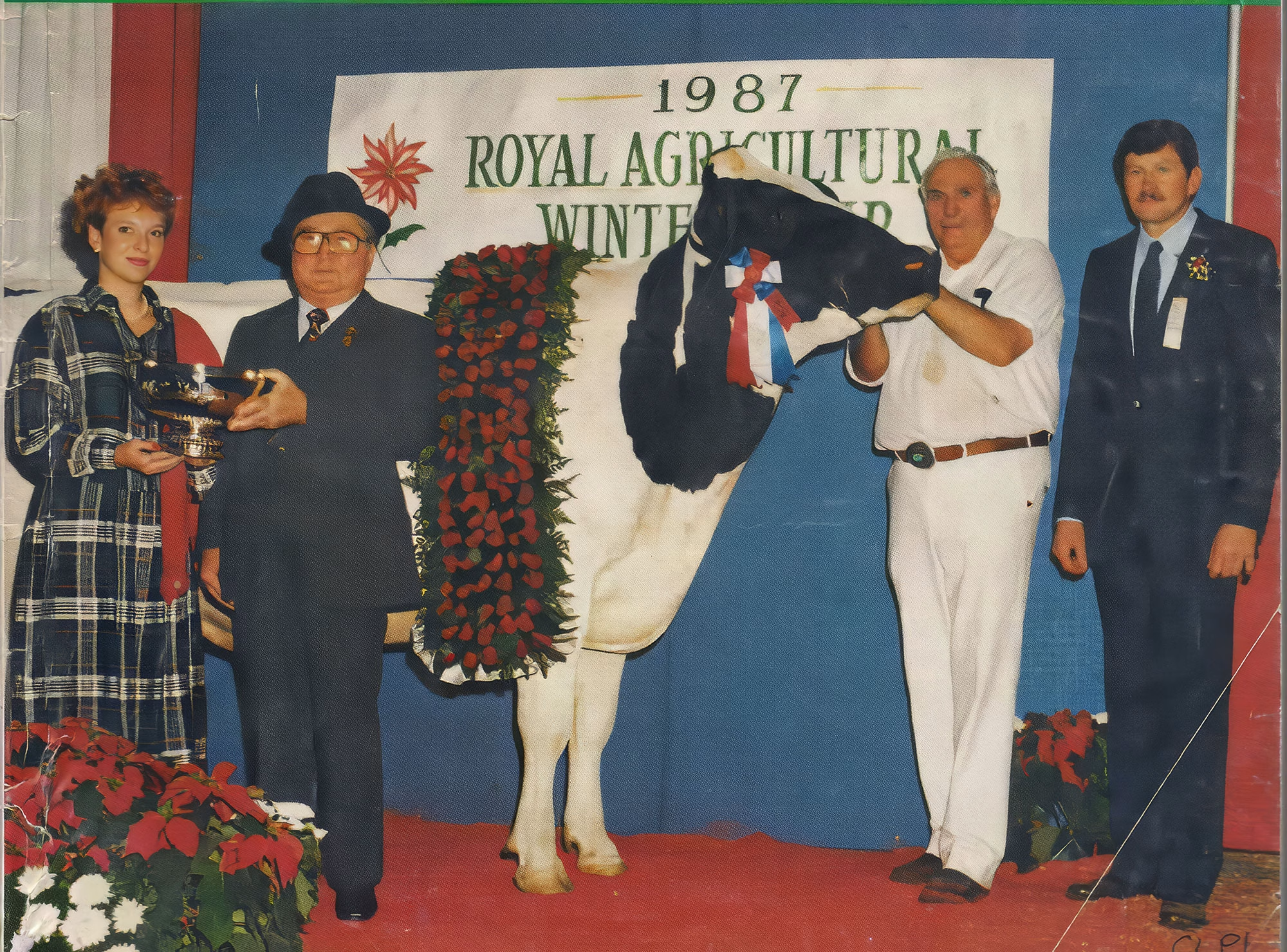
The fourth one — the one that made history. Brookview Tony Charity stands Grand Champion at the 1987 Royal Agricultural Winter Fair under Judge Jeff Nurse, draped in roses, with Peter Heffering on the halter and Stephen Roman (in the hat) accepting the trophy. No Holstein had ever won the Royal four times. When the rosette went on that November, no one ever had to wonder again.
And lest anyone think she was all ribbon and no milk pail: at five years old, she pumped out 39,015 pounds of milk at 3.6%, with 1,422 pounds of fat, milking 3X over 365 days—a record that earned her the Erle Kitchen production trophy, putting her among the most productive cows in the world in the 1980s. Show banners and a milk record like that, in the same animal. That’s the part that ought to stop a working breeder cold.
Now, about that “never beaten” business—there’s one honest asterisk, and it’s worth telling straight, because it makes the record more impressive, not less. One cow in history topped Brookview Tony Charity: Continental Scarlet-Red. But read how it happened. Charity was a four-year-old that day; Scarlet was a five-year-old. They never met in the same class. They met only at the Grand Champion drive—the final walk, where age and class fall away, and the best of everything stands together—and there, Scarlet took Grand with Charity standing Reserve. So the in-class record holds, clean and untouched. The only cow ever to beat her had to wait until the very last walk of the show to do it, across an age line, with everything on the line. That’s how close to flawless she really was.
Picture the kind of evening that made her a legend. The Royal Coliseum in Toronto—banks of seats packed in tight, the ring lights burning white against a black November evening outside. The smell of clipped hair and cedar shavings, and that low electric hum a crowd gives off when a great class is grinding toward its finish. Charity led them in. And when the judge made his walk, the hand came down where it always came down—on her.
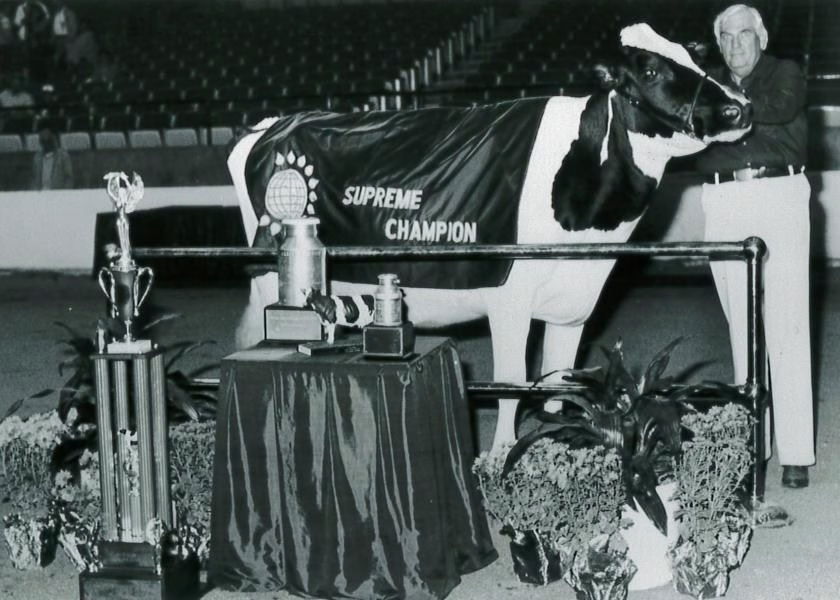
Supreme Champion, World Dairy Expo — a banner Brookview Tony Charity carried out of Madison four times. The trophies bank at her feet; the seats behind her have emptied. And the cow herself stands the way she always did when the noise died down: calm, square, and done arguing the point.
That’s how you measure a legend, by the way. Not just by the banners she carried. By how rarely, and how narrowly, anybody got close enough to take one from her.
So what made breeders load the truck and drive half the night to stand in front of one cow? Listen to the men who judged her. At Madison, Fred Foreman put it plainly: “When a cow has milked for nearly 14 months we have no trouble starting the class with her and naming her grand champion of the show.” Lowell Lindsay called her flat out “the greatest cow of the breed I’ve seen.” And Loren Elsass said her form would “make her the standard of comparison for a long time.” These weren’t soft men. They didn’t hand out words like that. They just couldn’t find a way around her.
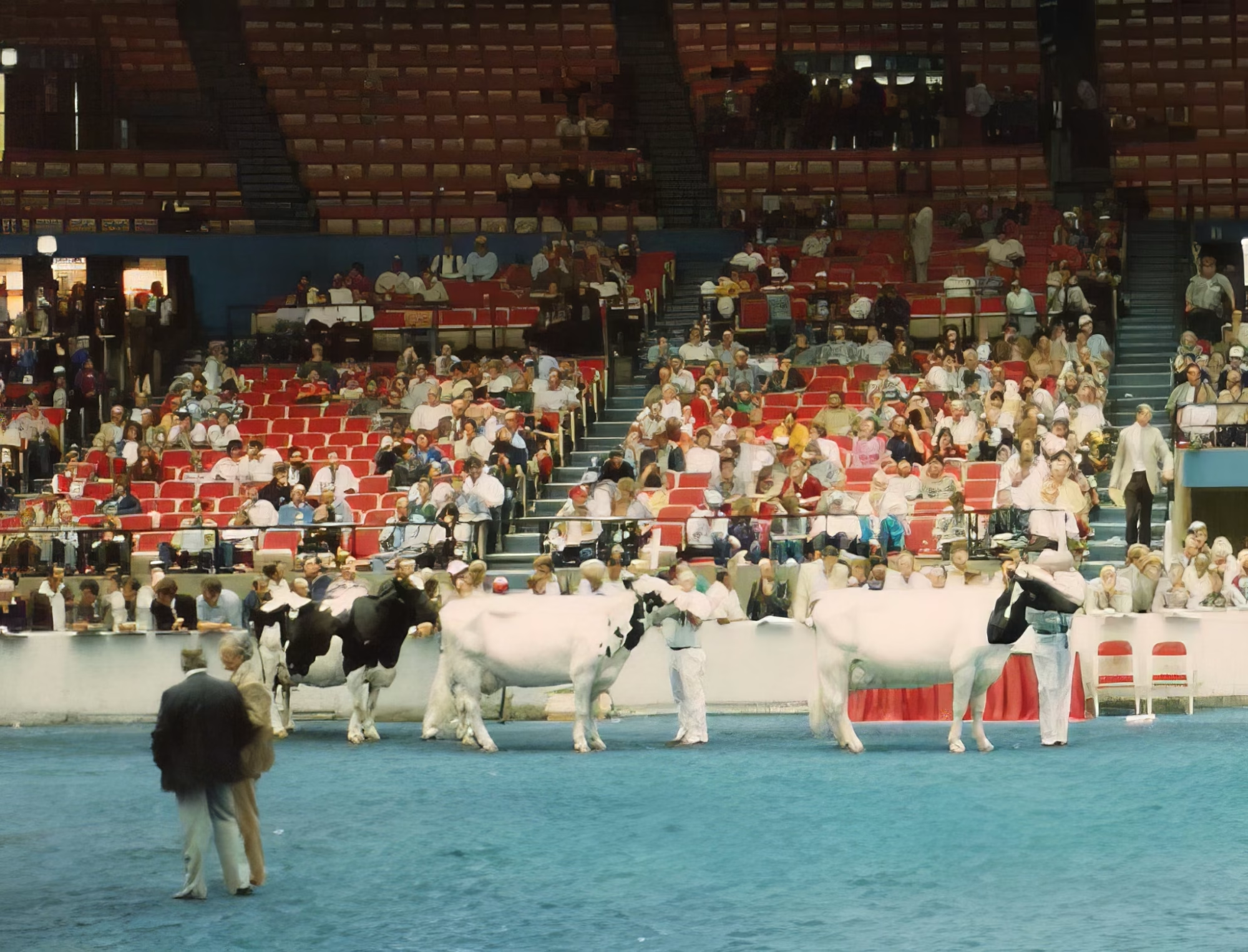
The cathedral she filled: Peter Heffering and Brookview Tony Charity in the lineup at World Dairy Expo, the great class strung across the colored shavings under the Coliseum tiers. This was the room breeders drove all night to reach — and the cow at the end of the strap was the reason the seats stayed full long after the easy classes had emptied them.
The Year She Almost Didn’t Come Back
Here’s the part the show programs never printed.
In 1983 it nearly all ended. A reaction to some of the antibiotics she’d been given cost her her appetite and her strength, and for a stretch of dark days the breed’s living definition of perfection was just a sick animal in a stall. Ken Trevena and Willis Conard practically lived with her through it—not the cow on the magazine cover, just a cow who needed them.
And that ought to stop us, because it’s easy—too easy—to talk about a legend like Charity as if she were a trophy on a shelf instead of a living thing that bled and breathed and could be lost. Anybody who’s ever had a great one knows the truth of it. Great cows aren’t made in the ring. They’re made in the dark mornings and the long nights. In the watching. In the worrying. In that flood of relief when she finally stands, eats, and walks back to being herself.
She came back.
Not just survived—came back to the ring and kept right on winning. And the breeders watching took note, because that kind of resilience isn’t a footnote to them. It’s a trait. The deep, stubborn constitution to take a hard knock and still throw strength to the next generation—you can’t pin a banner on it, but you can build a cow family on it. They would.
There’s one more decision tucked in here that tells you everything about how Hanover Hill saw her. With Charity still capable of winning anywhere they pointed her, they pulled her off the show string for a stretch and put her on an intensive embryo program instead. Sit with that for a moment. The most undefeated cow in the breed, standing home in the barn while lesser cattle paraded for banners she’d have won at a walk. It was the right call, and it was a brutal one—the kind most people can’t make even when they know in their gut they should.
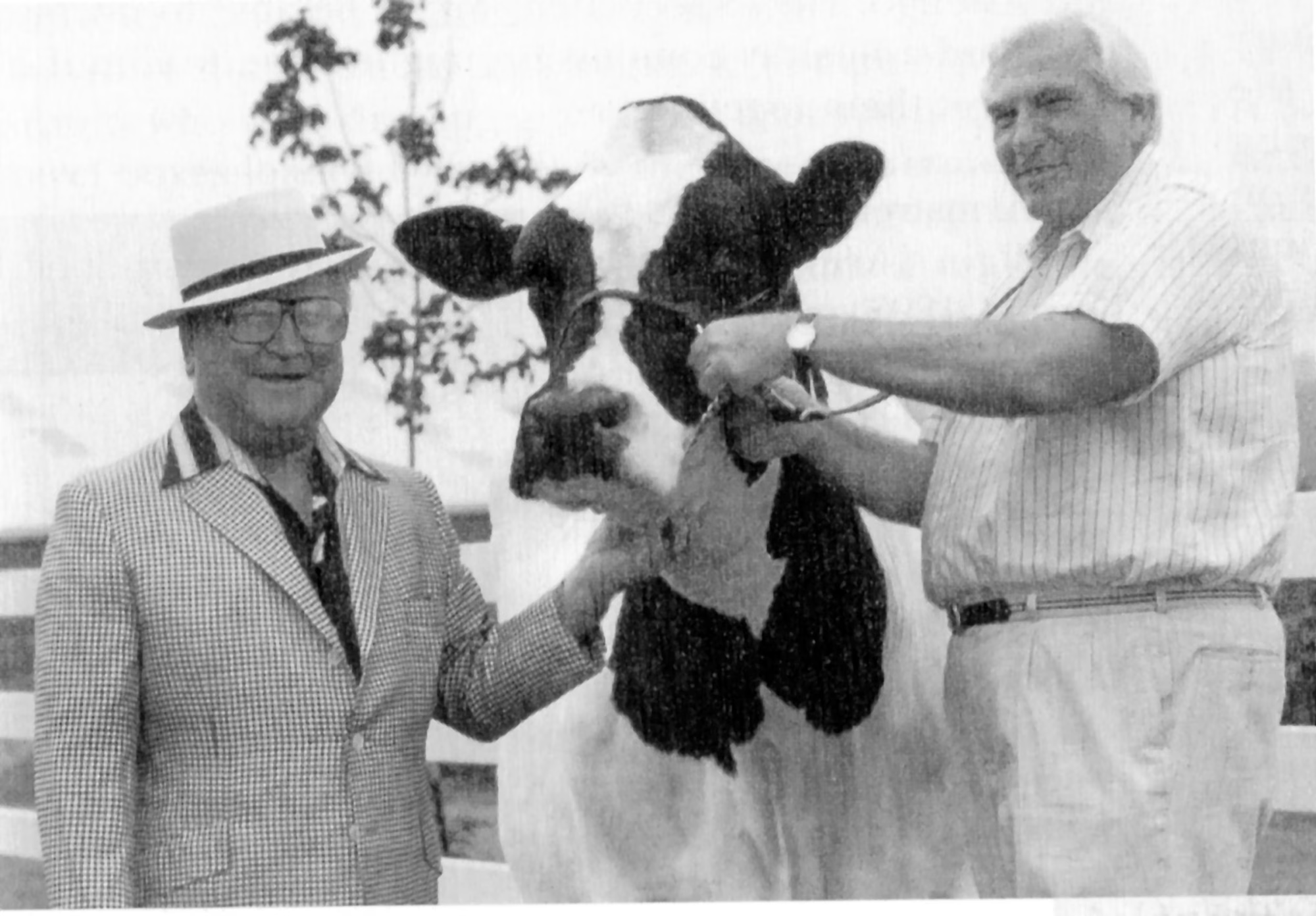
Two bets, one cow. Stephen B. Roman (right), the uranium magnate whose Romandale Farms paid a record $1.45 million for half of her, and Peter Heffering (left) of Hanover Hill, the cattleman who’d staked $47,000 on a swollen-hocked unknown four years earlier — flanking Brookview Tony Charity, EX‑97. Whatever Bay Street thought she was worth, these two had their hands on the halter.
The Financial Shockwave
We said we’d get back to what she cost. Here’s why it matters.
July 15, 1985. The Hanover Hill Dispersal, Port Perry. Some 2,500 people had come from Canada, the United States, England, South and Central America—and about an hour into the second day, the cow they’d all really come for walked in. When Heffering led Charity into that sale ring, the “king and queen of the dairy world” were met with a standing ovation. Auctioneer Bob Shore opened the bidding at $50,000—and it climbed from there until a Canadian record fell. When it was over, Stephen B. Roman’s Romandale Farms had half of her for $1,450,000, outlasting a syndicate headed by Richard Witter of Taurus Service—the bidding handled, remarkably, by Witter’s 14-year-old son, John.
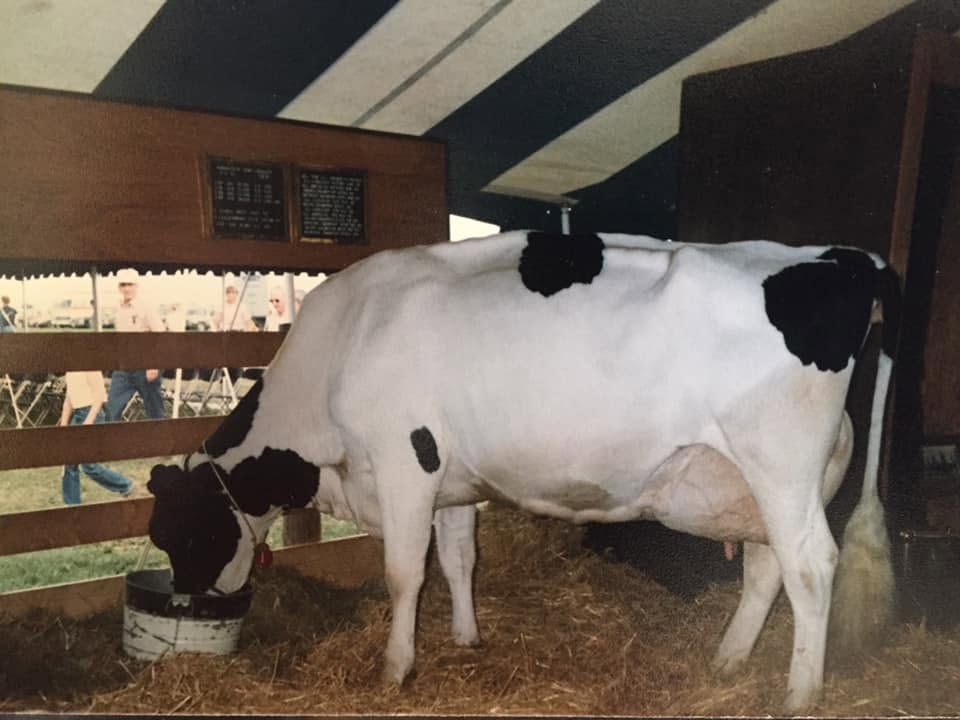
A million-dollar cow, eating her hay. Brookview Tony Charity in her pen at the 1985 Hanover Hill Dispersal, her records tacked to the board behind her, a couple of onlookers studying her through the rail. An hour later she’d walk into the ring to a standing ovation and a Canadian-record bid. Right here, though, she’s just a cow with her head in a bucket — which is exactly what the best of them never forget how to be.
When a single cow walks the road from a sale-barn purchase to an international financial instrument, you’re not watching the dairy world anymore. […] Lay it out, and the line tells its own story:
Year
Financial Event
Value
1981
Purchased by Hanover Hill (Heffering & Trevena) at the Designer Fashion Sale
$47,000
1985
Stephen B. Roman’s Romandale Farms buys a 50% share, July 15
$1,450,000 (CAD), a record
1986
Bay Street limited partnership built on frozen semen from six of her ET sons
$3,500,000
Read that 1986 line again. Stockbrokers in a Toronto financial district, writing up share offerings on the genetics of a cow bred in Fremont, Ohio. The breed had spent a hundred years putting prices on bulls. Now the suits were trying to turn perfection herself into stock certificates.
But none of that—not the million-four, not the three-and-a-half—is really the heart of this. It’s just the world admitting, late and loud, what one cattleman had seen quietly in a sale ring with his own two eyes, years before the rest of them caught on.
The People Who Loved Her
A cow like Charity belongs to history now. But she was never alone in it, and the people around her are half the reason the story still lands the way it does.
The Havens family bred her in Ohio. Heffering saw her when others blinked. Roman backed her with a fortune. And through all the championship years at Hanover Hill, it was Ken Trevena who knew her best—not the cow on the magazine cover, but the cow in the stall at five in the morning. (Read more: THE ROMANDALE REVOLUTION: How a Uranium Billionaire & Cow Sense Conquered the Holstein World)
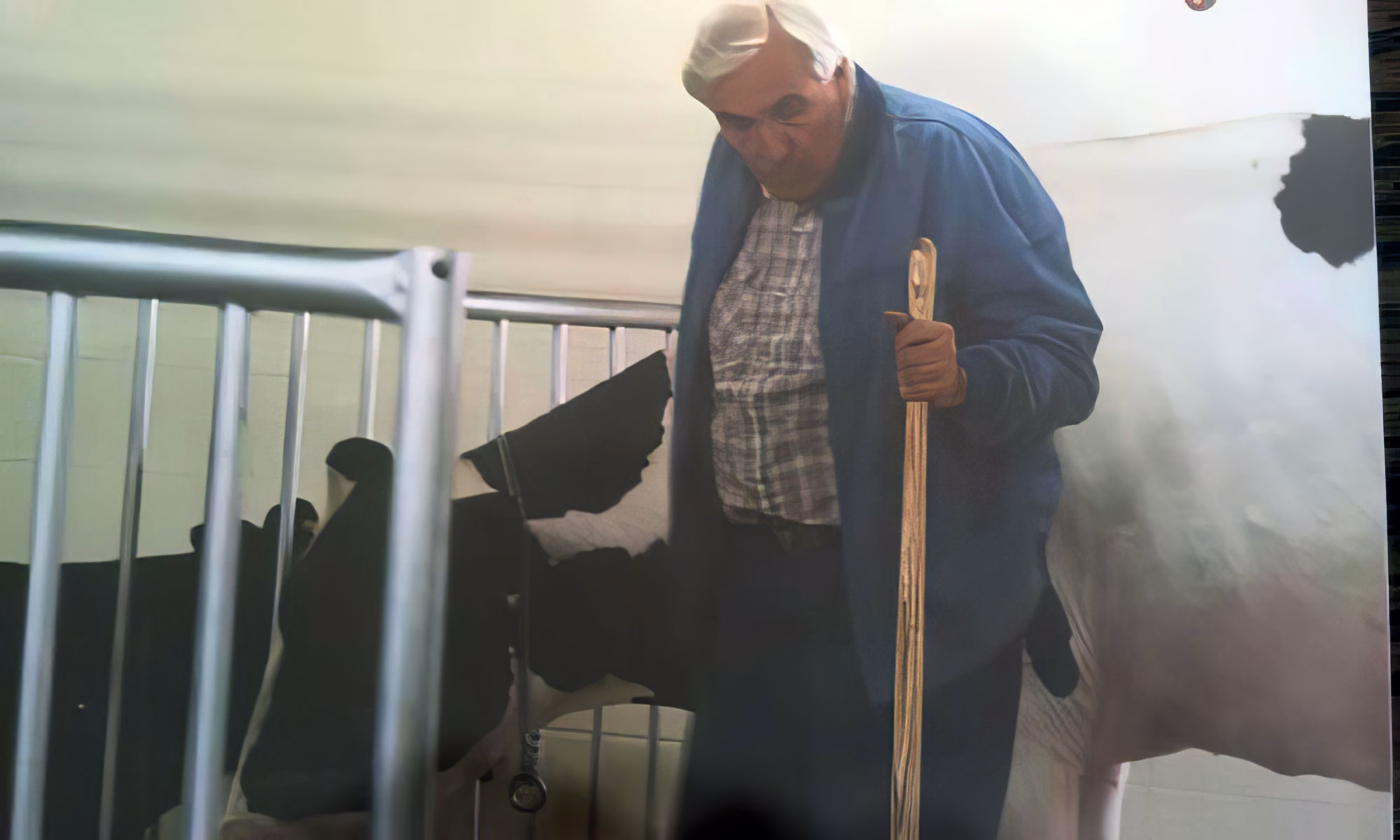
Away from the tanbark: a quiet morning in the barn at Port Perry, the great cow in her stall and the man who knew her best leaning in to check her over, fork in hand. This is where legends are actually made — not under the lights, but here, in the early quiet, with someone who cared enough to look twice before the day began.
He’s the one who saw the mornings. The feed bunk. The udder filling. The way she handled the trailer, the noise, and the strange barns, and settled in anyway. By every account, she was level-headed—all business, no foolishness, a cow who went about being great without a lick of drama. The kind you could trust at the halter, the kind that never made you nervous walking into a ring full of people.
What none of them knew, in those good years, was how little time was left.
A Photo From a Barnyard, Forty Years On
Here’s something that happened while we were writing this.
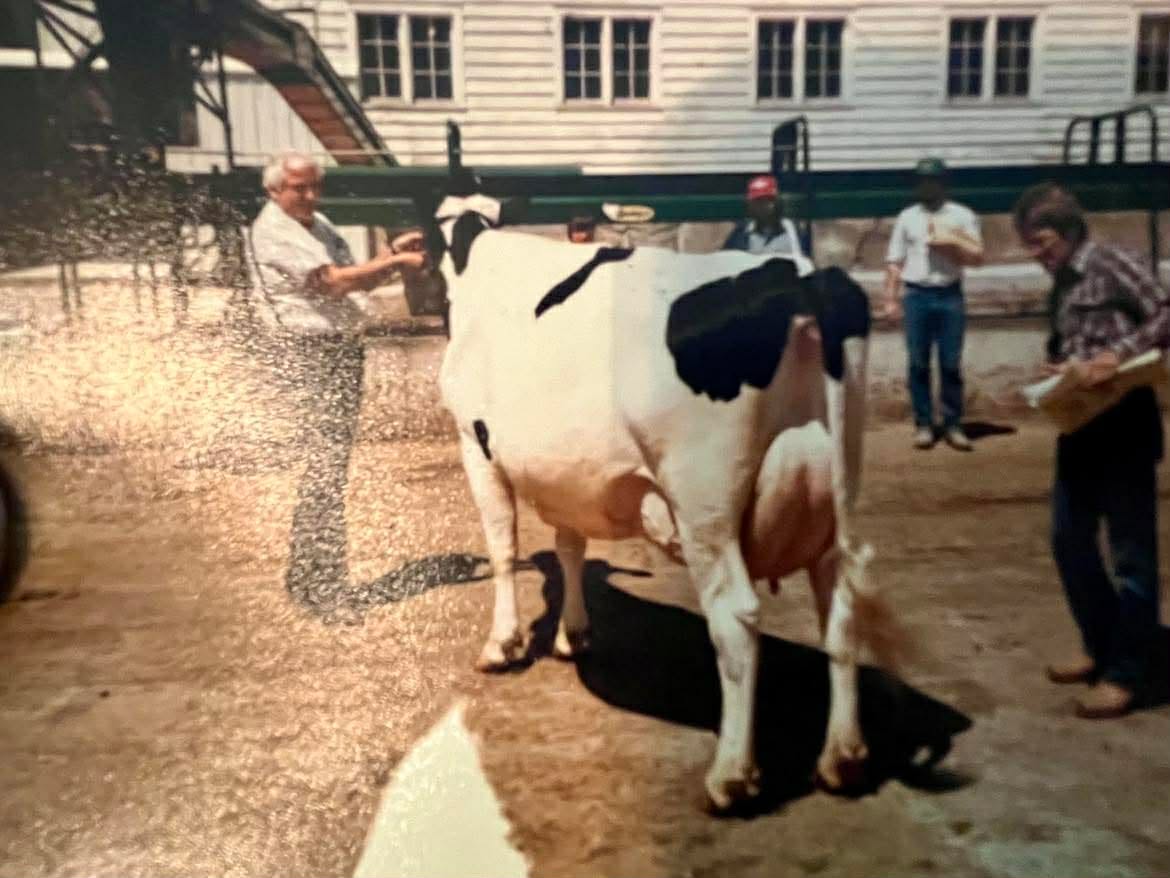
When this story first ran, a reader named Cyrus Conard picked it up and recognized a family name in it: Willis Conard, one of the two men who’d nursed Charity through the 1983 illness that nearly took her. Willis was Cyrus’s uncle — brother to his father, Wayne, who himself spent years connected to Hanover Hill. When Wayne passed away last year, the family found this photograph among his things — Charity being classified right there in the Hanover Hill barnyard, the wash water still flecking the air, the classifier working his card at the edge of the frame. By family account, it’s the day she scored the 97.
Think about what that means. The most documented cow of her generation, and the truest picture of her highest moment sat in a family’s keeping for forty years — not in an archive, not on a magazine cover, but with the people who’d been close enough to the cow to be part of her story. That’s where greatness actually lives. Not in the record book. In the family that kept the photo
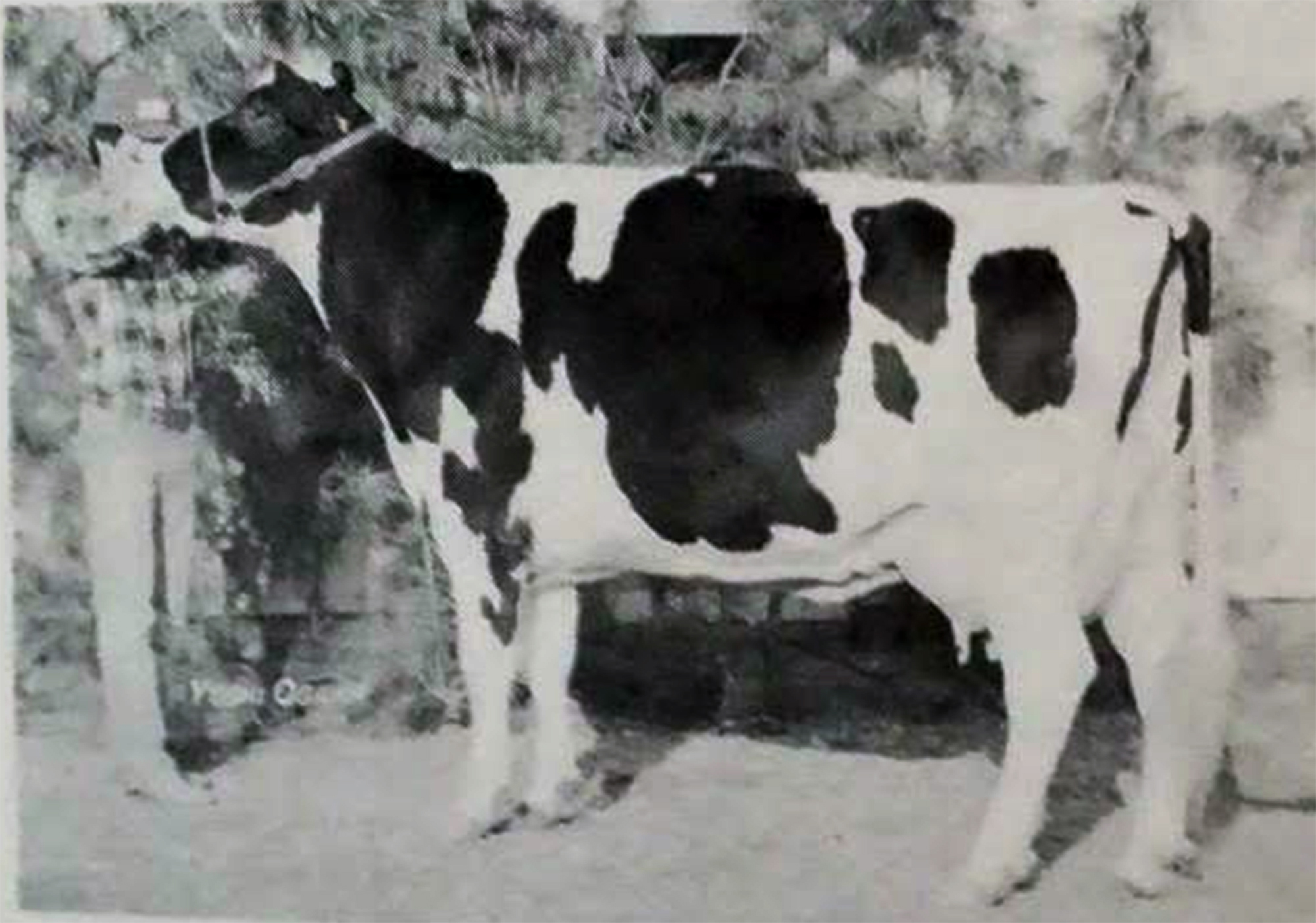
The moment the number happened. Brookview Tony Charity is classified in the Hanover Hill barnyard — wash water still in the air, the classifier’s card already filling in at right. By the family’s account, this is the day she scored EX‑97. The photograph was kept for forty years by the Conard family — relatives of Willis Conard, the Hanover Hill stockman who helped nurse her through her darkest week — and surfaced only when Wayne Conard’s son found it after his father’s passing. Courtesy of the Conard family.
Twilight
She died on August 10, 1988, at Hanover Hill Farm in Port Perry. She was ten years old. Cancer.
Ten. Think about that—a cow who’d won the breed’s biggest banners four times over, whose genetics got underwritten on Bay Street, gone before she’d reached an age plenty of ordinary cows pass without anyone marking the day. There’s a particular ache in that for anybody who’s lost a good one too soon. All that public glory, the headlines and the seven-figure prices, and it ended in the most private way there is: an empty place in a barn where greatness used to stand, and a man who’d cared for her for most of her life left to find the words.
Trevena buried her right there on the farm, marked by a rock and a plaque on the idyllic Hanover Hill ground in Port Perry.
Incredible Perfection—that’s what they called her, and you could write a whole book around those two words and not improve on them. That’s not ad copy. That’s grief, trying its level best to be precise.
Where She Lives Now
Here’s the thing about a truly great brood cow, though. The finest monument to her was never going to be a plaque on a fence post. It was always going to be a daughter who makes you stop mid-stride and look twice—and then a granddaughter, and then a great-granddaughter you stumble onto three generations down a pedigree when you weren’t even hunting for her.
Now, Wikipedia will tell you her genetic history was “unremarkable” and that none of her offspring matched her own show-ring heights. And on the banner count, that’s fair. But walk the maternal line out forty years and tell me it didn’t matter.
Over in the Netherlands, Charity 504 EX‑94 stood Grand Champion at the National NRM Show back in 2004, carrying the line into a fresh generation of European admiration. In 2022, Het Uilenreef Charity 16 was named Grand Champion at the Neppelenbroek Holstein Show—another branch, still wearing the name like it means something, because it does. That same year in Austria, Jomargo Goldendreams Cheyenne‑RC took Grand Champion at the Austrian Dairy Grand Prix, tracing right back to Charity through the European family. And in Wisconsin, Sellcrest D Cheeto‑Red carried the old blood back toward the coloured shavings at Madison—her owner, Trish Brown, admitting she hadn’t even realized how remarkable Charity’s legacy was when she first bought the cow.
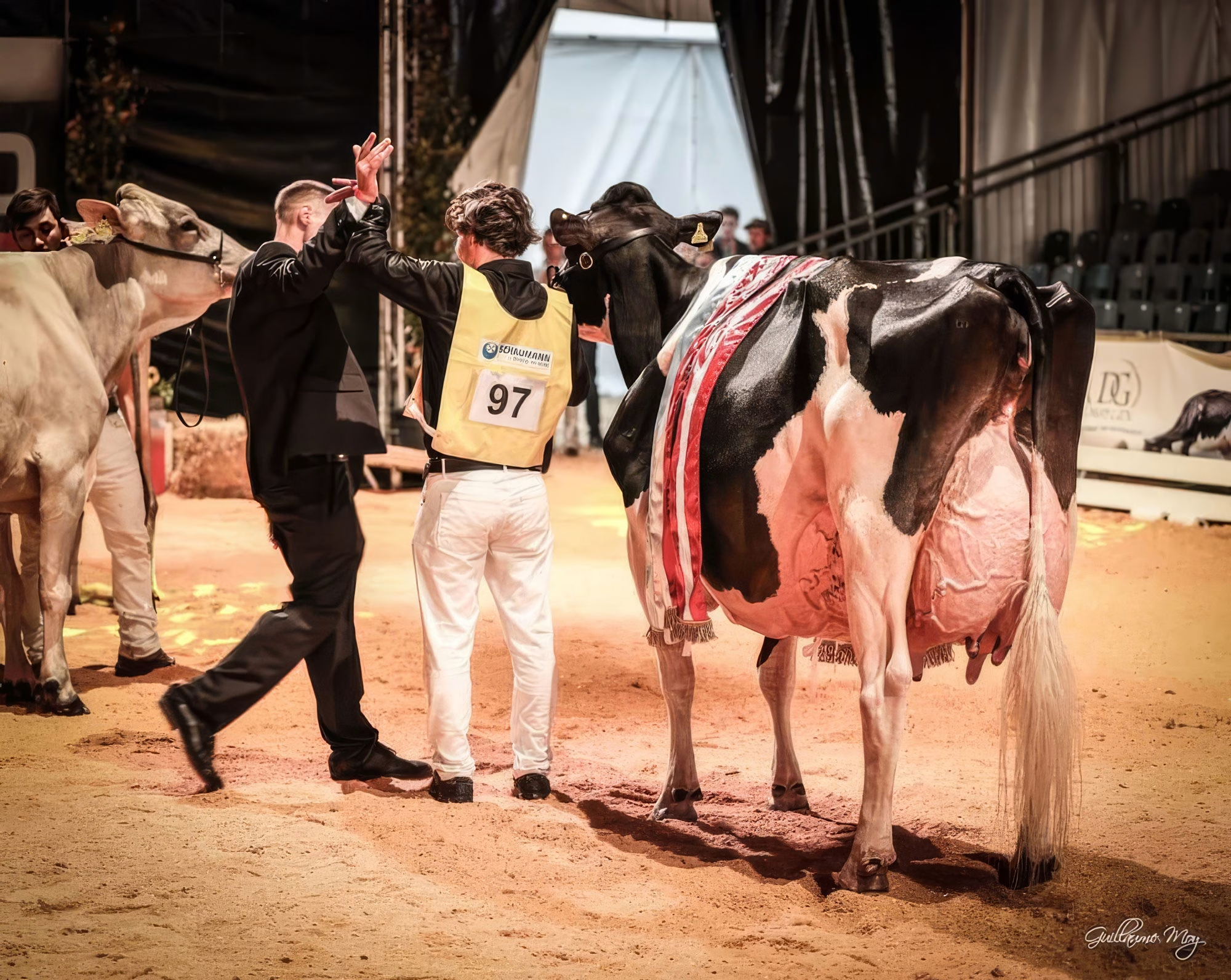
Forty years later, the line still wins. Jomargo Goldendreams Cheyenne‑RC, EX‑90, is mobbed with a high-five the moment she’s named 2022 Grand Champion at the Austrian Dairy Grand Prix for Bernard Unterhofer in South Tyrol — banner on her back, udder swung full. Trace her sires back — Golden Dreams on a Texas‑Red, a Kite‑RC, a Rubens‑RC — and the line runs straight home to Brookview Tony Charity. Look closely at the handler’s number, too: 97. Some things a pedigree doesn’t have to explain.
That’s what a real cow family does. It outruns the people who started it. It crosses oceans and languages and housing systems and forty years of shifting type fashion.
And here’s a word for the present, while we’re at it. Modern Holstein breeding often chases extreme stature—taller, sharper, more. Old-school breeders remember Charity differently. She wasn’t a freak of height. She was a masterpiece of width—chest width, body depth, dairy strength, the whole package in balance. Complete cows age better in pedigrees than flashy ones ever will. Every time a breeder today picks balance and longevity over the freak of the moment, they’re chasing something Charity already had figured out.
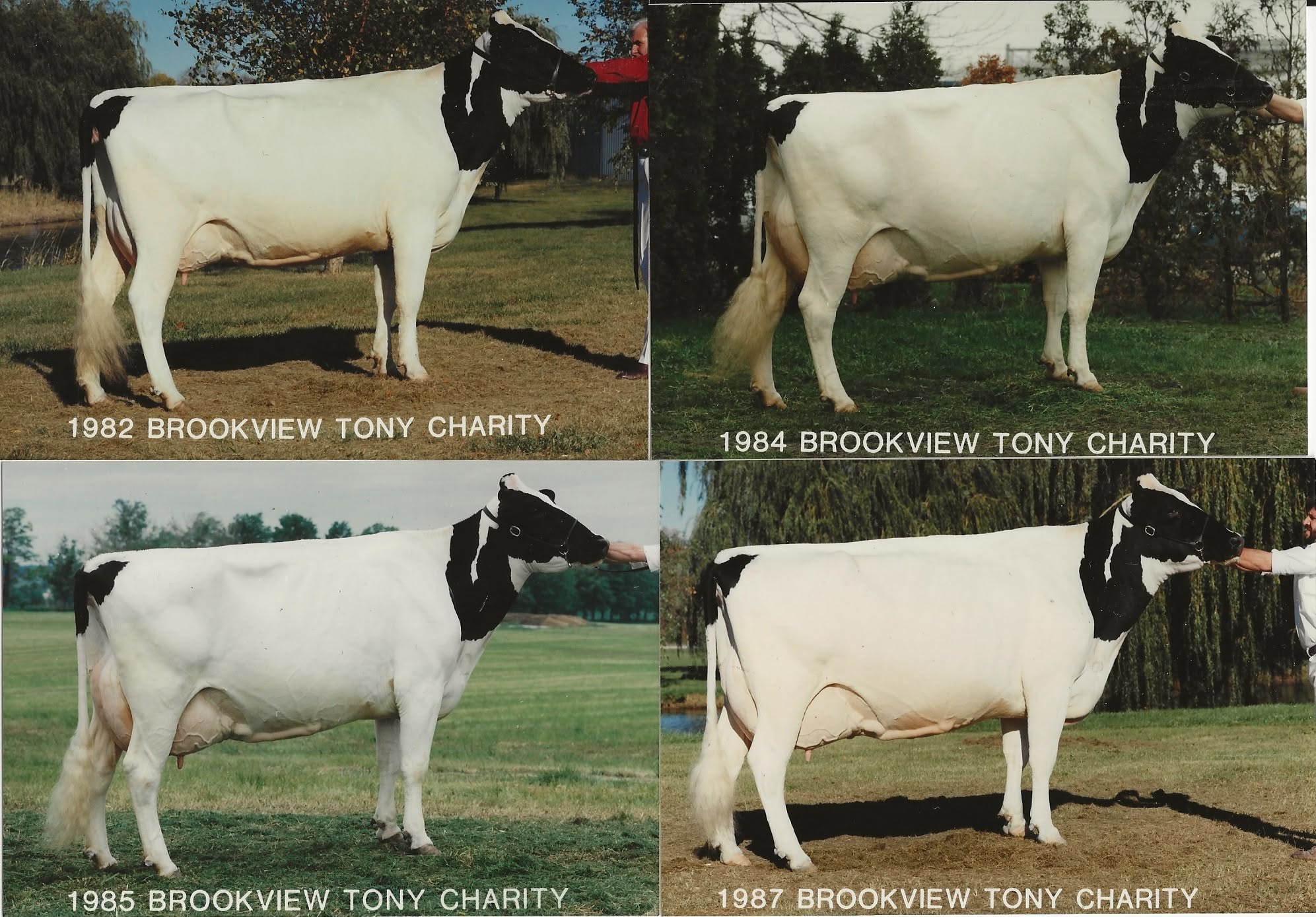
Brookview Tony Charity in 1982, 1984, 1985 and 1987 — four lactations apart. Look at what time did to her: more depth, more strength, the udder still riding high and level. This is the difference between a cow who’s merely fashionable and one who’s correct. The fashionable kind break down. Charity just kept getting truer.
The Cow They Built a Statue For
In 2017, nearly thirty years after she died, something happened that no other cow in this breed can claim. They built her a statue—a real one, eight metres tall.
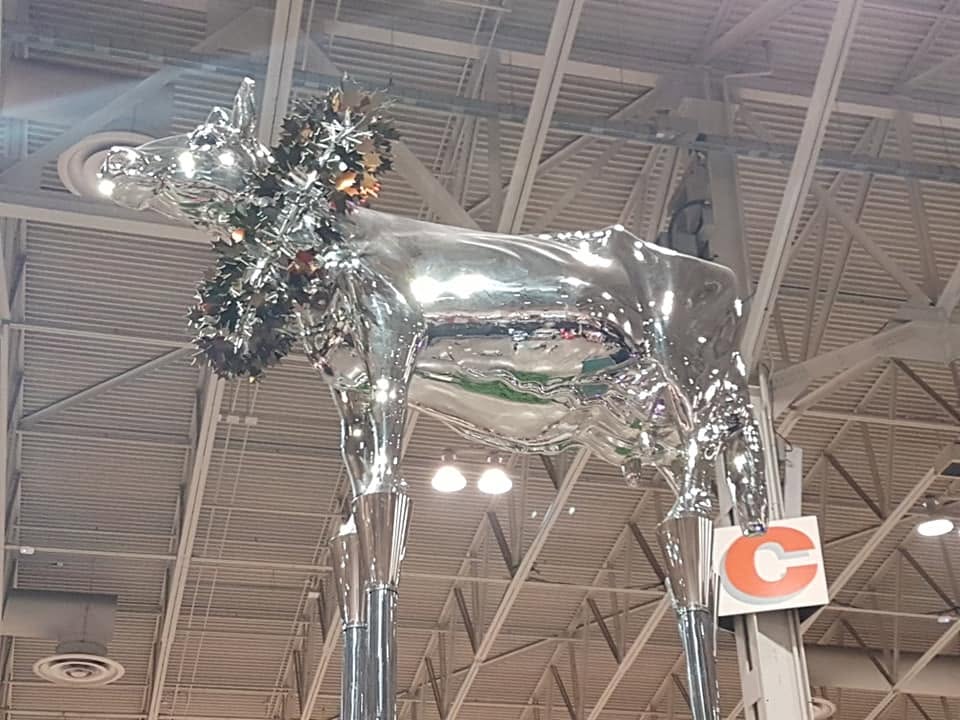
It stands in Cathedraltown, a neighbourhood in Markham, Ontario, built on the former grounds of Romandale Farm. Charity, Perpetuation of Perfection, the sculptor Ron Baird called it—a life-sized Holstein worked in gleaming stainless steel, mounted high on 26-foot posts so she floats above a little parkette, catching the cold Canadian light against the open sky. It was a gift from Helen Roman-Barber, Stephen Roman’s daughter, to the land her father once farmed.
Home, at last, to the right barn. Ron Baird’s stainless-steel Charity — Perpetuation of Perfection — on display beneath the rafters of the Royal Agricultural Winter Fair, draped in a fresh garland like the four she earned here in the flesh. The permanent statue stands in a Markham subdivision she never visited. But for a few November days, eight metres of polished steel came back to the one Coliseum that was always, unmistakably, hers.
And here’s the irony only a dairy person fully feels. Charity never set hoof in Markham. Not once. From the day she landed in Canada to the day she died, she lived at Hanover Hill in Port Perry, and that’s where she’s buried. “She never went to Romandale Farm,” Ken Trevena said years later, standing by her grave. “Anyone in the Holstein business knows that.” The neighbours grumbled about the giant chrome cow on stilts; the city even talked of moving her. None of it touched the truth underneath. You don’t raise eight metres of stainless steel over a subdivision for a cow that didn’t matter.
To somebody outside the dairy world, a monument like that might seem a little strange. A statue. Of a cow.
But ask a Holstein breeder, and you won’t have to explain a thing.
Because they understand it in their bones. They’ve had one like her, or they’ve spent a lifetime hoping they would—the cow that changes how the whole barn feels, the one visitors ask to see before they’ve got their boots off, the one whose daughters you keep when good sense says sell, the one whose name turns up three generations down and makes you smile before you even know why. Charity was that cow, multiplied by history. The one who made a hardened classifier reach past his own vocabulary. The one who made judges keep arriving at the same answer—and made the one cow who ever topped her wait until the final walk of the show to do it. The one who made financiers write numbers that sounded ridiculous right up until the pedigree proved them conservative.
And maybe that’s the truest measure of her—truer than the EX‑97‑3E, truer than the four Royals and the four Madisons, truer than a record million-four for half a cow. It’s that nearly forty years after Ken Trevena laid her to rest on that farm in Port Perry, serious breeders on two continents still argue about her, still breed toward her, still run a finger up a maternal line and go quiet when they hit her name.
Brookview Tony Charity. Incredible Perfection.
She did exactly what her legend promised.
She compelled our imaginations to carry her on—and we’re still carrying.
Ken Trevena — Reveals the operational management and day-to-day husbandry strategies behind Hanover Hill Holsteins, detailing how meticulous transition nutrition and rigorous structural care converted high-potential genetic purchases into legendary, multi-year show ring champions.
Blondin Goldwyn Subliminal EX-97: A Final Bow for the Queen — Dismantles the modern obsession with genomics-only indexing by proving how an elite maternal line delivered over 310,000 pounds of lifetime milk while maintaining a flawless physical score across eight lactations.
The Sunday Read Dairy Professionals Don’t Skip.
Every week, thousands of producers, breeders, and industry insiders open Bullvine Weekly for genetics insights, market shifts, and profit strategies they won’t find anywhere else. One email. Five minutes. Smarter decisions all week.
The Hendricksons of Belleville, Wisconsin built most of their herd off one maternal line. Holstein Association USA just named them 2026 Elite Breeders — and the family’s top cow is the reigning Royal Winter Fair Grand Champion.
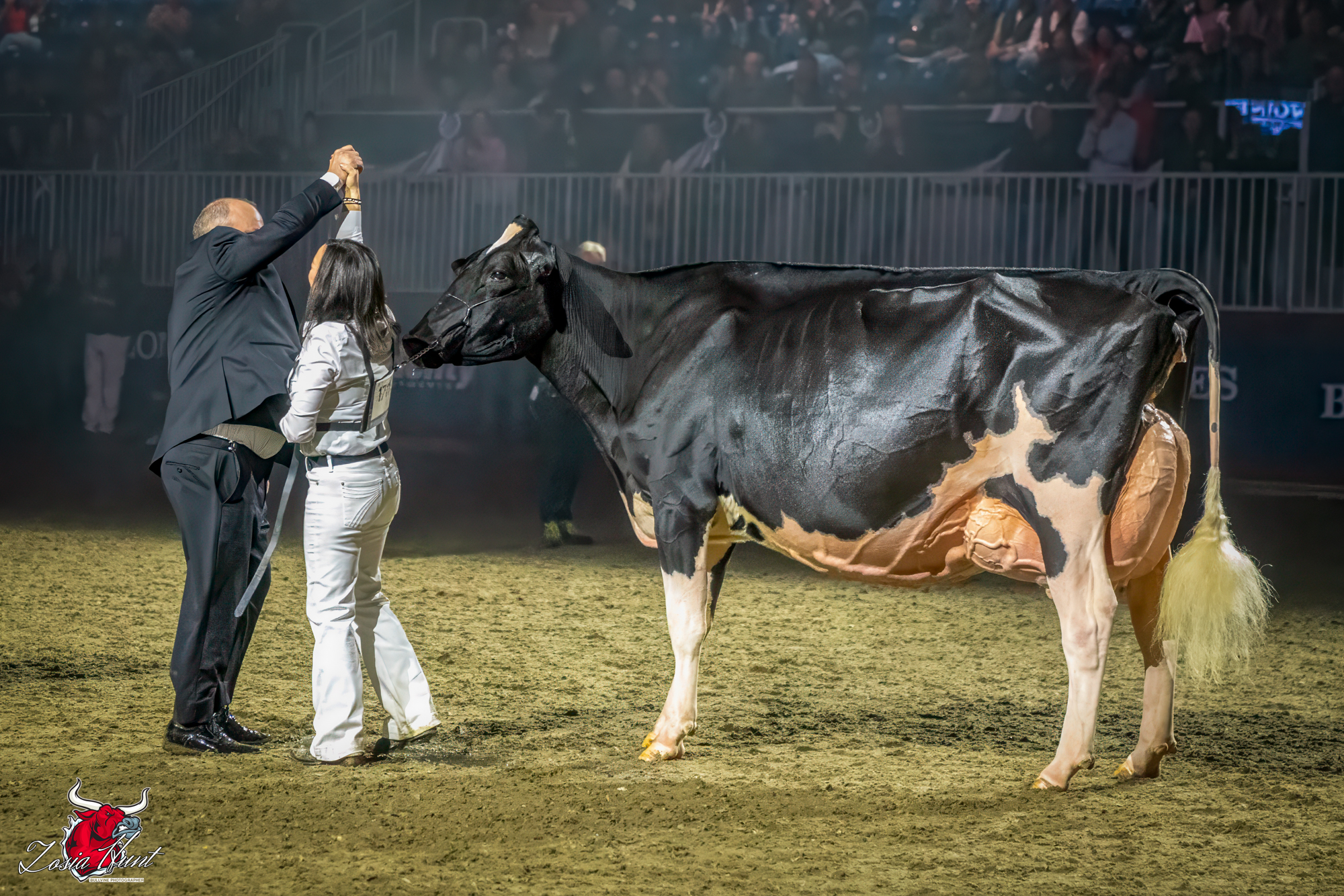
The salute that says “program,” not luck: Jeffrey-Way Hard Rock Twigs, EX-96, takes Grand Champion at the 2024 Royal Winter Fair. A second-generation EX-96 off the Hendricksons’ 40-year “T” family — the banner that just helped make them Holstein USA’s 2026 Elite Breeders.
Start with the cow on top. Jeffrey-Way Hard Rock Twigs scored EX-96 and was named Grand Champion at the 2024 Royal Winter Fair — a second-generation EX-96, out of a Doorman dam, sired by Cookiecutter MD Hardrock. She didn’t come from a checkbook or an outcross gamble. She came from a maternal line Jeff and Kate Hendrickson have been building since the early 1980s.
That’s the story Holstein Association USA just honored, naming the Hendricksons its 2026 Elite Breeders, to be recognized at the National Holstein Convention in Orlando this June 22–25. Roughly 90% of the Jeffrey-Way herd traces to one cow family. This isn’t about chasing the hot bull every August. It’s a study in what concentrating a maternal line actually does to a herd over four decades — the upside, the risk, and the discipline it takes.
Where the “T” Family Started
The line runs back generations, and it shows in the pedigrees. Look at a recent Jeffrey-Way sale lot and the dams stack up like a family tree carved in stone: Tanawood EX-95, then Tanaya EX-92, Tameka EX-94, Tranquil EX-92, and deeper still. That’s the “T” family — a tail-female line the Hendricksons have bred forward, one daughter at a time, for 40 years.
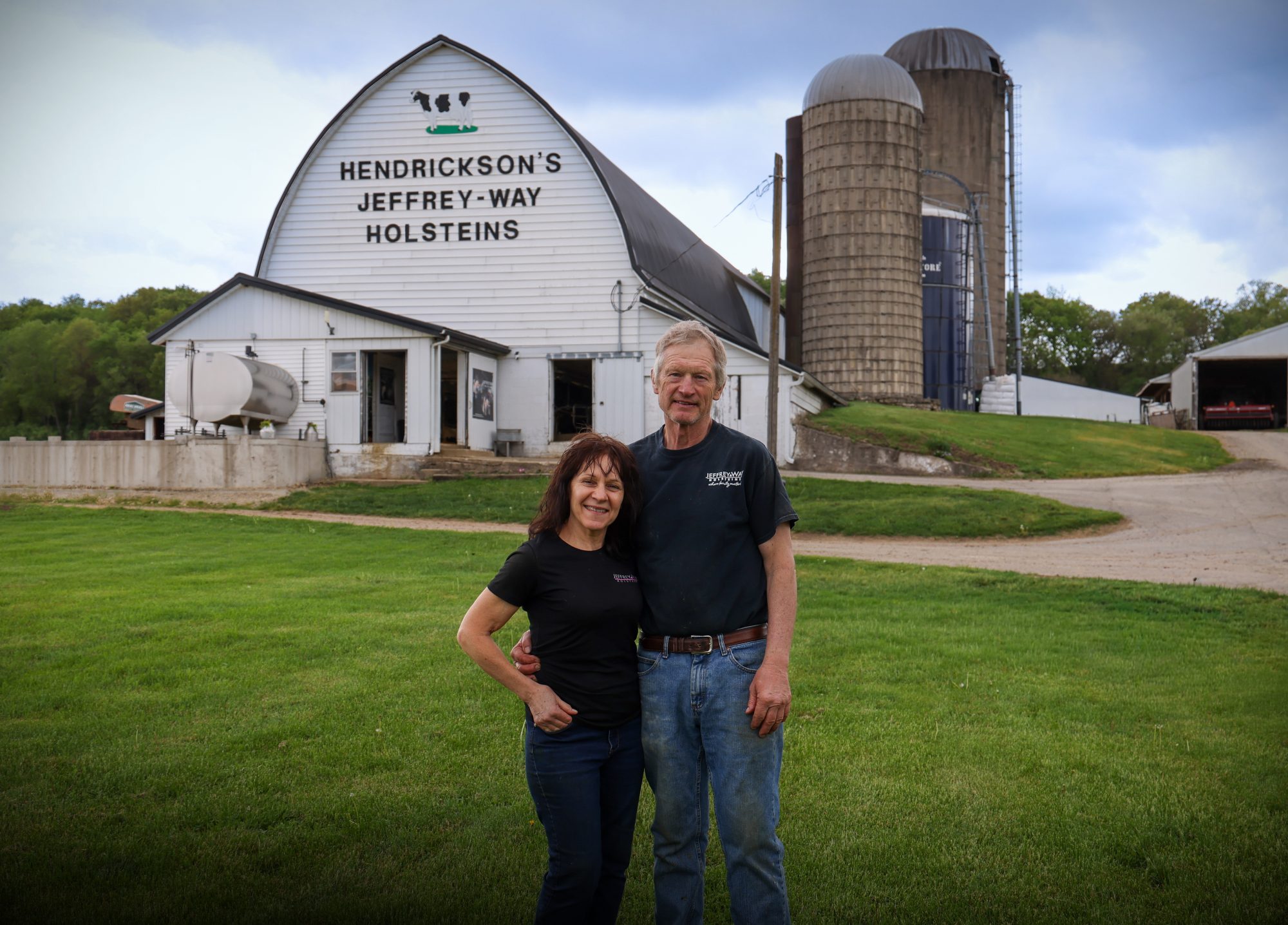
Where the 40-year bet still milks: Jeff and Kate Hendrickson outside the barn that carries their name in Belleville, Wisconsin. They started with Registered Holsteins as kids, built almost the whole herd off one “T” family, and never traded out of it — the discipline that just made them Holstein USA’s 2026 Elite Breeders.
Forty years ago this was a youth project. Jeff and Kate started with Registered Holsteins as kids, and the prefix grew up alongside them. What’s striking isn’t the start — plenty of breeders begin with one good cow. It’s that they never traded out of the line. Decade after decade, as genomics arrived and proof sheets reshuffled the breed, they kept breeding back into the “T” family instead of chasing whatever topped the August run.
That choice is the whole story. A breeder who commits to one maternal line is betting that depth beats breadth — that a family proven across generations is a safer foundation than the newest number on the list. The Hendricksons made that bet for 40 years, and the trophy case says it paid.
More Than One Branch on the Tree
Here’s the part that gets missed when people hear “90% from one family”: it isn’t 90% from one cow. A tail-female line that deep grows branches, and the Hendricksons have worked more than one. The “T” prefix is the trunk — Tanawood, Tanaya, Tameka, Tranquil — but the herd also carries a “Tina family” running through cows like Jeffrey-Way Saphire RC P EX-94 and Jeffrey-Way Mascot Tina-ET EX-91. Same maternal foundation, different limbs.
That branching is what keeps a concentration strategy from becoming a dead end. When you’ve got several proven sub-families inside one line, you can mate within the strength of the family without doubling up on the exact same animals every generation. It’s the difference between linebreeding and backing yourself into a corner. The Hendricksons have enough branches to keep choosing.
And it’s why a number like 384 Excellent cows is even possible off one foundation. You don’t get there by flushing a single donor over and over. You get there by building out the whole tree — Tate branch here, Tina branch there — and letting each one throw its own string of high-scoring daughters.
A Family That Markets Itself
The “T” prefix isn’t just a pedigree anymore. It’s a brand buyers chase. This past March, Jeffrey-Way ran its first-ever public online sale through CattleClub.com — “this decision wasn’t easy,” the family wrote — offering “the best ‘T’ family members” and billing it as buyers’ first chance to get into the Twigs branch, with animals selling off the farm at N9385 Cty CC in Belleville.
For a herd that spent 40 years keeping its best genetics in-house, opening the gate at all is a strategy shift worth noticing. You don’t sell into your own foundation lightly. The Hendricksons did it because demand finally outran what they could use themselves — when buyers are asking for a branch by name, holding everything back leaves money and reach on the table.
The depth shows up in the family’s newest stars. Jeffrey-Way Addison Sauna EX-95 is, as the farm put it, “the Holstein breed’s newest Excellent 95 scored cow” — and she’s polled and a Red Carrier, straight out of the “T” family. That matters. The Hendricksons built polled and Red genetics into a line better known for black-and-white show type, hitting two of the hottest market traits in the breed without abandoning their base.
That optionality runs deeper than one cow. The herd has put homozygous polled and Red-carrier genetics into multiple “T” branches, so a buyer chasing polled, or Red, or just bulletproof show type can find it inside the same family. When the breed’s priorities shift — and they always do — a line with that many doors stays marketable. The reach has gone international, too. Twigs’ descendants and embryos move through European genetics outlets, marketed as a foundation worth buying into. When a Belleville cow family shows up in embryo catalogs across the Atlantic, that’s not luck. That’s 40 years of consistency the rest of the breed can finally see.
Does 90% From One Family Mean an Inbreeding Wall?
It’s the first question a serious breeder asks. Concentrate a maternal line that hard and you risk stacking the bad in with the good — and breed-wide inbreeding has climbed for years as popular sire stacks narrow the gene pool. Our reporting on how one foundation sire ended up with a 15.8% relationship to the entire U.S. Holstein population shows how fast that concentration compounds. Read more: To-Mar Blackstar: The One-Embryo Holstein Sire Behind 15.8% of Today’s DNA – and the Genetic Debt in Your Herd.
The Hendricksons’ answer is in their classification record. Holstein International, profiling the herd, counted 59 Excellent cows among 109 milking — more than half the working string scored EX. Across the herd’s history, Holstein Association USA credits Jeffrey-Way with 384 Excellent cows. A deep cow family is the closest thing in dairy breeding to a moat: type, longevity, and components that show up generation after generation. The same one-daughter-at-a-time patience built the great franchise cow families that reshaped the modern Holstein. Read more: How Seven Franchise Cows: Roxy, Dellia, Blackrose, and Four Others Built Modern Holstein – One Daughter at a Time.
But concentration only pays when you cull as hard as you breed. A herd that holds 59 EX in the milking string is also shipping the animals that didn’t make the cut — and the discipline is in moving them, not falling in love with a pedigree. That’s the part of the Jeffrey-Way story the trophy doesn’t show. The inbreeding risk is real; the herd’s answer is that a family this deep, with this many branches, gives you enough good animals to stay selective, and modern genomic mating tools let you steer around the worst of the stacking.
The Cow That Proved It at the Royal
Twigs is where the strategy stops being theory. A second-generation EX-96 doesn’t happen by accident — it means the dam was good enough to score 96, and her daughter was good enough to match her. That’s the line working exactly the way a concentration strategy is supposed to: each generation holding or improving on the last.
She backed it up in the colored shavings. Twigs was named Grand Champion at the 2024 Royal Winter Fair — the kind of banner that puts a cow family on the international map and sends buyers looking for full sisters and embryos. The Royal isn’t a county show. Winning it tells every breeder watching that this isn’t a one-good-cow operation. It’s a program.
The Rest of the Roll Call
The family runs deep, and the cows the association named in its announcement read like a herdbook highlight reel — confirmed against breed records and the farm’s own listings: q106
Jeffrey-Way Hard Rock Twigs EX-96 — Grand Champion, 2024 Royal Winter Fair
Jeffrey-Way Tanawood EX-95 — a 250,000-lb (≈113,000 kg) cow still milking on her 8th calf
Jeffrey-Way Addison Sauna-PO-RC EX-95 — polled, Red Carrier, the breed’s newest EX-95 at scoring
Jeffrey-Way Saphire RC P EX-94 — “Tina family,” more than 337,000 lb (153,000+ kg) lifetime
Jeffrey-Way Format Tate-ET EX-93
Jeffrey-Way Tranquil-ET EX-92 and Jeffrey-Way Mascot Tina-ET EX-91
Jeffrey-Way Mars Tara-ET EX-90
Look at the sire prefixes — Hardrock, Addison, the polled Red & White lines coming through Saphire and Sauna. That’s a breeder reading each daughter, correcting where she needed it, and moving the herd forward across decades. No single bull built this. The cow family did, with a different sire layered on top each generation to fix what the last one left short.
What Does a 384-EX Record Actually Take?
The Hendricksons have held a spot on the Progressive Breeder’s Registry for 35 years — that part is confirmed. Run the arithmetic: 384 Excellent cows across a span like that works out to close to one new Excellent cow a month — though the figure isn’t broken down by year, so treat it as a rough pace, not a steady cadence.
Put it against your own barn. A solid registered herd might score a handful of cows Excellent in a good year. To hold 59 EX in a 109-cow milking string, you need cows that last — high lifetime production, low involuntary culling, and a type base that holds up to a classifier’s eye through multiple lactations. Tanawood’s 250,000 pounds on her 8th calf, and Saphire’s 337,000-plus pounds, are the kind of numbers that make the point: this isn’t show type at the expense of the tank.
And it pencils into milk. A million-cow classification study — the one we broke down in our Ed Bos feature — tied the functional traits classification rewards, the udders, feet and legs that keep a cow in the herd, to roughly $2,678 in extra lifetime milk revenue per cow. Read more: Ed Bos Picked the Same Traits for 50 Years. A Million-Cow Study Just Proved He Was Right — by $2,678 Per Cow. Type and index usually pull in different directions. Doing both off one cow family — a Royal Grand Champion and a herd that more than half-classifies Excellent — is the rare trick most herds never crack.
“It gives us a sense of pride to be recognized by this award,” Jeff Hendrickson said in the association’s announcement. “It’s a good feeling to know you’re recognized by your peers, and it provides a sense of accomplishment.”
The Second Generation Is Already Winning
A cow family is only a legacy if someone carries it forward. The Hendricksons have that covered. The farm is now owned and operated by Jeff and Kate alongside son Brooks and Riley Hendrickson — and Brooks took a Grand Champion banner at the Royal with a four-year-old in 2024, the same show where Twigs went Grand.
The bench runs deeper still. Trent Hendrickson has built his own operation, Trent-Way Genetics in Blanchardville, and in 2024 Holstein Association USA named him its Distinguished Young Holstein Breeder. That’s not a participation ribbon — it’s the association’s signal that a young breeder is already building a program worth watching. And he built it on the same foundation, the “T” family genetics he grew up with, now running under a second prefix on a second farm.
Think about what that says about the original bet. One cow family didn’t just fill one barn — it seeded two operations, in two Wisconsin towns, both winning at the Royal, with a national young-breeder award between them. Most herds spend a generation hoping the next one stays in dairy at all. The Hendricksons handed theirs a foundation deep enough to start over with. The “T” line built more than a herd. It built a bench.
What This Means for Your Operation
The Elite Breeder award goes each year to a living Holstein Association USA member, family, or partnership that’s bred outstanding animals and moved U.S. Registered Holsteins forward. Strip away the Orlando ceremony and the Hendrickson record leaves five decisions worth weighing in your own barn.
If one cow family already throws your best type and longevity, concentrate toward your strength — but pair it with a culling rule strict enough to keep the misses out of the milking string. A family becomes a moat only if you ship the misses as honestly as you keep the hits; 59 EX in a 109-cow string is a culling story as much as a breeding one.
If you’re going hard on one maternal line, run an inbreeding check on every mating, not annually. That’s the difference between Jeffrey-Way’s moat and a genetic corner — genomic mating tools make it manageable, but only if you actually run them. Branches help too: the more proven sub-families you’ve got inside the line, the more room you have to mate without doubling up.
If you doubt classification pays, look at the milk. The functional traits it rewards — udders, feet and legs — tied to roughly $2,678 per cow in lifetime revenue in a million-cow study.
If you want a family with staying power, breed in optionality. The Hendricksons put polled and Red genetics into a show-type line through Addison Sauna and Saphire, chasing emerging market traits without abandoning their base.
If you’ve got genetics worth seeing, open the gate. A public sale, a Royal banner, an embryo listing overseas — visibility is how a single line earns a national, even international, audience.
If you want to put this to work in the next month, pull your own herd’s classification history and find the single cow family quietly carrying your type. Map its branches while you’re at it — which dams trace where, and where you’ve got room to mate within the family without stacking the same animals. That’s your “T” family, and you can’t build a 40-year line until you know which one you’d bet on.
Key Takeaways
One deep cow family can carry a whole herd, but only if you cull as hard as you breed — 59 EX in a 109-cow string is a culling record as much as a breeding one.
Concentration pays when the line has branches. Several proven sub-families inside one foundation give you room to mate within your strength without stacking the same animals every generation.
Pull your classification history this month and find the one family quietly carrying your type. Map its branches and run an inbreeding check on every mating, not just once a year.
Build in optionality. Layering polled and Red genetics into a show-type line, plus a public sale, is how Jeffrey-Way turned one tail-female line into national and European demand.
Forty years ago this was a youth project and a string of “T” cows. Now it’s the breed’s top breeding honor, a cow family selling off the farm, embryos moving through Europe, two generations winning at the Royal, and a Grand Champion standing on top of it all. So here’s the question worth taking back to your barn: which cow in your herd today is the one your grandkids will be tracing back to?
Learn More
Roybrook 2026: The $15,000 Holstein Cow Family Test — Delivers a blueprint for balancing tight linebreeding with genomic tools to lock in structural uniformity. Learn how to write strict family rules that map identical DNA strands, preventing hidden genetic defects from crashing your next generation.
Your Top Heifers All Trace to Three Cow Families. That’s a $93300-A-Year Trap. — Exposes the hidden financial penalties of extreme maternal line concentration in commercial setups. Breaks down how cow family fragility impacts turnover rates, showing that a longevity gap can tie up $93,300 in annual replacement capital.
Every week, thousands of producers, breeders, and industry insiders open Bullvine Weekly for genetics insights, market shifts, and profit strategies they won’t find anywhere else. One email. Five minutes. Smarter decisions all week.
To provide the best experiences, we use technologies like cookies to store and/or access device information. Consenting to these technologies will allow us to process data such as browsing behavior or unique IDs on this site. Not consenting or withdrawing consent, may adversely affect certain features and functions.
Functional
Always active
The technical storage or access is strictly necessary for the legitimate purpose of enabling the use of a specific service explicitly requested by the subscriber or user, or for the sole purpose of carrying out the transmission of a communication over an electronic communications network.
Preferences
The technical storage or access is necessary for the legitimate purpose of storing preferences that are not requested by the subscriber or user.
Statistics
The technical storage or access that is used exclusively for statistical purposes.The technical storage or access that is used exclusively for anonymous statistical purposes. Without a subpoena, voluntary compliance on the part of your Internet Service Provider, or additional records from a third party, information stored or retrieved for this purpose alone cannot usually be used to identify you.
Marketing
The technical storage or access is required to create user profiles to send advertising, or to track the user on a website or across several websites for similar marketing purposes.
To provide the best experiences, we and our partners use technologies like cookies to store and/or access device information. Consenting to these technologies will allow us and our partners to process personal data such as browsing behavior or unique IDs on this site and show (non-) personalized ads. Not consenting or withdrawing consent, may adversely affect certain features and functions.
Click below to consent to the above or make granular choices. Your choices will be applied to this site only. You can change your settings at any time, including withdrawing your consent, by using the toggles on the Cookie Policy, or by clicking on the manage consent button at the bottom of the screen.
Functional
Always active
The technical storage or access is strictly necessary for the legitimate purpose of enabling the use of a specific service explicitly requested by the subscriber or user, or for the sole purpose of carrying out the transmission of a communication over an electronic communications network.
Preferences
The technical storage or access is necessary for the legitimate purpose of storing preferences that are not requested by the subscriber or user.
Statistics
The technical storage or access that is used exclusively for statistical purposes.The technical storage or access that is used exclusively for anonymous statistical purposes. Without a subpoena, voluntary compliance on the part of your Internet Service Provider, or additional records from a third party, information stored or retrieved for this purpose alone cannot usually be used to identify you.
Marketing
The technical storage or access is required to create user profiles to send advertising, or to track the user on a website or across several websites for similar marketing purposes.







 The Sunday Read Dairy Professionals Don’t Skip.
 The Sunday Read Dairy Professionals Don’t Skip.