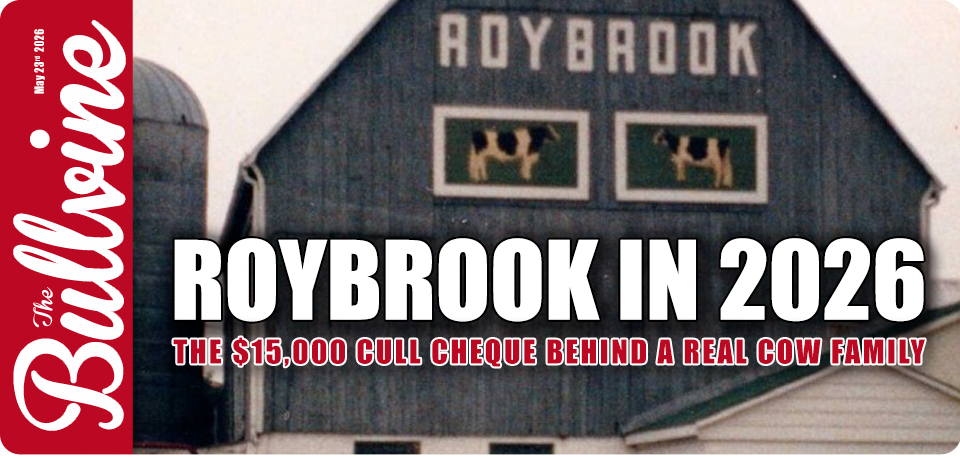






Ormiston paid $750 for the White Cow in 1956. To do what he did on a 300‑cow Holstein herd in 2026, you’ll write a $10,000–$15,000 cull cheque — and most breeders quit before it pays.
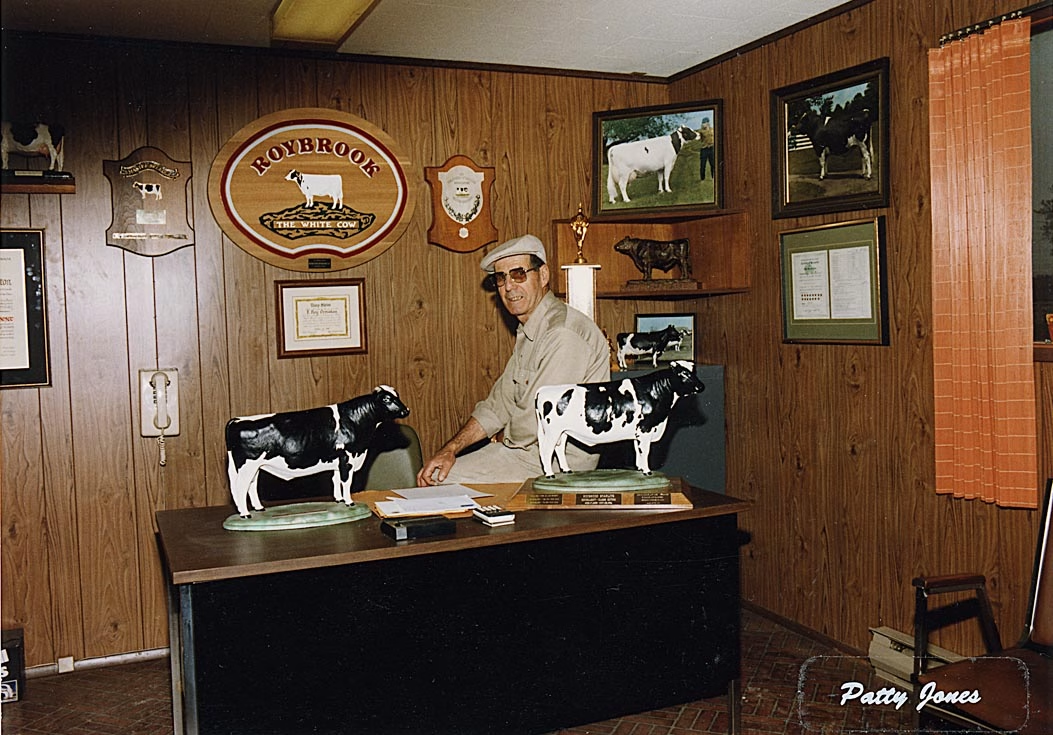
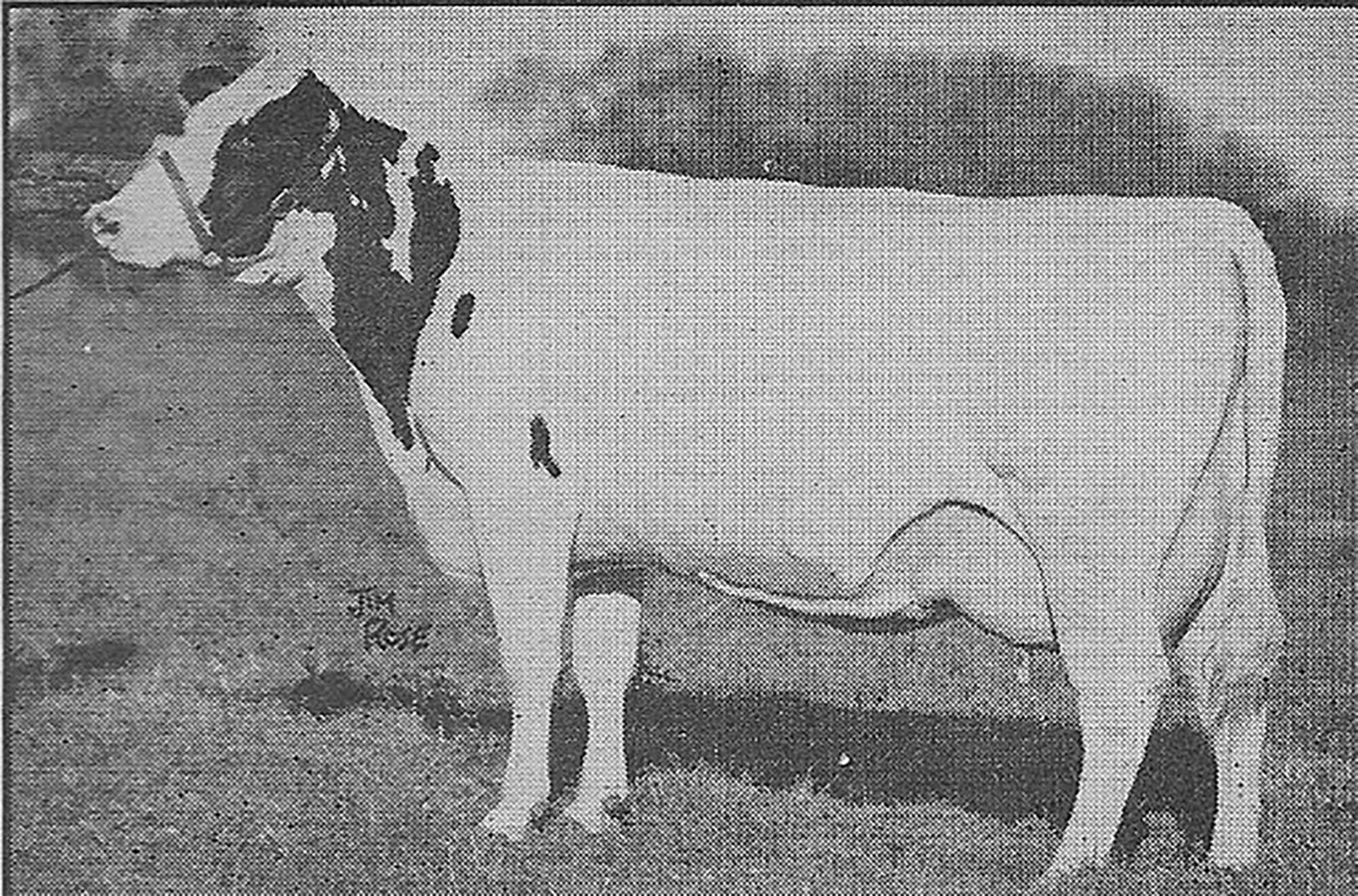
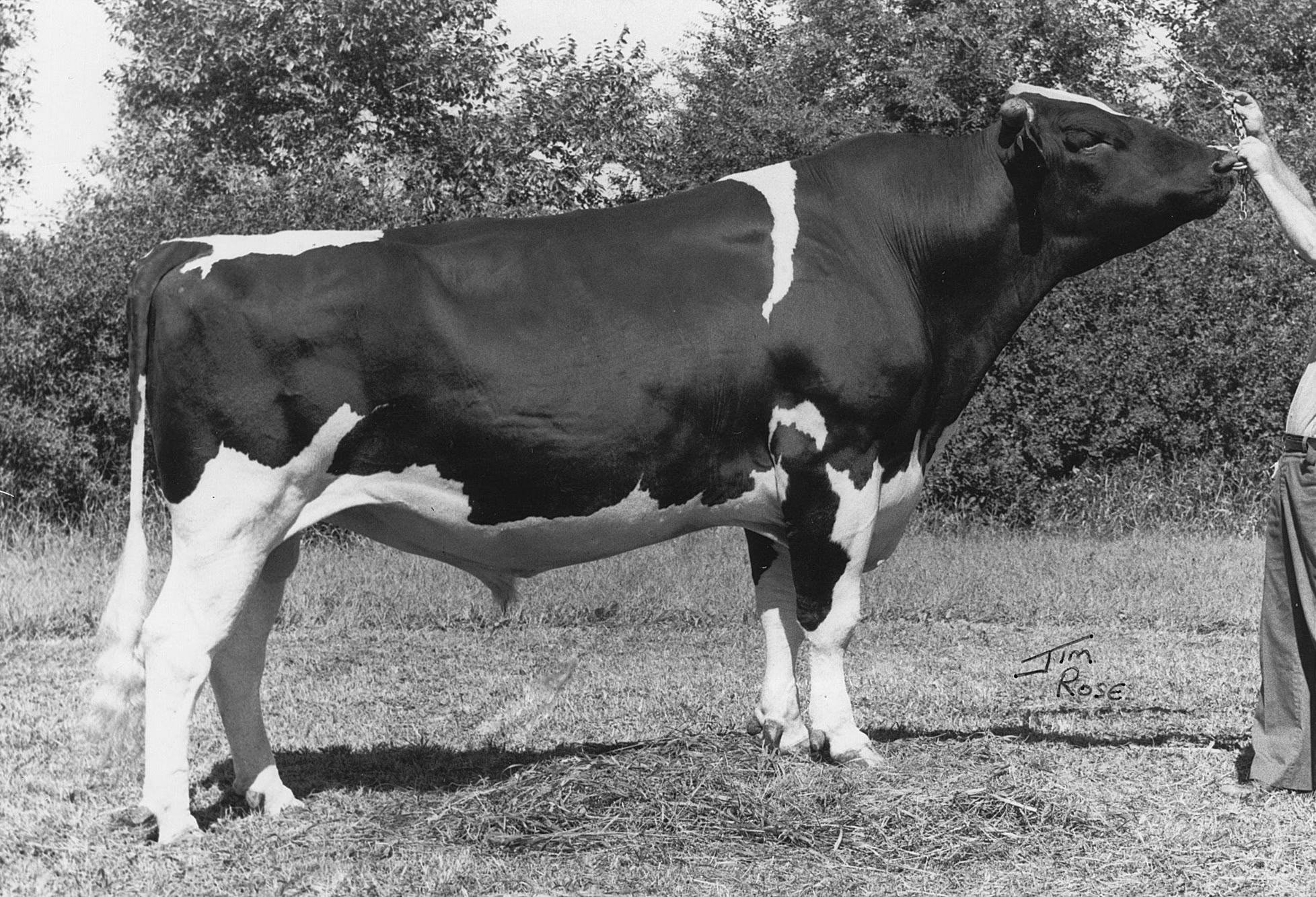
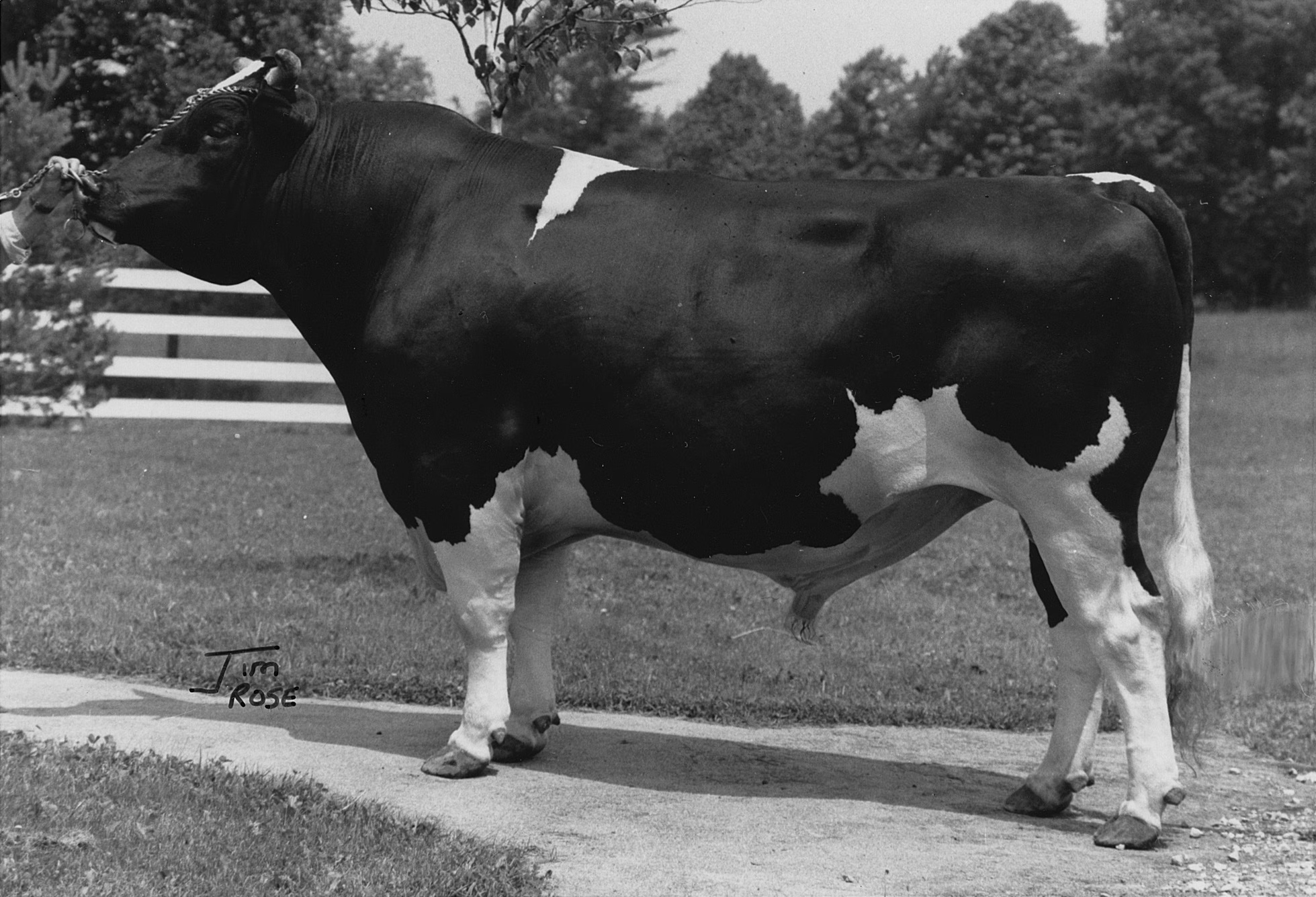
Frederick Roy Ormiston handed over $750 for a five‑year‑old Holstein in a modest Bowmanville, Ontario barn in 1956. He didn’t buy a proof or chase a hot sire stack. He bought a cow that wouldn’t leave his mind: Balsam Brae Pluto Sovereign — “The White Cow.”
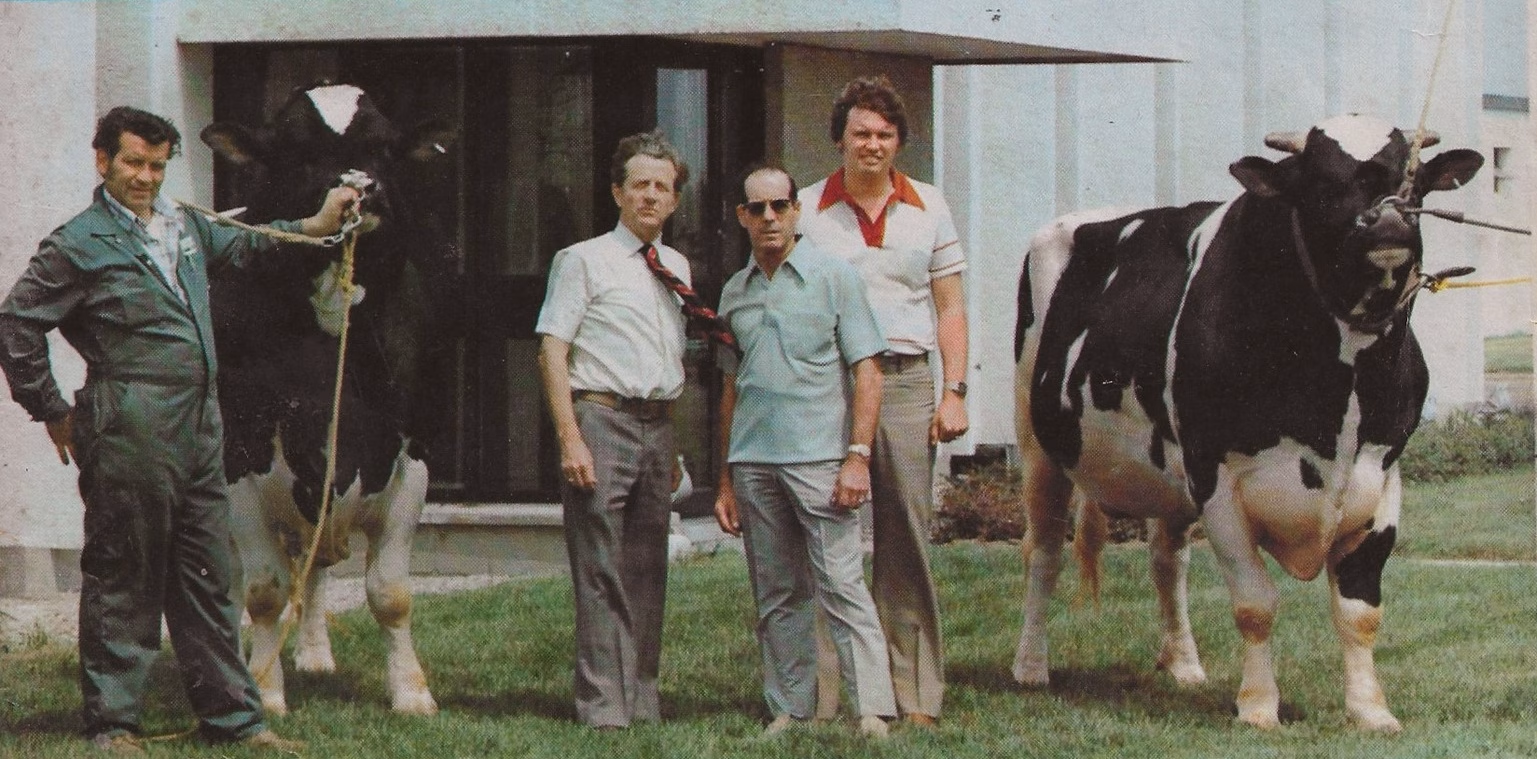
Telstar, Starlite, Tempo, a bronze statue in Hokkaido, and a Holstein type template that still runs through modern pedigrees all trace back to that single decision. But the part that matters to a 300‑cow Holstein cow family in 2026 isn’t the statue or the show banners. It’s the line‑breeding math behind it — the culling bills Ormiston swallowed along the way, and whether anyone with a genomic mating app and a lender looking over their shoulder can actually do the same thing now.
What’s Really on the Line When You Line‑Breed a Holstein Cow Family
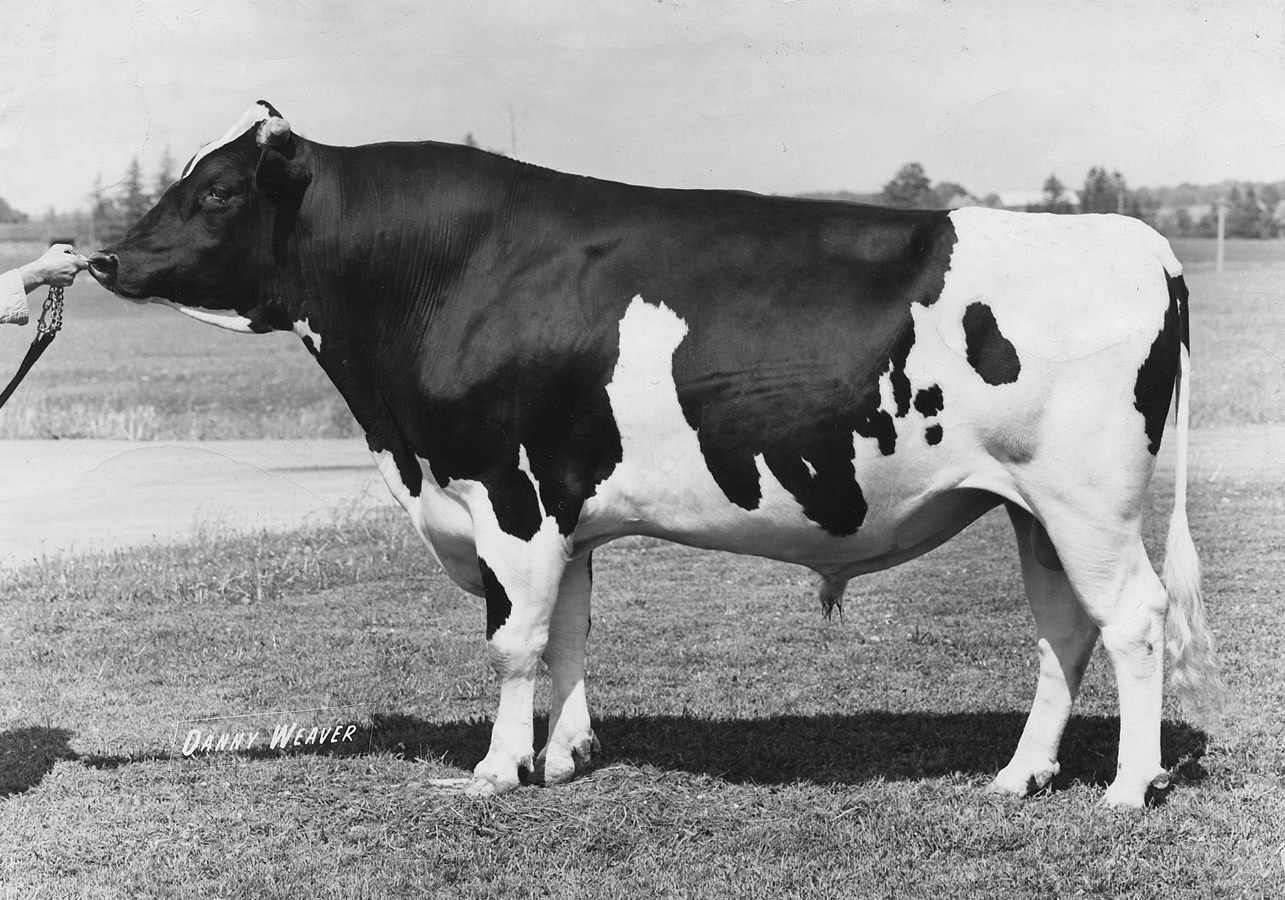
Line‑breeding is just inbreeding when it works. Ormiston said it out loud and then proved it by tightening relentlessly on one cow family until the “Roybrook Look” bred true: long, clean necks, deep open ribs, flat bone, and cows that could live on forage and still hang banners. He wasn’t chasing hybrid vigor or the bull‑of‑the‑month. He was chasing prepotency — the ability of one cow to stamp her kind no matter what you bred her to.
The Roybrook program was simple and brutal:
- Closed herd built around The White Cow.
- Closely related matings to concentrate her genetics.
- Intense culling any time recessives or structural weaknesses surfaced.
The biology hasn’t changed. To make a cow family prepotent, you’ve got to stack homozygosity around an outstanding ancestor instead of spreading your bets across every hot sire in the catalog. When you do that, you’ll surface defects and weak spots you’d never see in a more outcrossed herd.
Ormiston’s tools were visual stockmanship, family memory, and a willingness to ship anything that didn’t fit the mold. He had no haplotype screens, no genomic inbreeding reports, no optimal contribution software. He just culled what broke and kept tightening around The White Cow.
You’ve got something he didn’t: the ability to see carriers and inbreeding risk before you ever load the gun. The question now isn’t “Can line‑breeding work?” Roybrook answered that. The real question is whether you’ll still do what it takes when the numbers on the screen and the numbers on the milk cheque don’t agree — for years.
What Does a “Ruthless” Culling Bill Actually Cost a 300‑Cow Herd?
Let’s put some real structure under the part everyone flinches at.
The cost of raising a Holstein heifer to first calving has pushed to roughly $2,500 to $3,000 in 2026, driven by feed inflation and the high market value of replacements, according to current dairy herd health and reproduction benchmarks. A sound 1,300–1,400 lb cull Holstein cow typically clears the bottom end of that range at salvage, and the broader revenue picture is propped up by a beef‑on‑dairy market where dairy‑beef crossbred calves are now fetching $900 to $1,400 per head and adding an estimated $4.00–$4.50 per cwt to dairy revenue across North America, per current 2026 dairy farm economics data.
Net those numbers out, and every “extra” young cow you ship as part of a line‑breeding cleanup is costing you somewhere around $1,000 to $1,500 in true replacement cost — the rearing investment minus salvage value, with crossbred‑calf revenue propping up dairy revenue alongside it.
Now scale it to something that hurts.
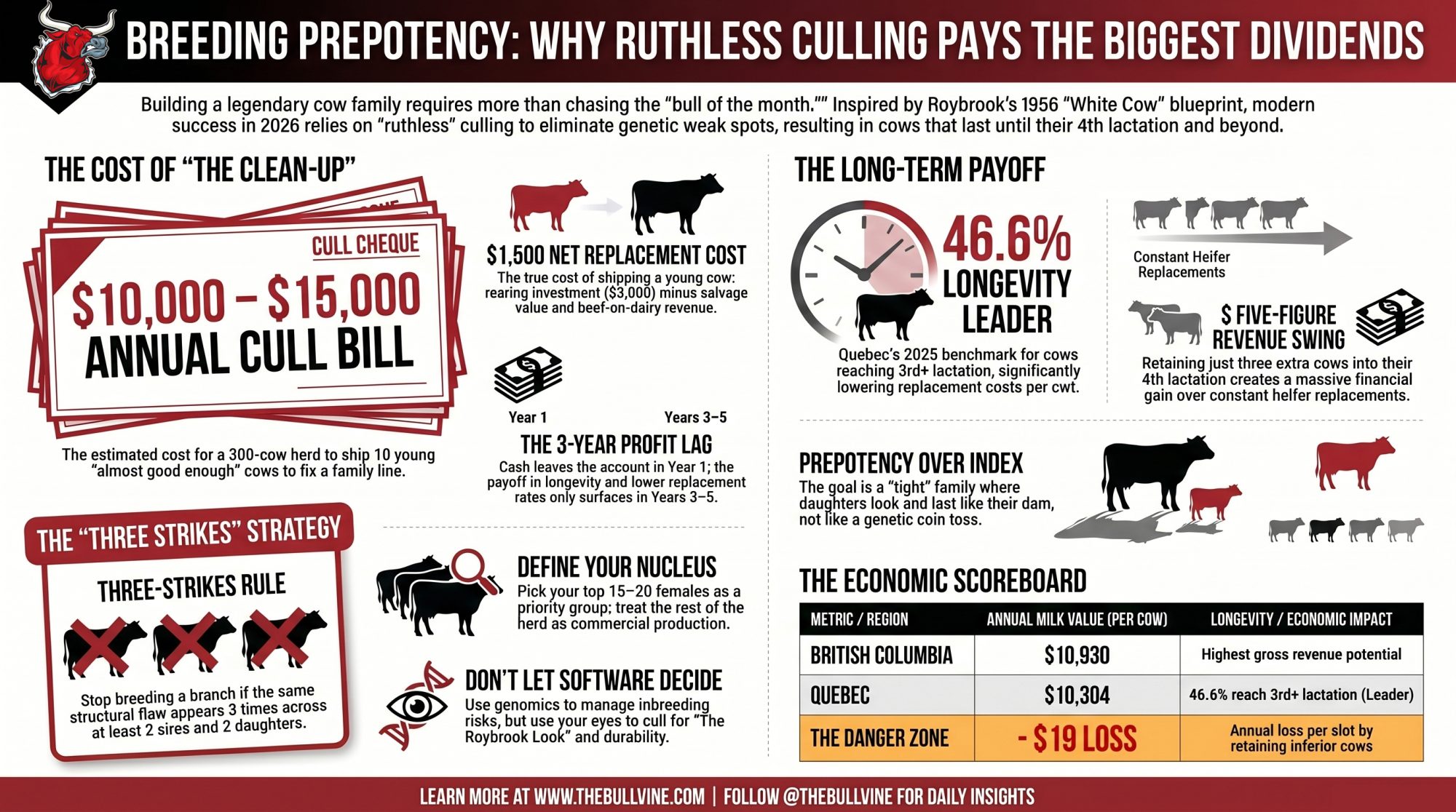
If you identify a weak branch inside your chosen cow family and make yourself act the way Ormiston did, you might ship 10 young cows you’d originally circled as future donors or bull dams. On this math, you’re staring at a $10,000 to $15,000 decision in that one year.
That’s just the cheque. Behind it sit two years of raising each heifer, genomic tests, sexed semen, maybe IVF bills you justified because “she’s from the right family” — and the pride hit of cutting into the cow family you’ve been bragging about.
That’s the exact point where breeders start negotiating with themselves. You’re looking at a VG‑looking first‑calf heifer from your “White Cow” family, genomics say she’s fine, and your gut knows shipping her will cost four figures plus pride. It’s very easy to say, “She just needs one more chance with a different bull.”
Ormiston didn’t have a mating app to make that choice look smarter than it really was.
When Does That Cull Bill Start Paying You Back?
The only honest reason to swallow that kind of hit is if it turns into extra productive life on the right cows and fewer replacements over time.
Heifer‑rearing economics points to a hard truth: at $2,500–$3,000 per replacement and a North American heifer inventory at a 20‑year low, every cow you keep healthy through her third lactation and beyond is worth more than she has been in a generation. Quebec’s herd data illustrates the payoff — Lactanet’s 2025 management benchmarks show 46.6% of Quebec cows in their 3rd or later lactation, leading the P5 in longevity and significantly lowering replacement cost per cwt. That’s the prize.
So what is this “ruthless” cleanup supposed to buy you? More daughters that actually make it to those third and fourth lactations. Fewer fragile cows leaving in the first two. A tighter family where the daughters look and last like the cow you fell in love with — not like a genetic coin toss.
If that plays out, the barn math shifts. Lactanet’s 2025 management benchmarks back this up region by region:
| Region / Metric | Median Annual Milk Value (Per Cow) | Longevity / Economic Impact |
| British Columbia | $10,930 | Highest gross revenue potential per slot |
| Quebec | $10,304 | P5 leader: 46.6% of cows reach 3rd+ lactation |
| Ontario | $10,206 | High baseline; massive swing if mature cows drop |
| The Danger Zone | Retaining inferior cows | Loses $19 per cow slot annually |
[EDITOR: render the Danger Zone row with a coloured highlight (warning amber) so the negative figure draws skim‑readers.]
Even modeled conservatively against feed and variable cost, every additional mature‑cow lactation you bank on a structurally sound cow keeps a meaningful share of that value on your side of the ledger — plus the $1,000–$1,500 in replacement cost you don’t have to spend on a heifer to fill her stall. Three extra cows reaching that fourth lactation translates into a five‑figure swing in your favor, on top of the avoided heifer bills.
Every herd’s inputs are different. But the structure is the point:
- Year 0–1: You feel the culling hit. Cash leaves the account. Replacement rate spikes.
- Years 2–3: The first cleaned‑up daughters enter the milking string. Heifer inventory stabilizes. Replacement rate starts trending down.
- Years 3–5: Enough cows stay for that extra lactation that the math begins to catch up to the pain.
You’re often living with a two‑to‑three‑year lag between when the cull cheques clear and when any payoff shows up clearly in your own numbers. That lag is exactly where people bail out.
How Do You Know It’s the Family — and Not Just Bad Luck?
This is the knife edge. If you misread the problem, you’re not doing a Roybrook‑style cleanup. You’re just burning good cows.
A weak branch doesn’t reveal itself with one bad calf out of one mating. It shows up as consistent failure across sires, across sisters, and across time. One ugly calf out of a cow you like is noise. Three disappointing daughters out of four, from different bulls, with the same basic flaw? That’s a pattern.
You want to see that pattern survive three tests:
Sire change test. You’ve used at least two different bulls with different sire stacks on that line. The daughters still show the same structural issues — weak loin, narrow rib, coarse bone — or the same career arcs, leaving before second or third calving.
Sister comparison test. Inside your chosen family, one branch throws daughters that disappear early or never match the family type. Another branch, under the same management and similar sires, gives you cows that stand the test of time. When one sub‑branch consistently underperforms next to sisters that work, you’ve probably found the dead wood.
Management sanity check. Compare your culling patterns to pens, seasons, and management changes. If a whole age group from multiple families cratered in the year you changed transition diets, that’s a protocol problem. Once you’ve fixed the protocol, if the same branch keeps underperforming while the rest of the family stabilizes, that’s genetics talking.
| Strike Test | What to Look For | Passes = Noise | Fails 3× = Pattern (Cull Branch) |
|---|---|---|---|
| Sire Change Test | Use ≥2 unrelated bulls on same line | Daughters vary — different strengths | Same flaw repeats regardless of sire |
| Sister Comparison Test | Compare daughters of this branch vs. sisters under same mgmt | One branch lags but not systematically | One branch consistently exits early or fails type |
| Management Sanity Check | Cross-reference against pen, season, feed protocol changes | Problem tracks a protocol change, not genetics | Branch underperforms after protocol is fixed and herd stabilizes |
| Strike Count Reached? | Tally across all three tests | 0–2 failures: hold the branch, keep evaluating | ⚠️ 3 strikes: Demote branch. Stop flushing. Stop selling as donors. |
| What you DO with the cows | Keep paying milkers in commercial string | Flush, transfer, IVF — normal treatment | ⚠️ Milk commercially. Do NOT propagate into nucleus. |
A working rule that keeps you honest without turning you into a one‑calf executioner:
Three independent strikes and that branch is out.
That means at least two different sires used, at least two different daughters evaluated, and the same basic structural or longevity problem showing up three times. When you hit three, you stop blaming the bull, the weather, or the classifier. You stop flushing that branch. You stop selling heifers from that line as “future donors.” You might keep milking the good ones, but you quietly demote that branch to commercial status inside your own program.
It’s ugly. But it’s also how Ormiston watched weak branches inside the Roybrook herd eliminate themselves, and tightened only on what stood up under pressure.
Build the Nucleus and Write the Rules
Here’s where your world really diverges from Ormiston’s.
You can pull up a laptop and see, in black and white, genomic inbreeding levels and runs of homozygosity on your cows, carrier status for lethal recessives and fertility‑wrecking haplotypes, and relationship coefficients between every cow and bull you’re thinking of using.
If you want to line‑breed a cow family on purpose without re‑creating the breed‑wide inbreeding mess inside your own herd, the sequence looks something like this.
Draw a hard box around your nucleus. Pick 15–20 females from the cow family you trust most — three or four generations of sound, trouble‑free cows behind them, the structural template you want, and no extreme outlier genomic inbreeding numbers. Everything else in the herd is commercial from a breeding standpoint, no matter how good they look on paper.
Peer note on inbreeding: Traditional pedigree charts only guess at genetic relationship percentages. Modern genomics map actual Runs of Homozygosity (ROH) — the identical DNA strands a calf actually inherited from both parents. That lets you line‑breed to an elite ancestor’s physical traits while making sure you aren’t accidentally doubling up on hidden, bad chunks of DNA elsewhere in the genome.
Write your inbreeding and defect rules before anyone opens the catalog. On paper, before the next mating season, decide: a per‑mating genomic inbreeding cap for that nucleus, a family‑level cap so your nucleus group’s average inbreeding doesn’t rocket past your herd average, and a hard “never” list for carrier‑to‑carrier matings on known lethal recessives and fertility‑wrecking haplotypes. These rules exist so that once you’re staring at a sexy cross on screen, you don’t talk yourself into it because “just this one won’t matter.”
Hand your mating program a brief, not a default. Most mating software is set up to avoid disasters and maximize index. You have to tell it to value your cow family. Tag your nucleus cows as a priority group. Ask the program to maximize their contribution over the next 5–10 years while obeying your inbreeding caps and defect rules. Let it suggest bulls that tighten on that family without stacking the same three global sires everyone else is stacking.
What the Software Can’t Do for You
Be picky about who’s allowed in the loop. For the nucleus cows, bulls are tools, not celebrities. They should be either sons or grandsons of your chosen family, or outcross‑ish bulls with rock‑solid structure and health that won’t drag you back into the sire stacks that created the Holstein bottleneck. If a bull is already heavy in the same high‑inbreeding global blood you’re trying to dilute, use him on your commercial cows, not your nucleus. If a bull doesn’t line up with your structural non‑negotiables, he doesn’t touch the nucleus, no matter how high his index sits.
Let the software manage risk — but don’t let it make the hard calls. The program can stop you from mating two carriers or creating a 14% inbreeding train wreck. It cannot cull for you. Every crop of tight‑mated calves out of the nucleus group needs a harsher eye than the rest of the herd. Any heifer that doesn’t look like the family template, shows chronic health or fertility issues early, or has structure you know won’t last gets demoted out of the nucleus, even if her genomic values look pretty. That’s where you either stay Ormiston‑honest or start lying to yourself with software.
If you run that play hard for five years and you picked the right family, you’re aiming to see two things: the nucleus daughters are more uniform and more durable than the herd average, and your whole‑herd genomic inbreeding drifts up slowly, not in a straight line to crisis levels.
If you’re not seeing that, you’re not really line‑breeding a cow family. You’re just doing fancier inbreeding.
Why Most People Quit Halfway and Blame the Math
The hardest part of this isn’t the biology or the barn math. It’s the noise you’re trying to do it in.
Ormiston didn’t have proof runs every few months comparing his herd average to everybody else’s. He didn’t have an AI rep walking in with a laptop, pointing at his herd LPI, and telling him he was “leaving points on the table.” He didn’t scroll past a feed full of calves and donors from the latest “#1 genomic bull” every time he sat down for coffee. And he never had to explain to a farm partner or a lender why his average herd index was trending sideways while the neighbours’ was climbing.
You do. All of it, all the time.
There’s also a structural pressure Ormiston never faced: beef‑on‑dairy. With dairy‑beef crossbred calves bringing $900–$1,400 a head and adding $4.00–$4.50 per cwt to total farm revenue, that revenue stream is keeping genetically weaker cows in the barn longer than they should be. Producers are being told — correctly — to use beef‑on‑dairy only on the bottom 20–30% of genetics so they don’t starve a replacement pipeline already at a 20‑year low. Beef‑on‑dairy economics rewards you for keeping average cows as passive crossbred incubators. A true line‑breeding program demands the exact opposite: you must torture‑test the very cow family you are investing in, culling harder where it hurts the most. That contradiction is real, and it’s worth saying out loud.
Here’s the pattern that plays out on a lot of farms:
- You take the pain. You ship the weak branch. Your replacement rate spikes.
- Two years later, the first cleaned‑up daughters start calving. They look solid, but their genomic proofs aren’t anything special because the indexes still tend to weight raw volume and component numbers more heavily than structural durability and longevity.
- Meanwhile, your neighbour’s herd average is climbing faster on paper because they’re chasing the catalog and letting the mating program manage inbreeding on autopilot. They’ve never written a five‑figure cull cheque in one shot, and their AI rep is thrilled with them.
If your only scoreboard is GTPI or LPI, your program can easily look like a failure for the first three to five years, even if the cows are quietly getting better where it matters.
| Scoreboard Dimension | GTPI / LPI (Industry Default) | Barn-Level Line-Breeding Scoreboard |
|---|---|---|
| Primary metric | Genomic index points (volume, components) | Productive life by dam line (lactations completed) |
| Replacement rate signal | Not tracked | Tracked by dam family, flagged per branch |
| Daughter uniformity | Not assessed | Core KPI — daughters should look like The White Cow |
| Inbreeding tracking | Herd average / software default | Per-mating cap + family cap, written in advance |
| Carrier risk visibility | Flagged at mating | Hard “never” list before catalog opens |
| How you look in Yr 1–3 | Sideways or declining average | Consistent with goals if barn KPIs move right |
| Beef-on-dairy interaction | Rewards keeping average cows in | ⚠️ Conflicts — pressures you NOT to cull nucleus |
| Time horizon | Next proof run | 5–10 year cow family development |
| Ormiston would recognize it? | No | Yes |
The breeders who get through that window aren’t magically braver. They just build a different scoreboard. They track productive life by family — which cow families actually reach 3rd, 4th, 5th lactations. They track replacement events by dam line — which families are filling the cull list for the same reasons, over and over. And they track uniformity — which groups of daughters look like clones of the cow you wanted to replicate, and which ones look like the product of a bull catalog.
If your own scoreboard starts moving in the right direction — longer productive lives, fewer “surprise” culls, tighter family type — you’ve got the feedback Ormiston had long before the milk cheque made it obvious. If you rely only on the industry’s scoreboard, you’re going to bail out right when the biology finally starts to agree with you.
What This Means for Your Operation
- Name your core family before you name your bulls. If you can’t point to one cow family that consistently gives you daughters past third lactation, you don’t have a Roybrook candidate yet. You have a herd. Start tracking cull reasons and productive life by dam line before you try to line‑breed anything.
- Write your inbreeding and defect guardrails before the next mating run. Decide your per‑mating genomic inbreeding cap and your “never” list for carrier‑to‑carrier matings. Put them in writing. If they’re only in your head, you’ll talk yourself into exceptions as soon as a fancy cross shows up on screen.
- Use the three‑strikes rule on branches, not calves. Don’t condemn a branch on one bad calf. But if you see the same structural or longevity problem three times across at least two sires and two daughters, stop flushing that branch. Keep daughters in the milking herd if they pay their way, but slide that line quietly out of your nucleus.
- Be honest about how much pain your cash flow can take. If your replacement rate is already sitting in the high‑30s and your lender’s nervous, this probably isn’t the year to pile voluntary culls for genetic reasons on top of that. Make your involuntary culling smaller and more predictable first.
- Don’t let beef‑on‑dairy revenue talk you out of culling your nucleus. $900–$1,400 calves are a great safety net for the bottom 20–30% of your herd. They’re a terrible reason to keep a structurally weak heifer from the family you’re trying to concentrate.
- Choose your scoreboard now, not halfway through. Decide whether you’re going to judge this experiment by your herd’s average index or by your own numbers on productive life, replacement rate, and uniformity. If you try to serve both, you’ll end up fully committed to neither.
- In the next 30 days, do one nucleus‑level audit. Tag your top 15–20 females from the family you like best. Pull their daughters’ cull reasons and productive lives. If you don’t like what you see in that one group, you just saved yourself from line‑breeding the wrong family.
Key Takeaways
- If you’re not prepared to ship 5–10 “almost good enough” young cows from your chosen family over the next couple of years, you’re probably not ready to run a Roybrook‑style cleanup yet.
- If you don’t have a written per‑mating genomic inbreeding cap and a carrier‑to‑carrier “never” list, you’re not really controlling inbreeding — you’re delegating it to software defaults.
- If you can’t show, on paper, that one cow family gives you more daughters lasting past third lactation than the rest of the herd, you don’t have a White Cow yet. Keep looking and keep tracking.
- If your only scoreboard is GTPI or LPI, a serious line‑breeding effort is going to look like a mistake on paper for three to five years. Build a barn‑level scoreboard — productive life by family, replacement rate by dam line, and daughter uniformity — before you start.
The real question isn’t whether Ormiston’s math still works. It’s whether you’re willing to step into the same gap he did — two or three years where the bank, the catalog, the proof sheet, and that one neighbour at the coffee shop all suggest you’re wrong, while the cows quietly start proving you right. Next time you stare at your “almost” heifer from your favourite family — are you reading the report, or are you reading the cow?
Learn More
- Your Top Heifers All Trace to Three Cow Families. That’s a $ 93300-A-Year Trap. — Arms you with a protocol to audit your heifer pen for maternal line concentration. This guide exposes how doubling up on identical maternal lines duplicates hidden fitness liabilities and spikes your capital exposure.
- $3110 In, $1100 Out: The Cull Trap Holding 470000 U.S. Dairy Cows – CPI Hits 68 — Dismantles the profit-and-loss illusion of keeping older, inferior cows to defer expensive replacement bills. Delivers a strict dollar-per-day carrying cost breakdown illustrating how bottom-quartile animals bleed severe margin through hidden production drops.
- The $585‑Per‑Service Beef‑on‑Dairy Trap: What a 500‑Cow Herd Reveals About Your Replacement Pipeline— Reveals the hidden financial penalty of chasing short-term crossbred calf checks over long-term heifer inventory. Calculates the exact expected-value threshold where breeding viable dairy dams to beef starving tomorrow’s milking string triggers a $117,000 baseline pipeline deficit.
The Sunday Read Dairy Professionals Don’t Skip.

Every week, thousands of producers, breeders, and industry insiders open Bullvine Weekly for genetics insights, market shifts, and profit strategies they won’t find anywhere else. One email. Five minutes. Smarter decisions all week.