




Archive for Holstein classification

384 Excellent Cows and a Royal Grand Champion: Inside Holstein USA’s 2026 Elite Breeder Jeffrey-Way Holsteins

The Hendricksons of Belleville, Wisconsin built most of their herd off one maternal line. Holstein Association USA just named them 2026 Elite Breeders — and the family’s top cow is the reigning Royal Winter Fair Grand Champion.
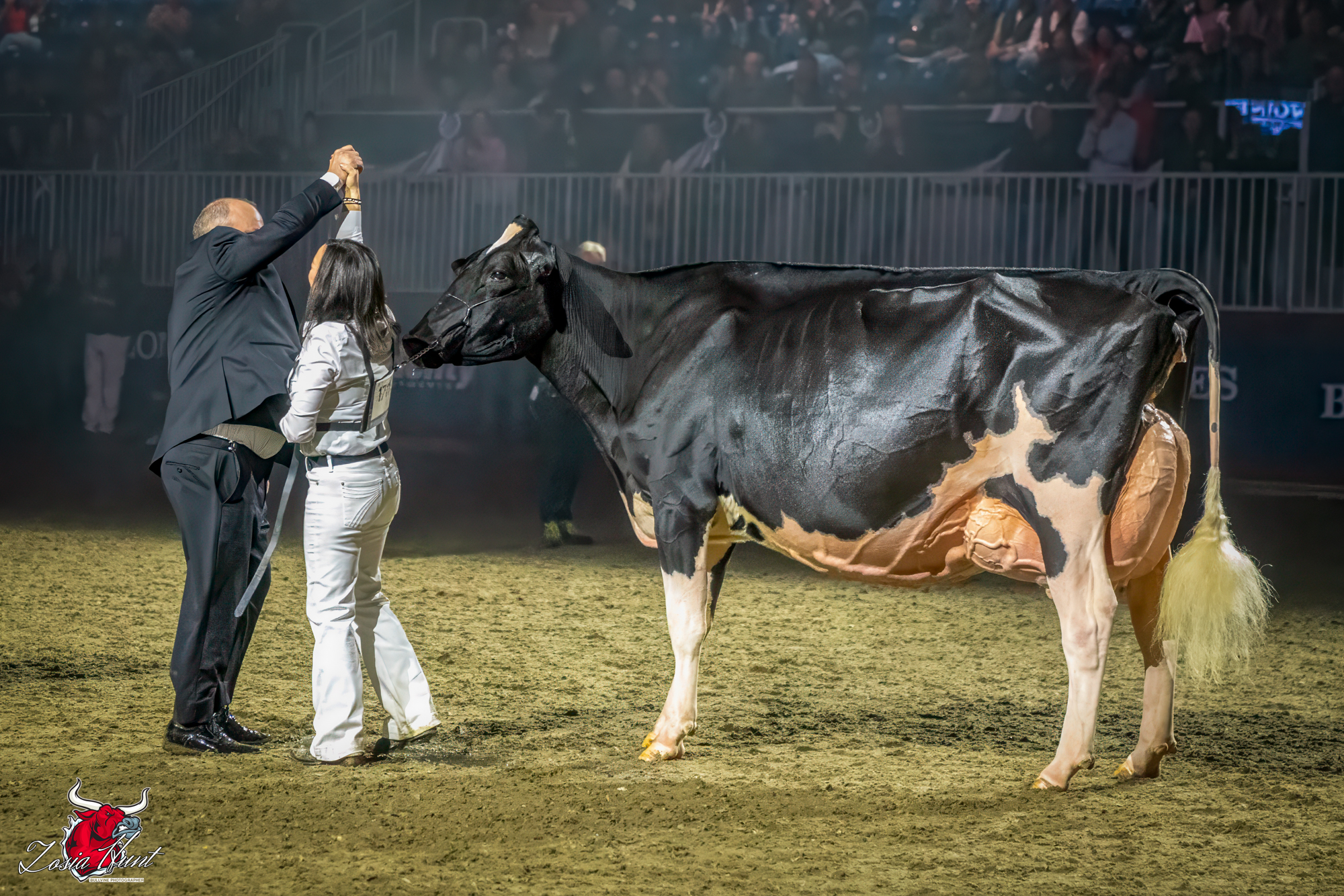
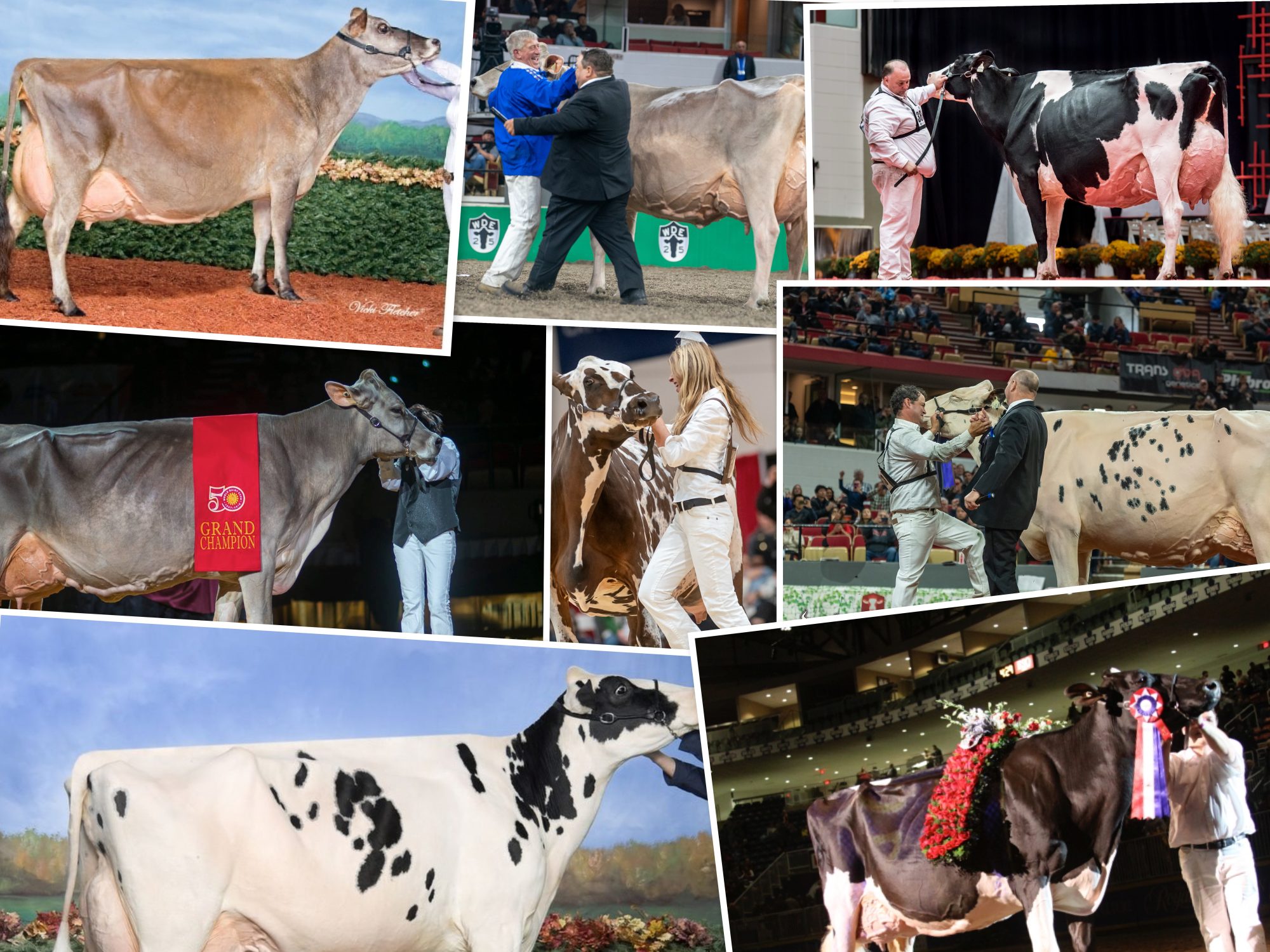
The salute that says “program,” not luck: Jeffrey-Way Hard Rock Twigs, EX-96, takes Grand Champion at the 2024 Royal Winter Fair. A second-generation EX-96 off the Hendricksons’ 40-year “T” family — the banner that just helped make them Holstein USA’s 2026 Elite Breeders.

Start with the cow on top. Jeffrey-Way Hard Rock Twigs scored EX-96 and was named Grand Champion at the 2024 Royal Winter Fair — a second-generation EX-96, out of a Doorman dam, sired by Cookiecutter MD Hardrock.  She didn’t come from a checkbook or an outcross gamble. She came from a maternal line Jeff and Kate Hendrickson have been building since the early 1980s. 

That’s the story Holstein Association USA just honored, naming the Hendricksons its 2026 Elite Breeders, to be recognized at the National Holstein Convention in Orlando this June 22–25.  Roughly 90% of the Jeffrey-Way herd traces to one cow family.  This isn’t about chasing the hot bull every August. It’s a study in what concentrating a maternal line actually does to a herd over four decades — the upside, the risk, and the discipline it takes. 

Where the “T” Family Started

The line runs back generations, and it shows in the pedigrees. Look at a recent Jeffrey-Way sale lot and the dams stack up like a family tree carved in stone: Tanawood EX-95, then Tanaya EX-92, Tameka EX-94, Tranquil EX-92, and deeper still.  That’s the “T” family — a tail-female line the Hendricksons have bred forward, one daughter at a time, for 40 years. 
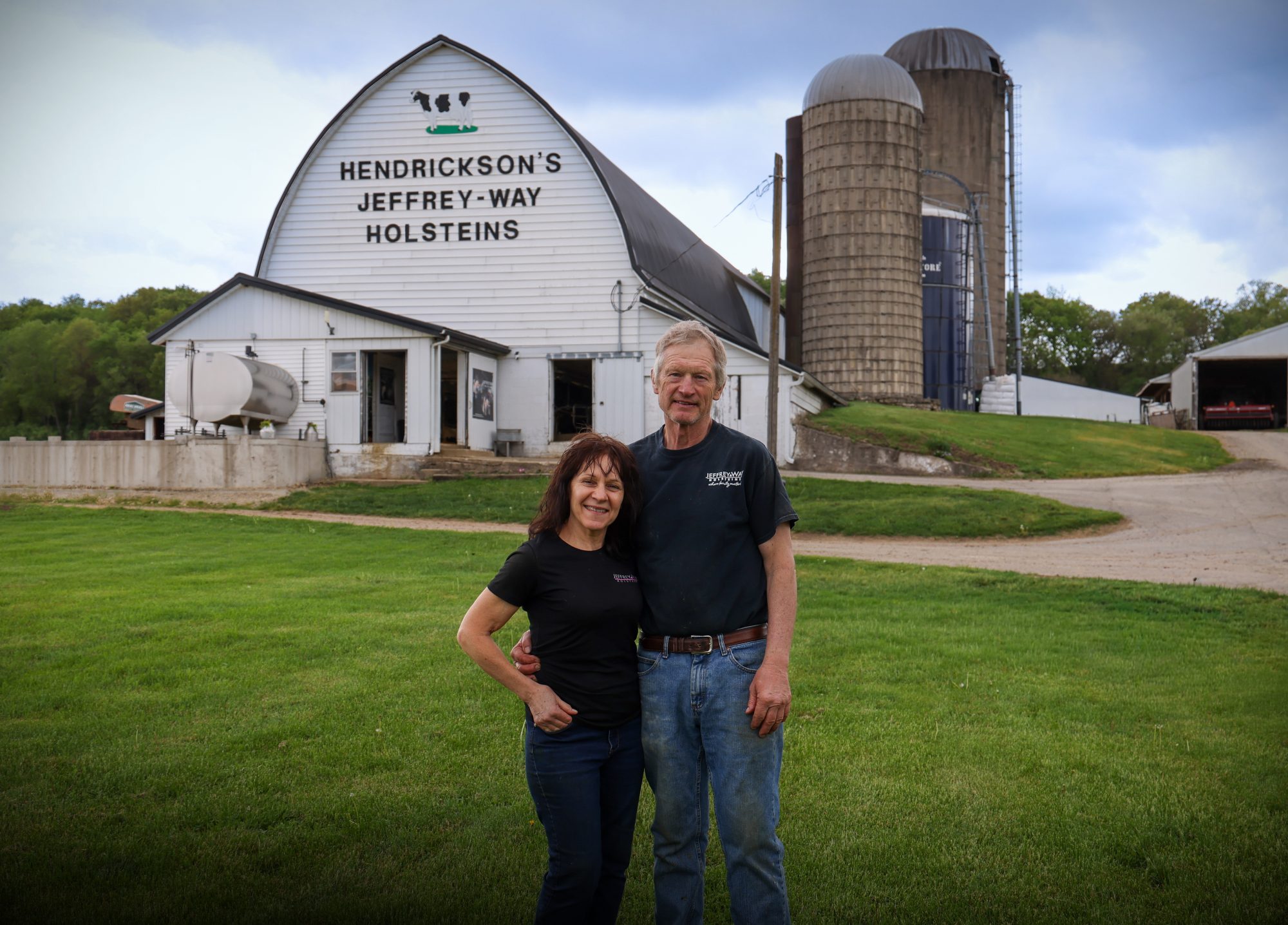
Where the 40-year bet still milks: Jeff and Kate Hendrickson outside the barn that carries their name in Belleville, Wisconsin. They started with Registered Holsteins as kids, built almost the whole herd off one “T” family, and never traded out of it — the discipline that just made them Holstein USA’s 2026 Elite Breeders.

Forty years ago this was a youth project. Jeff and Kate started with Registered Holsteins as kids, and the prefix grew up alongside them.  What’s striking isn’t the start — plenty of breeders begin with one good cow. It’s that they never traded out of the line. Decade after decade, as genomics arrived and proof sheets reshuffled the breed, they kept breeding back into the “T” family instead of chasing whatever topped the August run. 

That choice is the whole story. A breeder who commits to one maternal line is betting that depth beats breadth — that a family proven across generations is a safer foundation than the newest number on the list. The Hendricksons made that bet for 40 years, and the trophy case says it paid.

More Than One Branch on the Tree

Here’s the part that gets missed when people hear “90% from one family”: it isn’t 90% from one cow. A tail-female line that deep grows branches, and the Hendricksons have worked more than one. The “T” prefix is the trunk — Tanawood, Tanaya, Tameka, Tranquil — but the herd also carries a “Tina family” running through cows like Jeffrey-Way Saphire RC P EX-94 and Jeffrey-Way Mascot Tina-ET EX-91.  Same maternal foundation, different limbs. 

That branching is what keeps a concentration strategy from becoming a dead end. When you’ve got several proven sub-families inside one line, you can mate within the strength of the family without doubling up on the exact same animals every generation. It’s the difference between linebreeding and backing yourself into a corner. The Hendricksons have enough branches to keep choosing.

And it’s why a number like 384 Excellent cows is even possible off one foundation. You don’t get there by flushing a single donor over and over. You get there by building out the whole tree — Tate branch here, Tina branch there — and letting each one throw its own string of high-scoring daughters. 

A Family That Markets Itself

The “T” prefix isn’t just a pedigree anymore. It’s a brand buyers chase. This past March, Jeffrey-Way ran its first-ever public online sale through CattleClub.com — “this decision wasn’t easy,” the family wrote — offering “the best ‘T’ family members” and billing it as buyers’ first chance to get into the Twigs branch, with animals selling off the farm at N9385 Cty CC in Belleville. 

For a herd that spent 40 years keeping its best genetics in-house, opening the gate at all is a strategy shift worth noticing. You don’t sell into your own foundation lightly. The Hendricksons did it because demand finally outran what they could use themselves — when buyers are asking for a branch by name, holding everything back leaves money and reach on the table.

The depth shows up in the family’s newest stars. Jeffrey-Way Addison Sauna EX-95 is, as the farm put it, “the Holstein breed’s newest Excellent 95 scored cow” — and she’s polled and a Red Carrier, straight out of the “T” family. That matters. The Hendricksons built polled and Red genetics into a line better known for black-and-white show type, hitting two of the hottest market traits in the breed without abandoning their base. 

That optionality runs deeper than one cow. The herd has put homozygous polled and Red-carrier genetics into multiple “T” branches, so a buyer chasing polled, or Red, or just bulletproof show type can find it inside the same family.  When the breed’s priorities shift — and they always do — a line with that many doors stays marketable. The reach has gone international, too. Twigs’ descendants and embryos move through European genetics outlets, marketed as a foundation worth buying into.  When a Belleville cow family shows up in embryo catalogs across the Atlantic, that’s not luck. That’s 40 years of consistency the rest of the breed can finally see. 

Does 90% From One Family Mean an Inbreeding Wall?

It’s the first question a serious breeder asks. Concentrate a maternal line that hard and you risk stacking the bad in with the good — and breed-wide inbreeding has climbed for years as popular sire stacks narrow the gene pool. Our reporting on how one foundation sire ended up with a 15.8% relationship to the entire U.S. Holstein population shows how fast that concentration compounds. Read more: To-Mar Blackstar: The One-Embryo Holstein Sire Behind 15.8% of Today’s DNA – and the Genetic Debt in Your Herd.

The Hendricksons’ answer is in their classification record. Holstein International, profiling the herd, counted 59 Excellent cows among 109 milking — more than half the working string scored EX.  Across the herd’s history, Holstein Association USA credits Jeffrey-Way with 384 Excellent cows.  A deep cow family is the closest thing in dairy breeding to a moat: type, longevity, and components that show up generation after generation. The same one-daughter-at-a-time patience built the great franchise cow families that reshaped the modern Holstein. Read more: How Seven Franchise Cows: Roxy, Dellia, Blackrose, and Four Others Built Modern Holstein – One Daughter at a Time.

But concentration only pays when you cull as hard as you breed. A herd that holds 59 EX in the milking string is also shipping the animals that didn’t make the cut — and the discipline is in moving them, not falling in love with a pedigree. That’s the part of the Jeffrey-Way story the trophy doesn’t show. The inbreeding risk is real; the herd’s answer is that a family this deep, with this many branches, gives you enough good animals to stay selective, and modern genomic mating tools let you steer around the worst of the stacking.

The Cow That Proved It at the Royal

Twigs is where the strategy stops being theory. A second-generation EX-96 doesn’t happen by accident — it means the dam was good enough to score 96, and her daughter was good enough to match her.  That’s the line working exactly the way a concentration strategy is supposed to: each generation holding or improving on the last. 

She backed it up in the colored shavings. Twigs was named Grand Champion at the 2024 Royal Winter Fair — the kind of banner that puts a cow family on the international map and sends buyers looking for full sisters and embryos.  The Royal isn’t a county show. Winning it tells every breeder watching that this isn’t a one-good-cow operation. It’s a program. 

The Rest of the Roll Call

The family runs deep, and the cows the association named in its announcement read like a herdbook highlight reel — confirmed against breed records and the farm’s own listings: q106

  • Jeffrey-Way Hard Rock Twigs EX-96 — Grand Champion, 2024 Royal Winter Fair 
  • Jeffrey-Way Tanawood EX-95 — a 250,000-lb (≈113,000 kg) cow still milking on her 8th calf 
  • Jeffrey-Way Addison Sauna-PO-RC EX-95 — polled, Red Carrier, the breed’s newest EX-95 at scoring 
  • Jeffrey-Way Saphire RC P EX-94 — “Tina family,” more than 337,000 lb (153,000+ kg) lifetime 
  • Jeffrey-Way Format Tate-ET EX-93
  • Jeffrey-Way Tranquil-ET EX-92 and Jeffrey-Way Mascot Tina-ET EX-91
  • Jeffrey-Way Mars Tara-ET EX-90

Look at the sire prefixes — Hardrock, Addison, the polled Red & White lines coming through Saphire and Sauna. That’s a breeder reading each daughter, correcting where she needed it, and moving the herd forward across decades. No single bull built this. The cow family did, with a different sire layered on top each generation to fix what the last one left short.

What Does a 384-EX Record Actually Take?

The Hendricksons have held a spot on the Progressive Breeder’s Registry for 35 years — that part is confirmed.  Run the arithmetic: 384 Excellent cows across a span like that works out to close to one new Excellent cow a month — though the figure isn’t broken down by year, so treat it as a rough pace, not a steady cadence. 

Put it against your own barn. A solid registered herd might score a handful of cows Excellent in a good year. To hold 59 EX in a 109-cow milking string, you need cows that last — high lifetime production, low involuntary culling, and a type base that holds up to a classifier’s eye through multiple lactations.  Tanawood’s 250,000 pounds on her 8th calf, and Saphire’s 337,000-plus pounds, are the kind of numbers that make the point: this isn’t show type at the expense of the tank. 

And it pencils into milk. A million-cow classification study — the one we broke down in our Ed Bos feature — tied the functional traits classification rewards, the udders, feet and legs that keep a cow in the herd, to roughly $2,678 in extra lifetime milk revenue per cow. Read more: Ed Bos Picked the Same Traits for 50 Years. A Million-Cow Study Just Proved He Was Right — by $2,678 Per Cow.  Type and index usually pull in different directions. Doing both off one cow family — a Royal Grand Champion and a herd that more than half-classifies Excellent — is the rare trick most herds never crack. 

“It gives us a sense of pride to be recognized by this award,” Jeff Hendrickson said in the association’s announcement. “It’s a good feeling to know you’re recognized by your peers, and it provides a sense of accomplishment.” 

The Second Generation Is Already Winning

A cow family is only a legacy if someone carries it forward. The Hendricksons have that covered. The farm is now owned and operated by Jeff and Kate alongside son Brooks and Riley Hendrickson — and Brooks took a Grand Champion banner at the Royal with a four-year-old in 2024, the same show where Twigs went Grand. 

The bench runs deeper still. Trent Hendrickson has built his own operation, Trent-Way Genetics in Blanchardville, and in 2024 Holstein Association USA named him its Distinguished Young Holstein Breeder.  That’s not a participation ribbon — it’s the association’s signal that a young breeder is already building a program worth watching. And he built it on the same foundation, the “T” family genetics he grew up with, now running under a second prefix on a second farm. 

Think about what that says about the original bet. One cow family didn’t just fill one barn — it seeded two operations, in two Wisconsin towns, both winning at the Royal, with a national young-breeder award between them. Most herds spend a generation hoping the next one stays in dairy at all. The Hendricksons handed theirs a foundation deep enough to start over with. The “T” line built more than a herd. It built a bench.

What This Means for Your Operation

The Elite Breeder award goes each year to a living Holstein Association USA member, family, or partnership that’s bred outstanding animals and moved U.S. Registered Holsteins forward.  Strip away the Orlando ceremony and the Hendrickson record leaves five decisions worth weighing in your own barn. 

  • If one cow family already throws your best type and longevity, concentrate toward your strength — but pair it with a culling rule strict enough to keep the misses out of the milking string. A family becomes a moat only if you ship the misses as honestly as you keep the hits; 59 EX in a 109-cow string is a culling story as much as a breeding one. 
  • If you’re going hard on one maternal line, run an inbreeding check on every mating, not annually. That’s the difference between Jeffrey-Way’s moat and a genetic corner — genomic mating tools make it manageable, but only if you actually run them. Branches help too: the more proven sub-families you’ve got inside the line, the more room you have to mate without doubling up.
  • If you doubt classification pays, look at the milk. The functional traits it rewards — udders, feet and legs — tied to roughly $2,678 per cow in lifetime revenue in a million-cow study. 
  • If you want a family with staying power, breed in optionality. The Hendricksons put polled and Red genetics into a show-type line through Addison Sauna and Saphire, chasing emerging market traits without abandoning their base. 
  • If you’ve got genetics worth seeing, open the gate. A public sale, a Royal banner, an embryo listing overseas — visibility is how a single line earns a national, even international, audience.

If you want to put this to work in the next month, pull your own herd’s classification history and find the single cow family quietly carrying your type. Map its branches while you’re at it — which dams trace where, and where you’ve got room to mate within the family without stacking the same animals. That’s your “T” family, and you can’t build a 40-year line until you know which one you’d bet on.

Key Takeaways

  • One deep cow family can carry a whole herd, but only if you cull as hard as you breed — 59 EX in a 109-cow string is a culling record as much as a breeding one.
  • Concentration pays when the line has branches. Several proven sub-families inside one foundation give you room to mate within your strength without stacking the same animals every generation.
  • Pull your classification history this month and find the one family quietly carrying your type. Map its branches and run an inbreeding check on every mating, not just once a year.
  • Build in optionality. Layering polled and Red genetics into a show-type line, plus a public sale, is how Jeffrey-Way turned one tail-female line into national and European demand.

Forty years ago this was a youth project and a string of “T” cows. Now it’s the breed’s top breeding honor, a cow family selling off the farm, embryos moving through Europe, two generations winning at the Royal, and a Grand Champion standing on top of it all.  So here’s the question worth taking back to your barn: which cow in your herd today is the one your grandkids will be tracing back to? 

Learn More

The Sunday Read Dairy Professionals Don’t Skip.

Every week, thousands of producers, breeders, and industry insiders open Bullvine Weekly for genetics insights, market shifts, and profit strategies they won’t find anywhere else. One email. Five minutes. Smarter decisions all week.
NewsSubscribe
First
Last
Consent

The Classifier Behind Eight EX‑97s: Bruno Jubinville’s Lifetime Crusade for Balance

In 1997, Bruno Jubinville couldn’t order coffee in English — but he could read a cow. Today, his balance‑first gospel is shaping barns from Quebec to Brazil.

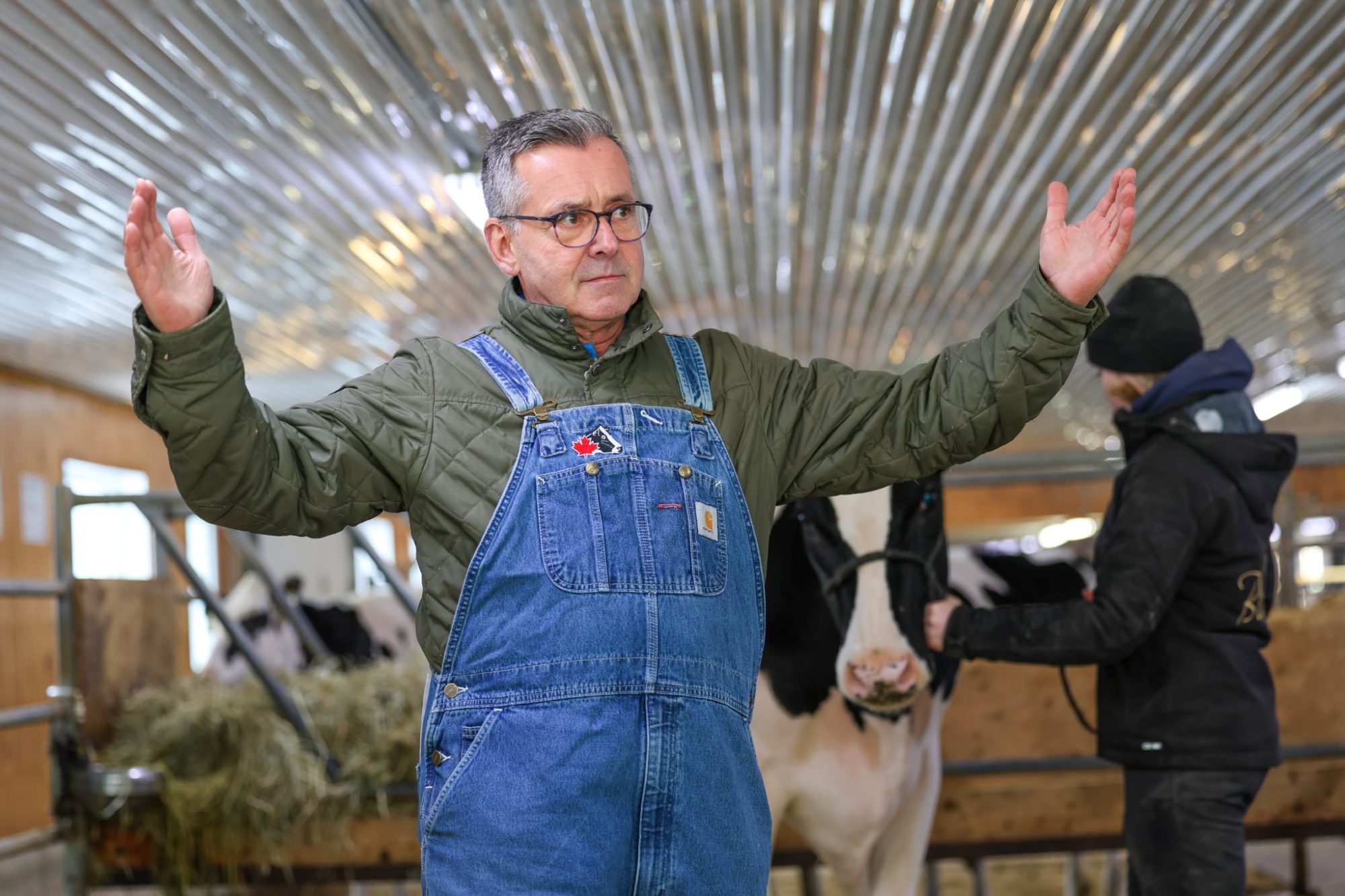
Bruno Jubinville demonstrates the gospel of balance to classifiers from 50 countries during an international training session at Blondin Sires in St. Placide, Quebec. Twenty-nine years of reading cows — distilled into two open hands and one message. 

The Purina truck was still running when Bruno Jubinville walked into the barn.

He wasn’t there to evaluate cows. He was dropping off bags of heifer feed — a fill-in job after the Master Breeder herd he’d worked at for nine years had dispersed. But the Holstein Canada classification crew had just wrapped up their visit, and the classifiers were still hanging around when Bruno came through with his delivery.

One of them — half joking, half challenging, the way dairy people do across barn aisles everywhere — turned to him. “How many points would you give those cows?”

Bruno glanced at the animals. He said it for the laugh, he’d later recall. “87, 86.”

Both scores matched exactly what the official classifiers had just recorded.

Within a week, Holstein Canada was on the phone. They needed a French-speaking classifier from Quebec. There was just one hitch. Bruno Jubinville didn’t speak a word of English.

Not one.

That was April 1997. He wouldn’t leave Holstein Canada for nearly twenty-nine years.

Concrete Foundations and Cow Foundations

Bruno grew up in Coaticook, a small agricultural town in Quebec’s Eastern Townships, about twenty minutes from the Vermont border. It’s deep agricultural country — the kind of place where kids absorb the rhythms of dairy whether they mean to or not.

By twelve or thirteen, he was doing summer work on local farms — not purebred operations, just regular hay-season labour that puts calluses on your hands before your voice changes. After school, he crossed the border to Manchester, New Hampshire, where he poured concrete foundations for houses. Hard, physical, good money.

But family reasons brought him back to Quebec, where he landed at Chacook Holstein — a Master Breeder herd where he’d spend the next eight or nine years doing something he never planned on: learning to read cattle.

“I learned everything there,” he says. “They were really good cowmen. They bought lots of cows, we sold them, and I learned a lot.”

No animal science degree. Nine years in a barn where the standard was Master Breeder or nothing — watching, handling, studying cows that had to be right. That’s probably the credential that matters most.

When Chacook herd was sold, Bruno took the Purina delivery job. Supposed to be temporary.

Turned out to be a runway.

“Chantal Translated for Me. They Gave Me the Job.”

After that barn-floor audition — truck still idling outside — things moved fast.

Holstein Canada needed a Quebec-based classifier, and Bruno was invited to a formal evaluation: score six cows in front of a board with senior staff and veteran classifiers. He drove there with Chantal Chalette, a perfectly bilingual colleague who’d been asked to come along for a very practical reason.

Bruno’s English was, by his own admission, “zero.”

Every time the board asked a question, Chantal translated. Every time Bruno gave his assessment, she relayed it back. At the end, she turned to him with a line that belongs in a movie: “I translated for you. They’re going to give you the job.”

Bruno wasn’t so sure. That night, the phone rang for both of them at the same time. He was in.

He spent his first two or three years classifying across Canadian provinces without being able to communicate directly with English-speaking breeders. He’d walk in, evaluate the cows, give the final score, and leave. The numbers did the talking.

But it gnawed at him.

“I said to Jay Shannon, I would like to have an English course,” Bruno recalls, “because I want to understand the people who speak English. I want to work with them better and understand what they do.”

He took the course. Think about that. Nobody asked him to. Nobody expected it. A guy already proving he could do the job across multiple provinces just decided the numbers weren’t enough — he wanted to connect with the breeders he served.

Sixty Cows a Day and the Dark Alberta Roads

Here’s something people outside the classification world don’t appreciate — what the job actually looks like, week in, week out.

You leave home on Monday morning. Early. If the first farm is five hours away, you’re scoring cows by 1:30 in the afternoon. If it’s closer, maybe 10 AM. Four to six herds a day. Around sixty cows. Some breeders want you there at 4 AM so the udders are full. Others are fine with 7. You try to finish by five. You don’t always.

The work itself is quieter than people think. You stand behind the cow. You read the rear legs — the set, the angle, the way she carries weight. You note the udder floor, the fore attachment, and the teat placement. You assess the loin width, the body depth, and the spring of the rib. Sixty times a day, five days a week. The good classifiers see it in seconds. The great ones see what it’ll look like in three lactations.

Then the phone calls. Monday nights, Tuesday nights, lunch breaks — you’re scheduling next week’s visits while still grinding through this week’s.

“It’s really, really important to give a good service to the breeder,” Bruno says. “And those team members are really, really passionate about what they’re doing. You need to be. Because you’re always by yourself on the road.”

The isolation is the part nobody talks about. Some nights, you come back to a hotel room after a breeder was unhappy with a score, and you sit with that alone. No colleague to debrief with. No team dinner. Just you, the ceiling, and the knowledge that you’ll do it all again at 7 AM.

And those Alberta winters in the late ’90s — before GPS was standard, classifiers navigated by written directions. Drive five miles, turn at the barn with the blue roof, look for the light. Six miles into the darkness without one? You’re lost.

“In BC, you score more cows per day. In Quebec or Ontario, more herds, fewer cows per stop,” Bruno explains. The geography shaped the grind differently across provinces. The grind was constant everywhere.

Five days a week. Every week. For twenty-nine years. In 1997, punching linear scores into an early handheld that was basically a glorified calculator. By 2021, doing it on Connexxion.

Tom Showed Him the Passion

Ask Bruno who shaped him, and three names come up right away: André Tardif, Gilbert, and Tom.

“André Tardif showed me to be professional — always — when I’m doing my job,” Bruno says. “Gilbert hired me. And Tom — Tom showed me the passion. He transferred to me his passion.”

Tom Byers. Thirty years at Holstein Canada — eventually rising to Head Classifier — he was originally from Scotland and classified more than 300,000 cows over his career. The Bullvine profiled Tom years ago, and if you know his work, you see his fingerprints all over Bruno’s approach — the emphasis on education, the refusal to let a final score substitute for actual understanding of an animal.

Bruno absorbed Tom’s philosophy completely. When he started doing international workshops for the World Holstein Friesian Federation, Bruno ranked second among the presenters his very first time out — a performance he credits directly to what Tom taught him.

Here’s the thing Tom drilled into him — the insight that became the backbone of Bruno’s entire professional worldview. “At the end, I don’t think the final score is really important,” Bruno says. “It’s the linear code. Every country, when they look at our genetics, they work with our linear codes — not with the final score.”

The score is for the breeder’s wall. The linear traits are for the breed’s future. If you’ve ever wondered why the classification number everyone obsesses over isn’t actually the data that moves the needle on genetic progress, there it is, straight from a man who spent three decades inside the system.

Friday at 7 AM. Two 97s. One Weekend to Madison.

In Holstein history, Canada has had 11 cows that scored 97 points. Bruno participated in classifying eight of them.

Eight 97s, three breeds, one eye. The cows Bruno Jubinville helped classify to EX‑97 across his 29-year career — Holsteins, a Jersey, a Brown Swiss, and an Ayrshire. “All of them have a little defect,” he says. “All of them.” That’s what makes 97 extraordinary, not perfect.

He rattles off the names the way other people name their kids: James Rose, Kendra, Hailey, Shakira — and then beyond the Holsteins, Gorgeous the Jersey, Brown Heaven Fantasy the Brown Swiss, and the Ayrshire, View Village Gentleman Joy. Each one carries a memory so vivid you can practically feel the barn humidity in his voice.

The morning that sticks out the most is a Friday at 7 AM at Pierre Boulet’s farm. Bruno and his colleague Daniel were there, and two cows — Thrulane James Rose and Bruynland Strom Kendra — both scored 97 on the same visit.

“We were really nervous,” Bruno recalls, “because we scored 97 for two of them, and that put a lot of pressure on us.”

Both cows left that same weekend for Madison — World Dairy Expo. Rose, who was actually sick and resting when people were debating which cow deserved what, would go on to change the direction of the show ring itself.

“Rose was really ahead of the breed at that time,” Bruno says. “She changed the show. Smaller cows, a little bit. Before, it was all Logic — the Duke, so big and tall and long. Then Rose arrived.”

And Bruno was right there at the inflection point, clipboard in hand.

When you ask him which 97 was the most complete, he doesn’t hesitate. “Shakira. She was the most complete 97 I scored. On her legs, mammary, dairy strength — I would like to see the rib structure just a tiny bit more. But she’s the most complete.”

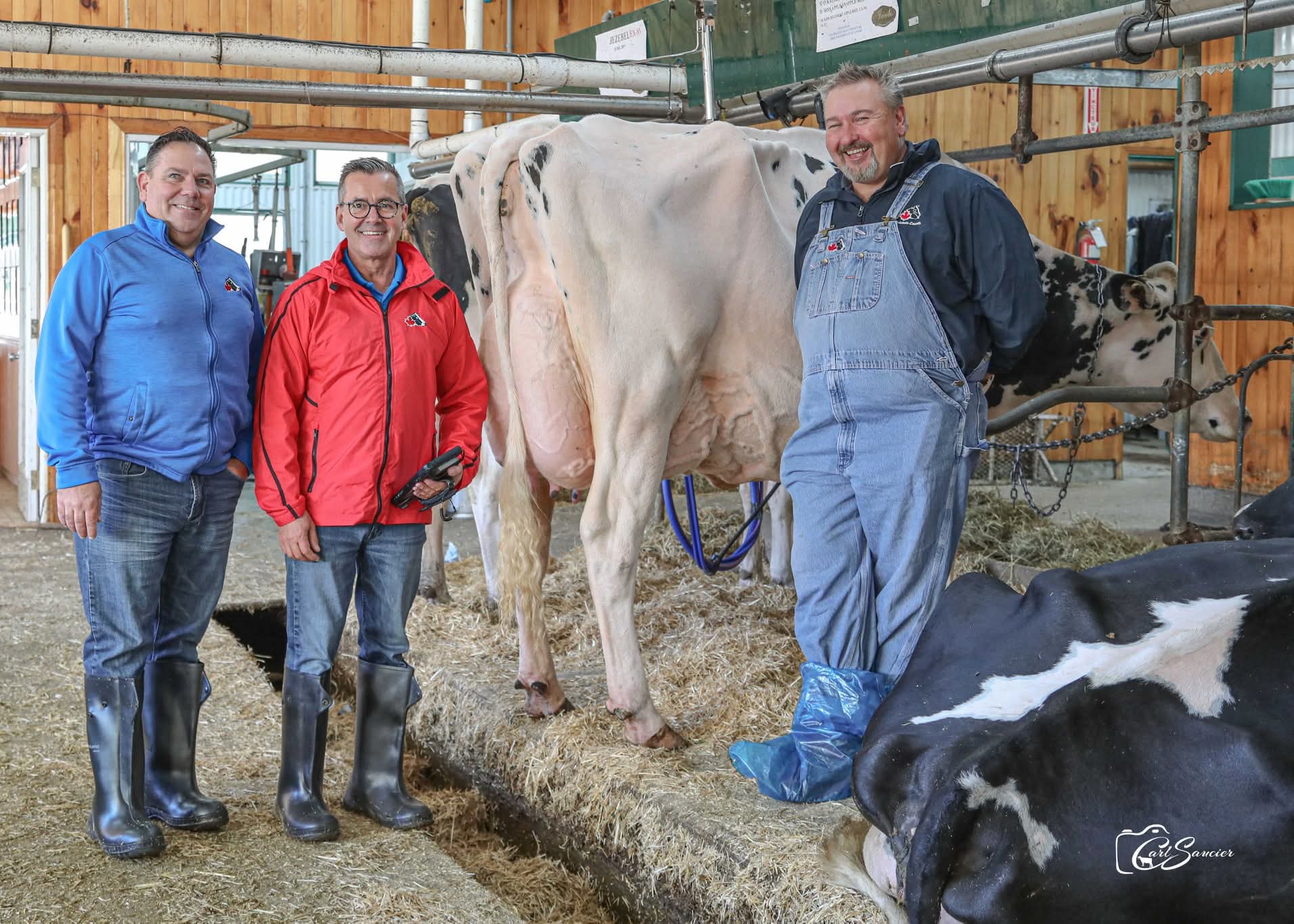
Remi Bernier, Bruno Jubinville, and Dave Weitzel with Erbacres Snapple Shakira EX‑97 — the cow Bruno calls “the most complete 97 I ever scored.” On her legs, mammary, dairy strength, she was as close to perfect as the system allows. Almost. (Photo: Carl Saucier)

Then he says the quiet part out loud — the thing that reveals how a great classifier actually thinks: “We need to understand — 97 points is not perfect. All of them have a little defect. All of them.”

He walks through the others with the reverence of a man who knows he’ll never see their like again. Vandenberg Amedeo Gorgeous — the Jersey — was a tank, the widest udder he’d ever laid eyes on. Hailey walked like a princess, so stylish that “when she arrived on the ring, nobody was talking.” And View Village Gentleman Joy — an Ayrshire he first scored as an 88 in first lactation, then 97 in a later round — remains “really special.”

His eye worked across breeds, not just Holsteins. He classified Brown Heaven Fantasy to 97 as a Brown Swiss, and scored another Brown Swiss — Iroquois Acres Jong Cali at Lookout Farm — to 97 alongside colleague Chantal Chalette. He also classified Goldwyn’s 1,000th Excellent daughter in Canada — Donar Pally Jo Goldwyn EX-90, a fourth-lactation cow with over 53,000 kg lifetime production at the time, bred and owned by Dorothea Beier and Horst Schulz in St. Cyrille, Quebec.

The Gospel of Balance

If there’s one word Bruno would stitch into the coveralls of every dairy farmer on the planet, it’s balance.

His favourite way of explaining it involves a football player he sat beside on a flight home from British Columbia. The guy was about 6’2″, over 300 pounds — a lineman who passed the ball to the quarterback. In the airplane seat, he looked enormous. Uncomfortable. Too big for the space.

“But when he started to walk at the airport, he was really functional,” Bruno says. “Strong and wide. The problem wasn’t that he was too big. The problem was that the seat was too small.”

Then the pivot: “That means every cow doesn’t fit everywhere. It depends on what kind of barn you have, what kind of installation you’ve got. Not every bull fits everywhere. Not every cow fits everywhere.”

It challenges a tendency that persisted in dairy breeding for generations — the pursuit of extremes. Extreme stature. Extreme frame. Extreme openness. Bruno watched that trend come, peak, and — finally — start to recede.

“When I started classifying, we’d sometimes finish herds at a 72 or 73 average,” he says. “Now we don’t see that anymore. It’s hard to find a heifer at 75 or 76. Most are 80 and over. We’re on the right path. I’m really, really happy about that.”

Walk into almost any Canadian herd today, and the spread among two-year-olds is maybe five or six points. That was unthinkable when he started. The consistency of modern cattle — driven by decades of genetic progress and the classification system’s increasing focus on functional traits — is something Bruno considers a genuine triumph.

But there’s a caveat, and it’s a big one.

The breed is now calving heifers at 22 to 24 months. Some of those heifers are milking 40 to 45 kilograms a day in first lactation. “It’s really hard for them,” Bruno says. “When a heifer is producing 45 kilos, the energy she needs — she’s running a marathon every day. She needs something behind her to produce and still stay in the barn.”

That “something behind her” is structural balance — the legs, the loin, the feet, the udder attachments that let a cow absorb the punishment of high early production and come back for second, third, fourth lactation. Without it, she’s a one-lactation wonder. And the industry can’t afford one-lactation wonders — not at today’s replacement costs.

His international presentations carried titles that doubled as manifestos — The Symmetry of a Cow and The Secret of Balance. Same message, delivered in barns from Southern Alberta to Cremona, Italy: you can have all the genetics in the world, but if the cow can’t stand on her feet and hold her frame together, the genetics don’t matter.

He’s got a dozen versions of the same teaching story, too. One breeder told him flat out: “I don’t like type. I don’t like type.” Bruno scored the herd — 81, 82, nothing special. Then he scored one cow 85. The breeder pointed right at her: “She’s my best. She gives lots of milk.” Bruno just smiled. “Yeah. But this is the type, you know.”

Locomotion: “My Baby”

If there’s one trait Bruno claims personal ownership of in the Canadian classification program, it’s locomotion.

“I always, always pushed to have locomotion,” he says. “For a long, long time. It was my goal before I left, to have locomotion evaluated. Because I think it’s really, really important.”

Canada’s challenge was unique. With a large proportion of tie-stall barns — particularly in Quebec — locomotion was harder to evaluate and harder to weigh properly compared to countries where cows walk an hour or more to the milking parlor every single day.

But Bruno’s international work opened his eyes to how critical the trait is once you step outside a tie-stall reality. In the Azores, cows walk through steep volcanic hills for one to two hours daily to reach the parlor. In New Zealand, they’re outside 99% of the time. And in England? The economic weighting on locomotion is enormous — because the data proves better-moving cows make more money.

“In England, the weighting of locomotion is really, really high,” Bruno explains. “They have numbers behind numbers. I mean money. When you have good locomotion, your cows make more money.”

He and colleague Jill Nelson developed a locomotion scoring video — a visual training tool scored on a 1-to-9 scale — that went out to classifiers across the country. It was one of the tangible tools Bruno left behind when he moved on.

Within Canada’s system, the three most important components for feet and legs are heel depth, side view of the rear legs, and rear leg rear view — all feeding into locomotion assessment. “I think we’re pretty good now,” he says. “I’m really happy.”

Getting Ten Countries to Agree on What a 7 Means

Classification harmonization — getting ten countries to agree on what a 7 for rear leg rear view actually means — sounds bureaucratic until you realize it determines which Canadian bulls get used in Colombia. Bruno sat on the WHFF Type Harmonization Working Group alongside representatives from the United States, France, Germany, Hungary, Italy, and New Zealand, meeting at international workshops to work through the painstaking details of making classification data comparable across borders. When he couldn’t make the most recent session in Cremona — he was sick — Carolin Turner stepped in. When semen from Canadian bulls flows to dozens of countries, and buyers in Brazil or Australia rely on Canadian linear data to make purchasing decisions, this harmonization work has real economic consequences.

Bruno also took the Canadian classification system directly to Colombia, running training courses for local classifiers. He worked across Australia, Brazil, and numerous other countries. And he wasn’t just exporting a system — he was learning.

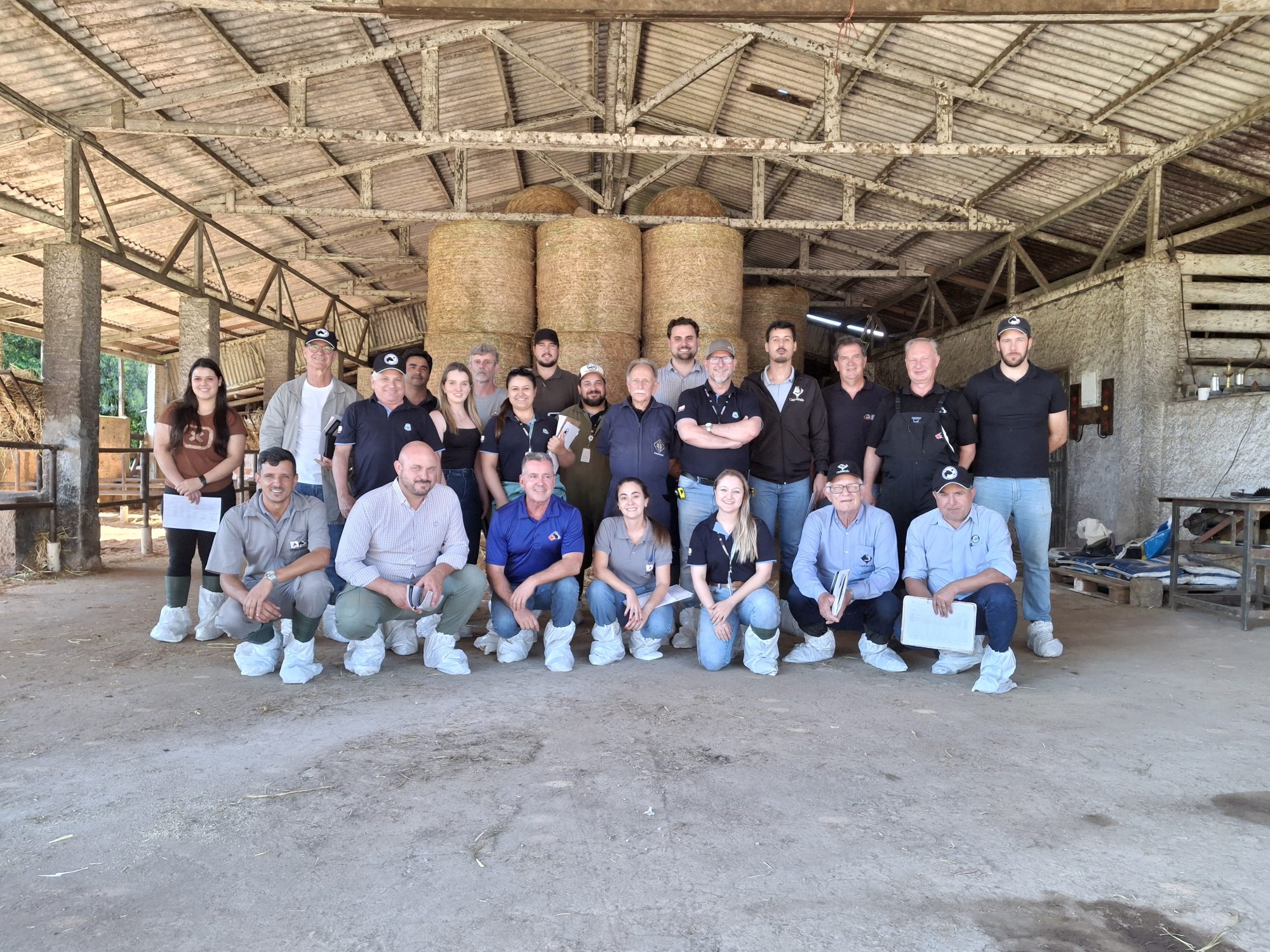
Bruno Jubinville (front row, centre) with Brazilian classifiers after a hands-on training session, November 2025. Different hemisphere, same language — balance.

“Every time, I love everywhere,” he says. “It’s so incredible how people like Canadian cows, how they like what we’re doing. They listen a lot, and they learn with us — and we learn too.”

Carolin Turner served as his co-coordinator for years at Holstein Canada, and when the CEO named Brad Eggink as Classification Manager back in 2017, he singled out Bruno and Carolin as “key leaders of our dedicated Classification Team” who would “take our Classification program to the next level.” That kind of endorsement doesn’t come from punching a clock.

Carolin Turner and Bruno Jubinville in their early Holstein Canada days. Nearly three decades later, when Bruno was too sick to make the WHFF session in Cremona, it was Carolin who stepped in — the kind of partnership that doesn’t need explaining

But Bruno pushes back on the nationalism that sometimes creeps into breeding conversations. “We talk about Canadian kind, Canadian kind. But I think everybody, every herd in the world, needs the same cows. Balance. This is where we are. The breeding is all around the world now.”

Still, when he sees balanced, functional cattle abroad, something sneaks in. “In my head, I always say, ‘This is a Canadian cow.’ I don’t know why. But it’s like — balance. We talk about balance.”

The Genomics Question

When genomic testing arrived, fear swept through the classification world. Bruno remembers it clearly.

“Classifiers were scared,” he says. “They said, ‘Genomics will take our jobs.’ People were saying we don’t need classification anymore.”

If you can predict a cow’s type traits from a DNA sample, why send a human to her barn? It wasn’t an unreasonable question. A lot of people in the industry were asking it.

Bruno’s answer is pragmatic: “Genomics is one of the best tools we’ve ever had. But it’s one tool in a box of tools. If genomics is so important, we need classification to prove the numbers. To improve reliability. You need classification.”

Tom Byers made the same point years earlier. “Any progress we’ve made is through classification and milk recording,” Tom shared in a 2018 interview. “Genomics wouldn’t exist without them.” Bruno and Tom — mentor and protégé — singing from the same hymnal on this one.

And they’re right. Genomic predictions are only as good as the phenotypic data they’re trained on. Without ongoing classification — without actual people evaluating actual cows — the reference population powering those predictions stagnates. Reliability drops. Breeding decisions get worse.

The proof is already showing up. Some genetic operations now have five, six, or seven generations with no classification or milk recording. The validation gap is growing. And the industry relying on those numbers hasn’t fully reckoned with what that means.

“When genomics arrived, some people totally forgot about family,” Bruno says. “They forgot about cow families. We always talk about bulls, bulls, bulls. But we need to talk about females. Both. We need both to improve the breed.”

That position has gained real traction lately, especially as breeders have seen genomic overreliance produce its own set of disappointments — bulls whose daughters don’t match the predictions, and cow families that fall apart after one flashy generation. The Bullvine’s own recent reporting on inbreeding trends and the Blondin Sires approach to deep-pedigree sire selection underscores just how relevant this concern has become. The pendulum is swinging back. Slowly.

First Out the Door With Connexxion

When Holstein Canada launched Connexxion in April 2021 — the new on-farm digital platform replacing a system in use since 2005 — they didn’t send a junior classifier to the debut. They sent Bruno. He headed to Peartome Holsteins for the first official classification visit using the new technology.

Classic Bruno. He asked for English courses when nobody expected him to. He championed locomotion when the tie-stall lobby pushed back. He adopted new tech when it improved service delivery. The thread connecting all of it? Whatever helps the breeder, do it.

Sandra at Véronamour, a brand-new Holstein Canada member when Bruno showed up for one of her early classification visits back in 2012, put it: “He provided us with so much information — he took the time to define each trait, the ideal traits that we should strive for in each animal, and why. It was a very informative visit for me; I use the information every day.”

That was fourteen years ago. The approach never changed.

The Part of the Cow Nobody Talks About

Before the interview wrapped, Bruno circled back to the thing he really wanted to say — the technical detail closest to his heart.

“Some countries still don’t evaluate loin,” he says, “but for me, it’s one of the most important parts of the cow.”

Most breeders think of the loin as the curvature of the topline. Bruno defines it differently. The loin — those vertebrae on top — needs to be strong and wide, side to side, because it supports the internal angle of the reproductive cavity. A strong loin keeps the fertility system at the proper angle. In the first lactation, you won’t notice a problem. But as a cow ages, a weak loin shifts that cavity angle, making her harder to breed, and shortens her productive life.

“We need to check inside the cow,” Bruno says. “When you look at a cow, not just outside. If she’s got a good loin, you can see that the internal angle of the cavity and the fertility system is right. This is why it’s so important for me.”

And then he delivers a line that might be the most provocative thing he said in the whole conversation: “I think the genetic potential is higher than what breeders can use right now because of management level. The genetics are pretty, pretty high now. I can’t imagine in the future we’ll have significantly better cows than this.”

He’s not saying we’ve hit the ceiling of genetic progress. He’s saying the gap between what genetics can deliver and what management practices currently capture is the real frontier. The cows are ready. The barns — the protocols, the transition management, the foot care, the facilities — aren’t always keeping up.

The Math That Makes Balance Pay

Bruno’s argument for balance and longevity isn’t just philosophical. Run the numbers, and it snaps into sharp focus.

Canada’s national average is roughly 2.5 to 2.7 lactations. At current replacement costs — CA$3,000 to $3,500 for a springing heifer — every additional lactation a cow completes is worth roughly $1,500 to $2,000 in avoided replacement cost alone, before you even count the peak production she gives in lactations three and four.

Here’s the math: push your herd from 2.7 to 3.5 average lactations on 100 cows — that’s 80 additional cow-lactations at roughly $1,750 in avoided replacement cost each. Call it $140,000.

That’s your robot payment. That’s your barn renovation. That’s the difference between scraping by and building equity.

And classification — the system Bruno championed for nearly three decades — exists for exactly this reason: to identify and reward the structural traits that let a cow last.

“After one hundred years of classification,” he says, “people still don’t know enough about why we classify. The program is built for two things: longevity and productivity. That’s the goal.”

“I Never Want to Stop Working With Cows”

After twenty-nine years at Holstein Canada — rising from field classifier to Manager of On-Farm Operations — Bruno made the move that surprised half the industry and made perfect sense to the other half. He joined Blondin Sires.

Not as a salesman. As an ambassador.

“I don’t want to sell semen,” he says bluntly. “I’m not a salesman. My role will be to educate people. What is a good cow? What is a balanced cow?”

The fit makes sense. Blondin Sires — owned by Simon Lalande, Dann Brady, and Nicolas Lalande out of St. Placide, Quebec — is built on exactly the philosophy Bruno has been preaching for three decades: deep pedigrees, functional type, and cow families you can actually trace back through generations of real milk records. Dann Brady co-founded Blondin Sires in part because he couldn’t find bulls backed by the kind of documented maternal lines he wanted in the major AI catalogues. That’s Bruno’s language. That’s balance.

“With my twenty-nine years,” Bruno says, “this is what I want to give — more follow-up to the breeders, more help with the breeding they do. Because it’s an investment, it’s really, really important.”

“It was hard for me to make the decision to leave, because I really love the team I work with,” he admits. That team — Carolin Turner and the classifiers he’d trained and mentored across every province — had been his professional family for the better part of three decades. Walking away from that takes a different kind of courage than walking into a barn at 4 AM.

But he’s got strong teammates at Blondin. Brian Carscadden, the Executive Senior Manager who brought more than 25 years of international sire analyst experience to the role, is deeply involved in the company’s growth strategy. And Dann Brady may have spent more time studying pedigrees and cow families than anyone in the Canadian industry — the kind of person Bruno can learn from while bringing his own three decades of type evaluation to the table.

“I still learn a lot about bulls and so many numbers,” Bruno says. “But I think it’s really important to help breeders with what they really need in the field. This is what I want to do.”

Still Learning

There’s a photograph floating around social media of Bruno at Mapleburn Farms during a classification visit. In the background, the farm kids are drawing cows on paper while he works.

That image says more than any career summary could.

“If we explain to them when they’re young,” Bruno says, “they will know in the future, when they’re on the farm, how important it is to have balanced cows and balanced herds. Because longevity — it’s the clue of the future.”

Bruno Jubinville spent his career inside one of Canada’s most important dairy industry programs. He scored eight of the eleven highest-classified cows in the country’s history. He pushed for locomotion when it wasn’t fashionable. He took the Canadian system to Colombia, to Brazil, to Cremona, and brought lessons home every time. He was the first to use Connexxion, the first classifier from Quebec to ask for English courses, and one of the last people you’d ever catch bragging about any of it.

“I never expected you would do an article on me like this, you know?” he says near the end of the conversation.

Twenty-nine years. Eight 97-point cows. A dozen countries. One word — balance — repeated so consistently that it became a career.

At Blondin, the barns are different. The conversations have shifted from linear scores to mating decisions. But the message won’t change. It hasn’t changed in three decades. It won’t start now.

Balance. Longevity. Respect the breeder. Love the cow.

And keep learning. Every single day.

Key Takeaways

  • A “joke” score from behind a feed truck turned into 29 years of classification, eight EX‑97 cows, and one of the most influential “eyes” in Canadian Holsteins.
  • Bruno’s bottom line: balance pays. Cows that last 3.5 lactations instead of 2.7 can put roughly $140,000 back into a 100‑cow herd in avoided replacements.
  • He helped drag locomotion, loin strength, and functional udders from the margins into the middle of the scorecard — exactly what 2025 robot barns and high‑yield fresh cows need.
  • Genomics, in his view, is just one tool in the box; without ongoing classification and cow-family data, the predictions drift, and inbreeding problems snowball.
  • At Blondin Sires, he’s taking that “classifier brain” straight into sire selection, focusing on deep cow families and balanced type instead of chasing the latest genomic rocket.

Continue the Story

The Sunday Read Dairy Professionals Don’t Skip.

Every week, thousands of producers, breeders, and industry insiders open Bullvine Weekly for genetics insights, market shifts, and profit strategies they won’t find anywhere else. One email. Five minutes. Smarter decisions all week.
NewsSubscribe
First
Last
Consent

The Breeder Who Refused to Quit: How Japan’s Most Stubborn Farmer Created Japan’s Only EX-96 Holstein

Japan’s most stubborn farmer created history with one perfect Holstein cow.

The call came from Hokkaido on a cold March morning. Nobuo Sato had passed—and honestly? The dairy world felt a little emptier that day. Most folks outside serious dairy circles won’t recognize the name, but here’s what you need to know: Sato did something no one else in Japan has ever pulled off. He bred a cow that scored EX-96. In Japan’s dairy history, this event occurred exactly once. And it sure wasn’t luck.

When Rejection Becomes Rocket Fuel

Picture this: you’re 16 years old in 1965, engineering textbooks spread across your desk, when your older brother decides farming isn’t for him. Suddenly, you’re staring at a barn full of Holstein cows in Hokkaido—a place so dairy-focused the cattle outnumber humans four to one in towns like Toyotomi.

“I wanted to become an engineer,” Sato would tell people decades later. But duty called louder than dreams.

What happened next? The kid threw himself into learning everything about cattle with the kind of intensity that only comes from equal parts determination and… well, call it stubborn pride. Friends pushed him toward showing, which is where he discovered just how brutal that world could be.

“You’re not ready. Give your place to someone else.”

Can you imagine? He’d legitimately earned his spot at the Hokkaido state show, but the old guard wasn’t exactly rolling out welcome mats. Same story with the 4-H Club—flat rejection.

Here’s what separated Sato from every other wannabe, though: instead of packing it in, every “no” just fed this fire that would burn for five decades.

“I’ll prove myself one day.”

And boy, did he ever.

What Makes EX-96 So Special? Holstein classification scores five key areas: Udder (40%), Dairy Strength (20%), Feet & Legs (20%), Front End & Capacity (15%), and Rump (5%). The Excellent range runs 90-97 points, but EX-96 demands near-perfection across every category simultaneously. According to Holstein USA, approximately five cows are awarded EX-96 status annually across the entire United States. In Japan’s history? Just one.

The Philosophy That Changed Everything (And Why It Still Matters)

Early on, Sato developed what became his guiding principle—one simple question that shaped every decision: “How can cows live happily for their entire lives?”

Sounds sentimental? It wasn’t. It was a revolutionary business strategy disguised as common sense.

“My father used to say cows may seem dull, but they are in fact very sensitive,” his son Michihiro recalls in an interview for this article. “Feeding, milking, resting—always at the same times every day. He understood their nature deeply.”

Walk onto the L’Espoir farm in its heyday and you’d witness this approach in action. Barns immaculate, pastures pristine, feeding protocols followed with Swiss watch precision.

Here’s a scene that captures it: Sato would grab a handful of stemmy hay, shake it at visiting nutritionists, and challenge them: “You tell me—can you really make milk with this?” He understood the chain reaction—superior cows required superior nutrition, which in turn demanded superior forage, which necessitated superior soil management. No weak links allowed.

The genius was how he taught that successful showing was simply “an extension of everyday care.” While other farms singled out potential champions for special treatment, the L’Espoir approach maintained the entire herd at show condition daily.

That philosophy resonates differently in 2025, with replacement costs at $2,660 per head, according to USDA data, and longevity becoming increasingly valuable economically.

The Foundation Investment That Started It All

Foundation of Excellence: Tyro Hagen, the exceptional cow whose purchase marked a turning point for L’Espoir Holsteins and whose lineage significantly impacted dairy breeding across Japan.

Here’s where Sato’s story becomes familiar to anyone who has ever chased the perfect female. He earned a reputation as someone who’d “buy anything”—sound familiar? Most investments produced modest returns, but one purchase changed everything.

The cow that became the foundation of his Hagen line was the only animal he ever borrowed money to buy. That detail tells you everything about his confidence in her potential and the financial risk he was willing to take.

What happened next is every breeder’s dream. The Hagen bloodline didn’t just improve L’Espoir Holsteins—it influenced breeding programs across Japan. Informal networks of Hagen line breeders developed nationwide, gatherings that continued until Sato’s final meeting in November 2022.

The L’Espoir herd eventually became 100% Hagen. Now, conventional wisdom says that’s risky—where’s your genetic diversity? But Sato understood something we’re rediscovering: great bulls only produce transcendent daughters when matched with truly exceptional maternal lines.

The Heartbreak That Led to History

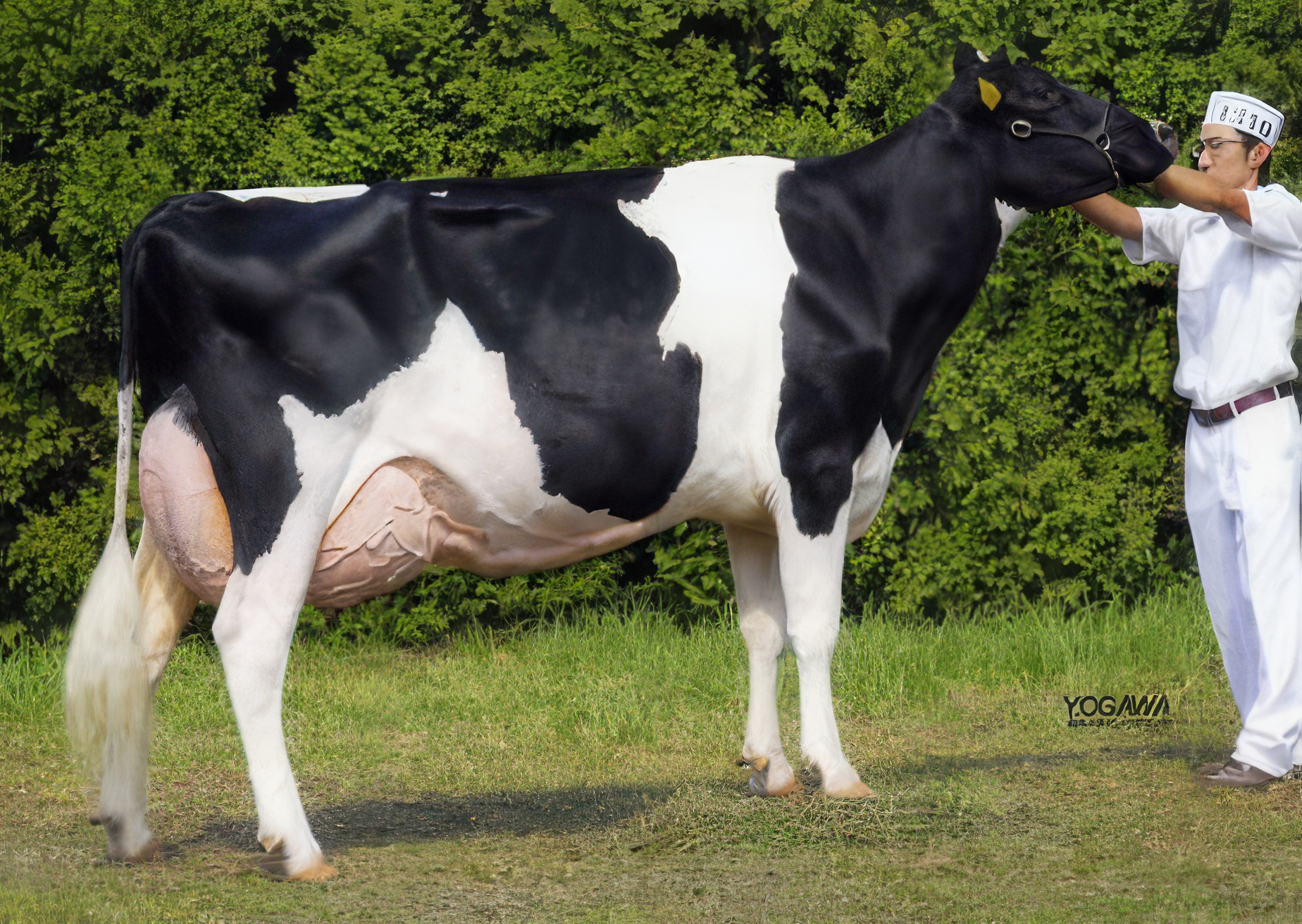
Perfection Realized: L’Espoir ReganStar Hagen EX-96, the only Holstein in Japan to achieve this prestigious score, pictured showcasing the exceptional traits that defined Nobuo Sato’s breeding philosophy.

This is where the story takes a dramatic turn—akin to something Hollywood would script.

L’Espoir Reganster Hagen’s show career started blazing: Reserve Intermediate Champion at the 2004 Hokkaido National Show, followed by Grand Champion titles in 2006 and 2007. Everything was clicking.

Then came the setback that tested everything Sato believed. After calving at nine, she failed to conceive for four years. Four years! Remaining dry while her contemporaries continued productive careers.

Most breeders would’ve culled her. Who keeps a dry cow for four years? Feed costs and opportunity costs—the economics don’t add up on paper.

But not Sato. He maintained her in pristine condition throughout those barren years, believing in her genetic value and trusting his management system.

“We longed to show her again,” Michihiro remembers. “When she finally qualified for the state show at age 14, we cried tears of joy—our first time ever crying at a regional win.”

The emotion wasn’t just about victory. It was a vindication of a philosophy that valued individual excellence over expedient replacements.

Her Grand Champion victory that year set the stage for history. The morning after, father and son shook hands silently in the barn—”That handshake remains one of my greatest memories,” Michihiro says.

At the National Show, she placed second only to the Honor Prize winner. Remarkable for a 14-year-old competing against animals in their prime. But the greatest honor was yet to come.

Picture the scene: the classifier’s pen moving across the scorecard, numbers adding up to something unprecedented in Japan. When those scores totaled 96, a new milestone was reached. The celebration at that Wakkanai hotel became the stuff of legend.

Swimming Against the Genomic Tide

Here’s what makes Sato’s achievement even more significant—how it runs counter to trends reshaping our industry right now.

Since 2009, the genomic revolution has transformed dairy genetics. DNA analysis and algorithms predicting merit at young ages, accelerating improvement for production traits. Incredibly powerful stuff, but here’s what’s concerning: this has led to alarming genetic concentration.

Research by Penn State geneticists reveals that the vast majority of Holstein males in North America can be traced back to just a few foundation sires from the 1960s. We’re talking extreme genetic bottleneck, increased inbreeding risks, and potentially compromised fertility and health.

This isn’t just academic theory—it’s happening in your herd whether you realize it or not.

Sato’s approach represents a deliberate counter-narrative. It prioritized functional type, longevity, and structural correctness—exactly the traits that can be compromised when chasing production numbers above all else.

The evidence keeps proving his approach. Recent Hokkaido show results still feature L’Espoir animals bearing the Hagen name winning major classes, demonstrating the power of masterful maternal line development decades later.

The Peaceful End of Perfection

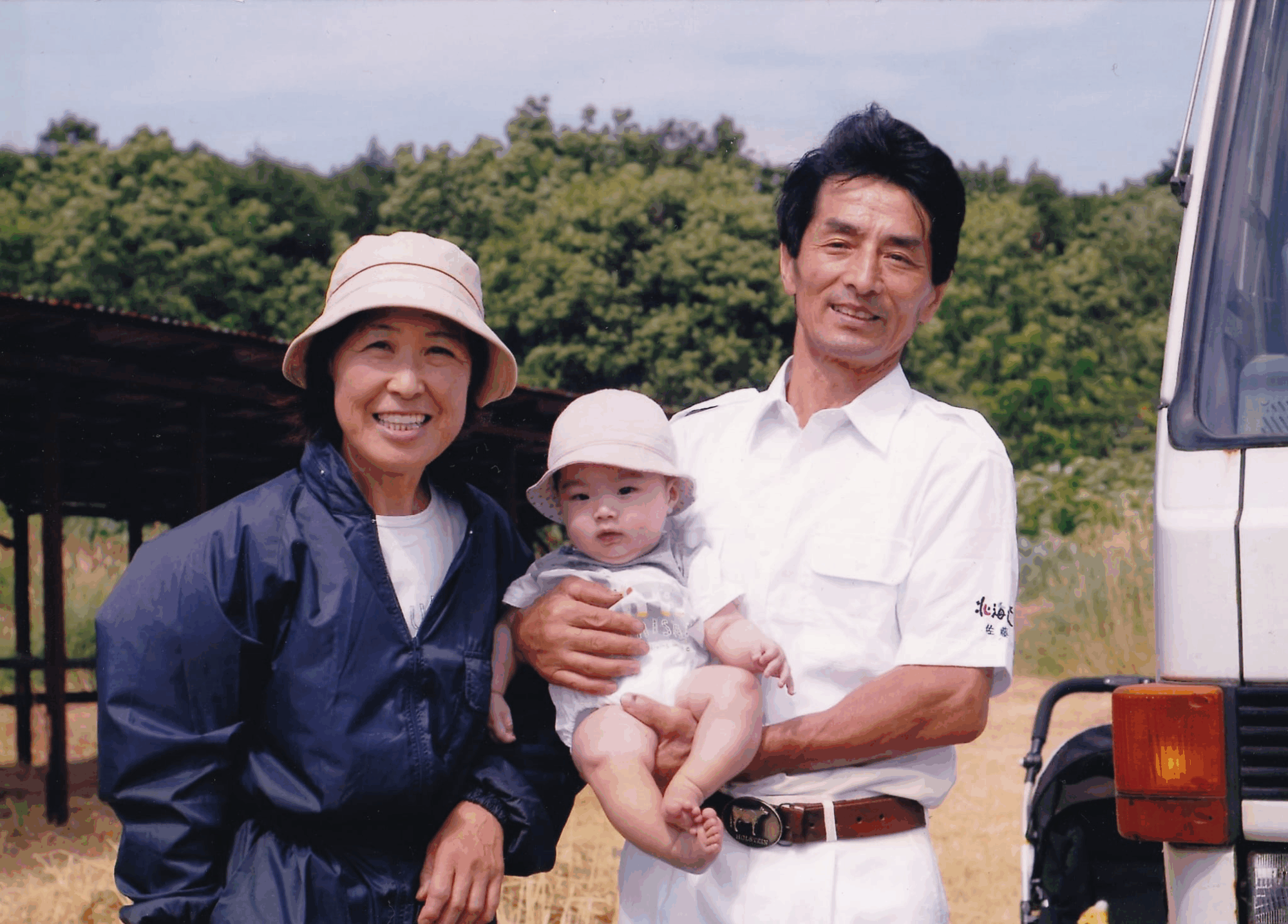
A Father’s Love: Nobuo Sato holding his granddaughter. His dedication to his family was as profound as his passion for dairy farming.

Sato’s final months reflected the same thoughtfulness that characterized his entire career. Diagnosed with pancreatic cancer, he refused to let his condition disrupt his grandchildren’s school entrance exams—crucial in Japanese education.

“I can’t be a burden to them now,” he declared. After witnessing all three pass, he allowed himself to rest. On March 28, 2023, at the age of 74, he passed away peacefully at Toyotomi Hospital, surrounded by his family.

“He left with nothing undone,” Michihiro reflected. “He had accomplished everything he set out to do.”

That’s quite a statement about a man who achieved measurable perfection in an industry that rarely sees it.

Carrying the Torch: Michihiro Sato continues his father’s legacy at L’Espoir Holsteins, adapting to modern dairy practices while honoring a commitment to cow care and genetic excellence.

Today, L’Espoir Holsteins continues under Michihiro’s leadership, honoring his father’s legacy while adapting to modern realities. But the real legacy lives in every dairy producer who prioritizes cow comfort over convenience, chooses longevity over short-term gains, and approaches breeding as stewardship rather than just genetic manipulation.

Whether you’re milking 50 cows in Vermont or 5,000 in California, the fundamentals don’t change. Take care of your cows with Sato’s attention to detail. Maintain consistent routines. Invest in structural soundness alongside production. Keep your breeding vision longer than your loan terms.

Because at the end of the day, the happiest cow usually turns out to be the most profitable one, too. Sato proved that’s not just feel-good philosophy—it’s a measurable business strategy that creates lasting success.

Key Takeaways:

  • Persistence pays off in breeding excellence: Nobuo Sato’s relentless dedication led to breeding Japan’s only Holstein scored EX-96, proving that patience and precision can achieve legendary results even when facing early rejection and setbacks.
  • “Cow happiness” drives measurable success: Sato’s philosophy of prioritizing animal comfort, consistent routines, and superior care wasn’t sentiment—it was smart business strategy that created the foundation for achieving perfect classification scores.
  • Faith in genetics during adversity creates champions: L’Espoir Hagen’s story exemplifies the power of perseverance—despite a brutal four-year dry spell, Sato’s unwavering belief in her potential led to her triumphant return and historic EX-96 achievement.
  • Balanced breeding offers sustainable advantages: While modern genomic selection accelerates gains, Sato’s patient approach to developing exceptional maternal lines provides a blueprint for maintaining genetic diversity and long-term herd resilience.
  • Practical longevity strategies boost profitability: Today’s dairy producers can apply Sato’s methods through consistent nutrition protocols, systematic hoof care, genetic diversity monitoring, and targeting 2.8+ lactations per cow—all proven strategies for improving bottom-line results.

Executive Summary

This article tells the inspiring story of Nobuo Sato, a Japanese dairy breeder who achieved the unprecedented feat of breeding the only Holstein cow in Japan to receive an EX-96 classification—a score signifying near-perfect conformation and function. Despite early skepticism and setbacks, Sato’s unwavering dedication and philosophy centered on “cow happiness” reshaped Japanese dairy breeding standards. His approach emphasized meticulous care, sustainable practices, and a balanced genetic strategy prioritizing longevity over mere production numbers. The journey of his champion cow, L’Espoir Hagen, highlights her resilience as she overcomes a prolonged dry period to reclaim her top status. In the context of rising concerns about genomic bottlenecks, Sato’s legacy offers a blueprint for preserving genetic diversity and fostering sustainable herd management. The article connects these insights to current industry challenges, offering practical recommendations for improving profitability and resilience in modern dairy operations.

Learn More:

The Sunday Read Dairy Professionals Don’t Skip.

Every week, thousands of producers, breeders, and industry insiders open Bullvine Weekly for genetics insights, market shifts, and profit strategies they won’t find anywhere else. One email. Five minutes. Smarter decisions all week.
NewsSubscribe
First
Last
Consent
Send this to a friend