


Archive for Blondin Sires

The Classifier Behind Eight EX‑97s: Bruno Jubinville’s Lifetime Crusade for Balance

In 1997, Bruno Jubinville couldn’t order coffee in English — but he could read a cow. Today, his balance‑first gospel is shaping barns from Quebec to Brazil.
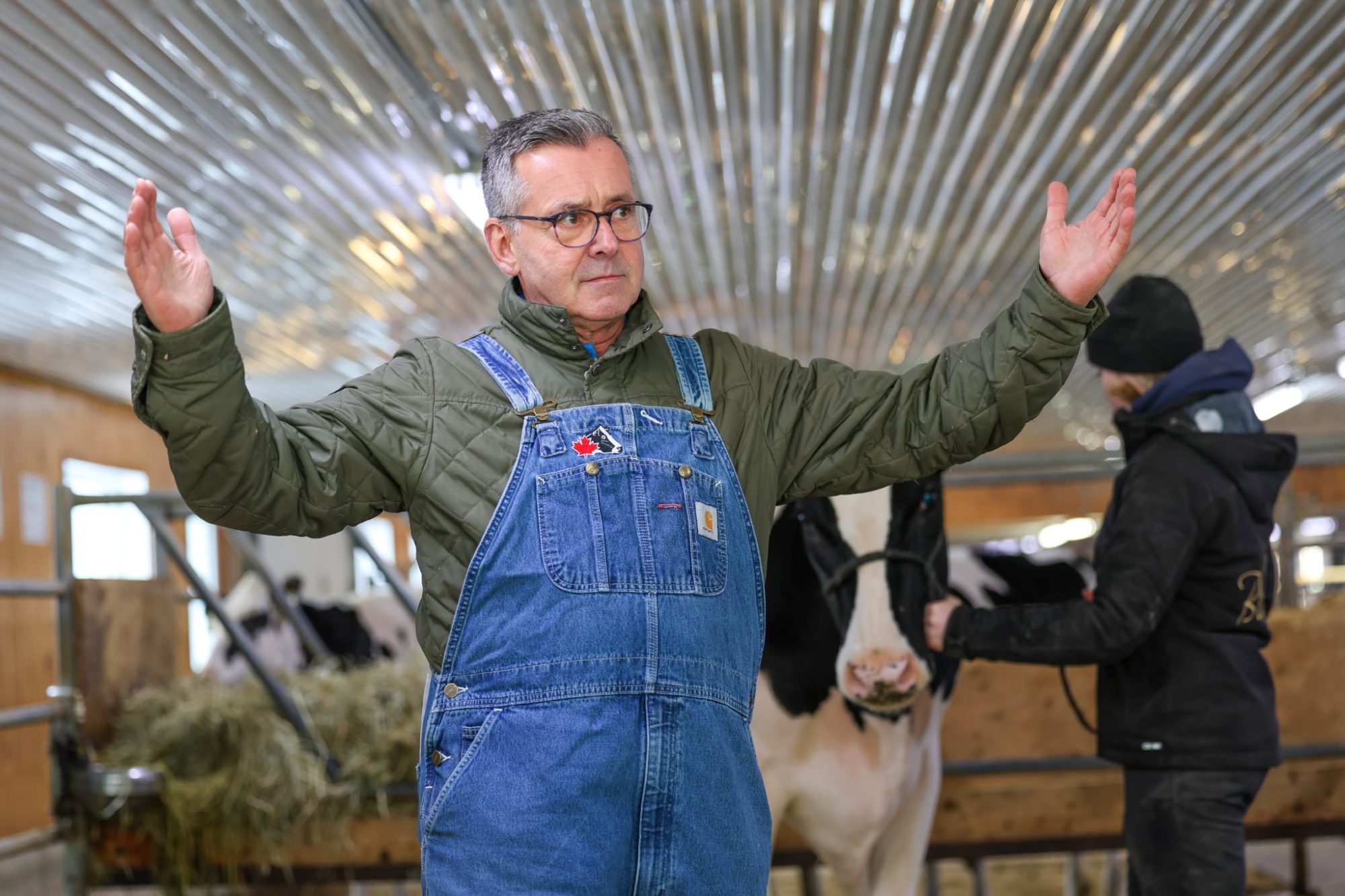
Bruno Jubinville demonstrates the gospel of balance to classifiers from 50 countries during an international training session at Blondin Sires in St. Placide, Quebec. Twenty-nine years of reading cows — distilled into two open hands and one message. 

The Purina truck was still running when Bruno Jubinville walked into the barn.

He wasn’t there to evaluate cows. He was dropping off bags of heifer feed — a fill-in job after the Master Breeder herd he’d worked at for nine years had dispersed. But the Holstein Canada classification crew had just wrapped up their visit, and the classifiers were still hanging around when Bruno came through with his delivery.

One of them — half joking, half challenging, the way dairy people do across barn aisles everywhere — turned to him. “How many points would you give those cows?”

Bruno glanced at the animals. He said it for the laugh, he’d later recall. “87, 86.”

Both scores matched exactly what the official classifiers had just recorded.

Within a week, Holstein Canada was on the phone. They needed a French-speaking classifier from Quebec. There was just one hitch. Bruno Jubinville didn’t speak a word of English.

Not one.

That was April 1997. He wouldn’t leave Holstein Canada for nearly twenty-nine years.

Concrete Foundations and Cow Foundations

Bruno grew up in Coaticook, a small agricultural town in Quebec’s Eastern Townships, about twenty minutes from the Vermont border. It’s deep agricultural country — the kind of place where kids absorb the rhythms of dairy whether they mean to or not.

By twelve or thirteen, he was doing summer work on local farms — not purebred operations, just regular hay-season labour that puts calluses on your hands before your voice changes. After school, he crossed the border to Manchester, New Hampshire, where he poured concrete foundations for houses. Hard, physical, good money.

But family reasons brought him back to Quebec, where he landed at Chacook Holstein — a Master Breeder herd where he’d spend the next eight or nine years doing something he never planned on: learning to read cattle.

“I learned everything there,” he says. “They were really good cowmen. They bought lots of cows, we sold them, and I learned a lot.”

No animal science degree. Nine years in a barn where the standard was Master Breeder or nothing — watching, handling, studying cows that had to be right. That’s probably the credential that matters most.

When Chacook herd was sold, Bruno took the Purina delivery job. Supposed to be temporary.

Turned out to be a runway.

“Chantal Translated for Me. They Gave Me the Job.”

After that barn-floor audition — truck still idling outside — things moved fast.

Holstein Canada needed a Quebec-based classifier, and Bruno was invited to a formal evaluation: score six cows in front of a board with senior staff and veteran classifiers. He drove there with Chantal Chalette, a perfectly bilingual colleague who’d been asked to come along for a very practical reason.

Bruno’s English was, by his own admission, “zero.”

Every time the board asked a question, Chantal translated. Every time Bruno gave his assessment, she relayed it back. At the end, she turned to him with a line that belongs in a movie: “I translated for you. They’re going to give you the job.”

Bruno wasn’t so sure. That night, the phone rang for both of them at the same time. He was in.

He spent his first two or three years classifying across Canadian provinces without being able to communicate directly with English-speaking breeders. He’d walk in, evaluate the cows, give the final score, and leave. The numbers did the talking.

But it gnawed at him.

“I said to Jay Shannon, I would like to have an English course,” Bruno recalls, “because I want to understand the people who speak English. I want to work with them better and understand what they do.”

He took the course. Think about that. Nobody asked him to. Nobody expected it. A guy already proving he could do the job across multiple provinces just decided the numbers weren’t enough — he wanted to connect with the breeders he served.

Sixty Cows a Day and the Dark Alberta Roads

Here’s something people outside the classification world don’t appreciate — what the job actually looks like, week in, week out.

You leave home on Monday morning. Early. If the first farm is five hours away, you’re scoring cows by 1:30 in the afternoon. If it’s closer, maybe 10 AM. Four to six herds a day. Around sixty cows. Some breeders want you there at 4 AM so the udders are full. Others are fine with 7. You try to finish by five. You don’t always.

The work itself is quieter than people think. You stand behind the cow. You read the rear legs — the set, the angle, the way she carries weight. You note the udder floor, the fore attachment, and the teat placement. You assess the loin width, the body depth, and the spring of the rib. Sixty times a day, five days a week. The good classifiers see it in seconds. The great ones see what it’ll look like in three lactations.

Then the phone calls. Monday nights, Tuesday nights, lunch breaks — you’re scheduling next week’s visits while still grinding through this week’s.

“It’s really, really important to give a good service to the breeder,” Bruno says. “And those team members are really, really passionate about what they’re doing. You need to be. Because you’re always by yourself on the road.”

The isolation is the part nobody talks about. Some nights, you come back to a hotel room after a breeder was unhappy with a score, and you sit with that alone. No colleague to debrief with. No team dinner. Just you, the ceiling, and the knowledge that you’ll do it all again at 7 AM.

And those Alberta winters in the late ’90s — before GPS was standard, classifiers navigated by written directions. Drive five miles, turn at the barn with the blue roof, look for the light. Six miles into the darkness without one? You’re lost.

“In BC, you score more cows per day. In Quebec or Ontario, more herds, fewer cows per stop,” Bruno explains. The geography shaped the grind differently across provinces. The grind was constant everywhere.

Five days a week. Every week. For twenty-nine years. In 1997, punching linear scores into an early handheld that was basically a glorified calculator. By 2021, doing it on Connexxion.

Tom Showed Him the Passion

Ask Bruno who shaped him, and three names come up right away: André Tardif, Gilbert, and Tom.

“André Tardif showed me to be professional — always — when I’m doing my job,” Bruno says. “Gilbert hired me. And Tom — Tom showed me the passion. He transferred to me his passion.”

Tom Byers. Thirty years at Holstein Canada — eventually rising to Head Classifier — he was originally from Scotland and classified more than 300,000 cows over his career. The Bullvine profiled Tom years ago, and if you know his work, you see his fingerprints all over Bruno’s approach — the emphasis on education, the refusal to let a final score substitute for actual understanding of an animal.

Bruno absorbed Tom’s philosophy completely. When he started doing international workshops for the World Holstein Friesian Federation, Bruno ranked second among the presenters his very first time out — a performance he credits directly to what Tom taught him.

Here’s the thing Tom drilled into him — the insight that became the backbone of Bruno’s entire professional worldview. “At the end, I don’t think the final score is really important,” Bruno says. “It’s the linear code. Every country, when they look at our genetics, they work with our linear codes — not with the final score.”

The score is for the breeder’s wall. The linear traits are for the breed’s future. If you’ve ever wondered why the classification number everyone obsesses over isn’t actually the data that moves the needle on genetic progress, there it is, straight from a man who spent three decades inside the system.

Friday at 7 AM. Two 97s. One Weekend to Madison.

In Holstein history, Canada has had 11 cows that scored 97 points. Bruno participated in classifying eight of them.
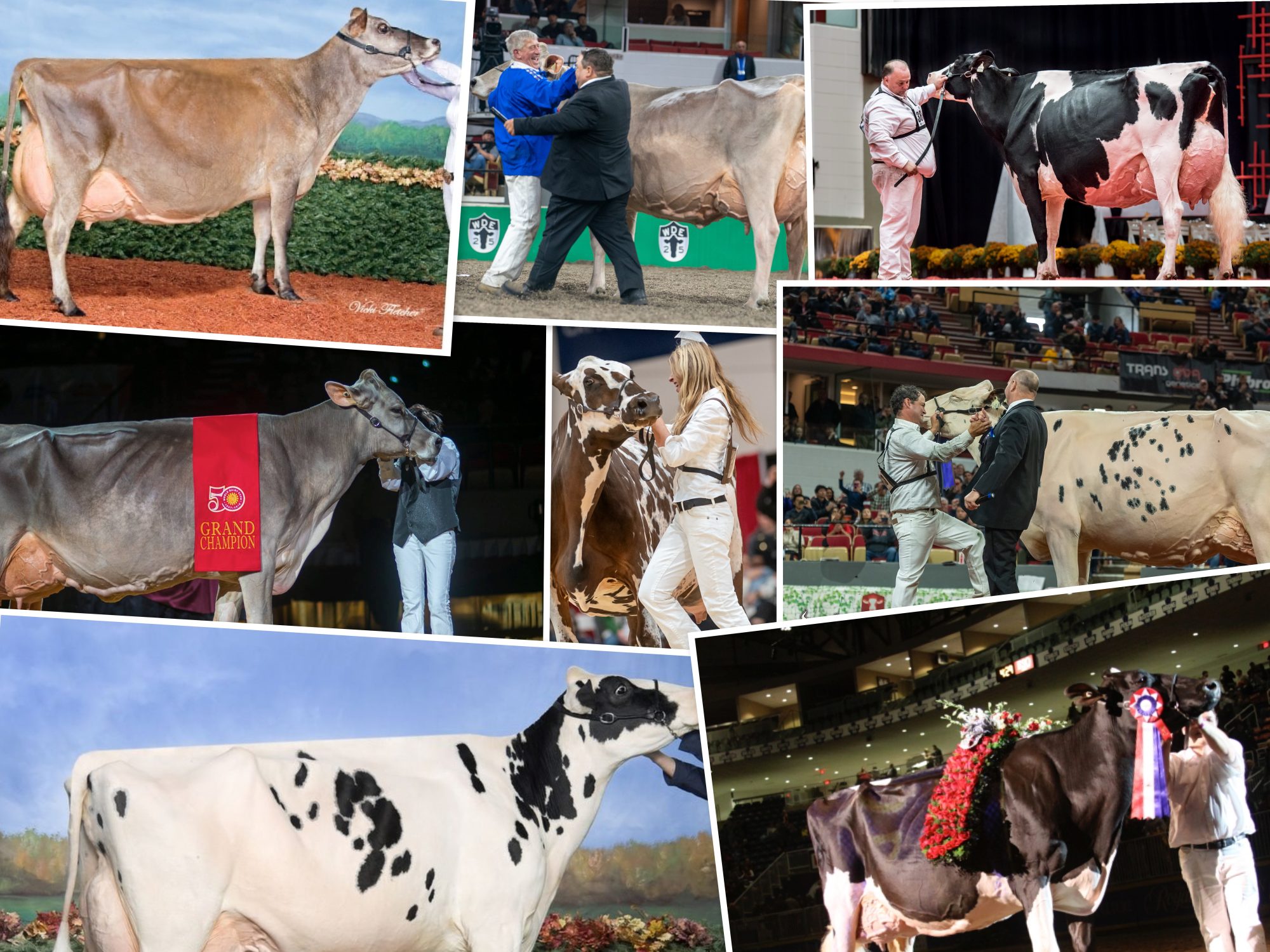
Eight 97s, three breeds, one eye. The cows Bruno Jubinville helped classify to EX‑97 across his 29-year career — Holsteins, a Jersey, a Brown Swiss, and an Ayrshire. “All of them have a little defect,” he says. “All of them.” That’s what makes 97 extraordinary, not perfect.

He rattles off the names the way other people name their kids: James Rose, Kendra, Hailey, Shakira — and then beyond the Holsteins, Gorgeous the Jersey, Brown Heaven Fantasy the Brown Swiss, and the Ayrshire, View Village Gentleman Joy. Each one carries a memory so vivid you can practically feel the barn humidity in his voice.

The morning that sticks out the most is a Friday at 7 AM at Pierre Boulet’s farm. Bruno and his colleague Daniel were there, and two cows — Thrulane James Rose and Bruynland Strom Kendra — both scored 97 on the same visit.

“We were really nervous,” Bruno recalls, “because we scored 97 for two of them, and that put a lot of pressure on us.”

Both cows left that same weekend for Madison — World Dairy Expo. Rose, who was actually sick and resting when people were debating which cow deserved what, would go on to change the direction of the show ring itself.

“Rose was really ahead of the breed at that time,” Bruno says. “She changed the show. Smaller cows, a little bit. Before, it was all Logic — the Duke, so big and tall and long. Then Rose arrived.”

And Bruno was right there at the inflection point, clipboard in hand.

When you ask him which 97 was the most complete, he doesn’t hesitate. “Shakira. She was the most complete 97 I scored. On her legs, mammary, dairy strength — I would like to see the rib structure just a tiny bit more. But she’s the most complete.”
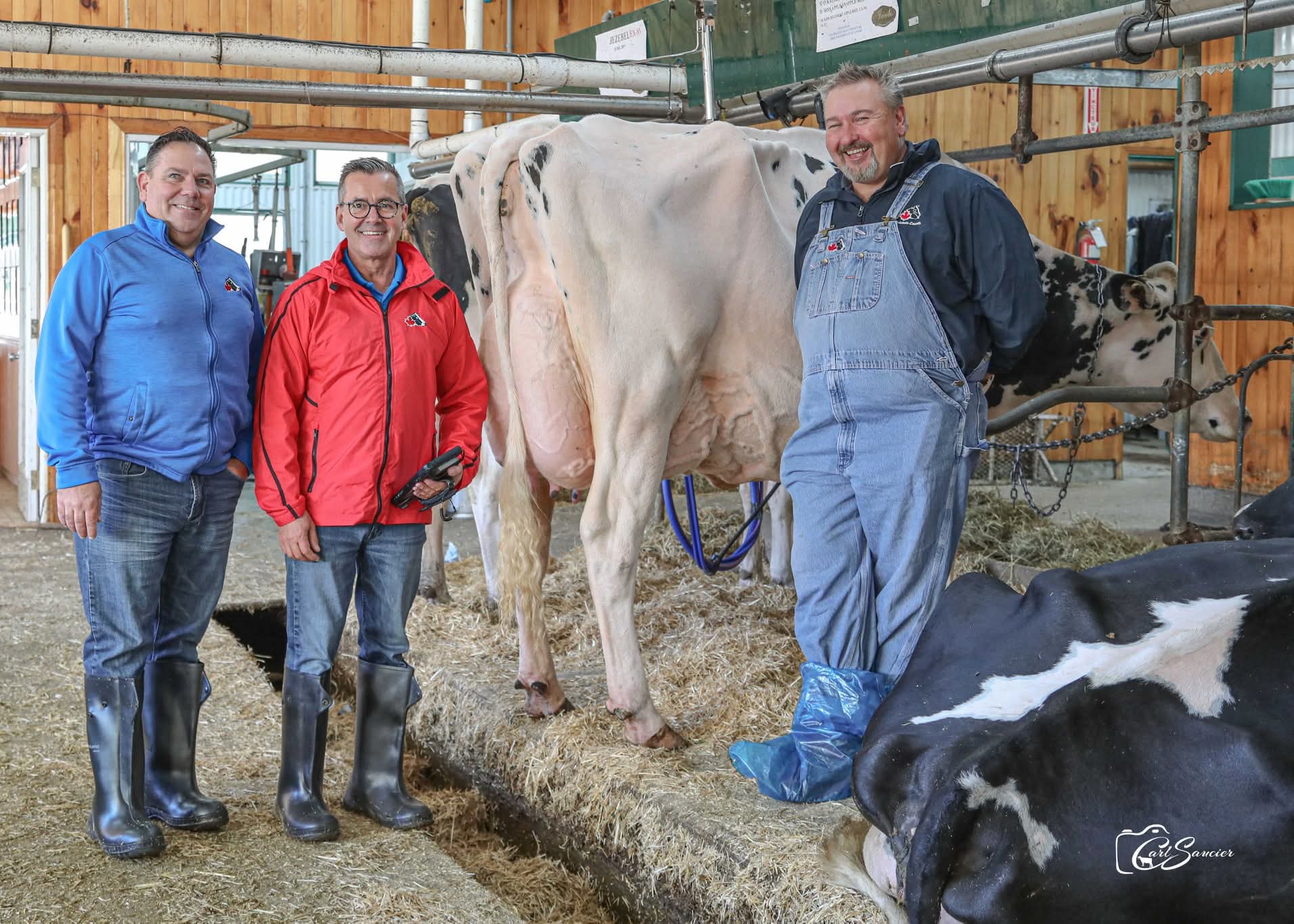
Remi Bernier, Bruno Jubinville, and Dave Weitzel with Erbacres Snapple Shakira EX‑97 — the cow Bruno calls “the most complete 97 I ever scored.” On her legs, mammary, dairy strength, she was as close to perfect as the system allows. Almost. (Photo: Carl Saucier)

Then he says the quiet part out loud — the thing that reveals how a great classifier actually thinks: “We need to understand — 97 points is not perfect. All of them have a little defect. All of them.”

He walks through the others with the reverence of a man who knows he’ll never see their like again. Vandenberg Amedeo Gorgeous — the Jersey — was a tank, the widest udder he’d ever laid eyes on. Hailey walked like a princess, so stylish that “when she arrived on the ring, nobody was talking.” And View Village Gentleman Joy — an Ayrshire he first scored as an 88 in first lactation, then 97 in a later round — remains “really special.”

His eye worked across breeds, not just Holsteins. He classified Brown Heaven Fantasy to 97 as a Brown Swiss, and scored another Brown Swiss — Iroquois Acres Jong Cali at Lookout Farm — to 97 alongside colleague Chantal Chalette. He also classified Goldwyn’s 1,000th Excellent daughter in Canada — Donar Pally Jo Goldwyn EX-90, a fourth-lactation cow with over 53,000 kg lifetime production at the time, bred and owned by Dorothea Beier and Horst Schulz in St. Cyrille, Quebec.

The Gospel of Balance

If there’s one word Bruno would stitch into the coveralls of every dairy farmer on the planet, it’s balance.

His favourite way of explaining it involves a football player he sat beside on a flight home from British Columbia. The guy was about 6’2″, over 300 pounds — a lineman who passed the ball to the quarterback. In the airplane seat, he looked enormous. Uncomfortable. Too big for the space.

“But when he started to walk at the airport, he was really functional,” Bruno says. “Strong and wide. The problem wasn’t that he was too big. The problem was that the seat was too small.”

Then the pivot: “That means every cow doesn’t fit everywhere. It depends on what kind of barn you have, what kind of installation you’ve got. Not every bull fits everywhere. Not every cow fits everywhere.”

It challenges a tendency that persisted in dairy breeding for generations — the pursuit of extremes. Extreme stature. Extreme frame. Extreme openness. Bruno watched that trend come, peak, and — finally — start to recede.

“When I started classifying, we’d sometimes finish herds at a 72 or 73 average,” he says. “Now we don’t see that anymore. It’s hard to find a heifer at 75 or 76. Most are 80 and over. We’re on the right path. I’m really, really happy about that.”

Walk into almost any Canadian herd today, and the spread among two-year-olds is maybe five or six points. That was unthinkable when he started. The consistency of modern cattle — driven by decades of genetic progress and the classification system’s increasing focus on functional traits — is something Bruno considers a genuine triumph.

But there’s a caveat, and it’s a big one.

The breed is now calving heifers at 22 to 24 months. Some of those heifers are milking 40 to 45 kilograms a day in first lactation. “It’s really hard for them,” Bruno says. “When a heifer is producing 45 kilos, the energy she needs — she’s running a marathon every day. She needs something behind her to produce and still stay in the barn.”

That “something behind her” is structural balance — the legs, the loin, the feet, the udder attachments that let a cow absorb the punishment of high early production and come back for second, third, fourth lactation. Without it, she’s a one-lactation wonder. And the industry can’t afford one-lactation wonders — not at today’s replacement costs.

His international presentations carried titles that doubled as manifestos — The Symmetry of a Cow and The Secret of Balance. Same message, delivered in barns from Southern Alberta to Cremona, Italy: you can have all the genetics in the world, but if the cow can’t stand on her feet and hold her frame together, the genetics don’t matter.

He’s got a dozen versions of the same teaching story, too. One breeder told him flat out: “I don’t like type. I don’t like type.” Bruno scored the herd — 81, 82, nothing special. Then he scored one cow 85. The breeder pointed right at her: “She’s my best. She gives lots of milk.” Bruno just smiled. “Yeah. But this is the type, you know.”

Locomotion: “My Baby”

If there’s one trait Bruno claims personal ownership of in the Canadian classification program, it’s locomotion.

“I always, always pushed to have locomotion,” he says. “For a long, long time. It was my goal before I left, to have locomotion evaluated. Because I think it’s really, really important.”

Canada’s challenge was unique. With a large proportion of tie-stall barns — particularly in Quebec — locomotion was harder to evaluate and harder to weigh properly compared to countries where cows walk an hour or more to the milking parlor every single day.

But Bruno’s international work opened his eyes to how critical the trait is once you step outside a tie-stall reality. In the Azores, cows walk through steep volcanic hills for one to two hours daily to reach the parlor. In New Zealand, they’re outside 99% of the time. And in England? The economic weighting on locomotion is enormous — because the data proves better-moving cows make more money.

“In England, the weighting of locomotion is really, really high,” Bruno explains. “They have numbers behind numbers. I mean money. When you have good locomotion, your cows make more money.”

He and colleague Jill Nelson developed a locomotion scoring video — a visual training tool scored on a 1-to-9 scale — that went out to classifiers across the country. It was one of the tangible tools Bruno left behind when he moved on.

Within Canada’s system, the three most important components for feet and legs are heel depth, side view of the rear legs, and rear leg rear view — all feeding into locomotion assessment. “I think we’re pretty good now,” he says. “I’m really happy.”

Getting Ten Countries to Agree on What a 7 Means

Classification harmonization — getting ten countries to agree on what a 7 for rear leg rear view actually means — sounds bureaucratic until you realize it determines which Canadian bulls get used in Colombia. Bruno sat on the WHFF Type Harmonization Working Group alongside representatives from the United States, France, Germany, Hungary, Italy, and New Zealand, meeting at international workshops to work through the painstaking details of making classification data comparable across borders. When he couldn’t make the most recent session in Cremona — he was sick — Carolin Turner stepped in. When semen from Canadian bulls flows to dozens of countries, and buyers in Brazil or Australia rely on Canadian linear data to make purchasing decisions, this harmonization work has real economic consequences.

Bruno also took the Canadian classification system directly to Colombia, running training courses for local classifiers. He worked across Australia, Brazil, and numerous other countries. And he wasn’t just exporting a system — he was learning.
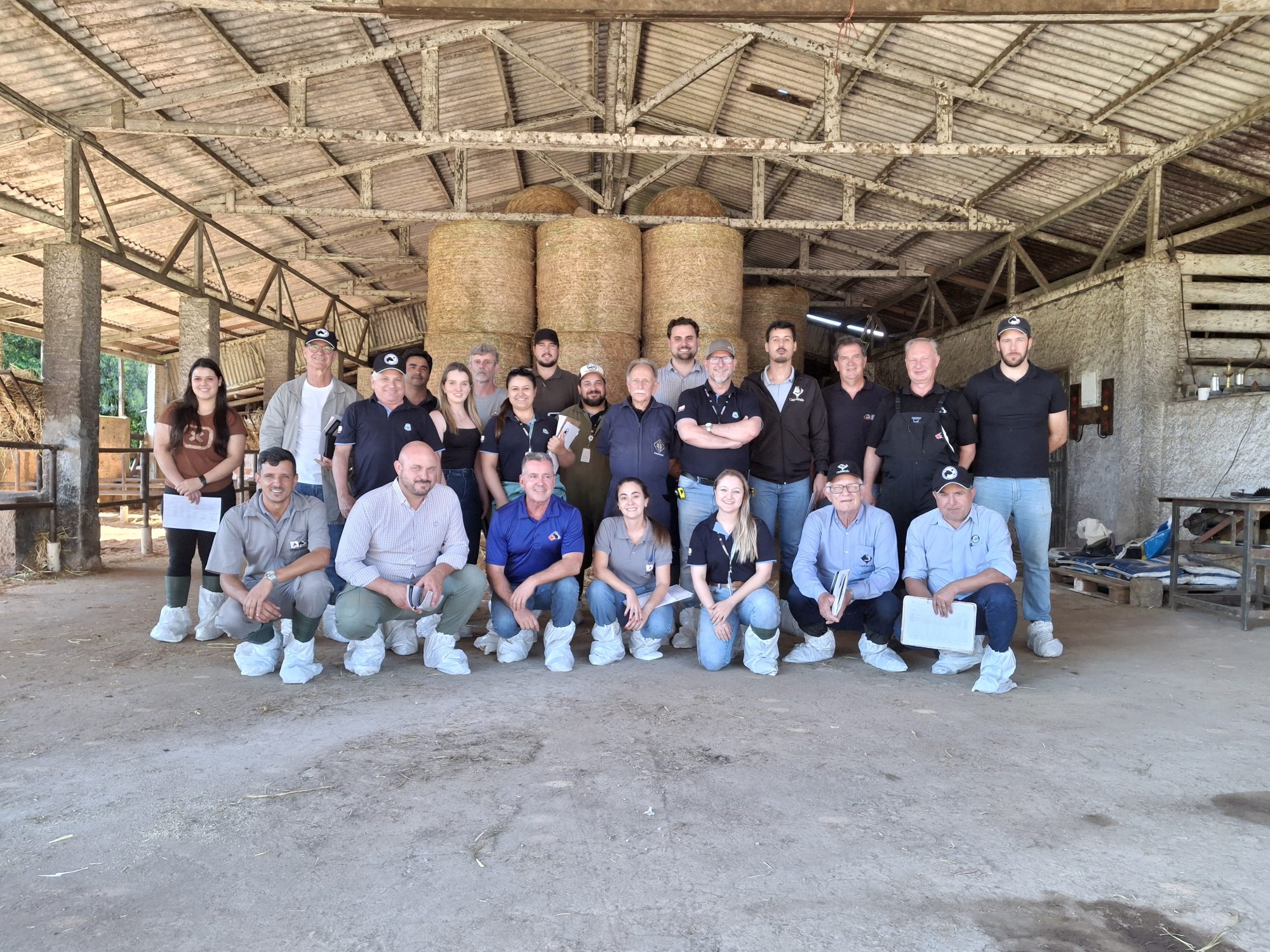
Bruno Jubinville (front row, centre) with Brazilian classifiers after a hands-on training session, November 2025. Different hemisphere, same language — balance.

“Every time, I love everywhere,” he says. “It’s so incredible how people like Canadian cows, how they like what we’re doing. They listen a lot, and they learn with us — and we learn too.”

Carolin Turner served as his co-coordinator for years at Holstein Canada, and when the CEO named Brad Eggink as Classification Manager back in 2017, he singled out Bruno and Carolin as “key leaders of our dedicated Classification Team” who would “take our Classification program to the next level.” That kind of endorsement doesn’t come from punching a clock.
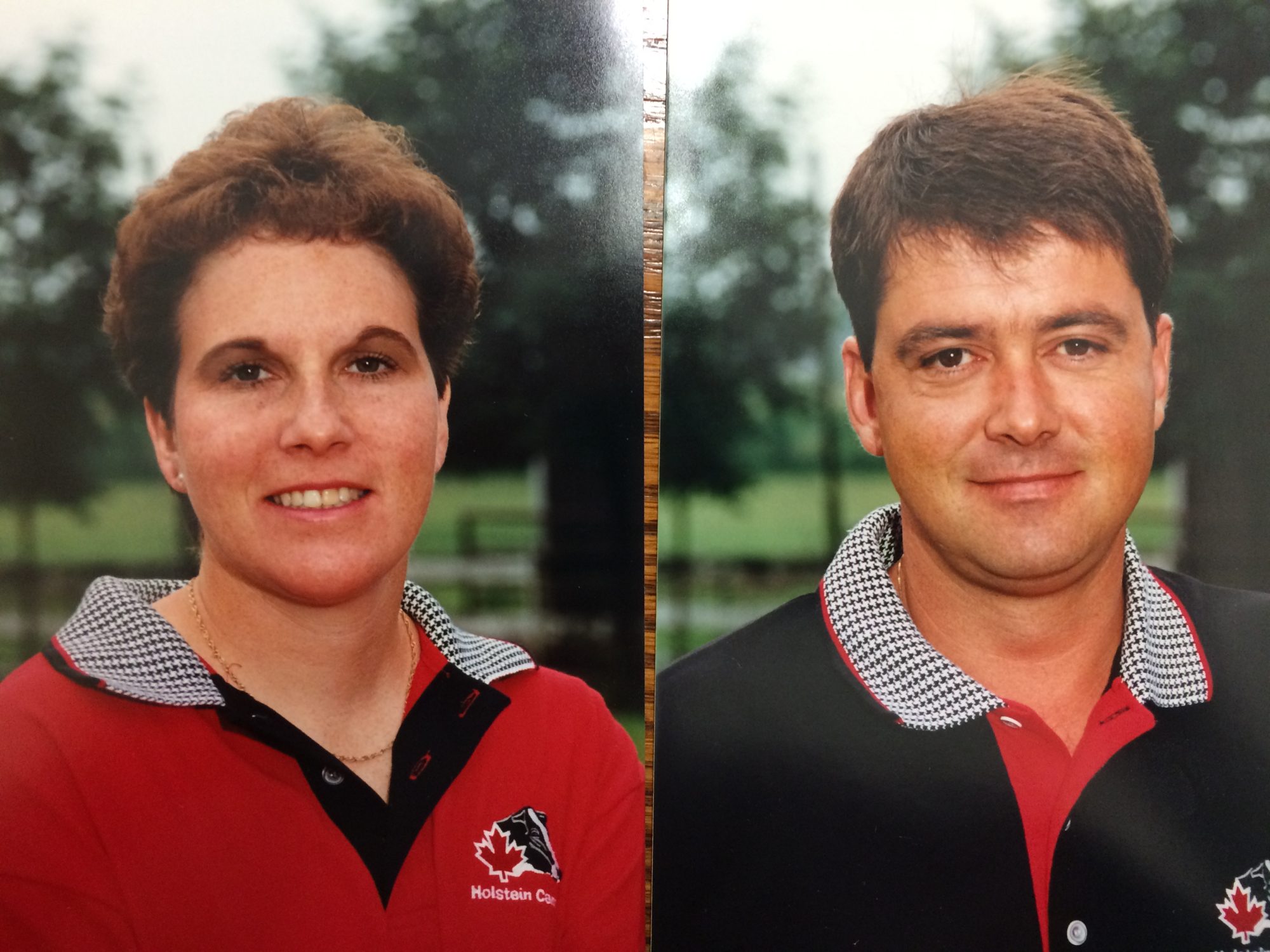
Carolin Turner and Bruno Jubinville in their early Holstein Canada days. Nearly three decades later, when Bruno was too sick to make the WHFF session in Cremona, it was Carolin who stepped in — the kind of partnership that doesn’t need explaining

But Bruno pushes back on the nationalism that sometimes creeps into breeding conversations. “We talk about Canadian kind, Canadian kind. But I think everybody, every herd in the world, needs the same cows. Balance. This is where we are. The breeding is all around the world now.”

Still, when he sees balanced, functional cattle abroad, something sneaks in. “In my head, I always say, ‘This is a Canadian cow.’ I don’t know why. But it’s like — balance. We talk about balance.”

The Genomics Question

When genomic testing arrived, fear swept through the classification world. Bruno remembers it clearly.

“Classifiers were scared,” he says. “They said, ‘Genomics will take our jobs.’ People were saying we don’t need classification anymore.”

If you can predict a cow’s type traits from a DNA sample, why send a human to her barn? It wasn’t an unreasonable question. A lot of people in the industry were asking it.

Bruno’s answer is pragmatic: “Genomics is one of the best tools we’ve ever had. But it’s one tool in a box of tools. If genomics is so important, we need classification to prove the numbers. To improve reliability. You need classification.”

Tom Byers made the same point years earlier. “Any progress we’ve made is through classification and milk recording,” Tom shared in a 2018 interview. “Genomics wouldn’t exist without them.” Bruno and Tom — mentor and protégé — singing from the same hymnal on this one.

And they’re right. Genomic predictions are only as good as the phenotypic data they’re trained on. Without ongoing classification — without actual people evaluating actual cows — the reference population powering those predictions stagnates. Reliability drops. Breeding decisions get worse.

The proof is already showing up. Some genetic operations now have five, six, or seven generations with no classification or milk recording. The validation gap is growing. And the industry relying on those numbers hasn’t fully reckoned with what that means.

“When genomics arrived, some people totally forgot about family,” Bruno says. “They forgot about cow families. We always talk about bulls, bulls, bulls. But we need to talk about females. Both. We need both to improve the breed.”

That position has gained real traction lately, especially as breeders have seen genomic overreliance produce its own set of disappointments — bulls whose daughters don’t match the predictions, and cow families that fall apart after one flashy generation. The Bullvine’s own recent reporting on inbreeding trends and the Blondin Sires approach to deep-pedigree sire selection underscores just how relevant this concern has become. The pendulum is swinging back. Slowly.

First Out the Door With Connexxion

When Holstein Canada launched Connexxion in April 2021 — the new on-farm digital platform replacing a system in use since 2005 — they didn’t send a junior classifier to the debut. They sent Bruno. He headed to Peartome Holsteins for the first official classification visit using the new technology.

Classic Bruno. He asked for English courses when nobody expected him to. He championed locomotion when the tie-stall lobby pushed back. He adopted new tech when it improved service delivery. The thread connecting all of it? Whatever helps the breeder, do it.

Sandra at Véronamour, a brand-new Holstein Canada member when Bruno showed up for one of her early classification visits back in 2012, put it: “He provided us with so much information — he took the time to define each trait, the ideal traits that we should strive for in each animal, and why. It was a very informative visit for me; I use the information every day.”

That was fourteen years ago. The approach never changed.

The Part of the Cow Nobody Talks About

Before the interview wrapped, Bruno circled back to the thing he really wanted to say — the technical detail closest to his heart.

“Some countries still don’t evaluate loin,” he says, “but for me, it’s one of the most important parts of the cow.”

Most breeders think of the loin as the curvature of the topline. Bruno defines it differently. The loin — those vertebrae on top — needs to be strong and wide, side to side, because it supports the internal angle of the reproductive cavity. A strong loin keeps the fertility system at the proper angle. In the first lactation, you won’t notice a problem. But as a cow ages, a weak loin shifts that cavity angle, making her harder to breed, and shortens her productive life.

“We need to check inside the cow,” Bruno says. “When you look at a cow, not just outside. If she’s got a good loin, you can see that the internal angle of the cavity and the fertility system is right. This is why it’s so important for me.”

And then he delivers a line that might be the most provocative thing he said in the whole conversation: “I think the genetic potential is higher than what breeders can use right now because of management level. The genetics are pretty, pretty high now. I can’t imagine in the future we’ll have significantly better cows than this.”

He’s not saying we’ve hit the ceiling of genetic progress. He’s saying the gap between what genetics can deliver and what management practices currently capture is the real frontier. The cows are ready. The barns — the protocols, the transition management, the foot care, the facilities — aren’t always keeping up.

The Math That Makes Balance Pay

Bruno’s argument for balance and longevity isn’t just philosophical. Run the numbers, and it snaps into sharp focus.

Canada’s national average is roughly 2.5 to 2.7 lactations. At current replacement costs — CA$3,000 to $3,500 for a springing heifer — every additional lactation a cow completes is worth roughly $1,500 to $2,000 in avoided replacement cost alone, before you even count the peak production she gives in lactations three and four.

Here’s the math: push your herd from 2.7 to 3.5 average lactations on 100 cows — that’s 80 additional cow-lactations at roughly $1,750 in avoided replacement cost each. Call it $140,000.

That’s your robot payment. That’s your barn renovation. That’s the difference between scraping by and building equity.

And classification — the system Bruno championed for nearly three decades — exists for exactly this reason: to identify and reward the structural traits that let a cow last.

“After one hundred years of classification,” he says, “people still don’t know enough about why we classify. The program is built for two things: longevity and productivity. That’s the goal.”

“I Never Want to Stop Working With Cows”

After twenty-nine years at Holstein Canada — rising from field classifier to Manager of On-Farm Operations — Bruno made the move that surprised half the industry and made perfect sense to the other half. He joined Blondin Sires.

Not as a salesman. As an ambassador.

“I don’t want to sell semen,” he says bluntly. “I’m not a salesman. My role will be to educate people. What is a good cow? What is a balanced cow?”

The fit makes sense. Blondin Sires — owned by Simon Lalande, Dann Brady, and Nicolas Lalande out of St. Placide, Quebec — is built on exactly the philosophy Bruno has been preaching for three decades: deep pedigrees, functional type, and cow families you can actually trace back through generations of real milk records. Dann Brady co-founded Blondin Sires in part because he couldn’t find bulls backed by the kind of documented maternal lines he wanted in the major AI catalogues. That’s Bruno’s language. That’s balance.

“With my twenty-nine years,” Bruno says, “this is what I want to give — more follow-up to the breeders, more help with the breeding they do. Because it’s an investment, it’s really, really important.”

“It was hard for me to make the decision to leave, because I really love the team I work with,” he admits. That team — Carolin Turner and the classifiers he’d trained and mentored across every province — had been his professional family for the better part of three decades. Walking away from that takes a different kind of courage than walking into a barn at 4 AM.

But he’s got strong teammates at Blondin. Brian Carscadden, the Executive Senior Manager who brought more than 25 years of international sire analyst experience to the role, is deeply involved in the company’s growth strategy. And Dann Brady may have spent more time studying pedigrees and cow families than anyone in the Canadian industry — the kind of person Bruno can learn from while bringing his own three decades of type evaluation to the table.

“I still learn a lot about bulls and so many numbers,” Bruno says. “But I think it’s really important to help breeders with what they really need in the field. This is what I want to do.”

Still Learning

There’s a photograph floating around social media of Bruno at Mapleburn Farms during a classification visit. In the background, the farm kids are drawing cows on paper while he works.

That image says more than any career summary could.

“If we explain to them when they’re young,” Bruno says, “they will know in the future, when they’re on the farm, how important it is to have balanced cows and balanced herds. Because longevity — it’s the clue of the future.”

Bruno Jubinville spent his career inside one of Canada’s most important dairy industry programs. He scored eight of the eleven highest-classified cows in the country’s history. He pushed for locomotion when it wasn’t fashionable. He took the Canadian system to Colombia, to Brazil, to Cremona, and brought lessons home every time. He was the first to use Connexxion, the first classifier from Quebec to ask for English courses, and one of the last people you’d ever catch bragging about any of it.

“I never expected you would do an article on me like this, you know?” he says near the end of the conversation.

Twenty-nine years. Eight 97-point cows. A dozen countries. One word — balance — repeated so consistently that it became a career.

At Blondin, the barns are different. The conversations have shifted from linear scores to mating decisions. But the message won’t change. It hasn’t changed in three decades. It won’t start now.

Balance. Longevity. Respect the breeder. Love the cow.

And keep learning. Every single day.

Key Takeaways

  • A “joke” score from behind a feed truck turned into 29 years of classification, eight EX‑97 cows, and one of the most influential “eyes” in Canadian Holsteins.
  • Bruno’s bottom line: balance pays. Cows that last 3.5 lactations instead of 2.7 can put roughly $140,000 back into a 100‑cow herd in avoided replacements.
  • He helped drag locomotion, loin strength, and functional udders from the margins into the middle of the scorecard — exactly what 2025 robot barns and high‑yield fresh cows need.
  • Genomics, in his view, is just one tool in the box; without ongoing classification and cow-family data, the predictions drift, and inbreeding problems snowball.
  • At Blondin Sires, he’s taking that “classifier brain” straight into sire selection, focusing on deep cow families and balanced type instead of chasing the latest genomic rocket.

Continue the Story

The Sunday Read Dairy Professionals Don’t Skip.
Every week, thousands of producers, breeders, and industry insiders open Bullvine Weekly for genetics insights, market shifts, and profit strategies they won’t find anywhere else. One email. Five minutes. Smarter decisions all week.
NewsSubscribe
First
Last
Consent

9.99% Inbreeding and Rising: How Blondin Sires Turned a Holstein Bottleneck into 75% Growth

The catalogs are full of top‑10 sires from the same bloodlines. Dann Brady and ferme Blondin couldn’t find the pedigrees they wanted – so they built the stud they couldn’t buy from.

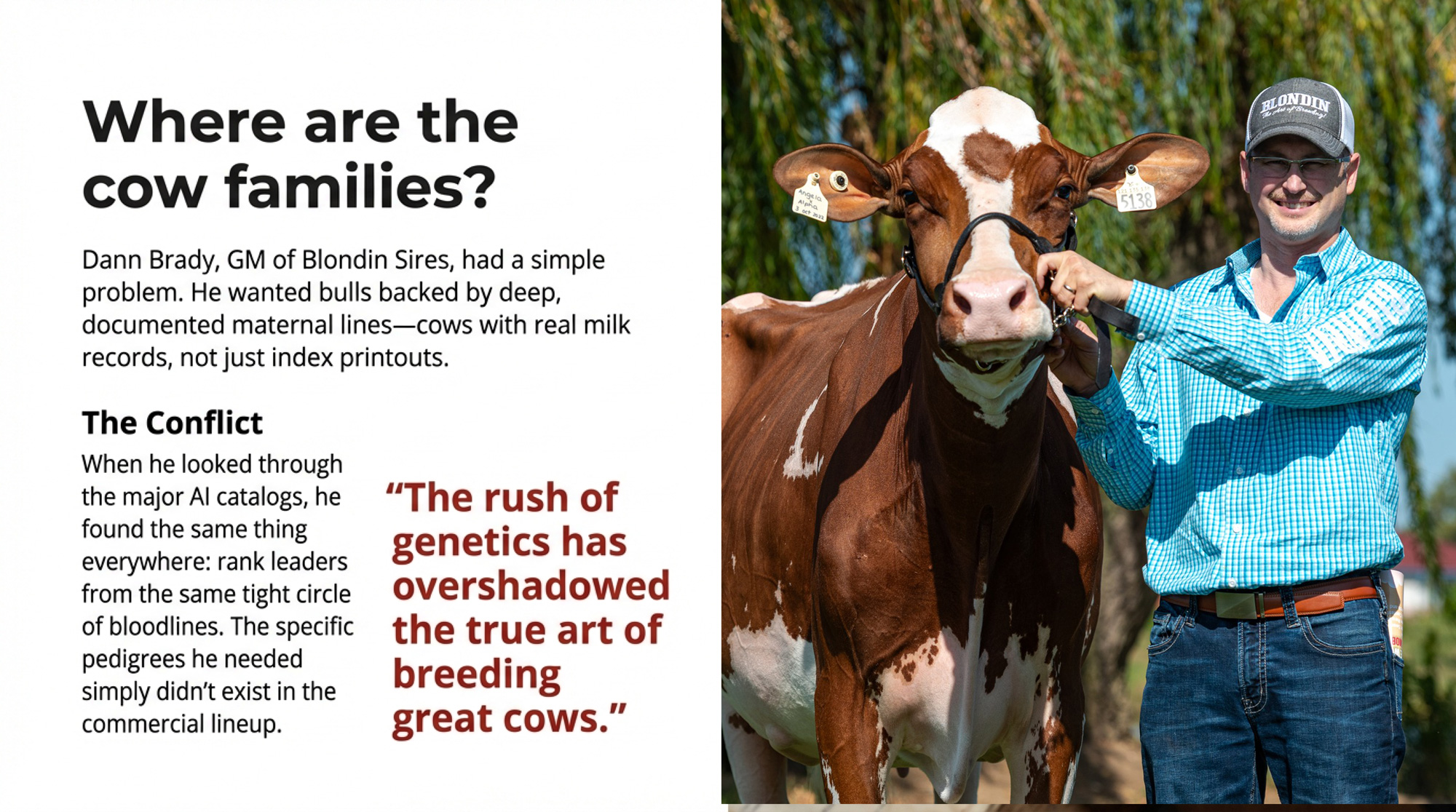
Dann Brady, co-founder of Blondin Sires, St. Placide, Quebec. When the big AI catalogs couldn’t deliver the cow families he wanted, Brady and his partners started their own stud under code 799.

Dann Brady had a specific problem. The General Manager and Co-Founder of Blondin Sires in St. Placide, Quebec, wanted bulls backed by deep, documented cow families — sires where you could trace maternal longevity and functional type back through generations of real milk records, not just index printouts. He went looking through the major AI catalogs. What he found were rank leaders from the same tight circle of bloodlines everyone else was already using. What he couldn’t find were the pedigrees behind them. 

“Over the past few years, the rush of genetics has overshadowed the true art of breeding great cows,” Brady and his partners wrote when they launched Blondin Sires. “We decided it was time to put the emphasis back on great type and deep pedigrees combined with production, health & fertility”. And in an interview, Brady laid it out plainly: “We have a focus on type and pedigree combined with using genomics and the show ring to market and promote our breeding. Breeding for long lasting, high producing, deep pedigreed cows”. 

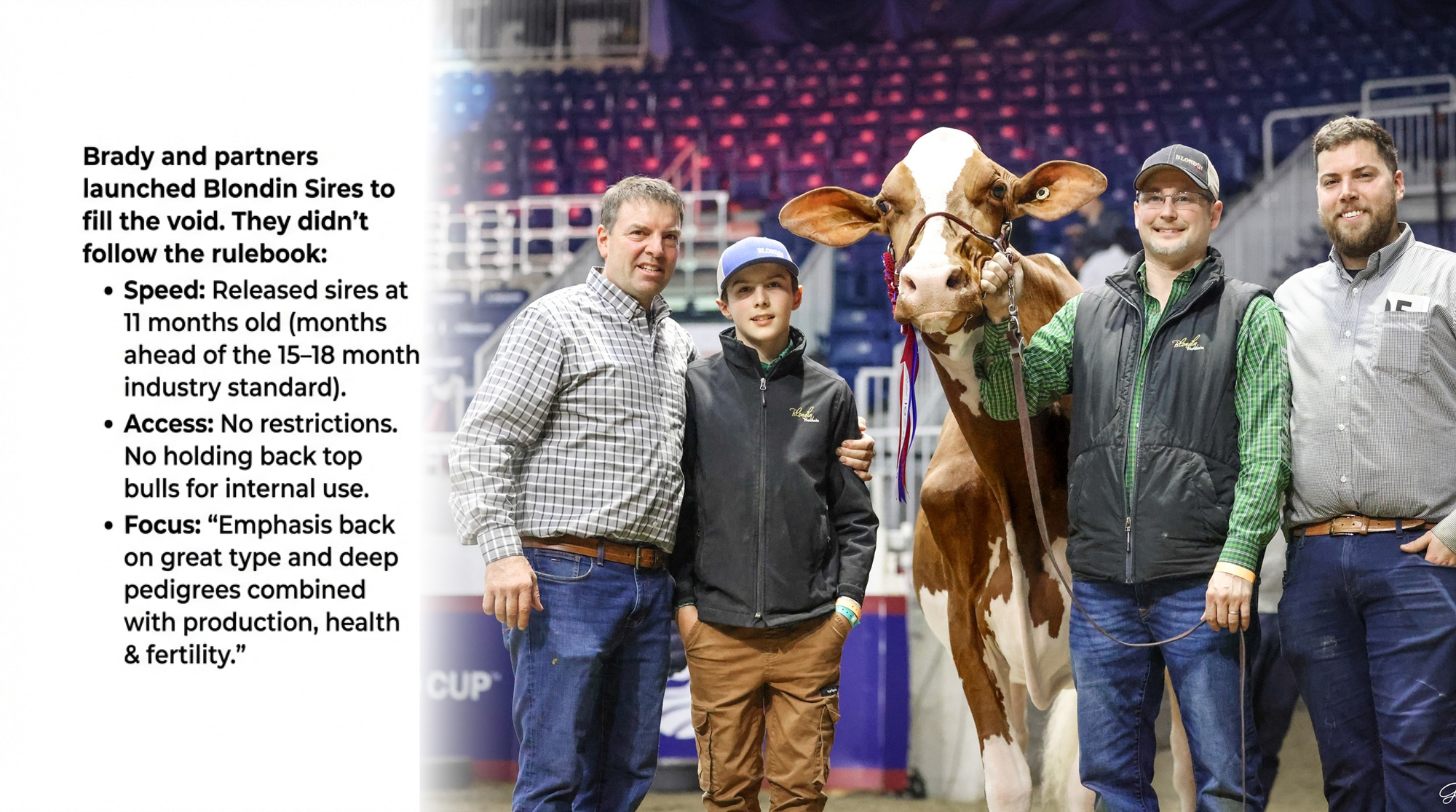
So Brady and his partners — Simon Lalande and the team at ferme Blondin — started their own stud under code 799. It wasn’t a vanity project. Blondin began releasing young sires as early as 11 months of age, months ahead of the industry standard of 15–18 months, built a sales team of 25 across Canada, and grew its share of Canadian sire usage from 2.8% in 2022 to 4.9% in 2023, according to Lactanet market data. That’s a 75% jump in a single year, built without a global distribution network or a corporate parent. 

Across Ontario, the Stanton Brothers made a parallel bet from their dairy operation, marketing genetics directly to producers. Their bull Remover PP reclaimed the #1 spot on Canada’s Proven Holstein LPI rankings in August 2025 at +3897 — backed by 234 daughters across 32 herds — the first homozygous polled bull to top a major national index based on daughter performance. No major study had bothered to build a whole program around that niche. 

These operations aren’t outliers. They’re businesses growing into structural gaps the biggest genetics companies created—and largely can’t fill.

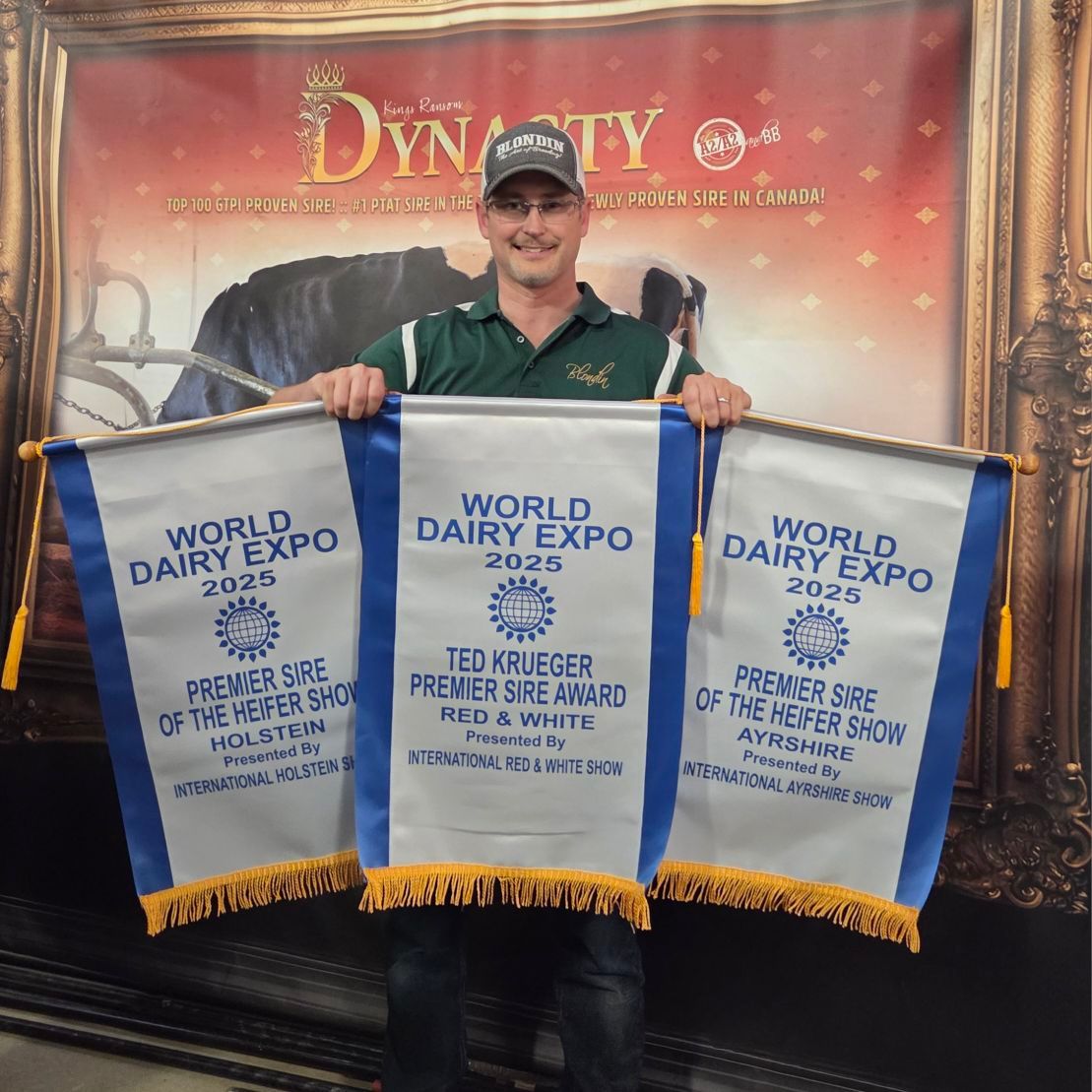
Dann Brady holds three Premier Sire banners at World Dairy Expo 2025 — Holstein Heifer Show, Ted Krueger Red & White, and Ayrshire Heifer Show. Three breeds, one independent stud, zero corporate backing.

Two Bulls and More Than 99% of the Gene Pool

A number that deserves to land differently than it usually does: more than 99% of North American Holstein AI sires trace their paternal lineage to just two bulls — Pawnee Farm Arlinda Chief and Round Oak Rag Apple Elevation, both born in the 1960s. Penn State geneticist Chad Dechow’s research documented this through Y-chromosome analysis: Chief accounts for roughly 49% and Elevation for 51% of active AI sire lines, with only a fraction of a percent from any other lineage (Yue et al., 2015). Every other Y-chromosome line that existed at the start of artificial insemination has effectively gone extinct in commercial use. 

The consolidation behind that bottleneck accelerated fast. Three major entities — URUS (formed from the Alta/GENEX/Trans Ova mergers), Select Sires (in the process of merging with STgenetics’ production arm), and Genus PLC (parent of ABS Global, selling into around 80 countries) — control the vast majority of elite Holstein genetics moving through North American herds. The number of Holstein bulls actively sampled through AI dropped roughly 61% between 2010 and 2020, per Bullvine analysis. 

Genomic selection drove real genetic progress during that same period — research estimates that gains increased by 50% to 100% for yield traits. But it also compressed generation intervals dramatically, from roughly five years to as little as two on the fastest pathways, through genomic testing and juvenile IVF technologies. The gains are genuine. So is the narrowing. 

What Does Rising Inbreeding Actually Cost Per Cow?

Lactanet Canada’s August 2025 update puts the average inbreeding level for Holstein heifers born in 2024 at 9.99% — nearly double what it was fifteen years ago. John Cole, a USDA geneticist, walked through this acceleration in detail at the 2024 Beef Improvement Federation symposium, and the rate of change caught even some industry veterans off guard. Dr. Chad Dechow at Penn State reports that current Holstein inbreeding levels in the US average around 8%, with young bulls running somewhat higher at 9–10%. When researchers measure inbreeding genomically — through actual runs of homozygosity in the DNA — the numbers come in higher still. Italian Holstein data from Ablondi et al. (2023) at the University of Parma showed a mean genomic inbreeding (FROH) of 16% across 27,735 cows in 939 herds. 

YearAvg Inbreeding (%)
20095.1
20126.2
20157.4
20188.5
20219.2
20249.99

And here’s what it costs. Ablondi et al. found every 1% increase in genomic inbreeding cut 305-day milk yield by 61 kg. Using pedigree-based inbreeding, the loss was 44 kg per 1% increase in inbreeding. Doekes et al. (2019), working with Dutch Holstein–Friesians at Wageningen University, reported about 36 kg of milk per 1% increase in pedigree inbreeding, plus a half-day longer calving interval and higher somatic cell scores. 

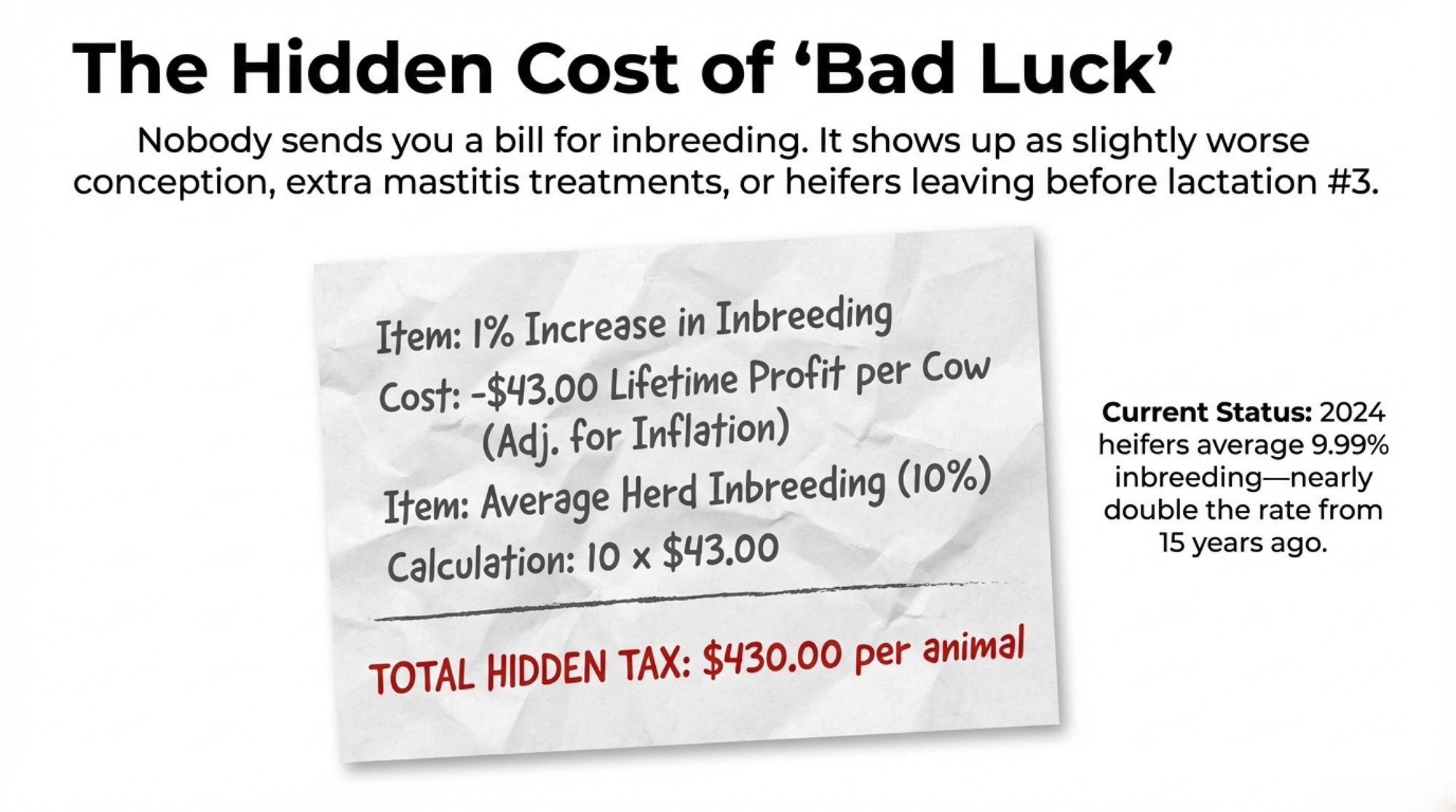
Run the math on your own herd. Research from Virginia Tech found that each 1% increase in inbreeding costs approximately $22–$24 per cow in lifetime profit — and that’s in 1999 dollars. Adjusted for inflation, that’s roughly $40–$43 today. On a herd averaging 10% inbreeding, the accumulated drag works out to $400–$430 per cow over a lifetime. Nobody sends you an invoice for that. It just… shows up. Slightly worse conception rates. A few extra mastitis treatments. Heifers that leave before the third lactation. Your records say “bad luck.” The math says otherwise. 

Inbreeding LevelMilk Loss per Lactation (kg)Calving Interval Increase (days)Lifetime Profit Loss per Cow (CAD)Total Herd Cost (200 cows, CAD)
6%366 kg3 days$240–$260$48,000–$52,000
8%488 kg4 days$320–$344$64,000–$68,800
10%610 kg5 days$400–$430$80,000–$86,000
12%732 kg6 days$480–$516$96,000–$103,200

Why the Big Catalogs Can’t Fix What They Created

Brady’s frustration pointed to something structural — not bad intentions, but gaps that stem from how consolidated AI companies make money.

Major studs routinely hold back their highest-ranking young sires for internal nucleus use before releasing semen broadly. Many companies have restricted access to young sires both because of limited semen production and to maintain competitive leadership. By the time a top genomic bull reaches your tank, his sons may already be entering the pipeline. Blondin and Stanton positioned against this directly: no restrictions, every bull available to every customer. 

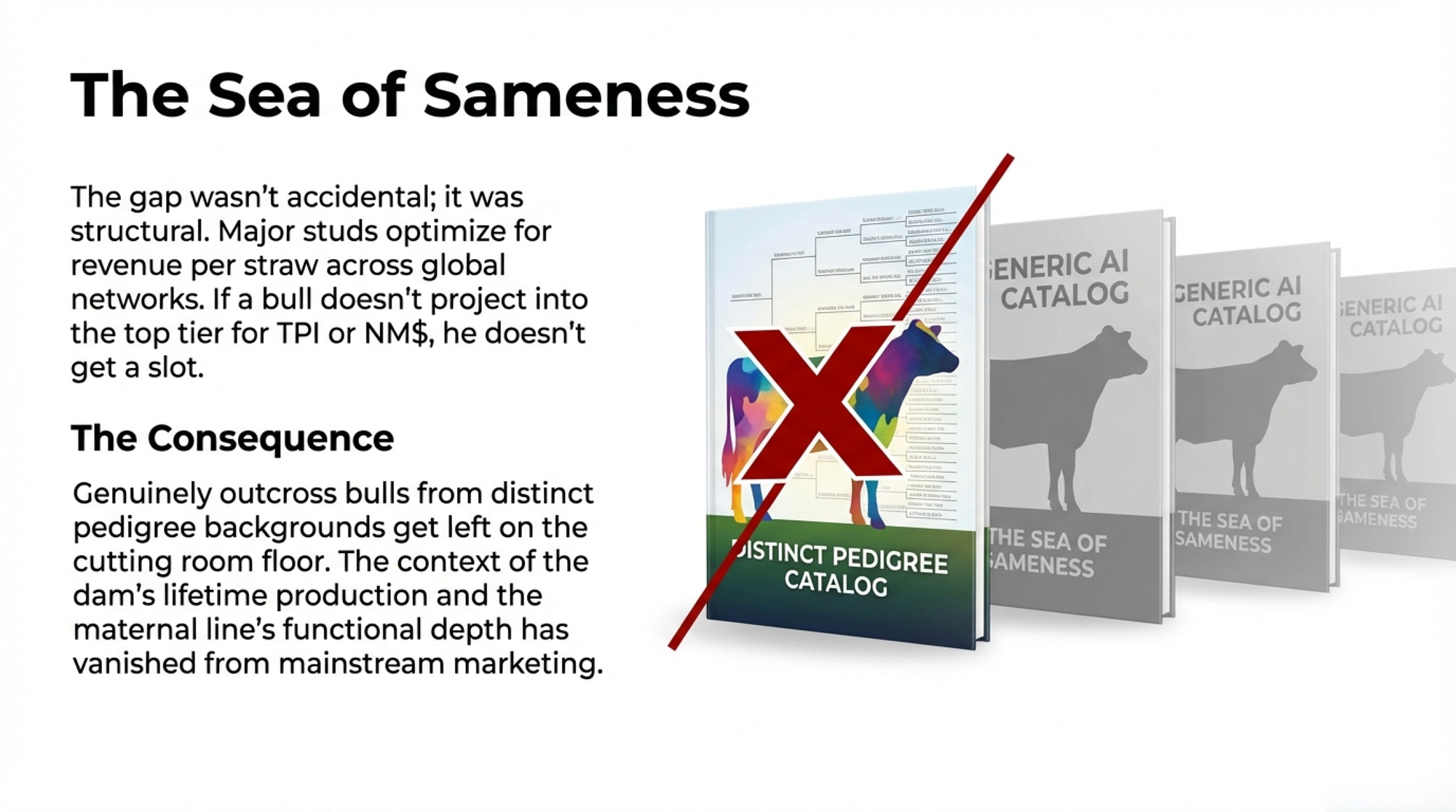
Corporate catalogs sell index numbers. The dam’s lifetime production, the granddam’s longevity record, the maternal line’s functional depth — that context has largely vanished from mainstream AI marketing. Brady and his partners founded Blondin specifically because they wanted that cow-family transparency and couldn’t buy it. And if a sire doesn’t project into the top tier for TPI or NM$, he rarely gets a catalog slot at a major stud. Rational for a company optimizing revenue per straw across a global network. But it means genuinely outcross bulls from distinct pedigree backgrounds get cut before producers ever see them.

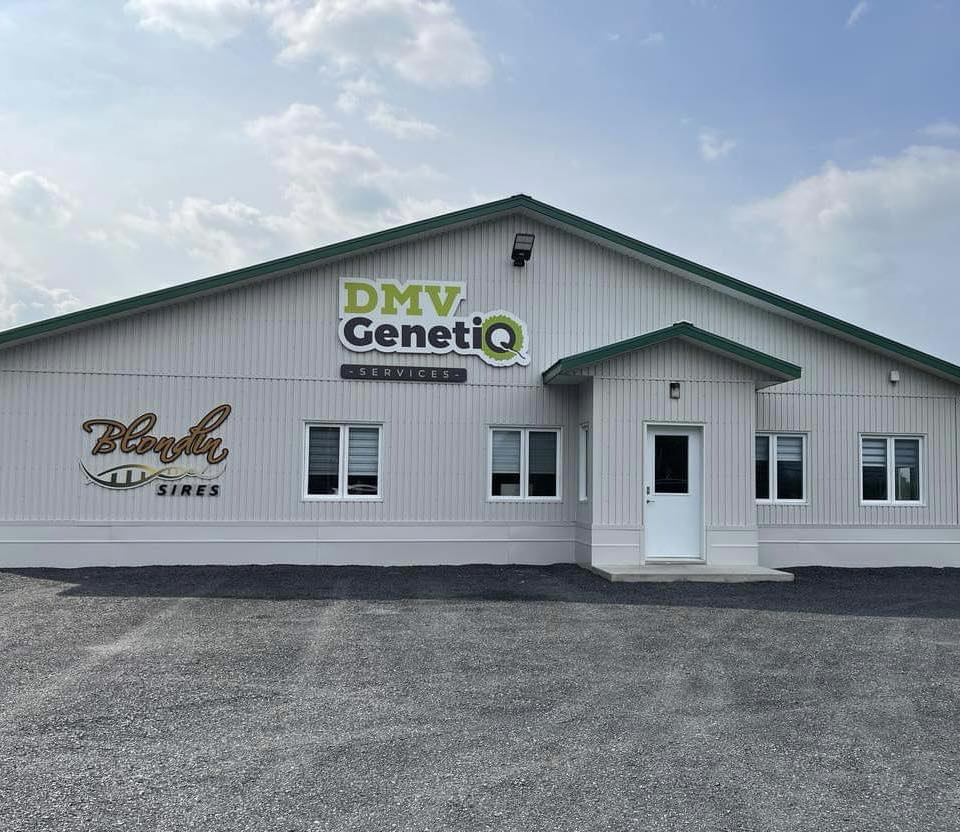
The breeder economics shifted, too. The Bullvine documented in January 2026 that a well-run seedstock operation that generated $1.5 million in genetics revenue a decade ago might bring in $150,000 today — with objectively better cows. Corporate contracts now transfer semen rights, lock in female purchase options, and grant perpetual data licenses. Breeders like Brady looked at that landscape and saw a different kind of opportunity: own the bull, own the semen, control the marketing, and capture the upside yourself through facilities like DMV GenetiQ Services in Drummondville, Quebec. DMV’s model is straightforward — the breeder pays for boarding, health tests, and semen collection and freezing, but keeps 100% of the product and retains decision-making authority. The operation recently expanded to house 130 bulls and store 500,000 doses of semen, with four veterinarians on staff. Blondin bought a stake in DMV in 2022 to lock in that infrastructure for its growing bull lineup. 

What the Europeans Figured Out Decades Ago

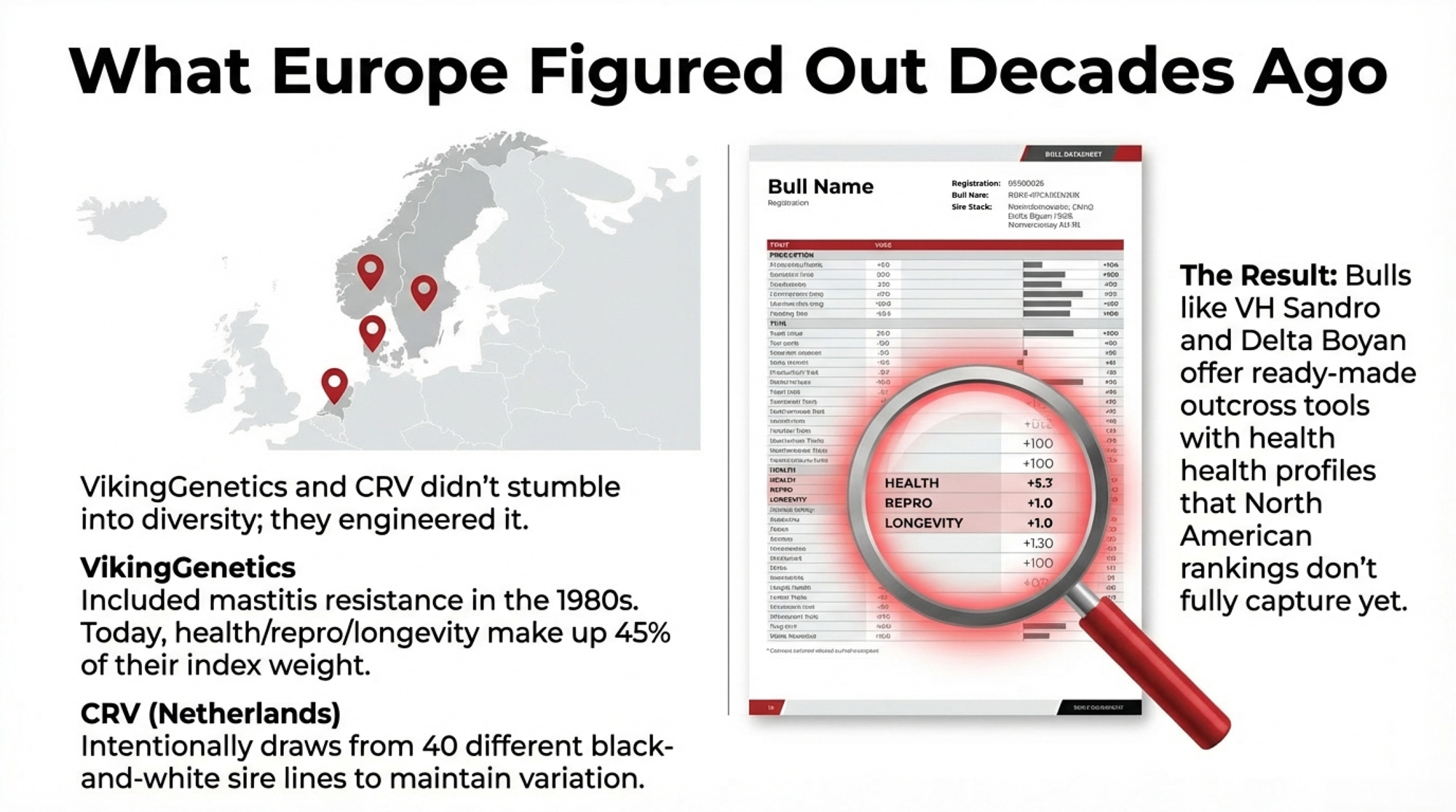
VikingGenetics and CRV didn’t stumble into genetic diversity. They engineered it.

Viking’s Nordic Total Merit index included mastitis resistance starting in the 1980s and general health traits by 1987, decades before North American indexes seriously weighted health. Today, health, reproduction, and longevity carry 45% of NTM’s total weight, per VikingGenetics — the highest ratio among major total merit indexes globally. NTM combines 90 different sub-indices into 15 main traits, drawing from a population in which Nordic cows are recorded for health traits through data from vets, hoof trimmers, and slaughter plants, all compiled into a single database. Their current top genomic VikingHolstein, VH Sandro (VH Skills × Youngster), carries a gNTM of +38 and projects daughters at 12,289 kg milk, 4.24% fat, and 3.54% protein — with an average 963 days in production. That’s the kind of profile that comes from selecting on functional longevity, not just peak yield. 

CRV in the Netherlands runs a similarly deliberate funnel through its Delta breeding program. Starting from around 12,000 embryos produced each year, CRV genomically tests approximately 3,000 male calves and ultimately selects around 60 for semen production — drawing intentionally from 40 different black-and-white sires of sons and 20 red-and-white to maintain population diversity. “To maintain and ensure sufficient variation in the paternal bloodlines, we use around 40 different black-and-white bulls,” CRV’s head of product development, Jaap Veldhuisen, explained. On the health side, their bull Delta Boyan (Warren P RF × Endless RF) scores +19% CRV Efficiency and +6% CRV Health, with a 112 udder health and 111 hoof health breeding value — the kind of multi-trait health profile that North American rankings don’t yet fully capture. Both organizations are farmer cooperatives. Their shareholders milk the daughters. That makes it commercially viable to trade a few points of short-term index for long-term population health. 

For North American producers, Viking and CRV bulls function as ready-made outcross tools with health-heavy proof profiles and genuine pedigree distance. But telling a real outcross from a Holstein with a European postal code takes homework. If you can read three generations of pedigree and recognize every sire name from your current AI catalog, it’s probably not the diversity you’re looking for. Screen instead for bulls with strong simultaneous scores across udder health, daughter fertility, and longevity — a CRV Health score above +5% or a NTM health sub-index well above breed average — combined with sire stacks you don’t already have in your tank.

Breeding Program / IndexHealth/Fertility/Longevity Weight (% of Total Merit)Key Traits MeasuredExample Bull Profile
VikingGenetics (NTM)45%Mastitis resistance, general health, daughter fertility, herdlife, calving traitsVH Sandro: +38 gNTM, 12,289 kg milk, 963 days in production
CRV (Delta Program)40%Udder health, hoof health, daughter fertility, calving ease, longevityDelta Boyan: +19% Efficiency, +6% Health, 112 udder health BV
North American TPI25–30%Productive life, SCS, daughter pregnancy rate, calving easeFocus historically on production and type
North American NM$28–33%Productive life, SCS, livability, daughter pregnancy rateEconomic weighting includes health as cost driver

Is Your Mating Plan Building an Asset — or Slowly Borrowing Against Your Daughters’ Future?

Research consistently shows that recent inbreeding — long runs of homozygosity in the genome — hits harder than older, more distant inbreeding. Ablondi et al. (2023) found that longer ROH segments (over 8 Mb, reflecting recent common ancestors) had a significantly negative effect on all production traits, while shorter segments were less consistent. Doekes et al. (2019) confirmed the pattern in Dutch Holsteins. Line-breeding on the latest popular bloodline does more damage per percentage point than having common ancestors five or six generations back. 

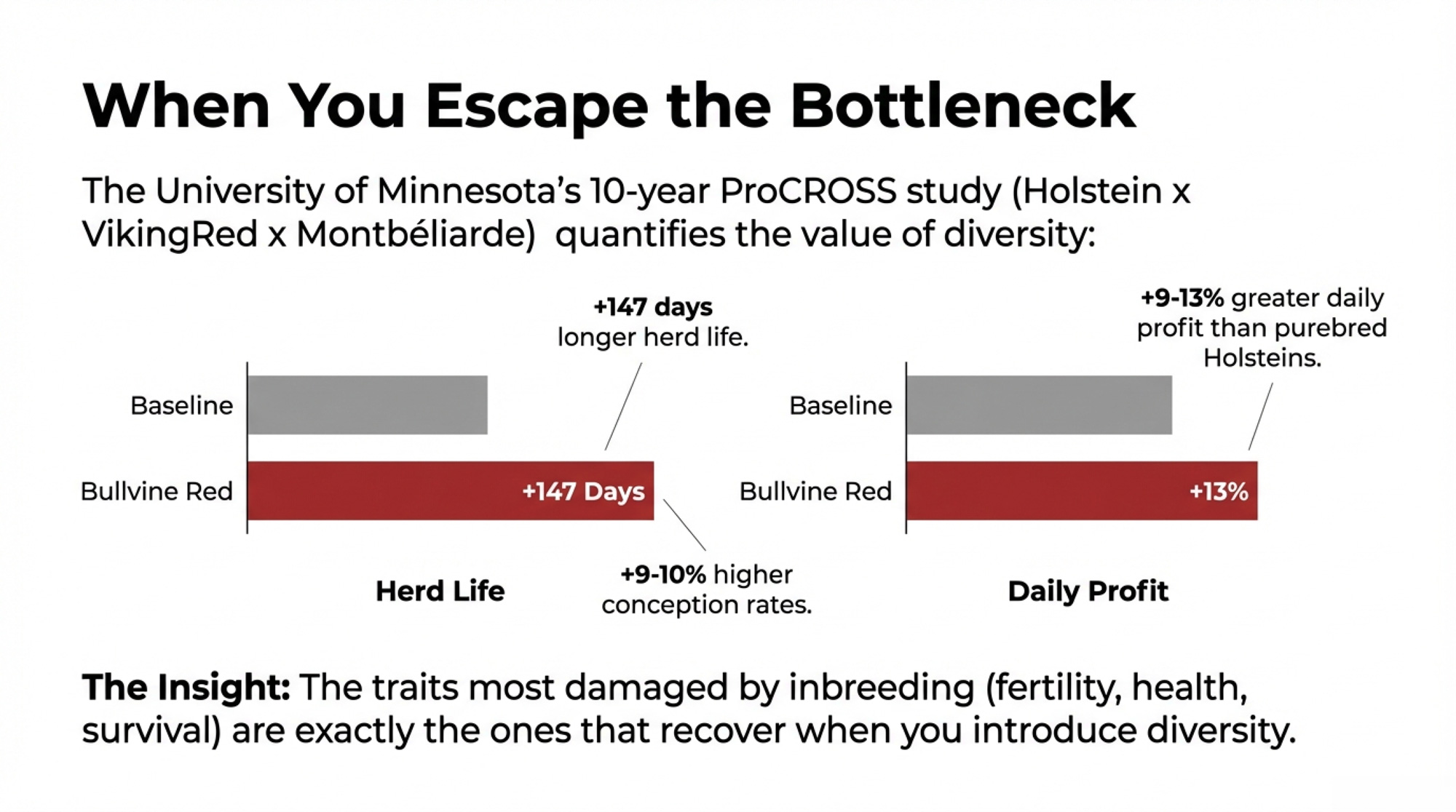
And the University of Minnesota’s 10-year ProCROSS study shows what pushing back looks like in practice. Three-breed crossbred cows (Holstein × VikingRed × Montbéliarde) showed up to 15–20 fewer days open, first-service conception rates up to 9–10 percentage points higher in second and third lactations, and herdlife 147 days longer than purebred Holsteins. Daily fat-plus-protein production for lifetimes of those three-breed crossbreds was 1% lower than their Holstein herdmates, while two-breed crosses were actually 1% higher. Professor Les Hansen at the University of Minnesota led the research across herds averaging 13,587 kg of milk, 512 kg of fat, and 426 kg of protein. Daily profits for ProCROSS cows ran 9–13% greater than purebred Holsteins. 

Performance MetricPure HolsteinTwo-Breed CrossThree-Breed ProCROSSProCROSS Advantage
Days OpenBaseline15 fewer15–20 fewerFertility recovery
First-Service Conception (2nd/3rd lactation)Baseline+7–8%+9–10%Heterosis payback
Herdlife (days)Baseline+85 days+147 days5 more months productive
Daily Fat + Protein (kg)Baseline+1%-1%Minimal production trade-off
Daily Profit per CowBaseline+10–12%+9–13%$0.90–$1.30 per cow per day

That isn’t a theoretical model. It’s a decade of measured data from high-production herds. And while most operations won’t go full crossbred, the ProCROSS results quantify what happens when you deliberately invest in genetic diversity: the traits most damaged by inbreeding — fertility, health, survival — are exactly the ones that recover.

Four Ways to Hedge Your Genetics — and What Each One Costs

Keep 65–70% with your main AI supplier—but stop accepting the default. This is where most of your genetic gain, sexed semen supply, and technical support lives. Don’t unplug it. But ask your rep to show you the sire-of-sons diversity in your mating plan. If all roads trace back to the same three or four global sires, you’re stacking risk regardless of how the indexes look. Request lower-relationship sires specifically. Set hard inbreeding caps in your mating program — not just “avoid close relatives” but an explicit ceiling on expected future inbreeding per mating.

Allocate 15–20% to European cooperative genetics. VikingHolstein and CRV Holstein EU bulls offer genuine pedigree distance from the North American mainstream, bred under health-heavy total merit indexes. Target these matings at your most inbred cow families. Up to 5% of this allocation could go to a structured crossbreeding trial — VikingRed or Montbéliarde on your worst-performing, highest-inbreeding cows, where heterosis pays back fastest. The ProCROSS data shows that the fertility and survival payback is immediate, even though the daily component yield on three-breed crosses dips by about 1%. The trade-off beyond production: limited sexed-semen availability on some European sires, longer shipping lead times, and proof profiles that may not translate perfectly to your climate and management system. 

What if you only have a budget for one outcross move this season? Direct 10–15% of matings to independent North American studs. Blondin, Stanton, and operations using DMV GenetiQ-style service centers offer unrestricted bull access, cow-family transparency, and niche trait programs the majors won’t prioritize. Per-straw costs will be higher than those in volume programs from the big studs — DMV GenetiQ charges breeders for boarding, health testing, collection, and freezing, with the breeder setting their own marketing and pricing. You’re paying more per unit for something the big catalog can’t deliver: pedigree distance with a story you can verify. But before writing any cheque, get clear answers: Who owns the semen and data? What health-testing standard do they follow — CSS-equivalent or not? Are the proofs from official national evaluations with published reliabilities? What’s the succession plan if the principal gets sick or sells the business? Can they actually ship sexed product to your region on a reliable schedule? Vague answers on any two of those should end the conversation. 

Your 30-day action: Pull your herd’s inbreeding report from Lactanet or CDCB this week. Identify your most inbred cow families by average inbreeding coefficient. Those are the animals where your next mating decision matters most — and where a single outcross sire choice can do the most immediate good. Virginia Tech’s data gives you a baseline for that conversation with your AI rep: roughly $40–$43 per cow per 1% inbreeding in today’s dollars. On a 200-cow herd averaging 10% inbreeding, the accumulated lifetime drag is somewhere around $80,000–$86,000 across the whole herd. Even clawing back one or two percentage points on the next generation of replacements moves real money. 

Key Takeaways

  • This month: Pull your herd’s inbreeding report. Canadian Holsteins are rising by 0.25% per year on a pedigree basis, according to Lactanet. If your heifer cohort is above the breed average of 9.99% for 2024-born animals and trending upward, the strategies in this article aren’t optional—they’re overdue. 
  • Within 90 days: Ask your AI rep to walk you through the sire-of-sons diversity in your current mating plan — not just individual mating inbreeding, but the population-level picture. Request one catalog from an independent stud or European cooperative and compare pedigrees to what you’re currently using.
  • Within 12 months: Compare conception rate, mastitis incidence, and first-lactation survival by sire group on any outcross or crossbred matings you’ve started. Track the heifer-class inbreeding year over year. If the trend is flattening while genetic merit holds, you’ve found your balance.
  • Before buying from any independent stud: Demand clear answers on ownership and data rights, CSS-equivalent health testing, official genomic evaluations with published reliabilities, a written business continuity plan, and reliable distribution, including sexed semen capability. Vague answers on any two should end the conversation.

The Bottom Line

Dann Brady pulled up his own herd’s numbers years ago and didn’t like what he saw. He didn’t write a letter to the AI industry asking them to fix it. He started a company—and grew it 75% in a year by selling exactly what the big catalogs had stopped offering. 

You don’t need to start a stud. But Brady’s question is the same one every Holstein producer should be sitting with right now: when you look at where your herd’s genetic diversity is headed over the next five to ten years, do you like what you see? And if you don’t — what changes this breeding season?

Continue the Story

The Sunday Read Dairy Professionals Don’t Skip.

Every week, thousands of producers, breeders, and industry insiders open Bullvine Weekly for genetics insights, market shifts, and profit strategies they won’t find anywhere else. One email. Five minutes. Smarter decisions all week.
NewsSubscribe
First
Last
Consent

Top 12 Most-Read Bullvine Articles of 2024: Insights and Controversies Reshaping the Dairy Industry

Discover the top 12 Bullvine articles of 2024, featuring insights and controversies that are transforming the dairy industry. Ready for a fresh perspective?

Staying informed is more important than ever in the fast-changing world of dairy farming. This year, The Bullvine has become a leader, pushing boundaries and sparking conversations in the global dairy community. Our top twelve articles of 2024 weren’t just stories; they were sparks for discussion and change, offering essential insights and raising questions that made us think differently. These pieces are unique because they take complex topics and explain them with a twist that engages both experienced dairy farmers and industry professionals.  Each article on The Bullvine, such as the Jersey vs. Holstein profitability comparison or the journey of Mr. Wijnand Pon, uses in-depth industry knowledge and innovative analysis to question traditional beliefs in the dairy farming sector. Your role in shaping the future of dairy farming is crucial, and these articles are designed to empower you with the knowledge and insights you need. 

“From exciting profiles of industry leaders to exploring the dark side of the dairy business, these articles don’t just highlight trends—they set them!”

Each article is a unique exploration, whether comparing the profits of Jersey and Holstein breeds or uncovering tales of crime in the dairy world. These articles prompt you to ponder the industry’s future direction and our role in shaping it, as well as provide a deeper understanding of what’s shaping the present and future of dairy farming. They are not just stories but powerful tools that can influence the trajectory of the dairy industry.

#12. How Hanover Hill Holsteins Revolutionized the Dairy Breeding Industry

Hanover Hill Holsteins changed the Holstein world with their commitment to top-quality genetics and big dreams. This story unfolds through the teamwork of Peter Heffering and Ken Trevena. Together, they made waves in the dairy industry. Their journey is like a guide to imaginative breeding and innovative farm management. They created cattle that broke records and set new industry standards. Peter Heffering’s love for farming started in 1945 during a memorable summer on Chuck Waustlich’s farm in Woodstock, Vermont. He studied animal care at New York State University, which prepared him for an essential role at Beacon Milling Company’s Holstein farm. He played a key part in the breeding program through innovative cattle buys. On the other side, Kenneth Wesley Trevena led a dairy farm in Concord, New Hampshire, before joining Beacon Farm. Trevena and Heffering formed a partnership, which became the foundation of Hanover Hill’s lasting success.

(Read more: https://www.thebullvine.com/breeder-profiles/how-hanover-hill-holsteins-revolutionized-the-dairy-breeding-industry/)

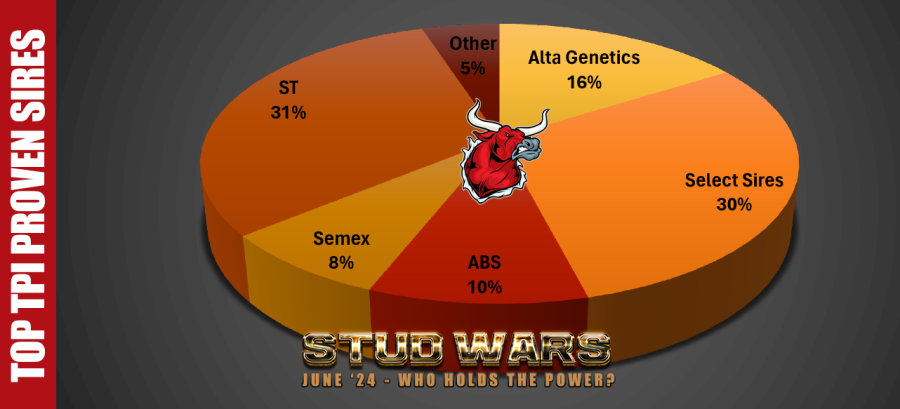
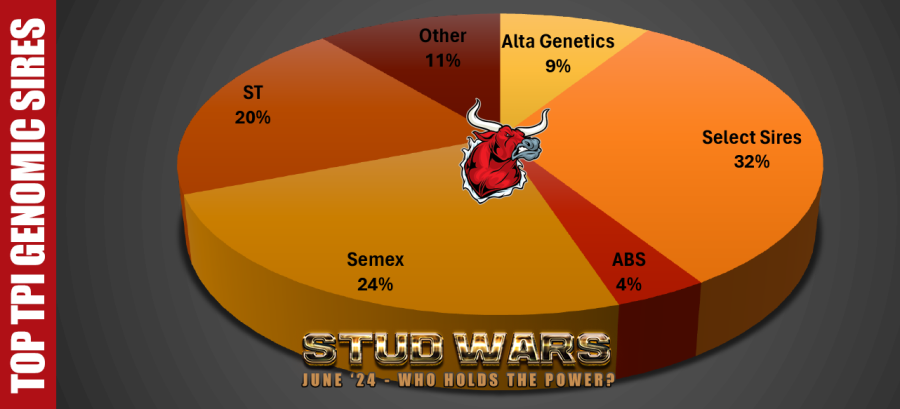
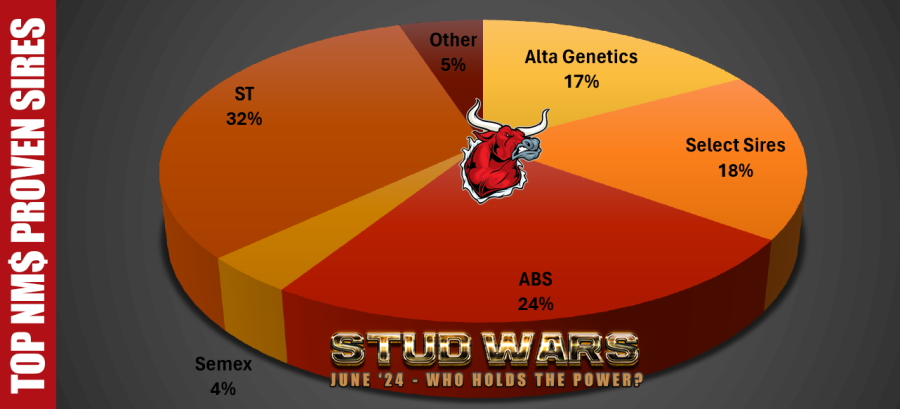
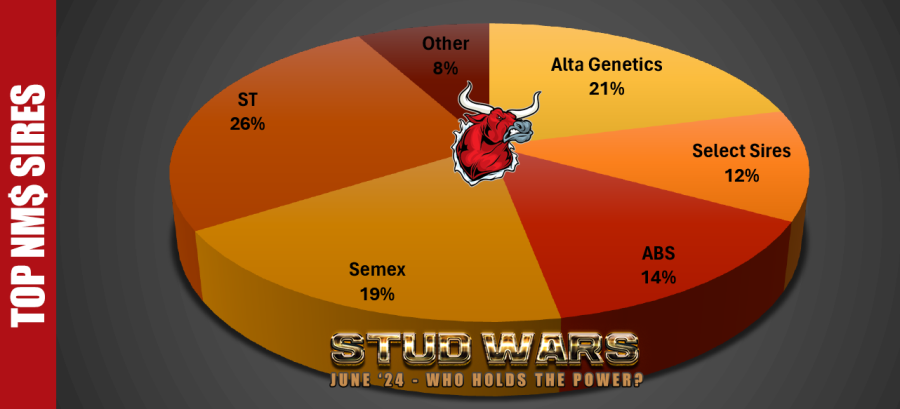
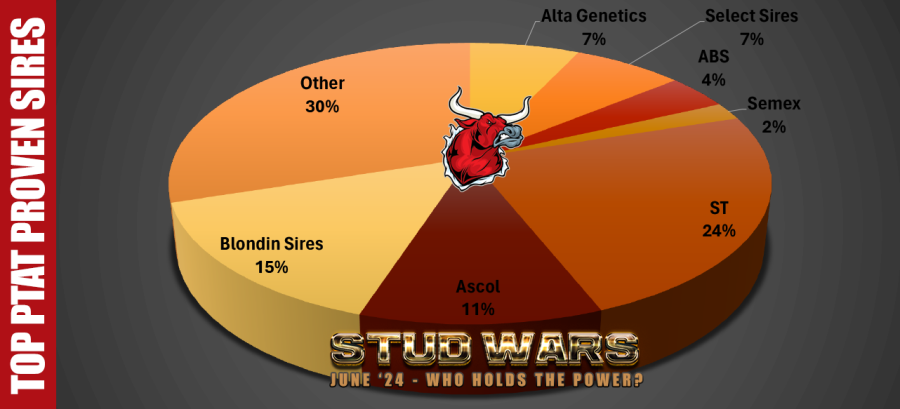
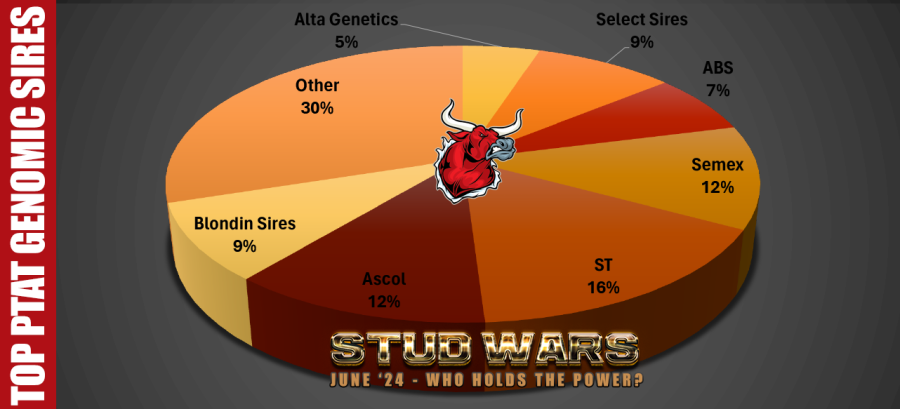
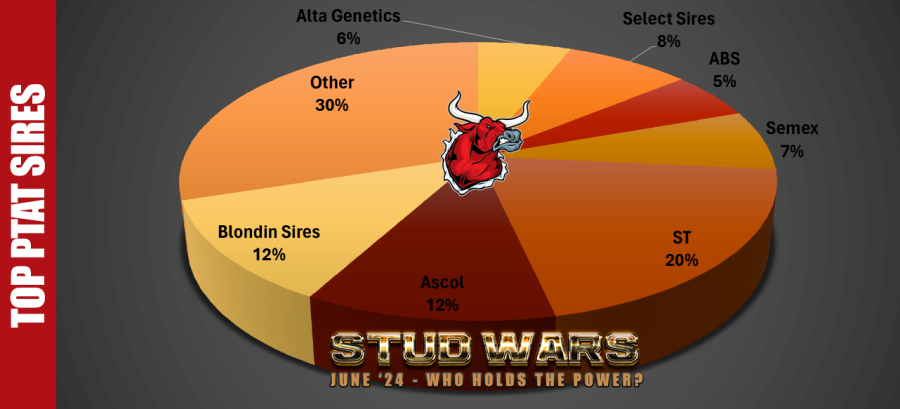
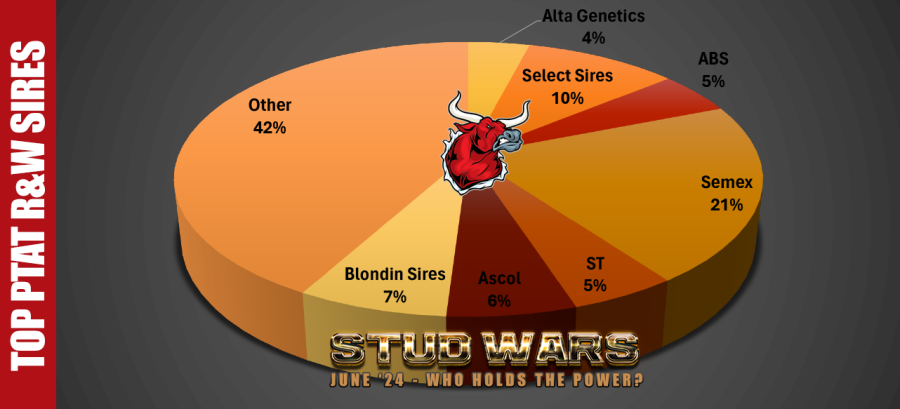
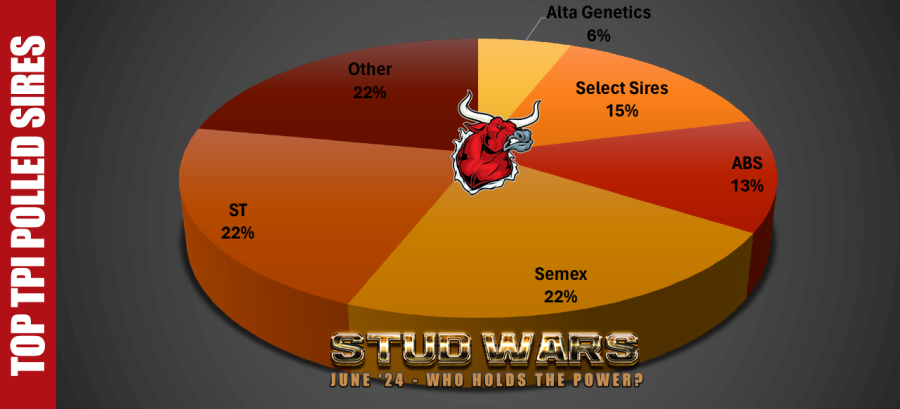
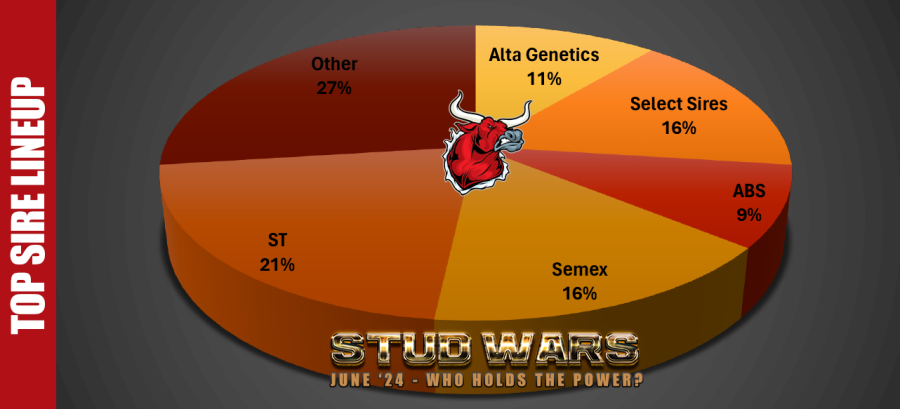
#11. STUD WARS: Which AI Company Holds the Power in the Dairy Cattle Genetics Universe

The field of dairy cattle genetics is going through an exciting change. Big companies like STgen, Select Sires, and Semex are leading the way. New companies like Blondin Sires and Ascol are becoming popular in different areas. Although traditional performance markers like TPI and NM$ are still important, there’s a focus on more specific breeding areas like Red & White, Polled, and genomic sires. Companies like Validity Genetics are making significant progress, especially in the genomic Polled category, showing a competitive and varied market. The intensifying competition among Artificial Insemination companies underscores the rising significance of niche areas and innovative genetic solutions, reshaping the power dynamics within the dairy cattle genetics realm.

(Read more: https://www.thebullvine.com/a-i-industry/stud-wars-which-ai-company-holds-the-power-in-the-dairy-cattle-genetics-universe/)

#10. The Untold Story of K-Kuipercrest Inspir Ardath: The Greatest Holstein That Never Was

K-Kuipercrest Inspir Ardath’s story teaches us about the lost potential of dairy cattle in the competitive world. This story covers pedigrees, evaluations, and big-money decisions, showing the balance between passion and practicality. From Ed Morwick’s doubts to David Brown’s challenging pricing, every choice and deal shaped Ardath’s missed promise. The focus on vet checks, insurance, and legal deals shows the need for good planning and strong partnerships. Ardath’s journey warns of the dangers of pride and highlights the importance of protecting efforts with smart decisions and humility. This story serves as a poignant reminder to balance enthusiasm with prudence to prevent missed opportunities due to misguided connections and misplaced values.

(Read more: https://www.thebullvine.com/donor-profile/the-untold-story-of-k-kuipercrest-inspir-ardath-the-greatest-holstein-that-never-was/)

#9. How Trump’s Re-Election Will Redefine the Dairy Industry

With Donald Trump’s win in the 2024 Presidential Election, a new time begins in dairy regions like Wisconsin. His plans to boost industries and cut federal rules bring significant challenges and new chances for dairy farmers. There might be fewer rules and more tax cuts, which could help with money problems. On the world stage, Trump’s actions could change trade partnerships, affecting how dairy products are sold abroad. The dairy industry must consider how these changes impact their work and future growth.

(Read more: https://www.thebullvine.com/politics/how-trumps-re-election-will-redefine-the-dairy-industry/)

#8. How Huronia Centurion Veronica 20J Redefined the Jersey Breed

Huronia Centurion Veronica 20J is a shining star in the dairy world. This excellent cow won three grand champion titles at the World Dairy Expo from 2004 to 2006 and even the supreme champion award in 2006. Raised by the Armstrong family at Huronia Jerseys in Ontario, Canada, Veronica’s success grew with help from Ernie Kueffner, Terrie Packard, and Arethusa Farms. Fred Armstrong, who received Jersey Canada’s Master Breeder Award, planned many successful breeding matches with Veronica. In 1998, he bought Genesis Renaissance Vivianne, who, even as a young cow with an udder problem, scored VG-87 and became a top Jersey Canada Star Brood Cow. Veronica’s family line often wins top prizes. Some standout descendants are Elliots Golden Vista, Arethusa Primetime Déjà Vu, Arethusa Veronicas Dasher, and Arethusa Veronicas Comet. Veronica passed away in 2016, but her influence on the Jersey breed is still strong today.

(Read more: https://www.thebullvine.com/donor-profile/how-huronia-centurion-veronica-20j-redefined-the-jersey-breed/)

#7. Why Most US Dairy Farmers Lean Republican: A Look Into the Numbers and Reasons

Most US dairy farmers identify as Republicans. This choice is connected to economic, social, and cultural reasons. Economic issues like tariffs and trade policies are essential, as are shared social values. These political choices affect how farmers run their farms and their attitudes toward the government. For example, in the 2020 election, 75% of counties with large dairy farms voted Republican, and 71% of federal contributions from the dairy industry went to the GOP. The political leanings of dairy farmers have evolved from the New Deal era of the Great Depression to today, influenced by factors such as tax cuts and farm subsidies. These policy impacts demonstrate how outside factors influence party allegiance.

(Read more: https://www.thebullvine.com/dairy-industry/why-most-us-dairy-farmers-lean-republican-a-look-into-the-numbers-and-reasons/)

#6. ABS Acquires De Novo: Strategic Move for Sale or Survival?

The agribusiness world is buzzing about ABS Global buying De Novo. ABS’s acquisition of De Novo has sparked discussions about its plans. Following some job cuts, there is speculation about whether ABS is facing financial difficulties or strategically enhancing its appeal to potential buyers. Some rumors say that Genus, ABS Global’s parent company, might be preparing to sell to Chinese buyers interested in their pig-related products. At the same time, other big companies like URUS and STGen might want to buy ABS’s beef and dairy businesses. In agriculture, big business takeovers often show that changes are coming. This deal raises important questions: Is ABS trying to keep its best talents, change its market strategy, or get ready to sell? As part of Genus PLC, which works on pig genetics and biotechnology, ABS aims to make pig production more efficient, creating interest from China due to its need for protein. This move may make ABS more appealing to future buyers or a better fit with Genus’s focus on pigs.

(Read more: https://www.thebullvine.com/a-i-industry/abs-acquires-de-novo-strategic-move-for-sale-or-survival/)

#5. The Dark Side of the Dairy Business: Seven Notorious Criminals in the Dairy Industry Unveiled

Deception and illegal activities have hurt the dairy industry, causing significant financial losses for hardworking farmers. One of the most notorious people, Lercy Austin, managed to escape capture for years while stealing livestock. Former veterinary surgeon Dr. Morley Pettit was also in trouble for fraud linked to his tricks in getting livestock. He convinced farmers to send him purebred animals, only to sell them cheaply. Finally, justice caught up with him, and after his release, two Michigan dairymen made sure he paid for his actions again. In 1935, Duncan Spang lost his membership in the Holstein Association due to several wrongdoings, leaving him with a bad reputation. Jack C. Miller was known for trading bull semen illegally, with no respect for the law. Once a respected Holstein breeder, Gordon Atkinson fell from grace through complex fraud schemes, making $12 million dishonestly instead of facing arson charges.

(Read more: https://www.thebullvine.com/the-bullvine/the-dark-side-of-dairy-business-seven-notorious-criminals-in-the-dairy-industry-unveiled/)

#4. Breaking Down Blondin Sires’ Meteoric Rise in the AI Industry

 Blondin Sires, a leading AI dairy company in Canada, has grown its market share from 2.8% in 2022 to 4.9% in 2023. This 75% increase comes from innovative strategies, new genetic ideas, strong partnerships, and quick decisions. Blondin Sires started to fix the lack of top bulls. They overcame early challenges by creating stud codes and good distribution routes. Using genomics and social media

(Read more: https://www.thebullvine.com/a-i-industry/breaking-down-blondin-sires-meteoric-rise-in-the-ai-industry/)

#3. Why Fake Dairy Cow Photos are Hurting the Industry: Time for Change

This article delves into the growing problem of editing photos in dairy cow photography. It’s not just the backgrounds that some photographers alter; they also edit the cows. This unethical practice raises serious concerns about honesty and calls for stricter rules. The Dairy Marketing Code of Conduct underscores the importance of honesty, prohibiting the dishonest editing of photos and establishing clear rules for trust between farmers and buyers. Upholding ethical standards ensures that the images we see and the animals we buy are reliable, and this is a crucial aspect of the dairy industry that we must all consider.

(Read more: https://www.thebullvine.com/the-bullvine/why-fake-dairy-cow-photos-are-hurting-the-industry-time-for-change/)

#2. The Inspiring Journey of Mr. Wijnand Pon: From Dairy Farmer to Global Industry Powerhouse

Mr. Wijnand Pon’s journey is fantastic and inspiring. Coming from a family involved in the trading business, Pon made a significant and surprising move into the dairy farming industry. He had no farming background, driven only by his love for nature and agriculture. He started by buying a small farm, where he quickly succeeded, showing a natural skill for dairy farming. 

Pon played a crucial role in bringing top Holstein genetics to the Netherlands, changing local dairy practices, and establishing himself as a significant figure in the industry. His focus on innovation led to meaningful partnerships with major breeding organizations, leading to the purchase of Alta Genetics. This helped create URUS, which delivers modern, customer-focused solutions. 

Apart from his business success, Pon is very dedicated to sustainable farming. His Come On Foundation supports global conservation and ecological restoration efforts, showing his commitment to positively impacting the environment. Pon’s forward-thinking approach has been recognized, as he was named the 2020 International Person of the Year at the World Dairy Expo. His story showcases innovation, leadership, and a strong commitment to sustainable advancement in agriculture.

(Read more: https://www.thebullvine.com/dairy-industry-professionals/the-inspiring-journey-of-mr-wijnand-pon-from-dairy-farmer-to-global-industry-powerhouse/)

#1. Jersey vs. Holstein: Which Dairy Breed Delivers Greater Profitability for Farmers?

Jersey and Holstein cows are in the spotlight in the battle for which dairy breed is more profitable. Holsteins is famous for its high milk and component production. This helps them cut down on costs, earning an extra $456 per cow each year. But don’t count the Jerseys out yet. They are improving their milk production and are great at turning feed into energy, making 1.75 pounds of energy-corrected milk for every pound of dry matter. This sustainability focus positions Jersey as a strong competitor, mainly due to its positive environmental impact and efficient use of resources. To reach the same production goals, Jerseys use 32% less water, 11% less land, and 21% less fossil fuels. This is very appealing to farmers who care about being sustainable.

(Read more: https://www.thebullvine.com/the-bullvine/jersey-vs-holstein-which-dairy-breed-delivers-greater-profitability-for-farmers/)

The Bottom Line

Bullvine’s articles from 2024 offer lots of different viewpoints that show how complex the dairy industry is becoming. Each story contributes to a broader discourse on sustainability, ethics, and financial aspects in the dairy industry, from the profitability of Jerseys and Holsteins to the challenges of fake cow photos. You see success stories and warnings that can teach lessons for small family farms and large-scale operations. 

Reflect on the impactful journeys of individuals like Mr. Wijnand Pon and exceptional cows such as Huronia Centurion Veronica 20J within the industry. These stories celebrate innovation while serving as poignant reminders of the challenges in advancing the dairy industry. They show how changes within the AI industry and company purchases are necessary for staying ahead in a challenging market. 

It’s intriguing to explore why dairy farmers tend to have a particular political leaning and to delve into the shocking stories of crime within the industry. These stories prompt us to reflect deeply on the moral obligations of individuals involved in the dairy sector. This reflection could influence future policies and cultivate a community that prioritizes honesty. 

Leveraging these insights to build a stronger and more equitable dairy industry is imperative. Balancing respect for the past with strategic planning for the future is essential for industry development. How will you contribute to driving change or observing from the sidelines? Your involvement is crucial in shaping the future of the dairy industry.

Key Takeaways:

  • Profitable Breeding: Uncover which dairy breed, Jersey or Holstein, truly boosts the bottom line for farmers.
  • Inspirational Leadership: Journey from local farming to a global dairy powerhouse with Mr. Wijnand Pon.
  • Authenticity Matters: Understand how fake dairy cow photos damage the industry and why change is crucial.
  • Innovative AI Trends: Explore Blondin Sires’ rapid growth and its implications for the AI sector.
  • Industry Exposé: Delve into the criminal elements in the dairy world that challenge ethical standards.
  • Strategic Business Moves: Examine ABS’s acquisition of De Novo, navigating the landscape of survival and growth.
  • Political Leanings: Analyze why US dairy farmers predominantly align with the Republican party.
  • Breed Transformation: Celebrate Huronia Centurion Veronica 20J, reshaping the Jersey breed.
  • Missed Legends: The intriguing narrative of K-Kuipercrest Inspir Ardath, a Holstein icon that never was.
  • Genetic Power Struggle: Find out which AI company reigns supreme in the genetics arena.
  • Generational Impact: Discover Hanover Hill Holsteins’ profound influence on the dairy breeding community.
  • Market Shifts: Consider the broader impacts of Riverview Dairy’s expansion on smaller farms.

Summary:

Throughout 2024, The Bullvine has been a beacon of insight, unraveling the dairy industry’s complexities with compelling narratives and analysis. From exploring the profitability of Jersey versus Holstein breeds to sharing Wijnand Pon’s inspiring rise from a dairy farm to industry prominence, these stories challenge traditional industry perceptions. They spotlight modern concerns such as the authenticity of cow imagery and uncover the industry’s shadowy figures, advocating for transparency and integrity. Articles also delve into strategic shifts like ABS’s acquisition of De Novo and Riverview Dairy’s expansion, which threatens small farms. With US dairy farmers tending Republican, this collection of pieces offers a rich tapestry of tradition, innovation, and global influences, providing dairy professionals with food for thought and proactive insights.

Join the Revolution!

Bullvine Daily is your essential e-zine for staying ahead in the dairy industry. With over 30,000 subscribers, we bring you the week’s top news, helping you manage tasks efficiently. Stay informed about milk production, tech adoption, and more, so you can concentrate on your dairy operations. 

NewsSubscribe
First
Last
Consent

Breaking Down Blondin Sires’ Meteoric Rise in the AI Industry

Explore how Blondin Sires became Canada’s fastest-growing AI company. Understand their strategies, challenges, and successes.

dairy cow genetics, Blondin Sires, dairy breeding industry, genetic products, market share increase, genomics technology, distribution network, high-type sires, competitive advantage, innovative breeding methods

Blondin Sires, Canada’s fastest-growing dairy genetics company, has grown from a small startup to a well-known worldwide brand. Their creative method blends cutting-edge technology with traditional breeding goals and strategies, and has propelled their rapid growth. This strategic execution has seen them increase their Canadian market share from 2.8% in 2022 to a staggering 4.9% in 2023—a 75% increase. Are you intrigued about the secrets behind their incredible growth? Read on to learn about the path, methods, and discoveries that have propelled Blondin Sires to the front line of dairy genetics.

The Serendipitous Genesis: From Scarcity to Necessity 

Blondin Sires strated from a clear need, like a coincidental alignment of shortages and potential in the dairy breeding business. The team at Ferme Blondin faced a growing dilemma: the bulls on the market did not fulfill their demanding requirements for high-type sires with full pedigrees and highly classified dams. This remarkable lack prompted a brave move. 

The first phase was riddled with challenges that might demoralize even the most resilient spirits. They had to create a distribution network from scratch, like sailing unknown seas. These also had to compete for top sires with much larger AI companies who had more extensive distribution networks. Despite these formidable obstacles, their determination remained unwavering. 

Ferme Blondin’s choice to start an AI firm was more than a financial endeavor. There was widespread frustration felt among many breeders for bulls that met their breeding needs, servicing this need fueled the Blondin Sires rapid growth. Their story highlights a critical realization that innovation often starts when motivated people solve a common need by taking things into their own hands.

Forging the Path: Milestones Marking Blondin Sires’ Formative Years 

Blondin Sires’ early accomplishments demonstrate the company’s endurance and devotion. The journey started with theacquiring their marketing code (799), which was a watershed moment in making their goal a reality. This stage was far from straightforward since negotiating the complexity of the AI sector without previous knowledge presented a significant learning curve. However, their unwavering effort paid off.

Another watershed moment came when a strong distribution network was built from the ground up. Initially, the team worked hard to understand logistics and create relationships with breeders and distributors. Their commitment led to developing an effective distribution system, ensuring that breeders throughout Canada had access to bulls with elite conformation, full pedigrees, and excellent performance. These early results provided the groundwork for Blondin Sires’ future expansion and success in the competitive AI business.

Thriving Through Agility: Blondin Sires’ Blueprint for Rapid Growth and Efficiency

Blondin Sires has shown resilience and adaptation in the face of increasing competition, distinguishing itself via swift decision-making and proactive employment methods. Unlike many firms, Blondin Sires focuses on its capacity to make quick, significant choices. For example, they publicaly release new sires as young as 11 months old, substantially earlier than the industry average of 15 to 18 months. This quick deployment guarantees their customers get genetic benefits sooner, which is crucial in the fast-paced dairy breeding business.

The aggressive employment drive, led by co-founder, Simon Lalande, has also been critical. Lalande swiftly grew Blondin Sires’ sales staff from a few to 25 salespeople throughout Canada. Its proactive employment strategy has provided breeders in Canada with rapid access to its genetic products, giving them a competitive advantage in availability and distribution. Such strategic measures demonstrate how Blondin Sires constantly adapts to market demands while establishing new norms for speed and efficiency in the AI business. This proactive approach to employment instills confidence in the company’s growth and future success.

Harnessing the Digital Age: The Tech-Driven Ascendancy of Blondin Sires 

Blondin Sires’ spectacular success may be attributed in large part to technology. Two technical cornerstones, genomics, and social media, have simplified operations and considerably expanded their market reach.

Both genetics and actual performance have been fundamental to the company’s strategy when selecting bulls. Blondin Sires uses advanced genetic testing to thoroughly assess prospective sires, assuring they have the needed qualities. The capacity to distinguish between full brothers and choose the one with the most promising genetic composition from new high-merit cow families has given them a competitive advantage.

Blondin Sires’s clever use of social media has also had a significant impact. It recognized that conventional marketing approaches would be insufficient in today’s digital age, so they used social media channels to communicate with breeders all over the globe. Their strong online presence enables them to publish engaging material and frequent updates, fostering a vibrant community around their brand. This digital involvement not only broadens market reach and builds customer loyalty but also makes the audience feel engaged and part of the community, enhancing its image as a forward-thinking, breeder-focused organization.

This dual-focus approach keeps them at the forefront of dairy genetic improvements while fostering a tight, interactive connection with their worldwide clients.

A Game-Changing Acquisition: The DMV Genetiq Stake

Blondin Sires overcame a significant challenge by purchasing a share in DMV Genetiq, an AI stud in Drummondville, Quebec. This action was transformational. Previously, housing bulls in the United States necessitated bringing semen back to Canada, which significantly hampered timely delivery. Breeders wanted instant access to the bulls, not in two months. Blondin Sires’ activities were simplified after purchasing a share in DMV Genetiq. Once all health regulations have been met, they may now collect and ship semen within a day in Canada, minimizing delays due to transportation. This shift increased speed and efficiency, facilitating their quick expansion and dedication to client satisfaction.

Strategic Global Partnerships: Expanding Reach and Ensuring Excellence

Another critical component of Blondin Sires’ approach is its worldwide distribution network. Establishing and nurturing connections with talented, devoted distributors worldwide has been beneficial. These partners understand and support Blondin Sires’ goal and have the commercial skills to promote and sell their goods in various international markets successfully. This vast network enables Blondin Sires to expand its reach without a physical presence, concentrating on breeding programs, bull selection, marketing, and supplying semen. At the same time, its global partners manage regional sales and customer interactions.

Equally significant are the breeders who work with Blondin Sires. These breeders provide the desired genetics and exemplify the company’s objective of excellence in dairy breeding. Their support for Blondin Sires’ goals and involvement in the genetic pool significantly boosts its reach and services. Blondin Sires collaborates with breeders to provide high-merit genetics that satisfy the demands of focused and modern dairy farmers.

These collaborations provide a solid basis for Blondin Sires’ further development. They enable the organization to maintain high quality and efficiency standards while increasing its worldwide impact and capabilities. In an industry where connections are as meaningful as technology, Blondin Sires distinguishes itself by utilizing strategic collaborations to generate innovation and success.

Celebrating Milestones: Achievements That Define Blondin Sires’ Success 

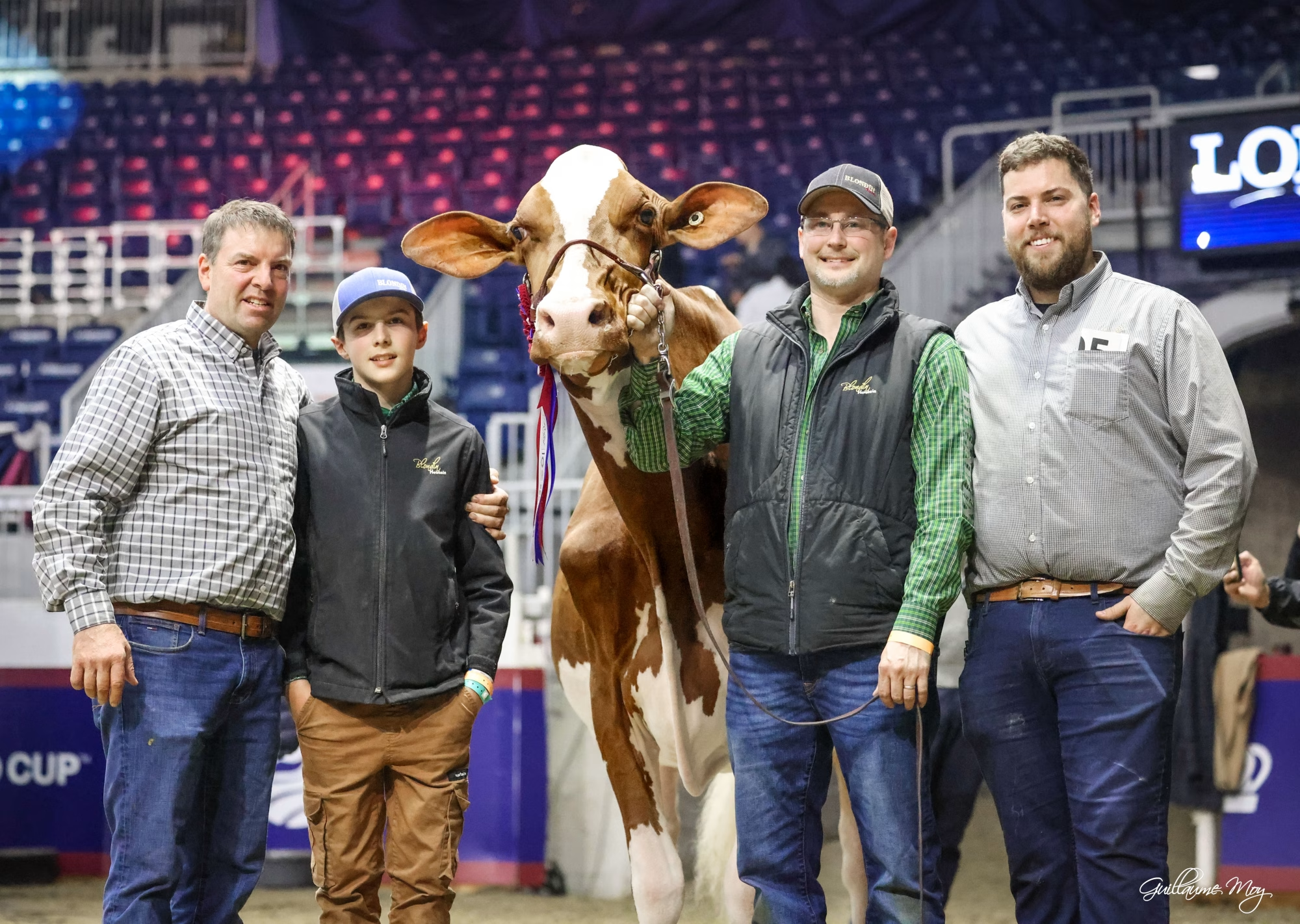
BLONDIN RD UNSTOPABULL MAPLE appeared to have no limits in a three-day period she took home Grand Champion of the Red and White Show, The Holstein Show and then Supreme Champion at the 100th Royal Winter Fair. Unfortunately, this month she passed away at 4 years old.  She was owned by K Doeberiener, L Bowen,  W Schilling & T&S Abbott.

BLONDIN RD UNSTOPABULL MAPLE, sired by Blondin Sires’ sire Riverdown Unstopabull-Red and bred by Blondin, Riverdown, and Villyvon, appeared to have no limits. In a three-day period, she took home Grand Champion of the Red and White Show and the Holstein Show and then Supreme Champion at the 100th Royal Winter Fair. She was exhibited by R&F Livestock, K Doeberiener, L Bowen, & W Schilling.

Reflecting on their path, Blondin Sires has achieved some astonishing milestones demonstrating their spectacular development. One such accomplishment is their success with Riverdown Unstopabull-Red, who won the Premier Sire title in Madison, Wisconsin. In addition, BLONDIN RD UNSTOPABULL MAPLE was named Intermediate and Reserve Grand Champion International Holstein Show. Dann Brady, General Manager and Co-Founder of Blondin Sires, remember that winning Premier Sire at Madison with Riverdown Unstopabull-Red was one of the company’s early successes.  Dann shares, “We are a small firm, and having him do that early in our careers was a huge accomplishment.”

These accomplishments demonstrate the exceptional quality of their bull line-up and indicate their dedication to supplying outstanding genetics to breeders globally. Their success in the show ring and the deliberate expansion of their sales staff demonstrate their devotion and foresight.

Unexpected Triumphs: Robella Major and Claynook Zeus 

Looking back on Blondin Sires’ history, some of the most thrilling and unexpected results have come from bulls like Robella Major in past years and today with Claynook Zeus. Fulfilling and surpassing expectations, contributing to Blondin Sires’ reputation as a source of high-quality genetics in the dairy cattle breeding sector.

Robella Major, an outstanding bull at Blondin Sires, exemplified the value of balanced genetics and powerful cow families. Initial expectations were high, but his vast popularity was a pleasant surprise. Robella Major’s success was due to his genetic qualities, which elicited many positive reactions from breeders. Early daughter reports have highlighted his superb Conformation, validating his use for many dairy farmers.

In 2024, Claynook Zeus rapidly became the breed’s #2 GPA LPI Sire, with a remarkable +11 in Conformation and approximately +4000 GPA LPI. This blend of index, conformation, and production makes him a bull for a wide variety of herds. Zeus’ success has instilled confidence and commitment in breeders toward Blondin Sires.

These surprising successes highlight the value of extensive research and the courage to take reasonable risks. Robella Major and Claynook Zeus’s outstanding performance and potential have increased sales. They have strengthened the company’s reputation for supplying exceptional genetics customized to the demands of individual breeders. These bulls have strengthened customer trust by delivering on their quality promise, demonstrating Blondin Sires’ reliability as a source of exceptional dairy genetics.

The Bottom Line

Blondin Sires’ comprehensive strategy, which combines cutting-edge technology, thorough genetic analysis, and strong community participation, guarantees that they stay ahead of the curve and set the standard in the dairy genetics sector. Their commitment to constantly improving the art of breeding promises to generate breakthroughs that will define the future of dairy cattle breeding and benefit both breeders and the industry.

Blondin Sires’ dramatic climb demonstrates the need within the market for correct and functional cattle to stand the test of time while combining traditional breeding techniques with cutting-edge technology. They have established a new benchmark for agility and efficiency in artificial insemination by forming critical relationships and adopting speedy decision-making. Their dedication to exceptional genetics, as shown by the success of bulls such as Rivertown Unstopabull-Red and Claynook Zeus, strengthens their worldwide reputation for excellence.

As we look forward, the question remains: How can Blondin Sires continue to alter and transform the dairy genetics marketplace?

Key Takeaways:

  • Blondin Sires has rapidly increased its market share, showcasing a 75% growth from 2022 to 2023.
  • The company combines cutting-edge technology with traditional breeding methods to achieve high-quality dairy genetics.
  • Quick decision-making and rapid product deployment are crucial strategies that have helped Blondin Sires stay competitive.
  • Strategic acquisitions, such as DMV Genetiq, have streamlined operations, enhancing efficiency and inventory management.
  • Key partnerships with distributors and breeders worldwide have been instrumental in Blondin Sires’ growth and global reach.
  • Blondin Sires’ focus on superior genetics, including conformation and productivity, underpins its success in the AI industry.
  • The company’s effective use of genomics and social media has significantly contributed to its market presence and customer engagement.
  • Blondin Sires continually adapts to market demands, ensuring rapid delivery and customer satisfaction.
  • Blondin Sires aims to maintain its niche in high-quality genetics, distinguishing itself from competitors by not treating semen as a mere commodity.

Summary:

Blondin Sires, Canada’s fastest-growing AI dairy firm, has rapidly increased its market share from 2.8% in 2022 to 4.9% in 2023, a 75% boost. This growth stems from strategic decisions, advanced genetic technology, strong partnerships, and rapid decision-making. Originally founded to address the scarcity of high-quality bulls, Blondin Sires overcame early challenges by setting up stud codes and distribution networks. They further leveraged genomics and social media to streamline operations and expand their market reach. Their commitment to heritage and innovation ensures long-term stability for breeders, combining cutting-edge technology, thorough genetic analysis, and robust community participation.

Learn more: 

Join the Revolution!

Bullvine Daily is your essential e-zine for staying ahead in the dairy industry. With over 30,000 subscribers, we bring you the week’s top news, helping you manage tasks efficiently. Stay informed about milk production, tech adoption, and more, so you can concentrate on your dairy operations. 

NewsSubscribe
First
Last
Consent

STUD WARS: Which AI Company Holds the Power in the Dairy Cattle Genetics Universe

Find out which AI company is the leader in dairy cattle genetics. Compare the top sires and see who really dominates the industry. Who has the most power in this genetic competition?

A long time ago in a galaxy not so far away, the fate of dairy cattle genetics was firmly in the hands of farmers and breeders. Today, the balance of power has shifted dramatically. Artificial Insemination (AI) companies now command unrivaled control over the genetic future of dairy herds worldwide. Much like the interstellar battles in Star Wars, these AI giants wield incredible influence, shaping the destiny of dairy cattle and the dairy industry. But one question remains: Who holds the most power among these titans? 

As these companies duel with pedigree charts in one hand and genomic test results in the other, the landscape of dairy cattle genetics has become a battleground for supremacy. Each AI company claims to have the best sire lineups. Like the legendary clashes between the Sith and the Jedi, only one can truly dominate the genetic universe. So, let’s embark on this journey to uncover which AI company reigns supreme.

TPI

URUSSelect SiresABSSemexSTgenOther
Proven TPI1630108315
Genomic TPI9324242011
TPI256214325116

Select Sires holds the largest market share at 31%, featuring a well-balanced group of both proven and genomic sires. Hot on their heels is STgen with a 25.5% share, boasting the strongest proven sire TPI lineup. Semex completes the top studs with a 16% market share, driven by an impressive genomic sire lineup.

NM$

ListURUSSelect SiresABSSemexSTgenOther
Proven NM$1718244325
Genomic NM$2564342011
NM$422428385216

STgen shows impressive strength with a 26.5% share of top NM$ sires. Meanwhile, URUS steps up with a robust NM$ lineup, claiming 21% of the top sires. Rounding out the top, Semex holds a solid 19% and a very strong genomic NM$ sire lineup.

PTAT

URUSSelect SiresABSSemexSTAscolBlondin SiresOther
Proven PTAT774224111530
Genomic PTAT597121612930
PTAT1216111440232460

STgen leads the PTAT rankings with a commanding 20% market share, showcasing a robust lineup of proven sire PTATs. Next is the specialist AI stud Blondin Sires, which boasts the second strongest lineup, combining both proven and genomic lists, capturing a 12% share. Completing the top three, Ascol holds a 12.5% share, demonstrating its impressive offerings.

Red & White

Alta GeneticsSelect SiresABSSemexSTAscolBlondin SiresOther
Red & White41052156742

When it comes to the most diverse list of top Red & White PTAT sires, Semex takes the lead with 21% of the top sires. Right behind them are Select Sires with 10% and ST with 13%.

Polled

Alta GeneticsSelect SiresABSSemexSTOther
Polled61513222222

Similar to the Red & White list, the top 100 polled sires feature a diverse range of ownership. A notable shift from the past is that major AI companies have now significantly strengthened their lineups. Semex and ST each command 22%, closely followed by Select Sires at 15%.

Genomic Sire Lineup

Alta GeneticsSelect SiresABSSemexSTOther
49723311383155

When it comes to the major players in the genomic sire market, Semex undeniably takes the lead, boasting a formidable 22% of the top genomic sires. Trailing behind them is STgen with 16%, and Select Sires at 14%. This marks a significant shift from our previous analysis when Select Sires held the top position with 19%, followed by ABS Global at 18%, and STgen at 14%. Semex has clearly upped their game, immensely strengthening their genomic lineup.

Proven Sire Line Up

Alta GeneticsSelect SiresABSSemexSTOther
405538148766

In the proven sires’ category, STgen is leading the pack, boasting 29% of the top sires. Trailing behind, Select Sires holds an 18% share, while Alta Genetics and ABS are tied at 13%. It’s also worth noting that Semex, with a 5% share, explains why they have been focusing heavily on genomic sires to revamp their overall lineup.

Overall Line Up

Alta GeneticsSelect SiresABSSemexSTOther
8912771127170216

STgenetics leads the pack with a commanding 21% share of the top sires. Their robust genomic and proven lineup underscores the value of ongoing investment in superior genetics. Tied for second place are Select Sires and Semex, each holding 16% of the top sires with 127 entries apiece. Despite arriving at the same percentage, they employ markedly different strategies. Semex has ramped up their genomic investments to compensate for a relatively weaker proven lineup compared to their competitors. Interestingly, our analysis reveals a significant shift in the last couple of years. ABS, previously holding an 18% share, now only 9%. Meanwhile, Ascol and Blondin Sires have each doubled their market share from 2% to 4%.

The Bottom Line

The genetics universe of dairy cattle is vast and continuously evolving. Our journey through the galaxies of TPI, NM$, PTAT, Red & White, Polled, Genomic, and Proven Sire Lineups has revealed the power dynamics of the major players and the emergent contenders. STgen, Semex, ABS Global, and the Select Sires federation remain strong forces, innovating and adapting their strategies to maintain dominance. Meanwhile, new entrants like Blondin Sires and Ascol are trying to shake the status quo, offering tantalizing glimpses of the future. 

As you navigate the cosmic landscape of dairy cattle genetics, the key takeaway is balancing both proven and genomic sires. Keeping an eye on emerging trends, understanding the strengths and weaknesses of each player, and making informed decisions will steer your herd toward stellar success. The universe may be unpredictable, but you can chart a course toward prosperity with the right choices. May the force of informed decision-making be with you!

Summary: The landscape of dairy cattle genetics is evolving rapidly, with major players like STgen, Select Sires and Semex, and new entrants such as Blondin Sires and Ascol making significant strides across various segments. While traditional metrics like TPI and NM$ still hold weight, the focus on specialized categories such as Red & White, Polled, and genomic sires shows a dynamic shift towards more targeted breeding strategies. Companies like Validity Genetics are carving out notable shares, particularly in the genomic Polled segment, indicating a competitive and diverse market. This evolving competition among Artificial Insemination companies highlights the increasing importance of niche segments and innovative genetic offerings, reshaping the power dynamics in the dairy cattle genetics universe.

Send this to a friend