Your cows start giving up milk three points sooner than your father’s did. That’s not the weather changing — it’s the genetics. And CDCB just skipped the one that’s costing you milk.
EXECUTIVE SUMMARY: The THI threshold where Holsteins start giving up milk has fallen from 72 to 69 in two decades — your cows quit three points sooner than the ones your father milked, and that’s genetics, not weather (Misztal, Brito & Lourenco, 2024, JDS Communications 6(3):464–468). CDCB’s August 2026 evaluations shipped three brand-new traits plus a rebuilt fertility suite, proving the system moves when it decides a problem is worth solving; heat tolerance wasn’t on the list, nine years after DataGene put it on Australian bull pages. Read on if you’re finalizing a fall sire team: you’ll get the per-cow math, the three tools that already exist and where each one bites back, and the one question to ask your provider while your August proof list is still open.
CDCB’s August 2026 official evaluations went live with three brand-new traits: Resistance to Respiratory Problems, Resistance to Diarrhea, and First Service to Conception. The machinery proved it can move. Yet nine years after Australia introduced Heat Tolerance, the trait costing you milk every July still isn’t on the North American bull page.
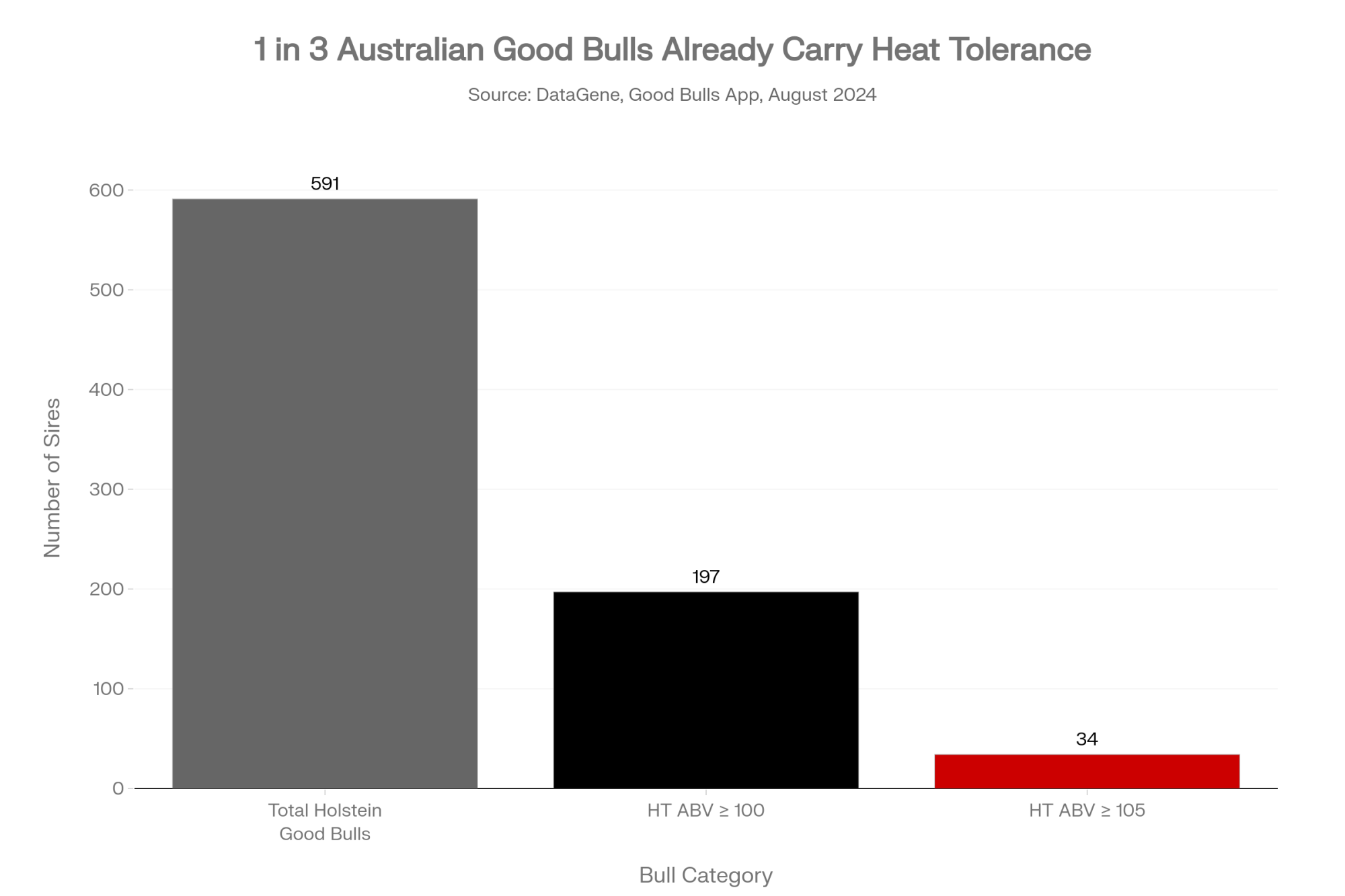
Hold that against the Australian numbers. By August 2024, one in three of Australia’s Holstein “Good Bulls” — 197 sires — already carried a Heat Tolerance breeding value of 100 or better, DataGene’s score for how well a bull’s daughters hold milk when it turns hot and sticky. Thirty-four of them scored 105 or higher. This isn’t a weather story. It’s about a blind spot in the tools you use to pick your next round of sires.
The System Moves When It Wants To
Give CDCB its due — the August round was real work. RSP and DIA came out of research on more than 768,000 respiratory disease records and over 260,000 diarrhea records pulled from the National Cooperator Database, drawing on respiratory data from calves 3 to 365 days old and diarrhea data from calves 3 to 60 days. That’s the first national selection tool aimed at calf health, and it addresses a genuine cost centre.
The fertility overhaul was just as substantial. DPR now uses a herd-level, lactation-group-specific voluntary waiting period instead of the fixed herd-wide assumption carried since the trait portfolio was built in 2003. HCR picked up service sire breed, mating type, and short cycling; CCR got a days-in-milk covariable with pre-adjustments to individual inseminations. FSC arrived as a fresh option, predicting days from first breeding to conception without VWP in the model.
So the machinery works. A trait gets studied, validated, and shipped when the industry decides the problem is worth solving. Which raises the obvious question about the one that keeps getting skipped.
The Metabolic Trap: Why Fans Aren’t Enough
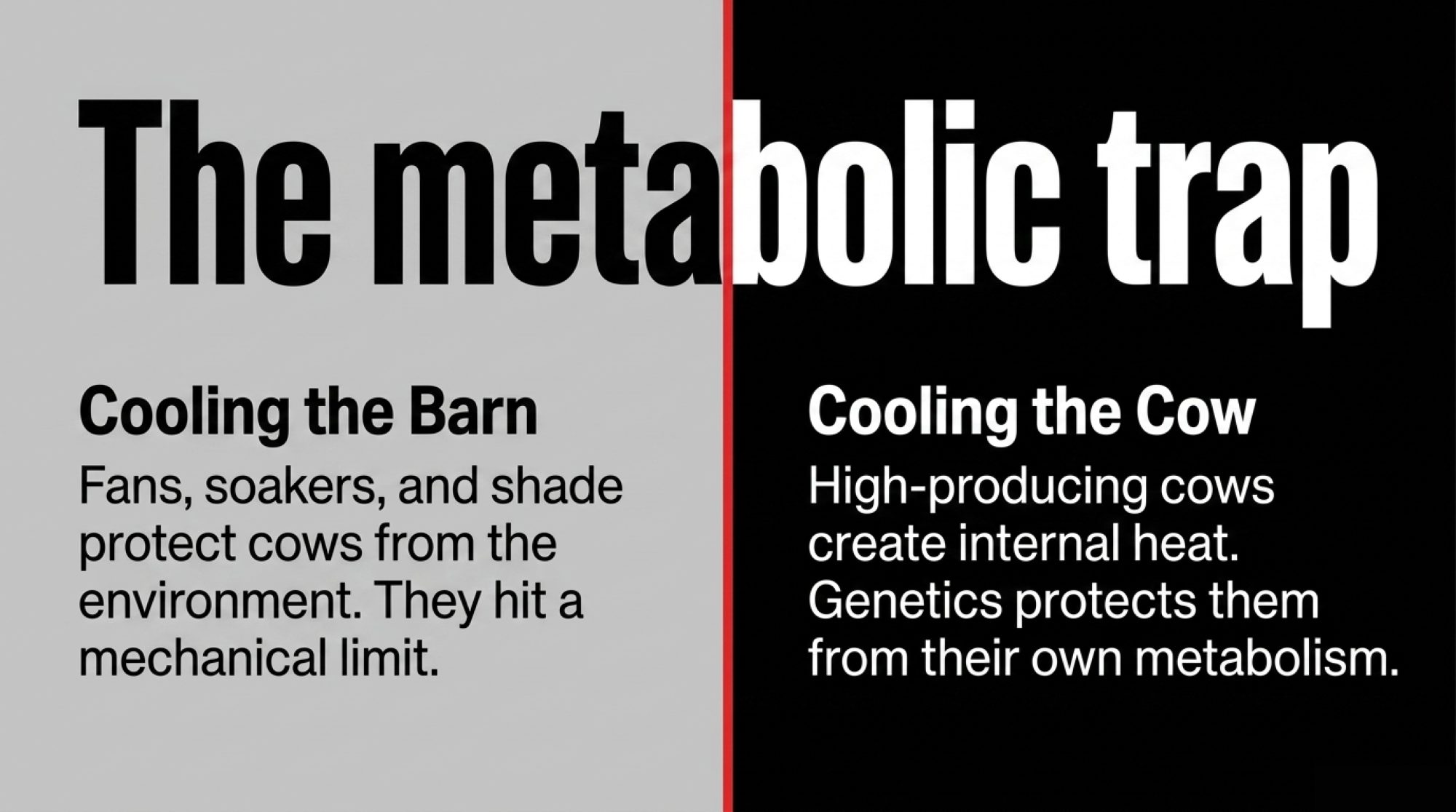
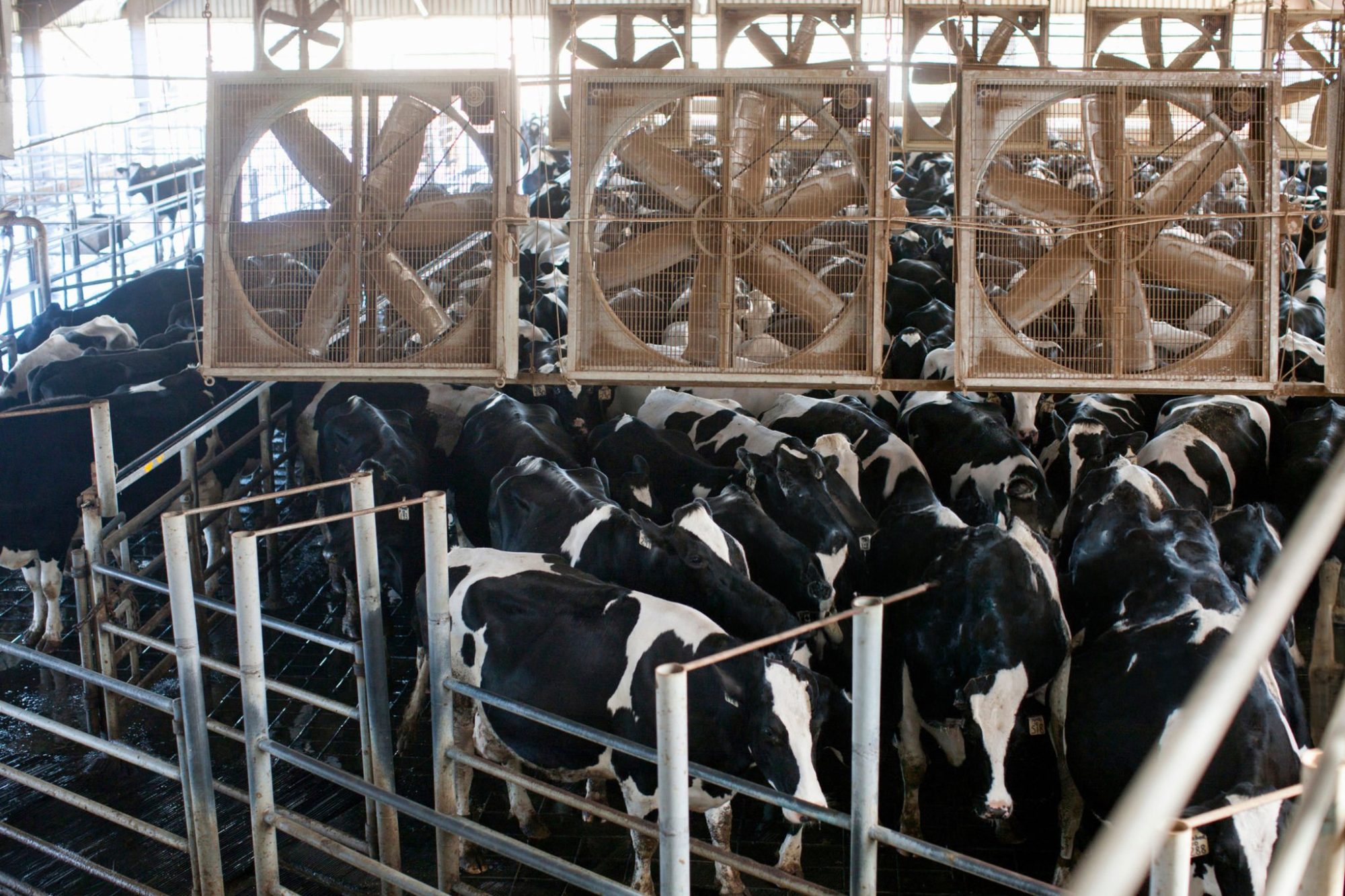
Most producers reading this have already spent real money on cooling. Fans, soakers, shade over the holding pen. And the tank still drops when the mercury climbs. That’s not a cooling failure. It’s the tell that heat stress hits your herd from two directions at once — the barn and the cow’s own metabolism — and cooling only touches one of them.
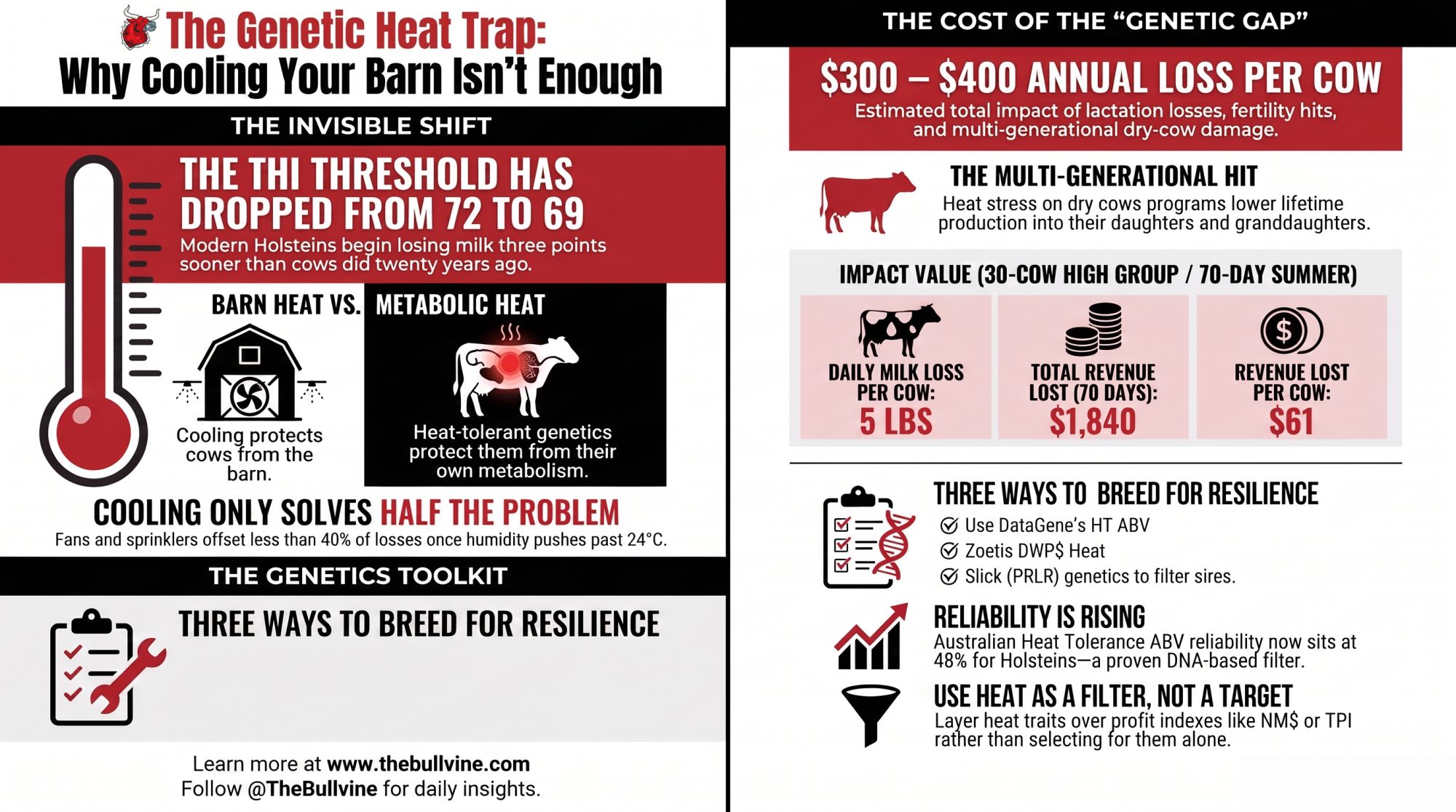
Here’s the split, plain as it gets. Cooling protects cows from the barn. Heat-tolerant genetics protects them from their own metabolism. A high-producing cow makes more internal heat just by making milk. Push her genetics harder for yield without watching heat tolerance, and you’ve built an animal that starts losing milk at a lower temperature than her grandmother did.
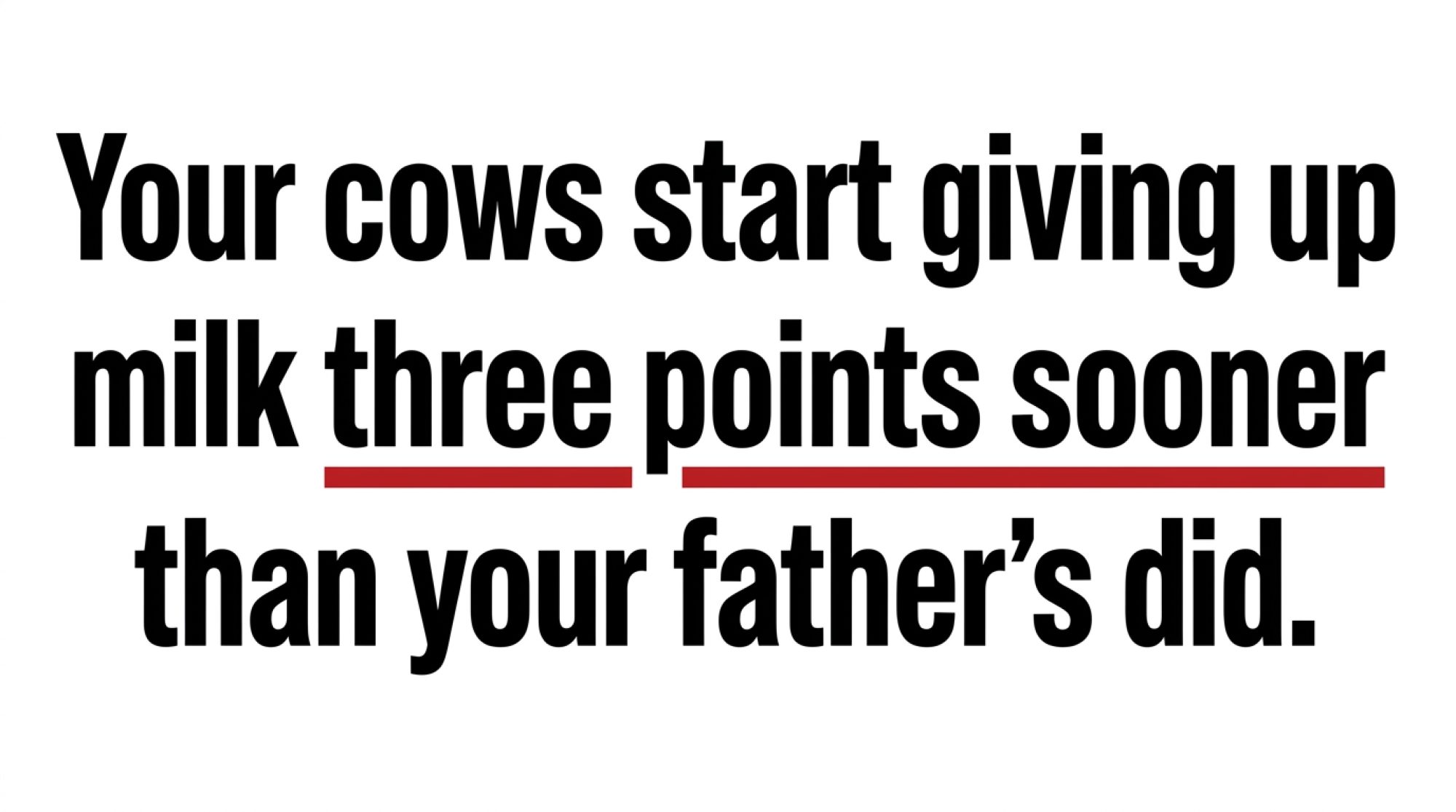
That last part isn’t a figure of speech. Work led by Ignacy Misztal at the University of Georgia with Luiz Brito at Purdue found that the THI threshold at which Holsteins begin losing production has dropped from 72 to 69 over the past two decades (Misztal, Brito & Lourenco, 2024, JDS Communications 6(3):464–468). Your cows start suffering at lower temperatures than the cows your father milked. Heat tolerance is eroding while the infrastructure spending masks it.
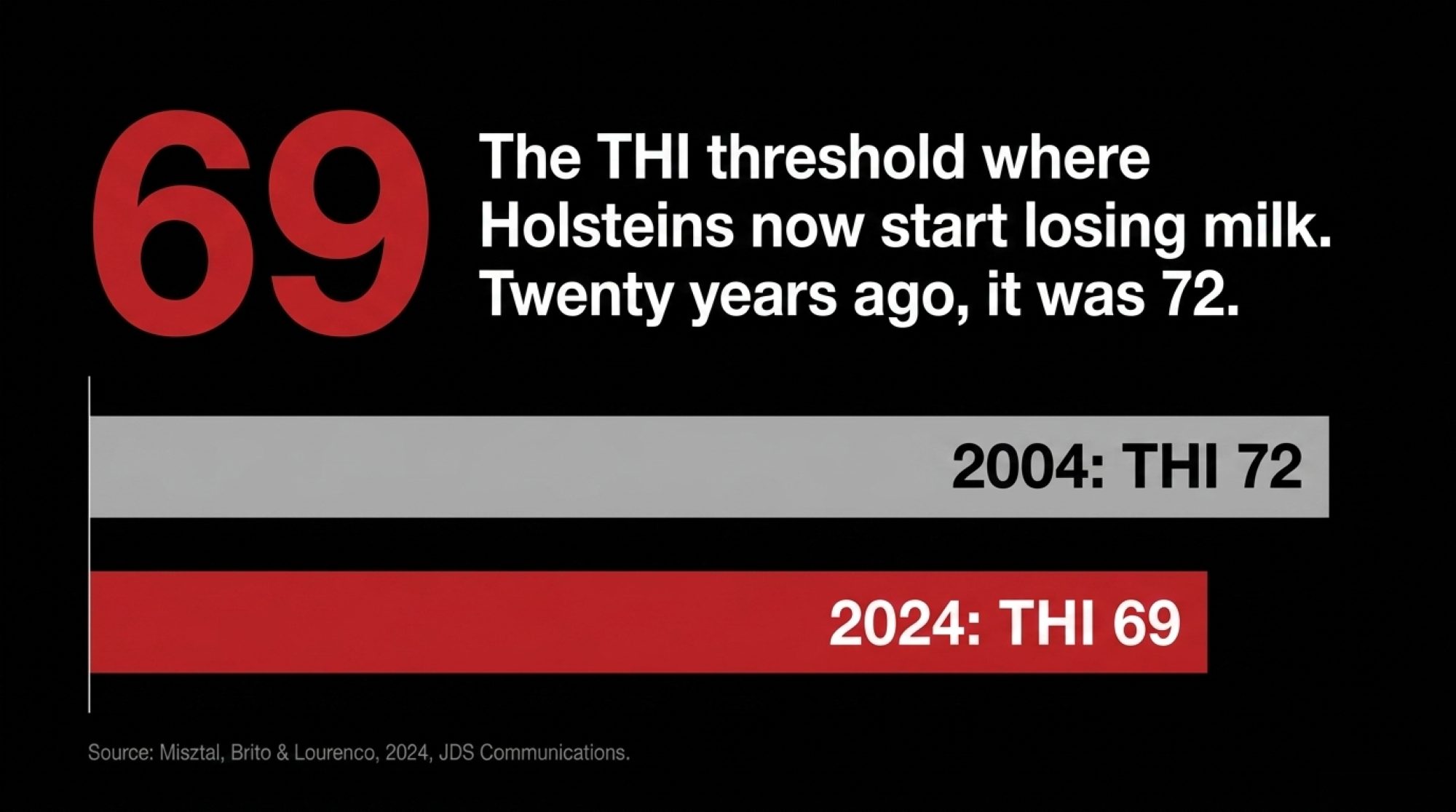
DataGene’s own documentation names the mechanism: Heat Tolerance is unfavorably correlated with production. Select hard for yield alone and you tend to erode it. That’s exactly why DataGene tells producers to treat HT ABV as a filter, not a stand-alone target.
What the Heat Actually Costs — Even a Well-Cooled Herd
The numbers aren’t hypothetical, and they don’t vanish once you install fans. A 2025 study in Science Advances, tracking more than 130,000 cows over 12 years, found that one day of extreme humid heat can cut a cow’s milk up to 10%, with output still down more than 10 days later. Most of those farms already had cooling. The kicker: fans and sprinklers offset only about half the loss on moderately hot days — and less than 40% once wet-bulb temperature pushes past 24°C.
Then there’s the long tail cooling can’t reach. University of Florida research (Laporta et al., Journal of Dairy Science, 2020) showed heat stress on a dry, pregnant cow programs lower lifetime production into her daughter and even her granddaughter — animals not yet born when the damage is done.
On the cost side, USDA’s Economic Research Service (report ERR-175) estimated heat stress lowered milk value for the average U.S. dairy by about $39,000 a year — in 2010 dollars — or roughly $1.2 billion across the sector. That same report projects added losses of 0.60 to 1.35% of milk for the average dairy by 2030, hitting Southern states hardest. Blend the national figures down to the cow and heat-exposed herds land somewhere in a $300–$400 per cow, per year range once you stack lactation losses, fertility hits, and multi-generation dry-cow damage. That $300–$400 isn’t a single published stat — it’s a derived range, so treat it as a working estimate, not gospel.
Run the Barn Math on Your Own High Group
Numbers land harder when they’re your own. So walk through a modeled example — a 120-cow herd with a 30-cow high group, the kind of split most freestall operations would recognize. (Illustrative composite, not a real farm.)
USDA’s most recent published U.S. average mailbox price is February 2026 at $17.45/cwt — about 17.5¢ a pound. Say each cow in that 30-cow high group loses about 5 lbs a day across 70 hot days. That’s a middling summer, well short of the 10% single-day spikes the research documents.
The High-Group Summer Hit — 120-Cow Herd Model
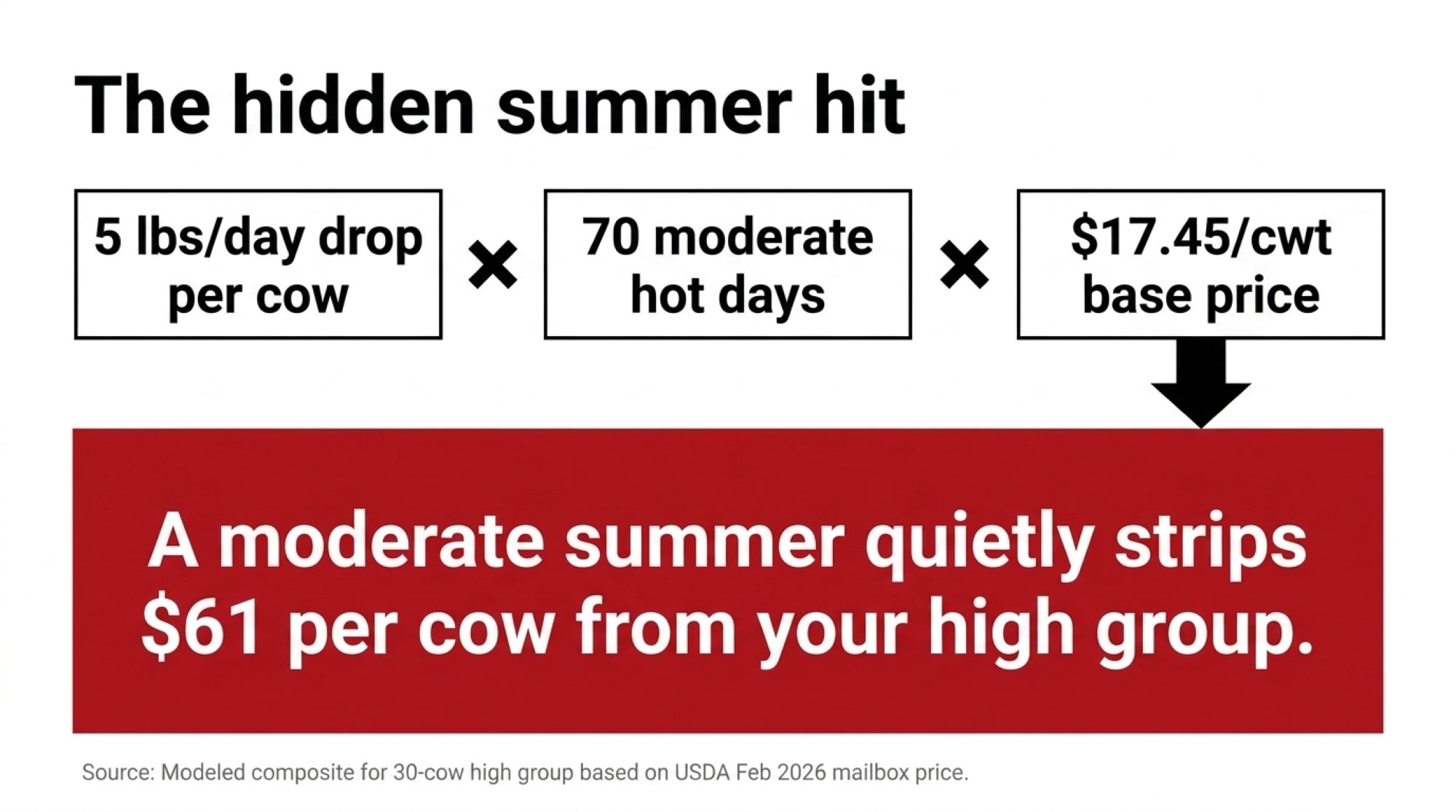
30 cows × 5 lbs/day × 70 days × $0.175/lb = $1,840 in lost milk revenue
Roughly $61 a cow for a moderate 70-day run — before you account for open cows, extra SCC, or the multi-generational loss from calves gestated in a hot dry-cow pen.
For Canadian herds, run it in litres against your blend/quota price; for EU or Australian herds, run it against your local farmgate — the currency and units change, but the margin hit scales identically. Heat doesn’t read your milk cheque.
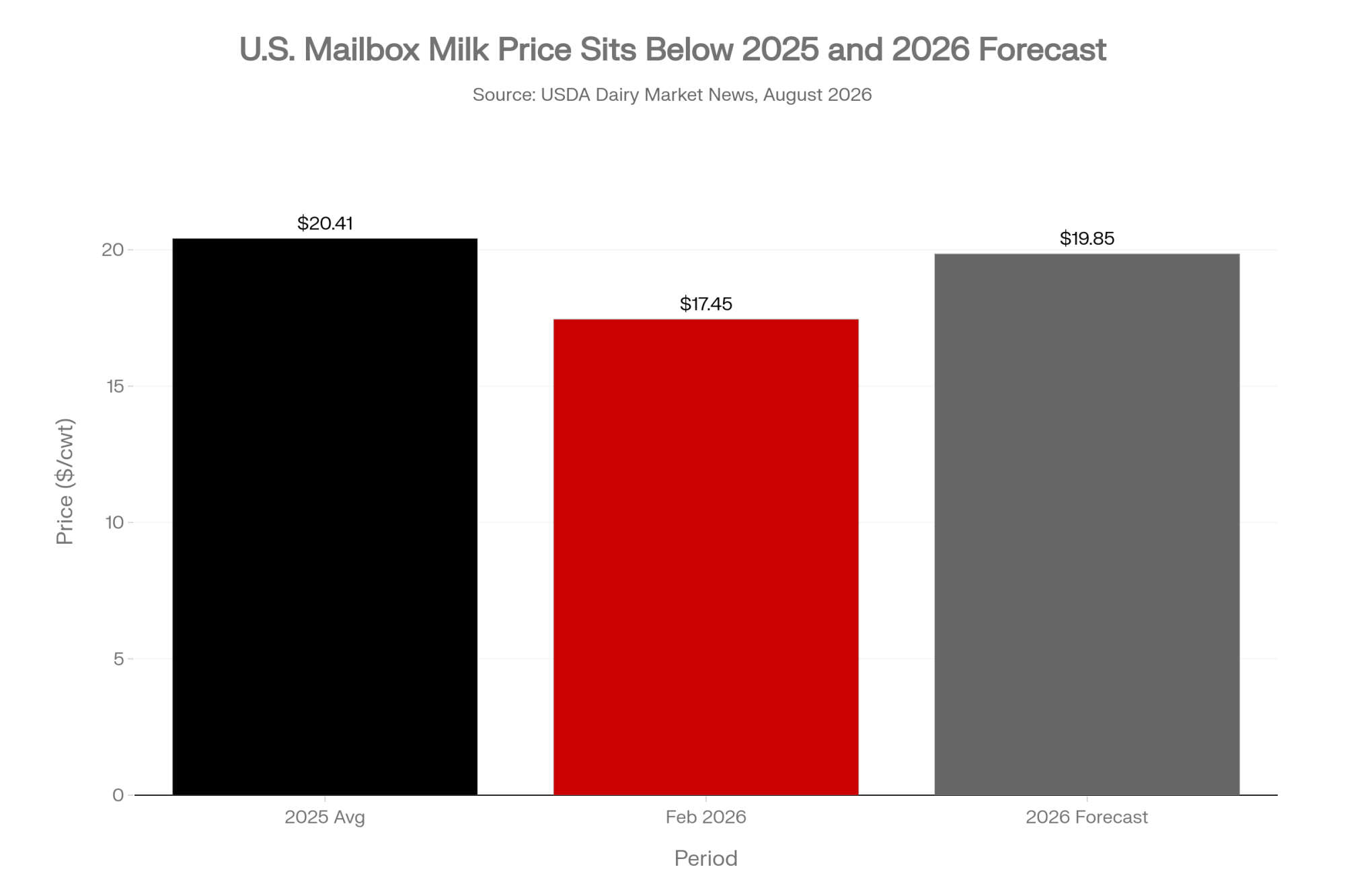
And you’re running that math in a soft market. February’s $17.45 sits well below the 2025 mailbox average of $20.41/cwt, and USDA’s August 2026 Dairy Market News lowered the 2026 all-milk forecast to $19.85/cwt. Every pound heat pulls out of the tank costs the same to lose whether prices are high or low. It just hurts more when the cheque’s already thin.
| Scenario | Daily Loss/Cow | Seasonal Revenue Hit (30-cow group, $0.175/lb) |
|---|---|---|
| Moderate summer (70 hot days) | 5 lbs/day | $1,840 |
| Severe heat run | 9 lbs/day (90-lb cow, 10% drop) | $3,308 |
| Annual compounded estimate (per cow, all effects) | — | $300–$400/cow/year (derived range, not a single published stat) |
Push the daily loss toward that 10% figure and the number climbs fast. A 90-lb cow dropping 9 lbs on the worst days, across a longer heat run, is how a mild-looking summer quietly turns into the $300–$400-a-cow annual hit. The point isn’t the exact dollar. It’s that the loss is real, recurring, and partly written into the genetics you order this fall.
The Genetics Toolkit: Three Paths to Cooler Cows
The tools to breed for heat resilience are already on the shelf. They just rarely come up at breeding time — because the index everyone ranks on doesn’t score the trait. Three exist, and none is a silver bullet.
- DataGene’s Heat Tolerance ABV (Australia, since Dec 2017): The first commercial heat-tolerance breeding value in the world. Scores a bull on how well his daughters hold milk, fat, and protein under heat and humidity load — 100 is breed average, 105 means about 5% more tolerant, and 95 means a production drop 5% worse than average.
- Zoetis DWP$ Heat (U.S., launched April 2026): The genomic contender. Folds Fertility Heat Resilience (Z_FR) and Milk Heat Resilience (Z_MR) into the Dairy Wellness Profit Index via CLARIFIDE Plus testing.
- Slick genetics (PRLR gene): The biological route. A single mutation in the prolactin receptor gives cows a short coat and real temperature-regulation gains — a 2025 tropical trial (JDS Communications) found Slick homozygotes out-milked heterozygote herdmates by 9% in hot months. That’s a hot-climate result, not a temperate-freestall guarantee.
Here’s where each one earns its place — and where it bites back:
| Tool | Best Fit | The Catch |
| HT ABV(DataGene) | Herds buying internationally proven sires | 48% Holstein reliability (39% Jersey); unfavorable production correlation — use a team |
| DWP$ Heat(Zoetis) | Herds already genomic-testing replacements | Proprietary; sits outside official CDCB indexes |
| Slick (PRLR) | Hot, humid regions where cooling hits its mechanical limit | Narrow carrier pool; possible trade-offs on other traits |
That 48% deserves a note, because it’s the number skeptics reach for first. Per DataGene’s Fact Sheet 5, reliability sits at 48% for Holsteins and 39% for Jerseys — up from 38% for Holsteins after DataGene expanded the reference population in June 2024. An ICAR 2025 paper puts the new base at 4,947 sires and 42,419 cows at 74K SNP density. Jerseys didn’t move. It’s lower than a production proof, and DataGene says so plainly. It’s also a DNA test, not a subjective call, and it’s rising.
The Index Legacy: Why the Leaderboard Won’t Move
Fair question — why hasn’t any of this reached your bull list? The honest answer isn’t a conspiracy. It’s how the system prioritizes. Net Merit is built for stability. Producers, semen companies, and breed marketing all lean on a familiar leaderboard, and CDCB is cautious about anything that reranks bulls overnight.
But notice what August proved. CDCB’s own documentation notes that PTA ranges, means, and standard deviations shift between trait versions — a rescaling, not a change in underlying genetics — and that persistent downward trends in young-bull PTAs were among the problems that triggered the two-year review. The system absorbed that disruption because calf health and fertility were judged worth it.
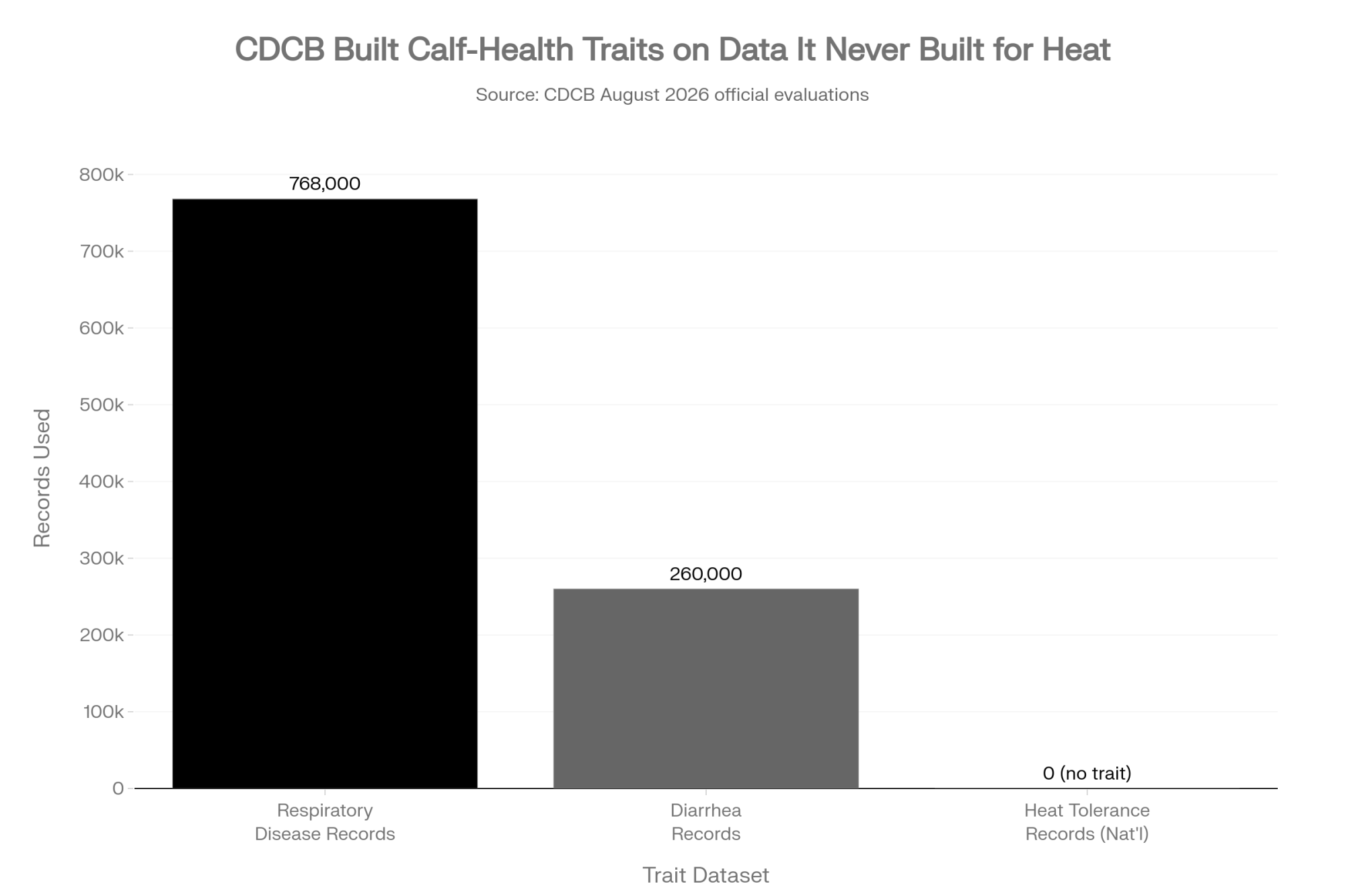
Worth noting: those calf-health traits took years of work on 768,000-plus records before CDCB would ship them. Peer-reviewed heat-tolerance models for U.S. and Canadian Holsteins already exist in the Journal of Dairy Science — Misztal and Brito’s threshold work is published, indexed, and citable. The research gap isn’t the bottleneck.
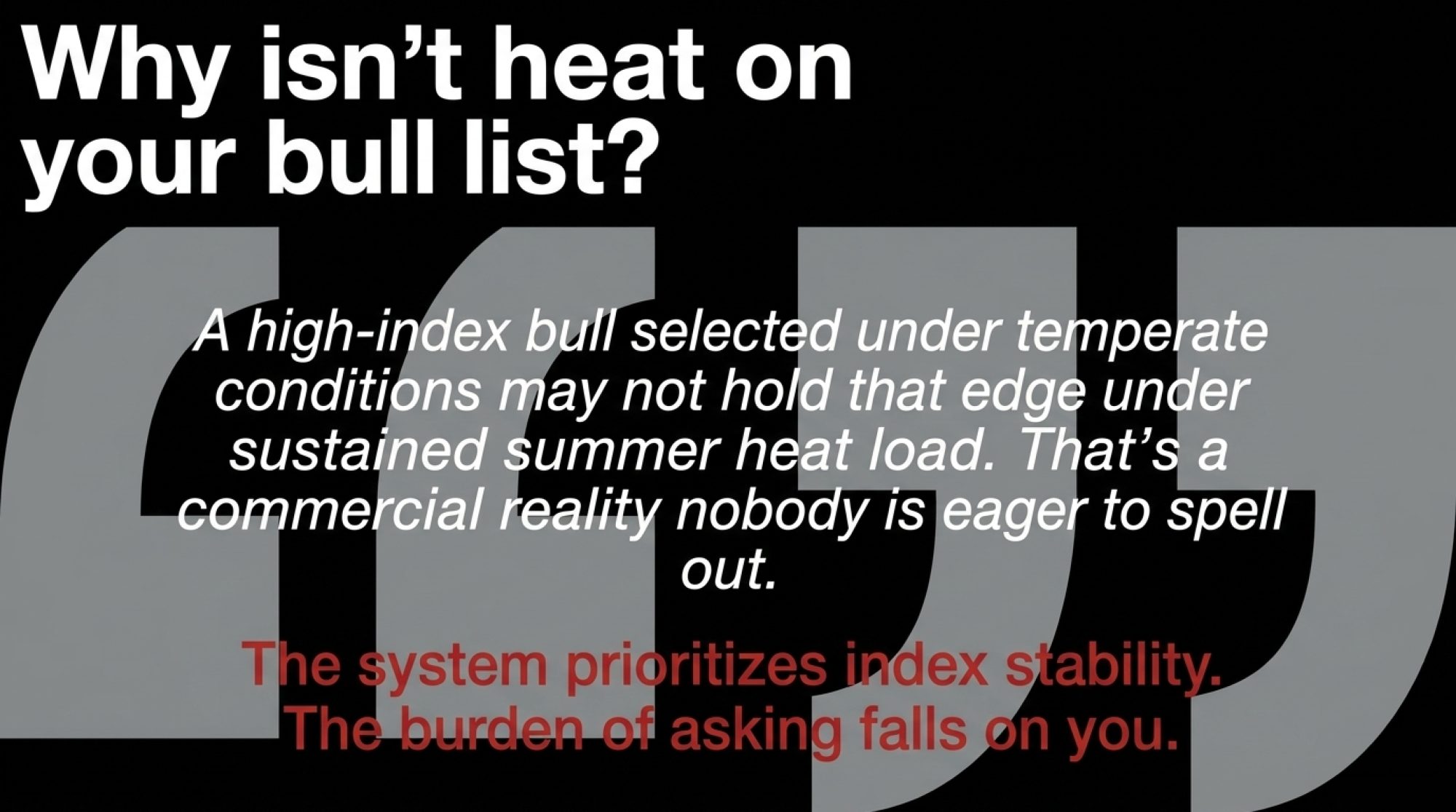
Add a heat trait and the leaderboard moves again. A high-index bull selected under temperate conditions may not hold that edge under sustained summer heat load — the productivity advantage he’s priced on can shrink where heat is the limiting factor. That’s a commercial reality nobody in the sales chain is eager to spell out. The harder part isn’t the science. It’s a governance system willing to tell producers that “lifetime profit” should include what happens at 100°F.
Follow the Incentives: Who Wins When You Buy?
Follow the incentives and it gets clearer. The players pushing heat tolerance hardest are the ones who don’t sell semen. DataGene is an evaluation body funded by the Australian dairy industry — its job is to get every useful trait into producers’ hands, including the one that complicates pure-production selection. Zoetis sells genomic tests and indexes, not straws, so DWP$ Heat helps their business without cannibalizing a semen catalog.
Studs sit in a different spot, and it’s structural, not sinister. They market to the index producers actually rank on — and heat tolerance isn’t in NM$ or TPI, even after August. They’ll raise heat traits when a producer asks, or when they’ve got a specific sire to feature, and plenty do offer heat-relevant genetics. But a stud can’t bake a trait into an index it doesn’t control. So if your provider walked you through RSP, DIA, and FSC this month but never mentioned HT ABV, DWP$ Heat, or Slick, that’s not bad faith on their part — it’s a sign the upstream system isn’t prompting the conversation. The burden of asking falls on you.
What This Means for Your Operation
- Monitor the drop. If your high-production group falls more than 8–10% in summer against a stage-of-lactation-adjusted winter baseline, do the per-cow loss math before assuming your fans have it handled.
- Select for longevity and fertility. If you face 60-plus days above THI 68, weight Productive Life, Livability, and fertility (DPR/CCR) heavier. These correlate positively with thermotolerance, giving you indirect selection pressure while the direct tools mature — expect to give up some genetic gain elsewhere.
- Budget for barn and biology. Six figures in tunnel ventilation won’t protect an animal whose genetics start surrendering milk at THI 69.
- Use heat as a filter. Layer heat traits on a profit-index floor (NM$, TPI, LPI, Pro$) rather than treating them as a standalone target. At 48% reliability, a team of bulls beats betting the herd on one.
- Target the exposure. Your highest producers and summer-calving cows carry the most heat load. Start there, not across the whole herd.
- Read your region’s trajectory. U.S. Southeast, Southwest, Central Valley, southern Ontario, a warming EU summer — USDA ERS projects added heat-stress losses of 0.6–1.35% of U.S. milk by 2030.
Key Takeaways
- Do this within 30 days. You’re already pulling fresh August 2026 proofs to see how RSP, DIA, FSC, and the revised DPR shook out. While that list is open, ask your provider — by trait name — what heat-tolerance data exists on those same sires: HT ABV, DWP$ Heat (Z_FR/Z_MR), Slick carrier status. If they can’t answer, that’s information too.
- If you genomic-test replacements and farm a hot region, DWP$ Heat is the lowest-friction entry point — you’re already pulling the sample.
- If you buy internationally proven semen, cross-reference DataGene’s free Good Bulls App for HT ABV before finalizing a fall-sire team. Thirty-four Holstein Good Bulls sat at 105 or better as of August 2024.
- If cooling still leaves cows panting in a humid climate, Slick is worth a conversation with your rep — going in knowing the carrier pool is limited.
A heifer you breed this fall won’t hit her stride in the tank until the early 2030s — into summers hotter than the one just behind you, against a THI threshold that’s already moved three points the wrong way. CDCB showed this month that it’ll build a trait when the industry decides the cost is real. So here’s the question worth chewing on before the next order goes in: if you laid your own summer milk weights next to your winter baseline tonight, how much of that gap is your barn, and how much is your bulls? That number is the argument for the trait North America hasn’t built yet.
Run Your Numbers
Genomic Testing ROI Calculator — DWP$ Heat only reaches your herd through a CLARIFIDE Plus sample, so the heat question starts as a testing-cost question. Run your test list, heifer raising cost, and quartile spread to see whether testing pays under conservative assumptions — or only aggressive ones.
Learn More
- Heat Stress: Are Your Cows Sweating the Details? — Delivers barn-floor protocols to triage ventilation bottlenecks, water access, and holding-pen crowding right now, protecting daily dry matter intake before genetic heat tolerance ever gets put to the test.
- Breeding For The Future: How Will Climate Change Impact Dairy Cattle Breeding? — Maps the 5-year commercial reality of shifting breeding goals, detailing how rising global temperatures will force profit indexes to re-weight metabolic efficiency, fertility, and survival traits over raw yield volume.
- Gene Editing: The Next Frontier in Dairy Cattle Breeding — Exposes the disruptive genetic tools—including targeted introgressions like the Slick PRLR locus—that bypass decades of traditional progeny testing to engineer climate-adapted, high-producing commercial dairy herds overnight.
 The Sunday Read Dairy Professionals Don’t Skip.
 The Sunday Read Dairy Professionals Don’t Skip.
Every week, thousands of producers, breeders, and industry insiders open Bullvine Weekly for genetics insights, market shifts, and profit strategies they won’t find anywhere else. One email. Five minutes. Smarter decisions all week.