



A 56-year chain of mentors, a 10,000-cow philosophy, and the boy who couldn’t read the Holstein Journal. Inside the legacies of the 2026 World Dairy Expo honorees.
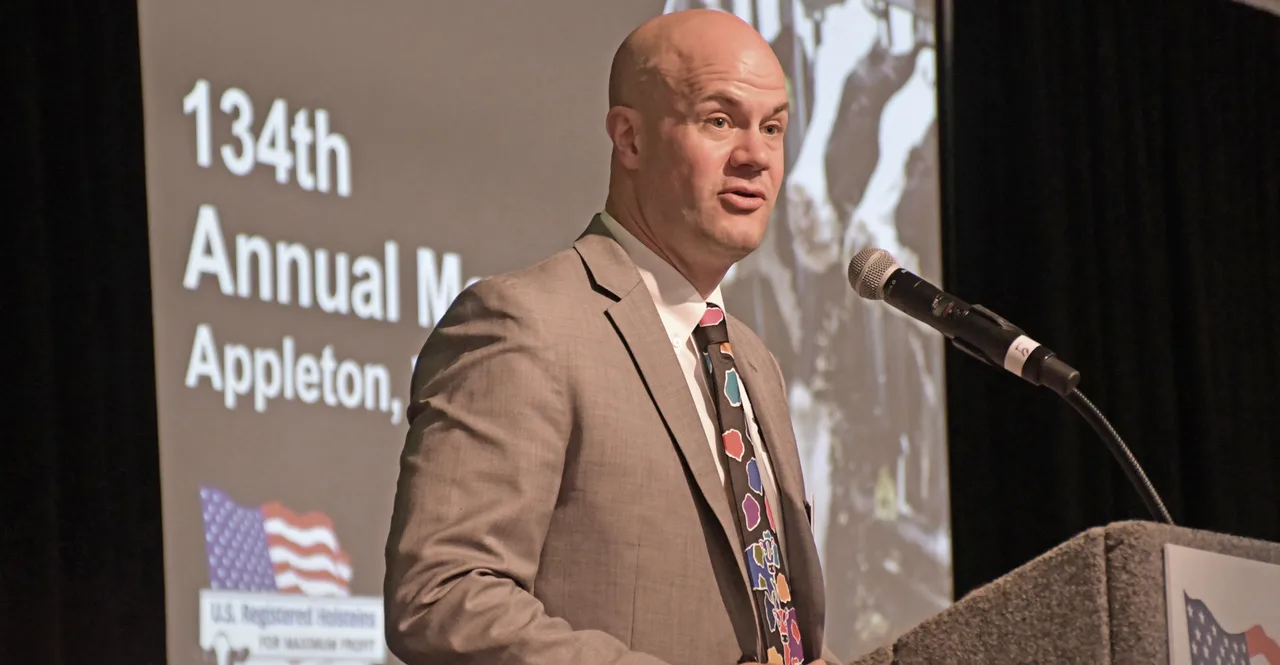
Corey Geiger was supposed to be judging Ayrshire heifers. It was 1990, the Manitowoc County 4-H team had won the Wisconsin contest, and the kid who was about to start his senior year of high school walked into World Dairy Expo’s ring on the colored shavings and forgot about the heifers. He spent the class looking at the decorations instead. He placed it badly, by his own account, and it never bothered him, because of what he told himself standing there: “I want to be part of the dairy industry the rest of my life.” He said as much decades later to Peggy Coffeen on the Up Level Dairy podcast. Listen closely, and you can hear that the kid in the ring is still running the show. Robert Chicoine’s version of that moment came decades earlier, and he couldn’t even read it. Born on a Quebec dairy farm, he got his first Holstein Journal from a relative who kept purebred cattle. It was in English, and he didn’t know any English at all. So he asked his father to tell him the names of the animals in the pictures, and he remembered them. “I don’t know why,” he told Coffeen in an interview published August 25. By his account, he’d seen every issue since.
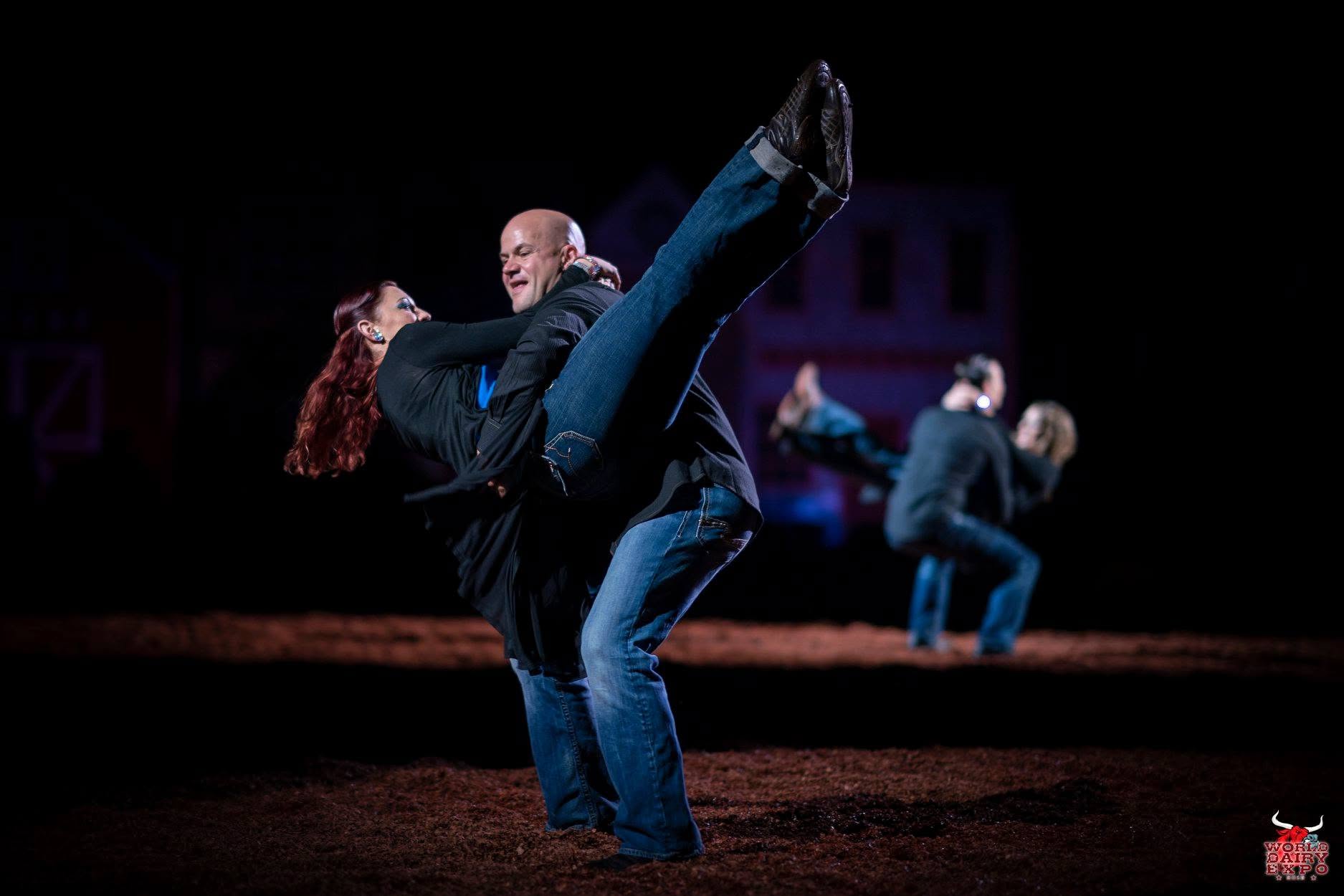
Neither man had any idea what those moments would turn into. This September, World Dairy Expo is naming Geiger its Industry Person of the Year, Oakfield Corners Dairy its Dairy Producers of the Year, and Chicoine, the boy who memorized cow names he couldn’t read, its International Person of the Year.
Ask Geiger who got him here and the list runs long. Bill Borgwardt of Sunnyside Farms watched a teenager read his placings off a clipboard and told him to put it down: “Corey, you know cows. You can tell a good story… tell me a story about those four cows.” Geiger was “nervous as heck,” and he’s been telling stories ever since. Then came the Hoard’s Dairyman crew: Bill Knox, Gene Meyer, Ewing Row and Steve Larson. By Geiger’s count, they had 120 years of editorial experience between them when he walked in. “And I had one day.”
Four editors, one chair
Here’s what a Bullvine check of Expo’s records turned up. Knox, Meyer, Row and Larson each held the managing editor’s chair at Hoard’s, according to the magazine’s own chronology. Geiger later held it for 14 of his nearly 30 years there, per Expo’s citation. Three of those four mentors are already on Expo’s Industry Person of the Year list, the same award Geiger receives this month.
That’s a 56-year span of award dates, from Knox to Geiger. It doesn’t prove mentorship causes awards, and it isn’t a record of continuous teaching. It does make “somebody handed this to me first” a lot more concrete than the usual acceptance-speech line.
Six names, one award
Oakfield’s honor makes the same point in a different way: it names six people, not one. Jonathan and Alicia Lamb, Matthew and Kendra Lamb, Jim Veazey and Janette Veazey-Post. A championship photo fits one cow and one halter, and running 10,000-plus cows across two states takes a lot more hands than that. Add Chicoine, who made sure his board got credit for the idea behind Boviteq, and it’s three for three: nobody here got here alone, and nobody’s keeping the credit to themselves.
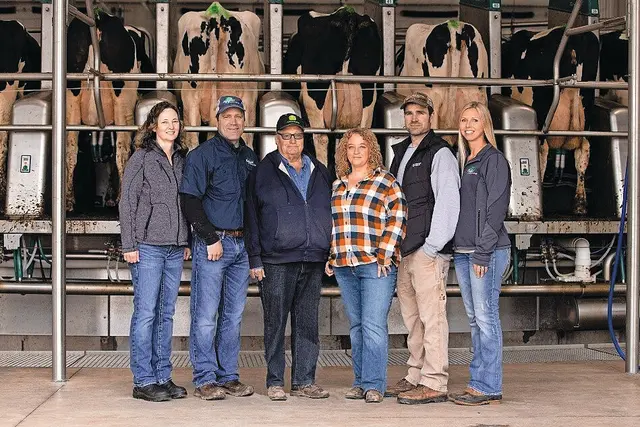
Six names, no show halter. Oakfield Corners’ 2026 Dairy Producers of the Year pose in the parlor, not the ring.
Everyone gets recognized September 29 at Expo’s Recognition Awards Reception and Banquet: social hour at 6, dinner at 7, The Tanbark. For Chicoine, it’s posthumous. Semex announced his death on September 15, three weeks after Up Level Dairy published his interview.
That means he got to tell his own story, in his own words, before anyone else had to tell it for him. A citation tells you what someone accomplished. An interview tells you what it felt like before anyone knew it would matter.
The kid with a breeding budget
Before the judging contest, there was a checking account. In the summer of 1986, the year Geiger started eighth grade, his dad walked him into the local bank and opened one. “You need to learn about money,” he told him. Geiger still has that account, through several bank mergers.
Then came the part that mattered to a cattle-obsessed kid. His dad gave him a budget to pick the bulls and mate the cows. “It’s your baby.” Geiger remembers walking the AI rep into the house so his mom could write the check, and the first couple of times, he said, they wouldn’t even put the semen in the tank because they weren’t sure the story was true. That’s the real origin story of a dairy economist: not the diploma, but the moment his father trusted him with a decision that cost money.
The degrees came later, in dairy science and ag economics at UW–Madison. So did the red ink. During a 1994 summer internship at an AI cooperative, his first articles came back covered in corrections, and his first thought was “Oh, I’m not a good writer.” Someone there told him otherwise: “No, you’re great. These stories will resonate with farmers. You just need to brush up on your grammar.” Word got to Bill Knox, and Hoard’s hired Geiger as an associate 15 months before he graduated. A page of corrections doesn’t crush a young writer when somebody makes clear the work underneath is worth fixing.
Making the numbers mean something
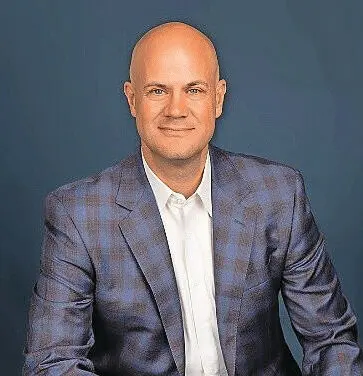
Corey Geiger, Expo’s 2026 Industry Person of the Year, spent 14 years as managing editor at Hoard’s Dairyman. At CoBank, the number he’s chasing now is the economic value of genetics.
At Hoard’s, Geiger learned from people with decades on him. It’s a nice symmetry with the award list, but what he inherited was more useful than a trophy case: how to read an industry and explain it to the people running it.
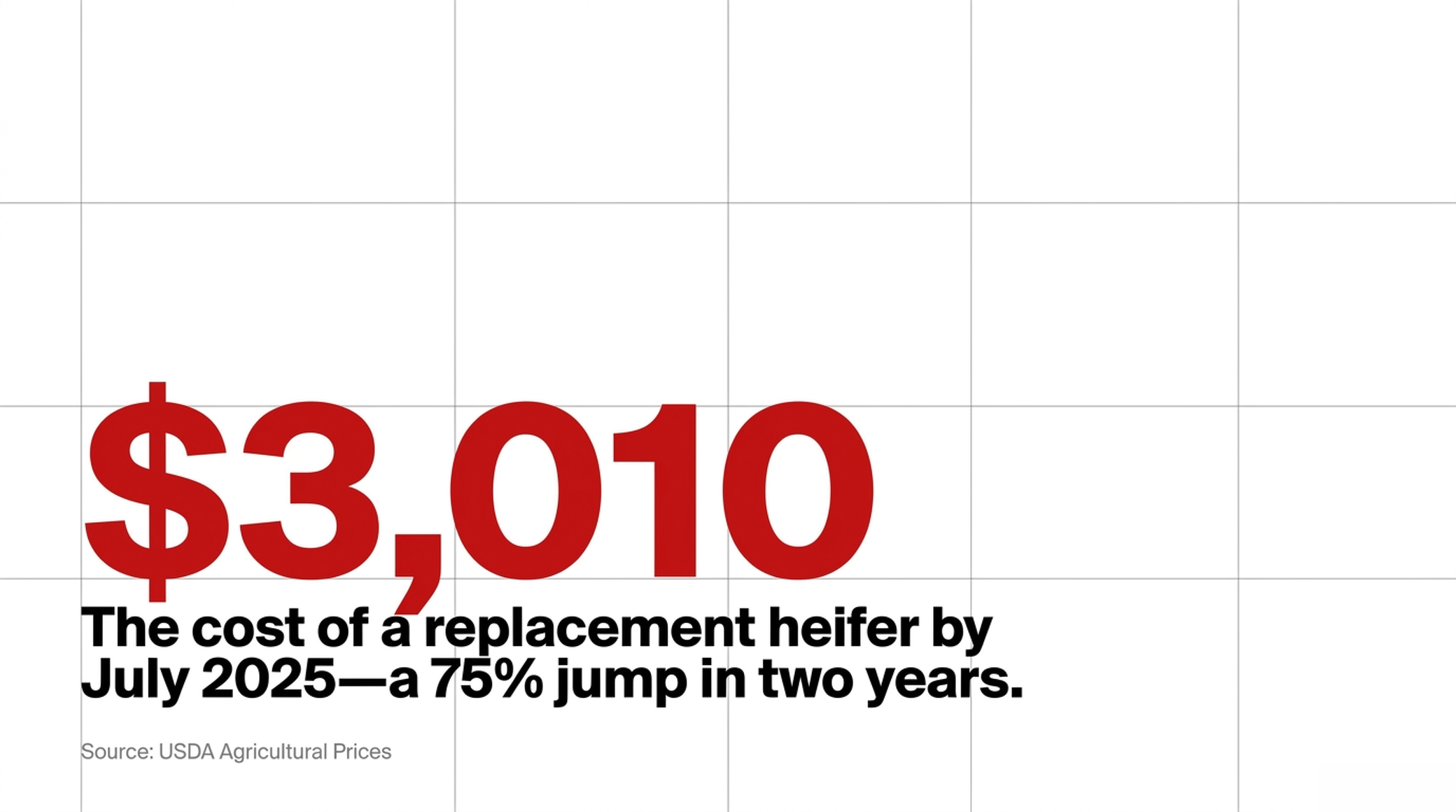
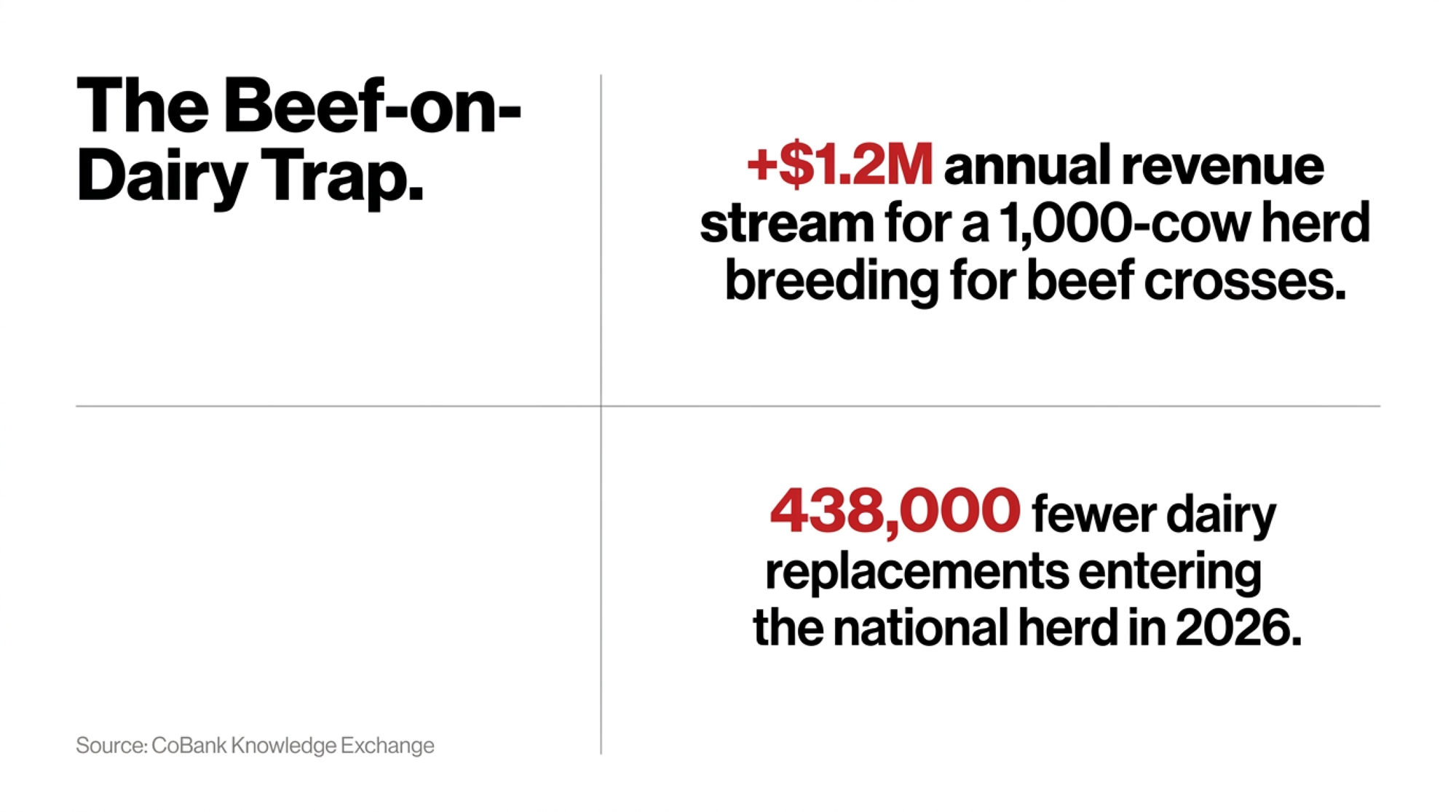
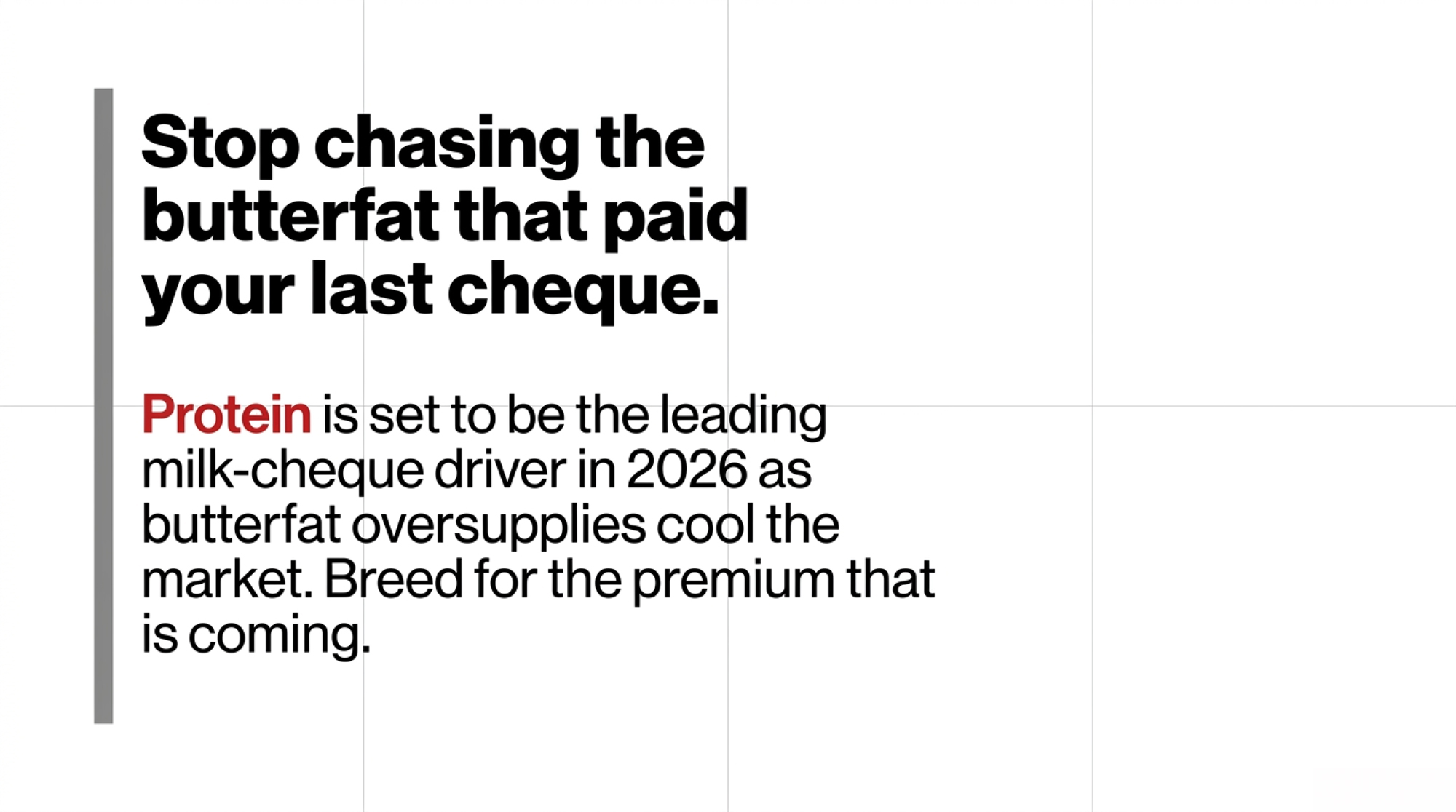
Now he’s CoBank’s lead dairy economist, one of 12 people on the lender’s Knowledge Exchange team. These days, he’s focused on three targets: putting a real economic value on genetics, getting the industry to pay attention to components instead of just milk volume, and figuring out what beef-on-dairy breeding does to replacement supply. A producer can take any of the three straight into a mating decision or a loan conversation. As he describes it, the whole job is connecting what farmers already know in the barn to the language a lender or an economist uses to talk about the same cow.
The detail that stuck with us wasn’t economic at all. Every year at the Wisconsin Junior Holstein Convention, Geiger and his wife, Krista, give a little nylon halter to every kid attending for the first time. The idea came from watching kids chase candy at parades. “I wanted the young people, and Krista did too, to walk away with something and put a smile on their face,” he said. “If I can spark a youth to be part of this industry, that’s the best honor I can have.”
Beyond the 10,000-cow count at Oakfield
Geiger spends his CoBank career trying to put a real number on genetics. Oakfield Corners is where those genetic values actually hit the shavings. Expo’s citation puts the operation, run today by 12th-generation farmers, at more than 10,000 cows and 15,000 acres across New York and Ohio, up from 65 cows at the start. The same citation credits an energy-corrected milk average above 110 pounds per cow and an 18-year streak of milk-quality awards. That’s the award committee’s read rather than an independent audit, but they’re specific numbers, and they say more than the herd count.
Oakfield runs a 28-cow show herd, kept entirely apart from the rest of the milking herd. Alicia Lamb put it plainly: “They’re two separate philosophies.”
Show cattle and high-index cattle are different breeding targets, and she’s not pretending one mating can chase both. That’s a cleaner admission than most operations make. Pick a lane, and you can judge whether you hit it.
It also means getting the credit right matters. Oakfield bred and developed Oakfield Solom Footloose-ET, then sold her as a four-year-old to Duckett Holsteins. Footloose went on to be Expo’s grand champion in 2022 and again in 2024. The official 2024 results list Showbox Sires and Vierra Dairy as her exhibitors. Oakfield gets the breeder credit.
Kandy Cane and the long wait
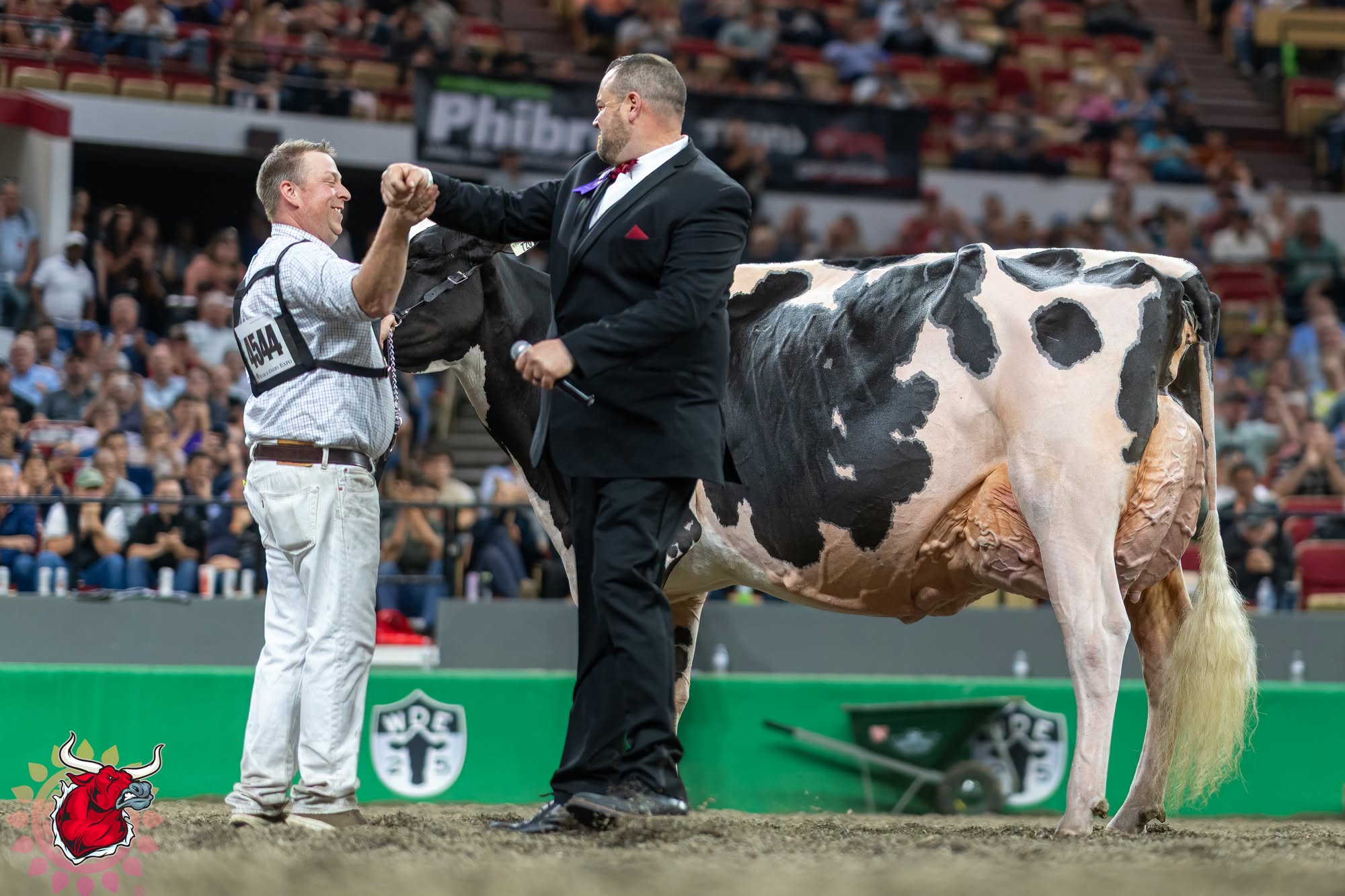
2025 turned the credit around. Oakfield’s own Expo grand champion wasn’t an Oakfield-bred cow. Lovhill Sidekick Kandy Cane won her class, Senior Champion and Grand Champion at Expo’s International Holstein Show, exhibited by Alicia and Jonathan Lamb, with show herd manager Jamie Black at her halter, as The Bullvine reported from Madison.
Jonathan shared that the goal felt too lofty when they started. He also talked about the specific kind of humbling Expo delivers: you show up thinking you’ve got a good one, then you walk the barns and find out how much better “good” gets in Madison. Anybody who’s hauled a cow to a show and then walked the aisles knows that feeling.
The Lambs first saw Kandy Cane as a young cow in Mike and Jessica Lovich’s Saskatchewan herd in 2022. They remembered her, and she came to Oakfield in the spring of 2024. That’s its own kind of judgment: recognizing the right animal, then not letting the moment pass.
None of it happened by accident once she arrived. Alicia described a separate facility, a special diet and year-round attention for the show string, and Jonathan pointed to the team built around the cattle. A banner in Madison doesn’t tell you whether the rest of the farm made money that quarter, and it shouldn’t have to. It tells you the Lambs backed a specific ambition with real resources, and it paid off.
Janette’s part starts in the dirt
The award names six people for a reason, and Janette Veazey-Post is the one least likely to end up in a show photo. American Farmland Trust’s 2023 case study on Lamb Farms names her as crop manager since 2012 and credits her with putting strip-till on 1,000 acres in 2013.
That’s a far better place to start talking sustainability than “big farms are efficient”: a specific person, a specific number of acres, a specific year. The same case study tracks manure injection starting in 2016 and cover crops on 3,500 acres by 2018, including triticale, clover and radish planted after corn silage comes off.
None of that shows up on a banner. It shows up the next spring, in whether the ground can carry the next crop without the inputs it used to need. Janette’s paper trail of specific changes on specific acres is checkable, and it holds up.
If you’re running your own operation and wondering what to take from Oakfield, don’t reach for the herd count. Ask whether every piece of your farm, from the show string to the cropland, has a clear target and somebody who owns hitting it. A show cow and a strip-tilled field get judged on completely different scorecards. That’s fine. Just know which scorecard you’re using before you grade yourself.
Every proof Oakfield reads, and every genetic value Geiger tries to price, rests on an idea that was a hard sell in 1960s Quebec: a bull’s daughters tell you more when you compare them to their herdmates than to their dams. Chicoine was the one selling it.
The allergy that redirected a career
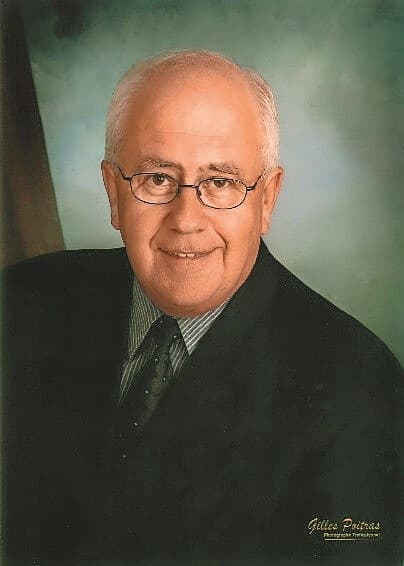
Robert Chicoine, Expo’s 2026 International Person of the Year, honored posthumously. He joined CIAQ in 1966 and spent the years after convincing Quebec breeders to trust the numbers.
Allergies ruled out farming, so Chicoine went to school instead and studied agriculture. In the third year of a four-year program, a teacher suggested he spend a summer at Quebec’s AI centre. It was a revelation, he said. At the end of that summer, the centre told him that if he’d go on to a master’s in animal breeding, there’d be a job waiting: developing its young sire proving program.
He joined CIAQ in 1966, Semex noted in its tribute. What he loved about those early years was getting paid to visit the famous herds he’d read about in the Journal as a kid.
The hard part was the argument. For about 20 years, Quebec farmers had been told to use proven sires to improve their herds, but those bulls had been proven in private herds, and some weren’t as good as their proofs suggested. Chicoine had to explain why herdmate comparisons beat comparing daughters to their dams. “I wrote many articles about that. I went to several meetings, many meetings,” he said. “And it worked. It was a long process.” A good breeding method on paper is worthless until somebody convinces the room.
Trusting the paper, trusting the eye: Senator and Starbuck
Two bulls show how Chicoine worked. In the fall of 1967, at 23, he spotted a Holstein World ad for auctioneer Harris Wilcox’s New York dispersal and fixed on the pedigree of a young bull nobody else wanted: Sevens Burke Skylark on the sire’s side, Osborndale Ivanhoe behind the dam, and three generations of proven AI sires stacked up the male line, as The Bullvine detailed in an earlier profile. The dam didn’t have the look breeders expected. Chicoine trusted the paper over the picture and bought him anyway.
Quebec’s breeding community mostly ignored the calf once he got home. CIAQ’s inseminators used his semen as a last resort, when a farmer didn’t request anything specific. Craiglen Sevens Senator earned Holstein Canada’s EXTRA designation in 1978, more than a decade later. By Chicoine’s own count, Senator now appears in at least half the pedigrees of Canada’s current Holsteins.
Starbuck was the opposite kind of decision, and Chicoine called it luck, twice in one answer. In May 1979, he and fellow CIAQ sire analyst Harley Nicholson were in Ontario signing mating contracts and looking for young sires, according to The Canadian Encyclopedia. They stopped for a quick dinner and happened to be at the same restaurant as Peter Heffering of Hanover Hill Holsteins in Port Perry. Heffering said he was free that evening if they wanted to see the herd. It wasn’t far, so they went, and they found a bull calf about a month old that Chicoine remembered as “already very impressive.” The calf had been born April 26, 1979, by CIAQ’s record. The dam impressed them too.
The pedigree gave them pause. Starbuck was another son of Round Oak Rag Apple Elevation, and CIAQ already had proven Elevation sons. Chicoine and his partner had “a very serious discussion” about whether to sample another one. They bought him anyway, because they liked the family and the calf standing in front of them. Every serious breeder who’s ever found a great one in somebody else’s barn knows luck still has to be recognized before it counts for anything. The Bullvine’s archive digs into Starbuck’s pedigree.
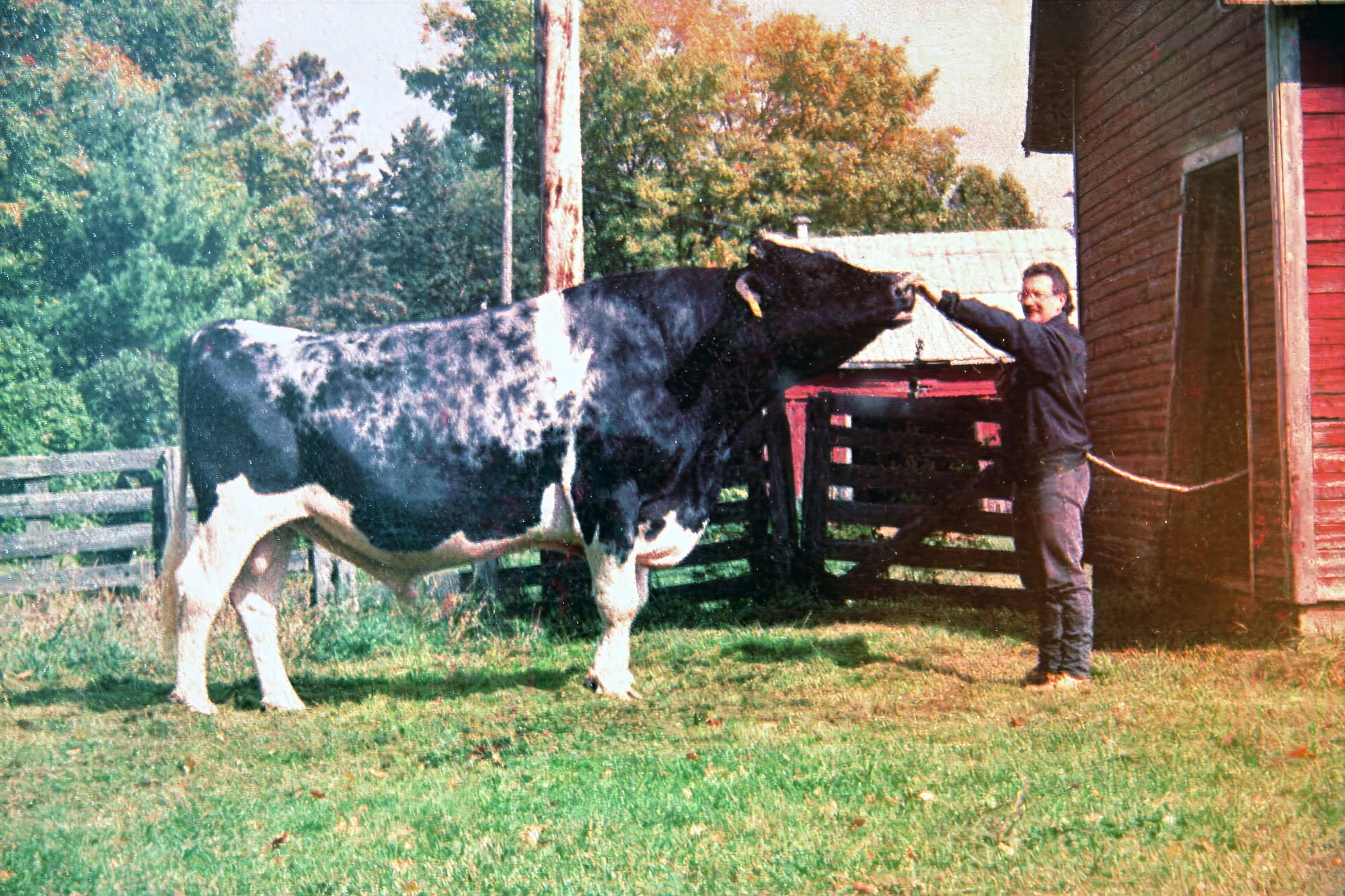
Don’t turn either bull into a system, though. He wasn’t right for the same reason both times. He was a breeder weighing whatever evidence he had in front of him, sometimes a pedigree sheet and sometimes his own eye, not a man who could see forty years down the pedigree.
That earlier Bullvine profile dug into how the Senator decision fed into modern genetic evaluation. The podcast adds something it didn’t have: restraint. Asked to put a number on how much faster genetic progress moves today, he said a number “would need some research, I suppose.” What he offered instead was how it had changed. A proven bull in his early years could be used for 10 years and never get any better. Genomic selection keeps moving the target, he said. It would have been easy to toss out a figure, and he didn’t.
He wasn’t uncritical of where genomics has taken the industry, either. He praised the pace of progress, then named the cost: the selection being made now drives inbreeding. He thought research might find a way to handle it, because related animals can still carry different genes. It wasn’t a verdict, just a question he left for whoever comes next, in an interview that was supposed to be a victory lap.
Building something that outlasts you
Asked about his biggest impact, Chicoine didn’t point to a bull. He pointed to cooperation: bringing Canadian AI organizations together into what became the Semex Alliance. His reasoning was about scale. Canada has far fewer dairy cows than the U.S. or Europe, and no single AI organization had enough bulls to be sure of always having superstars. Together, they might. He had to convince the other partners, and they came around gradually.
Semex credits him as the Alliance’s first general manager in 1997, after running CIAQ, and as the force behind Boviteq, where he chaired the board from 1991 to 1996. A bull changes a pedigree. An organization keeps creating chances for people long after the person who built it is gone. He seemed to know which one mattered more.
Coffeen closed the episode with a piece of context Chicoine had asked her to include: early on, his board challenged him to push innovation on the female side of reproduction, and that challenge led to Boviteq. He wanted the record straight. It wasn’t a solo idea.
“You cannot achieve everything by yourself as a person,” he said. “You need partners. You need working companions.” Pick the best people you can find, and they’ll carry the work on when you leave. Asked about the Expo honor itself, he turned it around again: “My merit is limited in that regard. I was there at the beginning.” It’s a tougher standard for a leader than it sounds: counting the next person’s success as part of your own, without angling to keep the credit.
What’s worth carrying home
Three different careers, three different scales, one repeated move: somebody handed off real responsibility, and the person who received it did something with it worth handing off again.
You don’t need 10,000 cows or an international alliance to run that play. Define your breeding goal clearly enough that you can judge whether you hit it. Give a young person a real budget and someone willing to answer their questions. Build people who can keep the operation running without you in the room.
When Expo’s call came, Geiger pulled over to take it, then went straight to the list of past winners. “Just to be considered among them really gave me pause,” he said. Jonathan Lamb did his own version of the same thing, crediting the years of learning and the team behind the Kandy Cane run, not himself alone.
All three get recognized September 29, and Chicoine won’t be in the room for it. You don’t need a banquet invitation to take something from their stories. Somebody, somewhere, is the reason each of these three got a start, and most of those names will never get read from a stage. Be that person for somebody younger, before you’re the one being honored for a career already finished.
Asked how he hoped to be remembered, Chicoine said he didn’t have specific expectations. He was proud to have been there at the beginning, and he’d always enjoyed going to work, because he got to spend his working life on the passion he’d had as a young person. “So life has been good for me.”
Key Takeaways
- Three of Geiger’s four Hoard’s mentors, Knox (1970), Meyer (1988) and Larson (2007), won Expo’s Industry Person of the Year, the same award Geiger receives in 2026. That’s a 56-year span, not proof mentoring wins awards.
- CIAQ inseminators used Senator as a last resort, and he didn’t earn EXTRA until 1978. Chicoine’s pedigree bet took more than a decade to pay off, so judge your own breeding calls on that kind of timeline.
- Oakfield’s honor names six people, including crop manager Janette Veazey-Post, who put strip-till on 1,000 acres in 2013. When your farm gets credit, name the person behind the work nobody photographs.
Learn More
- Beef-on-Dairy’s $6215 Secret: Why 72% of Herds Are Playing It Wrong — Breaks down the exact math behind Geiger’s replacement supply warning. If your 21-day pregnancy rate sits under 20%, deploying beef semen drains your heifer pipeline and kills profitability, while high-performing herds can net an extra $6,215 monthly.
- The Holstein Visionaries Who Built Everything You’re Breeding Today — Tracing the money behind historical genetic strategies proves that titans like Stephen Roman treated the show ring strictly as a marketing engine. These foundational decisions deliver the blueprints dictating your herd’s current DNA and long-term financial potential.
- The Show Ring Showdown—Why Bigger Isn’t Always Better — With financial data calculating the hidden tax on massive frame size, the numbers reveal every vertical inch costs $1.20 daily in feed. This brutally validates Oakfield’s split-herd philosophy: chasing ribbons with your commercial string guarantees a profit-killing disaster.
 The Sunday Read Dairy Professionals Don’t Skip.
 The Sunday Read Dairy Professionals Don’t Skip.
Every week, thousands of producers, breeders, and industry insiders open Bullvine Weekly for genetics insights, market shifts, and profit strategies they won’t find anywhere else. One email. Five minutes. Smarter decisions all week.