


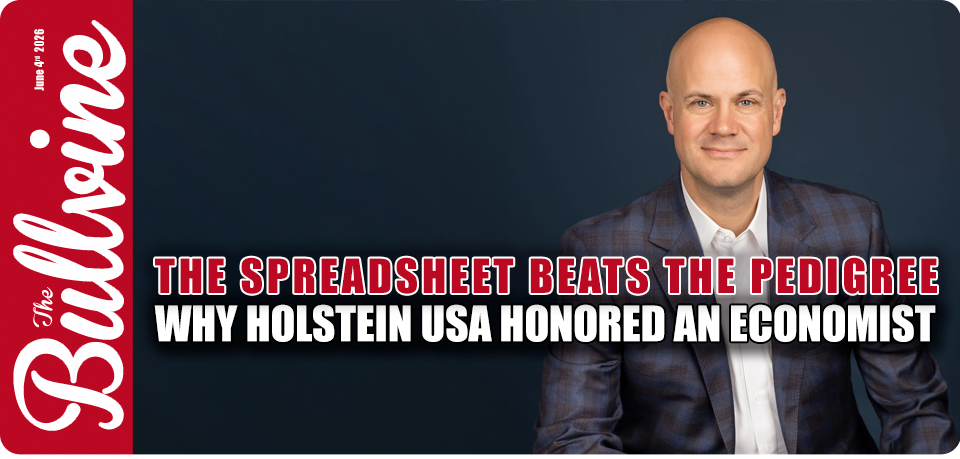






A breed registry built on pedigree just gave its top 2026 award to CoBank’s economist — the same guy who’ll tell you why a $1,720 heifer now costs $3,010.
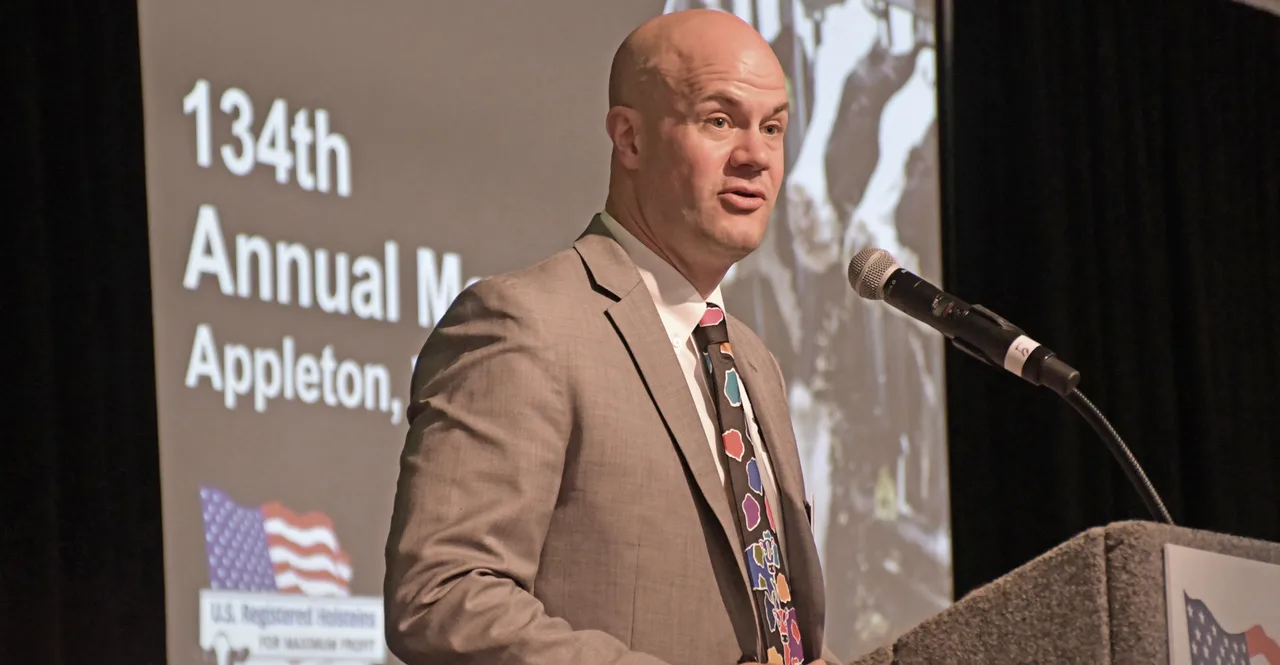
Six generations of Geigers have milked cows on the same patch of Wisconsin ground near Reedsville. On Wednesday, June 24, in Orlando, the sixth generation collects the highest career honor the world’s largest dairy breed association gives — and the job he holds today is read in basis points, not classification scores.
Holstein Association USA presents its 2026 Distinguished Leadership Award to Corey Geiger — Omro, Wisconsin; CoBank’s lead dairy economist; 28 years a fixture at Hoard’s Dairyman, ultimately as lead editor, where he launched the publication’s fourth language edition. Behind the byline sits a decade-plus of national board service — Holstein Association USA president from 2019 to 2022, plus seats across the Holstein Foundation, the Council on Dairy Cattle Breeding, World Dairy Expo, and the Klussendorf Association — and, since July 2023, the role of lead dairy economist at one of agriculture’s largest lenders. Read the standard announcement and you get a career retrospective: editor, association president, author, board member. All true.
The award itself is a full-career honor — Holstein USA hands it to one person for “outstanding and unselfish leadership for the betterment of the dairy industry,” and Geiger’s case for it includes a stint as the association’s own president from 2019 to 2022. So this isn’t an outsider being let in. It’s the same man, recognized for what his career became.
And what it became is the story. A breed registry built on type and pedigree just handed its top leadership award to someone whose current value to the industry is measured in heifer-inventory models and milk-cheque math. That’s not a footnote about one man. That’s a signal about where influence in this business has migrated — and why your operation should care.
The award is the story, not the résumé
Strip away the ceremony and ask a blunt question: what is Holstein Association USA actually rewarding?
Not banners. Geiger’s deepest mark on the industry in the last three years hasn’t come from a show ring or a classification call. It’s come from analysis — the kind that tells a lender whether to extend credit, tells a processor whether the cows exist to fill a new plant, and tells a producer whether to breed for protein or butterfat heading into a base change. The association that registers the cows is honoring the man who explains what those cows are worth to the people holding the cheque-book.
For most of its history, the prestige in the Holstein world flowed toward breeders and bloodlines. The 2026 award says the quiet part out loud: in a consolidating, capital-intensive dairy economy, the person who can translate the herd into a balance sheet carries as much weight as the person who bred it.
You don’t have to agree with every call he’s made to recognize the reach. We don’t always. The influence is real regardless.
Follow the numbers he’s actually moved
Skeptical that an economist belongs in the same sentence as a breed-leadership award? Look at the specific calls his analysis has put in front of the industry. These aren’t opinions. They’re the figures shaping decisions on real farms right now.
Start with the genetic base change. In April 2025, the Council on Dairy Cattle Breeding reset its evaluation baseline from cows born in 2015 to cows born in 2020 — and Holsteins led every breed with a 44-to-45-pound rollback on butterfat and a roughly 30-pound rollback on protein (The Bullvine: 2025 U.S. Genetic Base Change). Geiger was among the first to translate the size of that rollback into plain terms: the bigger the rollback, the bigger the underlying genetic gains, and Holstein butterfat could push past 5% within a decade if nutrition keeps pace with genetics. That’s a breeding-strategy signal dressed as a statistical footnote — and most producers needed someone to decode it.
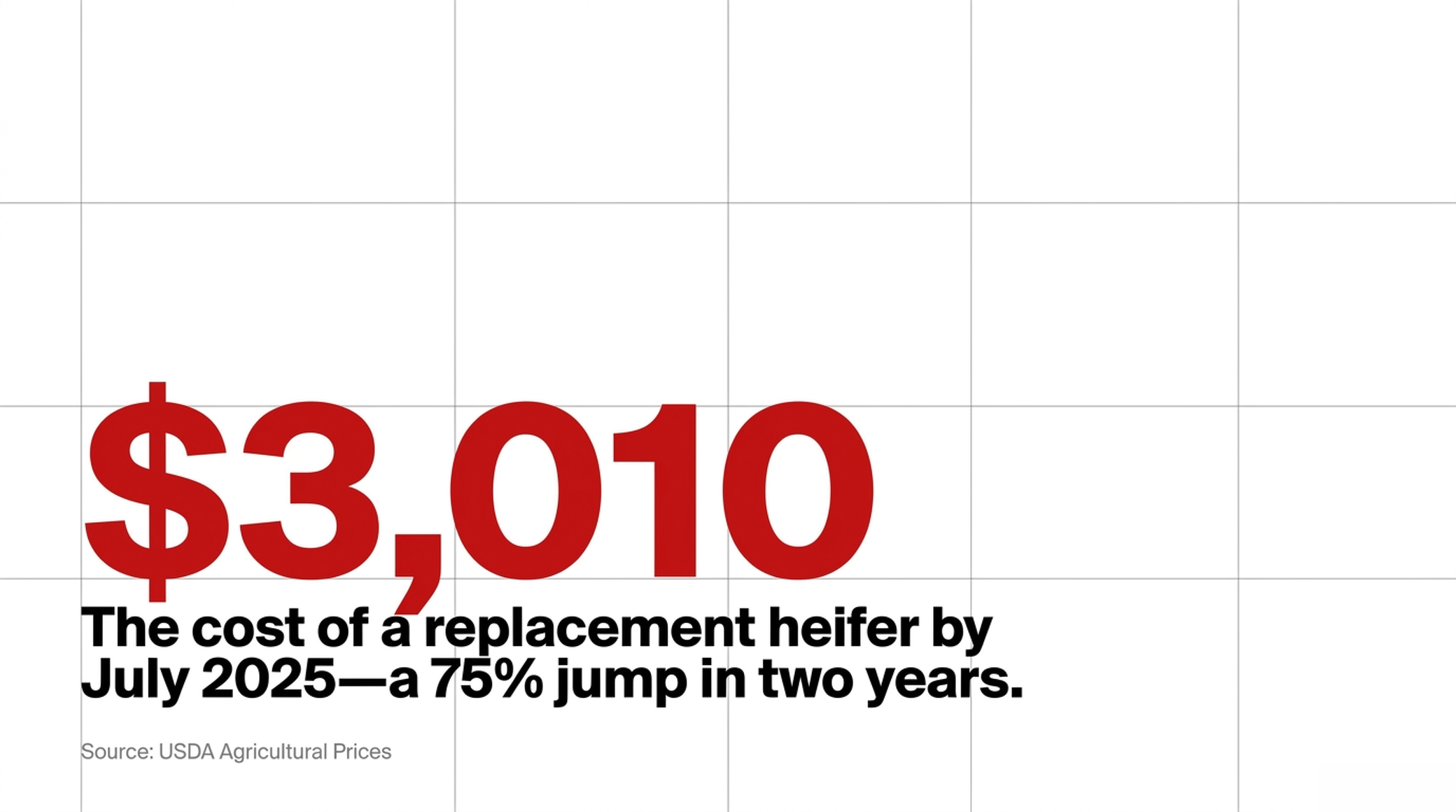
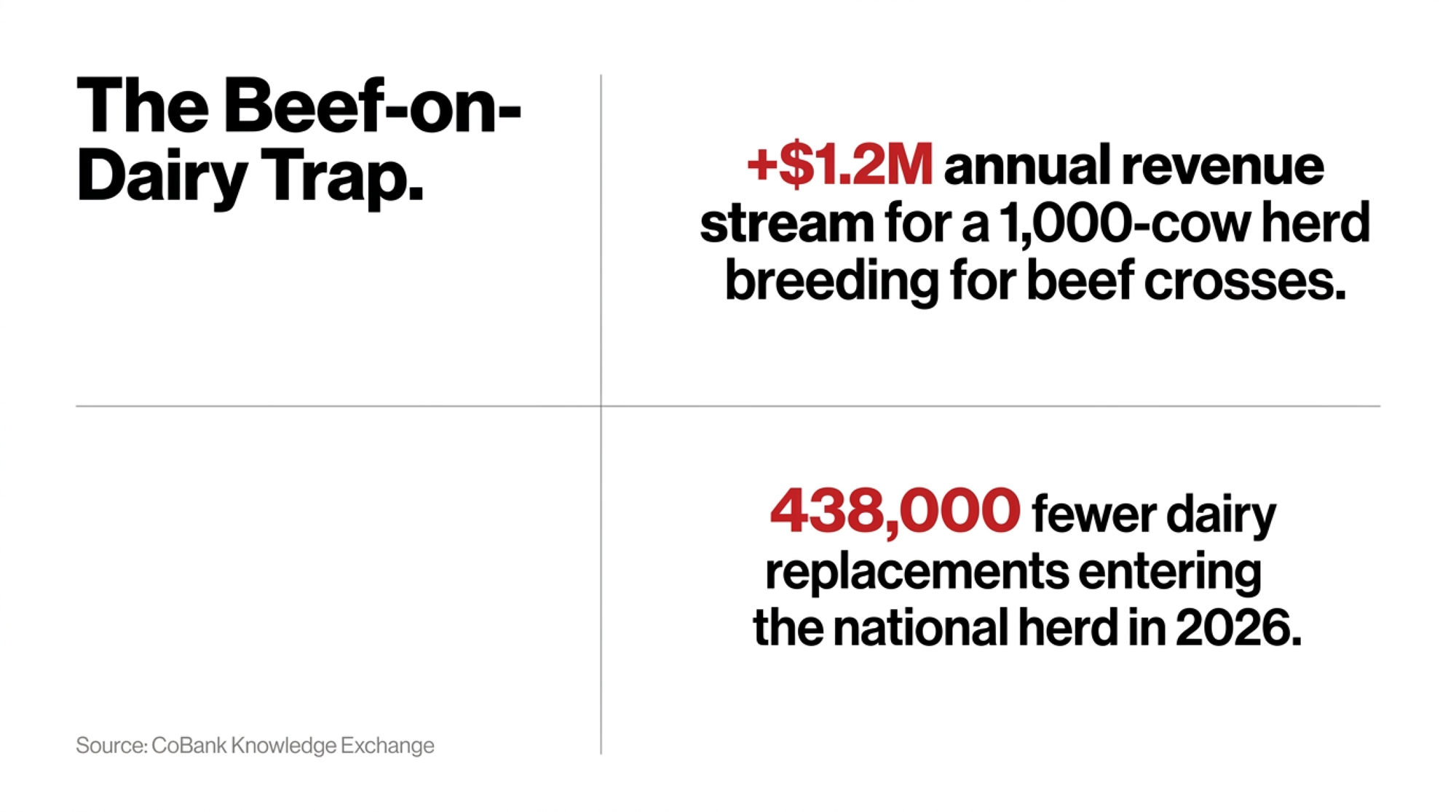
Then the heifer crunch, where the math gets uncomfortable. U.S. dairy replacements have fallen to roughly 3.9 million head, a multi-decade low, while the average replacement heifer climbed from $1,720 in April 2023 to $3,010 by July 2025 — a 75% jump in just over two years, per USDA Agricultural Prices . CoBank’s own modeling projects roughly 438,000 fewer dairy replacements entering the herd in 2026 than in 2025, with no real relief until 2027. When The Bullvine ran the math on UW–Madison’s beef-on-dairy assumptions, it was this same CoBank and sale data that reset a $2,355 textbook heifer to a $3,000–$4,100 real-world line item (The Bullvine: UW–Madison’s $51/Cow Beef-on-Dairy Trap).
Now layer the third number on top, because it’s where the first two collide: more than $11 billion in new dairy processing capacity is under construction across roughly 53 facilities in 19 states, and the national cow herd isn’t on track to fill it (The Bullvine: Processing Capacity Gap Dashboard). Record components, a heifer shortage, and a building boom all hitting at once. That collision — not a show placing — is the story the industry needs read correctly. Geiger is one of the voices doing the reading.
The beef-on-dairy loop the press release will never explain
Here’s the piece that ties the heifer shortage to your own breeding decisions — and it’s the kind of causal chain a career announcement skips entirely.
The heifer shortage didn’t happen by accident. It’s the direct, rational result of a decision millions of dairy producers made one straw at a time. Beef semen sales to dairy farmers climbed from 5 million units in 2020 to 7.9 million of the 9.7 million total units sold in 2024, while conventional dairy semen sales collapsed nearly 47% over roughly the same stretch, according to National Association of Animal Breeders data compiled in CoBank’s analysis. Every one of those beef straws is a dairy replacement that was never conceived.
Why would a rational operator breed away from his own future milk supply? Because the math, in the moment, is overwhelming. A beef-on-dairy calf has fetched well over $1,000 at under a week old in recent data, and the beef-on-dairy revenue stream now adds an estimated $5 per hundredweight or more to dairy farm income. Run that against a 1,000-cow herd shipping 240 hundredweight per cow per year: $5/cwt across 240,000 hundredweight is roughly $1.2 million in additional annual revenue, before you’ve sold a single drop more milk. No producer ignores a number like that.
But here’s the trap Geiger’s work keeps surfacing: the same decision that pads this year’s cash flow is the engine draining next year’s milking string. CoBank’s modeling puts the cost of that collective choice at roughly 438,000 fewer dairy replacements entering the herd in 2026 alone. Multiply that shortfall across a herd that’s also trying to feed $11 billion in new processing capacity, and you understand why a springer that sold for $1,720 in 2023 commands $3,010 today. The beef cheque and the heifer crisis aren’t two stories. They’re the same story, told from opposite ends of the calving pen. Reading them as one — not as separate headlines — is exactly the translation work the industry now prizes.
What this means for your operation
Forget the trophy. Here’s how the man getting it should change what you do this quarter.
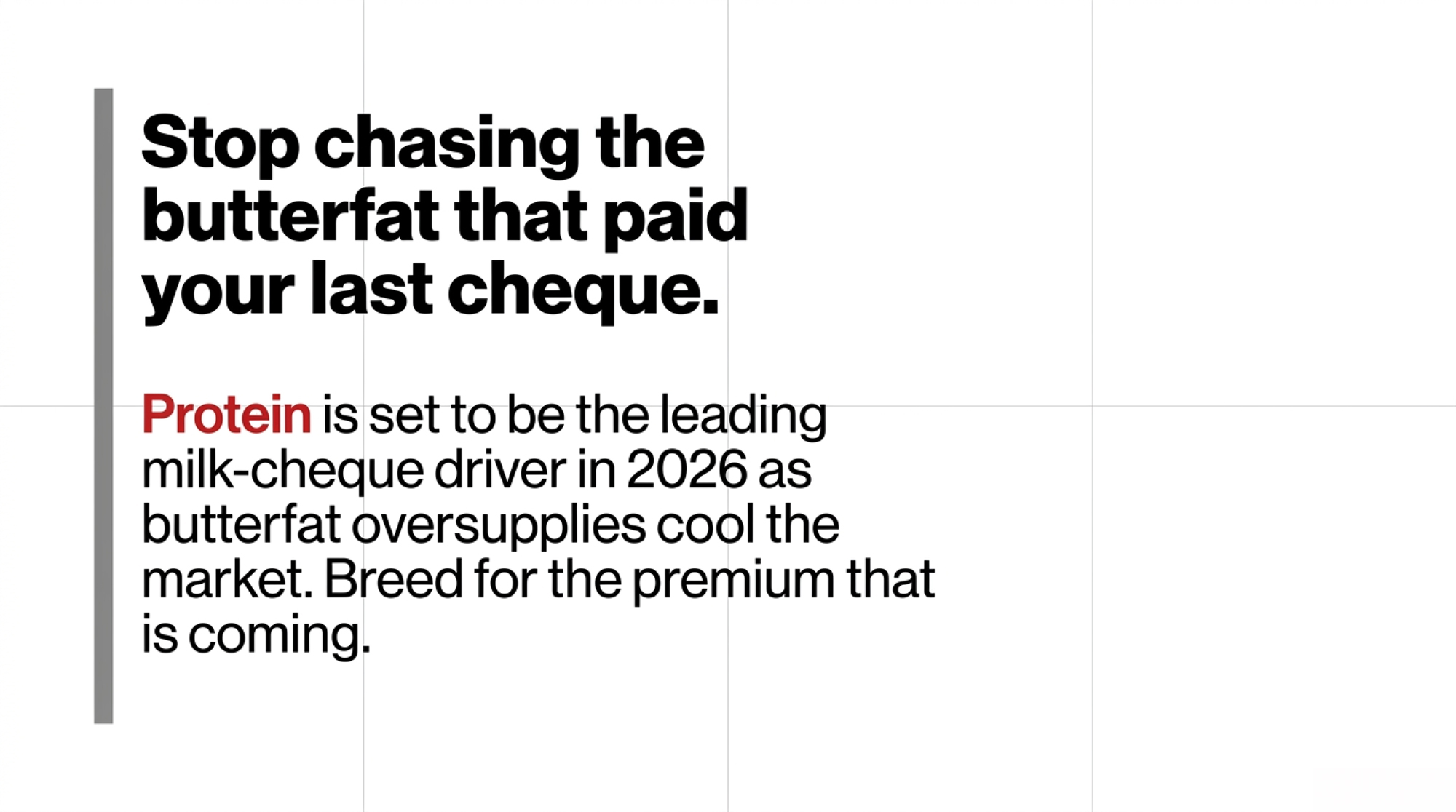
- Breed for the pay driver that’s actually coming, not the one that just paid. As Geiger laid out in a February 2026 dairy outlook presentation, his read is that protein — not butterfat — is set to be the leading milk-cheque driver in 2026, as a butterfat oversupply pulls fat values down while protein demand from ready-to-drink shakes and powder products keeps climbing . If your breeding program is still chasing the butterfat that drove your last few cheques, run your sire selection against where the premium is heading, not where it’s been.
- Stop selling replacement inventory at convenience prices. With springers near $3,010 and CoBank modeling a structural shortage through 2026, don’t let your extra heifers go cheap just to clear slot space. Calculate your exact 24-month herd replacement needs plus your historical mortality rate. If you have a surplus, price it like the appreciating asset it now is. If you’re short, lock in purchases before the $11 billion processing build-out starves the market further — the model says no real relief until 2027.
- Invest in translators, not just specialists. The most valuable people left in this business aren’t the deepest specialists — they’re the ones who move knowledge across silos. Geiger reads a pedigree and a basis spread with equal fluency, and that combination is what carried him from journalism to governance to finance. If you’re deciding which young person on your operation to develop, the Geiger template says push them to learn the whole chain, not one link.
The shift the trophy is really naming
Barn to byline to balance sheet. That arc is the whole story — and the institutions are voting with their trophies.
In barely two years, three different pillars of the breed-and-show establishment have converged on the same economics-first figure: National Dairy Shrine made Geiger its Guest of Honor in 2024, and World Dairy Expo named him Industry Person of the Year in 2026, citing a career that landed him “where capital meets cows” (The Bullvine: WDE Names Its 2026 Award Winners).
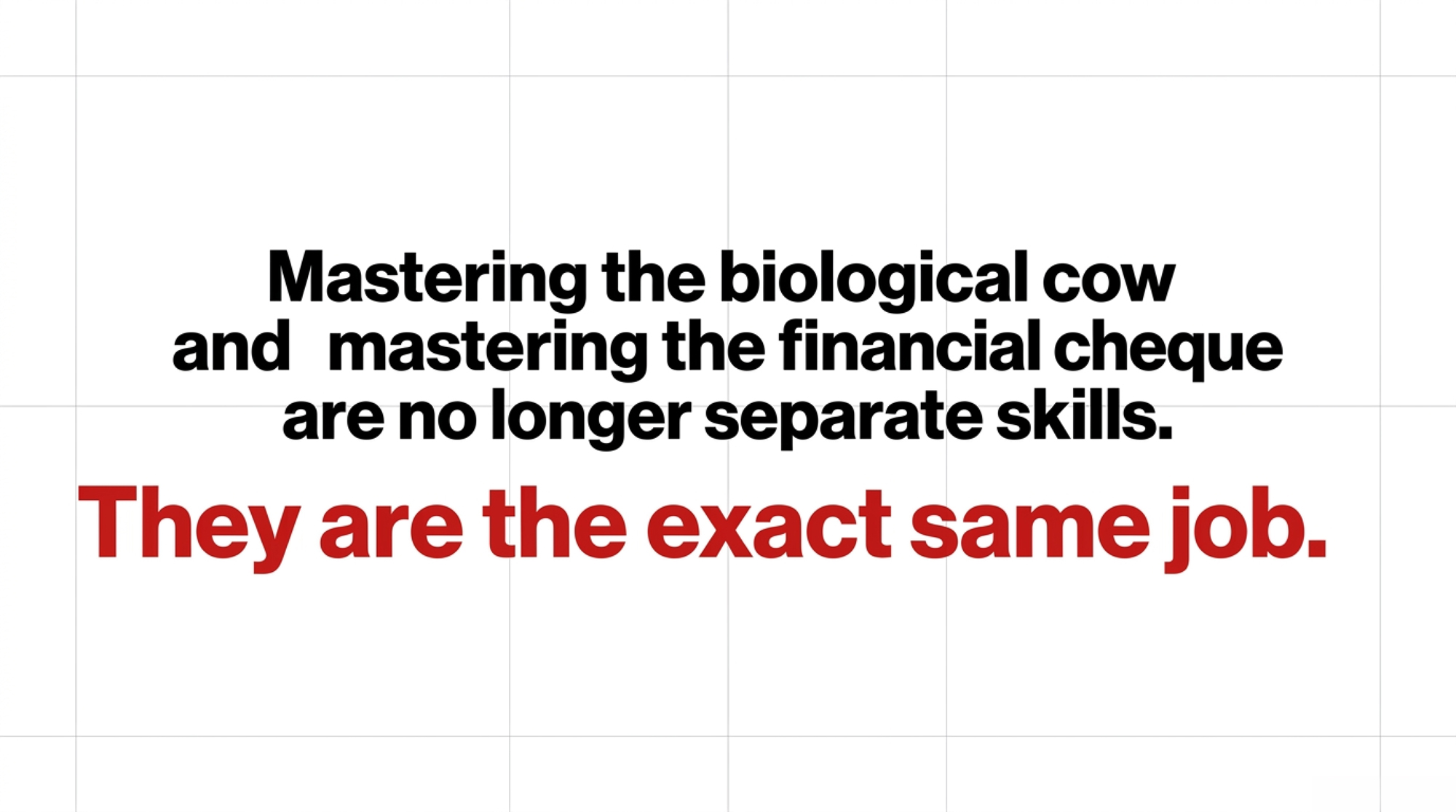
Now Holstein Association USA hands him its Distinguished Leadership Award. When the show barn, the dairy hall of fame, and the breed registry all reach for the same financial analyst within a 24-month window, it isn’t coincidence. It’s a white flag from the traditional establishment — an official acknowledgment that in 2026, understanding the biological cow and mastering the financial cheque are no longer separate skills. They’re the exact same job.
The 2026 National Holstein Convention runs June 22–25 in Orlando, Florida, with the award presented Wednesday, June 24 (2026 National Holstein Convention).
Key Takeaways
- When the show barn, the dairy hall of fame, and the breed registry all hand their top honors to a balance-sheet economist inside 24 months, the message is clear: knowing the cow and knowing the cheque are now the same job.
- Protein is set to lead the milk cheque in 2026, not butterfat. If your sire selection is still chasing the fat that paid your last few cheques, you’re breeding for a premium that’s already cooling.
- Don’t dump replacement heifers at convenience prices. With springers near $3,010 and a structural shortage modeled through 2026, run your real 24-month replacement need first — then decide if you’re a seller or a buyer.
- Geiger’s CoBank work is free and it’s what your banker is already reading. Get your eyes on the same heifer, component, and processing-gap numbers before your next credit conversation, not after.
Learn More
- Heifer calf mortality: the $40,000 barn math — Arms you with a concrete protocol to stop leaking high-value genetics in the hutch row. Learn why a 2% spike in calf mortality drains $40,000 from your pipeline in a $3,010 replacement market.
- $3,010 Per Heifer. 800,000 Short. Your Beef-on-Dairy Bill Is Due. — Delivers a clear 3-to-5-year framework to navigate the unprecedented national replacement shortage. This strategic assessment lays out four operational paths to defend herd size against soaring springer costs.
- Beef-on-Dairy Math: $25200 Rides on Your Semen Order — Reveals how data-verified sire choices can capture up to $25,200 in premium carcass value on a typical crop. Dismantles generic-cross discounts by implementing exact electronic identification and genetic verification steps.
 The Sunday Read Dairy Professionals Don’t Skip.
 The Sunday Read Dairy Professionals Don’t Skip.
Every week, thousands of producers, breeders, and industry insiders open Bullvine Weekly for genetics insights, market shifts, and profit strategies they won’t find anywhere else. One email. Five minutes. Smarter decisions all week.




