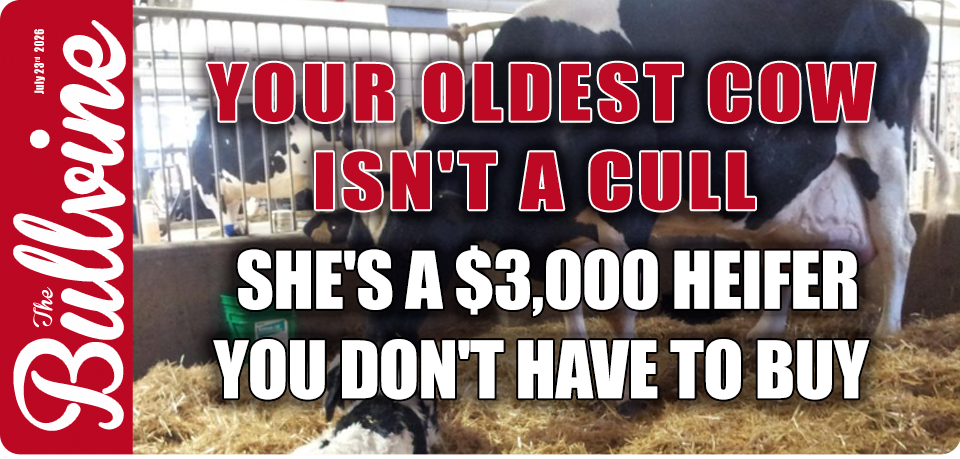






She’s in her 7th lactation, still breeds back, still sound — and you’ve got her penciled for the cull truck. At $3,010 a heifer, that’s a $3,000 check you don’t have to write.
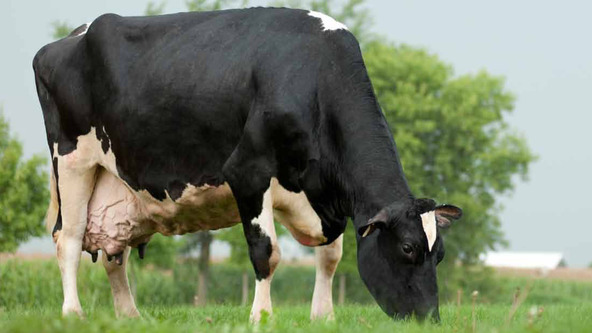
Back in 2012, when the animal-rights conversation around Gillette Emperor Smurf EX-91 was loudest, The Bullvine pushed back on PETA’s read of how dairy cattle actually live. The critics wanted the record-setting Holstein retired to a sanctuary, off the milk line for good. Eric Patenaude, who’d milked her for years at La Ferme Gillette near Embrun, Ontario, didn’t argue the point. He flipped it:
“They want to put her in an animal sanctuary, but I think at this point she is in an animal sanctuary.” — Eric Patenaude, La Ferme Gillette
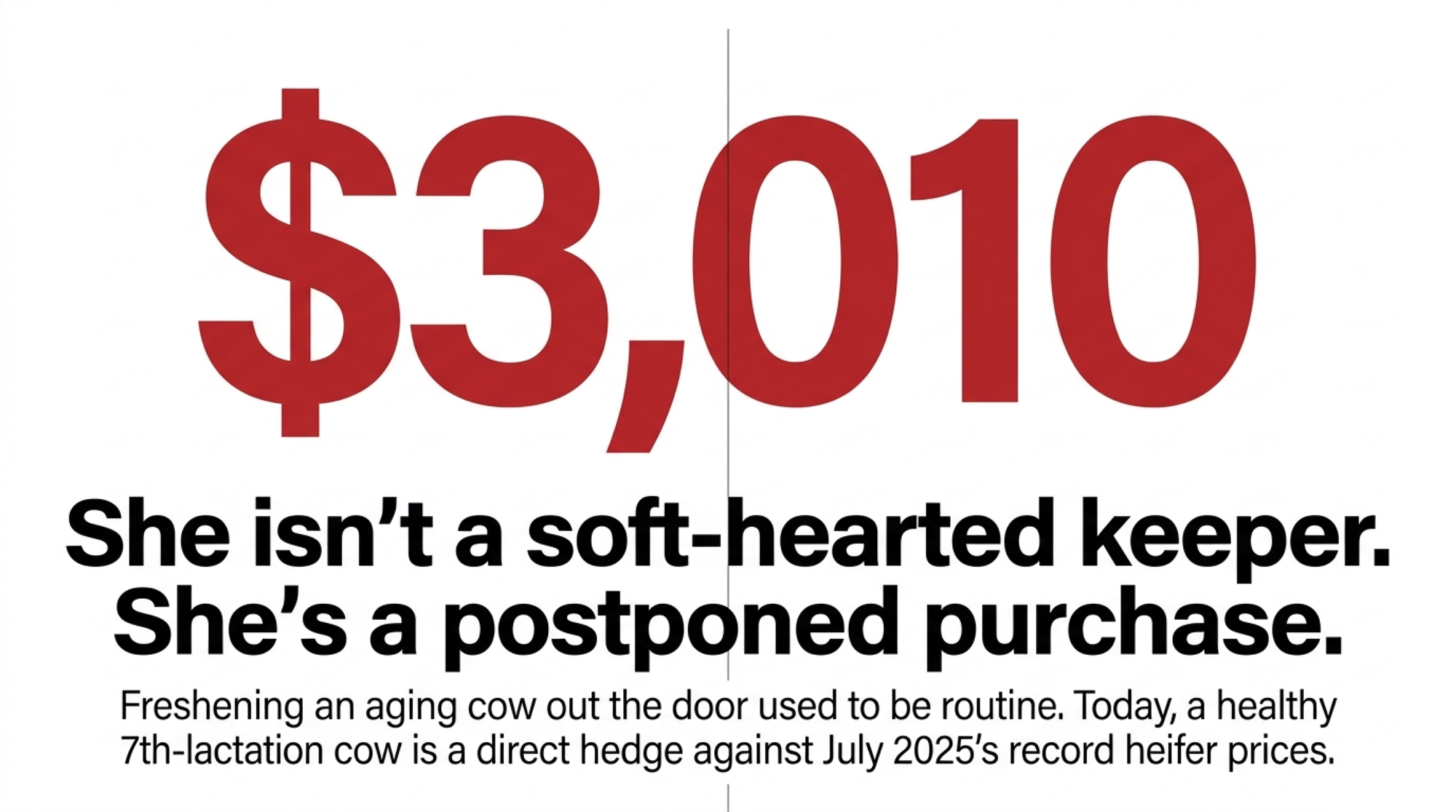
At the time, that read like a good comeback. Read it today, with a replacement heifer costing you $3,010 a head, and it sounds like herd strategy.
Smurf lived to 18 and left behind a Guinness-certified lifetime record of 478,163 lb (216,891 kg) of milk — the most any dairy cow has ever produced. Every extra lactation a cow like her stays sound is a heifer you didn’t have to buy. Her longevity was a welfare story once. Now it’s a hedge against the exact cost squeeze wringing out mid-size dairies.
What’s Changing and Why
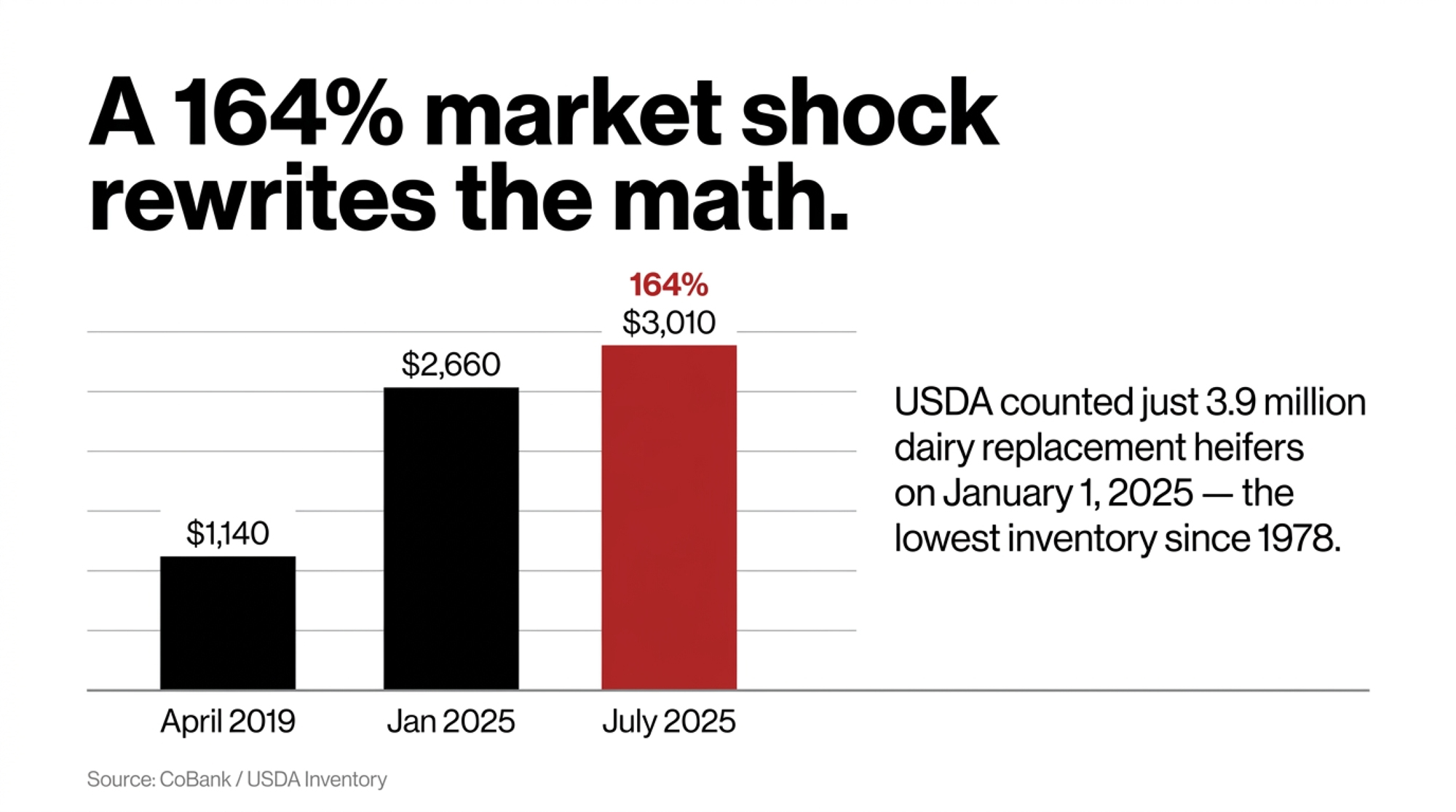
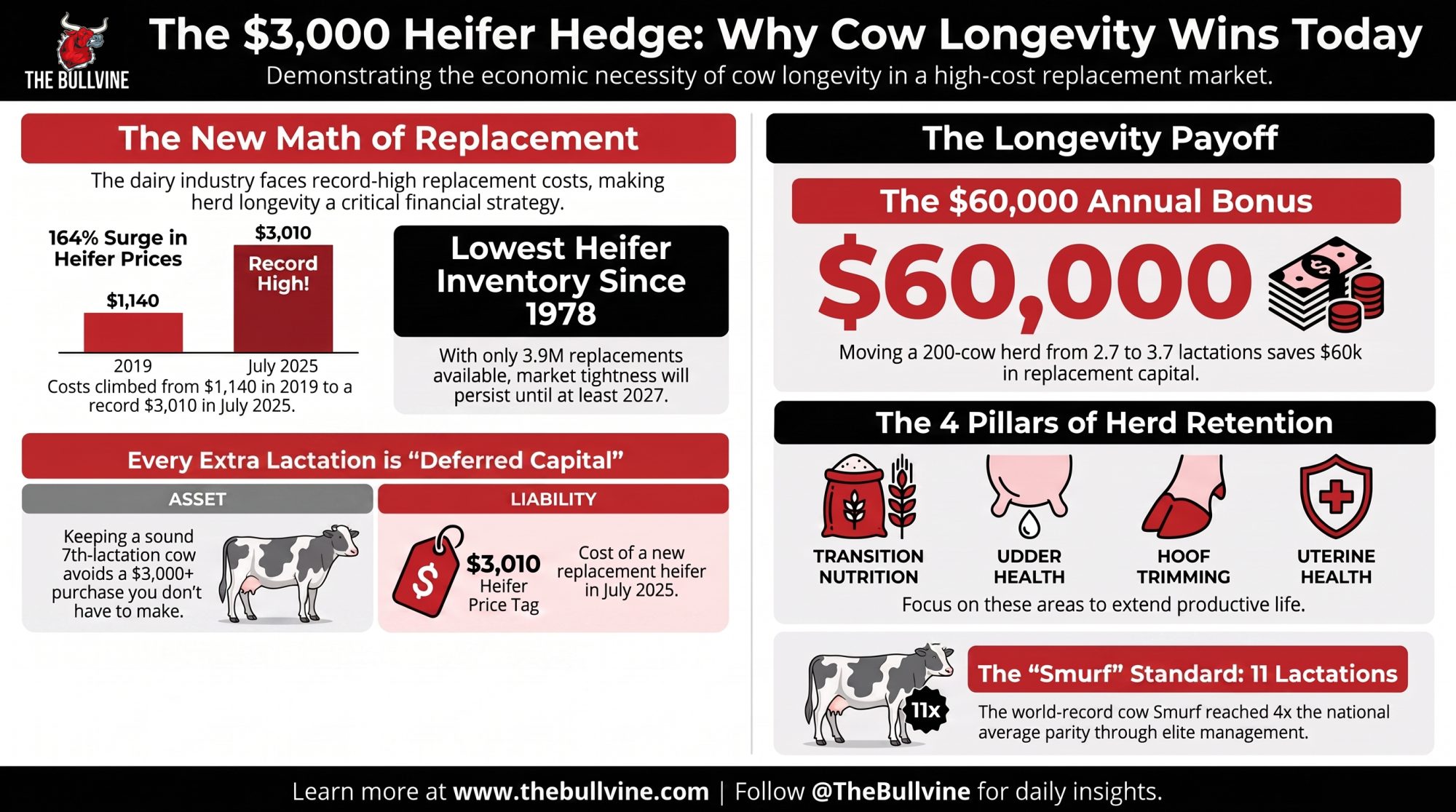
CoBank economist Corey Geiger has the trajectory on record: replacement heifers ran $1,140 in April 2019, $2,660 by January 2025, then a record $3,010 in July 2025 — a 164% climb that rewrote the keep-or-cull math. Top California and Minnesota auction barns have been clearing north of $4,000 a head by mid-2025, per the same analysis. And raising your own is no bargain either, running somewhere around $2,900 to $3,300 by the time she calves.
That price tag rewrites an old habit. For years, freshening an aging cow out the door and dropping in a heifer was just routine herd turnover. But that heifer is now one of the priciest line items you’ll book all year. The cow who breeds back clean at seven lactations and stays on her feet isn’t a soft-hearted keeper anymore — she’s postponing a $3,000-plus purchase.
Who feels it worst? Mid-size operations. They don’t have the scale to shrug off a replacement-market shock, and they often can’t raise heifers as cheaply as the big outfits do. But the equation lands on everybody the same way. USDA counted just 3.914 million dairy replacement heifers on January 1, 2025 — the lowest since 1978, so the longer a healthy cow keeps producing, the less exposed you are to a market that won’t loosen up until 2027 at the earliest.
How This Plays Out in the Barn
Longevity is the one thing you can’t fake, and that’s exactly why it matters. According to Guinness World Records, Smurf averaged 83 lb (37.7 kg) of milk a day across her life and lived in what Eric called a “cow palace” — her own stall, deep straw, a mattress, fresh feed pushed up regularly.
To stay in the herd that long, she had to clear the transition period over and over — those three weeks on either side of calving when milk fever, ketosis, and fresh-cow infections do their worst. Every single time, her feet, her udder, and her reproductive tract all had to hold.
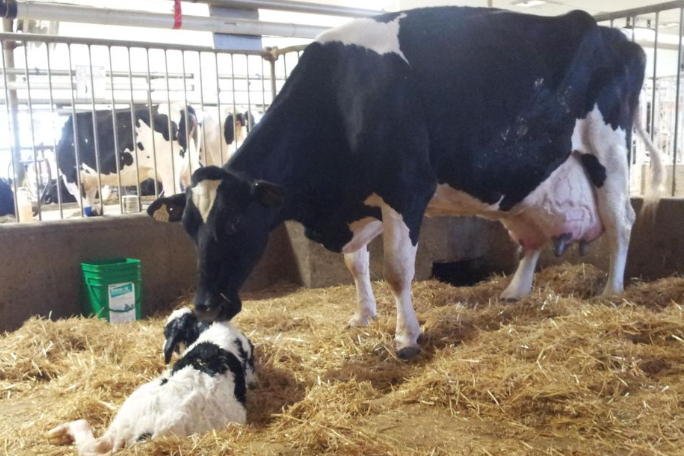
Most cows never get close. USDA’s own inventory work pegs the national average around 2.7 lactations, with fertility problems, mastitis, and lameness pushing most cows out the door well before their bodies are done. Smurf reached parity 11 — better than four times the average — because the things that end most cows’ careers never caught up with her.
Here’s the barn math, and it’s worth running all the way out:
A 200-cow herd averaging 2.7 lactations turns over about 37% a year — roughly 74 replacements at $3,010, or nearly $223,000 in replacement capital annually. Push that average to 3.7 lactations and turnover drops to 27%: about 54 heifers, or $163,000. That one-lactation gain is 20 fewer heifers — right around $60,000 back in your pocket every year. Even half a lactation is worth roughly $35,000.
You don’t erase the cost. You stretch the interval between checks you have to write. At $3,010 a head, that interval is money — and now you can see exactly how much.
The Four Things That Keep a Cow Around
So what actually kept Smurf milking that long? Four things, done right, day after day:
- Transition nutrition — controlled pre-fresh energy and mineral balance to dodge milk fever and ketosis.
- Udder health — a tight, consistent milking routine: pre-dip, pre-strip, a short wait for letdown, wipe, attach, auto-detach, post-dip.
- Feet — regular trimming, because lameness drags down breeding and invites more disease.
- A clean uterus — one that clears infection fast enough to settle cycle after cycle.
None of that is exotic. It’s the grind of good management, and there’s economic weight behind it. A 2023 study of Swedish dairy farms found that herd average cow longevity carries an overall positive, significant link to farm economic performance — though in an inverted-U shape, meaning the payoff climbs, then eventually flattens as cows age. That’s a very different production system than most US barns, but the direction held — and the direction is the point.
One honest caveat, because it protects the whole argument. “Long life equals good welfare” isn’t a settled equation, and the longevity literature warns against oversimplifying it. The defensible version is narrower: cows carrying chronic, unmanaged problems don’t reach high parity. Smurf’s cull-free 18 years say her care cleared a very high bar. That’s strong evidence — not proof of a formula.
How Much Does One More Lactation Actually Save You?
You’ve seen the herd-level number — roughly $60,000 a year on 200 cows for a full lactation of added productive life. Per cow, the logic is just as clean, though it rides on your cull rate and whether you buy or raise:
- Buying: Replacements at $3,010, top genetics north of $4,000. Not needing a heifer this year has never been worth more.
- Raising: Roughly $2,900 to $3,300 — cheaper than buying at the peak, sure, but still real money tied up for two years before she gives you a drop.
So the question is simple. Where does your herd’s average productive life sit right now, and what’s it worth to move it by even half a lactation? Run it against your own replacement number before you make the next cull call. If you want the buy-versus-raise side worked all the way through, our breakdown of why raising your own heifers turned profitable again in 2025 lays out the full comparison — raising now runs up to 54% cheaper than buying at these prices.
Is Your Best Old Cow a Liability or an Asset?
Most barns have a Smurf-in-miniature standing in a back pen — a 6th- or 7th-lactation cow, still breeding back, still sound. Old habits say cull her and freshen a heifer. The 2025 math says look twice before you do.
So ask the harder question: what is she actually costing you to keep, versus what she saves you by not calling the heifer dealer? On one side, she’s proof your transition, feet, and udder programs work over the long haul. On the other, she’s a $3,000-plus purchase you get to put off for another year.
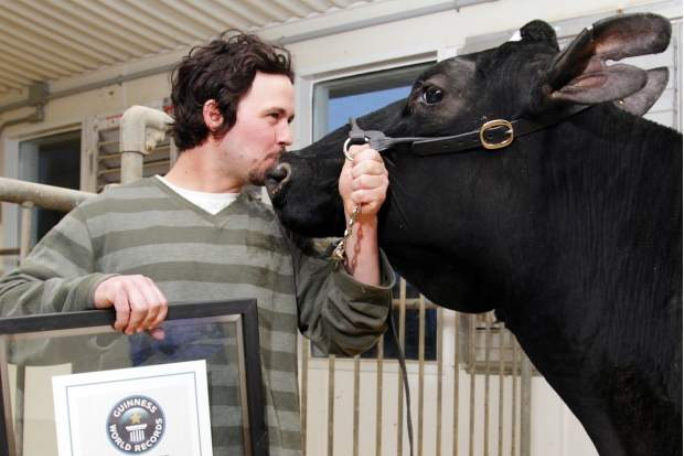
Cull her on age alone and you throw out both. Keep her because her health earns it — the way Ferme Gillette did with Smurf — and welfare and economics finally point the same direction. As one Bullvine analysis put it, at $3,000–$4,000 a head producers are right to “stop culling anything that still stands in a stall” — provided she’s genuinely earning her place.
Options and Trade-Offs for Farmers
If you want to turn longevity into a real hedge against $3,000-plus heifers, here’s what producers are actually doing.
Option 1: Audit Transition Management Immediately
- When it makes sense: Every herd. Start this month.
- What it requires: A hard look at dry-off nutrition, calving hygiene, and the first-30-day health check — attention more than capital.
- The risk: Easy to launch, just as easy to let slide the first week labor gets tight.
Option 2: Re-Evaluate Age-Based Cull Policies
- When it makes sense: Highest payoff where replacement costs bite hardest.
- What it requires: Honest health and production records, and a per-cow call — never a blanket policy. A useful this-month check: pull your herd’s weighted-average Productive Life (PL) breeding value. If your PL sire stack averages below +3.0, you’re not making the longevity bet.
- The risk: Cuts both ways. Holding a cow past her real value costs you too. The Swedish work is the guardrail — the payoff runs an inverted U, so “older” isn’t automatically “better.”
Option 3: Target Cow Comfort Investments
- When it makes sense: Herds bleeding cows to lameness and mastitis.
- What it requires: Real capital — bigger stalls, better flooring, cleaner bedding.
- The risk: Run the payback against your own heifer bill before you pour concrete. The return shows up as fewer forced culls, not overnight.
Option 4: Document Your Fresh-Cow Protocol on Camera — Once This Quarter
- When it makes sense: Any operation whose practice would survive a close look — and that’s most of you.
- What it requires: One phone, one fresh-cow round filmed start to finish. Consumer-trust research consistently finds transparency moves attitudes where slogans don’t; a real barn video is the cheapest social-license asset you own.
- The risk: If the footage embarrasses you, that’s not a PR problem — it’s a management signal. Fix the practice first, then film it.
Key Takeaways
- If your involuntary cull rate is climbing on fertility, mastitis, or lameness, audit your transition protocol before you touch anything else — that’s where longevity is won or lost.
- With replacements at $3,010 and top heifers north of $4,000, put a dollar figure on every avoidable cull before you make it. A sound old cow is deferred capital — on a 200-cow herd, a single added lactation is worth about $60,000 a year.
- If your cows average fewer than 2.7 lactations, you’re replacing faster than the national herd — and paying $3,010-plus each time to do it.
- Watch the top end too. Longevity’s payoff runs an inverted U — keep a cow because her health and production earn it, not out of habit.
- If you’d flinch at a camera in your barn during fresh-cow chores, fix the practice before you worry about the PR.
So walk your own barn tonight and pick her out. Which cow is your Smurf — and are you managing her like deferred capital, or writing her off on age while heifer prices sit near record highs?
The industry spent a decade letting its loudest critics decide what a dairy cow’s life looks like, and the quiet, well-run majority rarely becomes the story. You don’t have to make that same trade on your own balance sheet.
Whether longevity actually pays at your scale comes down to three numbers — your cull rate, your heifer cost, and your herd’s average productive life — and we’re running the full breakdown by herd size in an upcoming Bullvine deep-dive, so it’s worth watching for.
So here’s the real question for the comments: which cow in your barn is worth more standing than she’d bring on the cull truck — and how do you know?
Run Your Numbers
Bullvine Pipeline Index Calculator — This article makes the case for keeping sound old cows. The Pipeline Index puts your herd on the scale: feed in your cull rate, heifer inventory, and replacement cost, and it flags whether your pipeline is green, yellow, or already replacing faster than you’re rebuilding. See where you stand before the next cull call.
Complete references and supporting documentation are available upon request by contacting the editorial team at editor@thebullvine.com.
Learn More
- The $1,700 Longevity Paradox: How One 1,700-Cow Dairy Cut Udder Culls in Half — Dismantles chronic mastitis cycles through biofilm-disruption protocols that slashed udder-health culling from 1-in-3 to 1-in-7 on a 1,700-cow herd, putting $140,000 in annual replacement savings straight onto the balance sheet.
- The Collar Says Breed Her. Your Gut Says Wait. In a $3,010-Heifer Market, Who Wins? — Exposes how short-term beef calf premiums secretly create $900-per-head replacement gaps two years later, delivering a written four-step breeding decision rule to protect herd turnover and income over feed cost.
- Stop Breeding by Color: Genomics, Heat Stress and Beef‑on‑Dairy Math That Can Add Over $4/cwt to Holstein Margins — Breaks down how pairing $40 genomic tests with beef-on-dairy selection dismantles visual breeding myths, helping you capture over $4.00/cwt in added milk margin while ensuring every dollar spent rearing heifers yields maximum genetic return.
The Sunday Read Dairy Professionals Don’t Skip.

Every week, thousands of producers, breeders, and industry insiders open Bullvine Weekly for genetics insights, market shifts, and profit strategies they won’t find anywhere else. One email. Five minutes. Smarter decisions all week.