





A Wisconsin farm kid anchored UW-River Falls to a historic Division III championship — and heads home this spring to a dairy where the succession math will define what happens next.
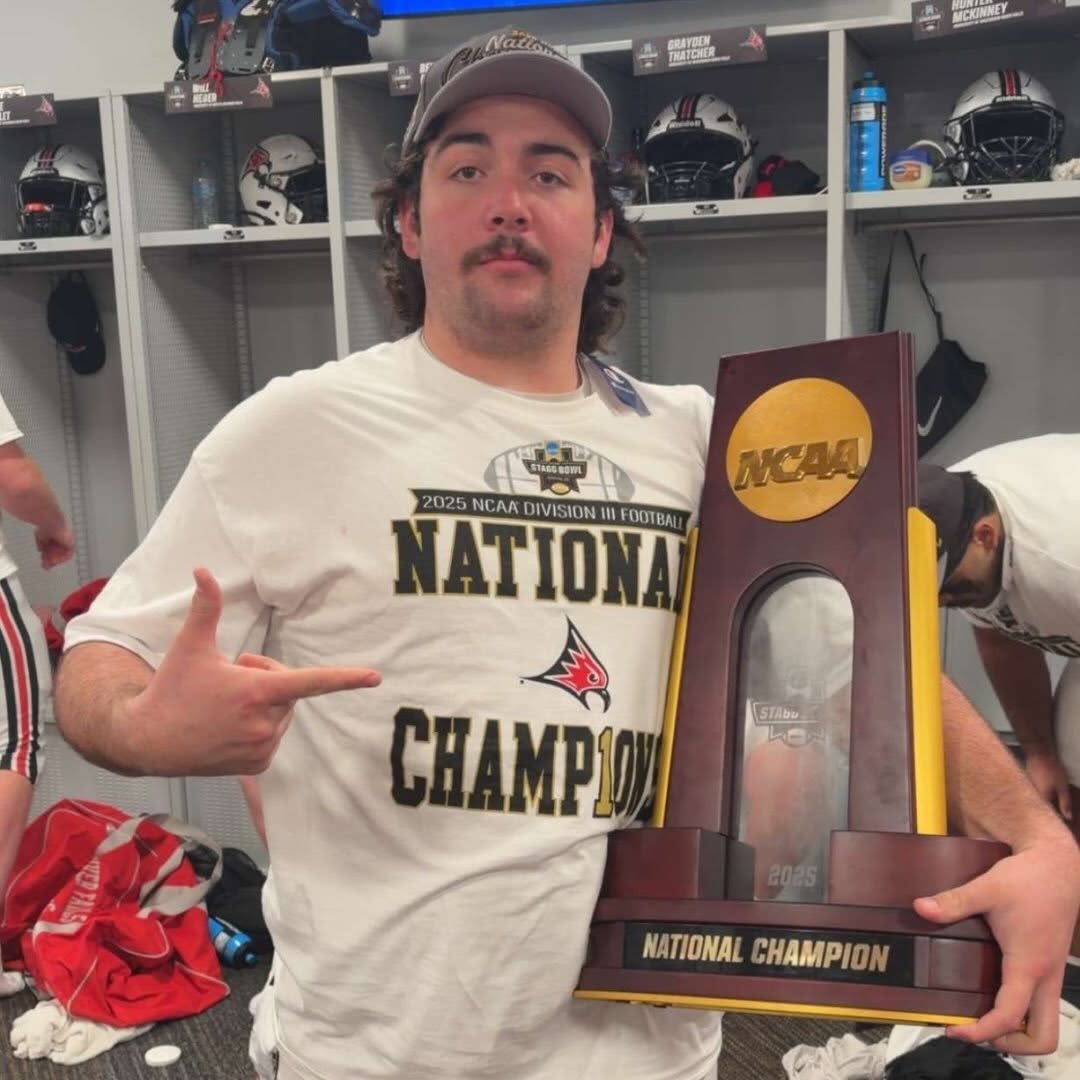
On January 4, 2026, UW-River Falls beat North Central College 24–14 at Tom Benson Hall of Fame Stadium in Canton, Ohio — capturing the program’s first-ever NCAA Division III national championship and capping a historic 14-1 season. Kevin Spahn, a 6-foot-3, 282-pound senior center out of Middleton, Wisconsin, was on that offensive line. So was the work ethic he’d built on his family’s dairy.
“It was really surreal,” Spahn told Dairy Star. “Growing up, you always dream of being able to play at a big stadium…Walking out and playing on that field at night, it was such a surreal moment that most of us on the team dreamed about since we were kids.”
He’s expected to graduate this spring with a bachelor’s degree in dairy science, management option. The trophy goes on a shelf. The question now is whether the family operation — Spahn Dairy, approximately 180 cows milked through a double-12 herringbone parlor near Middleton — can build a path that brings him back.
The Season Nobody Saw Coming
UW-River Falls hadn’t made the playoffs since 1996. This team went 14-1, knocked off defending national champion North Central College — who had won 29 straight games — and did it on the biggest stage Division III football has. In the semifinal against Johns Hopkins, Blaha threw for 520 yards and five touchdowns in a 48-41 shootout that racked up 632 total yards for the Falcons. The championship was more controlled but no less dominant.
Quarterback Kaleb Blaha finished that title game with 419 total yards and three touchdowns, and broke the NCAA single-season total scrimmage yards record at 6,189 — surpassing the mark Joe Burrow set at LSU in 2019. Spahn didn’t throw any of those passes. He’s the guy who made sure nobody got to the guy who did.
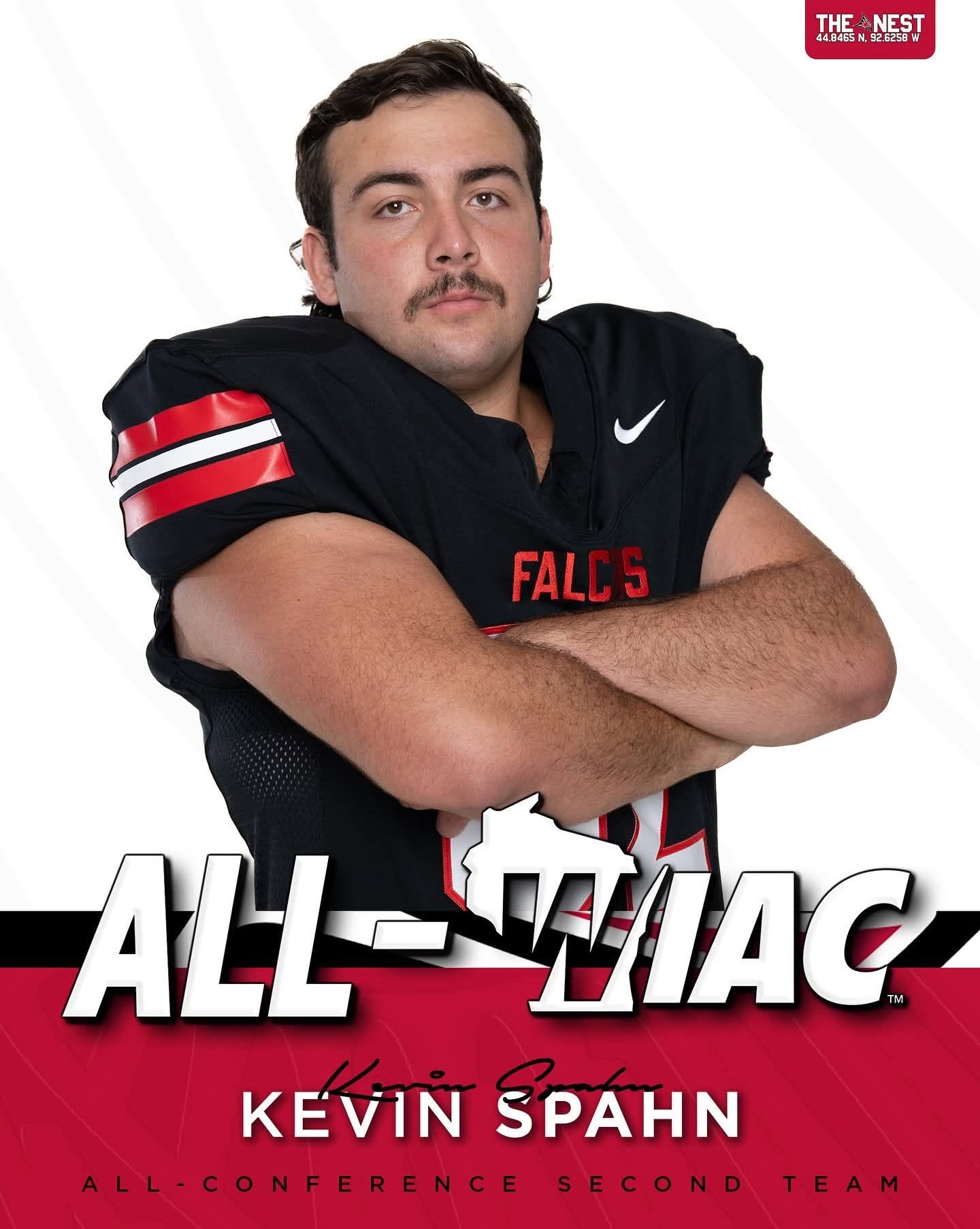
Offensive linemen don’t make highlight reels. They make everything else possible. That tracks pretty cleanly with how dairy farms work, too.
“Growing up as a farm kid, it’s embedded to do things that aren’t going to come easy,” Spahn told Dairy Star. “That doesn’t mean you need to quit. Stay with it…You may not be better than everybody, but you can outwork everybody because hard work can beat talent if you just put your head down to work.”
What Kevin’s Dad Made Possible
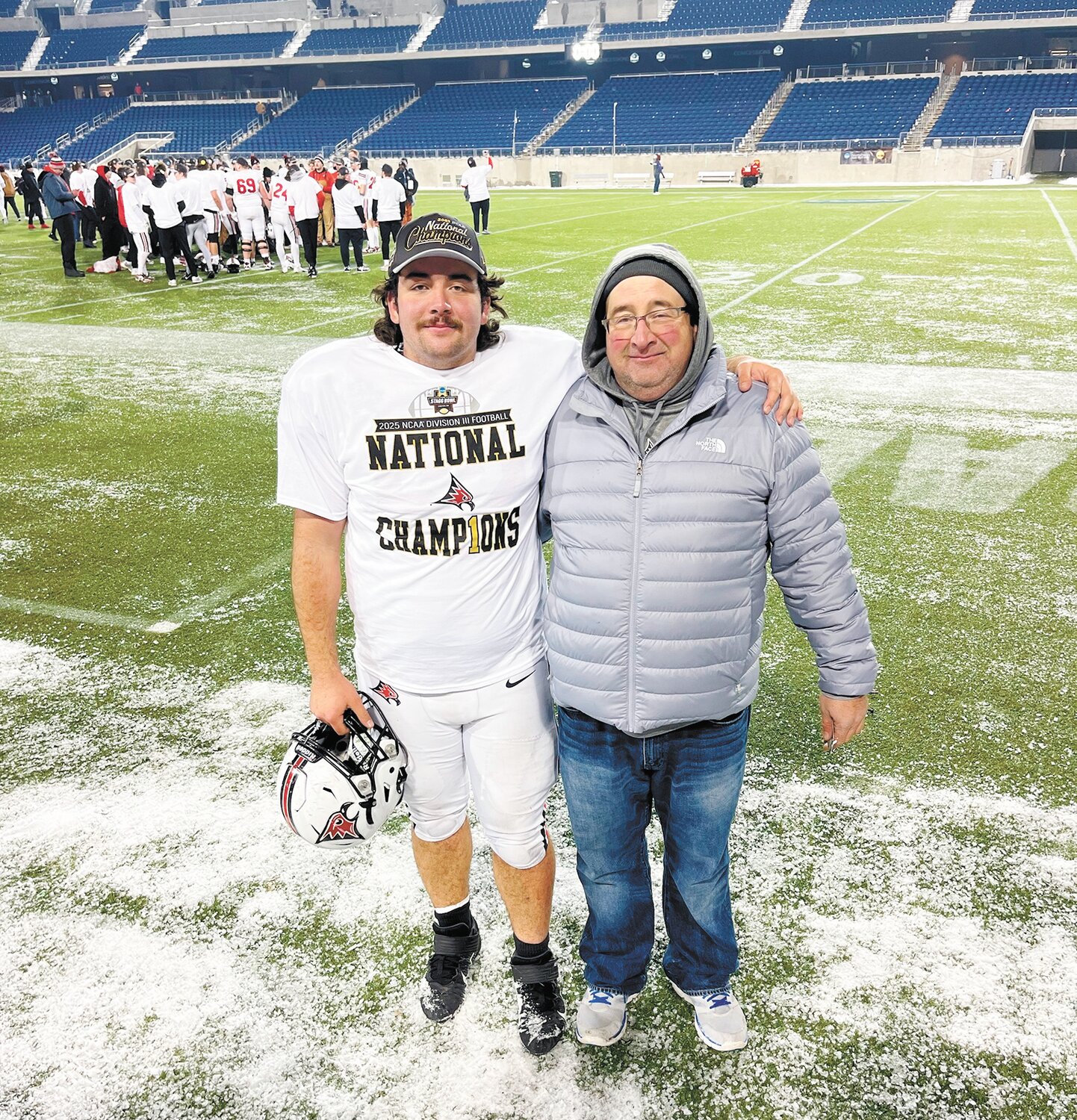
Here’s what doesn’t show up in the box score.
A 180-cow dairy near Middleton doesn’t run itself. Kevin balanced summer workouts, a job near River Falls, and academics during the school year. He returned home to help on the farm during breaks — but not during football season. That means Joe Spahn, Kevin’s father, shouldered the full operation through fall practices, road games, and a playoff run nobody planned for in September.
Joe traveled to Canton for the championship game — one of the few times he’d left the farm for more than a day, according to the Dairy Star profile. Kevin described his father as someone he couldn’t remember ever taking a full day off.
“I always offered [to help],” Kevin told Dairy Star. “But my dad said no, I didn’t need to rush home to help with chores and [that I should] enjoy it [school and football] a bit.”
That one line tells a bigger story than it looks like on first read. Kevin’s account, as reported by Dairy Star, describes a father who consistently prioritized his son’s development over his own convenience — on an operation where every pair of hands matters. The labor gap was real. Joe absorbed it. Whether that dynamic translates into a workable succession plan — a question the family hasn’t addressed publicly — is the chapter that matters most.
Can Your Kid Afford to Come Home?
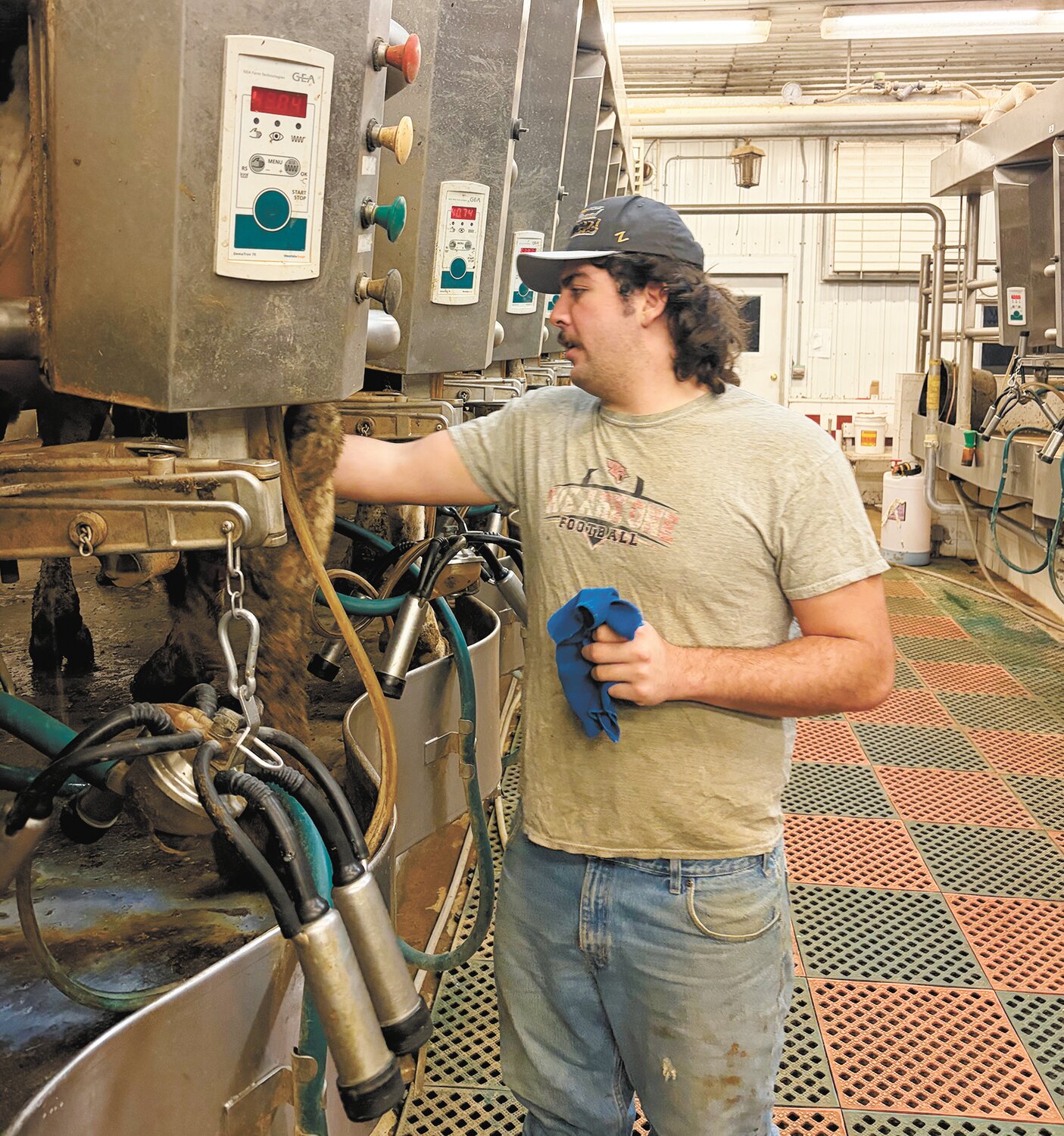
This is where the Spahn story becomes every dairy family’s story. And the math is blunt.
Dane County — where the Spahns farm near Middleton — saw agricultural land average $7,401 per acre in 2024 based on actual sales data (UW Extension Farm Management Program). But that average masks an enormous range: parcels traded for as little as $546/acre on marginal ground and as high as $15,440 where Madison’s suburban growth pushes prices. Near Middleton, where development pressure meets dairy country, usable farmland likely trades well above the county average.
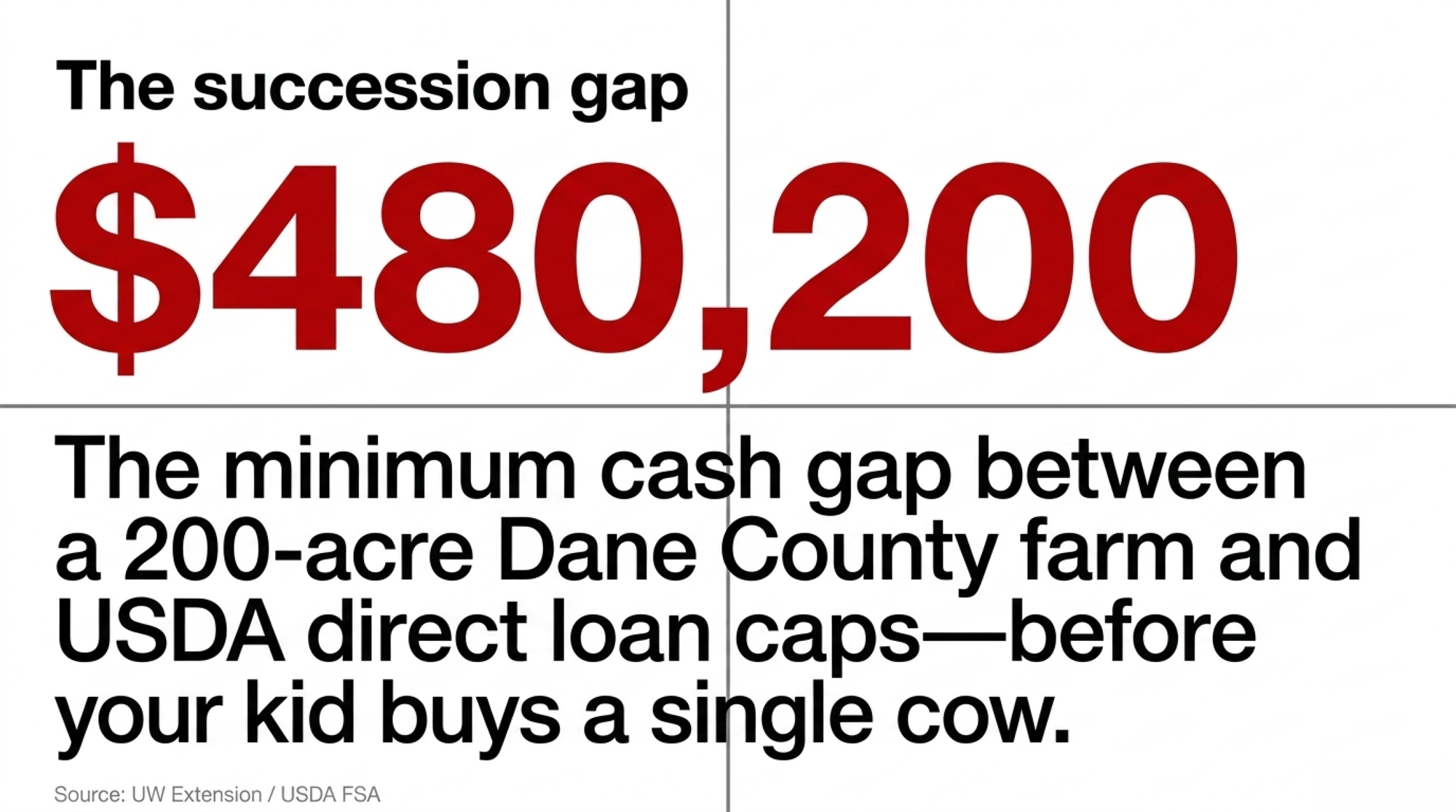
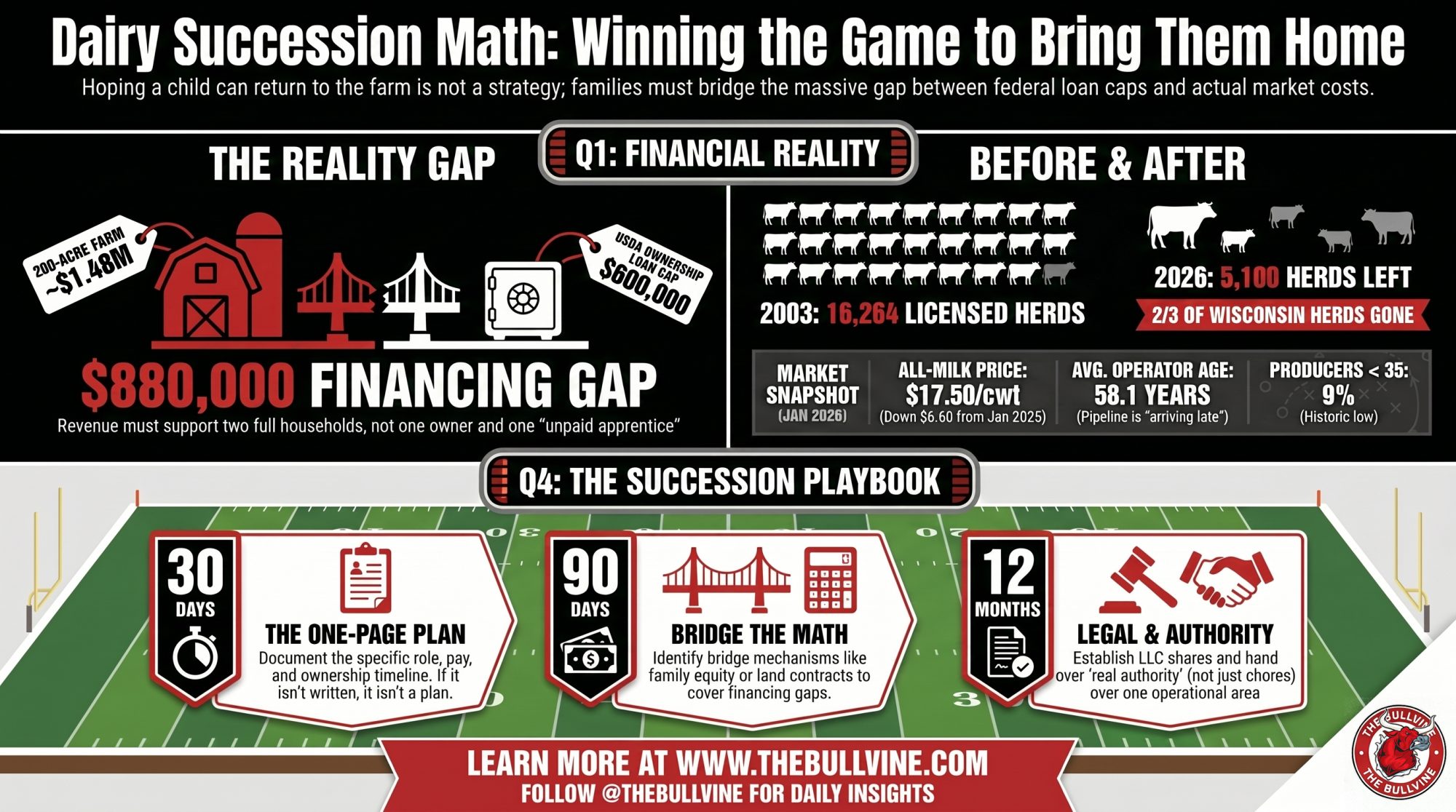
Grab a napkin: 200 acres × $7,401 = $1,480,200. Land only. No cows. No parlor. No feed storage. No equipment.
Now stack that against the available financing. USDA’s Farm Service Agency offers two direct loan programs — ownership loans for buying land and buildings (capped at $600,000) and operating loans for livestock, equipment, and feed (capped at $400,000). Combined ceiling on direct loans: $1 million. Guaranteed loans through a cooperating lender can go higher, but the borrower still needs the down payment and cash flow to qualify. The gap on direct financing alone — $480,200 before your kid buys a single cow — is where succession plans go to die.
And those numbers assume the county average. If you’re looking at parcels closer to Middleton at $10,000–$15,000/acre, the gap widens fast. Wisconsin’s statewide average runs about $6,363/acre (UW Extension, 2024 sales data), but the math doesn’t get friendlier in most active dairy counties. Revenue from 180 cows has to cover two households once the next generation arrives. Not one household and an unpaid apprentice.
Family equity, co-signing arrangements, graduated buy-in formulas, and land contracts aren’t optional workarounds. For most families without outside wealth, they’re the only way the numbers close.
| Mechanism | How It Works | Best For | Key Risk | Typical Gap Coverage |
|---|---|---|---|---|
| Family Equity Transfer | Parents gift/transfer equity stake at below-market value | Equity-rich operations with strong parent-child trust | Tax exposure; sibling conflict | Up to 40–60% of gap |
| Land Contract / Installment Sale | Parents “hold the mortgage” directly; buyer pays over time | Families where parents want income stream in retirement | Requires parent liquidity reserves | Full gap, if structured well |
| FSA Guaranteed Loan (lender-backed) | USDA guarantees up to 95% of loan; lender sets terms | Returning farmer with some equity but no bank relationship | Higher total interest; still needs down payment | Up to ~$2.1M (2026 limits) |
| Co-Signing Arrangement | Parent co-signs commercial loan; kid qualifies for larger note | Families where kid has income history but limited collateral | Parent’s retirement assets at risk if operation fails | Depends on lender terms |
| Graduated Buy-In (sweat equity) | Kid earns ownership % annually via labor contribution | Operations where cash is tight but labor is the real constraint | No legal structure = no protection for either party | Slow; 10–15 year horizon |
| Outside Investor / Custom Farming | Third party provides capital; family retains operating control | Large-scale operations; families comfortable with shared control | Loss of autonomy; exit clauses can be punishing | Partial; covers capital, not land |
5,100 Herds Left. Who’s Next?
Kevin Spahn wants to stay in dairy. He told Dairy Star he hopes to remain involved in working with dairy farms after graduation. But hoping and affording are two different problems — and the state-level data doesn’t make them any easier.
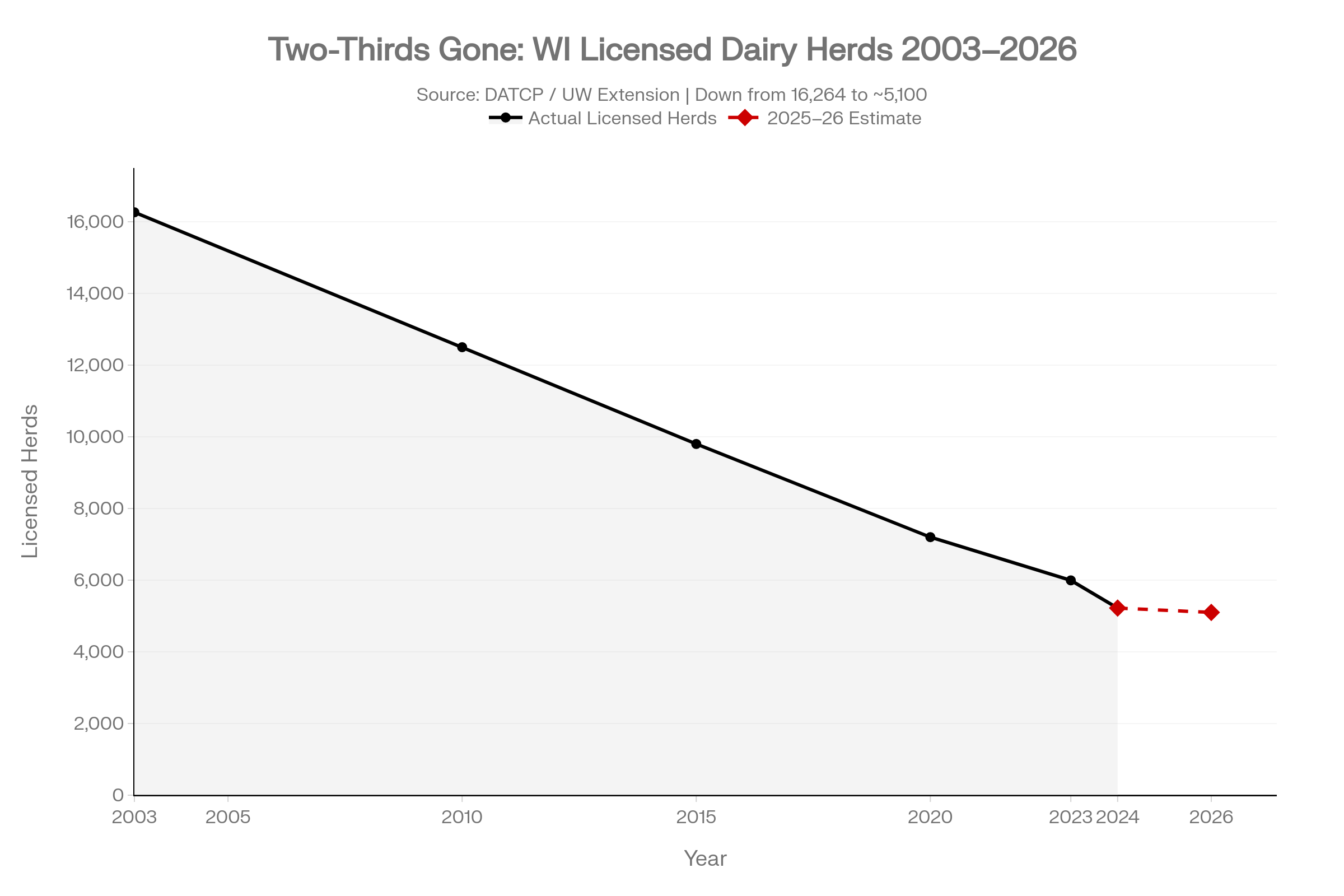
Wisconsin entered 2026 with roughly 5,100 licensed dairy herds. The state lost 455 herds in 2023 alone — a 7% decline that year (DATCP). By August 2025, the count sat at 5,222, down from 5,895 at the start of 2024. The pace has moderated, but the direction hasn’t changed. For perspective: Wisconsin had 16,264 licensed herds in August 2003. Two-thirds of the state’s dairies are gone in barely two decades.
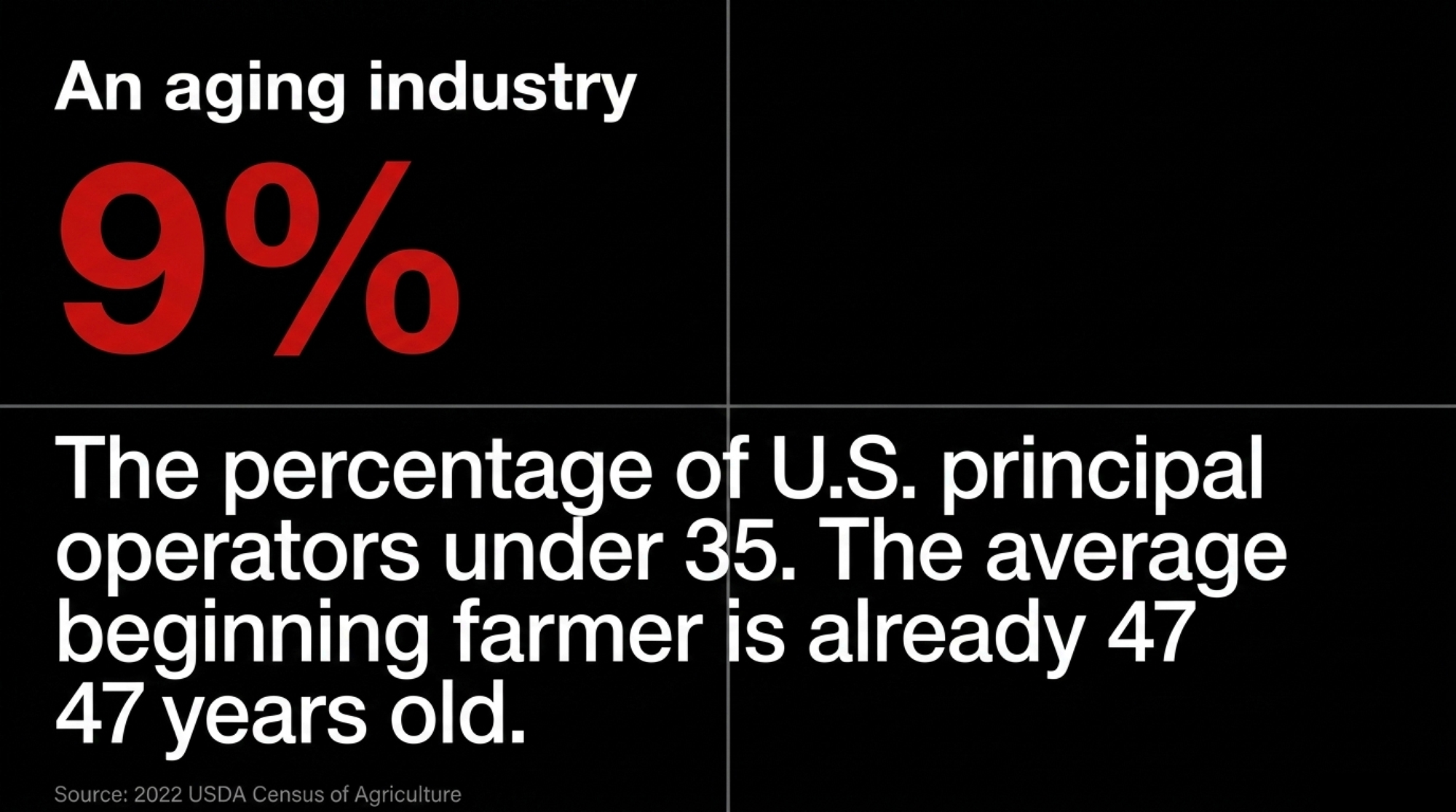
The 2022 USDA Census of Agriculture — still the most recent — pegs the average age of U.S. principal operators at 58.1. Only 9% of all producers are under 35. Beginning farmers average 47.1 years old, which means most people the USDA classifies as “new” to farming are already middle-aged. The pipeline isn’t empty. But it’s arriving late, underfunded, and walking into an industry where the price of entry keeps climbing.
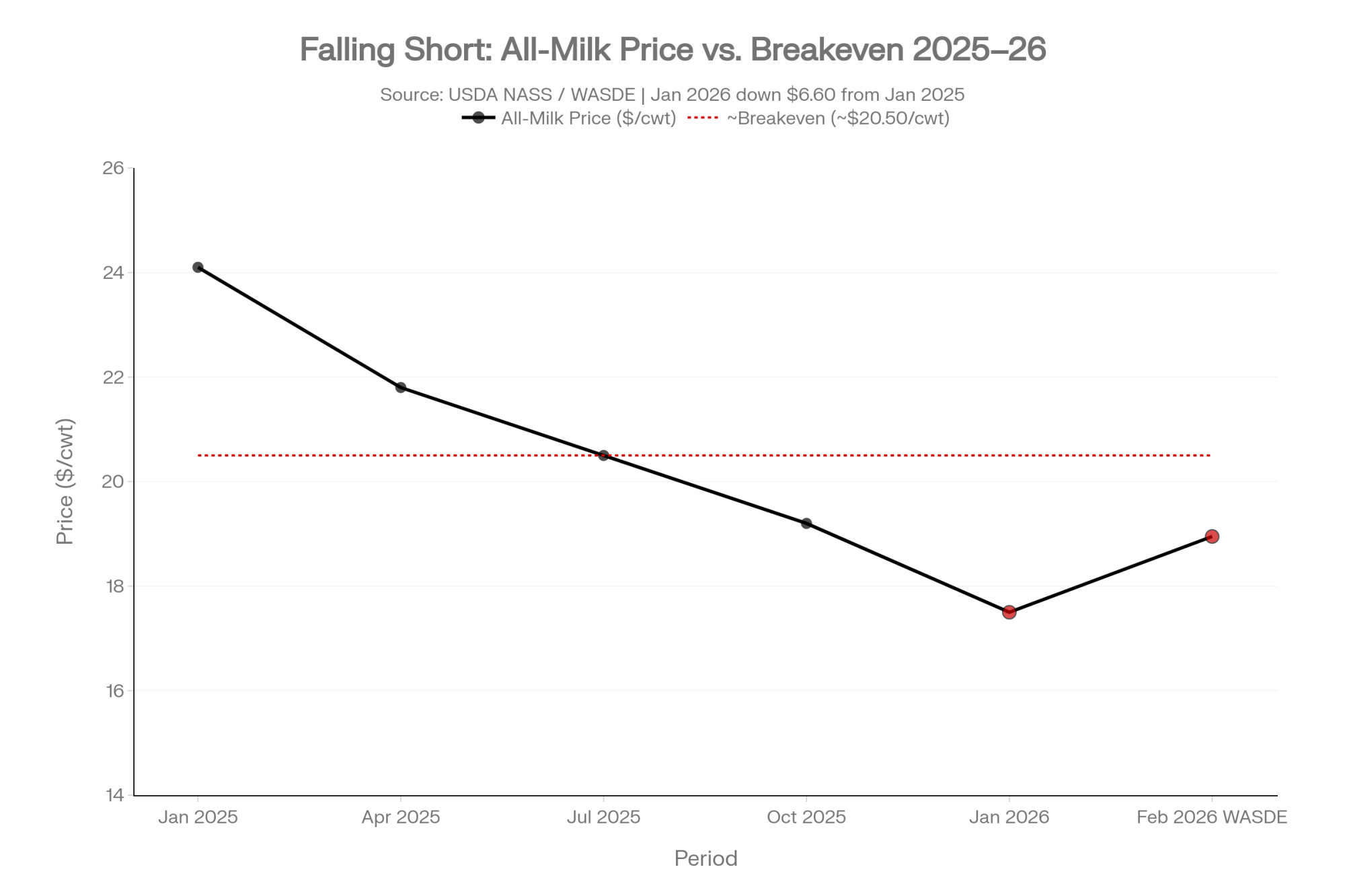
USDA’s February WASDE projects 2026 all-milk at $18.95/cwt. January’s actual all-milk price already came in at $17.50/cwt (USDA NASS, February 27, 2026) — down $6.60 from January 2025 and well below what most operations need. USDA’s own numbers suggest the 2026 all-milk forecast still leaves the average dairy in the red. Not a great backdrop for asking the next generation to buy in.
A Packers Legend Started on a 70-Cow Dairy. The Herd Didn’t Survive.
Wisconsin has seen this intersection of dairy and football before. Different era, different ending.
Mark Tauscher grew up on a roughly 70-cow dairy near Milladore, in Wood County. He walked on at UW-Madison after a Badger recruiting coordinator spotted him at the 1995 state basketball tournament. “Two weeks later, they asked me to walk on, and I decided to take it,” Tauscher recalled in a recent Dairy Star profile. That long shot turned into a seventh-round NFL Draft pick, 11 seasons with the Green Bay Packers, and a Super Bowl XLV ring. But the Tauscher family’s herd had been sold in 1990, while Mark was still a kid.
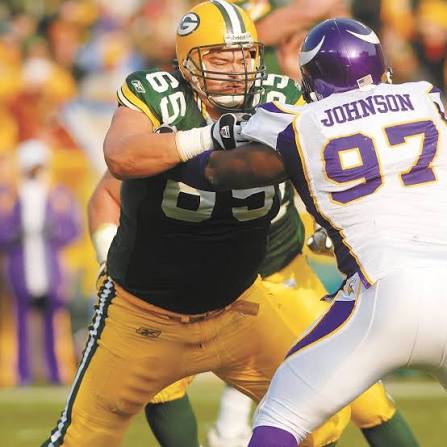
The dairy built the player. Tauscher told Dairy Star he was assigned to watch the barn cleaner chute at the age of 5. He recalled complaining to his dad about unloading hay on his birthday. His father’s response: “He told me the cows probably didn’t care it was my birthday, that you just have to go about doing your business every day.”
The work ethic carried Tauscher to the NFL. It didn’t carry him back to dairy. There was nothing to come back to — the herd was gone before he ever left home. That’s not about desire. It’s about timing and structure. And it’s the pattern that repeats across Wisconsin dairy country when the economics don’t leave anything for the next generation to return to.
The Bullvine previously covered a family that chose 5:30 AM chores over an NHL draft opportunity — a parallel story where the farm’s pull competed with elite athletics, and the outcome hinged not on the kid’s desire but on whether the family had built something financially viable to come back to.
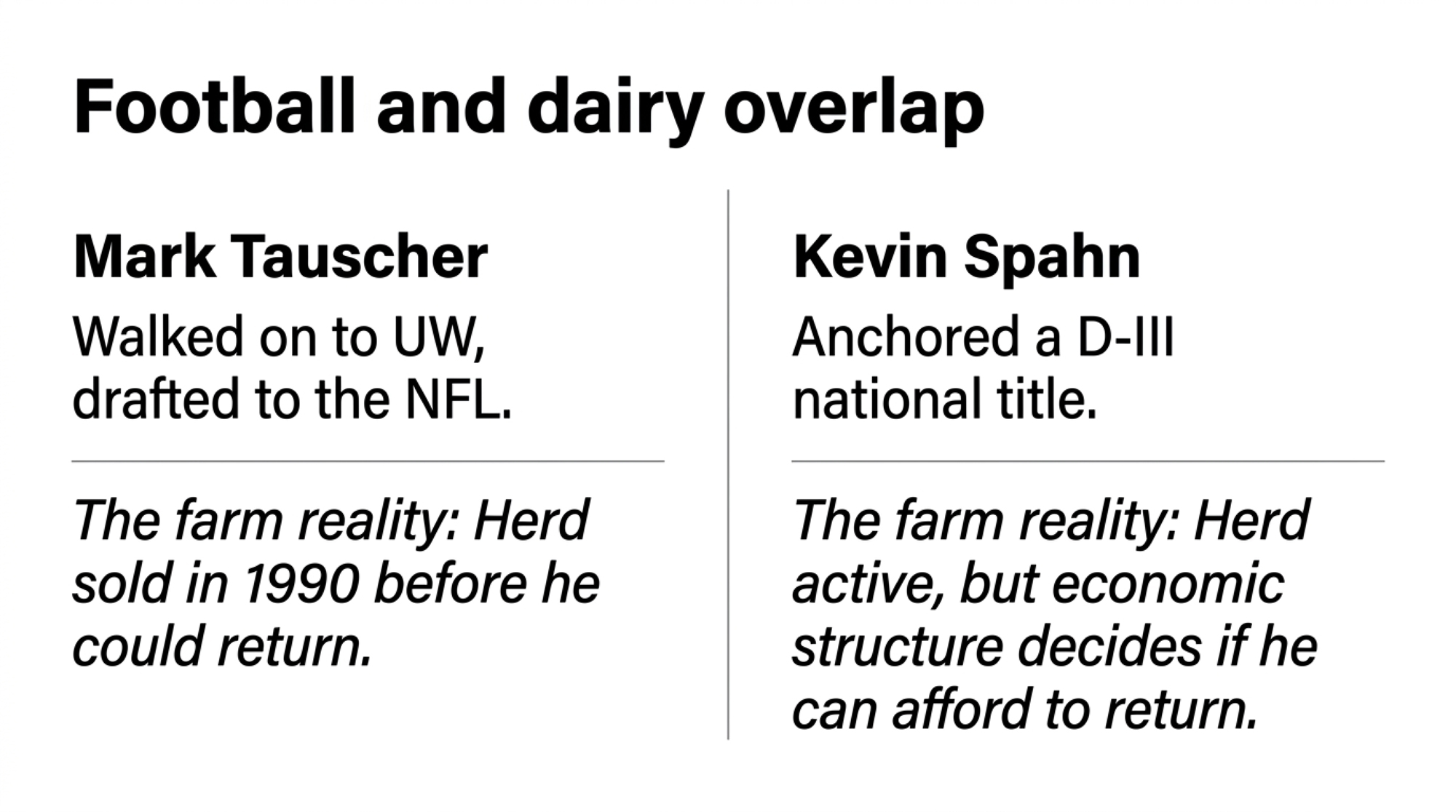
Kevin Spahn has something Tauscher didn’t — a living herd, a father still milking, and a dairy science degree. His story doesn’t have to follow the same arc. But it won’t diverge by accident. The distance between those two outcomes isn’t talent or desire — it’s whether the family builds a structure that gives the next generation a reason to return and a way to afford it.
Options and Trade-Offs for Your Operation
If you’ve got a kid in college, playing a sport, working off-farm, or still figuring things out — and you want them to have a genuine option to come back — here’s what the economic math demands.
Within 30 days: Write a one-page return plan. Not a vague conversation. A document. What’s the role? What’s the pay? What decisions does the returning generation own? What’s the timeline to real equity? If you can’t fill one page, you’re not ready to have the conversation. This works whether you milk 80 cows or 800.
Within 90 days: Run the transition math. What does the operation need to generate to support two households, not two people, two households? If your county’s land runs anywhere near Dane County’s $7,401/acre average and FSA direct ownership loans cap at $600,000, your kid needs a bridge. Family equity, co-signing, graduated buy-in, or land contracts.
Pull up your county’s numbers from the UW Extension land price data and calculate the gap yourself. If your kid looks at the financials and sees 15 years of labor before any ownership stake, you’ve answered the succession question for them. They just haven’t told you yet.
Within 12 months: Build the legal structure. LLC or partnership shares. A buy-in formula. An exit clause for both sides. And at least one operational area — youngstock, cropping, parlor management, whatever fits — handed off with real decision-making authority. Not “help me with” authority. Actual authority over outcomes and accountability.
If signals shift — commodity prices crater, your kid picks a different path, health changes the timeline — revisit the plan. Families that survive transition treat it as a living document, not a one-time event. Families that wait too long to formalize these structures often find that consolidation decides for them.
One more thing worth sitting with. Kevin Spahn’s dad modeled something that doesn’t show up in any financial plan: he gave his kid room to build something outside the barn, then kept the lights on while he did it. On a 180-cow operation with no taxi squad, that’s a real sacrifice. And it may be the part of succession that determines whether the next generation comes home because they want to, or doesn’t come home at all.
Key Takeaways
- If your succession plan is a conversation but not a document, it’s not a plan. Write the one-pager this month.
- If FSA’s $600,000 direct ownership loan cap doesn’t cover your county’s land prices — and in most active dairy counties, it won’t — you need a bridge mechanism (family equity, co-signing, graduated buy-in, or land contracts) identified before your kid graduates.
- If the operation can’t cash-flow two households at current milk prices, the financial structure needs to change before the next generation arrives — not after.
- If your kid sees no path to ownership within 5–7 years of returning, they will find one elsewhere. Timeline matters as much as the dollar figure.
The Harder Game Starts This Spring
| Succession Factor | Green Flag ✓ | Red Flag ✗ |
|---|---|---|
| Documented return plan | Written 1-page role/pay/equity doc exists | Succession is “understood” but unwritten |
| Land financing gap | FSA + family equity covers 80%+ of land cost | Gap exceeds $500K with no bridge identified |
| Two-household cash flow | Operation generates $180K+ net at current milk price | Single household barely cash-flows at $18–19/cwt |
| Equity timeline | Returning gen reaches 25%+ ownership within 7 years | No ownership stake projected before year 10+ |
| Legal structure | LLC or partnership in place with buy-in formula | Farm is sole proprietorship with no succession docs |
| Decision authority | Returning gen owns at least one operational area outright | All decisions still run through the senior generation |
| Milk price stress test | Operation cash-flows at $17/cwt all-milk | Breakeven requires $20+/cwt with no margin buffer |
| Operator age gap | Senior operator under 62 with 5+ active years ahead | Operator 65+ with no formal transition timeline |
Kevin Spahn graduates this spring. He told Dairy Star he wants to stay in dairy. His family milks 180 cows near one of the most expensive land markets in Wisconsin. The championship is over. The harder game — the one where a 22-year-old with a dairy science degree tries to build a career in an industry that’s lost two-thirds of its Wisconsin herds in 20 years — is just starting.
So here’s the question for your operation: if your kid came home tomorrow, could you hand them a one-page document outlining the role, pay, equity path, and timeline? If you can’t, the Spahns’ story isn’t just their story. It’s yours.
Learn More
- Only 16.5% of Dairy Farms Make It to the Third Generation – The Succession Decisions That Stop a Buyout from Killing Your Herd — Delivers a rigorous, five-step transition roadmap to protect your herd’s genetics from being liquidated by non-farming heirs. Breaks down the exact timeline needed to hand over operational decision-making before lawyers draft a single page.
- More Milk, Fewer Farms, $250K at Risk: The 2026 Numbers Every Dairy Needs to Run — Exposes the brutal structural mismatch between optimistic federal milk forecasts and lower futures market realities. Arms you with specific cost-mitigation benchmarks to eliminate a quarter-million-dollar cash-flow gap on mid-sized operations.
- Who Really Owns Your Dairy? Three Ways to Stop Divorce and Succession Turning Unpaid Spousal Work into a Land Sale — Dissects how undocumented, informal management roles expose multi-million dollar equity holdings to forced liquidations. Provides tactical corporate share-class structures that separate voting control from asset values to keep the farm intact through family transitions.
 The Sunday Read Dairy Professionals Don’t Skip.
 The Sunday Read Dairy Professionals Don’t Skip.
Every week, thousands of producers, breeders, and industry insiders open Bullvine Weekly for genetics insights, market shifts, and profit strategies they won’t find anywhere else. One email. Five minutes. Smarter decisions all week.




