



Archive for Red Holstein genetics

Against All Odds: The Dreamers, Rebels, and Risk-Takers Who Built the Modern Holstein

In the fall of 1972, a bright-red calf walked into a New York sale ring where the whole Holstein establishment still called his color a defect to be bred out. When the gavel cracked at $60,000—a world record—the barn erupted: “They paid WHAT for a red calf?” The ABS man holding the card had just blown clean past what his boss authorized. That calf was Triple Threat. And the bet everyone laughed at? It runs in your barn today.
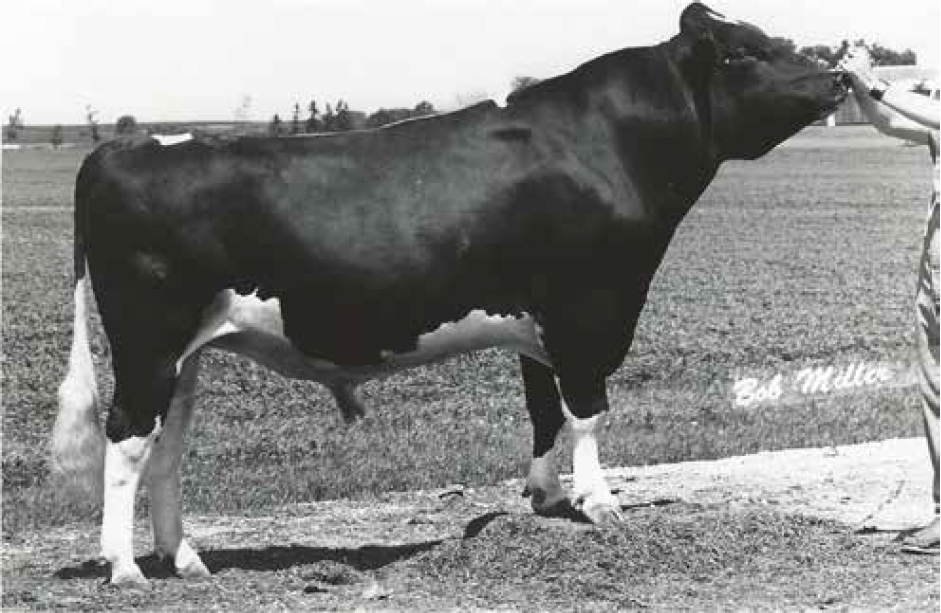
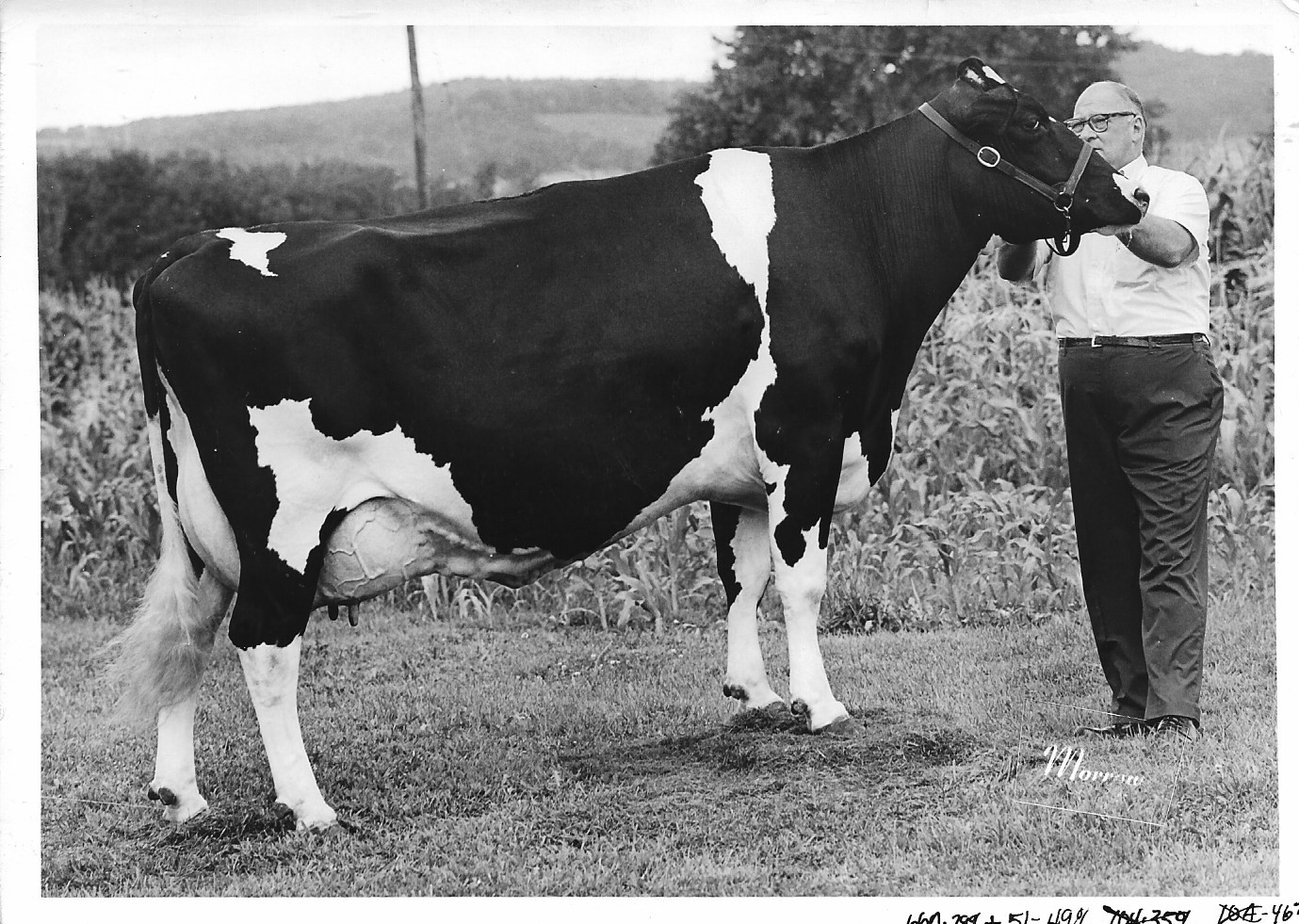
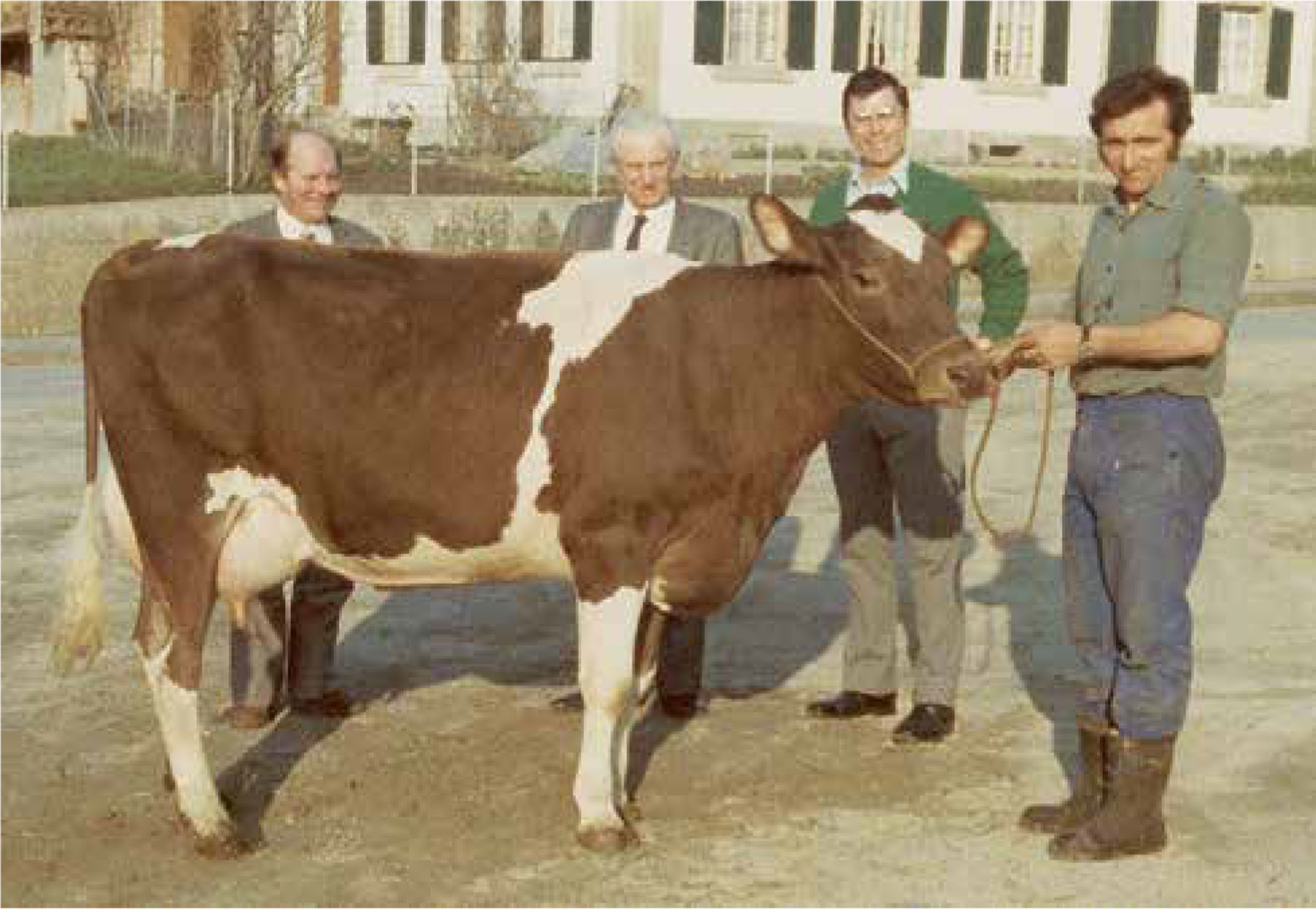
Hanover-Hill Triple Threat-Red—the red bull calf the Holstein establishment wrote off as a “defect,” who sold for a world-record $60,000 at the 1972 Hanover Hill sale. The black-and-white photo hides the very thing that made him controversial: his color. Read more: They Called Him the Three-Legged Bull. He Created the Modern Red Holstein: The Untold Story of Hanover-Hill Triple Threat-Red)

Fall 1972. Hanover Hill sale barn.

The air in that old New York barn had the usual mix—coffee, tobacco smoke, sawdust, and the sharp warm smell of washed Holsteins standing under bright sale-ring lights. Men flipped through catalogs with rough thumbs, tracing pedigrees while the auctioneer’s voice bounced off the rafters. Then a calf stepped into the ring that didn’t belong.

Bright red in a sea of black-and-white fashion, he moved across the shavings as if he’d wandered into the wrong sale. Heads turned, not because the crowd wanted him, but because they wanted to see who would be foolish enough to pay serious money for a “defect.”

That calf was Hanover-Hill Triple Threat-Red.

The man holding the bidder’s card was Ken Young from American Breeders Service.

Young hadn’t come to Hanover Hill to become a story. He came with a job and a limit. Back in Wisconsin, Dr. Bob Walton had given him the go-ahead for a “certain price” on a red calf—enough to show ABS was serious about the color, not enough to gamble the company on a long shot .

Now, the thing about that era is simple: Red & Whites weren’t just unfashionable. The Holstein establishment still treated the red gene as undesirable. There wasn’t a Red & White program to build around. Red calves were the kind of thing breeders usually tried to breed out, not lean into.

So when the bidding started, most people in that barn treated it like a curiosity. The high money that day was supposed to go to black-and-white sons of great cow families. This red calf was just there to make people talk.

The number started to climb anyway.

Past what a sensible buyer should pay for a red calf. Beyond what anybody expected an AI company to risk on something the rulebook still called a mistake. Past the figure Walton had in mind when he’d hung up the phone.

Young kept his hand in the air.

You can almost hear the cadence change as the auctioneer leans into it—fifty… fifty-five… pushing into a range usually reserved for the very best black-and-white pedigrees. In the seats, you’d have seen raised eyebrows, quick head shakes, maybe a few muttered comments about ABS losing the plot.

When the gavel finally came down at 60,000 dollars—a world record for a Red & White calf at the time—the barn didn’t just hum. It erupted. Some men clapped. Some whistled. Quite a few turned in their seats and said, “They paid WHAT for a red calf?”

Think about that for a second.

Sixty thousand 1972 dollars, for a calf whose color pattern the establishment still called a defect. This was the kind of money farms and studs were putting into fashionable black-and-white sons of great cow families, not into a calf that looked wrong the moment he stepped into the ring.

Young walked out of that sale knowing two things. He had the calf. And he had gone beyond what his boss meant by “a certain price.”

According to ABS’s own retelling, Walton asked one simple question when Young got home: “How much did you pay?” The answer—60,000—was more than the number Walton had in his head when he’d said yes . The exact words that followed have been polished in every retelling, but the sentiment everyone remembers is the same:

Sometimes it’s easier to ask for forgiveness than to ask for permission.

One can imagine the silence on the other end of that line.

If Triple Threat had been a dud, that’s all Ken Young would be remembered for: the ABS buyer who blew 60,000 dollars on a calf the breed register still called defective.

What people don’t always realize is that this wasn’t a one-person gamble. Young’s bid was the last domino in a line that started years earlier, with a young Swiss breeder who got off a Greyhound bus three miles too early and walked toward a company that had no reason to take him seriously.

The Swiss Who Wouldn’t Take “No”

In 1968, a young Swiss dairyman named Jean-Louis Schrago boarded a Greyhound bus in Wisconsin with a problem in his head and not much more than a suitcase in his hand .

Back in Europe, Red & Whites weren’t a joke. Farmers liked them. Some markets preferred them. There was real demand for cows with red coats and Holstein capacity. The problem was brutal: the top Holstein genetics—the cows rewriting the record books on type and production—were almost all black-and-white.

Most of the world had shrugged and accepted that. Schrago hadn’t.

He and a Swiss friend rode that bus toward Madison, got off in DeForest—three miles too early—and, as ABS’s own history tells it, walked the rest of the way along the side of the road, two young foreigners hauling suitcases in a country they barely knew . They finally arrived at ABS’s door, tired and probably wondering if they looked as out of place as they felt.

Dr. Bob Walton could have brushed them off. Instead, he did something small that ended up mattering a lot. He picked them up. Took them to dinner. Then paid for their rooms at the YMCA in Madison .

The next day, over a table instead of a barn rail, Schrago laid out a plan that must have sounded crazy. He wanted ABS to help him build Red & Whites that didn’t look like second-rate Holsteins. To do that, he needed the very cow families that North America had spent a generation turning into global royalty.

That brought him to Hanover Hill Holsteins.

Hanover Hill, co-owned by R. Peter Heffering, was home to some of the most talked-about cows in the world. The Barb family, in particular, had become a signal of quality in every catalog they appeared in. The idea of “wasting” one of those pedigrees on a red-factor mating sounded like heresy.

On that first go-round, Schrago asked to use a top Barb cow on a red-factor mating. Heffering said no . In his world, that was the responsible answer. Why risk the reputation of your best cow family on a color the rulebook still calls undesirable?

Here’s what made Schrago different. He didn’t throw up his hands and go home for good. He went back to Switzerland, kept working, kept talking, kept pulling together data and demand from Europe. Then he came back. And came back again. Over the next three years—not the “decade” some versions claim, but three focused years between 1968 and 1971—he stayed on it .

By 1971, he had something new to put on the table.

He’d secured two units of semen from Canadian superstar Roybrook Telstar. Getting those two units took an international phone call that, according to ABS’s own records, cost 2,500 U.S. dollars in call charges alone . Two units. 2,500 dollars. In that era, that’s the kind of bill that makes accountants nervous.

This time, the target wasn’t just any Barb descendant. It was C Tara-Hills Pride Lucky Barb EX-94—the greatest daughter in that family at Hanover Hill. Different sources list her prefix slightly differently, but everyone agrees on two things: she was a Barb, and she was very, very good. 
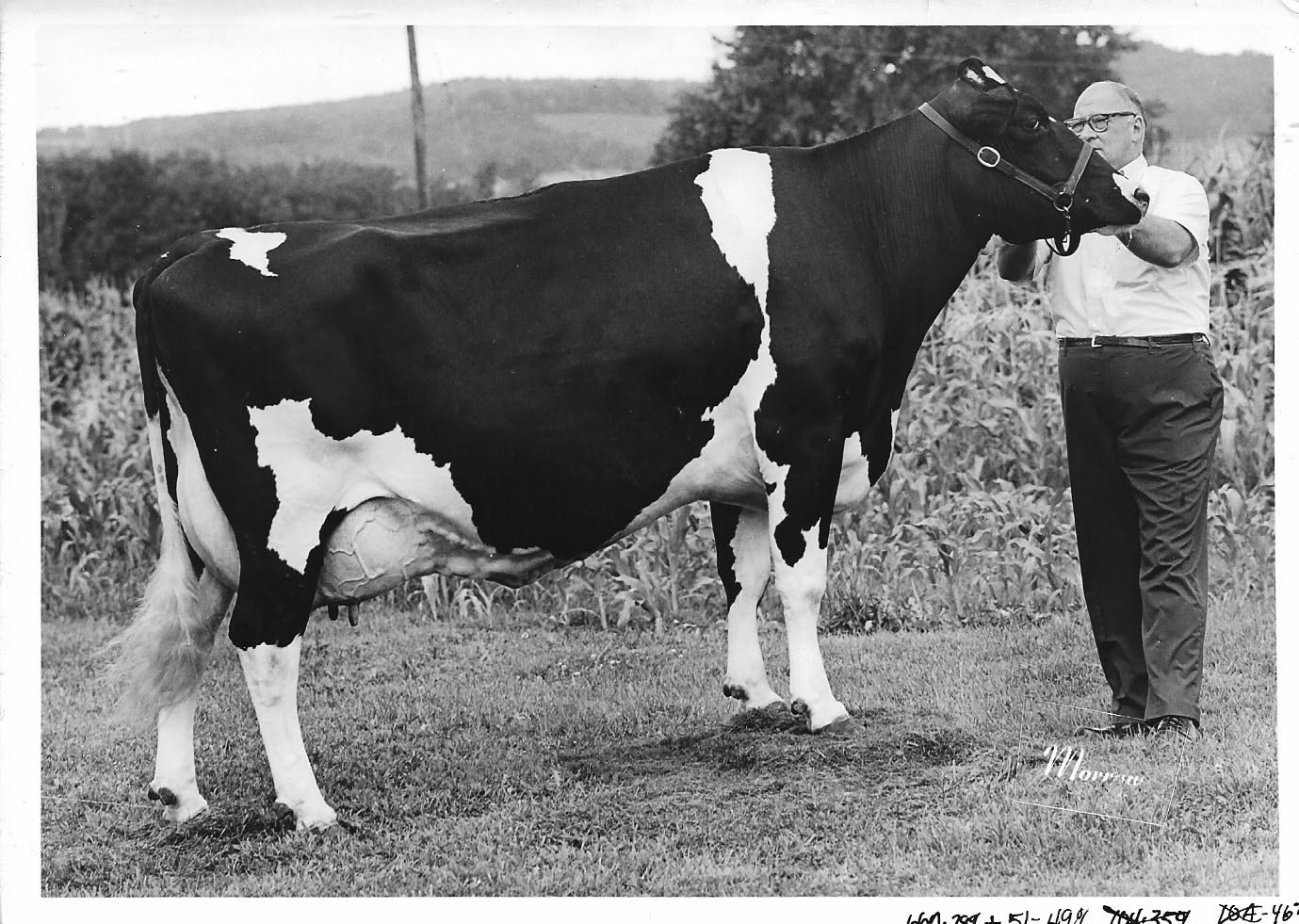
This is the cow that made the request sound like heresy. Pride Lucky Barb, EX-94—the greatest daughter of the Barb family at Hanover Hill, and exactly the kind of pedigree the establishment said you didn’t “waste” on a red-factor mating. Schrago wanted her bred to Telstar to make a red calf. Heffering’s first answer was no. 

Suggesting a Telstar × Pride Lucky Barb mating to produce a red-factor calf wasn’t a polite request. It was a challenge.

Something shifted. Whether it was the picture Schrago painted of the European market, the credibility he’d built by showing up in person and not sulking after that first “no,” or simply the attraction of Telstar’s proof, Heffering finally said yes.

The moment that calf hit the straw in April 1972, a lot of quiet bets came due. A flat-coated red bull calf out of Pride Lucky Barb, by Telstar, in a barn that lived and breathed black-and-white fashion. On paper, he was one of the most daring matings Hanover Hill had ever made. In practice, he was a calf that didn’t fit any existing marketing plan. 

Six months later, that calf walked into the Hanover Hill sale ring and into history.

By the time the gavel fell at 60,000 dollars and Ken Young walked out with Triple Threat on ABS’s account, three different people’s convictions had fused into one moment. 

Schrago’s belief that red cattle deserved world-class genetics.

Heffering’s willingness to risk his best cow on a mating the rest of the industry mocked.

Young’s decision to blow past a “certain price” because his eye told him this calf was different.
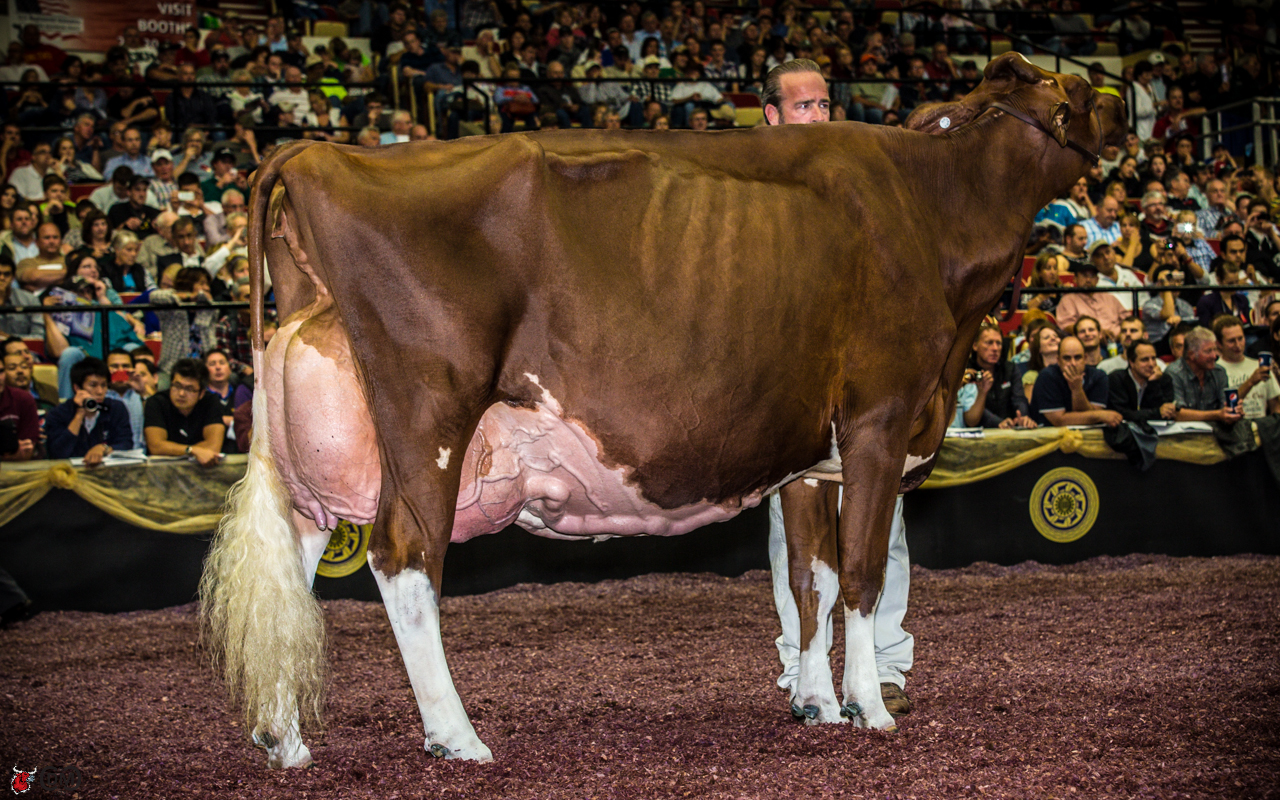
Look at the depth, the udder, the sheer presence—then remember the establishment once wanted this color bred out. KHW Regiment Apple-Red-ET, the “Million Dollar Cow,” carries Triple Threat’s blood in her pedigree. The red calf nobody wanted in 1972 helped build a cow the whole world wanted half a century later.

Today, you can trace that line straight into cows every breeder knows by name. Triple Threat’s blood shows up throughout the modern Red & White population, including cows like KHW Regiment Apple-Red-ET—the Apple-Red who became known as the Million Dollar Cow and changed the way the world viewed red Holsteins. Every time you see a Red & White with type and production that can stand alongside the best black-and-whites, you’re looking, in part, at the shadow of that three-mile walk from DeForest and that $60,000 bid. 
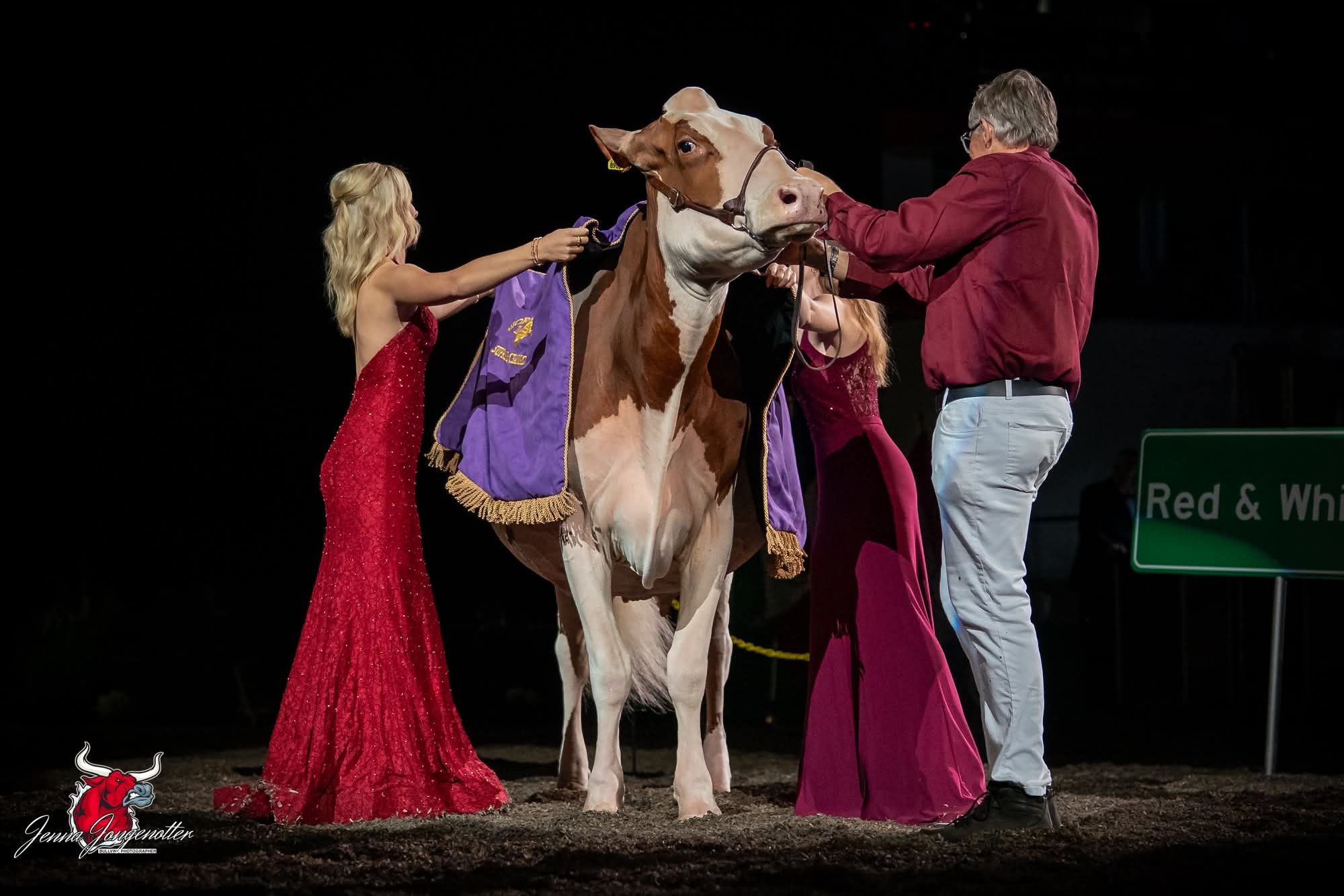
This is where that 1972 sale ring leads. A Red & White Holstein—the very color the establishment once called a defect to breed out—draped in the Supreme Champion banner, the highest honor the show ring offers. Ken Young bet his job on a red calf nobody wanted; generations later, red cattle don’t just compete with the best black-and-whites, they beat them. 

The Farmer Who Wouldn’t Let Go

If Schrago’s story is about refusing to accept someone else’s limits, Aldo Panciera’s is about what it costs to trust your own.

April 26, 1952. Osborndale Farms in Derby, Connecticut. 

A bull calf landed in the straw that morning, which did not look like anyone’s idea of a future legend. Too long in the legs, too short on strength, the kind of calf that makes a seasoned breeder mutter “too bad” under his breath and start thinking about the next one.

On paper, the mating had been special enough that Professor Osborn had reserved the calf before birth. He walked into the pen, took one look at the reality before him, and backed out of the deal. 

That should have been the end of it.

The calf had one thing going for him: a pedigree that, even in that moment, couldn’t be undone by long pasterns and a narrow frame. The cows behind him had already proven they could transmit what the breed needed. Where most people saw disappointment, Aldo Panciera saw that paper and refused to ignore it.

He talked another breeder, Causey, into coming along for the ride. Between them, they bought quarter interests in the calf for 1,250 dollars each—a serious outlay in 1950s New England. For that kind of money, a young dairyman could have bought land, equipment, or a lot of feed. Instead, they bought a scrawny bull that almost everybody else had written off. 

That calf grew into Osborndale Ivanhoe.
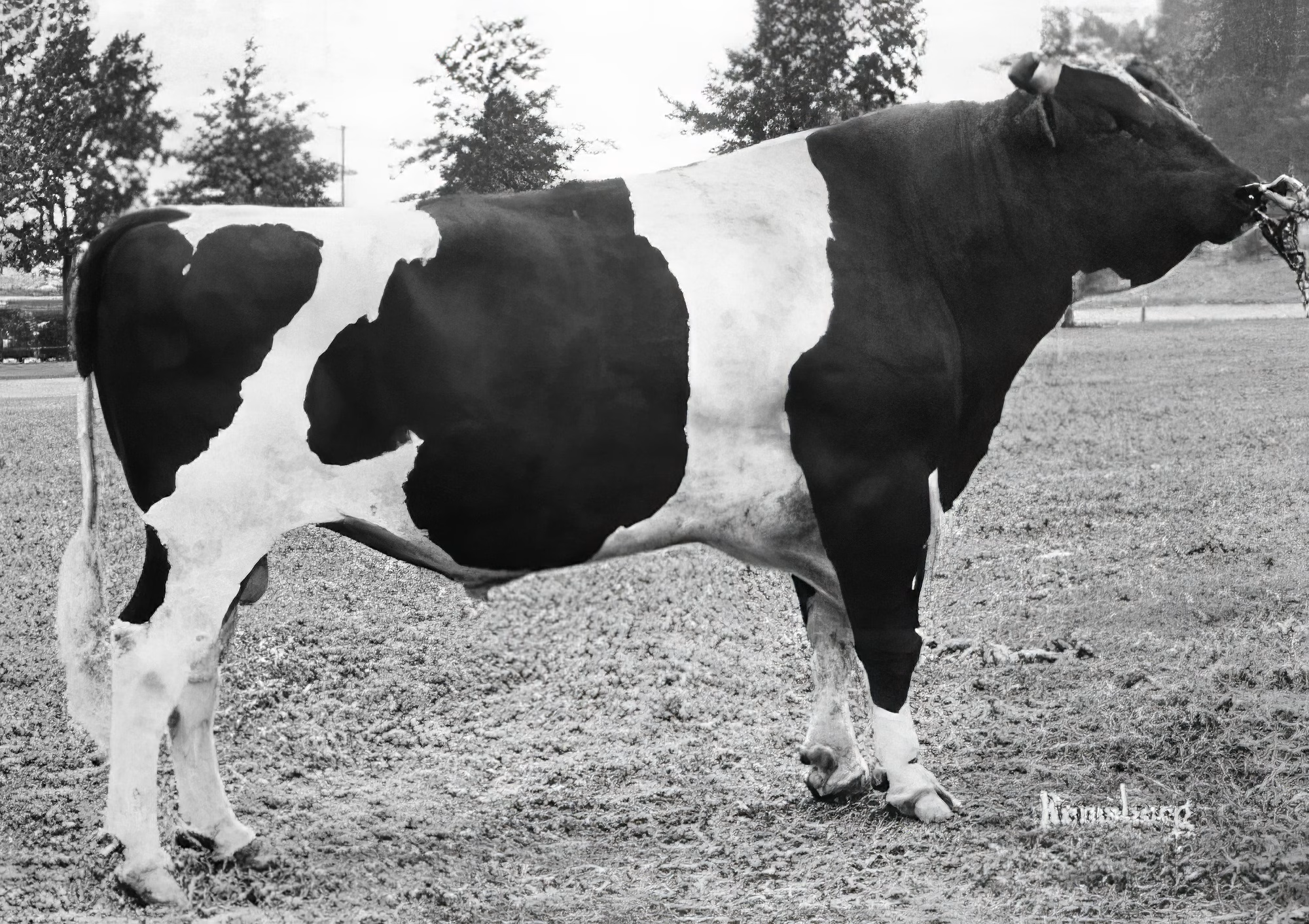
Hard to believe this is the same calf his breeder almost couldn’t give away. Osborndale Ivanhoe—long-legged and narrow at birth, rejected by the man who’d reserved him—grew into the bull that topped the U.S. Type-Production Sire Summary eight straight years, a run still unmatched. Read more: Osborndale Ivanhoe: How a “Scrawny Bull Calf” Revolutionized an Entire Breed

If this were a tidy story, Ivanhoe’s first daughters would have hit the ground looking like walking proofs, and Panciera’s neighbors would have been lining up to apologize. Reality was rougher.

The early daughters were nothing to brag about. As yearlings, they were as awkward as their sire had been. Narrow. Shallow. The kind of heifers that make AI reps shake their heads and say, “See? We told you.” The studs that had turned Ivanhoe down bragged publicly about their good judgment.

You can picture the coffee shop conversations.

“That’s the bull you spent your money on, Aldo?”

“Those Ivanhoe heifers of yours don’t look like much.”

Those years must have been heavy. Every new crop of mediocre yearlings was another round of evidence that Panciera had made an expensive mistake. There were no genomic evaluations to whisper “trust the process” to him. Just heifers, and the memories of a decision he couldn’t take back.

He didn’t bail.

Not because he was sure he was right, but because something in that pedigree and a few hints in those calves told him the story wasn’t finished yet. He held on long enough to see the daughters freshen.

That’s when everything changed.

The same heifers that had looked like poor yearling bets walked into the milking string with udders the breed badly needed—high, tightly attached, with quality and strength. They had the frame and power to go with them. They didn’t just avoid the cull rail; they started pulling up the herd average.
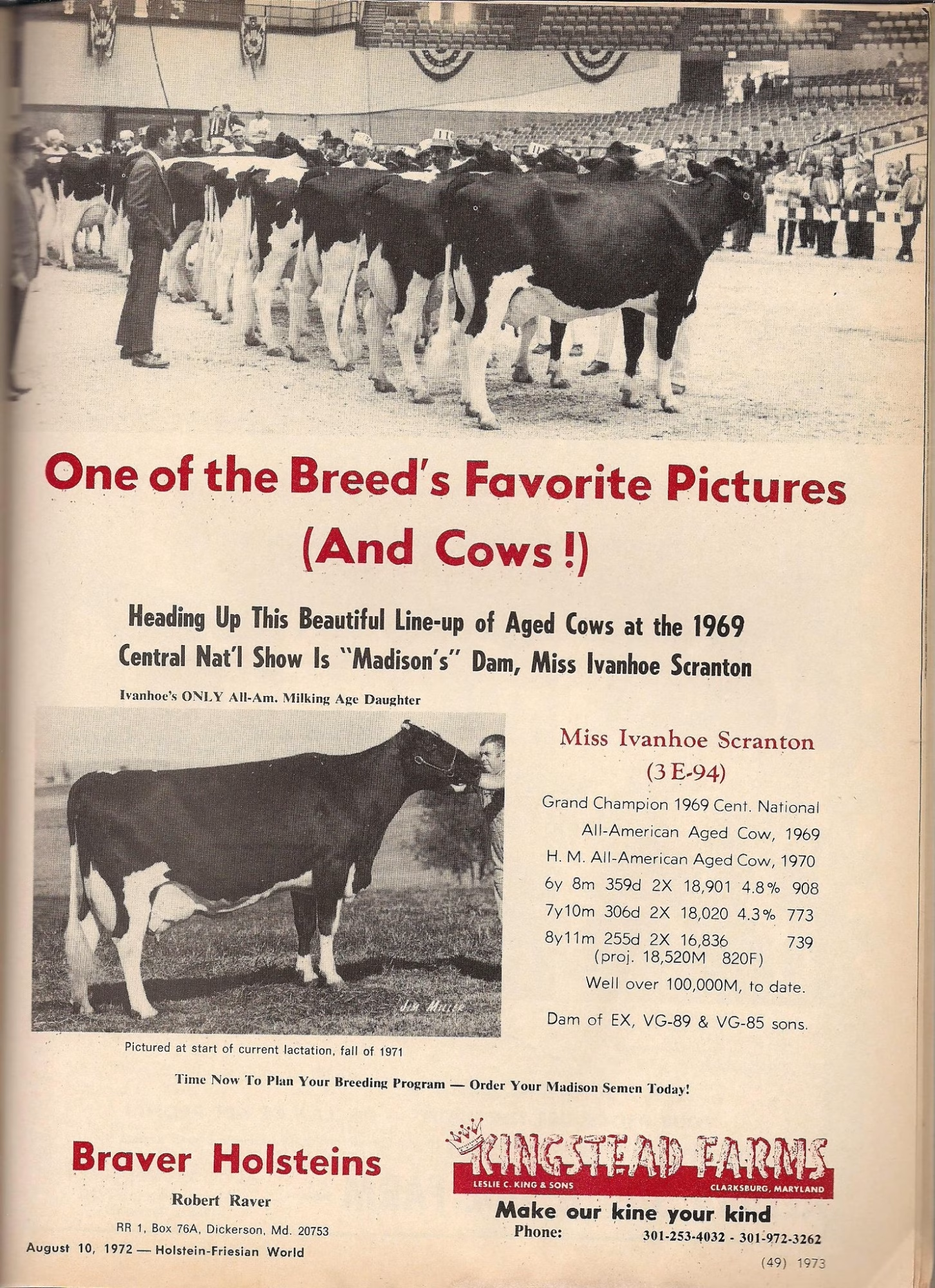
Here’s the answer to every coffee-shop crack about Aldo Panciera’s bet. Miss Ivanhoe Scranton, EX-94—Osborndale Ivanhoe’s standout show daughter—stood Grand Champion at the 1969 Central National and earned All-American Aged Cow honors that same year, all while milking well over 100,000 pounds in her lifetime. The scrawny calf had bred a champion who could fill a tank, too.

From 1964 through 1971, Osborndale Ivanhoe sat at the top of the U.S. Type-Production Sire Summary eight consecutive years—a run that, to this day, has never been matched. Eight years of data saying, “That scrawny calf you laughed at is the best sire in the business.” 

The vindication was spectacular. But the heart of Panciera’s story isn’t the eight-year reign. It’s the quiet mornings in the middle, standing by fences looking at underwhelming heifers, knowing everyone thought he’d made a mistake, and choosing, day after day, to hold his ground.

If you’ve ever bred a group of heifers to a young bull that didn’t impress early, listened to the local commentary, and still decided to give those daughters another lactation, you’ve already walked a mile in his boots.

The Family Who Trusted What They Knew

By the late 1990s, the Holstein world was running on speed.

Shorter generation intervals. Young sires on the hottest heifers. Genomic testing was starting to whisper to breeders that they could see the future in a strand of hair. The line at many barns was, “Why waste semen on old cows when you can breed your best heifers to the newest #1?”

Inside that mindset, an eight-year-old cow might as well have been a piece of furniture.

Condon Aero Sharon didn’t look like furniture to the Pickford family at Spot Acre Grange near Stafford, England. She looked like the kind of cow most herds pray for—a Holstein who had come back, year after year, with a sound udder, decent feet and legs, and milk that kept the tank honest. 

Condon Aero Sharon (EX-91) - The eight-year-old Canadian cow deemed "ancient by artificial insemination standards" whose breeding to Carol Prelude Mtoto defied every convention in the AI industry. When the Pickfords and Genus's Judges Choice program chose to "give excellence a chance" with this aging matriarch, they bet £10,000 on what would become "arguably the most powerful brood cow in United Kingdom history" - a gamble that produced Picston Shottle and revolutionized global Holstein genetics.
Condon Aero Sharon (EX-91) – The eight-year-old Canadian cow deemed “ancient by artificial insemination standards” whose breeding to Carol Prelude Mtoto defied every convention in the AI industry. When the Pickfords and Judges Choice program chose to “give excellence a chance” with this aging matriarch, on what would become “arguably the most powerful brood cow in United Kingdom history” – a gamble that produced Picston Shottle and revolutionized global Holstein genetics.

The Pickfords had been breeding Holsteins long enough to remember before TPI was a household term. Over kitchen tables and milking parlors, they’d seen hot young sires drop out of sight when the second or third proof came. They’d also seen “unfashionable” cow families quietly keep herds profitable.

Their records told a clear story about Sharon: years of solid production and trouble-free health. Visitors didn’t stop to take pictures of her. But when you watched her walk or looked at her udder attachments after that many lactations, you knew you were looking at something that mattered more than a moment in a show ring.

Here’s what most people don’t realize: when you’ve watched a cow like that hold herself together through that many calves, that’s data no proof sheet can match.

Around that time, many AI reps were pushing the same plan: flush your youngest high-index heifers to the latest genomic star. The Pickfords listened, nodded, and then did something different. Working with ABS’s Judges Choice program—a channel designed to find alternative pedigrees the mainline sampling pipeline might miss—they made the case that Sharon, an older cow well past the fashionable age, was exactly the kind of cow who deserved a shot. 

By all accounts, the logic at their table the night they signed off ran something like this: they knew this cow, they’d watched her work, and if it didn’t pay they’d live with it—but if it did, it might be something special.

They bred her to Carol Prelude Mtoto, a bull with his own twist of irony. In the UK, Mtoto had been so lightly regarded at one point that he was sold as “The £40 failure”—forty pounds sterling for a bull who would later be recognized as one of the most important sires of his time. Pairing an unfashionable older cow with a bull that had been sold off for £40 wasn’t the mating a risk-averse herd makes. 
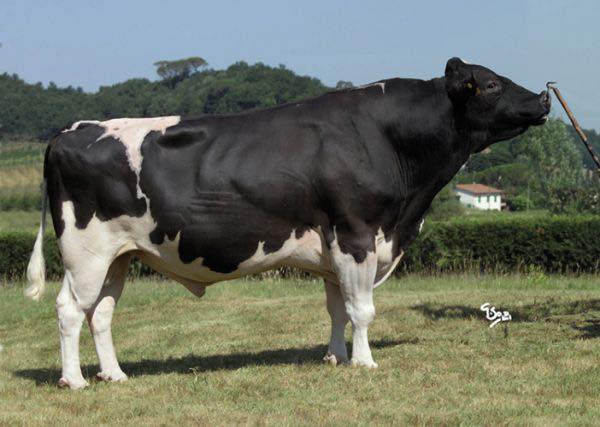
Forty pounds sterling. That’s what this bull was sold for when the establishment decided he wasn’t worth keeping around. Carol Prelude Mtoto—”The £40 failure”—who turned out to be one of the most important sires of his era. The Pickfords were about to pair him with an old cow nobody else would have bothered to flush. 

They did it anyway.

On July 23, 1999, that mating produced Picston Shottle. 
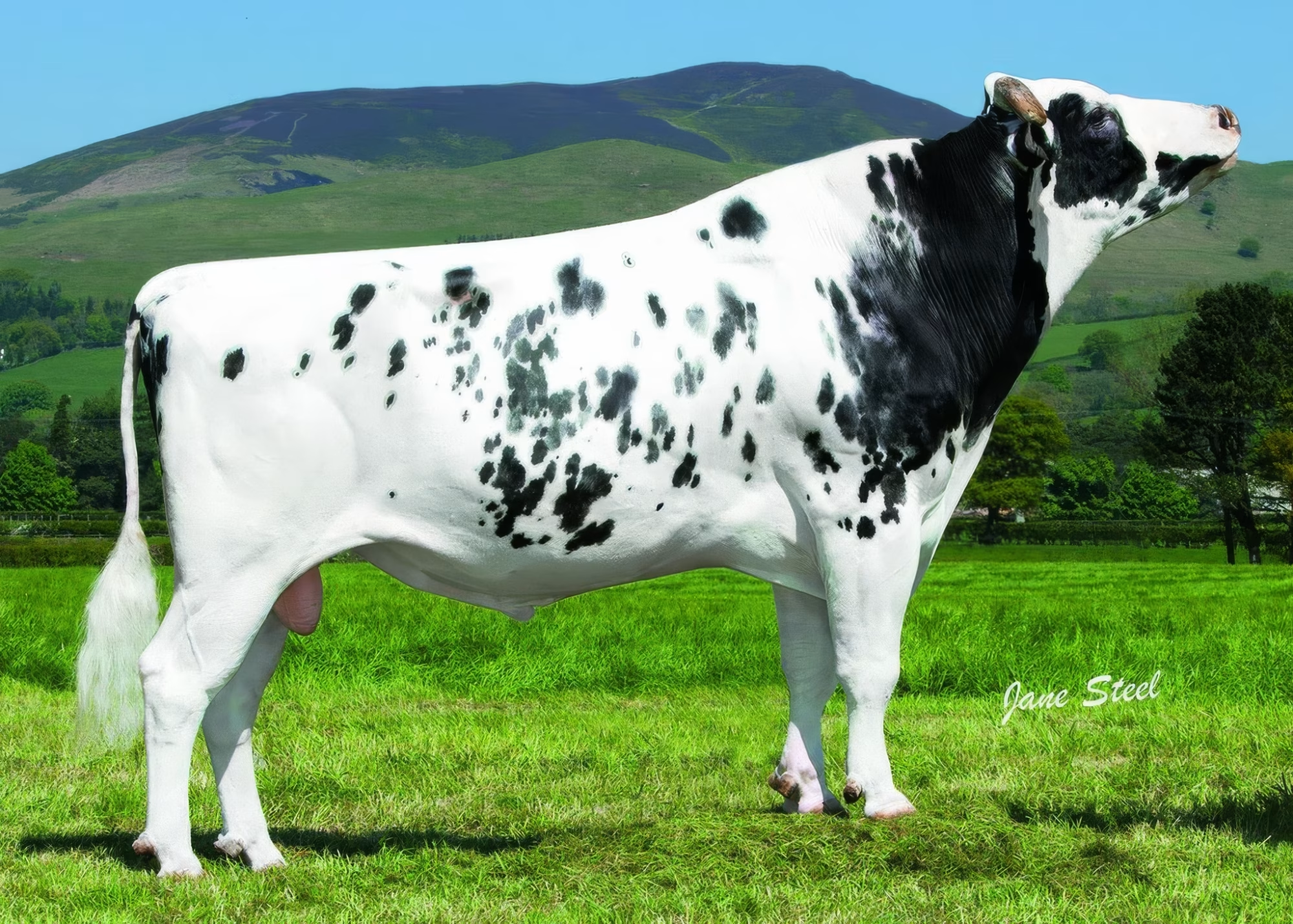
The £40 bull’s son, out of a cow most breeders thought was past her prime. Picston Shottle went on to become a millionaire sire with EX daughters by the thousands worldwide—cows people remembered less for their scores than for the fact that they bred back, walked sound, and stayed out of the sick pen. Read more: From Depression-Era Auction to Global Dominance: The Picston Shottle Legacy

Looking back now, it’s easy to say “of course.” ABS called him a “world-famous” and “millionaire” sire. Holstein International and other analysts later ranked him among the most influential Holstein bulls in the world, one of the few European-based sires to crack that echelon in lists dominated by North American names. 

His daughters piled up Excellent classifications by the thousands, all over the world—the kind of EX-daughter count that belongs in an official registry table, not a sentence pretending we re-counted it tonight. But whatever the exact tally, it was a flood of genuinely good cows.

Ask the people who milked them what they remember, and the answers sound familiar.

“They bred back.”

“They walked out sound.”

“They stayed out of the sick pen.”
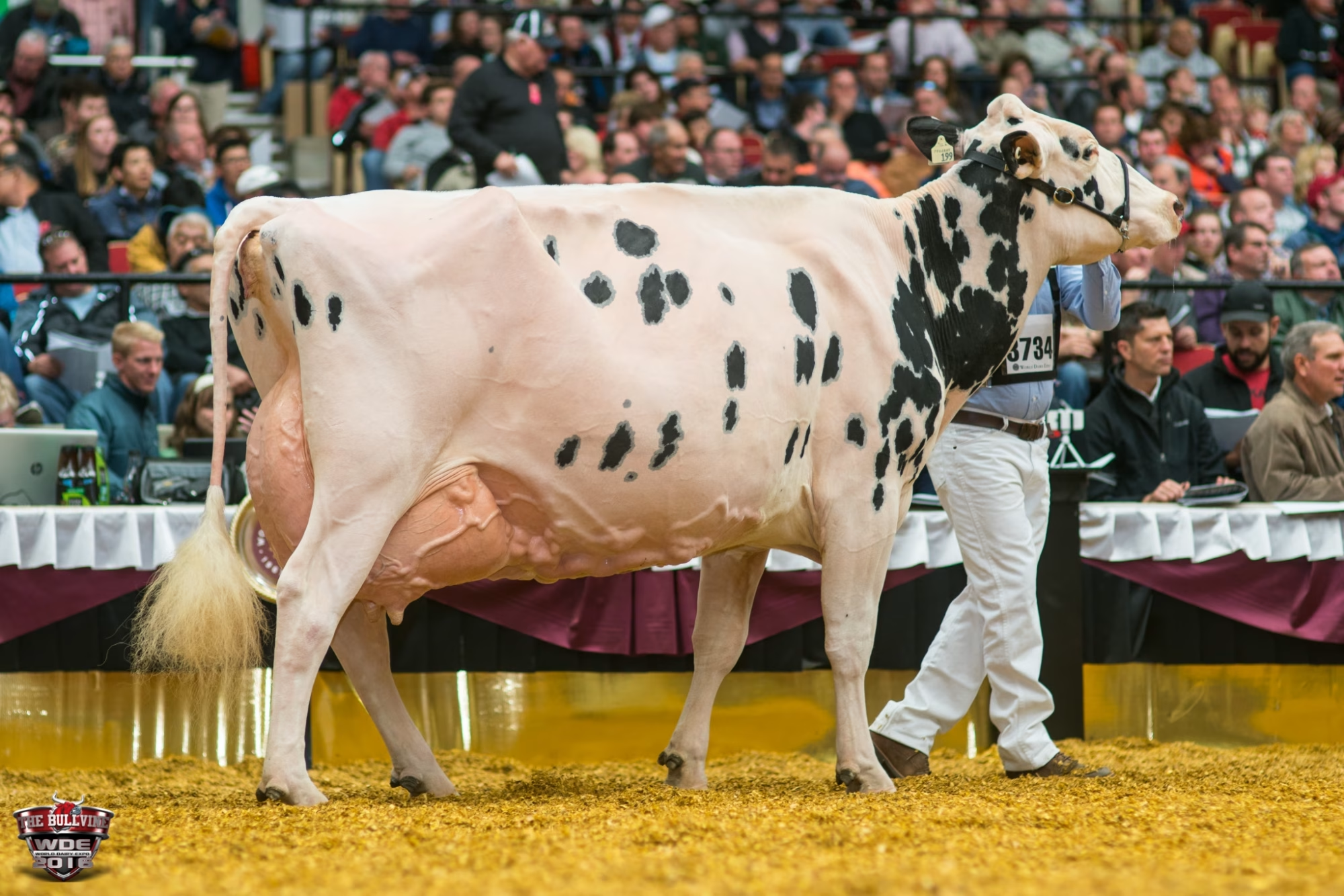
This is what those words look like in the flesh: Huntsdale Shottle Crusade EX 95 3E, a Picston Shottle daughter, working the colored shavings at World Dairy Expo, where she was named Nasco International Type and Production Award Winner. Look at the udder—the same kind of attachment that kept Shottle daughters in the milking string long after the show banners were packed away.

In an era obsessed with squeezing one more notch on the genetic progress meter, Shottle’s story—and Sharon’s—reminds you of a simple truth: there’s real power in betting on the cows you know, not just the heifers with the newest numbers.

The Hard Lessons We Didn’t See Coming

Of course, not every bull that shaped this breed leaves you with a warm glow.

Hanoverhill Starbuck is a good place to start. On the surface, he’s an almost perfect success story. Farmers loved his daughters. They worked in commercial herds and looked the part on show strings. AI studs pushed him hard. By the time the dust settled, Holstein Canada analysis and follow-up reporting showed that more than 80 percent of North American Holsteins carried Starbuck’s DNA, and in Quebec, his influence in sequenced cows was in the mid-90 percent range by 2000. 

Hanoverhill Starbuck (EX-Extra) at 15 years old with Carl Saucier in 1994, photographed at Mount Victoria Farm in Quebec—the same ground where his ancestor Johanna Rag Apple Pabst posed 66 years earlier. This legendary bull exemplifies Ivanhoe's compound genetic influence: sired by Round Oak Rag Apple Elevation (EX-96 GM), whose dam was Round Oak Ivanhoe Eve, and out of Anacres Ivanhoe Astronaut (VG-88), a daughter of Hilltop Apollo Ivanhoe (VG-GM). With Ivanhoe genetics flowing through both sides of his pedigree, Starbuck generated his own revolution—siring over 200,000 daughters across 45 countries and establishing a lineage now present in over 80% of North American Holsteins. His extraordinary impact demonstrates how Ivanhoe's genetic gifts continued to compound across generations, proving that the "earth-shaking" begun in 1952 reverberates through modern dairy herds worldwide.

Hanoverhill Starbuck (EX-Extra) at 15 years old with Carl Saucier in 1994, photographed at Mount Victoria Farm in Quebec—the same ground where his ancestor Johanna Rag Apple Pabst posed 66 years earlier. This legendary bull exemplifies Ivanhoe’s compound genetic influence: sired by Round Oak Rag Apple Elevation (EX-96 GM), whose dam was Round Oak Ivanhoe Eve, and out of Anacres Ivanhoe Astronaut (VG-88), a daughter of Hilltop Apollo Ivanhoe (VG-GM). With Ivanhoe genetics flowing through both sides of his pedigree, Starbuck generated his own revolution—siring over 200,000 daughters across 45 countries and establishing a lineage now present in over 80% of North American Holsteins. His extraordinary impact demonstrates how Ivanhoe’s genetic gifts continued to compound across generations, proving that the “earth-shaking” begun in 1952 reverberates through modern dairy herds worldwide. (Read more: Hanoverhill Starbuck’s DNA Dynasty: The Holstein Legend Bridging 20th-Century Breeding to Genomic Futures)

That’s the dream if you’re trying to build a global sire. It’s also a reminder of how quickly influence can become saturation.

When you lean that heavily on one bull, you’re not just getting more of his good traits. You’re squeezing your gene pool around him. Today, managing inbreeding back to Starbuck is basic mating-program hygiene.

Carlin-M Ivanhoe Bell tells a harder story.
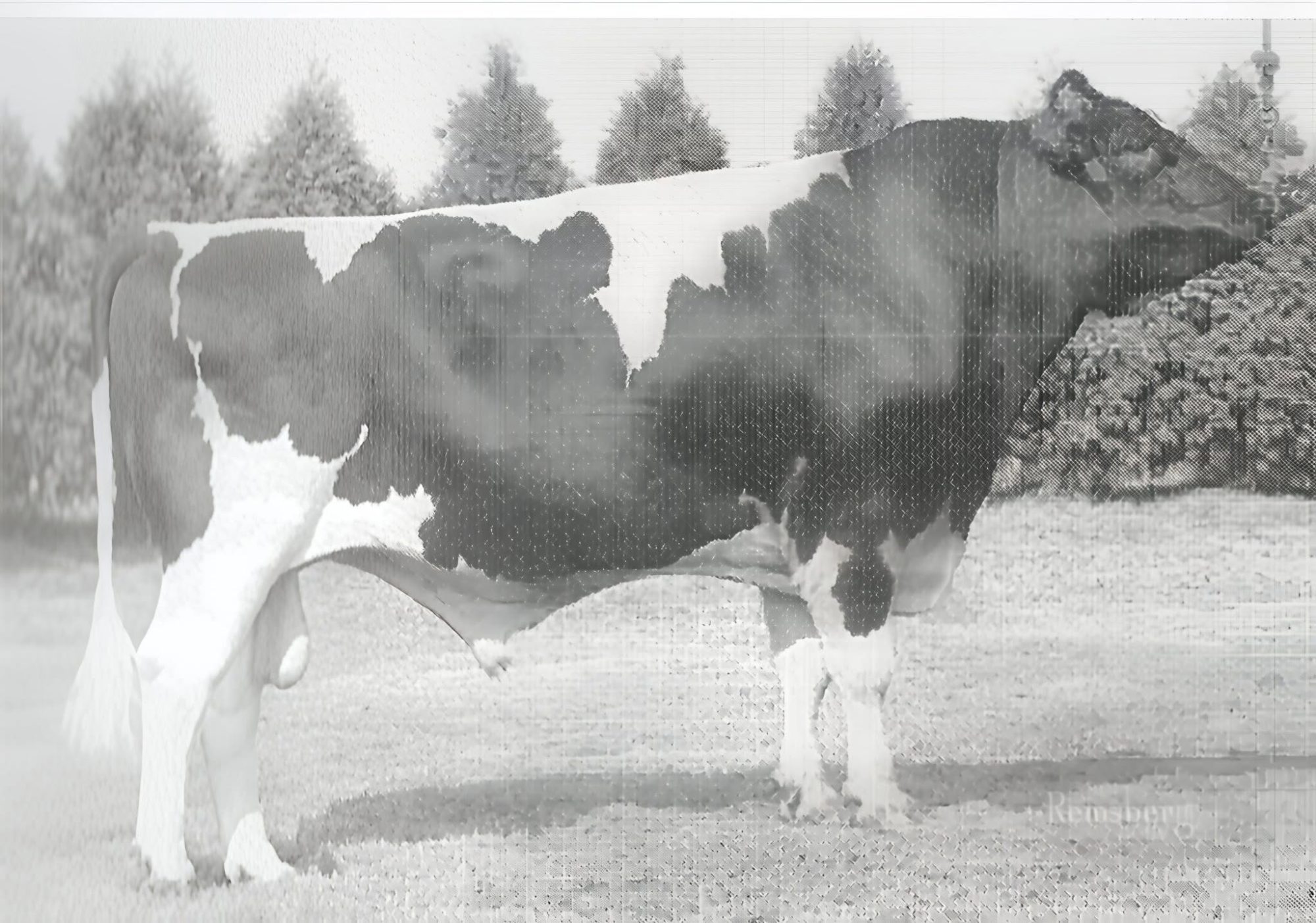
Carlin-M Ivanhoe Bell. Big production, daughters that filled tanks, a milk check that told breeders to use him hard—so they did, all over the world. Nobody in this photo knew what he was also passing along, hidden in a single recessive gene. He wasn’t a villain. He was the best bull of his moment, doing exactly what the industry asked of him. Read more: Bell’s Paradox: The Worst Best Bull in Holstein History

Bell looked like the complete package for his time. Big jumps in production. Daughters who filled tanks. Breeders used him heavily because the milk checks said they should. For a while, it felt like you couldn’t afford to.

Then calves started coming wrong.

Stillborn. Twisted spines. Severe spinal deformities that punched you in the gut the second you saw them. It took years—and a lot of heartbreak—before geneticists identified Complex Vertebral Malformation, a lethal recessive mutation in the SLC35A3 gene, and traced its worldwide spread back to Bell. 

If you’ve ever had to pull one of those calves, Bell’s name doesn’t feel theoretical. You remember the cow, the night, the smell in the pen. You remember the cost.

Pawnee Farm Arlinda Chief is a different kind of warning.
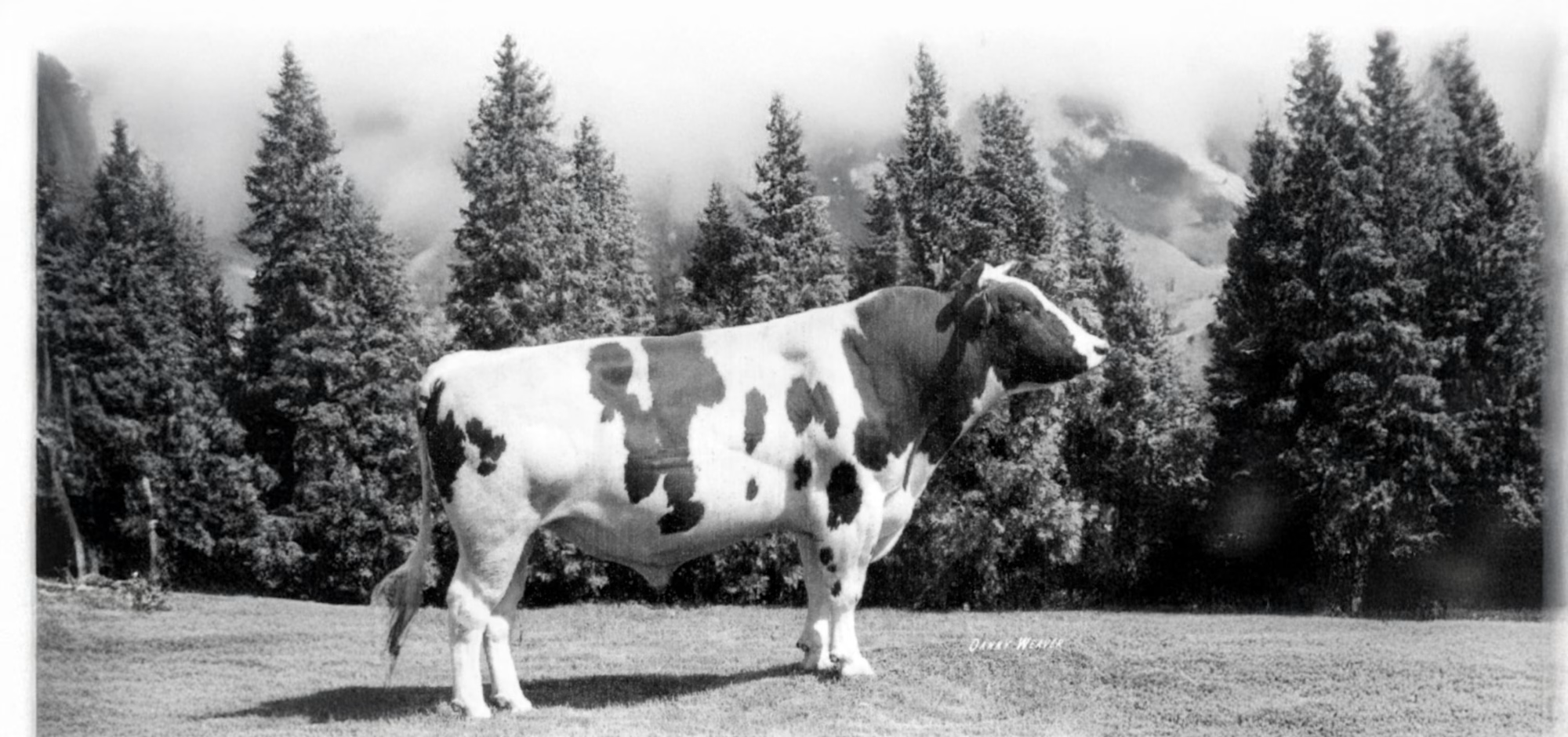
Pawnee Farm Arlinda Chief, born May 9, 1962, stands as one of the most influential Holstein sires in history, contributing nearly 15% to the breed’s genome. His legacy revolutionized milk production and reshaped global dairy genetics.

Pawnee Farm Arlinda Chief, born May 9, 1962, stands as one of the most influential Holstein sires in history, contributing nearly 15% to the breed’s genome. His legacy revolutionized milk production and reshaped global dairy genetics. Read more: The $4,300 Gamble That Reshaped Global Dairy Industry: The Pawnee Farm Arlinda Chief Story

When UC Davis researchers examined the modern U.S. Holstein genome, they found that Chief and his son, Walkway Chief Mark, each account for about 7 percent of it. Taken together, that’s roughly 14 percent—nearly a sixth—of what we now call the Holstein gene pool tracing back to one sire line. 
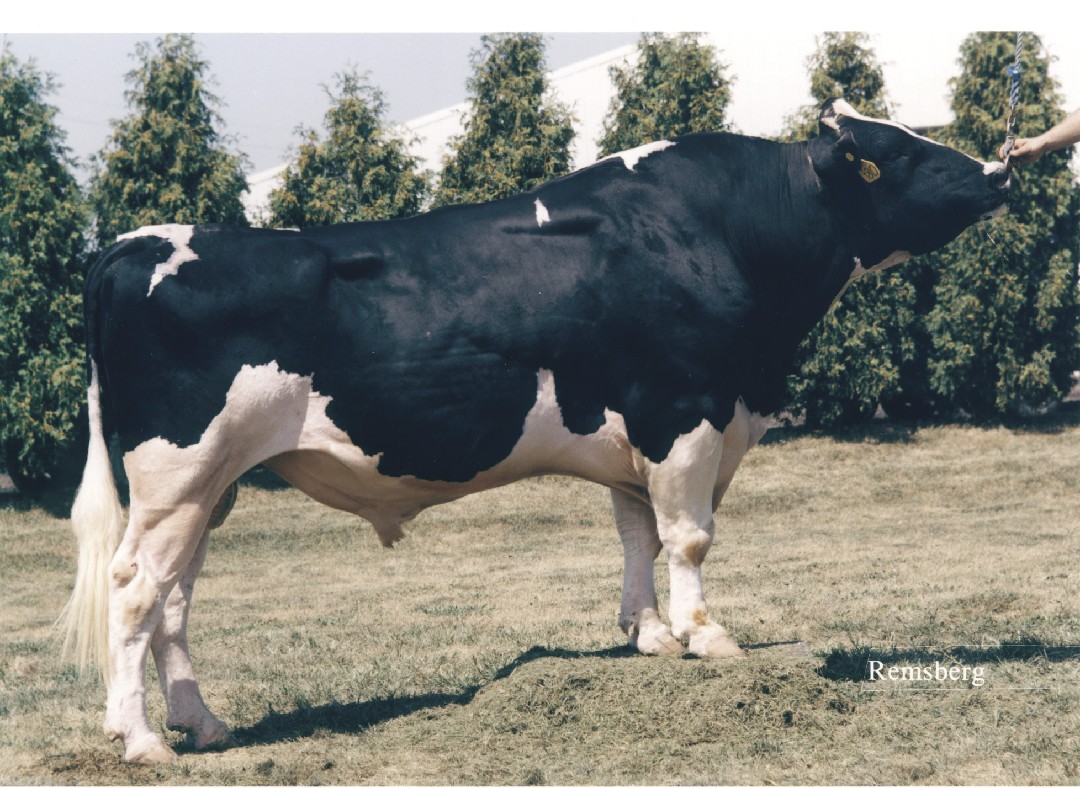
Walkway Chief Mark (VG-87-GM) — the backup bull from Foster Walk’s Neoga, Illinois herd whose genetics now account for roughly seven percent of every Holstein genome in North America. Named one of Select Sires’ “Impact Sires of the Breed,” his udder-transmitting brilliance and structural trade-offs shaped the modern Holstein in ways nobody saw coming when this photo was taken. Read more: Walkway Chief Mark: The Backup Bull Behind Seven Percent of Every Holstein Cow

Chief’s descendants gave the breed a lot of what it wanted. But now, decades later, you can’t sit down with mating software without constantly watching how often Chief and Mark show up in the background. Every time you see a high inbreeding number, you’re often looking at a pedigree that circles back to them too many times.

None of these bulls were villains.

They were outstanding sires used by breeders who, to a large extent, were doing their best with the information they had. It’s what happened afterward that matters.

Bell’s fallout pushed the industry to adopt routine genetic testing for lethal recessives. CVM, BLAD, DUMPS—those acronyms moved from obscure papers into sire cards and then into everyday farm talk. Chief and Mark’s dominance pushed conversations about diversity from genetics conferences into AI sampling rooms. Starbuck’s saturation made it impossible to ignore the need for tools that treat inbreeding as more than an afterthought. 

The lesson isn’t “don’t use popular bulls.” The lesson is that every time we pile a generation’s hopes on a short list of sires, we’re not just shaping the next proof run—we’re deciding what the breed will look like a generation or two down the road.

Where We Are Now

Genomics was supposed to change everything.

In a lot of ways, it did.

Instead of staring at a yearling bull in a stud barn and trying to read his future off his legs and his head, you can stare at a screen full of numbers: GTPI, NM$, DPR, health traits, feed efficiency. You can make decisions on calves that don’t have a single daughter on the ground yet.

But the risk didn’t disappear. It just moved.

GenoSource Captain is a good example of what the new system looks like when it works as intended.
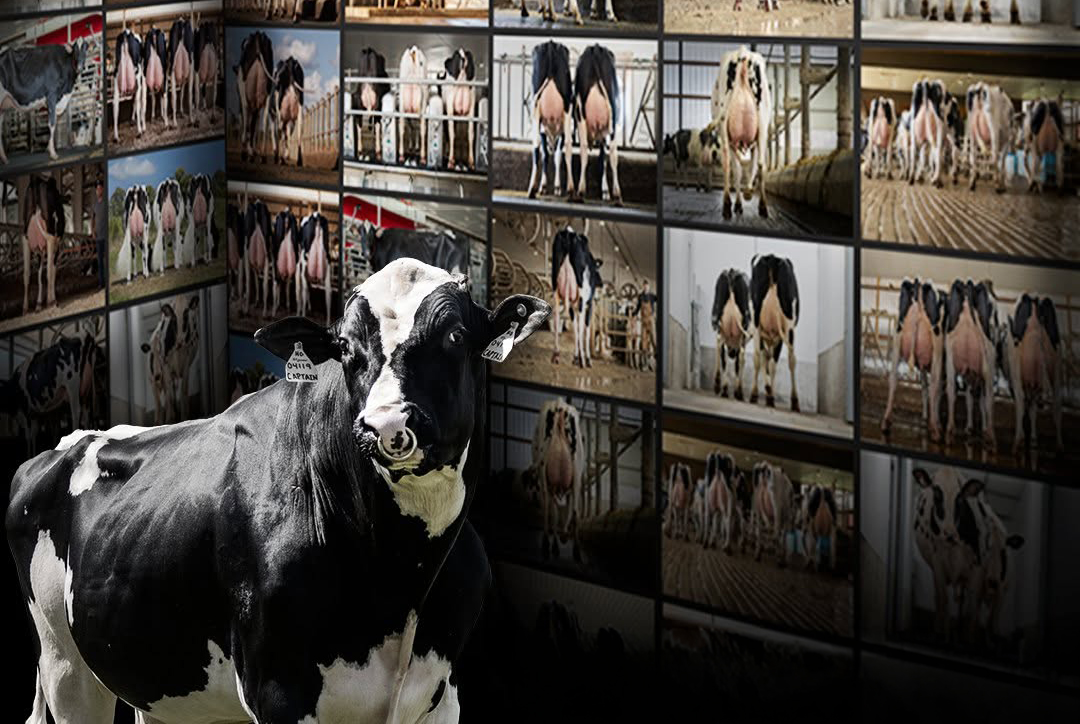
The proof sheet, made flesh: GenoSource Captain in front of a wall of his daughters’ udders—the first Holstein bull to top Holstein USA’s International TPI list for seven straight proof runs. But before any of those daughters existed, somebody had to look at his genomic numbers and decide to use him anyway. Same leap of faith Panciera and the Pickfords made—just with a screen full of data instead of a pedigree on paper.  Read more: CAPTAIN: The Bull That Rewrote the Rules for Modern Breeding

By GenoSource’s own account, Captain became the first Holstein bull to sit #1 on Holstein USA’s Top 100 International TPI list for seven consecutive proof runs—a run that spans the genomic-young-sire-to-daughter-proven divide. As those daughters came in, he held his place among the breed’s elite for both overall merit and production, with reliability building on his core traits the way a proven sire’s does. 

What does that mean when you’re standing in your own parlor?

It means that, in herds milking Captain daughters, you’re seeing cows that put extra milk in the tank compared to your herd average, convert feed into that milk more efficiently, and carry health and fertility traits that keep them out of the vet’s notebook and in the milking line. Those aren’t abstract gains. They’re dollars.

But here’s the part that feels a lot like the old stories: before anybody had proof sheets in hand on Captain’s daughters, somebody had to decide to use him anyway.

Sire analysts in AI offices and breeders in kitchen chairs looked at his genomic profile and chose to trust it. They didn’t have daughter pictures. They had numbers and a gut feeling about those numbers. They were doing, in a different key, exactly what Panciera did with Ivanhoe and what the Pickfords did with Sharon.

The tools have changed. The courage required to act on them hasn’t.

OCD Captain Rae 63785-ET: The genetic powerhouse behind RIPCORD. This exceptional Captain daughter isn’t just continuing her sire’s legacy – she’s amplifying it. As the dam of the high-ranking TPI sire RIPCORD (+3399 GTPI), Rae embodies the multi-generational impact of CAPTAIN’s genetics.

What These Stories Mean for Your Operation

It’s easy to treat this kind of history like something that belongs in breed books and old sale catalogs. The truth is, you’re living the same patterns every time you sit down with your mating list or flip through a sire directory.

Here’s what all of this looks like in your own barn:

  1. Question what everyone else ignores.
    Every era has its “defects” and unfashionable traits. A2A2 before processors started paying attention. Polled before labor and welfare pressures made dehorning a hot topic. Today, it might be moderate-sized, high-health cow families that don’t photograph well. Before you ship those genetics, ask yourself if you’re walking past your own version of Triple Threat because the package doesn’t fit the current fashion.
  2. Don’t confuse awkward with hopeless.
    Ivanhoe’s yearling daughters didn’t look like much. They became some of the best cows in the barn once they freshened. In a genomic world, there’s a temptation to make permanent decisions early. If a line comes from proven cows and the first calves are underwhelming, give them a fair trial through that first lactation before you write the family off.
  3. Balance your sire lineup like a portfolio.
    Starbuck and Chief teach the same lesson from different angles: leaning too hard on a short list of bulls can paint you into a corner, even when those bulls are very good. Use your Captain-type sires. Use the ones that pencil out best for your goals. Just spread the risk. Check inbreeding coefficients honestly. Make sure your future herd isn’t hanging off the same branch of the family tree.
  4. Make one deliberate “Sharon move” a year.
    Once a year, look around and pick out the cow that’s quietly done everything you’ve asked for six or eight lactations. The one who calves back, stays healthy, and raises daughters you don’t cuss at. Ask yourself what would happen if you flushed that cow or bred her to a complementary sire with your best semen, instead of always saving those doses for the newest heifer. Sharon says that kind of move can change things.
  5. Use genomics as a tool, not a crutch.
    Bulls like Captain show that genomic predictions can nail it. Bell reminds us we can still miss things. Use your genomic tests. Use your proofs. Then stack them alongside what your cows are actually doing—days open, mastitis cases, feet and legs, cull reasons. Trust the math without firing your eyes and your gut.

Whether you’re milking eighty cows or eight hundred, you’re sitting in the same seat these people sat in decades ago: making calls that will still be walking your alleys long after this month’s milk price is forgotten.

The Heart Behind the Numbers

When you sit with these stories long enough, the numbers start to fall away, and the people remain.

A young Swiss breeder walking three miles from a DeForest bus stop after getting off the Greyhound too early, carrying an idea about red cows that nobody wanted to hear .

A Connecticut dairyman leaning on a fence while neighbors question his sanity over a skinny calf he can’t quite bring himself to give up. 

An English family sitting at the table, looking at an older cow who’s been there for them every season and deciding, against the grain, that she deserves the best mating they can give her. 

None of them had a guarantee.

Schrago didn’t know that Triple Threat, born in 1972 would help build a Red & White market where cows like Apple-Red could sell for six figures and win on the world stage. Panciera had no promise that Ivanhoe wouldn’t end up as a story people told about an expensive mistake. The Pickfords couldn’t see Shottle’s daughters filling herds far beyond Stafford when they bred Sharon to Mtoto. 

They had pedigrees. Records. The evidence of their own eyes. And the willingness to live with the outcome.

Trust your judgment—but remember it’s not infallible.

Persist through doubt—but let real evidence change your mind when it comes.

And every so often, look hard at what’s standing right in front of you. Don’t let the hunt for the next big thing blind you to the quiet excellence that’s already working in your own barn.

Every time you choose a bull, keep or cull a cow, or decide which calf gets another chance, you’re writing a tiny piece of the breed’s future. Most of those decisions will never be famous. Some of them, though, will turn out to matter more than you can see from where you’re standing.

Somewhere today, a calf is lying in a pen that doesn’t look special yet. Maybe it’s out of a cow that your neighbors don’t notice. Maybe it’s by a bull that the coffee shop crowd doesn’t like. Maybe it carries a trait nobody’s paying much attention to.

Somebody’s going to see it anyway.

Somebody always does.

Key Takeaways

  • The genetics in your barn today came from people who bet on animals the experts wrote off—Triple Threat, Ivanhoe, and Shottle were all “mistakes” before they were legends.
  • Don’t cull a family on first impressions. Ivanhoe’s awkward yearlings became the breed’s best udders, so give daughters from proven cows an honest shot through that first lactation.
  • Make one deliberate “Sharon move” a year: flush or breed your best to the quiet cow who’s calved back and stayed sound for six-plus lactations, not just the newest high-index heifer.
  • Run your sires like a portfolio. Starbuck, Chief, and Mark show how fast a great bull becomes an inbreeding problem—spread the risk and check your coefficients honestly.

The Sunday Read Dairy Professionals Don’t Skip.

Every week, thousands of producers, breeders, and industry insiders open Bullvine Weekly for genetics insights, market shifts, and profit strategies they won’t find anywhere else. One email. Five minutes. Smarter decisions all week.

NewsSubscribe
First
Last
Consent

Learn More

They Called Him the Three-Legged Bull. He Created the Modern Red Holstein: The Untold Story of Hanover-Hill Triple Threat-Red

53 years ago, a man bet his career on a red calf everyone else called a defect. He was right

Hanover-Hill Triple Threat, the bull they once called a “defect.” He overcame initial rejection and later challenges to become a legend, reshaping the modern Red Holstein breed with his resilience and elite genetics.

Picture this. It’s October 1972, upstate New York. The sale barn at Hanover Hill Holsteins is packed—the kind of crowd that shows up when they know something historic might happen. That electric tension you only get when serious money is about to change hands.

In the ring stands a six-month-old calf. Vibrant red coat. Good on his feet. And by every measure of conventional wisdom in that era? A genetic liability.

See, for most of the 20th century, red and white on a Holstein wasn’t just unfashionable—it was treated as a defect. Something you culled. Something that barred your animal from the prestigious main herdbook. The industry elite wanted nothing to do with it.

But by 1972, something was shifting. All over the world—especially in Europe—people were looking for Red Holstein blood with good conformation. The market was starved for elite red genetics. And when this particular calf stepped into the ring, breeders recognized they were looking at something the industry had never seen before: a red Telstar son from the iconic Barb family.

So when the auctioneer started climbing past $40,000… then $50,000… the tension in that room was palpable.

Ken Young of American Breeders Service had already blown past his authorized limit. His bosses back in DeForest, Wisconsin, hadn’t signed off on anything close to this. But Young kept his paddle in the air.

$60,000. The gavel fell. World record for a Red & White Holstein. And in that moment, the trajectory of an entire breed pivoted on its axis.

When Young’s superiors demanded an explanation, he reportedly offered a reply that’s echoed through the halls of dairy breeding lore ever since: “It was easier to ask for forgiveness than to ask for permission.”

That calf was Hanover-Hill Triple Threat-Red. And here’s the thing—fifty-three years later, if you’re running red genetics in your herd, if you’ve ever admired Apple-Red or watched a Rubels-Red daughter walk into the ring… you’re looking at his legacy.

The World That Existed Before

To really understand what happened in that sale barn, you’ve got to understand the historical context.

For most of the 20th century, the Red Factor gene wasn’t treated as a variation. It was treated as a mistake. A genetic blemish to be erased. Elite North American breeders had systematically selected against red animals for generations. The main herdbooks slammed their doors shut. And the reasoning became self-reinforcing—because all the best genetics for milk and type were being developed exclusively in Black & White bloodlines, the Red & White population kept falling further behind.

It was a vicious cycle. Red cattle needed access to elite genetics to improve. But elite genetics wanted nothing to do with red cattle.

By the early 1970s, however, European demand was changing the equation. Farmers across Switzerland, France, and Germany were actively seeking red genetics with a modern dairy type. The question that haunted every breeder who loved that red coat was deceptively simple: How do you improve a population when the very best bloodlines refuse to acknowledge you exist?

The answer, it turned out, would come from an unexpected place—not the heartland of North American dairying, but the green valleys of Switzerland.

The Swiss Visionary Who Wouldn’t Take No for an Answer

The story of Triple Threat’s creation starts with a young Swiss agricultural graduate named Jean-Louis Schrago. In 1968, Schrago arrived in North America with a mandate that would’ve seemed absurd to most American breeders: find the world’s best red genetics and bring them back to Europe.

His search led him to Hanover Hill Holsteins in New York—the breeding epicenter managed by the legendary R. Peter Heffering. And Schrago walked right in and made an audacious proposal: breed your finest cow, the iconic matriarch Johns Lucky Barb, to a red-factor bull.

Heffering, pragmatic and focused on the lucrative Black & White market, shut him down flat. “There’s no Red & White market,” he told the young Swiss visitor.

But Schrago wasn’t a man who accepted dismissal easily.

He came back in 1971. This time, he brought a delegation of European farmers with him—visible proof of growing demand. And over lunch, Heffering finally asked the question that would change everything: “Alright then. Who would you recommend?”

Schrago’s answer was specific, unconventional, and—looking back—borderline miraculous: Roybrook Telstar.

Now, Telstar was a titan of the Canadian breed. A superstar celebrated for transmitting refinement, dairy character, and exceptional udders. His daughters were known as “show ring prima donnas.” But here’s what most North American breeders didn’t know: Telstar carried a rare genetic variant called the Black-Red gene—a peculiar trait that caused red-born animals to darken as they matured, a phenomenon that would later become known simply as “Telstar Red.”

Schrago knew. And he wasn’t telling everyone.

The logistics alone were insane. Telstar had been exported to Japan in 1967—at the highest price ever paid by Japanese buyers for a Canadian bull at that time. Schrago located two precious units of semen on the other side of the Pacific and arranged their importation for $2,500. A substantial sum at the time—enough to make most breeders think twice.

Then came his final stroke of genius. Rather than using the aging Johns Lucky Barb herself, he advised Heffering to use her greatest daughter—Tara-Hills Pride Lucky Barb EX-94—a formidable cow in her prime who carried the true recessive red gene.

The genetic math was elegant. Telstar contributes the rare Black-Red gene. The dam contributes the true recessive red gene. Together? Something the breed had never seen: an elite red calf carrying the accumulated genetic wealth of Holstein royalty.

Heffering agreed. The mating was made. And on April 24, 1972, the gamble paid off.

When Schrago heard the news, he drove non-stop from Wisconsin just to see the animal he’d dreamed into existence. He later described the calf as “looking like a small deer”—delicate, alert, unmistakably special.

That deer would prove anything but delicate.

Where the Power Came From

To understand why Triple Threat could stamp his offspring with such consistency—why his prepotency became legendary—you’ve got to look at what collided in his pedigree. This wasn’t just good genetics meeting good genetics. This was the deliberate convergence of the most dominant forces in the Holstein universe.

The Sire: Roybrook Telstar EX-Extra. The Canadian superstar whose semen Schrago imported from Japan for the historic mating. While famous for his “show ring prima donna” daughters, Telstar secretly carried the rare Black-Red gene—the source of the unique “chameleon” coat color he passed to his son.

His sire, Roybrook Telstar EX-Extra, was line-bred to the famous “White Cow” family of F. Roy Ormiston in Brooklin, Ontario. His dam, Roybrook Model Lass EX-15, accumulated lifetime credits of 218,814 pounds of milk and 9,018 pounds of fat—numbers that still command respect today. Telstar’s gift to his offspring was unmistakable: style, dairy character, and udders of exceptional texture. He added what breeders called “silkiness” to the hide. But his most unique contribution was the rare Black-Red gene—the genetic trait that would become the visual trademark of the Triple Threat lineage, causing red-born animals to darken progressively with age.

Tara-Hills Pride Lucky Barb *RC (EX-94). The formidable dam of Triple Threat. She was the crucial piece of the genetic puzzle, providing the true recessive red gene from the iconic Barb family. At the same 1972 sale where her son made history, she set her own world record, selling for $122,000.

His dam, Tara-Hills Pride Lucky Barb EX-94, was a force of nature in her own right. Sired by the strength specialist Ellbank Admiral Ormsby Pride, she combined power, width, and constitution with refined dairy character. Lifetime production: 147,756 pounds of milk with 6,264 pounds of fat. And her value showed up in the sale ring—at the same 1972 Hanover Hill Sale where her son commanded $60,000, Pride Lucky Barb herself sold for $122,000. World record for a dairy female. Mother and son shattered two global price records in a single afternoon.

The Matriarch: Johns Lucky Barb EX-97. Triple Threat’s legendary maternal granddam. Known as a “money tree” for shattering price records, she was the crucial, silent carrier of the red gene that made the historic Triple Threat mating possible.

The maternal granddam—Johns Lucky Barb EX-97-4E-GMD-5—was one of the pillars of the Holstein breed. The 1967 All-American aged cow. One of the very first cows in history to achieve EX-97. Her highest record at eight years: 29,052 pounds of milk at 4.7% fat with 1,372 pounds of fat. Lifetime total: 166,311 pounds of milk and 7,582 pounds of fat.

Industry observers called her a “money tree,”—and they weren’t exaggerating. Her progeny consistently shattered price records. Crucially, she was the original source of the red factor in the maternal line—a trait she passed silently down the generations.

Here’s what made the Triple Threat mating so special: it combined two different types of red genes. The rare Black-Red gene from Telstar’s side, and the true recessive red gene from the Barb maternal line. That unique combination gave Triple Threat his special ability to reliably produce red offspring while passing on world-class type and components.

The Chameleon Who Wouldn’t Quit

Triple Threat’s story could’ve ended with that record-breaking sale. Instead, it was only beginning—and the chapters that followed would test his resilience in ways nobody predicted.

True to his Telstar Red genetics, Triple Threat was born a vibrant red—the kind of color that stood out immediately. But within months, something strange began happening. His coat started darkening. You’d visit him one week, and he’d look a shade deeper. By six months, the transformation was visible to anyone paying attention. By nine months, he was almost completely black—often retaining only a few reddish hairs in his ears and the switch of his tail.

The Chameleon Effect. Pictured here at just six months old, Triple Threat had already transformed from a vibrant red calf to nearly all black—a trademark of the “Telstar Red” gene. Despite this confusing visual trait, which appeared in about half his red offspring, his popularity never wavered among breeders of both colors.

This was the famous “Telstar Red” phenomenon in action—a genetic trait inherited directly from his sire. For breeders unfamiliar with the trait, it caused real confusion. Some questioned whether he could even transmit red genetics at all. But verification came quickly: despite his chameleon appearance, Triple Threat consistently passed the red gene to his offspring. About half of his red-born progeny exhibited the same darkening phenomenon—turning what might’ve been a liability into a recognized trademark.

But it was a later chapter that cemented his legend among breeders who valued toughness as much as type.

According to industry accounts, Triple Threat suffered a significant leg injury in his mature years at ABS. The damage was reportedly permanent and debilitating—serious enough that he became known among breeders as “the three-legged bull.” By conventional measures, an animal in that condition should’ve been retired. Should’ve been done.

He wasn’t done.

His libido remained strong. His seminal quality stayed high. He continued to work, continued to breed, continued to stamp his excellence on thousands of daughters. For breeders, this physical resilience became more than an anecdote. It was living proof of constitutional vigor—a will to live that he passed to his progeny. His daughters became renowned not just for their beauty but for their durability. Long-lasting cows who stayed productive from lactation after lactation.

Whether the “three-legged bull” story is the literal truth or an industry legend grown tall over fifty years, the underlying message resonated: this was a bull—and a bloodline—that refused to quit.

A Threat in Three Dimensions

His name proved prophetic. Hanover-Hill Triple Threat-Red posed a genuine challenge to the competition in three distinct ways—a combination that made him one of the most sought-after sires of his generation.

First, type transformation. At a time when many Red & White cattle lacked the scale and refinement of their Black & White counterparts, Triple Threat injected the elite “Hanover Hill look” into the red population. He consistently sired daughters who were tall, long-necked, angular—animals with mammary systems showing exceptional texture and strong suspensory ligaments. His impact on feet and legs was equally dramatic. Flat bone. Correct set to the hock. Traits that contributed directly to the longevity his daughters became famous for.

One European observer summarized it best: “He probably improved conformation more in one generation than any bull ever used in Europe.”

Second, components. While contemporaries like Round Oak Rag Apple Elevation were chasing sheer milk volume, Triple Threat offered something different. High butterfat percentage—inherited from both sides of his pedigree. In today’s component-heavy pricing environment, we’d call that money in the tank. Back then, it made his daughters highly profitable in markets that paid on solids. And it made him a perfect complement to high-volume bloodlines that often tested lower for fat.

Third—and this is the big one—maternal transmission. Triple Threat was what breeders call a “daughters bull.” He produced great daughters but no legacy sons. That’s not a flaw; it’s a pattern you see when a sire’s maternal line is exceptionally dominant. He was a conduit for one of the breed’s most powerful dynasties—the Barbs. His ability to sire what observers called “outsize brood cows”—noted for correct conformation, style, pretty udders, high butterfat, and longevity—was legendary.

His daughters weren’t merely productive. They were matriarchs capable of founding dynasties.

So he had the genetics. He had the resilience. But the proof? That came through his progeny—both daughters and sons who carried his influence forward in ways nobody anticipated.

The Dynasty That Changed Everything

Here’s where the story gets really interesting—and really relevant to anyone running red genetics today.

The crown jewel of Triple Threat’s legacy? The connection to KHW Regiment Apple-Red EX-96 – “The Million Dollar Cow” and arguably the most influential Red Holstein of the 21st century.

The Dynasty Builder: KHW Regiment Apple-Red EX-96. The “Million Dollar Cow” and the most famous Red Holstein of the modern era. Her existence is the direct result of Triple Threat’s legacy: she would not be red without the red factor passed down through her grandsire, Meadolake Jubilant—Triple Threat’s most influential son.

Meadolake Jubilant-RC EX—the vital bridge to the Apple family—and E-D Thor-Red were Triple Threat’s two highest sons. While both were widely used across Canada, the US, and Europe, it was Jubilant who reinforced the classic Triple Threat profile: frame, strength, high components. He sired tens of thousands of daughters, making him one of the most widely used RC sires of his era. But his most important contribution? He carried the red factor forward. One of Jubilant’s significant daughters was Clover-Mist Augy Star EX-94, who became the granddam of Kamps-Hollow Altitude-RC EX-95—the 2009 Red Impact Winner. Altitude produced Advent-Red, Acme-RC, and the famous Apple herself.

That entire Apple family—unparalleled in Red Holstein circles—would never have been red and white if Jubilant hadn’t passed along the red factor. If you’ve used Apple genetics in the last decade, you’re tapping into a lineage that started with that “genetic defect” of a red calf back in 1972.

But the daughters built empires too.

The Showstopper: Nandette T.T. Speckle-Red EX-93-DOM. A two-time All-American who proved Triple Threat daughters could dominate the show ring. She wasn’t just a pretty face; her descendants include the millionaire sire Ladino-Park Talent-RC, further cementing Triple Threat’s influence on the modern breed.

Nandette T.T. Speckle-Red EX-93-DOM was a two-time All-American Red & White in 1981 and 1984—25,290 pounds of milk at 4.7% fat as a four-year-old. Beautiful and productive. Her daughter, Stookey Elm Park Blackrose-ET EX-96, became an All-American in ’92 and ’93, accumulating 149,880 pounds in four lactations while mothering eight Excellent offspring. That line produced Ladino-Park Talent-RC—the world’s only RC millionaire sire. Talent sired Ms Delicious Apple-Red EX-94, who carries double Triple Threat blood and is the dam of Diamondback with over 22,000 daughters.

The Black & White Influence: Tora Triple Threat Lulu EX-96-GMD. While Triple Threat is famous for his red offspring, his influence transcended color lines. Lulu, a Reserve Grand Champion at the Royal Winter Fair, became the dam of the millionaire sire Hanover-Hill Inspiration—proving that Triple Threat’s genetics were powerful enough to shape the mainstream Black & White population just as heavily as the Red.

Tora Triple Threat Lulu EX-96-GMD earned Reserve Grand at the Royal Winter Fair in 1981 and became the dam of Hanover-Hill Inspiration EX-Extra—another millionaire sire used heavily in Black & White populations worldwide. Through Inspiration, Triple Threat’s genetics permeated the mainstream breed, reaching herds that never explicitly sought red genetics.

Hanoverhill TT Roxette-ET EX-94-2E-GMD-DOM introduced the red gene into the legendary Roxy family—widely considered the greatest cow family in Holstein history. The 2012 Red Impact winner, Golden-Oaks Perk Rae-Red, traces back to Roxette—and carries double Triple Threat blood through Jubilant on her dam’s side.

The Polled Pioneer: Golden-Oaks Perk Rae P Red EX-90. A granddaughter of the legendary Roxette, Perk Rae P Red didn’t just carry the Triple Threat legacy of elite type—she pushed the frontier of polled genetics. As a pioneer brood cow, she proved that breeders didn’t have to sacrifice conformation to get the polled gene, laying the groundwork for the modern polled Red market we see today.

And then there’s Sellcrest T Roseanne-Red EX-93-2E-GMD-DOM—40,340 pounds of milk at 4.7% fat with 1,880 pounds of fat. She shattered the stereotype that Red & White cows couldn’t compete on production. When Holstein International ran its 2012 Red Impact Competition—forty years after Triple Threat’s birth—Roseanne still finished sixth. Four decades of relevance.

The reach extended beyond red breeding. Scientific Debutante Rae EX-92—carrying double Triple Threat blood through both Jubilant and the Roxette line—became the dam of Destry-RC, one of the most influential sires in mainstream Black & White populations. Meanwhile, Lulu’s son Hanover-Hill Inspiration achieved millionaire status and was used heavily across the breed worldwide. Triple Threat’s genetics didn’t just build the Red Holstein—they infiltrated the entire Holstein population.

From New York to the World

The impact wasn’t confined to North America. Triple Threat’s genetics became the primary vehicle for “Holsteinization” across Europe—transforming traditional dual-purpose red breeds into specialized dairy cattle.

Schrago Triple Ortensia Red. The proof in the pail. In 1977, ABS Director Dr. Robert Walton (second from right) traveled to Switzerland to see the first milking Triple Threat daughter firsthand—validating the “rogue” purchase made five years earlier. Also pictured with breeder André Schrago are industry leaders from France (Alain Du Colombier) and Germany (Dr. Otto Dramm), marking the start of the European Red revolution.

The Swiss daughter Guex Triple Tulippe-Red achieved something almost unprecedented: EX-98. Nearly perfect. When a disease outbreak at the 1979 Paris Agriculture Show infected her and three other Triple Threat daughters with IBR, Swiss authorities—whose country was free of the disease—demanded immediate slaughter upon their return. Three went to the abattoir. But Tulippe’s genetics were considered too precious to lose. Jean-Louis Schrago arranged for her transfer to Holland, where breeder Anton Van Nieuwenhuize saved her. She lived to age 15—a living advertisement across Europe for the durability and elite type of the Triple Threat bloodline.

The Survivor: Guex Triple Tulippe-Red EX-98. Pictured here upon her arrival in Holland in 1979 with Anton Van Nieuwenhuize (pouring champagne). After contracting IBR at the Paris show, Tulippe was barred from returning to Switzerland and faced immediate slaughter. Instead, she was spirited away to the Netherlands, where she lived to age 15 and became a key figure in convincing Dutch breeders to embrace the Red Holstein crossing program.

But the show ring dominance stretched far beyond Switzerland. Hepp-Haven Lisa of Pinehurst EX-96 earned Reserve Grand Champion at World Dairy Expo in 1986—competing against all colors and holding her own on the biggest stage in the industry. In France, he established the Uzes EX-96 and Rolls EX-96 families—both national champions, with Uzes winning not just the red and white division but the overall national championship against Black & White competition. In Germany, his genetics accelerated the evolution of the German Red Pied into the modern Red Holstein.

The list of remarkable Triple Threat daughters scoring EX-96 or higher across three continents is extraordinary. It’s a testament to how consistently he transmitted elite type regardless of where his genetics landed.

Jean-Louis Schrago’s vision, dismissed by Heffering in 1968, had reshaped an entire continent. But the story doesn’t end with history—it’s still being written today.

What This Means for Your Herd in 2025

Walk through Madison during World Dairy Expo or watch the results coming out of the recent National Red & White Show—Golden-Oaks Temptres-Red taking Grand Champion this year—and you’ll see Triple Threat’s fingerprint everywhere. That’s not nostalgia talking—it’s genetics.

This is Golden-Oaks Temptress-Red-ET—the 2024 World Dairy Expo Supreme Champion who just dethroned a three-time reigning queen. Fifty-two years after Ken Young bet his career on a red calf nobody wanted, a Red & White Holstein stood at the pinnacle of the most prestigious show on earth. That’s the arc of Triple Threat’s legacy. From $60,000 gamble to Supreme Champion crowns. From “cull her, she’s red” to the kind of type that makes judges stop and stare.

Fifty-three years after his birth, his influence isn’t just historical. It’s actively shaping the breed’s future. Modern genomic giants like Hoogerhorst DG OH Rubels-Red carry the Triple Threat bloodline no less than three times in their pedigrees. The Ranger-Red lineage connects directly back. Influential sires like Gywer-RC and Lawn Boy-Red all carry Triple Threat genes. If you’ve been watching the red leaderboards lately, you’re seeing his genetic fingerprint everywhere.

So what’s the lesson here? What should today’s breeders take from Schrago’s vision and Young’s rogue bid?

It’s this: the genetics everyone dismisses today might be the genetics everyone needs tomorrow.

In 1968, Heffering told Schrago there was no market for red cattle. The industry consensus was clear: red was a defect. The smart money said cull those animals and move on. But Schrago saw something different. He saw value where others saw liability. And he was willing to wait—to import semen from Japan, to return year after year, to make the case until the market caught up with his vision.

We’re seeing similar dynamics right now. Breeders banking embryos from A2A2 cows when the premium’s only a nickel. Breeders prioritizing polled genetics when the market hasn’t fully caught up. Breeders maintaining cow families that don’t top the genomic charts but produce consistently year after year—cows that stay in the herd five, six, seven lactations. With feed costs where they are and labor harder to find than ever, that kind of durability isn’t just nice to have; it’s what makes this business sustainable when margins get tight.

Triple Threat proved that patience and conviction, backed by genuine genetic quality, can reshape an entire breed. His daughters weren’t just show winners—they were durable, profitable, long-lasting cows that worked in commercial settings. That combination of type and function, beauty and durability, is exactly what the industry needs now as we balance genomic potential against real-world cow performance.

The Bottom Line

Hanover-Hill Triple Threat-Red was an anomaly who became an archetype. Born from a speculative mating that defied the commercial logic of his time. Purchased for a record price through a rogue bid that could’ve ended Ken Young’s career. Physically compromised for much of his productive life, if the old-timers’ stories are to be believed. Yet he overcame every barrier to reshape an entire breed.

He didn’t merely improve the Red & White cow—he essentially created its modern iteration. By combining the potent Black-Red gene from Telstar with the true recessive red gene and elite type from the Lucky Barb family, he elevated the Red Holstein from a genetic curiosity to a global commercial powerhouse.

His legacy lives in the Speckles and Lulus and Roxettes who dominated their eras. It lives in Tulippe, the Swiss survivor who carried his banner to EX-98. It lives in the Jubilant line that made Apple possible—and in Apple herself, the Million Dollar Cow who would never have been red and white without Triple Threat’s genes flowing through her pedigree. It lives in Destry-RC, carrying his genetics into the mainstream Black & White population. And it lives in breeding programs worldwide, where his genetic fingerprint continues to shape decisions made today.

Every modern Red & White that commands a high price, wins a championship, or tops a genomic index owes a genetic debt to the bull breeders still call “three-legged”—the resilient legend from Hanover Hill.

In the end, Young was right to take the risk. It was easier to ask for forgiveness than to ask for permission. And fifty-three years later, the breed is still thanking him—and Schrago, the Swiss visionary who wouldn’t take no for an answer—for having the courage to see what others couldn’t.

If you’re running red genetics in your herd—or considering adding them—take a minute to trace those pedigrees back. Chances are, you’ll find Triple Threat waiting there. The bull who changed a color. The chameleon who wouldn’t quit. The legend from Hanover Hill who proved that resilience, vision, and elite genetics can rewrite the destiny of an entire breed.

KEY TAKEAWAYS

  • The Rogue Bid: Ken Young exceeded his authorization to buy a red calf that the industry dismissed as a defect. His reported justification—”Easier to ask forgiveness than permission”—became breeding lore. That calf built the modern Red Holstein.
  • Two Genes, One Revolution: Triple Threat uniquely combined Telstar’s Black-Red gene with the Barb family’s true recessive red. For the first time, elite Black & White genetics could reliably produce red offspring.
  • A Daughters Bull: No legacy sons—but his daughters (Speckle, Lulu, Roxette, Roseanne) founded every major Red Holstein dynasty. Apple-Red, Destry-RC, and Rubels-Red all trace back to him.
  • Longevity Is the Legacy: His daughters didn’t just win shows—they lasted 5, 6, 7 lactations. In 2025, with labor tight and turnover costly, that durability is worth more than genomic flash.
  • The Breeder’s Takeaway: The genetics everyone dismisses today might be the genetics everyone needs tomorrow. Schrago waited three years. Young bet his career. Patience plus conviction can reshape an industry.

The Sunday Read Dairy Professionals Don’t Skip.

Every week, thousands of producers, breeders, and industry insiders open Bullvine Weekly for genetics insights, market shifts, and profit strategies they won’t find anywhere else. One email. Five minutes. Smarter decisions all week.

NewsSubscribe
First
Last
Consent

Kamps-Hollow Altitude:  The Red-Carrying Cow Who Rewrote Breeding History

From a $1 million auction to global genetic revolution: How one red-carrying Holstein cow rewrote breeding history and created dynasties still dominating today.

Kamps-Hollow Altitude-ET RC EX-95-USA 2E DOM - The breed-defining Holstein matriarch photographed at seven years of age during her dry period. This Durham daughter, born January 11, 2000, would go on to revolutionize Red Holstein breeding through her extraordinary offspring, including the million-dollar Apple-Red and show ring legend Advent-Red.
Kamps-Hollow Altitude-ET RC EX-95-USA 2E DOM – The breed-defining Holstein matriarch. This Durham daughter, born January 11, 2000, would go on to revolutionize Red Holstein breeding through her extraordinary offspring, including the million-dollar Apple-Red and show ring legend Advent-Red.

The bidding had reached a fever pitch. In the packed sale arena, hearts raced as the price climbed higher than anyone had imagined possible. One million dollars. For a single dairy cow. When the hammer finally fell on that August day in 2008, KHW Regiment Apple-Red-ET had not only shattered every sales record in Holstein history—she had announced to the world that the genetic revolution begun by her remarkable mother was far from over.

That mother was Kamps-Hollow Altitude-ET RC, a Durham daughter born on a cold January morning in 2000 who would become the most influential Red Holstein cow in modern breeding history. But on that winter day when she drew her first breath, few could have predicted that this calf would single-handedly transform an entire segment of the Holstein breed, create dynasties that still dominate show rings today, and establish a genetic legacy so profound that more than 80% of Red Holsteins at major shows would eventually trace back to her bloodlines.

The Foundation of Dreams

The story begins not with Altitude herself but with three college friends whose shared vision would reshape Holstein breeding: Ryan Kamps, Mark Haag, and Ryan Weigel. Together, they formed KHW Genetics, a partnership built on youthful ambition and an eye for exceptional cattle. These young men, who would later be recognized as Wisconsin’s Distinguished Young Holstein Breeders in 2014, were about to make breeding history.

The foundation for their success was laid at a dispersal sale in November 1998, when Richard Kamps made what would prove to be one of the most prescient purchases in Holstein history. At the Clover-Mist dispersal in Manitowoc, Wisconsin, he acquired Clover-Mist Augy Star EX-94 along with her young Prelude daughter, Alisha. In the barn at Clover-Mist, the legendary D-R-A August EX-96—known simply as “The White Cow”—had been an icon, standing in the end box stall and producing three 94-point daughters. Now, through Augy Star and Alisha, that extraordinary maternal line would find its way to Kamps-Hollow.

D-R-A August EX-96, known as “The White Cow”. This legendary matriarch, who produced over 200,000 pounds of lifetime milk and three 94-point daughters, would become the genetic cornerstone whose bloodlines eventually flowed to Kamps-Hollow Altitude through her granddaughter Alisha.

The Making of a Matriarch

Born on January 11, 2000, Kamps-Hollow Altitude-ET RC carried within her genes a convergence of Holstein excellence that breeders dream about but rarely achieve. Her pedigree read like a who’s who of breed legends: sired by Durham, a bull known for transmitting long bodies, broad rumps, and well-attached udders, and tracing through her maternal line to the foundation strength of D-R-A August, who had achieved over 200,000 pounds of lifetime milk production with exceptional type.

But Altitude was destined to be more than the sum of her illustrious parts. As she matured in the freestall barns at Kamps-Hollow, her own excellence became undeniable. She would eventually classify EX-95-USA 2E DOM, a score that placed her among the elite 5% of Holstein cows for conformation. Her production records told an equally compelling story: by her seventh lactation, she was producing 39,690 pounds of milk with an exceptional 4.7% butterfat—numbers that spoke to both her capacity and her metabolic efficiency, the kind of performance that turns red ink to black on dairy farm financial statements.

Yet for all her individual excellence, Altitude’s true genius lay in her extraordinary ability as a brood cow. In the unpredictable alchemy of cattle breeding, where exceptional parents don’t always produce exceptional offspring, Altitude possessed the rarest gifts: the consistent ability to transmit superiority across generations and through diverse genetic combinations.

The Son Who Conquered Show Rings

KHW Kite Advent-Red-ET, the legendary son of Kamps-Hollow Altitude who dominated Red & White Holstein show rings for seven consecutive years as Premier Sire at World Dairy Expo. His unprecedented success with over 400 Excellent daughters established him as a cornerstone sire for an entire generation of Red Holstein breeders. (Photo: Frank Robinson)

The first hint of Altitude’s genetic prowess came through her son KHW Kite Advent-Red-ET, sired by CK Kite RC. In the competitive world of Red & White Holstein breeding, Advent would become nothing short of legendary. His dominance was so complete that he claimed the Premier Sire banner at the Grand International Red and White Show at the World Dairy Expo for seven consecutive years—an unprecedented achievement establishing him as the foundation sire for an entire generation of show-winning cattle.

For breeders across Wisconsin and beyond, watching Advent’s offspring mature became a lesson in genetic consistency. As one admirer noted, his daughters displayed “excellent frames and open rib structure”—the kind of cattle that caught judges’ eyes and commanded premium prices at sales. The numbers behind Advent’s success told the story: over 400 Excellent daughters in the United States and Canada combined, with 105 earning All-American nominations in just five years. When forty-one of those daughters achieved All-American or Reserve All-American status, it represented more than ribbons and trophies—it represented increased asset values for the families who owned them.

ELMBRIDGE LOOKOUT LADY IN-RED, sired by KHW Kite Advent-Red-ET, exemplifies the show ring excellence that made Advent a seven-time Premier Sire at World Dairy Expo's Red & White Show. As one of Advent's over 400 Excellent daughters, she demonstrates the exceptional frame and open rib structure that became hallmarks of Altitude's genetic legacy through her legendary son.
ELMBRIDGE LOOKOUT LADY IN-RED, sired by KHW Kite Advent-Red-ET, exemplifies the show ring excellence that made Advent a seven-time Premier Sire at World Dairy Expo’s Red & White Show. As one of Advent’s over 400 Excellent daughters, she demonstrates the exceptional frame and open rib structure that became hallmarks of Altitude’s genetic legacy through her legendary son.

Advent’s genetic potency attracted the attention of Select Sires, though his journey to artificial insemination prominence wasn’t without the challenges that test every dairy farmer’s resolve. Initially purchased by Select Sires, he encountered a health issue with leucosis and was subsequently offered to Glaze-Way Enterprises before being leased back to Select Sires. His popularity soared there, particularly after his calves began dominating show rings with their exceptional frames and open rib structure.

The Million-Dollar Daughter

If Advent established Altitude’s reputation as a producer of sires, her daughter KHW Regiment Apple-Red-ET would make her a household name throughout the global Holstein community. Apple-Red, sired by Carrousel Regiment-Red-ET and born in May 2004, possessed a rare combination of show ring glamour, production excellence, and genetic potency that would captivate the cattle world.

KHW Regiment Apple-Red-ET (led by Mike Deaver) made history at the 2006 World Dairy Expo by winning the Junior Two-Year-Old Holstein class—a breakthrough moment that announced the arrival of Altitude's genetic legacy on the world stage. Her victory in a traditionally black-and-white dominated competition marked the beginning of Red Holstein prominence in elite competition. Photo: Dianna Malcolm.
KHW Regiment Apple-Red-ET (led by Mike Deaver) made history at the 2006 World Dairy Expo by winning the Junior Two-Year-Old Holstein class—a breakthrough moment that announced the arrival of Altitude’s genetic legacy on the world stage. Her victory in a traditionally black-and-white dominated competition marked the beginning of Red Holstein prominence in elite competition. Photo: Dianna Malcolm.

In the early morning hours at barns across North America, farm families would gather around their laptops and phones, watching Apple-Red’s show career unfold with the dedication of sports fans following their favorite team. Her breakthrough moment came at the 2006 World Dairy Expo when she captured the Jr. 2 Holstein class—a red cow triumphing in a world traditionally dominated by black and whites. For red breed enthusiasts who had long felt like an overlooked minority in the Holstein world, this victory felt like vindication.

But it was in 2008 that Apple-Red truly made history. At auction, bidding reached the unprecedented sum of one million dollars, paid by Apple Partners of Lanark, Illinois. The sale generated international headlines and brought previously unimaginable attention to the Red Holstein breed. For small dairy farmers watching the coverage, there was validation that exceptional genetics commanded exceptional value and that sound breeding decisions could transform the economic prospects of an entire operation.

The moment that defined a legacy: WDE's 2011 Red & White Holstein judge Adam Liddle of Argyle, New York, declares KHW Regiment Apple-Red-ET Grand Champion at World Dairy Expo's International Red White Show. Handler Mike Deaver stands with the cow that had already made million-dollar history and would go on to revolutionize Red Holstein breeding. Photo: Nina Linton.
The moment that defined a legacy: WDE’s 2011 Red & White Holstein judge Adam Liddle of Argyle, New York, declares KHW Regiment Apple-Red-ET Grand Champion at World Dairy Expo’s International Red White Show. Handler Mike Deaver stands with the cow that had already made million-dollar history and would go on to revolutionize Red Holstein breeding. Photo: Nina Linton.

Yet Apple-Red’s influence extended far beyond the show ring and sale barn. Her impact as a brood cow has been nothing short of revolutionary. She is the first Red Holstein with over 100 Excellent daughters worldwide—83 in the United States and 16 in Canada, with one appearing on both lists for a North American total of 98. This productivity translated to something more valuable than any ribbon for commercial dairy farmers: genetic consistency they could bank on, generation after generation.

KHW Regiment Apple-Red-ET stands before a packed arena at the 2013 World Dairy Expo Red and White Show, where she earned Reserve Grand Champion honors while her clone claimed the Grand Champion title—a unprecedented sweep that demonstrated the genetic consistency and star power of the Altitude family. Nine years old and still commanding the attention that made her the first million-dollar dairy cow, Apple-Red's presence in Madison that day represented the living legacy of her mother's transformative impact on Holstein breeding.
KHW Regiment Apple-Red-ET stands before a packed arena at the 2013 World Dairy Expo Red and White Show, where she earned Reserve Grand Champion honors while her clone claimed the Grand Champion title—a unprecedented sweep that demonstrated the genetic consistency and star power of the Altitude family. Nine years old and still commanding the attention that made her the first million-dollar dairy cow, Apple-Red’s presence in Madison that day represented the living legacy of her mother’s transformative impact on Holstein breeding.

The Apple dynasty created by this remarkable cow continues to dominate Red Holstein breeding. Her sons, Apples Absolute-Red and Mr Apples Armani-RC have become influential sires in their own right. When Absolute daughters like Meadow Green Abso Fanny-Red EX-96 claimed multiple Grand Championships at the World Dairy Expo and the Royal Winter Fair, they proved that Apple’s genetic legacy was more than marketing—it was sustainable excellence that delivered results where it mattered most, in the milk house and the breeding barn.

The Global Genetic Revolution

Jotan-Red-ET, photographed at Cogent in the United Kingdom, became the European ambassador for the Altitude genetic revolution. This Jordan son of Kamps-Hollow Altitude produced nearly 18,000 daughters across ten countries, with his late-maturing cattle thriving in diverse management systems from the Netherlands to Eastern Europe. His success opened international markets to Altitude bloodlines and proved that exceptional American genetics could improve dairy herds worldwide.

While Advent conquered North American show rings and Apple-Red captivated the cattle world with her celebrity status, Altitude’s influence was quietly spreading across continents through another of her offspring: Jotan-Red-ET. This Jordan son, introduced by the German AI Masterrind in 2005, became the European trailblazer for the Altitude family’s international expansion.

In the rolling dairy country of the Netherlands, farmers like those at Drouner Holsteins discovered that Jotan-Red’s daughters were transforming their operations. These late-maturing cows with excellent rumps and strong feet and legs thrived under various management conditions, carrying their productive lives through longer lactations than farmers had dared hope for. When Durkje 252, representing Jotan’s 75th EX daughter in the Netherlands, posed for her classification photo, she embodied what dairy farmers worldwide were experiencing: cattle that got better with age, improving with each lactation rather than breaking down.

Jotan-Red became a sales phenomenon, ultimately producing nearly 18,000 daughters in at least ten countries. His popularity in Eastern European countries was particularly notable, as farmers discovered that his daughters delivered exactly what commercial dairy operations needed: functional cattle that converted feed efficiently while maintaining their structural integrity through multiple lactations. In the Netherlands alone, he has produced 78 EX daughters from 4,236 classified offspring, with 90.7% scoring Good Plus or higher in the United Kingdom.

Holec Redrose Jotan 2y VG-88 - A daughter of Jotan-Red exemplifying the European success of Altitude genetics. Jotan-Red, a Jordan son of Kamps-Hollow Altitude, became a sales phenomenon across Europe with nearly 18,000 daughters in at least ten countries, proving that Altitude's genetic influence extended far beyond North American show rings. (Photo: Alger Meekma)
Holec Redrose Jotan 2y VG-88 – A daughter of Jotan-Red exemplifying the European success of Altitude genetics. Jotan-Red, a Jordan son of Kamps-Hollow Altitude, became a sales phenomenon across Europe with nearly 18,000 daughters in at least ten countries, proving that Altitude’s genetic influence extended far beyond North American show rings. (Photo: Alger Meekma)

The success of Jotan-Red was significant for more than just his individual merit. His European career established genetic lines that would influence Red Holstein breeding across continents, proving that Altitude’s genetics weren’t just American show ring curiosities—they were foundational bloodlines that could improve dairy herds anywhere exceptional cattle were valued.

The Genomic Era and Continued Relevance

As the dairy industry evolved into the genomic era, many wondered whether traditional cow families would maintain their relevance in a world increasingly driven by DNA-based selection. Breeders held their breath at farms across North America as genomic test results arrived, hoping their favorite bloodlines would translate to the new digital scoreboards that increasingly determined breeding decisions.

KHW Goldwyn Aiko-ET RC, daughter of Kamps-Hollow Altitude-ET RC, demonstrated the seamless transition of Altitude genetics into the genomic era with her remarkable 2050 GTPI. Aiko's global impact extended from North America to Europe, with her embryos exported to six countries and her descendants achieving elite genomic rankings worldwide, proving that traditional cow families could not only adapt to but excel under DNA-based selection criteria.
KHW Goldwyn Aiko-ET RC, daughter of Kamps-Hollow Altitude-ET RC, demonstrated the seamless transition of Altitude genetics into the genomic era with her remarkable 2050 GTPI. Aiko’s global impact extended from North America to Europe, with her embryos exported to six countries and her descendants achieving elite genomic rankings worldwide, proving that traditional cow families could not only adapt to but excel under DNA-based selection criteria.

Altitude’s daughter KHW Goldwyn Aiko-ET RC provided a definitive answer. This Goldwyn daughter achieved a remarkable GTPI of 2050, demonstrating that Altitude’s genetics adapted to genomic evaluation and excelled under its criteria. For breeders who had invested their futures in Altitude bloodlines, Aiko’s success represented more than validation—it was their ticket to continued relevance in an increasingly competitive marketplace.

KHW-I Aika Baxter RC VG-87-2YR-CAN, a daughter of Aiko and granddaughter of Altitude, became a #15 GLPI Cow in Canada and one of the highest RC cows in the breed. Her genomic success demonstrated how Altitude's traditional genetics seamlessly translated to elite performance in the DNA-driven era, proving that exceptional bloodlines could thrive under both conventional and genomic evaluation systems.
KHW-I Aika Baxter RC VG-87-2YR-CAN, a daughter of Aiko and granddaughter of Altitude, became a #15 GLPI Cow in Canada and one of the highest RC cows in the breed. Her genomic success demonstrated how Altitude’s traditional genetics seamlessly translated to elite performance in the DNA-driven era, proving that exceptional bloodlines could thrive under both conventional and genomic evaluation systems.

Aiko’s global appeal was evident in the demand for her genetics, with embryos sold to six countries. Her offspring continued the family’s tradition of excellence: her daughter KHW-I Aika Baxter RC VG-87-2YR reached as high as the #15 GLPI Cow in Canada and one of the highest RC cows in the breed, while another daughter, De Jonge Aiko RC by Sahara, achieved the #1 GTPI ranking among Sahara daughters. Even her son by Sahara earned a high gRZG ranking in Germany, proving the international appeal of Altitude genetics across gender lines.

Gen-I-Beq Inaika Red EX-95 (Detox x KHW Aika Baxter), shown here in her fourth lactation, exemplifies Altitude's continued European influence through the Aiko branch. Reserve Champion at the 2019 All-European Championship in Libramont, Belgium, and a member of France's second-place country team, Inaika traces directly to Altitude through her dam KHW Aika Baxter, demonstrating how the matriarch's genetics continue to excel in international competition decades after her birth. Named France's Cow of the Year nominee in 2020, she represents the ongoing success of Altitude's genomic-era descendants across continents.
Gen-I-Beq Inaika Red EX-95 (Detox x KHW Aika Baxter), shown here in her fourth lactation, exemplifies Altitude’s continued European influence through the Aiko branch. Reserve Champion at the 2019 All-European Championship in Libramont, Belgium, and a member of France’s second-place country team, Inaika traces directly to Altitude through her dam KHW Aika Baxter, demonstrating how the matriarch’s genetics continue to excel in international competition decades after her birth. Named France’s Cow of the Year nominee in 2020, she represents the ongoing success of Altitude’s genomic-era descendants across continents.

In the genomic era, Altitude’s daughters by modern sires consistently produced offspring with elite genomic values well into the 2010s, including high-ranking TPI daughters KHW SUPERSIRE ANNETTE-ET and KHW SYMPATICO ALARM-RED-ET. These results demonstrated that Altitude’s base genetics were robust enough to complement the industry’s most advanced sires, ensuring her family’s continued prominence in an increasingly competitive genetic marketplace.

Real-World Impact on Commercial Herds

The true test of any genetic program isn’t show ring victories or auction prices—it’s performance in commercial dairy operations where profit margins depend on cows that calve easily, milk heavily, and breed back efficiently. At Koester Dairy in Illinois, one of America’s leading production herds with a dazzling average of over 36,000 pounds of milk per cow, the Altitude influence shines through descendants that prove their worth every milking.

K-Star Frazzled Ruby VG-85-2-yr, fresh for her second lactation and milking 145 pounds daily, represents the practical application of Altitude genetics. She traces back through an 88-point Silver daughter and then the Uno sister to Apple, connecting her directly to Altitude’s maternal line. Ruby’s presence demonstrates how elite genetics translate to operational success in a herd that has won the Holstein Association’s Herd of Excellence Award for five consecutive years.

MS D APPLE DANIELLE-RED EX-95 represents the commercial success of Altitude genetics in modern dairy operations. This exceptional daughter of the Apple-Red lineage demonstrates how the genetic excellence that began with Kamps-Hollow Altitude translates directly into profitable dairy cattle that excel in both the milk house and the show ring. Her EX-95 classification score—placing her among the top 5% of Holstein cows for conformation—proves that Altitude's descendants continue to deliver the structural soundness and dairy quality that commercial farmers depend on for long, productive lactations.
MS D APPLE DANIELLE-RED EX-95 represents the commercial success of Altitude genetics in modern dairy operations. This exceptional daughter of the Apple-Red lineage demonstrates how the genetic excellence that began with Kamps-Hollow Altitude translates directly into profitable dairy cattle that excel in both the milk house and the show ring. Her EX-95 classification score—placing her among the top 5% of Holstein cows for conformation—proves that Altitude’s descendants continue to deliver the structural soundness and dairy quality that commercial farmers depend on for long, productive lactations.

The Koester family’s experience with Altitude descendants like KHW Uno Arkansas EX-91 tells the complete story of genetic value. Arkansas, directly out of Kamps-Hollow Altitude, has produced EX daughters sired by Jacey, Montross, and Supersire, along with a pair of 88-point Silver daughters. In a commercial operation where every cow must pull her weight, these results represent the difference between profitability and struggle. When Dan Koester notes that “competition to be among the brood cows can certainly be fierce” in a herd averaging over 36,000 pounds, Arkansas has more than earned her place.

For the Koester operation, which pushes feed to their cattle twelve times daily and maintains the intensive management that elite production demands, the Altitude bloodlines deliver the metabolic efficiency and structural soundness that make such performance sustainable. These aren’t pampered show cows—they’re working dairy cattle that convert feed to milk with the efficiency that keeps family dairy farms viable in an increasingly challenging economic environment.

Recognition and Industry Impact

The dairy industry’s recognition of Altitude’s extraordinary impact came through multiple prestigious awards that acknowledged not just her genetic merit but her transformative effect on an entire segment of the breed. In 2009, she was named Red Impact Cow of the Year by Holstein International. That same year, Wisconsin Governor Jim Doyle proclaimed her Wisconsin Cow of the Year, recognizing her importance to one of America’s premier dairy states.

Perhaps most tellingly, every bull put into stud has made the ACTIVE lineup—a remarkable testament to her consistent ability to produce the high-quality sons desired by artificial insemination organizations. This statement reflected her genetic potency and the commercial viability and market acceptance of her offspring across diverse breeding goals.

BTS-Avea Red VG-87-NL VG-89-MS 2yr demonstrates the continuing excellence of Altitude's European legacy through the Aiko family line. This promising young cow, descended from KHW Goldwyn Aiko EX-91-USA, exemplifies how Altitude's genetics have flourished across continents, combining the structural correctness and dairy character that made her great-grandmother a global phenomenon. Her dual classification scores reflect the consistent quality that European breeders have come to expect from this influential bloodline.
BTS-Avea Red VG-87-NL VG-89-MS 2yr demonstrates the continuing excellence of Altitude’s European legacy through the Aiko family line. This promising young cow, descended from KHW Goldwyn Aiko EX-91-USA, exemplifies how Altitude’s genetics have flourished across continents, combining the structural correctness and dairy character that made her great-grandmother a global phenomenon. Her dual classification scores reflect the consistent quality that European breeders have come to expect from this influential bloodline.

The European Success Story

At Drouner Holsteins in the northern Netherlands, the Albring family’s experience with Altitude genetics through the Aiko branch demonstrates how exceptional bloodlines adapt to different management systems and geographic conditions. When Harm Albring reflected on their investment in Freddie embryos out of KHW Goldwyn Aiko nine years ago, he described a breeding decision that transformed their operation.

The family characterizes their Aikos as “late-maturity” cattle that “look a bit round as heifers, but they all continue developing.” Rather than being a drawback, this trait has proven to be an asset in their management system. As Henk Albring explains, “the family breeds very consistently,” providing the predictability that allows dairy farmers to plan their replacement strategies confidently.

Vignes Rousses Riska VG-88-2nd Calf demonstrates the continuing European success of Altitude genetics. This exceptional Red Holstein, tracing directly back to Kamps-Hollow Altitude EX-95 through her maternal line (Discjockey x Appren End x Dresser x Baxter x Goldwyn Aiko x Altitude), captured Championne Young Cow honors at both SIA 2024 and Aquitanima 2024, plus Grande Champion at Sommet de l'Élevage 2023. Her success exemplifies how Altitude's genetic legacy continues to dominate European show rings more than two decades after her birth, proving the lasting international impact of this legendary matriarch's bloodlines.
Vignes Rousses Riska VG-88-2nd Calf demonstrates the continuing European success of Altitude genetics. Tracing directly back to Kamps-Hollow Altitude EX-95 through her maternal line (Discjockey x Appren End x Dresser x Baxter x Goldwyn Aiko x Altitude), captured Championne Young Cow honors at both SIA 2024 and Aquitanima 2024, plus Grande Champion at Sommet de l’Élevage 2023. Her success exemplifies how Altitude’s genetic legacy continues to dominate European show rings more than two decades after her birth, proving the lasting international impact of this legendary matriarch’s bloodlines.

The practical results speak for themselves. Drouner AJDH Aiko 1288-Red EX-90, the Olympian daughter of Freddie Aiko, “transmits strong fitness traits, production, and type,” according to Henk. Her ability to combine “everything” makes her the kind of cow that commercial dairy farmers prize above show ring glamour. This reliable producer consistently improves the herd’s genetic base while maintaining the structural soundness needed for long, profitable lactations.

When the Albrings’ herd averages over 86 points for black and whites and more than 87 points for red and whites, combined with production averaging 10,300 kg (22,700 pounds) at 4.30% fat and 3.48% protein, they’re demonstrating how Altitude genetics contribute to the kind of balanced excellence that sustains family dairy operations. Their breeding sales revenue of 10 cents per kilogram of milk shows how genetic excellence translates to economic viability—the bottom line determining whether the next generation will continue farming.

A Legacy Written in Excellence

Erbacres Snapple Shakira-ET EX-97 stands triumphant in the show ring, embodying the continued excellence of the Altitude dynasty. This two-time World Champion (2021, 2023) at the World Dairy Expo International Holstein Show represents the fourth generation of Altitude's genetic legacy—tracing back through her dam MS Apple Snapple-Red EX-96, grandam Apple-Red, and great-grandam Kamps-Hollow Altitude-ET RC. Shakira's dominance on the world's most prestigious stage proves that Altitude's transformative genetics continue to shape Holstein excellence decades after the matriarch's passing.
Erbacres Snapple Shakira-ET EX-97 stands triumphant in the show ring, embodying the continued excellence of the Altitude dynasty. This two-time World Champion (2021, 2023) at the World Dairy Expo International Holstein Show represents the fourth generation of Altitude’s genetic legacy—tracing back through her dam MS Apple Snapple-Red EX-96, grandam Apple-Red, and great-grandam Kamps-Hollow Altitude-ET RC. Shakira’s dominance on the world’s most prestigious stage proves that Altitude’s transformative genetics continue to shape Holstein excellence decades after the matriarch’s passing.

When Altitude passed away at the age of 15 in July 2015, she left behind a genetic legacy that had already transformed Holstein breeding. Her influence extended through multiple generations of exceptional descendants, dominating show rings, breeding programs, and AI catalogs worldwide.

The transformation Altitude brought to Red Holstein breeding was so complete that today, any Red Holstein or RC bull without an intensive link to her or her famous descendants is embraced as an outcross sire. This reflects the Altitude family’s tremendous influence in the international Red Holstein population, fundamentally reshaping the genetic landscape of an entire breed segment.

At operations like Westcoast Holsteins, where Swingman-Red traces back through Altitude genetics to become the #1 red bull in Canada, her influence shapes breeding decisions affecting thousands of cattle. Swingman’s breeding combines “solid production with good components, impressive type excelling for udders, and stellar figures for the health traits”—exactly the combination of traits that commercial dairy farmers need to maintain profitable operations.

The Enduring Vision

Three generations of genetic excellence: Aiko, Altitude, and Alisha pose together at Kamps-Hollow in 2009, the same year Altitude was named Red Impact Cow of the Year. This rare photograph captures the living embodiment of KHW Genetics' vision—a maternal line that would "transmit strongly generation after generation," with each generation seemingly getting better than the last.
Three generations of genetic excellence: Aiko, Altitude, and Alisha pose together at Kamps-Hollow in 2009, the same year Altitude was named Red Impact Cow of the Year. This rare photograph captures the living embodiment of KHW Genetics’ vision—a maternal line that would “transmit strongly generation after generation,” with each generation seemingly getting better than the last.

As we look back on Altitude’s remarkable life and continuing legacy, we see more than just the story of an exceptional cow. We see the realization of a vision shared by three young men who believed that exceptional genetics could reshape an industry. Reflecting on Altitude’s impact, Ryan Kamps noted that she and her dam Alisha “put Kamps-Hollow and KHW on the map” as fantastic brood cows that “transmit strongly generation after generation,” with each generation seeming to get better.

Today, that vision continues to unfold in barns across the globe. From the European descendants of Jotan-Red to the latest genomic stars tracing back to Aiko, from the show ring dynasties built on Apple-Red’s foundation to the commercial dairy herds benefiting from Altitude’s production genetics, her influence touches virtually every corner of Red Holstein breeding.

In the challenging environment facing modern dairy farming—where profit margins shrink, regulations tighten, and family operations compete against industrial-scale facilities—the Altitude legacy represents something invaluable: genetic consistency that farmers can depend on. Her descendants don’t just win show rings; they populate the milk lines of farms where economic survival depends on cattle that calve easily, milk heavily, convert feed efficiently, and breed back reliably.

The genetic echo of Kamps-Hollow Altitude-ET RC resonates through pedigree production records and shows ring victories on six continents. She was more than a great cow; she was a genetic cornerstone who proved that exceptional individuals could change an entire breed’s trajectory. In the unpredictable art and science of cattle breeding, where dreams often exceed reality, Altitude delivered on every promise her pedigree suggested and created possibilities no one had dared imagine.

Her story reminds us that in agriculture, as in life, true greatness is measured not just by individual achievement but by our lasting impact on future generations. Through her sons and daughters, grandsons and granddaughters, and the countless descendants yet to come, Kamps-Hollow Altitude-ET RC achieved a form of immortality that transcends her physical presence. She became a genetic force of nature whose influence will shape Holstein breeding for generations to come—a matriarch for the ages whose greatest achievements may still lie ahead in the offspring yet to be born, carrying forward her extraordinary legacy.

Key Takeaways

  • Record-Breaking Sales Impact: Altitude’s daughter Apple-Red sold for $1 million in 2008, setting an unprecedented price that brought global attention to Red Holstein genetics and validated the economic value of exceptional breeding
  • Show Ring Dominance: Her son Advent-Red achieved the unprecedented feat of winning Premier Sire at World Dairy Expo’s Red & White Show for seven consecutive years, producing over 400 Excellent daughters and reshaping show competition
  • Global Genetic Transformation: Through descendants like Jotan-Red (18,000 daughters in 10+ countries) and the Aiko family in Europe, Altitude’s genetics spread internationally, making her bloodlines foundational to modern Red Holstein breeding worldwide
  • Genomic Era Success: Altitude’s genetics successfully transitioned to genomic selection, with daughters like Aiko achieving 2050 GTPI and producing offspring with elite genomic values exceeding 2400 GTPI, proving her genetic relevance across breeding eras
  • Commercial Dairy Excellence: Her descendants continue to excel in high-production commercial operations like Koester Dairy (36,000+ lb herd average), demonstrating that her genetics deliver practical value beyond show ring success

Executive Summary

Kamps-Hollow Altitude-ET RC, born in 2000, became the most influential Red Holstein cow in modern breeding history through her extraordinary ability to produce exceptional offspring. Her daughter KHW Regiment Apple-Red-ET made headlines by selling for $1 million in 2008 and becoming the first Red Holstein with over 100 Excellent daughters worldwide. Her son KHW Kite Advent-Red-ET dominated show rings for seven consecutive years as Premier Sire at the World Dairy Expo’s Red & White Show. Altitude’s genetics spread globally through descendants like Jotan-Red, who produced nearly 18,000 daughters across ten countries, fundamentally transforming Red Holstein breeding worldwide. Her bloodlines successfully adapted to the genomic era, with descendants achieving elite genomic rankings well into the 2010s. Today, more than 80% of Red Holsteins at major shows trace back to her genetics, and her influence continues through multiple generations in both show rings and commercial dairy operations. Altitude passed away in 2015 at age 15, leaving behind a genetic legacy that earned her recognition as Red Impact Cow of the Year and Wisconsin Cow of the Year in 2009.

Learn more:

The Sunday Read Dairy Professionals Don’t Skip.

Every week, thousands of producers, breeders, and industry insiders open Bullvine Weekly for genetics insights, market shifts, and profit strategies they won’t find anywhere else. One email. Five minutes. Smarter decisions all week.

NewsSubscribe
First
Last
Consent
Send this to a friend