



Archive for milk check revenue

Bred for Fat, Paying for Protein: The $180,000 Trap Locked into Western Cheese Herds Until 2029

Net Merit told you to push fat. Canada’s LPI just told producers to pivot to protein. Your 2021 sire picks freshened this spring — and they won’t leave the herd until 2029.

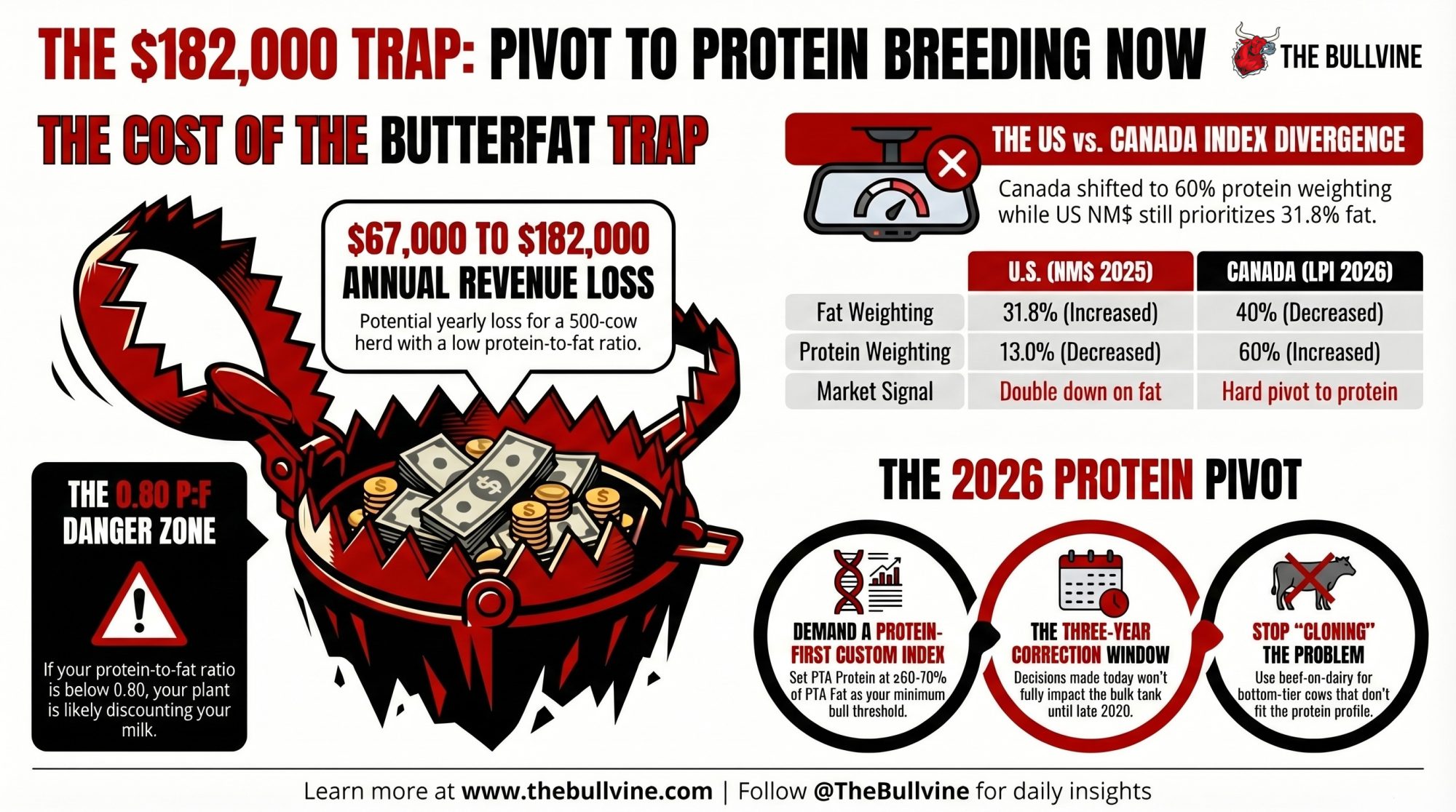
Executive Summary: A 500-cow Western cheese herd whose protein-to-fat ratio has drifted from 0.82 to 0.77 is giving up $67,000 to $182,000 per year in component revenue — and the sire picks that created the mismatch won’t cycle out of the milking string until 2029. CoBank’s April 2026 analysis declared the U.S. “structurally short on protein and long on butterfat,” a shift driven by a decade of FMMO signals and NM$ weightings that rewarded maximum fat production. The NM$ 2025 revision deepened it: CDCB bumped fat’s index share to 31.8% and cut protein to 13.0%, right as CME spot butter crashed from $2.44 to $1.50/lb in fifteen weeks. Canada read the same global data and went the opposite direction — Lactanet’s April 2026 LPI revision shifted production weighting to 60% protein. The margin squeeze hits hardest at cheese-market herds where plants discount excess fat and pay up for protein, pushing well-managed operations toward or below Penn State’s $7.41/cow/day IOFC breakeven. Breeding changes made this spring won’t produce fresh heifers until late 2028, so your immediate move is pulling DHIA records, graphing your P: F trend, and demanding a protein-first custom index from your AI rep — not another NM$ top-10 list.
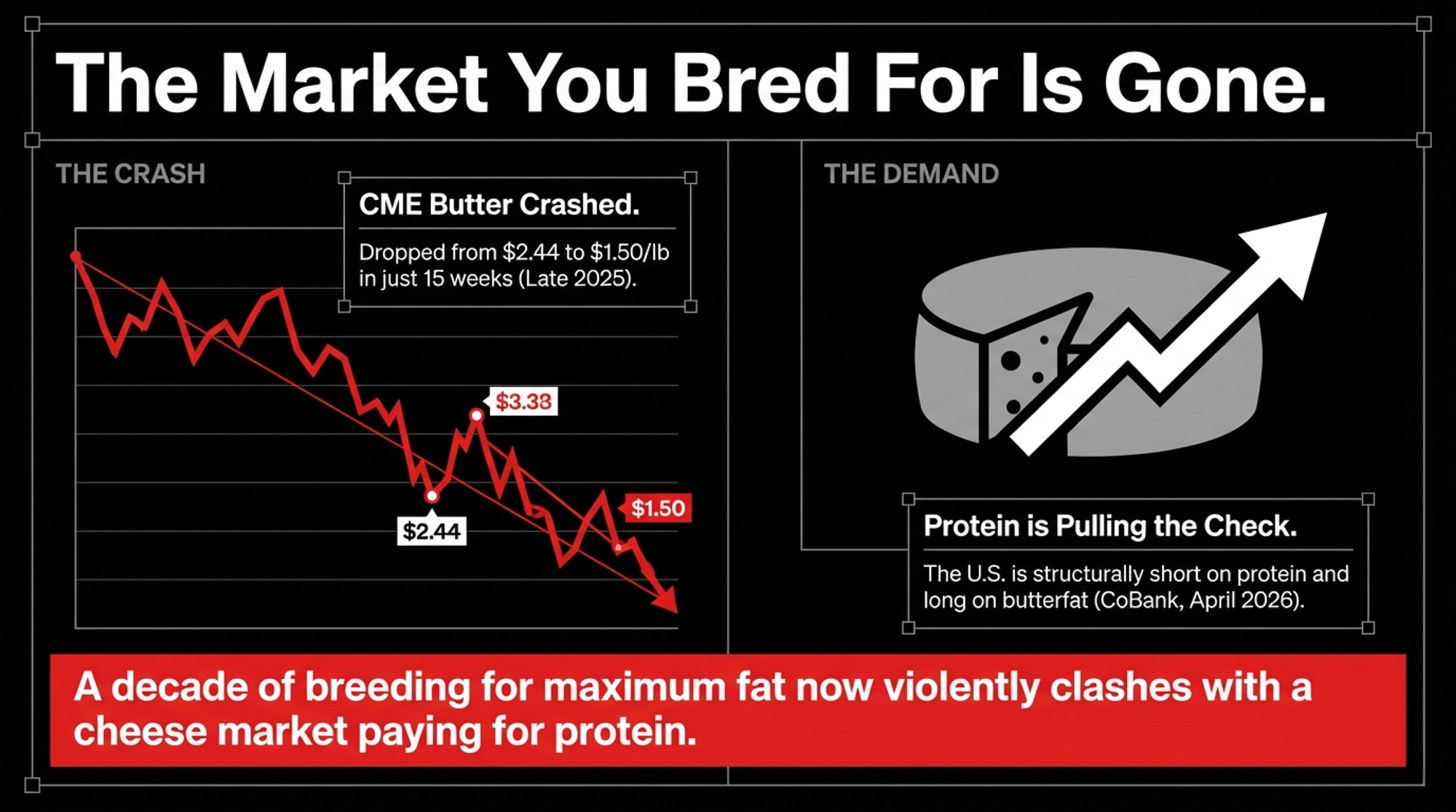
Butter fell from $2.44/lb to $1.50/lb in about fifteen weeks during late 2025, according to CME spot trading data. That drop hit right when holiday demand should’ve kept prices propped up, and it exposed a brutal truth for Western cheese herds: a decade of breeding for maximum butterfat now clashes with a market that’s paying you for protein.
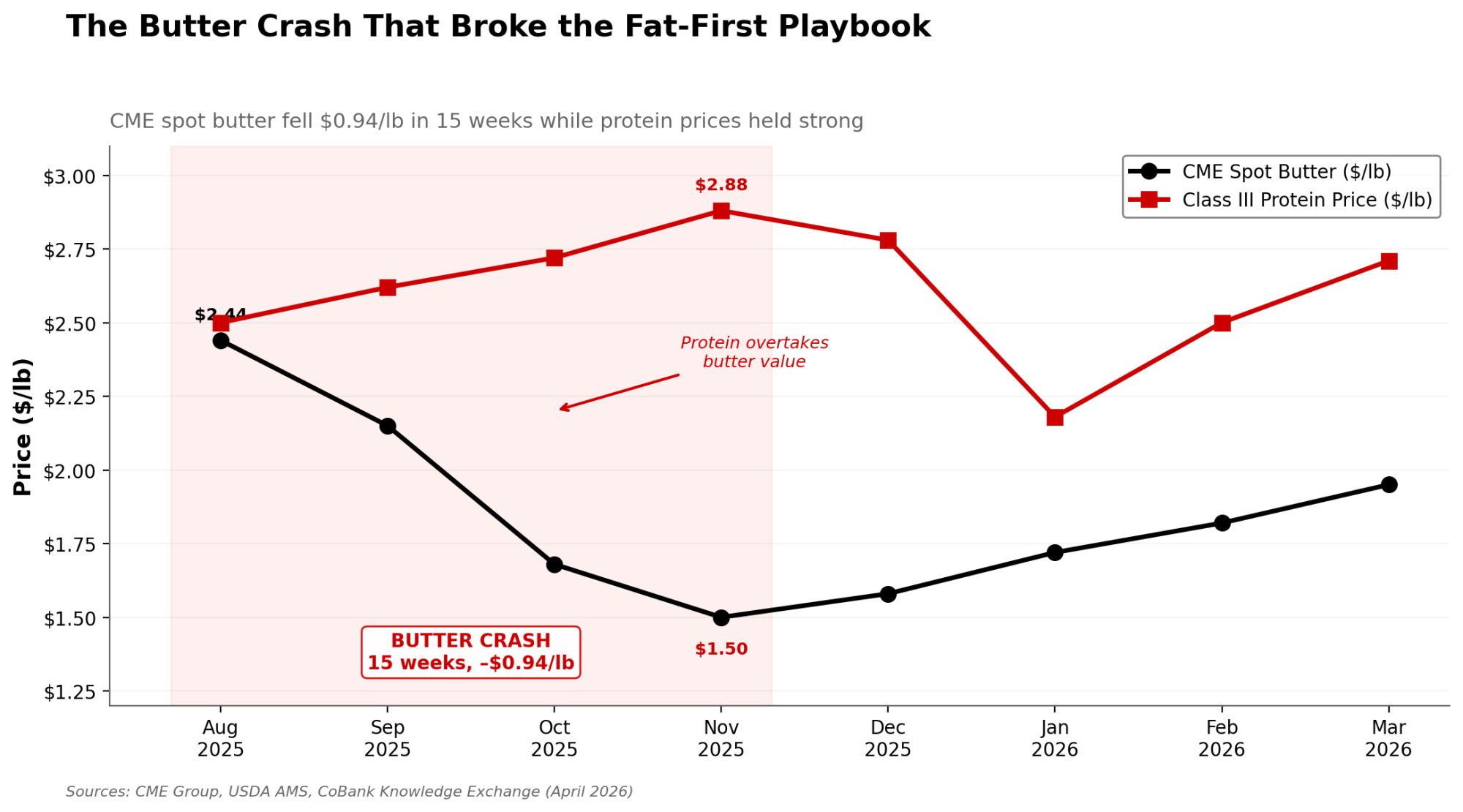
For a 500‑cow Western cheese herd that looks like a lot of component herds in Idaho and the Central Valley, that shift isn’t theoretical. At late‑2025 component prices, it translates to roughly $130 to $190 per cow per lactation in forgone protein revenue, depending on which month’s protein price you use. Those daughters are already fresh. No breeding decision you make this spring will meaningfully affect your bulk tank before late 2028.
The Sires You Picked in 2021 Just Freshened

Here’s how the biology works. A heifer born in early 2024 — conceived from matings made in mid‑2023, using bulls selected off 2021–2022 proof runs — is freshening right now at 23 to 24 months of age. She’s the physical output of decisions made when CME butter traded above $2.80/lb, and every AI catalog, co‑op meeting, and genetics rep pointed in the same direction: fat is money.
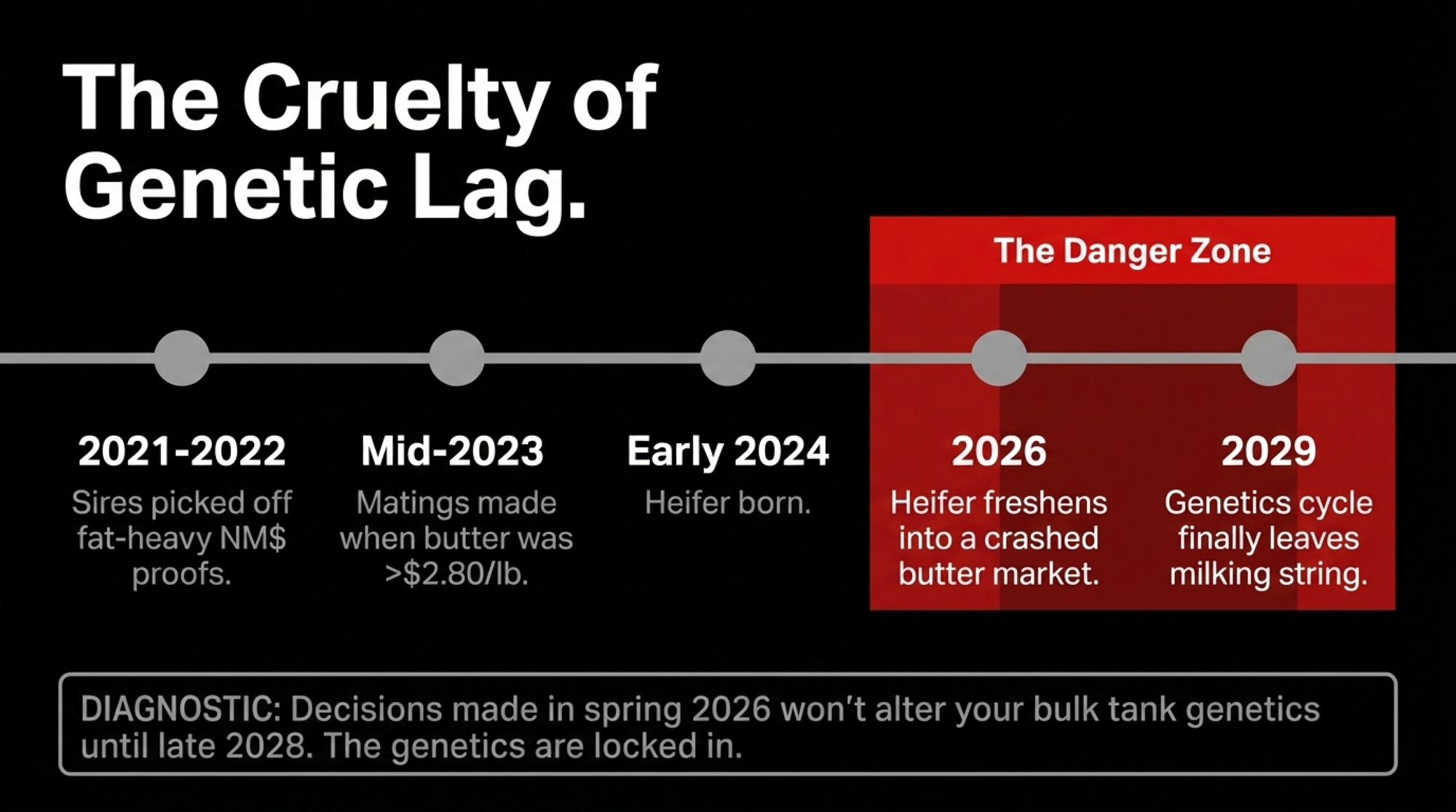
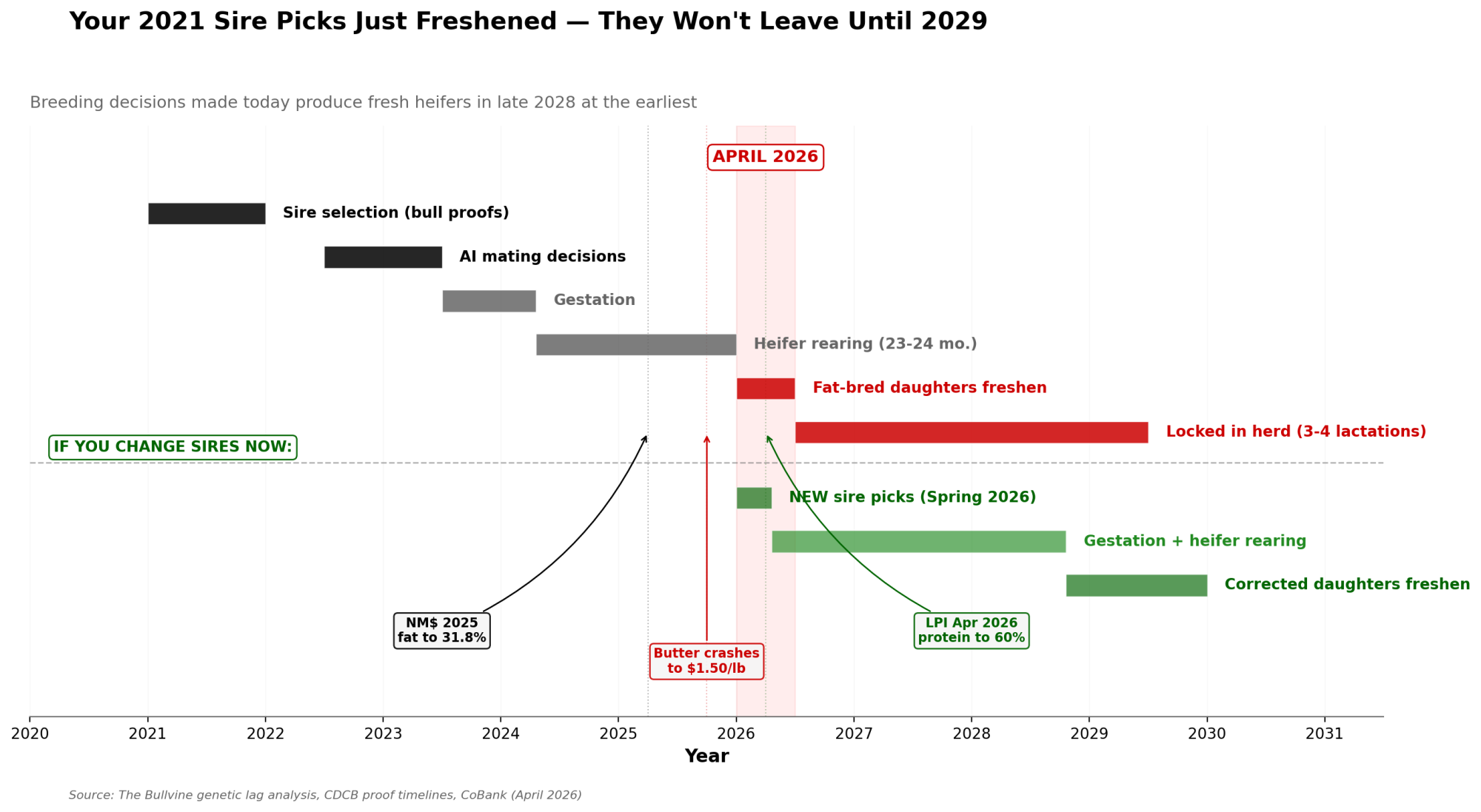
That wasn’t wrong at the time. FMMO component pricing passed those strong butter values directly into milk checks, and Net Merit reinforced the signal. But the timeline is cruel. By the time that heifer calves and starts shipping milk, the market she was bred for has already moved on. Butter’s trading $1.75 to $2.00/lb. Protein is pulling your milk check. And she’ll be in your herd for three to four more lactations before she leaves.

Cara Murphy at HighGround Dairy was among the first analysts to publicly flag the divergence. By late August 2025, HighGround was tracking a CME spot butter market that fell roughly $0.45/lb over the month — about an 18% decline from early‑month levels. CoBank’s September 25, 2025, report, co‑authored by Corey Geiger and Abbi Prins, carried a title that read like a warning label: “While U.S. Leads Milk Component Growth, Butterfat May Be Growing Too Fast”. Geiger put it plainly: “For 10 years, the market couldn’t supply enough of it, and now there’s an oversupply — it’s almost too much of a good thing”.

By then, the genetics were settled.

The Index That Told Everyone to Double Down

The comforting story is that the index had your back. The reality: it pushed you further into the problem.
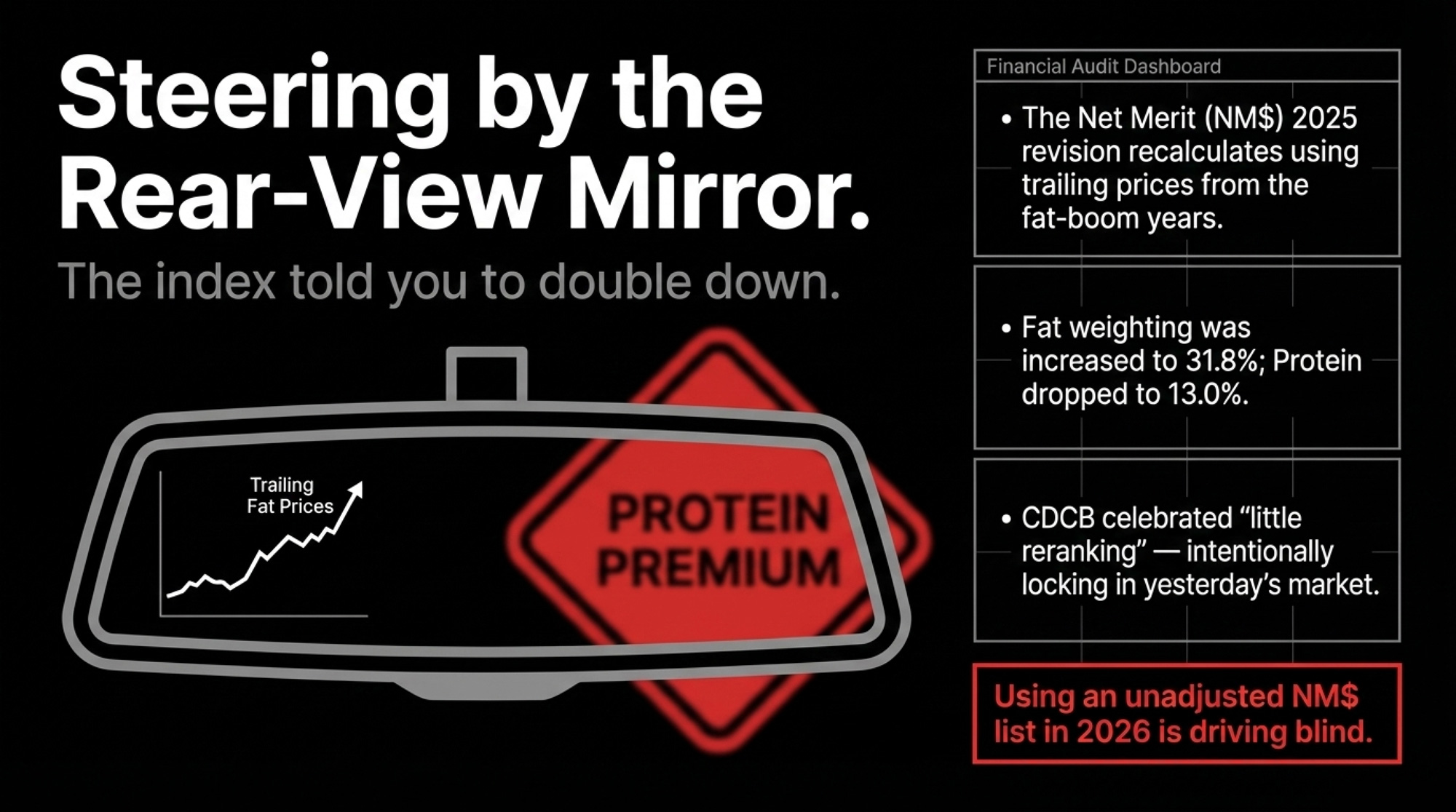
The Net Merit 2025 revision — designed by Dr. Paul VanRaden at USDA’s Animal Genomics and Improvement Laboratory and implemented through CDCB on April 1, 2025 — recalculated economic trait weights using trailing prices from the fat‑boom years. The result: NM$ 2025 increased butterfat’s share of the index from 28.6% to 31.8%and cut protein’s share from 19.6% to 13.0%. CDCB highlighted the 0.992 correlation with the previous version as a success, promising “little reranking”.

That’s the inertia of the index. By the time a lifetime‑profit index gets revised on several years of trailing prices, it’s basically a rear‑view mirror tool being used to drive a high‑speed vehicle. It smooths out noise — and locks in yesterday’s market. That’s not a design flaw if you treat NM$ as one input among many. It becomes a problem when it’s the only filter you use in a market that just repriced butterfat by roughly 40% in a single quarter.

Canada went the other way.

U.S. vs. Canada: Same Data, Opposite Signal
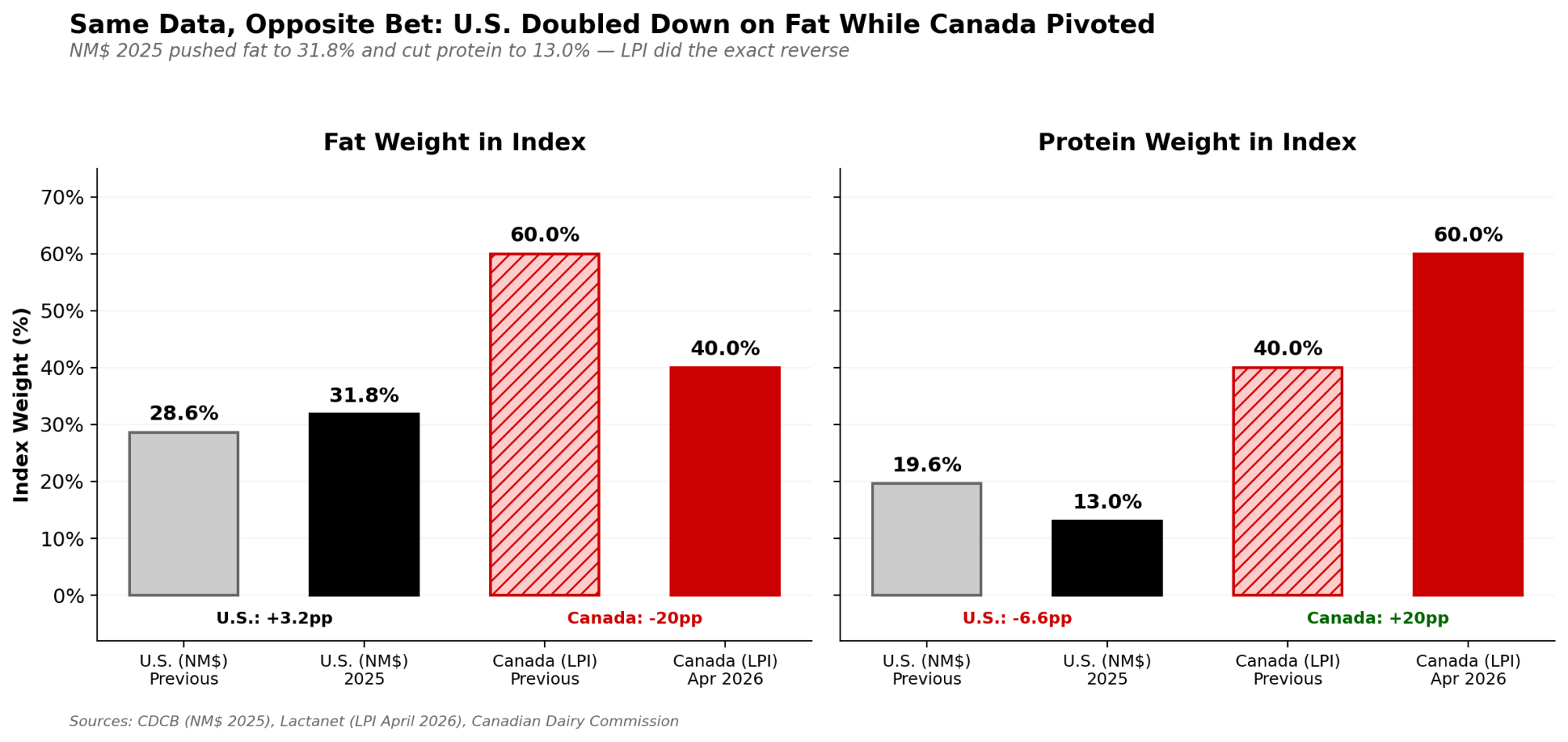
FeatureU.S. (NM$ 2025)Canada (LPI April 2026, Holstein)
Fat WeightingIncreased to 31.8%Decreased to 40% (from 60%)
Protein WeightingDecreased to 13.0%Increased to 60% (from 40%)
Market Signal“Stay the course on fat.”“Hard pivot to protein.”

Lactanet’s April 2026 changes to LPI production weights were a direct response to new component pricing in Canada’s supply‑managed system. The Canadian Dairy Commission told producers at a February 25, 2026, session to stop pushing butterfat relative to protein and to rebalance their solids. Western Canada shifted pool pricing from 85% fat / 10% protein to 70% fat / 25% protein, effective April 1, 2026, while the P5 eastern provinces restructured their own component pay with a heavy emphasis on achieving a solids‑non‑fat‑to‑butterfat ratio of 2.2 or higher.

Same global demand story. Two very different signals. One system told you to pivot toward protein. The other told you to double down on fat.

How Much Does the Genetic Lag Really Cost Per Cow?

P:F RatioProtein % (at 4.25% Fat)Lost Protein (lb/cow/day vs. 0.82)Annual Loss/Cow ($2.71/lb protein)500-Cow Herd Annual Loss
0.823.49%0.00$0$0 (baseline)
0.803.40%0.08$66$33,000
0.783.32%0.16$132$66,000
0.773.27%0.20$165$82,500
0.763.23%0.23$190$95,000
0.743.15%0.31$257$128,500

For most of the last decade, high butterfat tests lined up with a strong milk check. When protein prices sit $0.70 to $1.00/lb above butterfat, the math flips.

Walk through it with barn numbers. Take a 500‑cow Western cheese herd averaging 90 lb/day and testing at 4.25% fat. At a protein‑to‑fat ratio of 0.82, that herd produces about 3.49% protein. At 0.77, it’s closer to 3.27%. You’re talking roughly 0.19 to 0.22 lb less protein per cow per day, depending on your exact test.
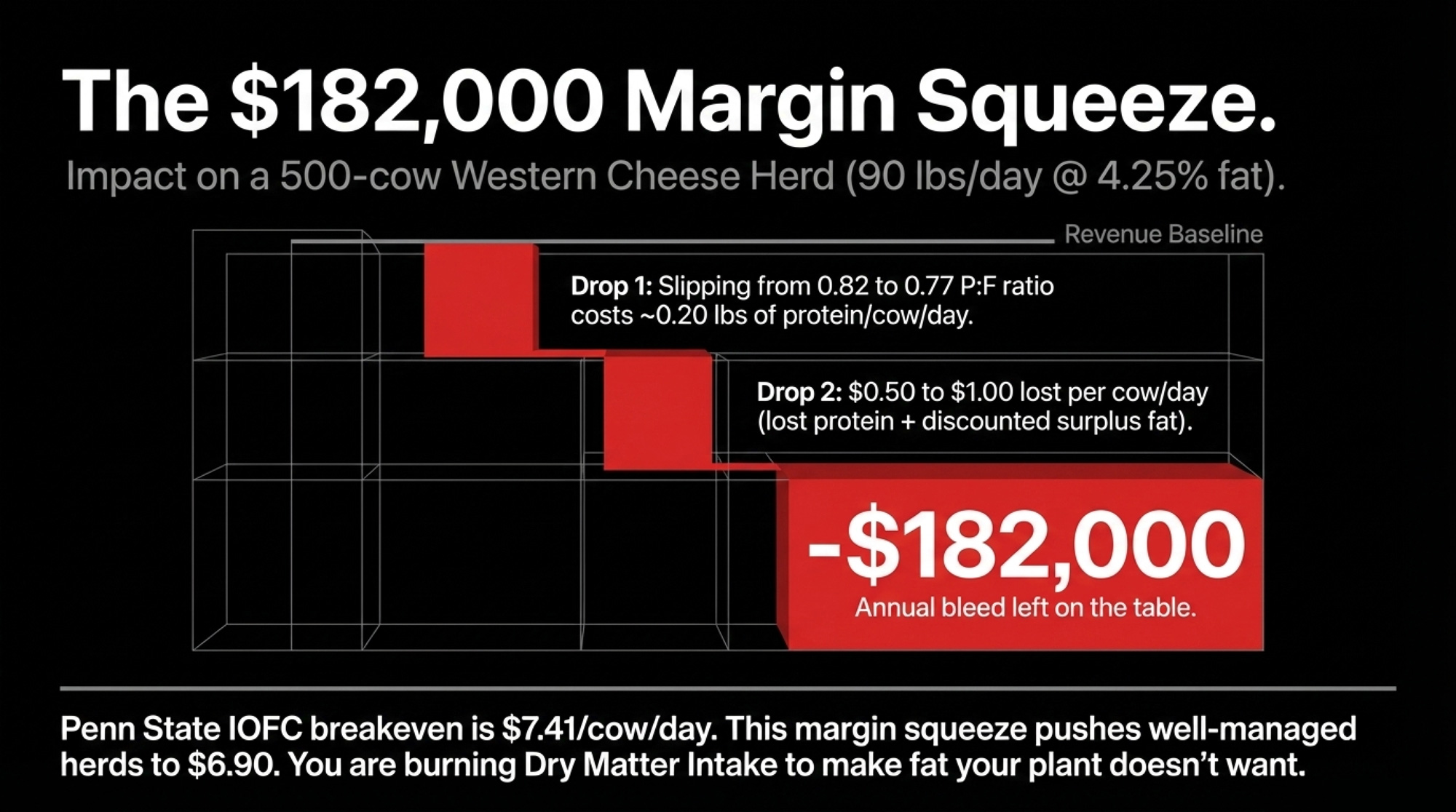
Running the Numbers — 500‑Cow Herd, 2025–26 Prices.

  • Lost protein per cow per day: ~0.19–0.22 lb (P: F 0.82 vs 0.77 on 4.25% fat at 90 lb/day). 
  • Protein value (Class III component price, October 2025 per USDA AMS): $2.8761/lb
  • Daily revenue gap per cow: 0.20 × $2.88 ≈ $0.58.
  • Per 305‑day lactation: ~$176 per cow.
  • Annual herd‑level impact (500 cows): ~$88,000.

At January 2026’s lower protein price (~$2.18/lb), that same 0.20 lb gap is roughly $0.44/cow/day — about $134/cow per lactation, or ~$67,000 for 500 cows.
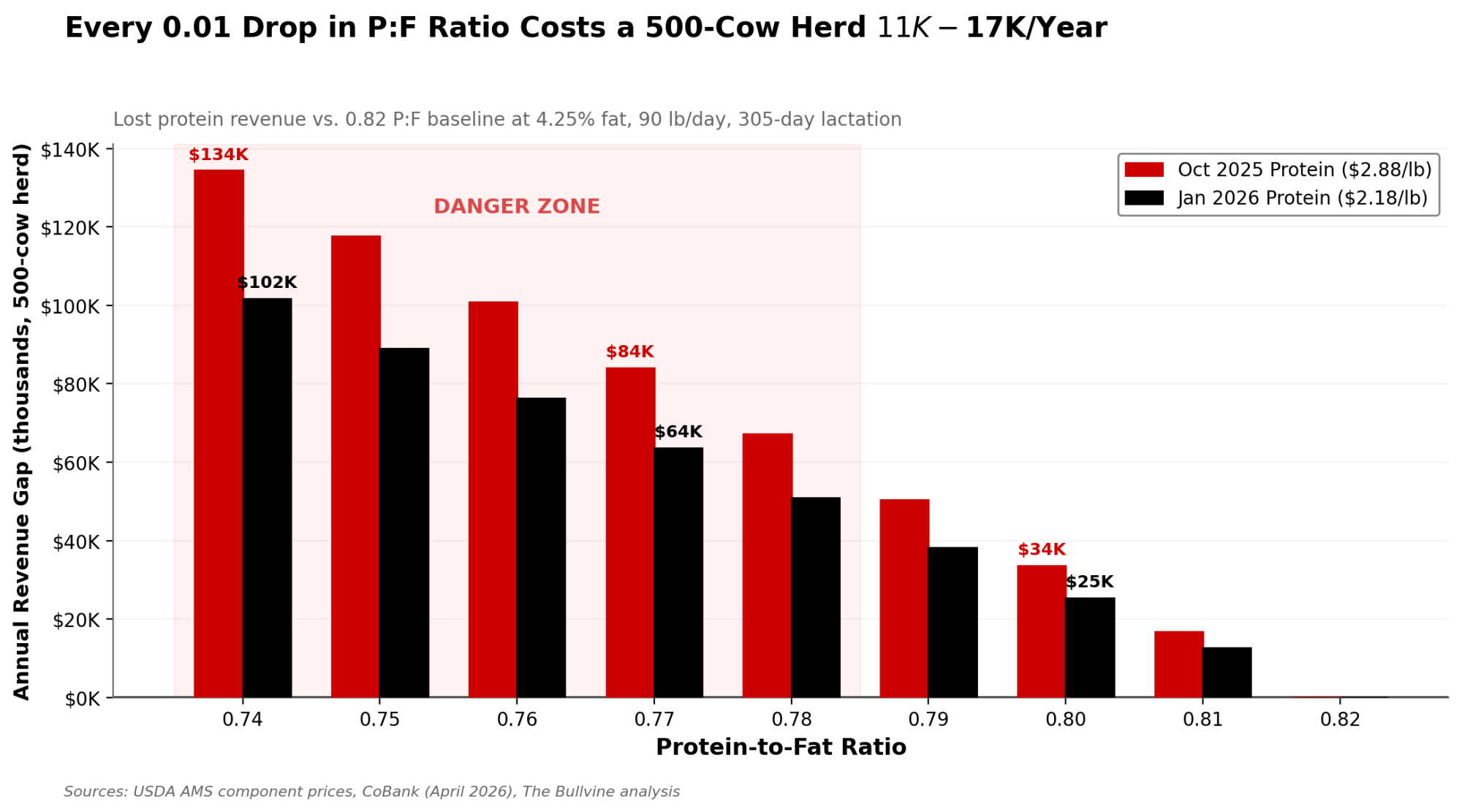
If your plant is also discounting excess fat above standardization targets, the gap can push toward $1.00/cow/day, or roughly $182,000/year, once you account for both lost protein revenue and fat that isn’t being fully valued.

There’s a feed‑efficiency angle here too. High‑fat milk generally comes with a higher metabolic demand. When butterfat is cheap, and protein is where the money is, you’re not just leaving revenue on the table — you’re burning Dry Matter Intake to make pounds of fat your plant doesn’t really pay for.

Through 2025, co‑op field staff told The Bullvine their plants were handling the fat glut with weaker fat differentials, caps on premiums, and discounted rates on surplus above standardization targets. In several cases, producers shipping at around 4.3% fat and 3.0% protein found that neighbors shipping at 3.9% fat and 3.2% protein were getting better net checks. The plant’s economics reward protein and balanced solids, not maximum fat. Public contract language confirming this is scarce, but the field reports from multiple Western cheese plants were consistent.

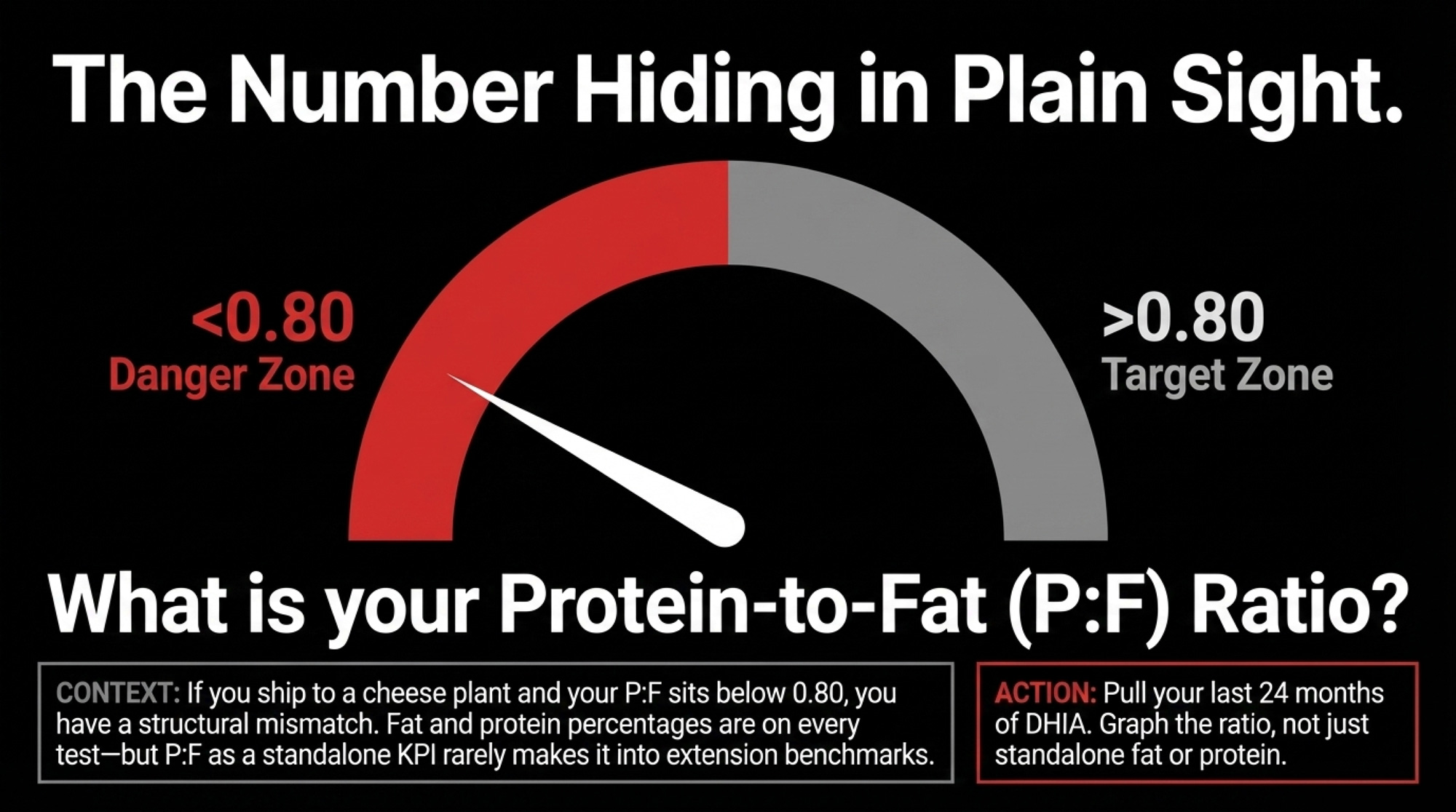
The number that rarely shows up on a DHIA summary — and probably should — is the protein‑to‑fat ratio itself. Fat and protein percentages are on every test and every milk check. P: F as a standalone KPI rarely makes it into extension benchmarks or co‑op field reports. It hides in plain sight.

What Protein‑to‑Fat Ratio Should Western Cheese Herds Target?

Geiger told a USDA Outlook audience in February 2025 that over 80% of U.S. farmgate milk now goes into manufactured products by volume— cheese, butter, powders, yogurt. Those products depend on milk solids, especially protein. Fluid volume is secondary.

CoBank’s April 8, 2026, report called the U.S. “structurally short on protein” and argued that butterfat would have to find new markets, with exports doing a lot of the work. The August 2025–March 2026 whiplash in Class IV futures — more than $5/cwt swings in five months — was the market trying to digest that imbalance. That wasn’t a one‑off.

There’s early evidence that herds are responding on the nutrition side — but don’t mistake a ration tweak for a genetic fix. Geiger noted in an April 3, 2026, analysis that U.S. protein pounds grew 3.8% to 6.0% from December 2025 through February 2026, while butterfat growth ran 3.6% to 5.4% over the same window — meaning protein outpaced fat for three consecutive months. That’s encouraging, but it’s almost certainly a feed and management response: amino acid balancing, starch adjustments, forage quality improvements. The genetic composition of the milking herd hasn’t changed yet. It can’t — the biology won’t allow it for another two to three years.

For a 500‑cow Western herd on the wrong side of the component curve, the correction timeline is pinned by biology:

  • Sire changes you make in spring 2026 create heifers born early 2027, freshening late 2028 or early 2029. 
  • Meaningful herd‑level P: F shift shows up in 2029–2030, as those corrected daughters replace 2019–2022 genetics through culling and normal turnover. 

That’s a three‑to‑five‑year window where you’re structurally behind the neighbor who already fits their plant.. At $0.50 to $1.00/cow/day — the range implied by the math above — a 500‑cow operation faces roughly $91,000 to $182,000 per year in margin gap.

How much room do you actually have? The Bullvine’s analysis in “Ishler vs. Ferreira: The Feed‑Cost Trap Hiding $547,500 in Your IOFC” showed Virginia Ishler’s Penn State Extension IOFC benchmark puts breakeven at $7.41/cow/day. In March 2026, Class III prices of $16.16/cwt per USDA AMS, when applied to Ishler’s IOFC framework, put a typical well‑managed herd at roughly $6.90/cow/day in IOFC. Losing $0.50 to $1.00 off that base is a 7% to 15% margin haircut — sustained over years, not months. It pushes a lot of herds below that $7.41 breakeven.

Is Your AI Rep an Advisor or Just Moving Product?

AI companies saw the same CoBank charts, the same HighGround Dairy price curves, and the same USDA component production trends you’re seeing now. They were in a better position than any one farm to notice that NM$ was still fat‑heavy while the market started paying for protein.

From what we saw in catalogs and on‑farm conversations, many breeding programs were still leaning on fat‑heavy lists even after butter had slipped under $2.00.

That’s why the question can’t just be “when did they update my lineup?” It has to be, “Is my program built around my plant’s economics, or around whatever semen the catalog happens to be pushing?”

The CDCB board that approves NM$ revisions includes AI companies, breed associations, co‑ops, and producers. A 0.992 correlation between old and new NM$ reflects an intentional choice to prioritize stability and avoid major reranking. In practice, that stability also means existing semen inventories and marketing narratives face less disruption when economics change. When “little reranking” is celebrated as a success, it signals that the system is prioritizing index stability — sometimes at the expense of how quickly you can pivot with the market.

VanRaden’s description of NM$ as a lifetime profit index under “average U.S. conditions” is technically right. Smoothing noise is part of the design. But in a genomics era where you can change a herd’s direction every 2.5 years, an index recalculated every few years off trailing prices becomes a rear‑view mirror. If you use it unthinkingly, you’re steering by where the market was, not where your milk check is today.

How Should Western Herds Recalibrate Sire Selection in 2026?

You can’t fix the cows that have already freshened. You can stop digging the hole deeper and line up your breeding, feeding, and risk tools with where your plant is actually making money.

TimelineActionTarget MetricRed Flag If…
Next 30 daysPull 24 months of DHIA, calculate P:F ratio trendP:F ratio graphed monthlyP:F below 0.80 and trending down
Next 30 daysGet plant’s ideal composition in writingPlant-specific P:F targetRep can’t provide a number
Next 30 daysAudit sire lineup: flag bulls where PTA Protein < 60% of PTA Fat% of lineup meeting thresholdMore than 40% of bulls fail
Next 90 daysSwitch from NM$ to CM$ or custom plant-weighted indexPrimary selection index changedAI rep won’t build a custom index
Next 90 daysImplement P:F-aware ration with nutritionistMonthly IOFC tracking P:F, target +0.1–0.2 pt protein testNo monthly IOFC report; IOFC below $7.41/cow/day
Next 90 daysRun DRP component option analysisPremium vs. indemnity modeling at your fat/protein testsUsing Class III coverage only when component option fits better
12-monthGenomic test heifer pipeline; sexed semen on top 50%, beef-on-dairy on bottom% of replacements from protein-indexed matingsStill making replacements from P:F < 0.80 dams
12-monthStress-test 3-year cashflow with $0.50–$1.00/cow/day dragCashflow model at current cow countModel breaks at $0.50/cow/day drag
12-monthEvaluate breed mix / crossbreeding at current protein pricesProtein revenue per lb DMI comparisonRelying on 2021 crossbreeding math

In the next 30 days:

  • Pull your last 24 months of DHIA and calculate your protein‑to‑fat ratio. Not just fat. Not just protein. P: F. Graph it. If you’re below 0.80 and shipping to a cheese plant, you’ve got a problem you can put a number on. 
  • Call your co‑op or plant field rep: “What’s your ideal milk composition for what you’re manufacturing, and where does my herd sit relative to that?” Get it in writing.
  • Sit your AI rep down and flip the agenda. “Show me my current sire lineup’s PTA protein relative to PTA fat. Flag every bull where protein is less than 60% of fat. Those are off the list.” Then ask for a protein‑first custom index ranked specifically for your plant’s economics, not a generic NM$ list. 
Red flag: If your rep can’t build a CM$ or custom index that fits your plant’s economics — or won’t show you the list — you’re not getting true advisory support. You’re just being sold semen. Custom indexes are no longer just for the top 1% of herds; in a volatile 2026 market, they are a survival tool for the mid-sized 500-cow operation as well.

In the next 90 days:

  • Shift from NM$ as your primary filter to CM$ or a custom plant‑weighted index that pays for protein yield. Make PTA Protein ≥60–70% of PTA Fat your minimum bar on every bull. 
  • Work with your nutritionist on a P: F‑aware ration. Amino acid balancing, starch management, and forage quality can raise protein tests 0.1–0.2 points without blowing fat up further — but insist on monthly IOFC reports that track P: F, not just crude component percentages. You’ll spend some feed dollars; the goal is to move the revenue side faster while genetics play catch‑up. 
  • Run a Dairy Revenue Protection (DRP) analysis with your risk advisor. DRP’s component option lets you insure butterfat, protein, and other solids separately. In an Ohio State Extension walkthrough, a 250‑cow herd covering 5,000 cwt on the component option at 4.55% fat and 3.55% protein paid about $0.81/cwt in premium and collected an $8,775 net indemnity when component prices dropped — while the same herd on Class III coverage lost money on the premium. Federal subsidies cover roughly 44–55% of the premium at common coverage levels. 

Opportunity signal: When Class III or IV futures spike on short‑term tightness, that’s your window. The August–March 2025–26 swings showed how fast that window opens and closes.

The 12‑Month Reset

Over the next year, you’re not trying to win the race. You’re trying to stop losing ground.

  • Genomic test and tighten your female pipeline. Use sexed semen on the top half of heifers ranked on your new protein‑aware index. The bottom half doesn’t need to make replacements. She should be making a black calf. If a cow doesn’t fit the P: F profile your plant needs, her best contribution to your business is a terminal pregnancy, not another daughter just like her.
  • Stress‑test a three‑year cashflow with a $0.50–$1.00/cow/day drag. Multiply that by your cow count and plug it into your IOFC and lender conversations. If the model holds at that haircut, you’ve got room to ride out the genetic lag. If it doesn’t, you need a different plan — more scale, a different market, or a different timeline
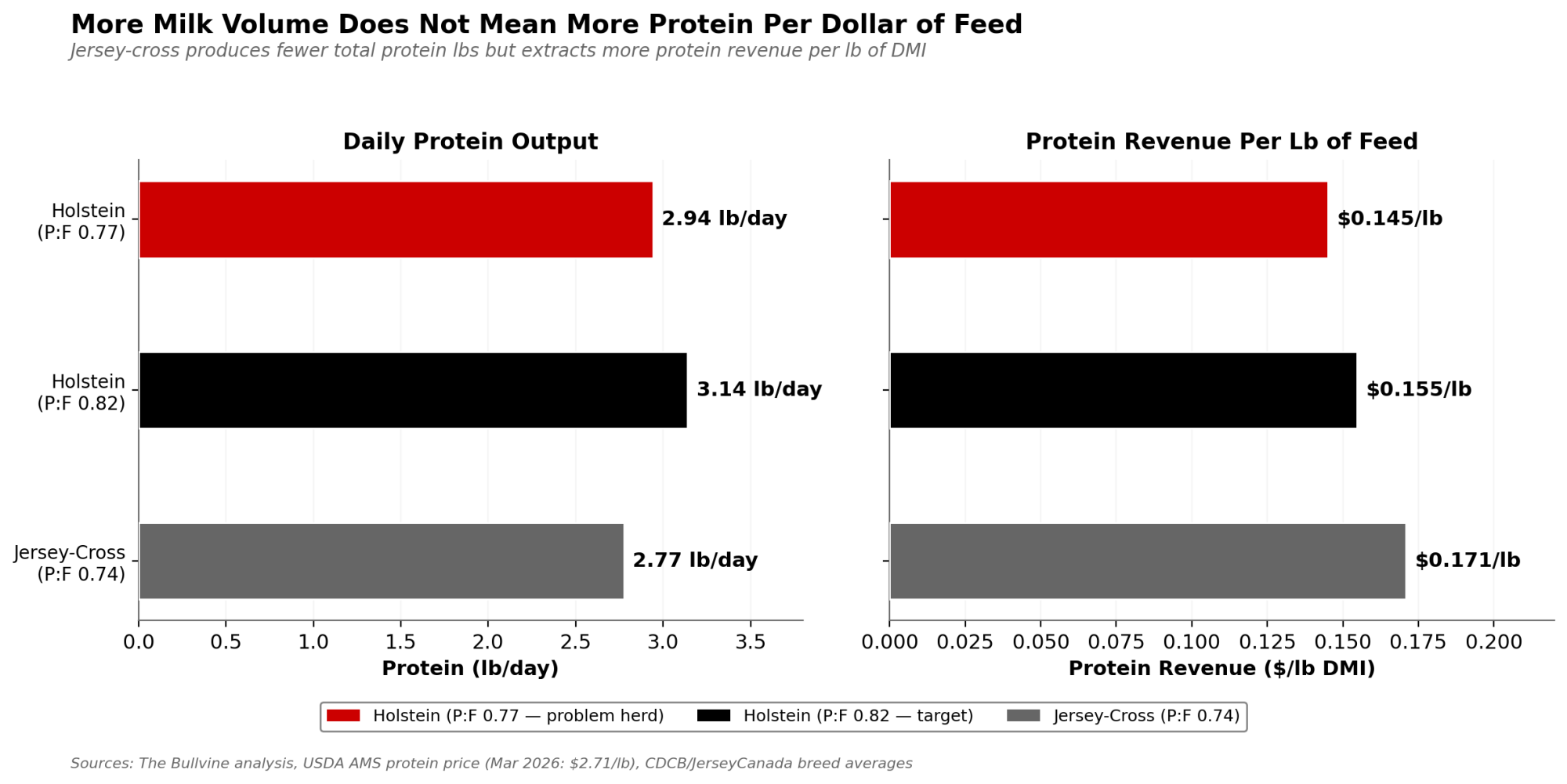
  • Revisit breed mix and crossbreeding math at current component prices. Jersey and Jersey‑cross cattle naturally run 3.6%–3.9% protein with strong protein pounds per pound of DMI. At 75 lb/day and 3.7% protein, a Jersey‑cross gives you about 2.78 lb of protein. A Holstein at 90 lb/day and 3.27% protein gives you about 2.94 lb. More total protein, yes — but at a higher feed cost per pound of protein shipped. With protein at $2.00+/lb and fat under pressure, that trade‑off deserves a fresh pencil, not a 2021 one. 
What This Means for Your Operation

  • Your P: F trend is now a strategic metric. If your protein‑to‑fat ratio has drifted down toward 0.77 while your plant wants protein, that’s a structural mismatch, not just a funny test. Graph it over the last two years and treat it like a KPI. 
  • Your index choice is a business decision, not a religion. If you’re still picking bulls off NM$ in a high‑protein cheese market, you’re using a rear‑view mirror to steer. Talk to your AI company about CM$ and custom indexes — or find one that will. 
  • Your cows have to earn their genetics. Any cow that doesn’t fit the plant’s P: F target probably shouldn’t be producing your next replacement. Beef‑on‑dairy isn’t just a fad; for many herds, it’s become the cleanest way to stop cloning a problem, as long as the calf market and packer access pencil out. 
  • Your insurance should match your actual risk. High‑fat herds in a butterfat‑glut world shouldn’t be hedging like textbook “average” herds. DRP’s component option and well‑timed futures/options can be the difference between riding out volatility and letting it eat your equity. 
  • Your advisors need to show their work. If your nutritionist can’t quantify how ration tweaks change P: F and IOFC — or your AI rep can’t show you a protein‑first sire list — that’s a performance issue, not just a style difference. 
Key Takeaways

  • If your protein‑to‑fat ratio sits below 0.80 and you’re shipping to a cheese plant, you’re in the danger band this article describes. Run the per‑cow math with your own component prices and see what that gap costs. 
  • If your sire lineup is still built off NM$ in 2026, you’re genetically positioned for a butterfat boom that’s already over. Rebuild your list using CM$ or a custom, protein‑weighted index and set hard PTA Protein vs Fat thresholds. 
  • If your 2027–2029 heifer crop looks just like your 2019–2022 cows on paper, you’ve locked in three more years of margin drag. Use genomics, sexed semen, and beef‑on‑dairy to change that trajectory now. 

Nobody’s getting beat up over 2021. Back then, you followed the incentives you were given. The point is to make sure you don’t repeat the same mistake in 2026 — letting a rear‑view‑mirror index and a fat‑first mindset cannibalize your milk check for another three to five years. The market’s told you what it values. The question now is whether your genetics, your feed, and your advisors are listening.

Complete references and supporting documentation are available upon request by contacting the editorial team at editor@thebullvine.com.

Learn More

The Sunday Read Dairy Professionals Don’t Skip.

Every week, thousands of producers, breeders, and industry insiders open Bullvine Weekly for genetics insights, market shifts, and profit strategies they won’t find anywhere else. One email. Five minutes. Smarter decisions all week.
NewsSubscribe
First
Last
Consent

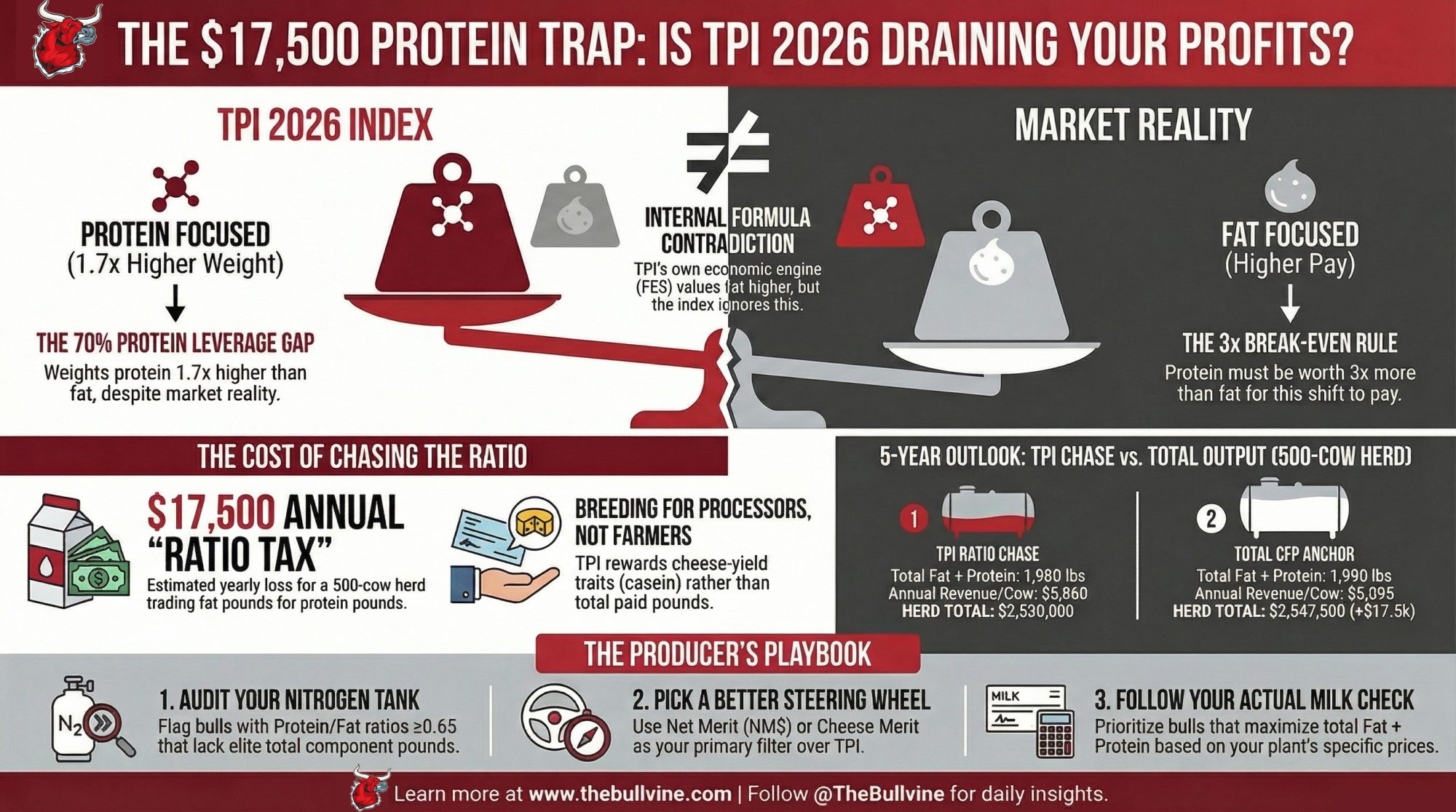
TPI 2026’s $17,500 Protein Trap: Breeding Holsteins for a Protein Market That Doesn’t Exist

Protein would have to be worth 3× fat for this TPI shift to pay. Your milk check says it isn’t. Where does that leave the bulls you’ve been loading into your tank?

[Editor note: “Mark H.” and “Sara L.” in this article are composite characters built from real barn math and industry context to illustrate decisions many 500‑cow dairies face in 2026.]

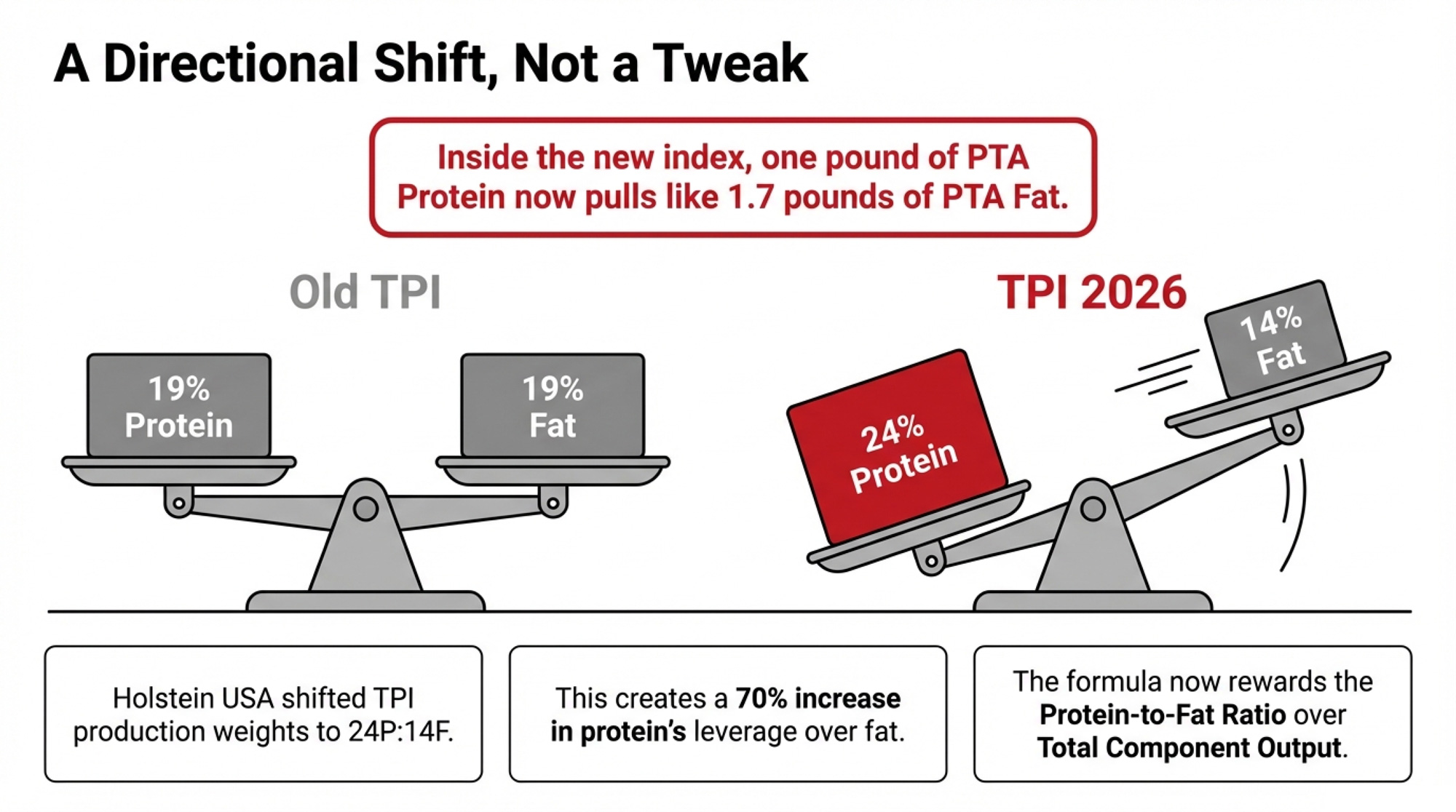
The new TPI weights don’t just tweak your sire list. They push the Holstein breed in a new direction for the next 10–15 years. This isn’t a milk check issue alone; it quietly changes the fundamental type of cow the industry breeds for over the next decade.

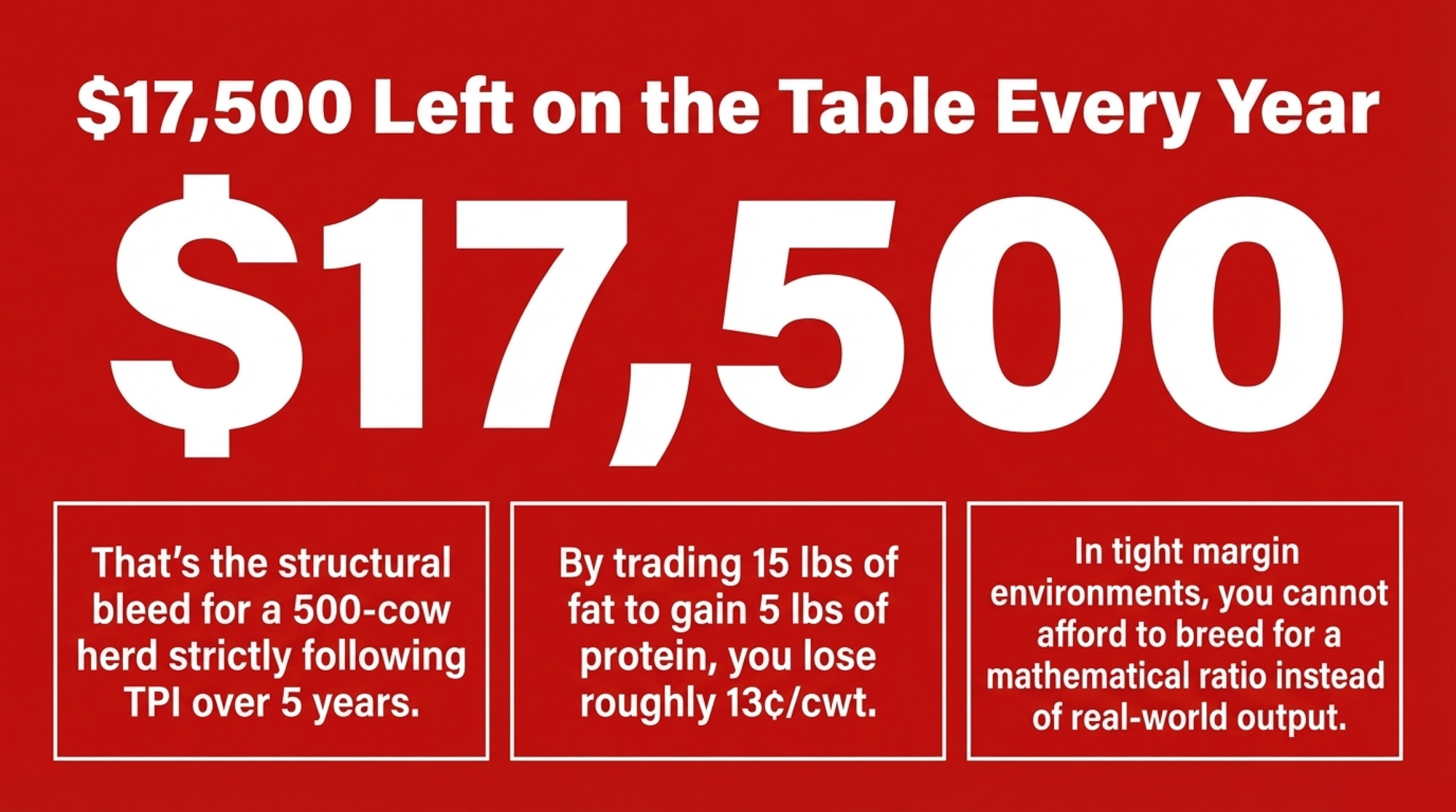
Holstein USA’s April 2026 TPI formula doesn’t just nudge protein; it rewards the protein‑to‑fat ratio over total output. That’s a fundamentally different breeding goal from previous iterations that treated fat and protein more evenly in the production slice. If you follow that signal unthinkingly in a US Class III component grid, a 500‑cow herd can easily leave about $17,500 a year on the table.

Mark H., who milks 500 Holsteins in New York, only saw “five‑point tweaks” when Holstein USA shifted TPI production weights to 24% protein and 14% fat, and Lactanet moved Holstein LPI production to 40% fat, 60% protein. Under pressure from reps and neighbors, he leaned into the new high‑TPI, protein‑heavy bulls — and that’s where the barn math started to disagree with his milk check.

2026 TPI Formula Changes: A Directional Shift, Not a Tweak

Holstein USA’s 2026 TPI formula update increased the weighting on PTA Protein from 19 to 24 and decreased the weighting on PTA Fat from 19 to 14. That’s the headline change in the production slice.

By early 2025, Mark’s Federal Order milk check looked like most US Class III/IV component checks. USDA Class III and IV component reports through 2023 and into 2025 often show butterfat prices near the high‑$2.80s to low‑$3.00s per lb, with protein commonly in roughly the $1.80–$2.50 per lb range, depending on the month and year. In several recent months, that’s meant fat is worth more per pound than protein on his component line.

At the same time, the TPI formula did something very different inside the index. It moved the production weights from:

  • 19% protein, 19% fat → to → 24% protein, 14% fat.

On the surface, you see a five‑point bump to protein and a five‑point cut to fat. Simple enough.

When Mark’s nutritionist and genetics advisor, Sara L., put a pen to it at his kitchen table, she wrote one line that changed the whole conversation:

  • Old protein:fat leverage = 19:19 = 1.0
  • New protein: fat leverage = 24:14 ≈ 1.71

Inside the production slice of TPI, one pound of PTA Protein now pulls like roughly 1.7 pounds of PTA Fat. That’s roughly a 70% increase in protein’s leverage over fat, even though Holstein USA’s own description says the formula is designed to yield “additional pounds of fat and protein, with slightly more emphasis on protein.”

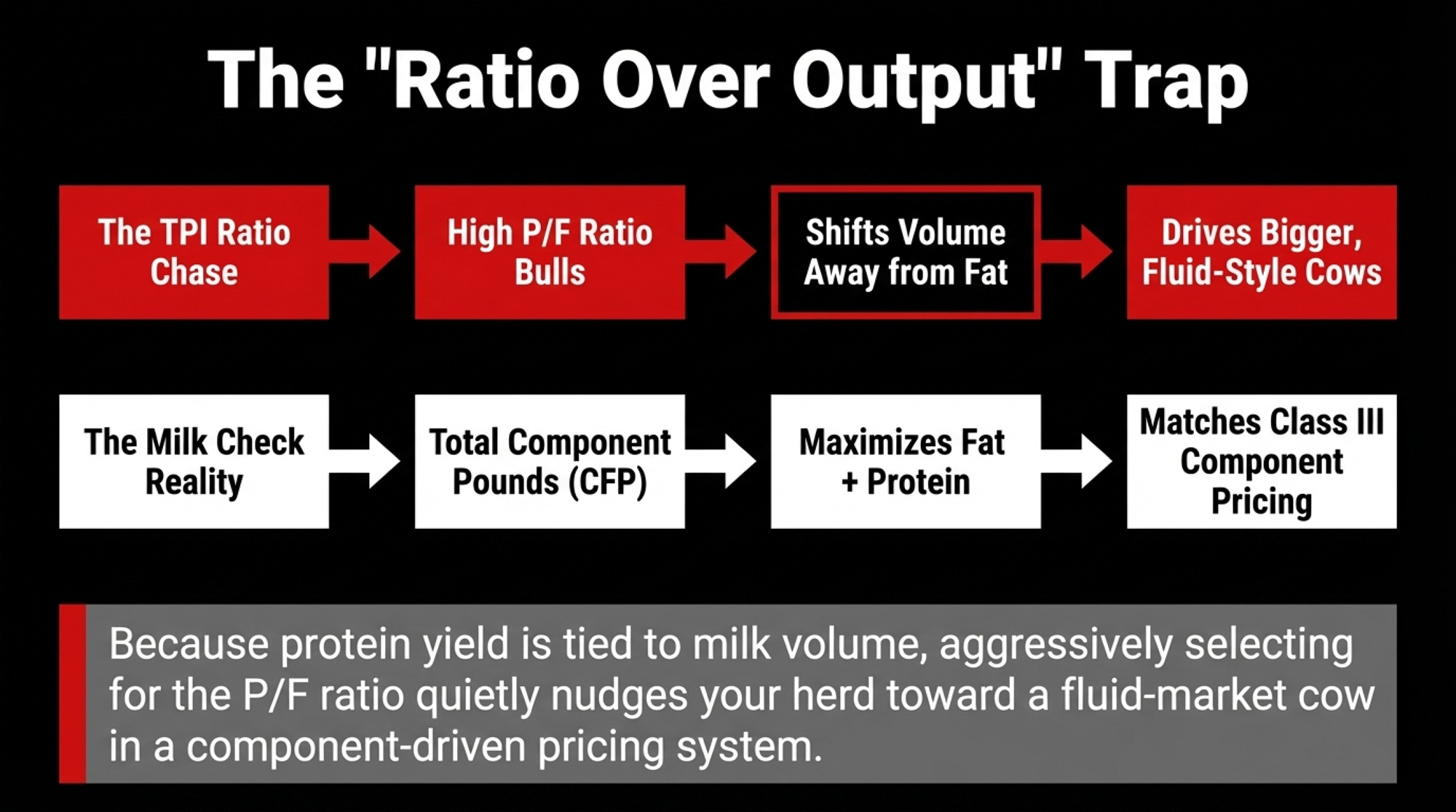
Because protein yield is closely tied to milk volume in most Holstein evaluations, loading selection on the P/F ratio nudges herds — and over time the breed — toward higher‑volume, more fluid‑style cows, even while most plants continue to pay based on total fat + protein sold.

The formula isn’t creating more total components — it is redistributing emphasis. A hard P/F chase moves components away from fat instead of maximizing total pounds of fat + protein you sell. TPI is now quietly rewarding the ratio more than the total output. That’s a different breeding goal than the one that built the modern high‑component Holstein.

Lactanet did something similar but more transparent. Its April 2026 bulletin spells out that shifting Holstein LPI production from 60F:40P to 40F:60P is meant to “better reflect anticipated changes in milk pricing and processor demand, particularly the growing emphasis on protein,” and that it should cause only minor reranking among top animals. Canada’s move is explicitly anchored in its quota‑based pricing math and processor demand; it’s internally consistent with that market.

Holstein USA’s change, by contrast, is big enough to push fat‑heavy bulls down the list and protein‑heavy bulls up, even when no new daughters are added. The 24P:14F production weighting behaves more like a new rulebook for which cow wins — especially in how it reshuffles bulls with very different fat vs protein profiles. Mark saw that on the spring lists. He just hadn’t tied it back to dollars or to the kind of cow he was breeding for 2036.

2026 TPI vs Total CFP: Two Paths for the Same 500‑Cow Herd

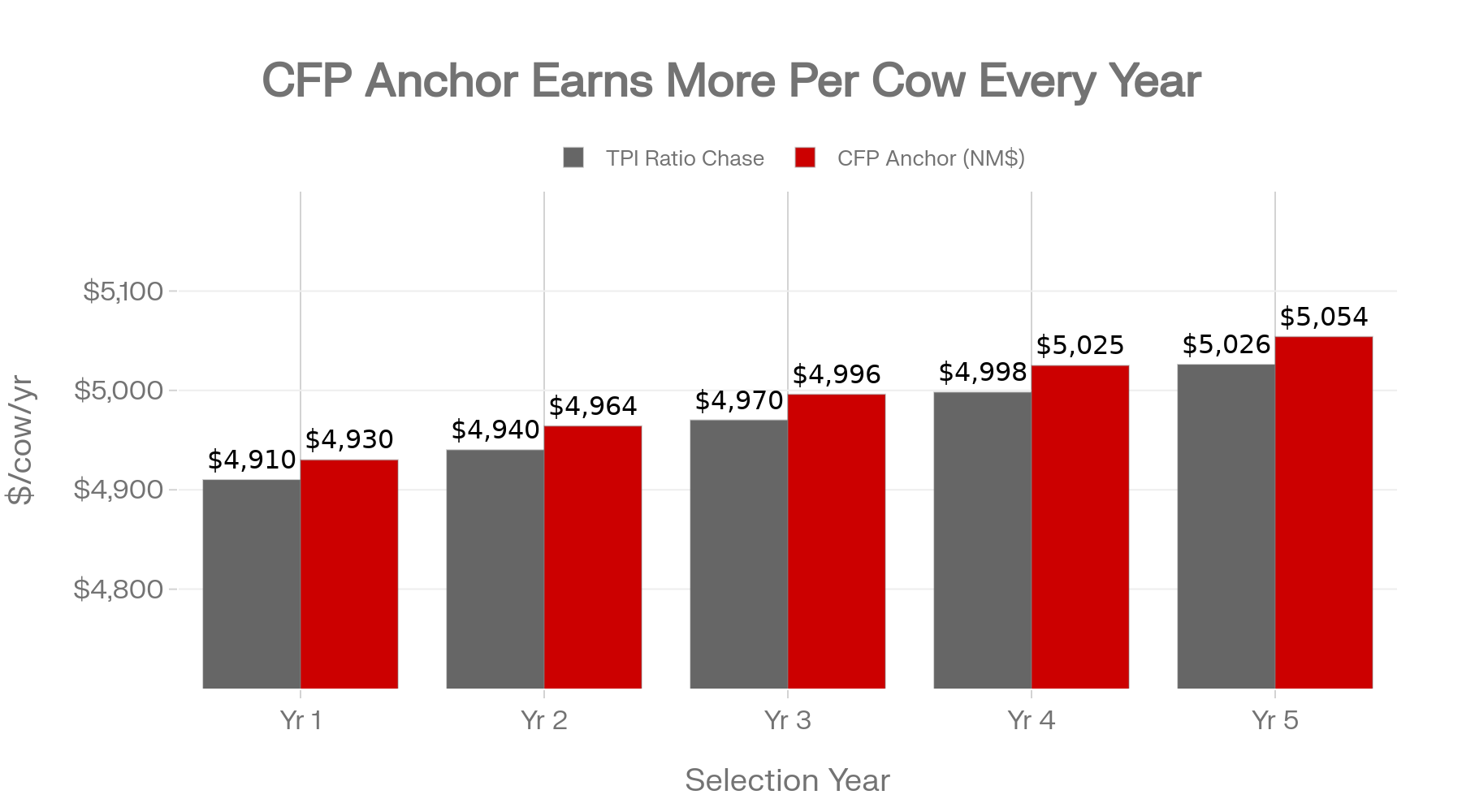
To get past the rhetoric and the rankings, Sara asked Mark to walk through two very different five‑year futures off the same starting herd. Same cows today, different sire lists from 2026 through 2030.

They agreed on a realistic starting point for his 500‑cow Holstein herd:

  • Fat: 1,070 lb/cow/year
  • Protein: 840 lb/cow/year
  • Total components (CFP): 1,910 lb/cow/year

That’s roughly a 26,700‑lb Holstein at ~4.0% fat and 3.1% protein — very normal for a well‑managed commercial herd.

These gains are illustrative — built to show directional outcomes, not to predict any specific bull’s future proof. Actual genetic trends will vary by herd, sire choice, and whatever comes out of the April evaluations.

Path 1: Follow the 2026 TPI Formula — Chase the Ratio

If Mark listens to the new 24P:14F signal and leans into bulls that look fantastic on updated Holstein TPI 2026 lists, he’s going to pick a lot of sires that:

  • Carry high PTA Protein
  • Have only moderate PTA Fat
  • Sit at P/F ratios ≥0.60

Those are the profiles that jumped when TPI changed — protein‑strong, fat‑lighter bulls that TPI now likes roughly 1.7× more per pound of protein than per pound of fat.

Looking at typical genomic bull PTAs and recent trends, Sara used conservative, scenario‑level genetic gains for a herd that picks sires that way:

  • +6 lb PTA Fat per year
  • +8 lb PTA Protein per year

Over five years of bull selection, that’s +30 PTA Fat and +40 PTA Protein at the sire level. With a realistic ~2.5‑year lag from bull usage to milking cows, about half of that gain has flowed into the cow herd by Year 5:

  • +15 PTA Fat, +20 PTA Protein in the herd.

Translate PTAs to actual production (roughly 2 lb actual per lb PTA on mature daughters):

  • +30 lb fat+40 lb protein per cow per year by Year 5.

So if Mark “follows TPI,” his Year‑5 average cow looks like this:

  • Fat: 1,070 + 30 = 1,100 lb
  • Protein: 840 + 40 = 880 lb
  • Total CFP: 1,980 lb
  • P/F ratio (by lb): 880 ÷ 1,100 ≈ 0.80

He’s now got a prettier P/F ratio and more protein. That’s what the formula rewards.

Path 2: Follow Total Output — Anchor on Combined Fat + Protein

The alternative is boring but powerful. Ignore the TPI noise and:

  • Filter bulls first on a profit index that actually starts from dollars — Net Merit (NM$), Cheese Merit, or a similar economic index.
  • Within that filtered list, sort bulls by Fat PTA + Protein PTA (total CFP).
  • Keep bulls with P/F in a sane band, roughly 0.50–0.60, so you’re not accidentally tanking protein.

That’s very similar to how Lactanet positions Pro$ and LPI: as profit‑oriented tools tuned to Canada’s component pricing and costs, with the production subindex explicitly anchored to fat and protein yields.

For a herd following that logic, Sara assumed slightly different gains:

  • +9 lb PTA Fat per year
  • +7 lb PTA Protein per year

Over five years, that’s +45 PTA Fat and +35 PTA Protein among the sires, or about half in the cow herd by Year 5:

  • +22.5 PTA Fat, +17.5 PTA Protein.

Translate to actual:

  • +45 lb fat+35 lb protein per cow per year by Year 5.

Now Mark’s “CFP‑anchored” herd is at:

  • Fat: 1,070 + 45 = 1,115 lb
  • Protein: 840 + 35 = 875 lb
  • Total CFP: 1,990 lb
  • P/F ratio: 875 ÷ 1,115 ≈ 0.79

Notice what happened: the TPI‑driven path didn’t grow total CFP faster; it just redistributed pounds from fat to protein to achieve a prettier ratio. That is the “ratio over output” trap.

Because protein yield is closely tied to milk volume in most Holstein evaluations, selecting aggressively for the P/F ratio doesn’t just shift your component ratio — it tends to nudge herds toward higher‑volume, more fluid‑style cows. You’re nudging both your herd and, if enough herds follow, the breed toward a fluid‑market cow in a component‑driven system.

2026 Selection Paths for a 500‑Cow Herd (Year‑5 Scenario)

Metric (per cow/year)Path 1: TPI Ratio ChasePath 2: CFP AnchorDifference
Fat yield (lb)1,1001,115–15 lb
Protein yield (lb)880875+5 lb
Total CFP (lb)1,9801,990–10 lb
Fat revenue @ $3.00/lb$3,300$3,345–$45
Protein revenue @ $2.00/lb$1,760$1,750+$10
Total components revenue$5,060$5,095–$35/cow
500-cow herd annual loss–$17,500

The $17,500 Gap: Paper Cows vs Real Cows

To keep the math honest, Sara anchored everything to real US component prices.

USDA Class III and Class IV component reports through 2023 and into 2025 often show butterfat prices near the high‑$2.80s to low‑$3.00s per lb, with protein commonly in roughly the $1.80–$2.50 per lb range. In several recent months, that’s meant fat worth more per pound than protein on a Federal Order check.

For barn‑table math, she used simple, conservative averages:

  • $3.00/lb fat
  • $2.00/lb protein

She wasn’t trying to pick a magic month. She wanted Mark to see the difference.

Using the Year‑5 cows they just built:

Ratio herd (TPI‑driven)

  • Fat dollars: 1,100 lb × $3.00 = $3,300
  • Protein dollars: 880 lb × $2.00 = $1,760
  • Total components revenue: $5,060/cow/year

CFP herd (milk‑check‑driven)

  • Fat dollars: 1,115 lb × $3.00 = $3,345
  • Protein dollars: 875 lb × $2.00 = $1,750
  • Total components revenue: $5,095/cow/year

The difference:

  • $35/cow/year — in favor of the boring CFP herd.

At 500 cows:

  • $35 × 500 = $17,500/year.

On paper, the ratio‑focused herd “improved” faster. In the tank and on the check, the CFP herd won. That’s the danger of breeding for a mathematical ratio instead of real‑world output.

If your operation is already navigating tight margins under current milk prices, that $17,500 is serious money — the kind of structural bleed the Bullvine explored in “2025’s $21 Milk Reality: The 18‑Month Window to Transform Your Dairy Before Consolidation Decides for You,” which showed how a $21.60/cwt milk price could wipe out about $125,000 a year from a typical 500‑cow dairy’s profits if nothing changes.

Using the same 26,700 lb/cow:

  • 26,700 lb ÷ 100 = 267 cwt/cow/year

Then:

  • Ratio herd: $5,060 ÷ 267 ≈ $18.95/cwt
  • CFP herd: $5,095 ÷ 267 ≈ $19.08/cwt

While 13¢/cwt may not feel like a crisis in year one, over a decade, it represents a meaningful directional bleed — and it points the herd toward a more fluid‑style cow while your plant still pays you on components sold.

What Does the 3× Protein Break‑Even Really Mean for Your Milk Check?

Mark’s next question is probably the same one you’re thinking: “Sure, that’s with today’s pricing. What if protein really outpaces fat?”

So they stacked the deck for protein. Lactanet’s April 2026 article is explicit that they expect more emphasis on protein in Canadian milk pricing because of processor demand and SNF‑heavy products, and that LPI’s tilt is intended to reflect those anticipated pricing changes. Some specialty protein markets and niche contracts already pay a heavier protein premium than the standard Federal Order grid. The question is whether your check looks like that.

To mirror a “protein‑friendly” future, Sara tried:

  • $2.80/lb fat
  • $3.50/lb protein

That’s a world where protein is worth ~25% more per lb than fat — much more protein‑heavy than many recent US Federal Order months, but not fantasy.

Run the Year‑5 cows again:

Ratio herd

  • Fat: 1,100 × 2.80 = $3,080
  • Protein: 880 × 3.50 = $3,080
  • Total: $6,160/cow/year

CFP herd

  • Fat: 1,115 × 2.80 = $3,122
  • Protein: 875 × 3.50 = $3,062.50
  • Total: $6,184.50/cow/year

Even in that protein‑leaning grid:

  • The CFP herd is still $24.50/cow/year ahead.
  • On 500 cows, that’s about $12,250/year.

The trade behind that number:

  • Fat lost vs CFP herd: 15 lb × $2.80 = $42
  • Protein gained vs CFP herd: 5 lb × $3.50 = $17.50
  • Net: $24.50 worse for the ratio herd.

The milk check still doesn’t care that TPI loves Mark’s higher P/F ratio.

Sara wrote the trade on the board:

  • Ratio herd vs CFP herd Year 5: –15 lb fat, +5 lb protein.

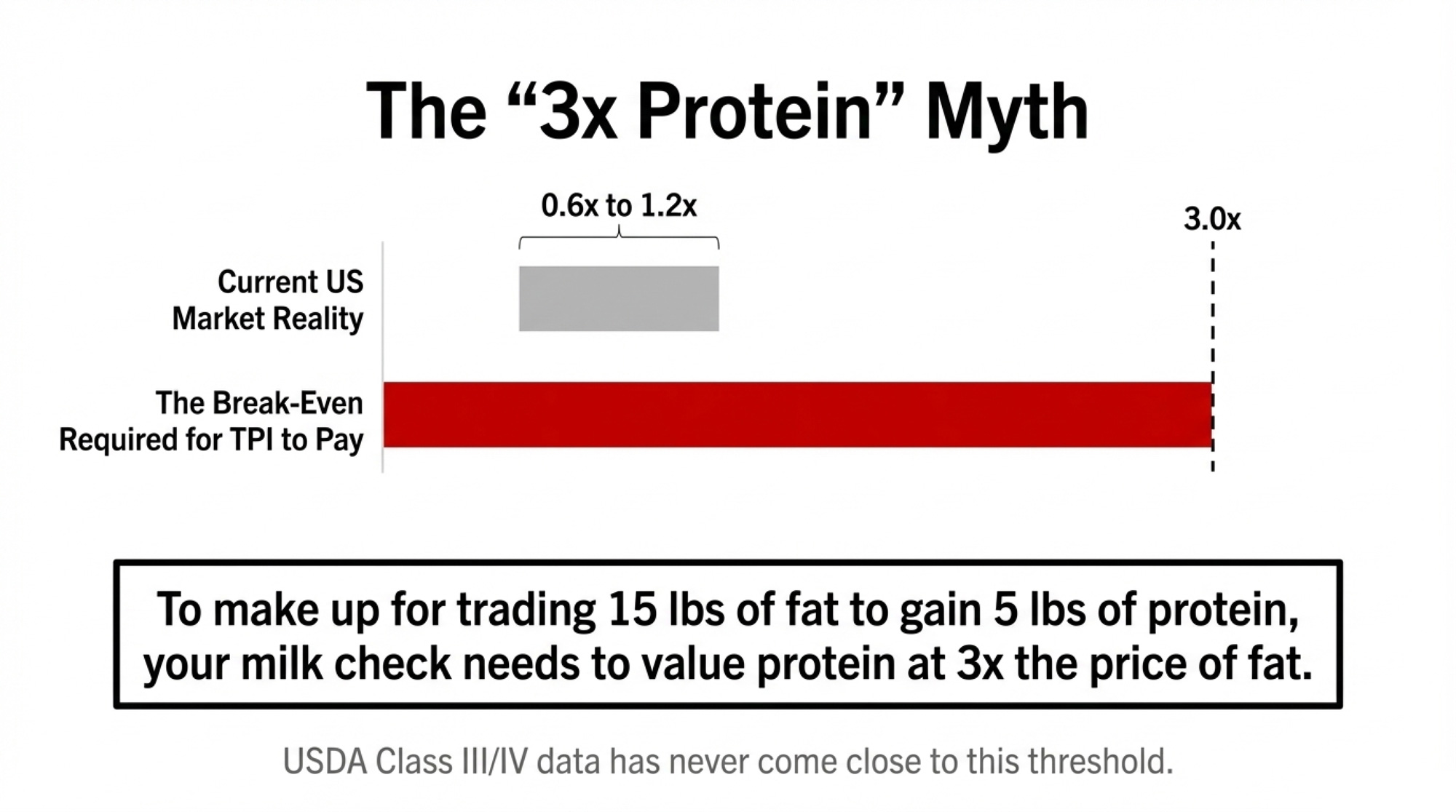
For the ratio herd to make more money on components, you’d need:

5 × protein price > 15 × fat price

So the break‑even is:

protein price ÷ fat price > 3.0

Unless your component grid effectively values protein at 3× the price of fat, you’re being paid to maximize total output, not to reshuffle the ratio.

ScenarioFat Price ($/lb)Protein Price ($/lb)Protein÷Fat RatioTPI Path Winner?
Current US avg (2024–25)$2.95$2.330.79❌ CFP wins by $35/cow
Protein-lean month$3.00$1.800.60❌ CFP wins by $45+/cow
Protein-heavy scenario$2.80$3.501.25❌ CFP still wins by $24.50/cow
Break-even threshold$2.00$6.003.0= Tie
TPI math finally pays$2.00$6.50+>3.0✅ TPI path wins

USDA Federal Order Class III/IV component data through 2024 and early 2025 doesn’t show anything remotely like that. Protein moves around. Some months it’s close to fat. For many months, it’s been cheaper. But nowhere does it sustainably hit 3× fat per lb.

Who Benefits When TPI Chases Protein?

After the 3× math sank in, Mark asked the question every producer should be asking: “If this doesn’t make sense for my milk check, who decided to do it — and who does it make sense for?”

It’s a fair question. And Holstein USA’s own numbers make it sharper than you’d expect.

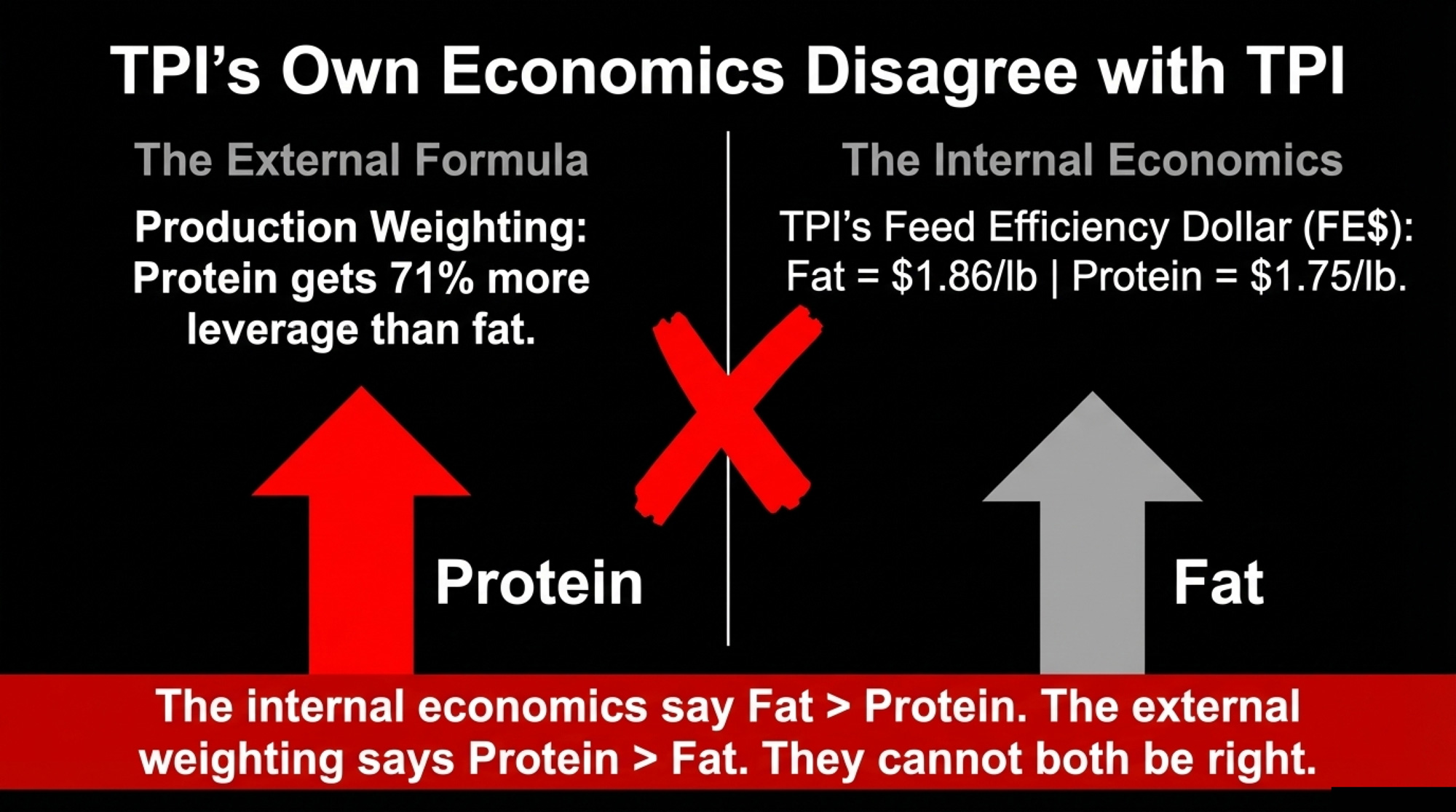
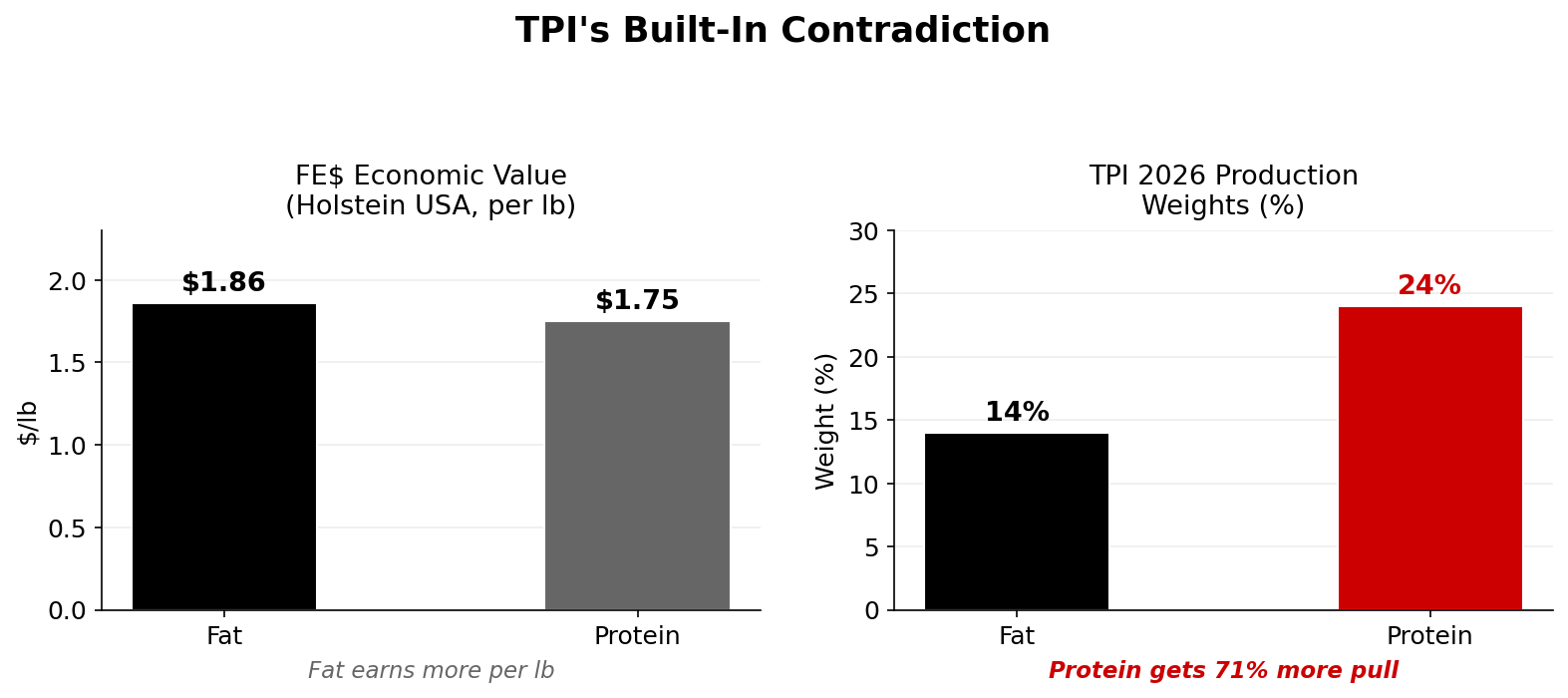
TPI’s Own Economics Say Fat Is Worth More

Holstein USA’s Feed Efficiency Dollar (FE$) formula — the economic engine inside TPI — uses these component values:

  • Fat: $1.86/lb
  • Protein: $1.75/lb
  • Milk: –$0.0025/lb

That’s straight from Holstein USA’s published TPI formula page. Protein ÷ fat = $1.75 ÷ $1.86 = 0.94. In their own economic model, fat is slightly more valuable than protein.

But in the TPI production weighting, protein gets 24% vs fat’s 14% — a ratio of 1.71 favoring protein.

Read that again. The economics inside the formula say fat ≥ protein. The weighting applied on top of those economics values protein at 71% more than fat. Those two things can’t both be right at the same time.

And those FE$ component prices? Holstein USA’s own TPI materials show FE$ component values of $1.86 for fat and $1.75 for protein, tied to updated cheese‑market economic assumptions released since 2021. Whatever exact update cycle you use, the current published FE$ values still favor fat over protein — $1.86 vs $1.75. And compared to the April 2021 FE$ values ($1.55 fat, $1.73 protein), fat’s advantage has actually grown: fat jumped 20% while protein barely moved. The formula’s own economics are drifting toward fat even as the production weighting lurches toward protein. The FE$ values are net of feed cost, so they’re not directly comparable to AMS spot prices — but the direction is the same. In January 2025, USDA reported butterfat at $2.9460/lb and protein at $2.3267/lb, a protein/fat ratio of just 0.79. Whether you look inside the formula or outside it, fat keeps winning. The 24P:14F weighting doesn’t reflect that.

By contrast, USDA’s Net Merit 2025 update used current AGIL data and moved toward fat and away from protein. Same data agency, different conclusion.

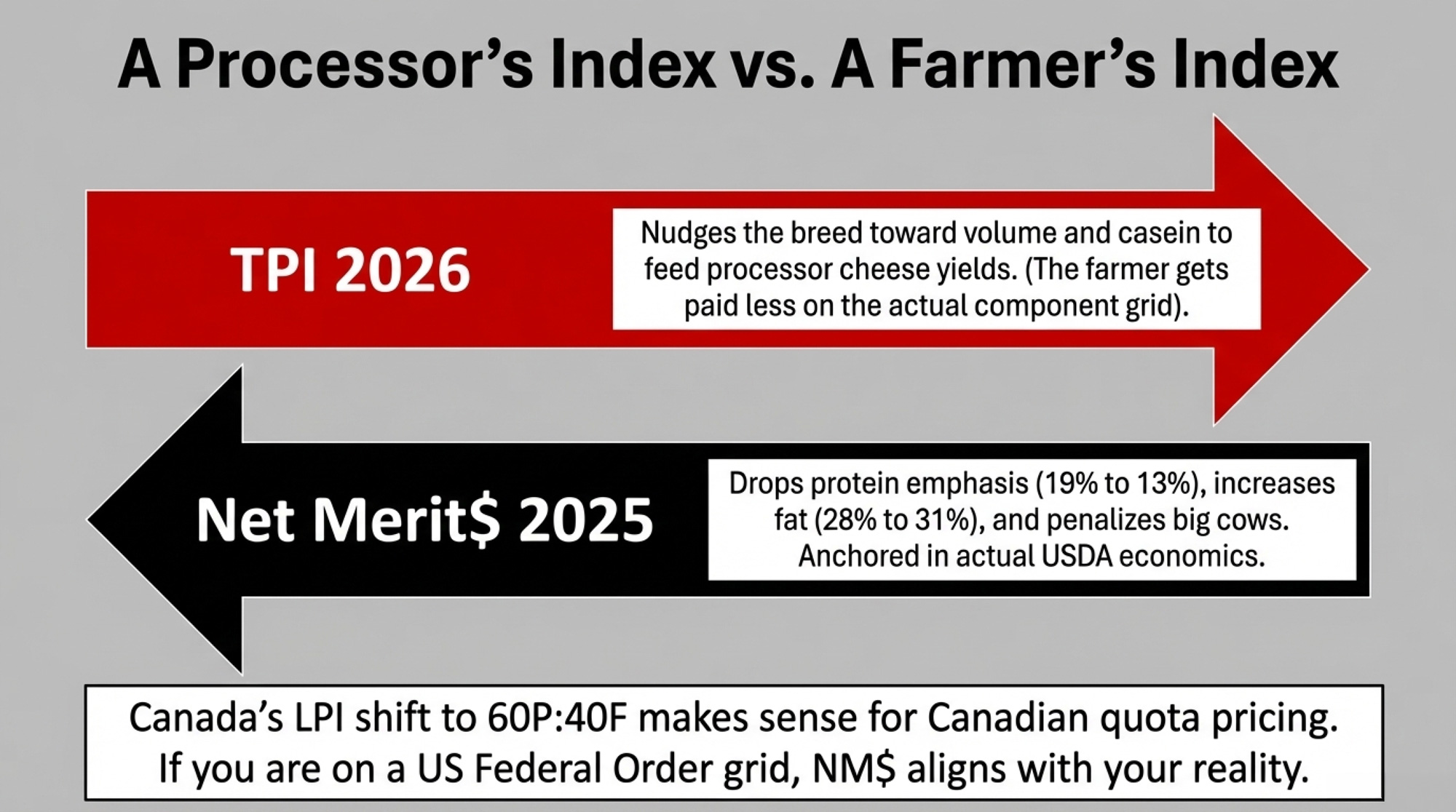
Is This a Processor’s Index or a Farmer’s Index?

Holstein USA’s stated rationale includes alignment with processor demand for casein and the observation that genetic gains for protein have lagged behind fat in recent years. That’s a processor‑supply argument — cheese plants absolutely want more casein per vat because it drives cheese yield.

But here’s where it gets uncomfortable: a farmer doesn’t get paid on cheese yield per vat. You get paid on the total pounds of fat and protein sold, at whatever the Federal Order grid says those pounds are worth. If TPI steers the breed toward protein at fat’s expense, processors get more of the component they want for cheese yield — while farmers may end up with fewer total component dollars per cow under the actual Class III grid.

The Bullvine’s own analysis of the component revolution showed that processors are already capturing a 12.5% cheese yield windfall from higher components, and asked the pointed question: Are farmers getting their fair share of that value?

That doesn’t mean there’s a conspiracy. It means TPI may be optimizing for a processor’s view of what the breed should look like, not necessarily for the farmer’s milk check. If you’re making breeding decisions based on TPI, you should know whose economics the formula is actually serving.

Why Such a Big Swing?

If the goal was to keep protein gains from falling too far behind fat genetically, a modest adjustment might make sense. Go from 19:19 to maybe 21:17. Nudge it.

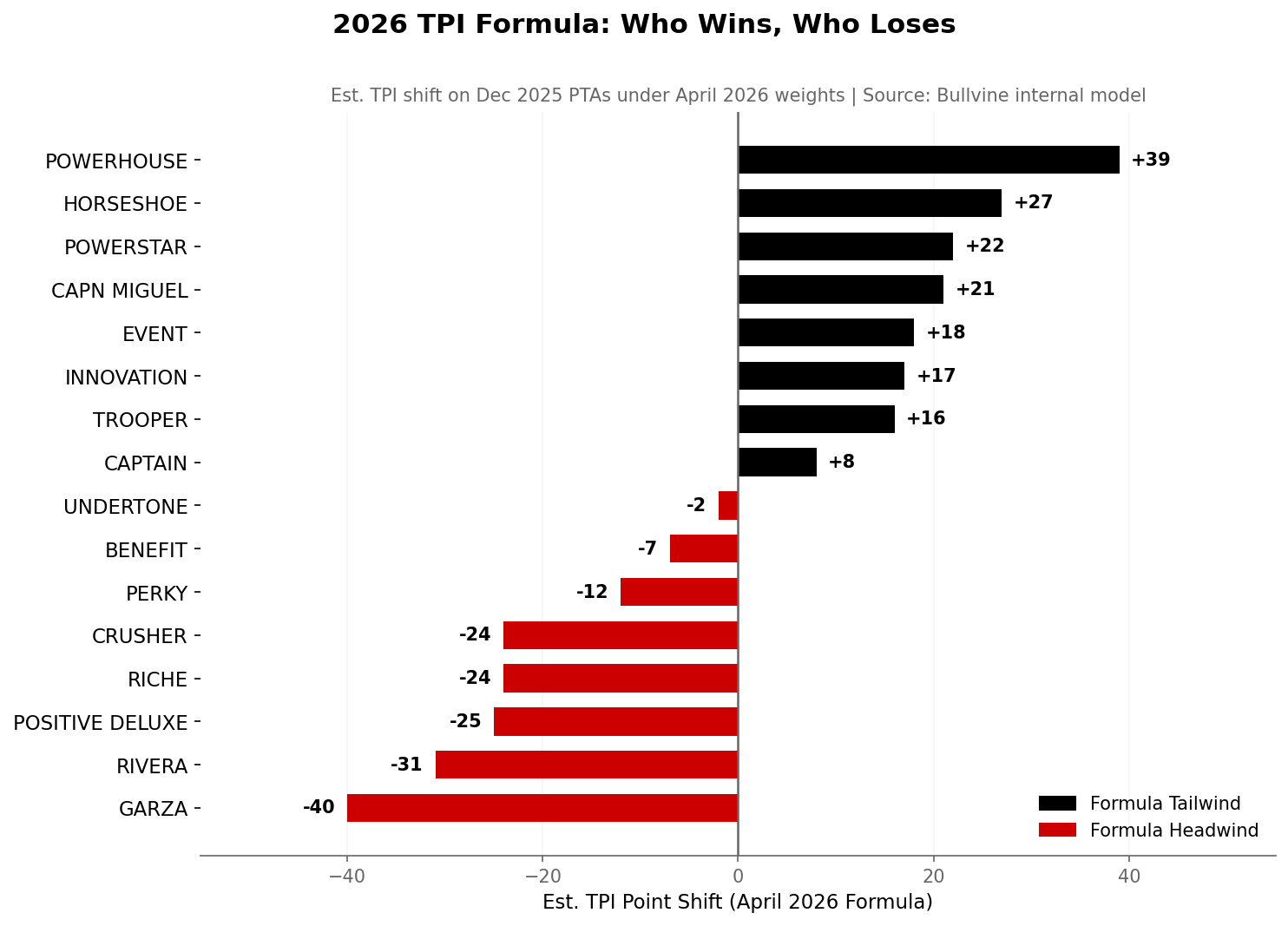
But 19:19 to 24:14 isn’t a nudge. It’s a 70% increase in protein’s leverage over fat inside the production slice. That’s the kind of magnitude that reshuffles bull rankings, shifts semen dollars, and — if enough herds follow — redirects the entire breed toward a different type of cow. (Read more: HORSESHOE Jumped 10 Spots. GARZA Slid From #2. The 2026 TPI Ranking Table Nobody Else Will Publish Before April 7.)

The question Holstein USA hasn’t clearly answered: if your own FE$ economics say fat ≥ protein, and AMS prices have only reinforced that since 2021, why did the production weighting move this far in the other direction?

Net Merit vs TPI 2026: Two Models, Two Directions

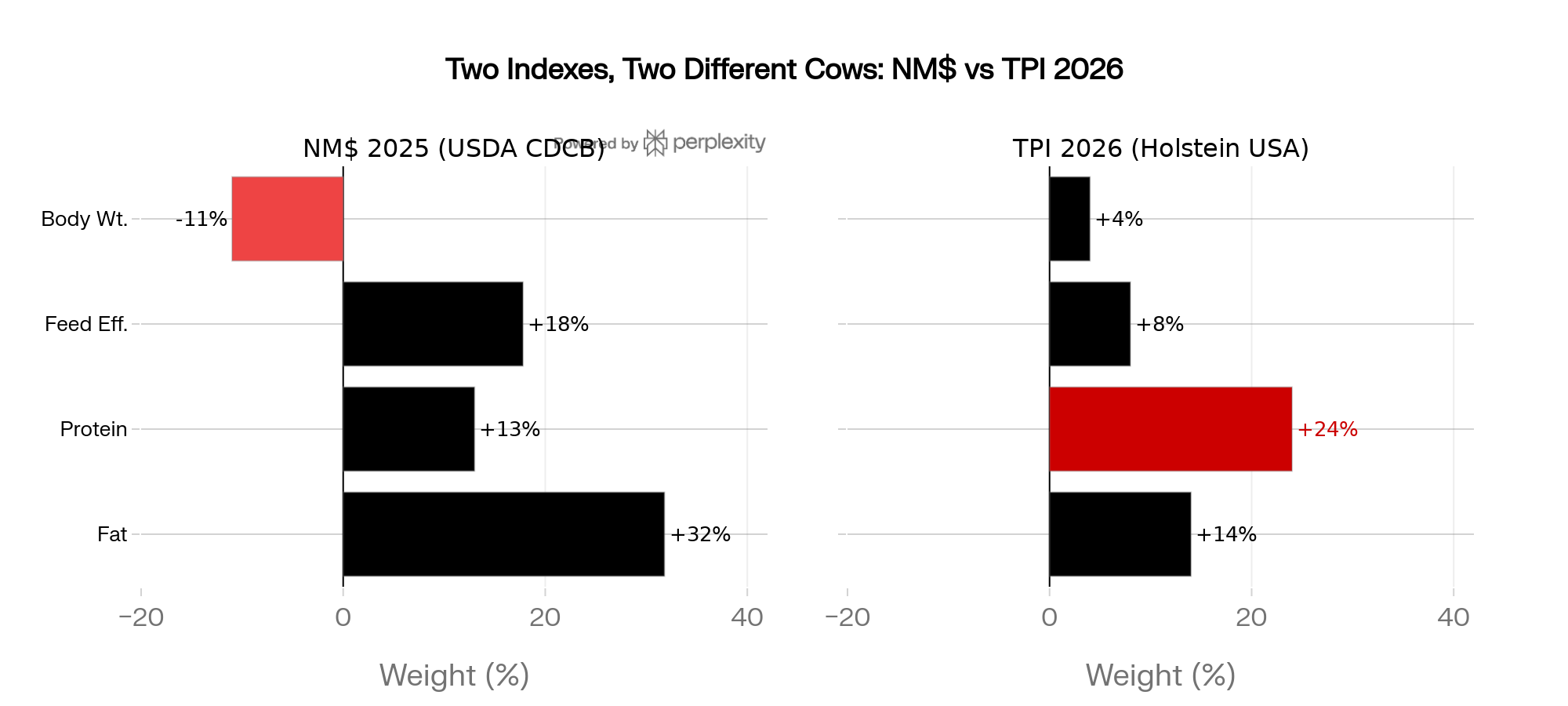
Mark’s not operating in a vacuum. While TPI’s production slice is shifting toward protein, Net Merit 2025 explicitly moved the other way, increasing the emphasis on fat and reducing the emphasis on protein to match observed component price trends.

Bullvine’s Net Merit 2025 analysis in “Net Merit’s $57 ‘Weight Tax’: How to Pick Holstein Bulls That Still Pay”shows:

  • Protein’s share of NM$ dropping from 19.6% to 13.0%.
  • Fat’s share is increasing from 28.6% to 31.8%.
  • Feed Saved rising to a combined 17.8% of NM$ when you add Residual Feed Intake and the negative Body Weight Composite (a ‑11% emphasis that acts as a $57 “weight tax” per BWC point, per daughter).

In plain language:

  • NM$ 2025: rewards fat strongly and penalizes big cows, aiming for smaller, efficient, high‑component animals that fit real feed and component markets.
  • TPI 2026: increases protein leverage over fat within the production slice and continues to favor higher body weight more than NM$, nudging toward bigger, more fluid‑type cows.

Lactanet’s LPI shift for Holsteins back to 40F:60P is explicitly anchored to “evolving industry directions and milk pricing changes” in Canada and is expected to cause only “minor reranking” of top bulls. The Canadian system is internally consistent with its own pricing math.

The bottom line: the Canadian system is internally consistent with its market. NM$ 2025 is internally consistent with current USDA economics. TPI 2026’s production slice is inconsistent with its own FE$ values or recent AMS pricing data. That’s not a small discrepancy. It’s a question the industry should be asking out loud.

If thousands of herds follow this TPI signal, we don’t just change individual milk checks; we start re‑steering the Holstein breed toward more volume and less fat density over the next 10–15 years. That’s a directional shift for the whole breed, not just a personal quirk for one 500‑cow dairy.

IndexFat WeightProtein WeightBody Size EmphasisMarket Anchor
NM$ 2025 (USDA)+31.8%+13.0%–11% penaltyAGIL/Federal Order economics
TPI 2026 (Holstein USA)+14%+24%+4% (slight favor)Processor casein demand
LPI 2026 (Lactanet CA)40%60%Neutral/moderateCanadian quota pricing
Cheese Merit (USDA)Higher than NM$Lower than TPINegative (like NM$)Class III cheese yield value

The Turn: When Mark Stopped Letting TPI Drive

By the end of that kitchen‑table session, Sara hadn’t told Mark to throw TPI in the garbage. She just forced a role change.

Before this spring, Mark treated TPI as the main definition of “good bull.” If a bull climbed the list, he needed him in the tank. If a bull slid, he wondered if he’d made a mistake.

The hardest part wasn’t the math. It was the social pressure.

When a bull is all over social media and climbing the TPI list, it feels like a mistake not to use him. That pressure is real. But a bull rising because a formula changed — not because his daughters produce more total components or more dollars under your grid — isn’t a signal. It’s noise.

After walking through the 70% protein leverage inside 24P:14F, the Year‑5 scenario math, the $35/cow/year gap at realistic component prices, the 3× protein/fat break‑even that the market’s never touched, the contradiction between TPI’s own FE$ economics and its production weighting, and the biological reality that high‑protein selection leans toward more volume, Mark could see one thing clearly:

“If I let TPI steer my breeding program, I’m not actually breeding for the cow my milk check pays best. I’m breeding for the cow the index designer likes.”

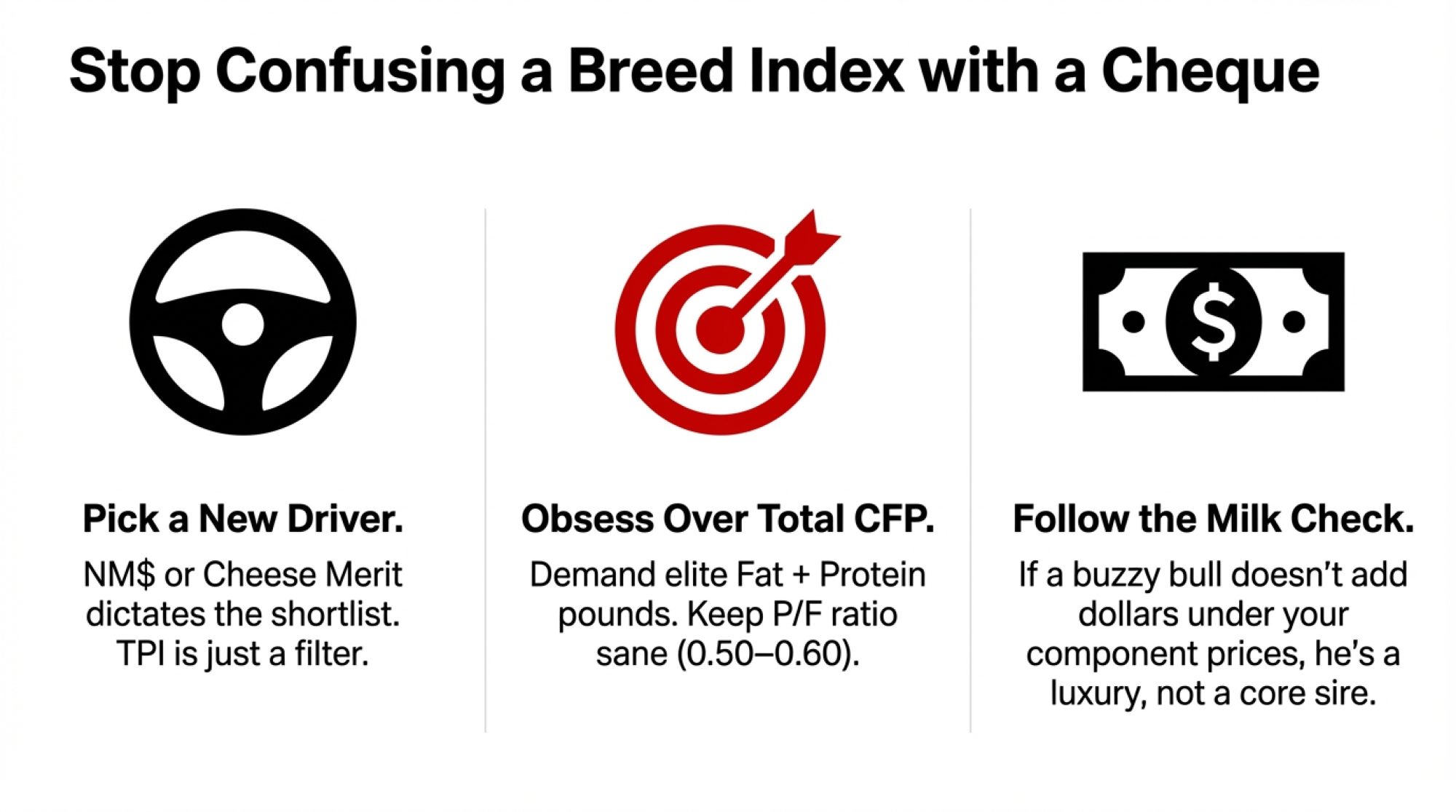
So he made three quiet decisions for 2026:

  1. Pick his steering wheel. NM$ (or Cheese Merit for his Class III plant) now decides which bulls make it to the short list; TPI is a filter, not the boss. If you want to understand how NM$, Cheese Merit, and the other CDCB indexes actually work — and why the April 2025 NM$ update already shifted weight toward fat and away from protein — the Bullvine’s “Net Merit’s $57 ‘Weight Tax’: How to Pick Holstein Bulls That Still Pay” walks through the new weights and practical filters in detail.
  2. Stay obsessed with total CFP. Every bull on his “heavy‑use” list has to be elite for fat + protein pounds, with P/F in the 0.50–0.60 band. The ratio‑pretty but mid‑pack CFP bulls get used carefully, not across the whole herd.
  3. Let his milk check, not the buzz, define success. If a bull looks great on high‑TPI slide decks but doesn’t add more dollars per cow under Mark’s own fat and protein prices, he’s a luxury, not a core sire.

He didn’t burn down his program. He just stopped confusing a breed index with a cheque.

The irony? The genetics revolution that doubled Holstein milk production over 50 years was driven by the same kind of concentrated sire pressure Mark was about to repeat unthinkingly — a story the Bullvine unpacked in Four Bulls That Changed the Holstein Breed: Genius, Gambles, and the Price We’re Still Paying.”

The Playbook: 30/90/365 Days to Get Out of the TPI Protein Ratio Trap

You don’t have to change everything overnight. You have to stop reinforcing the bias that’s quietly bleeding your components and reshaping your herd type.

In the Next 30 Days: Stop Digging

1. Audit your top bulls for P/F bias

  • Pull the 5–10 sires you’ve used the most in the last 12 months.
  • For each, jot down PTA Fat, PTA Protein, total CFP (fat+protein), and P/F (protein ÷ fat).
  • Count how many of your heavy‑use bulls are P/F ≥0.65 and not in the very top tier for total CFP.

If that’s more than a couple, you’re already leaning into the ratio side of the trap.

2. Freeze new orders on extreme ratio bulls

  • Any bull that’s P/F ≥0.65 and only average for CFP goes on a “no reorder” list until you’ve rebalanced.
  • Use remaining straws on lower‑value cows or recips if you like; don’t keep filling the tank.

3. Build a CFP‑first short list from a profit index

Tell your rep exactly what you want:

  • Filter bulls first on NM$, Cheese Merit, or your co‑op’s profit index, not TPI.
  • Within that filtered list, sort bulls by Fat PTA + Protein PTA.
  • Keep bulls with P/F roughly 0.50–0.60 and decent PL/DPR (or Herd Life/Fertility in Canada).

If a bull is high TPI and top‑end CFP under your grid, great. If he’s only high TPI because the formula loves his P/F, be cautious.

4. Check your actual fat and protein prices

Grab your last milk check and write down:

  • Fat price ($/lb)
  • Protein price ($/lb)

Then do one quick ratio: Protein ÷ Fat.

If that number is nowhere near 3.0, a pure P/F chase isn’t justified by your pay structure. In the most recent US Federal Order Class III/IV data from 2023–early 2025, it sits well under 2.0 and often between about 0.6 and 1.2.

In the Next 90 Days: Rebalance Without Blowing Up Your Program

5. Watch the cow type you’re breeding

Look at your last group of fresh heifers:

  • Are your best “new genetics” cows the ones with the highest components per cwt, or the highest volume?
  • Are you seeing more long, big‑framed, fluid‑type heifers in the pipeline than you expected?

If you’re on a component grid, your index choices shouldn’t slowly turn your herd into cows that fit a fluid market you don’t sell into.

6. Re‑tier your sires by role

Split your bull battery into:

  • Core sires (60–70% of matings): High profit index, high CFP, P/F in the 0.50–0.60 range, solid fitness.
  • Specialty sires (10–20%): Extreme type or high‑TPI ratio bulls you still want a little of — used intentionally, not across the board.
  • Clean‑out sires: Ratio‑heavy or weak‑CFP bulls; finish their straws on lower‑value cows or phase them out.

This keeps your main genetic direction pointed at components and cow style that actually pay, while still letting you play with a few favorites.

7. Re‑score your genomic heifers with a custom index

Ask your genetic provider to compute a simple custom score:

  • Custom score = 1.0 × Fat PTA + 0.8 × Protein PTA + fertility/survival credits (PL, DPR, Herd Life).

Use that score for replacement vs beef decisions and prioritizing heifers for sexed semen. If two heifers are similar, the one whose parents are genuine component earners under your grid wins over the one whose parents look good on P/F.

In the Next 365 Days: Let Your Own Data Judge the Indexes

8. Tag daughters by sire group and track components

Pick a few bulls as “test cases”:

  • Group R (ratio): 2–3 bulls with high P/F that gained TPI spots in April 2026.
  • Group C (CFP): 2–3 bulls with strong total fat + protein and balanced P/F.

For daughters freshening over the next year, tag them by sire group in your records and track fat lb, protein lb, and CFP over 305 days (or good projections). You’re not trying to do a PhD. You want enough signal to see whether your ratio group or your CFP group is doing more work for your cheque.

9. Do a simple “by‑sire” milk check sanity check

Once you’ve got at least a dozen daughters per group, use your actual component prices from the past 12 months:

  • Calculate $/cow/year from fat + protein for Group R vs Group C.

If Group C cows are clearly ahead by more than $20–30/cow/year on components and aren’t worse on fertility/survival, that’s your own proof that CFP bulls beat P/F bulls under your grid.

If Group R genuinely beats Group C under your grid and costs, you might be one of the rare operations where a strong protein tilt actually pays. Either way, you’re making decisions off your own data, not somebody else’s formula.

10. Build your own index — and stick to it

Sit down with your advisor or rep and formalize your own weights for fat, protein, fertility, longevity, and maybe feed efficiency. Have them build a custom index in their software that matches your milk check and cull costs rather than TPI’s 24P:14F weights. Commit: new bulls get chosen on that index first, then filtered by TPI, type, or show traits as needed.

At that point, you’re not arguing with Holstein USA or Lactanet. You’re just letting them have their opinion while you follow your money.

What This Means for Your Operation

  • Run the P/F sanity check on your lineup. This week, pull the main bulls you’re using and calculate P/F and CFP. If most of your semen is going to P/F ≥0.65 bulls who aren’t top‑end CFP, you’re not maximizing output — you’re redistributing it away from fat instead of maximizing total fat + protein sold.
  • Watch the cow type you’re breeding. Your sire choices today decide whether your 2036 herd is built for a fluid market or a component market. If your plant still pays more per pound for fat than protein, you don’t want your index pushing you toward big, fluid‑style cows.
  • Your milk check decides your index — not the other way around. A breed index can move toward protein without your grid ever justifying the shift. If your cheque still pays more per pound for fat than for protein, you’re being paid to maximize total components, not to chase a ratio.
  • Use the 3× rule as a hard brake. If protein on your check isn’t worth anywhere near three times fat per lb — and in most US Federal Order markets it won’t be — a strong P/F chase won’t pay under the kind of “15 fat for 5 protein” genetic trade the 24P:14F world incentivizes.
  • Ask whose economics the index is actually serving. Holstein USA’s own FE$ values put fat at $1.86 and protein at $1.75 — fat wins. But the production weights say protein is 71% more important. If the formula’s own economics don’t justify the weighting, ask who benefits from the direction the breed is being steered.
  • Don’t assume Canada’s direction validates the US move. Canada’s formula makes sense for Canadian quota‑based component pricing. Copying the protein pivot without copying the pricing logic is how you end up selecting for the wrong cow in the wrong market.
  • Do one contract‑check in the next 30 days. Before you order your next semen, pull your last 12 months of checks and write down average fat and protein prices. Divide protein by fat. If that ratio doesn’t look anything like the weights inside the index you’re following, adjust how you use that index.

Key Takeaways

  • Directional shift, not a tweak. If a 500‑cow herd follows the 24P:14F TPI signal hard for five years, scenario math shows it can give up around 15 lb fat per cow per year to gain only about 5 lb protein — and end up roughly $35/cow/year behind a CFP‑anchored strategy under realistic US Federal Order component prices.
  • Market vs formula mismatch. Protein would have to be worth more than 3× fat per pound for that kind of trade to win on components alone. Recent Class III/IV data from 2022–2024 haven’t come close.
  • The formula contradicts its own economics. TPI’s FE$ engine values fat at $1.86/lb and protein at $1.75/lb — fat wins. But the production weighting gives protein 71% more leverage than fat. The internal economics and the external weighting point in opposite directions.
  • Follow the incentives. TPI’s stated rationale includes processor demand for casein. That’s a cheese‑yield argument, not a farmer‑profitability argument. Your milk check pays on total fat + protein sold, not on cheese yield per vat.
  • Paper vs tank. It’s now possible for a herd to look better on paper without actually selling more total pounds of components. That’s exactly what happens when a formula rewards a ratio instead of total output.

The Bottom Line

One question matters more than any list or formula: What did your plant actually pay per pound for fat and per pound for protein over the last 12 months — and do the bulls you’re buying make more money under those numbers, or under someone else’s?

Complete references and supporting documentation are available upon request by contacting the editorial team at editor@thebullvine.com.

Learn More

The Sunday Read Dairy Professionals Don’t Skip.

Every week, thousands of producers, breeders, and industry insiders open Bullvine Weekly for genetics insights, market shifts, and profit strategies they won’t find anywhere else. One email. Five minutes. Smarter decisions all week.
NewsSubscribe
First
Last
Consent

Carbon Credits: $150,000 for Large Dairies, $3,000 for Family Farms – Here’s Why

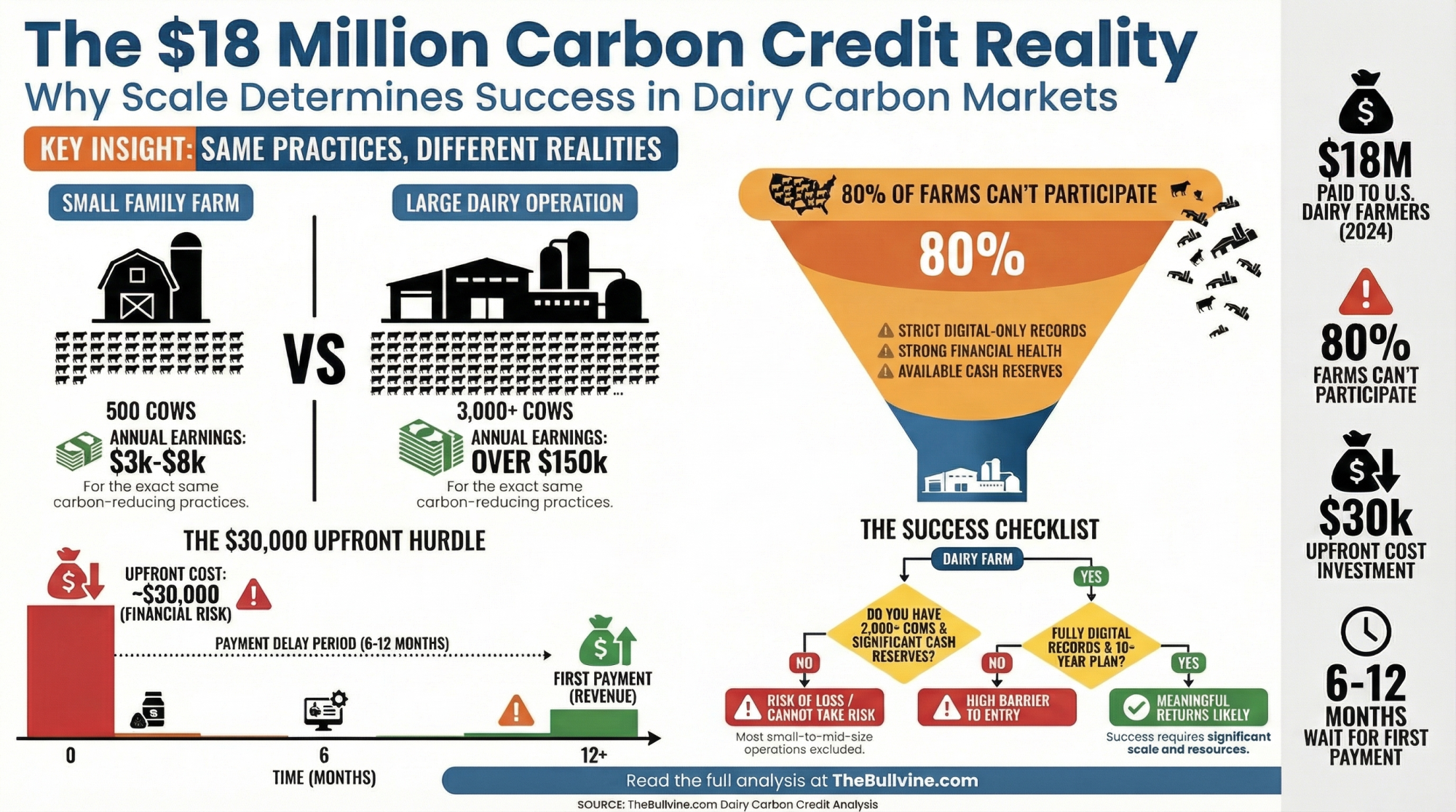
Two dairies. Same carbon practices. One makes $150K, the other makes $3K. The difference isn’t what you think.

EXECUTIVE SUMMARY: Athian paid dairy farmers $18 million for carbon reductions in 2024, but the money isn’t flowing where you’d expect—large farms pocket $150,000 yearly while small operations get just $3,000 for identical practices. The math explains why: although per-cow profits are similar at $40-56, only operations with 2,000+ cows can justify the $28,000-37,000 upfront investment and 6-12 month payment delays. Add requirements for digital records and working capital above 1.25, and 80% of U.S. dairy farms simply can’t participate. Yet for qualified operations, carbon credits offer genuine value—transforming feed additives you’re already considering into profit centers. This article delivers real economics, explains why scale wins again, and provides a practical framework for determining whether carbon credits make sense for your specific operation.

So I was reviewing Athian’s latest announcement the other day, and here’s what caught my eye—they’ve actually distributed million to dairy farmers for emissions reductions since early 2024. Not promises, not projections. Real checks hitting real farm accounts. And what’s interesting is, these are for practices many of us have been considering anyway for operational efficiency. You know how it is—in our industry, sustainability initiatives usually mean spending more money for the privilege of doing the right thing. This development, though, it deserves our careful attention.

I’ve been talking with producers from Vermont to New Mexico who’ve navigated these dairy carbon credit programs, and I’ve noticed a fascinating pattern emerging. Success varies dramatically across operations, and here’s what might surprise you—it’s not about environmental commitment or willingness to adapt. What I’ve found is it’s primarily about operational scale, cash flow position, and whether you’ve already got your data management systems dialed in.

Understanding the Market Forces at Play

Let’s talk about what’s really driving these payments. As many of us have seen, major food companies—Nestlé and Mars among them—have committed to reducing supply chain emissions by 30% before 2030, according to their recent sustainability reports. And here’s the thing: since most of their carbon footprint originates at the farm level rather than in processing facilities, they’re actively seeking verified reductions from us dairy suppliers.

This has led to something called “insetting”—basically, these companies are investing in emissions reductions within their own supply chains rather than buying random offset credits from who knows where. DFA pioneered this approach in January 2024, becoming the first U.S. cooperative to purchase verified livestock emissions reductions through Athian’s platform. Their initial transaction involved a Texas dairy using Elanco’s Experior technology, and they documented 1,150 metric tons of CO2 equivalent reduction. That’s not theoretical—it’s verified, third-party audited through SustainCERT standards, and most importantly, paid for.

What distinguishes this from all those previous carbon initiatives we’ve seen come and go? The verification rigor. These dairy carbon credit programs require comprehensive documentation—you’re matching feed invoices with ration records, integrating milk production data, running everything through standardized calculation models, and having independent auditors verify it all. This level of verification means buyers can confidently report these reductions to their stakeholders.

Current Practices Generating Returns

Looking at current market activity, four practice categories are demonstrating consistent value for dairy farm profitability, and each has distinct operational requirements and economics worth understanding.

Feed additives for enteric methane reduction have really emerged as the primary pathway. Bovaer—that’s the 3-nitrooxypropanol compound from DSM-Firmenich—got regulatory approval in Canada and the UK in January, and the FDA completed their review in May. What’s encouraging is the research consistency: across 56 peer-reviewed studies, we’re seeing approximately a 30% reduction in enteric methane when administered at recommended doses. According to the Journal of Dairy Science’s comprehensive analysis, this translates to a 10-15% reduction in overall GHG intensity per unit of milk production.

Now, pricing varies considerably by region and purchase volume—you probably know this already. Industry data suggests Bovaer costs range from $0.30 to $0.50 per cow daily, while Rumensin (that’s monensin from Elanco) typically runs $0.13 to $0.15 per cow per day. Rumensin provides modest emission reductions, but it also delivers about a 3% improvement in feed efficiency, according to Elanco’s published data. That’s nothing to sneeze at when you’re looking at overall dairy milk check revenue.

Precision nutrition approaches, particularly those low-protein, amino acid-balanced rations, offer another pathway without requiring infrastructure investment. These strategies reduce nitrogen excretion and associated nitrous oxide emissions while potentially improving your feed cost efficiency. Ajinomoto’s AjiPro-L protocol, which Athian approved in April, exemplifies this approach. University of Wisconsin Extension trials indicate potential for both ration cost savings and carbon credit generation, though—as you’d expect—results vary by operation.

Anaerobic digester systems continue to provide opportunities for larger operations. You can stack RNG revenue, RIN credits, nutrient products, and now carbon insets. But let’s be realistic about the economics here—USDA NRCS data and Cornell’s agricultural economics research show you need at least $1,800 per cow in capital investment. Even with RCPP cost-share programs covering 50-75% of installation costs, that’s a serious commitment that really only pencils out at significant scale.

What I’m particularly interested in are these whole-farm carbon intensity protocols. Rather than requiring specific expensive interventions, they measure your overall emissions per unit of milk production. California’s CDFA has been developing this methodology, while the Innovation Center for U.S. Dairy has been creating parallel frameworks. If you’re already efficient—getting more milk from fewer cows with less waste through better genetics and reproduction—you should theoretically qualify even without fancy additives. And looking ahead, emerging technologies such as seaweed-based additives and genetic selection for lower-emission cows could further expand options, though they are still in development.

Economic Realities Across Different Scales

Here’s where things get really interesting for dairy farm profitability, and the implications vary dramatically by operation size. Let me share what I’ve learned from producers at different scales, including those Southeast operations dealing with heat stress and different housing systems.

A Wisconsin producer I know with 450 cows spent three months getting all his documentation together, and when the first payment came through, it was $4,200. As he told me, “It’s certainly welcome income, but when you consider the time investment and upfront costs, it doesn’t fundamentally change our operation.”

For a typical 500-cow dairy in Wisconsin or Pennsylvania—and I’ve run these numbers with several folks—participating in carbon credits for dairy farms looks something like this: Initial investment in feed additives runs $25,000 to $30,000 annually, assuming you’re using a combination of products. Data system upgrades, if you need them, add $2,000 to $5,000. Nutritionist consultation and protocol documentation typically cost another $1,000 to $2,000.

So you’re looking at a total upfront investment of $28,000 to $37,000.

And here’s the kicker—you pay these costs immediately, but receive carbon credit payments after 6 to 12 months of verification, per Athian’s current terms. That means you need that cash sitting available, not borrowed.

Current carbon pricing at $60 per ton represents a historical high—the Ecosystem Marketplace reports voluntary carbon markets averaged just $6.37 per ton in 2024. At these prices, a 500-cow operation might generate $5,000 to $8,000 in annual carbon revenue. Combined with potential feed efficiency gains of $15,000 to $20,000, net benefits could reach $20,000 to $28,000 annually. But that’s assuming stable carbon prices, smooth verification, and favorable baseline calculations…

The economics shift significantly at larger scales. An Idaho dairy manager I spoke with, who’s running 3,200 cows, explained: “We’re generating about $47 per cow from carbon credits, plus the feed efficiency improvements. At our scale, that translates to over $150,000 annually—meaningful revenue that justifies the administrative investment.”

This reveals something important for dairy milk check revenue: while per-cow returns are similar ($40-56 for smaller operations versus $43-57 for larger ones), the absolute dollar amounts make participation worthwhile for larger operations while remaining marginal for smaller ones.

Operations That Should Consider Alternatives

Based on extensive discussions with producers and financial advisors from Michigan to Arizona, certain operations face structural barriers that make successful participation in current dairy carbon credit programs challenging for overall dairy farm profitability.

If your working capital ratio is below 1.25, you don’t have the financial flexibility to manage that 6 to 12-month payment delay. The Farm Financial Standards Council identifies this as a critical threshold for operational stability, and I’ve seen this play out firsthand. One producer near Viroqua, Wisconsin, with 380 cows, carefully analyzed his situation. He told me, “Borrowing to cover upfront costs at 8% interest would essentially eliminate any carbon revenue benefit. The mathematics simply didn’t support participation.”

If you’re still using paper-based or basic spreadsheet record-keeping, the documentation burden will probably eat you alive. These carbon programs for dairy farms require integrating feed invoices, ration records, and milk production data in formats that support third-party verification. It’s not impossible with manual systems, but honestly, the administrative burden often becomes prohibitive.

“The transition from paper to carbon credits simply doesn’t occur—it’s from digital systems to carbon credits.”

Pasture-based operations encounter technical limitations with current protocols. Both Bovaer and Rumensin require consistent daily dosing through total mixed rations. DSM’s product development pipeline includes slow-release bolus systems for grazing operations, but they aren’t yet commercially available. These producers may find better opportunities in whole-farm intensity protocols that recognize the inherent efficiency of well-managed grazing systems. This is particularly relevant for Southeast producers, where year-round grazing is more common.

And if you’re approaching retirement within 5 to 7 years, you should carefully evaluate participation. These programs typically achieve optimal returns over 10 to 15-year horizons, allowing carbon revenues to compound and infrastructure investments to fully amortize.

Industry Structure Implications

Something we need to consider thoughtfully is how these programs might affect industry structure and long-term patterns of dairy farm profitability. Large-scale operations in Texas, Idaho, and California that implement comprehensive carbon programs might generate $200,000 or more annually. That creates meaningful cash flow advantages and balance sheet improvements that can influence expansion decisions and market dynamics.

Meanwhile, a 400-cow operation might generate $3,000 in carbon credits—barely covering administrative costs. When milk prices cycle from $20 to $16 per hundredweight, as they periodically do, operations with substantial carbon revenue cushions have clear advantages in weathering these downturns.

Current USDA Census of Agriculture data show we’re losing 2,100 to 2,800 dairy farms annually, with exits concentrated in the 150- to 1,500-cow range. While dairy carbon credit programs don’t cause this consolidation, they may influence its pace by providing additional advantages to operations already benefiting from economies of scale.

This raises important questions about program design and accessibility that we as an industry continue to grapple with.

Common Success Factors

Producers successfully participating in these programs—whether they’re in the Northeast, Midwest, or Western regions—share several characteristics worth noting for those seeking to enhance dairy milk check revenue.

Cooperative participation proves crucial. Working through established programs at DFA, Land O’Lakes, or similar organizations significantly reduces administrative complexity. The co-ops handle documentation aggregation, facilitate buyer connections, and provide technical support that individual producers would struggle to replicate on their own.

Financial strength matters—a lot. Successful participants typically maintain working capital ratios above 1.5, giving them the flexibility to manage payment timing without incurring debt. As one Wisconsin producer with 1,100 cows near Fond du Lac observed, “If carbon payments are necessary for cash flow, the operation probably isn’t ready for program participation.”

These successful producers view carbon credits as complementary to operational improvements rather than primary drivers of dairy farm profitability. A Pennsylvania dairyman with 750 cows explained their perspective: “We were evaluating Rumensin for efficiency gains regardless. The carbon credits transformed a good decision into an obvious one.”

And digital infrastructure proves essential. Not necessarily sophisticated systems, but at least DHIA participation, computerized ration management, and organized record-keeping. The transition from paper to carbon credits simply doesn’t occur—it’s from digital systems to carbon credits.

Verification Processes and Practical Considerations

Understanding verification helps set realistic expectations for dairy carbon credit programs. Programs begin by establishing baseline emissions using models with acknowledged uncertainty ranges of 15-25%, in accordance with IPCC methodology and UC Davis CLEAR Center analysis. Your baseline could vary substantially in either direction—something to keep in mind.

Implementation requires comprehensive documentation—feed invoices, ration formulations, production records, and health events. Verification bodies, including SustainCERT and other ISO 14064-accredited auditors working with Athian, review this documentation through varying combinations of remote review and farm visits.

One Wisconsin producer with 650 cows near Bloomer experienced the complexity of verification firsthand. Initial approval was questioned 6 months later when butterfat levels changed, potentially indicating variation in the feed additive. Three additional months of documentation were required to verify consistent feeding practices. The final payment arrived 11 months late, rather than the anticipated 6.

Credit registration on Athian’s blockchain ledger prevents double-selling within their system. But as the Institute for Agriculture and Trade Policy noted in their recent analysis of insetting risks, enforcement mechanisms across different platforms remain underdeveloped. Something to be aware of.

Looking Ahead: Realistic Expectations for 2030

If current trajectories continue, what might we reasonably expect for dairy farm profitability by decade’s end?

Industry-wide emissions intensity could decrease 20 to 30% through combined adoption of feed additives, ration optimization, and efficiency improvements. California Air Resources Board data already show a 20% reduction in methane intensity from early adopter programs, suggesting this target is achievable.

Mid-size farm participation could expand through cooperative-led programs that aggregate verification costs and streamline administration. Replicating DFA’s model across major cooperatives could make participation as routine as DHIA testing for appropriately positioned operations.

Carbon price stabilization through corporate commitments seems plausible. Companies might guarantee minimum prices of $40 to $50 per ton for verified reductions from their supply chains, providing investment confidence for participating producers.

Policy mechanisms could amplify market-based approaches. Implementation of the 45Z tax credit under the Inflation Reduction Act could establish price floors. State programs, like California’s $25 million methane-reduction initiative through its Climate Smart Agriculture program, demonstrate potential for complementary support.

Realistically, I anticipate 2,000 to 3,000 larger farms generating $150 to $300 million in cumulative payments by 2030—meaningful for those operations but unlikely to transform industry-wide economics or substantially alter consolidation patterns affecting dairy milk check revenue across all farm sizes.

A Practical Decision Framework

For producers considering participation to enhance dairy farm profitability, here’s a systematic evaluation approach based on actual participant experiences:

Step 1: Assess your working capital ratio. Below 1.25 indicates you need operational stabilization before adding program complexity.

Step 2: Calculate your true break-even costs, including all expenses. If you’re exceeding $20 per hundredweight in current markets, carbon credits won’t address fundamental profitability challenges.

Step 3: Evaluate available cash reserves. Can you deploy $25,000 to $35,000 for 6 to 12 months without borrowing? Interest costs often eliminate carbon revenue benefits.

Step 4: Engage your cooperative. Established programs with clear protocols and payment histories indicate readiness. “Exploring options” suggests patience might be warranted.

Step 5: Review your documentation capabilities. Digital ration management, DHIA participation, and nutritionist relationships all contribute to readiness.

Step 6: Consider your time horizon. Ten-plus year operational plans align well with program economics. Five-year exit strategies likely don’t.

This framework probably excludes 70 to 80% of U.S. dairy farms, which itself reveals important characteristics about current market design and its impact on dairy farm profitability.

Broader Industry Implications

The emergence of functional dairy carbon markets represents genuine progress. It demonstrates corporate willingness to invest in verified emissions reductions, validates market mechanisms for environmental progress, and rewards efficiency improvements that many of us pursue regardless.

Yet it also illuminates the limitations of the agricultural market. These mechanisms naturally favor scale, sophistication, and capital access—characteristics already driving industry evolution. Programs generating $150,000 annually for large operations while offering $3,000 to smaller farms reflect market dynamics rather than program design flaws.

This isn’t attributable to any particular organization or conspiracy. It’s simply how markets function when transaction costs are substantial and economies of scale are significant. The relevant question isn’t fairness but rather our collective comfort with carbon markets as another factor influencing industry structure and dairy milk check revenue distribution.

My assessment? These represent useful tools rather than transformative solutions for dairy farm profitability. Well-capitalized operations already pursuing efficiency improvements will find carbon revenues provide a welcome acceleration. Marginal operations won’t find salvation here. For the broader industry, it’s another advantage accruing to scale in an already scale-advantaged system.

Evaluate these opportunities based on your specific situation. But maintain realistic expectations about carbon credits as supplemental revenue rather than foundational income, especially given agriculture’s historical pattern of commodity price volatility.

Athian’s $18 million in payments is real. The practices deliver results. The verification systems function. But whether this matters for your particular operation depends entirely on where you sit within dairy’s increasingly differentiated structure. And that’s the conversation we need to continue having—not just whether carbon markets work, but how they work within our evolving industry landscape and their real impact on dairy farm profitability.

Editor’s Note: Producer experiences shared in this article are based on interviews conducted in November 2025.

KEY TAKEAWAYS

  • The $18M reality: Carbon credits paid dairy farmers real money in 2024, but large operations (3,000+ cows) capture $150,000 annually while family farms (500 cows) get just $3,000-8,000 for identical practices
  • Why scale always wins: Per-cow profits are virtually the same at $40-56, but you need 2,000+ cows to cover the $30,000 upfront investment and 6-12 month cash flow gap
  • Your qualification checklist: Must have a working capital ratio >1.25, digital record systems already running, and participate through established co-op programs—miss any one and you should pass
  • Bottom line decision: Carbon credits work for well-capitalized operations planning 10+ year horizons, but won’t save struggling farms—they amplify existing advantages rather than leveling playing fields

Complete references and supporting documentation are available upon request by contacting the editorial team at editor@thebullvine.com.

Learn More:

The Sunday Read Dairy Professionals Don’t Skip.

Every week, thousands of producers, breeders, and industry insiders open Bullvine Weekly for genetics insights, market shifts, and profit strategies they won’t find anywhere else. One email. Five minutes. Smarter decisions all week.
NewsSubscribe
First
Last
Consent

Whole Milk Returns to Schools After $4.3B Loss – But Only Mega-Dairies Can Capture the Win

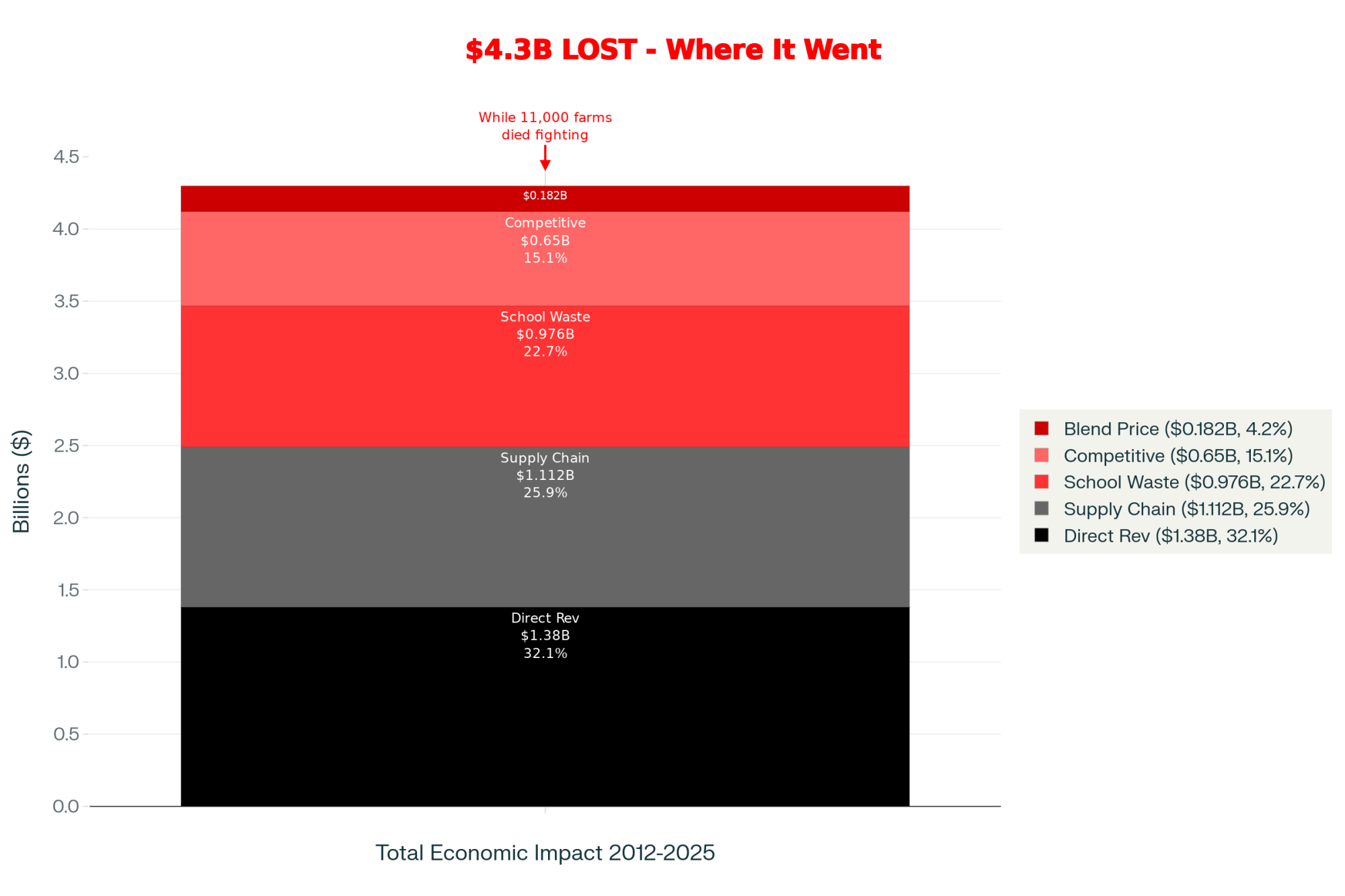
We predicted it. Lost $4.3B fighting it. 11,000 farms died waiting. Whole milk’s finally back—but the industry that won isn’t the one that warned.

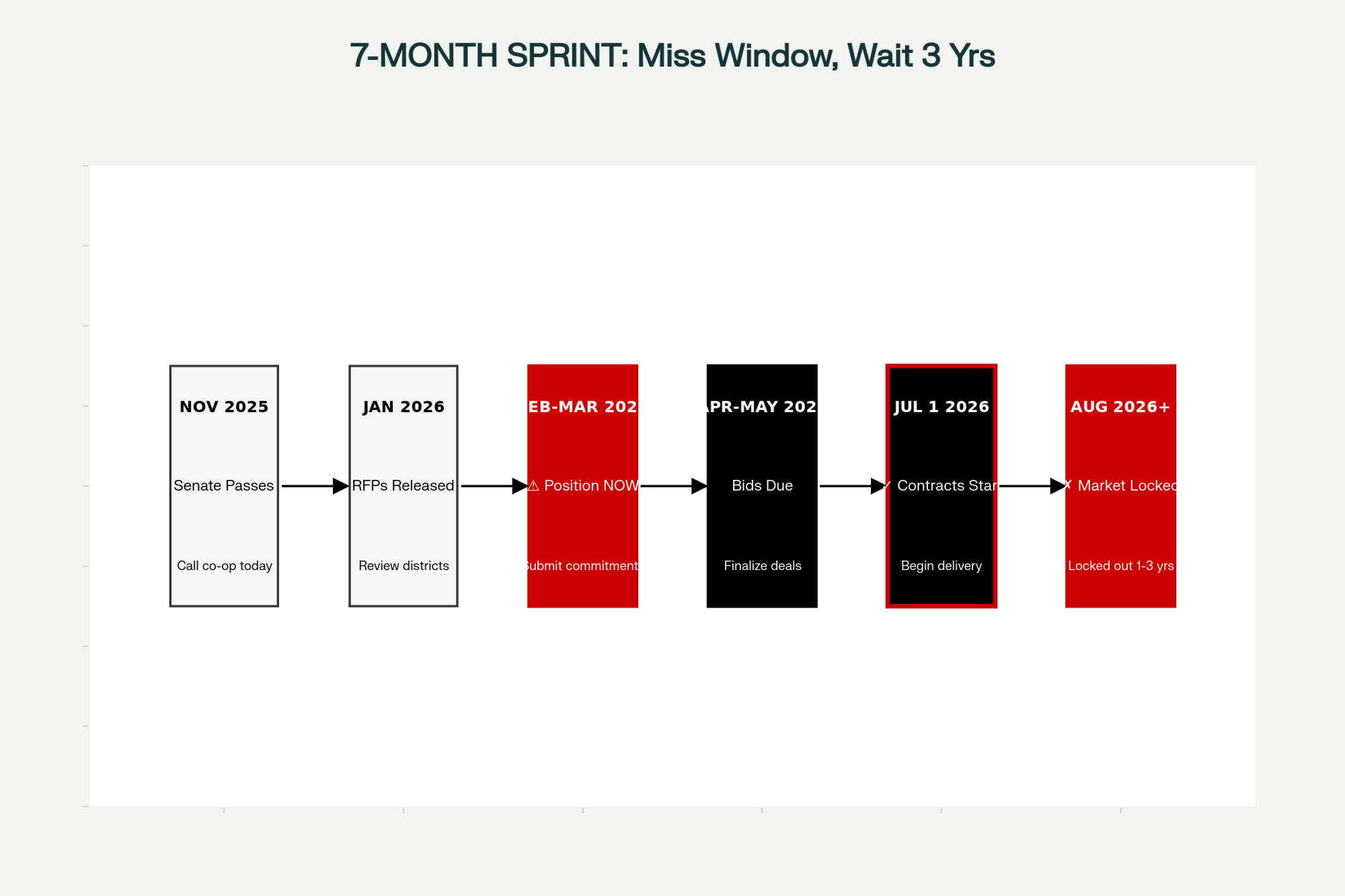
EXECUTIVE SUMMARY: Whole milk returns to schools after a 13-year ban that cost dairy $4.3 billion and killed 11,000 farms—but the survivors who’ll benefit aren’t the ones who warned Congress this would happen. University of Toronto research confirmed what producers always knew: whole milk reduces childhood obesity by 40% compared to skim milk, completely debunking the policy’s premise. However, consolidation during the fight means only mega-dairies (1,500+ cows) can access school contracts worth $40-80K annually, while 97% of remaining farms are effectively locked out. The window for action is narrow: producers must contact their cooperatives NOW to position for RFPs releasing January 2026, with contracts locking by July. Small operations should forget institutional milk and leverage whole milk’s vindication for premium direct sales, while mid-sized farms face a brutal choice between fighting for scraps or pivoting to specialty markets. The lesson is unforgiving: in agricultural policy, being right means nothing if you don’t survive long enough to collect.

You know, looking at what happened in the Senate last Tuesday—unanimous passage of the Whole Milk for Healthy Kids Act—you’d think we’d all be celebrating. And yeah, it’s definitely a victory. After watching kids dump skim milk down cafeteria drains for 13 years while our neighbors went under, whole milk’s finally coming back to schools.

But here’s what’s been keeping me up at night, and I’ve been hearing the same thing from producers all over. The dairy industry that gets to capture this opportunity? It looks nothing like the industry that warned Congress this would happen back in 2012. We’ve lost 11,000 farms during this fight. The survivors are entirely different breeds—either massive operations with 2,500-plus cows or specialty producers who found their niche. That 300-cow family dairy that needed this policy most? Most of ’em are gone.

Herd Size2012 Farms2025 FarmsChange %Milk Share 2025 %
Under 100 cows2814116334-427
100-499 cows88685889-3415
500-999 cows15801025-3510
1,000-2,499 cows1000900-1022
2,500+ cows7148341746

What I’m finding as I talk to folks trying to figure out what this means for their operations is that winning the policy battle doesn’t reverse the structural war we’ve already lost. So let me walk you through what actually happened, what it cost us, and—here’s the important part—what you can actually do about it in the next six months.

The Scale of What We Lost: More Than Just Milk Sales

YearPer Capita (lbs/year)School Policy PhaseAnnual Decline Rate %
2009190Pre-Ban0.75
2012185Ban Implemented2.6
2015172Ban Effect2.6
2018155Accelerated Decline2.6
2021141Continued Fall2.6
2023130Record Low1.5
2025128First Increase Signal-0.8

I’ve been going through the numbers with economists at Cornell and Wisconsin, and it’s worse than most of us realize. When the National Milk Producers Federation testified to the USDA back in April 2011 that restricting schools to skim and 1% milk would hurt consumption, they actually underestimated what would happen. You can look it up in their comments if you’re curious—docket USDA-FNS-2011-0019.

School milk represents about 7 to 8 percent of total U.S. fluid milk demand, according to the USDA’s Economic Research Service—we’re talking roughly a billion dollars annually. Sounds manageable, right? But here’s what nobody calculated: when you tell 30 million kids for 13 years that whole milk is unhealthy, you don’t just lose school sales. You lose a generation.

Before 2012’s restrictions kicked in, fluid milk consumption was declining at about 3/4 of 1 percent per year—concerning but manageable, according to the International Dairy Foods Association’s market reports. After? That rate exploded to 2.6 percent annually. That’s not evolution; that’s acceleration.

A Wisconsin producer I know who runs about 450 cows put it best: “We watched our school contracts evaporate overnight. But worse was watching those kids grow up thinking milk was bad for them. Now they’re adults buying oat milk.”

The direct hit to producer revenue over 13 years? Based on Federal Milk Marketing Order pricing data, it’s about $1.38 billion. But that’s just the beginning. When Class I utilization drops in the federal orders, it drags down the blend price every producer receives—University of Missouri’s policy research folks calculated another $182 million spread across all farms.

Then you’ve got the supply chain multiplier effect. USDA’s Economic Research Service uses standard agricultural multipliers of around 1.8 times for dairy. So that lost producer revenue of $1.38 billion means a total supply chain impact of around $2.49 billion. Haulers, feed suppliers, equipment dealers—everybody took a hit.

Add in competitive losses to plant-based alternatives—Euromonitor International’s dairy alternatives tracking pegged it at about $650 million in institutional market share—plus the waste. And the waste is mind-boggling. The Center for Science in the Public Interest estimates that about 45 million gallons annually that kids refused to drink, worth nearly a billion dollars at Class I pricing.

CategoryAmount ($ Billions)Percentage
Direct Producer Revenue Loss1.3832.1
Blend Price Impact (All Farms)0.1824.2
Supply Chain Multiplier Effect1.11225.9
Competitive Losses to Alternatives0.6515.1
School Milk Waste0.97622.7

When you combine all these factors—the direct losses, blend price impacts, supply chain effects using those standard multipliers, competitive losses, and waste values—you’re looking at a total economic impact approaching $4.3 billion. Though I should note that nobody’s done a comprehensive study pulling all these pieces together. We’re aggregating from multiple sources here.

“That’s not just a policy mistake, folks. That’s a generational disaster.”

What Science Now Shows: We Had It Backwards All Along

MetricWhole MilkSkim/Low-Fat Milk
Childhood Obesity Odds40% LOWERBaseline
Overweight Risk Reduction40% lower oddsNo reduction found
Added Sugar Content0g (natural)8-12g (added)
Satiety FactorHigh (natural fats)Lower
Fat-Soluble Vitamin DeliverySuperior (vitamins A,D,E,K)Reduced effectiveness
Studies Supporting18 of 28 studies0 of 28 studies

This is the part that really gets me—and I’m hearing the same frustration everywhere I go. The whole scientific foundation for banning whole milk? It’s completely collapsed.

Dr. Jonathon Maguire, up at the University of Toronto, published this meta-analysis in the American Journal of Clinical Nutrition back in December 2020—looked at 28 studies with 21,000 children. The finding? Kids drinking whole milk had 40 percent lower odds of being overweight or obese compared to those drinking reduced-fat milk. Not one study—not a single one—showed skim milk reducing obesity risk.

As Maguire wrote in the journal, children who followed the current recommendation to switch to reduced-fat milk at age two weren’t any leaner than those who consumed whole milk.

What’s interesting here—and this is what really burns me—is what schools actually did to make fat-free milk palatable. They added sugar. Lots of it. The Center for Science in the Public Interest did an analysis showing that fat-free chocolate milk in schools contains up to 12 grams of added sugar per carton. That’s nearly half what the American Academy of Pediatrics says kids should have in a whole day, based on their 2019 policy statement.

Think about that for a minute. We removed natural milk fat, which provides satiety and fat-soluble vitamins, and replaced it with processed sugar. A dietitian I know at Penn State Extension—she’s been doing this for 30 years—called it the most backwards nutritional policy she’d ever seen.

How Dairy Finally Won: The Coalition Nobody Expected

I’ve been covering dairy politics for two decades, and what happened this year was unlike anything I’ve seen. After failed attempts in 2016, 2019, and that unanimous consent block by Senator Stabenow last December, how’d we suddenly get unanimous passage?

The breakthrough came from the most unlikely place: the Physicians Committee for Responsible Medicine. Now, this group has historically opposed dairy consumption, right? But Senator Welch’s team made a strategic calculation—they added language guaranteeing schools could serve, and I quote, “nutritionally equivalent nondairy beverages that meet USDA standards.”

A Senate Agriculture Committee staffer familiar with the negotiations told me, “We realized we couldn’t win by fighting everyone. So we found ways to give opposition groups something they wanted while still achieving our core goal.”

The senator pairing was brilliant, too. Peter Welch from Vermont brought the economic urgency—his state’s lost more than 500 dairy farms since 2012, according to the Vermont Agency of Agriculture’s latest data through 2024, a crushing 55 percent decline. Roger Marshall from Kansas, an OB-GYN with 25 years of practice before Congress, provided medical credibility that transcended typical ag lobbying. When you’ve got a physician-senator arguing for whole milk’s nutritional benefits, it carries a different weight than dairy executives making the same case.

But the real game-changer came from school food service directors testifying about operational reality. One Pennsylvania director told legislators that the amount of waste they were throwing away each day was disheartening—kids just wouldn’t drink the skim milk.

That operational reality, from public sector administrators rather than industry advocates, changed the conversation entirely.

And then there’s the RFK Jr. factor. When the incoming HHS Secretary calls whole milk restrictions “nutrition guidance based on dogma, not evidence” in public statements, dairy’s position suddenly aligns with a broader health reform movement. FDA Commissioner nominee Dr. Martin Makary went even further at his confirmation hearing, saying we’re ending the 50-year war on natural saturated fat.

The Harsh Reality: Small Farms Can’t Access This Opportunity

Now here’s where I need to level with you about what this actually means for different operations. I’ve been talking to procurement specialists at DFA, Land O’Lakes, and regional cooperatives across the midwest, and the reality’s tough for smaller farms.

For Large Operations (1,500+ cows)

If you’re milking 1,500-plus head, this is a genuine opportunity. Based on current Class I differentials from the November federal order announcement and institutional pricing models, you could see $40,000 to $80,000 in additional annual revenue. These operations typically have what schools need—cooperative relationships for procurement access, daily volume to meet district minimums (usually 2,000-plus pounds), and standardized equipment to hit that 3.25 percent butterfat spec.

A large-herd operator in Wisconsin told me that his co-op has been preparing bid packages since October. “We’ve got the volume, the testing protocols, everything schools require,” he said.

For Mid-Size Operations (500-1,000 cows)

The opportunity exists, but it’s complicated. You might see $15,000 to $30,000 annually—helpful but not transformational. The challenge? You’re competing with larger operations for cooperative priority.

One Central Valley producer milking 650 told me, “I could supply our local district easily. But our co-op prioritizes the 5,000-cow operations because the logistics are simpler. One truck stop instead of eight.”

Down in Texas, the situation’s even tougher. A producer with 725 Holsteins outside Stephenville explained they’re 45 minutes from the nearest processor. “School contracts require daily delivery. The math just doesn’t work unless you’re right next to a bottling plant or have 2,000-plus cows to justify dedicated hauling.”

In Nebraska—right in Senator Marshall’s backyard—the consolidation’s been particularly stark. A producer near Grand Island, milking 550 cows, explained that their cooperative had merged with two others in the past five years. “We used to have direct say in school milk contracts. Now we’re competing with operations five times our size for the same procurement slots.”

For Small Operations (Under 300 cows)

I hate to say this, but institutional whole milk offers almost no direct opportunity for operations under 300 cows. School procurement requires minimums you can’t meet independently—typically 500 gallons per day, based on what I’ve seen in Michigan and Iowa district RFPs.

The path forward is different. A Vermont producer milking 180 Jerseys told me they’re focusing on farmers markets and local retail. “Whole milk’s vindication helps our direct marketing—we can tell customers the government was wrong, and they believe us now.”

In Georgia, small producers are finding similar alternatives. One producer with 220 cows near Quitman explained they can’t compete for Atlanta school contracts. “But we’re selling to three local private schools at $4.50 a gallon. They want local, and whole milk’s return legitimizes premium pricing.”

Farm SizeAnnual Revenue PotentialMarket AccessNumber of FarmsAccess Probability %
2,500+ cows$60-80KDirect/Priority83495
1,500-2,499 cows$40-60KDirect/Competitive90075
500-999 cows$15-30KLimited/Co-op Only102530
300-499 cows$5-10KMinimal32005
Under 300 cows$0-2KNone181092

The Seven-Month Sprint: Your Action Timeline

DateActionProducer ActionCritical Level
Nov 2025Senate passes bill unanimouslyContact co-op NOWHIGH
Jan 2026School RFPs releasedReview district opportunitiesHIGH
Feb-Mar 2026Producer positioning windowSubmit commitmentsCRITICAL
Apr-May 2026Bids due to districtsFinalize agreementsFINAL DEADLINE
Jul 1 2026New contracts beginBegin deliveriesGO-LIVE
Aug 2026+Market locked (incumbents only)Wait 1-3 years for next cycleLOCKED OUT

What’s catching producers off-guard is how fast this moves. We’re operating on school procurement timelines, not legislative calendars.

📅 The Critical Dates You Can’t Miss:

➤ January–March 2026: School districts release RFPs
➤ April–May 2026: Bids are due (If you aren’t positioned, you’re out)
➤ July 1, 2026: New contracts begin

After July 2026, breaking into the school supply means displacing an incumbent. Good luck with that—I’ve seen it happen maybe twice in 20 years covering dairy markets.

☎️ Your Homework: Call Your Milk Handler TODAY

Don’t wait until next week. Pick up the phone and ask these exact questions:

1. “Are you bidding on school whole milk contracts for 2026-27?”

2. “What commitments do you need from member farms?”

3. “What’s our current butterfat running?” (National average hit 4.23% in October per USDA)

4. “Can you standardize our 4.2% fat down to 3.25%?”

5. “What’s the premium for institutional Class I vs. our current blend?”

6. “Which school districts can we realistically reach?”

A procurement director at one of the midwest regional cooperatives told me they’re getting 50 calls a day about this. The producers who commit early get priority when bid packages go out.

The Genetics Question: Don’t Panic About Your Breeding Program

I’m getting panicked calls from producers worried their genetics are wrong for whole milk. Here’s what Dr. Kent Weigel, who chairs dairy science at UW-Madison, explains: You don’t need to change your genetics. You need standardization capability.

Current U.S. herds are averaging 4.23 percent butterfat according to USDA’s October milk production reports—a record high driven by cheese market premiums. School whole milk needs exactly 3.25 percent. That seems like a problem, but it’s actually an opportunity.

Patricia Stroup, who’s COO at Horizon Organic, explained to me that they standardize all their institutional milk. “Higher butterfat means more cream to separate and sell at premium prices. It’s additional revenue, not a problem.”

Your 4.2 percent milk becomes 3.25 percent whole milk. The separated cream? That’s going into premium butter—CME spot prices have been running around $3.20 a pound lately. You’re not losing value; you’re creating two revenue streams.

Butterfat has a heritability of 0.40 to 0.50 according to USDA’s genetic evaluation summaries—high enough to adjust if truly needed. But genetic changes take 3 to 5 years, depending on generation intervals. This opportunity window might shift again before your genetics catch up.

Dr. Chad Dechow, who does dairy cattle genetics at Penn State, advises keeping your breeding focused on components. “The cheese market isn’t going away, and standardization solves the institutional specifications,” he told me.

Market Outlook: What Economists See Coming

[CHART: Fluid milk consumption trends 2010-2025 with projections]

Looking beyond just the school opportunity, the broader market dynamics matter for positioning. Dr. Marin Bozic, the dairy economist at the University of Minnesota, sees structural shifts ahead.

“We’re entering a period where fluid milk might stabilize at 140 to 150 pounds per capita,” Bozic explained when we talked. “That’s not growth, but it ends the bleeding. For producers, predictable Class I demand at 22 to 23 percent of total utilization beats continued decline to 18 to 20 percent.”

The generational damage is real, though. Kids who drank skim milk in schools from 2012 through 2025 are adults now. They’re not suddenly switching to whole milk because policy changed. But their kids might—if whole milk’s available when they enter school.

IDFA reported in their August 2025 dairy market update that producers sold 0.8 percent more fluid milk than in 2023—the first increase since 2009. Whole milk specifically showed real strength. Conventional whole milk’s up 1.3 percent year-over-year according to IRI’s retail tracking data. Organic whole milk’s up 6.2 percent based on SPINS organic market reports. Flavored whole milk’s up 20 percent in peak months per Nielsen beverage category data.

Whole milk now represents 42 percent of retail sales—the highest since 2001.

The Consolidation Truth: Understanding Today’s Industry

This is the hardest conversation I have had with producers, but we need to face reality. Between 2012 and 2025, based on the USDA’s Census of Agriculture data and structural analyses, the changes are stark.

Farms under 100 cows are down 42 percent, from 28,141 to 16,334. The 100 to 499 cow operations dropped 34 percent. Mid-sized farms with 500 to 999 cows fell 35 percent. But farms with 2,500-plus cows? They’re up 17 percent.

The only category growing is mega-dairies. They now produce 46 percent of U.S. milk while representing just 3 percent of farms, according to USDA-NASS farm structure data.

A former Ohio dairyman who sold 350 cows during the 2015 price crash told me, “The whole milk policy would’ve saved our farm in 2015. But it’s too late now. We’re out, and the neighbor who bought our cows is milking 3,000.”

Wisconsin’s story is particularly telling. They’ve been losing 8 to 10 dairy farms per week from 2014 to 2024, according to data from the Wisconsin Agricultural Statistics Service. The survivors? Either massive operations with economies of scale or boutique producers selling $8 a gallon milk at farmers markets.

Vermont’s even starker. Of their remaining 480 farms—down from 973 in 2012, per the Vermont Agency of Agriculture—73 percent have fewer than 200 cows, accounting for 30 percent of production. Meanwhile, 9 percent are over 700 cows, producing 40 percent of milk.

The mid-sized farms that whole milk could’ve helped? They’re mostly gone.

What This Victory Actually Means

Let me be straight with you about what this moment represents, because false hope doesn’t help anybody make good decisions.

Yes, the science vindicated us—whole milk is better for kids than skim. The University of Toronto research is bulletproof. Yes, we built a coalition that achieved unanimous Senate passage. That’s remarkable in today’s politics. And yes, there’s real money here for farms positioned to capture it.

But let’s acknowledge what this victory can’t do. It can’t bring back the 11,000 farms we lost. It can’t reverse the consolidation that accelerated while we fought this policy. And it can’t transform the fundamental economics pushing dairy toward fewer, larger operations.

A Wisconsin farmer who sold his 450-cow operation in 2018 reflected, “This would’ve been transformational in 2012. Now it’s a nice win for the big guys who survived.”

What strikes me most is the gap between being right and having it matter. The dairy industry accurately predicted everything—consumption collapse, waste, and pressure to consolidate. NMPF’s 2011 testimony to USDA reads like prophecy now. But being right didn’t change the timeline.

“Policy moves on political schedules, not farm survival schedules.”

Your Strategic Choices for the Next Six Months

Based on conversations with successful operators across different scales, here’s what’s actually working.

If You’re Large (1,500+ cows)

Move aggressively on institutional contracts. You’ve got the scale schools need. Lock in that volume before competitors organize. One 5,000-cow operator in Idaho told me they’re dedicating a full-time person just to manage school RFPs through spring 2026.

If You’re Mid-Sized (500-1,000 cows)

You’re in the squeeze zone. Evaluate carefully whether institutional margins justify participation rather than premium-market opportunities. A 750-cow producer in Michigan shared their analysis: “School milk at $22 a hundredweight beats our current blend by $1.50. That’s $40,000 annually—worth pursuing but not transformational.”

Don’t sacrifice premium positioning for commodity institutional volume. If you’re already selling to local cheese plants at premiums, keep that relationship.

If You’re Small (Under 300 cows)

Institutional whole milk isn’t your play. But use the narrative shift. “Whole milk is healthy again” is powerful marketing for farmstead products. One 200-cow Vermont farm just raised its farm-store milk price by 50 cents per gallon, explicitly citing the Senate vote in its newsletter.

Focus on what you can control: direct sales, agritourism, and value-added products. Let the big operations fight over school contracts while you capture consumers wanting “real milk from local farms.”

Looking Forward: The Next Policy Battle

What worries me—and what should worry every producer—is how this pattern might repeat. Some policies constrain the industry; farms adjust or die. Then the policy reverses after structural damage.

The next fight’s already visible: methane regulations, water usage restrictions, carbon credit requirements. Each sounds reasonable in isolation. But we’ve learned what happens when agriculture loses narrative control to health or environmental advocates.

Dr. Kathleen Merrigan, who was USDA Deputy Secretary from 2009 to 2013 and now runs the Swette Center at Arizona State, advises starting to build coalitions now, before you need them. “Dairy can’t win these fights alone anymore,” she told me.

The producers surviving another decade won’t just be efficient operators. They’ll be politically savvy, coalition-aware, and positioned for multiple market channels. School whole milk is one opportunity, but it’s not salvation.

The Essential Reality

After covering this industry through 2009’s depression, 2014’s price spike, the 2015-16 collapse, and COVID’s chaos, here’s what I know: The farms still standing have survived things that should’ve killed them. They’re tougher, smarter, and more adaptable than any generation before.

Whole milk returning to schools is vindication that we were right all along. But it’s arriving to an industry that’s fundamentally restructured from the one that needed it most. The 300-cow farms that testified in 2012 about survival needs? Most are gone. The 3,000-cow operations capturing school contracts in 2026? They would’ve survived anyway.

Understanding that gap—between policy victory and structural reality—that’s what helps you make clear-eyed decisions about your operation’s future. Position for opportunities that match your scale. Build coalitions before you desperately need them. And remember that being right about policy doesn’t guarantee policy changes in time to matter.

The next six months determine who captures the institutional whole milk opportunity. But the next six years determine who’s still farming when the next policy crisis hits.

Plan accordingly, folks.

KEY TAKEAWAYS

  • Action TODAY: Call your milk handler immediately with six specific questions (provided in article)—cooperatives report 50 calls/day with early callers getting priority for $40-80K contracts
  • Size determines strategy: 1,500+ cows = pursue schools aggressively | 500-1,000 cows = evaluate if $1.50/cwt premium justifies effort | <300 cows = forget institutions, leverage whole milk vindication for premium direct sales
  • Critical 6-month window: School RFPs release January 2026 → Bids due April → Contracts lock July 1. After July, breaking in requires displacing incumbents (nearly impossible)
  • Harsh economics: The same consolidation that killed 11,000 farms now blocks 97% of survivors from accessing institutional opportunities—whole milk’s return helps those who survived despite the policy, not because of it

Complete references and supporting documentation are available upon request by contacting the editorial team at editor@thebullvine.com.

Learn More:

The Sunday Read Dairy Professionals Don’t Skip.

Every week, thousands of producers, breeders, and industry insiders open Bullvine Weekly for genetics insights, market shifts, and profit strategies they won’t find anywhere else. One email. Five minutes. Smarter decisions all week.
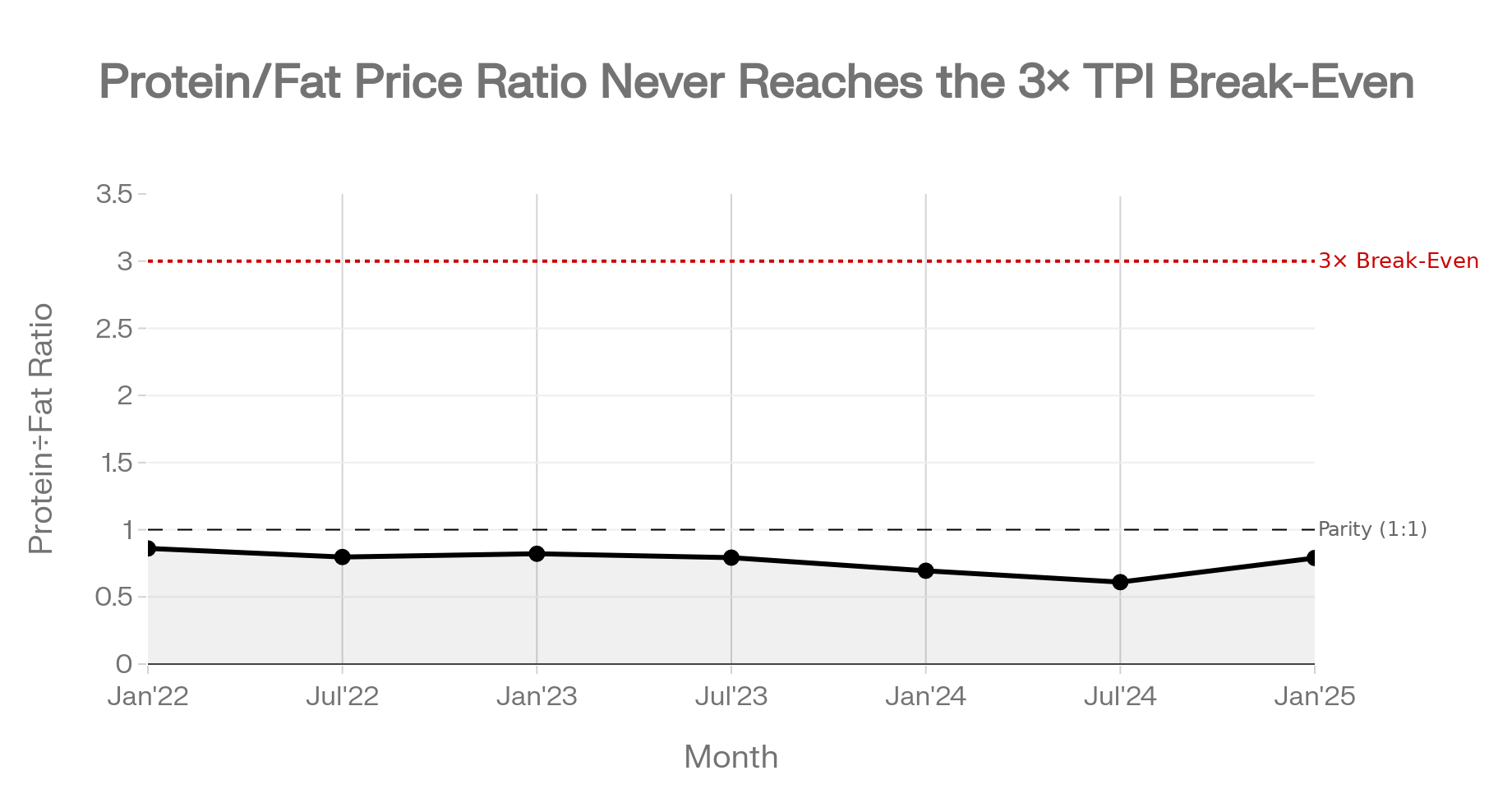
NewsSubscribe
First
Last
Consent
Send this to a friend