
Archive for risk management

 69 Sanitation Failures. 10 Dead. Now the Recall Bill Is Landing on Dairies That Did Nothing Wrong.

Jarratt logged 69 noncompliance records before the listeria hit. Ten funerals, 7 million pounds pulled, 17 months dark — and the margin damage is already moving upstream to 400-cow herds that never shipped a bad load.

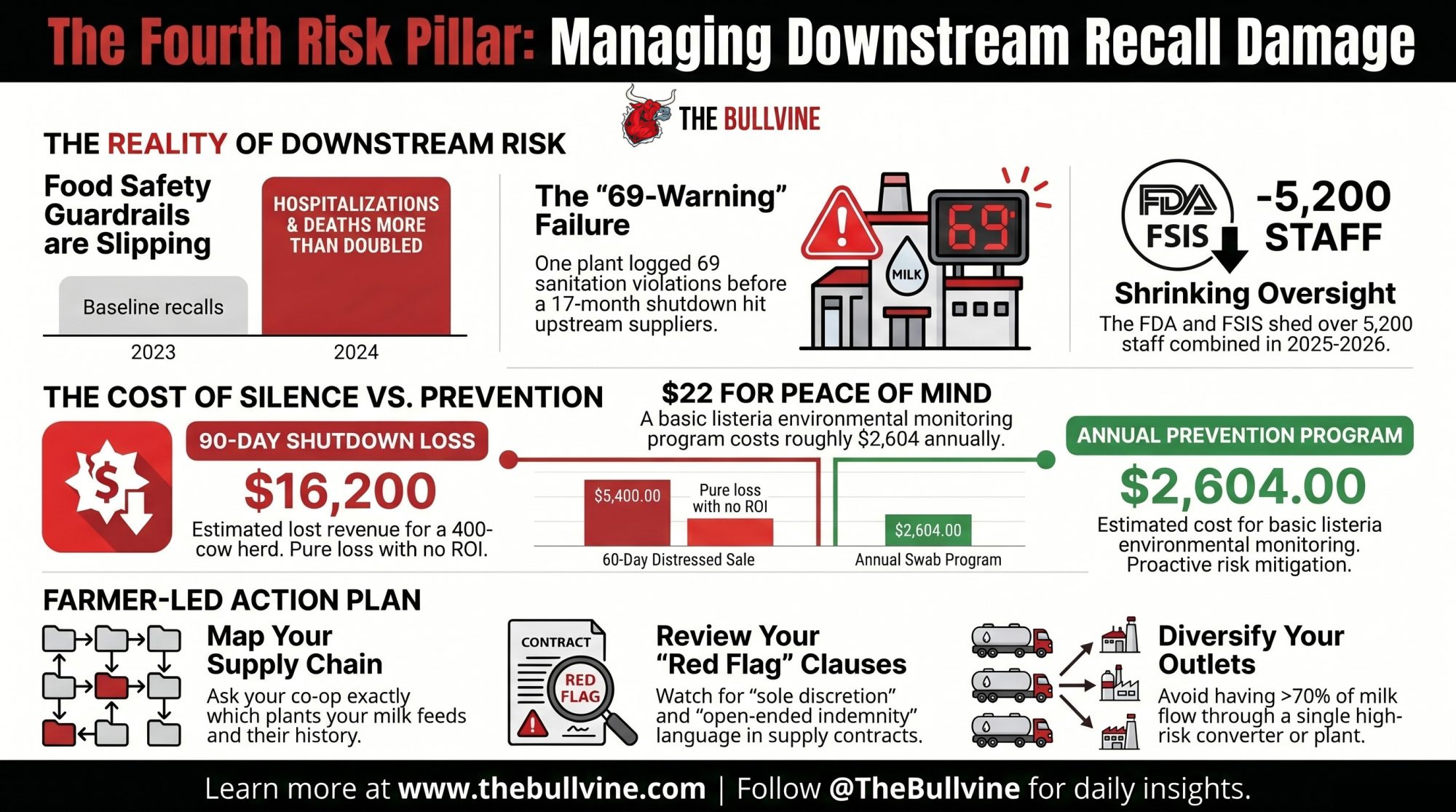
Executive Summary: Boar’s Head’s Jarratt, Virginia plant racked up 69 sanitation noncompliance records before a listeria outbreak killed 10 people, pulled more than 7 million pounds of product, and kept the facility dark for 17 months. That’s one plant in a broader shift: 2024 recall-linked hospitalizations hit 487 and deaths hit 19 — both more than double 2023 — while CDC’s FoodNet quietly de-emphasized listeria as a core target and FDA and FSIS shed over 5,200 staff combined. The dairy side is already in the blast radius — Rizo-López under permanent injunction, Prairie Farms supplemental shakes linked to 14 deaths, and Great Lakes Cheese yanking 1.5 million bags across 31 states on a Class II recall. On a 400-cow herd shipping 300 cwt/day, a 10% downstream intake cut at a $3/cwt discount for 60 days burns about $5,400; a 90-day shutdown scenario runs $16,200 — versus roughly $2,604/year for a basic listeria EMP built on $21.50–$21.86 swabs (Motzer, Trmčić et al., JDS 2025). HACCP self-policing, Talmadge-Aiken enforcement gaps, and co-ops that can’t audit their customers’ drains mean that risk isn’t staying where it was built. If more than 70% of your milk moves through one plant or converter, or your supply contract carries open-ended indemnity and “sole discretion” clauses, you’re carrying downstream plant risk as a fourth pillar next to feed, weather, and price — whether you’ve priced it or not. Read the full piece for the four levers you control, a contract-clause checklist, and the 30-day conversation to have with your co-op before the next recall runs your numbers for you.
Dairy recall risk

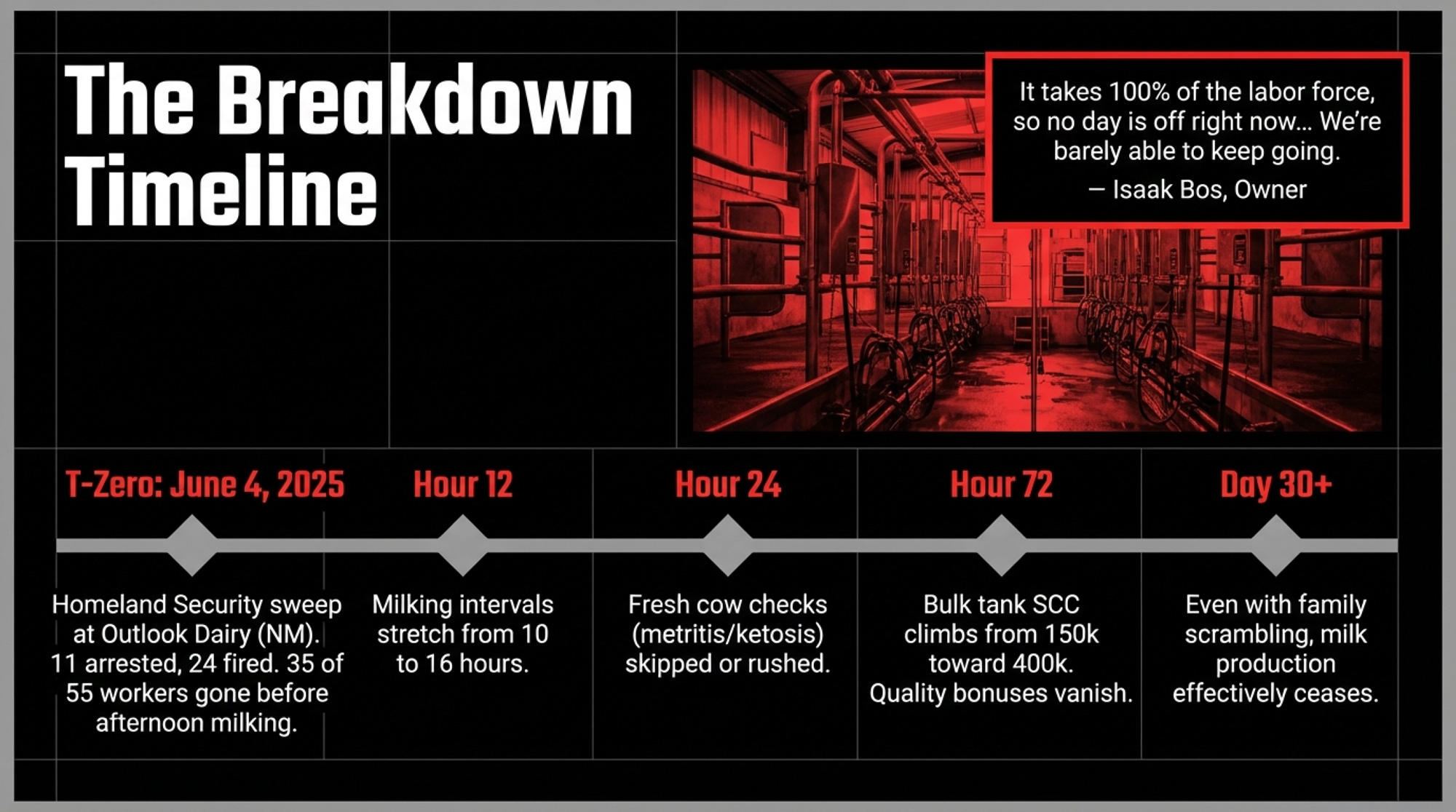
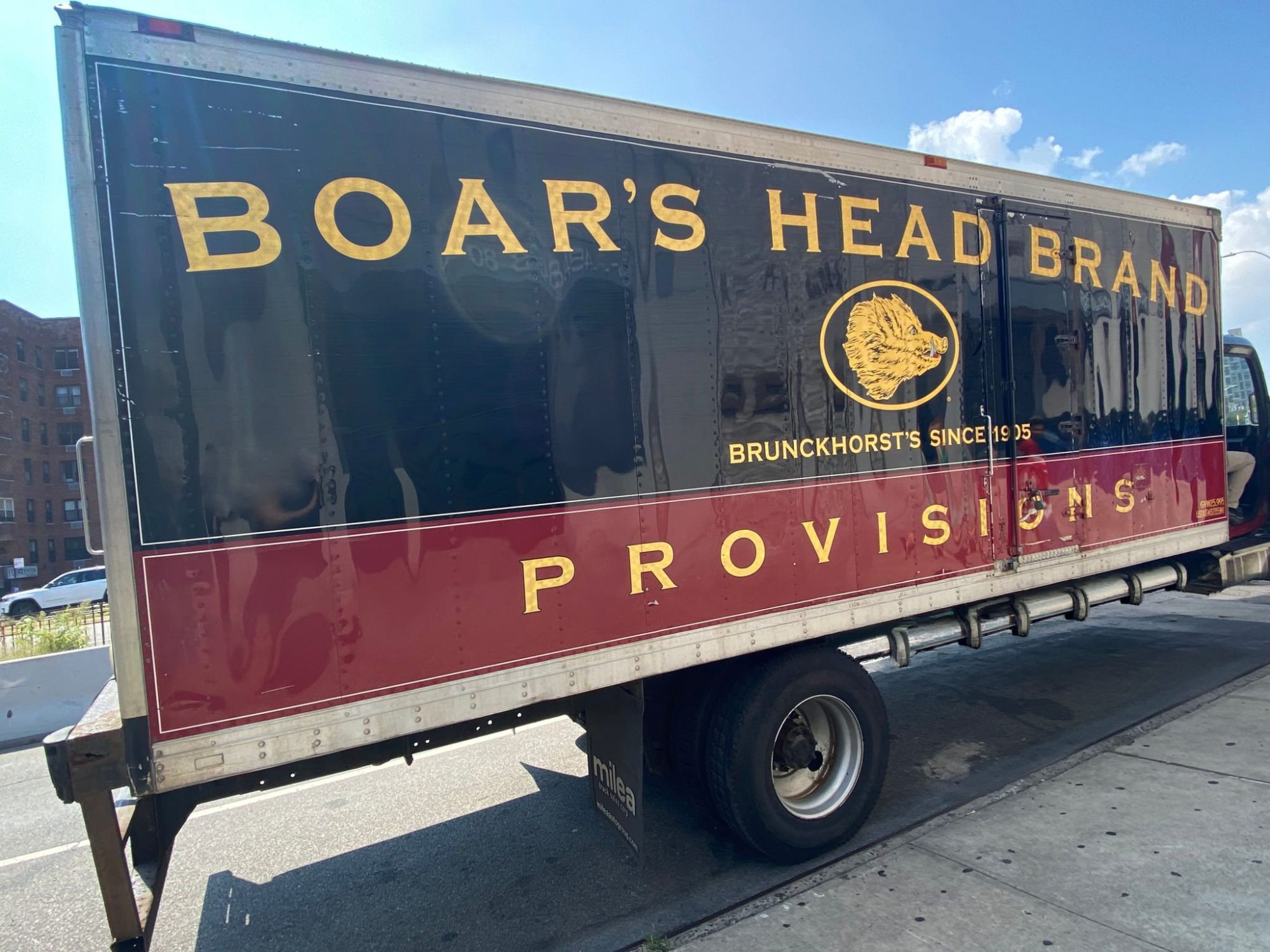
In the twelve months before listeria at Boar’s Head’s Jarratt, Virginia plant killed 10 people across nearly 20 states, inspectors walked that facility and wrote up 69 sanitation noncompliance records. Mold on walls. Insects. Condensation over food‑contact surfaces. Meat residue so caked on equipment the inspectors called it “heavy” and “discolored.” Every finding went in the file. The plant kept running.
By the time the recall dust settled, more than 7 million pounds of deli meat were off shelves. Jarratt shut down September 13, 2024. Boar’s Head didn’t resume operations until early February 2026 — about seventeen months later — after what the company called “comprehensive upgrades,” including adoption of USDA’s Alternative 2 Listeriacontrol program and the hiring of its first Chief Food Safety Officer, Natalie Dyenson, in May 2025.

Families who lost loved ones will never see those sanitation records the way you just did. And the dairies feeding milk into the same national retail chains and distribution networks absorbed a financial hit from a failure they didn’t create and never saw coming. This is the dairy recall risk story nobody put on your balance sheet — but it’s already there.

What’s Changing in Food Safety — and Why It Lands on You

On paper, food safety has never looked more organized: HACCP plans on every wall, third‑party audits, certificates for everything. On the ground, three guardrails are slipping at once.
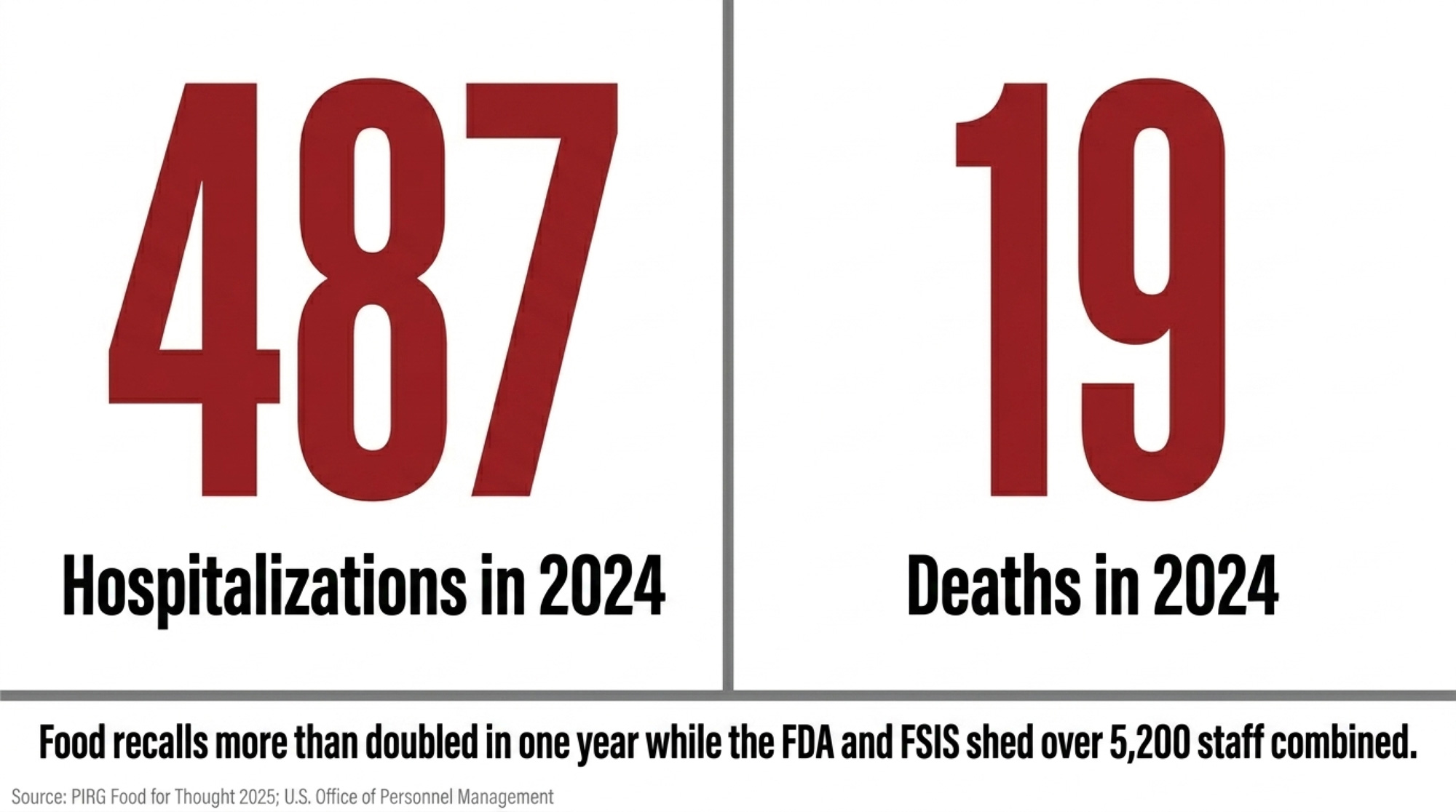
Recalls are getting more severe, not calmer. In 2024, contaminated food in the U.S. led to 487 hospitalizations and 19 deaths — more than double the 230 hospitalizations and 8 deaths tied to recalls the year before, according to PIRG’s Food for Thought 2025 analysis. Bacteria‑related recalls jumped about 41% year‑over‑year, with Listeria monocytogenes alone driving 65 recalls in 2024, up from 47 in 2023.

Before you write this off as a deli‑meat story, remember this: Listeria monocytogenes is the great equalizer. It doesn’t care whether the floor drain is in a ham plant in Virginia or a cheese plant in Wisconsin — it thrives in the same damp, cool environments found in deli processing and dairy bottling halls alike. Dairy‑adjacent products were right in the middle of it. Rizo‑López Foods of Modesto, California — a queso fresco and cotija manufacturer — has been linked to 2 deaths and 26 illnesses across multiple states, and now operates under a permanent injunction barring it from manufacturing until it complies with federal regulations.

A separate outbreak tied to frozen supplemental shakes served in medical and long‑term care facilities sickened 42 people across 21 states and killed 14, with illnesses traced back to products manufactured as far back as 2018. Those shakes were made by Prairie Farms Dairy at its Fort Wayne, Indiana facility under Lyons ReadyCare and Sysco Imperial brands. Read that date again. 2018.

The surveillance net that should catch these problems early is fraying. As of mid‑2025, CDC’s FoodNet narrowed its core annual performance targets to Salmonella and Shiga toxin‑producing E. coli, de‑emphasizing the six other pathogens — including Listeria — that used to sit in the same tier. Listeria is still reportable. But it’s no longer a central FoodNet performance benchmark, and the systematic dragnet that used to pull in listeria cases across 10 sites and flag small clusters is now weaker for exactly the bug driving many of the deadliest recalls.

The people doing the watching are stretched thinner. FDA lost 3,859 employees in 2025 and another 473 in early 2026, while FSIS shed 874 employees — roughly 8% of its workforce — in 2025, according to U.S. Office of Personnel Management data summarized by FoodNavigator‑USA. State and local health departments consistently cite limited staff and delayed lab results as major barriers to investigating suspected outbreaks. Fewer people chasing more signals means the subtle ones — low‑level clusters scattered across counties or months — are the first to get missed.

That’s where dairy recall risk management stops being an FDA problem and starts being yours. More recalls, more severe outcomes, less capacity to catch problems before they blow up. Not just a public‑health story. A milk‑cheque story.

How It Shows Up on a 400‑Cow Dairy

If you’re milking 400 cows, shipping clean milk, and passing every antibiotic and PI test, it’s tempting to look at Boar’s Head or Prairie Farms and think, “That’s their mess. We’re fine.”

But money doesn’t move that way.
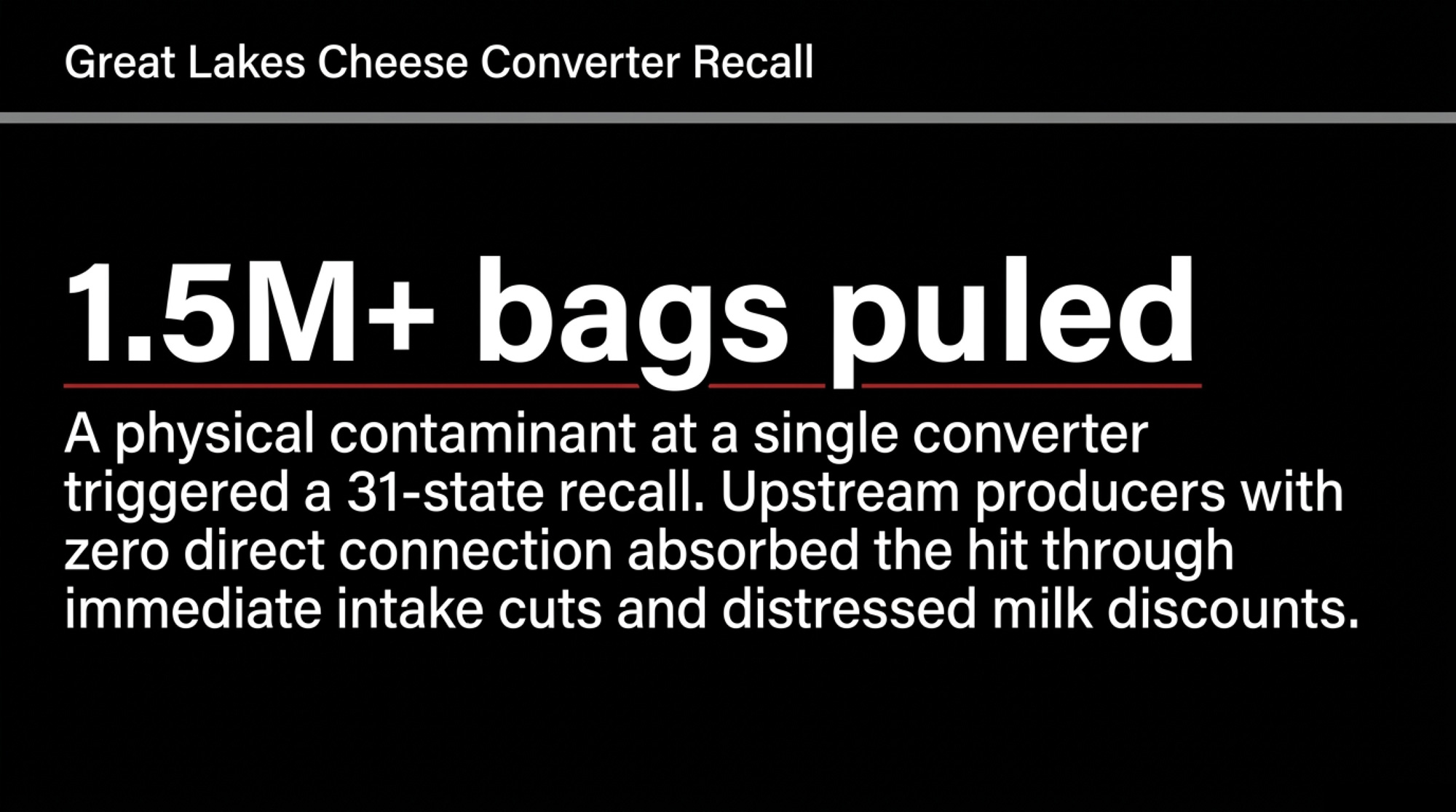
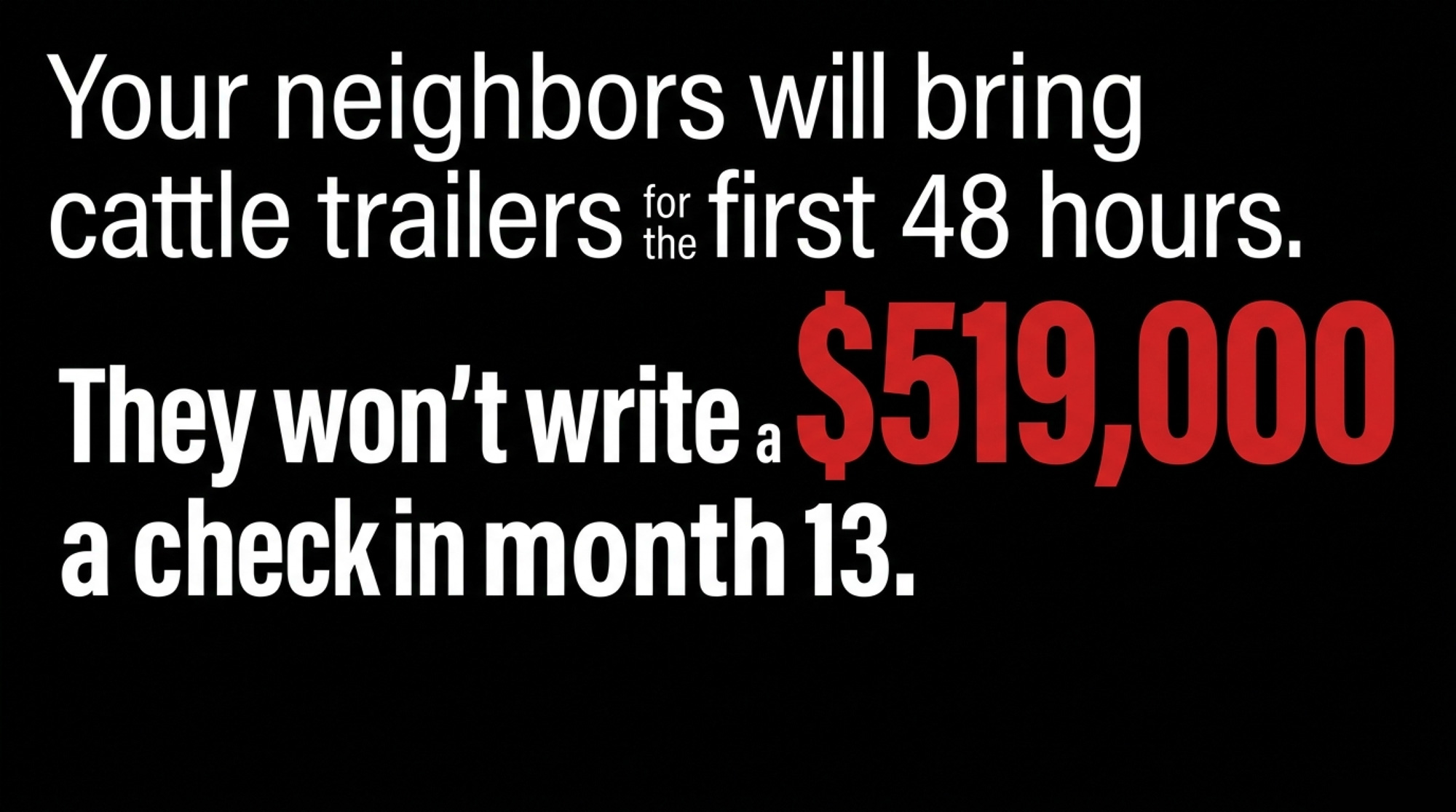
In early October 2025, Great Lakes Cheese initiated a voluntary recall of more than 250,000 cases of shredded and sliced cheese — over 1.5 million bags — sold across 31 states and Puerto Rico under store brands for Walmart, Target, Aldi, Costco, and others after possible metal fragments from a supplier’s raw materials were found in the product. On December 1, 2025, FDA categorized it as a Class II recall, meaning the cheese “may lead to temporary or medically reversible adverse health effects” and the probability of serious consequences is remote. No injuries were reported. Still a massive hit: product write‑offs, recall logistics, lost shelf space, and retailer trust on the line.

Here’s the part that matters for you. Great Lakes operates primarily as what the industry calls a “converter” — they buy 40‑pound commodity cheese blocks from various suppliers, then shred, slice, and package for retail. When a converter that size pulls back, the ripple moves upstream fast. As The Bullvine reported in December 2025, producers across the Upper Midwest who had no direct relationship with Great Lakes Cheese were already feeling effects — milk intake adjustments, price volatility, and the unsettling realization that something happening several steps down the supply chain was showing up on their bottom line.

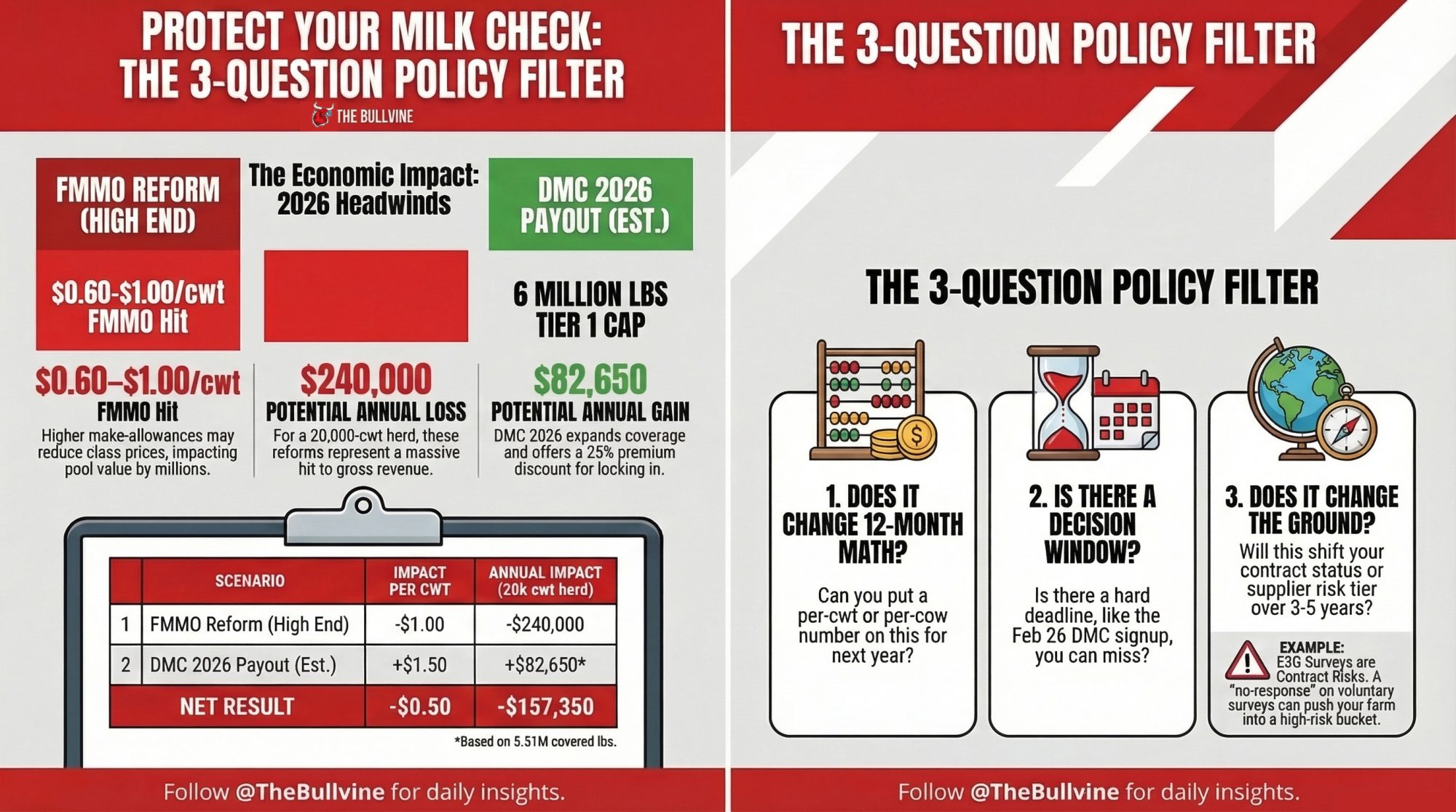
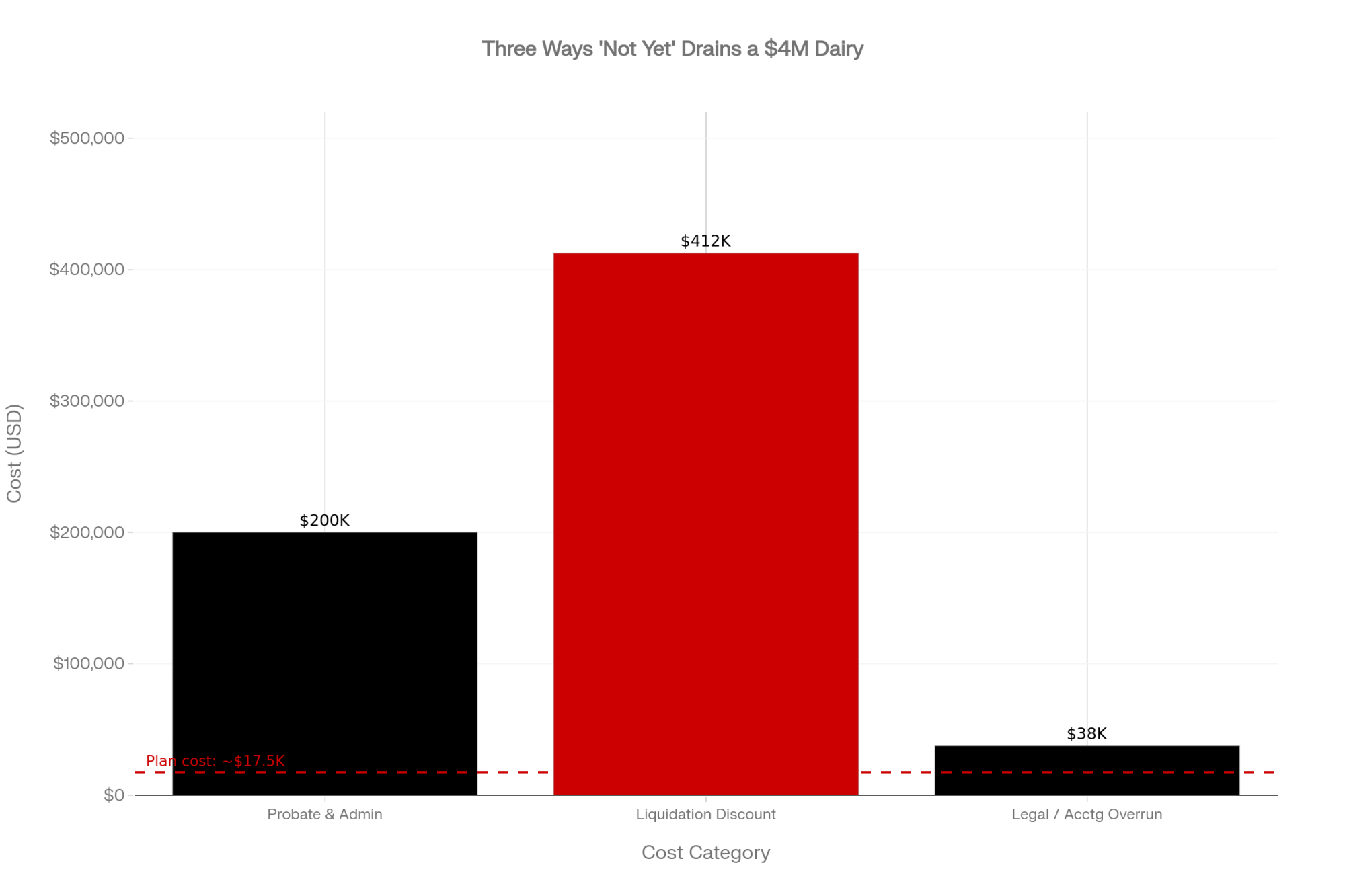
Here’s what that looks like on paper. On a 400‑cow herd averaging 75 lb/day, you’re shipping roughly 300 cwt/day. That 75 lb/day figure is a planning midpoint — adjust up or down for your own rolling herd average. If a downstream recall forces your co‑op to dial you back 10% for 60 days and that 30 cwt/day has to clear into a distressed market at a $3/cwt discount, you’ve just eaten around $5,400 in lost revenue over two months. Nothing to do with your ration, your SCC, or your parlor routine. Something changed in someone else’s plant — the pain still moved upstream.

The Cost of Prevention vs. the Cost of a Recall

MetricThe “Distressed” Reality (60 Days)The Prevention Strategy (Annual)
Activity10% intake cut / distressed sale on a 400‑cow herd120 environmental swabs + targeted repairs
Daily / Unit Cost$90.00 / day$21.70 / swab
Total Financial Hit$5,400.00$2,604.00
Business ImpactPure loss (no ROI)Risk mitigation / insurance

Illustrative planning numbers — substitute your own cwt/day and discount.

That’s the mild version — a physical contaminant that didn’t kill anyone. When listeria gets into the mix, like at Jarratt or in those supplemental shakes, the recalls are larger, the shutdowns measured in months instead of weeks, and the retailer reaction harsher. The bigger the shock, the more aggressively cost and risk get pushed back through processors, co‑ops, and finally onto you.

Why the System Fails Upstream Producers

So why does someone else’s listeria problem keep showing up in your pay statement instead of staying where it started? A lot of it comes down to how the rules are written — and what they actually reward.

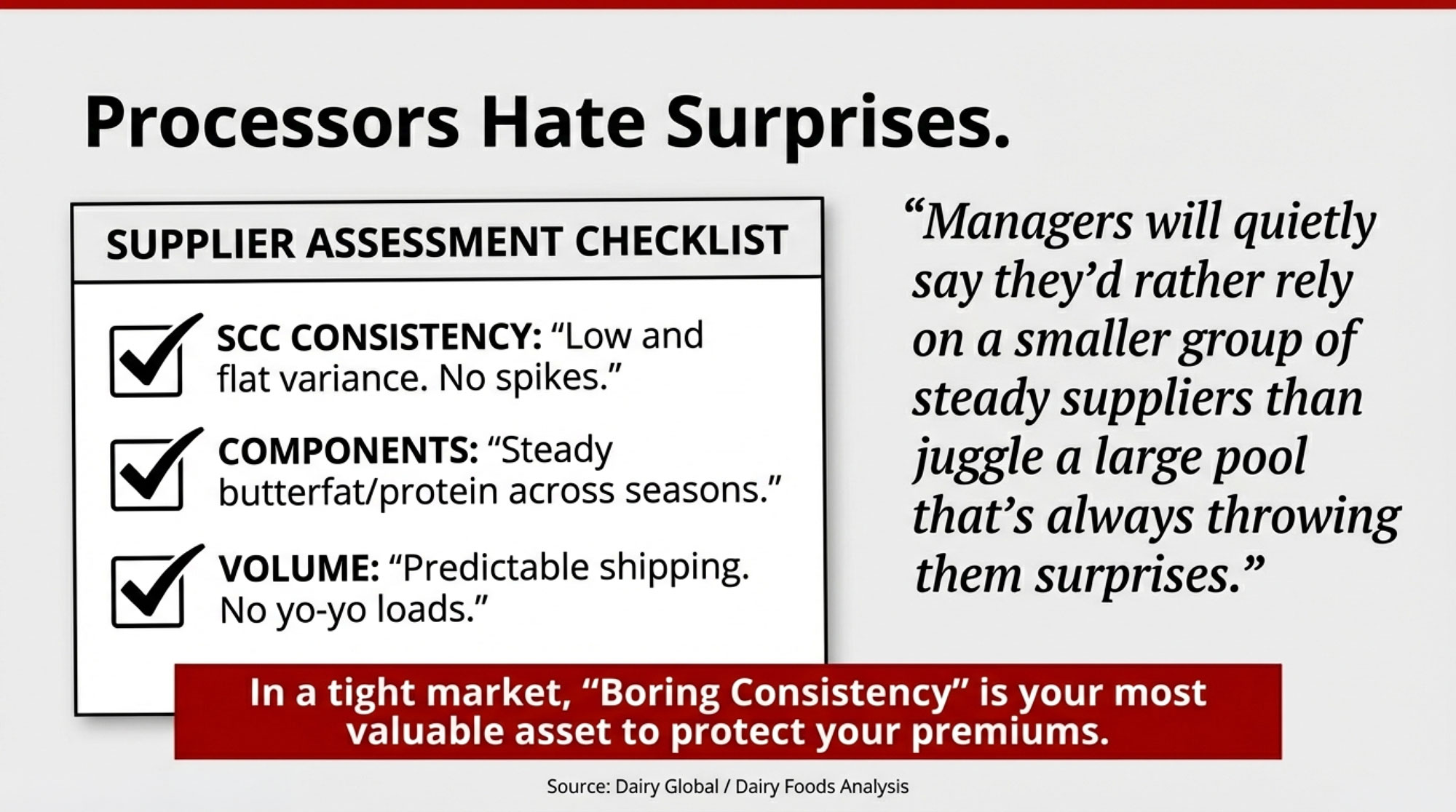
HACCP is built to reward paperwork first, pathogen control second. Processors write their own hazard analyses and critical control points. Inspectors mostly verify those plans exist and the records are filled out. At Jarratt, USDA’s post‑outbreak review found thermometer calibration records in the plant’s HACCP files didn’t match what devices were actually reading on the floor. On paper, the system looked fine. In the coolers, listeria was quietly doing its job.

Many listeria controls live in sanitation SOPs and environmental monitoring programs rather than as “stop‑the‑line” CCPs that automatically shut down production when a threshold is crossed. If a plant treats listeria as a cleaning nuisance instead of a production‑stop issue, management can understaff cleaning, rush changeovers, and still pass audits because the documentation looks tidy. Jarratt’s reopening under the more stringent USDA Alternative 2 Listeriacontrol program — which adds post‑lethality treatments or increased testing — is itself an admission the plant’s earlier controls weren’t enough.

Talmadge‑Aiken agreements can document problems without forcing plants to stop. Jarratt wasn’t inspected by federal FSIS staff day‑to‑day. It fell under a Talmadge‑Aiken agreement where Virginia state inspectors operated under federal authority.

Layman’s definition: Under Talmadge‑Aiken agreements, state inspectors do the footwork, but they’re technically enforcing federal (USDA) standards. It’s a “partnership” that, as Jarratt proved, can sometimes leave accountability gaps — plenty of paperwork generated, not enough production‑stopping force.

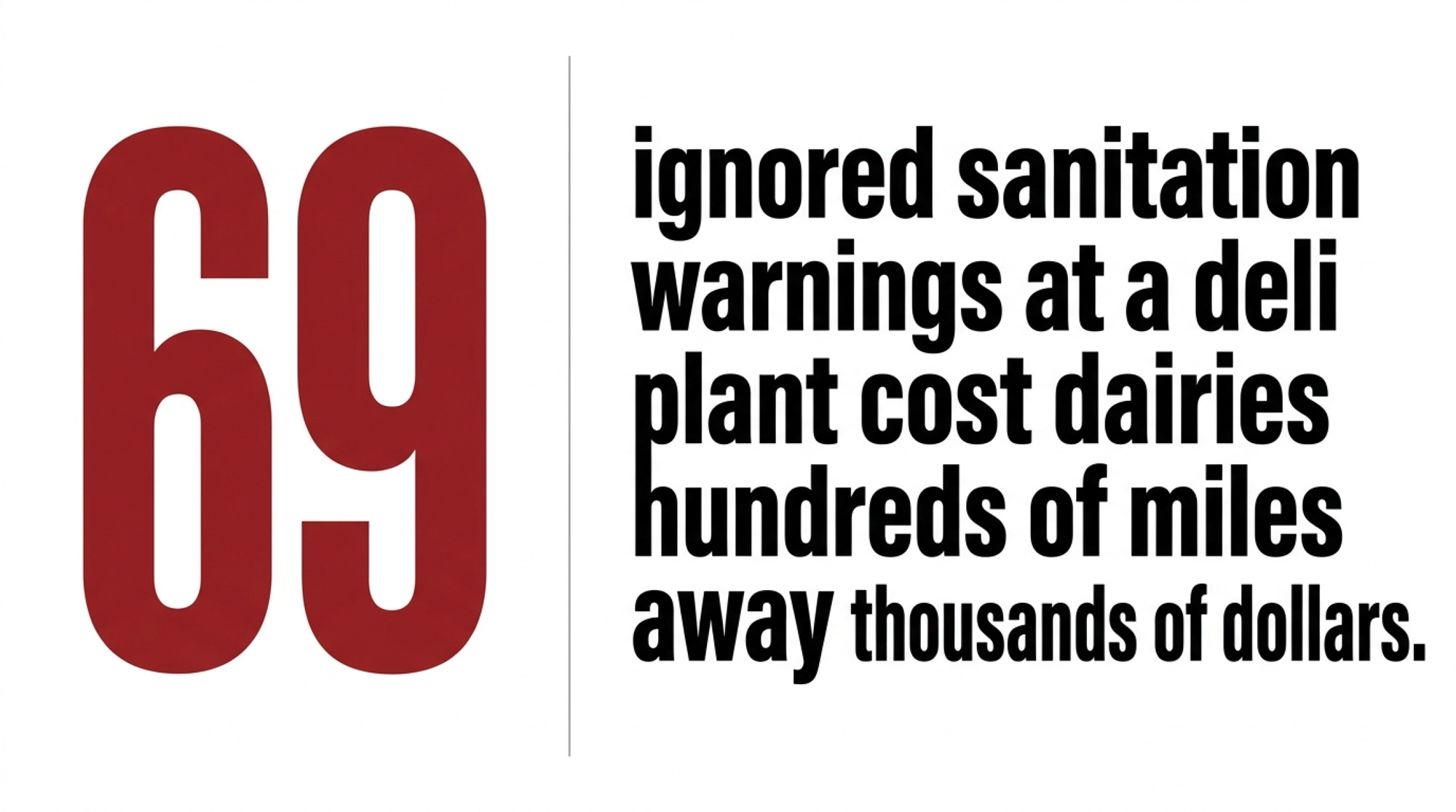
Those inspectors wrote up 69 sanitation noncompliance records between August 2023 and August 2024. Each generated a corrective‑action entry. None triggered the kind of sustained production halt and teardown that might have cleared a persistent listeria problem before those deaths and hospitalizations. Only after the outbreak did USDA promise clearer expectations for oversight, tougher enforcement of federal food‑safety laws, and comprehensive federal training for Talmadge‑Aiken inspectors at that plant — exactly the things most producers assumed were already in place.
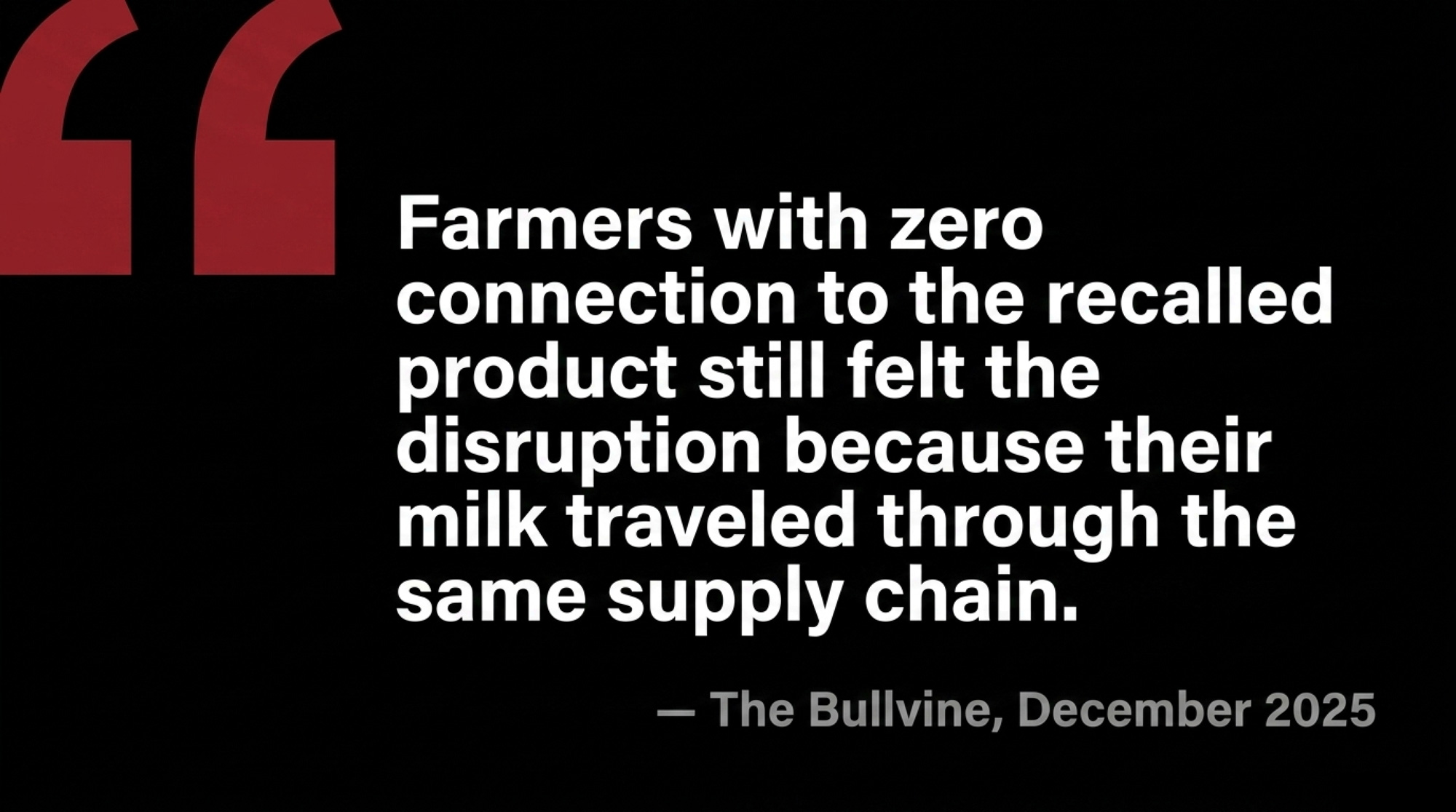
Your co‑op’s job is to move milk and chase price, not audit every converter’s drains. Most co‑ops don’t own the shredders, blenders, and co‑packers where a lot of recall risk actually sits. Their main levers when a customer has a problem are to redirect loads, renegotiate terms, or adjust member intake. They can’t walk into a customer’s plant, rewrite their HACCP plan, or force them to start paying for a real environmental monitoring program. The Great Lakes situation made that dynamic plain: farmers with zero connection to the recalled product still felt the disruption because their milk traveled through the same supply chain.

That’s how 69 ignored warnings at someone else’s plant, or a multi‑year listeria problem in someone else’s product line, quietly turns into intake cuts, lost premiums, and more volatile contracts for you.

What This Rising Dairy Recall Risk Really Means for Your Operation

In practical terms, the biggest food‑safety risk to your business might not be in your bulk tank or your milking routine. It might be the plant your milk flows into, the converter they sell to, and the brand that ends up on the package.

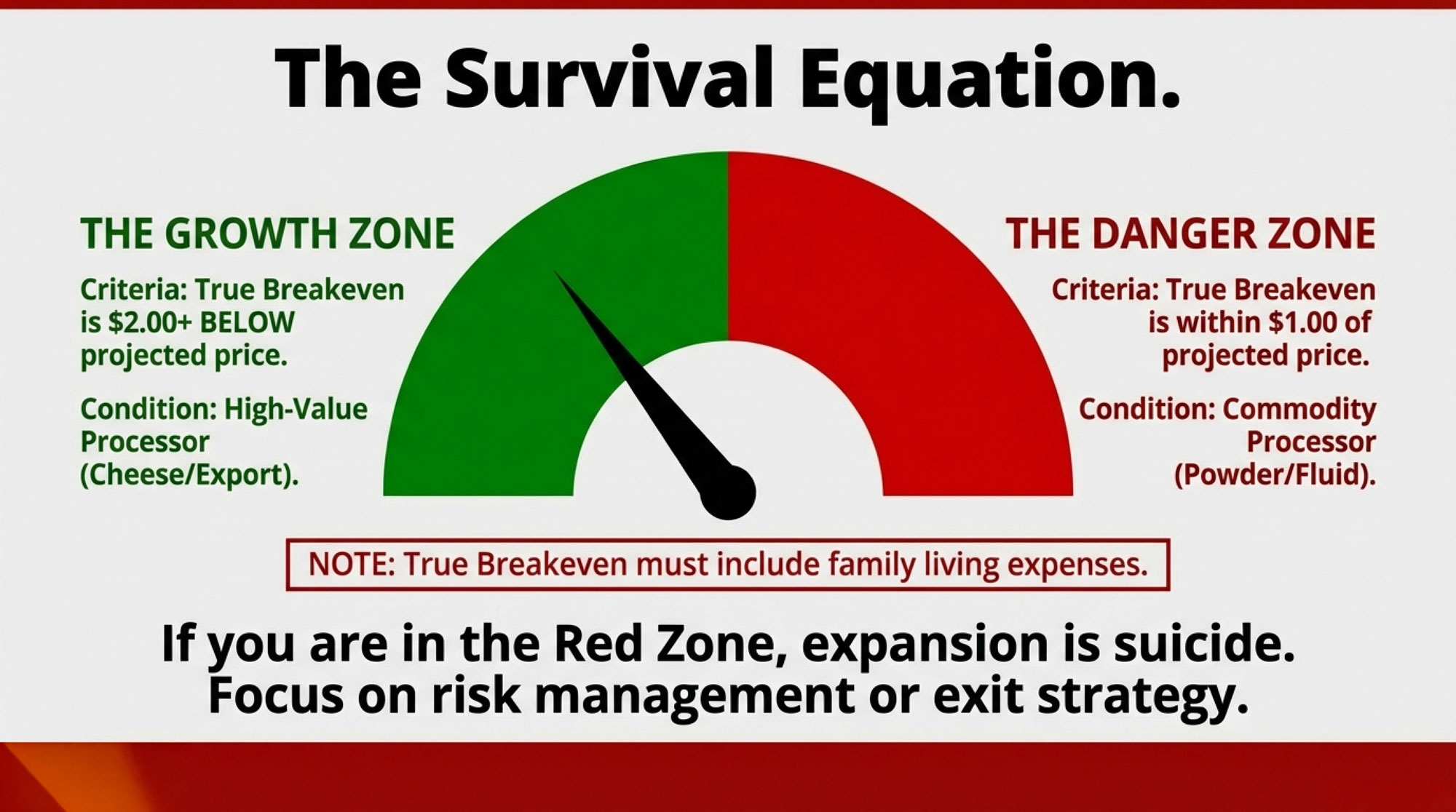
You already manage the risk inside your fence: mastitis, repro, feed costs, weather. You probably use DMC, DRP, or forward contracts to keep milk price swings from wrecking your cash flow. This is a fourth risk pillar sitting alongside those three: downstream plant and contract risk.

It’s uncomfortable because it lives outside your control. But that doesn’t mean you’re powerless. It means you can’t treat “regulation” as a safety net and assume if something were really dangerous, someone would shut it down. Jarratt ran for a year under 69 documented violations. Rizo‑López stayed in business until a permanent injunction followed multiple illnesses and deaths. The Prairie Farms supplemental shake outbreak ran from 2018 case onsets until the FDA closed its investigation in May 2025 with 42 illnesses and 14 deaths on the books.

The system will sometimes leave bad plants running much longer than you’d expect. So you start with the question most of us avoid: how exposed are you if your main plant goes dark?

How Much Could a 90‑Day Plant Shutdown Really Cost You?

Forget Boar’s Head for a second. Picture your own milk truck.

If your primary processor shut down for 90 days — listeria, metal fragments, equipment failure, enforcement action, whatever — what actually happens to your milk? Do you know which plants are your first and second outlets? Could your co‑op redirect your volume within a week? Would you be on full quota, reduced, or dumping? Have you asked?

Take that same 400‑cow herd shipping about 300 cwt/day. If 20% of your volume — 60 cwt/day — suddenly has to move into lower‑value channels at a $3/cwt discount for three months, the math looks like this:

  • 60 cwt/day × $3/cwt = $180/day
  • $180/day × 90 days = $16,200

Plug your own cwt/day and discount to see where you land. You can argue about whether $3/cwt is the right number for your market. You might think your co‑op could shift you into something better. That’s exactly the point. For a lot of farms, those are guesses — not numbers.

As The Bullvine reported in December 2025, the herds that rode the Great Lakes disruption best weren’t necessarily the biggest or fanciest. They were the ones who’d already mapped their supply chain. They already knew:

  • Where their milk actually goes
  • What backup outlet exists if a plant shuts
  • How long they can ride a disruption before it forces ugly decisions

Everyone else found out mid‑crisis.

Is a $22 Swab Test Really Worth More Than Your Premium Channel?

If you do any on‑farm processing — fresh cheese, bottled milk, ice cream, even a modest cream line — the math on basic listeria environmental monitoring isn’t that scary.

A 2025 Journal of Dairy Science study by Motzer, Trmčić, and colleagues looked at nine small‑ and medium‑sized dairy processors and found total annual environmental monitoring program (EMP) costs ranged from $1,187 to $55,531per plant, depending on size and intensity. The sponge swab and lab fee together ran about $21.50–$21.86 per sample.

Take 10 targeted swabs a month — drains, floor‑wall junctions, under equipment where it’s always damp — and that’s 120 swabs a year. At roughly $21.70 each, you’re in the ballpark of $2,604 a year. That’s not nothing. But stack it against the $5,400 intake‑cut hit from the earlier two‑month example, and the EMP starts looking less like a line item and more like the cheapest insurance policy you’ll buy all year.

Even if you’re only shipping raw milk, the environmental hygiene logic still applies. Listeria monocytogenes loves cold, wet, nutrient‑rich environments. It forms biofilms on stainless steel and in drains that survive standard sanitizers. Research has shown 10‑day‑old listeria biofilms on stainless steel can resist both quaternary ammonium and chlorine — the same products most parlors and plants rely on every day.

You probably don’t need a full lab in your milk house. But you can:

  • Fix cracked concrete and low spots where water pools.
  • Get rid of dead‑leg piping and places where milk or wash water sits.
  • Keep drains in bulk tank rooms and load‑out areas surgically clean.
  • Run a few indicator swabs a year through your vet or local lab as a sanity check that your own environment isn’t part of the problem.

Options and Trade‑Offs for Farmers

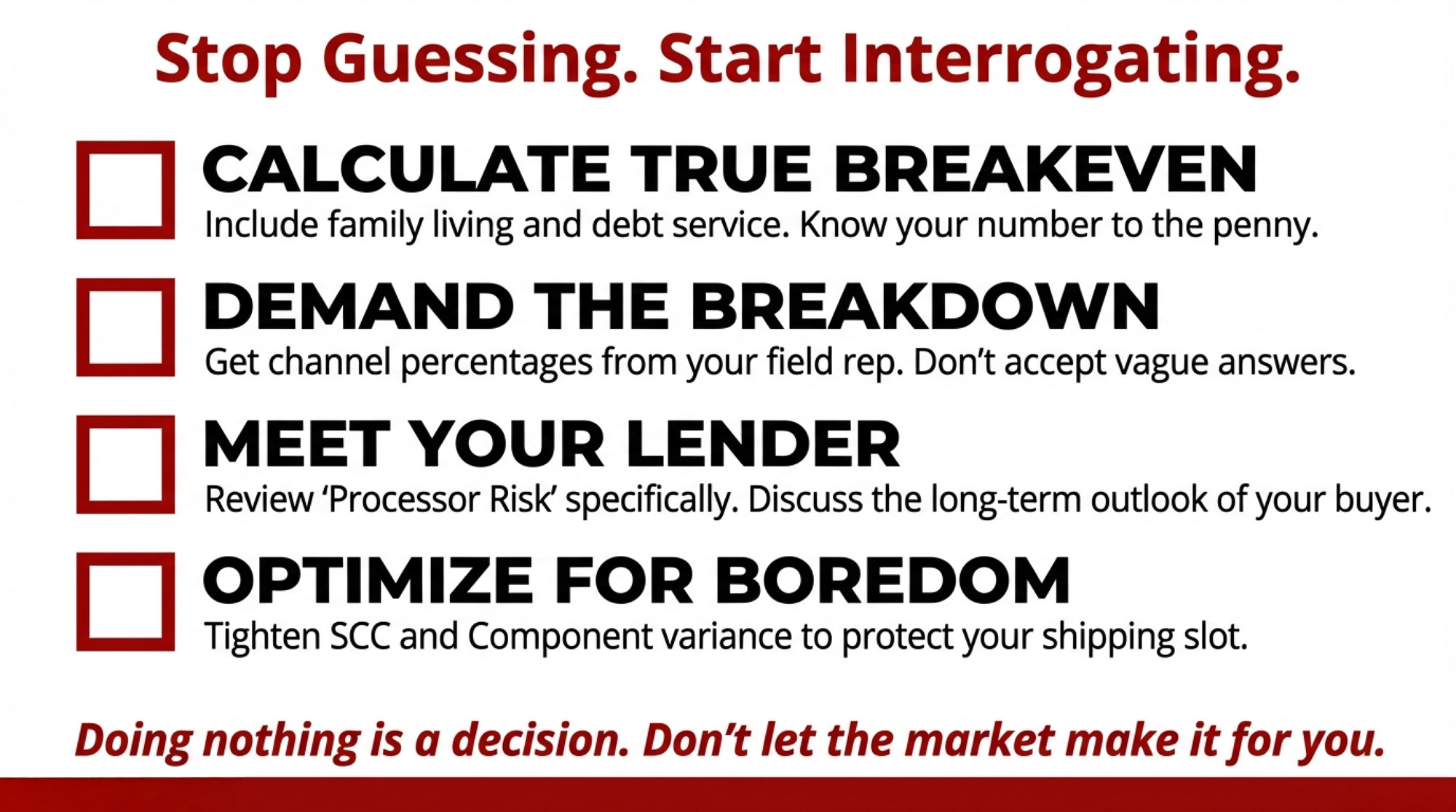
You don’t get to rewrite HACCP rules or hire back CDC epidemiologists. You do get to decide how much of this downstream risk you carry blind.

Here are four levers you control.

1. Ask where your milk really goes — and do it in the next 30 days.

Within the next month, sit down with your co‑op or buyer and ask three blunt questions:

  • Which specific plants does my milk typically go to?
  • What products do those plants make — fluid, commodity powder, shredded cheese, RTE meals, infant formula?
  • Have those plants or their major customers been involved in recalls or enforcement actions in the last five years?

If the answers are detailed and transparent, that tells you something. If they’re vague or “we don’t really track that,” that tells you something else. As The Bullvine reported in December 2025, the Upper Midwest producers who’d already mapped their supply chain had more room to react than those caught off guard by the Great Lakes ripple.

  • When it makes sense: Always — this is the lowest‑cost move you can make.
  • What it requires: A phone call and a willingness to listen.
  • Risks/limits: You might learn you’re more concentrated than you thought. That’s uncomfortable, but ignorance doesn’t make the risk go away.

2. Don’t put all your volume into one high‑blast‑radius channel.

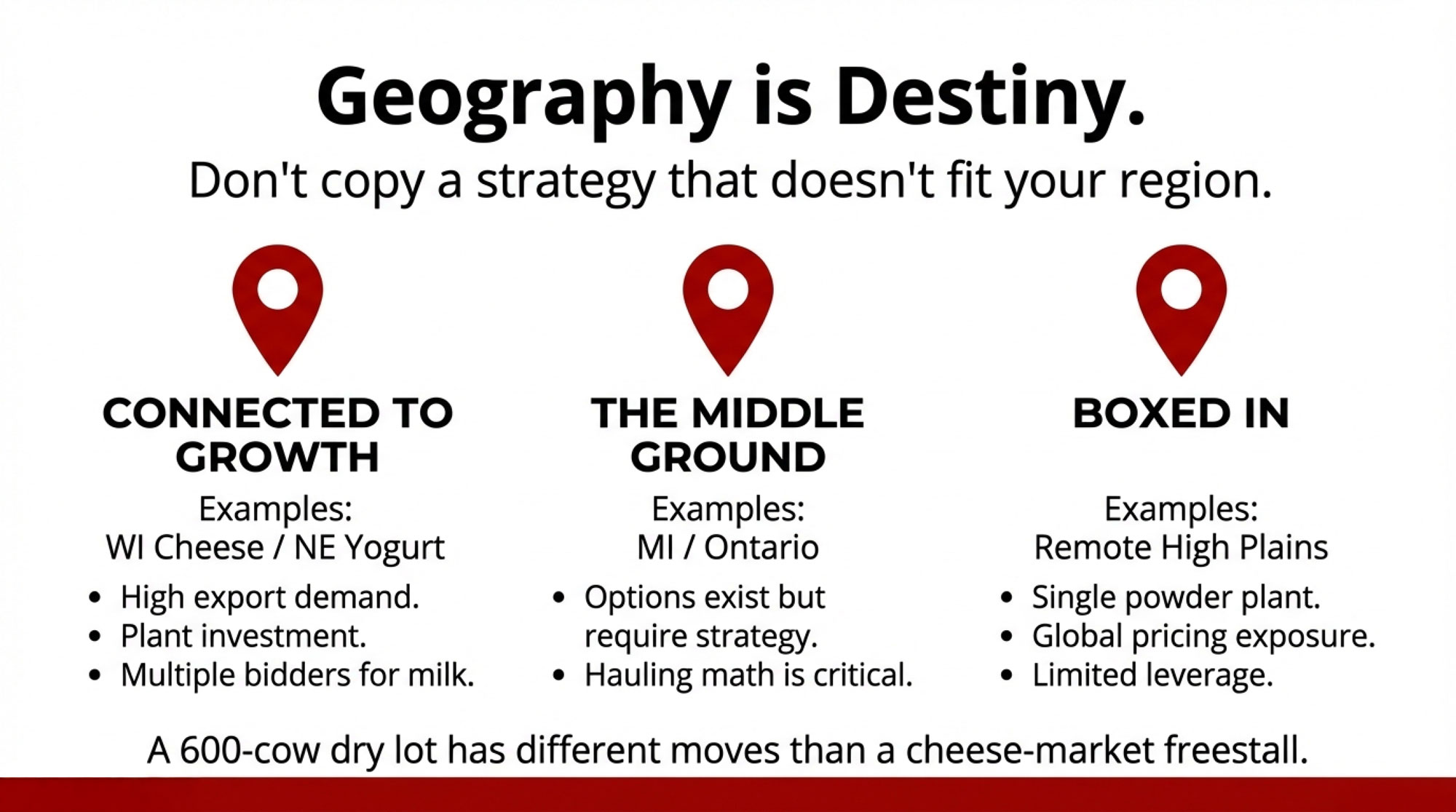
If 80–100% of your milk is tied to one plant — or flows through a single converter like Great Lakes that feeds dozens of retail brands across 31 states — you’re more exposed than a neighbour whose milk is split across fluid, cheese, and powder.

You might still choose the higher‑risk, higher‑premium outlet. Just treat it like you treat forward contracting: consciously, with eyes open.

  • When it makes sense: When you have any say in program enrolment or buyer mix.
  • What it requires: Understanding where your milk ends up and being willing to say “no” to all‑in deals that pay a bit more but concentrate your risk.
  • Risks/limits: Diversifying outlets can mean giving up some premium today for more resilience tomorrow. Only your balance sheet can answer if that trade works.

3. Read your contracts like they were written for the day after a recall.

If you’re in any kind of direct‑supply or specialty program, pull out your milk supply agreement and look for three phrases:

  • “Indemnify and hold harmless” — especially if it covers “any contamination‑related loss,” not just issues you directly control.
  • “Sole discretion to adjust volume or price” — particularly for vague triggers like “market disruption” or “customer quality concerns.”
  • Fuzzy definitions of “non‑compliance” that could include someone else’s ingredient failure or a downstream recall.

Those phrases don’t automatically make a contract bad. But they do shift more risk onto you when something goes wrong down the line.

  • When it makes sense: Any time a contract is renewed or a new premium program is pitched.
  • What it requires: A careful read, maybe a conversation with your lender, accountant, or a lawyer who’s seen these clauses before.
  • Risks/limits: Pushing back may cost you a premium or a buyer. Accepting them without understanding may cost you much more later.

4. Match your own risk controls to your exposure over the next year.

If you run a farmstead creamery or sell direct, a basic listeria EMP — 5–10 swabs a month in the highest‑risk spots — is reasonable at about $2,604 a year. If you only ship raw milk, focus on environmental fixes: eliminate standing water, repair broken surfaces, and make sure the path from bulk tank to tanker is as close to biofilm‑free as you can make it.

Think of this as sliding a dial. The more your milk ends up in high‑risk, high‑value products, the more it makes sense to spend a little to make sure your own environment isn’t the weak link. Boar’s Head just spent seventeen months and serious capital retrofitting Jarratt with the kind of environmental monitoring they should have had all along. A basic version of that same principle costs you $2,604.

  • When it makes sense: Over the next 12 months, especially if you’re adding processing or targeting premium RTE channels.
  • What it requires: Some cash, time, and honesty about “gross spots” you’ve been ignoring.
  • Risks/limits: You might find something you have to fix. That’s the whole point.
Key Takeaways

  • If more than about 70% of your milk flows through a single plant or converter, treat that as a red‑line concentration level and run the 90‑day shutdown math on your own numbers before the next recall runs it for you.
  • If your co‑op or buyer can’t clearly tell you which plants your milk feeds and what their recall history looks like, assume nobody is actively managing that risk on your behalf — and start asking tougher questions this month.
  • If your supply contract includes open‑ended indemnity language and “sole discretion” volume or price cuts after “market disruptions,” flag it for review before you count on that premium holding.
  • If a 10–20% intake cut at a $3/cwt discount for 60–90 days would put you in a cash‑flow bind, compare that number to a $2,604 EMP or some concrete and drain repairs — and decide which one is really “too expensive.”
  • If your milk ends up in RTE products, fresh cheeses, or supplemental shakes, treat environmental testing around the bulk tank room as part of the cost of being in that market, not an optional extra.

The uncomfortable truth is this: you can run a tight herd, ship clean milk every day, and still get sideswiped because a plant you’ve never walked through treated listeria like a paperwork problem instead of a reason to stop the line.

Complete references and supporting documentation are available upon request by contacting the editorial team at editor@thebullvine.com.

Learn More

The Sunday Read Dairy Professionals Don’t Skip.
Every week, thousands of producers, breeders, and industry insiders open Bullvine Weekly for genetics insights, market shifts, and profit strategies they won’t find anywhere else. One email. Five minutes. Smarter decisions all week.


NewsSubscribe
First
Last
Consent

72 Milk Pans, Fired Quidlings, 24% Returns: Abigail Adams, America’s First Dairy CFO

Braintree, 1794. Her land paid 2%. Her bonds paid up to 24%. She ordered 72 milk pans, fired the quidlings, and out‑managed half the Founding Fathers from a farmhouse desk.

Braintree, 1776. While John argued independence in Philadelphia, Abigail was at the kitchen table running the farm, the books, and — quietly, through a trusted middleman — a bond portfolio that would out‑earn Adams land twelve to one.

Act I — Cannons, Cream Pans, and a Woman with a Quill

The cannons had barely cooled.

It was April 11, 1776. Boston Harbor still carried the faint bite of gunpowder from months of siege. British warships had rattled windows from Roxbury to Braintree, and every farmhouse along that stretch of coast had learned to flinch at the sound of distant artillery.

A few miles south of town, in a plain wooden farmhouse in Braintree, Massachusetts, the air was different. Woodsmoke. Damp wool drying by the hearth. The sour‑sweet tang of yesterday’s milk resting in shallow tin pans in the buttery, throwing off a bit of chill as the cream lifted. Somewhere beyond the kitchen wall, a cow bawled for her calf, and a team of horses clinked past with harness and chain.

At the kitchen table, a woman dipped her quill in ink instead of cream.

Her husband was in Philadelphia, arguing over phrases that would soon cut an empire in half. She’d heard the cannon fire. She’d watched neighbor boys drill on stony pastures and disappear down the road toward armies that might never send them back. She could have written about fear. Loneliness. The price of salt.

She wrote about ambition.

“I hope in time to have the Reputation of being as good a Farmeress as my partner has of being a good Statesmen.”

That’s the voice that opens this story. Abigail Adams, thirty‑one years old, the wife of a lawyer‑turned‑revolutionary, sitting in a working farmhouse with milk cooling in the pantry and a war rumbling just beyond her door. In one sentence, she planted a flag most of her contemporaries couldn’t even see. Inside twenty years, that same quill hand would be buying discounted government notes through a trusted middleman while John was off in Paris — returns her husband would sneer at and her household would quietly live on.

Here’s what most folks miss about that line.

When Abigail wrote “Farmeress,” she wasn’t being cute. She wasn’t reaching for a romantic title to tuck into a letter. In an era when a married woman legally couldn’t own so much as her own butter churn under the doctrine of coverture, she was staking out a professional identity. She was telling her absent husband — and, quietly, the future — that while he built a country, she intended to build a farm worth remembering.

Most people know Abigail as the one who told the Founders to “Remember the Ladies.” That quote wins posters and school projects. But if you actually sit with the 2,100‑plus letters she and John traded over forty years, a different Abigail steps forward. One who talked hay yields, cheese hundredweights, laborer contracts, and discounted government notes with the same cool attention most Revolutionary leaders reserved for treaties.

She wasn’t alone in her era, though she was rare. Down in South Carolina, another woman about her age — Eliza Lucas Pinckney — was quietly perfecting indigo cultivation on her father’s plantations and reshaping a whole colony’s export economy. Different crop, different geography, darker moral footprint given Pinckney’s reliance on enslaved labor, but the same unmistakable pattern: the Revolution‑era colonies had a handful of brilliant women managing serious agricultural operations while the men were off tending to war, politics, or empire. Abigail was New England’s entry in that short, extraordinary list.

What nobody sitting at that kitchen table could have seen, that spring morning in 1776, was this: the woman writing about being a “Farmeress” would one day become the reason a founding family kept its farm when other, more famous Founders lost theirs.

Every dairy farmer reading this knows her type, whether they know her name or not.

Born to Books, Married to the Land

Abigail Smith came into the world on November 11, 1744, in Weymouth, Massachusetts. Her father, William Smith, preached from a Congregational pulpit. Her mother, Elizabeth Quincy, carried a family name already woven into colonial politics and property.

No schoolroom ever held her. Girls of that time simply didn’t get that luxury. But the parsonage was effectively a library with a kitchen attached, and young Abby grazed those shelves the way a good heifer grazes first‑cut alfalfa — thorough, selective, and hungry. Theology. Law. History. Poetry. Richard Cranch, a young tutor who would later marry her sister Mary, helped shape her reading. It showed.

Historian John Kaminski sums her up in eight words worth pinning above a herd manager’s desk: “a very demanding person that people live up to.”

You know the type. You’ve met her at breakfast on a show morning. Quiet in the corner, coffee in hand. Knows every pedigree at the table and doesn’t need to prove it. Standards as high as a first‑lactation Excellent score — and no patience for shortcuts.

She married John Adams in 1764 and stepped onto the Braintree farm that would define the next fifty years of her life. This was no sprawling Virginia plantation. It was a rocky New England operation: patches of stony upland, strips of salt hay cut from the tidal marshes, an orchard, a garden, a few fields in rotation, a small herd of dairy cows, some sheep, and a house that by modern standards would have leaked heat faster than it held it.

Put that in period context. A typical New England farm in the late 18th century ran somewhere around 50 to 100 acres of cleared and uncleared ground, produced most of what the family needed, and kept “a cow” the way we think of “a truck” — one, maybe two, for household milk, butter, and cheese. The Adams place wasn’t enormous by those standards, but in ambition, in dairy scale, and in the way it was run, it was about to leave the neighbors in the dust.

John, at that point, was a lawyer. Lawyers travel. Then he became a revolutionary. Then a diplomat. Then vice president. Then president. Every promotion translated into one reality back home: longer absences, and farther. From 1774 to 1777 he was in Philadelphia at the Continental Congress. From 1778 to 1788 — a full ten years — he was in Europe, bouncing between Paris, Amsterdam, and London. After that came New York, Philadelphia, and the raw new capital on the Potomac.

Someone had to keep the cows fed, the hay in, the cider sound, the taxes current, and the hired help from walking off mid‑season. Someone had to make sure there was still a farm to come home to when the speeches ended.

That someone was Abigail.

At first because she had to. Then — and you can feel this shift in the letters — because she was very, very good at it.

The Farm You’d Recognize, and the One You Wouldn’t

Most Braintree neighbors worked subsistence‑scale places: a yoke of oxen, a couple of house cows, a few sheep, maybe a pig out back. The wider New England dairy economy of the 1770s and 1780s was built around exactly that kind of small, diversified operation — no commercial herds in the modern sense, no milk buyers, no bulk tanks.

The Adams farm was different. Horses, sheep, and dairy cows. Salt hay cut from the coastal marshes for winter feed. Orchards feeding a serious cider operation — John liked to credit a morning “jill of cyder” with his digestion and longevity. A garden. Fish from the coast to stretch rations for family and laborers. Tenant families on outlying acreage, including land they called Thayers place.

Sitting inside all of it, like the bulk tank humming at the center of a modern parlor, was the dairy. No cold chain. No stainless. No pipeline. Milk was a race against spoilage won with cool cellars, clean pans, fast hands, and people who understood what “clean” really meant in a world of wooden churns, tin, and open flame. Cheese and butter weren’t luxuries — they were the storage strategies that turned perishable cream into marketable surplus. That was the world Abigail stepped into as manager, and later, as architect.

The Year the Hay Fell Short

If this all sounds like tidy success, 1777 is the year that tests the story.

By midsummer, John was deep in the Continental Congress’s committee work, writing home to Braintree with both affection and advice. In a July 1777 letter, he gently pressed her on what he already suspected: the farm wanted manure, the hay crop was short, and the cattle needed a plan. “The true Maxim of profitable Husbandry is to contrive every Means for the Maintenance of Stock,” he wrote. “Increase your Cattle and inrich your Farm.”

Easy counsel from Philadelphia. Much harder in Braintree.

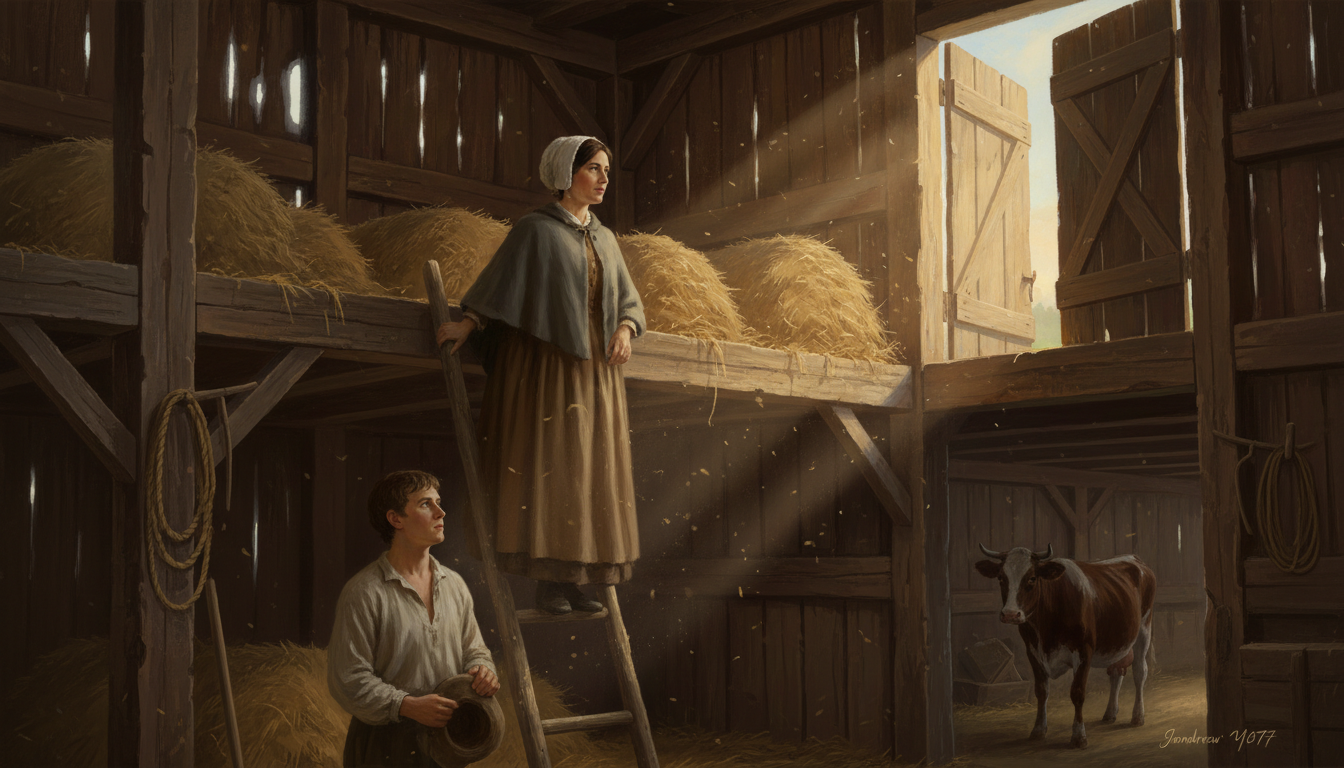
Abigail was the one actually staring at the hay mow as it came up lighter than last year. “Northern storms,” British warships strangling coastal trade, labor shortages because young men were off with the militia, currency so unreliable that farmers sometimes barely knew what their hay was worth in any given week. Every manager knows that knot in the stomach when you climb the ladder to the loft and realize the stacks don’t quite reach where they should.

She didn’t write back fussing. She wrote back managing.

The record suggests she tightened stocking numbers where she could, negotiated for hay and feed at prices that were anything but friendly, and pushed hard to recycle every pound of fertility back onto the fields — doing, in practice, exactly what John was preaching in theory. She translated his “true Maxim” into messy, real‑world decisions in a war economy.

Here’s the piece that tends to get missed. A short hay year isn’t just a budget problem. It’s a welfare problem. If you don’t stretch your feed carefully — if you don’t cull the right animals, protect the deepest milkers, keep condition on your stock — cows pay the price first. Abigail’s whole approach, from the manure plan to the way she watched salt hay and orchard yields, reads as someone who understood that her cattle weren’t line items. They were the engine. Starve the engine, and the whole farm grinds to a halt.

You can picture her at the edge of the field late in the day. Light slanting through the last of the timothy. A laborer waiting for a decision about which cows stay, which go, which piece of ground gets more manure before snow. The war is somewhere else. The winter is only weeks off. The cows don’t care about the Continental Congress.

That’s the first obstacle. Hay, weather, war. And she didn’t just survive it. She came out the other side ready to expand.

Managing People Like a Pro Herdsman

Every dairy operator knows the hard truth: cows are the easy part. People are the real job.

Abigail’s letters from the 1790s read like a modern dairy’s HR file, except everything’s in ink and there’s nothing remotely politically correct about the assessments.

In February 1794, with John serving as vice president in Philadelphia, she sat down with the Richards family — son and daughters of a household known in the area for handling dairies “upon a large scale.” She didn’t just shake hands. She set her terms. Then she ran them past her uncle, Dr. Cotton Tufts, for a character check before committing. That’s a vetting process any modern herd manager would respect.

She rotated two hands, Arnold and Copland, on alternating schedules to keep their rivalry from poisoning the crew. She offered Mr. Shaw and Alice terms “not quite as liberal” as other candidates, partly to see if they were serious about the work or shopping for the easiest paycheck.

Porter, a tenant whose wife she judged too weak for the pace of the operation, got dismissed with a biting word that still stings across the centuries — “quidling.” She refused to renew his terms. Faxon, known for a “contrary” nature, proved unreliable for teaming animals when the season demanded it.

If you’ve ever had a hired hand who can fix any piece of iron on the place but sinks morale every time he opens his mouth at breakfast, you recognize what she was up against.

She understood output, too. When she heard that a woman known only as Joy’s wife had made “nine hundred weight of Cheese last year from six cows,” she filed it away. In today’s terms, that’s hearing a neighbor turn out a level of per‑cow performance that makes the rest of the county look tired. Abigail wanted that kind of capability on her payroll.

You could feel the difference between farms under her eye and farms where nobody was counting.

By Letter and by Ledger

One of the gifts Abigail left us is that she didn’t just run the farm. She documented it, week after week, in letters that still exist.

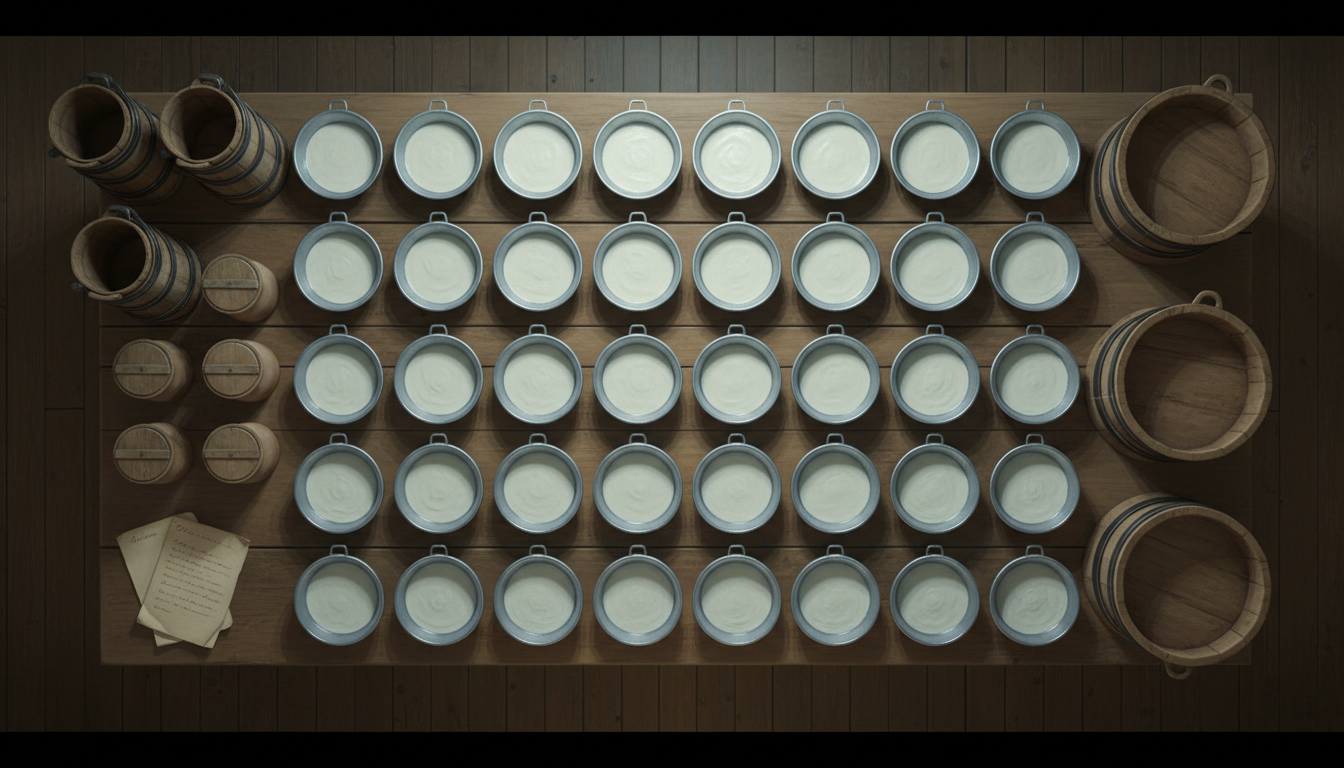
In March 1794, her order sheet reached John’s hands. Six dozen milk pans. Six cream pots. Eight milk pails. Two cheese tubs. Plus assorted odds and ends to outfit an expansion of the dairy.

Stop and think about that for a second.

Seventy‑two milk pans. In a community where most families were making do with a handful. This wasn’t a house cow and a couple of pans for Sunday company. This was capital investment in volume‑scale dairying at a time when the average New England farm considered two or three milk cows a serious herd.

No dabbler orders that much tin and wood in a single request.

She was also weighing logistics in a way that would sound perfectly modern to any multi‑site operator today: should the dairy stay centralized at Thayers place, or split across multiple properties? Each option carried labor, hygiene, and quality tradeoffs, and she was the one running the math.

Meanwhile, from Philadelphia and from Europe, John sent down homilies on husbandry and maxims on soil he’d never apply with his own hands. The affection between them is real, but so is the gap. He gave her theory. She sent back crops, cheese, cider, and a working enterprise.

One can imagine her reading a particularly self‑satisfied paragraph of his by candlelight, smiling a thin smile, setting the letter aside, and going right back to solving problems he’d only ever see in summary.

Act II — The Farm Widow Who Became a Merchant

Running a working farm while your husband’s at court in Boston is one level of hard. Running it while he’s across an ocean, the British navy is choking your coastline, and everyone’s guessing whether the new “United States” will survive another fiscal year — that’s a different animal entirely.

From 1778 to 1788, John was abroad, chasing loans and treaties and legitimacy for the young country.

Abigail stayed home with children, hired help, tenants, debts, and weather.

And she did something almost no woman of her station even considered.

She went into business for herself.

She realized, early, that scarcity was opportunity. Pins, needles, ribbons, tea, fine fabrics — small, high‑margin goods Americans still wanted but couldn’t easily get during wartime — were gold. “The cry for pins is so great,” she wrote in 1775, that prices had tripled. So she asked John to buy a bundle of six thousand in Europe and ship them home.

By 1780, she’d gotten more surgical. She told him exactly which linens and handkerchiefs to send — items that would “turn to good account sold for hard Money.” She noted that “small articles have the best profit,” and specifically requested gauze, ribbons, feathers, and flowers “to make the Ladies Gay.”

That’s a market analyst.

She wasn’t keeping a little novelty shop. She was running a transatlantic supply chain powered by her husband’s diplomatic access and her own ground‑level knowledge of what New England would pay for.

For a woman of her class and time, this was deeply unusual, even faintly scandalous. For Abigail, it was practical math. The farm needed cash flow. Her children needed schooling. John’s public salary wouldn’t stretch. So she built a second income stream — the cushion she’d need for her next move.

And this is where it gets interesting.

The Stock‑Jobber in the Sitting Room — The Turning Point

Like most men of his generation, John Adams trusted land. You could walk it, fence it, mortgage it, leave it to your children. In his world, land meant dignity, stability, and status.

Abigail looked at the ledger and saw something else entirely.

The Adams holdings in Braintree and later at Peacefield brought in, by her accounting, something like two percent a year in real returns once you stripped out taxes, labor, and upkeep. Those acres were necessary. They fed the family, fed the cows, fed the cider. But as profit centers, they weren’t exactly pulling freight.

Meanwhile, after the Revolution, the new federal government was broke and nobody was sure it would honor its paper. State and federal notes — pieces of debt paper issued during and after the war — traded at deep discounts because public confidence was low, as the correspondence preserved by the Massachusetts Historical Society makes clear.

Abigail saw those notes for what they were: undervalued assets in a temporarily spooked market. A lot like a good heifer calf out of a cow that just hasn’t caught anyone’s eye yet.

The catch? Coverture law said anything she owned legally belonged to John. She couldn’t march into a broker’s office under her own name.

So she worked the edges. She quietly set aside “pin money” and proceeds from her retail operation. She asked Cotton Tufts to act as her trustee. Through him, she began buying government State Notes while they were still trading cheap.

The numbers are almost hard to believe.

Land, around two percent. Her bond portfolio, at its peak, up to twenty‑four percent a year as federal credit recovered and the notes rose back toward face value.

Twenty‑four percent.

Think about that in today’s dairy terms. You work a 600‑cow herd, fight for every basis point of margin, sweat milk price and feed cost and interest rates, and you know what another point or two on operating return would mean. Now imagine a side investment returning ten or twelve times what the ground under your feet is paying.

One can imagine the moment a statement came back from Tufts in Boston, ink still drying on figures that made her breath catch. The fields she’d fought through storms, labor drama, short hay, and war to keep productive had finally thrown off enough surplus to invest. And that surplus, in her hands, was doing what no acre of Braintree ever could.

John hated this “stock‑jobbing.” He warned her off Vermont land speculation in a famously sharp line — “Don’t meddle anymore with Vermont” — and clung to the comfort of real property.

But the truth was stubbornly the truth. His instinct led toward land‑heavy, illiquid, debt‑prone futures. Hers led toward a modest but steady stream of interest that could cushion public‑service shortfalls and buffer the farm against bad years.

That, right there, is the climax of her story.

Before the bonds, the Adams household was one bad harvest or one political setback from genuine trouble. After the bonds, they had margin. Not riches. Margin. And in a world of volatile currency, endless political stress, and a founding class routinely living beyond its means, margin was oxygen.

Fast‑forward a few decades and look at the scoreboard.

Thomas Jefferson — brilliant, charming, land‑obsessed, debt‑soaked — died so deeply in the red that his heirs were forced to auction off Monticello and the enslaved people who’d built and sustained it to settle creditors.

The Adamses? Peacefield stayed in the family. The farm, the herd, the orchard, the house — still standing, still theirs, still working.

Strip away the quills and frock coats and you’re looking at a farm manager’s dream playbook. Take the surplus from a carefully run mixed farm and dairy. Put a portion into high‑yield, relatively low‑maintenance assets that nobody else trusts yet. Balance land, livestock, and securities. Diversify.

Today we call it risk management. Back then, John called it “stock‑jobbing,” and Abigail Adams became one of the first women in American history to do it at that level.

What It Cost Her

It would be tidy to end there and skip the price she paid. The letters won’t let us.

Abigail wasn’t superhuman. She was a woman living alone on a farm far more than she ever wanted to, carrying weight meant to be shared. In December 1783, after years of separation while John negotiated in Europe, she wrote him bone‑tired and blunt:

“If my dear Friend you will promise to come home, take the Farm into your own hands and improve it, let me turn dairy woman. And assist you in getting our living this way; instead of running away to foreign courts and leaving me half my Life to mourn in widowhood.”

Read that aloud. That’s a line any farm spouse in 2026 can feel in their teeth. She wasn’t asking him to quit the public work. She was asking to share it. Trade the courts for the cows. Trade distant glory for a life pulled in the same direction.

When John finally spent real time at home, he wrote — half joking, half confessing — that he was “jealous” the neighbors might think “Affairs more discreetly conducted” in his absence than at any other time. It’s his way of admitting what we can now see clearly. She’d been running things better than he would have.

Later, when she joined him in Europe from 1784 to 1788, she wrote Tufts from London and Paris about taxes, repairs, plantings, tenants, orchard health, cider barrels. Any producer who’s ever left a good herdsman in charge for a week at World Dairy Expo or the Royal Winter Fair knows exactly where her attention sat. You can be physically anywhere in the world. Your mind stays in the tie‑stall with the fresh cow who looked off this morning.

Act III — Peacefield, Politics, and Her Last Years

Eventually, the politics ran their course. At least for John.

He lost the election of 1800 to Thomas Jefferson. After a bitter campaign, the Adamses packed up Washington and went home to the farm in Quincy they’d come to call Peacefield.

John embraced the role of “Farmer John,” pruning trees, walking fences, writing letters about the weather. And he did put in the hours. But he was moving through systems Abigail had shaped for decades: tenant arrangements, investment income, dairy infrastructure, orchard cycles.

What most people don’t realize is that during his presidency she hadn’t exactly been soft‑pedaling either. She was his political partner as much as his farm partner. She pushed hard for the Alien and Sedition Acts of 1798, seeing them as a shield for her husband and her son, John Quincy, against opposition editors she considered dangerous and “licentious.” She supported the Judiciary Act of 1801 and the “midnight judges,” eager to see Federalists secure the federal courts before Jefferson could reshape them.

Those choices don’t always flatter her by modern standards, and this story doesn’t pretend they do. But they show her seeing herself — correctly — as a co‑executive of the Adams enterprise, political and agricultural both.

On other issues, her moral compass pointed further ahead of her peers than history sometimes remembers. In her March 31, 1776, letter, she told John to “Remember the Ladies” in the new code of laws and warned against putting “such unlimited power into the hands of the Husbands,” adding that “all Men would be tyrants if they could.” On slavery, she asked how colonists could “fight ourselves for what we are robbing the Negroes of” and backed that up by supporting the education of a Black youth named James despite neighborhood opposition.

Back at Peacefield after 1801, her body slowly started to cash checks her years of work had written. Age. Typhoid. The slow erosion of strength. Through it, she kept insisting on plain living: “neither my habits, or My Education or inclinations, have led Me to an expensive stile of living.”

She died at Peacefield on October 28, 1818. She was seventy‑three.

Her passing hit John hard. Later accounts preserve his private wish — to lie down beside her and die too. For a man who’d leaned on her strength, her judgment, and her farm for half a century, that grief was as honest as it gets.

Seven years later, their son John Quincy Adams took the oath of office as the sixth president of the United States. Abigail didn’t live to see it. But follow her letters — her insistence on his reading, his manners, his duty, his moral seriousness — and you can see her fingerprints all over that moment. She and Barbara Bush remain the only two women in American history who’ve been both the wife of a U.S. president and the mother of one.

The monuments can tell that part of the story.

The fields and the cows and the ledgers tell the rest.

What the Farmeress Still Teaches Every Dairy Today

So why should a producer standing in a robot barn in 2026 — worrying about milk price volatility, feed costs, interest rates, and the quota or base rules in your region — care about a woman who ran a farm with no electricity, no refrigeration, and no milk truck ever backing into her yard?

Because a dairy isn’t just cows and milk. It’s systems. Labor. Infrastructure. Cash flow. Land. Markets. She hired families like the Richards because they could handle scale. She rotated rivals like Arnold and Copland to keep the crew workable. She fired the quidlings without flinching. Every time you sit at the kitchen table and debate whether to keep a marginal employee one more season, you’re walking a fence line she already walked.

She treated hardware as investment, not indulgence. Six dozen milk pans, six cream pots, eight milk pails, two cheese tubs. That was capacity planning in tin. Today it might be a robot upgrade, a new freestall pack, a pack barn expansion, or finally buying a decent feed wagon that doesn’t break down every third load. Same instinct. Build the infrastructure before the cows are standing in it waiting.

She refused to bet the family on land alone. The Adams acres fed them. They also ate cash in taxes and labor. Her bonds — the ones John sneered at as “stock‑jobbing” — paid out at roughly twelve times the rate of the ground in a good year. When you weigh whether to put every last dollar into another quarter section versus saving for a robot retrofit, new housing, a feed‑price cushion, or an honest‑to‑goodness rainy‑day fund, you’re running her math. Today’s weather is different. The volatility isn’t. Milk markets, feed spikes, rising interest rates, a wet fall that destroys a corn silage plan — every one of these is a 21st‑century version of her 1777 short‑hay year. The families that come through them are, almost without exception, the ones with some margin tucked somewhere that isn’t soil.

And she knew the hardest work in a dairy isn’t always done in rubber boots. Sometimes it’s done at the desk, before sunrise, staring at numbers, deciding which bill can wait and which can’t. Signing the loan or walking away from it. Every farm woman today who signs the financing, chairs the board meeting, runs the books, negotiates with the lender, or quietly keeps three generations of dairy history alive under one roof is working in space Abigail Adams carved out of a much narrower legal world.

She never milked a cow, as far as we know. She also never stopped managing the ones that did.

A Legacy Worthy of a Hall of Fame

Strip the politics off the story and tell it the way breeders tell each other stories at the rail at World Dairy Expo or over late coffee at the Royal, and here’s what you’ve got.

A farm kid who educated herself out of her father’s library, married into a modest New England place, and ended up running it on her own for years at a stretch while her partner chased history at someone else’s table. A manager who stared down short hay years, stubborn workers, wild markets, wartime blockades, and decades of loneliness — and refused to let the operation slip. A woman who took the hard‑earned surplus from a stony Braintree farm and a wartime side hustle and quietly put it into the one asset class that would outpace everything her neighbors were doing.

You won’t find her name in Holstein pedigrees. She didn’t walk a heifer into the colored shavings at Madison or the Royal, because those rings didn’t yet exist. There’s no bull stud with her initials, no modern bloodline that traces directly to her barn.

But you see her anyway.

You see her in every operation where the person doing the hiring and the books and the long‑range thinking isn’t the one with their name on the banner. You see her in the multi‑generation outfits where Mom or Grandma never sat in the judge’s chair but made sure there was still a farm for the next set of 4‑H calves. You see her in the farm women who sign the financing, work through the cash flow spreadsheets at midnight, and make sure the family doesn’t bet the whole place on a single idea that feels good at the moment. You see her every time a dairy couple divides the labor between the public face and the quiet, relentless work of management — and the quiet one keeps them standing.

Looking back, the signs were always there. From that April morning in 1776 when she wrote about wanting to be as good a Farmeress as her husband was a statesman, to the quiet line of state notes bought on her behalf by a country doctor in Boston, to the farm that was still in the family long after more famous founding estates had gone under the auctioneer’s hammer.

Read her story out loud at a breeders’ banquet tonight and watch heads nod around the room. They’ll know the type. The one who doesn’t need the spotlight but won’t let things slide. The one who refuses to let the numbers lie. The one who, without ever setting foot in the pit, makes sure every cow on the place has what she needs — and makes sure the farm is still there in the morning.

Abigail Adams was America’s first farmeress in more than just name.

For anyone who has ever carried a dairy on their back so someone else could stand in a different light, she isn’t a distant First Lady in a history book.

She’s family.

Key Takeaways

  • Abigail ran the Adams farm like a modern dairy CFO — labor, infrastructure, and off‑farm capital all on one ledger. If your operation only tracks cows and crops, you’re leaving her 24% on the table.
  • Land fed the family at 2%. Bonds protected it at up to 24%. The families that survive short‑hay years and feed spikes today are still the ones with margin tucked somewhere that isn’t soil.
  • Seventy‑two milk pans wasn’t vanity — it was capacity planning before the cows needed it. Whether it’s a robot retrofit or a better feed wagon, build the infrastructure before you’re standing in the problem.
  • Fire the quidlings. Vet the Richards. The person signing the financing and running the books at midnight is doing Abigail’s job — and deserves to be named like it on the operation.

Continue the Story

The Sunday Read Dairy Professionals Don’t Skip.

Every week, thousands of producers, breeders, and industry insiders open Bullvine Weekly for genetics insights, market shifts, and profit strategies they won’t find anywhere else. One email. Five minutes. Smarter decisions all week.
NewsSubscribe
First
Last
Consent

Salem Lost a Soft-Serve Window. Somewhere Upstream, a Dairy Farm Just Lost $22,500.

A 1952 soft-serve window on Boston Street went dark on April 25. Somewhere in the Northeast milk pool, a bulk tank just lost a seasonal account — and that’s a story every New England dairy producer should be reading.

Executive Summary: Salem’s Dairy Witch posted a closing notice on April 25, 2026 after 74 years on Boston Street — and for a 150-cow Essex County herd, a 75¢/cwt squeeze on the over-order premium that follows a seasonal-account loss like this runs about $22,500 a year; at $1.50/cwt, it’s $45,000. The window isn’t the story — the mix plants upstream and the over-order premium coming off your milk check are. Northeast Order 1 Class I utilization sat at just 20.4% of pooled milk in 2024, down from 44% in 2000, and every small seasonal buyer that goes dark thins that stack further. Farm Credit East’s 2024 Northeast Dairy Farm Summary pegged net earnings at 2 per cow last year, with Northeast farm prices typically clearing several dollars/cwt above the .81 Order 1 SUP — that’s the gap that shrinks when handlers lose volume. Stack the 2025 FMMO reforms on top (roughly $0.85–$0.93/cwt off class prices, or $95,000–$115,000 a year on a 500-cow Northeast dairy) and the margin picture gets ugly fast. The 30-day action: run a buyer concentration audit, stress-test your milk check against a $3–$4/cwt downside, and ask your field rep for their 72-hour contingency plan in writing. Read the full piece if any single handler takes more than a third of your volume, or if your over-order premium has slipped two months running.

Northeast milk premiums

Bea and Pete Polemenako opened a soft-serve window at 117 Boston Street in Salem in 1952. Seventy-four summers later, on April 25, 2026, Dairy Witch posted a closing notice. Owner Marietta Polemenako announced she was retiring after decades behind the window, and no buyer has been named.

That’s the Boston Globe story. The Bullvine story starts roughly 30 miles away, in a bulk tank whose milk — through a long chain of processors, mix plants, and foodservice trucks — helped feed that soft-serve machine every summer.

Every small dairy plant closure pulls one more thread out of New England’s Class I premium stack. The threads are thinning fast.

The Window Was Never the Story

Dairy Witch was a walk-up soft-serve stand. Seasonal. Open roughly April through early October. Cones, dips, frappes, the occasional hand-packed pint of Moose Tracks on the side.

It wasn’t a bottler. It wasn’t a creamery. No milk truck pulled into 117 Boston Street at 4 a.m. A window that size runs on pre-made soft-serve mix, delivered by a foodservice distributor from a plant somewhere upstream.

In eastern Massachusetts, that chain has gotten short. The FDA’s Interstate Milk Shippers list shows a handful of active licensed fluid operations in the state, and two names dominate the map: HP Hood in Agawam and DFA/Garelick in Franklin. Both remain the state’s largest fluid processors and show no public signs of closure; the pressure point is the smaller, seasonal, and direct-buy end of the market. Regional soft-serve mix moves through distributors like New England Ice Cream Corporation in Norton and Por-Shun in the Boston area.

So no — you won’t find a named Essex County farm that “lost its Dairy Witch contract.” The impact runs one link upstream. When mix plants lose seasonal accounts, over-order premiums typically come under pressure — a pattern Northeast dairy economists have documented for years. And the farms shipping into those plants feel it in the milk check four to six weeks later.

Before the barn math, know what you’re watching for. The checklist below is generic risk-spotting, not a prediction about any named plant.

How do you spot your local fluid buyer going under?

You don’t get a press release. You get signals. Watch for these:

  • Volume calls that stop mentioning seasonal accounts. Ice cream stands, schools, restaurants — if your field rep stops talking about summer pickups, something shifted.
  • Over-order premiums slipping two months in a row. One month is weather. Two is a margin problem at the plant.
  • Route consolidation notices from your distributor, especially if your pickup gets combined with a farm 40 miles farther out.
  • Owner retirement with no named successor. That’s the Dairy Witch pattern. Marietta is retiring; no buyer announced as of press time.
  • Lapsed or non-renewed state processor licenses in Massachusetts Department of Agriculture filings. Those are public records. Check them.

What does a dairy farm actually lose when a local buyer closes?

Start with Federal Milk Marketing Order math. Northeast Order 1, with Boston as the base zone, sets a Class I differential of $3.25/cwt on top of the base Class I price. USDA AMS announced the base Class I at $20.15/cwt for May 2026 — up $1.49 from April. That’s the floor.

The real milk check lives above the floor. Analysis of the 2024 Northeast Dairy Farm Summary, released July 2025, reported the average Northeast farm milk price climbed $1.17/cwt in 2024 from 2023 levels, with net earnings of $592 per cow in 2024 versus $292 in 2023. That recovery was driven largely by stronger component prices and a rebound in cheese demand — but it’s still a thin margin for anyone carrying new parlor debt or a recent generational transfer. The weighted-average FMMO Order 1 statistical uniform price was roughly $18.81/cwt for 2023, per USDA AMS’s 2023 Market Summary and Utilization report. Northeast farm prices in 2023 typically cleared several dollars per hundredweight above that floor — over-order premium, quality bonuses, and handler competition all stacked on top.

When a local fluid buyer closes, that stack starts shrinking. Industry commentary and long-standing Pennsylvania Milk Marketing Board testimony puts the over-order premium portion at roughly $0.75–$1.50/cwt in the Northeast, though specific figures vary by handler and year. Either way — it’s real money coming off the check.

ComponentValue ($/cwt)Source
Northeast Order 1 Class I differential, Boston zone3.25USDA AMS, FMMO Order 1
Base Class I price, May 202620.15USDA AMS announcement, May 2026
Order 1 statistical uniform price, 202318.81USDA AMS 2023 Market Summary
Northeast over-order premium range0.75 – 1.50PA Milk Marketing Board testimony; industry commentary
2024 NE farm price increase vs. 2023+1.172024 Northeast Dairy Farm Summary, July 2025

Quick barn math. Take a 150-cow herd in Essex County. Massachusetts averaged 20,000 pounds of milk per cow in 2024, per USDA NASS — that’s 200 cwt per cow per year, or 30,000 cwt across a 150-cow herd. A 75¢/cwt squeeze on the over-order premium costs about $22,500 a year. At $1.50/cwt, it’s $45,000. Plug in your own herd size; the multiplier is brutal either way.

Stack that on top of the 2025 FMMO reforms, which The Bullvine’s April 2026 analysis estimated at roughly $0.85–$0.93/cwt off class prices for a representative 500-cow Northeast dairy — on the order of $95,000 to $115,000 a year depending on per-cow productivity. The math gets ugly in a hurry.

Thomas Dairy, Rutland, 2020 — A Preview You Already Watched

If Salem feels small, look north. In October 2020, Thomas Dairy in Rutland, Vermont — a fifth-generation fluid milk business founded in 1929 — closed. According to VTDigger and Vermont Public reporting, the closure followed the collapse of the company’s restaurant and school accounts during COVID. Supplier farms had to find new handlers ahead of the shutdown. This is a single historical parallel, not a predictive model — but it’s the closest Northeast case of a mid-century named fluid buyer closing on retirement-plus-market pressure, and the supplier farms did have to reshuffle.

Vermont has lost more than 400 dairies in the past decade. Vermont Dairy Delivers tracks the state at roughly 868 farms in 2015 and a current count in the mid-400s, with steady year-over-year exits. Most of those losses were small and mid-size herds — the same operations most dependent on local handlers paying real over-order premiums.

The national backdrop is rougher. USDA’s 2022 Census of Agriculture recorded a drop from 40,336 farms with milk sales in 2017 to 24,470 in 2022 — a 39% decline in five years. USDA’s February 20, 2026 Milk Production report showed another 1,036 licensed dairy operations exited in 2025, about 4% of the national total, bringing the average licensed count to 23,609. Pennsylvania alone accounted for 41% of all U.S. dairy exits last year, losing 320 farms, per February 2026 analysis.

Fluid drinking milk is the slowest part of the ship to sink with you. In Northeast Order 1, Class I utilization averaged just 20.4% of pooled milk in 2024, per the FMMO Order 1 annual bulletin — up 2.4 percentage points from 2023, but still a long way from the 44% Class I share the Order carried in 2000. Every Dairy Witch-scale account that goes quiet pushes that number further down.

What do you do in the next 30 days?

Don’t wait for a closure announcement. Do this before June.

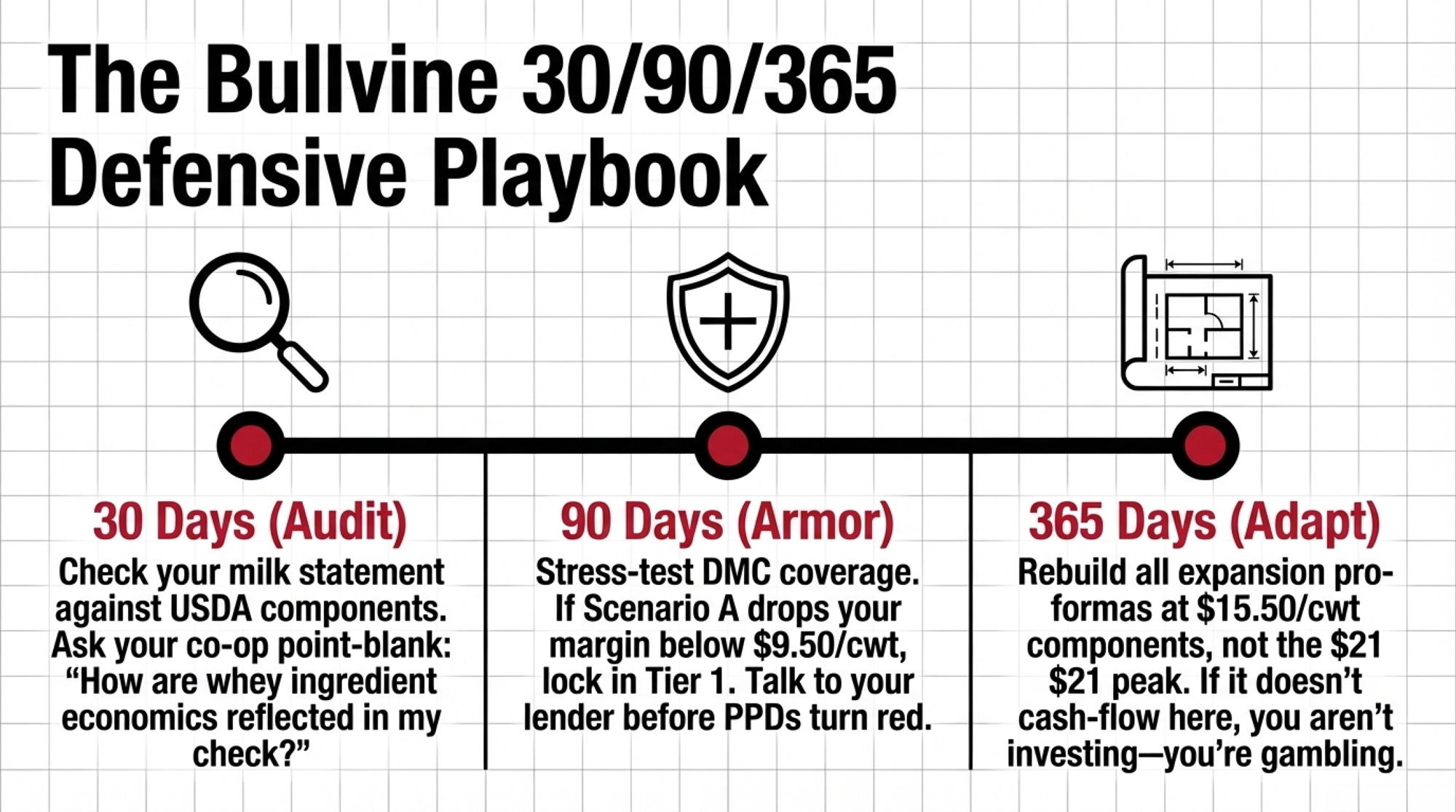
Run a buyer concentration audit. Add up what percentage of your monthly milk volume goes to your top one, two, and three handlers. Any single buyer taking more than a third of your volume is a concentration risk by most Northeast lender and co-op standards. It’s also the fastest diagnostic you can run on a Sunday afternoon.

Stress-test your milk check. Model what next month’s check looks like if your top buyer exits and you drop to the FMMO blend. Use a conservative –/cwt downside — the rough gap between what Northeast farms have cleared in recent years and the Order 1 statistical uniform price. Multiply by your annual cwt. That’s the number that tells you whether you’re making phone calls this week or next quarter.

Call your cooperative field rep and ask the ugly question directly. “If my handler went dark tomorrow, what’s your 72-hour plan for my milk?” Any answer that isn’t specific is the answer you needed.

Within 90 days, sit down with your cooperative or handler to review your contract language on handler substitution, force-majeure clauses, and route reassignment rights. Those are the paragraphs nobody reads until the plant closes.

Options and Trade-Offs for Farmers

There’s no one right move. Four realistic paths, each with a bill attached.

PathBest fitTime to executeKey constraint
Stay with current co-op, chase quality premiums<300-cow herds with Agri-Mark/DFA/Hood ties30–90 daysCaps your over-order upside
Switch to specialty / organic handler (e.g., Stonyfield, Organic Valley)Pasture-ready farms; pay near mid-$40s/cwt in recent years3+ years(NOP transition)2022 Origin of Livestock rule closed one-time conventional loophole
Direct-to-consumer bottling (Shaw Farm, Crescent Ridge model)Family with retail operator on-site12–24 months365-day labor + HACCP burden
Shared regional co-processing / co-packingClusters of 200-cow neighbors on same vulnerable plant6–18 monthsGovernance complexity 

Stay with your current cooperative and diversify quality premiums. Works if your co-op is Agri-Mark, DFA, or Hood-aligned with multiple Northeast plants. You give up the chase for a higher over-order premium elsewhere, but you gain pooling stability and field rep attention. Good fit for farms under 300 cows without the bandwidth to renegotiate.

Switch to a specialty or organic handler. Stonyfield stepped in for some Horizon Organic farms after Danone’s 2022 Northeast exit. Organic Valley offered placements to dozens of Horizon-dropped operations, per coverage at the time. NODPA’s producer pay price tracking has shown organic figures in the mid-$40s/cwt range in recent years. Trade-off: USDA organic transition requires three full years of organic land management before certified organic milk can ship, plus separate herd-transition requirements under the National Organic Program. The regulatory burden isn’t trivial, and the 2022 Origin of Livestock final rule closed the old one-time conventional-to-organic transition loophole for most operations.

Build a direct-to-consumer line. Shaw Farm in Dracut has been bottling its own milk since 1908, running a home-delivery route, an ice cream stand, and a farm store all from the same property about 30 miles from Salem. Crescent Ridge in Sharon has followed a similar playbook for generations. You capture price — glass-bottle retail milk in eastern Massachusetts clears at a multiple of the FMMO blend. You also take on labor, bottling, delivery, retail, HACCP, and a seven-day-a-week foot-traffic business. Only works if your family has someone who actually wants to run a retail business. This is a 365-day decision, not a 30-day fix.

Consolidate with neighbors on shared processing. Regional co-processing or cheese co-packing arrangements have kept some mid-size Northeast farms alive. Governance gets complicated fast. But if your county has two or three 200-cow herds all shipping to the same vulnerable plant, a shared exit strategy beats three separate collapses.

None of these survive if you can’t see the buyer going under. That’s why the 30-day audit matters first.

Key Takeaways

  • If a single buyer takes more than a third of your monthly volume, start the alternative-handler conversation this month, not next quarter.
  • If your over-order premium drops two months in a row without a market-wide explanation, assume your plant has a margin problem and act accordingly.
  • If your handler’s owner announces retirement with no named successor, treat it like a 90-day exit notice whether or not one has been issued.
  • If your FMMO’s Class I utilization keeps drifting — Order 1 sat at just 20.4% in 2024 — your over-order-premium ceiling is drifting with it. Build your barn math around the floor, not the five-year average.
  • If you’re in a co-op, your 72-hour contingency plan isn’t theoretical. Ask for it in writing.

The Bottom Line

Every direct-buy relationship that dies forces a choice: accept the FMMO floor or build a buyer you can’t easily lose. Neither option is free, and neither one waits.

So here’s the question worth chewing on before your next field rep call: what’s the last small fluid buyer in your county, and how many summers do they have left? Salem lost a soft-serve window this spring. Rutland lost a fifth-generation bottler five summers ago. Somewhere in Aroostook County, or Bennington, or outside Springfield, another retirement conversation is happening at another kitchen table right now — and the question is whether your milk check is ready when that window closes too.

The Bullvine Weekly has the full FMMO reform breakdown and the 500-cow dairy barn math behind the six-figure impact flagged above. If you want the deeper economic model — the one to hand your lender before your next operating note — that’s where it lives.

Methodology note: This article is based on public closure coverage and USDA AMS, USDA NASS, VTDigger, Vermont Public, NODPA, and FMMO Order 1 data available as of April 30, 2026. Named processors and distributors are referenced for industry-structure context only; none are alleged to face closure risk.

Learn More

  • What Lactalis’s 270-Farm Cut Really Means for Every Producer — Clarity on your farm’s structural limits is your best defense against equity loss. This breakdown reveals why 89% of dairies over 1,000 cows profit, arming you with the $0.60/cwt professional service math needed to responsibly scale, transition, or sell.
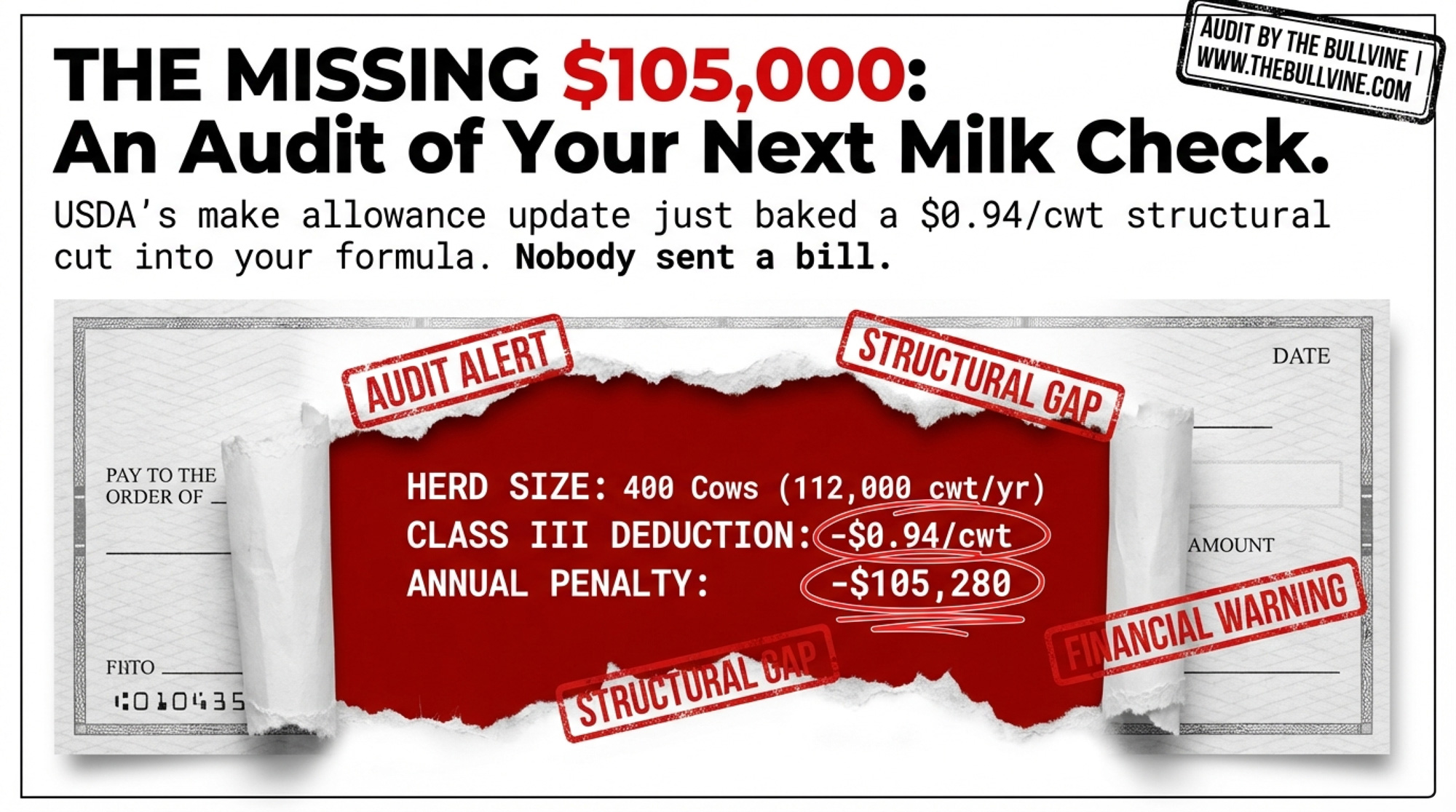
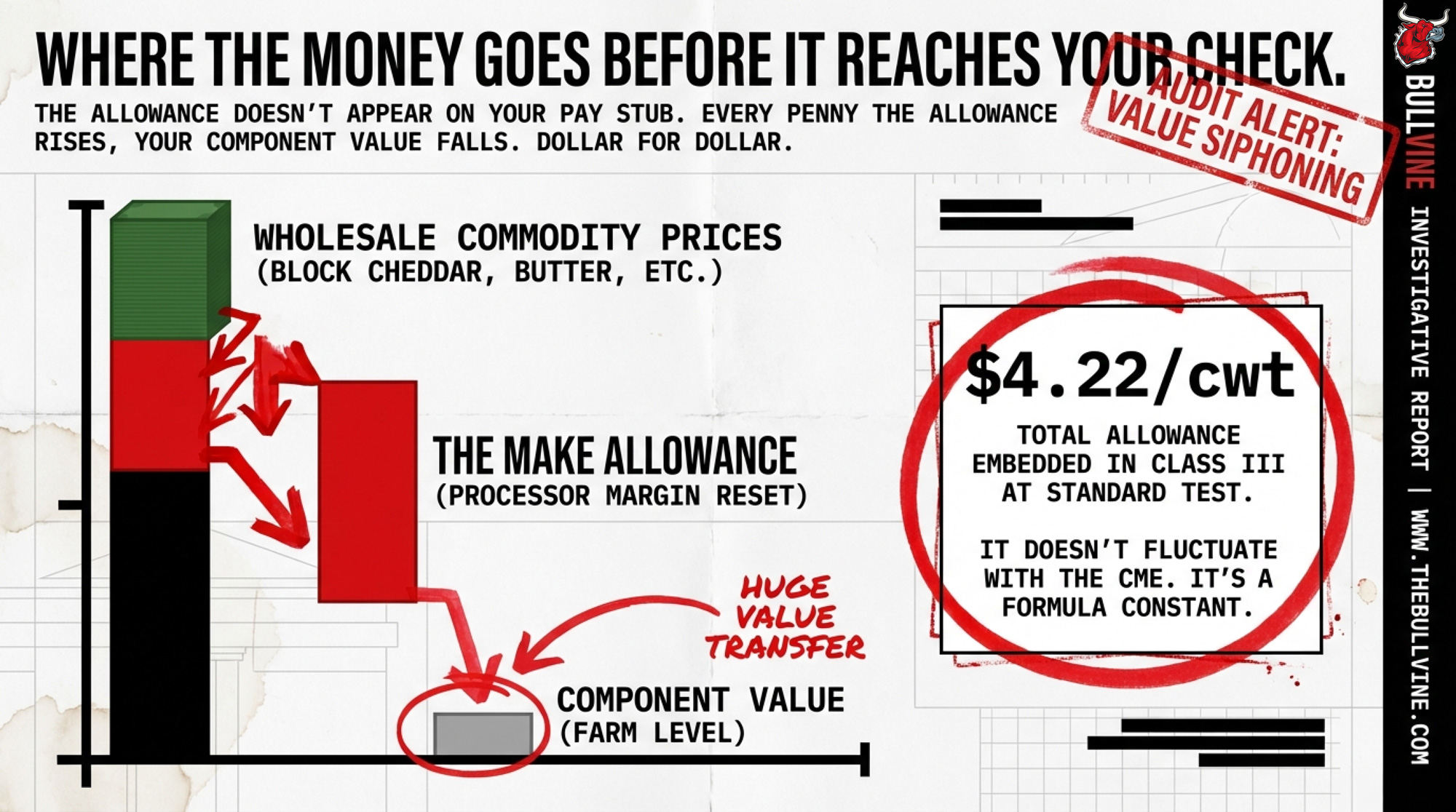
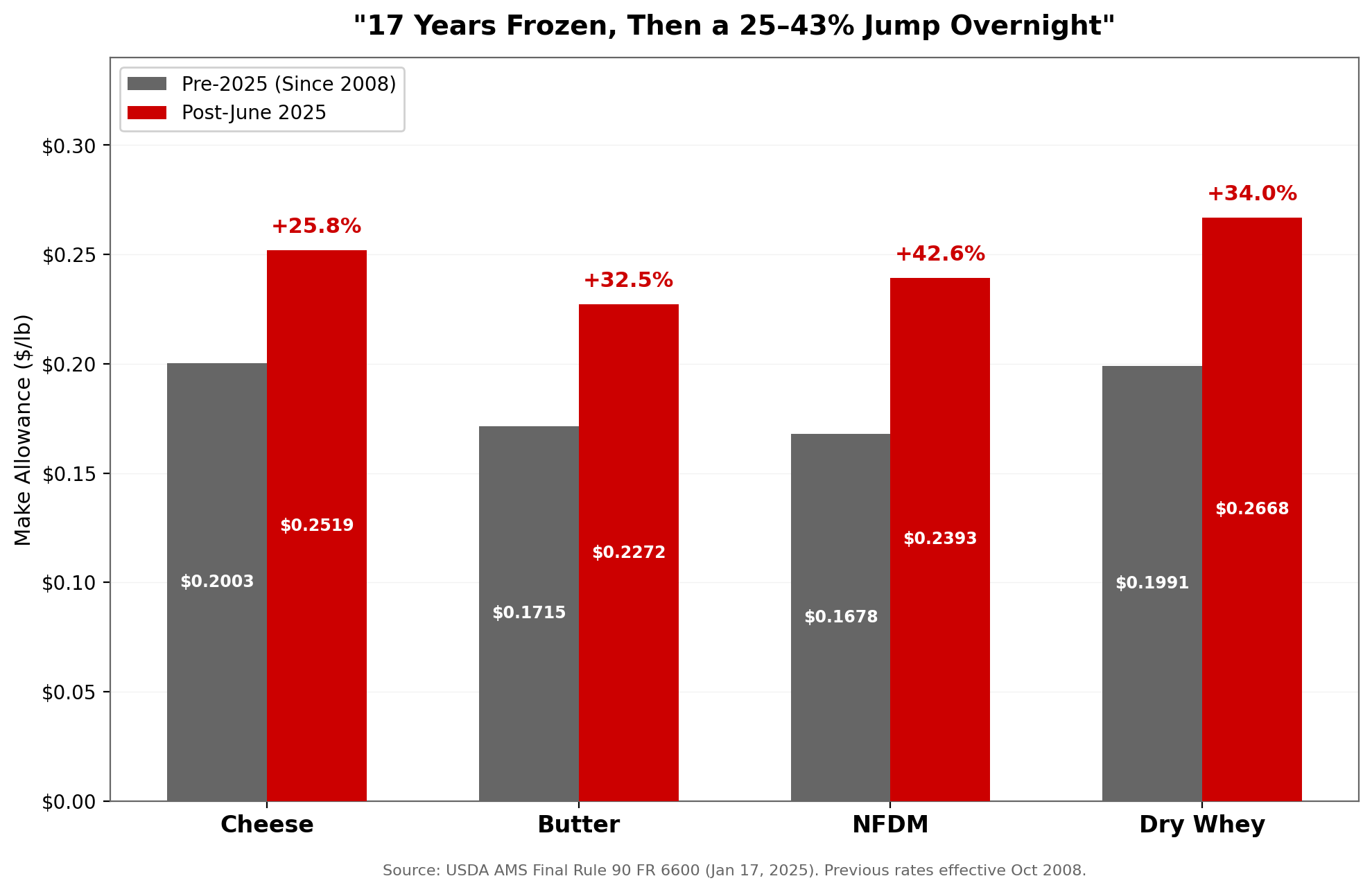
  • Surviving the $0.94/cwt Dairy Make Allowance Hit — Exposing the structural federal pricing shifts erasing $105,000 annually from a 400-cow dairy gives you a critical planning advantage. You will master a specific formula to calculate your true All-Milk to mailbox gap and immediately recalibrate break-even metrics.
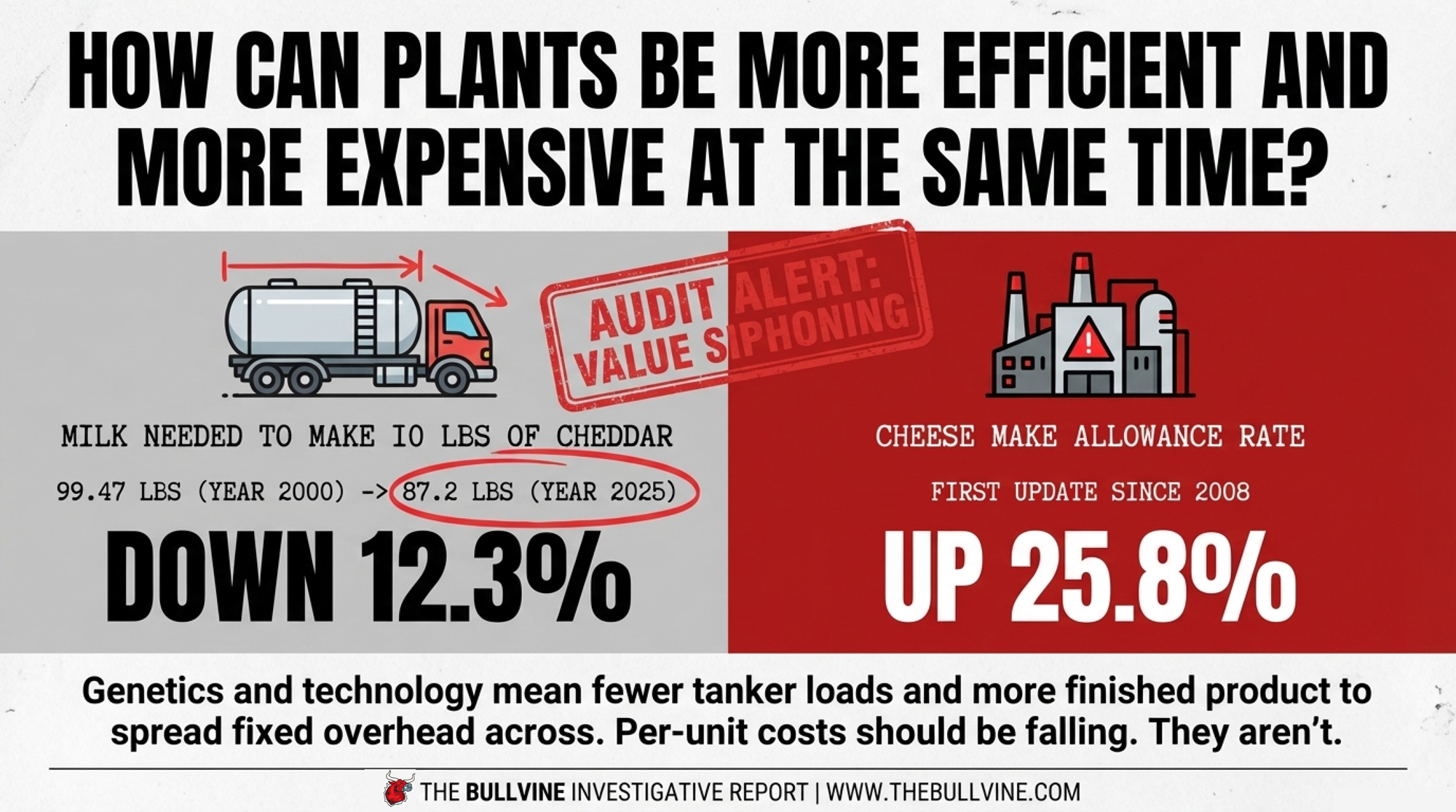
  • Cheese Yield Explosion: How Dairy Farmers Can Reclaim Billions in Lost Component Value — Follow the money on a 12.5% industry-wide leap in cheese yields to dismantle processor narratives about flat pay prices. Secure a distinct negotiating edge by using these specific tactics to demand compensation for the $2.50/cwt in new value generated.

The Sunday Read Dairy Professionals Don’t Skip.

Every week, thousands of producers, breeders, and industry insiders open Bullvine Weekly for genetics insights, market shifts, and profit strategies they won’t find anywhere else. One email. Five minutes. Smarter decisions all week.
NewsSubscribe
First
Last
Consent

Morris’s $0.31 USMCA Fight Won’t Clear Your September Milk Check

Class III moved $2.26/cwt in 88 days. The entire USMCA enforcement case Morris is running models to $0.31/cwt over 12 months. Guess which one clears your September check.

Executive Summary: Class III moved $2.26/cwt between January’s $14.59 announced price and the April 28, 2026, CME settle near $16.85 — roughly $187,580 of revenue swing on an 800-cow Northeast cheese herd’s Q3–Q4 book, no diplomats required. The entire NMPF/USDEC enforcement case Shawna Morris is running into the July 1 USMCA Joint Review models to a $0.31/cwt total scenario spread over 12 months: +$0.08 best case, -$0.23 worst case, author-modeled off published transmission coefficients and 2024 FAS GATS volumes. HighGround Dairy’s April 22 print shows Q1 2026 DRP netted $0.83/cwt — one quarter of coverage delivered more protection than the maximum USMCA “win” scenario delivers in a year. The real tail risk nobody’s pricing sits in Other Solids: a 35% China whey-price drop runs -$1.38/cwt on Class III, and it stacks on top of Scenario C, not instead of it. Producers with Q3–Q4 2026 contract renewals and unhedged milk are carrying the highest exposure — the 30/90/365 playbook inside starts with an FSA call today and a Contract Audit checklist for the September repricing clause you may not have read. The diplomats control the headline. Your hedge book controls the revenue.

USMCA dairy enforcement

Class III moved $2.26/cwt between the $14.59/cwt January 2026 USDA AMS announced price and the April 28, 2026, CME April-contract settle near $16.85/cwt. On an 800-cow Northeast cheese-oriented operation shipping roughly 83,000 cwt across Q3 and Q4, that’s 7,580 of revenue swing on half a year’s production — a volatility reference point, not a forecast. The market doing what markets do, no diplomats required.

In the 63 days between today and the July 1, 2026, USMCA Joint Review required under Article 34.7, the NMPF and USDEC enforcement push Shawna Morris has led is worth, on the barn math below, about $0.31/cwt of total scenario spread over 12 months.

The USMCA dairy 2026 fight is real. It’s also not the number that determines whether you make your debt service this fall.

Ted Vander Schaaf, an Idaho producer and Northwest Dairy Association member-owner, made the institutional case on February 12, 2026, before the Senate Finance Committee on behalf of USDEC, asking Congress to treat July 1 as the window to fix what USMCA promised American producers. The case is real. The September milk check is a separate timeline.

What Shawna Morris’s USMCA Enforcement Case Is Actually Asking For

Morris, EVP of Trade Policy and Global Affairs at NMPF, has pressed the enforcement case publicly for three years. The joint comments NMPF and USDEC submitted on October 31, 2025, for the USMCA Review lay out the mechanism: Canada’s TRQ architecture awards most of the quota in each of 14 dairy categories to Canadian producers of the product in question, forcing US exporters to sell largely to their own Canadian competitors. Morris escalated the same case at the USTR USMCA operation hearing on December 3, 2025, backed the same day by a bipartisan letter from 74 US House members to USTR Jamieson Greer.

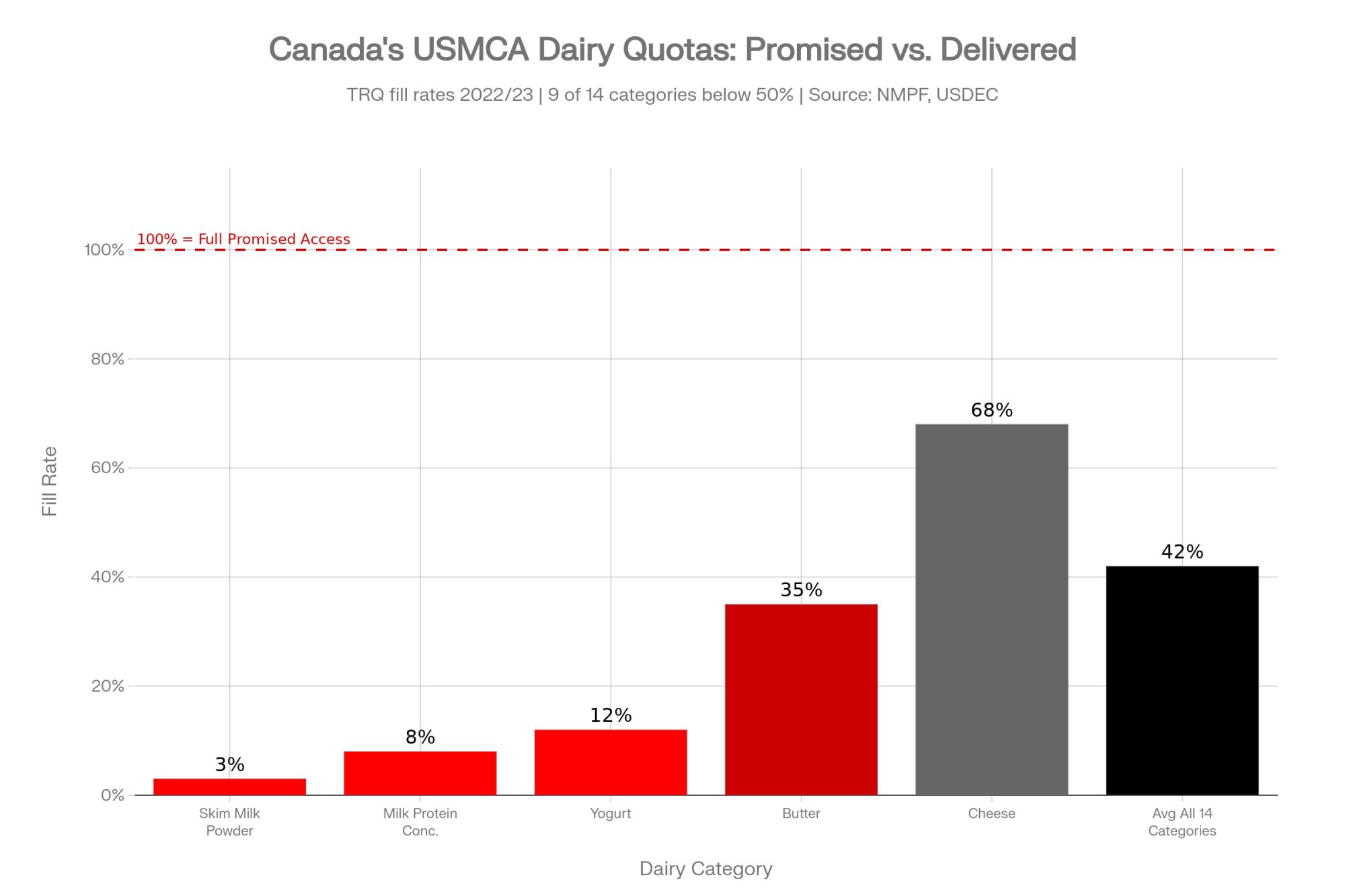
The NMPF/USDEC filing documents fill rates as low as 3% on skim milk powder (TRQ-CA3), 8% on milk protein concentrates (TRQ-CA12), 12% on yogurt and buttermilk (TRQ-CA7), 21% on whey powder (TRQ-CA8), 51% on cream (TRQ-CA2), and 59% on industrial cheese (TRQ-CA5). A 20-to-30-point fill-rate gain — moving under-utilized TRQs toward a 70–80% band — is the volume recovery the filing targets.

Dairy Farmers of Canada has pushed back hard. In a March 8, 2025, statement, DFC President David Wiens argued the US “secured substantial tariff-free access to the Canadian dairy market” under USMCA and that the US “enjoys a significant dairy trade surplus with Canada, exporting 7.5 million CAD in dairy products while importing 7.9 million CAD in return.” The June 2025 passage of Bill C-202 further limits Canada’s ability to offer supply-managed concessions in future trade negotiations. The access exists. The access isn’t being fully used. Both positions hold.

Neither one pays your September note.

What Does a $0.31/cwt USMCA Dairy 2026 Spread Actually Mean for Your 800-Cow Herd?

The $0.31/cwt figure is load-bearing for every hedge decision downstream, so it has to hold up.

Published dairy price-transmission literature supports a working coefficient in the low-single-digit cents/cwt range for each 1% of incremental US dairy export volume. Apply that to the TRQ-recovery volume and a Class III discount — cheese-and-whey routes transmit tighter than all-milk because butter and powder share less of the Class III formula — and the midpoint on a US enforcement win lands near +$0.08/cwt. That is author modeling, not a published coefficient, and the methodology note at the end of this piece spells out every assumption behind it.

A failed-talks and retaliation scenario lands near -$0.23/cwt on the same framework, modeled on a 15–25% reduction in 2024 US-to-Canada dairy exports (C$877.5M; roughly US$640M in 2024 annual-average exchange rates per Bank of Canada). Canada retained meaningful counter-tariff authority from the C$30 billion March 4, 2025, list of US goods subject to 25% tariffs, with the updated list effective September 1, 2025.

Total scenario spread: $0.31/cwt, best case to worst case, over 12 months. Author modeling. Not a projection.

The Comparison That Actually Matters

ScenarioPer cwt Impact800-Cow Annual Impact
USMCA Win (Best Case)+$0.08+$13,280
USMCA Retaliation (Worst Case)-$0.23-$38,180
Total USMCA Scenario Spread$0.31$51,460
Q1 2026 DRP Net Return+$0.83+$34,445 (one quarter)
Jan–Apr 2026 Class III Movement$2.26$187,580 (half year)

Bottom line: one well-placed quarter of DRP delivered more protection than the entire USMCA “win” scenario delivers in a year. HighGround Dairy’s Q1 2026 DRP results, published April 22, 2026, report estimated indemnities averaging $1.12/cwt against premium costs of $0.28/cwt. HighGround’s five-year review (2019–2023) shows DRP averaged $0.30/cwt in premiums and $0.53/cwt in indemnities, a net gain of $0.23/cwt and a $1.78 return on every $1 of premium.

Running the Numbers

Barn math: 800-cow Northeast cheese-oriented operation, 12 months ending Q4 2026

Production inputs (illustrative Northeast anchor — substitute your own cwt/cow):

  • 57 lbs/cow/day working anchor (USDA NASS Milk Production 03/20/2026 reports January 2026 U.S. 24-state average at 2,068 lbs/cow/month, or ~68 lbs/day; PA January 2026 production totaled 817 million lbs with an 11,000-head cow decline year-over-year)
  • 57 × 365 ÷ 100 = 208.05 cwt/cow/year
  • 800 cows × 208 cwt = ~166,000 cwt/year
  • Q3 + Q4 combined: ~83,000 cwt

Volatility reference (Jan–Apr 2026 actual):

  • Class III Jan 2026 announced ($14.59/cwt) → April 28, 2026, front-month (~$16.85/cwt): $2.26/cwt over 88 days
  • Applied to 83,000 cwt: $187,580 revenue swing — reference, not a prediction

DRP reference (Q1 2026 actual per HighGround):

  • Net return $0.83/cwt × Q1 production (~41,500 cwt) = +$34,445 in one quarter for covered producers

Scaling the 12-month USMCA scenario spread at $0.31/cwt to your herd:

Herd SizeAnnual cwtUSMCA Scenario Spread
400 cows83,200$25,792
800 cows166,000$51,460
1,200 cows249,600$77,376

Pull your last three milk checks, calculate your actual cwt shipped per cow, apply the +$0.08 upside and the -$0.23 downside, and compare the result to what your Q1 2026 DRP coverage paid — or would have paid.

Why Vander Schaaf’s Testimony and a Hedge Book Aren’t the Same Argument

The split between institutional timelines and individual hedge timelines isn’t something trade-group messaging usually spells out.

Vander Schaaf’s Senate Finance testimony addressed a 10-year structural question about USMCA’s enforcement architecture. That question is real. A producer in his position still faces the same 63-day hedge window every other US producer is sitting in. Q3 milk that needs to be priced. A Q4 contract that’s either hedged or isn’t. Cheese markets moving week to week.

NMPF’s enforcement case runs on a 10-year structural horizon. A US dairy producer’s Q3 check clears in September. Both things are true at once.

The processor conflict inside the TRQ system sharpens the split further. The TRQ architecture gives any processor with cross-border manufacturing options sourcing flexibility domestic-only competitors don’t have. Saputo — one of the top three US cheese producers, with US plants spanning Wisconsin, New Mexico, and beyond — Agropur (operating 39 North American plants and moving 6.1 billion litres/year), and Lactalis sit among the cross-border manufacturers whose bilateral US–Canada footprints create material Scenario C retaliation exposure. The question for a producer is whether your own processor’s public position on enforcement aligns with where your milk actually earns.

The Second Front: China Tail Risk Nobody Is Pricing

If the USMCA is the “known” variable producers are watching, the China tail risk is the “unknown” that could swallow the USMCA spread three times over.

China was the US dairy sector’s second-largest export destination outside Mexico in 2024, with dry whey products and lactose the dominant lanes, per USDA FAS Beijing’s Dairy and Products Annual (October 22, 2024) and FAS PSD World Markets and Trade circulars. In April 2025, China’s retaliatory tariffs on US dairy reached 84%, explicitly including whey and lactose — covered in The Bullvine’s April 10, 2025, analysis. FAS Beijing’s May 20, 2025, semi-annual reported China’s whey imports would decline in 2025 “due to China’s retaliatory tariffs on U.S. origin product.” “China takes a lot of US whey products — dry whey, whey protein concentrates, permeate, lactose,” Phil Plourd of Ever.ag said in the April 2025 cycle. “Today, we’re up to 84%, making things more challenging.”

Apply a working model — not a prediction — to April 2026 dry whey pricing near $0.649/lb (USDA AMS Dairy Products Sales Report, week ending April 18, 2026). The Federal Order Class III Other Solids formula runs (dry whey price − $0.2668) × 1.03. At $0.649/lb, Other Solids prices at $0.3939/lb; at $0.4219/lb after a 35% whey drop, Other Solids drops to $0.1596/lb. The delta of $0.2343/lb applied to 5.9 lbs of other solids per cwt (Federal Order standardized factor, USDA AMS FMMO) equals roughly -$1.38/cwt Class III. On a 1,000-cow Midwest whey-heavy operation at 208 cwt/cow (~208,000 cwt/year), that’s -$287,040 annualized.

Critical framing: this -$1.38/cwt China whey shock is additive to any USMCA losses, not alternative to them. A producer modeling the worst case stacks Scenario C’s -$0.23/cwt on top of a -$1.38/cwt whey shock for a combined -$1.61/cwt exposure. These risks can and do compound.

Sensitivity the other way: a 20% whey-price drop lands closer to -$0.79/cwt; a 50% drop pushes past -$1.97/cwt. The 35% draw is a midpoint sensitivity, not a ceiling.

That’s not the USMCA fight. That’s the USMCA fight plus the tail nobody in the current trade press coverage is pricing.

The Cooperative “Wait and See” Conversation

Before any hedge decision works, name the advice pattern that can block it. “Wait and see on Q3 coverage because things might improve after the review” is advice worth examining.

Co-ops and their field representatives balance multiple interests — member retention, logistics, plant utilization, and member margins. Independent DRP agents and ag lenders often point out that those interests don’t always line up one-to-one with a single producer’s hedge economics. That doesn’t make co-op advice bad. It makes it one input among several worth weighing.

Cooperative pooling delivers real benefits individual risk management can’t: spread risk, logistics leverage, steadier pay timing. The point isn’t that pooling is bad. The point is that pool-level price optimism isn’t the same as your farm-level risk management.

Run the asymmetry. HighGround’s five-year review shows DRP premiums averaged $0.30/cwt, with Q1 2026 running lighter at $0.28/cwt. The cost of being wrong on an unhedged 83,000 cwt Q3+Q4 book, against a $1.00/cwt market correction, is $83,000. The $2.26/cwt move that already happened between January and late April 2026 would have been $187,580 on half-year production. Producers who carried DRP coverage into Q1 2026 netted $0.83/cwt after premiums, per HighGround. Producers without coverage didn’t capture that return.

The numbers tell you to carry coverage and stop watching the diplomatic calendar for hedge signals.

The 30/90/365-Day Playbook for 800-Cow Herds Heading Into July 1

30-Day Actions (before May 29, 2026)

  • Call your FSA county office today. Get the exact Q3 2026 DRP enrollment deadline in writing or with an RMA confirmation reference. The window closes before July 1 — the same date as the USMCA Joint Review required under Article 34.7.
  • Call a DRP-licensed insurance agent from the USDA RMA Agent Locator, not your co-op field rep. Ask for three specific numbers at 95% coverage: net premium per cwt after subsidy, effective price floor, and total cost on your declared Q3 production. Premium benchmarks land near the $0.28–$0.30/cwt HighGround five-year range; use that as a sanity check on the quote.
  • Pull your Class III utilization percentage from co-op member services. Not your field rep — member services. A 75%+ Class III operation runs different coverage economics than a 55/30/15 blended one.

Red-flag trigger: If CME cheddar blocks break below your risk advisor’s established reassessment threshold, add coverage the same day.

Where it backfires: If your DSCR has been under 1.2 for three consecutive months on your lender’s covenant method, premium dollars compete with operating line headroom. Call your lender before the insurance agent.

90-Day Actions (through late July 2026)

The Contract Audit — pull your supply agreement and check:

  • [ ] Does it address retaliatory tariffs (US-imposed or Canada-imposed) and is there a pricing-review trigger?
  • [ ] What is the notice period for non-renewal?
  • [ ] Is the repricing mechanism spot, formula, or blend?
  • [ ] Is the over-order premium fixed, variable, or floored?
  • [ ] Does it guarantee quarterly component utilization reporting on your own milk?
  • [ ] What is the effective date of the current terms and when does the next window open?

Other 90-day moves:

  • Draft a trade-outcome review clause for the renewal. Suggested language: “If the United States imposes retaliatory tariffs on Canadian dairy products, or Canada imposes retaliatory tariffs on US dairy products, either party may request a pricing review within 30 days.” It doesn’t guarantee outcomes. It guarantees a seat at the table if Scenario C activates.
  • Request quarterly component utilization reporting on your own milk. Not plant economics — your own payment breakdown by component. The ask is legitimate under Federal Order component pricing transparency.

What this requires: A copy of your current contract, your co-op member services contact, and — if the conversation gets serious — an ag contract attorney who works on dairy supply agreements.

Where it backfires: Going in without Q3 hedging in place. Processors know renewal deadlines. Negotiating a 2027 extension with uncovered Q3 milk is negotiating from need, not from position.

365-Day Moves (positioning for the next cycle)

  • Build a Q3–Q4 2027 hedge ladder now, not in May 2027. HighGround’s research finds DRP coverage secured three quarters out delivered the highest average net return in Q1 2026 at $1.53/cwt — four and five quarters out returned $1.37 and $1.28 respectively. Laddered DRP or Class III put coverage through Q4 2027 costs premium dollars but caps tail risk and historically pays for itself.
  • Evaluate processor optionality. If your operation runs 75%+ Class III and your co-op’s over-order premium structure doesn’t reflect that concentration, a specialty processor relationship may align your milk more cleanly with your hedge strategy. The trade-off: you lose pooling diversification and take on concentration risk against a single processor.
  • Track China dairy tariff status monthly. USDA FAS Beijing publishes updates. The signal to watch is whether Chinese importers continue the cost-sharing arrangement absorbing partial tariff pass-through. When that breaks down, whey volume drops within 60–90 days.

Opportunity signal: If your co-op’s over-order premium widens by $0.20/cwt or more in the second half of 2026 while your feed-cost basis holds within $0.40/cwt of current levels, you have room to renegotiate contract term length from 12 months to 24 months at better component premiums.

What Does Your Current Contract Say About the 63 Days You Can’t See Yet?

NMPF’s enforcement push continues through July 1. The testimony is on the record. On April 22, 2026, the Globe and Mail reported Prime Minister Mark Carney rejecting the notion the US “dictates the terms” of USMCA talks, with Finance Minister Dominic LeBlanc telling the paper: “We’re not going to reopen supply management and have a discussion around quotas in the supply managed sector.” That same morning, USTR Jamieson Greer told the House Ways and Means Committee that Canada has made no commitments to alter its largely closed dairy market and that the dispute will be resolved through USMCA negotiations or through enforcement actions. Bill C-202, passed in June 2025, further narrowed Canada’s ability to concede on supply-managed goods. All of that is real. None of it changes what your Q3 milk ships at.

The trade fight is worth $0.31/cwt in total scenario spread over 12 months. Your hedge book is managing a revenue stream that moved $2.26/cwt in the first 88 days of 2026 alone. Both deserve your attention. They don’t deserve equal attention.

Pull your contract today. Find the clause that governs how your September repricing actually works. Call FSA this afternoon. Call a DRP-licensed agent tomorrow morning. Call member services by Friday.

What does your current contract say about what happens to your over-order premium if retaliatory dairy tariffs get imposed between now and your September renewal date? If the answer is nothing — or if you don’t know — that’s the line item worth more attention this week than any USTR press release.

Your hedge book controls your revenue. The diplomats control the headline. Know the difference.

Methodology sidebar: Scenario B and Scenario C midpoints are author modeling informed by published dairy price-transmission literature and USDA FAS GATS 2024 trade data. The +$0.08/cwt Scenario B midpoint reflects a Class III discount applied to a working all-milk export-transmission coefficient and a ~1.2% export-volume recovery drawn from TRQ fill-rate gains on cream and industrial cheese. The -$0.23/cwt Scenario C midpoint is drawn on a 15–25% reduction in 2024 US-to-Canada dairy exports. Neither midpoint is a published figure. Outcomes are not predictions. All dollar figures scale linearly with herd-level cwt shipped; substitute your own production inputs for a farm-specific result. A Q2 2026 follow-up in The Bullvine’s “Hedge Book vs the Headline” series will revisit these scenarios against the post-July-1 review record.

Key Takeaways

  • The entire NMPF/USDEC enforcement push Morris is running into July 1 models to $0.31/cwt of scenario spread over 12 months. Class III has already moved $2.26/cwt this year. Don’t confuse the headline with the hedge.
  • One quarter of Q1 2026 DRP netted $0.83/cwt per HighGround — more protection than the maximum USMCA “win” scenario delivers in a full year. If you’re unhedged on Q3–Q4, call a DRP-licensed agent before you call anyone else.
  • The real tail sits in Other Solids. A 35% China whey-price drop runs -$1.38/cwt on Class III, and it stacks on top of Scenario C, not instead of it — whey-heavy Midwest operations carry the compounded exposure.
  • If your Q3 or Q4 2026 contract is up for renewal, run the Contract Audit before July 1: repricing mechanism, over-order premium structure, and a trade-outcome review clause that gives you a seat at the table if tariffs land.

Complete references and supporting documentation are available upon request by contacting the editorial team at editor@thebullvine.com.

Learn More

The Sunday Read Dairy Professionals Don’t Skip.

Every week, thousands of producers, breeders, and industry insiders open Bullvine Weekly for genetics insights, market shifts, and profit strategies they won’t find anywhere else. One email. Five minutes. Smarter decisions all week.

NewsSubscribe
First
Last
Consent

McCarty’s 341-Day Calf Pipeline and the DSCR Trap Nobody Saw Coming

A 12-day October correction knocked $161 off every crossbred calf and pushed a modeled 400-cow DSCR to 1.03. McCarty runs 20,000 cows on a 341-day clock. Your lender already did the math.

Executive Summary: Beef income now runs above $4.50/cwt for some U.S. dairies — up from just over .00/cwt five years ago, per HighGround Dairy’s October 2025 tracking — and your lender already noticed. Three straight years of six-figure calf receipts moved beef-on-dairy income from the windfall column into the recurring-income column in credit memos across dairy country, so your DSCR and your operating line are now sized around a revenue line you don’t formally hedge.

beef on dairy DSCR

On a 400-cow, 55%-beef-bred operation running 240 crossbred calves per year, a 25% calf-price drop pulls DSCR from 1.53 down to 1.03 — still above water, one bad milk quarter from substandard classification. Add the heifer math — springers at $3,010 national average and $4,100+ top-end in CA/MN, with $585 in foregone replacement value per beef service — and LRP’s ~$11,300/year premium is the small number; the $64,000–$96,000 replacement-purchase bill is the real one.

FAPRI projects cattle prices declining from 2027 as the native herd rebuilds, and the $531/head premium crossbreds carry over Holstein calves (University of Tennessee, 2025 USDA AMS data) depends on that tight supply holding. The MAC clause in your operating note lets the lender reopen terms on a material change in risk profile — a six-figure unhedged revenue line correcting 25% qualifies — so the leverage window only opens if you walk in with LRP documentation and a DSCR scenario table before the next credit memo is built.

A 12-day correction in October 2025 knocked $161 off every crossbred calf in the beef-on-dairy pipeline — the difference between $1,400 and $1,239 per head, per USDA AMS feeder data. Class IV milk dropped from $19.16 to $16.17/cwt on CME settlement data in the same window. The Bullvine’s October 2025 modeled scenario put the combined hit on a representative 1,500-cow Midwest dairy at roughly $196,000 in annual revenue. Two unhedged revenue streams. One trade-policy tremor. The beef-on-dairy 2026 barn math most operations hadn’t run finally ran itself.

That wasn’t bad luck. The beef-on-dairy packer risk conversation heading into 2026 isn’t about whether the premium existed. It’s about what the premium quietly became once the lender had watched it land three years in a row.

The Revenue Line Nobody Officially Added

Beef-on-dairy didn’t announce itself as structural change. It crept in as a better calf check. The Holstein bull calf that moved for as little as $50 in some regions in 2019 became a beef-cross worth $1,400 by late 2025.

HighGround Dairy’s October 2025 model tracks the shift. On a per-hundredweight-of-milk basis, beef income — calves plus cull cows — climbed from just over $1.00/cwt five years ago to more than $4.50/cwt today. Farm Credit East’s January 2026 industry outlook found some operations now pulling 20% to 25% of total farm revenue from beef sales, with calf prices running $1,200 to $1,500 per head.

CoBank’s Corey Geiger confirmed in February 2026 commentary that U.S. dairy cow numbers sit at their highest level in 30 years while replacement heifer inventories hit a 20-year low. USDA NASS farm-typology data tracks beef cattle’s share of dairy farm revenue roughly doubling across the 2019–2024 window. Operations running 40–55% beef breeding sit well above that national pattern.

The Kansas Scale Anchor

McCarty Family Dairy is referenced here as an illustrative scale anchor, not as an example of financial distress at that specific operation.

McCarty runs 20,000 cows across its Kansas base, with a scheduled slaughter pipeline of 341 days after birth, per Dairy Herd’s April 2026 reporting from Karen Bohnert. Beef-cross revenue approaches half of the operation’s non-milk income depending on month and market, according to that same reporting. The mechanics a lender applies to a 20,000-cow program are the same mechanics being applied to 400-cow and 1,000-cow operations across the Upper Midwest right now. That’s where the covenant conversation actually lives.

How Your Calf Check Became Underwritten Income

Ag lenders don’t underwrite dairy operations on feel. They underwrite on Debt Service Coverage Ratio — net cash income divided by total debt service. Farm Credit Canada’s October 2025 guidance (the Canadian FCC, not the U.S. Farm Credit System) calls 1.5 healthy and below 1.0 unsustainable. U.S. Farm Credit System associations and regional ag banks apply comparable frameworks with institution-specific thresholds.

How windfall became underwritten income:

Year 1 — Calf check lands outside DSCR; flagged as windfall income. Year 2 — Lender notes the receipt pattern; income still treated as non-recurring. Year 3 — Three-year consistency rule applies; income normalizes into recurring classification. Year 4 — Operating line sized around it; DSCR now assumes the revenue. October 2025 — Revenue line reprices 11.5% in 12 days; MAC clause activates without further action.

The OCC’s Agricultural Lending Handbook is explicit on the point that matters here. Non-recurring capital gains can’t anchor repayment capacity, but ongoing livestock sales qualify as recurring income when they’re consistent over multiple years. Consistent. That’s the word that moved beef-on-dairy from the windfall column into the baseline column in credit memos across dairy country.

Three years of six-figure calf receipts produces the same classification at McCarty’s scale or at a 500-cow freestall. Income gets normalized. The operating line gets sized around it. DSCR assumes it. Then October 2025 hits, and the line item a producer thought was theirs to manage turns out to be baked into a credit model they never saw.

Running the Numbers: A 400-Cow Dairy Under Three Calf-Price Scenarios

Illustrative model, deliberately scaled down from the 1,500-cow opening scenario to reflect a typical Tier 3 reader operation. Inputs from USDA AMS November 2025 feeder data, HighGround Dairy October 2025, USDA WASDE February 2026, and USDA ERS 2024 Upper Midwest cost-of-production data. Plug in your own numbers.

Inputs

InputValueSource
Herd400 cows
Production80 lbs/cow/day
All-milk price$18.95/cwtUSDA WASDE Feb 2026
Effective crossbred calf yield~0.60/cow/year at 55% beef breedingIndustry heuristic
Annual calves~240Derived
Base calf price$1,400/headTrade data, late 2025
Post-October correction$1,239/headUSDA AMS Nov 2025
25%-down scenario$1,050/headFAPRI 2026 downside
Operating + non-debt fixed costs~$2,293,000 (~$5,732/cow)USDA ERS 2024 Upper Midwest
Annual debt service~$168,000$1.8M @ 7%, 20-yr amortization

Milk revenue: 400 cows × 80 lbs × 365 days ÷ 100 × $18.95/cwt = $2,213,360

Beef-cross calf revenue by scenario

ScenarioCalf Price× 240 Calves
Base$1,400$336,000
Post-October correction$1,239$297,360
25% down$1,050$252,000

Cash available for debt service (gross milk + calves − operating − non-debt fixed, divided by $168,000 debt service)

ScenarioMilk RevenueCalf RevenueCostsCash AvailableDSCR
Base$2,213,360$336,000($2,293,000)$256,3601.53
Post-October correction$2,213,360$297,360($2,293,000)$217,7201.30
25% down$2,213,360$252,000($2,293,000)$172,3601.03

[VISUAL OPPORTUNITY: horizontal bar chart of DSCR across the three scenarios with 1.10 watch-list and 1.00 substandard thresholds shaded in red.]

Scale it. A 1,000-cow operation at the same breeding percentage runs roughly 600 calves. A 2,000-cow operation runs roughly 1,200. What triggers lender behavior is the ratio, not the absolute dollar swing.

That 1.03 is the number to stare at. Still above water. Also one bad milk quarter from substandard classification — and the producer won’t know they’re on the watch list until the next renewal conversation.

How Much of Your Revenue Now Depends on the Calf Buyer?

Concentration math is where the industry narrative falls silent. Four firms control roughly 85% of U.S. beef processing capacity per USDA GIPSA/AMS data. Premium packer programs paying top dollar for spec-compliant beef-on-dairy cattle are finite.

Buyer pauses aren’t about conspiracy. They’re logistics. Scheduled packer maintenance shutdowns, cold storage backups when wholesale boxed beef moves slowly, feedyard pen-space constraints, and seasonal labor or transport disruptions all force premium buyers to pause intake or tighten specs on short notice. These are routine events, not edge cases.

Peer-reviewed dairy-beef channel research in the Journal of Dairy Science and published Penn State Extension work both document that direct-buyer relationships dominate the crossbred calf channel, producing $50–$100/head premiums over auction-based sales. That concentrates risk the way a grain operator’s single-elevator exposure concentrates risk.

Run the numbers on a 400-cow program where 90%+ of 240 calves move through one buyer. The entire $336,000 line reprices the day that buyer adjusts specs. A 60-day pause forces spot sales at auction, typically $50–$100/head below direct-feeder pricing. On 100 head, that’s $5,000–$10,000 in lost premiums per event. Dairy operations haven’t historically run concentration risk for beef revenue because they haven’t historically had meaningful beef revenue. Now they do.

What Happens If Beef-on-Dairy Calf Prices Drop 25%?

This isn’t hypothetical. FAPRI’s 2026 U.S. Agricultural Market Outlook projects cattle prices beginning to decline in 2027 as the native cow herd rebuilds. FCC Agriculture’s December 2025 analysis points the same direction on feeder cattle. Two credible outlooks pointing at the same trajectory on different magnitudes.

Revenue Share400-Cow OperationModeled Calf Revenue Drop (25%)Per-Cow Impact (full herd)Milk-Equivalent Loss
10% of gross~120 calves~$37,000~$93~$0.32/cwt
15% of gross~192 calves~$60,000~$150~$0.51/cwt
20–25% of gross~240 calves~$84,000~$210~$0.72/cwt

Modeled impact at sourced inputs. Per-cow column spreads calf-revenue loss across the full 400-cow herd, not per calf. Scale to your own operation.

The Bullvine’s October 2025 analysis pegged the per-cwt hit at $0.54/cwt for a 40%-beef-breeding operation. That maps directly onto this table — enough to flip a marginal year into a restructuring conversation on a revenue stream most producers didn’t formally budget when milk was $22.

The Heifer Bill That Came Due

Beef-on-dairy revenue doesn’t exist in isolation. It compounds with the replacement gap it helped create.

USDA NASS reported dairy replacement inventories at 3,914,300 head in January 2025 — down 18% from 2018. CoBank’s August 2025 Knowledge Exchange analysis projects 438,844 fewer dairy heifers entering 2026 supply versus 2025. Springer heifer prices tracked the squeeze: $1,720/head in April 2023 (national average), $3,010/head by July 2025, with top-end auctions in California and Minnesota clearing above $4,100/head at mid-2025 sales.

The Bullvine’s April 2026 analysis put a number on the breeding decision itself — every beef service on a cow capable of carrying a viable dairy pregnancy represents 5 in foregone replacement value at current heifer prices.

The Replacement Gap Math (400-cow herd, 55% beef breeding)

  • LRP premium on 240 calves at 90–95% coverage: ~$11,300/year after RMA subsidy
  • Replacement shortfall: 4–6 percentage points = 16–24 heifers short annually
  • Heifer replacement cost at $4,000/head: $64,000–$96,000
  • Per beef service on a cow capable of carrying dairy: $585 foregone replacement value

LRP is the $11,300 problem. Replacements are the $80,000 midpoint problem.

Producers pulling back beef breeding percentages are responding to the second number, not the first. The LRP obligation just made the total cost legible.

The Turn: Why Some Producers Got This Right Before October

They weren’t smarter about beef. They were smarter about cattle cycles.

Decision LeverCycle-Aware Operator$1,400-Calf Believer2026 Consequence
Beef breeding % of herd35–40% (capped)50–60%Replacement gap 4–6 pts
Replacement pipelineIntact, internalPurchase-dependent$64k–$96k annual bill
LRP coverage on calves90–95%, pre-enrolledReactive / none~$11,300 premium vs. unhedged loss
Buyer concentration2–3 documented buyers1 buyer, >60% volume$5k–$10k per 60-day pause
Calf income treated asWindfall / hedgedBaseline / underwrittenMAC clause exposure on correction
DSCR stress-test run$1,050 / $125 / $18.00None formallyWatch list without warning

Operators who lived through 2015–2016 — when feeder cattle fell roughly 40% in 18 months as the U.S. herd rebuilt after the 2012 drought liquidation — didn’t read the 2022–2024 calf premium as permanent. They harvested it. They hedged it. They capped beef breeding at 35–40%. They kept the replacement pipeline intact. They treated the calf check as windfall, not baseline.

Producers who built their 2026 structure around $1,400 calves made a forecasting error that was understandable given the information available in 2023 — two years of exceptional premiums, a compelling packer narrative, and every trade publication calling it a structural transformation. The incentive to believe it was permanent was enormous, and that’s the miscalculation. A familiar error in commodity agriculture — confusing a favorable cycle for a new normal, and sizing a permanent cost structure around a temporary price. McCarty’s 341-day pipeline isn’t the risk. Building a 400-cow version of it around $1,400 calves is.

What Does Your Operating Note Actually Say?

Most dairy operating notes don’t contain explicit “maintain LRP coverage” language. What they do contain is material adverse change language — MAC clauses — giving the lender the right to reopen terms if a borrower’s risk profile shifts materially.

Letting a documented hedge lapse can qualify. So can a six-figure revenue line correcting 25% in a single cycle. The lender doesn’t need a specific insurance covenant to act. They have the MAC clause.

Pinion Global’s April 2026 lender guidance is published on this point: 2026 credit reviews are rewarding producers who walk in with documented risk management strategies, not just trailing actuals. Farm Credit East’s February 2026 dairy outlook pointed in a similar direction, suggesting LRP-covered beef income should be treated more like DRP-protected milk — hedged variable income rather than unmanaged baseline.

Three practitioner-cited thresholds drive the cascade:

  • DSCR below 1.10 — the informal watch list. Consistent with OCC “special mention” risk-grading guidance. Your credit grade shifts internally, the loan officer moves from annual to quarterly monitoring, and nothing happens visibly.
  • DSCR below 1.00 — substandard territory. OCC handbook guidance requires formal classification. Capital reserving requirements change on the lender’s side, and a workout plan is required within a defined timeframe.
  • High debt-to-asset plus persistently weak DSCR — the liquidation analysis line. The loan moves into liquidation analysis rather than workout. At that point, the options a lender is legally permitted to offer are different from the options a producer needs.
DSCR BandLender ClassificationWhat Changes InternallyWhat Producer Sees
≥ 1.50Healthy / PassAnnual review cadenceNormal renewal
1.10 – 1.49AcceptableLoan officer flags trendNothing visible
1.00 – 1.09Special Mention (Watch List)Quarterly monitoring, credit grade shiftsUnchanged rate; extra info requests
Below 1.00SubstandardCapital reserving up, workout plan requiredCovenant letter, restructure talks
Below 1.00 + high D/ADoubtful / LiquidationMoves off workout trackOptions narrow to asset sale

That leverage window only opens if a producer walks in before the lender builds the next credit memo around unhedged assumptions.

The 30/90/365-Day Playbook for Herds Like McCarty’s

30-Day Actions — Urgent Checks

1. Audit calf-sale buyer concentration. Pull your last 12 months of calf sales by buyer and spec. If one buyer received more than 60% of volume, you have single-buyer concentration risk. Price your calves at your regional auction spot to establish the discount baseline if that buyer changes terms.

  • Requires: your own sales records plus one USDA AMS auction report
  • Red-flag trigger: DSCR below 1.20 for two consecutive review periods on your lender’s calculation method — treat as urgent, not strategic
  • Where it backfires: shopping buyers too aggressively without documentation can cost you your current buyer’s priority list

2. Enroll LRP on the current and next calf crop at 90–95% coverage. Net premium after RMA subsidy on a 240-calf program runs roughly $11,300 per year at current schedules.

  • Requires: a crop insurance agent call and 5–7 business days
  • Where it backfires: buying LRP reactively after a correction gives you protection without leverage — enroll before the next renewal, not after the next crisis

3. Calculate your beef revenue share of gross. Above 10–12%, your lender is probably already treating it as recurring income whether you are or not.

90-Day Actions — Structural Adjustments

1. Model a formal downside scenario. $1,050 calves, $125/cwt cull cows, milk at $18.00/cwt simultaneously. Does the operation survive 12 months at those levels without restructuring?

  • Requires: 2–3 hours with your books and your CPA or farm financial advisor
  • Threshold: if that scenario puts your DSCR below 1.10, you’re on a watch list the lender hasn’t told you about yet

2. Contact at least two alternative calf buyers. Feedyards, backgrounders, direct-to-packer programs — document their current specs and pricing. You don’t need to change buyers. You need to know your options.

3. Bring risk-management documentation to your lender as a mid-year update. Your LRP endorsement, a one-page DSCR scenario table, and a written breeding plan — framed as risk management, not remediation.

  • What it does: changes which number the lender stress-tests at renewal
  • Where it backfires: walking in without documentation lets the lender set assumptions you didn’t help shape

365-Day Moves — Strategic Positioning

1. Set a formal revenue concentration cap. Bullvine’s October 2025 analysis and Farm Credit East guidance both point toward 10% of gross as the threshold where beef revenue should carry the same formal risk management infrastructure as milk.

2. Align your genetics program with your replacement math. If your herd needs 22% replacement annually and you’re breeding 55% to beef, you need 98%+ conception and zero heifer death loss to break even on inventory — math that rarely works at scale. Genomic-tiered breeding typically yields 35–40% effective beef breeding on screened animals without starving your replacement pool.

3. Negotiate written buyer agreements. Documented premium specifications, price-determination methods, and advance-notice terms for spec changes. Most buyers will provide this. Most producers haven’t asked.

  • Opportunity signal: if your beef basis has narrowed and your milk margin over feed has held through Q3 2026, you have room to negotiate firmer terms before the next buyer renewal

What This Means for Your Operation

Three specifics, tied to numbers you can check this week:

  • If beef revenue exceeds 10–12% of gross, it’s already in your lender’s recurring-income model. Act on that assumption or let someone else set it.
  • If you’re above 55% beef breeding with replacement purchases at current heifer prices, you’re arbitraging two cyclical markets against each other — and both cycles project correction into 2027.
  • If your operating note contains standard MAC language and you’re carrying unhedged beef revenue, a single-cycle correction can trigger covenant review without any action on your part.

The Trade-Off at the Heart of It

Beef-on-dairy isn’t the problem. Running it like a side hustle when it’s become a business line — that’s the problem.

Operations that scaled beef breeding to 50–60% built revenue streams worth hundreds of thousands of dollars annually at 2025 prices, per Bullvine modeling across representative herd sizes. That revenue was transformative when milk margins compressed. None of that is in dispute.

What’s also real: FAPRI projects cattle prices declining from 2027 as feeder supply rebuilds with cow-calf profitability driving retention. The $531/head premium a beef-cross commands over a Holstein calf — per the University of Tennessee’s 2025 analysis of USDA AMS data — depends on tight native supply. A structural advantage today that turns cyclical from 2027 forward.

Producers who weather the transition will already know three things about their own operation: how much of the gross comes from beef, how many buyers that revenue depends on, and what the operation looks like at 25% lower calf prices. Most can answer the first. Fewer can answer the second. Almost none have formally answered the third.

Which of those three numbers could you pull up before dinner tonight — and what does your operating note actually say about material changes to your risk profile?

Key Takeaways

  • If beef revenue is already north of 10–12% of your gross, your lender is treating it as recurring income whether you classified it that way or not — and the MAC clause in your operating note doesn’t need your permission to reopen terms.
  • Run the 25%-down scenario on your own numbers before your next renewal: $1,050 calves, $125/cwt culls, $18.00/cwt milk. If that combination drops your DSCR below 1.10, you’re on a watch list nobody’s told you about yet.
  • LRP at roughly $11,300/year on a 240-calf crop is the small hedge. The $64,000–$96,000 replacement-heifer bill behind 55% beef breeding is the one that actually moves the balance sheet — and $585 in foregone replacement value rides on every beef service to a cow that could’ve carried dairy.
  • FAPRI has cattle prices turning down from 2027 as the native herd rebuilds, so the $531/head crossbred premium is structural today and cyclical tomorrow. Walk into your lender with LRP documentation and a DSCR scenario table while you still set the assumptions.

Complete references and supporting documentation are available upon request by contacting the editorial team at editor@thebullvine.com.

Learn More

The Sunday Read Dairy Professionals Don’t Skip.

Every week, thousands of producers, breeders, and industry insiders open Bullvine Weekly for genetics insights, market shifts, and profit strategies they won’t find anywhere else. One email. Five minutes. Smarter decisions all week.
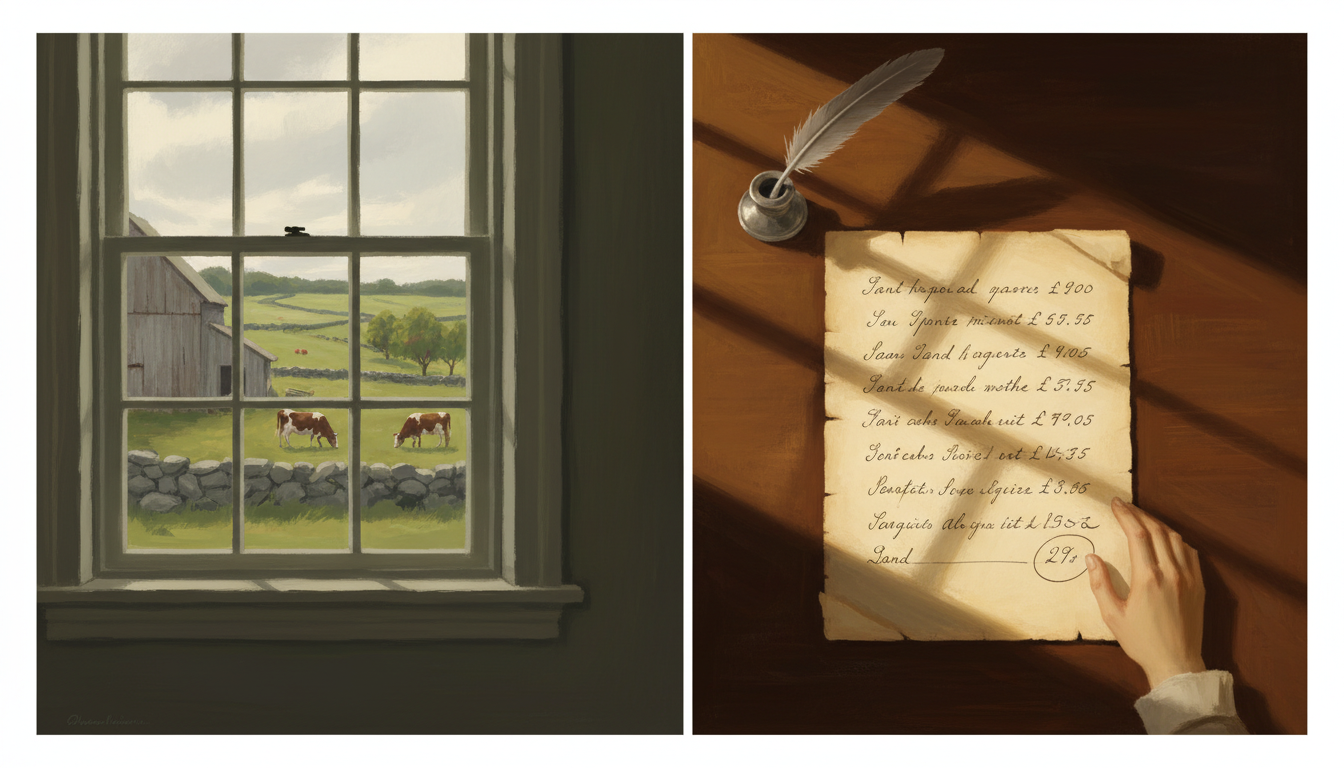
NewsSubscribe
First
Last
Consent

Cornell Hit 93%. Your 400-Cow Retrofit Won’t: The McLanahan SMS12 Payback That’s Really 4.5 Years, Not 2.5

Cornell’s Teaching Dairy and SwissLane’s Oesch family built their sand-separator success inside facilities designed around the system. For a 400-cow retrofit, the same $85K quote carries a very different set of risks — including one Klebsiella cow you can’t afford to lose.

Executive Summary: The McLanahan SMS12 quote says 2.5-year payback on $85K — the honest math on a 400-cow retrofit says 4.5, once you put depreciation back in and haircut recovery from 90% to 78%. Cornell’s Teaching Dairy hits 93% separation because the facility was built around the system; SwissLane’s Oesch family hits 90% because they’ve got the scale and internal labor to run it right. Your retrofit, with a shared-duty feeder running behind by 7 a.m., isn’t either of those. A 20,000 cells/mL SCC drift on commissioning costs a 400-cow herd roughly $25,550/year in lost quality premium — larger than the stressed-case net savings — and one preventable Klebsiella cull on a pedigree cow in Month 3 erases a full year of separator savings before her daughters are counted. In the Midwest at $12–15/ton contract sand this is an ROI play; in the Northeast at $18+/ton with single-supplier exposure, it’s an insurance play against a trajectory that SARE already documented rising 70% in real dollars between 2003 and 2013. Read the full piece if you’re re-bedding this year, staring at a dealer quote, or if your 400-cow herd carries any pedigree value you can’t afford to lose in commissioning.

McLanahan SMS12 payback

It’s mid-April. Coffee going cold on the kitchen table, an iPad open beside a paper dealer quote, the parlor pump cycling steady in the background. The producer staring at the McLanahan SMS12 quote could be in Lancaster County, Clinton County, or Addison County — this decision is on 400-cow kitchen tables across three regions right now — and the quote says 2.5-year payback in base-case spreadsheet optimism.

McLanahan engineered the SMS12 for dairies with 500 or fewer cows. Using the company’s own published 500-cow example — 50 lbs of sand per cow per day, $12/ton delivered, electricity at $0.07/kWhr — the pre-separator sand bill runs $54,750, and the system claims to cut roughly $40,000 a year off that bill while recovering more than 90% of the bedding. Base-case projections are standard practice across dairy capital equipment, from robotic milkers to heat recovery. The question isn’t whether the base case is optimistic. It’s how it holds up against your barn, your labor, and the cow in stall 47.

Figures in this article are illustrative, drawn from published case studies and model inputs. Actual costs, savings, and payback periods depend on herd size, regional sand pricing, barn design, labor, and site conditions.

What Cornell’s Teaching Barn Actually Proved — and What It Didn’t

Cornell University’s Teaching Dairy Barn in Ithaca, New York — a 150-cow facility built around best-practice demonstration — installed the SMS12 and published its results through McLanahan’s February 2025 case study. Their stated goal was 90% sand separation. The long-term average has come in at roughly 93%. Weeks hitting 97% or better happen regularly.

“One of the nice surprises we’ve had is how well it does the sand separation for us,” Jennette, the Teaching Dairy’s manager, said in McLanahan’s published Cornell case study. Before installation, the Teaching Dairy was trucking in about 30 tons of new sand every week. Today they buy a few tons at a time.

That’s a legitimate success story. But it’s a ceiling, not a benchmark. The Teaching Dairy Barn was purpose-built around the system, staffed by people whose primary job is to manage and document it. Institutional backing. No shared-duty labor problem. A 400-cow retrofit with two hired hands and a feeder who’s already running behind by 7 a.m. is a different animal entirely.

Scale up and the same tension shows up in a different form.

SwissLane Dairy in Alto, Michigan — a 2,000-cow, fourth-generation operation under the Oesch family — ran headlong into the real-world version of that gap before McLanahan solved it mechanically for them. Per McLanahan’s SwissLane case study, switching to sand bedding added roughly 8 lbs/cow/day to the herd average, and SwissLane cows now produce around 90 lbs/cow. Sand-laden manure was wrecking equipment, compacting fields, and stacking maintenance bills. Their McLanahan Sand-Manure Separation System now recovers up to 90% of the sand depending on sand size and water quality. “We are recycling up to 90 percent of the sand, which cuts back on our need for new sand,” Matt Oesch, the fourth-generation financial controller, said in that same case study. “Also, there is much less wear and tear on our equipment.”

Both systems work, but for different reasons. Cornell’s works because it was purpose-designed. SwissLane’s works because the Oesches have the scale and internal infrastructure to run it properly. That variable is missing from the base-case model — and it’s exactly the variable a 400-cow retrofit is most exposed to.

System / Herd TypeDesign & Labor RealityRisk if Copied to 400‑Cow Retrofit
Cornell Teaching Dairy150 cows; barn purpose-built around SMS12; dedicated staff tracking sand daily93% recovery becomes 75–80% when shared-duty labor replaces dedicated ops
SwissLane (2,000+ cows)Large-herd scale; in-house maintenance; strong internal infrastructureAssumes capital, infrastructure, and uptime most 400‑cow barns don’t have
400‑Cow Retrofit (spec)Existing barn geometry; limited fall; 2–3 hired hands with full chore listsDesign constraints and labor load push recovery below spec by 10–15 points
400‑Cow Retrofit (drift)Shared-duty “separator manager”; protocols erode after 90 days; reactive maintenanceKlebsiella or SCC drift can erase a full year of savings in Month 3

What a Klebsiella Event Actually Costs You on a Pedigree Cow

The payback math assumes a commissioning SCC event is a one-time quality-premium hit. It isn’t — not in a Bullvine reader’s barn.

Rowbotham and Ruegg’s 2016 Journal of Dairy Science study (“Bacterial counts on teat skin and in new sand, recycled sand, and recycled manure solids used as bedding in freestalls”) documented that primiparous Holsteins bedded on new sand had longer survival times to first culture-positive subclinical mastitis case than cows on recycled sand. Read “survival time” as what it actually is on a breeder’s herd: the difference between a second-lactation EX classification and a cull tag at Day 95.

Commissioning drift on a recycled-sand system opens the door specifically to environmental coliforms — Klebsiella, E. coli, Enterobacter — the organisms Leite et al. tied in a 2023 Pathogens study to higher clinical mastitis incidence when bedding moisture and coliform counts climbed. A Klebsiella mastitis case on a high-genomic or deep-pedigree cow isn’t a $250 treatment bill. It’s a cow you lose.

On a 400-cow herd carrying even a small nucleus of breeder-value animals, the 4.5-year payback math flips the moment one of those cows goes down in Month 3. A $10,000-class cow lost to a preventable bedding event erases a year of net separator savings on its own — before you count what her daughters were supposed to contribute. The separator doesn’t know which cow is in stall 47. You do.

Can a 400-Cow Retrofit Hit Spec When Cornell and SwissLane Were Purpose-Built for It?

Run the barn math honestly. A 400-cow herd at 50 lbs of sand per cow per day burns through about 3,650 tons of sand a year. At $15/ton delivered — a reasonable 2025 Midwest contract band, though regional pricing varies by supplier — that’s $54,750 in new sand, or roughly $137 per cow per year in bedding alone.

Run the design-spec math honestly. Makeup sand at 10% of 3,650 tons ($5,475), O&M at $15,000, and straight-line depreciation on $85,000 of capital over 15 years ($5,667/yr) totals about $26,000 all-in. That’s $65/cow. Gross cash savings against the all-new baseline — new sand avoided minus O&M — come to $34,275. That’s the number the dealer spreadsheet divides into $85,000 to get its 2.5-year payback. Put depreciation back into the denominator, and simple payback stretches to roughly 3 years even at design spec. Add interest on the loan ($3,000–$5,000/year, depending on term), and the headline number softens more.

Now haircut it. Recovery drifts from 90% to 78%. Makeup sand climbs toward 22% of pre-separator volume — about $12,000. O&M runs $4,000 over projection, a routine Year-1 variance on any new dairy capital equipment. Tack on one Year-1 commissioning SCC event ($3,000–$5,000) and one mid-range mechanical intervention ($7,500), amortized into Year 1 rather than buried. Net savings compress to roughly $17,000. Simple payback stretches to roughly 4.5 years. Still positive. Just no longer a runaway case.

Base Case vs. 80% Performance — 400-Cow Herd, $15/Ton Sand

MetricBase Case (100%)Real World (80% + Year-1 Adders)
Sand Recovery90%78%
Annual New Sand Cost (makeup)~$5,500~$12,000
Annual O&M$15,000$19,000
Net Annual Savings~$28,600~$17,000
Simple Payback2.5 yrs (3.0 with depreciation)4.5 yrs

The Year-1 column amortizes one commissioning SCC event ($3,000–$5,000) and one mid-range mechanical intervention ($7,500) into the first operating year; recurring O&M is shown separately.

On a 400-cow operation with working capital and a stable milk-quality baseline, a 4.5-year payback is manageable. On a 250-cow operation at $12/ton sand — the number McLanahan itself runs for the SMS12 — it’s tighter. The fixed-cost burden doesn’t scale down the way gross savings do. That’s why McLanahan positions the SMS12 “for dairies with 500 cows or less” but emphasizes site design requirements right alongside herd size.

The $85K Lie: What the Dealer Quote Actually Leaves Off

The $85,000 capital figure is the illustrative anchor for a 400-cow-class SMS12 installation. On most retrofits, it’s also the number that dies first.

Separator quotes cover the unit and often the dewatering screen. They frequently don’t cover the things that let the unit actually run. On a 400-cow retrofit, the soft costs that show up between “signed quote” and “commissioning day” routinely include:

  • Three-phase power at the manure stack. Single-phase service at that end of the yard means either a rotary phase converter or a utility line extension. Realistic band: $5,000–$15,000, site-dependent. 
  • Covered sand storage. The 12% moisture target McLanahan specs after the dewatering screen doesn’t hold if the stockpile sits under an open sky through a wet October. A roof and pad for recovered sand storage runs roughly $15,000–$40,000 depending on footprint and whether an existing commodity bay can be repurposed.
  • Alley fall and gravity conveyance modifications. Systems designed around four feet of fall need exactly that. Retrofits into flatter barns may require a reception pit, transfer pump, or plumbing rework.
  • Water supply for the sand-lane flush cycle. On farms already running at well capacity in August, this is a real engineering conversation, not a line item.
  • Electrical panel upgrade. A dewatering screen, transfer pumps, and the separator can push an older service past rated capacity.
  • Permits, engineering, and nutrient management plan updates. State rules vary. A separator changes manure-solids chemistry, which can trigger plan revisions before it triggers anything in the bulk tank.

A realistic “all-in” anchor for a 400-cow retrofit isn’t $85,000. It’s $85,000 plus whatever your site needs to actually run the equipment. Anchor your lender model to a live, anonymized vendor quote that prices electrical, storage, and civil work separately. If any of those lines come back as “TBD,” treat “TBD” as the upper end of the ranges above until proven otherwise.

Should You Switch From New Sand to Recycled Sand on a 400-Cow Herd?

Rowbotham and Ruegg’s 2016 work also documented that new sand generally carries fewer Gram-negative bacteria than recycled sand, and that clinical mastitis incidence rates across bedding types didn’t differ significantly — at least when management held steady.

That “when management held steady” clause is doing a lot of work.

What “In Spec” Actually Looks Like vs. What “Drifted” Looks Like

McLanahan’s own dewatering screen specifications give you a concrete measuring stick.

ParameterRaw Recycled Sand (Pre-Screen)In-Spec After Dewatering ScreenDrifted / Red-Flag
Moisture content~20%~12%>15%
Organic matter contentElevated<1%>1.5%
Visible characterDamp, darker, organic finesGranular, lighter, sand-likePack-y, stains the hand, sour smell
Stall behaviorCompacts, holds moistureGrooms like new sandCows bed short, rear legs stay wet

The in-spec column is what the equipment can deliver. The drifted column is what shared-duty labor often delivers three months in. The middle column isn’t automatic. It’s the output of someone owning the process.

A 2021 Wisconsin microbiota study in Animals (“Assessing the microbiota of recycled bedding sand on a Wisconsin dairy farm”) found bacterial community composition in recycled sand shifts significantly with both season and recycling stage. Leite et al. tied bedding moisture to clinical mastitis incidence and coliform counts to subclinical mastitis prevalence.

When moisture rises and organic content climbs, the bacterial envelope in the stall shifts with it. The separator’s still working. The auger still turns, sand still comes out. Working and working correctly are not the same thing — and a 400-cow operation running shared-duty labor is the most exposed to the gap between them.

What a 20,000 Cells/mL SCC Drift Actually Costs You

The Day 90 commissioning check specifies bulk-tank SCC staying within about 20,000 cells/mL of the pre-commissioning baseline. That sounds small. On a 400-cow herd, it isn’t.

Working with round but honest inputs: 400 cows averaging roughly 87.5 lbs/day ships 35,000 lbs (350 cwt) of milk per day. If an SCC drift costs that herd a $0.20/cwt quality premium step on a processor’s tiered schedule — a common band in published mailbox premium — the arithmetic is direct:

That’s $25,550 of premium lost, every year the drift persists — against a stressed-case net savings of roughly $17,000. The lost premium alone is larger than the Year-2 net savings. It doesn’t just stretch the payback period. It inverts it.

And that’s before a single Klebsiella cow goes down, before a single treatment cost, before a single withheld-milk day.

Plug in your own $/cwt step when you run this for your operation. The arithmetic doesn’t change. What changes is how quickly the separator stops being an asset on your balance sheet.

Is This an ROI Play — or an Insurance Play?

That’s the framing shift Northeast producers have to make before they run the same math a Midwest operation does.

In the Midwest, the SMS12 is usually an ROI play: a capital investment that pays back through reduced new-sand purchases, evaluated against a relatively stable regional sand market. In the Northeast, it’s increasingly an insurance play: capital that hedges a structural supply problem, evaluated against a rising input price trajectory. Same equipment. Different thesis. Different lender conversation.

The 2017 SARE-funded bedding study by Smith, Simms, and Aber (“Case Study: Animal bedding cost and somatic cell count across New England dairy farms”) surveyed 129 producers and documented a 70% real-dollar increase in bedding costs between 2003 and 2013 — conventional dairy costs rose from /cow/year to 4/cow/year, and organic operations from to 5. That trajectory hasn’t reversed. Quarry consolidation, construction demand, and 30×50 silica sand specifications keep pinching supply.

Some Northeast producers find themselves dependent on a single quarry relationship, and a closure or disruption pushes them quickly into the spot band.

Against a conservative 4% annual sand-price inflation from $18/ton — and the SARE numbers are anything but alarmist by that standard — the separator’s Year 10 economics shift sharply in its favor. That case has to be made explicitly to the lender. A base-case payback model isn’t built to carry a 15-year rising-input assumption. If you can’t justify the SMS12 as an ROI play at today’s contract prices, you may still be able to justify it as an insurance play against the next decade of them.

THE HARD TRUTH

If your morning feeder is also your “Separator Manager,” your recovery rate is 75%, not 93%. The machine is automated. The consistency isn’t. If you don’t have someone on the payroll who treats sand dryness like a religion, stay with new sand.

The 30/90/365 Commissioning Playbook

Every separator investment should come with three audit dates baked into the loan conversation before commissioning day. Not after.

Day 30 — Is the Machine Working?

Three cheap measurements. None requiring a consultant.

  • Dry matter of recovered sand: target 35–40%
  • Organic matter content: target below 1.5%; McLanahan’s spec with a dewatering screen is below 1%
  • Sand recovery rate: target 90–95%, per NRCS Practice Standard 632

Day 90 — Is the System Working?

This is where commissioning drift shows up in the data.

  • Bacterial counts on fresh recovered sand and on used bedding from the back third of occupied stalls. Extension management guidance and Cornell field research point to a 300,000 cfu/g target and a 1,000,000 cfu/g red-flag line. 
  • Testing cost (2025 Cornell AHDC): BEDID1 environmental bacterial quantification at $48 per sample plus an $8 accession fee — roughly $50–$75 per sample all-in.
  • Bulk tank SCC check: within about 20,000 cells/mL of the pre-commissioning baseline. Drift beyond that at Day 90 is a management or mechanical signal, not a commissioning artifact — and on a 400-cow herd, it’s the $25,550/year problem from the section above until you fix it.

Day 365 — Is the Investment Working?

This is the conversation you want with your lender — not a surprise at refinancing.

  • Reconcile actual new sand purchased, actual O&M costs, and actual milk quality premium capture against the loan application projections.
  • Within 15% of projection: healthy; stay the course.
  • Shortfall of 25% or more: systematic problem requiring management intervention, not an assumption that Year 2 will be better on its own.

Operations that only run Day 30 informally tend to miss the drift that shows up between months three and six. That’s where the gap between projection and reality opens up. Cornell’s long-term performance came out of a facility where the system was the dedicated focus of staff. On a shared-duty operation, that focus erodes in inches.

Four Paths and What They Each Actually Cost You

Path / StrategyWhen It Actually WorksTypical Bedding Cost Band ($/cow/yr)Red-Flag Situation (Don’t Do This)
New sand, optimize what you haveDelivered sand under ~$12/ton; barn not designed for recycling; tight labor~80–110Installing SMS12 just to “keep up with neighbors”
Recycled sand, purpose-designed system400+ cows; $16+/ton sand; dedicated separator operator and good ventilation~65–90Retrofits with <4 ft fall or no covered storage
Recycled sand as supply hedgeNortheast herds at $18–24/ton with single quarry dependence~90–120Treating it as a 2.5‑year ROI play instead of insurance
Wait, stay on new sand until renovationCurrent barn geometry wrong; renovation or expansion already on the horizon~100–140Sinking capex into separator before fixing the barn design

Path 1: New sand, optimize what you have. Works when delivered sand is under $12/ton, the barn lacks adequate fall or ventilation for recycling, or the labor structure can’t absorb a dedicated daily protocol. If you’re already under $100/cow in bedding, separator capex probably doesn’t survive honest stress-testing.

Path 2: Recycled sand, purpose-designed integration. Works when sand is $16+/ton, herd size is 400+, and you can assign dedicated operator time — not bolt it onto someone’s morning route. Requires written daily protocols, monthly bacterial testing at Cornell AHDC 2025 rates, and a backup supplier relationship locked in before commissioning day. Where it backfires: retrofits into barns with under four feet of fall, curtain-sided structures with weak summer ventilation, and indoor covered sand storage that traps moisture in the pile.

Path 3: Recycled sand as a supply hedge, not a cost savings play. The Northeast case. At $18–24/ton with single-supplier risk, evaluate the separator as a 15-year input supply investment, with the math running against a rising price trajectory rather than today’s contract price.

Path 4: Keep buying new sand until the barn catches up. Works when current infrastructure isn’t suited to recycling but a renovation or expansion is already on the horizon. Cornell’s 93% came from a facility designed around the system, not retrofitted into one. Waiting, doing the renovation right, and then buying the separator isn’t a failure of ambition. Sometimes it’s the sharper capital sequence.

Your Next 30 Days

Pull your sand delivery invoices for the last 24 months and calculate your actual per-cow bedding cost. Compare it to the $110–$137 band typical at $12–15/ton delivered. Then pull your last two bulk-tank SCC reports and your last DHI cull reason summary, and mark the cows in stalls 1–10 that you cannot afford to lose to a bedding event. That single hour tells you which of the four paths is yours before a dealer sets foot on the place.

What This Means for Your Operation

  • Before you call a dealer: if this system runs at 80% of projected performance for two years, can your operation absorb that financially and still say yes? If the answer makes you flinch, the more defensible decision is to stay with new sand and harden your supplier relationships.
  • Run your actual delivered sand price against the threshold bands: under $10/ton, almost certainly no; $10–14/ton, only with dedicated labor and a strong milk quality premium structure; $16+/ton, the economics work if the barn supports it.
  • Audit three fixed barn factors before any other conversation: alley fall, ventilation design, and covered storage location. These predetermine the bacterial envelope your recycled sand lives inside before the operator ever touches it.
  • Price the soft costs separately: three-phase power, covered storage, alley fall modifications, permits, panel capacity. If any sit on “TBD,” assume the upper end of published ranges in your lender model.
  • Price the genetic exposure separately: a single Klebsiella cull on a high-pedigree cow in Month 3 can cost more than the first year of net separator savings. Account for it in your stressed case, not your base case.
  • Build the lender conversation around a stressed-case cash flow model — 78% recovery, one commissioning SCC event, $4,000 O&M overage — not the base case. Post-2020 agricultural lending practice has tightened DSCR floors and rate-sensitivity assumptions; confirm specifics with your Farm Credit branch or equivalent before signing.
  • If separator management will be an “added duty” rather than a primary assignment, haircut your projected net savings by 20% before comparing payback. 

Key Takeaways

  • If delivered sand is under $12/ton and your barn wasn’t designed for recycling, the separator probably doesn’t pencil honestly — regardless of what the base case says.
  • If you’re in the Northeast at $18+/ton with single-supplier risk, evaluate the SMS12 as an insurance play, not an ROI play. The SARE 2003–2013 data already showed a 70% real-dollar cost increase. Nothing about the last decade suggests that direction has changed.
  • If your barn has under four feet of fall, curtain-sided summer ventilation, or indoor covered sand storage, fix the barn first. Cornell’s 93% and SwissLane’s 90% both came from facilities designed to support the system. No operator skill compensates for the wrong infrastructure.
  • If separator operation will be an added duty on top of an existing workload, haircut projected savings by 20% in your own model. It’s not pessimism — it’s what the commissioning record shows.
  • If your 400-cow herd carries a pedigree nucleus, one preventable Klebsiella cull in commissioning can erase a full year of separator savings — and the genetic progress behind the cow you just put on the trailer.
  • If you can’t answer the 80% question with a clear yes, keep the $85,000 and buy three years of new sand instead. Sometimes that’s the sharper capital decision.

The spreadsheet on your kitchen table shows the base case. Cornell’s team didn’t just run the base case — they built the system, staffed it, measured it at 30 days, 90 days, and every week for years. That’s why their long-term average is 93%. The question for your operation isn’t whether McLanahan builds a system that performs. They do. The question is whether your barn, your labor, and your balance sheet are set up to capture that performance — and what happens to your milk cheque, and the cow in stall 47, in Year 1 if they aren’t. Does your current payback model have a cell for that answer?

This article draws on McLanahan’s published Cornell and SwissLane case studies, the cited peer-reviewed research, and public technical material. McLanahan, Cornell Teaching Dairy Barn, and SwissLane Dairy were not interviewed directly for this piece.

Learn More

  • What Type of Bedding is Best for Cows? — Evaluate the microbial thresholds and cost-per-cow shifts that signal it is time to pivot your bedding strategy. Arms you with the benchmarks to decide if sand still pencils against rising regional commodity prices.
  • Why Cow Comfort is a Competitive Advantage — Position your dairy for the next decade by leveraging stall environment as a strategic production asset. Exposes how superior comfort secures cow longevity and maximizes the genetic potential of your elite herd.
  • How to Make Sand Bedding Work in Your Robotic Dairy — Bridge the gap between sand comfort and robotic milking hardware without risking machine downtime. Delivers the technical blueprints for managing silica’s abrasive wear while maintaining the gold standard in cow cleanliness.

The Sunday Read Dairy Professionals Don’t Skip.

Every week, thousands of producers, breeders, and industry insiders open Bullvine Weekly for genetics insights, market shifts, and profit strategies they won’t find anywhere else. One email. Five minutes. Smarter decisions all week.

NewsSubscribe
First
Last
Consent

Dairy Labor’s $48,000 Tuesday: Why Every U.S. Producer Needs a 72‑Hour Plan

On April 21, 2025, CBP arrested eight workers at Vermont’s largest dairy before the morning milking finished. The cows still had to be milked. Does your barn have a plan for that Tuesday?

Executive Summary: On April 21, 2025, CBP arrested eight workers at Pleasant Valley Farms in Berkshire, Vermont — the state’s largest dairy, 3,000 cows across 10,000 acres — and every U.S. producer who leans on immigrant labor should treat it as a dress rehearsal. Vermont detentions ran close to tenfold their prior baseline in 2025, roughly 900 people through state facilities, per Migrant Justice intake data cited by The Guardian. On an 800‑cow herd at ~$20/cwt (USDA AMS, Aug 2025), a 30% crew loss driving a worst‑case 10 lb/cow drop leaks about $48,000 in 30 days before a single SCC penalty or covenant call; a milder 3–5 lb drop still bleeds $14,000–$24,000. Relief labor runs a one‑third to one‑half premium over the USDA NASS April 2025 livestock wage of $18.15/hr — budget $24–$27/hr when the call comes. Your lender and co‑op field rep are already watching workforce stability as a cash‑flow risk; February 2026 outlook has mailbox prices running $2.50–$3.00/cwt below 2025 on top of it. The 30‑day move isn’t waiting on the Farm Workforce Modernization Act — it’s booking a real I‑9 self‑audit with an employment attorney and writing a one‑page 72‑hour staffing plan with names, not roles. If your answer to “who milks Tuesday if three people don’t show up” is a shrug, that’s the first number to fix.

Dairy labor risk

On April 21, 2025, U.S. Customs and Border Protection agents arrested eight migrant workers at Pleasant Valley Farmsin Berkshire, Vermont, according to reporting by VTDigger and Vermont Public. The St. Pierre family operation is the state’s largest dairy, milking roughly 3,000 cows across about 10,000 acres in Vermont and New Hampshire. The cows, of course, still had to be milked.

The workers — not the farm — were the subject of the federal proceedings. The Bullvine contacted Pleasant Valley Farms for comment; but has received no response received.

That’s the part the policy press usually doesn’t cover. If you run a dairy that leans on immigrant labor, the Pleasant Valley enforcement story isn’t a “Vermont thing.” It’s a preview of what dairy labor enforcement can look like when it lands close to your yard. We had charts. We had quotes from Washington. We had a draft sitting in our CMS that week explaining, yet again, why the Farm Workforce Modernization Act might — someday — open a legal path for year‑round dairy workers. What we didn’t have was a single article that helped a producer survive the first 72 hours after a crew disappears.

That’s the blind spot this piece is about. Not because Vermont is special. Because the policy‑first frame we were using applies to almost every U.S. dairy that runs on immigrant labor — and in a crisis, that frame is useless in the parlor.

Why Your Lender Might Be Thinking About This Before You Are

Let’s start with the part that’ll keep you up at night — and it’s not CBP. It’s your next renewal conversation.

Quietly, ag lenders and co‑op field staff have started asking harder questions about workforce stability. Not to police your hiring — because a 30% crew loss hits cash flow faster than almost any commodity price move, and it shows up in the places they already watch: milk quality penalties, herd health costs, production slippage and covenant ratios. February 2026 dairy outlook flagged margin compression for 2026. Layer workforce disruption on top of that and you’ve got the kind of compound cash‑flow risk any ag lender watches closely.

Across several operator conversations in late 2025, the same question surfaced in different words: not another article about the Farm Workforce Modernization Act, but what their lender would actually accept as workforce continuity documentation if federal enforcement action ever affected their own payroll, regardless of what they believed about their crew’s status. No single conversation said it that cleanly. But the sentiment showed up often enough to stop being an outlier.

Operational coverage — I‑9 audit explainers, enforcement‑response protocols, emergency staffing templates — was getting forwarded to operators by their own attorneys and co‑op reps. Ours wasn’t. That’s the moment a policy‑first frame stopped being defensible.

Where Our Coverage Missed The Barn

For eighteen months, The Bullvine covered dairy labor like it was a Capitol Hill story. Federal reform bills. Association statements. USDA labor surveys. Tidy quotes from Congressional co‑sponsors. Most of that reporting was factually accurate.

In July 2025, we ran “Here’s the Hard Truth About Labor Reform: Why the Farm Workforce Modernization Act Could Finally Fix Dairy’s Biggest Crisis.” The credibility anchor was a Congressional co‑sponsor. The call to action was legislative preparation. A month earlier, “How Dairy’s Worker Shortage Will Reshape Your Farm by 2030” treated labor as a long‑arc automation and demographics story.

Both pieces were solid reporting. Both pointed the reader toward Washington. And neither of them helped you decide who covers Tuesday morning.

The Guardian‘s April 16, 2026 investigation — “‘I don’t go out’: Vermont’s undocumented dairy workers live in fear after immigration raids” — made the gap obvious. A Vermont dairy of recognized size was the site of a federal enforcement action, and the immediate operational questions that followed — who milks tomorrow, who pays bond, what does the lender say — were not ones our Capitol‑focused coverage had prepared any reader to answer. VTDigger reported in May 2025 that one of the Pleasant Valley workers was ordered released on a $10,000 bond, and another on the $1,500 statutory minimum.

What’s Actually At Risk For Your Herd

Step outside Vermont for a minute. This story isn’t really about one state.

A Texas A&M AgriLife Center for North American Studies / NMPF survey of 973 dairies across 18 states (Adcock, Anderson and Rosson, fieldwork 2014, published 2015) found that immigrant labor accounts for 51% of all U.S. dairy labor, and that dairies employing immigrant labor produce roughly 79% of the nation’s milk supply. A 2018 NMPF follow‑up concluded that a complete loss of immigrant labor could cost the U.S. economy $32.1 billion and eliminate one‑in‑six dairy farms. Across much of the Midwest, Northeast and West, immigrant workers — both documented and undocumented — make up a substantial share of parlor crews on mid‑ and large‑herd dairies.

When enforcement ticks up, you don’t feel it as a shift in the Federal Register. You feel it as a hole in Tuesday’s schedule. A milker who worked Saturday and Sunday but didn’t show up Monday. A cousin who left the state overnight after seeing a neighbor’s farm on the news.

That’s the version of labor risk we hadn’t been writing into. So here’s the math we should have been running all along.

What Does A 30% Crew Loss Actually Cost On An 800‑Cow Herd?

Take an 800‑cow herd shipping 65–70 lb/cow/day — mid‑to‑upper range for a commercial Northeast herd. USDA’s August 2025 mailbox milk price across all Federal Orders averaged $20.03/cwt, down $2.90 from August 2024. February 2026 dairy snapshot projects 2026 mailbox prices running $2.50–$3.00/cwt lower than 2025. Call it a ~$20/cwt working number for a Northeast herd. That’s about $11,200 a day in milk revenue coming off the pad.

Now assume a neighboring farm sees an enforcement action and 30% of your crew either doesn’t show up or gives notice within a week. Parlor prep gets rushed. Shifts stretch. The cow that should have been culled three months ago is suddenly a long‑term employee.

The Cost of a “Tuesday Morning” Crisis

Based on an 800‑cow herd at ~$20.00/cwt

MetricStandard Operation30% Crew Loss (First 30 Days)
Daily milk revenue$11,200$9,600 (worst‑case 10 lb/cow drop)
Monthly revenue leak$0−$48,000
Labor cost$18.15/hr (USDA NASS, Apr 2025 livestock workers)$24–$27/hr (1/3–1/2 premium range)
Milk qualityStable SCC, standard protocolMastitis spikes, rushed prep, missed detections
Long‑term riskNormal cull/replace rhythmCull errors, lender flags, co‑op quality penalties

That $48,000 is the worst‑case first‑30‑day figure. A milder shock — say a 3–5 lb/cow drop because you triaged fast and kept fresh‑cow protocols intact — produces monthly revenue leaks in the $14,000–$24,000 range on the same herd. Either way, run these numbers with your own herd size, shipping average, and mailbox price before your next bank meeting. The point isn’t the $48K. The point is knowing what it costs you to buy back one week of rushed milking.

Push the same scenario onto a 400‑cow herd losing two key employees and the daily number gets smaller, but the percentage hit to your margin often gets worse. You have fewer people to absorb the shock.

That math is what we left out of our labor coverage for eighteen months. Not because we didn’t have it. Because we were reporting upward, toward the Capitol, instead of sideways, toward the parlor. 

The Mechanics Behind The Shock

Three structural realities explain why a single enforcement event lurches the way this one did in Vermont, and why your exposure may be bigger than your books suggest.

Structural dependence with no legal backfill. Dairy tilted hard toward immigrant labor over two decades. Non‑ag wage expectations rose, H‑2A and H‑2B visas were written for seasonal crops rather than cows that calve on Christmas, and consolidation put more hired positions on fewer farms. Vermont has lost 49% of its dairy farms since 2013 while cows per farm have jumped 69% (Vermont Dairy Delivers, 2024). A single enforcement event doesn’t bounce. It lands.

Enforcement is lumpy, not linear. VTDigger characterized the Pleasant Valley arrests as the largest Vermont immigration enforcement action targeting migrant workers in recent memory, and roughly 900 immigrants were detained in Vermont facilities in 2025 — close to a tenfold increase over the prior baseline, according to Migrant Justice intake data cited in The Guardian‘s April 2026 investigation. From your side of the fence, it looks like random bad luck. It isn’t.

Your buyers and lenders are paying attention. Brand‑sensitive processors and retailers don’t want to be on the six o’clock news next to an enforcement story. Quality problems and covenant breaches make lenders flinch. Public enforcement events can accelerate both.

Every U.S. dairy operates inside that reality, whatever your own workforce composition.

72‑Hour Survival Checklist

Print this. Put it in the milk house. You won’t have time to Google it when the call comes.

Editorial guidance only — not legal advice. Consult your own employment attorney for jurisdiction‑specific guidance on I‑9, enforcement‑response protocol, and lender communications. 

Protocol ElementUnprepared OperationLender-Ready OperationWhy It Matters
Tuesday 2 a.m. crew backup“We’ll figure it out”Named list, not rolesShifts fill in < 6 hours
I-9 audit statusDrawer checkAttorney-led self-auditReduces paper-trail risk
Emergency wage rateNegotiated in crisisPre-agreed at $24–$27/hrNo resentment at 3 a.m.
Lender notificationAfter covenant flagBefore the callPreserves refinancing optionality
Documentation of impactVerbal, laterWritten, within 24 hrsAttorney + lender both want it

Hour 1–6: Triage

  • Confirm who’s missing. Call or text every crew member. Don’t assume — verify.
  • Lock down the milking schedule. Who’s covering the next shift? Write names on the whiteboard, not roles.
  • Call your herd manager. If they’re affected, you need to know now, not at 4 p.m.
  • Do not discuss immigration status with anyone on your crew, any agent, or any reporter. Call your attorney first.

Hour 6–24: Stabilize

  • Activate your emergency contact list. Relief milkers, retired employees, neighbors with parlor experience, family members.
  • Notify your veterinarian. Short‑staffed milking means rushed prep means higher mastitis risk. Get ahead of it.
  • Call your co‑op field rep and explain the situation. Quality penalties are easier to manage with advance notice than with a surprise SCC spike.
  • Document everything. Hours worked, temps called, protocols skipped. Your lender and your attorney will both want this.

Hour 24–72: Shore Up

  • Contact your ag lender. Brief them before the covenant math does it for you. Bring a written estimate of the revenue and cost impact.
  • Set emergency pay rates for overtime and relief workers and communicate them clearly. Ambiguity breeds resentment when everyone’s exhausted.
  • Identify which tasks to cut vs. which to protect. Fresh‑cow checks, milking prep, and feeding can’t slip. Cosmetic barn work can wait.
  • Begin recruiting. Expect relief labor to cost a one‑third to one‑half premium over the USDA NASS April 2025 livestock worker average of $18.15/hr — roughly $24–$27/hr based on what Northeast operators and co‑op field staff are quoting in 2025–2026. Budget for it.

What Would You Actually Do On A Tuesday?

Here’s the honest question. If your phone buzzed at 5 a.m. with news that a neighbor’s farm had seen an enforcement action, and by 7 a.m. three of your best parlor people hadn’t shown up — what would the next 72 hours look like?

If you can answer in specifics — names, shifts, call list, pay rate, feed routine — you’re in better shape than most. If you can’t, that’s your homework for the month. Pull the list of who’s on your 2 a.m. crew. Ask yourself which two names you’d replace first, and with whom.

Options And Trade‑Offs

You’re not going to solve federal immigration policy from the milk house. You do have choices about how you prepare for the next 72‑hour shock. Four are worth running.

1. Treat I‑9 and documentation like biosecurity. When it makes sense: any herd with hired labor, and any operation in a region where neighbors have already been affected. What it requires: a real I‑9 self‑audit with an employment attorney or HR pro — not a drawer check — plus written onboarding and document‑handling procedures, and a clear plan for what you’ll say if federal agents arrive, with or without a warrant. Risks and limits: you can’t audit your way into a fully legal crew if no legal pipeline exists for year‑round workers. Sloppy internal audits can create paper trails that hurt you later. 30‑day action: book that I‑9 consult this month, even if you’re sure you’re fine.

2. Write a 72‑hour staffing protocol. When it makes sense: herds over 400 cows, where losing two parlor employees blows up the schedule. What it requires: a named list (not roles — names) of who covers milking, feeding and fresh cows in a short‑staffed week. A pre‑agreed wage premium or bonus framework for emergency coverage. A written “bare minimum operations” plan that protects milk quality and cow welfare when you can’t run the normal playbook. Risks and limits: emergency labor is expensive. USDA NASS reported the April 2025 livestock worker wage at $18.15/hour, up 4% year over year. Paying a one‑third to one‑half premium over that baseline adds up fast, and family labor patches can hide burnout until it breaks.

3. Decide how far you’ll go on automation. When it makes sense: herds already flirting with a third parlor shift, and operations with balance sheets and lenders that can absorb long‑payback capital. What it requires: honest ROI math that accounts for robots plus maintenance, software and financing — not just “robots replace X workers.” A realistic view of how much human oversight automated systems still need. Risks and limits: automation doesn’t end your enforcement exposure if you still rely on immigrant workers in maternity, youngstock and feeding. Over‑leveraging for robots during a labor panic traps you if milk slips or rates stay sticky. [INTERNAL LINK: Clark Farms / 143‑hour‑week ROI piece] → Suggested anchor text: “how one operation did the hard math on time, capital and labor” → pillar page / Tier 3 economics.

4. Talk to your lender before they talk to you. When it makes sense: any operation refinancing in the next 18–24 months, or any herd where more than half of hired positions are filled by immigrants. What it requires: a candid conversation about how many roles would be hard to refill within 30 days, a short written workforce continuity plan, and willingness to hear uncomfortable questions now instead of at renewal. Risks and limits: some lenders aren’t ready for this conversation. Some will default to box‑checking. Better that than a surprise at the covenant review.

Key Takeaways

  • If your crew is foreign‑born, book an I‑9 self‑audit with an employment attorney within the next 30 days. Not a drawer check. A real one.
  • If two missing milkers would break your schedule, write a one‑page 72‑hour staffing plan with names — not just roles — on the page.
  • If you’re refinancing soon, ask your loan officer what workforce continuity documentation they’d actually find useful before they ask you for it.
  • If you haven’t run a 30% crew‑loss barn‑math scenario for your own herd size and milk price, do it before your next bank meeting. The number will either reassure you or rearrange your calendar.
  • If SCC penalties crept up while you’ve been short‑staffed, treat that as a labor‑risk warning light, not just a milk quality issue.
  • If you’re eyeing automation because of labor fear, run the ROI math twice — once with wage savings, once with a realistic headcount for all the jobs robots won’t touch.

Don’t Get Caught Without A Plan

The next enforcement story will land somewhere. Maybe not your county, maybe not your co‑op, maybe not this season. It will land on someone’s crew, someone’s lender call and someone’s quality report.

The question isn’t whether federal policy is fair. It’s whether your operation can stay upright when a meaningful share of your crew can’t show up on a Tuesday and nobody in Washington picks up the phone.

Complete references and supporting documentation are available upon request by contacting the editorial team at editor@thebullvine.com.

Learn More

The Sunday Read Dairy Professionals Don’t Skip.

Every week, thousands of producers, breeders, and industry insiders open Bullvine Weekly for genetics insights, market shifts, and profit strategies they won’t find anywhere else. One email. Five minutes. Smarter decisions all week.

NewsSubscribe
First
Last
Consent

Fenwick Got the Cows Back. The $519,000 Insurance Gap Is Still There.

Your neighbors will bring casseroles and cattle trailers for the first 48 hours. They won’t write a $519,000 check in month 13. Only a correctly written policy does – and most mid-size dairies don’t carry one.

Executive Summary: An EF-1 tornado leveled Hull’s Dairy in Fenwick, Michigan at 10:58 PM on April 14, scattering 210 cows across Montcalm County — and exposing a six-figure coverage hole sitting in most mid-size dairy policies. Default farm policies run 12-month business interruption periods, but industry ag claims guidance — including from Sedgwick — puts complex dairy rebuilds at 18–24 months, leaving roughly $519,000 in uninsured gross milk revenue on a 210-cow herd at March 2026’s $16.16/cwt Class III. Construction costs make it worse: BLS PPI put 2025 materials inflation at 6.2%, and Lactanet’s 2023 survey pegs insulated dairy barns at $18,160 per head all-in, $7,100 per cow in equipment alone. Your LIP payment isn’t a recovery mechanism either — $1,681.88 per adult cow pays about 42 cents on the dollar against a $4,000+ springer, and as little as 12 cents on a VG-88 with real genetic merit. Blanket livestock coverage doesn’t distinguish a +2800 GTPI two-year-old from a GP-83 off a truck. The community brought cattle trailers for the Hulls within hours; they won’t cover month 13 of a rebuild. The 30-day move: call your agent, confirm Replacement Cost (not ACV) coverage, and price a 24-month MIP before renewal.

dairy farm insurance

Janet Hull was in her basement at 10:58 PM on April 14, 2026, when the EF-1 hit her family’s farm in Fenwick, Michigan. She told Fox 17 it sounded like a train coming through the barns above her. By morning, the freestall that housed 80 of her cows was gone, two head were confirmed dead, and more than 200 animals were scattered across miles of dark Montcalm County countryside.

The community response was the kind dairy country still does better than anywhere else. Noah Heckman pulled in at sunrise with a cattle trailer, per Fox 17. Stephanie Schafer of Jem-Lot Dairy — a Michigan Farm Bureau District 5 director — drove her own truck over, per McClatchy wire reporting. Lane Grieser with Farm Bureau was on the phone. By Wednesday night, nearly the entire 210-cow herd had been recovered and relocated to a neighbor farm in North Ionia.

Every local outlet ran that story. None of them ran the math.

Here’s what they missed — and it’s not about Hull’s specific policy, which isn’t public. It’s about the default farm insurance structure a typical 200-cow family dairy carries. That structure likely sits on roughly $519,000 in uninsured gross revenue exposure between what a 12-month business interruption policy pays and what a complex rebuild costs when it runs to the midpoint of an 18–24 month range. No claim here about the Hulls’ individual coverage. This is about what the default structure does to a farm at that scale — and where the real risk hides in most dairy farm tornado damage recovery scenarios.

What’s Changed — and Why Your Policy Hasn’t Kept Up

Three things have shifted in the last few years that quietly made most farm insurance policies inadequate. Most producers didn’t notice. Carriers don’t send a letter when the math stops working.

Construction costs are the first. Construction material prices rose 6.2% across 2025 — the largest single-year increase since the post-Covid spike in 2021 — according to Bureau of Labor Statistics Producer Price Index data reported by ConstructConnect. Steel bars, plates, and structural shapes climbed 12.1%. Aluminum mill shapes jumped more than 30% on tariff pressure. The Dairy Challenge 2022 benchmark pegged a basic freestall at roughly $3,500–$7,000 per milking stall depending on parlor and equipment build-out. Lactanet’s 2023 survey of 29 insulated dairy barns in Quebec put median costs at $101 per square foot total, $60.10 per square foot building only, $18,160 per head all-in, and $7,100 per cow in equipment alone. Layer the 2025 materials escalation onto that 2022–2023 baseline and rebuild numbers are running well above what most policies were priced to cover.

The replacement heifer market is the second. CoBank’s Knowledge Exchange reported in August 2025 that U.S. dairy heifer inventories have already hit a 20-year low and will shrink by an estimated 800,000 head over the next two years before any rebound in 2027. CoBank’s Corey Geiger flagged that heifer prices had already reached record highs and “could climb well above $3,000 per head.” Trade-media reporting through spring 2025 puts peak-market Holstein springer prices at $4,000–$4,200. If you have to replace cows fast after a disaster, “average” isn’t the number you pay. The market is. And the market is expensive.

The third shift is the quiet one. Farm policies don’t automatically update to either of those realities. Per-building replacement values are set at underwriting and only move when you proactively ask for a reappraisal. Some policies carry inflation-guard or auto-adjust endorsements, but most standard farm packages don’t include them by default — which is why the audit call matters. Maximum indemnity periods on business interruption coverage default to 12 months, a number calibrated back when a standard dairy rebuild fit inside that window. The gap shows up when the adjuster does.

How This Plays Out on Real Farms

Run the numbers on a 210-cow herd. A well-managed Holstein herd producing at 85 lbs/day puts roughly 17,850 pounds of milk in the tank daily — a pace above USDA NASS’s national average of about 65 lbs/cow/day across all breeds, which is why we’re calling it well-managed, not average. At USDA AMS’s March 2026 Class III price of $16.16/cwt, that’s $2,885 in daily gross milk revenue. Weekly, call it $20,200. Monthly, about $86,500. April 2026 Class III futures were trading around $16.84 as of mid-April; the USDA final print follows at month-end.

Now layer in the disruption math. Standard farm BI kicks in after a 48–72 hour waiting period and runs for a 12-month maximum indemnity period on most policies. In Sedgwick’s February 2024 publication “Maximum Indemnity Period: Is 12 months long enough?”, the firm’s major loss specialists make the case explicitly: policyholders “should work on the assumption of a total loss” and factor in a full recovery period, because rebuilding the physical asset is only phase one — winning back revenue or customers is phase two, and the phases compound. Farmers Weekly’s Business Clinic makes the dairy-specific version of the same point bluntly: “For larger, more complex dairy units 24 months may be needed to rebuild and re-establish a herd.” Those extensions have to be proactively bought. Unless you raise it, many policies renew at the default 12-month MIP out of habit.

What Your Policy Probably Says vs. What the Rebuild Actually Costs

Coverage elementDefault policy assumption2026 realityGap
Freestall replacement (80-stall unit)Indexed to pre-2023 build figuresPer Lactanet 2023: median $18,160/head all-in on insulated barns; equipment alone at $7,100/cowScales with cumulative 2023–2026 escalation
Construction input escalationLocked at last appraisal6.2% materials increase in 2025 alone per BLS PPITens of thousands to six figures depending on appraisal age
Business interruption period12 months MIP18–24 months per Sedgwick and Farmers Weekly guidance for complex dairies6–12 months uncovered
Livestock indemnity per adult cow$1,681.88 via USDA FSA LIP (2025 schedule)$3,000+ per head per CoBank; $4,000–$4,200 peak spring 2025~$1,300–$2,500+ per head
Gross milk revenue at risk, months 13–18Not covered~$519,000 on a 210-cow herd~$519,000 ← The Kill Zone

If a rebuild runs past the 12-month mark, the missing months 13 through 18 represent roughly $519,000 in uninsured gross milk revenue on a herd this size. One caveat worth naming up front: BI policies typically pay gross revenue minus saved expenses, so the actual out-of-pocket shortfall moves with feed, labor, and repair savings during the disruption. The $519,000 is the top-line revenue hole, not the net gap. Even so, the net still lands in six figures on a herd this size. Call it the kill zone: the window where no program, no neighbor, and no GoFundMe covers the difference. Only a correctly written policy does.

And this math scales. A 500-cow operation running the same 85 lbs/day at $16.16/cwt is putting about $206,000 in monthly gross revenue through the parlor — double the exposure per month the default MIP leaves uncovered. Scale doesn’t protect you here. It widens the gap.

What LIP Doesn’t Cover: The Genetic Premium Your Policy Ignores

Now the second gap — and this one hits Bullvine readers harder than most. The USDA Livestock Indemnity Program pays $1,681.88 per adult dairy cow lost to a qualifying disaster under the 2025 rate schedule. The 2026 table hadn’t been released as of publication; historically, LIP rates update mid-year based on prior-year fair market values.

That $1,681.88 is calculated on an industry-average market value for a generic adult dairy cow. It doesn’t distinguish between a GP-83 first-calver you bought off a truck and a VG-88 two-year-old carrying a +2800 GTPI that you’ve spent three generations building toward. If you lose that animal in a tornado, LIP pays $1,681.88. Period. The pedigree, the classification score, the genomic premium, the flush potential — none of it exists in the indemnity formula.

Market replacement springers are running $4,000–$4,200 for average genetics at peak, per spring 2025 trade-media reporting. But if you’re rebuilding a herd with above-average genetic merit, the replacement cost per head isn’t $4,000. For genomic-tested, classified cows — the kind many Bullvine readers are building — market replacement routinely runs two to four times the commodity springer price, and for the top end of the market, much higher. The Amplify 2026 sale averaged $8,652 across 124 lots — roughly double commodity springer pricing. Move up one tier and the 2024 World Classic Holstein Sale at World Dairy Expo averaged $30,245 across 55 lots, with a $205,000 IVF session topping the board. Best of Triple-T & Friends in May 2025 hit $78,500 on Ms Milksource Sunday-ET, an All-American class winner Tattoo daughter. That makes LIP not a recovery mechanism but roughly 42 cents on the dollar at commodity replacement, and materially less — potentially 12–21 cents on the dollar — for a genetically invested herd. For every cow lost and replaced, the farm eats the rest.

Standard farm insurance livestock coverage doesn’t typically distinguish by genetic merit either — not unless you’ve specifically scheduled individual high-value animals, which most 200-cow operations haven’t done. If you’ve never asked your agent whether your livestock coverage is blanket or scheduled, and whether it pays market value or a flat sublimit, this is the week to find out.

The Mechanics Behind the Outcomes

It’s not random. It’s how the system was built.

Farm insurance is priced against historical average losses. Reinsurance models, per-building sublimits, and MIP caps were calibrated against a decade of claims data from an era when construction costs were flatter and ag contractors more available. Those assumptions haven’t updated at the pace the underlying economics have. The policy you signed three years ago is protecting a farm that no longer exists at those numbers.

Federal disaster programs, meanwhile, run in isolation. LIP, FSA Emergency Loans, SBA EIDL, and crop insurance — four different agencies, four different timelines, four different sets of eligibility rules, and no coordinated intake. USDA’s One Farmer, One File initiative launched at 2026 Commodity Classic is working to streamline digital services across FSA, NRCS, and RMA, but completion is targeted for 2028. A producer in active recovery today still has to navigate all four programs independently while managing a displaced herd, a construction project, and a cash-flow hole. The system rewards sophistication at exactly the moment operators have the least capacity for it.

And there’s a piece nobody talks about at the Farm Bureau meeting: your lender isn’t your friend when the barn is flat. They’re a risk manager. Ag lenders use internal risk classification systems, and a disaster-recovery loan can quietly move to a watch list or “Special Assets” classification. Disclosure timing varies by lender. Borrowers who ask directly typically get straightforward answers. Borrowers who don’t ask often don’t find out until their loan terms change underneath them — interest rate, reporting requirements, and collateral scrutiny can all shift once the file moves to a different desk. The bridge-financing conversation that could’ve happened easily in month 2 gets noticeably harder in month 10.

None of this is rocket science. It’s just the work nobody does until the wind hits.

How Much Does the 20-Minute Phone Call Actually Save?

Depends where your current coverage sits relative to your real exposure. But the order of magnitude is consistent across most mid-size dairies that haven’t reviewed their policies in three or more years.

On the structure side, a construction cost gap against a $300,000 barn scales directly with the cumulative escalation since your last appraisal — likely in the tens of thousands on a barn that size, potentially six figures if the appraisal is five-plus years old. BLS PPI put 2025 materials inflation at 6.2%. On the MIP side, stretching from 12 to 24 months on a 210-cow operation protects roughly the same six-figure range as the $519,000 gap walked through earlier — the back half of a slow rebuild where the default policy has already tapped out. Combined, the phone call plus a modest premium adjustment closes a six-figure exposure currently sitting on your balance sheet as unacknowledged risk. That’s a better ROI than most decisions you’ll make this quarter.

Is Your Mutual-Aid Network Real, or Is It a Hope?

Every producer in tornado country has a mental list of neighbors they’d call. Fewer have actually confirmed those neighbors have the capacity, the facility space, and the willingness to absorb 50–100 head on 12 hours’ notice. Fewer still have had the conversation explicitly enough that the neighbor knows to pick up the phone at 11 PM on a Tuesday.

Per public reporting, the Hulls had Noah Heckman, Stephanie Schafer, Lane Grieser, and a neighbor in North Ionia who could house the entire 210-cow herd. Real network. It showed up. For most producers, the answer to “who boards my herd for 6 months if the barn’s gone tomorrow” is a name, not an agreement. Those aren’t the same thing. Write down the agreement. Exchange numbers. Document the capacity. After the siren, you can’t build the relationship fast enough.

Element“I Have a Name”A Real Agreement
Contact confirmed?Maybe — you assume they’d answerCell number in your phone, verified in last 6 months
Capacity confirmed?Assumed based on farm sizeExplicit: “I can take 50 head in the freestall for up to 90 days”
Timing confirmed?“They’d come if I called”Explicitly agreed: picks up at 11 PM on a Tuesday
Herd biosecurity discussed?❌ Never✅ Health status, vaccination protocols exchanged
Feed/labor cost arrangement?Assumed informalWritten: cost-sharing or reciprocal commitment documented
Lender/insurance notified?❌ Unknown✅ Listed as contingency in your insurance file
Michigan AgMediation contact?❌ Unknown📞 800-616-7863 on file

Options and Trade-Offs for Farmers

Four practical paths for producers who want to close these gaps before they turn into active problems.

Path 1 — The 20-minute coverage audit (do this within 30 days). Call your ag insurance agent this week and ask three specific questions: (1) What is the replacement cost per building on my policy, and when was it last updated? (2) What is my maximum indemnity period for business interruption? (3) What does a livestock loss claim actually pay on cows that are unrecovered versus confirmed dead?

Pro Tip: Ask your agent one more question: “If I have a total loss today, do I have a Replacement Cost or Actual Cash Value policy?” If they say ACV, start shopping. An ACV policy insures depreciated value — the farm as it existed in 2018, not the farm you’d have to rebuild in 2026. That single distinction can be the difference between a six-figure gap and a manageable rebuild. Replacement Cost coverage pays what it actually costs to rebuild at today’s prices. ACV pays what your barn was worth minus years of wear. You don’t want to find out which one you have after the adjuster shows up.

Path 2 — Request a replacement cost appraisal. If your last appraisal is more than three years old, construction escalation has likely opened a meaningful gap between insured value and rebuild cost. BLS PPI data — via ConstructConnect — puts 2025 construction materials inflation at 6.2%, the fastest single-year rise since 2021, with specific items like steel and aluminum running well higher. Makes sense for any farm with meaningful capital infrastructure. Requires a formal appraisal request and possibly a premium adjustment. The limit: ask for the quote before committing. Premium increases may be modest or meaningful depending on how much coverage you actually need to expand.

Path 3 — Extend your MIP to 24 months. Sedgwick’s major loss team and Farmers Weekly’s Business Clinic both make the case that 18–24 months is the realistic indemnity window for complex dairy rebuilds. Makes sense for any farm with specialized ventilation, robotic or parallel milking systems, or multi-structure exposure. Requires a proactive ask at renewal. The premium increase is usually modest. The coverage difference can run into six figures.

Path 4 — Document your mutual-aid network in writing. Identify two neighbor farms willing to take 50–100 head on 12 hours’ notice. Get their cell numbers in your phone. Exchange basic herd inventories so confirmations move fast. Makes sense for every farm in tornado, flood, or fire country. Requires a real conversation, not an assumption. The limit: goodwill and capacity aren’t the same thing — confirm both. Michigan producers can also loop in the state’s Agricultural Mediation Program (800-616-7863) for any disaster-related lender or neighbor-aid dispute that can’t be resolved at the kitchen table.

Key Takeaways

  • If your policy’s per-building replacement value hasn’t been updated in three years, assume a meaningful construction gap and request a reappraisal this month. BLS PPI alone put 2025 materials inflation at 6.2%.
  • If your business interruption MIP is still 12 months, get a quote on 24. Sedgwick and Farmers Weekly both point to 18–24 months as the realistic rebuild window for complex dairies.
  • If you don’t know whether you carry Replacement Cost or Actual Cash Value coverage, find out before your next renewal. ACV protects a depreciated barn, not the one you’d have to build.
  • If your livestock coverage is blanket rather than scheduled, high-value genetics typically aren’t protected — a VG-88 cow and a GP-83 cow often pay out the same under standard farm policies. Confirm with your agent before assuming your genetic investment is covered.
  • If you don’t know that LIP pays $1,681.88 per adult dairy cow, you can’t model the out-of-pocket gap against CoBank’s $3,000+ heifer forecast — let alone replacement for an Amplify 2026-tier lineup averaging $8,652 or a World Classic-tier lineup averaging $30,245.
  • If your mutual-aid network is a list of names rather than a set of confirmed agreements, treat it as a hope, not a plan.
  • If you haven’t asked your commercial lender how your loan classification changes in a disaster-recovery scenario, you’re flying blind on a conversation that happens quietly around month 8.
  • If you can’t name an operator in your region who has completed a full post-disaster dairy rebuild, find one through Farm Bureau or your co-op before you need them. Their pattern recognition is worth more than any program brochure.

The community that showed up for Janet Hull on April 15 was extraordinary. But here’s the part nobody says out loud: your neighbors will bring casseroles and cattle trailers for the first 48 hours. They aren’t writing a $519,000 check in month 13. Only you — and a correctly written policy — can do that. Find out your number before your neighbor finds out theirs.

Next week in Bullvine Weekly: the full replacement cost audit framework by herd size and structure type — the exact questions to bring to your agent, the documents to request, and the thresholds that tell you whether your policy is keeping pace with 2026 construction costs. That’s where the real numbers live.

Sourcing note: This article is based on public reporting from Fox 17, WKAR, WWMT, and the McClatchy wire (Kansas City Star). Class III price per USDA AMS Announcement of Class and Component Prices (March 2026). LIP rate per USDA FSA 2025 Livestock Indemnity Program fact sheet. Construction cost data per Bureau of Labor Statistics Producer Price Index (2025) as reported by ConstructConnect (February 2026). Dairy barn construction cost benchmarks per Lactanet 2023 survey of 29 insulated Quebec dairy barns and Dairy Challenge 2022 building cost estimates. Heifer market data per CoBank Knowledge Exchange, “Dairy Heifer Inventories to Shrink Further Before Rebounding in 2027” (August 27, 2025). Business interruption guidance per Sedgwick, “Maximum Indemnity Period: Is 12 months long enough?” (February 11, 2024) and Farmers Weekly Business Clinic (March 28, 2022). Sale averages per Amplify 2026 (February 27, 2026), 2024 World Classic Holstein Sale at World Dairy Expo, and The Best of Triple-T & Friends 2025. Milk production context per USDA NASS. The Bullvine has not spoken directly with the Hull family. If Janet, Bryan, Ryan, or Drew would like to share their perspective for follow-up coverage — or request a correction on anything in this piece — we welcome the conversation.

Learn More

The Sunday Read Dairy Professionals Don’t Skip.

Every week, thousands of producers, breeders, and industry insiders open Bullvine Weekly for genetics insights, market shifts, and profit strategies they won’t find anywhere else. One email. Five minutes. Smarter decisions all week.
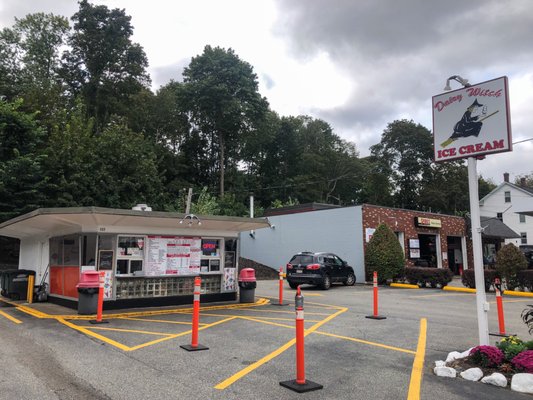
NewsSubscribe
First
Last
Consent

From Hormuz to Your 500‑Cow Barn: The $5.39/cwt Trap Hiding in the 2026 Dairy Rally

Your lender’s pro forma works at today’s margins. Your gut remembers 2023. One of them is right — and a $323,600 annual payment doesn’t care which.

Executive Summary: A million dairy expansion at 7% over 15 years costs you .85 million — adding .39/cwt in fixed debt service on a 500‑cow herd before you pay yourself. The Q1 2026 rally, making those numbers look comfortable, rests on two temporary forces: a global restocking wave that pulled demand forward, and a Hormuz closure that stranded six percent of traded dairy behind a war zone. The supply picture behind the rally hasn’t changed — U.S. herds added 49,000 cows in January–February 2026 alone, EU SMP stocks are running 50% above last year, and butter inventories have doubled. Feed costs feel manageable now because you’re still burning through inputs bought before the conflict repriced fertilizer and energy; late 2026 into 2027 is when the real cost of rationing hits. If your expansion math doesn’t survive 18 months at /cwt milk with post‑Hormuz input costs and full debt service loaded, the project’s timing doesn’t match the risk. The 30/90/365‑day playbook here starts with one check: run your true breakeven with family labor, realistic depreciation, and 7% money — then stress‑test it at a price you know you might see.

Dairy expansion risk

Six percent of global dairy trade sitting behind a chokepoint should’ve pushed prices down, not up. Instead, early 2026 has skim milk powder, cheese, and butter all stronger than most models projected — and a lot of 300‑ to 800‑cow U.S. dairies staring at expansion plans that suddenly “pencil.” You’re looking at a rally and wondering if it’s a window or a setup. On a $3 million project at 7% over 15 years, that choice carries an annual payment of roughly $323,600 and nearly $1.85 million in total interest.

Nate Donnay, a Minneapolis‑based dairy market insight director who’s been modeling international and U.S. dairy markets since 2005, told clients in late 2025 to expect a heavy market: big production gains across every major exporter, growing stocks, and prices under pressure. Instead, the first quarter turned into a demand‑driven rally stacked on top of already strong milk flow. For a 500‑cow family operation, that rally now looks like a green light — call the lender, add stalls or robots, lock in what feels like a new floor.

The Rally That Shouldn’t Have Happened

From a pure supply standpoint, this rally shouldn’t be here.

By late 2025, milk production across the big exporting regions — the U.S., EU, New Zealand, Australia, and Argentina — was running hot. On a component‑adjusted basis, U.S. supply alone was growing at more than three percent year‑over‑year into early 2026. New Zealand was on track for roughly four percent milk‑solids growth for the 2025/26 season after Fonterra revised its midpoint milk price forecast upward to NZ.70, up from NZ.50, with decent weather backing it up. EU collections in the second half of 2025 and early 2026 were described as “phenomenal.”

In Donnay’s models, every scenario pointed in the same direction: more milk, more product, lower prices. That’s not what happened.

The restocking wave outside China

The first twist came from buyers, not cows.

One of Donnay’s key charts tracks milk‑equivalent imports by all countries other than China. As prices fell hard across exporters in mid‑2025, those non‑China imports started climbing in August–September. Buyers in Southeast Asia, the Middle East, and parts of Africa had been running inventories tight, waiting for the bottom to fall out. When prices finally felt “cheap enough,” they moved. Hard.

That restocking didn’t magically remove product. It pulled demand forward into a market that was already well supplied. Then a geopolitical choke point poured fuel on the fire.

Six percent of trade is stuck behind Hormuz.

When conflict in Iran effectively closed the Strait of Hormuz in late February, roughly six percent of the world’s traded dairy — on a milk‑equivalent basis, in Donnay’s modeling — suddenly sat behind a chokepoint.

The exposure wasn’t equal:

  • Around 10% of the global trade in whole-milk powder moved through Hormuz. 
  • Roughly two percent of global whey trade relied on the same route. 
  • Europe was the dominant dairy supplier to the Gulf, followed by New Zealand; U.S. volumes into that corridor were smaller. 

The product didn’t vanish, but it didn’t flow smoothly. Exporters rerouted vessels outside the Gulf and trucked loads inland at higher cost. Faced with longer transit times and shipping uncertainty, importers did what risk‑averse buyers always do when they’re afraid of being short: they doubled up.

An Asian buyer with a European powder vessel now going the long way around the Cape might place an additional order from the U.S. West Coast or New Zealand “just to be safe.” Multiply that across enough buyers, on top of the restocking wave already running, and demand suddenly pulled harder than anyone’s supply model expected.

That’s how you get a rally in a market still swimming in product.

SignalDirectionDetailDuration Estimate
Non-China restocking wave🟢 BullishSE Asia, Middle East buyers pulling demand forward into a well-supplied marketShort-term; demand already pulled forward
Hormuz closure (6% of trade)🟢 Bullish near-term~10% of global WMP, ~2% of whey stranded; importers double-orderingTemporary; risk-premium only
EU SMP stocks +50% YOY🔴 BearishModelled January 2026 SMP production up ~20% YOY; stocks well above last yearOngoing; caps rallies through mid-2026+
EU butter inventories ~2× 2025🔴 BearishButter prices already backing off highs in early 2026Ongoing
U.S. herd +49k head (Jan–Feb 2026)🔴 Bearish+63% vs. same period in 2025; component-adjusted growth still ~3% YOYMulti-year structural supply build
NZ milk solids growth ~4%🔴 BearishFonterra midpoint raised to NZ$9.70; good weather backing itSeason-long (2025/26)
Hormuz demand destruction (medium-term)🔴 BearishGulf importing nations face higher costs, shipping disruption reduces ordersDevelops over 6–12 months
China domestic SMP/MPC exports🔴 BearishChinese processors now exporting SMP and MPC70 to SE Asia — competing with NZ and EUStructural shift, not a blip

Europe’s Calving Echo and the Powder Wall Behind This Rally

So why should a delayed calving wave in Germany or France matter to your 500‑cow barn? Because it helped build the powder wall sitting behind every price you’re looking at today.

John Lancaster, who leads EMEA dairy and food consulting from Dublin, sees two main EU drivers: how the milk got here, and how much of it is now sitting in bags and boxes.

Delayed calving, prolonged lactation

Lancaster traces the current EU milk profile back to 2024, when Bluetongue hammered fertility in France, Germany, Belgium, and the Netherlands. Cows that should’ve calved in April through June didn’t freshen until July through September. That shoved a wave of peak‑lactation production into late 2024 and well into 2025.

At the same time, with margins decent and feed grains toward the low end of their five‑year range, plenty of EU producers chose to keep marginal cows milking rather than drying them off.

The result in early 2026: a big cohort of late‑calving cows still in relatively strong lactation stages, older cows kept in milk longer than they would be in a tighter year, and a smaller overall herd producing more milk per cow. Growth built on timing and persistence — not a permanent structural jump.

In Lancaster’s modeling, EU production growth slows sharply as 2026 progresses, especially from Q3 onward. Once 2026 starts to be compared against inflated Q3/Q4 2025 numbers rather than weaker 2024 figures, the growth bars shrink quickly. Donnay agrees with the math but admits he’s “nervous” that the slowdown hasn’t yet shown up in weekly collection numbers from Germany, France, and the UK, which remain very strong.

The SMP and butter overhang nobody’s worked off yet

Based on Donnay and Lancaster’s modeling:

  • EU SMP production was up about 20 percent year‑over‑year in January 2026, with estimated SMP stocks more than 50 percent above year‑ago levels. 
  • Butter inventories were estimated at more than double last year’s — one reason EU butter prices have already backed away from their highs. 

Those are modeled estimates, not official Eurostat figures, but they line up with reports from processors and traders and with AHDB analysis showing a build‑up in available SMP and butter supplies into late 2025.

Lancaster’s test is simple. If SMP stocks peak by late Q2 and start a steady decline — and butter stocks narrow their gap versus 2025 as milk growth slows — the overhang is easing. But if we reach mid‑2026 with SMP still very heavy and butter inventories near twice 2025 levels, that overhang is intact. And it’s going to cap rallies.

Right now, the 2026 rally is underway, with that powder-and-butter wall still sitting behind it.

What Does This Rally Really Mean for a 500‑Cow U.S. Dairy’s Cashflow?

Donnay shows a U.S. gross‑margin chart that explains why so many producers are talking expansion again. After dipping below the long‑term average in January 2026, milk‑minus‑feed margins bounced back above average in February and March. Add in strong slaughter cow and calf cheques, and the total margin line jumps “well above average.”

For a 500‑cow herd, that feels like breathing room. For your lender, it looks like the year you finally pull the trigger.

The problem: that gross‑margin line is not your full cash flow. It usually doesn’t load principal and interest on newlong‑term loans, a fair wage for unpaid family labor, depreciation at replacement cost, or fertilizer and fuel that haven’t repriced because you’re still on pre‑conflict contracts.

The barn‑math reality: $3 million at 7% over 15 years

Here’s where compound interest on a farm loan really matters — and why this isn’t just “principal plus a little interest.”

At 7%, each monthly payment on a $3 million, 15‑year loan runs approximately $26,965. That’s roughly $323,600 per year in combined principal and interest. Over the full 15 years, you pay back approximately $4.85 million — meaning roughly $1.85 million goes to interest alone. That’s about 62 cents in interest for every dollar you borrowed.

The 7% rate isn’t hypothetical. The Chicago Fed’s AgLetter reported farm real‑estate loan rates in the Seventh District around the 7.19% range at the start of 2025, with rates hovering in the high‑6 to low‑7 percent band through much of the year. So 7% sits right in the middle of what lenders were actually charging through 2025.

Now translate that annual payment into the number that actually matters — cost per hundredweight shipped:

Herd Size (Cows)Annual Milk (cwt)Added Cost ($/cwt)$1/cwt Revenue Hit
40048,000$6.74$48,000
50060,000$5.39$60,000
60072,000$4.49$72,000

Note: Based on 120 cwt/cow/year and a $3M project at 7% over 15 years (~$323,600/year).

That “$1/cwt Revenue Hit” column is the one that should keep you up at night. Drop milk by just a dollar, and a 500‑cow herd loses $60,000 in gross revenue — nearly a fifth of that annual loan payment.

Many farm financial advisors and extension economists note that once they fully load family labor, realistic depreciation, and current interest costs, breakevens often land several dollars per cwt higher than what producers carry in their heads. That’s the gap you don’t want to discover two years after concrete is poured.

When Do Fertilizer and Fuel Really Hit Your Ration?

Margins feel better today than they did in 2023. Some of that is the milk price. Some of it is just timing.

On the feed side, global grain markets look calmer than in 2022 — prices for corn, wheat, and soymeal are closer to the low end of their five‑year range, helped by expectations for decent yields. That’s one big reason rations feel manageable. But fertilizer and energy are on a different trajectory:

  • Benchmark fertilizer prices FOB Middle East/Egypt have “risen substantially,” with delivered costs pushed higher by freight and war‑risk surcharges. 
  • Gasoline prices have risen enough that, in many European countries, diesel now costs more than petrol after taxes are added — the reverse of normal. 
  • Dutch TTF natural gas prices roughly doubled after the conflict flared, and the spread between European and U.S. gas widened sharply. 

That doesn’t hit your TMR overnight. Through mid‑2026, you’re still feeding off forage and grain grown or bought when fertilizer and fuel were cheaper. Late 2026 into 2027 is when new‑crop contracts fully reflect the higher input environment — and that’s when the true variable‑cost increase lands in your ration.

If you price an expansion project off 2025/early‑2026 input costs and assume they hold, you’re building your 15‑year breakeven on yesterday’s input reality.

What If the 2026 Rally Sticks Around?

This all sounds cautious. So what’s the scenario where the rally holds, and you’d wish you’d built?

In Donnay and Lancaster’s modeling, there is a path where 2026 doesn’t roll over quickly. You’d need some combination of:

  • Europe is slowing harder than the models assume. If weather, disease, or policy push EU collections into outright decline sooner than Lancaster’s base case, that tightens export supply faster. 
  • U.S. herd growth is breaking sooner. Since mid‑2024, U.S. dairy farmers have added 293,000 cows, including 49,000 head in January–February 2026 versus 30,000 in the same period a year earlier. Donnay expects this expansion to slow, with component‑adjusted growth easing toward roughly two percent by late 2026. If it plateaus faster, that’s supportive. 
  • China is tilting back toward imports. Over the last 12 months, Chinese processors exported about 12,000 tonnes of SMP and began shipping MPC70 into Southeast Asia, as Yifan Li notes. If domestic demand or policy nudges them to rely more on imports again, that removes a growing competitor at the margin. 
  • Hormuz is keeping a fear premium without crushing Gulf demand or blowing input costs through the roof. Donnay’s view: the conflict could be “mildly supportive” short term, then turns bearish for demand in the medium term, and potentially bullish longer term if fertilizer and energy costs eventually tighten supply. 

Is that combination impossible? No. Is it guaranteed? Not even close.

Donnay and Lancaster’s base case still points to strong production across major exporters, heavy EU SMP and butter stocks relative to 2025, a U.S. herd that keeps expanding even if the pace eases, and China with one foot in the export game. That’s why the contrarian play isn’t “never expand.” It’s “don’t build as if this rally is a floor.”

The Turn: One Stress Test Before You Sign Anything

Here’s where this shifts from “what the market’s doing” to “what you do about it.”

Picture the kitchen table. On one side, your lender has a pro forma that works at current margins. On the other hand, someone in the family remembers 2023 and isn’t sure those margins will be there when your kid takes over payments. The numbers on the screen say “go.” The knot in your stomach isn’t so sure.

The market picture Donnay lays out — strong supply, heavy stocks, a rally built on logistics panic — points to one stress test every expansion plan should pass before pen hits paper:

Run an 18‑month cashflow at a realistic down‑cycle milk price and softer beef cheques, using your full post‑expansion cost structure.

Not the price you hope for. The price you know you might see.

A conservative version of that test:

  • Use a price around the 2023 national U.S. all‑milk average — roughly $20/cwt — as your down‑cycle starting point, then adjust for your own market and component program. 
  • Cut your beef and calf revenue assumptions back from today’s highs. 
  • Load in full principal + interest on all existing and new loans.
  • Pay yourself and your family at replacement wages.
  • Price fertilizer, fuel, and purchased feed at post‑Hormuz levels once current contracts expire. 

If that 18‑month projection shows operating debt climbing with no credible path back down, that’s not just “tight.” It means the scale or timing of the project doesn’t match the risk you’re actually comfortable carrying.

ScenarioMilk Price ($/cwt)Feed+Var ($/cwt)Debt Svc ($/cwt)Net Cash/Cow/yr500-Cow Annual Net
Current Rally (Q1 2026)$23$14.50$5.39$373$186,600
Base / Mid-Cycle$21$14.50$5.39$133$66,500
2023 Down-Cycle Avg$20$14.50$5.39$13$6,600
Post-Hormuz Input Costs$20$16.00$5.39-$$173**-$86,400
Severe Stress (teens)$18$16.00$5.39-$413-$206,400

How Should a 500‑Cow Dairy Use the 2026 Rally Without Getting Trapped?

In the Next 30 Days: Build Your Real Numbers

  • CALCULATE your true breakeven. Pull 12–24 months of actual data — milk checks, feed bills, fert, fuel, repairs, debt statements. Build a breakeven that includes family labor at replacement wages, realistic depreciation, and current interest rates. Farm real‑estate rates in the Chicago Fed district sat in the high‑6 to low‑7 percent range through 2025, with farm real‑estate loans around 7.19% at the start of 2025 — use that as your benchmark. 
  • RUN the 18‑month cashflow at a down‑cycle price. Use a conservative milk price for your region (around 2023 levels or below), trim beef revenue, and include full payments on any expansion you’re considering. If operating debt climbs for most of that window, revisit project scale or timing. 
  • AUDIT when “cheap” inputs roll off. List expiration dates for your fertilizer, fuel, and feed contracts. Where you’re still living on pre‑conflict pricing, assume the replacement cost is higher and model it. 

In the Next 90 Days: Lock In Strength

  • SECURE downside protection. Talk with your risk‑management advisor about Dairy Revenue Protection or similar tools in your region. The right share to cover depends on your debt load and risk tolerance, so work it through with someone who knows your balance sheet. 
  • ELIMINATE expensive debt. Prioritize paying down high‑interest operating lines and short‑term notes. Every dollar of principal you retire now is room you get back if you spend time in the teens again. 
  • DEFER non‑critical capital spending. Anything that doesn’t clearly improve labor efficiency or feed conversion goes on hold until you’ve seen how this rally resolves.
  • WRITE a one‑page margin policy. Decide now what forward margin level triggers you to layer in price protection, and what share of production you’ll cover at each trigger. Don’t negotiate with yourself when screens are moving. 

Over the Next 365 Days: Watch the Structural Signals

  • TRACK EU stocks and production. If SMP stocks peak by late Q2 and trend lower as milk growth slows and butter inventories narrow relative to 2025, the overhang is easing. If stocks stay heavy into autumn, assume there’s still a cap on rallies. 
  • MONITOR U.S. herd growth. Donnay’s base case has the U.S. component‑adjusted supply still growing by around 2% by late 2026, even as expansion slows. If cow numbers keep climbing at the Jan–Feb pace, that’s more milk looking for a home. 
  • WATCH China’s role. Li points out that Chinese processors are already shipping SMP and MPC70 to Southeast Asia, and that China’s dairy sector has shifted from pure import dependence to a mixed import‑plus‑export model. If those exports keep growing and imports stay muted, China is a competitor. If exports flatten and imports recover, it’s back as a source of demand. 

What This Means for Your Operation

  • Don’t treat a fear‑driven rally as a permanent rise. Q1 2026 rests on restocking and logistics panic with a heavy EU powder and butter overhang behind it. That’s not a safe foundation for 15‑year debt. 
  • Your “mental breakeven” is probably lower than your actual breakeven. Once you include family labor, realistic depreciation, and post‑Hormuz input costs, the margin cushion you see today may be several dollars per cwt thinner than you think. 
  • Expansion isn’t wrong. Bad timing is. If your 18‑month stress test only works at top‑third milk prices and current beef cheques, the project scale or timing doesn’t match the risk you’re taking on. 
  • The safest contrarian move is to de‑risk into strength. Use this rally to knock down high‑cost debt, lock in partial downside protection for late‑2026/early‑2027, and build flexibility rather than stretch fixed costs. 
  • In the next 30 days, pull one number that forces an honest conversation. Take your current feed cost per cwt and compare it to 90 days ago. Then lay your expansion loan’s $/cwt debt service on top of that. If you wouldn’t sleep with $2–$3/cwt less margin, that tells you whether this project belongs in 2026 or 2027.

Key Takeaways

  • If your expansion doesn’t pencil at $20 milk, it doesn’t pencil. Use the 2023 all‑milk average as your down‑cycle starting point and build your 18‑month stress test from there, with full principal and interest, family labor, and post‑Hormuz input costs loaded. 
  • A $3M project at 7% is a $4.85M commitment. For a 500‑cow herd shipping 60,000 cwt a year, that adds about $5.39/cwt in fixed cost before you pay yourself, and the first $1/cwt drop in milk erases $60,000 of that cushion. 
  • Use the 2026 rally to buy flexibility, not just concrete. If you come out of this year with less high‑interest debt, some downside protection layered in, and a clear margin policy, you’ve gained options whether milk trades at $18 or $24. 
  • Watch the overhang and the herd, not just the headline price. EU SMP and butter stocks, U.S. cow numbers, and China’s export posture will tell you more about how long this rally can last than any single futures quote. 

When you sit back down at the kitchen table tonight, don’t start with “How much will the bank lend us?” Start with this: at a realistic milk price and higher input costs 18 months from now, does your operation’s cash flow still let you sleep?

Complete references and supporting documentation are available upon request by contacting the editorial team at editor@thebullvine.com.

Learn More

The Sunday Read Dairy Professionals Don’t Skip.

Every week, thousands of producers, breeders, and industry insiders open Bullvine Weekly for genetics insights, market shifts, and profit strategies they won’t find anywhere else. One email. Five minutes. Smarter decisions all week.
NewsSubscribe
First
Last
Consent

Outlook Dairy Lost 35 Workers Before Milking. The 30‑Day Barn Math Your Lender Can’t Ignore.

35 of 55 workers gone before afternoon milking. If that happened in your parlor tomorrow, how many days of profit would your 400 cows burn through?

Executive Summary: Outlook Dairy in New Mexico lost 35 of 55 workers before afternoon milking in a single enforcement action, and milk production “effectively ceased” overnight. The article shows how that kind of hit translates into a 30‑day loss of roughly ,620 in milk from a 10 lb/cow/day drop on 400 cows, plus another ~,000 in quality penalties, emergency wages, and repro/vet lag. It explains why 51% of U.S. hired dairy labor and 79% of the milk now depend on immigrant workers, with states like Wisconsin at ~70% undocumented labor and parts of Idaho near 90%. You’ll see why H‑2A still doesn’t fit year‑round dairying, what happens when enforcement touches your county (including the “chilling effect” on neighboring farms), and why robots are a long‑payback strategy, not an emergency exit. Then it walks you through a simple 30‑day “Table of Doom” you can run on your own herd and a 72‑hour backup‑crew checklist that forces you to answer who actually shows up if three key people don’t. If you’ve never put hard numbers on a labor shock for your own cows — or asked your lender to stress‑test one — this is worth ten minutes and a notepad.

dairy labor risk management

Biosecurity signs don’t stop rifles.

Masked Homeland Security agents armed with rifles swept onto Outlook Dairy in Lovington, New Mexico, on the morning of June 4, 2025, brushing past biosecurity signs — posted for H5 bird flu, asking all visitors to check in — without stopping. By the time they left, 11 workers were in custody, and owner Isaak Bos had been ordered to fire 24 more after federal agents conducted an employment document review, according to AP reporting — 35 of his 55 employees gone before the afternoon milking.

“It takes 100% of the labor force, so no day is off right now,” Bos told reporters as his wife, relatives, and local high‑school kids scrambled into the parlor. “It’s detrimental for our cattle. We’re barely able to keep going.”

“You can’t turn off cows. They need to be milked twice a day, fed twice a day.”
— Beverly Idsinga, Dairy Producers of New Mexico

As of January 2026, Outlook Dairy was still working to rebuild and get back to something resembling normal, months after that June morning tore the operation apart.

If you think your I‑9 binder is a bulletproof vest, you’re already bleeding.

When Two-Thirds of Your Crew Disappears Before Lunch

Outlook runs roughly 5000 Holsteins. At a typical Holstein average of around 70 lb/cow/day and the 2025 U.S. all‑milk price forecast of $21.35/cwt, daily gross milk revenue sat near $7,470 before the raid. Losing 35 workers didn’t trim that number. It broke the system.

Within hours, milking intervals that should’ve been 10–12 hours stretched to 14, then 16. Bulk tank SCC starts climbing almost immediately when intervals get that far apart — from a well‑managed 150,000 cells/mL toward the 300,000–400,000 range where quality bonuses vanish, and deductions kick in at most co‑ops. Fresh cows that need twice‑daily monitoring for metritis and ketosis? Those checks got skipped or rushed.

You know how that story ends. Cows you miss in the fresh pen don’t just hit you with a vet bill. They take peak milk you never see.

The community around Lovington responded. Teenagers showed up. Neighbors climbed into the parlor. Family members who hadn’t worked a shift in years were back on the line. But good intentions don’t replace the guy who’s been reading that holding pen for a decade. Bos himself confirmed that milk production at Outlook “had effectively ceased.”

If you think that’s “a New Mexico problem,” you’re exactly who this piece is for.

The Math Behind 79% of Your Milk

Outlook made the news for the rifles. It matters for the arithmetic.

A Texas A&M AgriLife Center for North American Studies survey, conducted for the National Milk Producers Federation, collected data from 973 dairy farms of all sizes and regions in fall 2014. The results: immigrant workers account for 51% of all hired dairy labor, and the farms employing them produce 79% of the nation’s milk supply.

NMPF’s modeling went one step further. It estimated that a sudden loss of immigrant labor would eliminate over 7,000 dairies, cut 48.4 billion pounds of milk, and nearly double retail prices. That’s a national barn‑burn, not an isolated fire.

The dependency hasn’t shrunk since 2015. A 2023 UW–Madison School for Workers survey estimated that more than 10,000 undocumented workers perform about 70% of Wisconsin’s dairy labor, and the authors warned that without them, the state’s dairy industry “would collapse overnight.” In parts of Idaho, the University of Idaho’s McClure Center has documented dairies where roughly 9 out of 10 workers are foreign‑born.

Here’s the structural mismatch you live with every day: the H‑2A visa program — the main legal guest‑worker channel for agriculture — is limited to temporary or seasonal employment, up to 10 months per year. Your cows don’t take seasons off. The Trump administration and multiple agricultural groups have pushed Congress to expand H‑2A to year‑round positions, but that change still needs a congressional vote that hasn’t come. A House Homeland Security appropriations rider would allow year‑round dairy, and the Economic Policy Institute projects that, combined with wage cuts, the program could hit 900,000 workers by 2034.

Right now, that’s theory, not help. As of spring 2026, you’re still dealing with processing delays and uncertainty in H‑2A access, not a smooth year‑round dairy program.

Then the USDA pulled one more rug. On August 29, 2025, the USDA announced it was discontinuing the Farm Labor Survey effective immediately. That’s the main tool Washington used to track farm wages. So, at the exact moment dairy’s labor dependence is under political and economic pressure, the official wage data just went dark.

You’re flying with less information in more turbulence.

How Much Does a 30-Day Labor Shock Really Cost a 400-Cow Herd?

Talking about raids in another state is easy. The only way this gets real is if you run the numbers on your own herd.

Take a 400‑cow herd shipping a typical 70 lb/cow/day at the 2025 all‑milk price of $21.35/cwt. That’s 28,000 lb/day — roughly $5,978 in daily gross milk. Over 30 days, you’re looking at $179,340 in gross milk revenue.

Now imagine a disruption like Outlook’s. It doesn’t have to be ICE. Two experienced milkers get into a car accident.. A family emergency in a three‑person crew. Or enforcement activity one county over that sends half your workforce home to pack a bag.

Here’s the snapshot you should be staring at on your phone in the parlor.

The 30-Day Table of Doom: 400-Cow Herd at $21.35/cwt

Loss CategoryDaily Impact30‑Day Total
Milk Production (10 lb drop)‑$854.00‑$25,620
Quality Bonus/SCC Penalty‑[$120.00]‑[$3,600]
Emergency Wage Premium‑[$180.00]‑[$5,400]
Estimated Reproductive/Vet Lag‑[$8,500+]
TOTAL MARGIN ERODED‑$43,120+

Brackets on the last three lines mean this is illustrative, not a quote from your co‑op or your vet. The first line isn’t up for debate: 10 lb/cow/day × 400 cows × 30 days = 120,000 lb. At $21.35/cwt, that’s $25,620 in gross revenue gone.

You know what SCC penalties look like on your milk cheque. You know what you’d have to pay to get neighbors, teenagers, and extended family in for an emergency month of milking. You know what happens to repro when fresh cows get missed. Plug your own numbers into those second and third lines. You won’t hit exactly $43,120. You’ll land unpleasantly close.

This isn’t just about gross revenue; it’s about the fact that your fixed costs — debt service, insurance, taxes — don’t care that your parlor is half‑empty. Your break‑even just climbed while you were looking for a milker.

USDA’s January 2026 ERS report (ERR‑356) using 20 years of ARMS data confirmed what you see in the fresh pen every day: milking frequency and consistency are key drivers of net returns. Lose people, lose consistency. Lose consistency, lose margin.

Run that 30‑day cascade with your own herd size and pay price. If the answer makes your stomach drop, that’s not fear‑mongering. That’s your exposure in black and white.

Can Robots Actually Close the Gap When Workers Disappear?

When you hear the Outlook story, the instinct is obvious: “This is why we need robots.” Honestly, that reaction makes sense. It just doesn’t close the gap the way the sales pitch says it will.

Bullvine readers already know the headline numbers: 86% of robotic milking adopters say they’re satisfied, but only 28% say their systems are profitable. A January 2026 USDA Economic Research Service report (ERR‑356) put harder national numbers behind it — robotic milking increases U.S. dairy net returns by about 13% on average, based on five waves of ARMS data from 2000 through 2021. That’s not fluff. That’s the actual margin.

But Iowa State dairy economist Larry Tranel’s cash‑flow work tells the other half of the story. A typical two‑robot installation on surveyed Iowa herds has a payback in the 6.1 to 7.2‑year range, depending on useful‑life assumptions. You get labor relief and management flexibility, but you tie up a lot of capital for a long time.

And robots only touch one slice of your labor picture. AMS units can pull many hours out of the parlor. They don’t push feed, mix colostrum, walk calf pens, fix a frozen waterer, or catch a fresh cow going off feed.

A labor crisis is the worst time to transition to robots. When your barn is in chaos, you’re in no shape to onboard an AMS. Automation is a strategy, not an emergency exit.

If Outlook had been a robot barn, those agents still would’ve walked out the people who feed, scrape, and watch cows. You’d be left with a line of shiny stainless steel and a crew that doesn’t yet know the software, the fetching patterns, or the exceptions. That’s not a hedge. That’s a new failure mode.

If you’re pricing automation as a labor hedge, the sharper question isn’t “should I buy robots?” It’s “which specific jobs on my farm can a machine realistically take over, and what’s the payback on that task?” For many 300–500 cow herds, the first automation dollar probably belongs on a feed pusher, calf feeder, or alley scraper — not on the most expensive box in the catalog.

Could This Happen at Your Place? Look at the Map

Lovington is a small town in the New Mexico oil patch near the Texas border. It’s easy to shrug and say, “That’s down there. We’re fine up here.”

Then you look at Vermont.

On April 21, 2025, U.S. Customs and Border Protection agents arrested eight migrant workers at Pleasant Valley Farms in Berkshire, Vermont’s largest dairy, a roughly 10,000‑acre operation running more than 3,000 cows, owned by Mark and Amanda St. Pierre. The farm itself was not the target of the operation, and the St. Pierres weren’t accused of wrongdoing. Agents said they were responding to a citizen report of “two individuals carrying backpacks exiting a wooded area” near the Canadian border, and the eight workers were detained during the search that followed. State officials and Migrant Justice called it the largest migrant worker enforcement action in Vermont in recent memory.

Same year, different coast. In California’s Central Valley, ICE and other federal agents were reported near fields and packinghouses in Tulare, Kern, Fresno, and Ventura counties, with workers fleeing fields when agents appeared. Farm bureau leaders for Tulare, Kern, and Fresno counties told reporters they couldn’t confirm specific raids on member farms. But the fear alone was enough to blow holes in crews — workers staying home, skipping shifts, turning off their phones.

By April 2026, a Whatcom County, Washington producer told local TV that federal activity in the area was leaving critical gaps during planting season. He wouldn’t allow his name to be used for fear of making things worse for his workers.

New Mexico. Vermont. California. Washington. The enforcement corridor isn’t one state. It’s a moving target across multiple regions and milk sheds.

And here’s the part you’ll never see in any official statistic: when one farm in a county gets hit, workers on every other farm in that county hear about it before the next milking. Some don’t show up. Not because anyone told them not to — because they’re afraid they’ll be next. Reports from southeastern New Mexico described a chilling effect across dairies after the Outlook raid — Idsinga among those saying labor was disappearing not just from the raided farm but from neighbors’ farms, too.

That “community contagion” isn’t on any spreadsheet in Washington. It absolutely shows up on your bulk tank.

How Should You Price a 72-Hour Labor Shock?

This is where the kitchen‑table math meets your actual risk tolerance.

You don’t need a consultant to start. You need an honest look at what 72 hours without your core crew would really cost — and what you’d do about it.

First question: on your farm, which jobs break things the fastest if they don’t get done for 24–72 hours? Milking is obvious. Fresh‑cow checks, calvings, and feed delivery aren’t far behind. Scraping, bedding, and breeding probably slot in after that.

Now ask yourself: do you know exactly who you’d call and what they’d do if three key people didn’t walk in at 4:30 a.m.?

If that question makes your stomach flip, that’s the point.

Are You Counting on Robots or People When Things Go Sideways?

When you start plugging your own herd into the Table of Doom, it’s tempting to jump straight to capital solutions. “If I had robots, this wouldn’t be as bad.”

Sometimes that’s true. A well‑run, dialed‑in robot herd with strong management can absolutely ride out a milker loss better than a parlor operation. The ERS data shows real return. So do many farm case studies.

But look at your own barn honestly. Ask: if your current crew disappeared and a truck delivered robots tomorrow, would your operation smoothly transition to a totally different management system while you’re also scrambling to hire, train, and keep cows healthy?

A farm in chaos is the worst possible candidate for a major technology transition. You need your best management IQ for those first six to twelve months on AMS. You need time to learn exceptions, software quirks, and how specific cows behave on robots. You need your best people focused on onboarding, not plugging holes.

So yes, robots can be part of a labor strategy. They’re not an emergency exit. They don’t remove the need for a 72‑hour plan, cross‑training, or hard conversations with your lender and your lawyer.

Options and Trade-Offs for Farmers

You can’t control when or where the next enforcement action happens. You can absolutely control how exposed your operation is when it does.

Path 1: Run Your Own 30-Day Cascade — This Month

This is your 30‑day action.

Sit down with your milk cheque and a notepad. Write down three things: herd size, lb/cow/day, and current pay price. Model a 10 lb/cow/day drop for 30 days. Then add:

  • A realistic estimate for lost quality bonuses or SCC penalties.
  • A bump in wages for emergency help.
  • A number for extra vet and repro costs if fresh cows get missed.

You’re not building a thesis. You’re answering one question: how many months of profit would that 30‑day shock erase for your operation?

If the answer is more than two, your risk isn’t “some policy debate in Washington.” It’s a very specific amount of money on your own P&L.

Path 2: Build a 72-Hour Crew on Paper

Picture 4:30 tomorrow morning. Your three most experienced workers don’t walk in. Any reason.

Grab a piece of paper and make this checklist real:

  • [ ] Name the 4–6 people who show up if you call.
  • [ ] Make sure they have the gate codes.
  • [ ] Make sure they know where the oxytocin is kept.
  • [ ] Make sure they can start the backup generator and keep it running.
  • [ ] Assign each one specific strings, pens, or tasks for those 72 hours.
CategoryPrepared FarmAverage FarmExposed Farm
Backup crew identified4–6 named, trained contacts2–3 people “who might help”No list exists
Cross-training status2nd-tier staff trained on milking + fresh cowsSome informal exposureSingle-person dependencies
Gate codes / accessAll backups have codes + keysOwner holds all access“I’ll let them in when they call”
Critical supply locationsDocumented: oxytocin, colostrum, generatorKnown to 1–2 peopleOwner’s head only
Milking interval riskMaintains 10–12 hr intervals for 72 hrsStretches to 14–16 hrs within 24 hrsMisses milkings within 12 hrs
Fresh cow monitoringAssigned to specific backup person“Somebody will check”Skipped entirely
Estimated 72-hr milk loss< 3 lb/cow/day5–8 lb/cow/day10+ lb/cow/day
SCC impactStays under 200K cells/mLClimbs toward 300K+Blows past 400K — penalties hit

If you can’t fill in those blanks without guessing, you don’t have a backup plan. You have a schedule.

Path 3: Rank Jobs by Consequence, Not Comfort

Not all jobs fail at the same speed.

Your most trusted, best‑documented, hardest‑to‑replace workers should sit where a missed shift hurts fastest — milking and fresh cows. Cross‑train your second tier in feeding, scraping, and calf chores so they can step in when someone is out.

Then look at automation through that same lens: where does a missed job hurt fastest, and which of those jobs can a machine actually cover? That might mean a feed pusher, calf feeder, or manure scraper long before it means AMS.

Path 4: Talk to an Immigration Attorney Before a Letter Shows Up

You probably already know where your workforce realities sit. Hoping your paperwork never gets tested isn’t a plan.

An ag‑focused immigration attorney can help you answer three uncomfortable but critical questions:

  • What would a real internal I‑9 audit show?
  • Which workers have strong documentation, and which don’t?
  • What kind of timeline and exposure would you face if enforcement turned your way?

Uncomfortable conversation. A lot less uncomfortable than having it for the first time in your driveway with a government vehicle idling.

And if Congress finally does open H‑2A year‑round for dairy, the farms with attorneys already in their corner will be first in line to file. If it doesn’t, you’ll still know where you stand — and what your realistic options are.

Key Takeaways

  • If your 30‑day cascade shows a 10 lb/cow/day drop that would erase more than two months of profit, your margin of safety is thinner than your balance sheet suggests. That’s your cue to either build a buffer or rethink exposure.
  • If you can’t name a 72‑hour backup crew and match each person to specific jobs, what you’ve got is a schedule, not a contingency plan. The Outlook raid showed how fast “we’ll figure it out” turns into “we’ve effectively ceased milking.”
  • If your labor strategy is “we’ll add robots when it gets bad,” you’re betting on a technology transition at the exact moment your barn is least able to handle one. Robots can add margin over time — they don’t magic away a crisis.
  • If your lender has never stress‑tested your operation for a labor disruption, that risk isn’t priced into your financing. You don’t need their permission to run the Table of Doom with your own numbers — but you should bring it to the next meeting.

You can look at Lovington, Berkshire, Tulare, or Whatcom County and tell yourself the map is somebody else’s problem. Different state. Different politics. Different co‑op.

Your cows don’t care about state lines. Neither do your vet bills, your wage premiums, or the peak milk that never hits your bulk tank.

So here’s the only question that really matters right now: if three people in your barn didn’t show up at 4:30 tomorrow morning, would you have a plan — or just a hope that it works out?

Complete references and supporting documentation are available upon request by contacting the editorial team at editor@thebullvine.com.

Learn More

The Sunday Read Dairy Professionals Don’t Skip.

Every week, thousands of producers, breeders, and industry insiders open Bullvine Weekly for genetics insights, market shifts, and profit strategies they won’t find anywhere else. One email. Five minutes. Smarter decisions all week.
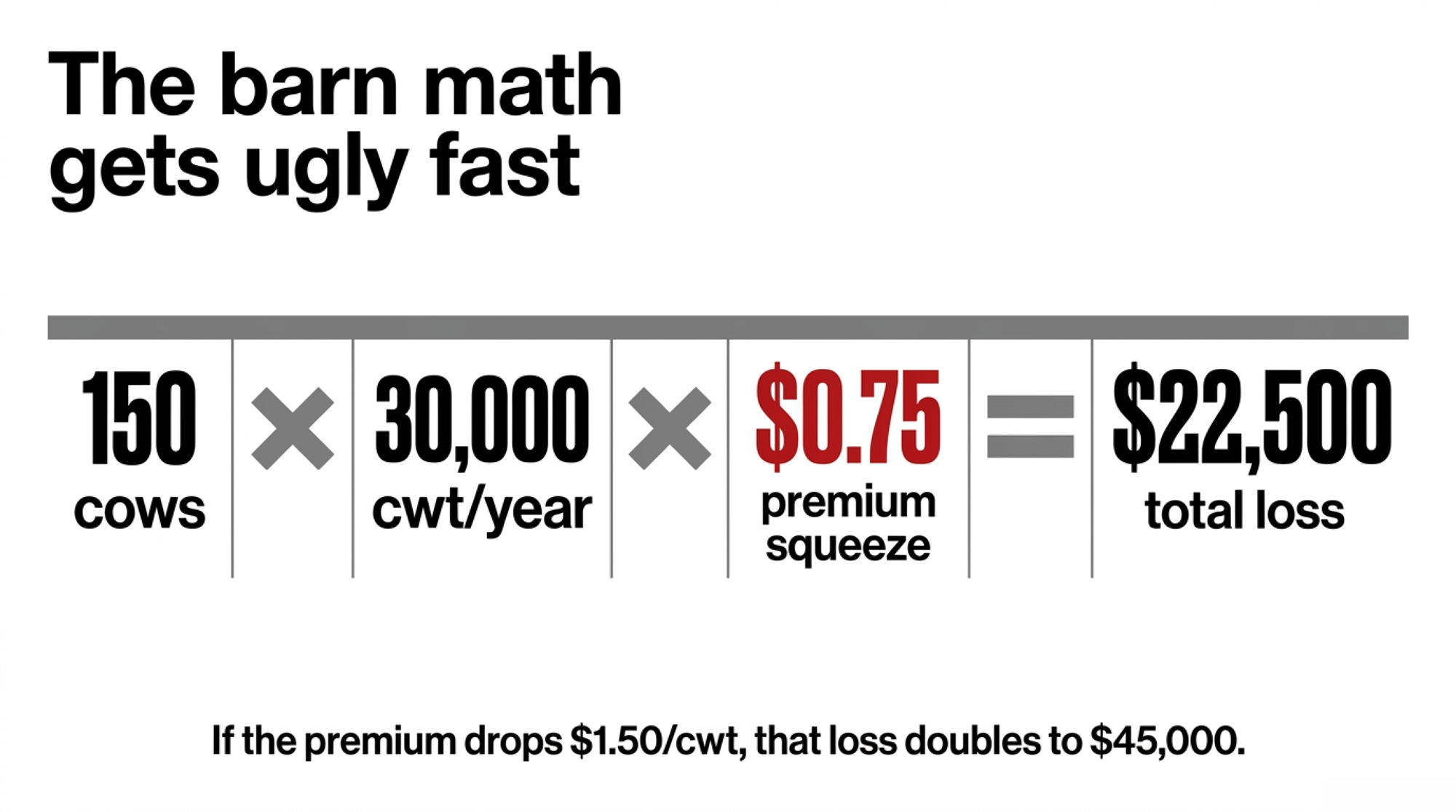
NewsSubscribe
First
Last
Consent

USDA’s Make Allowance Just Pulled $105,000 From a 400‑Cow Milk Check – Nobody Sent a Bill

USDA’s make allowance update structurally cut Class III minimum prices by $0.94/cwt — and the mandatory survey that’s supposed to bring transparency could lock those numbers in for a decade.

Executive Summary: USDA’s June 2025 make allowance increases baked a $0.94/cwt structural cut into every Class III milk check — not a market swing, a formula constant that hits at any commodity price. On a 400-cow herd, that’s $105,280 a year gone before your component values are even calculated. The cheese allowance alone jumped 25.8% — the first reset since 2008 — despite a 12% improvement in plant yield efficiency over that same stretch. Now add the All-Milk/mailbox gap, which has widened to roughly .00/cwt: DMC is measuring a margin your bank account doesn’t actually see. The real fight is the OBBBA’s mandatory processing cost survey, now in rulemaking, where USDA’s approach to cost categories will either audit these allowances down or lock them in for years. If your DSCR drops below 1.2 after you model this $0.94 deduction, the lender conversation needs to happen before the survey results — not after.

We ran the math ourselves — on the June 2025 FMMO change, month by month, through March 2026. Using USDA’s published pricing formulas and commodity prices from AMS Dairy Product Mandatory Reporting, The Bullvine calculated the make allowance impact independently.

The result: $0.94 per cwt stripped from every Class III milk check, and $0.87 per cwt from every Class IV check. Every single month. It doesn’t fluctuate with cheese or butter markets — it’s baked into the formula constants. For a 400‑cow Holstein herd shipping about 112,000 cwt a year, the Class III hit alone works out to $105,280 per year at standard component tests, and closer to $112,000 at actual pool test levels.

“Dairy farmers remain the only participants in the supply chain without the ability to set prices or recover costs through a built‑in mechanism,” says Laurie Fischer, CEO of the American Dairy Coalition. “In practical terms, that’s a multi-dollar deduction built into the pricing system on the front end.”

The comfortable story in 2025 was that FMMO modernization gave everyone something. The formula math says processors got a margin reset. Family herds got deeper into a hole.

Where the Money Goes Before It Reaches Your Check

The allowance doesn’t appear on your pay stub. USDA starts with wholesale commodity prices — block cheddar, butter, nonfat dry milk, dry whey — then subtracts the make allowance before calculating component prices. Every penny the allowance rises, your component value falls. Dollar for dollar.

The June 2025 increases, finalized in rule 90 FR 6600 and effective across all 11 federal orders, were not pennies:

ProductPre‑2025Post‑2025Increase
Cheese$0.2003/lb$0.2519/lb+25.8%
Butter$0.1715/lb$0.2272/lb+32.5%
Nonfat Dry Milk$0.1678/lb$0.2393/lb+42.6%
Dry Whey$0.1991/lb$0.2668/lb+34.0%

Source: USDA AMS Final Rule 90 FR 6600, January 17, 2025. Previous rates had been in effect since October 2008.

Run those rates through the published Class III and IV pricing formulas, and the total allowances embedded in Class III come to $4.22/cwt at standard test (3.5% BF, 3.3% protein), $3.09/cwt in Class IV. At actual pool component levels — butterfat running north of 4.0% nationally — those totals climb higher. ADC’s calculation, using published USDA NASS and AMS data at the pool-average test, puts the range at $3.22 to $5.04/cwt, directionally consistent with our independent figures.

What you feel on the farm: a protein price weaker than expected, a butterfat value that doesn’t track the CME board, and a blend that keeps missing your mental target. Almost none of it is labeled “make allowance.” All of it is influenced by it.

Who Held the Pencil — and Why It Matters Now

USDA set these allowances after a record‑long national hearing in Carmel, Indiana, from August 2023 into early 2024. The agency acknowledged it didn’t have mandatory, audited manufacturing cost surveys when it issued the final rule. It set allowances using voluntary and commissioned data, with full intent to backfill with better surveys later.

Processor groups have been clear about their side. IDFA and others warned that allowances set below actual manufacturing costs risk financial strain and potential plant closures, especially at aging facilities in high‑cost orders. Some pointed to episodes where co‑ops imposed production limits because plant capacity couldn’t keep pace — arguing that realistic make allowances were part of keeping plants open, modern, and able to accept all members’ milk. For producers in those orders, that’s not just a processor problem. A closed plant or a capped intake is a market‑access problem that lands right back on the farm.

The trade‑off is real: you gain plant stability and market access when allowances cover true manufacturing costs, but you give up milk price when those allowances overreach into specialty overhead. The formula math tells you which side of that line we’re on. Using the 2025 average Class III price of $18.01/cwt (from USDA AMS monthly class price announcements, CLS series), the $0.94/cwt structural increase represents a 5.2% reduction in the minimum regulated value of Class III milk. Under the old allowances, every one of those months would have paid producers $0.94 more per hundredweight — no commodity rally required.

How Can Plants Be More Efficient and More Expensive at the Same Time?

Calvin Covington — retired CEO of Southeast Milk and longtime pricing expert formerly with National All‑Jersey — compiled yield data that creates the sharpest contradiction in this fight.

In 2000, it took 99.47 pounds of milk to produce 10 pounds of 38% moisture cheddar. By 2025, that dropped to 87.2 pounds — a 12.3% improvement driven by genetics pushing components higher and decades of plant‑level technology. Independent analysis by CoBank’s lead dairy economist Corey Geiger, using USDA and FMMO data, corroborates this trend: cheese yield per hundredweight grew from 10.14 to 11.24 pounds between 2000 and 2022, a 10.8% gain. Extrapolating that trajectory through 2025’s record component levels — national butterfat averaged 4.15%, a new high — Covington’s endpoint falls well within the expected range. Fewer tanker loads. Less volume through receiving and storage. More finished products to spread fixed overhead across.

If per‑unit costs should be falling with those efficiency gains, why did the cheese make allowance jump 25.8%? NFDM, 42.6%?

Nobody’s arguing that plants haven’t seen real inflation in labor, energy, and compliance. The question is whether the mandatory survey will separate those costs from overhead tied to high‑margin specialty products — WPI, MPC, ultrafiltered milks — that don’t determine your milk price.

When a co‑op installs a new ultrafiltration line, that capital expenditure doesn’t appear on your check as “WPI overhead.” It shows up in the total plant cost. If overhead is allocated broadly across all product streams, some of it lands in the cheese and dry whey buckets that feed the FMMO formulas — even though WPI sells into a completely different, higher‑margin market.

ADC calls this “cost shifting.” Processors say their allocation methods follow current USDA guidance. That’s exactly why the survey definitions and allocation rules matter: what USDA writes now will determine which costs land in your make allowance for years.

⚠️ Lender Alert: The DSCR Threshold You Can’t Ignore

Before the playbook — one number that should stop you cold.

If your debt‑service coverage ratio stays above 1.5 after you model a $0.94/cwt hit from structural make allowance deductions, you’ve got room to absorb survey surprises. Below 1.2 — a level extension and lender materials commonly flag as a minimum comfort zone for leveraged dairies — you’re in a risk band that justifies a hard conversation with your lender before the next survey results lock in.

The 2025 allowances already shifted $0.94/cwt from every Class III check and $0.87/cwt from every Class IV check — permanently, at any commodity price level. Fischer sees a real possibility that if the new survey rules don’t narrow cost‑allocation practices, a future update could push allowances higher again.

That’s an outlook, not a guarantee. But your capital plan shouldn’t pretend it’s impossible.

Why DMC Is Measuring a Margin You Don’t Actually Receive

Dairy Margin Coverage calculates your margin by subtracting a formula feed cost from the NASS All‑Milk price — a gross number that ignores make allowance deductions, hauling, co‑op retains, and basis. Your actual realized price, the mailbox price, runs lower.

ADC compared published USDA NASS All‑Milk and AMS mailbox price series and found the gap has quietly widened: about $0.11/cwt in 2008–2016, $0.63/cwt in 2017–2025, and roughly $1.00/cwt from June 2025 to January 2026 — a 67% jump in one year. The most recent trend is corroborated by Farmshine’s January 2026 report, which confirmed that the USDA mailbox price had plummeted by $5.23 from a year earlier. For additional context, Covington’s own 2019 analysis of the same USDA mailbox data in Progressive Dairy showed the 2018 weighted national average mailbox price at $15.72/cwt — with NASS All‑Milk for that year averaging approximately $16.26/cwt, a gap of roughly $0.54/cwt that falls within ADC’s reported $0.63 average for the 2017–2025 window.

AFBF economist Daniel Munch notes that DMC has distributed roughly $2.7 billion in net support since 2019, but total production costs reached about $23.65/cwt in 2024 — meaning many producers were underwater even when DMC margins sat above trigger levels. OBBBA raised Tier I coverage from 5 million to 6 million pounds and created a 25% premium discount for multiyear enrollment (2026–2031), but it didn’t change the All‑Milk margin calculation itself.

Your safety net is being measured off a headline price that’s drifting farther from what actually hits your bank account. And the 2025 allowance changes are a big reason why.

What Does a $0.94/cwt Make Allowance Hit Mean for a 400‑Cow Herd?

  • Herd: 400 cows, 28,000 lb/cow/year ≈ , 112,000 cwt
  • Scenario: All‑Milk at $20.50/cwt, formula feed at $10.50/cwt

DMC sees a $10.00/cwt margin — no payment at $9.50 coverage.

But with a $1.00/cwt All‑Milk/mailbox gap:

  • Mailbox: ~$19.50/cwt → Real margin: $9.00/cwt — already $0.50 below your coverage
  • Annual unprotected gap: 112,000 × $1.00 = ~$112,000 the program assumes you have, but your bank account doesn’t

Tighten it. All‑Milk drops to $19.75, feed stays at $10.50:

  • DMC margin: $9.25/cwt → 25¢ indemnity at $9.50 coverage
  • Mailbox: ~$18.75 → Real margin: $8.25/cwt — a full $1.25 below the margin you insured

Same herd. Same feed. Same coverage. The only variable: the spread between a national headline price and what actually hits your account.

Will the OBBBA Survey Fix the Make Allowance Problem — or Freeze It In?

The One Big Beautiful Bill Act authorized mandatory surveys of dairy processing costs and yields under Section 10314. According to AFBF’s Munch, those surveys are supposed to be biennial to prevent another 17‑year gap between major resets.

In February 2026, AMS published an Advance Notice of Proposed Rulemaking in the Federal Register to outline the survey design. ADC requested a 60‑day extension; AMS didn’t grant it. Fischer’s team filed formal comments by the March deadline.

Producer groups want a narrow scope: physical conversion costs for four formula products, clear product‑line cost separation, and standardized allocation rules. Processors argue they need flexibility to reflect varied plant types and product mixes. “There is a real expectation that this survey will provide transparency,” Fischer says. “USDA needs to ensure that the expectation is met.”

If the categories and allocation rules come out too loose, the survey could ratify those high allowances and give them fresh, “audited” cover. That’s the real battleground of 2026.

Three Questions to Put in Front of Your Co‑Op Board

Many of the cost‑allocation choices that matter most occur within organizations that still call themselves farmer‑owned. For a 400‑cow member already $105,000 lighter from the formula change, your co‑op’s processing margin and your milk check draw from the same pool.

Ask — in writing:

  • “Do your cost‑of‑processing reports to USDA include costs from products that don’t set my milk price?”
  • “How do you allocate overhead between commodity and specialty products, and can members see that schedule?”
  • “What position did this cooperative take in its ANPR comments?”

If leadership won’t answer clearly, that’s your first real data point.

What Should Your Dairy Do in the Next 30, 90, and 365 Days?

Next 30 Days

  • Draft a one‑page member resolution calling for a narrow survey scope — physical manufacturing costs for four formula products only, clear product‑line separation, and standardized allocation methods. Get three to five neighbors to co‑sign and push your board to adopt it.
  • Ask for your co‑op’s ANPR position in writing. If management won’t share it, that tells you something.

Next 90 Days

  • Run your own All‑Milk/mailbox reconciliation. Pull six checks and compare your mailbox to the published All‑Milk for your state. If the gap averages more than $0.80/cwt, treat DMC as partial relief, not a margin backstop — and walk your lender through the math. If they’ve never heard the term “make allowance,” that conversation itself is the point.
  • Use strong components as leverage. If your butterfat and protein run well above pool, the make allowance bite is proportionally bigger — but so is your ability to negotiate component premiums. Bring those numbers to your next field‑rep meeting.

Next 365 Days

  • Stress‑test with your banker. What happens to your DSCR if your effective milk price drops another $0.94/cwt from structural deductions, even with decent futures? Below 1.2, start restructuring conversations now.
  • Be careful what you build on. If you’re penciling big projects on today’s over‑order premiums, stress‑test against a world where premiums get trimmed but structural deductions stay. Premiums are discretionary. Make allowance deductions held from 2008 to 2025.

What This Means for Your Operation

  • Make allowances are a structural risk line, not background noise. They reset your pricing base for years. You can’t hedge them with futures or negotiate them with your field rep.
  • The DMC printout doesn’t match your bank account. If your All‑Milk/mailbox gap is near $1.00/cwt, that gap needs to show up in every capital, coverage, and hiring decision you make.
  • Your co‑op voice matters right now. Once the OBBBA survey categories lock in, you live with those numbers in your milk check for the next cycle.
  • Get your lender on the same page early. A banker who understands the make allowance drag is more likely to work with you than one who only sees DMC margins on paper.

Key Takeaways

  • If your DSCR falls below 1.2 when you model a $0.94/cwt structural hit, you’re in the danger band — and lender conversations shouldn’t wait for the next survey round.
  • If your All‑Milk/mailbox gap has averaged $0.80/cwt or more over the last six months, your DMC coverage is quietly under‑insuring the margin you actually live with.
  • If your co‑op runs commodity and specialty lines, you have a direct financial stake in how it allocates overhead in survey responses — and a right to see that logic in writing.

Pull your last six milk checks. Find your mailbox price. Compare it to the All‑Milk number USDA published for those same months. That gap — not the futures board, not the co‑op newsletter, not the DMC margin printout — is the number that tells you how much of your income sits on the other side of formulas you didn’t write and still can’t fully audit.

Complete references and supporting documentation are available upon request by contacting the editorial team at editor@thebullvine.com.

Learn More

The Sunday Read Dairy Professionals Don’t Skip.

Every week, thousands of producers, breeders, and industry insiders open Bullvine Weekly for genetics insights, market shifts, and profit strategies they won’t find anywhere else. One email. Five minutes. Smarter decisions all week.
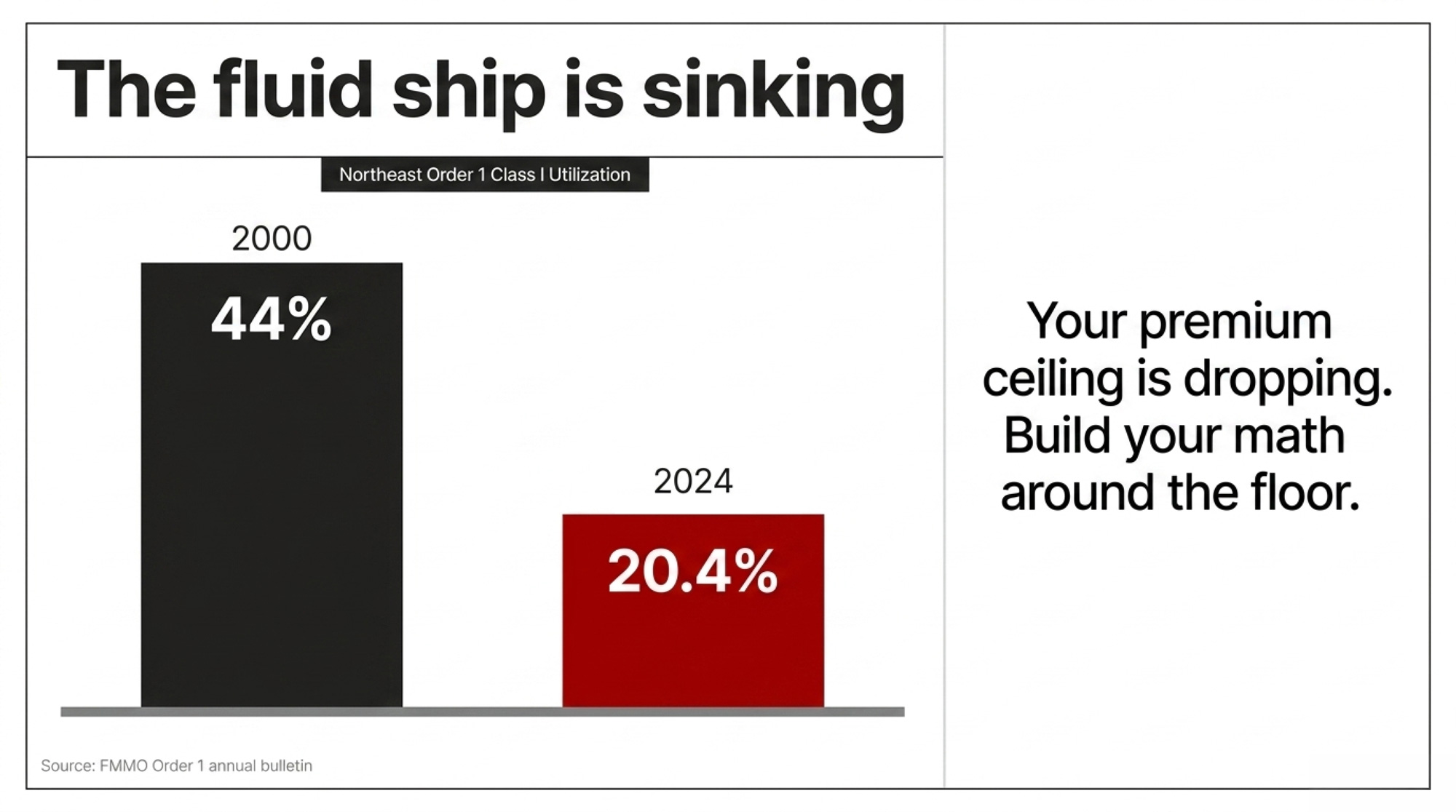
NewsSubscribe
First
Last
Consent

$1 Labor or $200,000 Debt? The Robotic Milking Bet That Could Make or Break Your Dairy

A $4/hour raise costs this 480‑cow family $48,000 a year. The robots their dealer pitched added $200,000 in payments. Which one are you actually signing up for?

Executive Summary: A $4/hour wage bump on a 480‑cow dairy costs $48,000 a year — painful but variable. The AMS alternative runs $150,000–$230,000 in annual debt service on $1.5–$2.0 million in robot capital, and that number doesn’t flex when milk hits $18. UW–Minnesota–Penn State data show average AMS labor savings of $1.50/cwt, but roughly 8% of adopters saved nothing, and USDA’s ERR‑356 confirms that the 13% net‑return upside emerges only after about seven years of red ink. Layer on a direct‑supply contract with three‑to‑seven‑year terms and six‑month termination windows — structures attorney Todd Janzen has compared to broiler grower agreements — and you’ve converted a labor problem into a fixed‑debt‑plus‑captive‑buyer problem. If your DSCR drops below 1.15× with robot payments added, your lender’s comfort disappears before your labor savings arrive. This piece walks through the full barn math, the contract hooks, the risk transfer nobody’s putting in the dealer proposal, and a 30/90/365‑day playbook for stress‑testing the decision on your own numbers.

A Wisconsin family milking 480 Holsteins burned through six hired milkers in two years. They’re not unusual. Finding and keeping parlor labor at competitive wages has become one of the hardest operational problems on mid‑size U.S. dairies, and every time this family bumped pay to stop the bleeding, it showed up on the milk check. A $4‑per‑hour raise across roughly 12,000 milking‑related labor hours adds $48,000 a year — that’s $0.83/cwt on a herd shipping 57,600 cwt annually.

So when a robot dealer walked in with an AMS proposal, the pitch was simple: trade variable labor headaches for fixed payments on machines that never quit. But the math behind that pitch deserves a harder look than most families give it.

This example pulls together numbers and decisions from several real mid‑size herds The Bullvine has followed, written as a single composite family so you can see the whole decision in one place.

Six Milkers in Two Years — and the Wage Math Nobody Wants to Run

Here’s the core tension. Matching local blue‑collar wages can push milking labor toward $1.00/cwt for herds in the 300–600‑cow band. On a 480‑cow dairy shipping 120 cwt per cow per year, that’s 57,600 cwt. If your all‑in labor cost for milking sits at $1.00/cwt, you’re writing a check for $57,600 a year to keep the parlor staffed — and that’s before benefits, turnover costs, and the nights you’re filling in yourself.

Drop to 300 cows at the same per‑cwt cost, and it’s still $36,000 a year. That’s real money. But it’s variable money. You can cut hours, adjust shifts, or restructure if milk prices tank. That flexibility matters more than most robot proposals acknowledge.

The question isn’t whether $1.00/cwt labor is painful. It is. The question is whether the alternative — a seven‑figure capital commitment — actually fixes the problem or converts it into a different kind of pain.

Is AMS Really Cheaper Than Labor on a 480‑Cow Dairy?

Let’s run it.

A joint survey by the Universities of Wisconsin, Minnesota, and Penn State — covering 50 U.S. dairy operations that adopted AMS — found an average labor saving of 0.10 hr/cwt, which works out to roughly $1.50/cwt at a $15/hour wage. On average, those herds cut milking time by 38% per cow and 43% per hundredweight. The top quartile — 25% of respondents — saved 0.16 hr/cwt or better, translating to $2.40/cwt at the same wage rate.

But here’s the spread that matters: roughly 8% of AMS adopters reported zero labor savings. Maintenance and repair ate the hours right back. And farms replacing a parlor (not a pipeline) saved less on average — 0.08 hr/cwt versus 0.16 hr/cwt for pipeline replacements.

Now price the robots. Each AMS box handles 50–70 cows. A 480‑cow herd needs 7–8 boxes, depending on how hard you push cows per unit. Installed cost ranges from $200,000 to $300,000 per box in the current U.S. market. That puts total AMS capital at roughly $1.4 million to $2.4 million.

 Scenario A: Raise WagesScenario B: Install AMS
Annual cost$48,000 ($4/hr raise on 12,000 hrs)$150,000–$230,000 P&I (on $1.5–$2.0M, 10–15 yr, post‑2023 rates)
$/cwt impact$0.83/cwt$2.60–$3.99/cwt in debt service alone
Labor savingsNone (still paying people)$86,400–$138,240/yr ($1.50–$2.40/cwt × 57,600 cwt)
Net annual gapDebt service exceeds labor savings by $12,000–$144,000/yr in early years
Risk typeVariable — adjustable if prices dropFixed — payments don’t flex with milk price

The labor savings are real. But in the early years, debt service on the robots often exceeds the labor dollars you save— sometimes by a wide margin. That’s not a reason to never automate. It is a reason to stress‑test the deal at $18 milk, not just $22.

The 13% That Hides Seven Years of Red Ink

USDA’s Economic Research Service published ERR‑356 in January 2026 — the first nationally representative study of AMS profitability using multi‑year ARMS data (2000–2021). The headline finding: robotic milking and precision dairy technologies increase U.S. dairy net returns by about 13% on average, after controlling for the fact that stronger managers tend to adopt first.

That 13% is an adjusted treatment effect, and it’s the strongest national evidence yet that AMS can pay. But Iowa State economist Larry Tranel’s cash‑flow modeling tells the rest of the story: a typical two‑robot install often spends roughly seven years in the red before that upside appears. One 240‑cow Iowa family profiled by The Bullvine ran their numbers through Tranel’s model and saw exactly that arc — years of negative cash flow before the math finally turned.

The MDPI perception study of large U.S. AMS dairies (those running seven or more robots) backs up both sides: 54% of respondents would recommend AMS to other farms. But 38% said, “consider more aspects before deciding.”Among adopters, 58% reported increased milk production, and 32% reported higher component levels. At the same time, 71.5% reported stress from nightly alarms, and 93.4% cited at least one AMS‑related mental strain.

You’re not buying a labor solution. You’re buying a different job — and a different risk profile.

When the “Labor Fix” Comes With a Contract Hook

Here’s the turn most AMS proposals don’t mention. A seven‑figure capital investment often changes your relationship with your milk buyer.

Attorney Todd Janzen — general counsel to the Indiana Dairy Producers — reviewed direct‑supply contract trends in a 2018 analysis and flagged structural shifts that matter even more now. Direct‑buy contracts typically run three to seven years, compared to 30‑day termination windows at most cooperatives. The termination notice can stretch to six months, and in most cases, as Janzen reviewed, the contract language gave buyers more lenient exit terms than producers.

Janzen compared the “Cost+” direct‑supply model specifically to broiler and swine grower contracts — arrangements where the producer carries the capital and the buyer controls the terms. His conclusion was blunt: these contracts would “hasten the demise of small farms” and could be “the nail in the coffin for many small dairies.” As he put it: “If you’re a big buyer of milk, it’s much easier to sign up 10 2,000‑cow dairy farms than 100 200‑cow dairy farms.”

Regulators elsewhere have started to act. In Australia, the ACCC fined Lactalis AU$950,000 in July 2023 for breaching the Dairy Code during the 2020/21 season — the Code’s first enforcement action. The ACCC alleged contract clauses made non‑exclusive supply “inefficient and commercially unviable,” effectively locking producers in. In the UK, new Fair Dealing Obligations took effect for new milk contracts in July 2024, with existing contracts required to comply by July 2025.

The U.S. has no equivalent code. If you’re carrying $1.5 million in robot debt and your processor is your only realistic buyer, your negotiating leverage looks a lot different than it did when you ran a parlor with a 30‑day co‑op agreement.

Contract FeatureTraditional Co-opDirect-Supply / Cost+
Typical term lengthMonth-to-month or annual3–7 years
Termination notice30 days (standard)Up to 6 months
Exit symmetryGenerally equal both sidesBuyer often has more lenient exit (Janzen, 2018)
Price mechanismPool price + premiumsCost+ formula set by buyer
ExclusivityNon-exclusive (can ship elsewhere)Often exclusive or “commercially unviable” to split
Capital alignmentFarm chooses own equipmentAMS investment may tie you to buyer’s specs
Regulatory protection (U.S.)Capper-Volstead cooperative protectionsNo equivalent code — contrast with AU Dairy Code (ACCC, 2023) and UK Fair Dealing Obligations (2024)
Janzen’s comparisonTraditional dairy relationship“Broiler and swine grower contracts”
Risk profileVariable but flexibleFixed debt + captive buyer

When Does “Modernization” Become Risk Transfer?

In practice, a lot of this modernization tends to shift more day‑to‑day risk and control onto the farm, while processors and lenders benefit from more predictable supply and better data.

Your AMS and herd‑management software now stream production, quality, and cow‑health data in real time. In some programs, processors and lenders can access that feed directly. And in some arrangements, they may use it to model things like herd performance and potential margins much more precisely than in the past. That’s not inherently bad — better data can mean better lending terms and more responsive supply chains. But it also means your buyer and your banker may know your numbers as well as you do, and they’re using that transparency to manage their risk, not yours.

The labor risk that once showed up as processor shutdowns and trucking chaos now often lands back on the farm. Either solve it with capex, pay more, or eventually scale down or exit. When you add a multi‑year exclusive supply contract on top of robot debt, you’ve layered two fixed commitments that don’t flex when milk drops to $18.

Which Path Fits Your Balance Sheet?

There isn’t one right answer. But there are three honest paths, and each comes with real trade‑offs.

Path A: AutomatePath B: Stay ManualPath C: Niche / Value-Added
Capital required$1.4M–$2.4M$0$50K–$300K (processing, branding)
Annual fixed cost$150K–$230K debt service$0 new fixedVaries by channel
Annual variable costMaintenance + reduced labor$48K–$58K milking laborMarketing + labor
DSCR impactDrops 0.2–0.4xNo changeNeutral to positive
Milk price sensitivityHIGH — payments don’t flexLOW — hours adjustableMODERATE — margin-dependent
Buyer leverageOften locked to 1 processor30-day co-op termsMultiple small buyers
Break-even timeline~7 years (Tranel model)Immediate (no new debt)2–4 years
Best fitDSCR ≥1.15x pre-robot, 2+ buyers, strong equityDSCR < 1.15x, or single-buyer marketGeography supports premium, operator wants scale control
Biggest risk7 years of red ink + captive contractChronic turnover, burnoutSmall market, limited scale

Path A — Automate. This works best when your debt‑service coverage ratio (DSCR) sits comfortably in the 1.15–1.25× range or higher before the robot note, you have at least two viable milk buyers, and you can survive the early red‑ink years on existing equity. Plan using $1.50/cwt in labor savings, not the $2.40 top‑quartile figure — only 25% of adopters hit that.

Path B — Stay manual, manage wages. Variable labor costs hurt, but they flex. If your DSCR would drop below 1.0×with robot payments layered on, you’re in the stress zone. A $4/hr raise costs this composite herd $48,000 a year. That’s painful — but it’s not $150,000–$230,000 in fixed P&I.

Path C — Pursue niche or value‑added channels. Smaller, higher‑margin markets — local processing, branded fluid, organic, specialty — can ease the labor‑cost squeeze without a seven‑figure capital bet. Trade‑off: less scale, more marketing effort, and not every geography supports it.

What This Means for Your Operation

  • Run your milking labor $/cwt this month. Pull 12 months of milking‑related labor costs and divide by cwt shipped. If you’re approaching $1.00/cwt, you’re in the band where AMS proposals start to feel urgent — but that doesn’t mean they’re right.
  • Stress‑test any AMS proposal at $18 milk, not $22. Ask the dealer and your lender to model robot payments at the bottom of a realistic price range. If the deal only works at high milk, it’s a bet, not a plan.
  • Check your DSCR before and after. If adding robot debt pushes your ratio below 1.15×, you’re entering the band where lenders get uncomfortable. Below 1.0×, and you can’t cover debt obligations from farm income alone.
  • Read your supply contract like it’s a second mortgage. Check termination notice periods, exclusivity clauses, and whether the contract gives the buyer more lenient exit terms than you get. If you have only one viable buyer, treat it as a risk signal.
  • Audit your data flows. Know exactly what production, quality, and herd data your systems share with processors and lenders — and whether you’ve consented to that sharing explicitly.
  • Ask your lender one direct question: “If milk drops to $18 for 18 months, does our AMS note plus our operating line still pencil at a DSCR your credit committee would approve today?”

Key Takeaways

  • If your DSCR sits below 1.15× before adding robot debt, you’re already in the caution band. Layering $150,000–$230,000 a year in fixed payments on top of that is a high‑risk move regardless of labor savings.
  • The average AMS labor saving is $1.50/cwt, not $2.40. Planning on top‑quartile performance when only 25% of adopters achieve it is how you end up in year four with negative cash flow and no exit.
  • AMS can pay — eventually. USDA’s ERR‑356 shows a 13% net‑return advantage on average. But Tranel’s cash‑flow work shows roughly seven years of red ink first. If your equity can’t carry that runway, the 13% upside is academic.
  • Your robot decision is also a contract decision. A seven‑figure capital commitment often ties you to a single buyer on terms that increasingly resemble grower agreements in poultry and pork — not the cooperative relationships most dairy families grew up with.

The dealer’s pitch is always clean: swap variable labor for fixed automation. But the spreadsheet that actually matters is yours — and the number that decides whether this works isn’t labor saved per cwt. It’s the gap between your total debt service and your income in the worst milk‑price year you can realistically model. What does that gap look like on your operation right now?

Complete references and supporting documentation are available upon request by contacting the editorial team at editor@thebullvine.com.

Learn More

The Sunday Read Dairy Professionals Don’t Skip.

Every week, thousands of producers, breeders, and industry insiders open Bullvine Weekly for genetics insights, market shifts, and profit strategies they won’t find anywhere else. One email. Five minutes. Smarter decisions all week.
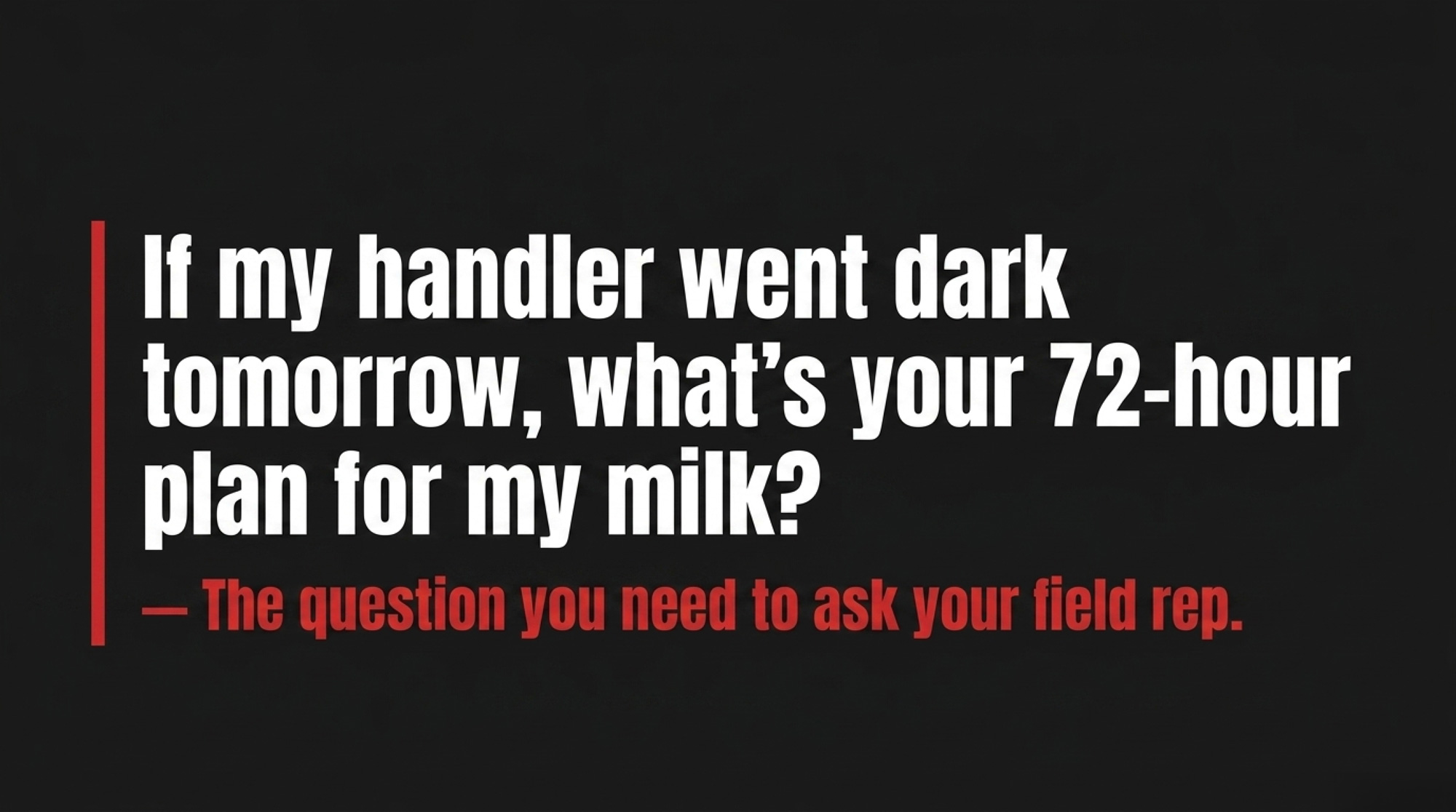
NewsSubscribe
First
Last
Consent

Brazil’s 50% Beef Tariff Lasted 90 Days. The $35,000 Hole in Your Calf Check Won’t

A 50% tariff on Brazil lasted a few months. The White House rolled it back within a week, the Supreme Court struck down the law behind it, and then the administration opened 80,000 more metric tons of quota for Argentina. Your calf plan didn’t get a vote any of those times.

Executive Summary: A 50% tariff on Brazilian beef lasted from July to November 2025 — then both layers vanished in a single week, the Supreme Court ruled the legal basis unconstitutional, and the White House responded by opening 80,000 metric tons of new duty-free Argentine beef quota. For a 400-cow dairy running 35% beef-on-dairy breedings, that whiplash opened a $35,000 hole in annual calf revenue — $87.50 per cow in working capital your lender won’t ignore. Brazil filled its entire 2026 U.S. quota in six days. The domestic herd sits at 94.2 million head, the lowest mid-year count since 1973, and Chapter 12 farm bankruptcies hit 315 last year — up 46%. JBS co-owner Joesley Batista got a private White House meeting weeks before the exemptions; your banker got a stress test that no longer assumes any tariff protection will return. If your five-year plan only works at last year’s calf prices, you don’t have a plan — you have a bet that Washington will keep a promise it’s already broken three times in eight months.

beef-on-dairy economics

On a humid July night in 2025, a 400‑cow dairy in central Wisconsin sat at the kitchen table with the banker and finally saw a little daylight. 

Trump had just stacked a 40% emergency tariff on top of an existing 10% reciprocal duty on Brazilian imports — beef included — bringing the total tariff on Brazilian beef to 50%. Calf buyers were talking about tight supplies. Four‑figure beef‑on‑dairy cheques didn’t feel like lottery tickets anymore. They felt like something you could cautiously build a plan around. 

So the yellow pad on the table assumed about 140 beef‑cross calves at roughly 1,300 dollars a head — somewhere around 182,000 dollars a year in gross calf revenue. That kind of number is plausible in a market where 600‑ to 650‑pound beef‑on‑dairy steers were bringing 269–272 dollars per hundredweight in 2024 video auction data, and 2025 feeder calf prices were running about 15% higher than the year before. 

The new barn note looked tight, but doable, as long as those calf numbers held.

By November, both tariff layers were gone. By February 2026, the Supreme Court made sure they couldn’t come back the same way — and the White House responded by opening even more duty‑free quotas for imported beef. That same producer is back at the kitchen table, explaining why the math no longer works. 

The Year the Rules Changed Four Times

Here’s how fast the ground beneath your calf cheque moved.

  • April 2, 2025: Executive Order 14257 slaps a 10% reciprocal tariff on most imports into the U.S., including beef, while exempting Canada and Mexico under USMCA. 
  • May 11, 2025: USDA halts all cattle imports from Mexico after detecting New World screwworm — a parasitic fly that kills livestock by feeding on living tissue. The ban further squeezes domestic feedlot supply. 
  • June 12, 2025: JBS — the Brazilian meat giant that already processes a big share of U.S. beef — completes a dual listing on the NYSE and Brazil’s B3. 
  • July 1, 2025 context: USDA reports the U.S. cattle inventory at 94.2 million head — the lowest mid‑year count on record in data going back to 1973, down 8 million head from 2020. The 2025 calf crop comes in at 32.9 million head, a record low for the second straight year. 
  • July 30, 2025: Executive Order 14323 uses national‑emergency powers to add a 40% tariff on Brazilian goods, including beef. Total duty on Brazilian beef: 50%. The move is sold as a way to protect American agriculture. 
  • August 2025: R‑CALF USA urges Washington to suspend Brazilian beef imports entirely, pointing to Brazil filling its entire 65,000‑ton “other countries” quota in just 17 days at the start of the year. 
  • Late September 2025: Reuters reports that JBS co‑owner Joesley Batista — whose company admitted in Brazilian plea deals to bribing roughly 1,800 politicians — gets a private meeting with President Trump. Sources familiar with the meeting say Batista warned the tariffs were making beef “too expensive” for consumers. 
  • ~November 14, 2025: An executive action removes reciprocal tariffs on 200‑plus agricultural products not deemed sufficiently produced in the U.S., including beef. 
  • November 20, 2025: A second order removes the remaining 40% Brazil‑specific duty on beef and other ag goods, retroactive to November 13, with refunds available on duties collected in between. In less than a week, Brazilian beef goes from a 50% combined tariff to zero additional duty beyond the normal quota structure. 
  • February 6, 2026: Trump signs a proclamation titled “Ensuring Affordable Beef for the American Consumer,” temporarily increasing the U.S. beef tariff‑rate quota by 80,000 metric tons for calendar year 2026 — allocated entirely to Argentina, in four quarterly tranches of 20,000 MT each starting February 13. The proclamation cites ground beef hitting $6.69 per pound in December 2025, the highest since the BLS started tracking beef prices in the 1980s. 
  • February 20, 2026: The U.S. Supreme Court rules in Learning Resources, Inc. v. Trump that the International Emergency Economic Powers Act (IEEPA) does not authorize the president to impose tariffs, invalidating the legal basis for both the 10% reciprocal and 40% Brazil‑specific tariffs entirely. The same day, Trump issued an executive order ending the collection of all IEEPA duties. 
  • February 24, 2026: A new 10% global surcharge under Section 122 of the Trade Act of 1974 takes effect as a stopgap — but beef is explicitly exempted via the Annex II exceptions list, along with other agricultural products. Section 122 is capped at 150 days and expires July 24, 2026, unless Congress extends it. 

R‑CALF CEO Bill Bullard didn’t hide his frustration. In a November 2025 statement, he called U.S. cattle producers “beleaguered” and said decades of failed trade policy had “driven hundreds of thousands” of ranchers out of business. He argued that the 10% reciprocal tariff plus the 40% Brazil‑specific duty were “important first steps” toward fixing that imbalance. 

Both steps got wiped out in a week. A few months later, the court took the whole tool off the table — and the White House added 80,000 metric tons of Argentine beef quota on top of it.

What Happened After the Exemptions Tells You Everything

The ink on the November exemptions was barely dry before Brazilian exporters moved. Authorized Brazilian meatpackers quickly resumed full shipments. According to Valor International, November exports hit about 12,600 tonnes despite only around ten tariff‑free days on the calendar. Volumes were projected at 35,000 tonnes for December and 50,000 tonnes for January as the duty‑free quota reset. Brazil exported 244,500 tonnes to the U.S. from January through November 2025, already surpassing full‑year 2024 totals. 

Brazil then filled its 2026 U.S. beef quota within six days of the start of the new trading year. By the USDA weekly report ending January 12, Brazil had already used 73% of its 2026 allocation. For comparison: in 2025, the quota lasted 17 days. In 2024, March. In 2023, May. Each year faster. 

On the calf side, the market told a loud story too. Feedlot Magazine reported that from January 2025 to January 2026, the beef‑cross‑dairy calf market increased by 176 dollars per hundredweight — about 1,056 dollars per head on a 600‑pound feeder. Beef‑cross calves out of Holstein dams averaged 26.83 dollars per hundredweight higher than those from non‑Holstein dairy females. Strong, yes. But that strength was built during a period when tariffs theoretically constrained supply and screwworm shut down the Mexican cattle border. With the tariffs gone, the legal basis ruled unconstitutional, and 80,000 MT of new Argentine quota on the books, the floor under those calf prices is thinner than it looked when you and your banker sharpened your pencils in July. 

It’s not just the U.S. border that’s opening wider. Mexico announced a new tariff‑free quota for 2026 — up to 70,000 tonnes of beef and 51,000 tonnes of pork from Brazil and other exporters. China set its first formal beef import quota for Brazil at 1.106 million tons for 2026, with an additional 55% tariff on volumes exceeding the cap — a measure that could redirect excess to the U.S. and other markets if Chinese demand softens or the quota binds. 

Meanwhile, total U.S. beef imports jumped 17% through November 2025 compared to the same period in 2024, hitting 1.76 million metric tons. The U.S. imported a record 4.64 billion pounds of beef in 2024 alone — a 24% leap from 2023. 

You didn’t get a phone call before any of that. You just got the prices on the other side.

How Does a Policy Flip Turn Into a $35,000 Problem at Your Place?

Now put some barn math to what that whiplash does to a 400‑cow dairy that’s leaned into beef‑on‑dairy.

Iowa State Extension livestock economist Lee Schulz documented beef‑on‑dairy steers averaging roughly 269–272 dollars per hundredweight at 650 pounds in Superior and video auction data, meaning a 650‑pound beef‑on‑dairy feeder was worth around 1,750 dollars in that 2024 market. Iowa Beef Center forecasts show 2024–2025 feeder calf prices at historically high levels, keeping four‑figure values common for 550‑ to 650‑pound steers. 

On the front end, Midwest Farm Report highlighted baby beef and beef‑cross calves “selling to 1,000 dollars a head” at Wisconsin auctions to start 2025. Wisconsin DATCP summaries showed beef‑on‑dairy cross calves bringing roughly 480 dollars per head against about 110 dollars for straight Holstein bull calves — a 370‑dollar premium in spring 2025. 

The Bullvine’s heifer analysis piled on another layer: replacement heifers moving from roughly 1,700 dollars to over 4,100 dollars, leaving a 438,844‑head hole in the national heifer pipeline

Now run the numbers on your 400‑cow herd:

  • 35% of breedings to beef = roughly 140 beef‑cross calves per year
  • At 1,300 dollars each — realistic for a solid 600‑ to 650‑pound beef‑on‑dairy feeder in this price environment — that’s about 182,000 dollars in gross calf revenue.
  • If markets soften by about 20% after the tariff and court whiplash, and those calves fall to roughly 1,050 dollars, you’re at 147,000 dollars.
  • Gap: $35,000, or $87.50 per cow in working capital

That $87.50 per cow is the kind of number your lender zeros in on. It’s not “extra.” It’s a robot payment. Or a nutrition upgrade. Or the difference between paying principal versus just servicing interest.

What Does Your Lender Actually See When Policy Is Part of Your Repayment Story?

From your side of the table, “tariff whiplash” sounds like a fair explanation for why the numbers don’t pencil anymore.

From your lender’s side, it’s a reminder they can’t afford to build your future on Washington’s promises — especially when the Supreme Court just ruled the legal tool unconstitutional, and the White House responded by opening moreimport access, not less. 

After the MFP cycle, regulators pushed banks and Farm Credit to stress‑test loans without assuming ad‑hoc government aid will show up again. A loan that only works if DC sends a cheque isn’t good. 

So today, most ag lenders will:

  • Run your plan without counting any future tariff relief, MFP‑style programs, or emergency cheques
  • Model what happens if your milk check drops 1–2 dollars per hundredweight, feed jumps 10%, and beef‑on‑dairy calf values fall 15–20%
  • Watch working capital and total debt per cow closely, especially with many new operating loans at 7–9%. 

A Kansas City Fed review found average non‑real‑estate farm loan sizes roughly 30% higher in late 2024 and early 2025 than a year earlier as producers borrowed more to cover higher input costs. In 2025, nearly 40% more new farm operating loans were opened than in the prior year. 

At the same time, Chapter 12 farm bankruptcy filings hit 315 in calendar year 2025 — up 46% from 216 in 2024 and the highest count since 2020. Arkansas led the nation with 33 filings (more than double its prior-year total), followed by Georgia at 27, Iowa at 18, Nebraska at 17, and Wisconsin and Missouri at 16 each. The Midwest and Southeast together accounted for 226 of the 315 cases. 

When you tell your lender, “The tariff change took 35,000 dollars out of our calf plan,” they don’t argue. They ask:

  • If calves never reach 1,300 dollars, can this farm still make full payments?
  • How close are we to breaking covenants if we have one more bad year?
  • Is it smarter to restructure now, while equity is still there?

If you don’t have your own answers ready before they ask, you’re already behind.

Can You Build a Five‑Year Plan When the Rules Keep Changing Under Your Feet?

You’re making choices right now that will shape the next decade of your operation:

  • A new barn sized for 550 head when you’re milking 400
  • A robot system that only pencils if labor stays tight and cull prices hold
  • A breeding lineup that leans harder into beef‑on‑dairy on the bottom half of the herd
  • Genomic bets you won’t fully cash for four or five years

Meanwhile, the tools Washington used — reciprocal tariffs, national emergency orders, retroactive exemptions — just had their legal foundation pulled out from under them by the Supreme Court. The 10% Section 122 stopgap expires July 24, 2026, and beef is already exempt from it anyway. The administration’s next move is Section 301 investigations that USTR says will “cover most major trading partners” — but those take months to conclude and years to implement. 

And there’s another pressure point already on the books. The formal USMCA joint review is scheduled for July 2026, and NMPF and USDEC testified before USTR on December 3, 2025, urging the administration to fix Canada’s dairy quota implementation. A bipartisan group of 74 House members — led by Representatives DelBene, Tenney, Wied, and Costa — sent a letter to USTR Jamieson Greer the same day, calling out Canada’s unfair TRQ allocation and global dairy protein dumping practices. 

That push matters because the numbers are damning. TRQ fill rates averaged just 42% across all 14 dairy categories in 2022/23, with 9 of 14 quotas below 50%. Some categories were barely touched: 3% for skim milk powder, 8% for milk protein concentrates, 12% for yogurt. That’s not weak demand — it’s Canada’s allocation system channeling most quota to domestic processors who don’t use it, exactly as two dispute panels have already confirmed

USMCA promised roughly $200 million in new annual access to Canada’s dairy market. If U.S. exporters could actually ship the full 100% of what was promised instead of getting stuck at 42%, as NMPF and USDEC have argued in their 2025 testimony, that’s the kind of money that would more than plug a $35,000 calf hole on a 400‑cow dairy. 

The U.S. Dairy Export Council estimates Mexico and Canada at about $3.6 billion, or roughly 44% of total U.S. dairy export value. If those markets see new tariffs, quotas, or retaliation because dairy becomes a bargaining chip again, your check feels it — even if you never sell a pound of cheese directly across a border. 

So the only way to build a five‑year plan you can sleep on is to assume tariffs and trade deals won’t sit still, policy help is a bonus rather than a baseline, and your numbers have to survive ugly scenarios — not just the best‑case breakout.

What Does a Real Stress Test Look Like Before You Sign?

Before you sign for a barn, a robot, or a major breeding push, you need more than “should work” and a rosy spreadsheet. You need to see what happens when things get ugly.

Your Three‑Case Stress Test at a Glance

Drop in your own numbers. But they should look at least as nasty as this.

ScenarioMilk price assumption*Feed cost assumptionBeef‑on‑dairy calf valuesInterest rate assumption
Most‑likelyAround current Class III/IV strip (e.g., high‑18 to low‑19 dollars/cwt) 3–5% higher than todayClose to recent chequesCurrent rates on operating + term debt
Downside1–2 dollars/cwt below that rangeAt least 10% higher15–20% below last year’s cheques+1 percentage point on variable‑rate debt 
Worst‑caseMid‑16s for roughly half the year15–20% higher25–30% below last year’s cheques+2–3 percentage points on vulnerable loans

*Use the actual futures curve and your co‑op’s basis, not a guess.

Then ask the same questions your lender is already asking:

  • In the downside case, does this project still cover the full debt service?
  • Do you have enough working capital and operating line to survive the worst‑case year without missing payments or blowing covenants?

If you can’t answer “yes” to both, you’re not stretching — you’re betting that policy and markets will behave. Given that the legal basis for the original tariffs got struck down by the Supreme Court and the administration added 80,000 more metric tons of imported beef quota on top of that, that bet looks worse today than it did a year ago. 

How Do You Keep Beef‑on‑Dairy From Owning Your Future?

Beef‑on‑dairy has been a lifeline for a lot of barns. It’s also a quiet way trade policy can reach right into your calf pen.

When beef semen is going on half your cows because the cheques looked great last year, you’re not just chasing a premium. You’re tying both your heifer pipeline and your loan plan to decisions made in Washington, Brasilia, Ottawa, Mexico City, and Beijing. And now add Buenos Aires, thanks to the February 6 proclamation. 

A more survivable approach:

  • Treat beef‑on‑dairy as a tool, not a lifeline
  • Keep beef semen around 25–35% of breedings and protect the top of your herd with sexed dairy semen so you don’t wake up with a replacement hole you can’t fill at 4,100 dollars a head.
  • Build calf revenue in your plan at prices 20–30% below the best cheques you’ve seen, and treat anything better as upside.

Suppose that sounds conservative, good. Your banker already thinks this way.

Options and Trade‑Offs for Farmers

You can’t control who gets a White House meeting. You can control how exposed your farm is when tariffs swing — or when courts wipe them out entirely.

Build for Margin, Not for Milk Price

When it makes sense: You’re planning to keep milking 300–600 cows in the commodity stream, and you know “waiting for 20‑dollar milk and a good government” isn’t a strategy.

What it requires:

  • A current breakeven that includes today’s interest, realistic replacement heifer costs in the 3,000–4,100‑dollarrange, and full family living, not 2022 numbers 
  • A path to pull 1–2 dollars per hundredweight out of your cost via better repro, tighter heifer programs, fewer transition wrecks, and real labor efficiency
  • The guts to cut non‑essentials that don’t move cost per hundredweight

Where it can bite you: If you’re already carrying high fixed costs — big facility notes, heavy land debt — you may not be able to get cheap enough to play this game.

30‑day action: Before your next lender visit, rerun your breakeven with current loan rates, replacement heifers at 3,000–4,100 dollars, and a calf price 20% below last year’s cheques. If the result makes your stomach flip, that’s the first thing to attack. That 2026 cost‑per‑cwt math is worth running beside these numbers.

Treat Beef‑on‑Dairy as a Tool, Not a Lifeline

When it makes sense: You’re in that 300–1,000‑cow window where beef‑cross calves are real money, but you don’t want a trade decision in Brasilia or Buenos Aires to decide whether you keep the farm.

What it requires:

  • Capping beef semen at about 25–35% of breedings, not 50–60%, and keeping sexed dairy semen on the top of your genetic stack so your heifer pipeline doesn’t disappear
  • Monthly heifer inventory checks that look two years ahead
  • Calf revenue assumptions built 20–30% under the best prices you’ve seen, with upside treated as a bonus

Where it can bite you: If you have already sold too many dairy heifers and dug a big hole, unwinding takes time and discipline. It means saying “no” to the next round of crazy beef prices.

Premium or Differentiated

When it makes sense: You’ve got a genuine premium channel — organic, A2, grass‑fed, on‑farm processing — in a market that can pay for it, and a story people will actually pay extra for.

What it requires:

  • Knowing the full math of the premium: pay price, cert and testing costs, labor, shrink, rejected loads risk
  • A plan to protect the margin if premiums shrink or competition crowds in
  • A clearer brand than “we’re local and we work hard.”

Where it can bite you: Premiums erode. Specs tighten. Consumer fads move. You swap commodity risk for brand and channel risk. This isn’t a soft landing for a weak commodity business — it’s a different business. What Clark Farms learned about on‑farm creamery ROI is a useful reality check before you go down this road.

Policy‑Proofing Your Plan

When it makes sense: Always, this is the base layer under every other layer.

What it requires:

  • Treating any policy‑driven cheque — MFP, ad‑hoc disaster, tariff‑driven payments — as deleveraging money, not recurring cash flow 
  • Building risk management around tools that are in statute and contracts — DMC, DRP, forward contracts — not around what was said at the last rally
  • Running the “no help for five years” scenario once a year and asking if the farm still survives

The Supreme Court just made this advice more concrete than ever. The legal basis for the tariffs that were supposedly protecting you was ruled unconstitutional. The 10% Section 122 stopgap expires July 24, 2026; beef is exempt from it anyway, and the Section 301 investigations that follow will take months to conclude. Meanwhile, the July 2026 USMCA review is less than three months away, with 74 House members already pushing USTR Jamieson Greer to fix the 42% dairy fill rate in Canada. If that USMCA $200 million dairy access problem gets fixed, treat the upside as a chance to pay down debt — not add more. 

Your lender is already thinking this way. Here’s what they’re calculating before you walk in.

Key Takeaways

  • If your five‑year plan only works at last year’s calf prices, you don’t have a plan — you have a bet. Run your numbers at 20–30% lower beef‑on‑dairy calf values and see if the debt still pencils.
  • If beef semen is going on more than a third of your breedings, your heifer pipeline is tied to trade decisions you’ll never be in the room for. Cap beef matings and protect the top of your herd for replacements.
  • If a barn, robot, or big upgrade only looks “smart” at 19‑dollar milk and interest rates from two years ago, walk away. The right projects still pay in a 17‑dollar milk, +10% feed, −20% calf world.
  • If you catch yourself saying, “It’ll be fine once they fix trade,” stop and grab a pencil. The Supreme Court just struck down the legal basis for the tariffs. The White House added 80,000 MT to the Argentine beef quota in the same month. Rebuild the plan assuming nobody fixes anything — and treat any policy win, including a fixed USMCA TRQ, as a chance to deleverage.
  • If your lender seems more nervous than you are, listen. They’re already stress‑testing your numbers without counting on tariffs, bailouts, or emergency cheques. You should be, too.

The Bottom Line

The picture that sticks from this whole episode isn’t a chart or a tariff code. It’s two people affected by the same decision sitting in very different rooms.

One is Joesley Batista, walking into a private White House meeting and, weeks later, watching both the 10% reciprocal and the 40% emergency tariffs on beef disappear fully inside a single week. Then, watching the Supreme Court make sure the tool behind them can’t be used the same way again. Then, the administration opened 80,000 more metric tons of duty‑free beef quota for good measure. 

The other is a 400‑cow producer at a kitchen table, explaining to a lender why a $35,000 calf‑revenue hole — $87.50 per cow in working capital — just opened in a plan built around a “national emergency” tariff that lasted a few months.

The system will keep getting sold as “protecting American agriculture. The question is whether your own numbers treat that as a promise, or as whether you’ve got to farm through.

Complete references and supporting documentation are available upon request by contacting the editorial team at editor@thebullvine.com.

Learn More

The Sunday Read Dairy Professionals Don’t Skip.

Every week, thousands of producers, breeders, and industry insiders open Bullvine Weekly for genetics insights, market shifts, and profit strategies they won’t find anywhere else. One email. Five minutes. Smarter decisions all week.
NewsSubscribe
First
Last
Consent

Vagts, Normans, Haldersons: $18 Million in Stray Voltage Verdicts. And a $3,000 Test No One Told Them Existed.

Three dairy families fought utilities for decades over unexplained herd losses. The testing blind spot and insurance trap they exposed threatens every operation milking on concrete.

Executive Summary: Three Upper Midwest dairies have already won more than $18 million in stray‑voltage verdicts, and the barn‑math says a hidden 4 lb/cow/day loss on a 500‑cow herd can quietly burn about $185,000/year off your milk check. The article walks through what happened to the Vagts (Iowa), Normans (Minnesota), and Haldersons (Wisconsin) when DC current from utility and pipeline systems ran through concrete barns while standard AC‑only tests kept saying “you’re fine.” It shows how insurance language like “death by electrocution” and “necessary suspension of operations” often pays for dead cows and wiring, but not years of lost milk if you keep milking through the problem. You’ll see exactly when to suspect voltage — cows avoiding one wet metal spot, 2–4 lb/cow/day unexplained loss, and no clear biological cause — and why a low‑thousands‑of‑dollars AC+DC test is basically eight days’ worth of the milk you’re probably already losing. There’s a clear 30‑day plan: schedule an independent DC‑capable test if you see those red flags, email your agent a 4–7 lb/cow/day scenario and ask what actually pays, and start logging production, behavior, and utility work like a future plaintiff. If you’re milking a few hundred cows or more on concrete, especially on older rural lines, this is the kind of “invisible loss” story you read once and then immediately go check your own numbers.

dairy stray voltage

Editor’s note: These cases are centered in the Upper Midwest United States, but the technical blind spots in stray‑voltage testing and the “Catch‑22” in farm insurance language are risks any modern dairy on concrete can face, regardless of region.

Lawrence Neubauer walked onto the Vagts dairy near West Union, Iowa, in September 2020 and quickly found DC stray voltage at cow‑contact points. He spent three more days documenting it. By then, Mark, Joan, and Andrew Vagts had already burned through about seven years of vet calls, nutrition consults, and equipment checks trying to explain why cows that looked “fine” on paper were sick, nervous, and underperforming.

Their troubles started after 2013, when a nearby Northern Natural Gas pipeline’s cathodic protection system began leaking current into their ground. A Fayette County jury later awarded the Vagts $4.75 million — $3 million in economic damages, $1.25 million for personal inconvenience and distress, and $500,000 for loss of use and enjoyment of their property. The Iowa Supreme Court upheld every dollar on June 21, 2024.

That’s one family. Across Iowa, Minnesota, and Wisconsin, stray‑voltage verdicts now total well over $18 million, even if you use conservative numbers. The real total is closer to $20–30 million once you add interest, fees, and multiple trials. Farm legal expert Roger McEowen, a professor at Washburn University School of Law whose March 2026 analysis was published through Kansas State’s AgManager, put it bluntly: if this happened on your farm tomorrow, your insurance probably wouldn’t cover the part that hurts the most.

What’s Changing — and Why These Verdicts Matter Now

Stray voltage used to be a weird problem from the 1980s that only showed up in old extension bulletins. Four recent cases have turned it into a very current, very expensive risk.

In Minnesota, Randy and Peggy Norman ran a dairy near Pine River and did a lot of things right. Minnesota Lawyer reports that in 1994, they were 27 percent above the state average in milk production, and by 2012, they were 20 percent below. Over those years, their cows’ health would wax and wane without a good diagnosis that would fix the issue, their attorney Jeremy Stevens told the paper. “The cow would be culled or die.” After repeated accusations that they were mismanaging the herd, the Normans’ lender issued an ultimatum in 2012: sell the cows and quit milking. They did.

A Cass County jury trial in October 2014 produced the largest stray‑voltage jury award in Minnesota history: $4,861,478 in economic loss and $1.5 million in nuisance damages. With interest and fees, the total climbed to roughly $6.3 million. The Minnesota Court of Appeals affirmed it, and trial‑law publications later highlighted the case as a landmark.

Near Galesville, Wisconsin, Paul and Lyn Halderson operate a nearly 1,000‑cow dairy. Their lawsuit alleged that Northern States Power (an Xcel Energy subsidiary) had found “excessive voltage” in one of their barns starting in 1996 and never told them. Over the next 15 years, the Haldersons watched cows struggle with health and production while enduring accusations that they were substandard farmers. In 2011, they hired their own consultant, who traced the high electricity levels to the utility’s distribution system. Court records show the family claimed $5.8 million in lost profits between 2004 and 2011. A Trempealeau County jury found Xcel’s conduct “willful, wanton or reckless” and awarded just under $4.5 million — an amount that, under Wisconsin statute, can be tripled to $13.5 million when a utility violates certain safety laws. Appeals and post‑trial motions will determine the final number.

In Wright County, Minnesota, a jury initially awarded Harlan and Jennifer Poppler and Roy Marschall more than $750,000 in a stray‑voltage case against Wright‑Hennepin Cooperative Electric Association. After the Minnesota Court of Appeals ordered a new trial on damages, a second Wright County jury in 2015 returned a verdict of nearly $2.5 million. Minnesota’s appellate courts later upheld that award.

Taken together, these cases show a pattern where farm families spent years battling unexplained herd problems and litigating with utilities before juries and judges ultimately ruled in their favor. The cases didn’t just move money; they pulled back the curtain on how testing protocols, infrastructure, and insurance language actually behave when current starts leaking through concrete.

And in every single case, the big money didn’t come from insurance.

How This Actually Shows Up in Your Barn

The Vagts didn’t sit on their hands. They did what you’d probably do.

They called the vet. They adjusted rations with their nutritionist. They had the milking system serviced. They checked ventilation, bedding, and cow flow. For years, every professional who walked through that barn worked through the same checklist you and your advisors would use: bloodwork, cultures, necropsies, ration audits, cow comfort reviews. Nobody found a single “smoking gun.”

Here’s the hard truth buried in Wisconsin’s own stray‑voltage program documents: ” Stray voltage “is an electrical issue and can only be identified through standardized electrical testing protocols. There’s no blood test for it. No milk culture. No special SCC code on your DHI sheet.

Your vet can see the effects — chronic mastitis, odd behavior, production that doesn’t match the ration — but her toolkit is built to rule out disease, metabolic issues, and management mistakes. Voltage at the cow’s feet doesn’t show up in her lab work. It’s not in your nutritionist’s software. It’s not in your repro logs.

So how much did all that troubleshooting cost the Vagts before Neubauer showed up with the right meter?

You don’t have a published survey that nails down that figure. But on a 400–500 cow herd chasing an unresolved “mystery problem,” it doesn’t take long for extra vet calls, nutrition visits, milking‑equipment service, and outside consultants to add up to a noticeable line item. Over several years, that easily climbs into the five‑figure range — money that, in hindsight, would have covered a comprehensive independent electrical test many times over.

Then layer on what the Vagts eventually proved in court: about $3 million in lost production.

The Three Blind Spots That Let Stray Voltage Hide

Stray voltage becomes expensive because three systems you rely on — testing, utilities, and insurance — are built with blind spots.

Blind Spot 1: The Testing Protocol

Wisconsin’s PSC Phase II protocol — the standard many utilities use and point to — explicitly measures only AC, 60 Hz, RMS, steady‑state animal‑contact voltages at cow contact points. That’s the right test if your problem is classic 60‑cycle current leaking off the utility neutral. It’s almost useless if the source is DC stray voltage from a pipeline rectifier, like on the Vagts farm, or if the current rides in on frequencies outside the 60 Hz band.

When utilities test under that protocol, they’re essentially using a thermometer that only reads one scale. If the problem is DC, the meter can sit close to zero, even while cows are still getting enough current through their legs to change behavior and milk.

Pro tip: A standard utility stray‑voltage test is tuned for AC at 60 Hz. If your problem is DC from something like a pipeline cathodic protection system, that DC current can slip right past that setup — which is exactly what happened before Neubauer showed up with a DC‑capable meter on the Vagts farm.

Blind Spot 2: Who Runs the Test

When your power company tests your farm, they’re evaluating their own system for potential legal exposure. They pick the test points, the timing, and the load conditions. They write the report. In states like Wisconsin, they follow PSC rules that set thresholds and protocols, which is better than nothing. But it’s still the entity whose system is being evaluated.

The Halderson case shows how that can go wrong. According to court documents and farm‑media coverage, Northern States Power measured excessive voltage in one of the Halderson barns starting in 1996 and recorded it internally. The Haldersons say nobody told them. They kept milking. They spent years battling health problems and production shortfalls. It wasn’t until 2011 — fifteen years later — that they paid for their own independent testing and finally had numbers they could use in court.

Blind Spot 3: The Insurance Fine Print

Standard farm packages were built for sudden events: fires, storms, and building collapses. Stray voltage is a slow‑motion wreck that doesn’t fit neatly into that box. The Mengel Dairy Farms case is the clearest lesson here.

Hastings Mutual insured Mengel, and its own investigation confirmed stray voltage as a cause of damage. The company paid for dead cows and electrical work. Then it denied coverage for years of reduced milk production, arguing two key policy clauses never kicked in:

  • Livestock coverage: “death of livestock by electrocution.”
  • Business income coverage: loss of income due to the necessary suspension of your operations caused by a covered cause of loss

Mengel cut back cow numbers but kept milking. The cows didn’t die instantly from a visible shock. That, Hastings said, meant no business‑income coverage. A federal district court agreed, and the Sixth Circuit Court of Appeals affirmed in July 2021. As McEowen put it in his March 2026 article, it’s “a Catch‑22 for many farmers: if you keep working to save your business, you may disqualify yourself from insurance payouts for lost income.”

What Does Undetected Stray Voltage Actually Cost Per Cow Per Year?

Let’s do the barn math in plain numbers you can plug into your own herd.

Take a 500‑cow operation. Suppose stray voltage quietly knocks 4 lb/cow/day off production — conservative compared to what families like the Vagts and Haldersons documented in court, and close to but below the nearly 20 lb/cow/dayproduction gain Jill Nelson at Olmar Farms in Sleepy Eye, Minnesota, saw after installing an isolated transformer and investing almost $100,000 to separate her farm from utility infrastructure.

Use a mid‑range milk price of $18.00/cwt — you can swap in your own number.

Barn Math at a Glance (500 cows)

Impact CategoryEstimated Loss (Per 500 Cows)Per Cow/Year
Milk revenue (4 lb loss @ $18/cwt)$131,400$262.80
Extra culling (5 more culls per 100 cows)$45,000$90.00
Mastitis treatment (1 extra case per 10 cows)$8,750$17.50
TOTAL ANNUAL LOSS$185,150$370.30

How it pencils out:

  • Daily lost milk: 500 cows × 4 lb = 2,000 lb = 20 cwt
  • Daily lost revenue: 20 cwt × $18.00 = $360
  • Annual: $360 × 365 = $131,400
  • Extra culls: 25 cows × $1,800 = $45,000
  • Extra mastitis: 50 cases × $175 = $8,750

Rounded, that’s about $370 per cow per year on a 500‑cow herd.

And that’s using a modest 4 lb/cow/day loss. Nelson’s experience — nearly 20 lb/cow/day more milk after an isolated transformer and major electrical upgrade — shows how quickly these numbers get ugly when you’re on the wrong side of the current for years.

A comprehensive independent electrical assessment that measures both AC and DC at cow‑contact points often lands in the low‑thousands of dollars for a mid‑size dairy — for many 400–700 cow herds, that means writing a check in the low‑thousands range once you factor in travel and time on farm. At $360/day in milk‑only losses, a $3,000 test is equal to about eight days of the production loss it’s designed to catch. Even if your numbers are half that, the math doesn’t take long to pencil out.

Does Your Farm Insurance Actually Cover Stray Voltage Damage?

Short version: your farm policy likely covers a sliver of the damage — dead cows and maybe some electrical repairs — but not years of lost milk.

McEowen’s stray‑voltage insurance piece walks through the Mengel case in detail. The key lessons match what shows up over and over in real farm policies and public farm‑insurance endorsements:

  • Electrocution means “instant death,” not chronic decline.
    The livestock section in many policies uses language like “death of livestock by electrocution.” In Mengel, the court interpreted “electrocution” broadly enough to cover cows that didn’t die instantly — good news for direct animal‑loss claims. But that clause only applied to dead animals, not reduced milk flow.
  • Business income often requires “necessary suspension of operations.”
    The business‑income section typically says something like “we will pay for the actual loss of business income you sustain due to the necessary suspension of your operations caused by a covered cause of loss.” Mengel reduced cow numbers but kept milking. Because the farm didn’t fully shut down, the court held that the business‑income coverage never kicked in. Hastings Mutual didn’t have to pay for the years of reduced production.
  • Off‑premises utility language can leave a gap.
    Many standard farm policies include wording that limits coverage for problems with utility service before power reaches your meter. If the source of your stray voltage is a grid problem or a pipeline cathodic protection system, that language may mean your insurer has no obligation to cover the loss under the current wording.

That’s why you see big verdicts but small insurance checks. The utilities and pipeline companies are paying because juries found them liable. The insurers, in cases like Mengel, have covered direct physical losses, while courts have held that policy wording doesn’t extend to long‑term production loss.

How Do You Close That Gap Before a Problem Hits?

You’re not going to find a clean “Stray Voltage Rider” in your agent’s menu. But you can use the tools that do exist to close most of the hole.

Ask for business‑income coverage that doesn’t require a full shutdown.
Sit down with your agent and walk through this specific scenario: “If stray voltage or another electrical issue reduces our production by 4–7 lb/cow/day for three years while we keep milking, what does this policy actually pay?” Ask about:

  • A farm business‑income or “loss of farm income” endorsement that covers partial production loss, not just total shutdown.
  • Whether “necessary suspension” can include a partial interruption or whether you truly have to stop milking to trigger coverage.

Don’t accept a hand‑wave answer. Ask them to put their explanation in an email.

Add utility service interruption coverage that reaches past your meter.
Standard property coverage often excludes damage caused by off‑premises utility failures. You want:

  • A utility service interruption endorsement that covers losses if a problem on the grid or pipeline causes damage at your farm.
  • Wording that explicitly includes overhead lines, distribution equipment, and, where possible, third‑party systems like pipelines if they’re feeding current into your ground.

On many mid‑size Upper Midwest dairies carrying full farm property, liability, auto, and umbrella, total annual premiums often end up in a five‑figure range. Endorsements like business‑income and utility‑service interruption usually add only a small percentage on top of that, not a second premium. In real terms, you’re talking about something in the ballpark of one smaller load of milk a year to close a six‑figure coverage gap.

And again, get it in writing. A clean email that says “here’s exactly how your policy would respond if stray voltage quietly took 4 lb/cow/day off your production for three years” is gold if you ever have to argue with a claims adjuster.

When Is It Time to Pay for a Stray Voltage Test?

You don’t wait until your vet says, “I have no more ideas,” and your milk check has been light for three years. You pick up the phone when three things show up together.

  • Cows consistently avoid one specific wet, metal contact point.
    They balk, dance, or drink less at one waterer, stall row, or parlor lane — but use others without hesitation. Shadows, footing, and boss cows can cause some avoidance. But when it’s pinned to one specific piece of wet metal over time, you should get suspicious.
  • You’ve got a subtle but persistent production miss.
    One group or the whole herd is running 2–4 lb/cow/day under what your ration, genetics, and facilities should deliver, and minor tweaks never quite close the gap. You’ve got a sense your numbers “should be better than this,” even if you can’t prove it on paper.
  • Your vet and nutritionist can’t find a clear biological or management cause.
    You’ve worked through the checklist — fresh cow protocols, mastitis patterns, rumen health, feed quality, ventilation, milking routine — and you keep hearing some version of: “Honestly, this herd should be milking better than this. I don’t see a smoking gun.”
SignalTypical dairy explanationStray‑voltage interpretation
Cow behaviorAvoiding one trough is “cow politics”High‑risk: one wet metal point consistently avoided
Production numbers2–4 lb/cow/day miss blamed on geneticsHigh‑risk: ration and housing say you should be higher
Vet & nutrition work“Nothing obvious, herd should milk better”High‑risk: biology ruled out, electrical not tested yet
Recommended actionTweak feed or stall setup againHigh‑risk: book independent AC+DC test within 30 days

When those three line up, that’s your signal. You treat a low‑thousands‑of‑dollars independent AC+DC electrical assessment as cheap insurance, not a luxury.

What the “Cow Model” Actually Means

When consultants or PSC documents talk about a “500‑ohm cow model,” they’re just describing how easily a cow completes a circuit through her body — from a front foot in one wet spot to a back foot or nose touching another. The meter stands in for the cow, using about 500 ohms of resistance (roughly what a cow’s body presents), and measures how much voltage really exists from hoof to hoof or nose to ground. That’s why proper testing clamps onto actual cow‑contact points in wet conditions instead of just poking around in the panel.

And you start with someone who doesn’t have skin in the utility game. In Wisconsin, you can absolutely call your power provider and request a PSC‑compliant test, and you should. But remember: their protocol measures only AC, 60 Hz, RMS, steady‑state voltage. If your problem is DC from a pipeline or mixed‑frequency noise from aging infrastructure, that test literally can’t see it.

An independent dairy‑focused electrical consultant will:

  • Measure both AC and DC at cow‑contact points with a realistic “cow model” (usually around 500 ohms).
  • Log data over time, not just take snapshots.
  • Look at your farm wiring and the grid as a system, not in isolation.
  • Put findings in a written report of your own.

A simple, quick screen you can do yourself today: set a basic digital multimeter to low‑range AC volts, and check between the water in a suspect trough and a good ground reference. If you consistently see a few tenths of a volt or more — especially if it jumps when motors kick on — you’ve got enough reason to book a proper test. It’s not definitive, but it’s a useful filter between “cow politics” and “electrical problem.”

Why Do These Cases Keep Coming From Wisconsin, Minnesota, and Iowa?

It’s not that stray voltage only happens in the Upper Midwest. It’s that the conditions for big, provable cases cluster there. And those conditions are showing up in more regions every year.

First, the grid. Some Minnesota farm and energy advocates have described parts of the state’s rural electrical infrastructure as “crumbling.” Long rural feeders, multiple splices, and heavy livestock loads on circuits that were never designed for today’s 500–2,000 cow herds push a lot of current through a lot of grounded metal. Add in big barns built with concrete and steel — great for cow comfort, great for stray‑voltage pathways — and you’ve got more opportunities for dangerous “cow contact voltage” per mile of line than in smaller, pasture‑heavy regions.

Second, Wisconsin’s stray‑voltage program changed the game. Since the late 1980s, the PSC and DATCP have run a structured program with:

  • Standardized Phase I and Phase II testing protocols.
  • A defined “level of concern” threshold at about 2 milliamps (roughly 1 volt at a 500‑ohm cow model) at cow contact.
  • A hard rule that utilities must keep their own contribution under 1 milliamp.

That framework created a paper trail. When a utility knows it measured above those thresholds and didn’t fix it, a jury has something concrete to latch onto. That’s exactly what happened with NSP and the Haldersons.

Third, once a few big verdicts land, the flywheel spins. Law firms and consultants build expertise. Producers talk. Neighbors recognize similar patterns of herd problems when they hear the story. The infrastructure for proving stray‑voltage cases — technical, legal, and cultural — exists in Wisconsin, Minnesota, and Iowa in a way it doesn’t yet in many other dairy regions.

That doesn’t mean other states are safe. It likely means they have under‑measured, under‑documented problems, which is exactly why this kind of piece belongs in your reading stack even if you live a thousand miles from the Upper Midwest.

Options and Trade-Offs for Farmers

You’ve got a few realistic paths here. None involves crossing your fingers and hoping.

Path 1: Treat a comprehensive electrical test as routine maintenance (30‑day action).
In the next month, schedule a full AC+DC stray‑voltage assessment if:

  • Your cows avoid specific wet metal areas,
  • Your herd is quietly a few pounds under where it should be, and
  • Your advisors can’t find a good reason.

Think of it like a major parlor service or a feed audit. On a 500‑cow Upper Midwest dairy, a low‑thousands‑of‑dollars test is a line item. The risk of not knowing — $185,150 per year in quiet damage, plus the legal mess if you end up in a dispute — is not.

Path 2: Audit your insurance with stray voltage in mind.
Within the next 30 days, pull your farm policy and send your agent a simple email:

“If stray voltage or another electrical issue reduces our production by 4–7 lb/cow/day for three years while we keep milking, what parts of this policy actually pay, and what doesn’t?”

Ask them to walk through:

  • The definition of “electrocution” in livestock coverage.
  • Whether business‑income coverage requires “necessary suspension of operations.”
  • Whether off‑premises utility issues (grid or pipeline) are excluded.
  • Whether you can add business‑income and utility‑service endorsements that respond to partial production loss.

Get the answers in writing. Then decide whether that small percentage bump in premium is worth closing a six‑figure coverage gap.

Path 3: Start documenting like a future plaintiff, even if you never plan to be one.
If you’re not ready to spend on a test or endorsements this month, at least start a simple log:

  • Daily or weekly milk by group.
  • SCC trends.
  • Culling reasons and dates.
  • Behavior notes at waterers, stalls, and parlor lanes.
  • Dates and descriptions of any electrical, utility, or pipeline work near your farm.

If you ever do end up in a fight — with a utility or an insurer — that notebook will be the single most important asset you own that isn’t a cow.

Path 4: Use your utility’s free test — but don’t stop there.
If you’re in Wisconsin, you can and should request a PSC‑standard stray‑voltage investigation. It’s a no‑cost way to establish a baseline. Just understand what it can’t see: DC, non‑60 Hz problems, and anything outside the narrow test setup. Treat it as a starting point, not a verdict.

Key Takeaways

  • If your herd is consistently 2–4 lb/cow/day below where your ration, genetics, and facilities say it should be — and your vet and nutritionist can’t find a clear biological cause — you should treat a low‑thousands‑of‑dollars electrical test as a reasonable next step, not a last resort.
  • If cows are avoiding one specific wet metal area (a waterer, stall row, or parlor lane) and not others, and minor changes don’t fix it, that’s your cue to suspect voltage before you accept “cow behavior” as the explanation.
  • If your business‑income coverage requires “necessary suspension of operations,” assume it won’t pay for years of reduced milk unless you literally shut down — and talk to your agent about endorsements that cover partial production loss.
  • If your policy limits coverage for utility problems before power reaches your meter, assume damage caused by the grid or a pipeline could fall in that gap until an agent puts in writing that it’s covered.
  • If you’re milking 400–1,000 cows on concrete on older rural lines in the Upper Midwest, your risk profile looks uncomfortably close to the Vagts, Normans, Haldersons, and Popplers — and a low‑thousands‑of‑dollars test is about eight days’ worth of the loss it’s designed to catch.

The Normans spent more than twenty years fighting unexplained herd problems before a jury finally vindicated them. The Vagts dug through seven years of vet bills and underperformance before someone ran the right test. The Haldersons milked through at least fifteen years of documented voltage problems while their utility sat on a 1996 measurement that never made it back to the barn.

Cases like these are why families who’ve been through similar battles often say they wish they’d pushed for answers sooner.

Your vet can’t see voltage on a lab report. Your nutritionist can’t taste it in a TMR. Your utility will generally follow the testing protocol it has in place, which focuses on a narrow slice of possible electrical problems. And your insurer — if the Mengel case is any indication — can pay for dead cows and wiring fixes while denying years of reduced‑production claims because the policy language never contemplated a slow, stray‑voltage wreck.

So the real question isn’t whether stray voltage could be happening somewhere in your county. It’s whether you’re willing to spend one bad week’s worth of milk money this year to find out if it’s happening on your concrete.

We’re building a full insurance audit checklist, a 5‑question script you can use with your agent, and an independent testing directory for Upper Midwest dairies — with copy‑and‑paste email templates — in an upcoming Bullvine Weekly. That’s where we’ll get into the deeper contract language and dollar‑by‑dollar model that didn’t fit here.

If you had to pick one to do this month — schedule a DC‑capable stray‑voltage test or send that 4–7 lb/cow/day email to your agent — which one would you actually do first?

Complete references and supporting documentation are available upon request by contacting the editorial team at editor@thebullvine.com.

Learn More

The Sunday Read Dairy Professionals Don’t Skip.

Every week, thousands of producers, breeders, and industry insiders open Bullvine Weekly for genetics insights, market shifts, and profit strategies they won’t find anywhere else. One email. Five minutes. Smarter decisions all week.
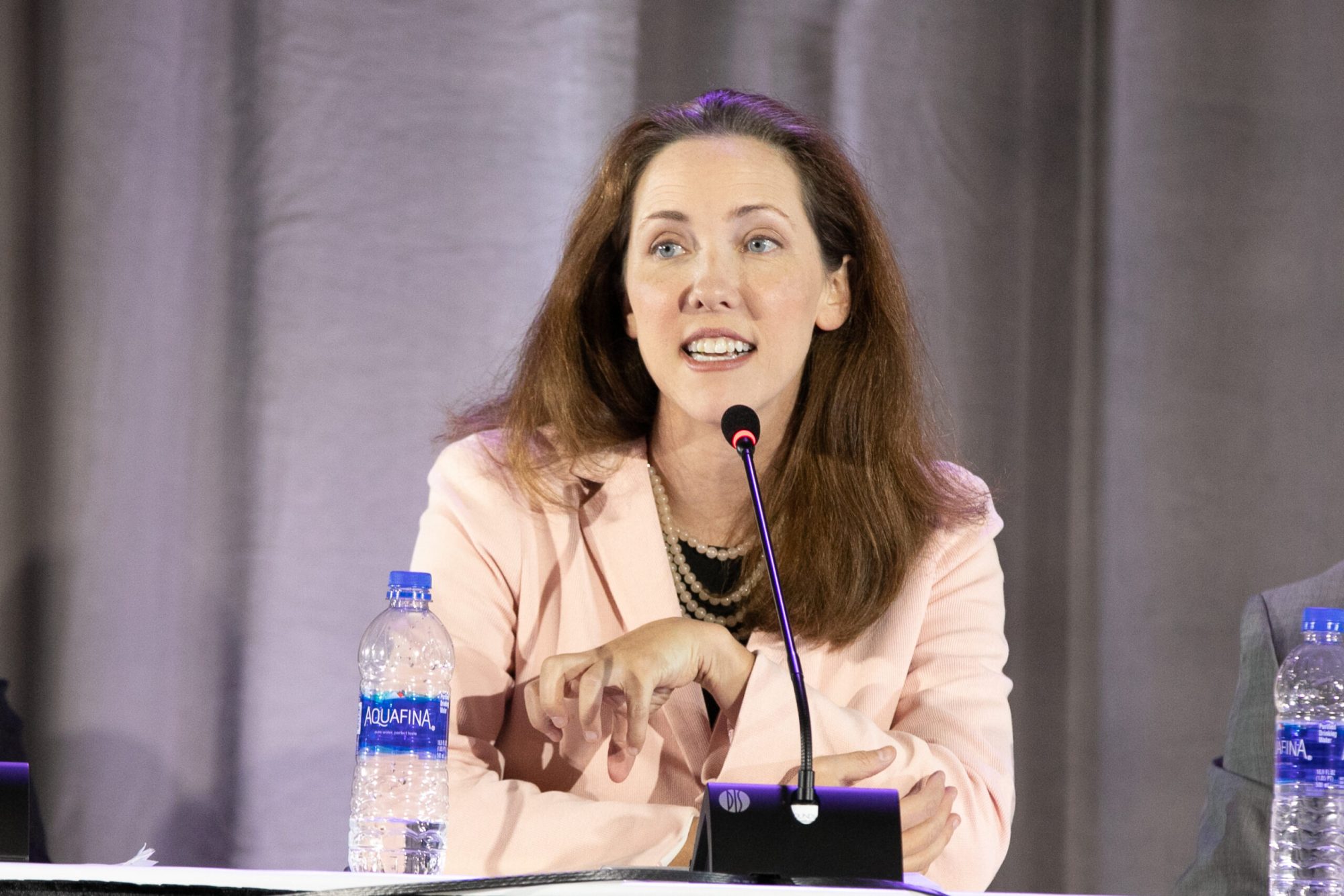
NewsSubscribe
First
Last
Consent

The $1.56/cwt Permit Trap Hiding in Your Next Dairy Expansion: Riverview’s 18,855‑Cow Minnesota Fight

A one‑year permit delay on 600 new stalls quietly adds about $1.56/cwt to that milk you haven’t shipped yet. The Stevens County fight shows exactly how that math catches up to you.

Executive Summary: A one‑year delay on a 600‑cow expansion can quietly add about US$1.56/cwt in interest alone to every cwt those new stalls should be producing. In Stevens County, Minnesota, Riverview’s proposed 18,855‑cow West River Dairy expansion triggered that exact risk profile: a 226‑million‑gallon water permit request, an MPCA EAW under fire, and a room full of neighbors who don’t trust the math. The same company just agreed to an US millionArizona settlement over groundwater in Sulphur Springs Valley, which opponents now point to as Exhibit A in their fight against more cows on the same aquifer system as Morris. The article walks through the barn math on time‑risk (capital × interest ÷ cwt), shows how a 7.5% rate and US$3 million in debt turn into that US$1.56/cwt drag, and then lays out why regulatory compliance no longer guarantees community approval. If you’re planning to add cows in the next 12–24 months, this is a playbook for pricing in permit delays, pressure‑testing your DSCR with your lender, and doing the neighbor and board work before your name shows up in the legal notices.

Dairy permit risk

The number that froze the room in western Minnesota wasn’t the cow count. It was 226 million gallons of water per year — the volume Riverview LLP’s proposed West River Dairy expansion near Alberta would be allowed to pull from an off‑site well under a Minnesota DNR appropriation request, according to MPCA filings and a March 2026 public notice.

For nearby grain farmer Joe Stromen, who lives a few miles from the proposed site, that Minnesota dairy expansion permit isn’t an engineering abstraction; coverage from Land Stewardship Project (LSP) and Sentient Media has him clearly in the “opposed” column. It’s his well, his gravel road, his property value tied to a project that, until the public comment period opened, he had no formal say in. And for any dairy operator planning growth in 2026, Stevens County is a case study in the cost nobody budgets: the price of a permit fight you didn’t see coming, measured in months of lost revenue and interest you’re still paying on barns that aren’t milking cows.

When a Minnesota Dairy Permit Becomes the Biggest Risk in the Room

The West River Dairy proposal didn’t start with protesters. It started with paperwork.

Riverview LLP — the Fehr family‑founded dairy and beef company headquartered near Morris since 1939 and widely identified as Minnesota’s largest dairy producer — filed with the MPCA to expand West River Dairy from 7,855 to 18,855 dairy cattle, which equates to 26,397 animal units under Minnesota’s feedlot formula. LSP’s analysis calls it the largest dairy CAFO ever proposed in Minnesota by animal units.

On the engineering side, Riverview’s plan tracks with Minnesota feedlot rules on paper. LSP and MPCA summaries note that the expansion would add a new 11,000‑cow freestall site and increase covered, clay‑lined liquid manure basins from around 102 million gallons to roughly 250 million gallons, with about 13,200 acres of cropland identified for manure application. The DNR water permit would authorize pumping up to 226 million gallons per year, at no more than 1,000 gallons per minute, from an off‑site well near the dairy. The City of Morris — population just over 5,000 — is currently permitted to withdraw up to 300 million gallons per year from its municipal wells in the same aquifer system.

Opponents like Stromen, Carroll, and Matthew Sheets read those numbers differently than Riverview’s engineers.

LSP organizer Sean Carroll, who has tracked CAFO permitting across western Minnesota for years, and residents like Stromen and Sheets point to three numbers in particular: LSP’s reading of state permits says a single dairy expansion is applying to draw roughly 75% of Morris’s annual permitted groundwater volume; the site lies in a landscape dotted with waterfowl production areas and wildlife refuges; and Sentient Media’s review of Minnesota water‑use records estimates Riverview’s existing Minnesota hog and dairy operations already use at least 570 million gallons per year, with West River adding another 226 million if approved.

Carroll’s line, documented in LSP materials and comment letters, is that this isn’t “anti‑dairy,” it’s about cumulative risk: how much animal density and water a single landscape can absorb — and whether the review process is equipped to answer that question at Riverview’s current scale.

Did Riverview File First and Engage Later — and Is That Why They’re Fighting?

From Riverview’s side, the logic is familiar to anyone who has expanded a dairy. Partner and spokesperson Brady Janzen has been quoted in prior coverage saying Riverview grows where cheese demand and processor capacity pull them, and the I‑29 corridor, with billions in new cheese and processing investment, is pulling hard. That’s the same dynamic The Bullvine highlighted in earlier consolidation and plant‑investment work: processors build stainless, and cows, heifers, and capital follow the pipe.

The internal assumption behind West River is one that a lot of growth‑minded herds still share:

  • Hire respected engineers.
  • Model manure, storage, and acres to state specs.
  • Keep water pulls under the modeled aquifer capacity.
  • Deliver a tight nutrient management plan.

If the paperwork is clean, the permit might get noisy — but it eventually lands.

Stevens County is the reality check on that “clean paperwork = smooth permit” assumption. Twice.

First, history. In 2014, the Minnesota Pollution Control Agency’s Citizens’ Board — a now‑abolished citizen oversight panel — ordered a full environmental impact statement (EIS) for a proposed Riverview dairy on essentially the same Stevens County site, citing cumulative concerns about groundwater and downstream impacts. That project did not proceed in its original form. In 2015, after intense political and industry pushback, the legislature eliminated the Citizens’ Board, a move widely linked in state reporting to the Riverview decision and other controversial feedlot calls. When a new, larger West River plan emerged a decade later with only an environmental assessment worksheet (EAW) instead of a full EIS, LSP, and the Institute for Agriculture and Trade Policy (IATP) framed it as a system that had lost a layer of scrutiny, not one that had learned from 2014.

Second, track record. In January 2026, Arizona Attorney General Kris Mayes announced a US$11 million settlementwith Riverview related to concerns about declining groundwater levels in the Sulphur Springs Valley. Under the agreement, Riverview agreed to provide US$11 million to fund replacement wells, emergency and interim water supplies, and community water systems for affected residents, while continuing water‑conservation efforts; the company did not admit legal wrongdoing. LSP and Food & Water Watch have used that case, and that dollar figure, as part of their argument that West River deserves closer scrutiny.

On the one hand, Riverview can cite its MPCA and DNR filings and argue that its West River proposal fits within Minnesota’s current feedlot and water‑permit framework. On the other hand, groups like LSP and IATP argue that Riverview’s current scale — and high‑profile groundwater disputes like the Arizona case — justify tougher questions about cumulative water draw and enforcement. However, that argument plays out legally, the operator who absorbs the financial cost of any delay, conditions, or litigation is Riverview — and in the next county, with the next big barn, that operator could be you.

How Much Does a Dairy Expansion Permit Delay Actually Cost?

Here’s the math almost nobody runs before filing. You don’t need 18,855 cows for this to hurt — the arithmetic hits just as hard at 400, 800, or 1,500 new stalls.

When a permit stalls, you’re carrying:

  • Interest on expansion‑tied capital you’ve already drawn or committed — land, barns, storage, parlor, rolling stock.
  • Fixed costs — insurance, taxes, maintenance, utilities — on infrastructure that isn’t yet shipping milk.
  • Professional fees — engineering, legal, consulting — that tick up with every hearing, comment extension, or requested study.

And you’re missing:

  • Milk revenue from cows that should already be shipping.
  • Component premiums and incentives are baked into the original pro‑forma.
  • Manure nutrient credits you expected to offset the purchased fertilizer on your acres.

Most people budget for construction risk — overruns, weather, and contractors. Very few explicitly budget time‑risk. In a county watching West River and reading about Arizona, that line item is getting more real.

How Much Can a Minnesota Dairy Expansion Permit Delay Actually Cost?

Here’s why that Stevens County fight matters even if you’re “only” adding 600 cows two states away. Walk through this once with transparent numbers. Then swap in your own.

Assume:

  • You’re adding 600 cows to your current herd.
  • You’ve drawn about US$3.0 million in expansion‑tied capital — a midpoint in the US$2.5–3.5 million range seen in some Upper Midwest freestall/parlor plus manure‑infrastructure budgets for 500–700 cows.
  • Your blended interest rate on that capital is 7.5%, consistent with recent Kansas City Fed data showing average interest rates on farm real‑estate loans around 7.49% in early 2025 — near the long‑term average but still high enough to make every month of delay expensive.

Here’s the time‑risk cost profile:

  • Annual interest = capital × interest rate
    • 3,000,000 × 0.075 = US$225,000 per year in interest directly tied to the expansion.
  • Monthly burn = 225,000 ÷ 12 ≈ US$18,750 per month in interest — before you count depreciation, taxes, insurance, or legal fees.
  • A 12‑month permit delay at that rate = US$225,000 in interest alone, with no milk from those 600 cows.

Now convert that into something you actually feel in the milk check.

USDA and related summaries put average US milk production per cow in the low‑ to mid‑20,000‑pound range annually; using 24,000 pounds (240 cwt) per cow per year is a reasonable example for a Holstein herd in recent years.

  • 600 cows × 240 cwt/cow/year = 144,000 cwt of milk per year. Those new stalls should produce once they’re filled.

Time‑risk penalty per cwt in this example:

  • 225,000 ÷ 144,000 cwt ≈ US$1.56/cwt.

That’s just the interest — no feed, no labor, no margin‑over‑feed math. In a 600‑cow example at current rates and infrastructure costs, a one‑year permitting delay quietly adds around a dollar and a half per cwt to the effective cost of that new production. If your build is larger, rates are higher, or production runs lower, the penalty climbs.

Run your own version:

  • Expansion capital drawn × interest rate ÷ 12 = monthly time‑risk cost.
  • Monthly time‑risk cost × months of delay = total time‑risk hit.
  • Total time‑risk hit ÷ annual cwt from new cows = your hidden US$/cwt drag.
Expansion SizeCapital DrawnMonthly Interest Burn$/cwt Drag @ 6-Mo Delay$/cwt Drag @ 12-Mo Delay
400 cows$2,000,000$12,500$0.78$1.56
600 cows$3,000,000$18,750$0.78$1.56
800 cows$4,000,000$25,000$0.78$1.56
1,000 cows$5,000,000$31,250$0.78$1.56
1,500 cows$7,500,000$46,875$0.78$1.56

Where in your spreadsheet did you plan for that line?

What Stevens County Teaches Every Dairy Farmer to Grow

Here’s the myth this fight quietly kills: “Big guys get what they want. My smaller expansion won’t draw this kind of heat.”

Riverview did what any seasoned operator is told to do. Tight nutrient numbers. Engineered storage. A water permit request, DNR staff say, can be managed within the aquifer’s capacity on paper. Yet they still walked into a hearing room where opponents had binders of state records, an Arizona AG press release, and a decade‑old EIS fight on the same site to point at.

That dynamic doesn’t stay confined to a 26,397‑animal‑unit project. It shows up when:

  • You grow from 300 to 600 cows on the edge of town.
  • You site a deep pit or lagoon along a gravel road that a newer subdivision uses every day.
  • You move from one barn to a multi‑barn complex in a township that has never seen that density.

Your nutrient management plan might be airtight. The question is whether you’ve done any work to translate those numbers into the lived reality of dust, headlights, and truck counts that your neighbors care about.

Stevens County also exposes a second busted assumption for any operator: “Once regulators sign off, the science argument is over.”

In their formal and media comments, LSP and IATP argue that cumulative nitrate and water‑use risks in the Pomme de Terre watershed aren’t fully captured by current modeling for a project of West River’s size. That’s a technical argument, not just a vibes‑based objection. Whether you buy their analysis or not, once that level of distrust fills a boardroom, another engineering cross‑section or appendix letter from MPCA doesn’t move the room by itself.

In 2026, regulatory approval is the floor for community trust, not the ceiling. If an expansion strategy stops at “the state says yes,” the operator is effectively handing the public narrative about their farm to critics — and doing it while the interest meter ticks and heifers keep aging.

Those months of drift also collide with other structural constraints. Work on the heifer shortage has shown how tight replacement supply and higher heifer values already squeeze expansion timelines and flexibility; every extra month of permit limbo shifts when those heifers calve in, and how you manage culling and breeding. A year‑long permitting detour doesn’t just cost you interest; it can throw your replacement, breeding, and culling plans out of sync.

Risk DimensionWest River (Proposed)Typical 500–1,200 Cow MN Expansion
Herd size (animal units)26,397 AU (18,855 cattle)700–1,700 AU
Water permit request226M gal/yr (75% of Morris municipal)5–25M gal/yr
Manure storage~250M gal liquid basin2–8M gal
Cropland for application~13,200 acres800–3,000 acres
Prior EIS/EAW history on siteYes — 2014 fight, project abandonedTypically none
AZ groundwater settlement (same operator)$11M (Jan 2026)N/A
Community opposition on recordLSP, IATP, local residents, formal commentsOccasional neighbor objections
Permit pathwayEAW only (no full EIS)Standard MPCA feedlot permit

The 30/90/365‑Day Expansion Playbook: What to Do Before You File

You don’t control aquifers, activist groups, or statehouse politics. You do control how exposed you are before your farm’s name shows up in a public notice that opposition groups can organize around.

TimeframeActionOwnerRisk if Skipped
30 daysRun time-risk math (capital × rate ÷ cwt)Operator + lenderFlying blind on $/cwt drag
30 daysAttend 2 township/county meetingsOperatorCan’t name likely opponents before filing
30 daysDSCR stress-test at 6 and 12-mo delayLender conversationCovenant breach risk not modeled
30 daysAudit own regulatory/neighbor historyOperator + attorneyOpposition brings it up first
90 daysThird-party “skeptic’s review” of operationEnvironmental engineerGaps handed to critics at hearing
90 daysTranslate NMP into plain-language neighbor summaryAgronomist + operatorNutrient narrative controlled by opponents
90 daysPre-negotiate haul routes with county road authorityOperatorTruck traffic becomes hearing flashpoint
365 daysBuild advisory circle (neighbors + local officials)OperatorNo trusted voices in the room when it counts
365 daysAnnual stewardship snapshot (public-facing)Operator“Distant operator” framing sticks unopposed
365 daysVisible local investment (FFA, fire dept, road cleanup)Operator.56/cwt permit fight that was avoidable

In the Next 30 Days

  • Show up where decisions are already being made. Attend at least two county or township meetings you’d normally skip. Sit in the back and listen. Note who always comments, which commissioners lean in on ag issues, and what topics stall the room. If you can’t name the three people most likely to speak against your expansion today, you’re filing blind.
  • Run your time‑risk math now, not after you’ve broken ground.
    • Pull your expansion‑tied capital and real blended interest rate.
    • Use your own rolling‑12‑month production to estimate annual cwt from the new cows.
    • Plug into the formulas above to calculate your monthly burn and US$/cwt penalty for a 6‑ and 12‑month delay.
  • Test your coverage with your lender. Take that time‑risk number to your lender and ask, “How many months of zero new revenue from this expansion can we absorb before my debt‑service coverage ratio drops below about 1.2?” Many ag lenders use around 1.2 as a common minimum DSCR covenant on term debt; you need your actual threshold and how close you are to it in writing, not as a guess from memory.
  • Audit your own regulatory and neighbor history. Pull five to ten years of your own interactions with environmental regulators: spill reports, notices of violation, odor complaints, anything formally logged. Make a second list of serious neighbor disputes. Assume every item on those lists will be mentioned in a hearing, and start thinking now about what you’d say in response.

Over the Next 90 Days

  • Commission your own “skeptic’s review” of your current operation. Hire a third‑party environmental or engineering firm — not just the engineer who’ll file your permit — to look at nutrient loading vs acres, seasonal odor, and truck traffic by season and time of day. Ask them explicitly, “Where would a critic reasonably push on this?”
  • Translate your nutrient management plan into a neighbor’s language. Before your name shows up in the legal notices, pull your immediate neighbors into a conversation or mailer that says, in plain numbers:
    • How many acres get manure, roughly how many gallons per acre, and how many times per year?
    • Most of those nutrients replace purchased N, P, and K on those fields, based on your lab results and agronomist recommendations.
    • The specific steps you take on timing, injection/surface‑application, setbacks, and slope to keep nutrients and odors as controlled as possible.
  • Pre‑negotiate haul routes and timing with your county. Sit down with the county or township road authority now and lay out your anticipated truck trips at full build‑out, including peaks for silage, feed, and manure. If you can walk into a hearing with a signed or draft road‑use understanding — or at least a memo showing you’ve offered to contribute to maintenance — it changes the tone of that part of the debate.

Over the Next 365 Days

  • Build a small advisory circle that outlasts the permit fight. That might be two neighbors, one local official, and a representative from the school or fire department. Meet once or twice a year to share high‑level plans and ask for blunt feedback. The goal isn’t consensus; it’s a pattern of engagement that commissioners can point to when they’re under pressure.
  • Create an annual stewardship snapshot you’d be comfortable seeing on Facebook. One page on manure handled, acres receiving it, major changes you’ve made to reduce risk or nuisance, and what you’re doing on water use and emergency preparedness. Post it online and drop a printed copy with immediate neighbors.
  • Invest visibly before you ask for a big yes. Target local support where your trucks and impact already show up: fire department, FFA, local EMS, and road cleanups. You’re not buying votes, you’re demonstrating that you see your operation as part of the community, not above it. That matters a lot when a commissioner is weighing two stacks of testimony.

By the time your permit hits the agenda, you want key people in that room thinking, “We know them. They show up, and they fix things.” That doesn’t eliminate organized opposition. It makes it harder to frame you the way critics have portrayed Riverview in their campaigns — as a distant, growth‑driven operator the community never really got to vet.

What This Means for Your Operation

  • Price the year you didn’t plan for. Use your own capital and rate to calculate your monthly time‑risk cost, then stress‑test a 6‑ and 12‑month delay. If that scenario would shove your working‑capital buffer below roughly a month of operating expenses, re‑phase or downsize the project before you file.
  • Stop assuming a clean permit file equals a smooth community process. Build a basic communication and neighbor‑engagement plan the same way you build a nutrient plan — with names, dates, and specific risks you’re trying to manage.
  • Clear your own skeletons off the table first. Make a realistic list of past notices, complaints, and disputes, then decide what you can fix or visibly improve this year so they’re not the only stories in the room when your name comes up.
  • Treat Stevens County as tuition, not spectacle. Watch what happens with the West River Dairy permit — the timelines, the conditions, and the political fallout — and then identify where your own expansion looks similar on scale, water draw, or proximity to town. That’s your risk stripe.
  • Do one concrete thing in the next 30 days. Either show up to a local board or planning meeting to listen, or book a meeting with your lender to walk through your time‑risk math and DSCR headroom. Put the date and the name on your calendar now, not “sometime this summer.”

Key Takeaways

  • If your expansion pro‑forma only works when everything stays on schedule, you don’t have a plan — you have a best‑case scenario. The West River fight shows how fast a technically compliant, well‑engineered project can still get bogged down when history, water, and community trust are in play.
  • Regulatory approval is the starting line in 2026, not the finish. The barns that get built without an extra year of legal and political drag usually belong to operators who did the communication and relationship work before their permit hit the agenda, not after.
  • Your most expensive opponent may not be the loudest person at the hearing — it’s the monthly interest and lost margin you never modeled when the permit timeline slipped. In a realistic 600‑cow example at current rate and cost assumptions, that delay can quietly add around US$1.50 per cwt to the effective cost of that new milk; larger builds carry even more time‑risk.

The Bottom Line

Stevens County’s mega‑dairy fight will keep showing up in headlines and legal filings. Your version will show up in a local boardroom with 30 people, a sign‑up sheet, and a clock.

Before you sign the next construction contract, pull two things: your monthly expansion‑related interest burn, and the name of the first neighbor or local official you’d call before your permit goes public. If either one is blank, that’s your real permitting problem.

Complete references and supporting documentation are available upon request by contacting the editorial team at editor@thebullvine.com.

Learn More

The Sunday Read Dairy Professionals Don’t Skip.

Every week, thousands of producers, breeders, and industry insiders open Bullvine Weekly for genetics insights, market shifts, and profit strategies they won’t find anywhere else. One email. Five minutes. Smarter decisions all week.
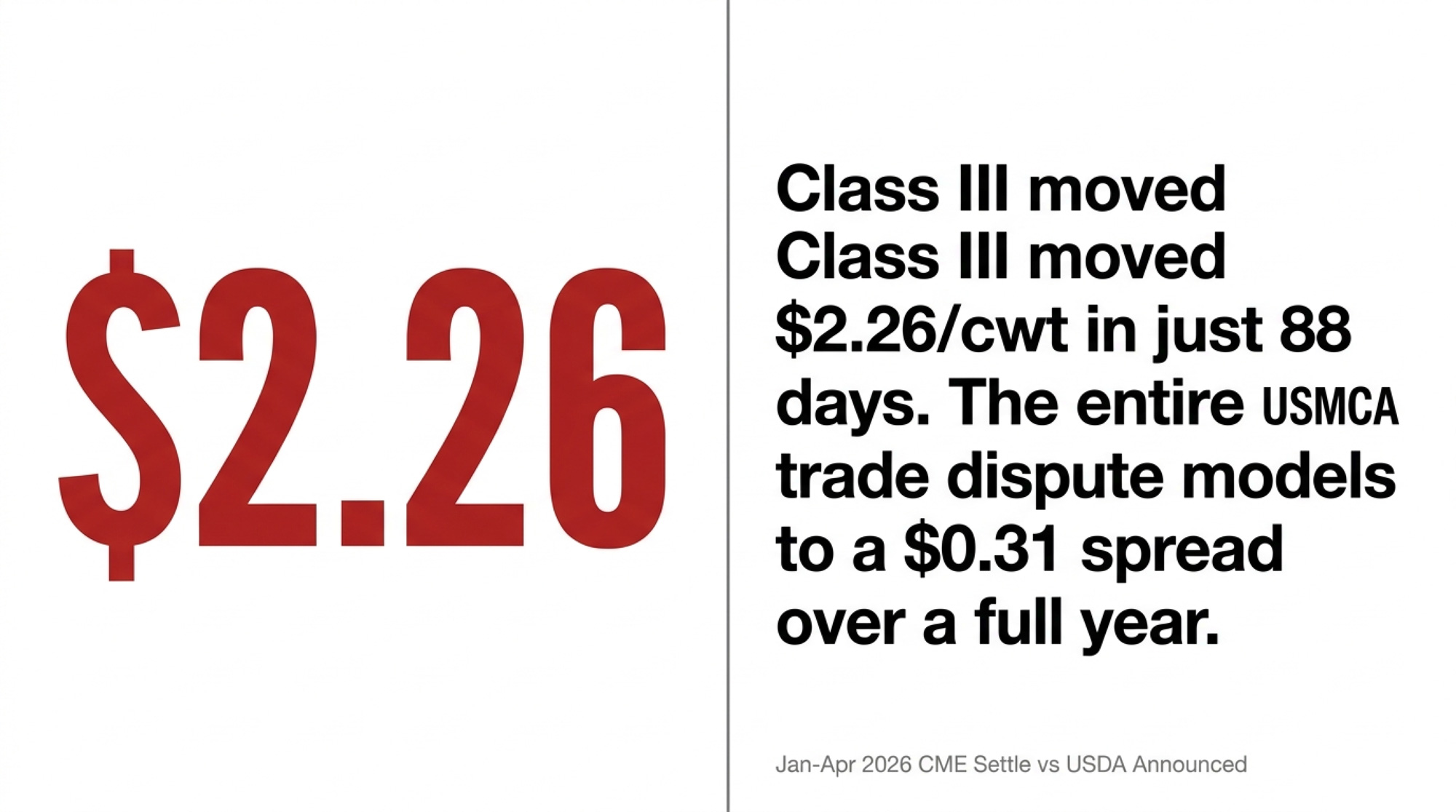
NewsSubscribe
First
Last
Consent

The $1,500‑Per‑Cow Whey Trap: Why $11/lb Whey Only Shows Up as 69¢ on Your Milk Check

$11/lb whey. 69¢ on your milk check. We ran the FMMO barn math on a 300‑cow herd to see where the other $1,500 per cow actually went. 

Executive Summary: Your component check dropped about $1,520 per cow from February 2025 to February 2026 while premium whey climbed to $11/lb and plants poured $11 billion into new cheese and whey capacity. FMMO’s new make‑allowance formula now prices other solids off 69‑cent dry whey and higher processor costs, cutting roughly 24¢/cwt from your other‑solids line even as whey markets rally. Butterfat and protein did the rest of the damage, taking total Class III components down about $6.09/cwt — a $450K‑plus swing on a 300‑cow herd. At the same time, beef‑on‑dairy calves are throwing off $500–$800/head, helping cash flow but leaving the U.S. roughly 800,000 heifers short heading into a capacity build‑out. The article walks through barn‑level scenarios if whey and cheese both correct, including how negative PPDs could stack another $1–$2/cwt on top of what you’ve already lost. Then it lays out a 30/90/365‑day playbook: audit your component line against AMS values, stress‑test your DMC and DRP coverage, and rebuild any expansion math around ~$15.50/cwt components instead of 2025 peaks. If you’ve got 200–500 cows on a component order and you’re not sure how much of that $11/lb whey is in your milk check, this is the 10‑minute read to run before your next contract or barn decision.

Milk check analysis

Eleven dollars a pound. That’s where high‑grade whey protein isolate has traded since late 2025, according to Ever.Ag Insight — roughly triple the price three years ago. Cheese plants are sometimes pulling more revenue from the whey stream than the cheese block itself. 

But pull your early‑2026 milk check, and a different number stares back. USDA’s February 2026 Class III component values, at standard test of 3.8% fat, 3.2% protein, and 5.7% other solids, work out to about $15.46/cwt — down from $21.55/cwt in February 2025. That’s a drop of $6.09/cwt, or roughly $1,520 per cow on 25,000 lb shipped. 

At the National Farmers Union’s 124th annual convention this March, Wisconsin Farmers Union president Darin Von Ruden dropped a number that landed hard: about $50,000. That’s how much less a 300‑cow dairy operator in southwest Wisconsin received on his January 2026 milk check compared with January 2025. Same cows. Same plant. Same truck. The formulas changed. As Von Ruden told Brownfield Ag News, this wasn’t a model herd or a spreadsheet example — it was a neighbor he’d spoken with the week before. 

And the $11 billion pouring into 53 new and expanded U.S. dairy processing projects across at least 19 states, according to IDFA, hasn’t changed that producer’s other‑solids line by a dime. 

How Much Whey Value Actually Reaches Your Milk Check?

Almost none. And the formula explains why.

Your “other solids” component — the FMMO line where whey economics should show up — is calculated from commodity dry whey, not the premium WPI or WPC‑80 driving the headlines. Under USDA’s January 2025 Final Rule, effective June 1, 2025: 

Other‑solids price = (Dry whey price − $0.2668) × 1.03

USDA’s February 2026 “Announcement of Class and Component Prices” puts NDPSR dry whey at $0.6931/lb. Run the math: 

  • $0.6931 − $0.2668 = $0.4263
  • $0.4263 × 1.03 = $0.4391/lb of other solids.

That matches the published number exactly. Meanwhile, premium WPI trades near $11/lb, and WPC‑80 has approached €20,000/ton in Europe. Those are totally different products from the commodity dry whey that feeds the FMMO formula. 

Your other‑solids line is tethered to 69‑cent dry whey and pays 44¢/lb. Your processor’s ingredient desk is selling $5–$11/lb whey proteins into sports nutrition and GLP‑1 diets. That’s the first piece of the disconnect — and it’s the piece Rabobank’s Lucas Fuess has been warning about in interview after interview since late 2025. 

The Make‑Allowance Hit You Voted For

There’s a second piece, and this one was literally on the referendum ballot.

Dry whey did move up year‑over‑year. February 2025’s NDPSR average: $0.6650/lb. February 2026: $0.6931/lb  — an increase of 2.8¢/lb. But your other‑solids value didn’t climb. It slid. 

  • February 2025 other‑solids price: $0.4799/lb (old formula). 
  • February 2026 other‑solids price: $0.4391/lb (new formula). 

Dry whey up 2.8¢. Other solids down 4.1¢/lb.

The reason: the FMMO reform raised the dry whey make allowance from $0.1991 to $0.2668/lb — a 34% jump,shifting value from producer to processor. Producers approved it in the December 2024–January 2025 referendum. AFBF economist Danny Munch calculated that in the first three months alone, higher make allowances stripped more than $337 million in combined pool value nationally — class price reductions of 85 to 93 cents per hundredweightdepending on the order (AFBF Market Intel, September 2025). As Munch told Brownfield Ag News, the higher allowances “more than wipe out” the gains from other reforms. 

Here’s the barn math at your test level (5.7 lbs OS/cwt):

  • 2025 OS component: $0.4799 × 5.7 = $2.74/cwt.
  • 2026 OS component: $0.4391 × 5.7 = $2.50/cwt.

That’s 24¢/cwt gone from other solids alone. Over 25,000 lb per cow, roughly $60/cow, and about $18,000 on a 300‑cow herd. Even though dry whey itself went up.

Premium whey triples. Commodity dry whey inches up. The make allowance change eats that small gain and then some. It’s exactly the make‑allowance hit we laid out in the FMMO piece earlier this month.

Where Did the ~$6/cwt Actually Go?

The component hit isn’t just whey. It’s the combination of weaker butterfat, softer cheese, and those other solids squeezed all at once.

Using USDA AMS component values for February 2025 vs. February 2026 at standard test: 

ComponentFeb 2025Feb 2026Change/lbPer‑cwt impact
Butterfat (3.8%)$2.8186/lb$1.7794/lb−$1.0392−$3.95
Protein (3.2%)$2.5337/lb$1.9373/lb−$0.5964−$1.91
Other solids (5.7%)$0.4799/lb$0.4391/lb−$0.0408−$0.23
Total   −$6.09/cwt

Butterfat did about two‑thirds of the damage. Softer cheese pulled protein lower and took another third. Other solids were the smallest slice — but in a whey boom, you’d expect them to be climbing, not sliding.

Per 25,000‑lb cow:

  • Feb 2025: $21.55/cwt × 250 cwt = $5,387/cow.
  • Feb 2026: $15.46/cwt × 250 cwt = $3,865/cow.

That’s about $1,520/cow gone — roughly $456,000 on Von Ruden’s 300‑cow neighbor. And through all of that, processors with whey-fractionation capacity booked elevated whey-ingredient margins. 

One quirk worth flagging: the FMMO protein formula includes a butterfat deduction. The butterfat drop in early 2026 actually cushioned the protein decline. If butterfat recovers while cheese stays soft, the protein line can fall further, even without another move in cheese. 

Who’s Building the Stainless — and Who’s Sharing?

StoneX dairy consultant John Lancaster told DairyReporter that “almost weekly you hear about a small or medium‑sized investment increasing capacity”. Put some names on that $11 billion: 

  • Glanbia/Southwest Cheese — adding significant WPI capacity in Clovis, New Mexico, through a JV with DFA. 
  • Idaho Milk Products — investing roughly $200 million in a new protein and powder blending facility. 
  • Wisconsin Whey Protein — finishing a plant targeting up to 13 million lbs of WPI annually. 
  • Arla Foods Ingredients contracted with Valley Queen in South Dakota for WPC manufacturing. 
  • Globally: Fonterra ($50M Studholme expansion, NZ), Tirlán (€126M new facility, Ireland), Amul (doubling a whey plant plus two new builds, India). 

Every pound of WPI starts as your cow’s milk going through a cheese vat. The FMMO formula turns that into $0.4391/lb of other solids. The plant’s ingredient desk sells that same stream at several dollars per pound. 

Whey ProductMarket Price (Feb 2026)FMMO Formula PayGap per PoundWho Captures It
Whey Protein Isolate (WPI)$11.00/lb$0.4391/lb$10.56Processor ingredient desk
WPC-80~$9.00/lb (€20k/t equiv.)$0.4391/lb$8.56Processor ingredient desk
NDPSR Dry Whey$0.6931/lb$0.4391/lb$0.254Partially shared via FMMO
Commodity Dried Whey Permeate~$0.38/lbNot in formulaN/AProcessor

Some co‑ops return a slice through patronage dividends or over‑order premiums tied to ingredient economics. In the Upper Midwest, industry sources report some operations have negotiated premiums of $0.20–$0.30/cwt above pool pricing, structured as multi‑year agreements. In a lot of plants, though, any whey value is buried inside the overall component or patronage numbers — not broken out on your statement. 

McCully Consulting’s Mike McCully predicts processors will soon be “forced into fights for milk by paying more, meaning some will not get all the milk they need”. That’s your leverage. But only if you know what your milk is worth to the plant buying it — and whether a competing plant within hauling range is offering a clearer premium. 

What Happens When $11 Billion in U.S. Dairy Capacity Comes Online?

Every extra pound of premium whey requires another cheese vat running. All that new stainless means more cheese — whether the market is ready or not.

Rabobank’s Fuess warned in March 2026 that these expansions “could temporarily lead to an oversupplied market and reduce cheese prices in the near term as the market works to absorb the additional output”. Cheese has already pulled back from around $1.90/lb a year ago to the mid‑$1.40s in early 2026. 

Exports are doing their best to bail the boat. USDEC data show U.S. dairy exports started 2026 with 12% year‑over‑year volume growth in January — the biggest January on record — with cheese up 11%, butter up 187%, and NFDM/SMP up 19%. 

But here’s the stress test. Using the USDA’s component formulas and historical price ranges, two downside scenarios:

Scenario A — Whey retreats, cheese softens:

  • Dry whey slides to $0.55/lb (mid‑2025 levels). Cheese eases ~10% into the high‑$1.20s.
  • Other solids drop to roughly $0.29/lb. Protein falls to mid‑$1.40s/lb.
  • Net: about −$2.33/cwt from February 2026 levels → −$582/cow → −$175,000/year on 300 cows.

Scenario B — Deeper correction:

  • Dry whey returns to $0.45/lb (closer to 2023 levels). Cheese drops ~20% into the low‑$1.10s.
  • Other solids fall to roughly $0.19/lb. Protein slides toward $1.00/lb.
  • Net: about −$4.40/cwt → −$1,100/cow → −$330,000/year on 300 cows.

Scenario A isn’t far‑fetched. NDPSR dry whey sat in the 50–60¢ band for stretches of 2024 and 2025.

Now add the hidden multiplier: PPDs. If cheese drops while Class IV holds firm — CME nonfat dry milk has been trading at some of its strongest levels in more than a decade, near $1.94/lb in March 2026  — the spread blows out, and negative Producer Price Differentials come back. In 2020, some orders saw PPDs past −$4 to −$8/cwt. Even a moderate −$1.50/cwt PPD adds another ~$375/cow in exposure. 

If you lived through 2020–2021 negative PPDs, you know this isn’t theoretical. And it’s exactly the kind of peak‑price trap that backfired for Kiwi producers when Fonterra built budgets around NZ$9.70 milk.

The Calf Check: One of the Few Hedges Hitting Cash Today

While the FMMO formula fails to capture the $11/lb whey premium, beef‑on‑dairy is one place producers are actually winning back margin in cash.

In strong Wisconsin markets, beef‑cross calves have brought up to $1,750 a head, with Premier’s January 2026 report listing beef‑dairy crosses at $1,000–$1,750. Holstein bull calves, by comparison, sit in the $700–$1,150 range. 

That extra $500–$800 per calf functions as a de facto hedge. On 300 cows breeding 40% to beef semen, that’s 120 calves generating roughly $60,000–$96,000/year that never touches a federal order.

The trade‑off is real, though. USDA’s January 1, 2026, cattle report puts U.S. dairy replacement heifers at 3.905 million head — the lowest since the late 1970s and about 16% below January 2020. CoBank dairy economist Corey Geigerprojects the gap at roughly 800,000 fewer replacements across 2025–2026 before inventories begin to rebound sometime in 2027. As Geiger put it: “We don’t see a rebound until 2027, and that will be up 285 thousand, but you’ve got to remember, that’s going to be after 800 thousand fewer heifers”. 

Fewer replacements mean fewer cows when all that new stainless steel starts hunting for milk. That takes you straight back to McCully’s question: “Who won’t get the milk?” 

Beef‑on‑dairy props up your cash and tightens the supply that new capacity needs. But it comes with a shelf life — and if more than half your AI program is going to beef without a three‑year heifer plan, you’re trading tomorrow’s cow supply for today’s calf check. We walked through exactly how that math can break on a 400‑cow herd last week.

What This Means for Your Operation

  • Your component check has already absorbed roughly $1,520/cow from February 2025 to February 2026 — about $456,000 on 300 cows. If your expansion budget or debt‑service math is built on early‑2025 component values, you’re building on a number that isn’t there anymore. 
  • The FMMO reform alone shaved about $60/cow off your other‑solids line via the higher make allowance — roughly $18,000/year on 300 cows — even as processors booked stronger whey ingredient margins. 
  • You need to know what your plant does with whey and how they share it. If your co‑op’s annual report shows whey ingredient revenue growing faster than patronage per cwt, that gap is worth understanding — and worth raising at your next member meeting.
  • Beef‑on‑dairy calves at $1,400–$1,750 are real margin, but they’re also tightening heifer supply in ways that make the coming milk bidding wars more brutal. Your beef‑to‑dairy AI ratio needs to line up with your three‑year heifer plan, not just this month’s calf check. 
  • Negative PPDs are the hidden multiplier. With Class IV buoyed by strong powder and cheese under pressure, the setup looks uncomfortably similar to 2020 and late 2024. Model another $1–$2/cwt of exposure.
  • Don’t build a barn on a commodity spike. Stress‑test every expansion pro forma at about $15.50/cwt component value, not $21. If it doesn’t cash‑flow there, you’re not investing — you’re betting.
  • Price the haul to a competing plant. If whey capacity is being added within hauling range, ask directly what the over‑order premium is and how ingredient economics show up in their payment structure. McCully’s “who won’t get the milk?” question is where your leverage comes from. 

Your 30/90/365‑Day Playbook

TimeframeKey ActionTarget BenchmarkRed Flag ThresholdTool / Source
30 DaysAudit milk check vs. USDA valuesProtein: $1.9373/lb; OS: $0.4391/lb; Fat: $1.7794/lb>$0.15/cwt below FMMO after haulingUSDA AMS February 2026 component prices
30 DaysRequest co-op whey breakdownPatronage per cwt growing with ingredient revenueWhey revenue growing faster than patronageCo-op annual report / equity statement
90 DaysStress-test DMC coverageTier 1 at $9.50 (up to 6M lb)Margin drops below $9.50 in Scenario AUSDA DMC / Center for Dairy Excellence
90 DaysModel PPD exposure$0/cwt PPDPPD turns -$1.50/cwt or worseClass III vs. Class IV spread monitor
12 MonthsRe-run expansion pro formaBase case: $15.50/cwt componentsOnly pencils out above $20/cwtInternal proforma, lender review
12 MonthsPrice hauling alternativesConfirm over-order premium structurePlant within haul range offers no premiumMcCully/StoneX consultant framework

Within 30 days: Audit your check against USDA component values.

Pull your last three milk statements. Compare your protein, other solids, and butterfat rates to USDA’s February 2026 published component prices: protein at $1.9373/lb, other solids at $0.4391/lb, butterfat at $1.7794/lb

If your combined protein‑plus‑other‑solids payment runs more than $0.15/cwt below the FMMO values after hauling and marketing deductions, call your co‑op and ask one direct question: “How are whey ingredient economics reflected in my component check?”

If you get a non‑answer, request the co‑op’s annual financial report and equity statement. Compare ingredient revenue to patronage distributions. That gap — if it’s growing — is the conversation to bring to the next member meeting. It’s the kind of thing that costs real money when you put off the hard financial questions.

Within 90 days: Stress‑test your DMC coverage and talk to your lender.

USDA’s January 2026 DMC margin landed at $7.81/cwt, triggering a $1.69/cwt indemnity for herds enrolled at the $9.50 Tier 1 level. February’s margin was projected to be around $8.07/cwt by the Center for Dairy Excellence. 

Walk your own numbers through Scenario A:

  • Knock $2.33/cwt off your current component value.
  • Layer in a −$1.50/cwt PPD if you’re in an order that’s likely to go negative.
  • See where your income‑over‑feed margin lands relative to $9.50/cwt.

If the margin drops below $9.50 in that scenario, the expanded Tier 1 coverage — now up to 6 million pounds under the One Big Beautiful Bill Act  — is likely your cheapest shock absorber. 

Then bring both scenarios to your lender. Ask specifically: what debt‑service coverage ratio would they need to see — 1.2×? 1.3×? — to stay comfortable if those margins showed up for 12 months. Better to push that conversation now than have your banker push it when the PPD turns red.

Within 12 months: Rebuild your expansion math around post‑reform prices.

Run every major capital decision at three component levels:

  • $15.50/cwt — roughly where early‑2026 Class III components sit. 
  • $19.20/cwt — a 2025‑style “good year” average.
  • Scenario A with a −$1.50 PPD — your personal worst‑case stress.

You don’t control whether WPI stays at $11 or glides down to $6. You do control whether your business can survive both.

Key Takeaways

  • If your expansion or refinance pencils out only at a $20+ component value, you’re exposed. Re‑run at $15.50/cwt and see if it still holds water.
  • If you can’t see whey in your milk check, assume it’s not there. Plan your cash flow on FMMO components alone until your statement or co‑op report shows a clear whey‑linked premium.
  • If more than half your AI is going to beef without a three‑year heifer plan, you’re trading future cow supply for today’s calf check. Make sure that’s intentional.
  • If you’re not enrolled at $9.50 DMC Tier 1 and you’re running 200–500 cows, you’re choosing to self‑insure against a whey/cheese/PPD shock. Do the math with your lender, not in your head.

The Bottom Line

What’s your protein premium per cwt this month versus 90 days ago? Does your processor break out whey solids or ingredient premiums anywhere on your statement? And if you’re in a co‑op, how did last year’s patronage per cwt move compared to the co‑op’s reported whey ingredient revenue?

If you don’t know any of those answers, that’s your 30‑day assignment.

Next in “Component Check”: we run the math on how the April DMC margin and the whey premium interact on a 500‑cow milk check. If you want us to use your real numbers, send them.

This analysis uses publicly available USDA data, published analyst commentary, and FMMO pricing formulas. It’s intended as economic education and decision support for dairy producers, not as investment advice or a recommendation regarding any specific co‑op, processor, or financial product.

Complete references and supporting documentation are available upon request by contacting the editorial team at editor@thebullvine.com.

Learn More

The Sunday Read Dairy Professionals Don’t Skip.

Every week, thousands of producers, breeders, and industry insiders open Bullvine Weekly for genetics insights, market shifts, and profit strategies they won’t find anywhere else. One email. Five minutes. Smarter decisions all week.
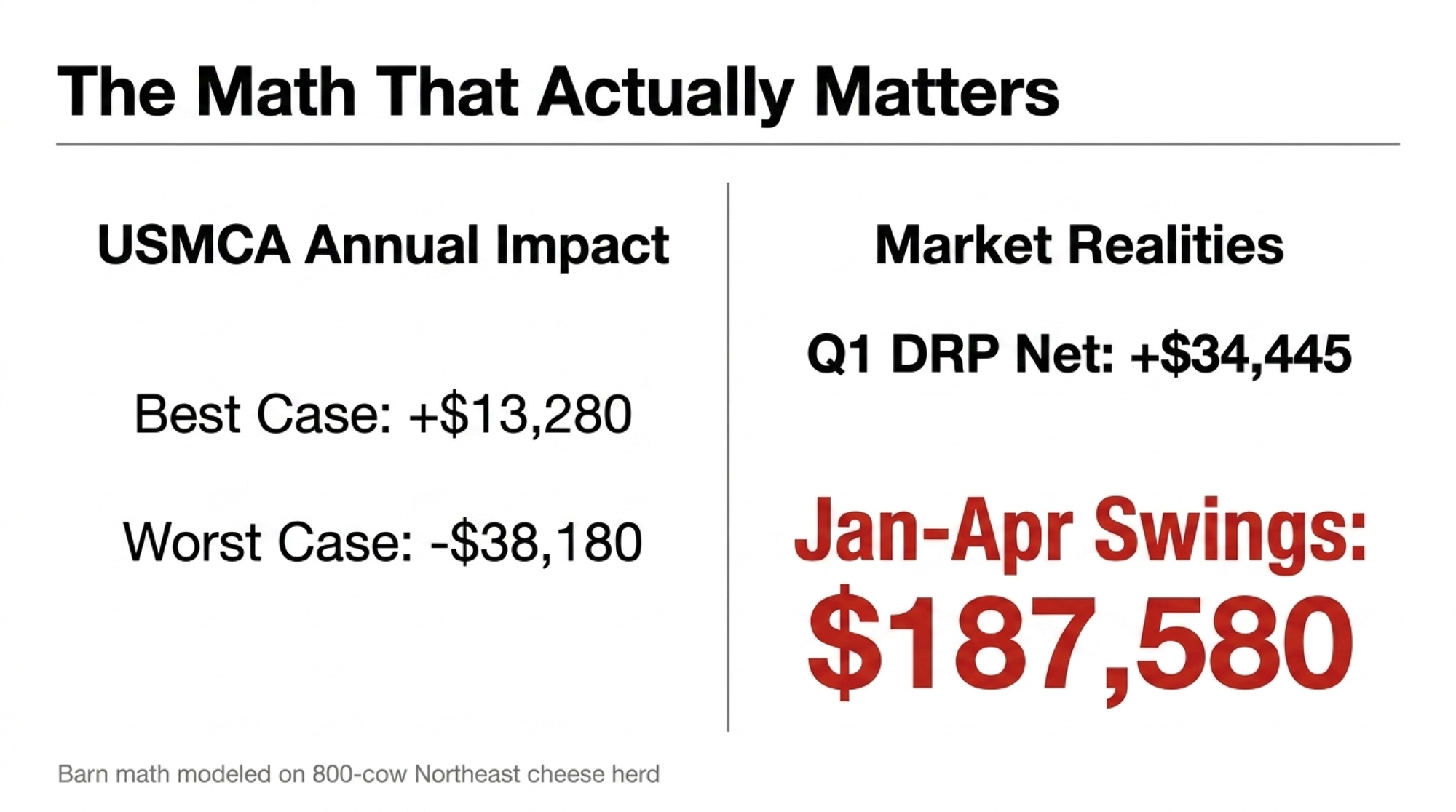
NewsSubscribe
First
Last
Consent

The $550,000 Math Your Lender Already Ran: Inside Northern Lights Dairy’s 2026 Stress Test.

USDA cut $3/cwt off their 2026 forecast in six months. We ran the stress test on a 500-cow herd — price, freight, and labor hitting at once. The compound number is $550,000.

Executive Summary: USDA’s 2026 all-milk forecast has dropped .20/cwt since last August — on a 500-cow herd, that’s 6,000 in gross revenue gone before costs move. Costs are moving. The Holle family near Mandan, North Dakota, lost two processors in three years and now hauls milk five hours to a Minnesota plant; across FO30, hauling charges jumped 29.8% in one year. Stack that freight squeeze and the new AEWR labor reclassification on top of softer prices, and the compound hit on a 500-cow herd reaches $533,000–$550,000/year — with debt service, you’re modeling a $633,000–$710,000 shortfall before anyone draws a paycheck. We break down the barn math for each layer, walk through three paths (restructure, scale, or planned exit), and lay out a 90-day triage starting with your AEWR audit and two lender scenarios at $18 and $16.50/cwt. If your DSCR drops below 1.0 at either price, you’re not in a dip — you’re in a conversation your lender is already having on your file.

Dairy Stress Test

Last August, USDA projected 2026 all‑milk at $21.90/cwt. By February, they’d cut it to $18.95. The March WASDE bumped it back to $19.70 — still $1.47/cwt below the revised 2025 average of $21.17. On a 500‑cow herd shipping 120,000 cwt a year, that gap alone erases roughly $176,000 in gross milk revenue.

And that’s the optimistic number. January’s actual Class III settled at $14.59/cwt. CME futures for February pointed to roughly $15.16. The March WASDE left the 2026 Class III forecast unchanged at .65/cwt — higher cheese prices exactly offset lower whey. The back half of 2026 is doing all the heavy lifting on USDA’s spreadsheet. The question isn’t whether 2026 is a down year. It’s whether you’ve stress‑tested what happens when three cost shocks land on top of that softer price at the same time.

For the Holle family at Northern Lights Dairy near Mandan, North Dakota — about 1,000 Holsteins, now hauling five hours one way to a Bongards plant in Perham, Minnesota — the forecast revisions are background noise. Their real squeeze started the day their closest processor closed. It hasn’t let up since.

When Your Backup Plant Disappears — Twice

The Holles didn’t get a warning shot. In September 2023, Prairie Farms closed its Bismarck processing facility and converted it to distribution only. North Dakota Agriculture Commissioner Doug Goehring was blunt: “With no other processors nearby, those dairies will likely pay for shipping longer distances that will be deducted from their milk checks. This will have a dramatic impact on their bottom line.”

He wasn’t speculating. A producer about 50 miles northwest of Bismarck — identified in Dairy Star’s September 2023 reporting as Henke — saw his milk rerouted 151 miles to a DFA facility in Pollock, South Dakota, at an immediate freight surcharge of $0.55/cwt. He also had to buy an additional bulk tank for every‑other‑day pickup. Then, in July 2024, DFA announced it would close Pollock, too — a plant employing 33 full‑time and four part‑time workers — effective August 30. Suddenly, Henke’s backup was gone. The Holles’ backup was gone. Milk that used to travel dozens of miles was now traveling hundreds of miles into Minnesota plants, with no particular reason to pay a premium for distant, hard‑to‑route volume.

USDA’s Upper Midwest (FO30) data shows what that kind of map‑stretching does at scale. Weighted‑average hauling charges climbed from $0.6137/cwt in 2023 to $0.7969/cwt in 2024 — a 29.8% jump in a single year. Today, the only milk plant operating in North Dakota is Cass‑Clay’s facility in Fargo, pressed against the Minnesota border. For herds west of the Missouri, every extra mile comes straight off the check.

What Does a $3/cwt Drop Actually Do to a 500‑Cow Herd?

USDA’s March outlook at $19.70/cwt sounds like a sigh of relief after February’s $18.95. It isn’t. That forecast still has to be delivered through a first quarter where Class III opened at $14.59 and February futures pointed to $15.16. The March WASDE held the 2026 Class III forecast at $16.65/cwt. Where does your breakeven actually sit if the back half doesn’t deliver?

UW‑Madison’s July 2025 Dairy Enterprise Budget puts the cost of production — after co‑product revenue — at $18.68/cwt for its example operation. That lines up with Minnesota extension benchmarks in the same range. Call it $18.50–$19.00/cwt at cash operating level for a reasonably efficient 500‑cow herd shipping roughly 120,000 cwt — dropping unpaid family labor and some depreciation. That leaves a cash margin of $2.00–$2.50/cwt, or about $240,000–$300,000/year at a $21.00 mailbox.

Now stress‑test at $18.00/cwt — our realistic downside scenario if the back half underperforms USDA’s $19.70 forecast. That’s not the consensus. It’s where we think you should be testing.

Risk 1: Oversupply and Price Erosion

USDA’s March WASDE pegs 2026 production at 234.7 billion pounds, roughly 1.3% above 2025. If your effective mailbox averages $18.00/cwt instead of $21.00, that’s $3.00/cwt off your top line. On 120,000 cwt: –$360,000.

Risk 2: Processor Network and Hauling

FO30’s hauling jump is the baseline. Lose a plant or get rerouted — the way Henke and the Holles did — and it doesn’t take a disaster to lose another $0.75/cwt between basis and freight compared to recent history, on 120,000 cwt: –$90,000.

Risk 3: Labor and the New AEWR Rule

In October 2025, DOL split the Adverse Effect Wage Rate into Skill Level I and Skill Level II, tied to job duties. Cornell’s Ag Workforce team lays out how this hits dairy: a few words in a job description can move you from Level I to Level II. Nationally, CRS puts the Level I range at $7.35–$14.83/hour and Level II at $8.54–$21.16/hour — gaps of $1–$7+/hour depending on your state. In the upper Midwest dairy belt, that spread typically runs $4–$5/hour.

On a 500‑cow herd with roughly 20,800 paid hours/year (10 FTEs at 2,080 hours), a blended increase of $4.00–$4.80/hour — accounting for overtime, payroll burden, and housing — means $83,000–$100,000/year in extra labor cost.

Deep dive: The new AEWR labor math for dairy crews

The 500‑Cow Stress Test: Where $550,000 Vanishes

Here’s the math your lender may already be running on your file. We’re showing every input so you can plug in your own.

Baseline: 500 cows × 240 cwt/cow × $21.00/cwt = $2,520,000 revenue
Cash margin at $21.00: ~$2.00–$2.50/cwt → $240,000–$300,000/year

Risk Factor$/cwt ImpactAnnual Loss (120k cwt)Fixable by Producer?
Market price erosion (vs. $21 baseline)–$3.00/cwt–$360,000No — macro
Hauling & basis shift (FO30, +29.8%)–$0.75/cwt–$90,000Partial — processor mapping
AEWR labor reclassification (H-2A)–$0.69 to –$0.83/cwt–$83,000 to –$100,000Yes — job-duty audit
TOTAL COMPOUND HIT–$4.44 to –$4.58/cwt–$533,000 to –$550,000
Baseline cash margin (at $21/cwt)+$2.00 to +$2.50/cwt+$240,000 to +$300,000
Net modeled cash position–$1.94 to –$2.58/cwt–$233,000 to –$310,000

*AEWR hit converted to milk terms: $83,000–$100,000 ÷ 120,000 cwt = $0.69–$0.83/cwt.

Stack that against the baseline margin: best case, $300,000 minus $533,000 = –$233,000. Worst case: $240,000 minus $550,000 =– $310,000. Modeled cash margin: –$233,000 to –$310,000.

Now add debt service. A 500‑cow herd that expanded in the 2020–2023 cycle can easily carry $3–$5 million in term debt between facilities, equipment, and replacement stock alone — USDA AMS pegged the national average replacement dairy cow at $3,110/head as recently as October 2025, meaning the animal inventory on a 500‑cow herd represents north of $1.5 million before you count a single piece of concrete. At current rates and 15–20‑year amortizations, $3–$5M in term debt often pencils to $350,000–$450,000/year in principal and interest. Stack a working figure of $400,000 P&I on top of that negative cash margin, and you’re modeling a shortfall between –$633,000 and –$710,000/year before you pay yourselves a dollar.

That’s not a tight year. That’s a year where your lender is choosing which playbook you’re on.

Are You Overpricing H5N1 and Underpricing Labor?

H5N1 grabs the headlines. The math says plan for it — but don’t let it crowd out the risk that’s already in your pay stubs.

Risk MetricH5N1 (HPAI)AEWR Labor Reclassification
Best-case annual cost (500-cow herd)~$0 (no outbreak)$33,000–$41,000 (4 mis-slotted FTEs)
Expected value (probability-weighted)$50,000–$55,000 over 12–18 months$83,000–$100,000/year (certainty if mis-classified)
Worst-case hit$142,500–$166,250 (30–35% clinical rate)$100,000+/year (10 FTEs, Level II gap)
Fixable this month?No — biosecurity reduces, doesn’t eliminateYes — job-duty audit + Cornell AEWR checklist
Currently in your breakeven?Rarely modeledAlmost never modeled
2026 trajectoryStabilizing (0 new dairy cases, Jan 2026)Escalating — new DOL rule effective Oct 2025
Per-cow annual exposure$100–$333/clinically affected cow$165–$200/FTE/year in wage gap

A Cornell‑led team published results in Nature Communications from an Ohio dairy herd of 3,876 cows hit by HPAI in spring 2024. They counted 777 clinically affected cows — about 20% of the herd — with severe mastitis and steep production drops. Over 60 days, total losses: $737,500, or roughly $950 per clinically affected cow. As of early 2026, USDA APHIS data and AVMA tracking put cumulative confirmed H5N1 dairy infections at more than 1,000 herds across at least 17 states — California alone accounts for more than 750.

But here’s a detail that hasn’t made most farm papers: USDA reported zero new dairy herd detections in January 2026. The outbreak appears to have peaked during California’s fall 2024 wave. The National Milk Testing Strategy is now active in 45 states.

Scale the Cornell numbers to 500 cows if 20% are clinically hit at $950 each: $95,000. Push the clinical rate to 30–35%, and you’re in the $142,500–$166,250 range. Weight those outcomes by rough probability — heavy event at ~10%, moderate at ~40%, minimal at ~50% — and the expected value for a 500‑cow herd lands around $50,000–$55,000 over the next 12–18 months. Those probability weights are our assessment based on current surveillance trends, not the USDA’s.

Now put that beside labor. Under the 2025 AEWR rule, four FTEs misclassified from Level I to Level II cost about $33,000–$41,000/year in wages alone — that’s 4 workers × 2,080 hours × $4–$5/hour. Add one FTE’s churn cost — mistakes, training, yield drag — and lenders will quietly pencil labor risk at $40,000–$50,000/year. You’ve matched your H5N1 expected value with exposure that’s already hitting every pay period.

The Holles spent 2025 worrying more about where their milk was going and whether they could hold a crew than whether a virus would cross their fence line. Line up the math, and that instinct looks smart.

Deep dive: What the H5N1 data actually says about herd‑level cost

The Lender Meeting Your Milk Check Is Writing

When a herd staring at a modeled –$633,000 to –$710,000 gap sits across the desk from a lender, nobody’s leading with forage quality. The real question: Is there a believable path back to positive cash flow in 12–24 months?

Path 1 — Restructure at today’s scale. Stretch terms to 20–25 years, negotiate interest‑only for 12–24 months, and sell non‑essential assets. It only works if a 2027 budget at $17.00–$18.00/cwt still reaches breakeven on realistic costs. For herds in the Holles’ geography — one in‑state plant at Fargo, longer hauls, fewer competing buyers — that’s a tough line to draw.

Path 2 — Scale up to dilute fixed cost. Jumping from 500 to 900 cows means ~400 additional head. USDA AMS data from October 2025 put the national average replacement dairy cow at $3,110/head, with premium genetics running $4,000+ at auction in California, Minnesota, and Pennsylvania. By the February 2026 National Dairy Comprehensive Report, average fresh‑cow prices had eased to around $2,700/head — but that’s still north of $1 million in animal cost alone for 400 head, before facilities. If 2026 milk ends up closer to $17–$18/cwt, those extra cows don’t magically fix two‑year cash flow. You gain scale. You put more equity on the table.

And if you’re thinking Path 2, the cows you add can’t just be black‑and‑white lawn ornaments. In a $17–$18/cwt world, you need animals that turn feed into components, hit pregnancy targets, and stay out of the sick pen. Scaling with mediocre genetics amplifies the problem — you push more volume through a system that still doesn’t pay its bills.

Path 3 — Plan an exit while you still have a say. At $600,000–$700,000/year in modeled losses, equity burn is fast. That’s maybe two or three bad years before the balance sheet no longer lets you choose how the story ends. A deliberate exit — cows first, then iron, then land — preserves more capital than a forced sale.

If you’re leaning toward Path 3, your genetic equity is your last paycheck. The top end of your herd — high‑component, trouble‑free, exportable cow families — often pays better through targeted private‑treaty sales than by sending everything on the same trailer on the same day. Sorting that value ahead of time is how you turn 20 years of breeding decisions into actual exit dollars instead of scrap value.

The point of this math isn’t to push anyone into Path 3. It’s to drag the conversation into Q2, while you still have options, rather than into Q4, when your lender writes the plan.

The 90‑Day Triage: Levers You Actually Control

Clean Up AEWR Exposure — This Month

Download Cornell’s October 2025 AEWR overview and match every H‑2A position to DOL’s Level I vs. Level II duty definitions — not the labels you’ve always used. In the upper Midwest dairy belt, that spread typically runs $4–$5/hour. Four mis‑slotted FTEs cost roughly $33,000–$41,000/year in wages. That’s the same order of magnitude as the modeled H5N1 expected value we just walked through — and it’s a lever you control with a pen and a clear job list.

Run Two Breakevens With Your Lender Before June 30

Build one 2026 budget at $18.00/cwt and a second at $16.50/cwt, using your actual cost structure. If your pro‑forma DSCR comes in below 1.0 in either scenario, you’re in path territory, not ride‑it‑out territory. Above 1.3, you’ve got breathing room. Between 1.0 and 1.2, small misses matter. Two quarters under 1.0, and someone else starts drawing the map.

Go After Turnover and Inputs

  • Plug one FTE of churn. The real cost of a churned dairy FTE — training, mistakes, production drag — runs $10,000–$15,000/year.
  • Pick a nitrogen trigger. DTN’s late‑January survey had urea at $583/ton, roughly 13–14% above the $514/tona year earlier. StoneX’s Josh Linville flagged Persian Gulf risk as a fertilizer wildcard. If local urea drops within ~5% of last year’s level, lock in at least a third of your 2026 N.
  • Pick one micro‑automation project with a sub‑18‑month payback. At a loaded labor cost of nearly $19.50/hour, saving 1,000 hours/year frees up about $19,500. Against ~$25,000 installed, that’s a 15‑month payback.

For herds in the Holles’ position — one plant option, five‑hour hauls, limited buyer competition — the processor‑mapping bullet below isn’t theoretical. It’s their Tuesday.

Three Signals That Could Rewrite This Math

Not all of this has to land. Here’s what changes the picture — in either direction.

USDA’s production line. March’s projection of 234.7 billion pounds is already above 2025. If actual output runs meaningfully lower — tighter base penalties, faster culling, a shorter heifer pipeline — oversupply risk eases and the price outlook improves. If USDA revises upward again, the $16.50 scenario gets more likely, not less.

H5N1 trajectory. Cumulative detections sit above 1,000 herds, but zero new dairy cases in January 2026 and an active testing program in 45 states suggest the outbreak has stabilized. If herd prevalence rebounds or movement restrictions tighten at the marketing‑area level, H5N1 moves back up the risk radar. If the current trend holds, it’s a biosecurity discipline issue, not a budget emergency.

The USMCA review. Article 34.7 mandates the first joint review by July 1, 2026. If it triggers tariff changes, quota shifts, or retaliation that trims U.S. dairy exports, those extra domestic pounds need a home. That leans your budget toward $16.50, not $18. A clean review, on the other hand, removes a significant overhang.

And the upside case? If actual 2026 all‑milk lands at $20.50 — plausible if production underruns the forecast and export demand holds — the same 500‑cow herd picks up roughly $96,000 in gross revenue vs. the $19.70 base case. That’s not transformative on its own. But it’s the difference between Path 1 working and Path 1 failing.

What This Means for Your Operation

  • Build two 2026 budgets with your lender before June 30 — one at $18.00/cwt, one at $16.50/cwt. If DSCR is under 1.0 in either, you’re choosing between restructure, scale, or exit, whether you say it aloud or not.
  • Quantify your own triple‑hit. Multiply your shipped cwt by $3.00 for price, then by $0.75 for basis/hauling, then add your state’s AEWR gap times your labor hours. If that combined number exceeds last year’s operating margin, you’re in a structural squeeze — not a cyclical one.
  • Audit every H‑2A job level in writing this month. Four mis‑slotted FTEs cost $33,000–$41,000/year,depending on your state’s gap, for zero extra production.
  • Map your processor risk on paper. List your primary plant, realistic backups, miles to each, and expected basis in each scenario. If your “backup” relies on full plants hundreds of miles away, that risk isn’t in your breakeven yet.
  • If you’re considering Path 2 (scale), sort your genetics first. Every cow you add at $17–$18 milk needs to earn her way on components and fertility, not just fill a stall. At $2,700–$3,100/head for replacement stock, that’s real capital riding on whether she pays her own way.
  • If you’re considering Path 3 (exit), sort your genetics first, too. Targeted sales of high‑component, high‑index cow families before a dispersal can capture breeding value that a single‑day auction won’t.
  • Set a 365‑day marker. By March 2027, you should know whether you’re on a three‑year rebuild, an expansion track, or an orderly exit — and have that documented in writing with your lender.

Key Takeaways:

  • If your 2026 budget only works above $19–$20/cwt, you’re already in the risk band where a 500‑cow herd can model a $633,000–$710,000/year shortfall once price, freight, labor, and debt stack.
  • A realistic “downside but not disaster” scenario is $18.00/cwt milk, –$3.00/cwt price erosion, –$0.75/cwthauling/basis, and $0.69–$0.83/cwt AEWR labor — together stripping $533,000–$550,000 from a 500‑cow herd’s annual margin.
  • Four mis‑slotted H‑2A positions can quietly cost $33,000–$41,000/year in wages; that’s roughly the same order of magnitude as your expected H5N1 hit, and it’s fixable this month with a clean job‑duty audit.
  • If your pro‑forma DSCR drops below 1.0 at $18.00 or $16.50/cwt, you’re not “riding out a rough year” — you’re choosing between restructure, scale with real equity, or planning an exit while you still control the timing.
  • Your best 90‑day moves are boring, not heroic: run two lender scenarios at $18.00 and $16.50/cwt, quantify your own triple‑hit per cwt, map real backup plants and miles, and write down a 365‑day plan you’d be willing to put in front of your banker.

The Bottom Line

If your 500‑cow budget only works above $19–$20/cwt with today’s cost and debt structure, you’re already in the risk band this stress test describes — whether or not USDA’s March revision to $19.70 felt like good news.

If your modeled DSCR at $17–$18/cwt sits below 1.2, you’re not trimming fat. You’re in a structural conversation, your lender is already having internally.

The Holles are five hours from their plant, down two processors in three years, and still milking. That’s grit. But grit doesn’t fix a –$633,000 gap. Math does. And the math starts with knowing your own number before someone else runs it for you.

The Sunday Read Dairy Professionals Don’t Skip.

Every week, thousands of producers, breeders, and industry insiders open Bullvine Weekly for genetics insights, market shifts, and profit strategies they won’t find anywhere else. One email. Five minutes. Smarter decisions all week.
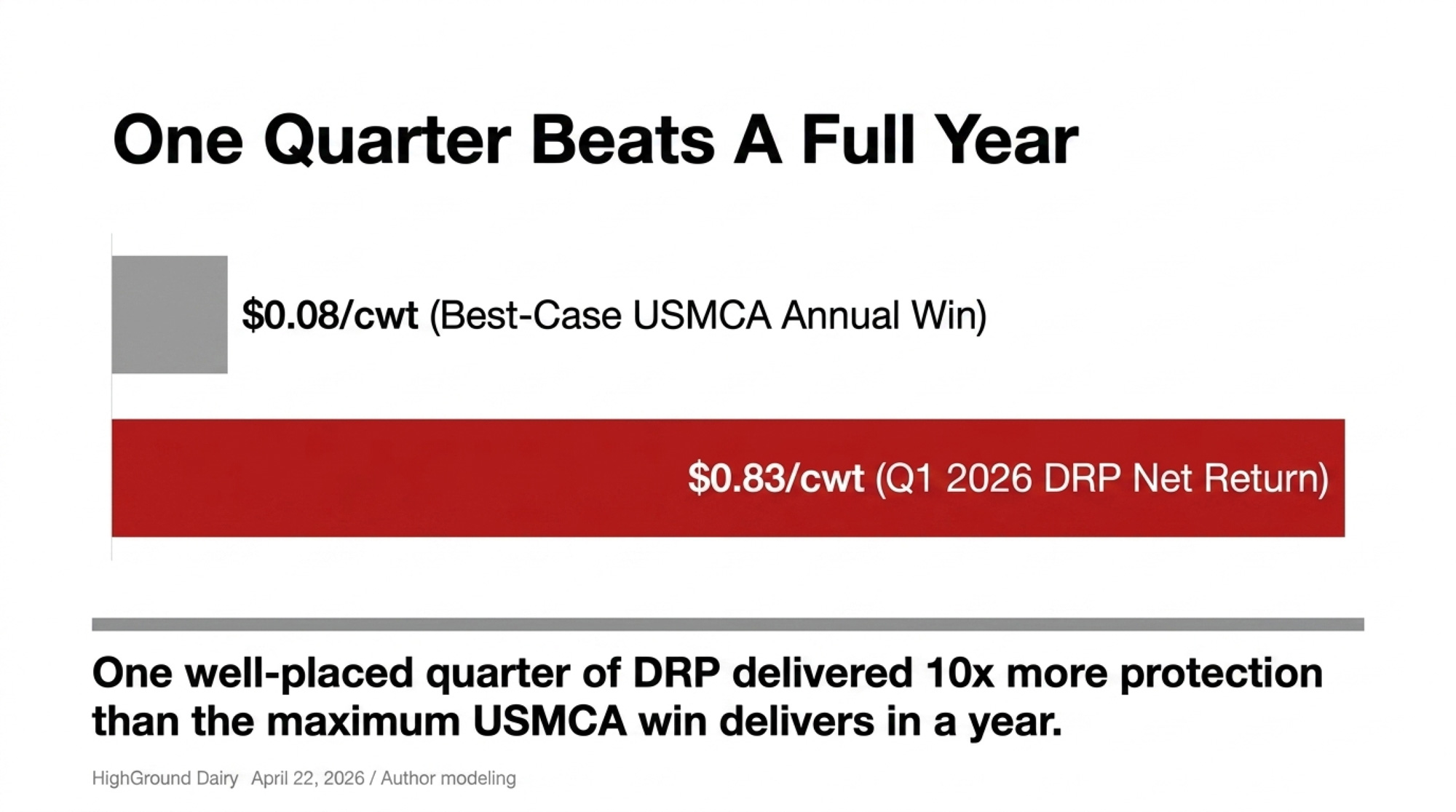
NewsSubscribe
First
Last
Consent

Learn More

Complete references and supporting documentation are available upon request by contacting the editorial team at editor@thebullvine.com.

Fonterra’s NZ$9.70 Milk Price: The 12‑Month Debt Trap Every Supplier Must Stress‑Test Now

At NZ$9.70, a 400‑cow herd clears NZ$163,200. At NZ$9.20 with post‑March fert costs, it’s NZ$72,162. Same cows. Same platform. Different budget.

Executive Summary: Fonterra’s NZ$9.70/kgMS midpoint looks like a win, but ANZ already pegs 2026/27 closer to NZ$8.70, and Ballance just added NZ$90/t to urea. A 400‑cow herd that appears to clear NZ$163,200 at NZ$9.70 and DairyNZ’s NZ$8.68 breakeven can see that surplus collapse to about NZ$72,000 if milk slips to NZ$9.20 and nitrogen climbs another 30%. The co‑op has hedged itself with a 10‑year raw milk deal, a 3‑year ingredients agreement, and roughly NZ$3.9B in returns, but none of that changes your breakeven, leverage, or debt‑service coverage. This piece walks through the barn math step‑by‑step so you can plug in your own kgMS, fert tonnes, and debt schedule. It shows why herds in the 60–65% debt‑to‑asset band are in a “use this payout to de‑risk or double down” 12‑month window. And it lays out a practical playbook: how to stress‑test at NZ$9.20 plus higher fert, what to take to your next bank review, and how to decide whether to lock in nitrogen or ride the market.

Dairy debt stress-test

For a 400‑cow North Island dairy sitting at about 65% debt‑to‑asset, Fonterra’s NZ$9.70 per kgMS midpoint, NZ$2.00 per share capital return, and 40 cents in dividends feel like a long‑overdue rescue package. On paper, it’s the first season in two years where the milk cheque looks big enough to fix fences, upgrade gear, and finally get the bank manager off your back.

The catch is simple and uncomfortable: those record numbers are boosted by short‑term conflict and shipping friction, while the real damage to demand and fertiliser costs won’t show up in the farmgate milk price for another 12–18 months. If you treat this payout as the new normal, you may be spending what should’ve been your last clean shot at moving out of the danger band — not because the numbers are wrong, but because the conditions behind them may not last.

A 400‑Cow “Win” That’s Not as Fat as It Looks.

Let’s stay with that 400‑cow example, because that’s exactly where a lot of New Zealand herds sit. Call him Mark — 400 cows on about 150 hectares of milking platform in the North Island, running an intensive pasture system and carrying roughly 65% debt‑to‑asset after the last few tough seasons.

Scenario400 cows (160k kgMS)800 cows (336k kgMS)1,500 cows (660k kgMS)
NZ$9.70 FMP, pre-hike costsNZ$163,200NZ$342,720NZ$673,200
NZ$9.70 + Ballance March hikeNZ$160,225NZ$339,672NZ$670,105
NZ$9.70 + 30% urea stressNZ$152,162NZ$319,544NZ$628,843
NZ$9.20 + 30% urea stress🔴 NZ$72,162🔴 NZ$152,644🔴 NZ$301,991

On March 22, 2026, Fonterra reported half‑year FY26 numbers: NZ$13.9 billion in revenue and NZ$750 million net profit after tax for the six months to January 31, 2026. On the back of that, the co‑op lifted its forecast Farmgate Milk Price range to NZ$9.40–NZ$10.00 per kgMS, with a midpoint of NZ$9.70 — up from a previous midpoint of NZ$9.50. It also confirmed an interim dividend of 24 cents per share and a special 16‑cent Mainland dividend, and signalled a planned NZ$2.00 per share capital return tied to completion of its Lactalis transactions.

DairyNZ’s Econ Tracker, updated June 26, 2025, put the national average breakeven milk price at NZ$8.68 per kgMS for the 2025/26 season, up from NZ$8.41 the year before. Head of economics Mark Storey linked that increase to higher tax obligations and rising farm working expenses, especially feed, fertiliser, and energy.

If Mark’s breakeven matched that national average, his margin at NZ$9.70 looks like this:

  • 9.70 − 8.68 = NZ$1.02/kgMS margin.
  • At 160,000 kgMS from 400 cows, that’s NZ$163,200 in operating surplus for the season.

That’s before the capital return and dividends even hit his account. It’s the kind of number that makes you think about new iron, extra land, maybe finally getting ahead of the bank.

But DairyNZ’s NZ$8.68 breakeven was calculated before March 18, 2026.

The Fertiliser Hit You Didn’t Budget For

Four days before Fonterra released those HY26 numbers, Ballance Agri‑Nutrients told farmers it was raising fertiliser prices again. In a March 18 update, Ballance said sulphur‑based and Yara‑branded products would increase immediately, with other products following on March 26, citing “rapidly changing circumstances” in global markets and conflict in the Middle East.

The new Ballance schedule landed like this for New Zealand farmers:

  • Urea: up NZ$90/tonne, to about NZ$1,075/t.
  • SustaiN: up NZ$90/t, to around NZ$1,124/t.
  • DAP: up NZ$75/t, to roughly NZ$1,603/t.
  • Superphosphate: up NZ$35/t, to about NZ$549/t.

On Mark’s 150‑hectare platform, let’s assume a fairly intensive fertility program — around 25 tonnes of urea, 5 tonnes of DAP, and 10 tonnes of super in a season. Plug your own rates in here, but watch what happens with these numbers:

  • Urea: 25 t × NZ$90/t = NZ$2,250.
  • DAP: 5 t × NZ$75/t = NZ$375.
  • Super: 10 t × NZ$35/t = NZ$350.

That’s an extra NZ$2,975 in fertiliser costs purely from the March increase. Spread over 160,000 kgMS, it’s about 1.9 cents/kgMS off his margin.

So Mark’s “paper” margin drops from NZ$1.02/kgMS to roughly NZ$1.00/kgMS after just one pricing email. Doesn’t sound like much. Not yet. But it’s already trimming a margin most operators are still mentally pencilling at NZ$1.02/kgMS.

The 30% Urea Stress Test: How Fast the Cushion Shrinks

Ballance’s head of procurement, Shane Crean, has been warning since early 2026 that volatility is now the norm rather than the exception: India’s tender timing, China’s DAP export settings, and instability around the Strait of Hormuz are all pushing nitrogen prices higher and making supply less predictable.

The Hormuz corridor carries an outsized share of the global fertiliser trade. Gulf producers supply a significant share of the global trade in nitrogen and phosphate, and New Zealand is directly exposed through imports of urea and other products.

There’s a recent precedent. When Russia invaded Ukraine in early 2022, putting a noticeable share of global urea exports at risk, NZ‑dollar nitrogen prices jumped sharply over a short period. Early commentary around the 2026 Hormuz disruption already highlights quick, double‑digit percentage gains in urea benchmarks as cargos are rerouted and insurers reprice risk.

So take a conservative stress case on top of what’s already happened: another 30% rise in urea from today’s NZ$1,075/t level.

In our example, 25 tonnes of urea, 30% of NZ$1,075 is about NZ$322.50/t.

  • Extra cost from that move: 25 t × NZ$322.50/t ≈ NZ$8,063.
  • Add the NZ$2,975 he’s already absorbed from the March hike.

Total incremental fertiliser cost versus pre‑March pricing: roughly NZ$11,038 for the season.

Mark’s apparent NZ$163,200 surplus becomes about NZ$152,162 before any other cost shifts. It’s still money. It’s just less room for error than the milk cheque suggests.

Here’s how that scales for three herd sizes, assuming similar kgMS per cow and the same per‑kg margin changes:

Scenario400 cows (160k kgMS)800 cows (336k kgMS)1,500 cows (660k kgMS)
NZ$9.70 FMP, pre‑hike costsNZ$163,200NZ$342,720NZ$673,200
NZ$9.70 + Ballance hikeNZ$160,225NZ$339,672NZ$670,105
NZ$9.70 + 30% urea stressNZ$152,162NZ$319,544NZ$628,843
NZ$9.20 + 30% urea stressNZ$72,162NZ$152,644NZ$301,991

That last row is the uncomfortable one. It combines a NZ$9.20/kgMS milk price — the lower half of Fonterra’s own NZ$9.40–NZ$10.00 forecast range for 2025/26 — with the kind of fertiliser stress we’ve just walked through.

And NZ$9.20 isn’t even the bear case. ANZ’s February 10, 2026, forecast update for the 2026/27 season opened at NZ.70/kgMS, on the assumption that the current price surge would lose momentum and global supply pressures would reassert themselves. That was before the March Hormuz escalation pushed freight costs higher and spooked more Gulf buyers.

This isn’t about proving you’re doomed. It’s about making sure your budget matches the risk, not the press release.

The Global Ripple: Why North American Producers Should Care

It’s easy to look at NZ$9.70 and think, “That’s their problem. Different market.” It isn’t.

When New Zealand buyers and their customers start testing alternatives — shifting some skim and whole milk powder demand toward EU or U.S. suppliers — it doesn’t just reshuffle who wins a tender. It creates a temporary floorunder global dairy prices that’s built more on logistics friction and risk premiums than on a genuine jump in consumption.

Right now, that floor is propped up by longer shipping routes around the Cape of Good Hope, higher war‑risk insurance, and a premium for any supplier who can deliver reliably into the Middle East and North Africa. If shipping normalises or Gulf buyers complete their pivot toward alternative origins, that floor can drop fast — leaving anyone who budgeted off today’s “war premium” exposed.

The same goes for fertiliser. Analysts point out that a meaningful share of globally traded nitrogen‑rich urea and phosphates depends on Gulf producers and shipping lanes. U.S. agriculture has some buffer because it produces most of its ammonia domestically, but imported urea and phosphates still leave crop and dairy margins exposed to disruptions in the Strait of Hormuz corridor.

That’s the real “Hormuz Factor.” It’s not just an NZ shipping problem — it’s a global nitrogen and energy problem that puts pressure on Midwestern and Canadian fertiliser and feed costs in a different but still serious way. If fertiliser prices grind higher while crop prices don’t move in step — a risk several analysts are flagging under a prolonged Hormuz disruption — margins get squeezed in Wisconsin and Ontario just as surely as they do in Waikato, even if the exact numbers differ.

If you’re thinking ahead on dairy farm debt management 2026, this isn’t background noise. It’s one of the main reasons your 12‑month plan needs a stress test baked in.

Is GDT’s 2026 Rally Real Demand or Just a War Premium?

The whole NZ$9.70 story depends on what’s really driving commodity prices right now.

At the March 4, 2026 Global Dairy Trade event, the overall price index rose 5.7% — the fifth consecutive increase since January. Whole milk powder traded around US$3,863/t, skim milk powder rose by roughly 9%, and butter rose by just over 6%. Commentators called it evidence of “resilient demand,” pointing to buyers in the Middle East and Asia still bidding aggressively despite freight headaches.

That’s accurate at the surface level. Buyers are there. But a meaningful chunk of that price strength is better described as a friction premium than a demand boom.

With vessels being rerouted around the Cape of Good Hope and insurance costs rising, it’s simply harder and more expensive to move product from New Zealand to key buyers, including those in the Gulf. The buyers who still want NZ products are paying up to secure them. That’s scarcity in logistics, not a structural jump in how much dairy the world wants to consume.

ANZ’s February 2026 forecast update made a similar point. Agri economist Susan Dilly noted that while the GDT bounce was “great news for dairy farmers,” prices remained “a lot closer to the bottom than the top,” and that buyers “perhaps spooked by geopolitical tensions in the Middle East and elsewhere” were helping to drive the rebound after the late‑2025 sell‑off overshot on the downside.

At the same time, some large importers in the Middle East and North Africa are testing alternatives. EU skim milk powder has become increasingly price‑competitive in MENA markets, and commentary around a larger‑than‑expected ONIL milk powder tender in early 2024 highlighted EU suppliers covering most SMP volumes, even as New Zealand, Europe, and South America shared the WMP business. The pattern isn’t universal, but it’s a clear signal: when NZ gets more expensive or harder to ship, EU offers get a closer look.

Put those pieces together, and you get a two‑stage story:

  • Short‑term: GDT prices are being pulled up by higher shipping friction and supply risk. That’s what supports NZ$9.70 today. 
  • Medium‑term: As Gulf and MENA buyers adjust their tendering and contract patterns, some volumes that historically defaulted to NZ may shift more permanently toward competing origins. That risk doesn’t show up in this season’s milk price. It shows up in next season’s starting point. 

As Dilly told Rural News Group in December 2025, “nearly half of the current season’s production has already been contracted, so GDT results over the rest of the season will have a bigger impact on next year’s starting point than this year’s endpoint.”

That’s the transmission lag that matters here. Mark doesn’t feel it yet. His cheque says NZ$9.70. The tender rooms and freight lanes are determining what his 2026/27 milk price will look like — and they’re doing so long before Fonterra updates its range on the website.

Fonterra Hedged the Co‑op. It Didn’t Automatically Hedge the Farm.

One thing is clear: Fonterra’s board and management haven’t been blind to any of this.

In its HY26 commentary, the co‑op explicitly noted that rising geopolitical risk in the Middle East, especially around the Strait of Hormuz, could disrupt shipping routes, force rerouting, increase inventory levels, and add volatility to global commodity prices. It also warned that some exports could face delivery delays or require re-routing, potentially increasing inventory and costs.

New Zealand’s official trade data underscores how important these markets are. USDA’s 2025 semi‑annual report shows Algeria taking about 10% of New Zealand’s whole milk powder exports in 2024, with the United Arab Emirates taking roughly 6.6%. For butter and AMF, key destinations included Saudi Arabia at about 7% of volume, alongside China, Australia, and the U.S. Add in other Gulf states, and you’re talking about a meaningful slice of NZ’s WMP and butter trade tied to a region now sitting behind a higher‑risk shipping corridor.

At the same time, Fonterra is in the middle of a major strategic pivot. The sale of its Mainland and other consumer brands to Lactalis is designed to turn the co‑op into a more focused B2B dairy nutrition processor, a shift Fonterra has described as “completing its strategic reset.” Regulatory approvals were progressing through early 2026, with completion expected to enable planned capital returns. The deal includes two key supply agreements that will keep the relationship between the co‑op and its former brands alive:

  • Raw Milk Supply Agreement with an initial term of ten years, automatically renewing unless either party terminates with 36 months’ notice.
  • Global Ingredients Supply Agreement with an initial term of three years, also auto‑renewing with 36 months’ notice to terminate.

From Fonterra’s vantage point, the logic is coherent. The co‑op:

  • De‑risks its own balance sheet by exiting volatile consumer brands. 
  • Simplifies its business model to focus on B2B ingredients and dairy nutrition. 
  • Locks in demand for its milk pool through the RMSA and GSA. 
  • Delivers a significant cash distribution to farmer‑shareholders — external coverage pegs total cash returns around NZ$3.9 billion once dividends and capital returns are combined. 
  • Reports a return on capital for continuing operations that sits within its 10–12% target band. 

If you think in terms of genetics rather than just cheques, this pivot matters. Fonterra’s growth talk now leans heavily into “higher‑value ingredients and nutrition solutions,” with strong earnings contributions from its protein portfolio and Foodservice channels. That naturally pushes the ideal New Zealand cow further toward high solids and efficiency per kgMS, not just raw volume — which is how many genetics‑focused suppliers are reading the signal as they rank sires for the Fonterra milk pool.

From Mark’s vantage point, it looks different.

The short‑term upside — NZ$9.70, dividends, capital return — is very real. It hits his bank account this season. The medium‑term downside — structural Gulf diversification, GDT prices normalising once the war premium fades, and sticky higher fertiliser costs — will land primarily on individual farm P&Ls.

Fonterra’s strategic moves have effectively hedged the co‑op’s position. They haven’t automatically hedged individual farms. The RMSA keeps NZ plants running. The three‑year GSA keeps ingredients flowing. Neither one changes Mark’s breakeven per kgMS, his debt‑to‑asset ratio, or how his lender reads the risk.

The co‑op has used a strong earnings run and a timely asset sale to lock in its own risk position and reward shareholders. The question is whether farms like Mark’s use this same window to de‑risk themselves — or to lean harder into a milk price whose supporting conditions may not hold into 2026/27.

What to Do Before Your Next Bank Review

If you’re sitting somewhere around 60–65% debt‑to‑asset like Mark, you’re not unique. You’re also in the band, many lenders quietly file under “we’ll work with you, but we’re watching.”

The single most important move in the next 30 days isn’t a new tractor, more cows, or a tidy new shed. It’s what you do with this season’s Fonterra cash before your relationship manager walks through the door.

1. Use the payout to move your leverage, not your lifestyle. (Next 30 days)

Decide now what slice of the capital return, dividends, and early NZ$9.70 cash flow you’re going to use to pay down principal on term debt. Then actually do it before the bank review.

On most farms, that won’t magically transform your debt‑to‑asset ratio. But even a visible, documented principal reduction can change how your banker frames you. The story becomes: “We know this payout may be temporary. We used it to de‑risk, not to blow out spending.”

That’s a different conversation than “We’re taking the cash and hoping the good times last.”

2. Stress‑test at NZ$9.20 and current‑plus‑30% urea. (Next 30 days)

Grab three numbers from your own books:

  • Your actual breakeven per kgMS, not the NZ$8.68 national average. 
  • Your real fertiliser spend at today’s prices and tonnages. 
  • Your current term debt and interest schedule.

Then run the ugly scenario:

  • Assume a Farmgate Milk Price of NZ$9.20/kgMS instead of NZ$9.70. That’s not doom‑and‑gloom — it’s the lower half of Fonterra’s published range, and still above ANZ’s NZ$8.70 opening forecast for 2026/27. 
  • Add roughly 30% to your urea line on top of the March Ballance increase, using your own tonnes. 

Now ask:

  • Does your debt‑service coverage ratio stay comfortably above about 1.2x? Many lenders start to get uneasy as you drop into that territory. 
  • Do you still have surplus left for drawings and basic reinvestment after servicing the bank?

If the answer is no to either, it’s better to discover that from your own spreadsheet than from a bank credit memo.

3. Decide your fertiliser strategy for 2026/27 and write it down. (Next 90 days)

You can’t get last year’s nitrogen prices back. The decision now is whether to:

  • Lock in some of next season’s urea at today’s elevated levels to cap your worst‑case risk, or
  • Wait and hope that conflict risk and export restrictions ease, bringing prices back down. 

There’s no universal right answer. But there’s a big difference between walking into a bank meeting saying “we’ll see what happens” and walking in with a one‑page note that says:

  • “We’ve locked in X% of our expected urea needs at today’s price to cap risk.”
  • “We’ve left Y% open in case markets soften.”

That tells the lender you’re managing risk, not being managed by it.

4. Treat this payout as a window, not a trend. (Next 365 days)

Make yourself a habit: once a year, before major spending decisions, run a “NZ$9.20 plus fertiliser stress test” on your numbers.

Use your own breakeven, not DairyNZ’s average. Plug in a milk price somewhere in the lower half of Fonterra’s realistic range. Add in the fertiliser costs you’re actually seeing, plus a stress margin if you’re on spot.

If your business only works at NZ$9.70 with last year’s costs, that’s not a stable business. It’s a good year.

Over the next 12–18 months, the farms that use this payout window to get structurally safer will look very different from those that use it to lean harder into a price supported by conflict and shipping friction.

What This Means for Your Operation

Debt-to-AssetRisk LevelPriority ActionStress-Test Signal to Watch
>65%🔴 HighPay down term principal NOW — before spending reviewDSCR drops below 1.2x at NZ$9.20
60–65%🔴 HighAllocate capital return to leverage reduction, not capexBreakeven creep above NZ$8.68 national avg
50–60%🟡 ModerateLock in portion of urea; document fert strategy for bankAny urea +30% scenario that erodes DSCR
<50%🟢 LowPosition opportunistically — watch for distressed land/sharesMonitor 2026/27 opening price vs ANZ $8.70
  • If your debt‑to‑asset ratio is north of 60–65%, use this season’s Fonterra cash to move that number, not your machinery lineup. Even a small, documented shift in leverage gives you more breathing room if the 2026/27 milk price opens closer to ANZ’s NZ$8.70 forecast than NZ$9.70. 
  • If your breakeven per kgMS is already above DairyNZ’s NZ$8.68 benchmark, you’re operating with less cushion than the national average. Run your own numbers at NZ$9.20 with today’s fertiliser costs. That gap, not the current midpoint, tells you how fragile things really are. 
  • If your stress‑case debt‑service coverage ratio drops much below about 1.2x, treat that as an urgent signal. That’s the zone where many lenders start tightening terms or asking for a plan, especially if they see structural risk building in your market. 
  • If you’re under 50% debt‑to‑asset and have some fertiliser already forward‑contracted, you’re in a position to be opportunistic. This payout can be used to quietly build capacity so you can move when land, shares, or cows come loose from more leveraged neighbours over the next couple of years. 
  • In the next 30 days, before your bank review, do one thing: put your actual breakeven per kgMS and your fertiliser‑adjusted budget next to a NZ$9.20 milk price on a single sheet of paper. That’s the forecast the bank will stress‑test you against, whether they say it aloud or not. 

Key Takeaways

  • Fonterra’s NZ$9.70 midpoint and NZ$2.00 capital return are real wins — but they’re partly supported by a war premium and freight friction that may not be there when the 2026/27 milk price is set. ANZ’s opening forecast for next season is already NZ$8.70/kgMS. 
  • DairyNZ’s NZ$8.68 breakeven for 2025/26 was published before Ballance’s March 18 hike. For many farms, the “NZ$1.02/kgMS margin” story is thinner than it looks once current fertiliser costs and potential further nitrogen stress are properly baked in. 
  • The Lactalis deal gives Fonterra long‑term supply security — a 10‑year RMSA and a 3‑year GSA, both auto‑renewing with 36‑month notice. That hedges the co‑op’s risk. It does not hedge your farm’s breakeven or leverage. 
  • For genetics‑minded herds, a B2B ingredients focus pushes the “ideal cow” even harder toward high‑solids efficiency over sheer volume. That should show up in how you rank sires and build your next round of matings in the NZ context. 
  • The farms most exposed to a downside scenario are those in the 60–65% debt band that treat this payout as a permanent raise rather than a one‑off window to fix the balance sheet.

The Bottom Line

The real question isn’t whether NZ$9.70 will hold this season. It’s this: what does your breakeven per kgMS look like if you plug in NZ$9.20 and your latest fertiliser invoice — and how far is that from the story your milk cheque is telling you right now?

Complete references and supporting documentation are available upon request by contacting the editorial team at editor@thebullvine.com.

Learn More

The Sunday Read Dairy Professionals Don’t Skip.

Every week, thousands of producers, breeders, and industry insiders open Bullvine Weekly for genetics insights, market shifts, and profit strategies they won’t find anywhere else. One email. Five minutes. Smarter decisions all week.
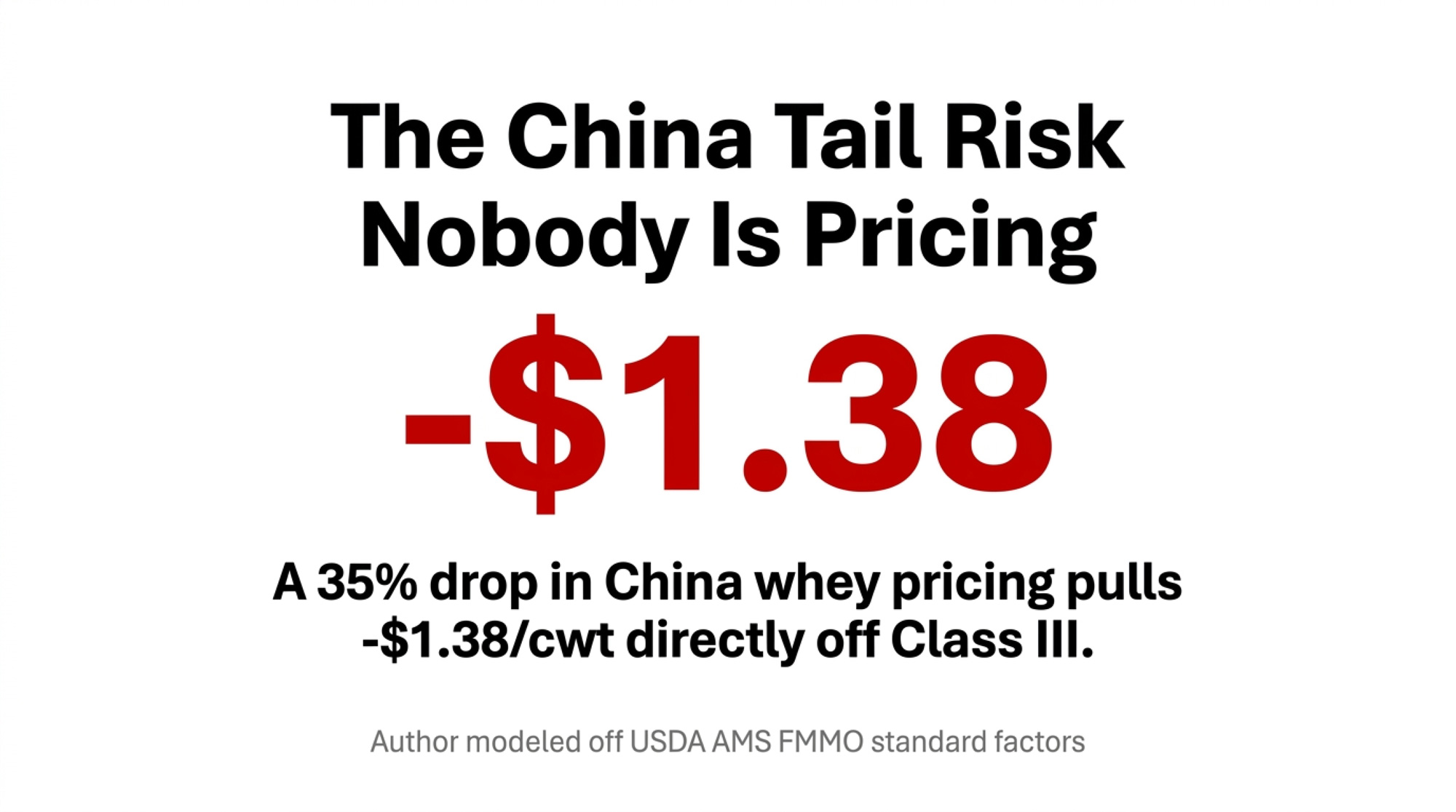
NewsSubscribe
First
Last
Consent

The $0.93 FMMO Hit: 3 Questions to Protect Your 2026 Milk Cheque

$144,000–$240,000. That’s what a 20,000‑cwt herd can lose in a year from the new FMMO make‑allowance math. Before you shrug, run it through three hard questions.

You really see it when you look at how two neighbours handle the same noise. Let’s look at Mark. He’s a composite — built from the kinds of situations central Wisconsin producers are describing this year — but his numbers are real. Mark doesn’t read Federal Register notices. He runs a commercial dairy and measures time in milkings, not hearings. When the new FMMO rules kicked in around June 1, 2025, his co‑op’s economist didn’t send him a white paper. She sent him a number: AFBF economist Daniel Munch’s September 2025 Market Intel showed roughly 85–93¢/cwt in class‑price reductions from higher make allowances — and more than $337 million pulled from producer pool value in the first three months alone. 

For his order and plant mix, she translated that into a working range: expect somewhere around $0.60–$1.00/cwt less on each cheque over the next year. Mark ships about 20,000 cwt a month. At the low end, that’s $12,000 gone every month — roughly $144,000 over 12 months. At the high end, closer to $240,000. That’s not “interesting policy.” That’s whether you keep the loan officer relaxed and the feed mill paid on time.

Now picture the producer down the road — call her Sarah. She’s a composite, too, built from the ESG experiences multiple farms have described to us. Sarah tossed a new “Supplier Code of Conduct” email from her processor into the pile on the kitchen table. It linked to a glossy brochure about sustainability, asked her to complete an online questionnaire about manure, energy, and welfare, and used words like “partnership” and “journey.” Fresh cows in the pen and a scraper that wouldn’t start. The survey could wait.

A year later, the tone from procurement on these programs was different at some plants. Supplier codes and ESG surveys were feeding internal risk‑sorting tools that grouped farms by perceived risk level, tied to “time‑bound corrective action” language and, on paper, potential termination if issues weren’t addressed. ESG and procurement teams were using that data to show management which suppliers looked lower‑ or higher‑risk.

Mark and Sarah faced the same wall of noise: FMMO modernization, Dairy Margin Coverage 2026 changes, USMCA review chatter, ESG pressure from retailers and banks. The difference wasn’t that Mark cared more about policy. He just ran every headline through three questions before he gave it his time. Sarah didn’t have a filter at all.

Here’s how you steal those three questions for your own operation — and stop letting policy eat hours of your week without giving anything back to your margin.

Policy HeadlineChanges 12-Mo Math?Decision Deadline3–5 Year Ground ShiftBucket
FMMO make-allowance changes (Jun 2025)YES — $0.60–$1.00/cwtAlready in effectClass I formula, pool dilution🔴 Act Now
DMC 2026 Tier 1 expansion to 6M lbsYES — up to $0.15/cwt savingsFeb 26, 20266-year lock-in at 25% discount🔴 Act Now
USMCA 2026 joint reviewIndirect — TRQ fill rates avg 42%2026 review milestonesMarket access, import competition🟡 Watch
ESG supplier survey (processor)Not directly — risk tier riskVaries by contractAudit/termination clause risk🟡 Watch
Canada NPF 2028 consultationsNo — 2028+Jan 2026 input windowSafety net depth (AgriStability)Ignore for Now
Carbon tax adjustmentsMarginal — varies by province/stateOngoingInput cost creepIgnore for Now

What’s Actually Changed — FMMO Reform 2026 and the Rest of the Noise

On the U.S. side, USDA’s final FMMO decision raised make allowances, butter, nonfat dry milk, and whey, updated product composition factors, adjusted some Class I differentials, and returned the Class I mover to the higher of Class III or IV starting June 1, 2025. In that first look‑back, Munch’s AFBF Market Intel analysis calculated that higher make allowances alone trimmed 85–93¢/cwt off class prices and removed more than $337 million from combined producer pool value in the first three months. Composition factor updates add back around $110 million over the first half‑year — real money, but it doesn’t erase the hit.

Dairy Margin Coverage shifted under your feet, too. For 2026, USDA’s Farm Service Agency reset each farm’s production history to the highest annual marketings from 2021, 2022, or 2023 and expanded Tier 1 coverage from 5 million to 6 million pounds. The 2026 sign‑up window is also your one shot to lock in a coverage level and percentage for 2026–2031 in exchange for a 25% discount on Tier 1 premiums. Enrollment opened mid‑January and closes February 26, 2026, according to FSA national and state office reminders. Miss that, and you’re self‑insuring Tier 1 for the year.

Zoom out further, and trade is humming in the background. The 2026 joint review of the USMCA will reopen questions about dairy access among the U.S., Canada, and Mexico. USMCA promised U.S. dairy roughly $200 million in new annual access to the Canadian market — about 3.6% of Canada’s dairy consumption — but tariff‑rate quota data show average fill rates of only about 42%, with 9 of 14 quotas below 50% in 2022/23. That under‑use has already fuelled formal USMCA disputes and plenty of frustration among U.S. dairy groups and negotiators.

Then there’s “policy by contract.” Supplier codes from global processors say it plainly: they only partner with suppliers who comply with environmental, welfare, and labour requirements, they reserve audit rights, and they can terminate relationships if high‑risk issues aren’t corrected. ESG supply‑chain planning guidance tells those processors to score suppliers on risk, audit the flagged ones, and prioritise low‑risk milk when retailers and banks squeeze.

Meanwhile, North of the Border

If you’re shipping under quota, your stress looks different — but you’re not off the hook.

In Canada, the Sustainable Canadian Agricultural Partnership (Sustainable CAP) runs from 2023 through March 31, 2028, as the main framework behind AgriStability, AgriInvest, AgriInsurance, AgriRecovery, and cost‑shared sustainability and innovation programs. Ottawa launched consultations in January 2026 on the Next Policy Framework (NPF) that will replace it for 2028–2033. Federal and provincial governments are now gathering input on priorities like competitiveness, climate resilience, and risk management as they shape the next five‑year agreement.

For Canadian producers, that framework plays a role similar to that of DMC and other federal tools in the U.S. It doesn’t set your mailbox price, but it shapes how AgriStability, AgriInvest, and other supports respond when margins squeeze. You may not see “NPF 2028” printed on your milk cheque — but it quietly decides how deep the safety net is when weather and markets turn.

Every one of those pieces lands in your feed as “news.” The reality: only a few change your numbers, your deadlines, or your ground in a way that deserves more than a skim.

The Barn Math — DMC 2026 Lock‑In Versus the FMMO Headwind

Back to Mark and that FMMO reality check.

Using that 85–93¢/cwt class‑price impact range and a realistic view of his order’s utilization and plant mix, his co‑op’s economist told him to plan for something in the neighbourhood of $0.60–$1.00/cwt less on his cheque over the next year. Not a perfect model. A band you can work with.

Instead of burying that in prose, here’s how it looks on paper — with a DMC year that lines up with what you’ve already seen when margins got ugly.

ScenarioImpact per cwtMonthly (20,000 cwt)Annual Impact
FMMO (Low End)−$0.60−$12,000−$144,000
FMMO (High End)−$1.00−$20,000−$240,000
DMC 2026 Payout*+$1.50+$30,000≈+$82,650 (5.51M lbs covered)

*Example uses a 5.8M‑lb production history at 95% coverage (55,100 cwt) and a hypothetical .50/cwt average annual DMC payment — similar to some of the worst 2019–2020 margin months when modelled over a full year; used here as a stress‑test scenario, not a forecast.

For that 5.8M‑pound herd:

  • Covered pounds = 5.8M × 0.95 = 5.51M lbs.
  • Covered cwt = 5.51M ÷ 100 = 55,100 cwt.
  • Tier 1 premium at $0.15/cwt for $9.50 coverage — the 2026 Tier 1 rate listed by Penn State Extension with the 25% lock‑in discount baked in — comes to 55,100 × 0.15 ≈ = $8,265

Margin history from 2019–2025 includes several years where DMC payments at higher coverage levels more than covered annual premiums for many herds. It doesn’t take many bad months with average payments around $1.50/cwt to repay an $8,265 premium on that volume.

The ESG Side of the Cheque

Now look again at Sarah’s composite.

Her processor’s supplier code spelled out that they partner only with suppliers who comply with environmental, labour, and animal‑welfare requirements — and that they can audit farms, request documentation on emissions, energy, manure, and welfare, and require action plans if they find problems or data gaps. High‑risk suppliers get corrective action plans with deadlines. Failure to address issues can end the relationship.

That first survey email sounded optional. But in 2026, a no‑response on an ESG survey usually isn’t neutral — in many supplier‑risk systems, it’s treated as a data gap that pushes your farm toward the “higher‑risk” bucket, right alongside weak paperwork or unresolved issues. ESG and procurement teams are already using that data to rank suppliers for audits and, when things get tight, decide whose milk is simplest to keep.

ESG Response StatusHow Processor Software Reads YouTypical ConsequenceTimeline Risk
Survey completed, no flagsLow-risk supplierPriority in milk volume allocationStable
Survey completed, gaps notedMedium-riskCorrective action plan requested30–90 day window
Survey ignored / no responseHigh-risk (data gap = red flag)Audit triggered; at bottom of volume-cut listImmediate
Repeated non-responseUnacceptable supplier riskPotential relationship terminationContract cycle
Survey completed + audit passedVerified low-riskRetailer/bank ESG credit for processorPositive long-term

Good or bad, that’s how their software reads you.

You can’t outrun make allowances by scrolling your phone. The lesson is simpler: you need a fast way to decide whether a headline belongs in your barn math, your calendar, or your trash folder.

The Three‑Question Filter That Keeps Policy in Its Place

You don’t need to enjoy politics to protect your milk cheque. You need three questions you can ask about any policy headline, email, or rumour in under two minutes.

“Does this change my math within 12 months?”

“Does this create a decision window I can actually miss?”

“If this keeps marching for 3–5 years, does it change the ground my operation stands on?”

Here’s what each one is really asking.

How Much Does This Change Your 12‑Month Math?

This is your first cut. Any change that touches your milk price formula (FMMO changes, premiums, hauling adjustments), your safety‑net math (DMC rules, AgriStability margins), or known costs (carbon taxes, labour rules, feed subsidies) deserves a quick “can I put a believable per‑cwt or per‑cow number on this for the next year?”

For FMMO, you’ve already got a starting point: AFBF’s 85–93¢/cwt class‑price hit from higher make allowances. Once you run that through your order’s utilization and your plant’s product mix, it becomes a $0.60–$1.00/cwt working range for your cheque. For DMC, FSA and Extension have already laid out how the new 6M Tier 1 cap and production‑history reset change which part of your volume gets covered cheaply.

If you can’t get to a range for your own operation with help from one or two trusted sources, you either need better sources — or that headline probably doesn’t belong in your “urgent” pile.

How Much Does Waiting 30 Days on FMMO or Dairy Margin Coverage 2026 Actually Cost?

“Wait and see” feels reasonable when you’re tired, and the numbers are fuzzy. Sometimes it is. The trick is stopping it from becoming your default answer to everything that makes your head hurt.

Take that 5.8M‑pound DMC farm. If you shrug and let February 26 slide, you’ve decided to self‑insure Tier 1 for the year — even though margin history from 2019–2025 shows several years where DMC payments at high coverage more than covered premiums for many herds. That decision might be fine if your cost of production is low and you’re comfortable riding the margin. It’s not fine if you just never sat down with a pencil because somebody forwarded a scary link about something else that failed all three questions.

FMMO is the same story. If AFBF’s analysis and your plant’s product mix suggest a realistic $0.60–$1.00/cwt headwind on average mailbox prices once everything bakes in, “wait 30 days” doesn’t improve the forecast. It just pushes back when you revisit risk coverage, tighten cost targets, or re‑evaluate expansion projects that only work at pre‑reform prices.

The real question isn’t “Could this analysis be off?” It’s this: if that range is right and you do nothing, can your operation carry it for a year at current feed, interest, and labour? If your gut says no, waiting isn’t neutral anymore.

Is Your Contract Language Already Writing Policy for You?

On the operational side, a lot of the policy that will matter most to your farm over the next five years isn’t hiding in Parliament or Congress. It’s in contracts.

Supplier codes from global dairy companies are clear on three points. They expect compliance with specific environmental, animal‑welfare, and labour standards — often referencing local law and sometimes going beyond it. They reserve the right to audit your operation, request documentation, and require action plans if they identify problems or data gaps. And they give themselves the option to end relationships with suppliers who don’t correct high‑risk issues within set timelines.

ESG planning guidance tells these companies to categorise suppliers as low, medium, or high risk, then prioritise lower‑risk suppliers when squeezed by retailers, banks, or emission‑reduction commitments. Data you send — or don’t send — in that first “voluntary” survey directly feeds those scores.

If you haven’t read the ESG, audit, and termination sections of your own supplier code or milk contract in the last year, you’re letting someone else decide what risk tier your farm occupies without even knowing the tiers exist. You might be perfectly comfortable where you are. Or you might find out you’re at the bottom of the list only when volume cuts land on your desk.

Options and Trade‑Offs for Farmers

You can’t turn the policy tap off. You can decide how much gets past your gate. Here’s how producers are using the three‑question filter — and what each path demands.

Barn Math First, Politics Later

When it makes sense: You’re already using at least one risk tool (DMC, DRP, crop insurance) and you’re comfortable with a pencil and a calculator.

What it requires: Any time a big headline shows up — FMMO tweaks, DMC changes, USMCA review drama, ESG survey — ask yourself: “Can I get a credible per‑cwt range for this on my farm in the next 12 months?” If yes, what does that look like on your monthly cwt? Lean on one or two trusted sources for the heavy lifting — your co‑op economist, Extension, or a piece that translates policy into cheque math.

Risks/limits: If you don’t have those sources, you risk either underplaying real hits (like making allowances) or overreacting to noise. And barn math is only as honest as your breakeven — if the base numbers are fiction, the filter won’t save you.

The Calendar and Contract Gate

When it makes sense: You’re not spending evenings reading market intel, but you’ll respect hard dates and signatures.

What it requires: Put a single sheet or whiteboard in the office with three columns: “Act Before,” “Ask Before,” and “Ignore For Now.” “Act Before” gets DMC sign‑ups, crop insurance deadlines, DRP windows, and any AgriStability/AgriInvest enrollment dates on your side of the border. “Ask Before” applies to the USMCA 2026 review, co‑op meetings, and any session where your buyer explains their plan. “Ignore For Now” gets headlines that don’t pass any question and carry no date.

Risks/limits: If nobody owns updating that sheet weekly, it becomes wallpaper. Someone — you, a partner, the family member who actually reads this stuff — has to be the designated filter and move items between columns as things develop.

Treat ESG as Contract Risk, Not PR

When it makes sense: Your milk goes to a processor selling into big retail or export markets, and their website is full of “net‑zero,” “scope‑3,” and “responsible sourcing” language.

What it requires: Read every supplier code, sustainability annex, and contract update your buyer sends. Highlight anything about ESG data, audits, “continuous improvement,” or termination. Ask blunt questions: “If I don’t fill out this survey, what happens to my status?” and “Are you scoring suppliers? If so, how?” You don’t have to like the answers. But you’re making decisions with eyes open instead of assuming good farming speaks for itself.

Risks/limits: This won’t stop ESG from coming. It keeps you from being blindsided when procurement starts treating ESG like quality or SCC. If you strongly disagree with the direction, the bigger decision is whether to stay in that buyer’s system at all.

Install a Designated Filter in 30 Days

When it makes sense: You’re running 200–500 cows, you don’t have a “policy person,” and every week someone different is forwarding “urgent” links into the family group chat.

What it requires (within 30 days): Choose one person — the owner, a partner, or a family member who actually reads — and make it their explicit job to filter the policy. Give them 20–30 minutes once a week to run every headline, email, or rumour through the three questions and sort them: “Act Now,” “Watch,” or “Noise.” Only “Act Now” items go on the weekly meeting agenda. “Watch” items get a look at the end of the month. “Noise” dies on their notepad.

Risks/limits: Only works if everyone agrees to respect the filter. If you still treat every Facebook thread like an emergency, you’re back to chaos. But if you back the filter, you trade random panic for a predictable, small time cost that protects a very large cheque.

Key Takeaways

  • If you can’t get to a realistic 12‑month per‑cwt impact for your own volume, a policy headline doesn’t outrank chores. Ask your co‑op, Extension, or a trusted source to turn it into barn math first.
  • If there’s a date on it — DMC signup, a USMCA review milestone, a supplier‑code acknowledgment, a contract auto‑renewal — treat it as a decision window, not background noise. Saying nothing before the deadline is still a decision; it might not be the one you’d pick on purpose. 
  • If your main buyer talks about ESG, net‑zero, or “responsible sourcing,” treat supplier codes and sustainability surveys like policy notices, not marketing fluff. Read the audit, data, and termination clauses and decide whether you’re willing to live in the tier they assign you. 
  • If your production history sits between 5 and 6 million pounds, the 2026 DMC upgrade to a 6M Tier 1 cap and six‑year lock‑in changed your numbers enough that “same as last year” isn’t a safe default. Run the new math or call your FSA office now. 
  • If your order’s best estimates point to a $0.60–$1.00/cwt headwind from FMMO changes once make allowances and utilization settle, ignoring it isn’t neutral. Either your balance sheet carries that for a year, or you adjust risk coverage, costs, or capital plans now. 

The Bottom Line

The three questions didn’t make the noise go away for producers like Mark. They made it obvious which pieces belonged in barn math, which belonged on a calendar, and which belonged in the trash icon. Farms like Sarah’s didn’t have that filter. By the time they realised their “voluntary” ESG survey had been feeding into a risk-tiering system, their buyer already had a list of farms flagged as harder to keep when things got tight.

So, does your operation look more like Mark’s — pencil to cheque, questions before panic — or more like Sarah’s, finding out about the tiers a year late?

The question isn’t whether policy is getting louder. It’s whether, if FMMO tweaks, a missed DMC cycle, or an ESG‑driven contract change knocks $0.75/cwt off your cheque next year, you’d catch it early enough to move — or hear about it from a neighbour in the parlour after the fact.

Complete references and supporting documentation are available upon request by contacting the editorial team at editor@thebullvine.com.

Learn More

The Sunday Read Dairy Professionals Don’t Skip.

Every week, thousands of producers, breeders, and industry insiders open Bullvine Weekly for genetics insights, market shifts, and profit strategies they won’t find anywhere else. One email. Five minutes. Smarter decisions all week.
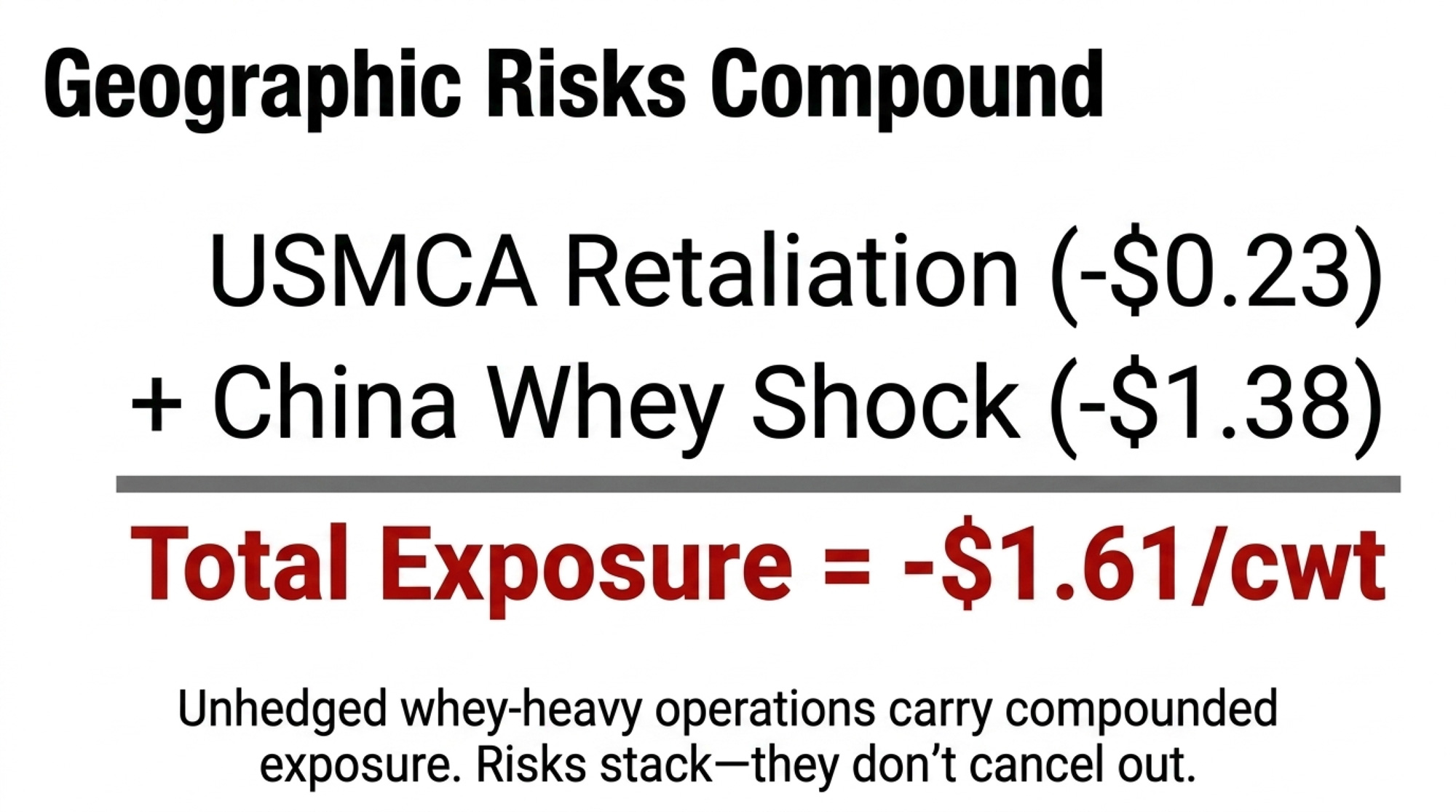
NewsSubscribe
First
Last
Consent

The Metskes’ $31,700 Wake‑Up Call: What ‘Not Yet’ Costs a $4 Million Dairy

Not yet.” Two words. $600,000–$700,000 in damage on a $4 million dairy. Here’s exactly where the money goes.

Executive Summary: Most dairy families know they need a succession plan, but “not yet” wins until something breaks. In 2025, an Ontario court took six years of work on a 152‑acre family dairy and valued it at $31,700 because there was no signed agreement, while an Ohio family that wrote its plan with an ag attorney back in 2002 kept a 650‑cow herd in the family through two sudden deaths, following the buy‑sell terms instead of fighting in court. Using 2024 Wisconsin land values and current estate tax rules, this piece runs barn‑math on a 300‑cow, 400‑acre, $4 million dairy and shows how delaying the conversation can quietly burn $600,000–$700,000 in probate costs, forced‑sale discounts, and extra legal fees when an owner dies without a real transition plan. It then tackles the “fair vs equal” problem when one child farms and others don’t, laying out practical ways to give the on‑farm heir voting control and core assets while paying off‑farm kids through cash, insurance, or non‑voting shares. The payoff is a concrete 30‑day, 90‑day, and 365‑day playbook — starting with one phone call to ask your accountant, “If I died tomorrow, who’s legally in charge here, what hits probate, and what would have to be sold?” — and a launchpad for The Transition Files, Bullvine’s new series on real‑world dairy transitions gone right and wrong.

Tim and Amanda Metske spent six years working on their parents’ 152-acre Ontario dairy — an arrangement that, according to the Ontario Court of Appeal, was never formalized in a binding agreement.

Per a published case analysis by Lerners LLP, the couple ran daily operations and invested in quota and cows based on their understanding that they’d eventually buy the farm on favourable terms. Martin Metske had twice mentioned a combined price of roughly $2 million for the land and quota. But no purchase price, payment terms, or financing was ever committed to writing.

When the relationship broke down, the arrangement ended. A trial judge had awarded roughly $405,000 in damages. The Court of Appeal, in Metske v. Metske, 2025 ONCA 418, reduced that to $31,700 — the documented value of a furnace and specific property improvements. The Court found the family understanding was an “agreement to agree”: too vague to create ownership rights. It also found no unconscionable conduct by the parents — just an informal arrangement that never became a contract.

Two states south, a different family had a different piece of paper. In 2002, the Steiners in Creston, Ohio, engaged an attorney and a financial planner to put their dairy farm succession plan in writing. As Kurt Steiner later told a World Dairy Expo virtual farm tour audience, “It’s tough to plod through — it’s not fun. But you’re not going to be here forever, and you’d better have it together when it comes to succession planning.”

When David Steiner died of a sudden heart attack on February 1, 2009, that plan said who stepped up. When Eric Steiner died of prostate cancer in August 2021, the buyout terms kicked in instead of a lawsuit. Same goal — keep the dairy in the family. Two very different outcomes.

Dimension🔴 Metske Family (Ontario)✅ Steiner Family (Ohio)
Plan formalizedNever — “agreement to agree” onlyWritten buy-sell and partnership structure, 2002
Attorney engagedNo documented ag attorney involvementYes — attorney + financial planner retained
Years of informal labor invested6 years running daily operationsMulti-generational; roles defined from start
First major death/crisisRelationship breakdown → litigationDavid Steiner dies 2009 → documents dictated next steps
Second major crisisN/A — no plan to applyEric Steiner dies 2021 → buyout terms activated
Legal outcomeCourt of Appeal: $31,700 award (from $405K trial award)No litigation — buy-sell terms followed
Farm continuityArrangement ended; no documented transferSteinhurst Dairy continues; 650 cows, 3rd generation entering
Estimated plan cost$0 documented~$15,000 (2002); ~$25,000 in 2026 equivalent
Total value protected~$2M (discussed verbally; never executed)Multi-million-dollar operation across two transitions

At that point, dairy farm succession planning and a real farm transition plan stop being someday conversations. They become math you can’t afford to ignore.

Glossary of Risk: Three Terms From the Metske Decision

Agreement to Agree — A mutual intention to negotiate future terms, without a binding commitment to specific price, timing, or conditions. In Metske v. Metske (2025 ONCA 418), the Court of Appeal found the family’s discussions about a future sale were exactly this — and therefore unenforceable.

Sweat Equity — The uncompensated or under‑compensated labor a family member invests in an operation, often expecting future ownership. The trial court valued Tim and Amanda’s tangible improvements at $33,700. The Court of Appeal upheld that figure for documented improvements but declined to award broader damages.

Probate Drag — The time, cost, and operational paralysis that hits a farm when an estate goes through probate without a clear succession plan. Professional fees can run into six figures on a complex farm estate, and the process can freeze decision‑making for 12–24 months, while the herd still needs feeding, breeding, and milking every day.

What’s Actually Changing for Family Dairies?

Start with the age math. The 2022 Census of Agriculture pegs the average U.S. principal producer at 58.1 years old. Not old — but it’s the front edge of the window where health or burnout can change the story in one season.

UW‑Madison’s Joy Kirkpatrick, who leads Wisconsin’s Cultivating Your Farm’s Future program, points out that a real farm transition — family meetings, entity changes, lender sign‑off, tax planning — takes 3–5 years to execute properly. That means many operators in their early 60s are already in the risk window.

How few have anything in writing? Melissa O’Rourke, an attorney and farm management specialist at Iowa State University Extension, estimates 89% of farmers lack any farm transfer plan, and about 60% don’t even have an updated will. In Wisconsin specifically, the 2020 DATCP Dairy Producer Survey found just 37% of dairy farms had an estate plan and only 42% had identified a successor; among herds under 100 cows, only 30% had named one.

The asset side has quietly inflated. USDA NASS reported Wisconsin cropland at $6,800 per acre in August 2024. Take 400 acres, and you’re at about $2.72 million in land alone. Add a modern 300‑cow facility — freestall barn, parlor, manure system, equipment — and you’re in the $4 million estate range.

The current federal estate tax exemption sits at $15,000,000 per person for 2026, as adjusted under the One Big Beautiful Bill Act. Married, that’s up to $30 million. Most family dairies clear that bar, which can make families assume there’s nothing urgent left to fix.

That assumption is the trap. The big financial leak for a $4M dairy isn’t the IRS. It’s what happens when “we’ll deal with it later” meets a hospital visit, a divorce, or a fight nobody saw coming.

The Steiner Plan: What “Having It Together” Looks Like

According to a Farm Progress profile, the Steiners’ 2002 plan spelled out how many years a family member had to work before becoming a partner, exact ownership percentages between David, sons Kurt and Eric, and uncle John, and what happened to an owner’s interest at death — including buyout terms.

When David died in 2009, the documents said who stepped up. Kurt and Eric became majority owners, uncle John shifted to a smaller role, and the dairy kept running. When Eric died in 2021, the buyout terms kicked in without a fight. Today, Steinhurst Dairy milks about 650 cows three times a day on 700 owned acres and 400 rented acres, and Kurt’s son Christian is moving into what the family describes as the next generation.

If that 2002 plan cost roughly $15,000 in professional fees — realistic for multi‑meeting work on entities and buy‑sell agreements — it protected a business now worth several million dollars. In 2026 dollars, adjusted for the complexity of a 650‑cow operation, a comparable engagement might run around $25,000. That’s roughly eight quality replacement heifers at the $3,010 per head U.S. average as of mid‑2025, with top springers clearing $4,000 in Minnesota and California auctions. You’ll lose a lot more than eight head in a bad transition.

And Bullvine’s own audit of five recent dairy dispersals measured [the gap between a planned exit and a forced one at $400,000–$680,000 on real auction results]. Run the barn math on a $4M estate, and the exposure looks even steeper.

How Much Does “Not Yet” Actually Cost on Your Farm?

Here’s the side‑by‑side on a realistic Wisconsin‑style 300‑cow, 400‑acre dairy with a $4 million total estate, using current land values and conservative discounts:

Cost CategoryPath A: “Not Yet” (No Plan)Path B: Plan in Place
Professional fees$0 upfront$10,000–$25,000 (entities, buy‑sell, trusts, insurance coordination over 1–2 years)
Probate & administration≈$200,000 (attorney, court, executor, appraisal, and accounting fees on a complex ag estate) Minimal or avoided entirely (assets titled into entities/trusts)
Liquidation loss$375,000–$450,000 (15% forced‑sale discount on $2.5–$3M in marketable assets) $0 (controlled transfer, no fire sale)
Legal conflict riskHigh — in Metske v. Metske (2025 ONCA 418), a six‑year informal arrangement with no written agreement resulted in years of litigation and a final award of $31,700 Mitigated by buy‑sell agreement with clear terms and funding
Extra legal/accounting/operating mess$25,000–$50,000 (extra professional time, interim operational chaos) Negligible
Total damage$600,000–$700,000The planning fee

At $6,800/acre in Wisconsin, 400 acres run $2.72 million in land. The whole operation comes to around $4 millionwhen you add up cows, facilities, and equipment.

Path A — you keep saying “we’ll get to it.”

The estate goes through full probate. Attorney fees, court costs, executor compensation, appraisals, and accounting stack up. Research on estate sales triggered by sudden death, published by Andersen, Meisner Nielsen, and Stefansson in the Journal of Financial Economics, found that financially constrained estates face liquidation discounts of 15–25%when assets must be sold under deadline pressure. That’s consistent with Bullvine’s own dispersal analysis.

Apply a conservative 15% to $2.5–$3 million in marketable assets: $375,000–$450,000 gone. Add probate fees and the operational mess of running a farm through 12–18 months of legal process, and you’re $600,000–$700,000 lighter. A brand‑new parlor. A heifer facility. Your kids’ down payments.

Path B — you bite the bullet and plan.

A comprehensive succession engagement — entities, buy‑sell agreements, trusts, coordinated insurance — typically runs $10,000–$25,000 depending on herd size and entity complexity. The Steiners did this kind of work in 2002 for about $15,000. When something happens, the documents say who’s in charge. The bank doesn’t panic. Your kids don’t start with a court date.

Your numbers will be different. The pattern holds: low‑five‑figure planning costs for six‑figure‑plus protection.

Who Actually Runs the Farm Tomorrow Morning?

If you wake up in the hospital next month, who — on paper — can sign milk cheques and payroll, negotiate with the bank, lock in feed contracts, cull cows, or decide whether land gets sold?

On well‑planned farms like Steinhurst, that answer is boring. The successor’s authority is spelled out in operating agreements, buy‑sell documents, and powers of attorney. Kurt Steiner told the WDE audience that after Eric’s death, “there’s hope for our dairy. We don’t know exactly how, but we’re going to get it done.” He could say that because the paperwork was already in place.

On farms without written agreements, you get a vacuum. Grieving family, a banker who suddenly wants everything documented, and a stack of half‑organized files nobody has touched since the last refinance. When succession and debt go sideways at the same time, Chapter 12 becomes the cleanup tool — Bullvine’s Kooser coverage followed one family through filing twice, and the three numbers that told them they were out of runway.

If the person you assume would take over doesn’t have legal authority or a funded plan, you don’t have a transition. You have hope and habit.

Is “Fair” the Same as “Equal” When One Kid Farms and Three Don’t?

Equal division — “everyone gets a quarter of everything” — is how a lot of dairies accidentally end up in a capital structure their lender isn’t comfortable with. 

Give on‑farm and off‑farm heirs identical ownership slices, and you create voting owners who don’t understand farm risk, an on‑farm heir who feels like they’re buying the place twice, and off‑farm siblings who want cash — not more money tied up in silage.

“Fair but not equal” structures turn that into something functional:

  • The farming heir gains voting control and a larger share of the farm’s equity, reflecting labor and risk. 
  • Off‑farm kids get value through liquid assets, life insurance, non‑core land, or non‑voting units that pay when there’s profit but don’t control decisions. 

You’re not playing favorites. You’re matching what each kid actually wants — a living running the place vs. a clean investment return — with the kind of asset that fits.

What to Tell the Off‑Farm Kids

This is the conversation that chokes people up. Ag succession planners, including Kirkpatrick at UW‑Extension, often coach families to reframe it.

  • “We’re not giving your brother the farm — we’re giving him the chance to work for it, while making sure your inheritance is liquid and protected.” The farming heir takes on debt, risk, and 14‑hour days. Off‑farm heirs get value without those strings. 
  • “Your share is designed to actually be worth something to you.” A quarter‑ownership stake in a dairy LLC isn’t liquid. It doesn’t pay tuition or fund a retirement. Cash, insurance proceeds, or non‑voting units that pay dividends do. 

Nobody loves hearing this at first. But the alternative is worse.

  • “If the farm goes under because we split it four ways, nobody gets anything.” An operation that can’t cash‑flow a four‑way buyout ends up at auction — and everyone’s share shrinks by that forced‑sale discount. 
  • “This isn’t about love. It’s about math.” Equal division of an operating dairy can destroy the business and everyone’s inheritance. Fair division preserves the operation and the value that off‑farm heirs actually receive. 

Kirkpatrick frames these as the core “tensions” of farm succession: fairness vs. equality, business vs. family, control vs. inclusion. Ignoring them doesn’t avoid conflict. You hand it to the next generation.

Options and Trade‑Offs for Farmers

TimelineActionWho to CallWhat It CostsRisk If Skipped
30 DaysAsk accountant: “Who’s in charge day one if I die tomorrow?”CPA / farm accountant$0 — one conversationYou assume there’s a plan; there isn’t
30 DaysConfirm signing authority, probate exposure, assets that must be soldCPA / ag attorney$0–$500 consultationFarm paralysis for 12–24 months during probate
90 DaysDraft buy-sell agreement with defined triggers (death, disability, divorce, retirement)Ag-focused attorney (via Farm Credit / Compeer referral)$5,000–$15,000Metske scenario: informal arrangement + litigation
90 DaysReview entity structure (LLC, partnership) for ownership clarityAttorney + CPAIncluded aboveForced equal splits across farming and non-farming heirs
365 DaysFund buy-sell with life insurance; establish trust if neededInsurance advisor + estate attorney$10,000–$25,000 total$375K–$450K liquidation discount on forced sale
365 DaysUpdate operating agreements; name successor formally with legal authorityAg attorneyPart of aboveLender panic, operational vacuum, off-farm sibling conflict
AnnualReview plan, update valuations, revisit heir structuresCPA + attorney$1,000–$3,000/yrPlan drifts out of alignment with actual asset values

1. Order the “x‑ray” (next 30 days)

This is your 30‑day action. Call your accountant or ag attorney and ask one question:

“If I died tomorrow, what happens to this farm on paper — who’s in charge day one, what goes through probate, and what would likely have to be sold?”

If they can’t answer clearly within 48 hours, you don’t have a transition plan. You have tax compliance and exposure.

2. Put a buy‑sell in writing

This is how you formalize what the Metskes’ arrangement lacked. Good farm buy‑sells spell out who can buy an ownership interest, when that right kicks in (death, disability, retirement, divorce), how the price is set, and how the buyout is funded. That’s what the Steiners had when two deaths hit in twelve years. The paper said what happened. The bank knew the plan. The family followed it.

3. Use insurance and leases as pressure valves

Life insurance can retire farm debt so the farming heir services a buyout, and provide cash for non‑farming heirs so the operating unit doesn’t get chopped up. Long‑term leases turn off‑farm heirs into landlords — not surprise co‑operators. You give up flexibility. You pick up stability.

4. Engage an ag‑focused attorney (90 days)

Not your cousin’s real estate lawyer. Ask Farm Credit or Compeer Financial for referrals — most have succession planning programs, and many coordinate with your CPA and lender. Bullvine’s “Top Dairy Farm Transition Planning Traps to Avoid” breaks down entity structures, cash access traps, and retirement timing.

If debt‑service coverage is already tight, stacking a sibling buyout on top can tip your lender from partner to problem. Bullvine’s coverage of tight margins at $18.95 milk and $19.14 costs showed how fast DSCR pressure compounds — and a forced succession layered on top makes it worse.

5. Have the legal structure in place (365 days)

Trusts, buy‑sell, insurance, and updated operating agreements. Review annually. The farms that survive generational transitions aren’t the ones with the best cows. They’re the ones with the best paperwork.


Key Takeaways

  • If your accountant can’t explain “what happens if I die tomorrow” in 48 hours, assume you have exposure, not a plan. Push for a written outline of who’s in charge, what hits probate, and what has to be sold. 
  • If one child farms and others don’t, “equal shares of the land” is a red flag, not a plan. Look at structures where the farm kid has voting control and core assets, while others get value through cash, insurance, or non‑voting interests. 
  • A real transition plan runs low‑five figures — about eight replacement heifers at today’s prices to protect a multi‑million‑dollar operation. Budget for it the way you’d budget for a bulk tank or a new loader: it’s infrastructure, not overhead. 
  • The person you expect to take over needs legal authority to act — now, not after probate. Signing authority, powers of attorney, and a funded buyout path aren’t luxuries. They’re what keep the farm running when you can’t. 

The Bottom Line

Five or ten years from now, the farms that start on this will look…steady. Off‑farm kids still come home for Christmas without arguing about who “really” owns the parlor.

On the other side, you’ll see places where the sign out front has changed. Where siblings drive past the old yard and don’t turn up the lane.

The question isn’t whether succession is coming to your dairy. It’s whether it arrives as paperwork you control — or as a court file somebody else manages. The deeper barn math on how that penalty scales at different herd sizes and debt loads is coming in the Tier 2 and Tier 3 follow‑ups for The Transition Files, where we’ll profile a dairy mid‑transition and walk through a post‑mortem on one that went wrong.

Complete references and supporting documentation are available upon request by contacting the editorial team at editor@thebullvine.com.

Learn More

The Sunday Read Dairy Professionals Don’t Skip.

Every week, thousands of producers, breeders, and industry insiders open Bullvine Weekly for genetics insights, market shifts, and profit strategies they won’t find anywhere else. One email. Five minutes. Smarter decisions all week.
NewsSubscribe
First
Last
Consent

The 12% Power Trap: How a Dairy Electricity Hike Becomes a 9¢/cwt Margin Hit – and the Efficiency Play to Reverse It

On a 750‑cow dairy, a 12% power hike quietly costs 3¢/cwt. One VSD‑level upgrade can swing your margin 9¢/cwt. What’s your electricity cost per cwt?

Executive Summary: Mark’s 750-cow freestall just took a 12% power rate hit. That’s 3¢/cwt gone — $7,650/year. The trap is waiting on efficiency. One VSD vacuum pump upgrade flips his margin by 9¢/cwt (2-6-year payback). Ontario wholesale prices surged 90%+ in 2025. REAP grants are paused. If your DSCRs are near 1.20×, lender talks get harder. This piece runs the barn math and hands you a 30/90/365 playbook to check your own exposure.

Dairy electricity costs

Mark and Lisa are composite illustrations built from published benchmarks and common industry patterns — not specific individuals. All numbers are walked through transparently, so you can plug in your own.

A 12% bump in dairy electricity costs quietly strips about 3¢/cwt — or $7,650 a year on 220,000 cwt — out of a 750-cow dairy’s milk check. That’s not a modeling exercise. It’s what happens when you run the actual kWh through current rates.

Consider a 750-cow freestall — call him Mark — whose power bill climbed that much in early 2025. The reaction from operations in that position is almost universal: We can’t afford to invest in efficiency right now. We’ve got to preserve cash. On the surface, that feels conservative. Look at the math and the timeline to 2030, and it starts to look more like a trap.

Electricity isn’t the fixed overhead line that most producers treat it as. A significant chunk moves with management decisions, herd size, and equipment choices. You can manage it the same way you manage feed cost. The operations that treat power like untouchable overhead? They’re leaving margin on the table every single month.

The Rate Hike Hitting Herds Like Mark’s

Mark’s scenario is a 750-cow North American freestall. Solid component milk, but a 2024–2025 milk price that’s nothing to brag about. Then the electricity bill jumps around 12% in one renewal cycle. No new barn. No robot install. Just rate changes and fees.

And 12% may be mild. Ontario’s wholesale electricity market price (the IESO’s Hourly Ontario Energy Price) averaged approximately 3.4¢/kWh across 2024, per IESO year-end data. Then wholesale prices surged over 90% in 2025 — the highest annual average since 2005, according to Scott Luft’s January 2026 analysis on Cold Air. Ontario utilities layered distribution rate increases on top — Milton Hydro’s OEB-approved distribution rate increase was 3.70% effective January 1, 2026. Total delivered costs for farm customers are partially offset by the Ontario Electricity Rebate (23.5%as of November 1, 2025, per OEB), so the net bill impact is smaller than the headline wholesale jump — but the direction is unambiguous.

Ontario and US benchmarking have found dairy electricity use in confinement systems ranging from 800–1,400 kWh/cow/year, with freestalls averaging around 837 kWh/cow/year and tiestalls near 1,417 kWh/cow/year (Ontario OMAFRA). A 2022 Progressive Dairy article summarizing USDA REAP and EQIP projects noted that energy-efficiency upgrades on dairies can reduce energy costs by 10 to 35 percent, saving 2¢ to 30¢ per hundredweight in avoided costs.

The unspoken bet behind the preserve cash stance is that milk price will bail you out faster than power costs keep climbing. That’s a bet — not a strategy.

What Does a 12% Rate Hike Actually Cost a 750-Cow Dairy?

You don’t feel percentages. You feel dollars leaving the account.

A Minnesota Department of Commerce dairy energy study found that US dairy farms range from 400 to 1,700 kWh per cow annually, with electric utility costs of about $0.035 to $0.045 per cwt in the Midwest. Using freestall averages from Ontario and Midwest data, work with 850 kWh/cow/year for Mark’s 750-cow scenario:

750 cows × 850 kWh/cow/year = 637,500 kWh/year

For the rate assumption, Alberta’s current Rate of Last Resort for farm customers sits at 12.01¢/kWh as of March 2026, per EPCOR’s published schedule. Index (spot) prices ran lower through 2025 — averaging roughly 4–9¢/kWh,depending on the month. To keep the example conservative and broadly applicable, use $0.10/kWh:

Baseline: 637,500 kWh × $0.10 = $63,750/year
After 12% hike: $63,750 × 1.12 = $71,400/year
Annual hit: $7,650

Assuming the operation ships 220,000 cwt/year:

MetricBaseline (2024)After 12% Hike (Doing Nothing)After Efficiency Project*
Annual Electricity Cost$63,750$71,400$51,000
Cost per cwt ($/cwt)$0.29$0.32$0.23
Margin Impact vs. Baseline−$0.03/cwt+$0.06/cwt

*Assumes 20% efficiency gain at the baseline rate, consistent with the 10–35% savings range documented in USDA-funded projects. Note: the 9¢/cwt swing compares the post-hike do-nothing scenario against the baseline with efficiency gains — it combines the cost of the hike (3¢) with the project’s benefit (6¢).

Plug in your own numbers: if your herd ships [X] cwt per year and your annual electricity bill is [Y], your electricity cost per cwt is simply Y ÷ X. Do that once, then rerun it after the next rate change.

The gap between “doing nothing” and “doing one project” isn’t 3¢ — it’s 9¢/cwt of margin swing. If your herd sits closer to the upper end of the 2.3–4.5 kWh/cwt range documented across five US farms, the impact is worse.

How Fast Does a VSD on Dairy Vacuum Pumps Pay for Itself?

Most producers don’t start with digesters or solar. They start with a variable-speed drive on vacuum pumps — the math is straightforward, and field results are documented. The Minnesota Department of Commerce dairy energy study found VSDs on vacuum pumps presented “the greatest savings potential, especially for farms with long milking hours.”

New York parlor studies report that milk harvesting — vacuum pumps, cooling, and water heating — accounts for roughly 40–45% of electricity use on those dairies. Alberta data estimated about 44% for milking on a typical 100-cow dairy. DairyConservation’s VFD practice sheet confirms a VFD “can typically reduce the electricity usage of the vacuum pump system by 50–60% and generally has a fast payback period even without financial incentives.” Wisconsin Extension reports a broader range of 30–80% savings depending on conditions. The National Dairy FARM Program similarly documents 50–60% reductions in vacuum pump electricity use with 3- to 7-year payback periods.

For Mark’s 750-cow operation, assume vacuum and milk pumps burn about 100,000 kWh/year of that 637,500 kWh total — plausible given milking and cooling combine for nearly half the load:

50,000–60,000 kWh saved × $0.10/kWh = $5,000–$6,000/year

You’re likely looking at multiple VSD units across vacuum and milk transfer pumps, potentially new compatible motors, and professional installation. A single 7.5 HP vacuum pump VSD retails around $4,450 from dairy equipment suppliers, and total project costs for multi-pump systems can run $30,000–$50,000 gross before incentives. EQIP typically covers 50 to 75 percent of eligible costs, and several state and provincial incentive programs layer on top — putting realistic out-of-pocket costs in the $10,000–$25,000 range, depending on your program stack:

Payback: $10,000–$25,000 ÷ $5,000–$6,000/year ≈ 2–5 years

That range aligns with Penn State Extension’s assessment: “There is often a 2- to 6-year payback on investments for variable speed drive vacuum pumps, well water pre-cooling of milk, and heat recovery from the refrigeration system,” per Dr. Doug Reinemann’s recommendations published in a Penn State Extension article on parlor retrofits. One caveat: the Minnesota Commerce study found a 6.6-year mean payback specifically for receiver jar milk pump VSDs. Vacuum pump drives pencil faster than milk pump drives, and your mileage depends on milking hours and system configuration.

In Mark’s scenario, that $5,000–$6,000 goes to the utility every year instead. In the Lisa scenario — call her a neighbour running 600-some cows who made a different call — those dollars stay in the operation’s cash flow. The risk of doing the project isn’t zero; equipment can underperform, and one farmer on NewAgTalk reported his VFD controller failed twice at $2,000 per repair. But the risk of doing nothing in a rising-rate world is now visible in the barn math.

Why Your Lender Cares More About This Than You Think

The $7,650/year hit from a rate hike doesn’t just show up on your power bill. It shows up on your lender’s spreadsheet — specifically in your Debt Service Coverage Ratio (DSCR).

Farm Credit Canada defines DSCR as net cash income divided by total annual debt obligations. Many ag lenders look for a DSCR above 1.20–1.25×. Fall below that, and conversations about credit access get harder.

If your DSCR is already sitting near 1.15–1.20× — the zone The Bullvine’s own composite herd analysis of Kansas City Fed data placed at the edge of “significant financial stress” for agricultural producers — a $7,650 swing in annual OPEX can tip a lender conversation from routine to uncomfortable. It’s not just the electricity dollars. It’s the signal. When your lender sees rising energy costs on a flat kWh/cwt line, they see a farm absorbing input inflation with no management response.

When they see a declining kWh/cwt line with audit data and before-and-after numbers? They see the kind of operator they want to keep lending to. That’s the Lisa scenario in a nutshell — same rate hike, different signal to the banker.

ScenarioAssumed DSCR (2025 Baseline)DSCR After Electricity Impact (2026)Lender Risk Tier
Baseline (2025, No Rate Hike)1.251.25Standard
Do Nothing (Post-Hike)1.251.18Elevated Risk
Efficiency Project Executed1.251.32Preferred

Cornell Pro-Dairy’s 2024 Dairy Farm Business Summary (published July 2025, authored by Jason Karszes and Lainey Koval) showed the operating cost gap between New York’s highest- and lowest-earning quartiles widened to more than $6.50/cwt — up from $4.32/cwt in the 2023 DFBS. That’s 129 farms, in the same milk-price environment, separated by efficiency and cost control. RaboResearch’s Lucas Fuess, analyzing 2022 Ag Census data, told Brownfield Ag News that large-herd operators (2,000+ cows) can operate roughly $10/cwt less than 100–199-cow farms. Your lender knows where you sit in those ranges. The question is whether you’re moving in the right direction.

The Real Trap: Why Waiting Until 2027 Makes Everything Worse

Here’s what makes the we’ll deal with it later stance a trap — not just a delay.

The grant money isn’t there right now. USDA paused all REAP grant applications on June 30, 2025, due to an overwhelming backlog of applications. The agency anticipated reopening on October 1, 2025, but as of January 2026, TPI Efficiency confirmed USDA’s REAP page still stated: “The Agency is not accepting REAP grant applications at this time.” REAP remains funded and authorized through at least 2027 via the Farm Bill, with IRA money available for obligation through September 30, 2031 — but the original FY 2026 grant deadlines (September 30, 2025; December 31, 2025; and March 31, 2026) have all passed without reopening. Guaranteed loan applications remain open year-round through local Rural Development offices.

The grant dollars that make fast-payback projects pencil out easiest are in limbo. And USDA has publicly indicated it’s implementing the Secretary’s direction to “disincentivize solar panels on productive farmland” in future application windows, adding further uncertainty to FY 2026 scoring criteria.

Your credit position is eroding. Every year you absorb rising electricity costs without a management response, DSCR drifts lower. By 2027, if milk prices haven’t bailed you out, your lender may not approve the capital for the upgrade you need — precisely because you waited too long to act when conditions were better. Cornell’s 2024 DFBS showed that the lowest-earning quartile of New York farms averaged a debt coverage ratio of just 0.70, while the highest-earning quartile averaged 5.07.

The compounding is relentless. That 3¢/cwt isn’t a one-time hit. It’s $7,650/year, every year, stacking on top of whatever the next rate increase adds. Two more rounds of distribution increases — consistent with Milton Hydro’s 3.70% distribution rate hike for 2026 and Ontario’s wholesale price trajectory — and the electricity line could drift several thousand dollars per year higher without a single new cow or piece of equipment.

In Mark’s scenario, you arrive at 2027, paying whatever the utility charges for the same kWh/cwt as in 2024, with a thinner DSCR and fewer funding options. In the Lisa scenario, you’ve got before-and-after data to show a lender and a kWh/cwt line moving in the right direction.

MetricMark: Do NothingLisa: One VSD Project
Annual Electricity Cost (2026)$71,400$51,000
Cost per cwt (2026)$0.32$0.23
Cumulative 3-Year Loss (2026–2028)−$22,950+$38,400 (savings)
DSCR Trajectory (2026–2027)1.20 → 1.121.20 → 1.35
Lender Conversation (2027)“Concerns about cost control”“Proof of management response”

The Playbook: What to Do in 30, 90, and 365 Days

30 Days: Put Energy on Your Dashboard

No hardware. Just your own bills and milk records. In Mark’s scenario, this step never happens. In Lisa’s, it starts with one ugly spreadsheet.

  • Pull 12 months of electricity bills. Total kWh and total dollars.
  • Pull shipped milk for the same period.
  • Calculate monthly kWh/cwt and $/cwt for electricity.
  • Put those numbers wherever you track feed cost and margin.

Midwest benchmarking suggests $0.035–$0.045/cwt for electricity. If you’re well above that, your exposure is real. Calculate your actual electricity cost per cwt for the last year and write it down. That number is your starting point for every efficiency conversation in the future.

90 Days: Get an Audit Someone Else Helps Pay For

As of early 2026, USDA isn’t accepting REAP grant applications — but guaranteed loan applications remain open year-round, and EQIP energy audits are still available through your local NRCS service center. Most advisors are steering clients to structure projects, so they pencil in loan guarantees alone, treating any future grant awards as upside.

Don’t let the grant pause stop you from getting the audit done now. When applications reopen, farms with completed audits will be first in line. Many state incentive programs operate on their own timelines — Efficiency Vermont offers $1,125 cash back on VFDs for dairy vacuum pumps for herds of 50+ cows, and Wisconsin’s Focus on Energy program provides VFD incentives for dairy farms through participating utilities and equipment dealers.

Projects at the front of the line:

  • Save ≥ 2¢/cwt at current rates
  • Pay back in ≤ 7 years without grant money
  • Target milking, cooling, or ventilation — not nice-to-have gadgets

If your DSCR is already near 1.20× or below, bring your lender into the conversation early. A $5,000–$6,000/year savings improves that ratio over time, but a new payment obligation in year one may tighten it before the savings compound.

365 Days: Execute One Big Win and Prove It Paid

Pick a single project targeting milking, cooling, or ventilation with a post-incentive payback under 7 years. Gather 3–6 months of baseline data before installation. Track the same metrics for 6–12 months after.

Make sure the base-case payback works without the most generous assumptions. Choose projects where savings show up in your own meter data, not just in marketing material. Then take that data back to your lender — before-and-after proof that the investment performed is the strongest possible argument for the next one. That’s exactly how the Lisa scenario becomes a lender conversation her neighbour in the Mark scenario can’t have.

Efficiency QuartilekWh/cow/year (Freestall)$/cwt Benchmark (at $0.10/kWh)Risk Level
Top 25% (Best Efficiency)400–650$0.025–$0.035Low
2nd Quartile650–837$0.035–$0.040Moderate
3rd Quartile837–1,000$0.040–$0.045Elevated
Bottom 25% (High Use)1,000–1,700$0.045–$0.075High Risk

What This Means for Your Operation

  • If your kWh/cwt sits above the 837 kWh/cow/year freestall average from Ontario or the 400–1,700 kWh/cow/year US band, energy is a top-three risk lever heading into 2030.
  • Check your DSCR. If you’re running near 1.20× or below, a $7,650/year swing in electricity OPEX is the kind of line item that shifts a lender conversation. Cornell’s 2024 DFBS showed the lowest-earning quartile averaging a debt coverage ratio of 0.70 versus 5.07 for the top quartile.
  • REAP grants are paused, but loan guarantees remain open, and EQIP energy audits are still available. Structure your project to pencil without grant dollars.
  • Where does your kWh/cwt sit against that $0.035–$0.045/cwt Midwest benchmark — and have you ever shown that number to your lender? 
  • In the next 30 days: pull your last 12 electric bills, divide total dollars by total cwt shipped, and write down your $/cwt for electricity. Until you do, every energy conversation is guesswork.

Key Takeaways

  • If your electricity cost per cwt has climbed and you’re not tracking kWh/cwt, you’re flying blind on one of the few cost lines you can still move before 2030.
  • A 12% hike on a 750-cow dairy quietly shaves roughly 3¢/cwt off margin — but the real gap is the 9¢/cwt swingbetween doing nothing and executing one 20%-efficiency project.
  • The trap isn’t the rate hike itself. It’s that by the time you decide to act, grant money is paused, your DSCR may have drifted below your lender’s comfort zone, and the compounding losses make the upgrade harder to finance — not easier. If your DSCR sits near 1.20× or below, you’re in that zone right now.
  • Any energy project with a post-incentive payback period longer than 7 years belongs at the back of the line — unless it also addresses a non-energy constraint, such as cooling capacity or animal comfort.

The Bottom Line

The dairies that make it to 2030 won’t be the ones with the shiniest solar installs. They’ll be the ones that treated kWh/cwt the same way they treat feed efficiency — a number to chip away at, year after year, while the operations next door were still calling electricity a fixed cost.

Complete references and supporting documentation are available upon request by contacting the editorial team at editor@thebullvine.com.

Learn More

  • The Four Numbers Every Dairy Producer Needs to Calculate This Week – Arms you with a survival-focused framework to stop the “equity bleed.” This diagnostic tool reveals your true breakeven and liquidity runway, transforming reactive worry into a 90-day execution plan for immediate cash-flow stability.
  • The Next 18 Months Will Decide Who’s Still Milking in 2030 – Exposes the structural red lines in debt-to-asset ratios that lenders are watching right now. It delivers a strategic checklist for long-term positioning, helping you navigate global supply shifts before market consolidation forces the choice for you.
  • Unlock Hidden Dairy Profits Through Lifetime Efficiency – Breaks down how selecting for Residual Feed Intake (RFI) can slash feed costs by $251 per cow. It connects genetic advancements to metabolic efficiency, offering a permanent, high-ROI solution to the margin squeeze discussed in this article.

The Sunday Read Dairy Professionals Don’t Skip.

Every week, thousands of producers, breeders, and industry insiders open Bullvine Weekly for genetics insights, market shifts, and profit strategies they won’t find anywhere else. One email. Five minutes. Smarter decisions all week.
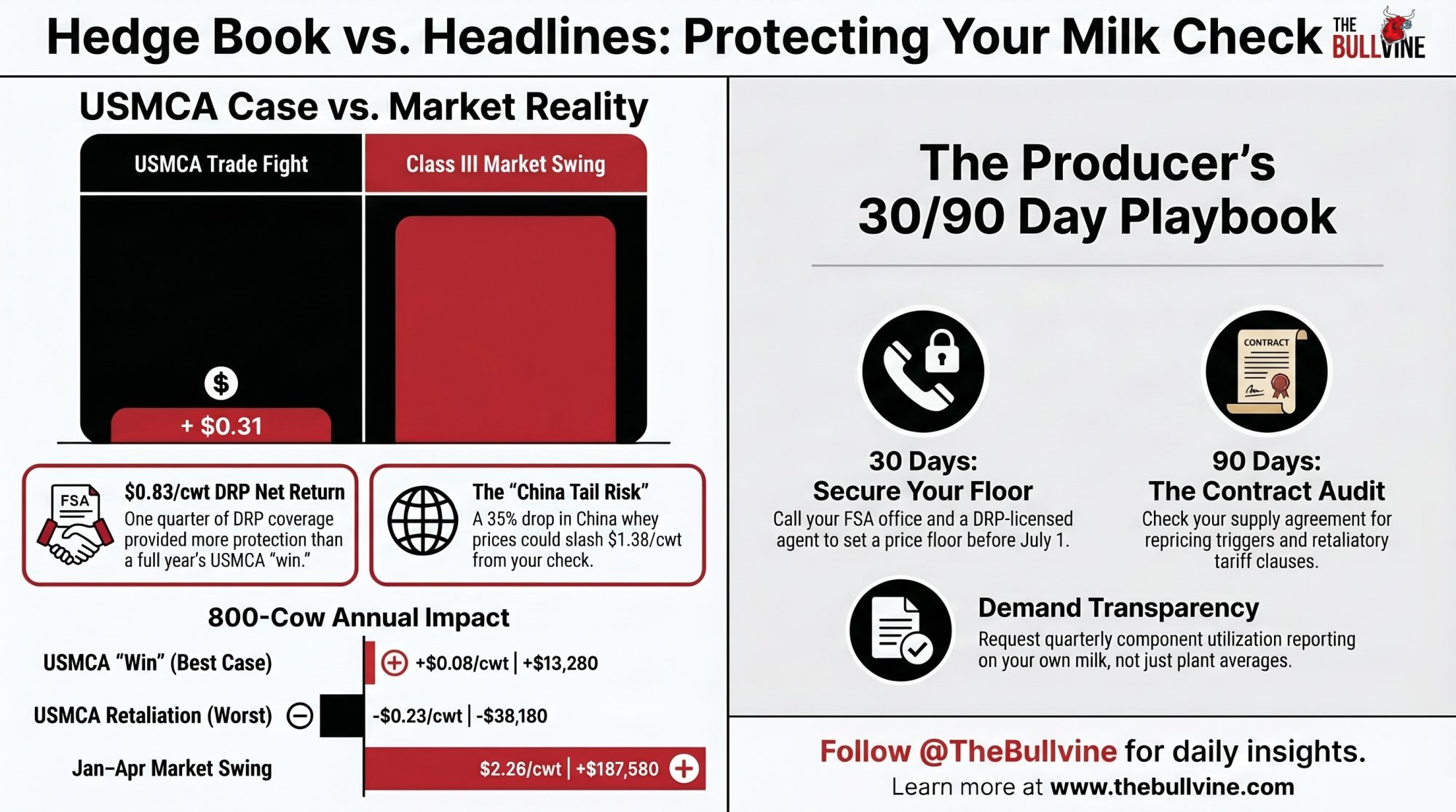
NewsSubscribe
First
Last
Consent

Is Your Processor Gambling With Allergen Recalls? The $2,000‑Per‑Cow Risk Hitting Your Milk Check

Your plant may be modeling a $100K recall risk. The real odds point to $800K — and roughly $2,000 per cow quietly baked into your milk check.

Executive Summary: Dairy’s allergen recall problem isn’t just a QA issue — it’s an invisible $2,000‑per‑cow risk that can end up baked into your milk check. Industry data puts the average direct cost of a food recall near $10 million, and undeclared allergens now account for almost half or more of FDA Class I recalls, with milk the single most commonly undeclared allergen. Many plants still model recall probability at 1–2%, but survey‑based numbers point closer to 8–10%, turning what looks like a $100,000 exposure into an $800,000 hit on a single high‑mix line supplied by about 400 cows. That gap doesn’t appear as a tidy line item; it shows up as higher insurance costs, weaker co‑op margins, and less room to pay you on components or volume. The story follows Ontario processor Mark Leduc and co‑op director Janet as they confront this math, run a targeted cleaning‑validation pilot on one yogurt line, and use real near‑miss data to renegotiate with insurers, customers, and their own board. You finish with a 30/90/365‑day playbook and specific questions to ask your plant and co‑op — from “What recall probability are we actually modeling?” to “Who pays if an in‑plant allergen failure triggers a $10 million recall?”

Dairy allergen recall risk

A single undeclared milk recall at Mark’s processor plant could cost more than million in direct expenses — and there still isn’t a clear line on his P&L for allergen recall risk.

On paper, Mark’s 500‑cow supply base looks solid heading into 2026. Volumes are steady, co‑op contracts are locked, and the private‑label yogurt and ice cream runs are full. The allergen recall risk sits off to the side — until it doesn’t.

The $250 vs. $2,000 Per Cow Recall Gap

Before you get lost in SOPs and swab types, it helps to see the recall gap at a glance. This is the difference between the old “1–2% recall” rule of thumb and what more recent recall and survey data actually suggest for complex, multi‑allergen plants.

Industry and trade‑group analyses built on work from the Grocery Manufacturers Association and Food Marketing Institute often peg the average direct cost of a food recall around $10 million per event. At the same time, one published survey of food businesses with allergen plans reported that, while almost all respondents said they had a plan, roughly two in five still had at least one allergen‑related recall in five years. That works out closer to a high single‑digit annual probability than a comfortable 1–2%.

Here’s what that means for a 400‑cow supply block feeding a single high‑risk line:

ScenarioAnnual Recall ProbabilityAverage Recall CostExpected Annual LossCost Per Cow (400-cow block)Who’s Paying the Gap
“Rule of Thumb” (Plant Model)1–2%$10,000,000$100,000–$200,000$250–$500Insurance premiums (manageable)
Survey Reality (Multi-Allergen Plants)8–10%$10,000,000$800,000–$1,000,000$2,000–$2,500Your milk check
The Gap6–8 percentage points$600,000–$800,000$1,500–$2,000Underwritten by co-op members

Those numbers are simple math:

  • At 1% recall probability, expected annual cost = 0.01 × $10M = $100,000 → $250 per cow across 400 cows.
  • At 8% recall probability, expected annual cost = 0.08 × $10M = $800,000 → $2,000 per cow across the same 400 cows.

The plant’s profit‑and‑loss statement doesn’t show “,000 per cow allergen risk.” It shows higher insurance premiums, occasional big hits when things go wrong, and thinner margins for the co‑op and its members. If your co‑op owns or supplies that plant, you’re underwriting the difference, whether anyone has written it down or not.

When the Dairy Allergen “Mistake” Isn’t Really a Mistake

Mark did what a lot of mid‑size processors have done over the past decade: he tried to push more SKUs through the same stainless. His highest‑risk yogurt line has all the classic features:

  • Dozens of SKUs — plain, fruit‑on‑the‑bottom, granola‑topped, high‑protein, kids’ flavors. 
  • Multiple allergens — milk, soy from inclusions, sometimes nuts. 
  • Shared downstream equipment — fillers, conveyors, packaging, and labels touching everything from whole‑milk Greek to “plant‑based” cups. 

On the QA whiteboard, the plan looks fine: visual checks, routine cleaning, periodic swabs. On the risk model, the assumption is simple: if the chance of a major allergen recall is 1–2% per year and the average direct cost is about million, the expected annual hit is 0,000–0,000 — uncomfortable but “manageable” with insurance and standard controls.

The reality is harsher. Undeclared allergens have become the leading cause of U.S. food recalls. One Trustwell analysis found that undeclared allergens accounted for 47% of all FDA Class I recalls in 2022 and 63% from January to August 2023. A 2024 review of U.S. recall patterns reported that undeclared allergens helped push total recall counts to a post‑pandemic high, with losses in the billions once direct and indirect costs are included.

Milk is at the center of that. An analysis of more than 620 FDA undeclared‑allergen recalls since 2017 found that around 40% were due to undeclared milk, making milk the single most commonly undeclared allergen.

So if your plant is built on milk and runs multi‑allergen, high‑mix lines, borrowing a 1–2% recall assumption from simpler categories isn’t conservative. It’s optimistic. And in a co‑op or supply‑based system, underpricing that risk is another way of saying your members are quietly underwriting the gap.

What Does a $10M Allergen Recall Really Mean for 400 Cows?

Mark’s highest‑risk yogurt line pulls milk from a group of farms totaling roughly 400 cows’ worth of production. Think of that as one 400‑cow block whose fortunes are tied to that line’s allergen performance.

From the available data:

  • The average direct recall costs $10 million per major event
  • “Rule‑of‑thumb” recall probability: 1–2% per year.
  • Survey‑based probability for companies with allergen plans: roughly 8–10% per year over a five‑year window. 

Step through the math so you can plug in your own numbers later.

How the $10M Recall Risk Lands on a 400‑Cow Block

Scenario A – Underpriced Risk (1% modeled annual probability)

  • Expected annual recall cost = 0.01 × $10,000,000 = $100,000.
  • Spread over 400 cows, that’s $250 per cow per year.

If you model the plant like this, it’s easy to say, “We’ll carry it with insurance, keep premiums where they are, and move on.”

Scenario B – Reality‑Based Risk (8% annual probability)

  • Expected annual recall cost = 0.08 × $10,000,000 = $800,000.
  • Over the same 400 cows, that’s $2,000 per cow per year.

Now you’re not talking about a rounding error. You’re talking about a material drain on what that plant can afford to pay for milk, especially when margins are already tight from 2024–26 feed, labor, and energy costs.

The plant’s P&L doesn’t show “$2,000 per cow in allergen recall exposure.” It shows:

  • Higher recall and contamination insurance premiums. 
  • Occasional large costs when the product is pulled and destroyed. 
  • Less margin left for co‑op dividends, capital projects, and milk premiums. 

If you sit on a board, the question isn’t, “Do we have an allergen control plan?” It’s, “Are we modeling recall probability at 1–2% when our own near‑miss data — and broader survey and recall stats — point much higher?”

The Boardroom Questions You Aren’t Asking Yet

Janet sits on the co‑op board and ships from a 350‑cow herd into Mark’s plant. She’s not just looking at somatic cell counts and butterfat anymore. She’s looking at who’s underwriting the plant’s allergen gamble.

The QuestionWhy It MattersIf You Can’t Answer This…
“Where exactly is the line between farm-origin hazards and plant-origin failures in our contracts?”Residues at intake ≠ allergen cross-contact after the plant owns the milk. If contracts blur this line, your herd backs plant QA failures.Your members may be underwriting recall costs they can’t control — and won’t know until the invoice arrives.
“How many allergen near-misses and label errors occurred on our highest-risk lines in the last 12–24 months?”“We’re fine” isn’t data. Near-miss counts show whether your plant catches problems before they ship — or relies on luck and insurance.You’re guessing at recall probability, not managing it.
“If there’s a $10M plant-origin allergen recall tomorrow, what indemnity rights do we have against members?”Plant-side allergen failures can trigger member clawbacks if contracts aren’t clear. Know the split before the lawyer does.You’ll find out during the recall — when it’s too late to negotiate.

If you’re in her chair — board member, delegate, advisory council — these are three questions that belong on your next agenda:

  1. “Where exactly is the line between farm‑origin hazards and plant‑origin failures in our contracts?”
    Ask counsel and management to point to the clauses that separate residues or pathogens at intake from allergen cross‑contact and mislabeling that happen after the plant owns the milk. If they can’t show you that line in writing, your members may be underwriting risks they can’t control. 
  2. “In the last 12–24 months, how many allergen‑related near‑misses and label errors occurred on our highest‑risk lines — and who would pay if one of those shipped?”
    “We’re fine” isn’t an answer. You want a count of near‑misses, how they were caught, and how a miss would flow through your recall insurance, the co‑op’s balance sheet, and member returns. 
  3. “If there’s a $10 million plant‑origin allergen recall tomorrow, what specific indemnity or clawback rights do we have against members — and does that match our intent?”
    This isn’t about letting sloppy farms off the hook. It’s about making sure plant‑side allergen failures aren’t being patched with member‑funded indemnity language by default. 

Once those questions hit the minutes, allergen control stops being just a QA metric. It becomes a risk‑underwriting decision, which is where it belongs for a co‑op.

Sesame’s Shortcut: When Labels Beat Cleaning

If you want to see how regulators behave when cleaning and labels collide, look at sesame.

The Food Allergy Safety, Treatment, Education, and Research (FASTER) Act made sesame the ninth major U.S. food allergen, with mandatory labeling and allergen‑control requirements taking effect January 1, 2023. After that date:

  • Allergy advocates and consumer groups documented cases where bakers and restaurants intentionally added sesame to products and updated labels rather than paying for full cleaning between runs. 
  • The FDA said it was concerned about impacts on sesame‑allergic consumers but acknowledged that adding sesame and labeling it doesn’t automatically violate the law, as long as the label is accurate. 

The message is uncomfortable: regulators were willing to accept cost‑saving allergen strategies as long as the label stayed accurate, even when those choices hurt allergic consumers. In practice, regulators have focused more on what’s on the label than what’s left on the stainless — at least so far.

If your plant runs “dairy‑free” or alt‑dairy products on shared equipment, that should get your attention. You can solve a milk‑protein problem on paper with wording, but if buyers and consumers lose confidence in “dairy‑free” claims coming out of your plant, that premium evaporates — and so does the extra value flowing back to your herd.

“May Contain Milk”: Precaution or Crutch?

Dairy doesn’t just live with milk as a top allergen. It also lives with a labelling tool that makes it easy to hedge liability in a grey zone: precautionary allergen labelling (PAL) — all the “may contain” and “processed in a facility” statements.

The research keeps pointing to the same problem:

  • PAL is often used inconsistently and, in many markets, without a specific regulatory framework, which reduces its value for people with food allergies. 
  • Analytical surveys have found products with PAL that contained no detectable allergen, and products without PAL that did contain measurable allergens. 
  • The 2024 paper “Time to ACT‑UP: Update on precautionary allergen labelling (PAL)” describes current PAL use as problematic and pushes for a risk‑based, regulated system tied to agreed reference doses and contamination data. 

Regulators are tightening expectations:

  • FDA’s draft Compliance Policy Guide on major food allergen labeling and cross‑contact makes it clear that advisory statements can’t substitute for adequate cross‑contact controls and must be truthful and not misleading under the Federal Food, Drug, and Cosmetic Act. 
  • Health Canada and CFIA guidance say PAL must be truthful and clear and “not be a substitute for Good Manufacturing Practices,” and should only be used where inadvertent presence of an allergen is unavoidable. 
  • EU and UK guidance on “free‑from” claims increasingly expects “dairy‑free” to mean essentially no detectable milk protein, backed by documented risk assessments and agreed reference doses. 

That leaves your plant or co‑op with two real PAL strategies:

  • PAL as a blanket shield. You put “may contain milk” on entire product lines to protect the lawyer, even when your own validation data shows very low actual risk. 
  • PAL as a last resort. You reserve it for scenarios where documented risk assessments show you can’t get risk below a defined threshold despite fully applied controls. 

If your own cleaning and testing suggest low milk‑protein risk but your labels still blanket “may contain milk,” you’re writing the plaintiff’s opening argument for them: you had enough information to do better and chose not to. And if a “dairy‑free” product tests positive for milk under that setup, PAL will look more like evidence of a business choice than a shield.

PAL isn’t going to carry this forever. As more regulators and retailers move toward risk‑based allergen labelling, plants that use “may contain” instead of validation will have a much weaker story to tell.

What Mark and His Co‑op Actually Did With One Yogurt Line

Once the recall math and near‑miss history were on the same page, Janet pushed for something simple: evidence instead of assumptions.

When QA first pitched a full allergen validation, Mark wanted more than theory before tying up his busiest line. The external numbers were ugly:

  • Validation for that filler and conveyor system sat in the five‑figure range per phase, with phases between $5,000 and $80,000 depending on scope and sample size. 
  • The bigger fear was lost throughput — repeated clean–swab–reclean cycles on a line already overbooked with private‑label and alt‑dairy contracts. 

Janet cut through the noise with one question:

“What’s actually cheaper for our members — validating one line properly, or living with the real recall odds on that filler and hoping our insurance and contracts keep us whole?”

Mark didn’t have an immediate answer. But he agreed to a focused first step: a pilot allergen cleaning validation on a single high‑risk yogurt line.

Over roughly a month, his team:

  • Picked the line with the widest allergen mix and the most sensitive customer contracts. 
  • Left the core cleaning SOP in place but added high‑sensitivity ATP swabs on specific “worst‑case” surfaces after each changeover. 
  • Used protein swabs where ATP passed, then ran milk allergen tests once ATP and protein were consistently passing. 

The early results were uncomfortable:

  • Several “visually clean” changeovers failed ATP or protein — exactly the kind of runs that would have gone into production before. 
  • After changing tools, chemistry, and a few SOP steps, first‑pass cleaning success climbed; once ATP and protein were reliably passing, milk allergen tests came back clean. 

The pilot cost real money — test kits, labor, and some lost line time. But it bought three assets Mark and Janet had never had:

  • A measured first‑pass cleaning rate on their riskiest line. 
  • A count of near‑misses that would have shipped under the old system. 
  • A one‑pager that they could show their insurer, their biggest retail customer, and their members when they talked about risk and premiums. 

Janet’s line at the next board meeting was blunt:

“I’d rather see us spend five figures hunting our own near‑misses than watch eight figures disappear from the milk check because we never bothered to look.”

That was the turn. Not a new law. Not a hardware upgrade. Just one pilot on one line and a decision to move allergen recall risk out of the shadows and into the budget.

The 90‑Day Allergen Recall Risk Playbook for Mid‑Size Dairy Plants

You don’t have to rebuild your whole plant to change your allergen recall risk profile. You need 90 days of disciplined work that puts real numbers next to your milk check.

In the Next 30 Days: Name Your Riskiest Line and Your Blind Spots

1. Pick your highest‑risk line on purpose.

Ask:

  • Which line runs the most SKUs and allergen combinations (milk plus soy, nuts, eggs)? 
  • Which line has the tightest changeover windows?
  • Which line touches your “dairy‑free,” “non‑dairy,” or premium private‑label contracts?

That’s your pilot line. Don’t overthink it.

2. Pull a 12–24‑month allergen and label‑error history for that line.

With your QA team, pull:

  • All failed ATP, protein, and allergen swabs on that line. 
  • All label or packaging deviations involving milk or other allergens. 
  • Any incidents where the wrong product or label was caught before shipping. 

If you can’t generate that report in a clean, credible way, you’re not managing recall risk. You’re gambling.

30‑Day Check:

By your next board or advisory meeting, you should be able to say:

“In the last 12 months, our riskiest line had [X] allergen‑related near‑misses, and here’s how we caught them.”

If you don’t know X, the recall model you’re using on your P&L isn’t reality.

Over the Next 90 Days: Run the Pilot and Put a Price Tag on Prevention

3. Run a 2–4 week cleaning validation pilot on that line.

You’re not trying to build a PhD thesis. You’re trying to establish a baseline:

  • Start from your existing cleaning SOP. 
  • Add ATP swabs on 5–10 “worst‑case” surfaces after cleaning. 
  • Add protein swabs where ATP passes. 
  • Once ATP and protein are consistently passing, run milk allergen tests at agreed intervals (end of selected changeovers, high‑risk product switches). 

Track:

  • How many first‑round cleans fail ATP or protein?
  • How many re‑cleans are needed to pass?
  • How many allergen tests do you run, and what are their results? 

The goal isn’t zero failures in week one. The goal is a baseline you can act on.

4. Track pilot costs and compare them to your modeled recall risk.

During that pilot:

  • Log extra minutes or hours per changeover.
  • Log overtime or schedule shifts caused by re‑cleans.
  • Log the cost of ATP, protein, and allergen kits plus any lab fees. 

At the end, stack those numbers against your recall risk math:

  • A low‑thousands‑of‑dollars pilot is realistic on a line like this over a month.
  • At an 8% annual recall probability and a $10M recall cost, your expected annual exposure is $800,000 on that line — or $2,000 per cow on a 400‑cow block. 

That’s a conversation your insurer, your retailer, and your members all understand: pay a known amount now to reduce the odds of an eight‑figure hit later.

Over the Next 365 Days: Move Recall Risk into Governance and Contracts

5. Put allergen recall risk in front of your board and members once, in writing.

At your next major meeting:

  • Share a one‑page pilot summary: cost, failures caught, changes made. 
  • Walk through the recall math at 1–2% and 8–10% probabilities, using your own line as the example. 
  • Ask in plain language:

“Are we comfortable modeling recall risk at 1–2% per year when our own near‑miss data — and broader survey and recall data — point much higher?”

Once that question is in the minutes, allergen recall risk becomes a governance item, not just a QA report.

6. Take your data to your insurer and your biggest retail or brand customer.

Use the pilot numbers:

  • With your insurer: “Here’s our high‑risk line and the validation data. How does this impact recall coverage and premiums at renewal?” 
  • With your largest customer: “We’ve validated cleaning and reduced allergen risk on your line. Can we talk about longer terms, preferred status, or modest premiums tied to this control?” 

You’re not asking for charity. You’re negotiating with evidence.

7. Rewrite one clause at renewal so producers aren’t underwriting plant‑side failures.

At the next contract renewal:

  • Make sure raw milk supply agreements clearly separate farm‑origin hazards (residues, pathogens at intake) from plant‑origin allergen and labeling failures (cross‑contact, mislabeling, wrong packaging) that occur after milk crosses the hose. 

If you’re a producer, ask your co‑op or plant rep:

“If there’s an allergen recall caused by cross‑contact or mislabeling in the plant, how much of that cost can be pushed back onto members under our current wording?”

If plant‑origin failures can be pushed back on your herd, you’re underwriting risks you can’t directly control.

What This Means for Your Operation

You don’t need to own a plant to be tied to this. If your milk goes into a high‑mix facility, allergen recall risk is already baked into your milk check.

  • If your milk feeds a plant running yogurt, ice cream, cheese blends, or alt‑dairy on shared lines, assume your recall exposure looks more like an 8–10% scenario than a safe 1–2% — unless someone shows you data that says otherwise.
  • In the next 30 days, ask your plant or co‑op for a simple allergen near‑miss and label‑error report for their riskiest line.
    If they can’t pull it, you know they’re leaning harder on recall insurance and “may contain” labels than on validated allergen control. 
  • If you sit on a board, push to have allergen recall risk discussed once a year alongside milk price, capital spending, and debt coverage.
    That discussion should include near‑miss counts, cleaning validation pass rates, and recall history on products made with your milk. 
  • Before you sign your next supply agreement, read the indemnity and contamination clauses with allergens in mind.
    If in‑plant failures can be pushed back onto members, your herd is backing liabilities you never meant to underwrite. 
  • If you ship into “dairy‑free” or alt‑dairy contracts, treat PAL as a last resort, not a business model.
    Premiums in that space exist because consumers trust the label; once that trust cracks, the premium disappears. 
  • Use the $250 vs. $2,000 per cow math as a sanity check.
    If you can spend a low‑thousands‑of‑dollars pilot to materially reduce an $800,000 expected recall exposure on a single line, that’s not just QA spend. That’s risk management. 

Key Takeaways

  • If your plant models allergen recall risk at 1–2% per year while survey data show roughly two in five companies with allergen plans still had a recall over five years, you’re probably underpricing that risk by a factor of four.
  • A focused cleaning‑validation pilot on your riskiest line is a realistic 90‑day project that can turn “we think we’re fine” into numbers your board, insurer, retailer, and members can actually use.
  • “May contain milk” is not a long‑term strategy. As regulators and retailers move toward risk‑based allergen labelling and tighter “dairy‑free” claims, plants that leaned on PAL instead of validation will have the weakest story to tell.
  • If your co‑op or plant contracts don’t clearly separate farm‑origin hazards from plant‑origin allergen and labeling failures, your herd may be backing liabilities you never agreed to carry.

The Bottom Line

Mark and Janet now expect one simple answer every year:

“On our highest‑risk line, what’s our real cleaning pass rate, what did it cost us to prove it, and how much of that recall risk is already baked into our milk check?”

Don’t wait for a $10 million mistake to discover who’s actually liable. Send this article to your co‑op field rep or plant contact and ask: “Where is our allergen validation data — and what recall probability are we really modeling?”

Complete references and supporting documentation are available upon request by contacting the editorial team at editor@thebullvine.com.

Learn More

The Sunday Read Dairy Professionals Don’t Skip.

Every week, thousands of producers, breeders, and industry insiders open Bullvine Weekly for genetics insights, market shifts, and profit strategies they won’t find anywhere else. One email. Five minutes. Smarter decisions all week.

NewsSubscribe
First
Last
Consent

$18.95 Milk, 8% Money: Nathan Kauffman’s 18‑Month Warning for the 10–15% of Dairies in Significant Stress

Is your dairy in the 10–15% Nathan Kauffman says are in ‘significant’ stress at $18.95 milk and 8% money, and would your bank tell you if it was?

Executive Summary: USDA’s February 2026 WASDE pegs all‑milk at $18.95/cwt, $2.22 below 2025, while USDA‑ERS full‑economic costs for large herds still sit around $19.14/cwt — meaning many dairies are already underwater on paper before interest and principal. Kansas City Fed data shows operating loan rates near 8% and a surge in operating loan volume, with economist Nathan Kauffman warning that 10–15% of producers are in “significant” financial stress even as 80% remain stable. Using three composite herds — 300, 800, and 1,500 cows — the article shows how $18.95 milk, repriced debt, and higher labour costs hit debt‑service coverage ratios and equity, and where fighting, scaling, or exiting pencils actually work. For a 300‑cow herd carrying about $9,300/cow in debt, realistic culling, beef‑on‑dairy premiums, and ration tweaks can close roughly half to three‑quarters of a $195K–$210K cash‑flow gap, while an orderly exit can still retire $2.8M in debt, keep $300K+ in equity, and avoid roughly $200K in herd‑value erosion over 18 months. At 800 and 1,500 cows, the piece walks through concrete “Path A vs Path B” options — components and longer notes vs. destocking and organic premiums, filling empty stalls vs. robots — and shows how each changes DSCR and risk, rather than pretending scale alone is a safety net. It closes with a step‑by‑step DSCR stress‑test at $18.95, $17, and $16 milk, a checklist of lender “red flag” signals, and a 30‑/90‑day playbook so owners can see whether they’re in Kauffman’s 10–15% band and decide how to use the 18‑month clock before their banker uses it for them.

dairy financial stress

Your lender ran the numbers before you did. While you’re watching Class III futures and tweaking rations, the credit analyst across the hall already stress‑tested your file at $18.95 all‑milk — USDA’s February 2026 WASDE forecast — and flagged the debt service coverage ratio that slipped below covenant. The operating line crept up. Working capital burned faster than revenue replaced it. Nobody said “watch list” out loud. But the file moved. 

That information gap is one of the most expensive blind spots in farm finance. WASDE has all‑milk down $2.22/cwtfrom a revised 2025 average of $21.17. On a 300‑cow herd shipping 69,000 cwt a year, that’s about $153,000 in gross revenue gone before you touch feed, labour, or interest. 

Kauffman’s K‑Shaped Warning

Nathan Kauffman — Senior Vice President and Omaha Branch Executive at the Kansas City Fed, and Executive Director of the Center for Agriculture and the Economy — told a University of Nebraska‑Lincoln webinar on February 12 that the headline credit picture still looks relatively stable. But not for everyone. 

“There’s a small increase in delinquencies, but it doesn’t compare with the situation before the pandemic,” he said. Bank debt portfolios show “significant” financial stress for around 10% to 15% of producers — “But that means 80% are still stable.” He described the ag economy as increasingly “K‑shaped”: some operations doing very well, others clearly in distress. 

Who’s on the wrong leg of that K? Kauffman pointed at younger producers who haven’t had years to build equity during the 2020–2023 “good years,” and renters without land as collateral. If that’s you, the aggregate averages won’t save your file. 

Why the Clock Is 18 Months, Not 12 or 24

Lenders re‑underwrite operating and term debt once a year based on your year‑end numbers. In practice, they’re watching you every month: milk check assignments, feed bills, how your operating line cycles — or doesn’t.

Once internal monitors start blinking — DSCR drifting under 1.25×, working capital down quarter over quarter, an operating line parked at 85%+ with no seasonal dip — your file can move from “performing” to “watch” without anyone saying the words.

Here’s how the 18‑month window plays out:

  • Year 1 review: Lender flags concerns, tweaks covenants, maybe orders an appraisal.
  • Year 2 review: Lender looks at whether you actually moved the ratios.
  • In between: One full production year to bend your numbers back toward safety.

Miss that window, and the conversation hardens. Accelerated repayment. Forced asset sales. Transfer to special assets.

The macro data matches the gut feeling. Kansas City Fed surveys show new farm operating loan volume jumped nearly 40% year‑over‑year in Q4 2025, with strong growth through the year. Farm production loan delinquencies at commercial banks sat around 1.02% in Q4 2025: still low, but trending up. 

USDA‑ERS puts the full economic cost for herds of 2,000+ cows at $19.14/cwt, based on the 2021 ARMS dairy survey — the most recent available. That includes family labour, owned land, and return on equity; operating costs run lower, but lenders look at the full economic row. 

And interest isn’t helping. KC Fed’s Survey of Terms of Lending shows operating loans averaging 8.12% in Q2 2025, down from 8.83% in Q2 2024. Kauffman called the decline “slight” and described interest costs as “a somewhat persistent headwind,” noting some long‑term rates “haven’t moved much, or at all.” 

What Cornell’s DFBS Tells You About the Bottom 25%

Before you look at your own books, it helps to know where you sit in the stack.

Cornell PRO‑DAIRY’s 2024 Dairy Farm Business Summary, covering 129 New York farms, shows a wide performance spread. Even in 2023 — a solid milk year feeding into that summary — the lowest‑earning farms struggled to cover debt service. Their debt coverage ratios ran close to or below 1.0× at net milk prices around $22–$23/cwt. 

For the long‑term panel group, EB 2024‑5 reports overall DCRs under 1.0× in the repayment analysis, with planned debt payments per cow in the mid‑$500s and farm debt per cow in the mid‑$4,000s. The composite herds below carry heavier debt — $9,000–$9,667/cow — on purpose. They represent the profile Kauffman warned about: expanded when money was cheap, now repricing with less land equity as a cushion. 

These composites aren’t real farms. They’re built off real cost structures, current prices, and actual loan‑rate trends. Your job is to plug your own numbers into the same math.

The 300‑Cow Herd: When the Window Is an Exit Question

The setup. Three hundred Holsteins at 23,000 lbs — 69,000 cwt shipped a year. Total debt: $2.8M ($1.6M real estate, $800K equipment, $400K operating line). That’s $9,333/cow — well above Cornell’s quartile averages. 

The real estate note repriced last fall from roughly 4.5% to around 7.5%, pushing annual debt service up an estimated $40,000–$55,000 before milk moved a penny.

The squeeze. The $2.22/cwt drop across 69,000 cwt strips out about $153,000 in gross revenue. Layer in the extra debt service, and you’re staring at $195,000–$210,000 in added annual pressure. DSCR can easily slide under 1.0×. That’s covenant‑breach territory. 

There’s also money that doesn’t show up in milk price charts. Beef‑on‑dairy calf premiums, cull checks, and government payments have been quietly cushioning margins. In strong Wisconsin markets, crossbred beef‑on‑dairy calves have cleared $1,000–$1,750/head versus $700–$1,000 for Holstein bulls — a $300–$750 per‑calf premium. Real cash. But not guaranteed. 

The fight math. Cull the bottom 10%: 30 cows at roughly $137/cwt blended (USDA‑AMS), 1,300 lbs live = $1,781/head → about $53,400 applied straight to the operating line. Breed beef‑on‑dairy on your bottom genetics: ~87 saleable calves → $26,000–$65,000 in premium revenue above Holstein bull calf values. Tighten the ration for $0.30–$0.50/cwt on 62,100 cwt → another $19,000–$31,000 in margin. 

300‑Cow Playbook

PathCore moveFinancial outcomeTrade‑off
FightCull 10% + beef‑on‑dairy + ration workClose $98K–$157K vs. $195K–$210K squeezeBuys time; may still leave DSCR below 1.20×
ExitSell herd, equipment, facilities on your termsRetire $2.8M debt, keep $300K+ equity, avoid ≈$200K herd‑value erosion over 18 monthsYou’re out of cows; legacy shifts

On a spreadsheet, that exit looks clean. In the kitchen, it doesn’t. For a lot of 300‑cow families, the 18‑month window isn’t just about DSCR — it’s about whether one more generation gets a shot at the home place, or whether you take the equity that’s left and protect your kids from carrying your debt into their forties.

What Does $18.95 Milk Mean for an 800‑Cow Expansion Herd?

If 300 cows is an exit question, the 800‑cow herd is a margin‑compression test — and it’s the profile Kauffman flagged most directly. hpj

The setup. Eight hundred cows at 24,500 lbs = 196,000 cwt a year. Expanded in 2019 with a new freestall and double‑18 parlour. Debt: $7.2M. Blended interest after repricing: ~7.1%. Debt service: roughly $820,000, up an estimated $150,000–$180,000 since rates moved. Full economic COP near $18.40/cwt.

The squeeze. Revenue loss: 196,000 cwt × $2.22 ≈ $435,000. Labour creep — USDA NASS pegged livestock worker wages around $18.15/hour nationally in April 2025, with average farm wages up roughly 3–4% year‑over‑year — adds another $35,000–$65,000 at this scale. Stack it all: $620,000–$680,000 in extra annual cash pressure. DSCR slides from the low 1.30s toward 1.0–1.05×. 

Meanwhile, that 2019 freestall, which cost $2.8M to build, might appraise at only $2.0–$2.2M today. Debt‑to‑asset ratio creeps past the 60% covenant. Technically offside without missing a payment.

800‑Cow Playbook

PathCore moveAnnual impactTrade‑off
A: Components + labour + longer notePush BF from 3.85% to 4.05% (+$115K); trim 3× milking on bottom cows (+$80K); stretch barn mortgage to 25‑yr amortization (+$92K)≈ $287K vs. $620K–$680KhitKeeps 800‑cow scale; demands tight execution on nutrition, labour, and lender cooperation
B: Destock + premium pivotSell 150 cows ($350K–$430K debt reduction); begin organic transition (36‑month cert)One‑time debt paydown; premium upside laterGives up volume now; organic benefits depend on processor contracts and a 3‑year timeline

On Path A, the butterfat math is straightforward: 19.6M lbs × 0.20 percentage points = 39,200 lbs more BF × $2.94/lb ≈ $115,000. That’s real money. But the breeding decisions behind that 0.20‑point shift matter as much as the ration, and as Dr. Kent Weigel has pointed out, nobody can reliably predict component prices five to seven years out. 

On Path B, organic pay in the Northeast has held well above conventional. Bullvine’s 2025 coverage of NODPA data showed Upstate Niagara’s 2025 program at $29.50/cwt base plus a $2.75/cwt organic market adjustment and $2/cwtseasonal incentive, and Horizon targeting up to $45/cwt for some larger herds. NODPA’s January 2026 “Pay and Feed Prices” update confirms that Upstate Niagara will move to a $32.50/cwt base, plus a $2.75/cwt regional adjustment and a $2/cwt seasonal incentive in 2026, and notes that other processors raised base pay by roughly $3/cwt going into 2026. Terms vary — contact processors directly for current details. 

Certification takes 36 months. You’re not patching this year’s DSCR with organic premiums. What you are doing is giving your lender a different story than “we’re stuck.”

When Scale Stops Being a Safety Net: 1,500 Cows

Two sites, 1,500 cows total, 26,000 lbs/cow — 390,000 cwt a year. Debt: $14.5M. COP sits in the top quartile at about $17.80/cwt, better than ERS’s $19.14 average for ≥2,000‑cow herds. Sounds comfortable. 

Then a regional processor adjusts its Class III allocation, and your blend drops $0.85/cwt — that’s $331,500. In the same quarter, your H‑2A contractor raises fees 12%, adding $180,000 to labour costs. You’ve eaten $511,500 in cash pressure while still technically “efficient.”

Pre‑shock DSCR: 1.42×. Post‑shock: 1.12×. Scale gave you room. It didn’t make you bulletproof.

1,500‑Cow Playbook

PathCore moveImpactTrade‑off
A: Fill empty stallsAdd 300 cows to 1,800‑head capacity (78,000 cwt × [$18.95 – $14.50 marginal COP] ≈ $347K contribution)Recovers about two‑thirds of a $511KshockDeepens processor and labour dependency
B: RobotsConvert one barn to 20 units ($4.4M); labour savings $390K–$520K/yr; extra milk $185K–$296KNet year‑one: –$41K to +$200K; improves as wages riseSwaps labour volatility for $4.4M in new capital; may need asset sales or guarantees if DSCR is already thin

ISU extension specialist Larry Tranel pegs the installed robot cost at $185,000–$230,000/unit, with some projects reaching $250,000. At $220,000 midpoint, 20 units = $4.4M — about $616,000/year in debt service over 10 years at current rates. The bet is that wages keep climbing while the robot payment stays fixed. 

Herd SizePath OptionsFinancial ImpactKey Trade-Off
300 cowsFight: Cull 10%, beef-on-dairy, ration tweakClose $98K–$157K of $195K–$210K gapBuys 6–12 months; may still breach covenants
300 cowsExit: Orderly liquidationRetire $2.8M debt, keep $300K+ equityOut of dairy; avoid $200K herd-value erosion over 18 months
800 cowsPath A: Push components 0.20%, trim labor, stretch noteRecover ~$287K of $620K–$680K hitDemands tight execution; lender cooperation required
800 cowsPath B: Destock 150 cows, begin organic transition$350K–$430K debt paydown now; premium upside at month 36Gives up volume immediately; 3-year wait for premiums
1,500 cowsPath A: Fill 300 empty stalls to 1,800-head capacityAdd $347K contribution marginDeepens processor and H-2A labor dependency
1,500 cowsPath B: Install 20 robotic units$390K–$520K labor savings + $185K–$296K milk = net +$200K year 1Swaps labor volatility for $4.4M new capital; DSCR impact if already thin

Ten Signals Your Lender Already Started the Clock

You’re likely on an 18‑month clock if:

  • Your lender asks for quarterly financials instead of annual.
  • There’s someone you’ve never met at your review — a regional credit analyst or special‑assets contact.
  • They order a fresh appraisal outside the normal cycle.
  • Covenant language gets “adjusted”—temporary waivers and revised DSCR targets.
  • The conversation shifts from “What are your plans?” to “Walk me through your cost of production.”
  • They start asking for milk per cow, SCC, and cull rates that weren’t part of prior reviews.
  • Your operating line renewal comes back with a lower limit or shorter term.
  • Someone mentions stress‑testing at $17/cwt.
  • They request personal financials from all guarantors, not just the main operator.
  • Capital‑expense conversations get met with “Let’s revisit after the next review.”

Three or more? You’re on a clock, whether anyone has said those words or not.

How to Stress‑Test Your Dairy at $18.95 Milk

In the next 30 days:

  • Pull your full economic COP. Not the rough number in your head. Family labour at $18–$22/hour, depreciation at replacement cost, return on equity included. ERS and Cornell DFBS data show total cost ranging from roughly $20/cwt into the high $20s/cwt depending on herd size and performance. Put that number next to $18.95 and see what you’re really asking your lender to finance. 
  • Run your DSCR at three price points. Use the formula:
    (Total cwt × milk price – operating expenses) ÷ annual debt service = DSCR.
    Plug in $18.95$17.00, and $16.00. Under 1.10× at $17? Red flag. Under 1.20× at $18.95? You’re in the band Kauffman’s data identifies as “significant” stress. 
  • Model your exit equity — today and at month 18. Herd, equipment, land. Subtract every dollar of debt. Then re‑run those values 18 months out with lower prices and more forced timing. On a 300‑cow herd, the cattle‑value spread alone can run around $200,000
Herd SizeDSCR @ $18.95/cwtDSCR @ $17.00/cwtDSCR @ $16.00/cwt
300 cows (23K lbs, $280K debt service)1.08×0.82×0.68×
800 cows (24.5K lbs, $820K debt service)1.28×1.05×0.92×
1,500 cows (26K lbs, $1.45M debt service)1.42×1.22×1.09×
Your herd: ______________________________________

In the next 90 days:

  • Pick your path and take it to your lender — with a number, not a hope. “We’ll reduce the herd by 12%, apply $X to the operating line, and target a DSCR of 1.22× by Q3. Here’s the math.” That’s a different meeting than “We’re hoping milk comes back.”
  • Build a three‑person advisory bench that doesn’t sell you anything. Your accountant. An ag attorney. One peer who’s been through financial stress and came out the other side. Not your feed rep. Not your equipment dealer.

By this time next year:

  • Hit the DSCR target you committed to — or have a planned, orderly exit underway before someone else decides for you.

If you’re in Canada, supply management, quota values, and provincial financing change the per‑cwt math. But lenders still watch DSCR and working capital. The 18‑month pressure window exists under quota, too — it just plays out against land and quota values, not Class III futures. 

Key Takeaways

  • If your DSCR sits below 1.20× at $18.95, you’re in the 10–15% band Kauffman’s data flags as “significant” financial stress. KC Fed work suggests 10–15% of producers are in that zone, even as 80% remain stable, and Cornell’s DFBS shows some farms couldn’t cover debt even in stronger milk years. 
  • At 300 cows with $9,000+/cow in debt, a disciplined exit may preserve more equity than fighting for 18 months. The herd‑value spread alone can run around $200,000 before equipment and real estate discounts. 
  • At 800 cows with 2019 expansion debt repricing from mid‑4s into the 7–8% range, you gave up $150,000+ in cash flow before milk moved a penny. Path A or Path B both beat drifting into the next review with no plan. 
  • At 1,500 cows, scale buys more ways to respond — not immunity. One processor adjustment and one H‑2A contract change can add roughly $500,000 in annual pressure, even in a top‑quartile COP herd. 

The Bottom Line

The producers who still have options 18 months from now won’t be the ones who hoped for $21 milk. They’ll be the ones who ran the DSCR math at $18.95, $17, and $16 before their lender did — and walked into that meeting with a decision, not just a problem.

Where does your DSCR actually sit today?

Complete references and supporting documentation are available upon request by contacting the editorial team at editor@thebullvine.com.

Learn More

The Sunday Read Dairy Professionals Don’t Skip.

Every week, thousands of producers, breeders, and industry insiders open Bullvine Weekly for genetics insights, market shifts, and profit strategies they won’t find anywhere else. One email. Five minutes. Smarter decisions all week.
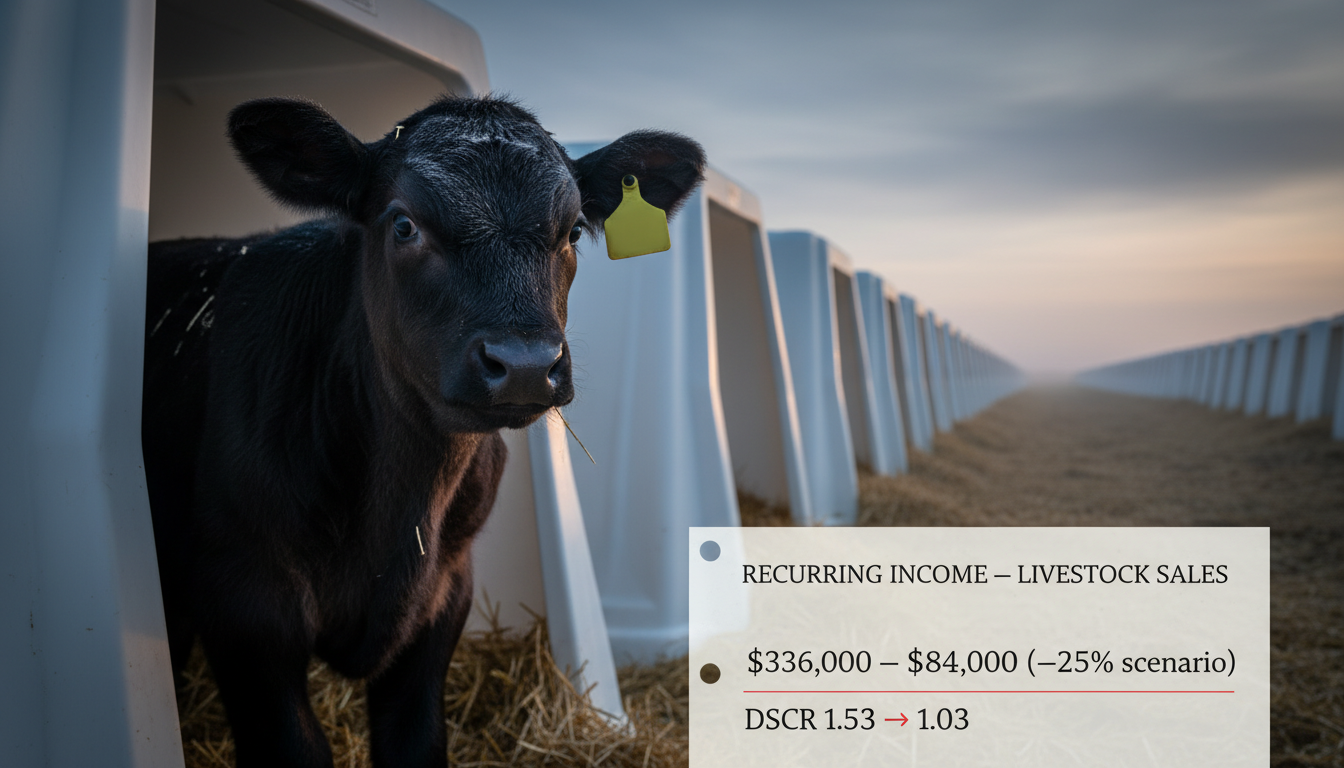
NewsSubscribe
First
Last
Consent

Your Top Heifers All Trace to Three Cow Families. That’s a $ 93,300-A-Year Trap.

Your top genomic heifers probably trace to three cow families. In a $3,110 heifer market, that concentration can be a $93,300‑a‑year mistake.

Executive Summary: Replacement heifers averaged $3,110 per head in late 2025, inventories are sitting at a 47‑year low, and that makes your heifer pipeline one of the biggest financial risks on your farm. This article shows how herds like Glenn Kline’s — with every heifer genomic‑tested and beef‑on‑dairy dialed in — can still end up with most of their “best” heifers tracing back to just two or three cow families that don’t consistently last three or more lactations. When those same maternal lines also dominate your AI sires, you’re quietly concentrating inbreeding and fragility, not diversifying. On a 400‑cow herd, that concentration can mean 20–30 extra replacements every year, tying up about $93,300 in replacement capital at current prices. You get a concrete 30/90/365‑day playbook: add a cow‑family column to your data, run survival and culling by family, re‑aim sexed/IVF/beef rules at proven‑durable lines, and double-check your sire list by maternal line. The bottom line: genomics and beef‑on‑dairy still drive progress and cash flow — but adding cow family as a sorting column turns your breeding program into a risk‑management tool instead of a ,300‑a‑year gamble.

Cow Family Concentration

USDA’s October 2025 Agricultural Prices report pegged the average U.S. replacement dairy heifer at $3,110 per head— the highest figure ever recorded in that series. By January 2026, the national average eased to $2,860, but top springing heifers in California and Minnesota were still clearing above $4,000. U.S. replacement inventories? A 47‑year low, with CoBank estimating the country is short roughly 800,000 dairy heifers across 2025–2026.

At his Holstein herd in Pennsylvania, Glenn Kline has built exactly the kind of genomic program those prices reward: every heifer is genomic‑tested, lower performers are bred to beef, and IVF is used to multiply the top cows. “Back in 2011, we started on genomic testing, and boy, that’s made a huge difference in our herd,” he told the CDCB industry meeting at World Dairy Expo 2025. When he expanded and had to buy animals in, the gap was obvious. “There was really a significant difference with our original animals lasting longer,” Kline said.

The genomics worked. The bought‑in cows didn’t hold up. But here’s the question Kline’s spreadsheet doesn’t answer — and that most progressive breeders aren’t asking either: which cow families do his best genomic heifers actually belong to? And what does it cost when a handful of famous families quietly dominate your replacement pipeline in the tightest heifer market in five decades?

The Cull Math That Changes Everything

Penn State Extension’s cull‑rate benchmarking using USDA/NAHMS data shows how many cows never reach the point where they’ve truly paid their way. In U.S. dairy herds tracked by NAHMS, the annual combined cull and death rate is around 37–38%, with about 73% of culls involuntary — driven by infertility (23.3%), mastitis (18.6%), lameness, and other biological failures rather than planned marketing decisions.

Penn State and other economic analyses put the full heifer‑rearing cost from birth to calving in the $1,800–$2,400range, depending on system, with roughly $2,000 per head as a solid 24‑month benchmark for many U.S. herds. At that cost level, most operations need three or more lactations before a cow starts delivering a longevity dividend instead of just paying back her childhood.

But NAHMS data still shows average productive life below that three‑lactation mark in many herds, with a large share of cows leaving before they finish a third lactation. Every cow that reaches a fourth lactation saves you at least one replacement you didn’t have to rear or buy and delivers another year of mature‑cow production.

The replacement side of the equation flipped fast. CoBank’s Corey Geiger tracked national averages moving from around $1,140 per head in April 2019 to $2,660 by January 2025, then surging to $3,010 in July 2025 — a 164% jump from that 2019 low. That’s the backdrop for every breeding decision you make right now.

How Genomics Quietly Narrowed the Sire Base

Here’s what the genomic revolution delivered alongside all that genetic gain: a smaller sire base and more concentrated maternal lines. Within the last decade, active Holstein bulls in AI programs dropped from about 2,734 to 1,079, and only 75–100 top genomic young bulls now enter AI each year in the U.S. — down from 1,000+ pedigree‑selected bulls annually before genomics. Big contraction on the male side. And because many of those “new” top bulls come from the same elite cow families, the female side narrows too.

MetricPre-Genomic EraCurrent Era (2020s)
Active AI bulls (total pool)2,7341,079
Young bulls entering annually1,000+88 (avg 75–100)

When your genomic‑tested heifer pen is dominated by daughters from three famous cow families, and your AI lineup is stacked with sons and grandsons of those same families, you’re doubling up maternal lines from both sides of the pedigree. The Expected Future Inbreeding (EFI) number on a bull proof might still look acceptable, but EFI is calculated against a base population that’s itself more inbred than it was a decade ago. You’re measuring water depth in a boat that’s already taking on water.

Doekes et al. (2020) analyzed Dutch Holstein Friesians and found roughly 36–99 kg less 305‑day milk per +1% increase in genome‑wide homozygosity, along with longer calving intervals and higher somatic cell scores. That’s the kind of quiet drag you feel when fresh‑pen performance doesn’t match the proofs. Misztal and Lourenco’s 2024 Journal of Animal Science review warned that genomic tools accelerate unfavorable changes in fitness traits alongside production gains, and that management alone can’t fully counteract them if inbreeding continues to rise.

Cow family tracking doesn’t fix inbreeding on its own. It lets you see where you’re stacking weight onto the same thin branches before your fresh‑cow pen and replacement budget start screaming.

What Does a $1,200 Beef‑on‑Dairy Calf Really Cost Your Replacement Program?

On paper, the beef‑on‑dairy logic is clean. You genomic‑test your heifers, rank them by index, breed the bottom slice to beef — capturing a $900–$1,400 beef‑cross calf premium in many 2024–2025 U.S. markets — and point sexed semen or IVF at the top slice to make replacements. The beef check shows up in 90 days. The genomic ranking tells you you’ve kept the “best” heifers.

Then you put the cow family on top. The picture shifts.

In a composite analysis built from several 300–500‑cow Holstein herds, one “plain” family that rarely produced chart‑topping genomic heifers quietly averaged 3.7–4.0 lactations in the parlor. Two fashionable high‑index families averaged 2.4–2.6 lactations, with disproportionate reproductive and transition‑disease culls. Those are herd‑record numbers, not theory. Your exact figures will differ, but the pattern probably feels familiar: some families stay; some don’t.

Genomics lets you see PL, DPR, and health indexes. But if your filter is still mostly “top overall index,” the families that rise fastest aren’t always the ones that handle your transition, lameness, and reproductive pressure best.

MetricFamily A (Durable)Family B (Fragile)Family C (Fragile)
Average lactations completed3.92.42.6
Share of genomic-tested heifers22%31%27%
Average GTPI rank (percentile)68th82nd79th
Involuntary cull rate28%42%39%
Top culling reasonsMastitis, injuryRepro, transitionLameness, repro

Running the Numbers: The Trade

Take a 400‑cow Holstein herd:

  • Herd size: 400 milking cows
  • Turnover target: 35% → about 140 replacements per year
  • Replacement purchase cost (national average): $3,010–$3,110 per head in mid‑ to late‑2025
  • Durable families: ~3.8 lactations average (turnover ~26% per year)
  • Fragile families: ~2.5 lactations average (turnover ~40% per year)

In a balanced scenario, overall turnover sits close to 35%. Replacement needs stay near 140 head. Now imagine your replacement pipeline is heavily tilted — 60–70% of your genomic‑tested replacements come from fragile families, rather than a more even mix. Based on the composite herd data, those herds saw replacement needs rise by 20–30 extra heifers per year.

At $3,110 per purchased replacement:

30 × $3,110 = $93,300 per year in additional capital

as long as that concentration-turnover gap persists.

MetricDurable FamiliesFragile Families
Average lactations completed3.82.5
Annual turnover rate~26%~40%
Replacements needed (400-cow herd)104 per year160 per year
Extra replacements vs. baseline+30 per year
Annual replacement cost at $3,110/head$323,440$497,600
Additional capital tied up+$93,300/year

You didn’t make that choice explicitly. You made it when you set beef‑on‑dairy and IVF rules strictly by genomic rank, without asking which families actually survive in your barns.

The 400‑Cow Herd That Added the Cow Family Column

Here’s how those composite herds actually changed their breeding rules — built from several progressive Holstein operations that tracked maternal lines and shared data with their advisors.

Step 1 — Tag every female by maternal line. They added a “CowFamily” field in herd software. Every female was assigned to a family tied back to a base cow, defined strictly by maternal lineage — not marketing labels.

Step 2 — Build one combined heifer file. For every genomic‑tested heifer: ID, sire, birthdate, CowFamily, GTPI or NM$, PL/DPR/health indexes, and dam’s lactation number and culling status. For the first time, genomic scores, cow families, and real survival data lived in the same table.

Step 3 — Run family‑level stats. Average lactations completed, lifetime milk and components, primary culling reasons by family. The pattern was striking: some high‑index families had excellent longevity — gold. Others underperformed their genomic potential, with many second‑lactation exits. Several mid‑index families quietly averaged nearly 4 lactations, with fewer involuntary culls.

The lesson wasn’t “don’t trust genomics.” It was “don’t let genomics outrun what your cow families are telling you about your own barns.”

Step 4 — Rewrite three breeding rules.

  1. Sexed semen allocation. Top heifers within each proven‑durable family got priority, even if their GTPI was mid‑pack.
  2. IVF and donor lists. IVF on high‑index heifers from fragile families was capped; donor status went first to heifers from families that could reach third lactation under current management.
  3. Beef‑on‑dairy targets. Beef semen was pointed at over‑represented, short‑lived families after enough replacements were secured from the durable families.

Within about two years, those herds consistently reported: no single family supplied more than ~30% of replacements, the annual increase in genomic inbreeding slowed, and a higher share of cows reached third and fourth lactation.

These aren’t randomized trials. But they’re real herd‑record results that line up with the math.

Your Sire Analyst’s Quiet Role in This

Your sire analyst isn’t out to sabotage your herd. They’re working with the same tools and incentives: genomic rankings, strong proofs, and semen that sells. When an AI program finds cow families that reliably produce top‑ranking sons, it’s logical to double down. Those families become donors and bull dams for everyone else. Over time, more bulls in your semen tank share the same grand‑dams and great‑grand‑dams, even if the sires change.

NAAB and industry reports show a concentrated semen market, with a small number of large organizations controlling most of the U.S. AI business. That’s efficient for pushing genetic gain. It also amplifies maternal‑line concentration in the client herds unless you actively steer away.

For breeders like Kline, the practical question isn’t whether AI companies are “wrong.” It’s whether their female programs are quietly overriding their own herd’s economics. If your bull list is heavy with sons of cow families that already account for a big chunk of your heifer pen, you’re not diversifying. You’re doubling down.

The Playbook: What to Do Before Your Next Breeding Cycle

In the Next 30 Days

  • Add the cow family column. Export your female inventory, add a “CowFamily” field, and tie each animal back to a base cow.
  • Run a concentration check. Pull your genomic‑tested heifer list, sort by GTPI or NM$, and look at the top 25–30%. If three or fewer families supply 60% or more of that group, you’re carrying the concentration risk this article describes.
  • Cross‑check your main sires. Note the cow families in their maternal pedigrees. If those match your over‑represented families, flag them as “use thoughtfully” instead of default choices.

In the Next 90 Days

  • Calculate family‑level survival from your own data. Average lactations completed, average lifetime milk, voluntary vs involuntary cull ratio, and top culling reasons — by cow family.
  • Identify your “insurance” families. Families averaging 3.5+ lactations with lower involuntary cull rates are your built‑in pipeline stabilizers.
  • Rewrite three core rules: Sexed semen priority goes to daughters from durable families. IVF donor lists start with high‑health, high‑PL heifers from durable families before fragile ones. Beef semen is allocated first to over‑represented, short‑lived families once replacement needs from durable families are met.

In the Next 365 Days

  • Audit your sire lineup by maternal line. For each bull you use heavily, record the cow family of his dam and grand‑dam. Don’t let half your semen volume come from bulls out of the same two or three families.
  • Set a practical inbreeding guardrail. Work with your genetic advisor to flag matings in which both the sire and dam come from your most common cow families.
  • Track outcomes, not intentions. As the first heifers under new rules freshen, watch average lactations completed by family, voluntary vs involuntary culling by family, and total replacements needed per year vs your target.
TimelineActionOutput / Deliverable
Next 30 DaysAdd cow family column to herd softwareEvery female tagged with maternal line ID
Next 30 DaysRun concentration check% of top genomic heifers from 3 families
Next 30 DaysCross-check main sires by maternal lineList of sires that double-up over-represented families
Next 90 DaysCalculate family-level survival statsAverage lactations, cull reasons by family
Next 90 DaysIdentify “insurance” families (3.5+ lact.)List of durable families for priority breeding
Next 90 DaysRewrite sexed/IVF/beef rulesUpdated protocols prioritizing durable families
Next 365 DaysAudit sire lineup by maternal lineMaternal diversity report for bull list
Next 365 DaysSet inbreeding guardrails with advisorFlagged mating pairs from same families
Next 365 DaysTrack outcomes by family as heifers freshenLactation/cull metrics by family, quarterly
OngoingMonitor replacements needed vs. targetAnnual replacement count and cost by family

What This Means for Your Operation

  • Your genomic ranking list is a tool, not a verdict. It doesn’t know which cow families actually survive under your feed, facilities, and disease pressure. Your cull and longevity records do.
  • Replacement cost has changed the tolerance for fragility. Going from $1,140 per head in 2019 to $3,010–$3,110 in 2025 means being wrong about cow family durability isn’t a nuisance — it’s a five‑ or six‑figure swing in capital exposure.
  • Inbreeding penalties are already in your tank and your parlor. The depression numbers from Dutch Holsteins — up to 99 kg less milk per +1% genomic inbreeding — aren’t abstract; they describe what happens when you stack too many related lines.
  • Beef‑on‑dairy decisions need a family filter. Before you write next season’s beef semen rules, pull the last 50 heifers you bred to beef and tag them by cow family and dam’s lactation. If your best longevity families are taking the hit, your protocol is backwards.
  • IVF amplifies whatever you point it at. If you aim your IVF budget at cow families that don’t last in your system, you’re multiplying fragility in the tightest replacement window in decades.

Key Takeaways

  • If three or fewer cow families supply 60%+ of your top genomic heifers, you’re carrying the concentration risk this article lays out. Put a hard cap on your breeding protocols and deliberately feed replacements from underrepresented, proven‑durable families.
  • If your annual replacement rate has drifted above the mid‑35% range without obvious disease crashes, check whether short‑lived families are quietly driving that turnover. Run replacements‑needed per year by cow family and compare that to your longevity and cull data.
  • Before your next beef‑on‑dairy semen order, block out an hour to run one report: last 50 heifers bred to beef, tagged by cow family and dam’s lactation number. If durable families are over‑represented in the beef column, fix the rules before the next breeding season.
  • On your next call with your sire analyst, ask one extra question: “Which bulls in your lineup come from cow families we don’t already have stacked in this herd?” Make maternal‑line diversity part of the conversation, not an afterthought.

The Bottom Line

Open your genomic heifer list right now. Add a cow family column. Sort by family instead of GTPI. How many maternal lines are you actually betting your next three years of replacements on — and do the families carrying the most weight have the track record in your barns to justify it? If you’re already doing what Kline did — leaning into genomics early, pushing for better cows — this isn’t about blaming you. It’s about upgrading the tools so your cow families, not just your proofs, protect the herd you’ve worked hard to build.

Complete references and supporting documentation are available upon request by contacting the editorial team at editor@thebullvine.com.

Learn More

The Sunday Read Dairy Professionals Don’t Skip.

Every week, thousands of producers, breeders, and industry insiders open Bullvine Weekly for genetics insights, market shifts, and profit strategies they won’t find anywhere else. One email. Five minutes. Smarter decisions all week.
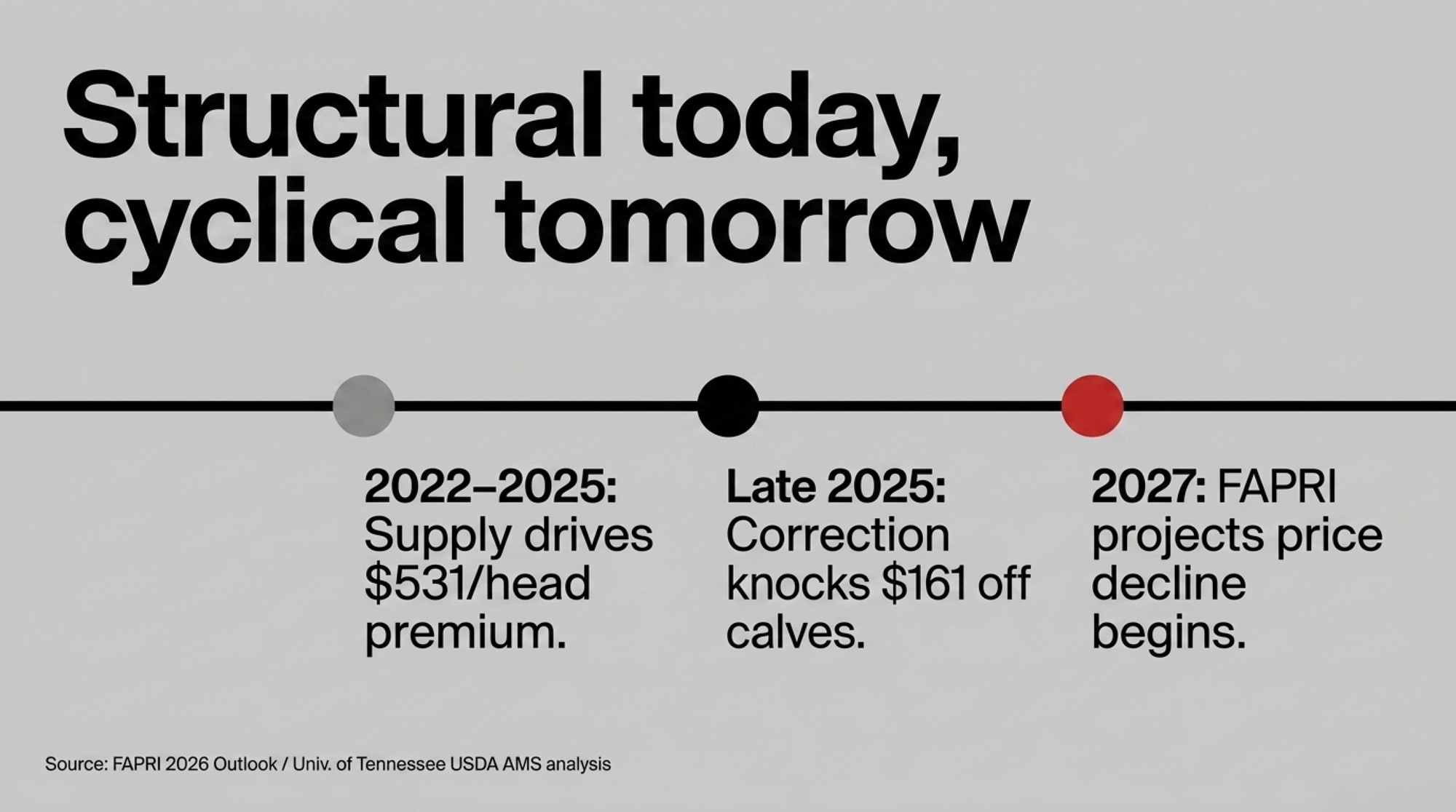
NewsSubscribe
First
Last
Consent

$18.95 Milk, $19.14 Costs: The $287,500 Equity Decision Facing Mid‑Size Wisconsin Dairies

Same milk price. One 500-cow Wisconsin dairy kept $480,000 in equity; their neighbors walked away with under $200,000. The real difference was when they believed their breakeven point and acted on it.

Executive Summary: This feature breaks down the 2026 margin squeeze for 300–800 cow dairies, where January Class III at $14.59/cwt and USDA’s $18.95 all‑milk forecast run into ERS full economic costs of $19.14/cwt for large herds. For a 500‑cow operation at 23,000 lbs/cow, that means a $287,500 annual gap at $16.50 milk versus a $19 breakeven and only break-even at best if the forecast hits. One Wisconsin family believed in math early and preserved about $480,000 in equity through a planned exit, while neighbors on the same milk price ended up with under $200,000. The article shows how tightening feed shrink from 8–12% down toward 4% can recover $50,000–$80,000/year as a 90‑day bridge — enough runway to choose, not react. From there, it walks through four concrete paths for mid‑size herds (strategic exit, specialty pivot, downsizing with contract lock‑in, and internal heifer rebuild), with specific “when it fits/where it backfires” trade‑offs. A closing playbook gives 30/90/365‑day checks on burn rate, DMC coverage, contract timing, and heifer strategy so you can decide, with your own numbers, whether to fight through, right‑size, or sell while equity is still on the table.

Dairy breakeven costs

A Wisconsin dairy family ran the same numbers every mid-size operator is running right now: March Class III futures closing at $16.42/cwt on February 26, while their all-in costs ran above $19. They made the call with 8–10 months of runway left. Preserved roughly $480,000 in family equity.

Exit ScenarioTimingCow Value/HeadEquipment RecoveryFamily Equity Preserved
Strategic ExitQ1–Q2 2026 (8–10 months runway left)$1,850Full auction value$480,000
Forced LiquidationLate 2027 (lender-initiated)$1,400Distressed/scrap pricingUnder $200,000
Equity Destruction12–18 month delay−$450/head−40–60%−$280,000
Decision DriverProactive lender audit in MarchGenomic testing ($45/head) before dispersalPlanned vs. distressed auction timingBelieving the math while assets hold value

The family down the road, milking a similar herd, waited. By the time their lender initiated the conversation, the number was under $200,000.

That $280,000 gap isn’t about who’s a better farmer. It’s about who ran the real numbers first — and believed what they showed.

What Does $14.59 Class III Actually Mean for Your Herd?

January’s Class III came in at $14.59/cwt. December was $15.86. USDA’s February WASDE raised the 2026 all-milk forecast to $18.95/cwt — still $2.22 below the revised 2025 average of $21.17.

For a 300-cow herd shipping 69,000 cwt/year, that’s a $153,000 drop in gross milk revenue year over year.

Here’s the walk-through for a 500-cow operation producing 23,000 lbs/cow — that’s 115,000 cwt/year:

  • At $16.50 milk vs. $19 breakeven: $2.50/cwt × 115,000 cwt = $287,500 annual shortfall
  • At $16.50 milk vs. $21 breakeven: $4.50/cwt × 115,000 cwt = $517,500 annual shortfall
  • At $18.95 (USDA forecast) vs. $19 breakeven: Still underwater by $5,750/year — and that’s the optimistic case

Where does your breakeven point sit? Plug it in: (your all-in cost/cwt − milk price/cwt) × annual cwt shipped = your annual shortfall.

Lucas Sjostrom, executive director of Minnesota Milk, framed the oversupply problem driving these prices in a January 2026 interview with the Red River Farm Network: “Although milk is milk, it’s the components that we sell, and we’ve got all sorts of components on the market.” Milk-fat tests averaged 4.32% in 2025, up from 4.24% in 2024, while skim-solids hit 9.12%. More components per pound of milk means more product per pound of milk — and right now the market has more than it can absorb.

One critical distinction: USDA’s ERS puts the full economic cost for the largest operations (2,000+ cows) at $19.14/cwt. That figure includes imputed family labor at market wages and opportunity cost on owned land. Your cash-cost breakeven is typically $3–6/cwt lower, but the ERS number captures the real drain on family wealth, which is what matters when you’re asking whether to stay or go.

The Assumption That’s Breaking Down

For 40 years, “get big or get out” has been dairy’s operating principle. Scale solves margin problems. That was the thesis.

But when ERS data shows the most scaled herds in the country starting 2026 at $19.14/cwt against $18.95 milk, scale alone clearly isn’t solving it.

And some operations read that data and do the opposite of what conventional wisdom prescribes. A 500-cow herd strategically culled to 300 cows, captured strong cull revenue at historically high beef prices, slashed operating costs by 40%, and improved per-cow profitability by tightening management and focusing on its best genetics.

The ERS data also explains why the herd keeps expanding even as margins compress. In 2025, dairy farmers culled fewer cows and expanded the productive herd as new processing capacity came online — 2.81 million fresh cow additions against 2.64 million slaughtered. December’s dairy cow inventory hit 9.567 million head, up 212,000 from a year earlier.

More cows, more components per cow, more total milk — hitting a market already drowning in solids. The contrarian play in 2026 isn’t expansion. It’s strategic right-sizing paired with contract lock-in and cost discipline.

The $584/Cow Bridge to Q4

Before choosing a path — exit, downsize, pivot, or rebuild — you need time to consider it. And the fastest way to buy time without touching herd size, production, or capital is attacking feed shrink.

Dr. Mike Brouk at Kansas State laid it out at the Vita Plus Dairy Summit, and the math still holds: a 500-cow dairy running $7.50/cow/day in feed costs can capture $50,000 or more per year by reducing shrink just 4 percentage points. “Or we can reduce our feed shrink to gain $50,000,” Brouk said. “Comparatively speaking, capturing $50,000 from milk price alone for a 500-cow herd would require an additional 32 cents per cwt for the year.”

That 32-cents-per-cwt equivalent is the number that should stop you. It means shrink recovery at current margins is worth more than most of us will get from the futures curve over the next 6 months.

University of Minnesota Extension’s Jim Salfer documented even larger returns: a 100-cow dairy saves $58,400 annually when moving from high to low shrink—that’s $584/cow. Scale that to 500 cows, and you’re looking at $50,000–$80,000 in recoverable margin, depending on ration cost and starting shrink level.

Most operations run 8–12% total ration shrink. Well-managed herds hit 4% or less. Penn State’s Dr. Lisa Holden describes how the gap opens: procedural drift “creeps in like a fog and bad habits really take root like weeds.” On a 1,000-cow dairy running $8/cow/day ration cost, 8% shrink costs $233,600 annually — cutting it to 4% recovers half of that.

Joe Statz and his brothers showed what’s possible at scale. Their 4,400-cow operation near Marshall, Wisconsin, built a dedicated feed center — a 60,000-square-foot commodity barn with drive-through bays and a centralized mixing system — and dropped shrink from 10% to 2–3%, according to a 2018 Dairy Global report. The documented savings: over $500,000 per year in recovered feed value. Their nutritionist, Todd Follendorf from Cornerstone Dairy Nutrition in Waunakee, put it this way: “Shrink control has been the main reason why we built the whole facility.”

You don’t need Statz-level infrastructure. As The Bullvine reported in November, five targeted improvements — face management, scale calibration, ingredient tracking, right-sized bunkers, and refusal optimization — can recover $100,000+ annually on a large operation for an investment under $20,000.

Here’s why this matters for the survival math: $50,000–$80,000/year in recovered margin is the funding mechanism for whichever path you choose. It doesn’t fix a $287,500 shortfall. But it buys 2–4 months of additional runway — and in a year where the difference between strategic and forced exit is $280,000 in family equity, that extra runway is worth more than anything else you can do in the next 30 days without writing a check.

If you don’t have weighed shrink data from the past 90 days, that’s action item number one this week.

How Bad Is the Survival Math?

David Kohl, professor emeritus of agricultural economics at Virginia Tech, has been warning about the pressure this cycle is putting on lenders. Speaking at the Professional Dairy Producers of Wisconsin annual business conference: “Lenders will be under tremendous scrutiny from regulators this year.”

That scrutiny flows downhill. If your debt-service coverage ratio drops below 1.0, it can trigger technical default — even when payments are current.

Kohl’s metric for self-assessment: calculate your burn rate — how quickly working capital depletes. “You’d like to have a burn rate of 3½ years or more,” he says. “Determining your burn rate gives you some boundaries as to when you have to make some tough decisions. Murphy’s Law is merciless when you don’t have working capital.”

Below 2½ years? That’s what Kohl calls the red-light zone.

Here’s what exit timing looks like for a representative 500-cow operation carrying $2.5–3M in total assets against $1–1.5M in debt:

Exit TimingCow ValueEquipment RecoveryKey Action Requirement
Strategic (Q1–Q2 2026)~$1,850/headFull auction valueProactive lender audit by March
Forced (Late 2027)~$1,400/headDistressed/scrapWaiting for a call from the bank

These are illustrative scenarios for editorial purposes only. Actual values depend on herd genetics, health status, registration, market timing, and regional demand. Assumes Upper Midwest region, mixed owned/rented land, mid-life equipment. Consult your lender, accountant, or ag attorney for operation-specific analysis.

That $1,850/head figure depends heavily on what you’re selling. USDA’s October 2025 Agricultural Prices report showed the price received for milk cows hit a record $3,110 per head nationally. At Premier Livestock & Auctions in Pennsylvania, top-quality springing heifers fetched $2,850–$4,050 at the February 18 sale, with top-quality fresh cows bringing $3,000–$3,800. At their January 27 special heifer auction, open heifers in the 700–850 lb range hit $1,550–$3,000 per head.

But those prices went to cattle with verified quality. Commodity Holsteins with no papers and no genomic data sell at commodity prices. Genomic testing runs roughly $45 per calf and generates about $34 in additional profit per cow per year through better culling and selection decisions. In an exit scenario, that $45 test becomes the difference between your dispersal attracting genetics buyers at $2,850+ per head versus commodity buyers bidding $1,400.

Four Paths — and What Each One Costs

Path 1: Strategic Exit While Asset Values Hold

  • When it fits: DSCR trending below 1.0, burn rate under 2½ years, debt-to-asset above 50%, no succession plan
  • What it requires: Decision by Q2 2026, proactive lender conversation, 6–12 months for proper real estate and cattle marketing, and genomic testing of the herd before the dispersal
  • Where it backfires: Waiting until forced sale can destroy $200,000+ in recoverable equity — and that spread widens when auction markets get crowded
  • Tax angle: Chapter 12 bankruptcy provisions can allow qualifying family farm operations to restructure certain capital gains tax obligations as unsecured debt — consult an ag attorney for specifics

The Wisconsin family we opened with? They chose this path — and started genomic testing the same week they called their lender.

Path 2: Pivot to Specialty/Premium Markets

  • When it fits: Strong component genetics, willingness to reduce herd size, regional processor relationships
  • What it requires: Organic certification (3-year transition), A2 genetic testing (~$40/cow), identity-preserved handling
  • Where it backfires: Premium markets have capacity limits — not everyone can pivot simultaneously.

Path 3: Strategic Downsizing with Contract Lock-In

One Northeast producer interviewed by The Bullvine reduced herd size by roughly 20% in late 2025 and saw per-cow profitability improve as labor costs dropped faster than revenue. Tighter management of fewer, better animals made the difference.

  • When it fits: Labor costs consuming disproportionate margin, cull values historically elevated, processor relationships strong
  • What it requires: Multi-year component premium contracts negotiated before mid-2026
  • Where it backfires: If processor contracts don’t materialize, you’ve shrunk without securing the premium position.
  • Why the window exists: Billions in new processing capacity needs committed milk, but replacement heifer inventories dropped to just 3.905 million head as of January 1, 2026 — that’s 40.8% of productive cows, down from 41.7% a year earlier. CoBank projects this won’t rebound before 2027. That mismatch gives producers unusual contract leverage — for now.

Path 4: Internal Heifer Rebuild

  • When it fits: Currently heavy on beef-on-dairy, strong genetic base, 3–5 year time horizon
  • What it requires: Cutting beef-on-dairy to the bottom 10–15% of the herd, sexed dairy semen on top genetics, accepting 3–4 years of reduced beef-calf revenue
  • The replacement math: Internal rearing costs sit around $2,034/head for Pennsylvania farms and $1,709/headin the Midwest, per Penn State Extension data updated December 2025 (range: $1,411–$2,301). Compare that to $2,850–$4,050 for purchased springers at Premier Livestock’s sale on February 18. The per-head advantage is significant — but raising your own takes 24–26 months to show up in the milking string. The Bullvine’s February analysis of the national heifer paradox — 9.57 million cows, just 3.91 million replacements — shows why the external market isn’t getting easier anytime soon.

Signals That Tell You Which Way This Goes

Class III futures for fall 2026. March Class III closed at $16.42 on February 26. USDA’s annual Class III forecast sits at $16.65 — just 23 cents above where the front month settled. The back half has to do most of the heavy lifting to deliver even that modest average. If September–December contracts move above $18.50 by mid-year, the survival math loosens. They’re currently near the $18.35–$18.46 range — right at the edge, not safely above it.

Culling pace. ERS reports dairy cow slaughter is running above year-ago levels in the first four weeks of 2026, even though the herd is 212,000 head larger. Farmers retained older cows through 2025 to sustain output — now they’re culling them. If culling accelerates, the herd will shrink faster than expected, and milk prices could firm in H2.

Your shrink audit results. If the 90-day measurement comes back at 10%+ and your ration runs $7–8/cow/day, you’re sitting on $50,000–$80,000 in recoverable margin. The Statz Brothers documented it. Brouk at Kansas State calculated it. You can capture it before Q3 — and it funds whichever path you choose.

DMC enrollment. The 2026 Dairy Margin Coverage program, reauthorized through 2031 under the One Big Beautiful Bill Act, closed enrollment on February 26. Tier I coverage now extends to 6 million pounds. December 2025’s margin fell to $9.42/cwt — below the $9.50 trigger — producing the only indemnity payment of the year.

DMC isn’t free money — premiums eat into the payout, and if you’re already locked into forward contracts or carry strong component premiums, the incremental protection may be thin. But for operations running on straight Class III with no hedge, it’s a floor worth having at these margin levels.

What $18.95 Milk Means for Your 500-Cow Operation

TimelineAction ItemWhy It MattersSuccess Metric
This WeekCalculate burn rate: Working capital ÷ monthly shortfallKohl says minimum 3.5 years; below 2.5 years = red-light zoneKnow exact months of runway
This WeekStart measuring feed shrink with actual weightsDifference between 10% and 4% = $50k–$80k/year on 500 cowsBaseline shrink % documented
This WeekConfirm DMC enrollment status (closed Feb 26)December 2025 already triggered $9.42 indemnity—early 2026 could repeatCoverage locked or opted-out decision made
By March 31Stress-test cash flow at $16.50 milk (H1) and $17.50 (H2)January came in at $14.59; March futures at $16.42—if you assumed $19+, you’re wrongUpdated 2026 projections with real futures data
By March 31If considering exit within 18 months: Order genomic testing now$45/head test = difference between $2,850+ genetics buyers vs. $1,400 commodity biddersHerd genomically profiled before dispersal
By March 31Schedule proactive lender auditWisconsin family who exited strategically preserved $480k; neighbors who waited: under $200kMeeting scheduled—on your timeline, not theirs
By June 30Pull full economic cost of production (include market-rate family labor, depreciation, interest)Lender cares about cash cost; family wealth depends on full economic figure—know bothBoth numbers calculated and validated
By June 30Commit to a path: Lock contracts if fighting through, finalize marketing timeline if exitingHeifer shortage window won’t stay open indefinitely—processor leverage exists nowContract signed OR exit timeline finalized
By Dec 31Evaluate whether H2 deliveredIf Sept–Dec Class III average < $18, your 2027 plan needs to start now—not in JanuaryDecision: continue, pivot, or exit

This week:

  • Calculate your burn rate. Working capital ÷ monthly cash shortfall = months of runway. Kohl says you want a minimum of 3½ years. Below 2½ years, you’re in the red-light zone. That single number determines whether you’re choosing your path — or having it chosen for you.
  • Start measuring feed shrink — with actual weights. The difference between 10% and 4% represents $50,000–$80,000 annually on a 500-cow operation. Fastest path to bought time.
  • Confirm your DMC enrollment status. December 2025 already triggered an indemnity at $9.42 — early 2026 could do the same.

By the end of March:

  • Stress-test your cash flow at $16.50 milk through June, $17.50 through December. January came in at $14.59. March futures closed at $16.42. If your projections assumed $19+ milk, they’re wrong. Redo them.
  • If you’re considering an exit within 18 months, order genomic testing now. At $45/head, it’s cheap equity insurance. Schedule the lender audit for March — before they call you.

By June:

  • Pull your full economic cost of production. Include market-rate family labor, depreciation, and interest at current rates. Your lender cares about cash cost; your family’s long-term wealth depends on the full economic figure. Know both numbers.
  • Commit to a path. Lock in processor contracts if you’re fighting through. Finalize your marketing timeline if you’re exiting. The producer leverage window created by the heifer shortage won’t stay open indefinitely.

By December:

  • Evaluate whether H2 was delivered. If the September–December Class III average is below $18, your 2027 plan needs to start now—not in January.

Key Takeaways

  • If your full economic breakeven sits above $19/cwt, USDA’s $18.95 all-milk forecast doesn’t save you.March Class III closed at $16.42 on February 26. The futures curve says H1 2026 is significantly worse than the annual average implies.
  • Decision timing determines equity preservation. The gap between a Q1 strategic exit and a late-2027 forced liquidation can exceed $200,000 in a representative 500-cow scenario. Verified genetics pushes the strategic number toward the top of the range.
  • Feed shrink is your 90-day bridge — not your solution. Kansas State puts recoverable savings at $50,000+ for a 500-cow herd. The Statz Brothers captured over $500,000 annually on 4,400 cows. That buys runway. Use it to fund a path choice, not to delay one.
  • “Get big or get out” is becoming gospel. One Northeast producer improved per-cow profitability by reducing herd size roughly 20%. Another went from 500 to 300 and saw the same pattern. The math worked because the downsizing was strategic — paired with cost discipline and a focus on the best genetics in the herd.

The Bottom Line

That Wisconsin family didn’t have better genetics or cheaper feed than their neighbors. They had a timeline, a spreadsheet, and the willingness to believe what the numbers showed.

Where does your real breakeven sit against $18.95 milk? And how many months does Kohl’s formula say you’ve got?

This article is intended for informational purposes only and does not constitute financial, legal, or tax advice. Data, projections, and scenarios are based on publicly available information as of February 26, 2026, and should not be relied upon as the sole basis for business decisions. Consult qualified professional advisors for guidance specific to your operation.

Complete references and supporting documentation are available upon request by contacting the editorial team at editor@thebullvine.com.

Learn More

The Sunday Read Dairy Professionals Don’t Skip.

Every week, thousands of producers, breeders, and industry insiders open Bullvine Weekly for genetics insights, market shifts, and profit strategies they won’t find anywhere else. One email. Five minutes. Smarter decisions all week.
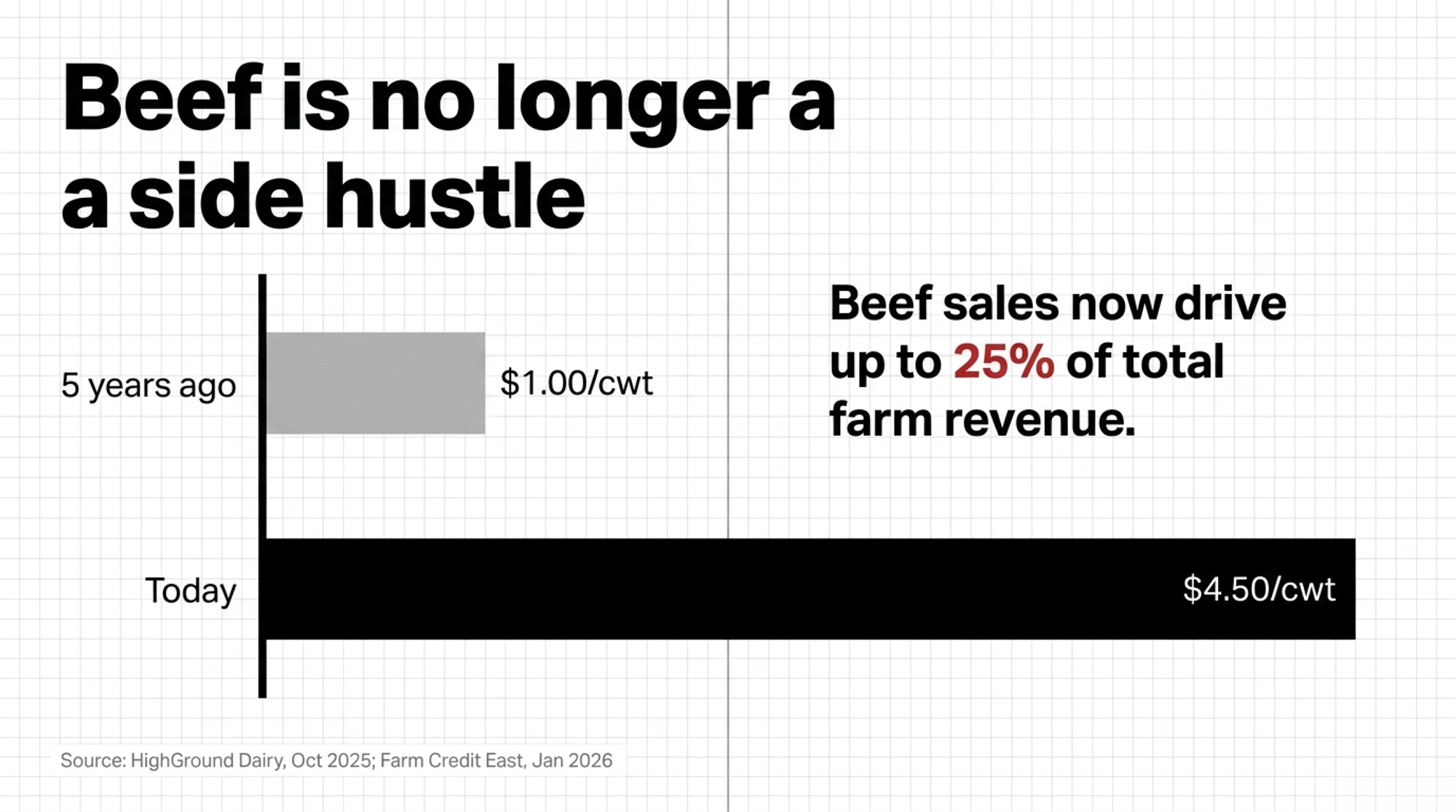
NewsSubscribe
First
Last
Consent

The Calf-Check Paradox: $14.59 Milk, 14,000 Extra Cows, and a 550-Cow Dairy Staring at an 11-Week Runway

When a day‑old calf pays better than the milk check, the rules change. The question isn’t volume anymore. It’s survival math.

Executive Summary: January’s USDA report exposed a deep disconnect in U.S. dairy economics: milk prices are collapsing while cow numbers and output still climb. Production was up 3.2% year‑over‑year with 14,000 more cows on line, even as Class III fell to $14.59/cwt and Class IV to $13.55/cwt against full costs that often sit near $18–$19/cwt. The missing margin is coming from cattle, with beef‑on‑dairy calf and cull checks routinely adding $3–$4.50/cwt, but that turns your dairy into a leveraged bet on the beef cycle. Using USDA and CoBank numbers, a 300‑cow herd faces roughly a $153,000 drop in milk revenue for 2026, and closer to $261,700 when you layer in a realistic 35% correction in calf values. At the same time, replacement heifers are at a 20‑year low, trading around $3,010–$3,360 per head, even as more than $11 billion in new processing capacity comes online and demands more milk. One 550‑cow Midwest dairy that thought it had six months of cash discovered it had just eleven weeks, then bought time by culling its worst converters and restructuring debt inside 48 hours. For your operation, the takeaway is blunt: treat calf income as volatile bonus money, know your real cost of production to the penny, and set 30‑, 90‑, and 365‑day plans that assume milk and beef could both move against you at the same time.

A 550-cow Wisconsin dairy sat down with a farm financial counselor earlier this month and pulled a full cost-of-production analysis. The producer thought his all-in cost was around $17.25/cwt. When the spreadsheet included market-rate family labor, real depreciation, current interest on all repriced debt, and health insurance, the number came back at $18.75/cwt — right in line with UW Extension’s cost-of-production benchmarks, which put average COP at $18–$19/cwt for mid-size Midwest dairies. Then he checked his liquidity: $227,000 total. Net weekly cash drain at current prices: about $21,000. That’s roughly eleven weeks of runway — not the five or six months he’d been carrying in his head. 

Cost CategoryNapkin MathMarket-Rate RealityDelta
Feed & Nutrition$7.50$7.80+$0.30
Labor (Family = $0)$2.00$3.10+$1.10 (red text)
Veterinary & Health$0.85$1.05+$0.20
Depreciation (Book)$1.80$2.20+$0.40
Interest (Pre-2022 Rates)$1.10$1.75+$0.65 (red text)
Utilities & Fuel$0.90$0.95+$0.05
Repairs & Maintenance$1.20$1.30+$0.10
Insurance & Taxes$0.60$0.90+$0.30
Miscellaneous$1.30$1.45+$0.15
TOTAL COP$17.25$18.75+$1.50 (red text, bold)

That producer’s math collided with today’s USDA NASS report. U.S. milk production came in at 19.81 billion poundsfor January — up 3.2% year-over-year but a clean miss against the +3.8% that StoneX had penciled in. January’s Class III price printed at $14.59/cwt, the lowest since July 2023, and $5.75 below a year ago. Class IV was even uglier: $13.55/cwt, the lowest in nearly five years, per the AMS announcement. And yet USDA says farmers added 14,000 head between December and January, pushing the national herd to 9.58 million — up 2.0% from last year. StoneX had modeled roughly 9,000 head of growth; the actual came in about 5,000 head hotter. 

When your milk check is falling that fast, and your cow numbers are still climbing, something other than milk economics is driving the bus.

Where Did 14,000 Cows Come From?

Of that 14,000-head surprise, about 10,000 appeared in Texas. The state’s inventory hit 715,000 head, and production jumped 7.6% year over year to 1.598 billion pounds. That’s not organic growth — it’s a direct response to Leprino Foods’ mozzarella facility in Lubbock. Phase 1 of the 850,000-square-foot plant began production in January 2025, with its formal opening ceremony in March. Phase 2 is slated for completion in early 2026. At full capacity, the facility is designed to handle roughly 200 milk trucks per day. 

Kansas tells an even bigger story. Production exploded 26.1% year-over-year — the largest jump of any state — on 45,000 additional head since January 2025. Hilmar’s $600 million Dodge City cheese plant is pulling milk into existence across the High Plains. South Dakota added 24,000 cows and saw production rise 10.9%. 

But flip to the other column. Washington dropped 6.1%. New Mexico fell 3.8%. Pennsylvania slipped 3.0%. The expansion isn’t national — it’s a geographic swap. And if you’re not near a new processing asset, this extra supply pushes your price down without giving you any contract upside. 

What Does $14.59 Class III Mean for a 300-Cow Dairy?

Here’s the barn math that should be taped to every office wall right now.

USDA’s February 10 WASDE projects the 2026 all-milk price at $18.95/cwt. That’s down $2.22/cwt from the revised 2025 average of $21.17/cwt. If the back half doesn’t rally, that number won’t hold. 

Take a 300-cow herd shipping roughly 69,000 cwt annually (at about 23,000 lbs/cow — below the national average of 24,390, which gets skewed upward by the largest herds): 

  • 2025 gross milk revenue (at $21.17/cwt): ~$1,460,730
  • 2026 gross milk revenue (at $18.95/cwt WASDE forecast): ~$1,307,550
  • The gap: roughly $153,000 in lost gross milk revenue

That’s before feed, labor, or debt service. ERS cost-of-production data puts a 2,000-plus-cow operation at $19.14/cwt— which means even the largest, most efficient herds are structurally in the red on a full-cost basis at current spot prices. That Wisconsin producer’s $18.75/cwt looked tight against $21 milk. Against $14.59 Class III, it looks like a countdown. 

As of mid-February, CME Class III futures had March at roughly $16.68 and April around $17.24, with the curve reaching $18 by November. There’s a path to USDA’s annual average, but it requires a back-half rally that hasn’t started yet. 

Why Per-Cow Output Missed — and Why Ration Cuts Are the Real Story

Nationally, per-cow production averaged 2,068 pounds in January — 10 pounds below StoneX’s 2,078 forecast. That 1.2% year-over-year gain is a real downshift from the stronger increases through mid-2025. 

The explanation is ration economics. When your December Class III drops to $15.86 — down $2.76 from the prior year  — you cut feed intensity. StoneX’s analysis notes these adjustments have “probably cut the fat content in the milk and slowed the growth in milk production per cow”. Component-adjusted production still rose 4.2%, with butterfat at 4.50% and protein at 3.45%, but the year-over-year gains are narrowing. 

January’s FMMO butterfat price came in at $1.4525/lb  — roughly 40% below the 2025 average of about $2.44/lb. Chasing components at those returns is a different proposition than it was a year ago. 

Dairy economist Bill Brooks of Stoneheart Consulting puts 2026 milk income over feed costs at $10.14/cwt — still above the $8/cwt threshold generally needed to maintain production, but $2.30/cwt below 2025. The cushion is thinning. 

The Real Profit Center: Calves, Not Milk

This is the paradox at the heart of today’s report. Milk prices are terrible. Farmers keep adding cows anyway.

The answer walks out the barn door on four legs. Nationally, day-old beef-on-dairy calves are bringing $1,400 to $1,500 per head — up from roughly $650 just three years ago. High Ground Dairy’s modeling shows that beef-on-dairy calf values surged by more than 533% between August 2022 and August 2025. In strong Wisconsin markets, premiums push that figure higher still. 

DFA’s Corey Gillins, the co-op’s chief milk marketing officer, estimates that about 70% of DFA’s dairy farmer members are now engaged in beef-on-dairy breeding, adding roughly $2.50 to $3.00/cwt in calf revenue alone. That’s a DFA membership estimate, not an independent industry audit, but it tracks with NAAB semen sales data. High Ground Dairy’s October 2025 modeling on a 1,000-cow operation (55% bred to beef, 28% annual cull rate) pegs total beef-related income — calves plus cull premiums — north of $4.50/cwt of milk shipped. 

On a 300-cow dairy shipping 69,000 cwt, that’s roughly $310,000 a year coming from the cattle market, not the milk market.

CattleFax’s outlook at CattleCon 2026 in Nashville forecast the average 2026 fed steer price at $224/cwt, roughly steady with 2025, and utility cows around $155/cwt. That suggests beef could stay supportive through 2026. But that’s not an excuse to skip the stress test. 

What If Beef and Milk Prices Drop at the Same Time?

Walk through it step by step for that same 300-cow herd:

  • 2025 total gross revenue: ~$1,460,730 (milk) + $310,000 (beef) = ~$1,770,730
  • 2026 if WASDE holds + beef holds: ~$1,307,550 + $310,000 = ~$1,617,550 — down ~$153,000
  • 2026 if WASDE holds + beef corrects 35%: ~$1,307,550 + ~$201,500 = ~$1,509,050 — down ~$261,700

That 35% correction in beef isn’t extreme — it’s within range for a normal cattle cycle turn. And the hit compounds because roughly $108,500 of your beef income disappears on top of the $153,000 milk gap you were already absorbing. If your total annual debt service is anywhere near $200,000, that second scenario puts you in the danger zone.

CoBank’s August 2025 analysis estimated that dairy producers held back roughly 611,600 cows from slaughter between Labor Day 2023 and mid-2025. But the dam is starting to crack. USDA data shows December 2025 dairy cow slaughter hit 248,400 head — up 10.6% from December 2024. And the uptick continued into January, with the week ending January 10 logging 60,300 head, up 8.8% year-over-year. If beef softens enough that everyone ships at once, those cows hit the rail together — and the cull market falls harder than the correction alone would suggest. 

The Heifer Cliff Behind the Beef Check

There’s a price for breeding the bulk of your herd to beef genetics.

The U.S. now has its lowest dairy heifer replacement inventory in more than two decades — about 3.9 million head as of January 1, 2026. CoBank’s Corey Geiger, in a September 2025 report, projected 300,000 fewer dairy animals entering the milking stream in 2025 and nearly 438,000 fewer in 2026 — the year we’re living through. A rebound of about 285,000 isn’t expected until 2027, but that comes after a cumulative 800,000-head deficit. 

YearHeifers Entering StreamChange vs. BaselineCumulative DeficitReplacement Cost/Head
2023~900,000 (baseline)~$2,100
2024~850,000–50,000–50,000~$2,400
2025~600,000–300,000 (red)–350,000 (red)$2,600–$2,850
2026~462,000–438,000 (red, bold)–788,000 (red, bold)$3,010–$3,360 (red)
2027(proj.)~615,000–285,000–1,073,000 (red)$3,200–$3,500 (est.)
2028(proj.)~775,000–125,000–1,198,000TBD

USDA’s January 2026 cattle inventory report pegs replacement heifer costs in the range of $3,010 to $3,360 per head. Wisconsin sits at the top of that range. These prices are up roughly 20–30% from a year ago, and the pipeline isn’t getting any fatter. 

More than $11 billion in new dairy processing capacity is scheduled to come online through 2028 (much of it in Texas and the High Plains). Every breeding decision you make this month has a two-year tail — and the replacement pipeline can’t deliver what those new plants need. 

The 48-Hour Playbook: What the Wisconsin Dairy Did

Remember that 550-cow operation with eleven weeks of cash? Here’s what happened next. 

Within 48 hours, the producer culled his 10 worst feed-to-milk converters, bringing in roughly $22,000 in cash and cutting daily feed costs by about $85. He walked into his lender’s office with a 12-month projection of $18/cwt milk and a real cost-of-production sheet—not the optimistic version, but the one with market-rate labor and repriced debt. Then he negotiated reamortization of equipment debt (from seven to twelve years) and four months of interest-only on real estate.

Weekly burn dropped from $21,000 to roughly $13,500. Same cows. Same parlor. New math. His runway went from eleven weeks to something survivable.

That’s what saved him. Not a magic ration. Not a unicorn contract. Just running the real numbers, believing what they told him, and moving before the runway disappeared.

What $14.59 Class III and $1,500 Calves Mean for Your 2026 Budget

In the next 30 days:

  • Pull your real cost of production — market-rate family labor, depreciation, repriced interest, and insurance. If your COP exceeds $18/cwt and your Class III check is printing $14–$16, you need to know your actual weekly burn and your runway in weeks, not months. That Wisconsin producer’s eleven-week wake-up call could be yours.
  • Enroll in DMC before February 26 if you’re eligible. At $9.50/cwt, Tier 1 on 6 million pounds is cheap margin insurance on the feed side. And if you commit to the full 2026–2031 enrollment window, OBBBA gives you a 25% premium discount — though that’s a six-year lock-in, so weigh it against your planning horizon. Keep in mind DMC covers milk-over-feed margin, not the milk price itself. If your problem is the milk price and feed costs are already low, DMC alone won’t bridge the gap. 
  • Stress-test your beef income. Take your last 12 months of calf and cull revenue per cwt. Knock it down 35%. If that single change swings your operation from positive to negative cash flow, you’re not just a dairy — you’re a leveraged beef play.

In the next 90 days:

  • Lock heifer grower contracts before the planting season, as feed and land compete for replacement heifers — replacements at $3,010-plus aren’t getting cheaper with 438,000 fewer heifers entering the pipeline this year.
  • Decide your fall AI breeding percentage. At current calf prices, the temptation is to beef at 70%+ or more. But every point above 50% further mortgages your replacement supply.
  • If your cash flow requires a lender conversation, have it now—with a full COP sheet and a 12-month projection at $18.95 all-milk, not $21. Early conversations are get restructuring. Late ones get foreclosure.

Over the next 12 months:

  • Reassess herd size against 2027 heifer availability and processor volume commitments. If you’re contracted to deliver a volume you can only hit by adding cows, price those cows at $3,010–$3,360 and run the payback against $16–$17 Class III.
  • If you’re a sub-200-cow operation without a succession plan, strong calf and cull values offer a historically good exit window. Phil Plourd of Ever.Ag Insights frames the question directly: will high beef prices keep producers in — keep the quasi-cow-calf thing going — or will they push them out, using high cattle prices to pave the exit ramp?  Put hard numbers on “stay” versus “go” before the market decides for you. 

Key Takeaways

  • If your operating costs exceed $17/cwt and you aren’t generating $4+/cwt in beef-related income, January’s $14.59 Class III puts you in cash-burn territory. Run the numbers before planting season locks in your feed costs.
  • The 14,000-head January herd expansion is processor-driven, not price-driven. Texas and Kansas accounted for the lion’s share. If you’re not near a new processing asset, this expansion adds supply that pressures your mailbox price without giving you contract upside. 
  • A 35% beef correction on top of the ~$153K milk revenue gap costs a 300-cow herd roughly $261,700 in total gross. That math is within normal cattle-cycle range. Check your debt service against that number.
  • Geiger’s CoBank modeling says 438,000 fewer replacement heifers enter the milking stream this year. Every breeding decision you make this month has a two-year tail — and replacements above $3,000 aren’t getting cheaper. 

The Bottom Line

The most profitable product on a lot of U.S. dairy farms right now isn’t milk. It’s calves. A Wisconsin producer with 550 cows and eleven weeks of runway learned that survival isn’t about which product pays best — it’s about knowing your real numbers and moving before the math moves you. Where does your operation sit if the cattle market and the milk check both soften in the same quarter?

Complete references and supporting documentation are available upon request by contacting the editorial team at editor@thebullvine.com.

The Sunday Read Dairy Professionals Don’t Skip.

Every week, thousands of producers, breeders, and industry insiders open Bullvine Weekly for genetics insights, market shifts, and profit strategies they won’t find anywhere else. One email. Five minutes. Smarter decisions all week.
NewsSubscribe
First
Last
Consent

400 of 1,600 Danish Farms Report Bovaer‑Linked Health Issues: EFSA’s 2026 Review and the 3 Methane‑Contract Clauses to Read Twice

Denmark bets on Bovaer to dodge the world’s first cow-methane tax. Then a quarter of farms using it started reporting diarrhea, crashing milk yields, and dead cattle—and now the European Commission wants answers.

Executive Summary: Denmark told 1,600 dairy farms to feed Bovaer or face fines. Most started in October 2025. By November, SEGES Innovation surveys showed two-thirds of responding farms reporting crashed milk yields, reduced intake, and digestive disorders — diarrhea, fever, and cows that couldn’t stand. Norway and Sweden didn’t wait: both countries paused Bovaer trials entirely. Now the European Commission has ordered EFSA to reassess safety, with a data deadline of March 31, 2026. The question isn’t whether Bovaer is dangerous — it’s whether Denmark’s mandate pushed adoption faster than any protocol could handle, and what that means for North American farms that are now being offered the same additive in methane contracts. Inside: the barn math, four hypotheses nobody else is separating, and the three contract clauses to read before you sign.

Kent Davidsen started feeding Bovaer to his 1,000-cow herd in Jutland, Denmark, last October — and unlike many of his neighbors, he’d been looking forward to it. Solar panels already covered his barn roofs. He’d voluntarily cut his carbon footprint. As he told Undark Magazine, “I thought to myself that this would be a good way to reduce the climate impact of producing milk”. 

Soon after, his entire herd had diarrhea. Milk production dropped by almost 3 kg per cow per day. After 10 to 12 days, some cows couldn’t stand. Within a month, 10 were dead. 

“It’s not normal for a full herd of a thousand cows to have diarrhea, all of them,” Davidsen said. He stopped Bovaer on November 4. His cows recovered almost immediately. A month later, milk production was back to pre-Bovaer levels. 

Davidsen isn’t alone. He’s one of hundreds.

434 Farms, One Survey, and the Numbers Nobody Expected

Denmark has approximately 1,600 conventional dairy farms milking more than 50 cows. Starting in 2025, those farms were required to feed Bovaer — a methane-reducing additive made by dsm-firmenich containing the active ingredient 3-nitrooxypropanol (3-NOP) — for at least 80 days per year, or switch to a high-fat diet. Organic herds got an exemption. Non-compliance risked fines of up to 10,000 DKK, roughly $1,450 USD. 

About 75% of farms waited until the October 1 cutoff to start, according to dsm-firmenich itself. The reports started flooding in within weeks. 

SEGES Innovation, the independent Danish agricultural research body, surveyed those farms. Two snapshots tell the story. A mid-November survey drew 644 responses: 

  • 434 reported a decline in milk yield
  • 419 reported reduced feed intake
  • 410 reported digestive and metabolic disorders
  • 376 reported both reduced feed intake AND lower milk production

A separate SEGES tally of 551 respondents found 68% reporting lower milk yield, 66% reporting reduced feed intake, and 59% experiencing both, plus 349 herds noting increased digestive and metabolic disorders, including diarrhea, reduced rumination, atypical milk fever, and fever. 

Two-thirds of responding farms flagged problems. Clinical signs ranged from diarrhea, fever, and weakness to mastitis, high somatic cell counts, and — in cases like Davidsen’s — animals that couldn’t stand and animals that died. On November 24, the Danish Veterinary and Food Administration clarified that farmers are exempt from feeding Bovaer if their cows get sick. Norway and Sweden didn’t wait for Denmark to sort it out — both countries paused their Bovaer trials entirely. Norway’s largest dairy supplier, Tine, suspended use after multiple reports of collapsing cows. In Sweden, dairy producer Gäsene ended its Bovaer project. 

In early February 2026, the European Commission mandated EFSA — the European Food Safety Authority — to deliver a new scientific opinion on whether Bovaer still meets safety conditions for dairy cows. On February 3, EFSA published a public call for data from farms, research institutions, and national authorities, with a submission deadline of March 31, 2026. The same authority that issued a favorable safety opinion on 3-NOP in 2021 — leading to EU market authorization in February 2022 — is now being asked to take another look. 

Danish Food Minister Jacob Jensen acknowledged farmers were “reporting challenges” in connection with Bovaer use. And Ida Storm, director of the Danish Agriculture and Food Council for Cattle, didn’t sugarcoat the surprise: “Animal welfare must not be compromised. At the same time, we are surprised, since no research or large-scale trials have indicated problems”. 

How Denmark Backed 1,600 Farms Into a Corner

To understand how this happened, you need to understand the policy machinery behind it.

Denmark is committed to cutting national greenhouse gas emissions 70% below 1990 levels by 2030. Agriculture accounts for a significant and growing share of the country’s total carbon output — in part because other sectors have decarbonized faster. In June 2024, the government finalized what it called the Agreement on a Green Denmark, including the world’s first livestock carbon tax, to start in 2030. 

The actual tax math matters because the headline number is misleading. On paper, the rate starts at 300 Danish krone (~$43 USD) per metric ton of CO₂ equivalent in 2030, rising to 750 DKK (~$107) by 2035. But a 60% basic deduction applies to average emissions from different livestock types, giving climate-efficient farmers an economic advantage. After that deduction, Danish farmers will actually pay 120 DKK (~$17 USD) per ton in 2030 and 300 DKK (~$43 USD) per ton in 2035

Danish Dairy Farmers’ Association chairman Kjartan Poulsen estimated the effective cost at roughly 672 krone — about $100 per cow per year starting in 2030, as he told Brownfield Ag News. Other outlets reported the same 672 DKK figure as $96 using the June 2024 exchange rate; Poulsen’s own rounded figure in his July 2024 Brownfield interview was $100. Either way, that’s real money. But it’s quite a bit less than the €130/cow figure floating in some industry reports, which doesn’t account for the 60% deduction. Poulsen told Brownfield that, between deductions and climate-smart practices, “Most will get out of this without paying.” 

But the government didn’t wait until 2030. It required emissions-reducing feeding changes starting in 2025 — and farms that didn’t comply faced fines. The vast majority chose Bovaer. And then came October. 

Is Bovaer Safe for Dairy Cows?

That’s the question the EFSA review is supposed to answer. The honest answer right now: the data is pulling in different directions, and pretending otherwise doesn’t help you make a good decision.

What the science says: EFSA’s 2021 safety opinion drew on more than a decade of research. dsm-firmenich cites over 55 peer-reviewed published studies since that original approval, and more than 150 studies total to date. Bovaer is authorized in over 70 countries and commercially active in more than 25. A Penn State meta-analysis found it reduces enteric methane by roughly 30% in dairy cows, with no significant effect on feed intake or milk yield, and a tendency to increase milkfat by about 0.2 lb per day. The FDA completed its own multi-year review and approved Bovaer for U.S. dairy cattle in May 2024. Canada’s CFIA approved it in January 2024. 

Charles Nicholson of Penn State told AFP that the changes documented in studies “do not seem large enough to reflect or result in other health issues, at least for the average cow”. Luiz Ferraretto at the University of Wisconsin-Madison said, “has been tested extensively worldwide and no concerns about major reductions in dairy cow productivity or health were raised.” 

A six-month FrieslandCampina pilot in the Netherlands — 200,000 cows across 158 farms — reported an average 28% reduction in methane emissions, resulting in a 10,000-ton reduction in CO₂e. Participating farmers said adding Bovaer “did not result in changes to animal health or milk production and composition”. 

One wrinkle worth noting: a 2025 Aarhus University feeding trial published in the Journal of Dairy Science found that Bovaer supplementation reduced dry matter intake by 1.1 kg/day (a 5.0% reduction) and energy-corrected milk yield by 0.8 kg/day (a 2.2% reduction) — with early-lactation cows showing a larger production decline than mid-to-late-lactation cows. That’s a controlled trial, not a commercial farm. But it suggests the “no effect on production” message from the meta-analysis may be more nuanced than the marketing implies. 

What the farms say: Dr. Anders Ring milks roughly 580 cows near the town of Gredstedbro on Denmark’s southern coast. He’s a veterinarian—and he trusts the science. “I’m a veterinarian. I trust the science,” he told Farmers Forum. So when problems started two weeks into feeding Bovaer, he pulled it for two weeks, then tried again. Same problems. He tried a half dose. Same problems. 

“I wouldn’t recommend it to anyone, not in one million years,” Ring said. “Just don’t do it”. 

Ring reported an explosion of digital dermatitis, from bandaging one to three cows a month to a new case every single day. Two days after he stopped feeding Bovaer, the hoof infections ended. He told Farmers Guardian separately that since stopping, “cow health showed huge signs of improvement” and somatic cell counts “fell by more than 20%” within two days. He didn’t mince words with them either: “In my opinion, Bovaer is a poison”. 

Henrik Jensen, a Jutland dairyman with 120 cows, described a similar pattern through citizen journalist Kent Nielsen’s viral video, as reported by Farmers Forum: he pulled Bovaer when his herd fell ill, saw recovery within days, and reported symptoms returning when he reintroduced the additive to meet the mandate’s 80-day requirement. Søren Larsen, a farmer on the island of Funen, reported losing two cows to neurological distress and described a swift recovery when he withdrew the additive, but worse inflammation when he re-dosed. “Our herds are experiments now,” Larsen said. 

Charlotte Lauridsen, who heads the Department of Animal and Veterinary Sciences at Aarhus University, told the BBC: “The pattern of disease now being described in the media — with fever, diarrhea and, in some cases, dead cows — has never been observed in our extensive studies”. 

That gap — between controlled trials and hundreds of field reports — is exactly what makes this so hard to sort out. Aarhus University has launched a dedicated 2025–2028 research project — the first designed specifically to investigate whether Bovaer affects cow welfare. Professor Margit Bak Jensen, who leads it, said: “Several factors can cause reduced appetite and feed intake, and it can be a sign of discomfort. Therefore, there is reason to investigate whether Bovaer has a negative impact on animal welfare”. Her team will track cows’ activity, lying behavior, and comfort behavior, and test whether dairy cows actively avoid feed with Bovaer when given the choice. 

Four Hypotheses Nobody Else Is Separating

Every outlet covering this story frames it as “EFSA reviewing Bovaer.” True. But not useful unless you understand the competing explanations the review needs to sort out.

Could the Product Itself Be the Problem?

The simplest explanation: 3-NOP at commercial dosing causes health problems in some cow populations. If true, those 70-plus country approvals need revisiting. Jan Dijkstra, associate professor in ruminant nutrition at Wageningen University, says the biological mechanism for the reported disease pattern — fever, infection-like symptoms — “is simply not there” based on current science. But hundreds of farm reports are hard to dismiss entirely. 

Was It a Mixing and Management Failure?

Lars Arne Hjort Nielsen, senior specialist in cattle production at SEGES Innovation, flagged this directly: “Bovaer must be mixed thoroughly and evenly in the feed ration to avoid overdosing and ensure effectiveness”. On a commercial farm, the mixer wagon does its best with the equipment it’s got. If some cows get double or triple the intended dose while others get none, you’d see exactly the pattern Denmark reported. Ring disagrees—he says his mixing accuracy is 98%, yet he still had problems. Many farms reported mitigating issues by gradually introducing Bovaer, reducing the dose, or stopping entirely. 

Did the Timing Create a False Signal?

Dijkstra raised this one: most Danish farms started Bovaer at exactly the same time they made their annual switch to new corn silage. dsm-firmenich pointed out that October is “the most problematic time of the year for routine health problems in dairy herds”. If that silage was unstabilized or carried unwanted bacteria, it could produce digestive problems that look identical to what’s being blamed on Bovaer. 

And Then There’s the Sulphur Nobody Tested For

This is the newest — and arguably most important — piece. In January 2026, SEGES data analysis identified a statistical link between Bovaer and high sulphur content in feed rations, indicating an increased risk of metabolic disorders. Rapeseed — common in Danish dairy diets but far less prevalent in North American rations — is a significant sulphur source. Aarhus University announced feeding trials specifically investigating this Bovaer-sulphur interaction, with results expected later in 2026. 

If sulphur turns out to be the primary trigger, the fix isn’t pulling Bovaer—it’s reformulating rations to reduce the sulphur load when Bovaer is in the mix. That’s a fundamentally different problem than “the product is dangerous.”

HypothesisWhat It MeansRisk Indicators for Your FarmWhat to Check Now
Product Toxicity (3-NOP itself)Bovaer at commercial doses causes health problems in some cow populationsAny farm feeding Bovaer, regardless of ration or managementMonitor for reduced intake, diarrhea, fever, clinical signs within 2 weeks of starting
Mixing/Dosing FailureInconsistent mixer precision causes some cows to get 2–3× intended doseFarms with older TMR equipment, high coefficient of variation (>10%)Audit mixer wagon accuracy; verify dosing consistency across pens
Timing Coincidence (Silage Transition)October silage changeover masked real cause of digestive problemsFarms that started Bovaer simultaneously with new corn silage harvestReview silage fermentation quality; test for mycotoxins, unstable pH
Sulphur-Bovaer InteractionHigh sulphur in rations (rapeseed, canola) triggers metabolic disorders when combined with BovaerFarms using rapeseed, canola meal, or high-sulphur foragesRation analysis: check total dietary sulphur content

Here’s the thing, though. These four possibilities don’t cancel each other out. They stack. A product that’s safe under laboratory conditions, mixed imprecisely in commercial settings, introduced simultaneously with a silage change, into rations high in sulphur from rapeseed, across 1,600 farms with no transition protocol — that combination would never show up in a peer-reviewed trial. It only shows up at scale.

The Barn Math: Methane Tax vs. Bovaer vs. Your Bottom Line

Now let’s put numbers on this for a 300-cow herd. Because this is where your decision actually lives.

Denmark’s effective methane tax (starting 2030): After the 60% deduction, Danish cows will cost their owners about $96–$100 per head per year, based on the standard 672 DKK calculation. On 300 cows, that’s approximately $29,000–$30,000/year. By 2035, the effective rate more than doubles — the gross rate jumps to 750 DKK/ton with the same 60% deduction.

Bovaer’s feed cost: DSM-Firmenich senior marketing director Julien Martin pegged the cost at roughly 1 cent per litre of milk, or about $93–$105 per cow annually in U.S. dollars. Construction of a new manufacturing plant in Dalry, Scotland — slated for completion in 2025 — was projected to reduce costs to approximately $58–$64 per cow per year. dsm-firmenich VP of Bovaer Mark van Nieuwland told Dairy Global the cost in European terms was €80–€90/cow/year, with a projected drop to €50–€55 as manufacturing scales up. Elanco, which holds the U.S. distribution rights, has described the cost as “a few cents a gallon of milk”. 

On a 300-cow herd at the current $93–$105/cow range, you’re looking at $27,900–$31,500/year in additive cost alone. Not nothing. But not the apocalypse, either —if it works as advertised. At the projected post-Scotland-plant pricing of $58–$64/cow, that drops to $17,400–$19,200/year. The Danish government currently pays for the additive itself — “but they don’t pay for the dead cows,” as Ring put it. 

The hidden cost nobody modeled: What happens when two-thirds of surveyed farms report milk yield declines? On Davidsen’s 1,000-cow herd, a drop of almost three kilos per cow per day means roughly 3,000 kg of lost milk daily. Even a two-week disruption at Danish farmgate prices represents significant economic damage — before you count vet bills, dead animals, or the production lag after recovery. And the Aarhus University trial  suggests a 2.2% ECM reduction even under controlled conditions, which on a 300-cow herd averaging 35 kg ECM/day, pencils out to roughly 230 kg of lost production daily. That’s not a health crisis. But it’s a cost that doesn’t appear in any marketing brochure. 

North American carbon credit math: Elanco’s carbon credit platform, Athian, announced in November 2025 that it had facilitated $18 million in payments to farmers since 2024 for emissions-reducing practices, including feed ingredients and alternative manure management — coinciding with the close of a $4 million Series A funding round. In September 2025, Athian announced its first verified carbon credit sale to Dairy Farmers of America, based on reductions from Texas dairy farmer Jasper DeVos — nearly 1,150 metric tons of CO₂e avoided. Elanco’s Katie Cook, VP of Farm Animal Health, projects a potential return of “$20 or more per lactating cow” per year through carbon markets and USDA conservation programs, and over the long term, “more than $200 million of value for the U.S. dairy industry” if the entire industry adopted enteric methane interventions. 

So here’s your per-cow math. On your 300-cow herd: you’d spend roughly $28,000–$31,500 on Bovaer at today’s pricing to generate maybe $6,000 in carbon credits at Elanco’s projected $20/cow. That’s a big gap. And it’s the gap between what the farmer gets paid and what the corporate buyer values those credits at that deserves its own article

Cost/Revenue ItemPer Cow (Current)300-Cow Herd (Current)Per Cow (Future)300-Cow Herd (Future)
Bovaer Additive Cost$93 – $105$27,900 – $31,500$58 – $64$17,400 – $19,200
Carbon Credit Revenue (Projected)$20$6,000$20$6,000
Danish Methane Tax (If Adopted)$96 – $100$28,800 – $30,000$200+ (by 2035)$60,000+
Net Cost to Farmer (Current Economics)−$73 to −$85−$21,900 to −$25,500−$38 to −$44−$11,400 to −$13,200

One important caveat: that $20/cow figure is Elanco’s projected return, not a guaranteed market price. Actual per-cow revenue depends on what buyers will pay per ton of CO₂e, which varies by contract and marketplace. The math right now: you’d spend substantially more on Bovaer than you’d generate in carbon credits. That only works if somebody else is subsidizing the additive — which is exactly what Denmark did, and exactly the model North American contracts need to replicate for the economics to pencil out for the farmer.

MetricCurrent Estimate (USD)Future Projection (Post-2025/26)
Bovaer Cost (per cow/yr)$93 – $105$58 – $64
Danish Methane Tax (per cow/yr)$96 – $100$200+ (by 2035)
Carbon Credit Revenue (per cow/yr)$20 (Projected)Variable
Net Gap (Cost to Farmer)($73 – $85)($38 – $44)

What Does the EFSA Review Mean for North American Farms?

Elanco holds North American distribution rights for Bovaer. Through the end of 2025, the company reported feeding the additive to more than 150,000 U.S. lactating dairy cows, with a farmer retention rate above 90%. Elanco stated it “has not seen the types of issues that are being reported in Denmark”. 

That’s worth taking at face value — for now. The U.S. feeding context is genuinely different. American dairies typically run more precise TMR mixing equipment and work closely with nutritionists. Ration profiles differ too: Danish diets include substantially more rapeseed than typical North American formulations, which matters a great deal if the sulphur hypothesis holds up. 

But 150,000 cows is a fraction of the 9.4-million-cow U.S. dairy herd. Denmark’s problems surfaced during a mandatory, large-scale, simultaneous commercial adoption — approximately 1,600 farms, diverse management systems, and real-world conditions, all starting at once. The U.S. hasn’t done that yet. And the economic pressure to add another per-cow cost is something you should understand before anyone puts a contract in front of you.

In Canada, Bovaer was approved by CFIA in January 2024. But according to Dairy Farmers of Canada’s chief research officer, Fawn Jackson, “To our knowledge, 3-NOP is not currently being sold to farmers to be used commercially in Canada.” The key Canadian research was a two-year Alberta study with 15,000 beef cattle supported by Emissions Reduction Alberta, in which dsm-firmenich reported peak methane reductions of up to 82%. That headline figure deserves context — the established meta-analysis average is roughly 30% for dairy and 36–45% for beef under typical conditions. The 82% likely reflects peak reductions under specific high-dose beef-feedlot protocols, not what you’d expect in a commercial dairy TMR. Stuart Boeve, chair of Alberta Milk, told the Manitoba Co-operator that even at 50 cents per cow per day, the cost wouldn’t “break the bank for most dairy producers”. 

If you’re being offered a methane-credit contract that requires Bovaer, the Danish situation boils down to this: the product’s safety profile at controlled doses is well-documented. Its safety profile under mandatory, rapid, large-scale commercial adoption — with variable mixing precision, diverse rations, and no universal transition protocol — is what just came into question. Those are two very different things.

The rBST Pattern: When Adoption Outruns Data

Dairy farmers over 40 remember this cycle. rBST was approved by the FDA in 1993, supported by strong clinical trial data. Adoption surged because the economics looked obvious. Then came reported complications. Consumer backlash followed. The FDA never withdrew its safety approval, but the market moved anyway. Today, the majority of U.S. milk is marketed rBST-free.

Nobody’s saying Bovaer is rBST. The products are different. The mechanism is different. The science is different.

But the adoption pattern rhymes. Economics drove rapid uptake. Long-term commercial-scale data lagged behind the adoption curve. And the first large-scale mandatory rollout — Denmark — revealed problems the controlled trials didn’t predict. The lesson isn’t “feed additives are dangerous.” It’s this: when financial or regulatory pressure pushes adoption faster than independent field data can accumulate, the farms become the trial.

Ring told Farmers Forum that Danish farmers won’t comply with the 80-day Bovaer mandate again. “They simply won’t feed it to their cows,” he said — adding that they’d flush it down the toilet rather than give it to their herds. 

Options and Trade-Offs for Farmers

If you’re currently feeding Bovaer in the U.S. or Canada, don’t panic and pull it based on Danish headlines alone. Elanco’s North American data doesn’t show the same pattern. But do this within 30 days: pull your feeding protocol documentation and verify dosing precision with your nutritionist. Check the coefficient of variation for your mixer wagon. If you can’t confirm consistent dosing within ±10% across every pen, you’ve got the same exposure Denmark had. Also, check your ration’s sulphur content — SEGES flagged that combination specifically. If you’re running rapeseed or other high-sulphur ingredients alongside Bovaer, that conversation with your nutritionist shouldn’t wait. A phone call costs nothing. A herd-wide feed management review pays for itself even without the Bovaer question

If you’re considering a methane-credit contract that requires Bovaer: Wait for EFSA’s scientific opinion before signing. The data submission deadline is March 31, 2026, and the opinion will follow. That’s not anti-science—it’s risk management. And the straight economics deserve a hard look: at $93–$105/cow/year in additive cost versus a projected $20/cow in carbon credit return, the math only works if the contract subsidizes the additive. If it doesn’t, you’re absorbing the gap for the privilege of reducing someone else’s Scope 3 emissions. Read the fine print. 

If EFSA identifies a sulphur-interaction issue, Bovaer is likely to re-enter the conversation quickly — but with ration-specific restrictions that will complicate adoption and potentially increase per-cow feeding costs. If the review flags a broader safety concern, the North American regulatory timeline could reset. Either way, the contracts being offered today probably don’t account for either scenario.

If you want a methane-reduction strategy that doesn’t depend on a single additive: Build the portfolio. Genetic selection for feed efficiency — Feed Saved, Residual Feed Intake — delivers permanent, heritable methane reduction with zero additive risk. Feed management optimization reduces emissions AND costs. Manure management and RNG can generate standalone revenue. The farms that diversify their methane strategy will have greater contract leverage and less exposure than farms that bet on a single product.

Key Takeaways

  • If you’re feeding Bovaer now, verify two things this month: your mixer wagon’s dosing consistency and your ration’s sulphur load. Those are the two most controllable risk factors identified in the Danish data. 
  • If someone offers you a methane contract requiring Bovaer before EFSA publishes its review, look for three clauses: what happens if the additive gets suspended, who pays if dosing protocols change, and what’s your exit if performance falls short. If those clauses aren’t there, the contract isn’t protecting you.
  • Run the straight economics before you run the carbon math. Current Bovaer costs run $93–$105/cow/year  — roughly five times the $20/cow projected carbon credit return. Know who fills that gap before you sign. 
  • EFSA’s data call closes March 31, 2026. Watch that date. What comes after it will shape the methane-contract landscape for every dairy farmer in North America. 

The Bottom Line

Kent Davidsen said something after the whole ordeal that should sit with you if you’re weighing a methane commitment. After watching his cows crash and recover, after testifying before the Danish parliament, and after losing 10 animals, he started buying organic milk for his family. “It’s a pity,” he said, “when you’re a farmer, and you can’t even buy your own product”. 

No evidence has linked Bovaer to any milk or meat safety issue for consumers — EFSA’s 2021 opinion specifically addressed that. Davidsen’s reaction reflects a loss of trust in the regulatory process, not a food-safety finding. But trust is currency in this business. 

EFSA’s data deadline is March 31. Your methane contract can wait until the science catches up. Check your ration. Check your contracts. And check what happened when Denmark’s mandate first hit the wall.

Next in The Methane Math series: What your methane contract actually says in the fine print — and the three clauses your lawyer should read twice.

Complete references and supporting documentation are available upon request by contacting the editorial team at editor@thebullvine.com.

Learn More

The Sunday Read Dairy Professionals Don’t Skip.

Every week, thousands of producers, breeders, and industry insiders open Bullvine Weekly for genetics insights, market shifts, and profit strategies they won’t find anywhere else. One email. Five minutes. Smarter decisions all week.
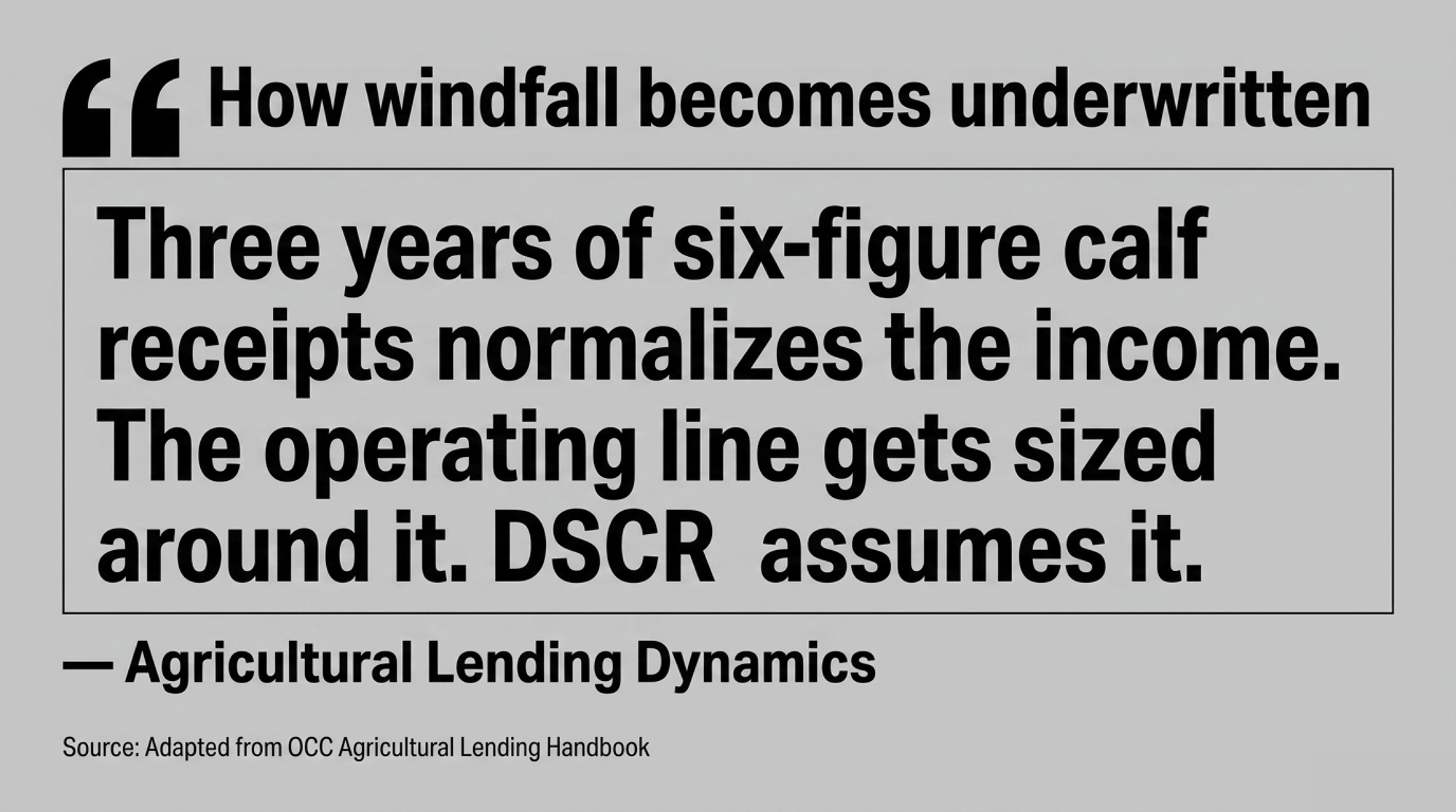
NewsSubscribe
First
Last
Consent

Cargill Milwaukee Never Bought Your Calves. Tyson Did: How Ebert’s 2,500 Beef‑on‑Dairy Crosses Manage Packer Risk.

Cargill Milwaukee never bought your calves. Tyson did. See how a 4,200-cow Wisconsin herd with 2,500 beef‑on‑dairy crosses is rewiring its sire and packer risk.

Executive Summary: Ebert Enterprises in Algoma, Wisconsin, runs 4,200 cows and raises 2,000–2,500 beef‑on‑dairy crosses a year, using beef premiums to keep inflation from chewing up their margins. The Cargill Milwaukee plant that just hit the headlines is a ground beef facility that hasn’t slaughtered cattle since 2014, so it never bought their calves — or yours. The real shock to beef‑on‑dairy economics came earlier, when Tyson shut its 5,000‑head‑a‑day Lexington, Nebraska, plant and cut capacity at Amarillo, tightening kill‑floor access as CattleFax and NAAB data show volume surging to 3.22 million beef‑on‑dairy calves and 7.9 million beef semen units in dairy herds. That mismatch is why the Eberts now track where their calves actually land, spread their marketing beyond a single buyer, and favor Angus and Simmental‑Angus sires through AI — breeds with strong documented feedlot and carcass performance. Penn State research backs that play, showing all beef × Holstein sires can hit Choice, but some deliver far better gain and marbling than others. For your herd, the message is blunt: beef‑on‑dairy still works, but only if packer capacity and carcass predictability sit right beside conception rate and calving ease in your breeding plan.

Beef-on-Dairy Packer Risk

The Milwaukee headline was a ghost story. But if you aren’t looking at Nebraska, you’re missing the real monster under the bed.

Randy Ebert knows the beef-on-dairy math as well as anyone. He and Renee run Ebert Enterprises near Algoma in Kewaunee County, Wisconsin — a sixth-generation operation with son Jordan and daughter Whitney now the seventh generation at the table. They milk 4,200 cows three times a day through an 80-stall rotary parlor and farm close to 9,000 acres. The family breeds the top 20% of the herd to sexed dairy semen and puts AI Angus and Simmental-Angus bulls on the rest, raising between 2,000 and 2,500 beef cattle from post-wean to finish, depending on the cycle.

“This is one of the few things that is helping us combat inflation costs of what we do, is what beef has done to us,” Ebert told Brownfield last July.

So a packer closure in Milwaukee gets your attention when you’ve got that many beef crosses moving through the system. Here’s the problem: the plant that’s closing wasn’t buying anyone’s calves.

The Facility That Didn’t Process Your Calves

Cargill filed a WARN Act notice with the Wisconsin Department of Workforce Development on February 10, confirming the permanent closure of its facility at 200 S. Emmber Lane in Milwaukee. About 221 positions will be eliminated. Production stops around April 17, full closure by May 31.

But look at what they actually make there. The WARN filing lists job titles like “CR Production Grind,” “Grinder Operator,” “Formax Operator,” and “Patty Stacking Robot Operator.” Not a single kill-floor position. This plant takes boxed beef as an input and turns it into ground beef and value-added meat products for grocery store private labels. It doesn’t slaughter cattle. It doesn’t accept live animals.

Cargill did run a cattle harvest operation at this site once — a real one, processing 1,300 to 1,400 head per day after purchasing it in 2001. But that slaughter plant closed on August 1, 2014, when Cargill cited a tight cattle supply. The ground beef operation was the only part that stayed open. And even that production isn’t leaving the area — it’s shifting to Cargill’s Butler, Wisconsin facility about 13 miles northwest, where roughly 500 employees already make frozen ground beef patties for restaurant chains.

This isn’t a loss of packing capacity. It’s a ground beef consolidation within the same metro area.

5,000 Head a Day Gone: The Closure That Actually Matters

The event that should have your attention happened two months earlier and 600 miles west.

On January 20, Tyson Foods permanently shuttered its beef processing plant in Lexington, Nebraska. This was a full-scale cattle harvest operation — roughly 5,000 head per day, or about 5% of total daily U.S. beef slaughter capacity, according to Brownfield Ag News. More than 3,000 workers lost their jobs. Tyson simultaneously cut its Amarillo, Texas, plant to a single shift, eliminating another 1,761 positions according to a WARN notice filed with the Texas Workforce Commission.

Buck Wehrbein, president of the National Cattlemen’s Beef Association and a Nebraska cattle feeder himself, didn’t dance around it: “It’s not really a surprise that we lost those plants because the herd is down so far. We were all worried about this.”

And then the line that matters most if you’re breeding beef-on-dairy:

“The cattle aren’t in the right place.” — Buck Wehrbein, NCBA President

Fewer slaughter plants mean longer hauls for finished cattle, fewer packers bidding at the feedlot gate, and less competition working its way back to the price of your week-old beef-cross calf. That calf’s value is tethered to what a packer will pay for the finished animal 18 months from now. When fewer packers bid, the tether gets thinner.

3.2 Million Calves Need Somewhere to Go

To understand why infrastructure deserves this much attention, look at what dairy producers have built — and how fast.

CattleFax estimates beef-on-dairy calf production jumped from roughly 50,000 head in 2014 to 3.22 million in 2024. The American Farm Bureau puts national adoption at 72% of U.S. dairy farms now using beef genetics on at least part of the herd. And NAAB data confirms that of the 9.4 million units of beef semen sold domestically in 2023, 7.9 million went into dairy herds — making beef-on-dairy the second-largest category of semen used in dairy cattle behind gender-selected dairy semen. That 7.9 million figure held steady through 2024, when total domestic beef semen sales rose to 9.7 million units.

The economics driving that growth are obvious. Beef-cross calves have commanded prices as high as $1,400 day-old, compared to roughly $200 for conventional Holstein bull calves. At that kind of spread, the premium still justifies the program for most operations. But only if you’re actively managing marketing channel risk—not assuming it away.

The Eberts illustrate how that commitment plays out at the farm scale. Jordan told Dairy Star the family has been breeding beef “for over 10 years,” and Brownfield reported their beef-on-dairy efforts began roughly fourteen years ago. In 2013, they decided to start raising their own beef cattle rather than selling calves. “We make more beef calves now than dairy calves,” Jordan said. With only the top 20% of the herd designated for dairy semen, the remaining roughly 80% goes to beef bulls. Farm Progress profiled them at 2,200 beef crosses in 2021; Dairy Star reported 2,500 post-wean-to-finish in January 2024, while a Visit Algoma listing from the same year put it at approximately 2,000. They market through Equity Livestock and have even added their own harvest facility and the Ebert Grown retail brand.

That kind of commitment — breeding protocols restructured, a butcher shop and restaurant built to capture more of the value chain — doesn’t reverse easily. Which makes the question of where those calves ultimately end up a lot more than academic.

Three Pressure Points Between Your Beef-on-Dairy Calf and Its Buyer

The infrastructure challenge hits differently depending on your scale. A 200-cow dairy selling 80 beef-cross calves a year through a single local auction is more exposed to any one of these shifts than a 4,000-cow operation with multiple marketing channels. Scale doesn’t eliminate risk, but it changes where the risk concentrates.

Here’s a quick-glance look at the three facility moves shaping the landscape right now:

FacilityLocationDaily CapacityImpact on Your Calves
Cargill MilwaukeeMilwaukee, WIGround beef only (ZERO live cattle since 2014)NONE – Never bought your calves
Tyson LexingtonLexington, NE5,000 head/dayCRITICAL – 5% of U.S. capacity GONE
Tyson AmarilloAmarillo, TXCut to single shiftHIGH – 1,761 jobs eliminated
AFG America’s HeartlandWright City, MO2,400 head/day (NEW)POSITIVE – Built for dairy-beef crosses

Packing capacity is tightening. USDA’s February 10, 2026 WASDE report projects 2026 beef production at 25.987 billion pounds — about 0.3% below 2025 levels. That continues a multi-year contraction as the beef cow herd sits at historic lows. The agency has revised its 2026 forecast upward in each of the last two monthly reports, largely due to heavier carcass weights. But the direction is still down year-over-year, and when packers bleed money, they close plants. Tyson’s restructuring is Exhibit A.

Geography is getting harder. A University of Wisconsin Extension survey of 40 dairy farms using beef-cross genetics found the average herd produced 454 beef-cross calves per year, with the largest operations topping 6,200 annually. These calves move through auction barns, calf ranches, and regional dealer networks that all depend on nearby infrastructure staying intact. When a plant closes in central Nebraska, feedlot operators in that region ship finished cattle farther, and that cost works its way backward.

Marketing costs are rising on their own. Wisconsin’s DATCP proposed increasing auction barn licensing fees from $420 to $7,430 — a 1,669% jump — and livestock trucker registration fees from $60 to $370. Jason Mugnaini of the Wisconsin Farm Bureau called it “a substantial burden on markets, dealers, and truckers that will unavoidably be passed down to farmers.” Public outcry forced DATCP to scale the proposal back to a more modest inflationary adjustment, but the revised fees still leave an annual funding gap exceeding $680,000.

Not All Contraction: New Capacity With Wisconsin Roots

One major development is working in the other direction.

American Foods Group, headquartered in Green Bay, Wisconsin, opened its $800 million America’s Heartland Packing plant in Wright City, Missouri, in April 2025. The facility spans 775,000 square feet, has the capacity to harvest 2,400 head per day, and is projected to employ 1,300 workers at full capacity.

AFG president Steve Van Lannen told Brownfield before the plant opened that dairy-origin cattle were central to the business model: “A big part of our model is the dairy industry. There will be opportunities for cattlemen to feed those beef-dairy crosses.”

That’s meaningful — a Wisconsin-headquartered company building specifically to handle mixed cattle, including dairy-beef crosses. But the plant is in Missouri, not the Upper Midwest. For Wisconsin producers, the transportation math still matters.

The Bottom Line

The Cargill Milwaukee headline is a useful false alarm. It exposes a question most of us haven’t asked directly: Do you actually know the path your beef-cross calves travel from your farm to a packer’s kill floor?

But it should also sharpen a harder question about your sire stack. Because, as the Tyson closure proves, when capacity is tight, packers get picky. They aren’t just buying “beef-on-dairy” — they’re buying predictable rail performance.

  • Map your supply chain this month. Ask your calf buyer which feedlot your calves reach, and which packer that feedlot uses. If they can’t or won’t tell you, that gap in visibility is itself a risk.
  • Count your marketing channels. If more than two-thirds of your beef-cross calves go through a single auction barn or buyer, you’re overexposed. Smaller herds may find diversifying harder — which is exactly why it matters more, not less.
  • Move past the three C’s. The UW Extension survey found most Wisconsin producers still pick beef sires primarily for conception rate, calving ease, and semen cost. Those matter. But when fewer plants are competing for your calves’ finished product, carcass uniformity becomes the trait that separates you from the skip list.Feedlots forecast finish dates and schedule packer appointments for entire pens — inconsistent growth rates within a pen mean some animals hit the target and others miss, creating discounts for the whole group. Andrew Sandeen of Penn State Extension, relaying feedback from JBS beef plant buyers, described the challenge head-on: “Everything from the quality to the shape and size — it’s all over the board.” JBS had built strategies around the consistency of straight Holstein beef. As beef-on-dairy volume grows, that variability is becoming a real friction point for packers.
  • Select for what the packer actually measures. Ribeye area and shape, marbling, yield grade, and moderate frame — those are the traits that earn premiums at the rail. A 2024 Penn State study led by Basiel et al. evaluated 262 beef × Holstein steers across seven sire breeds over three years and found that, on average, all sire breed groups graded USDA Choice with yield grades of two or three. But within that average, sire selection drove meaningful variation: Angus-sired steers gained 1.76 kg/day versus just 1.39 kg/day for Wagyu-sired steers (P < 0.01), and marbling scores ranged from 4.14 (Limousin-sired) to 5.03 (Red Angus-sired). The Eberts use Angus and Simmental-Angus crosses through AI — breeds that showed strong feedlot ADG in that same research. That’s not a coincidence. It’s a marketing strategy disguised as a breeding decision.
  • Don’t confuse processing with packing. Cargill Milwaukee makes ground beef for grocery stores. It doesn’t buy cattle. Before you react to any plant closure headline, check whether the facility handles live animals or boxed beef. The difference determines whether the story applies to your farm.
  • Know your nearest packing plants — and what happened to them in the last 12 months. Tyson Lexington is gone. AFG Missouri is new. Cargill stated in November 2025 that it doesn’t intend to close any of its eight primary beef processing facilities and is investing in them. That landscape shifts. Stay current. Watch USDA’s next Cattle report and any signals on AFG Missouri’s actual throughput mix — both will indicate where beef-on-dairy infrastructure is heading through the rest of 2026.

The Eberts learned something interesting when they added on-farm meat processing through their Ebert Grown brand. Making their own sausage products, Randy told Brownfield, actually cost more than buying from a supplier. “We can still buy that product cheaper from a supplier than what we can efficiently do it,” he said. “That’s where we thought we could vertically integrate and have an advantage, and it’s actually, it isn’t that way.”

It’s a quietly important detail. The beef-on-dairy math works — the Ebert family has spent over a decade building a program with 2,000-plus head to prove it. But every link in that chain has its own economics, and assumptions about what you control versus what the system controls get tested eventually. Knowing the difference between a ground beef plant and a packing plant isn’t trivia. And neither is knowing the difference between a sire that gets your cow pregnant and one that gets your calf paid. As capacity tightens, the calves with predictable carcass performance are increasingly the ones that find homes first — and that reality should be part of every sire selection conversation you have this spring.

Key Takeaways

  • The Cargill Milwaukee plant that’s closing is a ground beef facility that hasn’t slaughtered cattle since 2014, so it never bought your calves and doesn’t change your day‑to‑day beef‑on‑dairy marketing.
  • Tyson’s 5,000‑head‑a‑day Lexington shutdown — plus cuts at Amarillo — is the real pressure point, tightening kill‑floor access beef‑on‑dairy volume has jumped to about 3.22 million calves and 7.9 million beef semen units in dairy herds.
  • Ebert Enterprises’ 4,200‑cow Wisconsin herd shows one workable path: know exactly where your calves go, avoid being tied to a single buyer, and use Angus and Simmental‑Angus sires with documented feedlot and carcass performance, not just the cheapest semen.
  • Penn State data backs that approach, finding that all beef × Holstein groups average Choice, but some sire breeds deliver significantly better gain and marbling — the kind of consistency packers remember when hooks are tight.
  • If you’re serious about beef‑on‑dairy, packer capacity and carcass predictability now belong in the same conversation as conception rate and calving ease every time you build your breeding list.

Complete references and supporting documentation are available upon request by contacting the editorial team at editor@thebullvine.com.

Learn More

The Sunday Read Dairy Professionals Don’t Skip.

Every week, thousands of producers, breeders, and industry insiders open Bullvine Weekly for genetics insights, market shifts, and profit strategies they won’t find anywhere else. One email. Five minutes. Smarter decisions all week.
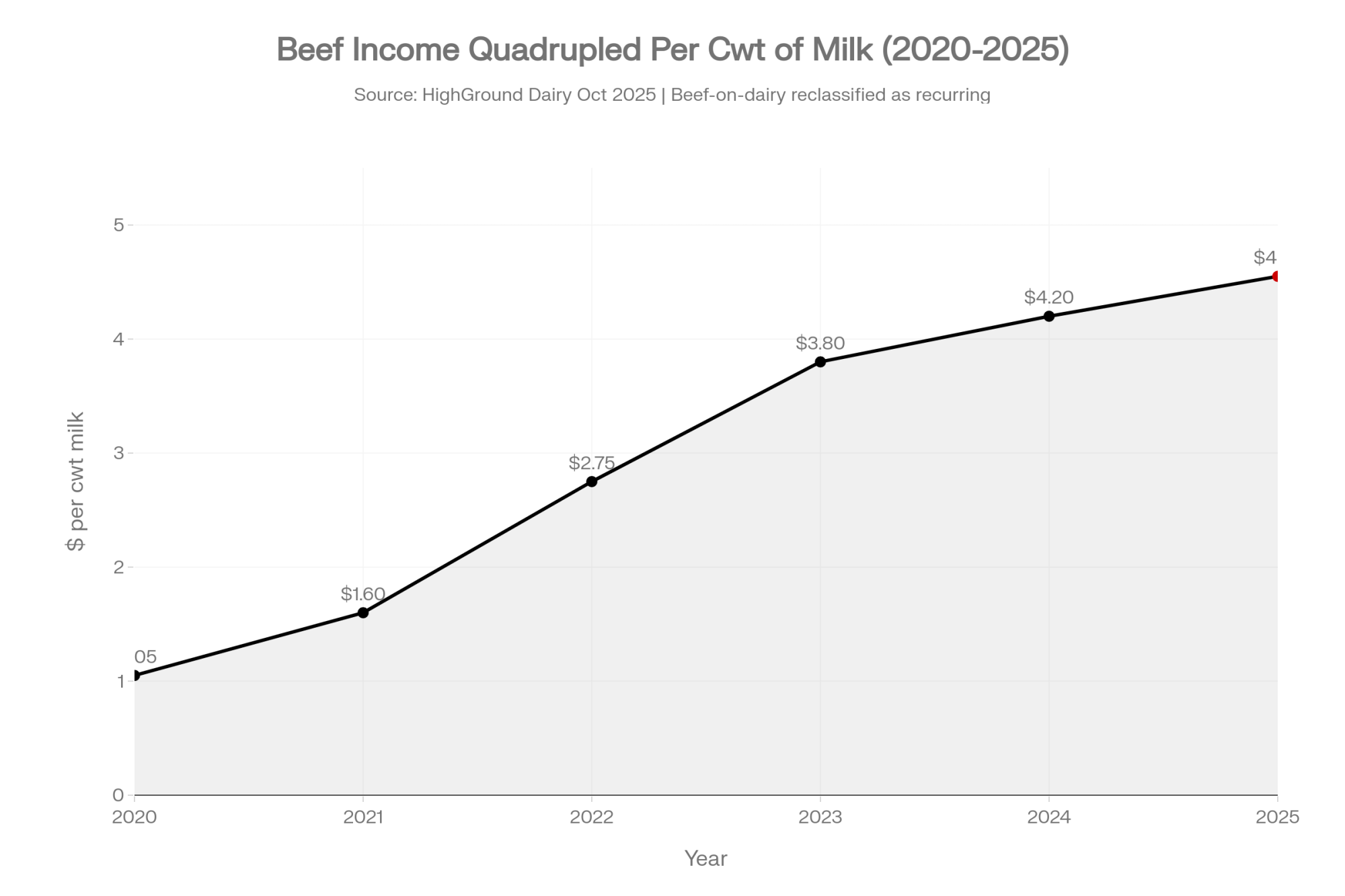
NewsSubscribe
First
Last
Consent

€2.2 Billion, 4 Companies, 1 Feed Bunk: CVC Just Carved Up Your Premix Supply Chain with dsm-firmenich Deal

CVC Capital Partners just bought one of the biggest names in your feed supply chain. Here’s the math on what changes, what might actually improve, and the four moves you should make before the deal closes.

EXECUTIVE SUMMARY: CVC Capital Partners bought dsm-firmenich’s entire Animal Nutrition & Health division on February 9, 2026, for €2.2 billion — carving one of the world’s largest dairy nutrition suppliers into four separate companies by year-end. For a 300-cow Midwest U.S. dairy carrying $73,000–$83,000 a year in mineral, vitamin, and premix exposure through this supply chain, the ownership change is anything but abstract. CVC brings genuine dairy experience through Urus and a proven digital-transformation playbook, but also brings PE margin discipline that typically hits input pricing within the first 24 months. Three structural risks matter most: vitamin allocation now runs through commercial negotiations rather than internal management, over 73% of global vitamin production is concentrated in China, and quarterly return targets can incentivise quiet reformulations that take weeks to show up in your bulk tank. Producers have roughly 10 months before closing to document current formulations, audit feed mill sourcing, trial a second premix supplier, and lock contract terms with substitution-notice and change-of-control protections. That playbook starts with one phone call to your nutritionist — this month.

On February 9, 2026, dsm-firmenich sold its entire Animal Nutrition & Health division to private equity firm CVC Capital Partners for approximately €2.2 billion, including an earnout of up to €0.5 billion. Combined with last year’s €1.5 billion sale of its feed enzymes stake to Novonesis, the total ANH divestiture reaches €3.7 billion — implying a 10x EV/Adjusted EBITDA multiple on the combined value. That’s ANH’s entire €3.5 billion-a-year operation and roughly 8,000 employees changing hands. 

Those are the corporate numbers. Here’s the farm-level number: a 300-cow dairy spends roughly $73,000 to $83,000 a year on the minerals, vitamins, and premix that flow through this supply chain, based on the University of Missouri Extension’s 2025 confinement dairy planning budget at $840/ton and 577–656 lbs per cow (a Midwest U.S. estimate — your region’s numbers will differ, but the exposure ratio holds). Minerals and vitamins? Bigger line item than you’d guess. And the companies supplying them just changed hands. 

One Division Becomes Four Companies

The nutrition supply chain that used to run through a single integrated ANH division is being carved across four separate businesses — all effective by the end of 2026: 

EntityWhat They SupplyOwnerHQ
Solutions CompanyPremix, performance products, precision servicesCVC Capital PartnersKaiseraugst, Switzerland 
Essential Products CompanyVitamins, carotenoids, aroma ingredientsCVC Capital PartnersKaiseraugst, Switzerland 
NovonesisFeed enzymes (phytase, xylanase, protease)NovonesisDenmark  
dsm-firmenich (retained)Bovaer, Veramarisdsm-firmenichKaiseraugst, Switzerland 

dsm-firmenich retains a 20% equity stake in both CVC-owned entities but holds no operational control. Feed enzymes went to Novonesis in a deal completed in June 2025, representing approximately €300 million in annual net sales. Novonesis will continue a long-term commercial relationship with ANH for re-sale of its feed enzymes through the premix network. 

So that “single supplier” relationship many producers had? It’s now four commercial relationships with four distinct P&Ls. Four separate sets of incentives deciding what goes into your premix, what it costs, and who picks up the phone when something goes wrong. This is part of a broader consolidation wave reshaping the dairy sector — and it’s accelerating. 

Company NameWhat They Supply to DairyOwnerYour RiskRevenue (Annual)
Solutions CompanyPremix, performance products, precision servicesCVC Capital PartnersThird in vitamin allocation queue~€2.0–2.5 billion
Essential Products CompanyVitamins, carotenoids, aroma ingredientsCVC Capital Partners73%+ China concentration; spot market priority~€1.0–1.5 billion
NovonesisFeed enzymes (phytase, xylanase, protease)Novonesis (independent)Re-sale through premix network only~€300 million
dsm-firmenich (retained)Bovaer (methane), Veramaris (omega-3)dsm-firmenichCost-benefit gap; unclear processor co-funding~€100–200 million

The PE Playbook: What Actually Changes on Your Farm

Let’s be honest — “private equity buys a feed company” usually makes producers nervous. Sometimes that’s warranted. Sometimes it isn’t. Here’s how to think about it clearly.

CVC isn’t a nutrition company. They manage roughly €201 billion in assets across 150+ companies with combined annual sales over €165 billion. But here’s the thing that matters for dairy: CVC already owns Urus, which they describe as “a global leader dedicated to serving dairy and beef cattle producers around the world with cutting-edge genetics and customised reproductive services”. They’re not walking into animal agriculture blind. And this isn’t even their first deal with dsm-firmenich — CVC held a majority stake in the ChemicaInvest joint venture with DSM back in 2015. 

The return math, simplified: CVC paid roughly 7x normalised EBITDA for ANH. Their recent PE exits have averaged 3.3x invested capital at a 27% gross IRR. If historical patterns hold, a €2.2 billion acquisition needs to grow toward €6–7 billion over a five-to-seven-year hold. That’s the number shaping every pricing, staffing, and product-line decision going forward. 

What does that mean in plain language? PE ownership follows a predictable sequence:

  • Phase 1 (Years 1–2): Margin improvement — operational efficiencies, overhead reduction, portfolio rationalisation. This is the phase most likely to touch your feed bill.
  • Phase 2 (Years 2–5): Bolt-on acquisitions to build scale and market share.
  • Phase 3 (Years 5–7): Position for premium-multiple exit or IPO.

The Private Equity Stakeholder Project tracked 129 PE deals in U.S. agriculture between January 2018 and December 2023 using Pitchbook data — outcomes ranged widely, from genuine platform growth to Prima Wawona, where Paine Schwartz Partners merged two profitable stone fruit growers into a single entity that entered Chapter 11. CVC’s track record looks materially different. But the underlying dynamic — new owners optimising for return metrics on a fixed timeline — applies across every PE-owned supplier. 

Where PE Ownership Could Actually Help

Here’s where I’ll push back on the doom narrative. PE ownership isn’t all margin pressure and cost-cutting. CVC has been aggressive about deploying AI and digital transformation across its 120+ portfolio companies, classifying each by AI readiness and prioritising where technology can unlock measurable value. ANH already built precision livestock tools — Sustell for farm-level sustainability measurement, Verax for animal health monitoring, and FarmTell for data-driven herd management. Under a PE owner with CVC’s tech orientation, investment in those platforms could accelerate. 

Steven Buyse, CVC’s Managing Partner, said in the announcement: “The Solutions Company will continue to drive innovation and efficiency in animal farming, delivering tailored solutions with high proximity to its global customer base. The Essential Products Company will be built as a resilient global leader in essential feed, food, and fragrance ingredients”. 

Translation: CVC sees two distinct value-creation stories. The Solutions Company gets the precision services and innovation mandate. The Essential Products Company gets built for supply reliability and cost efficiency. If CVC executes well, producers could see better digital tools, more professionalised logistics, and sharper supply-chain management. That’s a real potential upside.

The catch? Those digital tools and precision services tend to come bundled with longer-term contracts and proprietary data ecosystems. More on that in a minute.

Three Structural Risks That Still Deserve Your Attention

You Might Be Third in the Vitamin Supply Queue

When ANH was one division, vitamin production and premix blending shared a single management team. During the 2023 vitamin price crash — Chinese oversupply drove ANH’s adjusted EBITDA down 91% year-on-year in Q3, with a vitamin price effect of about €120 million  — the integrated structure absorbed the hit. When BASF’s Ludwigshafen plant fire in July 2024 sent Vitamin A prices surging from roughly $21/kg to $72/kg — a 243% spike — internal allocation kept the premix business supplied. 

Post-split, those allocation decisions become commercial negotiations. The Essential Products Company now serves three customer types:

  1. dsm-firmenich — contractually guaranteed volumes under a long-term supply agreement, backstopped by a €450 million loan facility and up to €115 million in additional liquidity support from dsm-firmenich 
  2. Spot buyers — willing to pay premium prices during supply squeezes
  3. The Solutions Company — a customer relationship, not a guaranteed supply line

During a disruption, dairy premix customers could find themselves third in that queue. In November 2022, DSM announced a temporary halt to Rovimix Vitamin A production at its Sisseln, Switzerland, plant for at least 2 months, along with significant reductions in Rovimix Vitamin E-50. DSM stated it would “honour existing contractual commitments” while activating allocation procedures. That kind of allocation triage gets harder when the vitamin producer and the premix blender sit on separate balance sheets — and it’s exactly the type of supply chain vulnerability that dairy producers have been caught flat-footed by before.

The China Concentration Risk Underneath Everything

The vitamin CVC market the company is stepping into is arguably the most geopolitically exposed input market in agriculture. AFIA president Constance Cullman told the 2025 NAFB Convention that over 73% of vitamins originate in China. The European Feed Manufacturers’ Federation (FEFAC) puts the concentration even higher for specific vitamins: 

  • Vitamin D3: ~93% China-sourced 
  • Vitamin B1: ~97% China-sourced 
  • Folic acid: nearly 100% China-sourced 

“We believe this is a national security issue.” — Constance Cullman, AFIA president, 2025 NAFB Convention 

China imposed provisional anti-subsidy tariffs of 21.9% to 42.7% on certain EU dairy products in late 2025. If that escalation touches vitamin exports — or if China simply prioritises domestic supply during a disruption — ANH’s European vitamin capacity becomes CVC’s most strategically valuable asset. And CVC will price it accordingly. On the flip side, CVC has both the capital and the incentive to invest in non-Chinese vitamin capacity — that’s exactly the kind of strategic asset-building that could justify a premium multiple at exit. 

Biology Doesn’t Run on Quarterly Reporting

Trevor DeVries at the University of Guelph presented research at the 2019 Western Canadian Dairy Seminar, establishing that “dairy cow health, production, and efficiency are optimized when cows consume consistent rations, both within the day and across days”. More variability between delivered and formulated rations increases the chance that cows won’t perform to expectations. 

Here’s the problem: when a margin-driven reformulation — swapping chelated zinc for zinc oxide, trimming vitamin inclusion from above-NRC to minimum-NRC — saves a few dollars per tonne of premix, the production effects may not show in the tank for six to eight weeks. By then, the cost saving has been booked to the current quarter’s EBITDA. The component drift? That’s your problem to diagnose.

This isn’t unique to PE ownership. Any supplier under margin pressure can make these moves. But PE’s quarterly discipline and fixed-horizon exit timeline sharpen the incentive.

Four Moves to Make Before the Deal Closes

The transaction is expected to close by the end of 2026. That gives you roughly 10 months. Use them. 

1. Get your formulation on paper. Call your nutritionist and request the complete premix specification for every product you’re running — full ingredient list, inclusion rates, source identifications (not just “zinc” but zinc methionine vs. zinc sulfate vs. zinc oxide), and guaranteed analysis. Dated and signed. This costs nothing, takes one conversation, and enables every other protective move. Without a baseline, you can’t detect reformulations, comparison-shop credibly, or hold anyone accountable.

2. Audit your feed mill’s sourcing. If you’re a 200–400 cow dairy, your premix likely comes through a feed mill, not directly from ANH. Ask three questions: Where do they source vitamins? How many suppliers? What’s the contingency if the primary goes on allocation or raises prices 20%? If your mill single-sources from the Essential Products pipeline, their vulnerability is yours.

3. Test a second supplier on part of your herd. Running 10–15% of volume through an alternative creates a tested backup and real negotiating leverage. Here’s a rough threshold: if your total premix spend exceeds $20,000 a year and you currently single-source, that trial is manageable. The premix market offers genuine options: Trouw Nutrition, Adisseo, Evonik, and regional specialists such as Animine, Devenish Nutrition, and Novus International. The ADM-Alltech joint venture, announced in September 2025, combines Alltech’s 33 feed mills (18 U.S., 15 Canada) with ADM’s 11 U.S. feed mills into a 44-mill network — another competitor entering the space. The trade-off: your nutritionist needs time to validate formulation equivalence, and rumen adaptation matters. Transition gradually. 

4. Lock contract terms while there’s an incentive to deal. Before closing, both sides want a smooth handover. Use that to formalise: 30-day written notice before any ingredient substitution; service-level commitments; pricing escalation caps indexed to verifiable benchmarks; and a change-of-control clause allowing renegotiation if either entity is subsequently sold. But remember — long-term contracts cut both ways. When vitamin prices crashed in 2023, locked-in terms would have left you paying above-market rates. Indexed pricing structures beat fixed rates in a volatile input market. 

Action ItemTimeline / DeadlineCost to ExecuteRisk If You Don’tWho to Call First
1. Document current premix formulationThis month (Feb 2026)$0 (one phone call)No baseline to detect reformulations or hold suppliers accountableYour nutritionist
2. Audit feed mill’s vitamin sourcingBefore April 2026$0 (3 questions)Feed mill’s single-source vulnerability becomes your cash flow crisisYour feed mill rep
3. Test second premix supplier on 10–15% of herdMay–Aug 2026$1,500–$3,000 trial costZero negotiating leverage; no tested backup during allocation squeezeIndependent nutritionist or alt supplier
4. Lock contract terms with substitution protectionsBefore Oct 2026 (deal close)Legal review: $500–$1,500Eat reformulations and price increases with no recourse or exit clauseFeed supplier + lawyer (change-of-control clause)

The Bovaer Split: Who Pays for Methane?

dsm-firmenich kept Bovaer and Veramaris while selling everything else. That means the company promoting methane reduction on your farm is no longer the company managing your daily nutrition. 

Elanco estimates a potential annual return of “$20 or more per lactating dairy cow” through voluntary carbon markets and government incentives — but that figure reflects projected potential, not observed farm-level returns. Greg Hocking, Mars Snacking’s global VP of R&D for New Innovation Territories, was direct in a December 2025 interview: “Consumers will benefit from these efforts, but we don’t expect them to pay extra for sustainability”. Denmark is moving toward subsidised adoption and may mandate methane-reducing additives. If that regulatory model spreads, processor co-funding could follow. 

But the gap between the additive cost and the documented on-farm returns means the economics of voluntary methane programs are still tight. Evaluate any value-chain program carefully — we dug into the details in Bovaer Unleashed: The Controversial Additive Changing Dairy Forever

What This Means for Your Operation

  • Your mineral and vitamin line item is more exposed than it looks. At $242–$275 per cow per year for a Midwest U.S. confinement dairy (University of Missouri Extension, 2025 ), a 10% cost increase means $7,000–$8,000 on a 300-cow operation. Your region’s absolute numbers will differ—benchmark your feed costs against strategic alternatives with your nutritionist. 
  • The financial incentives behind your supplier just changed — but that’s not automatically bad. PE ownership optimises for 5–7 year return cycles, not 20-year relationships. That could mean tighter margins andbetter digital tools. Verify rather than assume. Watch what actually happens to service levels and product specs.
  • Your feed mill is the invisible middleman. If they single-source vitamins from ANH’s Essential Products pipeline, a pricing or allocation squeeze hits you even if your name isn’t on the contract. Ask the question this week.
  • Precision services come with strings. If CVC invests in Sustell, Verax, or FarmTell — dsm-firmenich’s existing data platforms  — those tools could genuinely improve your herd management. Just understand what data you’re handing over and which contract terms come with it. 
  • Collective purchasing deserves a conversation. If you sell through a cooperative, ask whether group nutrition procurement is on the board’s agenda. Volume leverage is the strongest counter to supplier concentration — and building financial firewalls against supplier disruption starts with knowing where the risk sits. 

Key Takeaways

  • Get your complete premix formulation documented this month — dated, signed, with source identifications for every active ingredient. One phone call, zero cost, foundation for everything else.
  • Test an alternative premix supplier on 10–15% of your herd before the deal closes. A credible alternative is the only pricing leverage that consistently works in concentrated markets.
  • Evaluate whether your nutritionist works for the company selling you premix. If so, get a second opinion from an independent consultant.
  • Run the stress test: if premix costs rose 10% while milk prices dropped $2/cwt simultaneously, what does your cash flow look like? Run that number now, not after closing.
  • Don’t dismiss PE upside. CVC’s digital investment track record and its existing dairy exposure through Urus mean this could bring genuine improvements in supply-chain efficiency and precision tools. Stay skeptical, but stay open. 
  • Watch for CVC-branded communications in your feed mill or nutritionist’s feed after closing — that’s the signal the margin-optimisation phase has started.
Herd SizeCurrent Annual Premix CostAfter 10% IncreaseAnnual Cost ImpactImpact as % of Milk Revenue
100 cows$24,200–$27,500$26,620–$30,250$2,420–$2,7500.5–0.6%
300 cows$72,600–$82,500$79,860–$90,750$7,260–$8,2500.5–0.6%
500 cows$121,000–$137,500$133,100–$151,250$12,100–$13,7500.5–0.6%
750 cows$181,500–$206,250$199,650–$226,875$18,150–$20,6250.5–0.6%
1,000 cows$242,000–$275,000$266,200–$302,500$24,200–$27,5000.5–0.6%

The Bottom Line

The ownership of your dairy’s nutrition supplier changed on February 9, 2026. Your formulation, your service levels, and your contract terms haven’t changed yet. That gap is your window—and it closes when this deal does at year-end. How are you planning to use it? 

Complete references and supporting documentation are available upon request by contacting the editorial team at editor@thebullvine.com.

Learn More

The Sunday Read Dairy Professionals Don’t Skip.

Every week, thousands of producers, breeders, and industry insiders open Bullvine Weekly for genetics insights, market shifts, and profit strategies they won’t find anywhere else. One email. Five minutes. Smarter decisions all week.
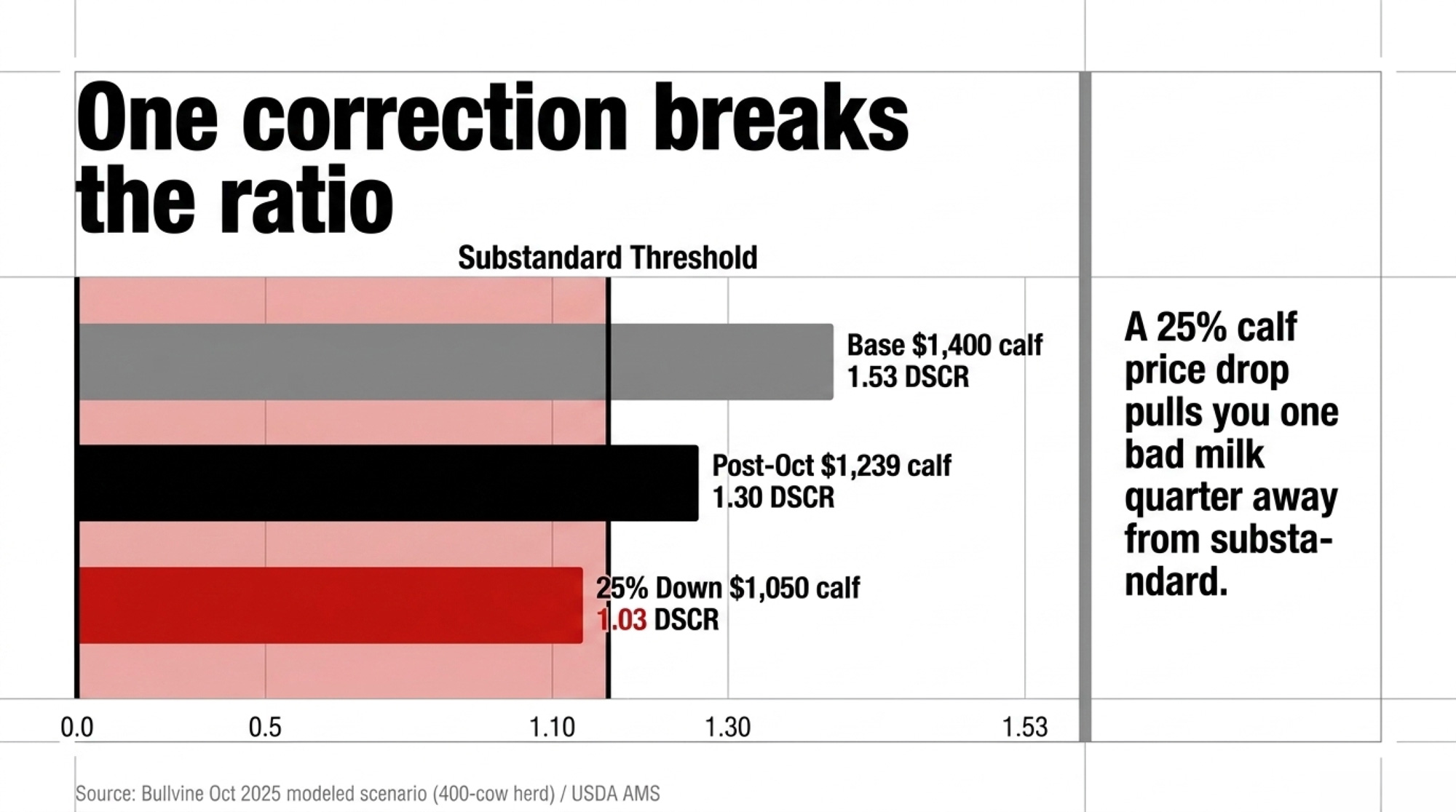
NewsSubscribe
First
Last
Consent

Powder Just Outpriced Cheddar: The $15,000/Month Gap Reshaping Your 2026 Milk Check

NDM’s best week since 2007 exposed a Class III/IV spread that’s costing cheese-pool herds $10,000–$15,000/month. Four moves before spring flush.

Executive Summary: If you’re shipping to a cheese-dominant handler, the Class III/IV spread is costing your operation $10,000 to $15,000 a month on 500 cows. NDM surged 18¢ this week to $1.64/lb — its strongest weekly gain since May 2007 — while Cheddar settled at $1.4725 and Class IV futures pushed into the high $18s versus Class III in the low $17s. The structural driver: U.S. powder output in 2025 fell to its weakest level since 2013 while over $11 billion in new processing capacity flowed to cheese and whey, not dryers. That imbalance has staying power. DMC enrollment closes in 52 days, and four moves — DRP restructuring, DMC stacking, component optimization worth $1.00–$1.50/cwt, and a hard look at your handler alignment — can narrow this gap before spring flush closes the window.

Nonfat dry milk surged 18¢ in a single week to settle at $1.64/lb on Friday, February 6, 2026 — the highest CME spot price since August 2022 and the strongest weekly gain since May 2007, per Jacoby & Associates. That puts powder a full 16.75¢ above Cheddar blocks and within pennies of butter. For the first time in years, milk powder is outpricing the product that the entire U.S. processing sector was built around. 

For producers shipping to cheese-dominant handlers — where Class III drives the blend — the revenue gap is specific and measurable. The Bullvine’s October 2025 analysis of two identical 500-cow herds — same genetics, same production, same components, different pool structures — found a monthly revenue disparity of $10,000 to $15,000, with the cheese-heavy operation on the losing end. DMC enrollment closes March 31. Spring flush is six to eight weeks out. The decisions you make about DRP coverage, component targets, and handler alignment in the next 90 days determine which side of that gap you land on. 

MonthClass III Pool (Black Line)Class IV Pool (Red Line)Gap
Sep 2025$310,000$315,000$5,000
Oct 2025$305,000$314,000$9,000
Nov 2025$302,000$314,500$12,500
Dec 2025$298,000$313,000$15,000
Jan 2026$295,000$310,000$15,000
Feb 2026$292,000$307,000$15,000

What $1.64 NDM and $1.47 Cheddar Look Like on Your Check

The week’s CME scoreboard tells a lopsided story. NDM at $1.64/lb. Cheddar blocks up 11¢ to $1.4725/lb on 51 loads — one of the busiest trading weeks in recent memory. Butter jumping 13¢ to $1.71/lb, with dozens of unfilled bids still on the board at Friday’s close. By Friday, MAR26 Class IV was trading in the high $18s to near $20/cwt — well above Class III in the low-to-mid $17s. That spread hits your check directly if you’re in a cheese-heavy pool. 

ProductFeb 6, 2026 CloseWeekly ChangeYOY ChangeTrading Volume (loads)
Nonfat Dry Milk$1.64/lb+18.0¢+42.6%38
Cheddar Blocks$1.4725/lb+11.0¢+8.4%51
Butter$1.71/lb+13.0¢+15.5%42
Class IV Futures (MAR26)~$19.00/cwt+$1.50/cwt+12.2%
Class III Futures (MAR26)~$17.25/cwt+$0.50/cwt+4.1%

Behind those numbers sits twelve months of compounding imbalance. USDA’s Dairy Products report, released February 5, confirmed that combined U.S. NDM and skim milk powder output in December totaled just 170.3 million pounds — down 6.2% year-over-year. Full-year 2025 powder production: 2.143 billion pounds. The weakest annual total since 2013. 

Cheese, meanwhile, has never been higher. December output hit 1.279 billion pounds, up 6.7% year-over-year, with Cheddar surging 9%. Milk production grew 4.6% in December across the 24 major states. More milk than ever is flowing through the system. It’s going into cheese vats, not dryers. 

Where Did All the Dryers Go?

Powder got scarce because the industry was built for cheese, not because the world suddenly needed more milk powder.

IDFA reported in October 2025 that U.S. dairy processors have committed over $11 billion in new and expanded processing capacity across more than 50 projects in 19 states between 2025 and early 2028 — overwhelmingly targeting cheese and whey protein, not drying. IDFA CEO Michael Dykes framed it as a response to “unprecedented demand for American-made dairy products, especially cheese and whey protein”. That investment wave is a supply-side explanation for the powder squeeze—and it suggests the scarcity has staying power. 

Inside the Plant Where Cheese Barely Breaks Even

Ken Heiman lives this math daily. The CEO and co-owner of Nasonville Dairy in Marshfield, Wisconsin — a certified Master Cheesemaker who got his license at 16 — processes 1.8 million pounds of milk daily from roughly 190 Wisconsin farm families, turning out more than 150,000 pounds of cheese every day. By his own account, the operation “just breaks even” on most of the cheese. What keeps Nasonville profitable is whey protein. “We ought to be thanking people who are buying whey protein at Aldi’s,” Heiman told the New York Times last July. “It definitely enhances the bottom line.” 

That’s not an outlier — it’s the new economics of processing. December USDA data shows whey protein isolate production at 20.6 million pounds, up 11.7% year-over-year, while lower-protein WPC (25–49.9%) fell 12.8%. Plants keep making cheese — even at thin margins — because the whey stream subsidizes the operation. More cheese keeps Class III supply elevated, which holds down the blend price for every farm shipping to a cheese-dominant handler. Phil Plourd at Ever.Ag framed it bluntly: “It is a street fight, in terms of figuring out ways to stay relevant, to get more productive, to stay ahead of the curve, to manage risk better.” 

What the FMMO Reforms Actually Did to Your Check

Kevin Krentz knows the cost of pool imbalances firsthand. The Wisconsin Farm Bureau President — who milks about 600 cows with his wife, Holly, near Berlin, in Waushara County — testified before USDA in August 2023 that negative PPDs reached $9/cwt, costing his operation nearly $200,000. Those losses accumulated during a PPD crisis that began when the “average-of” Class I mover took effect in May 2019 and persisted through at least 2023. 

The June 2025 FMMO reforms addressed that specific formula — reverting to the “higher-of” Class I mover, with all 11 federal orders voting to accept it. But the reforms also raised make allowances by 5¢ to 7¢ per pound across all four pricing products. In three months, that wiped $337 million from pool values nationally, per AFBF economist Danny Munch, with the Upper Midwest absorbing $64 million of the hit. Class prices dropped 85 to 93 cents per hundredweight, even with make allowances alone. 

UW–Madison extension specialist Leonard Polzin noted that make allowances are “embedded in the federal pricing formulas rather than itemized”—they don’t show up as a line on your check like a hauling charge. Roughly 90% of the component-priced milk check sits on butterfat and protein, per CoBank analyst Corey Geiger. With the spread running this wide, that concentration means your check swings harder on butterfat and protein than on volume — and the structural dynamics driving today’s Class III/IV divergence share some of the same characteristics as the crisis Krentz lived through. 

Component Premiums — Run Your Own Numbers

The gap between high-component and volume-focused herds is calculable from the USDA’s monthly announcements. In January 2026, FMMO component prices were $1.4595/lb for butterfat and $2.1768/lb for protein. The Bullvine’s June and July 2025 market reports estimated that each 0.1% increase in butterfat translates to roughly $0.15–$0.35/cwt in additional revenue, depending on the month. For a farm testing 4.3% fat and 3.3% protein versus one at 3.8% and 3.0%, that cumulative advantage runs $1.00–$1.50/cwt

On a 1,000-cow herd averaging 75 pounds per day, even the low end means roughly $22,000 per month. The high end: $34,000 — over $400,000 annually. This lever works regardless of your pool or handler — as long as component premiums hold. And that’s not guaranteed. Protected fat supplements run $0.35 to $0.55 per cow per day in the Upper Midwest. Genetic gains through sire selection take 6–24 months to show up in the tank. Ask your nutritionist for the breakeven component test level at current premiums.

Component TestButterfat (%)Protein (%)Monthly Revenue Advantage (1,000 cows)Annual Revenue Advantage
Low Components3.6%2.9%
Average Components3.8%3.0%+$8,000+$96,000
Mid-High Components4.1%3.2%+$18,000+$216,000
High Components4.3%3.3%+$28,000+$336,000

Four Moves Before Spring Flush — and What Each Costs

  • Restructure DRP to match actual pool exposure. If your co-op runs 60% cheese and 40% butter/powder but your DRP is weighted 80% Class III, you’re insuring a milk check that doesn’t exist. High-component herds generally benefit from the Component Pricing option; average-component herds from Class Pricing with accurate III/IV weighting. RMA premium subsidies range from 44% at 95% coverage to 55% at 70%. Compeer Financial’s 2020–2023 analysis found average DRP premiums of $0.31/cwt; HighGround Dairy’s five-year review showed an average net benefit of $0.23/cwt. Get a current quote — premiums fluctuate with volatility. The trade-off:premiums are sunk cost if the spread narrows. That premium stacks against a monthly gap exposure of $10,000–$15,000 on 500 cows. 
  • Stack DMC before March 31. Tier 1 now covers up to 6 million pounds — up from 5 million — giving medium-sized operations an extra million pounds of coverage. You must establish a new production history based on your highest marketings from 2021, 2022, or 2023. For operations with a longer risk horizon, DMC offers a six-year lock-in (2026–2031) with a 25% premium discount — but you give up annual flexibility, and if milk prices surge above $24/cwt, you’re locked into coverage you don’t need. With MAR26 soybean meal at $303.60/ton and corn at $4.30/bu, the feed-cost squeeze is real. DMC covers cost; DRP covers revenue. 
  • Audit your milk check. AFBF economist Danny Munch, at ADC’s Dairy Hot Topics session during World Dairy Expo last October, urged farmers to share milk check stubs with ADC, their state Farm Bureau, or their market administrator. Munch found instances — particularly in Wisconsin — where independent handlers weren’t following existing disclosure requirements. Look for months where your PPD went sharply negative while Class IV traded at a premium. Cost: one uncomfortable phone call. Potential payback: significant. 
  • Explore handler options in competitive milk sheds. In parts of Wisconsin, Idaho, and the Upper Midwest, producers with high-component milk may have leverage to find handlers whose plant mix better captures Class IV value. The trade-off is real: equity stakes in your current co-op, hauling logistics, and relationship costs. But when pool assignment can swing $10,000–$15,000 monthly on 500 cows, the conversation may be worth having.
Coverage ScenarioQuarterly DRP Premium ($/cwt)Monthly Premium Cost (9,000 cwt/month)Monthly Uninsured Pool Gap Exposure
Low Coverage (70%)~$0.05/cwt~$450$10,000–$15,000
Mid Coverage (85%)~$0.20/cwt~$1,800$10,000–$15,000
High Coverage (95%)~$0.40/cwt~$3,600$10,000–$15,000

Running the Numbers: DRP Coverage (500-cow herd, ~9,000 cwt/month)

 Low EstimateHigh Estimate
Quarterly DRP premium (per cwt)~5¢~40¢
Monthly premium cost~$450~$3,600
Monthly Class III/IV pool gap exposure~$10,000~$15,000
Net monthly uninsured risk~$9,550~$11,400

Compeer Financial 2020–2023 avg: $0.31/cwt. HighGround Dairy five-year avg net benefit: $0.23/cwt. RMA subsidies: 44% (95% coverage) to 55% (70% coverage). Gap: Bullvine analysis, Oct 2025. Get a current quote for your operation.

Four Signals That Separate Noise from Structure

  • Q1 2026 powder production (USDA reports, March and April). If NDM/SMP output remains negative year-over-year despite record milk production, drying capacity is confirmed to be insufficient— not just seasonally tight. Monthly sales below 180 million pounds would be historically abnormal. Above 195 million pounds would suggest the system is self-correcting. This is the single most important data point for validating or killing the thesis.
  • Monthly cheese exports to Mexico (USDEC data, ~6-week lag). Mexico accounted for 38% of all U.S. cheese exports through November 2024 — 392 million pounds — per Hoard’s Dairyman, with full-year 2024 volumes reaching 424 million pounds. If monthly volumes drop below 30,000 metric tons for two consecutive months, alternative markets can’t absorb the displacement. 
  • Class III/IV spread duration. A two-month spread is noise. One that persists through six months signals a structural change that even processing allocations will eventually follow. Last July, The Bullvine reported the Class IV premium hit $1.71/cwt over Class III. If the gap holds above $1.00/cwt through June 2026, that would mark the longest sustained Class IV premium driven by powder scarcity in modern FMMO history. 
  • Cheese inventories. USDA’s December 31, 2025, Cold Storage report showed 1.35 billion pounds of natural cheese in warehouses, up 1% year-over-year. Two consecutive months above 1.40 billion pounds would signal the export safety valve is failing — and that cheese is backing up faster than the market can clear it. 

Your Next Moves

Start with three questions: What’s your handler’s cheese-to-powder plant utilization split? What’s your current DRP Class III/IV weighting? What’s your rolling 12-month average butterfat test? If you don’t know all three, that’s your first move.

  • If your DRP is weighted more than 60% Class III but your handler runs significant butter or powder volume, you’re likely insuring the wrong revenue stream. Pull your current parameters this week.
  • DMC enrollment closes on March 31 — 52 days from now. Tier 1 covers 6 million pounds for 2026. Six-year lock-in (2026–2031) saves 25% on premiums but sacrifices annual flexibility. With soybean meal above $303/ton, this is the cheapest margin backstop available. 
  • If your herd averages below 4.0% butterfat and 3.1% protein, you’re leaving an estimated $1.00+/cwt on the table relative to component-optimized herds in the same pool. 
  • If your PPD went negative in any month since October 2025, ask your co-op directly whether Class IV milk was depooled. Danny Munch at AFBF has flagged handlers — particularly in Wisconsin — not following existing disclosure rules. 
  • Run your cash flow at Class III, averaging $16.50/cwt for the next 18 months with current feed costs. If that doesn’t work on your spreadsheet, waiting costs more than acting.
  • Counter-signal: If Q1 NDM/SMP production rebounds above 195 million pounds monthly, the scarcity thesis weakens. The March Dairy Products report is the first real test.

Key Takeaways

  • The Gap: Today’s NDM–Cheddar spread is already costing a 500-cow cheese-pool herd $10,000–$15,000/month compared with the same cows in a more Class IV-exposed pool.
  • Why It Lasts: 2025 powder output fell to its weakest level since 2013 while more than $11 billion in new capacity went to cheese and whey, not dryers — a setup that keeps Class IV firm and cheese-led pools behind.
  • Your Biggest Lever: At current component prices, moving from “average” to high components is worth roughly $1.00–$1.50/cwt — about $22,000–$34,000/month on 1,000 cows — but only if your DRP mix and handler capture that value.
  • The 52-Day Deadline: DMC enrollment closes in 52 days, giving you one tight window to line up DMC coverage, DRP weighting, and component targets with the actual market you’re in before spring flush hits.
  • The Cost of Waiting: Rolling into spring with a cheese-heavy pool, a Class III-heavy DRP, and “good enough” components is a bet that the Class IV premium disappears before your cash does.

Complete references and supporting documentation are available upon request by contacting the editorial team at editor@thebullvine.com.

Learn More

The Sunday Read Dairy Professionals Don’t Skip.

Every week, thousands of producers, breeders, and industry insiders open Bullvine Weekly for genetics insights, market shifts, and profit strategies they won’t find anywhere else. One email. Five minutes. Smarter decisions all week.
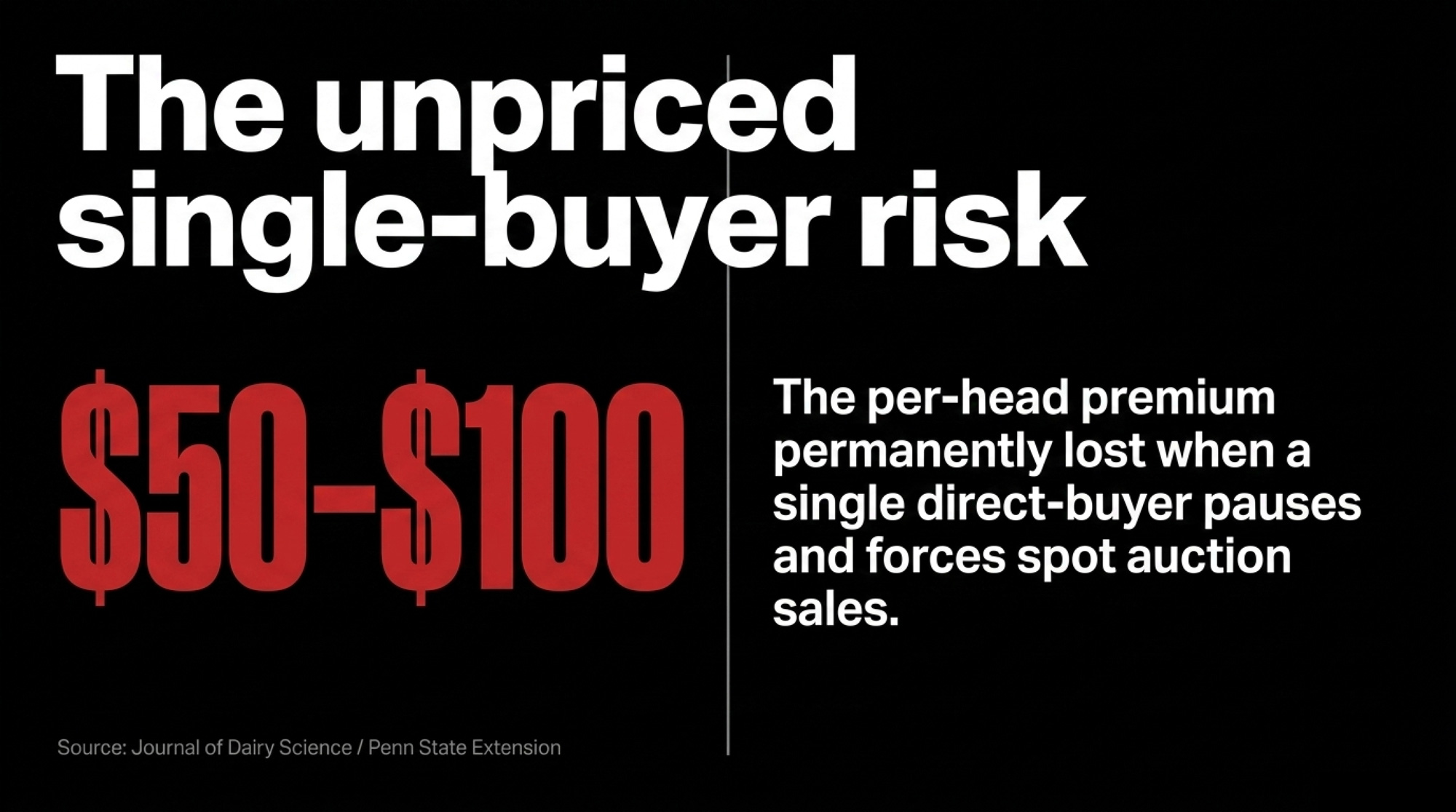
NewsSubscribe
First
Last
Consent

Record Exports, Reeking Checks: How a 34% Hidden Tax Costs You $5.85/Cwt

U.S. dairy exported $801M in November. Your butterfat paid $5.85/cwt less. The missing money isn’t magic — it’s a 34% ‘hidden tax.

Executive Summary: November 2025 U.S. dairy exports hit $801.7 million, but many producers watched their butterfat pay $5.85/cwt less than late 2024. This piece unpacks that paradox and shows how exports surged because U.S. butterfat got cheap, not because buyers paid premiums. It brings the June 2025 FMMO reforms front and center, explaining how a 34% jump in the butter make allowance acts like a “hidden tax” on high‑component herds by pulling more value out before it ever reaches your milk check. Real‑world examples from Wisconsin and Minnesota walk through how wide Class III/IV spreads, depooling, and $180,000 in locked-up co‑op equity shift risk and revenue off the farm. From there, the article lays out four concrete paths — demand co‑op transparency, measure your mailbox vs. uniform gap, honestly assess switching costs, and tighten DMC/forward‑pricing coverage. It gives you specific triggers to watch, like a $0.50/cwt mailbox gap and a $2.00–$2.50 Class III/IV spread, so you can decide whether your current marketing channel is earning its share — or just taking it.

“If exports are so great, why don’t I feel it?”

That’s what one Wisconsin producer said when he opened his December milk statement after weeks of headlines celebrating record U.S. dairy exports. It’s the right question.

November 2025 delivered $801.7 million in U.S. dairy export value — up 14% from the prior year, according to USDEC data released in January 2026. Butter shipments surged 245%. Total butterfat exports reached 15,308 metric tons, the highest single-month total ever recorded. Yet Class IV checks arrived at $13.89 per hundredweight, and butterfat component values had dropped roughly $5.85 per cwt compared to late 2024.

We’re feeding the world on a discount, and the only ones not invited to the feast are the people milking the cows.

That gap between headline and mailbox isn’t random. It’s structural. And understanding why — plus what you can do about it — matters more now than it has in years.

The Hidden Tax on Your Efficiency

Before we get to export mechanics, here’s the piece most producers miss entirely.

The Federal Milk Marketing Order reforms that took effect in June 2025 included increases in make allowances across product categories. According to USDA Agricultural Marketing Service data, butter’s make allowance rose 34% to $0.2272 per pound. These allowances get deducted before class prices and producer payments are calculated.

ComponentBefore June ’25After June ’25% Increase
Butter$0.1694/lb$0.2272/lb+34%
Cheese (Cheddar)$0.2003/lb$0.2367/lb+18%
Dry Whey$0.1991/lb$0.2210/lb+11%
Nonfat Dry Milk$0.1678/lb$0.1889/lb+13%
Avg. Impact on Class III-$0.91/cwt
Avg. Impact on Class IV-$0.85/cwt

Think about that: you invested in genetics, management, and components. Your herd is testing 4.3% butterfat — roughly 23% above the 3.5% baseline FMMO pricing assumes. And now a larger slice of that value gets carved out before it ever reaches your check.

American Farm Bureau Federation analysis estimated the FMMO changes reduced Class III prices by approximately $0.91 per cwt and Class IV by $0.85.

That’s not market forces. That’s policy. And it happened while everyone was watching export numbers.

Why Exports Surge When Prices Fall

Here’s the assumption most of us carry: strong export demand drives prices up, rising prices lift milk checks. November 2025 proved that the opposite can happen.

What actually drove the export boom? U.S. butterfat got cheap.

When domestic butter prices fell from nearly $2.89 per pound in late 2024 to roughly $1.53 by late 2025, American product became the discount option. Global buyers noticed. According to USDEC’s January 2026 analysis, butterfat imports from the U.S. to the Middle East and North Africa topped 4,000 metric tons in November alone. Bahrain and Saudi Arabia led the surge ahead of Ramadan buying.

South Korea emerged as a standout cheese market too, with November shipments jumping 136% year-over-year — mozzarella and cream cheese for foodservice driving those gains.

But here’s the thing: these weren’t premium buyers paying top dollar for American quality. They were price-sensitive markets taking advantage of a cheap supply.

When exports function as a release valve for surplus — moving product that would otherwise crash domestic prices further — they provide real value. That value shows up as market stabilization, though. Not enhanced producer premiums.

November’s export surge prevented worse. It didn’t create better.

Where the Dollars Disappear

That Wisconsin producer ships to a Class IV-heavy cooperative focused on butter and powder. In theory, a record butterfat export month should benefit operations in that channel.

The math didn’t work that way.

  • First, those export sales happened at prices reflecting the domestic collapse, not premiums above it. When butter trades at $1.53 domestically, export sales at competitive global prices don’t generate a margin to pass back to domestic customers. They generate volume movement that keeps plants running.
  • Second, cooperatives operate with their own cost structures — debt service, equity retention, and balancing costs. Large co-ops with recent processing investments may be servicing significant debt before member payments hit your account.

The Wisconsin producer put it bluntly: “So when they say exports are good for dairy farmers, they don’t actually know if that’s true?”

Not at the individual level. The system doesn’t track it.

The Pricing Mechanics Absorbing Your Margin

The 4.3% vs. 3.5% Problem

Federal order pricing assumes a 3.5% butterfat baseline. Actual farm tests have been running around 4.3% nationally—roughly 23% higher than that.

When butterfat prices are strong, high-component herds benefit. When prices collapse, those same herds have greater downside exposure.

Here’s the math: A producer shipping 4.3% butterfat saw component value drop from approximately $12.43 per cwt in late 2024 to $6.58 in late 2025. That’s $5.85 driven entirely by commodity price movement — same cows, same management, same milk.

The $3.29 Spread

November 2025’s gap between Class III ($17.18) and Class IV ($13.89) was $3.29 per hundredweight — the widest since April 2024.

Wide spreads create depooling incentives. Under federal order rules, milk can be pooled or depooled at the handler’s discretion — this is a permitted structural feature, not a violation. When one class commands a significantly higher price than the blend, handlers can pull that milk out and capture the full value.

When milk is depooled, the higher-value revenue exits the system. Producers remaining in the pool absorb the cost through negative PPDs.

If your PPD went sharply negative in a month with a wide class spread, someone’s milk was depooled. It might not have been yours, but you paid for it.

When Equity Becomes a Barrier

One Minnesota producer calculated he had roughly $180,000 in retained equity with his cooperative. When he explored switching, he discovered leaving would mean waiting 12+ years to access that money — and the bylaws allowed offsets for “losses attributable to departing members.”

He stayed. Not because he was satisfied. Because $180,000 was more than he could walk away from.

His situation illustrates a common barrier, though specific equity positions and terms vary by cooperative and tenure. Retention policies for 15-20-year revolving schedules are standard across much of the industry.

What Works Differently

Not every cooperative operates the same way.

Organic Valley (CROPP Cooperative) pays 8% interest on retained member equity — treating members as capital partners, not just milk suppliers. Their pay prices have historically run several dollars per cwt above conventional, with organic premiums in the $8-10 range during favorable periods. That gap narrows when organic supply exceeds demand, but the structure rewards member investment differently than most commodity co-ops.

FrieslandCampina in the Netherlands paid €245 million in documented sustainability premiums to member farmers in 2023, according to the cooperative’s annual report. Transparent indicator systems show exactly what farmers earn for meeting specific targets.

FeatureTypical U.S. Commodity Co-opOrganic Valley (CROPP)FrieslandCampina
Interest on retained equity0% – 2%8%Variable, disclosed
Premium above conventional$0 – $0.50/cwt$8 – $10/cwt€0.02 – €0.05/kg
Sustainability premiumsRare, undisclosedDisclosed, integrated€245M (2023, documented)
Transparency on export revenueMinimal to noneMember reportsAnnual public reporting
Equity recovery timeline12 – 20 years7 – 10 years5 – 7 years
Member decision-makingBoard-driven, limited inputStrong member voiceIndicator-based, transparent targets

These examples prove the mechanics can work differently. But they represent a small fraction of U.S. production.

Four Paths Forward

Path 1: Demand Transparency

The most accessible option is better information from your current cooperative.

Three Questions to Send Before the Annual Meeting Season

Send these in writing — responses aren’t guaranteed, but asking creates a record:

  1. “What was our cooperative’s gross export revenue in 2025, and what net amount reached member pay prices after all costs?”
  2. “For months when the Class III/IV spread exceeded $2.00, what was our pooling policy?”
  3. “How did our member mailbox prices compare to the FMMO statistical uniform price?”

One producer asking gets brushed off. Five people sending the same letter gets a board agenda item.

Path 2: Know Your Numbers

This week: Pull your milk checks from the last 12 months. Calculate your actual mailbox price — total dollars received divided by total hundredweights, after every deduction.

ScenarioAnnual Production (lbs)FMMO Uniform ($/cwt)Mailbox ($/cwt)Annual Gap
Small herd, commodity co-op850,000$18.25$17.45-$6,800
Mid-size, high-component1,400,000$18.25$17.50-$10,500
Large herd, Class IV heavy3,200,000$18.25$17.70-$17,600
Regional co-op, transparent1,400,000$18.25$18.15-$1,400

Then compare to the statistical uniform price for your federal order.

If your mailbox trails the uniform by more than $0.50 per cwt consistently, that gap warrants investigation. On a 200-cow herd shipping 1.4 million pounds annually, a $0.75 gap is roughly $10,500 per year.

Path 3: Evaluate Switching — Honestly

The barriers are real: retained equity that takes 10-15 years to recover, 12-18 month notice periods, geographic constraints on handlers, and social pressure in tight-knit communities.

But understanding your options provides context for negotiation. A producer who knows their alternatives negotiates differently.

Path 4: Strengthen Risk Management

  • Dairy Margin Coverage remains cheap insurance. December 2025 was the only month triggering a DMC payment all year — but with margins now compressing toward the $9.50 trigger, payments appear increasingly likely in 2026. The enrollment period runs through February 26, and the One Big Beautiful Bill Act expanded Tier 1 coverage to 6 million pounds.
  • Forward contracting through the Dairy Forward Pricing Program allows locks through September 2028. You trade upside for certainty — appropriate for tight debt service, less so if you can absorb volatility.

What to Watch Through Q2 2026

Class III/IV spreads: When they exceed $2.00, depooling pressure builds. Past $2.50, it’s likely affecting your check.

Your PPD trend: Sustained negative PPDs during wide-spread months signal pooling decisions that aren’t serving you.

Co-op annual meetings: Q2 is your window to ask questions with other members present.

What This Means for Your Operation

  • Calculate your mailbox-to-uniform comparison this week. More than $0.50 below consistently? You need to understand why.
  • Send the three questions in writing before your annual meeting. See what answers you get — and how long they take.
  • Know your equity position and departure terms now. Not because you’re leaving, but because understanding constraints lets you evaluate options clearly.
  • Connect with two or three producers in your cooperative. Compare mailbox prices. Collective inquiry creates dynamics different from those of individual complaints.
  • Review your DMC enrollment before February 26. With margins tightening and December’s payment fresh, coverage costs are minimal compared to downside protection.
  • Watch the spread monthly. Past $2.00, pay attention. Past $2.50, act.

Key Takeaways

  • Export records don’t equal premium checks. November’s $801 million was due to U.S. prices collapsing. The surge prevented worse; it didn’t create better.
  • The 34% make allowance hike is a hidden tax on your efficiency. You bred for components. Policy changes are capturing more of that value before it reaches your check.
  • The $5.85/cwt butterfat drop hit high-component herds hardest. The same genetics that boosted 2024 revenue also increased 2025 exposure.
  • $3.29 spreads create depooling that costs you. If you don’t know your co-op’s pooling policy, you can’t evaluate whether it’s working for you.
  • Your mailbox vs. the uniform price is the comparison that matters. A consistent $0.50+ gap means your channel is extracting more than it’s adding.

The Bottom Line

That Wisconsin producer figured something out after digging into the mechanics: the opacity isn’t inevitable. Some cooperatives operate transparently. Some structures actually return a value to members.

The difference is whether you know enough to ask — and whether you’ll ask alongside others who are tired of the same answer.

Where does your mailbox sit relative to the uniform?

Complete references and supporting documentation are available upon request by contacting the editorial team at editor@thebullvine.com.

Learn More

The Sunday Read Dairy Professionals Don’t Skip.

Every week, thousands of producers, breeders, and industry insiders open Bullvine Weekly for genetics insights, market shifts, and profit strategies they won’t find anywhere else. One email. Five minutes. Smarter decisions all week.
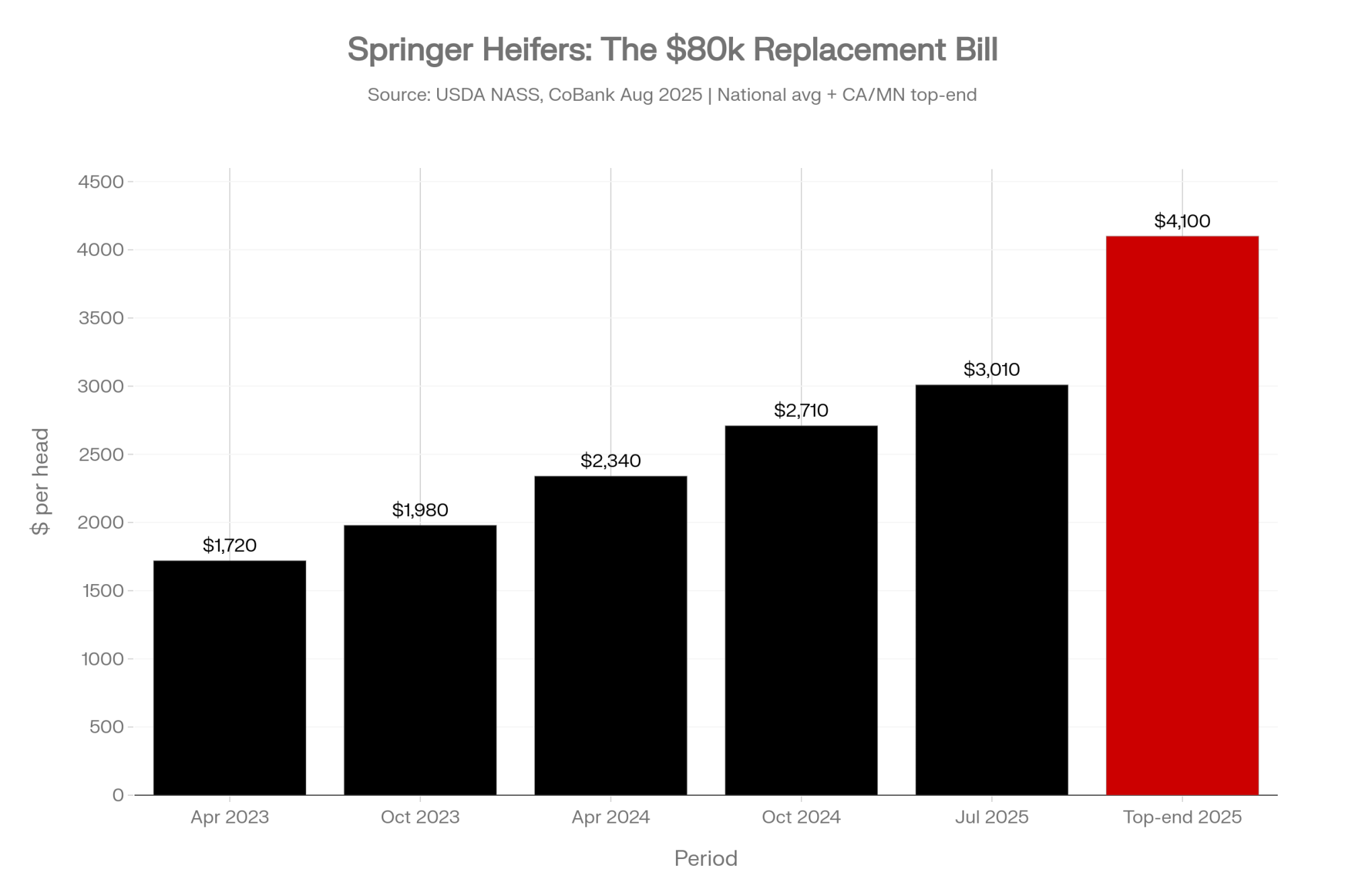
NewsSubscribe
First
Last
Consent

“I Get to Be the Funding”: What 96% of U.S. Dairy Farms Owe to the Spouse With the Town Job

When the median U.S. farm lost money in 2023, it was the job in town—and the person working it—that kept the lights on.

EXECUTIVE SUMMARY: The median U.S. farm lost $900 in 2023. Median off-farm income? Nearly $80,000. And 96% of farm households had someone earning that second paycheck. For dairy families, the job in town isn’t a fallback—it’s often what’s keeping the bulk tank running, the health insurance active, and the show string moving. This piece tackles what happens when the person working that job starts feeling like “just the funding” instead of a partner, and why that identity strain belongs on your risk management whiteboard, right next to milk price and feed costs. Inside: a five-year lookback to tell the difference between bridging a gap and subsidizing a hobby, communication habits that work before resentment calcifies, and the uncomfortable question more couples need to ask—if that town job vanished tomorrow, would you have a dairy business or a very expensive pet? Grounded in AFBF’s April 2025 Market Intel, 2023 USDA ERS data, and a University of Illinois study on farm family mental health, it’s essential reading for anyone whose robot payment, embryo flush, or Madison entry depends on a spouse who’s quietly keeping score.

It’s 6:47 a.m. on a cold Tuesday in March. A heifer in pen three is showing classic hardware-disease signs—off feed, grunting, not right—and the vet is already on the way. Down in the barn, Mike is running the math on magnets, surgery, or a dead heifer, and one more hole in the balance sheet.

Up at the house, Sarah is standing at the kitchen counter in her work clothes, scrolling through an email from HR. Her employer’s health plan is bumping premiums and jacking up the family deductible again. That plan isn’t a perk. It’s how they insure a guy who spends his days under cows, around PTO shafts, and on cold concrete.

Mike and Sarah are a composite—built from real patterns in current U.S. farm data and the stories we hear from farm families. If your household has one partner in the barn and one driving into town every morning, there’s a good chance you’ll see yourselves here. And in 2025, that split life isn’t a side detail anymore. It’s the backbone of how a lot of U.S. dairy farms survive.

The Hard Math Behind the “Family Farm” Story

According to AFBF’s April 2025 Market Intel report “The Other Paycheck,” which draws on 2023 USDA Economic Research Service data for U.S. farm households, about 96% of U.S. farm households earned income off the farm that year. On average, roughly 77% of total household income came from off-farm sources, with just 23% from the farm itself.

Here’s the number that should get your attention: those same 2023 U.S. figures showed median farm income around negative $900 from the farm business, while median off-farm income sat close to $80,000. That doesn’t mean every farm lost money. It does mean that, in the middle of the distribution, the farm itself wasn’t paying the household’s way. The off-farm paycheck was.

When AFBF’s commodity breakdown looked at income sources by sector, dairy stood out. Dairy households derived a much higher share of their total income directly from the farm business than most other sectors—putting dairy near the top for farm-dependent income in that report. Beef, grain, and “other livestock” operations leaned far more heavily on off-farm wages.

On paper, that sounds like dairy is “more self-reliant.” On the ground, it often looks like this:

  • One partner is tied to the herd and facilities around the clock.
  • The other is tied to a job in town because that’s where the predictable paycheck and health coverage live.
  • Both know they’re one bad injury, one layoff, or one ugly milk-price year away from some uncomfortable conversations about debt, succession, and what happens next.

If you’re looking at a robot install, more cows, or a parlor upgrade, that off-farm column needs to be on the same whiteboard as repro, feed, and margin-protection programs like DMC. Planning as if that job and its benefits are guaranteed forever is a risk in itself.

The Off-Farm Spouse: Financial Anchor, Often Invisible

On paper, the farm is “the business.” In real life, the AFBF/ERS numbers say something different: for the median U.S. farm household in 2023, the farm business barely broke even—or worse—while the off-farm income kept the household in the black.

In our composite, Sarah’s paycheck covers more than groceries and school clothes. It often backstops loan payments, covers health insurance, and quietly plugs holes when the milk cheque doesn’t stretch far enough. That job is not optional. It’s a core risk-management tool.

The trap is pretty simple. When your family’s health coverage and basic cash flow depend on one off-farm job:

  • You can’t take career risks the way your non-farm colleagues do.
  • You think twice before pushing back on unreasonable workloads or bad bosses.
  • Changing jobs or reducing hours isn’t just a professional decision; it’s a full-farm risk calculation.

What the Research Shows

A 2023 University of Illinois study on farm households in the Midwest found that about 60% of adults and adolescentsin their sample met criteria for at least mild depression, and roughly half of adults met criteria for generalized anxiety disorder. Debt load and financial stress showed clear connections with depressed mood and anxiety in the families they surveyed. This was a specific sample of farm families, not all farms everywhere—but the patterns match what many producers quietly describe.

That stress doesn’t stay in the yard. The off-farm spouse is carrying both worlds—the town job by day, farm stress by night—and often feels like they’re the only one seeing the whole picture. If that sounds familiar, you’re not alone, and there are resources specifically built for farm families.

“You’re the Farmer. I’m the Funding.”

The money isn’t the only thing that hurts. Identity does too.

The cocktail-party test. You see it at 4-H awards nights, weddings, and breed meetings. Someone asks, “So what do you do?”

Mike says, “I’m a dairy farmer.” Immediately, there’s interest—how many cows, what breed, what kind of parlor or robots, what he thinks of beef-on-dairy.

Sarah says, “I’m a nurse,” or “I work in insurance,” or “I’m an accountant.” She gets a polite nod. Maybe “That’s a good job to have.” Then the conversation slides straight back to Mike and the cows.

What the research says. Several studies on farm families in Ireland and other European countries—often through qualitative interviews with farm couples—have picked up a similar pattern: men often anchor their identity on being “the farmer” and “the provider,” while women downplay their own off-farm earning power to protect that identity, especially when the numbers are tight. It doesn’t describe every family, but it’s a pattern researchers see again and again in those interviews.

What it teaches. Over time, that dynamic quietly teaches some off-farm spouses a couple of things:

  • “My work isn’t really part of the farm story.”
  • “I’m support, not a partner.”

As one off-farm spouse put it to us not long ago:

“You get to be the farmer. I get to be the funding.”

You don’t need to sit in on a sociology seminar to understand why that matters. If the person whose job keeps the farm alive feels like a temporary funding source instead of a co-owner, their incentive to stay in that role for another 10–15 years drops. And you can’t fix a hole that big in your risk plan with a new bull or another 50 cows.

DimensionOn-Farm Partner (“The Farmer”)Off-Farm Partner (“The Funding”)Recognition Gap
Weekly hours worked60–80 hrs (barn, field, management)40 hrs (town job) + 10–20 hrs (farm support, household) = 50–60 hrs totalOften seen as “helping out,” not working
Financial risk carriedDay-to-day farm decisions, herd health, crop timingEntire household stability if job ends; health coverage; retirementRisk invisible until crisis hits
Career flexibilityHigh autonomy (within market constraints)Minimal—can’t job-hop, negotiate, or reduce hours without threatening farmTrapped by farm dependency; career growth sacrificed
Social identity“Dairy farmer” (respected, interesting, conversation starter)“Accountant/Nurse/Teacher” (polite nod, conversation shifts back to cows)Farm contributions erased in public narrative
Control over “passion” spendingShow string, genetics, equipment upgrades often farm partner’s domainFunds it, rarely directs itPays for someone else’s dreams
Burnout riskHigh (physical, market stress)Extremely high (dual-world stress, no identity payoff, invisible labor)Stress acknowledged for farmer, dismissed for spouse

What This Means for Your Passion Projects

Here’s where it gets personal for the show and genetics crowd.

That nursing salary or accounting job isn’t just keeping the lights on and the bulk tank running. It’s often what pays the entry fees for Madison, the IVF session on that “dream” heifer, or the flight to inspect a flush donor you’ve been watching for two years. The show string and the elite genetics program? For many families, those are funded by off-farm income, not the milk cheque.

What the Off-Farm Paycheck Typically CoversMonthly/Annual Cost RangeWhat Gets Cut First If That Job Ends
Family health insurance (employer plan)$1,200–2,400/monthSwitch to marketplace (if affordable) or go uninsured
Robot/parlor equipment lease payment$3,500–6,000/monthDefault risk within 60–90 days
Show string expenses (Madison, genetics, hauling)$15,000–40,000/yearShow program eliminated immediately
Family living expenses (groceries, kids, utilities)$4,000–6,000/monthHousehold budget slashed; quality of life declines
Student loan or vehicle payments$800–1,500/monthDeferred or default; credit damage
Emergency fund / retirement contributions$500–2,000/monthFirst to stop; long-term security evaporates

And here’s the thing: when the off-farm spouse starts feeling like “just the funding,” those passion projects are the first expenses that get cut. Not because they don’t matter, but because they’re the easiest place to draw a line when you’re exhausted and under-appreciated.

If your breeding and show goals depend on that town job, the person working it needs to feel like a partner in the program—not an ATM.

The Conversations That Help vs. the Ones That Blow Up

Add all this up—thin margins, invisible labour, identity pressure—and it’s no surprise that a lot of farm-house conversations go badly.

The protection trap. Most couples try to protect each other. Mike doesn’t want to dump every ugly cash-flow detail on Sarah when she’s already drained from work. Sarah doesn’t want to add her HR nightmares and commute stress to his load. So they both carry more than they should, in silence.

The University of Wisconsin Extension has noted that chronic stress literally makes it harder for your brain to organize thoughts and communicate clearly. So when everything finally boils over, it usually isn’t in a calm, sit-down way. It’s over something minor that turns sideways fast: a comment about a new tractor, a joke about “another long day,” a bill left on the table.

What actually works. The couples who live with similar numbers but stay steadier don’t have magic marriages. They just release steam more often, in small doses. Practical habits look like this:

  • The 1–10 daily check-in. Once a day—leaving for work, coming in from chores, before bed—each of you says, “I’m at a 3 today,” or “I’m at a 7.” No explanation required, no fixing, just data. It tells you whether you’re talking to someone who’s barely holding it together or someone with a little more bandwidth.
  • Truck-cab time. Whenever two of you are in the truck—feed run, vet call, supply pick-up—kill the radio for the first 10 minutes. Side-by-side, looking forward, is often the easiest way to bring up something you’ve been avoiding.
  • Sunday morning is non-negotiable. Pick the one morning that’s even slightly less insane and protect 20–30 minutes after chores. Same spot, every week. One starter: “What’s one thing from this week I wouldn’t know if you didn’t tell me?”

None of that changes the milk price. But it does keep resentment from calcifying until “we need to talk” turns into “I can’t do this anymore.”

Where Off-Farm Income Quietly Drives Herd Strategy

Now let’s bring it right into your barn office and breeding board.

When a significant chunk of your household stability depends on one off-farm job and benefit package, that changes how much risk you can take inside the operation—even if you don’t write it down. You can see it clearly in three places.

Expansion and leverage. If debt service on more cows, more land, or a parlor upgrade only works as long as Sarah’s paycheck and benefits stay exactly where they are, that’s a big assumption. Before you green-light a major capital project, ask yourselves: “If this off-farm job ended or changed, how many months could we keep our payments current without panicking?” Back-of-the-envelope is better than pretending the risk doesn’t exist.

Robots and labour-saving tech. A robot install, guided-flow barn, or more automation can be a game-changer for labour and lifestyle. But every producer who’s done it will tell you: the install phase and learning curve are not hands-off. If one partner is already working 40–50 hours a week off-farm, be honest about who’s actually going to handle overnight alarms, the software learning curve, and fresh-cow follow-up. It doesn’t mean “don’t do robots.” It means plan for the real human bandwidth you actually have.

Heifers, culling, and slow cash leaks. Off-farm income can be a blessing when it lets you hold extra heifers through a downturn or keep a borderline cow another lactation. It becomes a slow leak when year after year, that town’s paycheck quietly pays for feed and yardage on heifers that won’t ever see a milking unit, or cows that aren’t paying their way.

Labor Substitution. If Sarah is working in town, she isn’t in the parlor. If Mike is doing the work of two people because the farm can’t afford a hired hand, the “burnout” risk is doubled.

Bridging a Gap vs. Subsidizing a Hobby

Let’s be direct about something.

There’s a big difference between using off-farm income to bridge a gap—a bad milk-price year, a facility upgrade that takes time to pay off, a drought—and using it to subsidize an operation that doesn’t pencil out permanently.

If you look back over the last five years and see a pattern in which off-farm money routinely plugs farm operating holes rather than building savings or paying down debt, that’s not “just a tough stretch.” That’s structural.

And here’s the uncomfortable truth: if the town job is the only thing keeping the farm from a “For Sale” sign, it’s worth asking whether you still have a viable dairy business—or whether you’ve slid into keeping a very expensive, high-maintenance pet.

That’s not a judgment. Plenty of families consciously choose to subsidize a farm because it’s home, it’s a legacy, it’s where the kids learn to work. But it should be a choice you’re making with your eyes open—not something you stumble into because nobody wanted to look at the numbers.

Building a Support Bench That Actually Speaks “Dairy”

When an off-farm spouse like Sarah finally hits the wall and admits, “I can’t carry all of this by myself,” the obvious support options often disappoint.

Some traditional “farm wife” groups revolve around on-farm roles: parlor help, calf chores, and field meals. Those are important jobs, but they don’t match the stress of someone shouldering a full-time town job plus farm finances. On the flip side, generic workplace EAP lines and urban counselors often don’t understand why “just find a less stressful job” isn’t realistic when that job is literally underwriting the farm’s survival and health coverage.

What tends to help more looks like this:

  • Ag-literate support. In the U.S., organizations like Farm Aid offer farmer hotlines and connections to counselors who understand seasonal stress, income swings, and farm culture. In Canada, the Farmer Wellness Initiative in Ontario and other provincial programs are building similar networks with counselors trained specifically for agriculture. The difference between “Tell me how you feel” and “I understand why this HR email feels like a barn fire” is huge.
  • One or two peers in the same boat. These often come through your vet, nutritionist, milk hauler, or school contacts. Someone who knows exactly what “premium hike plus vet bill” feels like and will pick up the phone at 10 p.m. when you send a short, panicked text.
  • One space that isn’t about cows or spreadsheets. A rec hockey team, book club, choir, or church group where you—or your spouse—show up as a person, not “the farmer” or “the farm wife/husband.” Research keeps coming back to the same point: isolation magnifies stress in farm families. One night a month that isn’t about the farm isn’t indulgence. It’s maintenance.

Picking up that phone or walking into that first appointment can feel like admitting you can’t hack it. Most people expect to feel judged. What they actually feel, more often than not, is relief—because the person on the other end finally gets it.

When “Managing Stress” Becomes Tolerating the Unmanageable

There’s a line where better stress management isn’t enough.

Communication habits, counseling, and support networks can make life in a tight system more livable. They don’t change the fundamental math. At some point, “We’re getting better at handling stress” can quietly turn into “We’re getting better at tolerating a structure that doesn’t work.”

You’re getting close to that line when:

  • Off-farm income regularly pays core farm operating expenses, not just household needs.
  • Total debt—farm plus household—is noticeably higher today than it was five years ago, despite everyone working flat-out.
  • One or both of you are clearly more worn down, short-tempered, or checked-out than you were a few years ago, even after adding support.
  • Kids’ stability and opportunities are taking repeated hits, so the farm can hang on.
  • There’s essentially nothing going into retirement; every available dollar keeps going back into the operation.

At that point, the key question isn’t, “Are we tough enough to keep grinding?” If you’ve kept a dairy going through the last five years, you’ve already proven you’re tough.

The more honest question is, “Is the system we’re holding together actually worth what it’s costing us?”

That’s not a question for midnight after a bad day. It’s a question for a scheduled sit-down—with numbers, not just feelings. And it gets a lot easier to ask when you’ve already built some trust through those small daily check-ins, rather than waiting until something explodes. If you’re starting to have those conversations, here’s how other families have approached the transition question.

What This Means for Your Operation

You don’t need another think-piece telling you dairy is hard. You need checks you can run against your own reality. Here’s a practical way to start.

Put off-farm income on the planning board. Next time you’re talking expansion, a robot install, or a parlor upgrade, write “off-farm income” and “health benefits” on the same whiteboard as feed, repro, and labour. If the plan only works as long as one job in town stays exactly the same, say that out loud before you sign.

Do a rough five-year lookback. Circle a date in the next month and sit down with your partner. Pull tax summaries, lender statements, or even just your memory and a notepad. Look at the last five years: How often did off-farm money cover farm operating shortfalls? Is total debt higher or lower than it was five years ago? One simple gut-check some advisors use: if you can point to several years—say, three or more out of the last five—where off-farm income bailed out farm operating losses, that’s a strong hint you’re dealing with a structural problem, not just “we’ve been tight.” There’s no official threshold, but that pattern should make you ask harder questions.

Ask who’s really carrying the risk. If losing the off-farm job would put you in serious trouble within a few months, that reality has to shape how aggressive you get on cow numbers, land base, and capital projects. That’s not fear. That’s responsible risk management.

Test one small communication habit for a month. Pick the 1–10 check-in, Sunday coffee, or truck-cab time and commit to it for four weeks. If it makes conversations about money and the farm easier, keep it. If it doesn’t move the needle at all, that’s useful information—it may mean the problem is structural, not just emotional.

Bring a third set of eyes into the picture. If your five-year lookback and your gut both say, “This is tight,” it’s time to sit down with an accountant, lender, or farm business advisor who understands dairy. Ask for a clear picture of your options: stay roughly where you are with guardrails; scale down; lease out; bring in a partner; or map a 5–10-year transition. You don’t have to decide that day. You do need to see what’s possible.

Give yourselves permission to ask, “Are we still doing this?” Not as a threat. Not as a weapon in an argument. As owners and parents asking whether the life you’re building around this herd still makes sense for your health, your kids, and your long-term security.

A note for Canadian readers: The exact numbers look different under quota, and income stability from supply management changes the calculus. But the questions—about who’s carrying risk, how the off-farm job fits into the whole picture, and whether the structure is sustainable—apply just as much north of the border.

Key Takeaways

  • Off-farm income—and the person earning it—are no longer “extras” in U.S. dairy households. Based on 2023 AFBF/ERS data, they’re central to your risk-management plan.
  • If your expansion, robot, or facility plans quietly assume the off-farm job and benefits will never change, you’re underestimating one of your biggest risk variables.
  • Your show string and genetics program probably depend on that town paycheck, too. If the off-farm spouse feels like “just the funding,” those passion projects are the first things to go.
  • There’s a difference between bridging a gap and subsidizing a hobby. Know which one you’re doing—and make it a conscious choice.
  • Small, regular check-ins beat one big “we need to talk” blow-up every time. They won’t fix bad numbers, but they’ll help you spot bad patterns before they turn into crises.
  • Real toughness isn’t just grinding out another year. It’s being willing to look at the whole structure—herd, land, debt, off-farm job, family—and decide whether it’s actually delivering the life you want for the people you love.

The Bottom Line

The cows don’t care where the mortgage payment comes from. But you and your family do. The sooner you pull the off-farm side of the ledger into full view, the more control you’ll have over how your dairy—and your life around it—look in five or ten years.

Complete references and supporting documentation are available upon request by contacting the editorial team at editor@thebullvine.com.

Learn More

The Sunday Read Dairy Professionals Don’t Skip.

Every week, thousands of producers, breeders, and industry insiders open Bullvine Weekly for genetics insights, market shifts, and profit strategies they won’t find anywhere else. One email. Five minutes. Smarter decisions all week.
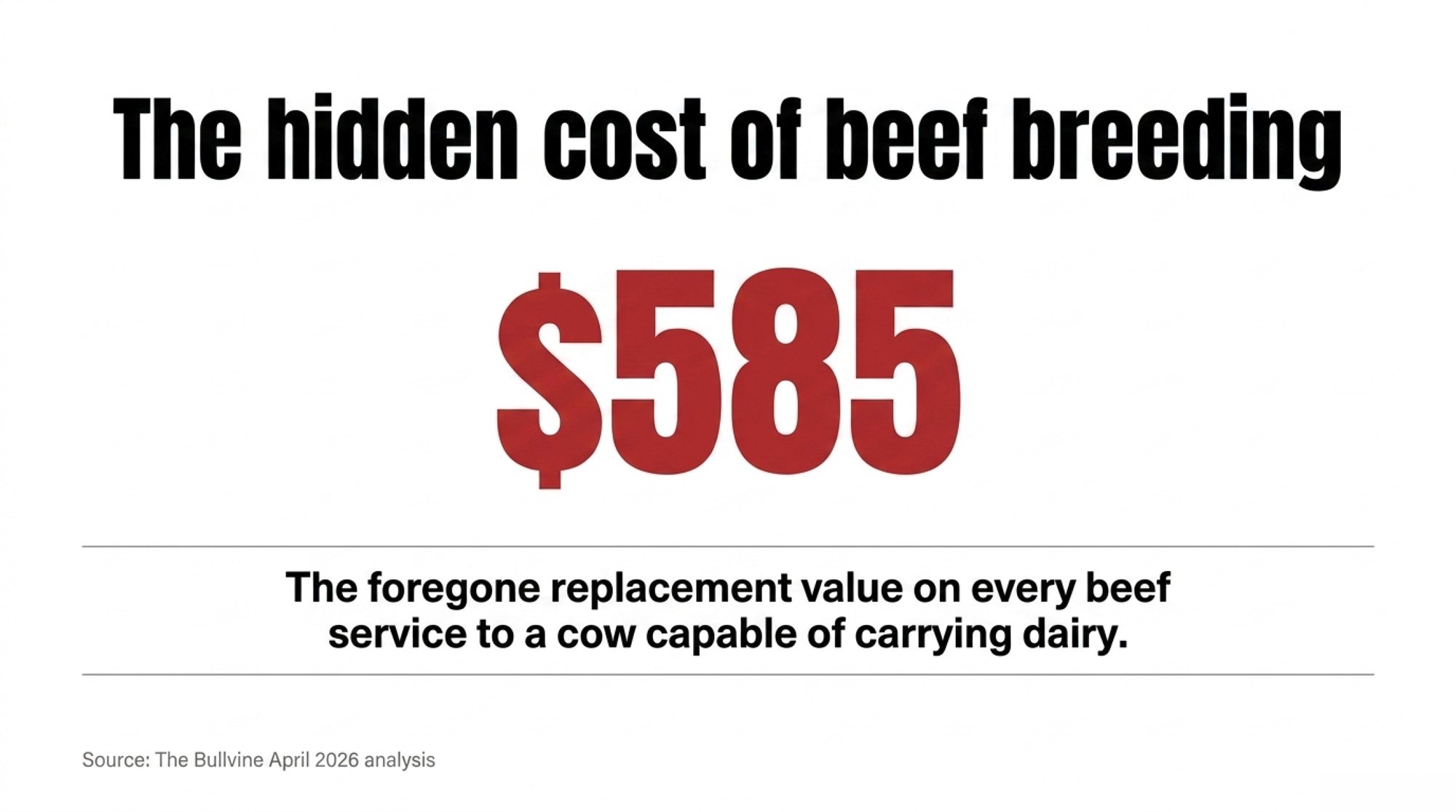
NewsSubscribe
First
Last
Consent

2026 Dairy Rally Or Dead-Cat Bounce? The Risk and Margin Math Behind Today’s Wall of Milk

Milk prices are up, but the world’s awash in milk. Have you actually run the 2026 risk math on your own herd yet?

Executive Summary: Early‑2026 dairy markets finally show some life, with GDT and CME prices moving higher, but global milk production is still expanding in the US, EU, New Zealand, and South America. That leaves us in a classic “relief rally” sitting on top of a wall of milk, as USDA forecasts more US output in 2026 and European and South American exports keep pressure on world prices. Cheaper feed has helped, yet many herds remain just one dollar per hundredweight away from losing—or gaining—six‑figure income, especially at 400–600 cows. This feature turns that big‑picture tension into simple margin math and walks you through what to do next: how much milk to lock in, how to rethink your cull list, and why components and fresh cow management matter more than ever. It doesn’t promise a magic fix; instead, it gives owners and managers a realistic playbook to de‑risk 2026 while keeping long‑term genetics and herd strategy in mind. If you want to stop guessing and start making deliberate moves in this rally, this is the article you read before your next marketing and herd meeting.

2026 dairy market rally

You know that feeling when the market finally throws you a bone, and you’re not sure whether to trust it? That’s exactly where dairy is sitting as we get into 2026.

The Global Dairy Trade (GDT) index has just put together back‑to‑back gains. At the January 20, 2026, auction, market reports from Trading Economics show the GDT Price Index up 1.5%, with the average winning price around 3,615 US dollars per tonne, building on a 6.3% jump at the previous event.  CME spot prices have turned green as well, with recent coverage highlighting higher butter, nonfat dry milk, and cheddar block values compared to late 2025. 

RegionJan 2025Apr 2025Jul 2025Oct 2025Jan 2026 (Forecast)Apr 2026 (Forecast)Jul 2026 (Forecast)Oct 2026 (Forecast)
US19,20019,60020,10020,40020,70021,00021,40021,600
EU8,1008,2008,3008,2508,3008,3508,4008,380
New Zealand2,8002,9502,7502,6002,6802,8502,9002,750
South America1,4001,4501,4801,5101,5501,6001,6301,660

What’s interesting here is that this little rally is showing up while both USDA and global analysts are still talking about milk supply outpacing demand through at least early 2026. USDA’s January outlook, as reported by Dairy Star, puts 2026 US milk production at about 234.3 billion pounds—roughly 1.4% above 2025.  A summary of global conditions bluntly warned that milk supply is set to outpace demand in early 2026, echoing similar concerns in other industry outlooks. 

So the real question a lot of you are quietly asking—whether it’s in a freestall in Wisconsin or a tie‑stall barn in Quebec—is simple: is this a real turn, or just a dead‑cat bounce in a still‑oversupplied world?

Let’s frame the stakes. On a 500‑cow herd, a one‑dollar‑per‑hundredweight swing in milk price moves annual revenue by roughly 100,000 dollars. That simple math comes straight from basic revenue calculations: price times hundredweight sold. It’s the kind of back‑of‑the‑envelope number that dairy economists and extension folks often use when they talk about income risk per herd.  That’s why getting this call even roughly right matters a lot more than just the color on your market screen. 

A Quick Snapshot Of Where We’re At

Looking at the latest numbers:

At that January 20 GDT event, official summaries show whole milk powder up about 1%, skim milk powder up roughly 2.2%, butter gaining about 2.1%, and anhydrous milkfat (AMF) up around 3%. Total volume sold was just under 28,000 tonnes, with more than 160 bidders active.  That’s a decent mix of product strength and participation. 

On the supply side, USDA and industry outlets like Dairy Star report that US milk output has been trending higher into late 2025, and the 2026 production forecast of 234.3 billion pounds confirms that they expect more, not less, milk in the system.  Coverage of Europe and Oceania points to year‑on‑year growth in milk collections in many key exporting regions, too. 

And then there’s storage. Reports that at the end of 2025, butter stocks sat around 199.3 million pounds in US cold storage—roughly 7% lower than a year earlier—but cheese inventories were higher than mid‑year levels, reflecting strong production but also resilient export demand. 

So yes, prices are better than they were in late 2025. But the wall of milk hasn’t magically disappeared.

ProductLate 2025 LowJan 20, 2026 (GDT)2024 Average% Gain (Late 2025 → Jan 2026)
Butter ($/tonne)3,4003,6704,200+7.9%
Skim Milk Powder ($/tonne)2,1002,1502,850+2.4%
Cheddar ($/lb)1.621.681.95+3.7%

GDT’s “Less Product, Higher Price” Moment

What farmers are finding is that the tone at GDT finally feels different than it did in the second half of 2025. A Cheese Reporter summary notes that the January 20 auction saw the GDT Price Index rise 1.5%, with fats and powders mostly stronger.  Earlier coverage flagged a shift in late 2025 toward fewer products offered at auction, which often puts upward pressure on prices even if underlying demand is only steady. 

Here’s what I think is worth noting: this isn’t just buyers suddenly waking up hungry. Put it plainly in a feature called “Global Dairy Trade: Less Product, Higher Price”—exporters have been trimming offer volumes and tightening how much skim they dry into powders.  That supply‑side adjustment is a big part of what’s lifting GDT, alongside stable—rather than booming—demand. 

Rabobank’s global dairy commentary, summarized in several industry interviews and articles, has been consistent: they see global supply still running slightly ahead of demand through at least mid‑2026, particularly in the US and EU, which limits the upside of these early‑year price moves.  So the rally is real, but it’s growing on a pretty thin root system. 

Futures: Hope With A Side Of Caution

If you look at how people are betting with real money, European and Singapore futures markets tell a similar story. Reporting in Dairy Global and other trade outlets notes that SMP and WMP strips on European and Oceania exchanges have firmed several percent for the first half of 2026, while butter values have been slower to move or even softened slightly in some contract periods. 

To me, this development suggests two things at once:

  • Markets are willing to pay a bit more for powder and fat into mid‑2026 than they were in late 2025.
  • At the same time, the more muted response in butter curves underscores that traders don’t believe the oversupply problem is solved.

For those of you whose milk cheques are influenced by European or Oceania references—either directly or through export pools—those curves are an early warning light. They’re signaling opportunity, but they are not signaling “party like it’s 2014.”

Europe: Cheaper Butter, Plenty Of Milk

Looking at this trend in Europe, price and volume aren’t exactly moving in the same direction.

Reports show that European butter prices were heading toward or even dipping below 4,000 euros per tonne as 2025 wound down and 2026 began, a sharp drop from the higher levels seen a year earlier.  Skim milk powder prices have stabilized somewhat from their lows but remain notably lower than 2024 values. Cheese values in Europe—cheddar, gouda, and mozzarella—have also been trading at discounts to year‑ago levels, according to EU market summaries and price transmission studies on the UK dairy market. 

On the volume side, AHDB and EU‑focused market reports show that milk deliveries across Western Europe, including key producers like the Netherlands and the UK, have been running ahead of 2024 levels, helped by relatively favorable weather and stable herd sizes.  An AHDB beef market update also notes a forecast of tighter Irish cattle numbers down the road, which reflects some structural shifts, but doesn’t suggest a dramatic collapse in dairy cow numbers in the short term. 

In plain terms, Europe is still putting a lot of milk through butter and cheese plants even as prices have eased. That cheap European cheese and butter is exactly the kind of competition that caps how far US and Oceania values can go before buyers in import regions switch to a different origin.

US, NZ, South America, Australia: Where The Milk Is Coming From

United States: More Cows, More Milk

On the US side, USDA and market summaries make it pretty clear: milk production has been trending higher into 2025, and the 2026 forecast of 234.3 billion pounds reflects an expectation of continued growth. Coverage of monthly production reports show repeated year‑over‑year gains in milk output through late 2025. 

It’s worth noting that USDA commentary captured in pieces like “USDA Expects More Cows, More Milk, More Dairy Products” points to both herd expansion and strong yield per cow as drivers of that growth.  That aligns with what many of us have seen visiting freestalls in the Midwest—more cows per site, better genetics and management, and higher pounds. 

At the same time, milk supply is on track to outpace demand in early 2026, which suggests that, collectively, we haven’t cut hard enough to rebalance.  Cull cow data and packer commentary through 2024 suggest slaughter has not spiked the way it did in some earlier margin squeezes, in part because strong beef prices have helped cash flow and encouraged some herds to hang on to marginal cows a bit longer. 

From what I’ve seen sitting at kitchen tables in Wisconsin and New York, it’s that emotional tug—“give her one more lactation”—that often keeps the bottom of the herd fatter than the balance sheet can support.

New Zealand: Solid Season, Tight Margins

Down in the New Zealand market, trend coverage shows that national milk collections were running a couple of percent ahead of the previous season as 2025 wrapped up, with both volume and milk solids up year-on-year. 

At the same time, Fonterra has updated its 2025/26 farmgate milk price forecast range more than once. In a September 2025 agribusiness note, Rabobank’s Australia/New Zealand team referenced Fonterra’s mid‑range forecast near 9.00 NZ$/kgMS after some adjustments. Reuters and other market outlets have also reported a revised forecast band around 8.50–9.50 NZ$/kgMS in late 2025.

What producers are finding in pasture‑based systems—whether that’s Canterbury or Taranaki—is that this mix of slightly higher production and a decent but not spectacular payout puts more pressure on butterfat performance, pasture utilisation, and fresh cow management. University of Waikato and DairyNZ extension pieces have shown that smart grouping, effective transition period management, and mitigating heat stress can increase milk solids per hectare without massive capital investment. 

South America: Quiet But Growing

In South America, Argentina is a good example of a region that’s not huge on its own but matters at the margins. A 2025 summary from Tridge, based on Argentina’s official dairy statistics, shows milk production up roughly 10–11% in early 2025 compared with the same period a year earlier, with especially strong growth in March.  Dairy Global has similarly reported improved performance in Argentina’s dairy sector, driven by better margins and stronger management. 

Uruguay has been posting sustained increases in milk production as pasture conditions improved and prices encouraged expansion.  All of that adds another flow of competitively priced solids into the world powder and cheese markets. 

Australia: Modest Recovery, No Surge

Australia, as Rabobank and FCC’s dairy outlook work emphasize, has not recovered to its historical production peaks.  Years of drought, high water costs, and herd reduction have shrunk the base. Current forecasts see only modest growth into 2026—more of a crawl upward than a surge. 

Australia still matters in certain niches, especially for some cheese and ingredient trade into Asia, but it’s no longer large enough to be the swing producer that rebalances the global market on its own.

China: Resilient Demand, But Not A Bottomless Sink

No matter where you milk cows, China is still a critical piece of your milk cheque.

Reports show that China has cut back on some categories of dairy imports in recent years, especially lower-value powders, as domestic production increased, but has continued to bring in substantial volumes of butter, cheese, whey, and other high‑value products.  A 2023 study on China’s milk and import markets in Cogent Economics & Finance also showed that rising imports of milk powders and dairy ingredients have significant impacts on domestic price dynamics, underlining how intertwined China is with world dairy markets. 

USDA and AHDB estimates place Chinese raw milk production in the low‑40‑million‑tonne range in recent years—up sharply from a decade ago as they’ve invested heavily in domestic herd expansion and modernisation.  So China remains a big, important buyer, but it’s no longer the bottomless sink it once seemed when domestic production was far smaller. 

On the policy side, industry news through 2024–2025 has highlighted growing trade friction between China and several trading partners, including the EU, across a range of ag products.  Some coverage has raised the possibility of additional duties on certain dairy categories, although precise tariff levels and timing remain uncertain. If those duties materialize, buyers may pivot more toward Oceania, the US, and South America, while EU exporters push more cheese and fats into other markets. 

For producers under quota in Ontario or Quebec, the take‑home isn’t “ship more litres because China’s there.” It’s to keep a close eye on butterfat and protein tests, over‑quota penalties, transport charges, and any changes to pooling as processors juggle export and domestic opportunities in response to this shifting trade landscape.

US Spot Markets: Butter Leads, Powders Catch Up

Back in Chicago, CME spot markets finally gave producers something positive to look at in early 2026. Market watchers reported that butter moved sharply higher in early January, with nonfat dry milk and cheddar blocks also gaining ground from late‑2025 lows. 

Cold storage coverage shows that at the end of 2025, US butter stocks sat around 199.3 million pounds, about 7% lower than in December 2024.  That’s not an emergency, but it does mean the butter pipeline isn’t bloated. When stocks are relatively lean, a bit of extra domestic retail demand or export buying can push prices around in a hurry. 

On the powder side, US production data indicate that nonfat dry milk and skim milk powder output has been somewhat lighter than in some past years, as more skim is diverted into cheese and higher‑value protein products.  That tighter dryer balance is one of the reasons NDM can rise even as national milk production grows. 

Cheese stocks, according to the same cold storage reports, ended 2025 higher than mid‑year levels but not at record extremes.  Solid US cheese exports to markets like Mexico have helped offset softer domestic foodservice demand.  So cheese isn’t tight, but it’s not disastrously long either. 

Margins: Cheaper Feed, But Not Enough Milk Price

Here’s where things get uncomfortable.

Feed costs are, thankfully, not where they were in 2021–2022. Corn and soybean meal prices have come off their peaks, a trend highlighted in several 2023–2025 dairy outlooks from FCC.  Many of you in the Midwest have told me that ration costs feel “manageable again” compared to a couple of years ago. 

The problem is that milk prices haven’t risen enough to turn those cheaper inputs into healthy margins for most operations. FCC’s dairy sector outlook and US‑focused extensions of that thinking suggest that many herds are still operating near breakeven once full costs—labor, interest, repairs, and a reasonable return on capital—are factored in.  USDA projections point to all‑milk prices in 2026 that are better than the worst of 2023 but still not generous. 

To make that more concrete, let’s walk through some simple example of math. Take a 200‑cow freestall averaging 24,000 pounds per cow. That’s 4.8 million pounds, or 48,000 hundredweight, of milk sold. At 18.50 dollars per hundredweight, you’re looking at about 888,000 dollars in milk revenue. If your true cost is 19.00—including feed, labor, interest, repairs, and basic reinvestment—that turns into roughly a 24,000‑dollar loss before family labor or any return on equity.

Now scale that up to 500 cows, and a one‑dollar‑per‑hundredweight gap can easily translate into a six‑figure swing in annual income. That’s the kind of gap you don’t fix by squeezing another kilo of milk out of the bottom tail of the herd.

Margin risk remains real even as headline prices improve.  That’s why risk tools like Dairy Margin Coverage (for smaller US herds), Dairy Revenue Protection, and forward contracting are still front‑of‑mind in a lot of conversations with producers and advisors. 

Herd SizeMilk PriceAnnual Milk Output (lbs)Gross Revenue
200 cows @ 24k lbs/cow
$17.50/cwt4,800,000$840,000
$18.50/cwt4,800,000$888,000
$19.50/cwt4,800,000$936,000
350 cows @ 24.5k lbs/cow
$17.50/cwt8,575,000$1,500,625
$18.50/cwt8,575,000$1,586,375
$19.50/cwt8,575,000$1,672,125
500 cows @ 25k lbs/cow
$17.50/cwt12,500,000$2,187,500
$18.50/cwt12,500,000$2,312,500
$19.50/cwt12,500,000$2,437,500

The Playbook: How To Use This Rally Before It Turns On You

So what do you actually do with all of this? Let’s get practical.

1. Use The Rally To Take Some Risk Off The Table

Right now, you’ve got:

  • A couple of GDT events are showing higher prices across key commodities. 
  • CME spot markets that have climbed off their lows in butter, NDM, and cheddar. 
  • A global outlook from the USDA are still warning that supply could outpace demand in early to mid-2026. 

So instead of asking “how high can this go?”, the more profitable question might be “how much of my risk can I reasonably take off the table here?”

That often looks like:

  • Sitting down with your buyer or risk advisor and discussing whether to lock in 20–30% of your expected spring and summer milk at today’s levels if the basis works for you. This is the kind of partial coverage that FCC and extension economists often recommend when margins are fragile but not catastrophic. 
  • If your milk cheque is heavily influenced by Class IV, using this stronger butter and NDM environment to revisit DRP coverage or processor contracts that give you some downside protection. 
  • For quota herds, watching over‑quota penalties and transport charges just as closely as headline pay price, since those can erase the benefit of chasing a rally with extra volume.

The goal isn’t to guess the top. It’s to make sure you won’t be exposed if this turns out to be a bounce, not a bull run.

2. Be Brutally Honest About Your Herd List

I’ve noticed that in just about every downcycle, there’s a point where the spreadsheets say “ship some cows,” but the heart says “she’s been good to us, one more lactation.” That’s human. But the current margin environment doesn’t have a lot of room for sentiment at the very bottom of the list.

Analysts tracking slaughter and coverage from beef and dairy outlets suggest that culling has been lighter than some past squeezes, even as milk output keeps growing.  That’s exactly the behavior that makes supply‑demand imbalances linger. 

Metric2023 (Normal Cycle)2025 (Actual)2026 (Supply-Balanced Target)
Starting Inventory (Jan)9.35M9.42M9.42M
Cows Needed for Production9.10M9.20M8.95M
Surplus (Over-herd)0.25M0.22M0.47M
Actual Culls (year)0.18M0.15M
Culls Needed (Supply Balance)0.20M0.27M0.47M
Culling Shortfall-0.02M-0.12M

So it’s worth sitting down with your vet, nutritionist, or trusted advisor and asking some pointed questions:

  • Which cows actually generate a positive margin once we charge them for feed, labor, stall space, and the opportunity cost of not having a younger cow in that spot?
  • Which fresh cows aren’t hitting their targets for milk and components, even with good fresh cow management in transition?
  • Is the bottom 10–15% of the herd dragging down average butterfat and protein enough to cost you more in lost premiums than they bring in on gross volume?

A 2024 systematic review in the journal Dairy on milk quality and economic sustainability underscored how subclinical mastitis, lameness, and other health issues hit both yield and component quality, and how strongly that feeds into farm profitability.  Another 2024 paper on mastitis risk modeling reinforced the importance of key transition-period management to prevent costly hits.  You don’t need those papers to tell you what you already know—but they confirm that this isn’t just a “nice to have” detail. It’s real money. 

Every system—tie‑stall, freestall, robotic milking setups, dry lot systems—will make different decisions about which cows stay and which ones go. But the global picture shows that, at a macro level, we’ve collectively kept more cows than the market wants.

Bulk Tank ProfileButterfat %Protein %Monthly Milk Cheque (Est. 300-cow, 72k lbs/month)
Below Average3.5%2.85%$18,720
Average (Regional Benchmark)3.7%3.0%$19,440
Above Average3.9%3.15%$20,808
Premium (Top 15%)4.1%3.25%$22,176
Bulk Tank ProfileMonthly $ vs. AverageAnnual $ vs. Average
Below Average-$720-$8,640/year
Average$0$0
Above Average+$1,368+$16,416/year
Premium+$2,736+$32,832/year

3. Follow The Protein Story, Not Just Butter Headlines

Butter tends to get all the attention. But what’s been growing for years is demand for dairy protein—whey, milk protein, and specialty fractions—both in sports nutrition and in the healthy aging markets. Reviews on protein markets and functional dairy ingredients, along with industry investment in membrane and fractionation facilities, confirm that trend. 

For your farm, that usually shows up in three ways:

  • Component‑based payment structures that put more dollars on protein and fat, not simply volume. That evolution has been documented in price transmission research on the UK and other markets, as well as in economic analyses of milk quality. 
  • Genomic proofs and breeding strategies that place more emphasis on components, health, and fertility traits (Net Merit, Pro$, LPI-type indexes) that better reflect long‑term profitability than just raw milk yield. 
  • The realisation that diseases like subclinical mastitis and lameness don’t just nick your bulk tank—they hit the more valuable parts of the cheque.

What I’ve found is that one of the most useful reality checks is simply tracking kilograms or pounds of protein sold per cow per day and comparing that to extension or milk board benchmarks for your region. If you’re below the pack, the fix isn’t always “buy more expensive feed.” Sometimes it’s cow comfort, stall design, milking routine, or getting more aggressive about removing chronic low‑component cows from the herd.

So…Is This Rally Real Or Not?

Here’s my straight answer.

The rally is real in the sense that prices at GDT, CME, and on the futures boards are higher than they were in the second half of 2025. What’s encouraging is that demand, especially for higher‑value fats and proteins, has held up reasonably well despite all the economic noise. 

At the same time, USDA and most media are all singing from roughly the same choirbook on one big point: unless something changes, milk supply is likely to outpace demand into early‑to‑mid 2026.  That doesn’t mean disaster, but it does mean the room for error is small. 

From where I sit, this looks and feels like a relief rally, not the start of a multi‑year bull run. That doesn’t make it any less useful—if you use it.

In the last few cycles—2009, 2016, 2020—the herds that came out stronger weren’t the ones that magically picked the top of the market. They were the ones that:

  • Used every rally to take a bit of price risk off the table.
  • Used every downturn to get more honest about their cow list, cost structure, and genetics strategy.

As we head into spring flush, your job isn’t to predict the exact GDT index three months from now. It’s to make sure you’re not naked if this bounce runs out of steam.

That means knowing your breakeven to the penny. It means deciding how much milk you’re willing to lock in if the market gives you a shot. And it means making a conscious decision on herd size and culling based on math and long‑term strategy, not habit or pride.

The wall of milk is still there. But the market is at least starting to respect good product again. You can’t control what Europe does, or how many containers China books this quarter. You can control how exposed your farm is if this rally turns out to be shorter than we’d all like.

And in 2026, that might be the most profitable decision you make.

Key Takeaways

  • Rally is real, but fragile: GDT and CME prices are up in early 2026, yet global milk supply keeps growing—analysts call this a relief rally sitting on a wall of milk.
  • Supply isn’t slowing: USDA forecasts US milk output up 1.4% in 2026; EU, NZ, and South America are all still adding volume to world markets.
  • Margins are razor-thin: A 1 dollar per cwt swing moves roughly 100,000 dollars on a 500-cow herd—there’s almost no room for error.
  • De-risk now, not later: Lock in 20–30% of expected production, revisit Class IV coverage, and audit your cull list before spring flush hits.
  • Components beat volume: Shift breeding and management toward protein and butterfat performance—that’s where processor money is heading long-term.

Complete references and supporting documentation are available upon request by contacting the editorial team at editor@thebullvine.com.

Learn More

The Sunday Read Dairy Professionals Don’t Skip.

Every week, thousands of producers, breeders, and industry insiders open Bullvine Weekly for genetics insights, market shifts, and profit strategies they won’t find anywhere else. One email. Five minutes. Smarter decisions all week.
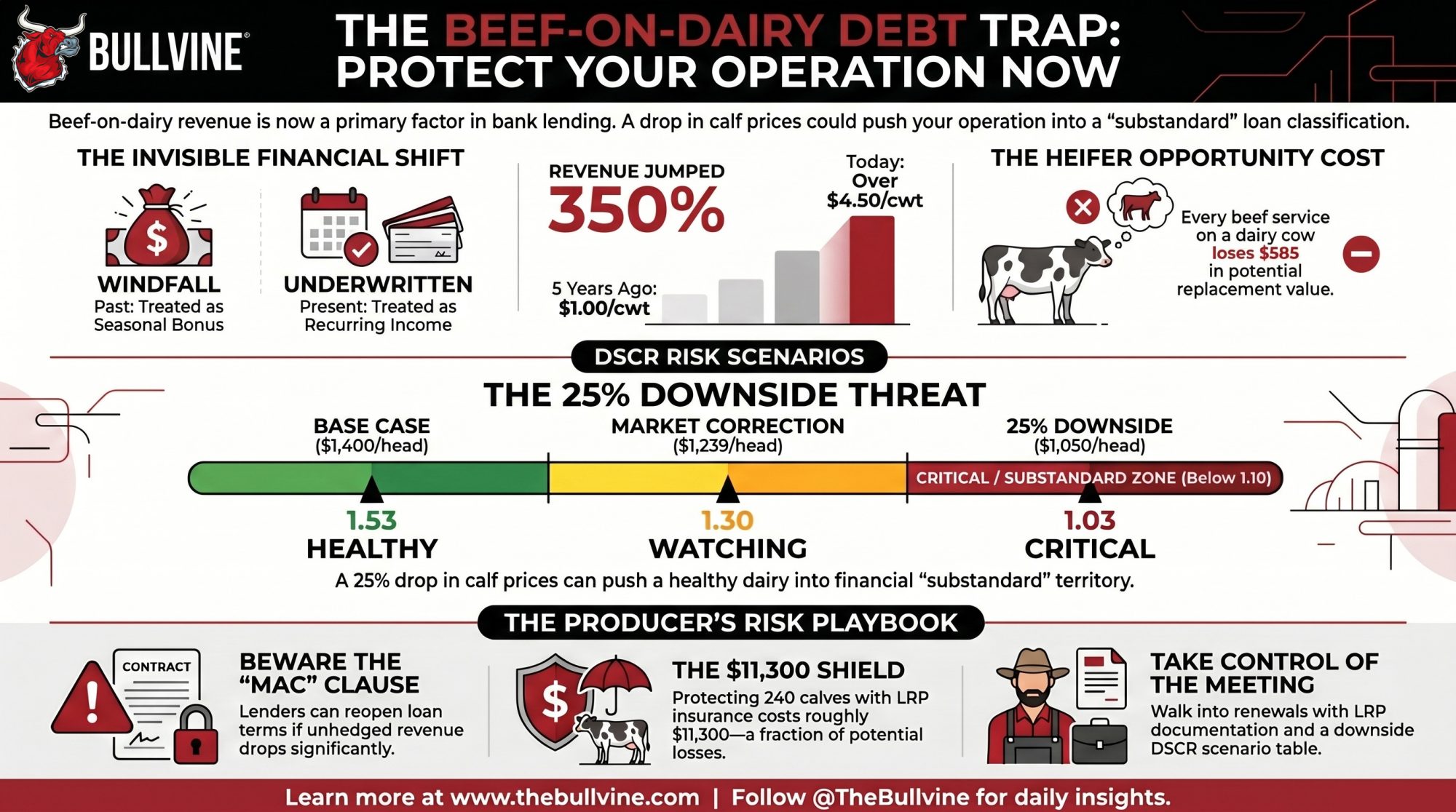
NewsSubscribe
First
Last
Consent

$90K Less Margin, 214K More Cows: Beef‑on‑Dairy, Calf Checks and Your 2026 Survival Playbook

Class III in the mid‑$16s, feed cheap, margins tight. The real test in 2026 is whether calf checks and components close your gap.

2026 dairy market outlook

Executive Summary: USDA’s latest Milk Production report shows November 2025 output up 4.7% in the 24 major states, with 214,000 more cows on line, even as 2026 all‑milk prices are forecast about $1.80/cwt lower—leaving a typical 300‑cow herd roughly $90,000–$100,000 short on milk income. This article explains why that expansion still pencils out for many farms once you put $1,400 beef‑on‑dairy calves, strong cull checks, and record U.S. cheese and butterfat exports into the equation. It shows how calf checks, better butterfat and protein performance, and DMC’s new 6‑million‑pound Tier 1 coverage can add $2–$3/cwt back into margins on efficient herds, while highlighting why high‑cost or heavily leveraged operations—especially in the Southeast, New England, and some Western dry‑lot systems—are under far more stress. From there, you get a straight‑talk 2026 playbook: know your true breakeven, use beef‑on‑dairy and components intentionally, lock in smart DMC/DRP protection, and be honest about scale, succession, and exit timing while calf and cull values are still on your side. It closes with three simple markers—Class III futures, cheese export volumes, and national cow numbers—to help you decide when this downcycle is finally turning instead of guessing from headlines.

Component2025 (at $21.05/cwt)2026 Forecast (at $19.25/cwt)Year-Over-Year Change
Gross Milk Revenue$1,452,450$1,328,250–$124,200
Beef-on-Dairy/Cull Income (est.)$32,000$42,000+$10,000
Net Revenue After Offsets$1,484,450$1,370,250–$114,200

You know, here’s what doesn’t quite add up when you look at where we’re starting 2026.

Most mid‑size herds are staring at roughly $90,000 to $100,000 less operating margin this year than they had in 2025, based on USDA’s all‑milk price forecasts and some pretty basic herd‑level math. USDA’s November 2025 Milk Production report put output in the 24 major states at 18.1 billion pounds, up 4.7% from November 2024, with total U.S. production at 18.8 billion pounds, up 4.5% year‑over‑year. That same report shows the milking herd in those 24 states at 9.13 million cows—214,000 more than a year earlier and even 1,000 head more than October.

So milk keeps coming, even as margins tighten to levels a lot of us haven’t had to stomach for a while.

On the face of it, that feels backward. But once you dig into the beef‑on‑dairy economics, the regional realities, and the way risk management and exports are behaving, the picture starts to come into focus.

Beef‑on‑Dairy: The Calf Check That’s Quietly Rewriting the Math

Looking at this trend, what farmers are finding is that beef‑on‑dairy has quietly become a major stabilizer in an otherwise stressful year.

Laurence Williams, who leads dairy‑beef cross development at Purina, reported in late 2025 that day‑old beef‑on‑dairy calves are now commonly bringing around $1,400 a head, compared to roughly $650 just three years earlier. Analysts ran the numbers and found that the combination of beef‑on‑dairy calves, cull cows, and related cattle sales has added $3.00 or more per hundredweight to the bottom line on many participating herds.

Revenue Stream2022 (Before B×D Surge)2025 (Beef-on-Dairy Established)Dollar Increase% of Total Revenue
Milk Revenue (Gross)$1,452,450$1,452,45087%
Beef-on-Dairy Calf Income$8,000 (dairy calves @ $650 ea)$35,000 (B×D @ $1,400 ea)+$27,0002.1%
Cull Cow Sales$18,000$22,000+$4,0001.3%
Component Premiums (fat/protein)$15,000$28,000+$13,0001.7%
TOTAL REVENUE$1,493,450$1,537,450+$44,000100%

That’s not a nice little bonus. That’s often the difference between red ink and black ink.

In barn after barn, what I’ve noticed is that producers are increasingly thinking of each cow as a two‑part enterprise: milk plus calf. If her butterfat performance and protein hold up reasonably well and she throws a high‑value beef cross calf, the calculus for one more lactation shifts. It’s no longer just, “Is she paying for her feed on milk alone?” It becomes, “Does her milk plus calf check more than cover her costs?”

CattleFax analysts have been pointing out that the U.S. beef cow herd is at its lowest level since the 1960s. That’s a structural shortage in the beef pipeline, not just a one‑season hiccup. In recent outlook presentations, CattleFax has said they expect beef and dairy‑beef calf prices to stay historically strong through 2026 and likely into the first half of 2027, because the beef herd just isn’t rebuilding quickly.

So when someone asks, “Why aren’t we seeing deeper herd cuts with these milk prices?” one honest answer is: because the calf checks and cull checks are doing a lot of heavy lifting right now, especially on farms that have leaned into beef‑on‑dairy in a disciplined way.

Global Milk Supply: Everyone Turned on the Taps at Once

Now, zooming out, here’s where it gets tricky. The U.S. isn’t expanding in a vacuum.

USDA’s Foreign Agricultural Service outlooks for 2025–2026 suggest that European Union milk production is holding near the high‑140‑million‑tonne range. Cow numbers in several EU countries are slowly declining, but productivity per cow continues to climb thanks to advances in genetics, feeding, and management documented in recent European dairy research. So you’ve still got a lot of European milk behind a very export‑oriented processing system.

In New Zealand, Fonterra cut its farmgate milk price forecast to around NZ$9.50 per kilogram of milk solids for the 2025–26 season. DairyNZ’s economic trackers show that at that level, many Kiwi farms are running on slender margins. But Fonterra’s seasonal updates have still shown collections heading into the Southern Hemisphere spring flush running ahead of the previous year across much of the country.

In South America, USDA attaché reports dindicate thatArgentina and Uruguay pare osting meaningful production gains over 2024 levels. While they’re smaller players than the EU or New Zealand, they add to the global pool of exportable milk solids and keep price presthe sure on whole milk powder amilk powder nd skim markets.

Australia is the one major exporter clearly constrained, with drought and water allocation issues limiting out,put in key dairy regions according to Australian government and industry reports. But Australia’s volumes by themselves aren’t big enough to offset Europe, New Zealand, and South America all pushing harder at once.

The bottom line on global supply is straightforward: multiple major exporting regions turned the taps up in the second half of 2025, and they’re all chasing a limited set of buyers. In that kind of environment, it doesn’t take much extra milk to lean hard on world prices.

Spot Markets and GDT: Trying to Find a Floor, Not a Rocket Ship

What’s interesting is that even in this heavy‑supply environment, the markets aren’t behaving like they d,id in some past downturns where everything fell off a cliff at once.

Take butter. USDA’s Cold Storage report released in late January 2026 shows U.S. butter inventories at the end of 2025 running about 7% below the year‑earlier level. That’s not wh,at most of us would expect given all the extra milk. But when you add in strong domestic demand for fat through the holiday season and the fact that U.S. butter has often been priced below European and New Zealand butter, it starts to add up.

Traders have responded to that combination with a firmer butter market than many had penciled in. That doesn’t mean prices are great, but it does mean there’s a recognizable floor.

Skim‑side products have been more volatile, but there ar,e some positive signs there too. At the Global Dairy Trade auctions in early January 2026, the overall price index climbed 6.3% at the first event of the year and another 1.5% at the next. Skim milk powder rose a little over 2% at the most recent auction, with butter and anhydrous milk fat also moving higher. Whole milk powder gained about 1%.

Analysts at AHDB in the U.K. and other market trackers have noted that these gains were broad‑based rather than driven by a single dominant buyer. Middle Eastern importers stepped up their participation to the highest share in roughly two years, and Chinese buyers returned to the platform more actively than they had in late 2024, even as China continues pushing its own domestic dairy expansion.

So are prices “back”? No. But they might be trying to carve out a base instead of sliding endlessly lower, and that’s worth watching.

U.S. Cheese Exports: The Quiet Workhorse in the Background

If there’s one bright spot that doesn’t get enough credit, it’s cheese exports.

The U.S. Dairy Export Council’s November 2025 report highlighted that August cheese exports hit 54,110 metric tons, up 28% year‑over‑year and the highest monthly cheese volume the U.S. has ever shipped. August was also the fourth straight month where U.S. cheese exports topped 50,000 metric tons—a milestone that had never been reached before May 2025.

Analysts pointed out that South Korea’s cheese imports from the U.S. were up 84% compared to the previous year. Mexico, Central America, Japan, and Australia all booked sizable gains as well. Butterfat exports nearly tripled year‑over‑year, with butter and anhydrous milkfat shipments up close to 190–200% in some categories, as foreign buyers took advantage of relatively cheap U.S. fat.

A big driver is price. USDEC and several commodity risk firms have noted that U.S. cheese—especially cheddar and mozzarella‑type products—has been priced below comparable European and Oceania offerings for much of 2025. That discount, combined with new cheese plants in the central U.S., has given buyers reasons to shift more volume to U.S. suppliers.

Without that export engine—in both cheese and butterfat—we’d likely be staring at much bigger inventories and even lower domestic prices.

Feed Costs: A Tailwind That Still Can’t Outrun the Headwinds

Now, let’s slide over to the cost side of the ledger.

USDA crop reports for 2025 confirmed a big U.S. corn harvest and solid soybean production. That’s kept corn futures trading in the low‑to‑mid $4 per bushel range and soybean meal at relatively manageable levels compared to the spike years we all remember too well. When you plug these feed prices into the Dairy Margin Coverage formula, the feed‑cost component drops to some of the lowest levels we’ve seen since late 2020.

Land‑grant economists and extension dairy specialists have been pointing out that, at least on paper, this should be a “feed‑friendly” year.

But here’s where the math still bites: USDA’s outlook, as summarized by Southeast Ag Net and other ag media, has the 2026 all‑milk price averaging around $19.25 per hundredweight, down from about $21.05 in 2025. That’s a drop of roughly $1.80 per hundredweight. So even if feed costs trim 35 to 50 cents per hundredweight off your expense line, the net margin still narrows uncomfortably.

I’ve seen some herds with exceptionally strong forage programs and careful fresh cow management insulate themselves a bit more—they’re getting more milk per unit of feed, which helps. But nobody’s describing this as an “easy‑money” year.

How the 2026 Margin Squeeze Lands on Different Farms

Let’s put some real numbers to this.

Region / Herd ProfileTypical Herd SizeFull-Cost Breakeven ($/cwt)2026 Forecast Price ($/cwt)Margin/(Loss) at ForecastKey Headwinds
Upper Midwest (WI, MN)300–500$16.50–$17.00$19.25+$2.25–$2.75None acute; feed-friendly; strong components help
Texas Panhandle2,000–5,000$17.00–$18.00$19.25+$1.25–$2.25High debt from recent expansion; interest rate exposure
California Central Valley2,000–8,000$16.50–$17.50$19.25+$1.75–$2.75Water restrictions; regulatory costs; high land value
Southeast (Federal Order 7)150–300$19.00–$20.50$19.25–$0.25 to +$0.25Class I premium erosion; heat stress; long hauls to plant
New England100–250$20.00–$21.50$19.25–$0.75 to –$2.25High land, labor, & regulatory costs; insufficient scale
Upper Midwest (< 100 cows)40–100$22.00–$25.00$19.25–$2.75 to –$5.75Can’t spread fixed costs; limited premium market access
Mid-Size Growth (500–1,000)500–1,000$17.50–$18.50$19.25+$0.75–$1.75Debt servicing; succession clarity required

Imagine a 300‑cow herd shipping about 23,000 pounds per cow annually—roughly 69,000 hundredweight per year. At a $1.80 per hundredweight drop in milk price, you’re looking at about $124,000 less top‑line milk revenue. If beef‑on‑dairy calves and components are adding extra income, that might bring the net hit closer to that $90,000 to $100,000 range, but it still stings.

USDA’s Economic Research Service breaks milk cost of production down by herd size, and while the exact numbers vary year to year, the pattern is consistent. Small herds under 50 cows often end up with total economic costs—once you price in family labor, depreciation, and interest—well over $40 per hundredweight. Mid‑size herds from 100 to 500 cows commonly sit somewhere in the low‑to‑mid twenties. Large herds, especially those above 2,000 cows with efficient layouts and strong management, can get their full costs into the upper teens or around $20.

In Wisconsin and much of the Upper Midwest, extension educators tell me that herds with a true full‑cost breakeven under about $16 per hundredweight are generally okay at these forecasted prices, especially if they’re capturing strong component premiums and calf/cull income. Once that breakeven climbs into the $18–20 range, the stress shows up quickly in lender meetings.

In California’s Central Valley and the Texas Panhandle, a lot of the big modern facilities have very competitive operating costs on a per‑hundredweight basis but also carry significant debt from recent expansions. When interest rates sit where they are and all‑milk prices back up, those principal and interest payments can start to drive decisions just as much as feed bills.

The Southeast is fighting a different battle. Federal Order 7, along with Order 5 in parts of the Appalachian region, has long relied on Class I fluid milk premiums to keep blend prices workable. University of Kentucky and other regional economists have been documenting how declining beverage milk consumption reduces Class I utilization and erodes that premium. Combine that with higher heat‑stress mitigation costs, more challenging forage conditions, and long hauls to processing plants, and many Southeast producers describe 2025–2026 as one of the toughest stretches they’ve faced.

In New England, the story centers on high land values, strict environmental regulations, and costly labor. Even with excellent butterfat performance and strong protein, some mid‑size herds simply can’t spread those fixed costs across enough hundredweight to make the numbers work at a sub‑$20 all‑milk price.

So when you look at the national average projections, it’s worth reminding yourself: there really is no single “U.S. dairy market.” Your reality depends on your region, your herd size, your debt structure, and how you manage forage, cows, and risk.

What DMC and Risk Management Can—and Can’t—Do This Year

Given all that, it makes sense that Dairy Margin Coverage is back on a lot of producers’ radar.

For the 2026 program year, USDA’s Farm Service Agency expanded Tier 1 coverage from 5 million to 6 million pounds of milk. That’s a big deal for herds in the 250–300‑cow range, because more of their production now fits under the lower Tier 1 premium schedule. Penn State Extension, Texas Farm Bureau, and several other groups have all been reminding producers that enrollment opened January 12 and runs through February 26, 2026.

Risk‑management specialists like Katie Burgess, director of risk management at Ever.Ag, has been quoted as saying that their models point to DMC payments exceeding $1 per hundredweight for at least the first few months of 2026, with smaller payments likely into mid‑year if current price and feed forecasts hold. That lines up with what many margin calculators were showing as we came into January.

It’s worth noting that DMC is designed as a margin program, not a price program. So it’s the combination of feed cost and milk price that matters. In a year like this, where feed is relatively cheap but milk has dropped more, it can still provide meaningful support.

Beyond DMC, Dairy Revenue Protection (DRP) and Livestock Gross Margin for Dairy (LGM) remain important tools. Extension economists at universities like Wisconsin, Minnesota, and Cornell keep stressing a simple point: the farms that seem to manage volatility best are the ones that decide ahead of time what prices they’ll lock in and how much volume they’ll protect, rather than trying to chase the market in real time.

Practical Playbook: Questions to Take to Your Lender and Nutritionist

If we were sitting at your kitchen table with a pot of coffee and your last 12 months of milk statements, here are the areas I’d want to talk through.

1. Know Your Real Breakeven, Not Just a Guess

You probably know this already, but in a year like 2026, guessing at your cost of production is dangerous.

That means:

  • Putting real numbers on family labor (what you’d have to pay someone else to do those jobs)
  • Including depreciation on equipment and facilities, not just current payments
  • Accounting for land costs honestly, whether you own or rent

Once you’ve got that full‑cost breakeven per hundredweight, compare it to what you can reasonably expect for the next 12 months, using both the USDA all‑milk forecast and current Class III/IV futures as guides. If your breakeven is $17 and you can add a couple of dollars from beef‑on‑dairy calves and solid components, you’re in a very different position than if your breakeven is $22 and you’re light on calf income.

2. Use Beef‑on‑Dairy as a Strategy, Not Just a Trend

Beef‑on‑dairy works best when it’s planned, not just sprinkled around.

The herds making it pay are typically:

  • Using sexed dairy semen on their best cows and heifers to generate high‑quality replacements
  • Breeding the bottom half—or more—of the herd to carefully chosen beef sires to maximize calf value
  • Building relationships with buyers, feedlots, or finishers who know how to handle dairy‑beef crosses

Several auction reports have all documented beef‑on‑dairy calves bringing $800–$1,000 per head in many markets, with some sales reporting over $1,600 for particularly strong day‑old crossbreds. When those prices are combined with the right breeding plan, you’re not just “having fun with a fad”—you’re rewiring your revenue model.

3. Treat Butterfat and Protein as Margin Levers

In a lot of federal orders and cooperative pay schedules, components are where the real action is.

Risk‑management columns from organizations like the Center for Dairy Excellence and multiple land‑grant extension dairy programs have shown that moving from, say, 3.7% fat and 3.0% protein toward something closer to 3.9% fat and 3.2% protein can often add 30–50 cents per hundredweight to the milk check in strong component markets. Across a 300‑cow herd shipping 23,000 pounds per cow, that can easily translate to $20,000–$30,000 per year.

Getting there usually isn’t about one magic bullet. It’s the combination of:

  • Consistent, high‑quality forages
  • Attention to detail in the transition period so fresh cows hit lactation strong
  • Careful ration balancing with your nutritionist
  • Stable cow comfort and feed access, especially in hot weather

As many of us have seen, the herds that are fanatical about feed delivery, bunk management, and minimizing up‑and‑down swings in dry matter intake tend to be the same herds that quietly add 0.1–0.2% fat and a bit more protein without spending much extra per cow.

4. Decide What “Scale” Means for Your Family, Not Just Your Neighbors

This is the hardest part of the conversation, but it’s one we can’t dodge.

If you’re under 500 cows and don’t have a clear edge—either by being ultra‑efficient, having reliable premium markets, or running a strong direct‑to‑consumer business—the structural headwinds have been intensifying for a decade. Consolidation in the U.S. dairy sector is well documented in USDA and industry analyses.

That doesn’t mean small and mid‑size herds are doomed. It does mean that, in many regions, they need one or more of the following to thrive:

  • A truly low cost of production and low debt load
  • A solid premium market (organics, grass‑fed, A2, or strong local brand)
  • An intentional plan to partner, merge, or exit before pressure forces a fire sale

The one thing that’s clear from both economic data and real farm stories is that making the tough calls while calf and cull prices are still strong usually works out better than waiting until lender pressure makes the decision for you.

What Could Actually Turn This Market Around?

So, with all of that on the table, what would it take for 2027 to feel meaningfully better than 2026?

1. A Real Supply Response

USDA’s late‑2025 Livestock, Dairy, and Poultry outlook pointed to ongoing herd expansion through much of 2025. For margins to really heal, we eventually need either stronger demand or slower growth in milk.

A meaningful supply response would look like:

  • National cow numbers falling 1–2% from their recent peaks
  • Noticeable herd dispersals in high‑cost regions
  • Replacement heifer prices easing as fewer people expand

Right now, beef‑on‑dairy is slowing that process because cull and calf values are so attractive. But if milk stays soft long enough, history says the herd will respond.

2. Sustained Export Strength

Export performance has a huge say in how quickly things improve at home.

If U.S. cheese exports can consistently stay in that 50,000‑metric‑ton‑plus range month after month, and butterfat exports hold onto their recent gains, that continues to siphon product off the domestic market and support both Class III and Class IV values. USDEC’s 2025 reports make it clear that strong export demand is the reason we’ve been able to move record volumes of cheese without drowning in inventory.

Watching Global Dairy Trade auctions, USDEC’s monthly updates, and export coverage is a good way to sense whether that engine is still running or starting to sputter.

3. Class III and All‑Milk Prices Converging on Something Livable

One simple rule of thumb several risk‑management folks use is this: if Class III futures can hold above about $16.50 for several consecutive contract months and you simultaneously see herd contraction, the worst of the downcycle is probably behind you.

Right now, USDA’s all‑milk forecast sits in the $19s for 2026, while Class III futures tend to be in the mid‑$15s to mid‑$16s in many months, based on early‑January price sheets. That gap is a big reason analysts keep warning producers to build budgets off realistic Class III/Class IV numbers, not just the all‑milk headline.

Three Markers Worth Checking Every Month in 2026

If we boil everything down, here are three things I’d personally watch as the year unfolds:

  1. Class III Futures: Are several 2026 contracts holding above roughly $16.50, or are they stuck in the mid‑$15s?
  2. Cheese Exports: Are U.S. cheese exports still at or above 50,000 metric tons per month, or have they slipped back? USDEC’s monthly summaries are a good quick read here.
  3. Herd Size: Are national cow numbers finally dropping 1–2% from a year earlier, as reflected in USDA’s Milk Production reports, or are we still adding cows?

If, by late summer, we can honestly say “yes” to at least two of those being in the “improving” camp, there’s a good chance 2027 looks more forgiving than 2026.

Signal / Metric2026 Breakeven TargetCurrent Status (Jan 2026)What “Improving” Looks LikeYour Action
Class III FuturesHold >$16.50 for 3+ consecutive contract monthsMid-$15s to $16.20 rangeSeveral 2026 contracts trending toward $16.50+Monitor CME futures daily; lock protection at $16.50+
U.S. Cheese ExportsSustain 50,000+ MT per monthAugust peak 54,110 MT; December ~50,700 MT; still strongConsistent 50K+ MT/month through Q2 2026Check USDEC monthly reports; if slipping below 48K MT, watch for domestic price weakness
National Cow NumbersDown 1–2% from year-earlier levelUp 214,000 cows YoY (9.13M in 24 states)Herd numbers plateau or decline 1–2% in Milk Production reportsIf two of three signals are improving by late summer, cycle is likely turning; consider less aggressive risk management in 2027
DECISION POINT (Late Summer 2026)Two of three signals in “improving” columnTBD – Check back August 2026If YES → 2027 likely more forgiving; if NO → Tighten controls furtherRevisit break-even, debt, and succession plans with lender & advisor

Bringing It Back to Your Farm

At the end of the day, the big charts and global data are useful, but they’re just the backdrop. The real work is in your own ledger, your own barns, your own conversations with family and lenders.

If there’s one thing this cycle is forcing on all of us, it’s clarity. Clarity about what our true costs are. Clarity about which cows and acres are really paying their way. Clarity about how much risk we’re willing to carry—and for how long.

The farms that come through this stretch in good shape tend to:

  • Know their cost of production down to a realistic dollars‑per‑hundredweight number
  • Use tools like DMC, DRP, and LGM on purpose—not as an afterthought
  • Treat beef‑on‑dairy and components as serious margin levers, not side projects
  • Keep fresh cow management and the transition period tight, so they’re not quietly bleeding money on sick cows and lost milk
  • Are honest about scale, succession, and what “success” looks like for their family

If 2026 feels tight for you, you’re not alone. Many of us are staring at the same spreadsheets and having the same conversations.

What’s encouraging is that the long‑term demand story for dairy still looks solid. USDEC data shows U.S. dairy exports hitting record volumes. USDA consumption statistics show Americans eating more cheese and using more dairy ingredients than ever. There’s been billions of dollars invested in new processing capacity across the country in the past few years—companies don’t make those bets if they think the category is dying.

The trick is getting from here to there without burning through more financial and emotional capital than you can afford.

And that’s where open, honest conversations—at meetings, in vet trucks, over coffee at the kitchen table—about the real math on our farms might be one of the most valuable tools we’ve got in 2026.

Key Takeaways 

  • $90K–$100K less milk income for a 300‑cow herd: USDA’s 2026 all‑milk price is forecast $1.80/cwt below 2025. At 69,000 cwt shipped, that’s a six‑figure revenue gap before calf and cull checks help close it.
  • Beef‑on‑dairy is why cow numbers keep climbing: $1,400 day‑old crossbred calves (vs. $650 three years ago) plus strong cull values add $3+/cwt to participating herds, according analysts, enough to justify keeping cows that would’ve been culled in 2022.
  • Record exports are quietly backstopping the market: August 2025 cheese exports hit 54,110 MT (+28% YoY); butterfat exports nearly tripled. Without that demand pulling product offshore, domestic prices would be far uglier.
  • DMC Tier 1 now covers 6M lbs—enrollment closes Feb 26: That fits a 250–300‑cow herd. Analysts project payouts above $1/cwt early in 2026. If you haven’t enrolled, you’re leaving real money on the table.
  • Know your breakeven, use components as a margin lever, and watch three signals: Herds under $16/cwt full cost and capturing strong butterfat/protein premiums are in far better shape. Track Class III futures (>$16.50), cheese exports (50K+ MT/month), and national cow numbers (down 1–2% YoY)—when two of three turn positive, the cycle is likely shifting.

Editor’s Note: The numbers in this article draw on USDA’s November 2025 Milk Production report, USDA Economic Research Service cost-of-production data, USDA Farm Service Agency announcements on Dairy Margin Coverage, CME Group market reports, Global Dairy Trade auction results, and industry analysis from the U.S. Dairy Export Council, and land‑grant university extension programs. Comments on beef‑on‑dairy and export trends reflect 2024–2025 data and interviews with credentialed industry experts, including analysts at CattleFax and risk‑management professionals working with dairy producers.

Learn More

The Sunday Read Dairy Professionals Don’t Skip.

Every week, thousands of producers, breeders, and industry insiders open Bullvine Weekly for genetics insights, market shifts, and profit strategies they won’t find anywhere else. One email. Five minutes. Smarter decisions all week.
NewsSubscribe
First
Last
Consent

The Myth of ‘Cheap’ Labor: H‑2A, Robots, and the Hard Math Dairies Need to Survive the Next 10 Years

If you’re milking 300–600 cows, the real choice isn’t H‑2A or robots—it’s which math keeps you in business 10 years from now.

Executive Summary: If you’re running 300–600 cows, the biggest decision in front of you isn’t just H‑2A or robots—it’s what the labor math says about your next ten years. This piece digs into new USDA‑ERS, Rabobank, and university data to show why H‑2A rarely ends up “cheap,” how global cost gaps are shifting the ground under your feet, where robotic milking and targeted automation genuinely save labor, and how compliance risk fits into the picture. Along the way, it looks at real-world systems—from California dry lots to Wisconsin freestalls and Ontario mixed herds—to ground the numbers in the kind of operations you actually recognize. The article then lays out three honest paths for mid-size dairies: selective automation around bottlenecks, fully legal higher‑cost labor in exchange for stability, or a planned transition out of milking while you still control the terms. It finishes with a practical 30‑day checklist—know your true labor cost per cow and your multi‑year DSCR—so you can stop guessing and see which path really fits your farm.

Dairy farm labor costs

If you sit down with a table of dairy folks this winter—whether it’s in Wisconsin, California’s Central Valley, or around eastern Ontario—you’ll hear the same three things come up over coffee: labor, margins, and what the next ten years really look like for that 300‑ to 600‑cow family operation. You know the look on people’s faces when the talk turns to “who’s going to milk these cows in five years?”—it’s the same in a lot of kitchen tables and vet trucks right now. 

What’s interesting here is that two big storylines keep colliding almost immediately. One is the rapid growth of the H‑2A visa program, which economists at USDA’s Economic Research Service and Congressional analysts say has become a central labor pipeline for a big chunk of U.S. agriculture. The other is the steady march of automation—from collars and sort gates to full robotic milking—backed by university and peer‑reviewed research showing real changes in how labor is used on both small and large herds. Put those alongside the structural lift in global production costs that Rabobank’s dairy team has been documenting, and the real question for most dairies becomes, “Given our cost structure, our people, and what we want this farm to look like in ten years, do we lean into selective automation, formalize labor at a higher cost, or plan a controlled transition while we still have options?” 

If you’re in that 300–600 cow bracket, this is the labor math that’s going to have a lot to say about whether you’re still milking in ten years.

How H‑2A got so big, so fast

Looking at this trend from thirty thousand feet, USDA economist Marcelo Castillo and his team did a deep dive on H‑2A for the journal Choices. They found that the U.S. Department of Labor certified employers to fill just under 372,000 seasonal farm jobs with H‑2A workers in fiscal year 2022—more than seven times the number in 2005 and roughly double what it was in 2016. That’s a huge structural shift in less than two decades. 

And it’s not just that the program has grown; it’s who’s using it. Castillo’s work shows that around 12,200 employers were certified in 2022, but the top 5 percent—roughly 620 operations, each approved for 100 or more H‑2A workers—accounted for about two‑thirds of all certified jobs. Farm labor contractors alone supplied a large share of those positions. So, as many of us have seen, H‑2A has turned into a core labor tool for labor‑intensive crops, not a side program used by a handful of farms. 

Dairy, by comparison, has mostly been watching from the sidelines. A big reason is baked into the design. H‑2A was built for “temporary or seasonal” work. Congressional Research Service reports spell that out clearly: by statute, year‑round industries like dairies, greenhouses, and many livestock operations don’t fit neatly into the current rules. Folks at American Farm Bureau Federation have said the same thing in interviews, pointing out that dairy, livestock, and greenhouse employers often can’t legally use H‑2A for the year‑round jobs they need filled. 

Looking at this trend politically, pressure to change it is building. Dairy and meat industry leaders have pushed hard for access to year‑round H‑2A labor, and several recent immigration and farm labor proposals in Congress—including versions of the Farm Workforce Modernization Act and related efforts—have included provisions for limited year‑round H‑2A visas that would explicitly cover dairies and other non‑seasonal operations. Policy coverage into 2025 and early 2026 notes that these proposals would, if enacted, create capped pools of year‑round H‑2A positions and formally recognize dairy’s year‑round labor needs, but as of early 2026, they remain proposals rather than settled law. So the mix of hope and frustration producers feel—“Every politician says they understand dairy’s problem, but we still don’t have a year‑round fix”—is grounded in the current policy reality. 

If you hop north into Ontario, the mechanics are different, but the flavor is similar. Canadian producers rely on the Temporary Foreign Worker Program and the Seasonal Agricultural Worker Program, and federal guidance makes it clear that those programs also come with strict requirements around approved housing, travel arrangements, and documentation. The tool names change across the border; the core challenge doesn’t. You can get legal, reliable labor, but it takes real money and real management. 

H‑2A labor costs: it’s a lot more than an hourly wage

On the surface, H‑2A starts with one number: the Adverse Effect Wage Rate, or AEWR. That’s the minimum hourly wage you’re required to pay H‑2A workers in your state. USDA and CRS explain that AEWR is based on USDA’s Farm Labor Survey and, in many states, has moved into the mid‑ to high‑teens per hour, with some regions above that. American Farm Bureau government affairs staff have pointed out that, nationally, AEWR has jumped by roughly 20 percent over about five years, while revenue for many labor‑intensive crops hasn’t kept pace. 

Cost CategoryAmount (USD)% of Total
AEWR Wages (6 months @ $18.50/hr, ~1,080 hours)$19,98067.7%
Housing (on-farm or rental, utilities, maintenance)$4,20014.2%
Transportation (airfare, ground travel, visa)$3,80012.9%
Recruitment & Admin (legal, HR, processing fees)$1,5205.2%
Total Employer Cost$29,500100%

But what I’ve found is that the hourly wage is only the tip of the iceberg.

Castillo’s ERS analysis emphasizes three big non‑wage buckets that matter just as much as the posted rate. 

  • Housing. Employers have to provide housing that meets specific federal and state standards at no cost to the worker. In practice, that often means building or renovating bunkhouses on‑farm or renting apartments in town, then paying for utilities, maintenance, and inspections. USDA’s own H‑2A assistance initiatives and Farmers.gov resources highlight housing as one of the biggest cost and compliance barriers. 
  • Transportation. H‑2A employers must pay for workers’ travel from their home country to the job site and back, and they’re responsible for daily transportation between housing and the farm. Congressional researchers list transportation costs as a major recurring expense across H‑2A employers. 
  • Recruitment and administration. Someone has to prepare job orders, manage consulate appointments, track wages and hours precisely, and maintain records for potential audits. Many farms either dedicate a staff member or hire an outside consultant or attorney. Employment experts interviewed by Brownfield describe the program as “complex” and “paperwork‑heavy,” which aligns with what many producers have encountered. 

When Castillo’s team put numbers to a “typical” six‑month H‑2A contract, they estimated that wages alone came to about $19,500, and, once you add in minimum housing, transportation, and other non‑wage costs, total employer cost lands at least around $29,500 per worker. So the idea that foreign labor is “cheap” doesn’t hold up very well when you look at that full bill. 

On several Midwestern and Northeastern dairies that have used H‑2A, the pattern is similar. Folks go into it thinking, “We’ll finally get cheap, reliable help,” and walk out saying, “We did get stability and legal peace of mind, but we paid more per worker than we expected once housing, travel, and compliance were counted.” For some operations, that trade—higher cost in exchange for stability—is worth it. For others, it just doesn’t pencil.

Why compliance has become a management job, not just paperwork

Even if you never touch H‑2A paperwork, labor compliance has drifted into the same category as mastitis control and fresh cow management: you can’t afford to ignore it.

Farm SizeHerd (cows)Full-Time Employees5-Yr Audit ProbabilityAverage Fine if AuditedDisruption Cost (Lost Production)Total Risk Impact
Small200–3003–48%$2,500$25,000$2,700 (probability-weighted)
Mid-Size400–6008–1218%$8,500$85,000$16,900
Large800–1,20015–2028%$15,000$150,000$46,200

Current federal penalty schedules show that mistakes on I‑9 forms can result in fines ranging from the low hundreds of dollars per form to the low thousands as the share of incorrect forms and prior violations increases. The latest CRS report on H‑2A and farm labor notes that more serious violations—repeat offenses, unsafe housing or transportation, clear wage underpayment—can lead to significantly higher penalties, back‑wage orders, and, for H‑2A users, possible debarment from the program. 

On a dairy, that’s not theoretical. If an audit or enforcement action suddenly disrupts part of your crew, you feel it almost immediately in milking routines, fresh cow checks, and even butterfat performance. Milking shifts run longer, night checks get rushed, and transition cows don’t get quite the eyes they need. And if you, as the owner or manager, are tied up for days gathering records and sitting in meetings, that’s less time walking pens, watching TMR consistency, and working with your people.

So it’s worth noting that more herds and advisors are treating labor compliance as a risk management line item instead of something you hope never lands on your doorstep. That might mean budgeting a modest amount each year for an attorney or HR professional to review I‑9s and wage practices, scheduling internal audits of paperwork, and putting in place at least a basic HR system. Not because anyone enjoys it, but because the “do nothing and hope” model has just gotten too risky. 

The global cost squeeze: why, where, and how you milk matters more

Now, zooming out a bit helps explain why these labor decisions feel so tight right now.

RegionCost/Litre (USD)Cost/cwt (approx.)Gap vs. NZ
New Zealand$0.370$16.95Baseline
Australia$0.376$17.27+$0.006
Ireland$0.470$21.58+$0.100
Netherlands$0.480$22.03+$0.110
Upper Midwest US$0.485$22.27+$0.115
California$0.510$23.41+$0.140
China$0.620$28.47+$0.250

Rabobank’s dairy team has been benchmarking milk production costs across the major exporting regions—New Zealand, Australia, the U.S., the EU, and others. In a 2025 release, they described seeing a “structural uplift” in production costs across eight key exporters over roughly the last five years, with average costs up by low double‑digit percentages since 2019 as feed, fertilizer, and labor all climbed. 

Here’s what’s interesting. Even with those cost increases, New Zealand and Australia still sit near the bottom of the global cost ladder. Rabobank senior dairy analyst Emma Higgins notes that the two Oceania countries have “competed neck and neck” as the lowest‑cost producers, and that New Zealand currently holds about a five‑U.S.‑cents‑per‑litre cost advantage over Australia for 2024. Looking at the last five years, Rabobank estimates average total production costs of roughly US$0.37 per litre for both New Zealand and Australia, compared with around US$0.48 per litre for the other exporting regions. They also point out that exchange rate movements have effectively widened New Zealand’s cost edge by about 8–9 percent compared with 2019. 

A lot of that comes back to system design. New Zealand’s pasture‑based setups, high cows‑per‑worker ratios, and relatively light permanent infrastructure keep capital and operating costs per litre low. Australian systems share some of those traits, though higher labor and input costs have eroded their relative advantage somewhat. 

When you swing back to North America, the picture changes:

  • In California, you’re talking about high‑input freestall and dry lot systems, a heavy reliance on purchased or custom‑grown feed, relatively high wage rates, and a lot of capital tied up in manure handling and environmental compliance, as Western U.S. cost of production and policy reports show. 
  • In the Upper Midwest, many herds benefit from strong homegrown forage and proximity to grain, but long winters mean housing cows, managing manure, and maintaining barns, all of which show up in fixed costs per cow in university cost‑of‑production summaries. 
  • In the Northeast and Ontario, plenty of farms run mixed systems—grazing when the weather allows, then housing herds through the cold months. That brings some pasture advantages, but the reality of winter infrastructure doesn’t go away, as regional and provincial benchmarks make clear. 

So when Rabobank says there’s been a structural cost lift across the world, what the numbers are also saying is this: the systems that started lean have more room to absorb those cost increases. If you’re in a higher‑input, higher‑capital setup in North America, every decision about labor, feed, and investment hits your cost per hundredweight harder, and that matters when you’re competing with milk coming from lower‑cost pasture‑based regions. 

What the numbers really say about robots and labor

Let’s bring robots into this, because that’s where a lot of labor conversations end up.

Herd SizeAnnual Labor Savings ($/year)Payback Period @ 3%Payback Period @ 5%Payback Period @ 7%Payback Period @ 8.5%
250 cows$90,0002.0 yr2.3 yr2.7 yr3.2 yr
350 cows$126,0001.4 yr1.7 yr2.1 yr2.4 yr
400 cows$168,0001.1 yr1.4 yr1.7 yr2.0 yr
500 cows$210,0000.9 yr1.1 yr1.4 yr1.6 yr

The University of Wisconsin conducted a careful analysis of what automatic milking systems actually do to reduce labor on U.S. farms. In a survey of 50 dairies that adopted box‑style AMS, extension economists found that, on average, farms reduced labor time by a little over 0.06 hours per cow per day. When they looked at it per hundredweight, labor time dropped about 0.10 hours per cwt. At an assumed wage of $15 per hour, that worked out to about $1.50 in labor cost savings per hundredweight of milk shipped. 

In percentage terms, the Wisconsin team reported that the time required per cow fell by about 38 percent and the time per hundredweight by about 43 percent after AMS adoption. Some farms saw very little savings—often due to maintenance headaches or management issues—but roughly a quarter of the herds reported much larger reductions, translating to more than $2.40 per hundredweight in labor savings at that same $15 wage. 

Now, put that into a herd size that many of you are in. Say you’re milking 400 cows and averaging 28,000 pounds per cow per year. That’s about 11.2 million pounds of milk annually, or 112,000 hundredweight. Multiply that by $1.50 per cwt in labor savings and you’re looking at roughly $168,000 per year in reduced labor costs, before you account for any changes in milk yield, components, or the extra time someone spends managing the technology. That’s the kind of math that will make anybody stop stirring their coffee and think, “Okay… what would that look like here?” 

Researchers looking at AMS adoption in Norway have heard similar things, even though their systems and labor markets differ from ours. A recent peer‑reviewed paper in the journal Animals found that Norwegian farmers using multi‑box AMS generally perceived substantial reductions in labor needs, earlier detection of sick cows, and better mastitis management, and a meaningful share reported improved milk fat and protein levels after switching. Those are perceptions, not controlled trials, but they align with what many AMS herds in Europe and North America report to extension staff and industry journalists. 

The work changed on those farms. Instead of spending as many hours in the pit, producers and staff spent more time looking at herd management software, following up on activity and rumination alerts, and handling preventive maintenance and troubleshooting. 

“The work changed… Some described the shift as trading barn boots for a laptop—a sentiment echoed across both sides of the Atlantic.” 

Extension folks and consultants here have been making the same point for years: robots don’t remove labor; they change the kind of labor you need. You trade a chunk of routine milking time for tech oversight, data interpretation, and cow‑flow management. That can be a very good trade if you’re struggling to fill repetitive milking positions and you have the management bandwidth—or someone on your team—who enjoys the technical side. 

On the capital side, nobody pretends that AMS is cheap. A single robotic unit capable of handling 60–70 cows can cost between $150,000 and $275,000, depending on the model and support package. University economic tools and field experience often use a working range of about $180,000 to $220,000 per box before barn modifications, and real‑world projects frequently climb higher once you include concrete, cow‑traffic changes, sort gates, power upgrades, and so on. 

At today’s interest rates, that financing cost becomes a big part of the payback equation. That’s why AMS investment tools from universities like Michigan State and Wisconsin encourage farms to plug in multiple milk price and interest rate scenarios, not just a best‑case line. If your DSCR has been under 1.0 for three of the last five years, it’s a fair question to ask: are you really in a position to add another big pile of robot debt? 

The middle ground: automation that isn’t “all or nothing.”

What farmers are finding—especially on mid‑sized herds—is that the most realistic automation story often sits between “old parlor” and “full robots.”

In a lot of Wisconsin and Minnesota freestall herds, the starting point isn’t to rip out the parlor. It’s to add activity and rumination collars, automatic sort gates, and a robotic feed pusher. Collars give better eyes on heat detection and fresh cow behavior. Extension studies and case reports have shown that well‑managed activity systems can significantly improve heat detection rates and reduce days open. Automatic sort gates reduce the time and hassle of chasing cows for herd checks or hoof trimming. Robotic feed pushers keep TMR consistently in front of cows, which helps sustain dry matter intake and butterfat performance—something multiple UW and industry case studies have highlighted. 

Several UW Extension profiles have featured 300‑ to 400‑cow freestall operations that added collars and a feed pusher, then reported cutting overtime hours, reducing emergency night checks, and catching transition‑period problems a day or two earlier than before. One producer summed it up nicely by saying, “It’s not magic, but it bought us some breathing room.” That sentiment comes up a lot when you talk to farms that have taken that incremental approach. 

In California and the Southwest, where dry lot systems and intense summer heat are everyday realities, many dairies first consider automating feed handling and cooling before even considering robots. That can mean upgrading feed delivery controls, installing variable‑speed fans with automated controls, or integrating soaker systems tied to temperature and humidity sensors. Case studies from hot‑climate herds show that better-targeted cooling not only protects milk yield and reproduction during heat stress, but also frees up labor that used to be tied up shuffling cows in and out of shade or manually adjusting valves and timers. 

In Northeast herds that split time between pasture and freestalls, automation often appears around the transition period and during seasonal moves. Activity and rumination monitors help managers see which cows aren’t handling the move from pasture back into the barn, or which fresh cows are slipping early in lactation, so the team can intervene sooner. Extension veterinarians and consulting nutritionists in those regions consistently point to early detection of subclinical problems as one of the biggest wins from these monitoring systems. 

Across all of these examples, university and trade publications report that some farms see a pretty quick payback on targeted tools through reduced overtime, fewer emergency nights, and more consistent routines, while others see more modest gains. The common thread is that none of this technology is plug‑and‑play. It works best when it’s aimed at a clear bottleneck and someone on the farm is responsible for watching the data and adjusting management accordingly. 

Domestic labor: “won’t work” or “can’t afford”?

You probably know this already, but the line “Americans won’t milk cows anymore” shows up in almost every labor conversation. It comes from a real place—some producers have posted milker positions for weeks and never had a local applicant, especially in isolated rural areas.

At the same time, economists and policy analysts looking at farm labor and immigration point out that non‑farm sectors—construction, warehousing, logistics, food processing—have expanded and pulled in a lot of the same working‑age people dairies used to rely on. CRS and other analyses make it clear that this competition from non‑farm employers offering higher pay, more predictable schedules, and jobs closer to town is a major factor behind the surge in H‑2A usage. 

On the farm side, dairy HR specialists at universities like Wisconsin and Michigan State emphasize a couple of practical points. When dairies in more populated areas offer wages that truly compete with local non‑farm employers, provide at least some benefits, and offer more predictable time off, they can and do attract domestic workers into milking, feeding, and calf care roles. These advisors also point out that job design matters. Roles that mix equipment operation, basic maintenance, and parlor work tend to be more attractive than jobs that are “just in the pit” all day. 

The hard reality is that not every dairy can afford to match those wages and conditions at current milk prices with their existing debt load. So the bottleneck often isn’t that nobody wants to milk cows; it’s that the farm can’t afford to pay what the rest of the local economy is offering for similar effort. That’s a tough truth, but it lines up with both the labor market data and the farm financials. 

And that’s where H‑2A comes back into play. The program can give farms access to workers willing to take dairy jobs, but only if the operation can carry the full cost—AEWR wages plus housing, transportation, and compliance expenses. Leaders at AFBF have described H‑2A in interviews as a “mixed bag”: essential for some growers, too expensive for others, and, under current law, an imperfect or inaccessible fit for many year‑round operations like dairies. That mix of outcomes is exactly what producers are staring at when they put their numbers into a spreadsheet and compare H‑2A against domestic labor and against automation. 

The labor problem on a lot of dairies isn’t that nobody will milk cows—it’s that the farm can’t afford to pay what the broader labor market is paying for comparable work.

For a 400‑cow dairy, what are you really choosing between?

So let’s bring this right back to a herd size many Bullvine readers live in: roughly 350 to 500 cows, a mix of family and hired labor, with a freestall or dry lot system and a parlor that might be ten to twenty years into its life.

MetricPath 1: Selective AutomationPath 2: Legal Higher-Cost LaborPath 3: Planned Transition
Capital Required$50K–$150K (collars, sort gates, feed pusher)$0–$25K (HR systems, legal setup)$0–$10K (valuation, transition consulting)
Annual Debt Service$8K–$18K (5-year amortization @ 6%)$0 (operational cost, not debt)$0 (exit phase)
Annual Labor Cost Impact–$80K to –$120K (labor savings)+$30K to +$50K (legal wages/housing vs. baseline)N/A (phasing out)
DSCR Requirement>1.15 (need room for new debt service)>1.0 on average (can absorb higher wages)>0.85 (can sell from position of strength)
3-Year Cash Flow NetPositive if herd productivity holdsNeutral to slightly positive (wages offset labor efficiency)Positive (captures land/facility value, reduces ongoing risk)
Best For…Farms with strong debt coverage & clear bottlenecks; plan to keep milking 7–10+ yearsFarms with decent margins but tired of compliance risk; want stability & peace of mindFarms with weak DSCR, no clear succession, tired after decades of volatility
Key RiskTech adoption failure, maintenance headaches, milk price crash erodes paybackWage pressure continues; if milk price crashes, margin squeeze is acuteMarket timing: land/cow values may soften; need to execute transition professionally

From conversations with producers, lenders, and extension folks—and backed by research and numbers—the choices for a farm like that often fall into three broad paths. 

Path 1: Selective automation around real bottlenecks

This first path fits farms that:

  • Have generally been able to cover debt payments, with at least some cushion
  • Feel the labor pressure—long days, hard‑to‑cover shifts—but aren’t in outright crisis
  • Expect to keep milking for at least the next seven to ten years

The starting point is to put hard numbers on labor and debt. That means figuring out your total labor cost per cow—including family labor, overtime, housing, payroll taxes, and any HR or legal expenses—and then looking at your debt service coverage ratio (DSCR) over three to five years. Many agricultural lenders get nervous about major new capital projects if DSCR hasn’t been consistently above 1.0, and often they’re more comfortable when it’s around 1.25 or higher on average. 

Once you know where you stand financially, you can go hunting for your bottlenecks. Maybe it’s late‑night fresh cow checks. Maybe it’s heat detection and breeding. Maybe it’s feed push‑up and bunk management. Maybe it’s the time you spend chasing cows for herd health or hoof trimming.

Extension advisors in Wisconsin, California, and the Northeast repeat the same advice: match the technology to the specific bottleneck, and your odds of seeing a return go up. So you look at one or two targeted tools—activity monitors, sort gates, a feed pusher, upgraded fans, and soakers—and build budgets with your accountant or consultant. The UW AMS work and other automation studies give you benchmarks for what’s possible, but the key is plugging in your own wage rate, herd size, and management style. 

This path doesn’t require you to bolt robots to the floor tomorrow. It’s about picking off the worst bottlenecks and using focused automation to reduce overtime, improve consistency in fresh cow management and the transition period, and give your team a bit more breathing room without taking on unmanageable debt. 

Path 2: Fully legal labor at a higher cost, in exchange for more stability

The second path is less about squeezing every last dollar of margin and more about lowering risk and sleeping at night. It tends to fit farms that:

  • Have maintained reasonably healthy margins on average, even through some tough price years
  • Don’t really want to add major new capital obligations right now
  • Have at least a rough sense of succession or a timeline for milking

Here, most of the hard work happens on paper. With your lender or a good farm management advisor, you build two parallel labor budgets.

One assumes a fully domestic, documented crew, paid at wages and benefits that genuinely compete with local non‑farm employers, plus housing where appropriate, all payroll taxes, and some allowance for HR and compliance work. The other assumes a blend of domestic and foreign workers—H‑2A in the U.S. or Temporary Foreign Workers in Canada—with realistic costs for housing, transportation, legal fees, and administrative time, in addition to the AEWR or equivalent wage. 

Then you stress‑test both budgets. What happens to DSCR and family living under different milk price and interest rate scenarios? That kind of scenario planning is exactly what many extension farm management programs are teaching right now. If those budgets show that you can afford a fully legal labor structure—domestic, H‑2A, or a mix—and still keep DSCR in acceptable territory across most scenarios, then this path can dramatically reduce your compliance risk and mental load. You’re choosing to pay more for labor in exchange for predictability and legal security. 

If your DSCR falls below 1.0 in most of those scenarios, you’re not buying stability—you’re buying more risk. And if the numbers don’t work in any reasonable scenario, that’s a strong signal that something deeper needs to change in scale, system, or long‑term plans.

Path 3: A planned transition out of milking while you still have choices

The third path is the one nobody loves to talk about, but more families are facing it head‑on. It usually becomes a serious option when:

  • DSCR has been weak for several years, not just during one ugly price cycle
  • Even “good” milk price years haven’t really improved equity or family living
  • There’s no next generation that’s both ready and genuinely eager to shoulder the risk

In that situation, throwing more debt at robots or locking yourself into an expensive labor program may not fix the underlying problem and can make the business more fragile. 

This is where lenders, accountants, and transition advisors often urge families to take a hard look at updated land, cow, and equipment values and explore options before they’re forced into a fire sale. Depending on your region and setup, those options might include selling the herd and leasing your facilities to a neighbor, selling cows and barns but keeping the land for cropping or rental, or stepping away from dairy entirely and shifting into another enterprise. 

In the Northeast, the Upper Midwest, and Ontario, extension case studies include real examples of families who sold their milking herds, kept the land, and moved into custom heifer raising or cash cropping. The common thread in the better outcomes is that they made those decisions before the bank or the barn decided for them. 

Those are never easy conversations. But they can be responsible choices, especially if the numbers and family dynamics are pointing that way.

The Bottom Line

So why does all of this matter when you’re standing in your own yard, looking at your cows and your crew?

Because labor, automation, and long‑term strategy have basically braided themselves together. H‑2A and similar programs have expanded dramatically and can deliver legal, predictable labor, but at a premium once you factor in housing, travel, and compliance. Domestic labor is under pressure from non‑farm jobs that often pay more and offer more predictable lives, and not every dairy can match those offers on today’s milk prices. Automation—whether it’s collars and sort gates or full AMS setups—can change how work gets done and open up new options, but it takes capital and management horsepower in an interest rate environment that’s tighter than it was a few years ago. And global cost shifts have tilted the playing field in favor of leaner, pasture‑based systems, which means higher‑input confinement and dry lot setups have to be that much sharper on costs and execution. 

What’s encouraging is that there isn’t only one “right” answer.

A 450‑cow freestall herd in Wisconsin might look at their numbers and decide the most realistic path is to keep the parlor, add monitoring and a feed pusher, maintain a solid domestic crew, and focus hard on fresh cow management and butterfat performance to squeeze every bit of value out of components. A 1,000‑cow dry lot dairy in California might decide that, despite the cost, H‑2A or other foreign worker programs are essential just to have enough hands on deck, then use targeted automation to make those people as effective as possible in the heat. A 320‑cow family operation in the Northeast or Ontario might look at five years of DSCR and equity trends and conclude that the most responsible decision is to sell the herd while they’re still in control, keep the land, and write the next chapter on their own terms. 

What I’ve found, both in the research and around kitchen tables, is that the herds that come through periods like this in the best shape are the ones that don’t kid themselves. They know their all‑in labor cost per cow, including family labor and housing. They’ve looked at their debt coverage over several years, not just one good or bad season. They have a realistic sense of where their system sits on the cost spectrum compared with other options, both here and overseas. And then they pick a path—selective automation, fully legal higher‑cost labor, or a planned transition—that actually aligns with their numbers and goals. 

If you do nothing else after reading this, here’s one practical step. In the next month, take an hour to pull your last three to five years of financials. Calculate your true labor cost per cow, including family labor. Work with your lender or advisor to figure out your average DSCR over that stretch. That quick snapshot will tell you a lot about whether you’re in a position to buy more labor stability, buy more automation, or buy yourself time to design a dignified exit. 

The worst place to be isn’t on the “wrong” path—it’s drifting with no path at all. These aren’t easy decisions. But they’re exactly the kind of decisions that make the difference between reacting to the next crisis and steering your farm where you actually want it to go—for you, your family, your cows, and whoever might come next. 

StepMetric to CalculateData Source(s)Your Farm’s NumberRed Flag / Decision Rule
Day 1–3Total Annual Labor Cost (All-In)Payroll records (wages, taxes), family draw (owner/spouse labor), housing, transportation, HR/compliance$____ per year (or $____ per cow)>$1,500/cow? Automation or labor program may be necessary. >$1,800/cow? Path 3 (transition) worth exploring.
Day 4–73-Year Average Debt Service Coverage Ratio (DSCR)Last 3 years’ tax returns or P&L, total debt service (principal + interest), net operating incomeDSCR: ____ (target: >1.15)<1.0? Stop new debt; focus on cash flow / Path 2 or 3. 1.0–1.15?Proceed cautiously; Path 1 automation is risky. >1.25? Healthy; Path 1 or 2 feasible.
Day 8–10Current Interest Rate on Farm DebtLoan agreements, bank statements, capital plan notesCurrent rate: ____%; Projected 5-yr avg: ____%>7%? AMS payback stretches to 2+ years; reconsider Path 1 timeline. >8.5%? Automation payback becomes unattractive unless labor savings are exceptional.
Day 11–15Bottleneck Analysis: Where Does Labor Time Get Wasted?Time-motion study, staff interviews, milk parlor observation, feeding/bedding routinesBiggest pain point: _________________ (e.g., late-night fresh cow checks, heat detection, feed push-up)If no clear bottleneck, targeted automation (Path 1) may not pay off. If multiple bottlenecks, prioritize & sequence tools (collars first, then sort gates, then robots).
Day 16–20Succession Plan & TimelineFamily conversation, advisor notes, estate planNext operator identified? ☐ Yes / ☐ No Expected transition year: ____ (or N/A)No next operator + 5–10 years to retirement? Path 3 (planned transition) is likely the right move. Clear next operator + strong DSCR? Path 1 or 2 can position the farm for growth.
Day 21–25Multi-Year DSCR TrendLast 5 years of financials, plot DSCR year by yearDSCR trend: ☐ Improving / ☐ Flat / ☐ DecliningDeclining DSCR + weak bottleneck case = Path 2 or 3 most prudent. Improving DSCR + strong bottleneck case = Path 1 opportunity.
Day 26–30Decision: Which Path Aligns with My Numbers & Goals?Summary of all above metrics + advisor inputPath Chosen:
☐ 1 (Automation) / ☐ 2 (Legal Labor) / ☐ 3 (Transition)
Once decided, build 3–5-year action plan with lender, advisor, or consultant. No path is “wrong”—but drifting is.

Key Takeaways

  • H‑2A isn’t “cheap.” Once you add housing, transportation, and compliance, total cost per worker often hits around $29,500 for a six‑month contract—far above the posted wage.
  • Robots save labor, but demand capital and management. UW research shows AMS can cut labor costs by about $1.50/cwt on average—roughly $168,000/year on a 400‑cow herd—but payback depends heavily on interest rates and your team’s tech skills.
  • Global cost gaps are real. Rabobank data shows New Zealand and Australia produce milk at about US$0.37/litre versus US$0.48/litre for most other exporters—a gap that puts extra pressure on higher‑input North American systems.
  • Compliance risk belongs on your management list. Labor audits and I‑9 mistakes can disrupt crews and hit your P&L hard; treating compliance like herd health is now table stakes.
  • Three paths for mid‑size dairies. Selective automation, fully legal higher‑cost labor, or a planned exit—your multi‑year DSCR and true labor cost per cow will tell you which one your farm can actually afford.

Complete references and supporting documentation are available upon request by contacting the editorial team at editor@thebullvine.com.

Learn More

  • Robotic Milking: 3 Hard Truths Every Owner Must Face – Master the transition to automation without blowing your budget. This analysis reveals the hidden management shifts required to make robots pay off, arming you with a realistic implementation plan that protects your cash flow and sanity.
  • The New Dairy Economy: Strategies for Long-Term Resilience – Position your farm to thrive despite structural cost increases. It exposes the long-term trends shaping the next decade, delivering the strategic framework you need to align your capital investments with the realities of a shifting global milk market.
  • Wearable Tech: How Monitoring Systems Are Changing the Breeding Game – Gain a competitive advantage in reproductive performance by leveraging the latest sensor technology. This piece breaks down how high-tech monitoring delivers superior pregnancy rates and labor savings that traditional heat detection simply can’t match.

The Sunday Read Dairy Professionals Don’t Skip.

Every week, thousands of producers, breeders, and industry insiders open Bullvine Weekly for genetics insights, market shifts, and profit strategies they won’t find anywhere else. One email. Five minutes. Smarter decisions all week.
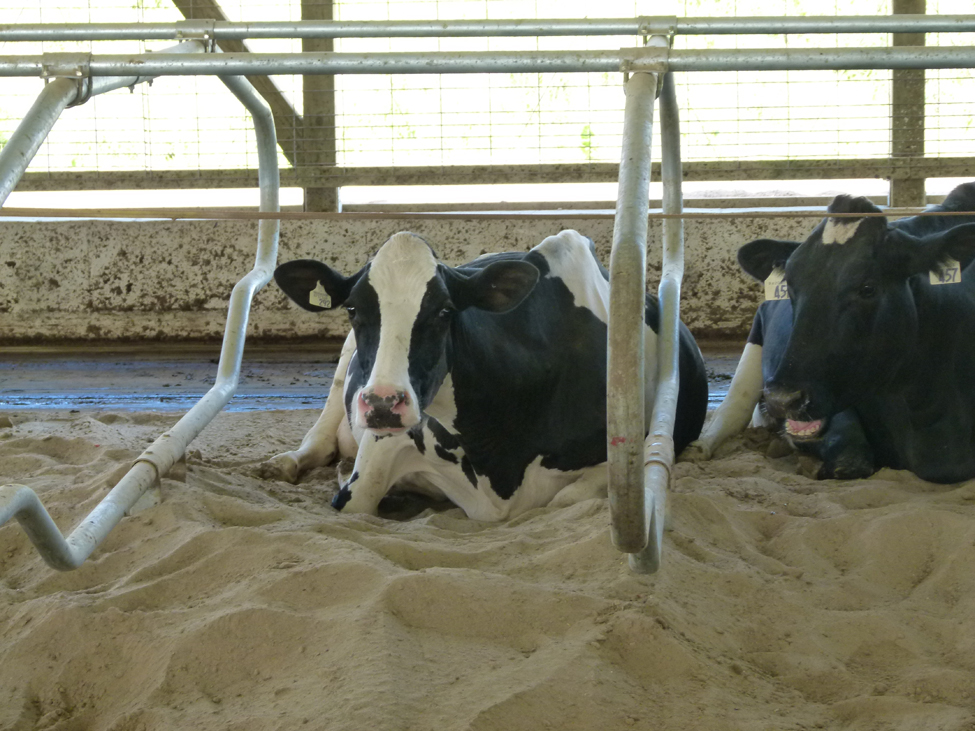
NewsSubscribe
First
Last
Consent

The $15,800 DMC Decision Every Dairy Needs to Make Before February 26

DMC averaged $74K per farm in 2023. In 2026, it got $15,800 better for 300-cow herds. Claim it by February 26—or miss it.

Executive Summary: DMC’s Tier 1 cap just jumped from 5 million to 6 million pounds. For a 300-cow dairy, that single change is worth roughly $15,800 in annual premium savings—money most producers will leave on the table because they’ll renew the way they always have. Before the February 26 deadline, you need to answer one question: Is Tier 2 coverage (about $70/cow, or $20,000/year) still survival insurance, or has your balance sheet improved enough since 2023 that it’s become expensive peace of mind? A quick runway test—available cash divided by monthly fixed costs—tells you where you stand. If you’ve rebuilt working capital and your operation is stronger than it was three years ago, your DMC strategy should reflect that. The $15,800 is there. The only question is whether you’ll claim it.

You know how it goes. You swing by the FSA office, renew your Dairy Margin Coverage more or less on autopilot, and get back to what actually matters—watching fresh cow performance, keeping an eye on butterfat levels, and making sure the transition period isn’t causing problems. In most years, that routine hasn’t hurt too badly.

This year’s different, though.

For the 2026 coverage year, FSA has bumped the Tier 1 coverage limit from 5 million pounds up to 6 million pounds. That’s straight from USDA’s official DMC program page, and they announced it at the Farm Bureau convention earlier this month. The expansion came through in the 2025 farm bill—the “One Big Beautiful Bill,” as it’s been called in the trade press—which also extended DMC through 2031.

Here’s what’s interesting about that change. The folks at Adams Brown, who spend their days running dairy financials, put out an article back in November showing what happens when you shift an extra million pounds from Tier 2 into Tier 1. For a lot of 250- to 350-cow herds, we’re talking premium savings solidly in the five-figure range.

So this year, doing “what we’ve always done” really is a decision. Not just a formality.

What Actually Changed in DMC for 2026?

Let me walk through this piece by piece, because the structure matters.

Starting in 2026, that first 6 million pounds of your production history qualifies for Tier 1 coverage. You can pick coverage levels from $4.00 up to $9.50 per hundredweight, in half-dollar increments. And here’s the part that makes Tier 1 so attractive—at the $9.50 level, you’re paying just $0.15 per cwt. That’s from UW-Madison’s DMC policy updates, and the 2026 DMC premium rates haven’t changed on the Tier 1 side from previous years.

Everything above 6 million falls into Tier 2. The coverage there tops out at $8.00 per cwt, and the premium at that level runs about $1.81 per cwt according to the same UW tables.

So any hundredweight you can move from Tier 2 down into Tier 1? You’re trading a $1.81 premium for a $0.15 premium. That’s roughly $1.66 per cwt difference.

Over a million pounds—10,000 cwt—that works out to around $16,600 in potential premium savings. Real money.

One more thing worth noting: FSA is also requiring all operations enrolling for 2026 to establish a new production history using the highest annual production from 2021, 2022, or 2023. That’s on FSA’s program page and confirmed in Adams Brown’s farm bill summary. If your herd has grown since you last updated, this could work in your favor.

Putting This in Cow Terms

It helps to anchor this in actual herds rather than abstract numbers.

The average U.S. milk production in 2023 came in at 24,117 pounds per cow, up about 30 pounds from 2022. Using that benchmark, 300 cows at average production gives you roughly 7.2 million pounds annually. That’s a pretty common profile in freestall operations across the Midwest and Northeast.

YearTier 1 (Lbs)Tier 1 Premium/cwtTier 2 (Lbs)Tier 2 Premium/cwt
20255.0M$0.152.2M$1.81
20266.0M$0.151.2M$1.81

Under the old DMC structure, that 300-cow herd had 5 million pounds in Tier 1 and 2.2 million in Tier 2. Under the 2026 rules, it’s 6 million in Tier 1 and only 1.2 million in Tier 2.

Run those volumes through current FSA premium rates at 95% coverage, and here’s what you get:

The old structure cost that herd roughly $45,000 a year in premiums—about $7,100 for Tier 1, nearly $38,000 for Tier 2. The new structure? Roughly $29,000—around $8,500 for Tier 1, about $20,700 for Tier 2.

MetricOld DMC (2025)New DMC (2026)
Tier 1 Cap5.0 Million Lbs6.0 Million Lbs
Tier 1 Premium ($9.50)$0.15 / cwt$0.15 / cwt
Tier 2 Premium ($8.00)$1.81 / cwt$1.81 / cwt
Annual Premium (300 Cows)~$45,000~$29,000
Net Savings$15,800

That’s approximately $15,800 in annual premium savings. Just because more milk now qualifies for the cheaper coverage tier.

Adams Brown’s worked examples hit the same ballpark when they model what happens as production shifts from Tier 2 to Tier 1. This isn’t a cosmetic tweak—it genuinely moves the needle.

Herd Size (Cows)Annual Production (Lbs)2025 Premiums2026 PremiumsSavings
2004.8M~$32,500~$20,800~$11,700
3007.2M~$45,000~$29,000~$16,000
4009.6M~$57,500~$37,000~$20,500
50012.0M~$70,000~$45,000~$25,000
60014.4M~$82,500~$53,000~$29,500

What 2023 Taught Us About DMC

You probably remember 2023 without needing much prompting. But it’s worth looking at what DMC actually did that year, because it shapes how a lot of us think about coverage now.

UW-Madison’s 2024 program review showed that DMC margins fell below the $9.50 coverage threshold in 11 out of 12 months during 2023. Several months landed in the mid-$4 to low-$5 per cwt range—some of the weakest margins we’d seen since the program started.

MonthAll Milk Margin ($/cwt)Tier 1 Payment @ $9.50 Coverage ($/cwt)
Jan$4.80$4.70
Feb$5.20$4.30
Mar$4.50$5.00
Apr$5.80$3.70
May$6.20$3.30
Jun$6.50$3.00
Jul$6.10$3.40
Aug$5.90$3.60
Sep$5.40$4.10
Oct$4.70$4.80
Nov$4.30$5.20
Dec$4.60$4.90

On the payment side, UW-Madison reported that total indemnity payments for 2023 topped $1.27 billion across about 17,059 enrolled operations. That worked out to an average of roughly $74,453 per farm, with about 74.5% of eligible dairies participating.

For producers at the $9.50 coverage level, monthly payments often exceeded $2 per cwt during the worst stretches. Dairy Herd Management described 2023 as a year when DMC was “in the money” almost continuously for herds with higher Tier 1 coverage.

When USDA first rolled out the DMC decision tool in 2019, it partnered with UW-Madison on its development. At the time, Mark Stephenson—then Director of Dairy Policy Analysis at UW—said DMC “offers very appealing options for all dairy farmers to reduce their net income risk due to volatility in milk or feed prices.”

That sounded promising then. 2023 showed what it looks like in real dollars.

So when producers say they’re not going through another margin crash without full coverage, that’s not paranoia. It’s memory. Those DMC payments kept operating loans current, and feed mills paid on a lot of farms.

What’s easy to miss, though—and this is where the 2026 DMC calculation gets interesting—is that many herds used the stronger margins of late 2023 and 2024 to rebuild. Working capital came back. Debt got paid down. Break-even costs dropped.

The Farm You Were vs. The Farm You Are Now

Here’s what I’ve noticed working through this with producers over the past few months.

Going into 2023, a lot of mid-size herds—the 250- to 350-cow operations—were carrying tight balance sheets. Farm-management reports and lender dashboards commonly showed working cash in the $50,000 to $100,000 range, debt service coverage ratios hovering around 1.1 to 1.25, debt-to-asset ratios in the mid-40% to low-50% band, and break-even milk prices pushing toward $19 or $20 per cwt in higher-cost regions.

University finance specialists had been flagging that profile as vulnerable for a while. Any combination of lower milk prices, poor forage quality, or spiking feed costs could push those farms into serious stress.

Fast forward to now, and the picture often looks different. The herds that stayed in business—especially those that collected DMC payments and caught the firmer milk prices of 2024—often rebuilt working capital into the $200,000 to $300,000 range or higher. Debt service coverage ratios improved into the 1.4 to 1.6 band. Debt-to-asset ratios drifted back toward the high 30s or low 40s. Break-even prices fell into the $17 to $18 range, with better forage and tighter overhead.

When you put the last few years of financials side by side, the “farm we were in 2022” and the “farm we are in 2025” can look quite different—even if your gut still feels like it’s living in 2023.

So, before you check those boxes at FSA, are you setting up DMC for the farm you were, or the farm you are now?

What Job Is Tier 2 Actually Doing?

This is where conversations tend to get interesting.

In my experience, Tier 2 ends up playing one of two roles. It’s either survival coverage or peace-of-mind coverage. Both are legitimate. The key is knowing which job it’s doing for you this year.

IndicatorTier 2 = Survival CoverageTier 2 = Peace-of-Mind Coverage
Working Capital (Days of Expenses)<60 days>120 days
Debt Service Coverage Ratio<1.25>1.40
Debt-to-Asset Ratio>50%<40%
Break-Even Milk Price>$19/cwt<$18/cwt
Tier 2 Annual Cost (300-cow herd)~$20,000–$21,000 (Critical)~$20,000–$21,000 (Discretionary)
DecisionMust Keep Tier 2Can Scale Back or Self-Insure

When Tier 2 is survival coverage

Tier 2 belongs in the “must-have” column when a farm is financially fragile. Extension finance programs and lenders typically flag farms with working capital covering less than 60 days of expenses, debt service coverage consistently below 1.25, debt-to-asset ratios above 50%, or break-even milk prices creeping toward $19 or higher.

As many of us have seen in Wisconsin freestalls and Western dry lot systems alike, it doesn’t take much to chew through limited cash when you’re that tight. A weather-damaged corn silage crop. Protein prices jumping. A dip in the milk check. On those farms, Tier 2 payments can literally be the difference between riding out a rough stretch and falling behind on bills you can’t afford to miss.

When Tier 2 becomes peace-of-mind coverage

On stronger farms, Tier 2 plays a different role.

When working capital covers 120 days or more of fixed costs, when debt service coverage holds comfortably above 1.4, when leverage sits under 40%, and when break-even prices have moved down into the $17 to $18 range—a farm can shoulder more of its own margin risk without immediately threatening survival.

In that situation, Tier 2 becomes more about smoothing income and reducing stress than about keeping the doors open. The protection is real, but the farm isn’t dependent on those checks to stay solvent.

What Tier 2 actually costs

Back to our 300-cow example. That extra 1.2 million pounds above the Tier 1 cap falls into Tier 2.

Using FSA’s premium table at $8.00 coverage and 95% coverage percentage, premiums on that Tier 2 slice run about $20,000 to $21,000 per year. Spread across the herd’s total production, you’re looking at roughly 28 to 29 cents per cwt, or about $70 per cow per year.

Some operations look at that $70 and say, “That’s a cheap price for peace of mind.” Others—particularly those with longer runway and stronger cash flow—start asking whether that money might work harder paying down principal, upgrading cow comfort, or buying targeted Dairy Revenue Protection for specific high-risk quarters.

A Kitchen-Table Runway Test

So how do you figure out where you actually stand without building a massive spreadsheet?

A lot of university educators and lenders have gravitated toward a simple runway test. It’s not perfect, but it’s surprisingly useful for getting your bearings.

  • Step one: Grab your most recent bank statement showing your operating account and any short-term savings. Pull your latest term-debt statement with the monthly principal and interest. Have a recent milk check handy.
  • Step two: Estimate your monthly fixed “burn.” Start with your total monthly term-debt payments, then add the costs that don’t disappear when margins drop—insurance, utilities, property taxes averaged over the year, core payroll for people you realistically can’t cut. Farm-business programs in Wisconsin, Minnesota, and New York commonly see 250- to 350-cow dairies with monthly burns in the $18,000 to $22,000 range, though it varies by region and setup.
  • Step three: Divide your available cash by that monthly burn.

That gives you your runway—the number of months you can keep essential bills paid if margins drop and stay ugly.

Extension risk-management materials generally talk about 3 to 6 months of working capital as a minimum target, with more than 6 months representing a strong buffer.

In practice:

  • Less than 3 months: Tier 2 is probably still survival coverage for your operation.
  • 3 to 6 months: Gray area—time for a careful conversation with your lender.
  • More than 6 months: There’s room to discuss self-insuring part of that Tier 2 risk.

What’s encouraging is that many Midwest operations running this exercise over the past year have been surprised to find their runway longer than they expected. Not everyone, but enough that it’s changed the tone of the Tier 2 conversation.

Months of RunwayFinancial StatusTier 2 Coverage Decision
<3 monthsTight. Vulnerable to margin shocks.KEEP TIER 2 — Survival coverage; margin failures = serious stress
3–6 monthsGray area. Stronger than tightest farms, not yet confident.CONSULT YOUR LENDER — Decision depends on debt structure & farm trajectory
>6 monthsStrong. Solid buffer.YOU HAVE OPTIONS — Can max Tier 1, skip/scale Tier 2, test self-insurance

How Bigger Herds Layer Their Risk Tools

For larger operations—500 cows, 1,000 cows, and up—the DMC discussion usually sits inside a broader risk-management framework.

UW-Madison’s 2025 DMC update explicitly notes that “DMC may be combined with DRP or LGM-Dairy to form a more comprehensive risk management framework.” And that’s exactly what we’re seeing in practice.

The pattern in a lot of Wisconsin freestalls and Western systems looks something like this: Use Tier 1 DMC at $9.50 for the first 5 to 6 million pounds as a base safety net. Add Dairy Revenue Protection on a portion of remaining production to lock in revenue floors for specific quarters, especially when futures markets and local basis look shaky. Use Livestock Gross Margin-Dairy selectively when feed cost risk is particularly high.

Risk Management Agency materials show that DRP adoption has been ramping up among larger herds since its 2018 launch. DMC serves as the first layer; DRP and LGM target more specific risks for volumes above Tier 1.

For bigger operations, Tier 2 is one option among several for covering extra production—and the decision about how much to buy sits alongside questions about DRP quarters and feed hedging.

The Six-Year Lock-In: Discount or Commitment?

Now let’s talk about the multi-year option, because it deserves a careful look.

The discount

Under the 2025 farm bill changes, producers can enroll in DMC for a six-year period—2026 through 2031—and receive a 25% discount on premiums throughout. That’s confirmed on FSA’s official program page and in Adams Brown’s farm-bill breakdown.

For our 300-cow example, where annual premiums under the new structure run about $29,000, a 25% discount brings that down to roughly $22,000 per year. That’s around $7,000 in annual savings, or more than $40,000 across six years.

The commitment

The catch—and it’s worth thinking through—is that multi-year enrollment isn’t designed as a “sign now, adjust freely later” arrangement.

USDA describes it as providing stability for both producers and the program. The detailed rules around mid-stream changes are best confirmed with your local FSA office, but the general idea is clear: you’re trading some future flexibility for a lower bill today.

Questions worth asking before you sign

If you’re considering the multi-year option, here are the conversations to have at FSA:

  • “If we expect to grow from 300 cows to 450 cows over the next six years, how does our coverage and premium obligation evolve?”
  • “If we sell, retire, or transfer the operation before 2031, what happens to the remaining years?”
  • “If our risk tolerance changes and we want to adjust Tier 2 coverage after a couple of years, what are our options?”

For stable herds with clear long-term plans, the multi-year discount can be a very good fit. For farms facing major transitions—expansion, succession, shifts in business model—staying year-to-year and letting coverage evolve with the operation might make more sense.

The main thing is asking these questions before you sign.

Why February 26 Should Be the Finish Line, Not the Starting Gun

According to FSA, the 2026 DMC enrollment deadline is February 26. Enrollment opened January 12.

What I’ve noticed is that the farms getting the most from DMC treat that deadline as the last day to finalize paperwork on a decision they’ve already worked through—not the day they first start asking what changed.

By mid-January, most dairies are already deep into year-end review. You’re looking at your 2025 income statement and balance sheet. You know how forage turned out. You’ve got a feel for where feed and milk markets might be headed. That’s exactly when DMC strategy belongs in the conversation.

FSA staff consistently say the strongest sign-up meetings happen early in the window, when producers arrive with their questions already answered. It’s the last-week crunch—when everyone’s buried and just trying to avoid missing the deadline—that leads to “just do what we did last year” decisions, even when the farm’s financial picture has shifted significantly.

What If You Cut Tier 2 and 2026 Turns Ugly?

This is the question that sits in the back of everyone’s mind. And honestly, it should.

If you look at your 2025 results, decide you’re strong enough to drop or scale back Tier 2, and then 2026 turns into another rough year, will there be mornings when you wish those Tier 2 checks were coming?

Of course. That’s the nature of insurance. Regret always shows up loudest after the fact.

So instead of asking whether you’ll regret it if the worst happens—because that answer is almost always yes—it’s more useful to ask:

  • Given our current runway, debt service coverage, leverage, and break-even, could we realistically survive another difficult margin year using Tier 1 DMC, our cash reserves, and existing credit without Tier 2?
  • How much margin risk are we truly comfortable carrying ourselves now, compared to what we could carry going into 2023?

For some farms, after putting the real numbers on the table with their lender, the answer is still: “We’re not quite there yet. Tier 2 is survival coverage for us.”

For others—especially those sitting on more than six months of runway and strong debt service coverage—the answer moves closer to: “We can shoulder more of this ourselves now, and those Tier 2 dollars might work harder somewhere else.”

A test-year approach for stronger herds

What’s emerging in some extension workshops is a “test-year” strategy. It goes like this:

  • Max out the expanded Tier 1: 6 million pounds at $9.50.
  • Skip Tier 2 for one coverage year.
  • Move the money you would have spent on Tier 2 premiums—around $20,000 in the 300-cow example—into a dedicated reserve account earmarked for margin shocks.

If 2026 turns rough, that reserve plus Tier 1 payments gives you a self-funded cushion. If 2026 is decent, you’ve effectively paid that premium to yourself and strengthened your working capital.

It won’t fit everyone, and it absolutely should be run past your lender first. But it shows how stronger balance sheets and a more generous Tier 1 structure are giving some farms more options, not fewer.

Your Action Plan Between Now and February 26

Let me bring this back to the kitchen table.

Tonight or this week:

  • Run your runway test. Grab your bank and loan statements and figure out how many months of fixed costs your current cash covers.
  • Pull your key ratios. Look at where your debt service coverage, leverage, and break-even landed for 2025.
  • Run scenarios with USDA’s DMC Decision Tool. It’s available on FSA’s website and was developed with UW-Madison specifically to help producers compare coverage options using their own production history.

Over the next week or two:

  • Decide what job Tier 2 is doing. Is it still survival coverage for your operation, or has it shifted into peace-of-mind territory you might resize?
  • Talk with your lender. Bring your runway number and ratios. Ask whether your current position can support self-insuring some risk.
  • Ask about multi-year enrollment at FSA. Get clear on what a six-year commitment would mean for your situation.

Before February 26:

  • Choose your 2026 structure intentionally. Decide your Tier 1 and Tier 2 levels, whether you’re going year-by-year or locking in for six years, and how that fits with any DRP strategy.
  • Walk into FSA with a plan. Use your appointment to execute a decision you’ve already made, based on good information.

The Bottom Line

DMC remains one of the most cost-effective safety nets under the U.S. milk check. But the opportunity in 2026 isn’t just to get enrolled.

It’s to enroll like the farm you’ve become—not the farm you were before 2023—and to line up your coverage with the cows you’re milking, the numbers on your books, and the level of risk you can genuinely live with now.

The 2026 DMC deadline is February 26. If you don’t run this math before then, the odds are high you’ll either overpay for coverage you don’t need, or underinsure a risk your balance sheet still can’t carry.

Neither is where any of us want to be. 

Key Takeaways:

  • $15,800 is hiding in your 2026 DMC renewal. The Tier 1 cap jumped from 5 million to 6 million pounds—shifting a million pounds from $1.81/cwt premiums down to $0.15 for 300-cow dairies.
  • Most producers will miss it. They’ll renew on autopilot without realizing the program changed. Don’t be most.
  • Tier 2 runs $70/cow. Is that survival coverage—or an expensive habit? If your balance sheet is stronger than it was in 2023, the answer has likely changed.
  • Run the runway test. Cash on hand ÷ monthly fixed costs. Under 3 months = Tier 2 is still essential. Over 6 months = you have real options.
  • February 26 deadline. The $15,800 is there. Claim it—or leave it on the table.

Complete references and supporting documentation are available upon request by contacting the editorial team at editor@thebullvine.com.

Learn More

The Sunday Read Dairy Professionals Don’t Skip.

Every week, thousands of producers, breeders, and industry insiders open Bullvine Weekly for genetics insights, market shifts, and profit strategies they won’t find anywhere else. One email. Five minutes. Smarter decisions all week.
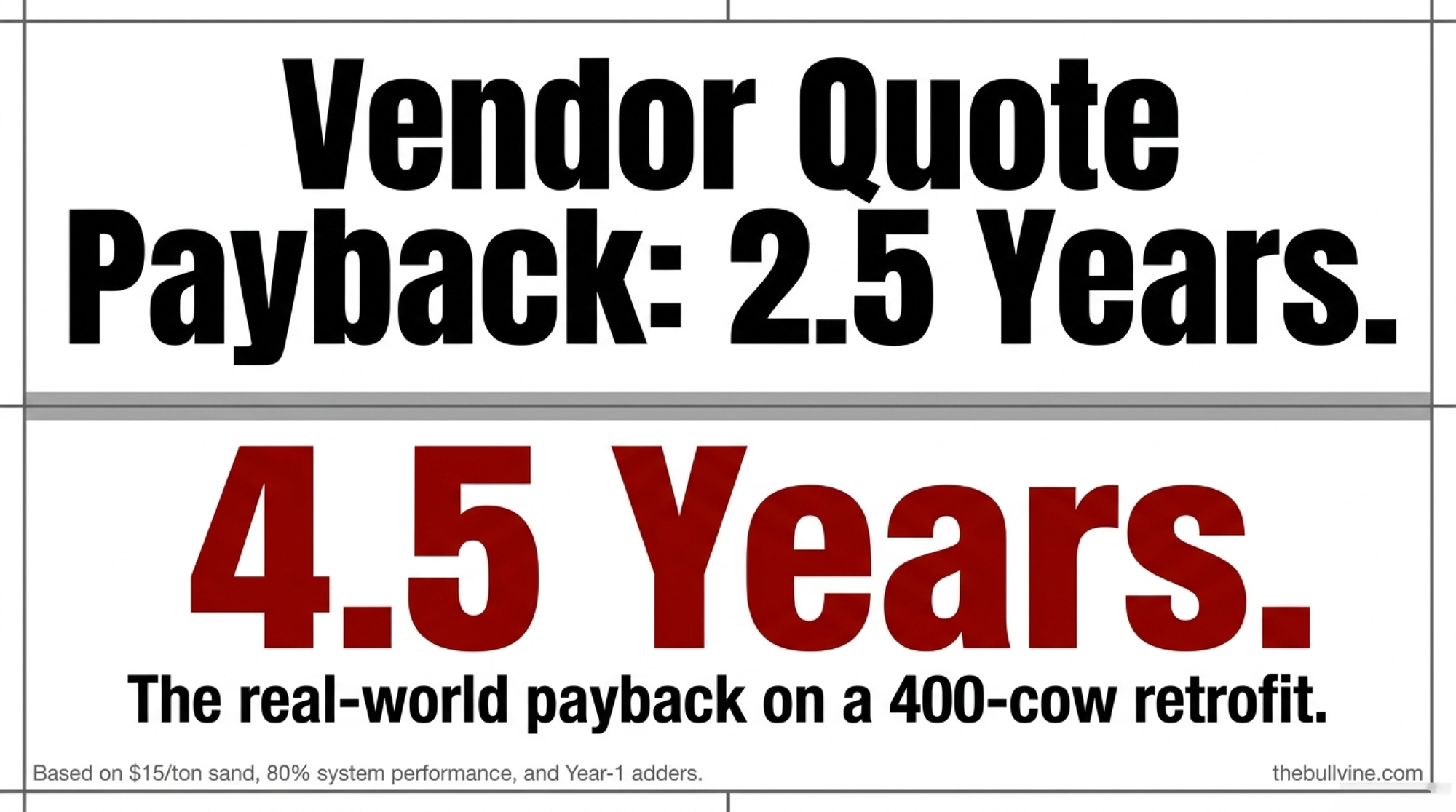
NewsSubscribe
First
Last
Consent

Same Milk, Different Payday: How Your Processor’s Product Mix Shapes Your Future

Two good herds. Same calving nights. Same butterfat goals. Five years later, one family had $400K more equity. The gap wasn’t created in the barn—their processor’s product mix created it.

Executive Summary: U.S. cheese and butter consumption hit all-time highs in 2023, and total dairy demand reached levels not seen since 1959—a real tailwind for the industry. But USDA projects more milk coming through 2026 with all-milk prices in the low-$20s: solid for some herds, uncomfortably close to breakeven for others. What’s increasingly separating those outcomes isn’t just fresh cow management or component focus; it’s where milk actually lands after it leaves the lane—pizza cheese and specialty yogurt versus commodity powder and private-label fluid. For a 400-cow herd, a steady $1/cwt pay-price difference adds up to roughly $400,000 in equity over four years. Inside, you’ll find six questions to ask your processor, three conversations to prioritize this year, and a framework for matching your channel position with your true cost of production. In this market, knowing where your milk goes may matter as much as anything happening inside your barn.

Let me start with a scene you probably know all too well.

Two 400-cow herds. Both kinds of barns are the kinds most of us would call “good.” Cows right around that 80-pound mark. Butterfat levels the field rep is happy with. Fresh cow management through the transition period is under control. No major train wrecks in the dry cow pen. Parlors are humming along well enough that nobody’s cursing the schedule over coffee.

Fast-forward four or five years. One of those farms has quietly added $300,000 to $400,000 in equity. The other is wondering why, after all the nights in the maternity pen and all the feed tweaks, the balance sheet isn’t where they hoped it’d be.

The difference often isn’t robots versus parlors, or sand versus mattresses, or who’s running what ration software. What I keep seeing, in conversations with producers and in the numbers themselves, is that it comes down to a question we didn’t really ask much fifteen years ago:

Where does your milk actually go when it leaves the lane—and what is that processor doing with it?

Looking at the latest data and at where processors are spending their capital, that “where” might matter just as much as anything you’re doing inside your fences.

Strong Demand, Tight Prices: The Current Picture

Let’s start with demand, because honestly, that part of the story is more encouraging than you’d think, listening to some outside commentators.

USDA’s Economic Research Service tracks how much dairy Americans eat each year on a milk-equivalent, milkfat basis. For 2023, they put per-capita dairy consumption at 661 pounds—7 pounds higher than 2022. Analysis of that dataset noted that 661 pounds ties the highest mark in the modern series and is the best level since 1959, when Americans consumed about 672 pounds on the same milkfat basis. The International Dairy Foods Association picked up on that too, using it to remind people that total U.S. dairy demand is anything but dead.

You know all the talk about cheese? The data backs it up. Using those same ERS tables, analysis shows 2023 per-capita cheese consumption at about 40.2 pounds, up from 39.9 pounds the year before and a new record. Grouping some cheeses more broadly, lands around 42.3 pounds per person. The precise number depends on how you slice the categories, but the trend line doesn’t change: Americans have never eaten more cheese than they do right now.

Butter’s right there with it. ERS data summarized by IDFA shows per-capita butter consumption at 6.5 pounds in 2023, the highest since the mid-1960s. Given where butter sat in the low-fat decades, that’s a meaningful swing back in our direction.

And if you zoom in further, some “old-made-new” products really jump out. Working off Circana retail data for the 52 weeks ending December 1, 2024, notes that paneer sales were up roughly a third, burrata climbed just over 30 percent, and queso quesadilla gained more than 20 percent. On top of that, ERS numbers show cottage cheese climbing from 1.9 to 2.1 pounds per person in 2023—an 11-plus percent increase. If you’ve walked a grocery dairy aisle recently, you’ve probably seen the explosion in cottage cheese brands, flavors, and single-serve packs yourself.

Fluid milk is the outlier. ERS figures show fluid milk consumption dropping to about 128 pounds per person in 2023, down from 130 the year before and well below the mid-1970s peak of around 247 pounds per person. Many Midwest and Northeast producers don’t need a chart to see that decline; they’ve watched the fluid case shrink for decades.

So, stepping back, the demand picture looks like this:

  • Overall dairy consumption is at or near record levels.
  • Cheese and butter are at all-time highs.
  • High-protein products like cottage cheese are clearly gaining ground.
  • Fluid beverage milk continues a very long, slow slide.

Now, if that were the whole story, we’d all be breathing easier. But you know it’s not.

USDA’s Livestock, Dairy, and Poultry outlooks for 2025 and 2026, summarized by Brownfield and Farm Progress, have had a consistent theme: more cows and more milk per cow. In mid-2025, Brownfield reported that USDA had bumped its 2026 milk production forecast up to about 231.3 billion pounds, nearly a billion pounds higher than the previous month’s estimate, based on herd expansion and productivity.

On price, USDA’s all-milk projections have shifted around as those production and demand expectations change. One widely cited outlook cut the 2026 all-milk price projection down to about $20.40 per hundredweight, roughly $1.50 lower than the prior version. Later in 2025, Brownfield covered another update where USDA raised that same 2026 all-milk projection to around $21.65 on improved demand assumptions. When you line up those various WASDE and LDP reports, you get a 2026 range that generally sits in the high teens to low twenties per hundredweight.

Putting it together:

  • Demand is strong, especially for cheese, butter, and some high-protein products.
  • USDA expects more milk on the market in 2025 and 2026.
  • Price projections are workable for some herds but will feel uncomfortably tight for others, especially after debt service and family living.

That combination is exactly why it’s worth asking not just “How well are we farming?” but “Where does our milk actually land in the chain?”

Same Pound, Different Payback

You know this in your gut already: not every pound pays the same.

Let’s walk through two different paths for a pound of cheese.

In the first path, your milk goes into mozzarella and blends for pizza chains and other foodservice accounts. The flow looks something like this: milk leaves your bulk tank and heads to the cheese plant, the plant turns it into blocks or shreds that move to a foodservice distributor or straight into a chain’s distribution network, and those shreds end up on pizzas where “extra cheese” is part of the selling point. Margins still get taken along the way, but the chain is relatively short, and the cheese is directly tied to perceived menu value.

In the second path, that same pound of cheese ends up as a private-label shredded bag or as part of a budget frozen entrée. Milk goes to the processor, cheese is shipped to another facility that turns it into frozen meals or snack items, and those products move through a retailer’s warehouse network and onto the shelf as house brands or value-tier items. More hands in the pot. More processing steps. More packaging. More trucks and cold storage.

Industry discussions in Dairy Global and processor profiles in Dairy Foods make a few things pretty clear:

  • When people cook at home, they generally don’t use as much cheese per serving as restaurants do. A pizza chain wants the cheese to be obvious in every bite; a family looking at a $6 bag of shredded cheese is often trying to make it stretch across several meals.
  • Every extra step after cheese leaves the vat—shredding, blending, bagging, freezing, plus added warehousing and retailer handling—adds cost. Those costs eat into the share of the final dollar that can flow back toward the raw milk.
  • Private-label fluid, commodity cheese, and butter have grown their share in many retail categories. Large retailers use their bargaining power to hold prices down, squeezing processor margins and limiting how much they can raise prices to farms without hurting themselves.

So that “pound of cheese” in USDA’s per-capita numbers might be part of a high-value pizza program, a premium specialty cheese, or a low-priced frozen meal. The consumption statistic looks the same. The payback back to your lane doesn’t.

When you put some numbers on it, the scale of that difference is hard to ignore. Take a 400-cow Holstein herd averaging around 80 pounds. That’s roughly 32,000 pounds a day—about 320 hundredweight. Over a year, you’re in the ballpark of 110,000 to 120,000 hundredweight. Data suggest that’s a realistic production level for many herds of that size. If your farm is shipping that much over four years, a consistent $1-per-hundredweight difference in pay price adds up to around $400,000 to $480,000 in gross milk revenue.

That’s the sort of gap that doesn’t just make the milk check look nicer—it shows up plain as day when you sit down with your banker and look at your equity.

MetricPizza Cheese & Specialty (Growth Channel)Powder & Commodity (Flat/Decline Channel)
Typical Product FocusMozzarella, specialty cheese, pizza chains, yogurt, high-protein beveragesSkim milk powder, bulk butter, private-label fluid, commodity cheddar
Annual Milk Volume (400-cow herd)~120,000 cwt~120,000 cwt
Base All-Milk Price (2026 USDA proj.)$21.50/cwt$20.50/cwt
Average Pay Price Premium+$1.00/cwt–$0 (baseline)
Annual Revenue Difference per Farm+$120,000
Processor Capital Investments (5-yr outlook)Adding vats, new packaging lines, export infrastructureMaintenance mode, modest efficiency upgrades
Product Demand Trend↑ Growing (cheese +record, yogurt +specialty)↓ Declining (powder commodity-driven, fluid secular decline)
Component Reward (Butterfat/Protein)Strong premium for high solidsMinimal differentiation on components
Margin for Production ErrorModerate to comfortableThin to uncomfortable
4-Year Cumulative Equity Impact+$520,000+$415,000

Why Processors Want “Predictable” Milk

Now, let’s do something we don’t always like doing and think like a plant manager for a minute.

Retailers and restaurant chains have spent years sharpening their forecasting. There’s a lot of software and analytics behind using multi-year sales history, seasons, promotions, and so on to predict how much they’ll sell each week. That “no surprises” mindset is pretty standard now.

In conversations with co-op folks and plant managers, and in reading between the lines in trade interviews, that thinking has crept upstream into how processors view farms.

Nobody at USDA hands them a template that says, “score your suppliers like this.” But if you listen to supply-chain managers quoted in places like Dairy Foods and Feedstuffs, you hear similar patterns:

  • They look at several years of volume history for each farm, not just last month’s ticket.
  • They watch butterfat and protein trends across seasons, so they know who’s steady and who’s up-and-down.
  • They track somatic cell and bacteria counts over time, looking at how often and how badly they spike.
  • They pay attention to how wildly loads swing when the weather is ugly or when feed quality changes.

In Wisconsin operations, in New York and Ontario freestalls, and out in California and Idaho dry lot systems tied into big plants, managers will quietly say they’d rather rely heavily on a smaller group of steady suppliers than juggle a large pool that’s always throwing them surprises.

From your side of the lane, that quietly raises the value of a few things:

  • Somatic cell counts that live in a narrow, low band instead of bouncing around.
  • Butterfat and protein that hold reasonably steady across seasons thanks to balanced rations and good fresh cow management.
  • Shipments that don’t yo-yo week to week, even when heat, mud, cold, or smoke are testing your team.

In component-based pay systems—which cover most of the U.S. and Canada—those traits can be worth even more. Plants making cheese and butter are fundamentally buying butterfat and protein. Those component pounds are exactly what generate premiums when markets are strong. Strong butterfat performance and solid protein don’t just help your check; they matter even more when your milk is going into cheese and butter plants that can turn those solids into high-value products, as opposed to fluid or powder plants where there’s less reward for components.

If you’re already strong on quality, components, and steady volume, that’s encouraging. You look like the kind of supplier plants are trying to keep and grow with.

Health Trends and High-Protein Dairy

Now let’s step briefly into something that sounds more like a doctor’s office than a dairy meeting, but it’s already shaping the dairy case: health trends, weight-loss medications, and “better-for-you” products.

There’s been a lot of buzz about GLP-1 drugs and weight management. Most of the detailed projections of how many people will use them come from medical journals and financial analysts, not from dairy economists. But there’s a clear theme in the nutrition advice around them: people taking these meds often eat fewer calories overall, and dietitians encourage them to keep their protein intake up and focus more on nutrient-dense foods.

You know where that points are.

Industry sources have noted that high-protein dairy is one of the hottest growth areas: Greek and skyr-style yogurts, high-protein spoonable and drinkable yogurts, performance-oriented dairy beverages, cottage cheese, and protein-enriched milks. When they look at scanner data, those products generally show stronger growth than a lot of traditional low-protein dairy desserts.

Cottage cheese is the poster child right now. ERS data show per-capita cottage cheese rising from 1.9 to 2.1 pounds in 2023, and analysis calls out cottage as one of the fastest-growing segments. The nutrition messaging and the dairy case are actually pulling in the same direction for once.

So nobody can honestly say, “GLP-1 will add exactly X pounds of extra dairy demand.” But the broader trend—less empty calories, more protein—is pulling in the same direction as high-protein dairy. If your milk is going into plants that specialize in those kinds of products, you’re plugged into one of the segments where nutrition advice and consumer behavior are aligning with what dairy offers.

What Farmers Are Finding Out

Most producers can rattle off their rolling herd average, butterfat levels, pregnancy rate, and cull percentage without even thinking. But if you ask, “What portion of your milk ends up as pizza cheese, specialty cheese, butter, powder, or fluid gallons?”, the answers often get a lot less precise.

In eastern Wisconsin, for example, a producer shared at a meeting that he’d long assumed most of his milk went into mozzarella and cheddar for foodservice. That was the story in his head. When he sat down with his co-op field rep and walked through their actual product and channel mix, he realized a bigger share than he’d thought was showing up as private-label fluid and commodity butter. His cows hadn’t changed. His ration hadn’t changed. But his understanding of where his milk really sat in the value chain changed overnight.

In the Northeast, a New York producer told a story almost the opposite of that. He moved from a co-op that leaned heavily on fluid and commodity American-style cheese into a plant specializing in mozzarella and Hispanic cheeses with strong export ties. Over several years, as that plant added cheese capacity and grew export business—and as he pushed harder on components and quality—he saw his average pay price improve in a meaningful way. That’s consistent with data showing Mexico alone buying roughly 392 million pounds of U.S. cheese in a recent year, accounting for about 38 percent of total U.S. cheese exports, with other Latin American and some Asian markets also growing. When your plant is tied to that kind of demand, the conversation changes.

Out West, many dry lot systems in California and Idaho, shipping primarily to powder plants, tell a different story. Their processors are heavily tied to skim milk powder and bulk butter. USDA outlooks and export analyses keep reminding us that these are critical products but are heavily commodity-driven and more volatile, with generally thinner margins than many cheese and value-added categories. For those herds, the biggest constraint often isn’t how well they manage the transition period or reproduction—it’s that their milk is structurally tied to products whose prices are set on a very competitive global market.

In Canada, supply management and quota changes alter some dynamics, but the channel question still bites. If your milk is locked into a processor focused on fluid or basic butter, and your hauling radius or quota setup limits your ability to move, your channel options can be even narrower than what some U.S. neighbors face.

Six Questions That Make the Picture Clearer

The nice thing is, you don’t need a consultant’s binder to start. A notebook and a bit of courage to ask direct questions go a long way.

Here are six questions that, in many cases, have really shifted how producers see their situation:

  1. “Broadly speaking, where does our milk go by channel?” Ask for rough percentages. How much of their total volume goes into foodservice, how much into retail, how much into ingredient sales, and how much into export? They already track this when they talk to the USDA and big customers. You’re just asking them to translate it into farmer terms.
  2. “What are the main products our milk becomes?” Try to get past “cheese and butter.” Is your milk mainly feeding fluid gallons, private-label cheddar and slices, process cheese, butter and powder, pizza cheese, yogurt, specialty cheeses? Your processor knows which buckets your milk is filling.
  3. “Over the last three to five years, have those product lines grown, stayed flat, or shrunk for you?” You’re listening for things like: “We’ve added vats for pizza cheese,” “specialty cheese and yogurt are where our growth is,” or “our branded fluid has been under real pressure.” That tells you whether your milk is riding an up-escalator, standing on level ground, or being pulled down.
  4. “Where are you investing for the next five to ten years?” The trade press has covered billions of dollars in investments in new cheese plants, dryers for higher-end powders, yogurt lines, and export packaging. Ask where your buyer is putting its own capital. Are they adding vats, building new lines, upgrading for exports, or mostly just patching roofs?
  5. “How is your customer base changing?” Are they picking up quick-service restaurant accounts, export cheese contracts, and health-focused retail customers—segments industry analysts call growth areas—or are they mostly trying to hold onto private-label fluid and butter slots in the face of aggressive pricing?
  6. “Based on quality and consistency, where would you place our farm in your supplier group?” Are you in their top third, the middle of the pack, or on the bottom rung? Many co-ops and plants maintain internal rankings based on multi-year quality, component, and volume data, even if they don’t share them with you. It’s nearly impossible to improve your position if you don’t know where you’re starting from.

What to Bring to Those Meetings

Before you sit down with your processor, your accountant, or your lender, it helps to have your own homework done. A few things to pull together:

  • Last 3 years of monthly pay prices and component tests. This shows your trends and lets you compare against co-op or regional averages.
  • Last 12 months of SCC and quality records. Plants are looking at your consistency, not just your best month.
  • A simple cost-of-production summary with your breakeven per cwt. If you don’t know this number, your accountant or extension office can help you get there.
  • Any recent processor or co-op letters outlining product/market changes. These often signal where they’re headed before they announce it publicly.

Having this in hand turns a vague conversation into a focused one.

Matching the Map With Your Own Numbers

Most dairy business consultants and land-grant economists will tell you that you really should know, at a minimum:

  • Your operating margin per hundredweight—milk income minus cash operating costs, divided by hundredweight shipped.
  • Your debt-to-asset ratio—total liabilities compared to the fair-market value of your assets.
  • Your interest coverage—operating margin divided by annual interest expense.
  • Your breakeven milk price, including family living—total costs (feed, labor, repairs, interest, depreciation) plus a realistic family draw, divided by hundredweight.

Recent dairy budgets and case-farm studies from universities like Wisconsin, Penn State, and Michigan State often show full-cost breakevens for 300- to 800-cow herds in the upper teens to low $20s per hundredweight under 2023–2025 feed, labor, and interest conditions. National statistics put many real herds in that same neighborhood once family living gets factored in.

On the revenue side, USDA’s 2025 and 2026 all-milk forecasts, as summarized LDP reports, suggest national all-milk prices in the low-$20s in 2025 and somewhere in the high-teens to low-$20s in 2026, depending on how production, exports, and domestic use unfold.

So here’s a practical rule of thumb a lot of advisors use—not as gospel, but as a conversation starter:

  • If your true breakeven, including family living, is at least about $2 per hundredweight below where USDA expects all-milk prices to land, and your processor is tying your milk into growing, value-added channels like cheese, butter, yogurt, and high-protein products, then you’ve got room to talk about modest expansion or targeted upgrades.
  • If your breakeven is within roughly $1 per hundredweight of those projected prices, and a big chunk of your milk is tied to low-margin, commodity-driven channels like powder and basic fluid, then your margin for error is thin, and your structural risk is high.

To put some flesh on that: a herd with a full-cost breakeven of $18/cwt, shipping into a plant that’s investing in mozzarella vats and pizza cheese programs and operating in a $21 all-milk environment, has cushion and options. A herd with a $20/cwt breakeven in a region where most of its milk goes to a powder plant and the all-milk price is expected to hover around $21, with global skim and butter driving things, is in a very different spot.

For herds in that second situation, tools like Dairy Revenue Protection or simple forward contracts can help keep that cushion intact—something worth discussing with your risk management advisor alongside your channel strategy.

Different Farms, Different Realities

One thing that comes through pretty clearly, both in the numbers and in conversations at the diner, is that not every dairy has the same realistic menu of options.

Farms Already Hooked to Growth Channels

Some of you are in a structurally favorable position.

In Wisconsin operations and across parts of the Upper Midwest, that often means shipping to a plant where the core business is mozzarella and other cheeses for domestic chains and export markets. Industry data shows that Mexico alone often buys close to 40 percent of U.S. cheese exports in a given year, with other Latin American and some Asian markets also growing. That kind of cheese demand helps underwrite those plants’ investments and their appetite for milk.

In the Northeast, it might be a specialty cheese plant or a yogurt plant with strong branded products and foodservice clients. On the West Coast, maybe it’s a facility focused on high-protein dairy beverages or value-added performance nutrition powders.

If your processor is talking about adding vats, installing new lines for drinkable yogurt, signing export cheese contracts, or launching functional dairy products—and they’re telling you they want more of your milk—that’s a good sign you’re tied to channels with built-in growth.

For farms in this situation, the questions usually sound like: How do we make sure we stay in their “must-keep” supplier group by being rock-solid on quality, components, and volume? Given our breakeven and USDA’s price outlook, does a careful move from 400 to 550 cows actually improve our resilience, or does it just stretch our labor and capital too thin? Are there specific investments—cooling, feed storage, data systems—that would make our milk more valuable to this particular plant?

Farms in the Middle

Then there’s a big group of herds—across the Northeast, Michigan, and many central U.S. regions—where the answer is more like, “It depends.”

They might ship mainly to a co-op that leans hard on private-label fluid and commodity butter, have a second potential buyer that focuses on cheddar and whey for domestic retail and ingredient markets, or sit within hauling distance of a specialty cheese, organic, or yogurt plant that’s open to new suppliers under certain conditions.

For these farms, you tend to see a mix of strategies. Some do change processors when the math and channel mix make sense—hauling costs, contract terms, and the new plant’s focus all have to stack up. Others seriously consider organic, grass-fed, or other identity-preserved paths, but only where there’s a credible buyer and where the land base and finances can support the costs and risks those systems bring. Quite a few stick with their main co-op but work hard to climb into the top tier of their quality and component grids and tap into any higher-value pools or programs they can.

There isn’t a one-size-fits-all answer here. The right move depends heavily on where you are, what your numbers look like, and what your family wants the operation to be ten years from now.

Farms That Are Structurally Boxed In

And then there are herds—often in more remote High Plains areas, some western dry lot regions, or parts of Canada where quota and hauling really limit options—where the structure of the local processing base makes the decision tree much narrower.

That usually looks like one realistic plant within economical hauling distance, focused on commodities like powder, bulk butter, or low-margin fluid, with no serious plans for new dairy processing capacity in the area.

Even very well-run herds can find their futures heavily constrained by the economics of that one plant. USDA outlooks and export analysis don’t mince words: skim milk powder and bulk butter are crucial to balancing the market, but global commodity prices heavily influence them and tend to be more volatile and lower-margin than many cheeses and value-added channels.

Families in those spots end up asking some hard questions: Do we spend the next several years focusing on harvesting as much income as we can, paying down debt, and maintaining our facilities, rather than betting big on expansion? Is it time to start talking seriously about succession, sale, leasing, or other exit options while we still have enough equity and time to choose our path? Would relocating to a stronger dairy region or diversifying into other enterprises make more sense than relying solely on a constrained local dairy market?

They’re not easy conversations, but they’re a lot easier while the farm is still in a strong enough position to make choices rather than having choices made for it.

Three Conversations Worth Having This Year

So if we boil it all down to “What do we do with this?”, there are three conversations worth putting on the calendar.

A Real Sit-Down With Your Processor or Co-op

Take those six questions and ask for some uninterrupted time. You’re trying to understand where your milk actually fits in their product and channel mix, and whether they see your farm as part of their long-term growth story or as volume they can dial up or down.

If they can’t—or won’t—give you a rough breakdown of where your milk goes and what it becomes, that alone tells you something about the relationship.

A Numbers-Focused Session With Your Accountant or Business Advisor

Ask them to help you put your true breakeven milk price, including family living, down in black and white. Look at how your equity has moved over the last three to five years. Line your numbers up next to the USDA’s price forecasts and regional cost-of-production benchmarks.

Most advisors and lenders have experience with the major land-grant tools and statistics and can translate them into what they mean for your particular herd, debt load, and capital plan. If you don’t know your breakeven, this is the year to fix that.

A Candid Conversation With Your Lender

Whether that’s Farm Credit, a regional ag bank, or your local lender, they see patterns across lots of dairies and processors. It’s worth asking how they view your processor’s financial strength and long-term outlook, what they’d need to see from you—on cash flow, equity, and channel position—to be comfortable supporting a modest expansion or a significant capital project, and what a planned, orderly scale-down or exit might look like for your operation if that ever seems like the right path.

Doing nothing is a decision too. The risk is leaving it so long that the market, the plant, or the bank ends up making the decision for you.

The Bottom Line

The data tells us Americans are eating more dairy than they have in decades—especially cheese and butter—and that high-protein products like Greek yogurt and cottage cheese are gaining real traction. USDA is signaling more milk in 2025 and 2026, and all-milk prices in a range where some operations will be comfortable, while others will be uncomfortably close to breakeven.

Where your milk goes really does matter. A pound going into pizza cheese, specialty cheese, or high-protein yogurt in a growing plant is not the same as a pound going into low-margin fluid or powder in a plant that’s heavily exposed to commodity swings.

Consistency is getting more valuable. As plants lean on data and forecasting, they favor farms that deliver steady milk quality, components, and volume. Strong butterfat and protein have much more earning power in cheese and butter plants than they do when your milk ends up in products that don’t reward solids as much.

Different farms need different strategies. The best move for a 600-cow freestall twenty minutes from a mozzarella plant in Wisconsin isn’t going to be the best move for a 600-cow dry lot tied to a powder plant in a remote region.

You still control what happens inside your fences: cow comfort, fresh cow care, feed efficiency, repro, and people. That’s the foundation.

What this moment adds is one more layer we can’t afford to ignore: Do you really know where your milk goes, whether those channels are growing or shrinking, and whether you’re tied to the right processor for the next decade?

If you know your channels and you know your breakeven, you’re in a much better spot to choose your path—expansion, steady state, pivot, or exit—before the market chooses it for you.

Key Takeaways:

  • Cheese and butter demand hit record highs in 2023, but USDA projects more milk through 2026 with all-milk prices in the low-$20s—the margin for error is shrinking
  • What your processor does with your milk—pizza cheese or powder, specialty yogurt or private-label fluid—shapes your pay price as much as your butterfat or SCC
  • A steady $1/cwt pay-price difference adds up to roughly $400,000 in equity over four years for a 400-cow herd—real money captured or left on the table
  • Ask your processor directly: What products does my milk become? Are those channels growing or shrinking? Where does my farm rank among your suppliers?
  • Know your breakeven, understand your channel exposure, and have candid conversations with your co-op, advisor, and lender—before the market makes decisions for you 

Learn More

$8.2B Exports, $2,500 Heifers: Why Your Milk Check Is Stuck – and the Beef‑on‑Dairy and Genetics Decisions You Can’t Duck in 2026

$600 beef calf or $2,500 heifer? The farms still standing in 2026 didn’t trade their future for today’s calf check.

Executive Summary: U.S. dairy exports hit $8.2 billion in 2024, yet milk checks stayed stubbornly flat—and understanding why matters for your next move. The gap comes down to three forces: processing overcapacity that needs export markets to clear marginal pounds, a component shift in which cheese plants now reward protein over extreme butterfat, and a heifer shortage, many herds created by chasing $600 beef calf checks instead of protecting replacements. Today, quality heifers command $2,500–$3,000+, and the math has flipped. Consolidation has reshaped the landscape, too—15,000 dairies exited between 2017 and 2022, with 1,000+ cow herds now producing two-thirds of U.S. milk and demanding “invisible” cows that stay off the treatment list. The operations thriving in this environment share a playbook: components tuned to their plant’s grid, genomics and beef-on-dairy strategies that secure the replacement pipeline, and risk management treated as routine—not a crisis response. The next 12–24 months will separate the farms that planned from the farms that hoped.

You’ve probably lived this. You sit through a winter meeting where someone from the co‑op says, “Exports are strong, global demand looks good, U.S. dairy is well‑positioned.” The slides are full of big numbers. Then you get home, sit down at the kitchen table, open your milk check… and it feels like you’re farming in a different industry than the one they just described.

What’s interesting here is that those export numbers really are big. USDA’s Foreign Agricultural Service, in numbers summarized by IDFA, Dairy Processing, Dairy Foods, and Progressive Dairy, put 2024 U.S. dairy exports at about 8.2 billion dollars, the second‑highest export value on record after the 9.5‑billion‑dollar peak in 2022. Mexico took roughly 2.47 billion dollars of that total, and Canada about 1.14 billion, so together those two neighbors account for just over 40 percent of everything the U.S. ships overseas by value. Export coverage from USDEC highlights that Mexico is consistently the top buyer of U.S. cheese and skim milk powder.

Early 2025 commentary from market analysts suggests exports have generally held up reasonably well compared to 2024, with cheese shipments in particular staying firm in several key months. So that “exports are strong” line on the slides isn’t spin.

The question you and a lot of producers are asking is simple: if exports look that good, why doesn’t the milk check feel the same? To get at that, let’s walk through what’s happening at the plant, what’s changed with butterfat performance and protein, why geography still matters, what’s going on in Mexico—and then bring it right back to genetics, beef‑on‑dairy, fresh cow management, and risk decisions on your own farm.

Looking at This Trend from the Plant Side

Looking at this trend from the processor’s side is where the fog starts to clear a bit.

Over the last several years, processors have poured serious money into stainless steel. IDFA and industry analysts have talked about “historic levels” of processing investment, and Hoard’s Dairyman reported that roughly 8 billion dollarsworth of dairy processing projects—new cheese plants, powder facilities, and ingredient expansions—are in the works across the Upper Midwest, Plains, and Southwest. Brownfield Ag News and Dairy Herd have described “widespread growth underway,” citing new or expanded plants in South Dakota, Kansas, Texas, Idaho, and New York.

You see it most clearly along the I‑29 corridor. South Dakota has become one of the fastest‑growing dairy regions in the U.S., as new cheese capacity along I‑29 pulled in cows and capital. Kansas appears in USDA Milk Production reports and Progressive Dairy summaries as another state with steady multi‑year growth, driven by large freestall herds and added processing capacity. In New York, big yogurt and cheese plants—including Chobani’s facility at New Berlin—are regularly flagged in state and federal reports as major buyers anchoring regional milk sheds.

Here’s where the math gets real. Large cheese and powder plants are incredibly capital‑intensive. Dairy economists and plant managers consistently note that these facilities are built to run at high utilization—typically targeting 80 percent or higher—to spread fixed costs over as many cwt as possible. If you build a plant to handle 7 million pounds of milk a day and it only runs at 4 million, your cost per cwt jumps because the debt, labor, utilities, and maintenance don’t shrink just because the milk flow does.

So if the domestic market can only comfortably absorb, say, two‑thirds of what this whole system could produce at profitable prices, the rest has to move somewhere. That “somewhere” is export markets. USDEC summaries show that in 2024, the U.S. shipped record or near‑record volumes of cheese to destinations such as Mexico, South Korea, and Central America, and moved significant quantities of skim milk powder and whey to Asia and Latin America.

From the plant’s point of view, moving that extra product overseas at thin margins is often better than leaving vats idle. From your side of the milk check, those marginal export pounds don’t always create enough added value per cwt—after you factor in global competition, freight, and currency—to show up as a big jump. The plant can spread its fixed costs over a larger volume. You might see a bit better basis at times, but not the windfall “8.2 billion dollars” sounds like on a slide.

That’s the first piece of the export paradox: big export dollars and stubborn milk checks can absolutely coexist.

What Farmers Are Finding About Components

Now let’s bring this back into the parlor, because butterfat levels and protein are doing more of the talking on your milk check than many of us expected a few years ago.

For much of the last decade, butterfat looked like the star. USDA and CME data show U.S. butter prices and per‑capita butter consumption rising, and for many years, Class III and IV values put butterfat at a clear premium over protein on a solids basis. So a lot of us leaned into butterfat—through breeding, rations, and fresh cow management—to capture those butterfat premiums.

As more milk has flowed into cheese vats, though, the balance has shifted. Cheesemakers live on protein. That’s what builds curd. The Federal Milk Marketing Order Class III formulas use cheese, whey, and butter prices to calculate fat and protein values using specific yield factors. The way those formulas are structured creates a kind of see‑saw: when butterfat prices move sharply higher, the implied value of protein tends to get pulled down, and when butterfat softens, protein can carry more of the pay pool.

If you look at USDA component price reports across 2024, butterfat values often ran in the 3.00 to 3.50 dollars per pound range, while Class III protein values showed significant volatility—bouncing from around 1.10 to over 2.50 dollars per pound depending on the month. Dairy market updates from MCT Dairies and federal order bulletins highlighted several months where fat was historically strong while protein sagged, reflecting that cheese‑heavy product mix. Analysts like Sarina Sharp with the Daily Dairy Report have talked about co‑ops finding themselves “long on cream” at times, which makes it hard to fully reward sky‑high butterfat tests when protein and cheese demand are really driving the bus.

What farmers are finding—and what a lot of field nutritionists and independent advisers will tell you—is that balancedmilk tends to pay better than extreme milk in this environment. Herds averaging around 3.5–3.8 percent protein and 3.8–4.1 percent butterfat, with solid fresh cow management and a smooth transition period, often see more stable component checks than herds that push butterfat into the mid‑4s while letting protein linger around 3.0–3.1 percent. That profile matches what many cheese plants say they want: strong pounds of solids, but in a ratio that actually fits their vats.

MonthButterfat ($/lb)Protein ($/lb)
Jan3.151.85
Mar3.351.45
May3.102.20
Jul3.451.30
Sep3.252.05
Nov3.052.45

If you haven’t done it recently, it’s worth a quick kitchen‑table exercise:

  • Take a month’s milk statement and write down the total pounds of fat shipped and total pounds of protein shipped.
  • Divide each by the total pounds of milk shipped to confirm your average butterfat and protein tests.
  • Then look up that month’s USDA or co‑op Class III/IV component values and see how many dollars per cwt those pounds are really generating.

A recent review on milk quality and economic sustainability points out that herds with better component performance and milk quality tend to show stronger economic sustainability—so long as they aren’t trading away health and fertility to get there. And Mike Hutjens, Professor Emeritus and extension dairy specialist at the University of Illinois, has hammered the same point for years: it’s pounds of fat and protein shipped per cow and per cwt that drive income, not just pretty percentages on the DHI sheet.

This development suggests something important: chasing maximum butterfat at the expense of protein and cow health doesn’t pay the way it once might have. The money today is in a balanced component profile, backed by good transition‑period management and consistent TMRs.

Why Your ZIP Code Still Matters More Than You’d Like

Looking at this trend across regions, it’s hard to ignore how much your postal code still shapes your milk check.

USDA Milk Production reports make it pretty clear that cows and milk have been shifting into certain regions, especially the interior. South Dakota is one of the clearest examples. The state has become a major growth engine as the I‑29 corridor cheese plants and expansions pulled in herds and investment. Kansas appears in USDA and Progressive Dairy statistics as another state with consistent year‑over‑year growth, driven by large freestall operations and added plant capacity. At the same time, USDA/NASS and state reports often rank Michigan near the top for milk per cow, thanks to strong forage programs, cow comfort, and efficient parlors.

What I’ve noticed, looking at those numbers and listening to producers, is that geography flows directly into basis and hauling. A 1,500‑cow freestall in eastern South Dakota, 20 or 30 miles from a modern cheese plant, is playing a different game than a 200‑cow tie‑stall in a New England valley where there’s limited processing and plants are already full. The close‑in herd may save 30–50 cents per cwt on hauling and pick up stronger over‑order premiums and quality incentives because the plant really needs their milk. The more remote herd often pays more just to get milk to town and has fewer realistic buyers if contracts change.

To put some rough numbers on it, imagine a herd shipping 20,000 cwt per month. If better basis and lower hauling together net 0.75 dollars per cwt more than a herd in a less favored location, that’s 15,000 dollars per month, or roughly 180,000 dollars per year. That’s just an example based on USDA and regional data; every farm will have its own version of that spread. But it shows why two herds can read the same export headlines and feel completely different realities when the milk checks arrive.

FactorHerd A: Close to Growing Plant (SD, KS, TX)Herd B: Remote or Declining Region (VT, Upstate NY, Rural West)
Distance to Plant20–30 miles80–150+ miles
Hauling Cost$0.25–$0.40/cwt$0.60–$1.00/cwt
Over-Order Premium/Basis$0.50–$1.25/cwt$0.00–$0.50/cwt
Quality/Volume IncentivesStrong (plant needs milk)Weak (plant at capacity or shrinking)
Monthly Advantage (20,000 cwt)Baseline−$15,000
Annual ImpactBaseline−$180,000

It’s not about “good” or “bad” states. It’s about plant geography, infrastructure, and policy. Many producers in the Midwest and Plains will tell you their biggest advantage right now is simply being inside the pull radius of expanding cheese plants. Producers in some Northeast or Mountain West pockets, or even parts of Canada, may have very competitive herds but face higher freight and less processor competition, even while exports are booming.

Mexico: Our Best Customer—and a Big Exposure

Now let’s talk about where a lot of those extra cheese and powder pounds actually end up: Mexico.

USDA FAS, IDFA, USDEC, and trade outlets like Dairy Processing are all on the same page here: Mexico is the single largest foreign market for U.S. dairy by value. In 2024, the U.S. shipped roughly $2.47 billion in dairy products to Mexico and about $1.14 billion to Canada. Together, Mexico and Canada account for more than 40 percent of U.S. dairy export value, with Mexico consistently the top buyer for U.S. cheese and skim milk powder.

What’s encouraging in the near term is that Mexico is structurally short on milk. CoBank’s export analysis and USDA FAS reports describe a situation where Mexican dairy demand has outpaced domestic production, leaving a persistent gap that imports—mostly from the U.S.—fill. Per‑capita dairy consumption in Mexico is still lower than in the U.S., which gives some headroom for growth as incomes rise. That combination—structural deficit plus room for per‑capita growth—is a big part of why analysts see Mexico as critical to U.S. dairy’s near‑term export outlook.

But there’s another side that matters for your risk. FAS and industry coverage point out that Mexico is investing in its dairy sector, particularly in northern states, where newer farms are increasingly resembling large freestall and dry-lot systems in the U.S. Southwest, with upgraded genetics, improved feed efficiency, and better milk-handling infrastructure. The goal is to trim back some of that import dependence over time.

So what farmers are finding is that Mexico is both a tremendous asset and a concentration point. Over the next one to three years, it’s hard to imagine a strong U.S. export story that doesn’t lean heavily on Mexico. Over a three‑to‑ten‑year window, if Mexico succeeds in significantly boosting its own production, the growth rate of U.S. exports there could slow, or the mix of products could shift—even if the trading relationship remains strong.

For Canadian readers in Ontario and Quebec, supply management and quota systems buffer your farm‑gate price from a lot of these swings, as multiple analyses of the 2022 Census and Canadian policy have noted. But U.S. export performance and Mexico’s appetite still shape the broader North American environment you’re operating in—especially for processors, trade negotiations, and on‑going USMCA disputes.

One Herd That Fits Today’s Market

Sometimes these big forces are easier to digest when you see how they play out in a real barn.

Top‑Deck Holsteins, a roughly 700‑cow Holstein herd in Iowa, is one of those examples. A recent profile describes Top‑Deck as a freestall operation shipping milk with a rolling herd average around 33,500 pounds per cow per year, built on intentional management and breeding decisions. The exact numbers can move with feed and weather, but the pattern is what matters.

On the cow side, that profile explains that Top‑Deck:

  • Pushes forage quality and ration balance hard to drive dry matter intake and feed efficiency.
  • Treats cow comfort as a core investment—stall design, bedding, ventilation, and milking routines are all tuned for long lying times and low stress.
  • Watches fresh cow management and the transition period closely, with protocols aimed at catching issues early and supporting strong peaks without burning cows out at 30–60 days in milk.

Genetically, Top‑Deck uses genomic testing to rank heifers and cow families, then:

  • Uses sexed Holstein semen on top‑merit animals to generate replacements with strong production, components, fertility, and health traits.
  • Uses beef semen—often Angus—on lower‑merit animals to produce calves that bring better beef value than traditional Holstein bull calves.

Recent genomic and evaluation‑system reviews in the Journal of Dairy Science and related outlets note that millions of dairy animals worldwide have been genotyped, and that using genomic evaluations with economic indexes has significantly improved progress in production, fertility, and health compared with relying on parent averages. Work from the University of Guelph’s “beef on dairy” research program—funded through the Ontario Agri‑Food Innovation Alliance and national beef research groups—shows that beef‑sired dairy calves, when managed and marketed correctly, can deliver clearly higher prices than straight Holstein bull calves, and that optimizing their early‑life management is key to maximizing value.

What’s interesting here is that Top‑Deck’s approach isn’t about chasing one extreme number. It’s about building cows that quietly ship a lot of pounds of fat and protein, stay healthy and fertile, and leave behind replacements that can do the same—while using beef‑on‑dairy to lift calf revenue. That’s exactly the kind of herd that fits a cheese‑heavy, component‑sensitive, export‑connected world.

The Consolidation Reality—and What It Means for Genetics

Now let’s punch in the consolidation piece, because this really matters for breeders and for anyone thinking about where their herd fits.

The 2022 Census of Agriculture shows U.S. dairy farm numbers dropping from 39,303 in 2017 to 24,082 in 2022. That’s roughly a 39 percent decline—about 15,000 dairies gone in five years—even as total U.S. milk production climbed roughly 5 percent, on about 9.4 million milk cows. Rabobank analysis cited in those same reports estimates that herds with more than 1,000 cows now produce around two‑thirds of U.S. milk by value, up from around 60 percent in 2017.

On top of elemental market forces, environmental and labor policies are nudging in the same direction. California, Washington, and other states have tightened manure, water, and methane rules, pushing dairies toward digesters, lagoon covers, and more sophisticated nutrient management systems—investments that are easier to justify on a 2,000‑cow dairy than on an 80‑cow tie‑stall. Labor and immigration constraints also tend to hit smaller farms harder, while larger operations often have more tools to recruit, pay, and house workers.

So the center of gravity has shifted. The buyers of genetics and semen are increasingly large freestall and dry-lot herds milking 1,000, 3,000, or 10,000 cows, not just smaller family herds picking bulls at a local sale. And those large herds are demanding a specific type of cow.

European and Scandinavian research has started using the phrase “invisible cows” to describe the ideal animal in large, modern dairy systems: basically trouble‑free, almost boring cows that don’t show up on the treatment list, have few metabolic or hoof problems, calve easily, breed back reliably, and quietly ship components that fit the plant’s grid. U.S. management and genetics advisers are framing similar ideas—focusing on cows that minimize disruptions in high‑throughput, labor‑tight environments.

What I’ve noticed, talking with large‑herd managers and AI folks, is that this is changing the genetic marketplace. Big herds don’t want “project cows” that constantly need special attention. They want cows that are almost invisible day‑to‑day:

  • Strong on productive life and livability.
  • Good mastitis resistance and udder health.
  • Sound feet and legs that keep them moving to the bunk and parlor.
  • Fertility and calving traits that keep fresh cow problems to a minimum.
  • Moderate size with solid feed efficiency.
Trait CategoryOld Priority (Show Ring / Single Trait)2025 Large-Herd Priority (“Invisible Cow”)
ProductionMax milk volume or max butterfat %Balanced pounds of fat + protein shipped per cow/year
HealthTreat problems as they comeMastitis resistance, low SCC, minimal treatments
FertilitySecondary concernStrong heat detection, conception rate, calving interval
CalvingSome assistance acceptableCalving ease (sire & maternal), low stillbirths
LongevityCull and replace as neededProductive life, low cull rate, multiple lactations
StructureExtreme dairy form, show-ring styleSound feet/legs, good locomotion, moderate frame
TemperamentNot formally selectedCalm, easy to handle in high-throughput parlors
Feed EfficiencyRarely consideredModerate intake, strong component output per lb DMI

For breeders, that has two big implications. First, there’s an opportunity for those who can breed and market families that consistently deliver these trouble‑free, “invisible” cows and back it up with real herd performance. Second, there’s risk if a herd or breeding program stays focused only on show‑ring traits or single‑trait extremes without a clear economic story tied to big‑herd, high‑throughput systems.

As herds get larger, the market is slowly but surely rewarding genetics that reduce problems rather than create them.

Beef‑on‑Dairy: Cash Cow or Heifer Trap?

Now let’s lean into beef‑on‑dairy and replacements, because this is where a lot of operations are feeling both opportunity and pain.

Over the last several years, beef semen sales into dairy herds have surged. CoBank analysts and semen company data indicate that beef semen units going into dairy cows have roughly tripled compared to the late 2010s, with estimates that 7–8 million beef units were sold into U.S. dairies in 2024 alone. The attraction is obvious: in many markets, newborn beef‑on‑dairy calves can bring 600 to 900 dollars per head in the first week, while Holstein bull calves often lag well behind that.

At the same time, USDA’s annual Cattle reports and independent analyses have been ringing the bell on dairy replacement inventories. A 2024 Farmdoc Daily review noted that just 2.59 million dairy heifers were expected to calve and enter the herd that year—the lowest since USDA began tracking that series in 2001. More recent updates and CoBank commentary suggest replacement inventories have been revised downward multiple times and remain historically tight.

On the price side, USDA’s Agricultural Prices reports show average dairy replacement heifer values moving into the 2,200 to 2,700 dollar range in many regions over 2023–2024, with springing heifers at auctions commonly bringing 2,500 to 3,000 dollars, and top lots in some Midwest and Western states touching 3,600 to 4,000 dollars. Several economic studies and extension bulletins peg the cost of raising a replacement heifer from birth to calving around 1,700 to 2,400 dollars, depending on the system—confinement, dry lot, or pasture.

So here’s the hard truth many of us are dealing with: a lot of farms leaned into beef‑on‑dairy so aggressively—because that 600–900 dollar beef calf check looked awfully good—that they’re now staring at 2,500‑plus replacement heifer prices when they want to expand or even just maintain herd size. Analysts in Dairy Herd have gone so far as to say that America’s heifer shortage is actively limiting expansion and that the “big money in beef‑on‑dairy” is one of the key drivers.

For a Bullvine reader, the warning needs to be crystal clear:

Don’t sell your future for a 300‑dollar calf check today.

Decision PointToday’s CashCost to RaiseMarket PriceReal Economics
Beef-on-Dairy Calf$600–$900$0 (buyer’s problem)N/AImmediate income, no future cow
Holstein Bull Calf$150–$250$0 (buyer’s problem)N/AMinimal income, no future cow
Keep & Raise Heifer$0 today$1,700–$2,400$2,500–$3,60024-month investment, future production
Annual Impact (100 beef calves)+$60,000–$90,000Clear−$250,000–$360,000 in replacement costsNet position depends on replacement needs

In some markets, the calf check is 600 or 800 dollars, not 300, but the principle is the same. Beef‑on‑dairy is a powerful tool when it’s aimed at the bottom of the herd with a clear replacement plan. Used without a plan, it can hollow out your future cow herd and leave you paying top-of-the-market prices to fill stalls.

The sweet spot, based on both research and what well‑run farms are doing, looks something like this:

  • Top 30–40 percent of females: Genomic‑tested and top‑merit cows and heifers get sexed dairy semen to generate replacements.
  • Middle group: Conventional dairy semen, adjusted up or down depending on your replacement needs.
  • Bottom end: Clearly identified low‑merit cows and heifers get beef‑on‑dairy semen to turn them into higher‑value calves.

And that plan isn’t static. It gets revisited each year as calf, beef, and replacement markets change. But the order of operations doesn’t change: protect your future herd first; chase beef calf checks second.

What Farmers Are Finding Works Right Now

Talking with producers from Wisconsin to South Dakota, from Idaho to Ontario, three themes keep showing up on farms that seem to be navigating all this better than most.

Breeding for Profit and “Invisible” Cows

Looking at this trend in breeding decisions, the herds that look most resilient aren’t chasing a single extreme trait. They’re using tools like genomic selection, economic indexes, and on‑farm records to build cows that are profitable and low‑drama.

Peer‑reviewed work on dairy genetics and national evaluation systems, summarized by the Council on Dairy Cattle Breeding and others, shows that genomic selection combined with economic indexes like Net Merit (U.S.) and Pro$ or LPI (Canada) can significantly improve progress in production, fertility, and health traits compared to traditional selection. That’s the backbone of how most major AI studs and progressive herds are making mating decisions today.

On the farms I’ve seen, a practical genetics plan often looks like this:

  • Use a profit index (Net Merit, Pro$, LPI) as the main filter rather than picking bulls off a single trait like butterfat or total milk.
  • Inside that pool, favor bulls that nudge both fat and protein percentages modestly upward while maintaining or improving fertility, udder health, and productive life.
  • Put real weight on traits that keep cows in the herd: mastitis resistance, hoof health and locomotion, calving ease, and overall robustness.

In that context, many commodity‑oriented herds are targeting cows with butterfat around 3.8–4.0 percent, protein in the mid‑3s, and reproduction performance that aligns with their culling and replacement plans. That doesn’t win you banners at a show, but it tends to win you more predictable component checks, fewer headaches, and a cow that’s “invisible” in the best way—just quietly doing her job.

Turning Genomics and Beef‑on‑Dairy into Everyday Tools

Genomics and beef‑on‑dairy aren’t fringe ideas anymore—they’re everyday tools for a growing number of herds.

Recent genomic reviews indicate that genomic evaluations can roughly double the accuracy of selecting young animals compared to using parent averages alone, especially for complex traits such as fertility and health. Breeding programs that use sexed semen on the top tier of females and beef semen on the bottom tier to accelerate dairy genetic gain while also lifting calf value.

On many commercial farms, that has turned into a straightforward three‑tier system like the one above. The key shift on farms that are doing it well is that they’ve stopped guessing:

  • They genomic‑test at least a subset of heifers to identify which families deserve replacements.
  • They run replacement‑need projections based on real cull rates, expansion plans, and age at first calving.
  • They adjust the proportion of sexed, conventional, and beef semen to hit those replacement targets rather than just chasing what the calf market looks like this month.

University of Guelph research and beef‑on‑dairy extension materials emphasize that dairy‑beef cross calves can command solid premiums over straight Holstein bull calves when marketed correctly, but they also warn that early‑life management and health are critical to capturing that value. The farms that treat beef‑on‑dairy as a strategic tool—not just a quick cash grab—are the ones turning it into a durable advantage.

Making Risk Management Routine Instead of a Panic Button

The third big shift isn’t genetic or nutritional—it’s in how farms treat price risk.

Extension economists and dairy market advisers have been pushing for years now that tools like Dairy Margin Coverage and Dairy Revenue Protection should be part of a routine risk plan, not just something you sign up for when prices crash.  Herds that quietly use DRP or basic options strategies year after year to put a floor under part of their milk price while leaving some upside open.

What many advisers suggest, as a starting point, is that producers consider protecting something like 30–50 percent of their expected milk production with DRP, options, or fixed‑price contracts when forward prices cover their cost of production and debt needs. It’s not a rule; it’s a range that seems to work for a lot of operations. Some herds are comfortable covering more, while others are less comfortable, depending on their balance sheets and risk tolerance.

A simple example might look like this:

  • A 900‑cow herd in Wisconsin, selling mainly into Class III, uses DRP to set a revenue floor under part of its projected spring and summer milk based on its typical butterfat and protein tests and the markets it ships into.
  • At the same time, the herd forward‑contracts a portion of its corn and soybean meal when futures plus local basis give them a feed cost that supports a margin they can live with.

The rest of the milk and feed stays unhedged, leaving room to benefit if markets move higher. The point isn’t that 900 cows in Wisconsin need this exact plan. The point is that treating risk tools as normal business practice—as much a part of the job as booking soybean meal—can turn wild swings into manageable bumps.

From conversations with producers who’ve made that shift, the hardest step usually wasn’t understanding the math. It was deciding to stop waiting for the next crisis to start learning.

Different Starting Points, Different Options

Given all this, the logical question is: “So what does this mean for my farm?” The honest answer depends on your size, your location, and your timeline. But some patterns show up pretty consistently.

Larger Herds Close to Growing Plants

If you’re milking 800–3,000 cows in eastern South Dakota, western Kansas, the Texas Panhandle, southern Idaho, or near growing plants in Wisconsin or New York, you’re in a spot where processors need your milk. That doesn’t solve everything, but it’s a real advantage.

On farms like yours that seem to be in decent shape, you usually see:

  • Sharp focus on components and cow flow. Butterfat and protein targets are tuned to what nearby cheese and ingredient plants actually pay for, and fresh cow management during the transition period is geared to support strong peaks without wrecking cows.
  • Structured breeding and replacement plans. Genomics and sexed semen build replacements from the top of the herd; beef‑on‑dairy is used thoughtfully on the bottom end to boost calf revenue without starving replacements.
  • Habitual risk management. DRP, DMC, options, and feed contracts are used when the math works, not just when the market is already in free fall.
  • Cautious growth decisions. Expansion plans are stress‑tested against lower milk prices and higher costs, often with lender and adviser input, not just modeled on today’s strong basis.

Mid‑Size Herds in Stable Regions

If you’re running 400–800 cows in places like Wisconsin, Michigan, Pennsylvania, Vermont, or Southern Ontario, you’re big enough to feel serious capital pressure but not always big enough to be your plant’s top priority.

Mid‑size herds that look resilient tend to:

  • Drive the cost of production hard. They lean into cow comfort, parlor throughput, and ration consistency to get into the top third of their region’s cost curve, using benchmarks from lenders, extension, and trade media.
  • Make themselves “must‑keep” suppliers. Plants know they can count on them for consistent volume, strong quality, and components that fit the product mix.
  • Explore niches where they truly fit. Some find success with organic, grass‑fed, A2A2, on‑farm processing, or regional branding—especially in the Northeast and Upper Midwest—but only when local demand and the family’s temperament for marketing line up.
  • Treat succession and timing as strategic variables. Major upgrades or expansions are tied to clear family plans for who wants to be there in 5–10 years, not just to what the bank will finance.

Smaller or More Isolated Herds

If you’re milking 50–200 cows in a rural pocket far from growing plants, or in a region losing processing, the export‑driven, capacity‑heavy system frankly isn’t built with you in mind.

Smaller herds in that position that manage to stay in the driver’s seat often:

  • Get brutally honest about cost and equity trends. They know, in numbers, whether they’re gaining ground, treading water, or slowly slipping.
  • Decide what role the dairy plays. For some, the dairy is still the primary economic engine. For others, it’s part of a mix with off‑farm jobs, cash crops, custom work, or direct‑marketing businesses. That choice shapes everything else.
  • Explore niches carefully, not desperately. On‑farm processing, direct‑to‑consumer sales, or agritourism can work—especially near population centers—but only when location, market, and family skills align. They’re not automatic lifelines.
  • Plan early for transitions. The most successful exits or step‑downs start with early, candid conversations with family, lenders, and advisers—before external forces make the decision for them.

A Few Practical First Steps

If you’re looking at your own numbers and wondering where to start, here are a few simple, concrete steps that many producers have found useful:

  • Pull a year’s worth of milk checks and component reports.
    Work out your true average butterfat and protein tests, and—more importantly—your pounds of fat and protein shipped per cow and per cwt. Then talk with your field rep or plant contact about how that profile lines up with what your leading buyer wants and pays best for.
  • Map your replacement needs before you map beef‑on‑dairy.
    Sit down with your records and figure out your real replacement rate and any expansion plans. Estimate how many quality dairy heifers you’ll need calving in over the next two to three years. Use that number to double-check how much beef‑on‑dairy your breeding program can truly support without putting you in the heifer penalty box.
  • Pilot genomic testing on a subset of heifers.
    Work with your AI rep or herd vet to test a group, rank them, and use that ranking to decide who gets sexed dairy semen and who gets beef. Treat this as a learning process, not a one‑off experiment.
  • Schedule an hour with a risk adviser.
    Sit down with someone from your co‑op, a dairy‑focused broker, or an extension economist and ask them to walk you through what it would look like to protect roughly 30–50 percent of your expected milk and some of your feed at prices that cover your costs and debt needs. Then adjust that percentage based on your own risk tolerance and lender expectations.
  • Run a stress‑test budget.
    Put together a simple cash‑flow scenario at a lower milk price—say 13–14 dollars Class III—and slightly higher feed costs. See where the pinch points are. Use that information to decide whether your next move should be to tighten costs, adjust debt, lock in some margins, pursue measured growth, or plan a gradual pivot.

Three Questions Worth Asking Yourself

As you work through all that, three blunt questions keep coming up in good kitchen‑table conversations:

  • Do my components actually fit my buyer’s product mix and pricing grid—or am I leaving money on the table chasing the wrong butterfat/protein profile?
  • Am I using genomic tools and beef‑on‑dairy with a clear replacement strategy—or am I selling my future herd for today’s calf checks?
  • Do I have even a basic risk plan for the next 12–24 months, or am I still gambling that spot markets will treat me kindly?

The Bottom Line

At the end of the day, the export headlines and your milk check are telling different parts of the same story. The export dollars keep plants running and markets open. The milk check reflects how that big system—stainless steel, global competition, butterfat and protein pricing, consolidation, geography, heifer supply, and policy—lines up with your cows, your barn, and your ZIP code.

What I’ve noticed, sitting at a lot of kitchen tables and in a lot of barn offices, is that once you really understand those connections, the whole situation feels a little less random. You won’t control the world price of cheese. But you can control how your herd is bred, how your fresh cows come through the transition period, what your cost of production looks like, and whether you use the genetics, beef‑on‑dairy, and risk tools that are already on the table.

There isn’t one right answer. For some operations, the smart play will be to lean in and grow with the local plant. For others, it’ll be carving out a well‑defined niche that truly fits their region and family. And for some, the bravest and best decision will be planning a thoughtful transition that protects family, equity, and sanity. The key is making that call with clear eyes, honest numbers, and a solid grasp of the forces that are shaping all of us—whether we like them or not.

Key Takeaways 

  • $8.2B exports, stubborn checks: Record dairy shipments didn’t lift every milk check because expanded plant capacity needs export markets to clear marginal pounds—at margins that rarely flow back to producers.
  • Protein now drives the pay grid: Cheese plants reward curd yield, not extreme butterfat. Herds balancing 3.5–3.8% protein with 3.8–4.1% fat are capturing more consistent component premiums than single-trait chasers.
  • Beef-on-dairy created a heifer crisis: Replacement inventories fell to their lowest since 2001. Farms that grabbed $600 beef calf checks now face $2,500–$3,000+ heifer bills—proof that short-term cash can cost long-term cows.
  • Big herds are buying “invisible” cows: 15,000 dairies exited in five years; 1,000+ cow operations now ship two-thirds of U.S. milk. They’re paying for genetics that deliver fertility, health, and components—not project cows that hit the treatment list.
  • Three moves that separate planners from hopers: Tune your component profile to your plant’s grid, use genomics and beef-on-dairy with a locked-in replacement plan, and treat DRP and feed hedges as standard practice—not emergency measures.

Complete references and supporting documentation are available upon request by contacting the editorial team at editor@thebullvine.com.

Learn More

The Sunday Read Dairy Professionals Don’t Skip.

Every week, thousands of producers, breeders, and industry insiders open Bullvine Weekly for genetics insights, market shifts, and profit strategies they won’t find anywhere else. One email. Five minutes. Smarter decisions all week.
NewsSubscribe
First
Last
Consent

European Butter Down 35%: The 90-Day Playbook That’s Helping Dairy Farmers Protect $150,000+

European butter crashed 35%. History shows your milk check is due in 90 days. The farmers protecting six figures right now aren’t smarter. They’re just 90 days earlier.

Executive Summary: European butter crashed 35%—your milk check follows in 60-90 days. With Class III at $17-18/cwt, production growth running three times normal pace, and spring flush weeks away, the proactive window is narrowing. The wealth gap between acting at 1.3 DSCR versus waiting until 1.0 typically exceeds $150,000—not because one group is smarter, but because they moved earlier. This framework covers the metric your lender is watching, component strategies adding $800-1,200/month, and beef-on-dairy premiums hitting $350-700/head. The playbook mirrors 2015-16: three conversations before pressure hits—accountant, nutritionist, lender.

You know, German retail butter dropped to €0.77 per pack in late December 2025. That’s down from nearly €2.00 just a few months earlier—a correction that barely registered in most North American dairy publications. But here’s what caught my attention: for farmers who’ve learned to read global dairy signals, that price move wasn’t just European grocery news. It might be a 60-90 day advance signal for what’s heading toward our milk checks.

I spoke with a Wisconsin producer running about 280 cows near Fond du Lac recently. He put it simply: “I started watching European butter after 2015. That year taught me that what happens in Germany doesn’t stay in Germany. By the time it shows up in your mailbox, you’re already behind.”

The 60-90 Day Warning System: When European butter dropped 35% from €7,200 to €4,400 between early 2024 and late 2025, it preceded U.S. Class III pressure by roughly 75 days. The Wisconsin producer who learned this pattern in 2015 gained a $150,000+ advantage over his neighbor who ignored these global signals 

And he’s not wrong. Understanding these global connections—and knowing when they might warrant action—is becoming increasingly valuable for dairy operations navigating interconnected markets. So let me walk you through what farmers across North America are learning about price signals, financial positioning, and the strategic decisions that can make the difference between weathering market pressure and getting caught flat-footed.

AT A GLANCE: Key Insights

  • The Signal: European wholesale butter down ~35% year-over-year; historically correlates to North American price pressure within 60-90 days
  • The Metric That Matters: Know your Debt Service Coverage Ratio—acting at 1.3x versus waiting until 1.0x can mean a six-figure difference in preserved wealth
  • Near-Term Strategies: Feed-based butterfat improvements can add $800-1,200/month within 60-90 days; beef-on-dairy premiums running $350-700/head
  • The Framework: Proactive positioning beats reactive response—farmers who move early consistently outperform those who wait
  • The Bottom Line: Markets may surprise either direction, but stress-testing your operation at $15-16/cwt scenarios is sound management

How European Butter Prices Connect to Your Milk Check

The relationship between European dairy commodities and North American milk prices follows a transmission path that agricultural economists have tracked for over a decade now. It typically unfolds across 60-90 days, which—when the signals are reliable—gives observant farmers a meaningful window to prepare.

Dr. Mark Stephenson, who served as Director of Dairy Policy Analysis at the University of Wisconsin-Madison before his recent retirement, studied this lag extensively throughout his career. His research shows that when European wholesale butter drops significantly, the effects tend to ripple through Global Dairy Trade auctions in New Zealand within 2-3 auction cycles, then influence contract negotiations across Oceania before reaching North American processor discussions.

What’s happening right now appears to fit that pattern. European wholesale butter fell from over €7,200 per tonne in early 2024 to the €4,000-5,000 range by late 2025, according to AHDB’s EU wholesale tracking—that’s roughly a 35% year-over-year decline. Class III futures for Q1-Q2 2026 are currently trading in the $17.00-18.00/cwt range on CME, which is actually better than some analysts projected a few months back, but still tight for operations with higher cost structures.

Industry estimates suggest that breakeven for mid-size Wisconsin dairies typically runs $18-19/cwt when all costs, including family living and debt service, are accounted for. Operations in California’s Central Valley often see higher numbers due to feed costs and regulatory compliance, while Northeast operations face their own regional dynamics. Western operations dealing with water constraints and Southeast dairies facing heat stress economics have their own cost pressures layered on top. Canadian producers navigate a different reality entirely—quota values and supply management provide price stability but bring their own capital and cash flow considerations. The specific math varies by region and management, but the directional pressure applies when Class III hovers near or below regional breakevens.

RegionTypical All-In Breakeven ($/cwt)Primary Cost DriversCurrent Margin @ $17.50 Class IIIProjected Margin @ $15.50 ScenarioRisk Level Q2 2026
Wisconsin$18.00 – $19.00Feed, labor, debt service-$0.50 to -$1.50-$2.50 to -$3.50Moderate-High
California Central Valley$20.00 – $22.00Feed costs, water, regulatory compliance-$2.50 to -$4.50-$4.50 to -$6.50High
Northeast (NY, PA, VT)$19.00 – $21.00Labor, fuel, regional feed premiums-$1.50 to -$3.50-$3.50 to -$5.50Moderate-High
Texas/New Mexico$17.50 – $19.50Water constraints, heat stress mitigation, feed$0.00 to -$2.00-$2.00 to -$4.00Moderate
Southeast (GA, FL)$19.50 – $21.50Heat stress, humidity management, feed transport-$2.00 to -$4.00-$4.00 to -$6.00High
Canada (Quota Systems)Quota value amortized variesQuota costs, supply management compliancePrice stability via quota systemPrice stability via quota systemLow (different market structure)

Now, I want to be clear about something. Markets can and do surprise us. Futures have been wrong before—2022 comes to mind, when projections sat around $18, and actual prices hit $23 on unexpectedly strong export demand. Some analysts I’ve spoken with remain cautiously optimistic that domestic demand strength could offset some of the pressure we’re discussing. But what’s different about the current setup is the structural inventory situation, which has its own timeline regardless of demand fluctuations.

The Financial Metric Your Lender Is Already Watching

If there’s one number that shapes the conversation you’ll have with your bank—whether it’s a proactive discussion or a reactive one—it’s your Debt Service Coverage Ratio. DSCR tells you whether your operation generates enough cash to cover debt obligations with breathing room… or whether you’re running closer to the edge than you might realize.

Farm Credit Canada’s educational materials lay out the basics pretty clearly. A DSCR of 1.5 is generally considered healthy—it means you’ve got 1.5 times more cash available than your debt obligations require. Drop below 1.0, and you’re looking at difficulty servicing debt without off-farm income or other support. Most agricultural lenders use similar thresholds, though the specific trigger points for increased monitoring or restructuring conversations vary by institution.

DSCR RatioFinancial PositionWho Controls the ConversationRestructuring Options AvailableTypical Cost of Restructuring
1.5x or higherHealthy, strong cushionYou lead; bank followsFull menu: extend terms, consolidate, refinance at competitive ratesStandard processing fees (~$500-1,500)
1.25x – 1.49xAdequate but tighteningPartnership discussionMost options available; minor rate premiums possibleStandard to slight premium (~$1,000-3,000)
1.0x – 1.24xOperating in yellow zoneShared control; bank monitoring increasesLimited options; rate premiums likelyModerate premium (~$3,000-8,000 + 50-100 bps higher interest)
0.85x – 0.99xDistressed territoryBank controls termsRestricted; workout scenarios$8,000-15,000 + 100-150 bps higher interest
Below 0.85xCrisis modeBank workout team drivesForced asset sales likely$15,000+ legal/processing + distressed sale losses

Here’s what farmers are discovering—sometimes later than they’d prefer—the difference between acting at 1.3x DSCR and waiting until you hit 1.0x isn’t just about the numbers themselves. It’s about who’s leading the conversation and who’s following.

I spoke with a senior agricultural lender at a Midwest Farm Credit association who asked to remain anonymous but offered this perspective: “When a producer comes to us at 1.3 with a plan, we’re partners working on optimization. When they come at 0.95 because their operating line is maxed, we’re in workout mode. Same bank, same farmer, completely different dynamic.”

Why does this matter so much? Industry data on distressed agricultural loans shows some significant cost differences. Farms entering workout typically pay 100-150 basis points higher on restructured debt and face substantially higher legal and processing fees. Proactive restructuring—the kind you initiate while your ratios still look reasonable—generally costs a fraction of what a reactive workout costs. And perhaps more importantly, you’re often selling assets into stable markets rather than whatever conditions happen to exist when you’re forced to act.

Agricultural lenders like AgAmerica have documented case studies showing the financial benefits of proactive restructuring. In their published examples, operations that restructured early reported significant annual savings through debt consolidation and strategic use of bridge financing during capital-intensive phases. These options existed because producers initiated conversations while their ratios still demonstrated operational viability.

Here’s a calculation worth doing this week:

Pull your most recent income statement and loan documents. You need three numbers:

  1. Net cash income (gross revenue minus operating expenses—but don’t subtract interest, depreciation, or principal payments)
  2. Annual debt service (all monthly loan payments × 12)
  3. Divide the first by the second

Pro-tip: Remember that while your tax preparer uses depreciation to lower your tax bill, your lender “adds it back” to your net income to determine your actual cash flow capacity. Don’t let a “paper loss” scare you away from a proactive lender meeting. That $80,000 depreciation expense on your Schedule F doesn’t mean you’re $80,000 poorer in cash—it’s an accounting entry, not money leaving your checking account. Lenders understand this, and you should too when evaluating your real financial position.

If you’re above 1.3, you likely have options and time to be strategic. Between 1.0 and 1.25, the window for proactive decisions may be narrowing. Below 1.0, that conversation with your lender probably needs to happen soon—and having a professional guide you in is worth considering.

RED FLAGS: Signs You May Already Be Past Proactive Positioning

  • Operating line balance is climbing more than $5,000/month for three consecutive months
  • Deferred maintenance backlog growing—you’re skipping repairs you’d normally make
  • Breeding decisions driven by cash flow rather than genetic strategy
  • Accounts payable stretching beyond normal terms with key suppliers
  • Finding yourself calculating “which bills can wait” rather than “which investments make sense.”

If three or more of these apply, the proactive window may be closing. That doesn’t mean it’s too late—but it does mean the conversation with your lender needs to happen this month, not next quarter.

What’s Building Toward Q2 2026

Several market forces appear to be converging, potentially creating price pressure this spring. I want to be thoughtful here—market projections are exactly that, projections—but the structural setup is worth understanding so you can make your own assessment.

The cheese inventory factor: When butter prices declined through late 2025, processors across the U.S., UK, and EU made a logical shift. Butter had compressed margins and ongoing storage costs. Cheese—particularly aged cheddar—can sit in inventory for months as it matures, serving as a financial buffer during uncertain times.

You probably already know the aging timelines: mild cheddar reaches market readiness in 2-3 months, medium in 4-9 months, and sharp in 9-12 months. The cheese made in December 2025 and January 2026 will mature and need to be moved to market starting around April-May 2026. That’s not speculation about demand—that’s just aging biology meeting calendar math.

The spring flush timing: Every dairy farmer knows spring flush, but the research on its consistency is worth noting. Studies published in the Journal of Dairy Science on annual rhythms in U.S. dairy cattle show that the spring production peak is remarkably consistent across regions, parities, and management systems—driven more by photoperiod and reproductive biology than management decisions.

USDA’s December 2025 forecast projects U.S. milk production for 2026 at 106.2 million metric tons, up 1.2% from 2025. StoneX Director of Dairy Market Insight Nate Donnay noted in late December that milk production growth was running at an estimated 5.5% pace in September and October—about three times the normal rate. That’s notable context heading into the new year.

The export question: Here’s what’s been encouraging—September 2025 U.S. cheese exports hit 116.5 million pounds, up about 35% year-over-year, according to USDA Foreign Agricultural Service data. That was a remarkable achievement for the industry. The question some analysts are asking is whether markets that absorbed those record volumes will have the same appetite just as domestic production peaks.

None of this means $13 milk is coming. Markets find equilibriums, demand can surprise to the upside, and spring flush intensity varies year to year. But farmers projecting cash flow for Q2 2026 might consider running scenarios at $15.00-16.00/cwt alongside their base case assumptions. That’s not pessimism—it’s the kind of stress-testing that helps operations stay resilient when surprises happen.

Why Component Performance Is Becoming a Competitive Advantage

One of the most significant structural shifts in U.S. dairy over the past decade has been the steady improvement in milk components. And the numbers here are pretty remarkable. CoBank’s Knowledge Exchange published an analysis in September 2025 showing that U.S. butterfat levels increased approximately 13% over the past decade—from about 3.75% in 2015 to 4.24% by 2024. That’s roughly six times the improvement rate seen in the EU and New Zealand.

What’s particularly noteworthy is how this shifts farm-level economics during price compression. Class III and Class IV pricing formulas reward butterfat and protein by the pound rather than by volume. When base prices compress, the premium for higher components becomes proportionally more valuable as a share of the milk check.

Let me walk through some rough math on two cows producing identical volume but different components:

Cow A at 3.7% butterfat: 75 lbs/day = 2.78 lbs butterfat daily
Cow B at 4.4% butterfat: 75 lbs/day = 3.30 lbs butterfat daily

At current butterfat component pricing—which has been running in the $1.55-1.75/lb range in recent months according to USDA announcements—that 0.52-pound daily difference represents roughly $0.80-0.90 per cow per day. Scale that across a 200-cow herd over a year, and we’re talking meaningful revenue differences.

Now, genetic improvement takes 2-3 years to show up meaningfully in the bulk tank. But feed ration adjustments can produce measurable butterfat improvements within 60-90 days—which matters for operations looking at near-term margin pressure.

A Penn State study published in the Journal of Dairy Science in June 2024 found that replacing about 5% of ration dry matter with whole high-oleic soybeans improved income over feed cost by approximately $0.27/cow/day—roughly $99/cow annually. The research synthesized results from multiple feeding trials, so the findings are pretty robust.

Dairy nutritionists generally recommend adding 2-5% molasses to TMR to stimulate fiber-digesting bacteria and boost acetate production, which supports butterfat synthesis. Many farms report butterfat increases of 0.10-0.15 percentage points from this relatively simple adjustment. Protected fat supplementation—combinations of palmitic and oleic acids—can increase milk fat yields within 30-45 days of implementation.

For farms facing compressed margins, even a 0.15-0.2% butterfat improvement translates to meaningful revenue—potentially $800-1,200 monthly for a 200-cow operation at current component pricing. It’s not a complete solution to price pressure, but it’s real money that shows up in the tank relatively quickly.

The ration adjustment that pays for itself in monthly milk checks: Feed-based butterfat improvements show up in the tank within 60-90 days—potentially adding $800-1,200 monthly for a 200-cow operation. Penn State research found protected fat and molasses additions can boost butterfat 0.10-0.15 percentage points within 30-45 days

The Beef-on-Dairy Opportunity

One revenue diversification strategy that’s gained remarkable traction is beef-on-dairy crossbreeding. Industry surveys, including data from the American Farm Bureau Federation, based on Purina’s 2024 producer research, indicate that roughly seven in ten dairy operations are now actively implementing crossbreeding programs. That’s a significant shift from even five years ago.

The economics are fairly straightforward. Industry analysis shows that the majority of dairy farmers participating in these programs receive meaningful premiums for beef-on-dairy calves, with reports of additional revenues ranging from $350 to $700 per head compared to straight dairy bull calves. For an operation producing 70 male calves annually, switching half to beef crosses could generate $18,000-$20,000 in additional annual revenue.

What stands out to me about this trend is the timeline. Beef-on-dairy calves sell at 6-9 months, meaning breeding decisions made in Q1 2026 generate cash in Q4 2026. That’s a faster payoff than almost any other diversification strategy available to dairy producers—which matters when you’re managing through uncertain price periods.

Penn State Extension research on beef×Holstein crosses shows these animals have greater potential to put on muscle than purebred Holstein steers and generally show improved feedlot performance. The carcass quality has proven competitive, and the market infrastructure has developed rapidly to accommodate increased supply. One California producer I spoke with mentioned that his local auction now has specific beef-on-dairy sales days—something that would have seemed unlikely five years ago.

A Texas Panhandle operation I connected with recently shared a different angle on this. They’ve been running beef-on-dairy for three years now and emphasized that buyer relationships matter as much as genetics. “We spent six months building connections with regional feedlots before we started,” the manager told me. “Knowing where those calves are going—and what those buyers want—shaped our sire selection from day one.”

Implementation is fairly straightforward for most operations: genomic testing identifies which cows should continue breeding to elite dairy genetics (typically top 50% by genomic merit) versus which shift to beef sires—Angus, Simmental, or Charolais being common choices depending on regional buyer preferences.

WHAT ONE PRODUCER LEARNED FROM 2015

A 320-cow operation in Dodge County, Wisconsin, offers a useful case study. The producer—who asked that I not use his real name but was willing to share his experience—was running at about 1.28 DSCR in October 2015 when he started noticing warning signs.

“My accountant said I was fine. My neighbor said I was overreacting. But I’d been watching powder prices in Europe drop for months, and I had a feeling about what was coming.”

He restructured his equipment notes that November, extending terms and reducing his monthly obligation by $2,800. He culled 40 head—his bottom performers on both production and components—before spring 2016.

“When milk hit $13 that summer, I was tight but managing. My neighbor, who waited until April to act? He was in a workout by July. Similar starting points, different decisions, very different outcomes.”

His estimate of the wealth difference: around $150,000-$180,000 preserved by moving about six months earlier. Not from being smarter, he emphasized—just from reading the signals and acting before he had to.

What Peer Accountability Groups Are Teaching Farmers

There’s growing evidence suggesting that farms participating in structured peer groups make major financial decisions 6-12 months earlier than farms relying solely on individual analysis. And the mechanisms behind this are fascinating—rooted in behavioral economics as much as farm management principles.

Research on structured farm management groups has consistently shown meaningful financial advantages for participants. Studies tracking farms in peer advisory programs have found notable improvements in operating profit and return on assets compared to non-participants—though the specific magnitude varies by region, group structure, and management intensity.

The Ohio State University Extension put together a helpful fact sheet on peer group value that explains part of the mechanism. As they describe it, “With trusting relationships, members can share their farm’s production data such as yield, inputs, labor, and equipment, along with core financial ratios. Peers then act as an informal board of directors by identifying the strengths and areas for improvement.”

Here’s something I’ve noticed over the years: most dairy farmers don’t actually know their neighbor’s DSCR. They might know what kind of tractor he bought or roughly what he’s feeding, but the real financial picture? That stays behind closed doors. And that isolation can be expensive.

Having sat in on several of these groups over the years, I’ve observed something important about what actually happens in those rooms. The groups seem to override the cognitive biases that can cause all of us—not just farmers—to delay difficult decisions. Loss aversion makes culling cows feel worse than the abstract benefit of “preserving financial flexibility.” Status quo bias creates comfort with continuing current practices even when data suggests change might be warranted. Optimism bias whispers, “we’ve always made it through before.”

The farmers losing the most money right now aren’t necessarily the ones with the worst operations. They’re often the ones who calculated correctly but couldn’t pull the trigger—who knew what they should do but found reasons to wait another month, another quarter, another year.

Peer groups interrupt these patterns through straightforward mechanics: quarterly meetings with financial transparency, benchmarking against similar operations, and accountability for stated commitments. When you tell five other farmers in January that you’re going to restructure your equipment debt and cull your bottom 15%—and they’re going to ask you about it in April—it changes the calculus.

Kim Gerencser, a Saskatchewan-based farm business and management consultant who has been facilitating peer groups for well over a decade, has written and spoken extensively about the value of accountability structures. In interviews with Country Guide, he’s emphasized that the groups that sustain themselves over many years do so because participants find genuine value in the structure. The accountability piece, he’s noted, is what really matters.

For farmers who haven’t participated in this kind of group, options include Cornell’s Dairy Profit Discussion Groups, various state extension programs, cooperative-facilitated groups, and private consultant-led formations. The common elements that seem to make groups effective: quarterly meetings, financial transparency among members, neutral facilitation, and strong confidentiality agreements.

A Practical Six-Month Framework

For farmers who’ve assessed their position and decided proactive action makes sense, here’s what a practical timeline might look like. I want to emphasize that this isn’t the only approach, and every operation’s circumstances differ. A 500-cow California dairy faces different cost structures and cooperative relationships than a 150-cow Vermont operation or a 2,000-cow Texas facility.

But the underlying framework—financial clarity first, then cost structure adjustment, then ongoing accountability—seems to apply broadly based on what I’ve seen work across different regions and operation sizes.

Month 1 (January): Financial Clarity

The starting point is knowing exactly where you stand. Complete the DSCR calculation using both historical and projected prices. Pull your operating line balance trend over the past six months—if it’s been climbing $3,000-8,000 monthly, you may already be running negative cash flow, regardless of what last year’s financial statement showed.

Review your DHIA reports to identify the bottom 15-20% of your herd by combined production and components. These become your first-look candidates if cash flow requires culling decisions.

And if you’re considering a lender conversation, schedule it now while you’re initiating from a position of relative strength. The framing matters. Something like: “I’ve run forward projections based on current futures. I’d like to discuss options while we’re still well above your monitoring threshold” positions you as a proactive manager rather than a distressed borrower.

Month 2 (February): Cost Structure Adjustment

If culling decisions make sense for your operation, executing them while cattle prices remain stable preserves value. Current market prices for cull cows typically range from $1,200-1,800/head, depending on region and market conditions; distressed selling in a soft spring market could mean $800-1,100. That difference across 35 cows adds up quickly—real money for most operations.

Implement any feed ration adjustments to improve butterfat. The 60-90 day timeline for feed-based component gains means February changes can show up in April milk checks.

If beef-on-dairy makes sense for your operation, begin that breeding protocol on lower genomic performers. Revenue arrives in Q4 2026.

Month 3 (March): Risk Management and Accountability

Evaluate hedging options based on your operation’s risk tolerance and expertise. Dairy Revenue Protection and Class III options are available for farms that want price-floor protection, though they come with costs and basis risk that warrant careful evaluation—ideally with someone who understands these tools well.

Consider joining or establishing a peer accountability group. The first meeting should present your current position and action plan. Having external accountability through the spring flush period can be valuable.

Months 4-5 (April-May): Monitor and Maintain Discipline

Track actual versus projected cash flow weekly. This is where discipline matters—there can be temptation to reverse culling decisions or restructuring if short-term prices tick up.

If you’re in a peer group, the meeting during this period provides external validation. Present your January baseline, your April position, and your variance analysis. Let the group help you assess whether you’re on track.

Month 6 (June): Assessment and Forward Planning

Compare actual DSCR to January projections. Evaluate what worked, what didn’t, and what you’ve learned. Develop your Q3-Q4 plan incorporating any beef-on-dairy calf revenue and continued component focus.

What success might look like: A farm that entered January at 1.3x DSCR with $18.50/cwt breakeven, facing uncertain milk prices, emerges in June at 1.15-1.18x DSCR with $16.80/cwt breakeven—having maintained position above the critical 1.0x threshold even through potential price pressure. That’s not a dramatic turnaround story. It’s just solid management under challenging conditions.

The Conversation That Matters Most

Perhaps the hardest part of proactive financial management isn’t the calculations or even the lender meetings. It’s the kitchen table conversation about making significant changes before a crisis becomes undeniable.

What farmers who act early seem to be deciding is whether the discomfort of acknowledging vulnerability now is worth the financial protection it might provide later. And honestly, that’s not an easy trade-off. Culling cows you’ve raised can feel like a retreat. Calling your lender proactively can feel like admitting weakness. Joining a peer group and sharing your financials can feel uncomfortable.

But the alternative—waiting until circumstances force the same decisions from a weaker position—tends to cost real money, according to the research and case studies I’ve reviewed. The wealth difference between proactive and reactive positioning can range from $150,000 to $300,000 or more over a 2-3-year market cycle, depending on the operation’s size and the severity of the downturn.

That’s what tends to happen when operations restructure at penalty rates rather than market rates, sell cattle into distressed markets rather than stable ones, pay workout fees rather than standard processing fees, and navigate restricted credit access for years rather than maintaining banking relationships.

Key Takeaways

On global market signals:

  • European butter prices and Global Dairy Trade auction results can provide 60-90 days of advance indication for U.S. milk price direction
  • Current signals suggest potential price pressure in Q2 2026, though markets can surprise, and projections always carry uncertainty
  • Worth monitoring: GDT auction results at globaldairytrade.info, AHDB EU wholesale prices, and CLAL’s international databases

On financial positioning:

  • DSCR is the metric lenders watch most closely—knowing yours and projecting it forward matters
  • The wealth difference between acting proactively versus reactively can be substantial over a market cycle
  • Proactive restructuring conversations tend to yield significantly better terms than reactive conversations during distress

On operational strategies:

  • Component improvement through feed rations can generate meaningful monthly revenue within 60-90 days
  • Beef-on-dairy crossbreeding offers $18,000-$20,000 potential annual revenue diversification with a  6-9 month payoff timeline
  • Culling decisions reduce cost structure but require careful analysis of volume versus efficiency trade-offs specific to each operation

On decision-making:

  • Peer accountability groups appear to help farmers make structural decisions earlier than solo analysis
  • The psychological barriers to early action—loss aversion, status quo bias, optimism bias—are normal human tendencies
  • The farms that navigate market pressure most successfully seem to share a common trait: they made uncomfortable decisions while they still had meaningful control over terms and timing

The Bottom Line

The European butter correction of 2024-2025 wasn’t just a European story. It appears to be an early chapter in a global market adjustment that’s still developing. For dairy farmers willing to monitor these signals, clearly understand their financial position, and make proactive decisions, it may also represent an opportunity to strengthen operations before market pressures fully test them.

The question isn’t whether to prepare—smart operators are always preparing. The question is whether you’ll do it on your terms or the bank’s.

For producers reading this in January 2026, that means three conversations in the next 30 days: one with your accountant to calculate your current DSCR, one with your nutritionist about component-focused ration adjustments, and—if your number is below 1.25—one with your lender before spring flush hits. The farmers who preserved six figures in 2015-2016 didn’t have better operations. They had better timing.

For dairy producers seeking resources: University extension dairy programs in most states offer farm financial analysis services. The Center for Dairy Profitability at UW-Madison publishes annual benchmarking data. Regional cooperatives increasingly offer member financial planning support. Farm Credit institutions provide forward-looking cash flow analysis. The key is engaging these resources while your financial position still allows flexibility to act thoughtfully on what you learn.

Note: Market projections are inherently uncertain. This article provides educational framework, not financial advice. Consult qualified professionals for operation-specific decisions.

Complete references and supporting documentation are available upon request by contacting the editorial team at editor@thebullvine.com.

Learn More

The Sunday Read Dairy Professionals Don’t Skip.

Every week, thousands of producers, breeders, and industry insiders open Bullvine Weekly for genetics insights, market shifts, and profit strategies they won’t find anywhere else. One email. Five minutes. Smarter decisions all week.
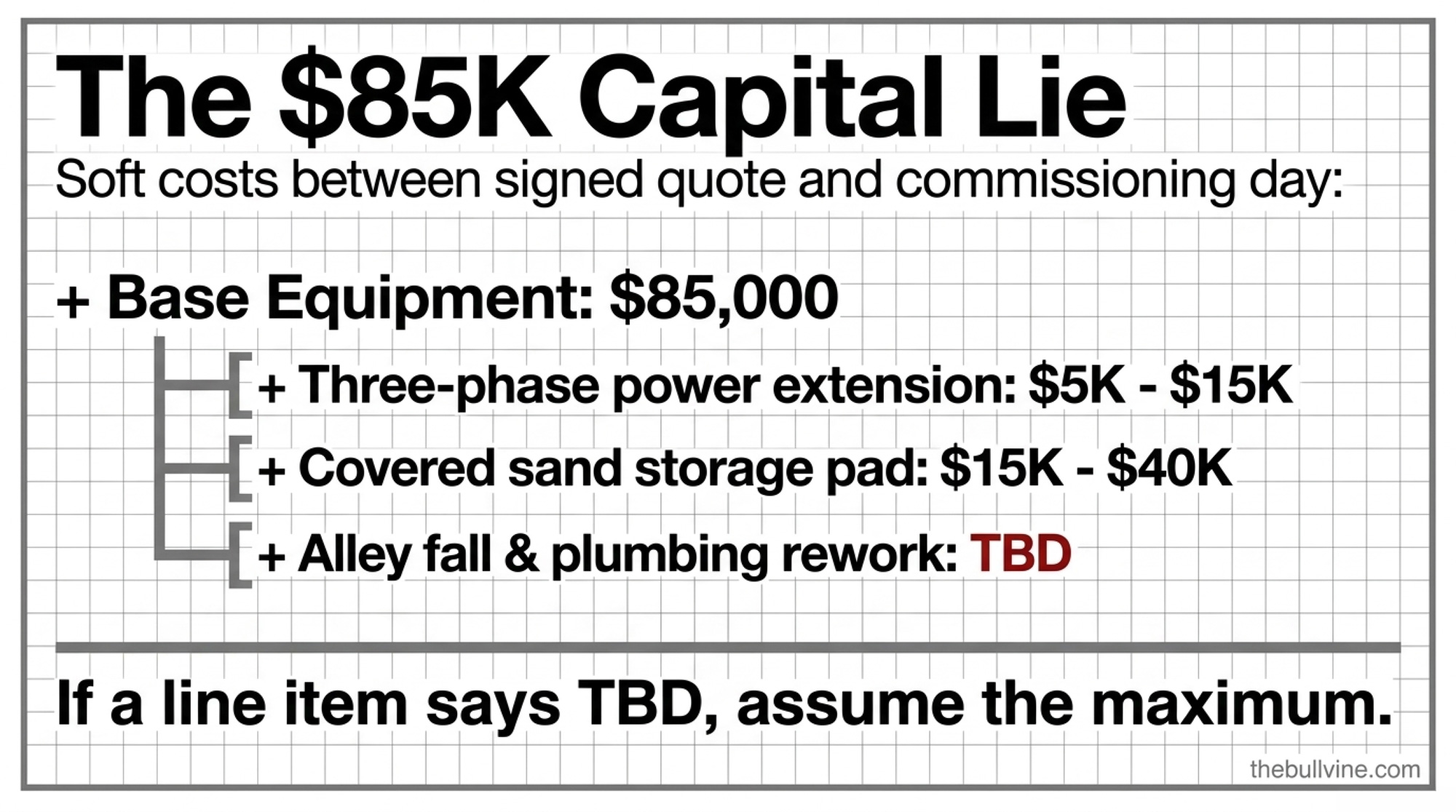
NewsSubscribe
First
Last
Consent

Beef-on-Dairy’s $500,000 Swing: What 72% of Farms Know That’s Costing You $1,000/Cow Every Year

$4,000 for a replacement heifer. $875 for a dairy bull calf. But 72% of farms get up to $1,450 for beef-cross calves, AND cut replacement needs by 30%. The $500K swing isn’t theory—it’s math.

Last spring, I was talking with a Wisconsin dairy producer who described a moment that’s becoming increasingly common across the industry. He’d just finished reviewing his 2024 breeding costs—nearly $38,000 between sexed semen, genomic testing, and beef genetics—and realized he was spending six times what his father had budgeted for the same line item in 2018. The question that kept him up that night wasn’t whether the investment was worthwhile. It was whether he was even measuring the right outcomes anymore.

You know, that producer’s experience captures something significant happening across North American dairy right now. For generations, farmers identified themselves by the breed they milked. Holstein operators pointed to volume records and global market dominance. Jersey advocates countered with components, feed efficiency, and longevity. These conversations shaped industry gatherings, show ring rivalries, and breeding decisions for the better part of a century.

But something’s shifted over the past decade. While traditionalists continued debating which breed was superior, many producers started asking a different question entirely: “What combination of genetics—regardless of color—maximizes my return on investment?”

The answers to that question are reshaping dairy genetics in ways that would have seemed unlikely just 15 years ago.

The Numbers Behind the Shift

The breeding landscape has changed dramatically in just five years, and the National Association of Animal Breeders’ 2024 year-end report tells the story pretty clearly. Gender-selected semen now accounts for 61% of all dairy breeding decisions in the United States—that’s 9.9 million units out of 16.1 million total domestic dairy units sold. We’ve come a long way from roughly 35% back in 2019.

Technology2019 Rate2024 RateGrowth
Sexed Semen35%61%+26 pts
Beef-on-Dairy15%72%+57 pts

And beef-on-dairy? Those crosses have surged to 7.9 million units annually, making beef genetics the fastest-growing category in dairy barns across the country. According to American Farm Bureau analysis, 72% of dairy farms are now using beef genetics to boost the value of calves from lower-performing cows—a remarkable adoption rate for a strategy that barely existed a decade ago.

Meanwhile, USDA data confirms that replacement heifer inventories have dropped to historic lows. The January 2025 Cattle report shows heifers expected to calve this year at roughly 2.5 million head—the lowest since USDA started tracking this series back in 2001. Total dairy heifers are sitting at levels we haven’t seen since 1978.

YearHeifer Shortage (thousands)Springer Price ($)
202301,720
2024-2002,400
2025-4003,010
2026-4383,800
2027-1534,500

These trends connect in important ways, reshaping how dairy operations think about genetic investment, replacement economics, and long-term profitability.

How Technology Changed the Breeding Playbook

Understanding today’s genetics landscape means recognizing how fundamentally the rules have changed since 2010.

The traditional purebred breeding model rested on a straightforward biological constraint: farmers needed to produce enough replacement heifers from their own herds to maintain herd size. This meant breeding most cows to bulls of their chosen breed, creating an inherent link between breed loyalty and operational necessity.

Gender-selected semen technology changed that equation entirely.

Here’s how to think about it: The old model was essentially a closed loop—every cow bred to a dairy bull, every heifer raised as a potential replacement, every bull calf sold for whatever the market offered. Today’s model is more of a segmented herd approach. Your top 15-20% of cows get sexed dairy semen to produce your replacements. Your bottom tier gets beef genetics to produce premium calves. And your middle tier? That’s where the economic optimization happens—balancing replacement needs against beef calf revenue based on your pregnancy rate and market conditions.

This shift from “closed loop” to “segmented herd” represents a fundamental change in how dairy barns function economically.

When farmers can achieve 90%+ heifer conception rates with sexed semen—something that’s become routine with modern sorting technology—they no longer need to breed their entire herd for replacements. A 500-cow operation that needs 110 replacement heifers annually can now direct its top genetics to dairy sires and point the remaining breedings elsewhere.

For most operations, “elsewhere” increasingly means beef genetics. Research by Dr. Victor Cabrera and his team at the University of Wisconsin-Madison has documented that beef-cross calves command substantial premiums over pure dairy bull calves at auction. Current market data shows beef-cross calves bringing $1,250-$1,700 per head compared to$750-$1,000 for dairy bull calves—a premium of $500-$700 per calf that adds up fast across a herd.

Pregnancy RateBreeding StrategyBeef Breeding %Risk Level
Below 25%FIX REPRODUCTION FIRST0-10%N/A – Focus on fertility
25-28%Limited beef breeding15-25%Moderate
28-30%Balanced approach40-50%Low
Above 30%Aggressive beef program60-70%Very Low

That revenue shift matters. On a 500-cow operation producing 350+ calves from non-replacement breedings, the difference between $875 average for dairy bulls and $1,450 average for beef-crosses represents over $200,000 in additional annual revenue—before you even factor in the replacement heifer math.

The Quiet Crisis at Breed Associations

Here’s where we need to have an honest conversation about what’s happening to breed associations—and whether the current model can adapt.

Holstein Association USA CEO Lindsey Worden acknowledged the situation directly in her 2024 State of the Association address: registrations decreased 8% from 2023, and participation in core programs like Herd Complete dropped 4% in both animals and herds. What’s notable is that Worden attributed the decline directly to fewer Holstein heifers being born as more dairies breed cows to beef.

Industry data shows Holstein’s share of the U.S. dairy herd has declined from around 90% in the early 2010s. Meanwhile, crossbred dairy animals have grown significantly—Council on Dairy Cattle Breeding data shows their numbers increased from fewer than 3,000 in 1990 to over 207,000 by 2018, with continued growth since as crossbreeding programs have expanded.

Budget CategoryAnnual Cost% of Total
Genomic Testing$24,00063.2%
Sexed Dairy Semen$7,50019.7%
Data Analytics/Consulting$4,25011.2%
Beef-on-Dairy Semen$2,8507.5%
Breed Association Services$3000.8%

Breed association fees now represent less than 1% of what commercial operations spend on genetics. When registrations, classification, and breed services capture such a tiny slice of the breeding dollar, you have to ask: Is the current association model serving today’s commercial dairy industry, or is it serving a shrinking segment that values pedigree for its own sake?

The Bullvine has been asking this question for years. As we noted in our analysis, “Are Dairy Cattle Breed Associations Nearing Extinction?” Breed associations face mounting pressure from technological advancements, shifting market demands, and environmental concerns—all while struggling with leadership transitions and declining relevance to commercial producers.

The Case for Associations: A Different Perspective

To be fair, association leaders push back on the “declining relevance” narrative—and they have some data to support their position.

Worden, in a recent interview, offered a direct counter-argument: “Animal identification is the foundation to any genetic program, and that’s our core business. From there, the goal is to make it easy for every herd, large or small, to capture value with the Holstein cow.”

She points to growth in other metrics even as registrations decline. In 2024, Holstein USA officially identified 544,438 Holsteins in the herdbook—up 16% from the prior year. The Basic ID program, which provides official ear tags, sire/dam identification, and birthdate recording at a lower cost than full registration, grew 10%.

“Basic ID is an inexpensive way for herds to get involved,” Worden explained. “With an official ear tag, sire, dam, and birthdate, plus genomic testing, we can start showing the value of having data in the national database, not just in Dairy Comp on the farm.”

She also highlighted breed performance gains: In 2024, Holstein USA’s TriStar 305-day mature equivalent averages surpassed 1,200 pounds of fat for the first time, protein topped 900 pounds, and milk hit 28,443 pounds.

“We still offer all the same programs our longtime members value,” Worden commented in a recent interview. “If someone wants to register a calf with a photo and a paper application, we’ll do that. But we’ve also streamlined programs, invested in I.T., and created automated processes for large herds. We have herds milking 10,000 cows or more, so we’ve made it as efficient and seamless as possible.”

The question isn’t whether breed associations will survive. Some will. The question is whether they can evolve from membership organizations selling breed identity to service organizations selling genetic value—and do so fast enough to remain relevant when the value proposition has fundamentally shifted.

What Crossbreeding Adopters Are Experiencing

The documented results from systematic crossbreeding programs offer useful data points for producers evaluating their options.

The ProCROSS system—a structured rotation of Holstein, VikingRed, and Montbéliarde genetics developed through collaboration between Coopex Montbéliarde in France, VikingGenetics in Scandinavia, and CRV in the Netherlands—has accumulated over a decade of commercial data across multiple countries.

A University of Minnesota study led by Dr. Amy Hazel, Dr. Brad Heins, and Dr. Les Hansen tracked 3,550 cows across seven commercial dairies from first calving through multiple lactations. Their findings, published in the Journal of Dairy Science in 2017, showed ProCROSS crossbreds produced at least as much milk solids, gave birth to more live calves, were more fertile, and returned to peak production sooner than their pure Holstein herdmates.

The economics are worth examining closely. Research published in the Journal of Dairy Science by Clasen and colleagues in 2020 calculated crossbreeding advantages, including:

  • €20-59 higher contribution margin per cow per year compared to pure Holsteins
  • 30.1% replacement rate versus 39.3% for pure Holsteins—roughly 45 fewer replacements needed annually on a 500-cow dairy
  • Improved fertility is driving most of the economic gain, with health cost reductions adding further margin

Ongoing research at the University of Minnesota’s West Central Research and Outreach Center in Morris continues to track these outcomes. According to recent NIMSS project reports, crossbred cows in their studies show daily profit 13% higher for two-breed crossbreds and 9% higher for three-breed crossbreds compared to their Holstein herdmates, with lifetime death loss 4% lower for both crossbred groups.

From Wisconsin to California: U.S. Operations Are Implementing at Scale

It’s one thing to see research data. It’s another to see it work on commercial farms across different scales and regions.

Dornacker Prairies is a 360-cow dairy in Wisconsin run by fifth-generation farmer Allen Dornacker and his wife Nancy, in partnership with Allen’s parents Ralph and Arlene. According to VikingGenetics case study materials, the farm has embraced both crossbreeding and robotic milking as part of their strategy to future-proof the operation.

The Dornackers transitioned to robotic milking in 2018, installing Lely A5 robots, and have built their ProCROSS program alongside the technology investment. Their production runs around 9,200 kg per year, with 4.6% fat and 3.6% protein—strong component levels that align with research findings on crossbred performance. They also rear dairy-cross beef calves, capturing value on both sides of the breeding decision.

What’s notable about the Dornacker operation is how it represents a typical Wisconsin dairy in scale—the state averages around 350 cows per farm—while implementing progressive breeding and technology strategies. They’re 90% self-sufficient in feed, growing their own soybeans, alfalfa, corn, and winter wheat across 405 hectares.

But crossbreeding isn’t just for medium-scale family operations. In California—the nation’s largest milk-producing state—approximately 81% of dairy operations reported using beef semen in a 2020 survey cited in Choices Magazine research by Latack and Carvalho. These include many of the state’s large-scale operations, which run 2,000-5,000+ cows.

The scale of adoption is remarkable. According to The Bullvine’s market analysis, nearly 4 million crossbred calves were born nationally in 2024, with forecasts projecting that number could reach 6 million by 2026. Texas alone saw herd counts increase by 50,000 cows in 2024, complemented by a production spike of over 10% per cow—with beef-on-dairy breeding playing a significant role in the economics.

Tom and Karen Halton converted their 500-cow UK operation to ProCROSS roughly fifteen years ago. According to ProCROSS case study materials, Tom offered a candid perspective: “Without these cows doing what they have done, we wouldn’t still be farming.”

These results are encouraging, though it’s worth noting that crossbreeding success depends heavily on consistent implementation and appropriate genetic selection within the rotation.

When Master Breeders Face Commercial Realities

What’s particularly telling is how even elite breeders—those who’ve achieved the industry’s highest recognition—are adapting to commercial pressures.

Take Cherry Crest Holsteins in Ontario. Don Johnston and Nancy Beerwort, along with their son Kevin and wife Tammy, secured their third Master Breeder shield in 2024—a remarkable achievement made more impressive by the fact that the farm has undergone three complete herd dispersals in its history. Their philosophy prioritizes animal well-being, balanced breeding, and practical, economically sound decisions.

“The Master Breeder shield gives you the satisfaction that you’ve been making some of the right decisions,” Johnston said in an interview.

The ability to achieve elite breeding recognition despite multiple dispersals demonstrates an important point: successful breeding today requires adaptability and economic pragmatism, not just genetic idealism. The Johnstons rebuilt their program three times by consistently applying sound principles—identifying superior genetics, making economically rational decisions, and staying focused on what actually works.

This pragmatic approach is increasingly common among recognized breeders. The 2024 Holstein Canada Master Breeder class included operations running robots alongside tie-stalls, farms that started from scratch and achieved recognition in less than two decades, and multi-generational operations that have evolved their programs significantly to remain competitive.

The message from these elite breeders is clear: genetic excellence and commercial viability aren’t opposing forces. The best breeders find ways to achieve both.

The Case for Focused Purebred Programs

Crossbreeding isn’t the right answer for every operation, and some producers are achieving excellent results with focused purebred programs. This deserves equal attention.

The approach relies on intensive genomic testing of every heifer calf, strategic culling of bottom-tier genetics, and careful bull selection emphasizing productive life and fertility alongside traditional production traits. Producers with strong management systems, good facilities, and the discipline to cull strategically can build highly profitable purebred herds averaging 32,000+ pounds per cow with solid pregnancy rates.

Here’s what’s worth recognizing: the genetic tools that enable crossbreeding—genomic testing, sexed semen, data-driven selection—also enable more sophisticated purebred programs. The key consideration isn’t which approach is universally “better,” but whether a breeding program aligns with an operation’s management capacity, market access, and operational goals.

Jersey producers have seen particularly strong results in recent years. The US Jersey Journal reported in March 2025 that the breed achieved record production levels in 2024: 20,719 lbs milk with 5.08% fat and 3.77% protein on a mature equivalent basis—numbers that would have seemed ambitious a generation ago. For operations selling to processors with strong component premiums, Jersey genetics continue delivering compelling economics.

Why Components Are Driving Breeding Decisions

And those component premiums matter more than ever. According to CoBank’s lead dairy economist, Corey Geiger, multiple component pricing programs now allocate nearly 90% of the milk check value to butterfat and protein.

Here’s what that looks like in practice: Under Federal Milk Marketing Order pricing for December 2025, butterfat is valued at $1.7061 per pound according to the USDA’s Announcement of Class and Component Prices. For a producer shipping 100 pounds of milk, the difference between 3.5% and 4.5% butterfat represents roughly $1.70 per hundredweight—over $17,000 annually on a 1,000-cow dairy shipping 80 pounds per cow per day.

Real dollars at the farm level: According to MilkPay’s June 2025 component analysis, with butterfat valued at $2.66 per pound and protein at $2.48 per pound, increasing butterfat from 3.90% to 4.25% adds $0.93 per hundredweight. Increasing protein from 3.16% to 3.32% adds another $0.40 per hundredweight. Combined, that’s $1.33 per hundredweight of additional revenue—roughly $13,300 annually on a 1,000-cow operation.

Some cooperatives go further with quality incentives. Curtis Gerrits, senior dairy lending specialist at Compeer Financial, noted that Upper Midwest processors work with farmers who consistently deliver high-quality milk, offering approximately $0.85 per hundredweight in quality premiums for consistent volume and good components. That’s enough to make a real difference in margin.

The University of Wisconsin Extension’s February 2025 Dairy Market Update confirmed that U.S. butterfat tests hit 4.218% as of November 2024—up 0.088 percentage points from the prior year. Protein reached 3.29%. Both represent continued genetic progress, and both reward producers who’ve selected for components.

The message is clear: genetics that deliver components are genetics that deliver revenue. Whether that’s Jerseys, crossbreds emphasizing Montbéliarde or VikingRed, or Holsteins selected for component indexes—breeding decisions that ignore component trends are leaving money on the table.

The Genomics Paradox: Worth Understanding

This next point challenges some assumptions about genetic investment.

Genomic selection, introduced commercially in 2008-2009, promised to accelerate dairy breeding by nearly halving generation intervals. And genetic progress on paper has accelerated substantially—bulls are improving at rates that would have seemed unlikely under the old progeny-testing system.

Yet a peer-reviewed analysis by the Agricultural & Applied Economics Association in late 2024 found something worth noting: while genetic milk yield potential increased approximately 60-70% following genomic selection implementation, actual farm-level milk yield growth remained essentially unchanged at approximately 1.3% annually—the same rate as before genomics arrived.

“If your genetics are improving at 2% annually but your replacement costs are rising at 10%, you aren’t winning—you’re just running faster on a treadmill. The goal isn’t better cows in the abstract. It’s better margins on your operation.”

Why the disconnect? Management constraints often matter more than genetics—facilities, nutrition, and labor frequently limit genetic expression. Feed economics have shifted, meaning that higher production doesn’t always translate into higher profit. And inbreeding is accumulating faster under intensive genomic selection, with measurable implications for fertility and health traits.

Recent Canadian research adds another dimension. A study published in the Canadian Journal of Animal Science in December 2025 found that “While milk yield had improved, profitability had shown a negative genetic trend, which means that an exclusive focus on higher milk production is detrimental to long-term economic efficiency.”

This doesn’t mean genomic testing lacks value—for parentage verification, genetic defect screening, and informed culling decisions, it remains genuinely useful. But evaluate genomic investments against realistic expectations rather than theoretical maximums.

What Could Go Wrong: Risks Worth Understanding

Before diving into the economics comparison, let’s be honest about what could derail these strategies. No breeding approach is risk-free.

Beef market volatility is real—and it can move fast. In October 2025, cattle markets experienced a sharp correction. According to The Bullvine’s market analysis, crossbred calf values dropped significantly—an 11.5% decline in just twelve days. Drovers magazine noted that “tight supplies and strong demand could push cattle prices to even higher highs in 2025, but uncertainty is infusing more risk and volatility into the markets.”

Sexed semen isn’t foolproof. While the technology has improved dramatically, conception rates still run below those of conventional semen. According to ICBF data, the relative performance of sexed semen compared to conventional semen is about 92%. Industry data from British Dairying suggests that the current 4M technology achieves roughly 82-84% of conventional conception rates in well-managed herds. Herds that tried sexed semen and stopped reported much lower results—averaging just 37% conception with sexed versus 58% with conventional. Management and timing matter enormously.

Crossbreeding implementation failures happen. Research reviews have documented that crossbreeding programs can fail due to “insufficient funding, low return on investment in biotechnology, poor monitoring and evaluation of breeding programs.” Operations with excellent Holstein management may see less benefit from switching than operations struggling with purebred health and fertility issues.

Managing Beef Market Risk: New Tools Available

The good news? Risk management options have expanded significantly.

As of July 1, 2025, the USDA’s Livestock Risk Protection (LRP) program added a game-changing option: Unborn Calves Coverage specifically designed for beef and beef-on-dairy crossbred calves. According to Farm Credit East, this federally subsidized insurance program now allows dairy producers to lock in price protection for calves before they’re even born.

Here’s how it works: producers can protect calves intended for sale within 14 days of birth, with coverage levels allowing protection of up to $1,200 per calf. The program uses a price adjustment factor (multiplier) so producers can protect values closer to what they’re actually receiving at market.

Other risk mitigation strategies:

  • Forward contracting with calf buyers when prices are favorable
  • Diversifying beef sire selection across multiple breeds (Angus, Limousin, Simmental)
  • Maintaining breeding flexibility by keeping pregnancy rates high enough to shift back toward dairy replacements if beef markets weaken
  • Staggering calf sales throughout the year, rather than selling in large batches

What This Looks Like in Practice

CategoryTraditional ApproachSexed + Beef-on-Dairy
Annual Breeding Budget$12,000$38,000
Calf Revenue (200-350 calves)$150,000 – $200,000$437,500 – $595,000
Replacement Purchases Needed($120,000 – $160,000)($40,000 – $60,000)
Net Annual Position($12,000) to +$28,000+$340,000 to +$495,000
THE SWINGBASELINE+$340K to +$500K

THE ECONOMICS THAT MATTER: A 500-COW COMPARISON

This is the calculation every dairy should run with their own numbers.

Traditional Approach (Conventional + Some Sexed Dairy Semen):

  • Breeding budget: ~$12,000 annually
  • Dairy bull calf value: ~$750-1,000/head × ~200 calves = $150,000-$200,000
  • Replacement heifer purchases needed: 30-40 head at $4,000 = $120,000-$160,000
  • Net breeding/replacement position: -$12,000 to +$28,000

Optimized Sexed + Beef-on-Dairy Approach:

  • Breeding budget: ~$38,000 annually (sexed dairy on top 20%, beef on remainder)
  • Beef-cross calf value: ~$1,250-1,700/head × 350 calves = $437,500-$595,000
  • Replacement heifer purchases needed: 10-15 head at $4,000 = $40,000-$60,000
  • Net breeding/replacement position: +$340,000 to +$495,000

The Swing: $340,000 to $500,000+ difference in annual economics

Here’s the key insight: Dairy bull calves are finally worth real money—$750-$1,000 is nothing to dismiss. But beef-cross calves at $1,250-$1,700 are worth 50-70% MORE. That $500-$700 premium per calf, multiplied across 350 calves, is where the swing comes from.

RUN YOUR OWN NUMBERS

Plug in your operation’s actual figures to see where you stand:

Your VariableYour NumberIndustry Benchmark
Current pregnancy rate___%28-30% minimum for flexibility
Annual replacement rate___%30-35% typical, 25% achievable
Cost to raise a heifer$___$2,800-3,500
Current springer purchase price$___$3,800-4,200 (projected $4,500+ by 2027)
Dairy bull calf sale value$___$750-1,000
Beef-cross calf value (local market)$___$1,250-1,700
Sexed semen conception rate___%82-92% of conventional
Current butterfat test___%4.22% national average
Current protein test___%3.29% national average
Processor component premium$___/cwt$0.85-1.33/cwt typical

If your pregnancy rate is below 28%, focus there first. The best breeding strategy won’t overcome poor reproductive performance.

The Replacement Heifer Challenge Ahead: 2026-2027 Projections

One consequence of widespread beef-on-dairy adoption deserves attention for anyone planning breeding programs through 2027—and the projections are sobering.

With heifer inventories at multi-decade lows and springer prices reaching $4,000 or more in major dairy markets—CoBank reported top dairy heifers in California and Minnesota auction barns bringing upwards of $4,000 per head by mid-2025—replacement economics have fundamentally shifted.

But here’s what’s coming: According to CoBank’s modeling published in August 2025, dairy replacement inventories will not rebound until 2027. The numbers are stark:

  • 2025 and 2026 combined: Nearly 800,000 fewer dairy replacements than needed
  • 2026 specifically: The model predicts 438,844 fewer dairy heifers compared to 2025
  • 2027 outlook: A potential net gain of 285,387 dairy heifers available for replacements compared to 2026—the first positive turn in years

The price trajectory tells the story. According to the USDA’s July 2025 Agricultural Prices report, dairy replacement prices have jumped from $1,720 per head in April 2023 to $3,010 per head—a 75% increase in just over two years.

University of Illinois dairy economist Mike Hutjens, in his 2026 Feed and Forage Outlook, summarized the situation: “The critical heifer shortage is expected to persist, with replacement heifer inventories projected to shrink further before a potential rebound in 2027. Farmers are already ‘hoarding’ older cows and adopting gender-sorted semen to maintain herd sizes.”

What this means for your 2025-2026 breeding decisions: Every heifer you breed to beef today affects your replacement availability in 2028-2029. The 30-month biology of dairy cattle doesn’t negotiate.

Dr. Victor Cabrera at the University of Wisconsin-Madison has modeled this extensively. His research suggests that operations need pregnancy rates of 28-30% to achieve meaningful flexibility in beef-on-dairy programs without compromising replacement availability. Herds below that threshold face harder tradeoffs.

Farmers navigating this environment are employing several strategies:

  • Extended productive life focus: Keeping healthy cows in the herd through 4-5 lactations reduces replacement needs by 20-30%
  • Precision replacement breeding: Using genomic testing to identify the top 15-20% of genetics for heifer production
  • Earlier breeding programs: Achieving first calving at 22-23 months rather than 24-26 months
  • Custom heifer partnerships: Contracting heifer development to manage capital constraints

Regional Realities: Context Matters

Optimal breeding strategies vary significantly by region, scale, and market access. There’s no universal answer.

  • Western mega-dairies in California, Idaho, Texas, and New Mexico, operating 3,000+ cows, often have dedicated reproduction teams and processor relationships that reward consistent volume. With 81% of California dairies already using beef semen and Texas adding 50,000 cows in 2024 alone, the Western region has embraced this shift at scale.
  • Midwest family operations in Wisconsin, Minnesota, Michigan, and Iowa, averaging 200-500 cows, face different considerations. Tighter labor availability and the need for management simplicity often make single-breed programs more practical. Operations like the Dornackers show that medium-scale farms can successfully implement crossbreeding—but it requires commitment and consistent execution.
  • Northeast and Mid-Atlantic producers contend with higher land costs and often-limited expansion options. For these farms, maximizing income per cow frequently drives breeding decisions toward higher-component breeds or crossbreeding systems emphasizing longevity.
  • Grazing-based operations prioritize different traits—moderate body size, strong feet and legs, and fertility under seasonal breeding pressure. These systems have long embraced crossbreeding or alternative breeds that don’t appear prominently in conventional AI catalogs.

The principle that emerges: matching genetic strategy to operational reality matters more than following any single approach.

Your Next 90 Days: Practical Steps

For farmers evaluating breeding strategies heading into 2025-2026, here are specific actions:

In the next 30 days:

  • Calculate your actual cost per replacement heifer—including all raising costs, not just purchase price. Many operations underestimate this by $500-800 per head.
  • Pull your pregnancy rate trend for the last 12 months. Is it above 28%? This single number determines how much flexibility you have.

In the next 60 days:

  • Get current beef-cross calf quotes from your local auction or buyer. Prices vary significantly by region and genetics—current ranges are $1,250- $1,700 for quality beef crosses.
  • Review what your processor is actually paying for. Check your milk statement for actual dollars per pound of butterfat and protein.

In the next 90 days:

  • Run the 500-cow comparison with your own numbers. See where your operation actually stands.
  • Talk to your AI rep about a pilot program. Start with 20% of breedings rather than a wholesale shift.
  • Contact your crop insurance agent about LRP Unborn Calves Coverage. The new coverage could protect up to $1,200 per calf against market downturns.

Questions to discuss with your advisors:

  • Can my management system capture the genetic potential I’m paying for?
  • Do I have the reproductive performance to support aggressive beef-on-dairy programs?
  • What’s my contingency if beef markets drop 15-20%?
  • Given CoBank’s projections of continued heifer tightness through 2026, should I be more conservative on beef breeding this year?

Looking Forward

The breed wars, as traditionally understood, may be evolving into something different. What’s emerging is a dairy genetics landscape where farmers can select from an expanding toolkit of genetic resources—purebred, crossbred, and integrated beef programs—based on what delivers sustainable profit for their specific operation.

This doesn’t mean breed identity disappears. Holstein, Jersey, and other purebred programs will continue serving producers who find success with focused genetic selection. Show rings will still draw interest. Elite breeders will still command premium prices for exceptional genetics. And as Lindsey Worden’s data shows, breed associations are finding new ways to deliver value—even if registrations decline, services like Basic ID and genomic integration are growing.

But for the commercial dairy industry—the operations producing the majority of North America’s milk supply—breeding decisions increasingly follow economic logic rather than breed loyalty alone.

The Bottom Line

That $340,000 to $500,000+ annual swing in breeding economics is real. Dairy bull calves at $750-$1,000 are finally worth something—but beef-crosses at $1,250-$1,700 are worth substantially more. The $500-$700 premium per calf, multiplied across hundreds of breedings, is where fortunes are being made or missed.

Whether that swing works in your favor depends on running the numbers—your numbers, not industry averages—and on making decisions that align with your management capacity, your market access, and your operation’s specific goals.

For producers willing to evaluate their options thoughtfully, that half-million-dollar swing represents a genuine opportunity.

KEY TAKEAWAYS:

  • The $500,000 breeding flip. Optimized operations capture $1,450 beef-cross calves instead of $875 dairy bulls—a $575 premium per head. Traditional approach: Still selling $875 calves when you could be netting $1,700. The annual swing on 500 cows: $340,000-$500,000+.
  • 72% already pivoted. The 28% are leaving money on the table. Three-quarters of U.S. dairies use beef genetics. Haven’t switched? You’re missing $500-$700 per calf while competitors capture it.
  • Pregnancy rate is the gating factor. Below 28%? Fix reproduction—beef-on-dairy won’t save a broken repro program. Above 30%? Every dairy-bred bottom-tier cow costs $500-700 in missed calf premium per year.
  • Today’s breeding decision locks in 2028 economics. CoBank: heifer inventories won’t recover until 2027. Springers: $4,000+. The 30-month biology of cattle means this quarter’s breedings set replacement costs for three years.
  • New hedging tools match the strategy. USDA’s LRP Unborn Calves Coverage (launched July 2025) protects beef-cross calves up to $1,200/head—critical after October 2025’s 11.5% market correction.

EXECUTIVE SUMMARY: 

The $500,000 question every dairy faces: Are you capturing the beef-on-dairy swing, or funding your competitors’ replacement heifers? Seventy-two percent of U.S. farms have already pivoted—using sexed semen on top genetics for replacements while turning bottom-tier breedings into $1,250-$1,700 beef-cross calves instead of $750-$1,000 dairy bull calves. The result: an annual economics flip of $340,000 to $500,000+, transforming breeding from modest revenue to a major profit driver. But timing matters—CoBank projects heifer inventories won’t recover until 2027, springer prices have hit $4,000, and every beef breeding today locks in your 2028 replacement position. This analysis delivers the complete breakdown: the threshold pregnancy rates that determine if beef-on-dairy works for you (hint: below 28%, fix that first), the October 2025 market correction that exposed downside risk, and a concrete 90-day action sequence. The 28% of operations still breeding traditional aren’t just missing upside—they’re leaving $500-$700 per calf on the table while subsidizing the heifer market for everyone else.

Complete references and supporting documentation are available upon request by contacting the editorial team at editor@thebullvine.com.

Learn More

The Sunday Read Dairy Professionals Don’t Skip.

Every week, thousands of producers, breeders, and industry insiders open Bullvine Weekly for genetics insights, market shifts, and profit strategies they won’t find anywhere else. One email. Five minutes. Smarter decisions all week.
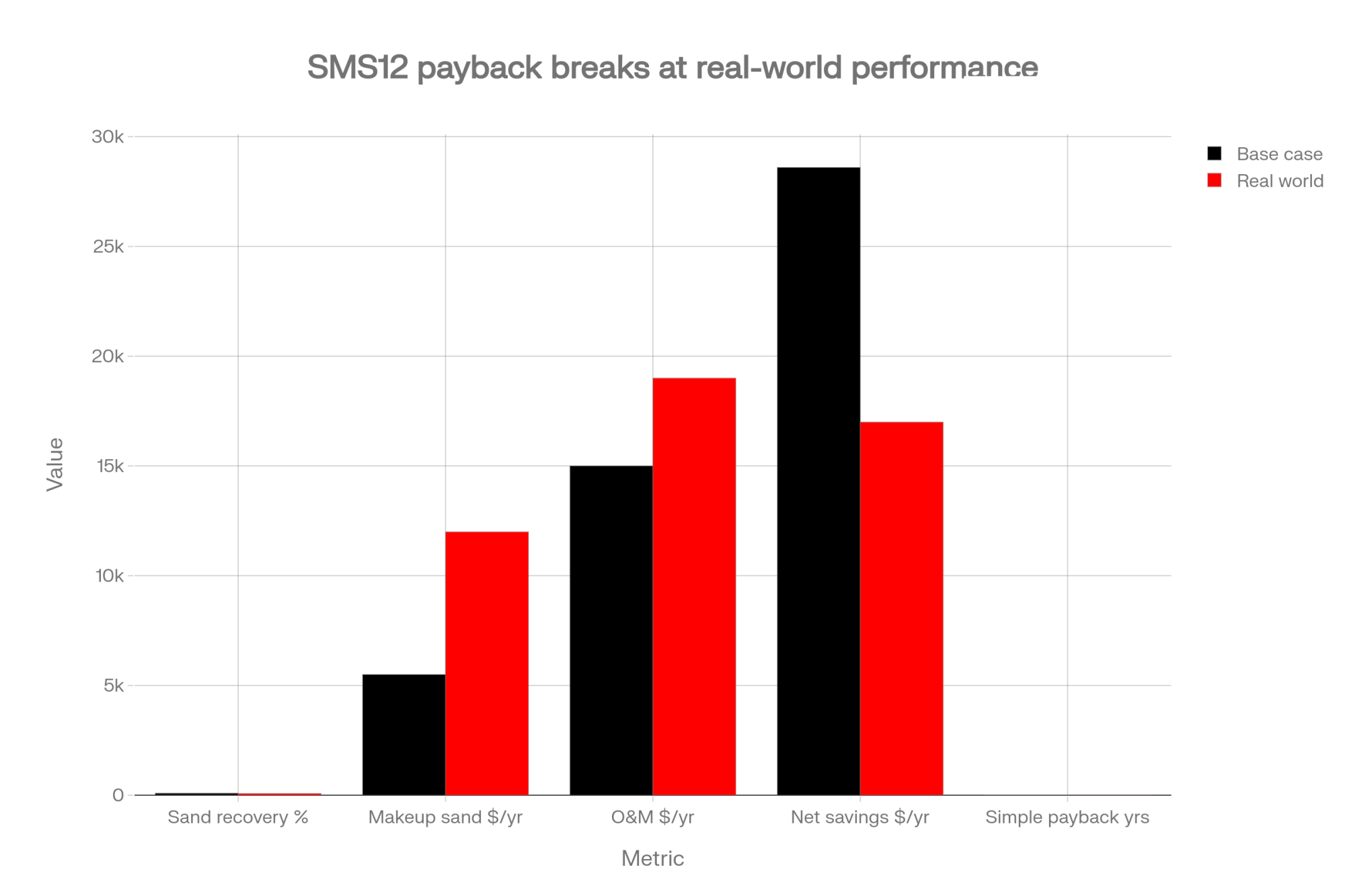
NewsSubscribe
First
Last
Consent
Send this to a friend