


$737,500 in 60 days. Or 4¢/cwt to catch it early. Idaho’s at 25 herds and climbing.
Executive Summary: Idaho is tied for the worst H5N1 herd count in the country, but official tallies are just the floor. Here’s what’s actually at stake for your milk check this month:
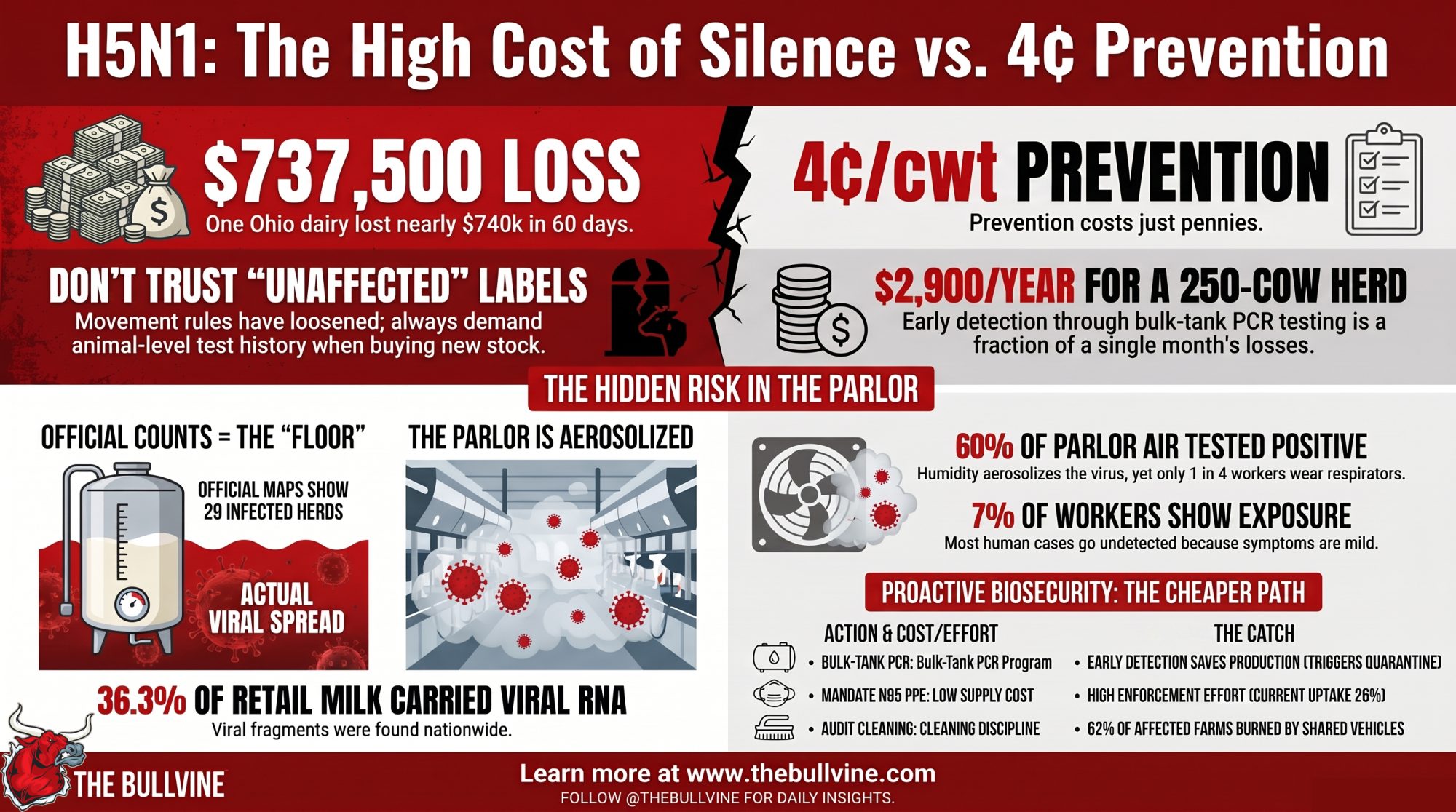
- The financial hit: One Ohio dairy documented $737,500 in losses over 60 days.
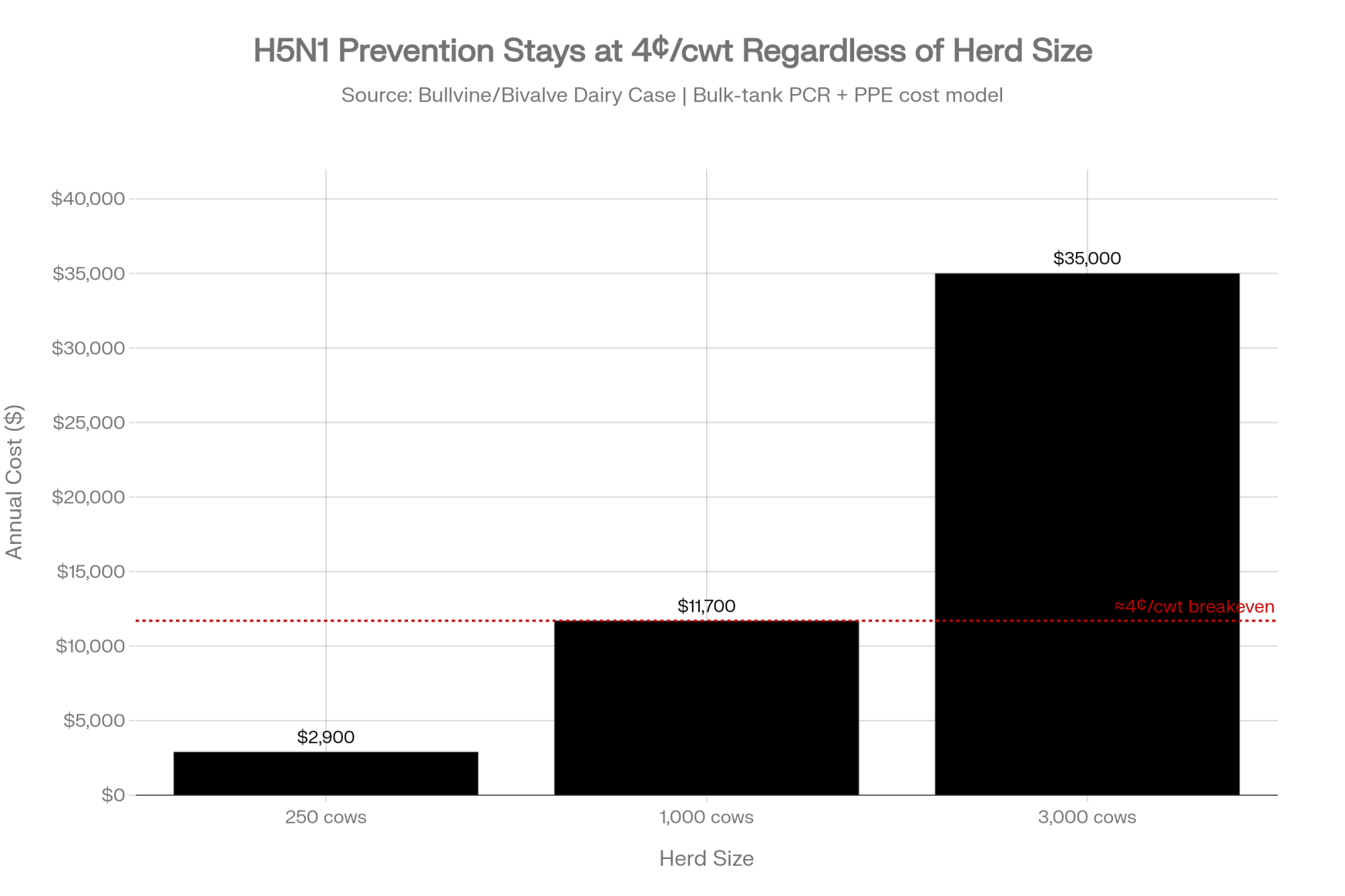
- The prevention cost: A bulk-tank PCR testing cadence runs just 4¢/cwt — roughly $2,900/year for a 250-cow herd, $11,700 for 1,000.
- The hidden spread: 36.3% of U.S. retail milk carried viral RNA back in 2024, when official maps showed only 29 herds.
- The airborne threat: 60% of parlor air samples on positive farms tested PCR-positive with 11% carrying live virus — yet only about 1 in 4 workers wear a respirator.
- The kicker: USDA dropped pre-movement testing for “unaffected” states on May 1, so cattle now cross state lines on a label instead of an animal test — right as Idaho tops the chart.
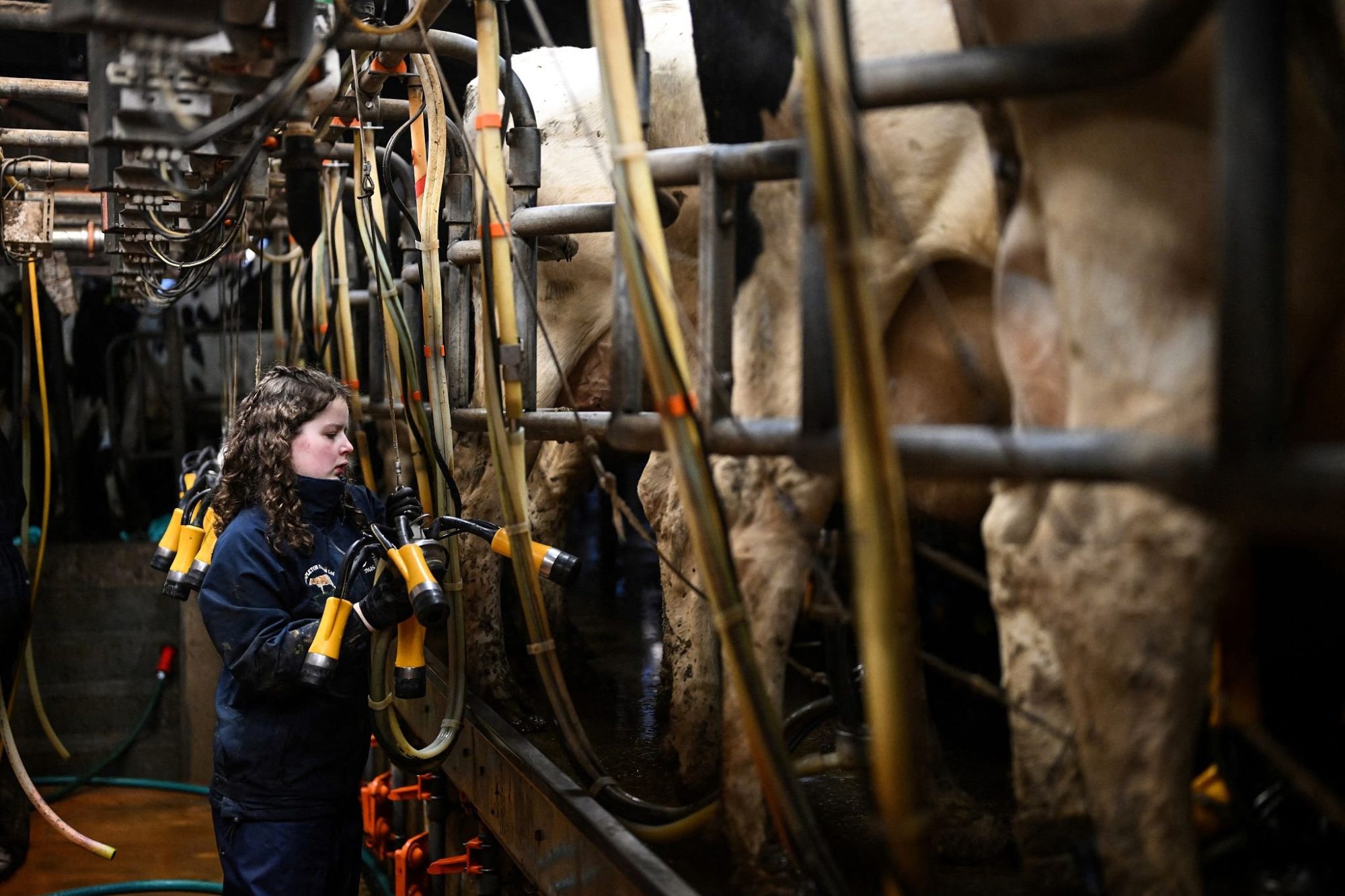
Picture a milker — any milker — walking into a Magic Valley parlor before dawn. The bulk tank just came back positive for H5N1. The cows around him mostly look fine — that’s the trap with this virus: they shed for days before they ever look sick. Nobody’s handed him a respirator. Nobody’s swabbed him. And Idaho still officially reports zero human cases.
That gap — between what’s getting measured and what’s actually happening — is the whole story of H5N1 in dairy right now. Idaho has climbed to 25 confirmed infected herds, tied with Michigan for the most in the country and now ahead of Texas, on USDA data compiled by the Idaho Farm Bureau. Thirteen of those herds were confirmed positive in just two days, May 11–12.
That confirmed number was never really a count. It’s a floor.
And once you see why, Idaho stops looking like a local flare-up and starts looking like a preview of how this virus moves through any dense dairy region.
What’s Changing and Why
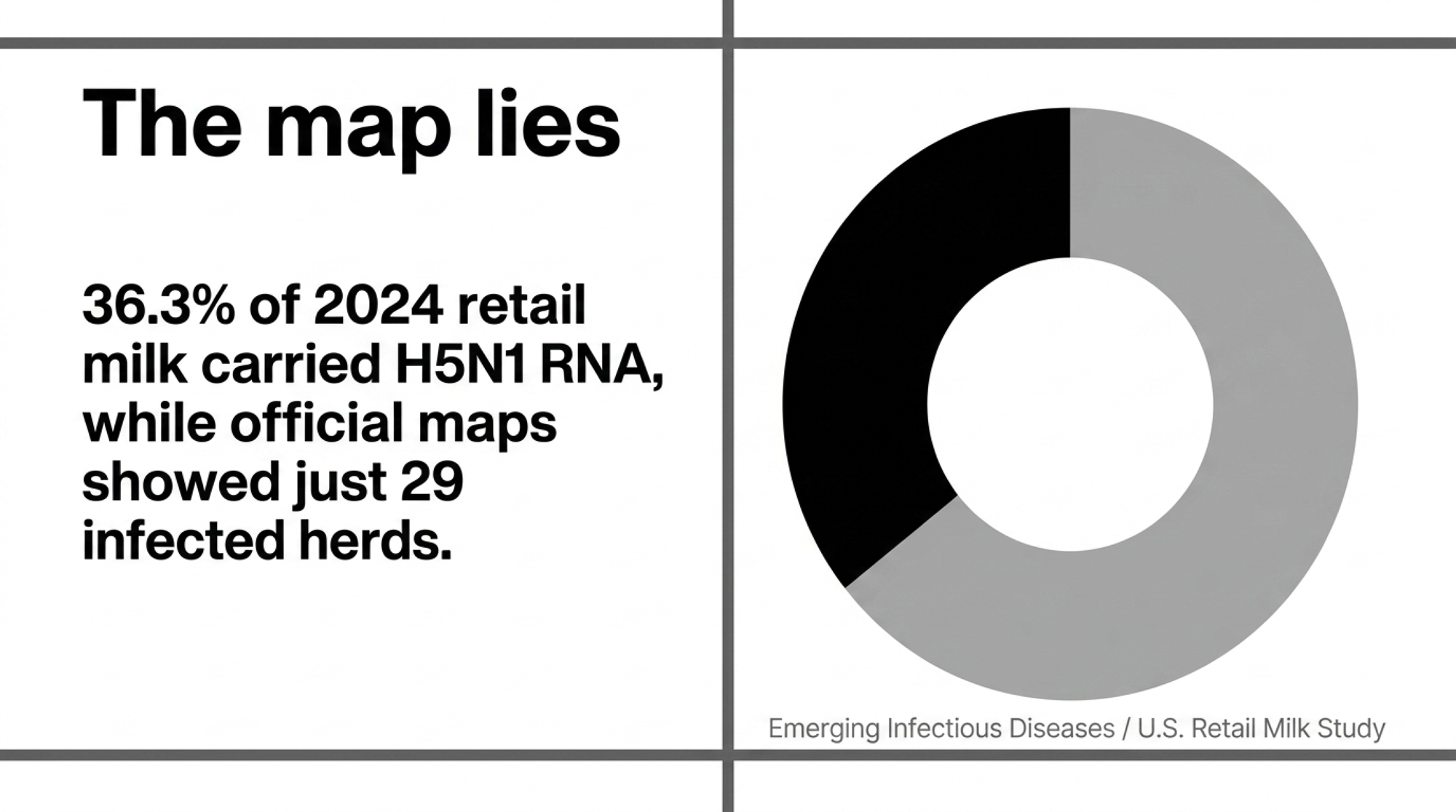
Start with the number that reframes everything. When researchers tested U.S. retail milk in April–May 2024, 36.3% of samples came back positive for H5N1 viral RNA — while USDA’s official map showed just 29 infected herds nationwide. Positive milk turned up in states like Arkansas, Indiana, and Missouri that had no reported herds at all. Pasteurization had killed the live virus, so the cartons on the shelf were safe. But the fragments were a fingerprint. And they said the virus was already nearly everywhere the map said it wasn’t.
That detection gap is the engine of the whole problem. A CDC-authored study in Emerging Infectious Diseases said it flatly: early in the outbreak, “cases in US dairy herds were widespread and went undetected.” Reported herd counts only climbed — past 1,000 across 19 states by late 2025 — after USDA forced more testing into the system through its National Milk Testing Strategy. The virus didn’t suddenly spread faster. We just finally turned the lights on.
Here’s the timeline trap. Those tracking gaps first showed up in 2024 — but the structural fix is moving the wrong direction. As of May 1, 2026, USDA loosened the movement rules even as milk and air kept saying the virus was undercounted. So the industry is running a 2024-era detection playbook against a 2026 crisis, right as Idaho’s case count tops the chart.
Idaho is where that matters most this summer. It’s a top-four milk state with roughly 705,000 cows on about 350 dairies — that’s an average near 2,000 cows per operation, and nearly three-quarters of them sit in the Magic Valley, per USDA figures reported in June 2025. A lot of cows, a lot of people, a lot of milk trucks, all moving through tight geography that’s wired straight into national cattle-movement routes. Drop H5N1 into a system like that, and it doesn’t stay put. The mid-May cluster proved it — the virus tracked through Idaho herds all month, and the state’s been the bigger 2026 story by a wide margin.
The Economic Reality: Real Losses vs. Cheap Safety
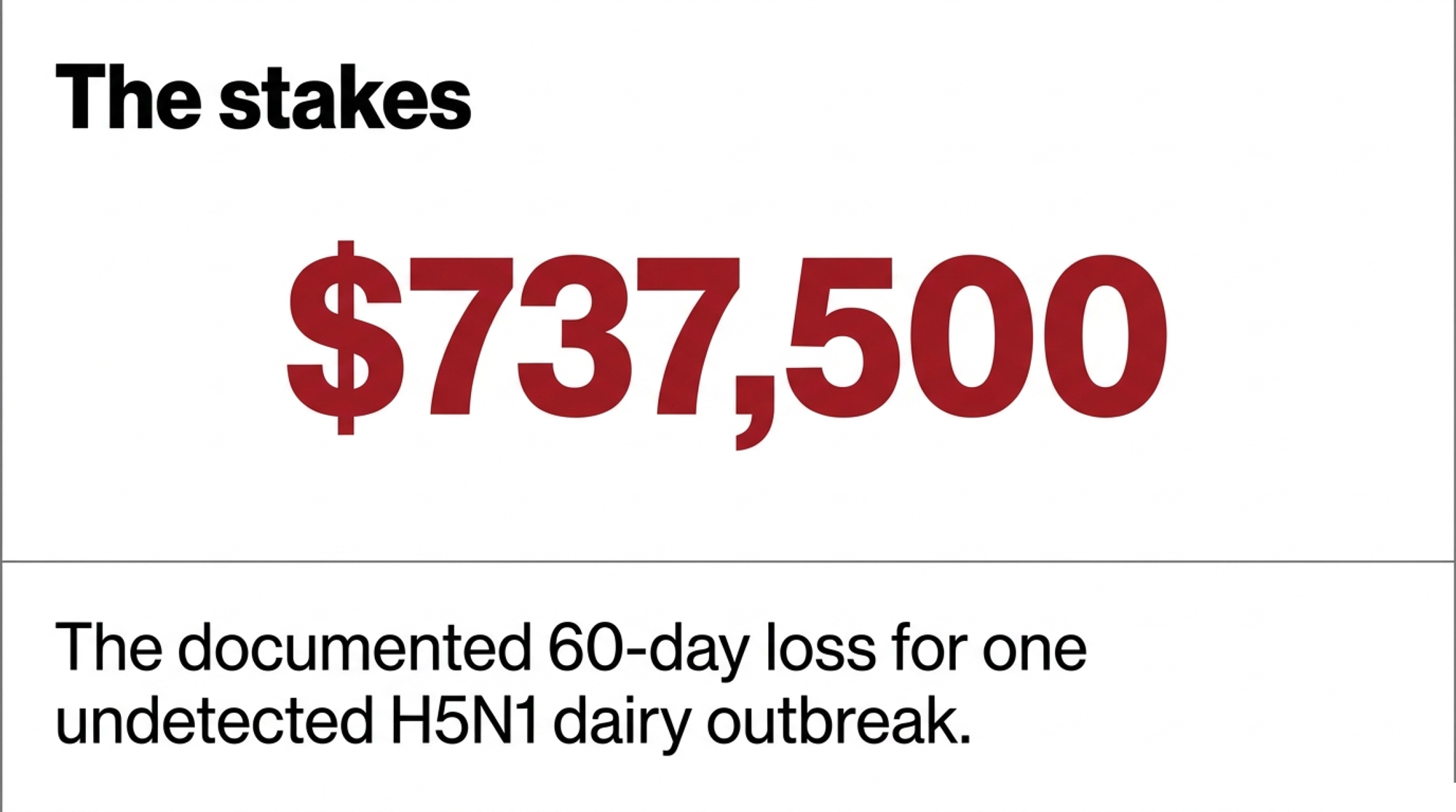
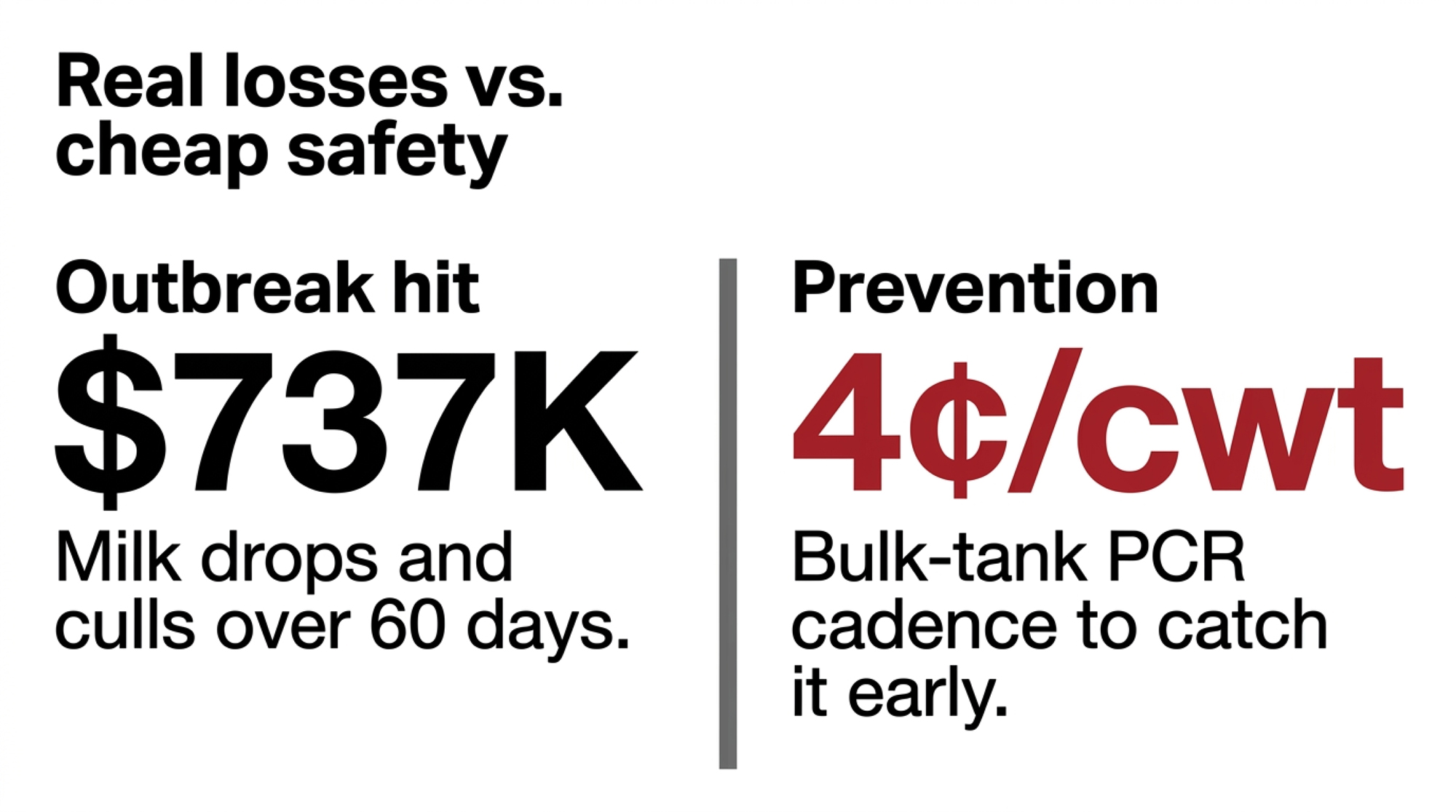
The losses hit fast. In Bullvine’s earlier reporting, one Ohio dairy’s documented H5N1 losses ran to roughly $737,500 over about 60 days — milk drops, culling, and biosecurity costs stacking on top of each other. That’s not a rounding error on anybody’s balance sheet.
| Scenario | Herd Size | Annual Prevention Cost | 60-Day Outbreak Loss | Cost Multiplier |
|---|---|---|---|---|
| Bulk-tank PCR + PPE cadence | 250 cows | $2,900 | — | — |
| Bulk-tank PCR + PPE cadence | 1,000 cows | $11,700 | — | — |
| Bulk-tank PCR + PPE cadence | 3,000 cows | $35,000 | — | — |
| Documented outbreak (Ohio dairy) | ~1,000 cows | — | $737,500 | ~63× |
| Cost per cwt (prevention) | Any size | ~4¢/cwt | — | Cheapest insurance you’ll ever buy |
Now run the prevention math, because it’s almost insulting by comparison. An independent look at the Bivalve Dairy case pegged H5N1 biosecurity costs at about $7,200 to $12,500 a year on a 1,000-cow herd — roughly 4¢/cwt — to cover PPE and bulk-tank PCR testing. Put it another way: a herd that size shipping, say, 80 lbs/cow/day moves around 292,000 cwt over a year, so 4¢/cwt lands near the top of that range — about $11,700. Scale it down and it still holds: a 250-cow herd runs about $2,900 a year to keep its detection window tight; a 3,000-cow operation, closer to $35,000. Either number is a fraction of what a single undetected outbreak takes out of your milk check in a month. So you’re not saving money by skipping the test. You’re betting your whole season that the virus won’t find you before your next routine milk pickup does.
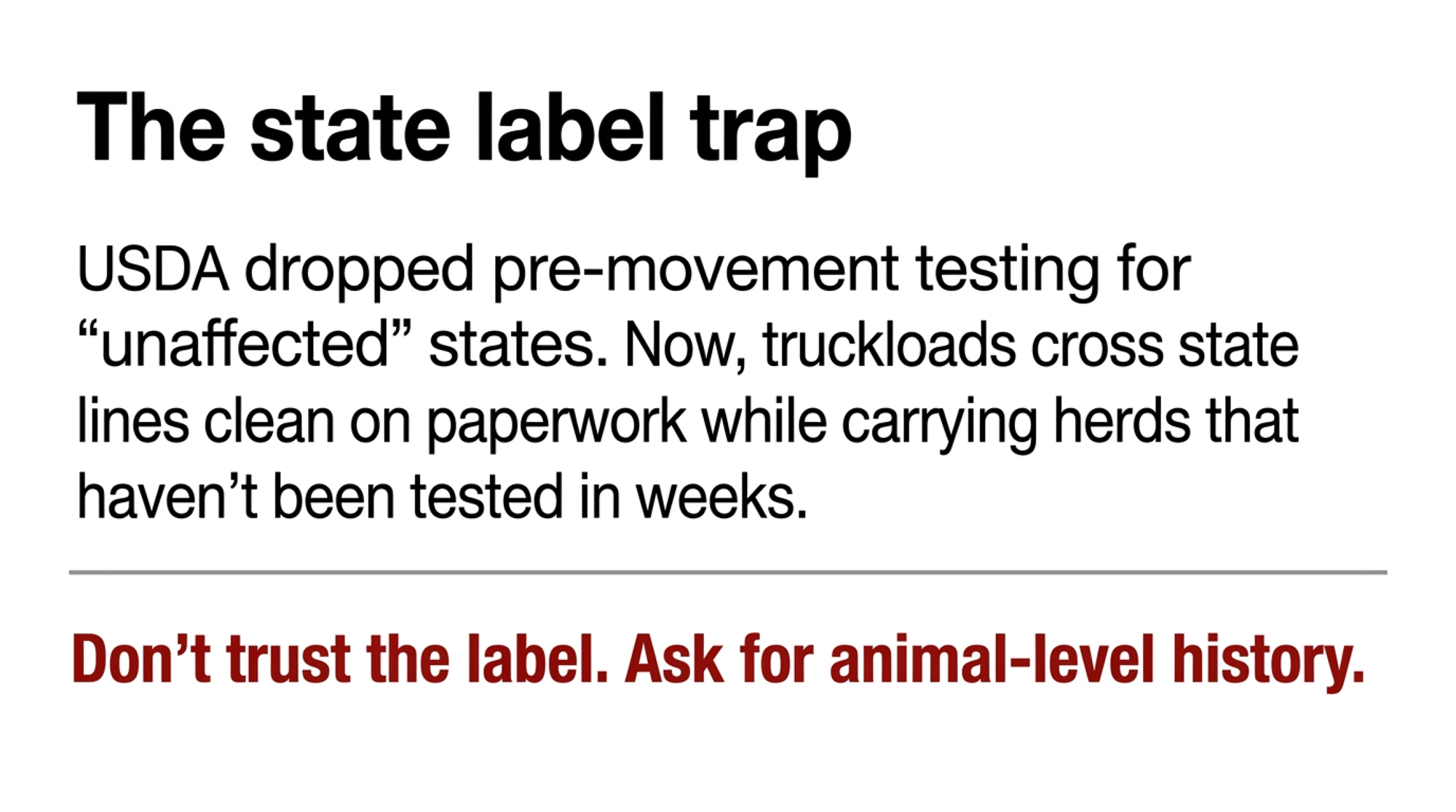
That bet gets a lot riskier the moment you buy or move animals. With pre-movement H5N1 testing gone for “unaffected” states since May 1, the state label is now doing the work the cow test used to do — and a state’s “Unaffected” status rests on bulk-tank surveillance that runs days behind and only catches infections sampled before the cattle load out. By late 2025, 33 states had already reached that tier, and not one has reverted since the program began. So a truckload can cross state lines clean on paperwork while carrying a herd that hasn’t been individually tested in weeks. Ask for animal-level history anyway. The cost of one wrong load showing up hot — quarantine, a tanked milk check, the cull list — is a lot steeper than waiting a few days for tested cattle.
| Factor | Pre-May 1, 2026 (Old Rules) | Post-May 1, 2026 (Current) | Risk Level |
|---|---|---|---|
| Pre-movement testing requirement | Required for all cattle movements | Dropped for “unaffected” states | 🔴 HIGH |
| Basis for “safe” status | Individual animal test | State-level bulk-tank surveillance | 🔴 HIGH |
| Lag time in bulk-tank detection | Days behind infection | Days behind infection | 🔴 HIGH |
| States at “Unaffected” tier | Fewer | 33+ states by late 2025 — none reverted | 🔴 HIGH |
| Animal-level test history available | Yes, standard | Must be requested separately | 🟡 MEDIUM |
| Risk if single hot load arrives | Quarantine + milk check loss | Same — but now easier for it to happen | 🔴 HIGH |
The Airborne Risk & Worker Reality
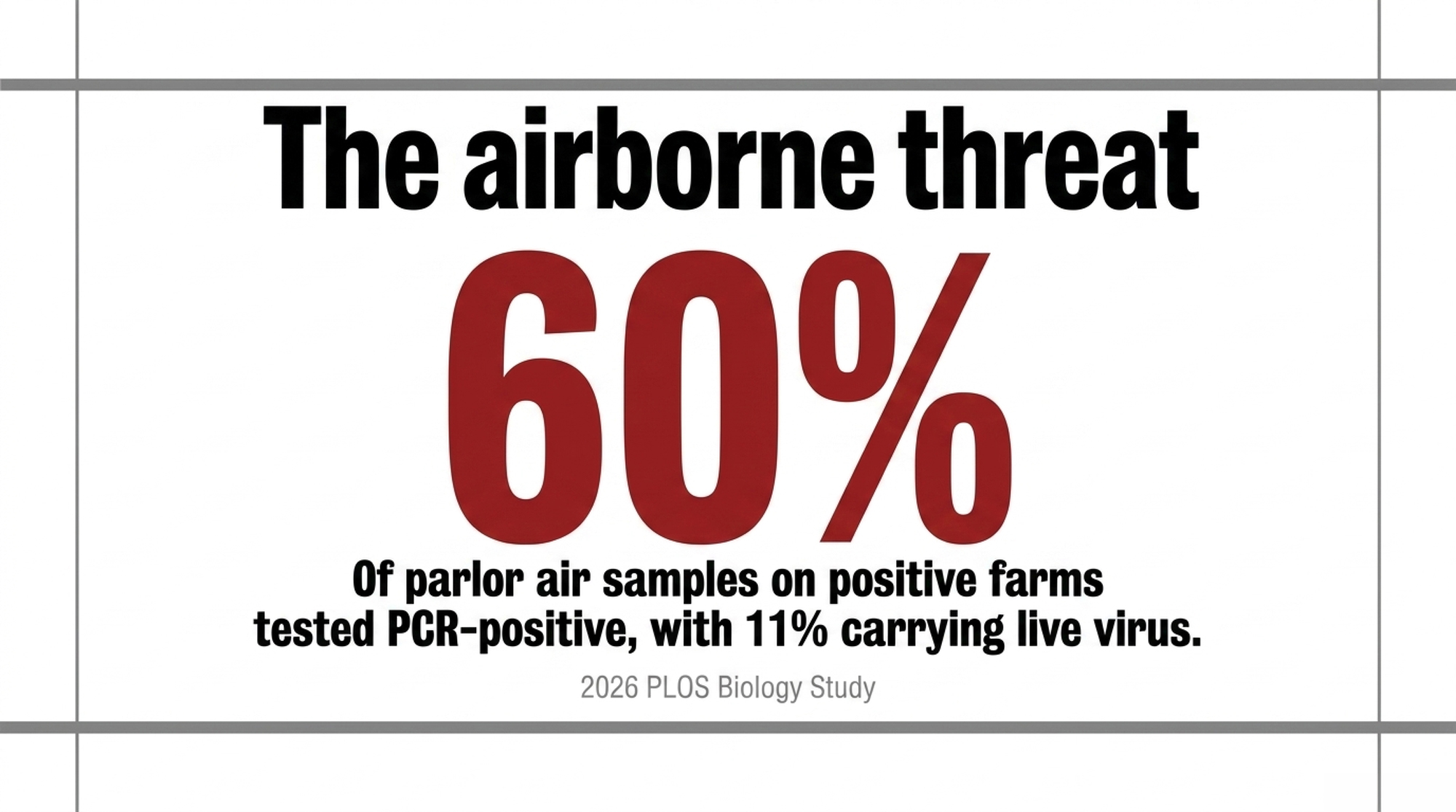
Here’s the part that should stop you cold. A 2026 PLOS Biology study sampled the air inside milking parlors on H5N1-positive California dairies and found 60% of parlor air samples were PCR-positive — and more than 11% carried live, replication-competent virus. (Those figures come from a focused phase on three farms, not the full sample set.) The researchers didn’t hedge: enclosed, humid parlors where milk gets aerosolized “pose the greatest threat from inhalation of the virus to dairy farm workers” compared to open-air pens. Yet a Bullvine field check found only about 1 in 4 parlor workers consistently wearing a respirator. Live virus in the air, and three-quarters of the people breathing it have no barrier.
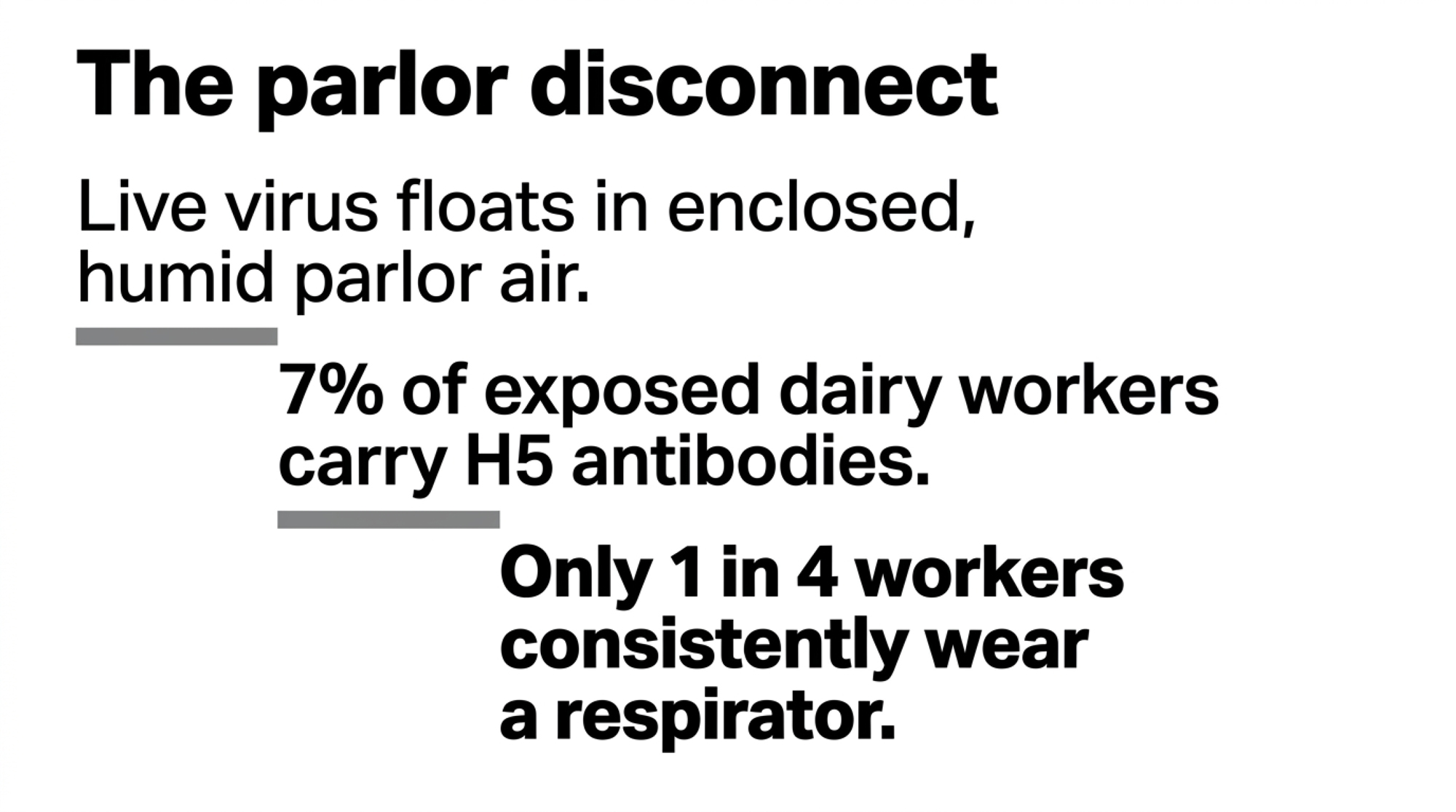
Now the number that ties it together. CDC serology found 7% of exposed dairy workers carried H5 antibodies, against only a handful of confirmed human cases at the time — and only half of those eight workers even remembered feeling sick. Most never showed up in official tallies because testing was built around obvious flu-like illness, not the mild conjunctivitis that many workers actually got. So “zero human cases in Idaho” doesn’t mean zero infections — it means zero detected. Nationally, the CDC counts 71 human H5 cases since February 2024, none in Idaho on paper. Those cohort numbers come from Michigan, Colorado, and California, not Idaho specifically — but there’s no reason to think Idaho parlors behave any differently, and roughly half of U.S. hired dairy labor is immigrant workers who often face real barriers to reporting illness.
Idaho’s own health authorities have moved past waiting for sick workers to walk in. In a June 15 advisory, the state’s Central District Health told clinicians to “consider testing asymptomatic individuals with high-risk exposures” — including anyone exposed to infected animals without proper PPE or after a PPE breach. Read that again: the public health system is now recommending testing people who feel completely fine because it knows the symptom-based net was leaking. That’s your cue too. The honest move isn’t waiting for a positive test before you act — it’s protecting the people in the parlor as if the exposure is real. Because the science says it is.
Actionable Options for Producers
The golden rule of H5N1: you control far more of your own detection picture than the federal regulatory system gives you credit for. Here’s where producers are landing.
| Action | Cost / Effort | The Catch |
| Independent bulk-tank PCR cadence (do this within 30 days) | ~4¢/cwt — about $2,900/yr (250 cows), $11,700/yr (1,000 cows) | A positive triggers quarantine and hard calls — but early beats finding out when production craters |
| Mandate parlor PPE (N95s + eye protection) | Low supply cost; high enforcement effort | Worker pushback is real; uptake sits near 26% while live virus floats in parlor air |
| Tighten shared-equipment & vehicle rules | Cleaning discipline + route planning | A hassle — but one of the cheapest spread-control levers you’ve got (62% of affected Michigan farms shared vehicles without proper cleaning) |
| Don’t trust “Unaffected State Status” alone | Ask for animal-level test history when buying/moving | You may pay more or wait longer for tested animals — but you won’t import someone else’s problem |
Key Takeaways
- If you’re in or near a hotspot, price out bulk-tank PCR at about 4¢/cwt — roughly $2,900 a year on 250 cows, $11,700 on 1,000 — and start a cadence this month. Early detection is the cheapest version of this problem you’ll ever buy.
- If fewer than 1 in 4 of your parlor crew wear respirators, you’re below even the documented field average — fix that before the next milking, not after a positive tank.
- If a worker had a real exposure without PPE, Idaho health officials now say test them even if they feel fine — call Central District Health at 208-327-8625.
- If you’re moving cattle out of an “unaffected” state, ask for animal-level test history, not just the state-status label.
- If you share trucks or crews across sites, audit your cleaning against the 62% of Michigan farms that didn’t — and got burned.
- If you’re telling yourself “no human cases here means we’re fine,” reread that 7% serology number and decide whether you’re measuring or just hoping.
Idaho went from a handful of herds to 25 in a matter of weeks, and the official map will always run a few days behind the milk truck. So the real question isn’t how many herds show up on the dashboard this week. It’s how much of your own operation you can actually see right now — your tank, your parlor air, your crew — versus how much you’re taking on faith.
Want the full cost-per-cwt model? We’re building out the herd-by-herd breakdown — 250, 1,000, 3,000 cows — alongside the biosecurity steps that actually held up at operations like Bivalve Dairy, inside The Bullvine’s H5N1 coverage. Worth a look before your next bulk-tank pickup, not after.
Run Your Numbers
Farm Benchmark Snap Check — Before you decide whether 4¢/cwt of biosecurity is worth it, run the DVI Risk Check to see whether your margin could absorb an H5N1-sized hit — or whether one bad tank puts you in the risk band. Three numbers, one minute, a dollar answer.
Complete references and supporting documentation are available upon request by contacting the editorial team at editor@thebullvine.com.
Learn More
- Heat Kills Bird Flu: Are You Doing Enough to Protect Your Dairy Operation? — Delivers immediate protocols to eliminate H5N1 from your raw milk lines using temperature controls. Learn how to weaponize accessible, on-farm heat solutions to protect calves and equipment from an eight-week survival window.
- $950 Per Cow Is Only the Start: Bird Flu’s True Cost to Your Dairy — Exposes the hidden economic damage that compounds well past the initial outbreak phase. Follows the money on breeding setbacks, somatic cell count penalties, and long-term culling losses that dwarf official short-term estimates.
- How Canada Keeps Its Dairy Cows Free from Bird Flu — Dismantles the assumption that widespread herd infection is inevitable by breaking down a zero-case system. Examines how rigid border enforcement, rigorous raw-milk testing, and mandatory wild-bird monitoring successfully insulated Canadian producers from cross-border threats.
 The Sunday Read Dairy Professionals Don’t Skip.
 The Sunday Read Dairy Professionals Don’t Skip.
Every week, thousands of producers, breeders, and industry insiders open Bullvine Weekly for genetics insights, market shifts, and profit strategies they won’t find anywhere else. One email. Five minutes. Smarter decisions all week.