



Archive for dairy farm legacy

72 Milk Pans, Fired Quidlings, 24% Returns: Abigail Adams, America’s First Dairy CFO

Braintree, 1794. Her land paid 2%. Her bonds paid up to 24%. She ordered 72 milk pans, fired the quidlings, and out‑managed half the Founding Fathers from a farmhouse desk.

Braintree, 1776. While John argued independence in Philadelphia, Abigail was at the kitchen table running the farm, the books, and — quietly, through a trusted middleman — a bond portfolio that would out‑earn Adams land twelve to one.

Act I — Cannons, Cream Pans, and a Woman with a Quill

The cannons had barely cooled.

It was April 11, 1776. Boston Harbor still carried the faint bite of gunpowder from months of siege. British warships had rattled windows from Roxbury to Braintree, and every farmhouse along that stretch of coast had learned to flinch at the sound of distant artillery.

A few miles south of town, in a plain wooden farmhouse in Braintree, Massachusetts, the air was different. Woodsmoke. Damp wool drying by the hearth. The sour‑sweet tang of yesterday’s milk resting in shallow tin pans in the buttery, throwing off a bit of chill as the cream lifted. Somewhere beyond the kitchen wall, a cow bawled for her calf, and a team of horses clinked past with harness and chain.

At the kitchen table, a woman dipped her quill in ink instead of cream.

Her husband was in Philadelphia, arguing over phrases that would soon cut an empire in half. She’d heard the cannon fire. She’d watched neighbor boys drill on stony pastures and disappear down the road toward armies that might never send them back. She could have written about fear. Loneliness. The price of salt.

She wrote about ambition.

“I hope in time to have the Reputation of being as good a Farmeress as my partner has of being a good Statesmen.”

That’s the voice that opens this story. Abigail Adams, thirty‑one years old, the wife of a lawyer‑turned‑revolutionary, sitting in a working farmhouse with milk cooling in the pantry and a war rumbling just beyond her door. In one sentence, she planted a flag most of her contemporaries couldn’t even see. Inside twenty years, that same quill hand would be buying discounted government notes through a trusted middleman while John was off in Paris — returns her husband would sneer at and her household would quietly live on.

Here’s what most folks miss about that line.

When Abigail wrote “Farmeress,” she wasn’t being cute. She wasn’t reaching for a romantic title to tuck into a letter. In an era when a married woman legally couldn’t own so much as her own butter churn under the doctrine of coverture, she was staking out a professional identity. She was telling her absent husband — and, quietly, the future — that while he built a country, she intended to build a farm worth remembering.

Most people know Abigail as the one who told the Founders to “Remember the Ladies.” That quote wins posters and school projects. But if you actually sit with the 2,100‑plus letters she and John traded over forty years, a different Abigail steps forward. One who talked hay yields, cheese hundredweights, laborer contracts, and discounted government notes with the same cool attention most Revolutionary leaders reserved for treaties.

She wasn’t alone in her era, though she was rare. Down in South Carolina, another woman about her age — Eliza Lucas Pinckney — was quietly perfecting indigo cultivation on her father’s plantations and reshaping a whole colony’s export economy. Different crop, different geography, darker moral footprint given Pinckney’s reliance on enslaved labor, but the same unmistakable pattern: the Revolution‑era colonies had a handful of brilliant women managing serious agricultural operations while the men were off tending to war, politics, or empire. Abigail was New England’s entry in that short, extraordinary list.

What nobody sitting at that kitchen table could have seen, that spring morning in 1776, was this: the woman writing about being a “Farmeress” would one day become the reason a founding family kept its farm when other, more famous Founders lost theirs.

Every dairy farmer reading this knows her type, whether they know her name or not.

Born to Books, Married to the Land

Abigail Smith came into the world on November 11, 1744, in Weymouth, Massachusetts. Her father, William Smith, preached from a Congregational pulpit. Her mother, Elizabeth Quincy, carried a family name already woven into colonial politics and property.

No schoolroom ever held her. Girls of that time simply didn’t get that luxury. But the parsonage was effectively a library with a kitchen attached, and young Abby grazed those shelves the way a good heifer grazes first‑cut alfalfa — thorough, selective, and hungry. Theology. Law. History. Poetry. Richard Cranch, a young tutor who would later marry her sister Mary, helped shape her reading. It showed.

Historian John Kaminski sums her up in eight words worth pinning above a herd manager’s desk: “a very demanding person that people live up to.”

You know the type. You’ve met her at breakfast on a show morning. Quiet in the corner, coffee in hand. Knows every pedigree at the table and doesn’t need to prove it. Standards as high as a first‑lactation Excellent score — and no patience for shortcuts.

She married John Adams in 1764 and stepped onto the Braintree farm that would define the next fifty years of her life. This was no sprawling Virginia plantation. It was a rocky New England operation: patches of stony upland, strips of salt hay cut from the tidal marshes, an orchard, a garden, a few fields in rotation, a small herd of dairy cows, some sheep, and a house that by modern standards would have leaked heat faster than it held it.

Put that in period context. A typical New England farm in the late 18th century ran somewhere around 50 to 100 acres of cleared and uncleared ground, produced most of what the family needed, and kept “a cow” the way we think of “a truck” — one, maybe two, for household milk, butter, and cheese. The Adams place wasn’t enormous by those standards, but in ambition, in dairy scale, and in the way it was run, it was about to leave the neighbors in the dust.

John, at that point, was a lawyer. Lawyers travel. Then he became a revolutionary. Then a diplomat. Then vice president. Then president. Every promotion translated into one reality back home: longer absences, and farther. From 1774 to 1777 he was in Philadelphia at the Continental Congress. From 1778 to 1788 — a full ten years — he was in Europe, bouncing between Paris, Amsterdam, and London. After that came New York, Philadelphia, and the raw new capital on the Potomac.

Someone had to keep the cows fed, the hay in, the cider sound, the taxes current, and the hired help from walking off mid‑season. Someone had to make sure there was still a farm to come home to when the speeches ended.

That someone was Abigail.

At first because she had to. Then — and you can feel this shift in the letters — because she was very, very good at it.

The Farm You’d Recognize, and the One You Wouldn’t

Most Braintree neighbors worked subsistence‑scale places: a yoke of oxen, a couple of house cows, a few sheep, maybe a pig out back. The wider New England dairy economy of the 1770s and 1780s was built around exactly that kind of small, diversified operation — no commercial herds in the modern sense, no milk buyers, no bulk tanks.

The Adams farm was different. Horses, sheep, and dairy cows. Salt hay cut from the coastal marshes for winter feed. Orchards feeding a serious cider operation — John liked to credit a morning “jill of cyder” with his digestion and longevity. A garden. Fish from the coast to stretch rations for family and laborers. Tenant families on outlying acreage, including land they called Thayers place.

Sitting inside all of it, like the bulk tank humming at the center of a modern parlor, was the dairy. No cold chain. No stainless. No pipeline. Milk was a race against spoilage won with cool cellars, clean pans, fast hands, and people who understood what “clean” really meant in a world of wooden churns, tin, and open flame. Cheese and butter weren’t luxuries — they were the storage strategies that turned perishable cream into marketable surplus. That was the world Abigail stepped into as manager, and later, as architect.

The Year the Hay Fell Short

If this all sounds like tidy success, 1777 is the year that tests the story.

By midsummer, John was deep in the Continental Congress’s committee work, writing home to Braintree with both affection and advice. In a July 1777 letter, he gently pressed her on what he already suspected: the farm wanted manure, the hay crop was short, and the cattle needed a plan. “The true Maxim of profitable Husbandry is to contrive every Means for the Maintenance of Stock,” he wrote. “Increase your Cattle and inrich your Farm.”

Easy counsel from Philadelphia. Much harder in Braintree.

Abigail was the one actually staring at the hay mow as it came up lighter than last year. “Northern storms,” British warships strangling coastal trade, labor shortages because young men were off with the militia, currency so unreliable that farmers sometimes barely knew what their hay was worth in any given week. Every manager knows that knot in the stomach when you climb the ladder to the loft and realize the stacks don’t quite reach where they should.
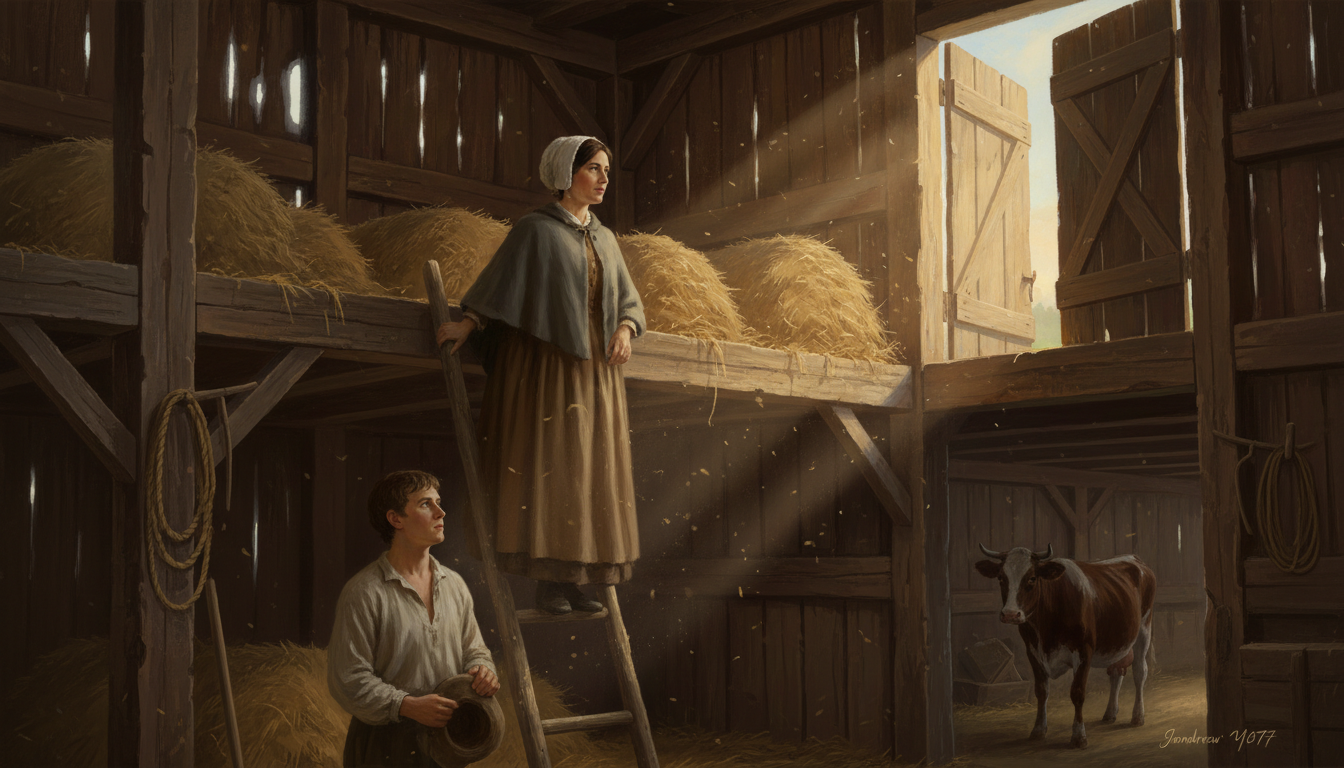
She didn’t write back fussing. She wrote back managing.

The record suggests she tightened stocking numbers where she could, negotiated for hay and feed at prices that were anything but friendly, and pushed hard to recycle every pound of fertility back onto the fields — doing, in practice, exactly what John was preaching in theory. She translated his “true Maxim” into messy, real‑world decisions in a war economy.

Here’s the piece that tends to get missed. A short hay year isn’t just a budget problem. It’s a welfare problem. If you don’t stretch your feed carefully — if you don’t cull the right animals, protect the deepest milkers, keep condition on your stock — cows pay the price first. Abigail’s whole approach, from the manure plan to the way she watched salt hay and orchard yields, reads as someone who understood that her cattle weren’t line items. They were the engine. Starve the engine, and the whole farm grinds to a halt.

You can picture her at the edge of the field late in the day. Light slanting through the last of the timothy. A laborer waiting for a decision about which cows stay, which go, which piece of ground gets more manure before snow. The war is somewhere else. The winter is only weeks off. The cows don’t care about the Continental Congress.

That’s the first obstacle. Hay, weather, war. And she didn’t just survive it. She came out the other side ready to expand.

Managing People Like a Pro Herdsman

Every dairy operator knows the hard truth: cows are the easy part. People are the real job.

Abigail’s letters from the 1790s read like a modern dairy’s HR file, except everything’s in ink and there’s nothing remotely politically correct about the assessments.

In February 1794, with John serving as vice president in Philadelphia, she sat down with the Richards family — son and daughters of a household known in the area for handling dairies “upon a large scale.” She didn’t just shake hands. She set her terms. Then she ran them past her uncle, Dr. Cotton Tufts, for a character check before committing. That’s a vetting process any modern herd manager would respect.

She rotated two hands, Arnold and Copland, on alternating schedules to keep their rivalry from poisoning the crew. She offered Mr. Shaw and Alice terms “not quite as liberal” as other candidates, partly to see if they were serious about the work or shopping for the easiest paycheck.

Porter, a tenant whose wife she judged too weak for the pace of the operation, got dismissed with a biting word that still stings across the centuries — “quidling.” She refused to renew his terms. Faxon, known for a “contrary” nature, proved unreliable for teaming animals when the season demanded it.

If you’ve ever had a hired hand who can fix any piece of iron on the place but sinks morale every time he opens his mouth at breakfast, you recognize what she was up against.

She understood output, too. When she heard that a woman known only as Joy’s wife had made “nine hundred weight of Cheese last year from six cows,” she filed it away. In today’s terms, that’s hearing a neighbor turn out a level of per‑cow performance that makes the rest of the county look tired. Abigail wanted that kind of capability on her payroll.

You could feel the difference between farms under her eye and farms where nobody was counting.

By Letter and by Ledger

One of the gifts Abigail left us is that she didn’t just run the farm. She documented it, week after week, in letters that still exist.

In March 1794, her order sheet reached John’s hands. Six dozen milk pans. Six cream pots. Eight milk pails. Two cheese tubs. Plus assorted odds and ends to outfit an expansion of the dairy.

Stop and think about that for a second.

Seventy‑two milk pans. In a community where most families were making do with a handful. This wasn’t a house cow and a couple of pans for Sunday company. This was capital investment in volume‑scale dairying at a time when the average New England farm considered two or three milk cows a serious herd.
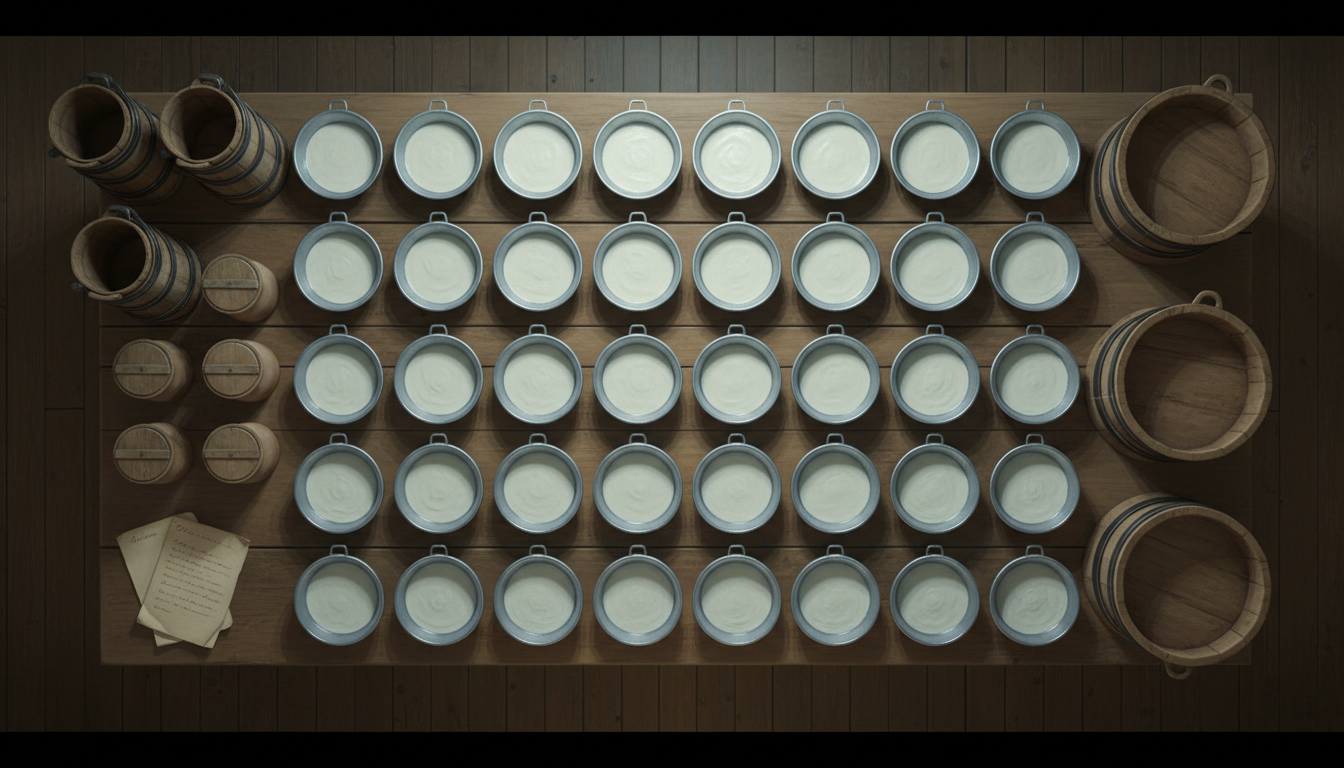
No dabbler orders that much tin and wood in a single request.

She was also weighing logistics in a way that would sound perfectly modern to any multi‑site operator today: should the dairy stay centralized at Thayers place, or split across multiple properties? Each option carried labor, hygiene, and quality tradeoffs, and she was the one running the math.

Meanwhile, from Philadelphia and from Europe, John sent down homilies on husbandry and maxims on soil he’d never apply with his own hands. The affection between them is real, but so is the gap. He gave her theory. She sent back crops, cheese, cider, and a working enterprise.

One can imagine her reading a particularly self‑satisfied paragraph of his by candlelight, smiling a thin smile, setting the letter aside, and going right back to solving problems he’d only ever see in summary.

Act II — The Farm Widow Who Became a Merchant

Running a working farm while your husband’s at court in Boston is one level of hard. Running it while he’s across an ocean, the British navy is choking your coastline, and everyone’s guessing whether the new “United States” will survive another fiscal year — that’s a different animal entirely.

From 1778 to 1788, John was abroad, chasing loans and treaties and legitimacy for the young country.

Abigail stayed home with children, hired help, tenants, debts, and weather.

And she did something almost no woman of her station even considered.

She went into business for herself.

She realized, early, that scarcity was opportunity. Pins, needles, ribbons, tea, fine fabrics — small, high‑margin goods Americans still wanted but couldn’t easily get during wartime — were gold. “The cry for pins is so great,” she wrote in 1775, that prices had tripled. So she asked John to buy a bundle of six thousand in Europe and ship them home.

By 1780, she’d gotten more surgical. She told him exactly which linens and handkerchiefs to send — items that would “turn to good account sold for hard Money.” She noted that “small articles have the best profit,” and specifically requested gauze, ribbons, feathers, and flowers “to make the Ladies Gay.”

That’s a market analyst.

She wasn’t keeping a little novelty shop. She was running a transatlantic supply chain powered by her husband’s diplomatic access and her own ground‑level knowledge of what New England would pay for.

For a woman of her class and time, this was deeply unusual, even faintly scandalous. For Abigail, it was practical math. The farm needed cash flow. Her children needed schooling. John’s public salary wouldn’t stretch. So she built a second income stream — the cushion she’d need for her next move.

And this is where it gets interesting.

The Stock‑Jobber in the Sitting Room — The Turning Point

Like most men of his generation, John Adams trusted land. You could walk it, fence it, mortgage it, leave it to your children. In his world, land meant dignity, stability, and status.

Abigail looked at the ledger and saw something else entirely.

The Adams holdings in Braintree and later at Peacefield brought in, by her accounting, something like two percent a year in real returns once you stripped out taxes, labor, and upkeep. Those acres were necessary. They fed the family, fed the cows, fed the cider. But as profit centers, they weren’t exactly pulling freight.

Meanwhile, after the Revolution, the new federal government was broke and nobody was sure it would honor its paper. State and federal notes — pieces of debt paper issued during and after the war — traded at deep discounts because public confidence was low, as the correspondence preserved by the Massachusetts Historical Society makes clear.

Abigail saw those notes for what they were: undervalued assets in a temporarily spooked market. A lot like a good heifer calf out of a cow that just hasn’t caught anyone’s eye yet.

The catch? Coverture law said anything she owned legally belonged to John. She couldn’t march into a broker’s office under her own name.

So she worked the edges. She quietly set aside “pin money” and proceeds from her retail operation. She asked Cotton Tufts to act as her trustee. Through him, she began buying government State Notes while they were still trading cheap.

The numbers are almost hard to believe.

Land, around two percent. Her bond portfolio, at its peak, up to twenty‑four percent a year as federal credit recovered and the notes rose back toward face value.

Twenty‑four percent.
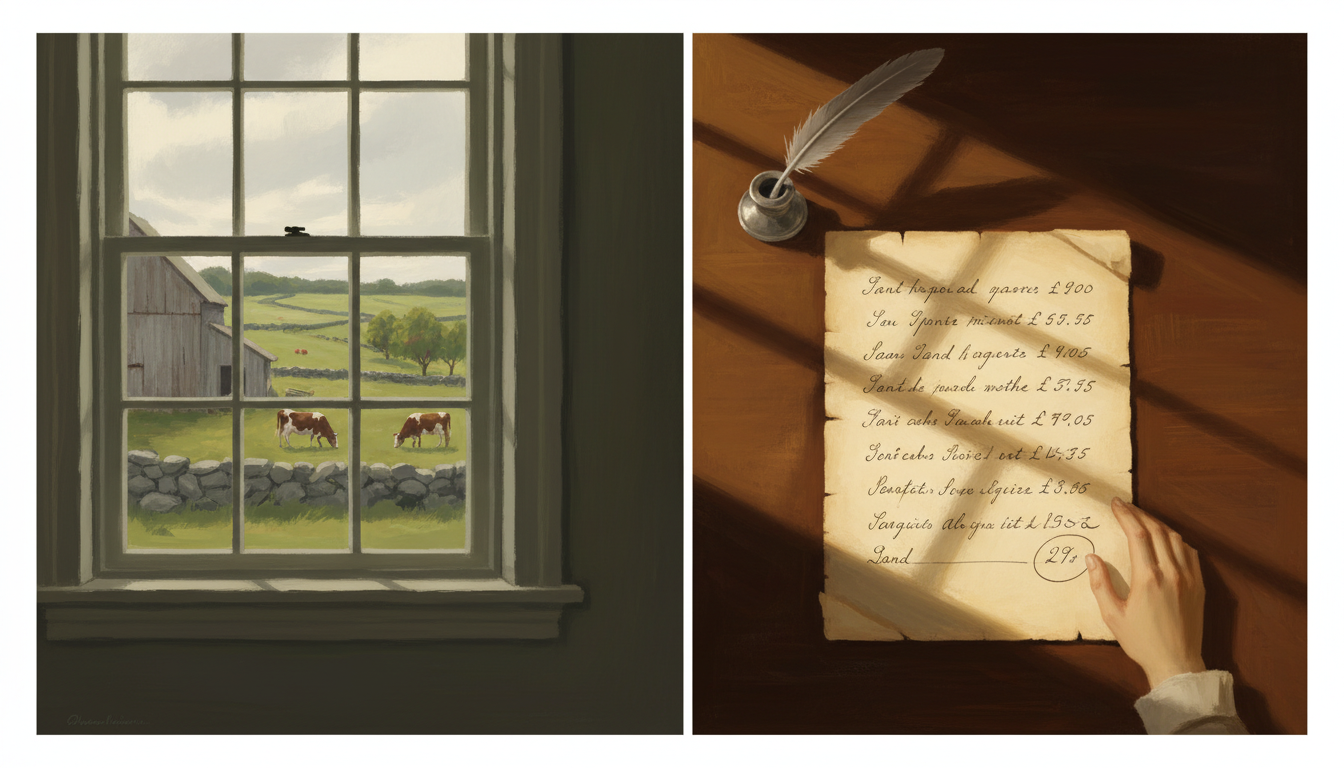
Think about that in today’s dairy terms. You work a 600‑cow herd, fight for every basis point of margin, sweat milk price and feed cost and interest rates, and you know what another point or two on operating return would mean. Now imagine a side investment returning ten or twelve times what the ground under your feet is paying.

One can imagine the moment a statement came back from Tufts in Boston, ink still drying on figures that made her breath catch. The fields she’d fought through storms, labor drama, short hay, and war to keep productive had finally thrown off enough surplus to invest. And that surplus, in her hands, was doing what no acre of Braintree ever could.

John hated this “stock‑jobbing.” He warned her off Vermont land speculation in a famously sharp line — “Don’t meddle anymore with Vermont” — and clung to the comfort of real property.

But the truth was stubbornly the truth. His instinct led toward land‑heavy, illiquid, debt‑prone futures. Hers led toward a modest but steady stream of interest that could cushion public‑service shortfalls and buffer the farm against bad years.

That, right there, is the climax of her story.

Before the bonds, the Adams household was one bad harvest or one political setback from genuine trouble. After the bonds, they had margin. Not riches. Margin. And in a world of volatile currency, endless political stress, and a founding class routinely living beyond its means, margin was oxygen.

Fast‑forward a few decades and look at the scoreboard.

Thomas Jefferson — brilliant, charming, land‑obsessed, debt‑soaked — died so deeply in the red that his heirs were forced to auction off Monticello and the enslaved people who’d built and sustained it to settle creditors.

The Adamses? Peacefield stayed in the family. The farm, the herd, the orchard, the house — still standing, still theirs, still working.

Strip away the quills and frock coats and you’re looking at a farm manager’s dream playbook. Take the surplus from a carefully run mixed farm and dairy. Put a portion into high‑yield, relatively low‑maintenance assets that nobody else trusts yet. Balance land, livestock, and securities. Diversify.

Today we call it risk management. Back then, John called it “stock‑jobbing,” and Abigail Adams became one of the first women in American history to do it at that level.

What It Cost Her

It would be tidy to end there and skip the price she paid. The letters won’t let us.

Abigail wasn’t superhuman. She was a woman living alone on a farm far more than she ever wanted to, carrying weight meant to be shared. In December 1783, after years of separation while John negotiated in Europe, she wrote him bone‑tired and blunt:

“If my dear Friend you will promise to come home, take the Farm into your own hands and improve it, let me turn dairy woman. And assist you in getting our living this way; instead of running away to foreign courts and leaving me half my Life to mourn in widowhood.”

Read that aloud. That’s a line any farm spouse in 2026 can feel in their teeth. She wasn’t asking him to quit the public work. She was asking to share it. Trade the courts for the cows. Trade distant glory for a life pulled in the same direction.

When John finally spent real time at home, he wrote — half joking, half confessing — that he was “jealous” the neighbors might think “Affairs more discreetly conducted” in his absence than at any other time. It’s his way of admitting what we can now see clearly. She’d been running things better than he would have.

Later, when she joined him in Europe from 1784 to 1788, she wrote Tufts from London and Paris about taxes, repairs, plantings, tenants, orchard health, cider barrels. Any producer who’s ever left a good herdsman in charge for a week at World Dairy Expo or the Royal Winter Fair knows exactly where her attention sat. You can be physically anywhere in the world. Your mind stays in the tie‑stall with the fresh cow who looked off this morning.

Act III — Peacefield, Politics, and Her Last Years

Eventually, the politics ran their course. At least for John.

He lost the election of 1800 to Thomas Jefferson. After a bitter campaign, the Adamses packed up Washington and went home to the farm in Quincy they’d come to call Peacefield.

John embraced the role of “Farmer John,” pruning trees, walking fences, writing letters about the weather. And he did put in the hours. But he was moving through systems Abigail had shaped for decades: tenant arrangements, investment income, dairy infrastructure, orchard cycles.

What most people don’t realize is that during his presidency she hadn’t exactly been soft‑pedaling either. She was his political partner as much as his farm partner. She pushed hard for the Alien and Sedition Acts of 1798, seeing them as a shield for her husband and her son, John Quincy, against opposition editors she considered dangerous and “licentious.” She supported the Judiciary Act of 1801 and the “midnight judges,” eager to see Federalists secure the federal courts before Jefferson could reshape them.

Those choices don’t always flatter her by modern standards, and this story doesn’t pretend they do. But they show her seeing herself — correctly — as a co‑executive of the Adams enterprise, political and agricultural both.

On other issues, her moral compass pointed further ahead of her peers than history sometimes remembers. In her March 31, 1776, letter, she told John to “Remember the Ladies” in the new code of laws and warned against putting “such unlimited power into the hands of the Husbands,” adding that “all Men would be tyrants if they could.” On slavery, she asked how colonists could “fight ourselves for what we are robbing the Negroes of” and backed that up by supporting the education of a Black youth named James despite neighborhood opposition.

Back at Peacefield after 1801, her body slowly started to cash checks her years of work had written. Age. Typhoid. The slow erosion of strength. Through it, she kept insisting on plain living: “neither my habits, or My Education or inclinations, have led Me to an expensive stile of living.”

She died at Peacefield on October 28, 1818. She was seventy‑three.

Her passing hit John hard. Later accounts preserve his private wish — to lie down beside her and die too. For a man who’d leaned on her strength, her judgment, and her farm for half a century, that grief was as honest as it gets.

Seven years later, their son John Quincy Adams took the oath of office as the sixth president of the United States. Abigail didn’t live to see it. But follow her letters — her insistence on his reading, his manners, his duty, his moral seriousness — and you can see her fingerprints all over that moment. She and Barbara Bush remain the only two women in American history who’ve been both the wife of a U.S. president and the mother of one.

The monuments can tell that part of the story.

The fields and the cows and the ledgers tell the rest.
What the Farmeress Still Teaches Every Dairy Today

So why should a producer standing in a robot barn in 2026 — worrying about milk price volatility, feed costs, interest rates, and the quota or base rules in your region — care about a woman who ran a farm with no electricity, no refrigeration, and no milk truck ever backing into her yard?

Because a dairy isn’t just cows and milk. It’s systems. Labor. Infrastructure. Cash flow. Land. Markets. She hired families like the Richards because they could handle scale. She rotated rivals like Arnold and Copland to keep the crew workable. She fired the quidlings without flinching. Every time you sit at the kitchen table and debate whether to keep a marginal employee one more season, you’re walking a fence line she already walked.

She treated hardware as investment, not indulgence. Six dozen milk pans, six cream pots, eight milk pails, two cheese tubs. That was capacity planning in tin. Today it might be a robot upgrade, a new freestall pack, a pack barn expansion, or finally buying a decent feed wagon that doesn’t break down every third load. Same instinct. Build the infrastructure before the cows are standing in it waiting.

She refused to bet the family on land alone. The Adams acres fed them. They also ate cash in taxes and labor. Her bonds — the ones John sneered at as “stock‑jobbing” — paid out at roughly twelve times the rate of the ground in a good year. When you weigh whether to put every last dollar into another quarter section versus saving for a robot retrofit, new housing, a feed‑price cushion, or an honest‑to‑goodness rainy‑day fund, you’re running her math. Today’s weather is different. The volatility isn’t. Milk markets, feed spikes, rising interest rates, a wet fall that destroys a corn silage plan — every one of these is a 21st‑century version of her 1777 short‑hay year. The families that come through them are, almost without exception, the ones with some margin tucked somewhere that isn’t soil.

And she knew the hardest work in a dairy isn’t always done in rubber boots. Sometimes it’s done at the desk, before sunrise, staring at numbers, deciding which bill can wait and which can’t. Signing the loan or walking away from it. Every farm woman today who signs the financing, chairs the board meeting, runs the books, negotiates with the lender, or quietly keeps three generations of dairy history alive under one roof is working in space Abigail Adams carved out of a much narrower legal world.

She never milked a cow, as far as we know. She also never stopped managing the ones that did.

A Legacy Worthy of a Hall of Fame

Strip the politics off the story and tell it the way breeders tell each other stories at the rail at World Dairy Expo or over late coffee at the Royal, and here’s what you’ve got.

A farm kid who educated herself out of her father’s library, married into a modest New England place, and ended up running it on her own for years at a stretch while her partner chased history at someone else’s table. A manager who stared down short hay years, stubborn workers, wild markets, wartime blockades, and decades of loneliness — and refused to let the operation slip. A woman who took the hard‑earned surplus from a stony Braintree farm and a wartime side hustle and quietly put it into the one asset class that would outpace everything her neighbors were doing.

You won’t find her name in Holstein pedigrees. She didn’t walk a heifer into the colored shavings at Madison or the Royal, because those rings didn’t yet exist. There’s no bull stud with her initials, no modern bloodline that traces directly to her barn.

But you see her anyway.

You see her in every operation where the person doing the hiring and the books and the long‑range thinking isn’t the one with their name on the banner. You see her in the multi‑generation outfits where Mom or Grandma never sat in the judge’s chair but made sure there was still a farm for the next set of 4‑H calves. You see her in the farm women who sign the financing, work through the cash flow spreadsheets at midnight, and make sure the family doesn’t bet the whole place on a single idea that feels good at the moment. You see her every time a dairy couple divides the labor between the public face and the quiet, relentless work of management — and the quiet one keeps them standing.

Looking back, the signs were always there. From that April morning in 1776 when she wrote about wanting to be as good a Farmeress as her husband was a statesman, to the quiet line of state notes bought on her behalf by a country doctor in Boston, to the farm that was still in the family long after more famous founding estates had gone under the auctioneer’s hammer.

Read her story out loud at a breeders’ banquet tonight and watch heads nod around the room. They’ll know the type. The one who doesn’t need the spotlight but won’t let things slide. The one who refuses to let the numbers lie. The one who, without ever setting foot in the pit, makes sure every cow on the place has what she needs — and makes sure the farm is still there in the morning.

Abigail Adams was America’s first farmeress in more than just name.

For anyone who has ever carried a dairy on their back so someone else could stand in a different light, she isn’t a distant First Lady in a history book.

She’s family.

Key Takeaways

  • Abigail ran the Adams farm like a modern dairy CFO — labor, infrastructure, and off‑farm capital all on one ledger. If your operation only tracks cows and crops, you’re leaving her 24% on the table.
  • Land fed the family at 2%. Bonds protected it at up to 24%. The families that survive short‑hay years and feed spikes today are still the ones with margin tucked somewhere that isn’t soil.
  • Seventy‑two milk pans wasn’t vanity — it was capacity planning before the cows needed it. Whether it’s a robot retrofit or a better feed wagon, build the infrastructure before you’re standing in the problem.
  • Fire the quidlings. Vet the Richards. The person signing the financing and running the books at midnight is doing Abigail’s job — and deserves to be named like it on the operation.

Continue the Story

The Sunday Read Dairy Professionals Don’t Skip.

Every week, thousands of producers, breeders, and industry insiders open Bullvine Weekly for genetics insights, market shifts, and profit strategies they won’t find anywhere else. One email. Five minutes. Smarter decisions all week.

NewsSubscribe
First
Last
Consent

Why 83% of Dairy Farms Will Disappear: How to Beat the Succession Odds Before It’s Too Late

83% of dairies vanish. Will yours? Beat succession odds before your legacy becomes a statistic. Bold moves. Real talk.

Staring down a cliff edge – that’s where the North American dairy industry finds itself. A quarter of operators are hanging up their boots within five years. According to Iowa State’s research, eight out of ten lack faith in their succession plans. And that gut-punch statistic? A staggering 83.5% of family dairies won’t survive to see a third generation running the parlor. Worse than even the dismal 16.5% survival rate plaguing family businesses generally. Make no mistake – what separates the operations still standing from those that vanish has nothing to do with luck. It’s about confronting the financial, familial, and operational barriers to transition with clear eyes and bold action.

Why Most Dairy Succession Plans Are Destined to Fail

Ready to join the statistical scrap heap? Despite family ownership dominating 97% of U.S. farms, the 2022 Ag Census paints a bleak picture – barely half have dipped their toes into succession planning. Worse still, only a pitiful 20% of those with plans actually believe they’ll work.

That financial mountain looms Everest-high. Converting your high-producing Holstein herd to A2A2 genetics overnight? Child’s play compared to today’s capital requirements. Land running $5,570 an acre. Parlor systems that’ll set you back north of $200k. TMR mixers costlier than luxury sedans. Breeding stock representing generations of genetic investment. No wonder the classic “buy-out” model crashes and burns. Expecting your successor to write that check while keeping the operation afloat? About as realistic as hitting a 30,000-pound RHA with second-cut hay and good intentions.

The real time-bombs never tick away in the freestall barn – they’re planted firmly around your kitchen table. Family conflicts have been smoldering for decades. Competing visions nobody dares discuss. Communication breakdowns that would make your cell service look reliable. Compeer Financial nailed it in their 2024 report: that deep-seated need to treat all children “equally” routinely shoots the farm’s survival right between the eyes. Sell those productive assets to square things up, and what’s left to transition?

Then come the emotional roadblocks no spreadsheet can navigate. Mom and Dad are clutching the checkbook like it’s the last life raft on the Titanic. Junior is desperate for enough authority actually to implement changes. This emotional standoff creates barriers taller than your corn in August – like trying to boost conception rates with premium semen when nobody’s bothering to check heats.

Hard truth time: Iowa State found 71% of farmers with retirement on the horizon haven’t even tagged a successor. Got a plan without addressing those human dynamics? Might as well install top-end milking equipment and let the neighbor kid run it – technical excellence means nothing without the human element.

Revolutionary Strategies That Transform Farm Transitions

What separates that elite 17% from the failed 83.5%? Not dumb luck or deep pockets, but a comprehensive blueprint that tackles every dimension of transition.

Early isn’t just better – it’s essential. Don’t wait till the rocking chair looks appealing. Successful transitions need a 5–10-year runway – roughly the time needed to grow those genomically-superior heifers into your mature herd backbone. Journal of Agribusiness research confirms wait too long, and you might as well be planting corn in November.

Family discussions going nowhere? Taken any deliberate steps, or just hoping uncomfortable topics disappear like mastitis without treatment? Progressive dairy families don’t leave communication to chance:

  • Monthly meetings with actual agendas – not just “whenever someone gets mad”
  • “Listening first” protocols, where everyone gets their say without interruption
  • Written records of agreements and sticking points – not memory-based revisionism
  • Professional facilitators, when needed, because family baggage dating to childhood rarely resolves itself

Has your financial structure already torpedoed your chances of a successful succession? Smart operations are dumping the “buy everything or nothing” model faster than you’d cull a three-quartered chronic. Think precision feeding versus one-size-fits-all TMR – the industry has evolved; shouldn’t your succession plan? Leading advisors increasingly recommend splitting operations into:

  • An asset-holding company (senior generation keeps the land/major equipment)
  • An operating company (the successor takes reins of production)

This structure slashes capital requirements while creating retirement income through lease payments. Canadian Bar Association case studies show it works – cleaner than separating dry cows from your milking string while efficiently serving both purposes.

Your advisory team makes or breaks the transition. Would you let some random vet who normally treats parakeets and poodles near your prize genetics? So why trust generic financial advisors with your farm‘s future? Find specialists who differentiate between a TMR mixer and a cement truck. You need agricultural estate planners who’ve seen more dairy transitions inside than most people have seen inside barns.

Never marry a successor without dating first. Forward-thinking farms now implement structured trial periods with clear metrics and escape hatches. Define specific responsibilities, set performance benchmarks, and create exit routes if the fit proves wrong – all before signatures hit paper. Makes more sense than dropping six figures on embryo work without genomic testing the bloodlines first.

Developing successors demands the same systematic approach you’d use to build your herd—formal education matters. Off-farm experience builds perspective. Gradual responsibility increases muscle without breaking bones. Regular feedback catches problems before they become disasters. Half-baked training produces half-capable successors.

When Expansion Powers Your Succession Plan

Nearly half of dairies view expansion as their succession ticket. But size for size’s sake? Pure folly. Does growth truly fit your transition story, or are you chasing industry trends like everyone chased those tall Holsteins in the 80s?

Economics must pencil at both scales and expansion becomes your anchor, not your engine. Leading operations analyze fixed cost dilution across larger herds, calculate capital efficiency metrics down to the penny, project cash flow through the capital-hungry growth phase, and structure financing to protect both generations from excessive risk.

Technology adoption doesn’t just change your operation – it transforms succession possibilities. Forward-thinking dairies leverage expansion to modernize, installing rotary parlors that slash labor needs, implementing herd management software that turns data into decisions, automating feed systems for TMR consistency your old mixer could never achieve, and deploying precision reproduction tech that makes your past breeding programs look like guesswork. Though initially painful to the pocketbook, Dairy Business Innovation documents how these investments often dramatically improve quality of life while boosting resilience.

Approaching expansion strategically or emotionally? That industry mantra “bigger is always better” deserves the same skepticism you’d give a feed salesman promising 10 pounds more milk. The USDA Economic Research Service confirms that economies of scale exist – larger herds generally show lower production costs. But focusing exclusively on land acquisition over productive assets? About as smart as fixating on milk volume while ignoring components. Michigan State’s research team found that investments in facility capacity and superior genetics often outperform land purchases, especially when the next generation starts with more ambition than capital.

Processor relationships? Overlooked by too many. Before breaking ground on those new barns, lock down whether your milk plant actually wants another tanker load daily. Secure those component premiums and transportation arrangements in writing. Nothing torpedoes expansion faster than surprise base-excess deductions slashing your milk check when those loan payments come due.

Next-generation input isn’t a nice-to-have – it’s do-or-die. Expansions that succeed involve successors from day one, collaborating on business plans, defining clear roles, openly discussing financial implications, and documenting transition timelines before the first shovelful of dirt moves.

The Strategic Power of Staying the Course

While expansion hogs the spotlight, maintaining current scale often makes brilliant strategic sense. Recognizing when “steady-state” fits your transition creates stability that many expanding farms would envy.

Component focus literally transforms your milk check. With butterfat driving 58% of revenue and protein adding 31% more, according to 2023 Multiple Component Pricing data, maximizing components frequently outperforms cow-number obsession. Smart operators targeting current-scale excellence prioritize component-focused genetics, dial in rumen fermentation for butterfat synthesis, eliminate acidosis and other component-killers, and master seasonal consistency. Ever calculated your operation’s true income per cow versus income per pound of components? That analysis often reveals more profit potential in your current herd than in expansion dreams.

Risk profiles rarely match between generations. Does your successor share your appetite for leverage and market exposure? Maintaining scale often creates a saner risk profile during transitions – lower fixed costs, reduced debt service, simplified management during leadership changes, and nimbleness when markets shift. Like balancing rations for optimal rumen function rather than maximum production, right-sizing creates stable platforms for transfer.

Resource optimization at the current scale drives profitability that expansion can’t always match. Leading steady-state operations obsess over return per unit – land, labor, or capital. They track production costs with near-religious devotion, strategically outsource non-core functions, mine DHIA data for hidden opportunities, and relentlessly pursue incremental efficiency gains that compound over time.

When lifestyle priorities align with business strategy, maintaining scale supports quality of life during transitions. Particularly valuable when young families need flexibility, multiple generations need income, senior members want continued involvement, or work-life balance trumps bragging rights at the coffee shop. Your best cows need dry periods for lifetime productivity – why shouldn’t your family business operate sustainably too?

How Your Decisions Are Reshaping Dairy’s Future

The collective impact of retirements, expansions, and steady-state operations is fundamentally redesigning North America’s dairy landscape. Understanding these shifts positions your operation advantageously, regardless of size or succession stage.

Consolidation isn’t coming – it’s already steamrolling through. USDA data tells the brutal story: U.S. dairy farm numbers in freefall from 648,000 in 1970 to barely 24,000 by 2022, with another 2,500 operations shuttering in 2020 alone. Yet milk production climbs as mega-dairies absorb that volume. Today, operations exceeding 2,500 cows produce over 60% of the nation’s milk, leveraging economies of scale that smaller farms can’t match.

But does bigger automatically mean better? Hardly. While the USDA Economic Research Service confirms that scale economies exist, innovation creates success stories across diverse sizes. What matters more than cow numbers? Strategic market alignment. Operational excellence at your chosen scale. Clear differentiation in cost structure or product attributes. Financial frameworks supporting generational transition. Just as selection indexes evolved from height-obsessed to lifetime-profit focused, successful dairies optimize their specific model rather than mindlessly chasing size.

Technology demolishes old limitations across farm scales. Robotic milkers, rumination monitors, and precision management tools create possibilities unimaginable a generation ago – slashing labor dependencies, improving work-life balance, enabling data-driven decisions, and attracting tech-savvy successors put off by traditional dairy drudgery. Like genomics democratizing elite genetics for farms of all sizes, technology levels key operational playing fields.

Component-focused strategies fundamentally reshape market dynamics. Multiple-Component Pricing systems drive evolution from volume obsession to composition focus. When did you last overhaul your genetic selection criteria and feeding programs to capture this shift? Progressive operations prioritize component-focused genetics, optimize production systems for butterfat and protein, and cultivate processor relationships rewarding composition excellence.

Environmental considerations increasingly impact succession planning. Forward-looking operations integrate sustainability through emission-reducing technologies, carbon sequestration practices, soil health, comprehensive nutrient management, preventing regulatory headaches, water conservation strategies, preserving vital resources, energy efficiency measures, slashing costs, and impacts.

Success Stories That Illuminate the Path Forward

Real-world examples cut through theoretical fog. Study these contrasts between successful transitions and train wrecks to map your own journey.

LLC formation turned transition dreams into reality for a 220-cow operation that looked hopelessly stuck. Rather than traditional asset transfer, owners formed a limited liability company housing all farm assets, structured incremental LLC interest sales to their 30-year-old successor, created a formal decade-long employment agreement for the senior operator, and established crystal-clear management divisions. This approach delivered liability protection, streamlined transfers, and generated tax advantages. It established operational guardrails – providing structure while preserving flexibility, much like a well-designed breeding program adapts to changing market signals.

Asset-operation splitting saved a Canadian dairy that seemed financially untransferable. The Canadian Bar Association highlighted how separating ownership from operations transformed succession possibilities. The senior generation formed a corporation holding land and major equipment, creating a second operating company that primarily sold to the successor. Leasing necessary assets slashed capital requirements while guaranteeing retirement income, functioning like separating mature cows from first-lactation heifers for optimized management of both groups.

Targeted expansion revitalized Ideal Dairy Farms’ multi-generational prospects. Their growth from 1,230 to 2,300 cows wasn’t expansion for ego’s sake – it centered on a state-of-the-art 72-cow carousel installation, energy-efficient technologies, strategic utilization of external audit programs and incentives, and laser-sharp focus on scale efficiencies. Their approach prioritized systems that optimized their specific scale targets, like selecting genetics that expressed their full potential under their unique management conditions.

Alternative models saved Challon’s Combe when conventional approaches failed. This UK operation’s shift to 100% pasture-based organic production slashed purchased feed costs, improved herd health metrics, enhanced environmental profile, and targeted premium markets for differentiated products. Their journey demanded fundamental reconceptualization, challenging conventional wisdom like crossbreeding programs, which questioned Holstein dominance but delivered through superior health traits and component production.

What kills transitions dead in their tracks? Waiting until retirement looms mean planning needs to start years earlier. Fuzzy math that ignores multiple household financial requirements. Sweeping “fair versus equal” discussions under the rug until they explode. Half-baked successor development is leaving critical skills gaps. Handshake agreements that evaporate when memories differ. Like ignoring transition cow needs, then wondering why metabolics run rampant, these fundamental mistakes guarantee failure.

The brutal truth? When 83.5% of operations fail to survive generationally, the culprits aren’t economic fundamentals but insufficient planning, poor communication, and inadequate successor development. Industry analyses consistently reveal these human factors, not market forces, doom most transitions.

The Bottom Line: Your Action Plan for Succession Success

Successful dairy transitions don’t happen by accident – they’re built deliberately, brick by difficult brick. Got the stomach for uncomfortable conversations? Ready to make tough decisions your operation’s survival demands? Follow this battle-tested roadmap:

  1. Start planning yesterday. Document your current operational reality – assets, liabilities, management systems. Establish baselines with the same methodical approach you’d apply to milk recording – you can’t measure progress without knowing your starting point.
  2. Talk. Then talk more. Schedule regular family meetings specifically for succession planning. Create safe spaces for honesty. Consider bringing in professional mediators when discussions hit landmines. Apply the same religious dedication to these conversations you give to your herd health protocols.
  3. Hire specialists, not generalists. Your operation deserves agricultural attorneys, farm-focused financial planners, and accountants who can tell a commodity from a cow. Would you trust your genetic program to someone who thinks a summary is a book report? Don’t saddle your farm’s future with advisors lacking agricultural expertise.
  4. Build successors systematically. Map out technical and management skill development. Create meaningful decision-making opportunities with increasing stakes. Provide honest feedback, both positive and corrective. Develop your next generation with the same attention you give your replacement heifers.
  5. Rethink financial structures from scratch. Entity splits, phased transfers, and strategic leases – succession demands creative approaches that balance opportunity with security. Like transitioning from conventional parlors to robotics, sometimes the winning path means fundamental restructuring, not minor tweaks.
  6. Put everything in writing. Document ownership transitions, management shifts, financial arrangements, and contingency plans. Your succession deserves the same detailed attention your breeding program receives – clear objectives, measurable outcomes, and regular evaluation.
  7. Review and revise relentlessly. Schedule annual progress assessments with your advisory team. Make necessary course corrections. Adapt to changing markets and family circumstances. Like monitoring feed efficiency and tweaking rations, this process keeps your succession on track despite changing conditions.

The dairy industry’s future belongs to those with enough guts to tackle succession head-on. Whether your strategy involves ambitious expansion, steady-state optimization, or creative alternative models, intentional planning remains non-negotiable.

Time for brutal honesty: Are you building something that outlasts you, or just maintaining an operation with an expiration date matching your own? This industry doesn’t need another sad statistic – it needs your farm as a lasting legacy. Unlike mastitis or repro problems that sometimes strike despite your best prevention, succession failures almost always trace back to things entirely within your control – inadequate planning and poor communication. Make your choice now: join the 17% success stories or the 83.5% failures? There’s no middle ground – today’s action or inaction is already writing your farm’s final chapter.

Key Takeaways:

  • Succession Failure is Epidemic: An alarming 83.5% of family dairy farms fail to transition to the third generation, primarily due to a lack of planning and poor communication.
  • Human Dynamics Over Economics: Unresolved family conflicts, reluctance to cede control, and inadequate successor development often derail transitions more than financial constraints.
  • Early, Comprehensive Planning is Non-Negotiable: Successful succession demands a 5-10 year runway, specialized advisors, and innovative financial structures, not last-minute fixes.
  • Strategic Alignment, Not Just Size, Drives Success: Whether expanding or maintaining scale, focusing on component value, technology, and clear successor roles is more critical than simply pursuing growth.
  • Intentional Action Separates Survivors from Statistics: Proactive, honest engagement with succession challenges is the single most important factor in determining a dairy farm’s legacy.

Executive Summary:

North American dairy faces a succession crisis with an 83.5% failure rate for multi-generational transfers, far exceeding general family business failures. This stems from financial hurdles, unresolved family conflicts, and a lack of proactive planning, with 71% of retiring farmers lacking identified successors. Successful transitions require early, comprehensive planning (5-10 years), open communication, specialized advisory teams, and innovative financial structures like asset-holding and operating company splits. Expansion or steady-state strategies both offer viable paths, but success hinges on aligning with market realities like component pricing, strategic technology adoption, and thorough successor development. Ultimately, intentional action and a willingness to confront difficult decisions are crucial to overcome these challenges and secure a farm’s future.

Learn more:

The Sunday Read Dairy Professionals Don’t Skip.

Every week, thousands of producers, breeders, and industry insiders open Bullvine Weekly for genetics insights, market shifts, and profit strategies they won’t find anywhere else. One email. Five minutes. Smarter decisions all week.

NewsSubscribe
First
Last
Consent

From 4-H Project to Brown Swiss Legacy: The Brothers Three & Josh Hushon Story

From 4-H novices to genomics pioneers: How three brothers built an elite Brown Swiss legacy while balancing corporate careers and family life.

The morning sun streams across the Wisconsin pasture as Josh Hushon moves among his prized Brown Swiss cattle. What began in 1991 as a humble 4-H project has evolved into Brothers Three Brown Swiss, one of the country’s most respected Brown Swiss breeding operations. This remarkable journey intertwines with Josh’s influential career at Cargill and his reputation as a respected cattle judge, creating a unique story of passion, expertise, and family legacy in the dairy industry.

The Brothers Three team celebrates under the iconic willow trees at World Dairy Expo in Madison, Wisconsin, showcasing their champion Brown Swiss. From humble 4-H beginnings in 1991 to elite breeders today, this family partnership exemplifies how passion, mentorship, and genetic expertise can build a lasting Brown Swiss legacy while balancing careers and family life.

Humble Beginnings to Brown Swiss Legacy

The Brothers Three story didn’t begin with generations of dairy farming knowledge or an established Brown Swiss herd. Instead, it started with youthful curiosity and a willingness to learn that continues to define their approach today.

“We are first generation into Brown Swiss and even into showing at all, so I think being open-minded and learning from people we look up to is ingrained into us,” Josh explains. “We didn’t know anything about Brown Swiss when we started in 1991, so there was no ‘this is our breeding philosophy or how we do things’ to help or hold us back.”

That blank-slate approach may have been their greatest advantage. Without preconceptions about how things “should” be done, the Hushon family approached every challenge with humility and adaptability. Josh recalls how his parents had to find mentors to teach them techniques so they could pass that knowledge to their children. “I think that’s why we’ve never been afraid to ask the people we respect for help; we watched Mom and Dad do that constantly as kids.”

This foundation of learning from others has remained central to their operation even as they’ve risen to prominence. From local county fairs to the prestigious World Dairy Expo in Madison, Brothers Three has methodically climbed the ranks of the Brown Swiss world, gained knowledge, and perfected their craft with each step.

A Philosophy of Continuous Learning

Josh and Casey Hushon stand alongside mentoring partners Kyle Barton and Kenzie Ullmer at a recent show. As Josh notes, "We learn from each other, push each other, and have been showing together for the past four years with a lot of success and fun along the way!" This collaborative approach to continuous improvement embodies Brothers Three's philosophy of learning from peers within the industry.
Josh and Casey Hushon stand alongside mentoring partners Kyle Barton and Kenzie Ullmer at a recent show. As Josh notes, “We learn from each other, push each other, and have been showing together for the past four years with a lot of success and fun along the way!” This collaborative approach to continuous improvement embodies Brothers Three’s philosophy of learning from peers within the industry.

The Hushons exemplify the power of the mentor-mentee relationship in agriculture. As Josh eloquently says, “To know the road ahead, ask those coming back.” This approach has connected them with influential industry figures like Luke Peterson, who guided their preparation for the World Dairy Expo, turning a $1,200 purchase into a third-place finisher and Honorable Mention All-American. More recently, mentors like Tom Foss of Pit-Crew Genetics, Kelli and Tom Cull at Budjon and the Kyle Barton and Kenzie Ullmer team have shared invaluable insights about showing, selling, and merchandising strategy.

Family Dynamics and Evolution

What makes Brothers Three unique is how the brothers balance distinct roles while maintaining a unified vision. Though never anyone’s full-time job, their passion for Brown Swiss cattle drives their collaborative approach.

“Brothers Three has never been anyone’s full-time job, so our roles have all changed a lot in the 30+ years we’ve been in Brown Swiss as our careers and seasons of life have changed,” Josh notes. “Our Dad set the vision for us as we started in the breed, but over the past 15 years, we’ve taken that on.”

The farm operates with each brother contributing according to their strengths:

  • Jake leverages his role at New Generation Genetics to make most mating decisions, bringing industry-wide genetic insights
  • Josh and Casey manage day-to-day development and merchandising, determining which animals to show and invest in
  • Joe’s career has taken him toward agronomy, but he remains critical during the World Dairy Expo, helping balance careers and Brothers Three responsibilities

A pivotal moment came in 2014 when Josh and Casey purchased a small farm and began rebuilding their operation. “From 2009 until then, we had dwindled our numbers and were only boarding a few with the Topps in Ohio, who have been great friends and partners for years. The Brothers Three prefix might have become history without a major change,” Josh explains.

Josh and Casey Hushon celebrate with Topp B-3 Woodford after claiming the Intermediate Champion banner at the 2023 World Dairy Expo-a triumphant moment representing years of collaborative breeding decisions, shared daily management, and perseverance through setbacks. This championship exemplifies how Brothers Three's division of responsibilities allows each brother to contribute their unique strengths toward a unified vision of excellence.
Josh and Casey Hushon celebrate with Topp B-3 Woodford after claiming the Intermediate Champion banner at the 2023 World Dairy Expo-a triumphant moment representing years of collaborative breeding decisions, shared daily management, and perseverance through setbacks. This championship exemplifies how Brothers Three’s division of responsibilities allows each brother to contribute their unique strengths toward a unified vision of excellence.

This move allowed them to strategically rebuild their herd by acquiring animals from favorite cow families in the Brown Swiss and Ayrshire breeds. They incorporated advanced reproductive technologies like IVF and partnered with Crave Brothers for embryo implantation. They quickly improved their show string and established themselves as a source of top-quality animals in prestigious spring sales.

Daily Life at the Brothers Three

Far from the romantic notion of full-time farming, Brothers Three represents the reality of modern agricultural passion projects. Josh describes their operation as “a morning, evening, weekend, and any other spare moment that Casey and I can find a job!”

The farm maintains 10-15 show heifers at their small farm, with milk cows owned in partnership with the Nehls and Wolf families, who are boarded at quality operations like Budjon and Smith-Crest. (Read more: Making Dreams Come True: The Journey of Tom & Kelli Cull) Their daily routine involves pre- and post-work chores, with weekends dedicated to catching up on farm tasks.

Their showing schedule has expanded to nearly year-round activity. By January, they’re already back into the regular habit of clipping and working with heifers. Casey manages their meticulous hair care rotation—washing, conditioning, and rinsing—which intensifies for spring shows and continues through October.

Breeding Philosophy: Balancing Show Ring and Commercial Viability

At the heart of Brothers Three’s success is their commitment to breeding cattle that excel both in the show ring and the milking parlor—a balance that has become their hallmark.

“We have always bred for both type and production, even though we don’t have our dairy,” Jake explains. “It was always important to us that our cattle be productive in the milk string for the dairymen or partners who milk them as well as competitive in the show ring for us.”

Their breeding program builds upon the foundation established by their father, who emphasized four key elements: type, udders, cow families, and milk production. The first three attributes catered to show success, while milk production ensured their animals delivered value to the dairy farmers who milked them.

However, about a decade ago, the Brothers Three began experiencing reproductive challenges in their herd. Based on Jake’s experience with New Generation Genetics customers, they prioritized daughter pregnancy rate (DPR) in their breeding decisions—a forward-thinking move that anticipated industry trends.

“The show industry embraced this as well, and now many show-type breeders breed for positive daughter fertility traits, but 10 years ago, that wasn’t a huge part of bull selection,” Jake notes.

Victory moment: Topp B-3 Woodford is named Intermediate Champion at the 2023 World Dairy Expo Brown Swiss Show. This triumph represents the culmination of Brothers Three's balanced breeding philosophy-producing animals that excel in both the show ring and commercial settings while demonstrating the resilience that makes Brown Swiss cattle so valuable to the dairy industry.
Victory moment: Topp B-3 Woodford is named Intermediate Champion at the 2023 World Dairy Expo Brown Swiss Show. This triumph represents the culmination of Brothers Three’s balanced breeding philosophy-producing animals that excel in both the show ring and commercial settings while demonstrating the resilience that makes Brown Swiss cattle so valuable to the dairy industry.

“I love that cow more than you should love a cow… she’s broken my heart more than once, but I will keep putting my heart out there. She is my once-in-a-lifetime cow.” – Josh Hushon on Woodford

Advanced Reproductive Technologies in Practice

Brothers Three has embraced cutting-edge reproductive technologies to accelerate genetic progress. Their strategic use of in vitro fertilization (IVF) in partnership with Crave Brothers for embryo implantation has been instrumental in rapidly rebuilding their herd quality after 2014.

This approach allows them to multiply genetics from their most valuable females, as evidenced by the “ET” (Embryo Transfer) and “ETV” (Embryo Transfer Viable) suffixes that frequently appear in their animals’ names. The strategic mating of Woodford with Deluxe exemplifies this approach, producing three daughters with All-American nominations in just two years, plus a fourth that sold for $30,000 as the second-highest seller at the recent Quest for Success sale.

“Our goal is to breed great heifers who become great cows which is why we are really picky about the maternal lines we invest into and the bulls that we use,” Josh added. “If you buy one from us, we want her to have the potential to be a foundation animal in your herd.

Genomics: The Game-Changer

Genomic testing has revolutionized Brothers Three’s breeding approach, providing crucial insights that guide their decision-making process.

“Genomic testing has had a massive impact on our breeding program and continues to play a pivotal role,” Jake explains. “We started to test all females to get a glimpse into the future of each heifer. Just as each animal is designed with a specific nutrition program to maximize potential, genomics allows us to maximize the genetic potential through our matings.”

Their genomic strategy follows a dual approach:

  1. Testing all females to assess their genetic potential
  2. Selecting bulls that both maximize positive traits and address genetic weaknesses simultaneously

This genomic data integration has accelerated their genetic progress significantly, allowing them to make more informed breeding decisions than possible through traditional visual assessment and pedigree analysis alone.

Show Ring Success: Building Elite Cow Families

Brothers Three Wisper 2E-92: The matriarch who transformed a 4-H project into a breeding legacy. Twice named All-American, this beloved foundation cow contributed to nearly half of the operation's 50 All-American nominations through her descendants. More than her impressive show ring achievements, Wisper embodied the personal connection that defines Brothers Three-recognizing her handlers, perking up her distinctive Brown Swiss ears when called, and taking a family of first-generation exhibitors to heights they "only dreamed of." The backyard-raised heifer who became their first homebred All-American represents the perfect union of genetic excellence and heartfelt passion.
Brothers Three Wisper 2E-92: The matriarch who transformed a 4-H project into a breeding legacy. Twice named All-American, this beloved foundation cow contributed to nearly half of the operation’s 50 All-American nominations through her descendants. More than her impressive show ring achievements, Wisper embodied the personal connection that defines Brothers Three-recognizing her handlers, perking up her distinctive Brown Swiss ears when called, and taking a family of first-generation exhibitors to heights they “only dreamed of.” The backyard-raised heifer who became their first homebred All-American represents the perfect union of genetic excellence and heartfelt passion.

The Foundation: Brothers Three Wisper

The foundation of Brothers Three’s breeding program is Brothers Three Wisper 2E-92, a granddaughter of Top Acres EJ Whistle. Twice named All-American, Wisper was Junior Champion at the World Dairy Expo in 2001 and Grand Champion of the Junior Show in Madison in 2003.

Her genetic impact has been extraordinary, with 25 classified daughters, 21 Very Good or Excellent. “Almost half of our 50 All-American Nominations belong to her and her offspring,” Josh proudly states.

The most successful mating with Wisper came through Sunnyisle Total, producing daughters like Brothers Three TV Willa (the dam of their celebrated cow Woodford) and Brothers Three TV Wisco EX-93, who received three All-American nominations in milking form.

Creating Championship Genetics

Josh and Casey Hushon proudly pose with B3-Ayr Tux Wilma, their 2023 UNANIMOUS All-American Summer Yearling who dominated the show circuit with championship wins at World Dairy Expo and as Junior Champion at the North American International Livestock Exposition (NAILE). Wilma exemplifies Brothers Three's commitment to developing elite genetics with both style and substance.
Josh and Casey Hushon proudly pose with B3-Ayr Tux Wilma, their 2023 UNANIMOUS All-American Summer Yearling who dominated the show circuit with championship wins at World Dairy Expo and as Junior Champion at the North American International Livestock Exposition (NAILE). Wilma exemplifies Brothers Three’s commitment to developing elite genetics with both style and substance.

Brothers Three has methodically built its reputation on developing elite animals with staying power. Their success includes:

  • 14 All-Americans and 8 Reserve All-Americans
  • 50 total All-American nominations, with nearly half coming from Wisper’s family line
  • The 2023 Intermediate Champion at World Dairy Expo (Topp B-3 Woodford)
  • Successful entries in both Brown Swiss and Ayrshire breeds, including Junior Champion Ayrshire at World Dairy Expo

The Woodford Story: Perseverance Rewarded

Topp B-3 Woodford, shown here during her winning appearance as 1st Place Junior Three Year Old at the 2023 World Dairy Expo International Brown Swiss Show. Just 16 months after losing her calf and facing setbacks, Woodford’s triumphant return to the ring culminated in being named Intermediate Champion-a testament to Brothers Three’s perseverance and Josh Hushon’s unwavering faith in his “once in a lifetime cow.”

Perhaps no story better illustrates the Brothers Three’s journey than that of Topp B-3 Woodford, whose path to championship glory embodied both heartbreak and triumph.

“Standing in a pasture in late spring 2022 with tears in my eyes as they confirmed that Topp B-3 Woodford had lost her calf and was open, I could never have imagined in a million years that she would be Intermediate Champion at World Dairy Expo 16 months later,” Josh reflects with emotion.

Woodford had shown promise as a heifer, earning Reserve All-American Summer Yearling honors. After losing her calf, Josh feared his dreams for her were delayed, if not derailed. Yet, against all odds, she calved at 2 years and 11 months, and by August, she was named Intermediate and Reserve Grand Champion at the Wisconsin State Show under Jason Lloyd’s evaluation.

Her rise continued at World Dairy Expo 2023, where she claimed the Intermediate Championship, cementing her place in Brothers Three history. “I tell people that I love that cow more than you should love a cow, and she’s broken my heart more than once, but I will keep putting my heart out there. She is my once-in-a-lifetime cow,” Josh says with undisguised pride.

Star in the Spotlight: Casey Hushon with Budjon-Vail Autograph Kristina ETV as she enters the show ring at World Dairy Expo. The dramatic purple lighting highlights the results of Brothers Three's distinctive show preparation regimen-where Casey's meticulous hair care rotation combines with their growth-focused nutrition approach. This Winter Yearling champion exemplifies their philosophy that proper development creates animals with both the mass to compete and the style to win, representing hundreds of hours of daily care, conditioning, and hands-on work that defines the Brothers Three showing program.
Star in the Spotlight: Casey Hushon with Budjon-Vail Autograph Kristina ETV as she enters the Supreme Junior Champion Parade at World Dairy Expo. The dramatic purple lighting highlights the results of Brothers Three’s distinctive show preparation regimen-where Casey’s meticulous hair care rotation combines with their growth-focused nutrition approach. This Winter Yearling champion exemplifies their philosophy that proper development creates animals with both the mass to compete and the style to win, representing hundreds of hours of daily care, conditioning, and hands-on work that defines the Brothers Three showing program.

Show Preparation Techniques

Their show preparation regimen reflects their thoughtful, long-term approach to development. Rather than focusing solely on show-ready conditions year-round, they prioritize growth during winter months.

“I think one of the things that sets us apart from others, though, is that we feed them to grow through the winter, and if they come into the spring carrying more weight than ideal for showing, we’re fine with that,” Josh explains. “I joke that I am the guy that got the Junior Champion Ayrshire from Madison beat last year at Spring Show and was perfectly fine with that because I believe these heifers need that mass and growth to make the distance to Expo.”

This growth-focused approach continues until June or July, when they begin managing weight more actively. For yearlings needing to lose condition, their regimen can be intensive—Josh recalls walking two yearlings a mile daily after dinner, with each heifer completing this route more than 40 times between August and September. One of these animals became Junior Champion Ayrshire at the World Dairy Expo.

Their nutrition program benefits directly from Josh’s Cargill expertise, while Casey manages their comprehensive hair care routine, which becomes increasingly intensive as show season approaches. This combination of nutrition, hair care, exercise, and hands-on development forms their integrated approach to show preparation.

5 Key Breeding Strategies from Brothers Three

  1. Prioritize Fertility: Select a positive daughter pregnancy rate (DPR) to ensure reproductive success
  2. Balance Show Appeal and Commercial Viability: Breed for type, udders, and strong cow families while maintaining milk production
  3. Leverage Genomic Testing: Test all females to guide mating decisions and accelerate genetic progress
  4. Focus on Maternal Lines: Build upon proven cow families for consistent genetic transmission
  5. Strategic Partnerships: Form co-ownership relationships to access elite genetics and share risk

Josh Hushon: Bridging Corporate Strategy and Cattle Expertise

Josh Hushon delivers a presentation at the 2022 Connect Dairy Summit in his role as Strategic Dairy Marketing Lead for North America at Cargill. His expertise in corporate dairy strategy complements his passionate approach to Brown Swiss breeding at Brothers Three.

What makes the Brothers Three story particularly unique is Josh Hushon’s dual identity as both a passionate Brown Swiss breeder and a corporate strategist at Cargill. Since March 2020, Josh has served as Strategic Dairy Marketing Lead for North America at Cargill, leading a team responsible for crafting the North American dairy strategy and portfolio development.

His career journey includes previous roles as Calf & Heifer Commercialization Lead and Marketing Communications Lead at Cargill and five years as an Associate Editor at Hoard’s Dairyman from 2003-2008. This blend of agricultural journalism experience and corporate marketing expertise has shaped his approach to Brothers Three and his understanding of the broader dairy industry.

“At Cargill, I am the Director for strategy, marketing, and technology for our dairy nutrition business in the U.S. and Canada, and I see several mutual benefits to this dual role with my cattle,” Josh explains. “Working at Cargill gives me access to some of the best nutrition minds in the world. I’ve learned much about rumen development, reading a hay sample, and the latest technologies, such as phytogenics, which we’ve integrated into our program.”

This knowledge exchange works both ways. “At the same time, being a customer at Cargill and spending my social time with other dairy producers keeps me grounded in a reality that makes our work more impactful to our customers. As a marketer, having daily real-world insight helps our team to remain practical and innovative in our work.”

Sustainability Initiatives and Industry Impact

Josh brings valuable insights from Cargill’s sustainability initiatives to his farm operation. In a recent podcast appearance with Dr. Kate Cowles, Cargill’s North American Ruminant Innovation Lead, Josh highlighted the dairy industry’s significant progress in reducing its environmental footprint: “A gallon of milk now compared to 10 years ago to 60 years ago is probably 60 to 70% smaller carbon footprint in that timeframe, which is amazing progress as an industry.”

At Cargill, Josh helps develop dairy nutrition strategies that enhance production efficiency and environmental performance. The company leverages sophisticated tools like Dairy MAX™ software, which includes sustainability metrics to help producers understand and manage their rations’ environmental impact, particularly regarding methane emissions and nutrient efficiency.

This sustainability focus extends to Brothers Three, where Josh applies Cargill’s nutritional insights to optimize feed efficiency and animal health. His position at the intersection of corporate agricultural strategy and hands-on breeding gives him a comprehensive perspective on how sustainability initiatives can benefit individual operations and the industry.

Industry Service and Judging Impact

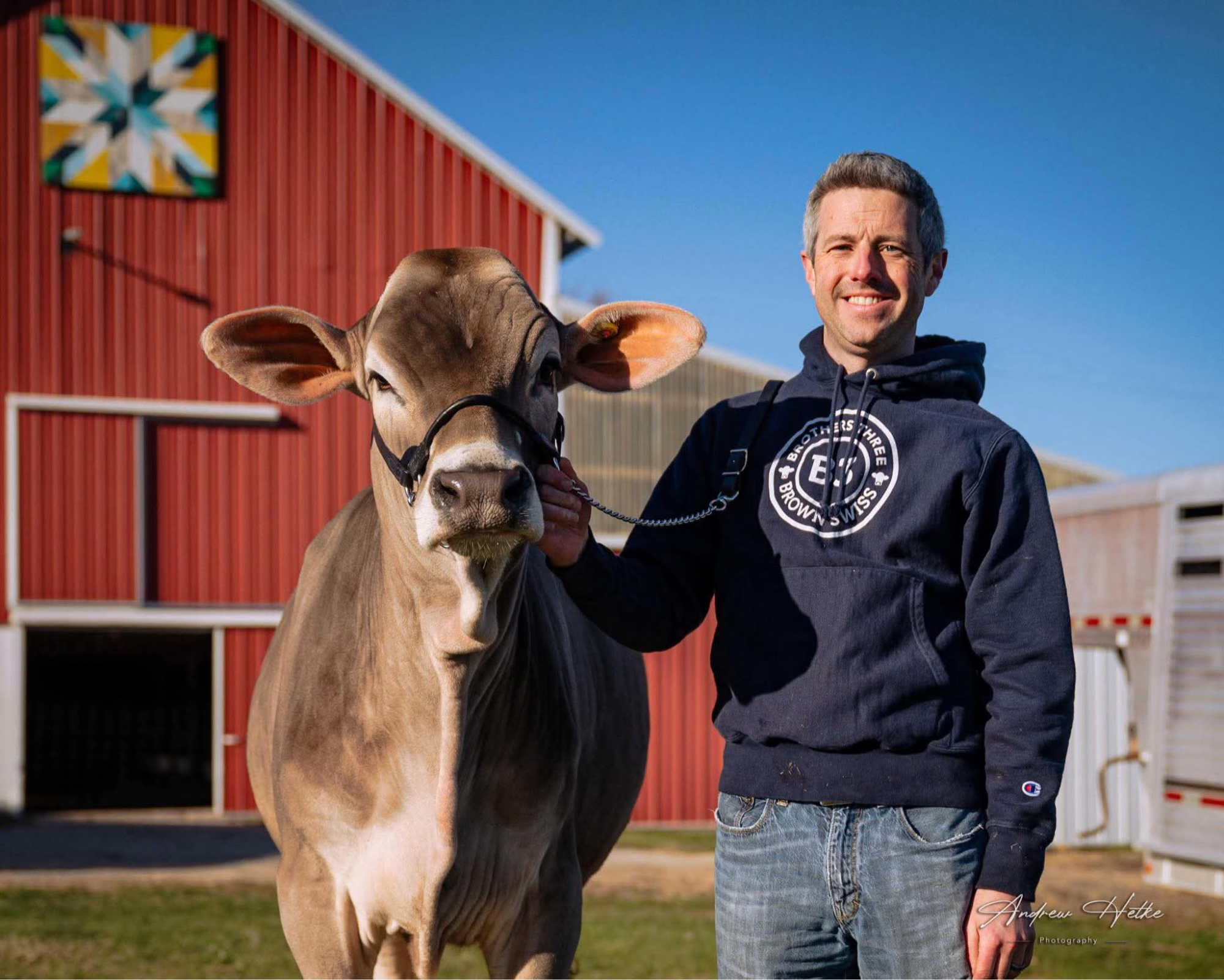
Josh Hushon with one of his prized Brown Swiss heifers at their Wisconsin farm. His hands-on experience raising elite cattle provides the foundation for his industry leadership and judging expertise, contributing to his upcoming 2025 Wisconsin Service Award.

Josh’s industry involvement extends well beyond Brothers Three and Cargill. After moving to Wisconsin in 2003, he quickly found community in the Wisconsin Brown Swiss Association, where he has made significant contributions, leading to his 2025 Wisconsin Service Award.

As the World Dairy Expo Representative for the Wisconsin Brown Swiss Association, Josh bridges his passion for the breed with organizational leadership. He has chaired two National Brown Swiss Conventions in Wisconsin (2013 and 2024). He has been instrumental in consolidating Wisconsin Spring Shows and Wisconsin State Shows into all-breeds events in Madison—an inter-breed collaboration he believes strengthens the entire dairy community.

Josh is an accomplished judge, earning All-American honors in 4-H Dairy Judging and being judged collegiately at Penn State University. His recent judging assignments include the Kentucky Spring National Brown Swiss Show and the Brown Swiss and Other Colored Breeds Show at Green County Dairy Days in 2024.

His brother Jake has also established himself as a respected cattle judge, bringing the Brothers Three philosophy into the evaluation ring. When approaching a class of Brown Swiss cattle, Jake emphasizes the balance of dairy character, strength, body depth, style, and an elusive “it factor” distinguishing top animals.

“In cows, the udder is by far the most important trait, and for me, it takes something truly special for the best-uddered cow in each class not to be in first,” Jake explains. His evaluation process systematically assesses feet and legs, topline strength, rump angle, and overall width and depth to sort animals through the class.

Brown Swiss vs. Holstein: Competitive Advantages in Today’s Market

CharacteristicBrown SwissHolstein
Component ProductionHigher butterfat and protein percentagesHigher total milk volume
Heat ToleranceSuperior heat toleranceLess heat tolerant
LongevityGreater productive lifespanVariable lifespan
Beef ValueSuperior carcass value for crossbred calvesLower beef value
A2 StatusHigh percentage of A2 geneticsLower percentage of A2
Feed EfficiencyGood converters with strong componentsEfficient volume producers

The Next Generation and Future Vision

Looking ahead, Brothers Three balances tradition with a fresh perspective as they consider the next generation. The four boys who make up what they call “B3 Gen 2,” with a fifth on the way in July 2025, represent potential future leadership for the operation.

“The oldest boys are just old enough for 4-H, so we’ll give them all a chance to show if they have an interest in it, and if not, that’s okay too!” Josh says, reflecting the same open-minded approach that has defined Brothers Three from the beginning.

Market Trends and Growth Opportunities

As the story of the Brothers Three unfolds, Josh and his brothers remain optimistic about the future of Brown Swiss cattle in an evolving dairy landscape. Jake identifies two key opportunities for the breed: its growing popularity in the show ring, with high-profile breeders adding Brown Swiss to their operations, and its economic advantages in commercial settings.

“In economic terms, our breed fights for stall spaces and uterus slots on large dairy farms today with many dairy breeds, European red breeds, and now beef semen,” Jake observes. “Two things Brown Swiss can and must capitalize on are the high payment for fat and the sale carcass value of the beef calves out of Brown Swiss cattle vs. a Holstein or Jersey at market. Add in A2, which is a large percentage of the population, and our opportunity to become a mainstream breed in the USA, like they are in Europe, is here.”

Adapting to Industry Shifts

Josh acknowledges the impact of industry consolidation on the Brown Swiss breed. “We certainly feel consolidation as we see smaller farms exit that were long-time Brown Swiss breeders, and we find more of our show calf market being driven by hobbyists like us or even Holstein breeders looking to diversify with a Brown Swiss. I suspect that trend will continue, and it will be interesting to see the profile of someone buying Brown Swiss a decade from now.”

This changing landscape creates both challenges and opportunities. The traditional base of commercial Brown Swiss herds may be shrinking, but interest from show enthusiasts, specialized breeders, and crossbreeding programs offers new markets. The breed’s inherent advantages—component production, heat tolerance, and carcass value—position it well for specialized applications in a diversifying dairy industry.

Brothers Three continues to adapt by focusing on high-value genetics that appeal to show enthusiasts and progressive commercial producers. Their emphasis on balanced traits—combining show appeal with functional attributes like fertility and production—aligns perfectly with the needs of this evolving marketplace.

The Brothers Three team at World Dairy Expo 2023, where family tradition meets future vision. Representing both current leadership and the next generation of "B3 Gen 2," this moment captures the essence of their legacy-building approach as they introduce the youngest family members to the show ring environment that has defined their three-decade journey in Brown Swiss breeding.
The Brothers Three team at World Dairy Expo 2023, where family tradition meets future vision. Representing both current leadership and the next generation of “B3 Gen 2,” this moment captures the essence of their legacy-building approach as they introduce the youngest family members to the show ring environment that has defined their three-decade journey in Brown Swiss breeding.

The Bullvine Bottom Line: A Legacy Built on Passion and Actionable Wisdom

The Brothers Three’s journey—from novice 4-H participants to respected breeders of champion Brown Swiss cattle—embodies the best of American agriculture: innovation, dedication, and a willingness to learn from both success and setbacks.

Through Josh Hushon’s unique perspective as a Cargill executive and passionate cattle breeder, Brothers Three has positioned itself at the intersection of corporate agricultural strategy and hands-on cattle expertise. This balance allows them to appreciate the microscopic details of an individual animal’s development and the macroscopic trends shaping the global dairy industry.

Lessons for Progressive Dairy Breeders

The Brothers Three story offers valuable insights for anyone pursuing excellence in dairy genetics:

  1. Seek Knowledge from Proven Mentors: As Josh says, “To know the road ahead, ask those coming back.” Find mentors who have achieved your goals and follow their guidance precisely.
  2. Leverage Genomic Testing Strategically: Test females early to “glimpse their future” and make more informed breeding decisions. Use the data to both maximize strengths and address weaknesses in your herd.
  3. Balance Show Appeal with Commercial Viability: Even if showing is your passion, breeding for production, components, and fertility ensures your animals deliver value beyond the ring.
  4. Invest in Your Best Cow Families: Focus resources on developing strong maternal lines. As Brothers Three demonstrates with Wisper’s family, one exceptional female can transform an entire breeding program.
  5. Embrace Adaptability and Innovation: From reproductive technologies to marketing approaches, be willing to evolve your operation to meet changing market demands and capitalize on new opportunities.

What began as three brothers learning to show cattle has evolved into a multi-generational legacy of excellence in the Brown Swiss world. With their eyes fixed firmly on the future—from genomic advancements to the next generation of family involvement—Brothers Three continues to write new chapters in their remarkable story of agricultural passion and achievement.

As Josh reflects on his journey with Brothers Three, his words capture the essence of their success: “To know the road ahead, ask those coming back.” By honoring tradition while embracing innovation, Brothers Three and Josh Hushon have not only found their road—they’re helping chart the course for Brown Swiss breeders everywhere.

Key Takeaways

  • Mentorship drives success: The brothers attribute their achievements to strategic mentor relationships at each career stage-from early guidance on showing technique to advanced breeding partnerships-proving that knowing when to seek expert advice accelerates progress.
  • Balanced breeding philosophy: Their approach balances four key elements (type, udders, cow families, milk production) while incorporating fertility traits, creating animals that succeed both in elite shows and commercial settings.
  • Genomic testing as a game-changer: By testing all females and using data to guide mating decisions, they’ve accelerated genetic progress beyond what traditional visual assessment allows, transforming breeding strategy.
  • Specialty positioning creates opportunity: In a consolidating industry, Brown Swiss offers advantages in component production, heat tolerance, and beef value-creating market potential even as traditional farms disappear.
  • Passion projects can achieve excellence: Despite never being anyone’s full-time occupation, Brothers Three demonstrates how strategic partnerships, specialized knowledge, and dedicated off-hours management can build elite genetics without requiring full-time farming.

Executive Summary

Brothers Three Brown Swiss represents a remarkable journey from a humble 1991 4-H project to a nationally respected Brown Swiss breeding operation, demonstrating how passion projects can achieve excellence without requiring full-time farming. Founded by the Hushon brothers with no prior dairy experience, the operation thrives on their collaborative approach-with Jake handling genetics through his New Generation Genetics role, Josh and Casey managing daily development while Josh applies his Cargill executive expertise, and Joe contributing crucial support during World Dairy Expo. Their success stems from a balanced breeding philosophy that produces cattle excelling both in show rings and commercial settings, strategic adoption of technologies like genomic testing and IVF, and their foundational belief in continuous learning from mentors-epitomized in Josh’s mantra: “To know the road ahead, ask those coming back.” This unique blend of corporate strategy and hands-on breeding has positioned Brothers Three to adapt to industry changes while establishing a multi-generational legacy.

Learn more:

  • International Brown Swiss Show 2024 – Follow the latest results from Madison where top Brown Swiss breeders competed, including notable achievements in the same show where Brothers Three’s Woodford previously claimed honors.
  • Are dairy genetics a commodity? – Explore this thought-provoking analysis of modern dairy genetics economics that complements Brothers Three’s balanced breeding philosophy of combining show ring excellence with commercial viability.
  • National Brown Swiss Convention 2024 – Discover highlights from the Wisconsin-hosted event that Josh Hushon helped chair, bringing together over 200 Brown Swiss enthusiasts to celebrate the breed’s community and accomplishments.

The Sunday Read Dairy Professionals Don’t Skip.

Every week, thousands of producers, breeders, and industry insiders open Bullvine Weekly for genetics insights, market shifts, and profit strategies they won’t find anywhere else. One email. Five minutes. Smarter decisions all week.

NewsSubscribe
First
Last
Consent

Send this to a friend