





On April 21, 2025, CBP arrested eight workers at Vermont’s largest dairy before the morning milking finished. The cows still had to be milked. Does your barn have a plan for that Tuesday?
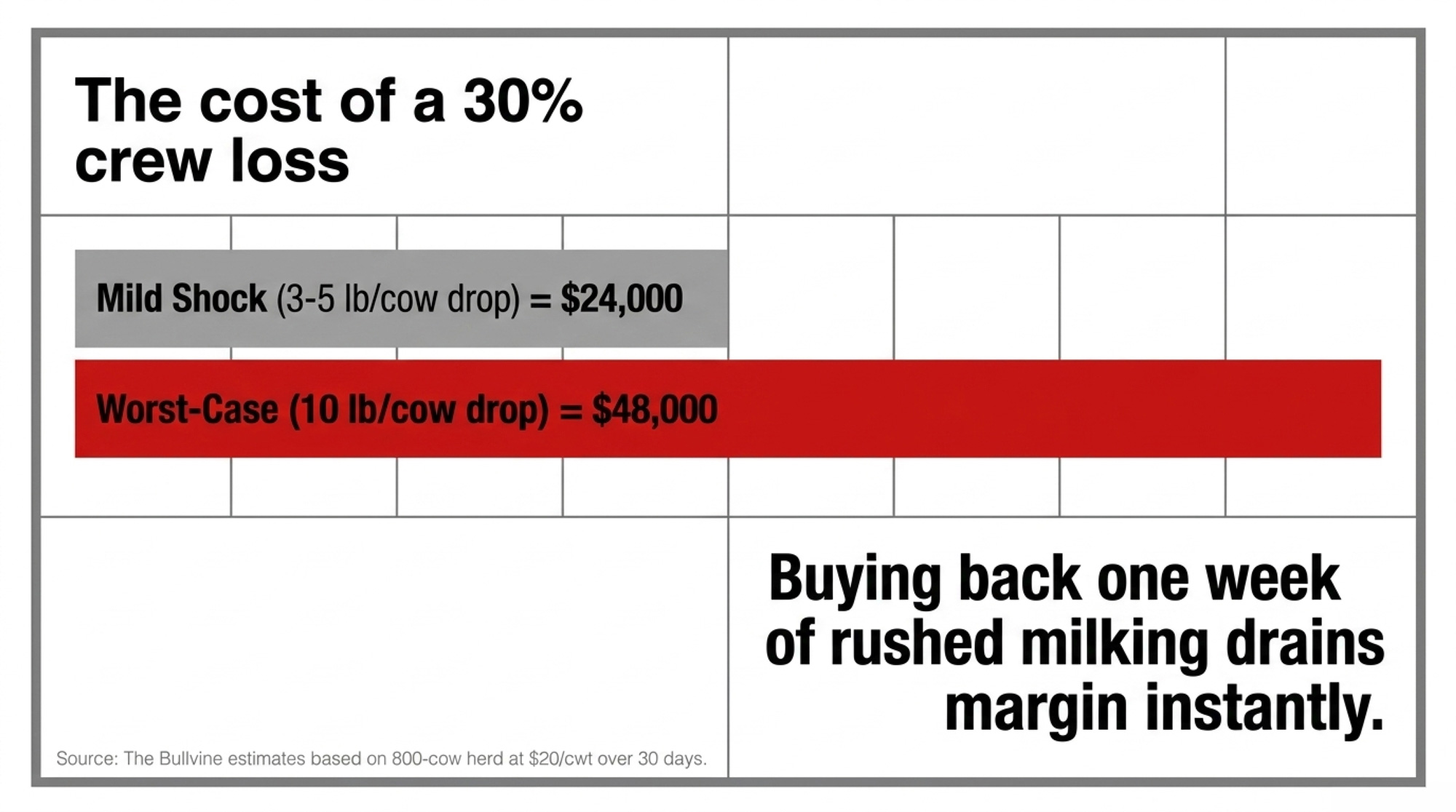
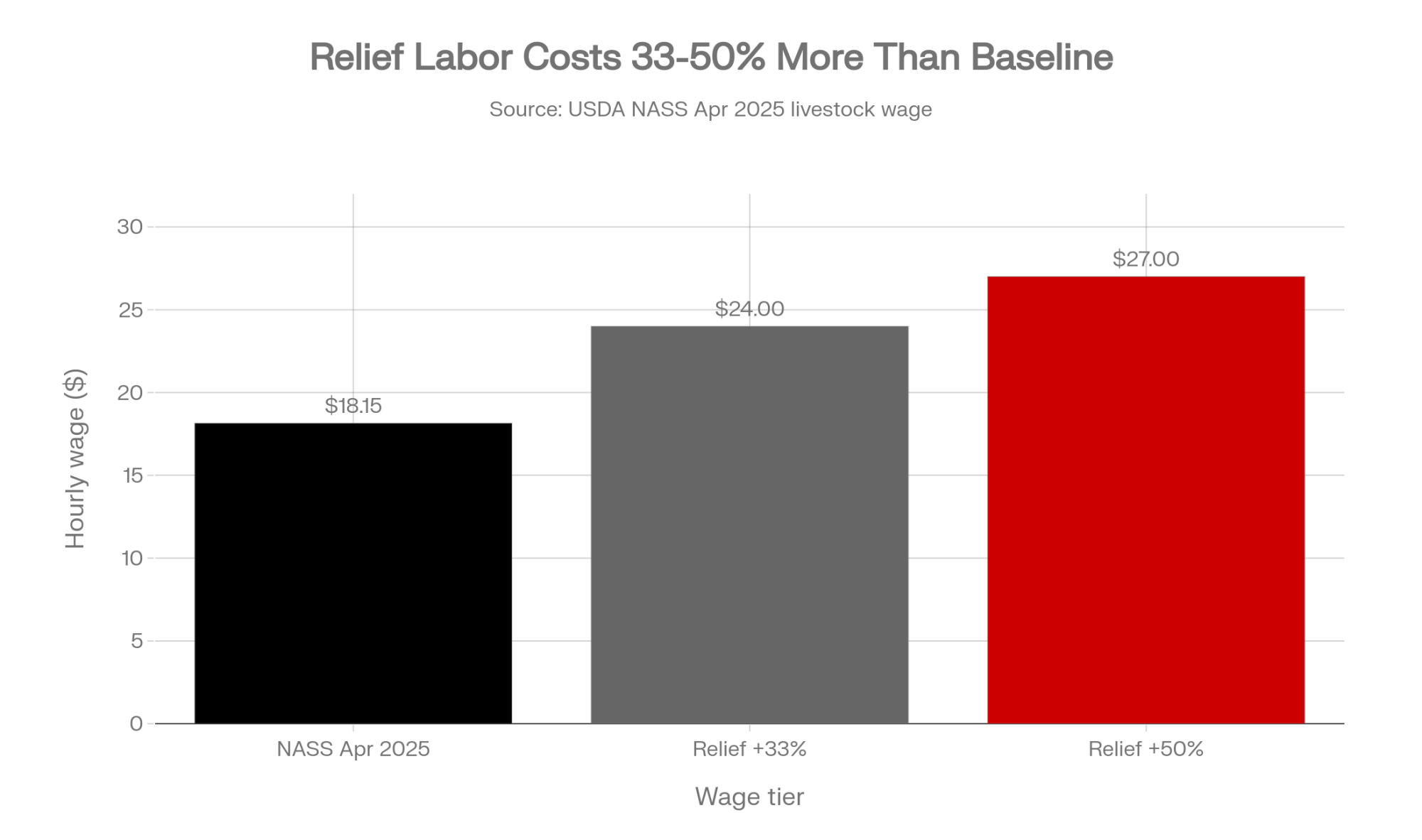
Executive Summary: On April 21, 2025, CBP arrested eight workers at Pleasant Valley Farms in Berkshire, Vermont — the state’s largest dairy, 3,000 cows across 10,000 acres — and every U.S. producer who leans on immigrant labor should treat it as a dress rehearsal. Vermont detentions ran close to tenfold their prior baseline in 2025, roughly 900 people through state facilities, per Migrant Justice intake data cited by The Guardian. On an 800‑cow herd at ~$20/cwt (USDA AMS, Aug 2025), a 30% crew loss driving a worst‑case 10 lb/cow drop leaks about $48,000 in 30 days before a single SCC penalty or covenant call; a milder 3–5 lb drop still bleeds $14,000–$24,000. Relief labor runs a one‑third to one‑half premium over the USDA NASS April 2025 livestock wage of $18.15/hr — budget $24–$27/hr when the call comes. Your lender and co‑op field rep are already watching workforce stability as a cash‑flow risk; February 2026 outlook has mailbox prices running $2.50–$3.00/cwt below 2025 on top of it. The 30‑day move isn’t waiting on the Farm Workforce Modernization Act — it’s booking a real I‑9 self‑audit with an employment attorney and writing a one‑page 72‑hour staffing plan with names, not roles. If your answer to “who milks Tuesday if three people don’t show up” is a shrug, that’s the first number to fix.
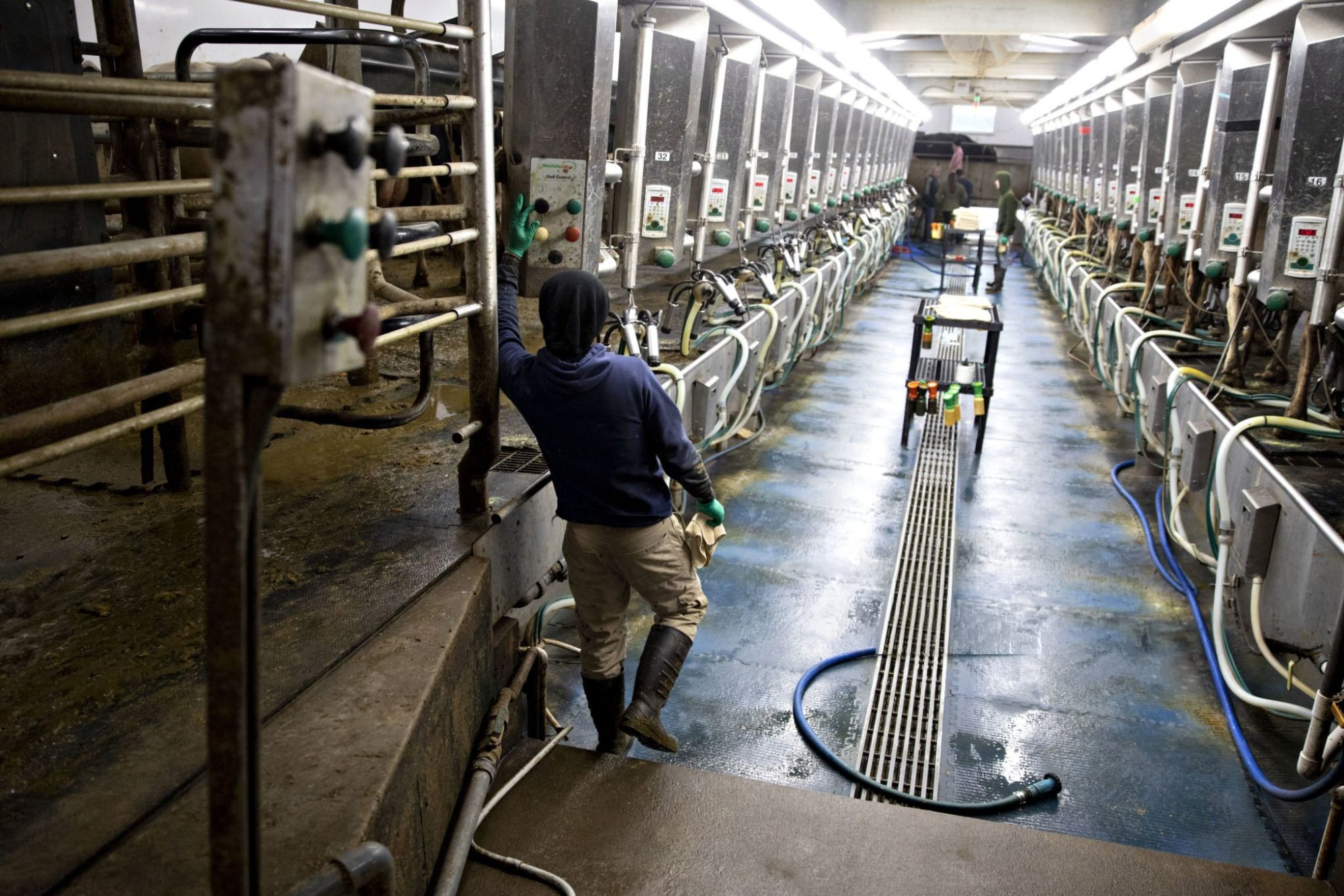
On April 21, 2025, U.S. Customs and Border Protection agents arrested eight migrant workers at Pleasant Valley Farmsin Berkshire, Vermont, according to reporting by VTDigger and Vermont Public. The St. Pierre family operation is the state’s largest dairy, milking roughly 3,000 cows across about 10,000 acres in Vermont and New Hampshire. The cows, of course, still had to be milked.
The workers — not the farm — were the subject of the federal proceedings. The Bullvine contacted Pleasant Valley Farms for comment; but has received no response received.
That’s the part the policy press usually doesn’t cover. If you run a dairy that leans on immigrant labor, the Pleasant Valley enforcement story isn’t a “Vermont thing.” It’s a preview of what dairy labor enforcement can look like when it lands close to your yard. We had charts. We had quotes from Washington. We had a draft sitting in our CMS that week explaining, yet again, why the Farm Workforce Modernization Act might — someday — open a legal path for year‑round dairy workers. What we didn’t have was a single article that helped a producer survive the first 72 hours after a crew disappears.
That’s the blind spot this piece is about. Not because Vermont is special. Because the policy‑first frame we were using applies to almost every U.S. dairy that runs on immigrant labor — and in a crisis, that frame is useless in the parlor.
Why Your Lender Might Be Thinking About This Before You Are
Let’s start with the part that’ll keep you up at night — and it’s not CBP. It’s your next renewal conversation.
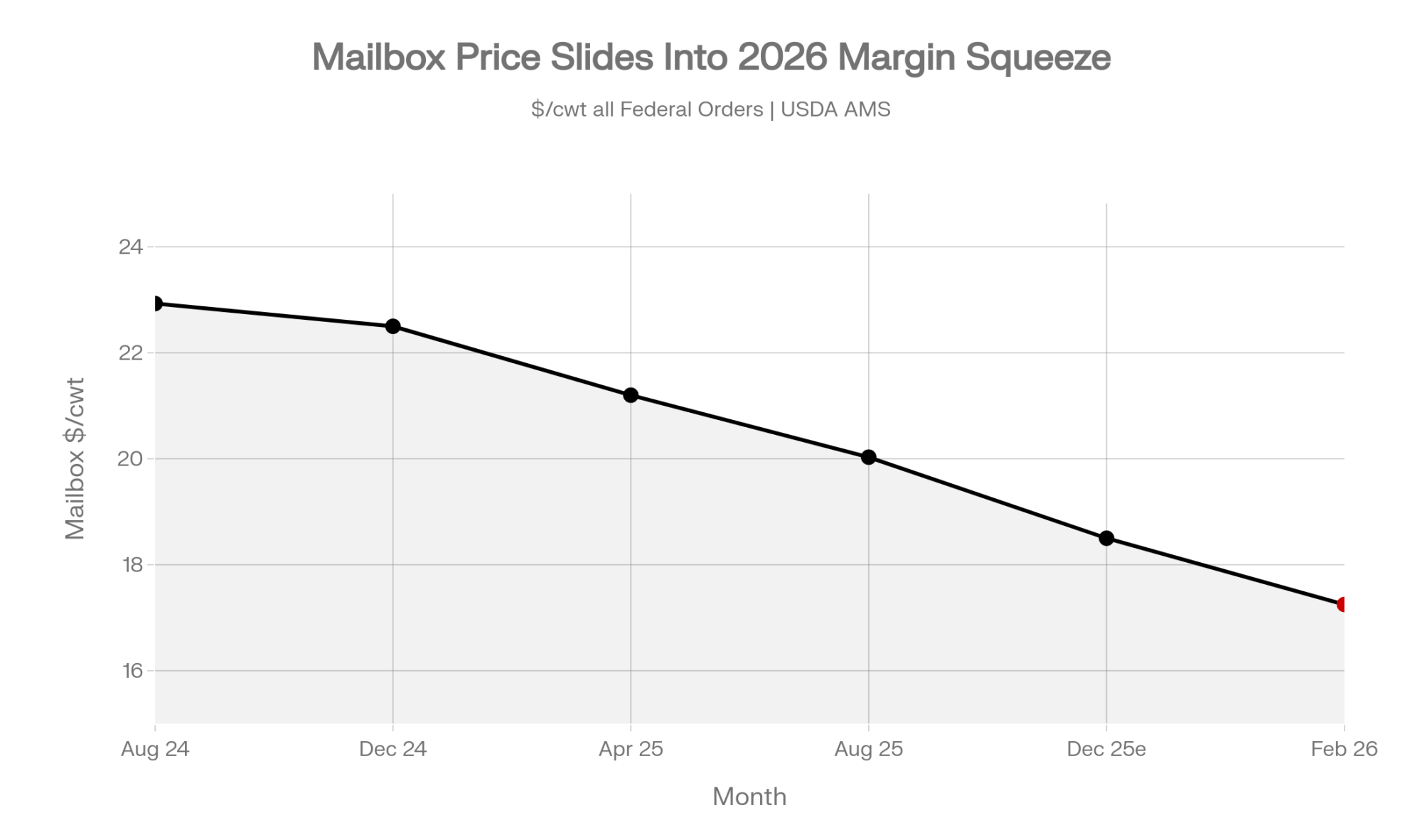
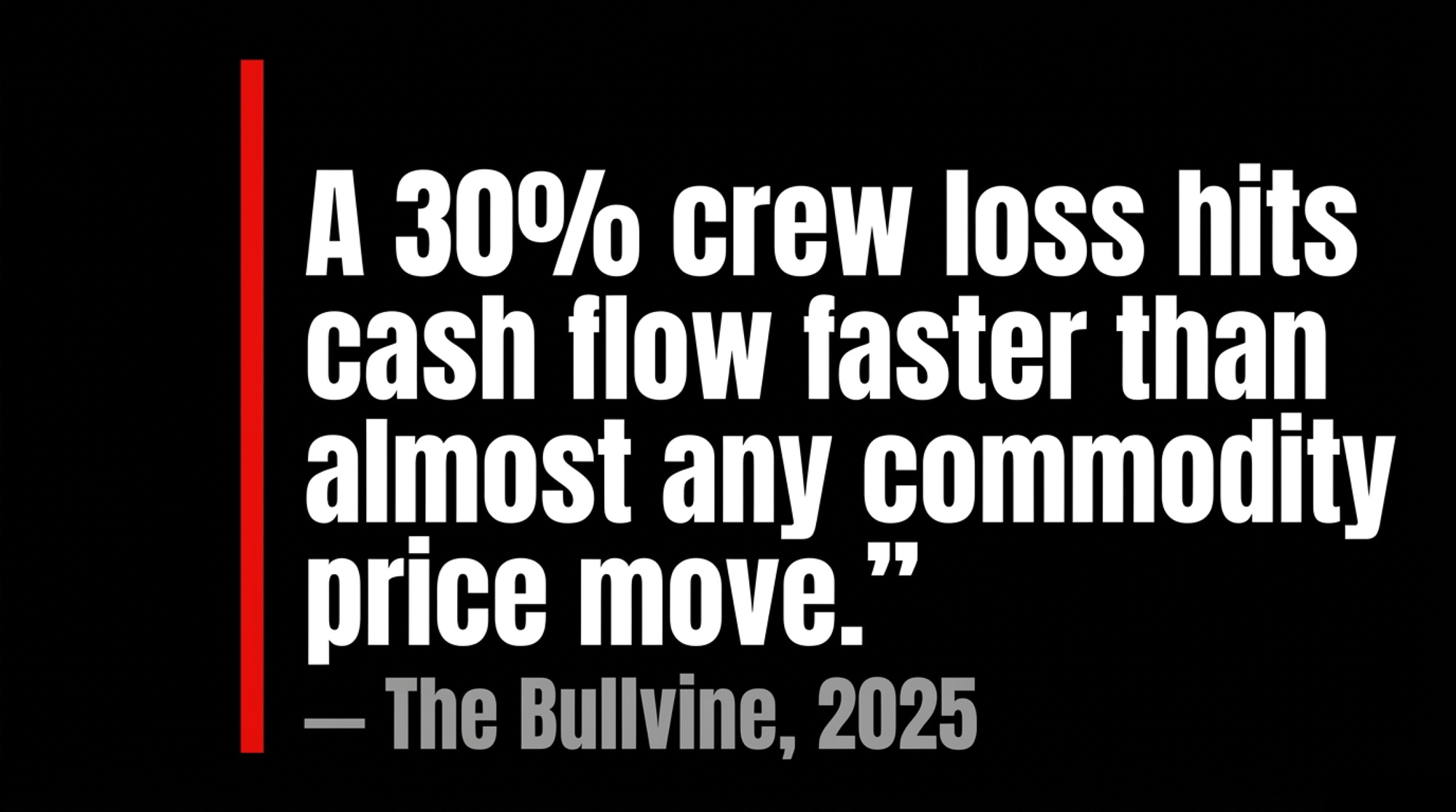
Quietly, ag lenders and co‑op field staff have started asking harder questions about workforce stability. Not to police your hiring — because a 30% crew loss hits cash flow faster than almost any commodity price move, and it shows up in the places they already watch: milk quality penalties, herd health costs, production slippage and covenant ratios. February 2026 dairy outlook flagged margin compression for 2026. Layer workforce disruption on top of that and you’ve got the kind of compound cash‑flow risk any ag lender watches closely.
Across several operator conversations in late 2025, the same question surfaced in different words: not another article about the Farm Workforce Modernization Act, but what their lender would actually accept as workforce continuity documentation if federal enforcement action ever affected their own payroll, regardless of what they believed about their crew’s status. No single conversation said it that cleanly. But the sentiment showed up often enough to stop being an outlier.
Operational coverage — I‑9 audit explainers, enforcement‑response protocols, emergency staffing templates — was getting forwarded to operators by their own attorneys and co‑op reps. Ours wasn’t. That’s the moment a policy‑first frame stopped being defensible.
Where Our Coverage Missed The Barn
For eighteen months, The Bullvine covered dairy labor like it was a Capitol Hill story. Federal reform bills. Association statements. USDA labor surveys. Tidy quotes from Congressional co‑sponsors. Most of that reporting was factually accurate.
In July 2025, we ran “Here’s the Hard Truth About Labor Reform: Why the Farm Workforce Modernization Act Could Finally Fix Dairy’s Biggest Crisis.” The credibility anchor was a Congressional co‑sponsor. The call to action was legislative preparation. A month earlier, “How Dairy’s Worker Shortage Will Reshape Your Farm by 2030” treated labor as a long‑arc automation and demographics story.
Both pieces were solid reporting. Both pointed the reader toward Washington. And neither of them helped you decide who covers Tuesday morning.
The Guardian‘s April 16, 2026 investigation — “‘I don’t go out’: Vermont’s undocumented dairy workers live in fear after immigration raids” — made the gap obvious. A Vermont dairy of recognized size was the site of a federal enforcement action, and the immediate operational questions that followed — who milks tomorrow, who pays bond, what does the lender say — were not ones our Capitol‑focused coverage had prepared any reader to answer. VTDigger reported in May 2025 that one of the Pleasant Valley workers was ordered released on a $10,000 bond, and another on the $1,500 statutory minimum.
What’s Actually At Risk For Your Herd
Step outside Vermont for a minute. This story isn’t really about one state.
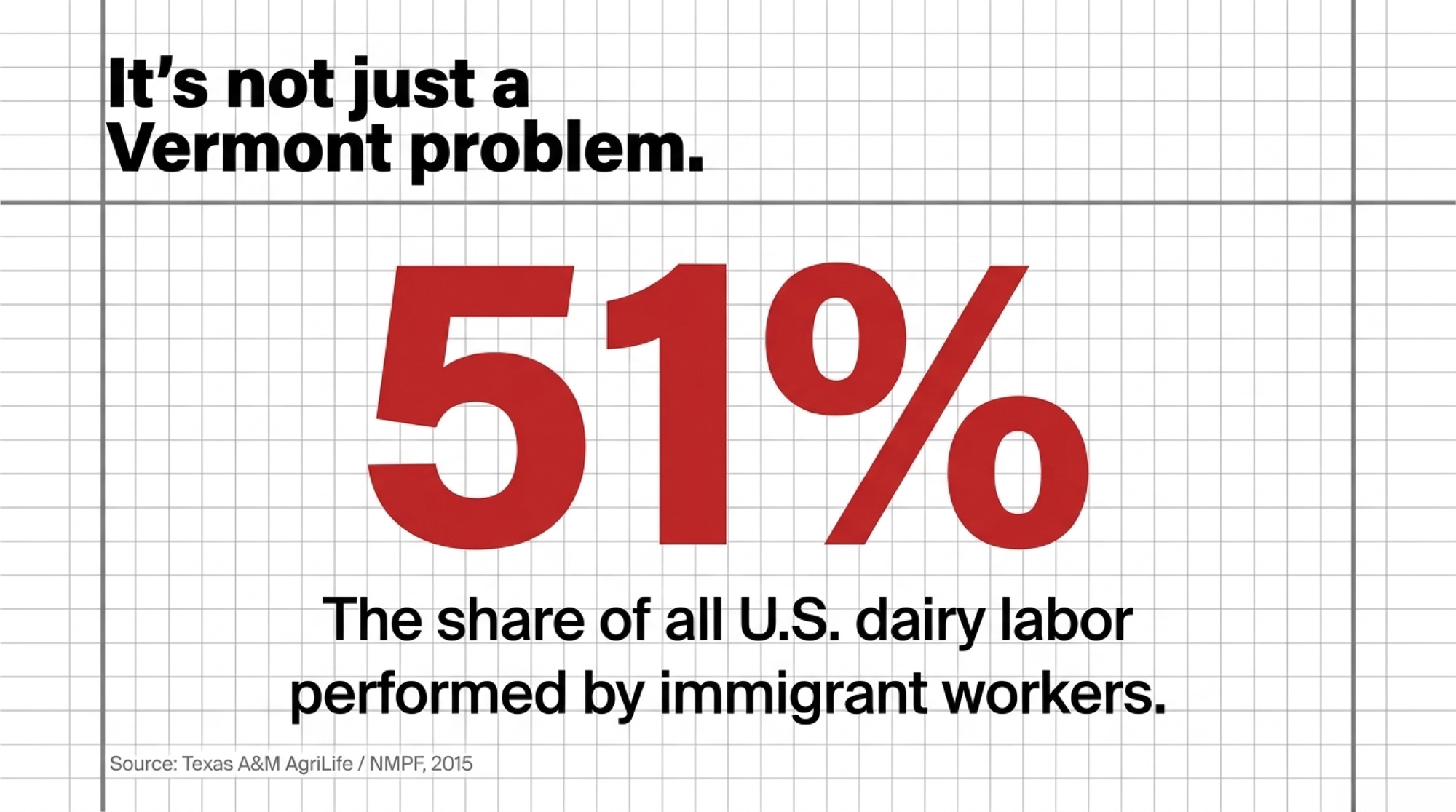
A Texas A&M AgriLife Center for North American Studies / NMPF survey of 973 dairies across 18 states (Adcock, Anderson and Rosson, fieldwork 2014, published 2015) found that immigrant labor accounts for 51% of all U.S. dairy labor, and that dairies employing immigrant labor produce roughly 79% of the nation’s milk supply. A 2018 NMPF follow‑up concluded that a complete loss of immigrant labor could cost the U.S. economy $32.1 billion and eliminate one‑in‑six dairy farms. Across much of the Midwest, Northeast and West, immigrant workers — both documented and undocumented — make up a substantial share of parlor crews on mid‑ and large‑herd dairies.
When enforcement ticks up, you don’t feel it as a shift in the Federal Register. You feel it as a hole in Tuesday’s schedule. A milker who worked Saturday and Sunday but didn’t show up Monday. A cousin who left the state overnight after seeing a neighbor’s farm on the news.
That’s the version of labor risk we hadn’t been writing into. So here’s the math we should have been running all along.
What Does A 30% Crew Loss Actually Cost On An 800‑Cow Herd?
Take an 800‑cow herd shipping 65–70 lb/cow/day — mid‑to‑upper range for a commercial Northeast herd. USDA’s August 2025 mailbox milk price across all Federal Orders averaged $20.03/cwt, down $2.90 from August 2024. February 2026 dairy snapshot projects 2026 mailbox prices running $2.50–$3.00/cwt lower than 2025. Call it a ~$20/cwt working number for a Northeast herd. That’s about $11,200 a day in milk revenue coming off the pad.
Now assume a neighboring farm sees an enforcement action and 30% of your crew either doesn’t show up or gives notice within a week. Parlor prep gets rushed. Shifts stretch. The cow that should have been culled three months ago is suddenly a long‑term employee.
The Cost of a “Tuesday Morning” Crisis
Based on an 800‑cow herd at ~$20.00/cwt
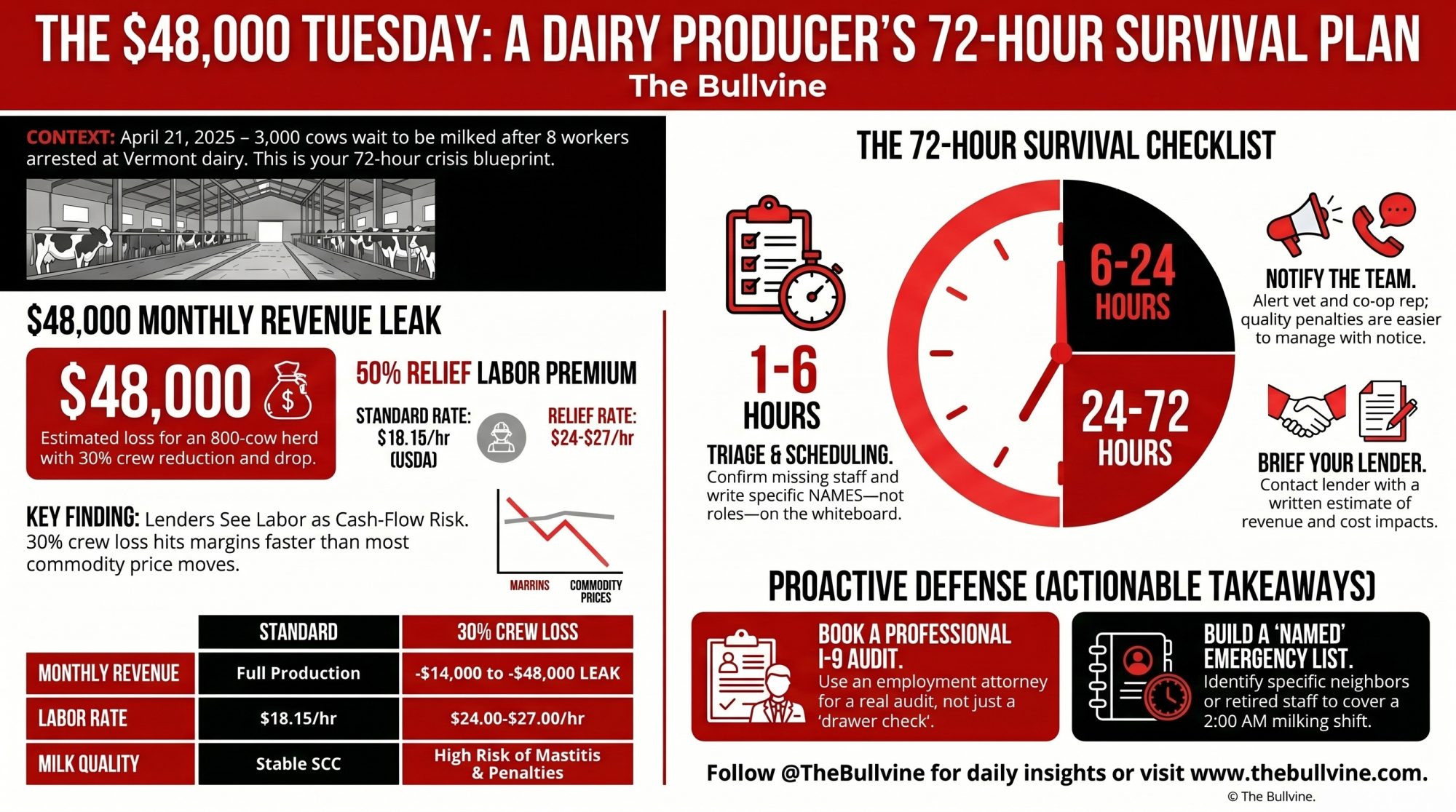
| Metric | Standard Operation | 30% Crew Loss (First 30 Days) |
| Daily milk revenue | $11,200 | $9,600 (worst‑case 10 lb/cow drop) |
| Monthly revenue leak | $0 | −$48,000 |
| Labor cost | $18.15/hr (USDA NASS, Apr 2025 livestock workers) | $24–$27/hr (1/3–1/2 premium range) |
| Milk quality | Stable SCC, standard protocol | Mastitis spikes, rushed prep, missed detections |
| Long‑term risk | Normal cull/replace rhythm | Cull errors, lender flags, co‑op quality penalties |
That $48,000 is the worst‑case first‑30‑day figure. A milder shock — say a 3–5 lb/cow drop because you triaged fast and kept fresh‑cow protocols intact — produces monthly revenue leaks in the $14,000–$24,000 range on the same herd. Either way, run these numbers with your own herd size, shipping average, and mailbox price before your next bank meeting. The point isn’t the $48K. The point is knowing what it costs you to buy back one week of rushed milking.
Push the same scenario onto a 400‑cow herd losing two key employees and the daily number gets smaller, but the percentage hit to your margin often gets worse. You have fewer people to absorb the shock.
That math is what we left out of our labor coverage for eighteen months. Not because we didn’t have it. Because we were reporting upward, toward the Capitol, instead of sideways, toward the parlor.
The Mechanics Behind The Shock
Three structural realities explain why a single enforcement event lurches the way this one did in Vermont, and why your exposure may be bigger than your books suggest.
Structural dependence with no legal backfill. Dairy tilted hard toward immigrant labor over two decades. Non‑ag wage expectations rose, H‑2A and H‑2B visas were written for seasonal crops rather than cows that calve on Christmas, and consolidation put more hired positions on fewer farms. Vermont has lost 49% of its dairy farms since 2013 while cows per farm have jumped 69% (Vermont Dairy Delivers, 2024). A single enforcement event doesn’t bounce. It lands.
Enforcement is lumpy, not linear. VTDigger characterized the Pleasant Valley arrests as the largest Vermont immigration enforcement action targeting migrant workers in recent memory, and roughly 900 immigrants were detained in Vermont facilities in 2025 — close to a tenfold increase over the prior baseline, according to Migrant Justice intake data cited in The Guardian‘s April 2026 investigation. From your side of the fence, it looks like random bad luck. It isn’t.
Your buyers and lenders are paying attention. Brand‑sensitive processors and retailers don’t want to be on the six o’clock news next to an enforcement story. Quality problems and covenant breaches make lenders flinch. Public enforcement events can accelerate both.
Every U.S. dairy operates inside that reality, whatever your own workforce composition.
72‑Hour Survival Checklist
Print this. Put it in the milk house. You won’t have time to Google it when the call comes.
Editorial guidance only — not legal advice. Consult your own employment attorney for jurisdiction‑specific guidance on I‑9, enforcement‑response protocol, and lender communications.
| Protocol Element | Unprepared Operation | Lender-Ready Operation | Why It Matters |
| Tuesday 2 a.m. crew backup | “We’ll figure it out” | Named list, not roles | Shifts fill in < 6 hours |
| I-9 audit status | Drawer check | Attorney-led self-audit | Reduces paper-trail risk |
| Emergency wage rate | Negotiated in crisis | Pre-agreed at $24–$27/hr | No resentment at 3 a.m. |
| Lender notification | After covenant flag | Before the call | Preserves refinancing optionality |
| Documentation of impact | Verbal, later | Written, within 24 hrs | Attorney + lender both want it |
Hour 1–6: Triage
- Confirm who’s missing. Call or text every crew member. Don’t assume — verify.
- Lock down the milking schedule. Who’s covering the next shift? Write names on the whiteboard, not roles.
- Call your herd manager. If they’re affected, you need to know now, not at 4 p.m.
- Do not discuss immigration status with anyone on your crew, any agent, or any reporter. Call your attorney first.
Hour 6–24: Stabilize
- Activate your emergency contact list. Relief milkers, retired employees, neighbors with parlor experience, family members.
- Notify your veterinarian. Short‑staffed milking means rushed prep means higher mastitis risk. Get ahead of it.
- Call your co‑op field rep and explain the situation. Quality penalties are easier to manage with advance notice than with a surprise SCC spike.
- Document everything. Hours worked, temps called, protocols skipped. Your lender and your attorney will both want this.
Hour 24–72: Shore Up
- Contact your ag lender. Brief them before the covenant math does it for you. Bring a written estimate of the revenue and cost impact.
- Set emergency pay rates for overtime and relief workers and communicate them clearly. Ambiguity breeds resentment when everyone’s exhausted.
- Identify which tasks to cut vs. which to protect. Fresh‑cow checks, milking prep, and feeding can’t slip. Cosmetic barn work can wait.
- Begin recruiting. Expect relief labor to cost a one‑third to one‑half premium over the USDA NASS April 2025 livestock worker average of $18.15/hr — roughly $24–$27/hr based on what Northeast operators and co‑op field staff are quoting in 2025–2026. Budget for it.
What Would You Actually Do On A Tuesday?
Here’s the honest question. If your phone buzzed at 5 a.m. with news that a neighbor’s farm had seen an enforcement action, and by 7 a.m. three of your best parlor people hadn’t shown up — what would the next 72 hours look like?
If you can answer in specifics — names, shifts, call list, pay rate, feed routine — you’re in better shape than most. If you can’t, that’s your homework for the month. Pull the list of who’s on your 2 a.m. crew. Ask yourself which two names you’d replace first, and with whom.
Options And Trade‑Offs
You’re not going to solve federal immigration policy from the milk house. You do have choices about how you prepare for the next 72‑hour shock. Four are worth running.
1. Treat I‑9 and documentation like biosecurity. When it makes sense: any herd with hired labor, and any operation in a region where neighbors have already been affected. What it requires: a real I‑9 self‑audit with an employment attorney or HR pro — not a drawer check — plus written onboarding and document‑handling procedures, and a clear plan for what you’ll say if federal agents arrive, with or without a warrant. Risks and limits: you can’t audit your way into a fully legal crew if no legal pipeline exists for year‑round workers. Sloppy internal audits can create paper trails that hurt you later. 30‑day action: book that I‑9 consult this month, even if you’re sure you’re fine.
2. Write a 72‑hour staffing protocol. When it makes sense: herds over 400 cows, where losing two parlor employees blows up the schedule. What it requires: a named list (not roles — names) of who covers milking, feeding and fresh cows in a short‑staffed week. A pre‑agreed wage premium or bonus framework for emergency coverage. A written “bare minimum operations” plan that protects milk quality and cow welfare when you can’t run the normal playbook. Risks and limits: emergency labor is expensive. USDA NASS reported the April 2025 livestock worker wage at $18.15/hour, up 4% year over year. Paying a one‑third to one‑half premium over that baseline adds up fast, and family labor patches can hide burnout until it breaks.
3. Decide how far you’ll go on automation. When it makes sense: herds already flirting with a third parlor shift, and operations with balance sheets and lenders that can absorb long‑payback capital. What it requires: honest ROI math that accounts for robots plus maintenance, software and financing — not just “robots replace X workers.” A realistic view of how much human oversight automated systems still need. Risks and limits: automation doesn’t end your enforcement exposure if you still rely on immigrant workers in maternity, youngstock and feeding. Over‑leveraging for robots during a labor panic traps you if milk slips or rates stay sticky. [INTERNAL LINK: Clark Farms / 143‑hour‑week ROI piece] → Suggested anchor text: “how one operation did the hard math on time, capital and labor” → pillar page / Tier 3 economics.
4. Talk to your lender before they talk to you. When it makes sense: any operation refinancing in the next 18–24 months, or any herd where more than half of hired positions are filled by immigrants. What it requires: a candid conversation about how many roles would be hard to refill within 30 days, a short written workforce continuity plan, and willingness to hear uncomfortable questions now instead of at renewal. Risks and limits: some lenders aren’t ready for this conversation. Some will default to box‑checking. Better that than a surprise at the covenant review.
Key Takeaways
- If your crew is foreign‑born, book an I‑9 self‑audit with an employment attorney within the next 30 days. Not a drawer check. A real one.
- If two missing milkers would break your schedule, write a one‑page 72‑hour staffing plan with names — not just roles — on the page.
- If you’re refinancing soon, ask your loan officer what workforce continuity documentation they’d actually find useful before they ask you for it.
- If you haven’t run a 30% crew‑loss barn‑math scenario for your own herd size and milk price, do it before your next bank meeting. The number will either reassure you or rearrange your calendar.
- If SCC penalties crept up while you’ve been short‑staffed, treat that as a labor‑risk warning light, not just a milk quality issue.
- If you’re eyeing automation because of labor fear, run the ROI math twice — once with wage savings, once with a realistic headcount for all the jobs robots won’t touch.
Don’t Get Caught Without A Plan
The next enforcement story will land somewhere. Maybe not your county, maybe not your co‑op, maybe not this season. It will land on someone’s crew, someone’s lender call and someone’s quality report.
The question isn’t whether federal policy is fair. It’s whether your operation can stay upright when a meaningful share of your crew can’t show up on a Tuesday and nobody in Washington picks up the phone.
Complete references and supporting documentation are available upon request by contacting the editorial team at editor@thebullvine.com.
Learn More
- Drumgoon Dairy Lost 38 Workers in One I-9 Audit. Your Operation Could Be 72 Hours Away. — Arms you with a crisis-response framework by modeling the 70% workforce loss at Drumgoon. It reveals the exact document-retention mistakes that trigger five-figure fines and delivers a playbook for cross-training a skeleton crew.
- Robots Won’t Save Your Dairy If You’re Alone: 5 Hard Truths About Labor and Robotic Milking ROI Under 500 Cows — Exposes the $27/hour labor breakeven threshold required to justify automation. This analysis dismantles glossy sales pitches by calculating real capital recovery costs, helping you position your equity for long-term survival rather than panic-buying.
- The Robot Metric Dealers Don’t Emphasize – And Why It Predicts Your Payback — Breaks down why milking efficiency (kg/min) dictates your margin more than visit frequency. It reveals how culling for speed and temperament recovers lost box capacity, directly impacting your ability to absorb a 30% labor shock.
 The Sunday Read Dairy Professionals Don’t Skip.
 The Sunday Read Dairy Professionals Don’t Skip.
Every week, thousands of producers, breeders, and industry insiders open Bullvine Weekly for genetics insights, market shifts, and profit strategies they won’t find anywhere else. One email. Five minutes. Smarter decisions all week.