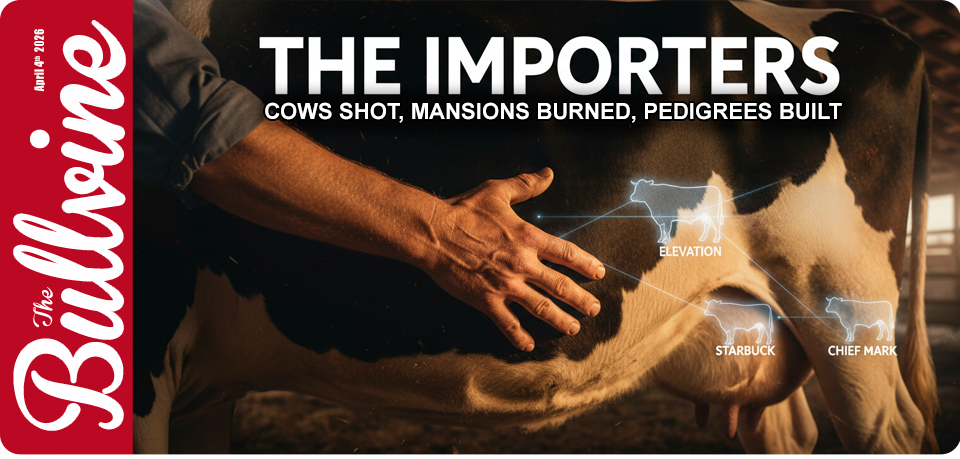



Trace Elevation back twenty dams and you land on a cow imported from North Holland in 1879. Starbuck goes back to the same farm. So does half your herd.
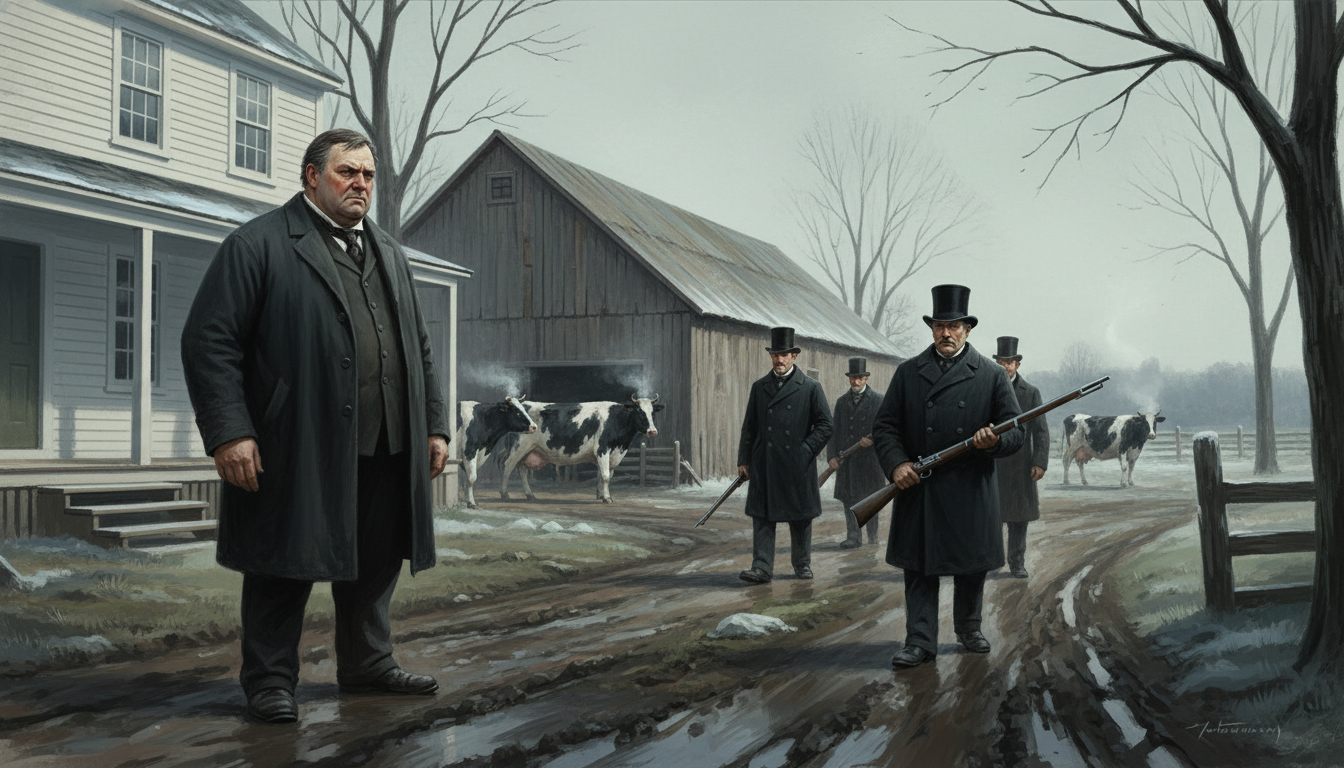
On a cold Massachusetts morning in the late 1850s, a small group of state men rode up the lane to Winthrop Chenery’s Belmont farm and walked straight past the house toward the barn. They weren’t there for coffee. They were there to shoot his cows.
Rinderpest—cattle plague—had slipped into his little group of Dutch black‑and‑whites, and the Commonwealth had ordered the whole lot destroyed, sparing only one young bull in a last attempt to salvage something from the wreck. By all accounts, Chenery was a big man—six‑foot‑four, three hundred pounds—and he’d already seen enough of these cattle to know they weren’t like the native stock he’d been dealing in. One of the cows from his later shipment, Texelaar 51 H.H.B., would go on to put up a 76 lb 5 oz day and 744 lbs 12 oz in ten days in 1865, but on that rinderpest morning he was watching an earlier group of Dutch cows hit the ground one by one.
Nobody wrote down what he said while the rifles cracked. The records just tell us that, the very day the cattle were condemned, he sent word back to Holland for another lot. That’s all we really need to know about what was going through his mind.
Now, the thing about that era is that the American dairy cow was still a compromise. The typical “dairy” animal was a dual‑purpose Shorthorn or local native—good enough to pull the wagon and fill a pail, but not built for specialized commercial dairying. The Erie Canal had already turned New York into a grain corridor. After the Civil War, when grain prices sagged, you suddenly had a whole region where dairying looked like the next way to make a living. A big, true dairy cow with a stomach like a cement mixer and an udder to match made a lot more sense than a do‑everything ox.
The Dutch had already built that cow. She was big and black‑and‑white, from Friesland and North Holland, and she could outmilk almost anything in America at the time, both in pounds of milk and in butter when you put her on a seven‑ or thirty‑day test. Chenery saw that early. When the state shot his first imports, he didn’t go back to Shorthorns. He doubled down.
That stubbornness, plus one quirky error in a government report, set the stage for everything that came next.
Act I – A New Kind of Cow in a New Kind of Country
After the 1861 shipment landed—a bull and four more cows that escaped disease—Chenery finally had a little nucleus of Dutch cattle anchored by that surviving bull, Dutchman 37. He called them “Dutch cattle” in his own catalogs and letters, but in 1864 he sent an article to the U.S. Department of Agriculture in which he quoted Professor T. Low about the “Dutch or Holstein” breed. Somewhere in the editing room, “Holstein” drifted out of the quotation and into the heading.
When the first Holstein herdbook was printed in 1872, the name had stuck. A Dutch scientist, G.H. Hengeveld, fired off a letter pointing out that Holstein cattle were a different type and that these cows were actually Friesland and North Holland animals. Chenery later said he’d used “Dutch” in his original manuscript and blamed the change on officials in Washington, but he never went to war over it. The name “Holstein” rolled forward anyway, and three casual words in a government document ended up on millions of ear tags.
Chenery’s own cattle didn’t become the dominant cow families themselves—the historical record is blunt about that. His real contribution was scattering those Dutch genes into the countryside. By 1870, herds based on his cattle were operating in Vermont, Rhode Island, Connecticut, New York, Pennsylvania, Ohio, Iowa, Oregon, California, and at home in Massachusetts. His farm proved the type. Other men would prove what the type could do.
And that brings us to New York State.
If Chenery lit the match, New York was the tinderbox. New York City was the port where European cattle came ashore. The Erie Canal funneled those cattle, and everything they stood for, straight into the heart of a farm economy that was already shifting from grain to milk. Some families went west and helped build the dairy industries of Michigan and Wisconsin. Others drifted to the cities. A lot stayed put and turned to cows.
The men who started importing Holsteins into that setting weren’t fly‑by‑night speculators. They were orchardists, nurserymen, landed families, storekeepers turned breeders. The principals of Smiths & Powell already ran big nursery and fruit operations along Onondaga Lake near Syracuse. T.G. Yeomans in Walworth had 150 acres of orchards knit together with sixty miles of tile drains, with a line running within five feet of every pear tree. Gerrit S. Miller farmed land his grandfather had carved out of Oneida territory and grew up in a world where people like John Brown turned up at the house to talk about ending slavery.
Most of them had enough money—or enough nerve—to take a real risk. It cost around $300 a head to bring cattle from Holland at a time when the average man was making about $1 a day. That’s not dabbling. That’s pushing chips to the middle of the table.
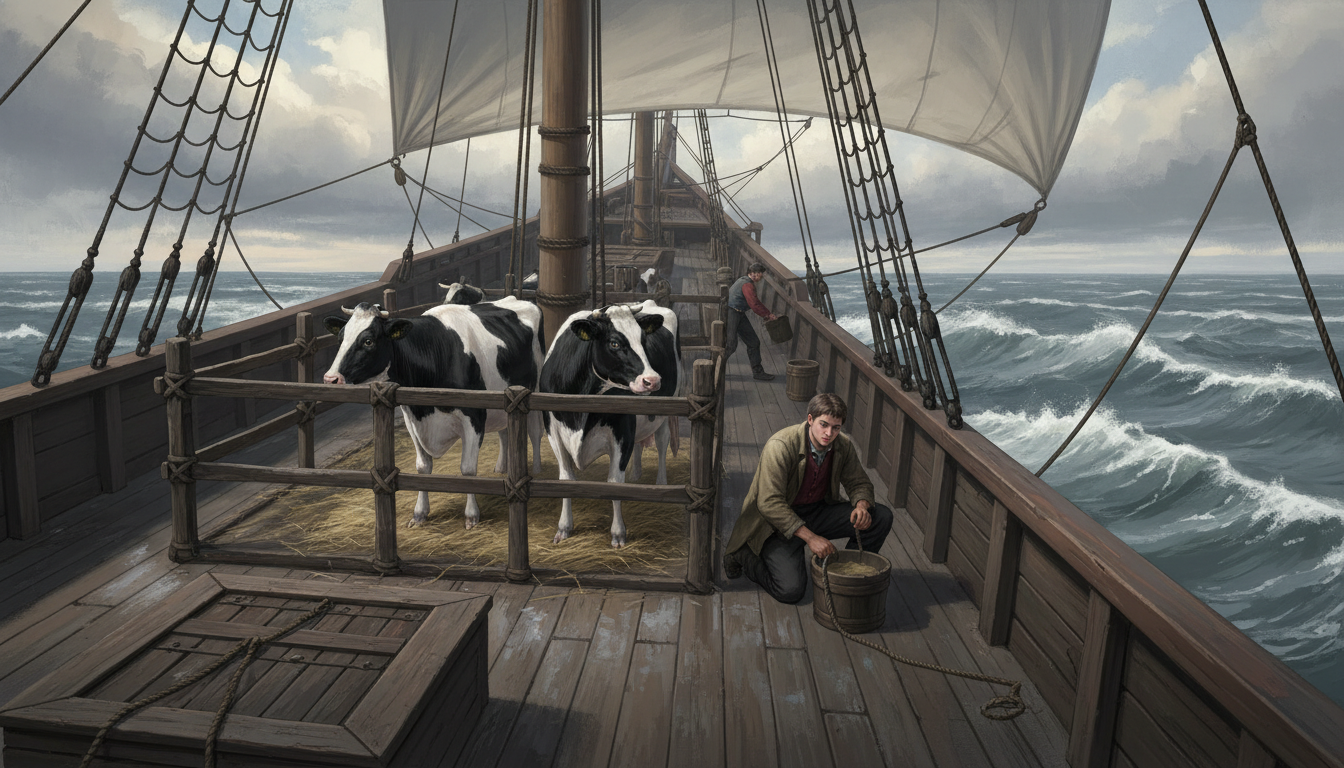
Gerrit S. Miller – Three Great Cows and a Herd Called Kriemhild
If Chenery proved the Dutch cow could make it in America, Gerrit S. Miller showed just how far she could go.
In the late 1860s, Miller was at Harvard, studying science and the liberal arts and captaining what’s credited as the first organized football team in the country. When he walked out from Cambridge for exercise, he kept noticing a herd of black‑and‑white cows near Belmont—Chenery’s cows—and they made enough of an impression that when he went home to Peterboro he asked his father to let his brother, Charles Dudley, bring some over from Holland.
Dudley found his way to a cattle market at Weiner in West Friesland, way up at the northern tip of the Netherlands, and bought four head: the bull Hollander and the cows Crown Princess, Dowager, and Fraulein. He rode the ship back with them, took them by train to Canastota, then drove them along an old plank road to the Miller farm. That 1869 load was only the third pure Dutch shipment to the U.S., after Chenery’s 1857 and 1859 importations.
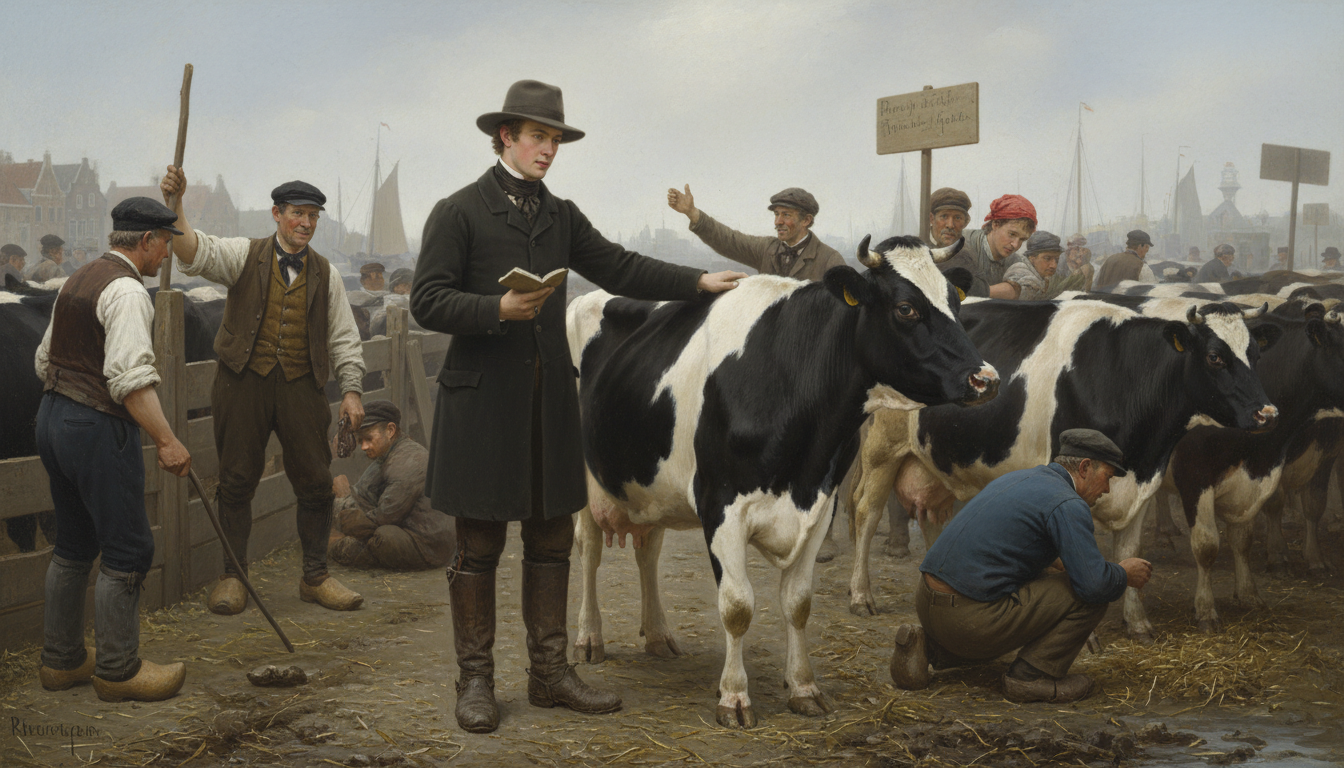
Miller named his farm Kriemhild, after a princess of Dutch legend. The cows lived up to the romantic name with hard, measurable performance.
Dowager completed the first full annual milk record in the United States—12,681 lbs 8 oz on a record closing March 10, 1871. In a letter to Holstein pioneer Frank N. Decker, Miller explained that in 1868 a cow that did 6,000 lbs a year and 12 lbs butter in seven days was still considered exceptional. Dowager did that and then some, on two‑a‑day milking, with no grain at all in June, July, and August and grain made half of wheat bran the rest of the year. Fifty pounds of milk was her biggest day on that early record, and she hit it twice in one lactation.
Miller kept importing and selecting. In 1878 he went to Holland “with the express purpose” of buying the best milk cow he could find. He found Johanna in the herd of K.J. Akkerman in North Holland, brought her over, and in 1880 she stood first as milk cow over all breeds and ages at the New York State Fair. She wasn’t perfect on paper—a sloping rump, lots of white with specks—but she had extreme dairy quality and a big engine. Miller used her hard in his breeding program.
Two years later, while she was still in full flight at Peterboro, he turned Johanna out with another star, Empress, in the lush pasture by the Mansion House. Both old cows pushed up to 88 lbs in a day. Over a thirty‑one‑day stretch, Johanna averaged 80 lbs a day and made 2,407 lbs of milk. While she was at that height, Wisconsin breeder W.J. Gillett stopped in to buy a cow. On August 24, 1881—Miller’s diary spells it out—he wrote, “sold Johanna to Gillett & More of Wis. for $500.00.” In Gillett’s herd at Rosendale, Johanna really left her mark.
If Johanna was the workhorse, Empress was the model. Imported in 1879, she became Miller’s ideal of Holstein type. He said flat‑out that she was “the type I have been trying ever since to reproduce.” Compared with his big bull Billy Boelyn—weighing around 2,300 lbs—Empress measured twelve inches longer in body, an inch taller, and larger in every measurement except around the neck and front legs. She carried a one‑day milk record of 109 lbs and a yearly record of 19,714.5 lbs, world‑class in that time.
Then there was Ondine. Imported in 1879, she had already taken first prize as a three‑year‑old at Rotterdam in 1878. Under Miller’s ownership, she walked into the ring at the 1880 New York State Fair and beat Smiths & Powell’s previously unbeaten Netherland Queen for the championship. She then became the first Holstein cow in America to give over 90 lbs in a day, with individual records of 90½ lbs in one day and 2,545½ lbs in 31 days.
Looking back, those three cows—Johanna, Empress, and Ondine—were Miller’s Triple Crown. Everything else he bred over the next sixty years, he built around them.
Miller’s sire battery matched the quality of his cows. The foundation bull, Billy Boelyn, was chosen by a Dutch dealer with twenty years’ experience, who called him the best young bull in the country. He had the classic Dutch markings—black head, white mark on the forehead—and became the backbone of Kriemhild linebreeding. Empress and Billy Boelyn combined to produce Empire, the bull Miller rated as his best sire.
There’s a little farmyard story from Holland that tells you as much about Miller as any statistic. One day, a Dutch farmer waved him and his brother over. He said he had nothing for sale, but he’d like to show them his cows. Miller watched the herd, listened to the man talk about the cheese he was making, and one heifer caught his eye. He bought her. Only when the bill of sale was signed did the farmer put his name to it: Gerrit Smit. He suggested naming the heifer after his little daughter, Annitje. At that point Miller told him his own name—Gerrit Smith Miller—and that his grandmother and sister were both named Anne. Registered here as Nannie Smit, that heifer later headed the two‑year‑old class at the 1880 State Fair and became a key piece of the Johanna Rue branch of the family.
From these cows and sires Miller stacked generations. Johanna’s granddaughter Ononis, out of Onyx and by Empire, was sold in calf to Frederick C. Stevens. The calf, Sir Henry of Maplewood, grew into the leading show sire of the 1890s and one of the great ancestors of the breed. Sir Henry’s grandson Colanthus Abbekerk became Canada’s premier early foundation sire.
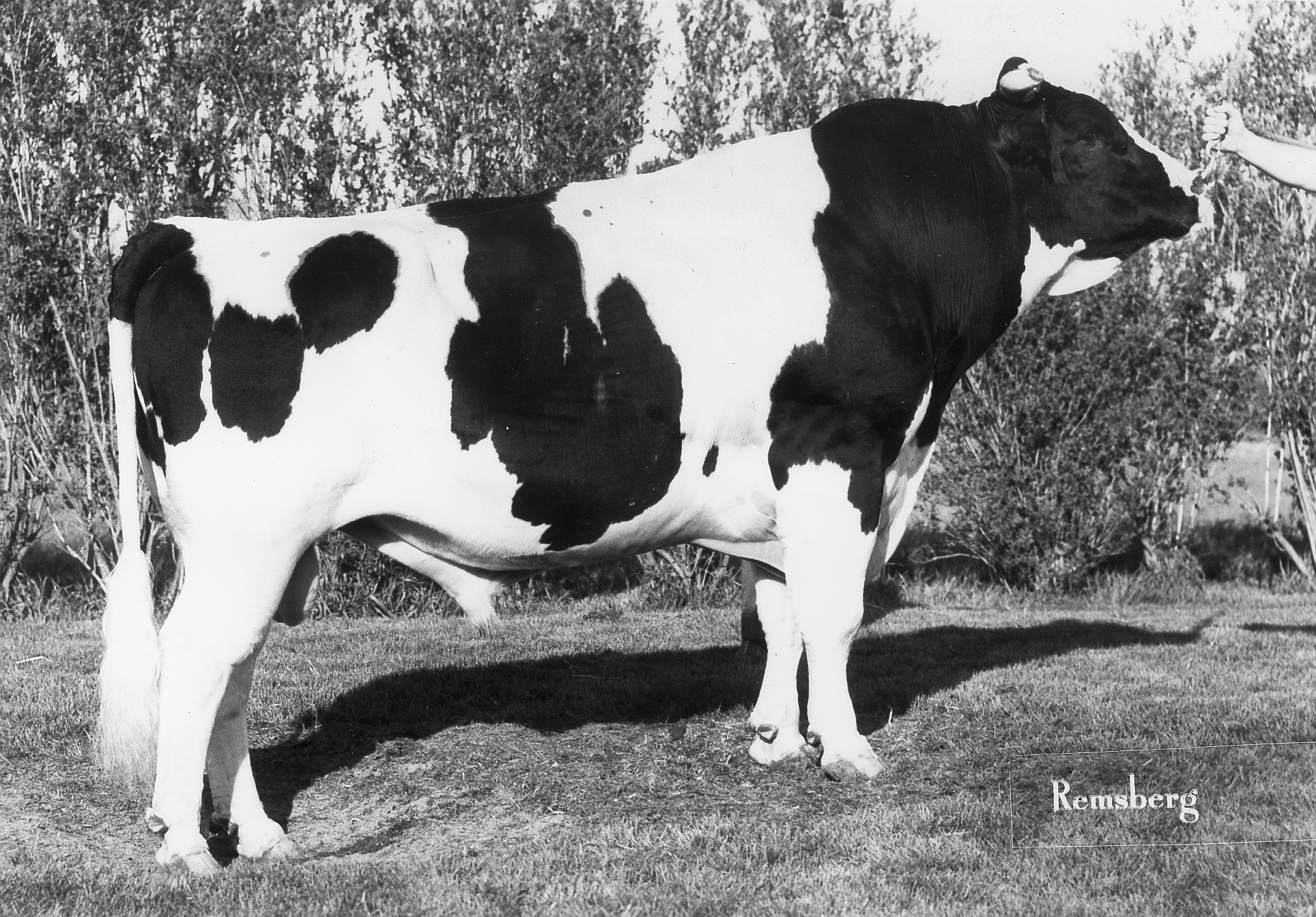
And Ondine? Her female line kept right on transmitting. About eighty years later, a bull named Round Oak Rag Apple Elevation was born. Ondine is his twentieth dam on the bottom side of his pedigree. Elevation sits at the absolute top tier of Holstein history, and his blood runs through bulls like Hanoverhill Starbuck. Starbuck, in turn, traces back not just to Ondine through Elevation, but directly to Johanna on his maternal line.
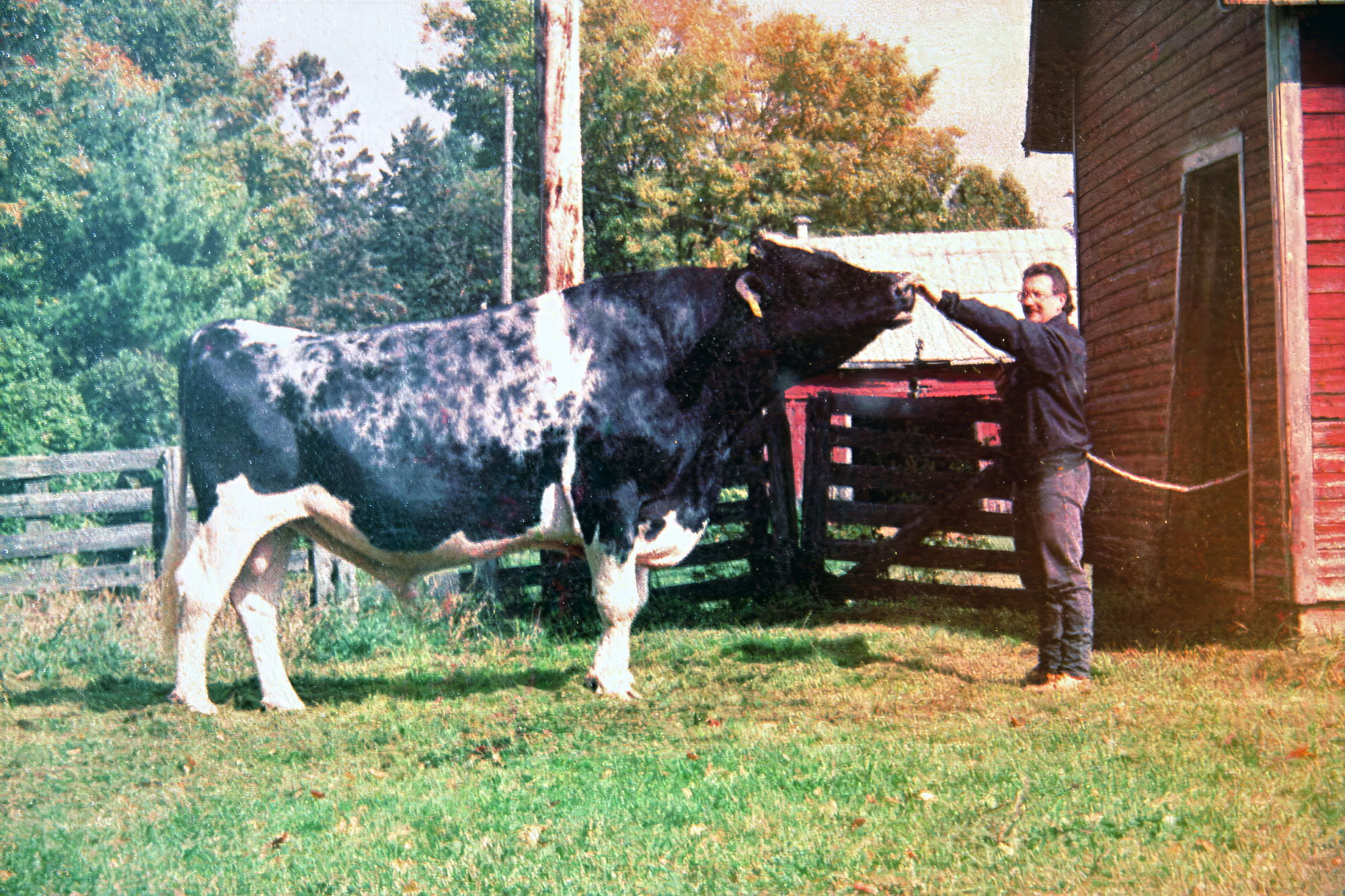
Think about that for a second. You could walk through a Canadian barn in the 1980s, look at Elevation and Starbuck daughters, and not realize you were looking at Kriemhild cows talking across a century.
Smiths & Powell – Turning Great Cows into a Population
While Miller was working away at Peterboro, a pair of nurserymen down by Onondaga Lake were paying close attention.
Wing and Judson Smith had started in cattle a year or two earlier, looking mostly for manure for their orchards and nurseries. They’d heard about a man in Madison County with a shipment of “Dutch‑Friesians” that were beating their Milking Shorthorns and brindle crosses. So they drove over to Peterboro to see for themselves.
They bought the bull Uncle Tom and the cows Aegis, Iris, Juniata, and Sappho from Miller and took them back to their operation at Lakeside Stock Farm. Those cows did exactly what the rumors said they’d do in the milk pail. The Smiths saw two things immediately: this breed was special, and Miller was making very good money. They decided to cut out the middleman and go straight to Holland.
They teamed up with William Brown Smith and son‑in‑law Edward Powell as Smiths & Powell and, starting in 1878, began importing Holsteins on a scale nobody matched. Over the years they brought in 1,293 head—about one‑sixth of all pure Dutch Holsteins imported to North America.
But here’s what really set them apart: it isn’t the number that matters as much as the names.
Their first Holland trip brought thirteen females, including Netherland Queen, who stood first as a yearling and as a two‑year‑old at the New York State Fair in 1878 and 1879 and made a 2‑year‑old yearly record of 15,614 lbs of milk. A year later they brought in her dam Lady Netherland and Lady’s calf Netherland Prince, who had been born after purchase and before shipment. They already had Netherland Princess and Netherland Duchess in the barn and later added Netherland Dowager, the paternal granddam of Prince.
From that group they built the Netherland family, known for size, strong type, and big milk with good butterfat. The bull Netherland Prince took his place alongside Neptune (from Aaggie) and Miller’s Billy Boelyn as one of the three great imported foundation sires. Prince’s sons—Netherland Monk, Prince Imperial, Netherland Carl, Netherland Statesman, Netherland Alban, and others—spread his genetics all over.
Their second major family came from a cow whose name Holstein people still say with respect: Aaggie.
Imported in 1879 as a five‑year‑old, Aaggie went on yearly test in 1880 with Aegis (one of Miller’s cows now at Lakeside). Early in lactation Aegis hit 82 lbs in a day; Aaggie topped her at 84. Over 365 days, Aegis made 16,823 lbs. Aaggie finished at 18,004 lbs, the first cow in the United States to cross the 18,000‑lb mark on a yearly record.
Her daughter Aaggie 2d, imported as a calf by their kinsmen T.G. Yeomans & Sons, produced 17,746 lbs of milk as a two‑year‑old, beating all previous records except her dam’s. Aaggie and Aaggie 2d both traced to the Dutch bull Rooker, whose blood had also yielded the record cow Lady Clifden. The Smiths & Powell crew scoured Holland for daughters and granddaughters of Rooker’s sons, naming them all with the Aaggie prefix. They ended up with about 100 “Aaggie” animals.
The third pillar at Lakeside was Clothilde. Born in 1879 and imported in 1880, she produced 26,021 lbs of milk in 1885, setting a world record and proving that Holsteins could compete with Jerseys for butter production when put on proper tests. She was large, strong, and transmitted those traits. Seven of her daughters were by Netherland Prince, and their sons spread Clothilde’s blood across North America.
You can see their reach today if you open an old herdbook and walk the pedigrees forward:
- Gerster 1917 H.H.B., imported by Smiths & Powell in 1881 and sold to Chapman Bros. in Ohio, stands behind bulls like Cook‑Farm Starbuck Flip, Canyon‑Breeze Allen, and Whittier‑Farms Apollo Rocket.
- Aaggie Ida 2600 H.H.B., imported in 1882, shows up behind cows like Donnandale Skychief Jemima, Riverside Boast Ormsby Dad, and Southwind Bell of Bar‑Lee.
- La Polka 2d 2774 H.H.B., from their 1882 imports, is back in Homestead Susie Colantha and Marshline Ormsby Blossom.
It wasn’t just that they imported a lot of cows. They imported the right cows, tested them hard on milk and butter, and then sold their sons and daughters across the country.
What most people don’t realize is that many red‑and‑white Holsteins today trace their red genes back to these same herds. After Miller brought in outcross bulls like Clothilde Monk and later used Aaggie Cornelia 4th’s Clothilde, red and white calves started appearing. Those patterns increased when Smiths & Powell leaned into the Clothilde and Aaggie bloodlines. That history is still lurking in the pedigrees of today’s roan and red Holsteins.
Henry Stevens – Reading Cows by Feel
If Miller was the master cow man and Smiths & Powell were the big engine builders, Henry Stevens of Brookside Farm was the bull man.
Brookside sat just south of Lacona, New York, on land granted to Henry’s great‑grandfather for Revolutionary War service. Henry’s first Holsteins—cows May and Juno—were bought straight out of Miller’s herd for $300 apiece. From there he built his program around four foundation cows: DeKol 2d, Netherland Hengerveld, Belle Korndyke, and Helena Burke.
On paper, each of those cows made solid official records for their day—mid‑20‑lb butter tests, strong yearly numbers. Their real magic came through their sons:
- DeKol 2d’s son DeKol 2d’s Butter Boy and grandson DeKol 2d’s Paul DeKol built the DeKol line.
- Belle Korndyke produced Pontiac Korndyke, a key figure in the long Pontiac bull family.
- Netherland Hengerveld’s line ran through Hengerveld DeKol, linking those families together.
- Helena Burke’s son DeKol Burke led to the Burke family, which eventually produced bulls like Wisconsin Admiral Burke Lad.
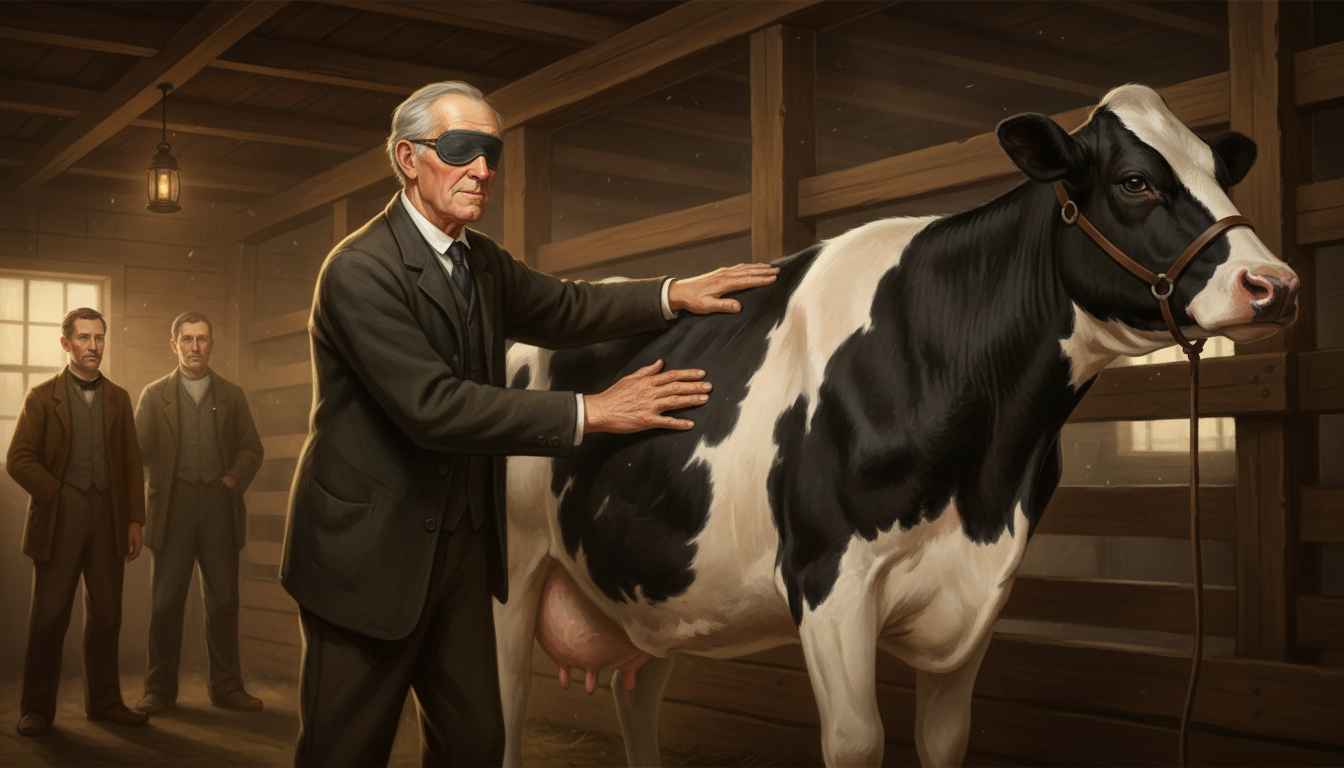
The twist in Stevens’ story is that he did some of his best work after he lost his sight.
An illness in middle life left him blind, but he didn’t quit. People remembered him walking down the cow alley at Brookside with a hand on the halter rope, then turning loose and letting his fingers do the judging. He’d follow the curve of a rib, feel the spring in the barrel, test the pliability of an udder, even trace hair to tell where black gave way to white. His sons trusted his hands more than their own eyes when it came time to decide which heifers stayed and which bulls went out. The records back that faith up.
DeKol 2d herself was imported by B.B. Lord & Son in 1885, sold to J.B. Dutcher & Son, and later bought by Henry Stevens & Sons, Lacona. From there, her descendants spread everywhere. Holstein historians calculate that her blood is shared in common with roughly 7.2% of the modern general herd—an astonishing saturation for one cow.
By the 1920s, Henry’s sons, trading as Stevens Bros.–Hastings Company at Liverpool, New York, were running what the Importers history calls “the most influential Holstein farm of the 1920s,” anchored by the bull King of the Pontiacs. The bull power that started with those four Brookside cows and a blind man’s hands helped carry Holsteins into the machinery era.
You see “DeKol” or “Pontiac” stacked three or four times in an older pedigree, and you’re looking straight back at Brookside and a breeder who literally felt his way into the future.
B.B. Lord & Son – A Bridge North
Head west across New York and you come to Sinclairville in Chautauqua County. Just south of the little bridge over Mill Creek lies what used to be Sinclairville Stock Farm, 110 acres owned and worked by Bela B. Lord and his son Clarence.
From 1882 to 1889, B.B. Lord & Son shipped 178 head of Holsteins to Canada—about 12.5% of all Canadian imports—and many of those animals ended up as foundation cows. Working in partnership with Michael Cook & Son of Aultsville, Ontario, they put together almost all the main building blocks of the Posch‑Abbekerk strain:
- Tidy of Downie, dam of Tidy Abbekerk, one of the cornerstone cows.
- Aaltje Posch 4th, foundation female of the Posch family.
- Hiemke 3d, dam of Abbekerk Prince 2d.
- Mercena, whose female line produced Pauline Colantha Posch and ultimately King Toitilla Acme.
From those cows came the Mount Victoria Farms herd at Hudson Heights, Quebec, and sires like Prince Colanthus Abbekerk Extra, Canada’s first Class Extra bull and a worldwide influence. Another Lord cow, Disone 6268 H.H.B., went to H.M. Williams and then to A.B. Mallory. Her descendants include May Echo Sylvia (seven world records in 1916), Re‑Echo May Burke EX (world champion in 1950 at 35,314 lbs milk and 1,261 lbs fat in an 11‑year‑old 3X record), and A.B.C. Reflection Sovereign EX‑Extra, sire of multiple All‑American get‑of‑sire groups.
Even Lord cows that stayed in the States made noise. Milly 5153 H.H.B., imported in 1883, shows up as sixth dam of May Walker Ollie Homestead, dam of Sir Inka May. That ties in Shadeland Daisy and other Shadeland blood further back.
Lord’s operation gradually drifted toward horses—French Coach, Percherons, Standardbred trotters—and Holsteins slid out of focus. But by then the cattle they’d picked and shipped were already planted all over Canada and the northern U.S. If you work with Posch‑Abbekerk descendants, Pauline Colantha Posch blood, or some of the old King Toitilla Acme lines, you’ve got a little bit of Sinclairville running in your herd.
Regional Pioneers – The Web Tightens
Once the big New York pipelines were flowing, a second wave of importers stepped in. Their names might not be as famous on the surface, but if you spend any time chasing deep pedigrees, you bump into them constantly.
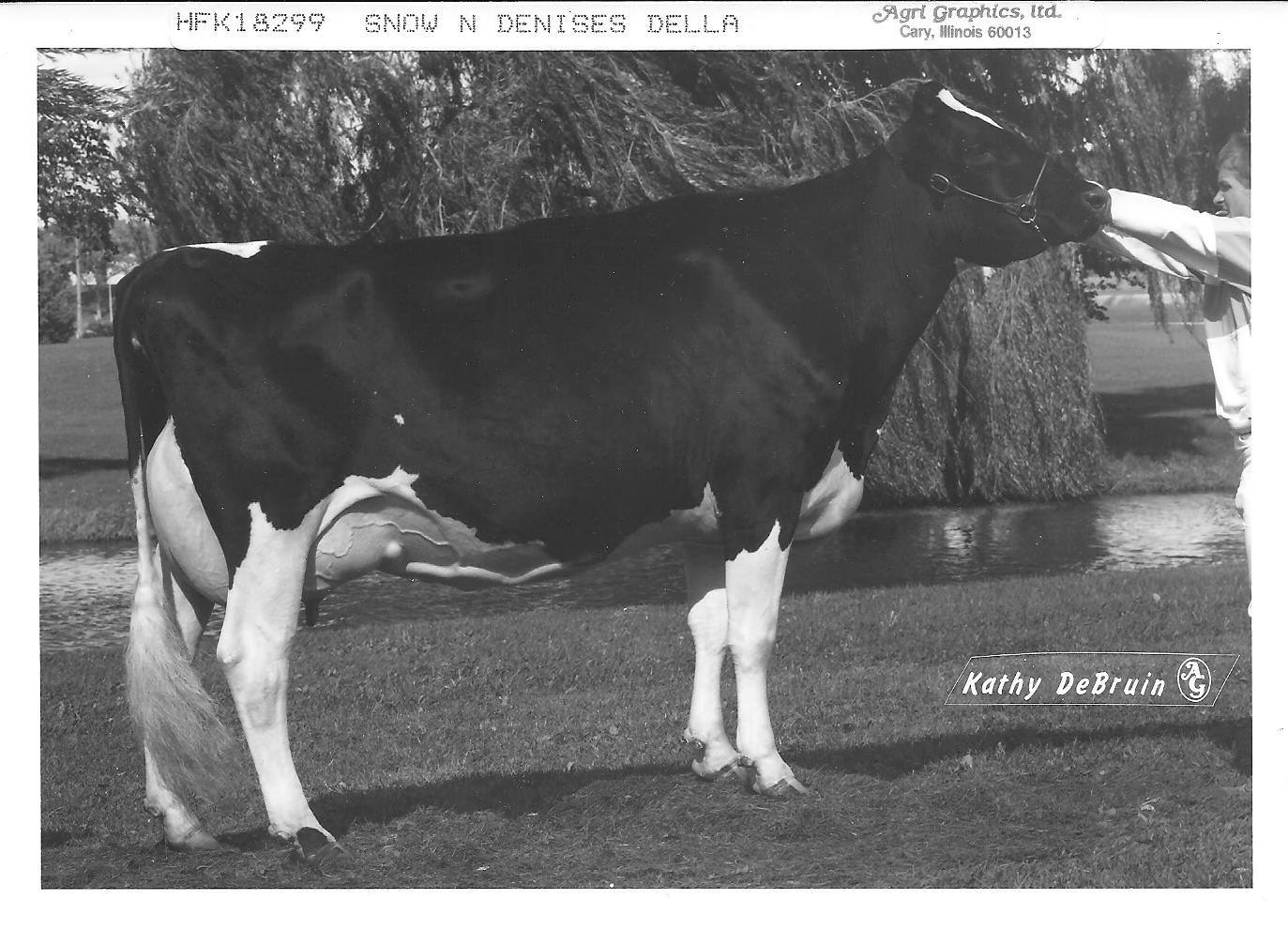
Take Alonzo Bradley of Lee, Massachusetts. He was a lumberman before he turned to farming and made six trips to Holland between 1879 and 1884, picking cattle off the ground himself. Among his imports were Segis 5765 H.H.B.,Pietertje 2d 3273 H.F.H.B., and Aaltje Salo 5868 H.H.B. Those cows became the headwaters of the Segis, Pietertje, Rag Apple, and Ormsby families—names that echo later in bulls like King Segis and Johanna Rag Apple Pabst. Bradley sold just twelve young females to H. Rust & Bros. in Wisconsin. From that small group came, generations later, cattle like Hanover‑Hill Triple Threat and Snow‑N Denises Dellia and the cow families they started.