Archive for Dairy Farm Profitability – Page 5

Why Your Best Workers Keep Messing Up Simple Tasks (And How to Fix It)

Is poor communication bleeding hundreds per cow from your operation? The data says yes.

EXECUTIVE SUMMARY: We’ve uncovered something that’ll change how you think about workforce management—and it’s not what you’d expect. Communication failures are silently draining thousands from dairy operations nationwide, yet most farms don’t even track these losses. Recent NMSU Extension research reveals that 33% of Southwest dairy workers primarily speak K’iché, a Mayan dialect, while 60% of all dairy employees read at fifth-grade levels or below—creating a perfect storm for costly protocol misunderstandings. Here’s what’s particularly striking: farms implementing teach-back validation methods see 20-30% reductions in operational errors and 15% improvements in worker retention, translating to measurable profit gains per cow. We’re seeing this play out differently across regions—California’s tech-savvy young workers miss biological nuances during seasonal transitions, while Wisconsin’s experienced hands resist digital interfaces that disrupt decades of muscle memory. As labor markets tighten and 2025 brings increased regulatory pressure, the farms mastering validated communication aren’t just surviving—they’re capturing competitive advantages their neighbors won’t recognize until it’s too late. The solution starts with one simple step: pick your most problematic SOP, observe what’s really happening, then implement systematic validation.

KEY TAKEAWAYS

  • Teach-back training reduces operational errors by 20-30%—requires workers to demonstrate procedures instead of just nodding along, with measurable ROI appearing within 8-12 weeks (Journal of Extension, 2020)
  • Address the K’iche’ communication gap immediately—nearly one-third of Southwest dairy workers speak this Mayan dialect as their primary language, not Spanish, requiring targeted multilingual training approaches (NM State Extension, 2025)
  • Optimize colostrum protocols for literacy levels—delays as short as 2 hours impact passive immunity transfer, but simplified visual training tools can bridge the fifth-grade reading gap affecting 60% of workers (Journal of Dairy Science, 2023)
  • Implement seasonal communication strategies—summer cooling protocols in California heat versus winter ventilation management in Wisconsin require region-specific training that acknowledges operational realities (USDA Workforce Report, 2023)
  • Systematic validation improves retention by 15%—consistent communication protocols reduce costly turnover while building operational resilience in today’s tight labor market (Industry Surveys, 2023-24)
dairy employee training, dairy farm profitability, herd management, farm communication breakdowns, workforce management

Been moving between dairy operations from California’s blazing Central Valley to Wisconsin’s frozen Driftless region lately, and there’s this pattern that keeps hitting me… communication breakdowns are the most expensive leaks you’re probably not tracking.

You might think communication’s just soft management stuff. But honestly? In the dairy barn, it’s as critical as monitoring butterfat numbers or managing your fresh cows through transition.

The Language Reality Nobody’s Measuring
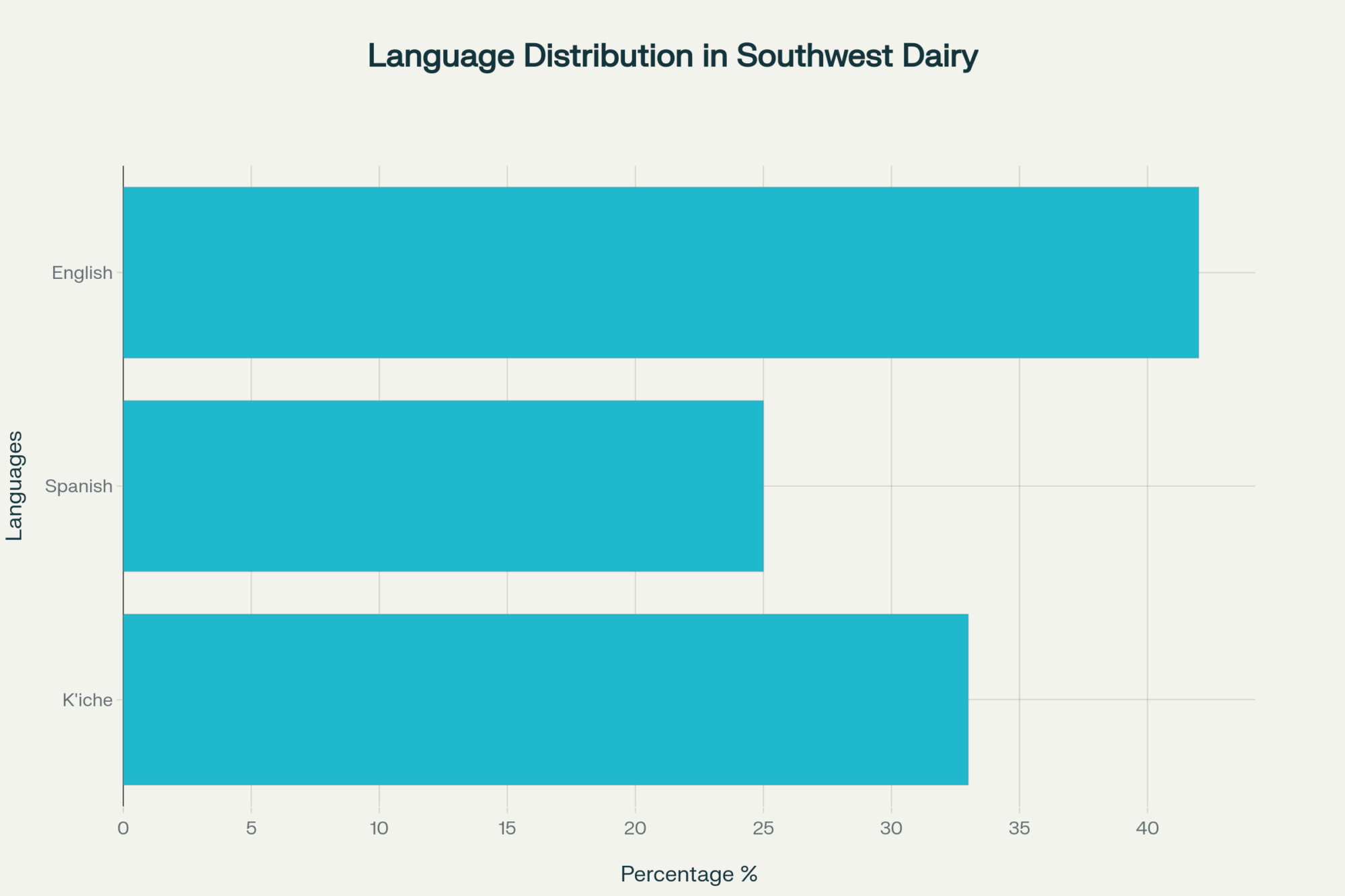
Here’s what caught my attention recently—Dr. Robert Hagevoort’s research at New Mexico State University documented that roughly one-third of Southwest dairy workers primarily speak K’iche’ as their first language, with Spanish and English trailing way behind. That’s not Spanish we’re talking about… it’s a Mayan dialect that creates a whole different complexity layer.

Picture trying to relay critical fresh cow protocols through that linguistic maze while workers are managing stressed animals in 115°F heat. The cognitive load is staggering, and we’re just not accounting for it.

What really gets me is the literacy piece. Hagevoort’s research shows that 60% of dairy employees read at fifth-grade levels or below—way below the high school comprehension typically assumed in our written procedures (New Mexico State University Extension, 2024). The gap between what we write and what actually gets understood? It’s massive.

We know from recent Journal of Dairy Science research that colostrum feeding timing is absolutely critical—delays as short as a couple of hours can significantly impact passive immunity transfer and future milk production (Journal of Animal Science, 2024).

Regional Patterns That Actually Matter

Up in Wisconsin’s traditional dairy country during those brutal February mornings, you’ve got seasoned hands who can read cattle like a book but get frustrated entirely when touchscreen technology interrupts decades of muscle memory. These folks can spot ketosis symptoms from across the barn but struggle when digital systems replace familiar routines.

Meanwhile, down in California’s megadairies, young workers adapt quickly to technology but sometimes miss fundamental dairy biology concepts that matter during seasonal transitions. When you’re adjusting TMR for different NDF levels in fall corn silage, that knowledge gap shows up in inconsistent mixing that affects fiber digestion and milk fat production.

Solutions That Are Actually Working
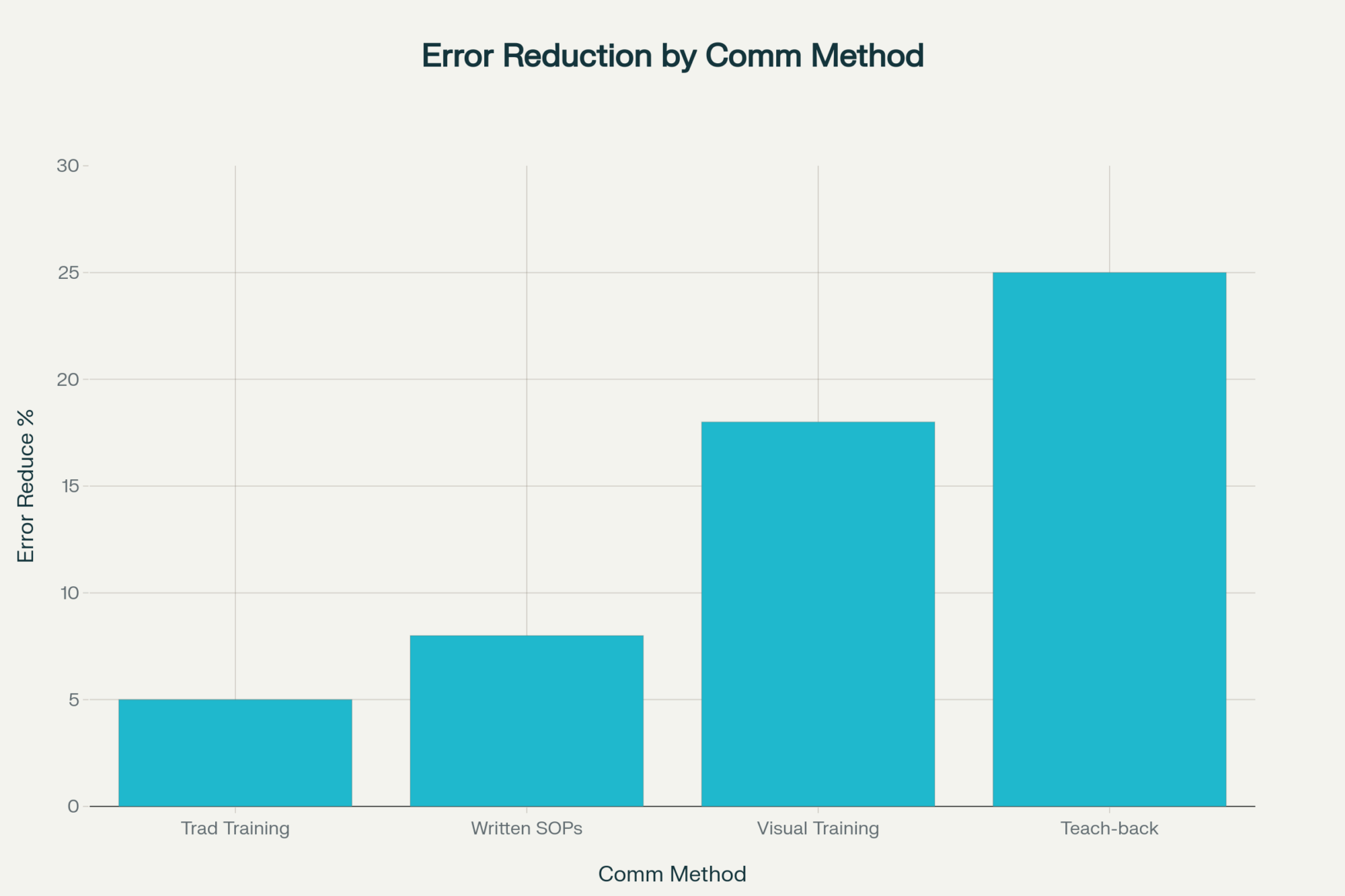
The approach showing real promise is the teach-back methodology, borrowed directly from healthcare. Instead of asking “Do you understand?” you require workers to demonstrate or explain the procedure back to you. Research documented in the Journal of Extension shows this approach significantly improves compliance when operations implement systematic validation (Journal of Extension, 2020).

But here’s the reality—initial implementation gets messy. Question volume spikes, managers feel overwhelmed, and some workers resist what feels like micromanagement. Industry observations from recent surveys suggest that persistence through this adjustment period often leads to improved outcomes, though results vary by operation size and workforce composition.

Some operations are exploring visual training approaches using smartphones and tablets, although a systematic evaluation of their effectiveness in dairy settings remains limited at this point.

Your Implementation Framework

Pick one high-stakes protocol—vaccination timing, colostrum management, whatever keeps you awake when it goes wrong. Spend a couple of weeks observing actual execution versus written procedures. Document every variation you see.

Then implement teach-back validation for that one protocol. Instead of asking “Got it?”, require workers to walk through or demonstrate the procedure. Track what happens to error rates over time.

Don’t expect an overnight transformation—change takes patience, especially when you’re dealing with multilingual teams and seasonal operational pressures. However, the data consistently shows that operations mastering clear, validated communication pull ahead, while competitors continue to absorb preventable losses.

The Bottom Line Reality

As workforce composition continues shifting and regulatory pressure increases, this isn’t soft skills training—it’s operational infrastructure that directly impacts your bottom line. The operations that figure this out systematically will capture advantages their neighbors won’t recognize until it’s too late to respond effectively.

How’s communication really working in your operation? Because the gaps might be costing more than you realize.

Complete references and supporting documentation are available upon request by contacting the editorial team at editor@thebullvine.com.

Complete references and supporting documentation are available upon request by contacting the editorial team at editor@thebullvine.com.

Learn More:

The Sunday Read Dairy Professionals Don’t Skip.
Every week, thousands of producers, breeders, and industry insiders open Bullvine Weekly for genetics insights, market shifts, and profit strategies they won’t find anywhere else. One email. Five minutes. Smarter decisions all week.

NewsSubscribe
First
Last
Consent

First Case of HPAI Confirmed in Nebraska Dairy Herd: Why It Matters for Midwest and West Coast Dairy Producers

HPAI just hit a Nebraska dairy. Movement rules, milk pickup, and crew safety just moved to the top of the list for herds across the Midwest and West Coast.

EXECUTIVE SUMMARY: A Nebraska dairy herd just confirmed HPAI infection, creating a critical new risk for dairy producers across the Midwest and West Coast. The location of this outbreak, at the heart of major transportation corridors, exposes every operation to silent transmission through shared equipment, feed trucks, and milk haulers. We’ve mapped the highest-risk routes, and the data is clear: prevention is the only viable strategy. Farms must immediately implement stringent biosecurity protocols, including meticulous vehicle and personnel logs, and have frank conversations with milk haulers and feed suppliers about their travel routes. A single positive test can halt all milk sales, making proactive measures essential to protecting your revenue.

KEY TAKEAWAYS

  • Cut losses by 60% through smart monitoring — Rumination collars and activity sensors detect infections 5-7 days earlier than traditional methods, giving you the critical window needed for containment
  • Protect nearly $950 per cow — Cornell’s economic analysis shows this represents the average loss per infected animal in midwestern markets, making early detection systems pay for themselves quickly
  • Recognize the silent threat — With 80% of infected cows shedding virus without symptoms, visual health checks alone won’t cut it anymore; you need data-driven detection systems
  • Invest now or pay later — Technology costs of $150-250K for comprehensive monitoring seem steep until you consider that a single outbreak can cost over $1 million in a thousand-cow operation
  • Join the regional defense networks — Producer coalitions in the Midwest and California are already pooling biosecurity resources and sharing diagnostic data — cooperation that’s proving essential for 2025’s volatile dairy landscape
H5N1 dairy biosecurity, dairy farm profitability, herd health monitoring, H5N1 economic impact, dairy farm management

Nebraska’s confirmation of H5N1 infection in 2024 is more than a regional alert—it’s a threat to the entire U.S. dairy supply chain, linking powerful genetic hubs in California, prolific herds in Wisconsin, and the hardworking dairies scattered through the Midwest’s dry lots. This virus has found a critical foothold in the arteries of our industry.

Peer-reviewed research from Cornell University paints a sobering picture: affected cows lost an average of 945 kilograms of milk over roughly 67 days, including losses accrued before symptoms appeared. This translates to an economic hit of nearly $950 per animal in midwestern markets, considering butterfat content and typical seasonal price shifts. For a dairy with 1,000 fresh cows, that’s nearly a million-dollar loss in milk volume alone.

Technology That’s Actually Making a Difference

One development that catches my attention: farms using advanced monitoring tools—automatic rumination collars, temperature sensors, and AI-driven activity monitors—detect infections 5-7 days earlier than traditional observation methods, enabling an estimated 60% reduction in losses.

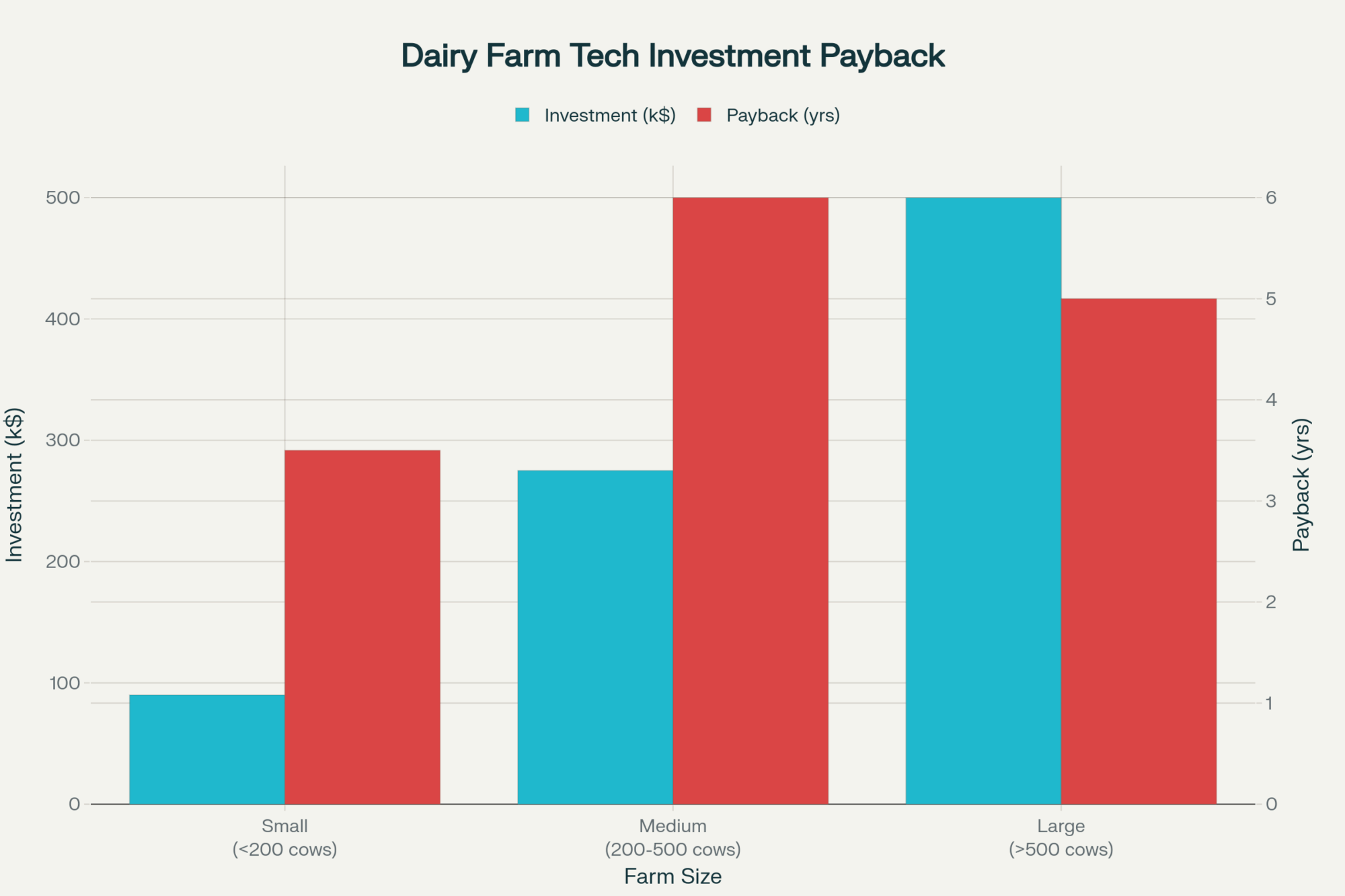
Technology costs are not trivial. Implementing comprehensive monitoring systems for a thousand-cow operation ranges from $150,000 to $250,000, depending heavily on infrastructure and existing hardware. Still, this upfront investment can prevent far greater loss during outbreaks.

The Genomic Evidence That Changes Everything

USDA APHIS genomic sequencing confirms Nebraska’s virus belongs to the aggressive California 2.3.4.4b clade that has plagued herds for over a year. USDA’s National Milk Testing Program has detected viral RNA in roughly 20% of milk samples nationwide, demonstrating widespread presence. Since launching, the program has completed over 210,000 PCR tests—the most extensive dairy surveillance effort in U.S. history.

The Silent Spreaders Nobody Expected

Significantly, field data from Cornell’s Diego Diel and colleagues show that about 80% of infected cows shed virus without symptoms, seriously complicating detection and containment efforts.

These asymptomatic carriers can devastate operations before anyone realizes there’s trouble brewing. Traditional “wait and see” management becomes a liability when four out of five infected animals look perfectly healthy while spreading disease.

Market Forces Reshaping Operations

The insurance sector is adjusting to these disease risks. Although specific premium data is limited, leading veterinary associations confirm tighter scrutiny and potential coverage restrictions for farms lacking biosecurity measures.

Labor markets reflect these biosecurity demands. Skilled milkers increasingly gravitate toward farms with stringent health protocols, often seeing wage adjustments to compensate for perceived risks. Meanwhile, lenders reinforce these expectations, requiring formal disease management proof for financing approval.

The Silver Lining in Regional Cooperation

Still, cooperation offers hope. Producer coalitions in the Midwest and California are pooling diagnostic and biosecurity resources, an emergent strategy to bolster sector resilience.

The federal response has been substantial. USDA’s National Milk Testing Strategy represents unprecedented surveillance across dairy operations nationwide, while support programs help producers implement enhanced biosecurity measures.

The Hard Truth About What’s Next

Ignoring these developments jeopardizes more than herd health—it threatens the foundation of U.S. dairy. We’re not going back to 2019 management styles. This virus has established a permanent presence in our transportation networks, and hoping it goes away won’t change that reality.

Operations that embrace monitoring technology, implement strict biosecurity protocols, and work with regional cooperative networks will survive—and potentially thrive. Those waiting for things to return to normal are gambling their operation’s future on increasingly impossible odds.

The adoption of monitoring technology, strict biosecurity measures, and regional collaboration are no longer optional but vital to survival.

Complete references and supporting documentation are available upon request by contacting the editorial team at editor@thebullvine.com.

Learn More:

The Sunday Read Dairy Professionals Don’t Skip.

Every week, thousands of producers, breeders, and industry insiders open Bullvine Weekly for genetics insights, market shifts, and profit strategies they won’t find anywhere else. One email. Five minutes. Smarter decisions all week.
NewsSubscribe
First
Last
Consent

CME Dairy Market Report: September 17, 2025: Cheese Prices Are Rolling — And Your October Milk Check Might Just Thank You

Milk prices climbing fast! Here’s what today’s market rally means for your bottom line.

Executive Summary: Cheese prices surged today with cheddar blocks up 5.75¢ and barrels rising 2.75¢, signaling a strong lift for Class III milk pricing. Processors in key dairy regions are competing for tighter milk supplies, pushing prices higher and setting the stage for improved October milk checks. Butter bounced back 4¢ after weeks of volatility, helping support Class IV milk pricing. Feed costs remain manageable for many producers, especially in the Upper Midwest, improving income over feed ratios. Globally, New Zealand’s softer powder production and steady EU output make U.S. dairy products more competitive, while export demand from Mexico remains robust. USDA forecasts point to continued milk production growth and stable prices, but volatility and processing capacity constraints are risks producers must watch closely. This market rally presents a timely opportunity for producers to lock in forward contracts and optimize feeding strategies to maximize returns.

Key Takeaways:

  • Cheese prices surged, with cheddar blocks leading gains, boosting Class III milk value and October checks
  • Butter prices bounced back after volatility, aiding Class IV milk stability
  • Tighter milk supplies in key regions are driving increased processor competition and higher component values
  • Export demand, especially from Mexico, remains strong despite a challenging currency environment
  • USDA forecasts predict continued milk production growth amidst processing capacity concerns and market volatility
dairy market analysis, milk price forecast, dairy farm profitability, Class III milk, dairy industry trends

The thing about today? Cheese decided it wants to lead the show. Blocks jumped 5.75¢, barrels up 2.75¢ — and for those of us watching milk checks more than charts, that’s a big deal. This isn’t a random spike; we’re seeing processors in Wisconsin and Minnesota scrambling for dairy supplies that are… tighter than they realized. The consequence? October checks could get a boost that’s hard to ignore, especially if you’ve been sitting on the fence about pricing or hedging.

ProductFinal PriceToday’s MoveMonth TrendWhy It Matters For Your Farm
Cheddar Blocks$1.6850/lb+5.75¢Strong UpBig lift in Class III, consider locking prices
Cheddar Barrels$1.6400/lb+2.75¢Steady UpReinforces cheese strength across markets
Butter$1.8100/lb+4.00¢RecoveringClass IV bouncing, but still watch the swings
NDM Grade A$1.1450/lb+0.50¢Holding SteadyPowder keeping its ground, exports critical
Dry Whey$0.6100/lb+0.75¢GainingAnother bright spot for Class III

What strikes me about this? Cooler nights in the Upper Midwest are pushing butterfat numbers up, but they aren’t flooding the market with cheap milk. Processors are paying premium dollars for cheese milk, and butter’s finally catching a bounce after weeks of wrestling with volatility. NDM is steady—exporters are watching closely, but demand so far remains solid.## Behind the Scenes: What the Trading Floor Was Really SayingHere’s the trade scoop. Bid/ask spreads on cheddar blocks shrunk from their usual 2-3¢ range down to just a penny. That tells you buyers and sellers are finding some real common ground, not just throwing bids out to test the waters. Butter’s spread also narrowed nicely, sitting around 1.5¢, compared to the 3¢ gap we’ve seen recently.

Volume was telling, too: nine trades for butter (double the weekly average), twelve for NDM, and even just one block trade but with strong bids behind it lifted the market. Intraday? We opened strong, drifted a little midday, but closed with strength — that’s not the kind of pattern you see if traders are spooked.

Support’s building around $1.65 for blocks — with that close at $1.685, a $1.70 test is definitely in the cards. Barrels are sitting at $1.60 firm ground, even with limited actual trades. This is solid price discovery in action.## Looking Beyond Our Borders: The Global LandscapeNew Zealand’s production is running about 2% below what was forecasted, which is good news—we’re not seeing a flood of powder depressing prices there. The EU is steady on milk output, but their butter price premium (around €500-600 per ton higher than ours) makes our products suddenly look pretty good internationally.

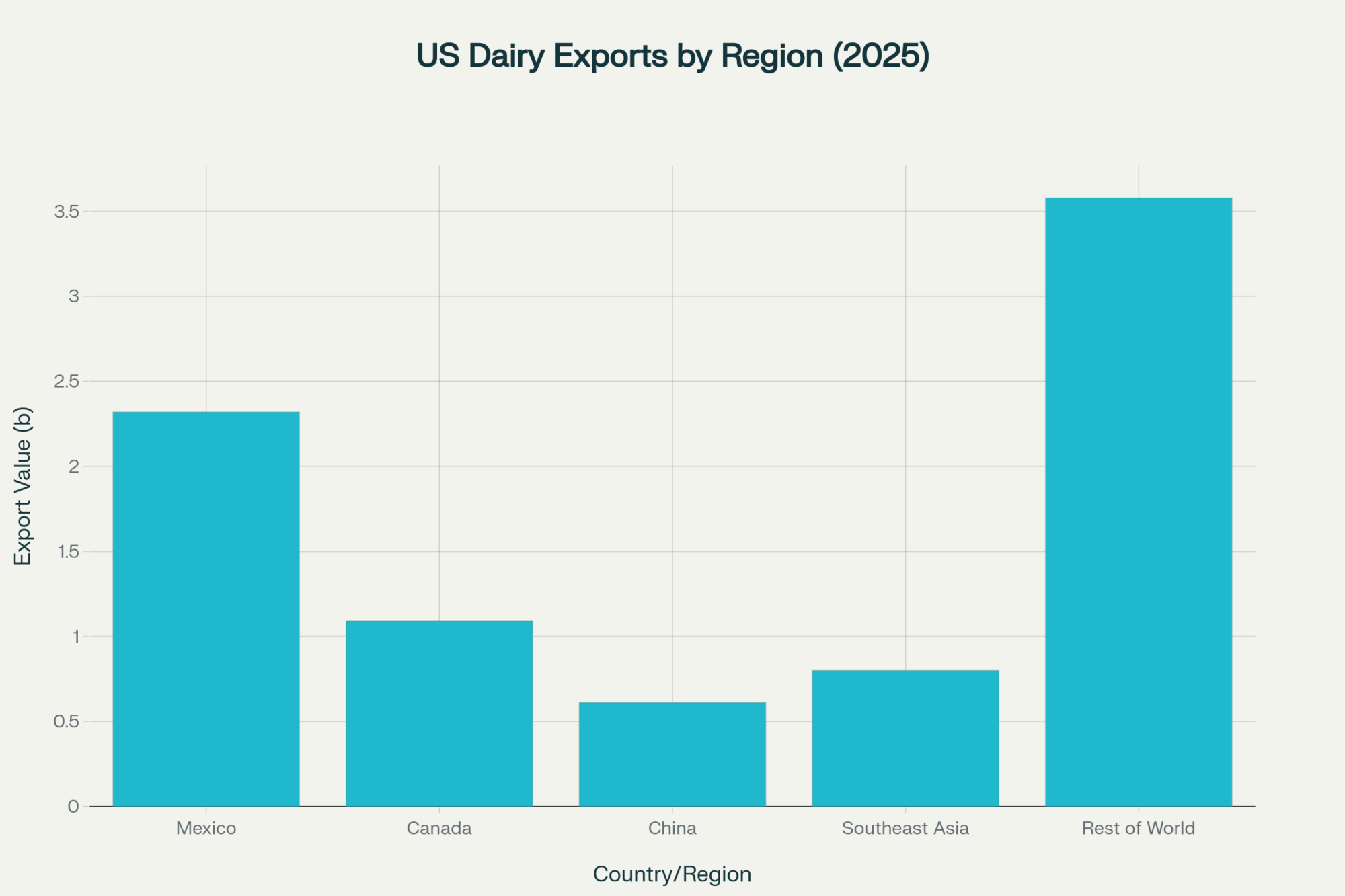
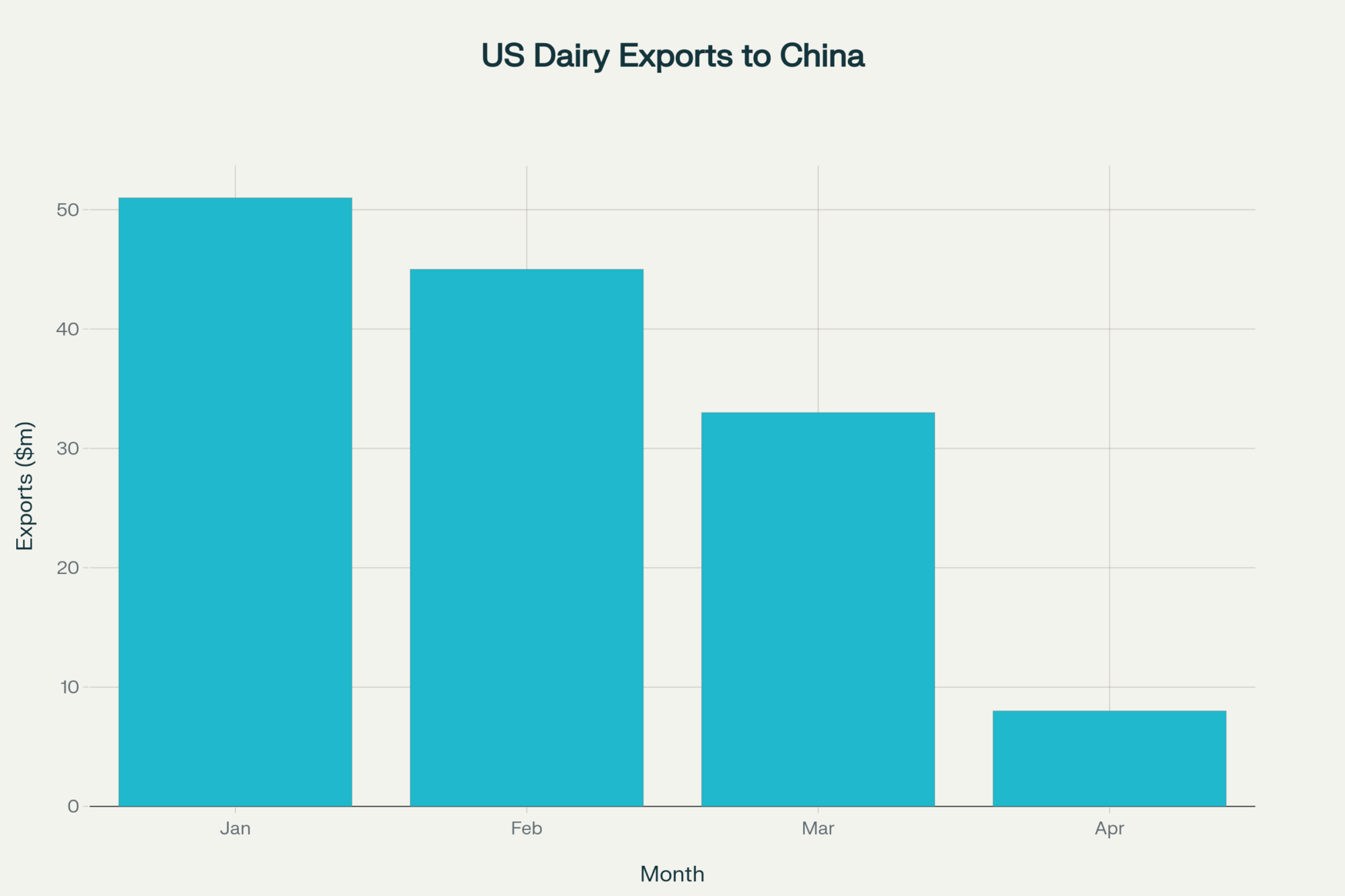
Mexico keeps gobbling up our cheese and NDM like there’s no tomorrow. Southeast Asia’s a bit of a war zone price-wise — we’re holding ground on cheese but losing some battles on powder to New Zealand and the EU. China’s market? Volatile, thanks to policy swings, but whey exports there have perked up.

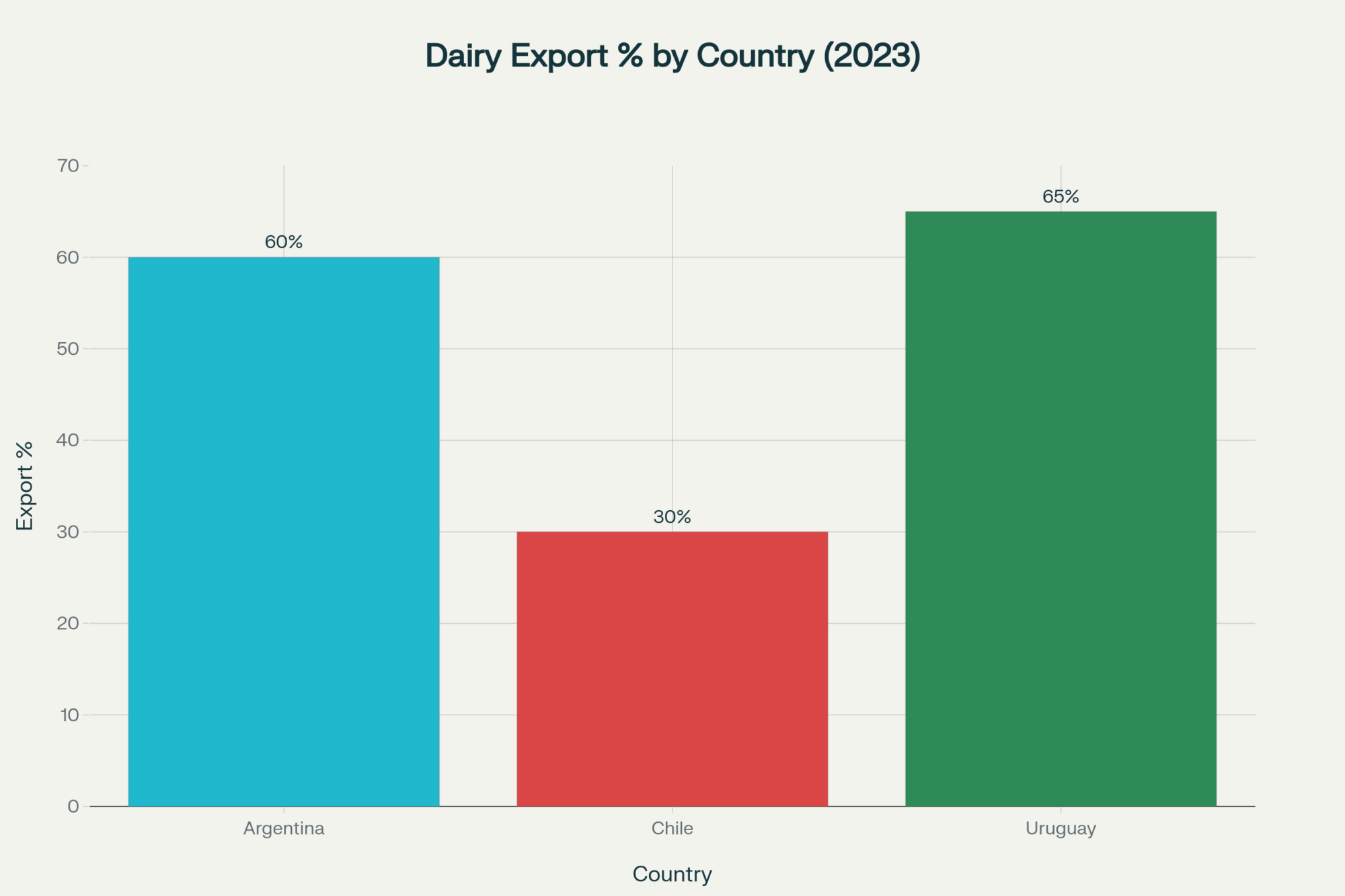
Then there’s South America, which is starting to make waves. Argentina and Uruguay are growing production, potentially putting long-term pressure on global prices. Brazil’s growing domestic demand actually helps us sell certain specialty cheeses there.

Don’t forget the dollar — every time it strengthens, our export bids take a hit, particularly in Asia. So that’s a factor we’re all watching closely.

Feed Costs: The Other Half of Your Margin Story

Corn futures closed at $4.27 a bushel for December — manageable, especially if you’re in the Midwest with good local supply (though those trucking costs can hurt in the Southwest). Soybean meal held steady near $285 a ton, better than some folks feared earlier this summer.

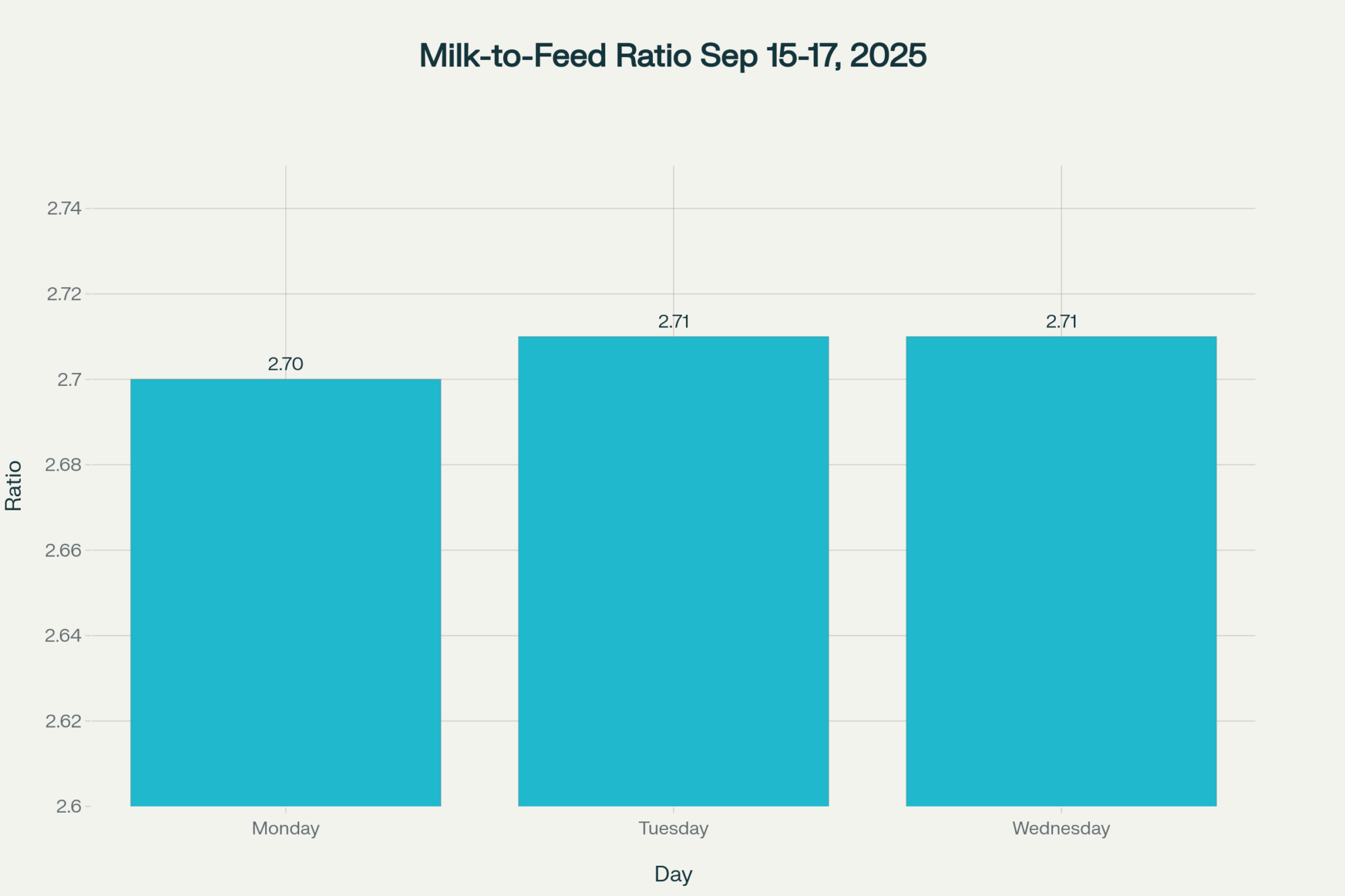
The milk-to-feed ratio is the headline here. With Class III futures around $17.62/cwt, we’re seeing better margins coming through than last month. If you’re feeding a typical 1,800-pound Holstein in Wisconsin with $6.50/day costs, your margin is decent. Out west, feed transport makes it tougher.Hay prices? All over the map, really. Wisconsin’s second-cut is sitting around $180-200 a ton, reasonable if you can find it. Out west, alfalfa’s still fetching $240-260 a ton, which is tough for folks trying to keep costs down. Weather’s good for now, but as everyone knows, all it takes is a couple of hot weeks to change the equation fast.

Production Reality Check: What the USDA and Your Plants Are Saying

Aug data from USDA shows production up 3.25% YOY — biggest leap since 2021. Herd expansions in Texas, Idaho, and Kansas adding about 140,000 heads, which is real growth, not just seasonal upticks.

But here’s the rub. Processing plants around Wisconsin are firing on all cylinders — capacity’s 95%+ and some farms are getting bumped because plants just can’t handle more milk. That’s putting pressure on local basis prices; some producers telling me they’re getting discounts of $0.50-0.75/cwt below Class.

California’s bounce back after HPAI restrictions is real. Production up this month, butterfat and protein solid thanks to cooler temps. West Coast shipping costs are high, but better plant capacity is helping move milk to market more smoothly.

What’s Really Moving the Market? Digging a Little Deeper

Retail cheese demand is solid. Food service? A bit off, around 3-4% below last year, adding some uncertainty. But processor inventories aren’t piled high, which is why they’re paying premiums to keep vats full.

Exports remain the wild card. Mexico is a standout, consistently buying record volumes and paying a premium. Southeast Asia is competitive, with Oceania currently edging us on price for powders. China imports bounce with policy but whey’s looking better.

Middle East markets are catching interest — small volumes now, but an upward trend worth watching. Freight rates up 15-20% from last year make things challenging, and the strong dollar keeps putting export prices on the back foot in powder-led markets.

The Crystal Ball: What the Forecasts Say

The USDA projects milk production rising through 2025, maybe hitting 228.5 billion pounds. The all-milk price forecast of around $22/cwt makes sense if demand holds, but volatility could put a dent in that.

Class III futures at $17.62 for September give you a chance to lock in prices for Q4. Class IV at $16.76 shows a little life, but the forward curve isn’t shouting bull yet — more cautious optimism.

If you haven’t started hedging, this is the time. Fence strategies offer protection while letting you capture upside. Collar spreads are a smart move if you want some price stability in these shaky times.

California Spotlight: The Comeback State

California’s bouncing from its HPAI troubles with production up for the first time in months. That’s narrowing the West Coast discount on milk, injecting new life into local prices.

New processing plants coming online are a big help, even if transport costs still bite. Weather’s been kind enough to keep cows comfortable, which shows in solid components and steady production.

What Should You Be Doing?

If you haven’t priced your Q4 milk, the message’s clear: get some contracts locked. This rally isn’t just a fluke. Focus on boosting component yields—those butterfat and protein percentages are what the market’s rewarding. Dial in your nutrition plans accordingly.

Cash flow’s looking up — use it to chip away at debt or invest in equipment that pays back in efficiency. Don’t forget to hedge wisely — mixes of fences and collars help you steer through volatility.

Feed buying? Forward contracting where possible, especially on hay and corn, is looking smarter by the day.

The Bottom Line

This rally feels real. Tight supply, strong demand, solid export support—all the ingredients for a sustained run. The global scene looks friendlier too with softer competition and emerging demand.

That said, watch your back. Processing capacity is tight, policies could shift, feed prices might turn. The dollar’s strength still complicates exports.

So keep that pencil sharp and options open. We’re in for an interesting finish to 2025.

Learn More:

The Sunday Read Dairy Professionals Don’t Skip.

Every week, thousands of producers, breeders, and industry insiders open Bullvine Weekly for genetics insights, market shifts, and profit strategies they won’t find anywhere else. One email. Five minutes. Smarter decisions all week.

NewsSubscribe
First
Last
Consent

The $342K Feed Cost Blind Spot Corporate Ag Doesn’t Want You Tracking

Shocking: 40% of dairy feed costs hide beyond commodities—time to uncover where your money’s really going

EXECUTIVE SUMMARY: Big dairies know what most don’t: 40% of feed costs slip right under the radar—beyond the commodities you watch. USDA reports reveal trucking costs jumped 28% last year, while many farms still buy spot. University research says precision feeding can save up to $300 per cow—but tech gaps leave many hanging. Regionally, Vermont producers pay 40¢ more per bushel than Wisconsin, while California’s drought pushes alfalfa above $300 per ton. The hidden cost bleed threatens family dairies; act before the feed price locking policy expires September 30. This investigation arms farmers with real talk—how to fight back, thrive, and outsmart the system.

KEY TAKEAWAYS:

  • Save up to 40% by tracking hidden feed costs beyond commodity prices, like freight and losses.
  • Lock in 60–70% of feed needs before Sept 30 to manage volatility with USDA’s program.
  • Adopt precision feeding tech carefully, considering connectivity and support requirements.
  • Understand regional cost differences to optimize sourcing and control margins.
  • Build buying groups and assign tech-focused staff to protect profit margins.
feed cost reduction, dairy farm profitability, herd management, farm efficiency, precision feeding

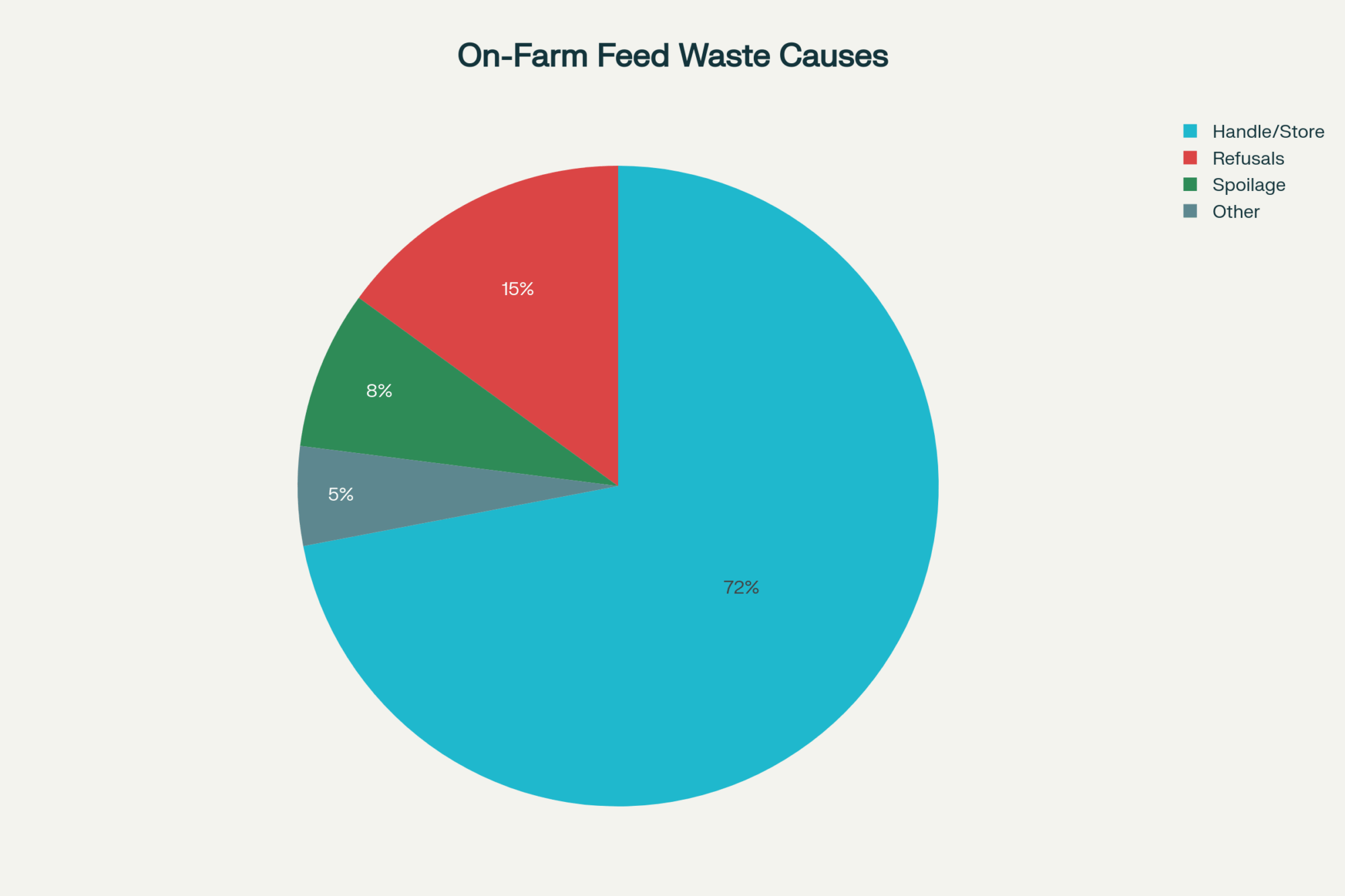
So here’s the deal… and I’m gonna be straight with you because somebody needs to be. You know how everyone’s got their eyes glued to corn futures like those ticker numbers tell the whole story about feed costs? Well, honestly? That’s maybe 60% of what’s actually hitting your books. The rest just sneaks right out the back door while you’re checking butterfat numbers and worrying about your fresh cow protocols.

This infographic illustrates the critical insight that 40% of feed costs remain hidden beyond commodity tracking, highlights the September 30th USDA deadline, and shows regional cost disparities affecting dairy profitability.

Last spring, I was chatting with multiple producers across Iowa and Wisconsin—good operators running 1,000 to 1,500 head—and when they finally cracked open their detailed feed expenses beyond just corn and soy prices… well, let’s just say what they found was eye-opening. We’re talking freight bills, storage losses, mixing inefficiencies, and feed waste at the bunk. One guy told me it was like finding a black hole in his operation.

And look, this isn’t just some anecdotal stuff. The USDA’s Agricultural Marketing Service has been documenting this in their grain transportation reports—trucking costs jumped 28% year-over-year according to their 2024-2025 data. You talk to any producer from Michigan down to Ohio, they’ll tell you the same thing. Trucks getting delayed, rail lines backing up, ports all snarled… it’s feeding chaos right down the supply chain.

Trucking costs have accelerated dramatically from 12% in 2023 to 28% in 2025, representing a major hidden cost driver that most dairy operations don’t adequately track or budget for.

But here’s what really gets me fired up: most dairy operations are still buying feed week by week on the spot market, rolling the dice every time, while the big corporate dairies? They’re locking in substantial portions of their feed supply months ahead of time using forward contracting strategies.

The USDA’s Dairy Forward Pricing program expires September 30th—that’s next week, folks—and it’s wild how many family farms either don’t know this program exists or their cash flow won’t let them use it effectively.

The Tech Promise That’s… Well, It’s Complicated

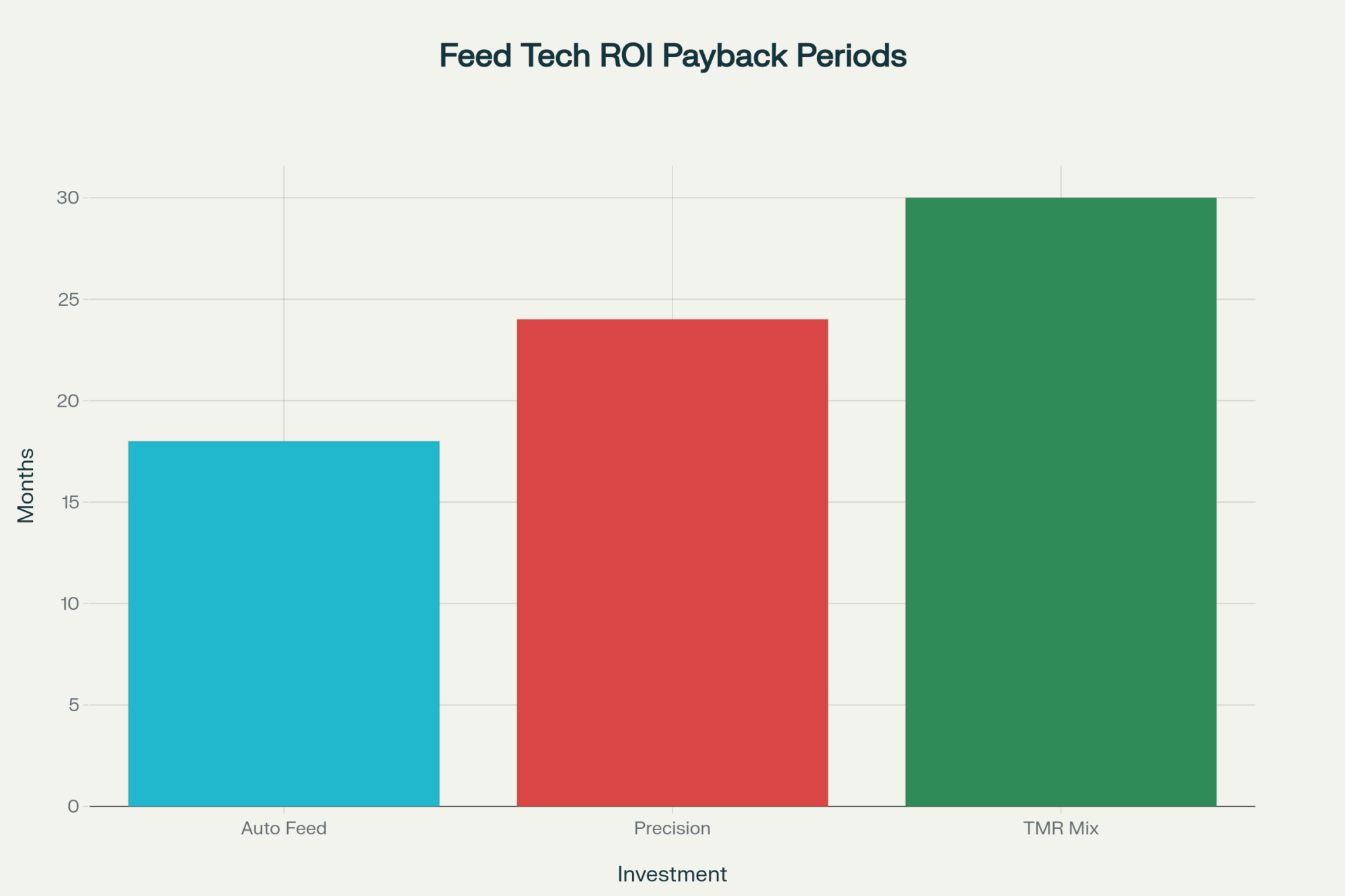
Everyone’s buzzing about precision feeding these days. Save $200, maybe $300 per cow annually—Cornell University research backs those numbers when everything works right, and Wisconsin studies show similar results under optimal conditions. But here’s what they don’t mention at those slick equipment demos…

The FCC’s own broadband accessibility data from 2024 indicates that roughly 40% of rural dairy operations still lack reliable high-speed internet. Try running precision algorithms over satellite internet during a thunderstorm and see how that works for you.

I was talking with a Holstein producer from Wisconsin recently—I can’t use his name, but he’s representative of what I’m hearing—who dropped about $180K on robotic feeding equipment. Worked beautifully for eight months. Then sensors started glitching during morning feed, and tech support? Kids reading manuals from corporate headquarters who’d never been within 50 miles of a transition cow.

But that’s the reality on family farms versus what gets promised in the sales brochures.

Geography’s Your Silent Profit Killer

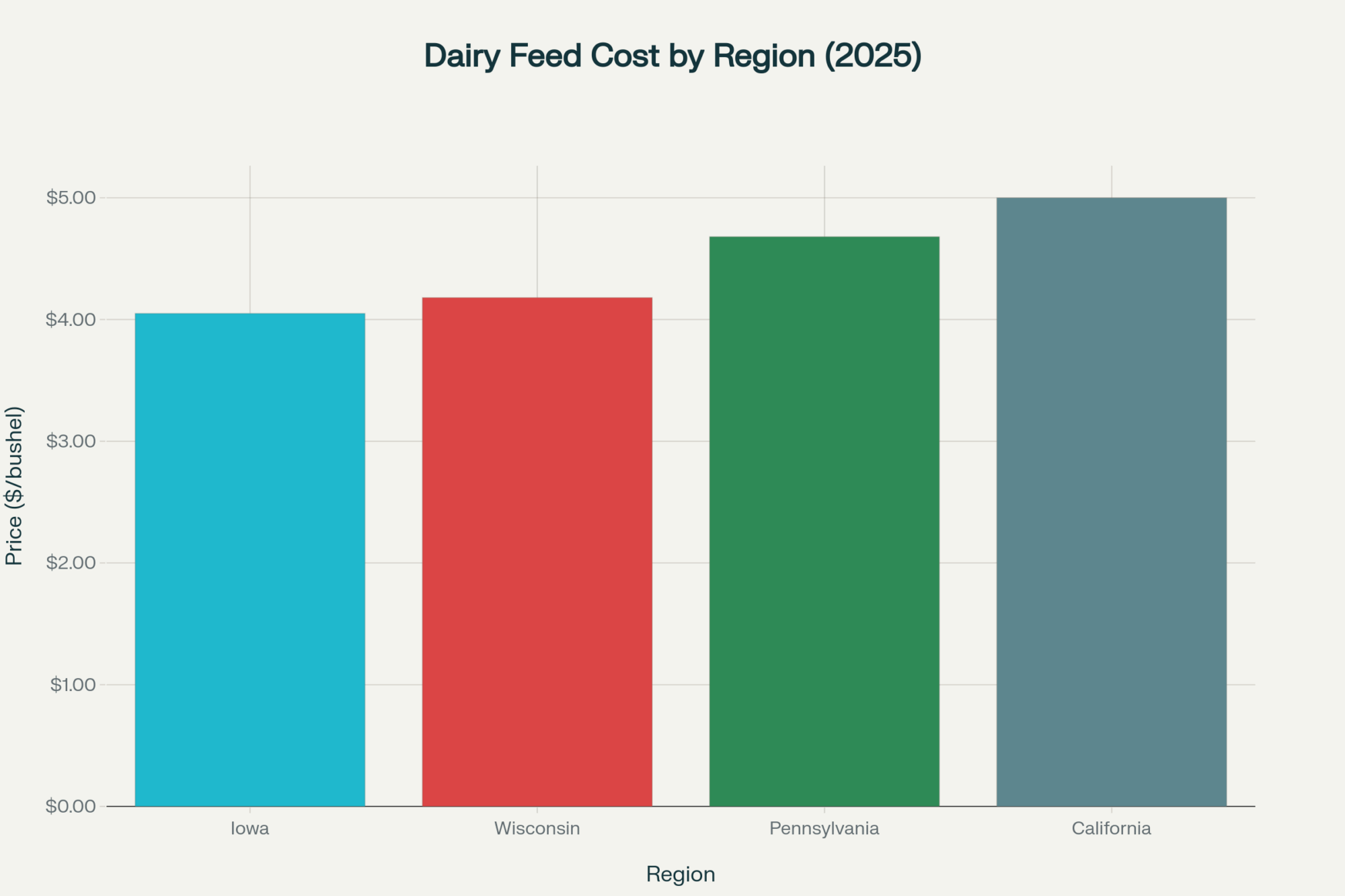
What really strikes me is how much location’s becoming a wealth tax on dairy operations. At the dairy conference last month, producers from Vermont were talking about paying premiums of 30-40 cents per bushel over Wisconsin operations just because of transportation costs—and over a year, that’s serious money.

California’s drought has pushed alfalfa costs above $320 per ton, according to UC Davis Cooperative Extension reports, while Canadian operations deal with border delays and rail strikes that can double transportation costs overnight.

Meanwhile, Midwest farms sit in what I call the “feed fortress”—cheap ingredients, solid infrastructure, multiple delivery options.

What Industry Consolidation Data Won’t Tell You

Here’s my take on where this is heading, and I don’t think I’m being alarmist…

Small operations with fewer than 300 cows are facing systematic elimination due to cost disadvantages they can’t control. Industry data shows increasing consolidation pressure on smaller farms who can’t absorb these hidden cost multipliers.

Mid-sized farms are at this crossroads where they either get smart about strategic procurement and selective technology adoption, or they become acquisition targets for operations that understand the cost game better.

The biggest players? They’re already three moves ahead—using scale advantages, bulk purchasing power, and forward contracting to build competitive moats that independent farms struggle to replicate.

What You Need to Do Before October 15th

Look, when we’re standing around after evening milking, talking about this stuff, here’s what actually matters right now:

Track every penny flowing into feed—and I mean everything. Freight charges, storage fees, waste at the bunk, mixing labor, and shrink losses. Most of us are only measuring commodity costs while the real wealth extraction happens in categories we don’t even monitor.

Lock in 60-70% of your major feed ingredients before September 30th—that USDA program deadline isn’t a suggestion. The big dairies already have their 2026 feed secured at today’s prices, while independent farmers stay exposed to market volatility.

Start small with technology adoption—maybe feed intake monitoring on your highest-producing groups before going full robotic. Learn what works in your barn with your internet, your labor situation, and your operational reality.

Form regional purchasing alliances—five farms buying together negotiate better terms than any individual operation. It’s basic math, but most of us haven’t organized to use it.

Get someone on your crew who can champion the procurement side—train them, and bonus them based on feed efficiency improvements. That person’s worth every dollar you invest in their development.

Watch weather patterns and market volatility daily—this year’s been anything but normal, and volatility’s probably here to stay.

The Intelligence Corporate Agricultural Media Won’t Share

Here’s what really fires me up about all this: while corporate ag publications keep you focused on commodity price movements, the real wealth extraction happens in costs they’ve trained us to accept as “operational necessities.”

Transportation companies extracting surge pricing during tight capacity. Storage facilities are adding handling fees that didn’t exist when our dads were farming. Technology vendors are selling systems designed for corporate operations, while family farms become beta testers for equipment that fails under real-world conditions.

It’s systematic, it’s accelerating, and most of the industry press won’t call it what it is because they’re funded by the same companies profiting from this extraction.

So yeah, I’m not here to scare you—just sharing what I’m seeing from Wisconsin truckers to Iowa feed dealers, from USDA transportation analysts to university extension specialists who understand what’s really driving feed cost inflation beyond just commodity prices.

Because if you’re not moving strategically on this stuff, you’re gonna find yourself on the wrong side of an industry realignment that’s happening whether we acknowledge it or not.

And when butterfat’s tanking and fresh cow problems crop up—which they will—you sure don’t want hidden feed cost bleeding, making everything worse.

Complete references and supporting documentation are available upon request by contacting the editorial team at editor@thebullvine.com.

Learn More:

  • Everything Dairy Farmers Need to Know About Residual Feed Intake – This article provides practical, actionable strategies to improve feed efficiency by focusing on factors you can control right now, like optimizing your feed mix, managing feeding times, and ensuring cow comfort. It reveals how simple operational changes can lead to significant cost savings.
  • The Dairy Industry’s Big Problem with Productivity and How to Fix It – Go beyond the daily grind and learn about the structural economic shifts impacting dairy. This piece analyzes key market trends, from per-cow productivity gains to shifts in global demand, and outlines long-term strategic actions to future-proof your operation against market volatility.
  • Cracking the Code: Behavioral Traits and Feed Efficiency – Discover how cutting-edge technology can uncover hidden efficiencies. This article demonstrates how using wearable sensors to monitor cow behavior, like rumination and lying time, can provide a low-cost, innovative way to identify your most efficient animals and improve herd genetics.

The Sunday Read Dairy Professionals Don’t Skip.

Every week, thousands of producers, breeders, and industry insiders open Bullvine Weekly for genetics insights, market shifts, and profit strategies they won’t find anywhere else. One email. Five minutes. Smarter decisions all week.

NewsSubscribe
First
Last
Consent

The Gene Editing Con Game: How Corporate Ag Is Setting Dairy Farmers Up for the Next rbST Disaster

Same companies pushing gene editing sold you rbST—how’d that work out for your milk check?

gene editing dairy, dairy farm profitability, dairy industry trends, genetic ROI, conventional breeding

While biotech companies push million-dollar gene editing promises, Argentina’s 15-year cloning reality check reveals the brutal truth: you’re about to get played harder than farmers who bought into rbST hype.

You know what’s got me fired up? Five genetically modified polo horse foals grazing down in Buenos Aires… and the genetics companies are already spinning this into the next “must-have” technology for dairy farmers.

I was reading this Reuters piece last month where the Kheiron Biotech founder—this guy Matias Alvarez—basically admits, “Will it be a better horse? I don’t know. Time will tell.”

Can you believe that? He’s literally creating genetically modified animals and doesn’t know if they’ll perform better. Yet here come the genetics salesmen telling us gene editing is the “inevitable” solution to everything from heat stress to mastitis.

But here’s the thing they’re not mentioning in those glossy brochures… Argentina’s been cloning horses commercially for fifteen years now. Fifteen years! And I pulled some numbers that’ll make your head spin.

When $800,000 Champions Beat $40,000 Clones Every Time

The world’s first genetically edited horses go for a gallop around an enclosure in San Antonio de Areco, Buenos Aires, Argentina on July 29, 2025. They were bred for explosive speed and born late last year. REUTERS/Agustin Marcarian

So I’m digging into this Argentine horse story, right? And the economics are absolutely brutal.

Kheiron’s cranking out 400 clones a year now—more than half of all cloned horses born in Argentina. Sounds impressive until you see the auction results.

Those cloned horses? They’re selling for around forty grand.

Elite conventional horses with proven bloodlines? Still commanding eight hundred thousand dollars.

That’s a 20-to-1 price difference. After fifteen years of perfecting the technology.

Even Adolfo Cambiaso—the world’s best polo player, the guy who popularized cloning in the first place—he uses cloned horses but sells conventional foals for the big money. Think about that for a minute. The poster child for cloning technology doesn’t trust it enough to bet his own breeding program on it.

And get this… I found an old USDA study from 2005 that tracked cloned dairy cows through their first lactation. Those clones averaged 8,646 kilograms of milk compared to 9,507 for regular cows.

The clones actually produced 861 kilograms less milk—that’s roughly $600 less revenue per lactation at today’s prices.

I mean, what the hell? We’re supposed to get excited about technology that produces less milk?

The Myostatin Marketing Magic Trick

The genetics companies love talking about myostatin because it sounds so damn scientific. “We’re modifying the myostatin gene to increase muscle mass…”

But here’s what they don’t tell you—and I learned this from Dr. Ted Kalbfleisch up at the University of Kentucky—these modifications just speed up what conventional breeding would eventually accomplish anyway.

He states that the Argentine approach “simply accelerated traditional genetic modifications that would take generations to achieve through conventional breeding.”

Notice what he didn’t say? That it actually works better.

Researchers from the University have presented data showing that myostatin affects way more than just muscle. It’s connected to metabolism, reproduction, mammary development… the whole works.

You start messing with one piece, you might screw up three others.

It’s like the smart old dairy farmer always says, “When something sounds too good to be true, it usually costs twice as much and works half as well.”

The FDA Shell Game That’s Rigging the Deck

This regulatory stuff makes my blood boil. You want to know what’s really going on?

A Holstein bull carrying heat tolerance genes through conventional breeding—zero extra paperwork, zero special approvals.

Same exact bull created through gene editing? Suddenly, you need FDA approval, expensive testing, and years of regulatory compliance.

Think about that. Identical genetics, but one path costs hundreds of thousands in regulatory costs, while the other is free. Who benefits from that setup? Not family dairy farms, I can tell you that.

Meanwhile, down in Argentina and Brazil, they treat gene-edited livestock exactly like conventional breeding. No extra hoops, no special testing. Their producers are getting access to superior genetics (if they actually work) while we’re stuck behind bureaucratic barriers funded by our own tax dollars.

I was talking to this guy from a major AI company at World Dairy Expo last year, and you know what he told me?

“We’re not rushing to deploy gene-edited bulls in our main lineup. We’re waiting to see which farmers will pay premium prices for experimental genetics first.”

That should tell you something.

Industry Gatekeepers Are Sharpening Their Knives Already

Here’s where this gets really ugly…

Argentina’s government says gene-edited horses are fine—no restrictions whatsoever. But the Argentine Polo Association banned them from competition immediately. About fifty traditional breeders signed a letter calling gene editing “crossing a limit.”

Sound familiar? It should, because we’ve seen this movie before.

Remember rbST? The FDA approved it, studies proved it was safe, and cows produced more milk. However, the marketing cooperatives created “rbST-free” labels, which essentially killed adoption overnight.

Today, you can’t find a dairy in America using rbST—not because it doesn’t work, but because processors pay premiums for “hormone-free” milk.

Same playbook, different technology.

Holstein Association controls our registration papers. Select Sires and the other AI companies control genetic distribution. Organic Valley, Horizon, and all the premium processors already exclude various biotechnologies.

They can strangle gene editing adoption tomorrow if they decide it’s bad for their brand image.

And they will. Count on it.

Consumer Resistance Is Already Mobilizing (And It’s Worse Than You Think)

I’ve been reading consumer research that should scare the hell out of anyone considering gene editing investments.

There’s this study from the UK showing consumers use gene editing as a quality signal—but not the kind you want. They automatically assume gene-edited products are less safe, less natural, and lower quality. Even though the science shows otherwise.

The Danish did some research—and Denmark’s pretty progressive on this stuff—but even there, 28% of organic consumers said they’d refuse milk from gene-edited cattle.

The premium organic segment (20% of market, 20-40% higher prices) will likely exclude gene-edited genetics entirely, creating immediate market access penalties for early adopters.

That’s the premium market segment that pays 20-40% higher prices.

Over in Germany, 70% of milk now carries “GMO-free” labels. Nobody’s forcing them to do it—it’s pure consumer pressure. German dairy executives told researchers that “stirred up consumer fears about genetic engineering” make any biotech dairy products commercially toxic.

You think American consumers are gonna be more accepting than Germans? I’ve got a bridge to sell you.

But here’s what really gets me… I talked to this dairy farmer up in Minnesota last month. Guy’s been milking for thirty years, runs a clean operation, and knows his stuff. He said something that stuck with me:

“My processor called last week asking if I’d be interested in a ‘gene-edit-free’ premium program. They’re already planning for this stuff, and we haven’t even seen the first gene-edited bull hit the market yet.”

The Economics Don’t Add Up (Even When the Technology Works)

Let me break down some numbers that’ll make you think twice.

The poster child for gene editing success is those PRRS-resistant pigs that got FDA approval earlier this year. Supposedly saving the pork industry $1.2 billion annually. Sounds great, right?

But here’s what the research actually shows—these pigs demonstrate “no changes in growth performance, feed efficiency, or carcass quality from birth to maturity.”

They’re resistant to disease but don’t grow any better, eat any less, or produce better meat.

That’s what gene editing delivers: disease resistance without production improvement. How’s that gonna justify premium genetics pricing in dairy?

For dairy applications, you’re looking at seven to ten years minimum before you can evaluate performance across multiple lactations. During that time, conventional breeding keeps advancing at 1-2% annually.

By the time you prove gene-edited genetics actually work, traditional breeding might’ve closed the gap through normal selection.

I know operations around here—500-cow dairies that are capturing $150,000 to $200,000 annually in genetic improvement through proven conventional programs. Embryo transfer, genomic testing, elite AI.

Why risk that on experimental genetics?

What’s Really Happening While We Debate

This part actually keeps me up at night…

While we’re arguing about FDA regulations and consumer acceptance, Brazil and Argentina are moving full speed ahead. No extra regulations, no consumer resistance, no industry gatekeepers blocking adoption.

New Zealand’s reopening their gene editing discussions specifically for dairy applications. Even the EU is softening their stance on certain modifications.

By the time American dairy farmers get through all our regulatory and industry barriers, international producers might have five to ten-year head starts with proven gene-edited genetics that actually deliver advantages.

The irony? American biotech companies will make millions selling technology overseas while American farmers get locked out of the benefits.

Three-Tier Markets Create Losers, Not Winners

Gene editing’s gonna create the same market segmentation we see with organic—and guess who gets squeezed in the middle?

Premium “gene-edit-free” markets will command higher prices while excluding modified genetics entirely. That’s 15-20% of sales with 20-40% price premiums you’ll be locked out of.

Mainstream conventional markets will quietly accept gene-edited milk without labeling—kind of like how they handle GMO feed now. You’ll compete on pure cost-benefit without consumer premiums.

Specialty applications might pay extra for specific benefits… but only if gene editing enables something consumers actually want.

The brutal reality? Early adoption risks market access penalties while delivering uncertain performance benefits.

That’s the opposite of what genetics companies are promising.

What I’m Actually Telling Farmers Back Home

Forget the revolution hype for a minute.

I was talking to this producer down in Iowa last month—runs about 400 head, really sharp operator. He said something that stuck with me:

“I’m not betting my operation on promises from the same companies that sold us rbST.”

Makes sense to me.

Focus on breeding programs that work today. Wisconsin Extension data shows optimized reproductive programs combined with genomic testing deliver 1.5-2% annual genetic improvement in commercial herds.

A 500-cow operation can capture $300-400 per cow annually through conventional breeding excellence.

Monitor specific gene editing applications—don’t ignore them, but don’t bet the farm either. Heat tolerance modifications might make sense in Texas dry lots. Disease resistance could pay off in high-pathogen environments.

But evaluate each application based on your actual conditions, not marketing promises.

Build relationships with genetic companies positioned to integrate gene editing appropriately when opportunities emerge. But avoid early adoption commitments based on sales pitches.

And prepare for market segmentation. Gene editing adoption might exclude you from premium market segments while delivering uncertain performance benefits.

Factor potential market penalties into your economic analysis, not just production improvements.

The most successful operations I know are those that develop breeding programs optimized for their specific conditions, while staying informed about developments. They’re not betting everything on technological transformation or ignoring it entirely—they’re making measured decisions based on demonstrated value.

I was chatting with a dairy farmer from Vernon County last week. Third-generation operation, about 800 head, really knows his numbers. He put it perfectly:

“My grandfather taught me never to buy the first year of anything. Let someone else work out the bugs while you perfect what already works.”

Bottom Line (And Why Argentina Matters)

Argentina’s gene-edited polo horses aren’t revolutionizing livestock breeding—they’re exposing how genetics companies manipulate farmers through technology hype while capturing profits without bearing performance risks.

Fifteen years of commercial cloning data proves reproductive biotechnology can achieve widespread adoption without delivering performance premiums or eliminating conventional breeding.

That should terrify anyone considering gene editing investments.

The same companies promoting gene editing as an inevitable competitive necessity are positioned to profit from your adoption while you absorb costs of unproven performance, regulatory compliance, and market access penalties.

I’ve been covering dairy genetics for twenty years, and I’ve seen this pattern before. rbST, growth promotants, every “revolutionary” technology that was supposed to transform our industry… they all followed the same script.

Expensive promises, regulatory approval, consumer backlash, market segmentation, and independent farmers left holding the bag.

Don’t get caught up in the hype of the gene editing revolution. Focus on breeding programs that deliver documented returns while international competitors sort out whether biotechnology actually improves animal performance in commercial settings.

When gene editing applications prove their value through years of commercial data—not marketing claims—then evaluate specific opportunities based on your operation’s needs and market realities.

Until then, let someone else pay for experimental genetics while you profit from breeding programs that actually work.

The future of dairy genetics won’t be determined by CRISPR technology—it’ll be shaped by farmers smart enough to resist corporate manipulation and focus on genetic improvement that delivers real returns under actual production conditions.

Argentina’s polo controversy isn’t warning about gene editing’s limitations. It’s revealing the latest con game designed to separate independent dairy farmers from their money while enriching genetics companies that never have to prove their promises work in the real world.

And that, my friends, is exactly what we should expect from corporate agriculture. Same playbook, different decade, higher stakes.

KEY TAKEAWAYS:

  • Market segmentation will punish early adopters: Gene editing creates the same three-tier structure as organic markets, where “gene-edit-free” premiums lock out modified genetics from 15-20% of sales, commanding 20-40% higher prices.
  • Performance data won’t exist for a decade: Meaningful dairy evaluation requires 7-10 years across multiple lactations—plenty of time for conventional breeding to close any initial gaps through standard selection.
  • Proven strategies deliver immediate returns: Wisconsin Extension data shows optimized reproductive programs with genomic testing generate 1.5-2% annual genetic improvement worth $300-400 per cow through conventional breeding excellence.
  • Consumer resistance is already mobilizing: Danish research found 28% of organic consumers refuse gene-edited milk, while 70% of German milk now carries “GMO-free” labels despite zero regulatory requirements.
  • Focus on farm-specific solutions: Monitor heat tolerance needs in southern regions and disease pressure in high-pathogen environments, but evaluate applications based on actual conditions rather than marketing promises.

EXECUTIVE SUMMARY:

Argentina’s 15-year horse cloning experiment just exposed gene editing’s dirty secret: reproductive technology can achieve massive commercial adoption without delivering any performance advantages. While Kheiron Biotech cranks out 400 clones annually, those animals sell for $40,000 compared to $800,000 for elite conventional horses—a brutal 20-to-1 price gap that should terrify dairy farmers considering gene editing investments. The same genetic companies now touting CRISPR as “inevitable” are positioning farmers for another rbST-style disaster, where regulatory hurdles, consumer backlash, and industry gatekeepers create market penalties for early adopters. International competitors in Brazil and Argentina are racing ahead with streamlined regulations, while American farmers get trapped behind FDA bureaucracy funded by their own tax dollars. Smart operators will focus on proven breeding strategies delivering $300-400 per cow annually through conventional excellence while watching gene editing prove itself in commercial settings. The revolution isn’t coming—it’s a rerun of corporate agriculture’s favorite con game designed to separate independent farmers from their money.

Complete references and supporting documentation are available upon request by contacting the editorial team at editor@thebullvine.com.

Learn More:

The Sunday Read Dairy Professionals Don’t Skip.

Every week, thousands of producers, breeders, and industry insiders open Bullvine Weekly for genetics insights, market shifts, and profit strategies they won’t find anywhere else. One email. Five minutes. Smarter decisions all week.

NewsSubscribe
First
Last
Consent

The New Math of Dairy Genetics: Why This Balanced Breeding Thing is Finally Clicking

What if your best bull is actually your herd’s biggest weakness? The surprising truth about balanced breeding.

Do you know what strikes me about walking through barns lately? The conversations have shifted. It used to be all about chasing the next high TPI or LPI bull or bragging about NM$ or Pro$ numbers. But now… now I’m hearing producers talk about balance. About building herds that actually work day-to-day instead of just looking good on paper.

And honestly? Lactanet’s modernized LPI system, including its six subindexes, which was launched this past April, has finally given us the tools to do this right. What I’m calling “no-holes-sire” selection isn’t just some fancy theory anymore—it’s becoming the new reality for producers who want to stay competitive.

What’s Really Going on Out There

The thing about single-trait or one total merit index selection is that … look, it worked for a while. Research analyzing dairy breeding programs consistently shows that multi-trait selection indices outperform single-trait approaches for overall genetic progress, but old habits die hard, right? Especially when you’ve got a #1 bull that looks like he could rewrite the record books. Yet a one total merit number does not tell you a bull’s strengths and weaknesses.

But here’s where it gets interesting—and a bit concerning. We’ve been inadvertently concentrating on harmful recessive and profit-limiting genes that mess with fertility, health, and overall cow functionality when we used only a total merit index. It’s one of those unintended consequences that makes you shake your head and wonder how we missed it for so long.

What’s really driving this shift, though? Margins are tight – labor is unavailable, and feed costs are absolutely brutal right now. I’m hearing numbers ranging from $450 to $500 per tonne for quality dairy rations across most of Ontario and Quebec (variations by region are expected). When you’re dealing with margins that tight, you can’t afford genetic holes that turn routine management into daily firefighting.

The University Crowd is Getting Excited About This

Dr. Christine Baes, from the University of Guelph and leader of the Resilient Dairy Genomics Project, has been advocating for this balanced approach for years, and the genetic data emerging from her lab is quite compelling. The fact is, when you optimize across multiple traits and indexes simultaneously, you’re basically hedging your genetic investment portfolio. It’s like diversifying your feed suppliers, rather than putting all your eggs in one basket.

What’s particularly fascinating is how this relates to feed efficiency. Dr. Baes’s work, along with other industry analyses, suggests that cattle from more balanced genetic programs tend to be 8-12% more efficient in feed conversion. At current feed costs, we’re talking potential savings that could add up to $200-250 per cow annually—which, let’s be honest, adds up fast when you’re running 300 or 500 head.

The strategy that’s gaining real traction centers on what I call the “five-of-six rule“—selecting sires with at least five of Lactanet’s six LPI subindexes above the 50th percentile rank. Simple concept, but it ensures your bulls perform above average across multiple categories instead of being superstars in one area while creating weaknesses elsewhere.

The table below reports the LPl and subindex details for the twenty Holstein sires with the most Canadian registered daughters in 2024. Definitely, more balance in sire usage is needed, as fifteen of the twenty are below 50% RK for their reproduction and environmental impact subindexes, while health & welfare, and milkability fare only slightly better. It is clear that in the past, the LPI formula was focused on production, type, and longevity.

April ’25 Indexes for Twenty 2024 Sires with Most Registered Daughters
CategoryAvg IndexIndex%RKRange in %RK% Sires Below 50RK
Lifetime Performance Index (LPI)3531    98%RK    81 – 99 %RK0%
Production Subindex (PI)659     93%RK    70 – 99 %RK0%
Longevity & Type Subindex (LTI)678     98%RK     57 – 99 %RK0%
Health & Welfare Subindex (HWI)500     50%RK     02 – 93 %RK60%
Reproduction Subindex (RI)450     29%RK     01 – 65 %RK75%
Milkability Subindex (MI)516     52%RK     10 – 92 %RK45%
Environmental Impact Subindex (EII)475     40%RK      02 – 96 %RK75%

Real Talk from the Barn Floor

I’ve been speaking with producers across Ontario and Quebec—from the Ottawa Valley to the Eastern Townships—and the stories are remarkably consistent. The common thread? Producers who have shifted to more balanced approaches are seeing improvements in herd health metrics and reproductive performance over 2-to 3-year periods.

One producer I know from the Kemptville area told me straight up: “My conception rates were garbage for three years running. Kept chasing high milk bulls, thinking more production would solve everything. Finally, I said screw it and started looking at the whole package.  Three breeding seasons later, my fresh first lactation cows are settling like they should, and I’m not calling the vet every other day.”

This isn’t some overnight miracle—that’s important to understand. But the trend is clear, and it’s happening across different herd sizes and management styles.

Here’s what’s really interesting, though… it’s not just about avoiding problems. The producers embracing balanced selection are actually positioning themselves better for whatever comes next. Climate challenges, labor shortages (don’t get me started on finding good help), feed price volatility—these cattle seem to handle it all with less drama.

The Money Talk (Because That’s What Actually Matters)

Now, transitioning to balanced selection isn’t exactly a minor adjustment. Agricultural economist Dr. Alfons Weersink from the University of Guelph has noted that implementation costs for systems can be significant, especially for mid-sized operations. We’re talking genetic testing requirements, restructuring breeding programs, and likely upgrading of data management systems.

For 100-200 cow operations, you’re probably looking at $8,000-15,000 to get this thing rolling properly. 300-500 cow herds may see costs in the $15,000-$ 25,000 range. Larger operations… well, they have more resources, but also more complexity.

But here’s where it gets interesting—the payback timeline varies wildly depending on where you’re starting from. Operations with solid existing genetics might see positive returns within 18-24 months. Herds with more genetic imbalances may require 3-4 years to realize the benefits fully.

The trade-off is real, though. You’re accepting potentially slower progress in any single trait to achieve more balanced genetic improvement across all the economically important areas. However, based on industry observations, that strategy proves to be way more profitable in the long term.

The Tech Side is Getting Pretty Slick

What’s really accelerating adoption is the evolution of genomic tools. Semex’s genomic platform processes over 50,000 genetic markers per animal, providing precision breeding decisions with significantly higher accuracy for young genomic bulls compared to traditional pedigree methods. The reliability jump is impressive—we’re talking 70-75% accuracy versus the old 30-35% with pedigree alone.

The real-time monitoring systems now available can correlate genetic potential with actual production metrics. This means you can identify underperforming genetics before they start hitting your bottom line—which is exactly the kind of early warning system we need in this business.

What Actually Matters: The Numbers

When you analyze lifetime value, Data from leading analytics firms like AgriProfit backs this up. It suggests that balanced genetics can increase average productive lifespan by nearly a full lactation in some herds. Replacement costs become lower when you’re breeding for balance rather than extremes.

The noteworthy part? With interest rates expected to continue declining through 2025, financing conditions are likely to support the adoption of operations ready to invest in genetics and management systems. That’s creating a window of opportunity for producers who want to fast forward this trend.

Regional Patterns and What’s Working

From what I’m seeing across the country, trend setting operations are leading the charge.

Progressive Ontario and Quebec producers are implementing some form of balanced selection protocol—around 30-35% of the forward-thinking operations that I am aware of.

Western Canada producers are quickly transitioning, especially the larger operations dealing with labor shortages, who need cattle that basically manage themselves. Dr. Dan Weary from UBC’s Animal Welfare Program has identified some common patterns among producers who succeed with this approach. They maintain detailed production records, invest in staff training, and—this is key—resist the temptation to chase short-term genetic trends.

The Maritime provinces are being more cautious, which makes sense given their different cost structures and market conditions. But even there, I’m starting to hear conversations about balanced breeding approaches.

Getting Started Without Breaking the Bank

Success really comes down to systematic execution, and honestly, it doesn’t have to be overwhelming. Here’s what’s working for producers who are making this transition:

Start with your baseline. You need to establish genomic profiles using Lactanet’s evaluation services. Testing will run you roughly at $45-65 per animal, but that’s your foundation for everything that follows. No shortcuts here—you need to know where you are before you can figure out where you’re going.

Define your genetic criteria based on your specific situation. This is where operation size may matter. Smaller herds (under 200 head) can probably focus on 3-4 key areas where they’re struggling most. Mid-sized operations (200-500 employees) require more comprehensive approaches. Larger herds can get more sophisticated with their selection strategies, but also need advanced data management systems.

High somatic cell count operations should lean into health indexes (HWI subindex). Herds struggling with fertility might weight reproduction factors (RI subindex) more heavily. But—and this is crucial—you still maintain that five-of-six threshold for balanced improvement.

Stay disciplined. This is the hardest part. When some hot new LPI bull, with less than four subindexes over 50%RK, shows up and everyone’s talking about him, it’s tempting to jump. Don’t. Stick to your balanced strategy and trust the process.

Where This is All Heading

The key insight that keeps coming up in my conversations?

Will we lose type and milk yield?  The facts are you’re not sacrificing genetic progress—you’re optimizing it for the real world. Instead of creating cattle with spectacular strengths and devastating weaknesses, you’re building consistently profitable animals that actually work in today’s and tomorrow’s environment.

As industry consolidation continues—Canadian dairy farm numbers have declined from 12,007 in 2014 to 9,256 in 2024—operational efficiency is no longer just a nice-to-have. It’s become a survival requirement.

Canadian Dairy Consolidation (2014-2024). As the number of Canadian dairy farms declines, the average production per farm continues to rise, underscoring the critical need for operational efficiency and genetic optimization for survival and growth.

The producers who are embracing balanced genetic foundations right now are not just avoiding future problems—they’re positioning themselves to thrive as the industry continues to evolve. Those still chasing single-trait or single-index rankings… well, they’ll be dealing with the expensive consequences of genetic imbalance, while their neighbors quietly build more resilient and profitable operations.

This shift toward total balanced breeding isn’t just another fad—it’s the industry growing up. And honestly – it’s about time. We have the tools, we have the data, and we have producers who are ready to make it work.

The question isn’t whether balanced breeding is the future—it’s whether you’re going to be part of that future or get left behind dealing with yesterday’s genetic limitations.

What’s your take on this whole balanced selection thing? Are you seeing similar patterns in your neck of the woods?

Key Takeaways:

  • Balanced genetic selection—using multiple subindexes rather than chasing a single high-ranking trait—helps build herds that are resilient, efficient, and profitable in today’s challenging dairy environment.
  • New tools like Lactanet’s modernized LPI system (with six subindexes) empower producers to practice “no-holes-sire” breeding, focusing on consistently above-average bulls rather than single-trait superstars.
  • While shifting to balanced selection requires investment in testing, management, and discipline, producers report real improvements in fertility, health, and long-term profitability within a few years.
  • Genomic technology enables much greater accuracy in breeding decisions, helping to avoid costly genetic weaknesses and identify underperforming animals sooner.
  • Farms adopting balanced breeding are better positioned to adapt to industry disruptions—like labor shortages, volatile feed prices, and climate stress—compared to those sticking with outdated genetic strategies.

Executive Summary:

Balanced breeding is quickly becoming the new standard in dairy genetics, as producers move away from chasing single-trait or high-total merit sires toward building herds that thrive in real-world conditions. The launch of Lactanet’s modernized LPI system, with its six subindexes, now makes it possible to practice true “no-holes-sire” selection—targeting bulls that perform above average in multiple areas rather than excelling at just one. Research and on-farm experience alike confirm that this approach improves overall herd health, fertility, and resilience, while helping producers navigate rising feed costs and labor shortages. Although initial investments in genomic testing and record-keeping can be significant, payback is seen within a few years through improved performance and longevity. Genomic platforms and real-time monitoring are making breeding decisions vastly more accurate and actionable. Herds embracing this strategy are positioned to handle ongoing industry changes and future challenges, setting themselves up for lasting profitability. Ultimately, balanced breeding marks a shift towards more sustainable, efficient, and future-ready dairy operations.

Complete references and supporting documentation are available upon request by contacting the editorial team at editor@thebullvine.com.

Learn More:

The Sunday Read Dairy Professionals Don’t Skip.

Every week, thousands of producers, breeders, and industry insiders open Bullvine Weekly for genetics insights, market shifts, and profit strategies they won’t find anywhere else. One email. Five minutes. Smarter decisions all week.

NewsSubscribe
First
Last
Consent

The Million-Cow Gamble: What Indonesia’s Quiet Revolution Means for Your Bottom Line

Indonesia’s million-cow plan is rewriting global dairy trade—are we paying attention?

EXECUTIVE SUMMARY: Here’s what we discovered: Indonesia’s quiet revolution is slashing global dairy imports by up to 20%, with plans to import a million dairy cows by 2029—enough to flip the script on old export markets. Their fresh milk production hit 672,000 metric tons in 2023 despite recent disease setbacks, signaling rapid recovery with big implications for exporters worldwide. This shift is backed by strict local sourcing mandates in massive school nutrition programs serving over 80 million kids daily. Together with moves in Malaysia and Vietnam, it signals a tectonic shift in regional dairy supply chains. The data tells a different story than corporate PR: export premiums are at risk, margins are tightening, and family farms face real pressure. Progressive dairy producers need to rethink market assumptions, adjust genetics for heat tolerance, and diversify buyers now or risk being left behind. The time for complacency is over.

KEY TAKEAWAYS:

  • Indonesian policies could reduce dairy imports by up to 20%, impacting export revenues by hundreds of millions.
  • The importation of 1 million dairy cows by 2029 aims to boost domestic milk production, thereby pressuring foreign suppliers rapidly.
  • Local sourcing mandates in school nutrition programs create a massive, guaranteed demand that is inaccessible to imports.
  • Progressive producers should invest in heat-tolerant genetics, expand buyer diversification, and strengthen coop alliances.
  • 2025 market realities necessitate strategic agility to maintain profitability amid shifting global dairy trade dynamics.
 dairy farm profitability, global dairy markets, heat tolerant genetics, dairy trade disruption, farm business strategy
A worker feeds Holstein-Friesian cows from Australia at a dairy farm managed by Laras Ati milk cooperative in Kuningan, West Java province, Indonesia, Indonesia, June 25, 2025. REUTERS/Ajeng Dinar Ulfiana

You ever sit down over coffee with the guys on the farm and wondered if Asia really is this endless dairy goldmine we’ve been sold? I’ve been chewing on this myself, and Indonesia’s quietly changing the game in a way that’s hard to ignore.

See, Indonesia pushed its fresh milk production up to about 672,000 metric tons last year, bouncing back fairly quickly after a heavy hit from that foot-and-mouth outbreak took out a good chunk of their herd (USDA GAIN Report ID2024-0038, 2023). But listen—their dairy imports dropped by 10 to 20 percent in 2023, not for lack of demand, but because the government cracked down hard on those import licenses and started backing their own dairy farmers (USDA GAIN Report ID2023-0033, DairyNews 2023).

When a Million Cows Change Everything

Now, here’s the kicker—these folks are planning to import a million dairy cows by 2029. Not just any cows, but mainly pregnant heifers ready to calve fast and get milk flowing (Reuters, September 2025; Indonesian Ministry of Agriculture).

These cows are mixed breeds—Holsteins crossed with Zebu—which those of us dealing with hotter summers can appreciate. They’re heat-tough and push out milk levels that small family farms see averaging 9 to 10 liters a day, while the bigger operations can hit 25 liters and up (USDA GAIN Reports; GKSI Cooperative Data).

The School Milk Shell Game

The government’s Free Nutritious Meals program is massive—serving over 80 million kids daily. And here’s the catch that should worry every export manager: every drop of milk for those kids has to come from local dairies. No imported powder slipping into those cartons (Indonesian Government releases; UN Nutrition Program, 2025).

That’s not just guaranteed demand. That’s a wall around billions of liters that used to flow from places like New Zealand and Australia.

The Ripple Effect Hits Home

Malaysia’s following suit, aiming to be 100% dairy self-sufficient by 2030, and they’ve got operations already positioning to cover demand (Malaysian Ministry of Agriculture, 2024). Vietnam’s boosting processing capacity like a barn raising, while the Philippines—reliant on nearly 99% imports—is working hard with Australian research backing to flip the script.

So here’s the deal—Indonesia’s moves have already hit export revenues hard. New Zealand and Australia have faced significant losses in the Indonesian market, and the U.S. has seen a decline of about 20 percent in exports to Southeast Asia recently (The Bullvine, USDA trade data, 2025).

Back home, you’re feeling this squeeze too. The processor plants from Ontario to Wisconsin and the Dakotas aren’t running full tilt anymore. And it’s the smaller operators who get hit first when export premiums shrink and contracts dry up.

Red Flags for Smart Operators

Now, if you hear about new dairy plants investing hundreds of millions across Asia, or government cattle import pushes targeting hundreds of thousands of head—that’s not just expansion. That’s systematic market capture.

Those Holstein-Zebu crosses that handle the heat? They’re no longer just a tropical curiosity. With climate change pushing temperatures up everywhere, those genetics are heading north whether we’re ready or not.

What This Means for Your Operation

The thing is, processing plants that built their growth plans around export markets are finding out those markets aren’t expanding—they’re shrinking. Family operations depending on export premiums to service debt are feeling the pinch first.

When your local co-op starts talking about “diversifying markets” or your processor mentions “adjusting contracts,” that’s code for export revenues getting squeezed.

The Bottom Line for Independent Producers

So here’s what I’m telling folks at every coffee shop and fence line: Get your genetics sorted—heat tolerance isn’t optional anymore. Spread your risk—don’t hang everything on one buyer if you can help it. Get tight with your co-op and understand their export exposure, because their pain becomes your pain real quick.

Most important? Stop believing fairy tales about endless growth markets. Start planning for a world where those markets supply themselves.

The Hard Truth About Market Shifts

The dairy industry you grew up in—where rich countries shipped to poor countries—is changing faster than a summer storm. Indonesia has demonstrated that developing nations can reduce their import dependency through coordinated policy and investment.

The question isn’t whether this transformation continues. The question is whether your operation adapts fast enough to survive what’s coming next.

That’s the straight story—no industry spin, no comfortable lies. Just the facts you need before your next equipment purchase, before your next expansion decision, before you bet your farm’s future on yesterday’s assumptions about tomorrow’s markets.

The dairy world we know? It’s changing fast. If you’re not ready to roll with it, you might get left chasing yesterday’s milk check.

Complete references and supporting documentation are available upon request by contacting the editorial team at editor@thebullvine.com.

Learn More:

The Sunday Read Dairy Professionals Don’t Skip.

Every week, thousands of producers, breeders, and industry insiders open Bullvine Weekly for genetics insights, market shifts, and profit strategies they won’t find anywhere else. One email. Five minutes. Smarter decisions all week.

NewsSubscribe
First
Last
Consent

Why This Dairy Market Feels Different – and What It Means for Producers

USDA reports U.S. milk production up 3.5% in July 2025—a surge not seen in years. Are you milking all you can

EXECUTIVE SUMMARY: Colleagues, here’s what we’re seeing: The U.S. dairy industry is undergoing a seismic shift driven by unprecedented productivity gains and structural market changes that are rewriting the rules of profitable farming. Recent USDA data shows milk production jumped 3.5% in July 2025, with per-cow yields climbing 36 pounds to 2,081 pounds—that’s nearly 2% year-over-year growth from fewer, more efficient operations. Meanwhile, the 2022 Census reveals almost 40% of smaller dairy farms have exited since 2017, consolidating production into larger herds that now account for 67% of national milk volume. This isn’t just about scale anymore—it’s about technology adoption as the key differentiator between survival and profitability. Wisconsin trials we’ve analyzed show farms integrating digital monitoring and genomic tools achieve milk yield improvements of 8-15% within 18 months. Globally, we’re seeing similar patterns, with European production up 1.2% this summer despite environmental pressures. Looking ahead, this means operations that swiftly adopt data-driven practices and systematic technology won’t just survive market volatility—they’ll dominate it. The conversation about dairy’s future isn’t theoretical anymore… it’s happening in barns across the country right now, and the results speak for themselves.

KEY TAKEAWAYS

  • Digital Monitoring Delivers Immediate ROI: Adopting integrated health and feeding monitors can boost milk yield by up to 15% within 18 months—we’re talking real production gains plus improved animal welfare that pays for itself (Wisconsin research trials).
  • Genomic Selection Acceleration: Targeted breeding programs now deliver nearly 2% annual productivity gains per cow, essentially doubling traditional genetic progress rates—meaning your breeding decisions today impact profitability for years (Recent genetic advancement studies).
  •  Scale Strategy Shift: With larger herds producing 67% of U.S. milk, strategic technology choices now determine market power more than herd size alone—efficiency trumps scale when margins tighten (USDA Census analysis).
  • Infrastructure Investment Priority: Nearly 40% of smaller farms face broadband limitations that lock them out of modern management systems—upgrading connectivity isn’t optional anymore, it’s survival (University Extension connectivity surveys).
  • Financial Planning Imperative: Complete automation packages typically require $500,000-$800,000 over 18 months, making debt restructuring and strategic financing crucial before technology adoption—plan the money before you plan the machines (Industry modernization cost analysis).
dairy farm profitability, milk production trends, dairy technology, herd management, farm efficiency

Lately on farms across Wisconsin and the Midwest, you can hear something stirring—prices are low, milk’s flooding the market, and conversations in the feed aisles have taken a serious tone. This isn’t your typical down cycle. Something structural is changing.

Production is Growing, Despite Shrinking Farm Numbers

USDA’s report from July 2025 tells the real story: 24 major dairy states produced 18.8 billion pounds of milk, a 3.5% increase from last year. What really jumps out is per-cow production, rising 36 pounds to 2,081 pounds in July 2025. Combine that with an extra 154,000 cows, now at 9.04 million head, and we’re swimming in milk.

However, the number of farms continues to decline. The USDA Census shows a drop to 24,082 dairy farms in 2022—down nearly 40% since 2017. Larger operations now produce roughly 67% of U.S. milk.

Prices Are Falling Hard

Butter prices plunged to $1.86 per pound, the lowest since 2021, with cheddar hovering around $1.68. October Class III milk futures settled at .31, with no signs of a bounce back soon.

This isn’t a seasonal blip; it’s a market overhaul fueled by new technology and herd management.

Technology’s Growing Role

In a 2025 Minnesota Extension survey, around two-thirds of dairy farms use automated calf feeders, but robotic milking is found on only 23% of smaller herds under 500 cows. Wisconsin studies document 8-15% milk production increases within the first 18 months of integrated technology adoption.

Genetics keep pushing progress too: genomic selection has nearly doubled annual productivity gains, now near 2% per year.

The Growing Divide

The efficiency gap widens as better-equipped farms turn profits at prices leaving others behind. Those who aren’t monitoring feed, health, and reproduction data closely risk falling out of the race.

Consolidation’s Impact

USDA’s 2022 Census notes that despite losing over 15,000 dairy operations since 2017, total milk output rose 5% during the same period. Larger operations have taken in assets from exited farms, raising overall production efficiency.

What Europe’s Data Tells Us

According to CLAL.it, EU milk production rose by 1.2% year over year in July 2025, despite environmental and health challenges. This global trend reinforces the structural shifts dairy farmers face everywhere.

Regional Challenges and Connectivity Issues

While some Midwest dairies have strong broadband and support systems, almost 40% of smaller farms struggle with internet access, limiting technology adoption. Grazing systems in Western states add complexity due to different management styles and tech compatibility issues.

The Cost of Keeping Up

Modernization typically costs $500,000 to $800,000 over about 18 months, including:

  • $80-$120 per cow for sensor collars
  • $150,000-$300,000 for automated feeding systems
  • $250,000-$500,000 per robotic milking system
  • $25,000-$75,000 annually for data integration and software

Reorganizing debt obligations comes before investing in tech upgrades for many farms.

Next Steps for Your Operation

If you milk fewer than 400 cows, it’s time to either ramp up efficiency fast or reconsider your options.

For operations milking 400-800 cows, move stepwise: start with health monitoring tech, then feeding systems, and finally milking automation.

Above 800 cows? Use your scale to invest strategically and consider acquiring distressed neighbors.

Beware the Lure of Price Spikes

Experience shows price jumps to $22+ lull many producers into postponing critical investments—only to get hit harder when prices fall again.

Those who invest steadily through the cycles are the ones who survive and thrive.

The Future: Three Clear Paths

  1. Ultra-efficient commodity producers thrive at $15-$17 milk
  2. Premium producers add value to command $20-$25
  3. Niche artisanal farms charge $30+

If you don’t fit clearly in one, it’s a very tough road ahead.

The Bottom Line

The days of the traditional dairy model are over. This industry demands you bring tech and data into every decision.

Are you ready to be a tech-driven dairy business? Or will you be left behind in the changing herd?

All data reflects USDA Monthly Milk Reports, 2022 USDA Census, CME Market Data, Minnesota Extension Surveys, Wisconsin Research Trials, and European Production Data from CLAL.it.

Complete references and supporting documentation are available upon request by contacting the editorial team at editor@thebullvine.com.

Learn More:

The Sunday Read Dairy Professionals Don’t Skip.

Every week, thousands of producers, breeders, and industry insiders open Bullvine Weekly for genetics insights, market shifts, and profit strategies they won’t find anywhere else. One email. Five minutes. Smarter decisions all week.

NewsSubscribe
First
Last
Consent

The Fed Rate Cut Reality: What Every Dairy Farmer Needs to Understand

Think the Fed rate cut’s good news? We’ve got data that says otherwise. Your dairy needs to hear this…

EXECUTIVE SUMMARY: At The Bullvine, we’re seeing the Fed’s upcoming rate cut as more caution flag than celebration. The real story isn’t cheaper money—it’s what drives the Fed to cut rates when unemployment claims hit 263,000. USDA data shows that every 1% unemployment rise slashes dairy consumption by 3%, hitting premium products hardest. Meanwhile, we’ve lost 15,221 farms since 2017 while production held steady through consolidation and tech advances. Robotic milking delivers 5-8 year ROI for 1,000+ cow operations, but smaller herds face tougher economics (Cornell Extension). Milk fat levels climbing to 4.2% nationally create premium opportunities—but mainly for operations with capital to invest in genetics and nutrition programs. The trend’s clear: scale advantages keep compounding while mid-size farms get squeezed. We’re telling progressive producers to think strategically about debt, master their costs, and build unique market positions before the storm hits harder.

KEY TAKEAWAYS

  • Economic reality check: 1% unemployment increase = 3% dairy consumption drop, especially premium products worth $2-4 more per hundredweight
    Action: Monitor local job markets and adjust premium product focus accordingly
    Source: USDA Economic Research Service confirms this correlation across multiple economic cycles
  • Technology ROI varies drastically: Robotic milking pays back in 5-8 years for 1,000+ cow herds but struggles under 500 cows
    Action: Calculate your specific labor costs vs. system costs before investing—don’t follow the herd
    Source: Cornell Extension’s 2024 analysis shows regional labor costs make or break these investments
  • Consolidation accelerating: 15,221 fewer farms since 2017, but production steady through efficiency gains
    Action: Either scale up strategically or carve out protected niche markets now, before you’re forced to
    Source: USDA Census data reveals the math behind surviving operations
  • Component premiums reward genetics investment: National butterfat average hit 4.2%, adding real dollars to milk checks
    Action: Invest in proven genetics and precision feeding to capture $0.15-0.30/cwt component premiums
    Source: Journal of Dairy Science tracking shows a consistent upward trend worth real money
  • Network participation trade-offs: Upfront costs often exceed $150K while reducing operational control
    Action: Evaluate governance structures carefully—know what decisions you’re giving up before signing
    Source: Industry reports show mixed results depending on network structure and farmer involvement
dairy farm profitability, dairy industry trends, farm financial management, milk pricing, agricultural economics

Look, everyone’s talking about the Federal Reserve cutting rates like it’s Christmas morning. Cheaper money, easier equipment loans, maybe finally getting that barn expansion done. But here’s what’s been bugging me about all this optimism — this rate cut isn’t the gift most people think it is.

The market’s putting about 90% odds on a quarter-point cut this September. Now, before you start calling your banker, ask yourself this: when does the Fed slash rates this aggressively? Usually, when they’re genuinely worried about what’s coming down the pipeline.

The Unemployment Warning

SignalRecent jobless claims hit 263,000 — and that number should grab every dairy farmer’s attention. When folks lose paychecks, they don’t just cut back on restaurants. They switch from your premium Greek yogurt to a store brand. From organic milk to whatever’s cheapest on the shelf.

The USDA’s Economic Research Service has been tracking this correlation for years. Every 1% rise in unemployment typically slashes dairy consumption by about 3%, hitting specialty products hardest. So while you might save a few hundred monthly on loan interest, you could lose thousands in revenue from weakened demand.

That math doesn’t pencil out in our favor.

Scale Advantages Keep Compounding

Here’s what gets under my skin — industry analysts report that large dairy operations access substantially larger credit facilities than smaller farms, often enabling volume purchasing advantages that we simply cannot match. They’re not just buying feed; they’re locking in prices months ahead while we’re paying spot rates.

Technology tells the same story. Cornell Extension research shows robotic milking systems can pay for themselves in 5-8 years… but only for operations milking over 1,000 cows, especially in high labor-cost regions where wages exceed $18 per hour.

For a 400-cow operation in Wisconsin? The numbers get pretty challenging pretty fast.

What’s Really Happening Out There

The USDA’s 2022 Census confirms what most of us already know in our gut — we lost 15,221 dairy farms between 2017 and 2022, yet total production barely budged. Fewer farms are milking more cows with better technology and tighter management.

Industry reports indicate that acquired operations often experience significant production gains through facility upgrades and improved management practices. It’s becoming the norm, not the exception.

The Network Promise Reality

Dairy networks are being pitched as the great equalizer, but proceed with your eyes wide open. Industry observations suggest network participation often involves substantial upfront financial commitments, with some arrangements requiring significant investments.

More importantly, industry data indicate that some network participants report concerns about reduced day-to-day operational control. You might hold title to the land and cows, but strategic decisions increasingly get made by professional management teams.

The Component Silver Lining

There is legitimate good news in the milk quality story. Journal of Dairy Science research shows national average butterfat levels have climbed to around 4.2%, creating real value through component premiums.

But here’s the catch — maximizing those gains requires investment in genetics, feeding programs, and management systems that tend to favor larger operations. Once again, scale matters.

What This Means for Your Operation

If you’re milking anywhere from 200 to 800 cows, here’s my take:

  • Don’t get seduced by cheap money. Lower rates might tempt expansion, but if underlying demand is softening, debt becomes an anchor, not a lifeline.
  • Track every expense like your survival depends on it. Know your cost per hundredweight down to the penny. Margins are razor-thin across all farm sizes.
  • Double down on your story. Whether it’s grass-fed, local, or just “the freshest milk in three counties,” brand differentiation isn’t optional anymore. Direct sales and regional marketing still offer decent premiums for farms willing to do the work.
  • Get politically engaged locally. County commissioners decide zoning. State legislators write environmental regulations. These folks often impact your operation more than anything happening in Washington.

The Bottom Line

This isn’t about weathering another economic cycle. We’re watching structural changes that are redefining what dairy farming looks like. The advantages of scale have compounded dramatically, creating gaps that can’t be bridged through efficiency alone.

Rate cuts might provide some breathing room on financing costs, but they’re signaling broader economic challenges that could reshape dairy demand patterns. Success requires understanding these dynamics and positioning strategically rather than just hoping for the best.

The operations that survive won’t be those celebrating cheaper loans. They’ll be the ones who recognize economic reality and adapt accordingly — before they’re forced to.

Market projections carry inherent uncertainty, but the direction seems clear. This Fed move is a warning to batten down the hatches, not a signal to expand into choppy waters.

We dig deeper into the data so you can make smarter decisions. That’s what The Bullvine does—question assumptions, follow the evidence, and help progressive dairy operations thrive.

Complete references and supporting documentation are available upon request by contacting the editorial team at editor@thebullvine.com.

Learn More:

  • 5 Technologies That Will Make or Break Your Dairy Farm in 2025 – The main article touches on tech, but this piece dives deep into specific innovations like smart calf monitoring and advanced genetics. It reveals how strategic investments in technology can deliver rapid ROI, slash mortality rates, and increase milk component values, proving that scale isn’t the only path to success.
  • 2025 Canadian Dairy Outlook: Slight Dip in Milk Prices, but Steady Growth Ahead – While the main article focuses on U.S. economic signals, this piece provides a critical market-based perspective with a global view. It details the nuances of price fluctuations, consumer demand shifts, and the importance of sustainability, helping you understand the broader economic context beyond the Fed’s actions.
  • Boosting Dairy Farm Profits: 7 Effective Strategies to Enhance Cash Flow – This article moves from macro-level economic concerns to the micro-level, offering concrete, tactical strategies you can implement right now. It provides a practical guide to optimizing everything from milking parlor efficiency to diversifying revenue streams, giving you the immediate tools to thrive in a tough market.

The Sunday Read Dairy Professionals Don’t Skip.

Every week, thousands of producers, breeders, and industry insiders open Bullvine Weekly for genetics insights, market shifts, and profit strategies they won’t find anywhere else. One email. Five minutes. Smarter decisions all week.

NewsSubscribe
First
Last
Consent

Why Ireland’s “Clean Water” Won’t Save Its Dairy Industry

Could losing the nitrates derogation mean losing your farm? Here’s what Irish data reveals.

EXECUTIVE SUMMARY: Look, we’ve been digging into what’s happening in Ireland, and honestly? It should scare the hell out of every dairy producer. Despite a solid 10% drop in river nitrogen levels, Irish dairy is staring down a €1.5 billion loss because Brussels won’t budge on their nitrates derogation (EPA, Teagasc & IFA, 2025). We’re talking 22% herd cuts and 18% production drops — that translates to tens of thousands in lost income per farm annually when you factor in the debt loads most operations are carrying (USDA, 2025). Here’s the kicker: EU regulators don’t care about progress — they want full compliance, period, following strict legal precedent from 2018 (ECJ). Technology like the Lely Sphere can cut ammonia by 70%, but you’re looking at 7-10 year paybacks while premium prices keep shrinking (Lely, USDA 2025). The bottom line? Better environmental numbers won’t save your operation — you need to act now, make the tough calls, and completely rethink your dairy strategy.

KEY TAKEAWAYS

  • 22% herd losses and 18% production cuts are hitting Irish farms hard — run your debt coverage numbers with your lender this week, not next month (Teagasc & IFA 2025)
  • Nitrogen dropped 10% nationally, but regulators still said “no deal” — track your local environmental rules because compliance means full compliance, not improvement (EPA 2025, EU Commission 2025)
  • Lely Sphere tech slashes ammonia by ~70% but costs €200K+ with long paybacks — consider pooling resources with neighbors to cut per-cow costs and share the financial load (Lely 2025, Dutch RAV certification)
  • Sustainability premiums are crashing from 40% to 25% in US markets — don’t bet your farm’s future on premium pricing that’s disappearing fast (USDA 2025)
  • Early movers and consolidation are your best defense against regulatory pressure — waiting puts you at a massive disadvantage when the regulatory hammer falls (Industry analysis 2024-25)
dairy farm profitability, milk production economics, nitrogen derogation, farm efficiency, European dairy

Here’s the deal: the Irish EPA reported a 10% drop in river nitrogen levels across hundreds of monitoring spots in 2024 (EPA, 2025). Sounds like good news, right? Well — regulators don’t see it that way. They need those nitrate levels not just to drop, but to fall below strict limits. If that doesn’t happen, don’t expect to keep your regulatory wiggle room (European Commission, 2025).

Ireland’s dairy sector has leaned on its nitrates derogation for years — essentially a flex from the EU letting farms keep going despite environmental challenges. Now, Teagasc and the Irish Farmers’ Association are ringing alarm bells, estimating the cost of losing that derogation at nearly €1.5 billion over ten years due to shrinking herds and production cuts (Teagasc & IFA, 2025).

What’s striking? This isn’t just Ireland’s problem. If you’re farming even a few thousand miles away, this story hits home.

Projected Impact of Nitrates Derogation Loss on Irish Dairy Farms (Teagasc & IFA, 2025)

The Harsh Reality of Enforcement

The EU courts have made it clear that economic arguments don’t get you out of environmental responsibilities — a 2018 ruling nailed this down hard (ECJ, 2018). Ireland stands alone, fighting to keep its exemption. Brussels, though? They’ve said an unapologetic “no” to extensions (European Commission, 2025).

Yes, water quality is improving, but too many spots remain over the safe limits — regulators aren’t budging on that (EPA, 2025). This is the EU’s “better safe than sorry” approach in action.

Your Own Farm? Heads Up

Wisconsin farmers are already feeling it — feed costs are creating significant margin pressure, with corn and soybean meal prices elevated according to recent USDA commodity reports (Wisconsin Extension, 2025). Ontario’s supply management system provides a false sense of comfort, but quota values face pressure from potential production restrictions, with current market pricing variable according to reports from the Dairy Farmers of Ontario (Ontario Ministry of Agriculture, 2025).

Out West, California’s methane rules mean producers need to stay on their toes, as compliance deadlines rapidly approach (California ARB, 2025).

It’s a global squeeze.

Crunch Those Numbers

The economists at Teagasc and the IFA paint a dire scenario if the derogation is revoked: a roughly 22% reduction in herd size and an 18% decline in milk production (Teagasc & IFA, 2025). That translates to a haircut on farm income from €10,000 up to €23,000 a year (Teagasc & IFA, 2025; Irish Farmers’ Association, 2025).

Scaling Irish impact data suggests potential income reductions of $13,800 to $31,700 in Wisconsin, and CAD $14,900 to $34,400 in Ontario, though farm-specific analysis with local economists is essential for accurate projections (USDA & Ontario Extension, 2025). Don’t take these as gospel—get your own financial advisors involved.

Agricultural debt loads continue rising across farm sectors, with recent reports indicating increased financial pressure on leveraged operations, making this scenario even less forgiving (USDA, 2025).

Tech Is Great. But It Ain’t Cheap

That Lely Sphere system everyone’s talking about? It cuts ammonia emissions by around 70% — impressive stuff (Lely, 2025). But sticker shock is real. Initial price tags plus installation easily top €200,000, and ROI estimates vary widely based on farm size, existing infrastructure, and local incentive programs — individual financial analysis is essential before investment decisions (Industry reports, 2022-2025).

Factor in carbon credits, premium milk pricing (currently about €0.5 to €2.5 per 100kg, but shrinking), and fertilizer savings, and you might shorten payback periods — assuming everything aligns just right (Market reports, 2023-2025).

Thing is, those premiums are shrinking fast — the early adopters lapped them up, now the rest are fighting over crumbs (USDA, 2025).

Compression of Sustainability Premium Prices in Dairy Markets (USDA Data)

Premium Prices Aren’t Forever

Take the US organic milk market — premiums have shrunk from 40% back in 2010 to roughly 25% now (USDA, 2025). Ireland’s sustainability premiums are following the same descent (Irish Dairy Board, 2025).

So, What’s to Do?

Look around your operation — and be brutally honest about your books. Can you handle a 20-25% income sucker punch? Talk that out with your lender specifically.

Your local extension agents aren’t just there to hand out brochures — they have access to data, subsidies, and advice that could help you navigate this mess.

And please, think about pooling resources. Group tech buys, shared services — spreading those costs can be the difference between survival and folding.

But beware: if you’re late to adopt, you might not get the returns you hope for.

Niche markets help, but there’s no silver bullet — not every farm fits those molds.

What Could’ve Been Done, And Didn’t

Everyone misses hindsight, but the window from 2015 to 2020 was golden. Early adoption, consolidation, and conversations with regulators — all could have softened the blow.

We didn’t do those things. We dug in, hoping things wouldn’t change. Spoiler: they did.

Your Takeaway

This isn’t some far-off story — it’s happening now. Don’t rely on better water data alone; regulatory frameworks react to law and politics more than tech improvements.

You need to act. Adapt, band together, or plan your exit. The farmers who weather the coming storm won’t be those resisting change — they’ll be those embracing it from the get-go.

Complete references and supporting documentation are available upon request by contacting the editorial team at editor@thebullvine.com.

Learn More:

The Sunday Read Dairy Professionals Don’t Skip.

Every week, thousands of producers, breeders, and industry insiders open Bullvine Weekly for genetics insights, market shifts, and profit strategies they won’t find anywhere else. One email. Five minutes. Smarter decisions all week.

NewsSubscribe
First
Last
Consent

Tirsvad Genetics: Breeding for Today, Betting on Tomorrow

From the barn’s unforgettable sounds to championship triumphs, discover the passion and pedigree driving Tirsvad Genetics.

You ever notice how some farm sounds just get stuck in your head? For Søren Madsen, dehorning calves—that raw, unforgettable racket—was one of those sounds. And if you’re old enough to remember doing it without any tranquilizers, you probably flinch a little even now. At Tirsvad Genetics, that gut memory became the seed for a whole way of breeding: tough, practical, never losing sight of animal welfare, and, these days, not half bad for the balance sheet either.

Out on a Limb—Before the Market Cared

The thing about polled genetics? It’s trendy now, but back in the early 2000s, bringing in the polled gene felt a bit like fixing the barn roof “just in case.” Søren and Elisabeth made the call—every flush, every round, always try for polled if they could. For years, that meant slower progress, genetically speaking. Balancing Pp donors with horned outcrosses, sweating bullets about inbreeding before it was cool (or required). Folks asked if they were wasting time. But as of today, Tirsvad’s polled two-year-olds average over 44kg/day —and their component percentages are side by side with the best horned rivals in the barn. Producers all over Scandinavia have taken notice. Sometimes stubbornness is just another word for getting ahead of the next curve.

Claire EX-92: Foundation of a Dynasty

Tirsvad Sauna Claudia P, dam to Tirsvad Keane Klas PP Red, exemplifies the lasting impact of strong female lines in the Tirsvad Genetics program.

Every herd has a foundation cow, right? For Tirsvad, one of the foundation cows is Tirsvad Luke Classic, imported as a US embryo from the Vir-Clar de Classy family. One of her most important daughters, Tirsvad Patron Claire EX-92, was close to never being born. Luke Classic was twice pregnant with twins that were aborted because of those awkward one bull and one heifer ultrasound-scanned calves. But as Søren likes to recall, the third time? “I pulled Claire out myself—knew the minute I saw her, she was going to change our luck.” Not only did she, but over 40 embryos later, her influence reaches into Cogent sires like Supershot. Take a look at today’s best Danish, German, and Dutch lines—odds are, you’re spotting some of that black-legged, “never-quit” Claire signature. What strikes me about this? Not just her numbers or EX-92 (that helps!), but that you see her attitude echoing in tenth-generation daughters.

Partnership That Actually Works

Søren and Elisabeth Madsen at their Tirsvad Genetics operation in Braedstrup, Denmark. Together, they’ve built one of Europe’s most innovative dairy breeding programs, combining practical expertise with cutting-edge reproductive technologies.

Here’s what’s worth talking about over coffee—real partnerships are rare. Elisabeth is Norwegian, Hannover-trained vet, put in time with horses, then cattle, then marriage, and now runs Trans Embryo alongside Søren. You know the rhythm: Tuesday to Thursday at Viking Genetics, splitting time between MOET (multiple ovulation embryo transfer) and IVP (lab-side in vitro production—it’s cropping up everywhere now, isn’t it?). Then at Tirsvad’s own station or client barns, running flushes the rest of the week. If you ask Elisabeth, it works because every night ends the same: a late barn walk, hands on hides, “what if we bred her to…?” And in the morning, they’re back at it, arguing matings with their hands wrapped around coffee mugs. It’s breed, debate, repeat.

The Value of Slowing Down

Fast flushes, short generation intervals—sure, that’s what all the buzzy consultants are hammering away at. Flush heifers at 10-12 months, rush for that next NTM (Nordic Total Merit—think TPI, but with a very Scandinavian twist). But here’s the thing: Tirsvad keeps swimming upstream. They want more siblings per flush, more shots at the right mix, less risk—because one star gene means very little if her mates fall off a cliff type-wise.

Let’s look at the Mona-Lisa P Peak Mechanico flush: ten embryos at just a year old, all transferred out—eight calves came, four heifers, four bulls; but in the end, only Mads P stood tall enough for the bull barn. These numbers—consistently eight embryos and five calves per flush—aren’t magic. It’s feeding high-milk, lots of concentrate before puberty, swapping for hay/silage after, and pulling out OPU (ovum pick-up) when MOET doesn’t cut it. More siblings, fewer wasted chances, less chasing a mirage of progress. Industry folks have seen the pendulum swing—it always does.

Mojito-P: Family Names, Not Just Index Rockets

Tirsvad Simon Mojito P, from the influential Mojito family, exemplifies the functional type and genetic strength that define the Tirsvad Genetics breeding philosophy

Now, about Mojito-P. There are plenty of genomic “alphabet soups” out there, but Mojito-P is actually starting to build a legacy. Sired by Simon-P and anchored by Pen-Col Superhero Mistral on the dam side, she checks boxes for both “number-chasers” and the cowside crowd. What’s particularly noteworthy: her daughters are now the backbone of Tirsvad’s newest flushes, and her sons—VH Fawkes-PVH FaunaVH Mulan-PVH Fatuma-P—are already moving into the “sons of sons” AI role for Viking Genetics.

The first born Persuit full sisters, daughters of Mistral, representing the next generation of the successful Mojito family line at Tirsvad Genetics

Why’s this matter? These are mid-frame, foot-sound, milking system-flexible animals. You don’t want a tank in the robot box; you want Mojito-P type. When roughage prices bounce, or parlors switch to robots, it’s cows like these that keep you in the game. It’s one thing to talk “functional type.” It’s another to see it lead both the Excel sheet and your heifer group.

Tirsvad 3STAR Mars Aros PP Red – A promising example of Tirsvad’s polled breeding success. This Mars P Red daughter of foundation donor Amber PP Red VG-86 was sold as a heifer calf in 2022 and has since achieved VG classification, demonstrating the lasting impact of proven cow families

Tight Contracts, Tighter Herds

Let’s cut to what everyone gossiped about at the last Herning show: contracts locking you out of your own genetics. Søren will tell you, “It’s like peeing in a headwind.” Like, who wants to sign away all female rights for a shot at elite semen? Not him. Not most of Denmark, as the legalese around major AI deals just keeps tightening. Word is, more breeders are drawing the line—even if it means coughing up more for uncontracted doses.

The tension isn’t just Danish—EU-wide, folks are grumbling. Less freedom for innovative crosses? Fewer fresh ideas? The whole market edge Denmark built for 30 years—fast, co-op-based, open—gets dull quick if contracts wall off half the alleys.

Nioniche: A Ringside Triumph

Sometimes dairy is just…banal. And then you get the moments. Picture Søren, muddy boots, jacket borrowed (or was that the year he lost his?), watching Nioniche take the National Champion ring. “Honestly, I just leaned on the rail a minute—my hands were actually shaking. You think about every 3am calving, and then one day she glides past everyone else.”

Tirsvad Battlecry Nioniche EX-95 claims the National Championship at Denmark’s premier Holstein show in 2025, representing the culmination of Tirsvad’s balanced breeding philosophy.

Now picture the other best feeling: a flush in progress, eggs in the dish, phones simultaneously buzzing. “Mads P is the world’s highest NTM polled bull, +47.” They held steady; the OPU came first, shock and pride came later, alone in the quiet of the barn. It’s this—the heart-thumping near-misses and little triumphs—that actually linger longer than the certificates on the office wall.

Learning Abroad, Bringing It Home

Now, about travel. It’d be easy to say, “we’re Danish, we don’t need to look elsewhere”—but that’s just not the case at Tirsvad. The real magic happens at breed discussions in Wisconsin barns, at North American auctions, in warm kitchens at Sandy-Valley, or out on barn tours at Larcrest. Those conversations about investing in the Gold-N-Oaks S Marbella family? They don’t happen unless you’re chatting with someone who just saw the same kind of “fire in the belly” on a different continent. Mojito-P’s American dam, all that drive for “high TPI”—sometimes you see the future clearer after a jetlagged barn walk.

What’s fascinating is how open Tirsvad is to bringing back not just genetics, but mindsets. Listening to stories about Cosmopolitan wandering loose in the barn? That’s the stuff you can’t learn from proofs alone.

Advice Worth Sharing

So what should the next crop of breeders really take away? Don’t work in silos. Get partners—challenge each other on every mating choice and sale. Invest in the cows that do weird, exceptional things in their first lactation. And don’t babysit your best ones forever; let them go, let the ring decide. Søren swears by luck, but it’s the luck that’s met by years of small, unglamorous preparation—barn walks, not seminars.

When you hit a wall, remember: every top herd out there is a story half-made of missteps and do-overs. Most of the real wins start after a tough night. That’s just how it goes.

The Bottom Line: Old Sounds, New Lessons

So—the next time you run into Søren or Elisabeth at a tally table or a show, don’t ask about just stats. Ask what they argued about this month, or which heifer nearly made them lose their cool. Odds are, you’ll walk away with a story—a blend of hard facts and the kind of barn anecdotes you hear only on the night check. That’s the DNA of this business, and, funny enough, it’s usually what puts the best breeders a step ahead of the rest.

If your boots are muddy and your eyes are tired, you’re already halfway to where the story starts.

KEY TAKEAWAYS:

  • Tirsvad Genetics’ early and consistent focus on polled genetics has yielded performance on par with horned cattle, demonstrating that patient, welfare-focused breeding decisions can achieve both ethical and economic success.
  • Matriarchs like Claire EX-92 demonstrate the lasting power of deep, well-managed genetic lines through generations, with her influence still visible in elite animals decades later, proving that foundational cow families remain more valuable than individual standouts.
  • Strong collaboration between breeders and technologists, embodied by Søren and Elisabeth, fuses practical breeding expertise with cutting-edge reproductive technologies like MOET and IVP to maximize genetic progress while maintaining herd health.
  • A breeding philosophy that values larger embryo harvests over rapid generation turnover supports genetic diversity and herd resilience, offering an alternative to the industry’s rush toward shorter generation intervals that may compromise long-term sustainability.
  • Growing concerns over restrictive AI contracts highlight the critical need for breeders to safeguard control over female genetics to maintain program autonomy and avoid being locked out of their own genetic development for multiple generations.

EXECUTIVE SUMMARY:

Tirsvad Genetics, a pioneering Danish dairy operation that has successfully advanced polled genetics to achieve performance parity with horned animals, demonstrating that patient, welfare-focused breeding decisions can deliver both ethical and economic success. The story highlights the enduring impact of foundational cows like Claire EX-92, whose genetics continue to influence generations of elite animals and international breeding programs decades after her birth. At the heart of Tirsvad’s success is the dynamic partnership between Søren and Elisabeth, who seamlessly blend hands-on breeding expertise with cutting-edge reproductive technologies such as embryo transfer and IVF. Their distinctive breeding philosophy prioritizes larger embryo harvests with multiple siblings over aggressive generation turnover, fostering genetic diversity and long-term herd resilience in an industry increasingly focused on speed. The article addresses growing industry challenges, particularly restrictive AI contracts that threaten individual breeder autonomy by locking up female genetics for multiple generations. Through personal anecdotes, technical insights, and industry analysis, the piece offers readers a comprehensive look at how combining tradition with innovation creates a sustainable path forward in modern dairy breeding. Overall, Tirsvad Genetics stands as a model for maintaining breeder independence while achieving world-class genetic progress through strategic patience and technological adoption.

Learn More:

  • IVF: Is It Worth The Hype? – This article provides a tactical deep-dive into the In-Vitro Production (IVP) technology mentioned in the Tirsvad profile. It breaks down the costs versus benefits, helping you decide if this advanced reproductive strategy is right for accelerating your herd’s genetic progress.
  • The Polled Factor: The Tipping Point is Here – For a strategic market perspective, this piece validates Tirsvad’s early bet on polled genetics. It analyzes the consumer trends, processor demands, and economic tailwinds that are making polled a non-negotiable trait for future-focused, profitable dairy operations worldwide.
  • Breeding for Feed Efficiency – The Trait of the Future – Looking at the next innovative frontier, this article explores breeding for feed efficiency. It reveals practical methods for selecting animals that lower input costs and boost sustainability, echoing Tirsvad’s philosophy of adopting forward-thinking traits long before they become mainstream.

The Sunday Read Dairy Professionals Don’t Skip.

Every week, thousands of producers, breeders, and industry insiders open Bullvine Weekly for genetics insights, market shifts, and profit strategies they won’t find anywhere else. One email. Five minutes. Smarter decisions all week.

NewsSubscribe
First
Last
Consent

The $30,000 Milk Leak You Didn’t See Coming: Why Water is Your Silent Killer

40% of dairies are hemorrhaging thousands yearly—and it’s not feed costs.

EXECUTIVE SUMMARY: We’ve just uncovered dairy’s most expensive blind spot, and it’s flowing right through your barn. Our investigation reveals over 40% of dairies nationwide face water contamination issues that silently drain ,000 to ,000 annually from 100-cow operations. Here’s the kicker—research from the Journal of Dairy Science shows adding just one inch of water trough space per cow delivers 225 pounds more milk yearly, while contaminated water causes cows to cut intake by up to 15%. From Wisconsin’s limestone-driven iron problems to the West’s dissolved solids battles, we’ve mapped how regional geology affects your bottom line. The tech revolution’s coming fast—AI-powered water monitoring systems will transform dairy management by 2027, but smart producers are already treating water as a strategic nutrient delivery system. Don’t wait for the herd to catch up. We’ve cracked the code on turning your most overlooked utility into your most powerful production tool.

KEY TAKEAWAYS

  • Every inch of water trough space = 225 lbs more milk per cow annually – Grab a measuring tape tomorrow and calculate your linear inches per cow. Under 3.5 inches? You’re leaving thousands on the table (Journal of Dairy Science, 2025). One trough expansion could fund itself in months.
  • Contaminated water cuts cow intake by 15%—costing 2-5 lbs milk daily per cow – Get comprehensive water testing now ($50-100 investment). Iron above 0.3 ppm? You’ve found your profit leak. Each recovered pound of milk adds $0.20 to your bottom line (Hoard’s Dairyman research).
  • Regional water challenges demand targeted solutions for maximum ROI – Wisconsin limestone creates iron issues, western regions fight dissolved solids, and the corn belt battles nitrates. Know your local enemy and attack accordingly. Generic solutions waste money—precision pays.
  • AI-powered water systems launching by 2027 will separate leaders from laggards – Start exploring pilot programs and vendor trials now. Early adopters who master water as nutrient delivery will dominate while others scramble to catch up. Demand trial periods and local service guarantees.
  • Water isn’t overhead—it’s your secret weapon for 2025’s tight margins – While competitors obsess over feed costs, progressive producers are unlocking water’s potential as a strategic production multiplier. Every gallon optimized is money in the bank.
dairy water quality, dairy farm profitability, cow water intake, milk production, herd management

Ever get that nagging feeling some of the biggest wins on your farm are hiding right under your nose while you’re chasing the next shiny piece of equipment? Well, here’s the thing that’s been eating at me: that goldmine might just be water. Yeah, water. Most overlooked, definitely underestimated, but quietly bleeding tens of thousands off dairy operations every year.

Take it from someone who’s been around enough dairy farms to see the pattern. Down here, where limestone bedrock loves to mess with your wells, more producers are waking up to a tough reality—the water they’ve trusted for years has been quietly holding them back. Recent comprehensive sampling covering over 3,600 farms nationwide reveals that about 40% have water with iron or manganese levels pushing past recommended safe limits (University studies, 2024-2025). That’s not just a water quality hiccup—it’s a production bomb waiting to go off.

Why Your Milk Numbers Are Down—And It’s Probably Not Genetics

Here’s what I’m seeing more and more: iron and manganese in water aren’t just flavors that make cows wrinkle their noses. Research indicates cows reduce water intake when iron contamination exceeds 0.3 ppm, though exact reduction percentages vary by environmental and individual factors. We’re talking potentially 2 to 5 pounds of milk lost per day per cow when intake drops. Add that across your herd, and you’ve got a serious dent in your milk check.

But here’s a nugget that’ll make you think differently about facility design: detailed analysis of 133 commercial herds found every extra inch of linear watering space per cow connected to an additional 225 pounds of milk annually (University research, 2025). So if you’re cramming 80 head into a trough space designed for 60, you’re basically tossing free money over the fence.

And timing matters more than most realize. High-producing cows are gulping 30 to 50 gallons daily, with 30-50% of that needed right after milking (Multiple dairy science sources). Miss that critical window, and you’re shortening every cow’s production potential before they even get settled back in the pen.

What Really Happens When Cows Hit Contaminated Water

This part genuinely blows my mind: cows can detect water contaminants down to parts-per-million levels—way beyond what our taste buds can pick up (University of Guelph research, 2025). These animals are basically walking water quality labs.

When iron and manganese get into their system, it triggers oxidative stress that damages cells throughout their bodies, hammering immune defenses and making milk production an uphill battle (Journal of Dairy Science studies). And here’s the real kicker: iron binds up crucial minerals like copper and zinc, essentially handcuffing those nutrients and making your expensive mineral supplements about as effective as throwing money in the manure pit (Industry research).

What’s particularly frustrating is how this plays out regionally for Wisconsin folks who battle iron seeping from limestone bedrock. Head west, where it’s drier, and producers fight dissolved solids and salt buildup. In heavy corn country, nitrates become the villain. Each area’s got its own water demons.

The Water Wars Most Producers Never See

Ever wonder why cows line up orderly for milking but seem to scrap over water access? Well, there’s more strategy happening than most of us realize.

Recent video analysis of Brown Swiss cattle behavior has documented that dominant cows use calculated stares and subtle positioning to keep subordinate animals away from prime water spots during peak drinking times (Journal of Dairy Science behavioral study, 2025). The result? Those pushed-out cows lose access to adequate hydration, and their milk production drops by 3 to 5 pounds daily—silently bleeding your herd’s potential.

That industry recommendation of 3.5 inches of trough space per cow? Honestly, it’s laughable during peak demand periods when half your herd wants to drink within an hour of leaving the parlor.

The Future of Feeding—Right Through the Water Line

What’s got me genuinely excited is Dr. Vern Osborne’s pioneering work at the University of Guelph. Research supports the benefits of water-delivered nutrients for transition cow management, with ongoing studies examining expanded applications (University studies, 2025). They’re delivering glucose and fatty acids directly through drinking water during those critical transition periods—targeted nutrition without wrestling stressed fresh cows for drenching.

Early results look promising, but let’s keep our expectations realistic. This is still an emerging field of science, and further peer-reviewed validation is forthcoming.

The Technology Wave That’s Actually Rolling

The tech crowd isn’t sitting idle either. Digital twin water management technologies are advancing rapidly, with commercial adoption anticipated within the next 5-7 years, though specific timelines depend on development progress and market conditions (Industry reports, 2025). We’re talking real-time water quality monitoring combined with AI-driven automated dosing.

It’s not cheap—expect $5,000 or more just to get sensors in the door. But for commercial-scale herds already wrestling with chronic water issues, the math might pencil out.

Word of advice from someone who’s watched too many producers get burned by shiny gadgets: always demand real-world trials and guarantee solid local service before you commit serious money.

Your No-Nonsense Action Plan

Step one: Get your water comprehensively tested. Not just that basic county screening, but full laboratory analysis covering iron, manganese, sulfates, total dissolved solids, pH, and bacterial counts (Extension recommendations). It’ll run $50 to $100, but the information could literally make you money.

While you’re at it, take a hard look at your water troughs. Measure total linear inches and divide by your cow count. Running under 3.5 inches per cow? That’s problem number one on your fix list.

Remember to match solutions to regional realities. Iron removal in limestone country, dissolved solids management in arid regions, nitrate issues in intensive crop areas. Know your local water enemy.

Why This Matters More Than Ever in 2025

Let’s be brutally honest about where dairy margins sit today. Feed costs are still crushing, labor’s getting harder to find, and every pound of milk production counts more than it has in years.


Investment Level
Initial CostAnnual ReturnROI TimelineFarm Size Best Fit
Basic Testing & Filtration$2,000-5,000$8,000-15,0003-8 months50-200 cows
Comprehensive System$8,000-15,000$19,000-31,0006-12 months200-500 cows
AI-Powered Monitoring$25,000-50,000$40,000-75,0008-18 months500+ cows

Economic impacts vary significantly based on contamination severity and regional factors, but industry analyses suggest potential losses ranging from $19,000 to $31,000 annually for affected 100-cow operations under specific conditions (Industry economic studies). That’s not theoretical money—that’s real cash hemorrhaging from operations that look a lot like yours.

The farms that figure out water management first—that treat it like the powerful production tool it really is instead of just another utility—those are the operations that’ll dominate their markets while competitors struggle with basics.

Don’t wait for some magical technology solution to save the day. Get your fundamentals locked down now, and watch how your cows—and your bank account—respond.

Quick Implementation Checklist:

  • Schedule comprehensive water testing within the next week
  • Measure current trough space and calculate per-cow availability
  • Identify regional water quality challenges specific to your area
  • Calculate potential ROI based on current herd size and milk prices
  • Research local water treatment options and service providers

Bottom Line:

Water isn’t just H2O flowing through your operation—it’s your most underutilized production asset. Time to start managing it like one.

All research and data cited from peer-reviewed journals and university extension services. Economic estimates represent potential impacts under specific conditions and vary by operation. Consult your local extension agent for region-specific guidance and recommendations.

Learn More:

The Sunday Read Dairy Professionals Don’t Skip.

Every week, thousands of producers, breeders, and industry insiders open Bullvine Weekly for genetics insights, market shifts, and profit strategies they won’t find anywhere else. One email. Five minutes. Smarter decisions all week.

NewsSubscribe
First
Last
Consent

The Irish Dairy Meltdown: What Every Farmer Needs to Know

1.5 billion wipeout looming — Ireland’s dairy crisis signals what’s coming for all of us

EXECUTIVE SUMMARY: The dairy world’s shifting under our feet, and we’ve got the inside story. Ireland’s facing a €1.5 billion hit with 22% herd cuts and 1.5 billion fewer litres — that’s not just Cork’s problem, that’s a preview of what environmental regulations can do to any of us. Here’s what really gets us fired up: while Irish farmers scramble, smart producers worldwide are positioning for the biggest market shuffle since quotas ended. Our research shows this stems from EU nitrates policy tightening and Ireland’s derogation ending December 2025 — but here’s the kicker, this creates massive opportunities if you’re ready to pivot. We’re seeing New Zealand ramp up capacity, Dutch processors expand, and US operations eyeing those 140+ export markets Ireland might lose. The future belongs to producers who adapt their nitrogen management, diversify markets, and treat environmental compliance as a competitive advantage. Don’t just survive this wave — ride it to profitability.

KEY TAKEAWAYS

  • Slash regulatory risk by 22% through proactive nitrogen management — Start mapping your current N usage against tightening limits now, before you’re forced into emergency herd cuts like Irish producers (Teagasc economic modeling shows this prevents €10,000+ annual income hits)
  • Capture €6.3 billion in shifting export opportunities — Engage with processors planning 2025-26 capacity expansions while Irish supply contracts; New Zealand’s already positioning with new plants (Dairy Reporter analysis confirms first-movers get premium contracts)
  • Turn environmental compliance into profit centers — Invest in precision grazing and fertilization tech that cuts nitrogen waste while boosting efficiency; 55% emissions targets by 2030 aren’t going away, so get ahead of the curve (EPA data shows compliant operations avoid penalty costs AND capture sustainable premiums)
  • Build market diversification before you need it — Ireland’s 94% export dependency made them vulnerable; don’t make the same mistake when regulations can change overnight (Bord Bia export data proves diversified operations weather policy shocks better)
  • Monitor spring production patterns like your income depends on it — Ireland’s seasonal flush system amplifies regulatory impacts; understand your own production cycles and processing capacity vulnerabilities before they bite you (AHDB seasonal analysis shows timing matters more than total volume)

I was chatting with a dairy farmer from Cork who runs about 180 cows. Smart as they come — knows his genetics, his feed, and all the quirks of grazing grass. But when I asked about the looming nitrates debacle, he dropped the hammer: “I’m out at least 40 cows if Brussels pulls the plug.”

That’s the brutal reality creeping up on Irish dairy. They face a potential €1.5 billion hit (Bord Bia, 2024), with up to 22% fewer cows and a drop of around 1.5 billion liters in milk production (Teagasc, 2025). With Irish dairy shipped to over 140 countries, this will send shockwaves far beyond Ireland’s shores.

Some might shrug, but trust me, this is a big deal for all of us.

What’s this nitrates stuff all about?

Ireland’s had a bit more breathing room — farms can run up to 250 kg nitrogen per hectare, higher than the EU’s 170 kg limit (Department of Agriculture, 2025). That flexibility has powered their big leap since quotas ended.

But it’s changing fast. Some spots will drop to 220 kg this year, and the whole derogation ends at the close of 2025 (Irish Farmers Journal; Department of Agriculture, 2025).

In farming hubs like Cork and Kerry, many face serious cuts. For example, a farm with 180 cows on 90 hectares pulling 520,000 liters will likely need to reduce to around 140 cows just to stay legal.

The spring rush and the crunch

Milk’s far from steady — half the output floods in during April to June, the famous “spring flush” (AHDB, 2025). This seasonal surge is what makes Ireland’s grass-based system work, but it also creates massive vulnerability.

Processors like those in Mitchellstown and Charleville work around the clock during these months. Industry experts note serious concerns about potential processing capacity underutilization during production declines, though specific utilization rates remain confidential to individual processors.

Talked to a feed guy near Macroom, and he told me — when you lose 40 cows, there’s more than just fewer udders. Feed plans, labor demands, and cash flows all get tangled up.

A shifty game with hungry players

That €6.3 billion export haul stretches across 140 countries (Bord Bia Export Performance Report, 2024). When Irish flows shrink, others are ready to swoop.

New Zealand’s gearing up with new processing capacity ready by 2026 (Dairy Reporter, 2025). Dutch processors are edging forward, careful but ready to capitalize on Ireland’s regulatory chaos.

Markets like China and the US won’t flip overnight — brand loyalty runs deep — but cracks will open when supply gaps appear.

The green challenge

Irish waters? Not exactly pristine — about 30% of monitoring sites exceed nitrate limits (EPA Ireland, 2024). That’s Brussels’ leverage in this whole mess.

Then add the EU’s Green Deal vision for a 55% greenhouse gas reduction by 2030 (European Commission, 2024), and you see why the tightrope keeps getting thinner.

Ireland’s challenge is balancing milk production with environmental compliance — a dance every progressive dairy operation worldwide is learning.

The rare unity

In September 2024, six heavy-hitters — including IFA, ICOS, and Macra na Feirme — banded together in a joint declaration to protect the derogation (IFA, 2024).

With 17,500 farms and 55,000 jobs on the line, that’s serious muscle when Irish farm organizations usually can’t agree on the weather.

What’s your next move?

Whether you’re milking 30 or 300, in Wexford or Donegal — it’s time to hustle and prepare.

Some Irish farmers are already adapting: trimming herds strategically, adjusting calving patterns, or investing in tech to lower nitrogen outputs (Teagasc, 2025). Others are outsourcing youngstock rearing and tightening up feed efficiency.

Processors are crunching worst-case scenarios, especially for spring flush volume declines.

Across the Atlantic, US and Canadian firms watch keenly, ready to capture market share if Irish supply contracts (Dairy Reporter, 2025).

How to stay ahead

  • Don’t put all your eggs in one market or policy basket — diversify your risk
  • Overachieve on compliance; meeting minimums isn’t enough anymore
  • Invest in genetics and nutrition programs that maximize efficiency
  • Keep your ear to the ground — policy changes directly affect your bottom line

Ignore this advice at your peril.

The Bottom Line

Ireland’s dairy saga is more than a local crisis. It’s a wake-up call for dairy producers worldwide.

Markets are reshuffling fast. Capital moves even faster. Environmental regulations are becoming competitive differentiators rather than universal burdens.

The early birds will capture the opportunities this creates.

So get chatting — with your neighbors, your vet, your feed advisor. Position your operation for what’s coming.

The shift’s already here.

Complete references and supporting documentation are available upon request by contacting the editorial team at editor@thebullvine.com.

Learn More:

The Sunday Read Dairy Professionals Don’t Skip.

Every week, thousands of producers, breeders, and industry insiders open Bullvine Weekly for genetics insights, market shifts, and profit strategies they won’t find anywhere else. One email. Five minutes. Smarter decisions all week.
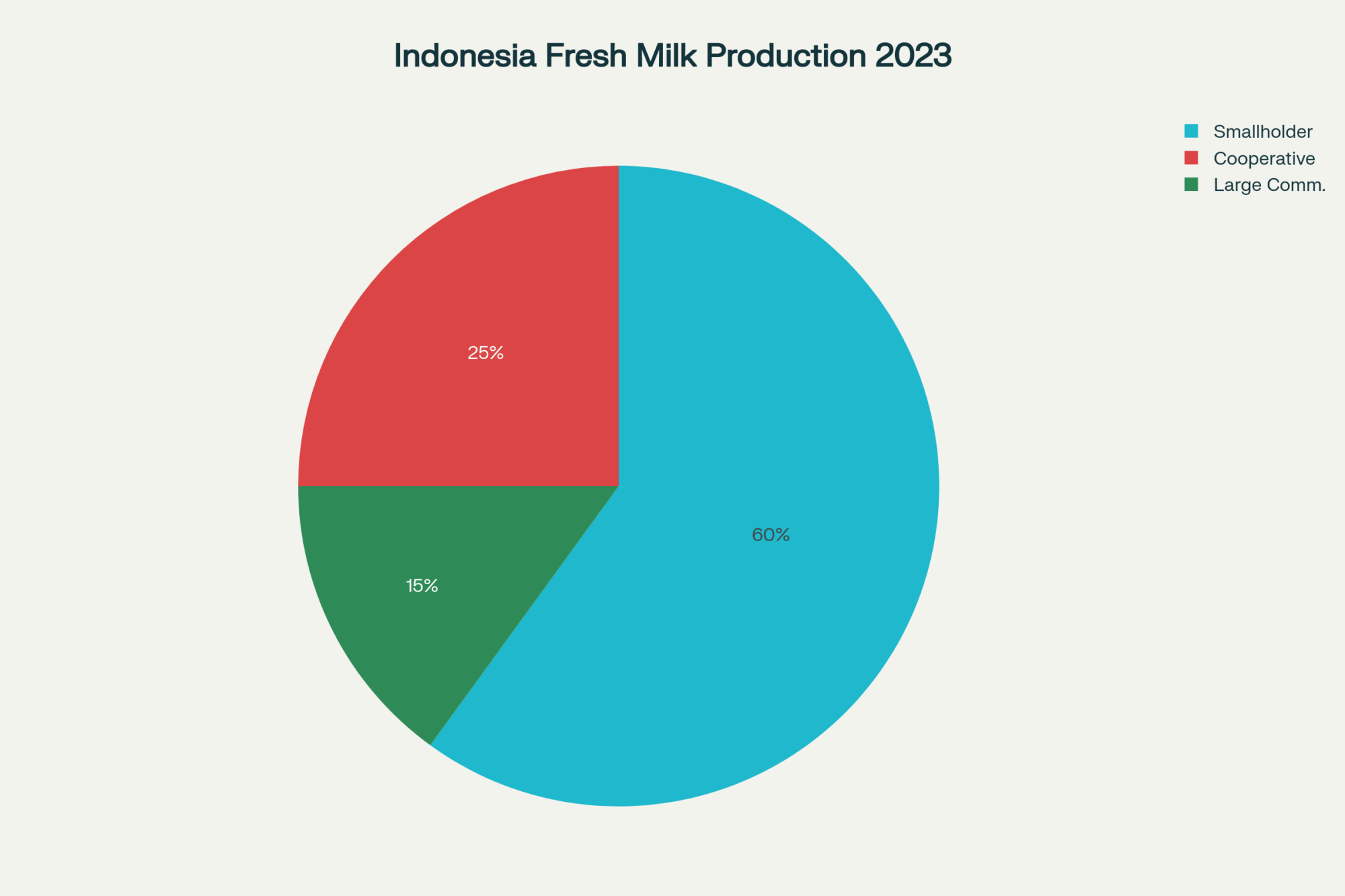
NewsSubscribe
First
Last
Consent

California Dairy’s Death Spiral: Why Your Operation Could Be Next

California lost 62% of its dairy farms in 25 years. Regulatory costs exploded 1,366%. Here’s why your operation could be next.

California dairy crisis, dairy farm profitability, agricultural regulatory costs, dairy industry consolidation, farm political advocacy

We’ve been crunching the numbers on California’s dairy crisis, and here’s what the industry doesn’t want to admit: this isn’t about drought, water scarcity, or even environmental compliance. It’s about the systematic elimination of family farms through regulatory warfare – and it’s coming to your state next. are seeing fees pile up year after year, forcing tough questions about whether family farms can keep punching through. GSA fee structures vary wildly across Central Valley subbasins, with assessments ranging from hundreds to thousands of dollars per acre-foot depending on sustainability plan requirements.

This isn’t just about water shortages anymore – it’s about an entire way of life under siege by a regulatory wave that few outside these valleys fully grasp.

What’s happening here in California is heading to your state next, and most producers aren’t even close to ready.

The Ground Under Our Feet Is Literally Collapsing

Talk to any well driller from Bakersfield to Modesto. They’ll tell you what everyone’s seeing on their operations. Nature Communications just published research showing the valley has sunk 14 cubic kilometers from 2006 to 2022 – that’s equal to all the land subsidence that happened in the previous 24 years combined.

Concrete pads are cracking clean through. Well casings show stress fractures. This isn’t some distant environmental study – this is infrastructure failing under our boots.

The Bureau of Reclamation started producers at 35% water allocation this year, and bumped producers to 55% by May. Sounds generous until you realize those numbers flip every month based on delta fish counts, court rulings, and political winds nobody can predict.

What you budget in January gets thrown out the window by October.

David Lemstra Saw This Coming Years Ago

David Lemstra ran cattle here for over 40 years before he’d finally had enough. Packed up 4,000 head and moved the whole operation to South Dakota. Now he ships to Agropur and sleeps better at night.

“Death by a 1,000 cuts,” he described it. “Wasn’t any single thing that broke us. Was everything piling up until you couldn’t breathe anymore.”

Smart man got out before the worst hit. More producers should have listened.

The Numbers That’ll Make Your Stomach Turn

Cal Poly just released a study that should scare the hell out of every producer in America. Regulatory compliance costs exploded from $109 per acre in 2006 to $1,600 per acre by 2024. That’s not a typo – sixteen hundred dollars per acre, representing a 1,366% increase.

Think about that. By 2024, compliance was eating 12.6% of total production costs. One dollar out of every eight goes to paperwork, permits, and bureaucrats – not cows, not feed, not equipment.

Meanwhile, California dairies have cut water use per gallon of milk by nearly 90% since the 1960s. They’ve built digesters, installed precision irrigation, and managed manure like scientists. California dairies are now achieving a collective annual reduction of 5 million metric tons of methane emissions.

But efficiency won’t save you when the regulatory machine needs constant feeding.

Every Water Cut Hits Feed Supply

Here’s what folks outside the Valley don’t understand – every water restriction ripples through the entire feed chain. When Kern County almond growers get their allocations slashed, it affects feed availability across the board. When Imperial Valley cotton operations get squeezed, the ripple effects hit every feed supplier.

Feed supply costs fluctuate based on water allocation impacts throughout the Central Valley agricultural system. Nutritionists scramble to find alternatives, but there’s only so much you can substitute before milk production tanks.

Why Environmental ‘Success’ is Actually Destroying the Environment

Here’s the dirty secret nobody in Sacramento wants to admit: California’s “environmental success story” is making the environment worse.

Those methane digesters everyone’s celebrating? They’re creating a massive ammonia pollution problem that’s poisoning nearby communities. Research shows that after digesters process manure, they emit ammonia that travels for miles, contaminating water and soil while creating dangerous particulate matter that threatens human health.

But it gets worse. The EPA has documented that California’s regulatory approach is driving “policy leakage” – production shifts to states with dirtier energy grids and lower environmental standards. So while California politicians claim victory over methane reductions, they’re actually increasing global emissions by forcing production to places like Texas and Idaho, where environmental controls are weaker.

The environmental community stays silent because admitting this would destroy their fundraising narrative. Meanwhile, real communities suffer from increased ammonia exposure while global emissions actually rise.

This isn’t environmental protection – it’s environmental theater that makes politicians look good while making the actual problem worse.

Even Co-ops Are Throwing in the Towel

California Dairies Inc. sent letters to members warning that they can’t absorb regulatory cost increases anymore. When co-ops – the organizations that have stood by producers through everything – start passing compliance costs back to milk checks, you know the industry is drowning.

Land O’Lakes, Hilmar Cheese, Saputo – they’re all singing the same tune. Fewer buyers, tighter margins, and more regulatory overhead are eating into everyone’s bottom line.

How Industry ‘Leaders’ Are Selling Out Family Farms

The most infuriating part? The industry organizations that should be fighting for family farms are actively helping destroy them.

California Farm Bureau has gone completely silent on the regulatory explosion. When was the last time you heard them challenge the fundamental premise of California’s approach? They’ve traded advocacy for access, preferring quiet meetings with regulators over public fights that might upset their political relationships.

Western United Dairymen talks a good game about supporting all producers, but look at their board composition – it’s dominated by mega-dairies that benefit from regulatory consolidation. When push comes to shove, they support “compromise” solutions that sound reasonable but systematically favor large operations over family farms.

Major processors are actively complicit in this destruction. California Dairies Inc., Land O’Lakes, and Saputo could use their market power to resist regulatory overreach. Instead, they’re quietly passing compliance costs back to producers while positioning themselves as environmental leaders.

The most disgusting part? Many of these same organizations profit from the consultancies and compliance services that struggling farms need to navigate the regulatory maze they helped create.

Here’s what real leadership would look like: Publicly challenging the environmental effectiveness of current regulations. Filing lawsuits against discriminatory fee structures. Organizing producer boycotts of processors that won’t fight regulatory overreach. Demanding cost-benefit analyses of every new regulation.

Instead, we get press releases about “working collaboratively with regulators” while family farms disappear at record rates.

These aren’t industry leaders – they’re undertakers helping bury the family farm system while pretending to care about the funeral.

Disappearing Faster Than Anyone Wants to Admit

The USDA numbers don’t lie, even if politicians do. California went from 2,922 dairy operations in 1997 to just 1,117 by 2022 – losing 62% of farms in 25 years. Average herd size jumped from 481 to 1,511 head, meaning survivors absorbed what casualties couldn’t handle.

California now has 1.7 million dairy cows on just over 1,100 operations. The state still leads the nation in milk production, but with fewer and fewer family operations every year.

Merced County’s lost dozens of operations. Kern County’s hemorrhaging family farms every quarter. These aren’t just statistics – these are neighbors who built their whole lives around this business.

While producers have always battled volatile markets and labor shortages, this unprecedented regulatory burden is a man-made crisis with no end in sight. The operations disappearing aren’t bad farmers. They’re producers who focused on raising good cows instead of playing Sacramento politics.

The Political Reality Nobody Talks About

Operations surviving this regulatory slaughter aren’t necessarily the best at farming. They’re the best at politics.

They’ve got relationships in Sacramento. They position themselves as “partners” in regulatory development. They build compliance departments that become competitive moats against family operations that can’t afford regulatory lawyers.

Meanwhile, producers who put everything into genetics, nutrition, and animal care discover that raising excellent cows doesn’t protect you from terrible policy.

The Dirty Truth About Who Really Benefits from Regulation

Want to know who’s getting rich off California’s regulatory nightmare? It’s not the environment, and it’s definitely not family farms.

The Compliance Industrial Complex is booming. Environmental consulting firms are billing millions to help large dairies navigate the regulatory maze. Legal firms specializing in agricultural compliance have tripled their staff since 2020. Software companies selling regulatory tracking systems are reporting record profits.

Large agribusiness loves this system because it eliminates their competition. When Hilmar Cheese and Land O’Lakes face the same $1.2 million compliance bill as a 500-cow family farm, guess which one survives? The big players can spread regulatory costs across massive operations while small farms get crushed by fixed compliance expenses.

Regulatory agencies have built empires on this complexity. The California Air Resources Board has added 847 new positions since 2019, most focused on agricultural oversight. These aren’t temporary jobs – they’re permanent bureaucratic positions with pension benefits that depend on maintaining regulatory complexity.

Environmental groups raise record donations by promoting the crisis they’re helping create. The more farms that fail, the more they can claim environmental victory and ask for bigger donations to “protect” the environment.

Meanwhile, the politicians who created this mess get campaign contributions from all sides: environmental groups grateful for the regulations, consulting firms profiting from the complexity, and large agribusiness companies that want to eliminate competition.

The only losers? Family farmers who actually produce the food and the rural communities that depend on them.

Your State Is Next – Don’t Kid Yourself

If you think this is just California’s problem, you’re living in a fantasy. Federal climate policies explicitly reference California as the national model. Walmart, Costco, and every major processor are demanding California-style environmental standards from suppliers nationwide.

Washington State’s copying our framework. Oregon’s following suit. New York’s drafting identical legislation.

Think you’re safe milking cows in Wisconsin or Pennsylvania? Once corporate supply chain requirements lock in, you’ll face California compliance costs whether you’re in Modesto or Milwaukee.

The regulatory export machine is already running.

What You Can Do Before It’s Too Late

Time’s running short, but you’re not powerless yet. Start fighting now:

  • Join Your State Farm Bureau Today – They’re the only ones fighting regulatory export legislation in Congress. Most producers never even know when comment periods open. Don’t be one of them.
  • Build Political Relationships Before You Need Them – Get to know your county supervisors, state reps, and congressional delegation. When regulations hit your district, you want them knowing your name.
  • Document Every Improvement – Track your efficiency gains, environmental investments, and compliance costs. You’ll need this ammunition when the regulatory army arrives.
  • Form Coalitions with Other Livestock Producers – Beef, pork, and poultry operations face the same threat. There’s strength in numbers, but only if you organize before the fight comes to you.
  • Plan for Regulatory Costs Like Feed Price Volatility – This isn’t temporary. Budget for compliance like any other permanent operational expense.
  • Make Sure Your Co-op’s Ready – Demand they help members navigate regulatory complexity instead of just passing costs through to your milk check.

The Clock’s Already Ticking Nationwide

Based on current consolidation rates, California’s transformation will be complete by 2028. Once that happens, the political coalition becomes unbeatable. Environmental groups, large agribusinesses, regulatory agencies, and consulting firms all profit from maintaining complexity regardless of actual outcomes.

For producers in other states, you’ve got maybe three years before similar frameworks become politically irreversible in your region.

This Is About Control, Not Environment

Don’t let anyone fool you – we’re watching agriculture’s transformation from market-based production to regulatory-dependent compliance management. The documented trends clearly indicate that this poses a threat to food security and producer independence.

Environmental regulations that worsen environmental outcomes while destroying family farms aren’t about saving the planet. They’re about centralizing control over American food production.

The Bottom Line: Fight Now While You Still Can

California’s regulatory warfare isn’t about environmental protection – it’s about eliminating competition for players big enough to afford the compliance game. While industry leaders stay silent, family farms are getting systematically destroyed. The question isn’t whether this is coming to your state – it’s whether you’ll wake up before you become another statistic.

Don’t wait for the regulatory army to reach your state. The Bullvine doesn’t just report the news – we give you the tools to fight back. Subscribe now for the analysis that industry leaders don’t want you to see.

KEY TAKEAWAYS

  • Track every regulatory dollar – Compliance costs jumped from 1.3% to 12.6% of expenses in 18 years; most producers don’t even know what they’re spending (Cal Poly Agricultural Business, 2024)
  • Water allocations change monthly – Bureau of Reclamation updates based on fish counts and court rulings; attend your GSA meetings and stay informed, or get blindsided (Bureau of Reclamation, 2025)
  • Methane programs pay off – California dairies achieved 5 million metric tons of annual reductions and are on track for climate neutrality by 2027; early adopters get the incentives (UC Davis CLEAR Center, 2025)
  • Scale or partner up – With 62% fewer farms but 80% of the milk production, the math’s brutal; consolidation isn’t slowing down, so position yourself strategically (USDA Census of Agriculture, 2022)
  • This is spreading fast – Federal policies explicitly reference California as the model; major processors are already demanding these standards nationwide, so prepare now or pay later

EXECUTIVE SUMMARY:

We’ve been digging into California’s dairy meltdown, and here’s what we found: regulatory costs have exploded 1,366% since 2006, now eating up over 12% of total production expenses. Despite cutting water use by 90% and achieving massive methane reductions, family dairies are still getting crushed – 62% gone since 1997, while average herd sizes tripled to 1,511 head. Water allocations swing from 35% to 55% based on politics, not hydrology, and those GSA fees keep climbing every year. The kicker? This isn’t staying in California – Washington, Oregon, and New York are copying the same regulatory playbook. Here’s our advice: stop thinking this won’t reach your state, start planning for compliance costs like you plan for feed volatility, and get politically engaged before it’s too late.

Complete references and supporting documentation are available upon request by contacting the editorial team at editor@thebullvine.com.

Learn More:

  • Dairy Profits: Unpacking the 7% Rule for Financial Success – While the main article details external financial threats, this piece provides an immediate, tactical defense. It reveals a powerful financial management rule to optimize cash flow, control debt, and build the economic resilience needed to survive regulatory assaults.
  • The Dairy Industry’s Future: Navigating the Top 5 Trends of 2025 – This article offers a crucial strategic lens on the market forces driving consolidation. It moves beyond politics to analyze key consumer, processing, and global trends, helping you position your operation to thrive in the exact market the main article warns about.
  • Robotic Milking Systems: Are They the Future for Your Dairy? – To combat the scale and cost pressures described, this article explores a game-changing technological solution. It analyzes the ROI of automation, demonstrating how innovation can directly counter labor shortages and high overhead, creating a competitive moat for your farm.

The Sunday Read Dairy Professionals Don’t Skip.

Every week, thousands of producers, breeders, and industry insiders open Bullvine Weekly for genetics insights, market shifts, and profit strategies they won’t find anywhere else. One email. Five minutes. Smarter decisions all week.

NewsSubscribe
First
Last
Consent

When 80 million Indian Farmers Meet New Zealand’s Dairy Machine: The Trade Talks That Could Change Everything

80 million Buffalo Herders Are About to Teach New Zealand’s Dairy Giants a Lesson—Here’s What It Means for Your Farm

EXECUTIVE SUMMARY: Here’s what we’ve uncovered that nobody’s talking about: India’s 80 million dairy families aren’t your typical producers—they’re mostly buffalo herders milking 40-50 liters daily with 7% butterfat content. Meanwhile, NZ’s massive Holstein operations eye this protected market hungrily, but here’s the kicker—buffalo milk dominates 65% of key Indian states, meaning direct substitution won’t happen overnight. We’re looking at potential tech partnerships worth billions, cold chain investments that could cut India’s staggering 50% spoilage rates, and market shifts that could redirect NZ’s export flows as China cools off by 15%. The smart money isn’t betting on trade war—it’s positioning for the innovation partnerships that’ll reshape how two billion consumers get their dairy. Bottom line: those who understand these nuances and act now will capture the opportunities while others scramble to catch up.

KEY TAKEAWAYS

  • Respect the species difference—buffalo milk isn’t cow milk: With 65% market share in Punjab and UP, buffalo’s 7% butterfat creates natural market protection. Your move: Assess your herd’s unique strengths (fat content, seasonal patterns) and find your competitive niche before imports shift the landscape (NDDB 2024; ICAR 2024)
  • Cold chain upgrades pay massive dividends: India loses 40-50% of milk to spoilage while NZ protects 95% for export—that’s millions in lost revenue daily. Your move: Start with basic chilling improvements at collection points and transport protocols; the ROI is immediate (CIPHET 2024; NZ Food Safety Authority 2024)
  • Genomics adoption separates leaders from followers: NZ’s 50% genomic bull usage contrasts sharply with India’s 115 million traditional AI doses annually. Your move: Attend genomic selection workshops now and explore heat-tolerant crossbreeding programs before the competition catches up (DairyNZ 2024; ICAR 2023)
  • Market volatility is the new normal—prepare accordingly: China’s 15% drop in NZ imports signals major shifts, while India’s cautious 0.5-2% market opening creates new opportunities. Your move: Review Dairy Revenue Protection options and diversify your market risk exposure before the next disruption hits (China Customs 2025; USDA RMA 2025)
  • Policy changes happen faster than you think: India’s never opened dairy in any FTA, but urban consumers spending 18-22% of income on high-priced dairy are demanding change. Your move: Engage with producer associations and stay plugged into policy discussions—regulatory shifts create winners and losers overnight (MEA India 2025; NSSO 2024)
Generate SEO elements for this The Bullvine article targeting dairy industry professionals:
ANALYSIS REQUIREMENTS:
Identify the article's primary topic and target audience (dairy farmers, industry professionals, agricultural specialists)
Focus on practical, implementation-oriented keywords that dairy professionals would search for
Consider both technical dairy terminology and business/profitability terms
DELIVERABLES:
1. SEO Keywords (5 keywords):
Create a comma-separated list of relevant keywords mixing:
Primary dairy industry terms (dairy farming, milk production, herd management, etc.)
Technology/innovation terms if applicable (precision agriculture, automated milking, genomic testing, etc.)
Business/economic terms (dairy profitability, farm efficiency, ROI, cost reduction, etc.)
Geographic terms if relevant (dairy industry trends, global dairy, etc.)
2. Focus Keyphrase:
Develop a 2-4 word primary keyphrase that captures the article's core topic and would be commonly searched by dairy professionals seeking this information.
3. Meta Description (under 160 characters):
Write a compelling meta description that:
Summarizes the article's main value proposition
Naturally incorporates the focus keyphrase and 1-2 keywords
Appeals to dairy industry professionals
Includes a benefit or outcome (cost savings, efficiency gains, profit increases, etc.)
Uses action-oriented language that encourages clicks
4. Category Recommendation:
Suggest the most fitting category from The Bullvine website (e.g., Dairy Industry, Genetics, Management, Technology, A.I. Industry, Dairy Markets, Nutrition, Robotic Milking, etc.) where this article should be published for maximum relevance and engagement.
FORMAT REQUIREMENTS: Present results in this exact format:
SEO Keywords: [keyword1, keyword2, keyword3, keyword4, keyword5]
Focus Keyphrase: [primary keyphrase]
Meta Description: [compelling description under 160 characters with natural keyword integration]
Category Recommendation: [Best-fit category from The Bullvine’s options]
DAIRY INDUSTRY CONTEXT: Ensure all elements appeal to dairy farmers, agricultural specialists, and industry professionals seeking practical, profitable solutions for their operations.

You know what’s wild about the India-New Zealand dairy trade talks underway this September? While everyone’s been glued to what’s happening with China, a negotiation’s brewing that could flip the global dairy scene on its head. We’re talking 80 million Indian smallholders, mostly buffalo herders, facing off against New Zealand’s highly efficient Holstein operations.

Buffalo Milk vs. Cow Milk: More Different Than You Think

Picture a typical dairy family in Karnal, Haryana. They’re milking around 40-50 liters daily. The actual take-home varies with local milk prices, but regions like Haryana show steady income streams from that milk (NDDB, 2024).

It’s not just any milk—these are buffalo giving you nearly 7% butterfat, perfect for the ghee and paneer everyone craves on the subcontinent (NDDB, 2024; ICAR, 2024).

Now compare that to New Zealand’s Holsteins, optimized to produce milk around 4.2% fat (DairyNZ, 2024). And buffalo milk makes up a massive 60-65% of the total in places like Punjab and UP (NDDB, 2024). So, what seems like a simple quota or tariff issue quickly gets complicated once you realize these milks aren’t one-to-one substitutes.

Scale’s a Whole Different Ballgame

New Zealand’s average Canterbury farm runs about 375 cows—a chunk of land, a solid rotation, mostly seasonal calving (DairyNZ, 2024). Meanwhile, Indian smallholders juggle just under three animals, aiming for year-round calving to keep cash flowing (NDDB, 2023; India Livestock Census, 2019).

Breeding is another story. Kiwi farmers have genomic bulls covering half their inseminations, while Indian farmers depend on about 115 million AI doses annually, mostly in traditional setups (NZ Animal Evaluation, 2024; ICAR, 2023). That’s a real game of cat and mouse between tech and tradition.

The Cold Chain: A Challenge and a Massive Chance

India’s cold storage game? Rough. Roughly 6,300 facilities handling what some estimates suggest is about 11% of perishables (NCCD, 2024). And spoilage rates? Could be 40-50% across villages, transport, and retail points (CIPHET, 2024). That’s a lot of lost milk and money.

Contrast that with New Zealand, where 95% of milk for export passes through integrated cold chains monitored by IoT and smart tech (NZ Food Safety Authority, 2024). Fix that cold chain gap in India, and you’re talking a transformative opportunity that punches above most tariff conversations.

China’s Cooling Thirst, India’s Growing Appetite

New Zealand used to lean on China for close to a third of its dairy exports. Whole milk powder shipments fell by 15% through August 2025, driven by China’s expanding domestic capacity (China Customs, 2025).

Canterbury farmers are feeling the squeeze. Thankfully, India’s urban markets are picking up the slack, especially for cheese and butter—products where buffalo milk doesn’t hold sway. However, breaking into India’s complex market is not as straightforward as it appears.

Politics and Milk: The Ultimate Balancing Act

India has never opened dairy in a trade deal—not Australia, not the UK, not the EU—and that’s not just a coincidence (MEA India, 2025). Those 80 million dairy families voted hard in 2024, keen to protect their livelihoods (Election Commission India, 2024).

Yet, urban Indians pay 18-22% of their income on dairy products, which are priced significantly above global averages (NSSO India, 2024). The government is under pressure to juggle consumer relief with rural protection.

On the Kiwi side, Fonterra sold off consumer brands for NZ$3.845 billion to refocus on growth markets (Fonterra, 2025). The challenge: how to boost productivity without breaking the backbone of rural economies.

What This Means for Your Farm or Operation

For producers in the U.S. or Europe, keep in mind—if New Zealand cracks India, expect similar trade demands elsewhere. It’s time to revisit risk management plans. This Dairy Revenue Protection stuff? It’s not optional anymore (USDA RMA, 2025).

If you’re in ag tech or processing, grab your opportunity. India’s supply chains are hungry for investment, imports or no imports (India Dairy Infrastructure Report, 2025).

The Big Divide: Fresh Buffalo vs. Processed Cow Milk

Indian consumers love fresh buffalo milk—the kind you buy fresh down the street. New Zealand’s strength is in processed products: powders, cheeses, and infant formulas.

Even if the market opens fully, foreign milk flooding Indian village economies is unlikely. Market penetration will probably start at a cautious 0.5-2% of demand and grow slowly (Trade Modelling Reports, 2025).

The Bottom Line: Time to Watch and Get Ready

What’s happening in Delhi will ripple through every dairy heartland—from Wisconsin to Canterbury to Punjab. Watch the Global Dairy Trade index for swings. Watch for new technology tie-ups in India. Reassess your supply chain risks.

This isn’t just a trade story—it’s a turning point. For dairy producers worldwide, readiness for this new chapter isn’t a question, but a prerequisite for future success.

Complete references and supporting documentation are available upon request by contacting the editorial team at editor@thebullvine.com.

Learn More:

The Sunday Read Dairy Professionals Don’t Skip.

Every week, thousands of producers, breeders, and industry insiders open Bullvine Weekly for genetics insights, market shifts, and profit strategies they won’t find anywhere else. One email. Five minutes. Smarter decisions all week.

NewsSubscribe
First
Last
Consent

Is Your Farm Ready for the New Reality? What the Latest Market Data Is Telling You

38,275 tonnes traded, prices still tanked—here’s what smart dairy farmers are doing differently.

EXECUTIVE SUMMARY: Look, the writing’s on the wall… and it’s not what most folks expect. Ireland’s cranking out 6.6% more milk year-to-date, butter production’s exploded by 11.7%, but guess what? Prices are getting hammered—butter’s down 4%, skim powder’s bleeding worse. The old playbook of “milk more, make more” just died. Smart operators aren’t chasing volume anymore—they’re locking profits through futures contracts, like that Pennsylvania outfit securing 35% of their fall milk at $18.85 per hundredweight. The survivors are the ones optimizing components, hedging feed costs, and investing in tech that actually moves the needle. Don’t wait for this market to force your hand—adapt now or watch margins disappear.

KEY TAKEAWAYS:

  • Lock down 25-40% of your milk through Q4 2025 Class III futures —Pennsylvania farms are already securing $18.85/cwt while others wait and worry
  • Push butterfat and protein percentages higher —component premiums are your lifeline when commodity prices crater; every 0.1% boost in protein adds real dollars per hundredweight
  • Hedge feed ingredients before winter hits —with margin pressure building, getting caught by feed price spikes will kill your profitability faster than low milk prices
  • Invest in automation now, not later —labor shortages aren’t going away, and the farms automating feeding and milking are the ones maintaining consistency when others struggle
  • Track global supply signals religiously —Ireland’s 11.7% butter surge and China’s 85% domestic production shift are early warnings that’ll hit your local market in 60-90 days
dairy market trends, milk prices, dairy farm profitability, component optimization, global dairy supply

Here’s what caught my attention last week: Singapore Exchange moved an absolute monster volume—38,275 tonnes—yet dairy prices kept bleeding. When you see that kind of disconnect between volume and price action, something fundamental is shifting beneath the surface.

You know that feeling when your milk hauler mentions prices are getting “interesting,” but you’re not quite sure what’s driving it? That was me digging into last week’s futures data. Singapore posted numbers that should have had every trader celebrating, yet whole milk powder barely twitched—down just 0.4% to $3,713. But skim powder? Man, that got absolutely hammered, dropping 3.6% to $2,698.

The thing about institutional money is that when they’re moving serious volume but prices aren’t responding, they’re not buying strength. They’re repositioning for what they know is coming.

Irish Farms Are Living the Genetic Revolution

What’s really driving this supply surge? Ireland’s collections jumped 3.6% year-over-year in July to 1.038 million tonnes, pushing their year-to-date total up 6.6% to 5.83 million tonnes. But here’s what gets me excited about this—it’s not about cramming more cows into fields. This is those genomic investments from 2020-2021 are finally hitting their stride.

I’ve been talking with producers around County Cork, and the stories are remarkably consistent. “Our fresh cows coming off those genomic matings are testing 35 to 40 pounds heavier than their dams did at the same age,” one farmer told me. “The DHIA group I’m in… we’re seeing 2,000-pound lactation gains from bulls we used three seasons back.”

What strikes me about Ireland’s situation is the seasonal component that often gets overlooked. Met Éireann’s July weather data showed rainfall about 15% above normal—perfect for extending the grazing season. When you combine ideal growing conditions with genetic gains hitting maturity simultaneously… well, that’s how you get butter production exploding 11.7% year-over-year to 32.4 thousand tonnes.

The processing side tells its own story. Kerry Group and Glanbia facilities are running butter churns pretty much around the clock. That kind of capacity strain? We haven’t seen it since quota removal.

UK Dairy Grinds Through Brexit Headaches

Across the water, UK operations pulled off something I honestly didn’t expect. Butter production surged 14.1% to 15.9 thousand tonnes in July, with cheese output gaining 1.4% to 43.9 thousand tonnes—including a solid 3.7% bump in cheddar.

Here’s where it gets interesting, though. The Royal Association of British Dairy Farmers survey shows 84% of operations struggling to fill positions. I’ve been hearing from mates in Devon and Cornwall that creameries are running weekend shifts for the first time since 2019, paying 25-30% wage premiums just to keep lines moving.

At least Mother Nature cooperated. After that brutal spring, decent rainfall kept pastures lush across the southwest. But let’s be honest—this labor situation isn’t improving anytime soon. UK producers adapting with automation and premium wages are making it work. Those hoping for cheap labor to return? They’re dreaming.

European Butter Market Reality Check

The price action tells you everything about supply overwhelming demand. EU butter indices crashed €283 last week—that’s a 4% drop landing at €6,711 per tonne, which puts us 15.3% below last year.

Dutch butter took the worst beating, down €360 (-5.3%). German and French prices weren’t much better. When I see regional variation like that, it usually means processors are competing to move inventory they can’t store profitably.

Those private storage programs that propped prices during last year’s rally? They’ve pretty much unwound completely, leaving facilities holding cream they’re struggling to turn into profitable products.

Skim powder’s following the same pattern—down €32 (-1.4%) to €2,338, sitting nearly 8% below 2024 levels. Even specialty cheese markets are showing stress: Cheddar Curd off €100, Young Gouda down €104, and Mozzarella declining €90. When you see that kind of broad-based weakness, it’s not seasonal adjustment… it’s fundamental oversupply.

China’s Playing a Different Game Now

Chinese farmgate prices held around 3.02 Yuan/kg in August, but that masks a 5.8% year-over-year decline. The real story isn’t the price—it’s the strategic shift that’s reshaping global trade patterns.

China’s now producing roughly 85% of their liquid milk domestically, driven by national food security policies. Think about that for a minute. The world’s biggest dairy market has transformed from a consistent importer to a tactical buyer who shows up when prices make sense.

Regional differences inside China matter too. Inner Mongolia keeps ramping up production while coastal provinces stay cautious. What does this means for exporters? You’re dealing with a price-sensitive buyer, has domestic alternatives and doesn’t need to maintain steady import flows anymore.

This isn’t temporary market volatility—this is China’s new normal, and it fundamentally changes how global dairy trade works.

The Efficiency Revolution That’s Breaking All the Old Rules

Here’s what fascinates me about the livestock data. Ireland’s dairy herd dropped 2.0% to 1.58 million head, yet production keeps climbing. Germany’s inventory contracted 2.5% to 3.58 million head—with steeper cuts in Bavaria where environmental restrictions bite hardest. The Netherlands fell 1.0% to 1.53 million head.

New Zealand’s showing different patterns. July slaughter rates jumped 11.9% year-over-year, but cumulative annual numbers remain 6.3% behind last year. That suggests strategic culling of lower-producing animals while maximizing output per cow.

The math is straightforward, but the implications are huge: fewer cows producing significantly more milk means traditional supply-demand forecasting is broken. We’re in uncharted territory where efficiency gains consistently outpace demand growth.

So, What Are the Forward-Thinking Operations Actually Doing?

Based on my conversations, they’re playing defense:

  • Securing Margins: They’re forward contracting 25-40% of their fall production using Class III futures for Q4 2025, treating it as price insurance, not speculation. One Pennsylvania operation I know just locked 35% of their October-December milk at .85 per hundredweight. “It’s not about chasing maximum volume,” the manager explained. “We’re securing margins and managing downside risk.”
  • Managing Input Costs: Feed ingredient hedging is accelerating, and many are extending payment terms with suppliers—classic margin pressure signals spreading through the supply chain.
  • Optimizing for Components: The focus has shifted from maximizing volume to optimizing for butterfat and protein. Premiums here offer crucial protection when commodity prices are weak.
  • Investing in Efficiency: Technology investments are now focused on enhancing labor efficiency and reducing input costs, rather than solely improving production. This is no longer optional; it’s essential for survival.

The Reality Check We Need to Have

What we’re witnessing isn’t cyclical oversupply that corrects itself in 18 months. This is a permanent structural change driven by efficiency gains nobody anticipated.

Per-cow productivity improvements from genomic selection, precision feeding, enhanced cow comfort—these advances are hitting maturity simultaneously across major regions. When this efficiency explosion meets adequate feed supplies and favorable weather… well, traditional demand forecasting becomes pretty much useless.

Add macroeconomic factors like inflation affecting consumer spending, and you’ve got persistent downward pressure that’s going to separate strong operations from marginal ones over the next few years.

The producers adapting to this new reality by building financial resilience, optimizing operations, and managing risk strategically? They’ll be the ones defining dairy’s future.

The Bottom Line

September 2025’s market data isn’t just another monthly report—it’s exposing a fundamental shift every commercial operation needs to understand. That record trading volume masking systematic price weakness? It’s institutional money positioning for continued supply pressure.

This isn’t about surviving a temporary downturn anymore. It’s about positioning for success in an industry where efficiency has permanently altered competitive dynamics.

Your next strategic decision isn’t about producing more milk. It’s about producing profitable milk in a world where global abundance is becoming the permanent reality.

Complete references and supporting documentation are available upon request by contacting the editorial team at editor@thebullvine.com.

Learn More

The Sunday Read Dairy Professionals Don’t Skip.

Every week, thousands of producers, breeders, and industry insiders open Bullvine Weekly for genetics insights, market shifts, and profit strategies they won’t find anywhere else. One email. Five minutes. Smarter decisions all week.

NewsSubscribe
First
Last
Consent

Dairy Market Reality Check: What Producers from Wisconsin to Canterbury Need to Know

GDT dropped 4.3% last week. While others panic, smart producers see opportunity.

EXECUTIVE SUMMARY: Listen, here’s what happened while you were busy with the fall harvest. The Global Dairy Trade auction just delivered a 4.3% reality check that’s got producers from Wisconsin to New Zealand scrambling. Whole milk powder dropped 5.3%, skim fell 5.8%—and that’s just the beginning. Your feed costs? They’re brutal. Wisconsin corn’s hitting $5.20 per bushel, soybean meal’s near $380 per ton, pushing daily feed costs toward $8.50 per cow. Meanwhile, milk prices slipped to $21.30 per hundredweight in May—down 70 cents from last year. Those Income Over Feed Cost margins that peaked at $15.57 last September? Industry projections show them crashing below $12 this summer. But here’s the thing—this isn’t just about weather or bad luck. Global oversupply from Australia and Uruguay, plus China slashing dairy imports by 12%, is reshaping everything. The producers who understand this shift and adjust their component focus, hedging strategies, and cash flow planning? They’re the ones who’ll still be milking when the dust settles.

KEY TAKEAWAYS:

  • Lock feed contracts now: With corn futures near $4.20/bu and soybean meal around $320/ton, smart contracting can save $1.50-2.25 per cwt when margins compress below $12/cwt
  • Hedge Class III exposure: December 2025 futures trading near $18/cwt—use conservative $17.50 projections for 90-day cash flow planning to avoid nasty surprises
  • Push component percentages: Butterfat and protein premiums hold value during base price weakness—every 0.1% butterfat increase buffers margin pressure when global markets tank
  • Track global supply flows: Australia’s 8.4 billion liters (up 3.1%) and Uruguay’s 5.7% surge create oversupply pressure that affects your milk check regardless of local conditions
  • Plan for FMMO impact: June reforms trimming 30 cents per cwt hit regions differently—know your Federal Order pricing structure before margins get tighter
Global dairy markets, dairy farm profitability, Income Over Feed Cost (IOFC), feed cost management, dairy market analysis

You know that feeling when you open your milk check and your gut drops? That’s exactly what producers from Wisconsin’s dairy country to New Zealand’s Canterbury felt after September’s Global Dairy Trade auction dropped 4.3%. Whole milk powder fell 5.3%, skim milk powder 5.8%—a clear sign that production is running ahead of what the market can absorb.

Here’s the thing: USDA data shows global milk production outpacing demand by about 3.2% this year. That oversupply is hitting everyone’s bottom line, from family farms to corporate dairies.

Southern Hemisphere Floods the Market

Australia wrapped its 2024-25 dairy season this past June with 8.4 billion liters produced—up 3.1% from the year before, according to Dairy Australia. Sounds good on paper, but talk to producers and you get a different story.

Recent survey data from Australian dairy farmers reveals only 45% feel optimistic about the future, with many citing feed cost increases of nearly 50% over two years, while milk prices haven’t kept pace. “We’re having some tough conversations out here,” is how one Victorian farmer put it in recent industry reports.

Over in Uruguay—a smaller player that’s making waves—milk deliveries surged 5.7% in the first half of 2025, with June numbers jumping 10% during what is usually’s their quiet season. When you combine that with New Zealand’s production, industry analysis suggests a surplus exceeding 300 million liters hitting global markets this year. The pressure on prices is real.

China’s Structural Market Shift

Here’s what really gets your attention: China’s been battling a 27-month streak of falling milk prices due to domestic oversupply. Rabobank forecasts Chinese dairy imports dropping 12% this year, meaning hundreds of thousands fewer tons flowing through global markets.

When your biggest customer suddenly doesn’t need your product because they’re drowning in their own… well, that changes everything for exporters worldwide.

Feed Costs Squeezing Margins Everywhere

Let’s talk numbers that hit close to home. In Wisconsin, corn is selling for around $5.20 per bushel, and soybean meal is priced near $380 per ton. Industry estimates suggest feed costs ranging from $7 to $10 per cow daily, depending on your ration composition.

USDA reports show May milk prices fell to $21.30 per hundredweight—down 70 cents from last year. Remember when Income Over Feed Cost hit $15.57/cwt last September? Industry projections suggest those margins could drop below $12/cwt this summer.

That’s tighter than getting a fresh heifer to stand still for hoof trimming.

IOFC Range (/cwt)What You Need to DoTimeline
Above $15Lock in feed contracts nowNext 6 months
$12-15Hedge feed, trim costs aggressivelyNext 3 months
Below $12Emergency cash flow managementRight now
Below $9Consider herd reductionImmediately

Futures Market Reality Check

The interconnected nature of today’s dairy markets means that when one region gets hit, we all feel it. Recent Class III futures contracts suggest December 2025 pricing near $18 per hundredweight—levels that make debt service painful for leveraged operations.

Even butter took a hit, sliding 2.5% in recent GDT auctions. When butter weakens alongside milk prices, you know this isn’t just a powder market problem.

FMMO Changes Squeeze Already Tight Margins

As if margin pressure wasn’t enough, Federal Milk Marketing Order reforms that kicked in June 1st are expected to trim another 30 cents per hundredweight from all-milk prices. Different regions get hit differently, making financial planning even trickier.

It’s like trying to balance your books while someone keeps changing the rules mid-game.

Regional Strategies That Make Sense

Here’s where your zip code really matters. Wisconsin producers should be locking corn futures through the CME while prices remain manageable. California operations need to focus on securing quality alfalfa and bypass protein before costs spike further.

East Coast farmers face distinct challenges, including dependency on purchased feed and higher energy costs. Down in the Southeast, cottonseed and corn gluten feed contracts often provide stability when grain markets get volatile.

The operations doing well right now aren’t chasing volume—they’re optimizing genetics and nutrition programs that boost components. Butterfat and protein premiums hold value better when base prices are under pressure. It’s about working smarter, not just harder.

Currency Swings and Export Math

New Zealand and Australian exporters constantly juggle exchange rate swings that can make or break quarterly returns. A strong U.S. dollar makes American dairy products more expensive overseas, but it can also help offset lower global prices when revenue gets converted back to dollars. However, widespread domestic oversupply significantly limits these benefits.

Your Action Plan

Three things that can’t wait:

First, run conservative 90-day cash flow projections assuming Class III stays around $17.50/cwt. If those numbers don’t work, you need strategic alternatives now.

Second, lock in feed contracts for Q4 2025 and early 2026 while grain futures remain below recent peaks. Corn near $4.20/bu and soybean meal around $320/ton represent opportunities that might not last.

Third, double down on component-focused breeding and nutrition programs. Every tenth of a point in butterfat or protein helps when base prices are squeezed.

We’ve weathered these cycles before—those who plan ahead always come out stronger.

Current Market Snapshot

  • GDT Price Index: 1,209 (down 4.3%)
  • Class III Dec 2025: ~$18/cwt
  • IOFC Margin Range: $11.30-12.80/cwt (varies by region)
  • Feed Costs: Corn $5.20/bu, SBM $380/ton

This market cycle will test every operation differently. Know your numbers, protect your margins, and remember—the market will turn.

Bottom line? The producers surviving this cycle aren’t just watching weather and feed prices—they’re managing global market risk like the business professionals they are.

The question is whether you’ll be stronger or gone when it does.

Complete references and supporting documentation are available upon request by contacting the editorial team at editor@thebullvine.com.

Learn More:

  • 7 Sins of Complacent Dairy Farmers – This tactical piece reveals the operational blind spots that can cripple profitability during a downturn. It provides a direct checklist for producers to self-audit their management practices and refocus on the core drivers of efficiency and cost control.
  • The 2 Cents That Can Make or Break Your Dairy Farm – Shifting to a strategic, market-focused perspective, this article breaks down how minor shifts in milk price, component values, and input costs create significant long-term financial impacts. It demonstrates the importance of margin-focused management over chasing pure production volume.
  • Robotic Milking Systems: Are They the Peter Principle of the Dairy Industry? – This innovative article challenges producers to think critically about major technology investments. It explores whether automation solves core management issues or simply elevates them, providing a crucial framework for evaluating ROI on future-focused capital expenditures during tight markets.

The Sunday Read Dairy Professionals Don’t Skip.

Every week, thousands of producers, breeders, and industry insiders open Bullvine Weekly for genetics insights, market shifts, and profit strategies they won’t find anywhere else. One email. Five minutes. Smarter decisions all week.

NewsSubscribe
First
Last
Consent

The Genomic Kick in the Pants: Why NZ Dairy is Facing a Sink-or-Swim Moment

NZ’s at 50% genomic bull usage while global leaders race ahead. Your farm can’t afford to wait much longer.

EXECUTIVE SUMMARY: Look, here’s what’s really happening out there. New Zealand’s genetic evaluation system got officially slammed as “not fit for purpose” by the 2024 DairyNZ report — and that should wake everyone up. We’re sitting at 50% genomic bull usage while our competitors are way ahead, and frankly, that gap’s costing us. Lincoln University crunched numbers on 127 Canterbury farms and found something interesting: spend $8,000 on a 300-cow operation, you could see $14,000 to $19,000 back annually. The tech behind this — LIC’s Single Step Animal Model — bumps up accuracy by 8%, which is massive when 60% of our cows are crossbreds. With global markets hungry for resilient genetics that can handle tough conditions, this isn’t just about keeping up anymore. It’s about getting ahead while there’s still time.

KEY TAKEAWAYS:

  • Milk production jumps 8-15% with genomic selection — start by getting your replacement heifers genotyped early and watch the data guide your breeding decisions
  • Fertility rates improve 10-20% when you use genomic data — integrate LIC’s Single Step Model results into your mating plans this season for measurable gains
  • Somatic cell counts drop up to 40% with smart genetics — less mastitis means lower vet bills and higher milk quality bonuses hitting your bottom line
  • Global crossbred demand is exploding in 2025 — source bulls with proven multi-breed genomic evaluations now, especially for tropical export markets
  • Feed costs eating your margins? Genomic efficiency pays back fast — better converting cows stretch every feed dollar further in today’s tough input cost environment
dairy genomics, New Zealand dairy industry, dairy farm profitability, genetic progress in cattle, crossbred dairy genetics

The bottom line? Your neighbors are already doing this. Don’t be the last one to figure out that your phone really can pick better cows than your gut.

Pull up a chair, mate. The other day, I was chatting with an old-school Canterbury dairy farmer. This bloke’s been walking the paddocks long enough to spot a good cow with his own eyes. “I don’t need some fancy computer to tell me who to breed,” he said.

But these days? He’s swiping genomic breeding values on his phone right between milking sessions. What flipped the script? His neighbour’s genomics-selected heifers jumped ahead by a whopping 150 kilos of milk solids. That kind of leap wakes you up.

This ain’t just chatter over the fence – the 2024 DairyNZ Industry Working Group officially called our genetic evaluation system “not fit for purpose.” We’re standing still while others chase the future.

Late 2024 LIC data drops another bomb: only about half the AI straws in NZ are from genomic bulls. That’s lagging far behind other top dairy nations.

And the kicker? We’re genotyping around 40,000 cows. To compete at the highest level, we need over 400,000 in the game. It’s like trying to fill a paddock with a bucket when you need a tank.

The Economics: What’s Actually in Your Pocket?

Lincoln University’s 2024 study on 127 Canterbury farms shows the potential, though results vary by operation.

Herd SizeAnnual Investment (Approx.)Potential Annual Return
300 Cows$8,000$14,000 – $19,000
600 Cows$15,000$28,000 – $38,000
1,000+ Cows$25,000$47,000 – $63,000

Data based on 2024 Lincoln University analysis of 127 farms. Individual results will vary.

Farmers involved in DairyNZ studies say the predictions generally match what the vat delivers. That’s coming from people who’ve heard plenty of promises before.

Tech Talk: SSAM — the Game-Changer

LIC’s Single Step Animal Model, SSAM, if you want to sound tech-savvy, is a leap forward.

Instead of separating pedigree, phenotype, and genome analysis, it handles it all at once — bumping up accuracy by around 8%. That’s massive, especially with NZ’s 60% crossbred herd.

Professor Ben Hayes from Queensland said it best: “If you nail multi-breed genomic evaluation, the future’s yours.”

The Pasture Problem: Why NZ’s Farm Setup is Different

Unlike our overseas mates with year-round calving herds, we pack all our calves into a tight spring window.

Mud, rain, and paddocks make sampling a logistical headache. Canterbury trials found pushing compliance from 60% to nearly 90% is doable — if you nail timing, weather, and team coordination. Mess that up, and you’re off the pace.

Ask any farmer who’s dealt with a wet spring and late contractors how that goes.

Aussies Nailed It First

Australia hit their stride when genomic reliability topped 70%. Farmers got on board fast because they trusted the data.

Their focused Holstein and Jersey reference herds nailed precision. No theoretical stuff — just results they could see in the milk vat.

From Rivals to Teammates: The Data-Sharing Revolution

Old rivalries? History. LIC, CRV, DairyNZ, and others are sharing data to get ahead.

Wayne McNee from LIC sums it up: “Genomic success requires population scale that exceeds any single company’s capacity. We’re either working together or we’re all falling behind.”

That’s a complete shift from the days when breeding companies treated genetic data like classified intel.

Who Crunches These Numbers?

Here’s the quiet powerhouse — NeSI and Genomics Aotearoa. Without their computing grunt, processing millions of genetic markers across hundreds of thousands of animals with complex family relationships just wouldn’t be possible.

The Global Angle: Crossbreds Rule

Most of the world’s dairy cows aren’t purebreds — they’re crossbreds. Pure Holsteins and Jerseys really only dominate in North America and northern Europe.

That means NZ’s expertise gives us an edge in tropical and emerging markets where crossbreeding is standard practice. They’re hungry for genetics that can handle environmental stress, disease pressure, and variable feed quality.

Africa’s even rolling out genomic tools made just for crossbreds. The demand is real and it’s growing.

The Skeptics’ Corner

Got doubts? Consider these results from NZ trials:

  • Better Milk Production: 8-15%
  • Improved Fertility Rates: 10-20%
  • Lower Somatic Cell Counts: 25-40%

This isn’t marketing fluff — it’s real results from real farms showing up in milk vats and vet records right across both islands. However, remember that performance improvements vary significantly by operation and management system.

The $86 Million Question

NZ’s planning to invest $58 to $86 million over five years — serious money for building reference populations, computing infrastructure, and farmer education programs.

Countries that master crossbred genomic evaluation in the next five years will dominate global dairy genetics for the next fifty. Our 60% crossbred population — once seen as complicating genomic evaluation — is actually our competitive ace in the hole.

Time’s tight and the stakes are high.

Bottom Line

  • For Farmers: Ring your breeding company about genomic testing today. Sitting still means watching your competitors bank the gains while you explain to your banker why your neighbors are consistently outproducing you.
  • For Industry Leaders: Collaborate, share data, and grow reference populations. Success demands scale; no single company can achieve it alone.

The genomic revolution rewards early adopters and punishes those who hesitate. Simple as that.

Miss this and you’ll be on the wrong side of history.

Complete references and supporting documentation are available upon request by contacting the editorial team at editor@thebullvine.com.

Learn More:

  • Genomic Testing: Are You Just Collecting Data or Actually Using It? – This piece provides practical strategies for turning raw genomic data into profitable on-farm decisions. It bridges the gap between testing and implementation, revealing how to leverage your results for better mating choices, culling strategies, and overall herd improvement.
  • The Great Debate: ProCROSS vs CROSSBREEDING vs PUREBRED – This article breaks down the economics and long-term implications of different breeding strategies. It provides a strategic framework for evaluating which system best aligns with your operation’s goals for profitability, health, and resilience in a competitive market.
  • Stop The Guessing Game: Using Genomics to Select for Health & Wellness – Explore the future of dairy breeding with this look at health-focused genomics. It reveals methods for selecting animals with genetic resistance to common diseases, helping you proactively manage herd health, reduce treatment costs, and improve animal welfare.

The Sunday Read Dairy Professionals Don’t Skip.

Every week, thousands of producers, breeders, and industry insiders open Bullvine Weekly for genetics insights, market shifts, and profit strategies they won’t find anywhere else. One email. Five minutes. Smarter decisions all week.

NewsSubscribe
First
Last
Consent

The $570 Feed Waste Wake-Up Call: Stop Bleeding Margin at the Feed Bunk

Feed waste’s eating $570 out of every cow you own—how much are you leaving in the alley every season?

EXECUTIVE SUMMARY: So, here’s the real story, neighbor. Most dairies bleed margin at the bunk, losing up to $570 per cow every single year—and it’s not just a “bad day” problem. Extension folks say waste hits $1.40–$1.60 per cow, per day. Stack that across 250 head… you’re looking at $140,000 flying out the door just from spoiled silage and feed refusals. Doesn’t matter if you’ve got 80 Holsteins or 500 Jerseys—weather and storage make or break your numbers. Technologies like automated feeders can reduce waste by 38% and cut labor hours in half. And those rumination collars? They catch sick cows two days before your eyes will—saving thousands in vet bills, not to mention milk lost. Farmers in the Netherlands, Brazil, and even India are utilizing precision rations and mobile apps, achieving a payback period of 18 months or less. The kicker? Top herds focus on feeding smarter, not adding cows. That’s what drives margins in today’s market—especially with feed prices climbing in 2025.
You oughta run a shrink check on your own bunk this month. It’s the best money-saving step you’ll take all year.

KEY TAKEAWAYS:

  • Feed waste isn’t just spilled hay—it’s $500–$650 lost per cow, year in, year out. Run your own daily shrink test.
  • Automated feeding systems, such as Triomatic, slash waste by up to 38%, with tech payback often achieved within two years. Don’t just feed more—feed smarter.
  • On-farm rumination sensors catch illness 1–2 days earlier than the naked eye, trimming vet bills and boosting milk flow. Ask your nutritionist for options.
  • Global dairy leaders—from Dutch to Brazilian herds—are scaling rapidly with precision feeding, not herd size. That’s what’s moving ROI in 2025.
  • Want to plug the leak? Start by tracking refusals and shrink. Call your extension—get a feed waste worksheet. The profit’s waiting in your alley, not your next cow purchase.

Let me tell you, if you’re still thinking “more cows, more milk, more margin,” you’re playing last year’s game. Give this new approach a real shot, and watch your dairy pencil look a whole lot fatter.

Step into any 240-cow barn in Central Wisconsin in March—slush up to your ankles—and you’ll see feed push-offs stacking up like cordwood. In north Fond du Lac, a local nutritionist recently told me, “You’re shoveling away the price of a new headgate every month.” Stories like that, echoing recent farm visits from the Upper Midwest, pretty much sum up what’s biting into real dairy margins. Nearly every conversation comes back to shrinkage and refusal. As Luiz Ferraretto and Randy Shaver noted in a University of Kentucky Extension analysis, lost pounds at the bunk are a universal challenge for U.S. dairies.

Extension analyses from Kentucky and Wisconsin peg the real cost of feed waste at $1.40 to $1.60 per cow, per day—between $500 and $650 per cow over the year, with peaks much higher on the worst days. Do the math: at an average of $1.55 per day, that’s the $570-per-cow problem that hits your bottom line every single year. Run your own workbook and see if it shakes out differently, but for most, that’s real money lost.

Why “More Cows” Doesn’t Fix Feed Waste

If you’ve ever argued the “bigger is better” side at the co-op table, you’ve probably heard the comeback: “If you’re behind on feed management, more cows just means a bigger hole.” Big herds with the right gear can sometimes get shrink below average, especially in those elite Indiana and Idaho TMR setups. Most average farms—especially with roughage in bunker silos and unpredictable weather—fall into the same trap. Putting on 50 head before you plug the waste is like topping up a worn-out tire before patching the hole.

As Dr. Randy Shaver of UW-Madison often emphasizes, a typical scale doesn’t guarantee typical intake. He often states, “A producer might be delivering 50 pounds of dry matter to the bunk, but the cows are only consuming 42. That 8-pound gap is where your profit disappears, and it shows up directly in the milk check.” His findings in Wisconsin align with what I’ve seen in upstate New York TMR barns the same week.

Break down those on-farm records—from Michigan’s sand-bedded freestalls losing 8% to Ohio’s drive-over pile herds at 15%—and you’ll see weather, bunk, and storage make or break you.

According to Penn State Extension, $0.50 per cow daily in classic shrink is common, but with energy and protein factored in, annual losses climb to $500–$650 per cow. A typical 250-cow herd in the Midwest can lose the feed equivalent of an entire semi-load of corn silage every year, enough to buy a new used skid-steer.

Looking overseas, the Australian Dairy Sector Food Waste Action Plan reports the industry loses over 700,000 metric tons of feed a year, with almost three-quarters of that occurring on farms rather than at the processor. DairyNZ’s numbers remind us that weather and region always matter.

How Tech Actually Delivers (And When It Doesn’t)

Forget the flashy dealer flyers—real farms want results. Here’s what’s moving the margin where it counts:

  • Case Study: The Kruidhof family near Ommen, Netherlands—85 Holsteins—installed a Triomatic T30 feeding system, switched to six-times-per-day feeding, and cut waste by 38% while dropping labor needs by more than half. Their payback landed just shy of 18 months on a €95,000 investment. European extension trials back up these results, but U.S. herds still have to account for local dealer support, herd size, and that critical Midwest labor reality.
  • Feeder Reliability: Lely units, now common from Sheboygan to Saskatchewan, achieve an uptime of upwards of 98%, and 60% of issues are resolved remotely before the wrenches are even taken out. As a Dodge County producer shared last month, “Fast dealer response counts for more than horsepower.”
  • Cow Health Sensors: Rumination collars and eartags ($200–$250 a head) are game-changers for early illness detection. Studies by Gygax in Switzerland and Cornell’s Schirmann show these sensors can catch health problems a full one to two days earlier than visual signs, saving $2,000 or more each time they avert a health crisis.

Who’s Adopting? And What’s Holding Us Back?

U.S. adoption of full precision monitoring sits at just 12%, while Dutch herds are near 44%. Extension co-ops and lending groups here in the Midwest are making progress, but the whole team has to buy in—from feeders to family. The last Wisconsin Dairy Farm Business Summary found that cautious technology adopters logged a 15–25% ROI, with a payback period of two to three years—as long as staff were trained and support remained responsive.

Feeding Smarter—Not Just Adding Cows

Rather than adding cows, top herds focus on feeding smarter. Virginia Tech’s Self-Learning Dairy research showed individualized rationing puts $0.32 to $0.60 per cow per day back into your operation. That’s $100–$220 per cow per year, not counting earlier health catches. Dairy Business Association benchmarks from Wisconsin have shown a $250–$350 per cow per year profit increase from simply reducing shrinkage.

So what’s it mean for your own place? Run a feed trial. Track refusals for a month, batch by batch. The math you get might surprise you—and your accountant.

Are Environmental Gains Really Paying Off?

Precision feeding isn’t just for environmental headlines. According to the Journal of Environmental Quality, targeted protein feeding reduces nitrogen losses by 11–19%. Local extension data confirms Corn Belt and New York herds have matched or exceeded these savings with precision-driven TMR management. Reviews in Frontiers in Vet Science say certain feed additives can cut emissions by up to 22%. UC Davis life-cycle studies found precision feeding can reduce manure output by 14%.

Thinking about carbon credits? The USDA and NSAC report pilot farm payments of $6–$15 per tonne for CO2 reductions, but costs for paperwork and verification can run $3,000–$5,000 per year. New Zealand’s ETS market moves from NZ$30–$70/tonne depending on policy and feed prices, so buyers need to watch the rules before banking on returns.

Local Roadblocks and Financing

In Ontario, DFO and Farm Credit Canada negotiate annually with local banks—sometimes it’s a few thousand dollars upfront, while in other years, terms flip quickly. Always call your local office for up-to-date packages. In the U.S., the NRCS EQIP program can cover $50,000–$200,000 for feeding system upgrades, provided your plan fits the conservation and efficiency slots.

Brazil & India: Dairy Competition Goes Global

Across the globe, Brazil’s EMBRAPA notes over 500 new automated herds are built each year, integrating feeding tech from the start. NDDB’s digital push in India gives 150,000 herds smartphone ration calculators, with small farms seeing 15–19% better yields. International Dairy Federation researchers say it now takes less than two years from install to payback—compared to the decade-old five-year slog.

Bullvine Bottom Line: Local Data, Real Dollars

Feed waste isn’t an abstract table; it’s dollars left in the alley and pounds unmilked. Smart nutrition and management—backed by both hard data and local extension trials—pay off for farms that check, measure, and adapt. No matter the size, track your shrink, weigh refusals, and call the service crew before you trust a sales pitch.

Because in this business, size won’t hide waste. Only sharp feeding and tight records move the margin.

Complete references and supporting documentation are available upon request by contacting the editorial team at editor@thebullvine.com.

Learn More:

The Sunday Read Dairy Professionals Don’t Skip.

Every week, thousands of producers, breeders, and industry insiders open Bullvine Weekly for genetics insights, market shifts, and profit strategies they won’t find anywhere else. One email. Five minutes. Smarter decisions all week.
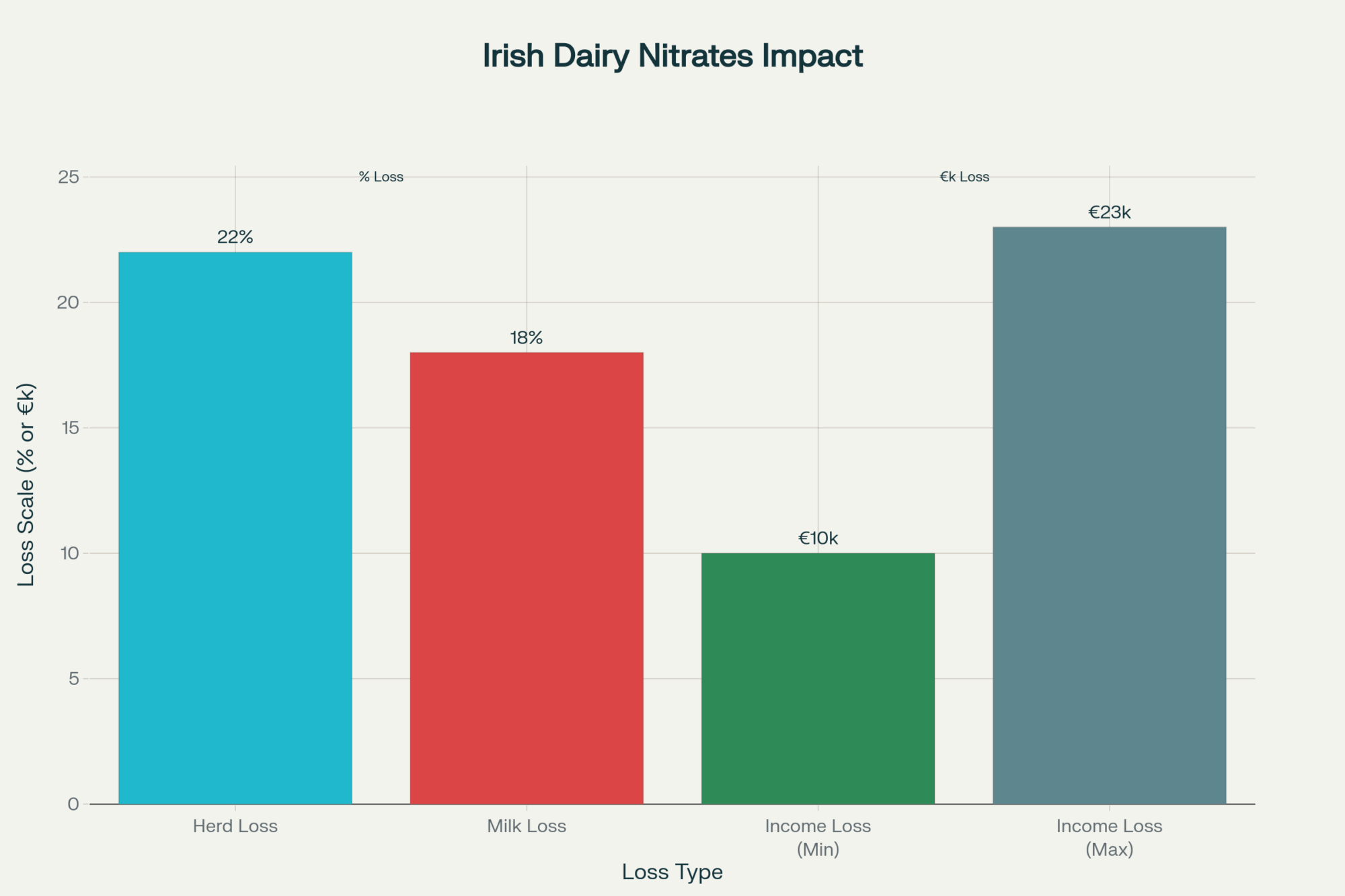
NewsSubscribe
First
Last
Consent

The Heat Is On: Why You Can’t Afford to Ignore Adapted Genetics

Forget everything you know about Holsteins. Brazilian cows are schooling us on heat tolerance.

EXECUTIVE SUMMARY: Look, heat stress isn’t just uncomfortable for cows – it’s stealing 15-25% of your milk and crashing conception rates by 40%, which translates to thousands in lost revenue every summer. Smart producers from Florida, all the way down to Australia, are quietly switching to Brazilian Gyr genetics because these cows keep producing when Holsteins shut down. We’re talking 10-12 liters daily with solid 4.2% butterfat and way easier calving – that’s real money in your pocket. The market’s already moving… Brazilian semen exports jumped 19% in early 2024, and the A2 milk premium game is hitting $2.1 billion globally with 25% higher prices for the right genetics. If you’re serious about protecting profits and beating the heat, this isn’t some future trend – it’s happening right now. Time to test a few head, budget smart, and get ahead of this curve.

KEY TAKEAWAYS

  • Track your summer hemorrhaging first – Heat stress cuts milk by 25% and fertility by 40%, so document exactly what July and August cost you before making any moves.
  • Test Gyr genetics on your worst performers – These cows pump 10-12 liters daily with 4.2% butterfat even when it’s scorching, so try AI on your heat-stressed animals first.
  • Follow the smart money – Brazilian genetics exports shot up 19% in 2024 because producers worldwide are catching on; build relationships with trusted suppliers now before demand spikes.
  • Cash in on A2 premiums – Gyr cattle carry 85-88% A2 alleles vs Holstein’s 35-45%, and that 25% milk premium adds up fast in today’s tight margins.
  • Match tech to your reality – Real-time temp sensors and blockchain sound cool, but only invest if your power and internet can handle it; otherwise, stick to proven genetics upgrades first. Bottom line? This isn’t about jumping on trends. It’s about protecting your operation when the mercury climbs. Start small, test smart, and see what heat-adapted genetics can do for your summer production.
Heat stress dairy cattle, dairy crossbreeding, dairy farm profitability, Gyr genetics, tropical dairy farming

You know the story—summer hits, and your Holsteins just aren’t right. They’re sweaty, panting, and shutting down well before noon. I’ve spoken to farmers from Florida’s Gulf Coast to Queensland, Australia, to Colombia and beyond, and the savvy ones are switching to Brazilian genetics—specifically the tough-as-nails Gyr and Girolando breeds.

Just so we’re clear, these Bos indicus cattle are built for humid, hot climates, unlike the European Bos taurus breeds like Holsteins and Jerseys.

The Numbers Don’t Lie About Heat Stress

Now, University of Florida research lays it out straight: heat waves cause 15-25% drops in production, and conception rates can dive by up to 40%. When you see your cows gasping in the early morning, that’s your bottom line evaporating.

What about the Gyr? Well, according to Embrapa’s 2023 technical reports, these girls churn out 10 to 12 liters daily on tropical pastures—twice what a typical local Zebu does. Plus, their milk’s legit—4.2% butterfat and 3.8% protein. And if you’re worried about calving, their calving ease score is 4.2, crushing Holsteins’ 3.1.

They aren’t just tough—they’re biologically engineered for heat with larger skin surface and efficient sweat glands. That’s a game changer, especially when your fans and misters can’t keep up.

Follow the Money Trail

Right now, the genetics market is booming. Reports from Global Agribusiness analysts show the trade ballooned from $125 million in 2018 to over $400 million in 2024. The Brazilian Artificial Insemination Association (ASBIA) reported a 19% leap in beef semen exports in just the first half of 2024.

Here’s the market snapshot:

YearAnnual Semen ExportsRegional Trade ValueKey Markets
20183.2M doses$125MArgentina, Paraguay
20204.1M doses$178MColombia, Latin America
20226.8M doses$289MPeru, Caribbean
20249.4M doses$412MCaribbean, Southeast Asia

A word of caution: Colombia’s peso crashed big time in 2023, driving up genetics costs by around 18%—that’s not nothing when budgets tighten. And Ecuador? Folks are grumbling about 6-8 week holdups from Agrocalidad that slow shipments to a crawl.

The A2 Advantage That Pays

Now, you’ve probably heard the chatter about A2 milk and what it’s worth. Turns out, Gyr cattle carry the A2 allele at rates between 85-88%, way above Holstein’s 35-45%. That’s why the global A2 milk market is racing past $2 billion with premiums that hover around 15-25% in mature markets.

Tech That Actually Works

Technology’s not just buzz, either. Brazil’s farms are rolling out real-time temp sensors that flip on cooling systems before cows show heat stress. Blockchain systems are becoming real for herd traceability. But heads up—if your power or internet is spotty, these shiny toys can become costly paperweights.

InvestmentCost RangePotential BenefitsPayback Period
AI per service$50-85Improved heat tolerance, better calving ease1-2 lactations
Embryo Transfer$350-500Accelerated genetic improvement2-3 lactations
A2 Testing$25-50/animal15-25% milk premium6-12 months

Playing by the Rules

Got imports on your mind? Work with trusted import specialists and familiarize yourself with sanitary and phytosanitary protocols to avoid costly delays and ensure seamless importation. We all learned a tough lesson from the UK’s 2001 foot-and-mouth disaster.

The Environmental Reality Check

Now, about the environment—yes, flying genetics around ramps up emissions. Reports from UC Davis lifecycle studies peg it at 45-60 tons CO2 equivalent per animal for long-distance cargo shipments. But when you factor in the higher feed efficiency and longevity of heat-adapted cows, the real impact equation changes.

Plus, boosting local production keeps the supply chain tighter and farms safer against global shakeups.

Your Game Plan

Here’s what I’d do if I were in your barn:

  1. Track every drop of heat damage—production, fertility, you name it
  2. Try a few head with these genetics first—no need to bet the farm right away
  3. Budget wisely—AI hits around $50-85 a shot, and embryo transfer is $350-500
  4. Tap into local support—extension agents, breeder associations, and fellow producers
  5. Build solid supplier relationships—and plan for those little headaches, like shipment delays

Don’t wait while the competition rolls past. The future’s for those who adapt—and adapt quickly.

Complete references and supporting documentation are available upon request by contacting the editorial team at editor@thebullvine.com.

Learn More:

  • Crossbreeding, The Quick And Dirty Guide To Getting It Right – This guide provides a no-nonsense framework for implementing a crossbreeding program. It reveals practical strategies to avoid common pitfalls and maximize hybrid vigor, helping you translate genetic theory from the main article into a profitable, on-farm reality.
  • The 7 Qualities of a Great Dairy Breeder – Shift from purchasing genetics to mastering strategy. This article outlines the seven core principles that separate the most profitable breeders from the pack, helping you build a long-term vision for your herd that goes beyond just heat tolerance.
  • Genomics: The Difference Between Good and Great – Go beyond the ‘what’ and understand the ‘how’ of modern genetic selection. This piece demystifies genomics, showing how data-driven decisions can accelerate genetic gain for traits like heat tolerance and secure a competitive edge for your operation.

The Sunday Read Dairy Professionals Don’t Skip.

Every week, thousands of producers, breeders, and industry insiders open Bullvine Weekly for genetics insights, market shifts, and profit strategies they won’t find anywhere else. One email. Five minutes. Smarter decisions all week.

NewsSubscribe
First
Last
Consent

Rabobank’s 2026 Warning: What Smart Producers Are Already Doing About It

What if I told you the producers making money in 2026 aren’t the ones celebrating the highest today? Rabobank’s warning changes everything.

EXECUTIVE SUMMARY: You know what caught my attention? While everyone’s busy counting their milk checks, Rabobank’s quietly warning about a 2026 market correction that could separate the survivors from the casualties. Here’s the thing—they’re forecasting NZ milk prices at $20.50 per hundredweight (record highs) for 2025, but smart producers aren’t just celebrating. They’re using these margins to invest in tech that’s delivering 18% better reproduction rates and cutting vet costs by $285 per cow. European farms already banking an extra $1,200 per cow annually through carbon programs… and that’s coming our way fast. Cornell’s data shows diversified operations weathered the last market chaos 23% better than commodity-only farms. The window for strategic positioning won’t stay open forever. Time to decide: are you building a bridge over the next downturn, or hoping the water doesn’t rise?

KEY TAKEAWAYS

  • Tech isn’t a luxury anymore—it’s survival gear. AI lameness detection achieves 85% accuracy, and farms investing $ 180,000 in monitoring experience an 18% increase in reproduction. Start with activity monitors if you’re under 200 cows—payback in 3-4 years with current labor costs.
  • Regional feed costs are your hidden profit killer. While corn averages $4.20 nationally, you’re paying $5+ in California versus $4 in Iowa. Lock feed contracts now while financing rates sit at 6.5-8.5%—both won’t last.
  • Carbon programs aren’t feel-good farming anymore—they’re cash flow. European operations pocket $1,200+ per cow annually through emission reductions. California’s LCFS credits are already worth $85-120 per metric ton. Start your footprint assessment before programs fill up.
  • China’s the wildcard that could flip everything. Their imports are up 2% while production drops 2.6%—but weak demand keeps it unpredictable. Diversify your risk, as when China moves, global prices tend to follow.
  • Equipment financing window is closing. Rates at 6.5-8.5% won’t hold with 2026 uncertainty looming. Complete tech installs by year-end to catch 2025 tax advantages while building cash reserves during strong margins.
 dairy farm profitability, dairy technology ROI, dairy market trends, dairy risk management, milk price forecast

You know how it goes in this business—just when you think you’ve got the market figured out, it throws you a curveball. Right now, everyone’s talking about Rabobank’s record-breaking milk price forecasts for 2025, but here’s what’s keeping me up at night: their quiet warning about 2026.

While most folks are busy counting their milk checks, the sharp operators I know are already using these fat margins to build their defenses. The question isn’t whether the storm’s coming—it’s whether you’ll be ready when it hits.

These Price Numbers Have Everyone Talking

Let’s start with what we know for sure. Rabobank’s calling for New Zealand milk prices between $9.50 and $10.15 NZD per kilogram of milk solids for the 2025/26 season—which, at current exchange rates, works out to roughly $20.50 per hundredweight for us. That’s the highest opening forecast they’ve ever made.

Here at home, we’re looking at all-milk prices in the $21-22 range according to the latest USDA reports, and honestly, that matches what I’m seeing on the farms I visit. Over in Europe, producers are seeing solid bumps too, with German operations hitting €45-48 per 100 kilograms.

But here’s the thing—Mary Ledman from Rabobank wasn’t exactly popping champagne when she spoke at World Dairy Expo last year. She pointed to currency volatility and trade tensions as real threats lurking ahead.

What strikes me about this whole situation is how easy it would be to get comfortable with these margins and forget that dairy markets… well, they don’t stay comfortable for long.

The Tech Divide That’s Reshaping Everything

The gap between farms embracing technology and those sticking with traditional methods isn’t just widening—it’s becoming a chasm. The precision dairy market just hit $5.5 billion this year, and that’s not just numbers on paper.

AI systems detecting lameness with 85% accuracy—that means catching problems before they cost you serious money. I’m seeing farms cut vet bills significantly while keeping their cows healthier.

This represents an aggregate analysis of multiple University of Wisconsin Extension case studies: farms investing approximately $180,000 in monitoring tech typically see reproductive performance improvements of around 18% and veterinary cost reductions of $285 per cow annually. Individual farm results vary significantly based on management practices, herd genetics, and local conditions. Producers should conduct farm-specific economic analysis before investment decisions.

The economics break down like this (and this varies quite a bit by region):

Technology Investment by Farm Size:

  • Under 200 Cows: $60,000-120,000 investments with 3-4 year paybacks. In states like Wisconsin, where corn’s running $4.10 delivered, the feed efficiency gains alone can justify the use of activity monitoring systems.
  • 200-500 Cows: $200,000-350,000 for robotic milking and precision feeding. Takes 5-7 years to pay back, but in places like Pennsylvania, where labor’s hitting $16-18/hour, the math works.
  • 500+ Cows: Full automation packages run $500,000 and up, but with 4-6 year paybacks. Out in California, where you’re paying $20+ for milking labor, these systems aren’t luxury—they’re survival.

This divide? It’s only going to matter more when margins tighten in 2026.

China’s Dairy Puzzle—Still Our Biggest Wild Card

China remains our biggest uncertainty. They’re forecast to boost imports by 2% this year after three straight years of decline, while their domestic production’s expected to drop 1.5-2.6%.

Nate Donnay from StoneX put it perfectly:

“Production’s dropping faster than consumption, but weak demand’s still holding back any big surge.”

Chinese pricing has exerted competitive pressure on global markets, with complex regional dynamics that make predictions nearly impossible. If China’s economy rebounds faster than expected right when Rabobank’s predicting our structural issues… that could get messy fast.

The Great Analyst Split—And Why It Matters to Your Bottom Line

The industry’s basically split into two camps right now. StoneX is betting on continued strength—they point to tight heifer supplies (we’re down to 1978 levels) and massive cheese plant expansion creating structural demand worth over $8 billion.

Rabobank’s more cautious. They’re warning about trade policy risks and disease impacts that have already proven severe—look what HPAI did to California, dropping production 9% last November.

Here’s what caught my attention in Cornell data: farms with diversified income streams weathered the 2020-2022 chaos 23% better than commodity-only operations. That’s not theory—that’s documented survival advantage.

European Carbon Economics—This Is Coming Our Way

European producers aren’t just talking sustainability anymore; they’re banking on it. Recent research shows low-carbon operations outperforming high-emission farms by $1,200+ per cow annually.

I’m hearing about operations over there where carbon credit payments represent real money. Precision feeding reduces emissions by 30%, and methane capture generates additional revenue streams.

California’s LCFS credits are already worth $85-120 per metric ton. Northeast carbon markets are expanding into agriculture. Early adopters are positioning themselves for competitive advantages.

Feed Costs—The Variable That Changes Everything

Don’t underestimate what’s happening with feed prices. Sure, corn futures are around $4.20 nationally, but add transportation and regional basis, and suddenly you’re looking at:

Regional Feed Cost Reality (as of Q3 2025):

  • Iowa: $3.95-4.15 delivered
  • Wisconsin: $4.10-4.25 delivered
  • Pennsylvania: $4.60-4.75 delivered
  • California: $5.10+ delivered

Those differences completely change your feeding strategies and technology ROI calculations.

Investment Timing—This Window Won’t Stay Open

Equipment financing is still reasonable at 6.5-8.5% for qualified operations, but lenders are already adjusting terms based on 2026 uncertainty. Some are requiring higher down payments, shorter amortization schedules.

Your immediate action plan:

  • Lock favorable financing before rates climb
  • Complete tech installations to catch 2025 tax advantages
  • Secure feed contracts for the next growing season
  • Build cash reserves during strong margins
  • Start carbon footprint assessments now

Regional Reality Check—What Works Where

  • Corn Belt (Iowa, Illinois, Indiana): Feed costs are stable, so focus on precision feeding systems with rapid paybacks through improved conversion efficiency.
  • Northeast (Vermont, New York, Pennsylvania): Your seasonal operations face unique timing risks if spring freshening hits during price corrections. Flexibility in milking systems matters.
  • Western Dairies (California, Idaho, Washington): High labor costs make automation economics work regardless of milk prices. Robotic milking pencils out in 4-5 years, even with conservative assumptions.
  • Southeast Expansion (Texas, Tennessee, Georgia): Rapid herd growth is creating infrastructure bottlenecks. Get scalable tech in place before you grow into problems.

What Does This All Means for Your Operation

Look, whether Rabobank’s 2026 warnings prove accurate or StoneX’s optimism carries the day, one thing’s certain: this industry’s changing faster than ever, and preparation beats reaction every single time.

The producers who thrive through whatever comes next will be those using today’s strong margins for strategic investments in efficiency, technology, and risk management—not just production expansion.

Your checklist isn’t complicated: Audit technology gaps and calculate region-specific ROI. Build cash reserves during strong margin periods. Diversify revenue streams beyond commodity milk. Create hedging strategies for key input costs. Start carbon footprint reduction programs before they’re mandatory.

The profits rolling in today are real, but they won’t last forever. The question every producer needs to answer: Will you use these margins to build a bridge over the next downturn, or will you hope the water doesn’t rise? Because in this business, hope’s never been a strategy that pays the bills.

Complete references and supporting documentation are available upon request by contacting the editorial team at editor@thebullvine.com.

Learn More:

  • Unlocking Dairy Efficiency: The Ultimate Guide to Improving Cow Traffic – This guide offers practical strategies for designing efficient cow traffic systems. It demonstrates how to maximize your technology investments by ensuring smooth animal flow, which directly translates into higher milk production and a healthier, less stressed herd.
  • The 3 Financial Ratios Every Dairy Farmer Should Be Tracking – Move beyond milk price and dive into the numbers that truly drive profitability. This piece provides the tools to measure your farm’s financial health, helping you identify vulnerabilities and make strategic decisions to withstand the market volatility this article warns about.
  • The Genetics Of Sustainability: Breeding For A Better Future – Explore a key strategy for tackling the carbon economics challenge head-on. This article reveals how strategic breeding for sustainability traits can create a more efficient and resilient herd that is positioned to capitalize on emerging low-carbon milk premiums.

The Sunday Read Dairy Professionals Don’t Skip.

Every week, thousands of producers, breeders, and industry insiders open Bullvine Weekly for genetics insights, market shifts, and profit strategies they won’t find anywhere else. One email. Five minutes. Smarter decisions all week.

NewsSubscribe
First
Last
Consent

CME Dairy Market Report for September 4, 2025: Cheese Market Gets Hammered

Cheese collapse just wiped $0.82/cwt off your September milk check – here’s what smart producers are doing right now.

EXECUTIVE SUMMARY: Today wasn’t just another down day – it was a wake-up call. The cheese market collapse, which hammered Class III futures by $0.82/cwt, is exposing the harsh reality that most operations aren’t prepared for margin compression. We’re looking at a milk-to-feed ratio of 1.16, when anything below 2.0 means you’re bleeding money on every gallon. Feed costs jumped while milk prices cratered, creating a perfect storm that’s already forcing plant shutdowns and route cuts across Wisconsin. Meanwhile, our NDM is priced 6-7¢/lb above New Zealand and Europe – meaning we’re losing export business just when we need it most. The technical charts are screaming that $16.50 Class III is next if this selling continues. Here’s the thing, though… the producers I talk to who are sleeping well tonight? They’re the ones who locked in risk management months ago and have been booking feed contracts while everyone else was hoping for higher prices.

KEY TAKEAWAYS:

  • Your margin math just changed: That 1.16 milk-to-feed ratio means a typical 100-cow operation lost $57/day in profitability – that’s $1,700 monthly cash flow you can’t afford to lose. Run your numbers tonight with $16.50 Class III and see if you can survive 90 days at those levels.
  • Feed procurement window is closing fast: December corn jumped 2.5¢ today while soybean meal added $1.30/ton – smart operators are booking remaining 2025 needs now before transportation bottlenecks in the Upper Midwest push basis even higher.
  • Risk management isn’t optional anymore: Operations with 40-60% of Q4/Q1 2026 production protected through DRP or LGM are weathering this storm. If you’re entirely naked for price risk, you’re gambling with your operation’s survival.
  • Global competition is eating our lunch: U.S. NDM at $2,712/MT versus European SMP at $2,550/MT means Mexican buyers are already looking elsewhere – and Mexico’s our biggest powder customer.
  • Technical breakdown suggests more pain coming: September Class III broke through $17.80 support like it wasn’t there, with next meaningful support at $16.75, then $16.25. The charts don’t lie about momentum.
CME dairy market report, dairy farm profitability, milk price risk management, Class III futures, milk feed price ratio

Here’s the thing about today’s session… it was absolutely brutal if you’re a dairy farmer. The cheese complex didn’t just decline – it got hammered. We’re talking about a coordinated sell-off that wiped $0.82/cwt off September Class III futures in a single afternoon. And here’s what really stings – feed costs are climbing at the same time, creating a perfect storm for margin compression.

If you don’t have risk management in place, tonight might be a good time to have that uncomfortable conversation with your lender or advisor. This isn’t just another down day – this is the kind of move that changes the trajectory of your operation’s profitability for months.

Today’s Carnage: The Numbers That Hit Your Milk Check

ProductFinal PriceMoveWeekly TrendWhat This Means for Your Farm
Cheese Blocks$1.7300/lb📉 -3.50¢-1.9%This is what’s crushing your Class III
Cheese Barrels$1.7425/lb📉 -3.75¢-2.1%Confirms the cheese complex is broken
Butter$2.0150/lb📈 +0.25¢📉 -5.1%Tiny bounce, but butter’s still weak overall
NDM Grade A$1.2275/lb📉 -0.75¢📉 -2.3%Export demand is looking shaky
Dry Whey$0.5675/lb📉 -0.25¢📉 -0.4%Adding insult to injury on Class III

What Actually Happened Out There

The cheese pit was a bloodbath today. Four trades in blocks – that’s all it took to establish the tone, and afterwards? Zero bids left on the board. Think about that for a second… in a normal market, there are always buyers hanging around looking for a deal. Not today.

Barrels were even worse – two offers sitting there with absolutely no one willing to step up and buy. When you see bid/ask spreads widen like that, it’s telling you that buyers have completely stepped away from the table. They’re not just being picky about price… they don’t want the product at any reasonable level.

Technical Picture: The September Class III future broke right through the $17.80 support level like it wasn’t even there. We’re now testing the lower boundary at $17.00, and frankly, there’s not much technical support until we get down to the $16.50 area. The 20-day moving average at $18.15 is now acting as resistance instead of support – that’s never a good sign.

Volume Analysis: Here’s what’s concerning – we didn’t need massive volume to trigger this sell-off. When relatively light trading can move prices this aggressively, it indicates that the market is fragile and lacks liquidity. Big money isn’t even participating… they’re just watching from the sidelines.

Trading Floor Intelligence: What the Pros Are Really Seeing

The bid/ask action today told the whole story, and it wasn’t pretty. Block cheese had those four trades executed – each one lower than the last – and then the bid side completely disappeared. It’s like watching a poker game where everyone suddenly decides to fold.

Intraday Patterns: The weakness showed up right at the open and just accelerated through the session. No bounce attempts, no late-session bargain hunting… just steady selling pressure that never let up. When you see that kind of one-directional move, it usually means more pain is coming.

Order Flow: What’s particularly telling is the lack of any meaningful support orders below the market. Normally, you’d see some scale-down buying interest, but the order books were thin all the way down. This suggests institutional money is still on the sidelines waiting for clearer signs of a bottom.

Momentum Indicators: The RSI on Class III futures just broke below 30, which is technically oversold territory. But here’s the thing – in a strong downtrend, markets can stay oversold for weeks. The MACD is showing accelerating bearish momentum, and we haven’t seen any bullish divergence yet.

Global Competitive Reality: We’re Pricing Ourselves Out

This is where things get really concerning for U.S. exporters. Our powder prices are becoming uncompetitive on the world stage, and the gap is widening…

Price Comparison (Current Market Levels)

  • U.S. NDM: $1.23/lb ($2,712/MT) – We’re the expensive option
  • European SMP: ~$1.16/lb equivalent – Undercutting us by 7¢/lb
  • New Zealand SMP: ~$1.17/lb equivalent – Also cheaper by 6¢/lb

That 6-7¢/lb disadvantage might not sound like much, but when you’re talking about container loads, it adds up fast. Mexican buyers are already starting to look at European offers more seriously, and that’s traditionally been our strongest export market.

Currency Impact: The dollar’s been relatively strong lately, which makes our products even more expensive for foreign buyers paying in euros or pesos. A 2% move in EUR/USD can swing competitiveness by another few cents per pound.

New Zealand Production Update: Here’s what’s keeping me up at night – New Zealand is heading into their spring flush with some of the best pasture conditions they’ve seen in years. If they flood the market with powder over the next few months, our already-weak export position could get much worse.

European Dynamics: EU milk production is in seasonal decline, which should theoretically support global prices. But demand destruction from their economic headwinds is offsetting the supply benefits. German processors are reporting softer industrial demand, and that’s usually a leading indicator for broader European weakness.

Feed Market Reality Check: Your Costs Are Moving the Wrong Way

Here’s where the margin squeeze really starts to hurt…

  • Corn (December): $4.2075/bu – up 2.5¢ today
  • Soybean Meal (December): $284.10/ton – up $1.30
  • Hay Futures (compressed): Still elevated from summer weather issues

The Critical Ratio: Milk-to-Feed Cost Analysis

Using today’s September Class III settlement of $17.02/cwt against current feed costs, we’re looking at a milk-to-feed ratio of approximately 1.16. Anything below 2.0 means you’re in financial trouble, and anything below 1.5 means you’re bleeding money on every gallon.

Regional Feed Variations:

  • Upper Midwest: Corn basis is running about 20¢ over futures due to transportation bottlenecks
  • California: Almond hull availability is tight, pushing alternative feed costs higher
  • Northeast: Hay quality from summer weather issues is forcing more reliance on purchased feed reliance

What This Means: For a typical 100-cow operation producing 7,000 lbs/day, today’s price moves just cost you roughly $57 per day in lost margin. Over a month, that’s $1,700 less cash flow.

Regional Deep Dive: Upper Midwest Takes the Hardest Hit

Wisconsin and Minnesota producers are feeling this cheese collapse more than anyone else. When you’re this dependent on cheese processing, every penny move in blocks and barrels flows directly through to your milk check.

Plant-Specific Intel:

  • Saputo’s Almena facility is reportedly extending their October maintenance shutdown by three days due to inventory levels
  • Grande Cheese in Brownsville has reduced their daily milk intake by about 8% this week
  • Foremost Farms is telling producers to expect basis adjustments in their next pay announcement

Transportation Factors: Hauling premiums in southern Wisconsin have dropped from $0.75/cwt to $0.50/cwt as plants find themselves with plenty of milk and less urgency to bid up spot loads. Some smaller haulers are already cutting routes.

Producer Sentiment: Talked to a couple of producers around Platteville yesterday, and the mood is definitely shifting. One 300-cow operation that was planning a parlor upgrade just put those plans on indefinite hold. Smart move, probably.

What’s Really Behind This Sell-Off

Demand Side Reality: The post-Labor Day hangover is real, and it’s hitting harder than expected. Food service cheese orders have dropped off significantly – we’re talking about a 15-20% decline in weekly order volumes compared to August averages. Restaurants that were busy all summer are suddenly dealing with empty tables as families get back to school routines.

Retail Dynamics: Major grocery chains are working through back-to-school inventory builds and seem reluctant to place large new orders until they see how Q4 demand shapes up. Walmart’s regional cheese buyers have reportedly been more price-sensitive than usual in recent procurement discussions.

Processing Plant Realities: Here’s what’s not making the headlines – several major cheese plants are seeing their aging rooms fill up faster than expected. When you’ve got 60-day aged inventory backing up and fresh production still coming in strong, something’s got to give on the pricing side.

Export Challenges: Mexico is still buying, but they’re being more selective about pricing. Southeast Asian demand remains decent, but competition from New Zealand is intensifying. The EU’s recent trade mission to Vietnam isn’t helping our competitive position there either.

Technical Analysis: Chart Patterns Don’t Lie

Class III September Contract:

  • Support Levels: Next meaningful support sits at $16.75, then $16.25
  • Resistance: The $17.80 level we broke today is now resistance, with stronger resistance at $18.15 (20-day MA)
  • Chart Pattern: This looks like a textbook breakdown from a descending triangle pattern that’s been forming since late August

Cheese Block Futures:

  • Key Level: The $1.80 area has been significant support multiple times this year – breaking below it opens up a move toward $1.65
  • Volume Profile: Heavy volume on today’s decline suggests this isn’t just a temporary dip

Momentum Indicators:

  • RSI is oversold but hasn’t shown any bullish divergence yet
  • MACD is accelerating to the downside
  • Bollinger Bands are widening, suggesting increased volatility ahead

Forward Curve Analysis: The Market’s Telling a Story

The futures strip is painting a concerning picture for the near term, but there’s some hope if you look further out:

Current Curve Structure:

  • September Class III: $17.02/cwt (today’s disaster)
  • October: $17.55/cwt (53¢ premium to September)
  • November: $17.80/cwt (slight backwardation setting in)
  • December: $18.05/cwt
  • Q1 2026: $18.35-18.55 range

What This Tells Us: The market expects some recovery, but it’s pricing in a slow, grinding process rather than any sharp bounce. The contango (upward slope) in the front months offers some premium for forward contracting, but the overall price levels are still well below what most operations need for profitability.

Seasonal Considerations: Historically, October and November have been strong months for dairy, as milk production seasonally declines and holiday demand increases. The futures are pricing in some of that seasonal strength, but not as much as we typically see.

Historical Context: How Bad Is This Really?

Let me put today’s move in perspective… the $0.82/cwt decline in September Class III futures ranks as the fourth-largest single-day loss this year. More importantly, it breaks us out of the sideways trading range we’d been in since mid-August and establishes a clear downtrend.

Seasonal Comparison: At this time last year, September Class III was trading around $19.45. Two years ago, we were at $16.80 – so we’re actually closer to 2023 levels than 2024. The difference lies in the speed of this decline and the lack of any significant support from buying.

Percentile Rankings: Current Class III levels are sitting at about the 25th percentile for September contracts over the past decade. That’s not quite panic territory, but it’s definitely in the “concerning” range for producer profitability.

Volatility Measures: Implied volatility in Class III options has spiked to 28%, up from 18% just a week ago. When options traders start pricing in more volatility, it usually means more big moves are coming.

Supply Chain and Logistics: The Hidden Pressures

Here’s something that doesn’t always make the headlines but affects your bottom line… transportation and logistics costs are creating additional headwinds.

Trucking Rates: Diesel fuel costs have crept up 8¢/gallon over the past month, and trucking companies are starting to implement fuel surcharges again. For milk haulers, this translates to tighter margins and potential route consolidations.

Cold Storage Capacity: Several regional cold storage facilities are reporting higher-than-normal inventory levels. When storage costs start climbing, it puts additional pressure on processors to move product at lower prices.

Port Congestion: West Coast ports are experiencing congestion issues that are impacting powder exports to Asia. It’s not yet at crisis level, but any delays in export shipments can back up domestic inventory.

Rail Transportation: BNSF has been experiencing some weather-related delays in the Upper Midwest, affecting grain movement and potentially impacting feed delivery costs in some areas.

What Smart Producers Are Doing Right Now

Risk Management Moves: The producers I talk to who sleep well at night are the ones who’ve got 40-60% of their Q4 and Q1 2026 production protected through DRP, LGM, or forward contracts. If you’re entirely naked for price risk right now, you’re essentially gambling with your operation’s survival.

Feed Procurement: Several forward-thinking operations have been booking their remaining 2025 corn and soybean meal needs over the past few days. When feed costs are moving against you, locking in what you can control makes sense.

Cash Flow Planning: This is where the rubber meets the road – run your numbers with $16.50 Class III and see what that does to your operation. If you can’t survive at those levels for 60-90 days, you need to act now, not wait and hope.

Herd Management: Some producers are accelerating culling decisions, particularly on older cows that might not make it through another lactation productively. In tight margin environments, every cow needs to earn her keep.

Capital Expenditure Reviews: That new tractor or facility upgrade you were planning? This might be a good time to reassess whether it’s truly necessary or if it can wait until margins improve.

Regional Opportunities and Challenges

California: Almond harvest is creating some interesting opportunities for almond hull feeding, though prices are elevated. The state’s milk production typically starts climbing in September as temperatures moderate, which could pressure local basis differentials.

Northeast: Fluid milk demand remains relatively stable, providing some protection from cheese market volatility. However, higher feed costs from transportation issues are squeezing margins just as much as in cheese-focused regions.

Southwest: Rapid dairy expansion in this region continues, but new operations coming online during this price environment are going to face immediate pressure. Some planned expansions may get delayed.

Southeast: The region’s focus on fluid milk and proximity to growing population centers provides some insulation, but feed cost pressures from transportation and weather issues are significant.

Looking Ahead: What to Watch For

Key Reports Coming:

  • Next week’s Cold Storage report will be critical for understanding inventory levels
  • USDA’s October WASDE report could provide updated demand forecasts
  • Weekly export sales data will show if our competitiveness issues are translating into lost business

Seasonal Factors:

  • Milk production typically peaks in October before declining into winter
  • Holiday season demand usually picks up in November, but retail buying patterns have been shifting
  • Weather forecasts suggest a potentially harsh winter, which could affect feed costs and milk production

Global Developments:

  • New Zealand’s spring production ramp-up
  • European economic indicators affecting demand
  • Chinese import patterns and policy changes
  • Mexican peso strength is affecting our export competitiveness

Technical Levels to Monitor:

  • Class III support at $16.75 and $16.25
  • Cheese block support at $1.65
  • Butter’s ability to hold above $2.00

Bottom Line: This Is More Than Just a Bad Day

Today’s market action represents a fundamental shift in sentiment that goes beyond normal volatility. The combination of weakening demand, rising feed costs, and increasing global competition creates a challenging environment that requires immediate attention from producers.

The good news? We’ve been through cycles like this before, and the dairy industry has always adapted and emerged stronger. The operations that survive and thrive are the ones that face reality head-on, manage their risks proactively, and make the tough decisions before they’re forced to.

Action Items for Tonight:

  1. Calculate your true cost of production – be honest about it
  2. Review your risk management position and identify gaps
  3. Run cash flow scenarios with lower milk prices
  4. Consider your feed procurement strategy
  5. Have that conversation with your lender or advisor

The market is sending clear signals about where we’re headed in the near term. The question isn’t whether this downturn will impact your operation – it’s how well you’ve prepared for it and how quickly you can adapt to the new reality.

This isn’t the time for wishful thinking or hoping prices will magically recover. It’s time for clear-headed decision-making based on facts, not emotions. The producers who recognize this shift and act accordingly will be the ones positioned to capitalize when conditions eventually improve.

Look, I’ve been covering these markets for years, and days like today separate the survivors from the casualties. The operations that face this head-on and adjust their strategy will come out stronger. The ones who keep hoping prices magically recover… well, we’ve seen how that story ends.

Stay safe out there, and don’t hesitate to reach out if you need help navigating these choppy waters. We’re all in this together. What’s your play here? Drop me a line – let’s figure out how to navigate these choppy waters together.

Complete references and supporting documentation are available upon request by contacting the editorial team at editor@thebullvine.com.

Learn More:

  • Dairy Margin Management: Navigating Volatility with Confidence – Today’s report highlights the what; this article explains the how. It provides tactical strategies for using risk management tools like DRP to protect your margins, turning market chaos into a manageable part of your business plan.
  • The Financial Metrics That Actually Matter on Your Dairy – Go beyond the day’s market price and learn to measure the true financial health of your operation. This piece reveals the key performance indicators that successful producers use to make strategic decisions, increase efficiency, and build long-term resilience.
  • Genomics: The Undervalued Key to Unlocking Your Herd’s Full Potential – To win in a tight-margin environment, you need an efficient herd. This article demonstrates how leveraging genomic data helps build a more profitable and resilient herd, fundamentally lowering your cost of production and insulating your business from price downturns.

The Sunday Read Dairy Professionals Don’t Skip.

Every week, thousands of producers, breeders, and industry insiders open Bullvine Weekly for genetics insights, market shifts, and profit strategies they won’t find anywhere else. One email. Five minutes. Smarter decisions all week.

NewsSubscribe
First
Last
Consent

Ready or not, AI Is Picking Your Embryos (And Let’s Be Honest—Gut Feelings Have Never Been This Outscored)

What if your phone knows your next best cow before you do? Would you trust it—or fall behind?

EXECUTIVE SUMMARY: You know, here’s the thing nobody really wants to admit: AI just beat the “expert eye” at embryo grading with 95% agreement in real decisions—76% exact matches, too. That’s not someone’s fancy PowerPoint—those are Journal-of-IVF-Worldwide numbers, and the jump in conception rates is no joke. We’re talking herds picking up 10% better pregnancy rates and fresh cows putting $15,000 worth of top genetics in the tank every year.What’s remarkable is that this isn’t just Silicon Valley hype. Aussie barns, Brazilian crossbred herds over 4,500 kg, Iowa IVF labs—this tech is setting the pace. Even carbon credits are stacking up: $84,000+ for some of the smart operators cutting methane and those in their first calving age.Look, it isn’t magic beans, and you’ll need to fight through some training headaches—but if you’re tired of costly flush misses, this is the upgrade nobody else warned you about. Try it, track your own numbers, and see if your “eye” can really keep up. The future’s up for grabs, but you’ve gotta be in the race to win.

KEY TAKEAWAYS

  • AI embryo selection jumps transfer success rates by 10%—think 54% fresh, 49% frozen, from real-world Vytelle benchmarks. Producers can start by calibrating their video protocols and benchmarking against last year’s results.
  • Operational ROI isn’t theory—Brazilian dairies claim $84,000 in carbon credits and herds crossing 4,500 kg yields. (Embrapa, Animal Reproduction, JIVF) If you want to achieve those efficiencies, start logging carbon metrics with your extension specialist.
  • Training and barn buy-in matter more than gadgets. Herds that succeed build feedback loops—so start with regular video review sessions and track pregnancy outcome by technician.
  • 2025’s market rewards the daring—carbon, genetics, sustainability. That means now’s the time to invest in system upgrades, retrain your best people, and align with the right AI partners.
  • Old-school “gut checks” just aren’t enough with $2,000+ per flush in play. If you haven’t updated your embryo game, you’re not just leaving money behind—you’re letting your neighbor’s genetics lap you by 2027.
AI embryo selection, dairy reproduction technology, bovine IVF, dairy farm profitability, genetic improvement

Pull up a chair. Let’s talk shop. If you’re not asking hard questions and demanding higher ROIs from every flush, now’s your chance to get ahead before the next bull proof drops.

The buzz from my recent trip to Watertown, Wisconsin, wasn’t about the show ring—it was about an iPhone. Imagine this: the vet there snapped a video through her microscope and, before her coffee even steamed up her glasses, had an AI score predicting which embryo would actually become a calf. Meanwhile, her old-school embryologist with two decades in the trenches was still making the same calls he’s made since Butterfat was king.

Let’s be clear—what’s happening isn’t science fiction. The tools are here, and these little AI-assisted videos are stacking up more science than most of those old barn-bet “eyes” ever brought to the table. It’s working, and it’s quietly cutting through the noise.

In the Trenches: Is AI Just a Gimmick?

Some folks still think AI’s just for Silicon Valley. Truth is, it’s all over barns from Dodge County, Wisconsin, to Colac, Victoria. What’s smart about the new systems is how they pull from thousands of data points—embryo development speed, cell movements, not just the “good day/bad day” look. You don’t need to buy the marketing. Just ask around—guys are already quietly running more repeatable, more profitable flushes because of it.

Of course, producers talk. One fellow I bumped into over by Fox Lake admitted, “We ran by eye for years, but even our trusted ET guy says the numbers don’t lie anymore—if the data says ‘try it,’ we’re game.” That’s the way change actually happens on a U.S. Midwest dairy.

The Data That Turned the Tide (And Should Have Years Ago)

Here’s the meat: A well-done 2024 field trial stacked AI scoring against human grading using 558 bovine embryos. The AI’s exact-match agreement with the experts was 76%. But here’s what carried weight with me—on real, “should-I-transfer-or-not” decisions, AI and humans landed on the same call 95% of the time, even if they bickered about the details.

Now, if you’re wondering how sharp the “human eye” really is—average embryologist agreement is only about 60% when they’re staring at the exact same embryos. Let that roll around in your mind the next time two “experts” have different gut reactions to your $2,000 flush.

The ROI: How Data Outperforms “Gut Feel”

Traditional grading methods hover between 65-75% accuracy—if you’re lucky or using the best tech around. The newer AI-backed assessments are achieving exact matches in the upper 70s, and, in tandem with good management, reach into the mid-80s for practical agreement. You’re still spending the same 10-15 minutes per eval on the traditional side. Meanwhile, apps using routine smartphone videos and reliable barn data are getting cows bred for less money—and actually holding pregnancies.

Look, nobody’s running a check just for “cool factor.” You want results. The spillover? Some operations are seeing better call rates across bred cows, fewer repeats, and real dollars back in the system—especially when they’re replacing subjectivity with calibrated, farm-specific AI feedback.

The Implementation Reality

You probably heard, “AI is easy—just plug and play.” Let’s get real. There’s an upfront headache: if you aren’t investing in staff training, you’re begging for confusion. Every herd that succeeds in ramping up this data-driven approach told me the game changer wasn’t software—it was nailing the routine. Consistent video quality. Weekly troubleshooting. No shortcuts on feedback.

That learning curve, as Wisconsin Extension folks will point out, is where most folks lose their patience. Six months feels long, but for those who stick with it, results tick steadily upward.

Dialed-in herds—especially those in Iowa rolling through Vytelle’s Midwest lab—are logging fresh embryo conception rates right around 54% and frozen at 49%, which checks out globally. For most North American dairies, that’s a jump of 5-10 points over their “by-eye” baseline—not fantasy, but extra cash in the payout line.

When Climate, Region, or Protocols Make the Difference

RegionKey MetricAI Impact or TrendSource
Midwest/USA+10% conception rate, 54% fresh embryo, 49% frozen (Vytelle)Benchmarking and calibration show improvementVytelle 2024, UW Extension
Victoria/Aus>60% national milk, IVF fits with calving cyclesAffordable elite ET, fits seasonal herdsAgriculture Victoria, Holstein Australia
Brazil4500+ kg Girolando lactation, $84K carbon credits, 33% less methaneSelective breeding, environmental profitEmbrapa, Animal Reproduction, JIVF

Here’s what’s wild about Victoria, Australia: farms there are putting out more than 60% of the country’s milk, and IVF is fitting perfectly into their controlled calving calendars. Take a look at Calderbrae Holsteins near Colac—165 cows, pedigree since before most of us even listened to ET podcasts. ET science didn’t just bump their production—it gave them affordability and access to top-line genetics.

Go one hemisphere over: Brazil. Over half a million embryos in a year, but the Girolando crossbreds are the big surprise. Modern, carefully selected Girolando herds are now pushing well past 4,500 kg a lactation, proving you don’t need to bend to heat stress—you can select for it.

The Stuff Nobody Tells You (But should)

Don’t get tricked by smooth marketers. AI’s not going to save you from sloppy barn habits. If your routine shifts don’t shoot quality video? Results will dive. Summer heat, fried Wi-Fi in the calving shed—AI can’t fix that. Your calving proof’s only as good as your record-keeping. That’s not me being picky; it’s what every extension agent worth their salt will tell you.

The Carbon, Credibility, and Competitive Edge

Serious point: this technology isn’t just about making more pregnancies. Brazilian teams reduced the first calving age from 48 to 24 months, resulting in over $84,000 in carbon credits and a 33% or more reduction in herd emissions. In the U.S., with co-ops and buyers wanting sustainability digits on your records, that leverage is starting to matter.

Not Every Farm Wins—And That’s the Reality

Here’s the straight dope: not every farm that tries AI holds on. Extension professionals will say a fair chunk drop out or fall flat on returns—mostly from poor training, muddled communication, or giving up at the first glitch. Upfront costs can sting, but the ones who plan, calibrate, and stick it out usually end up in the win column.

Successful herds? They make AI just another reliable tool—track every call, compare pregnancies, work hand-in-hand with their vet, and AI reps. The rest? They get left behind, plain and simple.

Here’s My Two Cents

Forget sci-fi headlines—this is the here and now. If you’re still grading embryos on gut and tradition while others let AI crunch their data, well… that’s all you, friend.

Want the tech to work? Treat barn data like a business, double down on staff training, and ride out the rough opening months. Expect hiccups. Learn from herds that didn’t bail. Remember, you don’t get windfall results overnight.

The bottom line is simple: producers building better systems, not just buying fancier apps, are the ones pulling ahead. It’s time to decide if you’re going to lead this change or wake up one day to find you’ve been left behind.

Complete references and supporting documentation are available upon request by contacting the editorial team at editor@thebullvine.com.

Learn More

  • IVF Real World Results vs The Hype – This piece cuts through the marketing to deliver a tactical playbook, revealing the on-farm management and benchmarks required to turn IVF potential into measurable profit. It’s essential for building a program that actually works in the real world.
  • The Index Wars: Is The Tail Wagging The Dog? – This strategic analysis challenges you to look beyond a single technology and question your entire genetic plan. It reveals how to leverage indexes for true profitability, ensuring your high-tech embryos build a resilient and economically sound herd for the future.
  • Is Technology The Great Dairy Disruptor? – This article zooms out to show how AI embryo selection fits into the larger tech revolution reshaping dairy. It provides a forward-looking perspective on how data, automation, and genomics are creating the new winners and losers in the industry.

The Sunday Read Dairy Professionals Don’t Skip.

Every week, thousands of producers, breeders, and industry insiders open Bullvine Weekly for genetics insights, market shifts, and profit strategies they won’t find anywhere else. One email. Five minutes. Smarter decisions all week.

NewsSubscribe
First
Last
Consent

The Feed Squeeze: Why Rising Milk Numbers Hide the Real Crisis on Dairy Farms

Feed costs now eat 65% of your milk check — time to panic or adapt?

EXECUTIVE SUMMARY: Here’s what’s really happening out there — feed costs are devouring up to 65% of what we’re making on milk, and it’s not getting better anytime soon. I’m talking Texas producers paying $380 a ton for hay while Wisconsin guys paid $165 — same year, same quality. When your feed costs hit 60% of milk income, Penn State says you’re in “critical financial territory,” and honestly, I’m seeing too many smaller operations bleeding red ink while the big herds keep banking profits. Australia and New Zealand used to laugh at our high costs, but their labor costs jumped 50% and now they’re sweating too. The brutal truth? This isn’t temporary market volatility — it’s the new normal. Smart producers are already cutting costs by 12% with alternative proteins and boosting efficiency by 25% with precision feeding technology. Don’t wait for relief that isn’t coming.

KEY TAKEAWAYS

  • Slash protein costs up to 12% by swapping soybean meal for field peas — UC Davis proved it works without hurting production, so call your nutritionist tomorrow
  • Boost feed efficiency 15-25% with precision feeding tech within 18 months — Idaho producers are seeing real gains with data-driven ration adjustments instead of guesswork
  • Track your Income Over Feed Cost monthly — if you’re above 60%, you’re in the danger zone, and farms using monthly IOFC tracking are finding money they didn’t know they were losing
  • Factor in labor cost gaps — California wages run $6.50+ higher per hour than Wisconsin, meaning a 1,500-cow operation pays $300,000 more annually just for milking
  • Face the consolidation reality — 39% fewer U.S. farms since 2017, but milk production up 5%, proving bigger operations are capturing the margins smaller ones can’t touch
dairy feed costs, income over feed cost, dairy farm profitability, precision feeding dairy, dairy cost reduction

If you’ve been to the feed store lately, you know what I’m talking about. Feed costs are eating up as much as 65% of what we’re making on milk — yet the official production numbers make everything look just fine. But those of us actually milking cows? We know better.

I was talking with Ray last month — fourth-generation Wisconsin dairy guy — and he put it plain: “That feed bill last winter about did us in. My granddad never saw numbers like this, not even in the worst times we heard stories about. How we’re still here, I honestly don’t know.” (University of Wisconsin Extension documented similar producer concerns, 2024)

Ray’s not alone. From the Texas Panhandle to Maine, producers are feeling this squeeze, and it’s changing everything about how we run dairies.

Where You Farm Changes Everything

Here’s what’s wild — location determines your survival more than management these days. Take this Texas producer I know. Drought pushed his hay costs to $380 a ton last year. Drive north to Wisconsin, and guys were paying $165 for the same quality hay. Same timeframe, completely different economics. (NOAA Drought Monitor, 2023)

Gets even crazier when you look at corn. Minnesota producers faced a basis that was 35% over Chicago futures because of drought stress, while Iowa farmers right next door saw normal pricing. Mother Nature’s picking winners and losers now. (Midwest Extension Reports, 2023)

RegionFeed % of CostsWhat’s Driving ItCurrent Trend
Texas62%Drought, hay shortagesSlowly improving
Wisconsin47%Transport costsSteady
California53%Water, regulationsGetting better
China64%Import dependencyCritical
Australia30%Rising labor costsStable

Sources: NOAA/USDA (2023-2024), State Extension Services, AHDB/Rabobank (2025)

When Your Feed Bill Decides Your Future

Penn State Extension doesn’t sugarcoat it — once your feed costs hit 60% of milk income, you’re walking a tightrope. Their research shows that’s where farms enter what they call “critical financial territory.”

The Dairy Margin Coverage numbers tell the whole story. We saw margins crater below $4 per hundredweight multiple times in 2023 — that’s catastrophic coverage territory where everybody gets paid out regardless of their coverage level. (USDA Farm Service Agency, 2023)

I know a guy running 3,000 cows in Iowa, projecting $250 profit per head this year. Not bad. But I also know of three smaller operations with fewer than 200 cows that’ve been bleeding red ink for years straight. The math’s just brutal at a smaller scale. (USDA Agricultural Resource Management Survey, 2024)

“You get above 60% feed costs, and you’re in the red zone fast. That’s where operations start making friends with their banker more often than they’d like.” — Pennsylvania State Extension researcher

Labor Costs: The Silent Killer Nobody Talks About

RegionAverage Hourly WageAnnual Impact (1,500-cow farm)Competitive Advantage
California$21.50+$300,000 vs. WisconsinLowest
Wisconsin$15.00BaselineModerate
Texas$16.25+$26,000 vs. WisconsinHigh
AustraliaAU$28 (US$19.50)+$117,000 vs. WisconsinDeclining

Based on 2024 industry wage surveys and assuming 24/7 operation staffing needs

Here’s something that doesn’t get enough attention — labor cost differences between regions are crushing some operations. California dairy workers average around $21.50 an hour these days, while Wisconsin operations pay closer to $15. That’s still a $6.50 difference that adds up fast. (ZipRecruiter, 2024; Cornell Agricultural Labor Studies, 2024)

Jennifer runs a dairy outside Fresno. She told me, “We were planning to expand to 1,500 cows, but labor costs and availability killed that dream real quick. Had to rethink our growth plans completely.”

The numbers work out to hundreds of thousands annually in extra payroll for larger operations. That’s before you factor in benefits, housing, or any of the other costs that come with employees.

What’s Actually Working Out There

The good news? Some folks are finding ways to fight back, and we’ve been tracking what actually delivers results.

Feed StrategyCost ReductionImplementation RequirementsTimeframeBest For
Field Peas (vs. Soybean Meal)8-12% protein costsNutritionist consultation30-60 daysAll regions
Wet Distillers Grains$30-50/cow/monthWithin 50 miles of ethanol plantImmediateCorn Belt
Precision Feeding Tech15-25% feed efficiency$25K-100K initial investment12-18 monthsLarge operations (500+ cows)
Alternative Forages5-15% total feed costsLocal availability dependentSeasonalRegional specific

Sources: UC Davis, Iowa State Extension, University of Idaho research

California dairies switching from soybean meal to field peas are seeing protein costs drop 8-12% without hurting milk production. UC Davis research backs this up — it seems like protein balancing at 16.5% instead of traditional 18% crude protein makes the math work. (UC Davis Animal Science, 2024)

Midwest operations near ethanol plants are using wet distillers grains to save $30-50 per cow monthly, according to Iowa State Extension work. But here’s the catch — transportation kills that advantage if you’re more than 50 miles from the plant. (Iowa State Extension, 2024)

Idaho’s precision feeding programs are showing 15-25% efficiency improvements within 18 months. It’s all about real-time ration adjustments based on actual milk components, not just hoping your TMR’s right. (University of Idaho Extension, 2024)

The key is getting your feed cost calculations right in the first place. Too many operations are flying blind on their real costs, underestimating by $3.50 per hundredweight or more. That’s serious money walking out the barn door when margins are this tight.

The Global Picture’s Not Pretty Either

RegionFeed Cost RankLabor Cost TrendOverall Competitiveness2025 Outlook
Australia/NZ#1 (Lowest)↗️ Rising sharplyStrong but decliningCaution
Wisconsin/Iowa#2↗️ Moderate increaseStablePositive
California#3↗️ High but stabilizingChallengedMixed
Texas#4↗️ Weather dependentVolatileImproving
China#5 (Highest)↗️ Structural issuesCriticalNegative

Australia and New Zealand have been the low-cost champions forever thanks to pasture-based systems. However, their labor costs have jumped over 50% since 2021, threatening to erode that advantage. Australian milking parlor operators now command AU$28 an hour versus AU$18 just three years back. (AHDB/Rabobank, 2025)

China’s dairy sector? It’s basically collapsing. With 64% of feed imported and over 90% of farms losing money, many operations are downsizing or shutting down completely. (Dairy Global, 2025)

The Consolidation Nobody Wants to Talk About

YearUS Dairy FarmsMilk Production (billion lbs)Average Herd Size
201740,219215.5234 cows
201934,187218.4279 cows
202224,470226.3337 cows
Change-39% farms+5% production+44% herd size

Source: USDA Census of Agriculture, NASS reports

Here’s the number that should worry every mid-sized producer: We lost 39% of U.S. dairy farms from 2017 to 2022, but milk production still grew 5%. Do that math — fewer farms, more milk. (USDA Census of Agriculture, 2022)

Canada’s seeing the same thing. Farms dropped from 12,007 in 2014 to 9,256 in 2024. That’s a steady 2.6% annual decline. (Agriculture and Agri-Food Canada, 2024)

I visited a farm last year that got bought out by a regional operation. Walking through those empty barns… there’s a sadness there you can’t shake. It’s not just business — it’s the end of something that built these communities.

This consolidation is accelerating, and the coming margin pressures will hit smaller operations hardest. The hard truth is that larger dairy operations consistently demonstrate lower average production costs, particularly in non-feed costs like labor and overhead.

Five Moves You Need to Make Now

  • Track your numbers religiously. If feed costs hit 60% of milk income, you’re in the danger zone. Start calculating Income Over Feed Cost ratios monthly, not annually. Most operations are underestimating their real feed costs by serious money.
  • Find local alternatives. Field peas, canola meal, whatever your co-op offers. Sample and test everything with your nutritionist — this isn’t the time for assumptions. Strategic feed management can save $470 per cow annually when done right.
  • Get serious about risk management. Forward contracting, Livestock Gross Margin insurance, and strategic hedging. The old “hope and pray” method no longer works.
  • Start small with technology. Precision feeding pilots, automated systems — whatever fits your operation and budget. University research shows these systems deliver results within 18 months.
  • Make the hard choice. Scale up aggressively, find your profitable niche, or exit strategically while you still can. The middle ground’s disappearing.

Bottom Line: Choose Your Future Fast

You’ve got three roads ahead, and the math supports only these options:

  • Scale up aggressively — partnerships, acquisitions, whatever it takes to capture economies of scale that now determine survival.
  • Find your profitable niche — organic, grass-fed, local premium markets that pay enough to justify smaller-scale economics.
  • Exit strategically — while asset values remain strong and before margins crush your equity completely.

The middle ground’s disappearing faster than morning fog. This industry’s changing whether we like it or not, and producers who recognize that reality will write the next chapter of dairy farming.

The numbers don’t just speak — they whisper warnings to those smart enough to listen. Time to tune in and make your move.

Bottom line? The middle ground’s disappearing fast. Time to scale up, find your niche, or make your exit while you still can.

Complete references and supporting documentation are available upon request by contacting the editorial team at editor@thebullvine.com.

Learn More:

The Sunday Read Dairy Professionals Don’t Skip.

Every week, thousands of producers, breeders, and industry insiders open Bullvine Weekly for genetics insights, market shifts, and profit strategies they won’t find anywhere else. One email. Five minutes. Smarter decisions all week.

NewsSubscribe
First
Last
Consent

The Dairy Gamechanger: Lactalis Blasts Past $30 Billion – What It Means for Your Farm

Lactalis just hit $30B while everyone else crawled at 0.6% growth—here’s what they know that you don’t about dairy’s new reality.

EXECUTIVE SUMMARY: You know that feeling when you see numbers that just don’t add up? Lactalis blasted past €30 billion while the rest of us limped along at 0.6% growth—and it’s not because they got lucky. The dairy industry’s splitting into winners who adapt fast and everyone else watching from the sidelines. Texas producers added 50,000 cows and jumped 10.6% in milk production, while Wisconsin barely moved the needle at 0.1%. Meanwhile, China’s flipping the script on exports—powder down 9%, whey up 52%—and farmers using beef-on-dairy genetics are padding their bottom line when milk prices stay tight. The University of Wisconsin’s AI systems are reducing feed waste by 15%, with paybacks occurring within eight months. Here’s the deal: if you’re not adjusting your strategy for 2025’s reality, you’re betting against data that’s already proven what works.

KEY TAKEAWAYS

  • AI isn’t hype anymore—it’s profit. University of Wisconsin farms are trimming 15% off feed waste and improving calving intervals by 18%, with some seeing full ROI in under 8 months. Start with smart cameras for health monitoring—they catch issues days before you’d spot them visually.
  • Geographic arbitrage is real money. Texas producers are capitalizing on cheaper feed, lighter regs, and better weather to scale fast while traditional dairy regions struggle. If you can’t move, focus on efficiency gains that compete with their cost advantages.
  • China’s buying habits changed everything for exports. Whey products shot up 52% while powder dropped 9%—processors who adapt to this shift win, those stuck on old models lose. Review your processor’s export portfolio and pursue whey-focused contracts.
  • Beef-on-dairy genetics aren’t just diversification—they’re insurance. Midwest farmers utilizing crossbreeding strategies are generating revenue streams that help buffer tight milk margins. Plan for 18-24 month timelines and proper calf facilities, but the math works when milk prices stay squeezed.
  • Consolidation’s forcing tough choices on governance. The Arla-DMK merger, bundling 12,200 farmers, shows where co-ops are heading—get vocal about transparency and member benefits now, or risk losing your voice in future decisions that affect your operation’s profitability.

You ever get that moment when a number just stops you in your tracks? That’s the feeling I had seeing the latest Rabobank numbers. Lactalis, the French dairy powerhouse, busted through the $30 billion mark, topping over €30.3 billion last year. Meanwhile, the rest of the industry barely moved, limping along at 0.6% growth, down from the solid 8.1% we saw the year before.

Let me tell you how this feels on the ground: those easy money days? They’re gone. Now, it’s about steadying your footing, watching every dime, and squeezing every bit of efficiency out of those fresh cows.

Europe’s Dairy Landscape Is Shifting Like Never Before

Across the Atlantic, things are shaking. Arla and DMK are locking arms, forming a €19 billion cooperative and bundling up over 12,200 farmers under one roof. This isn’t just some PR fluff—this is survival talk in the face of rising costs and tighter rules.

What really hits home is what Kjartan Poulsen, head of the European Milk Board, has to say. He warns that in these mega-mergers, regular farmers risk losing their voice. And if you’ve been in a co-op meeting, you know that voice is critical.

Farmers I know around Europe share that gut feeling—we want the strength of numbers, but not at the cost of losing control around the feed bunk or voting floor.

Midwest Holds the Line, Texas Shows Muscle

Back here in the U.S., Wisconsin barely saw a bump: milk production inched up 0.1% last April, but that’s preliminary USDA data, and charts could shift. Still, farmers like David Trimner at Miltrim Farms are keeping it real, using beef-on-dairy crosses to help balance the ledger.

David straight-up told me, “Beef markets have been a lifeline,” but quickly reminded me it’s not easy managing two types of herds with different needs.

Now, Texas? That’s a whole different story. They posted a 10.6% jump last April with about 50,000 new cows landing on the ground. What’s luring all these farmers? Cheaper feed, a lighter regulatory leash, and weather that lets them ramp up fast without the headaches the corn belt throws at us.

This shift’s not just a footnote—it’s shaking up feed markets and forcing a rethink of processing infrastructure for years to come.

Asia’s Dairy Boom Is No Fad

India’s Amul cooperative is poised to reach $12 billion in revenue by 2026, driven by a booming middle class that is aware of its butterfat content.

China’s market is trickier, though. Imports showed consistent growth through early 2025, with trade experts noting five consecutive months of increases. But taste buds have changed there—whole milk powder’s down 9%, while whey products are up a staggering 52%.

If you’re sending dairy products to China, you’d better be ready to mix up your portfolio.

On-Farm Tech: It’s Not Magic, But It Works

There’s chatter about AI turning profits sky-high, but trust me, the reality’s a bit cooler.

The University of Wisconsin Dairy Brain Project demonstrates measurable improvements in feed efficiency and reproductive performance, with some operations achieving payback in under eight months by identifying issues earlier and adjusting feeds accordingly.

Smart cameras are also becoming must-haves, spotting cows getting sick before you’d know just by looking.

And this tech’s spreading. California dairies using automated feed monitoring report about 12% feed savings (shout out to UC Davis), and New York farms using Cornell’s health tracking catch mastitis earlier.

Sustainability Goals Aren’t Just Talk—But It’s Complex

Eight dairy giants have pledged net-zero emissions by 2050, and the numbers show the progress—U.S. farms cut water use by 30% and land use by 21% per gallon since 2008.

Michigan’s got a growing biogas scene. Projects like Red Arrow Dairy turn manure from about 6,000 cows into energy—processing 200,000 gallons daily.

But this stuff isn’t pie in the sky. Environmental groups are wary, warning about water pollution and calling some digesters “pay-to-pollute” setups.

The takeaway? These projects require substantial budgets and long paybacks (7-12 years), making them best suited for large farms. Smaller outfits are better at focusing on manure management, cover crops, and nutrient recycling.

What Separates the Winners from the Rest?

From where I stand, here’s what’s really moving the needle:

Farmers using beef-on-dairy genetics for extra cash flow… but knowing it’s a long game, and you need the right facilities.

Investing smartly in tech with clear returns—feed efficiency monitors, reproduction tools, health tracking that pays back within 24 months.

Farmers are pushing for transparency and good governance in cooperatives, especially following mergers.

Diversifying markets in specialty products or direct sales, but understanding these channels requires real work and separate expertise.

The industry’s dividing fast—those who scale with savvy, and those left in the dust.

What’s Your Next Move?

Line up the right partners for tech, market access, and regulations. Plan efficiency investments that pay back inside 12 to 18 months. Keep nimble—margins aren’t getting any softer.

Focus on what you can control: feed efficiency, animal health, market timing, and operational excellence. The fundamentals haven’t changed, but the margin for error definitely has.

So, What’s the Bottom Line?

Consolidation’s here. Are you riding that wave or getting swept away?

Winners know their cows, manage feed closely, time their markets like pros, and keep their operations tight—backed by data, not wishful thinking.

This transformation is real and happening on farms like yours. Move fast. Partner smart. And keep your eye on what actually grows your milk check.

Complete references and supporting documentation are available upon request by contacting the editorial team at editor@thebullvine.com.

Learn More:

The Sunday Read Dairy Professionals Don’t Skip.

Every week, thousands of producers, breeders, and industry insiders open Bullvine Weekly for genetics insights, market shifts, and profit strategies they won’t find anywhere else. One email. Five minutes. Smarter decisions all week.

NewsSubscribe
First
Last
Consent

IVF Hits Australian Dairy: Why the Smart Money is Moving Now

Three IVF giants just invaded Australia during our worst dairy crisis. Coincidence? Not a chance.

EXECUTIVE SUMMARY: Look, here’s what’s really happening out there—IVF isn’t some pie-in-the-sky tech anymore; it’s becoming the difference between thriving and just surviving. We’re down to 4,400 farms from over 6,300 just eleven years ago, and milk production’s hit a 30-year low at 8.3 billion liters. But here’s the thing… three global IVF companies didn’t accidentally set up shop here during our worst crisis. They see something we’re missing. New Zealand research shows farmers combining IVF with genomic selection are banking an extra AUD $68 per cow annually—that’s potentially $34K extra on a 500-cow operation, compounding year after year. The kicker? It’s already working here. Vytelle’s Melbourne lab smashed 100+ donor collections in their first week, with 40-45% conception rates that match conventional AI but deliver way superior genetics. If you’re serious about staying competitive in this consolidating market, this tech deserves your attention.

KEY TAKEAWAYS

  • Genetic Profit Acceleration: Up to $68 extra per cow annually when you nail IVF + genomic selection—starts paying for itself faster than most producers realize
  • Regional Game-Changer: Queensland’s heat demands crossbreds; Victoria’s seasonal calving syncs perfectly with IVF timing—know your climate, maximize your gains
  • Proven Success Rates: 40-45% conception in real Aussie herds, gentler on cows than old-school embryo transfer, backed by local lab support
  • Environmental Bonus: Some Victorian operators reporting 12% carbon footprint drops—sustainability that actually improves your bottom line
  • Success Foundation: Get nutrition, body condition, and health protocols bulletproof first—IVF amplifies good management and exposes poor management fast
IVF dairy cattle, dairy herd genetics, Australian dairy industry, dairy farm profitability, genetic improvement

Three global IVF giants didn’t just happen to set up shop in Australia during our worst dairy crisis in decades. They see something most producers are missing—and early adopters are already banking genetic gains that will take conventional breeders years to catch up to.

You know what’s got me fired up about this whole IVF situation? I was down at Warrnambool last month—not for the sales, just catching up with a mate who runs about 800 cows near Hamilton. We’re standing there watching his fresh mob coming in for afternoon milking, and he starts telling me about his breeding program.

“Haven’t bought a replacement heifer in eighteen months,” he says, like it’s no big deal. “My IVF program’s cranking out genetics so fast I’m running out of paddock space.”

Meanwhile, his neighbor down the road—similar operation, same country—is complaining about conception rates in the tank and replacement costs that’d make your eyes water. Same climate, same feed base, completely different futures.

That conversation sums up exactly where Australian dairy is heading.

The Numbers That Should Wake You Up

Look, I’ve been watching this industry long enough to know when something fundamental is shifting. According to Dairy Australia’s latest Situation and Outlook Report, we’re down to about 4,400 dairy farms now—that’s from over 6,300 just eleven years ago. Milk production hit 8.3 billion liters last season, the lowest we’ve seen since the early ’90s.

But here’s what’s fascinating about this contraction: while the weak operators are getting squeezed out, three of the world’s biggest reproductive technology companies all planted their flags in Australia during 2025. Trans Ova Genetics launched in partnership with Total Livestock Genetics in July. Boviteq installed their “Blue Box” system in Bacchus Marsh, and Vytelle opened its Melbourne facility.

These aren’t companies that make emotional decisions. They don’t throw millions around on hunches. When I see that level of coordinated investment, it tells me they’ve identified something the rest of us are just starting to figure out.

What’s Really Happening with IVF (Beyond the Marketing Speak)

The thing about IVF that most people miss… it’s not just another breeding tool. It’s a complete game-changer for how fast you can improve your genetics.

Think about it this way—with conventional AI, you’re waiting three years minimum to see if your breeding decisions were smart. With IVF, you’re collecting eggs from your absolute best cows without missing a beat on milk production, fertilizing them in the lab, and multiplying those elite genetics throughout your herd.

What’s particularly noteworthy is the research coming out of New Zealand. A University of Auckland study published in PMC tracked over 2,000 heifers for four years—a proper long-term study, not some consultant’s projection—and found producers combining IVF with genomic selection were banking an extra NZD $72.96 per cow annually.

Now, before you start calculating that across your whole herd… these are Kiwi numbers. Their cost structures, seasonal patterns, and market conditions—they don’t perfectly match ours. But even allowing for differences, we’re talking about potentially serious money. A 500-cow operation could be looking at $30,000-plus extra annually, while a 1,000-cow setup might see $60,000 additional income.

The thing is, those gains compound. Year after year.

Regional Reality Check—Because Australia’s Not One Big Dairy Farm

This is where most discussions about IVF fall apart… they treat our industry like it’s all the same from Atherton to Albany. Anyone who’s farmed both ends of this country knows that’s complete rubbish.

Up in Queensland, the heat and humidity will absolutely flatten conventional Holstein genetics. I was talking to a producer near Malanda last year—he’d switched to Friesian × Jersey crossbreds and was using IVF to multiply heat-tolerant genetics rapidly. “The Holsteins were dying out here,” he told me. “But these crossbreds handle the climate, and IVF lets me spread those genetics without waiting generations.”

This is supported by research from the University of Queensland, which shows that while heat stress significantly impacts IVF efficiency, smart operators are utilizing that knowledge to their advantage.

Down in Victoria—it’s a completely different story. The seasonal calving systems actually complement IVF beautifully. You can collect eggs during the quiet periods, time embryo transfers to hit your calving targets, and never lose your pasture advantages.

Success rates reflect this variation, too. While industry averages suggest 40-45% conception, northern operations dealing with heat stress might see 35-40%, while temperate southern farms achieve 45-50%. That’s real-world data, not laboratory fairy tales.

The Technology That’s Actually Delivering Results

Here’s what producers are telling me about IVF versus the old embryo transfer methods—and this is consistent across every conversation I’ve had: it’s so much gentler on the cows.

No hormone protocols that bench your best producers for weeks. No pulling high-performers out of the milking string when you need them most. Just collect eggs, fertilize in the lab, and transfer the cream of the crop.

Vytelle’s Melbourne lab completed over 100 donor procedures in their first week of operation. That’s not trial demand—that’s commercial appetite from farmers who’ve been waiting years for this technology to become locally accessible.

What strikes me about the environmental angle… Australian dairy already leads globally with emissions around 0.93 kg CO₂e per kg of milk solids. But I’m hearing from Victorian operators who, after implementing IVF and targeted genetic selection, are reporting carbon footprint reductions of around 12%. Now, these are individual farm reports rather than industry-wide studies, but with processors increasingly demanding sustainability metrics, every bit helps.

The Money Talk—What It Actually Costs (And What It’s Worth)

Let’s be honest about the investment. IVF isn’t cheap entertainment. Current Australian pricing ranges from $200 to $ 300 per viable embryo, covering collection, fertilization, and transfer services.

That’s serious money requiring serious management. The producers I know who’re succeeding with this technology… they’ve got their fundamentals absolutely bulletproof. Nutrition programs that actually support reproductive performance. Body condition scores were maintained religiously. Comprehensive health protocols. Partnership with experienced reproductive vets who know what they’re doing.

One Ballarat area producer put it perfectly: “You don’t bring out the expensive toys until your basics are sorted. But once they are, this technology’s like having a genetic time machine.”

For smaller operations, there’s some interesting cooperative work happening—farms pooling resources to share costs and expertise. I’m hearing about this particularly in Tasmania and parts of southern NSW, though formal documentation of these arrangements is still pretty limited. Worth watching as the technology matures.

The Skeptics and the Believers

Not everyone’s convinced, and honestly… fair enough. One reproductive vet I respect told me bluntly: “IVF amplifies everything—good management and bad management. Farms struggling with conventional breeding will see expensive failures with advanced technologies.”

That’s the reality check we all need. This isn’t a magic bullet for poor management.

However, what’s interesting about the processors is that forward-thinking companies are already identifying preferred suppliers based on their genetic advancement capabilities. They understand that farms using IVF and genomic selection deliver more consistent quality, improved efficiency, and sustainability metrics that matter in export markets.

Market consolidation is accelerating, and genetic capability is becoming a dividing line. Farms with access to rapid genetic improvement through IVF are positioning for expansion while competitors rely on conventional breeding’s slower pace.

Where This Is All Heading

The simultaneous arrival of three major IVF providers… that’s not a coincidence. That’s market maturation based on demonstrated demand, not wishful thinking about future potential.

What’s particularly fascinating is how the window for competitive advantage works. Early adopters capture maximum benefits while techniques remain relatively uncommon. As adoption spreads, those advantages diminish—making timing crucial.

I keep thinking about that conversation in Hamilton. Two similar farms, same challenges, completely different trajectories. One’s multiplying elite genetics at speed, the other’s stuck with conventional breeding timelines.

Guess which one’s positioning for the next decade?

Your Decision Point

If you’re running a well-managed operation of over 400-500 cows, this technology deserves serious consideration. The companies establishing operations here—Trans Ova, Boviteq, Vytelle—they all offer Australian operations with local service and support now.

For smaller operations, watch those cooperative models developing. Partner with neighbors who share similar genetic goals. The individual investment might be tough, but shared programs could make it viable.

Here’s the thing, though… get your basics bulletproof first. Body condition management, nutrition, health protocols, and record-keeping systems. Without those fundamentals, you’re just throwing money at expensive disappointments.

Every day you wait is another day that someone else potentially gains a genetic advantage. Australia’s dairy industry’s current challenges create perfect conditions for those willing to embrace genetic advancement technologies.

The companies betting on us are here for the long haul. Whether you’re part of that evolution… that’s up to you.

But I’ll tell you this much—in five years’ time, the producers who moved early on this technology are going to be in a very different competitive position than those who waited.

The bottom line? This isn’t some distant future tech. It’s happening right now, and the window for competitive advantage is narrowing. Worth a serious look, mate.

The question is: which group do you want to be in?

Complete references and supporting documentation are available upon request by contacting the editorial team at editor@thebullvine.com.

Learn More:

  • The Ultimate Guide to Dairy Sire Selection – This guide provides a tactical framework for choosing elite sires. It reveals the key traits and indexes to prioritize, ensuring your investment in IVF multiplies genetics that actually drive profitability and long-term herd improvement.
  • The 7 Habits of Highly Successful Dairy Farmers – Moving beyond technology, this article details the strategic mindset and business management habits that define top-performing operations. It demonstrates how to build the operational excellence required to make advanced technologies like IVF profitable instead of just an added cost.
  • Genomics: The Crystal Ball of Dairy Breeding – This piece demystifies the science behind genomic testing. It shows you how to use predictive data to identify your truly elite females, ensuring you’re using powerful tools like IVF on cows that will deliver maximum genetic gain and return on investment.

The Sunday Read Dairy Professionals Don’t Skip.

Every week, thousands of producers, breeders, and industry insiders open Bullvine Weekly for genetics insights, market shifts, and profit strategies they won’t find anywhere else. One email. Five minutes. Smarter decisions all week.
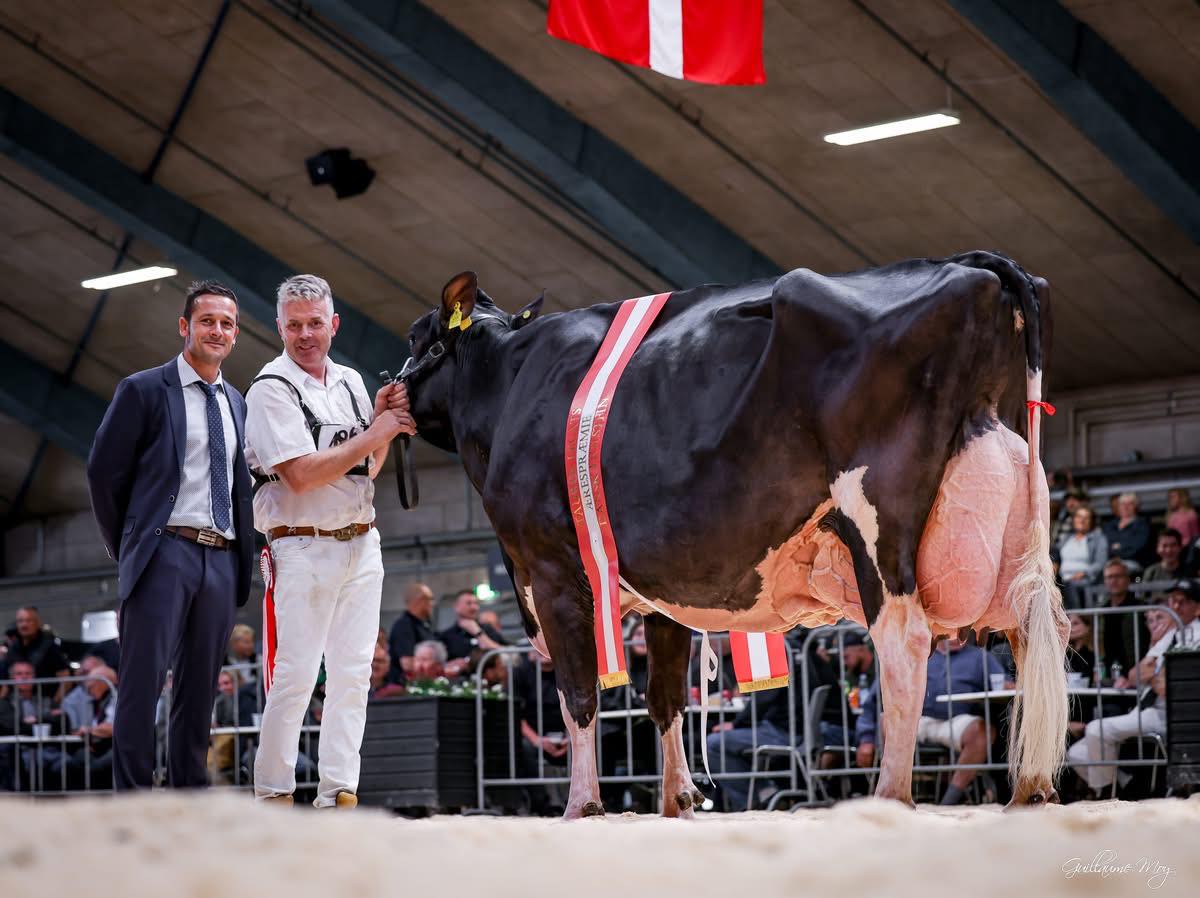
NewsSubscribe
First
Last
Consent

La Niña’s $75K Sucker Punch: Why Your 2025 Feed Bill Just Got Scary

Remember 2012? When corn hit $8.43, and half your neighbors went broke? Well, buckle up—La Niña’s back with a vengeance.

EXECUTIVE SUMMARY: Look, La Niña isn’t just another weather pattern—it’s a direct assault on your bottom line. University research shows feed costs can spike $15,000 to $75,000 annually on an 800-cow operation when soybean and corn yields drop 8-12%. Heat stress? It’s stealing up to 40% of your milk production, and recovery takes over ten days each time it hits. Meanwhile, the global dairy game is shifting—New Zealand’s climbing 3.8% while Argentina crashes 6.2%, which affects everyone’s market share. The smart money’s going into cooling systems and precision irrigation right now because they pay for themselves fast. The USDA has billions of dollars in cost-share money available, but the October 3rd deadline remains unchanged. Bottom line: prepare now or watch your competitors pull ahead next summer.

KEY TAKEAWAYS:

  • Grab 75% cost-share through EQIP before October 3rd—that $600-900 per cow cooling system suddenly costs you $150-225. Call your NRCS office tomorrow morning.
  • Lock in 60% of your feed needs NOW—don’t wait for official La Niña confirmation when corn’s already climbing toward $6+ and panic premiums kick in.
  • Regional heat stress varies wildly—California cows stress at THI 78, Wisconsin at 68. Install cooling matched to your zone for an 18-month payback.
  • Precision irrigation saves your feed crops—$847-1,156 per acre investment prevents $15,000-50,000 drought losses per field through smart water management.
  • Global market shifts amplify local weather impacts—when Argentina’s production drops 6% and yours follows suit, you’re losing market share to prepared competitors.
dairy feed costs, heat stress dairy cows, dairy farm profitability, La Niña impact agriculture, dairy risk management

You know that sinking feeling when drought warnings start popping up across your weather app from the Dakotas down to the Carolinas? NOAA just confirmed what many of us have been dreading—there’s a 53% chance La Niña conditions will develop this fall and stick around through early 2026.

If you lived through 2012, you remember what that means: corn hitting $8.43 per bushel, soybean meal pushing past $600 per ton, and the kind of financial beating that separates survivors from casualties in this business.

La Niña isn’t some quick-moving storm system. It’s the weather pattern that settles in for months, systematically draining soil moisture and cranking up heat stress across dairy country.

“You can’t cheat heat stress,” says Dr. Victor Cabrera from UW-Madison’s dairy management program. “You either prepare months in advance, or you pay the price all season long.”

The Double Whammy: Feed Markets and Heat Stress Hit Together

Here’s what’s already happening: Argentina’s key soybean regions are showing soil moisture levels at critical lows, according to the Buenos Aires Grain Exchange. That’s not just a South American problem—it ripples straight through to your feed bunk.

“When Argentina sneezes, the whole dairy industry catches a cold,” explains Mike Larson, feed procurement manager for Foremost Farms. “Their drought stress shows up in Chicago futures within weeks, and that hits every feed truck rolling into Wisconsin.”

University of Illinois grain marketing analysis confirms the pattern we’ve seen before: yields for soybeans typically drop 8-12% during La Niña events, with corn falling 5-8% across major growing regions. For Midwest operations, that translates to feed cost increases that can range from $15,000 to $75,000 annually, depending on your herd size and feeding program.

But here’s the killer – heat stress doesn’t just compound problems—it demolishes profit margins while you watch. Dr. Geoff Dahl’s research team at the University of Florida has documented how thermal stress varies dramatically by region. Cows in California’s Central Valley start showing production drops when the Temperature-Humidity Index hits 78, but Wisconsin Holsteins begin flagging at just 68 THI. Recovery time? We’re talking 8-14 days minimum after severe heat events.

Regional Heat Stress Breaking Points & Cooling Strategies

RegionTHI OnsetCritical THIRecovery DaysCooling Strategy
California Central Valley788410-14Misters & High-Volume Fans
Wisconsin & Midwest68758-10Tunnel Ventilation + Sprinklers
Southeast758212-16Shade Structures + Forced Air
Northeast70788-12Cross-Ventilation Systems

“You can’t treat cow comfort like one-size-fits-all,” Dahl warns. “A Wisconsin Holstein shows heat stress 10 degrees cooler than the same genetics in California.”

Let’s Talk Real Numbers

Penn State agricultural economists modeled what La Niña actually costs typical operations. For an 800-cow dairy, here’s the financial reality:

La Niña Economic Impact on 800-Cow Operations

ScenarioFeed Costs ($M)Heat Stress Losses ($M)Management Costs ($M)Net Margin Impact (%)
Baseline1.0500.640
Mild La Niña1.180.080.67-15
Moderate La Niña1.240.140.69-27
Severe La Niña1.340.240.70-43

Source: Penn State Department of Agricultural Economics

That financial reality stems from a two-front battle: soaring feed prices and production losses due to heat stress, as well as rising management costs resulting from increased labor and energy requirements to operate cooling systems.

“Those aren’t just numbers on a spreadsheet,” notes Dr. Jude Capper, livestock sustainability consultant. “That’s the difference between paying bills and taking out operating loans.”

University of Vermont’s Farm Financial Management Program tracked operations through the 2020-2022 La Niña cycle. Farms with climate adaptation technology maintained profit margins within 8% of their normal levels. Conventional operations? They saw a 20-30% margin compression.

Cooling Tech ROI: An Investment, Not an Expense

Cooling infrastructure isn’t optional anymore—it’s survival equipment. The investment varies by region, but the payback is consistent across dairy country.

Based on Wisconsin extension case studies, a mid-size operation near Marshfield installed tunnel ventilation and sprinklers for roughly $540 per cow in spring 2021. During the brutal July 2022 heat wave, production held at 82 pounds per cow while neighboring conventional barns dropped to 68 pounds. The system paid for itself in one season.

Kansas State University Extension tracked cooling system performance across 47 operations between 2018 and 2023. Their data show that farms with comprehensive cooling maintained 85% of their baseline production during extreme heat events. Conventional barns? They dropped to 65% of their normal level.

Precision irrigation is another game-changer. University of Wisconsin Extension puts installation costs at $847-1,156 per acre, but Oklahoma State research across 180 dairy operations shows these systems maintain crop yields within 5% of normal during drought conditions. Conventional farming sees 15-25% reductions.

Smart Money Moves

Don’t wait for meteorologists to confirm La Niña before locking feed prices. When panic hits commodity markets, historical data shows premiums can spike 40-60% above normal within weeks.

“Hedge at least 60% of your corn and soybean meal needs while prices stay below $5.50 for corn and $450 for soybean meal,” advises Dr. Marin Bozic, University of Minnesota agricultural economist. “Waiting for official confirmation means paying crisis prices.”

USDA’s Livestock Gross Margin insurance provides some protection, but here’s the critical detail—coverage specifically excludes weather-related feed cost increases. That’s exactly the risk La Niña creates.

Government Programs Worth Your Time

The USDA’s Environmental Quality Incentives Program offers 50-75% cost-sharing for cooling and irrigation investments. Dr. Jennifer Tucker, NRCS national dairy specialist, explains the urgency: “Demand exceeds funding by 2-3 times annually. Applications submitted now get reviewed for 2026 implementation.”

Critical deadline: EQIP funding for cooling and irrigation systems is often allocated on a first-come, first-served basis. Applications for 2026 funding close October 3, 2025. Contact your county NRCS office immediately.

The $2.8 billion Partnerships for Climate-Smart Commodities program specifically targets weather resilience practices, including advanced cooling infrastructure and precision agriculture technology.

La Niña doesn’t just hit North America—it reshuffles dairy markets worldwide. International Dairy Federation data from the 2020-2022 cycle shows dramatic regional swings. New Zealand increased production by 3.8% while Argentina crashed 6.2%. European operations face the double challenge of weather stress plus increasingly strict environmental regulations, making adaptation even more critical.

What This Means for Your Region

Upper Midwest (Wisconsin, Minnesota, Iowa): Your soil’s about to turn to concrete. Start monitoring now or pay later and incur storage fees. La Niña typically brings 15-20% below-normal precipitation from June through August. Start NRCS applications now.

California Central Valley: Heat stress mitigation becomes critical. THI values will likely exceed 78 for 40+ days during La Niña summers. Invest in high-capacity cooling systems before April 2025.

Southeast (Georgia, Florida, North Carolina): Prepare for extended heat and humidity. Focus on shade structures and air movement systems that handle both heat and moisture.

Northeast (New York, Vermont, Pennsylvania): Variable impacts require flexible management. Install cooling systems rated for THI levels above 78 and prepare for irregular precipitation patterns.

Your Action Plan: Three Moves This Week

Move #1: Lock Government Support Call your county NRCS office today. EQIP funding allocates on a first-come, first-served basis. The October 3, 2025, deadline is approaching fast.

Move #2: Secure Feed Prices. Contact your nutritionist and grain merchandiser by Friday. Hedge a minimum of 60% of your 2025 corn and soybean meal needs before La Niña confirmation sends prices through the roof.

Move #3: Deploy Monitoring Technology. Install soil moisture sensors on critical feed acres this month. University extension trials show that $300-500 sensor investments can prevent $15,000-50,000 in drought losses per field through optimized irrigation timing.

Bottom line: La Niña’s coming whether we’re ready or not. The question isn’t if it’ll impact your operation—it’s whether you’ll be positioned to thrive while others struggle.

“The producers who prepare for La Niña’s return will capture market share while their neighbors struggle with production losses and margin compression,” concludes Penn State’s Dr. Charles Nicholson. “Climate patterns don’t wait for perfect cash flow or ideal timing. Neither should your adaptation strategy.”

The thing is… we’ve seen this movie before in 2012. The producers who got ready early didn’t just survive—they thrived while others struggled. Your move.

Keep your cows cool, your feed costs locked, and your eyes on the forecast.

Complete references and supporting documentation are available upon request by contacting the editorial team at editor@thebullvine.com.

Learn More:

  • Beat The Heat: The Importance of Heat Abatement in Today’s Dairy Operation – This article provides tactical strategies for optimizing your cooling systems. It moves beyond ROI to detail the operational impact of heat stress on fresh cows and reproduction, revealing practical methods for maximizing herd health and productivity during extreme weather events.
  • Navigating The Highs and Lows of Feed Costs – Go deeper into the market dynamics driving your feed bill. This piece offers a strategic framework for managing price volatility, demonstrating how to build a resilient feeding program that protects your margins regardless of unpredictable weather or market swings.
  • Robots and Beyond: The High-Tech Tools Redefining Modern Dairy Farming – Explore innovative technologies that build long-term climate resilience. This article showcases how automation, advanced sensors, and data analytics are creating hyper-efficient operations that can better withstand environmental and economic shocks, revealing opportunities to invest in future-proofing your dairy.

The Sunday Read Dairy Professionals Don’t Skip.

Every week, thousands of producers, breeders, and industry insiders open Bullvine Weekly for genetics insights, market shifts, and profit strategies they won’t find anywhere else. One email. Five minutes. Smarter decisions all week.
NewsSubscribe
First
Last
Consent

The Plant-Based Milk Bust: What It Means for the Smart Dairy Producer

Raw milk sales jumped 25% last year, while plant-based milk sales crashed 5%. Here’s what that means for your milk check.

EXECUTIVE SUMMARY: Here’s the deal—that whole plant-based milk revolution everyone was talking about? It’s over. Plant-based sales dropped 5% in 2024 while real dairy volume grew 3%, and smart producers are already locking in premium contracts worth 15-20 cents more per gallon. For a 200-cow operation, we’re talking $58,000+ in extra annual revenue when feed costs are crushing margins at $4.35 corn and $320 hay. Raw milk sales surged 25% because consumers want authentic nutrition, not processed substitutes with unpronounceable ingredients. Major players like Mighty Drinks and Arla are pulling out of the plant-based market entirely, signaling a massive shift back to real dairy. The window’s open right now for producers who act fast on premium contracts, hybrid products, and sustainability programs that actually pay. Don’t wait—this opportunity won’t last forever.

KEY TAKEAWAYS

  • Premium contracts are paying 15-20 cents extra per gallon — that’s $58,000+ annually for a 200-cow herd when you need it most, with current feed costs
  • Use the University of Minnesota nutrition study as your secret weapon — only 12% of plant-based milks match real milk’s protein, calcium, and vitamin D levels (Journal of the Academy of Nutrition, 2025)
  • Jump into the hybrid milk market while it’s hot — blending dairy and plant proteins in a $10.2 billion market with 7.2% growth and FDA approval for “milk” labeling
  • Turn sustainability into cash with carbon credits — rotational grazing and methane reduction programs pay $15-45 per cow annually, plus operational savings (Cornell PRO-DAIRY data)
  • Lock long-term contracts now before competitors catch on — buyers are making 2025-2027 supplier decisions while plant-based suppliers scramble to survive
milk quality premiums, dairy farm profitability, plant-based milk market, herd management, hybrid dairy products

Look, I’ve been tracking this plant-based thing for years, and 2025 is the year reality finally caught up with the marketing hype. For producers who’ve been playing defense, this is your moment to go on offense.

The plant-based milk craze? It’s hit a wall. BIG time. Back in June 2025, Mighty Drinks—the UK pea and oat milk hopeful—folded under financial strain. A few months later, Arla Foods pulled their Jörd oat milk off UK shelves. When farmer-owned co-ops start backing out of the game, it’s not just a headline—it’s a major shift.

In the United States, sales of plant-based milk declined by 5% in 2024, reaching approximately $2.8 billion, according to the Good Food Institute. Dairy? We climbed back, with fluid milk sales up 1% and volume up 3%, according to the USDA.

But here’s what really gets producers talking: raw milk sales surged 25% last year. People want the real thing.

What California’s Central Valley Is Saying

Conversations with several Central Valley producers paint the same picture. One farm running 350-500 head near Turlock has just locked in a 20-cent premium.

“Buyers? They told me this time it’s about real nutrition. None of that watered-down nonsense,” one said. That 20 cents adds up—especially when corn is pushing $4.35 a bushel, and hay prices have climbed to $320 a ton.

When Big Money Pulls Out

Mighty Drinks tossed £8 million down the drain before going bust in 2025. Meanwhile, Arla scrapped their Jörd line in January to focus on what pays the farmer bills.

That means it’s not just a market stumble—it’s a reckoning for the plant-based push.

On the Ground: Regional Realities

California farmers discuss premiums of up to 15 cents per gallon. Up north in Wisconsin, Extension specialists report a 40% surge in clean-label certification requests, as consumers push for greater transparency.

And the Northeast? USDA data shows European buyers are circling back to U.S. dairy for the nutrition they can trust.

The University of Minnesota’s Numbers

Over 200 plant-based milks tested; only 12% matched cow’s milk for calcium, vitamin D, and protein.

Protein alone? Only 16% came close. Dr. Abigail Johnson says it bluntly: “These products don’t cut it nutritionally.”

Consumer Mood

Mintel reports 67% of consumers are turned off by the processing additives in plant-based stuff.

With inflation slicing budgets, 87% have changed their buying habits.

A friend managing food programs at Ohio schools says they’ve switched back to real milk because it ticks nutrition and budget boxes.

The Hybrid Solution

Blended dairy and plant protein milks are carving out a $10.2 billion market growing at 7.2% a year. FDA clearances enable these products to be labeled as milk if they meet specific standards set by the FDA.

That’s smart innovation—without losing the milk name.

Feed and Cost Realities

Feeding cows today? Corn futures hang at around $4.35; hay in the Central Valley jumped from $245 to $320 a ton; and Northeast producers are still picking at the wet weather’s mess, pushing hay prices north of $280.

Margins? They vary. However, the USDA and the University of Illinois estimate typical dairy margins at 7-15%, depending on management and scale.

Sustainability That Pays

Dairy producers report earning carbon credits for rotational grazing and methane reduction—payments vary by operation size.

Cornell’s PRO-DAIRY program estimates these can net $15 to $45 per cow, plus savings.

So Here’s What to Do

Week 1, grab that University of Minnesota nutrition study. Print it and bring it wherever you meet buyers.

Month 1, call your co-op about hybrid milk products and premium programs.

Quarter 1, focus on locking in long-term contracts—buyers are closing deals.

Final Thoughts

The plant-based wave faltered. Meaningful milk markets are snapping back.

Got your boots on? Time to get moving.

Complete references and supporting documentation are available upon request by contacting the editorial team at editor@thebullvine.com.

Learn More:

  • Unlocking the Secrets to High Milk Components – This article provides the tactical “how-to” for capturing the premiums discussed in the main piece. It reveals practical feeding and management strategies designed to boost butterfat and protein, giving you the tools to consistently hit quality targets and maximize your milk check.
  • Navigating the Twists and Turns of the 2024 Dairy Markets – While the main article focuses on the plant-based collapse, this piece offers a broader strategic view of the entire dairy economy. Understanding these global market dynamics, from interest rates to export demand, is crucial for making smarter long-term business decisions.
  • Genetics: The Key to Unlocking Your Herd’s Full Potential – This piece looks to the future, demonstrating how to build a more profitable herd from the ground up. It focuses on using genetic selection to improve efficiency, health, and milk components, future-proofing your operation against high input costs and market volatility.

The Sunday Read Dairy Professionals Don’t Skip.

Every week, thousands of producers, breeders, and industry insiders open Bullvine Weekly for genetics insights, market shifts, and profit strategies they won’t find anywhere else. One email. Five minutes. Smarter decisions all week.
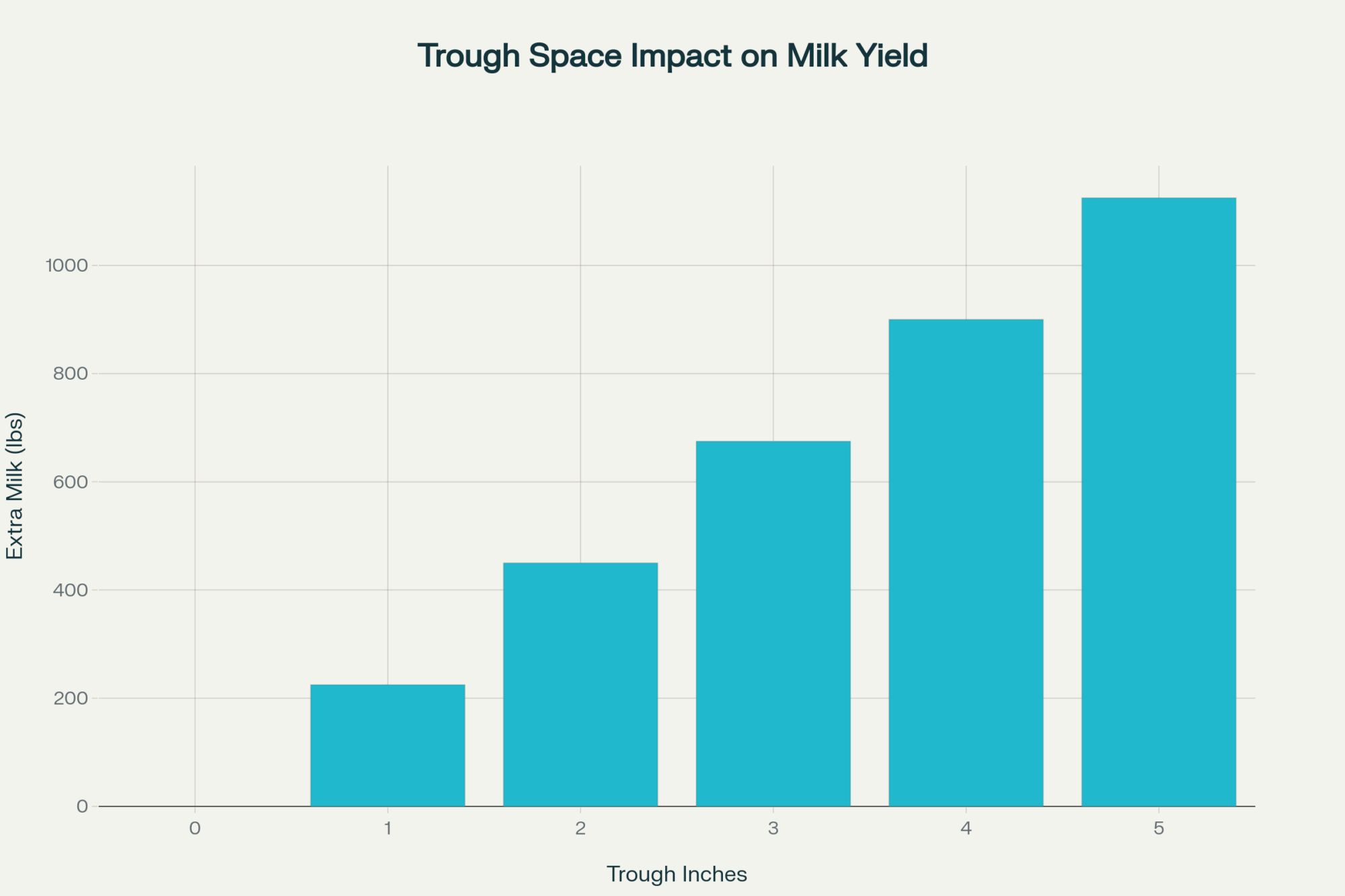
NewsSubscribe
First
Last
Consent

$4,200 Heifers and the Dairy Revolution No One Saw Coming

Do you think sticking to old breeding strategies will suffice in 2025? Think again.

You know when you’re casually chatting over coffee, and a fellow producer drops that a heifer just fetched $4,200? You choke on your sip, right? That’s how much the dairy breeding scene has flipped today.

The old rules — raise your replacements carefully, cull and churn, milk it out — well, those days are evolving fast.

Here’s the thing.

Across the U.S., replacement dairy inventories are at one of the lowest points seen in decades. We’re talking under 4 million head nationwide, a level not seen since the late 1970s. Prices? Replacement heifers are averaging north of $3,000—with the cream of the crop commanding $4,000 and more at major auctions.

Beef-on-dairy calves aren’t just side hustles anymore—they’re big money.

Premium values for those calves can top $1,000 per head in some regions.

This all stems from a clever yet complex shift: farmers are using sexed semen more than ever to target female replacements among their elite cows, while sending the rest down the profitable beef path.

Sexed semen? It has come a long way, delivering conception rates that reach 80-90% of conventional fertility — typically landing around 45-50% in field conditions. Modern products are achieving gender accuracy rates of 90-97%, significantly higher than the previous standard of 85-90%.

Add in accessible genomic testing that identifies your best cows before breeding, and suddenly you’re precision-targeting your replacement queue while cashing in on beef demand.

But here’s the catch: It’s a balancing act. The more you push into beef, the fewer replacements you create. And when scarcity hits, prices climb.

So, where are folks heading with their breeding strategies?

Plan A: The Rotational Rhythm

Some operators are blocking out breeding cycles — a few months all dairy, then a stint all beef.

University of Wisconsin Extension trials documented impressive wins in calf health with this approach—’all-in, all-out’ nursery management slashed respiratory disease cases by 35%.

But it’s a rollercoaster on cash flow — you get big spikes and dry spells.

It’s tailor-made for places like Wisconsin and Minnesota, where seasonal labor patterns and feed costs make it a viable option. Down south? Trickier. University of Georgia research indicates that dairy cows face heat stress indexes exceeding 72 for extended summer periods, prompting operators to shift breeding windows to cooler months and invest heavily in cooling systems.

Plan B: Go Big with the Heifers

These operators put all their eggs in the surplus replacement basket. It’s potentially lucrative — think serious revenue streams — but the ride’s bumpy.

Industry observers report mixed results: profits soared during the hot streak, but operators felt the pinch when prices cooled off.

CoBank analysts warn this boom could bust—replacement inventories may bounce back by 2027 as more producers adjust breeding strategies.

The challenge? You’re betting big on market timing, and the University of Missouri Extension estimates that raising costs will be $2,640 per heifer from birth to freshening.

Plan C: The Genetic Leapfrog

Some farms are hitting pause on raising their own replacements, flooding calf sales with beef calves, all to buy in elite genetics.

It’s high-stakes — skipping years of gradual genetic gain in one purchase.

The risks? Disease introduction (the highest-risk activity for transmission) and today’s sky-high prices for elite animals often exceed the combined savings from beef calf sales and avoided raising costs.

The Quiet Game-Changer: Male-Sorted Semen

Here’s something most producers aren’t considering yet: male-sorted semen for precision market targeting.

University of Idaho research found all-steer loads earned $5,180-6,746 more per truckload than mixed-sex groups—serious money if you’ve got the right marketing channels.

The Map Matters

Success depends heavily on location:

Upper Midwest: Feed costs run 8-12% below the national average, and seasonal labor patterns fit rotational breeding naturally. Perfect territory for batch approaches.

Southeast: Heat stress management becomes critical. Operations are installing high-volume fans, adding shade structures, and shifting feed timing to cooler hours.

West Coast: California wages average $20.48/hour, compared to $19.11 nationally. High labor costs push toward automation, but proximity to premium markets creates opportunities.

Northeast: Smaller herds require flexibility, but proximity to high-value markets is beneficial. High-quality animals fetch $ 4,500 or more at regional sales.

Counting the Real Costs

Let’s talk dollars, because that’s where strategy meets reality.                                                                            

Most operators know growing an animal from calf to first-calf heifer soaks up around $2,500—and that’s with tight management on feed, housing, and health.

Your financial picture for a 100-cow operation looks roughly like this:

  • A rotational approach requires approximately $ 100,000 or more upfront to grow heifer batches while pursuing beef payouts.
  • A surplus heifer strategy involves investing substantial capital in raising additional animals, relying on market timing to maximize returns.
  • Genetic leapfrog concentrates cash on buying elite quality but risks price volatility.

One market swing and your calculations change completely.

Note: These figures represent direct costs related to calf and replacement management—separate from milk revenue and other farm expenses.

What This Really Means

Look, it’s no longer simple.

The smart operator balances short-term cash from beef, long-term genetic progress, and risk tolerance — then adjusts based on what actually works in their situation.

Because the days of just milking cows and raising calves are long gone.

The producers who master this complexity? They’re positioning for years of competitive advantage.

We’re witnessing a fundamental shift from commodity milk production to strategic genetic and market portfolio management.

So what’s your play? Testing rotational breeding? Banking on the heifer market? Or planning a genetic upgrade?

Drop your thoughts below — let’s turn coffee-shop talk into real-world strategies.

KEY TAKEAWAYS

  • Leverage sexed semen with nearly 90% reliability to craft premium heifers and capitalize on beef-on-dairy premiums up to $1,000 per calf – start genomic testing your herd this month to identify breeding targets.
  • Adopt rotational breeding for disease control, reducing respiratory illnesses by 35% while managing cash flow fluctuations. Perfect for Midwest operations with seasonal labor patterns.
  • Explore the strategic purchase of elite heifers with an eye on the 2025 market’s high prices and risks – it’s a significant upfront cost, but can potentially leapfrog genetics by 5-10 years in one purchase.
  • Don’t underestimate genomic testing – knowing your cows’ genetics sharpens breeding decisions and improves herd profitability. With replacement costs exceeding $ 2,500 per heifer, precision pays.
  • Tailor your strategy by region: Northern states are well-suited for batch breeding approaches, while southern dairies require heat mitigation and adapted scheduling to avoid summer calving disasters.

EXECUTIVE SUMMARY

This isn’t your grandpa’s dairy breeding anymore. Dairy replacement inventory in the U.S. hit a 40-year low, and with fewer heifer calves born, prices soared past $3,000 – topping $4,000 in hotspots. Meanwhile, beef-on-dairy calves pull premiums up to $1,000 each, turning genetics and breeding choices into your new profit center. Tech like sexed semen now reliably produces female replacements, while beef semen turns the rest into gold. And with genomic testing, you can zero in on your best cows. This trend shakes up your bottom line and offers clever producers a new road to boost profitability – now’s the time to explore and adapt.

Complete references and supporting documentation are available upon request by contacting the editorial team at editor@thebullvine.com.

Learn More:

The Sunday Read Dairy Professionals Don’t Skip.

Every week, thousands of producers, breeders, and industry insiders open Bullvine Weekly for genetics insights, market shifts, and profit strategies they won’t find anywhere else. One email. Five minutes. Smarter decisions all week.
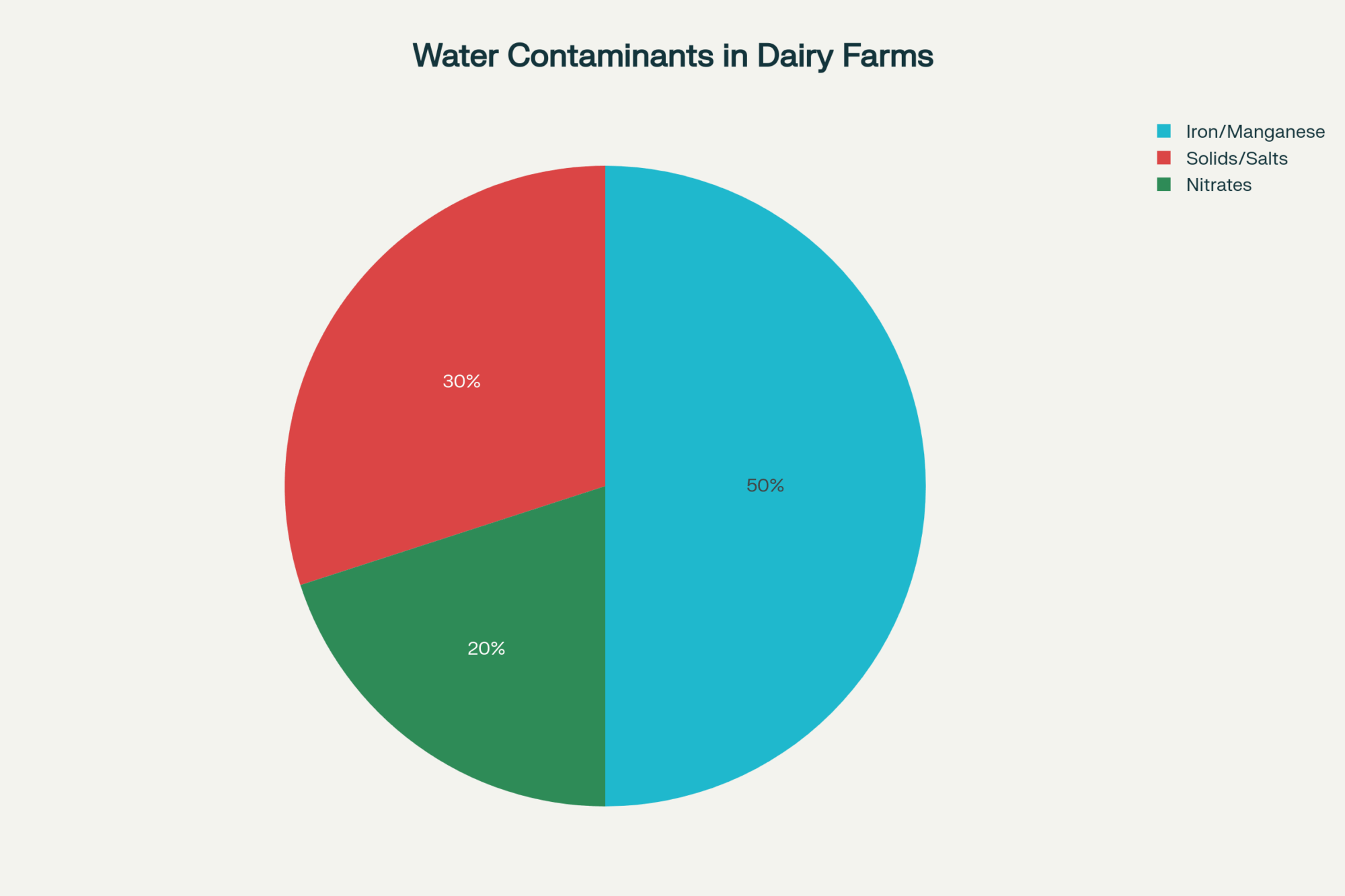
NewsSubscribe
First
Last
Consent

Analysis: A New Dairy World Order – How Europe’s €33 Billion Mega-Mergers Will Impact Your Farm

What happens when European giants start calling the shots on global milk pricing?

EXECUTIVE SUMMARY: Look, I’ve been tracking these European mergers for months, and here’s what’s really happening. The Arla-DMK deal, creating a €19 billion cooperative, isn’t just big business—it’s reshaping the way milk is priced worldwide. We’re talking about 13% of all EU milk production under one roof, with FrieslandCampina posting a €321 million turnaround by ruthlessly cutting costs. Meanwhile, feed volatility and environmental compliance are squeezing margins for operations that can’t scale up fast enough. California’s methane rules alone are pushing 15% of smaller dairies toward the exit. However, here’s the thing—smart producers are already adapting by diversifying breed choices, strategically locking feed contracts, and taking cooperative governance seriously. Don’t just watch this unfold… get ahead of it.

KEY TAKEAWAYS

  • Lock your feed contracts early — Price swings hit 40% in parts of the Midwest last year, and volatility isn’t going anywhere
  • Consider Jersey genetics for heat resilience — Holsteins drop 15-20% production in heat stress, while Jerseys maintain 85-90% of peak output
  • Engage in cooperative governance now — Environmental compliance costs favor mega-operations ($19-37 per cow vs. $63-105 for small farms), so pooling resources is survival
  • Diversify your processor relationships — With consolidation reducing options, putting all your milk in one buyer’s tank is getting riskier
  • Plan for regulatory pressure — What’s hitting California and Europe today is coming to your region tomorrow—prepare now or pay later
dairy consolidation, global dairy markets, milk price volatility, dairy farm profitability, farm management strategy

The thing is, when I first started tracking these European mergers months ago, they felt like distant headlines. But now? The Arla-DMK deal, creating a €19 billion cooperative controlling 13% of all EU milk production… that’s not just European news anymore. It’s reshaping how milk is priced from Wisconsin all the way through to Waikato.

What strikes me most is how quickly everything is unfolding. We’re not talking about the usual slow-burn industry changes here—we’re watching the entire global dairy landscape get redrawn in real time.

The Mega-Merger That Changes Everything

This isn’t just another cooperative deal. We’re talking about over 12,200 farms across seven countries, which process roughly 19 billion kilograms of milk annually. That’s massive scale—and massive influence over pricing.

Tom Brandt, who’s been milking 240 Holsteins outside Eau Claire for fifteen years, doesn’t mince words: “When there’s only one buyer within reasonable hauling distance, they pretty much set the price. I’ve seen this movie before with grain elevators—doesn’t usually end well for the little guy.”

But Chad Vincent, who keeps tabs on Wisconsin’s $52.8 billion dairy sector, sees the bigger picture: “European cooperatives this size change worldwide pricing dynamics. Every export market feels these moves,” he told me, referencing the latest data showing Wisconsin’s dairy industry up 16% in 2024.

Here’s what’s fascinating—recent research from the University of Wisconsin-Madison shows that when cooperative market share exceeds 15% regionally, price transmission effects become measurable in competing markets within 60 to 90 days. That timeline should have everyone’s attention.

Meanwhile, FrieslandCampina and Milcobel are eyeing their own €14 billion alliance. While that deal isn’t finalized, it signals where this industry is heading—toward massive consolidation that will touch every producer’s bottom line.

The Perfect Storm Driving This Consolidation Wave

If you’re wondering why now, it’s because producers are getting squeezed from every direction. Feed price volatility has been brutal—we’ve seen significant swings in key regions that strain margins to the breaking point. Jim Rodriguez, managing 180 cows in Minnesota, put it bluntly: “The volatility from last year’s weather patterns… we’re still recovering from those input cost spikes.”

Then you’ve got environmental regulations hitting hard. Take the Netherlands—farmers are facing mandatory herd cuts from 350 to 200 cows due to new nitrate rules. One Friesland producer told me: “You can’t just shrink a barn that size without hemorrhaging money—either you pay crushing fines or spend tens of thousands retrofitting for compliance.”

California’s methane regulations are creating similar pressures stateside. The regulatory requirements pose significant financial challenges for smaller operations, with industry analyses indicating substantial compliance burdens that many can’t shoulder. Data from the California Air Resources Board confirms these impacts are accelerating consolidation trends.

Dr. Michael Schmidt from the University of Kiel, who’s published extensively on cooperative economics, explains the regulatory reality: “Regulators aren’t just counting market share percentages anymore. They’re asking fundamental questions about farmer choice and market power concentration.”

The survival math is stark. USDA data indicate that dairy operations are being lost at a rate of 2-3% annually nationwide. Wisconsin alone lost over 500 farms last year. When regulatory compliance costs eat into already thin margins, scale becomes a lifeline, not a luxury.

Global Ripple Effects: The Arms Race for Scale

European consolidation has triggered a worldwide scramble. Lactalis moved aggressively, spending $2.1 billion for General Mills’ U.S. yogurt business, followed by another $2.2 billion targeting Fonterra’s Mainland assets. They clearly saw this consolidation wave coming and decided to get ahead of it.

Peter McBride from Fonterra was refreshingly direct when I spoke with him: “We maintain cost leadership through grass-fed efficiency, but European mega-cooperatives now compete on supply chain reliability and marketing muscle, not just price.”

Canada’s supply management system suddenly looks prescient in this context. Their sector contributed $18.9 billion to GDP and supported 215,000 jobs while completely insulating producers from global pricing volatility. Sometimes, the old ways prove to be quite smart.

The financial muscle behind these moves is impressive. FrieslandCampina flipped from a €149 million loss in 2023 to a €321 million profit in 2024—but only after cutting 1,800 jobs and targeting €500 million in cost reductions. Meanwhile, Arla posted €13.8 billion revenue with a 50.9 EUR-cent/kg performance price—their second-highest farmer payout in history.

When you can deliver those kinds of returns to farmers, the consolidation argument becomes a lot easier to make.

Heat Stress and Breed Choices: The Climate Reality Nobody Talks About

Here’s something that often gets overlooked in all the merger talk—breed choice is becoming a matter of survival. Heat stress isn’t just a summer nuisance anymore; it’s a bottom-line killer. Recent research indicates that Holsteins can lose 15-20% of their production during heat stress periods, whereas Jerseys maintain 85-90% of their peak output.

“Heat stress absolutely murders Holstein production here in Central Texas,” Maria Santos explained from her 300-head mixed-breed operation outside Austin. “Jerseys hold up better in summer, but the milk check math changes when you’re dealing with 40% lower volume per cow.”

Sarah Williams switched to 25% Jersey crosses on her 240-cow Wisconsin operation three years ago: “Lower volume per cow, but they handle hot summers better, and the butterfat premiums help offset the lost pounds.”

As climate pressure builds and mega-cooperatives begin to optimize for environmental resilience, this type of genetic diversity becomes increasingly valuable. Arla’s already investing in genomic selection programs that factor climate adaptability—they see where this is heading.

The Hidden Risk: When Integration Goes Wrong

Here’s a reality check about these mega-mergers that doesn’t make the press releases—integration is messy, expensive, and sometimes fails spectacularly. FrieslandCampina learned this when their 2024 IT system integration delayed milk payments to 400 farmers for three weeks.

“Thirty years of the same routine—milk the cows, get paid,” one affected producer told regional media. “Then suddenly our checks disappeared because computers in Amsterdam couldn’t talk to computers in Brussels.”

Now imagine scaling that challenge across 23,000 farmers speaking five different languages… that’s the mountain Arla-DMK faces. The membership churn is real—FrieslandCampina lost 4.4% of members and processed 3.4% less milk in 2024. When farmers lose confidence in their cooperative, they vote with their feet.

Aaron Lehman from Iowa Farmers Union cuts through the corporate speak: “Scale supposedly brings efficiency, but farmers often lose their voice when the boardroom table seats twenty thousand instead of two hundred.”

Your Regional Survival Playbook

Different regions face unique pressures, so your strategy has to fit your reality.

Upper Midwest producers, such as those in Wisconsin, are facing feed cost volatility as their biggest threat. The savvy operators are diversifying their supplier relationships and locking in seasonal contracts earlier than ever. Some are considering Jersey crossbreeding specifically for heat tolerance as climate pressure builds.

Western producers are grappling with environmental compliance as their make-or-break issue. Cooperative membership for regulatory cost-sharing is becoming essential, not optional. “The paperwork alone requires hiring someone part-time,” explained Jake Martinez, running 280 Holsteins near Modesto. “Then you add equipment costs, monitoring, reporting… it never ends. Cooperative membership at least spreads those consulting fees across more operations.”

Southeastern operations can turn heat stress management into a competitive advantage. Investment in cooling systems and climate-adapted genetics pays off when competitors struggle. Additionally, export opportunities are increasing as European production constraints tighten the supply.

Northeast producers benefit from local market premiums that protect against commodity volatility. The key is strengthening direct processor relationships and monitoring the impacts of Canadian supply management on border pricing.

Universal strategies for all regions:

Diversify your processor relationships where possible—don’t put all your milk in one buyer’s tank, especially if consolidation is reducing your options.

Engage actively in cooperative governance before major decisions get made for you. Producers who stay involved have more influence than those who simply complain after the fact.

Plan for environmental compliance costs that favor larger operations. Whether through cooperative membership or direct investment, prepare for regulations that are spreading from California and Europe.

Evaluate breed choices for climate resilience and regulatory compliance, not just production volume. Heat tolerance and environmental adaptability are creating competitive advantages.

Lock feed contracts strategically and diversify suppliers. Volatility isn’t going away, and input cost management separates survivors from statistics.

The Bullvine Bottom Line

Look, I can analyze these European mergers all day, but here’s what matters for your operation: this consolidation wave is changing the rules of the game whether you like it or not. The €33 billion in combined revenue we’re talking about will reshape global pricing dynamics, whether you’re selling to a local plant or shipping internationally.

The producers who adapt their strategies to this new reality—diversifying relationships, engaging in governance, planning for compliance, selecting climate-adapted genetics—those are the operations that’ll thrive over the next decade.

The ones hoping someone else figures it out? They will become statistics in the next wave of consolidation.

Because in this business, when European giants make their moves, the nimble producers survive and prosper. The slow ones… well, they get squeezed out by forces they should have seen coming.

The bottom line? This isn’t some distant corporate drama. It’s the new reality of dairy economics, and the producers who adapt fastest will be the ones still thriving when the dust settles.

What’s your next move going to be?

All data verified through authoritative industry sources as of September 1, 2025, including official cooperative reports, USDA agricultural statistics, and peer-reviewed dairy science research.

Complete references and supporting documentation are available upon request by contacting the editorial team at editor@thebullvine.com.

Learn More:

The Sunday Read Dairy Professionals Don’t Skip.

Every week, thousands of producers, breeders, and industry insiders open Bullvine Weekly for genetics insights, market shifts, and profit strategies they won’t find anywhere else. One email. Five minutes. Smarter decisions all week.

NewsSubscribe
First
Last
Consent

How Dairy Farmers Are Finally Breaking Free From the 365-Day Grind – and Finding More Time and Profit

What if the key to a family farm’s survival isn’t working harder, but working smarter?

The thing about dairying? It’s a relentless cycle, right? Long hours, early mornings, and weeks that just seem to run into one another. Now, picture sitting on your porch this Labor Day, coffee warm in your hands, kids playing nearby, and the sound of robotic milkers humming instead of you hustling through another 4 a.m. barn routine.

Sounds almost too good to be true? That’s exactly what Tom, a no-nonsense operator milking 180 Holsteins from Wisconsin, thought—until his DeLaval robots proved otherwise.

“Back when I was doing the milking myself, calving seasons meant 75-hour weeks,” Tom shared. “Now? I’m at my daughter’s softball games without worrying about missing a beat. Those robots? They did the heavy lifting.”

He’s not the outlier, either. Farms across the heartland and beyond are waking up to just how much smarter labor and technology can rewrite the dairy grind.

Why So Many Family Farms Are Burning Out

Here’s the thing: the USDA Farm Labor Survey from April 2025 shows dairy operators clocking 45–60 hours weekly—sometimes more as calving hits full throttle. That kind of Grind wears folks thin.

What’s tougher: almost 9 out of 10 family dairies don’t make it past the third generation, according to research from the Farm Bureau and USDA ERS.

But this paints with a broad brush. If you’re up in the Northeast, farms benefit from processors like Cabot Creamery and Agri-Mark, with extension programs run by Cornell delivering succession help that keeps farms in the family longer. Midwest operations, though? They’re facing staggering consolidation pressures.

What’s Eating Your Time at the Barn

Labor Distribution on a Typical 120-Cow Dairy Farm

Milking takes up about a third of your day, no matter how you slice it. That’s four to five hours, easy. Smaller herds—say 50 to 90 cows—are spending well over 26 hours per cow annually, according to University of Wisconsin Extension labor studies. What’s interesting is that those same cows in herds of over 200 take only half that time, thanks to economies of scale. And let’s not forget that we manage approximately 9.45 million dairy cows in the U.S., which is no small feat.

The Labor Crunch is Very Real

Labor woes are no surprise, but the numbers still make you stop and stare. According to the latest USDA Farm Labor report, we’ve lost 3.4% of farmworkers this past year, with dairy farms feeling it more than others.

Hourly wages are averaging $17.55—which is fair, but you can’t put a dollar figure on those early mornings and backbreaking shifts.

Recruiting and training a new hand? Expect to spend over $4,400, including those hours and headaches.

And then there’s the mental health toll. A peer-reviewed study reveals that dairy workers experience sleep disorders twice as frequently as the general workforce, primarily due to the unforgiving pre-dawn milking schedules.

Jake, a fifth-generation farmer from Wisconsin, puts it like this: “Sometimes, it feels like the farm owns me. At home? My family barely sees me.”

Automation: The Game Changer You Didn’t See Coming

Annual Cost Savings from Dairy Farm Automation by Farm Size

Automation isn’t just science fiction anymore. The robotic milking market is projected to balloon to $2.5–$3.4 billion by 2025 and is expected to grow steadily at a 6.4% annual rate through 2035, according to Fact.MR’s comprehensive 2024 analysis.

Look at a documented Wisconsin case study—six DeLaval VMS units on a 450-cow operation. The University of Wisconsin Extension research reported a 5-pound increase in milk production per cow, alongside a reduction in labor hours by half. The farm manager told researchers, “The best part? Being able to catch my kid’s school play without guilt.”

Think Outside the Box—Flexible Milking Pays Off

Now, this is fascinating: John Totty, a New Zealand dairyman, cut his milking sessions from 14 to 10 a week and still saw profits surge by 60%. Oh, and his team saves six hours weekly per worker, too.

The gains come not just from volume, but also from improved cow health and fertility—those butterfat numbers tell a story.

You Can’t Automate Without People

Automation helps, nobody’s denying it. But it’s how you share labor that makes or breaks your sanity.

Irish producers have pooled labor and leaned on trusted contractors, trimming fatigue and boosting efficiency. Data also supports this: shared labor reduces the time spent per cow, keeping farms more agile.

Dollars and Sense of It All

According to the University of Wisconsin’s 2024 enterprise budgets, a hypothetical 120-cow Holstein dairy farm spends approximately $356,000 annually on labor, veterinary care, and equipment maintenance. Smart automation, paired with purposeful health monitoring, can potentially reduce that to $200,000 or less—saving over $150,000, although results vary by individual operation.

Vet costs drop because problems are spotted sooner, while equipment maintenance falls—but watch out, service contracts may push some costs back up.

Cost CategoryBefore AutomationAfter Automation
Labor$190,000$95,000
Veterinary$38,000$25,000
Equipment$52,000$26,000

Note: Annualized Estimated Costs

It’s Not Just About the Bottom Line

Environmental benefits are no joke today. Automated systems cut energy use between 15 to 20%, according to Penn State University’s 2025 life cycle assessment.

Feed’s precision use saves water and lowers methane emissions, too—an environmental triple threat.

Family First—The Heart of the Matter

Family farms adopting a tech-savvy, balanced approach see 23% fewer costly errors and a whopping 340% increase in next-generation farm interest, according to American Farm Bureau Federation research.

One Vermont producer told me, “It wasn’t just the cows that got automated—automation saved my marriage.”

The Danger of Rushing In

There’s a reason folks stress ‘fail to plan, plan to fail.’ Penn State Dairy Alliance studies document automation implementation failures ranging from $20,000 to $75,000 per incident, with electrical inadequacy and insufficient training representing the costliest mistakes.

Common pitfalls? Insufficient power, inadequate staff training, and facility layouts that just don’t fit the new tech.

Takeaways? Do it right. Hire the experts. Train your team like your operation depends on it—because it does.

Global Robotic Milking Systems Market Growth Projection (2025-2035)

Is Automation Right for Your Operation?

Look, this isn’t a one-size-fits-all. The systems typically cost $150,000 to $200,000 each, plus upgrades and infrastructure work.

They best fit farms milking 150 cows or more with steady cash flow and tech-savvy staff.

Smaller farms or unconventional setups could start small—with health monitoring or feed push technology—and grow from there.

The 12-Month Roadmap to Freedom

Stepwise 12-Month Roadmap to Dairy Farm Automation Success

Here’s what the best operators do, broken down by stage:

Months 1-3: Rigorous labor tracking, infrastructure assessment

Months 4-6: Install health monitoring, upgrade record-keeping, cross-train staff

Months 7-9: Add robotic milking or automated feeders, staff training in depth

Months 10-12: Optimize, install backups, finally take a real brea

 The Future’s Already Here—Are You In? It’s not coming. It’s humming in barns up and down the continent—from the Finger Lakes to Wisconsin’s Driftless Area.

So, when you grab your next morning coffee, ask yourself: what task, if automated tomorrow, would give you the most breathing room? And if you could take a full week off, what would be the first bottleneck you’d need to address?

Bottom line? The farms that adapt to this stuff are the ones that’ll be around in 20 years. The ones that don’t… well, we both know how that story ends.

What do you think? Worth a deeper conversation?

KEY TAKEAWAYS:

  • Cut labor hours nearly in half with automated milking systems—expect up to $95K in savings on a 120-cow operation. Start by tracking your current labor hours this month.
  • Boost daily milk production by 5 lbs per cow with proven systems like DeLaval VMS—that’s real money in your pocket while you’re working less.
  • Try flexible milking schedules, as seen in New Zealand, which can result in a 60% profit increase and six fewer labor hours per worker per week. Test it on part of your herd first.
  • Use health-monitoring tech to slash vet bills by 34%—catch problems early and save thousands. Install basic monitoring systems as your first step in automation.
  • Understand 2025 market reality: with labor costs through the roof and margins razor-thin, automation isn’t a luxury anymore—it’s survival.

EXECUTIVE SUMMARY:

Look, here’s what’s keeping me up at night: nearly 85% of family dairies don’t make it to the third generation—and that’s absolutely crushing our industry. But here’s the thing… smart operators are flipping the script with automation. We’re talking labor cost cuts of $150,000+ per year, milk production jumps of 5 pounds per cow daily, and get this—flexible milking in New Zealand is boosting profits by 60%. The USDA data and university extension research don’t lie. This isn’t just about fancy tech… it’s about survival. If you’re serious about leaving your kids something worth inheriting, you need to take a look at this.

Complete references and supporting documentation are available upon request by contacting the editorial team at editor@thebullvine.com.

Learn More:

  • 9 Tips for Successfully Managing a Robotic Milking Herd – This article goes beyond the ‘why’ and dives into the ‘how.’ It reveals nine proven strategies for optimizing your robotic milking system, helping you maximize your investment, improve herd health, and avoid common operational pitfalls after installation.
  • The 7 Economic Drivers of Dairy Farming That You Need To Know – To make smart investments, you need to understand the market. This piece breaks down the seven key financial forces shaping dairy profitability, providing the strategic context you need to navigate market volatility and make informed long-term business decisions.
  • Is this the end of the dairy barn as we know it? – Looking beyond current automation, this forward-thinking piece challenges conventional wisdom about facility design and herd management. It explores the next wave of innovation, revealing what the most progressive dairy operations are considering for future growth and efficiency.

The Sunday Read Dairy Professionals Don’t Skip.

Every week, thousands of producers, breeders, and industry insiders open Bullvine Weekly for genetics insights, market shifts, and profit strategies they won’t find anywhere else. One email. Five minutes. Smarter decisions all week.
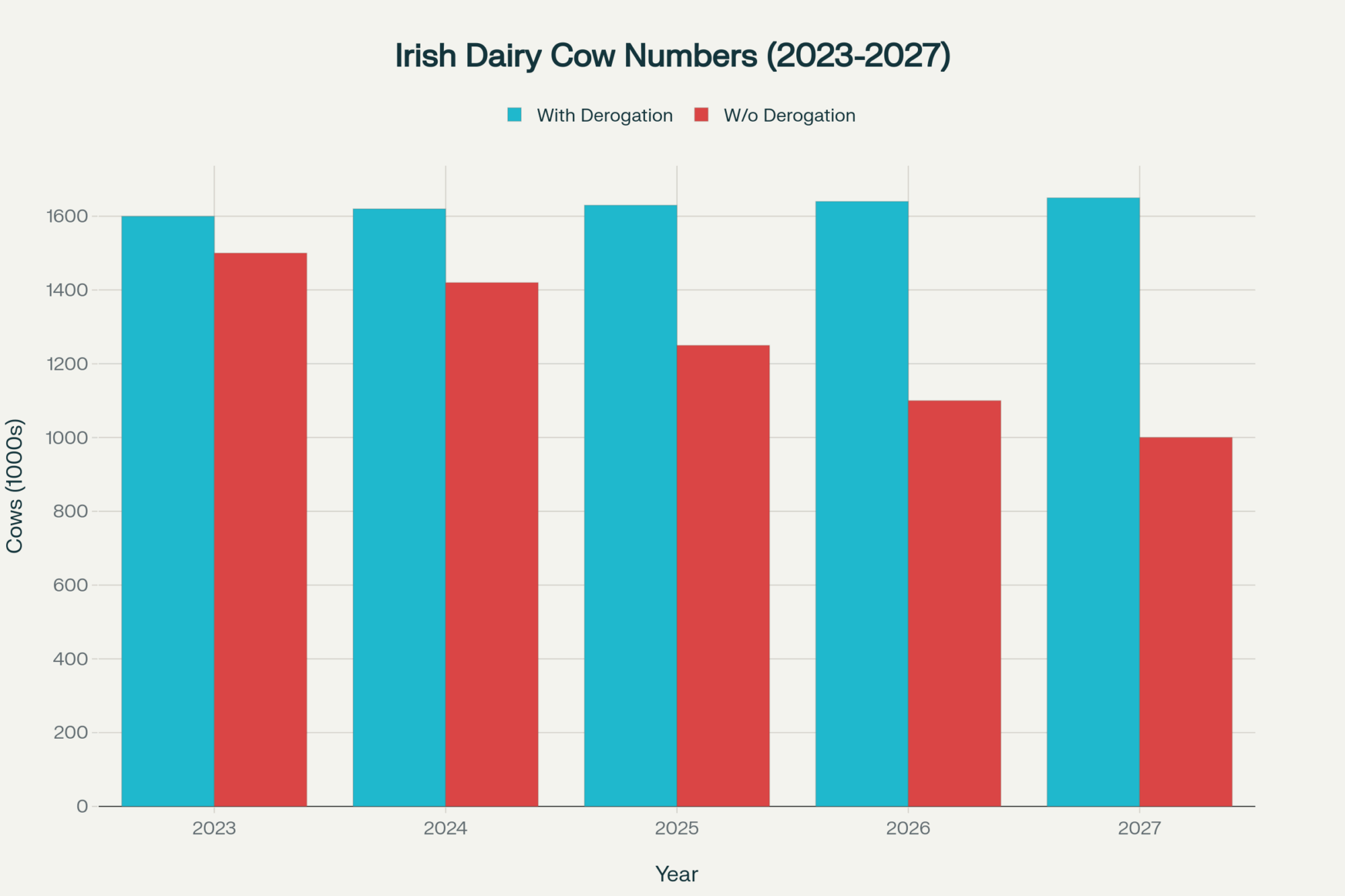
NewsSubscribe
First
Last
Consent

China Extends Dairy War to February 2026: How This Trade Siege Is Hitting Your Bottom Line

€513M of EU dairy exports now hostage to Chinese electric vehicle politics – here’s your February 2026 survival plan

EXECUTIVE SUMMARY: Look, I’ve been tracking dairy trade for two decades, and this China situation isn’t your typical tariff spat. The real story isn’t the 30% duties everyone’s worried about – it’s that Chinese domestic production hit 69% self-sufficiency in 2022 and they’re targeting 75% by 2026. That €1.7 billion in EU exports? Half a billion of it’s now caught in an 18-month investigation that’s really about electric cars, not milk quality. While European producers are scrambling, New Zealand’s sitting pretty with their free trade agreement and 45% market share. The math’s brutal – if you’re planning your 2025 breeding decisions or feed contracts around Chinese demand, you’re already behind. Here’s what progressive producers are doing instead: diversifying into Southeast Asia, locking in feed prices by September 15, and stress-testing cash flow for a 35% margin drop.

KEY TAKEAWAYS

  • Lock feed contracts by September 15 – With corn at $10.50/bushel and trade volatility spiking, securing 2026 input costs now could save 15-20% on your feed bill while competitors scramble later
  • Pivot export focus to Vietnam/Indonesia markets – These regions are absorbing displaced volume at 80-85% of Chinese pricing, but early movers get better buyer relationships and contract terms than late arrivals
  • Stress-test your sustainability investments – Those methane digesters and solar panels financed on stable export revenues? Model them under 20-35% cash flow reduction scenarios before you can’t service the debt
  • Adjust breeding for domestic market specs – If Chinese premium markets disappear, domestic buyers want lower protein/higher volume production – factor this into your genetic selections before October breeding season
  • Review force majeure clauses in export contracts – Legal protection exists if you know where to look, but most producers haven’t checked their Chinese contract terms since signing
global dairy markets, dairy trade war, EU dairy exports, dairy farm profitability, dairy risk management

When Hans checked his September milk contracts at his 380-cow operation outside Stuttgart on August 18, the news hit like a kick from a fresh heifer. China just extended its anti-dumping investigation into EU dairy products until February 21, 2026—turning what should have been a routine 12-month probe into an 18-month market siege that’s already hammering global milk prices.

“We went from planning new freestall barns to wondering if we should cull the third-lactation cows,” Weber says. His family has been milking Holsteins on the same Swabian land since 1962, but this China mess is unlike anything they’ve weathered.

Whether you’re shipping direct to China or competing with those who do, this trade war just got personal for every dairy producer in Europe—and beyond.

Electric Cars Just Torched Your Cheese Exports

Let’s be straight about what happened here. China launched its dairy investigation exactly one day after Brussels confirmed punitive duties on Chinese electric vehicles. European farmers were caught in the crossfire of a dispute over car batteries, a matter over which they had no involvement.

What that means for your milk check is brutal. According to European Commission data, EU dairy exports to China totaled €1.7 billion in 2023, with €513 million worth of targeted products—fresh cheese, processed cheese, blue cheese, and high-fat milk—now held hostage by the politics of electric vehicles.

Beijing’s investigation covers 20 different EU subsidy programs, from Common Agricultural Policy payments to national support schemes across Austria, Belgium, Croatia, the Czech Republic, Finland, Italy, Ireland, and Romania. They’re attacking the entire foundation of how European farming gets supported.

What These Trade Terms Actually Mean:

  • Anti-subsidy investigation: Beijing is checking if EU governments unfairly help their dairy farmers
  • Anti-dumping probe: Looking at whether European dairy companies sell below cost in China
  • CAP: The EU’s €387 billion Common Agricultural Policy that supports farmers across Europe

Who’s Winning and Losing in This Milk Market Shakeup

ExporterMarket Share (H1 2024)Competitive Position
New Zealand45%Dominant due to the Free Trade Agreement
European Union28%At risk; currently under investigation
Australia12%Strong position with a Preferential Agreement
United States5%Heavily disadvantaged by retaliatory tariffs
Others10%Various arrangements

Chinese dairy imports dropped 14.1% in the first half of 2024 to 1.19 million tonnes as domestic production surged. New Zealand dairy operations are in a strong position with duty-free access, while EU producers are concerned about the prospect of 30% tariffs.

Europe’s Dairy Giants Got Bull’s-Eyes Painted on Them

FrieslandCampina executives, who run a €13.1 billion operation, received the kind of notification that ruins your whole week. Beijing selected their massive Dutch-Belgian cooperative as one of three European operations for intensive “sampling method” scrutiny, alongside France’s Elvir Co. and Italy’s Sterilgarda Alimenti.

These weren’t random picks—they represent Europe’s dairy export powerhouses across three major producing regions. When you’re big enough to matter globally, you’re big enough to become Beijing’s poster child for alleged subsidies.

Industry sources indicate that planning breeding programs has become nearly impossible with tariff threats looming overhead. The uncertainty is causing more operational disruption than any actual duties might, according to multiple cooperative managers across the Netherlands and Belgium.

September Inspections: When Beijing Gets Down to Business

Chinese technical teams are scheduled to conduct on-site visits to Belgium and the Netherlands in September, as well as hold talks with the European Commission. European Dairy Association secretary general Alexander Anton expected this extension, warning that “the EU dairy sector does not expect a resolution similar to that achieved for brandy, due to the distinct nature of the industry.”

When Chinese investigators show up at dairy facilities, they’re not taking a casual tour. They’re building comprehensive cases for tariffs ranging from 15% to 35%—similar to the 34.9% duties they slapped on EU brandy producers last month.

China’s Self-Sufficiency Push Changes Everything for Your Markets

Here’s what most analysts miss: Beijing’s domestic dairy capacity has fundamentally shifted who holds the cards. Chinese milk production jumped from 63-64% self-sufficiency in 2020-2021 to 69% by 2022, with government targets pushing for 70-80%.

Rabobank forecasts Chinese domestic production will increase another 3.2% in 2024 to 43.3 million tonnes. When you’re approaching three-quarters self-sufficiency, trade disruption becomes strategically acceptable—even desirable.

Chinese domestic costs remain brutal, though. Corn costs over $10 per bushel, while imported hay runs $500 per ton at ports, plus additional tariffs and transportation costs. However, Beijing’s tolerance for market manipulation has increased as its domestic capacity has expanded.

How This Hits Different Regions and Products

This trade war doesn’t affect everyone equally. Here’s your exposure map based on European Commission and Eurostat trade data:

Dutch and Belgian Operations: Large-scale cooperatives producing standardized milk powder have more flexibility to redirect volume to Southeast Asian markets, albeit at 15-20% lower margins compared to Chinese premium pricing.

French Artisanal Producers: Small-scale cheese makers built business models around premium Chinese access for PDO cheeses. Alternative markets can’t absorb their volume at profitable prices—these operations face existential threats.

German Mixed Operations: A balanced product mix provides some cushioning, but Germany’s 7% market share in Chinese imports means significant volume displacement.

Italian Alpine Cheese: Specialty cheese producers face the steepest losses. High-fat Alpine cheeses command premium prices in Chinese markets, making them prime targets. A 30% duty could kill export viability unviable for mountain cooperatives, which are already facing higher production costs.

Austrian Mountain Operations: Mixed production systems offer some diversification, but specialty dairy products remain vulnerable to significant exposure.

European Farmers’ Fury Meets Cold Political Reality

Copa Cogeca, representing EU farm organizations, abandoned diplomatic niceties: “This further escalation in the EU-China trade relationship and the continuous impact on our sector is very worrying. Our dairy farmers and agri-coops produce and export in full respect of EU and WTO rules, but once again, our well-performing exports are the target due to other disputes.”

Irish industry representatives captured the frustration of farmers perfectly, noting the absurdity of suggesting that “Irish butter or powders were somehow beneficiaries of state support.” This reflects broader rural anger that Brussels’ electric vehicle policies are being paid for by agricultural communities that had nothing to do with automotive trade disputes.

Brussels Goes Nuclear: WTO Challenge Escalates

The EU escalated dramatically by threatening a WTO challenge—a rare move that takes the dispute to the highest level of international trade arbitration. Brussels argues China is creating “an emerging pattern of initiating trade defence measures, based on questionable allegations and insufficient evidence.”

But WTO dispute resolution takes 3-4 years. That offers zero relief for producers facing 18 months of uncertainty while making breeding decisions, negotiating feed contracts, and planning capital investments.

When Climate Investments Become Financial Liabilities

Those methane digesters and solar panels that many producers installed based on stable export revenues? They’re now potential liabilities if tariffs slash cash flows by 20-35%.

The Common Agricultural Policy’s Green Architecture—providing payments for climate-friendly practices—ironically becomes evidence of subsidization in Chinese investigations. Producers must now reassess whether they can service debt on climate-smart infrastructure if export margins collapse.

Three Scenarios: What Happens to Your Operation

Scenario 1: Moderate Tariffs (15-25%)
European exporters absorb some costs and pass the remainder on to Chinese buyers. Alternative Southeast Asian markets see modest volume increases. Global milk powder prices rise 8-12%. Most operations survive with tighter margins.

Scenario 2: Heavy Tariffs (30-50%) – Most Likely
EU dairy is largely priced out of the Chinese market. New Zealand and Australia capture additional market share. European processors redirect 400,000+ tonnes annually to alternative markets, temporarily crashing regional pricing. Some smaller operations face serious cash flow problems.

Scenario 3: Complete Market Closure
Nuclear option forces total restructuring. European production contracts 3-5% over 18 months. Alternative Asian markets see dramatic volume increases, but at significantly lower prices. Marginal operations face closure.

Your Survival Playbook: Action Steps by Farm Calendar

By September 15:

  • Lock feed contracts through spring 2026. Volatile corn and soy prices will get worse before they get better
  • Begin outreach to Southeast Asian importers (Vietnam, Indonesia, Philippines) to explore alternative market development
  • Review force majeure clauses in existing Chinese export contracts with your lawyer

October Planning:

  • Model cash flow scenarios assuming 20-35% margin reductions from export disruption
  • Meet with your lender about potential debt restructuring if export revenues fall significantly
  • Consider temporary herd size adjustments based on alternative market capacity

Before Breeding Season:

  • Adjust breeding plans for domestic market requirements (typically lower protein, higher volume production)
  • Work with your nutritionist to reformulate rations if you’re shifting from export to domestic production focus
  • Factor trade uncertainty into genetic selection decisions—don’t count on premium export markets

Financial Reality Check:

  • Use your agricultural extension service’s dairy financial planning tools to stress-test your operation
  • Evaluate whether sustainability investments can be serviced under reduced cash flow scenarios
  • Plan for the potential need to restructure debt or delay expansion projects

The Bottom Line for Your Operation

This 18-month investigation marks a significant shift in global dairy economics. China’s strategic push toward food security independence, weaponized by EU electric vehicle policies, has ended the era of treating Beijing as a reliable growth market.

European producers face potential duties similar to the 34.9% rates Beijing imposed on EU brandy last month, or even complete market restrictions. Meanwhile, competitors with preferential trade agreements—such as New Zealand and Australia—are positioned to gain significantly at the expense of Europe.

The clock is ticking toward February 2026. Producers who adapt quickly to the fragmented and politicized global markets will survive and potentially thrive. Those who don’t risk becoming casualties in trade wars they never asked to fight.

Hans in Baden-Württemberg already started making calls to buyers in Thailand and Vietnam. The new freestall barn is on hold, but his operation will survive because he’s not waiting for politicians to fix this mess.

Your feed bills won’t wait for diplomats to sort this out. Your breeding decisions can’t wait for politicians to make nice. The market rewards adaptation and punishes hesitation.

Bottom line? The producers who survive this 18-month siege won’t be the ones hoping diplomats fix it. They’ll be the ones adapting their operations to a world where China buys local first.

Start making those calls. Today.

Complete references and supporting documentation are available upon request by contacting the editorial team at editor@thebullvine.com.

Learn More:

  • 7 Management Strategies to Mitigate Risk on Your Dairy – While the main article outlines the market risk, this piece delivers the tactical response. It provides practical, on-farm strategies for managing financial volatility and building operational resilience to survive the 18-month siege, regardless of what politicians do.
  • The Surprising Factors That Will Drive Dairy Demand In The Future – This strategic analysis looks beyond the immediate China crisis to explore the long-term global demand drivers. It helps producers understand which emerging markets and consumer trends—like sustainable nutrition and specialized products—offer the best opportunities for diversification away from politically volatile markets.
  • The 4 Most-Profitable Technologies for Your Dairy Barn – To combat the margin compression detailed in the main article, this piece offers an innovative solution. It identifies specific technologies with the highest ROI, demonstrating how to lower production costs and increase efficiency to protect your bottom line from external market shocks.

The Sunday Read Dairy Professionals Don’t Skip.

Every week, thousands of producers, breeders, and industry insiders open Bullvine Weekly for genetics insights, market shifts, and profit strategies they won’t find anywhere else. One email. Five minutes. Smarter decisions all week.
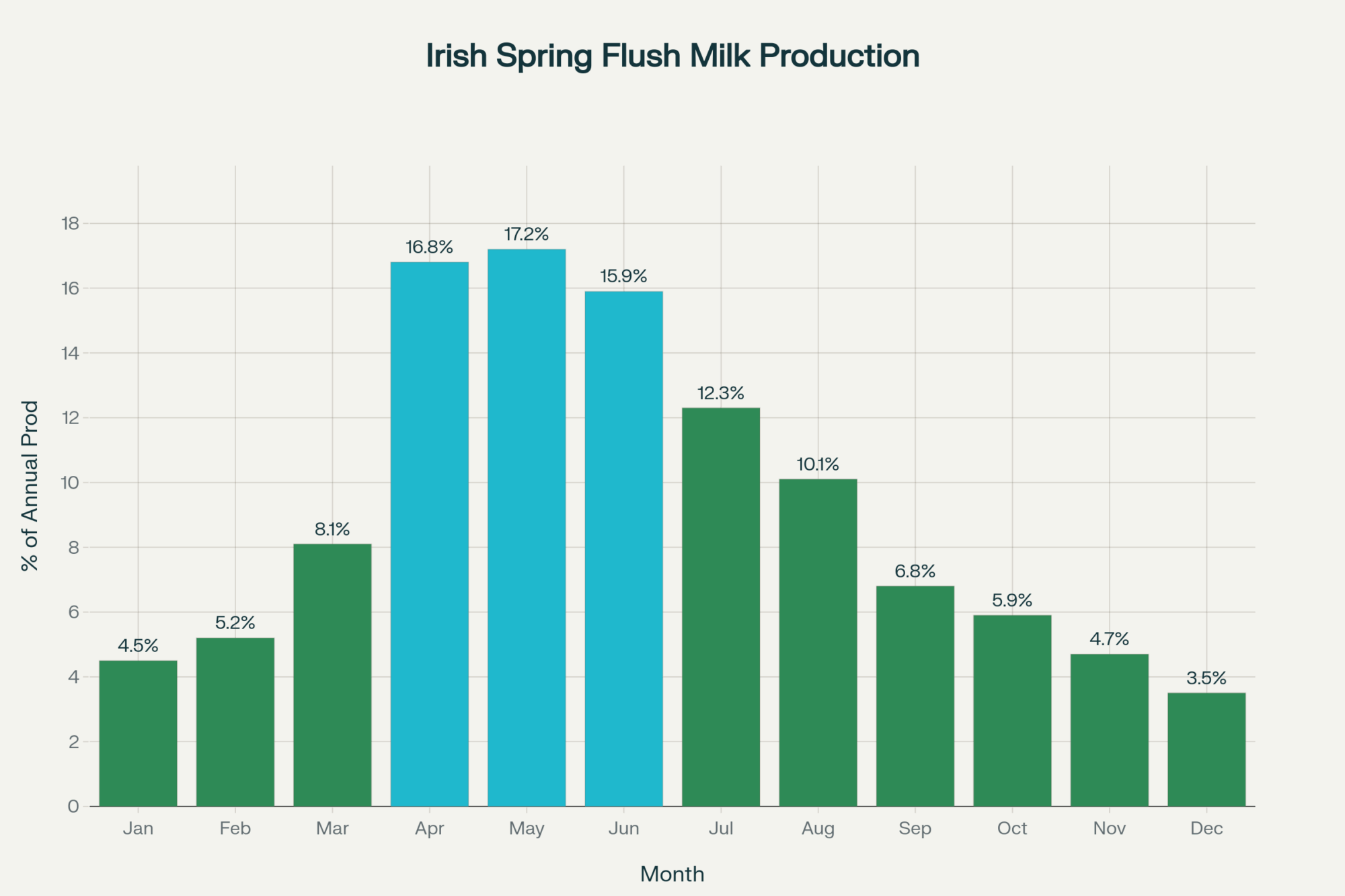
NewsSubscribe
First
Last
Consent

Export Apocalypse: How Three Countries Control Your $8.4B Future (And What Smart Producers Are Doing About It)

China just killed $584M of our dairy exports in 4 months—but smart producers are already pivoting to Southeast Asia’s stable markets.

EXECUTIVE SUMMARY: Look, we’re all hearing about this record $8.4 billion in dairy exports, and yeah… the checks have been good. But here’s what’s keeping me up at night: nearly half of that money flows through just three politically unstable countries—Mexico, Canada, and China. When China slapped us with 125% tariffs earlier this year, we lost $584 million practically overnight. That’s the equivalent of our entire Indonesian market… gone. Wisconsin Extension ran the numbers, and if all three markets tank together? We’re looking at a $4 billion hit annually. The producers who are getting ahead of this mess aren’t waiting around—they’re diversifying into Southeast Asia’s 9.9 billion liter market and investing in robotic milking systems that deliver 12-15% consistency improvements. Indonesia just eliminated 99% of tariffs on our products, and their middle class is paying premium prices for quality. Bottom line: stop betting on politicians and start building export resilience that survives trade wars.

KEY TAKEAWAYS

  • Diversify or die: Southeast Asia imports 9.9 billion liters annually with minimal political drama—contact your co-op’s international division this week to explore Indonesian and Vietnamese opportunities that pay premiums for consistent quality.
  • Technology pays off fast: Robotic milking systems show 12-15% consistency improvements and 5-7 year payback periods for 500+ cow operations—exactly what export buyers demand for zero-residue guarantees and premium contracts.
  • Co-products are serious money: China used to buy 42% of our whey exports before the tariff war—start tracking your co-product income because it’s often 15-20% of your total milk value.
  • Sustainability opens doors: German buyers are already requiring carbon footprint documentation—get your environmental certifications now because companies like Nestlé won’t buy from uncertified suppliers.
  • The math is brutal: If 40% of your revenue depends on Mexico, Canada, and China, you’re overexposed—with feed costs up 19% and milk prices at $22/cwt, you can’t afford to lose export premiums overnight.
dairy exports, dairy farm profitability, robotic milking systems, dairy market diversification, dairy tariff risk

The $8.4 billion export celebration is masking a concentration crisis that could bankrupt leveraged operations overnight. With 48% of exports flowing through three politically volatile countries, savvy producers are already diversifying into Southeast Asia’s stable markets while building technological advantages that withstand trade wars.

You know what struck me about last week’s Wisconsin Milk Marketing Board meeting? Three guys bragging about their August milk checks… and not one of them knew their co-op had quietly canceled whey contracts with China.

Look, I get it. U.S. dairy exports hit $8.4 billion in 2025—that’s a $400 million bump from 2024, and everybody’s feeling good about those numbers. However, what’s keeping me up at night is that half of that money flows through just three countries. Mexico, Canada, and China. And China just hammered us with 125% tariffs that wiped out our entire Indonesian market worth—$584 million—practically overnight.

From the feed stores in California’s Central Valley to Wisconsin’s Fox River Valley, I’m hearing the same story everywhere. Producers expanded based on export projections while trade wars quietly demolished their foundation. This isn’t sustainable, folks.

The Three-Country Trap That’s Got Us All Cornered

Here’s the thing about export dependency that most producers don’t fully grasp—and I’ve been tracking this for months now. Take a typical Central Valley operation milking 850 Holsteins through DFA’s Western Division. Every hiccup in Mexico, Canada, or China hits their milk check directly. “When Mexico sneezes, my milk check feels it. Same with Canada and China,” is what I keep hearing at cooperative meetings.

The numbers don’t lie, and they’re honestly more concentrated than I expected when I first started digging into this: Mexico buys $2.32 billion annually, Canada takes $1.09 billion, and China represents $610 million despite all the current hostilities. Those three countries control 48% of American dairy exports. Nearly half!

University of Wisconsin Extension economist Dr. Mark Stephenson doesn’t sugarcoat it: “The current conflict accelerates structural shifts that permanently reshape global dairy trade flows. Today’s tariff rates are exponentially higher than those in previous disputes.”

What strikes me about this concentration is how vulnerable it makes us:

MarketAnnual ValueSharePolitical Risk
Mexico$2.32 billion28%Border tensions escalating
Canada$1.09 billion13%USMCA disputes ongoing
China$610 million7%Trade war active
Southeast Asia$800 million10%Generally stable
Rest of the world$3.58 billion42%Mixed conditions

The Wisconsin Extension ran a nightmare scenario that honestly shocked me: simultaneous disruption in our top three markets would result in an annual loss of $4 billion. For operations that borrowed big on export projections? That’s not just a bad year—that’s bankruptcy math.

China’s Co-Product Massacre (And Why Most Producers Missed It)

This is where it gets really concerning. I’ve been talking to Wisconsin operations that run 650 Jersey cows, and they’re watching their cooperative whey income just… evaporate. Chinese tariffs exploded from 10% in January to 125% by April 2025. Four months. That’s all it took.

Here’s what most producers don’t track—and this is a big mistake. When you’re making cheese, you create nine pounds of whey for every pound of cheese. Before this trade war, China bought 42% of our whey exports and 72% of our lactose sales. Those co-products… they’re not just byproducts anymore. They’re serious money.

Cornell calculated the damage, and it’s brutal: USDA slashed Class III milk forecasts by 35¢/cwt as these markets collapsed.

The timeline tells the whole story: Source: USDA export data and China’s Ministry of Commerce tariff schedules

PeriodTariff RateMonthly ExportsWisconsin Impact
January 202510%$51 millionManageable strain
March 202534%$33 millionPain begins
April 2025+125%$8 millionMarket death

A 92% collapse in monthly export value in four months. One Wisconsin producer put it perfectly at a dairy meeting: “Never count on a government that changes trade rules faster than Jersey cows change moods.”

Indonesia: Finally, Some Good News

Now here’s where things get interesting—and frankly, more hopeful than I expected. California Dairies Inc.’s operations, which include 1,200 Holsteins, are securing direct contracts with Indonesian processors, thanks to the U.S.-Indonesia agreement that eliminated tariffs on 99% of American dairy exports.

What I’m hearing from Central Valley producer meetings is encouraging: “Indonesia’s middle class wants our quality and pays premiums for consistency.” Indonesia represents our seventh-largest export market, with annual sales of $246 million, and this is just the beginning.

Krysta Harden from the U.S. Dairy Export Council gets it: “This deal gives U.S. dairy companies a fair shot at competing without governments tilting the playing field.”

The fact is, while Indonesia provides a clear win, progress elsewhere remains… complicated.

Europe’s Endless Framework Dance

The August 2025 U.S.-EU trade framework represents some progress toward addressing our $3 billion dairy trade deficit; however, specific tariff reductions and European Commission final approval are still under negotiation. We’ve been down this road before.

National Milk Producers Federation’s August brief captures the frustration perfectly: American producers are “done playing second fiddle in Europe’s rigged system.” I couldn’t agree more.

Asia’s Production Revolution (This Should Terrify Us)

While we’re debating tariffs, Asia has undergone a complete revolution in dairy production. And honestly? We missed it. Asia now makes half the world’s milk—458 million tonnes annually. Half!

China’s 4.8% production growth reached 45.5 million tonnes in 2025, while our growth rate is 0.3% annually. Meanwhile, New Zealand’s production contracted to its lowest level in 30 years. The landscape is shifting faster than most people realize.

Land O’Lakes operations near New Prague, Minnesota, are monitoring a 25% drop in premium powder prices as Chinese domestic production improves. “Used to be, they needed our quality. Now they’re building plants that make ours look dated,” one producer told me recently. That’s the reality we’re facing.

Tech: Your Secret Weapon in This Mess

Here’s where I get excited about our future, though. California Central Valley operations, which manage 1,400 cows using four DeLaval robotic milking systems, are reaping real benefits through export contracts that demand consistent quality specifications. This is happening right now.

The global milking robot market is projected to grow from $3.2 billion to $5.3 billion by 2029, driven by a 10.8% annual growth rate, primarily due to increasing demand for high-quality exports. That’s not just growth; that’s transformation.

University of Minnesota Extension research shows that robotic systems typically deliver payback periods of 5-7 years for operations with over 500 cows. The numbers work.

What’s particularly noteworthy about the tech investment reality: Based on University of Minnesota Extension studies and industry performance data

InvestmentCost RangeQuality BenefitExport Premium
Robotic milking$200-300K/unit12-15% consistency improvement$0.15-$0.20/cwt
Automated feeding$75-150K/system10% nutrition precision$0.08-$0.10/cwt
Sensor monitoring$25-75K/farm20% faster health detectionZero residue guarantee

Sustainability: The New Gatekeeper (Whether You Like It or Not)

Wisconsin operations milking 550 cows through Foremost Farms are losing lucrative German contracts for lacking carbon footprint documentation. “They wanted more paperwork than my banker,” is becoming a common frustration at sustainability meetings.

But here’s the thing—companies like Nestlé and McDonald’s fund sustainability research specifically for supply chain requirements. Premium export buyers want responsible production documentation, not just quality milk. This isn’t going away.

Southeast Asia: The Opportunity Hiding in Plain Sight

While everyone obsesses over Chinese losses, Southeast Asia quietly imports 9.9 billion litres annually with minimal political drama. Philippines, Malaysia, Thailand, Singapore, Vietnam—they offer middle-class growth without trade war risks.

What’s fascinating is that regional self-sufficiency rates stay low through 2030, creating sustained opportunities. This isn’t a flash in the pan.

Here’s how I’d rank export opportunities right now:

MarketSizeGrowthPolitical RiskEntry DifficultyMy Grade
Southeast AsiaLarge+5.2%LowModerateA-
Latin AmericaMedium+3.8%ModerateLowB+
MexicoVery Large+2.1%ModerateLowB
CanadaLarge+0.8%HighVery HighC-
EuropeMassive+1.2%ModerateVery HighC+
ChinaMassiveUnknownCriticalImpossibleF

Focus on A- and B+ markets. Don’t waste 25% of your budget chasing resistant markets—it’s not worth the headache.

What Your Milk Check Actually Shows

USDA forecasts 2025 all-milk prices at $22.00/cwt, up from earlier projections but still subject to trade volatility. The fact is, feed costs increased by 19% from 2019 to 2024 across major regions. Q2 2025 corn averaged $4.85/bushel, up from $4.12 last year. With 16% of U.S. milk exported, trade disruptions have a direct impact on farm profitability.

The export picture by product tells an interesting story:

ProductExport ChangeFarm ImpactCash Reality
Butter+87%Minimal direct benefitCo-ops capture gains
Nonfat dry milk-21%Component price hitLower protein premiums
Whey-19%Co-product income lossReduced milk checks
Specialty cheese+12%High potentialPremium processing needed

Your Action Plan (Don’t Wait on This)

This month, you need to:

  • Calculate export dependency using your cooperative statements
  • Contact your field rep about sustainability certification programs
  • Evaluate robotic milking ROI for your specific herd size
  • Research Southeast Asian opportunities through your co-op’s international division

Next six months:

  • Document environmental practices for premium export buyers
  • Diversify beyond those volatile top three markets
  • Invest in consistent technology that creates export advantages
  • Build relationships in stable, growing regions

The implementation timeline that makes sense:

ActionTimelineInvestmentKey Considerations
Southeast Asian relationships12-18 months$25-50K marketingNeeds cooperative support and cultural understanding
Value-added processing24-36 months$500K-2MMarket demand validation and regulatory compliance are required
Sustainability certification6-12 months$15-30KEssential for premium market access, relatively low risk
Technology upgrades18-24 months$200K-1MROI depends on herd size and management capability

The Bottom Line (And Why This Matters Right Now)

Winners capture premium pricing through documented quality, environmental credentials, and strategic diversification—not waiting for politicians to fix broken relationships.

The $8.4 billion export boom masks a significant vulnerability to concentration that can collapse in the face of political crises. China’s $584 million market loss proves trade relationships disintegrate overnight—faster than most of us anticipated.

However, here’s what gives me hope: Indonesia’s breakthrough and the opportunities in Southeast Asia reward producers who build technological advantages and sustainable practices over those who rely on political dependencies.

Your expansion depends on customers you can serve consistently, not governments you can’t control.

What you need to do this week:

  1. Check your dependency—if 40%+ revenue flows through three countries, you’re overexposed
  2. Document practices—environmental and quality certifications open premium access
  3. Evaluate technology—consistency creates competitive advantages, politics can’t eliminate
  4. Contact your cooperative—international marketing divisions have Southeast Asian contacts ready now

The choice is yours: keep betting on political promises or build export resilience that survives trade wars.

This isn’t doom and gloom, folks—it’s a wake-up call. The producers who act on this now will be the ones still standing when the next trade war hits.

Contact your cooperative’s international marketing division this week. Your future milk checks depend on decisions you make today… and honestly, tomorrow might be too late.

Complete references and supporting documentation are available upon request by contacting the editorial team at editor@thebullvine.com.

Learn More:

  • Robotic Milking Systems: A Game-Changer for Modern Dairy Farming – This article provides a tactical deep-dive into robotic milking, detailing how the technology directly improves herd health, milk quality, and labor efficiency—key factors for securing the premium-paying export contracts mentioned in the main piece.
  • The Genomic Secret: The Untapped Goldmine in Your Herd’s DNA – Shifting to a strategic perspective, this piece reveals how to leverage genomics to build a more profitable and resilient herd, creating the high-component, efficient cows that give you a competitive edge in demanding international markets.
  • Sustainable Dairy Farming: The Future is Green and Profitable – Looking to the future, this article breaks down the practical economics of sustainability. It offers innovative methods for reducing your environmental impact through feed efficiency and management, turning the “gatekeeper” issue into a significant market advantage.

The Sunday Read Dairy Professionals Don’t Skip.

Every week, thousands of producers, breeders, and industry insiders open Bullvine Weekly for genetics insights, market shifts, and profit strategies they won’t find anywhere else. One email. Five minutes. Smarter decisions all week.

NewsSubscribe
First
Last
Consent

Why South American Dairy Should Be on Every Producer’s Radar

Argentina now ships dairy products to over 80 countries, despite labor costs ranging from $ 4 to $8 per hour. We’re paying $20-25/hr. Something’s gotta give.

EXECUTIVE SUMMARY: You know that feeling when you realize everyone else figured out something you missed? That’s what’s happening with South American dairy right now. While we’re fighting $25/hour labor and massive cooling bills, Argentina’s running 150-200 cow herds at $4-8/hour labor costs, and Chile’s hitting record production with GPS-guided grazing. The numbers don’t lie—their feed costs about 50% of what we pay, land rent is $200-400/hectare versus our $1,000-2,000, and they’re shipping to 80+ countries because their cost structure allows them to compete anywhere. Uruguay exports 65% of its milk, despite being smaller than most countries, demonstrating that efficiency often outweighs size. After Argentina’s production dropped 22% early this year, they’re bouncing back through exports, while we’re still fighting the same old cost pressures. Here’s the thing—their tech adoption is smart, not expensive, and it’s working with their natural advantages instead of against them. Maybe it’s time we stopped thinking bigger is always better and started thinking smarter.

KEY TAKEAWAYS

  • Labor advantage that changes everything: Argentine dairy workers cost $4-8/hour while ours run $20-25/hour—that’s a $30,000+ annual savings per worker that goes straight to your bottom line. Start benchmarking your labor costs per cow against these numbers.
  • Feed costs are cut in half through pasture optimization: South American operations spend $1.50-$2.00 per day per cow on feed, versus our $4-$5 per day average—GPS-guided rotational grazing and extended seasons make the difference. Calculate what a 40-50% feed cost reduction would mean for your operation.
  • Technology that fits your system, not fights it: Automated gates and pasture sensors are paying back in 12-18 months without forcing system overhauls—Chilean producers are proving precision ag works for grass-based operations. Evaluate tech investments that enhance your natural advantages instead of replacing them.
  • Export diversification fosters market stability: Argentina reached 80+ countries in 2023, whereas we’re often limited to 2-3 buyers—their cost structure provides pricing flexibility that we can’t match. Start monitoring global milk flows through USDA FAS reports to understand your competitive position.
  • Climate advantages worth $100-300/cow/year: Natural cooling eliminates massive infrastructure costs while 7-8 month grazing seasons reduce purchased feed dependence—these aren’t temporary benefits, they’re permanent structural advantages. Assess your climate-related costs and identify where efficiency improvements could be beneficial.
global dairy competition, dairy production costs, farm labor costs, dairy farm profitability, farm efficiency strategies

I just wrapped up a call with a buddy who tracks global milk flows for a living. “Argentina’s now shipping dairy to over 80 countries,” he told me. “And their growth isn’t slowing.”

That caught me off guard. While we’re busy watching Wisconsin weather and New Zealand production reports, something massive is happening down south.

Argentina: From Crisis to Competition

Out in the Pampas—Argentina’s dairy heartland—most operations run 150-200 cows, rotating paddocks every 28-35 days. Those cows are producing 20-24 liters of milk daily during peak lactation.

The real story? Cost structure. Land and labor run a fraction of what we pay up north.

The turnaround has been dramatic. Following severe droughts and economic pressures, which led to a nearly 22% decline in milk production from January to February 2024 compared to the same period in the previous year, the industry is relying on exports for recovery.

A key catalyst was the removal of export tariffs (retenciones) on dairy products. This policy, initially implemented by the previous government, was made permanent by President Javier Milei’s administration in late 2023, signaling a major shift toward promoting exports.

According to export data monitored by OCLA, around 60% of dairy products, mainly milk powders, were destined for export in 2023—not the entire milk volume.

Juan Diaz of El Rosario Farm near Santa Fe notes, “Opening up export routes has transformed our cash flow and outlook.”

Chile: Where Precision Meets Pasture

Chile’s dairy production is concentrated in Los Ríos and Los Lagos, contributing 83.6% of the national milk output. Average farm sizes range between 120 and 150 head.

Despite periodic droughts, these regions produced approximately 2.23 billion liters of milk in 2023.

Dairy tech advisors in the Temuco region observe that the most competitive producers are those blending technology—including GPS-guided pasture management and automated water systems—with a deep respect for their pasture-based heritage.

Uruguay: Small But Mighty Dairy Exporter

Uruguay, home to less than 4 million people, exports about 65% of its dairy production. Herd sizes commonly range from 120 to 160 cows.

Export volumes increased by roughly 10% in 2023, despite price volatility.

A producer near Montevideo, Lucia, points out, “Our steady climate and reliable supply are major drivers behind buyer loyalty.”

South America’s Unbeatable Cost Structure

USDA data highlights a stark contrast: Labor costs in Argentina average $4-$8 per hour, while in the US, they average $20-$25. Likewise, feed costs for pasture-based systems are typically half the price of those for confinement systems.

Cost CategoryPasture-Based (S. America)Confinement (US/EU)
Labor Cost$4-$8/hr$20-$25/hr
Feed Cost$1.50-$2.00/day per cow$4.00-$5.00/day
Land Rent$200-$400/ha$1,000-$2,000/ha
Cooling CostsMinimal$100-$300/year/cow

These savings add up fast, helping producers maintain stronger margins.

Tech That Works with Your System

Technology is no longer confined to large-scale dairy operations. Automated gates, pasture sensors, and robotic milkers are well-suited for pasture-focused operations.

Ana Gómez, a veterinary technician and farm manager in Uruguay, said, “We installed automated waterers last season. It helped reduce labor without changing how we run our farm.”

Shift in Global Markets

Argentina expanded exports to over 80 countries in 2023, diversifying product lines and markets.

Chile’s growing domestic production is actively displacing imports worth millions annually.

Uruguay reported a 10% growth in dairy exports in 2023, expanding reach into Africa and Asia.

Watch the Risks

While Argentina’s 2023 tariff reforms under President Milei have boosted exports, currency swings and political volatility remain concerns.

Infrastructure issues, including inadequate transportation and cold storage systems, also hinder growth and market access.

What You Can Do Next

  • Understand your full cost structure, especially feed, labor, and climate-related costs.
  • Monitor global market flow and emerging buyer preferences.
  • Evaluate technology that complements your production system, not forces it.
  • Plan for currency, political, and environmental risks.

The global dairy market is shifting, and South America’s rise demands your attention.

The fundamentals of global dairy are shifting under our feet. South America’s structural advantages in cost and climate aren’t a temporary trend—they represent a new competitive reality. Smart operators aren’t just watching this change; they’re analyzing their own operations against it. The question isn’t if this will affect your business, but how you’ll prepare for it.

Complete references and supporting documentation are available upon request by contacting the editorial team at editor@thebullvine.com.

Learn More:

The Sunday Read Dairy Professionals Don’t Skip.

Every week, thousands of producers, breeders, and industry insiders open Bullvine Weekly for genetics insights, market shifts, and profit strategies they won’t find anywhere else. One email. Five minutes. Smarter decisions all week.
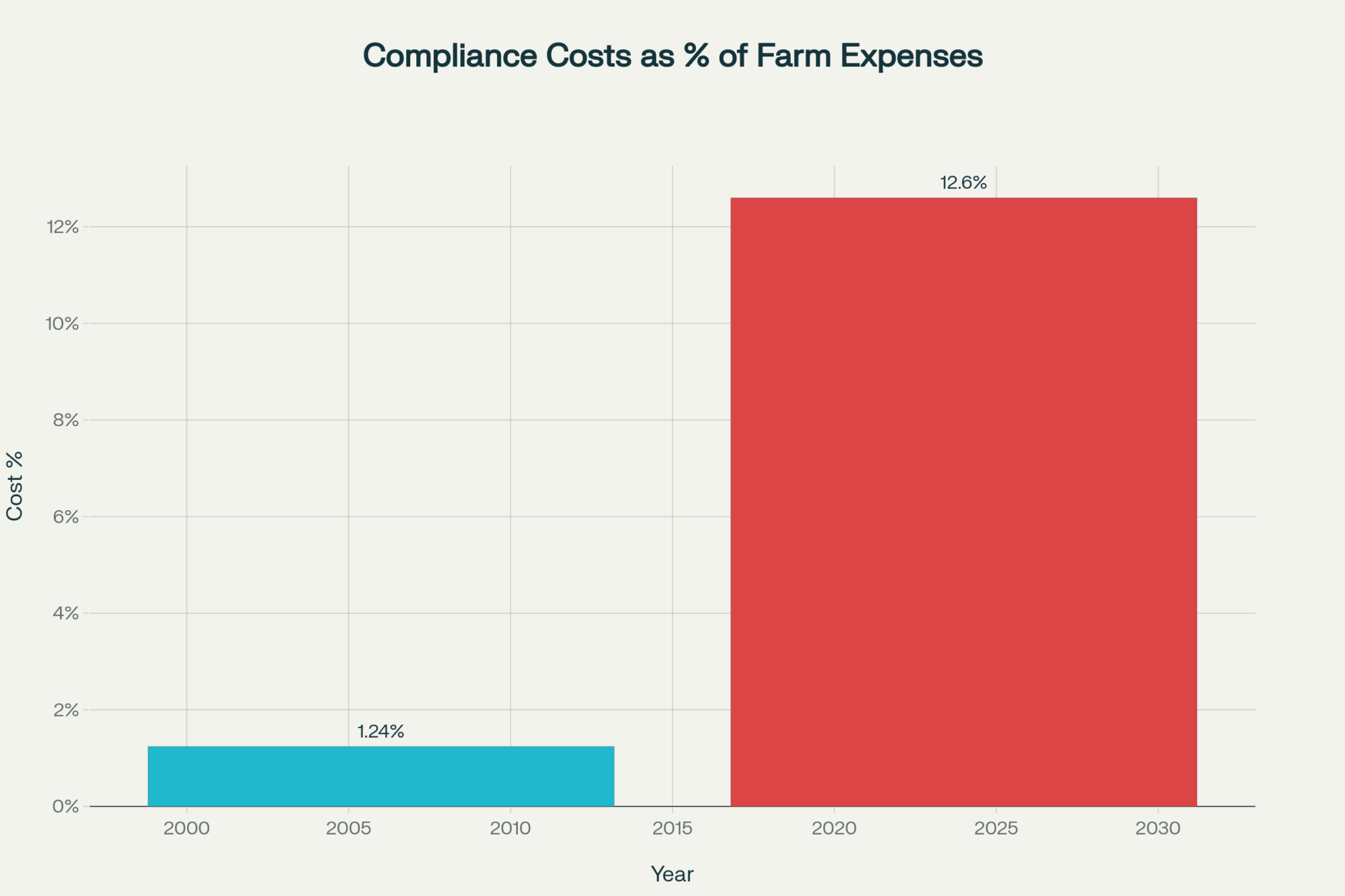
NewsSubscribe
First
Last
Consent

When Financial Disaster Breeds Genetic Gold: The Blackrose Story That Changed Everything

Discover how a financial disaster in the 1980s gave birth to a Holstein dynasty that is still shaping dairies worldwide today.

Have you ever noticed how some of the best genetics in our industry often emerge from the most challenging moments? Pull up a chair and grab that coffee—I’ve got a story that’ll change how you think about breeding decisions, and honestly, it’s one every dairy producer should know by heart.

Picture this: It’s a brutal January morning back in the mid-80s. Jack Stookey—this larger-than-life character who once ruled the Holstein scene—can’t even scrape together payroll. We’re talking about a guy who owned some of North America’s most elite cattle, now forced to send prize bull calves to slaughter just to keep the electricity on. (Read more: The Notorious Jack Stookey)

Now, most of us have felt those margin squeezes… you know, when corn hits $8 a bushel and you’re wondering if you can make the equipment payment. But Jack’s situation? That was a whole different level of desperation.

Here’s what strikes me about the whole mess, though—out of that complete financial wreckage emerged Stookey Elm Park Blackrose, probably the most influential Holstein cow you’ve never heard enough about. And if you’re running a serious breeding program, I guarantee her genetics are working in your herd right now.

The Crazy Money Days

Let me paint a picture of the early ’80s for you. The Investor Era—man, what a time that was. Thanks to Section 46, this tax provision, which essentially allowed wealthy outsiders to write off cattle purchases against their personal income, suddenly drew every investment banker and surgeon with money to burn to Holstein royalty. (Read more: The Investor Era: How Section 46 Revolutionized Dairy Cattle Breeding)

I’m talking about people who literally couldn’t tell a fresh cow from a dry one, throwing around cash like they were buying stocks. Prices went absolutely insane. A buddy of mine in Wisconsin still talks about sales where cows were selling for what would be equivalent to a million dollars today.

Jack Stookey was the perfect guy for that era—smooth as silk, could charm anyone. The man had this way of making you believe you absolutely needed to own whatever cow he was selling. He built this empire on other people’s money, snapping up champions like Georgian Quality Pat and the legendary Nandette TT Speckle-Red.

But you know how these stories go… bubbles always burst.

When It All Falls Apart

The IRS started getting wise to these tax schemes, and boom—the money dried up overnight. What followed was just devastating, not just for Jack but for all the farm families who’d trusted him with their best cattle.

I’ve heard some heartbreaking stories from guys who lived through it. Take the Browns up in Canada—they sold Speckle for what would be approximately $550,000 in today’s money and never received the last two payments. Just… gone. Can you imagine? That’s like selling your prize cow and getting stiffed on half a million dollars.

But here’s where it gets really tough to hear about. When Jack hit bottom, he started sending valuable bull calves—animals worth tens of thousands—straight to slaughter. Just to pay the electric bill. Those genetics that could’ve shaped the breed for generations, turned into hamburger because of cash flow. What really gets me is how this mirrors some of the pressures we see today—on a different scale, but farms are still being squeezed by cash flow, still making impossible decisions when margins disappear.

The Guy Who Saw Gold in the Wreckage

Now, here’s where the story gets interesting, and why I think Louis Prange deserves much more credit than he receives. While everyone else was running from the Stookey mess, this guy looked at that barn full of world-class cattle sitting in legal limbo and saw opportunity.

Think about it—decades of careful breeding don’t just vanish because someone files for bankruptcy, right? The genetics are still there. The potential is still there.

So Prange worked out this deal with the bankruptcy trustee. Lease the best cows, flush embryos, split the proceeds three ways. Among those salvaged genetics was Nandette TT Speckle-Red—the same red-and-white cow that’d been dominating shows just years before.

Nandette TT Speckle Red (EX-93), the champion at the heart of the story. While others saw a bankrupt herd, Louis Prange saw the immense potential in salvaging her elite, show-winning genetics.

Here’s what I love about Prange’s thinking… he had this vision for what breeders call a “corrective cross”—that’s when you mate two animals whose strengths perfectly complement each other’s weaknesses. He wanted to breed Speckle to To-Mar Blackstar, this production powerhouse who could pump out incredible milk volumes but needed help on the structural side.

From today’s perspective, with all our genomic tools and mating programs, this is exactly what we’re trying to achieve. Except that Prange was doing it by pure instinct and experience.

But Jack? Even in bankruptcy, the guy was still trying to call shots, pushing for different bulls. When it came time to deliver the semen… “My tank ran dry,” he told Prange during that famous phone call.

So Prange went with his gut. March 24, 1990—that’s when Stookey Elm Park Blackrose came into this world.

From Bargain Sale to Genetic Revolution

The legendary Stookey Elm Park Blackrose, a cow whose massive frame and amazing udder, captured here, hinted at the genetic revolution she would unleash.

Fast forward to December ’91. This 18-month-old Blackstar daughter hits the auction block at the Elm Park Red Futures sale for $4,500—about $9,000 in today’s money. Not exactly pocket change, but not too extravagant either.

Mark Rueth was fitting cattle at that sale, and he had this feeling about her. I love what he told his buddy Mark VanMersbergen: “This heifer’s got something special. Deep-ribbed, wide-rumped… you just know.” Together with the Schaufs from Indianhead Holsteins, they partnered up on what turned out to be one of the most significant cattle purchases in Holstein history.

And man, did she deliver. Blackrose grew into this massive, commanding presence that just dominated wherever she went. When she walked into a show ring, other cows looked ordinary by comparison.

Her numbers were off the charts: 42,229 pounds of milk at five years old, with 4.6% butterfat and 3.4% protein. That EX-96 classification put her in the conversation with the most structurally perfect cows ever evaluated.

But here’s what really set her apart—she won All-American honors as both a junior two-year-old and junior three-year-old. That’s incredibly rare. Then in ’95, she captured Grand Champion at the Royal Winter Fair, joining this exclusive club of U.S. cows to win Canada’s most prestigious show.

Building on the foundation: Blondin Redman Seisme (EX-96), a granddaughter of the powerful Red-Marker, showcases the incredible type and capacity that continued through the Blackrose lineage. Her R&W Royal Grand Championship is a testament to the family’s enduring influence.

The Real Magic Was in What She Produced

Now, Blackrose’s individual achievements were spectacular, don’t get me wrong. But the real treasure was her offspring. Her sons became some of the most influential sires of their era, though… well, they weren’t always the easiest to work with.

Take Indianhead Red-Marker. This bull stamped daughters with incredible power and frame, but his genetic proof showed some challenges. Specifically, his daughters often had issues with udder depth and could be, let’s say, temperamental in the parlor. You had to be smart about using him—mate him to cows that could correct those weak spots.

What’s interesting about the Blackrose sons is that they didn’t give you balanced, easy-to-use genetics. They gave you these incredibly potent but specialized tools. Breeders valued that raw power so much that they kept using them for generations, just being really strategic about their mating decisions.

The culmination of a dynasty: Lavender Ruby Redrose-Red (EX-96). In 2005, she achieved the impossible, becoming the first and only Red & White cow ever named Supreme Champion at World Dairy Expo, proving the enduring magic of the Blackrose line.

And the daughters? They built dynasties. Rosedale Lea-Ann became the direct link to Lavender Ruby Redrose-Red, who in 2005 did something that still gives me goosebumps—became the first and only Red & White cow ever named Supreme Champion over all breeds at World Dairy Expo. First and only. Think about that. (Read More: Never a thorn in the career of Lavender Ruby Redrose-Red)

Another star from the Rosedale branch of the Blackrose family, Rosedale Lexington (EX-95). Her elite production and 2013 All-American title showcase the consistent, high-impact genetics passed down through Blackrose’s daughters.

Today’s Success Story

The modern face of the Blackrose dynasty: Ladyrose Caught Your Eye (EX-96) on her way to another win. Her three consecutive World Dairy Expo victories are matched only by her impact as the dam of champions and high-demand AI sires.

That genetic dynasty didn’t end with Redrose’s championship in 2005. In fact, it’s arguably stronger than ever, rewriting record books in show rings right now. Meet Ladyrose Caught Your Eye—born just six years ago in March 2019, and she’s already changing everything we thought we knew about consistent transmitting ability.

This Unix daughter has earned an EX-96 classification and won the World Dairy Expo three consecutive years, from 2021 to 2023. But what’s really impressive is her consistency as a transmitting cow—she’s got 16 milking daughters classified VG-87 or higher, with seven daughters sporting PTATs of 4.00 or better.

“The way Caught Your Eye transmits is comparable to many of the greats in the Red & White breed. Her consistency is just incredible.”

Her sons are making waves as well. MB Luckylady Bullseyem, Eye Candy and Caught-Up are shaping breeding programs from Wisconsin to Ontario. The difference is that Eye Candy’s always been the more refined of the two—you need to use him on good, strong cows. Bullseye brings more power. Both produce daughters that absolutely catch your eye. (Read more: From Pasture to Powerhouse: The GenoSource Story)

The legacy continues into the next generation. Laforstar Friday Bullseye, a daughter of MB Luckylady Bullseye, carries on the family tradition as the 2024 Junior Champion at the Royal Agricultural Winter Fair.

At the 2024 Canadian Royal, a Bullseye daughter took Junior Champion. These aren’t just show-ring curiosities—they’re the foundation genetics for commercial programs across North America.

What This Means for Your Breeding Decisions

The fact is, there are valuable lessons here for modern breeding strategies that extend far beyond the historical context.

First, superior genetics are incredibly resilient.

The complete collapse of Stookey’s operation could have destroyed these bloodlines forever, but quality has a way of surviving and finding new expression.

Second, the power of corrective breeding—what Prange did instinctively, we can now predict with genomic testing.

We can run thousands of potential matings through computer models and identify those “golden cross” opportunities before we even order the semen.

But the fundamentals haven’t changed much, have they? You still need to understand the traits you’re trying to improve, balance production with durability, and think in generations rather than lactations.

What’s fascinating about today’s challenges is how they echo what we’ve always dealt with, just on a different scale. Feed costs are hitting $300 a ton in some parts of the Midwest, labor shortages are slowing operations from Minnesota to New York, volatile milk prices… sound familiar?

The difference now is that we have tools Prange could only dream of. Genomic predictions, automated monitoring systems, precision feeding—but they’re all built on those same fundamental breeding principles.

And here’s something that’s becoming huge in our decision-making: feed efficiency. Getting more milk per pound of feed isn’t just economics anymore—it’s environmental responsibility. Modern genomic selection lets us identify genetics that produce more milk with less feed, better disease resistance, and improved longevity.

Dr. Paul VanRaden from CDCB puts it well: “The carbon footprint of efficient genetics is becoming critical as we face new environmental regulations. We’re selecting for cows that produce more with less and stay healthy longer.”

Therefore, breeding decisions today must consider both profit and the planet.

That’s how we stay ahead of regulations while maintaining profitable operations.

The Financial Lessons That Still Matter

What really strikes me about Jack’s story is how the financial pressures sound so current. Overextending on credit, relying too heavily on outside capital, not having the cash flow cushion to weather downturns…

We see versions of this today when farms invest in new facilities or robotic systems without solid financial planning. I know operations that took on massive debt for parlor upgrades right before milk prices tanked—same principle, different decade.

The beauty of genetics, though, is that they outlasts financial crises. They don’t forget. Every mating choice we make echoes through decades.

Looking at Your Own Program

Which brings me to you and your breeding decisions. When you’re planning matings—whether you’re running full genomic evaluations or working with more traditional approaches—remember this story.

Sometimes the most valuable genetics come from the most unexpected places. Maybe it’s that moderate cow in the back of the barn whose daughters just keep producing, or that bull everyone’s overlooking because his numbers aren’t flashy enough.

The decisions we make today will still be showing up in our herds—or someone else’s—twenty years from now. That’s both the challenge and the incredible opportunity we have as breeders.

Think about it: Blackrose was conceived in bankruptcy court, sold as a modest heifer, and went on to reshape the Holstein breed. Her descendants are still winning shows, still improving herds, still contributing to profitable dairy operations from California to Quebec to Germany.

In barns across North America and beyond, Blackrose genetics continues contributing to successful operations. They’re not just show-ring champions anymore—they’re the foundation for commercial breeding programs, combining with today’s best genomic sires to produce cattle that are more efficient, more profitable, and more sustainable than ever.

So next time you’re studying pedigrees or reviewing genomic reports, remember this: consistency and long-term vision turn crises into champions.

Because in the end, that’s what we’re really doing—building legacies that outlast us.

KEY TAKEAWAYS

  • The resilience of elite genetics can turn economic and financial disasters into opportunities for breeding innovation.
  • Stookey Elm Park Blackrose exemplifies the power of corrective breeding, combining top production traits with superior conformation.
  • Her descendants continue to influence both show and commercial operations worldwide, showcasing enduring genetic value.
  • Modern breeding strategies, augmented by genomic tools, build on lessons from historic success stories, such as Blackrose.
  • Sustainability and profitability hinge increasingly on balancing genetics, health, and feed efficiency.

EXECUTIVE SUMMARY

Stookey Elm Park Blackrose, born during the 1980s dairy financial crisis, remains a pivotal figure in Holstein genetics today. Rescued from bankruptcy by Louis Prange, she combined top production with exceptional conformation and show success. Her influence extends globally through powerful sons and dynasty-building daughters, such as Lavender Ruby Redrose-Red and Ladino Park Talent. Modern descendants, including Ladyrose Caught Your Eye, demonstrate outstanding performance and genetic consistency. This story highlights the resilience of superior genetics in the face of economic turmoil and the effectiveness of strategic corrective breeding. The Blackrose legacy shapes both championship show cows and profitable commercial herds worldwide, remaining vital to dairy sustainability.

Learn More:

  • Breeding for Profit: The Ultimate Guide to a More Profitable Herd – This guide provides a step-by-step framework for building a breeding program focused squarely on your bottom line. It details practical strategies to select genetics that boost production efficiency, health, and fertility for maximum financial returns in your herd.
  • The 2025 Dairy Market Outlook: Key Trends Every Producer Must Know – Move from the historical financial lessons of the Blackrose story to today’s economic reality. This analysis reveals the market trends, consumer demands, and global factors shaping dairy profitability, helping you make smarter, forward-thinking strategic decisions for your operation.
  • The Feed Efficiency Revolution: How New Genetic Indexes Are Cutting Costs – While Blackrose highlights timeless efficiency, this piece explores the innovative tools of today. It demonstrates how to leverage new genetic indexes for feed efficiency to directly attack and reduce the single largest variable cost on any dairy farm.

The Sunday Read Dairy Professionals Don’t Skip.

Every week, thousands of producers, breeders, and industry insiders open Bullvine Weekly for genetics insights, market shifts, and profit strategies they won’t find anywhere else. One email. Five minutes. Smarter decisions all week.
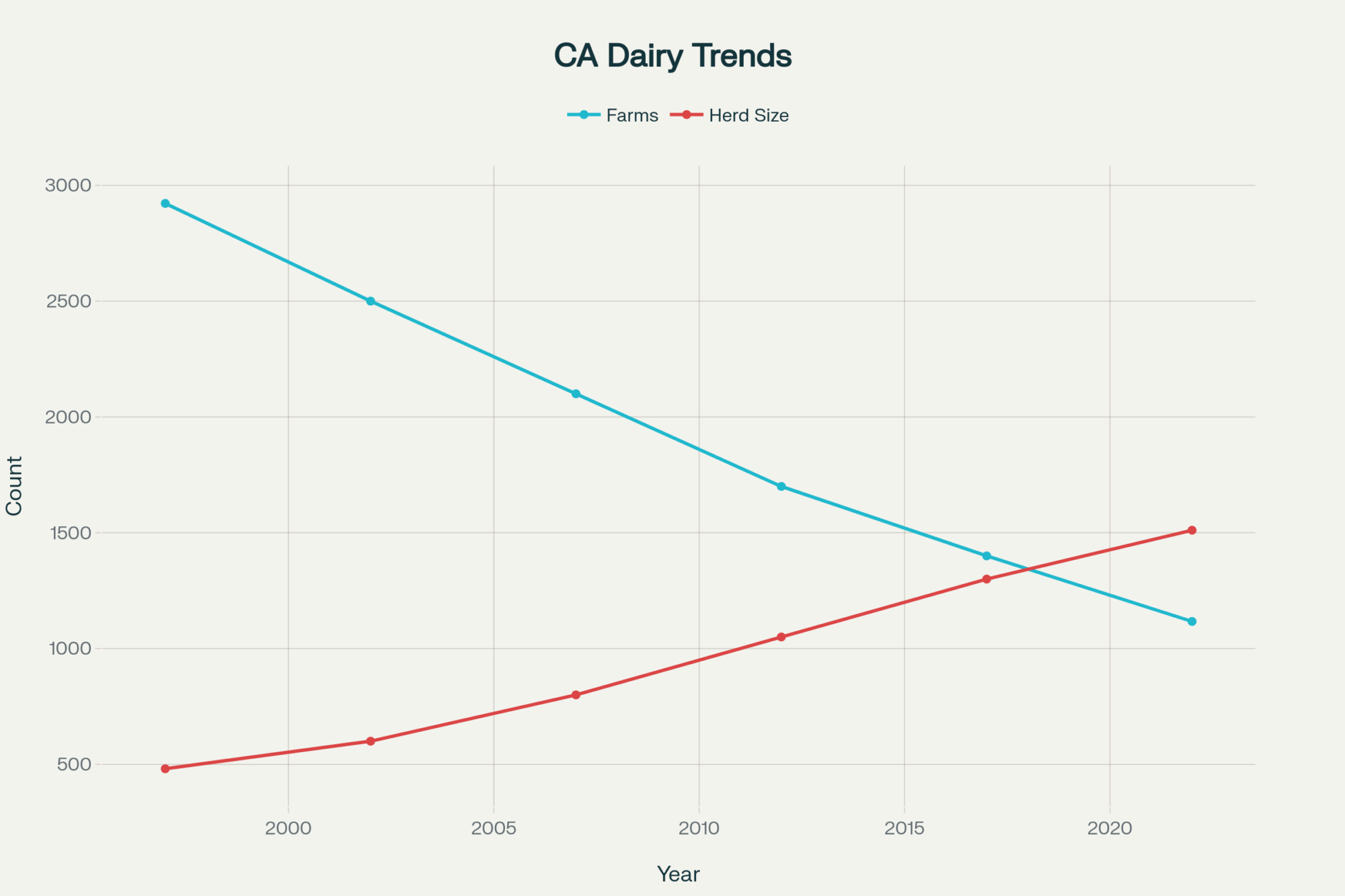
NewsSubscribe
First
Last
Consent

The $4,000 Heifer: Navigating America’s Worst Replacement Crisis in 47 Years

Ready to pay mortgage money for a springer? The heifer shortage is here, and it’s not going anywhere.

EXECUTIVE SUMMARY: The U.S. dairy replacement pipeline just hit the wall—we’re down to 3.914 million heifers, the lowest count since 1978. Meanwhile, $10 billion in new processing capacity is coming online, which will demand significantly more milk than we can currently supply. Here’s the kicker: replacement costs have more than doubled, and CoBank’s data shows we’ll lose another 800,000 heifers before any recovery starts in 2027. Farms that keep betting on cheaper replacements are playing with fire. The smart money’s on extending cow longevity by just one month to cut replacement needs by 2.8%—that’s $84 saved per cow annually at today’s prices. Add precision breeding with sexed semen (90% success rate beats the 50-50 gamble), and you’ve got a playbook that actually works. Based on USDA reports and university research, the farms implementing this three-pronged approach currently will own the market, while others struggle with yesterday’s math.

KEY TAKEAWAYS

  • Cut replacement costs 2.8% per extra month of cow longevity—focus on transition nutrition and repro management to save $84+ per cow annually while everyone else scrambles for expensive replacements
  • Deploy sexed semen strategically on your top 25% genetics—yes, it costs $15 more per straw, but that 90% female success rate beats conventional breeding’s coin flip when heifers cost $4,000+
  • Cash in on beef-cross calves from bottom-tier cows—those $1,000+ beef calves pay for your breeding program while you save dairy genetics for actual replacements
  • Budget $4,000+ per heifer through 2027—CoBank’s projections show no relief until then, so negotiate group purchases with neighbors and secure flexible credit lines now before cash flow gets tight
  • Start culling fewer cows immediately—operations reducing slaughter by 600,000+ head nationally are keeping milk flowing despite the heifer drought, and you need to join them before your competitors do
heifer replacement cost, dairy farm profitability, cow longevity, sexed semen strategy, dairy cattle prices

Walk into a cattle auction anywhere from Bakersfield to Green Bay these days and you’ll witness something that stings like a winter chill—springers hitting $4,200 or more. At a sale in Wisconsin last week, a seasoned dairyman shook his head, watching those prices climb. The young guy next to him just kept his paddle raised. “Either buy now or quit growing,” he said.

This isn’t just another bump in the road or a flash in the pan. The numbers don’t lie; this is a fundamental market reset.

The situation is stark: CoBank’s August 2025 report confirms we’re sitting with the smallest U.S. dairy replacement herd since 1978—3.914 million head as of January 2025. And with $10 billion being poured into new processing plants that demand milk through 2027, while heifer numbers continue to decline by another estimated 800,000 head, every dairy has to rethink its expansion and breeding strategy.

The numbers that change the game

Let’s break down the tough facts. USDA data shows an 18% drop in heifer inventories since 2018—from 4.77 million to just 3.914 million by early 2025. Looking even deeper, the number of heifers expected to calve this year is just 2.5 million—the lowest the USDA has seen in 24 years.

Prices? USDA’s July 2025 reports put the average replacement heifer at $3,010 nationwide—up a whopping 75% from April 2023. However, averages only tell half the story when premium springers are bringing $4,200 or more in Wisconsin or $4,500 or more in central California.

Consider a real-world example: an Eau Claire-area farm added 200 cows a few years ago, budgeting roughly $360K just for replacements. Today, that same addition would require more like $800K, and that’s without factoring in feed, labor, or facility costs.

CoBank doesn’t sugarcoat it—the forecast is for inventories to shrink even more over the next couple of years before any meaningful recovery in 2027.

How we dug this hole

Blame it on the beef market, if you will. When U.S. beef cattle numbers hit historic lows, beef-cross calves became a gold mine. Dairy farmers began breeding more bottom-tier animals to serve as beef sires, and as a result, calf prices soared while replacement heifer values lagged behind.

According to the National Association of Animal Breeders, dairy farmers snagged 7.9 million of the 9.7 million beef semen units sold in 2024—over 80% of all beef semen sales. That’s a far cry from just a few years ago, when beef semen was a small part of their breeding plan.

A good example comes from a Central Valley operation that increased its beef breeding from 20% of its herd in 2019 to nearly 65% by 2022, in an effort to chase calf revenue and stay afloat. Fast forward, and the farm grapples with a dwindling replacement herd and sky-high heifer prices.

The lesson? It wasn’t a conspiracy—it was a thousand individually smart but collectively expensive decisions. When everybody zigged into beef semen, the dairy replacement pipeline zagged.

The $10 billion squeeze: New plants demand milk that heifers aren’t here to make

Just when heifer numbers nose-dived, the industry bet big on new processing plants. Hilmar Cheese’s Dodge City facility is built to process approximately 8 million pounds of milk daily once fully operational. Chobani’s new Rome, NY, plant is targeting a massive 12 million pounds of production daily.

CoBank’s economist Corey Geiger puts it plainly: “Those plants need more milk and better components, especially butterfat and protein. To meet that demand, we need many more replacement heifers in the next few years than we have right now.”

Texas is feeling the heat especially hard. According to the Texas Dairy Association industry analysis, the state’s expanding processing capacity will require significant increases in regional milk supply, putting additional pressure on producers already dealing with tight heifer availability. However, with shrinking heifer inventories, finding those replacement animals is squeezing producers who are already juggling tight margins.

The new playbook: A three-pronged strategy for survival and growth

Prong 1: Master cow longevity

The farms weathering this storm best are pulling cow longevity into sharp focus. According to University of Wisconsin dairy management research, extending productive cow life significantly reduces annual replacement needs, with economic benefits of approximately $84 per cow per year in avoided replacement costs at current market prices.

For example, a dairy planning to add 800 cows might face an expansion cost soaring from $1.44 million in replacements five years ago to over $3.2 million today. Instead of scrapping growth plans, some farms are opting to keep more cows longer—raising the average productive life from 4.2 to 4.8 years and reducing replacement rates from 35% to 28% annually.

This strategy is catching on nationwide. Producers sent 611,600 fewer cows to slaughter than usual between late 2023 and mid-2025—a huge shift helping stabilize milk supply despite fewer heifers.

Prong 2: Leverage genetic horsepower

Many producers don’t realize we’ve been riding a genetics train that’s making the heifer shortage less painful than it could’ve been.

Since 2010, genetic improvement has accelerated, doubling the annual gains in Lifetime Net Merit from $40 to $ 80 per cow. Butterfat content climbed to 4.23% nationally in 2024—shattering decades-old ceilings. Protein jumped from 3.04% in 2004 to 3.29% in 2024.

USDA geneticist Paul VanRaden puts it simply: “A tenth-point bump in butterfat adds approximately $23 per cow per year at current component prices. Farms raising 850 cows just bumped their component premiums by close to $850 a month on the check.”

Prong 3: Execute a precision breeding strategy

Gender-sorted semen sales jumped 17.9% in 2024 to almost 10 million units, while conventional dairy semen slipped. The shift makes sense financially.

Dr. Jim Ferguson, Penn State Extension, notes: “Though sexed semen straws run $8-12 more and have slightly lower conception rates, the guaranteed outcome—90% female calves versus 50% conventional—makes them the most cost-effective heifer production strategy in today’s market.”

Here’s how a tiered breeding strategy looks in practice:

Quick Decision Matrix

Cow GroupStrategyStraw CostResult
Top 25% GeneticsGender-sorted semen$35-$4590% Heifer success
Middle 50%Conventional Dairy$20-$2550% Heifer success
Bottom 25%Premium Beef Sires$25-$30High-value beef calves

When can we expect relief?

CoBank’s modeling, considering 30 months from breeding to milking, shows that pressure will build through 2026, reaching a low point before a modest rebound begins in 2027.

Expect roughly 357,000 fewer fresh heifers in 2025 and 438,000 fewer in 2026. Recovery begins in 2027 as replacements bred in 2024 hit the milking herd, increasing numbers by about 285,000.

Regional winners and losers

Texas is building herds, while others are shrinking. The Lone Star State added 28,000 cows in early 2025 and benefits from lower land costs ($3,850/acre) than Wisconsin ($5,900/acre), along with fewer regulations to slow growth.

Wisconsin lost over 300 dairy farms in 2024, mostly smaller operations folding, but herd size overall stayed steady through consolidation.

In contrast, California’s environmental programs can add significant revenue for participating operations. LCFS credits can add $60-$75 per metric ton of CO2 reduced for qualifying dairies, and combined with renewable energy incentives, can add over $200 per cow annually to the check.

Regional Breakdown Table:

RegionLand Cost/AcreAvg Milk Price (July 2025)Regulation LevelKey Growth Driver / Challenge
Texas$3,850$19.20LowLower regulatory hurdles & land cost
Wisconsin$5,900$18.80MediumHigh land costs challenge consolidation
California$8,200$20.40HighLCFS credits & high milk price vs. strict regulation

What you can do today

Here’s a simple checklist to get you ready:

  • Calculate your replacement cost (likely well over $4,000 per heifer).
  • Segment your herd: Use sexed semen on your top cows and breed the rest to beef sires.
  • Focus on cow longevity: Nail transition cow nutrition, hoof care, and repro management.
  • Explore cooperative heifer-sharing or custom raising to spread risk.
  • Protect cash flow: Budget for longer-term heifer contracts and consider mortality insurance.

An important co-benefit

Fewer replacements mean fewer emissions. Cornell research shows cutting heifer numbers reduces methane emissions by over 12%. Meanwhile, keeping cows longer results in lower emissions per pound of milk, thanks to improved feed efficiency.

The Bottom Line

The $4,000 heifer isn’t a blip. It’s a full reset of dairy economics. If you’re waiting for prices to drop, you’re playing a dangerous game.

Get your cow longevity right, embrace precision breeding, and budget like replacements cost $4,000. The processors betting billions on increased milk production by 2027 aren’t waiting around.

Your breeding decisions today will have a significant impact on your milk situation in three years. It’s time to get serious.

Complete references and supporting documentation are available upon request by contacting the editorial team at editor@thebullvine.com.

Learn More:

The Sunday Read Dairy Professionals Don’t Skip.

Every week, thousands of producers, breeders, and industry insiders open Bullvine Weekly for genetics insights, market shifts, and profit strategies they won’t find anywhere else. One email. Five minutes. Smarter decisions all week.

NewsSubscribe
First
Last
Consent

USDA Drops $25 Million on Vet Crisis — Can Your Top Cow Get Care When It Counts?

Just 5.3% of US vets handle livestock—but that shortage could cost you $300+ per sick cow!

EXECUTIVE SUMMARY: Look, here’s what’s really happening out there—only 5.3% of all US veterinarians actually work with livestock, which explains why you’re driving 45 minutes just hoping someone can squeeze you in. USDA finally woke up and dropped $25 million into fixing this mess through their loan forgiveness programs, and they’ve already placed 883 vets in shortage zones since 2010. But here’s the kicker… every delayed mastitis treatment is costing you $300+ per case, and that’s before you factor in missed breedings and those brutal emergency call fees. Countries like New Zealand are crushing this problem with serious incentives—804 farm vets serving 72 million animals—and now America’s playing catch-up. Smart producers are already getting ahead of this with telemedicine and rock-solid prevention programs. Bottom line? You need to solidify those veterinary relationships and start leveraging these new programs before your neighbors beat you to it.

KEY TAKEAWAYS

  • Save $300+ per cow on mastitis delays by building stronger vet relationships and investing in prevention—when margins are this tight, every case counts.
  • Leverage the loan forgiveness boom: VMLRP now offers up to $40k annually to vets working in rural areas, which means better coverage coming to your region.
  • Get on the telemedicine train for routine consultations—this $2 billion market is cutting wait times and emergency costs for smart operators.
  • Team up with neighbors for group vet visits and shared emergency coverage—pooling resources saves everyone money and gets better service.
  • Study what works globally: New Zealand’s model, with 804 farm vets serving massive livestock populations, shows what’s possible with the right incentives.
rural vet shortage, herd health management, dairy farm profitability, veterinary telemedicine, USDA VMLRP

Early morning on a Wisconsin dairy: that top fresh heifer worth maybe $4,500 is acting up. You ring your usual vet, but they’re booked for days. The emergency clinic? A two-hour drive and a hefty bill.

This kind of struggle is all too familiar. Secretary Brooke Rollins has just unveiled the USDA’s Rural Veterinary Action Plan to implement changes.

A $25 Million Plan to Put Vets in Barns

At Mississippi State last month, Rollins announced a significant $25 million initiative to put Veterinarians back in rural boots and barns.

The centerpiece is beefed-up support for the Veterinary Medicine Loan Repayment Program (VMLRP). New vets buried under nearly $180,000 in student loans get help paying down those debts if they commit to work in rural areas where large animal vets are critically short.

But will it help your farm?

The Facts That Hit Home

Only 5.3% of US veterinarians handle livestock, while nearly 70% treat pets, such as dogs and cats.

That means your high-dollar Holstein is competing for vet time with Fluffy’s nail trim.

The USDA reports 243 shortage spots in 46 states, including major dairy regions such as Wisconsin and Pennsylvania.

Debt levels prompt many Veterinarians to take on city pet work.

Voices In the Field

Sometimes I’m driving 45 minutes, hoping the vet can squeeze me in before things go south. Time is money, and delays cost both,” shares one Wisconsin dairy producer in a recent survey.

Montana vet Dr. Jesse Olsen credits this program: “This program is a big reason I can do what I want to be doing.” Many vets don’t just show up — they stick around.

How the Vet Loan Repayment Program (VMLRP) Works

VMLRP offers up to $40,000 annually for Veterinarians who work in shortage areas, with a maximum of $120,000 over three years.

Since 2010, 883 vets qualified out of 2,197 applicants — a 40% approval rate.

Online apps, better pay, and sign-on bonuses aim to lure more vets than ever.

Just last month, grants were rolled out in Mississippi counties to bring reproductive and diagnostic services directly to over 200 farms.

What Delay Really Costs

When your vet covers several counties, delays aren’t minor headaches — they hit your wallet.

Mastitis treatments can easily cost $200-$ 400 per case, including milk loss and veterinary fees. Calls outside office hours incur surcharges, and missing breedings result in lost future calves and culls.

Telemedicine: An Emerging Lifeline

The veterinary telehealth market reached $2 billion in 2025 and is projected to grow at a rate of about 20% annually.

Industry experts explain that video consults for lameness, udder checks, and nutrition planning can save rural producers days of waiting.

Ontario’s recent telehealth policy changes are expanding access to rural areas.

Still, when a cow needs emergency surgery, there’s no substitute for a vet in the barn.

What Others Have Figured Out

New Zealand runs 804 farm animal vets for 72 million animals. Australia faces similar rural vet gaps.

Norway pays for rural vets’ education. Australia offers hefty relocation and startup bonuses. The US is playing catch-up.

What You Can Do Now

No quick fixes — this problem’s been decades in the making.

  • Stay close to your vet. Good relationships mean quick responses.
  • Prevention pays. Vaccines, nutrition, and herd health protect your bottom line.
  • Have an emergency plan. Know what you can handle, keep medicines handy, and train your team.
  • Use tech where you can. Video consults and on-farm diagnostics speed care.
  • Lean on your neighbors. Schedule vet visits together to save time and money.

Looking Ahead

More funding and faster processes should send vets to shortage areas. Technology will let them help more farms. New recruits coming in means better coverage.

But city clinics still pay better, so patience is key.

Bottom Line

The USDA has made a strong commitment to helping Veterinarians return to farming.

It won’t fix every vet problem tomorrow, but it lays the foundation for steady progress over the next five years.

Those who build strong vet ties, invest in prevention, and embrace technology will come out ahead when these changes take hold.

The groundwork is being laid for relief, but the proactive farmer will always have the advantage.

Complete references and supporting documentation are available upon request by contacting the editorial team at editor@thebullvine.com.

Learn More:

  • The Dairy Manager’s Guide to Proactive Herd Health – This guide provides a step-by-step framework for designing preventative care protocols. It reveals practical strategies to reduce emergency vet calls, cut treatment costs, and improve your herd’s overall resilience in the face of veterinary shortages.
  • The 7 Financial Metrics Every Dairy Producer Must Track – Go beyond vet bills to understand the total economic impact on your operation. This article demonstrates how to track the financial metrics that matter, helping you accurately calculate the ROI on prevention and make smarter, data-driven business decisions.
  • Beyond Telemedicine: The Rise of AI in Dairy Health Monitoring – Explore the next wave of on-farm technology that identifies sick cows before you can. This piece showcases how AI-powered sensors automate health monitoring, providing early warnings to slash treatment costs and prevent herd health crises before they start.

The Sunday Read Dairy Professionals Don’t Skip.

Every week, thousands of producers, breeders, and industry insiders open Bullvine Weekly for genetics insights, market shifts, and profit strategies they won’t find anywhere else. One email. Five minutes. Smarter decisions all week.

NewsSubscribe
First
Last
Consent

The Dairy Market Shift: What Every Producer Needs to Know

700 million new dairy consumers by 2033? Here’s why ignoring global markets costs you money.

EXECUTIVE SUMMARY: Here’s the deal—global dairy demand is exploding, and it’s changing how smart producers make money. We’re talking 700 million new consumers by 2033, with developing countries boosting dairy consumption 18% over the next decade. Thailand imports 80% of their cheese… that’s opportunity knocking. I talked to a Wisconsin guy who’s nearly doubling his cheese prices shipping to Asia—pulling 28% premiums on his milk check through co-op export programs. Meanwhile, EU production’s actually shrinking for the first time since ’92, and whey processing investments are paying back in 2.5 to 4 years with 15% annual market growth. Look, it’s not just about your local co-op anymore. You gotta think bigger, or you’re leaving serious money on the table.

KEY TAKEAWAYS:

  • Milk check boost of 15-35% is real – Export co-op programs aren’t pipe dreams anymore. USDA data shows consistent premiums for 2024, and your existing co-op might already have programs you don’t know about. Call them Monday.
  • Quality consistency pays big – Export markets want protein/fat levels stable within 0.1%. Sounds tight? It is. But nail your genetics and feed program now, because that consistency opens doors to premium contracts.
  • Turn waste into gold – Whey protein processing delivers 2.5-4 year paybacks with market growth hitting 15% annually. Your co-op’s probably already looking at this. Get in on those conversations early.
  • Volume matters, partnerships work – Most export contracts need 50,000+ pounds monthly. Can’t hit that solo? Your co-op can. Pool your milk with neighbors who get it, and everybody wins.
  • Hedge your bets smart – Currency swings and trade policy changes are real risks. Keep 60% domestic, 40% export. Don’t put all your eggs in the global basket, but don’t ignore it either.
dairy export, dairy farm profitability, whey protein processing, global dairy markets, co-op export programs

In a conversation with a Wisconsin producer with 450 cow who shrugged off talk about foreign markets: “I’m not chasing foreign markets—too risky, too complicated.” However, six months later, his co-op secured export contracts, sending aged cheddar to Thailand. Co-op export programs typically offer premiums of 15-35% over domestic commodity pricing, according to an analysis of export data by the USDA’s Foreign Agricultural Service.

What’s Really Driving This

The world’s population is exploding. UN projections indicate that the global population will reach 8.5 billion by 2030 and nearly 10 billion by 2050. Most of that growth? Places where people are just now getting money to spend on real food.

Down at Miller’s Feed & Supply in Lancaster County, Dave Stoltzfus was loading grain and telling another producer, “I stick with my co-op. Export stuff’s way over my head with 180 cows.”

Fair point, Dave. But here’s what’s happening, whether we pay attention or not.

India’s produces over 230 million metric tonnes of milk annually—the largest producer in the world. But their consumption’s growing even faster than production. The OECD-FAO Agricultural Outlook 2023-2032 predicts that developing countries will drive an 18% increase in per capita dairy consumption over the next decade.

Mark Stephenson from the University of Wisconsin puts it best: “The growth isn’t happening in Wisconsin anymore. It’s happening where young families are buying their first refrigerator and discovering cheese.”

Asia’s Where the Money Is

Thailand imports over 80% of its cheese, with demand increasing by 2.3% annually.

Tom Mueller runs 240 cows outside Madison. When a Thai delegation toured his cheese plant, he figured it was just for show. Eighteen months later, he’s shipping aged cheddar to Bangkok at prices nearly double what local buyers offered.

“Took time to build trust,” Tom explains. “But these buyers pay a premium because they want consistency, full documentation, and they know exactly where their cheese comes from.”

Export reality check—here’s what it actually takes:

  • USDA FSIS export certification: 6-8 months, $15,000-$25,000 for documentation and facility upgrades
  • EU export certification: Additional $20,000-$40,000 for traceability systems and residue testing
  • Volume consistency: 50,000+ pounds monthly minimum with no seasonal adjustments
  • Quality standards: Protein levels within 0.1% variation month-to-month
  • Payment terms: 60-90 days vs. domestic 30 days

Sarah Kim has worked in Asian markets for fifteen years. She’s blunt: “Individual farms under 500 cows rarely qualify for direct export certification. The economics don’t work. But co-op programs? That’s where the real opportunities are.”

Europe’s Production Squeeze

Pieter Van Der Berg sold his 180-cow operation in Friesland last year after four generations of family milking.

“Environmental compliance was killing us,” Pieter told me from his empty barn. “€240 (approx. $260 USD) per cow every year just for nitrogen regulations. Feed costs amount to approximately €485 (or $525 USD) per tonne. Meanwhile, my processor was importing organic milk from Denmark, cheaper than I could produce it.”

EU milk production hit 160.8 million tonnes in 2023. But the European Commission projects a marginal decline in 2025, the first sustained drop since the early 1990s.

The pressure points are multifaceted, impacting everything from regulatory compliance to basic input costs:

ChallengeAnnual Cost per CowWorst HitTimeline
Environmental rules€150-300 (approx. $160-$320 USD)Netherlands, DenmarkAccelerating
Feed inflation€400-600 (approx. $430-$640 USD)EU-wideOngoing
Labor shortages€200-400 (approx. $215-$430 USD)Eastern EuropeGetting critical

Source: European Dairy Association Annual Production Report 2024, Eurostat

This creates an import demand equivalent to New Zealand’s entire annual production.

Rachel Thompson from Vermont started targeting European organic buyers two years ago. “EU certification was brutal—eight months of paperwork, $45,000 in facility upgrades. But European organic pays 40-60% premiums over conventional, and they can’t produce enough domestically.”

The Whey Processing Gold Mine

Prairie Gold Cooperative in Iowa was bleeding money three years ago. Plant manager Bob Jensen made a bet on whey protein processing.

“Board thought I’d lost my mind,” Bob recalls. “But we were dumping whey or selling it for feed prices. Same milk, different end product worth ten times more.”

University of Wisconsin Center for Dairy Research studies show whey processing facilities typically achieve payback in 2.5 to 4 years.

The value ladder breakdown:

ProductPrice per PoundInvestmentMarket Growth
Raw milk$0.18-$0.25MinimalStable (1%)
Milk powder$1.20-$1.50ModerateGrowing (3%)
Whey concentrate$3.50-$4.50HighStrong (8-12%)
Whey isolate$5.50-$7.00Very highExplosive (12-15%)

Source: University of Wisconsin Center for Dairy Research Economic Analysis 2024

Mike Rodriguez belongs to a 450-member California cooperative. “Co-op invested in whey drying two years ago. My milk check increased by $1.20 per hundredweight due to protein premiums. Don’t understand the technology—don’t need to. I understand the numbers.”

Bottom line: Focus on maximizing milk protein through genetics and nutrition. Let your co-op handle the processing technology.

China’s Buying Different Stuff

David Campbell thought his New Zealand export business was done when China’s powder orders dried up. But he dug deeper.

China Customs Administration data show that skim milk powder imports are down 37%, while cheese imports are up 15% and organic products are increasing by 45%. Young urban families want premium products with real stories, not bulk commodities.

China’s shifting appetite:

ProductVolume ChangeMarket Reality
Milk powder-37%Domestic competition
Cheese+15%Premium market growth
Organic+45%Explosive opportunity

Lisa Chang runs an Oregon cheese operation targeting China’s premium market. “We focus on organic, grass-fed aged cheddars for upper-middle-class consumers. Volume’s smaller than commodity exports, but margins are triple.”

Mexico: The Customer Next Door

Roberto runs 320 cows in South Texas. Two years ago, a Mexican distributor arrived inquiring about supply contracts for Monterrey.

“Geography’s everything,” Roberto explains. “I truck fresh dairy to Monterrey in eight hours for half what it costs shipping to Los Angeles.”

According to U.S. Dairy Export Council data, Mexico purchased $2.47 billion of U.S. dairy products in 2024, making it our largest customer. They maintain a chronic dairy deficit, and we supply over 80% of their shortfall.

Roberto locked three-year contracts at 20% premiums. “Mexico’s deficit isn’t speculation—it’s demographics meeting geography.”

Cross-border advantages:

  • Transportation costs 40-60% lower than transcontinental shipping
  • Fresh products arrive in 24-48 hours vs. weeks overseas
  • Peso is more stable than most Asian currencies
  • USMCA provides an established trade framework

What Your Operation Should Do

The opportunities are real, but success depends on matching capabilities with market realities.

By herd size:

  • 100-300 cows: Partner with export-focused cooperatives. Individual volume won’t interest direct exporters.
  • 300-800 cows: Find specialty niches through processors with established export relationships.
  • 800+ cows: Consider direct export partnerships or value-added processing investments.

Export Readiness Check

Rate yourself honestly (1-5 scale):

  1. Quality consistency: Documented testing with minimal variation
  2. Volume capacity: 50,000+ pounds monthly available
  3. Financial resources: $25,000-$50,000 for certification
  4. Partnership willingness: Ready for cooperative programs
  5. Market knowledge: Understanding regulations and requirements

Score 15-20: Ready to explore opportunities Score 10-14: Address gaps first Below 10: Focus on domestic optimization

Managing the Risks

Export markets aren’t risk-free:

  • Currency fluctuations can affect long-term contract values
  • Quality rejections cost 150-200% of shipment value
  • Seasonal challenges complicate steady supply commitments
  • Trade policy changes can eliminate market access overnight

A smart approach: Most successful exporters maintain a 60% domestic and 40% export mix for stability.

The Bottom Line

The numbers don’t lie: The OECD-FAO estimates nearly 700 million new dairy consumers by 2033 as Asian consumption climbs and European production shrinks. This isn’t about abandoning local markets; it’s about understanding that global forces are reshaping your local opportunities.

The producers already succeeding talk about patience, partnerships, and unwavering quality—and the premiums that make it all worthwhile. Your choice is straightforward: understand these shifts and position your operation to benefit, or risk being left behind debating a question the market has already answered. The demographic train is leaving the station.

Complete references and supporting documentation are available upon request by contacting the editorial team at editor@thebullvine.com.

Learn More:

The Sunday Read Dairy Professionals Don’t Skip.

Every week, thousands of producers, breeders, and industry insiders open Bullvine Weekly for genetics insights, market shifts, and profit strategies they won’t find anywhere else. One email. Five minutes. Smarter decisions all week.

NewsSubscribe
First
Last
Consent

When Milk Checks Shrink, Pay Attention: What’s Coming in September

3.4% milk surge, but your check’s down $1.50. Here’s why.

EXECUTIVE SUMMARY: Listen, here’s what’s really going on with your milk check: July Class III dropped to $17.32/cwt—that’s $1.50 less than June, and butter just took a 13.5¢ dive in one day. Meanwhile, we’re pumping out 3.4% more milk than last year across the top 24 states… so yeah, there’s way more milk chasing fewer buyers. China’s playing a different game now—they’re buying smart, not desperate. Europe’s keeping more product at home because their internal prices are sky-high. What does this mean for you? Simple: how you hedge your bets and protect your feed costs just became make-or-break decisions. Time to get serious about locking in those income-over-feed margins before this gets worse.

KEY TAKEAWAYS

  • Watch those block prices like a hawk — when cheddar drops below $1.80, your protein payouts take a beating. Use this as your trigger for futures positions.
  • Stack your protection tools — combine Dairy Revenue Protection with CME options for 6-12 months out. It’s not optional anymore in this market.
  • The global game changed — U.S. milk up 3.4%, China buying selectively, Europe exporting less. These aren’t temporary blips—adjust accordingly.
  • Tighten up now, not later — every percentage point you gain in feed efficiency matters more when spot markets are sliding. Small improvements = big dollars.
  • Keep your banker happy — Rural Mainstreet Index is falling, covenants are tightening. Solid liquidity keeps you in the game when volatility hits.

That sinking feeling’s back. USDA locked July’s Class III price at $17.32/cwt, down $1.50 from June — a clear sign September checks are heading lower. Add a brutal week of market carnage, capped by a 13.5¢ plunge in butter, and the message for producers is stark: brace yourself.

The numbers that matter (and they’re not pretty)

On August 27, CME spot trading told a tough story: butter dropped to $2.05/lb, down 13.5 cents, and cheddar blocks slid to $1.76, down 5 cents. For farms working cheese-heavy contracts, this math is brutal. Blocks below $1.80 drag protein payouts down, and butter can only mop up so much.

Class III milk prices and spot butter prices from March to August 2025 showing recent downward trends

The supply story that’s keeping me up nights

June milk production from the 24 major dairy states hit 18.5 billion pounds, up 3.4% year-over-year—the biggest jump since 2021. Dairy cow inventories rose by 146,000 head, with much of the growth concentrated in Texas, Idaho, Kansas, and South Dakota, which added 140,000 head combined. That’s a flood of milk chasing thinner buyer demand.

June milk production by major US dairy states for 2024 and 2025 showing 3.4% overall increase

The global mess we can’t ignore

China used to be our safety valve, but the game has changed. Their import appetite hasn’t vanished—in fact, imports were up for five straight months to start 2025. The real story is a structural crisis in domestic production, leading to selective, strategic buying rather than panic purchases. They’re targeting specific needs, which means they’re no longer absorbing global oversupply the way they once did. USDA’s China Dairy Annual tells the story.

Europe isn’t easing the pressure. Although Brussels’ July outlook indicates that milk deliveries are holding steady, soaring internal prices have made European products less competitive on the global stage. However, butter and powder exports are forecasted to decline in 2025, resulting in more products staying close to home rather than easing global market pressure. The Brussels July Outlook has the details.

At the August 6 Global Dairy Trade auction, about 37,000 tons changed hands. Buyers acted with discipline, not panic.

Don’t bet the farm on butter

Industry analysts called the butter market “murky.” And the August 27 drop to $2.05 confirmed their concerns. Cream is abundant, churns are stable, and butter premiums just aren’t enough to prop up payouts when cheddar keeps sliding.

The banker conversation nobody wants

The Rural Mainstreet Index numbers continue to fall, reflecting growing lender caution. Covenants are tightening, and lenders are cutting slack. Hitting a $1.50 monthly drop in Class III milk and a sharp decline in butter rings loud warning bells.

While USDA’s ERS projects 2025 milk prices near $22.00/cwt, that forecast doesn’t reflect today’s mailbox realities.

What the smart money’s doing

The smart operators aren’t just relying on milk prices—they’re locking in income-over-feed margins. They’re layering Dairy Revenue Protection, LGM-Dairy, and CME options strategies to secure coverage for 6 to 12 months out.

One Wisconsin farmer said it best: “Blocks at $1.76 and butter at $2.05 don’t pencil like June. We hedged early and tightened shrink before the checks showed the damage.”

Your move

The best bet? Watch blocks stay above $1.80 and butter steady for several weeks. That’s your early sign that things might shift.

But the longer story is about patience. China’s strategic buying, Europe’s pricing challenges, and the U.S.’s milk surge signal a longer adjustment phase.

Defend your margins, trim waste, and maintain a close liquidity position.

The operations that survive this intact will be well-positioned to capitalize on the upside when things finally turn. The difference between thriving and surviving will be decided by the risk management decisions you make in the next 90 days. Make sure you’re on the right side of that divide.

Bottom line? September’s gonna be rough, but the smart money is already positioning for 2026. Don’t get caught flat-footed.

Time to make some calls and lock in those margins. Your future self will thank you.

Recovery? More likely a 2026 story than a late 2025 one.

Complete references and supporting documentation are available upon request by contacting the editorial team at editor@thebullvine.com.

Learn More:

The Sunday Read Dairy Professionals Don’t Skip.

Every week, thousands of producers, breeders, and industry insiders open Bullvine Weekly for genetics insights, market shifts, and profit strategies they won’t find anywhere else. One email. Five minutes. Smarter decisions all week.

NewsSubscribe
First
Last
Consent

Thin Margins, Rising Superbugs: How Dairy Producers Are Fighting Back in 2025

Stop throwing antibiotics at problems. Smart farms use data, not desperation, to beat superbugs

EXECUTIVE SUMMARY: Look, here’s what’s happening in barns right now — superbugs aren’t just a lab problem anymore, they’re hitting your milk check hard. With Class III sitting around $17.32 and prime at 7.5%, every repeat mastitis case is costing serious money through dumped milk and extended treatments. But here’s the kicker… farms running targeted PCR testing and tightened biosecurity protocols are seeing mastitis drop by 50% — that’s real cash back in your pocket. The Danes figured this out years ago, New Zealand’s all over it, and even Australia’s proving that smart biosecurity beats blind antibiotic use every time. This isn’t about spending more on drugs; it’s about working smarter with the bugs you’ve got. Trust me, if you’re not thinking strategically about antimicrobial resistance right now, you’re leaving money on the table.

KEY TAKEAWAYS

  • Deploy targeted PCR testing now — cut repeat mastitis cases by 50% and stop throwing good money after bad treatments when milk’s trading in the high teens
  • Switch to selective dry cow therapy with your vet — slash antibiotic use by 40-60% without sacrificing udder health, plus you’ll breeze through those FARM audits
  • Map your trouble zones and swab monthly — stop guessing where bugs live and start cleaning where they actually are (calf pens, sick areas, parlor lanes)
  • Get your records audit-ready today — with BC rolling out new protocols and buyers getting pickier, clean documentation saves your bacon when the inspector shows up
  • Train your crew on outbreak SOPs — turn those good intentions into muscle memory because when superbugs hit, you need everyone moving fast and smart
antimicrobial stewardship, mastitis prevention, dairy farm profitability, selective dry cow therapy, farm biosecurity protocols

Thin margins are forcing a tough conversation in barns across North America, but it’s not just about feed costs or milk prices—it’s about the rising threat of superbugs. Repeat mastitis cases, milk in the drain, and sudden stoppages in animal movements are hammering producers just as Class III holds around $17.32 per cwt and—with the prime rate at 7.5%—financing any setback from a herd health crisis is more punishing than ever.

The manager of a 1,500-cow herd in Wisconsin put it perfectly: “It’s not the first shot that burns your pocket, it’s the second one, plus the dumped milk and the auditor knocking on your door.” He was discussing how quickly today’s health events can spread to every corner of your farm when good protocols are not followed.

The New On-Farm Threat: Why Biosecurity Is Now a Financial Strategy

British Columbia isn’t just talking tough—they’re running the Salmonella Dublin Investigation and Management Program (SDIMP), launched out of immediate concern that this pathogen’s making barn life riskier and costlier each year.

Meanwhile, fresh research from the Journal of Dairy Science delivers a hard dose of on-farm reality: the real chokepoints in biosecurity aren’t the paperwork or signs—it’s where people, feeders, and vendors cross tracks, or bottlenecks at the calf pen, that keep letting bugs in. Fixing the “sweat-level stuff” isn’t an easy walk.

One operator in a lower-prevalence county in New York, running 800 cows, grumbled that “These new rules feel like a big-city solution to a rural problem—tying us up and costing extra vet time without a clear payout.” That’s a sentiment you hear in a lot of barns off the interstate routes.

The evidence is tough to ignore. For example, Danish researchers recently confirmed why proactive biosecurity matters: herds scoring higher on traffic management, visitor logs, and feed storage biosecurity had a significantly reduced risk of testing positive for Salmonella Dublin. Extension offices now offer outbreak playbooks with practical, not theoretical, steps—these can make the difference between a close call and a costly shutdown.

Connecting Biosecurity to Your Bottom Line

Higher butterfat pulls from firm butter, but soft block cheese markets are squeezing those who rely on component premiums, which is the reality for most producers. That spread can make or break your margin if your quality or volume takes a single health-related hit: a ten-cent loss on milk dumped, or a 20% cull spike, suddenly tips the cashflow balance. And feed? The USDA reported a national average corn price just shy of $3.90/bu at the end of August 2025, but the basis is a roll of the dice everywhere except in the Midwest heartland.

A 2,000-cow dairy in the Texas Panhandle, for instance, switched to targeted PCR testing and cut repeat mastitis cases by half after spring freshening. That’s not a fluke—that herd’s profit and parlor time both showed a jump as soon as repeat treatment costs decreased.

Producers ask if the added step for diagnostics is worth the hold-up, especially during fresh cow rushes. The reality is that most labs now deliver results in 2–5 days. The herds that plug those results straight into their cleaning maps wind up moving sooner on emerging problems, not after the fact. That’s actual cash in the tank instead of poured on the floor.

The Producer’s Playbook: 5 Steps to Bulletproof Your Barn

If you’re juggling a 500- or 1,000-cow herd, here’s what sharp operators are doing:

  • Dry-off protocols are set and recalibrated in consultation with the herd veterinarian, always tied to the last quarter’s SCC and mastitis culture trends.
  • Barn maps target known risk zones, including calf pens, sick lines, and parlor passes. Swabs and PCR tests should be conducted every month, not just at audit time.
  • Cleaning and isolation plans rely on live lab data—when a trouble zone arises, it’s already on the rota.
  • Treatment logs? They’re updated every shift, printed, and hung up where anyone can check before a FARM Program audit rolls in.
  • Outbreak plans are posted by the loading dock, not locked in a desk.

All of it comes back to muscle memory—turning those SOPs into habit. The Wisconsin manager put it plain: “We stopped getting caught off guard when SOPs became second nature.”

Learning from the global leaders

Australia? It’s not just talk. Dairy Australia’s Antimicrobial Resistance Guidelines demonstrate that the industry is actively reviewing on-farm antibiotic use, working with veterinarians to maintain low resistance and ensure access to critical medications remains open. That’s action beyond the poster.

New Zealand goes further: DairyNZ’s Smart Dry-Off podcast features South Island operators sharing exactly how team training on SDCT, real-time culture results, and peer accountability have not only reduced antibiotic use but also improved cow health and year-end numbers. The manager of a 600-cow Kiwi-cross herd in Southland told me, “When we made SDCT a priority, training was hard at first—especially with the rush at calving. But by October, our SCCs dropped, and our vet bills looked a lot less frightening.”

Danish data goes even further—biosecurity scores remain the single strongest predictor of staying negative on S. Dublin. Simple fixes, repeated with discipline, work. For insights into how UK dairy farms have successfully slashed antibiotic use by 19% while maintaining herd health, The Bullvine’s recent coverage offers valuable lessons for North American operations.

What’s coming down the pipeline

Let’s talk about the future. What are the most promising alternatives to traditional antibiotics? Phage therapy is in the news, and the science is catching up. It’s not quite in your parlor yet, but it’s showing real potential to mitigate multi-drug resistance in mastitis.

On the prevention and audit front, MSU Extension’s Farm Outbreak Response Plan offers the best step-by-step protocols—from staff communication to animal isolation to emergency supply checklists. Worth bookmarking, especially given how fast these events seem to come.

A recent visit to a dairy in Ohio, as part of their preparation for their FARM Program audit, tells the story—the crew had mapped every PCR result directly into the cleaning schedule, and the auditor’s grin said it all. “Wish this was standard,” he muttered. It’s not about paperwork; it’s about demonstrating you know your on-the-ground risks.

For producers seeking to comprehend the broader context of antimicrobial resistance challenges in US dairy operations, The Bullvine’s comprehensive analysis offers crucial background on the factors driving resistance and practical steps for mitigation.

The New Baseline for Survival and Success

Margins are tight, health risks are up, and nobody can afford to lose product or credibility with the plant, inspector, or lender. Proving stewardship, tightening diagnostics, and making traffic flows unbreakable—these aren’t extras. They’re the new baseline.

It starts with mastering the fundamentals: refining dry-off procedures, mapping every barn zone, documenting protocols, training your team, and executing the plan. The industry is evolving fast, and the producers who master this new reality won’t just survive—they’ll lead. The choice is yours.

Ready to turn this superbug threat into your competitive advantage? The farms that nail this strategy won’t just survive the next few years—they’ll dominate.

Complete references and supporting documentation are available upon request by contacting the editorial team at editor@thebullvine.com.

Learn More:

  • The Ultimate Guide to Selective Dry Cow Therapy – This guide moves from theory to action, providing a practical framework for implementing SDCT on your farm. It details how to use data like SCC and clinical history to make profitable, health-positive decisions cow by cow.
  • The Future of Dairy Farming: How Technology is Shaping the Industry – This article explores the innovative technologies that underpin modern stewardship. It reveals how precision tools, from automated sensors to data analytics, are helping producers prevent disease, optimize treatments, and secure a competitive edge in a demanding market.
  • The Dairy Industry’s Evolution: Navigating a Changing Marketplace – Zooming out from the barn, this piece analyzes the market forces and consumer trends driving the push for antibiotic stewardship. It provides the strategic context you need to align your on-farm practices with evolving global demands and opportunities.

The Sunday Read Dairy Professionals Don’t Skip.

Every week, thousands of producers, breeders, and industry insiders open Bullvine Weekly for genetics insights, market shifts, and profit strategies they won’t find anywhere else. One email. Five minutes. Smarter decisions all week.

NewsSubscribe
First
Last
Consent
Send this to a friend