

It’s fall. Springing heifers are $3,400–$4,400, Allentown doesn’t take milk until 2027, and Chobani’s CEO just said there’s “still work to do.” What exactly are you borrowing against?
Executive Summary: Chobani’s Allentown plant will need 8.2 million pounds of milk a day at full run — 30.8% of everything Pennsylvania produces, in a state that’s shrunk output five years running to 9.737 billion pounds. The $1.2 billion is real and the Keurig Dr Pepper deal is signed, but no supply contract with any Pennsylvania producer has surfaced publicly, and CEO Hamdi Ulukaya said at a Schnecksville farm on September 1 that “the trust and the confidence is very high, but we still have some work to do.” Production doesn’t start until 2027, while springing heifers are already clearing $3,400 to $4,400 against a replacement inventory at its lowest heifers-per-100-cows ratio since 1991. Meanwhile you’ve already lost $1.16/cwt — the Milk Board deadlocked in June and let the over-order premium and fuel adjuster expire, which on a 300-cow herd at 28.27% Class I utilization runs about $20,800 a year. Freight cuts the same way in either direction: at USDA’s $0.00814 mileage factor, 50 added one-way miles costs a 200-cow herd roughly $17,200 annually, and a plant opening reshuffles routes exactly like the DFA St. Albans closure did. The play for a 150-to-500-cow operation isn’t buying cows against an announcement — it’s pushing true protein on the herd you own and getting freight deductions, component premiums, and destination clauses in writing before anyone signs anything. The article closes with eight questions to send your field rep this week and a decision rule for 150-to-500-cow operations.
Chobani just announced a $1.2 billion processing plant in Lehigh County that will eventually pull 3 billion pounds of milk a year. Every general outlet ran the investment total and the governor’s talking points.
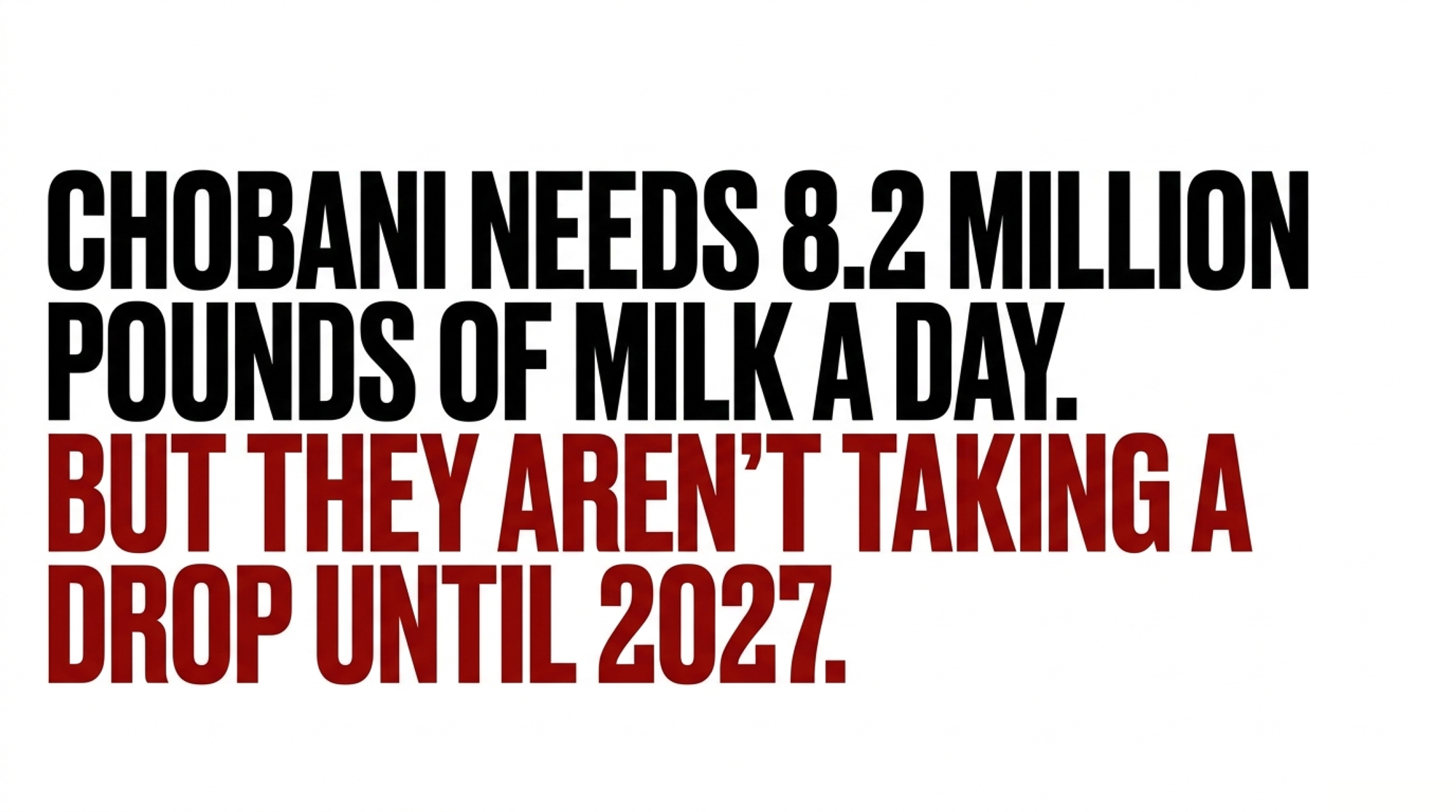
What none of them ran is the number that decides whether any of this reaches your barn: 8.2 million pounds of milk a day.
That’s roughly 30.8% of Pennsylvania’s entire annual production landing on a state dairy herd that has contracted for five consecutive years. But before you call your lender or order concrete, write down what sixth-generation Vermont dairyman Harold Howrigan — who also sits on Dairy Farmers of America’s board — told the Boston Globe when DFA moved to idle its St. Albans plant. Higher returns from farther-away plants do get passed back to farmers, he said. But “it’s not all gravy,” because the farmers themselves will have to pay for the increased transportation costs.
Production in Upper Macungie doesn’t start until 2027. The building purchase from Keurig Dr Pepper hasn’t closed. And no direct supply contract with a Pennsylvania producer has surfaced publicly.
You Already Lost $1.16 This Summer
Before any of that, there’s a cut that already landed. Two months before the Chobani announcement, Pennsylvania producers took a hit that got almost no coverage.
The Pennsylvania Milk Board deadlocked and issued no over-order premium order for July through December 2026 — Lancaster Farming reported the deadlock on June 12, and Farmshine confirmed on June 19 that no order had been issued. The premium in force was 50 cents per hundredweight, already the first sub-dollar rate since 2021 under General Order A-1022, plus a 66-cent fuel adjuster. Both expired at midnight on June 30. That’s $1.16/cwt gone, ending a 38-year-old program.
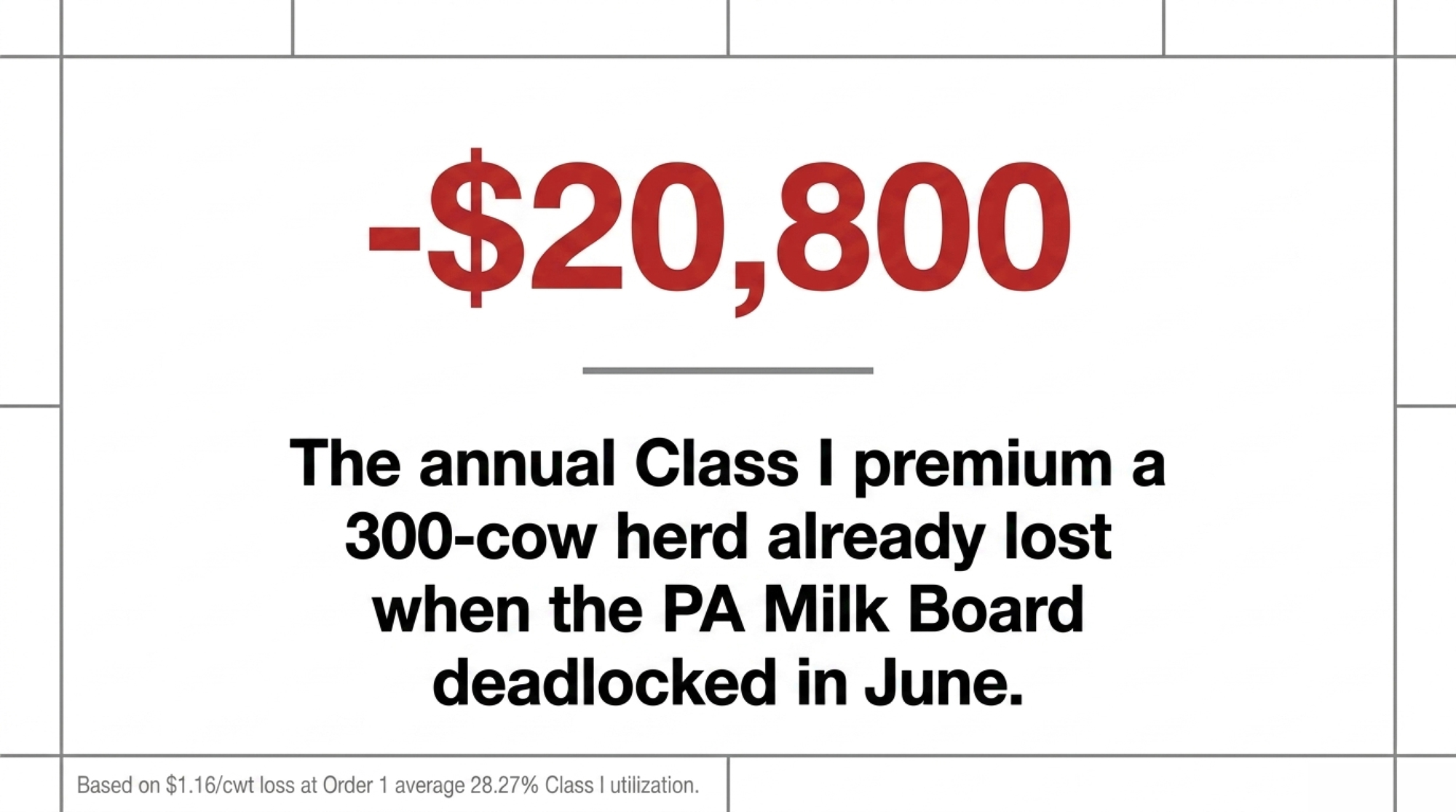
Put it against a 300-cow herd. At Pennsylvania’s average 21,121 pounds per cow, you’re shipping 63,363 cwt a year. Not all of that prices as Class I. Order 1 Class I utilization has run 28.27% year-to-date through April, per USDA AMS — so roughly 17,900 cwt of that milk priced Class I. At $1.16/cwt, that’s about $20,800 a year, gone before anybody said the word Allentown.
That assumes your milk pools at the order-average Class I utilization, which is how blend pricing works for a pooled producer. Your own figure moves with your handler’s mix.
| Component | Rate/Value | Annual Impact (300-cow herd) |
|---|---|---|
| Over-order premium (expired June 30) | $0.50/cwt | Included below |
| Fuel adjuster (expired June 30) | $0.66/cwt | Included below |
| Combined lost premium | $1.16/cwt | ~$20,800/year |
| Class I utilization (Order 1, YTD Apr) | 28.27% | ~17,900 cwt priced Class I |
| Program duration before expiration | 38 years | Ended with no replacement order |
So when you hear about a plant creating new demand, that’s the baseline it’s landing on. Not a neutral one. The full breakdown of that expiration is here.
What Chobani’s CEO Actually Said
Chobani announced the project on September 1, 2026: approximately $1.2 billion over five years for a 1.5-million-square-foot manufacturing and warehouse campus at 7356 Industrial Blvd. in Upper Macungie Township, creating more than 900 jobs. The plant first opened for production in 2021 under Keurig Dr Pepper. KDP will keep some current employees there in corporate functions; the rest are being offered jobs with Chobani.
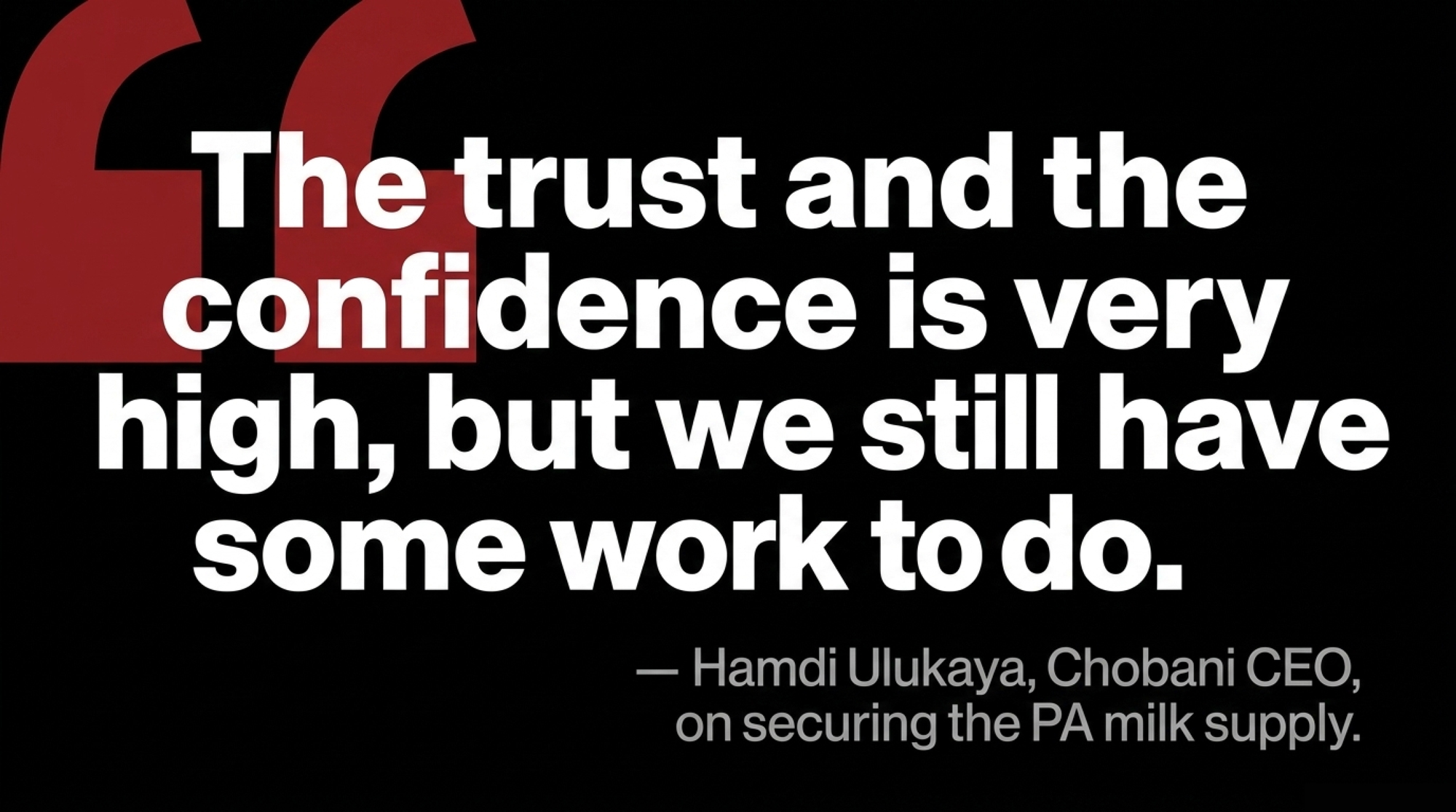
The next day, Chobani CEO Hamdi Ulukaya stood at Crystal Spring Farm near Schnecksville, a Land O’Lakes member operation, and told reporters he wants the plant to eventually draw 3 billion pounds of milk a year, all of it produced in Pennsylvania. He said he hadn’t previously seen a state commit to helping its farmers increase production the way Pennsylvania is. Then he added the line worth holding onto: “The trust and the confidence is very high, but we still have some work to do.”
Read that as what it is — the buyer saying the supply side isn’t settled. Not a warning, not a retreat. Just an accurate description of where things stand between an announcement and a signed agreement.
Pennsylvania Agriculture Secretary Russell Redding, speaking at the same event, framed the open question directly: “The discussion here has been about ‘how do you keep as many of these 4,300 farms as you can?’ How do you get the co-ops to really work with them to get herd-level improvements and efficiencies? How do you help them get expansions if they want to?”
Those are the right questions. None of them have been answered yet.
The Deal Is Real. The Contract Hasn’t Surfaced.
Keurig Dr Pepper has a definitive agreement to sell its full equity stake in Chobani back to the company for $800 million, plus roughly $125 million for the Allentown facility itself — lease, equipment, and operations included. That piece is locked down in writing.
The $1.2 billion works differently. It’s Chobani’s five-year capital plan, and Allentown is one piece of what the company describes as a broader commitment of more than $4 billion across its U.S. manufacturing network. Chobani is privately held, so there’s no filing behind the Allentown figure and no binding commitment you could show a lender. That’s not a knock on Chobani — that’s how every economic development announcement in America works. It matters because the state stacked $50 million in PA SITES grants and loans on Chobani’s side of the ledger.
| Item | Status | Detail |
|---|---|---|
| KDP equity buyback | Confirmed in writing | $800 million definitive agreement |
| Allentown facility purchase | Confirmed in writing | ~$125 million, lease/equipment/operations included |
| PA SITES grants to Chobani | Confirmed in writing | $50 million state package |
| Farmer supply contract | No public agreement | Zero signed contracts with any PA producer surfaced |
| $127M farmer loan/grant fund | Existing programs, not new | DCED says it will “drive out” existing capacity |
| Production start date | Committed | 2027, not before |
On the farmer side, Governor Shapiro said the state is providing up to $127 million in loans and grants to help dairy farmers expand herds, buy equipment, and meet the new milk demand. The Department of Community and Economic Development’s own wording is that the Commonwealth will “continue to drive out” that money — existing capacity pointed at a new purpose, not a new Chobani-specific fund with its own eligibility rules. Call the Bureau of Market Development at the Pennsylvania Department of Agriculture and expect the answer to depend on which existing program you land in.
Does the 30% Claim Actually Hold Up?
Yes. And checking it tells you something the announcement didn’t.
Pennsylvania produced 9.737 billion pounds of milk in 2025 from 461,000 cows, averaging 21,121 pounds per cow, according to the Center for Dairy Excellence’s state dairy overview drawing on USDA NASS data. Three billion against 9.737 billion is 30.8%. The state’s number is honest.
But look underneath it. That 9.737 billion was down about 45 million pounds from 2024 — the fifth consecutive year Pennsylvania’s production declined. The state also lost 11.7% of its dairy farms during 2025 alone, which Farmshine’s analysis of USDA data pegged at 41% of all U.S. dairy exits that year. Chobani’s target is measured against today’s output. Today’s output has been shrinking for half a decade.
So the real question isn’t whether Pennsylvania can supply 30%. It’s whether that 30% comes from new cows or from milk already in a tanker headed somewhere else.
The Value Is in the Solids, Not the Tanker
Here’s the distinction that should change what you do next. Chobani says Allentown will produce milk with more protein and less sugar than conventional milk, feeding into products including high-protein shakes. That’s a plant built around one component in particular.
Chobani hasn’t published how it will pay Pennsylvania producers. But under Federal Order pricing, manufactured-class milk is paid on components. So a plant built for high-protein products is a plant whose value runs through what’s dissolved in the tanker, not its raw volume.
That reframes the expansion question. The producer who improves true protein per cow is positioned to capture that value without buying a single head — assuming component premiums are available on your contract, which is worth confirming before you invest in the ration to get there. Meanwhile, the producer who adds 100 cows at industry-average components has taken on debt to deliver more of what the market is least short of. U.S. milk production hit a record 232 billion pounds in 2025, up 2.6% from 2024 per USDA NASS. Nobody is short of volume.
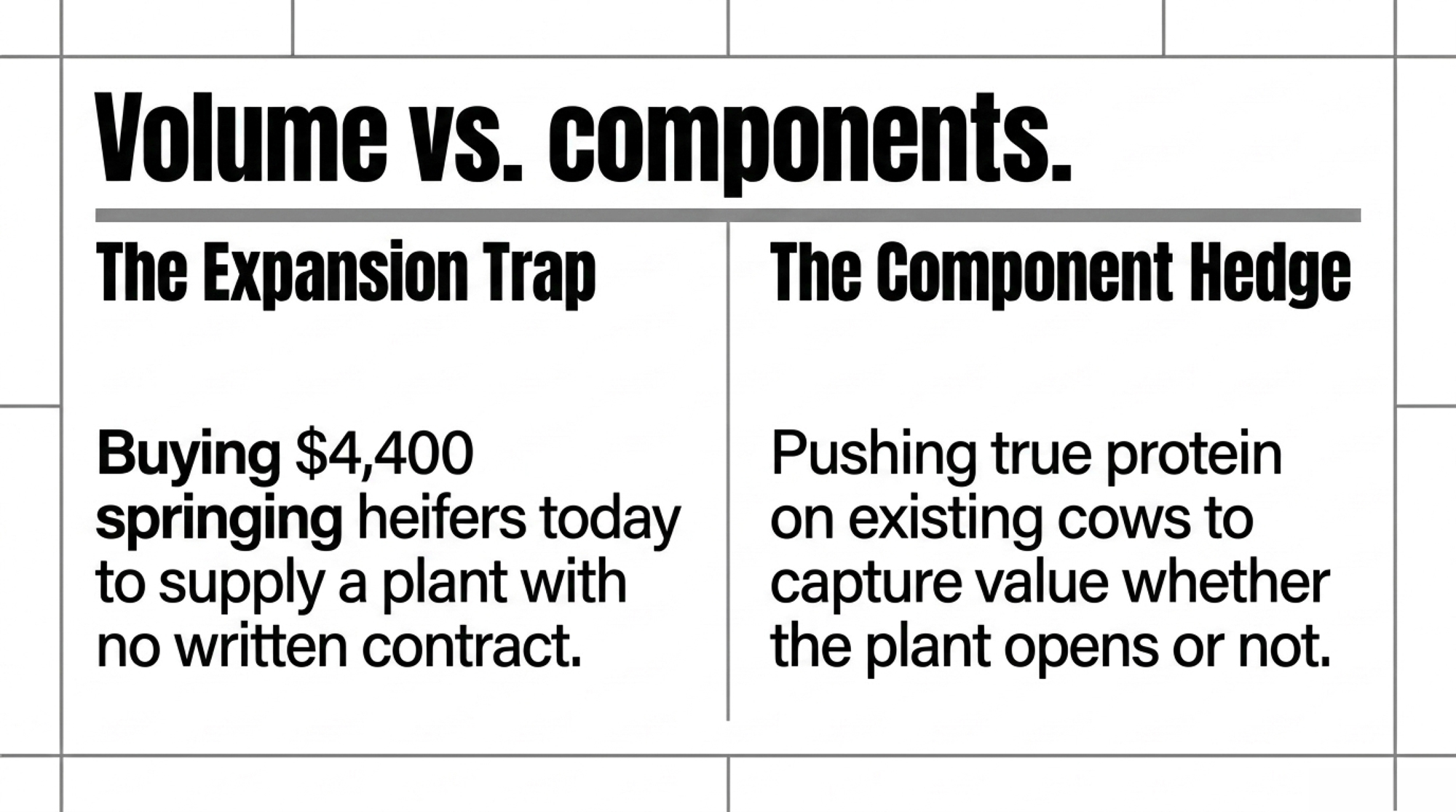
The genetic and ration work behind components is slow — you don’t move a component test in a quarter. But it’s the only response to this announcement that pays off whether Allentown opens on time, opens late, or never buys a pound from your farm. Butterfat still drives your Class III value regardless of who ends up with your milk. Component work isn’t a bet on Chobani. It’s a hedge against everybody.
Ask your nutritionist and your genetics rep the same question this month: where are my components against the herds you work with, and what’s the twelve-month path to moving them?
Will This Volume Reach Your Check, or Just the Pool?
This is the question almost nobody is asking, and it determines whether any of the above matters to you personally.
Northeast milk marketing runs heavily through cooperatives, which market members’ milk collectively and pay out on a blended basis. A new plant buying 3 billion pounds can strengthen the whole pool without a single individual farm seeing a distinct line item for it. That’s not a criticism of how co-ops operate — it’s the structure they operate inside. But it means “Chobani is coming” and “my milk check goes up” are two separate claims, and only the first one has been announced.
So put it to your board delegate directly, in writing: will volume associated with the Allentown plant be blended across the pool, or will there be direct farm-to-plant sourcing premiums for members who ship to it? If the answer is blended, your expansion math shouldn’t assume a farm-specific premium that doesn’t exist. If it’s direct premiums, ask what qualifies a farm — location, volume, components, or all three.
You’re entitled to ask before you borrow, not after.
The Freight Math
Freight is the channel you can measure. USDA’s Agricultural Marketing Service sets the Federal Order 1 mileage rate factor at $0.00814 per hundredweight per mile, effective March 1, 2024, under Final Rule 88 FR 84038. Applied to Pennsylvania’s state-average 21,121 pounds per cow:
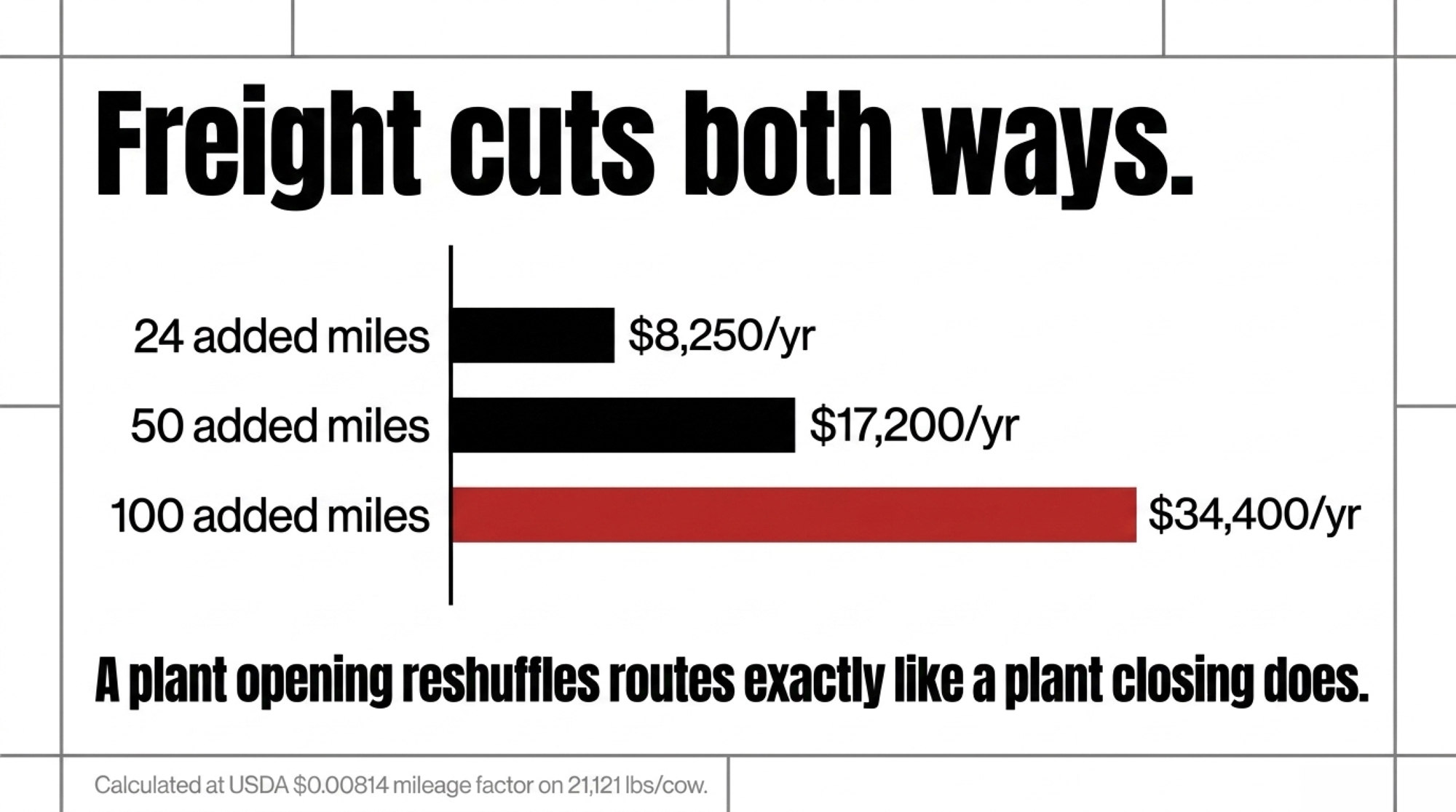
| Added one-way miles | Hauling cost per cwt | Annual cost, 200 cows | Annual cost, 400 cows |
| 24 miles | $0.195 | ~$8,250 | ~$16,500 |
| 50 miles | $0.407 | ~$17,200 | ~$34,400 |
| 100 miles | $0.814 | ~$34,400 | ~$68,800 |
| 180 miles | $1.465 | ~$61,900 | ~$123,800 |
Assumes 42,242 cwt annually at 200 cows and 84,484 cwt at 400 cows, using Pennsylvania’s 2025 state average of 21,121 lbs/cow.
As Vermont Public put it covering the St. Albans fallout, transportation costs show up as a deduction on farmers’ monthly milk checks. That’s where this lands. We ran the mileage math farm by farm after St. Albans closed — the pattern holds in either direction, because a plant opening reshuffles routes the same way a plant closing does.
Your Class III price already carries a second deduction most producers never see broken out. It’s the make allowance — the processing cost USDA subtracts before your milk gets priced. The final rule amending the Federal Milk Marketing Orders, issued January 2025 and effective June 1, 2025, raised all four: cheese from $0.2003 to $0.2519 per pound, butter from $0.1715 to $0.2272, nonfat dry milk from $0.1678 to $0.2393, dry whey from $0.1991 to $0.2668. Butterfat recovery in the Class III formula moved from 90% to 91%. When the allowance goes up, the regulated minimum comes down.
Then there’s what you’re allowed to see. Private handlers must itemize deductions under FMMO rules; cooperatives are exempt from that requirement. That’s a structural difference in what members can see, not a claim about any particular co-op’s practices. If your route changes and your deduction changes with it, ask how the number was built.
What the Math Looks Like on a 300-Cow Farm
This is a constructed scenario, not a real farm. Swap in your own numbers.
Say you’re milking 300 in Berks or Northampton County with barn room to push to 400. A hundred added cows at Pennsylvania’s average 21,121 pounds is 21,121 cwt of new milk a year. At August 2026’s announced Class III price of $16.64/cwt, that’s roughly $351,000 in added gross — before feed, labor, interest, or a single mile of freight.
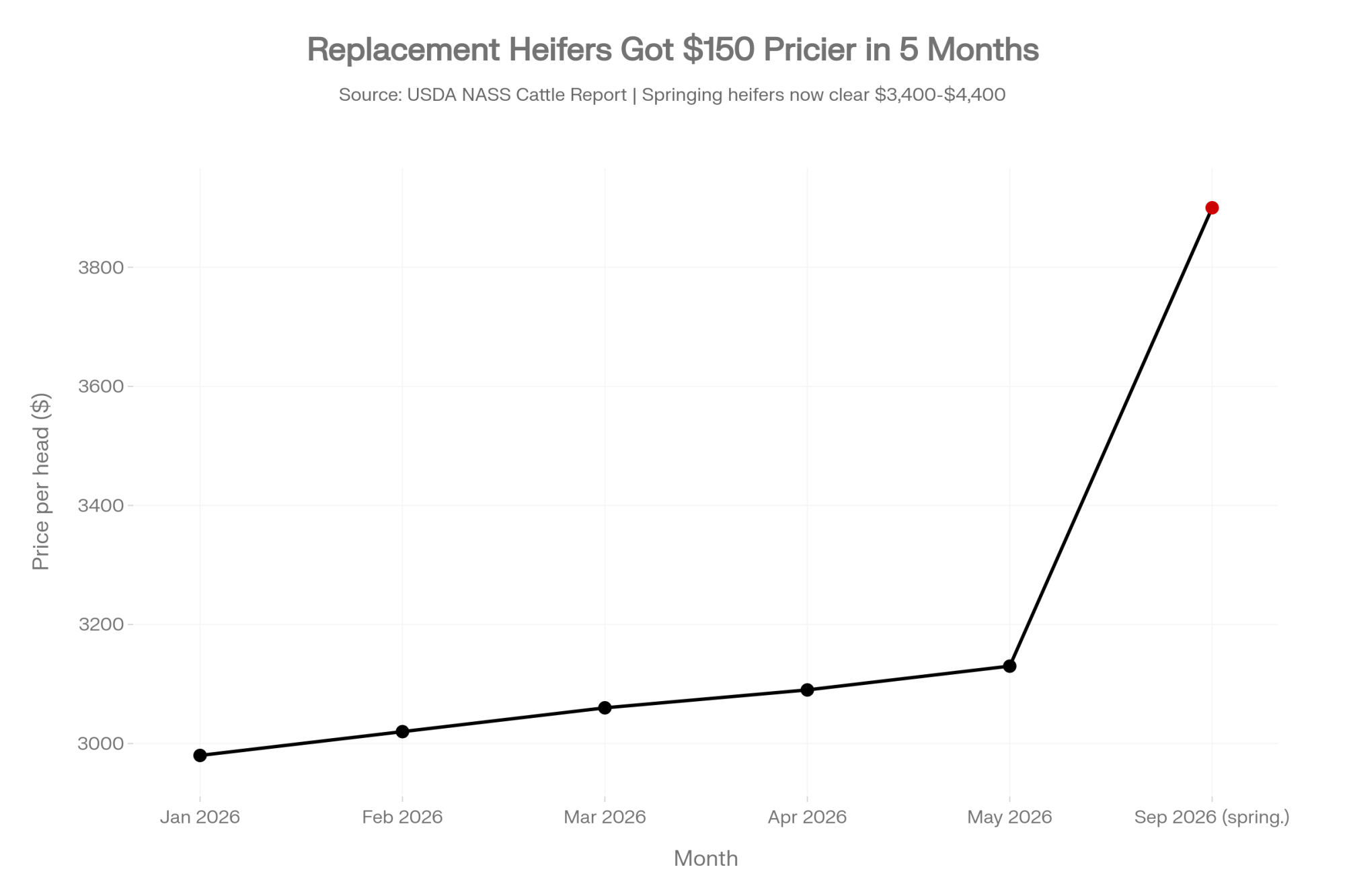
Now the other side. USDA quarterly estimates put replacement dairy cows at $2,980 per head in January 2026, rising to $3,130 by May. Top-quality springing heifers were clearing $3,400 to $4,400 this spring. Buy 25 head at $3,900 and you’ve spent $97,500 before you pour a foundation.
The supply behind those prices isn’t loosening. USDA’s January 1, 2026 Cattle report counted 3.90 million dairy replacement heifers, and USDA’s own Dairy Outlook notes that heifers per 100 milk cows sat at their lowest percentage since 1991 — with producers expecting 0.3% fewer heifers to calve this year despite a larger national herd. You’d be buying into a tight market to serve a buyer whose CEO just said there’s still work to do.
How Much Does Waiting 30 Days Actually Cost You?
Honestly? Not much. That’s the uncomfortable answer for anyone feeling urgency right now.
The plant isn’t taking milk before 2027. A heifer you buy in October doesn’t freshen and hit peak in time to matter for a 2027 startup anyway. What waiting costs is position in a tight replacement market where prices climbed $150 a head between January and May. That’s the honest trade — the animals get more expensive while you wait, but the buyer stays hypothetical. Where does your breakeven sit if replacements run another 5% higher next spring and there’s still no contract on the table?
Is Your Operation Actually Inside the Milk-Shed?
Being close to Allentown isn’t the same as having access to Allentown. A plant drawing 30 million cwt a year competes hardest inside roughly a 75-to-100-mile radius before freight economics eat what it can offer — which from Upper Macungie Township reaches into Berks, Bucks, Montgomery, Northampton, and Schuylkill counties, and possibly into Warren and Hunterdon counties in New Jersey. That’s a modeled radius built on standard hauling thresholds, not a Chobani sourcing map.
Here’s the threshold worth knowing. USDA’s 2026 all-milk price forecast sits at $19.85/cwt. At that price, about 24 extra one-way miles is where added freight starts eating 1% of your gross. Drop the milk price and the threshold tightens — measured against August’s $16.64 Class III, you hit 1% closer to 20 miles. That percentage holds whether you milk 120 cows or 500.
Do you know your actual haul distance and rate, or roughly? Roughly isn’t good enough when you’re deciding whether a new plant changes your basis.
Options and Trade-Offs
Wait for paper. Hold capital until a written supply agreement exists. Makes sense for nearly any operation without spare borrowing room. Processors building new capacity typically secure a supply base ahead of startup, so ask how early agreements for this plant are expected to be finalized and whether herd size factors into the sequence. Redding’s own question — how do you help farms expand if they want to — hasn’t been answered with a mechanism yet.
Expand only to demand you already have. Add cows to the level your current buyer wants today, and treat Chobani as upside rather than justification. Works if your handler has already signaled it wants more volume. You leave some potential upside on the table. That’s what the certainty costs.
Build components instead of headcount. Covered above, and it’s the path with the widest margin for error. It pays whether or not this plant ever buys from you.
| Strategy | Upfront Cost | Payoff If Plant Delays/Falls Through | Payoff If Plant Delivers |
|---|---|---|---|
| Buy 25 heifers now ($3,900 avg) | $97,500 | Sunk cost, no return | Delayed revenue, uncertain premium |
| Wait for written supply contract | $0 | No loss, full flexibility | Slightly delayed entry only |
| Build true protein/component premiums | Nutritionist/genetics cost | Still pays via Class III/component pricing | Captures premium without new debt |
Do this within 30 days. Send the checklist below. Not a phone call you’ll half-remember — an email you can file.
Worth knowing where this sits nationally: more than $11 billion has gone into new dairy plants across 19 states, and the map has clear winners and losers. Pennsylvania just landed on the right side of it. That doesn’t automatically mean your farm did.
The Co-Op Director Checklist
Copy these into an email to your co-op director. Send it this week. Keep the reply.
On the contract:
- Does a written supply agreement tied to the Allentown plant exist for our region, or is one under negotiation? If yes, what’s the timeline for member offers?
- If an agreement is offered, will it specify committed volume, price basis, contract term, and what happens if the plant’s start date moves past 2027?
On the pool:
- Will volume associated with the Allentown plant be blended across the pool, or will there be direct farm-to-plant sourcing premiums for members who ship to it?
- If direct premiums exist, what qualifies a farm — location, volume, component levels, or a combination?
On freight:
- What is my farm’s projected routing for the next twelve months: receiving plant, one-way miles, hauling rate per cwt, and location differential?
- If my routing changes, how and when will I be notified, and how is the new hauling deduction calculated?
On components:
- Where do my butterfat and true protein tests sit against the co-op average, and what component premiums are currently available to me?
On the state money:
- Which specific Pennsylvania loan or grant program would my operation qualify under, and what are the eligibility and repayment terms? (If they can’t answer, call the Bureau of Market Development at the Pennsylvania Department of Agriculture directly.)
Anything you get verbally, ask for in writing. A field rep’s optimism isn’t a commitment, and neither is a governor’s press conference.
The Verdict
Let the operations that can absorb a miss take the risk on $4,400 springing heifers. If you’re running 150 to 500 cows, your play isn’t expansion — it’s efficiency. Push components on the cows you already own, tighten what leaves in the cull pen, and if a regional demand squeeze does materialize as the plant ramps, be positioned to negotiate a better basis from the handler you already ship to. That’s how a mid-sized operation captures value from a plant it doesn’t have a contract with.
A billion-dollar plant down the road doesn’t protect you from a bad milk check. The producers who win when Allentown opens won’t be the ones who gambled their balance sheets on $4,400 heifers. They’ll be the ones who forced their co-ops to put freight deductions, component premiums, and destination clauses in writing today.
So send the email. Then check what your neighbors get back — because if their answers differ from yours, that tells you something about how this pool actually works.
Key Takeaways
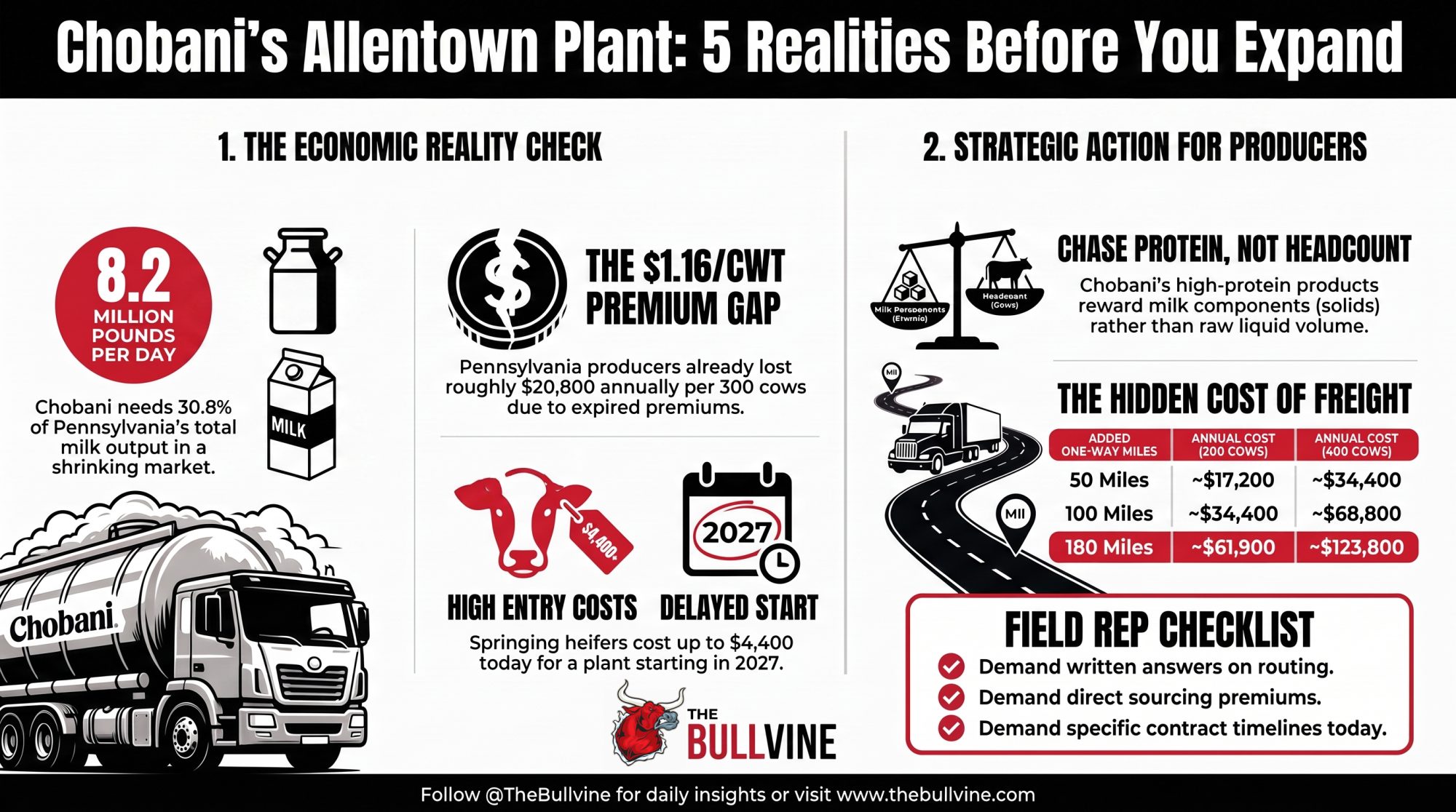
- The $1.16/cwt over-order premium expired June 30 with no replacement order. On a 300-cow herd at Order 1’s 28.27% Class I utilization, that’s about $20,800 a year already gone — recalculate your Class I revenue before you model anything Chobani-related.
- Allentown doesn’t take milk until 2027, but springing heifers were clearing $3,400 to $4,400 this spring. Buying replacements now against a plant with no public supply contract means carrying that cost through a start date nobody has committed to in writing.
- Chase protein instead of headcount. A plant built for high-protein products pays through components, and component work holds its value whether or not your milk ever reaches Upper Macungie.
- Get the routing answer in writing this week: which plant, how many miles, what rate per cwt. At USDA’s $0.00814 mileage factor, 50 added one-way miles costs a 200-cow herd roughly $17,200 a year — and a plant opening moves routes the same way St. Albans closing did.
The full milk-shed derivation, the county-level radius map, and the 300-cow break-even model — including what happens if the 2027 start slips — are coming in Bullvine Weekly. That’s where the numbers behind the decision live.
The Sunday Read Dairy Professionals Don’t Skip.

Every week, thousands of producers, breeders, and industry insiders open Bullvine Weekly for genetics insights, market shifts, and profit strategies they won’t find anywhere else. One email. Five minutes. Smarter decisions all week.
Complete references and supporting documentation are available upon request by contacting the editorial team at editor@thebullvine.com.
Learn More
- The $11 Billion Dairy Boom: Where the Money Went and What It Means for Farmers — Maps out where mega-processing capital landed nationwide, contrasting regional winners and losers so you can identify whether your local milk shed actually captures premium value or faces route consolidation.
- DFA Idles Historic St. Albans Creamery in Shift Toward Higher-Return Outlets — Breaks down how plant consolidations shift hauling deductions directly onto farm milk checks, arming you with real per-hundredweight freight calculations before co-op route reshuffling quietly cuts into your margin.
- Transparency Under Fire: Farmers Demand to See Deductions as Milk Checks Shrink — Exposes the regulatory exemptions allowing cooperatives to withhold itemized freight and hauling charges, showing you how to challenge blended-pool reporting and demand farm-specific settlement sheets in writing.