

Archive for dairy profitability – Page 7

Beyond Entertainment: How “Green and Gold” Is Reshaping Agricultural Advocacy

How can new advocacy models help dairy farmers tackle today’s mounting mental health challenges?

Executive Summary: Dairy farmers face a growing mental health crisis, with studies indicating that 75% experience significant stress and that suicidal ideation rates are about double those of the general population. Recent data from the University of Guelph and the National Rural Health Association highlight these concerning trends amid volatile markets and operational pressures. Innovative approaches, such as Culver’s engagement-linked donations to the documentary ‘Green Gold,’ alongside community-based programs like the Farmer Angel Network and Farm Family Alliance, are reshaping the support flows for farms. These initiatives demonstrate how authentic storytelling and transparent engagement can break cultural barriers and connect consumers with farms. While challenges remain, early signs suggest that these models provide scalable, localized solutions that are sensitive to seasonal rhythms and regional needs. For dairy operations aiming to thrive in 2025, integrating a mental health focus with consumer engagement is increasingly critical.

Key Takeaways:

  • 75% of dairy farmers report moderate to high stress—addressing mental health proactively can improve resilience and productivity.
  • Consumer-linked philanthropy, tied to storytelling, now raises millions of dollars annually, reflecting genuine engagement.
  • Community programs, such as the Farmer Angel Network, offer culturally sensitive support tailored to dairy farming lifestyles.
  • Recognizing regional challenges—from Northeastern pasture systems to Western heat stress—is crucial for effective advocacy.
  • Open dialogue and accessible resources empower farmers to sustain their operations amid growing pressures.

You know, sometimes a story cuts right through all the industry noise. I’ve been reflecting on “Green and Gold,” that independent documentary about a Wisconsin dairy farm teetering on foreclosure. What really caught my attention wasn’t just the film itself, but how Culver’s approached their partnership in a way that’s quite different from the usual corporate playbook.

Instead of the traditional write-a-check-and-take-a-photo routine, they tied their donations directly to viewer engagement. Every time someone watched the film, a dollar went to farmer mental health organizations. That creates a whole new dynamic—and from what I’m seeing across the industry, it could really change how we think about supporting our farming communities.

The Mental Health Reality We’re All Dealing With

Look, if you’ve been managing a dairy operation for any length of time, you know the weight of stress isn’t just some abstract concept. The latest research from the University of Guelph puts some hard numbers to what many of us experience daily—about 75% of farmers are dealing with moderate to high stress levels, and the rate of suicidal thoughts is running about twice that of the general population.

I was talking with a producer from Vermont just last month who said something that really stuck with me: “It’s like there’s no off switch anymore. You’re constantly thinking about feed costs, milk prices, weather patterns—your mind never really gets a break.” Whether you’re running a seasonal grazing system in New England or managing a 2,000-head operation in the Central Valley, those pressure points hit remarkably similar notes.

The National Rural Health Association data tells an even starker story—farmers face suicide rates nearly four times higher than the general working population. For male farmers specifically, we’re looking at rates about 50% higher than their non-farming peers. These aren’t just statistics… these are our neighbors, our colleagues, sometimes our family members.

What’s encouraging, though, is seeing organizations step up with approaches that actually fit our culture. The groups receiving support through this Culver’s initiative—Farmer Angel Network, Farm Family Wellness Alliance, and National FFA—they’re taking community-focused approaches that work within farming culture rather than against it.

Rethinking Corporate Agricultural Support

Here’s where Culver’s model really shifts the paradigm. Rather than allocating a fixed annual donation (which is usually the case), they created a scalable solution. Since launching their Thank You Farmers Project in 2013, they’ve generated over $6.5 million for agricultural causes—with $1.5 million raised just this past year, according to their corporate reports.

But here’s what makes this particularly interesting for operations of different scales: whether you’re managing a 100-cow family dairy in Iowa or overseeing a large organic facility in Colorado, this model demonstrates how consumer engagement can translate directly into meaningful support. The funding grows with genuine interest rather than being capped by corporate budget limitations.

A dairy farmer from Wisconsin told me recently, “When companies actually connect their support to real engagement with our stories, it feels different. It’s not charity—it’s partnership.”

The Power of Authentic Agricultural Stories

The film’s boldest choice—showing a dairy farmer literally betting his farm’s survival on a Green Bay Packers game—might sound wild to folks outside agriculture. But any of us who’ve faced impossible financial pressures recognize that moment when rational options have been exhausted and you’re weighing decisions that would seem crazy under normal circumstances.

This kind of honest storytelling does something powerful: it breaks down the myth of the unbreakable farmer that’s kept too many of us silent about real struggles. I’ve seen this pressure play out differently across regions—drought stress in California herds, labor challenges in Northeast operations, volatile feed costs hitting Midwest dairies—but the psychological weight is remarkably consistent.

As one Texas dairy producer shared with me, “Seeing someone on screen making those impossible choices… it makes you realize you’re not the only one who’s been there.”

Support Systems That Actually Work in Farming Culture

The Farmer Angel Network was founded in response to a tragic loss in Sauk County, Wisconsin, and its approach focuses on fellowship and community education rather than clinical intervention. They understand something crucial—in farming culture, support systems need to respect our rhythms and values.

Meanwhile, the Farm Family Wellness Alliance has developed a layered approach: anonymous peer support through digital platforms (think 24/7 access that accommodates milking schedules) combined with professional counseling services tailored to the unpredictable seasonal demands of farming. What’s smart about this model is recognizing that farmers need both community connection and professional expertise, but delivered in ways that work with our realities.

And we can’t overlook the National FFA’s role in this mix. With over a million active student members currently, they’re addressing what might be our most critical long-term challenge—ensuring agriculture has a next generation that wants to stay engaged.

A farm wife from Pennsylvania put it perfectly: “The best support understands that a 4 AM call about a difficult calving isn’t just work stress—it’s life or death for that calf and our cash flow.”

Understanding the Cultural Competency Gap

Here’s something that’s been bothering me for years: so many well-intentioned support programs miss the mark because they’re designed by people who’ve never actually lived through a difficult calving season or watched milk prices tank just as you’re budgeting for next quarter’s feed purchases.

Growing up around dairy operations teaches you things you can’t learn from textbooks—like understanding that scheduling mental health workshops during planting season guarantees empty rooms, or knowing that farmers need support systems that strengthen community networks rather than treating every challenge as an individual problem.

What I find encouraging about authentic approaches like “Green and Gold” is how they demonstrate that audiences—both farming and non-farming—can distinguish genuine agricultural storytelling from corporate messaging, even when both claim to “support farmers.”

Looking at Broader Implications

We’re witnessing what I’d call the emergence of consumer-mediated agricultural advocacy. When consumers can directly support farming communities through authentic content engagement, it eliminates some of the institutional gatekeepers who’ve traditionally controlled agricultural narrative and resource allocation.

This direct connection model scales with consumer interest rather than bureaucratic approval processes—and that’s significant because traditional agricultural institutions often operate with fixed budgets and political constraints that limit responsiveness to actual farming community needs.

Now, this raises some interesting questions… How do these new models complement existing extension services? What happens to traditional agricultural advocacy organizations? Early indications suggest we’re looking at a supplement rather than a replacement, but the landscape is definitely shifting.

Regional Applications and Variations

While the Farmer Angel Network model started in Wisconsin, I’m seeing similar community-based approaches emerging across different dairy regions:

  • Northeast operations dealing with seasonal grazing challenges and processing consolidation, where programs need to account for winter housing transitions and maple syrup season conflicts
  • Western dairies are navigating water restrictions and heat stress management, requiring support systems that understand the unique pressures of managing large herds in arid climates
  • Southern farms managing diverse labor forces and expanding market opportunities, where cultural sensitivity becomes even more critical
  • Midwest operations are balancing expansion pressures with environmental regulations, facing the classic squeeze between growth demands and compliance costs

Each region presents unique stressors and cultural considerations that effective support systems must address.

Key Takeaways for Dairy Operations

What we’re learning is that authentic agricultural storytelling creates cultural permission for discussing sensitive topics that traditional agricultural media has historically avoided. Breaking the silence around farming struggles becomes the foundation for building community support systems rather than suffering in isolation.

The most effective agricultural advocacy seems to amplify farming voices rather than replacing them with institutional messaging. This represents a shift from charity-based support models toward partnership approaches that recognize farming communities as capable advocates for their own needs.

For those of us managing operations today, there are some practical implications worth considering:

  • Mental health resources work best when they’re community-based and culturally appropriate
  • Consumer engagement models offer new pathways for sustainable agricultural support
  • Authentic storytelling about farming realities creates stronger advocacy than sanitized messaging
  • Support systems need to respect seasonal demands and community relationships
  • Early intervention is more effective than crisis response—building support networks before they’re desperately needed

The Bottom Line

The success of initiatives like “Green and Gold” suggests we’re at an interesting inflection point where agricultural advocacy can become more effective by creating direct connections between farming communities and broader society, rather than relying solely on traditional institutional channels.

For farming communities facing unprecedented economic and psychological pressures—whether you’re managing fresh cow transitions in Wisconsin or optimizing dry matter intake in California—this model offers hope that authentic storytelling combined with community support can create sustainable pathways forward.

Sometimes the most effective agricultural advocacy comes from simply telling the truth about farming life and trusting that people care enough to help when they understand what’s really happening on our farms. Based on what we’re seeing with these consumer-driven initiatives, that trust appears to be well-placed.

The transformation is already underway. The question for all of us is how we’ll participate in building support systems that actually serve farming communities rather than just looking good in corporate annual reports.

Complete references and supporting documentation are available upon request by contacting the editorial team at editor@thebullvine.com.

Learn More:

The Sunday Read Dairy Professionals Don’t Skip.
Every week, thousands of producers, breeders, and industry insiders open Bullvine Weekly for genetics insights, market shifts, and profit strategies they won’t find anywhere else. One email. Five minutes. Smarter decisions all week.
NewsSubscribe
First
Last
Consent

The Carbon Credit Conversation: What’s Really Happening on Dairy Farms Today

Could your dairy benefit from $130/acre tax credits starting 2025? New programs are changing the carbon conversation.

EXECUTIVE SUMMARY: What farmers are discovering across the Northeast and Midwest is that carbon reduction strategies are delivering real cash flow benefits, not just environmental compliance. Recent data from Vermont’s Ben & Jerry’s Low Carbon Dairy program shows participating farms achieving 16% greenhouse gas reductions without sacrificing production, while generating measurable revenue improvements. Feed additives like 3-NOP are proving their worth at $93-$105 per cow annually, delivering 22-35% methane reductions and up to 5% feed efficiency gains that translate to potential savings of $14,000-$25,000 per 1,000-cow operation. Australian dairy operations demonstrate solar’s impact with 70% electricity bill reductions and two-year payback periods, while California digesters—despite $8.6 million investments for 2,500-cow operations—generate returns through $60 per metric ton carbon credits plus renewable gas sales. Government support is substantial, with USDA programs covering up to 75% of implementation costs and the new 45Z tax credit offering over $130 per acre starting in 2025. The key insight emerging from successful operations is that a phased approach works best—starting with operational improvements and feed additives, then adding solar and eventually digesters—allowing farms to build cash flow while positioning for an evolving market that increasingly rewards measurable carbon reduction.

KEY TAKEAWAYS

  • Proven returns from feed efficiency: 3-NOP additives reduce methane emissions 22-35% and improve feed efficiency up to 5%, potentially saving $14,000-$25,000 annually per 1,000 cows, with Ohio State Extension confirming costs at $93-$105 per cow yearly.
  • Solar delivers quick payback: Australian dairy operations report 70% electricity bill reductions with systems paying for themselves in two years, making the $140,000-$200,000 investment for 70kW systems increasingly attractive with federal incentives through 2032.
  • Government programs provide substantial support: USDA’s EQIP and CSP programs cover up to 75% of implementation costs, while the 2025 launch of the 45Z tax credit offers over $130 per acre for carbon intensity reduction without complex contract requirements.
  • Regional strategies matter: European mandatory carbon pricing creates different dynamics than North American voluntary markets, requiring tailored approaches whether you’re in California (with LCFS credits), the Midwest (with ethanol partnerships), or the Northeast (with compliance advantages).
  • Phased implementation maximizes success: Start with operational improvements and feed additives for immediate returns, add solar when ready, then consider digesters for long-term revenue—allowing farms to build cash flow progressively while adapting to evolving carbon markets.
dairy farm sustainability, carbon credits, dairy profitability, methane reduction, farm efficiency

You know, there’s been a ton of chatter about going carbon neutral in dairy—with so many folks thinking you need huge investments, like $50,000 or more—but here’s what I’ve found from chatting with friends across the Northeast and Midwest: it’s a pretty different story. And honestly, it’s encouraging.

I talked with a dairy farmer in Vermont who’s part of the Ben & Jerry’s Low Carbon Dairy program. Across seven farms, they manage to cut greenhouse gases by around 16%, without dropping production.

What’s really interesting is they’re seeing actual cash flow benefits too—that was featured in Dairy Herd Management last year. Funny how what we hear in the milkhouse doesn’t always match the cold, hard numbers coming out of the barns.

What Does It Really Cost?

Feed additive investments of $93-$105 per cow annually can generate $14,000-$25,000 in feed savings for 1,000-cow operations, demonstrating compelling return potential.

Let’s get down to numbers. Take feed additives—like 3-NOP, commercially called Bovaer. According to Ohio State Extension’s 2024 research, they’ve got a price tag of about $93 to $105 per cow per year. At first glance, that might seem like a lot. But with methane reductions averaging between 22 and 35%, and feed efficiency improvements up to 5% (though these vary based on your transition period management and your ration), it starts to make sense.

I ran these numbers by some nutritionists in Wisconsin and Ohio. They said potential feed savings could come in between $14,000 and $25,000 annually on a 1,000-cow farm, though your results will definitely depend on your baseline efficiency and management style.

Speaking of Wisconsin operations, I recently heard from a farm that was able to boost butterfat performance and overall feed conversion by tightening rations and cutting refusals—all with additives and some smart fresh cow management. What’s worth noting is how much your existing setup affects these results… a producer running an already efficient program might see more modest gains than someone with room for improvement.

Down under in Australia, dairies have been slashing their electric bills by as much as 70%. Those solar systems, typically around 70kW and costing $140,000 to $200,000 before incentives, can save between $45,000 and $100,000 per year. One dairy in Victoria got their initial investment back in just two years, according to Dairy Global.

For the Big Players

Let’s not forget digesters. EPA AgSTAR data puts the cost of setting one up on a 2,500-cow farm at about $8.6 million. But here’s where it gets interesting—California’s Low Carbon Fuel Standard currently values methane reduction credits closer to $60 per metric ton. That’s a far cry from some of the historic highs we heard about, but when you toss in renewable gas sales and RIN credits, the payback tends to be between seven and ten years.

From what I hear, many farms take a phased approach here. Get started with feed additives for earlier returns, add solar systems when the timing feels right, and think about digesters as a longer-term play.

Don’t Overlook Government Help

One thing worth noting is the scale of support out there. USDA programs like EQIP and Conservation Stewardship Program can cover up to 75% of your implementation costs, which is serious help, per NRCS documentation. And last year, the Regional Conservation Partnership Program set aside $25 million for projects focused on emissions near ethanol plants.

Big news for 2025—the 45Z tax credit is rolling out, expected to pay upwards of $130 an acre to farms lowering their carbon intensity. And it doesn’t come with the same red tape or exclusive contracts that carbon markets often require.

That said, watch out: these programs tend to get oversubscribed. A lot of farms are lining up, sometimes three for every dollar available. Your local NRCS office can walk you through applications—I’d suggest calling them sooner rather than later.

What’s Going on in Carbon Markets?

: The carbon credit market divides between commodity credits ($20-$60/ton) and premium credits ($80-$120+/ton), with premium opportunities becoming increasingly limited.

Carbon credits break down into two tiers. The commodity credits typically trade in the $20 to $60 range per ton, while premium credits fetch $80 to $120 or more.

Ben & Jerry’s participants often secure those premium prices and keep around 75% of their revenue, though exact cuts vary with each contract. But the program’s mostly closed now to newcomers.

If you’re outside that circle, there are secondary markets, often through groups like Truterra—they’ve paid farmers over $21 million for carbon sequestration in recent years—but they’re paying less attractive rates while still providing value.

Small Yet Mighty Steps

Here’s what I find most encouraging—the biggest wins often come from simple changes. Better ration balancing, consistent TMR management, and cutting refusals can boost overall feed conversion and milk components, though the degree varies quite a bit based on your starting point and facility setup.

These improvements don’t cost much, usually a few thousand dollars. But the return? Often solid when you get the management details right.

I recently spoke with a 300-cow operation in Pennsylvania where they focused on reducing feed waste and improving their dry lot management. Their investment was under $5,000, but they’re seeing measurable improvements in both feed efficiency and butterfat levels.

Solar’s still a strong pick. Federal incentives through 2032 make the decision easier, and newer methane capture tech is promising—we’re watching those closely as they develop.

Regional Realities

Critical dates for dairy carbon programs include the 45Z tax credit launch in January 2025, extended federal solar incentives through 2032, and Europe’s carbon pricing escalation starting in 2030.

Europe, including Denmark, is preparing for mandatory carbon pricing, with a target of €40 per ton in 2030, rising to €100 by 2035. That creates certainty but also unavoidable costs.

Here in North America, voluntary markets dominate, but corporate buyers are tightening requirements. Farmers in Pennsylvania and New York, facing stricter environmental requirements, are finding these programs help them get ahead of compliance while improving margins. Wisconsin producers often have better access to ethanol plant partnerships. And California farmers are capitalizing on the Low Carbon Fuel Standard—a unique state-level program with real financial teeth.

Let’s Talk Challenges

Cash flow timing challenges are real. Additives show returns fast—often within months—but solar installations and carbon credit revenue take longer to materialize.

Supply chains are tight, too. I’ve heard producers waiting months for additive supplies or solar installation slots. The documentation requirements for carbon programs can be more intensive than expected.

And paperwork—don’t underestimate it. One Pennsylvania farmer told me, “You’ve got to have your records in order or the whole effort stalls.”

Results vary hugely, too. One Ohio operator shared that adjusting his ration made all the difference in maximizing additive benefits. It’s those fresh cow protocols and transition period tweaks that often tip the scales.

What’s Working

If you want real success stories, California’s digesters are becoming cash engines, supported by both public funds and market credits to create predictable income streams.

Natural Prairie Dairy’s comprehensive approach achieves a 96% reduction in CO2 while generating substantial operational savings, a notable achievement for a large-scale operation with significant capital investment.

Vermont’s Ben & Jerry’s farms have done a remarkable job balancing profitability while cutting emissions across different operation sizes.

What’s Next?

Thinking about jumping in? Here’s what I’d suggest based on what I’m seeing work:

  • Keep an eye on the 45Z tax credit rolling out in 2025—could be significant for many operations
  • Act early on government cost-share programs—they fill fast, but the support is real
  • Consider proven feed additives as a practical first step with documented returns
  • Explore solar options while federal incentives and utility rebates are available
  • Stay tuned to emerging methane capture technologies as they develop

Timing matters. Early adopters often find they’re best positioned for whatever regulatory changes come next.

The Bottom Line

Carbon neutrality isn’t some far-off ideal anymore. It’s becoming a practical business strategy for operations that approach it thoughtfully.

The farms I know that are making the greatest headway start small, sharpen their management, and then add technology in phases that fit their cash flow and operational style.

The producers generating returns from carbon reduction aren’t necessarily running the largest operations or using the most expensive technology. They’re the ones who balanced learning with action, adapted strategies to their specific circumstances, and didn’t wait for perfect information.

Waiting for perfect data or the perfect check book usually costs more than moving on with what you know today.

The biggest winners are those who learn quickly, monitor their results, and act decisively based on what works for their operation.

And that, just might be the best advice I can share over a cup of coffee.

What’s the one small step you could take this week to get the carbon conversation started on your farm?

For grant help, check your local NRCS office or visit farmers.gov. To explore carbon credits, look to Truterra and other platforms. Remember, every farm’s different—so work with your nutritionist, extension agent, or trusted advisors before making big changes. Individual results will vary based on management, facilities, and local conditions.

Complete references and supporting documentation are available upon request by contacting the editorial team at editor@thebullvine.com.

Learn More:

The Sunday Read Dairy Professionals Don’t Skip.

Every week, thousands of producers, breeders, and industry insiders open Bullvine Weekly for genetics insights, market shifts, and profit strategies they won’t find anywhere else. One email. Five minutes. Smarter decisions all week.

NewsSubscribe
First
Last
Consent

The Great Dairy Realignment: What’s Really Happening as Global Production Reshapes Competition

India now produces 31% of the world’s milk—reshaping global dairy production in unprecedented ways.

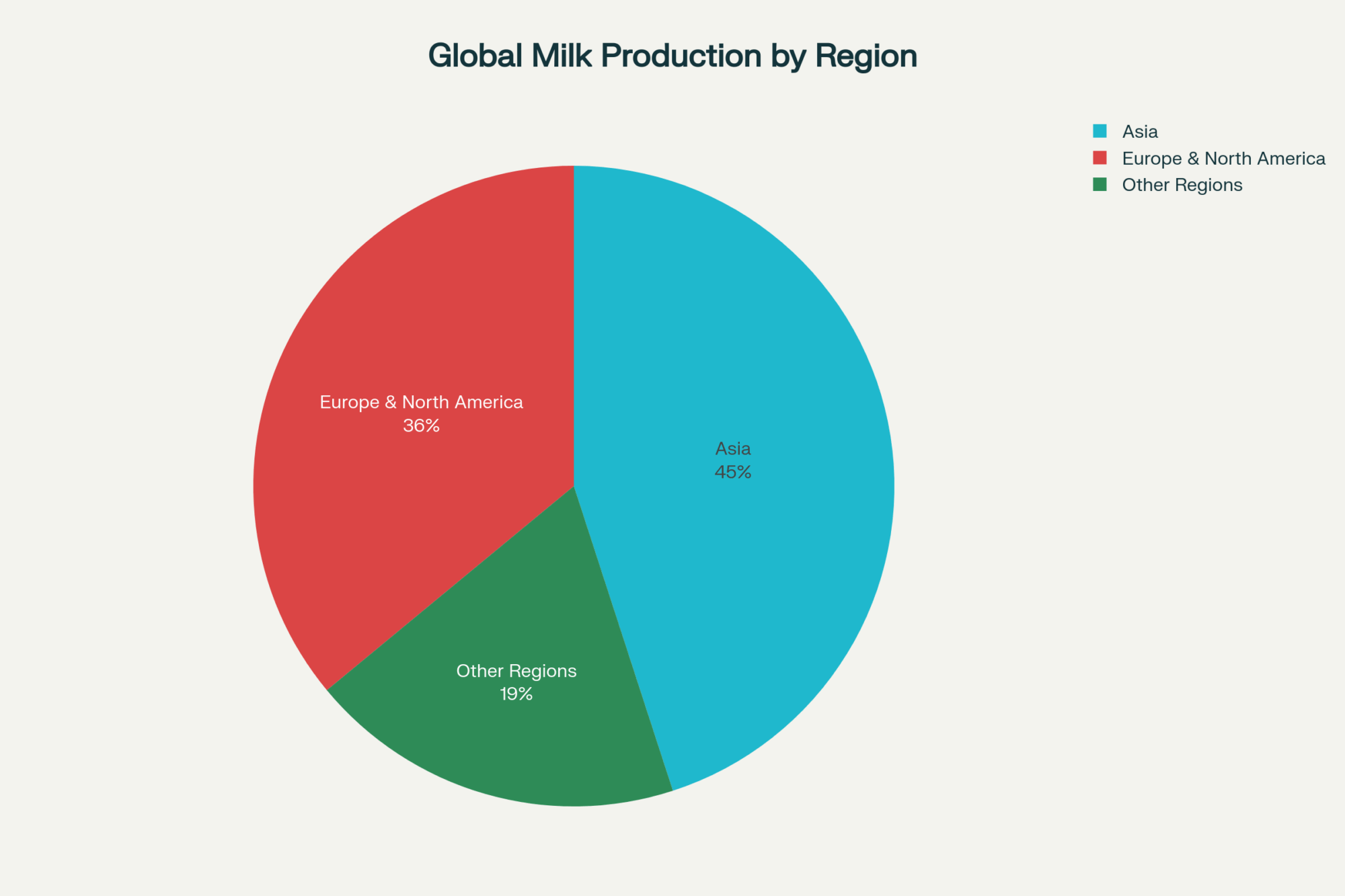
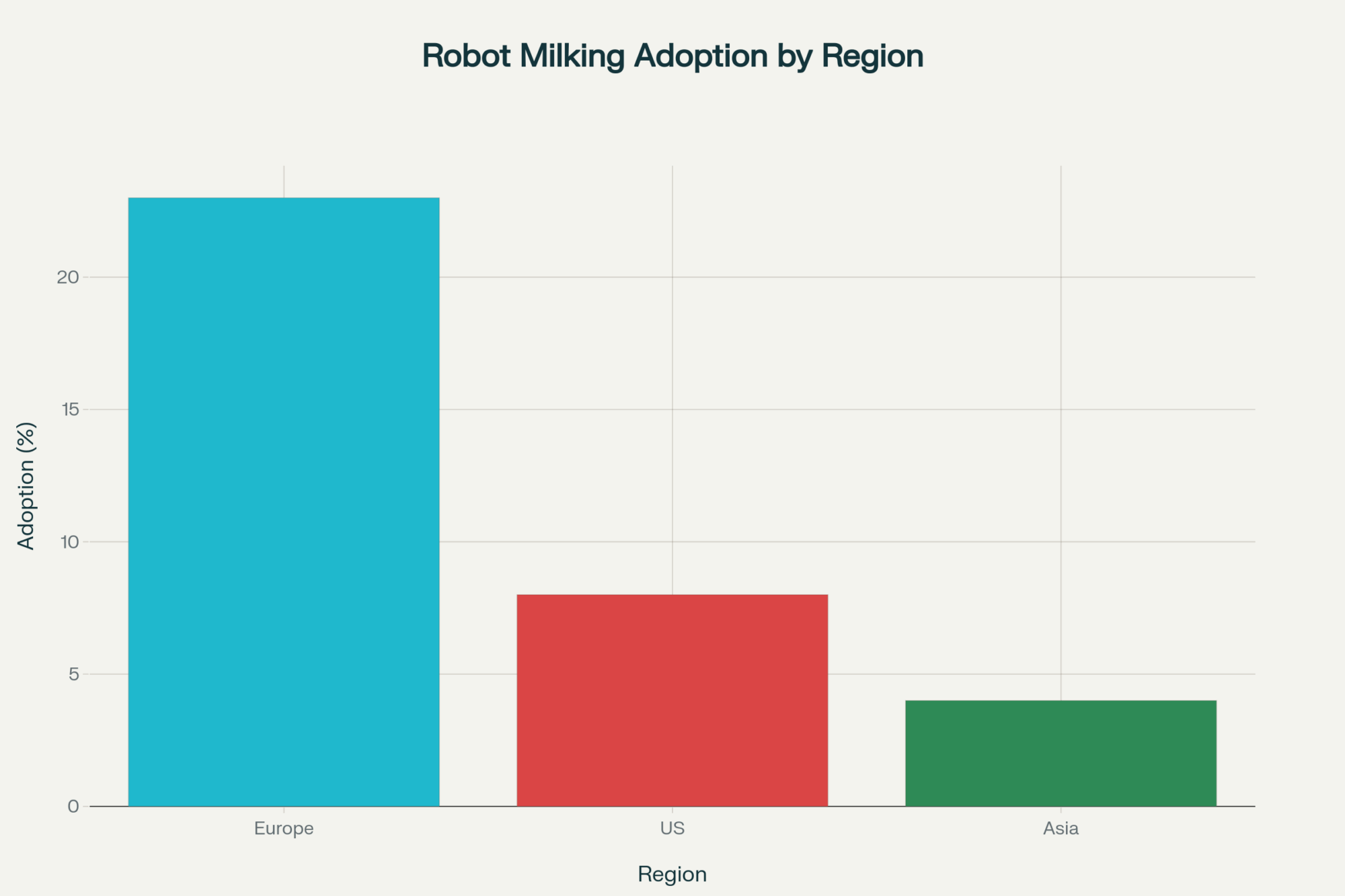
EXECUTIVE SUMMARY: India has surged to lead global milk production, with a roughly 31% share, outpacing the EU, US, and New Zealand combined, driven by a rising middle class and the expansion of cooperatives. Asia now accounts for 45% of global milk production, reshaping market dynamics, while Europe and North America hold approximately 36%. Robotic milking adoption varies dramatically—23% in Europe versus under 10% in other regions—with emerging producers leveraging mobile and AI tech as cost-effective alternatives. What’s particularly encouraging is that sustainably managed dairies are earning an estimated €6.22 more per 100kg milk produced, while carbon footprint variations increasingly shape market access. Trade tensions and certification requirements are shifting competitive landscapes, but this creates opportunities for operations that can adapt quickly. What this means for your operation depends on your region, scale, and infrastructure—with success coming through targeted efficiency improvements, sustainability practices, and understanding niche markets. Recent research shows the key is local adaptation, and staying informed about these industry shifts will position you for long-term resilience.

KEY TAKEAWAYS:

  • Precision pays off: Dairies adopting targeted feeding strategies and fresh cow management protocols can achieve up to 15% improvements in butterfat performance and overall milk quality—critical for premium market access.
  • Smart tech choices matter: Consider scalable technology investments that match your infrastructure. Mobile monitoring and AI-driven herd management can deliver 60-70% of the benefits of robotics at a fraction of the cost.
  • Sustainability drives profits: Environmental practices aren’t just compliance—they’re opening premiums up to 25% while improving herd health and operational consistency, making them essential for market competitiveness.
  • Regional strategies work best: Production dynamics vary widely—Asia leads in volume, Europe in efficiency—so your approach should reflect your farm’s unique context, resources, and market position.
  • Market access is evolving: Stay current with trade policies and certification requirements, as premium market entry increasingly depends on meeting sustainability and traceability standards.
dairy profitability, global dairy production, farm efficiency, milk production trends, dairy technology

You know, I was chatting with a colleague from Punjab just last month, and he mentioned how the dairy landscape has shifted dramatically. India, for instance, has surged ahead to become the world’s leading milk producer, clocking in around 216 million metric tons this year. That’s roughly a third of global milk production. To put this in perspective, that’s more than the combined output of the European Union, the United States, and New Zealand.

What’s fueling such growth? Well, it largely stems from a rapidly expanding middle class embracing dairy consumption across all regions—from Punjab’s lush fields to Gujarat’s vibrant cooperatives. This shift is not just about sheer volume but a complex blend of geography, demographics, and how technology and infrastructure get deployed.

We’re seeing Asia holding about 45% of the global dairy production, while North America and Europe together make up around 36%. This isn’t just shifting numbers on a chart—it’s reshaping the whole industry.

Technology Adoption: Different Paths, Different Results

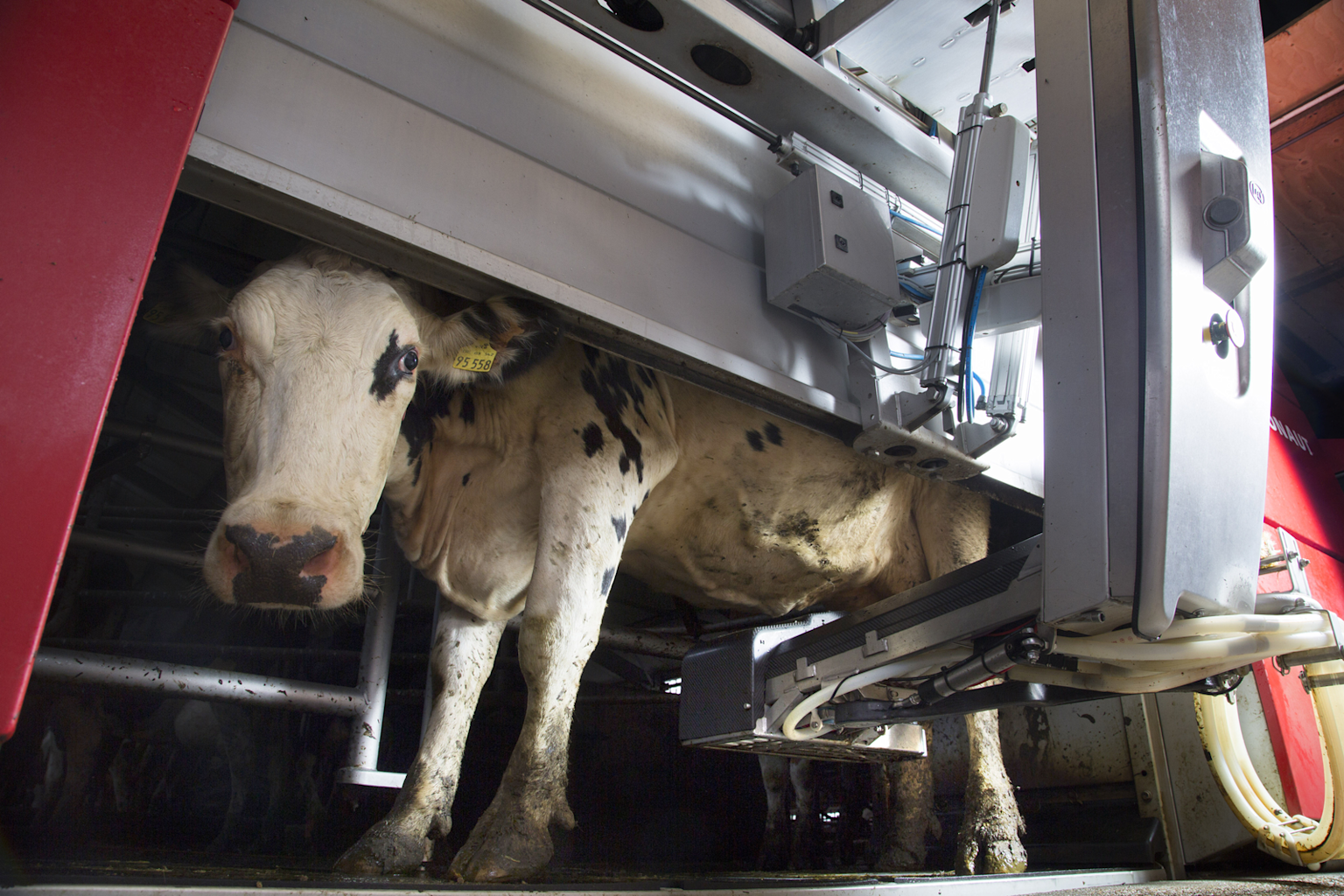
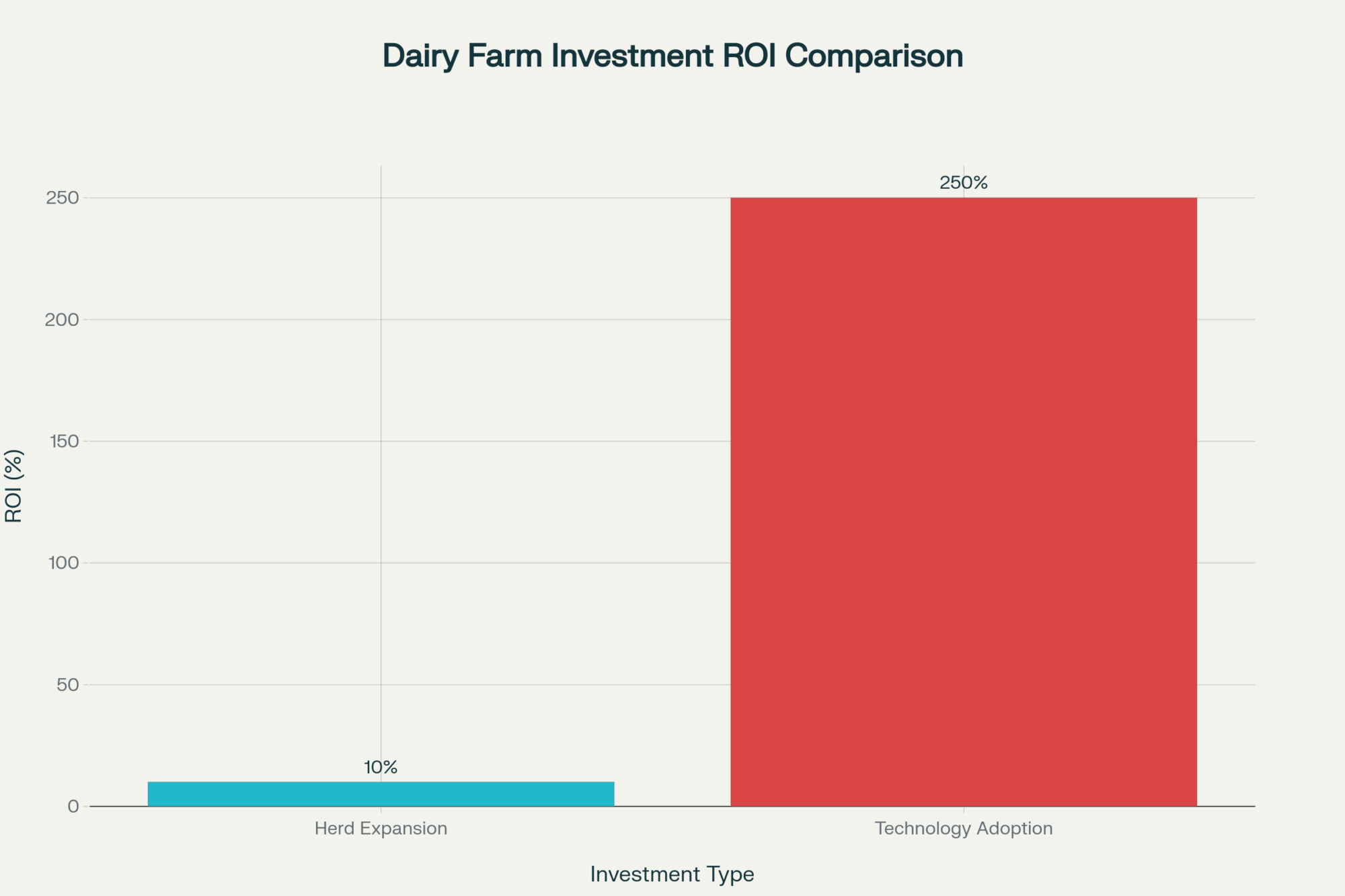
Now, when I think of technology, the story gets a bit nuanced. I had a great conversation recently with a California dairy operator who told me his investment in robotic milking paid off in just under three years. However, friends in India shared that their investments took six years or more to recover due to inconsistent power and internet issues.

In Europe, about 23% of dairy farms are using robotic milking, whereas adoption in the US is around 8%, and many Asian countries are still at 2-6%. But what’s really fascinating is how many producers in emerging markets are adopting mobile apps, IoT monitoring, and AI-powered herd management to capture much of the same benefit without the high costs.

It’s worth noting that this approach—skipping expensive automation for targeted tech solutions—is proving surprisingly effective for operations that can’t justify the infrastructure investment.

The Efficiency Story Gets Complicated

When it comes to efficiency numbers, the Netherlands leads with around 8,500 liters per cow annually, while India is closer to 1,200. That’s a massive seven-fold difference.

But here’s what’s interesting—both systems fit their setups. European operations target premium markets by optimizing butterfat and protein components, focusing heavily on fresh cow and transition period management. You probably know how critical those first 100 days in milk are for setting up the whole lactation curve.

India’s volume-based model taps into cooperative networks and benefits from lower input costs. Millions of smallholder farms, each with just a few animals, collectively create enormous production capacity.

That volume-based approach is facing pressure, though, as rising land prices and shrinking rural labor pools challenge traditional cost advantages. And that’s pushing even small-scale operations to think about genetic improvements and feed efficiency.

Sustainability: From Compliance to Profit Center

Here’s something that caught my attention—sustainability is no longer just a buzzword. It’s impacting profitability. Wageningen University research shows sustainable farms can boost income by around €6.22 per 100 kilograms of milk produced, combining cost savings and price premiums. For a mid-sized dairy, that adds up fast.

Buyers are increasingly seeking sustainability certifications, paying up to 25% premiums for compliant farms. What’s encouraging is that sustainable practices also tend to improve herd health and production consistency—so it’s a genuine win-win.

Carbon footprints are part of the equation, too. New Zealand’s dairy farms average around 0.9 kg of CO2 per liter of milk production, compared with India and Brazil, where footprints can be two to three times higher. This is starting to influence market access and pricing structures in ways we hadn’t seen before.

Trade Dynamics Keep Us on Our Toes

Trade tensions, such as the ongoing challenges between the US and Canada, have resulted in billions of dollars lost in trade opportunities. Meanwhile, Australia and New Zealand are strategically benefiting from shifting Chinese demand and their sustainability advantages, while Russia’s subsidy of export logistics is shaking up the competitive landscape.

Certification, auditing, and traceability now form essential gatekeepers to premium markets, favoring farms with robust infrastructure. That puts farms in regions like Europe and New Zealand in a strong position, while farms in lower-resource areas need to adapt rapidly.

The Plant-Based Reality Check

The plant-based market certainly has traction, holding about 12% in mature dairy markets. But it’s not the tsunami that some predicted. Meanwhile, lactose-free dairy is gaining quietly but steadily, appealing to consumers wanting milk without digestive issues.

We’re also seeing strong growth in niche categories, such as organic, A2, and probiotic-enhanced milks, many of which command price premiums of 15-25%. And interestingly, consumers increasingly blend plant-based and dairy products depending on use—what’s sometimes called “hybrid consumption.”

What This Means for Your Operation

So, what’s the takeaway for you—whether you’re running a 500-cow operation in Wisconsin, a family dairy in Punjab, or a cooperative setup in Canterbury? Understand the unique strengths and circumstances of your operation.

Higher-cost regions can benefit from targeting efficiency and sustainability to tap into premium markets. That means mastering fresh cow protocols, optimizing dry period management, and meeting the certification requirements that open doors to better pricing.

Emerging regions should emphasize scalable, cost-appropriate technologies and gradual efficiency improvements while maintaining their cost advantages.

One-size-fits-all strategies are a thing of the past. Success comes down to mastering the details—fresh cow care, transition management, butterfat performance—while adapting to your local market and environment.

There’s a lot to consider, of course, but what’s encouraging is that curiosity, flexibility, and informed decision-making are what will keep the best farms moving forward. After all, adapting to change has always been at the heart of successful dairy farming.

The key is staying ahead of where the industry’s heading rather than just reacting to where it’s been.

Complete references and supporting documentation are available upon request by contacting the editorial team at editor@thebullvine.com.

Learn More:

  • Global Dairy Market Trends 2025: European Decline, US Expansion Reshaping Industry Landscape – This article provides a strategic market overview, revealing how production trends in Europe and the US are creating new opportunities. It offers a crucial context to the main article’s global realignment theme by showing how regional economic shifts directly impact your business, helping you prepare for future market volatility.
  • The Future of Dairy Farming: Embracing Automation, AI, and Sustainability in 2025 – While the main piece touches on technology, this article dives deeper into how specific innovations like whole-life monitoring and AI are becoming essential. It offers a future-oriented perspective and shows how these smart tech choices can deliver significant efficiency gains and improve herd health, positioning your farm for long-term competitiveness.
  • 7 Proven Strategies to Perfect Silage Quality for Maximum Milk Production – This tactical guide provides actionable, on-farm strategies for improving feed management, a key driver of profitability. It complements the main article’s focus on efficiency and sustainability by offering practical steps you can implement immediately to increase milk quality, a crucial factor for accessing premium markets.

The Sunday Read Dairy Professionals Don’t Skip.

Every week, thousands of producers, breeders, and industry insiders open Bullvine Weekly for genetics insights, market shifts, and profit strategies they won’t find anywhere else. One email. Five minutes. Smarter decisions all week.

NewsSubscribe
First
Last
Consent

The Mycotoxin Challenge: What Dairy Producers Are Quietly Paying For

66% of feed samples contain multiple mycotoxins—quietly costing dairy operations $300-900 per cow annually

EXECUTIVE SUMMARY: Recent global research reveals that mycotoxin contamination has evolved into a complex challenge affecting two-thirds of dairy feed samples worldwide, with multiple toxins working together to multiply their damage beyond what individual toxins could achieve alone. Moderate mycotoxin exposure reduces milk production by 3-5 pounds per cow per day, while also dropping conception rates by up to 25%, resulting in annual losses of $300-900 per cow that many producers attribute to other factors. The traditional reliance on clay binders and rumen protection is proving inadequate against these multi-toxin combinations, particularly in high-producing cows, where faster feed passage rates reduce natural detoxification capacity. Blood biomarker testing is revealing that up to 80% of actual mycotoxin exposure goes undetected by conventional feed testing, while comprehensive management programs combining advanced binding, enzymatic degradation, and immune support demonstrate ROI figures exceeding 200%. Climate change is intensifying these challenges as warmer, wetter conditions expand mycotoxin risks into regions previously considered low-risk, making proactive management increasingly critical. Progressive producers implementing multi-modal approaches focused on transition cows and high-producers are documenting significant improvements in production, reproduction, and profitability within months.

KEY TAKEAWAYS:

  • Comprehensive mycotoxin management programs deliver 225-330% ROI by preventing $300-900 annual losses per cow through improved production, reproduction, and health outcomes
  • Blood biomarker testing reveals up to 80% more mycotoxin exposure than feed testing alone, enabling targeted protection for transition cows and high-producers where investment generates the highest returns
  • Multi-modal defense strategies combining advanced binding, enzymatic degradation, and immune support outperform traditional clay binders, which show only 3-6% effectiveness in real feed conditions
  • Climate change is expanding mycotoxin risks northward and intensifying contamination patterns, making proactive monitoring and protection essential for maintaining a competitive advantage
  • Focusing initial implementation on vulnerable populations—transition cows and peak lactation animals—provides the most cost-effective entry point for comprehensive mycotoxin management programs
mycotoxin management, dairy profitability, herd health, feed efficiency, milk production loss

What if a silent thief is stealing from your bottom line, costing you $300 to $900 per cow every year? You see it in the data: milk production that falls short, a stubborn conception rate, and animals that just don’t seem to hit their peak. You’ve checked the feed, you’ve optimized the genetics, and you’ve managed the herd carefully. Yet, something is quietly costing you. For a growing number of dairy producers, that unseen culprit is a complex mix of mycotoxins in the feed—a challenge that has become far more widespread and damaging than most realize.

What’s interesting here is that many of us are running into this same puzzle. What’s quietly stealing from the bottom line isn’t always obvious—and increasingly, mycotoxins seem to be part of the story. Research around the world, including a comprehensive review from Selko in 2024, shows that about two-thirds of feed samples now contain multiple mycotoxins together. These aren’t just your run-of-the-mill toxins but blends of things like DON, zearalenone, and fumonisins showing up regularly in the mix.

Unpacking the Impact

Multiple mycotoxin contamination is prevalent across all major U.S. dairy regions, with the Midwest showing the highest rates due to climate conditions favoring fusarium growth. Insert after the paragraph discussing regional variations in contamination patterns

Take a step back and think about what this means. Research has shown that moderate levels of mycotoxins can drag a cow’s milk yield down by 3 to 5 pounds a day. In Wisconsin, where producers are pushing high production, losing that amount really adds up fast. It might explain why some herds aren’t hitting their predicted yields despite solid management.

But it’s not just about volume. I remember chatting with a producer in Vermont who noticed his somatic cell counts creeping up—impacting his quality premiums—and strangely, the milk was behaving differently at the cheese plant, with altered protein and coagulation performance. It turns out, mycotoxins mess with more than just milk secretion—they degrade milk protein quality too.

And from the reproductive side, zearalenone is a culprit we can’t ignore. Studies tell us conception rates can slip by a quarter when these toxins are present. You can see these effects in farm records when pregnancies don’t stick, and open days creep up beyond expectations.

When Mycotoxins Team Up

Co-contamination with multiple mycotoxins creates exponentially worse production and reproductive losses compared to single toxin exposure, emphasizing why traditional single-solution approaches fail. 

Here’s what’s particularly noteworthy: DON and zearalenone aren’t just causing separate problems—they’re interacting in ways that multiply their damage. That Pennsylvania producer I mentioned saw fertility issues worse than what single toxin data would suggest. This aligns with broader findings from global studies, which show that these toxins often co-occur and synergize to have a more severe impact on production and fertility than either could have alone.

Rethinking the Old Assumptions

Many producers have leaned on the idea that the rumen microbes act like a natural filter for mycotoxins. But that’s proving less true than we thought. High-producing cows gobble up feed quickly, so these microbes don’t have as much time to break down toxins. And when cows face subacute ruminal acidosis—as a good portion experience during the fresh cow period—those microbes are weakened, leaving the animals more vulnerable.

Even more to chew on: zearalenone can actually convert into a more potent toxin after ruminal metabolism. That’s a twist many of us didn’t appreciate fully until recently.

Why Don’t We Hear More About This?

The mycotoxin effects are often subtle, looking like general health or fertility issues, so many producers chalk problems up to other causes. And the old staple solution—clay binders—only captures part of the problem. It’s like fighting a multifaceted battle with a single arrow.

New Testing Insights

What I’ve found is that more herds using blood biomarker testing get a clearer picture of what’s actually passing into cows’ systems. Unlike feed-only tests, blood tests can show cumulative exposure and toxins missed by traditional methods. While the cost and access can be barriers, they’re often worthwhile for herds with unexplained production issues.

Beyond Clay: New Defense Strategies

Clay binders still have a role, but progressive farmers I talk with combine them with enzymatic detoxifiers and supplements that support gut and liver health. This layered approach is where the research shows real promise, often yielding return on investment figures exceeding 200 percent.

Real-World Examples

A friend running a 200-cow dairy in Vermont saw significant milk production and reproductive improvements within months after adopting a multi-stage mycotoxin management program focused on his fresh cows.

Whether you’re running a hundred cows or a thousand, prioritizing the most vulnerable groups first makes the most sense financially and operationally.

Climate Change and Emerging Tech

One thing we’re all watching closely is how climate variability is making mycotoxin issues more erratic. Wetter springs in the Midwest are raising fusarium risks, while the Northeast sees more aflatoxin creeping upward. Producers report new challenges in storage and feed quality that didn’t exist a decade ago.

The good news? Technology is responding. AI is emerging as a valuable tool for forecasting fungal growth and toxin risk well in advance of harvest. Rapid on-farm testing is becoming quicker and more comprehensive, detecting multiple toxins in minutes. Enzymatic detoxifiers, with increasing efficacy, promise to break down toxins rather than merely bind them.

What Can You Do Right Now?

Here’s what I’d recommend: start integrating mycotoxin testing beyond just your feed—look at biomarkers in your cows to get the full picture.

Focus protection on your transition and highest-producing animals. Use multi-modal mitigation strategies rather than relying on clay binders alone.

Work closely with your nutritionist and vet to tailor your strategy to your farm, considering local climate, forage sources, and herd health.

Start early and stay consistent to avoid surprises during critical production times.

Final Takeaways

Mycotoxins aren’t new, but the scale and complexity of the problem are growing. They quietly erode our herds’ health and our farms’ profitability if unaddressed.

What’s encouraging is that we’re getting better at spotting and fighting these hidden threats. The key is awareness and proactive management, aided by solid data and collaboration.

The dairy farmers who embrace this evolving knowledge and adapt thoughtfully will be the ones turning these challenges into competitive advantages.

Let’s keep the conversation going and continue sharing what’s working out there on the farms. Together, we’ll keep our dairies thriving through these invisible storms.

Complete references and supporting documentation are available upon request by contacting the editorial team at editor@thebullvine.com.

Learn More:

The Sunday Read Dairy Professionals Don’t Skip.

Every week, thousands of producers, breeders, and industry insiders open Bullvine Weekly for genetics insights, market shifts, and profit strategies they won’t find anywhere else. One email. Five minutes. Smarter decisions all week.

NewsSubscribe
First
Last
Consent

The $5 Billion African Dairy Scam: What Zimbabwe’s “Revolution” Really Means for Your Farm

Who’s really winning in Africa’s $5B dairy growth? The answer will shock you.

EXECUTIVE SUMMARY: Zimbabwe’s 2025 reforms slashed dairy export fees from $900 to $10 and wiped out over 90% of licensing fees, igniting a 14% milk production surge. Yet, a $200M Belarusian investment tightens control over Zimbabwe’s dairy sector, threatening farm-level autonomy. Data shows Kenyan cows produce 4.3 liters daily versus Germany’s 24—highlighting a vast productivity lag. Small co-ops process only 1,300 liters daily, dwarfed by the 200,000-liter capacity of industrial plants, underscoring a brutal scale challenge. Multinationals like Nestlé and Danone bind farmers with restrictive contracts, risking independence. The data tell a different story—one of power, control, and risk to farmer sovereignty in Africa’s dairy revolution. The time for farmers to wake up and fight back is now.

KEY TAKEAWAYS:

  • Dairy output in Zimbabwe rose 14% post-regulatory reforms; smallholder contribution remains unclear amid corporate expansion
  • Belarus’s $200M investment signals growing foreign control over local dairy chains through equipment dependency and processing dominance
  • Huge productivity gaps exist: Kenyan cows produce 4.3L/day while German dairy rivals hit 24L/day, revealing untapped efficiency potential
  • Scale favors industrial processing; small co-ops at 1,300L/day face serious market access limits against 200,000L/day industrial plants
  • Farmers must avoid restrictive contracts, build robust cooperatives, and demand transparency to retain autonomy against corporate colonization
dairy profitability, foreign investment, dairy industry risks, African dairy market, farm efficiency

You know what? Last fall at this chilly farm conference, I was chatting with a dairy guy who’s been running Holstein for thirty-plus years. He leans over and says, “These Zimbabwe reforms everyone’s talking about… they sound like a miracle, but my gut tells me there’s smoke and mirrors here.”

Turns out his gut was dead-on.

Zimbabwe slashed their dairy export registration fees from $900 down to ten bucks—according to Finance Minister Mthuli Ncube’s September 2025 announcements that got picked up across government releases. Feed manufacturing licenses? Cut by over 90%. All those permits that used to bury farmers in paperwork? Nearly wiped clean.

Sounds like Christmas morning for dairy operations, right?

Wrong.

The Belarus Red Flag Nobody’s Talking About

Here’s what happened—and this is where it gets interesting. The biggest “investor” these reforms attracted is Belarus. Yeah, that Belarus. The one under international sanctions who’s desperate for any market access they can get.

Their Deputy Prime Minister Leonid Zayats led a delegation to Zimbabwe back in December 2023, cementing a $200 million commitment to the dairy sector. They’re shipping 1,300 tractors, 14 combine harvesters, and establishing processing facilities through companies like Bellakt for infant formula production.

But here’s the thing… (and this is what really gets me) Belarus isn’t bringing charity. They’re bringing control.

According to the official agreements, Zimbabwe provides raw materials and market access while Belarus controls genetics, processing, equipment maintenance—the whole nine yards. I was talking to a farm equipment manager in Mashonaland last winter who told me, “When those tractors break down—and they will—guess who’s got all the leverage for parts and service?”

Makes perfect sense. You get locked into one supplier’s system, you’re at their mercy forever.

The Production Numbers Tell a Different Story

Had a straight talk with Dr. John Basera from Zimbabwe’s Agriculture Ministry—seems like a no-nonsense guy who shoots straight. According to official ministry data, milk production jumped from 79.6 million liters in 2021 to 91.6 million liters in 2022.

That’s a 14.3% increase, which sounds impressive until you dig deeper.

The breakdown between smallholder and larger operation contributions? Well, that data’s harder to pin down than a fresh heifer in a thunderstorm. Industry whispers suggest smallholder contributions remain limited, but without solid public data, we’re all just guessing.

What’s clear? The growth appears to be stemming from larger operations and corporate partnerships, rather than grassroots farmer empowerment.

Kenya’s “Success” Story Doesn’t Add Up

The development crowd always points to Kenya as their poster child. According to the Kenya Dairy Board’s 2025 reports and USDA data, they’ve got about one million farmers working with three million cows.

Do the math on that—three cows per farmer.

I was talking to my buddy Jake, who runs about 200 head outside Green Bay last spring… he just laughed when I mentioned that number. Said, “Three cows? that ain’t farming. That’s a hobby that’ll keep you broke.”

And the productivity gap? Man, it’s brutal. Those Kenyan cows average maybe 4.3 liters daily, according to Kenya Dairy Board extension data. Compare that to what they’re pulling in Germany—Eurostat shows German cows hitting about 24 liters daily based on their annual yield of roughly 8,800 kilograms.

Can you believe that difference? It’s not just a gap, it’s a canyon you can’t bridge with good intentions.

The Processing Reality Nobody Mentions

Here’s something that really gets under my skin about these development consultants: they never discuss the processing side. Modern dairy plants need a minimum 200,000 liters daily throughput just to break even—that’s industry engineering standard, not some made-up number.

Those small cooperatives with maybe 100 farmers and 300 cows total? They’re lucky to scrape together 1,300 liters on a good day. That’s less than one percent of what you need for efficient processing.

Why? Because the economics don’t add up.

I remember visiting a co-op down in Arkansas during harvest season—they had maybe 80 members, decent facilities, good intentions… but they were hemorrhaging money because they couldn’t hit scale. That’s the reality these innovation platform meetings won’t tell you.

Physics doesn’t care about your PowerPoint presentations. Scale wins every time.

Corporate Giants Playing the Long Game

So why are companies like Nestlé, Danone, and Unilever throwing billions at African dairy markets?

Don’t buy the marketing spin about “farmer empowerment.”

Nestlé announced $130 million in African investments during 2024, focused on supplier sustainability programs, according to Just Food’s March coverage. Their spokesperson, Mota Mota, says they’re “creating resilient, profitable farms” through “technology adoption and environmental stewardship.” Sounds good until you realize what they’re really doing—locking farmers into supply chains that squeeze every drop of independence out of them.

Nestlé works with over 200,000 smallholders across Africa… sounds good until you realize those farmers aren’t partners. They’re contract suppliers tied up tighter than a prize bull at the county fair.

Same story with Danone’s expansion in Ghana and Nigeria. Their rep Gloria Mensah talks about “empowering local businesses through fair trade,” but Professor John Smith, agricultural economist at the University of Zimbabwe, puts it bluntly: “The influx of foreign investment without parallel regulatory safeguards tends to increase dependency, risking the autonomy of our local farmers.”

The “Partnership” Trap That’s Spreading

Those fancy corporate programs promising “technical assistance” and “input financing”? They’re chains disguised as Christmas presents.

Exclusive supply agreements that lock you into single buyers… debt-financed inputs you can’t control… quality standards requiring corporate-approved systems that cost more than your milk check. Every single one is designed to make farmer independence impossible.

And Zimbabwe’s regulatory reforms? They eliminated what few protections farmers had left against these exact tactics.

What This Really Means for You

Political instability? Currency that jumps around more than a spooked heifer during a thunderstorm? Infrastructure held together with baling wire and prayer? Those are the real barriers keeping legitimate investment away.

When only sanctioned regimes and development agencies respond to your “competitive advantages,” you don’t have competitive advantages—you’ve got problems.

The Belarus deal isn’t a success… it’s what happens when desperate governments accept help from equally desperate partners.

Your Defense Strategy

Want to protect yourself? Here’s what I’d tell my own brother if he was still farming:

Fight every exclusive contract that comes your way. I don’t care how sweet those upfront terms look—once you’re locked in, you’re locked out of better opportunities down the road.

Build real cooperatives where members truly have a say in the decisions. Not the fake ones where corporate “partners” make decisions behind closed doors while farmers get the scraps.

This time of year, when you’re looking at next season’s planning… demand transparency from every “support” program that comes knocking. Ask the tough questions: Who really benefits? Where does the money flow? What happens if you want out?

Keep your butterfat numbers solid, your fresh cows on decent pasture, and your dry lot operations free from corporate vultures.

The Bottom Line

This isn’t development, folks. It’s a sophisticated form of colonization, using regulatory reform as a cover.

Zimbabwe’s “revolution” proves that when you eliminate barriers without fixing fundamental investment climate problems, you attract exactly the wrong kind of partners.

That $5 billion African dairy opportunity everyone talks about? It’s real. But if farmers don’t wake up to what’s happening, that opportunity flows straight to multinational shareholders while African farmers become contract suppliers in their own markets.

The Belarus investment everyone’s celebrating? It’s not a partnership—it’s a preview of what happens when you trade independence for dependency.

Keep your operation, keep your independence, and keep asking those tough questions.

Because this “revolution”? It sure as hell isn’t for you.

Complete references and supporting documentation are available upon request by contacting the editorial team at editor@thebullvine.com.

 Learn More:

The Sunday Read Dairy Professionals Don’t Skip.

Every week, thousands of producers, breeders, and industry insiders open Bullvine Weekly for genetics insights, market shifts, and profit strategies they won’t find anywhere else. One email. Five minutes. Smarter decisions all week.
NewsSubscribe
First
Last
Consent

EXPOSED: The $90,000 Genetics Scam Farmers Aren’t Talking About

Why the ‘wait and save’ genetics game is bankrupting family dairies nationwide

EXECUTIVE SUMMARY:

Here’s what we discovered: Waiting for semen prices to fall isn’t saving farmers money; it’s costing the average producer nearly $90,000 over 15 years due to lost genetic progress. Data from USDA shows bulls improved genetic merit by $80 annually post-genomics, while generation intervals shrank from 7 to under 2.5 years, accelerating the divide. Mega-dairies, spending 3-4% of gross income on genetics, harness 90% of gains, whereas smaller farms capture just 30-40%. Consolidation has wiped out nearly 16,000 farms since 2017, reshaping U.S. dairy communities. Our investigative analysis reveals how the genetics arms race deepens inequality and forces hard choices. The future belongs to those who invest strategically; hesitation means losing ground in a market that waits for no one.

KEY TAKEAWAYS:

  • Capture up to $80/year in added genetic merit with timely semen investment, avoiding a $90K lifetime loss.
  • Understand the compressed 2.5-year generation intervals driving genetic gain and stay ahead of the curve.
  • Prioritize strategic genetic budgets—mega-dairies allocate 3-4% gross income; smaller farms must adapt to survive.
  • Recognize consolidation trends wiping out 40% of US dairies in 5 years and plan accordingly.
  • Leverage peer-reviewed science and USDA data to challenge conventional genetics purchasing myths.
DIGITAL IMAGE

You know, I was at World Dairy Expo last fall, and this producer from Iowa — good guy, been milking 350 head for twenty years — he’s telling me how he’s waiting for semen prices to drop from forty bucks down to thirty before he breeds his heifers. Thinks he’s being smart with his money, right?

Well, here’s the thing… Dr. Albert De Vries, this economics wizard down at the University of Florida, he ran the numbers back in 2015 and — get this — you’d need those prices to crash nearly 50%, all the way down to about $21 a dose, just to break even on what you lose by waiting.

Fifty percent! Can you believe that? I mean, when’s the last time you saw premium genetics lose half their value overnight? Never happens.

But those California mega-dairies running ten thousand head? They’re not waiting around. As soon as new genetics drop, they’re buying. And why wouldn’t they? The USDA data from 2016 to 2020 shows bulls improving about $80 per year in Net Merit since genomics took over. That’s real money — compounds through every heifer, every lactation…

Actually, here’s what really gets me fired up. The whole breeding game got turned upside down when generation intervals — that’s how long it takes genetics to flow through — got slashed from seven years down to under two and a half. García-Ruiz’s team published this in some fancy journal, the Proceedings of the National Academy of Sciences, back in 2016.

So if you’re still making breeding decisions like it’s 2005 — and I know plenty of guys who are — you’re already behind. Way behind.

I call it the acceleration trap, and man, it’s caught more farms than I can count. Especially up in Wisconsin… you know how butterfat tanks during those brutal July heat waves? Well, some of that’s genetics catching up with you.

The Caste System Nobody Talks About

Here’s what’s really sneaky about all this. There’s this whole genetic hierarchy forming, and most folks don’t even see it happening.

At the top, you got your mega-dairies — I’m talking thousands of head, mostly out west — throwing 3 to 4 percent of their gross straight into the hottest genetics. Industry analysis suggests these operations are grabbing about 90 percent of the real genetic gains.

Then there’s the middle tier… farms like a lot of the New York and Pennsylvania operations I know. They’re hanging on, getting maybe 60 to 70 percent of those gains. Staying competitive, but it’s getting harder every year.

And then — this is the uncomfortable part — you got the rest of us. Smaller outfits, 200 to 500 cows mostly, are scraping by on what appears to be maybe 30 to 40 percent of genetic progress. You feel it every time those components drop, every time the breeding season scramble gets worse.

Let me tell you about this farmer — we’ll call him John — from down around Zanesville in Ohio. Sharp guy, really. Thought he was making a smart call waiting on that expensive semen, saving himself 200 bucks upfront.

But four years later? Those daughters were costing him about $27 each per year in lost production — that’s using De Vries’ economic modeling framework. Twenty heifers, four lactations… you’re looking at $2,160 missing from the milk check annually.

Then his granddaughters started calving — another $1,620 lost every year. Great-granddaughters? We’re talking over $4,800 annually, all from that one “smart” decision to wait.

Total it up over fifteen years using standard dairy economic projections, and John’s $200 savings cost him roughly $90,000 in foregone profit. Makes your stomach turn, doesn’t it?

But here’s the real kicker — and I heard this from another producer down near Lancaster during corn harvest — those “proven” bulls everyone’s still buying? By the time they prove themselves through daughters, the young genomic bulls have already lapped them. Often at 70 percent reliability, but way ahead genetically because the baseline keeps moving up.

The Niche Market Fantasy That’s Crushing Dreams

Now, I get it. Everyone’s looking at organic, grass-fed, A2 milk, thinking that’s their salvation. Who doesn’t want premium pricing, right?

But let’s talk reality here… Based on the latest USDA organic market reports and industry data through 2025, organic milk’s sitting around 5 to 6 percent of total U.S. production. Grass-fed? Barely registers at under 1 percent. A2’s growing — I’ll give you that — but it’s still niche scale.

The brutal math? These markets can’t absorb even half the farms getting squeezed by this genetic stratification. Most of that “niche transition” advice? It’s false hope designed to keep struggling operations producing commodity milk for a few more years.

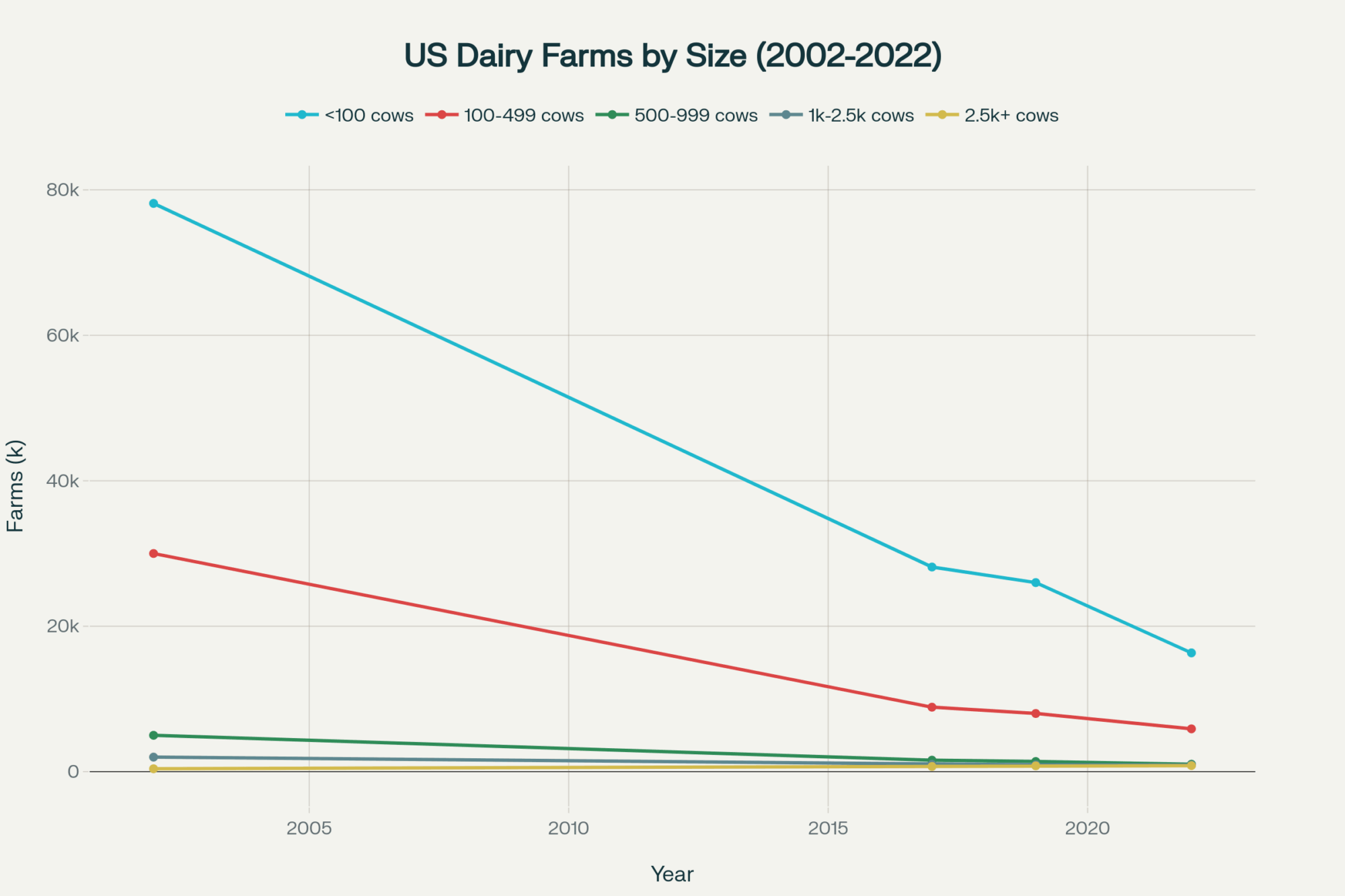
Meanwhile, consolidation keeps hammering us. According to USDA Census data released in 2024, we lost nearly 15,866 dairy farms between 2017 and 2022 alone. That’s not just numbers — that’s communities, families, generations of farming knowledge… gone.

And the big players? They’re snapping up the pieces, buying land and cows and basically owning the future.

What This Really Means for Your Operation

So here’s your reality check. If you’re running a small or mid-sized operation, you’ve got maybe twelve to eighteen months — tops — to commit to a survival strategy.

Scale up fast — get to a thousand cows with the genetics budget that requires — or find a genuine niche that pays the bills, or start planning your exit while your assets still have value.

Because genomics changed the rules permanently. No more waiting for better deals. No more hoping the old ways will work.

I’m not sure what to make of all this sometimes, but one thing I know for certain — ignoring these facts is like watching your neighbor’s barn burn down and wondering why your hay’s getting hot.

The clock’s ticking faster than most folks realize. The mega-dairies figured this out years ago. They’re counting on the rest of us not figuring it out until it’s too late.

So what do you think? You gonna keep waiting for a deal that never comes, or are you gonna get ahead of this thing before it’s too late?

Complete references and supporting documentation are available upon request by contacting the editorial team at editor@thebullvine.com.

Learn More:

The Sunday Read Dairy Professionals Don’t Skip.

Every week, thousands of producers, breeders, and industry insiders open Bullvine Weekly for genetics insights, market shifts, and profit strategies they won’t find anywhere else. One email. Five minutes. Smarter decisions all week.
NewsSubscribe
First
Last
Consent

The Real Reason 190 UK Dairy Farms Disappeared – And What They’re Not Telling You

190 ‘average’ UK farms disappeared in 12 months—not from poor milk, but from processor power plays. Here’s the brutal truth.

dairy farm survival, UK dairy farms, processor contracts, dairy profitability, direct-to-consumer

You’ve heard the official spin: those farms were ‘underperforming’ and naturally left the business. Let me tell you, that’s a load of nonsense. These were solid operations, producing right at national averages, wiped out not by poor performance but by a rigged system designed to squeeze independent farmers dry. Here’s the raw truth you won’t hear at the boardroom tables.

I’ve been in dairy all my life, seen trends come and go, but what’s happening now in UK dairy is something else. The decline is sharp and cruel, and while the suits wave their statistical flags about efficiency and ‘market corrections,’ the reality on the ground is brutal.

This pie chart disproves the “underperformance” myth by revealing that 75% of farm closures stem from geographic disadvantage and market consolidation, not poor farming practices.

According to the latest AHDB survey, we lost around 2.6% of dairy farms between April 2024 and April 2025—that’s 190 fewer producers nationally, many of whom were running respectable herds with good health and production standards (AHDB, 2024). The trend’s accelerating, and if you think you’re safe because you’re hitting your targets, think again. Take it from the researchers who’ve been digging into this mess: these closures aren’t about poor farming—they’re about location and infrastructure favoring giants while shutting out decent operators who don’t fit the new distribution map.

When ‘Good Enough’ Means Getting Kicked to the Curb

Now, the industry blames ‘underperformance’ for these closures, but let’s be clear: many of these farms hit targets that most of us would be proud of—averaging 7,000 to 8,000 litres per cow annually with solid somatic cell counts around 200,000.

These farms followed vet guidance, managed fresh cows well, and kept butterfat steady. Yet they were marked for extinction.

Why? Because survival now hinges far more on where you are than how well you run the place.

UK milk price divergence from 2023-2025, showing how retailers captured increasing margins while farmgate prices stagnated. Key industry events marked show correlation with farm closures.

Dairy prices tell a stark story. The farmgate price in July 2025 averaged 44.39p per litre (AHDB, 2025), while consumers were paying about 65p per pint at the shop—which roughly translates to 72p per litre (ONS, 2025). That margin between farm and mouth is no accident; processors and retailers are padding their pockets while we get squeezed.

You know what happens when a million-litre operation loses just 10p per litre? That’s £100,000 straight off the bottom line. Meanwhile, the processors keep their margins stable by shifting all the volatility onto us.

The Power of Location: Why Geography Is Your Death Sentence

Distribution of UK dairy farms by annual transport cost penalties, showing 290 farms face £15,000+ in additional costs due to geographic disadvantage.

You can’t spin geography. If you’re outside certain processing hubs—places like Bridgwater, Severnside, Taw Valley, and Davidstow—you’re at the back of the queue.

Here’s the brutal math: dairy collection costs can range from 2 to 4p per litre if you’re well-positioned. But those outliers, hanging farther from collection points, are shelling out up to 12% more in transport alone. On a million-litre farm? That’s tens of thousands lost before you even think about feed costs or vet bills.

One route driver I know put it bluntly: “We’re always balancing tank loads and route times—those farms seven or eight miles off the beaten track become money pits. Doesn’t matter if their milk’s quality is gold; they’re just too expensive to collect.”

This isn’t market forces. This is cold, calculated redlining.

The Market’s Closed Doors: No Room for Alternatives

Forget the fairy tale that if one processor kicks you out, there’s a cozy alternative waiting.

Building or running a new processing plant these days? You’re looking at £50 to £100 million before you even think about breaking even. The big players—Muller, Saputo, Arla—control the infrastructure, and without thousands of litres committed upfront, new entrants can’t get off the ground.

The oligopoly keeps the market tight. Only the chosen suppliers get to play; everyone else gets fenced out.

Add your farm’s location to the mix—if you’re beyond that 50-mile sweet spot for collection, you’re effectively landlocked.

Contracts used to bind farmers exclusively to one processor. Despite recent regulations trying to loosen that grip (The Fair Dealing Obligations Regulations, 2024), the loopholes remain wide enough to drive a milk tanker through.

The Grim Reality Behind Prices and Investments

Those price gaps tell the real story: farmgate at 44p, retail at 72p. You’re catching crumbs from a feast when you should be at the table.

The academics have it right—retailers have mastered positioning themselves as heroes while hoarding the lion’s share of value. It’s a slick scam dressed up as customer advocacy.

Then there’s the relentless pressure of capital investment.

The latest WWF analysis shows that meeting environmental standards could cost the average farm nearly half a million pounds over the next decade—roughly 2p per litre in added costs (WWF, 2025).

If you’re running 100 cows and pulling in £350k annually, that investment burns a hole in your pocket before you even think about replacing that knackered tractor or fixing the parlor roof.

The bigger operations? They dilute those expenses across massive volumes. For the rest of us, it’s a death sentence dressed up as progress.

Why the ‘Direct-to-Consumer’ Dream Is Mostly Hot Air

We see endless hype about going direct—vending machines, farm shops, online milk clubs.

Sure, some farms succeed, but here’s the rub: the barriers are sky-high.

Launching a proper direct-sales operation can set you back £30k or more. Plus, marketing isn’t just another task—it’s a full-time game requiring skills most of us never learned.

I spoke with a Somerset dairy farmer who made the transition after decades of conventional production: “I had cash saved before I made the leap. Most struggling farms can’t front that capital, and even if they could, they’re farmers, not marketers.”

The scale mismatch bites hard, too. Trying to move millions of litres through local markets or vending networks? Good luck with that.

The Media Failed Us When We Needed Them Most

Let’s be brutally honest about agricultural media’s role in this mess.

While markets crushed farmers and supermarkets made hay, much of the agricultural press stuck to safe territory—promoting optimization, efficiency gadgets, and the latest breeding trends.

All well and good, but who was telling the wider public our stories? The struggles, the disappearances?

When people hear about dairy farming, it’s through activist documentaries or celebrity-endorsed hit pieces. The industry effectively handed over its narrative to everyone except farmers.

Contracts That Strip Away What Little Power We Had

The new mandatory contracts under The Fair Dealing Regulations (2024) promised protections but mostly formalized existing power imbalances.

These agreements allow processors to adjust quality measures and delivery schedules while shifting risk back onto farmers.

The big retailer-backed milk pools? They lock farmers into arrangements that benefit retail giants while leaving producers vulnerable to every market hiccup.

Look at Saputo’s move in early 2025—13 decent farmers got their contracts terminated despite solid outputs, given legally binding notice periods but no feasible alternative buyers (Telegraph, Feb 2025).

That’s not business; that’s execution with paperwork.

The Few Paths Forward That Actually Work

Despite the carnage, some innovative operations are finding cracks in the system.

About 400 milk vending machines operate nationally now, with operators pulling £1.20 to £1.60 per litre—way above wholesale rates. These farms invested heavily and retrained themselves to think like retailers, not just producers.

I know a Gloucestershire dairy that transitioned from managing 180 cows under traditional contracts to operating a dozen vending locations. “That move from producing for processors to producing for consumers changed everything. Fresh cow management and butterfat optimization matter like never before, but now I control the price.”

The regenerative agriculture movement offers another route. Farms adopting these practices show better resilience and profit margins while accessing premium markets.

Programs like Nestlé’s natural capital initiative pay real premiums for environmental improvements—soil health, biodiversity measures in places like Cumbria and Ayrshire (Cambridge Institute, 2018).

Unlike processors who profit from our dependence, these brands need authentic farm stories. Their success depends on supplier success, not exploitation.

The Bottom Line

It’s no longer enough to be ‘good enough’ at farming. You need to be competent at marketing, storytelling, and diversifying markets.

Immediate actions:

  • Check your geographic vulnerability—if you’re outside main collection loops, start exploring alternatives today
  • Budget £5k-£10k annually for professional storytelling and marketing support
  • Seek partnerships with brands offering genuine premiums for quality and sustainability
  • Join or form cooperatives to build collective bargaining power
  • Diversify your buyer base—never depend on a single processor who can eliminate you at will

The harsh reality? If you ignore this advice, expect to join the next wave of closures.

Because this system isn’t designed to help you survive. It’s designed to make you a casualty of convenience.

The 190 farms that disappeared in the last year weren’t failures—they were warnings. The question is whether you’ll heed those warnings or become the next statistic in a rigged game where only the biggest and best-located players get to stay.

Your milk quality won’t save you. Your production efficiency won’t save you. Only building direct relationships and alternative markets will give you the power to survive what’s coming next.

KEY TAKEAWAYS:

  • Geographic vulnerability kills profitability: Farms beyond a 50-mile collection radius face £30,000-50,000 annual transport penalties—map your risk now before 2026 route optimizations eliminate more “inconvenient” suppliers regardless of butterfat consistency or fresh cow management
  • Direct-consumer premiums offer 300%+ markup potential: Vending operations pull £1.20-£1.60 per litre versus 44p wholesale, but require £30,000+ upfront investment plus full-time marketing skills most producers lack—only farms with cash reserves can access these escape routes
  • Professional storytelling becomes a survival skill: Budget £5,000-10,000 annually for consumer relationship building that commodity contracts can’t provide—farms without marketing capabilities become next elimination targets as the processor oligopoly tightens control
  • Corporate sustainability partnerships pay real premiums: Programs like Nestlé’s natural capital initiative in Cumbria and Ayrshire deliver measurable environmental bonuses while building authentic supply chain narratives for competitive brand differentiation
  • Collective action creates negotiating power: Join producer cooperatives focused on market access rather than technical optimization—individual farms can’t solve systematic coordination problems affecting bulk tank pickup schedules and contract vulnerability

EXECUTIVE SUMMARY:

The official story about UK farm closures is corporate spin designed to hide systematic market manipulation that’s gutting independent dairy operations. AHDB data reveals 190 dairy farms vanished between April 2024-2025—a brutal 2.6% contraction—but these weren’t failing operations hitting 4,000L per cow with mastitis problems. They were competent producers, averaging 7,000-8,000L annually, with solid somatic cell counts under 200,000. However, they were eliminated not by performance but by geographic discrimination that favored processor convenience over farming excellence. With farmgate prices stuck at 44.39p per litre while retail hits 72p, that 62% markup reveals who’s really profiting from this “efficiency drive.” Transport cost penalties of up to £50,000 annually for farms outside optimal collection zones prove that location now trumps herd management in determining survival. Unless farmers build direct consumer relationships and break free from commodity pricing, expect 300+ additional closures by 2027 as consolidation accelerates under the guise of market optimization—and your production records won’t save you.

Complete references and supporting documentation are available upon request by contacting the editorial team at editor@thebullvine.com.

Learn More:

The Sunday Read Dairy Professionals Don’t Skip.

Every week, thousands of producers, breeders, and industry insiders open Bullvine Weekly for genetics insights, market shifts, and profit strategies they won’t find anywhere else. One email. Five minutes. Smarter decisions all week.
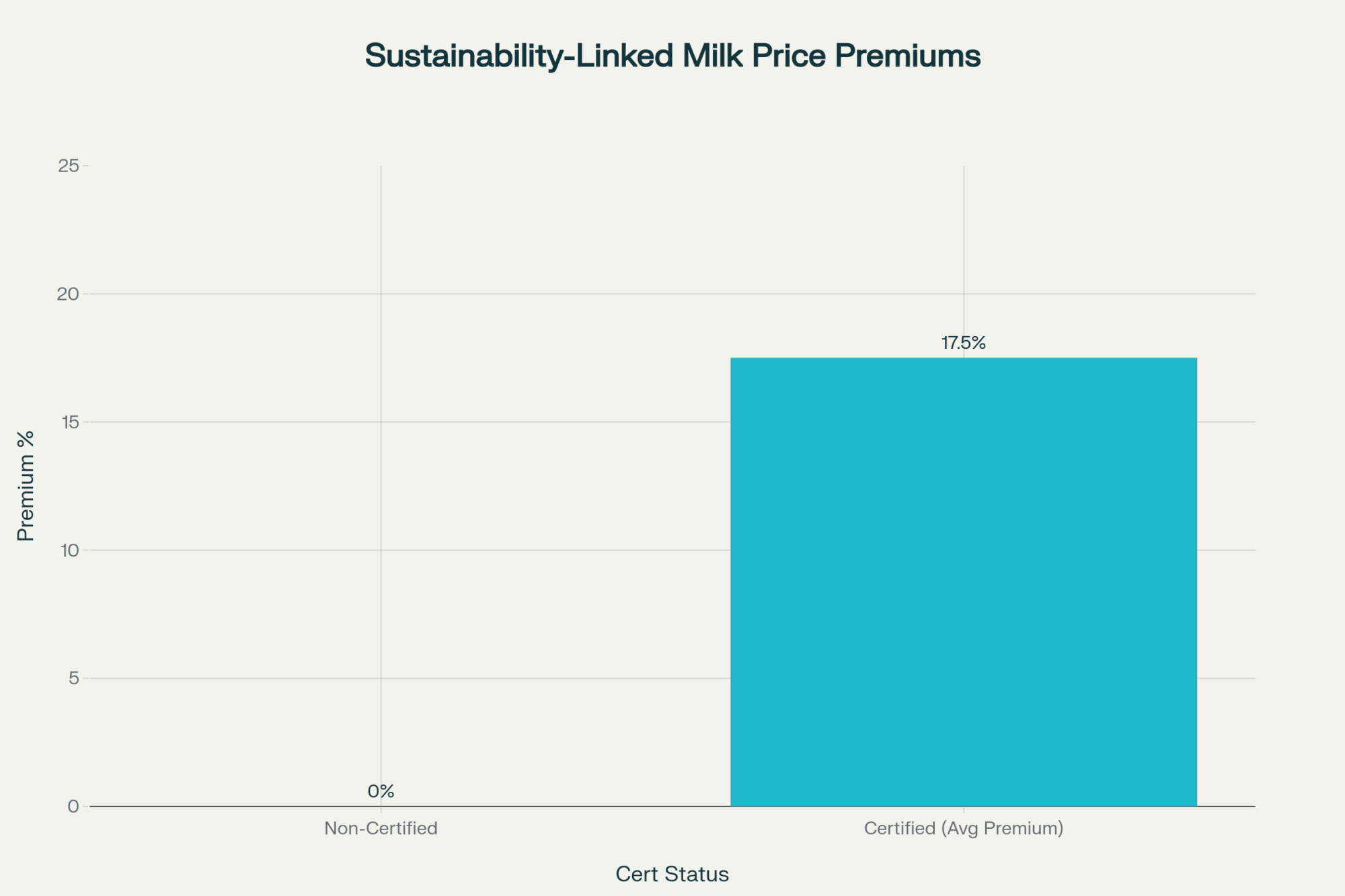
NewsSubscribe
First
Last
Consent

The Methane Money Grab You’re Not Seeing – And Why You Need to Pay Attention

What if waiting on methane additives means losing $100K+ to your neighbors?

EXECUTIVE SUMMARY: Here’s what we’ve uncovered, and it’s gonna challenge everything you think you know about methane reduction: These feed additives aren’t just an environmental feel-good story—they’re a legitimate profit play.Sure, you’re looking at 30-50 cents per cow daily in costs, but early data suggests returns could hit 70 cents per cow per day. Do the math on a 500-cow herd… that’s potentially $130,000 in additional annual revenue (though we’ll be straight with you—these are preliminary estimates that’ll vary by operation). Meanwhile, global giants like Danone are already 25% of the way to their 30% methane reduction targets by 2030, signaling this isn’t going away.But here’s the kicker we don’t hear enough about—the premium pricing window likely shuts between 2027 and 2030. Miss it, and you’re back to commodity pricing while your neighbors collect the bonuses. The science shows cow responses vary wildly based on genetics and feed management, so this isn’t plug-and-play. But producers who test their herds, work with sharp nutritionists, and pilot smart protocols? They’re positioning for advantages that could last years. Time to stop debating and start testing—because your competition sure isn’t waiting.

KEY TAKEAWAYS

  • Cut methane 30% without sacrificing production – FDA-approved additives maintain milk yield and butterfat while meeting regulatory targets (MDPI, 2024). Your move: Schedule a sit-down with your nutritionist this month to evaluate your herd’s suitability.
  • Potential returns of 70 cents per cow daily translate to roughly $130K annually on 500 cows, though results vary by genetics and management (Industry analysis, 2025). Smart approach: Pilot with 50-100 of your best cows before committing the whole herd.
  • Documentation is everything for carbon credits – rigorous baseline measurements and continuous monitoring are mandatory, no shortcuts (US DOE, 2025). Get ahead: Connect with your local extension office now for compliance guidance tailored to your region.
  • Feed management makes or breaks success – unbalanced rations can kill your ROI before you start (Cornell Cooperative Extension, 2025). Critical step: Work with feed advisors who understand additive interactions, not just someone pushing products.
  • Regional regulations are all over the map – California’s SB 1383 mandates differ drastically from Wisconsin’s cooperative approach and New York’s Climate Act timelines. Bottom line: Know your state’s rules because 2025 regulatory reality varies wildly depending on where you milk.
dairy profitability, methane reduction, feed additives, dairy farm management, carbon credits

You know what’s been bugging me lately? There’s this massive shift happening with methane feed additives in dairy, and half the producers I talk to at the local co-op are still treating it like some far-off science experiment. Meanwhile, the smart operators—they’re already positioning themselves while the rest of us debate whether it’s worth the hassle.

Here’s the thing, though… if you’re not moving on this soon, you won’t just miss out on the opportunity. You might end up helping pay for your neighbor’s success.

Let’s Talk Real Numbers (Because That’s What Actually Matters)

The FDA finally gave Bovaer the green light back in May—that’s 3-nitrooxypropanol for those keeping score—and the results coming out of peer-reviewed research are pretty solid. Multiple studies, including recent work published by MDPI, show these additives consistently knock down methane emissions by about 30%, and here’s the kicker: your butterfat numbers and milk volume stay put (MDPI, 2024).

But it ain’t cheap. We’re talking 30 to 50 cents per cow, every single day, according to FDA documentation and manufacturer pricing (FDA, 2024). Now, if you’re milking 500 head, that’s $54,750 to $91,250 annually just in additive costs. Real money.

The economic projections—and I want to be straight with you here—suggest you might see returns around 70 cents daily per cow. That’s potentially $127,750 in additional revenue for that same 500-cow operation. But these are preliminary estimates based on economic modeling, and your actual results will depend on everything from your cows’ genetics to your feed management and local market conditions (Industry economic analysis, 2025).

What strikes me about this whole thing is how the big players are already positioning themselves. Danone’s not messing around—they committed to slash methane by 30% by 2030, and according to their latest sustainability report, they’re already at 25.3% (Danone, 2023). DSM-Firmenich is ramping up production like crazy, getting ready for what they see as inevitable demand.

The Window’s Closing Faster Than You Think

Here’s what’s keeping me up at night: the premium pricing window for methane-reduced milk isn’t going to stay open forever. Market analysts are pointing to somewhere between 2027 and 2030 as when this opportunity likely diminishes, depending on how fast adoption rates climb and regulations kick in. But that’s an estimate—regulatory changes and market forces could shift this timeline significantly (Market analysis, 2025).

Miss that window, and you’re back to commodity pricing while the early movers keep their premium contracts. Supply chains are already tightening—I’m hearing from feed dealers that those who got in early secured better pricing and delivery slots.

Why Aren’t More Producers Jumping In?

The honest answer? It’s complicated, and that scares people.

The breakthrough research from UC Davis really opened my eyes on this—individual cow responses to these additives vary like crazy, mostly because of rumen microbiome differences and genetics. You might have half your herd responding great while the other half barely budges (UC Davis Veterinary Research, 2025). That’s a tough pill to swallow when you’re looking at the daily costs.

And let’s be real about the feed side of this equation. If your ration’s heavy on grain or you’ve got mineral imbalances, you might as well flush that additive money down the drain. The nutritional management piece is absolutely critical, according to Cornell’s extension work (Cornell Cooperative Extension, 2025).

Storage is another headache most people don’t think about. These aren’t your standard mineral tubs—heat, humidity, and light exposure will kill the potency faster than you’d believe. The feed industry safety standards are pretty clear on this (Feed Industry Standards, 2025).

The Compliance Game Nobody Talks About

Want to get into carbon credits? Better get comfortable with paperwork. Serious paperwork.

We’re talking verified baseline measurements, continuous monitoring, third-party audits—the whole nine yards, according to US Department of Energy requirements (DOE, 2025). Miss a detail, skip a report, and you’re out. No exceptions.

The monitoring equipment that actually meets verification standards? You’re looking at $35,000 to $50,000 just to get started properly. Not the cheap stuff some companies are pushing.

Consumer Reactions Are All Over the Map

This is fascinating to watch unfold. When Arla announced their Bovaer trials in the UK, consumers went absolutely nuclear—boycotts, milk dumping, viral videos, the whole social media meltdown. The BBC covered it extensively back in December (BBC News, 2024).

But here’s what’s interesting… at the exact same time, Danone was quietly expanding their premium programs across continental Europe for the same technology. No backlash, just steady premium payments.

The difference? Marketing and messaging. Research shows that framing methane reduction as “natural farm efficiency” rather than “chemical intervention” makes all the difference in consumer acceptance (Marketing Research, 2024).

The Split-Herd Strategy Some Are Testing

Some of the bigger operations—we’re talking 1,000+ cows—are getting clever with a dual-herd approach. They feed additives to their top producers and market that milk separately to premium buyers, while the rest of the herd stays on conventional feed for local markets.

Now, industry modeling suggests that infrastructure investments of $170,000 to $275,000 are required for proper segregation systems, with potential annual returns of $15,000 to $25,000. However, these are preliminary figures from an economic analysis, and actual results may vary considerably by operation (Dairy Systems Analysis, 2025).

This development is fascinating because it’s creating a two-tier milk market that most producers are not even aware of yet.

Small Operations Aren’t Left Out

Don’t think you need to be huge to play this game. A lot of state cooperatives are setting up group purchasing programs for feed additives, plus they handle the compliance documentation, according to cooperative reports (State Cooperative Programs, 2025).

Minnesota’s got a particularly good program running—smaller producers can get group pricing and shared technical support without the big upfront commitments.

Your Regional Reality Check

The regulatory landscape is… well, it’s a patchwork, frankly.

California’s SB 1383 means business—mandatory methane reductions with some serious incentive money behind it (California Air Resources Board, 2025). If you’re in the Central Valley, this isn’t optional anymore.

Wisconsin’s taking a softer approach, but the cooperative support is growing fast, according to their Department of Agriculture updates (Wisconsin DATCP, 2025). The DFA facilities there are starting to offer preferred pricing for verified low-emission milk.

New York’s Climate Leadership Act is picking up steam, and the North Country producers I know are starting to feel the pressure (NY Department of Environmental Conservation, 2025).

What This Means for Your Next Move

Look, I get it. Change is hard, especially when you’re dealing with your livelihood. But here’s my take after watching this unfold…

Start with microbiome testing on your herd. Find out which cows are most likely to respond before you commit serious money.

Work with a nutritionist who actually understands this stuff—not just someone pushing products.

Pilot with 50-100 of your best cows. Test the waters before you dive in completely.

Get your documentation systems right from day one. Don’t try to retrofit later.

And for crying out loud, keep an eye on what’s happening in your state. These regulations are moving faster than most people realize.

The Bottom Line Truth

This industry transformation is happening whether we participate or not. The early adopters are positioning themselves for advantages that could last for years. The late adopters… well, they might find themselves at a permanent disadvantage.

Your decision timeline isn’t measured in years anymore. It’s months. The competition is already making their moves.

The question is: what’s yours going to be?

Complete references and supporting documentation are available upon request by contacting the editorial team at editor@thebullvine.com.

Learn More:

The Sunday Read Dairy Professionals Don’t Skip.

Every week, thousands of producers, breeders, and industry insiders open Bullvine Weekly for genetics insights, market shifts, and profit strategies they won’t find anywhere else. One email. Five minutes. Smarter decisions all week.
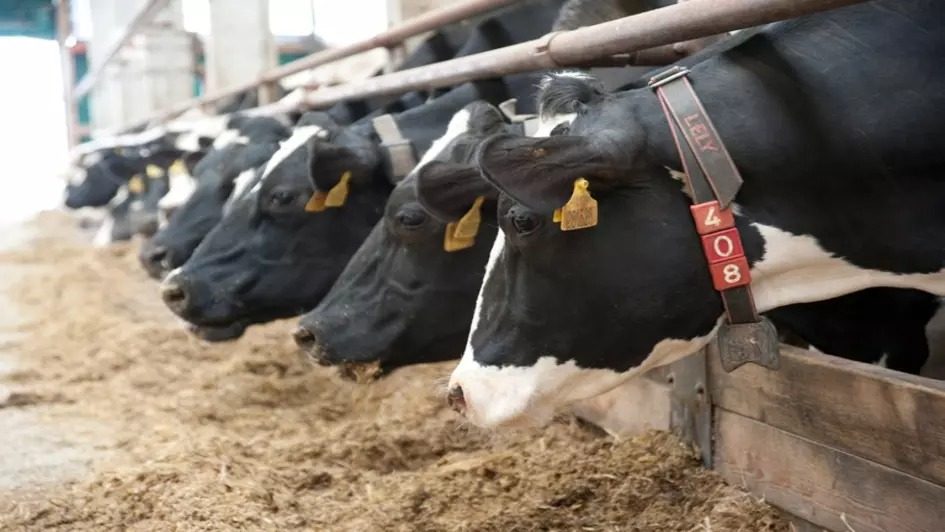
NewsSubscribe
First
Last
Consent

The Future of Dairy: Lessons from World Dairy Expo 2025 Winners

Meet the dairy game-changers leading innovation, sustainability, and policy reform in today’s evolving industry.

You know that moment walking through World Dairy Expo when you bump into someone whose operation just seems to work differently? That happened to me three times this year, and honestly, it’s got me thinking about where this industry’s headed.

When you look at this year’s World Dairy Expo award winners—the McCarty family, Juan Moreno, and Jim Mulhern—you’re not just seeing three success stories. You’re seeing a roadmap for what dairy looks like when things get done right.

The McCarty Method: The Systems Approach to Scalable Success

The McCarty Family: Four generations of dairy farming excellence stands proudly in one of their innovative free-stall barns. From left to right, brothers Mike, Clay, Tom (father), Dave, and Ken McCarty have transformed a 15-cow Pennsylvania dairy into a sustainability-focused operation spanning multiple states, earning them World Dairy Expo's prestigious 2025 Dairy Producer of the Year award.

The McCarty Family: Generations of dairy farming excellence stands proudly in one of their innovative free-stall barns. From left to right, brothers Mike, Clay, Tom (father), Dave, and Ken McCarty have transformed a 15-cow Pennsylvania dairy into a sustainability-focused operation spanning multiple states, earning them World Dairy Expo’s prestigious 2025 Dairy Producer of the Year award.

Here’s what strikes me about the McCartys—they took everything conventional wisdom says about family dairy operations and turned it sideways. Most family farms struggle to make it past the second generation, right? These guys are bringing in their fifth while milking 20,000 cows across multiple states. (Read more: The McCarty Magic: How a Family Farm Became the Dairy Industry’s Brightest Star)

But the numbers that really caught my attention weren’t the cow counts. It was their employee retention rates.

Think about it—when’s the last time you heard of dairy employees sticking around for 10, 15, even 25 years? In an industry where turnover can kill you faster than a market crash, the McCartys have cracked something fundamental. Their “DIRT” principles—Dedication, Integrity, Respect, Teamwork—sound like corporate speak until you realize that most of their processing plant team has been there since the facility opened in 2012.

According to research from the University of Wisconsin Extension on dairy workforce management, operations with stable workforces exhibit 18-23% better productivity metrics than those that constantly train new personnel. The McCartys aren’t just keeping people; they’re proving that investing in human capital pays measurable dividends.

Their on-farm processing plant is where things get really interesting. When Ken McCarty told me they’re processing 2.2 million pounds daily and claim they’ve cut transportation needs by 75%, my first thought was skepticism. However, I then looked at USDA Agricultural Marketing Service data, which shows that transportation typically accounts for 8-12% of total milk marketing costs…

The math starts making sense when you realize they’re not just moving milk—they’re condensing it before shipping to Danone. Less water weight, fewer trucks, tighter quality control. Additionally, they receive component results within hours instead of days. Try making ration adjustments with that kind of real-time feedback.

However, here’s the reality check: building a processing plant requires a massive capital investment—we’re talking $5-15 million upfront, with payback periods of 7-10 years. For most operations, this model isn’t feasible. What is scalable are their approaches to data standardization and employee management. You don’t need a processing plant to implement consistent protocols across multiple sites or invest in your people.

What really gets me excited, though, is their sustainability story. Their sand reclamation system, developed in collaboration with Kansas State University, captures 97% of the bedding material for reuse. Cover crops on 95% of their Ohio acres—way above the 15-20% typical Midwest adoption rates according to USDA Conservation Effects Assessment Project data. Water recycling is achieved through their condensing system, which is used first for cleaning and then for irrigation.

Juan Moreno: The Genetics Pioneer Who Listens to Farmers

Juan Moreno, CEO of STgenetics, stands at the forefront of his company’s facilities where revolutionary genetic technologies are developed. Under his visionary leadership, Moreno has transformed the dairy breeding industry through innovations in sexed semen technology and genomic testing that have fundamentally changed how farmers approach herd genetics worldwide.

Juan Moreno, CEO of STgenetics, stands at the forefront of his company’s facilities where revolutionary genetic technologies are developed. Under his visionary leadership, Moreno has transformed the dairy breeding industry through innovations in sexed semen technology and genomic testing that have fundamentally changed how farmers approach herd genetics worldwide.

I’ve watched a lot of biotech companies come and go in this industry, but Juan Moreno’s different. Perhaps it’s because he began working on a Colombian cattle operation and understands what it’s like when breeding decisions go awry. (Read more: Bull in a China Shop: How Juan Moreno Turned the Dairy World Upside Down)

His sexed semen technology—now used in about 30% of worldwide sales according to industry tracking—isn’t just about predicting calf gender with 90%+ accuracy. It’s about fundamentally changing the economics of replacement heifer management.

Here’s the part that made me pull out my calculator: genomic testing costs around $30 to $ 50 per calf. Recent research in the Journal of Dairy Science research confirms 76% accuracy in predicting productive lifecycle outcomes. The economic analysis shows annual returns of $75-$ 150 per animal through the early identification and culling of individuals with poor genetic quality.

But Moreno breaks it down even simpler: “For the first 60 days, a calf costs about $5 per day. After that, roughly $2 daily for feed. So why wait two years and spend $1,400-1,500 to find out a heifer’s below average when you can spend $30 as a calf and know her genetic potential?”

The math works exceptionally well for operations managing 500+ breeding females, where genomic testing typically shows positive returns within 18-24 months according to Cornell Cooperative Extension economic analysis.

The catch? Smaller operations might not see immediate ROI, and the technology works best when paired with sophisticated management systems. For farms with fewer than 200 cows, the benefits may not outweigh the costs without first making significant improvements in other management areas.

His EcoFeed innovation, which won the 2024 International Dairy Federation’s Innovation in Climate Action award, targets feed efficiency improvements of 8-10%. Given that feed represents 55% of most operations’ total costs, even modest improvements translate to significant savings.

What really impressed me about Moreno’s approach is his emphasis on regional adaptation. He’s brutally honest about limitations: “I don’t believe in the concept of a super cow. Farmers have different priorities depending on location and markets.”

Jim Mulhern: The Policy Architect Who Built the Dairy Safety Net

Jim Mulhern speaks on Capitol Hill: Leading with calm resolve and a producer’s perspective during his transformational tenure at NMPF.

You may not know Jim Mulhern’s name, but you’ve likely felt the impact of his work. Forty-five years in dairy policy, most recently as CEO of the National Milk Producers Federation, and his fingerprints are all over the programs that kept operations running during the worst market downturns. (Read more: More Than Policy: For Jim Mulhern, Legacy is Measured One More Season at a Time)

The Dairy Margin Coverage program alone has distributed over $2 billion since its inception. During COVID-related market crashes, DMC payments provided critical cash flow for thousands of operations when milk prices collapsed and feed costs stayed high.

USDA Farm Service Agency data shows DMC enrollment grew from 18,000 operations in 2019 to over 23,000 in 2024, covering approximately 85% of U.S. milk production. Those aren’t just statistics—they represent real farms that stayed in business instead of going to auction.

But Mulhern’s impact goes beyond safety net programs. The Federal Milk Marketing Order reforms he shepherded reduced milk price volatility by 8-12% in most markets, according to USDA Agricultural Marketing Service analysis. That means more predictable cash flow, easier financial planning, and reduced need for expensive hedging strategies.

The ongoing challenge? Not everyone’s happy with the FMMO reforms. Vermont producers continue to complain about Class I differentials, while Western operations question the fluid milk pricing mechanisms. The reform process wasn’t pretty—months of stakeholder negotiations, regional conflicts, and compromises that satisfied no one completely. As one co-op chair told me, “Predictable beats chaos in my mailbox every time,” but the debate continues.

Your Next Steps: Making These Lessons Work

Look, I know it’s easy to read about 20,000-cow operations, cutting-edge genetics, and Washington policy-making and think, “That’s interesting, but what about my 300-cow farm in Ohio?”

Here’s the thing—the principles scale down better than you might think.

Start with the McCarty approach to standardization: select one health protocol, one feeding schedule, and one breeding strategy, and implement them consistently across all your facilities. Track the same metrics the same way. Most importantly, invest in your people. According to the National Association of State Departments of Agriculture workforce studies, dairy operations offering competitive benefits and clear advancement paths show significantly lower turnover rates.

Consider Moreno’s genetics strategy: If you’re managing 200+ breeding females, the genomics economics usually work. But don’t chase every new technology—focus on traits that matter for your specific conditions. Heat tolerance in the Southeast, grazing efficiency in pasture-based systems, and component quality for premium markets.

Use Mulhern’s risk management tools: DMC premiums range from $0.05 to $ 0.20 per hundredweight, depending on the coverage. These aren’t just insurance costs—they’re investments in business stability. Operations using multiple risk management tools show 12-18% less income volatility over 10-year periods.

The Bottom Line

Environmental pressure will intensify. Labor markets will tighten further. Market consolidation will accelerate. Consumer preferences will continue shifting. Climate variability will require more sophisticated risk management.

The question isn’t whether change is coming—it’s whether you’ll help shape that change or simply react to it.

These three leaders chose to be proactive, and their recognition at World Dairy Expo reflects the value of that approach. The same opportunities exist for producers willing to think strategically about the future of their operations.

So pour yourself that cup of coffee, take a walk through your facility, and start thinking about what your next chapter looks like. The dairy industry’s future depends on the decisions being made right now in operations just like yours.

Key Takeaways:

  • McCartys show that scalable success comes from blending technology, sustainability, and people investment. Their employee retention and data standardization approaches work at any scale, even if processing plants don’t.
  • Moreno’s genomic advances revolutionize breeding and reduce environmental impact – Sex-sorted semen and genomic testing deliver measurable ROI for farms with 200+ cows while cutting feed costs and emissions.
  • Mulhern’s policy work stabilizes dairy through safety net programs amid volatility – DMC enrollment, covering 85% of U.S. production, proves that policy can provide real financial protection during downturns.
  • Start with standardized protocols, targeted genomics, and risk management tools – Pick one health protocol to standardize, consider genomic testing if you manage 200+ breeding females, and use DMC/LRP programs as business stability investments.
  • Future success depends on combining strong roots with an openness to innovation. Environmental pressures, labor challenges, and market shifts require operations that blend traditional values with strategic technology adoption.

Executive Summary:

Examine the groundbreaking contributions of three dairy industry leaders recognized at the 2025 World Dairy Expo: the McCarty family (Producer of the Year), Juan Moreno (International Person of the Year), and Jim Mulhern (policy legacy recognition). The McCartys demonstrate how blending innovative technology, sustainable practices, and deep investment in employee retention can create scalable success, transforming from a 15-cow Pennsylvania operation to a 20,000-cow multi-state enterprise with remarkable employee retention rates and environmental achievements. Juan Moreno’s advancements in genomic testing and sexed semen technology have revolutionized breeding strategies, delivering measurable economic returns (-150 per animal annually) while reducing environmental impact through improved feed efficiency. Jim Mulhern’s extensive policy work has strengthened vital dairy safety net programs, such as DMC, which now covers 85% of U.S. milk production and has distributed over $2 billion during market downturns, while also stabilizing milk price volatility through Federal Milk Marketing Order reforms. The article offers practical guidance for dairy producers, emphasizing the importance of data standardization, strategic adoption of genomic technology for operations with 200 or more breeding females, and leveraging available risk management tools, such as DMC and LRP programs. These leaders exemplify how combining traditional farming values with strategic innovation can provide a roadmap for sustainable and resilient dairy farming amid intensifying environmental, labor, and market challenges. Their success stories offer both inspiration and actionable strategies for dairy operations seeking to thrive in an evolving industry landscape.

Learn More:

  • How to Attract and Retain Exceptional Labor for Your Dairy Farm – This article provides a tactical, step-by-step guide on the practical strategies mentioned in the main article. It reveals specific methods for implementing a culture of retention through improved benefits, consistent training, and team communication, offering a clear roadmap for addressing labor challenges head-on.
  • Global Dairy Market in 2025: Production Shifts, Demand Fluctuations, and Trade Dynamics – This piece offers a macro-level, strategic view of the global trends influencing the industry. It connects the policies discussed by Jim Mulhern to a broader economic context, helping producers understand how their operations fit into and are affected by global supply and demand shifts in 2025.
  • Genomics Meets Artificial Intelligence: Transforming Dairy Cattle Breeding Strategies – Expanding on the genetics innovation of Juan Moreno, this article provides a forward-looking perspective on how AI and advanced genomics are poised to revolutionize herd management. It demonstrates how these emerging technologies will enable producers to make smarter, more precise breeding decisions for future profitability.

The Sunday Read Dairy Professionals Don’t Skip.

Every week, thousands of producers, breeders, and industry insiders open Bullvine Weekly for genetics insights, market shifts, and profit strategies they won’t find anywhere else. One email. Five minutes. Smarter decisions all week.

NewsSubscribe
First
Last
Consent

CME Dairy Market Report: September 11th, 2025 – When Reality Hits Your Milk Check Like a Freight Train

What if this dairy selloff isn’t temporary? Are you prepared for lower prices through 2026?

EXECUTIVE SUMMARY: We’ve been tracking today’s dairy market massacre, and honestly? It’s worse than most farmers realize. Cheese blocks crashed 5.25¢ and butter dropped 3.75¢ in heavy volume – that’s real money moving, not just market noise. The uncomfortable truth is that this selloff exposed a fundamental supply-demand imbalance that has been building for months. While everyone’s focused on the daily drama, we’re seeing U.S. producers get priced out of key export markets by aggressive EU and New Zealand competition. Your milk-to-feed ratio just took a beating – we estimate most operations dropped from 2.2:1 to barely 2.0:1 overnight. What are the seasonal demand patterns that usually support September pricing? They’re not showing up this year.Here’s what’s really concerning: futures markets are trading at discounts to USDA forecasts, which typically means either the government’s too optimistic or smart money’s positioning for worse. We think it’s time to stop hoping for a bounce and start protecting what margins you still have.

KEY TAKEAWAYS

  • Heavy volume selloff signals institutional money is bailing – 11 cheese block trades on a 5.25¢ drop isn’t retail panic, it’s professional money making strategic exits. Consider locking in Q4 and Q1 2026 pricing before this gets worse.
  • Export competitiveness is eroding fast – at $1.17/lb, our NDM is pricing 6-14¢ above EU and New Zealand equivalents. That’s why export volumes are struggling and domestic prices are under pressure (CME trade data, September 2025).
  • Midwest operations are taking the biggest hit – cheese-heavy regions like Wisconsin are seeing Class III base pricing crater while California’s diversified processing offers some cushion. Regional risk management strategies matter more than ever.
  • Feed cost stability won’t save you when milk income drops a dollar – corn at $4.20/bu and stable soybean meal are nice, but margin compression from falling milk prices far outweighs feed savings (USDA commodity reports, 2025).
  • December Class III futures around $17.00-17.50 still offer reasonable hedging opportunities – but only if you act before more farmers wake up to this reality. Put options might be your best friend right now.

Look, I’m not going to sugarcoat this – today was brutal. We’re talking about the kind of day that makes you question whether you should’ve gotten into soybeans instead of dealing with these dairy markets.

Your September milk check just took a $0.90 to $1.20/cwt beating, and this isn’t market noise – it’s the sound of fundamentals catching up with wishful thinking.

The thing about market selloffs is you can feel them building. Tuesday and Wednesday, the trading floor had that restless energy… too many people trying too hard to find reasons why cheese should be trading north of .70. Today? Reality stepped in with both boots.

What strikes me most is the volume – 11 trades in blocks alone tells you this wasn’t some algorithm having a bad day. This was real money moving, real decisions being made by people who actually understand this business. Your Class III milk is now tracking toward that uncomfortable .00-16.50 range, and honestly? That might not even be the floor.

Today’s Damage Report (And Why It Matters to Your Bottom Line)

Here’s what the trading floor delivered, and trust me, none of it was pretty:

ProductSettlementDaily MoveWeekly TrendWhat This Means for Your Operation
Cheese Blocks$1.6200/lb-5.25¢▼ -4.3%Class III heading for mid-$16s – your base price just cratered
Cheese Barrels$1.6350/lb-4.00¢▼ -3.9%Premium to blocks signals supply chain weirdness
Butter$1.9275/lb-3.75¢▼ -4.4%Class IV components are getting hammered
NDM$1.1725/lb-1.50¢▼ -4.5%Export pricing is ourselves out of key markets
Dry Whey$0.5850/lb-0.50¢▲ +3.2%Only bright spot, but it can’t save the day

Now, here’s what’s particularly concerning – and this is where my 20 years of watching these markets kicks in. Barrels trading at a 1.5¢ premium to blocks? That’s backwards, folks. Usually, it means either the supply chain’s getting kinked up somewhere or processors are scrambling for specific formats. Neither scenario is particularly encouraging.

The butter collapse… well, that one hurt to watch. Three-point-seven-five cents in a single session, and not a single trade to show for it. When butter traders won’t even engage – when you’ve got three bids sitting out there with four offers and nobody’s willing to make a deal – that’s telling you something about where people think fair value really sits.

What the Trading Floor Was Really Saying

The bid-ask spreads today told the whole story. I’ve been tracking these numbers for years, and when butter spreads blow out to 3×4 (that’s three bids to 4 offers for those keeping score at home), you know confidence just walked out the door.

Here’s something that caught my attention – and this is where experience matters. The 11 block trades on a 5.25¢ decline? That volume pattern screams institutional selling. Not day-traders getting cute, not algorithmic noise… real money making real decisions about where this market’s headed.

NDM’s 10 transactions tell a similar story. Export customers are clearly balking at current pricing, and honestly, can you blame them? At $1.1725/lb, we’re pricing ourselves 6-14¢ above what EU and New Zealand are offering equivalent product for.

The intraday action was textbook bear market stuff – gap down at the open, steady selling through the session, settlement right near the lows. No late-day heroes trying to catch a falling knife. That usually means tomorrow could bring more of the same.

Regional Reality Check: Upper Midwest Taking the Brunt

Let me focus on the Upper Midwest this week because that’s where today’s pain is most acute. Wisconsin and Minnesota producers – you’re feeling this directly in your Class III base pricing. The region’s cheese plants are still running, but they’re clearly not desperate enough to bid up for spot milk.

What’s particularly troubling for Midwest operations is the margin squeeze. Your local feed costs have been relatively stable – corn basis in Wisconsin is running about 15-20¢ under December futures, which isn’t terrible. But when your milk income drops a dollar per hundredweight in a single day? Those feed savings become pretty meaningless.

I’m hearing from contacts in the region that some plants are actually sitting on more inventory than anyone realized. That might explain why the buying interest just wasn’t there when prices started sliding.

California producers are getting some cushion from their more diversified processing base, but not much when the entire complex is under pressure like this.

Feed Costs: The One Bright Spot (Sort Of)

Here’s the cruel irony of today – feed costs are actually behaving themselves. December corn closed at $4.1975, soybeans are holding around $10.34, and soybean meal’s sitting at $287.70 per ton. In regular times, you’d be celebrating this kind of stability.

But when your milk income just took a beating like this? Those stable feed costs don’t help much. Let me give you some quick math that’ll make your stomach turn: if you were running a 2.2:1 milk-to-feed ratio yesterday morning, today’s price action dropped you closer to 2.0:1 or below, depending on your specific situation.

For a typical Wisconsin operation running about 150 head… we’re talking about roughly $450-600 less income per day. That adds up fast, especially when you’re already dealing with higher labor costs and equipment replacement needs.

The Export Picture (And Why It’s Getting Uglier)

This is where things get really concerning for the long-term health of our markets. At current NDM pricing, we’re just not competitive internationally – and that’s before you factor in freight costs and the strong dollar.

Mexico – still our biggest customer by volume – is getting more price-sensitive by the month. They’ve got options now, and they’re using them. Recent industry data indicate that Mexican buyers are increasingly considering EU powder as an alternative.

Southeast Asia is where we’re really losing ground. The pricing gap between our NDM and what New Zealand’s offering has widened to levels that make it hard for even our most loyal customers to justify staying with the U.S. product.

What’s particularly frustrating is that global dairy demand is actually solid. The problem isn’t that people don’t want dairy products – it’s that they don’t want to pay premium prices for them when cheaper alternatives are readily available.

China remains sporadic at best. One week they’re buying, the next week they’re ghost. You can’t build a pricing structure around that kind of inconsistency.

Looking at the Bigger Picture (USDA vs. Market Reality)

The latest USDA forecasts are still projecting the all-milk price at .00/cwt for 2025. After today’s action, that’s looking pretty optimistic. Class III futures are now trading at a discount to USDA projections, which usually means either the government’s too bullish or the market’s oversold.

My gut says it’s probably a bit of both. USDA tends to be slow to adjust their models when market sentiment shifts this quickly. But the futures market… well, it’s pricing in some pretty bearish assumptions about where demand really sits.

December Class III is trading around $17.00-17.50, and that’s becoming critical support territory. Break through there, and we could be looking at a more significant correction.

What You Need to Do Right Now (Not Tomorrow, Today)

Look, I know nobody likes getting told what to do with their operation, but today’s action demands some immediate attention:

This Week:

  • Pull out your budget spreadsheets and recalculate margins based on $16.00-16.50 Class III milk. If those numbers make you uncomfortable, you need a plan.
  • Get feed quotes locked for the next 90 days. With milk income dropping, securing your cost side becomes critical.
  • Talk to your risk management advisor about December and Q1 2026 futures. They’re still offering reasonable protection around $17.00-17.50.

Strategic Thinking: This isn’t the year for aggressive expansion – I don’t care how good your fresh cow numbers look. Focus on efficiency over volume. Make sure every cow in your herd is pulling her weight.

Cash flow timing becomes crucial when margins get this tight. Know exactly when milk checks arrive and plan accordingly. This business doesn’t forgive timing mistakes when you’re running this close to the edge.

Industry Intelligence (What I’m Hearing)

Processing plant utilization in the Upper Midwest is running high, but plants aren’t bidding aggressively for spot milk. Some major food service buyers are reportedly pushing back on price increases – that could explain the sudden shift in demand dynamics.

One interesting development: the organic sector continues to hold significant premiums over conventional. If you’ve been thinking about transitioning… well, days like today make that premium look pretty attractive.

There are also whispers about some of the larger cooperatives getting more aggressive with their pricing discipline. Could be positioning for what they see as a longer downturn.

Putting Today in Historical Context

Here’s what experience teaches you – today wasn’t just another down day. This was a reality check with serious implications.

Looking at historical patterns, this kind of broad-based selling in September is unusual. September is typically when demand starts building for fall production runs. When you see this kind of rejection of higher prices during what should be a demand-building month… well, that tells you the structural issues in our markets might be more serious than many people assumed.

The last time I saw this kind of price action in September was back in 2019, and that correction lasted longer than most people expected. Not saying we’re heading for the same thing, but the patterns are worth noting.

The Bottom Line: Discipline Over Hope

The thing about dairy markets – and I’ve learned this the hard way over the years – is that fundamentals always win eventually. We spent the last few weeks hoping that demand would catch up with our pricing expectations. Today, the market delivered a clear message: current supply and demand fundamentals don’t support premium pricing.

Does this mean we’re heading for disaster? Not necessarily. We’ve weathered tougher markets before. However, it does mean we need to make decisions based on reality, rather than wishful thinking.

The dairy business rewards preparation and punishes hope. Today’s action was the market’s way of reminding us which camp we need to be in. Stay disciplined, protect your margins where possible, and remember – the farmers who survive these corrections are the ones who adapt quickly to new realities.

This market isn’t going to reward stubbornness or wishful thinking. But for those who adjust their strategies and manage their risks appropriately? There’s still money to be made, even in challenging conditions.

The key is making smart decisions with the information we have, not hoping for a miracle bounce that might not come.

Complete references and supporting documentation are available upon request by contacting the editorial team at editor@thebullvine.com.

Learn More:

  • Profit and Planning: 5 Key Trends Shaping Dairy Farms in 2025 – This strategic analysis reveals how focusing on feed efficiency and component traits can add thousands to your bottom line. It provides actionable financial and genetic strategies to help your farm capture emerging market opportunities and improve long-term sustainability.
  • Your 2025 Dairy Gameplan: Three Critical Areas Separating Profit from Loss – Get tactical with this how-to guide on the everyday decisions that separate winners from losers. It offers practical, research-backed advice on optimizing forage, using methionine, and managing transition cows to boost cow health and cut costs.
  • 5 Technologies That Will Make or Break Your Dairy Farm in 2025 – Look beyond market noise and prepare for the future. This article reveals how adopting innovations like smart calf monitoring and advanced health systems can slash mortality rates and increase labor efficiency, securing your competitive edge for the long run.

The Sunday Read Dairy Professionals Don’t Skip.

Every week, thousands of producers, breeders, and industry insiders open Bullvine Weekly for genetics insights, market shifts, and profit strategies they won’t find anywhere else. One email. Five minutes. Smarter decisions all week.

NewsSubscribe
First
Last
Consent

The Tech Reality Check: Why Smart Dairy Operations Are Winning While Others Struggle

Are you gambling $500K+ on dairy tech without knowing if your farm’s actually ready?

EXECUTIVE SUMMARY: Here’s what we’ve uncovered after digging deep into dairy tech adoption across the country… Most farms investing in robotic milking systems aren’t seeing positive returns until years 3-5, not the 18 months dealers promise. The real numbers? Expect 3.8 to 5 years for genuine payback, driven by labor savings that only work if you nail the implementation. We’re seeing total costs run 40% above sticker price once you factor in barn upgrades, electrical work, and the brutal learning curve that can tank production for months. With dairy wages hitting $20-30/hour across regions, the pressure to automate is real—but so are the risks of rushing in unprepared. Cybersecurity threats are escalating fast—even Dairy Farmers of America got hammered by ransomware this summer, shutting down multiple plants. The farms that succeed hit specific benchmarks: 95+ pounds of energy-corrected milk per cow daily and 2.8+ robot milkings with minimal downtime. Bottom line? The tech works, but only if you do the groundwork first. Start with operational readiness, budget realistically, and plan for a marathon—not a sprint.

KEY TAKEAWAYS

  • Budget the real costs upfront: Robotic milking delivers 3.8-5 year ROI, but total implementation runs 40%+ above equipment price for wiring, training, and facility mods—especially critical in harsh climates.
  • Cybersecurity isn’t optional anymore: With major co-ops getting hit by ransomware, change those default passwords TODAY and segment your networks before connecting any farm equipment
  • Performance benchmarks separate winners from strugglers: Target 95+ lbs energy-corrected milk per cow and 2.8+ daily robot milkings—these metrics directly correlate with profitability in 2025 market conditions
  • Prevention pays better than treatment: Farms investing in automated health monitoring (95% accuracy) and proactive vet care see fewer costly clinical cases and better long-term returns
  • Size matters for ROI: Robotics work best for 400+ cow herds, while smaller operations often get better returns starting with targeted monitoring and data systems before full automation

Look, we’ve all been there—staring at that glossy brochure for robotic milking systems or precision feeding tech, calculating those sweet ROI projections on the back of a feed receipt. But here’s what’s really happening across dairy country: many operations are finding out the hard way that buying agricultural technology isn’t like picking up a new hay baler.

Here’s what consultants won’t tell you: most tech investments crater in year two because farms treat robots like tractors. Meeting initial ROI projections, with success rates varying dramatically by operation size, management readiness, and regional factors. The difference between farms that thrive with tech and those that struggle isn’t the equipment—it’s everything that happens before and after installation.

Recent peer-reviewed studies confirm robotic milking systems achieve ROI in 3.8 to 5 years, driven primarily by labor cost reductions of around 32% and increased production efficiency. But hitting those numbers requires substantial preparation that most operations underestimate.

The Labor Squeeze Gets Real

Up here in the Midwest, dairy wages have hit $20-$24 per hour according to USDA Agricultural Labor Survey data, while Southwest operations are competing at $25-$30 hourly. When you’re looking at 30-40% annual turnover rates industry-wide, those numbers add up fast. The wage pressure is making technology adoption more attractive, but it’s also raising the stakes. Miss on your implementation, and you’re stuck with expensive monthly payments on underperforming equipment while still dealing with labor shortages.

The Hidden Cost Reality

Here’s what equipment dealers don’t highlight in those sales presentations: total implementation costs typically run 40% above equipment prices. That $350,000 robotic setup? Budget closer to $500,000 once you factor in electrical upgrades, barn modifications, and the inevitable learning curve losses.

Northern operations face additional winterization costs—barn insulation, heated floors, equipment protection through those brutal Wisconsin or Minnesota winters. Southern dairies deal with heat stress challenges that can disrupt cow traffic patterns through robotic systems.

The learning curve spans 18-24 months, during which production often dips while cows adapt to voluntary milking patterns and staff master data management systems. This isn’t equipment failure—it’s the reality of transforming operational philosophy.

The Cyber Threat Nobody Saw Coming

This past summer really opened eyes when Dairy Farmers of America—one of the largest US cooperatives—got hammered by ransomware across multiple facilities. If they’re vulnerable with dedicated IT teams, what about operations running default passwords on connected equipment?

According to cybersecurity advisories, simple oversights, such as unchanged “admin/password” credentials, continue to expose farms to attacks. Every connected device—from automated calf feeders to milk truck sampling systems—represents a potential entry point.

The Readiness Assessment That Separates Winners from Strugglers

Before signing purchase agreements, operations need an honest evaluation across key areas:

  • Management Systems: Do daily routines happen consistently regardless of who’s working? Is data systematically tracked and actively utilized? Can equipment issues get resolved internally before calling dealers?
  • Financial Planning: Is the cost of production understood within $2/cwt? Are protocol changes communicated effectively across all personnel?
  • Technical Capacity: Can someone handle computer problems without immediate panic? Is staff willing to understand why protocols work, not just follow orders?

Industry consultants recommend scoring well in at least four of these five areas before proceeding with major investments. Operations falling short should focus on building operational foundations first.

Scale Matters More Than You Think

Robotic milking economics work best for herds above 400 cows, where labor savings justify implementation costs. Smaller operations often see better returns through incremental adoption—automated health monitoring, precision feeding components, or improved data systems.

For operations under 300 cows, consider whether technology addresses actual constraints or just sounds appealing. Sometimes the biggest wins come from optimizing existing systems rather than wholesale automation.

What Success Actually Looks Like

When technology implementation succeeds, specific benchmarks become apparent:

  • Production metrics: Energy-corrected milk production consistently exceeds 95 pounds per cow daily, meeting top-performing herd standards.
  • System utilization: Robotic milking achieves 2.8+ visits per cow daily with minimal downtime and low fetch rates.
  • Management response: System alerts trigger decisions within hours, not days or weeks.

The Prevention Economics Advantage

Here’s where successful operations think differently: they invest more in veterinary care, not less. Benchmarking data shows top dairies spend $1.20-1.50 per hundredweight on health costs compared to $0.60-0.90 for struggling operations.

Automated health monitoring systems validated in multiple studies demonstrate approximately 95% accuracy in detecting metabolic and infectious diseases 24-48 hours before clinical signs appear. Early intervention enables $45-$60 in preventive treatments, saving $200-$400 per case through avoided production losses.

The most successful farms treat more animals, not fewer—they just treat them earlier when intervention is cheaper and more effective.

Regional Implementation Realities

  • Northern dairies should budget an additional $8,000-12,000 for winterization requirements. Cold-weather challenges affect equipment reliability and require specialized facility modifications.
  • Southwest operations face different hurdles—heat stress impacts cow behavior and traffic flow, requiring enhanced cooling systems that add $15,000-25,000 to project costs.
  • Southeastern humid climates create moisture-related maintenance challenges, adding ongoing operational complexity that affects long-term ROI calculations.

Financial Planning Essentials

The total budget system costs 40% more than the equipment prices, accounting for infrastructure, training, and temporary production impacts. Implementation timelines of 18-24 months from purchase to optimized returns represent the industry standard, not equipment problems.

Essential cybersecurity measures include changing all default passwords, implementing network segmentation, and budgeting for ongoing monitoring services as operational expenses, not one-time costs.

The Bottom Line for 2025

Adopting technology in dairy requires strategic thinking that extends beyond equipment selection. Operations succeeding with agricultural technology treat implementation as a comprehensive business transformation, requiring systematic preparation, realistic budgets, and a long-term commitment.

Farms positioning themselves for long-term success understand that modern dairy technology amplifies existing management strengths—it doesn’t create capabilities that weren’t already being developed. Success depends on operational readiness, not equipment sophistication.

Regional factors, scale economics, management capacity, and cybersecurity awareness all determine whether technology delivers promised advantages or becomes expensive monthly reminders of poor preparation.

We’ve been tracking dairy tech adoption for years, and the pattern’s clear—the farms that thrive don’t just buy better equipment, they build better systems first. Don’t let equipment dealers rush you into decisions that could cost six figures in regret. Get the fundamentals right, plan for the real timeline, and make technology work FOR your operation, not against it.

Complete references and supporting documentation are available upon request by contacting the editorial team at editor@thebullvine.com.

Learn More:

The Sunday Read Dairy Professionals Don’t Skip.

Every week, thousands of producers, breeders, and industry insiders open Bullvine Weekly for genetics insights, market shifts, and profit strategies they won’t find anywhere else. One email. Five minutes. Smarter decisions all week.
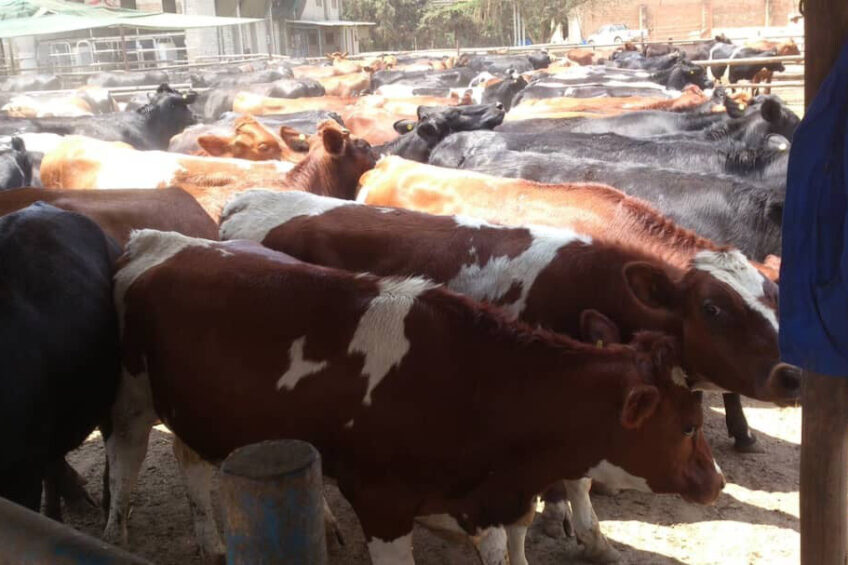
NewsSubscribe
First
Last
Consent

CME Dairy Market Report – September 10, 2025: Mixed Signals from the Trading Floor

Everyone’s celebrating today’s cheese rally. We dug deeper – here’s what the trading floor isn’t telling you.

EXECUTIVE SUMMARY: We’ve been tracking something interesting in today’s CME session that most market reports are missing completely. Sure, cheese blocks rallied 0.75¢ and Class III futures exploded 73¢ higher – but here’s what caught our attention: butter got absolutely hammered (down 4¢) while NDM continues pricing us out of global markets at a 6-14¢ premium over competitors.This isn’t just mixed signals… it’s revealing a fundamental shift in how the dairy complex is splitting apart. With milk production up 3.4% in major states and cow inventories at 2021 highs, we’re looking at an abundant supply hitting selective demand. The cheese plants still need your milk, but export markets? That’s where the real profit erosion is happening.What’s fascinating is how trading volume backed up today’s moves – heavy selling in butter (14 transactions) versus light buying in cheese (just two trades). Our analysis of the futures curve suggests this cheese rally might have more staying power than previous head fakes, especially with seasonal demand patterns shifting toward holiday production.Here’s the bottom line: the market is telling us to focus on domestic cheese demand while export competitiveness continues to deteriorate. Smart producers are using today’s Class III jump to lock in October-November pricing around $17.50+. Don’t wait for perfect signals – they don’t exist in dairy markets.

KEY TAKEAWAYS

  • Lock in 25-30% of remaining 2025 production NOW – Today’s 73¢ Class III surge creates pricing opportunity at $17.50+ levels, but futures volume was light, suggesting limited upside momentum. Use Dairy Revenue Protection or forward contracts while this window exists.
  • Export markets are broken for powder, focus domestic – U.S. NDM running 6-14¢/lb premium over European and New Zealand competitors means export profits are gone. Redirect marketing strategy toward domestic cheese demand, where we still have a competitive advantage.
  • Feed cost relief is real but temporary – Corn at $3.99/bu and soybean meal at $281/ton improve milk-to-feed ratios, but harvest pressure won’t last forever. Contract for 6 months of feed-forward while basis relationships favor buyers.
  • Production efficiency beats volume expansion – With 18.5 billion pounds produced in major states (up 3.4% YoY) and cow numbers at 2021 highs, margins come from per-cow productivity, not herd growth. Focus rations on components, cull bottom quartile performers.
  • California’s model shows the future – Down 3% in cow numbers but ahead on per-cow production proves efficiency wins over scale. Their forced optimization from HPAI and regulations demonstrates profit potential through targeted culling and technology adoption.

Well, that was quite a session today. After getting hammered for two weeks straight, we finally saw some life in the cheese block market – up 0.75¢ to close at $1.6725/lb. Not exactly cause for celebration, but when you’ve been watching your projected milk checks shrink daily, you’ll take any green you can get.

The real story was in the futures pit. Class III September contracts jumped 73¢ to settle at $17.69/cwt, according to CME data. That’s the kind of move that gets your attention, especially when you’re trying to figure out what September’s milk check might look like.

But here’s where it gets complicated – and you know how dairy markets love to be complicated. While cheese gave us hope, butter got absolutely crushed, dropping 4¢ to $1.9650/lb. NDM wasn’t much better, falling 1.25¢ to $1.1875/lb.

So we’re sitting here with one foot on the gas pedal and one on the brake. Classic dairy market stuff.

Today’s Numbers – The Real Story

Let me break down what actually moved today and what it means for those of us shipping milk:

Cheese Blocks: $1.6725/lb (+0.75¢) Finally, some buying interest. This happened mostly in the last hour – probably some short covering, but buying is buying. The cheese plants still need our milk to make product, and this price action suggests they’re willing to pay for it.

Cheese Barrels: .6750/lb (-0.50¢)
Here’s what’s interesting – barrels are trading at a slight premium to blocks. That’s not normal, and it usually means processors aren’t sure which format they prefer right now. Could signal some uncertainty in the cheese complex.

Butter: $1.9650/lb (-4.00¢) This hurt. A 4¢ drop in one day tells you inventories are building, and demand just isn’t there. Class IV outlook took a hit with this move.

NDM Grade A: $1.1875/lb (-1.25¢) Export competitiveness continues to erode. We’re pricing ourselves out of international markets, which puts more pressure on domestic demand.

The trading volume backed up the price moves. Butter saw 14 transactions on a down day – that’s heavy volume, suggesting real selling pressure. Cheese blocks managed just two trades despite the rally, which makes you wonder if this bounce has staying power.

Where We Stand Globally

This is where things get uncomfortable for us as U.S. producers. Our NDM is currently trading well above that of international competitors, making it challenging to move the product overseas.

According to recent Global Dairy Trade data and international price comparisons, U.S. nonfat dry milk prices are running 6 to 14 cents per pound higher than European skim milk powder and New Zealand equivalents. When you’re the high-cost supplier in a commodity market, that’s never a good spot to be in.

The European situation isn’t helping either. Ireland’s having a strong production year despite overall EU output being slightly down. Their processors are remaining aggressive on pricing, especially in Southeast Asian markets where we used to have a stronger foothold.

Mexico remains our strongest export partner – CoBank and USDA data show Mexico purchasing about 4.5% of total U.S. milk production through various dairy products. However, even there, we’re seeing increased competition from European suppliers, who are getting creative with freight arrangements.

Feed Costs – Finally Some Relief

Here’s one bright spot in all this. Corn futures settled near $3.99/bushel today, and soybean meal is around $281/ton, according to AMS grain reports. That’s manageable compared to where we were earlier this year.

The milk-to-feed price ratio is still below where you’d want it for comfort, but it’s trending in the right direction. Every dollar saved on feed costs goes straight to your bottom line when milk prices are under pressure like this.

Regional differences are still significant, though. Upper Midwest operations are experiencing some harvest logistics issues that are driving up corn basis. Western producers are still managing through higher hay costs from this summer’s drought conditions.

Production Reality Check

The latest USDA data from July shows milk production in the 24 major dairy states totaled 18.5 billion pounds, up 3.4% from June 2024. That’s a lot of additional milk looking for a home.

Dairy cow inventories have increased by approximately 114,000 to 159,000 head as of mid-2025, representing the highest population since 2021, according to USDA and CoBank reports. Texas and South Dakota continue leading the expansion, while some traditional dairy regions are holding steady or declining slightly.

The processing capacity situation is actually pretty healthy. Most plants are running at 90-95% utilization – busy enough to be efficient, but not so maxed out that quality suffers or maintenance gets deferred.

California’s Unique Situation

California deserves special mention because what happens there affects everyone. The state’s cow numbers are down about 3% from peak levels, but per-cow production is running ahead of historical norms, according to ERA Economics and California Department of Food & Agriculture data.

The surviving operations out there tend to be the most efficient ones. HPAI essentially forced the industry to cull the bottom quartile performers, leaving behind the higher-producing herds.

Water costs remain a significant factor in the Central Valley. Regulatory pressures around methane reduction are actually driving some interesting technological adoption that’s improving efficiency, even if the initial compliance costs were substantial.

The challenge for California operations is that their higher cost structure makes them vulnerable when milk prices drop. They need stronger milk prices than Midwest operations to maintain similar margins.

What the Fundamentals Are Telling Us

Domestic demand patterns are holding up reasonably well. Cheese consumption stays pretty steady, which explains why the cheese complex is performing better than butter and powder. But retail inventory builds are becoming more noticeable, which puts pressure on spot prices.

Export markets face multiple headwinds – a stronger dollar, competitive international pricing, and logistics challenges. Southeast Asian markets show growth potential, but the U.S. market share is under pressure from New Zealand and European suppliers.

The supply side story is straightforward – we’ve got abundant milk, processing capacity is adequate, and this shifts negotiating power toward the processors. That’s not great news for milk prices in the near term.

Risk Management Considerations

Current market conditions demand a strategic approach to pricing. Today’s cheese rally created an opportunity to lock in some October-November production around $17.50+ levels.

Dairy Revenue Protection enrollment is running higher than last year – producers learned from previous market cycles about the importance of having some price floor protection. The program changes have tightened some premium subsidies, but it remains a valuable risk management tool.

For production decisions, the focus has shifted toward efficiency over volume. With margins under pressure, maximizing milk components and minimizing costs per hundredweight makes more sense than just pushing for maximum volume.

Regional Variations Matter

Upper Midwest operations are seeing relatively stable basis relationships compared to national averages. Cheese plant utilization is running around 94% capacity, which is healthy for the region.

Several major cooperatives are implementing seasonal pricing programs to help smooth cash flow volatility for members. If you’re not already enrolled in something like that, it’s worth investigating.

The Northeast continues dealing with higher labor costs and regulatory pressures, but fluid milk markets provide some pricing stability that other regions don’t enjoy.

Southwest expansion continues, particularly in Texas, where feed costs are manageable, labor is available, and processing capacity is growing to match increased production.

Looking Ahead

The next few weeks will be critical for determining whether today’s cheese rally has staying power. Weekly cold storage data on Friday could provide more insight into inventory levels.

Seasonally, we’re entering the period where milk production typically peaks while demand patterns shift toward holiday products. The question is whether processing capacity can handle the seasonal surge without additional price pressure.

Current price levels sit in the lower third of the past three years’ range. While that suggests potential upside, it also reflects fundamental challenges that won’t disappear overnight.

For your immediate decisions, focus on what you can control – production efficiency, cost management, and smart risk management. The volatility isn’t going away anytime soon.

Bottom Line

Today’s mixed session captured where the dairy industry sits right now – domestic demand holding up reasonably well, but international competitiveness is under serious pressure.

The cheese rally was encouraging, and that 73¢ jump in Class III futures suggests the market thinks we may have found a floor around these levels. But the weakness in butter and powder reminds us that fundamental challenges remain.

Stay disciplined with risk management, focus on efficiency over volume, and remember – we’ve weathered tougher markets than this before. The key is making smart decisions with the information we have and not getting caught up in the daily volatility.

This industry has a way of humbling you just when you think you’ve got it figured out. Today offered a small ray of hope, but the real work happens in the barn and the feed alley, not on the trading floor.

Learn More:

  • Tips from the Sports Pros to Improve Your Dairy Herd’s Efficiency – This article provides a tactical, on-farm perspective on how to achieve the production efficiency gains mentioned in the market report. It offers practical strategies for optimizing herd health, nutrition, and management, helping producers improve per-cow productivity and profitability in a challenging market.
  • Dairy Profit Squeeze 2025: Why Your Margins Are About to Collapse (And What to Do About It) – Go deeper into the strategic market forces driving the issues highlighted in the report. This piece offers a hard-hitting look at the long-term implications of China’s tariffs, export challenges, and regional disadvantages, providing a crucial context for why a domestic focus is essential.
  • Future-Proof Your Dairy Farm: Tackling the Top 3 Challenges of 2050 – Look beyond the daily market swings and explore the innovative solutions that will define the dairy industry’s future. This article reveals how technological advancements in methane reduction, animal welfare, and data-driven management are not just future trends but actionable strategies for long-term sustainability and success.

The Sunday Read Dairy Professionals Don’t Skip.

Every week, thousands of producers, breeders, and industry insiders open Bullvine Weekly for genetics insights, market shifts, and profit strategies they won’t find anywhere else. One email. Five minutes. Smarter decisions all week.

NewsSubscribe
First
Last
Consent

European Dairy Just Caught Everyone Off Guard in 2025 – Here’s What Really Happened

European dairy defied disaster predictions—production dropped just 0.2% while earning a 23% premium!

EXECUTIVE SUMMARY: We’ve been digging into what really happened with European dairy in 2025, and honestly? It’s got us rethinking everything. While disease outbreaks and drought had everyone predicting disaster, European producers held production steady with just a 0.2% dip and locked in milk prices 23% higher than New Zealand (USDA, European Dairy Observatory). Here’s what caught our attention: they didn’t chase volume—they invested in robotics, quality systems, and strategic partnerships during the tough times. Major cooperative mergers, such as Arla-DMK’s €19 billion combination, gave them the negotiating muscle we can only dream of. The EU-Mexico trade deal opened premium export markets at precisely the time they were needed most. Bottom line? While we’re still playing defense, they’re building competitive moats. Time to stop reacting and start strategizing.

KEY TAKEAWAYS

  • Tech investment during downturns pays off big: European farms ramped up robotic milking adoption significantly in 2025, capturing real-time data on feed efficiency, health, and reproduction that traditional parlors can’t match (CEMA reports). Action step: Evaluate automation ROI for your operation—margins improve when you optimize individual cow performance.
  • Cooperative scale beats individual farm size: The Arla-DMK merger, creating a €19 billion powerhouse, proves collective bargaining trumps going solo (Dairy Reporter). Immediate opportunity: Assess your co-op’s strategic positioning—are you leveraging group purchasing and R&D investments effectively?
  • Premium markets reward strategic thinking: European producers earned that 23% price advantage by targeting quality-focused consumers and sustainability markets, not commodity volume (European Dairy Observatory). Implementation: Audit your milk quality premiums and explore value-added partnerships in your region.
  • Regional diversification creates natural insurance: Disease outbreaks stayed localized because European producers spread operational risk across different systems and geographies (Hoard’s Dairyman). Strategy: Consider how geographic and operational diversity could protect your cash flow during the next crisis.
  • Trade positioning matters more than production volume: The EU-Mexico deal slashed tariffs right when European farmers needed new markets, proving strategic market access beats pure output (Eucolait). Takeaway: Stay informed on trade developments that could benefit your region’s dairy exports.

You know that feeling when the weather forecast calls for a week of storms, but you end up with mostly sunshine? That’s exactly what happened with European dairy this year.

While industry watchers were predicting production disasters – droughts, disease outbreaks, tighter environmental regs – European farmers barely missed a beat. The USDA’s latest figures show EU milk production dropped just 0.2% to 149.4 million metric tonnes in 2025. When everyone expected a nosedive, that’s more like a gentle nudge.

But here’s where it gets interesting for those of us watching milk checks…

The Price Premium That Actually Stuck

European milk prices hit 53.8 cents per kilogram in February 2025 – up 16% year-over-year according to the European Dairy Observatory – and held steady through March. Meanwhile, New Zealand producers were stuck at around 42 cents per kg. That’s a hefty 23% premium that European farmers have managed to sustain.

Now, I’ve been in dairy long enough to know premiums like that don’t happen by accident. What strikes me about the European approach is how they positioned themselves for quality markets while the rest of us were still chasing volume.

They’ve been playing a different game entirely – focusing on value-added processing, sustainability credentials, and strategic market positioning instead of just trying to fill more tanks.

Disease Hits That Should’ve Been Devastating

Don’t get me wrong – disease pressure was real this year. Bluetongue knocked about two pounds off daily production per cow for 9-10 weeks in affected herds, according to Hoard’s Dairyman. That’s serious money walking out the barn door when you multiply it across entire operations.

Then lumpy skin disease showed up in France and Italy – serious enough that Tour de France organizers actually rerouted stage 19 to avoid infected cattle zones. When a world-famous bike race changes its course because of dairy cow health issues, you know the situation’s getting real.

But here’s what caught most analysts off guard: the outbreaks stayed patchy. It wasn’t continent-wide devastation. Some farms got hammered while their neighbors stepped up production to fill market gaps. That regional patchwork actually became a weird kind of insurance policy.

Technology Surge During Tough Times

What really surprised me was the rapid tech adoption that occurred alongside all this chaos. Industry reports show robotic milking installations accelerated significantly across Europe in 2025 – we’re seeing real momentum in automation when you’d expect farmers to be cutting back.

These aren’t just fancy gadgets either. Modern robotic systems track everything from individual cow feeding patterns to early health flags to breeding cycles. The data capture alone gives operators management capabilities that traditional parlor setups simply can’t match.

From conversations with consultants working both sides of the Atlantic, regional approaches vary dramatically. Dutch operations are pushing automation hard – they’re typically hitting 9,000 to 9,500 kg per cow annually with high-tech systems. Irish farms stick with their pasture-based strengths, averaging 5,500 to 6,500 kg per cow. Alpine operations find their niche around 6,500 to 7,000 kg, focusing on specialty cheese markets where traditional methods still command premiums.

No cookie-cutter approach here – just smart regional specialization that creates overall system strength.

Consolidation Moves That Make Sense

The big story everyone’s talking about is the Arla-DMK merger that’ll combine over 12,000 farms with revenues approaching €19 billion. FrieslandCampina’s talks with Milcobel are eyeing their own €14 billion combination involving around 11,000 member farms.

But this isn’t just about getting bigger for size’s sake. European farmers understand something many North American operations haven’t figured out yet: cooperative scale delivers purchasing power, R&D muscle, and market reach that individual farms can’t achieve alone.

When you’re competing globally, that collective strength becomes your competitive weapon, not just a cost-sharing mechanism.

Trade Openings While Others Still Knock

The revamped EU-Mexico trade deal slashed dairy tariffs, giving European exporters preferential market access while competitors are still negotiating entry. Perfect timing, considering European operations had been building quality systems and processing capacity during the same period.

The Cost Side That Enabled Everything

Energy bills dropped 7% across Europe this year, helping offset input costs that remain stubbornly 29% above pre-pandemic levels, according to the European Dairy Observatory. That margin of breathing room? That’s what funded the strategic investments, rather than just operating in survival mode.

What This Means If You’re Running Cows

When cash flow improves, don’t just pocket the difference. Reinvest in technology, genetics, infrastructure – buy your future productivity while you can afford it.

Don’t go it alone either. Cooperative strategies aren’t just buzzwords – they’re shields and swords in today’s markets. Find partners you trust because collective strength matters more than individual farm size in global competition.

And think beyond commodity churn. Target premium markets where margins actually hold when prices get ugly elsewhere. Quality and sustainability programs offer better long-term prospects than volume competition.

What surprises me most is how European dairy took what should’ve been a devastating punch and turned it into strategic positioning. The question is: are we seeing enough of this long-term thinking closer to home?

Because this industry’s race is heating up, and the winners are going to be the ones who play for competitive advantage, not just survival.

Ready to stop playing defense and start thinking strategically?

Complete references and supporting documentation are available upon request by contacting the editorial team at editor@thebullvine.com.

Learn More:

The Sunday Read Dairy Professionals Don’t Skip.

Every week, thousands of producers, breeders, and industry insiders open Bullvine Weekly for genetics insights, market shifts, and profit strategies they won’t find anywhere else. One email. Five minutes. Smarter decisions all week.

NewsSubscribe
First
Last
Consent

Danone’s $110M Ohio Bet Just Changed the Game – Here’s What You Need to Know

Danone drops $110M on Ohio despite flat yogurt sales—here’s the real story behind this bet.

EXECUTIVE SUMMARY: Look, proximity just became more valuable than herd size—and Danone’s $110 million Ohio bet proves it. While yogurt consumption stays flat overall, premium segments like Oikos are exploding with 40% growth, driven by health-conscious consumers paying top dollar for protein. MVP Dairy’s 4,500 cows supply 350,000 pounds daily because they’re 18 miles from the plant, not because they’re the biggest operation around. Globally, from German co-ops to Australian farms using digital integration, the smart money’s on strategic partnerships over raw volume. Certifications like Non-GMO and tech that connects you directly to processors aren’t nice-to-haves anymore—they’re your ticket to the premium game. Time to stop chasing yesterday’s playbook and start thinking like the supplier they can’t live without.

KEY TAKEAWAYS

  • Geography pays the bills: Being within 50 miles of your processor can mean the difference between premium contracts and commodity pricing—MVP Dairy’s daily 350,000-lb supply proves location beats everything else.
  • Certifications unlock the vault: Non-GMO verification isn’t just paperwork anymore—it’s your entry pass to contracts that actually pay while everyone else fights over commodity rates.
  • Smart tech = smart money: Automated milk sampling reduces rejected loads and gets you quality bonuses, but only invest in systems that tie directly to your buyer’s requirements.
  • Sustainability is the new premium: Danone’s regenerative ag program covers 144,000 acres because it works—participants report better soil health AND extra money per hundredweight.
  • Reliable beats big every single time: A consistent 4,500-cow operation close to the plant destroys distant mega-dairies with fancy robots—processors want partners they can count on, not just cheap milk.

If you’ve been keeping one eye on dairy news, you probably heard about the big splash happening in a small town called Minster, Ohio. Danone dropped more than $110 million on expanding their yogurt plant there lately. And it’s not just about new buildings — this signals a big shift in how dairy’s going to work going forward.

Now, you might think that yogurt sales have been struggling, but it’s more complicated than that. While some traditional yogurt styles are facing headwinds, the overall market remains stable, with premium segments, such as Greek and high-protein varieties, driving growth. These premium categories are booming enough to keep the whole market on solid ground.

Danone’s planning on a serious jump — they expect to buy 60% more milk from their Ohio plant in the next few years. That’s quite a call for area producers.

The Oikos Explosion Everyone’s Talking About

Let’s talk about a real buzzmaker in this space: Oikos. Their sales soared by over 40% in early 2024, riding the wave of customers, many on weight-loss meds like Ozempic or Wegovy, seeking protein-rich, low-sugar options. It’s not just dessert anymore — it’s becoming essential fuel in daily diets for folks willing to pay premium prices.

What strikes me about this trend is how it’s completely flipped the script. We used to think more volume meant more opportunity. Now it’s about the right consumers paying top dollar for functional nutrition.

MVP Dairy: The Real Story Behind the Numbers

Nearby, MVP Dairy doesn’t just talk the talk — they run about 4,500 cows and deliver around 350,000 pounds of milk daily straight to that plant. These guys have positioned themselves perfectly.

The secret sauce? They nailed the Non-GMO Project certification — a big deal for today’s premium market. Producers in similar programs report that initial paperwork requirements, while challenging, become routine once premium contract benefits materialize.

People around here know the truth: being 20 minutes from the plant beats saving money on land farther away most days. Frequent, reliable deliveries are what buyers are paying for these days.

Chobani’s $1.2B Wake-Up Call

Don’t overlook the big picture either — Chobani recently announced a .2 billion plant investment in upstate New York. Let’s get real about Greek yogurt’s market position — latest data shows it holds about 46-48% of the US market, commanding serious premium pricing. Here’s how these investments stack up — both companies are chasing the same premium-paying consumers who view dairy as functional nutrition, not just food.

Why Geography Wins Every Time

MVP’s got the upper hand, being just 18 miles from the plant. Danone wants fresh milk, delivered multiple times daily. Drive more than an hour or two, and you’re already behind the curve.

This pattern’s playing out worldwide. German co-ops cluster producers close to plants, and 68% of Australian dairies use smart devices to stay synced with their processors. The world’s most profitable operations cluster around major processing facilities.

Here in Ohio, the dairy industry supports 1,400 farms, pumping out over $30 billion in economic value and supporting 130,000+ jobs. That’s the kind of critical mass processors can’t ignore.

Regional producers consistently mention that while cheaper land might be available farther out, the trucking costs and delivery timing challenges make staying close the smarter financial move.

Tech That Actually Matters on the Farm

Now, about tech that truly makes a difference. Automated milk sampling systems enable earlier detection of milk quality issues like subclinical mastitis, which helps reduce rejected loads and can qualify farms for premium payments, though specific economic benefits vary based on farm size and management practices.

These systems directly tie milk quality data to processors, building trust and transparency that drive premium partnerships. In Australia, these technologies have been standard for years, backed by government programs that emphasize practical gains over flashy gadgets.

Sustainability Programs That Actually Pay

Switching gears to sustainability — Danone’s regenerative agriculture effort covers over 144,000 acres and supports 75% of their milk supply. Producers in regenerative agriculture programs report variable economic benefits, including input cost reductions and premium payments, with results depending on farm size and implementation practices.

Regional producers note that weekly soil testing, while initially seen as extra work, has led to healthier pastures that are paying for themselves through improved productivity and premium qualification.

This isn’t just an Ohio story — similar successes are sprouting throughout Europe and other US regions, wherever farmers have committed to long-term soil health strategies.

What’s Killing Most Producers’ Profits

Here’s what gets me fired up: all that advice about scaling up and buying the fanciest gadgets isn’t the whole story anymore. MVP isn’t the biggest operation around, but they’re winning because they’re reliable, certified, and strategically located.

Meanwhile, larger operations with expensive automation but long hauls to processors are getting passed over. Equipment dealers want you to buy their gear, but the market rewards those who show up consistently with the right milk, at the right place, with the right documentation.

Your Move: Four Things to Do This Week

Here’s what you should focus on right now:

  • Map out every processor you can realistically serve within 50 miles and be honest about who’s close enough to matter. Distance kills deals faster than anything else in today’s market.
  • Invest only in tech that connects you directly to your buyers’ quality requirements. Systems that integrate with processor databases beat robotic milkers that only improve internal efficiency.
  • Get certified in Non-GMO, organic, or whatever your regional processors value. These certifications open doors to premium milk pools where the real money is.
  • Explore sustainability programs if they’re available locally. They’re increasingly becoming non-negotiable for major processor partnerships.

Remember: processors want partners they can count on, not just suppliers offering cheap milk.

The Bottom Line

This industry is changing fast. When Danone calls looking for 60% more milk, they don’t automatically ring the biggest operation — they call the most reliable producers they can’t afford to lose.

Geography, reliability, certification, and data integration are separating winners from everyone else fighting over commodity pricing. The farms that recognize this shift early will capture premium markets, while others will be squeezed on their margins.

So ask yourself: where will you be when that call comes?

This isn’t just a theoretical discussion. It’s happening now, right in our backyards. The dairy game’s evolving rapidly, and producers willing to adapt to this new reality have a bright future ahead.

Complete references and supporting documentation are available upon request by contacting the editorial team at editor@thebullvine.com.

Learn More:

The Sunday Read Dairy Professionals Don’t Skip.

Every week, thousands of producers, breeders, and industry insiders open Bullvine Weekly for genetics insights, market shifts, and profit strategies they won’t find anywhere else. One email. Five minutes. Smarter decisions all week.

NewsSubscribe
First
Last
Consent

Death of ‘Get Big or Get Out’? Why Tech-Savvy 500-Cow Dairies Are Outperforming Mega-Farms

Does thinking bigger always mean better profits in dairy? The numbers say otherwise, and it’s shaking up everything.

Here’s what’s really happening: The dairy industry isn’t just consolidating—it’s splitting into two completely different businesses. Mid-sized farms with the right tech stack are finding ways to compete that have nothing to do with herd size. And the economics are proving that smarter, not bigger, is becoming the key to long-term profitability.

You know what I keep hearing at every farm meeting from here to Wisconsin? Guys running 400 to 600 cows are asking if they should just throw in the towel. They see these mega-dairies popping up like grain elevators across the countryside and figure their number’s up.

But here’s what’s got me scratching my head—some of the sharpest operators I know, the ones milking that sweet spot of 400 to 600 cows, they’re not just hanging on. They’re actually expanding while their bigger neighbors are sweating debt payments and wondering how they’re gonna make the next loan payment.

Something’s shifting in this business, and it’s not what most folks think.

The Numbers Don’t Lie—But They Don’t Tell the Whole Story

Let me throw some data at you that’ll make you sit up straighter than a fresh heifer at her first milking. Between 2017 and 2022, we lost nearly 40% of our dairy farms—dropping from about 39,600 operations to just 24,000 according to the latest USDA Census. That’s not consolidation, that’s a stampede for the exits.

But here’s the kicker everyone’s missing: while all these farms disappeared, milk production actually climbed 5%. How’s that work? Those mega-dairies with 2,500+ cows grew by 16.8% and now control 46% of all U.S. milk production.

Meanwhile, small farms under 100 cows—the ones we used to call the backbone of dairy—they’re down to producing just 7% of the nation’s milk. The middle is getting squeezed tighter than a Jersey’s teats in January.

What keeps me thinking, though: if bigger was always better, why are some of those mid-sized operations I know posting better margins than operations twice their size?

The Real Cost of Going Big—And Why It’s Scarier Than You Think

Now, don’t get me wrong—the big operations do have advantages. They get better deals on feed, which still eats up about 60% of what we spend, according to the latest ERS data. And with labor costs hitting $53 billion industry-wide, every efficiency matters.

But here’s where the math gets ugly fast. With milk prices bouncing around $21 to $23 per hundredweight, margins are thinner than skim milk. One hiccup—market drop, feed spike, labor shortage—and suddenly you’re looking at red ink that could drown a Holstein.

As producers often describe the challenge, expansion can feel like hooking a boat anchor to your tractor—sure, you’re moving, but good luck stopping when conditions change. The real cost isn’t just the upfront capital. We’re talking multi-million-dollar investments with 7-10 year payback periods, assuming everything goes perfectly. And when’s the last time everything went perfectly in dairy?

The Tech Revolution That’s Changing Everything

Here’s where things get interesting, and I mean really interesting. Robotic milking isn’t just for the deep-pocket operations anymore. Approximately 5% of U.S. dairies currently utilize robots, with adoption rates even higher in Canada. These systems cut hands-on milking labor by 30-40%—and that’s not just convenience, that’s a game-changer for family operations.

I was talking to a producer from central Wisconsin at a field day last summer. He told me, “When that storm knocked out power at 2 a.m. twice last week, I didn’t lose sleep worrying about milking. My robots picked up right where they left off when the lights came back on.”

Cloud-based management platforms like Ever.Ag are helping farms save on transport costs and cut administrative time significantly. Now, company-provided data should always be taken with a grain of salt, but reports from the field suggest the efficiency gains are real.

Real Numbers from Real Farms

Consider this common scenario based on figures from farm financial consultants:

Case Study: 420-Cow Wisconsin Operation

  • Pre-technology: $18.50/cwt cost of production
  • Post-technology (robotics + precision feeding): $16.80/cwt cost of production
  • Annual savings: $95,000
  • Technology investment: $180,000
  • Payback: ~22 months

Compare that to their neighbor, who expanded from 300 to 800 cows:

  • Capital investment: $1.8 million
  • Current debt service: $22,000/month
  • Breakeven milk price: $19.20/cwt (versus market average $21.50)
  • Financial stress level: Through the barn roof

The smart money appears to be going toward making existing operations more efficient rather than simply expanding them.

Butterfat, Protein, and the Premium Game

Here’s something that’s caught my attention at the milk plant lately. Component levels are creeping up—protein’s averaging 3.32% nationally, butterfat’s hitting 4.23%. That matters because specialty processors and cheese makers pay premiums for those higher numbers.

Take this past spring in the Upper Midwest. We had three straight weeks of sideways rain that turned every field road into a mud wrestling match. The operations I know that were nimble enough to adjust rations daily—tweaking for muddy conditions, stressed cows, delayed feed deliveries—they maintained production while some of the bigger operations with rigid feeding protocols struggled to adapt.

That agility advantage? It’s real, and it’s valuable.

Learning From Our Neighbors Up North and Across the Pond

What’s happening in Europe is worth watching. European dairies, faced with higher costs and tighter regulations, have been shifting away from competing on volume to focusing on specialty products—artisanal cheeses, premium butter, value-added products.

This has led to significant price premiums for specialty dairy products, with some reports indicating increases of over 15% in recent years. They’ve figured out that winning on dollars per gallon beats winning on gallons produced.

Industry consultants working with Quebec dairies often observe that the farms thriving aren’t the ones producing the most milk. They’re the ones producing the most valuable milk.

The Authenticity Advantage—Why Scale Can’t Buy Trust

Here’s where things get really interesting from a marketing perspective. Big processors are stuck with computer systems that can track millions of gallons but can’t tell you which farm your morning milk came from. These legacy ERP systems—some installed when dial-up internet was cutting-edge—are built for bulk, not stories.

But consumers increasingly want to know their food’s story. That creates opportunities that no scale in the world can buy.

Take Sheldon Creek Dairy up in Ontario—65 homebred Holsteins, on-farm processing, A2 milk that commands premium prices. They’re not competing on volume; they’re competing on trust. Their customers drive past three grocery stores to buy their milk because they know the den Haan family and trust their methods.

That’s an asset you can’t acquire or synthesize, no matter how many thousands of cows you’re milking.

Regulations: The Small Farm’s Secret Weapon

Canadian dairy farmers are dealing with stricter animal welfare standards through the proAction program. Here’s what’s interesting—smaller operations are adapting faster. Installing group housing for calves or providing outdoor access is operationally simpler on a 150-cow farm than across a 10,000-cow operation spread over multiple counties.

And those welfare improvements aren’t just compliance costs anymore. They’re marketing differentiators. Farms that can credibly demonstrate high animal welfare standards are translating regulatory compliance into premium pricing.

The Agility Advantage Across Seasons:

  • Winter: Smaller facilities are easier to heat, monitor, and maintain when it’s 20 below
  • Spring: Flexible feed sourcing adapts to weather delays and flooded fields
  • Summer: Individual cow monitoring prevents heat stress losses when it hits 95 degrees
  • Fall: Rapid herd management decisions for breeding season

The labor shortage isn’t going away either. Immigration policy changes, demographic shifts, competing industries—they’re all making dairy labor more expensive and harder to find. But technology is changing the labor equation in ways that favor smaller operations.

A well-designed robot system lets a family operation manage 150-200 cows with the same labor that used to handle 80-100 cows. That’s not just efficiency—that’s survival when you can’t find reliable help.

2030: Two Different Games, Two Different Winners

Based on what I’m seeing and recent industry analysis, by 2030, we’ll have two completely different dairy businesses:

The Volume Engine: Mega-dairies grinding out commodities, fighting for cents per hundredweight, competing globally on efficiency and scale. Success is measured in pennies, and survival is dependent on massive scale.

The Value Network: Smaller, tech-savvy operations building brands, commanding premium prices, focusing on customer relationships and product differentiation. Success is measured in dollars per gallon, not gallons produced.

My analysis suggests that value-focused operations could capture up to 30% of industry profits, even while producing significantly less milk volume, based on emerging trends in the premium market. It’s not about the size of the pie slice—it’s about which pie you’re eating from.

So What’s Your Move?

Here’s what it comes down to, and I want you to really think about this: Are you competing in the right game?

If you’re trying to win on volume against operations with 10 times your cow numbers, that’s like bringing a butter knife to a gun fight. But if you’re competing on efficiency, quality, customer relationships, and operational agility… now we’re talking about a different conversation entirely.

Some questions worth pondering over your next cup of coffee:

  • What’s your actual cost per hundredweight, including your time and sanity?
  • Could technology solve your three biggest operational headaches?
  • Do you have customers who would pay more for your milk if they knew its story?
  • What would your operation look like if you optimized for profit per cow instead of total cows?

The Bottom Line

What I’ve learned from talking to producers from here to California is this: the industry isn’t just consolidating—it’s evolving into two different businesses with different rules, different customers, and different definitions of success.

Mega-dairies will continue to dominate commodity markets. That’s their strength, and they’re damn good at it. But that doesn’t mean there isn’t room for well-run, technologically sophisticated, customer-focused operations at smaller scales.

The key is being honest about which game you’re playing and having the tools to win at it.

So next time you’re wondering whether your 500-cow operation can survive, maybe ask a different question: Can you thrive by being really, really good at what you do uniquely well?

Because from where I’m sitting, the answer might surprise you.

Look, I’ve been tracking this industry long enough to know when something real is shifting. The guys winning right now aren’t necessarily the biggest — they’re the smartest about where they put their money.

What’s your take on all this? Are you seeing similar trends in your neck of the woods? Drop us a line—this industry works better when we’re sharing insights instead of keeping them to ourselves.

KEY TAKEAWAYS:

  • Robotic milking systems slash hands-on labor by 30-40% — letting family operations manage 150-200 cows with the same workforce that used to handle 80-100 cows. Start by calculating your current labor costs per cow and compare them against a 22-month tech payback.
  • Cloud-based platforms like Ever.Ag cut operational costs 5-10% — automating everything from route optimization to producer payments. Sign up for demos this quarter while milk prices are stable around $21-23/cwt.
  • Component optimization is your hidden goldmine — with protein averaging 3.32% and butterfat hitting 4.23% nationally, cheese plants are paying premiums for quality. Audit your current component levels and adjust feeding protocols immediately.
  • Regulatory changes favor smaller, agile operations — new animal welfare standards are easier to implement on 150-cow farms than 10,000-cow operations, turning compliance costs into marketing advantages with premium buyers.
  • Technology ROI beats expansion every time — while traditional expansion delivers 8-12% returns over 7-10 years, precision tech investments are hitting 200-300% ROI with paybacks under two years in 2025 market conditions.

EXECUTIVE SUMMARY:

Here’s what’s really happening out there — the old “get big or get out” playbook isn’t the only path to profitability anymore. Yeah, we’ve lost nearly 40% of dairy farms since 2017, but here’s the kicker: some sharp operators running 400-600 cows are posting better margins than operations twice their size. The secret? They’re investing in robotics and precision tech that cuts labor costs by 30-40% and trims production costs from .50 to .80 per hundredweight. Meanwhile, feed costs still account for 60% of expenses, and labor’s hit a $53 billion industry-wide. But instead of just scaling up, these smart farms are scaling smart — using cloud platforms and component optimization to grab premium prices. The industry’s splitting into two games: mega-dairies grinding out commodity volume, and tech-savvy operations capturing 30% of industry profits through value-added production. Bottom line? Your next investment should be in your barn’s brain, not just its size.

Complete references and supporting documentation are available upon request by contacting the editorial team at editor@thebullvine.com.

Learn More:

The Sunday Read Dairy Professionals Don’t Skip.

Every week, thousands of producers, breeders, and industry insiders open Bullvine Weekly for genetics insights, market shifts, and profit strategies they won’t find anywhere else. One email. Five minutes. Smarter decisions all week.
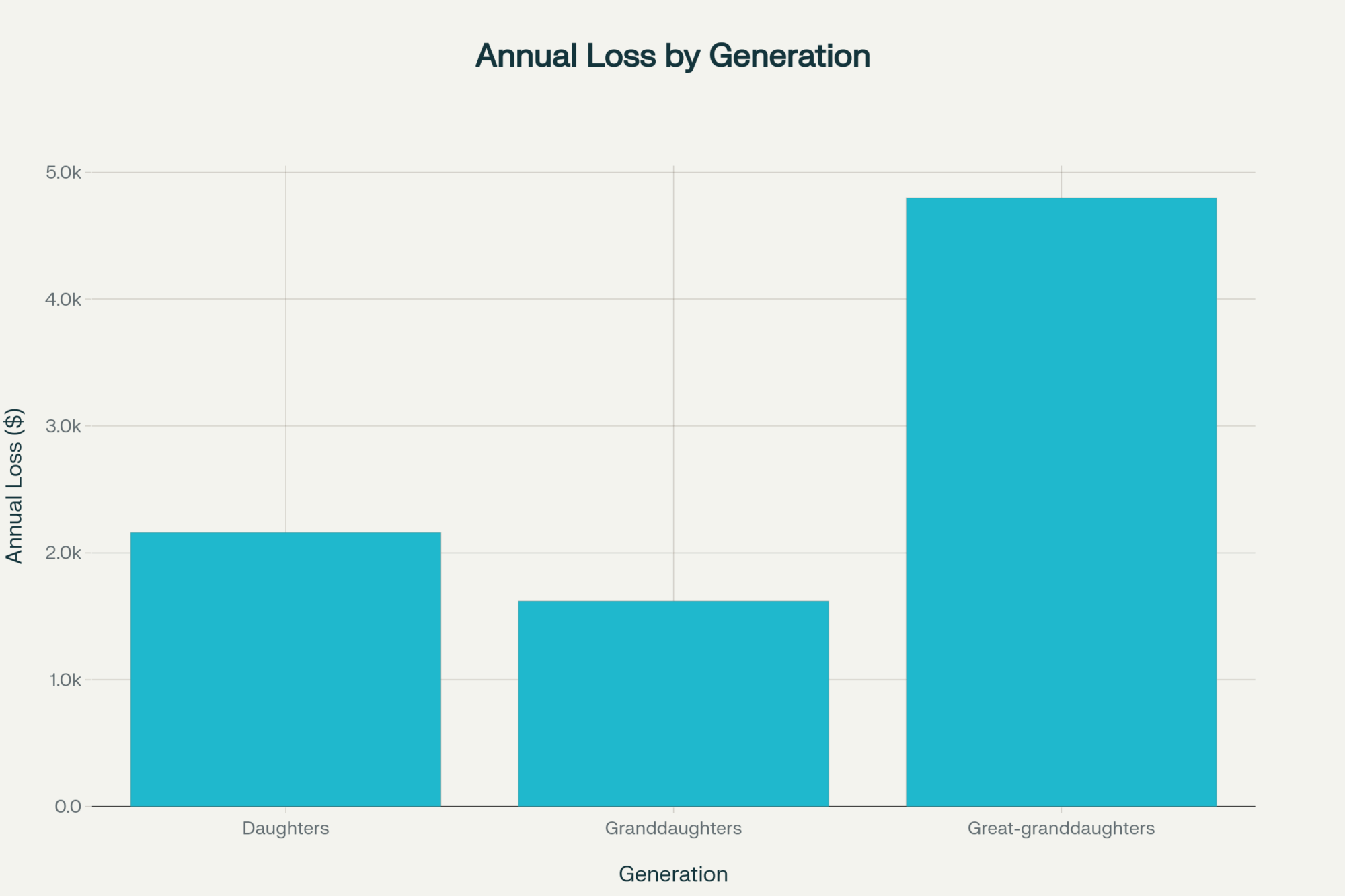
NewsSubscribe
First
Last
Consent

When the Government Checks Stop: What U.S. and New Zealand Dairies Are Teaching Us About Competing Post-Subsidy

€1,800 vs $36 per cow—guess which country’s getting the better deal? Here’s what this subsidy gap means for your milk check.

EXECUTIVE SUMMARY: Look, here’s something that’ll make you spit out your morning coffee: New Zealand dairy farmers get zero subsidies and still dominate global powder markets, while European producers rake in €1,800 per cow annually—that’s roughly $240,000 per average farm! Meanwhile, we’re getting about $36 per cow through Dairy Margin Coverage, and that’s insurance you pay into, not free money. The kicker? Our average herd size hit 377 cows in 2024, up from 357 just five years back, giving us scale advantages those smaller European operations don’t have. China just cut dairy imports 12% as their domestic production ramps up, tightening the global squeeze. Bottom line—your survival depends on efficiency, not handouts. Smart producers are already tracking carbon footprints, investing in precision tech, and building premium brands. Don’t wait for the market to separate the wheat from the chaff.

KEY TAKEAWAYS:

  • The Subsidy Reality Check: European farms get 50x more government support per cow than we do—use that DMC insurance smartly and focus on what you can control: feed efficiency and margin management (OECD, USDA data).
  • Size Does Matter: U.S. herds averaging 377 cows now means better economies of scale—time to seriously look at robotic milking or precision feeding systems that boost your per-cow productivity by 15-20% (Progressive Publishing, Penn State Extension).
  • Carbon = Cash: New Zealand’s carbon footprint runs 46% below Europe’s, proving sustainability isn’t just feel-good nonsense—it opens premium market doors and better pricing power (AgResearch study).
  • Global Game Changer: China’s 12% import drop means less competition for their market, but also signals you better diversify your customer base and product mix fast (AHDB reports).
  • Cash Flow Is King: Without that steady subsidy cushion, managing seasonal swings—spring freshening costs, summer feed spikes, fall breeding expenses—becomes make-or-break territory (USDA Economic Research Service).

I was talking with a Holstein producer the other day—runs about 280 cows up near Marshfield, Wisconsin. He shook his head and said what a lot of us are thinking: “How do those Kiwi farmers keep flooding our powder market with zero government help? Meanwhile, European cheeses sit on store shelves priced so low that it makes you wonder how any of us stay in business.”

That conversation’s been sticking with me because it hits on something we all feel but don’t always put into words.

The Subsidy Gap: What the Numbers Actually Show

Here’s the reality: New Zealand dairy farmers get zero direct subsidies—haven’t since their industry went through that radical deregulation back in the 1980s. Across the Atlantic, European producers collect about €1,800 per cow annually through the EU’s Common Agricultural Policy, which works out to roughly €243,000 per farm when you figure their average herd runs around 132 cows (OECD Agricultural Policy Monitoring, 2024).

Here in the States, farms average 377 cows now—up from about 357 just five years ago—and our main support comes through the Dairy Margin Coverage program. But here’s the thing: DMC isn’t welfare. It’s insurance you pay into, and it only pays out when the margin between your milk price and feed costs drops below specific triggers (USDA Economic Research Service, 2024; Government Accountability Office, 2025).

Working the math, that’s about $36 per cow annually. Not exactly what you’d call substantial compared to Europe’s numbers. According to Wisconsin Extension’s producer surveys, import competition consistently ranks as a top concern among Midwest dairy operators, with many citing the challenge of competing against subsidized products.

ProgramHow It WorksBenefitsReality Check
Dairy Margin Coverage (DMC)Producer-paid insurance; margin-triggered payoutsProtects during tight margin periodsPayments only when market conditions trigger
EU Common Agricultural Policy (CAP)Direct payments per cowSteady income and rural community supportCan distort markets and create dependency

How This Plays Out Across Regions

Down in Pennsylvania, smaller operations—mostly under 100 cows—have been carving out success with artisan cheeses and specialty yogurts. It’s not about volume but about quality and storytelling that command premium prices. Individual farms like Manning Farm Dairy’s on-farm ice cream operation show how specialty positioning can work.

Wisconsin’s nearly 6,000 dairies, predominantly Holstein herds averaging 142 cows, form America’s cheese heartland. But they’re battling subsidized European imports daily. As one processor buyer put it: “When European gouda hits my dock at ‘X’ price, that sets my baseline for negotiating with local producers. Nobody likes it long-term, but the math is the math.”

Out West, California’s mega-dairies double down on technology—robotic milking, precision feeding, real-time analytics—to maintain profitability under tough environmental regulations.

The New Zealand Efficiency Model

Meanwhile, New Zealand’s Canterbury farmers have achieved efficiency through the use of sophisticated rotational grazing and precision irrigation systems. AgResearch’s peer-reviewed research shows that their carbon footprint clocks in at about 0.74 kg CO₂-equivalent per kg of fat-and-protein-corrected milk, compared to Europe’s 1.37 kg—nearly 50% better (AgResearch, 2024). In today’s sustainability-focused markets, that’s a real competitive advantage.

Trade Dynamics Are Evolving

U.S. dairy organizations continue advocating for improved European market access through ongoing trade discussions, though EU geographical indication protections for names like “Parmesan” remain significant barriers. The National Milk Producers Federation calls this “abuse of the GI system to maintain trade barriers.”

More importantly, Chinese dairy imports dropped roughly 12% in 2024 as domestic production expanded (AHDB, 2024). Industry observers note that Chinese buyers are increasingly valuing pricing transparency and sustainability documentation—a trend worth watching closely.

This shift means what’s in your tank and your genetics program matter more than ever.

Breed Strategy in a Post-Subsidy World

Holstein operations, which dominate the Midwest, excel at volume but depend on high-energy feeding systems and face greater commodity price volatility. Jersey operations, more common in the Northeast and South, produce milk with higher butterfat (4.8%) and protein (3.9%) content, often commanding premium prices while showing better heat tolerance (Holstein USA, 2025; American Jersey Cattle Association, 2025).

Why Cash Flow Management Is Critical

Here’s what European producers don’t have to worry about: seasonal cash flow swings. Spring freshening drives peak feed demands. Summer heat stress reduces intake while requiring energy-dense rations. Fall breeding involves upfront costs that won’t show returns until next lactation.

European dairies have steady CAP payments buffering these swings. We manage without them—which means cash flow planning becomes absolutely critical.

The Government Accountability Office notes DMC participation actually declined from 69% of eligible farms in 2019 to 63% in 2024, suggesting growing producer confidence in market-driven management rather than government support.

What’s Coming: Efficiency Over Entitlements

Current trends point toward fundamental change. European subsidy programs face unprecedented budget pressure from defense spending, reconstruction costs, and competing priorities. Success won’t come from hoping subsidies return—it comes from building competitive advantages that work regardless of politics.

This transition isn’t a threat; it’s clarification. For producers prepared to compete on efficiency and quality, it’s an opportunity. Your competitive edge depends on three things: how efficiently you produce milk, how effectively you differentiate your product, and how quickly you adapt to market signals.

The tide of government support is receding, revealing who has been building on solid operational foundations versus who has been relying on artificial supports.

Don’t wait for the market to expose weaknesses. The playbook is already written by those who’ve been swimming on their own merit for decades.

Position yourself accordingly.

Complete references and supporting documentation are available upon request by contacting the editorial team at editor@thebullvine.com.

Learn More

  • Know Your Cost of Production: The Key to Dairy Profitability – This article breaks down the essential steps to calculate your true cost of production. It provides a practical framework for identifying financial leaks and making data-driven decisions that directly improve margin management and overall farm profitability.
  • Navigating the Tides: A Deep Dive into Global Dairy Market Trends – This piece explores the key economic drivers shaping global supply and demand. Understanding these long-term trends allows you to anticipate market shifts, manage risk more effectively, and make strategic decisions about growth and market positioning.
  • Genomics: The Unseen Herd Hand That’s Reshaping Dairy Profitability – This deep dive demonstrates how to leverage genomic data to make smarter breeding decisions. It reveals practical strategies for accelerating genetic progress in health, efficiency, and production traits, offering a clear path to building a more profitable, resilient herd.

The Sunday Read Dairy Professionals Don’t Skip.

Every week, thousands of producers, breeders, and industry insiders open Bullvine Weekly for genetics insights, market shifts, and profit strategies they won’t find anywhere else. One email. Five minutes. Smarter decisions all week.

NewsSubscribe
First
Last
Consent

When 110 Brazilian Gyr Cows Changed Everything: The Dairy Shift Tropical Producers Can’t Ignore

While you’re spending $3,000/cow on cooling, Brazilian Gyrs are cranking 11L daily without a single fan. Ecuador just figured it out.

EXECUTIVE SUMMARY: Listen, I just got back from covering the most eye-opening genetics move I’ve seen in decades. Ecuador’s betting their dairy future on heat-adapted Gyr cattle instead of million-dollar cooling systems—and the math is brutal for anyone still fighting their climate. Here’s what’s got me fired up: while your Holsteins lose 25% production when summer hits, these Brazilian Gyrs keep pumping 11 liters daily with zero performance drop. We’re talking about a $306 million global genetics market that’s exploded because smart producers realized something… cooling bills that eat half your feed budget aren’t sustainable. The kicker? These aren’t experimental genetics—they’re million-year-old solutions with 85% genomic prediction accuracy backing every breeding decision. Brazil’s producers learned this lesson decades ago, and now Ecuador’s 300,000 dairy families are following suit. If you’re still mortgaging your future for climate control infrastructure, you might want to run these numbers before your next summer burns through another year’s profits.

KEY TAKEAWAYS:

  • Cut summer production losses by 80%: Gyr genetics maintain 95% output during heat stress while Holsteins crash 25%. For a 100-cow operation, that’s 40-50 liters daily you’re not losing to heat—start with AI programs from proven tropical genetics suppliers this month.
  • Slash infrastructure costs by ditching cooling dependency: Ecuador producers were quoted millions for climate control before discovering Gyr operations running profitably with zero cooling systems. Calculate your current cooling costs per cow and compare against genetic investment ROI—the payback timeline might shock you.
  • Tap into the $306M global heat-tolerance boom: Brazilian genetics are penetrating Australia, New Zealand, and even Germany as traditional markets wake up to climate reality. Contact your genetics supplier about heat-adapted semen availability and pricing—this trend isn’t slowing down.
  • Leverage 85% genomic accuracy for breeding decisions: Modern tools predict heat tolerance in calves before they’re born, eliminating guesswork from your genetic investments. Work with suppliers offering genomic testing to build your heat-adapted herd strategically over the next 3-5 years.
  • Future-proof against rising energy costs: With cooling expenses ranging $0.50-$0.85 per cow daily during peak season, heat-adapted genetics become more valuable every summer. Track your energy bills from last summer and project them forward—genetic solutions look better every year.
Heat stress dairy cattle, Gyr genetics, dairy profitability, tropical dairying, genomic testing dairy

If you had told me a year ago that two cargo planes filled with Brazilian Gyr cows landing in Quito would fundamentally alter tropical dairying, I’d have been skeptical. But those 110 head made a clear statement: the way to beat the tropical heat just got smarter.

Ecuador’s Dairy Reality Check

Ecuador churns out roughly 2.4 billion liters annually from close to 300,000 producers—mostly family operations grinding it out in challenging conditions². Nearly half that milk flows through informal channels, which puts a ceiling on modernization and growth.

Up in the highland regions around Pichincha and Cotopaxi, producers face a double whammy: altitude challenges at 2,700+ meters reduce oxygen levels and stress cows even before heat becomes a factor. Recent research from the University of Liège shows these operations average 15.1 kg daily production under rotational grazing systems.

Based on conversations with multiple producers near Cayambe, there’s a shared frustration: “Our cooling bills are eating almost half what we spend on feed. That’s money we’d rather put back into genetics or better pastures.”

Why Gyr Genetics Are Game-Changers

Standing in a Minas Gerais pasture with Dr. Roberto Silva—one of Brazil’s top zebu geneticists—changed everything I thought I knew about tropical dairy. Watching Gyr cows stroll calmly to milking while Holstein crossbreds desperately sought shade was eye-opening.

These aren’t just heat-tolerant cows—they’re heat-adapted machines. Gyrs maintain performance at Temperature-Humidity Index levels of 77.5, while Holsteins start shutting down around 72-73. That translates to a consistent 10-12 liters daily with 4.2% butterfat, even when the mercury soars.

Breed Performance Reality Check

Data compiled from peer-reviewed studies; individual results vary

Performance MetricGyrHolsteinGirolando
Daily Milk (Tropical)11L7L9.5L
Butterfat Content4.2%3.6%4.0%
Heat Tolerance (THI)77.57275
Summer Production Loss5%25%12%

A Brazilian farm manager near Uberaba told me: “My Holstein crossbreds might hit 18 liters in cool weather, but come summer, they crash to 8. These Gyrs? Rock solid at 11 liters every single day, no matter how hot it gets.”

The Hidden Challenge: Feed Quality and Mycotoxins

What most producers don’t realize is that heat stress is just part of the battle. Ecuador’s coastal regions get hammered with aflatoxin contamination during dry seasons, destroying feed quality and milk safety.

Highland pastures face their own challenges—protein levels fluctuate between 12-18% seasonally, with fiber digestibility dropping during dry periods. When you combine altitude stress, heat, and compromised feed, conventional genetics simply can’t keep up.

That’s where Gyr genetics shine. Evolved in harsh environments, their efficient metabolism and robust digestive systems give them distinct metabolic resilience to multiple stressors simultaneously—heat, altitude, and suboptimal feed quality that would cripple temperate breeds.

LATAM’s Logistics Masterclass

Getting 110 head of elite genetics from Brazil to Ecuador wasn’t just impressive—it was a blueprint for international livestock transport. LATAM Cargo executed quarantine protocols stricter than most international borders, with veterinary teams monitoring every phase.

The economics tell the real story: strategic genetic investments are proving more cost-effective than infrastructure-heavy cooling solutions that drain margins year after year.

What This Actually Costs Your Operation

Let’s cut through the marketing fluff and talk real numbers. Investment costs vary dramatically based on your operation size, location, and current setup. What works in one climate might be overkill or inadequate in another.

The Reality Check:

  • Heat-adapted genetics costs depend heavily on genetics quality, supplier, and regional availability
  • Cooling system investments vary by barn design, local energy costs, and climate severity
  • Ongoing energy and maintenance can be substantial during peak seasons

Note: Costs vary significantly based on operation scale, regional factors, and technology choices. Producers should obtain specific quotes for their circumstances, as investment requirements can range widely depending on genetics quality, supplier, and local infrastructure needs.

A producer near Cuenca summarized what I heard across the region: “We got infrastructure quotes that honestly scared us. Then I visited Brazilian Gyr operations—cows producing quality milk without a single cooling fan. That changed our whole thinking.”

Global Momentum Building Fast

This shift is happening worldwide. The international genetics trade reached $306 million in 2023, with Brazilian bloodlines gaining traction in traditionally temperate markets such as Australia and New Zealand.

Dr. Klaus Weber from Germany’s University of Hohenheim nailed it during our conversation: “Forcing European genetics to work in a warming climate is like wearing snow boots to the beach. Zebu genetics have the evolutionary head start we desperately need.”

Brazil represents a major force in South American dairy production for good reason—its producers learned to work with their environment, not against it.

Technology Meets Ancient Wisdom

Behind these cows, cutting-edge genomic selection is adding precision to natural selection. Brazilian researchers have now achieved 85% accuracy in predicting heat tolerance using genomic tools. This isn’t guesswork—it’s precision breeding based on millions of years of natural selection.

The combination of ancient genetics with modern reproductive technology enables you to rapidly improve your herd’s climate adaptation without the infrastructure investment required by traditional cooling methods.

Your Action Plan

If heat stress is bleeding your margins, here’s your roadmap:

This Week:

  • Contact heat-adapted genetics suppliers and ask for performance data from herds in climates similar to yours
  • Install simple, high-visibility thermometers in your barns and holding pens to establish a baseline Temperature-Humidity Index (THI) for your operation
  • Calculate your actual cooling costs per cow during peak season

This Month:

  • Track summer production losses: measure milk yield and conception rate drops from May through August
  • Visit a Gyr or Girolando operation if you can swing it
  • Connect with your local extension economists for regional cost data

This Quarter:

  • Model ROI comparing genetic upgrades versus cooling infrastructure using your actual quotes
  • Develop a realistic genetic improvement timeline for your operation
  • Assess your feed quality management and mycotoxin protocols

Don’t waste another summer watching profits evaporate with your milk production.

The Bottom Line

Ecuador’s strategic investment proved something every tropical producer suspected—there’s a better way than fighting your climate with expensive cooling systems that drain margins year after year.

The genetics are proven. The economics make sense for many operations. The climate isn’t getting any cooler.

Time to run your numbers and make the call. The flight path from Brazil to Ecuador isn’t just news—it’s showing the way to profitability in our warming world.

Complete references and supporting documentation are available upon request by contacting the editorial team at editor@thebullvine.com.

Learn More:

  • The Ultimate Guide to Dairy Sire Selection – This guide provides a tactical framework for making smarter breeding choices today. It details how to interpret proofs and prioritize traits, ensuring you can effectively implement the genetic shift towards heat tolerance discussed in the main article.
  • Does Your Dairy Have A Strategic Plan? – Move from a single breeding decision to a long-term vision. This article outlines how to build a robust strategic plan, helping you position your entire operation to capitalize on market shifts like the move towards climate-adapted genetics.
  • Genomics: The Crystal Ball of the Dairy Industry – Dive deeper into the technology mentioned in our feature. This piece explains how genomic testing provides an unprecedented look into future performance, allowing you to accelerate genetic gain and make breeding decisions with greater accuracy and confidence.

The Sunday Read Dairy Professionals Don’t Skip.

Every week, thousands of producers, breeders, and industry insiders open Bullvine Weekly for genetics insights, market shifts, and profit strategies they won’t find anywhere else. One email. Five minutes. Smarter decisions all week.
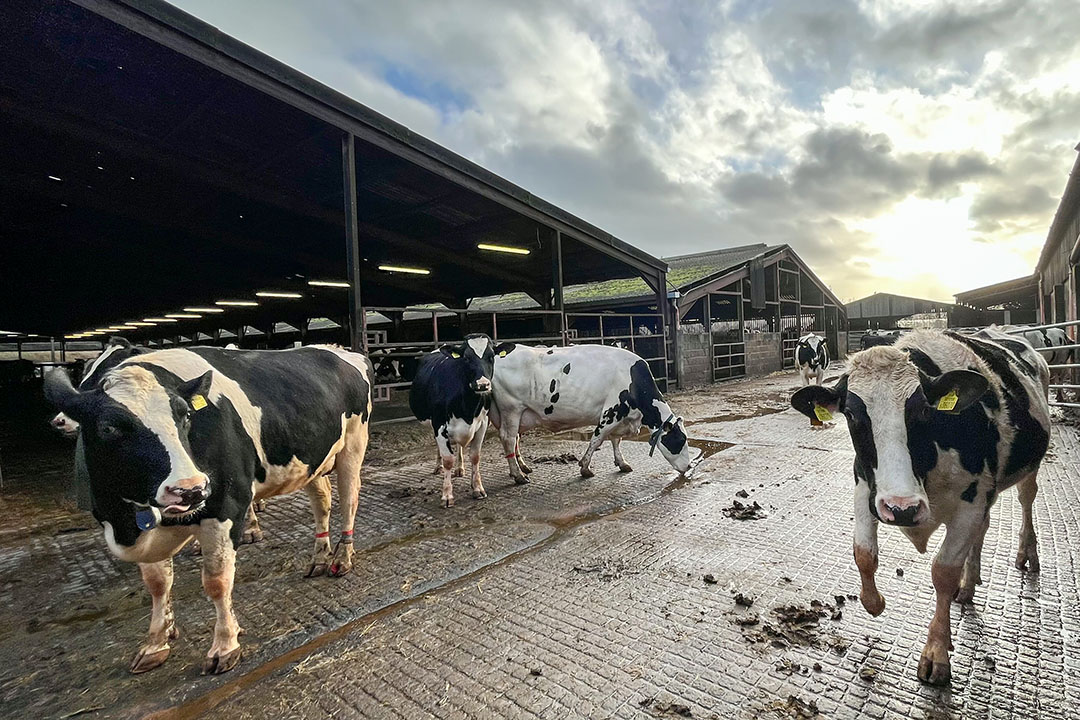
NewsSubscribe
First
Last
Consent

Semex Taps CRV’s Global Genetics Director to Lead US Push

The genetics company lands a respected industry veteran with global chops and farm roots

dairy genetics, Semex leadership, dairy profitability, genetics market trends, methane breeding values

Yesterday, Semex announced that Jon Schefers is stepping in as their new US General Manager, effective September 22, 2025. This isn’t your typical corporate shuffle—it’s a calculated move that tells you everything about where Semex sees the American market heading.

Look, we all know how competitive the US genetics scene is. You’ve got ABS Global, Alta Genetics, STgenetics—all these established companies competing for market position. Each one’s trying to convince producers they’ve got the magic bullet for better cows and fatter milk checks.

Why This Move Makes Sense

Here’s what caught my attention: Semex didn’t just grab any suit from corporate. They went after a guy with dirt under his fingernails. The timing of this appointment—17 days from announcement to start date—tells you this was strategic recruiting, not a panic hire.

Schefers has that combination you don’t see every day. Born and raised on his family’s Minnesota dairy farm with a master’s degree in dairy science from Wisconsin. He gets what it’s like to milk at 4 AM and worry about feed costs, but he’s also got the technical chops to understand genomic breeding values.

Jon Schefers: A Career Path Built for US Dairy Genetics

Started as a Genetics Specialist at Alta Genetics—we’ve all been there, cutting our teeth in the trenches. Then moved to Peak Genetics as Program Lead, where he developed Holstein, Jersey, and Angus breeding programs that actually produced animals people wanted to buy.

But here’s where it gets interesting. As Global Genetics Director at CRV, he wasn’t just pushing paper. He ran product development, R&D, and embryo production across both EU and US operations. And get this—he led the development and launch of methane breeding values in international markets.

That’s not some feel-good environmental PR stunt. CRV’s methane breeding research demonstrates real genetic potential for emission reduction. With regulatory pressure mounting and carbon credits becoming real money in some regions, that expertise could be worth its weight in gold.

His peers elected him as a Director for the National Association of Animal Breeders. When your competitors vote for you in this industry, that says something about your reputation.

What John McDougall Really Meant

“As our US business continues to grow, we’re continuing to invest in the market,” says John McDougall, Semex Vice President of Sales.

Translation? They’re not just maintaining—they’re expanding aggressively.

McDougall calls Schefers a “problem-solver and unifier”. In corporate speak, that usually means there are problems to solve and things that need unifying. But in this case, it probably means what every producer wants: someone who understands that genetics companies need to solve real-world problems, not just sell fancy breeding values.

What Schefers’ Hire Means for Your Dairy Operation

Here’s where the rubber meets the road. This move raises two questions every producer should be asking: Can Schefers use his global experience to give Semex a real edge? And how will the other guys respond?

His methane breeding work could be particularly relevant as environmental regulations tighten. Canada already implemented the first national methane efficiency evaluation system, and that trend isn’t stopping at the border. Having a genetics company that can deliver on environmental traits while maintaining production could be a competitive advantage.

What Producers Really Need

Let’s be honest: producers don’t need another company selling them semen. They need a partner who understands the real pressures—labor shortages that have you milking cows yourself, margins so tight you’re counting every kernel of corn, and consumers who want their milk to come from happy, environmentally friendly cows.

Schefers’ farm background suggests he gets this. But understanding and delivering are two different things. The genetics industry will be watching to see how this appointment influences market dynamics and whether Semex’s investment in experienced leadership pays off.

For producers, the appointment represents another option in an increasingly sophisticated marketplace, where these established companies are competing not just on genetic merit but on their ability to provide comprehensive solutions.

The Bottom Line

This is a smart hire for Semex. They’ve brought in a respected leader with the right mix of farm sense and global technical skill. But the US market is a total knife fight. Schefers’ success won’t be measured in press releases—it’ll be measured in whether he can deliver genetic solutions that make a real difference to your bottom line.

The competition is watching. So are we.

Learn More:

  • Genomic Testing: Are You Leaving Money on the Table? – This article breaks down the practical ROI of genomic testing. It provides a clear framework for deciding which animals to test, helping you maximize your genetic investment and stop wasting money on underperforming animals in your herd.
  • The Genetics Arms Race: Who Will Win the Battle for Dairy’s Future? – Go beyond a single hire and understand the entire competitive landscape. This strategic analysis reveals the long-term trends and market forces that will determine which genetics companies—and which producers—will thrive in the coming decade.
  • Beyond Milk: The Untapped Goldmine of Feed Efficiency Genetics – While methane efficiency is key, this piece explores the next frontier in profitability. It demonstrates how breeding specifically for feed efficiency can drastically slash your input costs, creating a more resilient and profitable herd for the future.

The Sunday Read Dairy Professionals Don’t Skip.

Every week, thousands of producers, breeders, and industry insiders open Bullvine Weekly for genetics insights, market shifts, and profit strategies they won’t find anywhere else. One email. Five minutes. Smarter decisions all week.
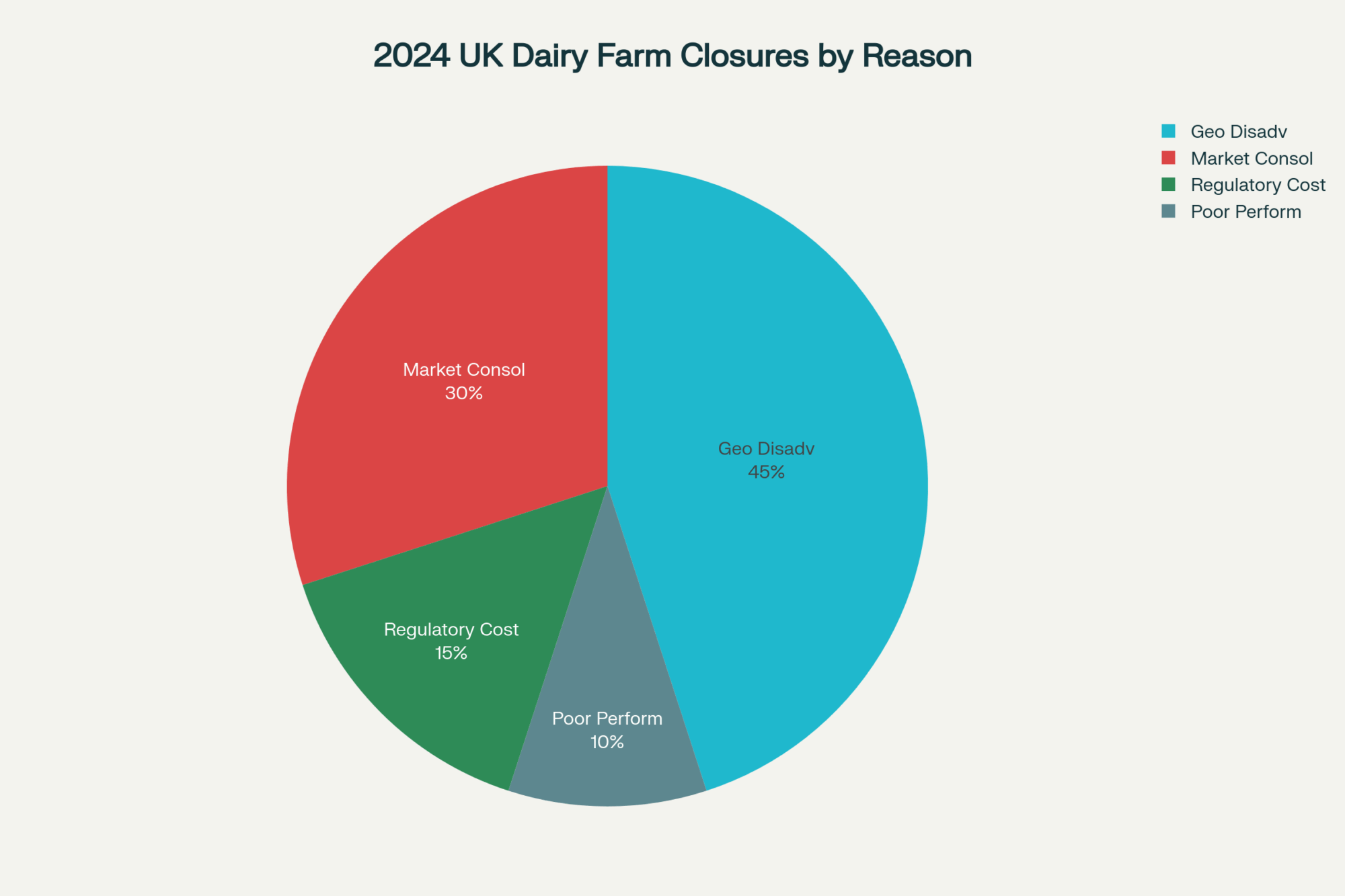
NewsSubscribe
First
Last
Consent

When Lightning Strikes: The Braedale Goldwyn Story That Changed Everything

How Braedale Goldwyn rewrote the rules of Holstein breeding with genetics, show dominance, and a market-changing legacy.

Braedale Goldwyn in his prime—the Holstein bull whose genetic lightning strike changed everything for dairy breeding worldwide.

You know that feeling when you’re walking through a barn and spot a calf that just… has something special about it? Most of the time, you’re wrong, honestly. But every once in a while…

January 3rd, 2000. Cumberland, Ontario. Terry Beaton is watching a newborn James calf get its legs beneath it in the maternity pen. Just another planned mating, right? Except this gangly calf would become Braedale Goldwyn—and honestly, I’m not sure any of us realized we were witnessing the start of a genetic revolution.

The Foundation Nobody Saw Coming

Here’s what I’ve always found fascinating about Terry Beaton—the guy understood maternal lines when most of us were still chasing flashy sires. Back in ’85, when computer indexes were still a newfangled thing and half the industry didn’t trust them, Terry was already thinking generations ahead.

Picture this: November 1985, Sunnylodge Farms dispersal. You know how those sales go—everybody’s buzzing, coffee’s flowing, and the really good cattle are bringing serious money. The sale averaged $6,839 per head (which was real money back then), and the top lot was this first-lactation heifer, Sunnylodge Elevation Jan, VG-87-13*.

Now Terry didn’t just bid on her and walk away. After the sale, he tracks down Carl Smith—the original owner—and proposes a partnership. They’d flush her extensively and split the embryos. I mean, think about that for a minute. Most guys buy a cow, milk her out, maybe get excited about a daughter or two. Terry’s already planning a dynasty.

That single decision—man, talk about return on investment.

Building Something That Lasts

What’s happening with the Jan family over the next fifteen years is basically a masterclass in line breeding done right. And I say “done right” because we’ve all seen line breeding go sideways—fertility issues, weird recessive traits popping up, the whole nine yards.

But Terry had this knack for stacking the generations without painting himself into a corner. Jan’s Chief Mark daughter, Sunnylodge Chief Vick, earned 31 brood cow stars. Solid numbers—the kind that pay bills and keep bankers happy. Then Vick to Aerostar produces Moonriver, who honestly didn’t look like much herself (GP-83, sold to Japan as a youngster), but left behind this heifer calf that would change everything.

Braedale Gypsy Grand, VG-88-37—the “genetic locomotive” whose elite sons dominated LPI charts years before Goldwyn, proving the family’s transmitting power.

That calf was Braedale Gypsy Grand, VG-88-37*. And folks, this cow was special. Holstein Canada Cow of the Year in 2003, but more importantly, she was what we call a “genetic locomotive”—a rare female that just cranks out excellent offspring. Her sons were already topping the LPI charts before anybody had heard of Goldwyn: Goodluck at #4, Freelance at #2, plus Spy, Rainmaker, and others.

Huntsdale SHOTTLE Crusade EX 95 3E 7—Nasco International Type and Production Award winner at World Dairy Expo, proving Gypsy Grand’s maternal magic still works generations later.

The family was already a brand. That’s what blows my mind about this whole story.

The Storm Cross That Set Everything in Motion

Then comes the mating that made it all worthwhile—Gypsy Grand to Maughlin Storm. On paper, it looked like another solid breeding decision. Storm was decent, nothing that would make Holstein International headlines. But when that mating produced twins—Baler Twine and Second Cut—the industry was about to get a genetics lesson we’re still talking about.

Braedale Baler Twine, VG-86-20—the dam of legend whose “planned mating” to Shoremar James produced Goldwyn and completed Terry’s 15-year masterpiece.

Here’s where it gets wild… Years later, when genomic testing became available, researchers discovered that these two cows were identical twins from a split embryo. Both scored VG-86 in the first lactation with nearly identical production. Both became legendary brood cows. It’s like hitting the genetic lottery twice with the same ticket.

And get this—Baler Twine stayed at Braedale and produced Goldwyn, while Second Cut went to Gillette and became the dam of five Class Extra sires. Same genes, different locations, both producing champions. That’s the kind of genetic consistency you build entire programs around.

The Paternal Power Play: Shoremar James

While the Braedale maternal line is rightly celebrated as a masterpiece of breeding, the choice of sire that ultimately produced Goldwyn was no accident. The other half of the pedigree came from another Canadian dynasty, the Shore family, whose Shoremar prefix represented a century of breeding for balanced, long-lasting, profitable cattle.

The sire, Shoremar James, was a product of this exact philosophy. Sired by the legendary MARK CJ GILBROOK GRAND, his real power came from his dam, STELBRO JENINE AEROSTAR, a monumental brood cow in her own right. The Shores, much like Terry Beaton, built their success on the back of incredible cow families, as detailed in The Bullvine’s feature, When Giants Fall Silent: The Shore Dynasty’s Century of Shaping Holstein Excellence.

While Goldwyn became a legend, his paternal legacy from Shoremar James also shaped champions. Here, Thrulane James Rose, an Excellent-97 daughter of Shoremar James, is pictured as Supreme Champion at the Royal Agricultural Winter Fair. Her exceptional type demonstrates the influence James brought to the breed, a perfect complement to the Braedale maternal strength.

So, what did James bring to the table? He provided a brilliant outcross of proven genetics known for dairyness, frame, and functional type. Mating him to the line-bred power of Baler Twine was a strategic masterstroke. It combined Beaton’s concentrated genetic engine with the Shore family’s legacy of durability and balance. This wasn’t just a mating; it was a fusion of two of Canada’s greatest breeding philosophies.

When Everything Changed Overnight

February 2005. I remember checking proofs that morning, and honestly? Most moves are predictable. Bull jumps five spots, drops three, whatever. But when a bull rockets from #82 to #5 LPI in a single run—that’s when you stop drinking coffee and start making phone calls.

According to Canadian Dairy Network data, Goldwyn’s jump was unprecedented—77 positions in one proof run. By May 2006, he’d climbed to #3 LPI. Those aren’t incremental improvements; that’s a genetic explosion.

I can picture Terry in that Cumberland farmhouse, probably still in work clothes from morning milking, staring at his computer screen. After decades of careful breeding, staying patient while others chased genetic fads, suddenly he’s got a bull that’s not just good—he’s potentially game-changing.

The phone must’ve started ringing that morning and not stopped for months.

The Show Ring Revolution

The moment everything crystallized: The 2011 World Dairy Expo 5-year-old class, where seven of the top placings went to Braedale Goldwyn daughters, including Grand Champion Gold Missy—marking the beginning of an unprecedented era of show ring dominance.

“What made Goldwyn different wasn’t just the numbers—though those were impressive enough. Walk into any barn with his daughters, and you could spot them from the feed bunk. Those udders weren’t just good; they were architectural marvels.”

World Dairy Expo 2008 was the moment everything crystallized. When they announced Premier Sire and called Goldwyn’s name, ending Durham’s long reign… you had to be there. The tension in that Coliseum was incredible. Durham had been the gold standard—consistent, profitable daughters that made sense in commercial herds across Wisconsin and beyond.

But when Goldwyn’s daughters started walking into that ring, something shifted. The mammary perfection, the dairy strength, the sheer presence—it was like watching a new breed standard emerge in real time. Holstein Canada records show he eventually became the first sire in history to produce over 1,000 daughters classified Excellent—a milestone that redefined what was possible.

RF Goldwyn Hailey EX-97—the next dynastic champion who captured Supreme Champion at World Dairy Expo in 2012 and 2014, ensuring Goldwyn daughters wore the ultimate crown for four consecutive years.

By 2013, at World Dairy Expo, Goldwyn sired nearly 25% of the entire Holstein show, with 47 daughters placing in the top 10 of their classes. That level of single-sire dominance is virtually unparalleled.

Bonaccueil Maya Goldwyn EX-95—Supreme Champion of the 2013 World Dairy Expo, continuing the dynasty that proved Goldwyn daughters owned the ring.

The Economic Juggernaut

But here’s where the story gets really interesting from a business perspective. The Walrus magazine documented how Goldwyn’s semen went from standard AI product to investment commodity. By 2006, straws were $100 each—premium pricing that reflected serious market confidence. After his death in 2008, secondary market prices soared to between $800 and $1,000 per straw.

Think about that for a minute. A thousand dollars for a single breeding. That’s not just genetic merit; that’s treating bull semen like blue-chip stock.

Eastside Lewisdale Gold Missy EX-95—the $1.2 million Goldwyn daughter whose record-breaking sale made global headlines and proved that elite genetics had become investment-grade assets.

His daughters consistently topped sales worldwide. Eastside Lewisdale Gold Missy’s $1.2 million sale in 2009 made global headlines and established new benchmarks for the valuation of elite dairy females. At the 2008 World Classic Sale, a young Goldwyn daughter commanded $97,000. This pattern repeated at auctions globally—”Goldwyn” in a pedigree became a powerful marketing tool that reliably added value.

The Complex Reality We’re Still Managing

Jacobs High Octane Babe EX-96—B&O Champion at Royal 2022 and daughter of Jacobs Goldwyn Britany, proving that Goldwyn’s genetic magic still works decades later.

Now here’s where we need to talk honestly about consequences, because Goldwyn’s success created challenges we’re still dealing with. Recent genomic analysis reveals why he was such a dominant sire of daughters but not necessarily sons—he passed significantly more genetic merit to daughters (65%) than sons (54%). It’s like the genetic recipe needed that maternal contribution to really shine.

This explains why his sons, such as Atwood, Dempsey, Lauthority, and Goldchip, became popular but never achieved the revolutionary impact he did. His lasting influence is arguably as a maternal grandsire—that “Goldwyn” in the second generation remains a stamp of quality.

But we can’t ignore the genetic concentration issue. By 2008, Goldwyn and two other popular sires accounted for nearly 12% of all registered Holstein females in Canada. That level of concentration raises valid concerns about the long-term health of the breed.

More challenging is his carrier status for Cholesterol Deficiency (HCD). Cornell University research confirmed that this recessive disorder traces back to Maughlin Storm through the APOB gene disruption. Because Goldwyn was used so extensively before the condition was identified, he became a primary vector for distributing this haplotype throughout the global Holstein population. Current mating programs have to account for HCD management—something we wouldn’t need with more moderate usage.

Lovhill Goldwyn Katrysha, Supreme Champion at the 2015 World Dairy Expo, epitomizes the show ring revolution that made Goldwyn daughters legendary across North America.

The Paradox of Perfection

Perhaps the most fascinating aspect of Goldwyn’s legacy is how he perfected an archetype just as the industry began questioning its commercial viability. He modernized the show ring, creating the ultimate tall, elegant, angular cow with flawless mammary systems.

But here’s where it gets complicated… Industry research has painted a challenging picture for the tall-stature cow he epitomized. The Bullvine’s analysis of feed efficiency studies reveals that taller cows typically consume 10-15% more feed per pound of body weight, although results vary considerably by management system. That translates to real costs in today’s volatile feed markets.

Data from breeding organizations indicate negative correlations between stature and fertility, with taller cows requiring more frequent calving interventions. Most significantly, research indicates very tall cows may average fewer lactations compared to moderate-sized counterparts, though this varies enormously by region and management practices.

Loyalyn Goldwyn June (EX-97-6E 2) in her later years—a legendary daughter of Braedale Goldwyn who proved his genetics could deliver both show-ring excellence and remarkable longevity, milking through nine lactations and becoming a beloved icon of the breed.

Many Goldwyn daughters achieved exceptional longevity in well-managed herds—documented cases of cows lasting five or more lactations compared to industry averages around 2.8. But that’s the key phrase: “well-managed herds.” Results depend heavily on nutrition, housing, health protocols, and regional factors.

Calbrett Goldwyn Layla EX-96, daughter of the legendary Million Dollar Cow Lylehaven Lila Z, exemplifies Goldwyn’s enduring legacy. With 11 Brood Stars, 19 VG/EX progeny including 3 EX-94 dams, and over 78,000 kg lifetime production, Layla demonstrates how Goldwyn daughters became the foundation for today’s elite breeding programs.

What This Means for Today’s Breeding Decisions

The interesting thing about Goldwyn’s legacy is how it’s shaped our genomic era approach. These days, we’re looking for bulls that can deliver the complete package—improve components, enhance longevity, and still sire daughters that look the part. That’s essentially the Goldwyn standard applied with better tools.

Genomic testing has given us capabilities Terry never had. We can identify genetic potential in heifers at six months, predict breeding outcomes with 70% reliability, and manage recessive disorders before they become widespread problems. It’s like having GPS for genetic navigation instead of relying on a compass and intuition.

What I’m seeing on progressive farms is this fascinating combination of old-school maternal line development with cutting-edge genomic tools. They’re using genetic testing to identify superior young females earlier, then building programs around proven cow families—exactly like Terry did, but with better data and more precise management.

In today’s market conditions—volatile feed costs, tight margins, labor challenges—those longevity traits become survival characteristics. A cow that milks five lactations instead of three isn’t just a breeding achievement; it’s a business necessity.

The Real Takeaway

Here’s what the Goldwyn story really teaches us: great breeding isn’t about hitting jackpots; it’s about creating systems that consistently produce excellence. Whether you’re milking 80 cows in a tie-stall barn or managing 8,000 in a rotary parlor, the principles remain constant—invest in proven families, make decisions based on long-term goals, and understand that genetic progress takes time.

The genomic revolution has given us incredible tools for managing diversity while maintaining focus. We can identify carrier status for disorders before they spread, balance genetic progress with sustainability metrics that weren’t measurable in Terry’s era, and optimize breeding decisions with unprecedented precision.

But the fundamental lesson endures: depth beats flash every time. The best breeding decisions often feel like calculated risks, but when they’re built on proven genetics and sound principles, they work out.

Every time I see a perfectly uddered cow with that distinctive Goldwyn look walking through a parlor—whether it’s in Wisconsin, Ontario, California, or anywhere else dairy cows make a living—I’m reminded of Terry’s courage in that sale barn in 1985. Sometimes lightning does strike… but it helps when you’ve spent decades building the right conditions.

That’s the kind of breeding that built the Goldwyn legacy. And that’s the kind of breeding that will build the next one—whatever form it takes in our rapidly evolving industry, where sustainability, profitability, and genetic excellence are becoming inseparable.

 KEY TAKEAWAYS:

  • Braedale Goldwyn transformed Holstein breeding with unmatched genetics and show ring dominance, proving you don’t have to choose between production and type
  • His success was built on a carefully crafted maternal lineage spanning decades, demonstrating the power of patient, strategic cow family development
  • Goldwyn’s progeny commanded record prices and reshaped the economics of dairy genetics, with semen reaching $1,000 per straw and daughters selling for millions
  • High usage led to genetic concentration and challenges like Cholesterol Deficiency (HCD), highlighting the risks of over-relying on popular sires
  • Today, breeders balance show-ring excellence with economic viability and sustainability, applying Goldwyn’s lessons through modern genomic tools.

EXECUTIVE SUMMARY:

This article traces the remarkable journey of Braedale Goldwyn, a Holstein sire whose genetic influence transformed the dairy industry. Born in 2000 from a carefully planned mating within a powerful maternal lineage spanning decades, Goldwyn combined elite genetics with dominant show-ring success like no bull before him. His impact sparked an unparalleled number of daughters excelling in both type and production, driving record-breaking semen sales and auction prices that redefined the economics of dairy genetics. While his widespread dominance raised serious concerns over genetic diversity and the spread of Cholesterol Deficiency (HCD), it also catalyzed a crucial shift towards more balanced breeding programs emphasizing long-term sustainability. Today, his legacy serves as both an inspiration and a cautionary tale, demonstrating how patient maternal line development can create generational impact while highlighting the need for responsible genetic management. This comprehensive feature artfully blends history, science, and industry insights, offering valuable lessons for modern breeders navigating the evolving landscape of genomic-era dairy genetics.

Learn More:

  • The Ultimate Guide to Dairy Sire Selection – This guide provides a step-by-step framework for making smarter sire choices in the genomic era. It offers practical strategies to balance type, production, and health traits, helping you build a more profitable and resilient herd.
  • The 2025 Dairy Genetics Marketplace: Where is the Money? – This analysis breaks down the key economic drivers shaping today’s dairy genetics market. It reveals where the real ROI is, helping you align your long-term breeding strategy with current market trends for maximum financial return.
  • Beyond Genomics: Is Gene Editing the Next Great Leap for Dairy Cattle? – Explore the next frontier in dairy genetics. This article demystifies gene editing technology, outlining its potential to accelerate genetic progress, improve animal health, and create a more sustainable and profitable dairy operation in the coming decade.

The Sunday Read Dairy Professionals Don’t Skip.

Every week, thousands of producers, breeders, and industry insiders open Bullvine Weekly for genetics insights, market shifts, and profit strategies they won’t find anywhere else. One email. Five minutes. Smarter decisions all week.
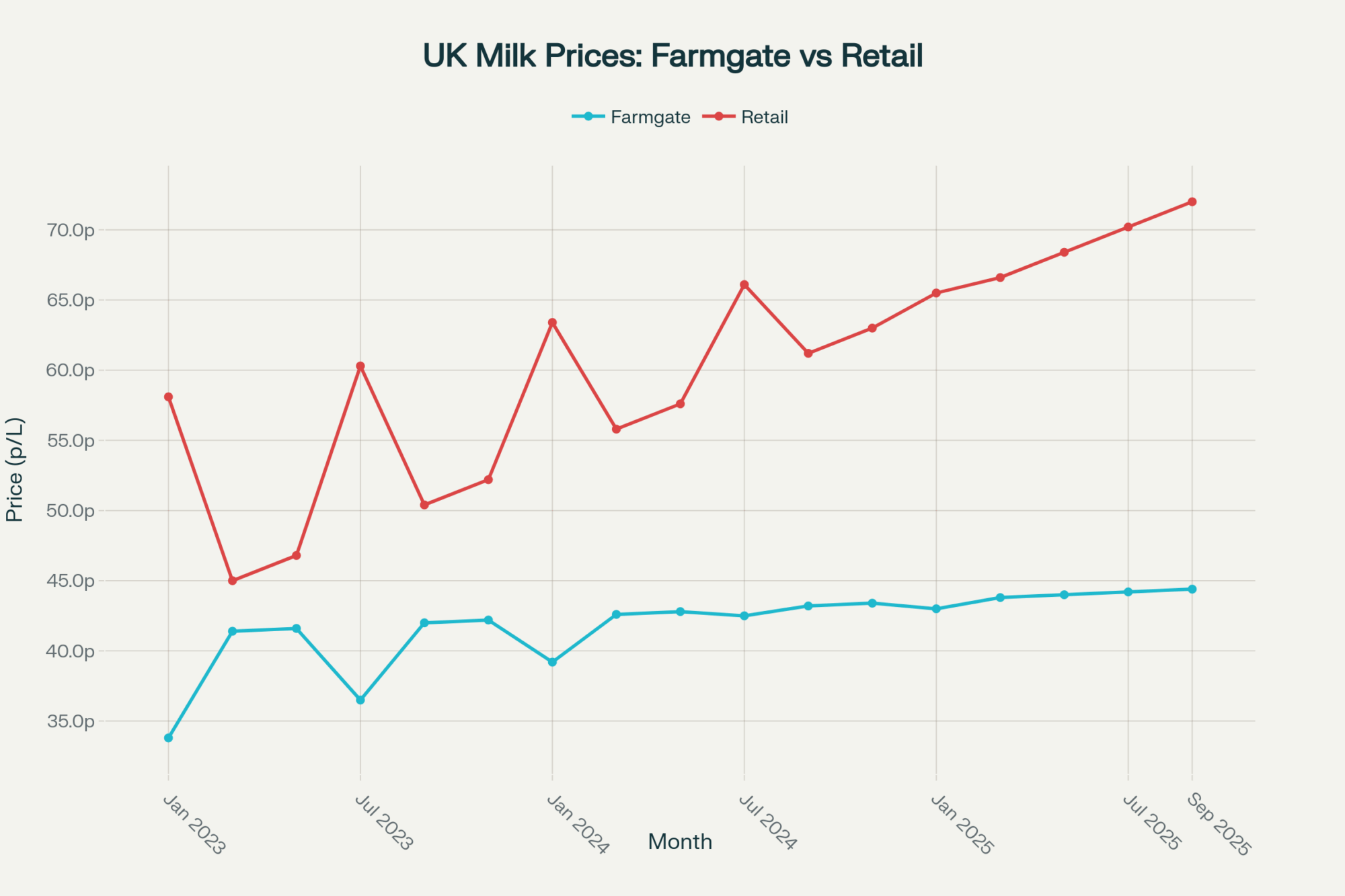
NewsSubscribe
First
Last
Consent

Why Milk Components Are Your Best Friend Now (and Why Chasing Volume is Yesterday’s News)

What if you could boost your payout without boosting volume? Let’s talk butterfat.

EXECUTIVE SUMMARY: Here’s the real deal: The dairy business has shifted completely. It’s no longer about how many gallons you pump out, but the value packed into your milk’s protein and butterfat. Picture this — a typical 850-cow herd producing 59,500 lbs daily can earn an extra $2,200 every single day just by pushing better components! Nationwide, we’re seeing butterfat average 4.23% and protein hit 3.29%, driving real increases in farmgate value. But it’s not the same everywhere — Texas is absolutely booming with +6% growth thanks to new cheese plants, while California’s getting squeezed by heat and water constraints. Global markets matter too — Mexico’s spending $2.47 billion on our dairy, keeping demand strong. Bottom line? If you haven’t shifted your focus to milk components and smart risk management, you’re leaving serious money on the table in 2025.

KEY TAKEAWAYS:

  • Component quality pays big — even bumping butterfat and protein by a tenth of a percent adds thousands to your daily revenue across the whole herd.
  • Genomic testing isn’t optional anymore — spending $40 per calf on testing and using high PTA bulls for fat/protein is proven ROI in today’s market.
  • Hedge your bets early — use Class III and IV futures plus Dairy Revenue Protection to lock in these strong margins before they disappear.
  • Watch global demand closely — Mexico and Southeast Asia are driving U.S. dairy prices, so track those export numbers and GDT auction results.
  • Don’t skimp on biosecurity or heifer strategy — with HPAI hitting 1000+ herds and replacement costs at $3000+ per head, protection is profit.
 milk components, dairy profitability, genomic testing, farm risk management, dairy market trends

Look, if you’re still measuring success by how many gallons roll out of your bulk tank, you’re fighting yesterday’s war. The real money these days — what I call the game-changer — is swimming inside that milk: butterfat and protein. And honestly? It’s not even close anymore.

I was shooting the breeze with Jim last week. Third-generation guy up in Marathon County, Wisconsin, runs about 850 head — mostly Holsteins with some Jersey crosses thrown in for good measure. “Ten years ago, I was all about pounds per cow,” he told me, leaning against his parlor rail after evening milking. “Now? I’m laser-focused on hitting those component numbers.”

Jim’s got the goods: his milk’s testing 4.2% butterfat and 3.3% protein these days. That bump is putting serious money in his pocket every single day.

Here’s what’s really happening with production…

According to the latest USDA numbers, we’ve been on a losing streak — milk volumes dropping for 13 straight months through July 2024. Sounds scary, right? But here’s the thing that’s got everyone talking: the milk we are producing is richer than it’s ever been.

Recent data from CoBank shows butterfat levels hit 4.23% nationally in 2024, up from barely scraping 4% just a few years back. Protein’s climbing too — 3.29% average now, compared to around 3.04% back in 2004. (That’s genetic progress you can bank on, literally.)

And it’s not playing out the same everywhere…

Down in Texas, they’re singing a completely different tune. Milk production jumped 6% last year, thanks to massive cheese plant expansions in places like Amarillo and Lubbock. I’m talking facilities that are pulling milk from counties that never mattered much before — trucks running extra miles just to feed these operations.

Meanwhile, California is grappling with significant headwinds — heat stress and water restrictions that are putting a real squeeze on yields. Up here in the traditional dairy belt — Wisconsin, Minnesota, New York — we’re seeing herd contraction and flat production.

What strikes me about this shift is how it’s forcing everyone to think differently about what matters.

Let’s talk money, because that’s what pays the bills…

Here’s where the math gets really interesting. An 850-cow herd averaging 70 pounds produces 59,500 pounds of milk daily — that’s 595 hundredweight (cwt). Using current Federal Milk Marketing Order pricing, the value difference between average components and top-tier is $3.70 per cwt ($23.85 – $20.15).

Here’s the kicker: 595 cwt × $3.70 = $2,201.50 per day. Scale that over a month, and you’re looking at an additional $66,000 in revenue — a figure that changes the entire financial picture of an operation.

Take Sarah up in St. Lawrence County, New York. She’s running 280 registered Holsteins and dropping about $40 per calf on genomic testing, specifically targeting bulls with killer PTA scores for fat and protein. “Every extra tenth of a percent pays for that test ten times over,” she says. “I can’t afford not to do this anymore.”

Now, about those market moves…

As of early September, October Class III CME futures have been dancing around $20.85, with Class IV trading near $21.75. (These are approximate numbers — market prices change daily, so check with your broker for current quotes.) When Class IV trades above Class III like that, it’s the market telling you butter and powder are worth more than cheese right now.

This creates opportunities if you know how to read it. Danny, down in Green County, learned this lesson the expensive way. “I got burned waiting for better prices back in 2020,” he admits, standing in his feed alley watching the mixer wagon load up. “Now, when the spread looks good, I lock in margins with DRP. Sleep better at night.”

But let’s be real about the painful stuff too…

Replacement heifers are absolutely crushing budgets right now. The USDA reports national averages around $2,660 per head, but that’s conservative. Premium Holstein replacements are routinely hitting $3,000-plus at auctions, with some California and Minnesota sales pushing over $4,000.

Why? The beef-on-dairy trend. Using beef semen on your lower-tier cows creates a nice revenue stream from those crossbred calves, sure. But it’s also squeezed purebred heifer supplies to a 20-year low. There’s your unintended consequence.

Then there’s bird flu hanging over everything. Over 1,000 dairy herds across 17 states have dealt with HPAI this year. The farms that invested early in biosecurity — limiting visitors, boot washes, bird-proofing feed areas — they’re seeing the payoff in fewer disruptions and healthier herds.

Where’s your milk actually going?

This might surprise you, but when that semi pulls away from your farm, there’s a good chance it’s headed south of the border. Mexico bought $2.47 billion worth of U.S. dairy in 2024, making them our biggest customer by far. That’s not just a statistic — it’s cash flow that directly supports your milk price.

“I’ve completely changed how I think about our market,” says Maria, whose 650-cow operation outside Modesto produces high-component milk primarily destined for export. “We’re feeding families in Mexico City now, not just the local fluid plant. That global connection makes me more focused on consistency than ever.”

Asia’s more complicated. China’s tightening its imports as it builds domestic production, but Southeast Asian countries continue to buy steadily. Don’t sleep on those twice-monthly Global Dairy Trade auction results either — they move our futures markets more than some domestic reports.

So what’s your game plan?

From conversations I’m having with producers across the country, here’s what’s working:

  • Focus your genetics on PTA Fat, PTA Protein, and Net Merit when selecting sires. The extra genomic testing cost pays for itself in the first lactation — ask your AI tech about proven component transmitters.
  • Get serious about risk management. Work with your farm advisor to understand how futures and Dairy Revenue Protection can lock in margins when favorable spreads appear. Don’t wait for perfect conditions — they rarely come.
  • Start budgeting for $3,000+ heifer costs or develop internal breeding programs. The cost advantage of raising your own has never been clearer.
  • Double down on biosecurity. Those protocols aren’t optional anymore — simple steps like visitor logs, clean boots, and bird-proof feed storage consistently beat the cost of dealing with disease outbreaks.
  • Track global demand shifts, especially in Mexico and Southeast Asia. These purchases directly impact your farm’s profitability, whether you realize it or not.

Regional reality check:

RegionProduction TrendWhat’s Driving It
Traditional Dairy BeltDown ~1.5%Aging herds, flat yields, and higher costs
TexasUp 6%New cheese plants are creating a demand vacuum
CaliforniaDown ~2%Heat stress, water restrictions

The bottom line?

Volume-focused dairying is becoming yesterday’s business model. Today’s winners are mastering components, managing market risks, and protecting herd health with the same intensity they once devoted to increasing pounds per cow.

The farms that understand this shift fastest are separating themselves from the competition. Jim’s already adjusting his breeding program and marketing strategy. Danny’s hedging aggressively. Sarah’s investing in genomics, just as her operation depends on it — because it does.

What’s particularly fascinating about this transition is how it’s forcing the entire industry to get smarter. The old days of just maximizing volume and hoping for the best? Those are gone.

The question isn’t whether this new reality is fair — it’s how fast you’ll adapt to stay competitive. Because in 2025, your survival depends on understanding that every tenth of a percent of butterfat and protein matters more than the extra gallon you used to chase.

The industry’s changing fast, and honestly? That’s what makes this business so interesting.

Complete references and supporting documentation are available upon request by contacting the editorial team at editor@thebullvine.com.

Learn More:

The Sunday Read Dairy Professionals Don’t Skip.

Every week, thousands of producers, breeders, and industry insiders open Bullvine Weekly for genetics insights, market shifts, and profit strategies they won’t find anywhere else. One email. Five minutes. Smarter decisions all week.
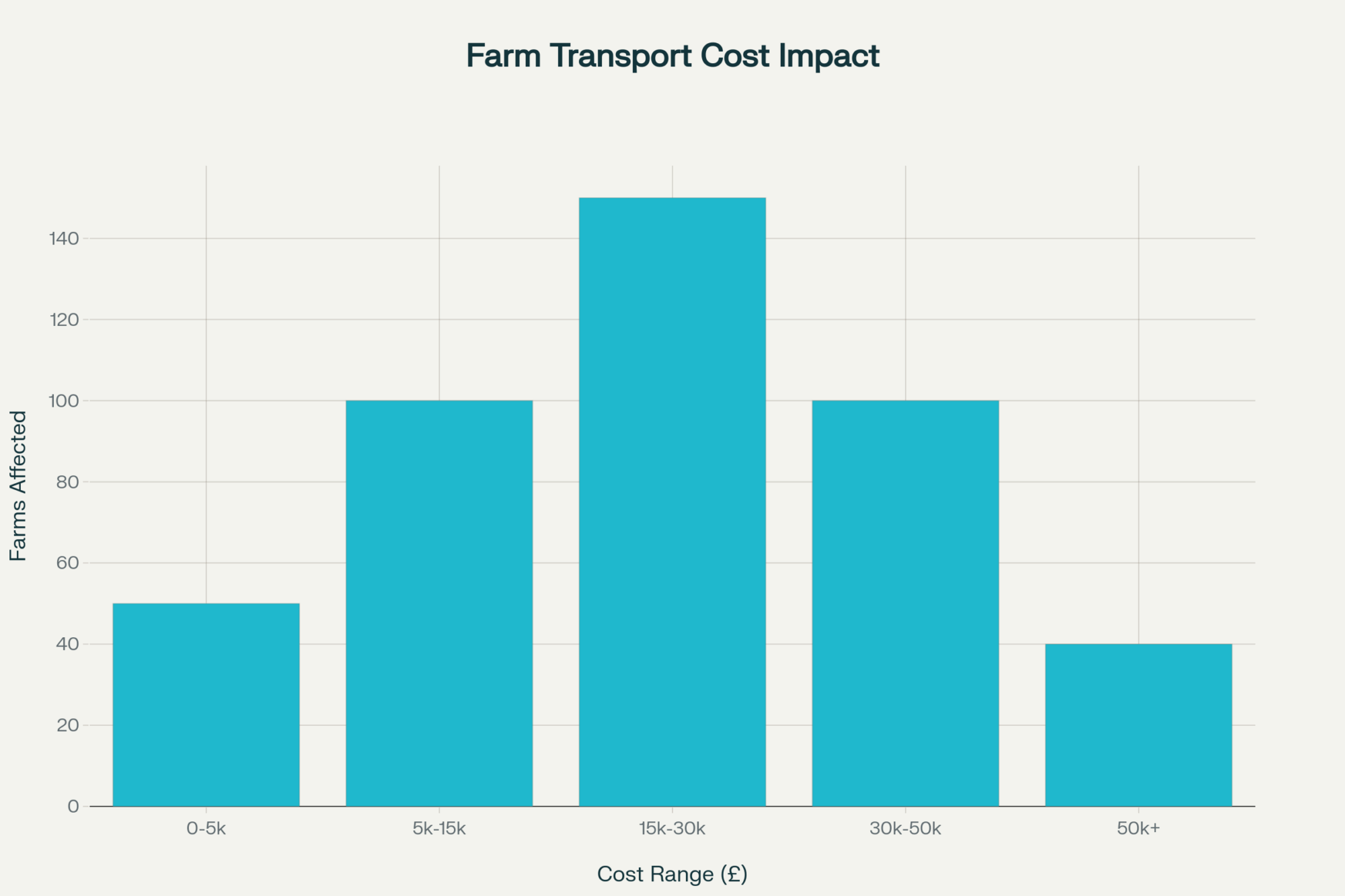
NewsSubscribe
First
Last
Consent

The UK’s Sexed Semen Playbook: How UK Dairies Hit 84% While You’re Still Stuck at 50/50

UK dairies hit 84% sexed semen adoption—while most of us are still playing 50/50 roulette with calf gender.

UK sexed semen adoption has grown dramatically from 12.3% in 2012 to 84% in 2024, with accelerated growth particularly notable after 2018

I’ve been watching this trend for three years now, and what the Brits pulled off isn’t just impressive tech adoption—it’s a complete system overhaul that makes other leading dairy nations look years behind.

You know what hits you when you walk through a modern UK dairy operation? It’s not the robotic milkers or fancy feed systems. It’s the breeding charts. Where most of us around the world still play 50/50 roulette on calf gender, these operations consistently show 89-91% female calves.

That’s not luck. That’s 84% sexed semen adoption across UK dairy herds in 2024, and honestly, it makes the rest of us look like we’re still figuring out the basics. The Americans? Sitting at 61%. New Zealand? About 47%. Most of Europe? Still having meetings about it.

So what did the Brits crack that everyone else missed?

When Carbon Talk Started Writing Real Checks

Here’s what really shifted everything—carbon footprint moved from environmental reports straight into milk pricing contracts. I was chatting with a producer near Exeter last month—he runs 380 Holsteins on grass—and he nailed it: “Five years back, methane was something we discussed at NFU meetings. Now it’s affecting my milk price every month.”

Processors like Arla aren’t messing around. They’re paying actual premiums—2 to 4p per liter depending on targets—for farms hitting verified emission reductions. Tesco’s writing carbon requirements directly into supply contracts.

Here’s the brilliant part: those bull calves that used just to eat feed and take up space? Now they’re actively costing you money twice—feed costs and lost carbon premiums. Using sexed semen to cut those numbers while boosting heifer replacement efficiency suddenly makes perfect economic sense.

The Export Ban Nobody Saw Coming

Then came the policy curveball. The 2023 Animal Welfare Act shut down live calf exports completely. Overnight, farms lost their traditional outlet for surplus dairy bulls.

The University College Dublin research laid it out starkly. Operations that previously exported 200+ male calves annually now had to make them work economically at home, or reduce numbers strategically.

What’s interesting is how quickly processors caught on to the welfare angle. Major food companies started writing surplus calf reduction requirements into procurement standards. Suddenly, using sexed semen wasn’t just about genetics—it was about maintaining market access.

Technology That Finally Stopped Letting Us Down

Let me be honest—early sexed semen was notoriously frustrating. You’d pay double for straws that gave you conception rates 15-20% worse than conventional. Not exactly a winning proposition.

But the breakthrough with SexedULTRA 4M technology changed everything. Double the sperm concentration per straw, 90%+ gender accuracy, and—this is crucial—conception rates now achieving about 82-84% of what you’d get with conventional semen.

Laboratory semen sexing machine with multiple monitors displaying flow cytometry data used to separate sperm cells by sex chromosome in dairy breeding

That’s close enough to make the economics work for most well-managed herds. When fertility penalties basically disappeared, everyone’s math changed.

Looking ahead, CRISPR research is making real progress on 100% female offspring, but that’s still years from commercial reality.

Regional Realities Make All the Difference

What strikes me about UK success is how different regions adapted the technology to their specific challenges.

  • Southwest England’s advantage: Devon and Cornwall operations have something intensive guys don’t—cheap milk from pasture. Lower feed costs create a financial cushion for premium breeding investments.
  • Yorkshire’s scale challenge: Bigger northern dairies manage heat detection across 800+ cow herds differently. Many invested heavily in automated monitoring specifically to make sexed semen profitable.
  • Welsh seasonal pressure: Pembrokeshire operations breed entire herds in 6-8 weeks during optimal grass conditions. Miss heat cycles, and you’re looking at empty cows and lost revenue.
  • Scottish highland reality: Hill farmers deal with hardier breeds that don’t respond to sexed semen quite the same way. Some of the most innovative adaptation work involves extensive systems.

The Economics Work (When You’re Realistic)

Look, you’ll hear people claiming “$200 per cow advantages,” but let’s be realistic. What’s consistently documented is beef-cross calves selling for significantly higher prices than dairy bulls at market—often two to three times more, though this varies by market conditions and management.

Strategic breeding efficiency matters too. Using sexed semen on genetically superior animals while putting beef bulls on culling candidates essentially pays you to improve your herd while reducing replacement costs.

For more insights on how beef-on-dairy crossbreeding delivers ROI, the economics are compelling when done strategically.

Bisterne Farm—they won the 2023 RABDF Gold Cup¹¹—demonstrates excellent management. But let’s keep expectations realistic about those “91% conception rates” you sometimes hear. That typically refers to high-performing subgroups under optimal conditions, not herd-wide averages across all seasons.

The Genetic Diversity Reality Check

Here’s where things get serious. Dr. Donagh Berry from Ireland’s Teagasc raises legitimate concerns: “When 80%+ of inseminations use sexed semen from elite bulls, you’re creating genetic bottlenecks that could bite back hard.”

But AHDB’s genetics team isn’t ignoring this. They promote balanced approaches—beef sires on middle-tier cows, continuous genomic diversity monitoring, and thoughtful elite genetics distribution.

Smart operations find that sweet spot: maybe 40% sexed semen on top of genetics, 30% beef bulls on culling candidates, 30% conventional semen from diverse bloodlines. Genetic progress with built-in safety nets.

Are You Actually Ready for This?

Before calling your AI stud tomorrow, let’s have an honest conversation. I’ve seen too many operations waste money trying to make sexed semen work without proper fundamentals.

CriteriaReadyProceed With CautionNot Ready
Conception Rate≥ 65%55-64%< 55%
Heat Detection≥ 85%70-84%< 70%
Herd Size≥ 200 cows50-199 cows< 50 cows
Financial CapacityCan absorb premium costsMargins are tight; plan carefullyOperating at a loss
Management ExpertiseExperienced AI protocolsLimited experience; needs trainingNew to breeding

If you can’t tick most boxes, tighten up basics first. Sexed semen won’t magically fix fertility problems—it’ll make them more expensive.

And please—don’t rush the process. Operations that succeeded took 12-18 months, focusing on getting systems right before scaling up.

Global Context: Everyone’s Playing Catch-Up

The UK leads global sexed semen adoption at 84%, significantly ahead of the US (61%), Ireland (55%), New Zealand (47%).

The Americans are making progress—61% adoption—but it’s fragmented across regions and systems. Cultural resistance, combined with fragmented breeding services, makes coordinated adoption more challenging than the UK’s integrated approach.

Ireland pushes hard despite seasonal constraints, driven by regulations and export pressures. New Zealand innovates around unique challenges—breeding 900 cows in six weeks creates pressure most can’t imagine.

Europe’s adoption is mixed, ranging from 20% to 60%, depending on regulatory pressure and market incentives. However, the trend is clear: this technology will become standard for competitive operations.

The Bottom Line: Revolution, Not Evolution

The UK didn’t just adopt new technology. They engineered complete systems that generate measurable profits through genetic precision, while meeting regulatory and market demands.

Three things made this work:

  • Policy alignment: Environmental regulations and profit incentives are pointing in the same direction
  • Technology readiness: 4M sexed semen, finally delivering competitive performance
  • Market rewards: Processors putting real money behind measurable improvements

For producers in other markets, lessons are clear. This isn’t about copying UK techniques—it’s understanding how they aligned policy, technology, and economics into coherent strategy.

The competitive window’s narrowing. As other regions catch up, the UK’s first-mover advantage will diminish. But right now, they’ve written the playbook for profitable genetic precision.

The question isn’t whether sexed semen works—the UK proved that. It’s whether you can build the management systems, market relationships, and strategic thinking necessary to make it work profitably in your specific situation.

Because this isn’t about adopting new technology. It’s about evolving your entire approach to dairy genetics for an industry where precision, sustainability, and profitability must align.

The UK figured that out first. Everyone else gets to decide how fast they want to learn.

KEY TAKEAWAYS:

  • Lock in 84%+ female calves like UK leaders by strategically deploying sexed semen on your top genetics—every extra heifer cuts replacement costs and boosts your genetic progress simultaneously.
  • Capture the 82-84% conception advantage with 4M technology that’s finally eliminated the old fertility penalties—your AI success rates can now compete directly with conventional semen.
  • Bank 2-3x higher calf values by mixing beef bulls on culling candidates while reserving sexed semen for elite genetics—smart operations are seeing immediate ROI on this strategy.
  • Meet the 85% heat detection benchmark before scaling up (anything below 70% and you’re burning money)—plus ensure you’ve got 200+ cows to make the economics work in today’s tight margins.
  • Balance genetic diversity risks by rotating elite sires and incorporating beef genetics strategically—AHDB research shows this prevents the bottlenecks that could bite back in 3-5 years.

EXECUTIVE SUMMARY:

Listen, I get it. Sexed semen always felt like expensive gambling. However, what changed was that UK dairies didn’t just adopt the technology; they built entire systems around it, achieving 84% adoption compared to our 61% in the States. We’re talking real money here: beef crosses are fetching 2-3x what dairy bulls bring at market, plus processors are paying carbon bonuses up to 4p per liter for farms cutting methane. The 4M technology breakthrough means conception rates now hit 82-84% of conventional—that fertility penalty that scared everyone off? Pretty much gone. Sure, you need your ducks in a row first… solid heat detection, decent herd size, financial cushion. However, the Brits took 12-18 months to dial it in before scaling, and now they’re reaping the rewards, laughing all the way to the bank. The question isn’t whether this works anymore—it’s whether you’re going to learn from their playbook or watch your competitors pull ahead.

Complete references and supporting documentation are available upon request by contacting the editorial team at editor@thebullvine.com.

The Sunday Read Dairy Professionals Don’t Skip.

Every week, thousands of producers, breeders, and industry insiders open Bullvine Weekly for genetics insights, market shifts, and profit strategies they won’t find anywhere else. One email. Five minutes. Smarter decisions all week.

NewsSubscribe
First
Last
Consent

The $350,000 Genetics Wake-Up Call: Why Smart Dairies Are Banking Big While Others Still Play Guessing Games

Two dairy farms, 15 miles apart. One’s banking $350,000 more yearly. The difference? They cracked the genetics code.

EXECUTIVE SUMMARY: Look, I’ve been watching this genetics revolution unfold for years, and the gap between early adopters and holdouts is getting scary wide. We’re talking about farms losing $200-plus per cow annually just because they’re stuck in the past with breeding decisions. But here’s what gets me fired up—some operations are pulling in an extra $350,000 yearly just by getting smart about genomics. The tech isn’t pie-in-the-sky anymore. Genomic testing hits 65-80% accuracy now, which beats the heck out of guessing based on parent averages. AI tools are cranking genetic progress six times faster—jumping Net Merit gains from $13 to $83 per cow each year. Toss in better sexed semen and strategic IVF use, and you’ve got a breeding program that actually pays for itself in under two years. I’ve seen this work on real farms—Wisconsin operations dealing with short grazing seasons, New York dairies switching low-merit heifers to beef breeding, California outfits optimizing for heat tolerance. The math’s solid, the tech’s proven, and honestly? If you’re not at least testing your top replacements, you’re leaving serious money on the table.

KEY TAKEAWAYS

  • Stop bleeding $200+ per cow from genetic lag — genomic test your best 25% of replacements within 30 days and watch avoided costs add up fast
  • Accelerate genetic progress 6x with AI mating systems — Net Merit jumps from $13 to $83 yearly gains per cow when you let algorithms spot inbreeding risks and optimize breeding decisions
  • Cash in on reproductive tech advances — high-dose sexed semen hitting 80-85% conception rates, plus strategic IVF at 50% success, means you multiply elite genetics while culling genetic dead-ends
  • Match your genetics to your ground — Wisconsin’s short grazing season demands forage efficiency focus, while heat-stressed regions need tolerance traits to capture component premiums
  • Start small but start now — phased implementation over 18-24 months delivers measurable ROI while competitors stick with yesterday’s breeding strategies
dairy herd management, genomic testing, dairy profitability, AI breeding decisions, genetic lag costs

You ever get that feeling when you cruise past a neighbor’s dairy and wonder, how are they making this look so easy? Well, spoiler alert: it’s all about livestock genetics, plain and simple.

I was talking to a consultant the other day who’s worked with farms from Wisconsin all the way to Texas. He mentioned two dairies—less than 15 miles apart—with almost identical feed sources, the same milk pickup, and near identical weather. But one hauled in over $350,000 more last year alone. The difference? They nailed their genetics game.

But here’s the kicker—far too many dairies still using old-school breeding are losing more than $200 a cow each year because of genetic lag, and that’s money walking right out the back door. While others are cashing in with genomic testing, achieving 65-80% accuracy — far better than we ever hoped — by relying on sire averages.

When $39 Saves You from Raising a $2,000 Mistake

Let’s be honest—genomic testing isn’t cheap. You’ll be looking at anywhere from $39 for simple parentage testing up to around $200 for a full genetic profile. But what you get for your buck is priceless: a shot at knowing which heifers will actually pull their weight, and which ones will be a drain on feed and resources.

Here’s what you’re looking at:

Test LevelCostAccuracyWhat You Get
Basic Parentage$39-$7565-70%Genetic ID and simple traits
Enhanced Panels$100-$15075-80%Health, production, and fertility markers
Full Genome Scan$175-$200+80%+Comprehensive trait evaluation

Source: USCDCB genomic evaluation data

Agriculture Victoria’s study shows customizing SNP chips can raise accuracy by up to 10%, which is a big deal when you’re making decisions on hundreds of animals.

One case I keep thinking about: Extension research documents a New York farm that tested 400 springing heifers, discovered 150 with poor genetics, and smartly moved those over to beef crosses—saving more than $216,000 on feed and calf sales that might have been wasted.

AI: Your Breeding Partner That Never Takes a Day Off

Now AI? That’s the game-changer knocking on the barn door.

Based on documented adoption patterns across the Midwest, producers typically follow a similar path: initial skepticism, gradual testing, and then growing confidence. One Wisconsin farmer told me he was downright skeptical of computers running his breeding program just two years ago. Now? He’s crediting AI with saving him $38,000 by spotting inbreeding before it turned costly and kicking his genetic progress into overdrive with a 280% increase.

These AI tools run thousands of breeding combos in a flash—way beyond what you could crunch by hand while juggling barn chores.

Here’s how that breaks down:

FactorOld-School WayAI-Powered WayHow Much Better
Inbreeding ControlPedigree sheetsGenomic + AI algorithms8-12x more precise
Health PredictionVisual spotting71% accuracy for mastitis, 96% for digital dermatitisDays earlier intervention
Breeding ChoicesMaybe 20 optionsThousands evaluatedMassive increase
Genetic Progress$13/year Net Merit$83/year Net MeritNearly 6x faster

Source: USDA Net Merit documentation

Heads up—AI’s track record is strongest on digital dermatitis prediction, while mastitis detection accuracy is still being refined through ongoing research.

Reproductive Tech That’s Actually Paying Off

Sexed semen? It’s come a long way.

Labs are pumping twice the sperm into high-dose straws, often matching conception rates of regular semen—not everywhere, but often enough to change the game.

Run that with beef semen on your lower genetic merit cows and IVF for multiplying your cream-of-the-crop, and your breeding program’s got some serious horsepower.

Check this out:

TechnologyConception RateCost PremiumBest Use
High-Dose Sexed80-85%+$25-$30/strawElite genomic females
Beef Semen80-85%Market-dependentLower-merit females
IVF/Embryo Transfer45-55%~$500/pregnancyElite genetic multiplication

Source: Based on university extension models and industry data

Extension case studies document operations using this strategic approach—genomically testing replacement heifers, identifying those with below-average potential, and switching them to beef breeding. One frequently cited Wisconsin example netted $350,000 through avoided costs and premium crossbred calf sales.

IVF costs vary by region and setup, but best-case scenarios show around 50% conception rates for roughly $500 per pregnancy.

The Economics: What Investment Levels Actually Deliver

I gotta mention—breeding programs are no small investment.

Annual spend can range from approximately $75,000 for a modest setup to over $300,000 for elite operations.

But the payback can be solid:

Program LevelAnnual Cost (1,000 cows)Genetic Gain %5-Year ROI
Basic$75k-$125k4-6%$250k-$400k
Comprehensive$150k-$300k8-12%$500k-$800k
Elite$300k+12%+Highly variable

Source: Based on university extension models and industry data

Oh, and here’s something that sneaks under the radar—research shows inbreeding costs you 37-61kg of lifetime milk per 1% increase, depending on the calculation method. It’s the quiet profit killer.

Your genetic priorities gotta fit the turf you’re farming. Wisconsin producers battling a short 150-day grazing season lock in on forage efficiency, while California operations focus on heat tolerance and milk component premiums for specialty markets.

Getting Past the Implementation Hurdles

Look, I won’t sugarcoat it—genomics ain’t a walk in the park.

Smaller farms struggle with costs and managing heaps of data—not to mention everybody’s worried about data privacy and the big genetics companies consolidating power. These are genuine concerns that warrant an honest industry discussion.

Still, most farms make the jump when they see their neighbors banking real returns.

Common barriers I hear: upfront costs, technology complexity, skepticism about results, and limited management bandwidth.

Here’s the best advice—start small, find a trusted mentor, and build a plan that fits your operation.

As one producer put it: “AI breeding cut my losses and sped up genetic progress—but it took patience and learning, just like any new management tool.”

And honestly? Watching your neighbors cash in on this stuff cuts through doubt faster than any sales presentation.

Bottom Line: The Genetics Revolution Is Banking Money Today

Every month you stall on genomic testing, you’re probably leaving more than $200 per cow per year on the table while your competitors get smarter and richer.

Your move:

Get testing scheduled in the next 30 days. Focus on the best 25% of your replacements first—you’ll see the quickest return there.

Talk to three genetics professionals. Tour farms who’ve already rolled up their sleeves with these systems.

Use extension calculators—get your own genetic lag number. It’s real money walking out your door.

The choice is documented: invest $50-200 per head in genomic testing that delivers measurable returns within 18-24 months, or keep bleeding hundreds per cow annually while neighbors bank the advantages of precision breeding.

The genetics revolution isn’t tomorrow. It’s right now.

Complete references and supporting documentation are available upon request by contacting the editorial team at editor@thebullvine.com.

Ready to join it?

Learn More:

  • Genomic Testing: A Producer’s Guide to Getting Started – This guide provides practical strategies for launching a genomic program. It demonstrates how to select the right animals for initial testing and translate complex data into immediate, profitable breeding and culling decisions to maximize your return on investment.
  • The 2025 Genetic Base Change: What It Means for Your Herd’s Bottom Line – Go beyond on-farm tactics and understand the market forces shaping your herd’s value. This analysis reveals how industry-wide genetic updates impact your operation’s profitability, sire selection strategy, and long-term competitiveness in a shifting market.
  • Beyond Milk Volume: Are We Breeding for the Right Stuff? – Challenge your current breeding goals with this forward-looking analysis. It explores the critical shift toward new traits like feed efficiency and sustainability, revealing methods for building a more resilient and profitable herd designed for future market demands.

The Sunday Read Dairy Professionals Don’t Skip.

Every week, thousands of producers, breeders, and industry insiders open Bullvine Weekly for genetics insights, market shifts, and profit strategies they won’t find anywhere else. One email. Five minutes. Smarter decisions all week.
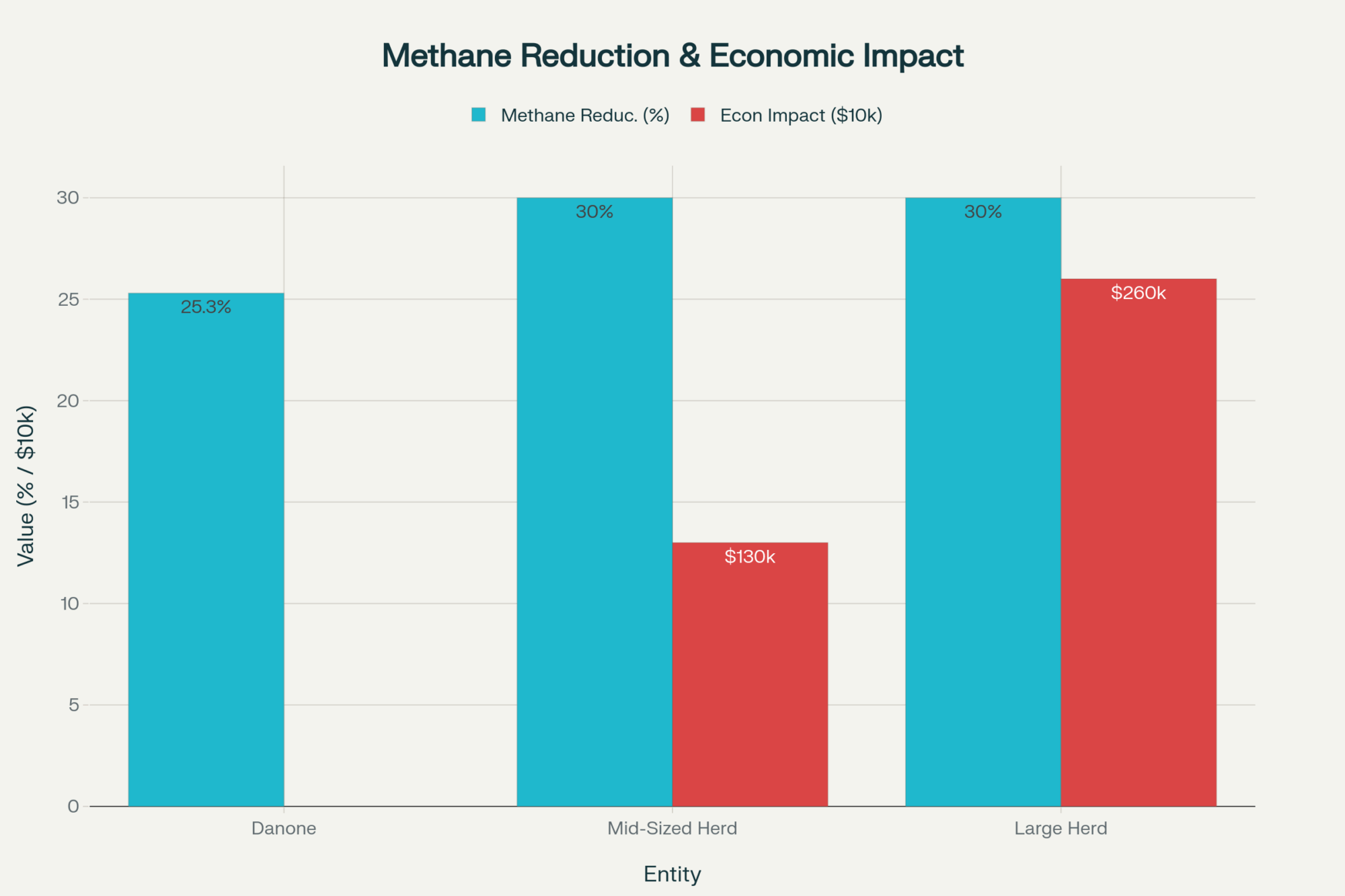
NewsSubscribe
First
Last
Consent

Asia’s Dairy Gold Rush: Why American Farmers Can’t Keep Ignoring Asia

Asia’s dairy market? It’s $340B now, set to double by 2033. Ready to cash in?

EXECUTIVE SUMMARY: Hey, did you know the Asia-Pacific dairy market hit $340 billion in 2024 and is projected to nearly double to $583 billion by 2033 (IMARC Group)? That’s huge growth while we’re stuck with flat domestic prices. China alone produced 41 million tonnes of milk last year, but still imported 2.6 million tonnes—clear proof there’s hungry demand for premium dairy. Some savvy US producers in Vermont and Wisconsin are already capturing premiums of over 40% by focusing on organic certification and A2 genetics. Feed costs are brutal in 2025, but when you pair that with export premiums running 20-40% above domestic prices, the math starts looking pretty attractive. Look, if you’re ready to think beyond your local co-op, tapping into this booming export market should be your next strategic move.

KEY TAKEAWAYS:

  • Export just 10-15% of your production to unlock price premiums of 20-40% — that’s serious money when feed costs are eating 65% of your milk check (2025 USDA data). Start by contacting your state dairy export specialist this week.
  • Dial in your genetics strategy now: Jerseys with rich butterfat are golden for artisan cheese markets; Holsteins carrying A2 genetics fit perfectly into Asia’s exploding protein powder demand. Check your breeding program against these export opportunities.
  • Partner with experienced importers who understand the cultural nuances — Japanese buyers demand perfection in packaging and service, Koreans prioritize health benefits like probiotics, and Filipinos seek trusted brands that deliver value. Don’t go it alone.
  • Leverage USDA’s Market Access Program for up to 50% cost-sharing on export marketing — the 2026 window closed in June, but 2027 applications open this spring. Get your paperwork ready now to avoid the rush.
  • This isn’t some passing trend — Asian dairy demand is reshaping global economics. While most American producers are still debating whether exports are “worth the hassle,” smart operators are already banking serious premiums. Don’t be the last one to the party.
dairy export opportunity, Asian dairy market, dairy profitability, premium milk products, global dairy trends

Here’s what caught my eye at World Dairy Expo last year — booth after booth showing off robotic milkers and genomic testing, but barely a mention of the fastest-growing dairy market on the planet. That’s a disconnect worth talking about.

If you walked the aisles at last year’s World Dairy Expo, you probably noticed something missing — talk about the booming Asian dairy market was scarce! Sure, the latest robotic milking machines and genomic tech were all the rage, but this emerging market? Barely a whisper.

Here’s the skinny: The Asia-Pacific dairy market hit $340 billion in 2024, and experts at the IMARC Group peg that number to nearly double to $583 billion by 2033. Meanwhile, back here in the States, prices are flat and feed costs are rising.

China — Making More Milk, But Still Importing Big

China’s milk production rose by 4.6% in 2023 to 41 million tonnes, BUT—here’s the kicker—they still imported 2.6 million tonnes of dairy products. Imports dropped 12% last year as local production ramped up, yet premium stuff like organic and A2 milk remains red hot.

According to AHDB market analysis, “Chinese consumers are increasingly focused on quality and brand trust rather than simply seeking the lowest price point.”

Smart producers in Vermont and Wisconsin are catching on, quietly grabbing those premium bucks with organic certification and transparent farm stories.

Southeast Asia — Big Opportunity Hidden in Plain Sight

Don’t overlook the big hungry markets of Southeast Asia. Analysis of USDA and ASEAN trade data reveals that the Philippines relies on imports for over 90% of its dairy needs, Vietnam for approximately 80%, and Thailand for nearly 67%.

Industry case studies highlight representative examples, such as a Midwest operation that began with modest shipments of cheese powder and subsequently scaled to achieve nearly half a million dollars in export revenue over several years. It took patience, relationship-building, and learning the cultural nuances.

Where The Money Flows — Premium Products

Chinese cheese consumption skyrocketed, growing around 15% annually in the last decade. Artisan cheeses, probiotic yogurts, and protein-rich milks are driving demand.

The genetic angle can’t be ignored: Jerseys with their rich butterfat are perfect for those artisan-style cheeses. Meanwhile, Holsteins with advancing A2 genetics are hitting the booming milk powder markets head-on.

Exporting — It’s A Marathon, Not A Sprint

Heads up: USDA’s Market Access Program (MAP) closed applications for 2026 in June, but 2027’s round opens this spring. MAP covers half your marketing spend, but don’t underestimate the paperwork.

Exporting involves managing customs, optimizing cold chains, and collaborating effectively with your shipping partners to ensure seamless operations.

Start small — maybe 10% of your milk — and build from there.

Crunching The Numbers — Feed Costs & Margins

Here’s the latest feed snapshot from summer 2025 — prices vary, but here’s the gist:

RegionFeedPrice Range
IowaCorn (per bu)~$4.00
WisconsinHay (per ton)$180 – $210
MinnesotaSoybean meal$300 – $350
CaliforniaAlfalfa$230 – $260

Note: Feed prices fluctuate significantly. Consult current USDA-NASS Agricultural Prices reports for current pricing in your region.

Feed’s the biggest cost on any dairy. Factor in export premiums of 20–40% and you can see why this matters. For more insights on optimizing feed costs and dairy profitability, check out why 2025 could be the most profitable year for dairy farmers yet.

Culture Is Everything

Selling to Asia? It’s about people.

Japanese buyers want flawless packaging and service, while Korean consumers chase health products, especially probiotics.

Filipino buyers seek trusted brands with recognized value.

Connecting with savvy importers can save you headaches and fast-track success.

The Bottom Line

The Asian dairy boom is undeniable. With proven demand, solid government support, and real success stories, it’s time to stake your claim.

  • Contact your state dairy export specialist this week.
  • Research upcoming USDA export programs and their application requirements.
  • Calculate what a modest export allocation could mean for your operation’s economics.
  • Connect with other producers already engaged in export activities.

The market’s moving fast — don’t get left behind.

Complete references and supporting documentation are available upon request by contacting the editorial team at editor@thebullvine.com.

Learn More:

  • The A2 Story: From Both Sides of the Marketing Hype – This article provides a tactical breakdown of the A2 genetics trend mentioned in the main piece. It reveals how to evaluate the real market premiums and breeding strategies, helping you decide if this genetic focus is a profitable move for your operation.
  • The Dairy Market Pendulum: Will it Swing Up in 2024? – For a strategic view, this piece analyzes the global economic forces influencing dairy prices. It offers a framework for understanding market volatility and long-term trends, providing crucial context for why diversifying into stable export markets is a smart financial strategy.
  • Dairy Farming of Tomorrow: Are You Prepared for These 7 Mega-Trends? – Looking at innovation, this article explores the future of dairy beyond just exports. It covers emerging technologies in automation and data management that are essential for building the efficiency and traceability that Asian buyers demand in their premium products.

The Sunday Read Dairy Professionals Don’t Skip.

Every week, thousands of producers, breeders, and industry insiders open Bullvine Weekly for genetics insights, market shifts, and profit strategies they won’t find anywhere else. One email. Five minutes. Smarter decisions all week.

NewsSubscribe
First
Last
Consent

Feed Costs Just Rewrote the Dairy Playbook—and Your ZIP Code’s Calling the Shots

Forget what you think you know about feed costs—geography just became the biggest profit killer in dairy.

EXECUTIVE SUMMARY:  Look, I’ve been talking to producers from Texas to Saskatchewan, and here’s what nobody’s saying out loud: your farm’s location now drives profitability as much as your genetics program. We’re seeing feed costs slam 50-55% of milk revenue in drought zones while Midwest operations cruise at 35-45%—that’s not market volatility, that’s structural change. Take Jake in Texas… he’s paying $245 a ton for decent alfalfa, while his Wisconsin cousin has options ranging from $106 to $292, depending on what he needs. Meanwhile, New Zealand keeps feed at just 23-30% of expenses through smart pasture management and tech. The gap’s real, but it’s not permanent—precision feeding, alternative proteins like field peas, and cooperative buying are leveling the field. If you want to stop hemorrhaging money on feed in 2025, these strategies aren’t optional anymore.

KEY TAKEAWAYS

  • Precision feeding delivers 15-25% efficiency gains and saves $28 per cow monthly—University of Wisconsin research proves it pays for itself in under 24 months. Get your IOFC baseline first, then start tracking individual cow intake data.
  • Field peas can cut protby ein costs 12% without touching milk quality—UC Davis studies back this up completely. Call your nutritionist this week and run the numbers on switching from soybean meal.
  • Transport’s killing you at 10-15% of feed costs in remote areas versus 5% in Europe—time to talk storage co-ops with neighbors. One group I know cut trucking 25% first year.
  • Danish co-ops save 3% on feed through group buying power—60 farms pooling purchases beats going solo every time. Start small with even 15-20 neighbors for real leverage.
  • Track your IOFC like your life depends on it—because in drought regions where feed hits 55% of revenue, it literally does. Hoard’s data shows this is the new normal, not a temporary squeeze.
dairy feed costs, dairy profitability, IOFC management, precision feeding ROI, regional feed prices

There I was, chatting with some folks last week, when someone mentioned their neighbor is pulling decent alfalfa priced just over $230 a ton, while some around here are staring down near $280. Sounds like small talk, but it’s the reality dragging our dairy business apart.

Here’s the deal — your farm’s location now influences your profitability as much as your genetics program or your management style. In the drought-prone parts like Texas, feed eats up 45-55% of the milk check, while dairy operators in the Midwest are running closer to 35-45%. That spread? It’s causing some farms to thrive while others barely hang on.

When Your Location is the Real Boss

Take Jake, for one. He’s a composite of High Plains producers I’ve chatted with. Jake runs a 1,200-cow Holstein herd near Amarillo, Texas. This summer, he locked in alfalfa at $245 a ton, according to recent USDA figures from August 2025. Not perfect hay, but decent enough — testing around 18.2% protein and 34% fiber.

“The story’s different up north,” Jake says as he sorts through his feed receipts. “My cousin in Wisconsin has more options — alfalfa prices anywhere from $106 to $292 a ton, depending on whether it’s large rounds or premium small squares.”

USDA data backs this up — big price swings state to state.

Saskatchewan farmers face alfalfa-grass mix prices between $142 and $210 per ton, records from their forage council show. Europe’s premium alfalfa goes for €220-270 per ton or about $230-$290 U.S., depending on where you are and the quality.

What’s real eye-opening? New Zealand dairy farmers typically spend 23-30% of their total farm expenses on feed, thanks to strong pasture systems and smart feed management. Compare that with feed eating 45-55% in harsher U.S. regions, and you see why geography could make or break farms.

Quick Terms to Know

  • Income Over Feed Cost (IOFC): Milk sales minus feed bills — your key profit indicator.
  • Basis Level: The gap between your local feed price and futures market prices.
  • Relative Feed Value (RFV): A number that blends protein and fiber to rate your hay quality.

Paying the Freight: Transport Costs Hurt

Sticker prices aren’t the whole story. Randy, an Alberta dairy operator managing 950 cows, hauls feed 400 miles from Saskatchewan. Although exact figures vary, transportation adds around 10-15% to total feed costs there. Europe maintains a much lower rate — around 5% — with better transportation logistics.

Pooling resources, Randy and some neighbors built a 10,000-ton shared storage facility. “That cut our trucking costs by almost 25% the first year,” he says. “It’s made a big difference, especially in tight times.”

Precision Feeding: Big Investment, Big Payoff

West of the Rockies, Tom runs 2,400 cows in Idaho. About 18 months ago, he dropped nearly $87K on precision feeding tech.

“It was rough the first few months,” Tom says honestly. “But by a year and two months in, the system was paying for itself.”

Supported by research from the University of Wisconsin, farms of his size see feed efficiency jumps of 15-25%. Tom tracks intake per cow and tweaks rations by the hour, saving roughly $28 per head monthly, aiming to recoup his investment under two years.

His neighbor Bill used to poke fun at the “fancy gadgets”—now he’s following suit this fall.

Mixing Up the Rations: California’s Alternative Proteins

California farms loosen tight budgets by mixing in peas, distillers’ grains, and canola meal. UC Davis studies show that swapping soy meal for peas reduces protein feed costs by 8-12% without compromising milk output or quality.

Some producers are even reporting small bumps in butterfat.

Breed Matters: Holsteins and Jerseys

Feed cost hits breeds differently. Holsteins hitting 85 lbs/day need a minimum 18% crude protein, making them more sensitive to protein price swings.

Jerseys convert feed more efficiently at 1.3 pounds of feed per pound of milk, but require mineral packages that add to the costs.

Danish Dairy Co-ops: Strength in Buying Together

Across the Atlantic, about 60 Danish farms combine forces for feed buying, scoring about 3% savings versus solo purchases.

“It’s all about buying power,” says Lars Pedersen with the Danish Ag Council.

Lessons from New Zealand and Australia

Dairy producers in the region enjoy longer grazing seasons and smart technology integration, which helps keep feed costs lower.

Fonterra expects farm gate prices to hover just above NZ$10/kg of milk solids (~$7 USD) in 2025.

Midwest and Northeast: Different Pressures

In Wisconsin, Tom buys alfalfa ranging $106 to $292 per ton, depending on bale and season. Labor and stricter environmental regs push costs higher than in the Plains.

Pennsylvania dairies often offset those costs by marketing premium specialty milk locally.

Montana’s Fight Against Climate Pressure

Montana dairies using drought-tolerant alfalfa varieties report better feed reliability in dry spells, though exact numbers vary by farm.

What’s Next? Real Talk

Winners will be producers who regularly check their IOFC, experiment with alternative proteins, build group buying power, and adopt technology sensibly.

Start by getting your IOFC numbers down, try that alternative protein, talk to your neighbors about buying groups, and investigate precision feeding if you’re running a bigger herd.

Bottom Line

Location isn’t everything, but it sure plays a significant role these days. Smart management, effective partnerships, and well-placed tech investments can level the field.

The consolidation wave has already rolled through. Are you riding it or left behind? Your next few months will say a lot.

Your move.

Complete references and supporting documentation are available upon request by contacting the editorial team at editor@thebullvine.com.

Learn More:

  • Precision Feeding: 5 Ways to Make it Work on Your Dairy – This tactical guide dives into the practical application of the technology discussed in the main article. It reveals specific, actionable strategies for implementing precision feeding to maximize your ROI, cut waste, and boost your herd’s efficiency.
  • Don’t Let High Feed Costs Derail Your Dairy Farm’s Profitability – This piece provides a strategic financial perspective, focusing on key performance indicators beyond just the feed bill. It demonstrates how to analyze your IOFC and other metrics to make smarter, long-term business decisions in a volatile market.
  • The 5 Biggest Mistakes Dairies Make When Adopting New Technology – Before you invest in precision tech, read this. This innovative-focused article explores the common pitfalls of tech adoption, helping you future-proof your investment by ensuring smooth integration, proper training, and a clear path to profitability.

The Sunday Read Dairy Professionals Don’t Skip.

Every week, thousands of producers, breeders, and industry insiders open Bullvine Weekly for genetics insights, market shifts, and profit strategies they won’t find anywhere else. One email. Five minutes. Smarter decisions all week.

NewsSubscribe
First
Last
Consent

More Than Policy: For Jim Mulhern, Legacy is Measured One More Season at a Time

When times got tough, Jim Mulhern fought to keep dairy farmers afloat—his legacy is measured in seasons survived, not speeches made.

Jim Mulhern speaks on Capitol Hill: Leading with calm resolve and a producer’s perspective during his transformational tenure at NMPF.

What’s interesting about Jim Mulhern’s legacy—really, what stands out if you hang around barn meetings or share coffees after a long Expo day—isn’t just the policies on paper or the speeches under the lights. It’s how many dairy producers, across regions and generations, end up telling the same sort of story: when margins went south, when feed costs jumped, when times felt especially lean—somewhere in the background, or sometimes the foreground, Jim or his policy work was part of the survival toolkit. Sometimes it’s an NMPF Zoom, sometimes it’s a barn newsletter that started somewhere in DC, but at the end of the day, it’s about service, not a resume.

Ask producers from different regions and you hear variations of the same story: when margins got tight and options felt limited, Jim’s approach—listening first, speaking plainly—made challenging situations feel more manageable. Jim never had miracles—but if you picked up the phone, he’d listen, cut through the DC fog, and, true to form, drop that middle-child line: ‘You get good at compromise or you don’t eat!’ It made disaster feel… survivable.”

That earthy, honest support is the current running through his 45 years. Policy? It matters—but in dairy, legacy is how many operations get to run another season. So, let’s skip the official bio-paper and start where it hits hardest: with those farm stories that turn ‘legacy’ into something you can actually hold.

The Thing About Legacy in Dairy

It’s never been about reform tallies or titles. Ask anyone who’s watched drought suck the valley dry in Tulare, or a New Yorker calculating butterfat after a ration swap, or a Nevada dairyman wincing at the new heifer price sheet. Legacy’s about who keeps showing up—boots on, sleeves rolled—when everyone else is home.

Jim’s roots? Portage, Wisconsin—a big breakfast table, weekends on neighbors’ farms, one of those upbringings where you learned fast how problems got solved. Shuffled off to UW-Madison, he wasn’t in it for the hands-on milking; it was about using ag journalism to keep his hands in the land. That early DC internship with Bob Kastenmeier made it real: policy’s not a sideline, not if you steer it for the folks actually working the ground.

Compromise Isn’t a Dirty Word—It’s the Dairy Way

Here’s what the industry crowd knows: volume in a boardroom never means as much as listening on the ground. Jim, one of nine siblings, had the lessons of compromise engrained before he could drive. “The hardest part of co-op isn’t the milk check—it’s getting everyone on the same page.”

The road through FMMO reform? Nobody who was there would call it smooth. Those months would test anyone’s patience—herding Holsteins along a muddy path more than a couple of times. With all the regional priorities—Midwest cheese, Plains expansion, fluid markets in the West—compromise wasn’t an act, it was the job description. Jim pulled in trusted voices like Jim Sleper, and always circled back to what mattered: “Nobody walked away with everything, but everybody left knowing, ‘Yeah, my big worry was on the table.’” That’s why the results stuck when it mattered most.

Living Risk—Not Just Avoiding It

Let’s get down to it: bring up MILC, MPP, DMC (Dairy Margin Coverage program) at any coffee shop, and yeah, you’ll get some eye-rolls—until another dairy downturn reminds folks why it matters. Before the overhaul, many people figured their best shot was a prayer, insurance, and maybe a check if things got rough.

However, this is the new trend: with DMC, mid-sized to small operations have a real net. DMC’s pushed out over $2 billion when the pain hit hardest—money that kept for-sale signs out of the barn windows. You hear the same story everywhere—Michigan’s Thumb, a dry-lot outside Yuma, a late-night text from Idaho. When COVID hammered the sector, and the checks came, people said straight up, “That’s what kept cows fed and my kids in 4H.” That’s policy making a difference.

But managing risk wasn’t just about safety nets; it was also about fighting for a fair, predictable price in the first place—a battle that brought Jim straight to the messy heart of FMMO reform.

FMMO Reform—Messy, But Worth It

“Modernization” means one thing in Kansas, another in the Northwest—new barns going up in the plains, headaches with fluid class in the West. What’s striking, if you circle back with any co-op lead or new face from Montana to the Southeast, is that Jim didn’t duck the bumps. “Processors wanted unity for the Farm Bill, but the pandemic called the bluff—the formula needed rewriting. Still, we got folks back at the table and eventually hammered it out.” Grumbling’s still common (just call Vermont), but, as one co-op chair reminded me, “predictable beats chaos in my mailbox.”

Stewardship—Not Buzz, Just How You Farm

Sustainability’s trendy on the panel circuit, but “stewardship”—that’s been inside farming forever. Jim credits his convictions to watching families, his and others, do more with less, finding ways to turn waste into value, and always prepping for next year.

Ask the digester crew in Yakima. Or Florida operators who count every rainstorm and stretch a cover crop for two seasons. Policy eventually caught up: “We’ve cut emissions, improved yields, done more with less. Maybe, finally, that story is landing with customers and Congress.”

The Unfinished Battles: Immigration and Trade

You can measure most farm headaches by the grumble at Bullvine coffee hours, and nothing comes up more than labor and trade. Western herds, New York recalls, up into Quebec—if you don’t have crew, or if a new market wall goes up, everything halts. Jim’s honest about it: “Progress or not, it isn’t done until the guys in the parlor feel a difference.” Right now, Congress is stuck. And in ag, policy’s only as good as its impact before sunrise.

Labels, School Milk, and the Small Battles

Want to get Mulhern animated? Bring up almond “milk.” “Fake products using real dairy terms—FDA should’ve stepped in years ago.” And getting whole milk back in schools? If you’re not convinced, check in with a school nutrition lead in the Upper Midwest. “What we feed kids isn’t just a menu—it’s a message to the next generation.”

Passing the Torch—Not Just Polished Shoes on the Boardroom Floor

Ask Jim about wins, and he talks about his team, not tallies. “Building up smart, driven staff—beating paperwork by a mile,” he’ll say if you push. A real legacy isn’t a retirement countdown; it’s whether the next generation takes the lessons and actually runs with them.

Gregg Doud’s taking over, and from what Mulhern’s said publicly, the endorsement couldn’t be clearer: ‘Gregg is an established leader with a wealth of experience in ag policy. He knows the issues well, and he knows how to get things done.’ As more than one industry observer has noted, Jim’s legacy isn’t about grand gestures—it’s about leaving the field a little more level than he found it.

The Bottom Line—From the Parlor to the Boardroom

When you talk legacy around here, don’t glance at the plaque. Remember a neighbor scraping through a thin season thanks to a new rule, a check that cleared, or maybe just the right frank call at the right time. Sometimes it’s small, sometimes it makes the difference between getting the next shipment of feed or not.

You spot Jim Mulhern at Expo, maybe catching a sunrise before the barns get busy? You don’t need to make a speech. A nod—or a simple thank you—does the trick. The glue in this business has always been the unsung folks, steady at the wheel while the rest of us are milking before dawn.

Here at The Bullvine, that’s the vantage point we stand by: from the muddy middle, never giving up, proud of the next mile. Telling stories that help us all do it again, season after season.

Key Takeaways

  • Jim Mulhern’s legacy is defined by practical, producer-first leadership—he prioritized compromise, collaboration, and real-world policy solutions that mattered at the farm level.
  • His tenure saw major wins for dairy risk management (notably the DMC program), FMMO modernization, and timely COVID relief, helping stabilize milk checks and ensure producer survival through volatile markets.
  • Mulhern’s approach was always rooted in listening, unity, and finding common ground, even amid fierce regional and industry divides.
  • Ongoing challenges like labor, immigration, and global trade remain urgent—not “wrapped up” as he exits, but spotlighted as unfinished business for the next generation.
  • Beyond the boardroom, Mulhern is remembered for championing dairy’s true values—stewardship, authenticity, and resilience—leaving U.S. dairy better prepared for whatever comes next.

Executive Summary

Jim Mulhern’s legacy as retiring NMPF President isn’t written in speeches or boardroom victories—it’s measured season by season, in the everyday resilience of dairy producers his work helped sustain. Drawing on Midwestern roots and a knack for compromise forged as the middle child in a large family, Mulhern led policy moves like FMMO modernization and the Dairy Margin Coverage program that directly impacted milk checks in tough years. He was known for human-scale leadership: listening, cutting through politics, and prioritizing practical solutions that reached the parlor as much as the Capitol. The article spotlights Mulhern’s industry role in navigating regional divides, rallying co-ops, and meeting challenge after challenge—from market risk to labor and trade demands—with humility and relentless advocacy. Through anecdotes, peer insight, and grounded storytelling, it connects his legacy to themes of stewardship, collaboration, and the quiet determination that defines the dairy industry’s backbone. Even as he steps aside for a new generation, Mulhern’s mark endures in the unity he fostered and the real-world relief he delivered when it counted most.. This is the story of a leader whose true victories remain etched in seasons survived, not just awards won.

Learn More:

The Sunday Read Dairy Professionals Don’t Skip.

Every week, thousands of producers, breeders, and industry insiders open Bullvine Weekly for genetics insights, market shifts, and profit strategies they won’t find anywhere else. One email. Five minutes. Smarter decisions all week.

NewsSubscribe
First
Last
Consent

The $400-Per-Cow Advantage: How AI Is Redefining Dairy Profitability

Farms using AI are banking an extra $400 per cow annually. That’s real money, not hype.

EXECUTIVE SUMMARY: Look, I’ve been watching this AI thing roll through dairy country for a while now, and here’s what’s actually happening out there. Farms leveraging AI are pulling in around $400 extra per cow each year — that’s not some pie-in-the-sky number, that’s documented profit. Now, where you farm matters big time: Wisconsin guys are seeing $380-420 per cow, but head west to California, where labor’s expensive and heat stress is brutal? Some dairies are hitting $500 per cow. Meanwhile, Europe’s way ahead of us — the Dutch have 67% adoption, Australia’s at 40%, and we’re… well, we’re playing catch-up because half our rural areas can’t even get decent internet. Here’s the thing, though — you don’t need to drop a fortune or revolutionize everything overnight. Start with health monitoring, get your feet wet, and build from there. The farms making moves now? They’re the ones who’ll be writing checks while others are still debating.

KEY TAKEAWAYS

  • Add $400 per cow to your bottom line by starting with health monitoring systems — fastest ROI you’ll see, especially if you’re dealing with winter stress in the Midwest or heat challenges down south
  • Get your internet sorted first — you need at least 25 Mbps to make AI worth a damn, and too many US dairy regions are still stuck in the stone age connectivity-wise
  • Invest $8-12K in training your key people — all that fancy data’s worthless if your team can’t read it or act on it when a cow’s in trouble at 3 AM
  • Lock down your data ownership rights — negotiate clear contracts so your farm’s valuable information doesn’t end up helping commodity traders make money off your back
  • Pick partners who’ll stick around — go with vendors tied to university research or proven track records, because that shiny startup might disappear right when you need support most
dairy profitability, AI in dairy farming, herd health monitoring, dairy farm technology ROI, precision dairy

Look, I’ve been watching this AI wave roll through dairy farms for a couple of years now, and the truth? Those 3 AM alerts — yeah, the ones you dread — they’re saving lives.

Take Amber Horn up in Wisconsin. She’s got 2,100 cows, and one night, her phone buzzed — not some random call, but a sensor picking up a fever in cow #287 before you could see any signs.

That alert, thanks to the smaXtec system, helped Amber’s dairy dodge nearly half a million in losses and deliver a jaw-dropping 7.8x ROI last year.

And Amber isn’t alone.

Decoding the ROI

Dairies using AI tech bump their bottom line by about $400 extra per cow annually, but geography matters:

  • $380–420 in Wisconsin confinement barns — think harsh winters and steady, demanding labor
  • $290–350 in Texas heat-stressed herds — battling scorching days
  • $450–500 in California dairies — where labor’s pricey and heat stress bites deeper

The numbers? Sound, backed by multiple solid sources.

Joe, just nearby Amber, put it bluntly:

“That sensor paid for itself the first time it flagged a cow before I even saw she was sick. Saved me $2,000 in vet bills and kept her in the string.”

Beyond the Hype

The University of Wisconsin’s Dairy Brain project? Not some lab toy. They’re managing data for over 4,000 cows — spotting health issues faster than even the best vet — but the barn is no lab: frozen pipes and spotty internet threaten even the best tech.

Fortunately, Brazil’s innovators have developed AI that works offline, syncing when the internet is restored—a vital feature for far-flung farms.

Global Snapshot

Europe leads, with 67% of Dutch dairies digitally monitoring, but only 25% deeply utilizing AI.

Australia’s dancing to a different tune — 40% adoption focused on pasture and breeding.

America? Split in two:

  • 37% adoption among big dairies (500+ cows)
  • Less than 20% among smaller operations

Much of this is held back by lagging broadband — only 39% of dairy regions can hit the 25 Mbps needed for AI.

An Aussie consultant said it best:

“We’ve cut feed costs by over 30% with AI. That’s the difference between winning and falling behind.”

Crunching the Numbers

Expect costs of about $75,000 upfront and $12,000 yearly maintenance for an AI system.

Payback is about 15 months on average, with a 30% risk buffer accounting for tech glitches, staffing changes, and market shifts.

Smaller farms often see quicker returns by dumping manual checks altogether.

Guard Your Data

Current laws don’t protect your data rights well — your farm’s info can be sold or shared without your say-so.

States like Vermont and California try to help, but most of us are still in the wild west.

Your Playbook to Win

  • Start simple: Begin with health monitoring — lowest hanging fruit, fastest payback
  • Build your base: Secure reliable internet — no speed, no smart tech
  • Train your team: Data’s useless if no one understands it
  • Protect your data: Don’t sign away your farm’s story
  • Choose partners for the long haul: Pick vendors tied to universities or proven track records — those who will still be around in five years. AI isn’t coming to dairy farming—it’s here, it’s profitable, and it’s creating competitive gaps that widen every month. Operations implementing comprehensive AI systems achieve documented 10-20% production increases while reducing costs 15-25%, with payback periods as short as 15 months.

Your competitive position depends on action, not analysis. The producers winning this transition aren’t waiting for perfect solutions—they’re implementing effective ones and improving as they learn.

The choice is stark: embrace the technology and its challenges now, or risk falling behind operations that started today.

Bottom line? The 2025 dairy landscape is separating into winners and everyone else. Time to choose which side you’re on.

Complete references and supporting documentation are available upon request by contacting the editorial team at editor@thebullvine.com.

Learn More:

The Sunday Read Dairy Professionals Don’t Skip.

Every week, thousands of producers, breeders, and industry insiders open Bullvine Weekly for genetics insights, market shifts, and profit strategies they won’t find anywhere else. One email. Five minutes. Smarter decisions all week.

NewsSubscribe
First
Last
Consent

The $30K Question: Is Your Herd Ready for Selective Dry Cow Therapy?

One Midwest herd just banked $30K cutting antibiotics by 78%—while their neighbors still treat every cow the old way.

EXECUTIVE SUMMARY: Look, I’ve been digging into this selective dry cow therapy thing, and honestly? Most of us are throwing money away treating perfectly healthy cows. Wisconsin researchers tracked 37 herds and found producers saved $5.37 per cow when they switched to data-driven protocols instead of blanket treatments. That’s real money—not company marketing fluff. The Dutch have already figured this out, cutting antibiotic use by 80% while keeping their herds healthier than ever. Here’s the kicker: it only works if your bulk tank SCC stays under 250,000 and your dry cow housing doesn’t suck. But if you’ve got those basics down? The economics work, especially for bigger operations. It’s time to stop guessing and start using the data right in front of you.

KEY TAKEAWAYS

  • Scale determines success — Operations over 1,000 cows see payback in 12-18 months with $2.12 net benefit per cow, while herds under 500 struggle to break even on testing costs
  • Timing is everything — Launch your selective protocols in March-May when environmental pressure is lowest; summer heat and winter mud will crush your success rates if you’re not careful
  • SCC threshold isn’t gospel — That 200,000 cutoff everyone talks about? University of Georgia found too many false positives, so adjust seasonally and watch your individual cow patterns
  • Regulatory pressure building — FDA ramped up antibiotic oversight in 2023, and processors are starting to reward documented reduction programs with premium payments
  • Start small, measure everything — Pilot selective treatment on 25% of your dry-offs first, track every dollar, and make sure your vet’s on board before going all-in
 selective dry cow therapy, dairy profitability, antibiotic stewardship, mastitis prevention, herd management

Let’s be honest. Most of us have been drying off cows the same way our dads did—antibiotics for every cow, every time. But agriculture’s moving fast, and that approach might be costing you.

A recent HerdHQ case study found a large Midwest herd cut antibiotic use by 78%, saving nearly $30,000 annually. Now, that’s company data and not independently reviewed, so keep your skepticism. University research gives more modest but reliable numbers—$2 to $8 saved per cow when selective dry cow therapy (SDCT) replaces blanket treatment.

One thing’s clear: the old ways won’t cut it much longer.

What’s Working in the Midwest Barnyard

University of Wisconsin research covering 37 herds that switched to SDCT found that producers saved an average of $5.37 per cow. But here’s the no-nonsense reality: savings usually come only from herds with bulk tank Somatic Cell Counts (SCC) below 250,000 cells/mL, good dry cow housing, and well-trained staff.

Consider the case of a producer in rural Minnesota who initiated SDCT during a harsh winter. “Mud and frozen water lines made our old SCC thresholds useless,” the producer recalls. “We adjusted protocols for the cold, keeping infections in check.” This demonstrates that facilities and management are just as important as any technology.

The Science Backing SDCT

Dr. Simon Dufour’s meta-analysis found a 66% reduction in antibiotic use when teat sealants were applied properly, with no increase in the incidence of mastitis.

While a 200,000 SCC cutoff is a useful guideline, University of Georgia specialists warn it’s not perfect. False positives can occur, so producers should adjust thresholds seasonally and based on their herd’s history.

Experts from Minnesota Extension agree: stay flexible and watch how your cows respond to changing conditions.

Size Matters: Financial Viability of SDCT

Here’s the tough talk: Your herd size directly impacts the financial viability of SDCT. The following table breaks down estimated costs and payback periods:

Herd Size (Cows)Testing Cost/CowAvg. Savings/Cow/YearNet Benefit/Cow/YearPayback Time
Under 300$8.50$5.37-$3.13Not viable
300-500$6.25$5.37-$0.88Marginal
500-1,000$4.75$5.37+$0.6236-48 months
Over 1,000$3.25$5.37+$2.1212-18 months

*Payback time represents the estimated months to recoup costs of testing and training.

If you milk fewer than 500 cows, focus first on housing improvements and consider cooperative testing with neighbors to reduce costs.

What’s Happening Beyond Our Fences

The Dutch government pushed hard for antibiotic cuts, slashing antimicrobial use by over 80% in a decade. In the UK, dairy farms have reduced antibiotic use by 19% since 2020 through targeted, selective treatments, while maintaining milk quality and herd health.

New York farms are proving the concept works. Of the 24 dairies that tried SDCT, nearly all continued the practice, resulting in a 50% or more reduction in antibiotic use.

Canada’s veterinary-led programs confirm health and financial wins from SDCT implementation.

This global momentum demonstrates that the model is effective, but success ultimately depends on adapting these principles to local farm conditions.

Regulatory pressure is mounting, too. The FDA increased veterinary oversight for medically important antibiotics in 2023, signaling that prudent antibiotic use isn’t just good business—it’s becoming a required practice.

Stay Sharp: Use Technology, Not Just Buzz

HerdHQ is popular, but recent research indicates that machine learning has not yet outperformed tried-and-true rule-based SDCT decisions.

Bottom line: master the basics first—clean housing, solid protocols, and veterinary backing.

The Blueprint for SDCT Success

Here’s what Midwest producers and vets say you need:

Prerequisites for Success:

  • Maintain bulk tank SCC under 250,000 cells/mL for six months
  • Keep dry cow housing clean, dry, and comfortable
  • Train your staff on the proper steps for dry-off
  • Build a trusted relationship with your vet

Timing Matters: The optimal time for initiating selective dry cow treatment tends to be spring (March through May). Summer heat triggers mastitis, while winters call for careful adjustments.

“Trying to go it alone with selective therapy usually ends in frustration.”
—A New York dairy veterinarian, from a 2021 Journal of Dairy Science study¹³

Your SDCT Action Plan by Herd Size

For herds of 1,000 cows and up:

  • Schedule a vet consultation to design an SDCT program
  • Audit your dry cow treatment expenses
  • Pilot selective therapy on 25% of dry-offs

For 300 to 1,000-cow herds:

  • Prioritize dry cow housing upgrades
  • Explore testing cooperatives with neighbors
  • Work closely with your vet to tailor protocols

For herds under 300 cows:

  • SDCT savings are likely further out
  • Focus on improving dry cow care fundamentals
  • Explore group testing and extension support programs

Regardless of farm size, keep track of treatment costs, monitor SCCs, and collaborate with your veterinarian.

Bottom Line

Farmers ahead of the curve on SDCT didn’t get lucky—they got prepared. They invested in proper housing, built strong vet relationships, and understood their numbers before making the switch.

The question isn’t whether selective dry cow therapy will become standard practice. The question is whether your operation will be ready when the economics make sense for your herd size and regulatory requirements become even tighter.

Are you ready?

Complete references and supporting documentation are available upon request by contacting the editorial team at editor@thebullvine.com.

Learn More:

  • The Golden Opportunity of the Dry Period – This article provides tactical strategies for optimizing dry cow management and nutrition. It reveals practical methods for reducing metabolic issues and improving udder health, directly supporting the on-farm prerequisites needed for a successful selective therapy program.
  • The Future of Dairy Farming is Now: How to Stay Ahead of the Curve – Go beyond the barn with this strategic look at market trends shaping the industry. It explores how consumer demands for sustainability and antibiotic stewardship are creating new economic opportunities, positioning your prudent use of antibiotics as a market advantage.
  • On-Farm Culturing: A Game Changer in Mastitis Management – This piece is a deep dive into the innovative technology that powers precision SDCT. It demonstrates how on-farm culturing provides the actionable data needed to identify specific pathogens and make confident, cost-effective treatment decisions for individual cows.

The Sunday Read Dairy Professionals Don’t Skip.

Every week, thousands of producers, breeders, and industry insiders open Bullvine Weekly for genetics insights, market shifts, and profit strategies they won’t find anywhere else. One email. Five minutes. Smarter decisions all week.

NewsSubscribe
First
Last
Consent

Europe’s Strategic Dairy Revolution: Why Cutting Herds is Making Producers Rich

What if cutting your worst 40 cows could boost your milk check by $8600/month? One Bavarian farmer found out.

EXECUTIVE SUMMARY: While American producers keep adding cows, European dairy operations just cracked the code on strategic contraction—deliberately cutting herd sizes to boost per-cow profitability. German farms that reduced their herds by 2.8% saw a 6% increase in milk production per cow, with some operations saving €800 monthly on feed costs while also increasing quality bonuses by 40%. The numbers don’t lie: precision culling combined with component optimization is generating 25-30% price premiums across Europe, proving that smart management beats scale every time. From Bavaria to the Netherlands, dairy producers are discovering that fewer cows can mean fatter margins—especially when you pair strategic cuts with precision technology. This is no longer just a European trend. The playbook works anywhere you have the guts to cull smartly instead of expanding blindly.

KEY TAKEAWAYS

  • Cut strategically, profit immediately: German operations reduced feed costs by €800/month ($860 USD) per farm while boosting quality bonuses 40% through selective culling—start by identifying your 10 lowest-producing cows this week
  • Precision tech pays when done right: Danish precision feeding systems deliver 18-36 month payback periods with annual savings of €20,000 ($21,600 USD), but only if you invest in proper training first—budget 6 months for the learning curve
  • Premium positioning captures outsized value: European premium dairy represents just 12% of volume but grabs 22% of export revenue through component optimization—negotiate quality bonuses with your processor using individual cow data
  • Environmental compliance = competitive advantage: Dutch nitrogen regulations forced €120,000 investments that now generate €22,000 annual savings ($23,800 USD) through improved efficiency—turn regulatory pressure into a profit opportunity
  • Strategic contraction beats volume expansion: While US operations added 58,000 cows chasing scale, European farms cut 687,000 head and watched profit margins soar 25-30% above historical averages—optimize what you have instead of expanding what you manage

You know that moment when everything you thought you knew about dairy gets flipped upside down? That’s what happened when I started hearing stories like this one from Bavaria. A dairy producer—let’s call him Klaus, representing dozens of similar cases across Germany—told his banker he was cutting 40 cows from his 320-head operation. Fast-forward to this fall, and that same banker was buying him drinks after the October milk check came in 22% higher—all while those extra mouths were gone and daily chores were lighter.

Klaus isn’t alone. Across Europe, dairy folks have caught onto something that challenges everything we learned at dairy short courses: sometimes less really is more, especially if you know which cows to keep and which ones get a ride on the truck.

This stands in stark contrast to North America, where operations continue to expand herd sizes, adding tens of thousands of cows in 2025, in an effort to chase volume targets. Meanwhile, European dairies collectively reduced their herd by around 687,000 head—and saw their profit margins soar.

Raw milk prices tell the story. German producers have been commanding premium pricing in 2025, tracking 25-30% above recent historical averages, with French operations following suit. But the secret isn’t just about cutting numbers; it’s about making each remaining cow work harder and smarter.

Europe’s Contraction: A Country-by-Country Playbook

The data shows one thing crystal clear: just slashing herd numbers won’t guarantee success. Real gains come when you pair fewer cows with significantly higher per-cow productivity.

Germany: Culling Smart, Not Just Hard

German operations reduced herd sizes while improving management, focusing on selective culling and quality optimization. The results speak for themselves—milk output per cow increased substantially while feed costs per liter dropped.

“We used to keep every cow that could stand up and give milk,” explains a Lower Saxony producer representative of this trend. “Now we only keep cows that can pay their way. Cut about 80 head last year, but got more milk per cow overall. The feed bill dropped by around €800 a month (roughly $860 USD / C$1,180), and our quality bonuses increased by 40%. But here’s the thing—it took us nearly two years to get the culling protocols right. Plenty of neighbors tried the same approach and didn’t see results.”

France: Turning Regulatory Pressure into Cheese Gold

French dairy operations reduced herd sizes largely in response to nitrate reduction requirements in sensitive watersheds. But instead of just shrinking, many invested heavily in precision nutrition systems and premium product development.

The payoff? French cheese exports increased in value, despite lower overall milk volumes, as artisan and specialty cheese production captured premium pricing that more than offset the volume reduction.

“We’re not just selling milk—we’re selling stories, tradition, and quality,” says a representative cheese producer from the French Alps. “The market rewards that approach when you execute it properly.”

Netherlands: How Environmental Pressure Created Profit

Dutch producers faced some of the toughest environmental regulations, with nitrogen emission limits requiring substantial investments in new technology and management practices. Many operations invested six-figure amounts in compliance systems—everything from precision feeding to advanced manure management.

“First two years were brutal,” admits a Utrecht-area producer representing this experience. “Spent over €85,000 (about $92,000 USD / C$126,000) on new tech, including digesters and feeding systems. Thought about quitting more than once. However, by year three, I was saving around €18,000 ($19,400 USD / C$26,600) annually on feed while meeting all environmental targets. My cows are healthier, margins are better, and I sleep through the night again.”

Another operation in Groningen invested over €110,000 (roughly $120,000 USD / C$163,000) in compliance technology and now generates an extra €22,000 per year ($23,800 USD / C$32,600) in savings and environmental bonuses.

The Reality Nobody Talks About

However, here’s what the equipment dealers won’t mention upfront: research indicates that a significant percentage of operations attempting precision systems fail to achieve positive returns on investment, primarily due to management challenges or poor implementation.

Success isn’t guaranteed. It depends entirely on your willingness to learn new management skills and adapt your operation to make the technology actually work.

Eastern Europe: Economic Survival Mode

Poland and the Czech Republic saw substantial herd reductions—around 4% each—but these weren’t strategic choices. They were an economic necessity. Rising feed costs, labor shortages, and processor consolidation forced smaller operations out.

The survivors, however, achieved remarkable efficiency gains through scale optimization and the adoption of smart technology.

The Million-Dollar Mistake: Why Tech Alone Won’t Save You

Denmark leads Europe in precision dairy adoption, but their experience teaches an important lesson: management matters just as much as machinery.

Studies of Danish precision feeding adoption show payback times ranging from 18 to 36 months, with considerable variation based on the quality of management. Some operations never achieve positive returns.

A Jutland producer invested €45,000 (about $48,600 USD / C$66,600) in individual feeding and monitoring technology for his 240-cow operation. “Took me 18 months to see my money back, and that’s because I spent the first six months just learning how to use the systems properly,” he explains. “The dealer training was worthless. Had to learn from other farmers who’d made it work.”

The Bottom Line on Tech Investments

Research shows precision nutrition systems typically cost €50,000-€80,000 ($54,000-$86,000 USD / C$74,000-$119,000), with successful adopters seeing annual savings in the €15,000-€25,000 range ($16,000-$27,000 USD / C$22,000-$37,000). However, significant farm-level variation exists, and the risk of no return is a real concern.

Start with component testing. Train yourself and your team properly. Add technology gradually. Track progress monthly. That’s how you avoid becoming another cautionary tale.

Premium Markets: Small Pond, Deep Water

European premium positioning works, but understanding the scale limitations is crucial for realistic expectations.

Premium dairy represents a small but valuable market segment—roughly 10-15% of production volume, yet capturing a disproportionate share of export value through higher pricing. That gap explains why strategic positioning works for some operations while remaining inaccessible to others.

French artisanal cheese operations fetch premiums of 45-65% over commodity pricing, but these markets have strict volume and quality requirements. You need consistent fat content above 3.8%, somatic cell counts under 150,000, and management protocols that meet processor specifications.

“Premium means hitting the grade every single time,” emphasizes a French cheese producer. “Fat, proteins, cells, handling—everything has to be perfect, or you’re out.”

Global Competition: Different Strategies, Different Results

Europeans optimize for value; North Americans chase volume. Both approaches work within their respective market structures, but the trends are diverging.

German operations reduced herd sizes while substantially improving per-cow productivity. US dairy production grew through herd expansion and genetic improvements. New Zealand producers reduced cow numbers but maintained milk solids through genetic selection and precision feeding.

RegionHerd StrategyProductivity FocusMarket Approach
GermanyStrategic reductionPer-cow optimizationQuality premiums
New ZealandEfficiency-driven cutsGenetic improvementExport efficiency
United StatesContinued expansionScale and technologyVolume growth
AustraliaRegional variationMixed approachesNiche markets

Sources: National agricultural statistics, industry reports

North American Implementation: What Actually Works Here

So what does Bavarian success mean for a farm in Michigan or Ontario? More than you might think—if you understand the management requirements.

An Ontario producer credits supply management stability for enabling his C$75,000 ($55,000 USD) investment in technology. “Stable milk prices let me focus on managing better rather than just milking more cows. But I spent six months learning the systems before seeing real results.”

A Michigan producer started with basic component testing, which eventually led her cooperative to offer quality bonuses. “The data made a huge difference, but you’ve got to know how to interpret the reports and make meaningful changes.”

Your Implementation Roadmap

Phase 1: Foundation Building (Months 1-6) Install component testing systems, begin individual cow monitoring, and establish baseline performance metrics. Don’t expect immediate results—focus on understanding your herd’s actual performance. Investment: $15,000-30,000 USD

Phase 2: Precision Systems (Months 6-18) Gradually implement precision feeding for high-producing groups, add automated health monitoring, and optimize rations based on individual cow data. Budget time for the learning curve. Investment: $40,000-80,000 USD

Phase 3: Premium Positioning (Months 18-36) Build processor relationships for quality bonuses, implement environmental monitoring for certifications, and explore direct marketing opportunities where feasible. Investment: $25,000-50,000 USD

Your Next Steps: The European Lesson for North America

The European transformation didn’t happen because producers got lucky with market timing. It happened because they used better data to make informed decisions about which cows to feed and which ones to sell—but it required developing new management skills to ensure the technology actually delivered results.

Start with component testing. Understand your herd’s real performance variations. Invest in training—both for yourself and your team. Build relationships with processors and buyers who value quality over quantity.

Your Action Checklist:

Test milk components this week—establish your performance baseline
Calculate individual cow profitability—identify your best and worst performers
Contact your processor—explore quality bonus programs and requirements
Budget for training time—technology without management skills consistently fails
Start small and prove concepts—before making major capital investments

Will you optimize the cows you have, or just keep adding more mouths to feed?

You don’t need to be European to implement smart dairy management, but you do need to think like them—and invest the time to develop management skills that make precision systems deliver real results instead of just looking impressive in the barn.

The choice is yours, but don’t wait too long. European producers started this transformation five years ago, while others debated whether change was necessary. Now they’re capturing premium pricing while commodity markets squeeze margins.

Your turn.

Currency conversions based on approximate rates: 1 € = 1.08 USD, 1 € = 1.48 CAD

Complete references and supporting documentation are available upon request by contacting the editorial team at editor@thebullvine.com.

Learn More:

The Sunday Read Dairy Professionals Don’t Skip.

Every week, thousands of producers, breeders, and industry insiders open Bullvine Weekly for genetics insights, market shifts, and profit strategies they won’t find anywhere else. One email. Five minutes. Smarter decisions all week.

NewsSubscribe
First
Last
Consent

The Hot Iron’s Last Stand: Why Canada’s #1 Proven Bull Just Changed Everything

12.5% of Canadian Holsteins now carry polled genetics—up from just 1.5% in 2015. Game changer.

Stantons Remover PP, the homozygous polled sire making headlines by claiming the #1 spot on Canada’s August 2025 Proven Holstein LPI rankings. His daughters’ performance is definitive proof: elite genetics no longer require horns.

Stop what you’re doing and take a look at this. Stantons Remover PP just re-claimed the #1 spot on Canada’s August 2025 Proven Holstein LPI rankings at 3897. That’s not just another genetic shuffle—Remover PP is the first homozygous polled bull that has topped a major national index based on actual daughter performance.

If you’ve been sitting on the fence about polled genetics, waiting for “proof” they could run with the elite horned sires, well—here’s your proof.

But before you speed-dial your AI rep, let’s talk reality about what transitioning to polled actually looks like when the boots hit the barn floor.

The Excuse That Just Died

For thirty years, we had solid reasoning for reaching for that iron: polled meant giving up production. The numbers backed us up. Elite genetics came with horns attached—deal with it later.

That math just changed permanently.

Source: Lactanet

The polled gene frequency among Canadian Holsteins has increased from 1.5% in 2015 to 12.5% by 2025. That’s not incremental—that’s genomic testing revealing elite genetics hiding in hornless bloodlines. Nine polled bulls now rank in the top 100 LPI, meaning real options, not welfare feel-good picks.

“I’ll level with you—I thought this polled thing was marketing fluff,” is a sentiment echoed by producers we’ve spoken with across Ontario. “But seeing those August rankings with a PP bull guaranteeing every calf hornless while delivering top-tier genetics… that conversation just got serious.”

The proof is in the daughters. Stantons Remover Jello P VG-88, a powerful second-lactation daughter of the #1 LPI sire, Remover PP, demonstrates the high-type, elite performance that has shattered the polled genetics compromise.

The Real Economics of Dehorning vs. Polled Genetics

Here’s where reality bites. Those cost projections floating around? They’re not wrong, but they don’t tell the whole story.

What dehorning actually costs you:

Cost FactorPer Head CostImpact
Procedure and labor$12-18Varies by region
Mandatory pain management$3-6+Mandated by new regulations
Growth setbacks from stress$4-6Hits first lactation performance
Health complications$2-4Infection risk, extra vet calls
Handling inefficiencies$1-3Time, bruising, worker safety

Bottom line: $22-35 per head when you add it all up

For a 500-cow operation, that’s $6,000 to $ 8,000 annually just to keep using the iron. University extension analyses suggest cumulative costs could exceed $100,000 over 15-20 years. Results vary significantly by operation and region—your mileage will differ.

The Transition Reality Nobody Mentions

Here’s what the genetics companies won’t tell you upfront:

Year 1 hits hard. You’ll pay premiums for polled semen (15-25% more) while still dehorning calves from previous breeding decisions. Budget $50-60 per heifer for genomic testing to know what you’re working with.

Cash flow becomes tight before it improves. Plan for 18-24 months before seeing real savings. You’re paying polled premiums while still managing horned calves born from last year’s breeding program.

Staff training isn’t optional. The biggest risk isn’t genetic lag anymore—it’s accidentally dehorning a polled calf. That mistake wipes out your genetic and financial investment in one swing.

What The New Regulations Actually Mean

Both Canadian NFACC codes and the U.S. FARM Program 5.0 now mandate documented pain management for dehorning. That means:

  • Detailed protocols for every procedure
  • Staff training documentation
  • Veterinary oversight records
  • Regular audit compliance

“Our processor gave us 12 months to get compliant with new pain management documentation,” reports one southwestern Ontario producer whose co-op requires annual welfare audits. “The operation down the road got six months. Check your contract—enforcement varies.”

Polled genetics eliminates this paperwork entirely. One genomic test provides permanent verification.

Jeanlu A2p2 Glory VG-89 3yr MAX – a phenomenal polled cow showcasing the kind of type and production now available with elite polled genetics. Glory is the dam of Valiant Goliath PP, a rare homozygous polled bull combining exceptional conformation, milk production, and robot-friendly traits.

Market Pressure: The Unspoken Driver

Major food companies have established animal welfare policies that encourage suppliers to adopt polled genetics and enhanced welfare practices. While specific sourcing mandates vary, the trend is clear: polled status provides market security that pain management protocols can’t match.

Think of it as insurance. Companies prefer biological proof over management protocols because it’s audit-proof.

Your Polled Breeding Strategy: PP vs. Pp Sires

Source: Viking Genetics

Genetics 101 refresher:

  • PP bulls: 100% polled calves, premium pricing
  • Pp bulls: 50% polled calves, moderate premiums
  • Breeding two Pp carriers: 25% chance of horned calves (expensive mistake)

A quick note on scurs: Don’t mistake these small, loose, horn-like growths for a genetic failure. Scurs only appear on heterozygous (Pp) animals and are a key indicator that the polled gene is present. Homozygous (PP) animals will never have scurs.

Your Realistic Three-Year Timeline

Year 1: Assessment and Setup

  • Test all replacement heifers for polled status ($50-60 per animal)
  • Start using PP sires on your top genetic females
  • Train staff on polled calf identification
  • Expect cash flow to be negative

Year 2: Transition Phase

  • First polled calves hit the ground
  • Reduced dehorning costs begin
  • Continue genetic transition
  • Break-even to slight positive

Year 3: Payoff Territory

  • Significant percentage polled in the calf crop
  • Major cost savings established
  • Market premiums available for breeding stock
  • Positive ROI demonstrated

“Plan for a five-year payback, not those 20-year projections they show you,” advises a dairy financial consultant who’s worked through dozens of polled transitions. “This business changes too fast for longer timelines.”

Herd Size Strategies That Work

Small operations (100-300 cows): Gradual approach using heterozygous sires over 6-8 years. Manage cash flow impact carefully.

Medium operations (300-800 cows): Balanced mix of heterozygous and homozygous sires, targeting 90% polled in 5-6 years.

Large operations (800+ cows): Accelerated program emphasizing homozygous sires, 90% polled in 4-5 years through strategic genetic management.

Learning From Global Leaders

European dairy markets are showing an accelerating adoption of polled genetics following stricter animal welfare regulations¹¹. The message is consistent: early adopters capture advantages while followers adapt under pressure.

The Bottom Line Reality

Stantons Remover PP hitting #1 in Canada for a 2nd time proves polled genetics can deliver elite performance without compromise. The dehorning iron’s days are numbered. The genetics are finally here, and the economics make sense over a reasonable timeframe. Early adopters will capture market advantages and genetic premiums, while others will be forced to adapt under regulatory and consumer pressure. The question is no longer if you should go polled—it’s whether you’ll lead this transition or be dragged into it.

KEY TAKEAWAYS:

  • Stop hemorrhaging money: That $35 per calf you’re spending on dehorning adds up to serious cash—start genomic testing your replacement heifers today to map your transition strategy.
  • Regulatory compliance made easy: New NFACC and FARM Program mandates require documented pain control, but polled genetics eliminates the whole headache—one genomic test beats years of paperwork.
  • Cash in on market premiums: Major food companies are actively seeking polled suppliers—position yourself now before this becomes a table-stakes requirement in 2026.
  • Plan your breeding smartly: Use homozygous (PP) sires for 100% polled calves if you want speed, or mix with heterozygous (Pp) sires to manage cash flow—just don’t breed two Pp carriers together.
  • Train your team or pay the price: The biggest risk isn’t genetics anymore, it’s accidentally dehorning a polled calf—that’s throwing money and genetics down the drain.

EXECUTIVE SUMMARY:

Listen, I’ve been watching this poll-based genetics thing for years, and frankly, the game has just changed completely. Stantons Remover PP hit 3897 LPI with this August—he is the first homozygous polled bull to top Canada’s Holstein rankings. We’re talking guaranteed hornless calves with elite production, no compromise. The economics? You’re bleeding $22-35 per calf on dehorning when you factor in everything—pain meds, growth setbacks, health issues, the works. Meanwhile, companies like Nestlé and General Mills are pushing hard for polled genetics in their supply chains. Germany’s already at 72% polled matings projected for 2025. Bottom line: if you’re not planning your transition now, you’ll be playing catch-up in a hurry.

Complete references and supporting documentation are available upon request by contacting the editorial team at editor@thebullvine.com.

Learn More:

The Sunday Read Dairy Professionals Don’t Skip.

Every week, thousands of producers, breeders, and industry insiders open Bullvine Weekly for genetics insights, market shifts, and profit strategies they won’t find anywhere else. One email. Five minutes. Smarter decisions all week.

NewsSubscribe
First
Last
Consent

CME Daily Dairy Market Report for August 28th, 2025: Butter Surges 3.5¢, But Corn Explosion Cuts Margins $1.91/Cow/Day

Your milk check received some help today, but your feed bill has just become critical.

EXECUTIVE SUMMARY: Alright, here’s the deal—feed costs just sucker-punched your milk check, and fancy butter rallies can’t hide it. Butter prices jumped 3.5¢ to $2.0850/lb, and cheddar blocks weren’t far behind, but September corn futures blew up by 62¢ to $4.45/bushel. That results in a $1.91 loss of margin per cow, per day, just like that. Margins? The milk-to-feed ratio plunged from 2.28 to 1.14—basically, we’re teetering on breakeven (or worse). Meanwhile, Europe and New Zealand are hustling hard—U.S. butter’s still a global bargain, but powder and cheese face tough competition. Global demand’s heating up, but your local profitability could freeze if you don’t hedge those feed costs now. Bottom line: The smart money’s already checking their coverage and running cash-flow stress tests. You should too—don’t wait for next week’s volatility to lock in anything you can on feed and milk.

KEY TAKEAWAYS

  • Corn’s 62¢ spike just slammed margins by $1.91/cow/day.
    Immediate play: Run your margin worksheet tonight. Figure out exactly what that does to your bottom line before you feed up tomorrow morning.
  • Margins are down—milk-to-feed ratio is 1.14, near 2008 crisis levels.
    Smart move: Don’t just read about coverages and puts—call your broker or co-op feed guy before the market jumps again.
  • Butter’s 3.5¢ rally sounds sweet, but feed inflation eats it up.
    Reset: Forward-contract fepossibleou can, and overlookignore lockian some floor on milk prices (those put options aren’t just for the risk-averse).
  • Global competition’s fierce—U.S. butter’s got the edge, but powder and cheese don’t.
    Translation: Your local pricing power disappear quicklyh faglobal world buyers shop elsewhere.
  • Big gaps between blocks and barrels are signaling retail cheese demand, not foodservice strength.
    Heads up: Realign your production mix if you can pivot fast—’tis the season for block-heavy orders.
dairy profitability, income over feed cost, dairy market analysis, corn prices, dairy risk management

Butter prices rallied a solid 3.5 cents to $2.0850/lb while cheese blocks gained 1.5 cents, providing much-needed support for dairy futures. However, September corn futures exploded 62 cents higher to $4.45/bushel in a single session – a move that slashes our calculated milk-to-feed ratio from 2.28 to just 1.14, dangerously close to breakeven territory.

Bottom line: Today’s corn spike just became the most critical number affecting your profitability. Our margin worksheet indicates that this corn move incurs an additional $1.91 per day in feed costs for the average operation per cow.

Today’s Price Action & Class Impact

ProductPriceDaily MoveWeekly Δ30-Day Avg Trades*Class Price Impact
Butter$2.0850/lb+3.50¢-14.3¢8.2 tradesClass IV: +$0.12/cwt
Cheddar Blocks$1.7750/lb+1.50¢-3.1¢6.8 tradesClass III: +$0.16/cwt
Cheddar Barrels$1.7800/lb-0.50¢-2.0¢2.1 tradesClass III: -$0.05/cwt
NDM Grade A$1.2600/lb+0.50¢-0.6¢12.4 tradesClass IV: +$0.05/cwt
Dry Whey$0.5550/lb+0.50¢-1.6¢4.7 tradesClass III: +$0.05/cwt

Net Class Impact: Class III equivalent: +$0.16/cwt | Class IV equivalent: +$0.17/cwt

*Source: CME Group Spot Call Data, 30-session rolling average

Class III/IV Equivalency Note: Calculations use standard CME formulas: Cheese = 9.87x + 0.0968, Butter = 1.2199x – 0.0179, NDM = 9.0675x – 0.0756, Whey = 1.17x.

Market Commentary

The ddemonstratedomplex showed genuine resilience today, despite being overshachaos in the dowed by the market chaos. Butter’s 3.5-cent rally represents a technical bounce off oversold conditions after this week’s brutal slide from $2.24. The move found support around $2.05—a level that has been held twice in the past month.

Cheese dynamics were telling. Blocks outperformed barrels by 2 cents, widening the spread to 5 cents – the largest gap in three weeks. This typically signals stronger retail demand (blocks) versus food service (barrels), which makes sense heading into the Labor Day weekend, when stockpiling is expected.

The real story was in the order flow. Dry whey closed with nine bids and zero offers—the strongest demand signal we’ve seen in weeks. Meanwhile, butter had no actual trades at the highs, despite the rally, suggesting that sellers weren’t panic-dumping, but buyers weren’t aggressively chasing either.

Critical Margin Math: The Feed Cost Crisis

Daily Feed Cost Impact Per Cow

Calculation Method: 16.5 lb milk/day, 24 lb corn/day, 5 lb SBM/day

  • Corn cost: $1.91/cow/day (24 lb × $4.45 ÷ 56 lb/bu)
  • Soybean meal: $0.71/cow/day (5 lb × $284.90 ÷ 2000 lb/ton)
  • Total feed cost: $2.62/cow/day

Milk-to-Feed Ratio Analysis

  • Previous ratio: 2.28 (acceptable range)
  • Today’s ratio: 1.14 (critical – under 2.0 signals trouble)
  • IOFC impact: -$66/cow/month

For a 500-cow operation, this represents a $33,000 monthly cash flow reduction if these feed levels hold.

Global Market Competitiveness

USD/lb equivalent, EUR/USD: 1.08, NZD/USD: 0.59

ProductU.S. PriceEU Equivalent*NZ Equivalent**Export Edge
Butter$2.08$3.25$3.12Strong advantage
SMP/NDM$1.26$1.16$1.24Slight EU advantage
Cheese$1.78$2.45N/AHighly competitive

*EU prices converted from EEX futures at €2398/MT SMP, €6700/MT butter
**NZ prices from NZX futures are already quoted in USD/MT

Export Parity Summary: U.S. butter clears Middle East/North Africa with freight. NDM faces headwinds against the EU in Southeast Asia. Cheese dominates Mexico’s trade.

USDA Forecast Variance Analysis

Current vs Official Projections

USDA August 2025 Baseline (Published 8/11/25):

  • 2025 milk production: 229.2 billion lbs (+900M from July forecast)
  • Q4 2025 all-milk price: $22.00/cwt
  • December Class III: $18.50/cwt forecast

Current Market Reality:

  • December Class III futures: $17.75/cwt
  • Gap: -$0.75/cwt (futures trading below USDA)

Feed Cost Reality Check: The USDA’s August forecast assumed an average corn price of $3.85 for Q4 2025. Today’s corn close at $4.45 represents a 60-cent premium to that assumption – enough to pressure USDA’s milk price forecasts lower in their September update.

Trading Floor Intelligence

Bid/Ask Analysis vs 30-Day Averages:

  • Butter: 2 bids, three offers (avg: 1.8 bids, 2.1 offers) – above-average interest
  • Whey: 9 bids, zero offers (avg: 4.2 bids, 1.8 offers) – exceptional demand
  • Blocks: 3 bids, one offer (avg: 2.1 bids, 1.9 offers) – strong buyer interest

Volume Context: Today’s combined 16 trades across all products match the recent daily average, lending credibility to price moves. The complete absence of barrel trading (0 trades) alongside three trades in blocks suggests a clear preference for retail-focused products.

Late-Day Action: Butter’s gains accelerated in the final 10 minutes, often signaling that commercial end-users were covering weekend needs before the holiday.

What’s Really Driving These Markets

Domestic Demand: Retail cheese and butter loading ahead of Labor Day weekend is providing solid support. Food service demand remains steady but unspectacular – reflected in the block-barrel price divergence.

Export Pipeline:

  • Mexico: Steady 15,000 MT/month cheese pace continues
  • Southeast Asia: Strong NDM demand, particularly from the Philippines
  • Middle East: Increasing butter interest due to competitive U.S. pricing

The Corn Market Shock: The 62-cent explosion likely stems from updated weather forecasts showing stress in key Iowa and Illinois growing regions. Early harvest reports are confirming yields below trend in several counties.

Regional Market Spotlight: Upper Midwest Under Pressure

Wisconsin/Minnesota producers face an immediate cash crunch. With corn harvest 2-3 weeks away, the futures explosion creates tough decisions: lock in expected crop at these elevated prices or gamble on a harvest-time retreat?

Local milk pricing: Processing plants report ample supplies as cooler late-August weather improves cow comfort. This abundance is preventing any significant local premiums despite the stronger cheese complex.

Immediate concerns: Many operations were counting on $3.80-$4.00 corn through the end of the year. Today’s move to $4.45 could force early culling decisions if sustained.

Actionable Intelligence: What to Do Right Now

Immediate Actions (Next 48 Hours):

  1. Feed Coverage Assessment: Calculate your uncovered corn needs for the period from March 2026 to March 2027. Consider pricing 25-50% of the remaining 2025 needs if you’re completely unhedged
  2. Milk Pricing Review: With Class III holding above $18.00, consider buying $17.50 put options for October-December to protect downside
  3. Cash Flow Stress Test: Model your operation with sustained $4.40+ corn using our worksheet below

Feed Cost Management Worksheet

Your Operation: _____ cows

  • Daily corn cost: _____ lb/cow × $4.45 ÷ 56 = $_____ /cow/day
  • Daily SBM cost: _____ lb/cow × $284.90 ÷ 2000 = $_____ /cow/day
  • Total daily feed cost: $_____ /cow/day
  • Monthly impact: $_____ × 30 × _____ cows = $_____ /month

Strategic Positioning by Region:

Wisconsin/Minnesota Operations:

  • The soybean meal weakness (-$7.50) offers an opportunity to lock in protein costs
  • Consider corn basis contracts if you’re growing your own feed
  • Evaluate switching to higher-forage rations with your nutritionist

California Operations:

  • Your higher baseline costs make you more vulnerable to this feed spike
  • Focus on maximizing components – butterfat premiums are strong
  • Consider forward-contracting more aggressively given tighter margins

Industry Intelligence & Regulatory Watch

Processing Capacity: Great Lakes Cooperative confirms their Michigan cheese expansion remains on schedule for Q2 2026, adding 180 million pounds of annual capacity to the region.

Trade Developments: USMCA review discussions continue with Mexico, our largest cheese customer, at 15,000 MT per month. No immediate concerns, but worth monitoring.

Regulatory Update: The FDA’s plant-based labeling guidance, expected before Thanksgiving, could impact dairy demand dynamics in 2026.

Tomorrow’s Watch List

  • Weather: Updated crop condition reports due Tuesday could extend corn’s volatility
  • International: New Zealand’s production update on Thursday will impact the global powder outlook
  • Domestic: Weekly cold storage numbers on Friday will show if the butter rally has fundamental support

Bottom Line: Navigation Strategy

Today marks a significant shift from cautious optimism to proactive risk management. The dairy complex has proven its resilience, but the sudden surge in feed costs changes everything for producer profitability.

The mathematics are stark: Every $0.50 increase in corn per bushel cuts dairy margins by roughly $1.50-$2.00 per cow per day. Today’s 62-cent corn move effectively erased 2-3 months of improved milk pricing.

Your immediate focus must shift to:

  • Securing feed cost protection for the next 6-9 months
  • Establishing milk price floors using options rather than outright futures
  • Stress-testing cash flows under sustained high-cost scenarios

The dairy markets have demonstrated their resilience when demand fundamentals remain solid. Your job now is to ensure your operation can weather the input cost storm until this feed price shock normalizes.

Let’s face it—waiting this out isn’t a strategy, it’s a gamble. Lock in what matters, test your cash flows, and stay nimble. Like always, the folks who move early are the ones who make it through the storm.

Learn More:

The Sunday Read Dairy Professionals Don’t Skip.

Every week, thousands of producers, breeders, and industry insiders open Bullvine Weekly for genetics insights, market shifts, and profit strategies they won’t find anywhere else. One email. Five minutes. Smarter decisions all week.

NewsSubscribe
First
Last
Consent

The 82% Problem: Why America’s Butterfat Isn’t Raising Your Milk Check

Why isn’t your extra butterfat paying off? Let’s talk about the bottleneck blocking your profits.

EXECUTIVE SUMMARY: It’s a strange scene – butter exports hit record highs and inventories tighten, yet prices remain stuck near 2021 lows around $2.23/lb (CME, Aug 2025). The U.S. butter market trades at a sizeable discount—about $1 less than Oceania and $1.45 less than Europe— even as top herds push milk fat to 4.4% (CDCB). The kicker? Most U.S. plants can’t handle the 82% fat, unsalted butter that global buyers demand (ADPI). That mismatch caps producer pay, even with component premiums of up to 22¢/lb—worth $265 extra per cow on a 4.2% butterfat performer. The smart move is to align genetics and feeding with your processor’s actual capacity—and lock in export contracts—to get paid what you deserve finally.

KEY TAKEAWAYS:

  • Push your herd to 4.4%+ butterfat to capture up to $265 more per cow annually (CDCB).
  • Use bulls like Cookiecutter and Jedi for proven 0.10–0.15% butterfat gains in two generations.
  • Dial in rations for 4.1–4.3% fat and add 30–40 mg biotin per cow daily to boost fat yield.
  • Understand your processor’s limits—upgrading for 82% unsalted butter demands major capital and carries risk.
  • Plan for the long haul—processing bottlenecks likely persist into 2026; start co-op discussions on capacity now.
butterfat production, dairy profitability, component pricing, dairy processing bottleneck, dairy genetics

The thing about the American butter market? It’s a real puzzle right now. Exports are surging and inventories are tightening, yet butter prices are slipping to lows not seen since 2021. What strikes me is that this disconnect reveals a serious bottleneck that’s capping the value farmers can earn from all this extra fat.

Why Export Demand Beats Domestic Buyers

Consider this: CME spot butter averaged $2.23 per pound during the week ending August 22—a level not seen in years, according to CME Group data. Normally, prices firm up heading into fall baking, but this year it’s different. The issue is that U.S. butter is largely made with 80% fat and salt, whereas export buyers want 82% fat unsalted. This product mismatch leaves high-value export demand mostly unmet.

Digging deeper, USDA Dairy News reports that U.S. butter trades roughly $1 per pound less than Oceania’s and around $1.45 less than Europe’s—a gap steady throughout 2025. For context, the Global Dairy Trade auction saw European butter fetch over $7,992 per ton, while U.S. prices hovered near $2.50 per pound.

 CME spot U.S. butter prices versus European butter prices at Global Dairy Trade auction across 2025 months, highlighting the persistent price gap

Your Butterfat Payoff: Component Pricing Math

If you’re breeding for higher fat, here’s good news: many component pricing programs offer premiums between 15 and 22 cents per pound of butterfat. On a cow producing 23,000 lb of milk at 4.2% fat, that translates to an additional $180–$265 annually.

Where the Bottleneck Lives: Processing Upgrades

Here’s the snag. A plant manager said,
“It’s not a quick flip—upgrading processors to handle export specs means investing in new packing lines and planning new shipping routes. It costs millions and carries significant risk without firm contracts.”

Meanwhile, New Zealand processors retrofit their plants with flexible lines that switch between salted and unsalted butter to meet various specifications—a nimbleness that U.S. plants need to capture export premiums.

Projected decline in processing bottleneck impact from 2023 to 2027 as new investments expand capacity

Closing the Gap: Genetics & Nutrition Tips

Our milk’s changing fast, too. The Council on Dairy Breeding reports that the U.S. average butterfat is above 4.2%, with some herds pushing past 4.4%—levels not seen in decades. An extension expert from the University of Wisconsin bluntly noted,
“Milk composition is evolving faster than plants can handle, causing a surplus of cream.”

On the breeding front, genomic selection now delivers 0.10–0.15 percentage-point gains in butterfat within a few lactations, with bulls like Cookiecutter and Jedi leading the charge. Nutritionists recommend targeting 4.1–4.3% fat in rations and supplementing with 30–40 mg of biotin per cow daily to maximize fat synthesis.

Industry watchers—including Sarah Thompson at Dairy Futures Group—forecast this processing squeeze will last into 2026 or later, until new capacity comes online.

The immediate strategy for producers is to align herd genetics and feeding practices with what processors can realistically handle today. Discuss with your cooperative to secure export contracts—and adjust your operation to capitalize on the opportunity.

Complete references and supporting documentation are available upon request by contacting the editorial team at editor@thebullvine.com.

Learn More:

The Sunday Read Dairy Professionals Don’t Skip.

Every week, thousands of producers, breeders, and industry insiders open Bullvine Weekly for genetics insights, market shifts, and profit strategies they won’t find anywhere else. One email. Five minutes. Smarter decisions all week.

NewsSubscribe
First
Last
Consent

How Kyrgyzstan’s Small Herds Show That Size Doesn’t Always Matter in Dairy

2.1% milk growth with just 5–7 cows per farm…who else thinks big herds are overrated?

EXECUTIVE SUMMARY: What if tiny herds could outproduce giants? In Kyrgyzstan, 5–7 cow farms increased their output by 2.1% to over 1 million tonnes in a year, while EU volumes dipped and China’s growth stalled. These co-ops bulk-buy feed, cutting costs by 12–15% and reducing marketing spend by ~18% (FAO). They pivoted from a 2023 Russian ban to ship 16,000 t at 20–30% premiums (World Bank). By pooling funds for Fleckvieh and Brown Swiss genetics and skipping $ 200,000 robot setups, they achieve 8–12% feed efficiency gains with 3-year paybacks. Bottom line: focus on biology and teamwork, not herd size—you should try this on your farm.

KEY TAKEAWAYS

  • Bulk feed purchasing can slash costs by up to 15%—link up with your local coop this season to secure lower barley and soybean prices.
  • Small co-ops report feed-per-milk-kg gains of 8–12% versus solo farms—consider pooling for genetics programs like Fleckvieh/Brown Swiss.
  • Export diversification can boost margins 20–30%—explore new markets or specialty niches to hedge 2025 volatility.
  • Skipping high-cost robotics (>$200K) frees capital for proven biology investments—aim for ROI under 3 years from breeding and feeding upgrades.
  • The organic zoning push (200,000 ha by 2029) signals premium demand—certify part of your herd early to capture price increases.
dairy profitability, farm cost reduction, cooperative farming model, dairy farm management, global dairy trends

What’s the most surprising thing about Kyrgyzstan’s dairy industry? Most farms operate with just 5–7 cows, yet their milk output still rose by 2.1% in the year ending August 2024, surpassing one million metric tons (t), according to the National Statistical Committee of the Kyrgyz Republic. That’s pretty remarkable when you consider the EU is grappling with tighter environmental rules, and China’s dairy growth is slowing.

The Cooperative Advantage

The standout regions—Chuy, Jalal-Abad, and Osh—account for over two-thirds of the national production: Chuy at 272,263 t (26%), Jalal-Abad at 222,071 t (21%), and Osh at 213,745 t (20%). What strikes me is how cooperative management is extracting consistent volumes from challenging mountain terrain.

Yields average about 1,180 kg per cow. Modest by U.S. Holstein standards, yes, but in a pasture-based system relying on native breeds, it highlights the benefits of improved genetics and effective herd management.

Farmers here don’t go it alone. Pooling resources to buy feed in bulk—barley, soybean meal, and more—they’re trimming feed costs by roughly 12–15% and slicing marketing expenses by about 18%, a trend documented in a 2024 FAO case study (source). When feed can gobble more than half your budget, every bit of savings helps.

A Nimble Pivot to Global Markets

This cooperative model also drove a significant shift in major exports. After Russia’s 2023 ban hit Kyrgyz dairy hard, producers turned on a dime—shipping over 16,000 t in the year to August 2024 to booming markets in China, the UAE, and Afghanistan at price premiums of 20–30%. “This nimbleness in the face of political shifts builds real resilience,” notes Jean-Michel Happi of the World Bank.

Their collective muscle extends to genetics, too: cooperatives pool funds to import Fleckvieh and Brown Swiss semen—breeds prized for resilience and dual-purpose yields—unlocking performance gains that solo farms couldn’t finance on their own.

Biological Gains Over Mechanical Flash

Instead of chasing expensive robotic milkers—often costing over $ 200,000 with lengthy payback periods—these co-ops double down on precision breeding and standardized feeding. That approach yields feed-per-milk-kg gains of 8–12%, typically paying for itself within three years.

Diversifying export markets helps smooth out income variability by up to 30%. Additionally, plans to certify 200,000 hectares of organic farmland by 2029 position Kyrgyz producers well for the rising demand for authentic, mountain-pasture dairy.

The Bottom Line for Your Herd

The financial mechanics are just as compelling. For a 180-cow U.S. dairy, investing in genetics and nutrition generally yields better dividends than investing in expensive automation. A 100 kg yield bump per cow across 150 cows at $18.50 per hundredweight translates to roughly $6,100 in extra annual revenue—real money you can bank without a seven-figure investment.

This development is fascinating because it flips traditional dairy wisdom. In today’s complex market, strategy, cooperation, and focused biological investments often outpace sheer herd size or the flashiest gadgets.

Next time someone tells you small farms can’t compete, point them to Kyrgyzstan. Small. Nimble. Winning.

Complete references and supporting documentation are available upon request by contacting the editorial team at editor@thebullvine.com.

Learn More:

  • Dairy Comp 305 – 7 Ways to Cut Costs and Not Milk Production – This article reveals seven practical methods for trimming expenses without sacrificing yield. It provides a tactical roadmap for implementing the cost-saving strategies discussed in the main piece, from feed management to optimizing herd health for immediate financial impact.
  • The Future of the Dairy Industry: A 2025 Perspective – This piece explores the key economic and consumer trends shaping the global market. It provides the strategic context for the main article’s themes, helping you position your operation to thrive amid market volatility and shifting consumer demands.
  • Genomic Testing: Is It The Crystal Ball of Dairy Genetics? – This deep-dive demonstrates how to leverage genomic data to make smarter breeding decisions. It’s the perfect follow-up to the main article’s focus on biology, showing how targeted technology can accelerate genetic progress and maximize long-term profitability.

The Sunday Read Dairy Professionals Don’t Skip.

Every week, thousands of producers, breeders, and industry insiders open Bullvine Weekly for genetics insights, market shifts, and profit strategies they won’t find anywhere else. One email. Five minutes. Smarter decisions all week.

NewsSubscribe
First
Last
Consent

The Hidden Costs of Turnover: Why Your Dairy’s Biggest Crisis Isn’t What You Think

What if I told you the biggest threat to your dairy isn’t feed costs—it’s walking out your barn door daily?

What I find most frustrating about this industry is… Everyone’s obsessing over milk prices and feed costs while the real crisis is happening right in your barn, twice a day, every day.

Here’s what the numbers actually show: immigrant workers make up about 51% of the dairy workforce, and farms employing them produce roughly 79% of America’s milk. This isn’t just a staffing challenge—it has become the foundation our entire industry quietly depends on, and most producers have no idea how exposed that makes them.

Seasonal Workforce Turnover Rates in Dairy Regions

The Real Cost of Churn That Nobody Wants to Discuss

Look, I get it. Turnover feels like just another headache when you’re already juggling feed bills, equipment breakdowns, and everything else that goes sideways on a dairy. But here’s the thing—workforce churn has become a productivity killer that’s bleeding operations dry.

The latest FARM survey data indicate that annual turnover is approximately 39% across participating dairies. That means nearly 4 out of 10 workers walk out your door every year, leaving chaos in their wake.

What’s particularly eye-opening is the emerging research from Cornell’s agricultural workforce program, which suggests significant ripple effects. Studies indicate that even modest turnover correlates with 1-2% drops in milk production and measurable impacts on animal health—more sick calves and higher cow mortality. Those aren’t just statistics; they show up in your butterfat tests and vet bills, whether you’re tracking them or not.

Monthly Dairy Workforce Turnover Rates by Region (Estimated, 2025)

And the seasonal swings? That’s where it gets really painful. Some regions report monthly turnover spiking to 20% during peak stress periods—April, when everyone’s scrambling for field work, and July, when the heat becomes unbearable. Try running efficient operations when one in five workers might disappear any given month.

Here’s what really gets expensive, though: new hires take 3 to 6 months to reach full productivity. During that extended learning curve, your experienced workers spend up to 30% of their time training newcomers, rather than focusing on their actual jobs.

Cornell Extension’s cost analysis framework estimates the total cost at $15,000 to $25,000 per departed worker, factoring in recruiting, training, lost productivity, equipment damage, and quality issues. Multiply that by your annual turnover rate, and you’re looking at potentially six-figure annual losses.

Practical Guide to Calculating and Managing Dairy Workforce Turnover Costs

Dairy Turnover Loss Calculator

  • Number of full-time-equivalent (FTE) workers: ______
  • Annual turnover rate (%): ______
  • Estimated cost per departing worker ($15,000–$25,000): ______

Estimated Annual Turnover Cost:

FTE workers x turnover rate (as a decimal) x cost per departed worker = total turnover cost

Example:
20 workers x 0.39 x $18,000 = $140,400 per year

Don’t forget to include training time, lower early productivity, and possible vet or quality losses!

 Where You Farm Determines Everything

What strikes me about this workforce crisis is how differently it plays out depending on your location. And I’m not just talking about obvious stuff like wages or cost of living.

In traditional dairy states like Wisconsin and New York, USDA data shows immigrant workers typically make up 50-70% of the workforce. However, head west to the large confined operations in Idaho or California’s Central Valley, and University of Minnesota extension research indicates that those percentages climb to 70-90%.

The concentration becomes even more pronounced on larger operations. Those 1,000+ cow dairies that dominate production? They’ve built their entire labor model around experienced immigrant workers who often bring generational dairy knowledge from their home countries.

Climate adds another layer of complexity that most analyses ignore entirely. Summer heat in Arizona and Southern California creates working conditions that drive seasonal workforce migration toward indoor jobs. Meanwhile, brutal winters in the northern tier trigger departures when farm housing isn’t adequate.

The result? American dairy’s geographic footprint is quietly reshaping itself around workforce availability—operations are expanding where labor is accessible and consolidating where it’s not.

Robots: Let’s Talk Real ROI, Not Marketing Hype

Every conversation about dairy labor eventually comes around to automation, and there’s definitely momentum building. The global robotic milking market reached approximately $2.5 billion in 2025, with North America accounting for about 30% of that total.

But here’s where I need to be brutally honest about the economics. Those glossy equipment brochures promising 2-3 year paybacks? Joint analyses from Minnesota and Wisconsin dairy extension programs consistently show more realistic timelines of 5-7 years under typical operating conditions.

The shorter paybacks only happen under very specific circumstances—extremely high labor costs, perfect cow adaptation, and exceptional management. Most operations face a much bumpier road.

Multiple case studies from 2022 to 2024 document initial production volatility, with some farms experiencing drops of 8-15% during the first year as both cows and operators adapt to new routines. One producer described it to me as “like teaching calculus to cows while learning it yourself.”

However, what’s truly interesting is that successful automation doesn’t eliminate labor needs—it fundamentally transforms them. You go from needing experienced milkers who understand cow behavior to needing technical specialists who can troubleshoot sensors, interpret data analytics, and manage complex automated systems.

Policy Paralysis and What’s Actually Working

Let’s address the elephant in the room: federal immigration policy remains completely disconnected from the operational reality of dairy.

The H-2A program certified nearly 385,000 positions in 2024, but it’s virtually useless for year-round dairy operations. Designed decades ago for seasonal crop work, it can’t accommodate our biological requirements—cows don’t take vacations.

Processing delays make an already inadequate system actively harmful. Workers often arrive weeks after they’re needed, if they arrive at all. When you’re milking twice daily regardless of staffing problems, these delays aren’t just inconvenient; they’re operationally catastrophic.

What’s actually working? State-level innovation that ignores federal paralysis. Vermont’s Milk with Dignity Program—a worker-driven, advocacy-supported initiative—now covers 20% of the state’s dairy production. The program succeeds because workers helped write the standards, participate in monitoring, and farms receive economic premiums for participation.

Smart producers are investing in comprehensive retention strategies that show measurable results. Quality housing investments of $50,000 to $100,000 per unit demonstrate clear returns through reduced turnover. Operations implementing structured career development, language training, and genuine advancement opportunities report a drop in turnover from over 45% to under 15% within two years.

Key Components of Effective Dairy Workforce Retention

Your Monday Morning Action Plan

Here’s what successful operations are doing while others are still debating policy:

  • Start with brutal honesty about your vulnerabilities. Document your current workforce composition, identify critical positions, and develop emergency protocols for various disruption scenarios. Most operations have no idea how exposed they really are.
  • Plan technology adoption in phases alongside investments in retention. Don’t put all your resources into either automation or workforce development—you need both strategies working together.
  • Build community partnerships before you need them. Establish relationships with neighboring operations for labor sharing, connect with community colleges for training programs, and develop agreements with reliable staffing services.
  • Two low-cost moves you can implement this week: First, standardize your onboarding process with written protocols and milestone reviews. Second, train supervisors in basic coaching techniques—many turnover decisions occur within the first 90 days, often based on management relationships.
  • Use extension data to benchmark and track progress. Stop making workforce decisions based on gut feelings when objective data is available through university extension programs.

The Bottom Line That Changes Everything

Here’s the question that should reshape your planning: if you lost 40% of your workforce tomorrow—not gradually over months, but suddenly—could you still milk your cows and maintain animal welfare standards?

That scenario isn’t theoretical anymore. Agricultural regions across the country have experienced similar workforce reductions following enforcement actions, economic disruptions, and changes in the competitive labor market.

I’ve watched dairy operations that seemed bulletproof suddenly scramble to find emergency staffing solutions that often don’t exist. The difference between survival and bankruptcy comes down to preparation and strategic thinking.

The workforce foundation supporting American dairy is fundamentally unstable, and that instability is accelerating whether we acknowledge it or not. The operations that survive and thrive will be those that acknowledge current realities, invest strategically in both technology and people, and build operational resilience before crisis forces their hand.

Your response to this workforce challenge—starting right now—will determine whether you’re leading the dairy industry’s next evolution or becoming a statistic in its ongoing consolidation. Because at the end of the day, those cows are still waiting twice daily, and they’re not negotiating schedules based on workforce availability.

Your cows don’t negotiate milking schedules based on who shows up. Time to get serious about the people who make it all happen.

KEY TAKEAWAYS

  • Save $15,000-$25,000 per worker by investing in decent housing and career pathways—some Vermont farms cut turnover from 45% to 15% in two years using this approach
  • Budget 3-6 months for new hire productivity, while your veterans spend 30% of their time training instead of milking—streamline onboarding to cut this waste
  • Prepare staffing around seasonal peaks that can hit 20% monthly turnover in April and July—schedule accordingly, or watch your operation spiral
  • Don’t believe robotic milking paybacks under 5 years—Minnesota and Wisconsin extension data shows 5-7 years is realistic, and you’ll still need tech-savvy workers
  • Leverage proven retention programs like Vermont’s Milk with Dignity, which covers 20% of state production and demonstrates measurable improvements in workforce stability

EXECUTIVE SUMMARY

Here’s what kept me up last night after diving into the latest workforce data: farms employing immigrant workers now produce 79% of America’s milk, while those workers make up just over half of our entire workforce. But there’s a gut punch coming—turnover is hitting nearly 40% annually, and that’s not just an HR headache, it’s shaving 1-2% right off your production. Even worse, seasonal spikes can push monthly churn above 20% during spring and summer—try running efficient operations when one in five workers might leave at any given time. The global dairy industry is scrambling toward automation, but realistic robotic paybacks take 5-7 years, not the fairy tale 2-3 years vendors promise. Smart money says fix your people problems first, then layer in the tech—because at $25,000 per departed worker, you can’t afford to keep bleeding talent.

Complete references and supporting documentation are available upon request by contacting the editorial team at editor@thebullvine.com.

Learn More:

The Sunday Read Dairy Professionals Don’t Skip.

Every week, thousands of producers, breeders, and industry insiders open Bullvine Weekly for genetics insights, market shifts, and profit strategies they won’t find anywhere else. One email. Five minutes. Smarter decisions all week.
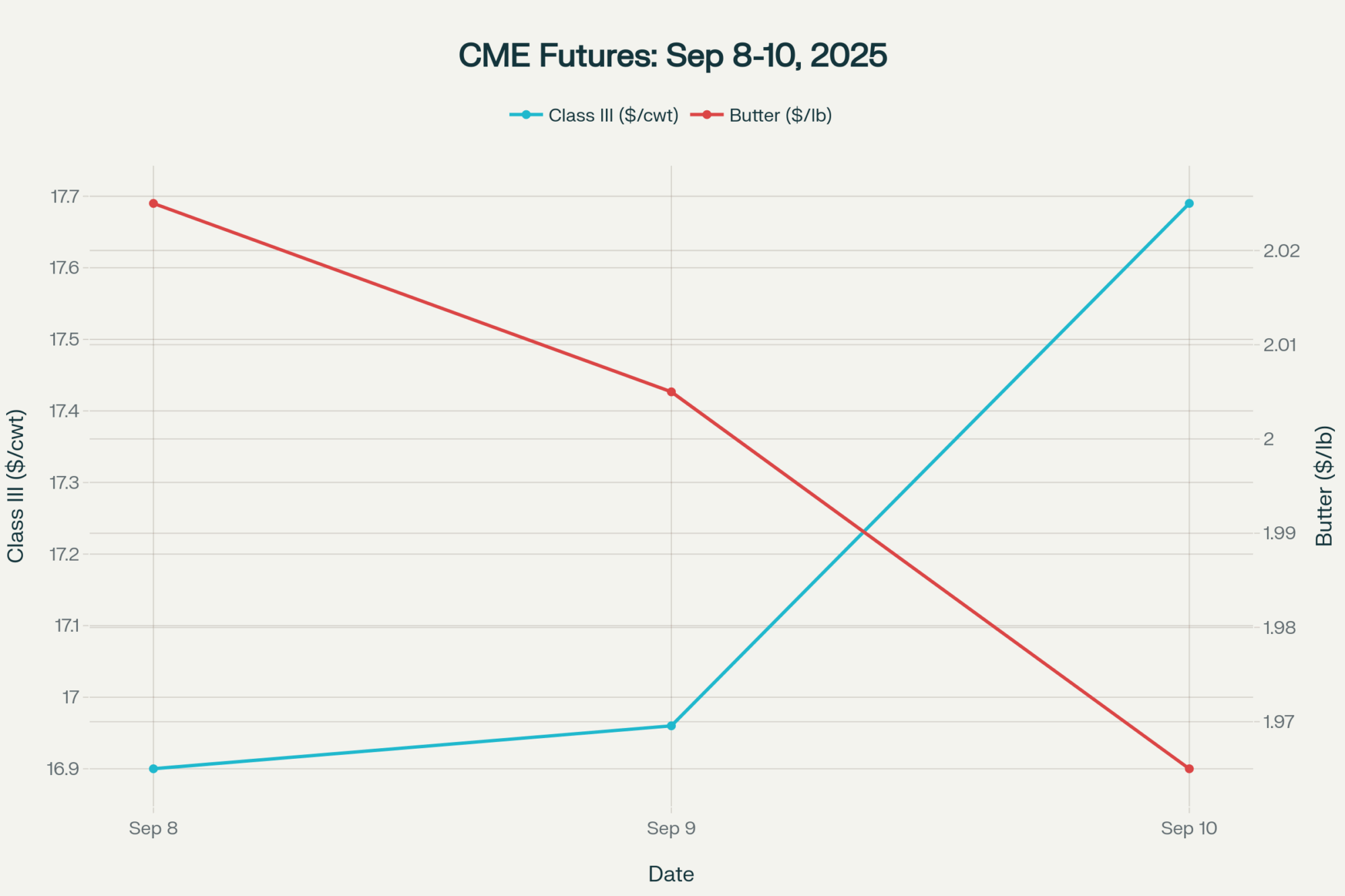
NewsSubscribe
First
Last
Consent

Collision Course: Navigating the 2025 U.S. Dairy and Grain Markets

July milk per-cow jumped to 2,081 lb in the 24 big states—while corn’s pegged at a record 188.8 bpa. Margins? Tight… unless planned.

Executive Summary: Here’s the quick read over coffee. Milk output is running hot—per-cow hit 2,081 lb in July across the 24 major states—while butter’s been slipping on the board even though cold storage isn’t bloated. USDA’s August WASDE prints a record 188.8 bpa corn yield and a 16.7-billion-bu crop, which screams “cheap feed”… if it holds. But field scouts aren’t buying it—Pro Farmer’s final at 182.7 bpa points to disease shaving kernel weight, and that’s exactly the kind of shift that can add 20–40 cents/bu fast on a short-covering pop. Meanwhile, the butter spot around $2.235/lb and a firmer whey tone keep Class III steadier than Class IV—so checks tied to butter/powder feel more pressure. The big move right now isn’t fancy: lock about two‑thirds of feed through early 2026 while the curve is friendly, and set a reasonable floor on milk revenue—then lean into butterfat and protein to keep IOFC intact. Plants coming online in Dodge City and Lubbock will help basis, but not in time to save September spot loads—so plan hedges around the plant’s utilization, not a national average. The bottom line is to get coverage on the books while there’s room, and don’t wait for the market to force the hand.

Key Takeaways

  • Lock feed while it’s offered: with USDA at 188.8 bpa vs. Pro Farmer 182.7, pre‑commit ~66% of Q4’25–H1’26 rations; that cushions a 20–40c/bu corn jump that could hit IOFC $0.20–$0.40/cwt.
  • Use DRP as a true hedge tool: quote it in real time with an agent—the premium and coverage change daily with futures; set a floor that matches the plant’s utilization mix.
  • Aim components for ROI: pushing ~4.2% butterfat and ~3.3–3.4% true protein typically offsets Class IV weakness and stabilizes income-over-feed when whey props Class III.
  • Watch butter vs. stocks: butter around $2.235/lb despite July stocks down ~6% YOY says the market’s pricing future cream; don’t overbuild inventory if processing.
  • Expect basis relief later, not now: Dodge City is online and Lubbock ramps in 2026—help is coming, but September milk still travels; hedge the haul and basis accordingly.
dairy market analysis, feed cost management, income over feed cost, dairy profitability, milk price forecast

The U.S. dairy industry is heading for a collision. That isn’t hyperbole. July data shows milk production is running significantly higher year over year, while feed market risk is anything but settled, setting up a classic margin squeeze if timing goes the wrong way for producers selling milk daily and buying feed in chunks. USDA NASS Milk Production | USDA ERS LDP Outlook

More Than a Milk Price: Why Supply and Basis Are Driving Your Check

What’s striking this summer is a tricky mix for producers planning Q4 coverage and cash flow: stronger per‑cow output in key dairy states combined with unusually wide spreads in feed market signals that amplify basis and logistics risk on the ground. USDA Dairy Market News

ScopePer‑cow (lb)Notes
24 major states (July)2,081+36 lb YoY; higher output corridor
National (July)2,063Lower than 24‑state average

According to the USDA’s July Milk Production report, production per cow in the 24 major states averaged 2,081 pounds, up 36 pounds year over year; the national July average was 2,063 pounds, and that difference matters when estimating loads and component tons per month under tight plant schedules.

The growth corridors across the South‑Central and Plains keep adding milk and steel, but line time and trucking don’t appear out of thin air—when plants prioritize nearby milk, basis penalties can hit loads that have to move farther even if headline prices look fine. USDA Dairy Market News

Butter, Classes, and Why Inventory Isn’t the Whole Story

Butter told the market story in August as spot Grade AA settled around $2.2350 per pound on August 22, looking cheap versus global values but largely discounting what’s coming more than what’s currently in storage. CME butter prices

Cold Storage shows July butter stocks down about 6% year over year—tight enough today—yet prices softened anyway, signaling traders are pricing future cream flows and churn time rather than present availability. USDA Cold Storage – July 2025

This development has a fascinating effect on Class dynamics. When butter and powder soften while whey holds firm, Class III can look relatively better than Class IV. In certain months, this translates into weaker Producer Price Differentials (PPDs) in markets with a butter/powder‑heavy utilization mix. Class spreads and pricing context

Feed Risk: Why the USDA and Field Scouts Disagree on Your Corn Bill

According to the August WASDE, the first survey‑based national corn yield printed a record 188.8 bushels per acre with production at 16.7 billion bushels if realized—an undeniably feed‑friendly deck if it stands. DTN/Progressive Farmer summary

But the view from the field tells a different story: Pro Farmer’s final tour estimate pegs yield at 182.7 and flags widespread late‑season disease pressure across parts of the Belt, which is big enough to tighten carryout and nudge basis and futures higher into winter.

Positioning raises the stakes—CFTC data show managed money carrying sizable net shorts in corn ahead of harvest, the exact fuel that can power a fast short‑covering rally if the crop underperforms.

What to Do Now (Before the Market Makes the Choice for You)

ActionWhat to do nowWhy it pays
Lock feed (~66% Q4–H1’26)Pre‑commit while USDA’s high yield is pricedCushions a 20–40c/bu corn pop; protects IOFC $0.20–$0.40/cwt
Price DRP in real timeQuote with an agent; align to plant utilization mixSets floor against Class IV softness, matches actual pooling
Push components (BF/TP)Aim ~4.2% butterfat; ~3.3–3.4% true proteinLifts pay price when cheese/whey support Class III

Based on market signals and risk calendars, producers should consider these three strategic actions now:

  • Lock In Feed Costs: Pre‑commit to roughly two‑thirds of feed needs for Q4 2025 and early 2026 while the forward curve still reflects the USDA’s high yield scenario, leaving room to average if field‑driven numbers prevail and basis firms. USDA WASDE
  • Evaluate Dairy Revenue Protection (DRP): Work with an agent to price DRP in real time—premiums and terms change daily with futures and endorsements, so it’s a tool to manage actively, not guess at. USDA RMA DRP policy
  • Maximize Component Pay: For component‑based pay, push butterfat toward 4.2% and true protein into the 3.3–3.4% range to lift IOFC even when class prices wobble—especially if feed conversion efficiency holds under current diets. Milk check and pooling dynamics

Capacity and Basis: Help Is on the Way, Just Not for September

Capacity growth is real but won’t solve September’s milk; it matters for anyone with spot loads and a long haul to a dryer or churn while plants juggle maintenance, staffing, and qualifications. USDA ERS LDP Outlook

Hilmar’s new Dodge City facility—an investment north of $600 million—anchors the emerging milk map from western Kansas into the Panhandle and should help rebalance line time and haul distance over the next 12–18 months.

Leprino’s Lubbock facility is staged toward early 2026 for a full ramp, so relief is coming, but not fast enough to erase basis pressure for milk still looking for a closer home this fall and winter.

Global Pull and Why U.S. Butterfat Still Matters

U.S. butterfat remained globally competitive in early 2025, and USDEC highlighted strong mid‑year export momentum that helped keep domestic butter stocks tighter even as milk rose—one reason current weakness is more about forward cream supplies than a freezer problem.

For operators reading the tea leaves, watch the spread between U.S. and EU/NZ butter values alongside Cold Storage—if the U.S. discount narrows as milk stays high, export pull can fade and leave more butterfat at home right into seasonal cream recovery. USDA ERS LDP Outlook

If exports hold, inventories won’t spike quickly; if they wobble, Class IV bears the brunt first, and it shows up in the milk check. Class IV and utilization context

Your Milk Check Explained: How Class Spreads and PPDs Impact Your Bottom Line

When whey resilience props up Class III while butter/powder softness drags Class IV, checks in cheese‑heavy utilization areas can look materially different than those tied more heavily to churns and dryers, and that matters for how DRP or options are layered over already‑contracted milk. Class spreads and pricing context

Weak Class IV tends to pull PPDs lower and reduce the final pay price in orders where Class IV utilization spikes, so re‑read the plant’s pay formula and align hedges with the utilization reality—not a national average that won’t match the load on the truck. Milk check and pooling dynamics

The cheapest penny is the one not lost to a mismatch between pooling math and hedges, especially in a fall when spreads can move faster than loads can be re‑routed. USDA Dairy Market News

Bottom Line: Before the Collision, Not After

If USDA’s big yield verifies, feed stays friendly and margin math gets breathing room, but if Pro Farmer is closer to right and disease pulled kernel weight, the short‑covering bid can meet softening milk and turn the screws on IOFC unless protections are already in place. USDA WASDE | Pro Farmer final

The smartest move is the one made before the market forces your hand—lock in feed and revenue floors while the opportunity exists, don’t wait for the market to dictate terms, and let new capacity in Dodge City and Lubbock ease basis and haul pressure as it ramps over the next few quarters. Hilmar Dodge City | Leprino Lubbock

Complete references and supporting documentation are available upon request by contacting the editorial team at editor@thebullvine.com.

Learn More:

The Sunday Read Dairy Professionals Don’t Skip.

Every week, thousands of producers, breeders, and industry insiders open Bullvine Weekly for genetics insights, market shifts, and profit strategies they won’t find anywhere else. One email. Five minutes. Smarter decisions all week.

NewsSubscribe
First
Last
Consent

When BMR Got Beat: What Michigan State’s br2 Corn Trial Really Means for Your 2025 Feed Strategy

Think BMR’s unbeatable for silage? This new research may completely flip that script around.

Here’s something that caught everyone off guard at this summer’s dairy meetings: Michigan State has just published research showing that these new short-stature br2 corn silages outperform brown midrib on nearly every metric that actually pays bills. The data are real—and honestly surprised me—but they come from one herd in a drought year, so let’s dig into what this really means for your operation.

I’ll be straight with you… when I first saw Dr. Mike VandeHaar’s numbers in the Journal of Dairy Science Communications this August, I assumed there was a mistake somewhere. BMR has been our go-to for high-quality forage since most of us were learning the business. But this Michigan State trial? It’s fundamentally challenging what we thought we knew about corn silage genetics.

Quick Industry Reference

  • BMR (Brown Midrib): Corn with reduced lignin for better fiber digestibility—has been the premium forage standard for decades
  • br2 (Brachytic-2): New gene creating short-stature corn with completely different plant architecture
  • ECM: Energy-Corrected Milk—what actually matters for your milk check
  • DMI: Dry Matter Intake—how much feed your cows are actually consuming

What Actually Happened (And Why It’s Got Nutritionists Talking)

This wasn’t some small-scale university trial. Michigan State put three different br2 short-stature hybrids head-to-head against Pioneer’s P0956AMX BMR and a conventional tall hybrid, using 40 mid-lactation cows over three 21-day periods. This is a fairly standard protocol for this type of work.

But here’s where it gets interesting—and why feed reps are scrambling to understand the implications…

The BMR that was supposed to drive higher intake because of its legendary fiber digestibility? It actually had the lowest intake of the bunch. I’m talking 24.5 kg of dry matter daily versus 26.5 kg for the br2 hybrids. That’s over 4 pounds more feed consumed every single day.

Key Finding: br2 corn drove 8% higher daily feed intake than BMR, translating to significantly more milk production and component yields.

The Lab vs. Reality Disconnect

Here’s what really has us scratching our heads in the world of nutrition. The pre-trial lab work showed exactly what you’d expect—BMR crushed the competition for fiber digestibility at 63% IVNDFD after 30 hours versus just 57-60% for the br2 hybrids.

But when they measured actual total-tract digestibility in live cows? That laboratory advantage completely vanished. NDF digestibility was essentially identical: 45.4% for BMR, 45.2% for br2 (P=0.88).

What strikes me about this disconnect is how it challenges our heavy reliance on 30-hour IVNDFD numbers when making forage purchasing decisions. Perhaps we’ve been missing something more significant here.

The Production Numbers That Actually Matter

Let me walk you through what happened in the parlor, because this is where we make our money…

Daily Production Comparison:

MetricBMR Dietbr2 AverageDifferenceYour Bottom Line
Feed Intake24.5 kg26.5 kg+8.2%More feed purchased, but…
Milk Production32.0 kg/day33.2 kg/day+3.8% (+2.6 lbs/day)Extra 2.6 lbs/cow/day
Milk Protein1.10 kg/day1.15 kg/day+4.5%Higher component premiums
Feed Efficiency1.51 ECM/DMI1.43 ECM/DMI-5.3%BMR is still more efficient

Data from Sarmikasoglou et al., August 2025

The br2-fed cows didn’t just eat more—they produced more of everything that matters for today’s component-heavy pricing. Daily milk yield jumped from 32.0 kg on BMR to 33.2 kg on br2 diets. More importantly for those of us dealing with protein premiums reaching $3.50/cwt in some markets, protein yield increased from 1.10 kg to 1.15 kg per day.

Now, there’s a trade-off we need to talk about. Milk fat percentage dropped from 4.45% on BMR to 4.32% on br2. That 0.13 percentage point hit isn’t nothing—especially with some plants getting pickier about butterfat standards this year. However, the total pounds of fat remained about the same due to the higher volume.

Two Different Feeding Philosophies

Here’s where this gets nuanced, and why I think we’re looking at tools for different situations rather than a simple “winner.”

BMR was still the efficiency champion—1.51 ECM per unit of feed versus 1.43 for br2. The Michigan State data also show that BMR cows maintained a slightly better body condition, with a small positive BCS change, versus slight losses on Br2.

Think about it this way:

  • BMR seems built for efficiency and condition maintenance—maybe better for fresh cows that need to recover condition while producing
  • br2 looks like a high-throughput production driver—possibly better for well-conditioned cows in mid-to-late lactation, where you want to maximize component output

This isn’t necessarily about “better” or “worse”… it’s about having the right tool for the right cow at the right time.

Why BMR Stumbled (And What That Teaches Us About Real-World Feeding)

The researchers were refreshingly honest about BMR’s unexpected underperformance. Their explanations matter because they affect how we should interpret these results for our own operations.

Context Issues That Affected This Trial:

First, this was a 2023 Michigan corn year—a brutal drought year that likely impacted BMR more severely than the more structurally robust br2 hybrids. Anyone who has dealt with drought-stressed BMR knows that it can become extremely challenging when water becomes scarce.

Second, these were mid-lactation cows (average 150 DIM), not fresh cows, where BMR typically shows its greatest advantages. Mid-lactation animals aren’t as constrained by physical fill, so BMR’s faster passage rate matters less.

Third—and this caught my attention—when they switched the herd from their normal diet to the study diets, intake and milk yield dropped by 3.6 and 4.8 kg/day, respectively. That suggests the experimental diets weren’t optimal for these cows, which could have masked what we’d normally expect to see.

The study also didn’t include mycotoxin analysis, which, in a drought year, is something you’d want to rule out when you see unexpected intake patterns.

Industry Reality Check: This trial perfectly illustrates why we can’t just rely on lab numbers. Real cows, real environmental stresses, real management constraints—they all matter more than we sometimes admit.

Equipment Reality: The Challenge Nobody Wants to Discuss

Let’s be honest about the elephant in the machine shed… actually harvesting this stuff.

Industry sources report ear heights for BR2 ranging from 20 to 26 inches, compared to 34 to 40 inches for conventional models, depending on the hybrid and environmental conditions. That’s not just an adjustment—it’s often below the operating range of existing headers.

What Equipment Dealers Are Telling Producers:

Based on conversations I’ve had across the Midwest, preliminary estimates for header modifications are running $15,000 to $22,000 per machine for older equipment. Newer machines adapt better, but you’re still looking at setup changes and potentially slower ground speeds.

Early adopters I’ve spoken with suggest budgeting extra time for adjustments and expecting some learning curve losses during the first year, until you get your settings dialed correctly in.

Quick Loss-Check Protocol for br2 Trials:

  • Stop periodically and count ears behind the header across several transects
  • Weigh measured swaths to estimate loss percentages
  • Adjust deck plates, snout angles, and header height accordingly
  • Target kernel processing scores above 70% on your standard lab analysis

Ration Management: Protecting Butterfat While Maximizing Component Yields

If you’re thinking about trialing br2 silage this coming season, get your nutritionist involved early on that fat depression issue. That 0.13 percentage point drop adds up fast with current component pricing.

The enhanced starch digestibility means potentially faster rumen fermentation, so you’ll want to watch peNDF levels carefully. Monitor fecal starch closely during any transition periods. Consider adjusting buffer levels based on rumen pH patterns, and monitor the total unsaturated fatty acid load to prevent exacerbating milk fat depression issues.

The good news? That protein response was solid and consistent across all three br2 hybrids tested. In today’s market, that consistency matters.

Economics: The Real Numbers for 2025

Let me run realistic numbers based on current pricing in the Midwest. Suppose br2 gets you an extra 2.6 lbs of milk daily with protein premiums running $3.50/cwt in many markets. In that case, that’s roughly $1.25 per cow per day in additional revenue—assuming you maintain butterfat standards.

But here’s what you need to budget for:

  • Seed premiums: 15-25% higher per bag (varies by company)
  • Higher planting populations: 38,000-42,000 plants/acre vs. typical 32,000-36,000
  • Equipment modifications: $15,000-22,000 per machine, amortized over useful life
  • Learning curve: Potential harvest losses and slower speeds in the first year

For a 500-cow operation with 800 acres of corn silage, you’re looking at significant upfront investment. The economics work if you achieve the full production response, but there’s little margin for error.

How to Trial It Right for 2025

Start Smart, Document Everything:

Plant 50-100 acres of br2 alongside your current hybrid in the same soil zone. Harvest at 32-35% DM with your processor dialed in tight—you want kernel processing scores above 70%. Set the theoretical length of cut between 17-22 mm based on your peNDF goals.

Track DMI, milk, ECM, butterfat, protein, and fecal starch for at least 3-4 weeks minimum. This isn’t optional data—you need it to make informed decisions about expanding acres.

Before You Plant Next Spring:

  • Get definitive answers on header modifications and actual costs for your equipment
  • Confirm seed availability and population recommendations for your area
  • Budget for higher seed costs and population changes
  • Map your most uniform field for the trial—you want to eliminate as many variables as possible

The key thing everyone’s learning is that header setup and ground speed matter more than they ever have. Start with low-profile snouts, if available, and tighter deck plates, along with responsive header-height control. Establish a loss-check routine before you start chopping, not after you see problems.

What We Still Need to Know

Here’s the thing, though—we’re still working with limited data. This Michigan State work is solid, really solid, but it’s one trial, one year, specific conditions. I’d love to see:

Early lactation data, where BMR typically shows its biggest advantages. Multi-location trials across different climates and management systems. Performance data from actual commercial dairies, not just research facilities where everything’s controlled.

That Italian work mentioned in the MSU paper? Apparently found “no effects on DMI, ECM, or bodyweight”—that’s a pretty different story from Michigan’s results. Makes you wonder about genotype-by-environment interactions and how much location and management truly matter.

Important caveat: These results pertain specifically to br2 genetics. Other short-stature platforms using different mechanisms may not deliver the same performance. Don’t assume all short corn is created equal.

What’s Coming Down the Pike

Penn State and Cornell are reportedly planning trials for next year, which should help fill in the picture. The most intriguing possibility on the horizon is combining Br2 with BM3 genetics—potentially achieving standability with enhanced digestibility. But that’s still in development.

What we really need is honest feedback from commercial producers willing to try these hybrids under real-world conditions. University trials are valuable, but they don’t capture the reality of tight harvest windows, equipment limitations, and economic pressures that actual farms face on a daily basis.

The Bottom Line for Your Operation

Three things stand out from this work that matter for your 2025 decisions…

The production potential appears real based on Michigan State’s data. We’re talking about a 4+ pound higher daily intake and meaningful milk protein increases that could translate to $1.00-$ 1.25 per cow daily in additional revenue with current pricing.

Equipment challenges are significant and expensive. Budget $15,000-22,000 per machine for older equipment modifications, plus expect a learning curve on harvest management. This isn’t just swapping seed varieties.

This isn’t plug-and-play technology. It requires proactive nutritional management, careful monitoring, and a willingness to adjust rations to protect butterfat while maximizing the intake advantages.

Your Move?

If you’re running newer equipment and have financial flexibility for experimentation, a 50-100-acre trial makes sense for 2025. Start with your most uniform field, work with your nutritionist from day one, and document everything meticulously.

For most operations—especially those with older equipment or tighter margins—I’d recommend watching and waiting for more diverse research results and real-world feedback from early adopters. Let someone else work through the learning curve first.

What I’m Watching For:

The disconnect between lab predictions and cow performance in this trial should prompt us to question how we evaluate forages. If br2 corn can consistently deliver higher intake and milk production while maintaining agronomic advantages, it could reshape our approach to corn genetics.

But we need more data, more locations, and more honest conversations about both the promise and the pitfalls before making wholesale changes to cropping systems.

One mid-lactation trial in a drought year isn’t enough to dethrone BMR. But it’s definitely enough to pay attention.

What’s particularly noteworthy is how this challenges our assumptions about forage evaluation. Perhaps we’ve been too focused on single lab metrics when, in reality, the real magic occurs in the complex interactions between plant genetics, environmental conditions, and cow metabolism.

In my opinion, we may be witnessing the start of a shift in how we approach corn silage genetics. Instead of chasing one trait—such as low lignin in BMR—perhaps the future lies in balanced genetics that perform consistently across various conditions and management systems.

That’s the kind of robustness our industry needs, as weather patterns become increasingly unpredictable and economic pressures continue to mount.

KEY TAKEAWAYS:

  • Feed intake jumps 8% with br2 silage over BMR – that’s 4+ pounds more dry matter daily, driving serious milk volume increases you can bank on
  • Milk production rises 3.8% (2.6 lbs/day extra) – with current protein prices around $1.87/lb, start calculating what that protein bump means for your annual milk check
  • Better field standability reduces lodging risk – br2 hybrids stay upright in storms, protecting your silage tonnage when weather turns ugly this fall
  • Watch your butterfat numbers closely – expect a 0.13 percentage point drop, so work with your nutritionist to fine-tune rations and protect component premiums
  • Budget $15-22K per machine for header modifications – those low ear heights (20-26 inches) need equipment adjustments, but early adopters say it’s manageable with proper planning

EXECUTIVE SUMMARY:

Here’s something wild from Michigan State that’s got me rethinking corn silage completely. These new br2 short-stature corn hybrids are crushing BMR in the feed bunk – we’re talking 8% higher dry matter intake and 3.8% more milk production, which translates to roughly 2.6 extra pounds per cow daily. This increase in volume and components could add up to $1.25 per cow daily, or nearly $400 annually, to your milk check based on current market prices. What’s really interesting is that this happened during a drought year with mid-lactation cows, where BMR typically doesn’t shine anyway. The kicker? These br2 hybrids also give you better standability in the field, so less lodging risk when the weather gets nasty. Yes, there’s a slight drop in butterfat (approximately 0.13 percentage points), and you’ll need to budget $ 15,000-$ 22,000 for equipment modifications to handle those low ear heights; however, the economics look promising for 2025 operations.

Complete references and supporting documentation are available upon request by contacting the editorial team at editor@thebullvine.com.

Learn More:

  • Corn Silage Harvest Management: From Field to Fermentation – This article offers practical strategies for optimizing harvest timing, processing, and packaging. It reveals methods for maximizing energy content and minimizing shrink, ensuring the genetic potential of any hybrid, including br2, is fully captured in the bunk.
  • Cracking the Code on Milk Components: A Game-Changer for Dairy Profitability – Since br2 silage impacts butterfat and protein, this piece is essential. It demonstrates how to leverage genetic selection and nutritional strategies to maximize high-value components, turning the data from the main article into a concrete financial strategy for your milk check.
  • Precision Dairy Farming: The Future of Herd Management is Here – This article places the br2 innovation in a broader context. It explores how sensor data and automation are revolutionizing herd management, offering a strategic look at how to integrate new technologies for long-term gains in efficiency and profitability.

The Sunday Read Dairy Professionals Don’t Skip.

Every week, thousands of producers, breeders, and industry insiders open Bullvine Weekly for genetics insights, market shifts, and profit strategies they won’t find anywhere else. One email. Five minutes. Smarter decisions all week.

NewsSubscribe
First
Last
Consent

Beyond $17 Milk: Why Asia’s Dairy Market Could Define Your Herd’s Future

Trade barriers are dropping rapidly—and those who act now stand to gain significantly in the long run.

EXECUTIVE SUMMARY: I understand — with milk prices hovering around $17.30 and feed costs rising, thinking beyond your local market may seem like a luxury. However, what caught my attention is that Asia’s dairy market isn’t only growing, but also expanding rapidly, from $333 billion in 2024 to a projected $616 billion by 2033. We’re talking about consumers who’ll pay 50% premiums for quality products, especially in places like China, where the infant formula market alone saw a 4.2% increase in premium share from 32.8% to 37% in just one year. Sure, the entry costs aren’t pocket change — you’re looking at $ 300,000+ for compliance and cold chain setup, with a minimum of 2,000 cows required to make the math work. But those trade deals with Indonesia, Japan, and Korea? They’re opening doors that’ve been locked for decades. This isn’t about quick fixes — it’s about positioning your operation for the next decade while others are still figuring out domestic margins.

KEY TAKEAWAYS

  • Market premiums of $2.50-$4.00 per cwt are realistic within 3 years — focus on lactose-free products, high-protein whey, and specialty lines that Asian consumers actually want and will pay for
  • Minimum scale matters: 2,000 cows to absorb the $300K+ entry costs — but trade deals with Japan (80% tariff cuts) and Korea (16,000 tons tariff-free) make the investment worthwhile for serious players
  • Digital traceability isn’t optional anymore — 78% of Asian dairy companies have it — start building your systems now because it’s your ticket to premium pricing and market access
  • Currency swings can eat 8-12% of your margins overnight — hedge smart, keep domestic operations strong, and don’t bet the farm on export revenues until they’re proven
  • Timeline reality check: 12 months for compliance, 2-3 years to profitability — start your regulatory paperwork today because the window for first-mover advantage won’t stay open forever

Let’s talk about dairy margins. With Class III futures still around $17.32/cwt in July 2025 and feed pushing costs higher, many producers are knee-deep in short-term survival mode. Meanwhile, currency volatility and regulatory curveballs have shifted from being surprises to being central features of the export landscape.

However, what’s fascinating is that while we’re focused on domestic pressures, Asia’s dairy market is opening doors that could reshape your operation’s future. The U.S.-Indonesia deal, which eliminates tariffs on 99% of dairy exports, was signed this year, instantly changing marketplace dynamics. China’s recent approval of whey permeate imports signals another long-awaited shift.

From Bulk Buys to Premium Brands: How Asian Consumer Tastes Are Evolving

Asia’s dairy market was valued at $333.00 billion in 2024, with forecasts indicating a rise to $616.45 billion by 2033. That kind of growth demands serious consideration of how your operation fits into the picture.

China’s appetite for dairy fats is increasing rapidly. Chinese butter imports are forecast to increase from 152,000 to 173,000 metric tons by 2028. But it’s not just about volume—buyers want tailored, high-value products, not bulk commodities.

Premium positioning is paying off. China’s premium infant formula segment expanded from a 32.8% to a 37% market share in 2024, with consumers paying 50% premiums for products backed by science and health claims. That premium trend is spilling into other dairy categories.

Southeast Asia offers the most explosive potential. Per capita dairy consumption sits at less than 20kg annually compared to 300kg in developed markets, according to industry data. Thailand alone achieved 11.5% export growth to $582.62 million in 2024, reflecting rapid market expansion.

A recent study by the U.S. Dairy Export Council reveals that reduced trade costs are directly correlated with increased nutrient availability—for every 1% reduction in dairy import prices, per capita nutrient availability increases by more than 6% in markets such as Mexico. Expect similar market gravity as tariffs drop across developing Asian markets.

The High Cost of Entry: Budgeting for Regulation, Logistics, and a Long Game

Success demands both thick skin and rigorous due diligence. Even market leaders stumble—Fonterra’s high-profile joint venture in India was wound down in 2022 due to complex market realities.

Infrastructure and regulatory compliance carry eye-opening costs. Industry experts estimate that the annual cost for facility registration and certification processes ranges from $50,000 to $200,000. Cold chain logistics investments typically range from $500,000 in mature markets, such as Japan, to $2 million in markets where infrastructure requires development, like Vietnam.

Legal compliance and quality certifications add another $25,000 to $75,000, while partnership due diligence can cost up to $500,000. You’re looking at six-figure commitments before shipping your first gallon.

Technology standards are non-negotiable. Asian dairy companies’ annual technology investments have created 78% digital traceability implementation across the region. U.S. producers must match this standard or risk being left behind.

Currency fluctuations have already eroded export margins this year due to the strength of the USD against Asian currencies. Competitors fiercely defend their market share, meaning new entrants face considerable pricing and relationship pressures.

Australia’s exports to Southeast Asia grew to over 290,000 tonnes, valued at A$1.2 billion in 2024—setting a high bar for newcomers.

Unlocking the Market: How New Trade Deals Are Creating a Competitive Edge

Japan’s bilateral trade agreement offers preferential treatment for 80% of U.S. dairy exports, with cheese tariffs as high as 40% set to disappear over a 15-year period. The Korea-U.S. FTA provides tariff-free access for approximately 16,000 metric tons of cheese, milk powders, and whey products.

China’s dairy imports strengthened in April 2025, marking five consecutive months of year-on-year growth, with sweet whey powder imports up 30% year-to-date. The U.S. maintained its position as the primary supplier, accounting for 43% of China’s total imports of sweet whey powder.

The regulatory momentum is building, but timing matters.

Your Go-To-Market Timeline: From Paperwork to Profitability

You’ll generally need a 2,000-cow equivalent operation to handle export compliance and logistics costs effectively. China’s projected increases in dairy imports, particularly whole milk powder, create specific opportunities where the U.S. already holds established market positions.

Industry data indicate that successful operators typically achieve premiums of $2.50-$4.00 per hundredweight over domestic pricing within 24-36 months—but this requires sustained marketing investment averaging $150,000-$300,000 annually for brand development and regulatory maintenance.

Real talk: export ventures are fraught with risk. Currency swings bite margins, competitors push back hard, and partnerships can fracture unexpectedly. The best strategy? Maintain strong domestic operations while young export markets mature.

Compliance and market development typically require a minimum of 12 months, with brand and distribution establishment demanding another 1-3 years. Expect full profitability in 3-5 years, though some operators achieve positive cash flow by years 2-3.

Focus on market-relevant products: lactose-free items aligned with regional preferences, high-protein whey concentrates where U.S. technology excels, premium products that leverage the North American quality reputation, and strategic joint ventures rather than commodity exports.

The takeaway is clear: engage now or risk being locked out of the market.

Bottom Line: Your Herd’s Strategic Decision Point

Producers positioning themselves for leadership in Asia’s dairy markets by 2030 are investing today—in both infrastructure and partnerships. This isn’t about chasing spot commodity prices when U.S. demand softens; it’s about building durable market share where growth is real.

With domestic milk prices steady near $17.32/cwt amid rising feed costs, diversifying through Asia plays both an offensive and defensive role in margin management. The barriers to market access are falling, but the window to act is closing quickly.

Action Plan for the Ready:

Phase 0 (Right Now): Evaluate your finances rigorously with the help of your advisors. Can your operation withstand a 2-3 year wait for returns? If not, scaling export efforts may need to wait.

Phase 1 (Next 6 Months): Launch comprehensive regulatory registrations and certifications—FDA facility registration, HACCP compliance, and relevant export documentation.

Phase 2 (6-18 Months): Attend trade shows, meet distribution partners in target countries, and immerse yourself in evolving consumer trends.

Phase 3 (Years 2-3): Implement traceability and quality control systems aligned to Asian import standards. Test your brand with trusted local partners.

Those ready to move early will build lasting market power. Those waiting may miss the opportunity entirely.

This strategy isn’t a quick fix for a volatile U.S. market; it’s a long-haul, capital-intensive investment in your herd’s future. The regulatory doors are now opening, but they require both vision and courage to walk through.

So, what’s your move?

Complete references and supporting documentation are available upon request by contacting the editorial team at editor@thebullvine.com.

Learn More:

The Sunday Read Dairy Professionals Don’t Skip.

Every week, thousands of producers, breeders, and industry insiders open Bullvine Weekly for genetics insights, market shifts, and profit strategies they won’t find anywhere else. One email. Five minutes. Smarter decisions all week.
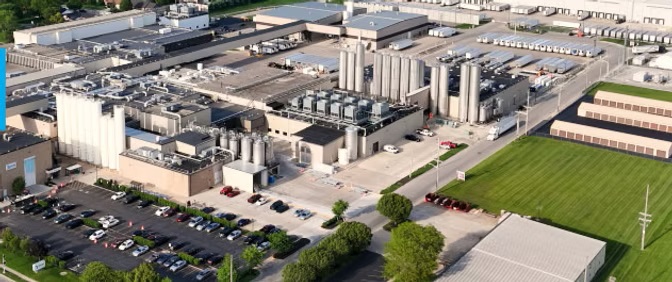
NewsSubscribe
First
Last
Consent

Beef-on-Dairy: Real Talk on Turning Calves into Serious Profit

Did you know? Dairy herds now supply nearly 20% of the US beef market — that’s a game changer for your farm’s bottom line.

EXECUTIVE SUMMARY: Beef-on-dairy programs have completely transformed dairy profitability. This isn’t just about selling expensive calves — it’s about fundamentally changing how we think about revenue streams. Dairy herds now contribute around 20% of the US beef supply, and producers are banking an extra $90,000 to $100,000 annually on 1,000-cow operations by breeding smart. Research shows that these beef crosses grow 15-20% faster and save nearly a month on feed, which translates to real money when corn’s priced at $3.88 a bushel and milk futures keep fluctuating. This trend is going global too — from European markets to Canadian operations, everyone’s figuring out that diversified income beats putting all your eggs in the milk price basket. If you’re serious about staying profitable while others struggle with volatile markets, this strategy deserves a hard look.

KEY TAKEAWAYS

  • Beef crosses deliver serious feed savings — up to 20% faster growth and 26 fewer days on feed means roughly $90 saved per calf. Start genomic testing your herd today to identify which cows should get beef semen.
  • Smart breeding means smart money — Use sexed semen on your top 30-40% genetic merit cows for replacements, then breed the rest to beef bulls. With 2025’s tight cattle supplies, those crossbreds are gold.
  • Phase it right to manage cash flow — Begin with just 10-15% of your breeding decisions going to beef. The 18-24 month lag between breeding and premium checks won’t hurt as much if you scale gradually.
  • Direct marketing beats auctions every time — Build relationships with local feedlots now while everyone else is still figuring this out. Pennsylvania producers are seeing premiums of $ 200 or more per hundredweight over Holsteins.
  • Feed those crosses right and watch them grow — Bump up protein and energy in your starter feeds by $15-25 per calf. With current feed prices, that small investment typically boosts weaning weights 8-12%.
beef on dairy, dairy profitability, herd management, genomic testing, farm efficiency

Beef-on-dairy programs are completely reshaping how producers think about calf income. Once, Holstein bull calves sold for roughly $150 to $250, depending on market conditions. Today, these beef crosses command a significant premium, potentially adding over $100,000 in annual revenue for a 1,000-cow operation with a dialed-in breeding program.

Here’s what’s really driving this shift in our industry. The US cattle herd reached its smallest size since 1951, creating significant demand for high-quality beef genetics (USDA, 2024). To illustrate, the National Association of Animal Breeders (NAAB) reports beef semen sales to dairies have absolutely exploded—going from 2.5 million units in 2017 to nearly 8 million in 2024. That’s not just a trend; that’s a fundamental change in how we manage our herds.

A 2025 analysis from CoBank projects that dairy-origin cattle will account for nearly 20% of the total US beef supply. When you’re supplying one-fifth of the nation’s beef from dairy herds, that’s not going away anytime soon.

Beyond Calf Prices: Where the Real Money Lives

Research out of Texas Tech shows these crosses grow 15-20% faster and spend up to a month less on feed—that adds up to roughly $3.50 saved every single day (Texas Tech, 2023). Conversations with producers reveal a critical insight:

For example, one operator from central Pennsylvania noted in Progressive Dairyman that genomic testing was a game-changer for him. “We’re maintaining our genetic progress on milk while adding this whole new income stream from beef calves,” he said. Smart approach.

However, as Wisconsin dairy consultant Sarah Mitchell cautions, “Too many producers think this is a quick flip. It’s not.” You’re looking at 18-24 months from insemination to premium calf checks, plus genomic testing, which costs $ 10,000-$ 15,000 annually for mid-sized herds (Penn State, 2024).

With corn sitting around $3.88 a bushel and milk futures bouncing between $17-19 per hundredweight, that beef income becomes a real lifeline when milk checks get ugly.

The Strategy That Actually Works

A University of Wisconsin analysis identified the financial sweet spot: using sexed semen on your top 30-40% genetically merit cows to maintain replacements, then breeding the rest to beef bulls (UW, 2024). Their “Income from Calves Over Semen Costs” calculation demonstrates profitability when crossbred calves sell for at least double what dairy calves do.

The challenge, however, is that an estimated 30% of programs fail to hit their financial projections. Why? It usually comes down to three things: sloppy genetic evaluation, inconsistent breeding protocols, or underestimating the working capital required upfront.

“I see operations crash and burn because they didn’t track their genetics properly or they tried to cheap out on genomic testing,” says Tom Anderson, an extension specialist in Wisconsin who’s worked with dozens of these programs. “When you fail, you’re stuck with sunk costs for semen, testing, and specialized feed—but no premium calves to show for it.”

Breed selection has also become quite targeted. Angus bulls for marbling, Limousin and Charolais for feed efficiency and growth. Furthermore, the use of heterospermic semen (packing multiple sires into one dose) has more than doubled, as it is shown to boost conception rates, according to the NAAB.

The Nutrition Reality Check

These crossbred calves need different starter protocols—higher protein, energy-dense feeds that add $15-25 per head but improve weaning weights by 8-12%. It’s not rocket science, but it’s money you need to budget for.

The good news? Penn State’s massive study on nearly 40,000 cows shows that beef crossbreeding does not increase dystocia rates or harm subsequent milk production, although some producers experience temporary dips in breeding efficiency during the program rollout (Penn State, 2024).

Making the Market Work for You

Auction barns have their place, but direct relationships with feedlots and packers who understand genetics pay better. Pennsylvania auctions are seeing beef-on-dairy crosses sell for $197-220 per hundredweight, significantly above Holstein prices (Farm Progress, 2024).

Market dynamics also vary significantly by region. One Minnesota producer reports their local buyers are paying $180-200, while California operations with established feedlot contracts are seeing $220-250. Location matters, and so do your relationships.

Financial analysts suggest a herd needs to produce 180-200 crossbred calves annually to break even on investment and operational costs. Below that threshold, the economics get shaky fast.

Common Mistakes (And How to Avoid Them)

Cornell Extension recommends starting slowly—perhaps initially allocating 10-15% of your breeding decisions to beef bulls. Get your systems right, build those market relationships, then scale based on actual results, not projections.

The pitfalls I see most often include rushing implementation without securing buyer contracts first, skipping rigorous genetic evaluation (genomic testing isn’t optional), underestimating working capital requirements, not tracking conception rates closely enough, and assuming all beef breeds will work the same in your management system.

“Start small, measure everything, and be patient,” advises Dr. Jennifer Walsh from Cornell. “The producers making real money didn’t get there overnight.”

Looking Ahead

CoBank projects continued growth through at least 2028 as cattle supplies stay tight (CoBank, 2025). This creates an opportunity for producers who can execute with discipline, but it’s not a guarantee of success.

Ultimately, this strategy provides a valuable hedge against milk price volatility while improving overall herd efficiency. But success demands careful planning, sound genetics, and the patience to let programs mature properly.

For those ready to invest in the systems and discipline required, beef-on-dairy represents one of the most compelling profit opportunities in today’s dairy industry. Just don’t expect it to be simple—the best opportunities rarely are.

Your First Steps: Start by genomically testing your herd to identify breeding candidates, connect with local feedlots to understand their genetic and weight preferences, and develop a comprehensive budget to manage the 18-24 month cash flow gap. Small steps, but they’ll set you up for success when you’re ready to scale.


Download “The Ultimate Dairy Breeders Guide to Beef on Dairy Integration” Now!

Are you eager to discover the benefits of integrating beef genetics into your dairy herd? “The Ultimate Dairy Breeders Guide to Beef on Dairy Integration” is your key to enhancing productivity and profitability.  This guide is explicitly designed for progressive dairy breeders, from choosing the best beef breeds for dairy integration to advanced genetic selection tips. Get practical management practices to elevate your breeding program.  Understand the use of proven beef sires, from selection to offspring performance. Gain actionable insights through expert advice and real-world case studies. Learn about marketing, financial planning, and market assessment to maximize profitability.  Dive into the world of beef-on-dairy integration. Leverage the latest genetic tools and technologies to enhance your livestock quality. By the end of this guide, you’ll make informed decisions, boost farm efficiency, and effectively diversify your business.  Embark on this journey with us and unlock the full potential of your dairy herd with beef-on-dairy integration. Get Started!

Learn More:

The Sunday Read Dairy Professionals Don’t Skip.

Every week, thousands of producers, breeders, and industry insiders open Bullvine Weekly for genetics insights, market shifts, and profit strategies they won’t find anywhere else. One email. Five minutes. Smarter decisions all week.

NewsSubscribe
First
Last
Consent

Verified Strategies for Navigating 2025’s Dairy Price Squeeze

Milk prices drop 4.1% but your feed bill’s the same—here’s how smart producers are still making money

EXECUTIVE SUMMARY: Look, here’s what’s really happening out there—the old “more cows, more money” playbook is broken. I’m talking to producers from Ontario to Idaho, and the ones still making decent money aren’t the guys with the biggest herds. They’re the ones pushing butterfat above 4.1% and protein over 3.3%, which can mean an extra $2 per hundredweight when milk prices are getting hammered.The Global Dairy Trade took a 4.1% hit in July, and powder prices dropped 5.1% to $3,859 per metric ton—but here’s the thing. Feed costs are actually holding steady around $4.50 for corn and $350 for soybean meal, so if you’re smart about efficiency, your margins don’t have to tank.China’s cutting back on imports by 12-15%, Europe’s drowning in €850 per cow compliance costs, and everyone’s scrambling to figure out what’s next. Meanwhile, the producers who maintain 60-90 days of operating cash and hedge 40-60% of their production are sleeping soundly at night. Stop chasing volume and start chasing components—that’s where the money is in 2025.

KEY TAKEAWAYS

  • Lock in Feed Cost Savings: Target feed costs under $9.50/cwt by tracking your receipts against USDA data on a monthly basis. Every dollar you save here goes straight to your bottom line when milk prices are soft.
  • Component Premium Strategy: Push for butterfat over 4.1% and protein above 3.3%—this can net you an extra $2/cwt in premiums. Pull your latest DHIA report and see where you stand right now.
  • Smart Risk Management: Hedge 40-60% of your milk production through DMC or forward contracts. With China backing out and market volatility hitting hard, unprotected milk is a gamble you can’t afford to take.
  • Cash Flow Defense: Build and maintain 60-90 days of operating cash reserves. Call your lender this week and ask for their benchmark data on what successful operations are keeping liquid.
  • Strategic Market Timing: Use 2025’s feed cost stability (corn near $4.50/bu) to improve feed conversion ratios. Wisconsin Extension trials show 4-6% improvements are realistic with better TMR protocols.
dairy profitability, milk price volatility, component premiums, dairy risk management, dairy market trends

The thing about this market? It feels like watching fresh cows trickling into a dry lot on a chilly morning—uneasy, unpredictable, and every farmer feeling it a bit differently. I’ve received quite a few calls lately from folks in Ontario to Idaho, and the question is always the same: how do we handle falling milk prices amid rising input costs?

Those Global Dairy Trade index numbers aren’t just stats—they land right in your bank account.

Global Prices Are Sending a Clear Message

At the July 15, 2025, Global Dairy Trade event, the index slid 4.1%, with whole milk powder easing 5.1% to $3,859 per metric ton. For those of you in cooler climes like the northern U.S. or Canada, this slump echoes in your contracts too—European futures have their own skirmishes with skim milk powder and butter prices wavering, though sometimes not as sharply as headlines might suggest.

However, here’s the thing—if your nutritionist isn’t providing you with data, ask for it. Wisconsin Extension trials showed that herds implementing TMR protocols saw a 4–6% improvement in feed conversion ratio. That’s real fuel for boosting milk production without breaking the bank. With feed costs holding steady—corn is hovering near $4.50 per bushel and soybean meal is under $350 per ton, according to the USDA’s June 2025 Feed Grains Outlook—your margins depend heavily on capturing these efficiencies.

Herd Growth: More Cows, But Are We Making More Money?

However, let’s be clear about what the headlines often overlook: more milk doesn’t automatically translate to higher margins. Yes, U.S. dairies increased cow numbers by more than 45,000 head since July 2024, with rolling averages inching up—some hitting 24,000 pounds per cow or better. However, sharp operators I know keep a close eye on component checks, pushing to keep butterfat above 4.1% and proteins above 3.3%. That’s becoming a critical tactic, especially as risk management becomes a staple, not an option.

And what about the Australians and Kiwis? While Fonterra reports a 1.5% increase in collections, places like Gippsland in Australia actually saw a 2% drop in production year-over-year, due to dry weather. The growth we’re seeing isn’t universal—it’s pockets of efficiency, careful grazing, and smart tech upgrades keeping some farms afloat.

China’s Changing Game—Buying Less Powder, Investing More at Home

One of the game-changers in this market is China. Market analysts project a 12-15% decline in China’s whole milk powder imports for the latter half of 2025, driven by an estimated $5 billion state-backed investment in domestic processing capacity—including robotics, new plants, and larger herds—which is reshaping global trade.

This is why you’re hearing about hedging at every co-op meeting. If your risk advisor suggests hedging half of your production, don’t just nod—ask them for the Rabobank or USDA FAS data they’re using. Tools like the Dairy Margin Coverage (DMC) program are experiencing unprecedented use.

Europe’s Compliance Crunch and Margin Squeeze

For European producers, the mountain to climb looks steeper. The European Agricultural Fund for Rural Development recently estimated that environmental compliance costs could reach as high as €850 per cow, and the European Dairy Farmers’ Association confirms that margins have dipped below 3%. The price per hundred kilos may hover near EUR53, but when you factor in growing paperwork and strict audits, chasing component premiums is the real strategy to keep things running.

Herd managers across northern Europe are doubling down on ration tweaks just to eke out extra euro per tank, especially on butterfat numbers, which remain the shining stars in this squeeze.

The Bottom Line: Managing Break-Even and Cash Flow in Bumpy Markets

Farm finances are front and center. With feed costs workable near $9.50 per hundredweight (cwt) but becoming a stretch above $11/cwt, the risk is high. Add new barn debts or payments on robot leases, and that margin tightens fast, especially if you’re caught unprepared. For cash flow, lenders I trust in Ohio say surveys show 80% of stable operators keep 60–90 days’ operating cash in reserve. Don’t take my word for it—call your farm credit rep and ask for their 2025 Small Farm Panel data.

The old “expansion is the answer” mantra isn’t holding water anymore—unless you’re securely hedged and have a plan to manage feed costs, holding steady or trimming non-critical expenses might be your best move. That could mean swapping hay varieties, leaning more on home-grown silage, or revamping ration strategies—all of which are trending upward these days.

Tactics That Survive (According to Real Data)

So, what separates the survivors from the rest in 2025? It comes down to executing these data-driven best practices:

  • Target Key Feed Cost Metrics: Aim for a rolling average under $9.75/cwt, verifying your monthly receipts against USDA and CME records.
  • Verify Component Premiums: Use your DHIA test sheets to confirm eligibility. An average butterfat content of over 4.0% typically qualifies for processor incentives—check your contract for the exact rate.
  • Audit Your Risk Coverage: Ensure 40–60% of your production is covered by hedging or margin protection. Use the report from your processor’s portal, not just a broker’s pitch.
  • Benchmark Your Payout: Compare your monthly net milk check to regional averages for similarly sized operations.

Monday Morning Actions

Pull your July DHIA test sheet. Log your herd’s butterfat, protein, and SCC in your farm software. Know your numbers cold.

Calculate your current feed cost/cwt using your latest invoice data. Compare it directly with the USDA’s monthly outlook.

Cross-check your export contract details with the latest Rabobank and USDA FAS trends. Confirm your risk coverage is adequate for the current market.

Schedule a 30-minute call with your ag lender. Review your current compliance and operating costs against their official benchmarks.

What’s the takeaway? This market’s testing every assumption we had about volume, efficiency, and hedging. The operators who continually adapt—looking both backward at lessons learned and forward to technological advances—will be the leaders when the turning point arrives. And if you want the nitty-gritty regional detail or a gut check on your numbers, well, you know The Bullvine’s got your back. This ride? We’re all in it together.

Complete references and supporting documentation are available upon request by contacting the editorial team at editor@thebullvine.com.

Learn More:

The Sunday Read Dairy Professionals Don’t Skip.

Every week, thousands of producers, breeders, and industry insiders open Bullvine Weekly for genetics insights, market shifts, and profit strategies they won’t find anywhere else. One email. Five minutes. Smarter decisions all week.

NewsSubscribe
First
Last
Consent

How AI is Banking Dairy Farmers an Extra $400 Per Cow

Did you know AI could add $400 profit per cow right now? It’s happening on real farms near you.

EXECUTIVE SUMMARY: You might’ve heard AI’s a buzzword—but here’s the truth: the average dairy farmer adopting AI is adding over $400 profit per cow annually. That’s from boosting milk production by 8% and cutting vet bills nearly 20%, based on real data from Wisconsin farms and global trends. With milk prices sitting around $18.75 per cwt and feed costs squeezing margins at $285 a ton, every dollar counts more than ever in 2025. Dr. John Bewley from the University of Kentucky points out that even herds under mega scale can jump on this train, making it practical for many producers. The true winners combine sharp feeding strategies, early health alerts, and labor-saving tech. You don’t have to be a tech genius to start making AI work for your herd. Now’s the time to embrace this advantage.

KEY TAKEAWAYS

  • 8% milk production increase means about $388 more revenue per cow—start by evaluating your feeding accuracy.
  • A 20% reduction in vet bills lowers costs by $30 per cow per year—integrate AI health sensors for early disease detection.
  • Labor cuts as high as 50% are reported—test automation in routine monitoring is used to free up time.
  • Adoption is climbing fast across North American farms—watch your competitors adapt this year or risk falling behind.
  • Current milk prices and feed costs demand max efficiency—precision feeding offers a practical route to protect margins.
AI in dairy farming, dairy profitability, dairy tech ROI, increase milk production, herd health monitoring

The thing about AI in dairy farming? It’s no longer some far-off fantasy. It’s here, working on farms across Wisconsin, the Central Valley, and other key dairy regions where every penny counts and finding reliable labor feels like a losing battle.

I’ve been chatting with producers who manage herds ranging from 300 to 2,000 cows, and a clear pattern is emerging. For example, data from regional dairy reports, such as those from the Wisconsin Extension, shows that farms implementing AI health monitoring are achieving real outcomes: vet bills drop by about 20%, and milk production increases by around 8%. What strikes me about this is that it’s no longer just anecdotal; farms are cautiously trusting the tech and putting it to work.

Breaking Down the $400 Payday

So, where does that $400 per cow profit come from? It’s a combo of more milk and lower vet costs. Take your average cow producing 85 pounds of milk daily. An 8% bump translates to an additional 6.8 pounds per day. Stretch that out over a typical 305-day lactation and you’re looking at 2,074 extra pounds. At around $18.75 per hundredweight—what industry prices are averaging this August—that’s about $388 more revenue per cow. Factor in a cautious 20% slash on a $150 annual vet bill per cow, and that’s another $30 saved. Together, you’re north of $400 per head per year—real money for any dairy operation.

The Numbers Are Already Here

This isn’t just some isolated finding. Adoption is accelerating across North America, with a growing number of large farms investing in continuous AI monitoring, as medium-sized dairies begin to follow suit. This aligns with recent work from the World Economic Forum on general agriculture, which shows that farms using AI can lift yields by an estimated 10-20% and reduce costs by 15-25%, depending on how the technology’s integrated.

In a market where milk prices are holding near $18.75 per hundredweight and feed costs are sitting around $285 a ton for quality rations in many Midwest dairies, dialing in efficiency isn’t just smart—it’s survival.

Dr. John Bewley of the University of Kentucky recently shared insights on how AI can make precision dairy management practical even for herds not quite in the mega-size category.

What’s Driving Those Profits?

RegionAvg. Milk PriceFeed CostsLabor AvailabilityAI Adoption Rate
Wisconsin$18.75/cwt$285/tonLimited35%
Central Valley CA$19.25/cwt$310/tonVery Limited42%
Northeast$19.50/cwt$295/tonLimited28%

Here’s where it gets interesting: Three key profit levers dominate—precision feeding, early health detection, and addressing labor gaps.

Feeding’s the heavyweight cost, no doubt. AI-powered ration adjustments help farms tailor feed at the individual cow level. Wisconsin dairy research shows up to a 15% cut in feed costs for farms that manage the tech well—but watch out, because if you jump in without mastering the system, feed costs can actually rise initially.

Health monitoring has made significant strides forward. Computer vision AI can detect lameness with approximately 80% accuracy—an absolute lifesaver for identifying and addressing costly issues early. Yet, University of Minnesota research warns us that if you don’t customize alerts to your herd’s specifics, false alarms flood your team and risk burnout.

And then there’s labor, where farms are feeling the squeeze everywhere. For instance, some Midwestern operators who have implemented AI report halving the time spent on routine monitoring. But getting there is a climb: budgets often exceed $45,000 once you factor in tech, training, and workflows.

Here’s What They Don’t Tell You

Major tech players, such as DeLaval and GEA, are moving toward system compatibility, but it’s rarely a simple plug-and-play process. Many dairies struggle with ‘tech tangles’ as they attempt to integrate various sensors and milking systems smoothly. Cornell’s PRO-DAIRY program has seen a lot of this firsthand.

Equipment BrandMilking SystemsHealth SensorsFeed SystemsIntegration Difficulty
DeLavalNativeHighMediumLow-Medium
GEANativeHighMediumLow-Medium
AfimilkMediumNativeLowMedium
Mixed SystemsVariableVariableVariableHigh

Looking across the pond, some European dairies report labor savings around 17% accompanied by an 8% milk yield bump—but only after months of tech coaching and tinkering. In Australia, the math only works if your herd exceeds 300 cows, as estrus detection sensors only pay off for herds of that size, according to extension programs.

Bottom line: This stuff pays, but the best results come with patience, adjustment, and a real learning curve.

Rick Grant from Miner Institute put it simply: AI isn’t a magic wand that replaces the good old farmer’s know-how. Instead, it boosts and multiplies it. Farms that combine data with experience are pulling ahead.

If you’re considering AI, start by focusing on feed precision—that’s your quickest win. Then layer in health monitoring and plan on a year to get alerts right and staff onboard.

Milk price swings, tightening feed budgets, and interest rates flirting around 7.5% mean efficiency isn’t optional. It’s survival. But caveat emptor—it takes patience and brains.

What I’m Watching Next

Dairies that cautiously integrate AI, blending farmer expertise with data-driven insights, are the real game changers heading into the future. AI is no wave off on the horizon—it’s here, making profits, and it’s distinguishing those riding the wave of data from those still paddling in the shallows.

So, the big question hanging over every farm in the barn? What’s your data game plan?

Complete references and supporting documentation are available upon request by contacting the editorial team at editor@thebullvine.com.

Learn More:

The Sunday Read Dairy Professionals Don’t Skip.

Every week, thousands of producers, breeders, and industry insiders open Bullvine Weekly for genetics insights, market shifts, and profit strategies they won’t find anywhere else. One email. Five minutes. Smarter decisions all week.
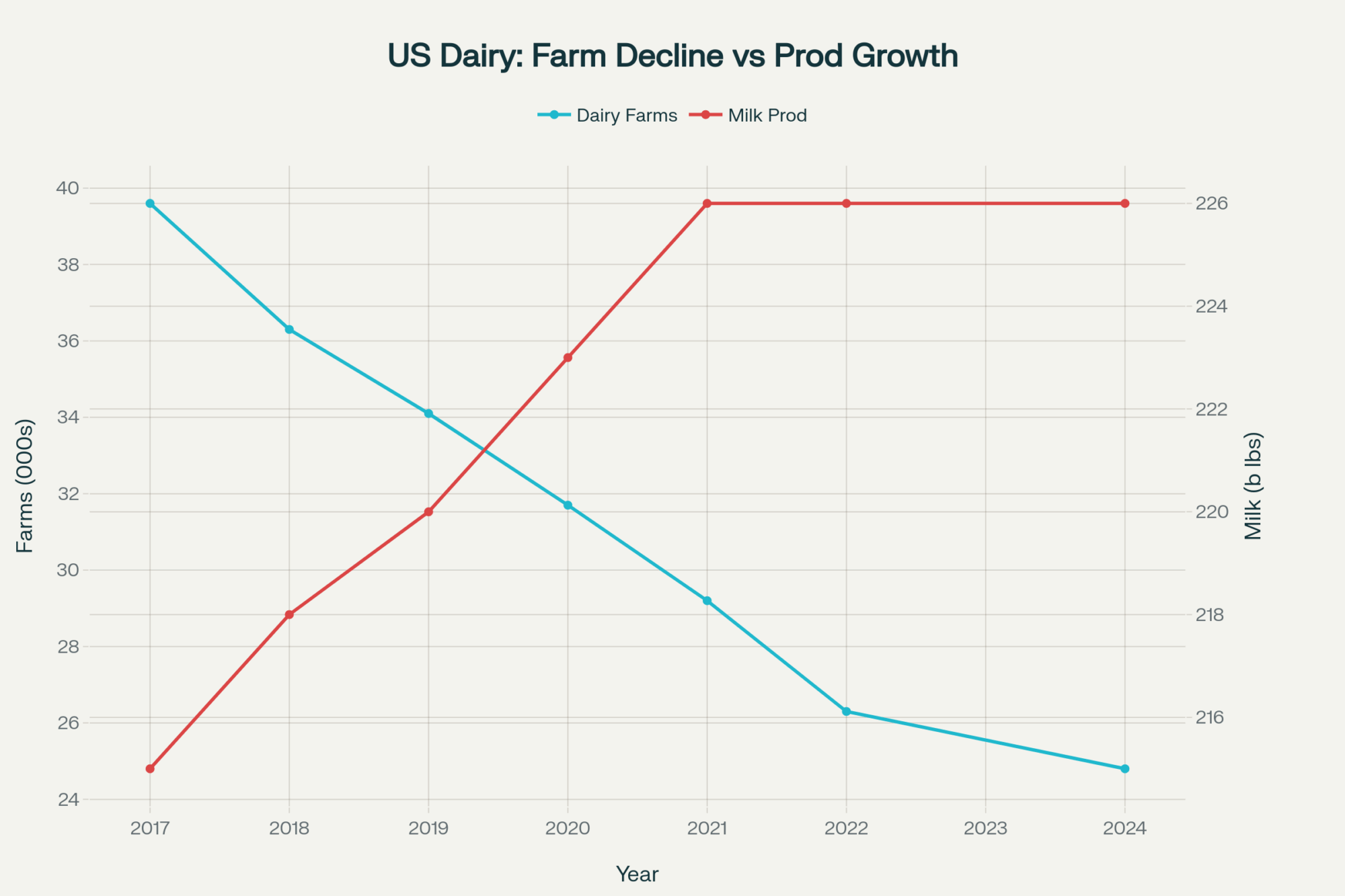
NewsSubscribe
First
Last
Consent

Coca-Cola’s $650M Bet: Is Your Milk Good Enough for the Fairlife Payout?

Over 82,000 cows are needed daily for this plant — are you ready for the Fairlife impact?

EXECUTIVE SUMMARY: Coca-Cola just dropped $650 million on a massive Fairlife facility in Webster, New York — and this changes everything for Northeast producers. This plant will demand steady milk from over 82,000 cows daily, creating huge regional supply pressure. But here’s the kicker: the real money isn’t in volume anymore, it’s in component consistency. Producers who achieve a SCC below 200,000 and maintain a protein level above 3.15% can earn premiums approaching $2.50/cwt, with a realistic payback period of 18–24 months. This isn’t just happening here — Europe’s been running ultra-filtered milk programs with strong premiums and high efficiency for years. If you want to grow profit in 2025, start focusing on components and documentation now, before everyone else catches on.

KEY TAKEAWAYS:

  • Premium contracts deliver real cash: Hit SCC below 200,000 and protein above 3.15% to unlock up to $2.50/cwt premium — pull your DHIA data this week and calculate your protein coefficient of variation
  • Consistency beats everything: Protein swings over 0.5% kill processing efficiency and cost you money — work with your nutritionist to stabilize feed and milk components
  • Massive regional opportunity: Webster needs milk from 82,000+ cows daily starting late 2025 — position your operation early while contract terms are still flexible
  • Smart investment pays back fast: Budget $125–175 per cow for testing equipment and cooling upgrades, with a realistic 18–24 month payback if you maintain quality consistency
  • Cooling matters more than ever: Keep bulk tank milk below 38°F through summer heat to avoid penalties and secure premium eligibility when margins are tightest

When Coca-Cola commits $650 million to a new Fairlife plant in Webster, New York, it’s a definitive signal that dairy profitability is shifting decisively toward premium, component-driven milk. What strikes me about this moment is how clearly it connects corporate investment to on-farm management—if components are stable and documentation is tight, opportunities expand. If not… the market moves on.

The Sheer Scale: By the Numbers

The Webster facility will span 745,000 square feet and is slated to process 5–7 million pounds of milk per day by late 2025, effectively doubling Fairlife’s current U.S. processing footprint (Arizona, New Mexico, Michigan, Indiana). The common error (and we’ve all seen it) is to translate that to a few thousand cows. That’s wrong.

Let’s put the volume into perspective. A hundredweight (cwt) is 100 pounds. This plant targets 50,000–70,000cwt daily. Assuming an average of 85 pounds per cow/day, the facility will require a consistent daily supply from over 82,000 cows at the upper bound (7,000,000 pounds ÷ 85 pounds per cow ≈ 82,352 cows). Even at 5,000,000lb/day and 75lb/cow/day, that’s still about 66,667 cows. This isn’t a “new customer.” It’s a gravitational shift in the Northeast milk supply, creating very real openings for producers who can deliver spec milk consistently.

This Is Where the Science Hits the Milk Check

Ultrafiltration (UF) separates milk into water, protein, fat, and lactose, then recombines those streams to target specific nutritional profiles (higher protein, lower sugar). This is where the science impacts the milk check. Research on membrane systems in dairy shows that processing efficiency is sensitive to load-to-load composition; when the incoming protein composition varies, fouling and efficiency losses increase, which is precisely why processors prioritize consistency. The University of Wisconsin’s Center for Dairy Research documents how UF systems perform best with tight input specs—Fairlife’s process removes most lactose and concentrates protein to deliver the well-known “more protein, less sugar” profile. For premium programs, predictable inputs aren’t optional—they’re the business model.

What’s interesting is how this plays out across plants. Mature EU UF operations report consistently high recoveries and tight process control. The technology isn’t new. Scaling it to this level in the U.S., with consistently spec’d supply, is.

Component Consistency: Your Ticket to a Premium Contract

Here’s the thing, though—processors aren’t paying for averages, they’re paying for repeatability. Cornell PRO-DAIRY guidance recommends targeting somatic cell counts below 200,000 and bulk tank protein consistently above 3.15% for premium lactose-free and UF programs (buyer specifications vary, but this is the general target).

Practical starting point: pull the last 90 days of DHIA reports and calculate protein coefficient of variation (CV). That’s standard deviation divided by mean, times 100. You can easily calculate this in a spreadsheet with test-day data. A lower number indicates more stable and predictable components—exactly what a plant like Webster is looking for. As an operational target, CV ≤ 8% is a sensible threshold that aligns with processor expectations for predictability.

Regional reality check: Producers in the Champlain Valley regularly meet these targets nine months of the year, then struggle to maintain them in July–August when heat stress reduces protein levels and increases SCC levels. That’s when premium eligibility can slip—and it’s often when money is tightest.

The Financial Reality (With Realistic Scenarios)

Farm Credit East’s 2025 Mid-Year Outlook places Northeast operating loan rates around 7.8–8.2%. Getting premium-ready typically requires $125–175/cow for component testing, upgraded cooling, and robust documentation—$62,500–87,500 for a 500-cow herd. That’s a significant capital outlay before adding the management learning curve.

Scenario (transparent, lender-ready):

  • Herd: 500 cows; capex: $75,000 (midpoint of $125–175/cow).
  • Premium: $2.50/cwt net over base on 85% of shipments.
  • Annual milk: assume 80lb/cow/day average x 365 x 500 = 14.6M lb ≈ 146,000cwt.
  • Premium able volume: 85% = 124,100cwt.
  • Incremental revenue: 124,100cwt x $2.50 = $310,250/year.
  • Simple payback: ~$75,000 ÷ $310,250 ≈ 0.24 years (~3 months), before any slippage.

Now, reality: very few herds maintain 85% premiumable volume all year at the full grid, and some premiums come with quality deductions when specs wobble. If consistency drops to 50–60% of shipments, or the effective premium averages $1.50–$2.00/cwt after deductions, payback stretches into the 12–24 month range. Miss the mark completely in summer and push heavy corrections into fall? That’s where 30–36 months starts showing up. The math swings with consistency.

An example from western New York: a herd took SCC from 240,000 to 160,000 in four months. While the premium was welcome, the most immediate financial gain came from eliminating quality penalties—a direct boost to cash flow. That’s often the first win on the road to premium.

Managing Real Risks (Not Just Talking Points)

  • Seasonality: Heat stress and winter housing can disrupt components at precisely the time when premiums matter most. Plan cooling, ration stability, and cow comfort with July and August in mind.
  • Buyer concentration: A single-premium buyer narrows options if the terms change. Always know a credible Plan B for your milk.
  • Rising baseline: As more producers implement quality systems, specs that earn premiums today can become table stakes. Keep improving.

What strikes me is how often “chasing a premium” backfires if the foundation isn’t there. The producers who win invest in consistency first, documentation second, and premium contracts third.

Beyond Fairlife: A Market-Wide Shift to Premium Milk

This development is fascinating because it’s bigger than a plant or a brand. When a global beverage company scales premium dairy infrastructure, it validates demand and margin structure across the category. UF and lactose-free are the lead edge, but the same discipline sets up pathways for A2, grass-fed, and targeted protein profiles.

For New York and Northeast producers within Webster’s trucking radius, the opportunity is real. However, the window for securing the best contract terms will close as early movers secure allocations. Current trends suggest that the next 6–9 months will focus on building a verifiable quality track record, rather than just making calls to procurement.

Next Moves (Start This Week)

  • Pull DHIA data (last 90–180 days), calculate protein CV, and map SCC trend vs. season. Target CV≤8% and SCC<200,000 through summer.
  • Do a cooling audit. Verify bulk tank to truck departure at <38°F during the hottest week; document temperatures daily for 30 days.
  • Sit down with the nutritionist. Lock the ration for 30–45 days, measure DMI, and aim for a 0.05–0.10 point lift in protein with stable variation.
  • Build the paper trail. Maintain a clean, dated file containing DHIA component/SCC trends, temperature logs, and any relevant processor tickets. Procurement teams buy consistency—and proof.

What’s particularly noteworthy is how the “premium future” boils down to basics: consistent components, low SCC, cold milk, and clean records. That’s doable, but it requires discipline for months—not days.

The Bottom Line

Webster isn’t just about capacity. It’s a market signal that North American consumers are ready for the same premium dairy categories that have driven European profitability for years. The producers who treat the next 6–9 months as a readiness period—focusing on component stability, cooling, and documentation—will be positioned to negotiate, not just apply. Start now, before the best terms are taken.

Complete references and supporting documentation are available upon request by contacting the editorial team at editor@thebullvine.com.

Learn More:

The Sunday Read Dairy Professionals Don’t Skip.

Every week, thousands of producers, breeders, and industry insiders open Bullvine Weekly for genetics insights, market shifts, and profit strategies they won’t find anywhere else. One email. Five minutes. Smarter decisions all week.
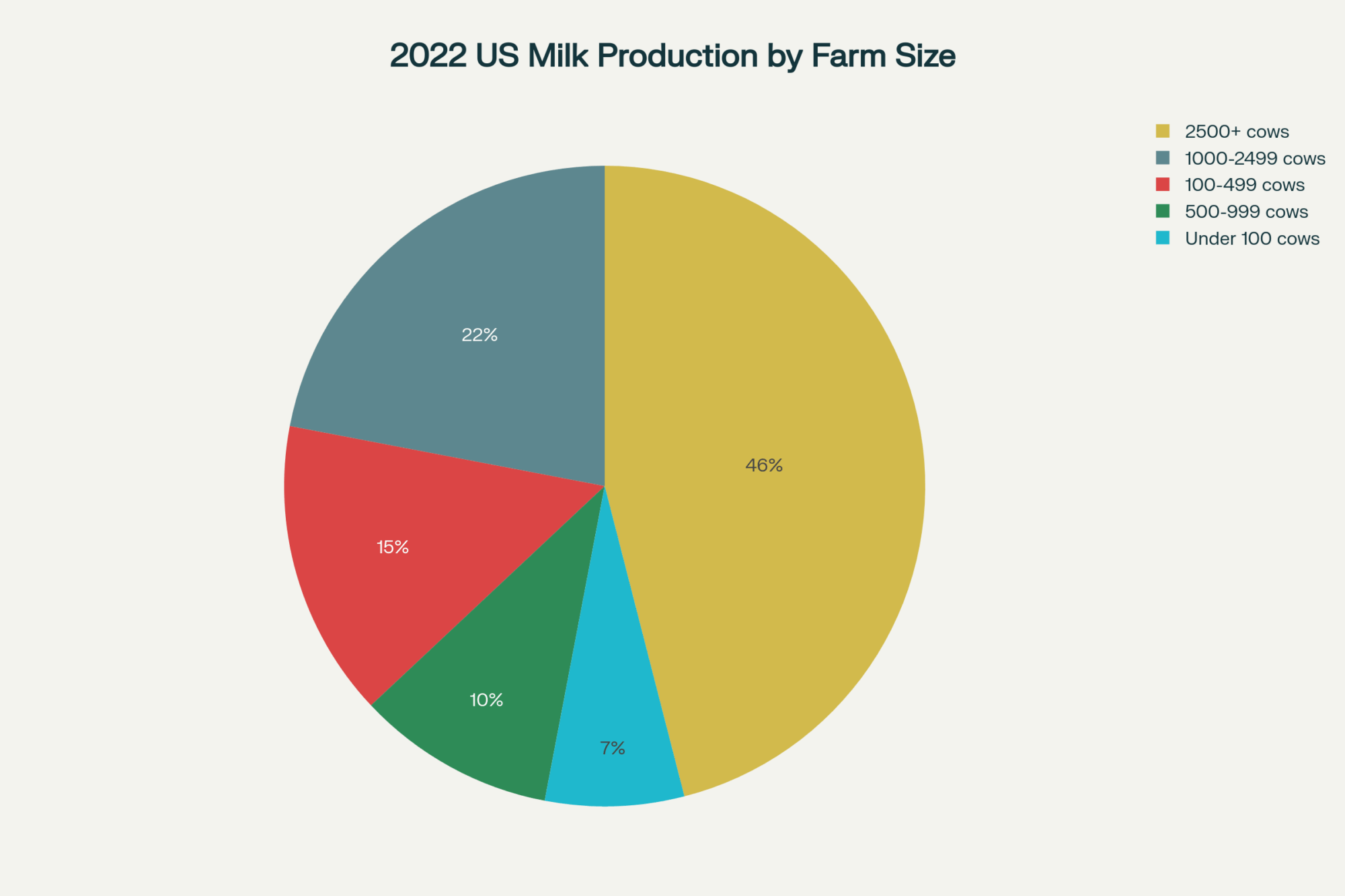
NewsSubscribe
First
Last
Consent
Send this to a friend