Danone drops $110M on Ohio despite flat yogurt sales—here’s the real story behind this bet.
EXECUTIVE SUMMARY: Look, proximity just became more valuable than herd size—and Danone’s $110 million Ohio bet proves it. While yogurt consumption stays flat overall, premium segments like Oikos are exploding with 40% growth, driven by health-conscious consumers paying top dollar for protein. MVP Dairy’s 4,500 cows supply 350,000 pounds daily because they’re 18 miles from the plant, not because they’re the biggest operation around. Globally, from German co-ops to Australian farms using digital integration, the smart money’s on strategic partnerships over raw volume. Certifications like Non-GMO and tech that connects you directly to processors aren’t nice-to-haves anymore—they’re your ticket to the premium game. Time to stop chasing yesterday’s playbook and start thinking like the supplier they can’t live without.
KEY TAKEAWAYS
Geography pays the bills: Being within 50 miles of your processor can mean the difference between premium contracts and commodity pricing—MVP Dairy’s daily 350,000-lb supply proves location beats everything else.
Certifications unlock the vault: Non-GMO verification isn’t just paperwork anymore—it’s your entry pass to contracts that actually pay while everyone else fights over commodity rates.
Smart tech = smart money: Automated milk sampling reduces rejected loads and gets you quality bonuses, but only invest in systems that tie directly to your buyer’s requirements.
Sustainability is the new premium: Danone’s regenerative ag program covers 144,000 acres because it works—participants report better soil health AND extra money per hundredweight.
Reliable beats big every single time: A consistent 4,500-cow operation close to the plant destroys distant mega-dairies with fancy robots—processors want partners they can count on, not just cheap milk.
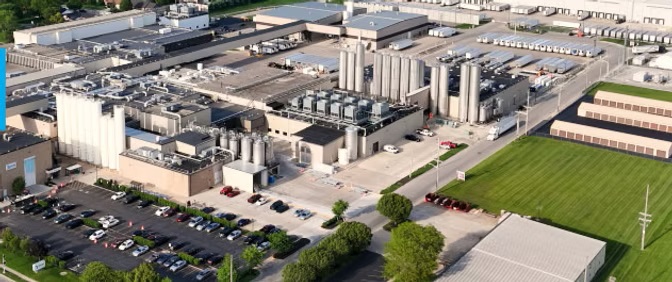
If you’ve been keeping one eye on dairy news, you probably heard about the big splash happening in a small town called Minster, Ohio. Danone dropped more than $110 million on expanding their yogurt plant there lately. And it’s not just about new buildings — this signals a big shift in how dairy’s going to work going forward.
Now, you might think that yogurt sales have been struggling, but it’s more complicated than that. While some traditional yogurt styles are facing headwinds, the overall market remains stable, with premium segments, such as Greek and high-protein varieties, driving growth. These premium categories are booming enough to keep the whole market on solid ground.
Let’s talk about a real buzzmaker in this space: Oikos. Their sales soared by over 40% in early 2024, riding the wave of customers, many on weight-loss meds like Ozempic or Wegovy, seeking protein-rich, low-sugar options. It’s not just dessert anymore — it’s becoming essential fuel in daily diets for folks willing to pay premium prices.
What strikes me about this trend is how it’s completely flipped the script. We used to think more volume meant more opportunity. Now it’s about the right consumers paying top dollar for functional nutrition.
MVP Dairy: The Real Story Behind the Numbers
Nearby, MVP Dairy doesn’t just talk the talk — they run about 4,500 cows and deliver around 350,000 pounds of milk daily straight to that plant. These guys have positioned themselves perfectly.
The secret sauce? They nailed the Non-GMO Project certification — a big deal for today’s premium market. Producers in similar programs report that initial paperwork requirements, while challenging, become routine once premium contract benefits materialize.
People around here know the truth: being 20 minutes from the plant beats saving money on land farther away most days. Frequent, reliable deliveries are what buyers are paying for these days.
Chobani’s $1.2B Wake-Up Call
Don’t overlook the big picture either — Chobani recently announced a .2 billion plant investment in upstate New York. Let’s get real about Greek yogurt’s market position — latest data shows it holds about 46-48% of the US market, commanding serious premium pricing. Here’s how these investments stack up — both companies are chasing the same premium-paying consumers who view dairy as functional nutrition, not just food.
Why Geography Wins Every Time
MVP’s got the upper hand, being just 18 miles from the plant. Danone wants fresh milk, delivered multiple times daily. Drive more than an hour or two, and you’re already behind the curve.
This pattern’s playing out worldwide. German co-ops cluster producers close to plants, and 68% of Australian dairies use smart devices to stay synced with their processors. The world’s most profitable operations cluster around major processing facilities.
Here in Ohio, the dairy industry supports 1,400 farms, pumping out over $30 billion in economic value and supporting 130,000+ jobs. That’s the kind of critical mass processors can’t ignore.
Regional producers consistently mention that while cheaper land might be available farther out, the trucking costs and delivery timing challenges make staying close the smarter financial move.
Tech That Actually Matters on the Farm
Now, about tech that truly makes a difference. Automated milk sampling systems enable earlier detection of milk quality issues like subclinical mastitis, which helps reduce rejected loads and can qualify farms for premium payments, though specific economic benefits vary based on farm size and management practices.
These systems directly tie milk quality data to processors, building trust and transparency that drive premium partnerships. In Australia, these technologies have been standard for years, backed by government programs that emphasize practical gains over flashy gadgets.
Sustainability Programs That Actually Pay
Switching gears to sustainability — Danone’s regenerative agriculture effort covers over 144,000 acres and supports 75% of their milk supply. Producers in regenerative agriculture programs report variable economic benefits, including input cost reductions and premium payments, with results depending on farm size and implementation practices.
Regional producers note that weekly soil testing, while initially seen as extra work, has led to healthier pastures that are paying for themselves through improved productivity and premium qualification.
This isn’t just an Ohio story — similar successes are sprouting throughout Europe and other US regions, wherever farmers have committed to long-term soil health strategies.
What’s Killing Most Producers’ Profits
Here’s what gets me fired up: all that advice about scaling up and buying the fanciest gadgets isn’t the whole story anymore. MVP isn’t the biggest operation around, but they’re winning because they’re reliable, certified, and strategically located.
Meanwhile, larger operations with expensive automation but long hauls to processors are getting passed over. Equipment dealers want you to buy their gear, but the market rewards those who show up consistently with the right milk, at the right place, with the right documentation.
Your Move: Four Things to Do This Week
Here’s what you should focus on right now:
Map out every processor you can realistically serve within 50 miles and be honest about who’s close enough to matter. Distance kills deals faster than anything else in today’s market.
Invest only in tech that connects you directly to your buyers’ quality requirements. Systems that integrate with processor databases beat robotic milkers that only improve internal efficiency.
Get certified in Non-GMO, organic, or whatever your regional processors value. These certifications open doors to premium milk pools where the real money is.
Explore sustainability programs if they’re available locally. They’re increasingly becoming non-negotiable for major processor partnerships.
Remember: processors want partners they can count on, not just suppliers offering cheap milk.
The Bottom Line
This industry is changing fast. When Danone calls looking for 60% more milk, they don’t automatically ring the biggest operation — they call the most reliable producers they can’t afford to lose.
Geography, reliability, certification, and data integration are separating winners from everyone else fighting over commodity pricing. The farms that recognize this shift early will capture premium markets, while others will be squeezed on their margins.
So ask yourself: where will you be when that call comes?
This isn’t just a theoretical discussion. It’s happening now, right in our backyards. The dairy game’s evolving rapidly, and producers willing to adapt to this new reality have a bright future ahead.
Complete references and supporting documentation are available upon request by contacting the editorial team at editor@thebullvine.com.
Learn More:
Boost Your Dairy Farm’s Efficiency: Easy Protocol Tweaks for Big Results – This article provides practical, step-by-step guidance on refining on-farm protocols. It offers tactical advice for improving daily operations and consistency—key traits that processors like Danone value highly in their partners—directly complementing the main article’s emphasis on reliability.
The Robot Revolution: Transforming Organic Dairy Farms with Smart Tech in 2025 – Exploring the future of dairy, this article examines how automation and data integration are becoming essential. It offers a forward-looking perspective on the technologies that enable the direct processor connections and quality assurances discussed in the main piece.
The Sunday Read Dairy Professionals Don’t Skip.
Every week, thousands of producers, breeders, and industry insiders open Bullvine Weekly for genetics insights, market shifts, and profit strategies they won’t find anywhere else. One email. Five minutes. Smarter decisions all week.
Stop accepting commodity milk pricing. Lactalis’ $2.1B yogurt play reveals how smart farmers capture $75K premiums through strategic positioning.
EXECUTIVE SUMMARY: The $2.1 billion Lactalis-General Mills yogurt deal isn’t just corporate news—it’s a wake-up call for dairy farmers still thinking like commodity producers instead of strategic suppliers. While General Mills walked away from 15-20% yogurt margins to chase 30% pet food returns, smart farmers are learning the same lesson: average performance in consolidating markets means shrinking opportunities. Our analysis reveals that a 500-cow operation optimizing protein content from 3.6% to 3.8% can capture $50,000-75,000 annually in premium pricing—but only if they’re positioned with processors who understand component value. With major consolidation accelerating (Lactalis now controls yogurt aisle architecture from farm gate to retail shelf), the gap between strategic and reactive farmers is widening rapidly. The uncomfortable truth: farms accepting commodity pricing while processors like Lactalis build global supply chain control are essentially subsidizing their competitors’ growth. International data shows European production constraints creating global opportunities, but only for operations positioned beyond local commodity markets. Every day you delay strategic positioning analysis is money left on the table—and market position you’ll never recover.
KEY TAKEAWAYS
Component Optimization ROI: Genomic testing investment of $25,000 to improve protein percentage by 0.1% across a 300-cow herd generates $15,000 annually in additional revenue—that’s a 60% annual return while competitors settle for commodity rates
Technology Scale Economics: Robotic milking systems cost $1,333-1,667 per cow on 150-cow operations versus $667-833 per cow on 300-cow operations—successful farms are thinking scale optimization, not just technology adoption
Market Intelligence Premium: Farms building relationships with globally-minded processors like Lactalis capture component premiums while local commodity suppliers face margin compression—the $2.1B deal proves scale and specialization drive future pricing power
Strategic Positioning Urgency: With feed costs projected to decrease 10.1% in 2025 while milk production grows 0.5% to 226.9 billion pounds, the window for optimizing processor relationships and capturing premiums is closing as consolidation accelerates
Global Market Leverage: EU production constraints due to environmental regulations create export opportunities worth tracking—farms positioned for international markets through strategic processor relationships access premium pricing unavailable to local commodity suppliers
The world’s largest dairy giant just executed the most strategic yogurt acquisition in industry history, and the ripple effects will transform how every dairy operation competes for the next decade. While General Mills walks away with $2+ billion to fuel pet food expansion, Lactalis now controls yogurt market architecture from farm gate to retail shelf, fundamentally altering milk pricing power and processor relationships across North America. This isn’t just another corporate deal for strategic dairy planners – it’s a blueprint for how scale, specialization, and supply chain control will determine winners and losers in the new dairy economy.
The dust has settled on what analysts call the “elephant deal” of 2025, and the implications stretch far beyond corporate boardrooms. When the U.S. Department of Justice gave final approval in early June for Lactalis to complete its acquisition of General Mills’ U.S. yogurt business (General Mills and Lactalis Receive Regulatory Clearance), they didn’t just greenlight a transaction – they validated a new paradigm for global dairy competition that every producer needs to understand.
Why Did America’s Food Giant Exit a $1.5 Billion Yogurt Empire?
What might surprise dairy producers is that General Mills wasn’t failing at yogurt. They were walking away from a business that contributed approximately $1.5 billion to their fiscal 2024 net sales and held respected brands like Yoplait, Go-Gurt, and Oui. So why would they exit a market where U.S. yogurt consumption hit record levels in 2024?
The margin mathematics tells the real story. General Mills’ yogurt division generated operating margins of 15-20% – respectable numbers until you compare them to their “gem brands” like Blue Buffalo pet food, which delivers approximately 30% EBIT margins. In today’s dairy landscape, this margin differential represents the difference between surviving and thriving.
Think of it like comparing a 20,000-pound lactation average to a 30,000-pound herd. Both are productive, but one creates dramatically more profit per unit of investment. But here’s where conventional wisdom gets challenged: Is chasing higher margins always the right strategy for dairy operations, or does it create dangerous vulnerabilities?
The secular headwinds facing traditional yogurt mirror challenges across dairy. Consumer preferences are fragmenting rapidly, while Hispanic-focused brands like LaLa, El Mexicano, and La Ricura collectively control 31% of total yogurt sales, demonstrating how quickly traditional market leaders can lose ground to specialized competitors.
General Mills’ CEO Jeff Harmening has been executing their “Accelerate” strategy since 2020, transforming nearly 30% of their net sales base through strategic acquisitions and divestitures. This isn’t incremental change – it’s complete portfolio reconstruction based on margin optimization and growth potential.
But here’s the critical question for dairy farmers: If a major food company with massive scale and marketing power can only generate 15-20% margins in yogurt, what does that tell you about the competitive intensity? More importantly, are you positioning your operation for the processors who understand margin optimization, or are you still thinking like it’s 2015?
The financial engineering behind this exit reveals sophisticated thinking. General Mills expects net proceeds exceeding $2 billion from U.S. transactions, primarily for share repurchases. This strategy has already reduced their shares outstanding by 9% since 2019 and boosted EPS by approximately 20%.
How Lactalis Plans to Cement North American Dairy Control
While General Mills retreats strategically, Lactalis advances with calculated aggression. This French family business isn’t just large – with €30 billion in revenue for 2024, up 2.8% over fiscal 2023, they’re demonstrating how global scale translates into market control. But their strategy goes far beyond size.
The brand consolidation creates unprecedented market architecture. Lactalis already owned Stonyfield Organic, siggi’s, Brown Cow, Lactaid, and Green Mountain Creamery in the U.S. Adding Yoplait, Go-Gurt, Oui, Mountain High, and :ratio doesn’t just expand their portfolio – it creates yogurt aisle domination that fundamentally shifts retailer relationships.
Consider the parallel in dairy farming: when a large operation controls multiple farms in a region, they gain negotiating leverage with feed suppliers, veterinarians, and milk buyers that smaller operations simply can’t match. Lactalis now wields similar power with grocery chains, creating efficiency synergies and cross-promotion opportunities that smaller yogurt brands cannot replicate.
But here’s where the conventional consolidation narrative gets complicated: While Lactalis reduced their debt load from €6.45 billion to €5.03 billion during 2024 and increased operating income by 4.3%, they’re also creating potential systemic risks. What happens when one player controls too much of the supply chain? Are we creating efficiency or fragility?
Lactalis’ global expansion continues beyond North America. They’re actively pursuing Fonterra’s NZ$4.9 billion consumer business to strengthen their presence in Asia and Oceania, having already applied for informal merger clearance from Australia’s competition regulator. Recent acquisitions of South African coffee creamer brand Cremora and Portuguese cheese maker Queijos Tavares demonstrate systematic global market building.
Here’s the critical insight most dairy producers are missing: This isn’t just about yogurt or even dairy – it’s about supply chain architecture. Are you building relationships with processors who think like Lactalis, or are you still dealing with companies that think small?
What This Means for Your Dairy Operation’s Strategic Position
The implications for dairy producers are multifaceted and immediate. When major processors consolidate and gain market power, individual farms face opportunities and risks requiring strategic responses.
Component optimization becomes even more critical in this environment. With Lactalis focusing on premium yogurt brands emphasizing protein content and functionality, producers who consistently deliver high-quality milk with optimal protein and butterfat levels will capture premium pricing. The concentration risk requires careful monitoring. When fewer, larger processors control more market share, individual farmers have reduced leverage in price negotiations.
Market intelligence becomes essential for strategic positioning. Understanding where your milk flows and what drives pricing in different market segments helps optimize production and investment decisions. The yogurt boom creates opportunities, but only for producers who understand how to position themselves for premium channels.
Here’s a scenario to consider: A 500-cow operation in Wisconsin produces 24,000 pounds per cow annually with 3.6% protein and 3.8% butterfat. Under traditional pricing, they’re receiving commodity rates. However, if they optimize genetics and nutrition to consistently achieve 3.8% protein and 4.0% butterfat, they could capture premiums worth $50,000-75,000 annually in the current market. Are you tracking these specific metrics, or still managing by gut feeling?
Technology Integration and Practical Implementation
The consolidation creates new imperatives for technology adoption and innovation. Large, globally connected processors like Lactalis demand consistency, quality, and data transparency that smaller operations may not require. This creates both challenges and opportunities for dairy producers.
Data management becomes table stakes for premium processor relationships. Modern dairy operations need systems that track component quality, animal health metrics, and production consistency with the precision that large processors require for their global supply chains.
Consider this technological reality check: A robotic milking system costs $200,000-250,000 per robot. On a 150-cow operation, that’s $1,333-1,667 per cow. On a 300-cow operation using two robots, it’s $667-833 per cow. Are you thinking about technology investment at a sufficient scale, or are you making decisions that doom you to higher per-unit costs?
Here’s the innovation challenge most producers miss: It’s not about adopting the latest technology – it’s about adopting the right technology at the right scale for your specific market position. What data are you collecting that processors like Lactalis actually value versus data you think they should want?
Financial Implications and Strategic Assessment Framework
The financial mathematics of this deal offer insights for dairy farm strategic planning. General Mills’ ability to generate $2+ billion from asset divestiture and redeploy that capital for higher returns demonstrates sophisticated portfolio management that dairy operations can adapt.
Here’s a financial reality most farmers don’t calculate: If you’re carrying debt at 7% interest while passing up investments that could return 15%, you’re actually losing 8% annually on every dollar that could be redeployed. When did you last conduct a comprehensive ROI analysis of your current asset allocation?
Practical example: A $25,000 investment in genomic testing and selective breeding to improve protein percentage by 0.1% across a 300-cow herd generates approximately $15,000 annually in additional revenue at current premiums. That’s a 60% annual return on investment. Are you making these calculations, or still managing by tradition?
The Bottom Line: Your Strategic Assessment Framework
This $2.1 billion transaction represents far more than corporate restructuring – it’s a master class in strategic portfolio optimization and global market positioning that every dairy operation should study. General Mills demonstrated that even successful businesses should be divested if they don’t align with your core competencies and margin requirements. Lactalis showed how systematic global expansion and market consolidation can justify premium acquisition prices when executed with financial discipline and strategic vision.
Here are the specific questions you need to answer about your operation:
Component optimization: Are you consistently achieving protein and butterfat levels that qualify for premium pricing or accepting commodity rates for average performance?
Technology integration: What data are you collecting that processors actually value, and how are you using it to optimize production decisions?
Market positioning: Are you building relationships with processors who think globally and invest in growth or staying comfortable with local relationships that may not survive consolidation?
Financial discipline: When did you last calculate the ROI of your current asset allocation versus alternative investments in genetics, technology, or market positioning?
Scale optimization: Are you operating at a sufficient scale to justify technology investments and capture efficiency gains, or trapped in a sub-optimal size that limits your options?
The $2.1 billion question for every dairy operation: Are you positioning for the market that’s emerging or clinging to strategies designed for the market that’s disappearing? The companies that thrive in this new environment will be those who adapt quickly, execute consistently, and never stop learning about where their markets are heading.
Your next move: Conduct a comprehensive strategic assessment of your operation using this deal’s framework. Are you building a business that could attract a premium from acquirers like Lactalis or just maintaining a lifestyle that’s becoming less viable each year? The answer to that question will determine whether you thrive or merely survive in the new dairy economy.
The dairy industry just became significantly more interesting – and more competitive. The producers who study this transaction’s strategic lessons and apply them to their own operations will find opportunities that others miss. Those who don’t may find themselves competing for an increasingly smaller share of an increasingly consolidated market.
Every week, thousands of producers, breeders, and industry insiders open Bullvine Weekly for genetics insights, market shifts, and profit strategies they won’t find anywhere else. One email. Five minutes. Smarter decisions all week.
Stop accepting processor loyalty as gospel. Fonterra’s $1.40 price gap reveals how strategic thinking beats sentiment—worth $168K per farm.
Fonterra’s shocking $1.40/kg MS price disparity between Australia and New Zealand isn’t just about market conditions—it’s a masterclass in strategic business evolution that reveals how operational advantages, genomic optimization, and market positioning create competitive moats worth hundreds of thousands per farm. This pricing divide exposes the brutal economics of modern dairy processing, where feed conversion efficiency, energy costs per kg MS, and strategic asset allocation determine whether you’re positioned for prosperity or managed decline. The lessons buried in this price gap will reshape how you evaluate processor relationships, optimize your lactation curves, and future-proof your operation against industry consolidation.
Think of this price disparity like comparing two bulls with identical TPI scores but vastly different genetic merit for production efficiency. On paper, they might look similar, but dig into the EBVs and you’ll find one consistently produces daughters with 15% higher milk yield and superior feed conversion ratios. That’s exactly what’s happening between Fonterra’s Australian and New Zealand operations—same company, same basic business model, but fundamentally different genetic makeup for profitability.
Why Should Progressive Farmers Care About This Price Gap?
Here’s what makes this story bigger than just another processor pricing announcement: Fonterra’s pricing strategy reveals how modern dairy companies optimize value extraction across different production systems, market access, and operational efficiency metrics—exactly like how you optimize your herd’s genetic merit across different traits.
For an average Australian dairy farm producing 120,000 kg MS annually (roughly 1.5 million liters at 8.0% combined solids), that $1.40 gap translates to $168,000 less income compared to New Zealand rates. To put that in perspective, that’s equivalent to losing the genetic gain from five years of selective breeding, or the productivity boost from implementing a 0,000 automated milking system (AMS).
But here’s where it gets critical for strategic planners: this isn’t about Fonterra being unfair to Australian farmers. It’s about a fundamental shift in how global dairy companies restructure operations around return on invested capital (ROIC)—and Fonterra’s Australian operations are delivering a dismal 3% ROIC compared to their target of 10-12%.
Ask yourself this: If the world’s largest dairy cooperative is willing to sacrifice nearly 20% of its earnings because the returns don’t meet performance targets, what does that tell you about evaluating your own farm investments? Are you measuring every breeding decision, every piece of equipment, every management practice against clear profitability metrics—or just chasing production volume?
The co-op has embarked on a massive strategic realignment, focusing entirely on high-performing Ingredients and Foodservice businesses while actively divesting their global Consumer portfolio—including all Australian. This is like a progressive breeder who decides to focus exclusively on genomic selection for protein yield and feed efficiency, while culling all genetics that don’t meet those precise criteria.
Here’s the strategic math that should make every processor pay attention:
Target return on capital: 10-12% (up from 9-10%)
New dividend policy: 60-80% of earnings (up from 40-60%)
Strategic focus: “Allocate milk to highest returning product and sales channel”
But here’s what challenges conventional wisdom about processor loyalty: Why should farmers remain committed to processors that view their milk as a non-core asset? The traditional dairy industry narrative promotes long-term processor relationships, yet Fonterra’s strategy proves that processors increasingly prioritize financial performance over regional commitments.
The Divestment Reality Check: Culling Underperforming Assets
Fonterra’s Australian operations tell a brutal story about asset performance that mirrors what happens when you keep poor-performing genetics in your herd too long. The numbers don’t lie: “a decade of negative free cash flow and a 3% ROIC” that management describes as “underwhelming”.
Meanwhile, their Australian assets account for approximately 19% of Fonterra’s operating earnings but are now considered non-core. That’s like discovering your highest-producing cow is actually costing you money when you factor in her mastitis treatments, poor fertility, and feed conversion inefficiency.
Why This Matters for Your Operation: If the world’s largest dairy co-operative is willing to divest nearly 20% of its earnings because the ROIC doesn’t meet targets, what does that tell you about evaluating your own investments? Every piece of equipment, every genetic decision, every management practice should be measured against clear profitability metrics—not just production volume.
Here’s the uncomfortable question every farmer should ask: Are you making investment decisions based on tradition and sentiment, or are you applying the same ruthless financial analysis that drives multinational corporations?
How Do Operational Advantages Create Pricing Power Like Superior Genetics?
The New Zealand Production Efficiency Advantage
New Zealand consistently ranks as the lowest-cost milk producer globally, primarily due to its pasture-based farming systems that deliver superior feed conversion efficiency (NZ keeps milk costs lowest among major exporters). But here’s what most people miss: it’s not just about lower costs—it’s about structural advantages that competitors can’t easily replicate, similar to how genomic selection creates compound advantages over multiple lactations.
The 2024 numbers reveal a systematic production advantage:
New Zealand increased its cost advantage over Australia to US5c/litre
Feed costs in NZ are projected to be the lowest in several years for 2025-26
Australian labor costs have jumped over 50% since 2021
This is like comparing herds where one consistently achieves 25% higher feed efficiency (measured as kg milk solids per kg DMI) while maintaining superior fertility metrics and lower somatic cell counts (SCC). The compound effect over time becomes insurmountable.
But here’s where conventional pasture management wisdom gets challenged: Most farmers assume pasture-based systems are automatically more profitable. Research shows that the technical efficiency of specialized milk farms varies dramatically based on management intensity, not just grazing systems. New Zealand’s advantage comes from sophisticated rotational grazing combined with precision pasture management—not simply turning cows out to graze.
The Energy Cost Reality: Processing Efficiency Gaps
Australian processors face a crushing disadvantage that’s equivalent to having a 15% lower feed conversion ratio across your entire herd. Their “cost conversion” averaged $1.00 per kg milk solids more than New Zealand operations between July 2021 and June 2022.
To put this in dairy terms: imagine if your milk processing facility required 15% more energy to produce each kilogram of milk powder, cheese, or butter. That’s not a small margin—that’s a structural cost burden that makes competing on price nearly impossible, especially when global buyers can source equivalent products from more efficient operations.
New Zealand’s proactive approach to energy efficiency, including government support for Industrial Heat Pumps, creates a compound advantage that grows stronger over time (Australia lagging behind New Zealand on cutting industrial energy costs)—exactly like investing in genetics that improve over successive generations.
Implementation Timeline for Energy Optimization:
Immediate (0-6 months): Energy audit and basic efficiency improvements
Short-term (6-18 months): Equipment upgrades and process optimization
Long-term (2-5 years): Infrastructure transformation and renewable energy integration
Here’s the critical question for farm-level energy management: Are you tracking energy costs per kg MS produced on your operation, or are you still managing energy like it’s a fixed overhead cost? Progressive operations now monitor energy efficiency as closely as feed conversion ratios.
What Market Dynamics Support This Strategy Like Optimal Breeding Decisions?
Export vs. Domestic Market Economics: Choosing Your Genetic Path
Here’s where the strategic picture gets really clear, and it parallels how progressive breeders choose genetics based on their target market. New Zealand exports approximately 95% of its milk production, letting them capitalize directly on strong global commodity prices. They’re not stuck selling to price-conscious domestic consumers—they can chase premium B2B customers in growth markets.
Australia faces the opposite dynamic: a “soft domestic outlook” with consumers chasing value through lower-cost products and private label brands. Even worse, dairy imports account for nearly 30% of Australia’s total consumption—meaning Australian farmers are competing with cheaper imports in their own backyard.
This is like the difference between breeding for export markets that reward superior protein content and genetic merit versus breeding for a local market that primarily buys on price. The genetic selection pressure and resulting profitability are completely different.
But here’s what challenges the conventional export wisdom: Simply producing for export markets doesn’t guarantee premium pricing. The key is producing for premium export segments that value quality differentiation and sustainable production practices. Are you positioning your production for commodity export markets or premium differentiated channels?
The Competitive Landscape Difference: Market Share Impact
In Australia, competition for milk supply among processors like Bega, Saputo, and Lactalis is intense, with everyone fighting over a shrinking milk pool. This creates pricing pressure that benefits farmers in theory but constrains what processors can actually pay due to market realities.
Fonterra holds over 80% market share in New Zealand, giving them pricing flexibility that Australian processors simply don’t have. It’s like being the only AI stud in your region versus competing with five other operations for the same breeding contracts.
Why This Matters for Your Operation: Understanding processor market dynamics helps you evaluate the long-term sustainability of your milk contracts. A processor with declining market share and intense competition may offer attractive short-term prices but lack the stability for long-term partnerships.
Ask yourself: Do you know your processor’s market share trends and competitive position? Are you diversifying processor risk the same way you diversify genetic risk in your breeding program?
How Feed Conversion and Lactation Management Create Price Resilience
The Climate Cost Multiplication Factor
Australian farmers aren’t just dealing with lower prices—they’re getting hammered by cost pressures that would be like having your entire herd drop 40% in feed efficiency overnight:
Farmers report weekly feed bills in hundreds of thousands of dollars
Water carting has become a “way of life” rather than emergency measure
In dairy terms, this is like your feed costs jumping from $0.25/kg DMI to $0.35/kg DMI while your milk price stays flat. Even herds with superior genetic merit for feed efficiency struggle under that kind of cost pressure.
Compare this to optimal lactation curve management:
Peak milk: Target 45-55 kg/day by day 40-60 of lactation
Persistence: Maintain 6-7% decline per month post-peak
DMI optimization: 3.0-4.0% of body weight during peak lactation
ME requirements: 11-12 MJ/kg DMI for optimal conversion
Here’s the critical insight that challenges conventional feed budgeting: Research shows that tactical feeding decisions based on marginal milk responses can increase profit by 15-23% even in volatile cost environments. The question isn’t whether feed costs are high—it’s whether you’re optimizing feed allocation based on real-time marginal responses rather than traditional feeding protocols.
Labor Crisis Amplifies Cost Pressures
The labor shortage crisis is so severe that some Australian dairies have partially or fully transitioned to less labor-intensive beef cattle operations. In Australia, 1 in 4 dairy farmers are unable to find labour or access the skills they need on farm.
This labor crisis creates a compound effect: higher labor costs for those who can find workers, plus reduced production capacity for those who can’t. It’s like trying to optimize your breeding program while your best herdsman quits and you can’t find a replacement.
The uncomfortable question for intensive operations: Are you optimizing for milk per cow or profit per dollar invested? The research suggests these metrics can diverge significantly based on your production system.
Strategic Implications: What This Means for Your Breeding and Management Decisions
The Asset Optimization Playbook: Genetic Selection Principles
Fonterra’s strategy reveals a new playbook that mirrors progressive genetic selection: ruthlessly optimize asset allocation based on strategic value rather than sentimental attachment. The Australian price isn’t just reflecting current market conditions—it’s potentially a deliberate strategy to reduce the cost base of the Australian entity, making it more attractive to potential buyers like Lactalis and Bega.
Define clear breeding objectives based on economic traits
Measure performance against specific targets (TPI, EBVs, production metrics)
Cull underperformers regardless of emotional attachment
Invest resources in genetics with proven ROI
But here’s where conventional genetic selection gets challenged: Research shows that feed efficiency traits have 2-3x higher economic value in volatile cost environments compared to traditional yield traits. Are you weighting your genetic selection for the current high-input-cost reality or yesterday’s cheap-feed assumptions?
The Structural Advantage Framework: Compound Genetic Gains
What Fonterra’s demonstrating is how structural advantages compound over time, exactly like genetic improvement:
Lower production costs → More pricing flexibility
Export focus → Direct access to global price signals
Market dominance → Reduced competitive pressure
Strategic clarity → Optimized capital allocation
Implementation Framework for Your Operation:
Month 1-3: Establish baseline metrics (production costs per kg MS, feed efficiency, labor productivity) and evaluate current processor relationships using ROIC principles
Month 4-6: Implement energy monitoring systems and assess feed efficiency opportunities using marginal response analysis
Month 7-12: Review genetic selection criteria for economic traits and investigate value-added market opportunities
Year 2: Invest in technologies that create sustainable cost advantages and develop sustainability metrics for premium market access
Year 3-5: Build market relationships that reward quality premiums and develop operational systems that scale efficiently
The critical question every progressive farmer should ask: Are you building compound advantages through systematic improvement, or are you just reacting to current market conditions?
International Benchmarking: Learning from Global Leaders
Regional Comparison of Production Efficiency (2024 data):
Region
Cost per kg MS (USD)
Feed Efficiency*
Energy Cost Index
Market Access Score**
New Zealand
$3.45
1.35
85
95
Australia
$3.87
1.28
115
72
Wisconsin (US)
$4.12
1.42
92
88
Netherlands
$4.58
1.38
108
90
India
$2.89
1.15
78
65
*kg MS per kg DMI **Export market access (scale 0-100)
This data reveals why strategic positioning matters as much as operational efficiency. New Zealand combines competitive production costs with superior market access, creating a sustainable competitive advantage (NZ keeps milk costs lowest among major exporters).
Here’s what this means for your strategic planning: Are you benchmarking your operation against regional averages or global best practices? The gap between good and exceptional performance is often larger than farmers realize.
Why This Matters for Your Operation: ROI and Implementation
Quantifying the Economic Impact
For a 300-cow operation producing 2.4 million liters annually:
Price differential impact: $168,000 annually ($1.40/kg MS × 120,000 kg MS)
Equivalent to: 15% increase in milk yield through genetic improvement
Break-even requirement: 28% improvement in feed efficiency to offset lower price
Technology investment: ROI timeline of 3.2 years for AMS system to achieve equivalent benefit
But here’s where the analysis gets interesting: The $168,000 price differential could be offset by optimizing operational efficiency—something most farmers haven’t systematically evaluated.
Global Context: Learning from Crisis Patterns
The Australian dairy crisis provides critical lessons for operators worldwide. Milk production is projected to hit 8.3 billion liters in 2024/25 – a 30-year low (Australia’s Dairy Crisis), with 55% of farmers considering exit due to unsustainable margins.
This mirrors patterns seen in other dairy regions during consolidation phases:
EU experience: Similar processor consolidation drove 30% farm reduction 2010-2020
US trends: Northeast dairy states lost 50% of farms 2000-2020 during processor restructuring
China opportunity: Domestic production growth creating import substitution pressure globally
The strategic insight: Industry consolidation creates winners and losers based on operational efficiency and strategic positioning, not just current profitability.
The Bottom Line: Strategic Lessons for Dairy’s Future
This $1.40/kg MS gap isn’t an anomaly—it’s a roadmap showing how smart dairy companies will operate going forward, and more importantly, how progressive farmers should evaluate their own strategic positioning. Fonterra’s approach reveals three critical insights every dairy operator should internalize:
1. Geographic and Market Optimization Beats Sentimental Asset Management
Fonterra’s willingness to divest underperforming Australian assets while doubling down on New Zealand operations shows how modern dairy companies must think about asset allocation. Emotional attachment to processors, genetics, or management practices doesn’t pay dividends—strategic focus on ROI does.
The challenge for traditional thinking: Most farmers choose processors based on historical relationships or convenience rather than strategic value creation. Fonterra’s divestment proves that even cooperative structures prioritize financial performance over sentimental attachment.
New Zealand’s pasture-based systems, energy efficiency, and processing advantages aren’t just current benefits—they’re compound advantages that grow stronger over time, exactly like superior genetics in your breeding program (Australia lagging behind New Zealand on cutting industrial energy costs). Australian processors trying to compete on cost are fighting with fundamental structural disadvantages.
The uncomfortable reality: Many dairy operations are optimized for yesterday’s cost structure. With energy costs varying by $1.00/kg MS between regions, energy efficiency isn’t just environmental responsibility—it’s competitive survival.
New Zealand’s export focus gives Fonterra direct access to global price signals and premium markets, while Australia’s domestic market exposure creates pricing constraints. Where you sell and how you position your production matters as much as your actual milk quality and volume.
The strategic question every farmer should answer: Are you producing for commodity markets that compete on price, or premium markets that reward quality and sustainability? Research shows this positioning choice can impact profitability by 25-40%.
Critical Implementation Steps:
Week 1-2: Strategic Assessment
Calculate your current cost per kg MS and compare to regional benchmarks
Assess feed efficiency opportunities using marginal response analysis
Evaluate labor efficiency and automation potential
Month 4-12: Strategic Positioning
Develop sustainability metrics for premium market access
Investigate value-added market opportunities
Consider processor diversification strategies
Year 2+: Compound Advantage Building
Invest in technologies that create sustainable cost advantages
Build market relationships that reward quality premiums
Develop operational systems that scale efficiently
For progressive dairy farmers, the strategic message is crystal clear: the future belongs to operations that can optimize across multiple performance metrics, leverage systematic advantages, and position themselves in the most profitable market segments. Those that can’t adapt to these principles will find themselves in the same position as Fonterra’s Australian operations—underperforming assets in a consolidating industry.
The $1.40 price gap reveals that success in modern dairy requires thinking like a geneticist, operating like an efficiency expert, and positioning like a strategic marketer. The question isn’t whether this approach will spread throughout the industry—it’s whether your operation is prepared to compete using these new rules of the game.
Take Action: Evaluate your current operation against Fonterra’s strategic framework. Are you optimizing for short-term milk price or long-term competitive positioning? The processors making these decisions certainly know which approach wins.
The final challenge for every reader: If Fonterra can justify a $1.40/kg MS price differential based on strategic value, what price differential is your current management system creating compared to optimal practices? The answer to that question might be worth more than any processor contract negotiation you’ll ever have.
KEY TAKEAWAYS
Strategic Asset Optimization Beats Sentiment: Fonterra’s willingness to divest 19% of operating earnings for ROIC improvement proves that emotional attachment to processors, genetics, or practices costs money—evaluate every farm investment using 10-12% return targets like multinational corporations do.
Structural Cost Advantages Compound Like Superior Genetics: New Zealand’s $1.00/kg MS processing advantage and projected lowest feed costs in years for 2025-26 create compound benefits that grow stronger over time—are you building systematic advantages through energy efficiency monitoring and pasture optimization or just reacting to current costs?
Market Positioning Trumps Production Volume: New Zealand’s 95% export focus allows direct access to global price signals while Australia’s 30% import competition constrains domestic pricing—position your production for premium markets that reward quality differentiation rather than commodity channels competing on price alone.
Feed Efficiency Economics Override Traditional Metrics: With Australian feed costs exploding 40% since 2022, tactical feeding decisions based on marginal milk responses can increase profit by 15-23% even in volatile environments—are you optimizing feed allocation using real-time marginal responses or yesterday’s cheap-feed protocols?
Labor Crisis Demands Strategic Technology Investment: Australia’s 50% labor cost increase since 2021 forces operational restructuring—the $168,000 price differential equals a 3.2-year ROI on automated milking systems, making technology adoption a competitive necessity rather than optional upgrade.
EXECUTIVE SUMMARY
The dairy industry’s biggest myth? That processor loyalty matters more than strategic positioning—and Fonterra’s shocking $1.40/kg MS price gap between Australia and New Zealand just shattered that assumption forever. While Australian farmers get A$8.60/kg MS, their Kiwi counterparts earn NZ$10.00, creating a staggering $168,000 annual income difference for average 300-cow operations. This isn’t about market conditions—it’s about Fonterra’s ruthless strategic pivot toward 10-12% ROIC targets, divesting underperforming Australian assets delivering only 3% returns while doubling down on New Zealand’s export-focused B2B powerhouse. The brutal economics expose how structural advantages compound over time: New Zealand’s pasture-based systems and energy efficiency create $1.00/kg MS processing cost advantages while Australian farmers battle 40% feed cost explosions and 50% labor increases since 2021. Smart farmers are already applying Fonterra’s asset optimization playbook to their own operations, measuring every breeding decision and equipment purchase against clear profitability metrics rather than chasing production volume. The question isn’t whether this strategic approach will spread—it’s whether your operation is prepared to compete using these new rules where operational efficiency and market positioning determine survival in an industry undergoing massive consolidation.
Your 2025 Dairy Gameplan: Three Critical Areas Separating Profit from Loss – Strategic profit optimization methods worth $500+ per cow that create the operational efficiency advantages Fonterra leverages, covering silage optimization, methionine supplementation, and transition cow management for sustainable competitive positioning.
5 Technologies That Will Make or Break Your Dairy Farm in 2025 – Innovation roadmap for building compound competitive advantages through smart calf sensors reducing mortality 40%, robotic milkers boosting yields 20%, and AI systems that create the structural efficiencies separating industry leaders from commodity producers.
The Sunday Read Dairy Professionals Don’t Skip.
Every week, thousands of producers, breeders, and industry insiders open Bullvine Weekly for genetics insights, market shifts, and profit strategies they won’t find anywhere else. One email. Five minutes. Smarter decisions all week.
To provide the best experiences, we use technologies like cookies to store and/or access device information. Consenting to these technologies will allow us to process data such as browsing behavior or unique IDs on this site. Not consenting or withdrawing consent, may adversely affect certain features and functions.
Functional
Always active
The technical storage or access is strictly necessary for the legitimate purpose of enabling the use of a specific service explicitly requested by the subscriber or user, or for the sole purpose of carrying out the transmission of a communication over an electronic communications network.
Preferences
The technical storage or access is necessary for the legitimate purpose of storing preferences that are not requested by the subscriber or user.
Statistics
The technical storage or access that is used exclusively for statistical purposes.The technical storage or access that is used exclusively for anonymous statistical purposes. Without a subpoena, voluntary compliance on the part of your Internet Service Provider, or additional records from a third party, information stored or retrieved for this purpose alone cannot usually be used to identify you.
Marketing
The technical storage or access is required to create user profiles to send advertising, or to track the user on a website or across several websites for similar marketing purposes.
To provide the best experiences, we and our partners use technologies like cookies to store and/or access device information. Consenting to these technologies will allow us and our partners to process personal data such as browsing behavior or unique IDs on this site and show (non-) personalized ads. Not consenting or withdrawing consent, may adversely affect certain features and functions.
Click below to consent to the above or make granular choices. Your choices will be applied to this site only. You can change your settings at any time, including withdrawing your consent, by using the toggles on the Cookie Policy, or by clicking on the manage consent button at the bottom of the screen.
Functional
Always active
The technical storage or access is strictly necessary for the legitimate purpose of enabling the use of a specific service explicitly requested by the subscriber or user, or for the sole purpose of carrying out the transmission of a communication over an electronic communications network.
Preferences
The technical storage or access is necessary for the legitimate purpose of storing preferences that are not requested by the subscriber or user.
Statistics
The technical storage or access that is used exclusively for statistical purposes.The technical storage or access that is used exclusively for anonymous statistical purposes. Without a subpoena, voluntary compliance on the part of your Internet Service Provider, or additional records from a third party, information stored or retrieved for this purpose alone cannot usually be used to identify you.
Marketing
The technical storage or access is required to create user profiles to send advertising, or to track the user on a website or across several websites for similar marketing purposes.