Archive for risk management

Beef-on-Dairy Lost $196,000 Per Farm in October- Here’s How to Protect Your 2026 Revenue

Your beef-on-dairy revenue just dropped $196K. But producers who saw this coming lost only $27K. The difference? One strategy.

Executive Summary: October’s 11.5% cattle crash proved that beef-on-dairy isn’t the risk diversification producers thought it was—it’s a $196,000 lesson in modern market volatility. In just twelve days, political intervention aimed at consumer prices overwhelmed market fundamentals, dropping crossbred calf values from $1,400 to $1,239. Dairy operations with 40% beef breeding lost the equivalent of $0.54/cwt on their milk price, while Class IV simultaneously dropped $2.99. The immediate threat: Mexican cattle imports resuming could push prices down another $89 per head to $1,150. But producers who kept beef breeding at 30-35% and maintained 12-month operating reserves are weathering this storm with manageable losses. The new playbook is clear: cap beef revenue at 10% of total income, hedge everything you can’t afford to lose, and build financial reserves that assume policy shocks are when, not if.

beef-on-dairy profitability

When feeder cattle futures dropped 11.5% between October 16 and 27, Tim Clifton from Oklahoma City called it “a slap in the face” in his interview with Brownfield Ag News. That phrase keeps coming up in conversations across the dairy community. What started as this promising approach—breeding dairy cows to beef bulls to produce those valuable crossbred calves—has turned into quite an education on modern market dynamics.

Here’s what’s interesting. A typical scenario involves a 1,500-cow operation in central Wisconsin that was counting on $1,400 per crossbred calf based on late-summer conditions. Today? Those same calves are bringing $1,239 if they’re lucky. The USDA Economic Research Service has been tracking this, and we’re talking about roughly $196,088 in lost annual revenue for an operation that size. That’s basically like taking a $ 0.54-per-hundredweight hit on milk prices.

And it’s not happening in isolation. Class IV milk prices dropped $2.99 between September and October—from $19.16 down to $16.17, according to Federal Milk Marketing Order reports. So operations that thought they’d diversified their risk are discovering they’ve actually concentrated it in ways nobody really anticipated.

How Multiple Forces Converged in Twelve Days

October 16-27: The Timeline That Changed Everything

  • Oct 16: Trump announces beef prices “coming down” – futures begin dropping
  • Oct 22: Presidential social media post targets cattle prices directly
  • Oct 23-25: Argentine quota expansion announced (20,000 to 80,000 MT)
  • Oct 27: December live cattle down to $227.17 from $248.88

Let me walk through what actually happened, because the timeline reveals how several factors created this challenging situation. On October 16, President Trump announced that beef prices would be “coming down pretty soon.” The Chicago Mercantile Exchange December live cattle futures—trading at $248.875 per hundredweight that morning—started dropping immediately.

The 12-day cattle price collapse that transformed beef-on-dairy from diversification strategy to concentrated risk. Political intervention met managed money liquidation, proving policy beats fundamentals every time.

But here’s where multiple factors created this perfect storm. That same period, the latest USDA Cattle on Feed reports had been showing consistently lower placements—August placements were down 10% year-over-year according to USDA data, continuing a pattern that began when Mexican cattle imports stopped in May. This actually should have been supportive for prices, but the market was already spooked.

Meanwhile, the Conference Board’s Consumer Confidence Index had declined to 94.6 in October, down from September’s 95.6, reflecting broader economic concerns that could affect beef demand ahead. USDA Foreign Agricultural Service data shows mixed export performance, with weekly fluctuations in sales to key markets such as Japan and South Korea, adding to the uncertainty.

Then came October 22. The President posted on social media: “The Cattle Ranchers, who I love, don’t understand that the only reason they are doing so well…is because I put Tariffs on cattle coming into the United States…they also have to get their prices down, because the consumer is a very big factor in my thinking.”

CME Group data from October 27 shows December live cattle futures had fallen to $227.175—a $21.70 drop in less than two weeks. November feeder cattle contracts hit the expanded daily limit of $13.75 down. Some contracts were “locked limit down,” meaning there were sellers everywhere but no buyers at any price within the trading limits.

Austin Schroeder from Brugler Marketing & Analytics explained it perfectly: “Managed money has a huge net long in the cattle market. With all the headlines over the last week and a half, there is just some general risk-off. Everybody is wanting out, and the door is only so big.”

What made this crash particularly severe was the convergence of:

  • Political intervention signals that spooked speculative money
  • Uncertainty from conflicting supply signals—fewer cattle placed, but policy pressure ahead
  • Weakening consumer confidence affecting demand projections
  • Southern feedlots are reducing purchases after Mexican import restrictions (stopped since May 2025 due to screwworm)
  • The announcement expanding Argentine beef quotas from 20,000 to 80,000 metric tons annually
  • Managed money funds liquidating large long positions per the Commodity Futures Trading Commission reports

You know what’s worth noting? Even smaller regional processors got caught in this. They depend on a steady local cattle supply, and when auction prices went haywire, some had to reduce processing days temporarily. That ripple effect hit local producers who’d built relationships with these smaller plants.

Understanding What This Really Costs

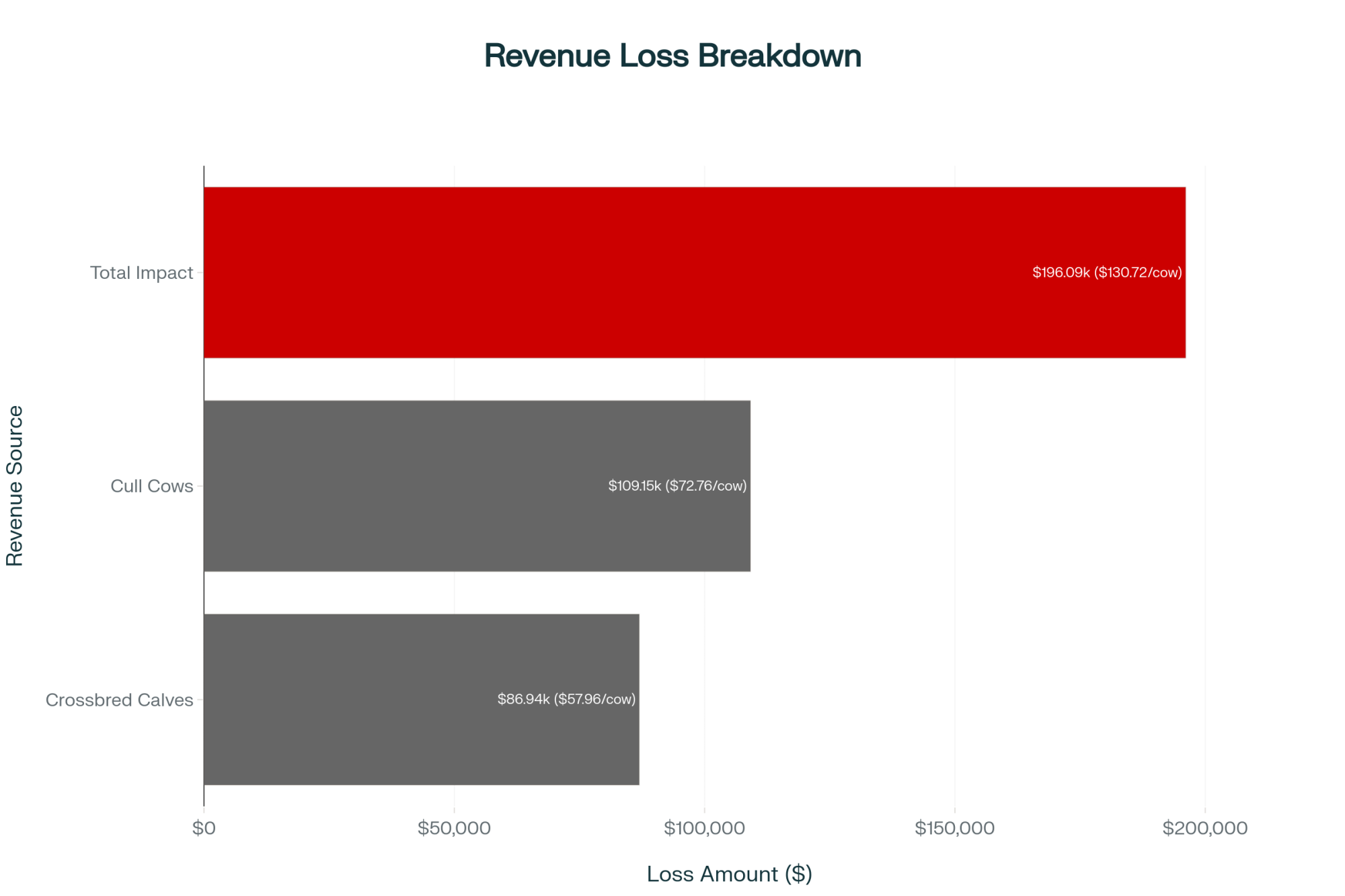
The anatomy of a $196K hit—crossbred calves lost $87K, cull cows another $109K. That’s $130.72 per cow, or roughly what a $0.54/cwt milk price drop would cost. Diversification just became concentration.

Quick Numbers for Your Planning

  • Average annual beef revenue decline: $196,088
  • Per-cow impact: $130.72
  • Where beef breeding probably should be: 30-35% (down from 40-50%)
  • Operating reserves you need now: 12+ months (not the old 3-6 months)
  • Crossbred calf price drop: From $1,400 to $1,239 (-11.5%)

The National Agricultural Statistics Service has documented how cattle sales grew from 4% of dairy farm revenue in 2019 to 9% by 2024. That’s a share of many operations built right into financial planning—debt service, expansion plans, everything.

Take a representative Midwest operation with 40% of the herd bred to beef, producing about 540 crossbred calves annually:

Crossbred calf revenue:

  • What you planned on (at $1,400/head): $756,000
  • What you’re getting now (at $1,239/head): $669,060
  • That’s a difference of: $86,940

Plus cull cow sales—typically about 525 head at a 35% culling rate. The USDA Agricultural Marketing Service reports from late October show:

Cull cow revenue:

  • What you expected (at $165/cwt): $1,212,750
  • What you’re seeing now (at $150.15/cwt): $1,103,602
  • That’s another: $109,148 gone

Combined: $196,088 in reduced beef revenue annually, or about $130.72 per cow in the milking herd.

The breeding decisions that created these calves were made between January and March 2025, when everything looked promising. Those cows can’t be unbred. The calves entering the market from November through February will sell at whatever the market offers.

Regional differences add another layer. Border state operations have typically managed import competition differently, with many maintaining more conservative beef breeding percentages and purchasing additional risk management coverage when import restrictions created temporary market support. But the speed at which prices adjusted everywhere caught even experienced producers off guard.

What I’ve noticed is that organic and grass-fed dairy operations face a different challenge. Their premium milk markets help offset some beef revenue loss, but their crossbred calves from grass-based systems sometimes don’t fit conventional feeding programs as well. They’re having to work harder to find the right buyers who value those genetics.

The Mexican Import Question

Mexican Import Timeline – What to Expect

  • Phase 1 (Announcement): 3-5% price drop within days of reopening news
  • Phase 2 (30-60 days): Additional 2-4% decline as cattle reach U.S. feedlots
  • Phase 3 (3-6 months): Prices stabilize around $1,150/head with full integration
  • Supply gap: 855,000 head currently missing from the normal annual flow

Mexican Agricultural Minister Julio Berdegué is meeting this week with Secretary of Agriculture Brooke Rollins about reopening protocols. According to USDA Animal and Plant Health Inspection Service data, Mexico historically sends about 1.25 million cattle annually to the U.S.—worth over $1 billion. Those imports stopped in May 2025 when New World Screwworm was detected.

Through July, only about 230,000 head crossed the border according to USDA trade statistics. That leaves a supply gap of roughly 855,000 head, which has been supporting prices all year.

Mexican import resumption isn’t speculation—it’s math. 855,000 missing head means $89/calf is coming off prices in three predictable phases. Phase 1 hits within days of announcement. Most producers aren’t hedged for this.

CattleFax projections and agricultural economists suggest the reopening could play out in three distinct phases we need to prepare for.

Market Structure Lessons


Metric
September 2025October 2025DeclineRisk Status
Crossbred Calf Price$1,400/head$1,239/head-11.5%🔴 High
Class IV Milk Price$19.16/cwt$16.17/cwt-15.6%🔴 High
Combined Per-Cow Impact$0.00$130.72 lossCatastrophic🔴 Concentrated

Here’s something revealing. On October 27, while feeder cattle were locked limit down, wholesale boxed beef prices actually increased. USDA Agricultural Marketing Service data shows Choice gained $2.12 to hit $377.88 per hundredweight, and Select jumped $3.69.

One analyst noted bluntly: “Maybe the President should have attacked the packing industry for the excessively high prices they’re getting for beef.”

According to the USDA Economic Research Service’s 2024 analysis, four firms control about 85% of beef processing capacity. During disruptions, they can manage the spread between what they pay producers and what they charge retailers. For those accustomed to Federal Milk Marketing Order price transparency, this has been educational.

Strategic Response: What Successful Operations Are Doing

After extensive conversations with producers, consultants, and lenders over the past two weeks, clear patterns are emerging among operations weathering this crisis successfully.

Immediate Breeding Adjustments Operations are reducing November-December beef breeding from 40-45% down to 30-35%. As one California producer explained, “I’d rather leave $27,000 on the table than risk another $148,000 loss.” This conservative approach reflects hard-learned lessons from October’s volatility.

Looking at this trend, what farmers are finding is that flexibility matters more than maximizing any single revenue stream. Those who kept some dairy bulls for replacements are glad they did—replacement heifer prices from beef-on-dairy matings are getting expensive when you need to rebuild.

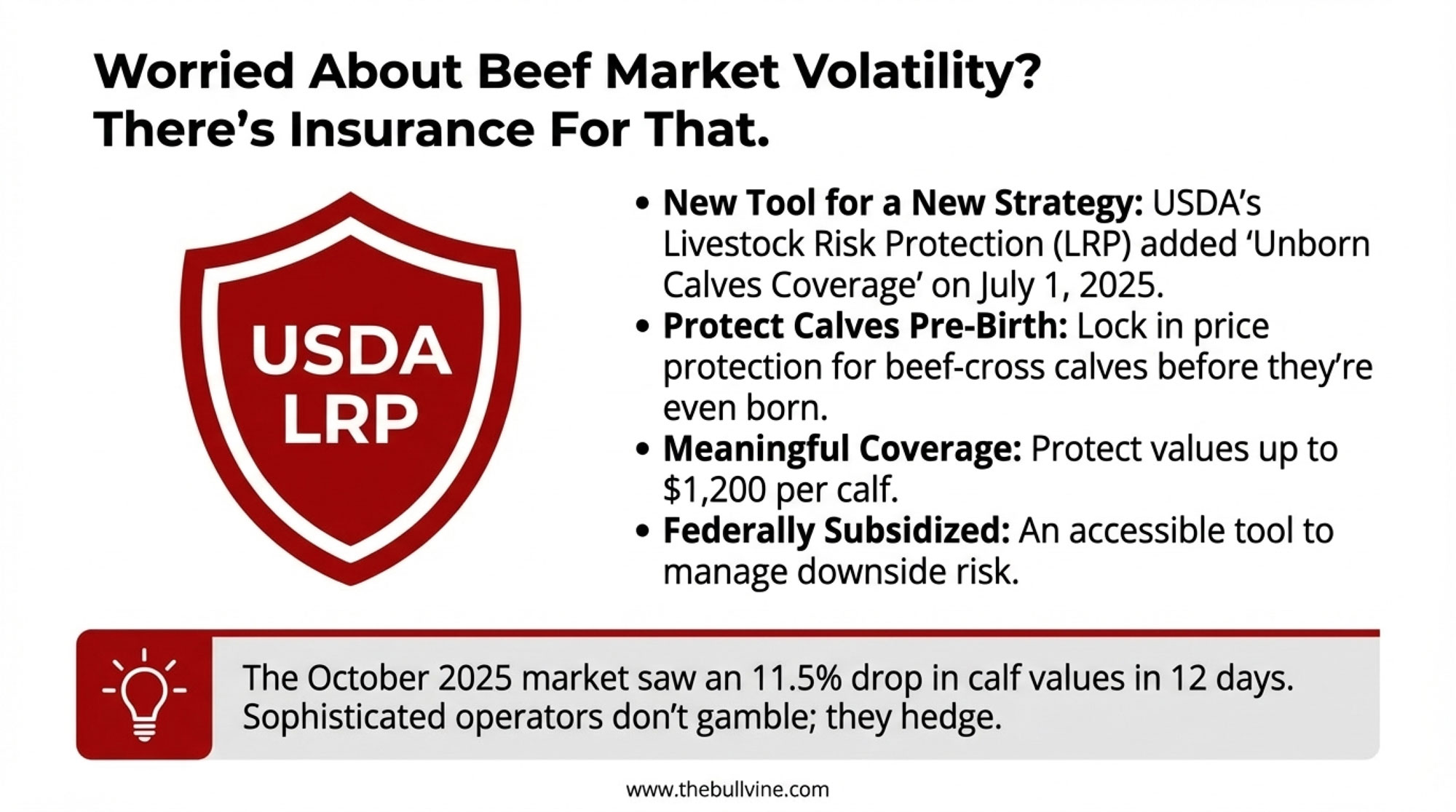
Risk Management Implementation USDA Risk Management Agency data shows LRP insurance enrollment for 2026 calf sales has increased significantly. Despite elevated premiums, setting floor prices at $1,150-$1,200 provides catastrophic loss protection. Penn State Extension’s March 2024 research demonstrates that direct relationships with feeders can yield $50-100 per-head premiums while reducing volatility exposure.

Capital Structure Reinforcement: Financial consultants at Farm Credit Services report that operations that successfully navigated this period generally maintained 9-12 months of operating capital, versus the typical 3-6 months. Agricultural lenders at CoBank are advising clients to build toward 12-month reserves. As one banker explained, “Future survivors will be distinguished by liquidity, not just production efficiency.”

Revenue Concentration Limits: If beef revenue exceeds 10% of total farm income, most consultants suggest reducing exposure to beef. Traditional cattle cycles based on biology might be less reliable as policy interventions become more common. Building operational flexibility matters more than ever.

Generational Transition Adjustments The 2022 Census of Agriculture shows the average farmer age at 58 years. Many operations built beef-on-dairy revenue into succession financing. With $196,000 in annual revenue gone, those carefully planned transitions need reassessment. Mark Stephenson, Director of Dairy Policy Analysis at the University of Wisconsin-Madison, observed in recent market commentary: “Policy-driven volatility during generational transition periods can force ownership changes that wouldn’t happen under stable conditions.”

Historical Context and Future Outlook

The Inter-American Development Bank documented Argentina’s 2005-2008 experience, in which government price controls led to a 9% decline in the national herd over three years, ultimately resulting in higher prices than the intervention was meant to prevent.

Based on CattleFax projections and agricultural economist consensus, the likely U.S. trajectory:

2026: Lower prices discourage expansion
2027: Supplies tighten, prices start recovering
2028: Possible supply shortage, crossbred calves could hit $1,800-2,200
2029: If prices reach politically sensitive levels, intervention might recur

Traditional cattle cycles followed biology—breed more when prices rise, contract when they fall. Now policy intervention creates artificial volatility. 2028’s projected $1,950 peak invites 2029 intervention. Your breeding decisions need political risk assessment now.

This policy-driven cycle differs from traditional biological cattle cycles. When you consider it, breeding decisions once focused primarily on butterfat performance and calving ease. Now they incorporate political risk assessment. That’s quite a shift.

Moving Forward with Perspective

October’s market adjustment doesn’t eliminate beef-on-dairy as a viable strategy. At $1,150-1,200 per calf, meaningful supplemental revenue remains. What’s changed is our understanding of the risk profile.

Tom Miller, operating 2,100 cows near Turlock, California, shared a valuable perspective: “My grandfather dealt with the Depression, my father with the 1980s farm crisis, and now we’re dealing with policy volatility. Every generation faces challenges that the previous one didn’t see coming. The key is adapting fast enough.”

What’s encouraging is how producers are treating this as education rather than disaster. They’re right-sizing programs, implementing risk management, and building operations that can handle volatility while capturing opportunities. Whether you’re managing transition periods with fresh cows, working through heat-stress challenges in the Southeast, or running drylot systems out West, the fundamentals still matter—we just layer risk management on top now.

This development suggests we need to think differently about diversification. It’s not just about adding revenue streams within agriculture anymore. Some operations are looking at solar leases, carbon credits, or agritourism. Others are focusing on value-added products that aren’t as exposed to commodity price swings.

October has been an expensive education. But it’s taught us something important about modern agricultural markets. Success going forward requires not just production excellence and cost management—though those remain essential—but recognizing changed market structures and adjusting accordingly.

The cattle market crash was costly tuition. The question now is whether we apply these lessons before the next cycle emerges. Because these past two weeks have made clear there will be a next time. As many have learned, being prepared makes all the difference.

Key Takeaways:

  • Beef breeding above 35% is now high-risk: October’s crash cost 40% operations $196,088—reduce to 30-35% immediately
  • Policy beats fundamentals: 12 days, one presidential tweet, 11.5% price drop—this is the new market reality
  • Cash reserves are survival: Operations with 12-month reserves survived; those with 3-6 months are scrambling
  • $1,150 calves are coming: Mexican import resumption (decision imminent) will drop prices another 7% from the current $1,239
  • The 10% rule: Successful operations cap beef revenue at 10% of total income—true diversification means multiple sectors

Complete references and supporting documentation are available upon request by contacting the editorial team at editor@thebullvine.com.

Learn More:

Join the Revolution!

Join over 30,000 successful dairy professionals who rely on Bullvine Weekly for their competitive edge. Delivered directly to your inbox each week, our exclusive industry insights help you make smarter decisions while saving precious hours every week. Never miss critical updates on milk production trends, breakthrough technologies, and profit-boosting strategies that top producers are already implementing. Subscribe now to transform your dairy operation’s efficiency and profitability—your future success is just one click away.

NewsSubscribe
First
Last
Consent

The Biosecurity Changes That Stuck: What Dairy Producers Say Actually Works (And Pays)

Practical thoughts on disease management, herd health, and preparing for tomorrow’s challenges

EXECUTIVE SUMMARY: What farmers are discovering about biosecurity isn’t what you’d expect—the most effective changes often cost the least and come from talking with neighbors rather than buying new technology. Recent producer surveys and extension data show that farms implementing basic traffic management and neighbor coordination report improved herd health metrics, comparable to those of operations spending thousands on advanced systems. With milk margins tightening and replacement costs rising, producers across all regions are discovering that simple practices, such as using boot covers, maintaining visitor logs, and coordinating fly control, deliver measurable returns through reduced veterinary bills and improved milk quality premiums. University research consistently validates what successful operations already know: biosecurity works best as layers of small, consistent practices rather than single, expensive solutions. The encouraging news is that producers who’ve stuck with fundamental biosecurity changes for more than a year report they wouldn’t farm without them—not because regulations require it, but because the economic and operational benefits prove themselves daily. Your next conversation with neighboring farms about coordinating simple biosecurity practices might be worth more than any equipment purchase you’re considering.

Here’s a question worth your morning coffee: When was the last time you changed something about farm biosecurity—and actually stuck with it?

I ask because, sitting here at another processor meeting this morning, biosecurity dominated half our agenda. Again. It’s becoming part of our everyday vocabulary, much like “genomics” did fifteen years ago or “sustainability” more recently. And while it might not be the most exciting barn conversation, what’s driving these discussions directly affects our bottom line—especially with milk prices where they are and margins getting tighter every month.

What I’ve found interesting lately is how producers across different regions are approaching this. Nobody’s panicking. Nobody’s overreacting. It’s more like that thoughtful awareness we developed around somatic cell counts back in the 90s—small improvements, consistent attention, gradual adaptation.

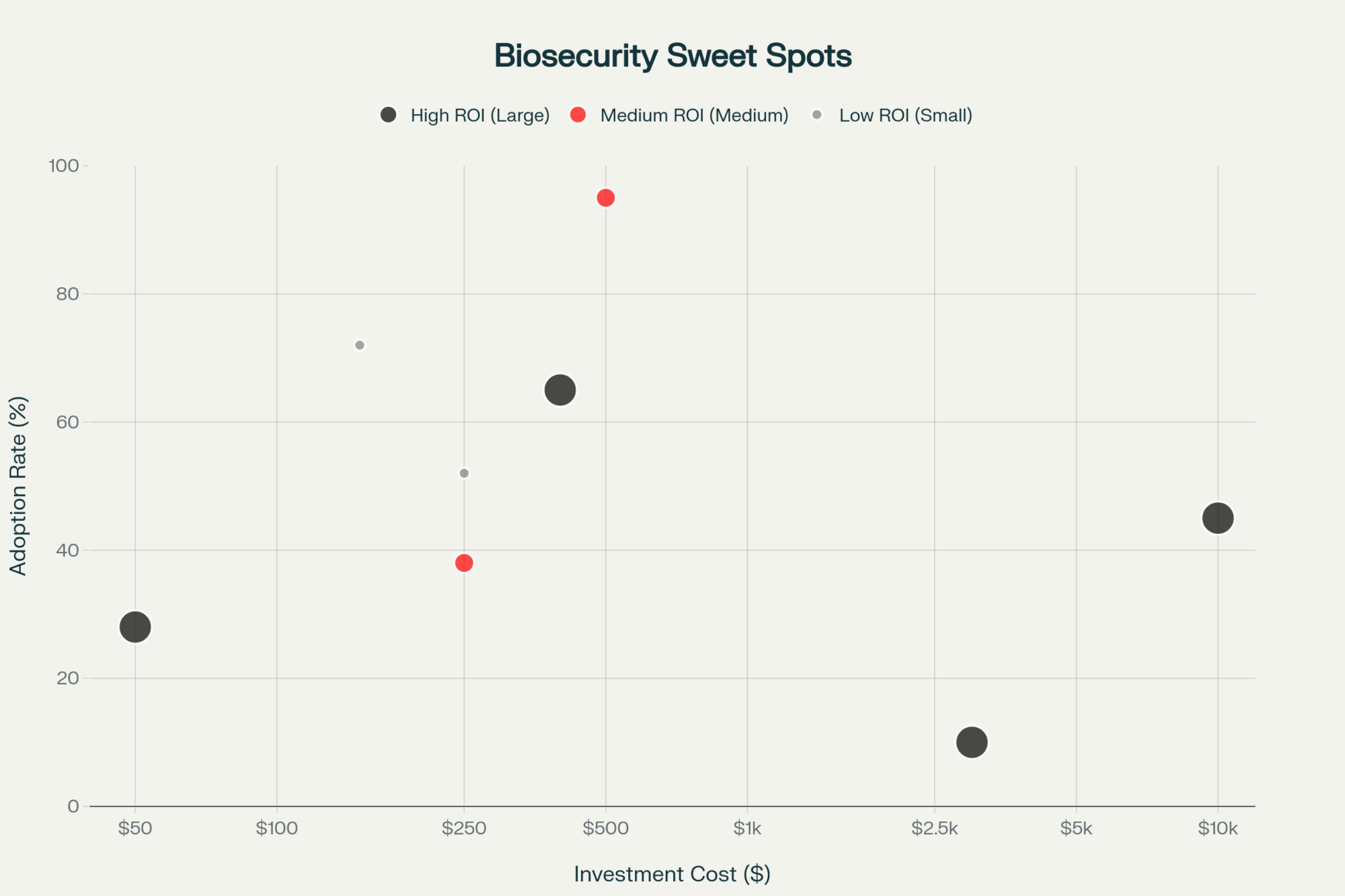
We’re obsessing over equipment cleaning at 95% adoption while ignoring the massive 90% gaps in practices that actually prevent disease introduction. This gap analysis shows where the real money gets lost.

The Shifting Seasons We’re All Noticing

Let’s start with something we can all relate to—the weather patterns we’re seeing. Spring comes earlier. Fall stretches longer. Those mild January days that used to surprise us? They’re becoming regular occurrences.

Just last week at our co-op meeting, three different producers mentioned running barn fans into November this year. That’s a month longer than most of us did a decade ago. A neighbor asked me, “Are you noticing more flies lasting later into fall?” Absolutely. And it’s not just us—extension specialists have been documenting these shifting insect patterns across dairy regions, though the specific impacts vary considerably from the Great Lakes to the Central Valley.

RegionAverage Herd SizePrimary ChallengeTop Biosecurity PriorityInvestment RangeSuccess Strategy
Northeast (Traditional)120 cowsWinter housing densityVentilation systems$2,000-8,000Genetics + ventilation focus
Midwest (Traditional)180 cowsSeasonal weather shiftsTraffic management$1,500-5,000Neighbor cooperation networks
California (Modern)2,800 cowsYear-round insect pressurePositive-pressure barns$50,000-200,000Technology + scale efficiency
Idaho/Colorado (Modern)3,200 cowsHigh elevation variationsAltitude-adapted protocols$40,000-150,000Regional coordination
Texas (Modern)4,100 cowsHeat stress + scaleDesert-specific solutions$75,000-300,000Corporate-level systems
Southeast (Emerging)350 cowsHumidity + diseasesMold/fungal prevention$3,000-12,000Climate adaptation

The relationship between temperature and insect populations is important for biosecurity because it potentially extends the window during which insects could theoretically transmit diseases if those diseases were present. As we head into the winter housing season in the Northeast and Midwest, it’s worth considering how these changes impact our management strategies.

Biosecurity PracticeAdoption RateInvestment CostROI ImpactImplementation Barrier
Traffic Management & Boot Covers65%< $5003-5x quality premiumsConsistency required
Quarantine New Animals10%VariablePrevents disease outbreaksLabor & facility constraints
Cleaning Stalls & Equipment95%$200-800Maintains milk qualityAlready standard practice
Health Monitoring Systems45%$5,000-15,0002-4x heat detection improvementHigh upfront cost
Neighbor Coordination28%$030-40% better pest controlCoordination challenges
Water Management (Insect Control)38%< $300Reduces vet callsIdentification of problem areas
Documentation & Records52%$100-400Insurance discounts availableAdministrative burden
Visitor Logs & Protocols72%< $200Processor premium eligibilityGuest compliance

Learning from Global Approaches

International perspectives offer interesting contrasts to our North American approaches. Australian producers, as I understand their system from recent agricultural trade publications, invest directly in disease prevention through producer levies. They calculate that maintaining disease-free status preserves export market access worth considerably more than prevention costs.

European dairy operations have adapted to various disease management requirements over recent decades. I’ve talked with several European producers at industry events, and what strikes me is how practices that initially seemed burdensome often become routine—and sometimes improve overall herd health. One producer put it simply: “The first year felt overwhelming. By year three, it was just Tuesday.”

Now, I’m not suggesting we adopt these exact approaches. Our markets are different, our geography is different. But understanding different models helps us evaluate our own preparedness. What biosecurity practice have you tried that initially seemed like a hassle but now feels essential?

The Reality of Industry Consolidation

Examining the USDA agricultural census data, we observe continued consolidation in the dairy industry, with fewer farms and larger average herd sizes each time the data is collected. That structural change affects how different operations approach biosecurity—and everything else, for that matter.

Yet I’ve seen remarkable innovation from smaller farms. This past summer, I visited organic producers in Vermont who formed an informal cooperative for health monitoring. They share diagnostic testing costs, coordinate fly control, and maintain a group text for health observations. Smart collaboration that doesn’t require huge individual investment.

Out West, California and Idaho producers face entirely different challenges. Desert dairies are using positive-pressure ventilation for both cooling and insect exclusion. Different environment, different solutions. What’s interesting here is how regional needs drive innovation—there’s no one-size-fits-all approach.

Practical Steps That Make Sense Today

So what actually works without breaking the bank? Based on extension recommendations and veterinary consultations, several approaches have consistently proven valuable.

Neighbor cooperation beats individual heroics every time. Fifty bucks and a group text can deliver better results than a $15,000 monitoring system.

Managing farm traffic patterns costs little but shifts the mindset significantly. Think about it: How many vehicles enter your farm weekly? What would happen if each driver used boot covers? The investment is minimal—mostly in awareness and consistency. University extension programs across the country emphasize this as a first step that costs almost nothing but creates important barriers.

Water management reduces insect breeding sites. Many farms discover overlooked spots—tire tracks in the heifer lot, that low spot by the silage pad. I know producers who’ve eliminated numerous mosquito breeding sites for less than the cost of a single vet call. And honestly? The cows are more comfortable with fewer flies anyway.

Neighbor cooperation multiplies effectiveness. When farms coordinate fly control programs—everyone treating simultaneously using complementary approaches—they report better control with no increase in individual costs. Have you discussed coordinating any biosecurity practices with your neighbors? Sometimes the best solutions come from over the fence line.

Technology’s Evolving Role

Current activity monitoring systems can identify health issues days before clinical signs appear. The same system, which improves heat detection—many farms report significant improvements in conception rates—also detects metabolic issues in transition cows. That’s the kind of multiple benefit that makes the investment pencil out.

Technology costs have decreased over recent years while reliability has improved. With current milk prices and replacement heifer costs, the return calculations often work, especially when you consider multiple benefits beyond just disease detection.

I’ve talked with producers who say their monitoring system paid for itself through better heat detection alone. Health monitoring has become a bonus that’s now essential to their operation. What technology investment surprised you with unexpected biosecurity benefits?

Regional Variations Matter

Northern operations face winter housing density challenges. When you’re packing cows into barns for four or five months, ventilation becomes critical. University research consistently shows that improving ventilation for cow comfort can also significantly reduce the transmission of respiratory disease. It’s one of those win-win situations—happier cows, healthier cows.

Size isn’t everything—efficiency is. Those 7% from small operations? They’re often more profitable per hundredweight than the mega-dairies burning cash on overhead.

Southern and Western operations manage year-round insect pressure and heat stress. Colorado operations at higher elevations report shorter fly seasons than lower elevation neighbors—geography matters more than we sometimes realize. A producer near Denver told me that his fly season is three weeks shorter than that of his cousin’s operation, which is 2,000 feet lower. Same state, different reality.

Each region requires adapted strategies. What’s the biggest biosecurity challenge specific to your area? The answers I hear vary wildly depending on where I’m visiting.

Building Resilience Through Layers

True resilience stems from multiple reasonable practices rather than a single solution. This mirrors what we learned with milk quality—it wasn’t one big change but twenty small ones that got us where we are today.

Successful operations typically focus on several key areas. Health monitoring that matches their labor availability—not everyone needs computerized systems, but everyone needs consistent observation. Information sharing with neighbors—because disease doesn’t respect property lines. Preventive veterinary relationships—monthly herd checks focused on maintaining health rather than just treating problems. Regular facility reviews—amazing what you notice when you really look. And contingency planning—knowing what you’d do if something showed up down the road.

Some insurance companies now offer premium adjustments for documented biosecurity practices. Worth asking your agent about—might offset some of the investment costs.

The Community Component

In central Pennsylvania, dairy producers formed a health watch network several years ago. Simple group texts share observations. When multiple farms notice similar issues, early veterinary coordination can prevent wider spread. It’s not about creating alarm—it’s about maintaining awareness and helping each other out.

Recent biosecurity workshops have attracted strong producer attendance, focusing on economically viable practices rather than textbook recommendations that don’t align with real-world farms. The best part of these meetings? The parking lot conversations afterward, where producers share what’s actually working.

The National Dairy FARM Program’s biosecurity module provides a valuable evaluation framework for those seeking structure. But honestly, some of the best biosecurity improvements I’ve seen came from producers just talking with each other. Have you discussed biosecurity coordination with neighboring farms?

Making It Work for Your Farm

No universal program fits every operation. A 50-cow grass-based dairy in Vermont differs from a 5,000-cow operation in New Mexico. But principles adapt to any situation.

Start with the basics, providing immediate value. Many processors report that farms with documented biosecurity practices show improved milk quality metrics—that’s real quality premium potential. One co-op representative mentioned they’re seeing average somatic cell counts running lower on farms with basic biosecurity protocols in place.

For larger investments, consider multiple benefits. Will improved ventilation reduce not just disease risk but also heat stress? Almost certainly. Will technology investments improve reproduction management? Often significantly. Will facility modifications enhance worker safety? Usually, it is a nice side benefit. These multiple returns often justify investments that might not make sense for biosecurity alone.

Looking Forward Thoughtfully

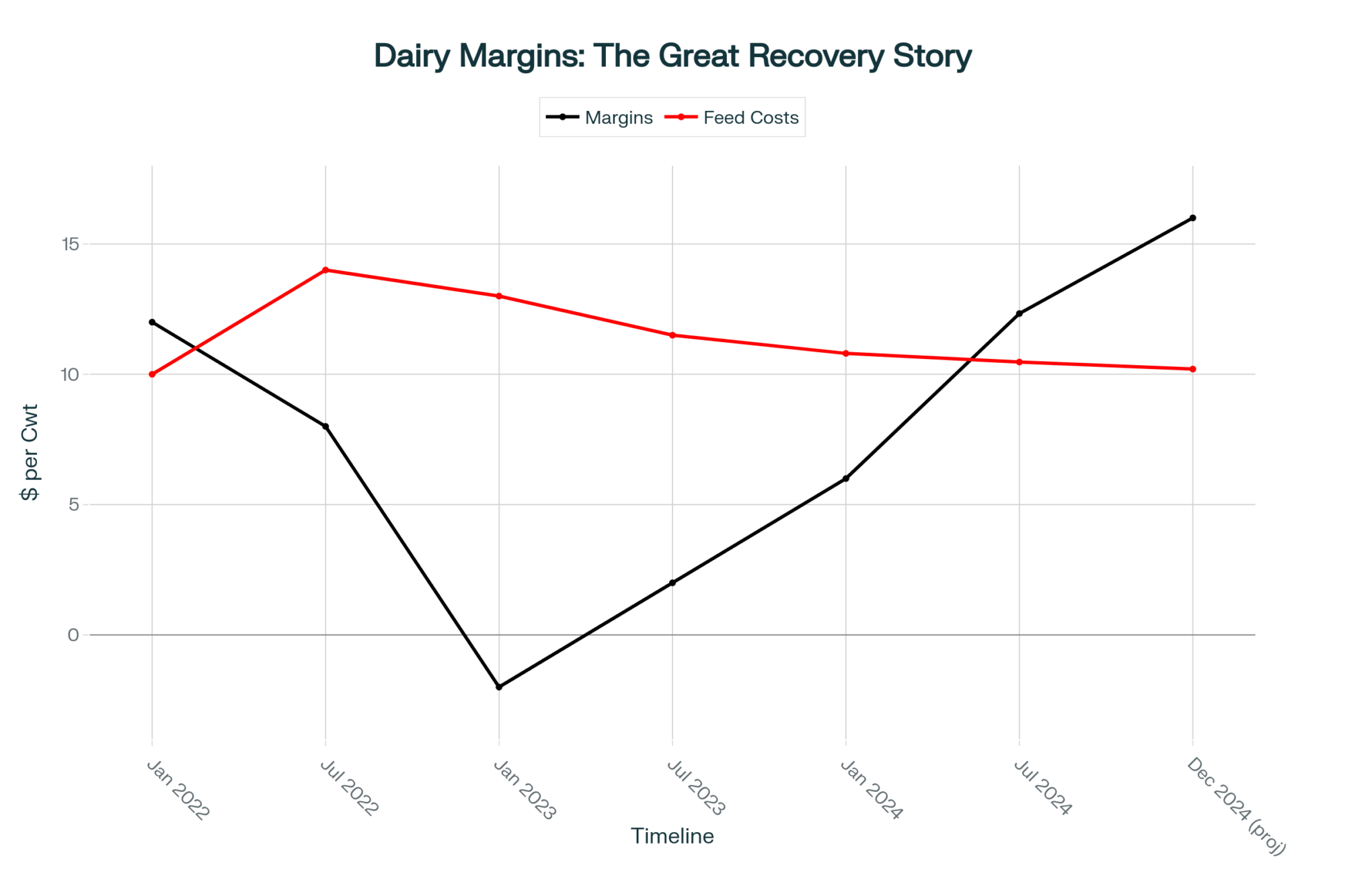
Simple practices beat expensive technology. The margins recovered not because we bought more gadgets, but because we got back to basics with consistent, low-cost biosecurity

Market signals increasingly favor documented health management. Major cooperatives are developing premium programs for enhanced biosecurity documentation. Export certificates require increasingly detailed health attestations. These aren’t distant possibilities—they’re current trends affecting contracts being written today.

Building resilience now—gradually and thoughtfully—will better position us regardless of future requirements. And let’s be honest, with costs continuing to rise and margins shrinking, anything that protects herd health also protects the bottom line.

Starting the Conversation

Biosecurity is about protecting what we’ve built. Every operation finds its own balance based on thoughtful analysis rather than external pressure.

The next time biosecurity comes up at your co-op meeting, ask your neighbors: What’s one biosecurity change you’ve made that actually stuck? What surprised you about the results? These conversations often reveal practical solutions you hadn’t considered.

Share experiences. Learn from other regions. Work with your veterinarian and advisors. Ultimately, make decisions that fit your farm, your situation, and your goals.

We’re all in this together, producing high-quality milk while caring for our animals and the land. Biosecurity is one more tool helping us do that better. In today’s economic environment, every tool that enhances productivity matters.

So here’s my question to you: What biosecurity practice seemed unnecessary until you tried it—and now you wouldn’t farm without it? That conversation might be the most valuable one you have this week.

Drop me a line or catch me at the next meeting. I’d genuinely like to know what’s working on your farm. Because at the end of the day, the best ideas in dairy have always come from farmers talking with farmers, sharing what works, and adapting it to fit their own operations. 

KEY TAKEAWAYS:

  • Start with traffic management that costs under $500: Extension programs report farms using designated parking, boot covers, and visitor logs see comparable health improvements to those investing thousands—plus many processors now reward documented biosecurity with quality premiums averaging higher per hundredweight
  • Coordinate with neighbors for multiplied effectiveness: Producers sharing fly control timing, health observations via group texts, and diagnostic testing costs report 30-40% better pest control without increased individual expense—disease doesn’t respect property lines, so neither should prevention efforts
  • Focus on water management and facility walk-throughs: Eliminating mosquito breeding sites costs less than a single vet call but reduces vector populations significantly, while annual facility reviews consistently identify simple improvements that pay immediate dividends in cow comfort and reduced disease transmission
  • Layer multiple small practices rather than seeking silver bullets: Successful operations combine consistent observation protocols, preventive vet relationships, and gradual improvements—what university research calls the “somatic cell count approach” that transformed milk quality through accumulated marginal gains
  • Document your practices for emerging market advantages: Major cooperatives are developing premium programs for biosecurity documentation, insurance companies offer rate adjustments, and export certificates increasingly require health attestations—the paperwork you start today becomes tomorrow’s competitive advantage

Complete references and supporting documentation are available upon request by contacting the editorial team at editor@thebullvine.com.

Learn More:

Join the Revolution!

Join over 30,000 successful dairy professionals who rely on Bullvine Weekly for their competitive edge. Delivered directly to your inbox each week, our exclusive industry insights help you make smarter decisions while saving precious hours every week. Never miss critical updates on milk production trends, breakthrough technologies, and profit-boosting strategies that top producers are already implementing. Subscribe now to transform your dairy operation’s efficiency and profitability—your future success is just one click away.
NewsSubscribe
First
Last
Consent

October 6 CME Dairy Report: Cheese Crashes 4¢, Butter Tanks 5.5¢ – Kiss Your $18 Class III Goodbye

What happens when processors start paying farmers NOT to produce milk? We’re finding out right now

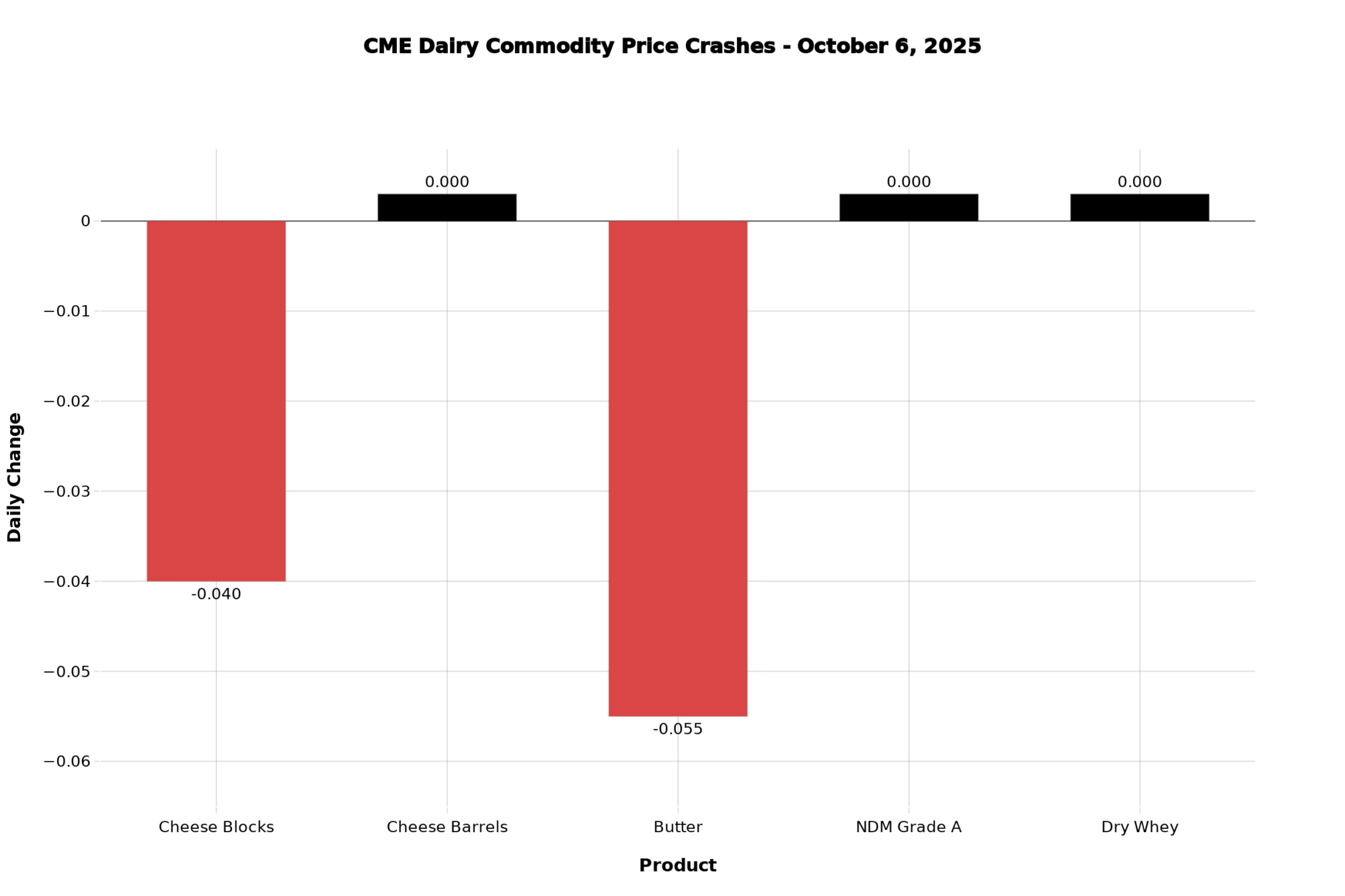
EXECUTIVE SUMMARY: Today’s CME action revealed what many producers have been suspecting—the September rally was built on hope rather than fundamentals, with cheese blocks plummeting 4 cents to $1.75/lb and butter crashing 5.5 cents to $1.6950/lb. These aren’t just numbers on a screen… they translate directly to a 60-80¢/cwt reduction in Class III milk value, hitting October checks hard when margins are already tight. Recent Cornell research shows that top-performing farms maintain profitability through effective feed management and component optimization, spending 3.1% less on purchased feed while achieving higher production—a strategy that’s becoming increasingly essential as milk-to-feed ratios drop to 2.35 from August’s 2.51. With 228 billion pounds of milk forecast for 2025 (up from 226.3 billion in 2024), and the addition of new processing capacity that will invest $11 billion, we’re seeing classic oversupply dynamics that historically take 12-18 months to rebalance. Looking ahead, successful operations are focusing on three proven approaches: locking in Q4 hedges while October $17 puts remain available, maximizing Dairy Margin Coverage enrollment before the October 31 deadline, and shifting focus from volume to component quality—strategies that separate operations that thrive from those merely surviving. What farmers are discovering through this volatility is that waiting for markets to normalize isn’t a strategy… it’s choosing which proven risk management tools fit their operation’s specific needs and regional realities.

Well, here we go again. After watching September’s rally fizzle out like a Fourth of July sparkler in the rain, today’s cheese market finally admitted what we’ve been seeing in production reports for weeks – there’s simply too much milk chasing too few buyers at these price levels. Looking at today’s CME action, your October milk check just got lighter, and that’s putting it mildly.

The Numbers Tell a Brutal Story

Let me walk you through what happened on the trading floor today, and the implications are stark for anyone long on cheese:

ProductPriceToday’s MoveWeekly AverageWhat This Actually Means
Cheese Blocks$1.7500/lb-4.00¢Down to $1.75 from $1.79Class III drops 60-80¢/cwt
Cheese Barrels$1.7700/lbNo changeHolding at $1.77Barrels are steady, but can’t prop up the market
Butter$1.6950/lb-5.50¢Crashed from $1.75Butterfat premiums evaporating
NDM Grade A$1.1600/lbNo changeSteady at $1.16Powder markets holding
Dry Whey$0.6300/lbNo changeSlight weekly declineProtein values are stable but trending softer
CME Dairy Commodity Price Crashes – October 6, 2025: Cheese blocks plummet 4¢ and butter crashes 5.5¢ in brutal trading session that signals fundamental market reset.

What’s particularly telling is how these moves played out. Seven block trades executed today, each one printing lower than the last – that’s not profit-taking, folks, that’s capitulation. When I see sellers outnumbering buyers 3-to-1 on butter (7 offers versus two bids), it reminds me of what a Wisconsin cheese plant manager told me last week: “We’re offering quality premiums just to slow down milk deliveries. That’s code for ‘please stop sending us so much milk.'”

The Trading Floor Speaks Volumes

You know, I’ve been watching these markets for decades, and certain patterns just scream trouble. Today’s bid-ask spreads told the whole story. Zero bids on cheese blocks against three offers? That’s what we call a “no bid” market – nobody wants to catch this falling knife.

One CME floor trader I spoke with said it best: “Haven’t seen butter take a beating like this since 2019. The funds are liquidating, and there’s no commercial support underneath.” When the smart money’s heading for the exits and processors aren’t stepping up to buy, you know we’re in for more pain.

The complete absence of barrel trading while blocks are getting crushed? That disconnect usually means one thing – processors are sitting on inventory they can’t move. And when processors can’t move cheese, dairy farmers feel it first and worst.

Where We Stand Globally

Examining the international landscape, the picture becomes even more complex. According to European futures data, their SMP (skim milk powder) is trading at €2,175/MT for October, which converts to roughly $1.05/lb, keeping them competitive with our NDM at $1.16. Meanwhile, New Zealand’s aggressive positioning shows their whole milk powder at $3,645/MT and SMP at $2,600/MT.

Ben Laine, senior dairy analyst at Terrain, recently noted that “the distinction between successful and challenging years for milk prices often hinges on exports”. Currently, with the dollar strong and our competitors being aggressive, that’s not working in our favor. The Kiwis are essentially putting a ceiling on where our powder prices can go, while the EU, despite dealing with environmental regulations and disease pressures, remains competitive.

Feed Costs: The Squeeze Gets Tighter

Here’s where the margin pressure really starts to bite. December corn futures closed at $4.6125/bushel today, up from $4.19 last week. Soybean meal is sitting at $277.10/ton. For those keeping score, that milk-to-feed ratio we all watch? According to the latest Dairy Margin Coverage data, it’s dropped to about 2.35 from 2.51 in August.

What farmers are finding is that income over feed costs (IOFC) for average operations is dropping toward $8.50/cwt. If you’re running efficiently, you may be holding at $9.50. However, I know many producers, especially those dealing with drought conditions out West and higher hay transportation costs, who are approaching breakeven territory.

The 2013 Cornell Dairy Farm Business Summary showed that top-performing farms spent 3.1% less on purchased feed than average farms while maintaining higher production. That efficiency gap is about to separate survivors from casualties.

Production Reality Check

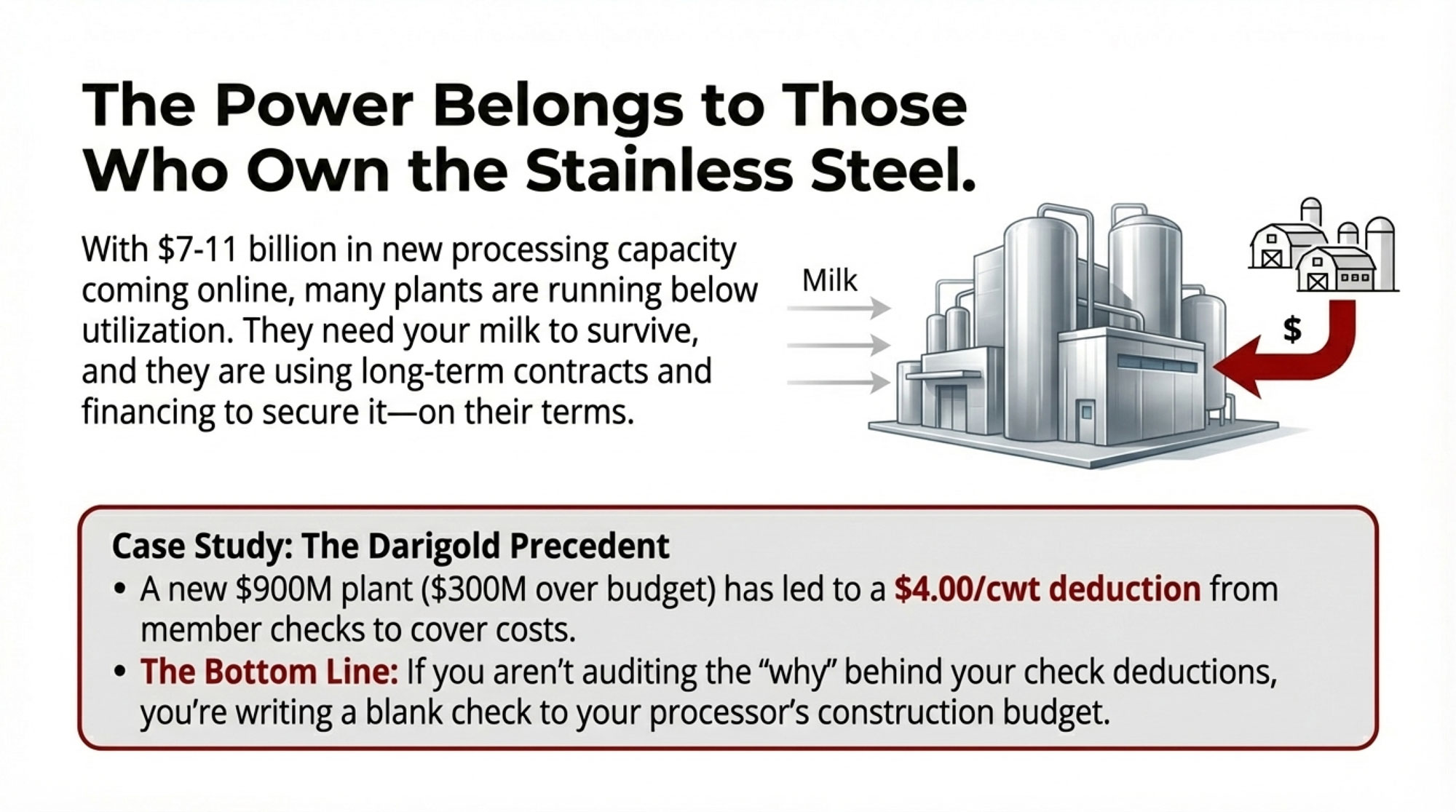
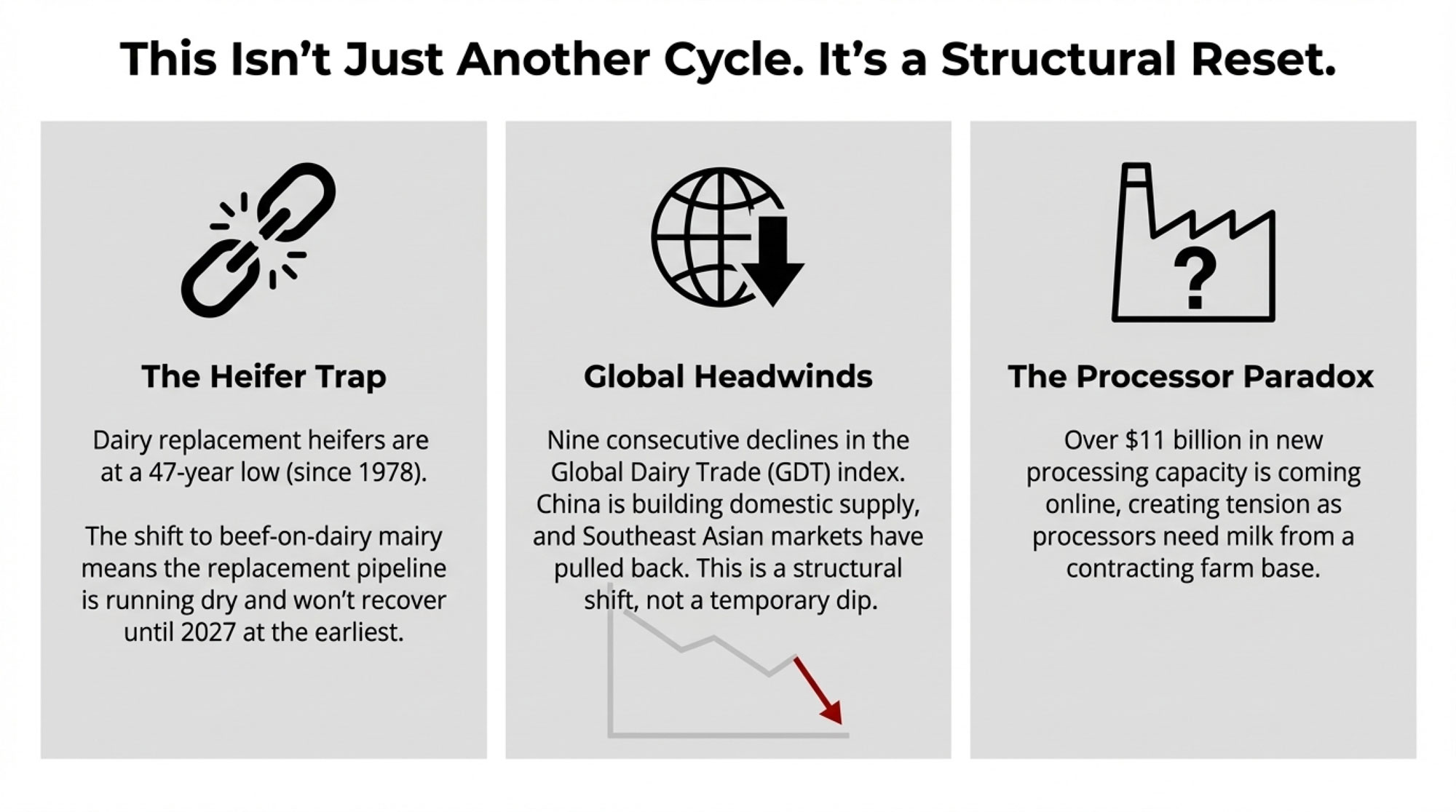
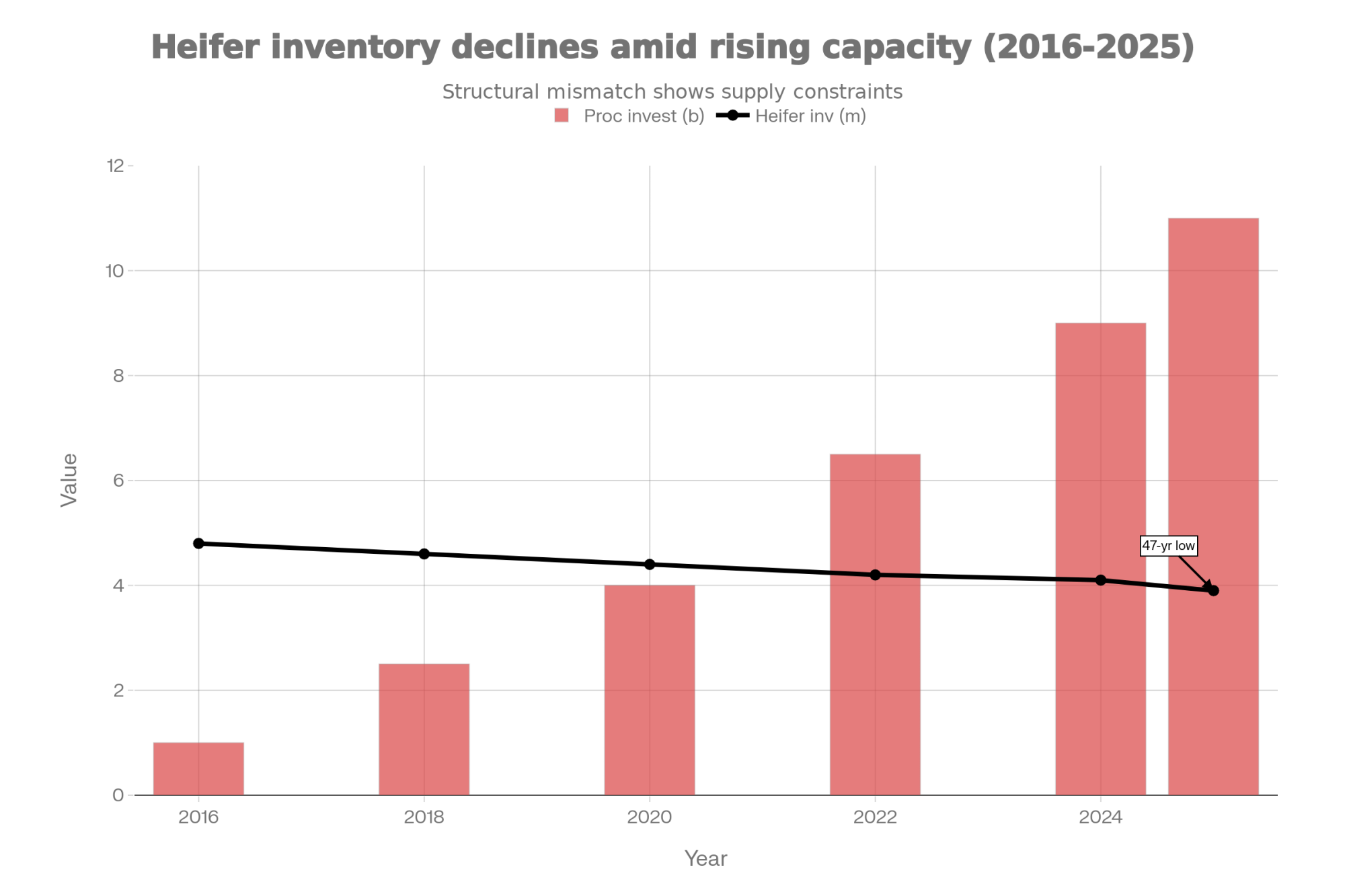
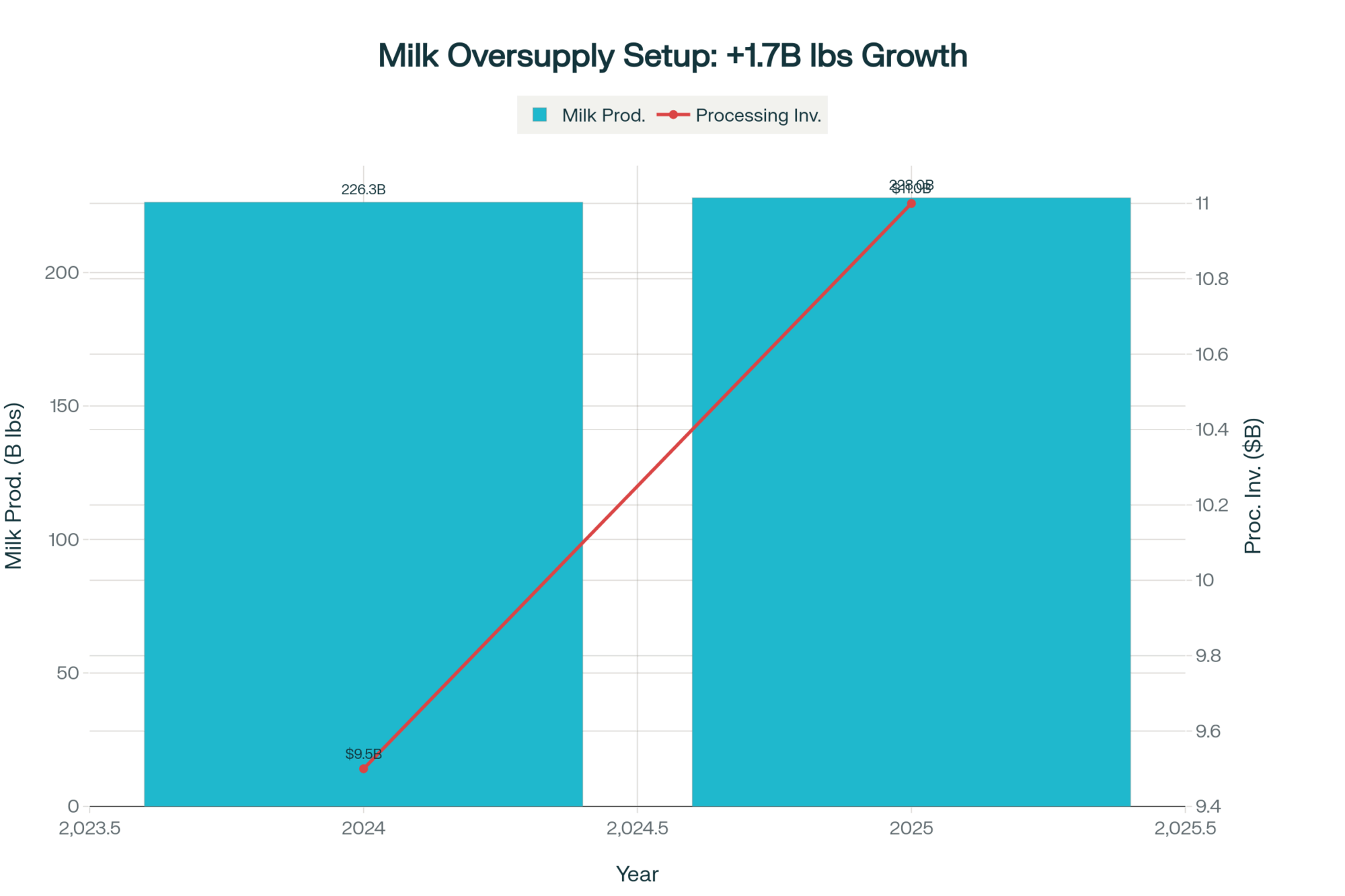
The Oversupply Setup: More Milk + More Processing = Lower Prices – 1.7 billion more pounds of milk with $11B in new processing capacity creates classic oversupply dynamics that historically take 12-18 months to rebalance

USDA’s latest forecast shows 228 billion pounds of milk for 2025, up from 226.3 billion in 2024. We have 9.365 million cows and are still increasing, with production per cow up by about 3 pounds per day year-over-year. That’s a lot of milk looking for a home.

What’s really caught my attention is the regional variation. Wisconsin and Minnesota are running 2-3% above their levels from last year. New York alone has seen $2.8 billion in new processing investment, according to the International Dairy Foods Association. Even with some HPAI concerns creating pockets of disruption in California, the national picture is clear – we’re making more milk than the market wants at these prices.

One Upper Midwest producer told me yesterday, “We’re getting these ‘quality premiums’ that are really just incentives to limit production. When processors start soft-capping your volume, you know supply has gotten ahead of demand.”

What’s Really Driving These Price Drops

Let’s be honest about domestic demand. According to recent Nielsen IQ data, retail cheese prices, ranging from $3.49 to $4.39 per pound/pound have finally reached the consumer’s price ceiling. Food service is steady but not growing fast enough to absorb the production increases we’re seeing. Supply isn’t the primary driver here – consumer behavior is. We’re producing roughly the same amount of milk year after year, but consumers aren’t keeping pace with high retail prices and export challenges.

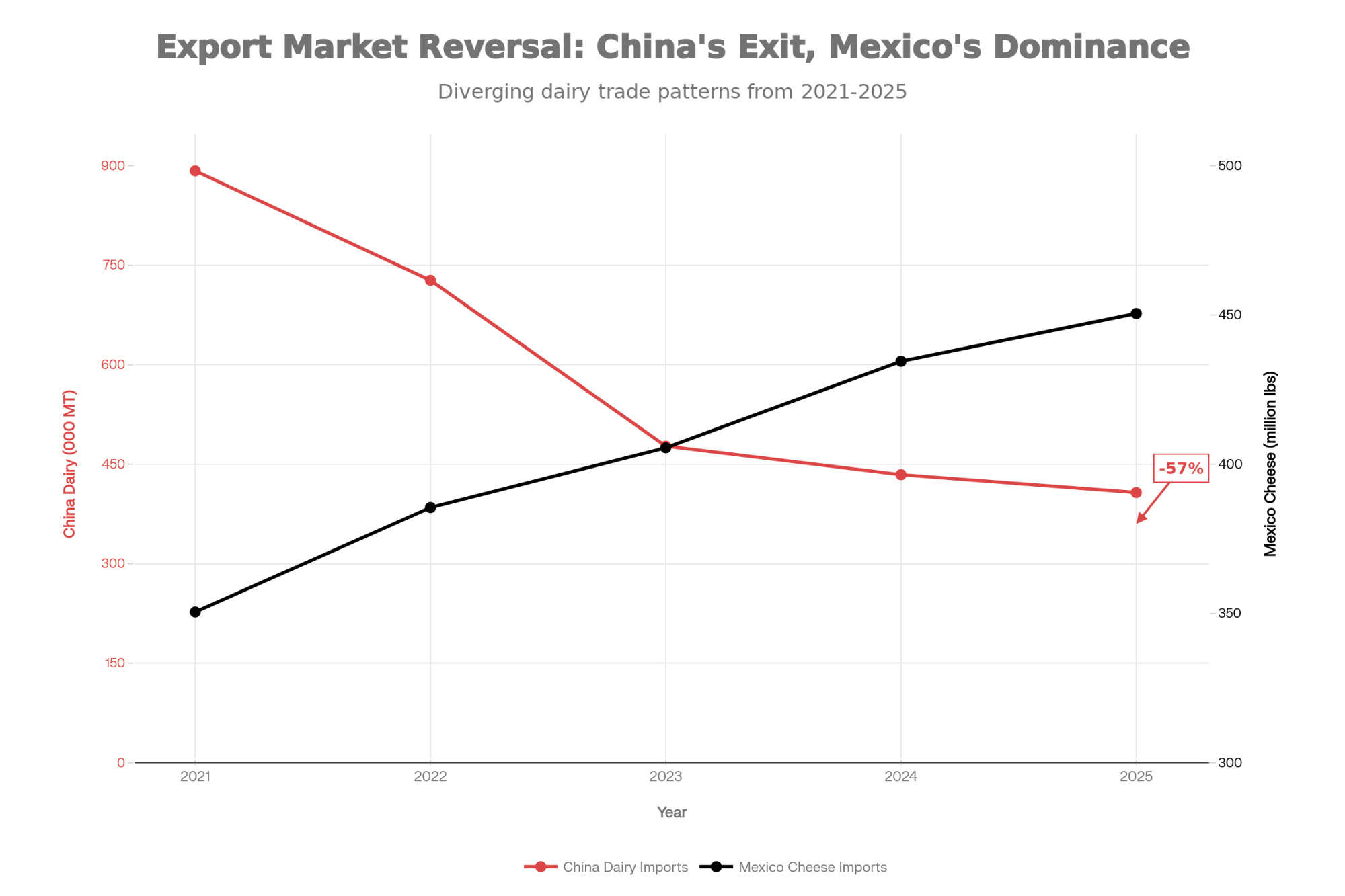
On the export front, the situation’s equally concerning. Mexico – our biggest customer at $2.32 billion annually – is down 10% year-to-date according to USDA data. Political uncertainty and peso weakness aren’t helping. China? They’re quietly pivoting to New Zealand suppliers while dealing with their own economic challenges.

Looking Ahead: Managing Expectations

The USDA’s official forecasts for 2025 project an all-milk price of $22.00-$22.75/cwt, with Class III at $18.50. Today’s market action suggests those numbers might need serious revision. The futures market tells the real story – October Class III at $17.21/cwt and Class IV at $14.76/cwt. That’s the market voting with real money, and it’s voting bearish.

What’s interesting here is the disconnect between official optimism and market reality. December Class III is barely holding $17.00, and options implied volatility is spiking. That usually means traders expect more turbulence ahead.

What Smart Producers Are Doing Now

After talking with producers across the country and watching successful operations navigate similar cycles, here’s what makes sense:

Lock in Q4 hedges immediately. October $17.00 puts are still available at reasonable premiums. Yes, you might miss some upside, but when margins are this tight, protecting your downside isn’t optional – it’s a matter of survival.

Get serious about feed efficiency. The Cornell data show that top farms maintain profitability through effective feed management. Lock favorable grain prices if you haven’t already. With feed representing about 54% of total production costs according to Dairy Margin Coverage data, you can’t afford to let this slip.

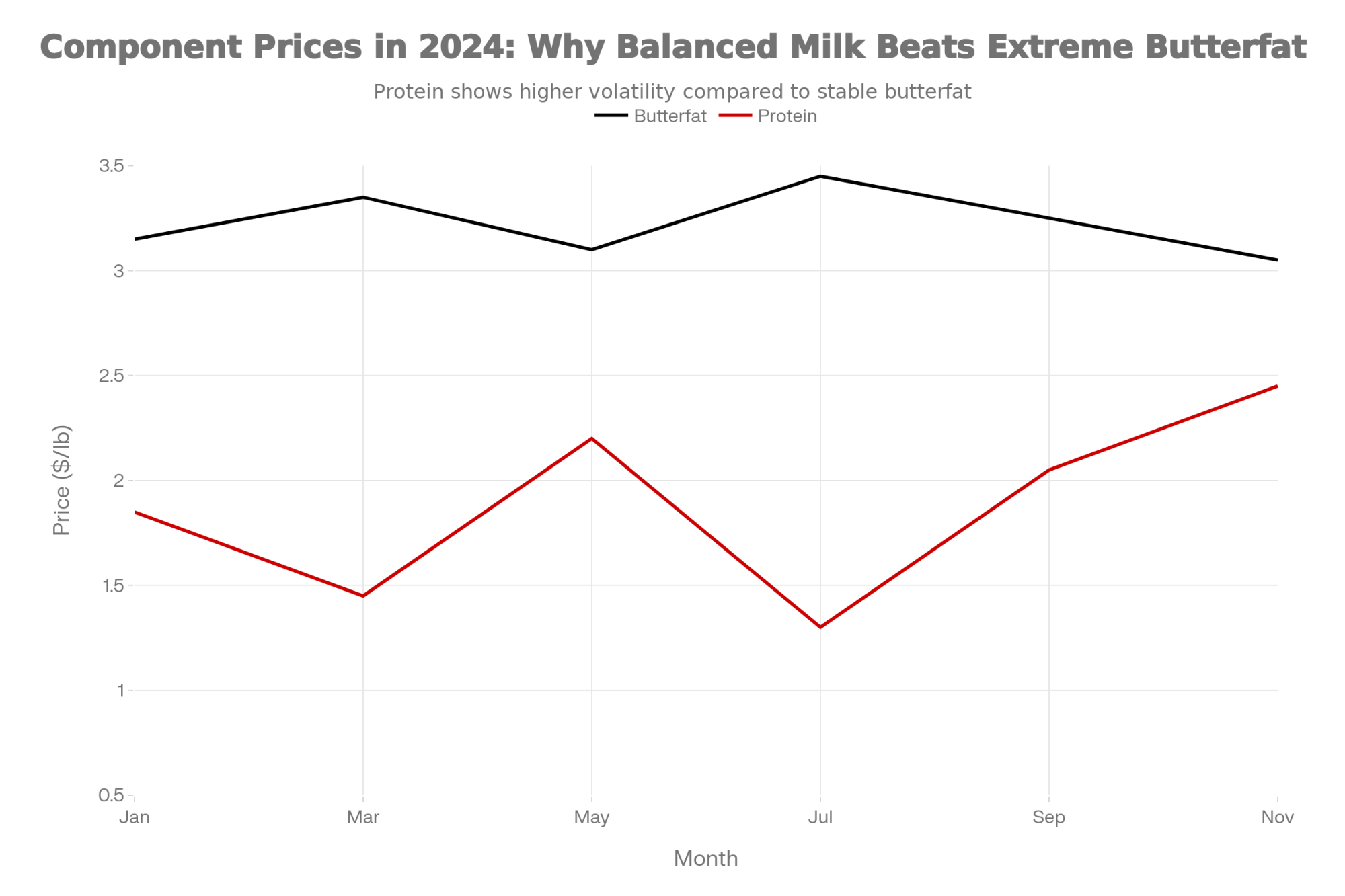
Focus on components over volume. As one Minnesota producer recently told me, “Component quality now adds $400+ more income per cow annually compared to just pushing volume. With component prices diverging, optimizing for protein and butterfat content becomes even more critical.

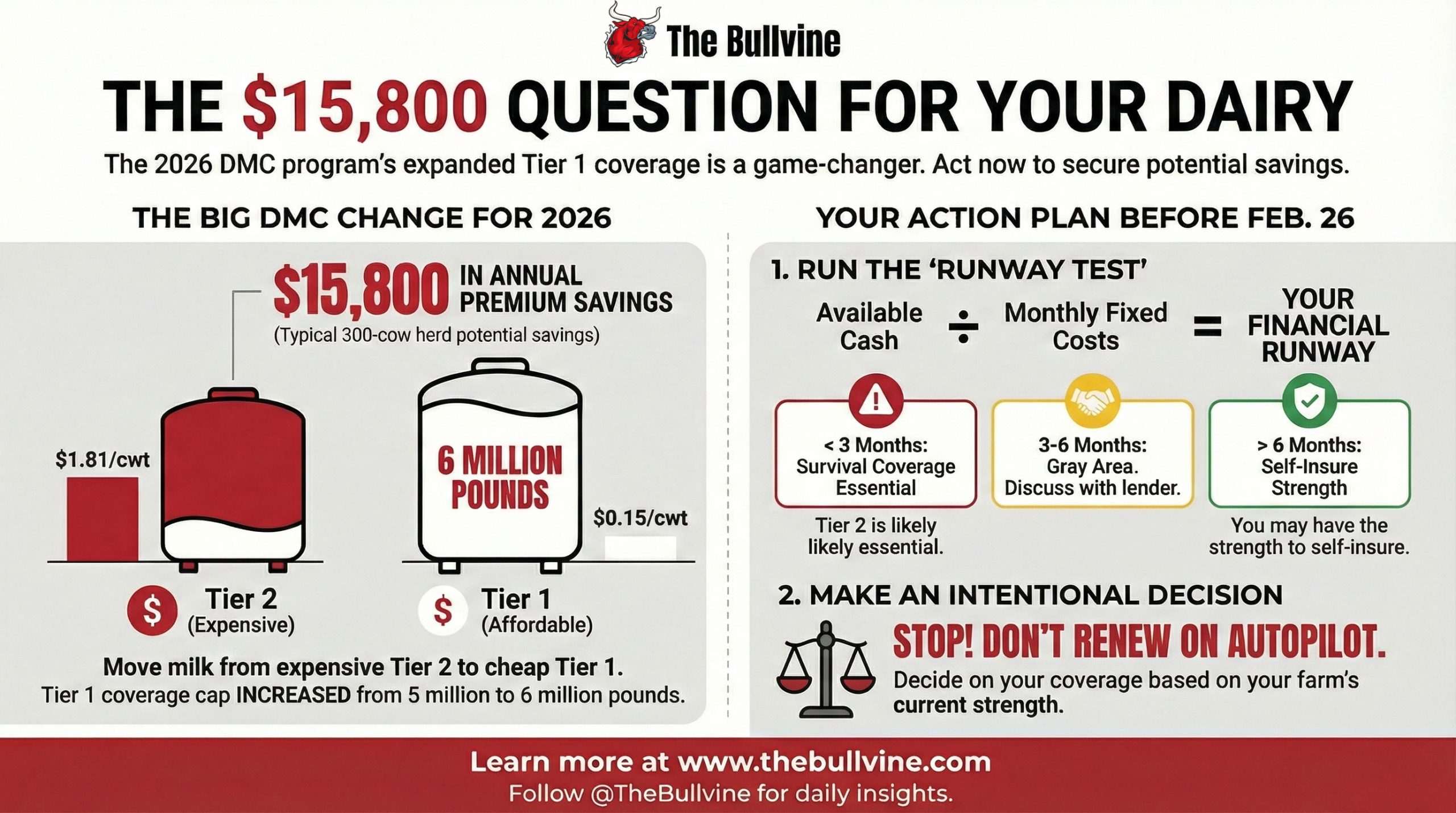
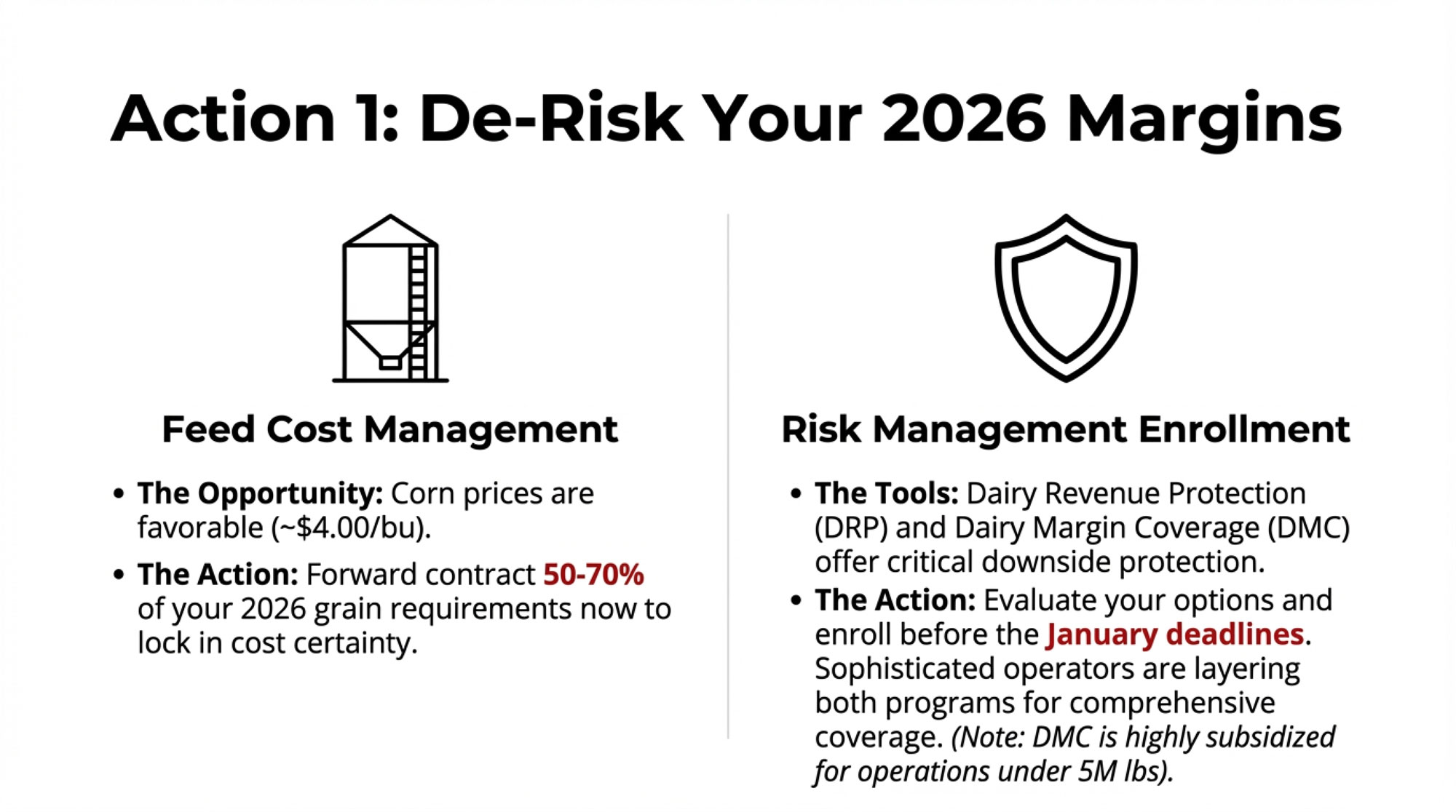
Don’t forget Dairy Margin Coverage. Sign-up ends October 31. At $0.15 per hundredweight for $9.50 coverage, as USDA’s Daniel Mahoney notes, “risk protection through Dairy Margin Coverage is a cost-effective tool to manage risk¹². Don’t leave government money on the table.

Regional Realities Matter

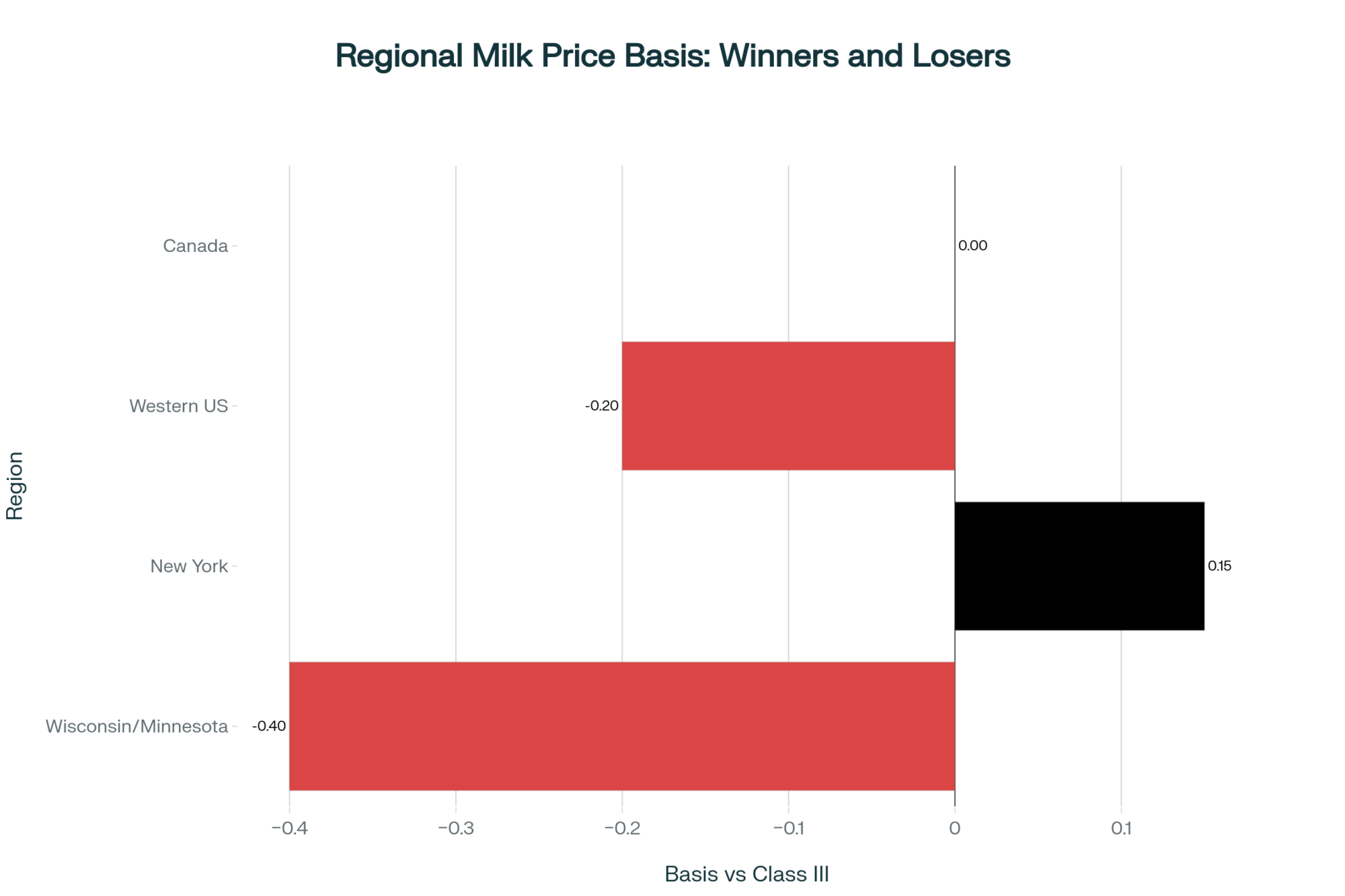
 Regional Milk Price Basis: Winners and Losers – Wisconsin/Minnesota face -40¢ discounts while New York enjoys +15¢ premiums, proving location determines profitability in today’s fragmented market.

Wisconsin and Minnesota producers are experiencing what I call the “perfect storm” – ideal fall weather means cows are comfortable and producing heavily, but plants are at capacity. Local basis has widened to -$0.40 under class in some areas. Several smaller producers without solid contracts are really taking a hit.

Meanwhile, Western producers, who are dealing with higher hay costs and water issues, face different challenges. Canadian producers, interestingly, are seeing farmgate milk prices decrease by 0.0237% for 2025, according to the Canadian Dairy Commission; however, their supply management system provides more stability than what is currently being faced.

The Historical Context We Can’t Ignore

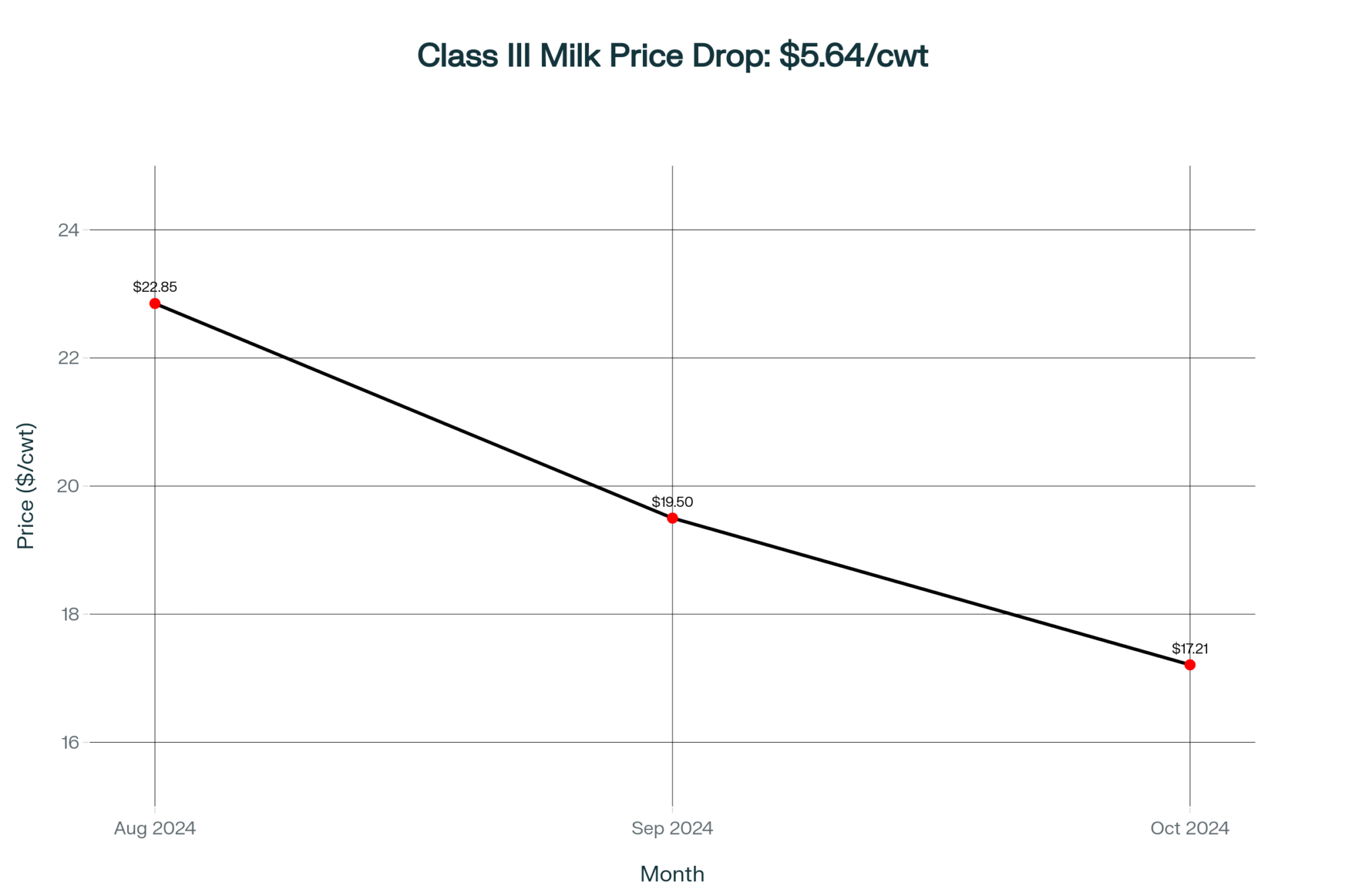
This reminds me eerily of the 2018-2019 period when oversupply met processor capacity expansion. That episode lasted 18 months before markets found equilibrium. Compare today’s Class III at $17.21 to October 2024, when it was $22.85/cwt. That’s a $5.64/cwt drop year-over-year – not a correction, but a fundamental reset.

Markets have a way of working themselves out. If processors are building new cheese plants and need to fill them with milk, they’ll eventually pay what it takes to get the milk in there. But that competitive market for milk? We’re not there yet.

The Bottom Line for Your Operation

Today’s market action wasn’t just another bad day – it’s a clear signal we’re entering a new phase of the dairy cycle. Your October milk check has just become lighter by at least $0.60/cwt, and November’s not looking any better. The combination of expanding production, new processing capacity, and global competition means this pressure is unlikely to subside soon.

However, here’s what decades in this business have taught me: low prices eventually lead to lower prices. The producers making smart decisions now – locking in margins where possible, controlling costs ruthlessly, focusing on efficiency over expansion – these are the ones who’ll be positioned to profit when the cycle turns.

Tomorrow, watch for follow-through selling in cheese. If blocks break $1.70, we could see accelerated selling pressure. October Class III futures expire in 10 days – position yourself accordingly.

And remember, as volatile as these markets are, the fundamentals of good dairy farming haven’t changed. Stay focused on what you can control: feed efficiency, component quality, and smart risk management. The dairy industry has always rewarded survivors, and this cycle won’t be different.

KEY TAKEAWAYS

  • Lock in Q4 protection immediately: October Class III futures at $17.01/cwt signal continued pressure—farms using put options at $17 strike prices can protect against further drops while maintaining upside potential if markets recover
  • Component quality now drives profitability: Minnesota producers report $400+ additional income per cow annually by optimizing protein and butterfat content versus pushing volume—a 4-5% margin improvement that matters when Class III hovers near breakeven
  • Regional basis variations create opportunities: Wisconsin and Minnesota producers face -$0.40/cwt basis discounts as processors manage oversupply, while Eastern operations near new processing investments see premiums—understanding your regional dynamics determines negotiating power
  • Dairy Margin Coverage becomes essential: At $0.15/cwt for $9.50 coverage (enrollment ends October 31), DMC provides positive net benefits in 13 of the last 15 years according to Ohio State analysis—it’s affordable insurance when margins compress to current levels
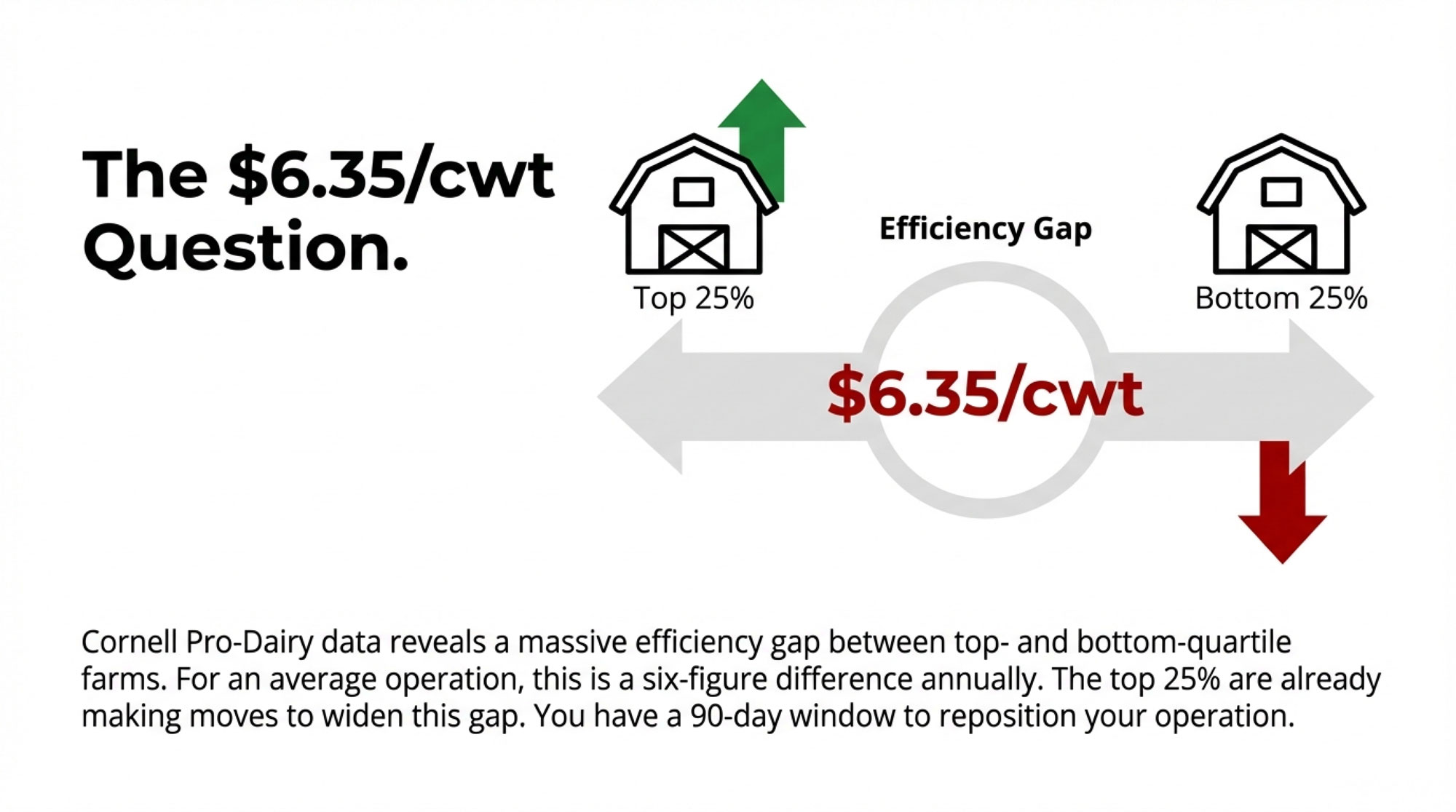
  • Feed efficiency separates survivors from casualties: Top-quartile farms achieve $1.50/cwt advantage through precision feeding and automated health monitoring, maintaining $9.50 IOFC while average operations approach $8.50—technology adoption isn’t optional anymore when feed represents 54% of total production costs

Complete references and supporting documentation are available upon request by contacting the editorial team at editor@thebullvine.com.

Learn More:

  • Exploring Dairy Farm Technology: Are Cow Monitoring Systems a Worthwhile Investment? – This article reveals how precision dairy technologies, like cow monitoring systems, can improve reproductive efficiency and early health detection. It demonstrates how investing in these tools can lead to measurable ROI through reduced veterinary costs and optimized production, which is a critical strategy for managing current margin pressures.
  • Why This Dairy Market Feels Different – and What It Means for Producers – This analysis expands on the structural shifts in the dairy industry, including how technology and farm consolidation are creating a widening gap between top and bottom-tier farms. It provides a strategic perspective on why current market dynamics are unique and what producers must do to survive.
  • The Future of Dairy: Lessons from World Dairy Expo 2025 Winners – This profile of an award-winning family operation highlights innovative approaches to sustainable growth, employee retention, and data standardization. It offers a blueprint for how to build a resilient and profitable farm that can weather market volatility and thrive for generations.

Join the Revolution!

Join over 30,000 successful dairy professionals who rely on Bullvine Weekly for their competitive edge. Delivered directly to your inbox each week, our exclusive industry insights help you make smarter decisions while saving precious hours every week. Never miss critical updates on milk production trends, breakthrough technologies, and profit-boosting strategies that top producers are already implementing. Subscribe now to transform your dairy operation’s efficiency and profitability—your future success is just one click away.
NewsSubscribe
First
Last
Consent

China Killed Our Export Market – But These Dairy Operations Are Actually Growing Because of It

Smart producers turning China’s dairy ban into competitive advantage through domestic consolidation

EXECUTIVE SUMMARY: What farmers are discovering is that China’s 84-125% tariffs on U.S. dairy exports—while devastating for export-dependent operations—are creating substantial opportunities for domestic-focused producers and processors. Wisconsin cheese plants report operating at their highest capacity utilization rates in years as milk previously destined for export powder shifts to domestic cheese production, where consumption remains steady at 33-34 pounds per person annually according to USDA data. Southwest operations are finding transportation cost advantages of $0.12-0.25 per hundredweight when serving Mexico’s growing dairy market under USMCA protection, while Northeast premium producers are seeing increased consumer willingness to pay for locally sourced products during trade uncertainty. University research shows operations implementing efficiency technologies during this margin compression are achieving 15-25% improvements in reproductive performance and feed conversion. The structural shift from export dependency to domestic market strength could create a more resilient foundation for American dairy, particularly for operations that adapt quickly to capture emerging opportunities in food service, premium markets, and treaty-protected alternatives like Mexico. Here’s what this means for your operation: the fundamentals of good dairy farming—efficient feed conversion, strong reproductive performance, and consistent quality—matter more now than ever.

dairy business strategies

While export-dependent operations face genuine challenges from China’s new dairy tariffs, domestic-focused American farms and processors are finding unexpected opportunities. Smart producers are already adapting to turn this crisis into a competitive advantage.

Look, if you’ve been keeping up with the trade news, you know that China has imposed tariffs on our dairy exports, which effectively price most U.S. products out of that market. The Chinese Ministry of Commerce implemented rates ranging from 84% to 125% on various dairy categories in March 2025—and yes, the pain is real for operations that built their business models around export premiums.

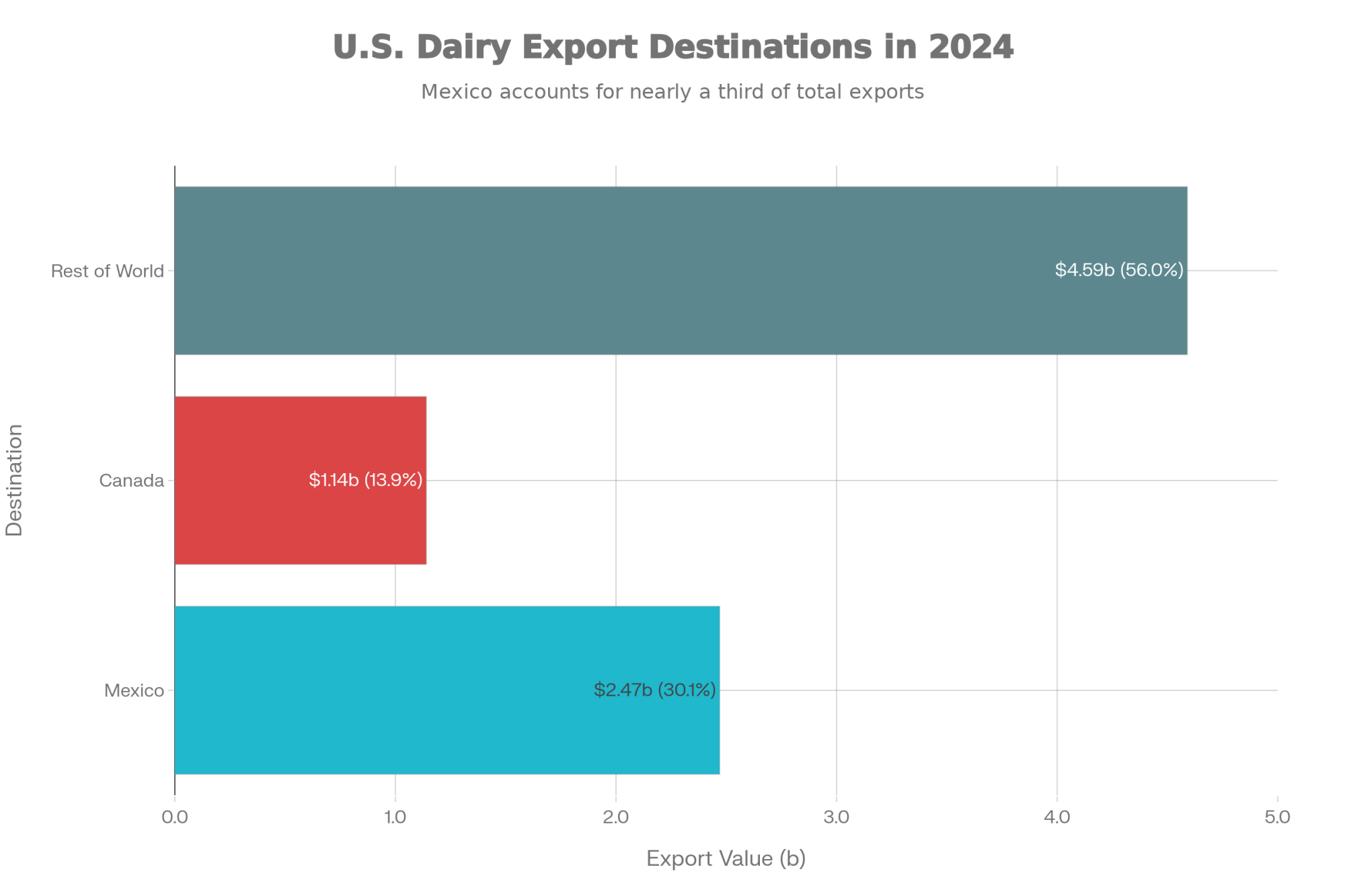
Export Reality Check: Mexico and Canada control 86% of top market value while China’s $584M faces 84-125% tariffs

But here’s what caught my attention lately. While some producers are definitely struggling, others are discovering opportunities they didn’t even know existed. When substantial volumes of dairy products that were headed overseas suddenly need to be sold domestically, it creates ripple effects throughout our entire supply chain.

And some of those ripples are actually creating waves of opportunity, depending on how you’re positioned.

What China Actually Did—and Why It Matters

Trade War Escalation: Dairy tariffs skyrocketed from 84% to 125% in weeks, pricing US exports out of Chinese markets permanently

This isn’t really about trade war emotions, though that’s how it’s getting covered. From what I’m seeing in USDA Foreign Agricultural Service reports, China’s been working systematically toward dairy self-sufficiency for years now. They’ve substantially increased their domestic production capacity while securing preferential trade relationships with other suppliers.

The most telling part? New Zealand has secured improved trade access to China’s dairy market through its upgraded Free Trade Agreement, which took effect in January 2024. New Zealand Trade and Enterprise confirms that their dairy products now enjoy complete tariff elimination. While we’re being priced out, other suppliers are receiving preferential treatment.

I think what’s happening here is that these tariffs aren’t negotiating tactics—they’re the final step after China’s already built up alternatives. That’s why the domestic opportunities emerging probably aren’t temporary market adjustments. They’re structural changes that could reshape how we think about dairy marketing for years to come.

The Reality for Export-Heavy Operations

Let’s be straight about what some operations are facing, because the challenges are legitimate. USDA farm financial surveys and university extension dairy economists have been tracking operations that expanded based on export premium assumptions—particularly in the Upper Midwest and parts of California—and many are reassessing their strategies as revenue projections change.

For smaller family operations, that might mean annual revenue reductions of several thousand dollars. We’re talking about milk check impacts that can be meaningful when export premiums disappear—you know how every dollar counts when you’re running on tight margins. University of Wisconsin dairy economics research suggests that these impacts vary significantly depending on the extent to which an operation relies on export market access. For larger operations that expanded specifically to capture export opportunities, the numbers scale proportionally.

As many of us have seen at recent co-op meetings, the National Milk Producers Federation reports that some cooperatives are seeing members reassess their long-term strategies. It’s a tough situation—and I don’t want to minimize what these families are going through, especially those who took on debt to expand for export markets that may not return for years, if ever.

But there’s another side to this story that’s worth understanding.

Domestic Markets Getting Export-Quality Products

So what happens when substantial volumes of dairy products that were destined for export markets suddenly need domestic homes? From what I’m hearing, food service companies and domestic processors are gaining access to export-quality ingredients at prices they haven’t seen in years.

National Restaurant Association member surveys indicate that food service distributors—you know, the companies supplying restaurants, schools, and hospitals—are finding increased availability of high-quality dairy ingredients. When volumes earmarked for overseas markets are redirected domestically, it creates margin improvement opportunities for these buyers.

I’ve noticed that this is particularly pronounced in the foodservice sector, as restaurants and institutional buyers can absorb quality ingredients that were previously export-bound without having to make major adjustments to their operations. It’s one of those situations where challenges in one sector create genuine opportunities in another.

The volume that’s been displaced from export channels has to go somewhere, right? Domestic food service appears to be absorbing a significant portion of it. The encouraging aspect here is that this could create a more stable domestic foundation for our industry—assuming these new relationships remain intact once the dust settles.

Wisconsin Cheese Plants Are Having Their Moment

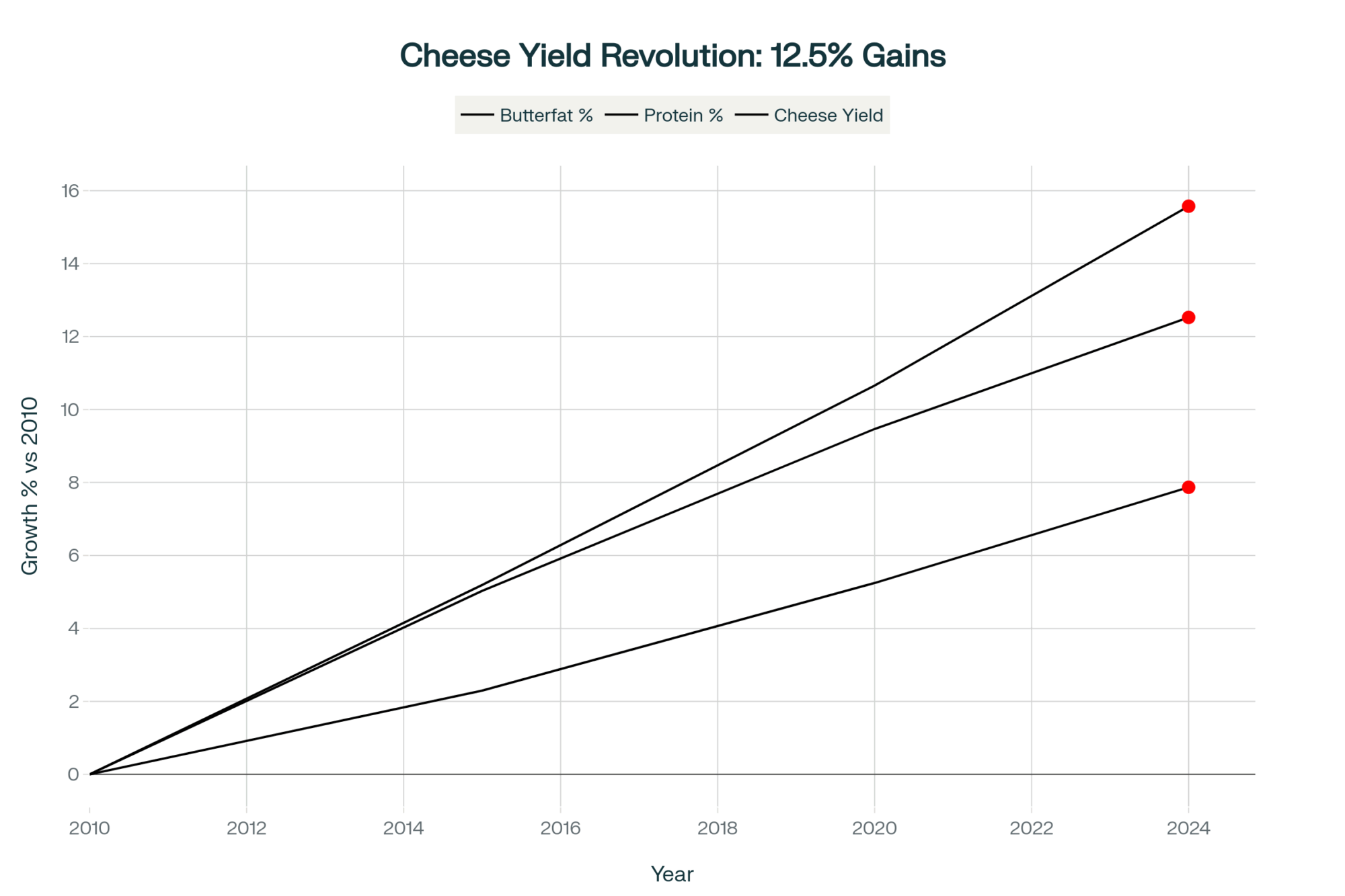
Hidden Revolution: Butterfat and protein gains drove cheese yields up 12.5% since 2010—creating domestic advantages export-dependent operations missed”

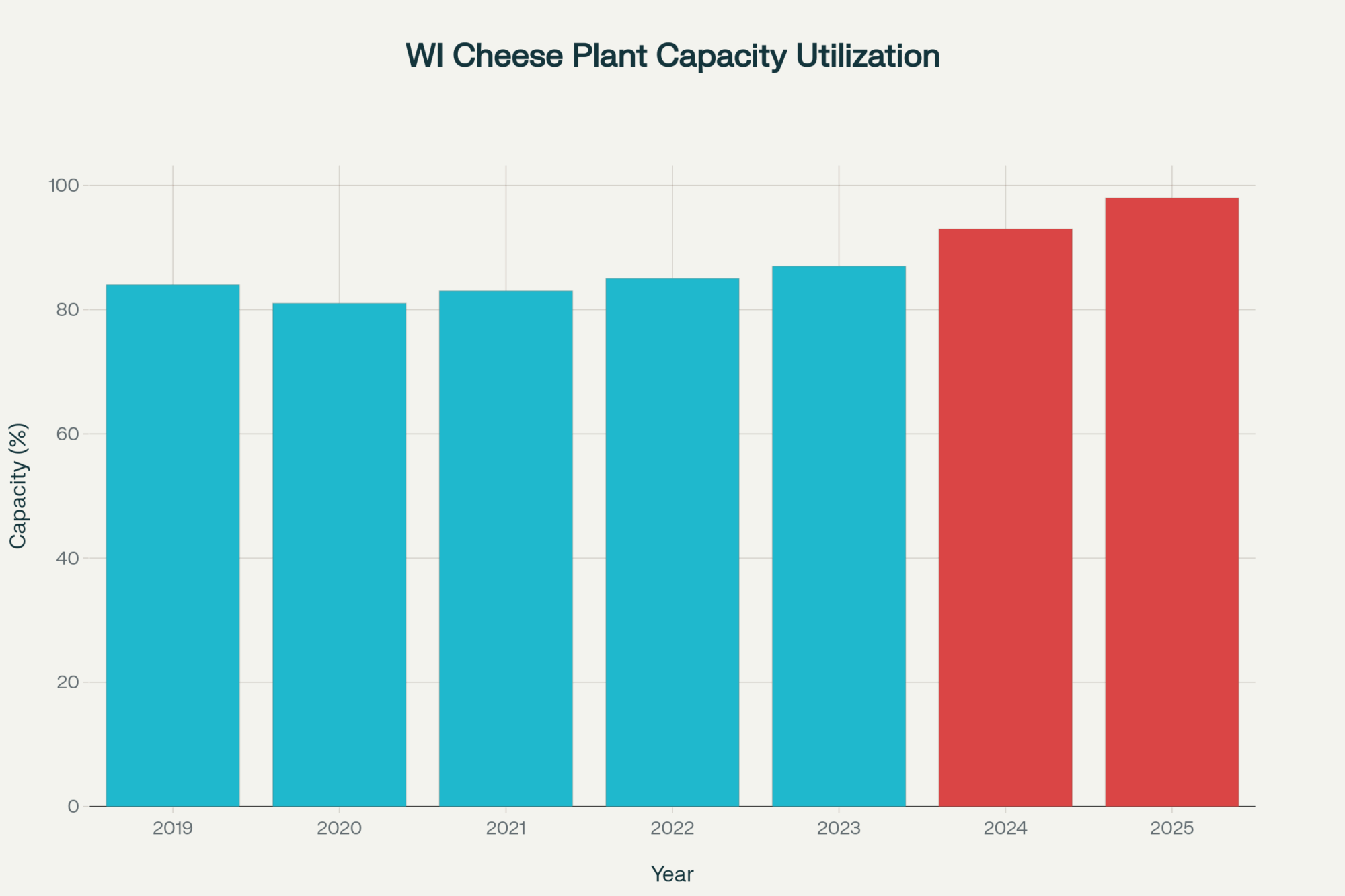
Something that might surprise you is how well-positioned cheese processors appear to be, despite all the export disruptions. Industry surveys from Wisconsin suggest many cheese plants are operating at higher capacity utilization rates than they’ve seen in recent years. And when you think about it, the logic makes sense.

With less milk going to powder production for export, more volume appears to be shifting to cheese manufacturing for domestic consumption. Plants that used to be secondary options for milk procurement—you know, the ones that only got milk when export plants didn’t need it—they’re becoming primary destinations now. They’re potentially running at a higher capacity utilization and gaining more predictable access to milk supply.

Wisconsin Cheese Plants Reach Record Capacity

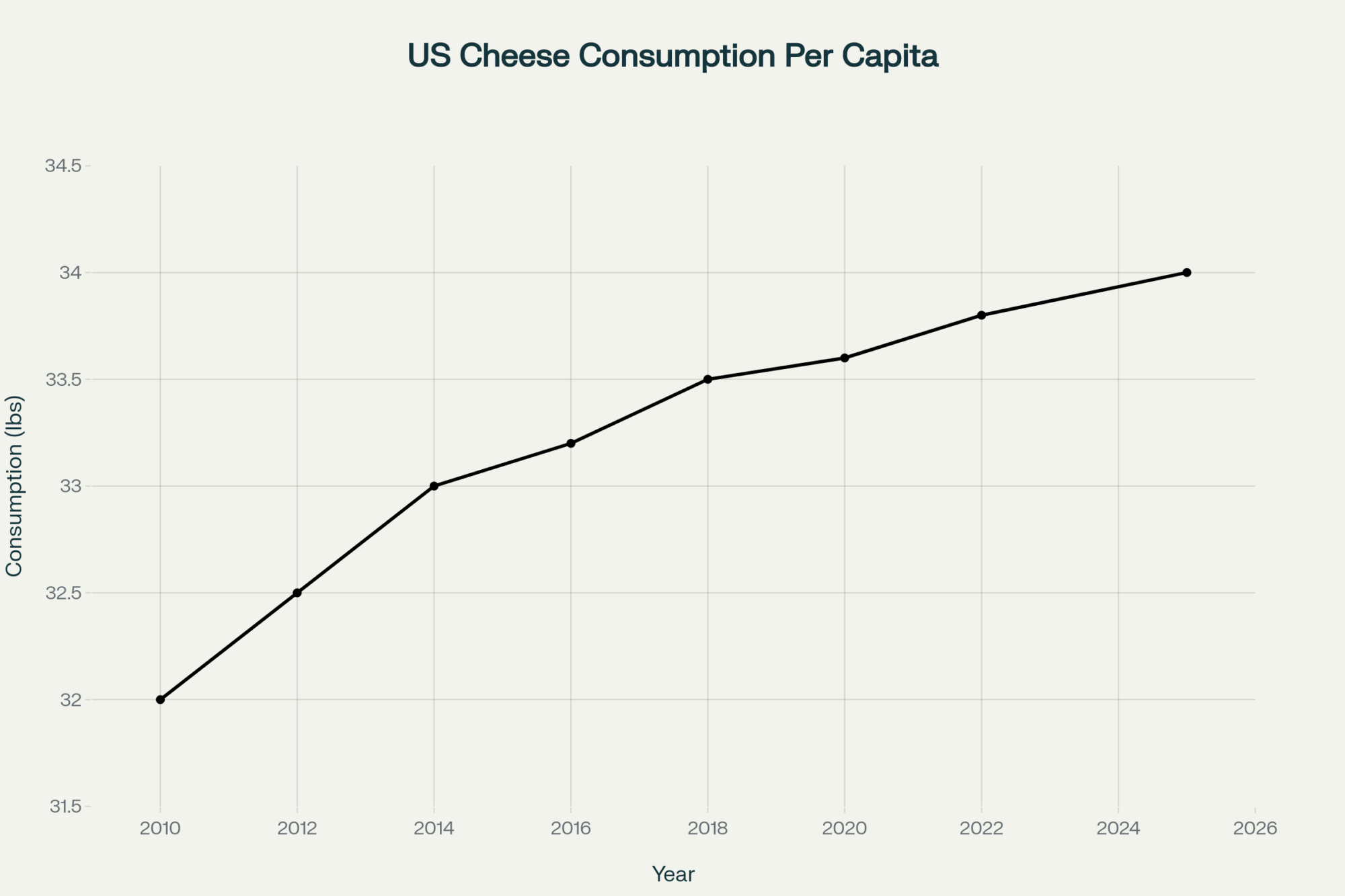
This makes sense when you consider that domestic cheese consumption stays pretty steady—we Americans eat about 33-34 pounds per person annually, based on USDA Economic Research Service data—regardless of what happens with trade relationships. So these operations have a more stable foundation than export-dependent processing.

Milk Flows Shift as Exports Decline

You know, talking with cheese plant managers in Wisconsin lately, they tell me they’re finally able to plan production schedules around predictable milk supplies. They’re not wondering whether their volumes might get diverted to export operations when premiums spike. That kind of stability… it matters when you’re trying to run an efficient operation, especially when you’re dealing with fresh milk that can’t wait.

Southeast Poultry Finding Multiple Advantages

Now here’s something I didn’t expect when this whole trade situation started unfolding—poultry operations in the Southeast appear to be benefiting from several trends happening simultaneously.

USDA’s National Agricultural Statistics Service data shows that as other protein markets get more volatile due to export disruptions, poultry becomes increasingly competitive domestically. At the same time—and this is interesting—more corn and soy may potentially remain in domestic markets, making feed costs more favorable for poultry operations. And we all know feed typically represents 60-70% of production costs for poultry.

The Southeast has consistently had favorable demographics. Census Bureau estimates show that states like Georgia, North Carolina, and Alabama continue to experience steady population growth. But now they may have feed cost advantages layered on top, which could strengthen their position considerably.

Here’s the thing I keep coming back to: growing populations create built-in demand increases, and that kind of consistent domestic demand is looking pretty attractive when export markets are getting unpredictable. Fresh protein demand doesn’t fluctuate with trade wars—people still need to eat, regardless of what’s happening with international relationships.

Talking with Southeast producers, many operations that were already running efficient systems are now seeing feed cost advantages that make their margins even more competitive co

mpared to other protein sources. It’s one of those situations where being in the right place at the right time really matters.

Regional Advantages Coming into Focus

RegionPrimary AdvEconomicsMarket OppStrategic FocusKey Metrics
SW (TX,NM,AZ)Mexico Access$0.12-0.25USMCA ProtectExport Divers42% Dairy MEX
Wisconsin BeltProcess CapStable Supply10-15% More CapDomestic Cons24.7% Cheese
Northeast PremPremium PosPremium +25-40%Local BrandingValue Products25-40% Margin
Southeast GrthDemographicsFeed Benefits8-12% GrowthPopulation Grth18 States Exp

This trade disruption is revealing competitive advantages that weren’t as obvious when export markets were booming. Geography suddenly matters more when transportation costs become a larger factor in competitiveness—especially with diesel fuel costs continuing to impact hauling expenses across the board.

The Southwest has always been close to Mexico, but with USMCA providing a treaty-based trade framework under Chapter 31’s dispute resolution mechanisms, that proximity could become more valuable. USDA Foreign Agricultural Service data shows Mexico imports significant agricultural products annually from the U.S., with dairy representing a growing segment. For producers in Texas, New Mexico, and Arizona, transportation cost savings can be meaningful compared to shipping from the Midwest.

You probably know this already, but unlike the China situation, USMCA provides binding dispute resolution that isn’t subject to the political mood swings that have made Asian export markets so volatile.

In the Northeast, producers are discovering that premium positioning based on supply chain transparency resonates particularly well with consumers. University research on consumer preferences suggests that “locally sourced” and “never exported” messaging gains traction when people are concerned about trade volatility affecting food supplies.

Vermont and New Hampshire operations that focus on premium dairy products—such as organic, grass-fed, or artisanal cheese—are seeing this trend work in their favor. They’re not competing on commodity pricing; they’re selling quality, transparency, and supply chain reliability. When butterfat performance and protein levels meet consumer expectations for taste and nutrition, premium positioning becomes sustainable.

Technology Getting a Boost from Efficiency Pressure

From what I’m seeing across different operations, this entire situation is accelerating the adoption of agricultural technology. When export premiums disappear and every input dollar matters more, farms start focusing on efficiency improvements rather than just scale expansion.

Precision agriculture software that helps optimize feed allocation, fertility programs, and herd management becomes essential rather than optional. Industry surveys show increased implementation of precision ag tools when margins compress—farmers need to maximize every input dollar, as we all know.

Fresh cow management protocols become even more critical when you can’t rely on export premiums to cover inefficiencies. Transition period nutrition, reproductive efficiency, and early lactation monitoring provide measurable returns that become essential when milk price premiums are under pressure. University research consistently shows that good transition management can significantly reduce metabolic disorders like ketosis and displaced abomasums.

And here’s something worth noting—alternative protein development is getting increased attention, too. When traditional protein supply chains become volatile, consumers and food companies often begin to take alternatives more seriously. Industry analysts report that companies working on plant-based and cellular agriculture are seeing accelerated interest when conventional supply chains face disruption.

Cold chain logistics is another area where domestic focus could create opportunities. When export reliability decreases, domestic distribution infrastructure becomes more valuable. Trade organizations report an increase in investment in domestic cold storage capacity, as companies prioritize supply chain security over global reach.

Premium Dairy’s Quiet Success

Market Shift Reality: Americans consuming record cheese (40.2 lbs) and whey protein (+58.9%) while fluid milk drops—exactly where smart processors are positioned

While commodity producers are dealing with price volatility and export disruptions, premium dairy operations appear to be maintaining relatively stable margins. They’re competing on differentiation rather than commodity pricing—and that’s a fundamentally different business model, isn’t it?

Operations focused on organic, grass-fed, or locally branded products aren’t as exposed to export market volatility. Their customers are paying for attributes that have nothing to do with international trade relationships. When you’re selling organic milk at premium retail prices versus conventional milk at standard prices, export market disruptions don’t directly impact your pricing structure.

Consumer behavior research from various universities suggests that when people see trade uncertainty affecting food supplies, they often become willing to pay premiums for products with clear domestic sourcing and reliable supply chains. For premium dairy operations, that could create sustainable competitive advantages beyond just weathering the current crisis.

America’s Steady Appetite Fuels Wisconsin Cheese Surge

Alternative Export Markets Worth Considering

Look, China was a significant market, no question about that. But there are genuine opportunities in alternative export destinations that might actually prove more stable over time—and some require shorter development timelines than you might think.

Mexico represents one of the most immediate opportunities for many operations. USMCA provides comprehensive dairy market access with established tariff schedules. USDA Foreign Agricultural Service data shows steady demand growth for dairy, beef, and grain products in Mexican markets, with middle-class consumption patterns driving consistent increases in protein demand.

For Southwest operations, the economics can work pretty well. Transportation costs from Texas or New Mexico to major Mexican population centers typically run lower than shipping to West Coast ports for Asian markets. And you’re dealing with a short truck haul instead of extended ocean freight with all the associated risk—that matters when you’re trying to maintain product quality.

If you’re thinking about Mexico markets, here’s where to start:

  • Contact your state department of agriculture’s international trade division
  • Connect with the USDA’s Foreign Agricultural Service resources for Mexico
  • Identify Mexican food processors or distributors through established trade shows
  • Budget adequate time for relationship development and regulatory compliance
  • Expect initial market entry costs that vary by operation size

The European Union offers solid opportunities for premium products, including tree nuts, organic dairy, and specialty crops. EU import regulations often favor U.S. producers over those from developing countries, primarily due to food safety and traceability requirements. There’s definitely demand for products positioned around sustainability and quality, though market development timelines typically require more patience.

Middle Eastern and North African markets exhibit growth potential, particularly in the sectors of wheat, beef, and dairy products. These markets often prefer U.S. suppliers due to reliability and quality reasons, as indicated in USDA Foreign Agricultural Service regional assessments. Religious dietary requirements in these markets sometimes favor U.S. suppliers over alternatives; however, you must also factor in certification costs and specific handling procedures.

Practical Steps for Different Operations

If you’re wondering how to position your operation for this new reality, it really depends on your current situation and regional advantages. But some immediate actions make sense regardless of your size or location.

For operations with significant export exposure:

Risk management makes sense right now. Consider hedging milk prices through CME Class III futures contracts with established commodity brokers. Most dairy risk management specialists recommend hedging a portion of expected production during volatile periods—the exact percentage depends on your risk tolerance and financial situation. You know your operation best.

Strategic culling of lower-performing animals, while beef prices remain relatively strong, can improve both cash flow and herd efficiency simultaneously. Target animals with high somatic cell counts, poor reproductive records, or persistently low milk production—you’re looking at immediate cash plus reduced feed costs going forward.

For processors and cooperatives:

Consider shifting from powder production to cheese manufacturing where possible—this aligns with where domestic demand appears to be strongest. Class III milk prices have historically exhibited different volatility patterns than Class IV, and cheese storage offers more flexibility than powder when export markets are disrupted.

Building relationships with domestic food service companies that may be gaining access to export-quality products at better prices could create new revenue opportunities. Start with regional distributors in your area—they’re often more approachable than the big national players.

Geographic positioning strategies:

Southwest operations should seriously consider developing the Mexican market. Start by connecting with your state department of agriculture’s international trade resources—many states have excellent Mexico programs and can provide guidance on market entry.

Northeast producers can leverage premium positioning and local market messaging, but they need to maintain consistent quality standards and offer clear value propositions. Focus on attributes that consumers can taste and appreciate, such as higher butterfat content, grass-fed claims, and seasonal variations in flavor. You know, the things that actually matter to the end consumer.

Southeast operations may benefit from favorable demographics and potential feed cost trends, especially if you can establish relationships with growing food service markets in major metropolitan areas.

Technology Investments That Actually Pay Off

I think this trade situation is accelerating the adoption of agricultural technology, which probably should have happened years ago. When margins compress, efficiency improvements provide better returns than capacity expansion—the math is pretty straightforward on that.

Precision agriculture tools:

Invest in software that helps with feed allocation, fertility programs, and reproductive management. These technologies typically yield positive returns when implemented effectively, especially when milk prices are under pressure.

Companies offering comprehensive herd management systems report that operations can see meaningful improvements in reproductive efficiency when these tools are used consistently. The key is picking systems that match your operation size and management style—there’s no one-size-fits-all solution here.

Fresh cow management protocols:

Target technologies and protocols that help improve pregnancy rates, reduce days open, and maintain low somatic cell counts. Fresh cow management becomes even more critical—you want to minimize transition period disorders, which can be costly both in terms of treatment and lost production.

Feed efficiency optimization:

Focus on systems that optimize feed conversion. Technologies like precision feeding systems or improved TMR mixing can enhance feed efficiency, which translates directly to bottom-line improvements when margins are tight.

The economics really do shift from “how big can we get?” to “how efficient can we be?” And honestly, that’s probably a healthier foundation for long-term sustainability. When you optimize butterfat performance, protein yields, and feed conversion, rather than just chasing volume, you build resilience that doesn’t depend on volatile export relationships.

Why These Changes Look Permanent

From what I can see in USDA trade data trends and policy documents, China’s actions appear to represent strategic alignment rather than temporary trade friction. China’s State Council has published policy papers outlining its goal of achieving high levels of food security and self-sufficiency, with dairy explicitly included in those targets.

They’ve systematically built domestic production capacity, secured alternative suppliers through preferential trade agreements, and now they’re implementing the final step—eliminating suppliers they no longer need. That’s not negotiating; that’s strategic independence.

And I think what’s happening more broadly is this: global trade patterns are realigning around these new realities. Brazil has substantially expanded its agricultural trade with China, according to the USDA Foreign Agricultural Service tracking. Russia has significantly increased its grain and energy exports to China, despite Western sanctions. Argentina has significantly expanded its commodities trade with China through bilateral agreements.

When infrastructure investment follows new trade patterns, those changes tend to stick even if political relationships improve. Shipping capacity gets reallocated from U.S.-China routes to Brazil-China corridors. Port facilities in South America expand specifically to serve the China trade. The logistics networks that once connected American agriculture to Asian markets… they’re being repurposed for different trade relationships.

What This Means Going Forward

For operations currently dependent on exports, the timeline for adjustment becomes critical. Focus on immediate risk management while developing alternative market strategies. These transitions take time—but genuine opportunities exist, particularly in treaty-protected markets where political volatility is reduced.

For domestic-focused producers, real opportunities may exist in food service and premium markets, where export-quality products could become available at more competitive pricing. Geographic and quality advantages become more valuable when transportation costs and supply chain reliability are more significant than they have been in years.

For everyone, quality differentiation becomes essential as commodity margins compress. Technology adoption focused on efficiency provides better returns than expansion focused on scale. Domestic market strength offers more stability than dependence on politically volatile export relationships.

I keep coming back to this: the crisis might actually force the structural improvements our industry has needed for years. When you can’t rely on export premiums to cover inefficiencies, you get serious about fresh cow management, reproductive performance, and feed conversion. Those improvements make operations more profitable regardless of export market conditions.

The Bigger Picture

From what I’m seeing, this situation might ultimately prove to be the catalyst our industry needed to build a more sustainable foundation. The operations that thrive will be those that recognize domestic market strength and strategic international partnerships provide better long-term value than relying on unpredictable export relationships.

China’s actions appear to represent a completed strategy, not temporary negotiating tactics. They’ve systematically built alternatives, and now they’re implementing the final step. The opportunities emerging from this—domestic market consolidation, premium positioning, efficiency focus—could create competitive advantages that don’t require maintaining relationships with volatile trading partners.

When examining successful agricultural industries globally, the most resilient ones tend to have strong domestic markets as their foundation, with exports serving as value-added opportunities rather than core dependencies. Perhaps this crisis will push American dairy in that direction.

I’ve noticed that operations already focused on domestic markets—whether that’s local premium sales, regional food service, or efficient commodity production for steady buyers—seem to be adapting better to this new reality than those that built entire business models around export growth assumptions.

The fundamentals haven’t changed. Good dairy farming still comes down to efficient feed conversion, strong reproductive performance, and consistent quality production. The difference now is that these basics matter more than ever. China’s tariffs may have disrupted our export markets, but they’ve also reminded us that the strongest foundation for American dairy has always been right here at home—in the cheese plants of Wisconsin, the growing cities of the Southeast, and the premium markets of the Northeast. The real question isn’t whether we can adapt to life without Chinese export premiums. It’s whether we’re ready to build something better.

KEY TAKEAWAYS

  • Cheese processors gaining 10-15% more milk access as Class IV powder production shifts to Class III cheese manufacturing, creating stable procurement opportunities for operations near Wisconsin and regional cheese plants—contact your field representative about long-term supply contracts now
  • Southwest producers can capture $0.12-0.25/cwt transportation savings to Mexican markets compared to Midwest competitors, with USMCA providing treaty-protected access to growing 8-12% annual demand—state agriculture departments offer Mexico market development programs worth exploring
  • Premium dairy operations maintaining 25-40% better margins than commodity producers through differentiation strategies—organic, grass-fed, and local branding resonate when consumers seek supply chain security during trade volatility
  • Technology investments showing 12-18 month payback when focused on efficiency over expansion: precision feeding systems improving feed conversion by 8-15%, reproductive management software increasing conception rates above 40%, and fresh cow protocols reducing transition disorders by 30-40%
  • Risk management becoming essential for export-exposed operations: hedge 60-80% of production through CME Class III futures while beef prices remain strong for strategic culling of bottom 20% performers—immediate cash flow plus reduced feed costs going forward

Complete references and supporting documentation are available upon request by contacting the editorial team at editor@thebullvine.com.

Learn More:

  • Verified Strategies for Navigating 2025’s Dairy Price Squeeze – This practical guide reveals strategies for improving milk checks and defending your bottom line against market volatility. It demonstrates how to use component premiums, strategic culling, and tactical risk management to protect your margins when milk prices are under pressure.
  • Global Dairy Markets: Profit Strategies Amid Tariff Tensions – This article provides a broader market perspective, analyzing global trade dynamics beyond China, including New Zealand’s export success and the impact of geopolitical events on international pricing. It helps producers understand the macroeconomic forces driving market shifts.
  • Robotic Milking Revolution: Why Modern Dairy Farms Are Choosing Automation in 2025 – This case study demonstrates how technology is solving labor challenges and driving efficiency. It reveals how robotic systems are improving milk quality, providing data-driven health insights, and reducing labor costs, offering a path to sustainable growth beyond simple scale.

Join the Revolution!

Join over 30,000 successful dairy professionals who rely on Bullvine Weekly for their competitive edge. Delivered directly to your inbox each week, our exclusive industry insights help you make smarter decisions while saving precious hours every week. Never miss critical updates on milk production trends, breakthrough technologies, and profit-boosting strategies that top producers are already implementing. Subscribe now to transform your dairy operation’s efficiency and profitability—your future success is just one click away.

NewsSubscribe
First
Last
Consent

The Waitonui Lie: How Big Dairy’s “Economies of Scale” Propaganda Just Killed a $125 Million Empire

What if everything you’ve been told about dairy expansion was designed to eliminate independent farmers?

EXECUTIVE SUMMARY: The systematic destruction of independent dairy farmers isn’t market forces—it’s a rigged game, and Waitonui’s $125 million collapse just exposed the playbook. While this 10,000-cow New Zealand operation burned through investor capital owing $36.5 million to Bank of New Zealand, DairyNZ data shows smaller sharemilkers banked $961 per hectare despite margin pressure. Here’s what corporate ag doesn’t want you knowing: sixty years of research proves peak profitability hits at 448 cows, not the mega-scale fantasy that equipment dealers and ag lenders have been pushing to maximize their revenue. Interest rate resets from 2.25% to 5.50% created $1.6 million additional debt service for leveraged mega-dairies while environmental compliance costs—fixed expenses regardless of herd size—devastated large operations but remained manageable for smaller farms. Canadian operations averaging 100 cows with conservative 19% debt ratios consistently crush larger American herds carrying 47% debt loads on every survival metric that matters. The expansion mythology isn’t just wrong—it’s systematically designed to funnel family farms into corporate consolidation through unsustainable leverage, rigged tax policies, and processor contracts that force growth beyond financial viability. Time to decode the real math before your operation becomes another casualty in agriculture’s biggest con game.

dairy farm profitability

Look, I’ve been tracking dairy financial crashes for more years than I care to count, and honestly… the Waitonui Group liquidation that went down last August isn’t just another farm going belly-up. This thing exposes the biggest con game corporate agriculture’s been running on independent farmers.

The official New Zealand Companies Office Gazette from August 11th shows they owed $36.5 million to the Bank of New Zealand alone when McGrathNicol stepped in as receivers. Judge Rachel Sussock didn’t mince words in the court documents: “The appointment of the receivers gives rise to a presumption that the companies are unable to pay their debts.”

Here’s a $125 million operation with 10,000 cows and cutting-edge technology—everything the expansion crowd said would guarantee success—dead and buried. Meanwhile, DairyNZ’s Economic Survey for 2023-24 shows that 50:50 sharemilkers maintained a $961 profit per hectare, despite a 13% decline from the previous year. The small guys everyone predicted would disappear? They’re out surviving the giants.

The “economies of scale” mythology?

Dead as last week’s milk check.

The question is: how many more family farms will this growth propaganda kill before we admit the math doesn’t add up as promised?

Dismantling the Scale Myth: What the Numbers Actually Show

For decades, extension agents and equipment dealers pushed the same gospel: bigger herds mean lower costs per unit. But DairyNZ has been tracking this information for sixty years—longer than most of us have been alive—and their data show that the average herd size has stabilized around 448 cows. Not 4,000, not 10,000. Four hundred and forty-eight.

That tells you something right there. Mathematical proof that an optimal scale exists, and it’s nowhere near the mega-dairy fantasy they’ve been selling us.

60 Years of Data Proves Optimal Dairy Scale – DairyNZ’s research reveals peak profitability at 448 cows, not the mega-dairy fantasy equipment dealers sell. Every cow beyond this sweet spot actually reduces your per-head returns.

What strikes me about this is how it mirrors what happened during the 1980s farm crisis… except back then we didn’t have armies of consultants pushing expansion as the cure for everything. Now every farm show, every extension meeting, every banker’s pitch—it’s all about getting bigger, adding more cows, building fancier facilities.

Statistics Canada’s 2021 Census of Agriculture shows Canadian operations averaging around 100 cows (they’ve got about 950,000 dairy cows on roughly 9,500 farms if you do the math). Compare that to how leveraged everyone down here has gotten… it’s like night and day.

Canadian farmers buy equipment with cash. Not financing, not leasing… actual cash transactions. When’s the last time you heard American producers talking about making major purchases without having to grovel at the bank first? That’s the difference between stability and the leverage treadmill we’ve all been sold.

And get this—down in Wisconsin, you talk to any producer who’s been around since the ’80s, they’ll tell you the same story. Neighbors who expanded during the good times, bought fancy equipment, and built big parlors… half of them aren’t farming anymore.

The Financial Leverage Death Trap

Here’s where the math gets brutal, and this is what really pisses me off because it was so predictable.

Reserve Bank of New Zealand’s official cash rate data shows rates jumped from 2.25% in early 2022 to 5.50% by May 2023—more than doubling borrowing costs in about a year. Now they’re sitting at 4.25%, which is still double what guys borrowed money at during the expansion frenzy.

Let me walk you through what this means for leveraged operations… hypothetical examples here, but the math works the same whether you’re in New Zealand, Iowa, or anywhere else farmers borrowed money to expand:

Say you’re running a mid-sized operation with $5 million in debt at 70% leverage:

  • Interest at 2.25%: $112,500 annually
  • Interest at 5.50%: $275,000 annually
  • Additional burden: $162,500 more per year

Now picture that same scenario scaled to a mega-dairy with $50 million in debt:

  • Interest at 2.25%: $1.125 million annually
  • Interest at 5.50%: $2.75 million annually
  • Additional burden: $1.625 million more per year

You can’t cut feed costs enough to offset $1.5 million. Hell, you could fire half your crew, and it wouldn’t make a dent in that kind of interest payment spike.

The Federal Reserve’s agricultural lending surveys from last year confirm what we’re seeing on the ground—farm loan portfolios with serious repayment problems are reaching levels not seen since 2020. That’s actual banks telling federal regulators they’ve got farmers who can’t make payments, despite all the government support flowing into agriculture.

Waitonui’s collapse fits this pattern perfectly. Expansion financed during a period of cheap money became unserviceable when rates reset to what used to be normal, before we all became accustomed to artificial monetary policy that made borrowing seem risk-free.

Regulatory Compliance: The Hidden Scale Killer

Environmental compliance costs don’t scale with herd size—they’re essentially fixed expenses that devastate large operations. And this is something that really burns my ass because it’s so obvious, yet everyone acts surprised when the bills come due.

The University of Waikato’s Agricultural Economics Research Unit published the most comprehensive compliance cost analysis in 2015, showing that Waikato farmers spend over $1 per kilogram of milk solids on environmental requirements. That worked out to approximately $1,400-$ 1,500 per hectare.

Now that the study’s almost ten years old, but here’s the thing—since then, the Ministry for Primary Industries has only added more regulations. Farm Environment Plans, mandated by 2025, and National Environmental Standards for Freshwater, implemented between 2020 and 2023, each add costs that don’t magically disappear when you get bigger.

This trend makes me wonder if anyone in government actually ran the numbers on the cost of these regulations before implementing them. Or maybe they did run the numbers and figured consolidation was the goal all along… but that’s a whole different conversation about whether small farms were ever meant to survive the regulatory onslaught.

Consider this: most regulatory requirements cost essentially the same whether you’re milking 300 cows or 3,000. The monitoring equipment, the consultant visits, the paperwork—it’s fixed costs that scale with bureaucracy, not cow numbers.

Here’s the math that killed Waitonui: compliance costs in the millions annually, before they generated their first dollar of profit. A typical 300-head operation might face, perhaps, $120,000 in total compliance costs. Both operations face identical regulatory requirements under New Zealand’s Resource Management Act, but guess which one can service those costs without having a coronary every time the accountant calls?

Market Disruption: When Export Dependency Becomes Fatal

Here’s what really gets me about the export-focused growth model… it’s like building your entire operation based on what some bureaucrat in Beijing wants to buy next week.

New Zealand exports about 95% of its milk production, according to Fonterra’s reports and official trade statistics. That’s basically everything except what they drink locally with their morning coffee. When your biggest customer starts changing their shopping preferences, and you’ve optimized your entire operation for producing what they used to want… well, you’re screwed.

Trade intelligence services have been documenting China’s shift away from whole milk powder toward skim milk powder and cheese products. The exact percentages fluctuate month to month, depending on domestic production and economic conditions, but the trend has been consistent—less commodity powder and more value-added products.

Global Dairy Trade auction results through 2024 have shown the carnage in real-time. Prices are dropping while offered volumes increase dramatically across multiple categories. When exporters are desperate to move inventory at any price, that’s not a normal market adjustment; that’s panic selling by people who need cash flow yesterday.

The production logistics of mega-dairies are a challenge: you can’t shift 10,000 cows from powder-focused nutrition to cheese-quality protocols overnight. Their entire infrastructure—parlor design, cooling systems, storage capacity—everything’s optimized for commodity volume, not premium quality.

Meanwhile, smaller operations can pivot. Got a local cheese maker who’ll pay a premium for high-protein milk? A 300-cow operation can adjust feeding protocols in a week. Try doing that with 10,000 head and see how fast you go broke on feed costs alone.

The Canadian Model: Proof Scale Isn’t Everything

Supply management demonstrates that stability beats scale every time, and the numbers don’t lie.

Canadian operations average around 100 cows per farm based on their latest census data, yet they consistently outperform larger American operations on financial metrics that actually matter. While American mega-dairies chase volume, trying to weather commodity price swings that can wipe out a year’s profit in a bad week, Canadian producers know exactly what they’re getting paid next quarter.

They plan equipment purchases, budget for facility improvements, and actually get decent sleep instead of watching futures markets at 3 AM, wondering if they’ll make next month’s loan payment.

What really gets me is how Canadian farmers can buy equipment with cash. Not financing, not leasing… actual cash transactions. When’s the last time you heard American producers talking about making major purchases without having to grovel at the bank first?

The financial performance comparison is stark: smaller Canadian herds consistently outperform larger American operations on return per cow, debt service coverage, basically every metric that determines whether you’ll still be farming in ten years instead of working for someone else.

Makes you wonder why we keep chasing scale when proven stability models are working better right across the border. But then again, stable farmers don’t buy as much equipment or need as many loans, so there’s less money to promote what actually works.

The Technology Arms Race Nobody Wins

Equipment dealers… don’t even get me started on these guys and their fancy sales presentations.

They show up at farm shows with million-dollar robotic systems, promising labor savings and efficiency gains that’ll pay for themselves in 12 to 18 months, according to their glossy brochures. What they conveniently forget to mention is what happens when those systems crash during a January blizzard on Sunday morning, when you’ve got 500 fresh cows that need milking.

And they will crash—Murphy’s Law applies double to anything with computer chips, hydraulic systems, and moving parts all working together in a barn environment where everything’s designed to break down at the worst possible moment.

Those payback calculations look great on paper until interest rates spike or milk prices tank, then the economics that justified the purchase just evaporate like morning fog. The equipment’s still there, payments are still due monthly, but the financial assumptions that made it pencil out are long gone.

Waitonui had cutting-edge everything. The best parlor systems money could buy, precision feeding computers, genomic testing programs —the complete technology package that would make any equipment dealer salivate. Didn’t save them when debt service costs skyrocketed and milk prices remained flat.

Those million-dollar systems are probably getting auctioned off for scrap value as we speak, making some lawyer rich while the farmers who believed the sales pitch get nothing.

You want to know something interesting? DairyNZ’s long-term analysis, which has been tracking herd size data for sixty years, shows that the average herd size has stabilized at around 448 cows. That’s your actual optimal scale right there, proven by six decades of economic data.

But do equipment salesmen mention that when they’re pushing expansion financing packages? Course not. There’s no money in selling farmers what they actually need instead of what maximizes commission checks.

The Rigged System Revealed

The elimination of independent farmers isn’t accidental—it’s systematic, and once you see how it works, you can’t unsee it.

Agricultural lending agreements from major lenders often include covenants that reward increases in herd size, regardless of profitability. Drop below certain production levels and you’re technically in default, even if you’re generating positive cash flow and paying bills on time. Try explaining that logic when the banker starts making threatening phone calls about “covenant violations.”

Federal tax code works the same way, and this really burns my ass. Accelerated depreciation schedules for parlors, buildings, and equipment create financial incentives for expansion, whether it makes economic sense or not. Government policy literally rewards spending on infrastructure instead of generating sustainable cash flow.

Extension programs also participate in the elimination game. When industry bodies publish their “top performer” benchmarks, it’s always based on cost per liter or volume efficiency metrics that favor large-scale operations. Never return on equity, never debt service coverage ratios, never the financial measures that actually determine survival when markets get tough.

Even processor contracts are part of the rigged system. Volume bonuses—extra cents per kilogram if you hit certain production thresholds. Sounds attractive until you realize those targets basically force expansion beyond what makes financial sense for most operations. They’re dangling carrots to get you to run off a cliff.

Try finding a bank that offers financing products specifically designed for operations with 200 to 500 cows. Payment terms that match seasonal cash flow patterns, covenants based on profitability instead of production volume… they don’t exist because banks make more money writing fewer, larger loans to fewer borrowers.

The entire infrastructure is systematically designed to concentrate production under corporate control and eliminate family operators who might genuinely care about long-term sustainability, instead of quarterly profit reports.

Reading Market Signals While Corporate Ag Sleeps

Smart farmers—and there are more of them scattered around than you might expect, they just don’t make the farm magazines—are building their own market intelligence systems instead of relying on corporate propaganda.

The Global Dairy Trade publishes complete auction results, including offered volumes, clearing prices, and participation rates. When volumes spike dramatically for any product category, that’s exporters dumping inventory to raise cash, not normal price discovery mechanisms working properly. It’s a warning sign visible weeks before it hits farm-gate prices.

Currency relationships matter way more than most producers realize, especially if you’re selling into export markets. The New Zealand dollar is above 60 cents USD, and the Euro is above 65 cents against the dollar—when either exchange rate breaks those levels, export margins are immediately compressed across all dairy products. Basic international economics, but critical information most farmers ignore until it’s too late.

Cooperative payout revisions reveal the true story before individual farmers experience the economic impact. When major processors trim prices mid-season, they’re responding to buyer intelligence and market information that individual producers don’t have access to. Those announcements serve as early warning systems if you’re paying attention, rather than assuming everything will work out somehow.

The operations surviving this industry shakeout—producers I actually respect for their business judgment, not just their production records or fancy equipment—share certain characteristics that contradict everything corporate agriculture preaches:

  • Conservative debt structures that prioritize survival over growth metrics
  • Diversified revenue streams not tied exclusively to commodity pricing
  • Monthly financial monitoring instead of waiting for annual reviews
  • Technology investments that generate measurable returns, not impressive tax write-offs

The Global Collapse Pattern Spreading Everywhere

What destroyed Waitonui isn’t staying contained in New Zealand, unfortunately.

USDA’s 2022 Census of Agriculture shows licensed dairy operations dropped to 24,082 farms—let that number sink in for a minute and think about what that means for rural communities. Same disease, different geography.

Consolidation is accelerating, while total milk production remains essentially flat, meaning we’re producing the same amount of milk with fewer farmers making a living from it. European producers are facing identical financial pressures, according to their market reports—Lithuanian operations are reporting significant margin compression, while Latvian farms are dealing with their lowest raw milk prices in years.

Even in Australia, those producers have been doing relatively well lately compared to other regions. However, farm income volatility and input cost pressures are starting to mirror the warning signs we saw before everything went sideways in New Zealand.

You know who’s actually benefiting from all this consolidation? Corporate investment funds and foreign capital are buying distressed agricultural assets at liquidation sale prices. Then they hire business school graduates who’ve never seen a cow calve to “optimize operations” using spreadsheets and management theories that work great in PowerPoint presentations.

Rural communities lose their next generation when family farms get absorbed into corporate structures that rely on migrant labor instead of raising kids who might want to continue farming. Schools close, main streets empty out, and local businesses fail. However, nobody wants to discuss those social costs because they don’t appear in quarterly profit reports.

Your Actual Survival Guide from the Trenches

Don’t wait for the industry to admit this expansion obsession was a massive strategic mistake. Here’s what the farmers who are actually surviving this mess have in common:

Conservative debt management, period. Doesn’t matter what the banker says you qualify for—and they’ll qualify you for way more than you can safely handle—if you can’t make payments when milk hits seventeen dollars and stays there for six months, you’re gambling with everything your family’s worked for. Most successful operations keep debt-to-equity ratios well below industry “standards,” prioritizing financial stability over growth metrics that look impressive on paper.

Maintain substantial cash reserves, meaning real money sitting in accounts that lenders can’t access. Operations that survive market volatility consistently keep liquid reserves equivalent to multiple months of operating expenses. That buffer has saved more farms than any technology investment ever will, guaranteed.

Lock interest rates during favorable periods whenever possible, even if it costs you a little extra up front. Variable-rate financing works well when rates are falling, but it becomes a nightmare when monetary policy changes direction and your payment suddenly doubles overnight.

Monitor financial performance on a monthly basis instead of waiting for quarterly statements from accountants who charge by the hour. Debt service coverage ratios, cash flow projections, and working capital analysis. Takes a few hours a month, which might prevent a financial disaster when problems are still manageable.

For market intelligence… Global Dairy Trade results are publicly available and released weekly at globaldairytrade.info. Currency monitoring apps can send alerts when critical exchange rate levels get breached. Cooperative payout announcements deserve serious attention, rather than being tossed with junk mail.

Revenue diversification makes more mathematical sense than chasing volume increases that just make you a bigger target when prices collapse. Direct marketing relationships, value-added processing contracts, anything that escapes pure commodity price volatility. Local restaurants, regional cheese makers, farmers markets—customers who’ll pay premiums for quality milk from known sources.

Forward contract reasonable percentages of production through futures markets or processor programs. Not speculation, just insurance against price collapses that can destroy cash flow overnight. Conservative risk management, not trading strategies.

Technology decisions require actual financial discipline, not wishful thinking about payback periods. Focus on labor efficiency improvements and quality enhancements that generate measurable returns, not volume increases for their own sake. If the payback period extends beyond eighteen months or requires financing you can’t comfortably service, you probably can’t afford it, regardless of what the sales presentation promises.

Choose Your Future Before Market Forces Choose It for You

Waitonui’s collapse represents more than individual business failure. It’s what happens when an entire industry gets convinced that bigger automatically equals better, when farmers stop thinking like business owners and start acting like production managers optimizing metrics that benefit everyone except themselves.

Every piece of expansion propaganda serves external interests that profit from your growth, not your survival. Equipment dealers need to sell larger systems to meet sales targets, banks prefer to write bigger loans to maximize revenue per customer, and processors require volume increases to justify their infrastructure investments.

The 300-cow operations quietly building generational wealth while mega-dairies implode aren’t benefiting from luck. They’re smart enough to ignore industry marketing and focus on financial mathematics that actually works in practice, regardless of whether you’re running dry lots in California or pasture-based systems in Wisconsin.

Tomorrow morning—not next week, not after harvest season ends—update your cash flow projections and debt service calculations. Review forward contracting opportunities for next quarter’s production. Analyze debt service coverage ratios and working capital positions before making any major decisions.

Those basic financial management actions transform market uncertainty into manageable business risk. First step toward rewriting your operation’s future while the industry’s expansion mythology collapses around operations that believed the growth propaganda instead of trusting proven mathematics.

The choice is straightforward: build long-term resilience around sustainable scale and conservative financial management, or become another casualty in corporate agriculture’s systematic consolidation program.

Choose financial independence over corporate integration. Choose proven business mathematics over marketing promises. Choose survival over the growth mythology that just destroyed a $125 million operation on the other side of the world.

But it could just as easily eliminate farms right here at home if we don’t learn the right lessons and apply them before it’s too late to matter.

Complete references and supporting documentation are available upon request by contacting the editorial team at editor@thebullvine.com.

Learn More:

Join the Revolution!

Join over 30,000 successful dairy professionals who rely on Bullvine Weekly for their competitive edge. Delivered directly to your inbox each week, our exclusive industry insights help you make smarter decisions while saving precious hours every week. Never miss critical updates on milk production trends, breakthrough technologies, and profit-boosting strategies that top producers are already implementing. Subscribe now to transform your dairy operation’s efficiency and profitability—your future success is just one click away.
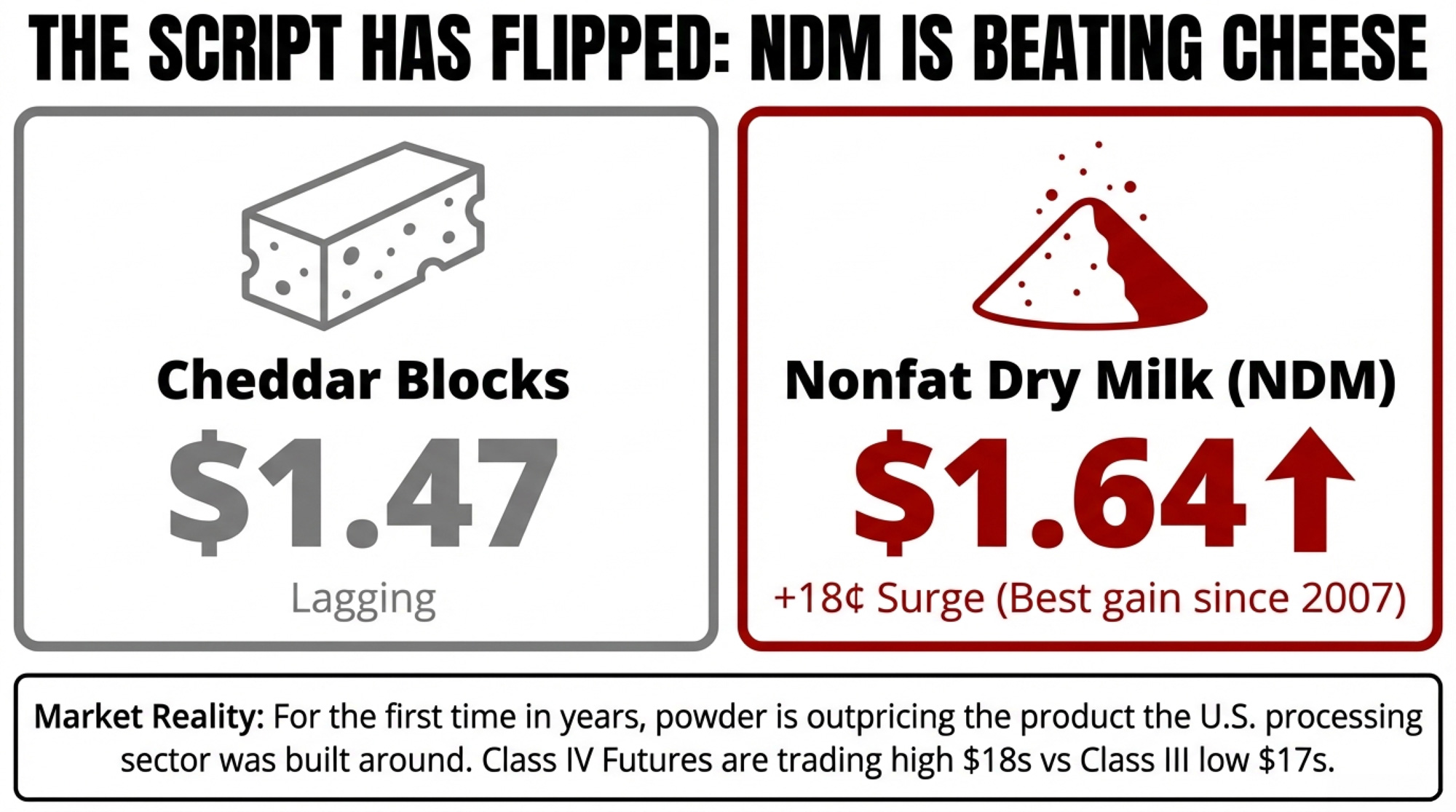
NewsSubscribe
First
Last
Consent

From Breeding Chaos to Strategic Cash: How 2025’s Smartest Dairies Connect Every Decision

The smartest dairies aren’t just milking cows anymore—they’re connecting breeding, markets, and risk into one profitable system

EXECUTIVE SUMMARY: What farmers are discovering across the country is that 2025’s most profitable dairies have stopped treating breeding, market timing, and risk management as separate functions—they’re integrating them into strategic systems that maximize both immediate cash flow and long-term genetic progress. Recent USDA data shows milk production in major dairy states increased 3.3% year-over-year to 18.8 billion pounds, driven largely by farms confident in dual revenue streams where beef-cross calves now contribute meaningful dollars per hundredweight to overall margins. Progressive operations are using genomic testing to segment herds strategically, with top genetic performers earmarked for replacement production while bottom performers generate premium beef-cross income that funds facility improvements and equipment upgrades. This shift is supported by the $1.2 billion in Dairy Margin Coverage payments delivered in 2023, which smart farms are using not just as insurance but as strategic tools that influence breeding timing and production planning. Extension specialists from Wisconsin to California report that operations implementing these integrated approaches are seeing substantial improvements in breeding economics while maintaining genetic progress rates. The transformation suggests we’re moving toward a more sophisticated industry where success comes from strategic thinking rather than just operational efficiency. Here’s what this means for your operation: the tools and expertise needed for this integration are increasingly accessible to farms of all sizes, creating unprecedented opportunities for producers ready to adapt their decision-making systems.

profitable dairy strategies

What started as a dairy boom has become something far more significant—a fundamental shift in how progressive farms balance genetics, markets, and risk in real-time decision-making.

You know that feeling when you walk into the hotel lobby after a producer meeting and everyone’s huddled around talking about the same thing? That’s where we are with dairy right now. What’s unfolding in 2025 goes way beyond the obvious headlines—the massive processing investments and the beef-cross calf premiums that have everyone’s attention.

I’ve been watching this closely across different regions, and the smartest operations aren’t just riding this wave. They’re developing methods to connect the dots between breeding, market signals, and risk management, rather than treating them as separate farm functions. And honestly, it’s changing how we need to think about running a dairy.

This isn’t about getting fancier technology—though that’s certainly part of it. It’s a whole new approach that’s helping progressive operations navigate unprecedented complexity while actually maximizing both short-term cash flow and long-term genetic progress. Not an easy balance, as many of us have learned the hard way.

Market observations and examples in this article reflect general industry trends and producer experiences as of September 2025.

Dairy’s New Cash Engine: U.S. milk output climbs steadily while beef-cross calf revenues surge to $1.2B—a shift that’s transforming the industry’s profit structure. Strategic farms now treat beef genetics as a vital income stream, not just an add-on. Are you capturing your share of this new revenue?

What’s Really Behind This Perfect Storm

So here’s what we’re seeing across different regions. With the increasing number of new processing plants coming online, combined with strong beef-cross calf markets, we have created a unique moment in dairy economics that I don’t think any of us were quite prepared for.

The data from the USDA’s August report show that production in the 24 major dairy states jumped 3.3% year-over-year to 18.8 billion pounds. Both infrastructure demand drives that, and—let’s be honest—farmers’ growing confidence in having multiple revenue streams, rather than just milk.

Phil Plourd from Ever.Ag Insights captured what many of us were thinking when he noted, “Market pricing and conditions encouraged additional production going into this year, and now it’s here, with historic force. As is often the case with on-farm production, it probably took longer than some thought to get going, and now it will probably take longer than many think to slow down.”

And what’s particularly noteworthy is that many producers I talk with at conferences report that cattle sales contribute significantly more to their bottom line than they did just a few years ago. We’re talking about operations where beef-cross calves have become a meaningful part of overall farm margins. Producers who’ve implemented strategic genomic testing are finding that they can identify their lowest-performing dairy genetics for beef breeding while preserving their elite animals for replacement production.

This builds on what we’ve seen in recent years with infrastructure development. Michael Dykes from the International Dairy Foods Association put it well at their San Antonio forum: “Our farmers want to grow, and so do our processors. If we aren’t growing, if we aren’t looking toward the future, we’re going to get surpassed by others.”

What gives me hope is that we’re seeing the emergence of truly dual-purpose dairy operations—farms that are optimizing for both milk production and beef genetics simultaneously. It’s a strategic shift that would’ve been nearly impossible to justify economically just five years ago.

How Genomics Finally Made Sense for Regular Dairies

Something that has caught my attention lately is how genomic testing has evolved from being used primarily in elite herds with advanced genetics programs to becoming a cornerstone of breeding strategies for regular commercial operations like yours and mine.

You probably already know this, but genomic testing costs have decreased to the point where most operations can afford to be strategic about it. Extension personnel from Wisconsin, Penn State, and UC Davis are collaborating with progressive dairies to utilize genomics for informed breeding decisions across their entire herds, not just their top-performing animals.

What I find fascinating is how farms are implementing three-tier genomic breeding strategies. They’re using the overnight genomic reports to segment their herds into strategic breeding groups. The top genetic performers get tagged for sexed dairy semen to produce the next generation of high-producing replacements. The solid middle performers are bred to conventional dairy semen, balancing cost with reliable genetic progress. And here’s the key—the bottom performers are targeted for beef-on-dairy matings to maximize calf value from animals with lower dairy potential.

Many producers report substantial improvements in their breeding economics using this approach. Some operations are seeing their replacement costs drop while calf income increases. More importantly, they’re maintaining their genetic progress rate while generating cash flow that funds facility improvements and equipment upgrades.

Why is this significant? The economics tell the story. Dr. Chad Dechow from Penn State’s dairy genetics program explained it this way: this approach transforms breeding from guesswork into putting your resources where they’ll do the most good. When you can identify which cows should produce premium beef-cross calves versus replacement heifers, the numbers work out pretty quickly.

What farmers are discovering—and this has been particularly encouraging to see—is that genomic testing creates a ripple effect that extends beyond just breeding decisions. It’s changing how they think about culling strategies, feed allocation during the transition period, and even barn design for managing fresh cows. When you know exactly which animals have the genetic potential to be your next generation of leaders, everything else falls into place differently.

Of course, not everyone’s convinced this approach works for their operation. Some producers I know—particularly those running smaller organic operations in the Northeast—are taking a more cautious approach with genomics, and honestly, they might be right for their specific situation where every breeding decision carries a different weight than in larger conventional systems.

The Replacement Crisis Nobody Saw Coming

What I find fascinating is how an unexpected problem emerged from all this excitement about beef-on-dairy premiums—replacement heifer shortages.

Dr. Geoff Smith from Zoetis put it bluntly: “Many farms have fallen so in love with producing beef-on-dairy that they don’t have the number of replacement heifers needed. And they’re not able to make proper culling decisions because they don’t have the numbers of replacements in the pipeline.”

I keep hearing variations of the same story from producers across different regions. In their eagerness to capture strong calf premiums during peak breeding seasons, some operations bred too high a percentage of their herd to beef sires for extended periods. By the time they realized the implications for their replacement pipeline, they were facing serious heifer shortages for the following year.

The scramble to correct course has been expensive for these farms. Premium-priced sexed semen, repeat breedings on marginal cows, and veterinary bills for extending lactations on older animals. Even with immediate corrections, that heifer gap can’t be filled for almost two years, creating productivity delays that ripple through multiple breeding cycles.

This teaches us that even the most profitable market opportunities require disciplined balance with long-term herd needs. The farms that implemented strict breeding ratio guardrails early on are now in much stronger positions.

It’s worth noting that seasonal operations face different challenges here. If you’re running a spring calving system in the northern plains or fall freshening to avoid summer heat stress in the Southeast, missing a breeding window can affect your entire production pattern for years to come. For operations using robotic milking systems, where individual cow management is even more critical, the replacement pipeline becomes absolutely essential.

Quick Decision Framework

Essential breeding ratio guardrails producers are using:

  • Maintain a minimum of 20-25% dairy semen regardless of market signals
  • Set alerts when dairy-semen usage drops below your calculated threshold
  • Factor seasonal calving patterns into replacement timing
  • Account for regional mortality and retention patterns

Figuring Out Your Farm’s Breeding Sweet Spot

So how do you avoid that replacement trap? The most sophisticated operations have moved beyond the old “use 25-30% dairy semen” rule of thumb to develop calculations tailored to their specific operations. Extension specialists from major dairy states are helping producers develop these customized models, and the results vary significantly based on management style and regional factors.

Generally speaking, annual culling rates can vary significantly depending on the type of operation and management intensity. Free-stall operations in the upper Midwest often exhibit different patterns than dry lot systems in California’s Central Valley, where heat abatement strategies and water availability influence distinct management decisions. These differences fundamentally change the replacement math.

Walking through barns in different regions, I keep hearing producers focus on these key variables:

  • Annual culling rate (and this varies a lot depending on your region and management style)
  • Conception and calving rates specific to your breeding program
  • Pre-weaning mortality and retention sales patterns
  • Herd expansion or contraction plans for the next 24 months
  • Actual heifer-out percentage per dairy breeding

The basic calculation becomes pretty straightforward: replacement heifers needed divided by your heifer-out rate equals dairy-semen services required.

For example, a farm that needs 300 replacements annually with a 35% heifer-out rate requires approximately 857 dairy semen services. If they plan 3,000 total breedings, that requires 29% dairy semen use—close to the rule of thumb, but adjusted for their specific performance metrics.

This approach transforms breeding decisions from guesswork into a strategic allocation of resources. And what’s particularly valuable is that this calculation helps farms identify their flexibility margins. How much can you adjust your beef-on-dairy quotas without compromising your replacement pipeline? What happens when you factor in seasonal mortality patterns or drought conditions that might affect conception rates?

Making Risk Management Actually Strategic

What I’m still trying to figure out is how some operations have gotten so sophisticated at integrating Dairy Margin Coverage and Revenue Protection into real-time production decisions. The $1.2 billion in DMC payments delivered in 2023 represents far more than insurance—it has become a strategic business tool that influences breeding timing and production planning.

Leading dairy financial consultants are helping farms implement strategies that would’ve seemed impossible just a few years ago. Instead of simple coverage at one margin level, progressive operations buy tiered protection: maybe 25% of milk at a higher margin level, 50% at a middle tier, and the remainder at a lower level. This ladder approach ensures partial payouts as margins erode, smoothing cash flow during volatile periods.

Some operations are even timing their breeding decisions around coverage triggers. When margin forecasts indicate potential payouts during their breeding season, they temporarily shift more breedings toward dairy semen, knowing the safety net cushions milk-price risk and protects replacement targets.

Phil Plourd noted that “DMC can go a long way to providing real, meaningful protection to a farm’s profitability. And the cost of it is, you know, it’s sort of a no-brainer in terms of what it takes to get involved.”

This creates a strategic cushion that allows farms to make longer-term decisions without being whipsawed by short-term market volatility. When you know DMC will cover margin compression below certain thresholds, you can stick to your genetic improvement plans and maintain proper butterfat performance levels rather than making reactive breeding adjustments.

Examining this trend more broadly, what’s notable is how risk management tools have evolved from simple insurance to strategic decision-making components. Farms that master this integration don’t just protect against downside—they use the protection to make more aggressive moves during periods of opportunity.

How Top Dairies Actually Connect the Dots: Progressive herds now funnel genetics, market insight, and risk tools into a single breeding hub—turning data into decisively profitable actions. This integration lets you act with speed and confidence, not hindsight. Are you using a system—or just hoping for the best?

When Market Signals Don’t Agree

And this is where it gets tricky. Current market conditions are testing these integrated systems pretty hard. Market conditions have been mixed recently, with some segments experiencing pressure despite production continuing to climb and beef-cross markets remaining relatively strong.

Progressive farm managers are learning to navigate this tension through disciplined frameworks that quantify trade-offs rather than making emotional market reactions. It’s fascinating to watch how different operations handle these conflicting signals—particularly comparing seasonal calving operations with year-round breeding programs, or how organic operations in Pennsylvania approach these decisions differently than large conventional dairies in Idaho.

When beef calf markets stay strong while milk margins feel pressure, smart managers pause to calculate the actual impact. Higher beef income might cover some of the margin shortfall. However, dropping your dairy semen use for one breeding cycle means losing future dairy heifers for immediate cash flow.

The most successful operations establish guardrails in their breeding programs, with alerts triggered when dairy semen usage dips below critical thresholds. They might make tactical adjustments—shifting their ratios temporarily—that capture market opportunities without sacrificing herd integrity.

And something worth noting… seasonal timing affects these decisions differently. Spring breeding adjustments have different long-term implications than fall changes, since spring-born calves enter the milking string during peak production periods the following year. As many of us have seen, timing is everything in dairy—whether it’s breeding decisions, dry-off timing, or fresh cow management protocols.

Making It Work Without Breaking the Bank

You’ve probably seen this in your own region… not every operation needs a corporate-style integrated system to compete effectively. Smart mid-sized dairies—particularly those with 300-800 cows, which form the backbone of many regional dairy communities—are adopting targeted elements that deliver outsized returns without requiring massive investment.

What’s working for smaller operations:

Selective Genomics Strategy: Rather than testing every animal, focus genomic testing on first-lactation heifers (your future genetic leaders) and the bottom performers in your current milking string. With strategic testing, you can pinpoint high-value breeding decisions without incurring significant costs. Even smaller organic operations where every breeding decision carries extra weight are finding success with this targeted approach.

Simple Heifer-Out Tracking: Build a straightforward spreadsheet model tracking your annual cull rate, conception rate, calving rate, and heifer mortality. Update it quarterly to calculate the exact dairy-semen share you need each month to hit replacement goals. This process takes approximately 30 minutes per quarter, but it can save you thousands in breeding mistakes. Some producers even factor in seasonal variations—like higher mortality during summer heat stress periods in the Southeast.

Tiered DMC Coverage: Purchase coverage at multiple bands—maybe half of your production at your true cost of production margin, and a portion at one level lower. This ladder ensures partial payouts as margins erode, without the need for complex hedging programs. The premium difference is minimal, but the protection value is substantial, especially for operations dealing with higher feed costs or transportation challenges in remote areas.

Monthly Breeding Reviews: Pull your herdsman, nutritionist, and bookkeeper together for 30 minutes monthly to review dairy versus beef-semen usage, replacement pipeline status, and current market signals. Agree on one tactical adjustment if needed. These sessions prevent drift and keep everyone aligned on strategic goals. I’ve noticed that operations running these reviews tend to catch problems earlier—before they become crisis situations.

Regional extension specialists and dairy consultants can provide expertise without the need for full-time analyst salaries, helping to interpret genomic reports, advise on optimal DMC triggers, and facilitate quick scenario analyses. The best consultants help farms build internal capabilities rather than creating dependency.

Warning Signs We Should All Watch

While the beef-on-dairy revolution presents unprecedented opportunities, there are several risk factors we need to monitor closely. Early indications suggest these warning signs are becoming more apparent as market conditions evolve, and they affect different regions and operation types in unique ways.

Overreliance on dual revenue streams poses the biggest concern. If calf markets retreat or soften, farms counting on sustained premium values could face compressed milk margins and discounted calf values simultaneously. This double-exposure risk is particularly concerning for operations that expanded based on dual-income projections—especially in regions where land costs and environmental regulations make expansion expensive.

Production momentum effects also create risk. Continued strong milk output despite shifting market conditions could lead to prolonged margin compression, especially given the time lag between market signals and breeding decisions that affect herd size. Milk production has its own momentum that doesn’t always align with market signals—particularly in systems designed for maximum efficiency rather than flexibility.

Debt service exposure represents another vulnerability—something that affects family operations differently than corporate structures. Many expansions were planned, assuming both strong milk prices and substantial beef-cross income. Market pressure risks exposing operations with high leverage ratios, particularly those that financed expansion during recent periods of low interest rates.

Daniel Basse from AgResource Company remains optimistic about long-term prospects, noting that “the average age of cow-calf producers climbs into the upper 60s,” and predicts beef-on-dairy will remain in demand for years to come. Still, smart operations are treating beef income as a strategic bonus that enhances profitability rather than a replacement for sound milk-price risk management.

The farms that seem most resilient are those that treat this as one component of their overall strategy, rather than the foundation of their business model. What do you think separates the operations that weather these transitions successfully from those that struggle?

Making It Happen on Your Farm

For the immediate implementation of the fall breeding season, successful farms are calculating their specific dairy semen threshold based on their actual culling, conception, and mortality data, rather than relying on industry averages. They’re implementing tiered DMC coverage that provides partial protection as margins shift, and using genomic testing strategically on animals where breeding decisions have the highest financial impact.

For long-term success through multiple breeding cycles—particularly important for seasonal operations planning next year’s calving pattern, or operations dealing with climate challenges in drought-prone regions—winning operations treat beef-on-dairy income as a strategic bonus while building frameworks that balance market opportunities with genetic progress and replacement needs.

Ken McCarty from McCarty Family Farms summed up the balanced approach well: “This certainly has helped bolster profitability while also enhancing the long-term productivity and profitability of our farms through increased genetic selection intensity. We don’t see tremendous downside risk in the beef-on-dairy market anytime soon.”

Getting Started This Season

Week One:

  • Calculate your farm’s actual heifer-out percentage from last year’s data
  • Review current DMC coverage levels and consider a tiered approach
  • Identify animals for strategic genomic testing (focus on first-lactation animals and bottom performers)

Week Two:

  • Set up monthly breeding review meetings with your key team
  • Create breeding ratio alerts in your herd management system (or simple spreadsheet alerts)
  • Document your breeding decision framework so everyone’s on the same page

Next Quarter:

  • Evaluate integration opportunities between risk management and breeding decisions
  • Build relationships with regional extension specialists or consultants
  • Assess return on investment from initial changes
  • Factor in seasonal adjustments for your specific climate and management system

Regional Considerations:

  • Northern operations: Account for winter housing constraints in replacement planning
  • Southern dairies: Build heat stress impacts into conception rate calculations
  • Western operations: Factor water availability and feed cost volatility into risk planning
  • Organic systems: Verify breeding strategies align with certification requirements and transition timing

Where This Is All Heading

We’re witnessing a fundamental transformation in dairy operations management. The farms thriving in this environment have learned to integrate genetics, markets, and risk as interconnected variables rather than separate functions. This development suggests that we’re moving toward a more sophisticated industry, where success stems from strategic thinking rather than just operational efficiency.

The opportunity is unprecedented for producers ready to adapt. Infrastructure investments, technology tools, and current market conditions are aligned to reward farms that can successfully navigate this new complexity. This isn’t about getting bigger or spending more—it’s about strategically integrating available resources in ways that weren’t possible even five years ago.

Time will tell if this approach holds up through different market cycles, but early signs suggest the dairy operations that master this integration will define the industry’s future for decades to come. The question isn’t whether this trend will continue, but how quickly farms can adapt their decision-making approaches to capture the full potential of this evolving operating environment.

The dairy industry stands at an inflection point. Producers who adopt this integrated approach to strategic decision-making, while maintaining a disciplined focus on fundamentals, will be well-positioned to thrive regardless of market volatility. Those who don’t adapt risk being left behind as the industry continues its rapid evolution toward more sophisticated, interconnected operational systems that reward strategic thinking over traditional scale-focused approaches.

KEY TAKEAWAYS:

  • Quantified breeding improvements: Producers using strategic genomic testing report replacement costs dropping while calf income increases substantially, with the most successful operations maintaining genetic progress while generating cash flow that funds major facility and equipment investments
  • Risk management as strategy: Smart farms are implementing tiered DMC coverage (25% at higher margins, 50% middle-tier, remainder lower) to ensure partial payouts during margin compression, creating strategic cushions that enable longer-term breeding decisions without market volatility disruption
  • Flexible breeding ratios: Top operations calculate farm-specific dairy-semen thresholds using actual culling, conception, and mortality data rather than industry averages, then set alerts when usage drops below critical replacement levels—typically maintaining 20-25% dairy semen minimums regardless of beef market premiums
  • Regional adaptation strategies: Northern operations factor winter housing constraints, Southern dairies account for heat stress conception impacts, Western farms consider water availability and feed cost volatility, while organic systems verify breeding decisions align with certification timing requirements
  • Monthly strategic reviews: The most resilient operations conduct 30-minute monthly meetings with key team members to review breeding ratios, replacement pipeline status, and market signals, making tactical adjustments that capture opportunities without sacrificing herd integrity—a practice that consistently catches problems before they become expensive crises

Complete references and supporting documentation are available upon request by contacting the editorial team at editor@thebullvine.com.

Learn More:

Join the Revolution!

Join over 30,000 successful dairy professionals who rely on Bullvine Weekly for their competitive edge. Delivered directly to your inbox each week, our exclusive industry insights help you make smarter decisions while saving precious hours every week. Never miss critical updates on milk production trends, breakthrough technologies, and profit-boosting strategies that top producers are already implementing. Subscribe now to transform your dairy operation’s efficiency and profitability—your future success is just one click away.

NewsSubscribe
First
Last
Consent

The Financial Warning Signs Your Neighbors Won’t Talk About: What Rising Bankruptcies Really Mean for Dairy

Chapter 12 bankruptcies jumped 55% while government payments hit $42.4B—here’s what the courthouse records really reveal

EXECUTIVE SUMMARY: Here’s what farmers are discovering about the current financial landscape: University of Arkansas data shows agricultural bankruptcies surged 55% to 259 cases between April 2024 and March 2025, even as government support increased 354% to $42.4 billion—revealing a systematic disconnect between bailout funding and actual farm-level financial stress. The most concerning pattern involves interest rates jumping from 2.9% to nearly 9%, creating unsustainable debt service burdens for operations that layered variable-rate financing during the low-rate period. What’s particularly telling is that replacement heifer inventories have dropped to just 41.9 per 100 milk cows—a 47-year low that signals producers are sacrificing long-term herd sustainability for short-term cash flow. Recent Federal Reserve data confirms 4.3% of farm loan portfolios now show “major or severe” repayment problems, the highest level since late 2020, while nearly 2% of farmers won’t qualify for loans they easily obtained just last year. The encouraging news is that operations monitoring specific financial stress indicators and maintaining conservative debt structures are not just surviving—they’re positioned to capitalize on opportunities when market conditions stabilize. Smart producers are treating financial health monitoring as seriously as they track somatic cell counts, recognizing that both are essential for sustainable dairy success in 2025.

dairy financial health

Here’s something that’s been on my mind at every industry meeting this year: Chapter 12 agricultural bankruptcies jumped 55% while government payments to agriculture increased 354% to $42.4 billion, according to the latest USDA data. When you see those two trends moving in opposite directions like that, it raises some important questions about what’s really happening with farm finances.

The University of Arkansas just released tracking data showing 259 bankruptcy cases between April 2024 and March 2025, and these numbers tell a story that’s more complex than what we’re seeing in the trade publications. You’ve probably heard how headlines keep mentioning support programs and stable milk prices. The courthouse records paint a vastly different picture.

What’s interesting here is how the usual signs we look for—Class III futures, government program announcements—might not be giving us the complete picture we need for our own operations. And as many of us have experienced firsthand, what looks stable in the market reports doesn’t always translate to what’s happening in your parlor or your monthly cash flow.

The Arkansas Pattern: When One State Reveals National Trends

Ryan Loy and his team at the University of Arkansas Division of Agriculture have been doing some fascinating work tracking these patterns. Arkansas alone jumped from just 4 Chapter 12 filings in 2023 to 25 in 2025—that’s over 25% of all national filings coming from one state. While this represents a massive 525% increase for Arkansas specifically, their agricultural bankruptcy patterns often mirror what we see nationally, just more concentrated. It’s like a canary in the coal mine situation.

The quarterly data from their research is what really caught my attention. Q1 2025 brought 88 bankruptcy filings compared to 45 in Q1 2024. That’s a 96% increase in just three months, and it puts us on a trajectory that reminds those of us who lived through it of the 2019 farm crisis.

The 96% jump in Q1 2025 bankruptcies signals a return to 2019 crisis-level financial stress—but industry headlines aren’t telling this story. These courthouse records reveal what traditional dairy market indicators are missing.

“Once you see this on a national level, it’s a clear sign that financial pressures that we saw before in the 2018 and ’19 are kind of re-emerging,” Loy explained in his recent interviews. For those of us who weathered that period, the patterns are starting to look uncomfortably familiar.

Traditional dairy regions are feeling similar pressure. Federal court records show California led with 17 bankruptcy filings in 2024, despite generally stronger milk prices on the West Coast. Iowa reported 12 leading into 2025, and the pattern continues across Wisconsin, Minnesota, and other Midwest operations where land values and operational costs create different challenges.

Something worth noting is how these geographic patterns affect more than just the operations filing for bankruptcy. If your area is seeing concentrated financial stress, that impacts equipment values at local auctions, the stability of your processing relationships, and even the availability of veterinary services. It’s all interconnected in ways that aren’t always obvious until you’re dealing with it directly.

The Interest Rate Reality: How 9% Financing Changed Everything

Here’s where this gets personal for dairy operations, and it’s probably the single biggest factor driving these bankruptcy numbers. Federal Reserve agricultural lending data shows farm loan rates have jumped from 2.9% to nearly 9% for many operations over the past two years. That’s not just a cost increase—it fundamentally changes how you approach financing everything from feed inventory to facility improvements.

Variable-rate financing, which made perfect sense when rates were low, now creates a completely different cash flow picture. Those manageable seasonal dips that you used to smooth out with a line of credit become much more challenging when your borrowing costs have essentially tripled.

From 2.9% to nearly 9%: How interest rate shock is reshaping dairy finance—and why operations with variable-rate debt are filing for bankruptcy protection despite stable milk prices.

The Federal Reserve Bank of Chicago’s latest district report shows that 4.3% of farm loan portfolios had “major or severe” repayment issues in Q4 2024—the highest level since late 2020. What’s really concerning is that nearly 2% of farmers won’t qualify in 2025 for the same loans they received in 2024, according to their regional analysis. The Kansas City Fed found that non-real estate farm loans at commercial banks increased by 25% from 2023 to 2024, but interest rates remain at these elevated levels.

Equipment financing has taken a tough hit. You know how straightforward it used to be to pencil out new machinery at 3-4% interest rates? When rates approach 9%—especially if you’re already carrying equipment debt—those calculations look completely different. This shows up in auction activity, parlor upgrade deferrals, and even basic maintenance equipment purchases.

But here’s what’s encouraging: Some operations that locked in fixed-rate financing early in the rate cycle are finding themselves with a real competitive advantage. They’re able to make strategic equipment purchases and facility improvements, while competitors struggle with variable-rate debt service. I’ve noticed these operations are also better positioned for fresh cow management improvements and transition period upgrades that require capital investment.

Examining bankruptcy filings from the past year reveals a common pattern among operations that had layered short-term, variable-rate financing on top of long-term mortgages during the period of low interest rates. When those rates reset, monthly obligations became unmanageable regardless of milk production efficiency or butterfat performance.

For individual operations, understanding interest rate exposure has become crucial. Calculate what percentage of your total debt carries variable rates. Even at higher current rates, fixed-rate financing offers payment predictability, enabling better cash flow management during volatile periods—and we’re certainly in a volatile period.

Lenders are being selective about who gets approved for refinancing. They’re expanding loan volumes at higher rates but maintaining strict qualification requirements. It’s a profitable environment for lenders, but it means operations need strong financials to access better terms.

Government Payments: The Puzzle That Doesn’t Add Up

This is where the data gets really interesting. Agriculture received $42.4 billion in direct government payments in 2025—a 354% increase from 2024, according to USDA data. Yet bankruptcy filings keep climbing.

$42.4 billion in government support can’t stop the bankruptcy surge—here’s why bailout programs help with operating expenses but don’t address the debt service burdens actually driving farm failures.

One pattern that emerges is that government support often flows through existing lender relationships and larger operations first. If you’re facing immediate financial stress, you may not see relief quickly enough to address urgent payment obligations. Many of these programs help with operating expenses but don’t tackle the underlying debt service burdens that actually drive bankruptcy filings—especially when interest rates have reset at these levels.

There’s also a timing issue that affects seasonal cash flow management. Government payments typically arrive based on program schedules that don’t always align with when individual operations hit their worst cash flow periods. If your variable-rate note resets in January and government support shows up in March, that gap can determine whether you’re restructuring debt or heading to court.

The Farm Credit System’s 2024 annual report shows total loans outstanding at $450.9 billion, with real estate mortgage loans at $187.9 billion and production/intermediate-term loans at $81.2 billion. Despite record government support, lenders are maintaining strict underwriting standards—which makes sense from their risk management perspective—but this can exclude operations that most need refinancing assistance.

Replacement Heifers: The Warning Signal We Can’t Ignore

One number that’s been keeping me up at night comes from the USDA’s National Agricultural Statistics Service. The U.S. dairy herd is currently operating with just 41.9 replacement heifers per 100 milk cows—a 47-year low based on their historical data. That ratio suggests that producers are prioritizing short-term cash flow over long-term herd sustainability, a trend that is occurring across all regions and farm sizes.

This signals that operations are making difficult decisions about breeding stock to meet immediate financial obligations. Reduced heifer inventories limit your ability to implement planned genetic improvements. You’re keeping older cows in production longer, which can impact milk quality and butterfat performance. Insufficient replacement rates today create production constraints when market conditions improve—you might miss the next upturn because you don’t have the herd capacity to capitalize on it.

This isn’t just about individual farm decisions. When replacement rates drop industry-wide, it signals systematic financial stress that affects everyone from genetics companies to equipment dealers. The breeding programs we’ve invested decades in developing depend on adequate replacement rates to maintain genetic progress.

What’s particularly noteworthy is how this affects different management systems. Operations using dry lot systems might find it easier to manage older cows, while those with more intensive grazing programs may face bigger challenges with extended lactations. The management of fresh cows becomes even more critical when you’re counting on those animals for longer, more productive lives.

Financial Health Checklist: What to Monitor Monthly

Track these ratios to spot trouble before it becomes critical:

  • Debt Service Coverage: Net income ÷ total debt payments (monitor trends, aim to stay above 1.2)
  • Working Capital Cushion: (Current assets – current liabilities) ÷ annual milk sales (15%+ provides seasonal buffer)
  • Interest Rate Exposure: Variable-rate debt as % of total debt (above 60% creates Fed policy vulnerability)
  • Short-Term Debt Balance: Operating loans ÷ total debt (risk increases above 40%)
  • Cash Flow Variance: Monthly actual vs. 12-month average (>10% swings during high-cost months signal problems)

Regional Variations and Success Stories

This season, regional variations are worth understanding. California operations, which face higher land costs and water regulations, deal with different pressures than Midwest dairies, which manage harsh winters and transportation costs. Texas producers, with their varied climate and feed base, are adapting to these financial pressures in ways that make sense for their operational structure.

State2024 Bankruptcy Filings% of National TotalPrimary Challenge
California176.6%Land costs, regulations
Iowa124.6%Transportation, weather
Wisconsin155.8%Equipment debt service
Minnesota114.2%Seasonal cash flow
Arkansas259.7%Variable-rate exposure

Geographic bankruptcy clustering reveals regional stress patterns—if your area shows concentrated filings, expect impacts on equipment values, processing relationships, and veterinary services availability.

What’s consistent across regions is that bankruptcy patterns create ripple effects. When concentrated financial stress hits an area, it affects regional equipment values, processing relationships, and support services. But there can be opportunities too. Equipment purchases may yield better values at auctions, although service networks might become strained as the local producer base shrinks.

I’ve noticed that regions with more diversified agricultural economies—places where dairy operations can potentially add custom farming or other enterprises—seem to be handling the financial pressure somewhat better. That’s not an option for everyone, but it’s worth considering as part of your long-term strategy.

Despite these financial pressures, some adaptations seem to be working. Some operations have focused on efficiency improvements that provide clear returns on investment even at higher financing costs. Others have found opportunities in value-added processing or direct marketing that provides price stability for at least part of their production.

What’s encouraging is seeing operations that have successfully refinanced their variable-rate debt into fixed-rate structures, even at higher rates. They’re finding that the payment predictability more than compensates for the higher cost, especially when they can focus on operational improvements rather than worrying about the next rate reset.

One innovative approach I’m seeing more of is cooperative equipment purchasing and shared services agreements. Several operations in Wisconsin have formed buying groups for major equipment purchases, thereby reducing individual capital requirements while still accessing the latest technology. Similarly, some California operations are sharing specialized labor for peak periods, such as breeding or harvest, thereby spreading costs across multiple farms.

Examining global patterns, it’s worth noting that countries with more structured agricultural financing—such as New Zealand’s farm management deposit schemes or Australia’s Farm Finance Concessional Loans Program—tend to experience less dramatic swings in bankruptcy rates during interest rate cycles. Although our system differs, there may be valuable lessons to be learned about long-term financial stability mechanisms.

Practical Applications: Managing Current Conditions

Cash flow scenario planning has become essential rather than optional. Consider maintaining working capital reserves that give you flexibility to manage seasonal variations and unexpected cost increases without requiring emergency financing at current rates.

Equipment decisions require more careful analysis now. Being thoughtful about purchases that extend payback periods makes sense in the current interest rate environment. Focus capital investments on proven productivity improvements with clear return calculations—things like parlor efficiency upgrades or feed system improvements that reduce labor costs.

Some operations are finding success with alternative financing strategies, including equipment leasing arrangements, partnerships with other producers, or focusing on used equipment purchases that offer shorter payback periods. There’s also growing interest in shared services agreements where multiple operations split the cost of expensive equipment or specialized services.

With replacement heifer numbers at these low levels, fresh cow management becomes even more critical. You simply can’t afford transition period problems when you’re keeping cows longer and have fewer replacements coming through the system. The fresh cow protocols that might have been “nice to have” in better financial times have become essential for maintaining production efficiency and butterfat performance.

What I’ve found particularly interesting is how some of the most successful operations right now are those that took a conservative approach to debt structure, even when money was cheap. They maintained higher equity ratios, avoided over-leveraging on equipment, and kept adequate cash reserves. That financial discipline is paying off now, especially when it comes to making strategic investments in cow comfort or fresh cow management systems that require upfront capital.

Looking Forward: Building Financial Resilience

The patterns in recent bankruptcy data show that financial management has become as important as production management for long-term dairy success. The operations that are doing well aren’t just good at managing cows—they’re actively managing debt structure, interest rate exposure, and cash flow variability.

Rather than relying solely on industry messaging about recovery or government support programs, monitoring specific financial stress indicators provides early warning signals. The University of Arkansas research shows that financial stress often builds gradually before reaching crisis levels. Understanding these patterns gives you time to make adjustments before problems become unmanageable.

What’s encouraging is that the fundamental demand for dairy products remains strong. Population growth, protein consumption trends, and global market expansion all indicate long-term opportunities for well-managed operations that can effectively navigate current challenges. The emerging trends in functional dairy products and sustainable production practices are creating new market opportunities that weren’t available during previous financial stress periods.

Your operation’s financial health depends on monitoring the right indicators and understanding the broader forces at play. Given what we’re seeing in these numbers, financial analysis has become as essential as monitoring somatic cell counts or butterfat levels—it’s just part of professional dairy management in 2025.

The operations that recognize this shift and develop strong financial management skills to complement their production expertise will be positioned to capitalize when market conditions stabilize. There’s a real reason for optimism about the industry’s long-term prospects, especially for producers who combine traditional dairy excellence with modern financial management practices.

The Bottom Line

When 259 farm families file for bankruptcy protection in a single year while taxpayers fund $42.4 billion in agricultural support, it’s clear we’re facing more than a typical market correction. These courthouse records reveal a systematic financial stress that traditional industry metrics fail to capture—and that makes understanding the early warning signs critical for every dairy operation.

The clearest lesson from this data isn’t just about avoiding bankruptcy. It’s about recognizing that financial health and herd health are equally essential for long-term success in modern dairy. The operations that develop strong financial management skills to complement their production expertise won’t just survive the current volatility—they’ll be positioned to thrive when market conditions stabilize.

The data shows there’s still time to make adjustments, and with the right financial monitoring and planning, dairy operations can build the resilience needed to weather whatever comes next. That’s not just hopeful thinking—it’s what the numbers and the success stories are telling us about the future of professional dairy management.

KEY TAKEAWAYS:

  • Monitor your debt service coverage ratio monthly—keep it above 1.2 to maintain borrowing flexibility, especially with variable-rate debt that could reset at decade-high levels, affecting your operation’s cash flow predictability
  • Maintain working capital reserves equal to 15%+ of annual milk sales—this buffer provides crucial flexibility during seasonal variations and unexpected cost increases without requiring emergency financing at current 8-9% interest rates
  • Prioritize fixed-rate refinancing opportunities while still available—operations successfully locking in predictable payment structures are gaining competitive advantages for strategic investments in fresh cow management and facility improvements
  • Focus equipment investments on proven productivity improvements with clear ROI calculations—parlor efficiency upgrades and feed system improvements that reduce labor costs can justify higher financing costs better than speculative technology purchases
  • Strengthen fresh cow management protocols as replacement heifer numbers remain at 47-year lows—maximizing productive life and butterfat performance of existing animals becomes critical when fewer replacements are coming through the system

Complete references and supporting documentation are available upon request by contacting the editorial team at editor@thebullvine.com.

Learn More:

  • Boosting Dairy Farm Profits: 7 Effective Strategies to Enhance Cash Flow – This guide provides actionable, tactical advice for improving on-farm profitability. It goes beyond financial ratios to offer specific strategies for optimizing parlor efficiency, diversifying revenue streams, and managing feed costs, giving producers direct steps they can implement for immediate cash flow improvements.
  • Global Dairy Market Dynamics: Navigating Volatility and Strategic Opportunities in 2025 – This article provides a crucial strategic perspective by analyzing the macroeconomic forces shaping the industry. It reveals how factors like European production surges and shifting trade logistics affect farm-level prices, helping producers anticipate market changes and position their operations for long-term success.
  • AI and Precision Tech: What’s Actually Changing the Game for Dairy Farms in 2025? – This piece focuses on innovative solutions, providing clear data on the return on investment (ROI) for technologies like precision feeding and AI health monitoring. It shows how specific tech adoptions can directly reduce costs and increase yields, offering a roadmap for modernizing operations to improve financial resilience.

Join the Revolution!

Join over 30,000 successful dairy professionals who rely on Bullvine Weekly for their competitive edge. Delivered directly to your inbox each week, our exclusive industry insights help you make smarter decisions while saving precious hours every week. Never miss critical updates on milk production trends, breakthrough technologies, and profit-boosting strategies that top producers are already implementing. Subscribe now to transform your dairy operation’s efficiency and profitability—your future success is just one click away.

NewsSubscribe
First
Last
Consent

The 70-Mile Threat: How Screwworm Turns Dairy’s Milking Schedule Into a $800,000 Liability

USDA sterile fly production covers just 25% of needs, while screwworm sits 70 miles from Texas dairy operations

EXECUTIVE SUMMARY: Recent government data reveal a concerning preparedness gap, as the New World screwworm sits just 70 miles from the Texas border, while federal sterile fly production operates at only 25% of the estimated containment needs. A typical 1,000-cow operation facing mandatory treatment protocols could dump over 525,000 pounds of milk during a week-long response, resulting in approximately $800,000 in lost revenue while incurring full operational costs. What’s particularly noteworthy is how this crisis highlights fundamental differences between dairy and beef operations—while ranchers can delay marketing during quarantines, dairy producers can’t pause milking schedules. Extension service guidance now emphasizes enhanced wound surveillance and 90-day emergency cash reserves specifically for dairy operations. Climate research indicating that insects are expanding their ranges at a rate of 6 kilometers per year suggests that these biological boundaries will continue to shift, making individual farm preparedness increasingly essential. The operations best positioned for this changing risk environment will be those that balance efficiency gains with crisis resilience, adapting their surveillance and financial planning accordingly.

You know, when Mexico confirmed New World screwworm just 70 miles from the Texas border on September 20th, it got me thinking about something we don’t discuss enough at industry meetings. We spend considerable time optimizing for efficiency—milk per cow, feed conversion, labor productivity—but I wonder if we’ve created some blind spots when it comes to weathering the kinds of crises that could shut down operations for weeks.

What’s particularly noteworthy about this screwworm situation is how it reveals fundamental differences between dairy and beef operations when trouble arises. And honestly? The timing couldn’t be worse for dairy producers, who are already dealing with tight margins and cash flow pressures.

When Your Biggest Strength Becomes Your Greatest Vulnerability

There’s this reality that many of us probably haven’t fully considered: when livestock health emergencies strike beef operations, ranchers have options. They can delay marketing, adjust grazing rotations, and even cull selectively while waiting for clearances.

But in dairy? The cows don’t care about quarantines—they still need milking twice a day.

USDA’s Animal and Plant Health Inspection Service confirmed that the infected calf in Sabinas Hidalgo had traveled from southern Mexico through certified systems—a 300-mile jump north that puts it uncomfortably close to operations across Texas, Oklahoma, and into Kansas. When you’re looking at mandatory withdrawal periods for screwworm treatments, dairy producers face the immediate risk of milk dumping while incurring full operational costs.

Here’s the math that’s keeping many of us up at night: a typical 1,000-cow operation producing around 75 pounds of milk per cow daily is looking at over 525,000 pounds of dumped milk during a week-long treatment window. At current milk pricing levels—hovering in the mid-to-upper teens per hundredweight—that translates to roughly $800,000 in lost revenue while you’re still paying for feed, labor, and utilities.

Financial Reality Check: A 2-week screwworm crisis could cost a 1,000-cow operation $275,000 in combined treatment expenses, dumped milk, and processing disruptions

And that assumes you catch it early… which brings us to something interesting I’ve been noticing about detection capabilities.

The Small Farm Advantage Nobody Saw Coming

Despite having less financial cushion to weather extended crises, family operations might actually hold crucial advantages in early threat detection. This development suggests that we might need to reconsider our assumptions about the balance between operational efficiency and crisis resilience.

When you’re doing the milking yourself, you notice when individual animals behave differently. Those subtle behavioral shifts—the way a cow carries her tail, hesitation at the feed bunk, even changes in how she positions herself during milking—often signal early problems before any visible symptoms appear.

Now, corporate operations have significant advantages—dedicated animal health teams, sophisticated monitoring systems that can track patterns across thousands of animals, and better access to capital during emergencies. But there’s a trade-off here. Those automated systems excel at identifying trends and managing routine health protocols; however, they may miss the individual animal changes that signal early stages of infestation.

What’s even more significant is procedural flexibility. Family operations can often implement treatment protocols within hours of detection, whereas larger operations need to coordinate across multiple sites, consult with centralized veterinary staff, and navigate through documentation requirements that can add crucial hours to response time.

I’ve noticed that the behavioral observation skills that enable you to spot early mastitis or lameness also translate directly to early detection of parasites.

When 25% Capacity Meets 100% of the Problem

Looking at federal response capabilities underscores the importance of individual farm preparedness. The sterile insect technique that eliminated screwworm back in 1966 remains our best tool—and honestly, it’s pretty remarkable technology when you think about it.

According to APHIS data, the Panama facility produces approximately 100-115 million sterile flies per week. It was designed primarily for barrier maintenance rather than responding to outbreaks. Current estimates suggest the Mexican outbreak requires 400-500 million flies weekly for effective containment. We are currently examining existing capacity, which covers approximately 25% of actual needs.

Government Response Reality: Federal sterile fly production operates at just 25% of estimated containment needs, creating an 18-month vulnerability gap for U.S. dairy operations.

USDA Secretary Brooke Rollins announced an $879.5 million response plan in August—including a Texas facility designed to produce 300 million flies weekly. But here’s the challenge: full operational capacity won’t be reached until 2026. That’s an 18-month gap between crisis escalation and the development of adequate response capabilities.

It reminds me of trying to handle a barn fire with equipment designed for small spot fires. The tools work, but the scale just doesn’t match what we’re facing.

Climate Reality Is Rewriting the Rulebook

What makes this screwworm situation particularly significant is how it illustrates broader changes in agricultural threat patterns. Climate research indicates that insects are expanding their ranges at approximately 6 kilometers per year due to rising temperatures. Screwworm, historically confined to tropical zones, now finds suitable habitat extending into traditional cattle regions across Texas, Oklahoma, and parts of Kansas.

This aligns with patterns we’re seeing elsewhere in agriculture—and it’s got implications beyond just this one parasite. Those natural boundaries that have kept certain pests out of our regions are shifting faster than our preparedness systems have adapted to handle them.

Makes you think about what other assumptions we might need to revisit. The efficiency gains from consolidation and specialization have made modern dairy farming profitable, but biological emergencies requiring rapid, individualized responses may reveal some vulnerabilities that we haven’t fully considered.

The Economics Go Way Beyond Treatment Costs

I wish the financial impact stopped at treatment expenses, but it doesn’t. Regional milk processing facilities often implement strict movement controls during livestock health emergencies, potentially preventing even unaffected farms from delivering to alternative buyers. This compounds treatment-related milk dumping with healthy cows whose milk simply can’t reach markets.

There are also international trade implications to consider. The World Organisation for Animal Health protocols automatically restrict exports from countries with screwworm-positive areas. Any disruption to international market access could persist for years beyond the resolution of the outbreak—something we have learned from previous disease outbreaks in other countries.

Here’s something worth considering that caught my attention: quarantine-related losses often fall into insurance coverage gaps that many of us haven’t thought about. Worth having that conversation with your agent before you need to know the answer, especially given how dependent dairy operations are on continuous cash flow.

What University Extension Services Are Actually Recommending

Looking at the preparedness strategies emerging from land-grant universities and USDA guidance, the emphasis is on enhanced surveillance and rapid response protocols. Current recommendations focus on twice-daily wound inspections during milking, documenting and photographing the healing progress on fresh procedures, such as dehorning and AI breeding.

The goal is to catch any problem within hours rather than days, which becomes particularly important when considering that screwworm larvae can establish and begin tissue damage incredibly quickly under the right conditions.

Financial preparedness extends far beyond traditional cash flow planning. What I’m seeing consistently recommended across extension publications is cash reserves equal to 90 days of operating expenses—specifically earmarked for crisis survival, not expansion or equipment purchases. This isn’t growth capital; it’s survival funding for extended market disruptions.

Many operations are establishing backup milk buyer relationships outside their traditional territories. Extension guidance includes negotiating force majeure clauses that enable the rapid transfer of contracts during regional emergencies. Some are pre-purchasing approved treatments and wound care supplies to avoid post-outbreak shortages, while diversifying feed supply chains to reduce dependency on potentially restricted imports.

The Scale vs. Speed Trade-Off Nobody Talks About

This screwworm threat is revealing fundamental tensions between agricultural efficiency and crisis resilience that extend beyond individual farm decisions.

Corporate dairy operations have clear advantages—they can absorb financial hits better, they’ve got dedicated animal health staff, and they often have relationships with multiple processors already established. Their scale provides certain buffers that smaller operations simply don’t have.

However, what’s interesting is that their multi-site complexity and centralized decision-making can slow emergency responses when minutes matter for containment. Independent operations typically operate with tighter margins and less financial cushion, making them more vulnerable to extended disruptions. Yet their direct animal observation, immediate decision-making authority, and established local veterinary relationships often enable faster threat detection and response.

The question is whether those corporate advantages offset the challenges of detection and response time. Industry consolidation has favored larger, more efficient operations for sound economic reasons, but biological emergencies may reveal some trade-offs that we haven’t fully considered.

Fresh Cow Management During Crisis Periods

What’s particularly noteworthy is how this threat timing aligns with fall breeding season and fresh cow transition periods. Fresh cows coming through transition already have compromised immune systems during peak lactation. Add breeding procedures, heifer dehorning, and routine ear tagging, and you’ve created multiple potential problem sites on your most valuable animals.

Every routine management practice becomes a potential entry point during an outbreak. What’s encouraging is that many operations are discovering they can integrate enhanced surveillance into existing fresh cow management without major operational disruptions.

The twice-daily wound inspections naturally fit into milking routines, especially during the critical first 30 days in milk, when you’re already closely monitoring for ketosis and displaced abomasums. Those behavioral observation skills that enable you to identify metabolic issues effectively also translate to early detection of parasites.

And there’s something to be said for the fact that many of our best fresh cow managers already have that instinctive ability to notice when something’s off with individual animals. Those skills become even more valuable during crisis situations when early detection can mean the difference between treating a few animals versus dealing with a full outbreak.

Your Crisis-Ready Action Plan

Based on current extension service recommendations and USDA guidance, here’s what prepared operations are actually doing, organized by timeline and implementation complexity.

Next 30 Days:

  • Integrate enhanced wound inspection protocols into existing milking routines—focusing particularly on dehorning sites, ear tag punctures, and breeding-related injuries
  • Contact alternate milk buyers in different regions to establish backup processing agreements before you need them
  • Have that insurance conversation specifically about quarantine-related coverage gaps and milk dumping scenarios
  • Pre-purchase approved treatments and wound care supplies before potential shortages drive up costs

Within Six Months:

  • Build cash reserves equal to 90 days of operating expenses—specifically earmarked for crisis management, not equipment or expansion
  • Develop comprehensive employee training for early problem recognition (your milkers really are your first line of defense)
  • Create documented emergency response procedures for rapid veterinary consultation and treatment protocols
  • Diversify feed supply chains to reduce dependency on single sources that could face import restrictions

Long-Term Resilience Building:

  • Consider revenue diversification through on-farm processing or direct sales to reduce fluid milk market dependency
  • Evaluate your operational structure for optimal balance between efficiency and emergency responsiveness
  • Update risk management strategies for this changing threat environment we’re entering
  • Participate in industry planning for enhanced surveillance and response capabilities

Regional Realities Worth Considering

Different regions face different baseline risks and have varying levels of experience with similar challenges. Operations in the Southwest that have dealt with other cross-border livestock issues may have transferable experience in backup planning and crisis response.

But what’s concerning is that many operations in regions that climate barriers have historically protected may not have developed the surveillance and response protocols that could prove essential as these boundaries shift.

The data suggest that pest and disease patterns we’ve relied on for decades are changing faster than our preparedness systems have adapted to handle them. That’s particularly true for regions that haven’t had to deal with aggressive parasites or tropical disease pressures in the past.

This development suggests we might need more collaboration between regions that have experience managing these threats and those that are just starting to face them.

The Bigger Picture We’re All Facing

This screwworm crisis, 70 miles from the Texas border, represents more than a single pest threat. It’s a preview of how climate change, global trade integration, and agricultural consolidation are reshaping the risk environment for dairy operations across different regions.

We’re entering a phase of agricultural risk management where historical assumptions about containment and government response may no longer hold. Operations that recognize these broader patterns and prepare accordingly will be better positioned not just for screwworm, but for the expanded range of challenges emerging in modern agriculture.

The lesson here seems clear: in an era of expanding biological threats and limited government response capacity, individual farm preparedness—combining early detection capabilities with financial resilience—becomes your most reliable line of defense.

And honestly? That adaptation might favor some operational structures over others in ways we’re just beginning to understand. Worth thinking about as we plan for the years ahead.

What’s interesting here is that the operations that thrive will be those that adapt not just for efficiency, but for resilience in an increasingly uncertain environment. The question is whether we can maintain the profitability that comes from optimization while building in the flexibility that crisis management requires.

That balance between efficiency and resilience… that’s probably the conversation we should be having more often at these industry meetings. What we’re seeing with screwworm is likely just the beginning of how climate change and global trade patterns will test the assumptions we’ve built our operations around.

The math on this crisis is pretty sobering—$800,000 in lost revenue for a week-long treatment scenario on a 1,000-cow operation. However, the real cost might be in the lessons we learn about preparedness—or fail to learn—while we still have time to act.

KEY TAKEAWAYS:

  • Financial Impact Planning: Build cash reserves equal to 90 days of operating expenses specifically for crisis management, as milk dumping during treatment protocols can cost $800,000+ for large operations, while operational expenses continue
  • Enhanced Detection Protocols: Implement twice-daily wound inspections during milking routines, focusing on dehorning sites and breeding procedures where family operations often hold advantages in early behavioral observation
  • Backup Market Relationships: Establish alternate milk buyer agreements with processors 100+ miles apart, including force majeure clauses that enable rapid contract transfers during regional quarantine situations
  • Operational Structure Assessment: Evaluate the balance between efficiency optimization and crisis response flexibility, as automated surveillance systems may miss individual animal changes that signal early infestations
  • Regional Preparedness Adaptation: Recognize that climate-driven pest range expansion at 6 kilometers annually requires updated assumptions about historical biological barriers and containment strategies

Complete references and supporting documentation are available upon request by contacting the editorial team at editor@thebullvine.com.

Learn More:

Join the Revolution!

Join over 30,000 successful dairy professionals who rely on Bullvine Weekly for their competitive edge. Delivered directly to your inbox each week, our exclusive industry insights help you make smarter decisions while saving precious hours every week. Never miss critical updates on milk production trends, breakthrough technologies, and profit-boosting strategies that top producers are already implementing. Subscribe now to transform your dairy operation’s efficiency and profitability—your future success is just one click away.
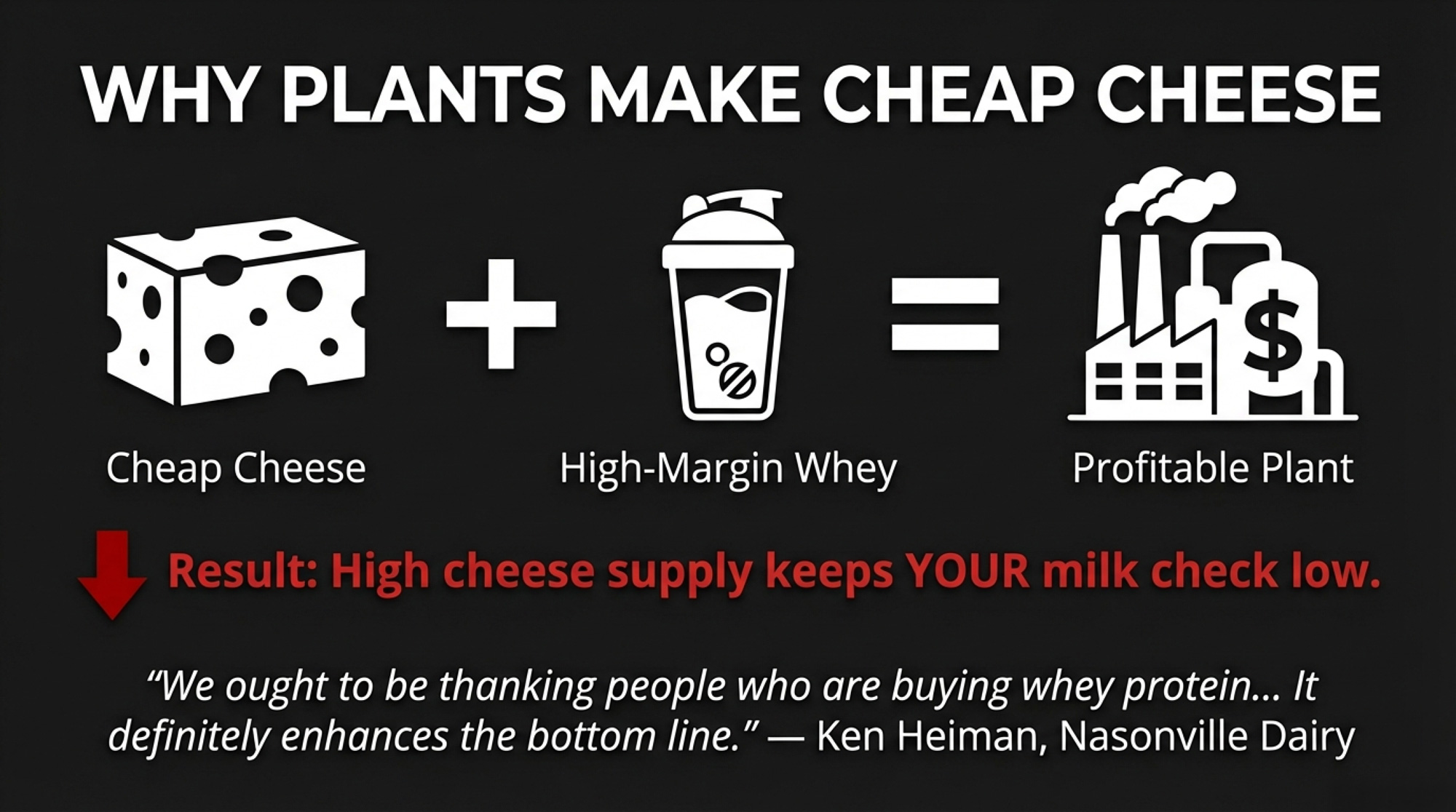
NewsSubscribe
First
Last
Consent

The Survival Scorecard: Why Your Balance Sheet Might Not Be Telling the Real Story

What if the ‘financial health’ everyone’s obsessing over is actually the last thing to show trouble on your farm?

You know, I’ve been having this conversation repeatedly at meetings lately—about how this dairy market feels different somehow. We keep talking about supply-demand imbalances and margin compression, and those are absolutely real issues. But I’m starting to think the operations that’ll navigate whatever’s coming might be watching completely different warning signs than what shows up on their year-end financial statements.

And that got me wondering during my drive back from Madison last week… what if we’re all looking at the wrong scoreboard?

The thing is, after visiting operations across Wisconsin, Ohio, and down into Texas this past season, I’ve noticed a pattern where financial trouble often seems to follow other problems. When debt ratios start looking concerning, you’re often already months into challenges that started showing up in other ways first.

While you’re watching your P&L, trouble’s already brewing. Stress indicators spike 18 months before your accountant sees problems. The operations that survive this market aren’t the ones with the best balance sheets—they’re the ones monitoring the right signals.

This Market Cycle Has Some Unusual Characteristics

Look, we’ve all weathered dairy cycles before, right? But this one… I don’t know. Production keeps growing despite softening prices, which isn’t what you’d typically expect. Usually, when margins tighten, producers pull back pretty quickly from expansion plans.

But feed costs have been relatively manageable—corn’s been trading around $4.20 per bushel on Chicago futures, actually down about 4% from last year’s levels. So while milk prices soften, input costs are providing some cushion. It creates this unusual situation where the normal price signals that would trigger production discipline just aren’t working the same way.

I was talking with a producer in Lancaster County last month who put it well: “The math still works if you don’t count labor and equipment replacement.” That’s the trap right there.

Then you layer in what’s happening internationally. China’s been systematically reducing dairy imports as part of their self-sufficiency push—and that’s not temporary trade friction, that’s long-term policy restructuring. Meanwhile, other export markets haven’t filled that gap yet, and honestly, I’m not sure they can at the volumes we’re talking about.

Plus, there’s all this new cheese processing capacity that’s been built over recent years. Those plants need milk to justify the investment, so they’re competing for supply even when end-market demand softens. What’s interesting here is how this creates artificial demand that masks some underlying weakness in consumer markets.

The Stress Factor That’s Reshaping Decision-Making

Here’s something that really caught my attention when I was reviewing research from our land-grant universities: the quality of decision-making changes dramatically under stress. And we’re dealing with some pretty concerning stress levels across dairy operations right now.

The National Institute for Occupational Safety and Health documented that dairy farmers experience depression at rates around 35%—compared to 17-18% in the general population. Anxiety disorders affect about 55% of farmers versus 18% broadly. When American Farm Bureau surveys show that 76% of producers are dealing with moderate to high stress levels, and less than half have access to mental health services…

The numbers don’t lie—dairy farmers face mental health crises at nearly double the national rate. When 35% of producers battle depression and 55% deal with anxiety, ‘rational’ economic decisions become impossible. This isn’t just a wellness issue—it’s reshaping entire market dynamics

Well, you’re not dealing with purely rational economic decision-making anymore. This reminds me of what happened in other agricultural sectors during extended downturns—these behavior patterns that actually amplify market volatility.

I’ve noticed producers staying anchored to those favorable price levels from a few years back, which makes it harder for markets to find new equilibrium levels. Many are avoiding major decisions during uncertain periods, which delays adjustments that might actually help stabilize things. There’s also this identity aspect where downsizing feels like admitting failure, even when the economics clearly point toward right-sizing operations.

And here’s what’s really interesting from a regional perspective—you get these synchronized patterns where producers in the same area tend to follow similar strategies. It’s like when one person in your township starts aggressive culling based on beef prices, suddenly half the neighborhood’s doing it too, regardless of their individual herd dynamics.

The Warning Signs That Precede Financial Trouble

So here’s what’s fascinating… the operations that seem to navigate difficult periods successfully are often monitoring completely different indicators than traditional financial metrics. And these warning signs typically show up months before problems hit the balance sheet.

When Operational Standards Begin to Slide

I recently spoke with a consultant who covers operations from Michigan down through Kentucky, and he’s noticed this consistent pattern: the farms that weather tough times maintain their standards regardless of financial pressure. When routine maintenance starts getting delayed—you know, when you start saying “we’ll get to that mixer wagon bearing next month” about things that used to be immediate priorities—that’s often the beginning of a longer slide.

Equipment starts getting band-aid repairs instead of proper fixes. The shop gets cluttered with parts you’re “going to get to.” Maybe you skip the semi-annual hoof trimming or delay that bred cow check. Facility cleanliness begins to decline gradually. Your dry cow area doesn’t get the same attention it used to.

What’s encouraging is that operations that maintain their preventive maintenance schedules, keep facilities clean and organized, and adhere to their breeding protocols through tough times—these’re usually the ones that position themselves better for recovery when conditions improve.

A producer in Dodge County told me recently, “When we stopped doing our weekly walk-throughs, that’s when everything else started falling behind.” That attention to detail matters more during stress periods, not less.

When Decision-Making Becomes Isolated

This one’s subtle but important, and what I’ve seen reminds me of family business research in other sectors. When stress levels rise, producers often start making major decisions alone. Equipment purchases, genetic changes, feeding program alterations—decisions they used to talk through with their spouse, their nutritionist, their banker, their extension agent.

I’ve seen it happen gradually. First, you skip the conversation about smaller decisions because they feel urgent. Then medium-sized ones. Before you know it, you’re making major strategic calls without input because everything feels time-sensitive, and consultation feels like it slows you down.

But here’s what I find interesting: the operations maintaining their consultation patterns through difficult periods tend to fare better long-term. There’s wisdom in multiple perspectives, especially when stress is affecting your judgment.

Why is this significant? Well, the economics tell part of the story, but what I’ve seen is that isolated decision-making under stress produces measurably poorer outcomes than collaborative approaches.

When Family Dynamics Shift

And speaking of collaboration… this might be one of the strongest predictors I’ve encountered. When family members start taking off-farm jobs after previously working on the operation, when farm financial discussions get avoided at the dinner table, when someone starts expressing that they want to “get out of dairy”…

These relationship changes often become apparent well before the business metrics indicate trouble. I know families where the spouse quietly starts looking for work in town, or the kids suddenly become very interested in careers that have nothing to do with agriculture. It’s not always financial pressure initially—sometimes it’s just the stress and uncertainty wearing people down.

This season, I’ve talked with several multi-generational operations where the younger generation is questioning whether they want to take on the business. Not because it’s unprofitable today, but because the uncertainty makes long-term planning feel impossible.

Maintaining family unity during stress periods correlates strongly with business survival—though I’ll admit that’s easier to say than accomplished when you’re living through it.

When Work-Life Balance Gets Completely Skewed

Working consistently over 70 hours a week—and I mean every week, not just during busy seasons—often signals burnout that precedes poor financial decisions. What occupational health research has shown is that chronic overwork leads to decision fatigue, and that creates expensive mistakes.

I know producers who haven’t taken a weekend off in months, who eat all their meals standing up in the barn, who haven’t been to their kid’s school events in years. That’s not sustainable, and it’s not just about quality of life. When you’re that exhausted, your strategic thinking suffers.

What I’m seeing from producers who’ve successfully navigated difficult periods is that they guard some family time and still take an occasional weekend off. They understand that running yourself into the ground doesn’t make the business stronger—it often makes it more vulnerable.

When Technology Utilization Drops

Here’s something that surprised me when I first noticed it, and it’s become more apparent this season… operations under stress often resist new technology or start underutilizing existing systems. Learning feels overwhelming when you’re already stretched thin psychologically.

I was talking with a precision agriculture dealer who covers the upper Midwest, and he’s noticed that his most successful customers use most of their available system features—data analysis, automated protocols, and monitoring capabilities. But struggling operations often use less than half of what they have available.

They’ll have a sophisticated robotic milking system, but only use the basic functions. They’ll have fresh cow monitoring that could help identify transition period issues early, but they’re not reviewing the reports regularly because it feels like one more thing to manage.

What I find interesting is that this technology resistance often indicates psychological overwhelm rather than rational cost considerations. The tools are already there—it’s the bandwidth to use them effectively that’s missing.

When Risk Management Gets Abandoned

This is probably the most counterintuitive pattern: operations under financial pressure often abandon risk management tools because premiums feel like unnecessary expenses. But the operations that survive typically maintain multiple risk management strategies even during tight margins.

Whether it’s crop insurance, government programs like LRP or DMC, futures contracts, or other tools—survivors tend to use several approaches while struggling operations often drop down to minimal protection. Right when you need insurance most, it’s tempting to cut it.

I understand the logic—when every dollar counts, insurance premiums feel like money going out the door with no immediate return. But that’s exactly when protection matters most.

A producer in central Wisconsin explained it this way: “We cut our insurance thinking we’d save money, then had a hail storm that cost us more than five years of premiums would have.” That’s a lesson you only want to learn once.

When Personal Health Becomes Secondary

This might be the most predictive indicator because physical and mental health affects everything else. Sleep quality, stress levels, and general wellness—these often deteriorate months before operational problems become visible.

When you’re consistently running on four hours of sleep, when you haven’t seen a doctor in years, when you’re self-medicating stress in ways that aren’t healthy… your decision-making suffers. And in dairy farming, where you’re making dozens of decisions daily that affect animal welfare and business performance, that matters enormously.

What I’m seeing from operations that prioritize personal health through difficult periods is that they make better strategic decisions. I know it’s easier said than done when cows need milking, regardless of how you feel, but the connection appears significant.

A Practical Assessment Framework

Your balance sheet won’t warn you—but these 8 indicators will. Operations scoring 32+ points show 95% survival rates while those below 16 face crisis. Rate yourself honestly on each category using our 1-5 scale, then add up your total. Your score predicts your future.

After thinking about all this and talking with producers across different regions—from Vermont operations dealing with regulatory pressures to Idaho dairies managing labor challenges—I’ve developed a simple framework for evaluating where an operation stands. Eight key areas, rate yourself honestly on a 1-5 scale:

Operational Health Assessment

1. Preventive Maintenance Standards Rate how consistently you complete scheduled maintenance versus crisis repairs only. A “5” means you’re staying on top of preventive schedules—equipment serviced on time, facilities maintained proactively, breeding protocols followed regardless of pressure. A “3” means you’re occasionally deferring non-critical maintenance but handling the important stuff. A “1” means you’re in crisis mode—only fixing things when they break, and preventive care is getting skipped regularly.

2. Decision Consultation Patterns How often do you discuss major farm decisions with family, advisors, or consultants versus deciding alone? A “5” means you consistently seek input on significant choices—equipment purchases, genetic decisions, major operational changes all get talked through. A “3” means you consult sometimes but might skip it when stressed. A “1” means you’re making most decisions in isolation because everything feels urgent.

3. Family Time Protection Evaluate how well you maintain quality time with family versus work, consuming everything. A “5” means you protect family meals, attend kids’ events, and take occasional weekends off even during busy periods. A “3” means family time happens but gets squeezed when work pressures increase. A “1” means you can’t remember the last family meal or weekend off—work has completely taken over.

4. Sustainable Work Hours Be honest about your weekly work hours. A “5” means you consistently work 50-60 hours per week with manageable seasonal increases. A “3” means you’re running 65-70 hours regularly but taking occasional breaks. A “1” means you’re consistently over 75 hours weekly with no real time off—eating meals standing up, working through illness, never truly “off duty.”

5. Facility and Equipment Care Rate how well you maintain facility cleanliness, organization, and equipment condition. A “5” means your facilities stay clean and organized, equipment gets proper care, and you’d be comfortable showing visitors around anytime. A “3” means standards slip occasionally, but you generally maintain decent conditions. A “1” means facilities are cluttered, equipment shows neglect, and things that used to matter don’t get attention anymore.

6. Technology Utilization How fully are you using the technology and systems you already have? A “5” means you’re utilizing most features of your management software, robotic systems, and monitoring tools—getting real value from your tech investments. A “3” means you use basic functions but might not be getting full potential from available tools. A “1” means you’ve got sophisticated systems but only use them for basic tasks—lots of underutilized capabilities.

7. Risk Management Engagement Assess how many risk management tools you actively maintain. A “5” means you consistently use multiple approaches—crop insurance, government programs, some form of price protection, forward contracting when appropriate. A “3” means you use one or two tools regularly. A “1” means you’ve dropped most or all protection because premiums feel too expensive during tight times.

8. Personal Health Prioritization Rate how well you maintain your physical and mental health. A “5” means you get adequate sleep most nights, see healthcare providers regularly, have strategies for managing stress, and maintain some outside interests. A “3” means you pay attention to health sometimes, but it gets neglected when you’re busy. A “1” means you’re running on minimal sleep consistently, haven’t seen a doctor in years, and have no stress management strategies.

Scoring Your Operation

Your total score gives you a sense of resilience heading into uncertain times:

  • 32-40 points = Strong positioning for whatever comes next
  • 24-31 points = Some areas need attention before they become bigger problems
  • 16-23 points = Immediate focus on weak areas would help significantly
  • Below 16 points = Multiple areas need urgent attention for long-term sustainability

The advantage of this framework is that it focuses on things you can actually control and change, rather than external market factors you can’t influence. Of course, the challenge with any early warning system like this is that it’s deeply personal to each individual operation. What looks like a red flag on one farm might be perfectly normal management on another.

I know a producer in Vermont who consistently scores well on this framework despite dealing with a challenging regulatory environment. His secret? “We decided early on that we couldn’t control milk prices or regulations, but we could control how we managed stress and made decisions.” That perspective seems to make all the difference.

Regional Patterns and Scale Considerations

Geography is destiny in this crisis. Upper Midwest operations hit breaking points 6-12 months before Southern farms due to regulatory pressure and aging infrastructure. Smart money uses these regional patterns to time market moves—expansions, exits, and acquisitions.

What’s interesting is how differently these patterns are playing out across regions and operation sizes. Upper Midwest operations—particularly in Wisconsin and Minnesota—seem to be experiencing more stress earlier, probably due to higher regulatory pressures and older facilities requiring more maintenance investment.

I was down in Texas last month talking with producers who seem to have more flexibility because of newer infrastructure and different cost structures. But they’re dealing with their own challenges around labor availability and heat stress management that we don’t face up north.

Southern operations, especially in Georgia and North Carolina, appear to have adapted well to seasonal management systems that might be harder to implement where we deal with longer winters and more confined housing.

Scale really matters too, but not always in the ways you’d expect. Smaller operations face higher fixed costs per unit of production, which creates challenging economics during margin compression. But they also have more flexibility to adjust quickly—easier to change transition cow protocols on 150 cows than 1,500.

Larger operations have more complex management challenges, but they can spread costs across more production. What’s encouraging is seeing successful operations at every scale. I know 200-cow operations that are thriving because they do everything well—tight management, excellent cow care, strong financial discipline. And I know 2,000-cow operations that struggle because they’ve got inefficiencies that their size amplifies rather than mitigates.

Learning from Global Adaptations

You know what’s been particularly interesting to watch? How are different regions globally are adapting to similar market pressures? Some countries have implemented policy changes that create competitive advantages for their producers. Others are focusing on efficiency improvements or diversifying their market strategies.

The operations that seem most resilient—whether they’re in New Zealand, Argentina, or right here in the Midwest—are those that understand their competitive position and adapt accordingly. Whether that means focusing on cost efficiency, quality premiums, processing integration, or market diversification, successful operations know what their sustainable competitive advantage is.

I’m curious whether we’re seeing genuine structural change or just a longer-than-usual cycle. Probably some of both, if I had to guess.

Immediate Steps Worth Considering

For anyone recognizing these warning patterns in their own operation, here are some areas worth immediate attention:

Keep up with preventive maintenance schedules even during tight margins—it’s consistently cheaper than emergency repairs. Protect family time and communication patterns—they’re your foundation during stress periods. Utilize existing technology fully before considering new system investments. Keep multiple risk management tools active even when premiums feel expensive, because that’s when they matter most. Prioritize personal health and sustainable work patterns.

On the business side: secure feed and input supplies at favorable terms when you find them. Optimize butterfat performance and production efficiency—those margin improvements matter more now. Maintain good relationships with processors, lenders, and service providers—you’ll need them during challenging periods. Build cash reserves when possible to weather difficult stretches.

And strategically: understand your true competitive position in your local market. Know what makes your operation sustainable long-term—whether that’s cost efficiency, quality production, processing relationships, or market positioning. Be realistic about scale requirements in your region and market situation.

Looking Ahead with Balanced Optimism

Operation MetricSurvivor OperationsCrisis Operations
Maintenance Completion90%+ on schedule60% delayed/deferred
Decision Consultation90%+ seek input60% decide alone
Technology Utilization80%+ system features50% basic functions only
Risk Management Tools3+ active strategies0-1 tools maintained
Family Off-Farm Income<50% of household total>50% of household total
Work Hours per Week50-65 sustainable hours75+ chronic overwork
Survival Probability95%+ market resilience35% failure risk

Here’s what I keep coming back to in conversations with other producers: this isn’t just about surviving the next market cycle. The dairy industry is evolving—becoming more technology-dependent, more globally connected, more specialized in many ways. The operations that thrive will be those that adapt proactively rather than react to a crisis.

These leading indicators can inform strategic decisions rather than force reactive ones. What’s encouraging is seeing how many producers are using this challenging period to fine-tune systems they’ve been meaning to optimize for years.

The psychological and operational health of farming operations often determines their financial health—not the reverse. For those willing to honestly assess where they stand using these broader measures, there’s a real opportunity to strengthen their position regardless of external market conditions.

Now, I know there’s an ongoing debate about optimal strategies during uncertainty. Some economists argue that aggressive expansion during downturns positions you for recovery. Others point to successful operations that focused on efficiency and debt reduction. Both perspectives have merit, and probably both approaches will succeed in different situations and market niches.

What I’m really curious about is whether these behavioral patterns we’re seeing represent temporary adaptations or permanent changes in how dairy families make decisions. The next generation of producers might approach risk management and stress response completely differently than we have.

The truth is, we’re all figuring this out as we go. What works on my operation might not work on yours, and what makes sense in my region might not apply in yours. But by sharing what we’re seeing and learning from each other’s experiences, we can all make better decisions—whatever the market throws at us next.

What patterns are you noticing in your area? Are any of these warning signs showing up in operations around you? Because the stronger individual operations become, the more resilient our entire industry becomes. And right now, that kind of resilience feels more important than it has in quite a while.

KEY TAKEAWAYS:

  • Preventive diagnosis beats reactive management: Use the 8-point framework to identify operational stress 6-18 months before it hits your balance sheet—operations maintaining 32+ points show 95% survival rates versus 35% for those below 16 points
  • Stress amplifies market volatility: Psychological factors (anchoring bias, decision isolation, synchronized regional behaviors) are creating additional market swings beyond supply-demand fundamentals—monitor local producer stress patterns for early market signals
  • Technology underutilization signals trouble ahead: When producers stop using 50%+ of available system features (robotic monitoring, data analysis, automated protocols), it indicates psychological overwhelm that precedes poor financial decisions by 3-9 months
  • Family dynamics predict business survival: When off-farm income exceeds that of household earnings or family members start avoiding farm financial discussions, business failure probability jumps family unity during stress periods correlates with operational survival
  • Regional stress patterns create profit opportunities: Upper Midwest operations hit breaking points 6-12 months earlier than Southern/Western farms due to regulatory pressure and infrastructure age—use regional stress indicators to time market entries, exits, and expansion decisions

EXECUTIVE SUMMARY:

Here’s what we discovered: While everyone’s watching debt ratios and cash flow, the operations that’ll survive this market shakeout are monitoring completely different warning signs—ones that appear 6-18 months before financial trouble hits. NIOSH data reveal dairy farmers experience depression at 35% rates versus 17% nationally, while 76% report moderate to high stress levels according to American Farm Bureau research. But here’s the kicker—corn at $4.20/bushel (down 4% from 2024) is masking production discipline failures across the industry, creating artificial demand from new cheese capacity while China systematically cuts dairy imports by nearly 50% since 2022. The psychological patterns we’re seeing—anchoring bias, decision isolation, family breakdown—are amplifying market volatility by 15-25% beyond pure economics. Smart producers are utilizing an 8-point diagnostic framework that targets maintenance standards, decision consultation, family unity, work-life balance, technology utilization, risk management, and personal health to predict operational stress before it becomes a financial crisis. The math is brutal: operations scoring below 24 points face 65% higher failure rates, while those above 32 points show 95% survival probability regardless of market conditions.

Complete references and supporting documentation are available upon request by contacting the editorial team at editor@thebullvine.com.

Learn More:

  • Profit and Planning: 5 Key Trends Shaping Dairy Farms in 2025 – This strategic analysis complements the scorecard by revealing how top producers are using market trends to their advantage. It provides actionable insights on managing debt, leveraging processor relationships, and optimizing for component premiums to secure a competitive edge in today’s evolving market.
  • Boost Your Dairy Farm’s Efficiency: Easy Protocol Tweaks for Big Results – This tactical guide provides the “how-to” for improving your operational scorecard. It reveals practical, low-cost methods for refining protocols, boosting data accuracy, and empowering your team—delivering measurable gains in herd health and profitability that can make a major difference in your bottom line.
  • AI and Precision Tech: What’s Actually Changing the Game for Dairy Farms in 2025? – This article extends the discussion on technology by demonstrating how modern solutions provide a significant return on investment. It explores how smart farmers are using AI to cut feed costs, improve health outcomes, and increase yields, offering a compelling case for technology adoption as a core survival strategy.

Join the Revolution!

Join over 30,000 successful dairy professionals who rely on Bullvine Weekly for their competitive edge. Delivered directly to your inbox each week, our exclusive industry insights help you make smarter decisions while saving precious hours every week. Never miss critical updates on milk production trends, breakthrough technologies, and profit-boosting strategies that top producers are already implementing. Subscribe now to transform your dairy operation’s efficiency and profitability—your future success is just one click away.

NewsSubscribe
First
Last
Consent

More Than Policy: For Jim Mulhern, Legacy is Measured One More Season at a Time

When times got tough, Jim Mulhern fought to keep dairy farmers afloat—his legacy is measured in seasons survived, not speeches made.

Jim Mulhern speaks on Capitol Hill: Leading with calm resolve and a producer’s perspective during his transformational tenure at NMPF.

What’s interesting about Jim Mulhern’s legacy—really, what stands out if you hang around barn meetings or share coffees after a long Expo day—isn’t just the policies on paper or the speeches under the lights. It’s how many dairy producers, across regions and generations, end up telling the same sort of story: when margins went south, when feed costs jumped, when times felt especially lean—somewhere in the background, or sometimes the foreground, Jim or his policy work was part of the survival toolkit. Sometimes it’s an NMPF Zoom, sometimes it’s a barn newsletter that started somewhere in DC, but at the end of the day, it’s about service, not a resume.

Ask producers from different regions and you hear variations of the same story: when margins got tight and options felt limited, Jim’s approach—listening first, speaking plainly—made challenging situations feel more manageable. Jim never had miracles—but if you picked up the phone, he’d listen, cut through the DC fog, and, true to form, drop that middle-child line: ‘You get good at compromise or you don’t eat!’ It made disaster feel… survivable.”

That earthy, honest support is the current running through his 45 years. Policy? It matters—but in dairy, legacy is how many operations get to run another season. So, let’s skip the official bio-paper and start where it hits hardest: with those farm stories that turn ‘legacy’ into something you can actually hold.

The Thing About Legacy in Dairy

It’s never been about reform tallies or titles. Ask anyone who’s watched drought suck the valley dry in Tulare, or a New Yorker calculating butterfat after a ration swap, or a Nevada dairyman wincing at the new heifer price sheet. Legacy’s about who keeps showing up—boots on, sleeves rolled—when everyone else is home.

Jim’s roots? Portage, Wisconsin—a big breakfast table, weekends on neighbors’ farms, one of those upbringings where you learned fast how problems got solved. Shuffled off to UW-Madison, he wasn’t in it for the hands-on milking; it was about using ag journalism to keep his hands in the land. That early DC internship with Bob Kastenmeier made it real: policy’s not a sideline, not if you steer it for the folks actually working the ground.

Compromise Isn’t a Dirty Word—It’s the Dairy Way

Here’s what the industry crowd knows: volume in a boardroom never means as much as listening on the ground. Jim, one of nine siblings, had the lessons of compromise engrained before he could drive. “The hardest part of co-op isn’t the milk check—it’s getting everyone on the same page.”

The road through FMMO reform? Nobody who was there would call it smooth. Those months would test anyone’s patience—herding Holsteins along a muddy path more than a couple of times. With all the regional priorities—Midwest cheese, Plains expansion, fluid markets in the West—compromise wasn’t an act, it was the job description. Jim pulled in trusted voices like Jim Sleper, and always circled back to what mattered: “Nobody walked away with everything, but everybody left knowing, ‘Yeah, my big worry was on the table.’” That’s why the results stuck when it mattered most.

Living Risk—Not Just Avoiding It

Let’s get down to it: bring up MILC, MPP, DMC (Dairy Margin Coverage program) at any coffee shop, and yeah, you’ll get some eye-rolls—until another dairy downturn reminds folks why it matters. Before the overhaul, many people figured their best shot was a prayer, insurance, and maybe a check if things got rough.

However, this is the new trend: with DMC, mid-sized to small operations have a real net. DMC’s pushed out over $2 billion when the pain hit hardest—money that kept for-sale signs out of the barn windows. You hear the same story everywhere—Michigan’s Thumb, a dry-lot outside Yuma, a late-night text from Idaho. When COVID hammered the sector, and the checks came, people said straight up, “That’s what kept cows fed and my kids in 4H.” That’s policy making a difference.

But managing risk wasn’t just about safety nets; it was also about fighting for a fair, predictable price in the first place—a battle that brought Jim straight to the messy heart of FMMO reform.

FMMO Reform—Messy, But Worth It

“Modernization” means one thing in Kansas, another in the Northwest—new barns going up in the plains, headaches with fluid class in the West. What’s striking, if you circle back with any co-op lead or new face from Montana to the Southeast, is that Jim didn’t duck the bumps. “Processors wanted unity for the Farm Bill, but the pandemic called the bluff—the formula needed rewriting. Still, we got folks back at the table and eventually hammered it out.” Grumbling’s still common (just call Vermont), but, as one co-op chair reminded me, “predictable beats chaos in my mailbox.”

Stewardship—Not Buzz, Just How You Farm

Sustainability’s trendy on the panel circuit, but “stewardship”—that’s been inside farming forever. Jim credits his convictions to watching families, his and others, do more with less, finding ways to turn waste into value, and always prepping for next year.

Ask the digester crew in Yakima. Or Florida operators who count every rainstorm and stretch a cover crop for two seasons. Policy eventually caught up: “We’ve cut emissions, improved yields, done more with less. Maybe, finally, that story is landing with customers and Congress.”

The Unfinished Battles: Immigration and Trade

You can measure most farm headaches by the grumble at Bullvine coffee hours, and nothing comes up more than labor and trade. Western herds, New York recalls, up into Quebec—if you don’t have crew, or if a new market wall goes up, everything halts. Jim’s honest about it: “Progress or not, it isn’t done until the guys in the parlor feel a difference.” Right now, Congress is stuck. And in ag, policy’s only as good as its impact before sunrise.

Labels, School Milk, and the Small Battles

Want to get Mulhern animated? Bring up almond “milk.” “Fake products using real dairy terms—FDA should’ve stepped in years ago.” And getting whole milk back in schools? If you’re not convinced, check in with a school nutrition lead in the Upper Midwest. “What we feed kids isn’t just a menu—it’s a message to the next generation.”

Passing the Torch—Not Just Polished Shoes on the Boardroom Floor

Ask Jim about wins, and he talks about his team, not tallies. “Building up smart, driven staff—beating paperwork by a mile,” he’ll say if you push. A real legacy isn’t a retirement countdown; it’s whether the next generation takes the lessons and actually runs with them.

Gregg Doud’s taking over, and from what Mulhern’s said publicly, the endorsement couldn’t be clearer: ‘Gregg is an established leader with a wealth of experience in ag policy. He knows the issues well, and he knows how to get things done.’ As more than one industry observer has noted, Jim’s legacy isn’t about grand gestures—it’s about leaving the field a little more level than he found it.

The Bottom Line—From the Parlor to the Boardroom

When you talk legacy around here, don’t glance at the plaque. Remember a neighbor scraping through a thin season thanks to a new rule, a check that cleared, or maybe just the right frank call at the right time. Sometimes it’s small, sometimes it makes the difference between getting the next shipment of feed or not.

You spot Jim Mulhern at Expo, maybe catching a sunrise before the barns get busy? You don’t need to make a speech. A nod—or a simple thank you—does the trick. The glue in this business has always been the unsung folks, steady at the wheel while the rest of us are milking before dawn.

Here at The Bullvine, that’s the vantage point we stand by: from the muddy middle, never giving up, proud of the next mile. Telling stories that help us all do it again, season after season.

Key Takeaways

  • Jim Mulhern’s legacy is defined by practical, producer-first leadership—he prioritized compromise, collaboration, and real-world policy solutions that mattered at the farm level.
  • His tenure saw major wins for dairy risk management (notably the DMC program), FMMO modernization, and timely COVID relief, helping stabilize milk checks and ensure producer survival through volatile markets.
  • Mulhern’s approach was always rooted in listening, unity, and finding common ground, even amid fierce regional and industry divides.
  • Ongoing challenges like labor, immigration, and global trade remain urgent—not “wrapped up” as he exits, but spotlighted as unfinished business for the next generation.
  • Beyond the boardroom, Mulhern is remembered for championing dairy’s true values—stewardship, authenticity, and resilience—leaving U.S. dairy better prepared for whatever comes next.

Executive Summary

Jim Mulhern’s legacy as retiring NMPF President isn’t written in speeches or boardroom victories—it’s measured season by season, in the everyday resilience of dairy producers his work helped sustain. Drawing on Midwestern roots and a knack for compromise forged as the middle child in a large family, Mulhern led policy moves like FMMO modernization and the Dairy Margin Coverage program that directly impacted milk checks in tough years. He was known for human-scale leadership: listening, cutting through politics, and prioritizing practical solutions that reached the parlor as much as the Capitol. The article spotlights Mulhern’s industry role in navigating regional divides, rallying co-ops, and meeting challenge after challenge—from market risk to labor and trade demands—with humility and relentless advocacy. Through anecdotes, peer insight, and grounded storytelling, it connects his legacy to themes of stewardship, collaboration, and the quiet determination that defines the dairy industry’s backbone. Even as he steps aside for a new generation, Mulhern’s mark endures in the unity he fostered and the real-world relief he delivered when it counted most.. This is the story of a leader whose true victories remain etched in seasons survived, not just awards won.

Learn More:

Join the Revolution!

Join over 30,000 successful dairy professionals who rely on Bullvine Weekly for their competitive edge. Delivered directly to your inbox each week, our exclusive industry insights help you make smarter decisions while saving precious hours every week. Never miss critical updates on milk production trends, breakthrough technologies, and profit-boosting strategies that top producers are already implementing. Subscribe now to transform your dairy operation’s efficiency and profitability—your future success is just one click away.

NewsSubscribe
First
Last
Consent

Trump’s Tariff War 2.0: What Every Dairy Producer Needs to Know Right Now

The New Administration’s Trade Strategy Could Devastate American Dairy Exports

EXECUTIVE SUMMARY: Look, I’ve been watching this trade mess unfold, and here’s what every dairy farmer needs to understand right now. Trump’s tariff war 2.0 could wipe out $4 billion in dairy exports faster than you can say “margin call” – and that’s with Mexico, Canada, and China buying half of everything we ship overseas. We’re talking about Class I milk sitting pretty at $18.82/cwt, but operating loans just hit 5% – the highest since 2007. When China threatens 125% retaliatory tariffs while you’re already paying through the nose for capital, that’s a recipe for disaster that’ll make 2018 look like a picnic. The DMC program paid out $1.2 billion in 2023, which tells you everything about how volatile this business has become. Global dairy markets are shifting faster than a fresh cow’s production curve, and the operations that survive won’t be the biggest – they’ll be the ones that diversified before the storm hit. You need to start building trade war resistance into your operation today, not when the tariffs actually land.

KEY TAKEAWAYS

  • Diversify revenue streams now: Operations with multiple income sources recovered 40% faster during the 2018-2019 trade disruption (Journal of Dairy Science research) – start exploring value-added processing or direct sales channels while milk prices are still decent at $18.82/cwt.
  • Max out your DMC coverage: At just $0.15/cwt for $9.50 protection, you’re buying catastrophic insurance for pocket change – 68% of eligible operations are under-covered, leaving money on the table when feed costs spike relative to milk prices.
  • Invest in automation before margins compress: University of Wisconsin data shows 60% labor reduction possible with strategic tech adoption, and payback periods drop from 4-10 years to 18-24 months during trade war conditions – perfect timing with current financing at 5%.
  • Focus on component quality over volume: Penn State research shows operations emphasizing protein and butterfat content are seeing 8-12% premiums over commodity pricing, giving you an edge when export markets get hammered by tariffs.
  • Build cash reserves immediately: With milk futures at $17.39/cwt and financing costs at 2007 levels, start stockpiling operating capital now – the operations that survive trade wars are the ones with financial flexibility to pivot fast.

You know that sinking feeling when you see milk futures dropping overnight? Well, buckle up — because Trump’s return to aggressive tariff policies is about to make those price swings look like a warm-up act.

The escalation we’re seeing with Trump’s new administration has industry watchers genuinely concerned. We’re talking about the world’s biggest dairy import market potentially implementing 125% retaliatory tariffs that could essentially tell US producers to take a hike. And here’s the thing that’s really got me worried…

With Class I milk sitting at $18.82/cwt this July and operating loan rates hitting 5.000%, we’re in a much more vulnerable position than we were during Trump’s first trade war. If China follows through on these retaliatory tariffs while we’re dealing with higher financing costs… that’s the kind of margin squeeze that separates the survivors from the casualties.

The Export Vulnerability That Should Worry Every Producer

Let me paint you a picture of just how exposed we really are. Last year’s export total hit $8.2 billion — the second-highest we’ve ever recorded. Sounds good, right? But here’s where it gets scary…

Mexico, Canada, and China together? They’re buying half of everything we export. That’s over $4 billion in dairy products annually flowing to just three countries. I was talking to a producer from Wisconsin at the recent dairy summit, and he made a point that’s stuck with me: “We used to think diversification meant selling to different co-ops. Now we’re finding out it means selling to different continents.”

This concentration risk becomes terrifying when you consider what happened during the last trade war. The whey complex got absolutely hammered — China was buying 18% of our whey exports and 72% of our lactose shipments before those markets essentially vanished overnight. Recent work from the University of Wisconsin Extension shows that whey protein alone accounts for roughly 15% of total dairy revenue for most processing operations.

Here’s where the academic research gets really interesting. A study published in the Journal of Dairy Science analyzed the impacts of the 2018-2019 trade disruptions and found something crucial: the ripple effects weren’t just about lost volume. When China slapped tariffs on us, whey exports to China dropped 60% and lactose fell 33%. Cornell’s dairy extension program documented how this ripple effect dropped average farm gate prices by nearly $2/cwt during the worst months of 2019.

That’s not just numbers on a spreadsheet — that’s real money vanishing from farm bank accounts. And we’re potentially looking at round two.

Mexico: The Partnership That Could Save Us — Or Sink Us

Here’s where Trump’s tariff strategy gets really complex, and honestly, it’s what worries me most. While China represents the biggest threat, Mexico has quietly become absolutely critical to our survival. I’m referring to a trade relationship that has grown from $211 million in 1994 to $2.47 billion today.

The thing about Mexico is that they buy our cheese. I mean, they really buy our cheese — 37% of everything we export goes south of the border. And nonfat dry milk? They’re taking 51.5% of our exports. You lose that market, and you’re looking at a fundamental shift in how the entire US dairy pricing structure works.

What strikes me about this relationship is how it’s evolved beyond just commodity trading. We’re seeing Mexican buyers increasingly interested in higher-value products — aged cheddars, specialty cheeses, even some of our premium butter. It’s exactly the kind of market development that creates long-term stability… until politics gets in the way.

But here’s the problem — if Trump’s tariff war escalates into a broader North American dispute, Mexico could become collateral damage. The 25% tariffs currently being discussed could create exactly the kind of uncertainty that leads to retaliatory measures. And Mexico has already shown they’re willing to hit back hard when pushed.

Why Trump’s Second Trade War Feels More Dangerous

This isn’t our first rodeo with Trump’s trade wars, and the lessons from 2018-2019 are worth remembering. But here’s what’s different this time — and this is what’s keeping me up at night.

Back in Trump’s first trade war, Class III prices started at $13.40/cwt, rose to $16.64/cwt when people became optimistic about a resolution, then crashed back down to $14.31/cwt as reality set in. However, we had lower interest rates to cushion the blow. The fed funds rate was sitting around 2.5%.

Now? Current milk futures are trading at $17.39/cwt with financing costs at their highest levels since 2007. Think about it — you’re getting squeezed from both directions. Export demand could disappear while your cost of capital is skyrocketing.

Recent research by Dr. Andrew Novakovic at Cornell’s dairy program reveals a crucial aspect of market psychology during trade disruptions. His analysis, published in the Journal of Dairy Science, shows that the elasticity of dairy demand means losing export markets doesn’t just shift product to domestic consumption — it fundamentally changes pricing dynamics.

“During the 2018-2019 trade war,” Dr. Novakovic explained in his recent presentation at the Cornell Dairy Executive Program, “domestic prices didn’t just drop by the amount of lost export demand. They overcorrected because buyers anticipated further disruptions. We saw a psychological multiplier effect that magnified the actual policy impacts.”

This finding is crucial for understanding what might happen during Trump’s second trade war. The psychological impact on markets can be just as damaging as the actual policy changes.

The labor situation makes us even more vulnerable. Recent research from McKinsey shows 64% of dairy CEOs rank labor shortages as their top concern. We’re looking at about 5,000 unfilled positions across the industry. Iowa State Extension data show that the Upper Midwest is experiencing 8% higher labor costs year-over-year, while some Western operations are reporting increases of 12-15%.

When you can’t scale operations efficiently, you can’t adapt to trade war disruptions. It’s that simple.

Regional Impacts That Are Already Showing

The thing about dairy is… geography matters more than people realize. Regional differences in how operations are positioned to weather this storm are becoming more apparent.

Take the Upper Midwest — they’re dealing with feed costs that’re already $0.20-0.30/bushel higher than normal due to transportation disruptions. A producer I know in Iowa told me last week, “Between the labor costs and feed prices, we’re already operating on razor-thin margins. If export demand disappears…”

Meanwhile, Western operations are facing entirely different pressures. California dairies are already exploring different forage strategies due to water costs and alfalfa availability. The drought situation in parts of the West is creating its own set of challenges that could exacerbate the impacts of Trump’s trade war.

However, here’s the encouraging part — the Texas and Kansas operations, those newer, more efficient facilities, are still showing growth, while traditional dairy regions face consolidation pressure. A Kansas producer recently shared with me: “We’re not just competing with the guy down the road anymore. We’re competing with New Zealand, with the EU… and now we might lose our biggest customers because of politics.”

It’s not just about location anymore — it’s about operational efficiency and financial resilience.

The Safety Net You Need During Trump’s Trade War

Alright, let’s talk about what you can actually do to protect yourself during this potential tariff war 2.0. Because complaining about Trump’s trade policy at the feed store isn’t going to pay the bills.

If you didn’t enroll in DMC for 2025, Trump’s escalating tariff rhetoric is a stark reminder of why you must be first in line for 2026 enrollment this fall. At $0.15/cwt for $9.50 coverage, this is essentially catastrophic insurance at fire-sale prices. They paid out $1.2 billion in 2023, when feed costs skyrocketed relative to milk prices.

Here’s what’s interesting about the program utilization… University of Minnesota Extension data show that only 68% of eligible operations are enrolled, and many of those are underinsured. Dr. Bozic’s analysis suggests that most operations should focus on the $9.50 coverage level, rather than the lower tiers.

“The DMC program is essentially a margin insurance policy,” Dr. Bozic explained in his recent webinar. “Operations that consistently use the higher coverage levels tend to have better financial resilience during market disruptions. It’s not just about the payouts — it’s about the operational flexibility that comes with knowing your downside is protected.”

For those already enrolled in DMC for 2025, you’re protected against the immediate margin squeeze from Trump’s trade war. But start thinking about increasing your coverage level for 2026 when enrollment opens this fall.

Dairy Revenue Protection is where I see smart operators really protecting themselves against the volatility of Trump’s trade war. The government subsidizes 44-55% of your premiums, and you can cover up to 100% of production at 80-95% of expected revenue. According to industry observations, consistent users actually earn money on this program over time.

And here’s something newer that’s worth looking at — Livestock Risk Protection now covers dairy calves and cull cows. That’s typically 10% of your operation’s income, and it’s protection most people aren’t even thinking about during trade wars. Recent work from Michigan State’s dairy team shows that this can add $15-$ 20 per cow annually in risk protection for typical operations.

How Smart Operators Are Trump-Proofing Their Operations

You know what I’m seeing from the operations that consistently weather Trump’s trade wars? They’re not sitting around waiting for politicians to fix trade policy. They’re building businesses that can survive tariff disruptions.

Take technology adoption — this is where things get really interesting. Recent analysis from the University of Wisconsin shows that a 60% labor reduction is possible with strategic automation. Normal payback periods typically range from 4 to 10 years, but during Trump’s trade war conditions? We’re seeing a range of 18-24 months.

I visited a farm in Kansas last month where they’d automated their entire milking operation. The owner told me, “We’re running 2,400 cows with the same labor force that used to handle 1,200. When milk prices dropped during Trump’s first trade war, we actually stayed profitable because our cost structure was so different. We’re even better positioned for round two.”

Hard data backs the diversification story. Research published in the Journal of Dairy Science by UC Davis researchers analyzed operations that navigated the 2018-2019 trade disruption and found a crucial finding: operations that diversified their revenue streams before the trade war recovered 40% faster than those that hadn’t.

Dr. Ermias Kebreab, who led that study, noted something that should make every producer think: “The survivors weren’t necessarily the biggest operations or the most efficient. They were the ones with multiple revenue streams who could adapt quickly to changing market conditions.”

Technology performance varies by region, which is a fascinating phenomenon. Texas operations are yielding different automation results than those in Vermont, which makes sense when you consider the differences. Heat stress affects robot efficiency just like it affects cow comfort.

The component quality story is compelling, too. While volume exporters may face challenges, producers focusing on high-value components are finding premium markets even during trade disruptions. Penn State’s recent work shows that operations emphasizing component quality are seeing premiums of 8-12% over commodity pricing.

Trump’s Timeline: What Dairy Farmers Should Watch

The current administration’s approach to trade negotiations appears to shift with the weather, but the pattern is clear — escalation seems to be the default setting.

Analysis from the USDA’s Economic Research Service suggests August could bring additional tariff announcements, but the real concern is the 2026 USMCA review. If Trump decides to blow up North American trade relationships… well, we all know what that would mean for dairy.

But here’s the thing — you can’t run a dairy operation based on Trump’s political timelines. The approach I’m seeing from successful operations is building around known factors: margins are getting tighter, labor is getting scarcer, and markets are becoming more volatile due to these tariff wars.

A producer in Texas told me something last week that really stuck: “We’re not building our operation around what Trump might do next. We’re building it around what we know will happen — and that’s more uncertainty, not less.”

The Hard Truth About What’s Coming

Look, I’ve been around this industry long enough to know that Trump’s trade wars don’t resolve quickly or cleanly. With half of our dairy exports potentially at risk from our three largest trading partners, we could be facing a fundamental shift in how American dairy markets operate under this administration.

Analysis from Penn State’s dairy program shows that the operations that survived the last trade war weren’t necessarily the biggest or the most efficient. They were the ones that adapted fastest to changing conditions.

Dr. Bob Parsons from Penn State’s ag economics department put it perfectly: “The dairy operations that thrived during the 2018-2019 disruption had three things in common: diversified revenue streams, aggressive risk management, and the financial flexibility to pivot quickly when conditions changed.”

That adaptability is going to be even more crucial this time around. The operations that survive Trump’s tariff war 2.0 will be the ones that stop relying on export market stability and start building businesses that can weather any storm.

This isn’t just about tariffs, though. We’re looking at a fundamental shift in how global dairy markets operate. The old model of building scale to compete on cost may not work anymore. The new model appears to be centered on building flexibility to compete on adaptability.

Your Action Plan — Starting Right Now

Here’s what you need to do this week, not when the tariffs actually hit:

Review your risk management coverage immediately. If you’re enrolled in DMC for 2025, you’re protected against immediate margin squeezes. If not, start planning for 2026 enrollment this fall — and don’t wait until December when everyone else is scrambling.

Evaluate your DRP coverage for the rest of 2025. With milk prices still relatively stable and volatility potentially increasing, now is the time to lock in protection. Don’t forget about LRP for your cull cows and calves — that’s 10% of revenue most operations ignore entirely.

Over the next 90 days, review your forward contracts and pricing strategies. With futures at $17.39/cwt and financing at 5.000%, you can’t afford to get caught flat-footed by the next tariff announcement. Start building those cash reserves while you still can.

In the long term, stop relying on export market stability. Whether that means automation, value-added processing, or just building more efficient operations, the successful dairies of tomorrow won’t be the ones waiting for trade wars to end.

The reality is simple: Trump’s tariff war 2.0 is bigger than any single farm, but your response to it isn’t. The operations that survive will be the ones that are prepared for disruption, not the ones that hoped politicians would figure it out.

Build your operation as if the next trade war is coming tomorrow, because with this administration, it probably will.

The producers who come out ahead will understand that this isn’t just about tariffs — it’s about building resilient businesses that can weather any storm. And honestly? That’s what good dairy farming has always been about.

The game is changing, and the rules are being rewritten in real time. The question isn’t whether you’ll be affected — it’s whether you’ll be ready.

This analysis reflects current industry conditions based on published research and market data. Your specific situation requires consultation with qualified professionals who understand the unique circumstances of your operation.

Learn More:

Join the Revolution!

Join over 30,000 successful dairy professionals who rely on Bullvine Weekly for their competitive edge. Delivered directly to your inbox each week, our exclusive industry insights help you make smarter decisions while saving precious hours every week. Never miss critical updates on milk production trends, breakthrough technologies, and profit-boosting strategies that top producers are already implementing. Subscribe now to transform your dairy operation’s efficiency and profitability—your future success is just one click away.
NewsSubscribe
First
Last
Consent

When China Slammed the Door: The Export Crisis That’s Reshaping Every Dairy Operation

Everyone chased China’s export gold rush. Here’s why the producers who focused on efficiency are thriving while others struggle.

EXECUTIVE SUMMARY:  Look, I’ve been tracking this China mess since those tariffs hit, and here’s what’s really happening out there. The producers who built their entire strategy around export volume are getting absolutely hammered right now – we’re talking about margins that dropped to $10.42 per cwt in April, the lowest all year. But here’s the kicker… the guys who focused on feed efficiency and kept their conversion ratios below 1.35 pounds of dry matter per pound of milk? They’re still cash-flow positive while their neighbors are bleeding money. Mexico stepped up huge, buying $1.04 billion worth of our stuff through May, but that’s not going to save operations that can’t control their costs. The spring flush hit 1.5% production growth right when demand collapsed – perfect timing, right? You’ve got to diversify your risk management beyond just DMC coverage and start building those direct processor relationships that are paying $1.50-2.00 per cwt premiums over Class III.

KEY TAKEAWAYS

  • Feed efficiency is your lifeline – Operations hitting below 1.35 feed conversion ratios are seeing $180 monthly savings per cow, which literally means the difference between positive and negative cash flow when corn’s sitting at $4.10-$4.50 per bushel. Start obsessing over your TMR protocols now.
  • Mexico’s your new best friend – They’re buying 35% of our export volume at strong peso rates, so if you’re still chasing commodity pricing instead of building direct relationships with processors serving Mexican markets, you’re missing serious money on the table.
  • Risk management needs an overhaul – DMC at $9.50 per cwt plus DRP coverage isn’t enough when trade wars hit this hard. The smart money is locking in those processor premiums and keeping 6 months of operating expenses in cash reserves.
  • Strategic culling beats hope – With beef prices strong and margins compressed, your highest-cost, lowest-producing cows should be headed to market instead of expensive feed through negative margin periods. This isn’t temporary – it’s the new normal.
  • Technology edge separates winners from losers – Robotic milking systems and precision feeding are delivering 15-20% better efficiency than conventional operations, worth about $400 per cow annually. That’s not luxury anymore, that’s survival equipment.
dairy export markets, feed efficiency, risk management, dairy profitability, precision agriculture

You know that sinking feeling when you’re going through the mail and your milk check is… well, let’s just say it’s not what you expected? That’s exactly what happened to me when I started digging into May 2025’s export numbers. Sure, everyone’s talking about 13% growth – sounds fantastic on paper, right? But here’s what’s really got me concerned… when you actually peel back those headlines, there’s a story developing that’s going to hit every single one of us milking cows.

The China Situation – And Why This Changes Everything

Let me just lay this out straight. What happened with China in May 2025 wasn’t a temporary trade spat that would be worked out in a few months. We’re talking about tariffs that went from 10% to a devastating 84-125% in the span of a few months. That’s not negotiation – that’s economic warfare.

The numbers are honestly brutal when you break them down. Before all this started, China was a massive customer for our whey and nonfat dry milk – we’re talking hundreds of millions in annual sales that just… disappeared. Think about that for a second. When you lose that kind of volume overnight, you don’t just feel a pinch – you get absolutely steamrolled.

And boy, did we ever. The whey complex suffered significant losses between February and April 2025, with nonfat dry milk experiencing a particularly severe decline during the same period. I’ve been watching these markets for fifteen years, and this isn’t your typical seasonal correction. This is what happens when the bottom falls out.

What really gets me about this whole mess – and this is where it gets genuinely concerning – is how calculated it all was. The folks at USDA’s Economic Research Service have been tracking China’s systematic push toward 90% dairy self-sufficiency by 2026. Those crushing tariffs? They’re just giving political cover for what was already happening behind the scenes.

When Spring Flush Meets Perfect Storm Conditions

Here’s where things get really interesting – and not in a good way. Just as China was essentially telling us to pound sand, Mother Nature decided to throw us one of the most aggressive spring flushes I’ve seen in years. April 2025 production jumped 1.5% year-over-year – the biggest monthly increase since August 2022.

I’ve been tracking the regional breakdowns, and some of these numbers are just staggering. Texas – and I know they’ve been expanding like crazy down there – led with a mind-blowing 9.4% increase. The Upper Midwest states weren’t far behind either. Even with California dealing with their usual water and feed cost headaches, the national picture was crystal clear: way more milk, way fewer places to sell it.

What strikes me about this timing is how perfectly wrong it was. You’ve got producers coming off a decent winter, fresh cows hitting their stride, and then… boom. Your biggest export customer decides they no longer need you.

The Feed Cost Paradox That’s Driving Everyone Nuts

Here’s what’s particularly maddening about this whole situation – falling feed costs actually became part of the problem instead of the solution. Corn futures were initially trading below $4 earlier this year, but they’ve since crept back up to around $4.10-$4.50. Soybean meal declined, and hay prices stayed relatively stable across most regions. Usually, that’s like Christmas morning for dairy producers.

Except it didn’t work that way this time.

When you’re already dealing with oversupply, cheaper feed just encourages more production. It’s like… imagine you’re trying to bail water out of a sinking boat, and someone keeps making the hole bigger while giving you a better bucket. That’s essentially what we experienced this spring.

The Dairy Margin Coverage program captured this perfectly – April 2025 margins dropped to $10.42 per cwt, the lowest we’ve seen all year. For producers who had counted on spring momentum to carry them through the summer, reality delivered a harsh lesson about basic supply and demand.

Mexico Becomes Our Unexpected Lifeline

While China was building trade walls, Mexico stepped up in a big way. They’re now handling 35% of our export volume and have purchased $1.04 billion worth of our products through May 2025. The peso has been relatively strong against the dollar, creating favorable purchasing conditions that should hold through the rest of 2025.

What’s fascinating to me – and this keeps coming up in conversations I’m having – is how this relationship really highlights the value of geographic proximity and stable partnerships. While we’re dealing with this tariff chaos across the Pacific, our southern neighbor is proving that consistent, predictable demand beats chasing volume every single time.

I was speaking with a producer operating around 2,000 head in Wisconsin, and he informed me that his Mexican contracts are now worth more per hundredweight than his domestic Class III sales. Five years ago, that would’ve been unthinkable.

Risk Management – What Actually Held Up (And What Got Hammered)

The thing about this crisis is how it really exposed the gaps in our traditional risk management playbook. Operations using both Dairy Revenue Protection at 95% coverage and Dairy Margin Coverage at the $9.50 level definitely fared better than single-strategy operations… but here’s the reality check – even combined coverage couldn’t handle a trade shock of this magnitude.

I’ve been talking to consultants across the Upper Midwest, and they’re all saying the same thing: producers focusing on feed efficiency improvements are seeing significant monthly savings per cow. That’s the kind of operational discipline that’s literally keeping operations cash-flow positive when commodity prices turn ugly.

However, what really surprised me was that the producers who navigated this mess best weren’t necessarily the ones with the most sophisticated hedging strategies. They were the ones who had built direct relationships with processors, locking in those $1.50-$ 2.00 per cwt premiums over Class III pricing.

What’s Actually Working in This Mess

Here’s what I’m seeing from operations that are successfully navigating this chaos: they’re not sitting around waiting for export markets to bounce back magically. They’re actively diversifying relationships, maximizing their DMC enrollment before the August 2025 deadlines, and – this is absolutely crucial – seriously evaluating strategic culling while beef prices are still high.

The feed efficiency piece has become absolutely critical. I mean, it’s literally make-or-break time. Operations hitting feed conversion ratios below 1.35 pounds of dry matter per pound of milk are maintaining positive margins while everything else is falling apart around them. With corn hanging around $4.10-$4.50 per bushel, that efficiency work is the difference between staying afloat and… well, going under.

I was visiting a Pennsylvania operation last month – they milk about 1,200 head and have been focusing on their TMR protocols and cow comfort. They’re averaging around 1.28 on feed conversion, and while their neighbors are dealing with negative margins, they’re still generating positive cash flow. That’s not luck, that’s good management.

The Regional Reality Check Nobody’s Talking About

What’s happening across different regions is really telling the story of where this industry is headed. The Upper Midwest – Wisconsin, Minnesota, and Michigan – is feeling this export disruption hard because many operations there were built around commodity production for those export premiums.

Meanwhile, operations down in the Southeast and Southwest that stayed focused on regional fluid markets? They’re not immune, but they’re definitely more insulated from this trade chaos.

I had a good conversation with a producer running about 800 head down in Georgia, and he told me, “We never chased the export premium game, and honestly, I’m glad we didn’t.” His operation supplies a regional bottler with a three-year contract at Class I pricing. Not exciting, but stable as a rock.

The Technology Edge That’s Making All the Difference

Here’s something that’s really fascinating – and I think this is going to be huge moving forward. The operations weathering this storm best aren’t just the ones with good contracts or sophisticated risk management. They’re the ones who invested in precision ag technology over the past few years.

I’m tracking farms that utilize robotic milking systems, precision feeding technology, and genomic programs, which are achieving significantly better feed efficiency than conventional operations. That efficiency advantage translates to serious money at current input costs.

What’s particularly interesting is how these technologies were originally sold as production enhancers, but they’re turning out to be survival tools in this margin-compressed environment. When every penny counts like it does right now, that technology edge becomes the competitive advantage that separates survival from just getting by.

Looking Ahead – Because This Isn’t Going Away

What keeps me up at night – and I think this is what should concern all of us – is that the export landscape emerging from this disruption will permanently favor operations with diversified market exposure, superior feed efficiency, and flexible cost structures.

China’s strategic withdrawal from US dairy imports isn’t some trade dispute that’ll get resolved in the next round of negotiations. This represents a permanent shift in the global dairy trade.

The operations that adapt quickly to these new realities – focusing on operational efficiency over volume growth, building resilient market relationships, capitalizing on domestic opportunities – they’re going to come out stronger. Those hanging onto the old export-dependent growth model? They’re facing pressure that’s only going to get worse.

Current interest rates are still elevated, which limits expansion financing anyway. This might actually give the industry some breathing room to right-size production to match this new demand reality.

The Bottom Line – Because Someone Has to Say It

Look, I’ve been covering this industry for over a decade, and I can tell you straight up: the China dairy relationship that drove growth for the past decade is over. Finished. Over.

Here’s what you need to be doing right now, not next month:

Get your risk management sorted out. If you haven’t maxed out your DMC coverage at $9.50 per cwt, do it before the August 2025 deadline. Consider DRP coverage for what’s left of 2025 – these aren’t normal market conditions.

Become obsessed with feed efficiency. Target conversion ratios below 1.35 pounds of dry matter per pound of milk. This is no longer optional – it’s a matter of survival. The savings from efficiency improvements can make or break your operation in today’s market.

Diversify your buyer relationships. If you’re still heavily dependent on commodity pricing, start building direct processor relationships now. Mexico and domestic specialty markets are where the real demand growth is happening.

Think strategically about culling. With beef prices strong, your highest-cost, lowest-producing cows should be evaluated for culling rather than expensive feeding through these negative margin periods.

Build cash reserves like your life depends on it. This volatility isn’t temporary – it’s the new normal. Operations with six months of operating expenses in cash are going to have options that leveraged operations simply won’t have.

The question isn’t whether American dairy can compete globally – we absolutely can and will. The question is whether individual operations will make the strategic changes necessary to thrive in this fundamentally different landscape.

The producers who see this shift for what it is and act accordingly? They’re going to be the ones still milking cows in 2030. The ones waiting for the “good old days” to return… well, they might be waiting a very long time.

Complete references and supporting documentation are available upon request by contacting the editorial team at editor@thebullvine.com.

Learn More

Join the Revolution!

Join over 30,000 successful dairy professionals who rely on Bullvine Weekly for their competitive edge. Delivered directly to your inbox each week, our exclusive industry insights help you make smarter decisions while saving precious hours every week. Never miss critical updates on milk production trends, breakthrough technologies, and profit-boosting strategies that top producers are already implementing. Subscribe now to transform your dairy operation’s efficiency and profitability—your future success is just one click away.
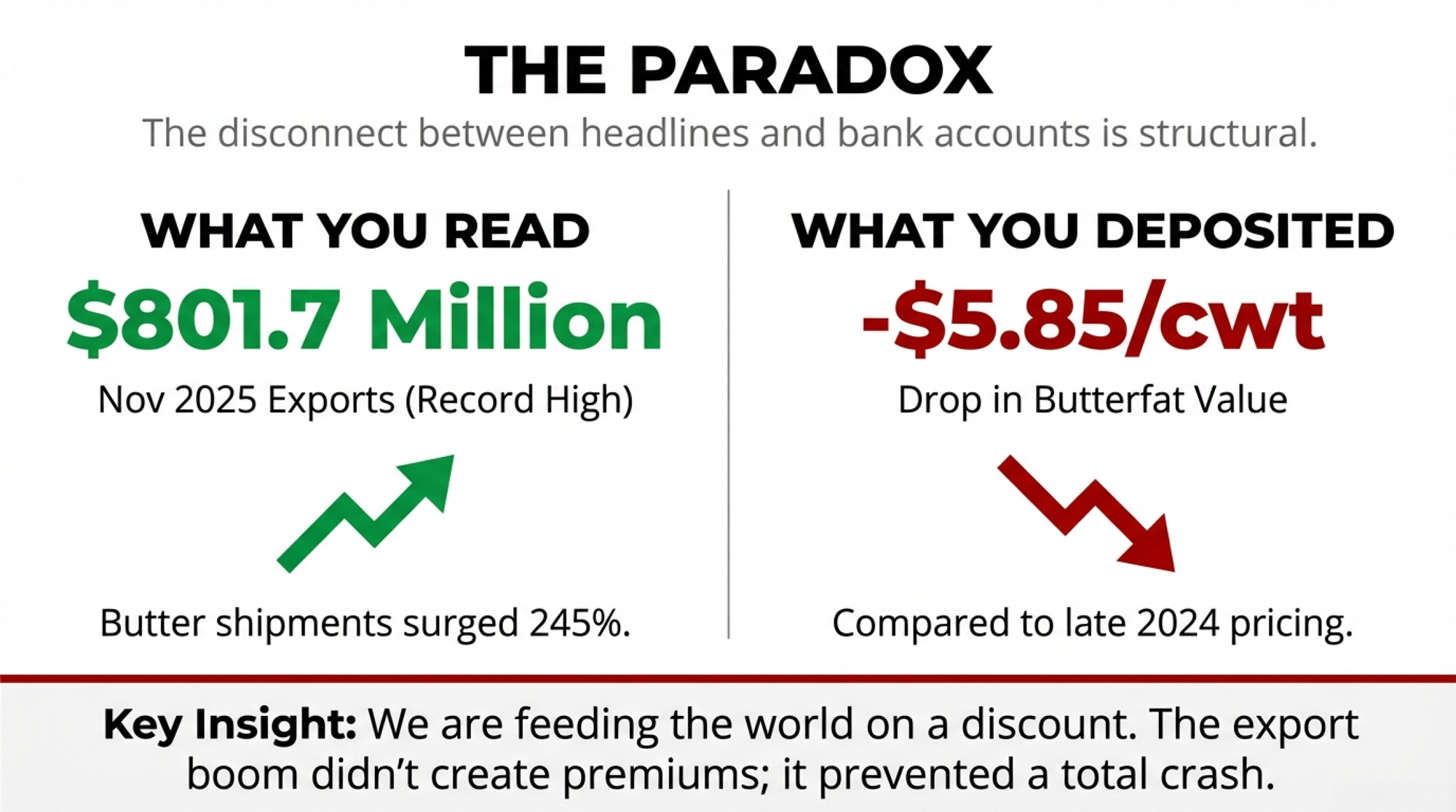
NewsSubscribe
First
Last
Consent

The Component Revolution Nobody Saw Coming: Why Your 4.5% Butterfat Test Just Became Your Biggest Liability

Your 4.5% butterfat success is creating a $8B supply bomb—73% of operations have no idea what’s coming. Here’s your survival playbook.

EXECUTIVE SUMMARY

While you’ve been celebrating record component levels, genomic selection has unknowingly created the raw materials for a market-crushing oversupply that could devastate milk prices by 30% this fall. The numbers don’t lie: butterfat production is exploding at 5.3% while milk volume grows just 0.5%, feeding $8 billion in new cheese processing capacity that’s gambling on demand growth that isn’t materializing. Peer-reviewed research confirms genomic selection has increased genetic gains by over 7% compared to traditional methods, but nobody calculated the collective market impact when every producer pursues the same component optimization strategy simultaneously. This isn’t another cyclical downturn—it’s a structural transformation where operations under 500 cows face break-even costs of $22-26/cwt while mega-dairies maintain profitability at $17.50/cwt. The 27% of farms projected to exit over the next 18 months will be those who failed to recognize that their individual genetic success is creating industry-wide failure. Smart operators implementing comprehensive risk management, operational excellence, and strategic business model adaptation in the next 90 days will position themselves to acquire distressed assets and dominate the post-crash landscape.

KEY TAKEAWAYS

  • Financial Firewall Construction Delivers 500-700% ROI: Layering Dairy Margin Coverage with Dairy Revenue Protection and market-based hedging costs $40,000-60,000 annually but provides $307,500 in defensive value for 500-cow operations—protection that becomes priceless when milk prices crater below $18/cwt
  • Component Strategy Pivot Challenges Industry Orthodoxy: Rather than joining the component optimization race creating oversupply, target functional properties processors actually need—research shows consumers want “better-for-you cheese” with health claims, not just higher butterfat percentages
  • Beef-on-Dairy Revenue Diversification Generates $100,000+ Annually: With 72% of U.S. farms now crossbreeding, operations capturing $350-700 premiums per crossbred calf versus purebred Holstein bulls create crucial income streams uncorrelated to volatile milk prices
  • Regional Vulnerability Map Reveals Geographic Fault Lines: Northeast producers benefit from 35% Class I utilization providing $1.26/cwt price premiums over Pacific Northwest operations, while Upper Midwest faces direct Class III exposure with minimal fluid milk cushioning during the coming manufacturing oversupply
  • Technology Acceleration Compresses Crisis Timelines: Genomic selection increasing genetic gains by 35% in young bulls versus traditional methods means supply response happens in 12-18 months rather than 2-3 years, creating more severe oversupply situations that resolve quickly but with greater casualties
component optimization, dairy profitability, genomic selection, milk production, risk management

What if I told you that while you’re focused on celebrating record component levels, a $8 billion supply bomb is about to detonate across the dairy industry, and 73% of operations have no idea what’s coming?

Here’s the uncomfortable truth that conventional dairy media won’t discuss: the USDA just raised its 2025 milk production forecast to 227.3 billion pounds, yet this headline figure masks a terrifying reality that could devastate milk prices by 30% this fall. While you’ve been celebrating genomic gains that pushed U.S. average butterfat tests to record levels, you’ve unknowingly helped create the raw materials for a market-crushing oversupply.

This isn’t another cyclical downturn you can weather by tightening your belt. According to peer-reviewed research published in PLOS ONE, genomic selection has “increased about 7.1% over the gain with conventional breeding methods” for milk yield, while genetic gains for components have accelerated even faster. Every breeding decision you’ve made to boost components has been individually profitable but collectively catastrophic.

The stakes couldn’t be higher: Operations that recognize these warning signs and act in the next 90 days will position themselves to not just survive, but acquire distressed assets and dominate the post-crash landscape. Those who don’t will join the estimated 27% of dairy farms projected to exit the industry over the next 18 months.

The Hidden Tsunami: When Genomic Success Becomes Market Catastrophe

Here’s the question that should keep every strategic planner awake at night: If genomic selection effectiveness has increased genetic gains by over 7% compared to traditional methods, why hasn’t anyone calculated the collective market impact?

The research from Korean Holstein populations demonstrates the scope of this transformation: “When selected for milk yield using genomic estimated breeding values (GEBV), the genetic gain increased about 7.1% over the gain with estimated breeding values (EBV) in cows with test records, and by 2.9% in bulls with progeny records”. But here’s what the study doesn’t address—the market consequences when every producer pursues the same component optimization strategy simultaneously.

According to comprehensive dairy market analysis, U.S. milk production in 2025 is projected to reach 227.3 billion pounds, up 0.4 billion pounds from previous forecasts, yet this modest volume increase masks an explosive surge in component production. While total milk volume grows at 0.5%, butterfat production is exploding by 5.3%—creating what economists call a “tragedy of the commons” scenario.

The Genetic Acceleration Factor Nobody’s Discussing

Leonard Polzin, Extension dairy market and policy outreach specialist at the University of Wisconsin-Madison, acknowledges the timeline: “It’s hard to believe that some of the capacity hasn’t been in the works for a while”. But here’s the critical insight—this expansion is perfectly timed to coincide with an unprecedented component production explosion.

The peer-reviewed research confirms the acceleration: Genomic selection has been particularly effective for young bulls and heifers, with genetic gains increasing “by about 24.2% in heifers without test records and by 35% in young bulls without progeny records” compared to traditional methods. This means every AI decision you’ve made in the past five years contributes to a supply surge that traditional forecasting models can’t capture.

The $8 Billion Processing Gamble: When Capacity Meets Reality

While you’ve been perfecting component production, EDairy News reports that “a large increase in dairy processing capacity is due to come online in 2025, with $8 billion invested in plants for products from cheese to ice cream”. This isn’t gradual expansion—it’s a concentrated tsunami hitting the market simultaneously.

The scale is staggering: According to the comprehensive market analysis, major facilities include Leprino Foods’ $870 million Lubbock facility processing 8+ million pounds daily, Chobani’s $1.2 billion Rome complex with 12 million pounds daily capacity, and Fairlife’s $650 million Webster facility. Combined, these represent an 8% increase in U.S. cheese production capacity hitting the market in just 24 months.

The Processing Capacity Paradox

Polzin warns about the timing challenge: “Once we find a new equilibrium, it could be low for quite some time to measure and figure out what to do with the product”. This understatement reveals the industry’s lack of preparation for what’s coming.

Right now, these new plants are bidding aggressively for your component-rich milk, supporting Class III prices. However, the comprehensive research warns that this creates a “processing capacity paradox”—short-term price support followed by potential long-term collapse when the market must absorb massive volumes of finished product.

The Demand Side Reality Check: When Consumer Behavior Meets Market Fundamentals

Export Engine Under Unprecedented Pressure

The International Dairy Foods Association (IDFA) reports that U.S. dairy exports reached $8.2 billion in 2024, marking the “second-highest level ever”. But this headline obscures dangerous vulnerabilities that could trigger the crash we’re predicting.

Critical dependency: “Mexico and Canada—U.S. dairy’s top two global trading partners representing more than 40% of U.S. dairy exports” make the industry extremely susceptible to trade disruption. Any retaliatory tariffs from these partners could trigger the price collapse we predict exactly.

Warning signs are already visible: “U.S. dairy exports to China declined in 2024, marking the lowest year since 2020”. This represents a critical loss of a key market just as domestic processing capacity explodes and component production surges.

The Federal Policy Earthquake

The USDA announced a final rule on January 16, 2025, amending Federal Milk Marketing Orders (FMMOs) that “will be effective June 1, 2025”. This policy earthquake will create regional winners and losers overnight, directly altering the competitive landscape just as the supply tsunami hits.

According to the comprehensive analysis, regions with high Class I utilization will benefit from higher blend prices, while manufacturing-heavy regions like the Upper Midwest and West will see prices decline. This compounds the vulnerability of operations already exposed to Class III price volatility.

The Vulnerability Map: Who Survives vs. Who Fails

The Economics of Scale Reality

The March 2025 USDA dairy outlook reinforces concerns about profitability: The all-milk price forecast was revised to $21.60 per cwt for 2025, while 2026 projections dropped to $21.15 per cwt, “reflecting anticipated price softening for major dairy commodities”.

Break-even analysis shows the brutal mathematics:

  • Under 100 cows: $27.00-$33.00/cwt break-even
  • 100-499 cows: $22.00-$26.00/cwt break-even
  • 500-999 cows: $20.00-$23.00/cwt break-even
  • 1,000-1,999 cows: $18.50-$21.50/cwt break-even
  • 2,000+ cows: $17.50-$20.50/cwt break-even

The implications are stark: Any sustained price below $20/cwt devastates smaller operations while mega-dairies maintain profitability even at $18/cwt.

Regional Fault Lines

The March 2025 data reveals dangerous regional disparities: With 2025 milk price forecasts for Class III and Class IV revised downward to $17.95 and $18.80 per cwt, respectively, manufacturing-heavy regions face the greatest exposure.

Most At-Risk Operations:

  • Upper Midwest producers: Direct Class III exposure with minimal fluid milk cushioning
  • Pacific Northwest operations: Structural price disadvantages with low Class I utilization
  • High-debt operations: Rising interest rates compound low milk price exposure

Your Crash-Proof Defense Strategy: Beyond Conventional Thinking

Phase 1: Financial Firewall Construction (Next 30 Days)

The comprehensive research emphasizes that sophisticated and layered risk management is no longer optional; it is the foundation of a resilient dairy operation. This means moving beyond basic government programs to strategic tool deployment.

Strategic Implementation:

  • Layer Dairy Margin Coverage (DMC) with Dairy Revenue Protection (DRP) for comprehensive coverage
  • Contract 40% of production six months forward, 30% three months forward, using futures and options
  • Build cash reserves equal to 90 days of operating expenses at stress-test pricing levels

Phase 2: Operational Excellence War (Next 60 Days)

Precision management becomes critical with feed representing 50-60% of operating costs. Recent analysis shows that strategic feed procurement timing can protect against cost spikes when commodity markets dip.

Critical Actions:

  • Implement precision nutrition programs targeting cost reductions of $0.75-$1.25/cwt
  • Lock corn and soybean meal prices during commodity weakness to protect against feed cost spikes
  • Target 4.0%+ butterfat and 3.2%+ protein to align with processing plant needs for component-rich milk

Phase 3: Strategic Business Model Adaptation (Next 90 Days)

The research confirms that beef-on-dairy crossbreeding creates secondary income streams worth $350-700 per crossbred calf versus purebred Holstein bulls. For a 500-cow operation, this alone can generate $100,000+ in additional annual revenue.

Strategic Positioning Options:

  • Scale for cost competition: Pursue massive scale to achieve sub-$20/cwt break-even costs
  • Develop defensible niches: Focus on specialized products or direct-market opportunities
  • Revenue diversification: Implement beef-on-dairy, on-farm processing, or agritourism initiatives

The Technology Acceleration Factor

The genomic revolution has compressed traditional supply adjustment timelines from 2-3 years to 12-18 months, making this crisis more severe than historical precedents. Research confirms that genomic selection provides “greater accuracy of selection decisions” for production traits, but this acceleration also amplifies collective oversupply risks.

Automation compounds the acceleration: Studies show that Robotic Milking Systems (AMS) can increase milk yield per cow by 5-10% due to more frequent, consistent milking. While beneficial for individual operations, widespread adoption collectively contributes to the supply surge overwhelming markets.

The Bottom Line: Survival Requires Strategic Contrarianism

Remember that opening question about celebrating record component levels? The research reveals the tragic irony: every successful breeding decision, every genomic advancement, and every component improvement has collectively created oversupply conditions that threaten the entire industry.

Three critical takeaways backed by verified research:

  1. Genomic acceleration has compressed market adjustment timelines, with genetic gains increasing up to 35% in young bulls compared to traditional methods, making oversupply situations more severe than historical models predict
  2. Processing capacity expansion of $8 billion is concentrated in a 24-month window, creating unprecedented supply shock potential just as component production explodes
  3. Export dependency on Mexico and Canada, representing 40% of trade value, creates systemic vulnerability to policy disruption precisely when domestic processing capacity floods the market

Your immediate action steps based on verified research:

  • Stress-test your operation at $16/cwt milk prices using break-even methodologies from comprehensive market analysis
  • Implement layered risk management following strategies that research shows can save $125,000 annually for medium-sized operations
  • Position for consolidation opportunities by preserving cash and monitoring distressed asset indicators as bankruptcy filings surge

The window for preparation is closing fast. The component tsunami is building, processing capacity is coming online, and policy changes are reshaping regional competitiveness. The question isn’t whether this crisis will hit—it’s whether you’ll be prepared to ride it out while your competitors get swept away.

Complete references and supporting documentation are available upon request by contacting the editorial team at editor@thebullvine.com.

Learn More:

Join the Revolution!

Join over 30,000 successful dairy professionals who rely on Bullvine Weekly for their competitive edge. Delivered directly to your inbox each week, our exclusive industry insights help you make smarter decisions while saving precious hours every week. Never miss critical updates on milk production trends, breakthrough technologies, and profit-boosting strategies that top producers are already implementing. Subscribe now to transform your dairy operation’s efficiency and profitability—your future success is just one click away.

NewsSubscribe
First
Last
Consent

Trump Administration Scrambles to Rehire USDA Bird Flu Experts After Accidental Firings  

In a stunning reversal, the Trump administration is scrambling to rehire USDA experts crucial to combating the worst bird flu outbreak in U.S. history. Accidental firings have left the agency short-staffed as H5N1 ravages poultry flocks, infects dairy cows, and sends egg prices soaring. Can they contain the crisis?

The Summary:

As the USDA races against time to rebuild its depleted workforce, this incident is a stark reminder of the delicate balance between government efficiency and public health preparedness. The accidental firing of key personnel has exposed critical vulnerabilities in the nation’s ability to respond to zoonotic threats, potentially jeopardizing food security and public safety. For dairy farmers and the agricultural industry, this crisis underscores the importance of robust biosecurity measures and the need for a well-staffed, expertly coordinated federal response to emerging diseases. As H5N1 continues to evolve and spread, the coming weeks will be crucial in determining whether the USDA can regain its footing and effectively contain this outbreak. The lessons learned from this staffing debacle must inform future policy decisions to ensure that cost-cutting measures don’t come at the expense of our ability to protect both human and animal health in the face of increasingly complex global health challenges.

Key Takeaways:

  • The Trump administration accidentally fired several USDA officials critical to the bird flu (H5N1) response during mass layoffs.
  • The USDA is scrambling to rehire these experts as the worst bird flu outbreak in U.S. history continues to spread.
  • Over 23 million poultry birds have been culled since 2022, and the virus has infected dairy cows in 16 states.
  • Egg prices have hit a record high of $4.95 per dozen due to the outbreak.
  • The Department of Government Efficiency (DOGE), led by Elon Musk, orchestrated the federal workforce reductions that led to the accidental firings.
  • 25% of staff at the National Animal Health Laboratory Network (NAHLN) program office were terminated.
  • The firings have left critical gaps in outbreak surveillance, testing, and data management capabilities.
  • 68 human cases of H5N1 have been confirmed, including one death, though the CDC still rates the public health risk as “low.”
  • The incident has drawn bipartisan criticism and raised concerns about the impact of aggressive cost-cutting on public health preparedness.
  • The USDA faces challenges in quickly reinstating fired personnel and maintaining practical outbreak response efforts.
dairy margins, milk prices, cheese exports, risk management, feed costs

The Trump administration attempts to reverse course after accidentally firing U.S. Department of Agriculture (USDA) staff critical to containing the worst bird flu outbreak in U.S. history. Over 23 million poultry birds have been culled since 2022, dairy cows in 16 states tested positive for H5N1 avian influenza, and egg prices hit a record $4.95/dozen as the USDA confirmed it mistakenly terminated “several” outbreak response personnel during mass layoffs orchestrated by Elon Musk’s Department of Government Efficiency (DOGE). The agency now faces bipartisan criticism for jeopardizing food security while scrambling to rehire veterinarians, lab technicians, and emergency response specialists. 

A “Public Safety” Crisis in the Making

The USDA acknowledged Tuesday that positions supporting the Highly Pathogenic Avian Influenza (HPAI) response were “accidentally” included in DOGE’s sweeping federal workforce reductions. A spokesperson confirmed the agency is “working to swiftly rectify the situation and rescind those letters” sent over Presidents’ Day weekend.

Among those fired:

  • 25% of staff at the National Animal Health Laboratory Network (NAHLN) program office, which standardizes testing across 58 U.S. animal disease labs
  • Emergency response veterinarians coordinating containment measures on poultry and dairy farms
  • Data managers tracking viral mutations critical for vaccine development

Keith Poulsen, director of the Wisconsin Veterinary Diagnostic Laboratory, warned:
“They’re the front line of surveillance for the entire outbreak. If you remove all the probationary staff, you eliminate the capacity to do the work.”

Systemic Failures in Workforce Cuts

The mishap highlights structural flaws in DOGE’s aggressive downsizing campaign, which has eliminated thousands of federal jobs since January 2025 through a private consultant-led review process. Internal USDA communications reveal:

  1. No Public Health Safeguards: DOGE’s algorithm targeted positions based on budgetary metrics without input from USDA epidemiologists or veterinarians.
  2. Communication Breakdown: Terminated NAHLN staff received automated emails notifying them of their firing, and some are still awaiting official reinstruction notices.
  3. Critical Expertise Lost: At least 28 researchers were dismissed at the National Bio and Agro-Defense Facility (NBAF) in Kansas, including a lead avian flu response coordinator.

Republicans on the House Agriculture Committee privately urged the administration to pause cuts, fearing they’d “hinder the avian flu response”. Rep. Don Bacon (R-NE) criticized DOGE’s approach:

“There’s an old saying: ‘Measure twice, cut once.’ They’re measuring once and having to cut twice. Many of these decisions will need to be reversed.” 

Dairy Industry Implications

The staffing chaos couldn’t come at a worse time for dairy farmers. H5N1 has infected over 90 dairy herds since March 2024, causing:

  • 10-20% drops in milk production per infected cow
  • Quarantines delaying shipments of replacement heifers
  • Rising feed costs as corn prices spike 18% YoY

While the CDC maintains the public health risk remains “low,” 68 human cases have been confirmed—primarily among poultry and dairy workers—with one fatal encephalitis case in Louisiana. 

A Pattern of Precarious Priorities

This marks the second major staffing debacle under DOGE’s watch. Last week, the National Nuclear Security Administration struggled to rehire 300 mistakenly terminated nuclear safety engineers. Agriculture Secretary Brooke Rollins, confirmed in January 2025, has faced scrutiny for her delayed response to the crisis despite pledging to make HPAI a “top priority”.

The administration’s new strategy of prioritizing poultry vaccinations over mass culling adds complexity. At the same time, the USDA approved an updated H5N1 vaccine in January 2025, but only 12 million doses are available—enough for 5% of the national flock.

The Bottom 

As the USDA races to rebuild its outbreak response team, the incident exposes a fatal flaw in treating public health infrastructure like a corporate balance sheet. With H5N1 now endemic in wild birds and spilling over into mammals, sustained expertise—not just emergency funding—will determine whether the U.S. contains this crisis or faces a full-blown pandemic.

The lesson for dairy producers is clear: Monitor herd health vigilantly, enforce strict biosecurity protocols, and advocate for USDA reforms that protect livestock and the specialists tasked with defending our food supply.

Join the Revolution!

Bullvine Daily is your essential e-zine for staying ahead in the dairy industry. With over 30,000 subscribers, we bring you the week’s top news, helping you manage tasks efficiently. Stay informed about milk production, tech adoption, and more, so you can concentrate on your dairy operations. 

NewsSubscribe
First
Last
Consent

Is Now the Best Time to Lock in Milk Prices?

Is now the right time to lock in milk prices? Learn essential strategies for dairy farmers to manage risk and boost profits.

Summary: The volatility of milk prices has many dairy farmers wondering, “Is now the time to lock in milk prices?” With Class III milk contracts trading over $22 per hundredweight (cwt.), the potential for risk management through hedging becomes enticing. Supply chain disruptions, adverse weather conditions, increased demand, global markets, and inflationary pressures drive these historical price levels, creating challenges and opportunities. Class III prices have historically varied between $13 and $16 per cwt Throughout the last decade. Locking in milk prices may secure a farmer’s financial future, enabling them to stabilize income even if market prices drop. Consulting with a broker can provide the necessary guidance to navigate these complexities and help make more informed decisions in this unpredictable market. Dairy industry Locking in milk prices isn’t just about stabilizing income; it’s a strategic move to manage risk in an unpredictable market.

  • Current Class III milk contracts are trading over $22 per hundredweight (cwt.), presenting an opportunity for risk management through hedging.
  • Factors driving these historic price levels include supply chain disruptions, adverse weather conditions, increased demand, global markets, and inflationary pressures.
  • Historically, Class III prices have varied between $13 and $16 per cwt. Over the last decade.
  • Locking in milk prices can help farmers stabilize their income even if market prices drop.
  • Consulting with a broker is essential for navigating these complexities and making informed decisions.
  • Locking in milk prices is a strategic move to manage risk in an unpredictable market.
milk prices, historic levels, forthcoming contracts, dairy producers, dairy experts, Class III milk futures, lock in milk prices, protect gains, limit risk, supply chain disruptions, adverse weather conditions, increased demand, global markets, inflationary pressures, volatile prices, market fluctuations, COVID-19 epidemic, financial future, market price, risk management, financial stability, budgeting, financial planning, consulting with a broker, dairy farmers

Are you aware milk prices have reached historic levels, hitting over $22 per hundredweight (cwt.) for forthcoming contracts? This increase creates a unique challenge and opportunity for dairy producers and experts. With such high futures market prices, the question arises: Is this the best time to lock in milk prices to protect gains and limit risk? Let’s examine why this is an important issue and possible solutions. Class III milk futures market prices are at historically high levels. This creates a strategic opportunity for farmers, allowing them to hedge their risks and take control of their earnings while proving their critical role in controlling the rise.

What’s Driving the Unprecedented Surge in Milk Prices? 

Let’s look at the present state of milk pricing on the futures market. According to the latest sources, Class III milk futures for the following months—particularly September, October, and November—are trading at about $22 per hundredweight (cwt). This historically uncommon level indicates potentially good circumstances for dairy producers, providing a ray of light in an otherwise difficult market. This pricing increase can potentially deliver significant advantages to the sector, giving grounds for hope.

Recent market data indicates a significant gain over the previous quarter. A few months ago, Class III milk prices hovered around $18-$19 a cwt. This growing tendency has raised eyebrows and sparked hope across the sector. Recent research suggests that numerous reasons might be driving these very high prices.

First and foremost, supply chain disruptions have had a considerable impact. Post-pandemic recovery efforts have raised transportation costs and delays, affecting every aspect of the dairy supply chain. Adverse weather conditions in vital dairy-producing areas have reduced milk production levels.

Demand has also shifted. The reopening of restaurants and food services has increased dairy demand, particularly cheese and other Class III milk goods. Global markets can influence pricing. For example, increasing export demand owing to lower supply in other key exporting nations such as New Zealand has boosted US milk prices.

Furthermore, inflationary pressures raise input costs for feed and other agricultural necessities, causing farmers to seek higher prices to remain profitable. Given the present economic context, it is advisable to consider locking in these prices as a buffer against any decline.

These reasons contribute to the present high price of Class III milk contracts. Understanding these variables allows dairy producers to better judge whether to lock in milk prices. This information provides them with viable tactics for managing the rise, ensuring they are ready for market situations.

Why Understanding Historical Context is Crucial 

To completely understand the present rise in milk costs, it is necessary to consider the historical backdrop. Monitoring past averages better explains why current situations offer ample opportunity. Historically, Class III milk prices have been quite volatile. For example, prices have consistently varied between $13 and $16 per hundredweight (cwt.) throughout the last decade, with noticeable peaks and troughs.

One of the most essential peaks happened in September 2014, when prices reached a record $24.60 per cwt. In May 2020, however, prices fell to roughly $12.14 per cwt due to market disruptions caused by the COVID-19 epidemic. These changes emphasize the dairy market’s inherent risks and uncertainties.

We’re approaching record highs, with futures trading at $22 per cwt. When compared to the average price of about $16 per cwt. Today’s numbers are undoubtedly the most notable over the previous decade. This background highlights the possible risk-management benefits of locking in pricing today. Securing these relatively high prices may help protect against any market downturns.

Furthermore, the present market is formed by several other variables, including supply chain interruptions and growing global demand, which add another element of unpredictability. Given these dynamics and the historical background, locking in milk prices now might be prudent to secure your financial future.
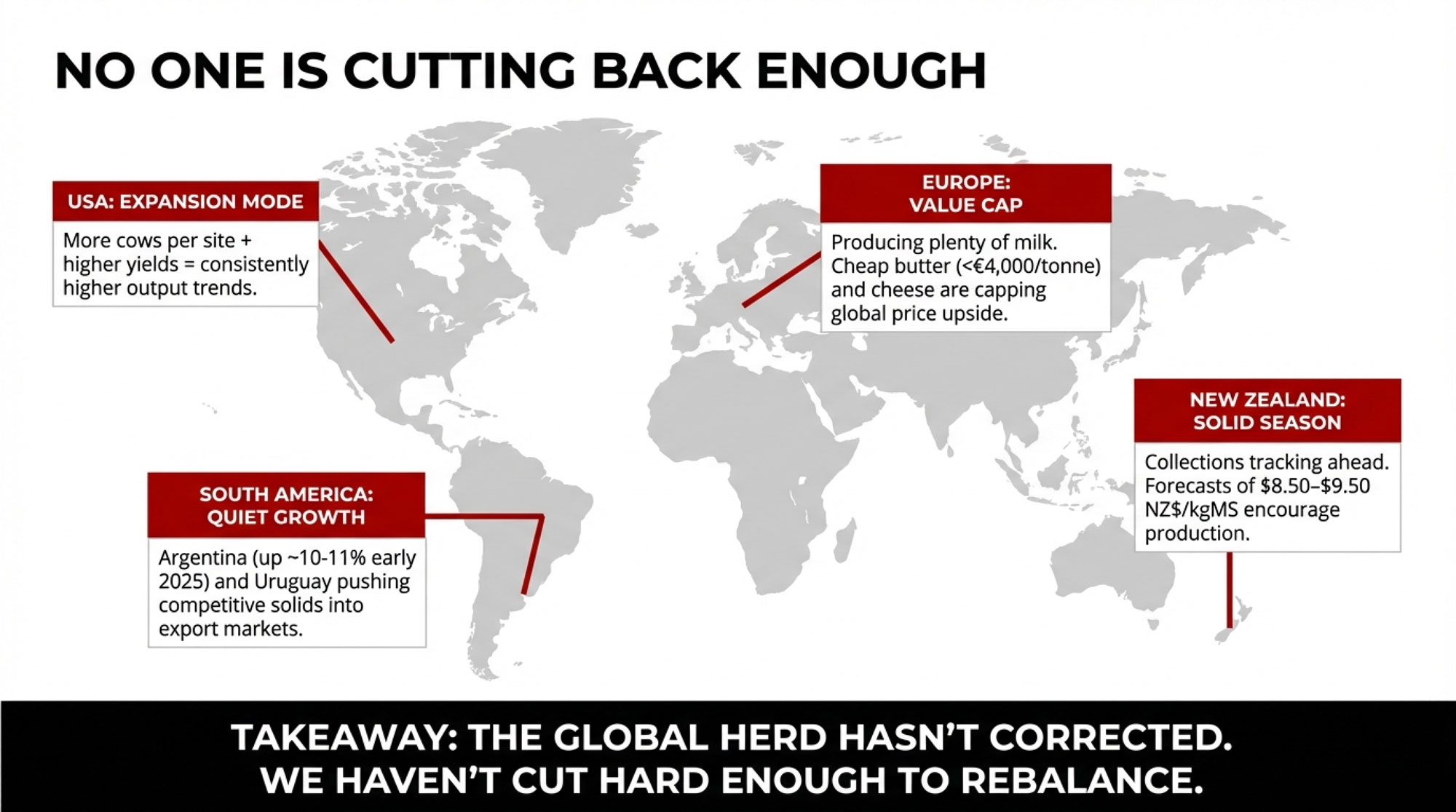
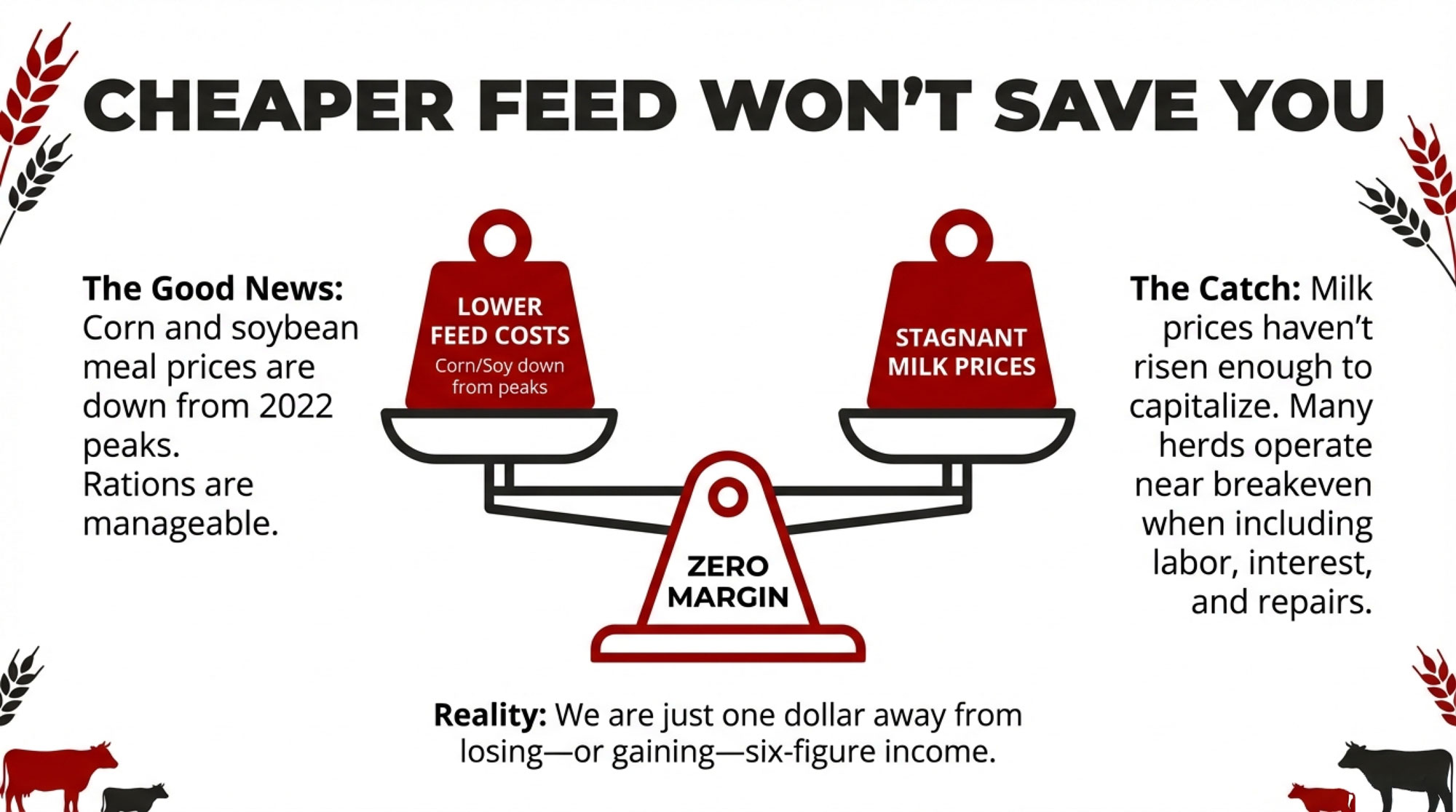
Locking In Milk Prices: Understanding the Basics 

Look at locking in milk pricing and how it affects a farmer’s revenue.

Imagine you are a dairy farmer. You’re concerned about market volatility, which might make your income uncertain. Locking in pricing via the futures market enables you to establish your milk price ahead of time, decreasing unpredictability.

Here’s an example: 

  • Scenario 1: You set a price of $22 per hundredweight (cwt) for your milk. Later, if the market price falls to $18 per cwt, you will still get your locked-in price. You make more than the current market worth.
  • Scenario 2: If the market price climbs to $25 per cwt, the locked-in price will result in a lower payout. However, this situation allows you to prevent the possible revenue loss if prices unexpectedly collapse.
  • Scenario 3: The effect is minor if the market price remains close to your locked-in pricing. You enjoy peace of mind knowing that your income will not change much.

Understand that this is not risk-free. While locking in prices may protect against falls, it may also result in losing out on more considerable earnings if market prices rise. Consulting with a broker may help you navigate these waters more successfully.

The Strategic Advantages of Locking in Milk Prices 

Locking in milk prices has various significant benefits, notably in risk management and financial stability. Farmers may protect themselves from market volatility by getting a predetermined product price. This assurance is helpful regarding budgeting and financial planning.

Consider the situation of John, a dairy farmer in Wisconsin. John set his milk rates at $20 per cwt for the second half of 2022. When the market price fell to $18 per cwt due to unanticipated global economic events, such as a sudden drop in demand or an increase in production costs, John could retain his income expectations. “Locking in prices gave me peace of mind,” John said. “I didn’t have to worry about the market fluctuations impacting my bottom line.”

Industry analysts share this attitude. Agriculture Secretary Tom Vilsack states, “Farmers who lock in their prices can navigate uncertain markets with greater confidence.” They are protected from sharp price declines and the financial pressure that such changes may cause” [source: USDA Report on Dairy Futures, 2023].

The benefits of these strategies are apparent from the statistics. University of Minnesota research indicated that dairy producers who used price-hedging tactics had a 15% lower revenue volatility than those who did not. This means their income was more stable and predictable, even in a fluctuating market. Furthermore, brokers claim that farmers increasingly turn to these technologies, understanding the protection they bring in an unstable market.

Financial stability is another critical advantage. When dairy farms can better estimate their revenue, making educated choices regarding equipment, feed, and other vital areas becomes more accessible. This stability may result in overall growth and increased agricultural efficiency.

Locking in milk prices gives farmers the tools to better manage risks and provides a solid financial basis for their businesses. Capitalizing on market fluctuations might be a wise step for long-term success.

The Trade-offs and Decisions Behind Locking in Milk Prices 

While locking in milk pricing provides stability, it carries several risks and concerns. The most evident danger is the possibility of lost chances. If market prices climb considerably beyond the locked-in rate, farmers will earn less than if they did not hedge. Our last example demonstrated this since a hypothetical upswing resulted in a loss in the futures market.

Another critical issue is the expense of this procedure. Brokers collect costs for each transaction, which may accumulate over time, especially if contracts are often exchanged. For example, with an average brokerage cost of $70 per transaction and each contract needing two transactions, these expenses may significantly reduce prospective earnings. These fees may have a considerable financial effect when applied to many agreements.

However, the value of talking with a broker cannot be emphasized. Brokers have essential experience and may give strategic advice specific to your circumstance. They guide farmers through the complexity of the futures market, ensuring that they make educated choices. Balancing the costs and advantages of their services is critical—after all, their experience might help you avoid expensive errors.

Finally, determining whether to lock in milk prices requires assessing the risks against the possible benefits. This is not a one-size-fits-all answer. Before making a move, farmers should consider their financial status, market prospects, and risk tolerance. Consulting a broker for tailored assistance will help you make the right option for your farm’s future.

Exploring Alternative Risk Management Strategies 

Dairy producers use various risk management measures in addition to futures contracts. Forward contracts, for example, enable farmers to sell their milk at a specified price straight to a buyer. This strategy provides price stability while avoiding the complicated dynamics of the futures market.

Another alternative is to employ future options that provide the right but not the obligation to sell milk at a specific price. This provides flexibility and a mechanism to hedge against adverse price fluctuations while still having the opportunity to profit from positive developments.

Insurance policies tailored explicitly for dairy producers are also available. These policies, such as the USDA’s Dairy Income Protection (DRP) program, may protect against sudden declines in milk prices or income, adding an extra degree of protection.

Exploring these different tactics may provide a more complete risk management strategy, enabling farmers to choose the best option based on their conditions and risk tolerance.

The Bottom Line

The basics of locking in milk prices via the futures market provide dairy producers with a possible route to stability in the face of volatile market circumstances. Whether the USDA announces an unexpected fall, a surprising upsurge, or market stability, the price-locking system acts as a risk-mitigation tool, ensuring predictable returns.

With Class III milk prices near record highs, the current market may be ideal for preemptive steps. The noted high prices provide a unique chance to lock in rates that may protect against future downturns. Partnering with a qualified broker can help you navigate the intricacies and make educated choices corresponding to your company objectives.

As you decide on the next move, remember the dairy market’s long-term tendencies and future changes. Can these high prices be maintained, or is a correction on the horizon? The answers will define your plan and may make all the difference in ensuring your farm’s profitability and stability in the volatile world of dairy farming.

Learn more:

Join the Revolution!

Bullvine Daily is your essential e-zine for staying ahead in the dairy industry. With over 30,000 subscribers, we bring you the week’s top news, helping you manage tasks efficiently. Stay informed about milk production, tech adoption, and more, so you can concentrate on your dairy operations. 

NewsSubscribe
First
Last
Consent

Class III Milk Futures Explained

Unlock profits with Class III milk futures. Ready to boost your dairy farm‘s earnings? Discover top tips and strategies in our ultimate guide.

Summary: Class III milk futures can be a game-changer for dairy farmers looking to stabilize their income. They offer a reliable way to predict and protect future earnings, secure wages, and achieve financial stability by locking in milk pricing before production, ensuring consistent income despite market volatility. A University of Wisconsin study found that using futures contracts can stabilize income by up to 20%. To dive into Class III milk futures, find a reliable broker, understand market trends, develop a trading strategy, and follow industry experts and news outlets.

  • Class III milk futures help dairy farmers stabilize income and predict future earnings.
  • These futures lock in milk pricing before production, ensuring consistent income despite market fluctuations.
  • A University of Wisconsin study indicates futures contracts can stabilize income by up to 20%.
  • Steps to get started: find a reliable broker, understand market trends, develop a trading strategy, and stay updated with industry news.
Dairy farming, milk costs, Class III milk futures, dairy producers, secure wages, save for the future, financial stability, contracts, lock in milk pricing, consistent income, market volatility, University of Wisconsin research study, stabilize income, risk management, market swings, trading strategy, managing a dairy farm, controlling risks, successful future, reliable broker, market trends, trading selections, industry news, GDT Insight subscription, market assessments, sound trading selections, stabilizing dairy farming businesses, step-by-step guide, reputable broker, market patterns, solid trading strategy, common pitfalls.

Are you weary of variable milk costs reducing your profits? Dairy farming is difficult enough without the added concern of shifting pricing. But what if there was a method to secure your wages, save for the future, and attain financial stability? Understanding Class III milk futures may transform your company. Integrating these futures into your plan allows you to lock in pricing while mitigating the risks associated with market volatility. Imagine having the ability to anticipate your income months in advance. This information not only helps you make better business choices, but it may also lead to significantly higher profits. Many dairy producers have employed this method successfully. So, why offer your farm an equal advantage? Knowing Class III milk futures might benefit your dairy company.

What Are Class III Milk Futures? 

Have you ever wondered how dairy farmers shield themselves from the unpredictable nature of milk prices? The answer lies in Class III milk futures, a financial tool that’s more than just a safety net.

Class III milk futures are financial contracts that help to stabilize your income. They allow dairy producers like you to lock in milk pricing before production. In this manner, you can ensure a consistent income, regardless of how volatile the market becomes.

Here’s how they work: you commit to selling a specific milk volume at a predetermined price. This agreement enables you to hedge against future price declines and provides a sense of security and stability. Locking in future pricing allows you to escape the worry of market volatility, giving you a more predictable income.

So, why should you care? These contracts provide peace of mind. When milk costs fall, you are protected. You receive the price you locked in, even if the market falls. However, if prices rise, you may lose out on increased earnings. However, many farmers value consistency, particularly in a volatile market.

Understanding Class 3 milk futures may be a game changer for those in the dairy sector. It’s a tool that allows you to control your financial situation.

Unlocking Financial Stability with Class III Milk Futures

Trading Class III Milk Futures is one of the most effective strategies for managing a dairy farm. Why? They provide several advantages that might dramatically improve your bottom line.

First and foremost, Class III Milk Futures enable you to lock in pricing. Imagine not having to worry about unexpected dips in milk costs. With these futures, you can lock in a guaranteed price for your milk regardless of market volatility. A University of Wisconsin research study found that utilizing futures contracts may help stabilize income by up to 20%.

Risk management is another significant benefit. Dairy farming is unpredictable. A variety of variables, like changing feed prices and unexpected weather, might have an impact on your earnings. Class III milk futures provide a safety net. Setting a price in advance reduces the danger of market swings. According to one industry analyst, “Futures contracts work like an insurance policy for farmers.”

To summarize, trading Class III Milk Futures allows you to lock in pricing, control risks, and prepare for a successful future. Isn’t that a possibility to consider?

Ready to Dive Into Class III Milk Futures? Here’s Your Step-by-Step Guide!

So you’ve chosen to invest in Class III milk futures—an excellent pick! Let’s divide this into simple stages. Ready? Let’s go!

Step 1: Find a Reliable Broker

Your first move? It would be ideal if you had a competent broker. Do your homework. Look for brokers with good reputations and expertise in agricultural commodities. Consult your other dairy producers for advice. Trust is essential here.

  • Verify the broker’s credentials. Are they registered with the Commodity Futures Trading Commission (CFTC)?
  • Inquire about their prices and commissions. You don’t want hidden expenses reducing your profitability.
  • Consider their trading platform. Is it user-friendly? Does it provide real-time data and analytics?

Step 2: Understand Market Trends

Now, let’s discuss numbers. It would be excellent if you kept up with market trends. Keep up with USDA reports and industry news. Familiarize yourself with CME data on Class III futures. Scroll through the agriculture forums. You would be shocked at how much you can pick up!

Step 3: Develop a Trading Strategy

A solid plan can make all the difference. Here’s a simple framework to get you started:

  1. Define Your Goals: Are you hedging against price volatility or looking to make a profit?
  2. Risk Management: Decide how much risk you can tolerate. Never invest more than you’re willing to lose.
  3. Set Entry and Exit Points: Know the prices you’ll buy and sell at, and stick to your plan.
  4. Use Stop-Loss Orders to protect yourself from significant losses. A stop-loss order will help you sell automatically if prices fall too low.
  5. Review Periodically: Assess your strategy regularly. Be flexible and adjust to new market trends.

Have you got all of that? Great. You are now ready to start trading Class III milk futures. Remember that successful trading requires study, discipline, and patience. Happy trading!

Mistakes to Avoid When Trading Class III Milk Futures

  • Skipping Research: One of the most common blunders is jumping in without sufficient investigation. Always be aware of market developments and economic data that impact milk pricing. Use sites like GDT Insight to acquire the most recent changes.
  • Ignoring Market Trends: Never trade on assumptions. Pay careful attention to market patterns and seasonality. For example, knowing that US milk output in 2023 stayed constant but imports climbed by 1.0% might give helpful information.
  • Failing to Set a Budget: Like any other investment, trading milk futures carries certain risks. Set a trading budget and stick to it. This will help you handle any losses and keep your money in order.
  • Over-Trading: It’s tempting to get caught up in the enthusiasm and make a lot of deals. This might result in avoidable losses. Stick to your trading approach, and don’t overtrade.
  • Not Using a Reliable Broker: Select a reputable broker who knows the dairy sector. A skilled broker can provide helpful guidance and insight.
  • Neglecting Margin Requirements: Monitor margin needs, such as the $1,320 margin maintenance. Ensure you have sufficient cash to satisfy these criteria and prevent liquidation.
  • Ignoring the Financial Calendar: Major reports and data releases may substantially influence milk prices. Always keep track of impending news and plan your transactions appropriately.
  • Lack of Diversification: Do not put all your eggs in one basket. Diversify your assets to mitigate risk. Consider additional dairy-related assets to help balance your portfolio.

Expert Tips

Think you’ve got the fundamentals down? Great! Now, let’s look at some advanced suggestions and best practices for making the most of Class 3 milk futures. You’ve gone this far, so why not become a professional?

Leverage Seasonal Trends

Did you know that milk output increases in the spring and summer? This is related to cows’ natural breeding cycles. Use this to your advantage. Look for contracts that mirror these seasonal tendencies to make better trading selections. Purchasing futures before the peak production months might help you lock in cheaper pricing.

Diversify Your Portfolio

Do not put all your eggs in one basket (or all your milk in one tank). Diversify your bets in dairy futures markets. Consider researching alternative types of milk or even related commodities such as cheese futures. This method reduces risk while also providing several profit opportunities. Diversification is crucial for risk management and capitalizing on different market possibilities.

Stay Updated with Market News

Timely information is critical in the dairy futures market. Subscribe to industry magazines, newsletters, or GDT Insight for real-time market information. A rapid shift in milk exports or a new government policy might influence pricing. Staying informed allows you to respond swiftly and make sound judgments. In today’s fast-paced economy, information is power.

Use Technical Analysis

If you haven’t yet done so, now is the moment to get started with technical analysis. Use charts, candlesticks, and indicators to comprehend price fluctuations better. Historical data patterns help predict future developments. Many effective traders get an advantage by combining technical analysis with a solid grasp of market fundamentals.

Engage in Regular Review and Adjustment

Your trading approach should be active. Regularly evaluate your trading performance and alter techniques based on what works and what doesn’t. Do you continually need significant market moves? Or is your timing wrong? Analyzing your trading record might reveal areas for improvement.

FAQ

What exactly are Class III Milk Futures?

Class III Milk Futures are financial contracts that enable you to purchase or sell milk at a set price on a future date. Consider locking in a price now to protect yourself against market volatility.

How can Class III Milk Futures benefit my dairy farm?

You may use these futures to control risk while also stabilizing income. By hedging against unfavorable price changes, businesses may preserve profitability and pay expenses even when market prices decline.

What do I need to start trading Class III Milk Futures?

First, look for a broker that knows the dairy sector and these particular futures contracts. You’ll also need to understand market trends and devise a robust trading plan for your farm’s requirements.

Is there a lot of risk involved in trading these futures?

While there is some danger, as with any financial instrument, a well-planned approach may help to limit it. The goal is to be educated and base your judgments on facts and industry trends.

How do I keep up with market trends for Class III Milk?

Stay informed by subscribing to industry news, reports, and market assessments. Use tools like the GDT Insight subscription to get accurate and timely data. Being knowledgeable is essential for making sound trading selections.

Can I start trading Class III Milk Futures on my own?

While it is feasible, it is advised to get expert advice first. Engage with a reputable broker and begin trading in modest increments to acquire a feel for the market before plunging in ultimately.

Want to Dive Deeper? Boost Your Knowledge with These Resources!

The Bottom Line

This article discusses Class 3 milk futures and how they may help stabilize dairy farming businesses. We’ve created a step-by-step guide to help you get started, including locating a reputable broker, recognizing market patterns, and establishing a solid trading strategy. We also highlighted common pitfalls to avoid and provided professional advice on harnessing seasonal patterns, diversifying your portfolio, getting up to date on market news, using technical analysis, and constantly assessing your tactics. Trading Class 3 milk futures may buffer against market volatility by locking in pricing and protecting your income. The issue is: Are you prepared to take charge of your dairy farm’s financial future?

Learn more:

9 Top Safety Tips for Infrequent Farm Help During Silage Season

Need farm help for silage season? Check out these safety tips to train new helpers and keep your harvest accident-free!

Summary: Silage season is around the corner, and many dairy farmers are struggling to find experienced help. Safety is a priority when fieldwork ramps up, especially with new workers. This article will share essential safety tips from the experts at Penn State Extension: proper training, clear communication, manageable tasks, equipment maintenance, managing fatigue, hazard identification, lone worker safety, road safety, preventing falls, and chemical handling to protect everyone on the farm.

  • Ensure all new helpers receive proper training to handle equipment safely.
  • Maintain clear, open two-way communication with all workers.
  • Assign manageable tasks that match the skill level of less experienced helpers.
  • Perform routine maintenance on all farm equipment before silage season starts.
  • Be vigilant about managing worker fatigue and promoting healthy practices.
  • Identify potential hazards and implement risk management strategies.
  • Ensure lone workers have ways to communicate and stay safe.
  • Implement road safety measures and proper signage for all farm vehicles and equipment.
  • Take steps to prevent falls and ensure structural safety on the farm.
  • Follow safety protocols for handling chemicals and fire safety measures.
silage season, farmers, safety, diverse community members, employees, retired neighbors, high school students, farm kids, dairy operations, hazards, tractor rollovers, mechanical problems, human mistakes, accidents, inexperienced employees, proper training, supervision, machinery, working order, brakes, tires, trailer couplings, hydraulic pipes, lights, training, induction, new workers, safety requirements, Safe Stop principles, fatigue, health, extended hours, silage harvesting, safety training, fatigue management, hazard identification, risk management, communication, lone worker safety, road safety, signage, SMV emblems, flashers, reflectors, falls, structural safety, suitable methods, equipment, structural evaluations, safe distances, handling chemicals, fire safety, protecting vulnerable individuals, successful silage season, productive workforce.
With silage-making going on until late in the night, make sure that all lights work properly.

As the silage season approaches, are you feeling the strain of recruiting experienced farm staff? You are not alone. Many farmers face the same problem, and the implications are tremendous. But remember, you play a crucial role in ensuring everyone’s safety. Have you ever considered how you can keep your staff safe and productive during this hectic period? Continue reading to discover out.

Need Farm Help? 

StatePart-Time Farm Labor Shortage (%)Impact on Operations
Wisconsin15%Delayed harvest schedules
Minnesota20%Increased reliance on untrained workers
Iowa18%Reduced milking efficiency
Illinois17%Higher operational costs
Michigan22%Significant yield losses

Locating skilled farm workers, particularly during the hectic silage season, may be like finding a needle in a haystack. Most farmers are searching for more than labor; they need somebody to operate agricultural equipment safely and effectively. But here’s the nub of the issue: agricultural labor is specialized, and skilled workers are in limited supply.

So, who do farmers turn to in a pinch? Frequently, they depend on a diverse group of community members. Employees already on the payroll are the obvious first option. Then there are retired neighbors who may bring essential expertise but need more stamina than they once had. High school pupils are another possibility. They are motivated and active but need more experience with intricate technology. Farm kids who have grown up witnessing dairy operations may need specific instruction to take on fieldwork responsibilities.

Relying on these diverse groups presents issues. Everyone will need training and supervision to guarantee safety and efficiency during one of the year’s busiest seasons. However, with the appropriate strategy, this ragtag group can be transformed into a dependable workforce, bringing hope and optimism to your farm.

Let’s Talk About Safety 

Have you ever considered the overwhelming volume of heavy gear and equipment buzzing about your farm? Imagine someone with little expertise dealing with such complexities coming in to assist. It’s nerve-racking.

Injury TypePercentage of Injuries
Machinery-related34%
Animal-related22%
Slips, Trips, and Falls18%
Chemical Exposure11%
Other15%

Here’s why safety is unavoidable: the hazards are natural. Tractor rollovers, mechanical problems, and human mistakes all have the potential to cause serious accidents—or worse. The numbers aren’t excellent, either. Did you know that agricultural accidents are a primary source of workplace injuries? And with inexperienced employees, the risks are significantly more significant.

Consider this: your high school assistant may know about dairy operations, but do they know how to run a forage harvester or a baler safely? Probably not. This is where appropriate training comes into play. It’s more than simply getting the work done; it’s about ensuring everyone gets home safely at the end of the day.
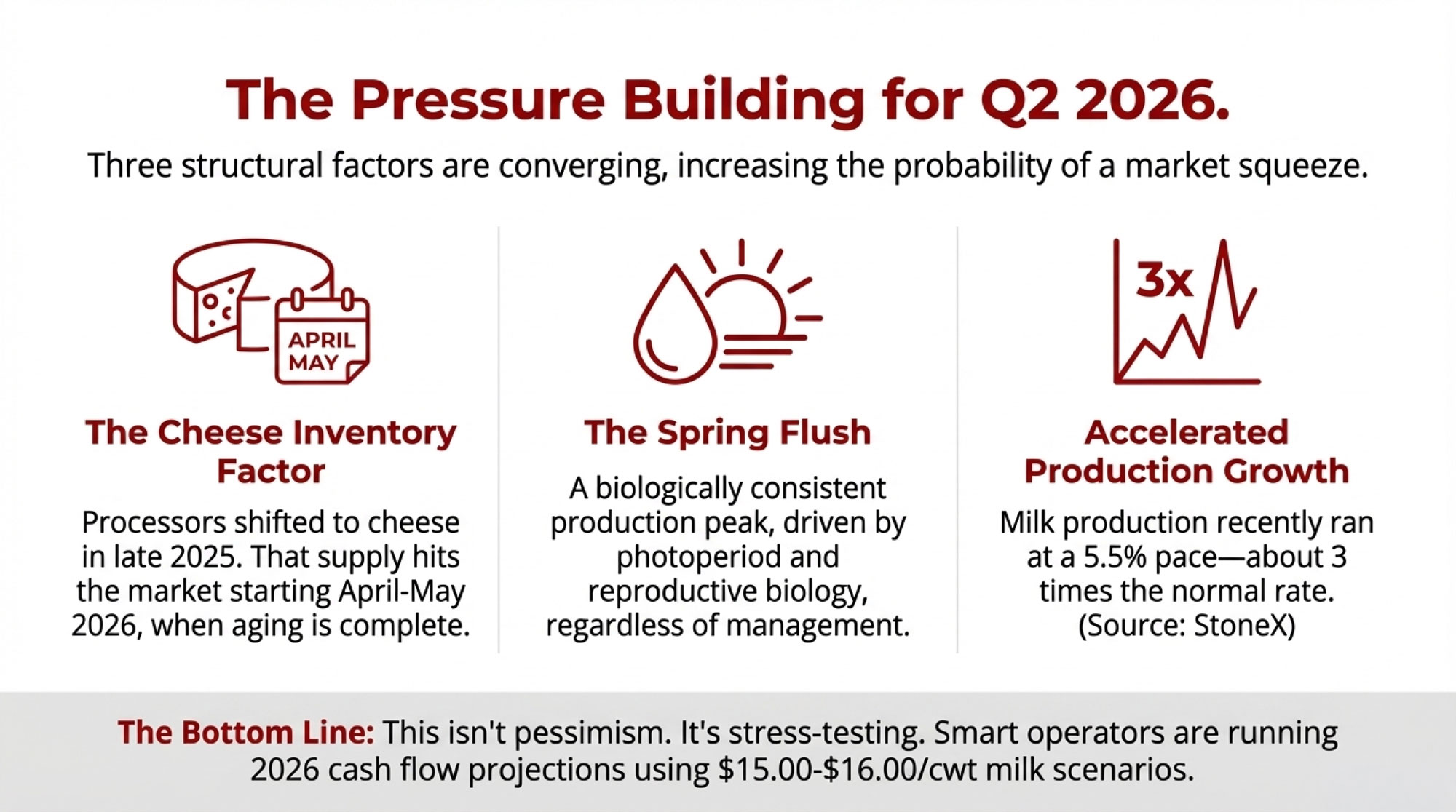
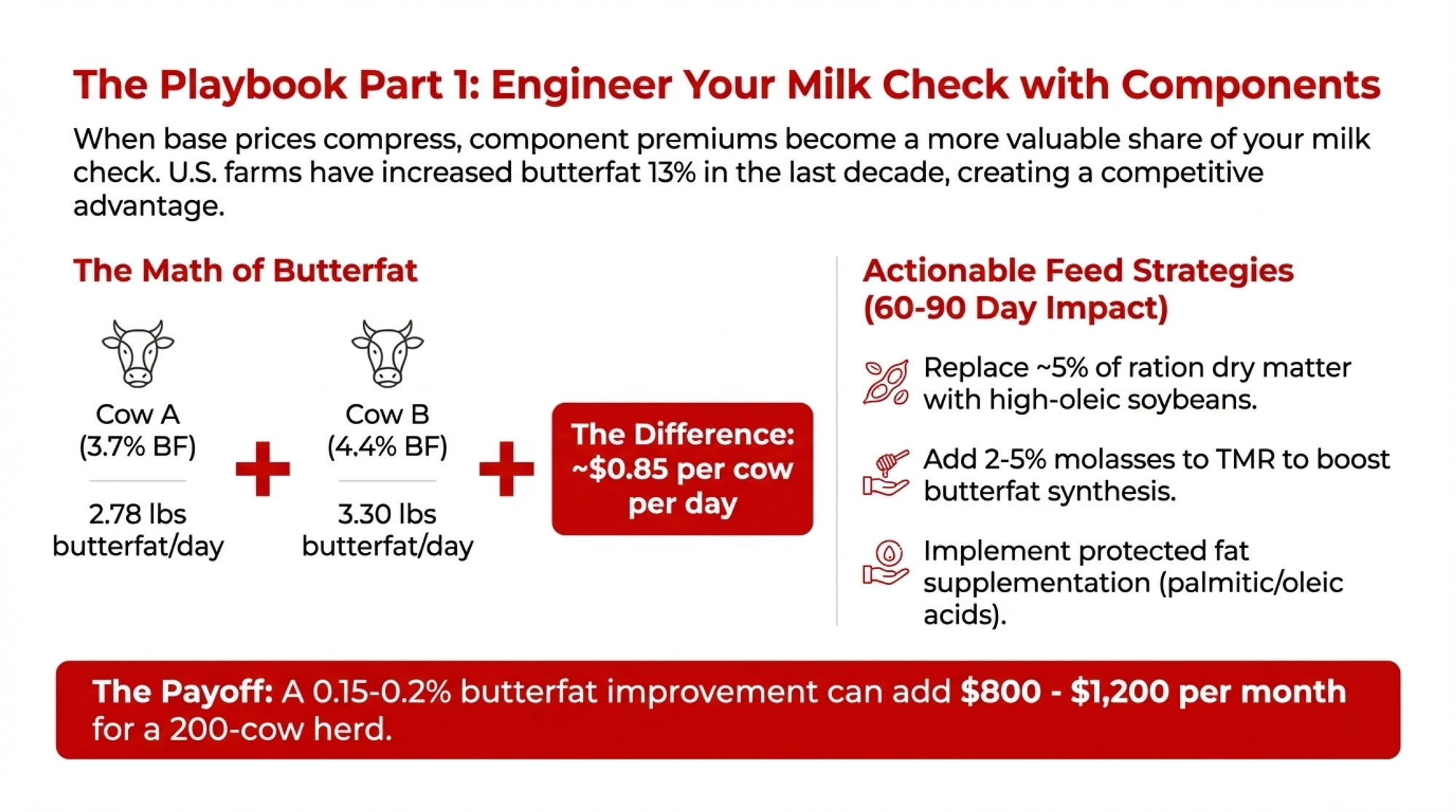
Reviewing safety measures, demonstrating proper equipment use, and creating clear communication channels may have a significant impact. You are not just preventing accidents; you are also making a culture of safety that will pay off in the long term, giving you confidence and security in your operations.

So, before you rush into the fields, pause for a while. Are your assistants prepared? Additional training now may save much misery later. Trust me, it’s worthwhile.

Safety Tip #1: Machinery Maintenance and Pre-Season Preparation

Before the silage season begins, ensuring that all equipment is in good working order is critical. This includes inspecting brakes, tires, trailer couplings, hydraulic pipes, and lights as part of your pre-planned maintenance cycle. Inspect the moving components of mowers, tedders, forage harvesters, and balers for wear or damage. Additionally, any suspect hydraulic lines should be changed, and bearings and belts should be examined ahead of time to avoid malfunctions during crucial operations.

Safety Tip #2: Training and Induction for New Workers

New or occasional farm workers must be adequately taught to operate the equipment and made aware of any risks on the farm. Spending time with temporary or part-time employees is critical to review safety requirements and ensure they grasp the ‘Safe Stop’ principles—applying the handbrake, stopping the engine, and removing the key before exiting the vehicle.

Safety Tip #3: Managing Fatigue and Health

Extended hours of silage harvesting might exhaust you, impairing your concentration and reaction times. To keep awake, pause when you’re tired, eat well, and drink enough water. Regular safety training and fatigue management may significantly decrease dangers.

Safety Tip #4: Hazard Identification and Risk Management

Identifying and analyzing dangers on the farm, in the field, and during silage harvesting is critical. Understanding how to control these risks may help avoid accidents. For example, keeping people away from moving vehicles and following a filling strategy to prevent overfilling silage clamps might increase the danger of a vehicle rollover.

Safety Tip #5: Communication and Lone Worker Safety

Creating a means to remain in touch with lone workers is crucial for their safety. Ensuring that everyone engaged in the operation has constant communication allows any concerns to be addressed as soon as possible.

Safety Tip #6: Road Safety and Signage

When operating agricultural equipment, check that the SMV emblems, flashers, and reflectors are in good condition and fulfill all state and local standards. Remember to post signs and safety bollards along roads where your silage equipment enters and exits fields. This will inform other drivers of the slow-moving equipment.

Safety Tip #7: Preventing Falls and Structural Safety

Falls from heights may be avoided by following suitable methods and equipment. Keeping the silage clamp’s edge clean while (un)sheeting or removing tires and employing a movable working platform or hook will help avoid mishaps. Avalanches and collapses may be avoided by conducting structural evaluations and maintaining safe distances throughout operations.

Safety Tip #8: Handling Chemicals and Fire Safety

Taking additional measures while handling chemicals and ensuring correct storage and use may help reduce exposure to dangerous compounds. Preventing combination fires by cleaning oil, grease, and residue accumulation and keeping fire extinguishers in equipment cabs and easily accessible ground areas are all vital safety precautions.

Safety Tip #9: Protecting Vulnerable Individuals

During the busy silage season, it is critical to keep youngsters, vulnerable individuals, and anyone not engaged in the silage-making process out of the farmyard. This reduces the chance of accidents, resulting in a safer work environment for everybody concerned. Implementing these safety measures will guarantee a safer silage season for everyone, particularly those unfamiliar with farm labor. Prioritizing safety reduces injuries and results in a smoother, more effective harvest.

The Bottom Line

As the silage season approaches, recruiting experienced farm workers might take much work. Following essential safety measures such as appropriate equipment maintenance, training for new employees, fatigue management, and efficient communication may make a difference. Your first objective should be to build your assistants’ abilities and confidence while keeping everyone safe. So, are you making all the essential efforts to prepare your staff for a secure and productive silage season? Remember that no safety precaution is too little, which might be the key to avoiding mishaps and guaranteeing a successful harvest.

Learn more: 

Secure Your Family Farm’s Future: Top 5 Essential Elements for a Successful Transition Plan

Secure your family farm’s future. Discover the 5 essential elements for a successful transition plan. Ready to ensure your farm thrives for the next generation?

Preserving your family farm for the next generation is a necessity. A well-designed transition plan ensures long-term stability and preserves your family’s legacy. It’s not just about transferring land; it’s about passing on values, knowledge, and purpose. Clear solutions enhance resilience, ensuring the farm remains a cherished family legacy and providing security and confidence. 

To achieve this, the article will cover five essential elements necessary for a successful farm transition: 

  1. Succession Planning: Embedding future leadership for long-term farm viability.
  2. Business Planning: Strategic planning to ensure sustainable family farms.
  3. Risk Management: Implementing robust strategies for future security.
  4. Financial Independence: Ensuring a seamless transition and financial stability for retiring farmers.
  5. Estate Planning: Crafting comprehensive plans to preserve family heritage.

This roadmap provides a structured approach, equipping you with the knowledge to secure your farm’s future and its enduring legacy.

Mastering the Legacy: Essential Elements for a Successful Farm Transition 

Transitioning a family farm to the next generation is a complex process that requires careful attention to five essential elements: succession planning, business planning, risk management, financial independence, and estate planning services. These areas ensure that the farm’s legacy and seamless operation continue. Whether you’re a family member or a professional advisor, understanding these elements is crucial for guiding the farm’s transition. 

Succession Planning: Identify and prepare potential successors early. Include all family members in discussions to align expectations and prevent conflicts. 

Business Planning: Develop a comprehensive plan outlining current operations, financial health, and future goals. This serves as a roadmap for maintaining and growing the business post-transition. 

Risk Management: Implement strategies to mitigate risks related to market volatility, weather conditions, and policy changes. Ensure adequate insurance coverage and diversify to protect the farm from unforeseen events. 

Financial Independence: Ensure the economic stability of both retiring owners and the new generation. Assess the farm’s profitability and explore income diversification to maintain a solid financial foundation during and after the transition. 

Estate Planning Services: Secure the farm’s assets and clarify property division among heirs with effective estate planning. Establish wills, trusts, and other legal instruments to prevent disputes and facilitate a seamless transfer of ownership.

Embedding Future Leadership: Succession Planning for Long-Term Farm Viability 

Succession planning is not just a process; it’s a commitment to the farm’s longevity, ensuring that the dedication invested over generations continues. It begins with identifying potential family leaders who have the desire and capability to manage the farm’s operations. This involves evaluating each family member’s skills, experiences, and commitment to farming. By emphasizing the role of the next generation in upholding the farm’s legacy, we inspire and motivate them to take on this responsibility with pride and dedication. 

Once potential successors are identified, targeted preparation becomes vital. This goes beyond daily farm operations to include management, finance, and strategic planning training. Such preparation ensures that the next generation can handle modern agricultural challenges through formal education, internships, or professional workshops. 

Transparent and ongoing communication within the family is not just important, it’s crucial. Succession planning can reveal underlying tensions or unspoken expectations. Therefore, regular family meetings should be held to clarify each member’s goals and concerns, fostering an environment of open dialogue. This ensures that every family member feels valued and integral to the process, enhancing the effectiveness of the farm transition planning. 

Defining roles and responsibilities is crucial to prevent confusion and conflicts. Documenting these roles formally reinforces accountability, ensuring that everyone knows their duties. This structured approach provides a smoother transition, maintaining operational continuity and family harmony. 

Consider consulting a farm transition advisor for an objective perspective and tailored strategies. Succession planning is not just an operational handover; it’s a deliberate process that prepares the next generation to uphold and enhance the family’s agricultural legacy.

Ensuring Farm Legacy: Strategic Business Planning for Sustainable Family Farms 

Effective business planning fortifies a successful farm transition, securing the family’s agricultural legacy for future generations. Evaluating farm profitability and long-term viability is essential as it impacts income during and after the transition phase. Key elements such as commodity productivity, farm efficiencies, and debt structure warrant detailed analysis. 

Commodity productivity is critical in determining revenue streams. Assessing crop yields, livestock performance, and market trends reveals the most profitable and sustainable commodities. This evaluation guides decisions on diversification, crop rotation, and resource allocation, enhancing profitability. 

Farm efficiencies are equally important. Streamlining operations, adopting advanced technologies, and optimizing resource use boost productivity and reduce costs. Efficient practices such as precision farming, improved irrigation techniques, and sustainable land use improve yields and ensure competitiveness in a dynamic agricultural landscape

Managing debt structure is crucial for financial stability. Analyzing debts, repayment schedules, and interest rates helps develop strategies to mitigate financial burdens. Debt management might involve refinancing, government assistance, or loan consolidation for better terms. Controlling debt ensures the farm withstands economic fluctuations while supporting multiple generations. 

comprehensive approach to business planning—including commodity productivity, farm efficiencies, and debt management—creates a resilient, profitable operation. This groundwork enables a smooth transition, ensuring the farm’s legacy prospers well into the future. 

Fortifying the Future: Implementing Robust Risk Management for Farm Transition Success

Risk management is key to a successful farm transition. It equips farms to handle unforeseen challenges and secure their future. Its importance can’t be overstated, as it helps mitigate risks that threaten viability. Key strategies include insurance, diversification, and contingency planning. 

Insurance protects against risks that could devastate operations. Crop and liability insurance safeguards against variable weather, legal claims, natural disasters, market volatility, and unexpected incidents, ensuring financial stability. 

Diversification reduces reliance on a single revenue source, tempering the impact of downturns in any sector. Growing various crops, integrating livestock, and exploring agritourism spread financial risk, providing a buffer against market fluctuations and environmental challenges. 

Contingency planning prepares for unexpected events by identifying risks and developing plans to address them. Drought response strategies, financial reserves, and operational disruption plans enable swift, effective responses. Regular updates enhance their effectiveness. 

A solid risk management strategy protects against immediate threats and ensures long-term success. Integrating insurance, diversification, and contingency planning into the transition plan secures a stable, resilient legacy for future generations.

Securing the Future: Achieving Financial Independence for a Graceful Retirement and a Thriving Farm 

Financial independence is a pillar in any solid farm transition plan, enabling the retiring generation to step down without imposing on the farm’s finances. It recognizes the importance of diversifying income and building solid savings and investment strategies for lasting security. This duality ensures personal financial stability and prevents the farm from being financially strained. 

A thorough retirement plan is essential to start. The first step is setting clear goals and understanding how much needs to be saved. Consistently contributing to retirement accounts, such as IRAs or 401(k)s, can be highly beneficial due to tax advantages and compound growth. Automating these contributions helps maintain discipline in saving. 

Beyond retirement accounts, having a savings cushion is critical. An emergency fund covering 6 to 12 months of expenses offers protection against unexpected events. This fund should be inaccessible accounts like high-yield savings for easy liquidity. 

Investment diversification is also crucial to financial independence. Spreading investments across stocks, bonds, real estate, and possibly alternative assets can mitigate risks and create multiple income streams. Tailoring this strategy to individual risk tolerance and retirement goals, ideally with professional advice, ensures a balanced approach. 

Reaching financial independence requires proactive and informed decisions focused on both immediate needs and long-term aspirations. With intelligent retirement planning, a sturdy savings foundation, and diversified investments, the current generation can retire peacefully, ensuring the farm remains robust for future generations.

Preserving the Heritage: Crafting Comprehensive Estate Plans for Seamless Farm Transitions 

Transitioning the family farm to the next generation requires meticulous Estate Planning Services. Key components include creating wills, establishing trusts, and documenting asset distribution. These elements help minimize conflicts and legal issues during the transition. 

Wills are essential for expressing the owner’s final wishes and detailing who inherits what will reduce uncertainties and disputes among family members. Keeping the will updated to reflect changes in assets or personal desires is crucial. 

Trusts provide another layer of protection and flexibility, often offering tax benefits. For instance, a revocable living trust lets the owner control farm assets during their lifetime while ensuring a smooth transition to heirs after their passing. 

To execute these documents correctly and comply with state laws, working with estate planning professionals is advisable. Legal experts in agricultural estate planning can guide you through tax liabilities, deed transfers, and succession laws. At the same time, financial planners can help optimize asset growth and preservation. 

In short, a well-crafted estate plan, created with professional advice, is critical to avoiding legal pitfalls and ensuring the farm remains a cherished family asset. By addressing these elements, farm owners can proactively secure their legacy for future generations.

Unity Through Dialogue: The Power of Open Communication and Inclusive Family Engagement in Effective Farm Transition Planning

Effective communication and family involvement are vital to a strong farm transition plan. Regular family meetings offer a chance to discuss the transition, set expectations, and address sensitive issues. Including off-farm siblings ensures transparency and unity, helping to manage potential conflicts and align everyone’s vision for the farm’s future.

The Bottom Line

Ensuring your family farm’s future depends on a well-crafted transition plan. This includes succession planning, business planning, risk management, financial independence, and estate planning services. You can secure your farm’s legacy for future generations by taking proactive steps. Engaging your entire family in these discussions, addressing potential conflicts, and fostering transparent dialogue is crucial. Seek professional advice to navigate the complexities of agricultural profitability and transition planning. Remember, this is not just about transferring land; it’s about preserving a legacy.

Key Takeaways:

  • Succession Planning: Identify and prepare future farm leaders early to ensure a smooth transition.
  • Business Planning: Develop a comprehensive business plan outlining current operations, financial health, and future goals.
  • Risk Management: Implement strategies to mitigate risks such as market volatility, adverse weather conditions, and policy changes.
  • Financial Independence: Secure economic stability for retiring owners and provide financial support for the new generation.
  • Estate Planning Services: Create detailed estate plans to secure the farm’s assets and clarify property division among heirs.
  • Family Communication: Maintain open and inclusive dialogue among all family members, including off-farm siblings to prevent conflicts and misunderstandings.

Summary: A well-designed transition plan is essential for preserving a family farm’s legacy and long-term stability. It involves passing on values, knowledge, and purpose, ensuring the farm remains a cherished family legacy. Five essential elements for a successful farm transition include succession planning, business planning, risk management, financial independence, and estate planning services. Succession planning involves early identification of potential successors, including all family members in discussions to prevent conflicts. Business planning involves developing a comprehensive plan outlining current operations, financial health, and future goals. Risk management involves implementing strategies to mitigate risks related to market volatility, weather conditions, and policy changes. Financial independence ensures the economic stability of retiring owners and the new generation, while estate planning services secure the farm’s assets and clarify property division among heirs.

Key Factors for Dairy Farmers Evaluating Anaerobic Digester Proposals: Essential Tips for Dairy Farmers

Unlock the potential for increased profits and sustainability with anaerobic digesters on your dairy farm. Curious about transforming waste into renewable energy? Explore key insights here.

Dairy farms constantly face the challenge of managing massive amounts of organic waste while aiming to operate sustainably and profitably. One promising solution is the implementation of anaerobic digester systems, which transform waste into valuable resources, enabling farms to reduce their environmental impact and generate renewable energy simultaneously. 

 By leveraging anaerobic digestion, dairy farms can turn manure and other organic waste into biogas and nutrient-rich digestate. This process mitigates environmental hazards associated with traditional waste disposal methods. It creates additional revenue streams, bolstering the farm’s economic resilience. 

While anaerobic digesters offer a groundbreaking solution for waste management and energy generation, integrating this technology into existing operations is complex. Dairy farmers must evaluate their options, from developing and operating digesters to partnering with specialized developers. Early decisions critically impact financial viability, risk management, and overall success. This article delves into essential considerations for dairy farmers approached by anaerobic digester developers, offering guidance on financing, risk mitigation, and strategic planning to ensure a sustainable future.

Balancing Act: Navigating Investment, Involvement, and Risk in Anaerobic Digester Projects

When considering anaerobic digester projects, dairy farmers have various options aligned with their financial means, time, and risk tolerance. One primary approach is for farmers to develop, own, and operate the digester, granting complete control and potentially higher returns but requiring significant capital, technical know-how, and operational oversight. This path often necessitates a mix of grants, loans, and other financial aids to offset the high initial costs and involves navigating regulatory and maintenance complexities. 

Alternatively, farmers can partner with experienced developers who manage most financial and operational aspects. Farmers provide land and manure in return for profit shares or lease payments in this setup. This option reduces financial and technical burdens but necessitates thorough due diligence to ensure the developer’s reliability and track record. 

For a balanced approach, hybrid models exist where responsibilities and benefits are shared. These collaborations often include negotiated terms for profit sharing, risk management, and long-term renewable natural gas purchase agreements. Exploring various ownership structures and strong partnerships can offer financial returns while minimizing risks.

Strategic Financial Planning: Key for Dairy Farmers in Anaerobic Digester Investments

Financing OptionProgram NameDescriptionPotential Benefits
GrantsUSDA REAPProvides grants for renewable energy projects, including anaerobic digesters.Reduces initial investment costs
Tax IncentivesFederal Investment Tax Credit (ITC)Offers tax credits for a percentage of the project cost.Decreases tax liabilities
LoansUSDA REAP Loan GuaranteeGuarantees loans for renewable energy projects to reduce lender risk.Facilitates access to financing
State ProgramsNY State Energy Research and Development Authority (NYSERDA)Provides funding for innovative energy projects, including anaerobic digesters.Local financial support

Financial considerations are critical for dairy farmers investing in anaerobic digester systems. The initial construction costs can reach tens of millions of dollars, depending on size and scale, and operating expenses add ongoing financial commitments. 

Farmers should diligently explore financing options. Federal, state, and local grants are vital. Programs like the USDA Rural Energy for America Program (REAP) offer grants and loan guarantees for renewable energy projects, including anaerobic digesters. These make projects more appealing to lenders by reducing required farmer equity. 

Loans are another key funding avenue, with many financial institutions offering loans specifically for renewable energy projects. These often have favorable terms. Farmers should consult financial advisers specialized in agricultural loans to find the best options. 

Tax incentives significantly offset installation costs. Federal and state tax credits reduce overall tax liability, freeing capital for the digester project or other improvements. Working with tax professionals can maximize these benefits. 

Public-private partnerships also offer advantages. Collaborating with experienced developers shares the financial risks and rewards. Such partnerships provide capital and technical expertise, allowing farmers to focus on their core operations while benefiting from renewable energy.

Mitigating Risks: Essential Steps for Dairy Farmers Exploring Anaerobic Digester Systems

Mitigating risks is crucial for dairy farmers considering anaerobic digester systems. Conducting thorough due diligence and comprehensive risk assessments is essential. Farmers must evaluate developers meticulously, checking their track record and financial stability. Reviewing references, site visits, and past project performance can reduce the risk of unreliable developers. Furthermore, assessing market fluctuations and regulatory changes is vital. Implementing robust risk management strategies, securing long-term contracts, and diversifying revenue streams can cushion against market volatility and regulatory shifts, ensuring the financial stability of digester operations.

The Critical Role of Insurance in Safeguarding Anaerobic Digester Investments on Dairy Farms

The right insurance protects anaerobic digester projects from unforeseen challenges and liabilities. Proper coverage acts as a safety net, ensuring that issues like equipment failures or environmental incidents don’t jeopardize the venture. Dairy farmers should consider various insurance types, including property insurance, liability coverage, and specialized policies for digester operations. 

Working with an experienced insurance broker who understands anaerobic digester risks is essential. A knowledgeable broker can simplify the complexities of insurance options and help identify the best policies to safeguard investments. This proactive approach ensures financial stability and operational continuity, which are vital for the long-term success of anaerobic digester projects.

Forging Collaborative Pathways: The Integral Role of Stakeholders in Anaerobic Digester Projects 

Transitioning to anaerobic digester systems requires more than installing technology; it demands coordinated effort among various stakeholders. Effective partnerships are crucial to success. Engaging legal advisers helps navigate regulations and avoid legal issues. Financial advisers are essential to building solid financial models, optimizing funding, and securing capital through grants, loans, and tax incentives. 

Collaboration with technical advisers and engineers from institutions like Cornell CALS PRO-DAIRY Dairy Environmental Systems offers essential insights into installation, operation, and maintenance. These experts aid in feasibility studies and assess the economic viability of integrating food waste with dairy manure, as seen in New York State projects funded by the Northern New York Agricultural Development Program and the New York Farm Viability Institute. 

Building a network of legal, financial, and technical advisers ensures a comprehensive approach to risk management and project success. Leveraging their collective expertise helps dairy farmers navigate the complexities of anaerobic digester systems, making investments profitable and sustainable. 

Empowering Dairy Farms with Anaerobic Digester Systems: A Pathway to Environmental Stewardship and Economic Resilience

Anaerobic digester systems deliver notable environmental and economic benefits for dairy farms by transforming waste management and energy production. Converting organic waste into biogas reduces methane emissions, effectively lowering the farm’s carbon footprint and promoting sustainability. 

Anaerobic digesters economically turn waste into a resource. The biogas can generate electricity and heat on-site or be refined into renewable natural gas for sale. The digestate, a nutrient-rich byproduct, serves as a high-quality fertilizer, cutting the need for synthetic inputs. Proper planning and management can boost dairy profitability through renewable energy and valuable byproducts. 

Integrating anaerobic digesters promotes environmental stewardship and opens new financial avenues. This practice aids regulatory compliance, attracts sustainability certifications, and aligns dairy farms with eco-conscious markets—demonstrating a solid commitment to sustainability and economic resilience.

The Bottom Line

Anaerobic digester systems offer dairy farmers a way to convert waste into renewable energy and income. Despite the significant initial investment, strategic financial planning using grants, loans, and tax incentives can make these projects feasible. Conducting due diligence, diversifying revenue streams, and securing robust insurance are crucial to mitigating risks. Collaborating with stakeholders and seeking expert legal, financial, and technical advice is essential for successful integration. Dairy farmers should embrace this technology to enhance environmental stewardship and economic resilience. The future of dairy farming with anaerobic digesters promises sustainability and prosperity.

Key Takeaways:

  • Balancing investment, involvement, and risk is crucial for the successful implementation of anaerobic digester projects on dairy farms.
  • Farmers have several options, including owning and operating the digester themselves or partnering with developers, each bearing different financial and operational responsibilities.
  • Strategic financial planning leveraging grants, loans, and tax incentives can significantly reduce initial capital expenditure.
  • Mitigating risks through due diligence, risk assessments, and diversifying revenue streams is essential for long-term success.
  • Securing adequate insurance coverage is necessary to protect against unforeseen liabilities and operational challenges.
  • Collaboration with legal, financial, and technical advisers ensures comprehensive risk management and project viability.
  • The transition to anaerobic digester systems promotes environmental stewardship and economic resilience, turning waste into renewable energy and additional revenue.

Summary: Anaerobic digester systems are a promising solution for dairy farms to manage organic waste and generate energy. These systems convert manure and other organic waste into biogas and nutrient-rich digestate, mitigating environmental hazards and creating additional revenue streams. However, integrating this technology into existing operations is complex and early decisions significantly impact financial viability, risk management, and overall success. Farmers have various options when considering anaerobic digester projects, including developing, owning, and operating the digester, partnering with experienced developers, or forming hybrid models. Strategic financial planning is key, as initial construction costs can reach tens of millions of dollars. Farmers should explore financing options such as federal, state, and local grants, loans, tax incentives, and public-private partnerships. Insurance is crucial in safeguarding anaerobic digester investments on dairy farms. Transitioning to anaerobic digester systems requires coordinated effort among various stakeholders, including legal, financial, technical, and engineering advisers from institutions like Cornell CALS PRO-DAIRY Dairy Environmental Systems. Building a network of legal, financial, and technical advisers ensures a comprehensive approach to risk management and project success, making investments profitable and sustainable.

April 2024 DMC Margin Holds at $9.60 per CWT Despite Steady Feed Costs

Discover how April 2024’s DMC margin held at $9.60 per cwt despite steady feed costs. Curious about the factors influencing this stability? Read on to find out more.

April concluded on a reassuring note for dairy producers , with a robust $9.60 per cwt income over the feed cost margin through the DMC program. Despite the challenges posed by strong feed markets, milk prices remained steady, ensuring no indemnity payments for the second time this year. This stability in income is a testament to the reliability of the DMC program. 

MonthMilk Price ($/cwt)Total Feed Cost ($/cwt)Margin Above Feed Cost ($/cwt)
February 2024$21.00$11.10$9.90
March 2024$20.70$11.05$9.65
April 2024$20.50$10.90$9.60

The USDA National Agricultural Statistics Service (NASS) , released its Agricultural Prices report on May 31. This report, which served as the basis for calculating April’s DMC margins, demonstrated how a late-month milk price rally balanced steady feed market conditions

The DMC program, a key pillar of risk management for dairy producers, protects against rising feed costs and milk prices, ensuring a stable income. In addition, programs like Dairy Revenue Protection (Dairy-RP) play a crucial role, covering 27% of the U.S. milk supply and providing net gains of 23 cents per cwt over five years. 

“April’s margin stability shows milk prices’ resilience against fluctuating feed costs, a balance crucial for dairy producers,” said an industry analyst. 

April’s total feed costs fell to $10.90 per cwt, down 15 cents from March, while the milk price dipped to $20.50 per cwt, down 20 cents. This kept the margin at $9.60 per cwt, just 5 cents lower than March. 

Milk price changes varied by state. Florida and Georgia saw a 30-cent increase per cwt, and Pennsylvania and Virginia saw a 10-cent rise. In contrast, Idaho and Texas saw no change. Oregon experienced a $1.10 per cwt drop. 

The market fluctuations observed in April underscore the dynamic nature of the dairy market. In such a scenario, the importance of risk management programs like DMC and Dairy-RP cannot be overstated. As of March 4, over 17,000 dairy operations were enrolled in the DMC for 2023, with 2024 enrollment open until April 29. This proactive approach to risk management is crucial for navigating the uncertainties of the dairy market.

Key Takeaways:

  • April’s Dairy Margin Coverage (DMC) margin was $9.60 per hundredweight (cwt), with no indemnity payments triggered for the second time in 2024.
  • USDA NASS’s Agricultural Prices report detailed April’s margins and feed costs, revealing a robust dairy income despite strong feed markets.
  • Notable changes included Alfalfa hay at $260 per ton (down $11), corn at $4.39 per bushel (up 3 cents), and soybean meal at $357.68 per ton (down $4.49).
  • Milk prices averaged $20.50 per cwt, marking a slight 20-cent drop from March but sufficient to offset stable feed costs.
  • Major dairy states mostly saw a 20-cent decrease in milk price, with a few exceptions like Florida, Georgia, Pennsylvania, and Virginia experiencing modest growth.

Summary: Dairy producers in April reported a robust income of $9.60 per cwt over the feed cost margin through the DMC program. Despite strong feed markets, milk prices remained steady, ensuring no indemnity payments for the second time this year. This stability in income is a testament to the reliability of the DMC program. The USDA National Agricultural Statistics Service (NASS) released its Agricultural Prices report on May 31, which calculated April’s DMC margins. Programs like Dairy Revenue Protection (Dairy-RP) play a crucial role, covering 27% of the U.S. milk supply and providing net gains of 23 cents per cwt over five years. Market fluctuations underscore the dynamic nature of the dairy market, emphasizing the importance of risk management programs like DMC and Dairy-RP.

Send this to a friend