








Practical thoughts on disease management, herd health, and preparing for tomorrow’s challenges
EXECUTIVE SUMMARY: What farmers are discovering about biosecurity isn’t what you’d expect—the most effective changes often cost the least and come from talking with neighbors rather than buying new technology. Recent producer surveys and extension data show that farms implementing basic traffic management and neighbor coordination report improved herd health metrics, comparable to those of operations spending thousands on advanced systems. With milk margins tightening and replacement costs rising, producers across all regions are discovering that simple practices, such as using boot covers, maintaining visitor logs, and coordinating fly control, deliver measurable returns through reduced veterinary bills and improved milk quality premiums. University research consistently validates what successful operations already know: biosecurity works best as layers of small, consistent practices rather than single, expensive solutions. The encouraging news is that producers who’ve stuck with fundamental biosecurity changes for more than a year report they wouldn’t farm without them—not because regulations require it, but because the economic and operational benefits prove themselves daily. Your next conversation with neighboring farms about coordinating simple biosecurity practices might be worth more than any equipment purchase you’re considering.
Here’s a question worth your morning coffee: When was the last time you changed something about farm biosecurity—and actually stuck with it?
I ask because, sitting here at another processor meeting this morning, biosecurity dominated half our agenda. Again. It’s becoming part of our everyday vocabulary, much like “genomics” did fifteen years ago or “sustainability” more recently. And while it might not be the most exciting barn conversation, what’s driving these discussions directly affects our bottom line—especially with milk prices where they are and margins getting tighter every month.
What I’ve found interesting lately is how producers across different regions are approaching this. Nobody’s panicking. Nobody’s overreacting. It’s more like that thoughtful awareness we developed around somatic cell counts back in the 90s—small improvements, consistent attention, gradual adaptation.

The Shifting Seasons We’re All Noticing
Let’s start with something we can all relate to—the weather patterns we’re seeing. Spring comes earlier. Fall stretches longer. Those mild January days that used to surprise us? They’re becoming regular occurrences.
Just last week at our co-op meeting, three different producers mentioned running barn fans into November this year. That’s a month longer than most of us did a decade ago. A neighbor asked me, “Are you noticing more flies lasting later into fall?” Absolutely. And it’s not just us—extension specialists have been documenting these shifting insect patterns across dairy regions, though the specific impacts vary considerably from the Great Lakes to the Central Valley.
| Region | Average Herd Size | Primary Challenge | Top Biosecurity Priority | Investment Range | Success Strategy |
|---|---|---|---|---|---|
| Northeast (Traditional) | 120 cows | Winter housing density | Ventilation systems | $2,000-8,000 | Genetics + ventilation focus |
| Midwest (Traditional) | 180 cows | Seasonal weather shifts | Traffic management | $1,500-5,000 | Neighbor cooperation networks |
| California (Modern) | 2,800 cows | Year-round insect pressure | Positive-pressure barns | $50,000-200,000 | Technology + scale efficiency |
| Idaho/Colorado (Modern) | 3,200 cows | High elevation variations | Altitude-adapted protocols | $40,000-150,000 | Regional coordination |
| Texas (Modern) | 4,100 cows | Heat stress + scale | Desert-specific solutions | $75,000-300,000 | Corporate-level systems |
| Southeast (Emerging) | 350 cows | Humidity + diseases | Mold/fungal prevention | $3,000-12,000 | Climate adaptation |
The relationship between temperature and insect populations is important for biosecurity because it potentially extends the window during which insects could theoretically transmit diseases if those diseases were present. As we head into the winter housing season in the Northeast and Midwest, it’s worth considering how these changes impact our management strategies.
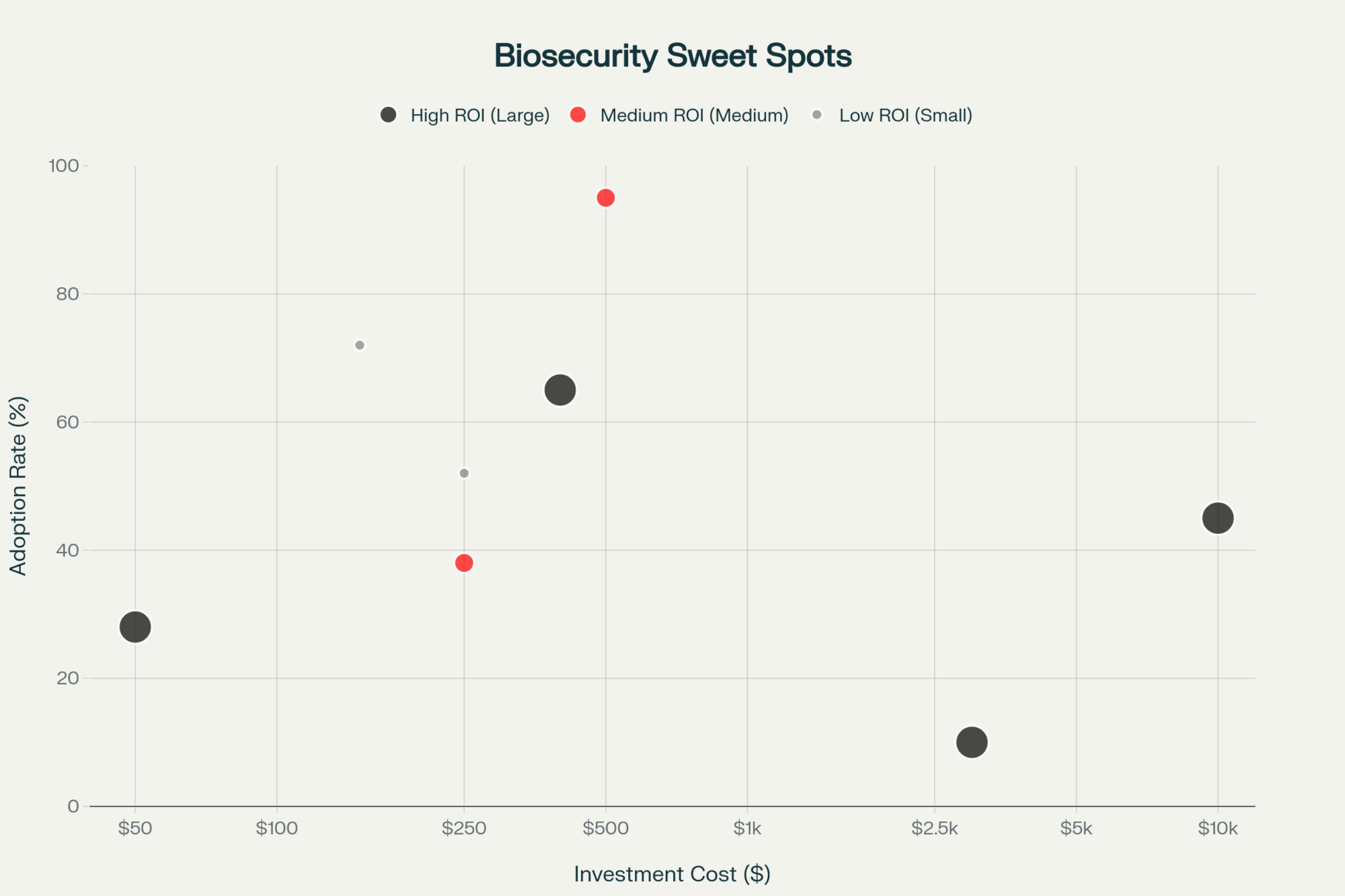
| Biosecurity Practice | Adoption Rate | Investment Cost | ROI Impact | Implementation Barrier |
|---|---|---|---|---|
| Traffic Management & Boot Covers | 65% | < $500 | 3-5x quality premiums | Consistency required |
| Quarantine New Animals | 10% | Variable | Prevents disease outbreaks | Labor & facility constraints |
| Cleaning Stalls & Equipment | 95% | $200-800 | Maintains milk quality | Already standard practice |
| Health Monitoring Systems | 45% | $5,000-15,000 | 2-4x heat detection improvement | High upfront cost |
| Neighbor Coordination | 28% | $0 | 30-40% better pest control | Coordination challenges |
| Water Management (Insect Control) | 38% | < $300 | Reduces vet calls | Identification of problem areas |
| Documentation & Records | 52% | $100-400 | Insurance discounts available | Administrative burden |
| Visitor Logs & Protocols | 72% | < $200 | Processor premium eligibility | Guest compliance |
Learning from Global Approaches
International perspectives offer interesting contrasts to our North American approaches. Australian producers, as I understand their system from recent agricultural trade publications, invest directly in disease prevention through producer levies. They calculate that maintaining disease-free status preserves export market access worth considerably more than prevention costs.
European dairy operations have adapted to various disease management requirements over recent decades. I’ve talked with several European producers at industry events, and what strikes me is how practices that initially seemed burdensome often become routine—and sometimes improve overall herd health. One producer put it simply: “The first year felt overwhelming. By year three, it was just Tuesday.”
Now, I’m not suggesting we adopt these exact approaches. Our markets are different, our geography is different. But understanding different models helps us evaluate our own preparedness. What biosecurity practice have you tried that initially seemed like a hassle but now feels essential?
The Reality of Industry Consolidation
Examining the USDA agricultural census data, we observe continued consolidation in the dairy industry, with fewer farms and larger average herd sizes each time the data is collected. That structural change affects how different operations approach biosecurity—and everything else, for that matter.
Yet I’ve seen remarkable innovation from smaller farms. This past summer, I visited organic producers in Vermont who formed an informal cooperative for health monitoring. They share diagnostic testing costs, coordinate fly control, and maintain a group text for health observations. Smart collaboration that doesn’t require huge individual investment.
Out West, California and Idaho producers face entirely different challenges. Desert dairies are using positive-pressure ventilation for both cooling and insect exclusion. Different environment, different solutions. What’s interesting here is how regional needs drive innovation—there’s no one-size-fits-all approach.
Practical Steps That Make Sense Today
So what actually works without breaking the bank? Based on extension recommendations and veterinary consultations, several approaches have consistently proven valuable.
Managing farm traffic patterns costs little but shifts the mindset significantly. Think about it: How many vehicles enter your farm weekly? What would happen if each driver used boot covers? The investment is minimal—mostly in awareness and consistency. University extension programs across the country emphasize this as a first step that costs almost nothing but creates important barriers.
Water management reduces insect breeding sites. Many farms discover overlooked spots—tire tracks in the heifer lot, that low spot by the silage pad. I know producers who’ve eliminated numerous mosquito breeding sites for less than the cost of a single vet call. And honestly? The cows are more comfortable with fewer flies anyway.
Neighbor cooperation multiplies effectiveness. When farms coordinate fly control programs—everyone treating simultaneously using complementary approaches—they report better control with no increase in individual costs. Have you discussed coordinating any biosecurity practices with your neighbors? Sometimes the best solutions come from over the fence line.
Technology’s Evolving Role
Current activity monitoring systems can identify health issues days before clinical signs appear. The same system, which improves heat detection—many farms report significant improvements in conception rates—also detects metabolic issues in transition cows. That’s the kind of multiple benefit that makes the investment pencil out.
Technology costs have decreased over recent years while reliability has improved. With current milk prices and replacement heifer costs, the return calculations often work, especially when you consider multiple benefits beyond just disease detection.
I’ve talked with producers who say their monitoring system paid for itself through better heat detection alone. Health monitoring has become a bonus that’s now essential to their operation. What technology investment surprised you with unexpected biosecurity benefits?
Regional Variations Matter
Northern operations face winter housing density challenges. When you’re packing cows into barns for four or five months, ventilation becomes critical. University research consistently shows that improving ventilation for cow comfort can also significantly reduce the transmission of respiratory disease. It’s one of those win-win situations—happier cows, healthier cows.

Southern and Western operations manage year-round insect pressure and heat stress. Colorado operations at higher elevations report shorter fly seasons than lower elevation neighbors—geography matters more than we sometimes realize. A producer near Denver told me that his fly season is three weeks shorter than that of his cousin’s operation, which is 2,000 feet lower. Same state, different reality.
Each region requires adapted strategies. What’s the biggest biosecurity challenge specific to your area? The answers I hear vary wildly depending on where I’m visiting.
Building Resilience Through Layers
True resilience stems from multiple reasonable practices rather than a single solution. This mirrors what we learned with milk quality—it wasn’t one big change but twenty small ones that got us where we are today.
Successful operations typically focus on several key areas. Health monitoring that matches their labor availability—not everyone needs computerized systems, but everyone needs consistent observation. Information sharing with neighbors—because disease doesn’t respect property lines. Preventive veterinary relationships—monthly herd checks focused on maintaining health rather than just treating problems. Regular facility reviews—amazing what you notice when you really look. And contingency planning—knowing what you’d do if something showed up down the road.
Some insurance companies now offer premium adjustments for documented biosecurity practices. Worth asking your agent about—might offset some of the investment costs.
The Community Component
In central Pennsylvania, dairy producers formed a health watch network several years ago. Simple group texts share observations. When multiple farms notice similar issues, early veterinary coordination can prevent wider spread. It’s not about creating alarm—it’s about maintaining awareness and helping each other out.
Recent biosecurity workshops have attracted strong producer attendance, focusing on economically viable practices rather than textbook recommendations that don’t align with real-world farms. The best part of these meetings? The parking lot conversations afterward, where producers share what’s actually working.
The National Dairy FARM Program’s biosecurity module provides a valuable evaluation framework for those seeking structure. But honestly, some of the best biosecurity improvements I’ve seen came from producers just talking with each other. Have you discussed biosecurity coordination with neighboring farms?
Making It Work for Your Farm
No universal program fits every operation. A 50-cow grass-based dairy in Vermont differs from a 5,000-cow operation in New Mexico. But principles adapt to any situation.
Start with the basics, providing immediate value. Many processors report that farms with documented biosecurity practices show improved milk quality metrics—that’s real quality premium potential. One co-op representative mentioned they’re seeing average somatic cell counts running lower on farms with basic biosecurity protocols in place.
For larger investments, consider multiple benefits. Will improved ventilation reduce not just disease risk but also heat stress? Almost certainly. Will technology investments improve reproduction management? Often significantly. Will facility modifications enhance worker safety? Usually, it is a nice side benefit. These multiple returns often justify investments that might not make sense for biosecurity alone.
Looking Forward Thoughtfully
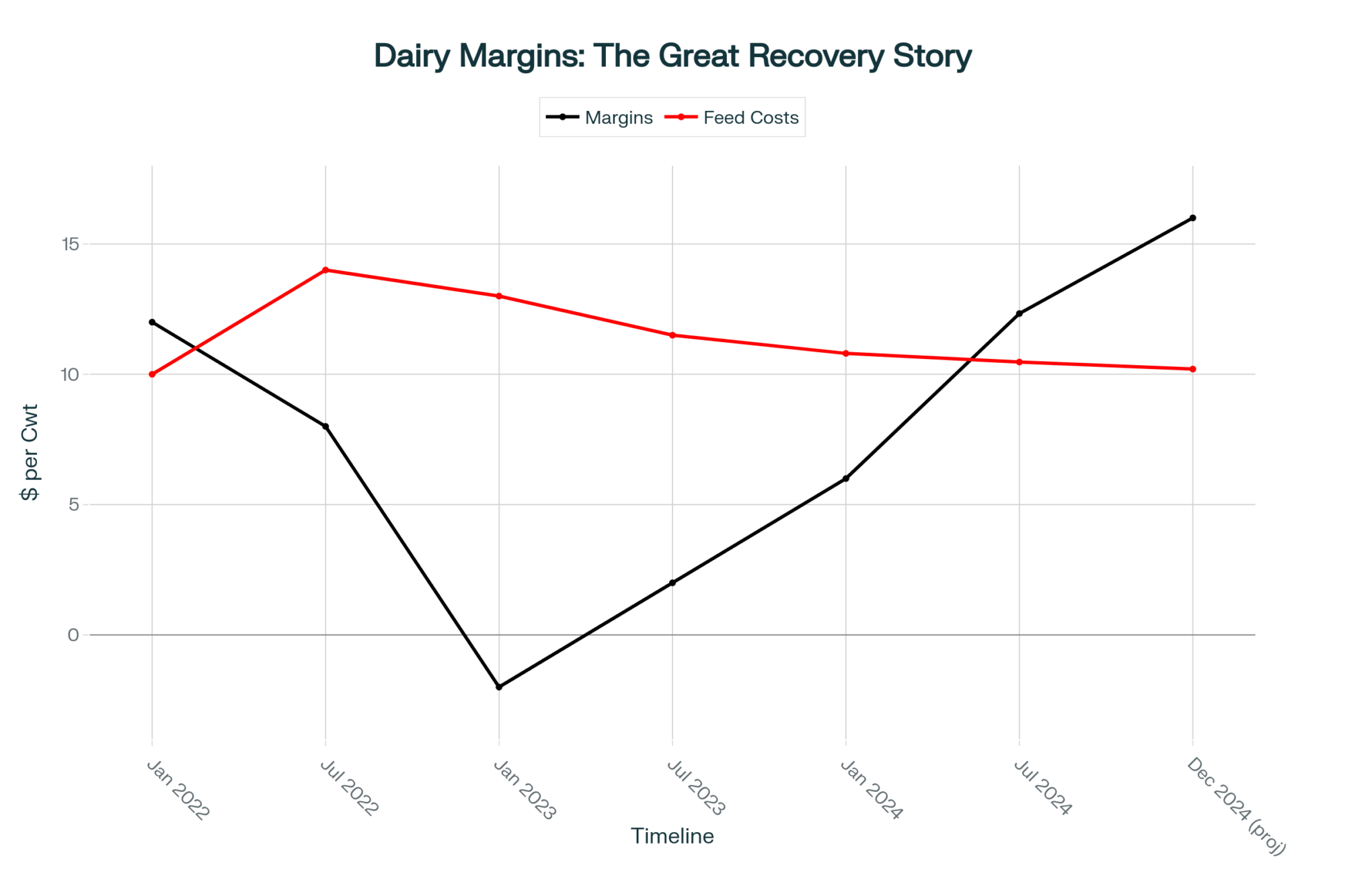
Market signals increasingly favor documented health management. Major cooperatives are developing premium programs for enhanced biosecurity documentation. Export certificates require increasingly detailed health attestations. These aren’t distant possibilities—they’re current trends affecting contracts being written today.
Building resilience now—gradually and thoughtfully—will better position us regardless of future requirements. And let’s be honest, with costs continuing to rise and margins shrinking, anything that protects herd health also protects the bottom line.
Starting the Conversation
Biosecurity is about protecting what we’ve built. Every operation finds its own balance based on thoughtful analysis rather than external pressure.
The next time biosecurity comes up at your co-op meeting, ask your neighbors: What’s one biosecurity change you’ve made that actually stuck? What surprised you about the results? These conversations often reveal practical solutions you hadn’t considered.
Share experiences. Learn from other regions. Work with your veterinarian and advisors. Ultimately, make decisions that fit your farm, your situation, and your goals.
We’re all in this together, producing high-quality milk while caring for our animals and the land. Biosecurity is one more tool helping us do that better. In today’s economic environment, every tool that enhances productivity matters.
So here’s my question to you: What biosecurity practice seemed unnecessary until you tried it—and now you wouldn’t farm without it? That conversation might be the most valuable one you have this week.
Drop me a line or catch me at the next meeting. I’d genuinely like to know what’s working on your farm. Because at the end of the day, the best ideas in dairy have always come from farmers talking with farmers, sharing what works, and adapting it to fit their own operations.
KEY TAKEAWAYS:
- Start with traffic management that costs under $500: Extension programs report farms using designated parking, boot covers, and visitor logs see comparable health improvements to those investing thousands—plus many processors now reward documented biosecurity with quality premiums averaging higher per hundredweight
- Coordinate with neighbors for multiplied effectiveness: Producers sharing fly control timing, health observations via group texts, and diagnostic testing costs report 30-40% better pest control without increased individual expense—disease doesn’t respect property lines, so neither should prevention efforts
- Focus on water management and facility walk-throughs: Eliminating mosquito breeding sites costs less than a single vet call but reduces vector populations significantly, while annual facility reviews consistently identify simple improvements that pay immediate dividends in cow comfort and reduced disease transmission
- Layer multiple small practices rather than seeking silver bullets: Successful operations combine consistent observation protocols, preventive vet relationships, and gradual improvements—what university research calls the “somatic cell count approach” that transformed milk quality through accumulated marginal gains
- Document your practices for emerging market advantages: Major cooperatives are developing premium programs for biosecurity documentation, insurance companies offer rate adjustments, and export certificates increasingly require health attestations—the paperwork you start today becomes tomorrow’s competitive advantage
Complete references and supporting documentation are available upon request by contacting the editorial team at editor@thebullvine.com.
Learn More:
- The Biosecurity Myth: Journal of Dairy Science Reveals Why Enhanced Protocols Failed Against H5N1 – This article provides a critical, science-backed look at how traditional biosecurity failed against new threats like H5N1. It offers actionable, non-negotiable protocols for modern milking parlors and detailed strategies for environmental control, helping you implement next-level disease prevention.
- How One Island Lost £5.44 Million Preventing Nothing—And Why Your Operation Should Care – This strategic analysis reveals the hidden economic risks of well-intentioned but poorly planned biosecurity measures. It provides a cautionary case study and prompts you to evaluate whether your prevention costs align with your actual risks, helping you make smarter, more profitable decisions.
- Maximize Herd Health and Profitability: A New Approach to Utilizing Dairy Herd Management Tools – Demonstrating how to get more from your technology investments, this article introduces the “Health Index,” a powerful metric that identifies high-risk animals before issues escalate. It provides strategies for using existing data to improve herd health and ensure every investment has a measurable return.
 The Sunday Read Dairy Professionals Don’t Skip.
 The Sunday Read Dairy Professionals Don’t Skip.
Every week, thousands of producers, breeders, and industry insiders open Bullvine Weekly for genetics insights, market shifts, and profit strategies they won’t find anywhere else. One email. Five minutes. Smarter decisions all week.




