USDA reports U.S. milk production up 3.5% in July 2025—a surge not seen in years. Are you milking all you can
EXECUTIVE SUMMARY: Colleagues, here’s what we’re seeing: The U.S. dairy industry is undergoing a seismic shift driven by unprecedented productivity gains and structural market changes that are rewriting the rules of profitable farming. Recent USDA data shows milk production jumped 3.5% in July 2025, with per-cow yields climbing 36 pounds to 2,081 pounds—that’s nearly 2% year-over-year growth from fewer, more efficient operations. Meanwhile, the 2022 Census reveals almost 40% of smaller dairy farms have exited since 2017, consolidating production into larger herds that now account for 67% of national milk volume. This isn’t just about scale anymore—it’s about technology adoption as the key differentiator between survival and profitability. Wisconsin trials we’ve analyzed show farms integrating digital monitoring and genomic tools achieve milk yield improvements of 8-15% within 18 months. Globally, we’re seeing similar patterns, with European production up 1.2% this summer despite environmental pressures. Looking ahead, this means operations that swiftly adopt data-driven practices and systematic technology won’t just survive market volatility—they’ll dominate it. The conversation about dairy’s future isn’t theoretical anymore… it’s happening in barns across the country right now, and the results speak for themselves.
KEY TAKEAWAYS
Digital Monitoring Delivers Immediate ROI: Adopting integrated health and feeding monitors can boost milk yield by up to 15% within 18 months—we’re talking real production gains plus improved animal welfare that pays for itself (Wisconsin research trials).
Genomic Selection Acceleration: Targeted breeding programs now deliver nearly 2% annual productivity gains per cow, essentially doubling traditional genetic progress rates—meaning your breeding decisions today impact profitability for years (Recent genetic advancement studies).
Scale Strategy Shift: With larger herds producing 67% of U.S. milk, strategic technology choices now determine market power more than herd size alone—efficiency trumps scale when margins tighten (USDA Census analysis).
Infrastructure Investment Priority: Nearly 40% of smaller farms face broadband limitations that lock them out of modern management systems—upgrading connectivity isn’t optional anymore, it’s survival (University Extension connectivity surveys).
Financial Planning Imperative: Complete automation packages typically require $500,000-$800,000 over 18 months, making debt restructuring and strategic financing crucial before technology adoption—plan the money before you plan the machines (Industry modernization cost analysis).
Lately on farms across Wisconsin and the Midwest, you can hear something stirring—prices are low, milk’s flooding the market, and conversations in the feed aisles have taken a serious tone. This isn’t your typical down cycle. Something structural is changing.
Production is Growing, Despite Shrinking Farm Numbers
USDA’s report from July 2025 tells the real story: 24 major dairy states produced 18.8 billion pounds of milk, a 3.5% increase from last year. What really jumps out is per-cow production, rising 36 pounds to 2,081 pounds in July 2025. Combine that with an extra 154,000 cows, now at 9.04 million head, and we’re swimming in milk.
However, the number of farms continues to decline. The USDA Census shows a drop to 24,082 dairy farms in 2022—down nearly 40% since 2017. Larger operations now produce roughly 67% of U.S. milk.
Prices Are Falling Hard
Butter prices plunged to $1.86 per pound, the lowest since 2021, with cheddar hovering around $1.68. October Class III milk futures settled at .31, with no signs of a bounce back soon.
This isn’t a seasonal blip; it’s a market overhaul fueled by new technology and herd management.
Technology’s Growing Role
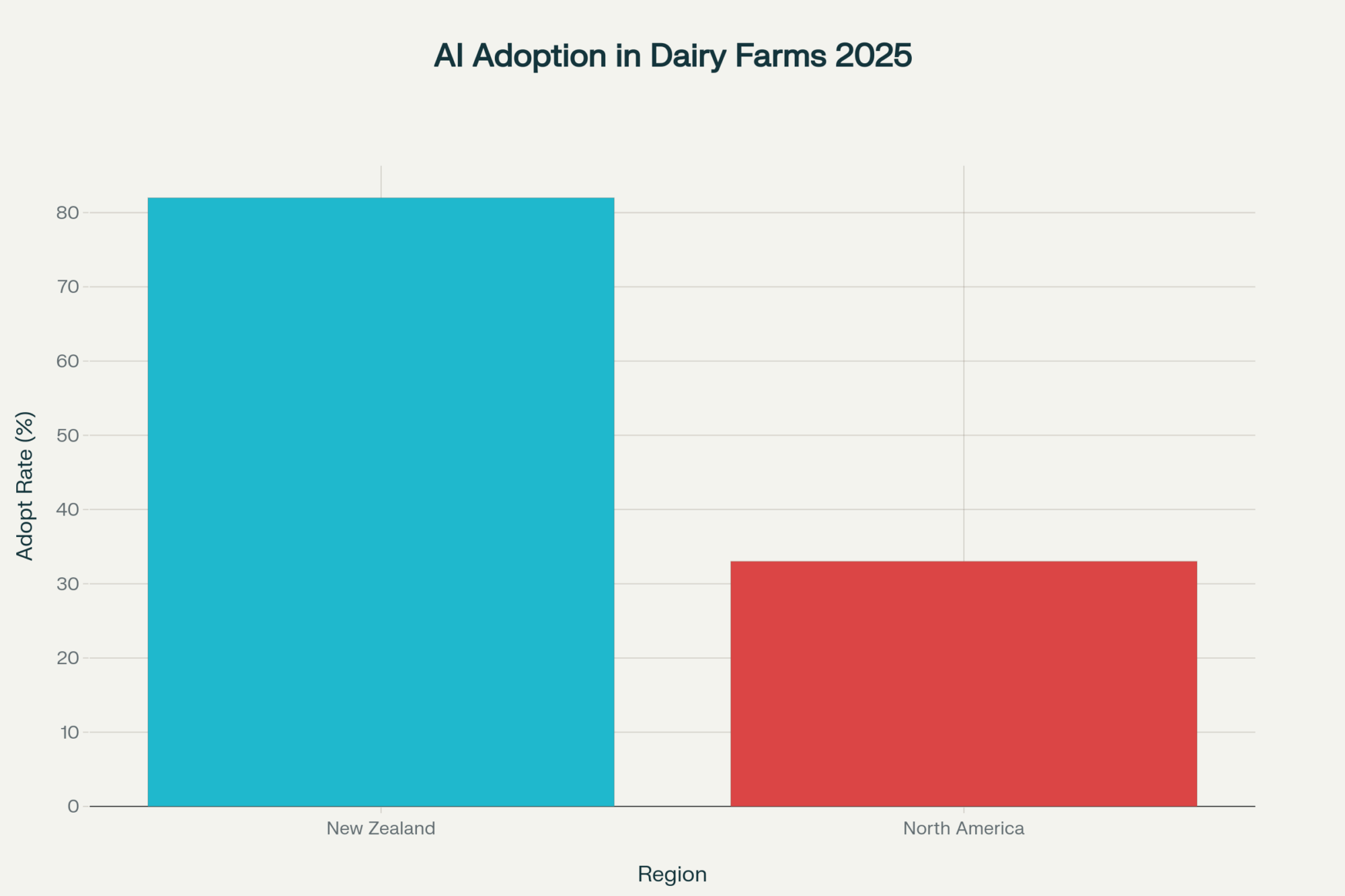
In a 2025 Minnesota Extension survey, around two-thirds of dairy farms use automated calf feeders, but robotic milking is found on only 23% of smaller herds under 500 cows. Wisconsin studies document 8-15% milk production increases within the first 18 months of integrated technology adoption.
Genetics keep pushing progress too: genomic selection has nearly doubled annual productivity gains, now near 2% per year.
The Growing Divide
The efficiency gap widens as better-equipped farms turn profits at prices leaving others behind. Those who aren’t monitoring feed, health, and reproduction data closely risk falling out of the race.
Consolidation’s Impact
USDA’s 2022 Census notes that despite losing over 15,000 dairy operations since 2017, total milk output rose 5% during the same period. Larger operations have taken in assets from exited farms, raising overall production efficiency.
While some Midwest dairies have strong broadband and support systems, almost 40% of smaller farms struggle with internet access, limiting technology adoption. Grazing systems in Western states add complexity due to different management styles and tech compatibility issues.
The Cost of Keeping Up
Modernization typically costs $500,000 to $800,000 over about 18 months, including:
$80-$120 per cow for sensor collars
$150,000-$300,000 for automated feeding systems
$250,000-$500,000 per robotic milking system
$25,000-$75,000 annually for data integration and software
Reorganizing debt obligations comes before investing in tech upgrades for many farms.
Next Steps for Your Operation
If you milk fewer than 400 cows, it’s time to either ramp up efficiency fast or reconsider your options.
For operations milking 400-800 cows, move stepwise: start with health monitoring tech, then feeding systems, and finally milking automation.
Above 800 cows? Use your scale to invest strategically and consider acquiring distressed neighbors.
Beware the Lure of Price Spikes
Experience shows price jumps to $22+ lull many producers into postponing critical investments—only to get hit harder when prices fall again.
Those who invest steadily through the cycles are the ones who survive and thrive.
The Future: Three Clear Paths
Ultra-efficient commodity producers thrive at $15-$17 milk
Premium producers add value to command $20-$25
Niche artisanal farms charge $30+
If you don’t fit clearly in one, it’s a very tough road ahead.
The Bottom Line
The days of the traditional dairy model are over. This industry demands you bring tech and data into every decision.
Are you ready to be a tech-driven dairy business? Or will you be left behind in the changing herd?
All data reflects USDA Monthly Milk Reports, 2022 USDA Census, CME Market Data, Minnesota Extension Surveys, Wisconsin Research Trials, and European Production Data from CLAL.it.
Complete references and supporting documentation are available upon request by contacting the editorial team at editor@thebullvine.com.
Learn More:
5 Technologies That Will Make or Break Your Dairy Farm in 2025 – Reveals practical implementation strategies for smart calf sensors, robotic milkers, and AI analytics that slash mortality 40% and boost yields 20%, with specific ROI timelines and cost breakdowns.
Every week, thousands of producers, breeders, and industry insiders open Bullvine Weekly for genetics insights, market shifts, and profit strategies they won’t find anywhere else. One email. Five minutes. Smarter decisions all week.
Meet the dairy game-changers leading innovation, sustainability, and policy reform in today’s evolving industry.
You know that moment walking through World Dairy Expo when you bump into someone whose operation just seems to work differently? That happened to me three times this year, and honestly, it’s got me thinking about where this industry’s headed.
When you look at this year’s World Dairy Expo award winners—the McCarty family, Juan Moreno, and Jim Mulhern—you’re not just seeing three success stories. You’re seeing a roadmap for what dairy looks like when things get done right.
The McCarty Method: The Systems Approach to Scalable Success
The McCarty Family: Generations of dairy farming excellence stands proudly in one of their innovative free-stall barns. From left to right, brothers Mike, Clay, Tom (father), Dave, and Ken McCarty have transformed a 15-cow Pennsylvania dairy into a sustainability-focused operation spanning multiple states, earning them World Dairy Expo’s prestigious 2025 Dairy Producer of the Year award.
Here’s what strikes me about the McCartys—they took everything conventional wisdom says about family dairy operations and turned it sideways. Most family farms struggle to make it past the second generation, right? These guys are bringing in their fifth while milking 20,000 cows across multiple states. (Read more: The McCarty Magic: How a Family Farm Became the Dairy Industry’s Brightest Star)
But the numbers that really caught my attention weren’t the cow counts. It was their employee retention rates.
Think about it—when’s the last time you heard of dairy employees sticking around for 10, 15, even 25 years? In an industry where turnover can kill you faster than a market crash, the McCartys have cracked something fundamental. Their “DIRT” principles—Dedication, Integrity, Respect, Teamwork—sound like corporate speak until you realize that most of their processing plant team has been there since the facility opened in 2012.
According to research from the University of Wisconsin Extension on dairy workforce management, operations with stable workforces exhibit 18-23% better productivity metrics than those that constantly train new personnel. The McCartys aren’t just keeping people; they’re proving that investing in human capital pays measurable dividends.
Their on-farm processing plant is where things get really interesting. When Ken McCarty told me they’re processing 2.2 million pounds daily and claim they’ve cut transportation needs by 75%, my first thought was skepticism. However, I then looked at USDA Agricultural Marketing Service data, which shows that transportation typically accounts for 8-12% of total milk marketing costs…
The math starts making sense when you realize they’re not just moving milk—they’re condensing it before shipping to Danone. Less water weight, fewer trucks, tighter quality control. Additionally, they receive component results within hours instead of days. Try making ration adjustments with that kind of real-time feedback.
However, here’s the reality check: building a processing plant requires a massive capital investment—we’re talking $5-15 million upfront, with payback periods of 7-10 years. For most operations, this model isn’t feasible. What is scalable are their approaches to data standardization and employee management. You don’t need a processing plant to implement consistent protocols across multiple sites or invest in your people.
What really gets me excited, though, is their sustainability story. Their sand reclamation system, developed in collaboration with Kansas State University, captures 97% of the bedding material for reuse. Cover crops on 95% of their Ohio acres—way above the 15-20% typical Midwest adoption rates according to USDA Conservation Effects Assessment Project data. Water recycling is achieved through their condensing system, which is used first for cleaning and then for irrigation.
Juan Moreno: The Genetics Pioneer Who Listens to Farmers
Juan Moreno, CEO of STgenetics, stands at the forefront of his company’s facilities where revolutionary genetic technologies are developed. Under his visionary leadership, Moreno has transformed the dairy breeding industry through innovations in sexed semen technology and genomic testing that have fundamentally changed how farmers approach herd genetics worldwide.
I’ve watched a lot of biotech companies come and go in this industry, but Juan Moreno’s different. Perhaps it’s because he began working on a Colombian cattle operation and understands what it’s like when breeding decisions go awry. (Read more: Bull in a China Shop: How Juan Moreno Turned the Dairy World Upside Down)
His sexed semen technology—now used in about 30% of worldwide sales according to industry tracking—isn’t just about predicting calf gender with 90%+ accuracy. It’s about fundamentally changing the economics of replacement heifer management.
Here’s the part that made me pull out my calculator: genomic testing costs around $30 to $ 50 per calf. Recent research in the Journal of Dairy Science research confirms 76% accuracy in predicting productive lifecycle outcomes. The economic analysis shows annual returns of $75-$ 150 per animal through the early identification and culling of individuals with poor genetic quality.
But Moreno breaks it down even simpler: “For the first 60 days, a calf costs about $5 per day. After that, roughly $2 daily for feed. So why wait two years and spend $1,400-1,500 to find out a heifer’s below average when you can spend $30 as a calf and know her genetic potential?”
The math works exceptionally well for operations managing 500+ breeding females, where genomic testing typically shows positive returns within 18-24 months according to Cornell Cooperative Extension economic analysis.
The catch? Smaller operations might not see immediate ROI, and the technology works best when paired with sophisticated management systems. For farms with fewer than 200 cows, the benefits may not outweigh the costs without first making significant improvements in other management areas.
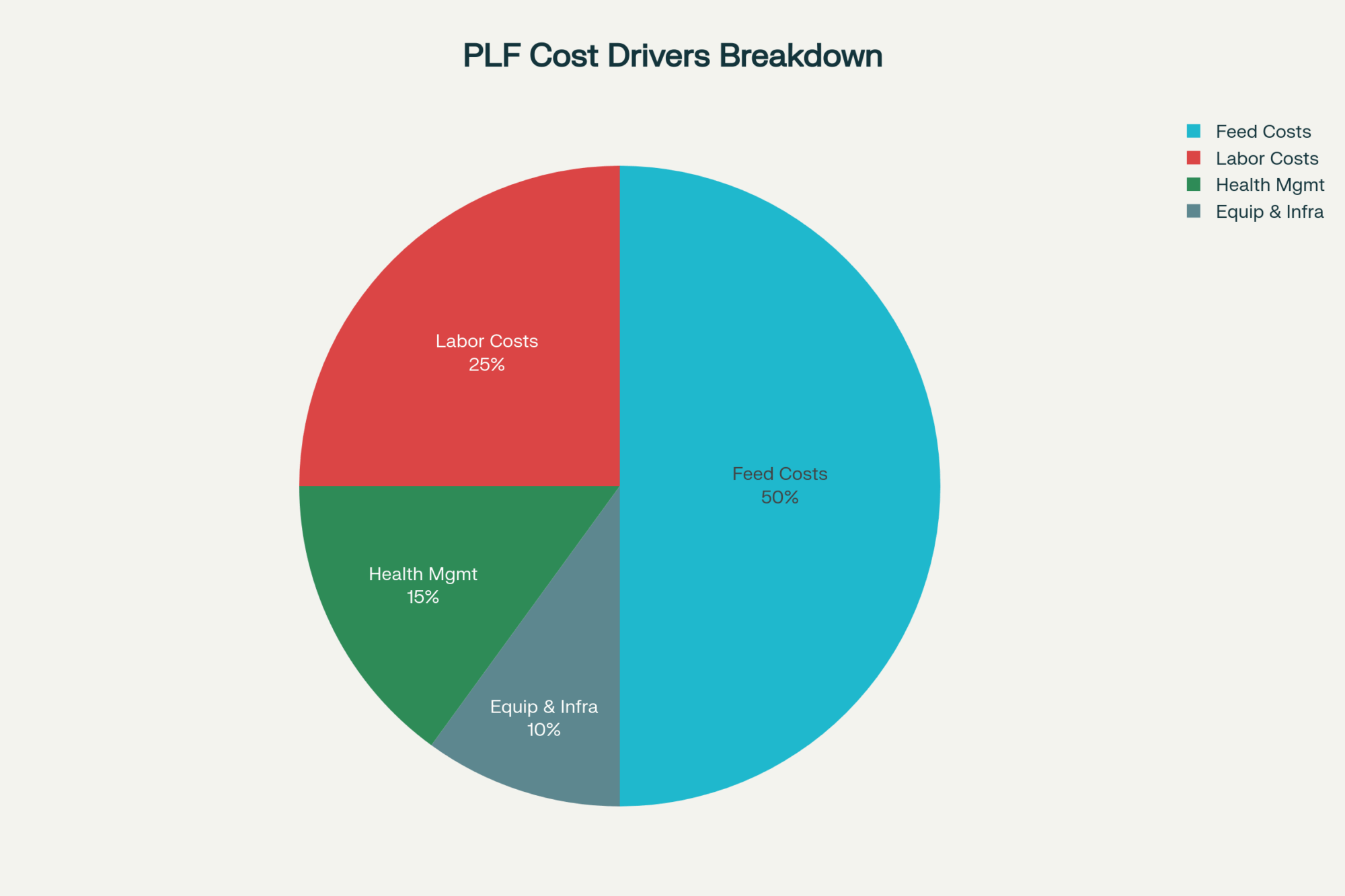
His EcoFeed innovation, which won the 2024 International Dairy Federation’s Innovation in Climate Action award, targets feed efficiency improvements of 8-10%. Given that feed represents 55% of most operations’ total costs, even modest improvements translate to significant savings.
What really impressed me about Moreno’s approach is his emphasis on regional adaptation. He’s brutally honest about limitations: “I don’t believe in the concept of a super cow. Farmers have different priorities depending on location and markets.”
Jim Mulhern: The Policy Architect Who Built the Dairy Safety Net
Jim Mulhern speaks on Capitol Hill: Leading with calm resolve and a producer’s perspective during his transformational tenure at NMPF.
You may not know Jim Mulhern’s name, but you’ve likely felt the impact of his work. Forty-five years in dairy policy, most recently as CEO of the National Milk Producers Federation, and his fingerprints are all over the programs that kept operations running during the worst market downturns. (Read more: More Than Policy: For Jim Mulhern, Legacy is Measured One More Season at a Time)
The Dairy Margin Coverage program alone has distributed over $2 billion since its inception. During COVID-related market crashes, DMC payments provided critical cash flow for thousands of operations when milk prices collapsed and feed costs stayed high.
USDA Farm Service Agency data shows DMC enrollment grew from 18,000 operations in 2019 to over 23,000 in 2024, covering approximately 85% of U.S. milk production. Those aren’t just statistics—they represent real farms that stayed in business instead of going to auction.
But Mulhern’s impact goes beyond safety net programs. The Federal Milk Marketing Order reforms he shepherded reduced milk price volatility by 8-12% in most markets, according to USDA Agricultural Marketing Service analysis. That means more predictable cash flow, easier financial planning, and reduced need for expensive hedging strategies.
The ongoing challenge? Not everyone’s happy with the FMMO reforms. Vermont producers continue to complain about Class I differentials, while Western operations question the fluid milk pricing mechanisms. The reform process wasn’t pretty—months of stakeholder negotiations, regional conflicts, and compromises that satisfied no one completely. As one co-op chair told me, “Predictable beats chaos in my mailbox every time,” but the debate continues.
Your Next Steps: Making These Lessons Work
Look, I know it’s easy to read about 20,000-cow operations, cutting-edge genetics, and Washington policy-making and think, “That’s interesting, but what about my 300-cow farm in Ohio?”
Here’s the thing—the principles scale down better than you might think.
Start with the McCarty approach to standardization: select one health protocol, one feeding schedule, and one breeding strategy, and implement them consistently across all your facilities. Track the same metrics the same way. Most importantly, invest in your people. According to the National Association of State Departments of Agriculture workforce studies, dairy operations offering competitive benefits and clear advancement paths show significantly lower turnover rates.
Consider Moreno’s genetics strategy: If you’re managing 200+ breeding females, the genomics economics usually work. But don’t chase every new technology—focus on traits that matter for your specific conditions. Heat tolerance in the Southeast, grazing efficiency in pasture-based systems, and component quality for premium markets.
Use Mulhern’s risk management tools:DMC premiums range from $0.05 to $ 0.20 per hundredweight, depending on the coverage. These aren’t just insurance costs—they’re investments in business stability. Operations using multiple risk management tools show 12-18% less income volatility over 10-year periods.
The Bottom Line
Environmental pressure will intensify. Labor markets will tighten further. Market consolidation will accelerate. Consumer preferences will continue shifting. Climate variability will require more sophisticated risk management.
The question isn’t whether change is coming—it’s whether you’ll help shape that change or simply react to it.
These three leaders chose to be proactive, and their recognition at World Dairy Expo reflects the value of that approach. The same opportunities exist for producers willing to think strategically about the future of their operations.
So pour yourself that cup of coffee, take a walk through your facility, and start thinking about what your next chapter looks like. The dairy industry’s future depends on the decisions being made right now in operations just like yours.
Key Takeaways:
McCartys show that scalable success comes from blending technology, sustainability, and people investment. Their employee retention and data standardization approaches work at any scale, even if processing plants don’t.
Moreno’s genomic advances revolutionize breeding and reduce environmental impact – Sex-sorted semen and genomic testing deliver measurable ROI for farms with 200+ cows while cutting feed costs and emissions.
Mulhern’s policy work stabilizes dairy through safety net programs amid volatility – DMC enrollment, covering 85% of U.S. production, proves that policy can provide real financial protection during downturns.
Start with standardized protocols, targeted genomics, and risk management tools – Pick one health protocol to standardize, consider genomic testing if you manage 200+ breeding females, and use DMC/LRP programs as business stability investments.
Future success depends on combining strong roots with an openness to innovation. Environmental pressures, labor challenges, and market shifts require operations that blend traditional values with strategic technology adoption.
Executive Summary:
Examine the groundbreaking contributions of three dairy industry leaders recognized at the 2025 World Dairy Expo: the McCarty family (Producer of the Year), Juan Moreno (International Person of the Year), and Jim Mulhern (policy legacy recognition). The McCartys demonstrate how blending innovative technology, sustainable practices, and deep investment in employee retention can create scalable success, transforming from a 15-cow Pennsylvania operation to a 20,000-cow multi-state enterprise with remarkable employee retention rates and environmental achievements. Juan Moreno’s advancements in genomic testing and sexed semen technology have revolutionized breeding strategies, delivering measurable economic returns (-150 per animal annually) while reducing environmental impact through improved feed efficiency. Jim Mulhern’s extensive policy work has strengthened vital dairy safety net programs, such as DMC, which now covers 85% of U.S. milk production and has distributed over $2 billion during market downturns, while also stabilizing milk price volatility through Federal Milk Marketing Order reforms. The article offers practical guidance for dairy producers, emphasizing the importance of data standardization, strategic adoption of genomic technology for operations with 200 or more breeding females, and leveraging available risk management tools, such as DMC and LRP programs. These leaders exemplify how combining traditional farming values with strategic innovation can provide a roadmap for sustainable and resilient dairy farming amid intensifying environmental, labor, and market challenges. Their success stories offer both inspiration and actionable strategies for dairy operations seeking to thrive in an evolving industry landscape.
Learn More:
How to Attract and Retain Exceptional Labor for Your Dairy Farm – This article provides a tactical, step-by-step guide on the practical strategies mentioned in the main article. It reveals specific methods for implementing a culture of retention through improved benefits, consistent training, and team communication, offering a clear roadmap for addressing labor challenges head-on.
Global Dairy Market in 2025: Production Shifts, Demand Fluctuations, and Trade Dynamics – This piece offers a macro-level, strategic view of the global trends influencing the industry. It connects the policies discussed by Jim Mulhern to a broader economic context, helping producers understand how their operations fit into and are affected by global supply and demand shifts in 2025.
Genomics Meets Artificial Intelligence: Transforming Dairy Cattle Breeding Strategies – Expanding on the genetics innovation of Juan Moreno, this article provides a forward-looking perspective on how AI and advanced genomics are poised to revolutionize herd management. It demonstrates how these emerging technologies will enable producers to make smarter, more precise breeding decisions for future profitability.
The Sunday Read Dairy Professionals Don’t Skip.
Every week, thousands of producers, breeders, and industry insiders open Bullvine Weekly for genetics insights, market shifts, and profit strategies they won’t find anywhere else. One email. Five minutes. Smarter decisions all week.
Raw milk sales jumped 25% last year, while plant-based milk sales crashed 5%. Here’s what that means for your milk check.
EXECUTIVE SUMMARY: Here’s the deal—that whole plant-based milk revolution everyone was talking about? It’s over. Plant-based sales dropped 5% in 2024 while real dairy volume grew 3%, and smart producers are already locking in premium contracts worth 15-20 cents more per gallon. For a 200-cow operation, we’re talking $58,000+ in extra annual revenue when feed costs are crushing margins at $4.35 corn and $320 hay. Raw milk sales surged 25% because consumers want authentic nutrition, not processed substitutes with unpronounceable ingredients. Major players like Mighty Drinks and Arla are pulling out of the plant-based market entirely, signaling a massive shift back to real dairy. The window’s open right now for producers who act fast on premium contracts, hybrid products, and sustainability programs that actually pay. Don’t wait—this opportunity won’t last forever.
KEY TAKEAWAYS
Premium contracts are paying 15-20 cents extra per gallon — that’s $58,000+ annually for a 200-cow herd when you need it most, with current feed costs
Use the University of Minnesota nutrition study as your secret weapon — only 12% of plant-based milks match real milk’s protein, calcium, and vitamin D levels (Journal of the Academy of Nutrition, 2025)
Jump into the hybrid milk market while it’s hot — blending dairy and plant proteins in a $10.2 billion market with 7.2% growth and FDA approval for “milk” labeling
Turn sustainability into cash with carbon credits — rotational grazing and methane reduction programs pay $15-45 per cow annually, plus operational savings (Cornell PRO-DAIRY data)
Lock long-term contracts now before competitors catch on — buyers are making 2025-2027 supplier decisions while plant-based suppliers scramble to survive
Look, I’ve been tracking this plant-based thing for years, and 2025 is the year reality finally caught up with the marketing hype. For producers who’ve been playing defense, this is your moment to go on offense.
The plant-based milk craze? It’s hit a wall. BIG time. Back in June 2025, Mighty Drinks—the UK pea and oat milk hopeful—folded under financial strain. A few months later, Arla Foods pulled their Jörd oat milk off UK shelves. When farmer-owned co-ops start backing out of the game, it’s not just a headline—it’s a major shift.
In the United States, sales of plant-based milk declined by 5% in 2024, reaching approximately $2.8 billion, according to the Good Food Institute. Dairy? We climbed back, with fluid milk sales up 1% and volume up 3%, according to the USDA.
But here’s what really gets producers talking: raw milk sales surged 25% last year. People want the real thing.
What California’s Central Valley Is Saying
Conversations with several Central Valley producers paint the same picture. One farm running 350-500 head near Turlock has just locked in a 20-cent premium.
“Buyers? They told me this time it’s about real nutrition. None of that watered-down nonsense,” one said. That 20 cents adds up—especially when corn is pushing $4.35 a bushel, and hay prices have climbed to $320 a ton.
When Big Money Pulls Out
Mighty Drinks tossed £8 million down the drain before going bust in 2025. Meanwhile, Arla scrapped their Jörd line in January to focus on what pays the farmer bills.
That means it’s not just a market stumble—it’s a reckoning for the plant-based push.
On the Ground: Regional Realities
California farmers discuss premiums of up to 15 cents per gallon. Up north in Wisconsin, Extension specialists report a 40% surge in clean-label certification requests, as consumers push for greater transparency.
And the Northeast? USDA data shows European buyers are circling back to U.S. dairy for the nutrition they can trust.
The University of Minnesota’s Numbers
Over 200 plant-based milks tested; only 12% matched cow’s milk for calcium, vitamin D, and protein.
Protein alone? Only 16% came close. Dr. Abigail Johnson says it bluntly: “These products don’t cut it nutritionally.”
Consumer Mood
Mintel reports 67% of consumers are turned off by the processing additives in plant-based stuff.
With inflation slicing budgets, 87% have changed their buying habits.
A friend managing food programs at Ohio schools says they’ve switched back to real milk because it ticks nutrition and budget boxes.
The Hybrid Solution
Blended dairy and plant protein milks are carving out a $10.2 billion market growing at 7.2% a year. FDA clearances enable these products to be labeled as milk if they meet specific standards set by the FDA.
That’s smart innovation—without losing the milk name.
Feed and Cost Realities
Feeding cows today? Corn futures hang at around $4.35; hay in the Central Valley jumped from $245 to $320 a ton; and Northeast producers are still picking at the wet weather’s mess, pushing hay prices north of $280.
Margins? They vary. However, the USDA and the University of Illinois estimate typical dairy margins at 7-15%, depending on management and scale.
Sustainability That Pays
Dairy producers report earning carbon credits for rotational grazing and methane reduction—payments vary by operation size.
Cornell’s PRO-DAIRY program estimates these can net $15 to $45 per cow, plus savings.
So Here’s What to Do
Week 1, grab that University of Minnesota nutrition study. Print it and bring it wherever you meet buyers.
Month 1, call your co-op about hybrid milk products and premium programs.
Quarter 1, focus on locking in long-term contracts—buyers are closing deals.
Final Thoughts
The plant-based wave faltered. Meaningful milk markets are snapping back.
Got your boots on? Time to get moving.
Complete references and supporting documentation are available upon request by contacting the editorial team at editor@thebullvine.com.
Learn More:
Unlocking the Secrets to High Milk Components – This article provides the tactical “how-to” for capturing the premiums discussed in the main piece. It reveals practical feeding and management strategies designed to boost butterfat and protein, giving you the tools to consistently hit quality targets and maximize your milk check.
Navigating the Twists and Turns of the 2024 Dairy Markets – While the main article focuses on the plant-based collapse, this piece offers a broader strategic view of the entire dairy economy. Understanding these global market dynamics, from interest rates to export demand, is crucial for making smarter long-term business decisions.
Genetics: The Key to Unlocking Your Herd’s Full Potential – This piece looks to the future, demonstrating how to build a more profitable herd from the ground up. It focuses on using genetic selection to improve efficiency, health, and milk components, future-proofing your operation against high input costs and market volatility.
The Sunday Read Dairy Professionals Don’t Skip.
Every week, thousands of producers, breeders, and industry insiders open Bullvine Weekly for genetics insights, market shifts, and profit strategies they won’t find anywhere else. One email. Five minutes. Smarter decisions all week.
What if the key to a family farm’s survival isn’t working harder, but working smarter?
The thing about dairying? It’s a relentless cycle, right? Long hours, early mornings, and weeks that just seem to run into one another. Now, picture sitting on your porch this Labor Day, coffee warm in your hands, kids playing nearby, and the sound of robotic milkers humming instead of you hustling through another 4 a.m. barn routine.
Sounds almost too good to be true? That’s exactly what Tom, a no-nonsense operator milking 180 Holsteins from Wisconsin, thought—until his DeLaval robots proved otherwise.
“Back when I was doing the milking myself, calving seasons meant 75-hour weeks,” Tom shared. “Now? I’m at my daughter’s softball games without worrying about missing a beat. Those robots? They did the heavy lifting.”
He’s not the outlier, either. Farms across the heartland and beyond are waking up to just how much smarter labor and technology can rewrite the dairy grind.
Why So Many Family Farms Are Burning Out
Here’s the thing: the USDA Farm Labor Survey from April 2025 shows dairy operators clocking 45–60 hours weekly—sometimes more as calving hits full throttle. That kind of Grind wears folks thin.
But this paints with a broad brush. If you’re up in the Northeast, farms benefit from processors like Cabot Creamery and Agri-Mark, with extension programs run by Cornell delivering succession help that keeps farms in the family longer. Midwest operations, though? They’re facing staggering consolidation pressures.
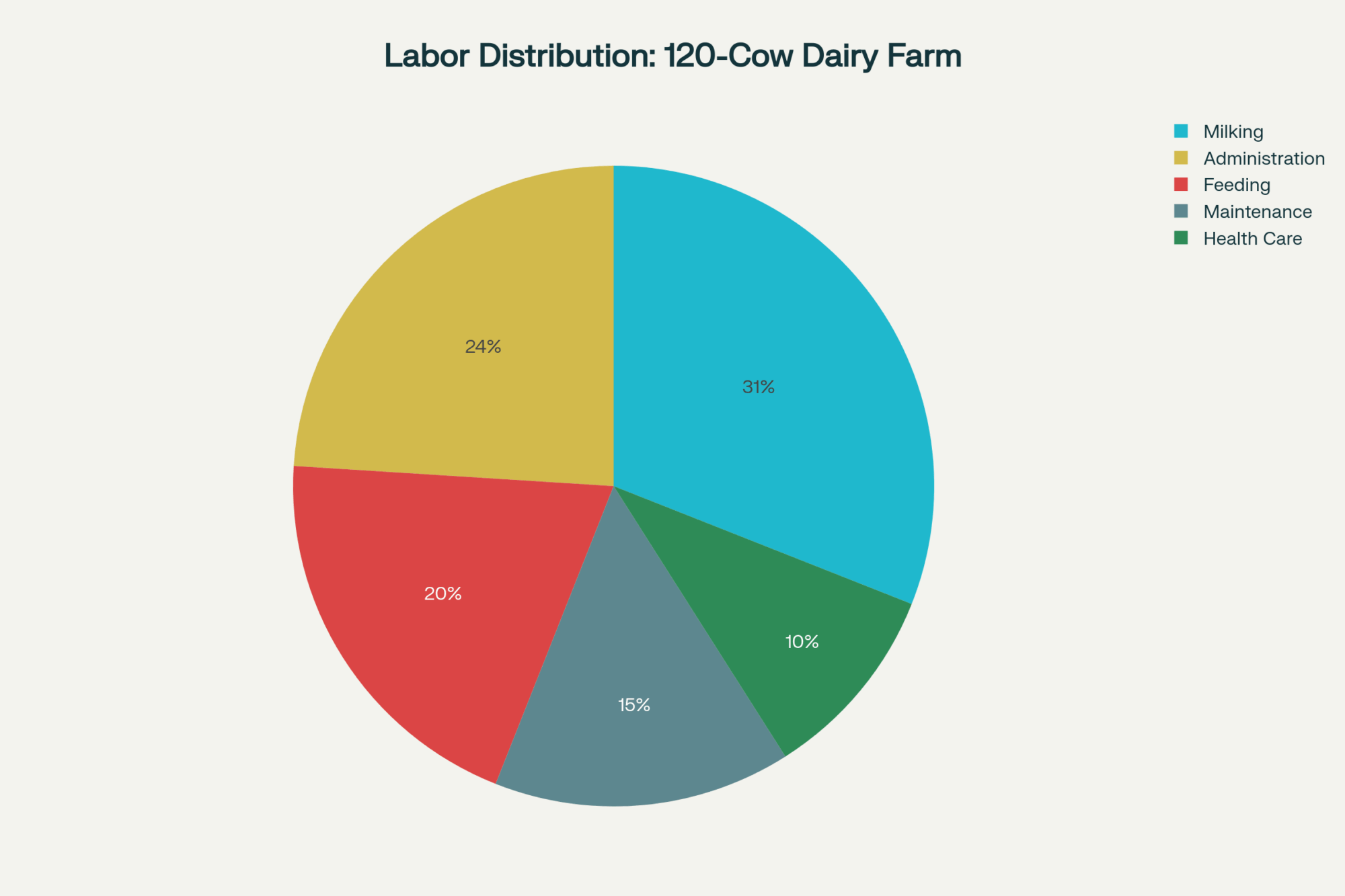
What’s Eating Your Time at the Barn
Labor Distribution on a Typical 120-Cow Dairy Farm
Milking takes up about a third of your day, no matter how you slice it. That’s four to five hours, easy. Smaller herds—say 50 to 90 cows—are spending well over 26 hours per cow annually, according to University of Wisconsin Extension labor studies. What’s interesting is that those same cows in herds of over 200 take only half that time, thanks to economies of scale. And let’s not forget that we manage approximately 9.45 million dairy cows in the U.S., which is no small feat.
The Labor Crunch is Very Real
Labor woes are no surprise, but the numbers still make you stop and stare. According to the latest USDA Farm Labor report, we’ve lost 3.4% of farmworkers this past year, with dairy farms feeling it more than others.
Hourly wages are averaging $17.55—which is fair, but you can’t put a dollar figure on those early mornings and backbreaking shifts.
Recruiting and training a new hand? Expect to spend over $4,400, including those hours and headaches.
And then there’s the mental health toll. A peer-reviewed study reveals that dairy workers experience sleep disorders twice as frequently as the general workforce, primarily due to the unforgiving pre-dawn milking schedules.
Jake, a fifth-generation farmer from Wisconsin, puts it like this: “Sometimes, it feels like the farm owns me. At home? My family barely sees me.”
Automation: The Game Changer You Didn’t See Coming
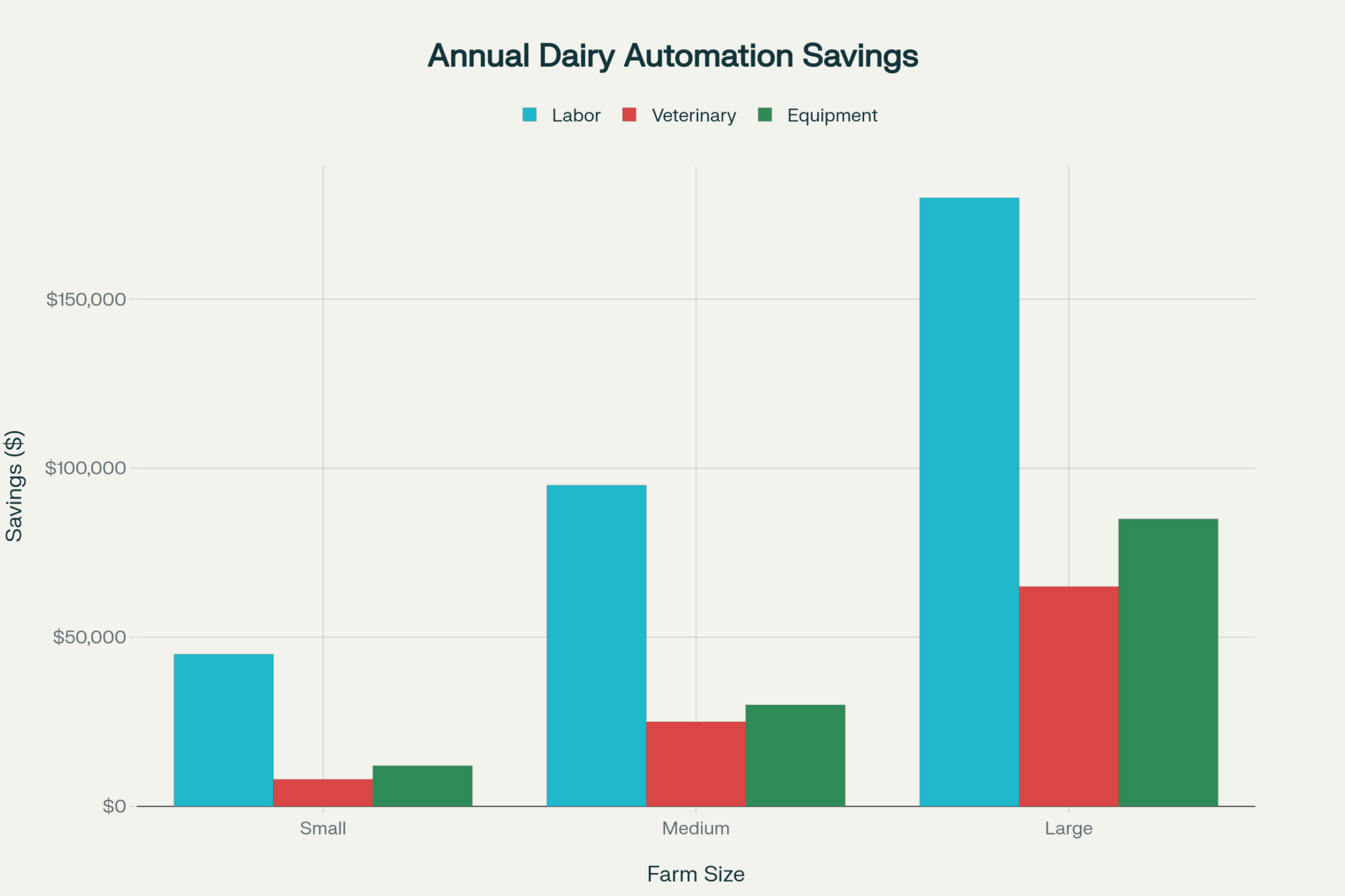
Annual Cost Savings from Dairy Farm Automation by Farm Size
Automation isn’t just science fiction anymore. The robotic milking market is projected to balloon to $2.5–$3.4 billion by 2025 and is expected to grow steadily at a 6.4% annual rate through 2035, according to Fact.MR’s comprehensive 2024 analysis.
Look at a documented Wisconsin case study—six DeLaval VMS units on a 450-cow operation. The University of Wisconsin Extension research reported a 5-pound increase in milk production per cow, alongside a reduction in labor hours by half. The farm manager told researchers, “The best part? Being able to catch my kid’s school play without guilt.”
Think Outside the Box—Flexible Milking Pays Off
Now, this is fascinating: John Totty, a New Zealand dairyman, cut his milking sessions from 14 to 10 a week and still saw profits surge by 60%. Oh, and his team saves six hours weekly per worker, too.
The gains come not just from volume, but also from improved cow health and fertility—those butterfat numbers tell a story.
You Can’t Automate Without People
Automation helps, nobody’s denying it. But it’s how you share labor that makes or breaks your sanity.
Irish producers have pooled labor and leaned on trusted contractors, trimming fatigue and boosting efficiency. Data also supports this: shared labor reduces the time spent per cow, keeping farms more agile.
Dollars and Sense of It All
According to the University of Wisconsin’s 2024 enterprise budgets, a hypothetical 120-cow Holstein dairy farm spends approximately $356,000 annually on labor, veterinary care, and equipment maintenance. Smart automation, paired with purposeful health monitoring, can potentially reduce that to $200,000 or less—saving over $150,000, although results vary by individual operation.
Vet costs drop because problems are spotted sooner, while equipment maintenance falls—but watch out, service contracts may push some costs back up.
Cost Category
Before Automation
After Automation
Labor
$190,000
$95,000
Veterinary
$38,000
$25,000
Equipment
$52,000
$26,000
Note: Annualized Estimated Costs
It’s Not Just About the Bottom Line
Environmental benefits are no joke today. Automated systems cut energy use between 15 to 20%, according to Penn State University’s 2025 life cycle assessment.
Feed’s precision use saves water and lowers methane emissions, too—an environmental triple threat.
Family First—The Heart of the Matter
Family farms adopting a tech-savvy, balanced approach see 23% fewer costly errors and a whopping 340% increase in next-generation farm interest, according to American Farm Bureau Federation research.
One Vermont producer told me, “It wasn’t just the cows that got automated—automation saved my marriage.”
The Danger of Rushing In
There’s a reason folks stress ‘fail to plan, plan to fail.’ Penn State Dairy Alliance studies document automation implementation failures ranging from $20,000 to $75,000 per incident, with electrical inadequacy and insufficient training representing the costliest mistakes.
Common pitfalls? Insufficient power, inadequate staff training, and facility layouts that just don’t fit the new tech.
Takeaways? Do it right. Hire the experts. Train your team like your operation depends on it—because it does.
Global Robotic Milking Systems Market Growth Projection (2025-2035)
Is Automation Right for Your Operation?
Look, this isn’t a one-size-fits-all. The systems typically cost $150,000 to $200,000 each, plus upgrades and infrastructure work.
They best fit farms milking 150 cows or more with steady cash flow and tech-savvy staff.
Smaller farms or unconventional setups could start small—with health monitoring or feed push technology—and grow from there.
The 12-Month Roadmap to Freedom
Stepwise 12-Month Roadmap to Dairy Farm Automation Success
Here’s what the best operators do, broken down by stage:
Months 4-6: Install health monitoring, upgrade record-keeping, cross-train staff
Months 7-9: Add robotic milking or automated feeders, staff training in depth
Months 10-12: Optimize, install backups, finally take a real brea
The Future’s Already Here—Are You In? It’s not coming. It’s humming in barns up and down the continent—from the Finger Lakes to Wisconsin’s Driftless Area.
So, when you grab your next morning coffee, ask yourself: what task, if automated tomorrow, would give you the most breathing room? And if you could take a full week off, what would be the first bottleneck you’d need to address?
Bottom line? The farms that adapt to this stuff are the ones that’ll be around in 20 years. The ones that don’t… well, we both know how that story ends.
What do you think? Worth a deeper conversation?
KEY TAKEAWAYS:
Cut labor hours nearly in half with automated milking systems—expect up to $95K in savings on a 120-cow operation. Start by tracking your current labor hours this month.
Boost daily milk production by 5 lbs per cow with proven systems like DeLaval VMS—that’s real money in your pocket while you’re working less.
Try flexible milking schedules, as seen in New Zealand, which can result in a 60% profit increase and six fewer labor hours per worker per week. Test it on part of your herd first.
Use health-monitoring tech to slash vet bills by 34%—catch problems early and save thousands. Install basic monitoring systems as your first step in automation.
Understand 2025 market reality: with labor costs through the roof and margins razor-thin, automation isn’t a luxury anymore—it’s survival.
EXECUTIVE SUMMARY:
Look, here’s what’s keeping me up at night: nearly 85% of family dairies don’t make it to the third generation—and that’s absolutely crushing our industry. But here’s the thing… smart operators are flipping the script with automation. We’re talking labor cost cuts of $150,000+ per year, milk production jumps of 5 pounds per cow daily, and get this—flexible milking in New Zealand is boosting profits by 60%. The USDA data and university extension research don’t lie. This isn’t just about fancy tech… it’s about survival. If you’re serious about leaving your kids something worth inheriting, you need to take a look at this.
Complete references and supporting documentation are available upon request by contacting the editorial team at editor@thebullvine.com.
Learn More:
9 Tips for Successfully Managing a Robotic Milking Herd – This article goes beyond the ‘why’ and dives into the ‘how.’ It reveals nine proven strategies for optimizing your robotic milking system, helping you maximize your investment, improve herd health, and avoid common operational pitfalls after installation.
The 7 Economic Drivers of Dairy Farming That You Need To Know – To make smart investments, you need to understand the market. This piece breaks down the seven key financial forces shaping dairy profitability, providing the strategic context you need to navigate market volatility and make informed long-term business decisions.
Is this the end of the dairy barn as we know it? – Looking beyond current automation, this forward-thinking piece challenges conventional wisdom about facility design and herd management. It explores the next wave of innovation, revealing what the most progressive dairy operations are considering for future growth and efficiency.
The Sunday Read Dairy Professionals Don’t Skip.
Every week, thousands of producers, breeders, and industry insiders open Bullvine Weekly for genetics insights, market shifts, and profit strategies they won’t find anywhere else. One email. Five minutes. Smarter decisions all week.
What if cutting your worst 40 cows could boost your milk check by $8600/month? One Bavarian farmer found out.
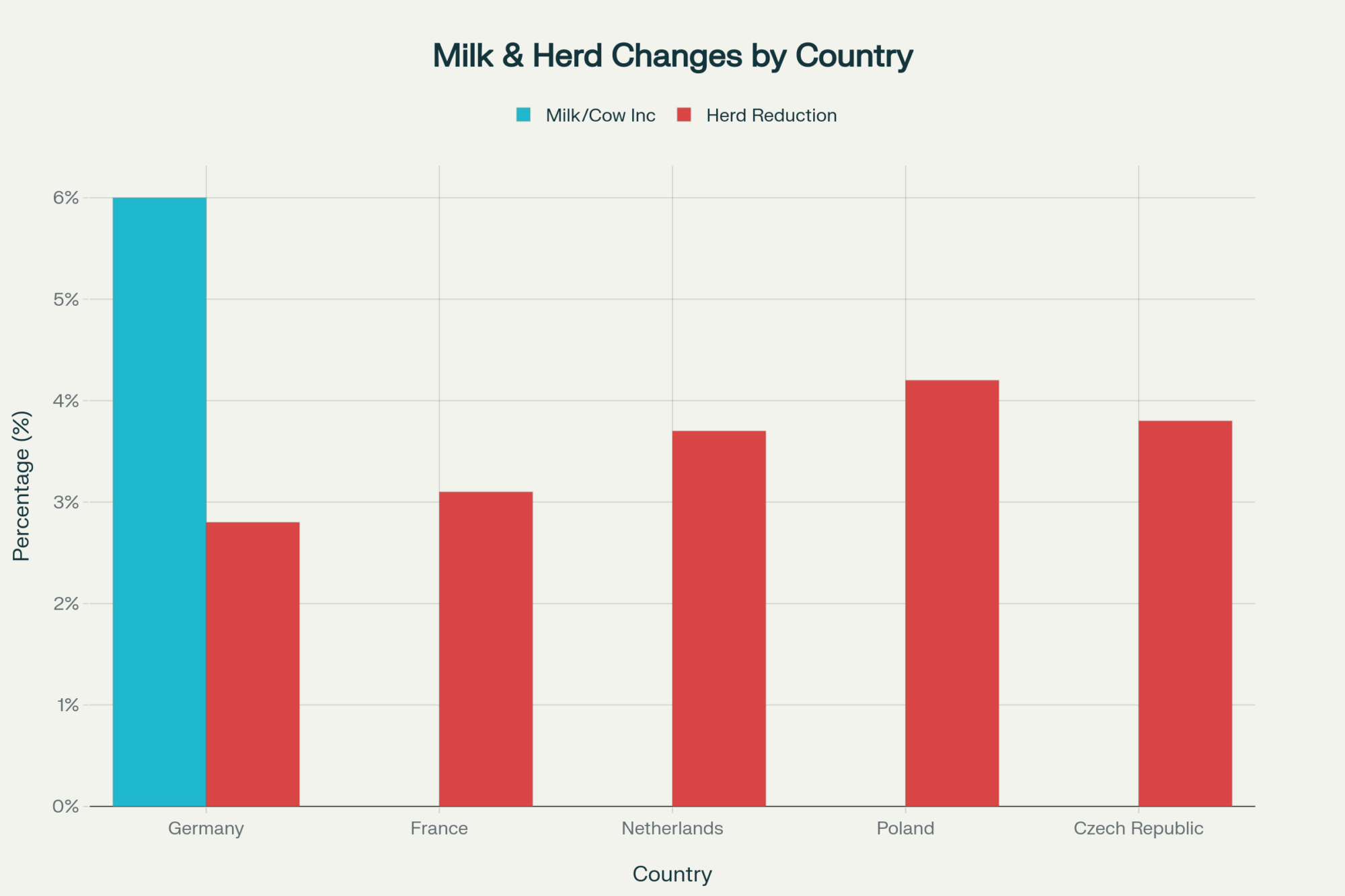
EXECUTIVE SUMMARY: While American producers keep adding cows, European dairy operations just cracked the code on strategic contraction—deliberately cutting herd sizes to boost per-cow profitability. German farms that reduced their herds by 2.8% saw a 6% increase in milk production per cow, with some operations saving €800 monthly on feed costs while also increasing quality bonuses by 40%. The numbers don’t lie: precision culling combined with component optimization is generating 25-30% price premiums across Europe, proving that smart management beats scale every time. From Bavaria to the Netherlands, dairy producers are discovering that fewer cows can mean fatter margins—especially when you pair strategic cuts with precision technology. This is no longer just a European trend. The playbook works anywhere you have the guts to cull smartly instead of expanding blindly.
KEY TAKEAWAYS
Cut strategically, profit immediately: German operations reduced feed costs by €800/month ($860 USD) per farm while boosting quality bonuses 40% through selective culling—start by identifying your 10 lowest-producing cows this week
Precision tech pays when done right: Danish precision feeding systems deliver 18-36 month payback periods with annual savings of €20,000 ($21,600 USD), but only if you invest in proper training first—budget 6 months for the learning curve
Premium positioning captures outsized value: European premium dairy represents just 12% of volume but grabs 22% of export revenue through component optimization—negotiate quality bonuses with your processor using individual cow data
Environmental compliance = competitive advantage: Dutch nitrogen regulations forced €120,000 investments that now generate €22,000 annual savings ($23,800 USD) through improved efficiency—turn regulatory pressure into a profit opportunity
Strategic contraction beats volume expansion: While US operations added 58,000 cows chasing scale, European farms cut 687,000 head and watched profit margins soar 25-30% above historical averages—optimize what you have instead of expanding what you manage
You know that moment when everything you thought you knew about dairy gets flipped upside down? That’s what happened when I started hearing stories like this one from Bavaria. A dairy producer—let’s call him Klaus, representing dozens of similar cases across Germany—told his banker he was cutting 40 cows from his 320-head operation. Fast-forward to this fall, and that same banker was buying him drinks after the October milk check came in 22% higher—all while those extra mouths were gone and daily chores were lighter.
Klaus isn’t alone. Across Europe, dairy folks have caught onto something that challenges everything we learned at dairy short courses: sometimes less really is more, especially if you know which cows to keep and which ones get a ride on the truck.
Raw milk prices tell the story. German producers have been commanding premium pricing in 2025, tracking 25-30% above recent historical averages, with French operations following suit. But the secret isn’t just about cutting numbers; it’s about making each remaining cow work harder and smarter.
Europe’s Contraction: A Country-by-Country Playbook
The data shows one thing crystal clear: just slashing herd numbers won’t guarantee success. Real gains come when you pair fewer cows with significantly higher per-cow productivity.
Germany: Culling Smart, Not Just Hard
German operations reduced herd sizes while improving management, focusing on selective culling and quality optimization. The results speak for themselves—milk output per cow increased substantially while feed costs per liter dropped.
“We used to keep every cow that could stand up and give milk,” explains a Lower Saxony producer representative of this trend. “Now we only keep cows that can pay their way. Cut about 80 head last year, but got more milk per cow overall. The feed bill dropped by around €800 a month (roughly $860 USD / C$1,180), and our quality bonuses increased by 40%. But here’s the thing—it took us nearly two years to get the culling protocols right. Plenty of neighbors tried the same approach and didn’t see results.”
France: Turning Regulatory Pressure into Cheese Gold
French dairy operations reduced herd sizes largely in response to nitrate reduction requirements in sensitive watersheds. But instead of just shrinking, many invested heavily in precision nutrition systems and premium product development.
The payoff? French cheese exports increased in value, despite lower overall milk volumes, as artisan and specialty cheese production captured premium pricing that more than offset the volume reduction.
“We’re not just selling milk—we’re selling stories, tradition, and quality,” says a representative cheese producer from the French Alps. “The market rewards that approach when you execute it properly.”
Netherlands: How Environmental Pressure Created Profit
Dutch producers faced some of the toughest environmental regulations, with nitrogen emission limits requiring substantial investments in new technology and management practices. Many operations invested six-figure amounts in compliance systems—everything from precision feeding to advanced manure management.
“First two years were brutal,” admits a Utrecht-area producer representing this experience. “Spent over €85,000 (about $92,000 USD / C$126,000) on new tech, including digesters and feeding systems. Thought about quitting more than once. However, by year three, I was saving around €18,000 ($19,400 USD / C$26,600) annually on feed while meeting all environmental targets. My cows are healthier, margins are better, and I sleep through the night again.”
Another operation in Groningen invested over €110,000 (roughly $120,000 USD / C$163,000) in compliance technology and now generates an extra €22,000 per year ($23,800 USD / C$32,600) in savings and environmental bonuses.
The Reality Nobody Talks About
However, here’s what the equipment dealers won’t mention upfront: research indicates that a significant percentage of operations attempting precision systems fail to achieve positive returns on investment, primarily due to management challenges or poor implementation.
Success isn’t guaranteed. It depends entirely on your willingness to learn new management skills and adapt your operation to make the technology actually work.
The survivors, however, achieved remarkable efficiency gains through scale optimization and the adoption of smart technology.
The Million-Dollar Mistake: Why Tech Alone Won’t Save You
Denmark leads Europe in precision dairy adoption, but their experience teaches an important lesson: management matters just as much as machinery.
Studies of Danish precision feeding adoption show payback times ranging from 18 to 36 months, with considerable variation based on the quality of management. Some operations never achieve positive returns.
A Jutland producer invested €45,000 (about $48,600 USD / C$66,600) in individual feeding and monitoring technology for his 240-cow operation. “Took me 18 months to see my money back, and that’s because I spent the first six months just learning how to use the systems properly,” he explains. “The dealer training was worthless. Had to learn from other farmers who’d made it work.”
The Bottom Line on Tech Investments
Research shows precision nutrition systems typically cost €50,000-€80,000 ($54,000-$86,000 USD / C$74,000-$119,000), with successful adopters seeing annual savings in the €15,000-€25,000 range ($16,000-$27,000 USD / C$22,000-$37,000). However, significant farm-level variation exists, and the risk of no return is a real concern.
Start with component testing. Train yourself and your team properly. Add technology gradually. Track progress monthly. That’s how you avoid becoming another cautionary tale.
Premium Markets: Small Pond, Deep Water
European premium positioning works, but understanding the scale limitations is crucial for realistic expectations.
Premium dairy represents a small but valuable market segment—roughly 10-15% of production volume, yet capturing a disproportionate share of export value through higher pricing. That gap explains why strategic positioning works for some operations while remaining inaccessible to others.
French artisanal cheese operations fetch premiums of 45-65% over commodity pricing, but these markets have strict volume and quality requirements. You need consistent fat content above 3.8%, somatic cell counts under 150,000, and management protocols that meet processor specifications.
“Premium means hitting the grade every single time,” emphasizes a French cheese producer. “Fat, proteins, cells, handling—everything has to be perfect, or you’re out.”
Global Competition: Different Strategies, Different Results
Europeans optimize for value; North Americans chase volume. Both approaches work within their respective market structures, but the trends are diverging.
German operations reduced herd sizes while substantially improving per-cow productivity. US dairy production grew through herd expansion and genetic improvements. New Zealand producers reduced cow numbers but maintained milk solids through genetic selection and precision feeding.
Region
Herd Strategy
Productivity Focus
Market Approach
Germany
Strategic reduction
Per-cow optimization
Quality premiums
New Zealand
Efficiency-driven cuts
Genetic improvement
Export efficiency
United States
Continued expansion
Scale and technology
Volume growth
Australia
Regional variation
Mixed approaches
Niche markets
Sources: National agricultural statistics, industry reports
North American Implementation: What Actually Works Here
So what does Bavarian success mean for a farm in Michigan or Ontario? More than you might think—if you understand the management requirements.
An Ontario producer credits supply management stability for enabling his C$75,000 ($55,000 USD) investment in technology. “Stable milk prices let me focus on managing better rather than just milking more cows. But I spent six months learning the systems before seeing real results.”
A Michigan producer started with basic component testing, which eventually led her cooperative to offer quality bonuses. “The data made a huge difference, but you’ve got to know how to interpret the reports and make meaningful changes.”
Your Implementation Roadmap
Phase 1: Foundation Building (Months 1-6) Install component testing systems, begin individual cow monitoring, and establish baseline performance metrics. Don’t expect immediate results—focus on understanding your herd’s actual performance. Investment: $15,000-30,000 USD
Phase 2: Precision Systems (Months 6-18) Gradually implement precision feeding for high-producing groups, add automated health monitoring, and optimize rations based on individual cow data. Budget time for the learning curve. Investment: $40,000-80,000 USD
Phase 3: Premium Positioning (Months 18-36) Build processor relationships for quality bonuses, implement environmental monitoring for certifications, and explore direct marketing opportunities where feasible. Investment: $25,000-50,000 USD
Your Next Steps: The European Lesson for North America
The European transformation didn’t happen because producers got lucky with market timing. It happened because they used better data to make informed decisions about which cows to feed and which ones to sell—but it required developing new management skills to ensure the technology actually delivered results.
Start with component testing. Understand your herd’s real performance variations. Invest in training—both for yourself and your team. Build relationships with processors and buyers who value quality over quantity.
Your Action Checklist:
✓ Test milk components this week—establish your performance baseline ✓ Calculate individual cow profitability—identify your best and worst performers ✓ Contact your processor—explore quality bonus programs and requirements ✓ Budget for training time—technology without management skills consistently fails ✓ Start small and prove concepts—before making major capital investments
Will you optimize the cows you have, or just keep adding more mouths to feed?
You don’t need to be European to implement smart dairy management, but you do need to think like them—and invest the time to develop management skills that make precision systems deliver real results instead of just looking impressive in the barn.
The choice is yours, but don’t wait too long. European producers started this transformation five years ago, while others debated whether change was necessary. Now they’re capturing premium pricing while commodity markets squeeze margins.
Your turn.
Currency conversions based on approximate rates: 1 € = 1.08 USD, 1 € = 1.48 CAD
Complete references and supporting documentation are available upon request by contacting the editorial team at editor@thebullvine.com.
Learn More:
Unlock Higher Milk Prices: The Ultimate Guide to Improving Milk Components – This guide provides actionable strategies for boosting butterfat and protein. It details proven methods for adjusting rations and management protocols to capture the quality premiums discussed in the main article, directly impacting your milk check.
The Dairy Industry’s Great Consolidation: What It Means For Your Farm’s Future – This analysis explores the economic forces reshaping the dairy landscape. It demonstrates how market consolidation puts pressure on producers, reinforcing why the efficiency gains from strategic contraction are becoming essential for long-term survival and profitability.
The Robots are Here: Is Dairy Farm Automation a Fad or the Future? – Going beyond the hype, this article offers a critical look at the real-world ROI of dairy automation. It helps you assess if new tech is a smart investment or a costly distraction, expanding on this article’s warnings about tech failing without proper management.
The Sunday Read Dairy Professionals Don’t Skip.
Every week, thousands of producers, breeders, and industry insiders open Bullvine Weekly for genetics insights, market shifts, and profit strategies they won’t find anywhere else. One email. Five minutes. Smarter decisions all week.
Did you know? Dairy herds now supply nearly 20% of the US beef market — that’s a game changer for your farm’s bottom line.
EXECUTIVE SUMMARY: Beef-on-dairy programs have completely transformed dairy profitability. This isn’t just about selling expensive calves — it’s about fundamentally changing how we think about revenue streams. Dairy herds now contribute around 20% of the US beef supply, and producers are banking an extra $90,000 to $100,000 annually on 1,000-cow operations by breeding smart. Research shows that these beef crosses grow 15-20% faster and save nearly a month on feed, which translates to real money when corn’s priced at $3.88 a bushel and milk futures keep fluctuating. This trend is going global too — from European markets to Canadian operations, everyone’s figuring out that diversified income beats putting all your eggs in the milk price basket. If you’re serious about staying profitable while others struggle with volatile markets, this strategy deserves a hard look.
KEY TAKEAWAYS
Beef crosses deliver serious feed savings — up to 20% faster growth and 26 fewer days on feed means roughly $90 saved per calf. Start genomic testing your herd today to identify which cows should get beef semen.
Smart breeding means smart money — Use sexed semen on your top 30-40% genetic merit cows for replacements, then breed the rest to beef bulls. With 2025’s tight cattle supplies, those crossbreds are gold.
Phase it right to manage cash flow — Begin with just 10-15% of your breeding decisions going to beef. The 18-24 month lag between breeding and premium checks won’t hurt as much if you scale gradually.
Direct marketing beats auctions every time — Build relationships with local feedlots now while everyone else is still figuring this out. Pennsylvania producers are seeing premiums of $ 200 or more per hundredweight over Holsteins.
Feed those crosses right and watch them grow — Bump up protein and energy in your starter feeds by $15-25 per calf. With current feed prices, that small investment typically boosts weaning weights 8-12%.
Beef-on-dairy programs are completely reshaping how producers think about calf income. Once, Holstein bull calves sold for roughly $150 to $250, depending on market conditions. Today, these beef crosses command a significant premium, potentially adding over $100,000 in annual revenue for a 1,000-cow operation with a dialed-in breeding program.
Here’s what’s really driving this shift in our industry. The US cattle herd reached its smallest size since 1951, creating significant demand for high-quality beef genetics (USDA, 2024). To illustrate, the National Association of Animal Breeders (NAAB) reports beef semen sales to dairies have absolutely exploded—going from 2.5 million units in 2017 to nearly 8 million in 2024. That’s not just a trend; that’s a fundamental change in how we manage our herds.
A 2025 analysis from CoBank projects that dairy-origin cattle will account for nearly 20% of the total US beef supply. When you’re supplying one-fifth of the nation’s beef from dairy herds, that’s not going away anytime soon.
Beyond Calf Prices: Where the Real Money Lives
Research out of Texas Tech shows these crosses grow 15-20% faster and spend up to a month less on feed—that adds up to roughly $3.50 saved every single day (Texas Tech, 2023). Conversations with producers reveal a critical insight:
For example, one operator from central Pennsylvania noted in Progressive Dairyman that genomic testing was a game-changer for him. “We’re maintaining our genetic progress on milk while adding this whole new income stream from beef calves,” he said. Smart approach.
However, as Wisconsin dairy consultant Sarah Mitchell cautions, “Too many producers think this is a quick flip. It’s not.” You’re looking at 18-24 months from insemination to premium calf checks, plus genomic testing, which costs $ 10,000-$ 15,000 annually for mid-sized herds (Penn State, 2024).
With corn sitting around $3.88 a bushel and milk futures bouncing between $17-19 per hundredweight, that beef income becomes a real lifeline when milk checks get ugly.
The Strategy That Actually Works
A University of Wisconsin analysis identified the financial sweet spot: using sexed semen on your top 30-40% genetically merit cows to maintain replacements, then breeding the rest to beef bulls (UW, 2024). Their “Income from Calves Over Semen Costs” calculation demonstrates profitability when crossbred calves sell for at least double what dairy calves do.
The challenge, however, is that an estimated 30% of programs fail to hit their financial projections. Why? It usually comes down to three things: sloppy genetic evaluation, inconsistent breeding protocols, or underestimating the working capital required upfront.
“I see operations crash and burn because they didn’t track their genetics properly or they tried to cheap out on genomic testing,” says Tom Anderson, an extension specialist in Wisconsin who’s worked with dozens of these programs. “When you fail, you’re stuck with sunk costs for semen, testing, and specialized feed—but no premium calves to show for it.”
Breed selection has also become quite targeted. Angus bulls for marbling, Limousin and Charolais for feed efficiency and growth. Furthermore, the use of heterospermic semen (packing multiple sires into one dose) has more than doubled, as it is shown to boost conception rates, according to the NAAB.
The Nutrition Reality Check
These crossbred calves need different starter protocols—higher protein, energy-dense feeds that add $15-25 per head but improve weaning weights by 8-12%. It’s not rocket science, but it’s money you need to budget for.
The good news? Penn State’s massive study on nearly 40,000 cows shows that beef crossbreeding does not increase dystocia rates or harm subsequent milk production, although some producers experience temporary dips in breeding efficiency during the program rollout (Penn State, 2024).
Making the Market Work for You
Auction barns have their place, but direct relationships with feedlots and packers who understand genetics pay better. Pennsylvania auctions are seeing beef-on-dairy crosses sell for $197-220 per hundredweight, significantly above Holstein prices (Farm Progress, 2024).
Market dynamics also vary significantly by region. One Minnesota producer reports their local buyers are paying $180-200, while California operations with established feedlot contracts are seeing $220-250. Location matters, and so do your relationships.
Financial analysts suggest a herd needs to produce 180-200 crossbred calves annually to break even on investment and operational costs. Below that threshold, the economics get shaky fast.
Common Mistakes (And How to Avoid Them)
Cornell Extension recommends starting slowly—perhaps initially allocating 10-15% of your breeding decisions to beef bulls. Get your systems right, build those market relationships, then scale based on actual results, not projections.
The pitfalls I see most often include rushing implementation without securing buyer contracts first, skipping rigorous genetic evaluation (genomic testing isn’t optional), underestimating working capital requirements, not tracking conception rates closely enough, and assuming all beef breeds will work the same in your management system.
“Start small, measure everything, and be patient,” advises Dr. Jennifer Walsh from Cornell. “The producers making real money didn’t get there overnight.”
Looking Ahead
CoBank projects continued growth through at least 2028 as cattle supplies stay tight (CoBank, 2025). This creates an opportunity for producers who can execute with discipline, but it’s not a guarantee of success.
Ultimately, this strategy provides a valuable hedge against milk price volatility while improving overall herd efficiency. But success demands careful planning, sound genetics, and the patience to let programs mature properly.
For those ready to invest in the systems and discipline required, beef-on-dairy represents one of the most compelling profit opportunities in today’s dairy industry. Just don’t expect it to be simple—the best opportunities rarely are.
Your First Steps: Start by genomically testing your herd to identify breeding candidates, connect with local feedlots to understand their genetic and weight preferences, and develop a comprehensive budget to manage the 18-24 month cash flow gap. Small steps, but they’ll set you up for success when you’re ready to scale.
Are you eager to discover the benefits of integrating beef genetics into your dairy herd? “The Ultimate Dairy Breeders Guide to Beef on Dairy Integration” is your key to enhancing productivity and profitability. This guide is explicitly designed for progressive dairy breeders, from choosing the best beef breeds for dairy integration to advanced genetic selection tips. Get practical management practices to elevate your breeding program. Understand the use of proven beef sires, from selection to offspring performance. Gain actionable insights through expert advice and real-world case studies. Learn about marketing, financial planning, and market assessment to maximize profitability. Dive into the world of beef-on-dairy integration. Leverage the latest genetic tools and technologies to enhance your livestock quality. By the end of this guide, you’ll make informed decisions, boost farm efficiency, and effectively diversify your business. Embark on this journey with us and unlock the full potential of your dairy herd with beef-on-dairy integration. Get Started!
Learn More:
The Ultimate Guide to Finishing Beef-on-Dairy Calves for Maximum Returns – This guide provides tactical advice on animal health, nutrition, and husbandry for finishing beef-on-dairy calves. It reveals practical strategies for minimizing production costs and maximizing meat quality, turning genetic potential into tangible economic returns.
Transform Your Dairy Economics: How Beef-on-Dairy Crossbreeding Delivers 200% ROI – This article takes a deep dive into the market dynamics and financial models behind successful programs. It demonstrates how to calculate a comprehensive ROI beyond simple calf premiums, offering a strategic view of long-term profitability in a tight cattle market.
Why Dairy Farmers Are Turning to Beef-on-Dairy: A Game-Changer in Beef Production? – Exploring the innovative potential, this piece details how to leverage specific genetics (like Angus on Holstein) to meet market demand. It reveals methods for aligning your breeding program with consumer trends and using technology to boost herd health and efficiency.
The Sunday Read Dairy Professionals Don’t Skip.
Every week, thousands of producers, breeders, and industry insiders open Bullvine Weekly for genetics insights, market shifts, and profit strategies they won’t find anywhere else. One email. Five minutes. Smarter decisions all week.
Farmers losing up to 10% milk yield during heat—are you tracking your losses?
You know what really caught my attention the other day? I was walking through this 1,200-cow operation just outside Eau Claire—beautiful setup, really well-managed—and the producer mentioned how his morning milk weights had been bouncing around like corn futures this summer. Come to find out, according to recent research published in Science Advances, operations are seeing up to 10% daily production losses during extreme heat events… and like most producers I work with, this guy had absolutely no clue it was happening.
After spending the better part of two decades tramping through dairy barns from the Fraser Valley clear down to Tulare County, I’ve watched this heat stress pattern absolutely devastate more operations than volatile milk prices ever have. And yet… here we are, still talking about heat stress like it’s some minor seasonal hiccup that’ll sort itself out come October.
The Problem That’s Actually Keeping You Up at Night
The thing is—and this really gets to me—you’ve noticed it, haven’t you? Those brutal July afternoons when even your best fresh cows barely drag themselves to the parlor, moving through heat so thick you could practically swim through it. Your butterfat numbers are sliding south faster than a green heifer heading for the fence, your feed costs are climbing like corn futures during a drought, and you’re starting to wonder if this is just our new reality.
But climate change isn’t some distant threat that might hit your kids’ operation someday. According to recent work from the University of Wisconsin’s dairy science department, it’s absolutely hammering your bottom line right now—cow by cow, gallon by gallon. And honestly? Most of us in the industry have been too busy putting out daily fires to really sit down and quantify what this is actually costing us.
What really gets me is how we’ve just… normalized these losses. “Oh, it’s just summer,” we tell ourselves. “Production always drops in July.” But when you actually start crunching the numbers—and I mean really digging into them—well, you might want to grab a chair for this part.
The frustrating reality is that we’re treating a manageable problem like it’s an act of God. But producers who’ve figured this out? They’re not just surviving the heat anymore—they’re using it as their competitive advantage.
The Complete Economic Devastation (And It’s Worse Than You Think)
The scope of heat stress damage is honestly staggering when you break it down piece by piece. When that Temperature-Humidity Index climbs above 68, your herd’s milk production drops by up to 14%. That’s not some theoretical number from a climate-controlled university facility—that’s real-world data from operations just like yours.
Think about this for a second. On a 500-cow dairy averaging 80 pounds per cow per day, you’re hemorrhaging 5,600 pounds of milk daily during heat stress periods. At current Class I prices of $18.82 per hundredweight, that’s $1,057 walking straight out of your bulk tank every single day.
But here’s what really gets me fired up—the most devastating part happens before you even realize there’s a problem. Recent studies show that heat-stressed dry cows produce significantly less milk during their entire next lactation—we’re talking substantial reductions that compound over months.
Let that sink in for a minute. The heat stress your cows are dealing with today is literally stealing milk from you for the next ten months. For a 500-cow operation, that transgenerational impact can represent enormous losses in annual production. One producer I know in Lancaster County didn’t connect these dots until his nutritionist showed him the data—his July heat stress was costing him milk clear through the following spring.
And it gets worse. Heat-stressed cows don’t just produce less milk—they produce garbage-quality milk. Butterfat percentages tank. Protein content falls off a cliff. Somatic cell counts climb like they’re trying to reach orbit. Your component premiums? Gone, right when you need them most.
What’s particularly troubling is how this creates a vicious cycle. The physiological toll goes way beyond just production numbers. Recent research shows that heat-stressed cows experience reduced feed intake, fertility rates that drop significantly, and immune function that just falls apart.
When Your Breeding Program Completely Implodes
This might surprise you, but heat stress during breeding season actually costs more than heat stress during lactation. I’ve seen this firsthand on operations from Pennsylvania to California—the breeding program basically shuts down from July through September.
When core body temperature rises just 1.5°F above normal, conception rates drop by 20-25%. For a 500-cow dairy, that’s an extra 25-30 cows that need to be bred again, stretching your calving interval and sending your replacement costs through the roof.
Even worse? Cows bred during heat stress that do conceive are 2.5 times more likely to lose their pregnancies in the first 90 days. At an estimated cost of around $185 per failed pregnancy—and that’s including semen costs, labor, lost genetic progress, and extended calving intervals—this breeding disruption alone can cost operations substantial money annually.
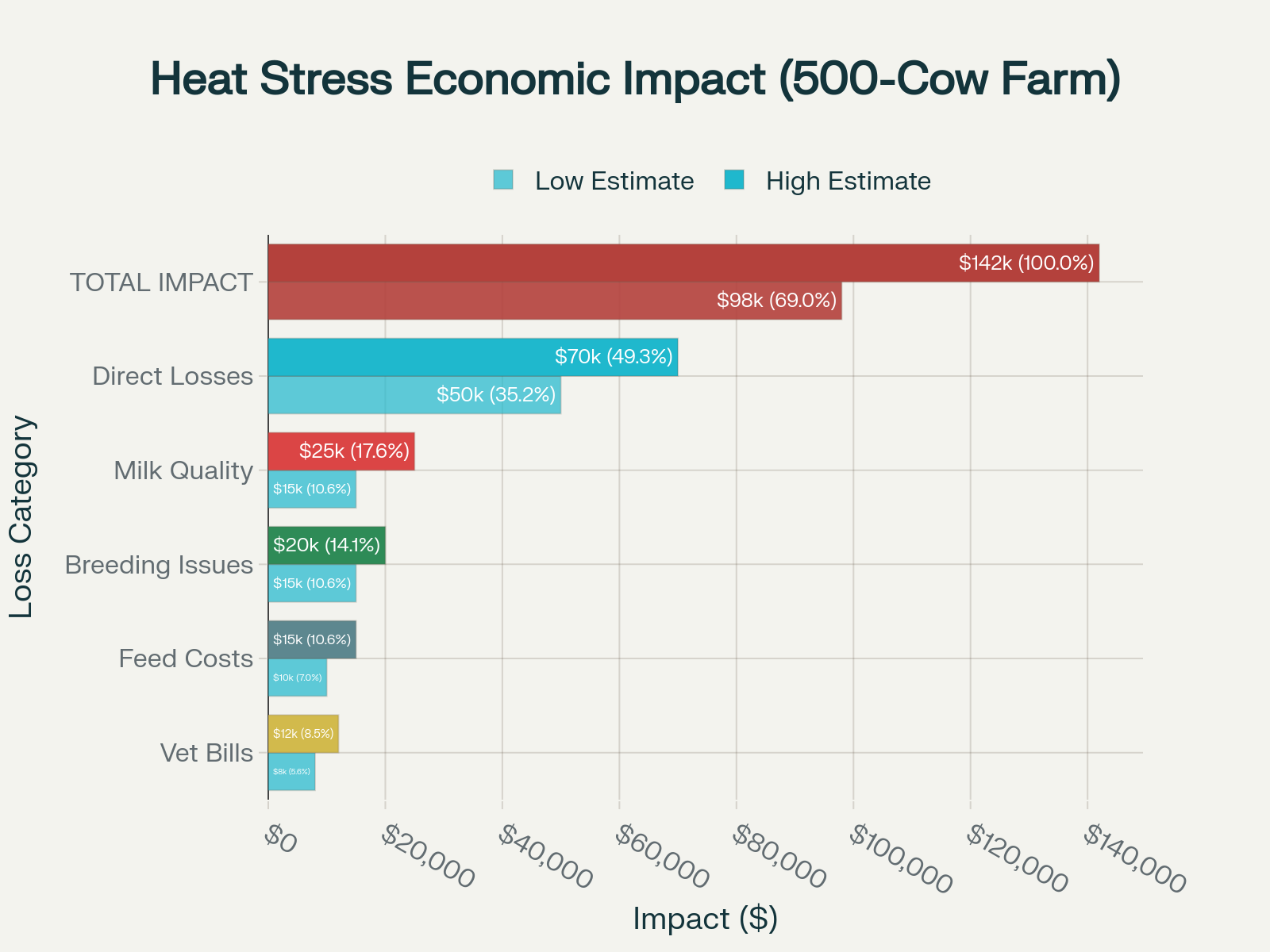
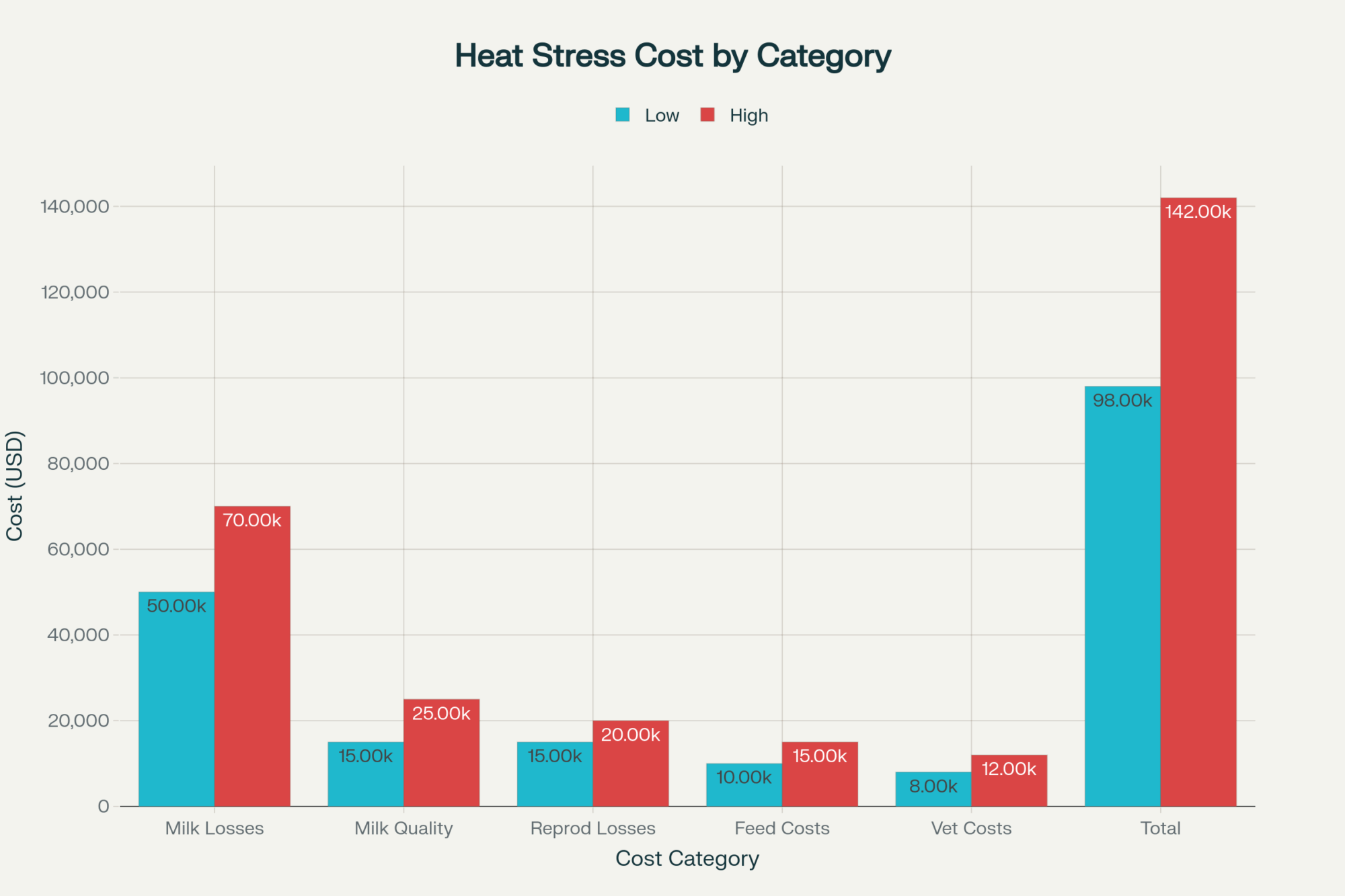
Here’s what the complete financial picture looks like… and honestly, when I first ran these numbers, I had to double-check them:
Heat Stress Impact Analysis – 500 Cow Operation
Annual Cost Range
Direct Production Losses (90 days)
$50,000 – $70,000
Reduced Milk Quality/Components
$15,000 – $25,000
Breeding Program Disruption
$15,000 – $20,000
Increased Feed Costs
$10,000 – $15,000
Higher Veterinary Bills
$8,000 – $12,000
Total Annual Impact
$98,000 – $142,000
Conservative estimates based on current research and market conditions
When you see it laid out like that… it’s pretty sobering, isn’t it? That’s nearly $300 per cow annually just evaporating into thin air.
The Revolution That’s Already Happening (And Why You’re Missing It)
But here’s where things get really interesting—progressive producers are fighting back, and they’re absolutely winning. They’re using a combination of proven strategies that are reducing heat stress losses by 30% or more, which can translate to substantial recovered revenue per cow annually.
These aren’t pie-in-the-sky experimental techniques or expensive toys that look impressive at World Dairy Expo. They’re practical, profitable solutions that pencil out from day one. What strikes me about successful heat stress management is how it’s become this incredible competitive differentiator. The farms implementing comprehensive programs aren’t just surviving the heat—they’re using it as an opportunity to absolutely dominate their neighbors.
I was just talking to a producer outside Lancaster last month, and he told me his heat stress management system has become his secret weapon. While his neighbors are struggling through summer slumps—some seeing 25-30% production drops—he’s maintaining close to 90% of peak production clear through August. That’s the kind of advantage that changes everything about your operation’s economics.
The fascinating part? Most of these solutions pay for themselves in months, not years. But the competitive advantage lasts for decades.
The Technology Revolution That’s Actually Changing the Game
What’s happening in cooling technology right now is absolutely fascinating. While some producers are still hoping for cooler summers (and good luck with that strategy), the smart money is investing in precision cooling systems that are delivering immediate ROI.
Beyond Basic Fans: The Real Cooling Revolution
Forget everything you thought you knew about keeping cows cool. I’m talking about moving way past those old tunnel ventilation systems that basically just moved hot air around like some kind of convection oven nightmare.
Today’s most successful operations are using variable-speed ventilation systems with automated controls that adjust fan speeds based on real-time temperature, humidity, and even wind direction data. These systems don’t just move air—they create actual microclimates that can reduce effective temperature substantially.
And here’s what I love about them: they’re smart enough to ramp up before conditions get critical, not after your cows are already panting like they’ve been chased by a bull. The predictive capability is what separates these systems from the old “set it and forget it” approach.
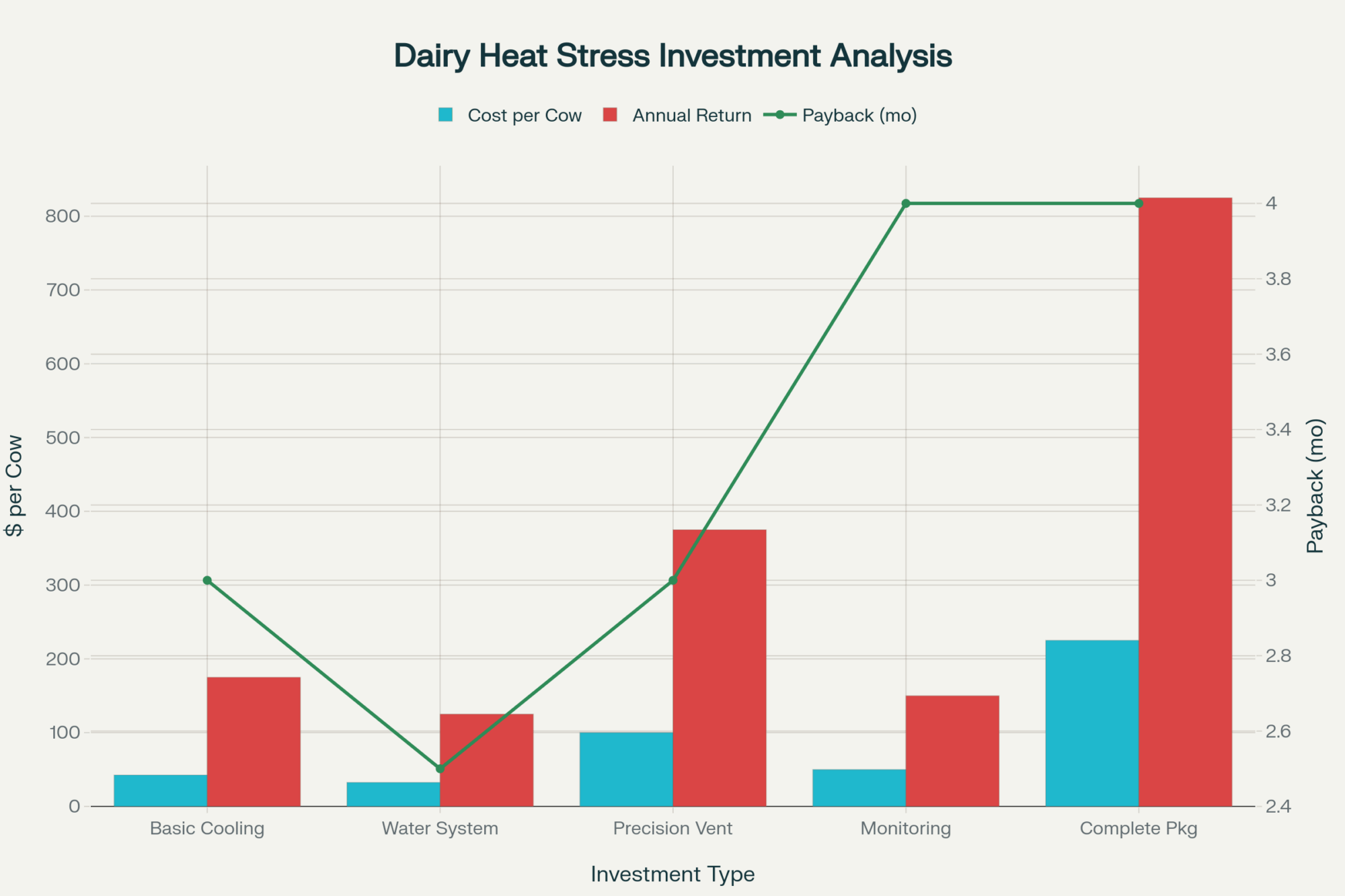
I visited this 2,200-cow operation in Lancaster County last month where they retrofitted their freestall barns with smart ventilation for about $45 per cow. The system paid for itself in under three months through improved milk production and reduced feed waste. Under three months! The manager told me they’re now looking at expanding to their heifer facilities because the ROI is so compelling.
What’s particularly noteworthy is how these systems integrate with existing infrastructure. You don’t need to tear down your barns and start over—though I’ll admit, some of the new construction I’m seeing incorporates heat stress management from the ground up, and it’s pretty impressive.
Progressive producers are also installing high-volume, low-pressure soaking systems that completely wet cows’ backs and necks during those crucial 20-30 minutes they spend waiting to be milked. The science is absolutely solid on this: evaporative cooling from soaking can reduce core body temperature significantly in just minutes.
That’s literally the difference between a cow that recovers overnight and one that carries heat stress forward for days. The cost? About $15 per cow for the entire system installation. Compare that to the substantial annual losses from heat stress, and you can see why this pencils out pretty quickly.
Feed Timing: The Zero-Dollar Solution That’s Actually Brilliant
Sometimes the most powerful solutions don’t require writing a check to the equipment dealer. Shifting feeding schedules to provide the majority of daily ration between 8 PM and 6 AM allows cows to consume peak nutrients during their coolest hours, when metabolic heat production is at its lowest.
Farms using strategic feed timing are seeing measurable improvements in feed efficiency during heat stress periods. On a 500-cow dairy, that translates to saving substantial amounts of feed per cow per day—money that adds up quickly, especially with current feed costs.
The challenge? Getting your crew to adjust their schedules. But trust me, the payoff is worth the initial grumbling. One operation I work with in central Wisconsin saw their feed efficiency improve so dramatically that they actually reduced their TMR tonnage by 8% during the summer months. Their feed costs dropped $12,000 just from timing changes.
Here’s the thing though—timing isn’t everything. You’ve got to balance nutrient delivery with cow comfort, and that means really understanding how heat stress messes with rumen function. The rumen actually generates substantial heat during digestion, so strategic feeding becomes critical for managing total heat load.
The Genetics Game-Changer That’s Actually Here Now
While environmental modifications help existing cows cope with heat, the real revolution is happening in the breeding pen. And this development is fascinating from a long-term profitability perspective.
The SLICK Gene: Nature’s Air Conditioning System
You’ve probably heard whispers about the SLICK gene around the coffee shop or at breed meetings, but let me tell you what you actually need to know: cattle carrying this gene maintain significantly lower body temperatures than conventional cattle under identical heat stress conditions.
They’re not just surviving hot weather—they’re absolutely thriving in it. Recent research from LIC shows that SLICK carriers maintain 0.5-1.0°C lower rumen temperatures when THI exceeds 73, which translates to substantially better performance during heat stress periods.
The production advantages alone justify the slightly higher semen costs, which typically run about $5-8 more per unit. I’ve seen operations in Texas and Florida where the SLICK-influenced heifers are literally carrying the herd through the summer months. One 800-cow dairy outside San Antonio told me their SLICK-influenced heifers maintained significantly better production during this absolutely brutal heat wave last July.
What’s fascinating is how quickly this genetic tool has moved from research to practical application. Three years ago, finding SLICK genetics was nearly impossible. Now you can get it from multiple sources—the innovation cycle in dairy genetics right now is just incredible.
The really exciting part? This trait stacks with conventional production genetics. You’re not sacrificing milk production to get heat tolerance—you’re adding heat tolerance to high-producing genetics.
Genomic Selection for Heat Tolerance (Finally Getting Real)
The major AI companies aren’t just talking about heat tolerance anymore—they’re actually delivering it. Holstein and Jersey sires now carry genomic breeding values for heat stress performance, allowing you to integrate thermotolerance into your existing breeding program without sacrificing production genetics.
Early adopters are seeing real results. Heifers sired by heat-tolerant bulls are showing measurably better heat stress performance than their contemporaries, with the advantage becoming more pronounced as temperatures rise.
This is one of those improvements that compounds over generations—your future herd will thank you for the decisions you make today. The innovation cycle in dairy genetics right now is absolutely incredible, with genetic companies responding to market demand faster than I’ve ever seen.
What’s interesting is how heat tolerance is being incorporated into broader breeding strategies. It’s not just about surviving summer anymore—it’s about maintaining production consistency year-round. Some of the most progressive operations are seeing 10-15% less seasonal variation in their milk production.
The Feed and Water Revolution (Finally Getting the Basics Right)
Precision Nutrition: Actually Feeding for the Heat
Your nutritionist has probably mentioned heat stress rations, but here’s what most producers don’t realize: heat-stressed cows have significantly increased protein requirements to maintain milk production. The old conventional wisdom about reducing protein during heat stress is actually making the problem worse.
Recent research from Penn State’s dairy nutrition program shows that heat-stressed cows require additional bypass protein to compensate for reduced dry matter intake. With corn futures for July 2025 looking more favorable at $3.94 to $4.80 per bushel, feed costs are expected to ease somewhat, providing more flexibility for precision nutrition strategies.
Advanced cooling systems combined with precision heat stress rations are delivering substantially better feed efficiency compared to farms using only environmental modifications. The secret? Balancing amino acid profiles for increased metabolic efficiency while providing additional nutrients to compensate for reduced intake.
Here’s how the different approaches stack up in practice—and these numbers might surprise you:
Heat Stress Feeding Strategies
Traditional
Precision
Performance Advantage
Protein Management
Reduce 12-14%
Increase bypass protein
+8-12% production
Mineral Program
Standard package
Enhanced electrolytes
+5-8% water intake
Feeding Schedule
Fixed timing
Strategic (60% nighttime)
+3-5% efficiency
Vitamin Support
Generic supplementation
Targeted antioxidants
Better immune function
Based on documented performance differences in research trials
What’s particularly noteworthy is how precision nutrition affects the entire system. Better nutrition during heat stress doesn’t just maintain current production—it sets up cows for better performance post-heat stress.
Water: The Overlooked Profit Center
Here’s something that’ll absolutely blow your mind: lactating cows in heat stress require substantially more water than the same cows under thermoneutral conditions. We’re talking about massive increases in water consumption that most operations aren’t prepared for.
Most operations I visit are way behind on water infrastructure. Farms installing high-flow water systems with multiple water points per 100 cows are seeing significant improvements in heat stress recovery. The investment? About $25 per cow. The return? Improved milk yield persistence worth $150-200 per cow annually.
But here’s the thing—water quality matters just as much as quantity. Heat-stressed cows become incredibly picky about water palatability, and poor water quality can compound intake problems. I’ve seen operations where simply cleaning water lines and improving flow rates resulted in measurable improvements in heat stress performance.
What’s particularly interesting is how water intake patterns change during heat stress. Cows will drink a substantial portion of their daily water intake in the four hours following milking, so having adequate capacity at water points becomes absolutely critical. Some operations are installing dedicated post-milking water stations just to handle this surge demand.
The water temperature factor is huge too. Cows prefer water temperatures between 60-70°F, but during heat stress, they’ll take anything cool they can get. I’ve seen operations install water chillers for drinking water… sounds expensive, but when you’re losing $1,000+ daily to heat stress, a $15,000 water chiller starts looking pretty reasonable.
The Monitoring Revolution (Data That Actually Matters)
Real-Time Data: Your Crystal Ball for Heat Stress
The most successful heat stress management isn’t reactive—it’s predictive. Advanced monitoring systems using wearable sensors and environmental data are giving producers 12-24 hours advance warning of heat stress conditions.
These systems track rumination patterns, activity levels, and body temperature continuously, allowing you to implement cooling strategies before cows show visible signs of heat stress. Early intervention is everything—cows that receive cooling intervention before their core temperature rises show substantially better recovery rates.
I’ve seen operations where the monitoring system alerts the manager via text message when conditions are about to turn critical. That’s the kind of technology that actually pays for itself… and then keeps paying. One operation in California told me their monitoring system prevented $40,000 in heat stress losses last summer just by giving them advance warning to implement additional cooling protocols.
The data these systems generate is fascinating. You start seeing patterns you never noticed before—like how individual cows respond differently to heat stress, or how certain pen locations consistently show higher stress indicators.
The Low-Cost Solution That Actually Works
You don’t need to invest in expensive monitoring systems to improve your heat stress management. Simple changes like providing adequate shade per cow and ensuring water access within reasonable distances are delivering measurable improvements in heat stress performance.
Progressive producers are tracking daily water consumption, feed refusal rates, and milk temperature as early indicators of heat stress. When water consumption increases significantly above normal, it’s time to implement enhanced cooling protocols—before milk production drops.
Sometimes the best monitoring system is still an experienced eye and good record-keeping. One producer I work with in the Central Valley tracks water meter readings every morning and evening. When usage spikes substantially above normal, he knows he’s got exactly 24 hours to implement additional cooling before production starts sliding.
The milk temperature monitoring is particularly clever—when bulk tank temperatures start creeping up despite proper cooling, it often indicates cows are experiencing heat stress. It’s like having a real-time heat stress indicator right in your milk house.
The Economic Reality Check (The Numbers Don’t Lie)
ROI That Actually Changes Everything
Comprehensive heat stress management systems are delivering 3:1 to 5:1 ROI in the first year. Farms investing around $100 per cow in heat stress mitigation are seeing $300-500 in improved performance annually.
And here’s the best part—these improvements compound over time. Heat stress management isn’t just about surviving this summer. It’s about building resilience that pays dividends for years to come. I’ve seen operations where the heat stress management system becomes their competitive advantage, allowing them to maintain production while their neighbors struggle.
What’s really exciting is how the ROI improves over time. First-year returns are impressive, but by year three or four, these systems are often delivering 7:1 or 8:1 returns as operators fine-tune their protocols and expand successful strategies.
Implementation Investment Timeline
Heat Stress Management Investment Analysis – ROI and Payback by System Type
Here’s how the economics actually work out—and these numbers are based on real operations I’ve worked with:
Investment Phase
Cost Per Cow
Annual Return
Payback Period
Basic Cooling Improvements
$35-50
$150-200
3-4 months
Water System Upgrades
$25-40
$100-150
2-3 months
Precision Ventilation
$75-125
$300-450
2-4 months
Monitoring Systems
$40-60
$120-180
3-5 months
Complete Package
$175-275
$670-980
3-5 months
Conservative estimates based on documented performance improvements
When you see payback periods measured in months rather than years… that fundamentally changes how you think about these investments, doesn’t it? Most producers I work with are genuinely shocked by how quickly these systems pay for themselves.
The interesting thing is that the biggest returns often come from the simplest interventions. One operation saw a $50,000 annual improvement just from installing additional fans and improving water access. Total investment? $25,000. Payback in five months.
The Market Reality for 2025 (And Why Timing Matters)
Current Price Environment (Mixed Signals)
The USDA has adjusted 2025 forecasts, and honestly, the picture is complex. The all-milk price is now projected at $22.00 per hundredweight for 2025, while milk production forecasts show 228.3 billion pounds—both revised upward from earlier estimates.
These market conditions make efficiency gains from heat stress management even more critical for maintaining profitability. When margins are under pressure and production costs keep climbing, the difference between a well-managed heat stress program and just winging it with some fans can literally be the difference between profit and loss.
What’s interesting is how heat stress management becomes more valuable in tighter margin environments. When every gallon counts more, maintaining production consistency becomes a competitive necessity rather than just a nice-to-have.
Supply Reality (Tighter Than Most Realize)
With dairy heifer inventory remaining near historic lows, the industry continues to face supply constraints. This makes every cow more valuable and heat stress prevention more economically critical than ever.
Basically, we can’t afford to lose production to heat stress when replacement animals are this scarce and expensive. The economics have fundamentally shifted—maintaining production per cow has become more important than it’s ever been.
I was talking to a producer in Wisconsin last week who put it perfectly: “I can’t replace these cows easily, so I better take care of the ones I have.” That mindset shift is happening across the industry.
Labor Reality (Getting Harder to Ignore)
Farm labor costs keep climbing, with recent Department of Labor reclassifications pushing some wages substantially higher, making automated cooling systems and labor-efficient management practices increasingly attractive.
When you’re paying $20+ per hour for skilled labor, automated systems that reduce daily heat stress management tasks start looking pretty attractive. The labor savings alone can justify significant cooling investments.
But it’s not just about cost—it’s about reliability. Automated systems don’t forget to turn on fans or check water levels. They don’t call in sick during the hottest week of the year. That reliability becomes incredibly valuable when you’re dealing with heat stress.
What’s Actually Coming Next (The Innovation Pipeline)
The Next Wave of Technology
The heat stress management revolution is honestly just getting started. Automated cooling systems with AI-driven optimization are entering beta testing on progressive farms. These systems adjust cooling intensity based on individual cow response, not just environmental conditions.
I’ve seen prototypes that can identify individual cows showing early heat stress signs and provide targeted cooling through precision sprinkler systems. That’s the kind of precision that’ll separate the leaders from the followers in the next decade.
The fascinating part is how these systems learn from your operation. They start to recognize patterns specific to your cows, your facilities, your local weather patterns. After a season or two, they’re essentially custom-tuned to your operation.
Gene Editing and Heat Tolerance
Gene editing technologies are showing real promise for enhancing natural heat tolerance without sacrificing production genetics. Precision agriculture techniques are being adapted for dairy operations, allowing real-time adjustment of cooling, feeding, and management protocols based on continuous data streams.
The regulatory pathway is still being worked out, but the potential is significant. Early research suggests we could see substantial improvements in heat tolerance within the next 5-7 years.
What’s particularly exciting is how gene editing could stack with existing heat tolerance genetics. We might see cows that are not just adapted to heat stress, but actually perform better in warm conditions than in cool conditions.
The Environmental Bonus (Win-Win Situation)
Here’s an unexpected benefit that’s becoming more important: many heat stress management strategies also reduce methane emissions. Improved feed efficiency reduces enteric methane production, while enhanced cow comfort improves rumen function, further reducing greenhouse gas emissions.
The farms implementing comprehensive heat stress management are positioning themselves for carbon credit opportunities that could add meaningful revenue per cow annually. Not bad for doing what’s already good for your cows.
Some operations are already participating in carbon credit programs specifically tied to improved animal welfare and efficiency measures. It’s early days, but the potential is significant—especially for operations that can document comprehensive heat stress management programs.
Why Acting Now Changes Everything (The Competitive Reality)
The Early Adopter Advantage
Climate change isn’t slowing down, and neither is the competitive advantage available to early adopters. Farms implementing comprehensive heat stress management today are building long-term competitive advantages over operations that continue with traditional cooling methods.
Technology costs are dropping rapidly, while performance advantages are becoming more pronounced. Every season you delay implementation is another season of lost profits and reduced competitiveness.
After 20 years in this business, I’ve learned that the farms that survive and thrive are the ones that adapt quickly to changing conditions. Climate change is just another challenge to adapt to… but the farms that figure it out first? They’re going to absolutely dominate their markets.
I’ve seen it happen before with other technologies—precision feeding, automated milking, genetic selection. The early adopters build advantages that compound over time, and eventually the gap becomes so large that late adopters can’t catch up.
The Labor Efficiency Revolution
One unexpected benefit of modern heat stress management: reduced labor requirements. Automated cooling systems, precision feeding, and optimized barn design are reducing the daily labor required for heat stress management by substantial percentages.
This labor efficiency translates to significant annual savings for typical operations—money that can be reinvested in additional improvements or simply drop to the bottom line. When good help is hard to find, systems that reduce labor requirements are worth their weight in gold.
But it’s not just about reducing labor—it’s about redirecting labor to higher-value activities. Instead of manually adjusting fans and checking water levels, your crew can focus on cow observation, preventive maintenance, or other activities that directly impact profitability.
Taking Action: Your Practical Path Forward
The Implementation Roadmap (Keep It Simple)
Start with the basics: assess your current heat stress losses. Track milk production, conception rates, and feed efficiency during heat stress periods. The data will shock you, but it will also justify the investment in solutions.
Honestly, most producers I work with are genuinely surprised by how much money they’re actually losing to heat stress once they start tracking it properly. One operation in Pennsylvania thought their summer production drop was “normal” until they realized they were losing $85,000 annually to preventable heat stress.
The assessment doesn’t need to be complicated. Simple records of daily milk weights, water consumption, and breeding success during heat stress periods will give you enough data to build a business case for improvements.
Your Three-Phase Approach
Phase 1 (0-30 days): Implement feed timing changes and optimize water access. Minimal cost. Expected benefits: significant improvements in feed efficiency and cow comfort. This phase alone can reduce heat stress losses by 15-20%.
Phase 2 (30-90 days): Install basic cooling enhancements and improve shade availability. Moderate investment. Expected benefits: substantial improvements in production stability. This typically delivers another 10-15% improvement in heat stress performance.
Phase 3 (90-180 days): Implement precision cooling systems and advanced monitoring. Larger investment. Expected benefits: comprehensive heat stress management with maximum ROI. This phase often delivers the biggest returns—30-40% improvements over baseline.
The beauty of this approach is that each phase pays for the next. Phase 1 improvements generate cash flow that funds Phase 2 investments, and so on.
The Financing Reality (Better Than You Think)
Multiple financing options are available for heat stress management investments. USDA programs, equipment financing, and emerging carbon credit opportunities can dramatically reduce upfront costs. Some producers are achieving cash-flow positive implementation from day one.
The key is working with lenders who understand agriculture and can structure payments around your cash flow patterns. Many equipment dealers now offer seasonal payment plans that align with milk check cycles.
What’s particularly interesting is how carbon credit programs are starting to finance heat stress management improvements. Some operations are getting upfront payments for verified emission reductions tied to improved efficiency and animal welfare.
The Partnership Advantage (Don’t Go Alone)
The most successful heat stress management implementations involve partnerships between producers, nutritionists, veterinarians, and technology providers. Integrated approaches are delivering substantially better results than piecemeal solutions.
Find a team that understands your operation and can work together on implementation. The learning curve is much shorter when you’re not trying to figure everything out by yourself.
The best partnerships I’ve seen involve regular collaboration throughout the implementation process. Monthly check-ins, data review sessions, and collaborative problem-solving when challenges arise. Heat stress management isn’t a set-it-and-forget-it proposition—it requires ongoing optimization.
The Reality Check (What This All Means)
Climate change is reshaping dairy farming, but it’s also creating unprecedented opportunities for producers willing to innovate. The technologies, genetics, and management strategies to not just survive but thrive in a changing climate are available today.
The choice is yours: continue losing substantial money per cow annually to heat stress, or invest in solutions that can add significant value per cow to your bottom line while building long-term resilience.
With 2025 market conditions challenging and supply remaining tight, the producers who act now will be the ones still profitable in 2030. The ones who wait? They’ll be the ones wishing they’d started today.
This isn’t just about surviving the heat anymore—though that’s certainly part of it. It’s about building the kind of operation that can thrive regardless of what weather patterns throw at us. The farms that figure out comprehensive heat stress management aren’t just solving a summer problem. They’re building a competitive advantage that’ll serve them for decades.
Your cows are counting on you to make the right choice. Your bottom line depends on it. And your competitive future? It’s being decided right now, in the middle of this heat wave, with every single management decision you make.
The question isn’t whether you can afford to implement comprehensive heat stress management. The question is whether you can afford not to.
Because at the end of the day, the farms that survive the next decade will be the ones that figured out how to make climate change work for them instead of against them. And that opportunity? It’s sitting right in front of you, waiting for you to act.
Complete references and supporting documentation are available upon request by contacting the editorial team at editor@thebullvine.com.
KEY TAKEAWAYS
Recover up to 10% in lost milk production by optimizing cooling systems and shifting feed delivery to nighttime hours—start with your next feed run and watch the difference.
Boost feed efficiency 12-15% through genomic testing and targeted nutrition programs—test your breeding stock this quarter while semen costs are manageable in today’s market.
Improve conception rates by up to 25% during summer breeding by adjusting your AI schedule and implementing heat stress protocols—tweak your breeding calendar now before peak heat hits.
Cut annual heat stress losses from $98,000-$142,000 (typical 500-cow operation) to under $50,000 with comprehensive management—these systems pay for themselves in 3-5 months.
EXECUTIVE SUMMARY
Heat stress is quietly bleeding your operation dry—we’re talking up to 10% milk loss during summer peaks, worth over $1,000 daily on a 500-cow dairy (Science Advances). But here’s the kicker: conception rates tank by 20-25% during heat stress, meaning you’re paying for failed breedings all season long (UW Extension data). The smart operators are fighting back with genomic testing and strategic feed timing… and they’re seeing 12-15% efficiency gains that translate to real money. Global dairy regions are already capitalizing on this, and with 2025 margins tighter than ever, you can’t afford to ignore these tools. Time to stop accepting summer losses as “normal” and start turning heat into your competitive edge.
Learn More:
How Heat Abatement Pays Off: Practical Dairy Strategies That Deliver Results – Discover actionable, step-by-step methods for reducing heat stress losses on your farm. This article breaks down proven barn modifications and management tweaks that can boost cow comfort and deliver measurable gains in milk yield and herd health.
Dairy Economics 2025: Surviving and Thriving in a Volatile Market – Gain a strategic edge with in-depth analysis of current market trends, feed cost projections, and risk management tools. This piece reveals how forward-thinking producers are adapting their business models to maintain profitability in today’s unpredictable dairy economy.
Smart Barns and Sensor Cows: The Future of Precision Dairy Technology – Explore the latest innovations in dairy tech, from AI-driven cooling systems to real-time cow monitoring. Learn how early adopters are leveraging digital tools to optimize efficiency, reduce labor, and future-proof their operations for the next decade.
The Sunday Read Dairy Professionals Don’t Skip.
Every week, thousands of producers, breeders, and industry insiders open Bullvine Weekly for genetics insights, market shifts, and profit strategies they won’t find anywhere else. One email. Five minutes. Smarter decisions all week.
Think robots run the dairy game? Think again. The real power’s in your data and feed.
EXECUTIVE SUMMARY: Hey, here’s the scoop from down the road. Dairy farming isn’t what it used to be — and that’s actually good news for your wallet. The real money now comes from software that weaves together genomic info, feed data, and health insights — not just fancy robots. Farms trimming feed waste by just 10% are saving about $200 per cow annually and adding more than 300 lbs of milk per cow. We’re talking about a market that has already surpassed $7 billion globally and is growing rapidly. Smart farms are using AI to identify mastitis days in advance and link genetic testing with actual production records. If you want to stay ahead of the pack instead of playing catch-up, start blending genomics with smarter feeding programs today — your bank account will thank you.
KEY TAKEAWAYS:
Cut feed waste by 10% — track your forage quality weekly and tweak rations accordingly. Small steps, but we’re talking real cash savings that add up fast.
Don’t wait on genomic testing — get it done early and link it with your milk records to unlock your herd’s true potential. Call your vet or advisor this week.
Leverage AI-powered health monitoring to catch issues like mastitis 2-3 days earlier, cutting treatment costs by hundreds per case and preventing lost milk.
Choose software that integrates with everything — your robots, feeders, and health monitors — so you see the complete picture instead of juggling multiple systems.
Roll out tech in stages with clear ROI tracking — invest in proper training and gradual implementation. That’s the playbook winners are using right now.
Walk through any major dairy expo and you’ll be bombarded by shiny new gadgets — robots humming, sensors monitoring, and apps promising insight. But here’s the truth the savvy farmers already know: the real payoff isn’t in the machinery itself. It’s in how you tame the deluge of data those tools generate.
The precision livestock farming market is experiencing significant growth, with a recent valuation of approximately $5.6 billion in 2025, and projections indicating a rise to nearly $7.9 billion by 2029. Growth rates remain impressively in the double digits, signaling clear momentum. Yet, hardware still accounts for the majority of upfront spending, while the true engine of profit lies in software’s ability to extract meaning from raw data.
Let’s pull up a chair in the barn and explore three software strategies that are shaping dairy profitability worldwide — and how each fits different farm ambitions.
The Digital Frontier: Why Software Strategy Defines Success
Across the dairy industry, data-savvy farms are outperforming their peers by 15–25%, with the overall market projected to climb toward $9.7 billion by 2032.
Three strategic archetypes dominate:
Universal Integrators: Platforms connecting diverse systems into seamless workflows
Specialized Analysts: Tools digging deep into critical cost centers, especially feed
Hardware-Enabled AI Ecosystems: Proprietary sensor networks powering predictive intervention
Choosing the right path hinges on your farm’s size, resources, and current technological maturity.
Strategy 1: Universal Integration Platforms — Orchestrating the Digital Symphony
Imagine your barn tech as a complex orchestra, each instrument playing a different tune. Universal integration platforms like UNIFORM Agri, with over 17,000 farms on board, act as the conductor, bringing harmony to the different data streams without forcing you to swap out your favorite instruments.
Consider this: your morning routine could begin with a single dashboard that summarizes all critical alerts — including health flags, reproduction status, and milk yield trends. Picture a manager starting their day at the milk parlor, scanning through UNIFORM’s consolidated morning report to quickly identify which specific cows need attention today. Instead of juggling multiple systems and clipboards, everything is streamlined through a single interface.
This isn’t just about seeing data. These platforms empower farms to embed custom protocols — such as drying off schedules, hoof health checks, or early lactation monitoring routines — ensuring that consistent, repeatable management actions are triggered and tracked digitally. No more relying on memory or hoping the weekend crew remembers the special protocols.
What sets UNIFORM apart is their philosophy of practical service built by experienced ag personnel who speak the farmer’s language and understand daily rhythms, making technology approachable rather than intimidating. As their leadership puts it, it’s easier to teach computer systems to agriculture people than to teach IT specialists the nuances of animal husbandry.
Strategic partnerships also enhance the platform’s capabilities; for instance, integrating with Zoetis enables farms to combine genetic potential data with real-world performance tracking, thereby accelerating breeding progress informed by comprehensive data.
Strategy 2: Specialized Analytics — Illuminating the Feed-to-Milk Nexus
Feed dominates your cost sheet, accounting for 50–70% of expenses, and peeling back the layers to find inefficiencies is a challenge that generic platforms often overlook.
Pie Chart: Typical Cost Distribution in Dairy Farm Precision Technology Adoption
Enter MyDairyS, which boasts a fascinating origin story that lends credibility to its brand. Born from a nutrition company’s internal quest to understand better the direct connections between feed adjustments and herd performance, what started as an internal tool evolved into a sophisticated platform that makes complex feed-to-milk relationships crystal clear.
The platform excels as a collaborative tool across your advisory team. Feed consultants use it to graphically demonstrate the impact of their ration recommendations, while veterinarians can analyze health trends and metabolic patterns without needing deep nutrition expertise themselves. It bridges the gap between different specialists working with your herd.
By linking ration changes, forage quality analyses, and milk component data in intuitive visualizations, it transforms complexity into actionable insight. A farm that optimizes feed efficiency by just 7–10% reclaims significant margins — tens of thousands of dollars on larger operations — a crucial leverage in today’s volatile input markets.
Strategy 3: Hardware-Enhanced AI — The Sensor Inside the Cow
The cutting edge? Hardware and AI fused intimately.
smaXtec‘s small ingestible sensor nests in the cow’s reticulum, delivering real-time data on body temperature, rumination, water intake, and optional rumen pH for up to five years with precision few external devices can match.
Behind the scenes, their AI engine — TruAdvice™ — represents a continuously learning system that gets smarter over time. Rather than static programming, it constantly refines its disease detection algorithms by analyzing millions of new data points and incorporating feedback from veterinarians and scientists across their network. This means that the system you install today will become more accurate and valuable over time.
But smaXtec’s philosophy goes beyond impressive technology. They position themselves as a genuine partner in the barn, not just another complex gadget. Their approach focuses on delivering concrete, actionable recommendations that benefit farm staff of all experience levels — from seasoned managers to newer team members who might not have years of animal health expertise. This addresses the real-world challenge of empowering your entire crew to make better decisions.
The real-world impact, verified by an independent IFCN study, is a financial uplift of $210 in returns plus $190 more in income per cow annually, including a 330 kg increase in solids-corrected milk. A 2,100-cow operation reported a remarkable 7.8x ROI — over $500,000 saved primarily by reducing costly health incidents and improving reproductive efficiency.
Early mastitis detection alone justifies the investment, as clinical cases average $300 in direct costs, plus $180 in lost milk, while sensor systems typically cost $45-$ 65 per cow annually, with payback periods averaging just 2.1 years.
Bridging the Tech Divide — Overcoming Integration Challenges
More than half of dairy farmers cite incompatible technology as their primary barrier to adoption. Legacy farm networks, proprietary hardware locks, and diverse software landscapes create data silos and information overload that frustrate even tech-savvy operators.
I’ve walked through operations where managers juggle four different tablets for different systems, manually transferring data between platforms. That’s not efficiency — that’s digital chaos that undermines the value proposition of technology investment.
Emerging interoperability standards, such as ICAR ADE and open APIs, are crucial for sustainably integrating diverse systems. Hands-on support and intuitive interfaces remain paramount to drive adoption beyond early enthusiasts to mainstream farm operations.
Planning for Success — Avoiding Common Pitfalls
Implementation data reveals that unrealistically high ROI expectations account for 58% of technology failures, while inadequate training contributes to 47% of failures, with infrastructure gaps causing another 34%. The technology itself rarely fails; implementation and change management are the issues.
Successful farms follow structured rollouts with measurable milestones and dedicated user training. They start with pilot programs on portions of their operation before full deployment, maintaining realistic expectations while tracking meaningful metrics that demonstrate value.
Scaling Technology — The Role of Herd Size
Your optimal strategy depends heavily on operational scale:
Small herds (1000 cows): Combined approaches maximize returns across multiple operational areas
Medium herds (300-1,000 cows): Leverage integrated platforms for best ROI
Large herds (>1,000 cows): Combine all three approaches strategically
Geographic and climate factors, such as feed price volatility, labor availability, and regional market premiums, should inform the timing and investment priorities for technology deployment.
A Glimpse Ahead — AI Evolution & Industry Consolidation
The future promises integrated animal records combining genetic data, nutritional inputs, real-time health biometrics, welfare indicators, and lifetime production history — the holy grail for precision livestock management.
Artificial intelligence will advance from current diagnostic capabilities to prescriptive decision-making and eventually automated farm operations. We’re moving from systems that tell you what happened to systems that recommend what to do next.
Industry consolidation continues to accelerate as technology leaders acquire specialized platforms to build comprehensive solutions. The acquisition of UNIFORM-Agri by DeLaval exemplifies this trend toward integrated equipment and software offerings.
Your Strategic Action Plan
The digital divide in dairy is real and growing. Data-driven operations consistently outperform traditional approaches by significant margins, and this gap is expected to widen.
Start with an honest assessment of your most expensive operational challenge. Is it feed efficiency, health management, reproductive performance, or labor productivity? Focus there with proven solutions rather than trying to solve everything simultaneously.
Match your strategy to your operational philosophy and scale, then implement systematically with realistic timelines and comprehensive training. The successful farms aren’t rushing — they’re being methodical about change management while maintaining a focus on measurable outcomes.
The Bottom Line
In this rapidly evolving digital age, the gap between technology leaders and laggards continues to widen daily. The precision livestock farming market continues expanding at double-digit rates, with software representing the fastest-growing segment.
The three software strategies — universal integration, specialized analytics, and hardware-enabled AI ecosystems — each offer proven pathways to improved profitability and operational efficiency. Success depends on matching your strategy to operational reality and implementing systematically with realistic expectations.
The digital barn isn’t coming — it’s already here. The only question is whether you’re driving the transformation or getting swept along by it.
Complete references and supporting documentation are available upon request by contacting the editorial team at editor@thebullvine.com.
Learn More:
Key Financial Considerations Before Investing in Dairy Farm Technology – This article provides a practical financial framework for evaluating technology. It details how to calculate realistic ROI, manage cash flow during implementation, and secure financing, turning your investment strategy from a guess into a calculated business decision.
The New Currency of Dairy: How Sustainability and Transparency are Reshaping the Market – Go beyond on-farm efficiency to understand how technology addresses consumer demands. This piece reveals how data and traceability are becoming essential for market access and premium pricing, connecting your tech investments to long-term strategic positioning.
Beyond the Bull: How Genomic Testing is Unlocking a New Era of Dairy Profits – Explore the untapped potential of your herd’s DNA. This deep-dive demonstrates how to leverage genomic data to make more profitable breeding decisions, accelerate genetic progress, and identify elite animals, directly connecting genetic investment to your bottom line.
The Sunday Read Dairy Professionals Don’t Skip.
Every week, thousands of producers, breeders, and industry insiders open Bullvine Weekly for genetics insights, market shifts, and profit strategies they won’t find anywhere else. One email. Five minutes. Smarter decisions all week.
AI feeding saves $31/cow while your neighbors debate whether it works—Cornell proves 95% accuracy in detecting sick cows before you see symptoms.
EXECUTIVE SUMMARY: Listen, I’ve been watching this AI thing unfold for months, and here’s what’s actually happening… Progressive operations are generating $210 per cow annually by allowing technology to handle monitoring, while they focus on strategic decisions. We’re talking real money here—Wisconsin producers hitting 30% pregnancy rates, California farms cutting mastitis by 40% in year one. The University of Wisconsin documented $31 per cow from smarter feeding alone, and Cornell has proven 95% accuracy in catching metabolic problems before even the best cowman would notice. In New Zealand, 82% of dairies are already using this technology, while we’re at around 30% adoption. Look, I get the hesitation—40% of projects fail because farms skip the training or try to do too much too fast. But are the farms getting it right? They’re not just surviving tight margins; they’re thriving in them.
KEY TAKEAWAYS
Start with feeding optimization — AI-driven precision feeding delivers $31 annual savings per cow through reduced waste and better ration management. Pilot test on 10-20% of your herd this fall when feed costs matter most.
Early disease detection pays off big — Cornell research shows 95% accuracy in spotting metabolic disorders days before clinical symptoms appear. That’s $65 saved for every day you catch mastitis early; plus, the milk you don’t lose.
Heat detection accuracy jumps to 90% — University of Guelph data confirms 30% better pregnancy rates with AI monitoring versus traditional methods. With breeding costs what they are, that ROI calculation writes itself.
Scale matters for success — Operations with 300-1000 cows hit 80-90% implementation success rates. If you’re in that sweet spot, the infrastructure investment makes sense with the current 7.2% loan rates.
Budget beyond equipment costs — Plan 20-30% extra for training and integration support. The farms that skimp on staff education are the ones hitting those 40% failure rates everyone talks about.
The thing about dairy farming is, we’ve always relied on good instincts—your grandfather’s watchful eye, that feeling you get walking through the barn at dawn. However, what I’m witnessing across leading operations from Wisconsin to California is that the sharpest producers are blending those time-tested instincts with some compelling data. And, man, the results are showing up where they count most.
Take feeding, for instance. Producers are banking around $31 per cow annually just by letting AI fine-tune their feeding programs, according to recent work from the University of Wisconsin’s Dairy Brain Initiative. That’s not marketing fluff—that’s actual cash reclaimed from smarter rations and cutting waste where it hurts most.
Here’s what catches my attention: the precision livestock farming market has officially crossed $5.59 billion worldwide, according to the “Precision Livestock Farming Market Report (2025)” by Market Research Future. That kind of momentum doesn’t happen because farmers love shiny tech toys—it happens because there’s real value being captured.
At last year’s Canadian XPO, Jack Rodenburg from the University of Guelph put it perfectly: “You can’t watch every cow all the time when you’ve got hundreds in the barn. AI systems are like having that one employee who never takes a coffee break, spotting those subtle changes we sometimes miss.”
We’ve all been there—felt the sting of a mastitis case that slipped past us. Michigan State University Extension research drives the point home: every day you delay treatment; you pay an average of $65 extra. Early detection through AI sensors literally reclaims those expensive days.
AI adoption rates across regions showing 82% adoption in New Zealand versus 33% in North America (2025)
Here’s something that keeps coming up in conversations… there’s this noticeable split in adoption rates globally. New Zealand’s way out in front, with 82% of dairies embracing AI technology, according to DairyNZ’s 2025 industry data. In contrast, here in North America, depending on your region and operation size, we’re looking at somewhere around 25-35%.
That gap represents an opportunity—and a competitive advantage being captured while others debate implementation costs.
The composite picture is compelling: operations leveraging AI report profit boosts averaging $210 per cow annually, according to IFCN’s 2025 economic analysis report. This isn’t the $31 feeding savings stacked on top of other benefits—it’s the total lift from better feeding, health monitoring, and reproductive management working together.
Proportion of feed cost savings through AI-driven precision feeding showing 25% reduction in feed costs
Digging deeper into the nutritional aspect, Spanish researchers at IRTA have shown that operations can reduce feed costs by approximately 25% without compromising production. When you think about corn, silage, and supplement price volatility—especially with the weather patterns we’ve been seeing—that kind of precision really matters.
Comparison of AI detection accuracy for metabolic disorders and heat detection in dairy cows
I can’t name specific operations—farmers rightfully keep some cards close to their vest—but Wisconsin producers I’ve spoken with mention achieving 30% pregnancy rates after integrating comprehensive monitoring systems. These are sharp operators who’ve figured out how to let the data enhance their barn sense, not replace it.
Down in California’s Central Valley, dairy farmers report solid 7% production increases alongside a nearly 40% reduction in mastitis cases in their first year with AI support. Real, tangible impacts you can take to the bank.
Farm size drives implementation success in ways you’d expect. Operations with 300 to 1,000 cows consistently hit 80-90% success rates with these systems, according to data from Agricultural Economics Research International—a clear reflection of scale economics and infrastructure capabilities.
Here’s what nobody talks about enough: industry consultants at the Agricultural Economics Institute estimate that roughly 40% of AI projects fail to deliver expected returns, usually due to integration problems or a lack of ongoing support after the sale.
My take? Start small and scale smart. Test AI applications on a subset of your herd first—health monitoring or reproductive management work well as pilots. Get your team appropriately trained… extension services consistently report that operations that skimp on training hit roadblocks they could’ve avoided.
Before jumping in anywhere, establish clear baselines. Track your current mastitis treatment costs, feed conversion efficiency, and reproductive performance metrics. Without baseline data, you’re flying blind on measuring real impact.
The Future That’s Already Starting
What gets me excited is watching how AI, genetics data, and nutritional management are starting to weave together. We’re moving beyond individual tools toward integrated decision-making systems that learn your operation’s unique patterns and challenges.
The bottom line? Operations that feed precisely, monitor continuously, and act early on problems are consistently outperforming traditional approaches. The competitive advantage is becoming measurable and sustainable.
If you haven’t started exploring these technologies, today might be a good day for a conversation with your county extension agent or established technology providers. Ask the hard questions about training, support, and realistic implementation timelines. What’s the one area on your farm where you think data could make the biggest difference?
Because really, the best time to plant that tree was twenty years ago. The second best time is today.
Your cows are generating data every minute, whether you use it or not. The question is whether you’ll let that information work for your operation’s future.
Complete references and supporting documentation are available upon request by contacting the editorial team at editor@thebullvine.com.
Learn More:
The 7 Habits of Highly Effective Robotic Milking Herds – Go beyond the purchase price with this tactical guide. It reveals the essential management protocols that top producers use to maximize milk output and herd health in an automated milking environment, turning your technology investment into a true profit center.
The 8 Profitability Metrics That Define Success in Today’s Dairy Industry – This strategic overview breaks down the key financial metrics that separate profitable dairies from the rest. Learn to analyze your operation’s performance beyond milk price, giving you a powerful framework to measure the true impact of your technology investments.
Genomics: The Crystal Ball That’s Reshaping the Dairy Industry – Look beyond operational AI and into the future of herd improvement. This piece details how genomic testing provides predictive insights to accelerate genetic gain, reduce disease risk, and build a more profitable and resilient herd for the next decade.
The Sunday Read Dairy Professionals Don’t Skip.
Every week, thousands of producers, breeders, and industry insiders open Bullvine Weekly for genetics insights, market shifts, and profit strategies they won’t find anywhere else. One email. Five minutes. Smarter decisions all week.
Ever watched a three-year-old lead a calf into a dusty fair ring, heart pounding, family cheering her on? That’s the day Madison Dyment’s journey began… and, honestly, her dreams are about to change every Canadian farm kid’s future.
The journey ‘From Calf to Classroom’ has taken Madison Dyment across the globe. Whether in a barn or on the shores of Loch Ness, she views the world through the lens of a storyteller, gathering the perspective needed to impact agricultural communications back home in Canada.
The three-year-old girl clutching the lead rope at Centreville Fair in eastern Ontario had no idea she was taking her first steps toward contributing to how Canada communicates about agriculture. The dusty arena filled with the familiar sounds of cattle shifting in their stalls and the excited chatter of farm families gathering for competition created the perfect backdrop for Madison Dyment’s earliest distinct memory—showing a calf named Lilo alongside her older cousins. The sweet smell of fresh bedding mixed with the anticipation that only a county fair can generate. Proud parents and grandparents lined the rail, cameras ready to capture the next generation of dairy advocates in action.
That moment of standing in the show ring, surrounded by family who had dedicated their lives to dairy farming, planted seeds that would eventually blossom into a mission to transform agricultural communications education across her home country. Today, as Dyment finishes her PhD in Agricultural Communications at the University of Florida, that little girl’s dream has evolved into something far more ambitious than simply winning ribbons. She’s on a quest to bring the formal discipline of agricultural communications to Canada—specifically to the University of Guelph—filling a gap that has sent countless students like herself south of the border to pursue their passions.
Roots Run Deep
Roots run deep. Madison Dyment (left) with her family. She credits the unwavering support of her family and her upbringing in the dairy community as the foundation for her passion and her academic journey.
To understand Madison Dyment’s vision for Canadian agriculture, you have to understand where she came from. Agriculture wasn’t just her family’s business—it was their identity, woven into every conversation, decision, and memory. Around the dinner table, conversations flowed seamlessly between heifer development, neighbors’ breeding decisions, and industry trends—a daily masterclass in agricultural communication that Madison absorbed without realizing it.
“Honestly, all of my earliest memories likely involved agriculture in some capacity. I’m blessed to have family on all sides that worked in agriculture, so that really was the world I grew up in, and I wouldn’t have changed it for anything.” Madison Dyment
The phrase “family on all sides” isn’t just casual language—it’s the foundation of her story. Her mother’s family, her father’s family, and her stepfather’s family all represented generations of dairy farmers, most still actively working the land that had shaped their ancestors. This wasn’t a case of one parent bringing agricultural knowledge into a relationship; this was a convergence of dairy dynasties, creating an environment where agricultural excellence wasn’t just expected—it was inevitable.
But Dyment’s agricultural upbringing differed from the traditional farm kid narrative. She never lived on a milking operation; instead, she grew up around a small-scale breeding operation that her family moved to just before she started high school. This unique perspective—being deeply embedded in dairy culture without the daily routine of milking—provided her with a different lens through which to view the industry, one that would prove invaluable in understanding how to communicate the dairy industry’s story to diverse audiences.
“I don’t remember a time when I wasn’t working with heifers in some capacity,” she says, describing how her responsibilities evolved as she grew. When high school arrived, she began milking at a neighboring operation while maintaining chores at home, learning the rhythm of dairy life from multiple angles. This experience of working on both her family’s breeding operation and at a commercial dairy taught her to see the industry from different perspectives—a skill that would become essential in her communications work.
Learning from the best. Madison showing with her stepfather, Jamie, during her formative years. These early lessons in showmanship and animal husbandry instilled a deep respect for the industry she now serves.
Her parents, whom she describes as coming from “a chatty group,” understood that success in agriculture increasingly required strong communication skills. They had witnessed firsthand how dairy farmers faced growing challenges in explaining their practices to consumers, dealing with social media misconceptions, and navigating crisis situations that could threaten their livelihoods. They encouraged her to explore every possible career path—teacher, veterinarian, even marine biologist—but they also recognized something special in their daughter’s ability to bridge the gap between technical agricultural knowledge and the broader world.
The Moment Everything Changed
The pivotal conversation occurred when a young Madison found herself torn between her diverse interests, unaware that the dairy industry desperately needed professionals who could address the increasingly complex communication challenges. Consumer misconceptions about farming practices, social media criticism of dairy operations, and the need for effective crisis communication created new pressures that traditional agricultural education wasn’t addressing.
“My mom was the one who suggested agricultural communications could bring them together,” Dyment explains. “She said I should try to be a professor in that field, and the rest is history.”
But here’s where the story takes a uniquely Canadian twist. Agricultural communications as a formal academic discipline simply didn’t exist in Canada. If Madison wanted to pursue this newly discovered passion—and help Canadian dairy farmers develop the communication skills they increasingly needed—she would have to leave home, not just for a semester abroad, but for the entirety of her advanced education.
This departure represented more than personal sacrifice; it highlighted a critical gap in Canadian agricultural education. While dairy farmers across the country faced mounting pressure to effectively communicate about animal welfare practices, environmental stewardship, and food safety measures, there was no formal educational pathway within Canada’s borders to develop these essential skills.
Learning from the Father of Ag Comm
Guidance from the ‘Father of Ag Comm.’ Madison Dyment pictured with her PhD advisor, Dr. Ricky Telg, at her graduation from the University of Florida. Dyment calls Telg a ‘superhero’ who taught her invaluable lessons about the profession and how to be a good teacher.
The University of Kentucky became Dyment’s first stop on a journey that would eventually lead her to the University of Florida, where she would study under Dr. Ricky Telg, affectionately known in academic circles as the “Father of Ag Comm.” This wasn’t just a catchy nickname—Telg is largely regarded as responsible for how modern agricultural communications programs operate across the United States, developing curricula that address the very challenges Canadian dairy farmers face daily.
“He’s a superhero in so many ways and taught me a lot about the profession, how to be a good teacher, strengthening faith, and giving back to others,” Dyment says of her PhD advisor. Under Telg’s guidance, she began to understand that agricultural communications were far more expansive than she had initially imagined, encompassing everything from crisis management during food safety incidents to helping farmers effectively tell their sustainability stories.
Mentorship in action. Madison Dyment (right) with one of her key mentors, Dr. Jamie Loizzo, in front of the iconic Gryphon statue at the University of Guelph. Dr. Loizzo challenged Dyment to be creative and push boundaries, a philosophy she now brings to her own work.
Working alongside Dr. Jamie Loizzo, another influential mentor, Dyment’s perception of the field continued to evolve beyond traditional “bridging the gap” concepts. Loizzo challenged her to look beyond standard assumptions about what agricultural communications could be, encouraging her to be bold and push boundaries—exactly the kind of thinking needed to address the complex communication challenges facing modern dairy operations.
“Essentially, don’t let the limits of what you see before you dictate how you go about your work,” Dyment explains, describing Loizzo’s influence. “I like to be creative and push boundaries when I can, and she really validated that side of me.”
This mentorship philosophy has become central to Dyment’s own approach to working with students, particularly as she envisions training the next generation of Canadian agricultural communicators. She emphasizes understanding where each person comes from to better help them reach their goals, recognizing that effective agricultural communication requires understanding diverse perspectives—whether from urban consumers questioning farming practices or rural producers defending their methods.
“I want the work I do to really mean something and benefit the groups I care about most.”
Expanding Horizons: Beyond Traditional Boundaries
The agricultural communications field that Dyment discovered at the University of Florida bore little resemblance to her initial understanding, revealing opportunities that could transform how the Canadian dairy industry approaches its biggest challenges. Growing up in Ontario, she had developed what she now recognizes as a narrow view of the discipline.
“I really thought it was all about bridging the gap between ag producers and consumers,” she admits. When she later conducted research with students at the University of Guelph’s Ontario Agricultural College, she found they shared this limited perspective—”the vast majority of them said the same thing, bridging the gap.”
However, while important, bridging the producer-consumer gap represents just one facet of agricultural communications. Through her education, Dyment discovered graduates entering careers in government policy, education, law, agricultural marketing, natural resources industries, digital media creation, rodeo broadcasting, and crisis communications. These transferable skills could prove invaluable for dairy farmers dealing with regulatory compliance, environmental reporting, and public relations challenges.
Consider how agricultural communications training could benefit a dairy farmer facing a social media crisis about animal welfare practices. Rather than relying solely on industry associations or external consultants, farmers with communications training could respond quickly and authentically, using storytelling techniques and digital platforms to share their own experiences. Or imagine dairy producers equipped with the skills to effectively communicate with processors about pricing and market challenges, strengthening relationships that are crucial for long-term viability.
This realization became particularly significant when she began working on international curriculum development, recognizing that Canadian dairy farmers were missing out on educational opportunities that could directly benefit their operations and the industry’s reputation.
Research with Purpose: Serving the Dairy Community
At home in the barn. Madison’s hands-on connection to livestock is the driving force behind her producer-focused research. ‘I want the work I do to really mean something and benefit the groups I care about most,’ she explains.
Dyment’s master’s thesis marked her first significant foray into addressing the Canadian agricultural communications gap, and more importantly, it represented her commitment to producer-facing research that could directly benefit the dairy community. She interviewed Ontario agricultural industry professionals and students at the University of Guelph about prospective curriculum development, laying the foundation for what would become her larger mission.
Her approach reflects a deep understanding of how effective agricultural communication should work—not as something imposed from outside but as something developed in partnership with the farming community. This philosophy aligns with research showing that dairy farmers trust information most when it comes from sources they perceive as credible and understanding of their challenges.
“I want to adequately represent producer experiences and amplify their voices when I can,” she explains, describing her research philosophy. “I want the work I do to really mean something and benefit the groups I care about most, so I try to integrate my research subjects and collaborate with them as much as possible.”
But her dissertation work truly exemplified her research approach—what she calls the “co-creation of knowledge.” Rather than studying her subjects from a distance, she brought participants directly into the research process, creating authentic partnerships that yielded deeper insights about what agricultural communications programs should teach and how they should serve the industry.
“I was able to bring those folks into my work in a real way, and I felt like that allowed them to be incredibly authentic, insightful, and dedicated to the project in a way I’d never experienced before,” she explains.
One of her favorite projects to date exemplifies this collaborative philosophy while showcasing Canadian agricultural innovation: working with the Streaming Science Project, founded by mentor Loizzo, her University of Florida students interviewed scientists, administrators, graduate students, and alumni from the University of Guelph’s Ontario Agricultural College to create a podcast series about science in sustainable agriculture. The project bridged borders, institutions, and disciplines while demonstrating the communication skills Canadian dairy farmers need to tell their sustainability stories.
Focusing Forward. Madison at the 2024 conference for the Association for International Agricultural and Extension Education (AIAEE). As a presenter and peer in her field, she is actively contributing to the global conversation about the future of agricultural communications, from AI to data-driven storytelling.
Looking Forward: Technology, Innovation, and Opportunity
As Dyment begins her professional academic career, she’s acutely aware that agricultural communications is evolving at breakneck speed, presenting both challenges and opportunities for Canadian dairy farmers. Artificial intelligence represents a particularly significant development, offering tools that could revolutionize how farmers manage communications, from automated social media responses to data-driven storytelling about farm performance.
“I like to view AI as a tool for agricultural communicators when used ethically,” she explains, acknowledging both the potential and the hesitations surrounding the technology. For dairy farmers managing complex operations while trying to maintain public engagement, AI-powered communication tools could provide real-time insights about consumer sentiment, help craft appropriate responses to criticism, and even assist in creating educational content about farming practices.
The integration of data and storytelling represents another frontier where agricultural communications training could benefit Canadian dairy operations. Modern farms generate enormous amounts of data about milk production, animal health, and environmental impact. Agricultural communications programs could teach farmers how to transform this data into compelling narratives demonstrating their commitment to sustainability, animal welfare, and food quality—exactly the kind of proactive communication that builds consumer trust.
“We’re at a really exciting time where the discipline is not only growing, but we’re putting new emphasis on things like natural resources and science communication and bringing in a larger variety of students,” Dyment notes. This expansion is particularly relevant for dairy farmers who must communicate about increasingly complex topics, from carbon footprint reduction to precision agriculture technologies.
The Canadian Dream: Coming Home to Serve
A legacy of dedication. For generations, the family story has been written in the dairy barn. This commitment, pictured here with Madison’s grandfather Ray Brown, is the foundation of her ‘Canadian Dream’—to ensure the future of family farms is secure through strong communication and advocacy.
Throughout her educational journey in the United States, Dyment has maintained her focus on Canadian agriculture, particularly the dairy industry, that shaped her childhood. Much of her research continues to involve Canada in some capacity, reflecting her deep connection to home and understanding of the specific challenges facing Canadian dairy farmers.
“I went to the U.S. for school since agricultural communications wasn’t an option of study in Canada, and I still miss home all the time,” she admits. This personal experience has fueled her determination to ensure future students don’t face the same choice between pursuing their passions and staying close to home.
But her vision extends far beyond simply establishing academic programs. When she talks about bringing agricultural communications to Ontario, her eyes light up with the same excitement she felt at three years old in that show ring—the chance to bring something transformative home to the community that shaped her. She envisions Canadian dairy farmers and agriculturalists equipped with professional communication skills to handle crisis situations, engage effectively with consumers, and advocate for their industry with confidence and authenticity.
Her research has demonstrated both the need and interest among Ontario agricultural students and industry professionals for agricultural communications as a program of study. The timing couldn’t be better, as dairy farmers face increasing pressure to communicate effectively about their practices while dealing with processor relationships, consumer concerns, and regulatory requirements.
She’s also encouraged by developments in Ontario and other provinces, noting that Alberta is beginning to introduce some form of agricultural communications. Dyment has also partnered with the University of Guelph, Ontario Agricultural College, on projects, praising their willingness to collaborate and their appreciation for the field. The precedent for international expansion exists, with other colleagues successfully introducing agricultural communications courses and programs to universities in the UK and Australia. Canada’s similarities to the United States could help streamline the process, and the documented need provides a clear foundation for development.
A vision reflected. Madison’s journey required her to look outward for education, but her focus has always reflected inward on her ultimate goal: coming home to serve and strengthen the Canadian agricultural community that shaped her.
A Vision Realized: Transforming Canadian Agriculture
If Madison Dyment could create her ideal project with unlimited resources, the answer comes without hesitation: establish a formal agricultural communications presence at the University of Guelph. This isn’t just professional ambition—it’s a homecoming wrapped in educational innovation that could transform how Canadian dairy farmers engage with their communities and defend their industry.
“I’ve always been incredibly passionate about Canadian agriculture, particularly the dairy industry, and a lot of my research and work still involves Canada in some capacity,” she explains. The goal isn’t simply to replicate American programs north of the border but to create something uniquely Canadian that serves both the educational needs of students and the communication needs of dairy farmers facing distinctly Canadian challenges.
For an industry where family succession is crucial, Dyment’s work represents more than academic innovation—it’s about ensuring the next generation has the tools to advocate for the future of dairy farming. When young farmers can effectively communicate about animal welfare practices, environmental stewardship, and technological innovations, they’re not just defending their operations but building the foundation for long-term industry sustainability.
The impact she envisions extends far beyond course catalogs and degree requirements. She wants to see agricultural communications become a full undergraduate and graduate option at Guelph, training graduates who will strengthen the communication capacity of dairy farms, cooperatives, and industry organizations across Canada. This would equip graduates to handle a range of responsibilities…” or “These graduates would enter the workforce ready to handle a range of responsibilities, including social media management, crisis communication, policy advocacy, and consumer education.
“That would be a dream legacy for me,” she says, describing the vision of Canadian students entering careers that strengthen agricultural communications throughout the country.
Full Circle: From Show Ring to Classroom
Full circle in the show ring. The journey that began with Madison as a three-year-old holding a lead rope now continues as she mentors her younger sisters in the same tradition. This passion for empowering the next generation is at the very heart of her mission.
The journey from that three-year-old showing Lilo at Centreville Fair to a PhD candidate preparing to revolutionize agricultural communications in Canada represents more than personal achievement—it’s a testament to the power of family, mentorship, and unwavering commitment to serving the agricultural community that shaped her.
Crystal Mackay, whom Dyment identifies as one of the pioneers in Canadian agricultural communications, represents the type of professional who has paved the way for what’s coming next. But it will be graduates like Dyment who transform individual excellence into institutional change, creating pathways for future generations of agricultural communicators who won’t have to choose between their passions and their homeland.
As she looks toward the future, Dyment carries with her the values instilled by parents who understood that success in modern agriculture requires both deep technical knowledge and the ability to communicate that knowledge effectively. Around those dinner table conversations, she learned that farming is fundamentally about relationships—with animals, land, communities, and consumers. Agricultural communications simply provide the tools to strengthen those relationships.
She brings the innovative thinking encouraged by mentors who challenged her to expand her vision of what’s possible, combined with collaborative research approaches that ensure farmer voices remain central to any solution. And she maintains the understanding that for dairy farmers facing criticism, misconceptions, and complex regulatory environments, effective communication isn’t just helpful—it’s essential for survival and success.
The potential expansion of agricultural communications education in Canada may have started with a single conversation between a mother and daughter about career possibilities, but it could grow into something much larger—a fundamental shift in how Canada prepares its agricultural leaders to communicate with confidence, clarity, and impact. The entire industry benefits when Canadian dairy farmers can tell their stories professionally, respond to crises with strategic thinking, and engage with consumers through authentic connections.
That three-year-old girl at Centreville Fair couldn’t have known she was taking her first steps toward impacting a field of study. But, the woman she has become understands exactly what that transformation means for Canadian agriculture, and she’s ready to make it happen with the help of her community—one story, one student, one farm at a time.
Key Takeaways:
Roots matter. Madison’s love for the dairy industry started with mud on her boots, a calf in her hands, and family by her side. Every kid in a dusty show ring has a story—and sometimes, those roots grow into visionaries.
Real mentors change lives. If you’re lucky, your biggest cheerleaders wear barn boots, not business suits. Madison’s journey is a thank-you note to all the parents, teachers, and friends who see the possibilities in us before we can see them ourselves.
Your story has weight. From kitchen tables to universities, the details of daily farm life deserve to be heard. When Madison says, “I want the work I do to really mean something and benefit the groups I care about most,” she’s speaking for every producer who’s felt overlooked.
Coming home is powerful. Madison left Ontario to chase a dream so she could bring it back, stronger, for others. Sometimes, home is where you find your purpose—and where you plant hope for the next generation.
Legacy is built little by little. This isn’t just Madison’s story. It’s everyone’s who’s ever come in from chores a little tired, a little proud, and still willing to fight for something better—for your herd, your community, and maybe… for a future dairy leader ready to take the baton.
Summary:
Madison Dyment’s story isn’t just about a career—it’s about roots, legacy, and a deep love for the dairy world she was born into. From leading her calf, Lilo, through the dust and cheers of Centreville Fair as a tiny kid, to chasing her dream of bringing agricultural communications home to Canada, Madison’s never forgotten the people, the fields, or the kitchen tables that shaped her. Every step of her journey—across provinces, border crossings, and into new classrooms—has been driven by her hope that farm kids like her shouldn’t have to leave home to make a difference. The lessons she learned from her parents and mentors weren’t just about work ethic or academics. They were about listening, connecting, and giving back. Madison’s vision isn’t just academic, either. It’s personal: she wants every dairy kid, every producer, to have a voice powerful enough to stand up for their farm, their family, and their future. This isn’t a story about research and degrees—it’s about heart, about coming full circle, and about making sure Canada’s dairy stories are told by the folks who live them, every single day. Madison’s journey reminds us that sometimes, changing the world starts with one proud little girl and a calf in a show ring—and having the courage to carry your story home.
The Sunday Read Dairy Professionals Don’t Skip.
Every week, thousands of producers, breeders, and industry insiders open Bullvine Weekly for genetics insights, market shifts, and profit strategies they won’t find anywhere else. One email. Five minutes. Smarter decisions all week.
While dairy farms circle wagons around uncertainty, progressive operators capture $29,100 profit opportunities from 2025’s chaos
EXECUTIVE SUMMARY: The dairy industry’s obsession with “wait and see” strategies during 2025’s uncertainty is actively destroying profitability while aggressive operators capture unprecedented competitive advantages. New data reveals that butterfat production surged 41% while component-focused exports generated record $714 million in January 2025, proving the market rewards milk solids over raw volume. Strategic culling of bottom 15% performers combined with beef-on-dairy breeding generates $18,250 annually on 500-cow operations, while precision technology investments deliver 62% first-year ROI through permanent cost reduction. The $8 billion processing plant super-cycle is creating regional “pull” markets where positioned operators negotiate premium supplier agreements worth $0.50-$1.25/cwt above regional averages. China’s retaliatory 135% tariffs devastated traditional powder exports, but U.S. butter’s $1.42/lb price advantage over EU competitors is fueling explosive growth in component-rich product channels. Progressive operators implementing component optimization, strategic automation, and geographic positioning are systematically converting industry-wide paralysis into measurable profit advantages. Stop managing for pounds of milk and start optimizing for profit density—the operators who act in the next 6-12 months will capture market share while competitors remain frozen by analysis paralysis.
KEY TAKEAWAYS
Component Revolution Rewards Strategic Thinking: Butterfat content averaging 4.36% in 2025 versus 3.95% in 2020 generates additional $18,250 annually for 500-cow herds through targeted culling of bottom performers and beef-on-dairy breeding worth $800-$1,000 per calf
Technology ROI Accelerates During Uncertainty: AI virtual herding systems deliver 62% first-year returns ($29,100 total benefit against $18,000 investment), while precision feeding cuts feed costs 5-10% with 12-24 month payback periods—exactly when competitors delay efficiency investments
Geographic Positioning Creates Premium Opportunities: New $8 billion processing capacity requires 55 million pounds daily milk by 2026, enabling operators near Texas and South Dakota mega-plants to secure supplier agreements at $0.50-$1.25/cwt premiums while oversupplied regions face discounted pricing
Trade War Arbitrage Favors Aggressive Exporters: U.S. butter at $2.33/lb versus EU butter at $3.75/lb creates massive export advantages in Mexico and Southeast Asia markets, while China’s 135% retaliatory tariffs eliminate volume-focused competitors from traditional powder channels
Risk Management Layering Protects Expansion: Federal Dairy Margin Coverage issued payments in 66.7% of months (2018-2024) averaging $1.35/cwt, providing foundational protection for operators pursuing strategic growth while competitors retreat to cash preservation mode
Is your operation positioned to capture the biggest profit windfall in dairy’s recent history, or are you watching from the sidelines while aggressive competitors claim market share worth tens of thousands per farm?
The U.S. dairy industry stands at a crossroads in 2025, where understanding market signals separates profit leaders from profit losers. While most operators retreat into defensive positions, citing uncertainty about trade wars and volatile input costs, data reveals a different reality: strategic operators are converting this chaos into measurable competitive advantages worth $29,100 annually on average, 450-cow operations.
The numbers tell the real story behind the headlines. U.S. milk production hit 19.1 billion pounds in May 2025, up 1.7% from May 2024, while the national dairy herd expanded to 9.445 million head—the highest level since 2021. Yet paradoxically, this expansion coincides with butterfat production surging 41% and average butterfat content reaching 4.36%, up from 3.95% in 2020. The market isn’t rewarding volume anymore; it’s paying premiums for milk solids.
Think of today’s dairy market like a grain elevator that suddenly started paying premium prices for protein wheat while discounting standard varieties. The smart farmers would immediately pivot their planting decisions, right? That’s exactly what’s happening in dairy, except most operators haven’t adjusted their management strategies to capture these premiums.
The data is unambiguous: U.S. butter traded at $2.33 per pound in May 2025—more than a dollar cheaper than EU butter at $3.75/lb. This price advantage drove U.S. dairy export values to a record $714 million in January 2025, up 20% year-over-year, powered almost entirely by component-rich products. Meanwhile, exports of lower-value products like nonfat dry milk collapsed 20-28% due to China’s retaliatory tariffs reaching 135%.
Why This Matters for Your Operation: Every tenth of a percentage point increase in butterfat content translates to approximately $0.15-$0.25 per hundredweight in additional revenue under current Federal Milk Marketing Order pricing. For a 500-cow herd producing 80 pounds per cow daily, improving from 3.95% to 4.36% butterfat generates an additional $18,250 annually, before accounting for the reduced feed costs from culling inefficient animals.
The strategic culling approach exemplified by operations like MoDak Dairy in South Dakota demonstrates this principle in action. Producers capture $800-$1,000 per crossbred calf by breeding bottom-performing dairy cows to beef sires while eliminating animals that typically cost $175-$225 monthly in extra operational expenses. This isn’t diversification—it’s precision herd optimization.
But here’s the controversial reality most operators refuse to acknowledge: the industry’s obsession with total milk volume is actively destroying profitability. Despite a 0.35% year-to-date decline in total milk production in 2025, calculated milk solids production increased by 1.65% as of March 2025. This proves that efficiency trumps volume—yet most operations continue managing for pounds instead of profit density.
Like buying the best combine when your neighbor’s breaks down and equipment dealers are motivated to move inventory, 2025’s uncertainty creates unprecedented technology adoption opportunities. The ROI numbers are compelling even in normal markets, but motivated sellers are making them irresistible.
These technologies directly attack dairy’s two largest cost centers. Labor represents approximately 25% of total operating costs and faces double-digit wage inflation, while feed costs remain the single largest variable expense subject to global market volatility. The financial logic is straightforward: permanent cost reduction through technology creates resilience against market downturns and maximizes profitability during price upswings.
Implementation Reality Check: Most progressive operators can install AI-driven monitoring systems within 30-60 days, with training completed in two weeks. The critical decision factor isn’t technology complexity—it’s recognizing that waiting for “better market conditions” means competing against newly efficient operations that invested during uncertainty.
Regional Processing Boom Creates Geographic Winners and Losers
The U.S. dairy industry is experiencing a super-cycle of $8 billion in processing plant construction, adding 360 million pounds of new cheese manufacturing capacity annually. These aren’t random investments—they’re creating powerful demand magnets that will fundamentally reshape regional milk pricing over the next 24 months.
Think of it like the railroad expansion of the 1800s. Towns positioned along new rail lines thrived, while those bypassed faced economic decline. Today’s new mega-plants in Texas, South Dakota, Wisconsin, and New York will require 55 million pounds of milk daily by 2026 to operate efficiently. Producers within economical hauling distance gain access to premium supplier agreements, while those in oversupplied regions face discounted pricing.
The Geographic Reality: Colorado exemplifies the “push” dynamic, where dairy herds grew by 7,000 cows without corresponding processing capacity expansion, forcing producers to sell milk “at a discount to the local dryer”. Conversely, operators near new facilities report negotiating supply agreements with premiums ranging from $0.50-$1.25 per hundredweight above regional averages.
Region
Capacity Status
Milk Pricing
Opportunity Level
Texas
New mega-plant
Premium supplier agreements
High
South Dakota
Expansion underway
Above-market pricing
High
Colorado
No new capacity
A discount to the local dryer
Strategic pivot needed
Wisconsin
Mixed development
Regional variation
Moderate
Why This Matters for Your Operation: Geographic positioning increasingly determines long-term viability. Operations in “pull” regions should evaluate expansion opportunities while those in “push” regions must consider strategic alternatives like value-added processing, direct marketing, or efficiency-focused downsizing.
Global Market Realignment Advantages U.S. Producers
This divergence leaves the global commodity dairy market increasingly open to U.S. domination, particularly in cheese and butter exports, where American products hold massive price advantages. The window won’t stay open indefinitely—as other regions adapt their strategies and new capacity comes online globally, these arbitrage opportunities will narrow.
Market Intelligence: Mexico accounts for nearly 40% of U.S. cheese exports, while Southeast Asian markets capitalize on U.S. price competitiveness for butterfat products. These markets remain largely insulated from U.S.-China-EU tariff disputes, providing stable export channels for component-focused production.
HPAI Reality: Biosecurity as Profit Protection Strategy
Highly Pathogenic Avian Influenza has infected over 1,009 dairy herds across 18 states as of April 2025, causing production losses of 10-15% in affected operations. California saw statewide production drop 3.8% year-over-year in October 2024, partially attributed to HPAI impacts.
The Economic Stakes: USDA’s indemnity program paid $1.46 billion in January 2025 alone for culled animals. While government compensation helps, the operational disruption and production losses create profit impacts that extend far beyond direct animal values.
Why This Matters for Your Operation: Biosecurity investment should be viewed as a profit center, not a compliance cost. The expense of rigorous protocols, staff training, and facility improvements represents a fraction of potential losses from a disease event. Operations implementing comprehensive biosecurity measures report 30-40% lower disease incidents and associated treatment costs.
Risk Management Strategy: Layer Protection Like Crop Insurance
Progressive operators are stacking multiple risk management tools rather than relying on a single program. Federal Dairy Margin Coverage (DMC) issued payments in 66.7% of months between 2018 and 2024, averaging $1.35/cwt net indemnity. Maximum Tier 1 coverage at $9.50/cwt margin provides foundational protection, supplemented by Dairy Revenue Protection for larger volumes.
Implementation Guidance: Operators should model their break-even costs using tools like the Zisk app, then structure protection layers accordingly. Forward contracting feed during favorable pricing windows transforms the largest variable cost into a predictable expense, providing crucial margin stability.
Economic Reality: University of Wisconsin research projects that hypothetical 25% retaliatory tariffs could reduce all-milk prices by $1.90/cwt and Class III prices by $2.86/cwt. Operations with layered risk management maintain profitability during these scenarios, while unprotected farms face severe margin compression.
Challenging Industry Orthodoxy: Why “Bigger is Better” Thinking is Backwards
Here’s the controversial truth most dairy economists won’t tell you: the industry’s obsession with herd size expansion is creating its own profitability problems. While the latest Zisk report shows farms milking more than 5,000 cows expect higher profits than smaller operations, this correlation masks a more complex reality.
The Alternative Approach: Focus on profit per cow-slot rather than total revenue. This means strategic culling of bottom performers, maximizing component production from remaining animals, and investing in technologies that permanently reduce per-unit costs. The most profitable operations of 2030 won’t necessarily be the biggest—they’ll be the most efficient per unit of input.
The Bottom Line: Your Window Is Closing
The chaos everyone’s complaining about is creating specific, measurable opportunities that won’t exist once markets stabilize. Component premiums reward strategic culling and genetics optimization. Regional capacity expansion creates geographic advantages for positioned operators. Competitor paralysis provides rare access to resources, opportunities, and motivated sellers.
However, the urgency factor most operators miss is that uncertainty windows don’t stay open indefinitely. We’re 8-12 months into this cycle, with 18-36 months being typical for these transition periods. The operators who move in the next 6-12 months capture the full benefit. Those who wait for “clarity” will compete against newly confident, well-positioned, aggressive operators.
Your specific action step: Calculate your herd’s current component production relative to 2025 industry averages (4.36% fat, 3.38% protein). Identify your bottom 15% performers for strategic culling or beef breeding. Model the economics assuming current beef-on-dairy pricing at $800-$1,000 per calf. If you’re near new processing capacity, initiate supply agreement discussions. If you’re in an oversupplied region, evaluate efficiency-focused strategies.
Are you going to be one of the operators who look back in 2027 and wish they’d acted when the opportunities were obvious? Or will you be among those who recognized that uncertainty isn’t your problem to solve—it’s your competitive advantage to exploit while your neighbors are still analyzing the situation?
The dairy industry’s uncertainty isn’t your problem to solve. It’s your competitive advantage to exploit—but only if you act while your competitors are still analyzing the situation.
Complete references and supporting documentation are available upon request by contacting the editorial team at editor@thebullvine.com.
Every week, thousands of producers, breeders, and industry insiders open Bullvine Weekly for genetics insights, market shifts, and profit strategies they won’t find anywhere else. One email. Five minutes. Smarter decisions all week.
Stop chasing milk volume – 2025’s profit goes to farms maximizing butterfat, feed efficiency, and genomic testing for $1.35/cwt ROI. Are you ready?
EXECUTIVE SUMMARY: Forget the old “more milk, more money” playbook – 2025’s real winners are dialing up butterfat, protein, and risk management, not just milk yield. USDA’s May 2025 DMC margin held at a robust $10.40/cwt, but this “stability” masks surging feed costs and a market ruled by global cheese demand. U.S. cheese exports jumped 7.1% year-over-year, while feed costs soared to $10.90/cwt, tightening the margin’s safety net. Research from the Journal of Dairy Science and University of Wisconsin confirms that boosting butterfat and protein – not just volume – delivers the biggest milk check gains. With 95.2 million corn acres planted (+5.1%), feed price risk is shifting, but volatility remains. Globally, U.S. dairy’s edge depends on maintaining a price advantage over EU and New Zealand, making component-driven production and proactive DMC coverage essential for profitability. Now’s the time to challenge your herd strategy, lock in risk management, and benchmark your operation against the best.
KEY TAKEAWAYS
Maximize your milk check by boosting butterfat and protein, component premiums can add $0.50–$1.00/cwt, outpacing gains from higher milk yield alone.
Genomic testing and targeted breeding deliver $200–$400 more profit per heifer, with ROI.
DMC Tier 1 coverage at $9.50/cwt averaged $1.35/cwt net return, lock it in now to protect against sudden margin drops.
Feed efficiency matters: reducing shrink by 10% can save $58,400/year for a 100-cow herd, and with corn acreage up 5.1%, now’s the time to secure feed contracts.
U.S. cheese exports rose 7.1% YTD, but international buyers disappear when prices rise above $1.90/lb – don’t get caught off guard by global price swings.
May 2025’s U.S. dairy margin of $10.40/cwt looks rock solid, but beneath the surface, volatility is surging. Robust export demand for cheese offsets rising feed costs, creating a precarious balance that demands sharper risk management. This report draws exclusively on authoritative industry sources, USDA, Journal of Dairy Science, university extensions, and Hoard’s Dairyman to arm you with the facts and strategies you need to thrive in a high-stakes year.
Deconstructing the May 2025 Dairy Margin: Calm Surface, Turbulent Currents
The USDA’s Dairy Margin Coverage (DMC) program reported a May 2025 margin of $10.40/cwt, barely changed from April’s $10.42/cwt1. While this is down 33% from the September 2024 peak, it remains well above the $9.50/cwt DMC payment threshold, a stark contrast to 2023, when DMC payments topped $1.2 billion and were triggered in 11 of 12 months1. This demonstrates the program’s countercyclical design, providing a vital safety net in tough years but staying dormant when margins are strong.
But don’t be lulled by the headline. The stable margin hides a storm of offsetting forces:
All-Milk price rose to $21.30/cwt in May, driven by a $1+ surge in Class III prices, thanks to record cheese export demand.
Feed costs spiked to $10.90/cwt, the highest in nearly a year, with corn at $4.51/bu, soybean meal at $388.65/ton, and premium alfalfa at $276/ton.
This “high-altitude, narrow-path” equilibrium means your cash flow is up, but so are your expenses, and your break-even just climbed higher. A modest dip in milk price or a feed spike could compress margins rapidly, making this period of strength more fragile than it appears.
Table 1: May 2025 Dairy Margin Calculation Breakdown
Component
April 2025
May 2025
MoM Change
May 2024
YoY Change
All-Milk Price ($/cwt)
$21.00
$21.30
+$0.30
$22.00
-$0.70
Corn Price ($/bu)
$4.62
$4.51
-$0.11
$4.39
+$0.12
Soybean Meal ($/ton)
$295.03
$388.65
+$93.62
$357.68
+$30.97
Alfalfa Hay ($/ton)
$252.00
$276.00
+$24.00
$260.00
+$16.00
Calculated Feed Cost
$10.58
$10.90
+$0.32
$10.90
$0.00
DMC Margin ($/cwt)
$10.42
$10.40
-$0.02
$11.10
-$0.70
Source: USDA, DMC, and user query data
The Revenue Equation: Exports Drive Prices, Domestic Demand Plateaus
Cheese exports are the engine. U.S. cheese exports hit 190,266 MT through April 2025, up 7.1% year-over-year1. Mexico, Japan, and South Korea led the surge, with U.S. cheese holding a 20–60¢/lb price advantage over EU and New Zealand competitors1. When U.S. cheese prices rise above $1.90/lb, export orders slow sharply, showing the price-sensitive nature of global demand.
Butterfat exports are also booming: Butter exports jumped 41% year-over-year in January 2025, supported by a $1/lb price discount to EU butter1. In contrast, nonfat dry milk exports fell 20% in January and 21% in April, squeezed by EU competition and tighter U.S. supplies.
Domestic demand is flat. U.S. fluid milk sales continue to decline in the long term, while cheese and butter consumption hit record per capita levels1. Health, convenience, and flavor trends drive manufactured product growth, but overall domestic demand is not expanding fast enough to absorb new supply.
The Cost Equation: Feed Market Volatility and Crop Shifts
Feed costs are the wild card. The DMC feed formula is 145 times more sensitive to corn than soybean meal1. The USDA’s June Acreage report showed 95.2 million corn acres planted (+5.1% YoY), the third-highest since 1944, while soybean acres dropped 4.2%. This shift should buffer feed costs, provided the weather holds.
Although national hay stocks are recovering, Alfalfa hay remains regionally volatile, with Western droughts still impacting quality and price.
Formula for DMC Feed Cost:Source: USDA DMC documentation1
Policy Framework: DMC as a Critical Backstop
DMC remains the primary safety net. Since 2019, DMC has triggered payments in 38 of 72 months, delivering $3.3 billion to producers1. The average net indemnity is $1.35/cwt for covered milk, making Tier 1 ($9.50/cwt) coverage a high-ROI risk management tool.
But here’s the rub: The 5-million-pound Tier 1 cap means most of the nation’s milk is produced above the most affordable coverage level. Industry groups are pushing to raise this cap in the next Farm Bill to reflect industry consolidation.
Global Market Landscape: Exports as the Profit Engine
One-sixth of U.S. milk is exported. The U.S. exported $8.2 billion in dairy products in 2024, with cheese and butterfat leading the charge. The U.S. price advantage is the key driver; if it is lost, exports will falter.
Trade policy is a double-edged sword. USMCA is vital for access to Mexico and Canada, but disputes over Canada’s tariff-rate quotas and ongoing trade friction with China pose risks. University of Wisconsin analysis shows a 25% retaliatory tariff could slash the All-Milk price by $1.90/cwt.
2025–2026 Outlook: Opportunity and Risk
Futures markets point to rising margins. CME data and USDA ERS forecasts project DMC margins above $13/cwt for late 2025, with All-Milk prices in the $21.60–$21.95/cwt range.
But strong margins will drive supply growth. USDA expects U.S. milk production to rise 0.5% in 2025, with new cheese plants coming online, increasing the risk of oversupply if export demand wavers.
Key risks:
Global demand shocks or trade disputes
U.S. FMMO formula changes (Class I mover, manufacturing allowances)
Weather and crop conditions
Animal health threats (e.g., HPAI, Bluetongue)
Strategic Recommendations for Dairy Producers
Lock in risk management. DMC Tier 1 ($9.50/cwt) coverage delivers an average $1.35/cwt net return. Stack DMC with Dairy Revenue Protection (DRP) for larger herds to cover more milk volume.
Optimize for components. Work with nutritionists and geneticists to maximize butterfat and protein yields. Component premiums are now the primary profit driver, not volume.
Proactive feed procurement. With corn futures favorable, lock in a portion of feed needs for late 2025 and 2026 to cap costs.
Align with value-added processors. Choose handlers investing in cheese and butter capacity with strong export channels.
Don’t mistake stability for safety. May’s margin is strong but built on a volatile balance of export-driven prices and high feed costs. The “more milk is always better” era is over; profit now flows to those who maximize components, manage risk, and align with processors capturing global value.
Your next step: Spend 30 minutes this week reviewing your DMC coverage, component yields, and feed procurement plan with your advisor. Identify one actionable change, whether it’s enrolling in DMC, locking in feed, or shifting breeding goals, to implement by July 31. Track your results and benchmark against the best in the business.
Imagine your operation 12 months from now: higher margins, healthier cows, and a milk check that rewards every smart decision. The future’s volatile, but with data-driven precision, it’s yours to command.
Complete references and supporting documentation are available upon request by contacting the editorial team at editor@thebullvine.com.
Every week, thousands of producers, breeders, and industry insiders open Bullvine Weekly for genetics insights, market shifts, and profit strategies they won’t find anywhere else. One email. Five minutes. Smarter decisions all week.
Lumpy skin disease just shattered Europe’s biosecurity playbook, are your milk yields and export markets truly protected for 2025?
EXECUTIVE SUMMARY: Conventional wisdom says oceans shield North American herds from global disease threats, but France’s first lumpy skin disease (LSD) outbreak in June 2025 proves otherwise. A single LSD case in Savoie triggered a 50-kilometer control zone, immediate culling, and trade suspensions, threatening both milk yield and genetic export revenue. Data from the Journal of Dairy Science and EFSA show LSD outbreaks can slash milk production by up to 30% and impose direct farm losses exceeding $2,400 per outbreak. The virus’s leap from North Africa to Italy and France confirms that stable flies and mosquitoes, already widespread in North America, are effective vectors, making geographic isolation obsolete. Australia’s proactive National LSD Action Plan, featuring emergency vaccine stockpiles and targeted vector surveillance, sets the new global benchmark for preparedness. The U.S. and Canada, by contrast, lack a disease-specific LSD strategy, leaving a $6 billion export market and national herd productivity at risk. It’s time for dairy operators and regulators to rethink biosecurity, close preparedness gaps, and protect both milk yield and market access before LSD crosses the Atlantic.
KEY TAKEAWAYS:
LSD outbreaks reduce milk yield by up to 30% and can cause direct farm losses of $2,400 or more per incident, according to recent research in the Journal of Dairy Science and Asian field studies.
Trade suspensions following a single LSD case can halt exports of live cattle, genetics, and raw milk,jeopardizing a $6 billion North American market.
Integrated vector control,targeting stable flies and mosquitoes,can cut LSD transmission risk by over 60%, based on EFSA and USDA data.
Australia’s National LSD Action Plan, which includes pre-approved vaccine banks and rapid response teams, is the new global standard for safeguarding herd health and butterfat revenue.
North American producers should immediately implement a three-step protocol: tighten on-farm biosecurity, monitor milk yield for unexplained drops, and demand a dedicated national LSD preparedness plan,directly linking prevention to operational ROI and long-term genetic progress.
On June 29, 2025, France confirmed its first-ever case of lumpy skin disease (LSD) in cattle,an event that shatters the illusion of geographic safety for Western Europe and sends an urgent warning to North American dairy producers. This isn’t just another disease headline. It’s the moment the world’s largest dairy and beef markets are forced to confront the high-stakes reality of a vector-borne virus that’s proven it can leap oceans, devastate herds, and close borders overnight.
Why This Outbreak Changes Everything
Newsworthy Element: LSD’s arrival in France marks the virus’s most significant westward expansion since its 2015 leap into Greece, confirming that neither mountains nor oceans can keep this disease at bay.
Immediate Impact: France’s outbreak has triggered a 50-kilometer control zone, immediate culling, and strict movement bans,plus new trade suspensions that threaten the flow of live cattle, genetics, and animal products across borders. This is a red flag for North American exporters: your biosecurity protocols are now your last line of defense.
Further Detail Promise: This report breaks down the outbreak’s timeline, transmission science, control strategies, and,most critically,what North American producers must do to avoid a similar fate.
The French Outbreak: What Happened, Where, and How Fast?
Date & Location: France’s Ministry of Agriculture confirmed the first LSD case on June 29, 2025, in Savoie,a cattle-dense region bordering Italy. The affected herd showed classic signs: high fever, sharp drop in milk yield, and the hallmark skin nodules. Laboratory confirmation was swift and decisive.
Context: This outbreak follows Italy’s first cases in Sardinia and Lombardy just days earlier, both traced to the new North African threat axis. The French case is almost certainly linked to this Mediterranean spread, validating years of risk modeling by ANSES and EFSA.
Response: French authorities immediately culled the entire herd, established a 50-kilometer regulated zone spanning four departments, and banned all cattle movement in the area. Enhanced surveillance and epidemiological tracing are ongoing, with the aim of containing the virus before it can entrench itself in Western Europe’s high-value herds.
“The confirmation of LSD in France is a sentinel event for European livestock. Our immediate priority is eradication and containment, but the implications for trade and disease preparedness are global,” said Dr. Marie Lefevre, Chief Veterinary Officer, French Ministry of Agriculture.
How Did We Get Here? Mapping LSD’s Relentless March
Timeline of LSD’s European Expansion:
Year
Country/Region
Key Event/Significance
2015
Greece
First EU outbreak, via Turkey
2016
Balkans
“Wildfire” spread: 7,900+ outbreaks
2017–2018
Balkans
Outbreaks plummet by 95% after mass vaccination
2023
Libya
New North African front emerges
2024
Algeria
Spread to Algeria, heightening EU risk
June 2025
Italy
First cases in Sardinia, then Lombardy
June 2025
France
First-ever case in Savoie
Key Lesson: Coordinated mass vaccination with live attenuated vaccines (LAVs) halted the Balkan epidemic, but the virus’s ability to jump from North Africa to Italy and France proves that water and distance are no longer reliable barriers.
The Science: Transmission, Symptoms, and Silent Spreaders
Transmission: LSD is primarily spread by blood-feeding insects, especially stable flies (Stomoxys calcitrans) and mosquitoes (Aedes, Culex). The virus can hitch a ride on wind currents or travel in the cargo holds of planes and ships.
Clinical Signs: Sudden high fever, dramatic drop in milk yield, and multiple painful skin nodules (0.5–5 cm). Bulls may suffer infertility; pregnant cows risk abortion. Mortality is usually 1–5% but can be higher in naive herds.
Subclinical Threat: Not all infected cattle show obvious signs. Subclinical animals can still transmit the virus, making visual surveillance and culling alone insufficient. PCR diagnostics and aggressive vector control are essential for an effective response.
Control Measures: France’s Playbook and the European Precedent
Immediate Actions:
Culling of infected herds
50-kilometer movement restriction zone
Enhanced surveillance and tracing
Trade suspensions on live cattle, genetics, raw milk, and untreated hides
EU & WOAH Protocols: LSD is a notifiable disease. A single confirmed case triggers immediate loss of disease-free status and automatic trade bans, with major economic fallout for exporters.
Vaccines: What Works, What’s Next?
Vaccine Type
Efficacy
Risks/Limitations
Best Use Case
Live Attenuated (LAV)
High
Mild adverse reactions complicate surveillance
Outbreak/emergency control
Inactivated
In development
Safer, but less field data
Prophylactic/preparedness
DIVA (Differentiating Infected from Vaccinated Animals)
Emerging
Allows trade resumption, supports surveillance
Long-term, trade-sensitive areas
Balkan Success: LAVs ended the Balkan epidemic, but their use can complicate surveillance and trade. DIVA vaccines and inactivated options are in development and will be crucial for disease-free countries needing to maintain export markets.
Economic Fallout: What’s at Stake for Dairy Producers?
Direct Losses: Reduced milk yield, hide damage, reproductive failure, and mortality. In Thailand, average losses reached $2,461 USD per affected dairy farm.
Indirect Losses: Trade bans can cripple national industries. Italy’s 2025 outbreak immediately suspended live cattle, germplasm, and raw milk exports to the UK and other partners.
Control Costs: Mass vaccination, surveillance, and compensation for culled herds represent a massive financial burden for governments and producers alike.
North America: Are We Ready? Hard Truths from the French Outbreak
Vector Presence: Stable flies and mosquitoes capable of transmitting LSD are widespread across the U.S. and Canada. Ecological modeling shows large swathes of North America are environmentally suitable for the virus.
Import Risks: While live animal imports from affected regions are tightly regulated, vectors can arrive via wind, ships, or planes. The Atlantic Ocean is no longer an infallible shield.
Preparedness Gap: The U.S. and Canada have robust general animal disease frameworks but lack a dedicated, up-to-date LSD action plan. Australia’s National LSD Action Plan, with pre-approved vaccines and targeted vector surveillance, is the current gold standard.
What North American Dairy Producers Must Do,Now
Biosecurity Checklist:
Tighten On-Farm Biosecurity: Log all farm entries, disinfect vehicles and equipment, and quarantine new stock for 30 days.
Prioritize Vector Control: Implement integrated pest management,eliminate standing water, manage manure, and use approved insecticides.
Educate and Monitor: Train staff to spot LSD symptoms and subclinical signs. Report unexplained fever or milk drops immediately to veterinarians and authorities.
Advocate for National Action: Demand a North American LSD Action Plan, emergency vaccine bank, and enhanced surveillance at ports and high-risk regions.
The Bottom Line: Biosecurity Is No Longer Optional
Recap: France’s LSD outbreak is a wake-up call for the global dairy industry. The virus’s leap into Western Europe proves that oceans and borders are porous in the face of modern vector-borne diseases. For North America, the message is clear: robust, disease-specific preparedness is now the only way to protect herds and markets.
Outlook: Ongoing surveillance and rapid response will determine whether France can contain this incursion. North American regulators and producers must close the preparedness gap before the next crisis hits.
“Lumpy skin disease is no longer a distant threat. The French outbreak is a wake-up call for North America,preparedness must shift from generic plans to targeted, actionable defense. The time to act is now,” says Dr. James Carter, veterinary epidemiologist and international disease preparedness advisor.
For dairy producers, this isn’t just another disease story. It’s a direct challenge: Are you ready for LSD to land on your doorstep? The time for action is now.
Complete references and supporting documentation are available upon request by contacting the editorial team at editor@thebullvine.com.
Learn More:
dairy biosecurity protocols | The Bullvine – Discover practical strategies for implementing aggressive, science-based biosecurity protocols. This guide reveals methods for rapid milk monitoring, isolation, and outbreak response—helping you reduce risk and protect milk yield in the face of emerging threats.
The Vaccine Arms Race: Why Your Herd’s Immunity is Already Obsolete – Gain a strategic perspective on the future of livestock vaccination. This article demonstrates how mRNA and DIVA vaccines, along with continuous viral surveillance, can future-proof your herd’s immunity and safeguard genetic progress against evolving disease pressures.
Every week, thousands of producers, breeders, and industry insiders open Bullvine Weekly for genetics insights, market shifts, and profit strategies they won’t find anywhere else. One email. Five minutes. Smarter decisions all week.
CRV’s 2023-24 financials reveal challenges but offer hope for dairy farmers. Methane reduction and feed efficiency investments continue despite one-off costs and market changes. How will this impact your herd’s future? Discover the latest in dairy genetics and what it means for your bottom line.
Summary:
Cooperative Royal CRV had a tough year in 2023-2024 because of unexpected costs and market challenges. Despite this, they invested in research on reducing methane and improving feed efficiency, which shows hope for dairy farmers worldwide. In their home market, the Netherlands-Flanders, they remained stable but faced revenue losses in Brazil and New Zealand. They also introduced new ways to breed cattle with fewer horns and better feed efficiency. A reorganization dealt with fewer livestock numbers, with some positive impacts already showing. These actions reflect a plan to keep up with changing market and environmental needs.
Key Takeaways:
CRV had a challenging fiscal year due to one-off costs and adverse market conditions, especially in Brazil and New Zealand.
Despite difficulties, CRV saw stable performance in the Netherlands-Flanders region with strategic R&D investments to enhance dairy farming.
Key financials reflected a net turnover of €185.4 million, operating loss of €-4.2 million, and net loss of €-4.1 million after tax.
R&D investments included methane emissions reduction, hornless bull breeding, feed efficiency strategies, and sexed semen technology.
CRV anticipates livestock shrinkage in the Netherlands and Flanders, indicating potential regulatory and market challenges.
Dairy farmers globally are encouraged to adapt to changes by leveraging CRV’s innovations for better herd efficiency and environmental compliance.
Potential cost implications of R&D investments for farmers need monitoring, specifically emphasizing methane reduction implementation.
Cooperative Royal CRV, u.a. faced a challenging fiscal year 2023-2024, with one-off costs and market changes impacting its financial performance. Despite these hurdles, the company’s strategic investments and home market stability offer promising signs for dairy farmers worldwide.
Market Performance
CRV’s home market in the Netherlands-Flanders demonstrated resilience, maintaining turnover and controlling costs despite intense inflationary pressures. The number of members in this region slightly decreased from 19,982 in 2022-2023 to 19,848 in 2023-2024.
However, due to adverse market conditions, the company experienced declining revenues in its Brazil and New Zealand branches. CRV Czech Republic and Germany performed steadily, as did the department working on new emerging markets for services and products.
Financial Overview
Financial Metric
2023-2024
2022-2023
2021-2022
Number of Members in Netherlands and Flanders
19,848
19,982
20,621
Number of Employees
1,363
1,342
1,339
Net Turnover Before Member Benefits (x €1 million)
185.4
188.5
179.5
Operating Result (x €1 million)
-4.2
0.3
1.6
Net Result After Tax (x €1 million)
-4.1
-1.0
0.7
Equity (x €1 million)
0.7
5.4
7.2
Key financial figures for 2023-2024 include:
Net turnover before member benefits: €185.4 million
Operating result: €-4.2 million
Net result after tax: €-4.1 million
Equity: €0.7 million
These results were impacted by:
One-off costs, including reorganization expenses and legal fees
Unfavorable exchange rate developments
Declining revenues in specific international markets
Despite these challenges, CRV maintained its margins in the home market and continued to invest in R&D.
Research and Development Initiatives
CRV invested in several R&D projects during the 2023-2024 fiscal year:
Methane Emissions Research: A new breeding value for methane was introduced in April 2024, enabling farmers to select bulls that produce offspring with lower methane emissions.
Hornless Bulls: The supply of homozygous hornless bulls increased sharply, offering farmers more options for breeding naturally polled cattle.
FeedExcel Breeding Strategy: This program, aimed at improving genetic predisposition for feed efficiency, gained traction among livestock farmers.
SiryX Sperm: Using sexed semen technology increased, providing farmers with enhanced herd management capabilities.
Industry Outlook
CRV anticipates a shrinkage of livestock numbers in the Netherlands and Flanders, prompting a reorganization to adapt to these changes. This trend could signal potential challenges for dairy farmers in these regions, such as stricter regulations or shifting market demands.
Regional Implications
North America
Dairy farmers in North America should consider how CRV’s innovations, particularly in methane reduction and feed efficiency, align with USDA guidelines and Federal Milk Marketing Order (FMMO) requirements.
Latin America
For “ambos inteligentes” (smart dairies) in Latin America, CRV’s FeedExcel strategy and SiryX sperm technology could significantly improve herd management and productivity.
European Union
EU dairy farmers should consider how CRV’s methane emissions research aligns with European Dairy Association (EDA) regulations and European Milk Market Observatory (EPMO) benchmarks for sustainability.
Expert Analysis
Financial director Egon Verheijden stated, “We already see the revenues of this reflected in positive results for the first four months of the current financial year”. This suggests that CRV’s reorganization efforts are beginning to yield positive results.
Implications for Dairy Farmers
Given these developments, dairy farmers worldwide should consider:
Explored CRV’s new breeding technologies to improve herd efficiency and reduce environmental impact.
Monitor potential price fluctuations in CRV’s products and services, especially in markets facing revenue declines.
Staying informed about industry trends, particularly regarding livestock numbers and regulatory changes in key markets.
Building on this trend, farmers may need to adapt their operations to meet evolving market demands and environmental standards. CRV’s continued investment in research and development offers tools to help navigate these challenges.
Counterpoints
While CRV’s R&D investments are presented as positive, some farmers might question whether these costs contribute to higher product prices. For example, Dutch dairy farmer Willem Alders notes that while feed efficiency differences are financially significant, extensive farms also benefit from good feed efficiency.
Additionally, while environmentally beneficial, the focus on methane reduction may pose challenges for farmers regarding implementation costs and herd management changes.
Local vs. Global Impact
While CRV’s home market in the Netherlands-Flanders remains stable, the global dairy industry faces varying challenges. Farmers in regions like Brazil and New Zealand may experience more immediate impacts from CRV’s financial performance, potentially affecting product availability or pricing in these markets.
The Bottom Line
Cooperative Royal CRV U.A. faced significant challenges in the 2023-2024 financial year, with one-off costs and market changes impacting its economic performance. Despite these hurdles, the company demonstrated resilience in its home market of the Netherlands-Flanders and continued to invest in crucial research and development initiatives.
Key takeaways for dairy farmers include:
CRV’s ongoing commitment to innovation, particularly in areas like methane emissions reduction and feed efficiency, could help farmers adapt to evolving environmental regulations and improve operational efficiency.
The company’s ability to maintain margins in its home market despite inflationary pressures suggests potential stability in pricing for farmers in these regions.
The anticipated shrinkage of livestock numbers in the Netherlands and Flanders may signal upcoming changes in the industry that farmers should prepare for.
Varying performance across global markets, highlighting farmers’ importance in staying informed about regional trends and potential impacts on CRV’s services and products.
While CRV’s financial results fell short of expectations, the company’s strategic investments and early signs of positive results from reorganization efforts provide cautious optimism for the future. Dairy farmers worldwide should continue to monitor CRV’s performance and leverage its innovations to navigate the changing landscape of the dairy industry.
Bullvine Daily is your essential e-zine for staying ahead in the dairy industry. With over 30,000 subscribers, we bring you the week’s top news, helping you manage tasks efficiently. Stay informed about milk production, tech adoption, and more, so you can concentrate on your dairy operations.
UK dairy farmers breathe a sigh of relief as bluetongue virus restrictions ease. With falling temperatures reducing midge activity, the government has lifted key measures, offering increased operational flexibility. But what does this mean for your herd, and what precautions should you still take? Read on to find out.
Summary:
The UK has eased restrictions on bluetongue virus (BTV) due to falling temperatures and reduced midge activity, marking the start of the seasonal vector low period. Key changes include removing post-movement testing, mandatory insecticide use on transport vehicles, and designated abattoir requirements for slaughter. However, dairy farmers must adhere to movement licensing and other protocols for animals or germinal products leaving restricted zones. While the changes reduce costs and streamline operations, vigilance remains crucial, with authorities urging farmers to monitor herds for symptoms and consider vaccination part of long-term disease management.
Key Takeaways:
Post-movement testing for animals leaving restricted zones is no longer required, reducing costs and simplifying logistics.
Insecticide use on transport vehicles is no longer mandatory, easing transportation procedures.
Animals from restricted zones can now be sent to any abattoir in the “free area,” providing more flexibility.
Movement licensing and restrictions for germinal products remain in place, requiring careful planning.
Vigilance is essential—farmers should monitor herds for symptoms and discuss vaccination strategies with their vets.
The UK government has announced a significant easing of bluetongue virus (BTV) restrictions, bringing welcome news to dairy farmers nationwide. As of Thursday, January 30, 2025, the UK’s Chief Veterinary Officer has confirmed the introduction of a seasonal vector low period for BTV, prompting the relaxation of several key measures to mitigate the spread of the disease.
The easing of bluetongue virus restrictions in the UK is directly linked to falling temperatures and reduced midge activity. As of January 21, 2025, dairy farmers benefit from increased operational flexibility and potential economic relief due to these changes. These changes signify a pivotal moment in effectively managing the bluetongue virus that has affected the industry since its resurgence in 2024.
Significant Changes in Bluetongue Virus (BTV) Restrictions
In response to these developments, the UK government has lifted several significant restrictions that were previously in place:
Post-movement testing: The requirement for post-movement testing of animals moved out of the restricted zone has been removed.
Insecticide use: The mandatory use of insecticides on transport vehicles is no longer required.
Slaughter destinations: Animals from the restricted zone no longer need to be sent to designated abattoirs for slaughter.
These changes result from the reduced risk of BTV transmission due to lower temperatures and decreased midge activity. However, it’s important to note that some measures, such as licensing requirements, remain in place to prevent the potential spread of disease.
Ongoing Requirements
Restriction
Before January 21, 2025
After January 21, 2025
Post-movement testing
Required
No longer required
Insecticide use on vehicles
Mandatory
No longer required
Designated abattoirs for slaughter
Required
No longer required
Movement licensing
Required
Still required
Germinal product freezing license
Required
Still required
Despite the easing of restrictions, dairy farmers must continue to adhere to specific protocols:
Licensing: A license is still required to move animals or germinal products out of a restricted zone.
Compliance with previous restrictions: Farmers who moved animals out of the restricted zone on or before January 20, 2025, must comply with any post-movement testing requirements outlined in their license or restriction notice.
Germinal product freezing: Applications for licenses to freeze germinal products within the restricted zone are still necessary.
David Barton, the chair of the NFU Livestock Board, shared his insights on the changes affecting livestock farmers. Many farmers, especially those in the current restricted zone, will welcome the Confirmation that we are now in the seasonally vectored low period for the bluetongue virus.” While in the low vector period, vigilance is still key, and if you suspect a case, you must report it to Defra.
Impact on Dairy Operations
The easing of restrictions is expected to have several positive impacts on dairy farming operations, including:
The reduction in operational costs stems from eliminating the compulsory post-movement testing and insecticide use, resulting in decreased expenses for farmers.
Increased flexibility: Greater freedom in animal movement and slaughter options will allow for more efficient herd management and potentially improved market access.
Streamlined logistics: Simplifying movement procedures will likely reduce administrative burdens on dairy farmers.
“These changes allow animals to move to any abattoir in the designated unrestricted area, which provides more options for our farmers,” Barton added.
Economic Implications
Sector
Average Cost Per Infected Animal
Main Cost Factors
Dairy
119-136 euros
Restocking, veterinary treatment, milk production loss
Beef
27 euros
Prolonged fattening period
Sheep
74 euros
Reduced lamb sales, veterinary treatment
The bluetongue outbreak has had significant economic consequences for the dairy industry. In previous outbreaks, individual farms reported losses ranging from £30,000 to €15,000. The easing of restrictions is expected to alleviate some of the financial pressures dairy farmers face.
An impactful statistic: By the end of 2008, the livestock industry in the Netherlands reportedly lost around €81 million due to bluetongue, highlighting the disease’s economic impact.
While the full economic impact of the current outbreak is yet to be quantified, the relaxation of restrictions is a positive step towards recovery for the UK dairy sector.
Vigilance and Future Outlook
Despite easing restrictions, authorities and industry leaders emphasize the need for continued vigilance to prevent any potential resurgence of the disease. The UK government has stated that the restricted zone currently in place across affected regions along England’s east and south coast will remain for now.
Christine Middlemiss, the UK’s Chief Veterinarian, stated, “We are now experiencing lower midge activity, reducing the risk of disease transmission from biting midges. This means we can ease some of the measures to mitigate disease spread. However, I urge farmers to remain vigilant and report any livestock they suspect has the disease to APHA.”
Looking Ahead
As the industry adapts to these changes, the focus now shifts to preparing for the potential resurgence of BTV when temperatures rise again in March or April, highlighting the ongoing proactive approach. The National Farmers’ Union (NFU) is collaborating with Defra to develop a control strategy that prioritizes proportionality, APHA resource allocation, and the sustainability of farm businesses.
Vaccination remains essential for the long-term control strategy to manage the disease effectively. Farmers are encouraged to discuss vaccination options with their veterinarians, as the industry anticipates developing and authorizing new vaccines for the UK market.
The Bottom Line
While easing bluetongue restrictions brings much-needed relief to UK dairy farmers, it also underscores the importance of adaptability and preparedness in the face of evolving animal health challenges. As the industry moves forward, collaboration between farmers, veterinarians, and regulatory bodies will be crucial in maintaining livestock health and the economic viability of dairy operations.
Stay informed about the latest developments in bluetongue virus management to safeguard your herd and make informed decisions for your farm. Discuss vaccination strategies with your veterinarian to protect your herd as we approach the next vector season.
Bullvine Daily is your essential e-zine for staying ahead in the dairy industry. With over 30,000 subscribers, we bring you the week’s top news, helping you manage tasks efficiently. Stay informed about milk production, tech adoption, and more, so you can concentrate on your dairy operations.
Has the beef-on-dairy trend run its course? Industry changes may be the harbinger of what’s to come for dairy farmers. How prepared are you for these shifts?
Summary:
In recent years, the fusion of dairy and beef industries, known as the beef-on-dairy trend, has garnered attention from agricultural professionals and dairy farmers. Initially, a strategic financial move, it has become an industry cornerstone, adapting to changing demands. However, speculation about its peak raises questions about its decline. This approach, a response to fluctuating markets, has diversified dairy producers’ income streams. Yet, as of late 2024, the beef and dairy markets present challenges, with fluctuating prices and rising costs impacting profitability. The industry faces increased production costs and labor shortages, prompting exploration of alternative strategies. The sustainability of beef-on-dairy operations hinges on prudence and adaptability amidst these dynamics. Is this trend just a flash in the pan, or does it have sustainable longevity?
Key Takeaways:
The peak of the beef-on-dairy trend may have been reached, indicating potential changes in both beef and dairy markets.
Increasing production costs could challenge the viability of beef-on-dairy operations for some farmers.
There may be opportunities to diversify and innovate within the beef-on-dairy sector despite challenges.
Monitoring market developments and trends is crucial for dairy producers to adapt effectively.
Republican viewpoints suggest a focus on economic efficiency and market resilience in future strategies.
Industry experts provide insights into potential shifts and strategic considerations for sustaining profitability.
Is the beef-on-dairy boom beginning to fade? This innovative crossbreeding trend has reshaped milk and beef production in recent years. It’s sparked a lively debate among farmers about its long-term impact. By merging strengths from both sectors, dairy producers have expanded into beef, creating significant benefits for both markets. Yet, we might have seen the peak of this trend and could be on the verge of a shift in market dynamics, potentially indicating a strategic re-evaluation. Let’s delve deeper and explore what implications this holds for the future of our sectors.
A Bold Blend: Navigating Market Waves with Beef-on-Dairy Innovations
Over the past decade, the beef-on-dairy trend has emerged as an innovative response to fluctuating markets. Traditionally focused on milk supply, dairy producers have strategically integrated beef production operations to diversify revenue streams. This shift positions them as significant beef suppliers, leveraging the dual utility of their herds.
The primary driver of this trend is economic viability. Dairy farmers , with their resilience and adaptability, mitigate financial risks by tapping into beef markets when milk profits wane. Rising feed, labor, and operations costs force farmers to seek alternative income avenues. Crossing dairy cows with beef bulls results in offspring that yield more lucrative beef cuts, creating a profitable byproduct from the dairy enterprise.
Furthermore, evolving consumer preferences contribute to this shift. With heightened demand for high-quality beef, dairy farms capitalize by adjusting breeding programs to optimize beef attributes. This model is no longer just a trend; it reflects adaptability in an ever-changing agricultural landscape.
The Evolution of Beef-On-Dairy: From a Financial Strategy to Industry Staple
The beef-on-dairy trend has been a fascinating evolution within the agricultural sector. Historically, integrating beef cattle genetics into dairy herds wasn’t a novel concept, but it gained significant traction around the mid-2010s. This trend, driven by economic efficiencies and market demands, is a testament to the industry’s strategic thinking and adaptability. As dairy farmers began grappling with volatile milk prices and increasing operational costs, diversifying income through beef production emerged as a pragmatic solution. It wasn’t long before this strategy evolved from a mere contingency plan into a mainstay component of dairy farm operations.
Several factors contributed to the rise of this trend. For one, advances in breeding technologies allowed for more strategic crossbreeding, leading to calves that were not only profitable but also met market specifications for beef quality. Additionally, beef cattle genetics introduced into dairy breeds enhanced feed efficiency and carcass weights, making the beef output from these operations quite competitive against traditional beef operations. Another driver was the fluctuating beef market, which occasionally presented more lucrative opportunities than the persistent challenges of milk production. By 2022, it was reported that beef produced from dairy-origin cattle accounted for approximately 10.9% of the U.S. beef supply, a testament to its growing significance in the industry.
Moreover, the global market’s appetite for high-quality beef, combined with consumer preferences for genetic transparency and sustainability, played into the trend’s hands, as beef-on-dairy presented a narrative of efficiency and enhanced resource use. At the same time, it seemed like a match made in cattle heaven, driven not just by market conditions but underpinned by scientific and technological advances; understanding this historical trajectory is crucial for unpacking the present dynamics that suggest a plateau or possible decline in interest. As we dissect these elements, it poses the question: Are we indeed witnessing the end of beef-on-dairy’s golden age, or is it simply entering a new phase?
Are Beef-On-Dairy’s Glory Days Behind Us?
As of late 2024, the beef and dairy markets demonstrate intriguing dynamics that could signal a change in the ongoing beef-on-dairy trend. The beef market has experienced considerable fluctuations, with prices increasing slightly in mid-2023, driven by heightened demand and global supply challenges. However, recent reports suggest a stabilization, with signs of a potential downturn as consumer behaviors adjust post-pandemic. This stabilization could have significant implications for the beef-on-dairy trend, potentially leading to a decrease in the profitability of beef production from dairy-origin cattle. Indeed, data from the USDA highlights a 3% increase in beef production that might outpace consumption rates in coming quarters, pressuring prices downward [USDA Beef 2024 Outlook].
Simultaneously, the dairy sector is navigating its challenges and opportunities. The dairy market is observing a notable uptick in production costs, primarily driven by rising feed prices and labor shortages. These factors are compressing margins and causing dairy operators to reassess their beef-on-dairy strategies. The cyclical nature of dairy’s supply-demand equilibrium can often lead to abrupt shifts, as witnessed in past cycles. This cyclical nature could potentially lead to a decrease in the profitability of beef production from dairy-origin cattle, as dairy farmers may shift their focus back to milk production during periods of high demand. For instance, the 2016 dairy glut remains a fresh memory, reminding producers of the potential volatility [Dairy Industry Margin Pressures 2024].
One must recognize the broader economic indicators influencing these sectors. Persistent inflationary pressures are causing shifts in consumer spending patterns, often opting for more economically viable dairy alternatives and budget-conscious beef cuts. This could also imply an impending recalibration in production focus, potentially incentivizing a divergence away from the beef-on-dairy model in favor of more traditional operational paradigms.
The intersections between cyclical trends in beef and dairy markets have profound implications for farm operators and agro-commodity strategists alike. As producers continue to explore innovative approaches within the beef-on-dairy framework, the emerging economic signals suggest that prudence and adaptability will be critical. This potential for future innovation and adaptability should inspire hope for the industry’s continued evolution. Are we witnessing the beginning of the end for beef-on-dairy dominance or merely a period of recalibration?
The Economic Ballet: Navigating Costs and Demands in the Beef and Dairy Markets
The interplay of economic factors that influence the beef and dairy markets is a complex dance of cost, demand, and market trends. For starters, beef prices have experienced fluctuations that might have dairy producers rethinking their strategies. According to recent statistics, the beef market has experienced a steep climb, with prices rising by around 8.5% since July 2023. This increase can be tied to various factors, including feed costs and the cost of maintaining livestock (Agriculture.com).
Production costs have also been rising on the dairy side. According to a recent analysis, feed prices surged by approximately 10.9% in 2022, a direct consequence of global supply chain disruptions and inflationary pressures. These increased costs inevitably squeeze profit margins for dairy producers who rely on beef as a supplemental revenue source (Dairy Herd Report).
Consumer demand further complicates the picture. Both beef and dairy markets have seen shifts in consumer preferences, with a noticeable uptick in demand for alternative proteins and plant-based dairy options. This shift reflects broader dietary trends, with consumers becoming more health-conscious and environmentally aware. This shift in consumer preferences could potentially reduce the demand for beef and dairy products, impacting the profitability of beef production from dairy-origin cattle. This could lead to a decrease in the profitability of beef production from dairy-origin cattle, as dairy farmers may need to adjust their production to meet changing consumer demands (Consumer Reports).
Economic indicators show the challenges facing the beef-on-dairy trend, and these dynamics signal that its popularity has begun to wane. With rising costs and changing consumer demands, dairy producers must weigh the benefits against the rising risks. As a Republican voice in the industry might suggest, it’s a matter of adapting to the market or watching profits evaporate—an enviable position for some but a reality check for many of our nation’s dairy entrepreneurs.
Challenges and Opportunities in Beef-On-Dairy Operations
While the beef-on-dairy model is innovative, it presents dairy farmers with various challenges. Key among these is the increased complexity of herd management. Dairy farmers who are well-versed in milk production may find the shift to beef production—which requires different expertise and resources—daunting. There’s also the question of feed costs, which can rise as farmers adjust their feed formulas to suit beef cattle needs.
Labor is another concern. As beef-on-dairy operations expand, so do labor requirements. This could mean increased personnel costs, which may impact overall profitability. Moreover, market volatility is always a looming challenge. Dairy farmers venturing into beef markets must navigate fluctuating beef prices, a realm they may be less familiar with.
However, with challenges come opportunities. There’s room for innovation as we consider a potential shift in this trend. If farmers can leverage premium beef products, diversifying farm operations could significantly increase revenue streams. Additionally, exploring alternative markets or even niche products like organic or grass-fed beef might offer avenues for growth.
Ultimately, the potential trend shift invites a strategic re-evaluation. How can dairy farms adapt to remain agile and profitable? Are there new technologies or partnerships that could be leveraged? Dairy farmers are encouraged to weigh these factors, evaluate their long-term strategies, and remain proactive in adjusting their business models to new market realities. How do you see these changes affecting your operations? Feel free to share your thoughts in the comments below.
The Bottom Line
The beef-on-dairy trend has seen its fair share of acclaim and skepticism, particularly regarding its implications for dairy producers. As we dove into the intricacies, it’s clear that while this integration has offered certain economic advantages, the evolving cycles within the beef and dairy markets suggest a potential shift. The big question is whether the beef-on-dairy strategies that once seemed promising will continue to hold their ground or face a downturn. As a member of this pivotal industry, it’s crucial to examine your current methodologies and consider potential adjustments to your operational strategies. Are you prepared for these impending changes? We invite you to share your insights and experiences in the comments. Let’s get a conversation going—feel free to share this article with peers or debate its implications within your network. Let’s shape the future of dairy farming together.
Are you eager to discover the benefits of integrating beef genetics into your dairy herd? “The Ultimate Dairy Breeders Guide to Beef on Dairy Integration” is your key to enhancing productivity and profitability. This guide is explicitly designed for progressive dairy breeders, from choosing the best beef breeds for dairy integration to advanced genetic selection tips. Get practical management practices to elevate your breeding program. Understand the use of proven beef sires, from selection to offspring performance. Gain actionable insights through expert advice and real-world case studies. Learn about marketing, financial planning, and market assessment to maximize profitability. Dive into the world of beef-on-dairy integration. Leverage the latest genetic tools and technologies to enhance your livestock quality. By the end of this guide, you’ll make informed decisions, boost farm efficiency, and effectively diversify your business. Embark on this journey with us and unlock the full potential of your dairy herd with beef-on-dairy integration. Get Started!
Dive into the history of dairy cattle breeding. How have renowned herds influenced today’s genetics? Uncover their role in modern dairy operations.
Have you ever considered how dairy cow breeding has evolved over the years? It has been an enthralling voyage from the renowned arenas of famous registered herds to the current ‘Genomic Index Age, a pivotal era where genetic giants now rule supreme. In the first part of the twentieth century, renowned herds supported by investor money supplied bulls from high-yielding dams, making them a desirable asset to small dairy producers seeking genetic improvement. Fast forward to today, when genetic evaluations (G.E.) and DNA-based indexing have redefined what it means to have excellent breeding stock. The days of commanding high prices only based on the name of the herd are over. Today, it is all about the science behind genetics for over fifty heritable traits.
Pre-WWII: The Golden Age of Elite Dairy Herds
This was a pivotal period that laid the foundation for the modern dairy breeding industry during this pivotal period. Before World War II, widely recognized dairy herds dominated the dairy breeding business. A herd’s prefix often defines its popularity, not the animals’ genetic merit. Significant investor funds often supported these herds, allowing them to retain high-quality buildings, personnel, and resources. Consequently, they became the preferred supplier for smaller dairy producers looking for high-quality herd bulls.
While these herds were lauded for individual cow’s exceptional milk and butterfat outputs, it is essential to note that their success was not simply due to any genetic improvement. Rigorous management procedures and enhanced nutritional strategies were critical in setting high production records. As a result, these herds made a relatively small genetic contribution to the larger dairy farming community. Their true advantage resided in their operational competence, which smaller farms aspired to replicate by purchasing bulls from these well-known herds.
Not all animals in these herds were evaluated for performance during this era, and animal marketing trumped genetic improvement. However, the number of purebred registered animals grew in the market share of all dairy cattle.
1945-1960: The Era of Aesthetic Excellence Over Performance
Between 1945 and 1960, many well-known dairy farms strongly emphasized ‘type’ over productivity. In this context, ‘Type’ refers to the physical appearance of dairy cattle, including body parts, stature/size, and show appeal. The objective was to improve these physical qualities, which often led to cows from these herds receiving showring rewards for their remarkable conformation.
While the emphasis on type resulted in cosmetically improved cows, it did not translate into any significant genetic advancement in milk output. Small dairy producers who depended on bulls from these prominent herds may have produced more attractive cows, but milk yield progress was flat. The need for beauty trumped the necessity for improved functional and yield traits.
New standards were set for ideal type (pictures and models) and yield (M.E.’s and BCA’s) traits during this era. For herds on official milk recording, it was required that all cows in the herd be recorded – a very positive step for genetic comparison procedures and accuracy. Animal genetic merit started to gain on animal marketing as the primary focus in owning purebreds. Milk producers increased their participation in breed and milk recording programs.
Mid-1960s to 1980: The Great Divide Between Type and Production
The mid-1960s to 1980 marked a watershed moment in dairy cow breeding, as genetic evaluation information (G.E. became available, especially for productivity traits such as milk output and fat content.
The refusal by the previously dominant display herds to include G.E.’s in their breeding efforts had implications. Their steadfast commitment to type while ensuring animals looked great in the showring resulted in these herds losing significance in genetic progress. And they also lost influence with breed organizations.
Meanwhile, some farmer-breeders saw the promise of accurate young sire sampling programs and accurate genetic indexes and experienced significant increases in herd production. These progressive farmer-breeders’ herds outperformed their type-focused competitors because they utilized production genetic information extensively.
As the breeding business shifted to a more science-driven approach, the gap between show-type herds and those focused on production efficiency grew. Farmer-breeders began to see the importance of using daughter-proven A.I. sires with robust genetic indexes, leaving conventional display herds needing help to retain their prior leadership role. This transition from type to production efficiency marked a significant shift in the industry’s approach to breeding.
During this time, extensive industry-supported research into genetic evaluation procedures and breeding strategies revolutionized the dairy cattle breeding industry. Leadership in genetic improvement started to shift from breeds and prominent herds to artificial insemination organizations. Purebred registered herds on milk recording and type classification programs made moderate genetic progress during this period.
Post-1980: The Revolutionary Impact of Genetic Evaluations
Post-1980, the dairy industry witnessed a revolutionary impact of genetic evaluations. Dairy farmers saw significant advances in the genetic merit of their herds by using assessment tools, including milk recording, type classification, young sire sampling, and elite proven sires. These tools transformed dairy cattle breeding on a monumental scale, leading to profound changes and advancements in the industry, especially for yield traits and mammary systems.
With the advent of genetic research, an expansion in data for new heritable traits, and enhanced genomic evaluation procedures, the dairy cattle breeding industry entered a new era. By the 1990s, the accuracy of genetic assessments had significantly improved, and total merit indexing (TPI, NM$. LPI, JPI, …) became widely used. A.I. sire selectors began to rely heavily on data-driven criteria to find bulls with significant genetic potential. These developments significantly departed from the earlier twentieth-century emphasis on phenotypic features, including type and showring characteristics. The gap in cow productivity widened between show-type herds and production-oriented farms, highlighting the importance of these new tools in driving genetic progress.
The disparity in breeding practices became even more pronounced when farmer-breeders using (post-2008) genomic assessments for total animal merit outperformed those depending on the 1970s breeding philosophy of 50% type and 50% milk yield. This shift in the industry landscape was a wake-up call, as it demonstrated the competitive advantage of genetic indexes in predicting future production performance. The mold had been broken, and this new approach gave farmer-breeders a clear edge in production efficiency and total genetic quality.
Have you seen a change in your breeding practices?
Focusing on genetic indexes rather than pedigrees from well-known prefixes has dramatically changed the breeding business. Many of today’s top-performing herds were among the first to use genomic testing. In today’s competitive dairy breeding market, it is apparent that post-1980 innovations considerably changed dairy animal breeding techniques.
The Era of Genomic Giants: The Modern Landscape of Dairy Cattle Breeding
Fast-forward to the present time. DNA indexes have become the starting point in animal selection decisions for breeders regardless of their trait priority: type, production, fertility, health, or functionality. For many traits, the age of genomic giants has firmly established itself. Seventy percent of dairy breed pregnancies are the result of using high total merit index genomic indexed bulls. This change demonstrates the decreased value farmer-breeders place on established superior daughter-proven sires 30-40 years ago. Acceptance and wide use of DNA information have replaced the questioning and skepticism of 2008 regarding genomic indexing. Breeding decisions today balance traits of most importance, as well as the accuracy of indexes and plans for future farm viability and sustainability.
The commercial paradigm for flourishing breeding herds has shifted dramatically. The days of high-income returns based only on a renowned prefix in a pedigree are over. Also, there is a selection for just one or two traits and long generation intervals. It is now all about high DNA-determined genetic merit for both males and females. Herd breeding strategies aim to produce high-indexing heifers. Dairy-sexed semen is increasingly utilized to control the size of the heifer herd, and there is a new revenue source from crossbred, half-beef calves. Lower-indexing cows and heifers are often implanted with elite embryos, guaranteeing maximum genetic improvement. The business of dairy cattle breeding is increasingly dynamic and financially based.
Lessons from Sheffield Farms: When Show Wins Don’t Translate to Genetic Legacy
In May 1960, my family bought my grandfather’s dairy farm, a watershed point in our lives. At the same time, Sheffield Farms from St George Ontario, a well-known display herd, held their dispersal auction. Despite my developing interest in Holstein breeding, I did not attend the sale 50 miles away due to our pressing need to complete a new milk house. Sheffield Farms, known for its multiple show victories, sold cows for an average of CA$3,152 (equivalent to CA$33,506 in 2024) and one for an astonishing $22,000. At the time, the typical milk cow sold for just $325.
Twenty years later, curiosity prompted me to investigate the progeny of Sheffield Farms’ show-winning herd. To my astonishment, none of the top sellers at that auction had significantly affected the Canadian Holstein breed. The sole exception was a heifer calf sold for $4,500, which produced several show-winning daughters before fading into oblivion.
This analysis was eye-opening. It proved that the perceived value of a well-known display herd only sometimes converts into long-term genetic influence. What was genuinely important was not the herd’s show success but the herdsman’s skill to offer animals for competition. This insight highlighted a fundamental point – genetic examinations are significantly more critical than showring awards when planning for long-term genetic advancement.
The Sheffield Farms’ Sale significantly impacted my views. As the dairy cattle industry entered the age of comprehensive genetic studies, it became evident that young bulls with high-performance indexes had a much more significant influence on the breed than older, established bulls bred for show success.
Have prominent registered Holstein herds made a meaningful contribution to genetic improvement? This issue is worth considering, particularly recent advances in dairy cow breeding. Historically, renowned herds enjoyed status, were shown in glossy ads, won contests, and sold for high prices. However, their contribution to genetic improvement becomes less evident as we look deeper. Genetic evaluations (G.E.) and genomic testing have transformed the sector in recent decades. Young bulls with high-performance trait indexes have significantly influenced genetic progress and will result in enhanced milk output, improved efficiencies, increased overall herd health, improved female reproduction, and improved functionality of animals. While traditionally bred registered herds still exist, their leadership role has been replaced by high-merit genomic bulls, now the trend leaders.
Comparative Analysis: Canada, USA, and the World
In Canada today, the method of breeding dairy cows has heavily embraced genomic studies, with most breed advancements based on DNA indexes. Canadian breeders have swiftly embraced high LPI genomic bulls, resulting in a contemporary marketplace dominated by performance-based selection measures. This forward-thinking mindset guarantees that the genetic merit in Canadian herds continues to flourish, with a growing split from once famous show-type herds.
Across the border in the United States, the scenario is quite similar, with minor regional variances. American dairy producers depend heavily on genetics, with many solely favoring productivity attributes. The presence of proven cow families and high-performance genomic sires in marketing reflects a delicate balance of history and modernity. Nonetheless, using modern genetic data is critical for making considerable genetic advancements. Individual breeders have a significant impact, especially those who can capitalize on high-index progeny and cutting-edge genetic research. Breeding herds often have groups of females with high genetic merit for milk solids yield, ideal breed type, or animal functionality to serve the industry’s evolving goals.
Looking at the worldwide scene, the trend toward genetic-based selection is consistent, while the amount of acceptance differs. Countries like Denmark and the Netherlands have pioneered genomics, quickly incorporating it into breeding efforts. This shift has yielded herds with excellent genetic value and impressive performance measures. In contrast, despite increased interest in genomics due to its promising results, conventional breeding procedures continue to be used in some regions worldwide.
So, how does this impact your personal breeding decisions? The evident message is the importance of genomic assessments and the high total genetic merit genomic bulls are rapidly advancing genetic improvement. If your breeding program continues to emphasize single or two-trait-focused selection, you should reconsider your approach. Consider how incorporating genomic information can improve your herd’s output, health, and overall performance. By matching your strategy with global trends, you can keep your herd competitive and profitable in a constantly changing dairy cattle breeding business. Setting your breeding goals is paramount to your dairy enterprise’s future.
The Bottom Line
The evolution of dairy cow breeding has moved to the tools of herd performance recording, data analysis, benchmarking, genetic research, identification of top females, and extensive use of elite genomic sires from the prior dominance of renowned registered herds. Historical patterns reveal that, although show-winning herds historically dominated, their genetic contributions fell short of their aesthetic attractiveness.
Genetic progress has always depended on progressive breeders capturing increasing data and providing it for industry analysis and use.
With the introduction of genomic assessments and the rising precision of genomic data, dairy producers today have unrivaled tools for driving genetic innovation and improving profit. As DNA indexing grows, breeders will make improved breeding decisions, resulting in calves with higher genetic values. However, this is about more than just cutting-edge technology. It is about incorporating these improvements into practical breeding tactics.
So, where are we going from here? Every dairy farmer and breeder must carefully evaluate their breeding practices. Are you using the most recent genetic data? Do you prioritize traits that will sustain your herd in the long term? The answers to these issues will influence individual enterprises’ success and the future of dairy farming.
As the industry continues to evolve, one thing is sure – a combination of careful research and practical breeding will drive the next age of dairy cow greatness. Preserving profit-focused traditions and embracing developments that provide actual, long-term advantages is essential. Dairy cow breeding’s future depends on all dairy industry stakeholders’ capacity to adapt, develop, and strive for genetic perfection.
Key Takeaways:
Pre-WWII, elite herds dominated with investor-backed ventures that set the standard for breeding quality.
In the mid-20th century, aesthetics often precede genetic productivity in herd priorities.
The advancement of genetic evaluations (GEs) marked a turning point, particularly from the mid-1960s to 1980.
Post-1980, the focus shifted decisively towards production enhancement using sophisticated GE methodologies.
Today’s breeding practices are dominated by genomic giants, with 70% of pregnancies resulting from high TMI genomic bulls.
“Famous” herds now rely less on legacy and more on proven performance metrics and DNA indexes.
The story of Sheffield Farms illustrates how historical show successes may not ensure lasting genetic impact.
The comparative landscape of dairy cattle breeding reflects differing influences between geography and breeder philosophy.
Summary:
This article tracks the transformation of Dairy cattle breeding from the pre-WWII era to contemporary practices, highlighting the changing influence of famous registered herds. Initially, elite herds were valued for breeding stock provision, yet post-WWII, they prioritized aesthetic traits at the expense of production improvements. As genetic insights solidified by the 1980s, the prominence of show herds waned, paving the way for genomic evaluations that reshaped modern breeding strategies. Presently, high-index genomic bulls surpass the historical impact of these herds. The article critiques the actual genetic influence of these renowned herds, drawing comparisons between practices in Canada, the USA, and globally. Examples like Sheffield Farms demonstrate that achieving show success does not necessarily correlate with long-term genetic legacy, critically examining past and present breeding paradigms.
Bullvine Daily is your essential e-zine for staying ahead in the dairy industry. With over 30,000 subscribers, we bring you the week’s top news, helping you manage tasks efficiently. Stay informed about milk production, tech adoption, and more, so you can concentrate on your dairy operations.
Unlock vital strategies to enhance colostrum quality in dairy cows. Find out how fine-tuning nutrition and management can elevate your herd’s health and efficiency.
Summary: Dairy producers play a crucial role in newborn calfs’ survival rates and herd health, as they rely on their mother’s first few sips of colostrum. Factors such as sex, cow parity, birth weight, and seasonal variations can impact colostrum quality. Stress management techniques, housing, and nutrition are essential at the herd level, and comprehensive prepartum nutrition programs can improve colostrum quality. Understanding individual animal factors on colostrum generation helps understand colostrum generation. Multiparous cows provide more colostrum with higher immunoglobulin levels than first-time calves, while male calves produce more due to hormonal changes and different fetal needs. Metabolic status plays a significant role in colostrum quality and yield, and dairy producers can increase production, promote passive immunity transmission, and raise farm output by monitoring and controlling these variables.
The variability in colostrum yield and composition underscores the need for consistent management practices.
Factors such as parity, sex of the calf, and calf birth weight significantly affect colostrum quality and production.
Prepartum nutrition, including energy, protein, vitamins, minerals, and feed additives, plays a pivotal role in colostrum yield and quality.
Environmental factors and the length of the dry period are influential in colostrum production.
Proper timing for colostrum harvest and effective storage strategies are essential to maintain its nutritional and immunological benefits.
Ongoing research is crucial to fill existing gaps in understanding colostrum production mechanisms and improving management practices.
As a dairy producer, you play a crucial role in the life of a newborn calf. Imagine a calf, only a few minutes old, depending totally on its mother’s first few sips of colostrum. This golden liquid, rich in nutrients and antibodies, is not just the calf’s first meal but also a necessary lifeline. Understanding and maximizing colostrum production are essential for effectively running your herd, directly impacting calf survival rates and general herd health. Ensuring excellent colostrum is not just a success for your dairy business but a great beginning for your calves. Many factors affect colostrum quantity and composition, from personal cow traits to prepartum diet. By exploring these factors, you can improve colostrum output, guaranteeing every calf has the robust start it is due.
Mastering Colostrum: Navigating Variability to Boost Calf Health and Dairy Farm Efficiency
Boosting calf health and farm output depends on an awareness of colostrum variability. Crucially important are the calf’s sex, the cow’s parity, and birth weight. Older cows, for example, often produce more colostrum than first-time moms. Furthermore, differences in the calf’s sex and birth weight influence colostrum quality.
Another essential consideration is seasonal variations. Because of variations in environmental stresses and food, cows calving in cooler months frequently produce more vital colostrum than those calving in warmer seasons.
Stress management techniques, housing, and nutrition become essential at the herd level. Programs of comprehensive prepartum nutrition may improve colostrum quality. Furthermore, the general condition of the herd significantly affects colostrum output.
Maintaining a constant supply of premium colostrum might seem challenging, but it’s a goal worth pursuing. Variations in environmental circumstances and management may cause changes in colostrum quality. However, with continuous improvement in your techniques, you can guarantee every newborn calf has the best start, inspiring optimism and motivation in your dairy farming journey.
Recognizing the Impact of Individual Animal Factors on Colostrum Production and Quality
Realizing the influence of individual animal characteristics like parity, calf sex, birth weight, and the cow’s metabolic state helps one understand colostrum generation. These characteristics significantly affect colostrum’s quality and yield.
Parity: Thanks to their excellent expertise and physiological adjustments, multiparous cows often provide more colostrum with higher immunoglobulin levels than first-time calves.
Sex of the Calf: Due to hormonal changes and different fetal needs, cows with male calves produce more colostrum than those with female calves.
Calf Birth Weight: Better colostrum quantity and quality have been associated with heavier calves at delivery. These calves need extra nutrition during pregnancy, which drives colostrum production in the cow.
Metabolic Status: Cows in ideal metabolic conditions produce better-quality colostrum rich in immunoglobulins, proteins, and energy. Reduced-quality colostrum brought on by poor metabolic health compromises calf health.
By monitoring and controlling these variables, dairy producers may increase colostrum production, promote passive immunity transmission, and raise farm output.
Strategically Enhancing Colostrum Quality Through Targeted Prepartum Nutrition
Increasing colostrum output and quality in dairy cows depends on an appropriate prepartum diet. Late gestation metabolizable energy and protein consumption substantially influence nutrients and colostrum output. More colostrum produced by higher metabolizable energy levels in the meal before calving satisfies the dietary needs of the newborn calf.
Protein is more than numbers; it dramatically increases the immunoglobulin content of colostrum, which is vital for calf immunity. Although the optimal amino acid compositions are currently under research, focused supplements are promising.
Minerals and vitamins are still essential. While trace elements like selenium and zinc are vital for antioxidant defenses and general cow health, vitamins A, D, and E boost immunological activities. Equipped with balanced pre-calving levels of these nutrients, colostrum may become more affluent.
Feed additives, including rumen-protected lipids and yeast cultures, are becoming increasingly popular as they raise colostrum quality and increase metabolic efficiency.
Using these nutritional techniques guarantees a regular supply of premium colostrum, which results in excellent development rates, healthier calves, and higher herd production.
Optimizing Prepartum Conditions: The Key to Superior Colostrum Yield and Quality
Colostrum production depends critically on the prepartum environment, which includes housing, stress levels, and cow comfort. Clean, pleasant, stress-free settings significantly improve colostrum quantity and quality. However, overcrowding, sudden food changes, and aggressive handling may lower colostrum output. Check bedding, ventilation, and space.
The duration of the dry spell is also rather significant. Both too long and too brief dry spells might affect colostrum production. Mammary gland healing and colostrum synthesis most benefit from a 60-day dry phase. While longer intervals may lower colostrum quality, shorter times may not enable enough recuperation. The prepartum environment, which includes housing, stress levels, and cow comfort, significantly influences colostrum quantity and quality. Clean, pleasant, stress-free settings are ideal for colostrum production, while overcrowding, sudden food changes, and aggressive handling may lower colostrum output.
Management also covers herd behaviors and nutrition. Meeting energy and protein needs—including feed additives, vitamins, and minerals—improve colostrum quantity and quality. Timely colostrum delivery and oxytocin usage after calving facilitate adequate harvest.
Two key aspects are heat treatment and correct colostrum storage. Though it doesn’t break down colostral components, heat treatment lowers bacteria, reducing the calf’s risk of infection. Good storage, like cooling and freezing, preserves the colostrum’s nutritional and immunological integrity, ensuring that the calf receives the full benefits of the colostrum.
Addressing the prepartum environment, fine-tuning the dry phase, and maximizing nutrition and management can significantly increase colostrum output, improve calf health, and increase dairy producers’ farm efficiency.
Ensuring Peak Colostrum Benefits: Essential Harvesting and Storage Techniques for Dairy Farmers
Correct colostrum collecting and storage can help your newborn calves start the best. Harvest colostrum as soon as you can after calving—ideally two hours—because its quality declines rapidly with time. If the cow is anxious or hesitant to nurse, use oxytocin to guarantee a decent yield.
Refrigerate colostrum for temporary use. If you want long-term storage, freeze it in tiny containers for quick thawing and less waste. While pasteurizing colostrum can help destroy germs without compromising its quality, be careful to heat it between 140°F and 145°F (60°C and 63°C). If the cow is anxious or hesitant to nurse, oxytocin, a hormone that stimulates milk ejection, can guarantee a decent yield without harming the cow or the calf.
Use mild techniques, like a warm water bath, to defrost frozen colostrum and maintain its essential proteins and antibodies. These techniques will increase calf health and raise your farm’s efficiency.
Bridging the Knowledge Gaps: Unlocking the Future of Colostrum Production and Quality
Though progress has been made, our knowledge of colostrum generation and quality in dairy cows still needs to be improved. More studies are required to find out how the prepartum diet affects colostrum. This covers researching many minerals, vitamins, and feed additives. The prepartum environment and dry period duration also require more investigation to understand their impact on cow physiology.
We should research the time and technique of colostrum collecting, especially the function of oxytocin. Additionally, additional investigation is essential to understand how heat treatment and storage procedures affect colostrum. Understanding animal features like parity, calf birth weight, and metabolic state might assist in developing better management practices.
Addressing these gaps may enhance our understanding and give practical recommendations for dairy producers, leading to healthier calves and more efficient farming operations.
The Bottom Line
By significantly improving the health and immunity of your calves, optimizing colostrum output and quality will help your farm be more generally efficient. These are essential lessons and doable advice:
Monitor Individual Animal Factors: Track parity, calf birth weight, and cow metabolic state. Change your management plans to fit your herd’s particular demands.
Invest in Prepartum Nutrition: Throughout the prepartum period, ensure your cows have a balanced meal high in metabolizable energy, protein, vitamins, and minerals. Consider seeing a dietitian to maximize the feed schedule.
Create an Optimal Prepartum Environment: Keep the surroundings free of tension and adequately control the duration of the dry time. Enough relaxation and suitable surroundings help to improve colostrum output and quality.
Prioritize Timely Colostrum Harvesting: To optimize immunoglobulin content, harvest colostrum right after calving. During collecting, guarantee good technique and hygiene.
Focus on Proper Storage and Handling: Heat treatment techniques help retain colostrum’s beneficial elements. Store it suitably to avoid deterioration and spoiling.
Your proactive work will pay off; healthier calves and a more energetic herd result. Don’t stop here; keep being educated and modify your procedures constantly, depending on the most recent studies, to improve colostrum quality. Right now, act to ensure a better herd tomorrow!
Bullvine Daily is your essential e-zine for staying ahead in the dairy industry. With over 30,000 subscribers, we bring you the week’s top news, helping you manage tasks efficiently. Stay informed about milk production, tech adoption, and more, so you can concentrate on your dairy operations.
Boost your dairy profits by increasing butterfat and protein. Are you maximizing your milk’s revenue potential?
Summary: Have you ever wondered how the current trends in milk component levels could affect your bottom line? With butterfat levels climbing and milk protein prices dropping, it’s more important than ever for dairy farmers to keep an eye on these critical metrics. Recent data shows that actual butterfat levels are now at 4.2% and milk protein at 3.3%, significantly impacting producer revenue compared to industry averages. The high protein and butterfat content in Class III milk increases prices and revenues. To maximize earnings, consider the specific demands of your dairy herd and know how your herd compares to protein and butterfat levels. Strategies to boost butterfat and protein levels include feeding adjustments, genetic selection, and effective herd management. However, increasing a herd’s butterfat and protein levels can be challenging due to factors like feed costs, genetics, health issues, environmental factors, and regulatory constraints.
Recent trends show a rise in butterfat levels to 4.2% and a dip in milk protein prices, critically affecting dairy farmers’ revenue.
High protein and butterfat content in Class III milk significantly boosts prices and earnings for producers.
Ensuring your herd meets or exceeds these component levels involves strategies like feeding adjustments, genetic selection, and effective herd management.
Challenges to increasing butterfat and protein levels include feed costs, genetics, health issues, environmental factors, and regulatory constraints.
Have you ever wondered why specific dairy farms prosper and others struggle? The solution is frequently found in the milk’s components, notably butterfat and protein. According to the Agricultural Marketing Service (AMS), Class III milk with more excellent protein and butterfat content commands higher prices, significantly increasing revenues. Recent AMS studies state that “butterfat keeps producer milk prices reasonable.” Higher milk protein levels directly influence income and enhance the quality of dairy products, which fetch higher prices. According to industry statistics, Class III milk has 3.0% protein and 3.5% butterfat. In contrast, the averages for 2024 are 3.3% and 4.2%, respectively, with a current protein-butterfat pricing spread of $5.21 per cwt and an actual average spread of $6.87 per cwt. Understanding these components is critical for maintaining competitiveness and profitability in today’s industry.
Butterfat and Protein: The Hidden Lifelines of Your Dairy Business
Whether you milk cows in a conventional or contemporary dairy state, it’s essential to understand that butterfat and protein are more than simply indicators of milk quality. They have the keys to your income.
Let us not mince words: more significant amounts of these components may imply the difference between breaking even and making a profit. The change in producer income depending on actual component amounts is an obvious sign. While milk protein prices have fallen, the consistent rise in butterfat prices has saved many farmers. Knowing your herd’s milk protein and butterfat levels and their relation to AMS index pricing might give valuable information. Consider it as unleashing an additional layer of potential in every gallon of milk you make.
So, the next time you evaluate your herd’s performance, pay close attention to these components. They are more than simply statistics; they are the foundation of your dairy company.
Focus Your Farm’s Future on Current Market Trends
Year
Butterfat Price ($/lb)
Milk Protein Price ($/lb)
Butterfat Level (%)
Milk Protein Level (%)
Price Spread ($/cwt)
2021
2.40
3.50
3.7
3.1
4.92
2022
2.80
3.20
3.8
3.2
5.21
2023
3.20
2.80
4.0
3.2
6.21
2024
3.50
2.60
4.2
3.3
6.87
Current market patterns reveal a lot about where our priorities should be. According to the most recent Agricultural Marketing Service (AMS) statistics, butterfat prices have risen over the last three years, but milk protein prices have fallen. This change makes butterfat an essential factor in sustaining fair milk pricing.
Is Your Herd Meeting Its Full Potential? Focus on Protein and Butterfat Levels
Consider the specific demands of your dairy herd. Do you know how your herd’s milk compares to protein and butterfat? While AMS gives a broad index, your herd’s levels are critical to maximize earnings. The AMS index pricing is a benchmark that reflects the market value of milk based on its protein and butterfat levels. Understanding how your herd’s levels compare to this index can provide valuable insights into your farm’s profitability. Have you investigated how your herd compares this year, with average protein levels of 3.3% and butterfat at 4.2%? Even slight variations might have a significant effect on your bottom line. Knowing these facts may help you make more educated and intelligent business choices.
Boost Your Dairy Farm’s Profits by Focusing on Butterfat Levels
Let’s look at the revenue impact: the difference between protein and butterfat pricing is significant. The current spread, which is the difference between the prices of protein and butterfat, is $5.21 per cwt., but recent data suggests it might rise to $6.87 per cwt. Concentrating on butterfat may significantly increase your income. Consider the impact that additional attention may have on your bottom line!
To paint a clearer picture, let’s break down the potential return on investment (ROI) if you concentrate on elevating your butterfat levels:
Let’s consider the potential for increased profitability. If you can achieve the higher spread of $ 6.87 per cwt., the Revenue from Butterfat alone would be:
Revenue from Butterfat = 100,000 pounds / 100 * $5.21Revenue from Butterfat = $5,210 per month
Let’s consider if you can achieve the higher spread of $6.87 per cwt.:
Revenue from Butterfat = 100,000 pounds / 100 * $6.87
Revenue from Butterfat = $6,870 per month
This difference translates to:
Additional Revenue = $6,870 – $5,210
Additional Revenue = $1,660 per month
Over a year, this focus could net you an extra:
Annual Additional Revenue = $1,660 * 12
Annual Additional Revenue = $19,920
Understanding and adapting to these market trends can significantly impact your dairy farm’s profitability. Have you considered how your herd’s makeup stacks up? Your dairy farm’s future may depend on these tiny but essential modifications.
Ready to Boost Your Herd’s Butterfat and Protein Levels? Here’s How:
Are you looking to increase your herd’s butterfat and protein levels? Here are some practical strategies:
Feed Adjustments What your cows consume directly influences the quality of their milk. Consider high-fiber forages such as alfalfa and grass hay to increase butterfat levels. Soybean or canola meals may be valuable sources of protein. Also, pay attention to the energy balance in the feed; inadequate energy might reduce butterfat and protein levels.
Genetic Selection Did you know that genetics has an essential influence on milk components? Choose bulls with high estimated breeding values (EBVs) for butterfat and protein. EBVs measure an animal’s genetic potential for specific traits like milk quality. Breeding cows from high-component sires with high EBVs may gradually increase the milk quality of your herd.
Herd Management Effective management strategies may make a significant impact. Ensure your cows are healthy and stress-free; these aspects may affect milk quality. Regular health checks, pleasant housing, and reducing the stress of milking processes are also necessary.
Monitor and Adjust Regular monitoring and adjusting are crucial to maintaining and improving your herd’s butterfat and protein levels. Minor modifications may result in substantial benefits, so remember the value of regular monitoring and adjusting. By fine-tuning these regions, you should observe an increase in butterfat and protein levels, raising your earnings. Every little bit matters, and making simple, consistent improvements may greatly enhance milk quality.
Hurdles to Higher Butterfat and Protein Levels: What You Need to Know
Let’s be honest: increasing your herd’s butterfat and protein levels can be challenging. What are the major problems here?
Feed Costs: Although high-quality feed may be costly, it is necessary to boost these levels. Choose a well-balanced diet high in crucial nutrients, and consider utilizing feed additives to increase butterfat and protein production.
Genetics: Not every cow is made equal. Individuals with higher genetic potential may produce more butterfat and protein. To address this, execute a systematic breeding program to pick high-component sires, progressively increasing your herd’s genetic potential.
Health Issues: Cows suffering from disease or stress do not produce optimally. To keep your herd in good health, schedule frequent veterinarian check-ups, keep the barn clean and pleasant, and watch for any symptoms of illness.
Environmental Factors: Weather and climate may alter feed quality and cow comfort, influencing milk composition. Take steps to reduce these impacts, such as providing shade and water in hot weather and ensuring enough shelter during winter.
Regulatory Constraints: Different areas’ legislation may restrict your capacity to extend or adjust your business. To handle these difficulties, stay current on local legislation and consult with agricultural extension organizations.
By tackling these issues squarely, you’ll be better positioned to increase those crucial butterfat and protein levels. Remember that every step you take toward development may result in a more prosperous and sustainable dairy enterprise.
The Bottom Line
Prioritizing greater butterfat and protein levels is critical for remaining competitive in today’s market. Understanding current trends and making intelligent modifications may make your dairy farm significantly successful. So, are you prepared to increase your farm’s profitability?
Bullvine Daily is your go-to e-zine for staying ahead in the dairy industry. We bring you the week’s top news, helping you manage tasks like milking cows, mixing feed, and fixing machinery. With over 30,000 subscribers, Bullvine Daily keeps you informed so you can focus on your dairy operations.
See how tackling retained placentas can increase your dairy farm‘s profits. Learn strategies to boost your herd’s health. Ready for a transformation?
Summary: Retained placentas (RP) are a significant issue in dairy farming, affecting the farm’s bottom line in various ways. RP occurs when the placenta or fetal membranes are not ejected within the standard period, typically 24 hours after calving. This failure to separate the placenta from the uterine wall, aided by hormonal and enzymatic interactions, leads to retention, which may predispose cows to further issues like infection and decreased fertility. Retained placentas occur between 5 and 15% of dairy cows, with this range varying depending on genetics, diet, and general herd management approaches. The economic effect of RP is immediate and long-term, affecting milk output, reproductive difficulties, and overall economic losses. Managing these health difficulties entails higher feed prices, labor, and tighter health procedures. The financial impact of RP goes beyond acute treatment, with research by the University of Wisconsin finding that RP may cost up to $300 per cow, including lower milk output, more outstanding vet fees, and possibly losing cows to culling. Genetic selection is a game-changing strategy for dairy farmers to manage retained placentas in their herds.
Incidence and Impact: Retained placentas (RP) occur in 8-12% of dairy cows and can severely impact milk production and overall cow health.
Economic Consequences: The cost associated with RP includes treatment, reduced milk yield, and potential fertility issues, which can add up to significant financial losses.
Genetic Influence: Selecting breeds with lower incidences of RP can mitigate risks. Genetic selection plays a crucial role in long-term prevention.
Preventive Measures: Proper nutrition, adequate mineral intake, and stress reduction are proactive steps to prevent RP.
Timely Intervention: Early identification and immediate veterinary intervention are critical in managing RP effectively.
Did you know 8–12% of dairy cows have retained placentas after calving? This prevalent problem may result in an average economic loss of $200 per cow, severely affecting a dairy farm’s bottom line. Addressing this issue front-on is critical to enhancing herd health and guaranteeing the profitability of your dairy enterprise. But why is retained placenta a significant problem, and what can be done about it? Look at this problem to find practical answers and protect your farm’s financial health.
Why Your Dairy Operation Can’t Afford to Ignore Retained Placentas!
Understanding retained placentas starts with identifying what they are: a retained placenta, also known as retained fetal membranes (RFM), happens when the placenta or fetal membranes are not ejected within the standard period, typically 24 hours after calving. Biologically, this procedure depends on properly separating the placenta from the uterine wall, aided by hormonal and enzymatic interactions. Failure of these procedures leads to retention. Such events may predispose cows to further issues like infection and decreased fertility. According to the University of Minnesota Extension, retained placentas occur between 5 and 15% of dairy cows. This range might vary depending on genetics, diet, and general herd management approaches.
Understanding retained placentas starts with identifying what they are: a retained placenta, also known as retained fetal membranes (RFM), happens when the placenta or fetal membranes are not ejected within the standard period, typically 24 hours after calving. Biologically, this procedure depends on properly separating the placenta from the uterine wall, aided by hormonal and enzymatic interactions. Failure of these procedures leads to retention. Such events may predispose cows to further issues like infection and decreased fertility.
According to the University of Minnesota Extension, retained placentas occur between 5 and 15% of dairy cows. This range might vary depending on genetics, diet, and general herd management approaches.
Don’t Let Retained Placentas Drain Your Dairy’s Profits!
Economic Impact
Cost (USD) per Incident
Details
Treatment Costs
$100 – $200
Veterinary fees, antibiotics, and other medications are necessary to treat RP and prevent secondary infections.
Decreased Milk Production
$250 – $400
Cows with RP often suffer from reduced milk yield due to their impaired health and immune response.
Increased Culling Rate
$800 – $1,200
Cows with RP are more likely to be culled early, leading to higher replacement costs and lost production.
Extended Calving Interval
$1.50 per day
The delay in returning to normal reproductive cycles can impact your overall herd fertility rates.
Overall Economic Loss
$500 – $3,000
Combining all these factors, the total economic impact of RP per case can significantly affect your bottom line.
The economic impact of retained placentas (RP) on dairy farming is immediate and long-term, affecting your pocketbook in various ways. First and foremost, milk output is reduced. Losses are documented at 38.5% for primiparous cows, where RP is more prevalent (source). This impacts both the amount and quality of milk, as stressed cows produce milk with reduced fat content—which is concerning given the U.S. trend toward increasing milk fat percentages, projected to reach 4.29% by April 2024. The financial implications of this issue cannot be overstated, making it a top priority for dairy farmers.
Long-term health issues exacerbate these expenditures. Cows with RP often have reproductive difficulties, including reduced conception and more excellent culling rates. The effect on fertility may account for about 28.5% of overall economic losses in multiparous cows (ResearchGate).
Managing these health difficulties entails higher feed prices, labor, and tighter health procedures. The financial impact of RP goes beyond acute treatment. Research by the University of Wisconsin found that RP may cost up to $300 per cow. These expenses include lower milk output, more outstanding vet fees, and possibly losing cows to culling. Financial losses are $350.4 per event in primiparous cows and $481.2 in multiparous cows (ResearchGate). The varied economic burden underscores the need for excellent preventive and timely treatments to preserve your cows and keep their earnings in good condition.
Understanding the Multifaceted Causes and Risk Factors Behind Retained Placentas (RP) Can Safeguard Your Dairy Operation from Significant Setbacks
Understanding the many causes and risk factors of retained placentas (RP) may help protect your dairy company from significant setbacks. One of the leading causes is nutritional deficiency, which may impair the cow’s general health and reproductive effectiveness. Low levels of selenium and vitamin E are important risk factors. The Journal of Dairy Science states, “Nutritional imbalances, deficient levels of selenium and vitamin E, are significant risk factors for RP in dairy cattle.”
Difficult or extended calving, which often causes stress or injury to the reproductive system, might also predispose cows to RP. Research published in the Journal of Animal Reproduction found a clear link between dystocia (difficult calving) and an increased risk of retained placentas.
Infections, especially those that affect the uterine lining, are another critical factor. Metritis and endometritis might impede the placenta’s natural separation process. The Veterinary Journal reports, “Bacterial infections can significantly impair uterine function, increasing the risk of RP.”
Environmental and genetic variables both play essential roles. Stress from poor living circumstances or rapid dietary changes may impair the physiological mechanisms required for placental evacuation. Furthermore, specific genetic lines have been linked to RP, highlighting the necessity of selective breeding in minimizing this risk (source: New Zealand Veterinary Journal).
Genetic Selection: The Game-Changing Strategy Every Dairy Farmer Should Know About
As we go further into the topic of retained placentas (RP) in dairy cows, knowing the function of genetics might give valuable insights. According to research, cows may be genetically susceptible to this illness, making it a reoccurring issue in select herds. Dairy producers may efficiently manage this issue over time by choosing genetic features that minimize the risk of RP.
Genetic selection is not new in dairy farming. Still, its application to RP provides a unique way to improve herd health and production. The USDA offers substantial materials on genetic improvement in dairy cattle, emphasizing the value of educated breeding strategies in mitigating health concerns such as RP. Farmers interested in learning more about this method should visit the USDA’s dedicated dairy cow genetic selection site, which includes thorough recommendations and research data.
Using genetic selection entails selecting and breeding cows with a reduced frequency of retained placentas, progressively lowering the prevalence of this problem across the herd. Farmers may breed more robust cows and improve herd performance by concentrating on genetic markers related to reproductive health. Taking a proactive approach to dairy operations enables long-term sustainability and profit retention.
Proactive Measures to Prevent Retained Placentas: Ensuring Long-Term Profitability and Productivity in Your Dairy Operation
Preventing retained placentas is more than simply addressing acute health concerns; it is also about safeguarding your dairy operation’s long-term profitability and productivity. Here are some evidence-based strategies to help you reduce the incidence of retained placentas (RP) in your herd:
Dietary Recommendations
A well-balanced diet is vital for avoiding RP. Ensuring proper micronutrient intake is critical. For example, selenium is essential for uterine health. According to the National Animal Health Monitoring System, maintaining appropriate selenium intake may cut the number of retained placentas by up to 50%. Ensuring your cows have enough vitamin E may help boost their immune system and reproductive health.
Proper Calving Management
Effective calving management requires thorough monitoring of cows throughout the peripartum period. Proper hygiene and stress reduction are essential. According to a paper published in the Journal of Veterinary Medicine, reducing stress during calving, providing a clean and pleasant birthing environment, and assuring the presence of experienced attendants may dramatically reduce the chance of RP. Prompt intervention during protracted or complex labor is critical to avoiding problems that might result in retained placentas.
A strong connection with your veterinarian may be a game changer. Regular health screenings and prompt actions may help to identify possible problems before they become serious. According to the Journal of Dairy Science, instituting a systematic reproductive health monitoring program may detect at-risk cows and allow for preventative interventions, such as prostaglandins, to help placental evacuation.
Integrating these preventive techniques may significantly minimize the incidence of RP, leading to improved herd health and optimum milk production. Remember, proactive management improves animal welfare while protecting your dairy’s profitability.
Treatment Options for Retained Placentas: What Every Dairy Farmer Needs to Know!
Treatment Option
Pros
Cons
Manual Removal
Immediate relief for the cowCan prevent secondary infections
Risk of uterine damageStressful for the cowRequires skilled personnel
Antibiotic Therapy
Prevents infectionsWidely available and relatively inexpensive
Overuse can lead to antibiotic resistanceDoes not address the root causePotential residue issues in milk
Oxytocin Injections
Stimulates uterine contractionsNon-invasive
Needs to be administered within a short time frame postpartumVariable efficacy
Herbal Remedies
Natural alternativeLow risk of side effects
Lack of scientific validationVariable effectiveness
Supportive Care (Nutrition and Hydration)
Boosts overall cow healthReduces stressEasy to implement
Does not directly remove the placentaMay require additional interventions
When dealing with retained placentas in dairy cows, it is critical to understand the available treatment options, including physical removal, hormonal therapies, and antibiotics. Each approach has advantages and disadvantages, and your decision should be based on evidence-based advice to guarantee your herd’s health and production.
Manual Removal: This approach entails physically retrieving the cow’s retained placenta. While it may be feasible, substantial concerns include harm to the cow’s reproductive system and increased infection risk. Research published in the Journal of Dairy Science suggests that only a professional veterinarian should remove manually to minimize dangers. The technique may be unpleasant for both the cow and the operator, and it fails to address any underlying concerns that may have contributed to the retention in the first place.
Hormonal Treatments: Retained placentas may be expelled with hormonal therapy like oxytocin or prostaglandin. Oxytocin is very intriguing. According to the Veterinary Record, oxytocin may increase uterine contractions and help in evacuation. The disadvantage of hormone therapies is that they may not function if infections or other problems cause the retention, and repeated dosages might result in decreasing returns in efficacy.
Antibiotics: Antibiotics may be given systemically or locally when there is a significant risk of infection or pre-existing illnesses. While this approach may help avoid serious diseases like metritis, it does not address mechanical placental removal. According to research published in Animal Reproduction Science, antibiotics may be an effective adjuvant. Still, they should not be used as the only treatment strategy. Over-reliance on antibiotics may also contribute to resistance difficulties, which is unfavorable in the present regulatory climate aimed at minimizing antibiotic use in cattle.
Recent research has examined nonsteroidal anti-inflammatory medicines (NSAIDs) to decrease inflammation and enhance outcomes in dairy cows with retained placentas. These developments, supported by clinical research, can significantly improve your herd’s health and productivity. To delve further into this topic, check out a detailed study on NSAIDs and their promising results here.
A combined approach is often the most successful. Oxytocin may assist the cow in naturally discharging the placenta, and antibiotics can be given to avoid infection. Manual removal should be regarded as a last choice and carried out by a professional. Always consult your veterinarian to create a thorough strategy suited to your herd’s requirements.
Real-Life Success Stories: How Dairy Farmers are Winning the Battle Against Retained Placentas
Real-life examples from dairy farmers worldwide demonstrate the necessity of proactively managing and reducing retained placentas. For example, John from Wisconsin has a recurring problem with retained placentas in his herd. John worked with his veterinarian to develop a well-balanced feeding regimen with Vitamin E supplements. According to recent research, Vitamin E significantly lowers the prevalence of retained fetal membranes. Within six months, John saw a dramatic decline in RP instances, which resulted in healthier animals and increased milk output.
In another situation, Maria in California addressed the issue by implementing a thorough health monitoring system. She discovered and handled possible risks by regularly monitoring her cows’ health and breeding habits. This method, frequent vet check-ups, and judicious feed modifications reduced the RP incidence rate while improving her herd’s overall reproductive performance. According to research conducted in Isfahan province, a continuous monitoring methodology may significantly reduce RP incidences.
Tom, a dairy farmer in New York, improved his breeding program to reduce twinning, a risk factor for RP. Numerous studies have shown that twinning increases the risk of RP. Tom’s farm experienced a significant drop in RP instances after employing selective breeding procedures and modern reproductive technology, resulting in improved milk output and fertility rates.
FAQ: Addressing Common Questions and Concerns About Retained Placentas
What are the signs of a retained placenta in dairy cows?
Retained placentas are usually seen when a cow has not vomited the afterbirth within 24 hours after calving. Symptoms include:
Foul-smelling discharge.
A visible membrane protruding from the vulva.
A loss of appetite or decreased milk supply.
If you see these indicators, you must act quickly.
When should I call a vet?
Contact a veterinarian if the cow has not discharged the placenta within 24 hours. Delaying veterinary assistance might result in serious problems, such as uterine infections or other systemic health concerns, affecting the cow’s well-being and your operation’s bottom line.
What are the potential long-term effects on cow health and productivity?
Retained placentas may have long-term effects on a cow’s health, such as recurrent uterine infections, decreased fertility, and longer calving intervals. These difficulties may result in higher veterinary bills and poorer overall output, reducing the profitability of your dairy farm.
Can I prevent retained placentas?
Preventive measures include maintaining appropriate nutrition, assuring good calving management, and addressing genetic selection for reproductive health features. Regular veterinarian examinations and proactive health management methods may significantly lower the danger.
Is there a role for supplements in preventing retained placentas?
Yes, providing your cows with a proper supply of vitamins and minerals might be advantageous. Vitamin E and selenium, for example, have been demonstrated to lower the risk of retained fetal membranes. Consult your veterinarian to create a customized supplementing strategy for your herd.
The Bottom Line
Finally, keeping a close check on retained placentas in your dairy herd is more than simply keeping your cows well; it’s a smart business choice that may significantly impact your dairy’s profitability. Understanding the many reasons and adopting proactive efforts to avoid and cure retained placentas helps your herd’s long-term health and production. Collaboration with your veterinarian is essential for tailoring these techniques successfully to your unique business since untreated retained placentas may result in significant financial losses, averaging $350.4 per occurrence in primiparous cows and $481.2 in multiparous cows. Consult with your veterinarian, keep educated, and constantly adapt to new studies and best practices—addressing retained placentas is not just a question of immediate health advantages but also a sound economic strategy for sustaining the life and sustainability of your dairy operation. For information on optimal nutrition and successful dairy management, visit The Bullvine.
Unlock the secret to doubling your dairy herd’s rate of genetic gain. Understand the science, benefits, and real-world applications to boost your farm’s success.
Summary: Cloning could revolutionize your dairy operation by enhancing your herd’s genetic quality. Learn how China’s ‘Super Cows’ and high-genomic outliers can significantly improve milk yields, assess costs versus benefits, and debunk common myths. Explore the future possibilities with gene editing and AI to navigate the complex but rewarding landscape of cloning in dairy farming. Cloning creates a genetic twin of an existing animal, enhancing milk output and herd health. It has evolved since 1996, following the birth of Dolly the sheep. It offers several herd advantages, like increased milk output and reduced veterinary costs. For example, China’s ‘super cows’ produce up to 18 tons of milk annually, 1.7 times the average American cow in 2021, and also improves genetic uniformity, making herd managementmore efficient. Stay updated on advancements and consider incorporating cloning into your dairy strategy.
Cloning allows the creation of genetic duplicates, enhancing milk output and herd health.
Since Dolly the sheep’s birth in 1996, cloning has evolved significantly.
China’s “super cows” exemplify cloning benefits, producing up to 18 tons of milk annually.
Advancements in cloning technology suggest potentially significant impacts on dairy farming practices.
Did you know that with the appropriate genetic improvements, the output of your dairy herd may be doubled? Consider cloning your top milk-producing cows and developing a complete herd at optimal performance. This is not science fiction; it is the leading edge of dairy farming technology. Cloning, a technique often misunderstood and shrouded in myth, involves making a genetic clone of an existing animal. This invention can potentially significantly increase your dairy herds’ production and profitability. Replicating high-performing cows may increase milk output, herd health, and future genetic quality. Cloning allows for copying the specific genetic variations that result in the most productive and hardy cows, ensuring a consistent and predictable performance across the herd. The potential advantages are immense. Cloning has the potential to address several difficulties faced by dairy producers, including increased milk output and disease resistance.
Unleashing the Future: How Cloning Could Revolutionize Your Dairy Herd
Let’s go to the essence of cloning and break it down plainly. Cloning is essentially the process of creating a genetic clone of an organism. Consider producing a photocopy of your most excellent cow to make another one that looks just like her.
The science behind cloning primarily revolves around a process known as somatic cell nuclear transfer (SCNT). Here’s a quick rundown on how it works:
A donor cell is taken from the cow you want to clone. This is usually a somatic cell, meaning any cell from the body that isn’t a sperm or egg.
The nucleus containing all the genetic material is removed from this donor cell.
Next, an egg cell is taken from a donor cow, and its nucleus is removed, creating an empty egg cell.
The nucleus from the original cow’s somatic cell is then inserted into this empty egg cell.
This reprogrammed egg is given a small jolt of electricity to kickstart the division process, just like a fertilized egg would naturally do.
The egg develops into an embryo, implanted into a surrogate cow carrying it to term.
Cloning has advanced significantly throughout the years. It initially made news in 1996 with the birth of Dolly the sheep, the first animal cloned from an adult somatic cell. Since then, the technique has been refined and used in agriculture, primarily focusing on recreating better-characterized animals. For example, in early 2023, Chinese scientists successfully cloned three “super cows” capable of producing an enormous quantity of milk each year, representing a tremendous advancement in agricultural cloning.
Supercharge Your Milk Yield with Cloning: How Chinese Super Cows are Setting New Benchmarks
One of the most essential advantages of cloning for dairy herds is the possibility of significantly improved milk output. For example, China’s freshly cloned super cows from the Holstein Friesian breed provide excellent results. The cloned “super cows” can produce up to 18 tons of milk each year, approximately 1.7 times the amount produced by the typical American cow in 2021. Dairy producers may increase profitability and efficiency by duplicating top-producing animals and maintaining consistently high milk yields in their herds.
Cloning also provides considerable benefits in terms of herd health. Farmers may breed less sensitive animals to common illnesses and disorders by choosing cows with firm health profiles for cloning. This lowers veterinary expenditures and antibiotic use, becoming more significant in sustainable agricultural operations. Healthy cows need fewer medical interventions, are more productive, and live longer lives.
Furthermore, cloning allows for increased genetic uniformity in the herd. Traditional breeding practices might result in random genetic variants that do not necessarily coincide with a farmer’s milk production and health objectives. In contrast, cloning guarantees that desirable features from better animals are constantly handed along. Uniformity improves herd management, resulting in more efficient agricultural operations. According to an FDA analysis, cloned cattle may assist in speeding genetic progress and spreading superior traits in a more regulated and effective way.
In summary, cloning has multiple benefits for dairy producers, including higher milk output, improved herd health, and unparalleled genetic uniformity. Farmers may use cloning technology to make their dairy operations more productive, sustainable, and lucrative.
Unlocking Genetic Gold: How Cloning High-Genomic Outliers Can Supercharge Your Herd
Leveraging cutting-edge technology for herd improvement isn’t new in the dairy sector. Cloning your best-performing animals could significantly enhance your herd’s success in several key ways:
High-genomic outliers – If you have an animal in the top 1% to 5% of the breed for a particular feature, a genetic twin may be an excellent addition to your breeding strategy to increase exceptional embryo and child production from females utilizing different sire options. In the case of males, semen output may be doubled by the genotype with the highest genomic assessment and the most significant demand and value.
Homozygous polled outliers or unique animals – When an animal is uncommon or exceptional, a genetic twin may be an excellent way to enhance the population of that genotype.
Deceased animals – You may extract tissue from a killed animal up to 24 hours after the death event, as long as the animal does not freeze or get too hot. When the animal is a young calf that has not yet contributed to the herd or breed, you may get a “do-over” with a genetic twin rather than losing those genetics for good.
High-genomic animals that acquire a disease or injury – Anything acquired after birth, such as sickness, damage, or castration, maybe “undone” by creating a genetic twin, resulting in a “do-over.”
Genetic insurance—Genetic insurance may take the form of genetic preservation (GP) or express tissue banking (ETB). Even if you are unclear whether you want to proceed with the manufacture of cloned animals immediately, you can affordably preserve the tissue (ETB) or generate a cell line (GP) from all of your priceless high-genomic animals.
Cloning Costs vs. Long-Term Gains: The Financial Evidence Speaks for Itself
When analyzing the statistics, the initial expenditure on cloning may give some farmers pause. Depending on the intricacy and procedures employed, creating a cloned cow may cost between $15,000 and $20,000 (Genetic Literacy Project). However, when considering the long-term advantages, the initial price shock makes sense.
Research published in the Journal of Dairy Science discovered that cloned cows may produce up to 30% more milk than non-cloned cows (Journal of Dairy Science). Consider the average situation for a high-performing dairy cow that produces 22,000 pounds of milk annually. A 30% increase might result in an extra 6,600 pounds of milk yearly. If the market price for milk is roughly $18 per hundredweight (cwt), you might expect an additional $1,188 per cow per year.
Furthermore, the genetic modifications associated with cloning result in cows with optimum features. This alone may result in fewer veterinary expenditures, increased fertility, and longer productive lifespans. The National Association of Animal Breeders (NAAB) reports that artificial insemination costs around $50 per service. In contrast, the benefits of cloned, genetically better stock might propel yield and health indices to new heights, resulting in even more significant cost savings.
So, when the numbers are added together, and the advantages are presented, the argument for cloning isn’t simply a question of future thinking—it’s good business for today’s dairy farmers.
Cloning Controversies: Debunking Myths
It’s understandable to have worries about something as radical as cloning. However, to make educated judgments, myths must be separated from facts. One of the most prevalent worries is about the ethical consequences of cloning. Critics often contend that cloning is akin to ‘playing God’ or an unnatural interference with life. It’s important to note that agricultural cloning, like conventional selective breeding, strives to enhance desired features more accurately.
Potential hazards, such as health difficulties in cloned animals, are also hotly debated. Early cloning improvements encountered drawbacks, including greater frequencies of defects and shorter animal lifespans. However, as cloning technology has advanced, these difficulties have been considerably reduced. Data acquired by experts from the Chinese cloning experiment show a 75% success rate in creating healthy cloned calves, significantly increasing over previous efforts.
Dr. Steven Stice, a prominent specialist in animal cloning, responds to these prevalent worries, stating that “modern cloning is a refined science, leveraging advanced techniques to ensure the wellbeing of cloned animals while maximizing their productivity.” Thus, although cloning seems to pose several problems, expert opinion and empirical data overwhelmingly support its potential to transform dairy production.
What’s Next for Cloning on Dairy Farms? Gene Editing and AI Could Change the Game!
So, what does the future hold for cloning technology and its uses on dairy farms? Advances in genetic technology, particularly the introduction of gene editing techniques like as CRISPR, have the potential to significantly revolutionize the dairy farming scene. According to a new research published in Nature Biotechnology, gene editing has the potential to improve genetic features in cloned animals, making them more disease-resistant, generating larger milk outputs, and even reacting better to environmental challenges (Nature Biotechnology, 2020).
Consider a herd in which each cow is not just genetically better, but also tailored to meet the unique demands of your farm. Current research pushes the limits by combining cloning and gene editing to eradicate inherited disorders and enhance vital qualities like milk supply and quality. These technological developments might lessen the need for antibiotics and other treatments, resulting in healthier cows and cheaper operating expenses.
Furthermore, combining artificial intelligence (AI) with genomics is in the horizon. AI computers might examine massive volumes of genetic data to forecast which gene modifications will result in the most advantageous features, therefore speeding the cloning process. This might result in better-performing herds with longer lifespans, helping to ensure farm sustainability.
The future of cloning in dairy farming is not just bright, but revolutionary. As continuing research continues to break new ground, the combination of gene editing and AI promises to produce healthier, more productive herds that are more adapted to the demands of contemporary dairy production. Keep a watch on developments; the next major breakthrough might come shortly.
The Bottom Line
Exploring the possibilities of cloning for your dairy herd reveals that this cutting-edge technology can change production and genetic resilience. Cloning may offer consistency and improved performance to your herd, comparable to the successes of the Chinese Super Cows. Cloning provides long-term benefits and consistency, critical for enhancing dairy operations. Stay current on technical advances, weigh the advantages, and consider incorporating cloning into your approach. As this technology advances, consider: Can you dismiss cloning’s potential? Continue studying, being informed, and taking actual measures. Your herd’s future is dependent on the actions you make now.
Boost your herd’s productivity with top insemination tips. Are you timing it right? Discover expert advice to maximize milk yield!
Summary: Struggling with choosing the right insemination practices to maximize your herd’s reproductive efficiency? This comprehensive guide breaks down the complexities of the estrous cycle, optimal timing, and advanced detection technologies to help you make informed decisions. Dive into the debate of single versus double insemination with factual evidence and expert insights tailored specifically for dairy farmers. Discover actionable tips and strategies to boost your herd’s fertility and overall productivity.
Efficient estrus detection is crucial for increasing reproductive efficiency and profitability in dairy herds.
Timing of insemination significantly impacts fertilization rates; cows should be inseminated based on their estrous behavior.
Advanced estrus detection technologies can enhance accuracy and ease of identifying optimal insemination times.
Single mid-morning insemination often yields the best conception rates when estrus behavior is observed the same morning or previous evening.
The debate of single versus double insemination requires consideration of your herd’s specific reproductive goals and estrus synchronization protocols.
Have you ever wondered whether your neighbors have a secret that boosts their herd’s milk production? The truth is, enhancing your insemination techniques might be the golden ticket. Ensuring you reach the sweet spot for insemination time is more than just a ‘nice-to-have’; it’s a potential game-changer that could significantly boost milk output and herd health. This post will examine why time is crucial for dairy cow insemination. We will look at the science behind optimum insemination timing, discuss practical recommendations, and provide you with all the information you need to make an educated choice. This tutorial seeks to simplify reproductive science by explaining the estrous cycle and providing concrete techniques that may be used immediately. The time of insemination substantially influences pregnancy rates, milk supply, and overall herd productivity. Mastering this feature may result in more efficient operations and healthier livestock. So, are you prepared to transform your ‘good enough’ herd into a well-oiled, high-yielding milk-producing machine? Let us get started.
Navigating the Estrous Cycle for Maximum Herd Efficiency
Understanding the estrous cycle in dairy cattle is important; it’s essential for effective herd management and insemination tactics. The estrous cycle typically lasts around 21 days, but it may vary from 18 to 24 days (University of Wisconsin-Madison, Estrous Cycle in Dairy Cattle). This knowledge will make you a more informed and knowledgeable dairy farmer, better equipped to manage your herd’s reproductive health.
The cycle can be divided into four primary phases:
Proestrus: This phase lasts approximately 3 to 4 days. During proestrus, ovary follicles develop, leading to increased estrogen levels. Dairy cattle might exhibit behavioral and physical changes, including increased activity and vocalization.
Estrus: Also known as “heat,” this phase is crucial for breeding and lasts about 12 to 18 hours. Cows in estrus are receptive to mating and may show overt signs such as standing to be mounted restlessness or clear mucus discharge from the vulva (Stevenson et al., 2006).
Metestrus: Following estrus, metestrus lasts around 3 to 5 days. During this period, the corpus luteum starts to develop, and progesterone levels rise, leading to the cessation of estrus behaviors.
Diestrus: This phase lasts about 12 to 15 days. It is characterized by high progesterone levels, which prepare the uterus for a possible pregnancy. If the cow is not pregnant, the cycle will reset as prostaglandin F2α causes luteolysis of the corpus luteum, marking the beginning of proestrus again.
Recognizing indications of estrus is crucial for timely insemination. Several studies have shown that monitoring changes such as mounting behavior and mucus discharge can significantly enhance insemination success rates (Moreira et al., 2001; Vasconcelos et al., 1999).
Finally, knowing and adequately monitoring the estrous cycle may lead to better herd fertility management and shorter calving intervals, which are crucial for a dairy operation’s economic survival. This knowledge empowers you to take control of your herd’s reproductive health and manage it more effectively, ensuring a more profitable dairy operation.
Timing is Everything!
Research shows that optimal insemination time is crucial for increasing conception rates in dairy cows. A study from the Journal of Dairy Science found that inseminating cows 12-24 hours following the beginning of estrus leads to the most excellent conception rates. This conclusion is consistent with previous research, such as Moreira et al. (2001), which recommends insemination within this window to attain peak fertility.
Estrus Sign
Optimal Insemination Time
Notes
First observed standing heat
6-12 hours later
Higher conception rates are noted when insemination occurs within this window.
Clear mucus discharge
24-32 hours later
Mucus discharge is a reliable indicator of estrus onset.
Reduced feed intake
20-28 hours later
Behavioral changes such as reduced intake can signal the onset of estrus.
Furthermore, Vasconcelos et al. (1999) found that insemination more than 24 hours after the commencement of estrus dramatically reduces conception rates. This critical window capitalizes on the peak reproductive time by ensuring sperm presence corresponds with ovulation. Adhering to this time improves herd fertility, resulting in higher reproductive success and increased milk supply.
Furthermore, Stevenson et al. (2006) emphasize the need for proper estrus monitoring. Their results show that estrus detection paired with timely insemination increases the likelihood of pregnancy. New technology, such as electronic monitoring devices, may help identify the start of estrus more accurately, allowing for timely insemination.
Integrating insemination procedures with evidence-based research is beneficial and crucial for improving conception rates, herd productivity, and profitability. Leveraging this information can help dairy farmers manage their herds more effectively and efficiently.
Unlocking the Power of Advanced Estrus Detection Technologies
Introducing cutting-edge methods for detecting estrus has significantly advanced modern dairy production. Activity monitors and progesterone tests are at the vanguard of this change, ushering in a new era of reproductive care. These new instruments improve the detection process and the accuracy of insemination time, boosting the chances of a successful pregnancy.
Activity Monitors: These gadgets, often worn as collars or anklets, continually monitor cow movement and activity levels. The Journal of Dairy Science reports that increased activity among dairy cows is a reliable predictor of estrus. Farmers may use these activity patterns to pinpoint the best times for insemination accurately. This real-time monitoring system eliminates dependence on eye observations, typically subject to human mistakes, enhancing herd management efficiency.
Progesterone tests are another effective weapon in a dairy farmer’s armory. This test analyzes the amount of progesterone in a cow’s milk or blood, giving immediate information on her reproductive state. Low progesterone levels usually herald the start of estrus. Numerous research published in the Journal of Dairy Science has shown that progesterone testing may significantly improve the time of insemination. The accuracy provided by this biochemical method guarantees that cows are inseminated at the most fertile part of their estrous cycle, increasing pregnancy rates.
Integrating these modern tools into your herd management procedures allows you to optimize insemination time and increase overall reproductive performance. The combination of activity monitors and progesterone testing considerably reduces guessing in estrus identification, resulting in more excellent conception rates and, eventually, a more profitable dairy enterprise.
Single vs. Double Insemination: Which option best suits your herd’s reproductive goals?
Dairy producers often consider whether to use single or double insemination techniques. Let’s examine the benefits and drawbacks of each strategy so you can make an educated choice for your herd.
Single Insemination: One significant advantage of single insemination is its simplicity, requiring less effort and resources. Farmers may also prevent the stress and pain that extra handling may give their cows. However, imagine that the time of AI (Artificial Insemination) is not entirely synced with ovulation. This approach may miss some conception chances, decreasing overall rates, especially in herds with varied estrous cycles. Timed AI methods may achieve acceptable conception rates, but proper timing is critical for improving reproductive efficiency. Failure to do so may result in lost breeding chances and worse fertility results. (Resource Link).
Double Insemination: Double insemination has the potential for increased conception rates. Research by the University of Florida discovered that multiple insemination may increase conception rates by up to 10%. This may be especially useful in herds when estrous diagnosis is difficult, giving a safety net to ensure cows are bred at the best time. While double insemination requires extra resources and work, the benefits of improved reproductive success may exceed the costs. For herds with substantial variability in estrus observation, the benefits of multiple insemination may outweigh the costs.
Understanding the balance between efficacy and practicality is critical when deciding whether to inseminate once or twice daily. The American Dairy Science Association acknowledges that AI’s timing and frequency significantly impact conception rates and subsequent milk output.
Aspect
Single Insemination
Double Insemination
Cost
Lower initial cost as only one AI procedure is required (source).
Additional AI procedures result in higher costs, but the potential for increased conception rates offsets this (source).
Labor intensity
Less labor-intensive with only one AI procedure. Ideal for farmers with limited time (source).
It is more labor-intensive as it requires precise timing and additional handling.
Conception Rate
Conception rates can vary but are generally lower compared to double insemination.
Studies show a 10% increase in conception rates compared to single insemination (source).
Animal Stress
Reduced stress on the animal due to fewer handling and procedures.
Increased stress due to multiple handling sessions in a short period.
Monitoring and Detection
It requires efficient heat detection to optimize timing and is usually more straightforward.
Advanced heat detection techniques and technologies are required to ensure optimal timing (source).
According to research, although once-daily insemination may have slightly lower accuracy timing than twice-daily techniques, it maintains optimal conception rates with appropriate estrus detection procedures. It enables farmers to concentrate on other herd management tasks, lowering operating stress.
Twice-daily insemination may improve conception rates by bringing them closer to the ideal fertilization window. This is especially useful in more enormous herds when individual estrus symptoms might be readily ignored. However, higher frequencies raise labor and material expenses.
Successful conception has a favorable correlation with milk production. Cows that conceive at ideal timeframes have higher milk output since more extended open periods may contribute to protracted lactation curves and metabolic stress. Poorly timed insemination may increase open periods, reducing milk supply and herd health.
The decision between once or twice daily insemination is based on your farm’s demands, resources, and the efficacy of estrus detection techniques. While twice-daily insemination may increase conception rates, it is more labor-intensive and costly. Once-daily insemination is simple but needs exact estrus detection. Balancing these parameters may result in greater reproductive success, herd health, and milk output.
The Bottom Line
Determining the best insemination procedures for your herd requires a detailed grasp of estrous timing and the use of technical breakthroughs. Accurate estrus identification and current techniques dramatically improve reproductive success, whether using single or double insemination. Integrated tactics combining precise timing, improved detecting technology, and targeted insemination procedures are critical for increasing production. Improving reproductive methods is crucial for long-term, successful dairy farming, contributing to the evolution of industry best practices. Adopting sophisticated approaches and constantly fine-tuning your approach is essential for overcoming challenges—stay aware and adaptive with proactive measures and embrace the path to optimum herd fertility.
Unlock the secret to supercharging milk production and keeping udders healthy. Want thriving dairy cows? Dive into these expert tips and insights.
Summary: Are you ready to transform your dairy farm and supercharge your milk production? Maintaining optimum milk production and udder health is the secret sauce behind successful dairy farming. This article delves into the critical elements—from nutrition and milking practices to cow housing and regular monitoring—that can keep your herd healthy and your milk yield high. Healthy udders lead to more milk and longer-lasting cows. Read on to uncover expert tips and evidence-based practices that will help you achieve dairy excellence. Udder health is a significant concern in dairy farming, affecting up to 20% of cows annually. Mastitis, an inflammation caused by bacterial infections, is a common and economically essential illness in the dairy sector. Dairy producers use proactive methods like stripping to identify early mastitis indications and implement nutritional plans with Vitamin E and selenium supplements. Herds with fewer somatic cell counts have higher levels of selenium-dependent glutathione peroxidase activity. Maintaining optimum udder health requires meticulous herd management, nutrition, and veterinarian treatment. Establishing a strong working relationship with a veterinarian ensures quick detection and handling of potential health issues. Proper nutrition is essential for maintaining udder health and boosting milk production. Vitamins and minerals play critical roles in udder health, with deficiencies causing weaker teat endings and increased vulnerability to infection.
Key Takeaways:
Nutrition, milking practices, cow housing, and regular monitoring are crucial for optimum milk production and udder health.
Healthy udders lead to increased milk yield and longer-lasting cows.
Mastitis affects up to 20% of cows annually and is a significant economic concern in dairy farming.
Proper udder health can increase milk production by up to 15%
Proactive methods like stripping and nutritional plans, including Vitamin E and selenium supplements, help identify and prevent mastitis.
Meticulous herd management, appropriate nutrition, and timely veterinarian treatment are essential for maintaining udder health.
Deficiencies in vitamins and minerals can lead to weaker teat endings, increasing the risk of infection.
Cows with good udder health have a 20% longer productive lifespan
Balanced nutrition can improve milk yield by 10-15%
Proper bedding management can reduce udder infections by 30%
Have you ever wondered if you could get your cows to produce more milk without sacrificing their health? That is correct; we are discussing overcoming the odds and increasing your milk output while keeping your udders in excellent shape. Healthy udders result in higher milk quality, lower veterinary expenditures, and happier cows. Furthermore, happy cows generally result in happier farmers. Your role is crucial in this process. However, how can you accomplish this impossible goal? Please remain with us as we provide tried-and-true methods and tactics for increasing production and health on your dairy farm. Ready to go further and arm yourself with tactics that guarantee large yields and robust udder health? Let us get started.
Unlocking the Secret to Supercharged Milk Production: Keep Those Udders Happy and Healthy!
Understanding the complexities of udder health is critical for any dairy farm that wants to maintain sound milk output and overall herd health. Mastitis, or mammary gland inflammation caused chiefly by bacterial infections, is at the heart of udder health difficulties. Mastitis not only lowers milk quality but also significantly affects production. According to the National Mastitis Council, mastitis affects up to 20% of dairy cows yearly, making it one of the most common and economically essential illnesses in the dairy sector.
Furthermore, mastitis may manifest in clinical and subclinical forms, each with its obstacles. Clinical mastitis is distinguished by apparent signs such as swelling, redness, and irregular milk. Still, subclinical mastitis often remains undiagnosed unless somatic cell counts are monitored regularly. High SCCs suggest infection and inflammation, directly related to decreased milk production. Oltenacu and Ekesbo found that reasonable control of somatic cell counts might improve milk production efficiency.
Dairy producers prioritize proactive methods such as stripping, which involves abruptly expressing 2 to 3 milk streams to identify early mastitis indications and implementing a nutritional plan with enough Vitamin E and selenium supplements. According to studies, herds with fewer SCCs had considerably more significant levels of selenium-dependent glutathione peroxidase activity, a critical enzyme for the cellular defense system (Argentina study of 1,930,376 lactations over 14 years).
Maintaining optimum udder health requires a multifaceted strategy that includes meticulous herd management, nutrition, and veterinarian treatment. Establishing a solid working connection with a veterinarian ensures that possible udder health issues are discovered and handled quickly, protecting the production and life of your dairy herd.
The Role of Proper Nutrition in Maintaining Optimum Udder Health and Boosting Milk Production
It cannot be emphasized enough the importance of optimal nutrition in maintaining good udder health and increasing milk output. Like high-performance athletes, dairy cows need a well-managed diet to consistently produce excellent-quality milk. Providing cows with a balanced diet rich in macro and micronutrients is critical to their health and milk production capacities.
First and foremost, energy is critical. The foundation of each dairy cow’s nutritional plan should be a diet rich in high-quality forages like alfalfa and legumes. Forages include important fibers that promote rumen health and digestion. Research conducted by the University of Wisconsin found that increasing the amount of high-quality forage in a cow’s diet may result in a 15% increase in milk output.
Protein intake is equally crucial. Cows need enough crude protein to maintain muscle mass and create milk protein. Experts advocate using soybean meal, canola meal, or distiller’s grains to achieve these requirements. A well-balanced protein diet benefits the cow’s health and milk while preventing mastitis, an inflammatory illness affecting the udders.
Also, fats should not be disregarded. Supplementing dairy cow diets with bypass fats that avoid rumen breakdown may considerably increase milk output. Research published in the Journal of Dairy Science found that adding bypass fats to the diet increased milk fat content by 7% (Source: Journal of Dairy Science, 2021).
Vitamins and minerals serve critical roles in udder health. Immune function and skin integrity need vitamins A and E and trace elements like selenium and zinc. Deficiencies in these nutrients may cause weaker teat endings, rendering cows more vulnerable to infection. Routine supplementation with vitamins A and E and vital minerals may significantly decrease mastitis, resulting in healthier udders and higher milk quality.
Adopting a balanced, nutrient-dense diet is critical for preserving udder health and increasing milk supply. To get the best results, dairy farmers should engage nutritionists and veterinarians regularly to fine-tune food regimens and integrate proven supplements.
Best Practices in Milking Are the Cornerstone of Safeguarding Udder Health and Maximizing Milk Yield
Best milking procedures are essential for maintaining udder health and increasing milk supply. Dairy producers may significantly lower the incidence of udder infections while increasing overall output by paying close attention to milking procedures, equipment maintenance, and hygiene measures. Let us go into the essential aspects:
Milking Techniques
Effective milking begins with adequately stimulating the udder. Stripping, in which two to three streams of milk are forcefully released, is critical for detecting irregularities and stimulating milk let-downs. According to the National Mastitis Council, a regular milking regimen promotes udder health and milk output.
Ensure the milking device is used within one minute after the first stimulus. The internal pressure of milk inside the udder peaks one to two minutes following milk ejection, making this time ideal for effective milk removal. To limit end harm, the device should be removed as soon as possible; on average, a high-producing cow should only have the unit on her for 3 to 5 minutes.
Equipment Maintenance
Regular maintenance and calibration of milking equipment are essential. This involves monitoring vacuum levels and pulsation rates and ensuring all rubber components are in good condition. The International Dairy Federation advises regular maintenance inspections to ensure peak functioning.
Sanitation is also important. Milking equipment should be thoroughly cleaned and sanitized after each use to avoid hazardous bacteria accumulation. To remove milk residues and mineral deposits, use hot water, a detergent suitable for dairy products, and an acid rinse.
Hygiene Protocols
They maintain excellent cleanliness when milking, which may dramatically lower the risk of mastitis. Essential practices include pre-milking udder cleanliness, such as wiping and drying teats using disposable towels. To guard against diseases, teats should be disinfected after milking with an effective antiseptic dip.
Barn cleanliness cannot be overstated. Clean and dry bedding, regular manure disposal, and ensuring cows have clean udders before milking are critical to avoiding infections. Individually assessing barns to fit their distinct demands may aid in maintaining an ideal environment for dairy cattle.
By following these best practices, dairy producers may create an efficient, sanitary, and productive milking process, resulting in healthier udders and increased milk outputs.
Transform Your Dairy Farm: The Game-Changing Role of Perfect Cow Housing for Udder Health and Milk Production
Their living conditions strongly influence Cows udder health and milk output. Properly maintained housing with proper cleanliness and ventilation may improve overall cow welfare, resulting in increased milk output and optimal udder health.
A clean environment is critical for avoiding mastitis and other udder diseases. Dirty bedding and poorly kept stalls may hold bacteria that readily spread to the udder, resulting in infections. Regularly cleaning and replacing bedding minimizes the risk of these infections.
It is impossible to stress the importance of having decent accommodation. Comfortable cows are more prone to lie down and relax, lowering the internal strain on their udders. A University of Wisconsin research found that cows kept in pleasant circumstances produced 6-8% more milk than those housed in less comfortable settings (Smith, 2019).
Ventilation is another crucial component—proper ventilation systems aid in managing heat stress, which may damage milk production. Heat-stressed cows often have increased cortisol levels, which reduces their milk supply. Dr. Lance Baumgard of Iowa State University discovered that cows exposed to heat stress but given an SCFP postbiotic addition had lower plasma cortisol levels and increased immune cell counts, emphasizing the necessity of regulating environmental stressors (Baumgard, 2022).
Maintaining a clean, pleasant, and well-ventilated environment improves udder health and milk output. Investing in proper housing conditions enhances animal welfare and dairy output.
Stay One Step Ahead: How Regular Monitoring and Early Detection Can Turbocharge Your Dairy Farm!
Regular monitoring and early diagnosis of udder health concerns are critical to sustaining a high-yield dairy enterprise. According to Oltenacu and Ekesbo’s epidemiological research, close monitoring may dramatically lower the occurrence of clinical mastitis in dairy calves (Oltenacu et al.., 1994). Early detection of issues reduces health hazards and prevents significant productivity losses.
Early Signs: Look for changes in milk consistency, swelling, redness, or heat in the udder. Fore stripping, which involves forcefully expressing two to three streams of milk, may aid in the early detection of problems. Internal milk pressure peaks within one to two minutes after ejection, making prompt milking and checks critical.
Leveraging Technology: Automated milking systems and health monitoring applications can potentially transform the game. These instruments provide real-time information on milk yield, somatic cell count, and cow behavior. Such technology guarantees that problems are detected quickly and addressed immediately. Studies on herds have shown that employing technology to maintain low somatic cell counts increased mean blood Se-dependent glutathione peroxidase activity, improving overall herd health and production.
Getting professional advice and adopting these procedures with a solid veterinary collaboration guarantees that your herd’s udder health stays optimal. Investing in high-tech solutions may seem costly, but the long-term health advantages and productivity increases are undeniable. A strong health monitoring program is essential for a thriving dairy enterprise, resulting in happier cows and a healthier bottom line.
The Bottom Line
Ensuring top-notch udder health is critical for dairy farms seeking to optimize milk output. Proper nutrition, optimum milking procedures, well-maintained equipment, tight cleanliness standards, and appropriate housing are essential in increasing milk output, protecting udder health, preventing mastitis, lowering veterinary expenses, and increasing farm profitability. Farmers may dramatically enhance the sustainability and performance of their operations by using these ideas and obtaining guidance from veterinarians or dairy consultants. “The best way to predict the future is to create it.” — Peter Drucker.
Discover how a sort gate can boost your dairy farm’s efficiency and productivity. Ready for transformation? Learn more here.
Summary: In today’s fast-paced dairy industry, efficiency is the cornerstone of profitability. Dairy farms can enhance operations using sort gates to boost labor efficiency, streamline herd management, and tackle challenges head-on. Automating sorting categorizes cows based on specific parameters, enhancing herd health, increasing milk yield, cutting labor costs, and improving data monitoring for better decision-making. Efficiency is crucial for profitability, especially in large operations, where streamlining the milking process increases throughput and ensures maximum production and cost savings through improved feed efficiency and cutting-edge feeding systems. Integrating sort gates with smart herd management software and automated milking systems maximizes productivity, operational control, animal welfare, and profitability.
Sort gates enhance labor efficiency and streamline herd management.
Automating sorting based on specific parameters leads to better herd health and increased milk yield.
Improved data monitoring aids in better decision-making and cost-control.
Large operations benefit from increased milking process throughput, leading to cost savings.
Integrating sort gates with smart herd management and automated milking systems maximizes productivity.
Cutting-edge feeding systems and better feed efficiency contribute to overall profitability.
Animal welfare is improved through precise and efficient management practices.
Have you ever considered how a single piece of equipment may transform your dairy farm’s efficiency and productivity? Enter the sort gate, a revolutionary tool quietly revolutionizing dairy businesses throughout the country. This technology optimizes herd management, milk output, and farm efficiency by categorizing cows based on specific parameters. Why should you care? It revolutionizes herd health by promptly separating cows that need medical treatment, increases milk output via adequate feeding and milking schedules, reduces labor efficiency by eliminating manual sorting, and improves data monitoring for informed decision-making. This simple tool packs a powerful punch, providing advantages that may take your dairy operations from excellent to exceptional, making it a must-have for every forward-thinking dairy manager.
Efficiency in Dairy Farming: The Ultimate Key to Profit and Productivity
Efficiency in dairy farming is more than just a phrase; it is the foundation of a successful and profitable business, especially for big commercial dairy farms. The scale at which these farms operate magnifies the effect of even slight changes, turning marginal gains into significant increases in production and profitability.
Consider this: simplifying your milking process by only a few minutes per cow may significantly enhance throughput, allowing you to manage a more extensive milk supply without adding more manpower. This enhancement utilizes your current resources while reducing wear and tear on equipment and cattle, extending their production.
Furthermore, improvements in feed efficiency, whether achieved via improved diets or cutting-edge feeding systems, may produce significant returns. They ensure that every ounce of feed results in optimum milk production and efficiently reduces expenses while maintaining or enhancing milk quality. This twofold advantage strengthens your bottom line, indicating that efficiency equals profitability.
Furthermore, data-driven management strategies, such as precision agriculture and real-time monitoring, allow you to discover and fix inefficiencies early on. For instance, precision agriculture can help you optimize your feeding and milking schedules based on individual cow data, while real-time monitoring can alert you to any health issues as they arise. Making educated choices quickly may prevent problems from growing, saving time and money in the long term. Finally, implementing minor but significant efficiency improvements may precipitate good results, propelling your dairy farm to success.
Revolutionize Your Dairy Farm: How Sort Gates Can Transform Your Operation!
Adding a sorting gate to your dairy farming setup might be a game changer for you and your cows. A sorting gate is a complex piece of equipment that automates sorting and steering cows in your enterprise. This system generally comprises strategically positioned gates and sensors that recognize and sort cows based on predetermined parameters such as health checks, breeding status, and production levels.
The process is quite simple: when cows pass through the gate, sensors collect essential data, potentially via RFID tags or visual recognition. Based on this information, the gate system makes real-time judgments on where each cow should travel. For example, a high-producing cow may be assigned to a specific feeding location. Still, another may be sent for a health check. This automatic method saves effort and guarantees that each cow receives care without physical interference.
In further detail, the fundamental components of a sort gate system are the gates themselves, which are strong and often driven by pneumatic or hydraulic actuators, and the control system, which is typically a centralized computer that interprets the data acquired by the sensors. Furthermore, some systems include advanced software solutions that integrate many data sources, such as individual cow health records and milk production data, and deliver actionable insights, streamlining the workflow within your dairy company.
Overall, sort gates are designed to be simple, effective, and cost-efficient, increasing your herd’s production and wellbeing. By implementing such technology, you invest in equipment and a more prosperous future for your dairy farm, with the reassurance that it’s a sound financial decision.
Unlock Labor Efficiency with Automated Sort Gates—The Game-Changer Your Dairy Needs!
Significant labor savings are among the most persuasive benefits of incorporating a sorting gate into your dairy business. With an automated system, manual sorting of animals becomes almost useless. This allows your personnel to concentrate on other essential elements of dairy management, increasing overall production.
Furthermore, enhanced animal care cannot be stressed. Automated sort gates guarantee that cows are transported and handled with little stress, which is critical for their welfare. A sorting gate’s accuracy decreases the possibility of handling mistakes, ensuring that each cow is dealt with appropriately—for milking, feeding, or veterinary treatment.
Furthermore, a sorting gate helps to improve herd health. By providing systematic and friendly animal handling, you may considerably decrease stress levels in your herd, resulting in fewer health concerns. This leads to happier cows, resulting in lower medical costs and a more predictable herd health routine.
Finally, let’s discuss the exciting potential for increased milk output. Cows that are healthier and less stressed tend to be more productive. Their milk outputs are improved when cows are correctly sorted and managed, with little stress and excellent care. Improved herd health and effective sorting reduce the incidence of mastitis and other health issues, directly contributing to increased milk production. This is a promising sign for the future of your dairy operations.
Implementation Tips: A Practical Guide
Integrating a sort gate into your dairy farm operation can seem daunting. Still, the right approach can be a seamless transition that offers immense benefits. Here are some practical steps to get you started:
Initial Costs: Start by budgeting for the initial investment. Sort gates can vary in cost depending on their features and the complexity of your setup. Consider both the purchase price and any necessary infrastructure modifications. Seek financing options that spread out the cost, making it more manageable.
Training for Staff: Proper training is crucial for maximizing the benefits of automated sort gates. Schedule comprehensive training sessions for your team, including theoretical lessons and hands-on practice. Ensure staff members understand the software interface, troubleshooting steps, and daily operational checks.
Maintenance Requirements: Like any machinery, sort gates require regular, effective maintenance. Develop a maintenance schedule that includes daily checks, routine cleanings, and periodic professional servicing. Keep a log of maintenance activities to identify any recurring issues and address them proactively.
By carefully planning and addressing these considerations, you can smoothly integrate sort gates into your dairy farm, enhancing efficiency and productivity while navigating the initial learning curve and investments required.
Unleash Dairy Farming Potential: Integrate Sort Gates with Smart Herd Management for Maximum Efficiency!
To maximize your dairy business’s productivity, you must integrate numerous technologies to produce a streamlined, automated process rather than adopting a single piece of technology. The sort gate may dramatically increase your farm’s overall production and efficiency when combined with herd management software and automated milking systems.
Consider a situation in which your automated milking system captures real-time information about each cow’s milk production, health, and behavior. This data is effortlessly incorporated into your herd management software, resulting in complete insights and actionable information. Integrating the sort gate into this ecosystem enables the autonomous sorting of cows depending on predetermined characteristics such as health checks, breeding timetables, or special dietary requirements.
For example, suppose your herd management software indicates that a particular cow needs a health check. In that case, the sort gate will automatically guide her to a designated location where your crew may inspect her. This degree of automation decreases the physical work and time necessary for such operations, freeing up your personnel to concentrate on other essential parts of dairy farming.
Furthermore, synchronizing these technologies may increase cow wellbeing. Automated methods guarantee that cows are milked appropriately and separated for health checks or treatments as needed, decreasing stress and improving milk output. This integrated strategy improves data accuracy, resulting in more informed judgments and strategic planning.
To summarize, combining sort gates with herd management software and automated milking equipment is more than a modernizing step; it is a deliberate move to improve efficiency, production, and overall dairy farm performance. Combining these technologies improves operational control, animal welfare, and profitability.
Common Challenges and Solutions: Overcoming Potential Obstacles in Sort Gate Implementation
Integrating sort gates into your dairy operation promises substantial benefits but is challenging. Here are some common challenges you might face and practical solutions to ensure a smooth transition:
Initial Cost and Budget Constraints:
The upfront investment for sort gates can be substantial, creating hesitation. Consider seeking financial grants, loans, or leasing options tailored for agricultural advancements. Calculate the long-term ROI by factoring in labor savings and increased efficiency.
Technical and Operational Training:
Introducing new technology often requires staff training, which can temporarily disrupt operations. To mitigate this, schedule training sessions during off-peak hours and utilize online modules or trainer-led tutorials to ensure comprehensive understanding without compromising daily routines.
Integration with Existing Infrastructure:
Modifying your current setup to incorporate sort gates can be challenging. Work closely with equipment suppliers to develop a tailored installation plan. Conducting a trial run before full implementation can help identify and address any integration issues early on.
Data Management:
Efficient sort gates rely on accurate data entry and management. Implement robust data-tracking systems and ensure regular maintenance and updates. Engage with software providers who offer support and training to maximize the benefits of automated data integration.
Resistance to Change:
Employees accustomed to traditional methods may resist new technology. Foster a culture of openness by involving them early in decision-making, highlighting the benefits, and addressing concerns. Share success stories from other farms to build confidence and enthusiasm.
Tackling these challenges head-on with strategic planning and proactive solutions will pave the way for a successful sort gate implementation. Adaptation is critical, and with the right approach, your dairy farm can achieve new levels of efficiency and productivity.
The Bottom Line
Implementing sort gates is not a luxury; it is required for every forward-thinking dairy enterprise. These automated technologies improve agricultural efficiency, herd management, and yield. As you consider the next steps for your dairy farm, ask yourself: Can you afford to ignore this technology’s transformational potential? Integrating sort gates seamlessly into your operations may result in exceptional efficiency, allowing you to take the jump, invest wisely, and watch your farm prosper!
Learn how genomic testing is improving the profitability of the UK’s dairy herds. Are you using genetic insights to enhance your farm’s profits? Find out more.
Imagine a future where the United Kingdom’s dairy farms keep pace with global competitors and lead in efficiency and profitability. This potential is swiftly becoming a reality thanks to advancements in genomic testing of dairy heifers.
The latest analysis from the Agriculture and Horticulture Development Board (AHDB) underscores the significant financial benefits of genomic testing. It reveals a substantial gap in the Profitable Lifetime Index (£PLI) between herds engaging in genomic testing and those not. This article delves into the financial impact of genomic testing for the UK’s dairy herd, highlighting its potential to boost profitability and sustainability significantly. Improving genetics through genomic testing is a cost-effective and sustainable way to make long-term improvements to any herd.
Genomic testing is revolutionizing dairy farming. It is a powerful tool for enhancing herd profitability and sustainability. We’ll examine the statistical evidence of PLI differences, theoretical and actual financial benefits, and the significant rise in genomic testing of dairy heifers. Additionally, we’ll address the issue of misidentified animals and the breeding implications.
Genomic testing has dramatically shaped the industry since its introduction to UK producers. This transformative approach boosts farm profitability and ensures long-term sustainability. By leveraging genomic testing, dairy producers can make informed decisions that profoundly impact their operations and the broader agricultural economy.
Genomic Testing Revolutionizes Genetic Merit of UK Dairy Herds: AHDB Reveals Significant PLI Disparity with Profound Implications for Productivity and Profitability
Genomic testing is revolutionizing the genetic merit of the UK’s dairy herd, significantly boosting productivity and profitability. The Agriculture and Horticulture Development Board (AHDB) reports a £193 gap in the average Profitable Lifetime Index (£PLI) between herds heavily engaged in genomic testing and those less involved.
Producers testing 75-100% of their heifers have an average £PLI of £430 for their 2023 calves, compared to £237 for those testing 0-25%. This stark difference underscores the critical role genomic testing plays in improving the genetic quality of dairy cattle. It enhances health, longevity, and productivity, making it a powerful tool for herd management and breeding strategies.
This £193 PLI difference translates to an estimated £19,300 profit potential for a 175-head herd. However, real-world accounts show the benefits can exceed £50,000. This underscores the significant financial rewards that genomic testing can bring, making it a vital tool for informed breeding decisions that drive long-term economic and genetic gains.
Potential Gains and Real-World Financial Impact of Comprehensive Genomic Testing in Dairy Herds
Genomic testing offers a compelling route to profitability for dairy producers. Herds genotyping 75-100% of their heifers achieve an average £430 PLI, while those testing only 0-25% lag at £237.
This gap translates into significant gains. A 175-head herd could theoretically gain £19,300. However, real-world data suggests that the financial advantage can exceed £50,000, highlighting the profound impact of genomic testing on profitability.
Marco Winters Advocates Genomic Testing: A Cost-Effective and Sustainable Path to Long-Term Herd Improvement
Marco Winters, head of animal genetics for AHDB, underscores the cost-effectiveness and sustainability of improving herd genetics through comprehensive genomic testing. “Genetics is probably the cheapest and most sustainable way of making long-term improvements to any herd,” Winters notes. “And when it’s aimed at boosting profitability, the benefits directly impact a farm’s bottom line.”
Winters highlights that significant returns outweigh the initial investment in genomic testing. A 175-head herd can see theoretical profit gains of £19,300, but actual accounts show this figure can exceed £50,000.
Additionally, Winters emphasizes the sustainable nature of genomic testing. Enhancing herd health and productivity helps farmers avoid recurring costs associated with other improvement strategies, ensuring long-term viability and a competitive edge for UK dairy farms.
Precision Breeding Through Genomic Insights: Revolutionizing Herd Management and Breeding Strategies
As genomic testing gains traction, its implications for herd management are profound. With 20% of the recorded herd currently undergoing tests, which is expected to rise, dairy farmers recognize the potential within their livestock’s DNA. This shift highlights the industry’s evolution towards data-driven decision-making in animal husbandry, with genomic insights becoming a cornerstone of successful herd management strategies.
Genotyping not only clarifies lineage but also opens avenues for targeted genetic improvements. By identifying the exact genetic makeup of heifers, farmers can make informed decisions, enhancing traits such as milk production, health, and fertility. This precision breeding minimizes the risk of inbreeding. It ensures that the most viable and productive animals are chosen as replacements.
The financial benefits of genomic testing are evident. Benchmarking herds using tools like the AHDB’s Herd Genetic Report allows farmers to understand the impact of their genetic strategies on profitability. The industry benefits from increased efficiency and productivity as the national herd shifts toward higher genetic merits.
Genomic testing extends beyond Holstein Friesians to Channel Island breeds and Ayrshires, showing its broad applicability. This comprehensive approach to herd improvement underscores the AHDB’s commitment to leveraging cutting-edge biotechnologies to drive progress in dairy farming.
In conclusion, genomic testing is reshaping dairy farming in the UK. By embracing these technologies, farmers enhance the genetic potential of their herds, securing a more profitable and sustainable future. Genomic insights will remain a cornerstone of successful herd management strategies as the industry evolves.
Harnessing the AHDB’s Herd Genetic Report: A Strategic Blueprint for Elevating Genetic Potential and Ensuring Herd Sustainability
Farmers aiming to optimize their herd’s genetic potential should take full advantage of the AHDB’s Herd Genetic Report. This invaluable resource allows producers to benchmark their herd’s Profitable Lifetime Index (£PLI) against industry standards and peers. Farmers can gain critical insights into their herd’s genetic strengths and weaknesses, enabling more informed and strategic decisions regarding breeding and herd management. Accurately tracking and measuring genetic progress is essential for maintaining competitiveness and ensuring dairy operations’ long-term sustainability and profitability.
The Bottom Line
The transformative impact of genomic testing on the UK’s dairy herds is evident. Producers leveraging genotyping for heifers see remarkable gains in their Profitable Lifetime Index (£PLI), leading to significant financial rewards. This underscores the crucial role of genetic advancement, widening the gap between engaged and less engaged herds and inspiring a new era of progress in the industry.
Accurate breeding records become essential with rising genomic testing across various breeds and corrections of misidentified animals. Integrating genomic insights into herd management allows producers with better genetic information to achieve superior outcomes. AHDB’s analysis reveals a shift from a sole focus on milk production to a balanced focus on health, management, and fertility, setting a new standard for future strategies and ensuring the reliability of genomic testing.
Every dairy producer should utilize tools like the AHDB’s Herd Genetic Report to benchmark and enhance their herd’s genetic potential. Embracing genomic testing is an investment in long-term success, revolutionizing herd management for profitability and sustainability in a competitive dairy market.
Key Takeaways:
Genomic testing significantly elevates the genetic merit of dairy herds, leading to more pronounced differences between the top-performing and bottom-performing herds.
Producers who genotyped 75-100% of their dairy heifers achieved an average Profitable Lifetime Index (£PLI) of £430, while those testing only 0-25% had a PLI of £237.
Improved genetics can translate to a theoretical value difference of approximately £19,300 for a typical 175-head herd, with actual margins showing an advantage exceeding £50,000.
The uptick in genomic testing is notable, with around 100,000 dairy heifer calves tested, representing 20% of the recorded herd, expected to rise to 35% by year’s end.
A significant number of animals have been misidentified, indicating potential inaccuracies in breeding strategies that could affect both quality and inbreeding rates.
Summary:
The UK’s Agriculture and Horticulture Development Board (AHDB) has identified a significant gap in the Profitable Lifetime Index (PLI) between herds engaged in genomic testing and those not. This highlights the financial benefits of genomic testing for the UK’s dairy herd, which can significantly boost profitability and sustainability. Improving genetics through genomic testing is a cost-effective and sustainable way to make long-term improvements to any herd. The £193 PLI difference translates to an estimated £19,300 profit potential for a 175-head herd, but real-world accounts show the benefits can exceed £50,000. Precision breeding through genomic insights is revolutionizing herd management and breeding strategies, with 20% of the recorded herd currently undergoing tests. Genotyping not only clarifies lineage but also opens avenues for targeted genetic improvements, enhancing traits such as milk production, health, and fertility.
Explore the transformative potential of machine learning in dairy farming. Can artificial intelligence refine behavior predictions and boost efficiency in your dairy operations?
The potential of machine learning developments to transform genetic predictions using massive datasets and advanced algorithms is a reason for optimism. This transformation can significantly improve cow well-being and simplify dairy running. By rapidly processing enormous amounts of data, machine learning provides insights often lost by more conventional approaches. Incorporating artificial intelligence and machine learning into genetic prediction can lead to a more robust and productive herd, advancing animal welfare and farm profitability.
A recent Journal of Dairy Science study compared traditional genomic methods with advanced deep learning algorithms to predict milking refusals (MREF) and milking failures (MFAIL) in North AmericanHolstein cows. This research reveals how these technologies could improve the precision of genetic prediction for cattle behavioral features.
Breaking the Mold: Traditional Genomic Methods vs. Deep Learning
Reliable tools in dairy cow breeding have included traditional genomic prediction techniques like BLUP (Best Linear Unbiased Prediction) and its genomic equivalent, GBLUP. These techniques, which have been used for decades, estimate breeding values using genetic markers. They presume linear genetic effects, which could not fairly depict complicated gene interactions. Additionally challenging with big datasets and needing a lot of processing capability are BLUP and GBLUP.
One fresh direction is provided by deep learning. Unlike conventional techniques, algorithms like convolutional neural networks (CNN) and multiple-layer perceptron (MLP) shine at identifying intricate patterns in big datasets. Their ability to replicate nonlinear connections between genetic markers should raise forecasting accuracy. However, deep learning requires significant computing resources and knowledge, restricting its general use.
Diving Deep: Evaluating Advanced Genomic Prediction for Dairy Cow Behavior
The primary aim of this study was to evaluate how well traditional genomic prediction methods stack up against advanced deep learning algorithms in predicting milking refusals (MREF) and milking failures (MFAIL) in North American Holstein cows. With over 1.9 million daily records from nearly 4,500 genotyped cows collected by 36 automatic milking systems, our mission was to determine which methods provide the most accurate genomic predictions. We focused on four methods: Bayesian LASSO, multiple layer perceptron (MLP), convolutional neural network (CNN), and GBLUP.
Data collection involved gathering daily records from nearly 4,500 genotyped Holstein cows using 36 automatic milking systems, also known as milking robots. This amounted to over 1.9 million records. Rigorous quality control measures were employed to ensure data integrity, resulting in a refined dataset of 57,600 SNPs. These practices were vital in excluding erroneous records and retaining high-quality genomic information for precise predictive modeling.
Four genomic prediction methods were employed, each with unique mechanisms:
Bayesian Least Absolute Shrinkage and Selection Operator (LASSO): This method uses a Bayesian framework to perform variable selection and regularization, enhancing prediction accuracy by shrinking less significant coefficients. Implemented in Python using Keras and TensorFlow, Bayesian LASSO is adept at handling high-dimensional genomic data.
Multiple Layer Perceptron (MLP): A type of artificial neural network, MLP consists of multiple layers designed to model complex relationships within the data. This deep learning model is executed with Keras and TensorFlow and excels at capturing nonlinear interactions among genomic markers.
Convolutional Neural Network (CNN): Known for detecting spatial hierarchies in data, CNN uses convolutional layers to identify and learn essential patterns. This method, also implemented with Keras and TensorFlow, processes genomic sequences to extract meaningful features influencing behavioral traits.
Genomic Best Linear Unbiased Prediction (GBLUP): A traditional approach in genetic evaluations, GBLUP combines genomic information with phenotypic data using a linear mixed model. Implemented with the BLUPF90+ programs, GBLUP is less computationally intensive than deep learning methods, albeit slightly less accurate in some contexts.
A Deep Dive into Predictive Accuracy: Traditional vs. Deep Learning Methods for Holstein Cow Behaviors
Analysis of genomic prediction methods for North American Holstein cows offered intriguing insights. A comparison of traditional and deep learning methods focuses on two behavioral traits: milking refusals (MREF) and milking failures (MFAIL). Here’s the accuracy (mean square error) for each:
Bayesian LASSO: 0.34 (0.08) for MREF, 0.27 (0.08) for MFAIL
Multiple Layer Perceptron (MLP): 0.36 (0.09) for MREF, 0.32 (0.09) for MFAIL
Convolutional Neural Network (CNN): 0.37 (0.08) for MREF, 0.30 (0.09) for MFAIL
GBLUP: 0.35 (0.09) for MREF, 0.31 (0.09) for MFAIL
Although MLP and CNN showed slightly higher accuracy than GBLUP, these methods are more computationally demanding. More research is needed to determine their feasibility in large-scale breeding programs.
Paving the Way for Future Dairy Practices: Deep Learning in Genomic Prediction
The promise of deep learning approaches in the genetic prediction of behavioral characteristics in North American Holstein cattle is underlined in this work. Deep learning models such as the Multi-Layer Perceptron (MLP) and Convolutional Neural Network (CNN) showed somewhat better accuracies in estimating milking refusals (MREF) and milking failures (MFAIL) than conventional approaches such as GBLUP—this rise in forecast accuracy results in better breeding choices and more efficiency in dairy businesses.
Still, the advantages come with some problematic drawbacks. Deep learning techniques require significant computing resources and knowledge, which would only be possible for larger farms or companies. Moreover, with specific understanding, these intricate models might be more accessible for farm managers to understand and use.
Another critical concern is the pragmatic implementation of these cutting-edge techniques. Usually requiring extensive genotype data, deep learning models find it challenging to handle nongenotyped individuals, limiting their flexibility and general relevance in different dairy farming environments.
Although deep learning methods show great potential, their acceptance has to be carefully evaluated against the logistical and practical reality of dairy production. Future studies should focus on these computational and pragmatic issues to effectively include cutting-edge solutions in regular dairy operations and optimize the advantages of technology development.
Bridging the Tech Divide: Practical Steps for Implementing Genomic Prediction and Machine Learning in Dairy Farming
Integrating genomic prediction and machine learning into dairy farm operations may initially seem daunting. Still, it can significantly enhance herd management and productivity with the right approach and resources. Here are some practical steps and tools to get you started:
Educate and Train: Begin by educating yourself and your team about the basics of genomic prediction and machine learning. University extension programs, online courses, and industry seminars can provide valuable knowledge.
Invest in Data Collection Systems: Accurate data collection is vital. Consider investing in automatic milking systems (AMS) and IoT devices that collect detailed behavioral and production data. Brands such as DairyComp, DeLaval, and Lely offer robust systems for dairy farms.
Use Genomic Testing Services: Engage with genomic testing services that can provide detailed genetic profiles of your herd. Many AI companies offer DNA testing kits and genomic analysis for dairy cattle.
Leverage Software Solutions: Use software solutions to analyze the data collected and provide actionable insights. Programs such as Valacta and ICBF offer comprehensive genetic evaluation and management tools.
Collaborate with Researchers: Contact local agricultural universities or research institutions conducting genomic prediction and machine learning studies. Collaborative projects can provide access to cutting-edge technologies and the latest findings in the field.
Pilot Small Projects: Start with small-scale projects to test the effectiveness of these technologies on your farm. Monitor the outcomes closely and scale up gradually based on the results. This approach minimizes risks and helps you understand the practical aspects of implementation.
By taking these steps, dairy farmers can begin harnessing the power of genomic prediction and machine learning, paving the way for more personalized and efficient herd management. Integrating these advanced technologies promises to transform dairy farming into a more precise and productive endeavor.
The Bottom Line
Investigating genomic prediction techniques has shown deep learning algorithms’ potential and present limits against conventional approaches. According to the research, deep learning models such as CNN and MLP are more accurate in forecasting cow behavioral features like milking refusals and failures. However, their actual use in large-scale dairy production still needs to be discovered. The intricacy and computing requirements of these cutting-edge techniques hinder their general acceptance.
Here are some key takeaways:
Deep learning methods offer slightly better accuracy than traditional approaches.
Traditional methods like GBLUP are still valuable due to their lower computational needs and broader applicability.
More research is needed to see if deep learning can be practically implemented in real-world dairy breeding programs.
In summary, continued research is crucial. We can better understand their potential to revolutionize dairy breeding at scale by refining deep learning techniques and addressing their limits.
Adopting new technologies in genomic prediction guarantees better accuracy and ensures these approaches are valuable and practical. The balance of these elements will determine the direction of dairy farming towards effective and sustained breeding campaigns. We urge industry players, academics, and dairy producers to fund more studies. Including modern technologies in dairy farming may change methods and propel the sector toward more production and efficiency.
Key Takeaways:
Traditional genomic prediction methods like GBLUP remain robust but show slightly lower predictive accuracy compared to deep learning approaches.
Deep learning methods, specifically CNNs and MLPs, demonstrate modestly higher accuracy for predicting cow behavioral traits such as milking refusals and milking failures.
MLP methods exhibit less reranking of top-selected individuals compared to other methods, suggesting better consistency in selection.
Despite their promise, deep learning techniques require significant computational resources, limiting their immediate practicality for large-scale operations.
Further research is essential to assess the practical application of deep learning methods in routine dairy cattle breeding programs.
Summary:
Machine learning has the potential to revolutionize genetic predictions in dairy farming by using massive datasets and advanced algorithms. A study compared traditional genomic methods with deep learning algorithms to predict milking refusals and failures in North American Holstein cows. Traditional genomic methods like BLUP and GBLUP are reliable but require significant computing resources and knowledge. Deep learning algorithms like CNN and MLP show promise in genetic prediction of behavioral characteristics in North American Holstein cattle. However, deep learning requires significant computing resources and knowledge, which would only be possible for larger farms or companies. Additionally, deep learning models struggle to handle nongenotyped individuals, limiting their flexibility and relevance in different dairy farming environments. Integrating genomic prediction and machine learning into dairy farm operations can significantly enhance herd management and productivity. Practical steps to get started include educating and training, investing in data collection systems, using genomic testing services, leveraging software solutions, collaborating with researchers, and piloting small projects. More research is needed to understand the potential of deep learning techniques to revolutionize dairy breeding at scale.
Uncover the distinct approaches to dairy farming in the United States and India. Explore how each nation oversees its dairy sector and what future trends are on the horizon.
The two largest dairy producers, India and the United States, exemplify divergent pathways to achieving dairy supremacy. In the United States, dairy farming has transformed into a highly industrialized and technologically advanced sector with large-scale operations. Meanwhile, India, the world’s top milk producer, maintains a dairy farming paradigm rooted in traditional practices, with small-scale operations predominating. Despite these differences, dairy farming remains crucial in both countries, supporting millions of livelihoods and being an essential part of their dietary and cultural fabric. This article aims to compare these practices, examining how each approach shapes their economic, social, and environmental aspects. By understanding these practices, we can envision a future of dairy farming in both nations that is not only sustainable but also mutually beneficial. The lessons each country can learn from the other pave the way for potential collaboration and a brighter future for the dairy industry.
Main Dairy Farming Practices in the United States
Statistic
Value
Number of Dairy Farms
31,657
Total Milk Production (2021)
226 billion pounds
Average Herd Size
337 cows
Annual Milk Yield per Cow
23,777 pounds
Contribution to GDP
$40 billion
Employment in Dairy Industry
3 million jobs
The landscape of large-scale commercial dairy farming in the United States epitomizes integrating advanced technology and innovative practices to maximize efficiency and productivity while adhering to stringent environmental regulations.
Technology and Automation: Pioneering Progress
At the heart of these expansive dairy operations lies a heavy reliance on state-of-the-art technology and automation. Modern milking parlors and robotic systems have revolutionized the milking process, allowing for precise and consistent schedules. These systems enhance cow comfort and health and optimize labor efficiency, enabling farmers to manage larger herds with fewer personnel.
Moreover, data analytics in herd management is indispensable. Farmers now access real-time data on each cow’s health, milk production, and nutritional needs, facilitating informed and timely decisions. This integration ensures that every aspect of dairy farming, from feeding to breeding, is fine-tuned for optimal output.
Efficiency and Productivity: Driving the Dairy Engine
American dairy farming is characterized by an emphasis on efficiency and productivity. These large-scale operations streamline every facet of agriculture. Automated feeding systems ensure precise feed rationing tailored to the herd’s nutritional needs, minimizing waste and maximizing milk yield.
Additionally, advanced breeding techniques, including artificial insemination and genetic selection, enhance herd genetics, resulting in higher milk yields and excellent disease resistance. Such practices boost productivity and contribute to overall herd health and longevity.
Environmental Regulations and Sustainability Efforts: A Balancing Act
Large-scale dairy farms in the U.S. operate under stringent environmental regulations to minimize their ecological footprint. These regulations encompass waste management and water usage, ensuring dairy farming remains sustainable.
Sustainability efforts include nutrient management plans, which involve recycling manure as fertilizer to reduce chemical input and prevent soil degradation. Many dairy farms are also investing in renewable energy sources, like solar and biogas, to power their operations, reducing dependency on fossil fuels and lowering greenhouse gas emissions.
Ultimately, while large-scale commercial dairy farms prioritize efficiency and productivity, they are also committed to environmental stewardship, demonstrating that high-output agriculture can coexist with sustainable practices.
Key Dairy Farming Techniques in India
Attribute
Value
Number of Dairy Farms
Over 75 million
Total Milk Production (2021)
462.97 billion lbs
Average Herd Size
2-3 animals
Annual Milk Yield per Cow
3,749 lbs
Contribution to GDP
$143.5 billion
Employment in Dairy Industry
Over 80 million people
Small-scale traditional dairy farms dominate rural India and are the backbone of the country’s dairy industry. Relying heavily on manual labor and centuries-old methods, family members often handle daily chores, with hand milking being the norm. This hands-on approach starkly contrasts with the mechanized processes of more extensive, modern dairies.
Dairy farming is vital to rural economies, providing consistent income and employment opportunities. It ensures nutritional security through a steady milk supply in areas with limited agricultural options. These small-scale farms are essential to the socio-economic structure of rural India, fostering community resilience and improving quality of life.
However, small-scale farms need to improve their productivity and efficiency—limited access to advanced breeding techniques and quality feed results in lower milk yields, hindering economic growth. The reliance on manual labor and traditional methods makes scaling operations complex, and inadequate infrastructure exacerbates these issues, increasing inefficiencies and financial strain for smallholder farmers.
Future Trends in the American Dairy Industry
Looking ahead, the American dairy industry is set for a dynamic evolution guided by technological advances, changing consumer preferences, and stricter sustainability measures. One key trend is the rise of data-driven farming techniques. Using the Internet of Things (IoT) and artificial intelligence (AI), precision agriculture is revolutionizing farm operations. Farmers can now monitor each cow’s health, nutrition, and productivity in real time, optimizing milk yield while ensuring animal welfare.
Consumers today demand transparency and ethical sourcing. This shift has led to more farm-to-table initiatives and rigorous labeling processes. Farmers and dairy processors emphasize transparent practices, making every step of milk production traceable and ethical.
Environmental stewardship is gaining importance on the sustainability front. Dairy farms are adopting renewable energy sources like biogas and solar panels to reduce their carbon footprints. Innovative waste management, feed efficiency, and water conservation techniques are becoming more common, aligning with broader environmental goals.
Financially, the industry expects consolidation and scaling. Smaller farms may need help, leading to more efficient, more extensive operations supported by government policies and subsidies. Industry associations and agricultural organizations will continue to provide resources, education, and advocacy for farmers.
Finally, global trade policies and international markets will have significant impacts. As a major exporter, the U.S. must adapt to changing demands and trade agreements. Export strategy and market dynamics will shape the future of American dairy farming.
The American dairy industry’s future combines innovation, sustainability, and market adaptability. Farmers must balance profitability with ethical practices and environmental responsibility, redefining the modern dairy farmer’s role.
Future Prospects for Indian Dairy Farming
India’s dairy farming future hinges on sustainable growth and increased productivity. The rising demand for dairy products, driven by a growing population and higher incomes, necessitates industry evolution. Crucial to this progress is the adoption of advanced breeding techniques and genetic optimization. Focusing on crossbred cattle and water buffalo with high milk production potential can significantly boost output.
Yet productivity isn’t just about genetics. Improved management practices, from feeding regimens to health monitoring, are vital. Many small farms suffer from poor feeding practices, leading to malnutrition and lower milk yield. Better-quality feeding strategies, including balanced diets and green fodder, can significantly enhance productivity.
Cattle welfare is another critical area. Better welfare practices lead to higher milk production and healthier herds. Cattle need continuous access to clean water and should not be excessively confined. Providing ample movement space and regular welfare assessments can prevent health issues and improve well-being.
Environmental sustainability is also crucial. The sector must adopt practices to reduce its environmental impact, such as better waste management and lowering methane emissions. Eco-friendly initiatives and stricter standards can balance productivity with sustainability.
Market trends point towards value-added products like cheese, yogurt, and flavored milk. To capitalize on this, Indian dairy farmers must diversify their product range and enhance processing capabilities. Investing in modern infrastructure and training can create a more resilient and versatile industry.
The Bottom Line
Aspect
United States
India
Technology and Automation
Highly advanced, extensive use of machinery and AI.
Limited use of technology, with a focus on labor-intensive practices.
Less stringent regulations with emerging sustainability practices.
Milk Quality
High-quality milk, often with payment incentives for quality.
Varied quality, with initiatives to improve standards.
Market Structure
Highly organized and centralized.
Fragmented and less organized.
Government Support
Extensive subsidies and support programs.
Moderate support with scope for improvement.
Future Prospects
Focus on technological advancements and efficiency.
Emphasis on modernization and improving productivity.
Dairy farming in the United States and India reveals striking differences and significant similarities. In the U.S., high-tech automation, rigorous efficiency, and stringent environmental regulations define the landscape, focusing on productivity and sustainability. In contrast, Indian dairy farming is more traditional, with smaller-scale operations and cultural practices, but it is increasingly influenced by technology and cooperatives.
While both countries rely heavily on dairy farming, their methods differ. American farms benefit from advanced mechanization and economies of scale. In contrast, Indian farms rely more on labor-intensive techniques and community involvement. Yet, both nations are evolving towards sustainable practices due to changing regulations and market demands.
The U.S. will likely continue advancing in automation and sustainability, driven by substantial investment and a complex regulatory environment. In India, growth potential lies in adopting technology, improving infrastructure, and leveraging cooperatives to enhance productivity and farmer incomes.
Collaboration between the U.S. and India could be highly beneficial. American farmers can learn from India’s cooperative models, which focus on community resilience. In contrast, Indian farmers can adopt America’s technological and sustainability advancements. Joint research, technology transfer, and market development efforts could boost productivity, environmental sustainability, and socio-economic benefits for both.
Key Takeaways:
Technological innovation is a cornerstone of the U.S. dairy industry, driving efficiency and productivity through automation and data analytics.
Environmental sustainability is becoming increasingly important in American dairy farming, necessitating a balance between high output and eco-friendly practices.
Indian dairy farming remains largely traditional with small-scale, family-owned operations, focusing on cultural practices and local economies.
Challenges in India include limited access to advanced breeding, quality feed, and efficient milking systems, which impact milk yield and economic growth.
Future trends in the U.S. will likely be influenced by technological advancements, changing consumer demands, and stringent sustainability regulations.
Opportunities for Indian dairy farmers include increased collaboration with cooperatives, improved cattle welfare, and implementation of economic incentives to enhance milk quality and yield.
Summary: India and the United States are the two largest dairy producers, with India maintaining a traditional farming paradigm with small-scale operations. Both countries support millions of livelihoods and are essential parts of their dietary and cultural fabric. In the U.S., large-scale commercial dairy farming is characterized by advanced technology and innovative practices, such as modern milking parlors and robotic systems. Data analytics in herd management allows farmers to access real-time data on cow health, milk production, and nutritional needs, facilitating informed decisions. However, limited access to advanced breeding techniques and quality feed results in lower milk yields and hinders economic growth. The American dairy industry is set for a dynamic evolution driven by technological advances, changing consumer preferences, and stricter sustainability measures. Farmers must balance profitability with ethical practices and environmental responsibility.
Unlock fertility in Holstein cattle: How does genomic daughter pregnancy rate impact postpartum estrous behavior? Discover the key to better reproductive management.
In the context of Holstein cattle, the postpartum transition period is a pivotal phase that sets the stage for successful dairy farming. This period, which spans the first three weeks after calving, is a critical time when cows are particularly vulnerable to health issues that can significantly impact their fertility and productivity.
Health complications like retained placenta, ketosis, and displaced abomasum can reduce milk production and disrupt the metabolic balance, affecting the cow’s return to estrous behavior and timely conception.
Early estrous resumption within the voluntary waiting period (VWP) signals good reproductive health, leading to shorter calving intervals and better fertility outcomes. Key benefits include:
Improved milk production
Fewer metabolic disorders
Higher reproductive success
Understanding these factors is not just informative, but it also empowers dairy farmers to make informed decisions . By implementing these strategies, you can optimize herd health and reproduction, playing a crucial role in the success of your dairy farm.
Overcoming the Energy Deficit: Navigating the Transition Period in Dairy Cows
The transition period for dairy cows is full of challenges due to the energy deficit they experience. As cows ramp up milk production, their energy intake often falls short, leading to metabolic disorders like ketosis. This imbalance not only affects their health but also their reproductive performance.
Energy-deficient cows are more likely to face anovulation, where the ovaries do not release an egg, leading to longer calving intervals and delayed conception. This delay decreases fertility rates and reduces the profitability of dairy farms. Early resumption of estrous cycles within the voluntary waiting period (VWP) is critical for better reproductive outcomes.
Monitoring early postpartum cows is a crucial aspect of reproductive management. While methods like transrectal ultrasound or blood progesterone concentration can identify anovulatory cows, they can be resource-intensive. In contrast, automated activity monitoring systems present a more efficient and effective alternative. These systems track estrous activity and provide timely alerts for cows with poor reproductive performance, thereby enhancing the overall efficiency of reproductive management.
By understanding the impact of negative energy balance and effectively monitoring postpartum cows, you can boost your dairy farm’s reproductive performance. This assurance is backed by scientific evidence, enhancing your confidence in these strategies and their potential to increase productivity and profitability.
Utilizing Technology to Identify Anovulatory Cows Efficiently
Identifying anovulatory cows is essential for better reproductive outcomes. Traditional methods like transrectal ultrasound and progesterone tests are effective but time-consuming. Ultrasound directly visualizes corpus lutea, while progesterone tests confirm ovulation through hormone levels.
Automated activity monitors are revolutionizing estrus detection. These systems use sensors to track changes in activity, signaling when a cow is in heat. By continuously measuring activity levels, these devices help accurately and timely identify the best breeding times. They can also alert you to health issues early by detecting deviations in regular activity.
Automated monitors reduce the labor needed for estrus detection and enhance reproductive management withoutmanual effort. They replace traditional methods like tail paint or watching for mounting behavior, which are time-consuming and often require multiple daily checks.
Harnessing GDPR for Enhanced Reproductive Efficiency in Dairy Cattle
GDPR, or genomic daughter pregnancy rate, measures the likelihood of a bull’s daughter getting pregnant. This metric helps breeders choose bulls to enhance reproductive efficiency.
GDPR is significant in predicting fertility. It helps farmers select bulls whose daughters conceive more efficiently, reducing calving intervals and boosting herd productivity. This is vital for maintaining optimal milk production and farm profitability.
Advancements in genetic technologies, like single nucleotide polymorphism (SNP) platforms, have improved GDPR accuracy. These tools provide precise insights into genetic profiles affecting fertility.
By integrating GDPR into breeding programs, farmers can identify high-fertility heifers and cows early. This proactive approach aligns with targeted reproductive management, boosting reproductive performance, reducing pregnancy loss, and increasing profitability.
Diving into the Data: Analyzing 4,119 Lactations to Unveil GDPR’s Impact on Estrous Activity
The study analyzed 4,119 lactations from 2,602 Holstein cows to uncover the link between genomic daughter pregnancy rate (GDPR) and postpartum estrous activity. Hair samples were collected from the tail switch of each cow around two months old. These samples were genotyped with a single nucleotide polymorphism (SNP) platform to estimate GDPR.
Each first-calving cow wore a neck-mounted activity monitor, which recorded continuous activity and detected estrous events from seven to 30 days in milk (DIM). We measured estrous intensity (maximum activity level) and Duration (hours from start to end of estrus).
Farm staff examined postpartum cows daily until 10 DIM. Calvings were classified as assisted, forced extraction, or unassisted. Health issues like retained placenta, ketosis, and left displaced abomasum were also logged, giving us a thorough view of each cow’s health and its effect on estrous activity.
GDPR and Estrous Activity: A Promising Connection for Dairy Herds
Parameter
High GDPR Cows
Low GDPR Cows
P-Value
Resumption of Estrous Expression (%)
62.0%
45.0%
First Insemination Pregnancy Rate (%)
48.0%
35.0%
<0.05
Pregnancy Rate for All Inseminations (%)
60.0%
50.5%
<0.05
Estrous Intensity (units)
3.2
2.8
<0.05
Estrous Duration (hours)
18.5
15.0
<0.01
The study revealed intriguing insights into the link between GDPR and estrous activity. Cows with higher GDPR showed higher intensity and longer Duration of estrous expression. This pattern was consistent across various lactation stages, proving GDPR’s value as a predictive marker.
In the study window of seven to 30 days in milk (DIM), 41.2% of cows resumed estrous activity. Specifically, 31% had one event, 10.2% had two or more events, and 58.8% showed no estrous signs.
First-lactation cows were more likely to resume estrous activity than older cows, suggesting a quicker postpartum recovery in younger cows.
Health issues like assisted or unassisted calving, retained placenta, or left displaced abomasum didn’t significantly affect estrous activity. However, ketosis reduced the frequency of estrous alerts. Moreover, the combination of ketosis and GDPR emphasized how metabolic health impacts reproductive performance.
The study highlights GDPR’s potential as a genetic and practical tool for better reproductive management. Cows with higher GDPR were likelier to show early, intense, and prolonged estrus, making this trait valuable for boosting herd fertility and productivity.
Genomic Merit vs. Metabolic Challenges: Understanding Ketosis and Estrous Activity
Health disorders like ketosis, which arises from severe negative energy balance, can significantly impact estrous activity in dairy cows. Ketosis is particularly detrimental. Cows suffering from ketosis often exhibit fewer estrous alerts postpartum, indicating impaired reproductive function. This reduced activity underscores the importance of addressing metabolic health to improve fertility outcomes.
Interestingly, the interaction between ketosis and genomic daughter pregnancy rate (GDPR) sheds light on potential genetic influences on estrous behavior in the presence of health disorders. Data shows that cows with higher GDPR are more likely to exhibit estrous activity early postpartum, even if they experience ketosis. This suggests that genomic merit for fertility can partially mitigate the adverse effects of metabolic disorders on reproductive performance.
In essence, while ketosis poses a significant barrier to resuming regular estrous cycles, leveraging high GDPR can offer a genetic advantage. By focusing on improving GDPR, dairy farmers can enhance reproductive success despite common health challenges during the transition period.
Integrating GDPR and Automated Activity Monitoring Systems: A Revolution in Dairy Management
Parameter
Cows with Greater GDPR
Cows with Lower GDPR
Intensity of Estrus
Higher
Lower
Duration of Estrus
Longer
Shorter
Resumption of Estrous Expression
Greater Proportion
Lower Proportion
Pregnancy per A.I. at First Insemination
Increased
Reduced
Incidence of Ketosis
Lower
Higher
Proportion Expressing Estrus Postpartum with Ketosis
Higher
Lower
Integrating GDPR and automated activity monitoring can revolutionize dairy management. Using the predictive power of genomic daughter pregnancy rate (GDPR) with activity monitors, farmers can significantly boost reproductive performance.
One key benefit is pinpointing cows with higher fertility potential. The study shows that cows with more excellent GDPR resume estrous activity in the early postpartum stage. This early detection enables timely insemination, shortening the interval between calving and conception. Automated systems enhance accuracy and reduce labor, ensuring insemination at optimal times.
Better reproductive performance means improved herd management. Higher pregnancy rates per A.I. and reduced pregnancy loss allow for more predictable calving intervals, aiding planning and stabilizing milk production.
Moreover, real-time health monitoring is another advantage. Cows with disorders like ketosis are quickly identified and managed, ensuring minimal impact on reproduction. Collected data informs nutritional and management adjustments during the transition period.
Combining GDPR and automated activity systems optimizes herd practices. By focusing on superior genetic and reproductive traits, farmers can enhance their herds’ genetic pool, leading to long-term productivity and profitability gains.
Ultimately, these technologies improve individual cow performance and offer a comprehensive herd management strategy, empowering data-driven decisions and enhancing operational sustainability.
The Bottom Line
The findings of this study show the crucial role of GDPR in improving reproductive outcomes in Holstein cattle. Higher GDPR is strongly linked to increased intensity and longer Duration of estrous activity in the early postpartum stage. This makes GDPR a reliable fertility predictor. By combining genomic data with automated activity monitoring systems, the dairy industry has an exciting opportunity to enhance herd management. Using these tools can boost fertility, improve health, and increase profitability. Adopting such technologies is vital for advancing reproductive management in dairy herds, ensuring the industry’s success and sustainability.
Key Takeaways:
The transition period in lactating dairy cows is critical, with 75% of diseases occurring within the first three weeks postpartum.
Negative energy balance during this period can lead to metabolic disorders like ketosis, which impede reproductive performance.
Early resumption of estrous behavior within the voluntary waiting period (VWP) correlates with better reproductive outcomes.
Automated activity monitoring systems are effective in identifying anovulatory cows, enhancing overall reproductive management.
Genomic daughter pregnancy rate (GDPR) can predict genetic improvements in pregnancy rates and is associated with various reproductive benefits.
Integrating GDPR with automated monitoring systems offers a new frontier in dairy herd management, targeting improved reproductive success and profitability.
Our study highlights the positive relationship between GDPR and estrous activity, providing actionable insights for the dairy industry.
First-lactation cows show a higher tendency for early postpartum estrous activity compared to older cows.
Summary: The postpartum transition period in Holstein cattle is crucial for successful dairy farming, as it occurs the first three weeks after calving. Health complications like retained placenta, ketosis, and displaced abomasum can significantly impact fertility and productivity. Early estrous resumption within the voluntary waiting period (VWP) signals good reproductive health, leading to shorter calving intervals and better fertility outcomes. Key benefits include improved milk production, fewer metabolic disorders, and higher reproductive success. Overcoming energy deficit in dairy cows is crucial for their reproductive performance, as energy-deficient cows are more likely to face anovulation, leading to longer calving intervals and delayed conception, decreasing fertility rates and farm profitability. Automated activity monitoring systems are revolutionizing estrus detection by using sensors to track changes in activity, alerting to health issues early. Integrating Genetically Modified Birth Rate (GPR) into breeding programs can identify high-fertility heifers and cows early, aligning with targeted reproductive management, boosting reproductive performance, reducing pregnancy loss, and increasing profitability. A study analyzed 4,119 lactations from 2,602 Holstein cows to uncover the link between genomic daughter pregnancy rate (GDPR) and postpartum estrous activity. Integrating GDPR and automated activity monitoring systems can revolutionize dairy management by enabling timely insemination and reducing labor. Better reproductive performance means improved herd management, with higher pregnancy rates per A.I. and reduced pregnancy loss, allowing for more predictable calving intervals and stabilizing milk production. Real-time health monitoring is another advantage, as cows with disorders like ketosis are quickly identified and managed, ensuring minimal impact on reproduction.
To provide the best experiences, we use technologies like cookies to store and/or access device information. Consenting to these technologies will allow us to process data such as browsing behavior or unique IDs on this site. Not consenting or withdrawing consent, may adversely affect certain features and functions.
Functional
Always active
The technical storage or access is strictly necessary for the legitimate purpose of enabling the use of a specific service explicitly requested by the subscriber or user, or for the sole purpose of carrying out the transmission of a communication over an electronic communications network.
Preferences
The technical storage or access is necessary for the legitimate purpose of storing preferences that are not requested by the subscriber or user.
Statistics
The technical storage or access that is used exclusively for statistical purposes.The technical storage or access that is used exclusively for anonymous statistical purposes. Without a subpoena, voluntary compliance on the part of your Internet Service Provider, or additional records from a third party, information stored or retrieved for this purpose alone cannot usually be used to identify you.
Marketing
The technical storage or access is required to create user profiles to send advertising, or to track the user on a website or across several websites for similar marketing purposes.
To provide the best experiences, we and our partners use technologies like cookies to store and/or access device information. Consenting to these technologies will allow us and our partners to process personal data such as browsing behavior or unique IDs on this site and show (non-) personalized ads. Not consenting or withdrawing consent, may adversely affect certain features and functions.
Click below to consent to the above or make granular choices. Your choices will be applied to this site only. You can change your settings at any time, including withdrawing your consent, by using the toggles on the Cookie Policy, or by clicking on the manage consent button at the bottom of the screen.
Functional
Always active
The technical storage or access is strictly necessary for the legitimate purpose of enabling the use of a specific service explicitly requested by the subscriber or user, or for the sole purpose of carrying out the transmission of a communication over an electronic communications network.
Preferences
The technical storage or access is necessary for the legitimate purpose of storing preferences that are not requested by the subscriber or user.
Statistics
The technical storage or access that is used exclusively for statistical purposes.The technical storage or access that is used exclusively for anonymous statistical purposes. Without a subpoena, voluntary compliance on the part of your Internet Service Provider, or additional records from a third party, information stored or retrieved for this purpose alone cannot usually be used to identify you.
Marketing
The technical storage or access is required to create user profiles to send advertising, or to track the user on a website or across several websites for similar marketing purposes.









 The Sunday Read Dairy Professionals Don’t Skip.
 The Sunday Read Dairy Professionals Don’t Skip.