







It’s 1954 outside Lodi, and Adam and Pietje Van Exel are milking grade cows by hand. Seventy-two years later, their son is the 84th name his peers voted onto the Klussendorf trophy.
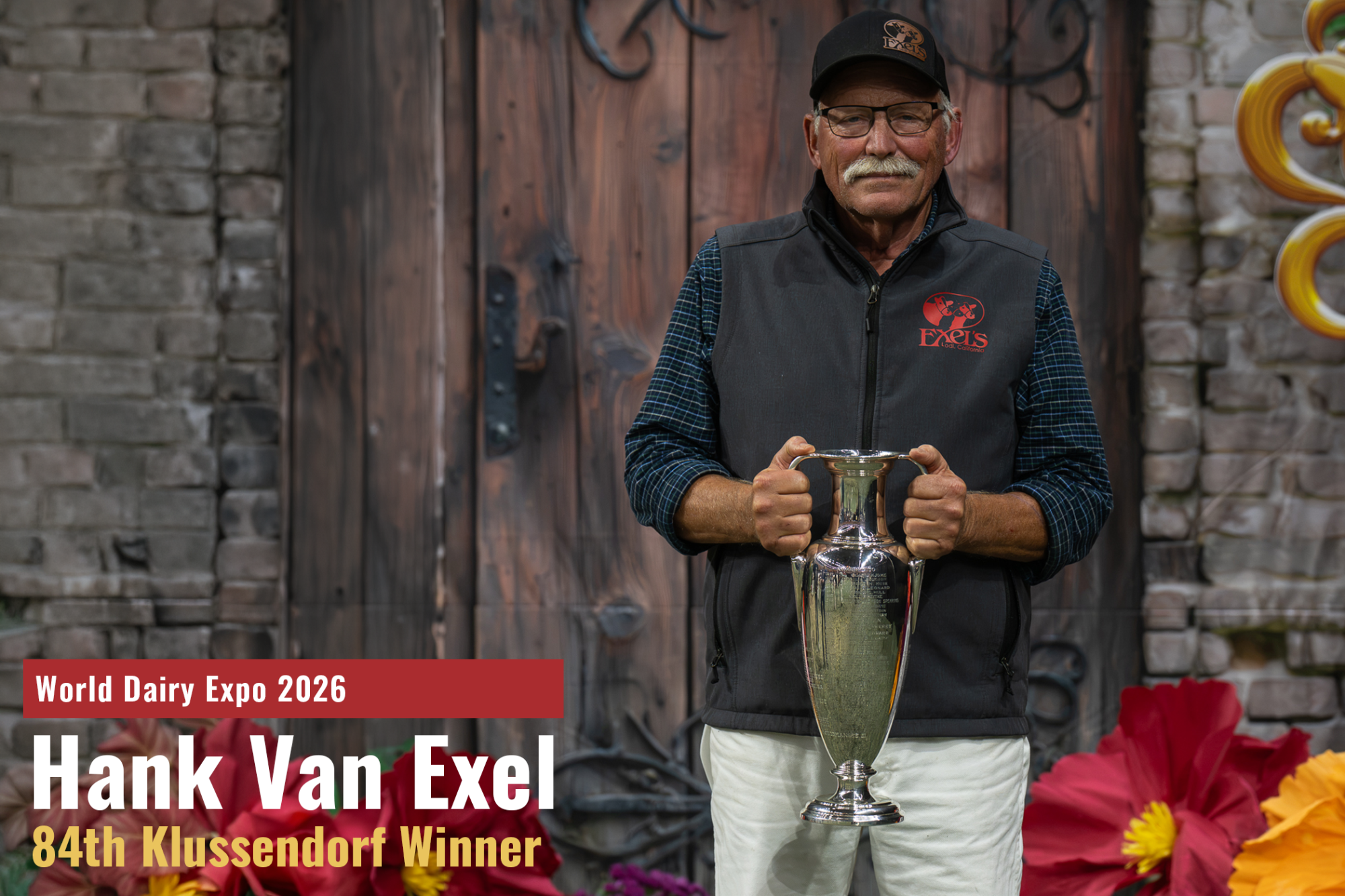
The Coliseum heard the life story before it heard the name.
On Thursday, Oct. 1, World Dairy Expo Holstein show announcer Brenda Lee read the Klussendorf Memorial Association’s citation, taking the crowd through it one piece at a time. A second-generation dairyman. A judge in 15 countries. A past president of the California Holstein Association, elected this summer as vice president of Holstein Association USA. Then came the part no résumé carries. His love of cows had introduced him to his wife, the dairy princess who exhibited the champion cow at the 1976 California State Holstein Show.
“By now, people in the audience may know that Hank Van Exel of Lodi, California, is this year’s Klussendorf winner,” Lee said, as Van Exel made his way into the ring.
He’s the 84th winner, announced during the 59th World Dairy Expo. The award honors four things: character, sportsmanship, ability and endeavor. His name goes on a silver trophy made by Tiffany of New York in 1937. The winner is chosen by members of the Klussendorf Memorial Association, most of them past winners.
That’s the part that got to him.
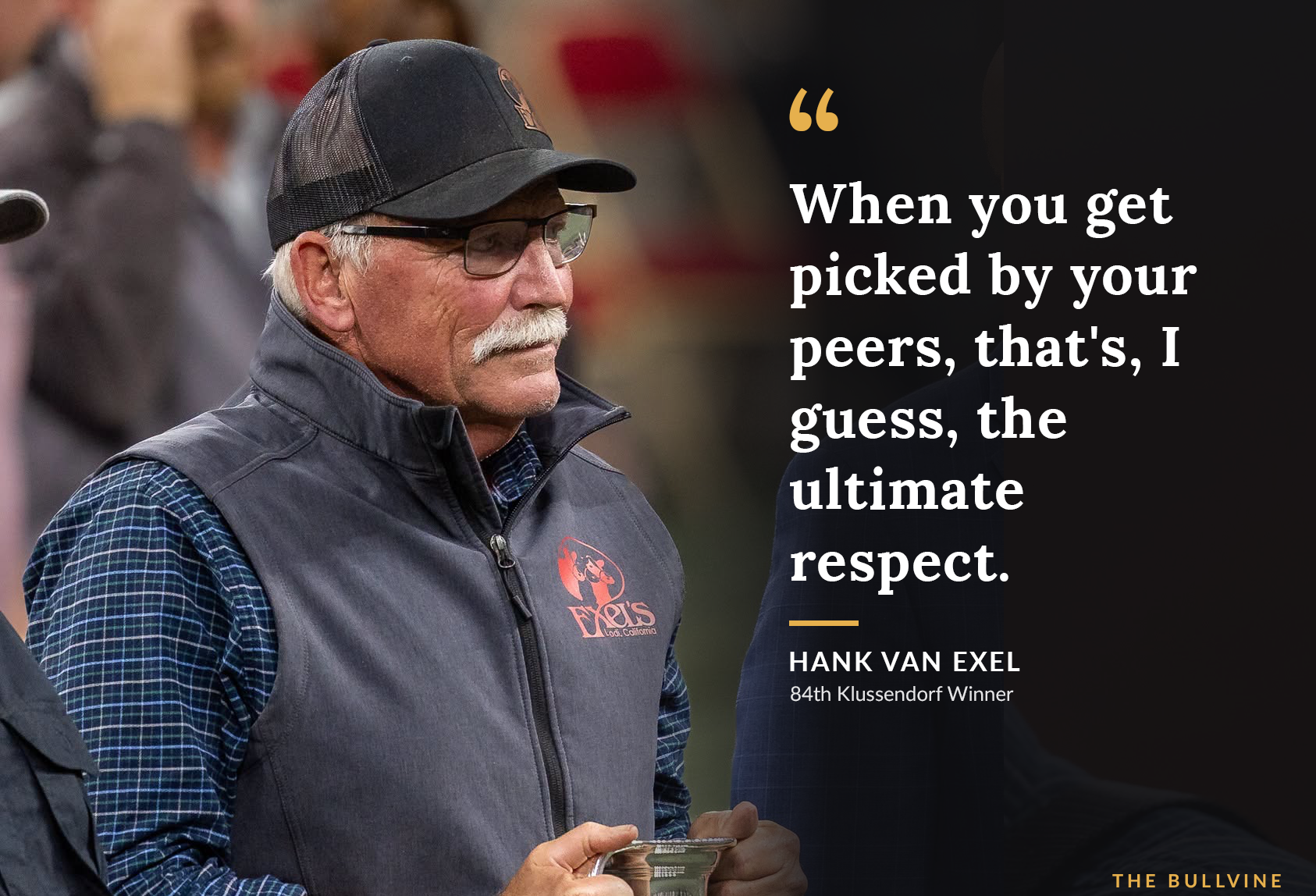
“When you get picked by your peers, that’s, I guess, the ultimate respect,” Van Exel told interviewers after the presentation. “All the people that were in that line, I’ve known for a lot of years, and it was very humbling to be picked.”
It started with parents who milked by hand
The Klussendorf story starts in the Netherlands after the Second World War. Adam and Pietje Van Exel left Holland in 1951, part of the postwar wave of Dutch emigration. In 1954, they bought a farm outside Lodi and started milking a small herd of grade Holsteins. Hank was born on that farm, and he still farms it.
“My parents milked the cows by hand,” he said in a Bobcat company profile. “They did all the work themselves. I think they were one of the greatest generations ever.”
Like a lot of farm kids, he started with 4-H and FFA projects. Then county fairs started asking him to judge, and he “caught the bug.” He finished high school in 1972 and went to Cal Poly for dairy science. He judged on the university team there and took top honors at the Pacific International Dairy Show contest.
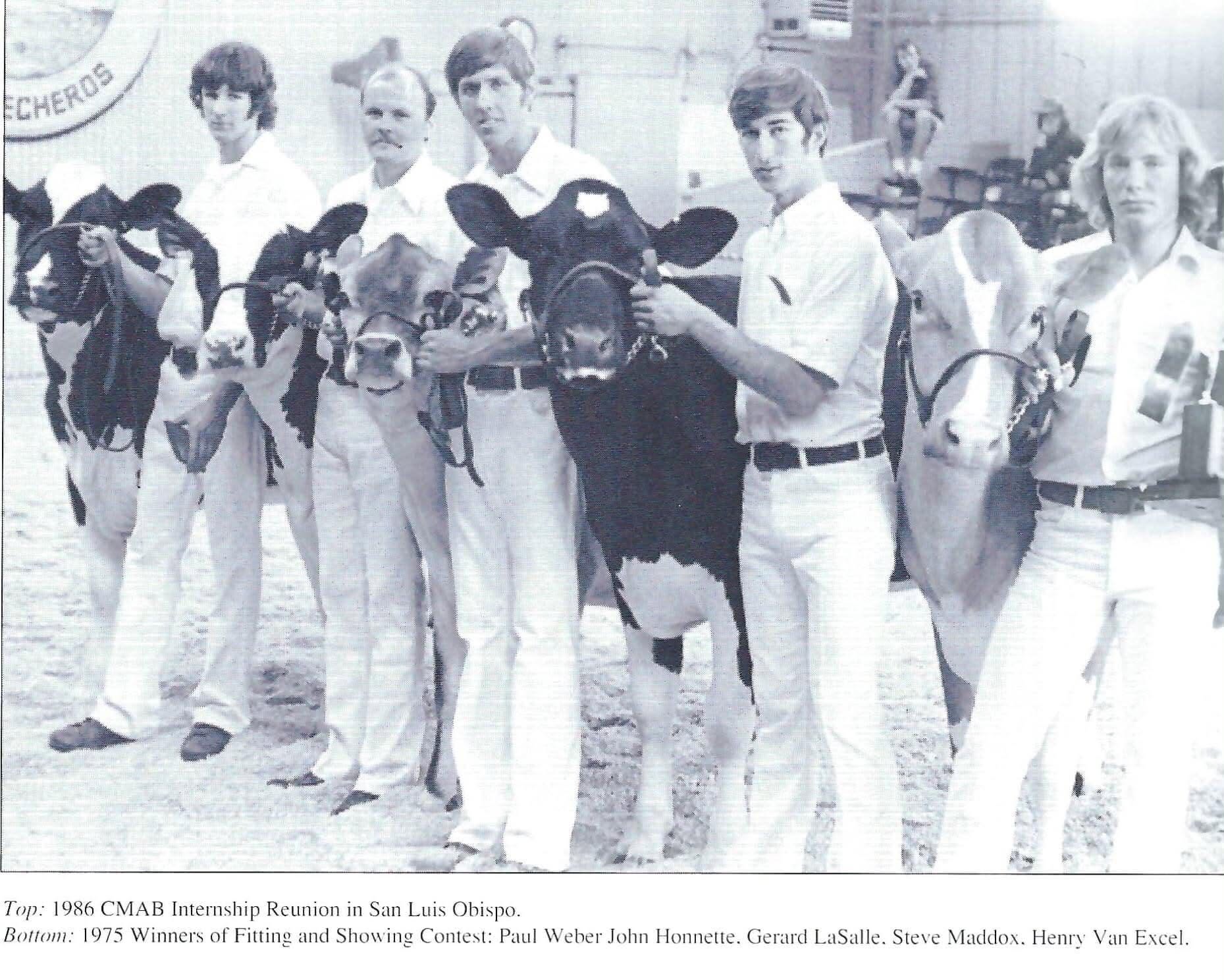
His fourth year ended early. That year, his father had a heart attack and couldn’t run the farm alone, so Hank went home. A year later, having learned herd management “through trial-by-fire,” he was in charge of the cattle while his father handled the crops.
He talked a grade herd into registration
Adam Van Exel was a progressive manager. He adopted self-locking stanchions, AI and group-balanced rations early. But he had little time for the registered side of the business. Registration and breed-improvement programs were Hank’s idea, and he spent years arguing for them at home.
He doesn’t tell it as a fight with his father. He credits his father for the drive behind it.
“My dad pushed and motivated me,” he told the Jersey Journal in 2011. “My ‘If we’re going to do it, it better work’ attitude came from my father.”
The herd has been classified since 1969. Expo named him Dairyman of the Year in 2015. By then, the Holstein string carried 152 Excellent and 477 Very Good cows, 15 Gold Medal Dams and 8 Dams of Merit. Its rolling average was 32,827 lb of milk, 1,046 lb of fat and 974 lb of protein. Thirty Holsteins had been nominated All-American.
So the grade herd Adam and Pietje bought in 1954 became a fully registered herd, one argument at a time.
His eye took him to 15 countries
The judging bug he caught at county fairs never went away. His assignments span 15 countries, with Argentina, Brazil, Japan, Mexico, Canada, Australia and most of Western Europe on the list.
The big rings are all on there. He’s judged at World Dairy Expo three times, Jerseys twice and Holsteins once, including the 2011 Jersey show. He’s also judged the Royal Winter Fair, the European Championship and Black and White Days in Australia. Add International Dairy Week, the Eastern, Western and Southern Nationals, and two turns as official at the All American Jersey Show in Louisville. In 2018, Borderway UK Dairy Expo billed him as its Master Judge. He placed four breeds there: Holstein, Dairy Shorthorn, Brown Swiss and British Friesian.
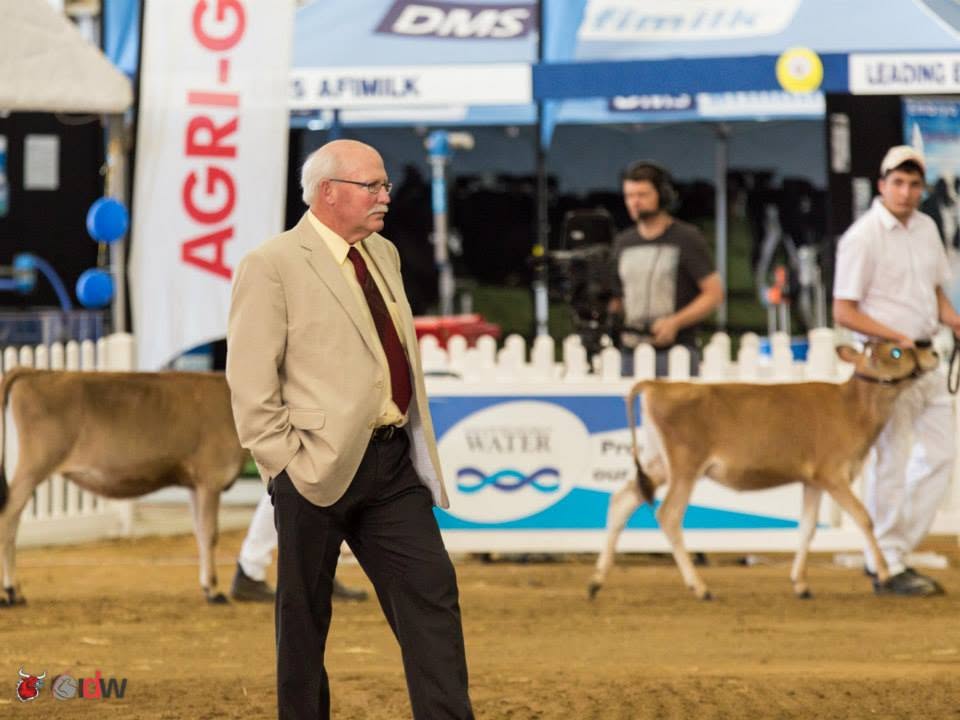
For Van Exel, judging was never only about placing cattle. It was how he learned.
“It’s my hobby. The genetics part is my passion,” he said in the Bobcat profile. “And it’s important for me, because I get to see different ideas and different ways of doing things.”
Usually his eye’s work is done once the last ribbon is handed out. Once, at a county show in Ferndale, it kept going and gave the farm a second breed.
The judge who bought the cows he’d just placed
The Jersey Journal dates that show to 1992. Van Exel named his Grand, Reserve Grand and Junior Champion Jerseys. Then he made an offer on all three, plus two more from the same Oregon family’s herd. He was in a hurry, with a wedding to get to that weekend. He drove home a Jersey breeder.
He took the new string to World Dairy Expo and the Royal Agricultural Winter Fair, and they won their classes. After that, he started buying Jerseys by the truckload, keeping the best and selling the rest.
He also had a business reason. The Jerseys got him into Hilmar Cheese and its component premiums. He took “a lot of flack” from other breeders over running a mixed herd, and he kept it anyway. The Jersey Journal noted in 2011 that mixed herds were becoming standard across the industry. He was early. The industry caught up.
The Jerseys paid off in the ring too. Hilmar Bumble Bee Missy EX-95 was Reserve Grand at the 2000 Central National Jersey Show in Madison. The family bred and showed the winner of the 2003 National Jersey Jug Futurity, and by 2015 they’d won Grand at the California Jersey Show six times. Exels Carrier Polly 2109 was Reserve Junior Champion at the 2010 All American Jersey Show. She traces to Renzo Playboy Poly EX-94, one of those first five head from the Ferndale purchase.
They paid in the bulk tank as well. In 2014, the Jersey herd averaged 21,857 lb of milk, 977 lb of fat and 767 lb of protein on 211 cows. That ranked second in the nation for milk among herds of 150 to 299 cows. Today the Jerseys are 400 of the 1,600 cows in the milking string, or a quarter of the herd.
Blexy, and the cows that break your heart
“You always remember the good ones.” Hank Van Exel
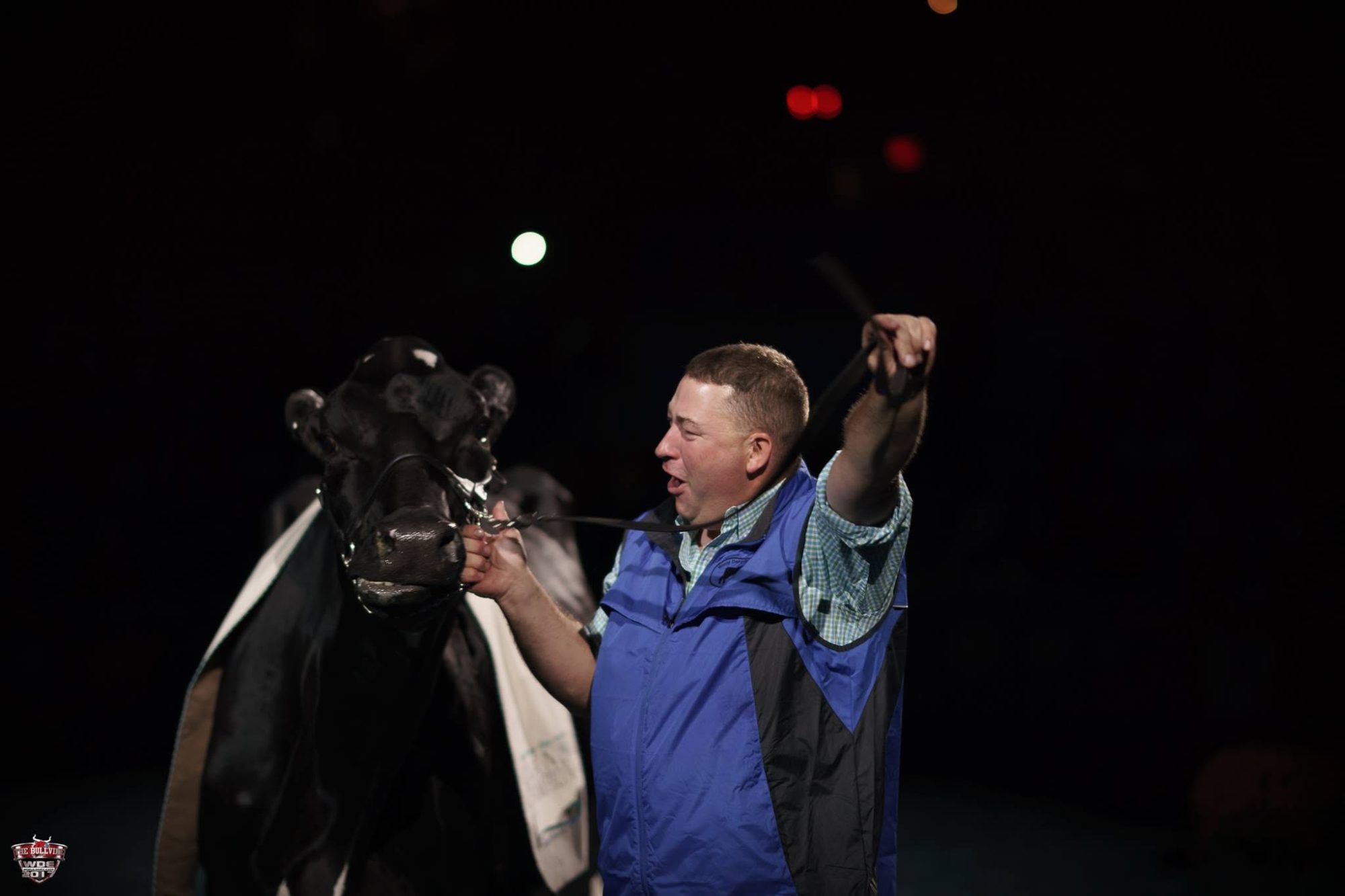
In 2017, Rosiers Blexy Goldwyn-ET won her class of six-year-olds and older, then Grand Champion Holstein, then Supreme Champion of World Dairy Expo. She beat nearly 2,500 entries to do it. Her owners were listed as Budjon, Vail, Abbott, Van Exel and Woodmansee.
Van Exel names her among his career highlights at Expo, alongside his Reserve Grand Jersey and his Reserve Grand Holstein. “Blexy kind of has a soft spot,” he told interviewers, “because we probably have 30 or 40 offspring now of her.” The Bullvine reported her death in June 2022.
Her ownership line has turned into its own honor roll. The 82nd Klussendorf went to Tom Cull of Budjon in 2024. The 83rd went to Clark Woodmansee III in 2025, whose family co-owned Blexy. The 84th went to Van Exel. And that same week, Peter Vail was made an honorary member of the Klussendorf Association at 87.
So three Klussendorfs in a row went to partners in one cow. That says more about the people than about luck. The people who can recognize a Supreme Champion before she wins are usually the ones the show ring has trusted for decades. One great cow brought them together, and their peers have now honored each of them.
Then there’s the other side of a breeder’s life. Van Exel came to Madison this year without a cow he’d been counting on. She’d placed fourth at Expo last year and was intermediate champion at the state show, and they lost her just before the trip.
“You always remember the good ones,” he said, “and that was the hard one.” Every breeder in those barns knows exactly what he means.
He’s spent nearly four months behind the wheel getting here
All of it has depended on a drive most exhibitors never have to think about. On his own figures, at least 35 years of 38- to 40-hour trips each way, Van Exel has spent nearly four months of his life behind the wheel between Lodi and Madison.
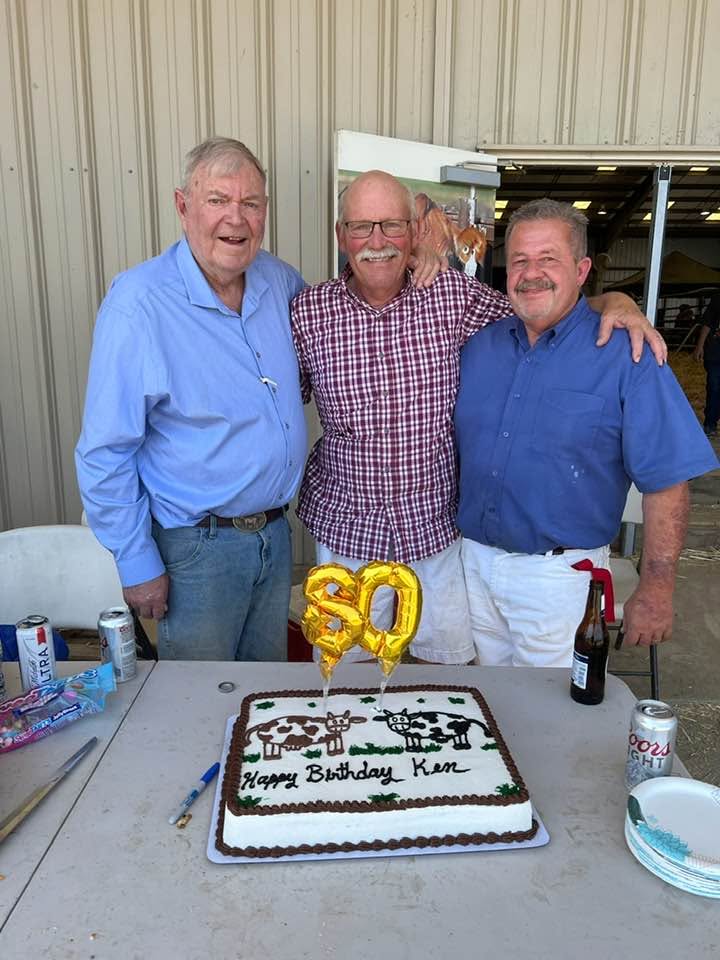
Lately he hasn’t made that drive alone. “The last couple years, I’ve had a good traveling partner, another Klussendorf winner, Ken Melvold,” he told interviewers. Melvold, of Fresno, won the 78th Klussendorf in 2019, a win The Bullvine marked in its 2019 Expo recap. Between them, the two men in that cab now hold the 78th and 84th Klussendorfs.
“Today, the day after, is the roughest day of the 365,” he said. “It’s a terrible feeling looking at all this stuff and then having to load it and get it home.”
When asked whether the trip was a sacrifice. “It is,” he said. “When you do well, it’s satisfying.” After 35 years, he still thinks it’s worth it.
California’s showmen kept making the trip, and it shows on the trophy
That drive helps explain a number we pulled from the record.
The Dairy Shrine’s list of Klussendorf winners runs from Olaf Kjome in 1937 to Clark Woodmansee III in 2025. By the addresses on that list, Californians won only 2 of the first 72 awards, through 2013: Henry LaFranchi of Calistoga in 1971 and Stuart Rowe of Davis in 1997.
Since 2014, Californians have won 4 of 12:
| Year | Award | Winner | Hometown |
| 2014 | 73rd | Gilbert Teixeira | Turlock |
| 2019 | 78th | Ken Melvold | Fresno |
| 2023 | 81st | Joey Airoso | Pixley |
| 2026 | 84th | Hank Van Exel | Lodi |
No award was given in 2020.
That’s under 3% before 2014 and a third since. The drive from California didn’t get any shorter. California’s show people just kept making it, year after year, and the people who vote noticed. Melvold was one of the nominators who backed Airoso in 2023. Three years later, he’s sharing the driving with the newest Californian on the list.
Van Exel now holds a second, rarer distinction. We checked World Dairy Expo’s Dairyman of the Year honor roll from 1970 to 2019 against the Klussendorf list. Only two other people appear on both under the same name and hometown: Keith King of Oneida, Ill. (Dairyman 1979, Klussendorf 1990) and Howard Voegeli of Monticello, Wis. (Klussendorf 1992, Dairyman 2000). Expo lists both as deceased.
That makes Van Exel the first Californian named both Expo’s top producer and the show ring’s top showman. He’s also the only living person on both lists. Those are two different honors, given by two different groups. One recognizes how a man runs his dairy, the other how he carries himself in the ring.
Fair isn’t always equal, and his family farm runs on that rule
Hank and Carolyn have three children: Adam, Jennifer and Sarah. According to his candidate statement, all eight of their grandchildren are involved in the dairy business too. That didn’t happen by accident.
“I originally tried to get the kids to go somewhere else,” he told the Jersey Journal in 2011. “Wanting your kids to be part of the farm is the most difficult job a dairy producer can have. It’s not always fair and equal; and what’s fair and equal are very different things.”
He had one rule for any of them who wanted to come home: find a way for the farm to make more money or save more money. “You do not have to work together to be a family farm,” he said. “Everyone must have their own thing going on, and earn their own way. If not, you are all setting yourself up for problems.”
He didn’t make himself out to be easy, either. “I’m a difficult guy to work for,” he admitted, laughing. Then he added: “It is really just a great life to have, especially when it is a place you can all be together.”
Years later, the Bobcat profile asked him whether he was set on a fourth generation. He said no. “I want my children to do what is good right now for themselves. I think that’s the most important thing we’ve got going.”
Van Exel calls succession the hardest job a dairy producer has. His answer was to give his children the choice, with one business test attached. Today, Adam and Lacey carry much of the day-to-day work at home and on the show circuit.
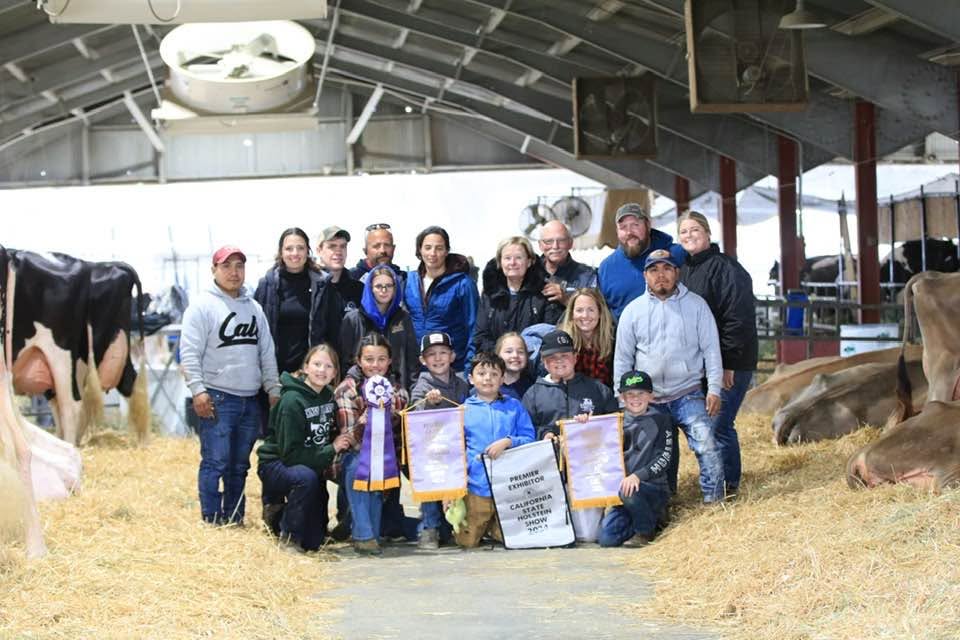
The return shows up at Madison. “When we go to places like Madison to World Dairy Expo, my kids know just as many people as I do,” he said in 2011, “and now my grandkids are exposed to the same thing.”
His best exhibit might be the people who worked for him
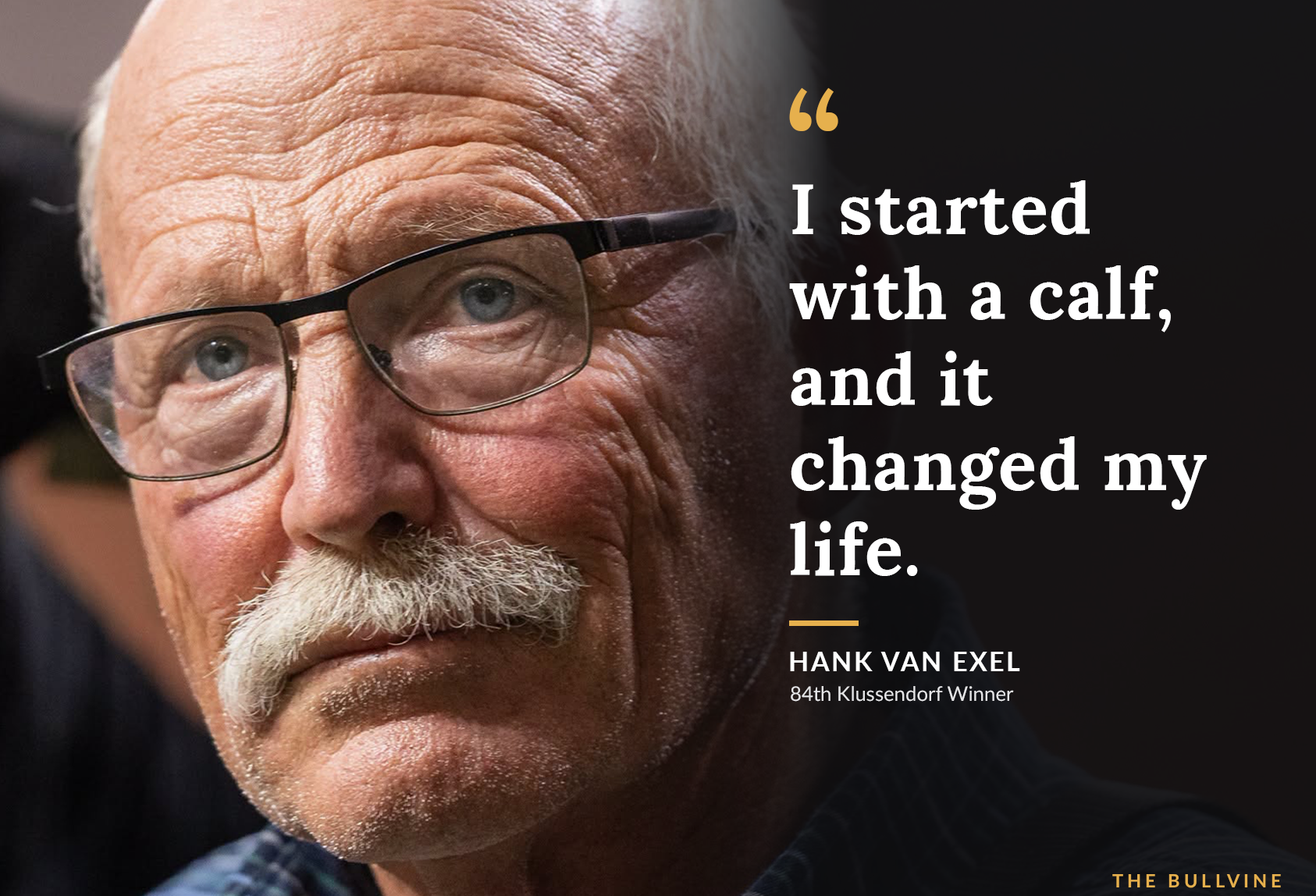
“I started with a calf, and it changed my life.” Hank Van Exel
Ask Van Exel about the next generation, and he starts naming people who used to work for him.
Nathan Thomas comes first. Thomas worked for Exels Holsteins and, in Van Exel’s words, “was my assistant here at Madison for the Jerseys.” In 2023, Thomas won the 32nd Klussendorf-MacKenzie Award. He has also worked for Vierra Dairy. On Friday, the day after Van Exel’s award, Thomas was ringside when Vierra’s Stoney Point Joel Bailey EX-97 was named Supreme Champion.
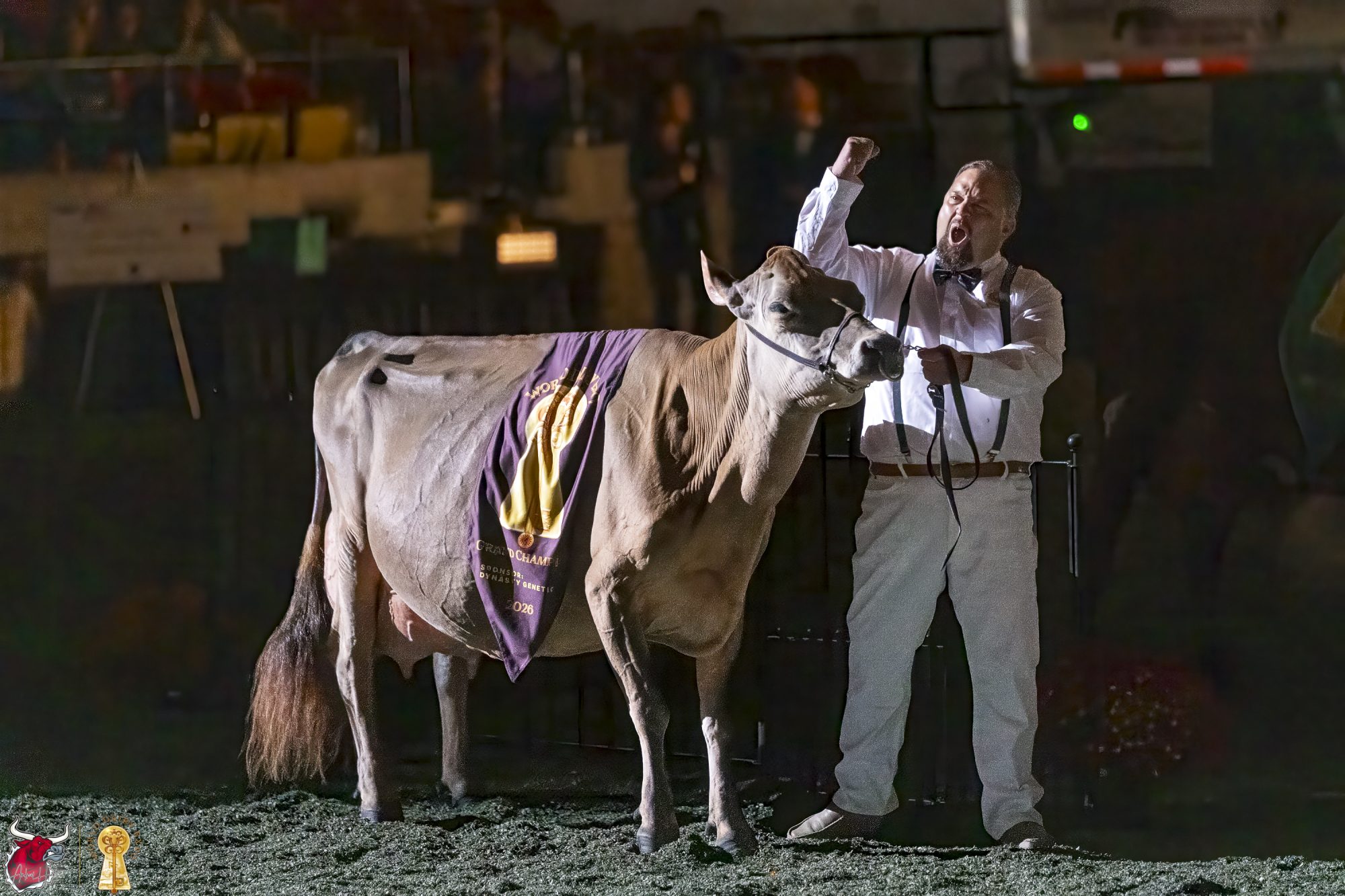
“It’s great to see how he’s developed,” Van Exel told interviewers.
Pat Lundy is next. Van Exel expects to see him judging Madison “one of these days soon.” Lundy, of Granville, N.Y., is already partway there. He was the official judge of the 2022 International Red & White Show and the associate judge of the 2025 International Holstein Show.
“It’s kind of neat to see them go forward and judge,” Van Exel said.
The pipeline hasn’t stopped. This year he hired two students, one from England and one from Australia, for three months in the spring, then brought one back to help with the Expo string. Building a crew is “getting a little more difficult all the time,” he admits. He keeps doing it.
His approach to young people came from Doug Maddox, the Riverdale Holstein breeder who won Holstein USA’s Elite Breeder Award in 2010 and died in December 2011. Van Exel’s version of the Maddox line: if you want to turn a child into a person, “get them a calf, because their responsibilities go with that and the love of it.” You’ll find out fast, Maddox told him, whether the kid loves that calf or not.
“I think that’s a great start. I really do,” Van Exel told interviewers. “It’s our responsibility. As a person, you just got to reach out to the younger ones.”
He knows it works, because it worked on him. “I started with a calf, and it changed my life,” he wrote in his Holstein USA candidate statement.
Off the farm he’s done the same work for decades: 12 years as a 4-H leader, years coaching boys’ and girls’ baseball, basketball and soccer, and steady support for the state FFA.
The vice president has a case to make for registered cattle
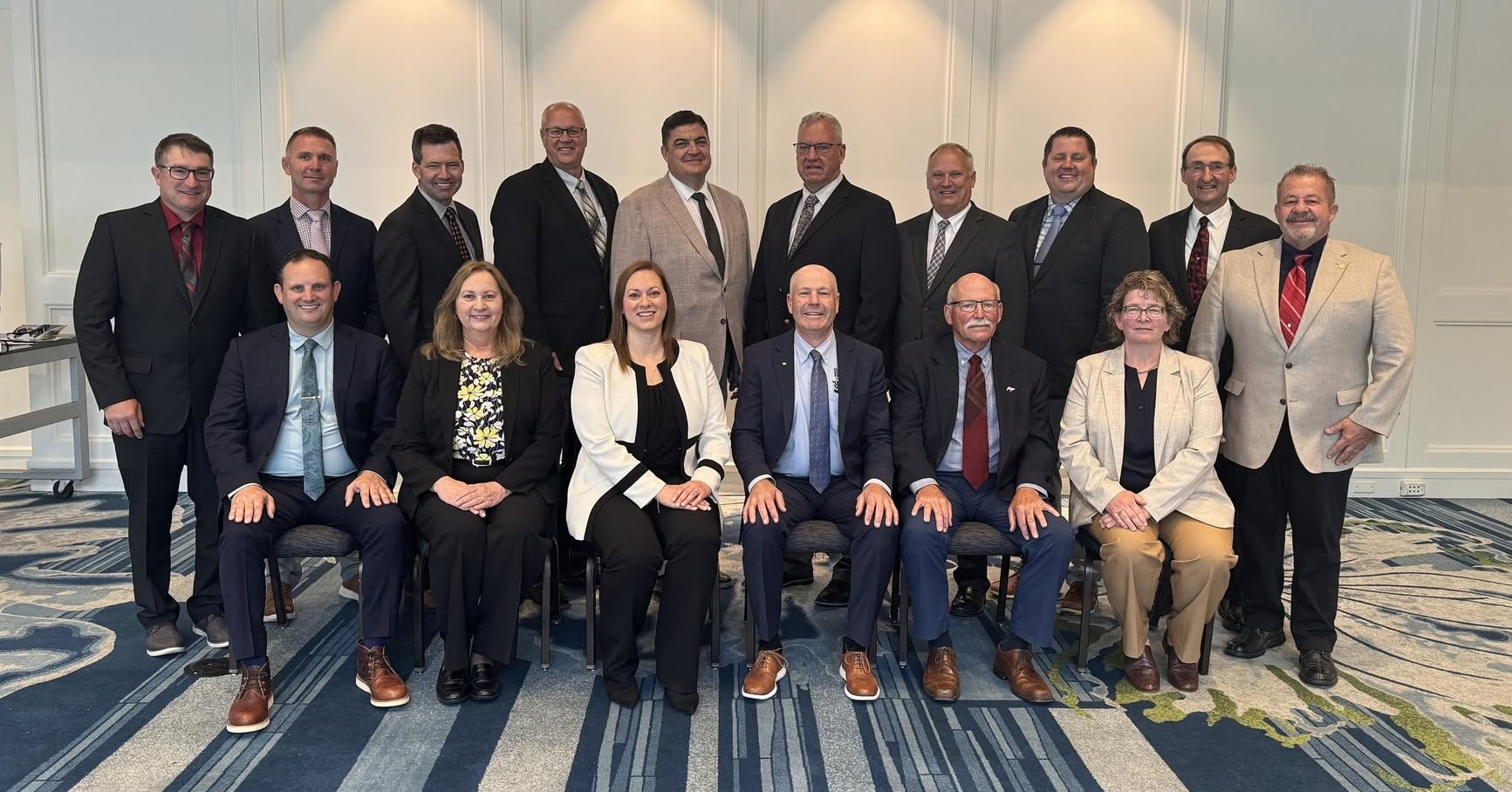
His service to the breed runs just as long. He’s been president of the California Holstein Association, which honored him with its Junior and Senior Breeder awards and the A.J. Quest Memorial Breeder Award. He served on the Holstein USA board and executive committee and chaired its legislative affairs and national show committees. He also chaired the National Holstein Convention when it came to California.
In June, delegates in Orlando elected Van Exel vice president of Holstein Association USA, alongside president Dwight Rokey of Sabetha, Kan. The citation read in the ring on Oct. 1 said the election puts him on track to become president.
His candidate statement made the case for registered cattle in commercial terms, not nostalgia. The family had just sold 1,500 registered Holsteins to “a large commercial dairyman,” who bought them “because of the recognition of our herd” and wanted “those top genetics.” That left 1,600 cows milking, 1,200 Holsteins and 400 Jerseys, with a rolling herd average of 33,823 lb of energy-corrected milk on 2,150 acres of corn, alfalfa, winter wheat and grapes. The sale price wasn’t disclosed.
He drew the lesson himself: breeders of top genetics, he wrote, “will give you more bang for your buck.” At Expo, he told interviewers the work ahead is to bring breed people and “all dairymen,” and all breeds, closer together, because “the people that are doing this are dwindling.”
Then he talked about why he’s still hopeful. “It always amazes me when you see TV and you see all the bad,” he said. “But when you come to one of our conventions and see what these kids are doing and how they’re reacting with one another, and hear them speak, that gives you a lot of hope.”
“It’s a hard way of life,” he said, “but it’s a great life.”
Five lessons from Hank Van Exel’s career
Make your case where the buyers are
Van Exel sold 1,500 registered head to a commercial operation because their reputation was already known. That’s a real exit for a registered herd, and not just a trophy. Keep your records in a form a commercial buyer can read: classification history, energy-corrected milk and genomic results.
Learn from every ring you judge
He treats every assignment as a chance to see “different ideas and different ways of doing things.” Bring one idea home from every show you work.
Give a kid a calf
The Maddox rule costs one heifer and some patience. 4-H, FFA and Holstein USA youth programs are already set up to support it.
Hire people who might outgrow you
His former hands include a Klussendorf-MacKenzie winner and a judge who’s already worked two of Madison’s rings. Count the people you trained as part of your herd’s legacy.
Plan succession by choice, not by expectation
Every family member who came home had to find a way to make or save the farm money. Every child got the choice. Three generations are still involved.
The drive home
The day after the Klussendorf was like every other day after Expo for Van Exel. Load the cattle, pack the stalls and start a drive of 38 hours in a good year and 40 in a normal one.
What’s different this year is the silver trophy in Madison with his name on it, the 84th since 1937.
He said it best himself, a few years ago, talking about a life spent judging all over the world. “I’m not sure how much fun just being a dairyman all the time would be, but it’s sure a lot of fun with all the people you get to meet along the way. I know a lot of people all over the world through the dairy cows.”
His parents milked a grade herd by hand. Their son argued that herd into registration, took his eye to 15 countries and kept making the drive east. Fifty years after the 1976 California State Holstein Show, where the dairy princess leading the champion cow would become his wife, his peers put his name on the trophy beside 83 others going back to 1937.
Learn More
- When Your ET Holstein Calves Sell for Less Than They Cost to Make — Breaks down the $2,000 recipient opportunity cost driven by commercial beef-on-dairy markets. Dismantles the financial reality of elite genetics, proving why a $4,917 sale average means you are losing money on every show heifer you breed.
- Only 16.5% of Dairy Farms Make It to the Third Generation — Follows the money on family farm transfers to expose why most operations fail before generation three. Delivers a strict 10-year timeline that forces the exact “fair versus equal” business conversations Van Exel used to protect his herd.
- How Record-Breaking Milk Components Are Reshaping Dairy’s Future — Arms you with the math behind $3.20/lb fat prices and the 2025 genetic index reset. Reveals how optimizing for feed efficiency and component yields captures the specific cheese plant premiums that originally justified Van Exel’s Jersey expansion.
 The Sunday Read Dairy Professionals Don’t Skip.
 The Sunday Read Dairy Professionals Don’t Skip.
Every week, thousands of producers, breeders, and industry insiders open Bullvine Weekly for genetics insights, market shifts, and profit strategies they won’t find anywhere else. One email. Five minutes. Smarter decisions all week.
