








58 calves the database already flagged. Cornwall Council’s case file shows the regulator was watching the paperwork before anyone looked at the cattle. What’s your reconciliation number?
Executive Summary: Cornwall dairy farmer Martin John Charles Hambly walked out of Truro Crown Court on May 22 with a five-year ban from keeping farm animals, an 18-week suspended sentence, £10,000 in costs, and 60 days to dispose of his cattle — but the prosecution didn’t start with the collapsed heifer that grabs the headlines. It started with 58 calves never registered to BCMS inside the 27-day window and 16 calves never tagged on time, a pattern the Cattle Tracing System flagged before APHA ever walked through the gate at Trenant or Ley. On a 200-cow English dairy, that scale of registration gap immobilizes roughly £4,600–£11,600 of expected calf revenue and locks every late-registered animal out of the food chain permanently — your only legal exits are the hunt kennel or the knacker’s yard. The case also exposes a structural risk every county-farm tenant carries: Cornwall Council is both Trenant’s landlord and the Trading Standards authority that prosecuted, with the same files flowing between both functions by operation of law. Pull your registration latency this week — the average days between calving and BCMS submission across the last 12 months — and reconcile it against your CTS pull line by line; if the numbers don’t match exactly, the gap is what an inspector already sees. The fix at scale is a 15-minute Wednesday check with one named owner and a day-20 trigger instead of day-27, which costs you nothing the working dairy isn’t already spending on admin time. Read on if “I’d have to check” is your honest answer to what your reconciliation number looks like right now.
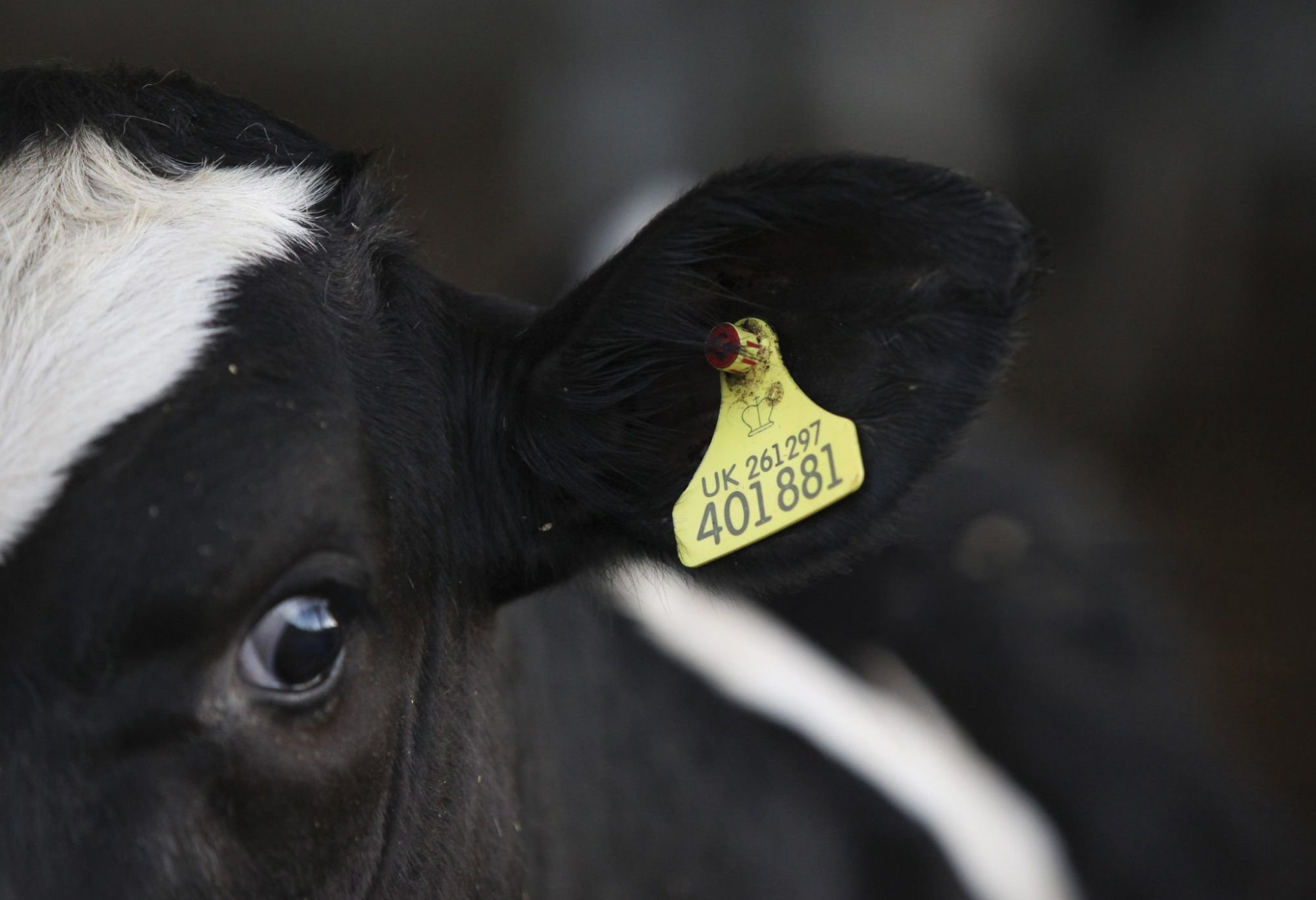
On May 22, 2026, Martin John Charles Hambly stood in Truro Crown Court and pleaded guilty to 13 animal welfare offences across two farms — Trenant and Ley — near Menheniot in Cornwall. He left with an 18-week suspended sentence, 150 hours of unpaid work, £10,000 in costs, a £26 victim surcharge, and a five-year ban from keeping farm animals. Cornwall Council gave him two months to dispose of his cattle. Trenant — a Council-owned property on Cornwall’s county farms estate — was already advertised for re-letting under a 15-year tenancy with stricter compliance terms three weeks before sentencing.
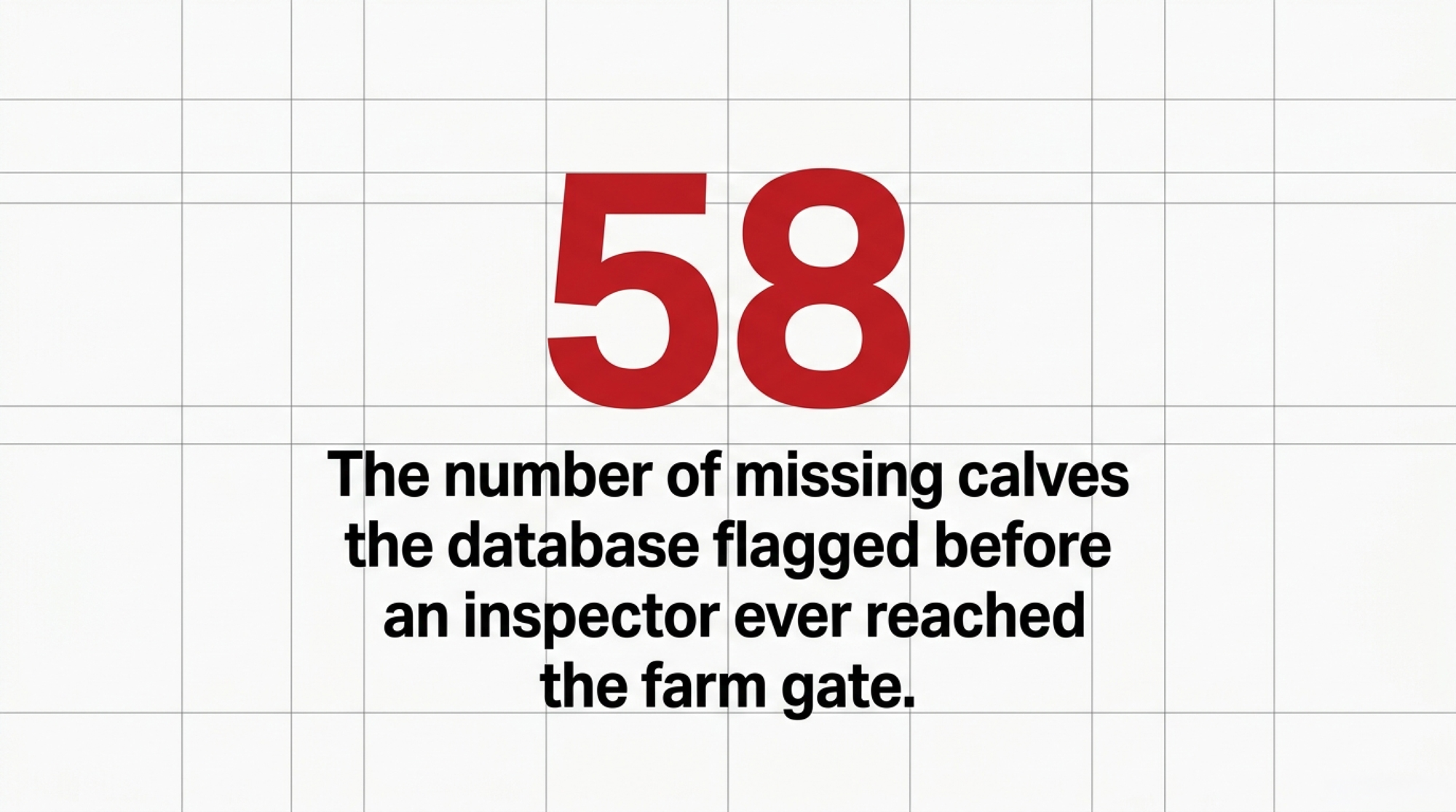
The detail that makes most farmers wince is the collapsed heifer found near death without food or water. But that’s not where the case started. It started with 58 calves not registered with the British Cattle Movement Service (BCMS) inside the 27-day window, and 16 calves not ear-tagged in time. 74 animals on a working dairy whose absence from the government’s traceability database was visible to the regulator before any inspector walked through the gate.
If you run a dairy in England, that’s the part you need to think about this week. Not the conviction. The CTS audit started it.
The Database Saw It Before APHA Did
The Cattle Tracing System (CTS) isn’t a filing cabinet. It’s a live surveillance tool the Animal and Plant Health Agency (APHA) can query continuously, building a picture of your farm whether you’re paying attention or not. Whether it’s the UK’s CTS, the USDA APHIS electronic identification rule for interstate cattle movement that took effect in November 2024, or the Canadian Cattle Identification Agency’s national traceability framework, the principle is the same on both sides of the Atlantic — big data is the new inspector, and it’s already on duty.
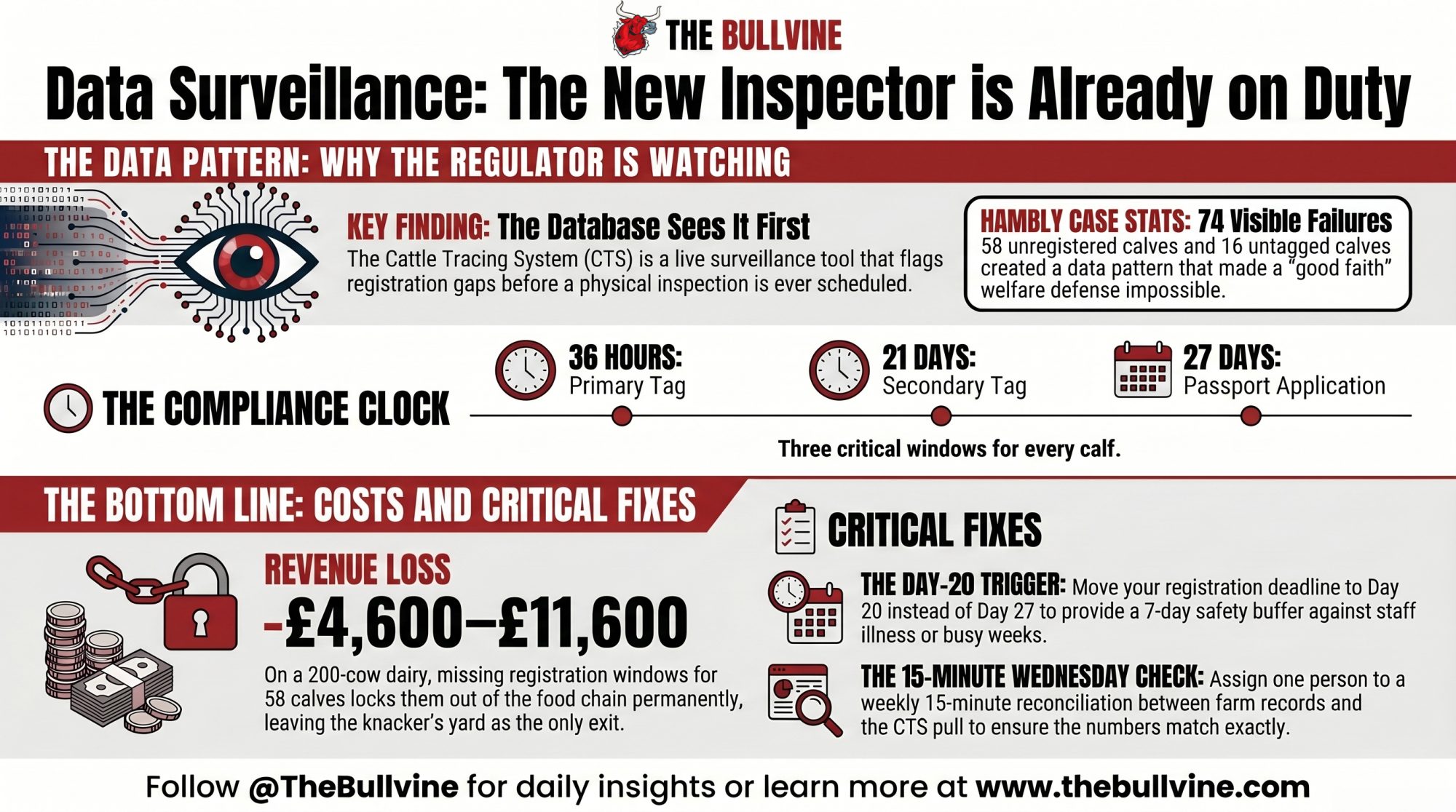
Every dairy calf in England needs a primary ear tag within 36 hours of birth, a secondary tag by day 21, and a passport application submitted to BCMS by day 27. Miss any of those windows on a single calf and you’ve got a paperwork problem. Miss them across a calving season and you’ve got a data pattern visible to the regulator before they ever schedule an inspection. The UK average dairy herd hit 219 cows in the year to March 2024, according to Kingshay’s costings benchmark, generating roughly one calf every other day on an all-year-round system. When registrations stop appearing in the CTS but your declared movement records don’t match, the gap is statistical, dated, and automatic.
Cornwall Council and APHA jointly inspected Hambly’s farms in January 2024, found multiple welfare breaches, and issued a formal caution with detailed written guidance on his obligations. A re-inspection the following year confirmed the violations were continuing. The prosecution followed. Whether the registration pattern itself prompted the January 2024 visit or compounded findings made during it isn’t on the public record — what is on the record is that both data streams supported the eventual prosecution.
How 58 Unregistered Calves Actually Happens
It’s rarely deliberate. On a 200-cow operation, calving is rarely one person’s job end to end. The night-shift stockperson finds the calf, pulls it, tags it (or means to). The farm manager writes it up later — sometimes the same day, sometimes not. Whoever handles BCMS — manager, owner, farm secretary — registers the birth on CTS Online when they get to it. Three roles, three workflows, one calf. The handoff between the barn floor and the admin desk is where it breaks.
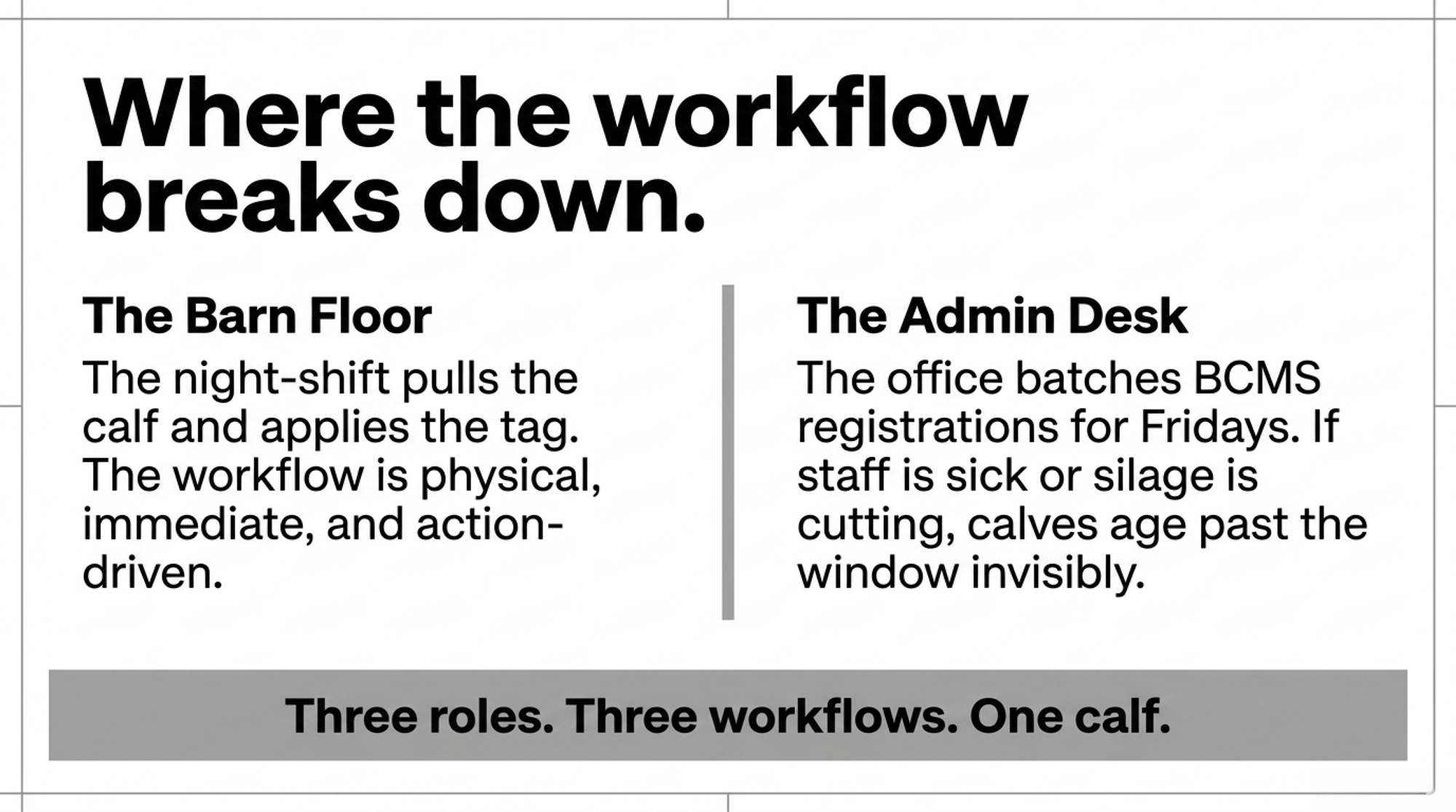
The 36-hour tag deadline is a physical, barn-floor task. The 27-day registration deadline is an office task with no daily trigger. Most farms batch registrations: the I’ll-do-them-on-Friday approach. That works fine until Friday is silage week, or the person who does it is off sick, or the secretary’s on holiday. The batch doesn’t run. Calves age past their window invisibly. Nothing on the farm changes — they still eat, grow, and take up the same pen space. Only the CTS knows.
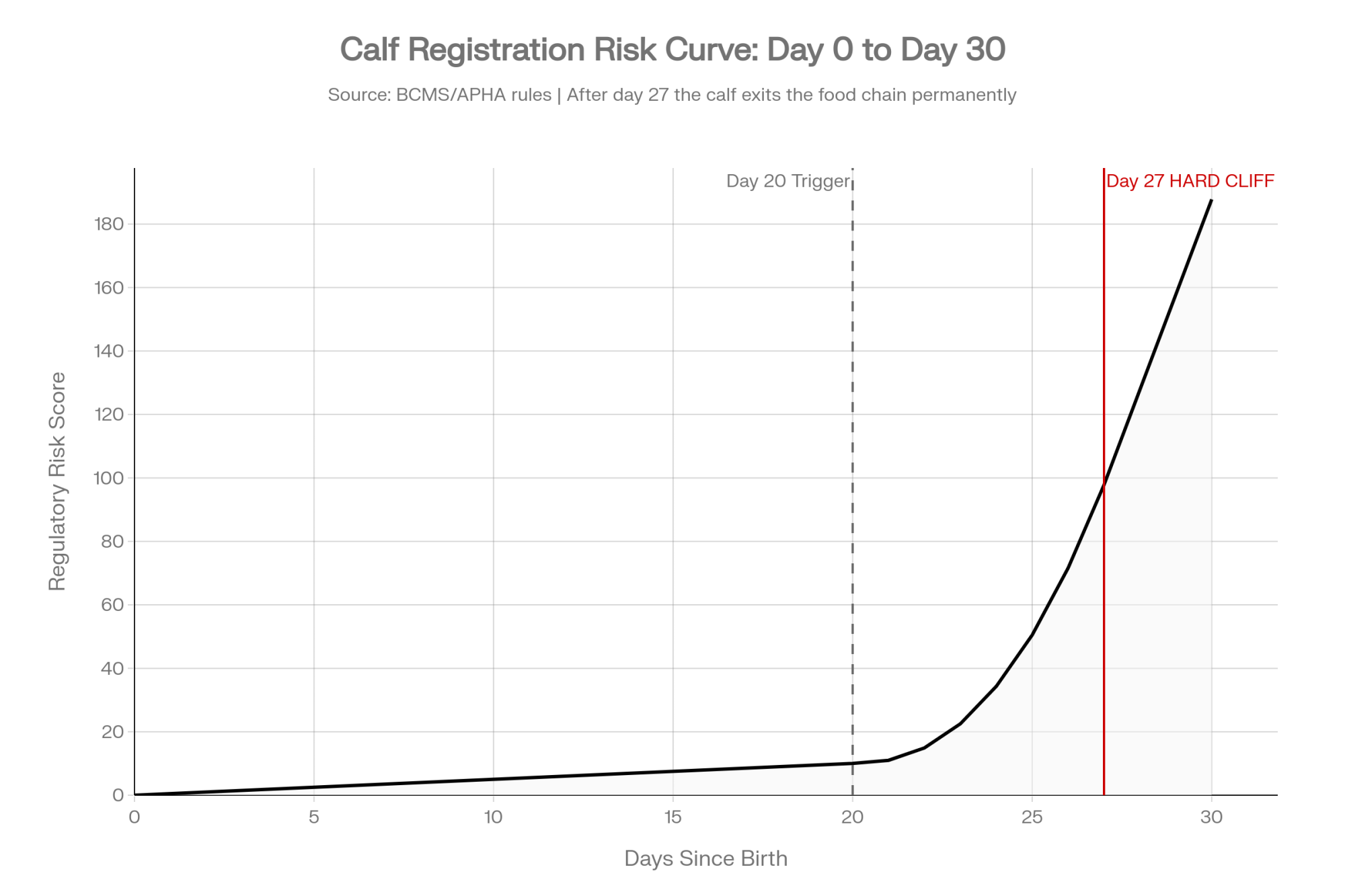
Now run the math. A Holstein bull calf in the UK typically clears the farm in the first two weeks of life, depending on buyer and route to market. Miss the BCMS deadline and that calf cannot legally move alive from your holding except under a movement licence — and the only permitted destinations under a movement licence are a hunt kennel or knacker’s yard. The animal cannot enter the food chain. Ever.
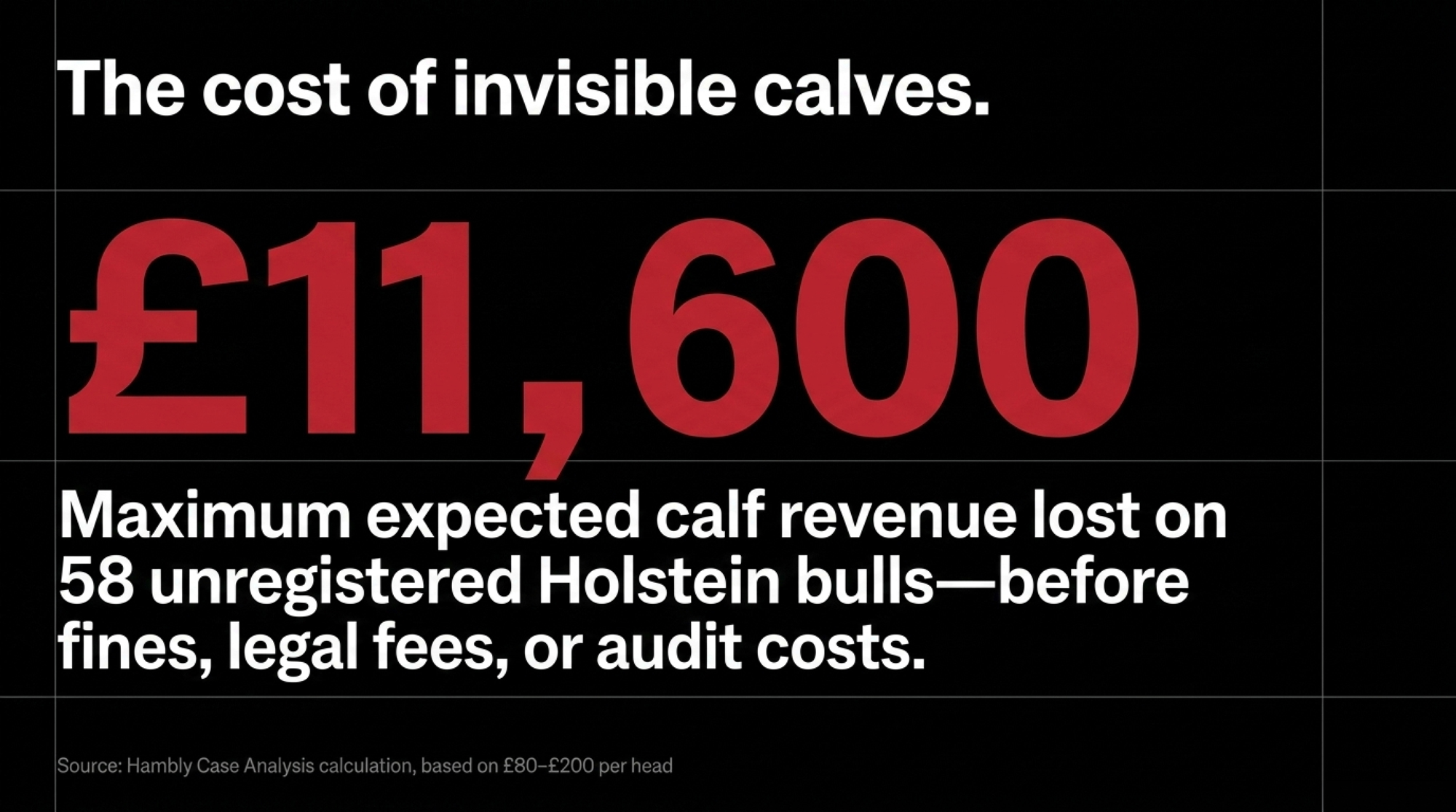
The Cash That Walks Off the Balance Sheet
- 58 calves × £80–£200 per head = roughly £4,600–£11,600 of expected calf revenue that just stopped existing
- Holstein bulls sit at the lower end of the UK dairy calf market; beef-cross premiums currently run higher
- That’s before fines, legal fees, or scheme-audit costs
- Bull calves stop being a sale and start being a stocking density problem
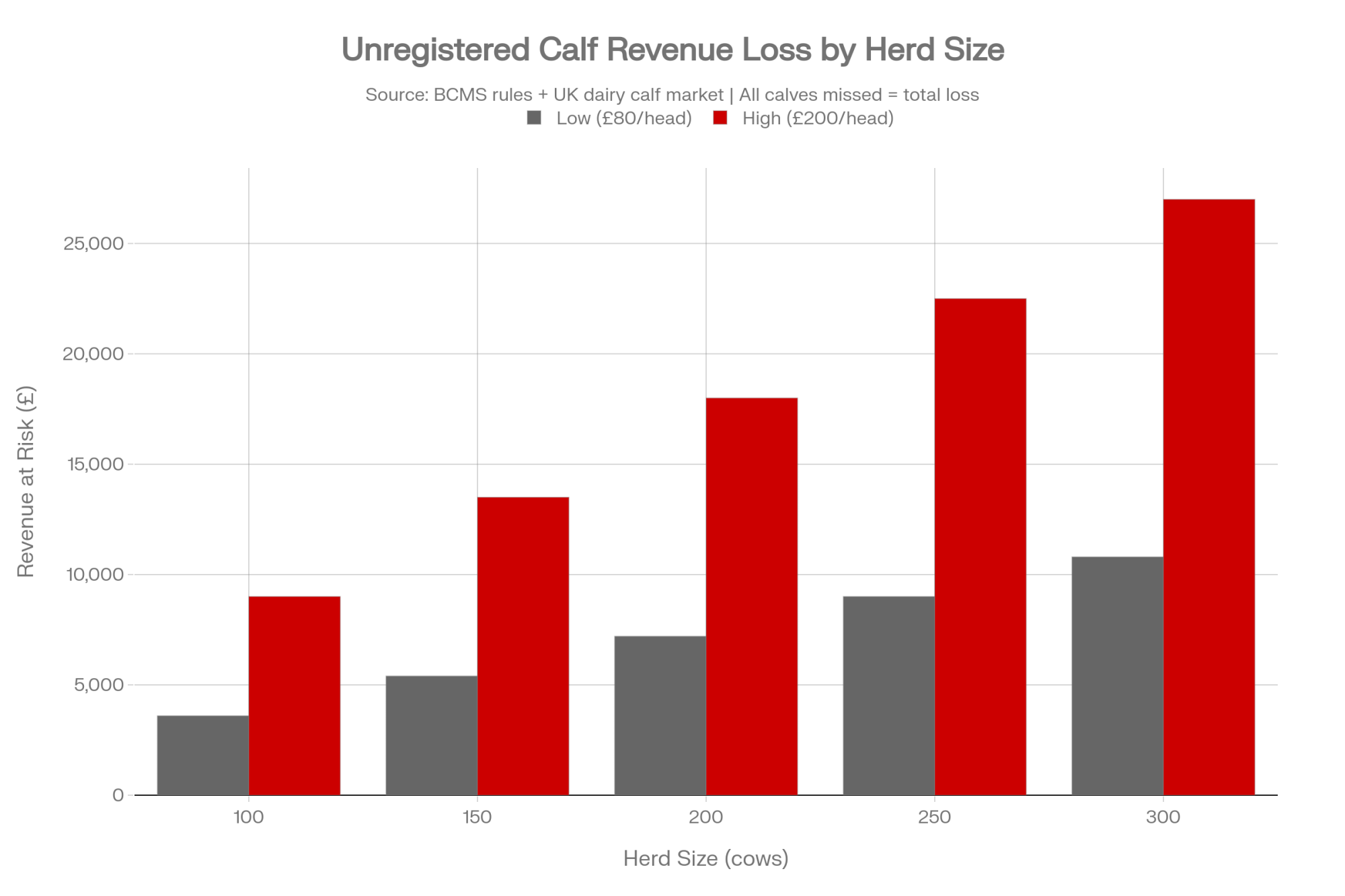
The case file does not enumerate Hambly’s specific calf revenue loss — that figure isn’t on the public record. The math here is the diagnostic any farm can run on its own books.
There’s a knock-on layer worth thinking through. Both Red Tractor and RSPCA Assured publish standards that include BCMS compliance and welfare baselines, and individual scheme decisions on suspension or audit are made on a case-by-case basis under each scheme’s published procedures. From an operator’s perspective, the practical point is simple: a publicly reported prosecution is the kind of event that may prompt scheme attention, and what your records show on the day will shape how that conversation goes. The structural exposure is identical for any tenanted or contracted dairy in England.
Why Crown Court, Not Magistrates’
The reason BCMS gaps and welfare findings hit so hard together — and the reason this case landed at Crown Court rather than magistrates’ — is that the two evidence streams corroborate each other through one shared inference: the farm wasn’t monitoring its animals.
The Statutory Stack
- Welfare of Farmed Animals (England) Regulations 2007: ill or injured animals must receive care “without delay,” with veterinary advice obtained “as soon as possible” if treatment is unsuccessful.
- Animal Welfare (Sentencing) Act 2021: Crown Court sentencing ceiling raised to five years for the most serious offences.
- Animal By-Products (Enforcement) (England) Regulations 2013: fallen stock must be collected by an approved collector without undue delay, with a commercial document retained on farm.
- Sentencing Council 2023 cruelty guidelines: ignoring prior advice is a high-culpability indicator.
Your defence against a welfare charge is good faith — that you noticed, you acted, you escalated. That defence depends on records: treatment logs, vet call notes, dated observations.
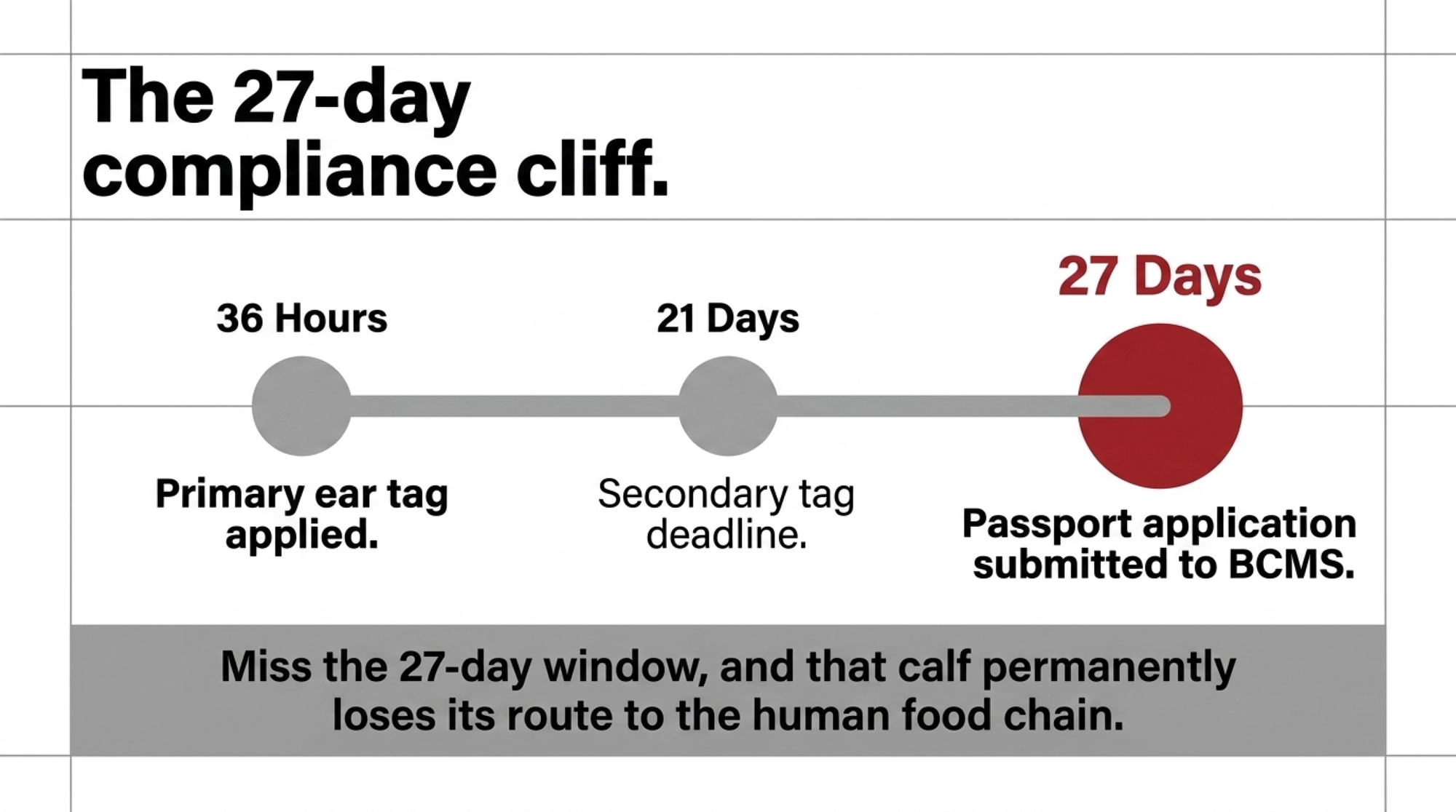
A farm that hasn’t registered 58 calves within 27 days has demonstrated, through an independent government dataset, that it wasn’t tracking 58 individual animals through their required documentation lifecycle. The CTS doesn’t lie and doesn’t forget. Once that pattern is on the record, the welfare defence — we were attentive, we were responding — becomes structurally harder to argue. Where any case sits in the five-year sentencing range depends heavily on whether the farm can show it was managing in good faith. Hambly’s guilty plea closed that door.
Stack a traceability failure, a welfare failure, and a fallen-stock failure on the same prosecution file and you’re not arguing about one bad day. You’re explaining a pattern. A continued breach after a January 2024 caution is the textbook definition of ignoring prior advice under the 2023 sentencing guidelines.
| Legislation | What It Actually Requires | The Record That Defends You | Penalty Exposure |
|---|---|---|---|
| Welfare of Farmed Animals (England) Regs 2007 | Care “without delay” for ill/injured animals; vet advice “as soon as possible” | Dated treatment log, vet call notes | Prosecution, disqualification |
| Animal Welfare (Sentencing) Act 2021 | Sets Crown Court ceiling at 5 years | Demonstrated good faith + prior records | Up to 5 years custody |
| Animal By-Products Regs 2013 | Fallen stock collected by approved collector “without undue delay” | Commercial document retained on farm | Prosecution + farm audit |
| BCMS / CTS Registration Rules | Primary tag ≤36 hrs; secondary tag ≤Day 21; passport by Day 27 | Matching calving register + CTS pull | Loss of food chain status for calf |
| Sentencing Council 2023 Guidelines | Prior advice ignored = high-culpability indicator | Written caution response + action log | Sentence uplift to higher band |
| Red Tractor / RSPCA Assured Standards | BCMS compliance + welfare baseline | Clean scheme audit record | Scheme suspension, market access loss |
How Much Does Waiting 30 Days Actually Cost?
The honest answer: more than the fix.
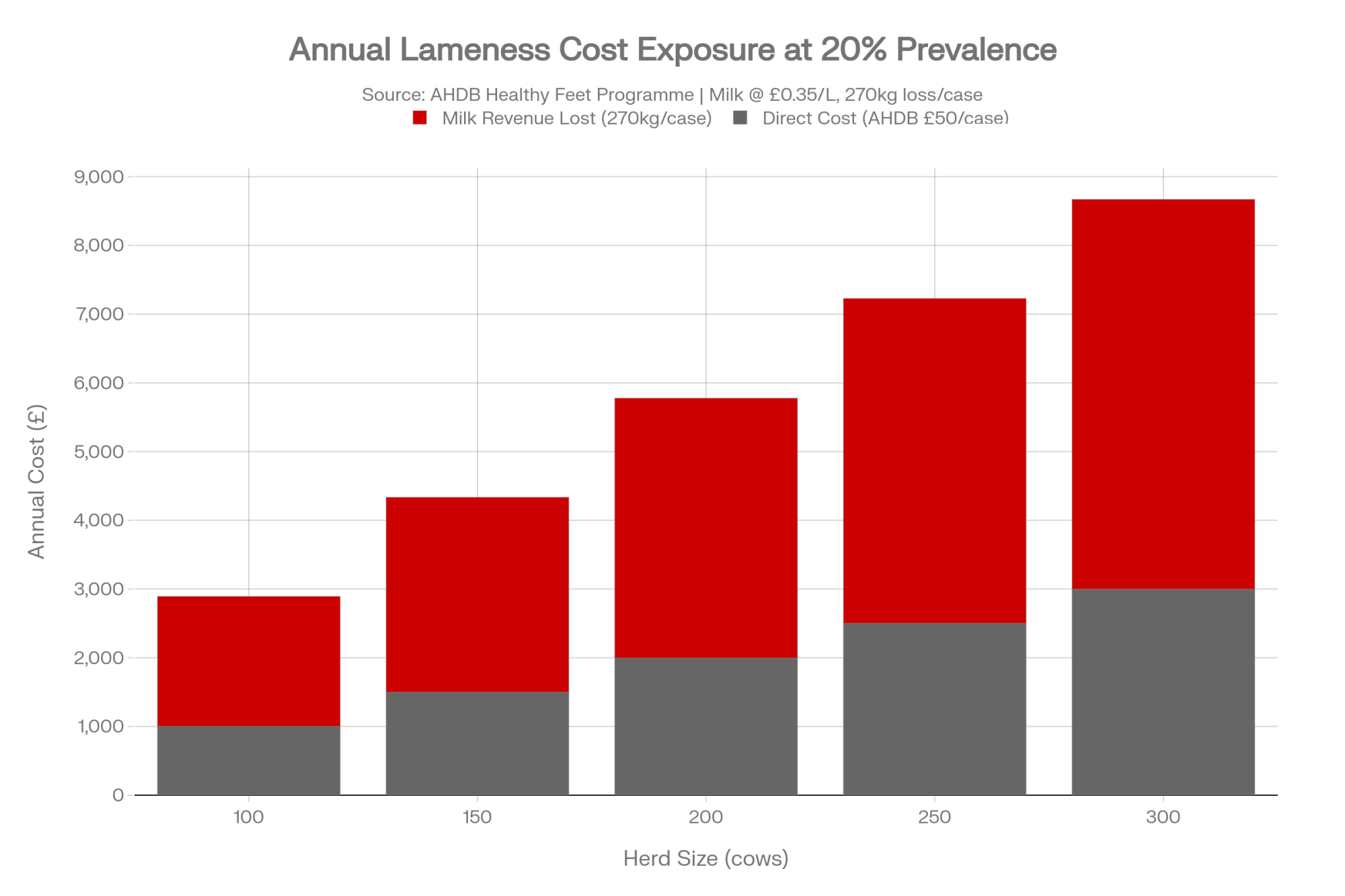
Take a 200-cow herd at 20% lameness incidence — a working assumption at the lower edge of UK herd prevalence, which published surveys put at roughly 20–40%. AHDB puts the cost of an untreated case of lameness at roughly £50 per cow per year, with milk losses of 270–574 kg per lactation per affected animal. Run the math: 200 cows × 20% × £50 = £2,000 in direct annual cost on that herd before any enforcement risk enters the picture. The treatment log isn’t compliance theatre. It’s the document that supports the work you’re already paying your vet for, and the document that defends you when an inspector observes a lame cow on the day.
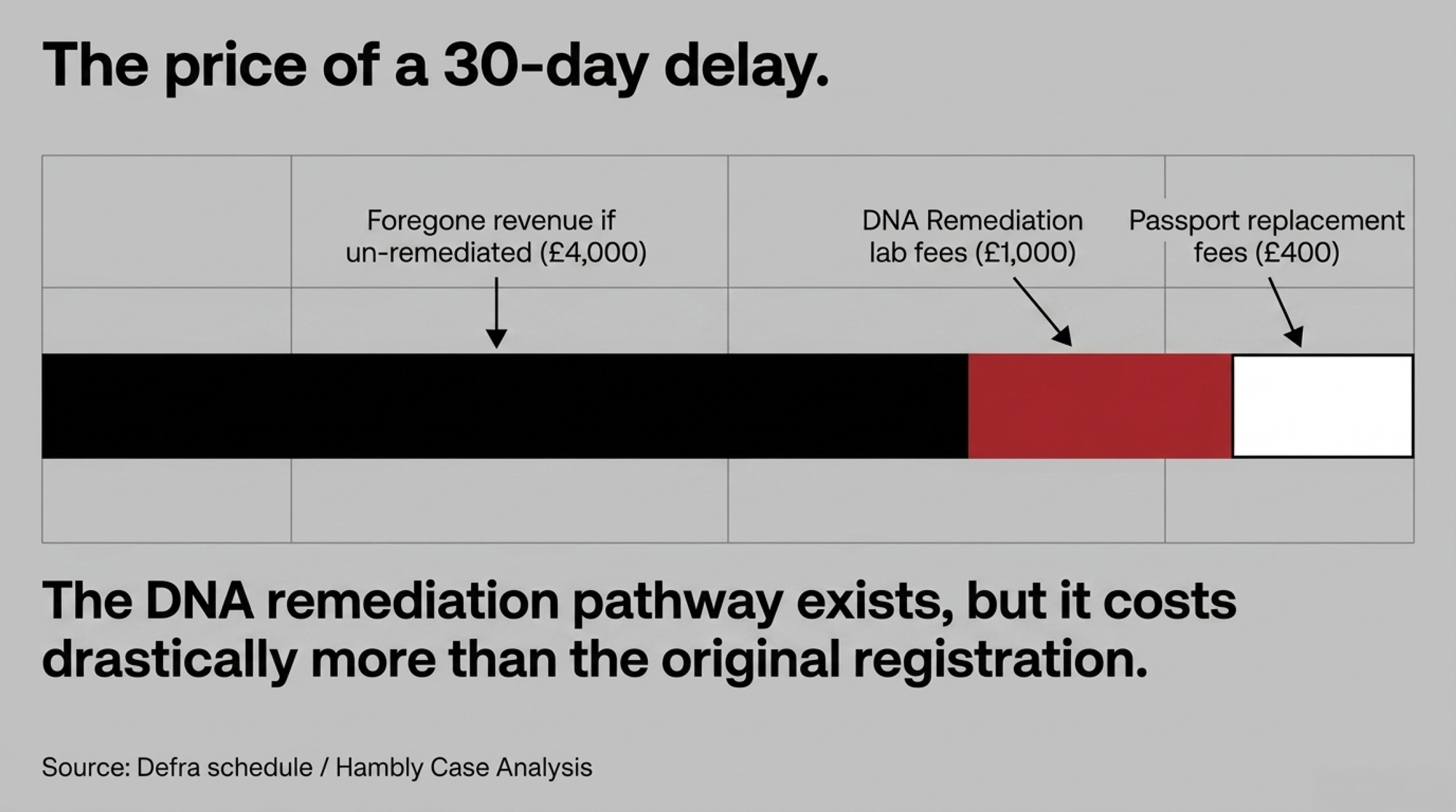
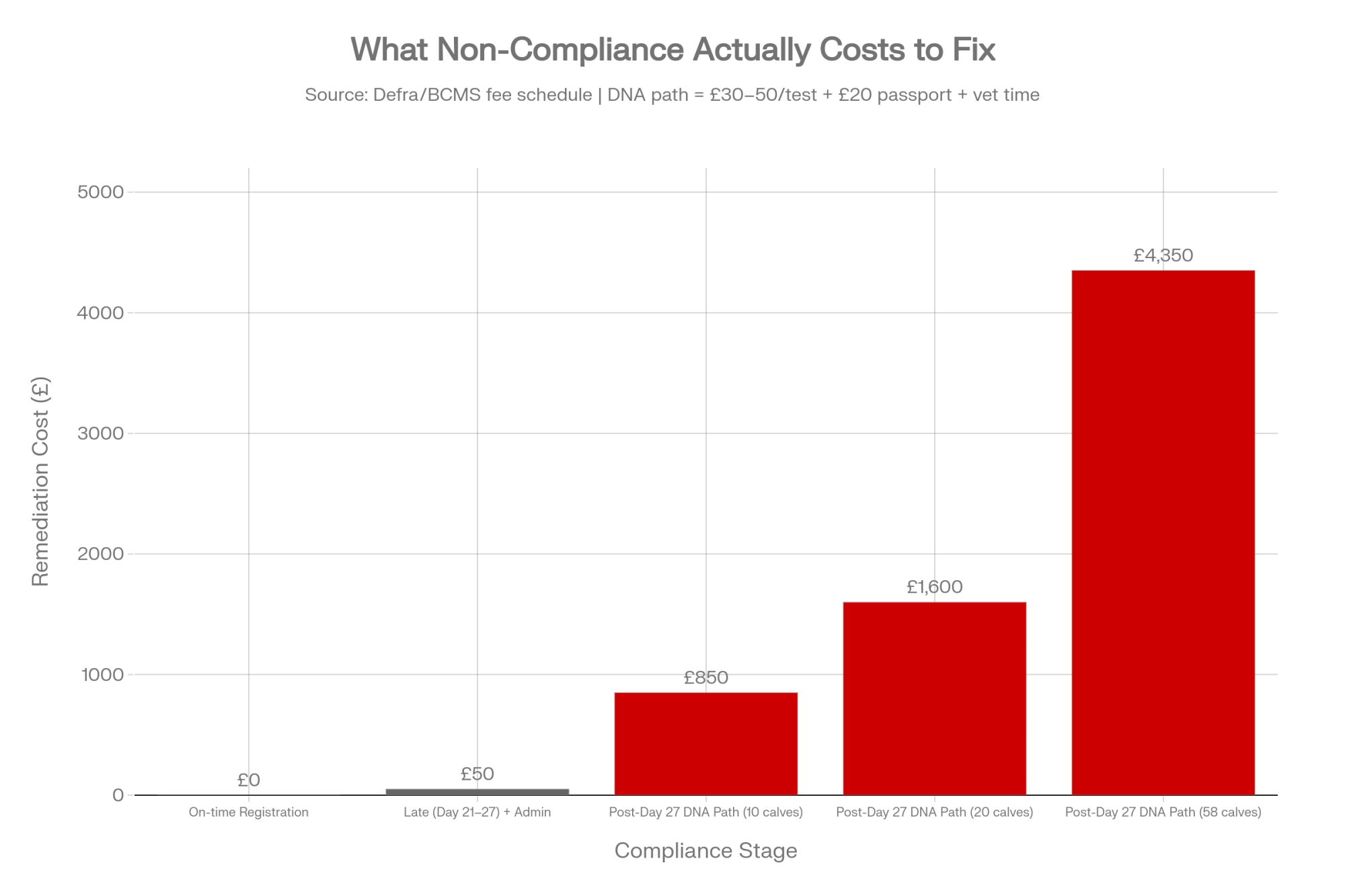
Stack the BCMS side. A reconciliation gap of just 20 calves on a 200-cow herd — roughly six weeks’ worth of late registrations on an all-year-round system — represents £1,600–£4,000 in foregone calf sale revenue if those animals can’t be remediated through the DNA pathway, plus £600–£1,000 in remediation lab fees if they can — before vet attendance time and a £20 replacement passport fee per animal.
What Does Your Landlord Actually See?
If you’re farming on a county council estate — Cornwall, Devon, Staffordshire, anywhere with a county farms operation — there’s a structural detail this case makes impossible to ignore. Cornwall Council holds the dual role of county farms landlord and welfare-enforcement authority, and Hambly’s prosecution spanned a Council estate property and an adjacent farm. Same authority, same building, same files.
That’s not an allegation of misconduct. It’s how information flows when one organisation holds both roles. A council that owns the land also operates the Trading Standards team that enforces animal welfare legislation. From a tenant’s perspective, the practical reality is that information observed during one council interaction can lawfully be available to the council’s other functions, subject to standard data-sharing rules between local-authority departments.
The Tenant Farmers Association, in its public input to Cornwall Council on the county farms strategy, has raised concerns about compliance costs and margin pressure on dairy tenants and has argued for estate models that support in-situ progression. That strategy is expected to publish in June 2026. Whatever it contains, the Hambly prosecution shows the dual enforcement authority is active, not theoretical. Your tenancy agreement won’t enumerate your welfare obligations — they apply by operation of law, and your landlord’s enforcement team applies them.
Action Plan: Where Does Your Dairy Sit Today?
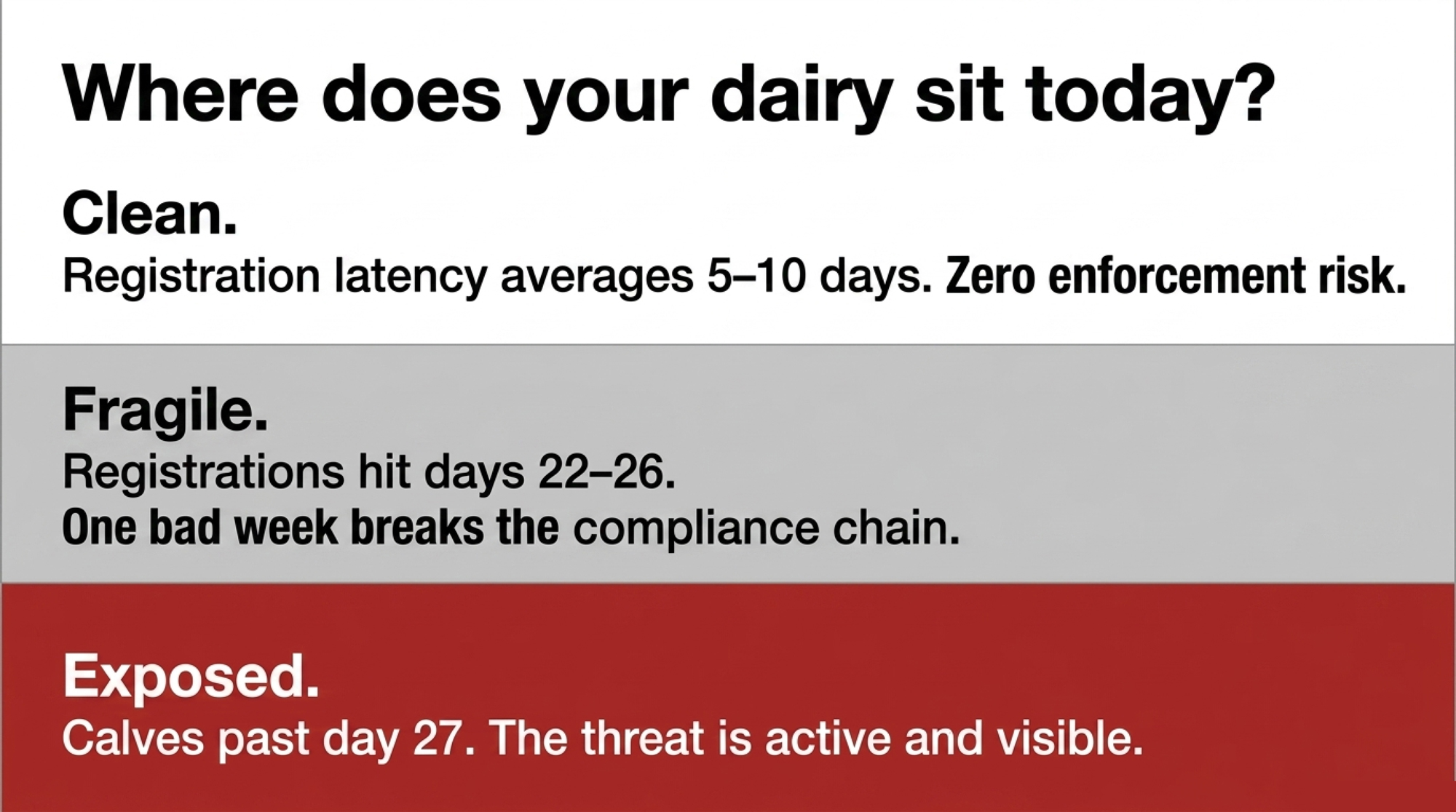
Three positions a working dairy can be in right now. Each has a different fix, and only one of them carries genuine enforcement risk.
Position 1: Tight Protocol, Clean Reconciliation
- Status: Your calving register and CTS records match exactly for the last 12 months. Registration latency averages five to ten days from birth. Treatment log is current to within a week.
- The Fix: Maintenance. A 15-minute weekly check on a fixed Wednesday morning slot, one named owner. Cost is approximately zero. Stay here.
Position 2: Compliant But Fragile
- Status: Registrations are landing inside the 27-day window, but right on the edge — latency averages 22 to 26 days. Treatment log exists but isn’t always current. One bad week of silage, a staff flu outbreak, or a software change breaks the chain.
- The Fix: Move the registration trigger to day 20, not day 27. Build a mandatory treatment log routine that runs whether or not anyone has a problem to log. Cost: a half-day of process redesign and a software notification.
Position 3: The Threat Is Already Real
- Status: Your calving register and CTS don’t reconcile. There are animals on your farm the system doesn’t know about. This is the 30-day action zone.
- The Fix: Register every calf still inside its 27-day window today. For any calf past day 27, contact BCMS to initiate the DNA testing pathway — vet on-farm, dam-and-calf samples, lab confirmation of the genetic link. The published lab fee anchor remains £30–£50 per test from the original Defra schedule. On 20 animals, that’s roughly £600–£1,000 in lab fees plus vet time and the £20-per-animal replacement passport fee. Then book your vet for a dated herd welfare assessment before any inspector arrives. A dated welfare record from this week, on file, is the difference between a farm that found a problem and acted versus a farm that waited to be found.
| Signal | Position 1: Tight | Position 2: Fragile | Position 3: Exposed |
|---|---|---|---|
| Avg. registration latency | 5–10 days | 22–26 days | Unknown / >27 days |
| CTS vs. calving register match | Exact | Approximate | Gap exists |
| Treatment log currency | Current within 7 days | Exists, not always current | Missing or outdated |
| Registration trigger used | Day 20 protocol | Day 27 deadline | No formal trigger |
| Enforcement risk level | Minimal | Moderate | Active / Real |
| Recommended action | 15-min weekly check | Move trigger to Day 20 | Act today — 30-day window |
| Cost of fix | ~£0 | Half-day process redesign | £600–£4,350+ in remediation |
Key Takeaways
- If you don’t know your registration latency — the average days between calving and BCMS registration over the last 12 months — you don’t know your real exposure. Pull the number this week.
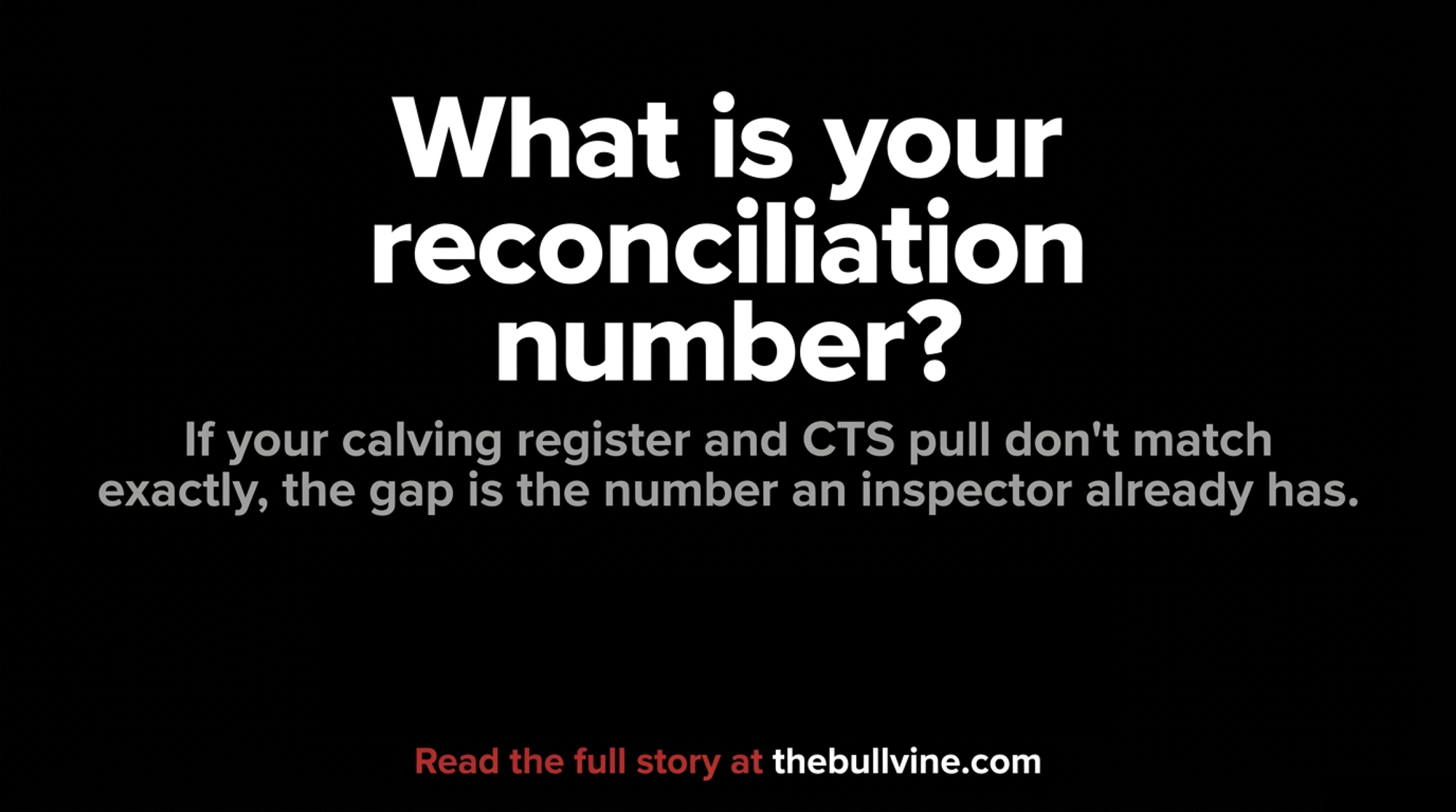
- If your calving register and CTS pull don’t reconcile exactly for the last 12 months, the gap between them is the number an APHA inspector already has. Close it before they do.
- If you’ve received a formal caution from APHA or Trading Standards, treat the re-inspection as scheduled, not possible. The only question is what it finds.
- If your treatment log isn’t current to within seven days, you don’t have a defence against the next welfare observation — you have a confession. Lameness intervention windows are 48 hours by AHDB’s evidence-based standard.
- If you farm on a county council estate, your landlord’s enforcement function operates within the same authority that holds your tenancy. Closing your reconciliation gap removes the administrative trigger that puts you in the inspection queue.
- If a calf is past day 25 with no registration submitted, that’s today’s task — not Friday’s. Day 27 is a hard cliff with no grace period.
- If you’re past day 27 on any animal, the DNA remediation pathway exists, but it costs more than the registration would have, and it’s conditional on the test confirming the dam-calf link.
So — What’s Your Reconciliation Number?
Not your refused-passport rate. That’s a backward-looking number. The forward-looking question is the one your inspector is already asking: of every calf born on your holding in the last 12 months, can you produce a dated record showing it was registered with BCMS, and does that number match your CTS pull exactly?
If the answer is yes, you’ve got the architecture that defends a working dairy. If the answer is “I’d have to check,” that’s the question worth answering before someone else does. We’re publishing the full operational walkthrough in next week’s Bullvine Weekly — the day-20 protocol, the treatment log template, and the cost-per-cwt math on what compliance friction actually runs at different herd sizes. That’s where the real numbers live. The CTS is counting either way.
Sources: Cornwall Council press release (May 28, 2026); Truro Crown Court proceedings (May 22, 2026); GOV.UK guidance on cattle identification and BCMS registration; Welfare of Farmed Animals (England) Regulations 2007; Animal Welfare (Sentencing) Act 2021; Animal By-Products (Enforcement) (England) Regulations 2013; Sentencing Council guidelines 2023; Kingshay Dairy Costings 2024; AHDB Healthy Feet Programme; Tenant Farmers Association public submissions on county farms strategy.
Learn More
- Robotic Milking Pays 13% More – After 7 Years of Red Ink — Uncover the operational math that shows how automated data-collection systems impact cash flow, exposing an $8,776 annual deficit during the first seven years of ownership before management value and labor efficiency finally clear the upfront investment gap.
- Dairy Farm Economics 2026: Milk Pricing, Margins & Risk Playbook – The Bullvine — Anticipate structural policy resets and market changes over the next 3–5 years, arming your strategy with the exact metrics behind the protein pivot, make-allowance deductions, and beef-on-dairy premiums currently masking critical revenue vulnerabilities.
- Smart Dairy Tech Isn’t Just Hype Anymore—It’s Your Competitive Survival Plan— Leverage digital record keeping to slash administrative time by 40% and cut feed costs by 15%, utilizing real-time tracking to automate regulatory compliance and insulate your operation against catastrophic $50,000 mechanical or audit failures.
 The Sunday Read Dairy Professionals Don’t Skip.
 The Sunday Read Dairy Professionals Don’t Skip.
Every week, thousands of producers, breeders, and industry insiders open Bullvine Weekly for genetics insights, market shifts, and profit strategies they won’t find anywhere else. One email. Five minutes. Smarter decisions all week.




