


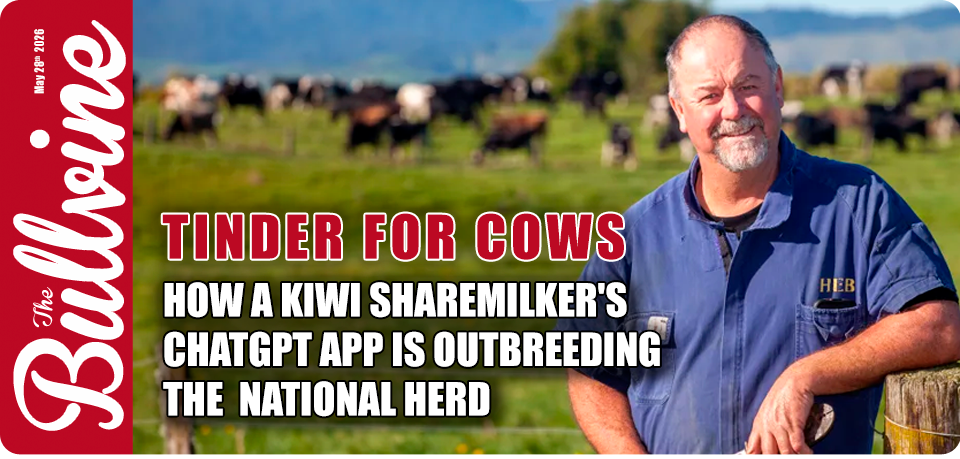




A busted spreadsheet, a $30 ChatGPT subscription, and 400 KiwiCross cows later — one Waikato sharemilker’s mating reports are bending the national genomic trendline faster than LIC’s own tools.
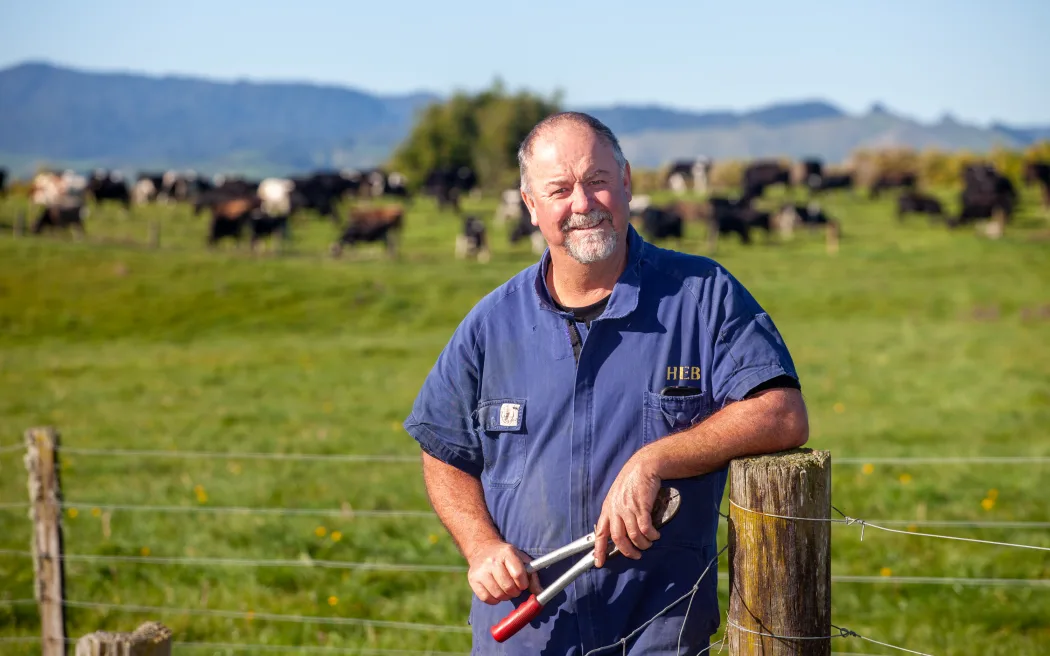
A Spring Night in the Waikato
Picture this. You’ve seen it. You’ve lived it.
It’s 10:30 on a Friday night in early spring, two weeks out from PSM. The spring sunshine has been brightening the days, but the evenings are still cool, and the Kaimai Range out the kitchen window has gone that bruised purple colour the mountains go when the light finally drops. The rugby’s on in the background. Matthew Zonderop’s wife packed it in and went to bed an hour ago. He’s still at the kitchen table with the laptop open, because mating season’s bearing down and there are 400 KiwiCross cows out in the paddocks who don’t much care what time of night he finishes sorting them.
Five weeks of spreadsheets. Stacked on each other. Lactation data, sire IDs, somatic cell counts — and somewhere in the pile, something’s just gone pear-shaped.
The whole workbook’s lit up red. #REF! errors everywhere. And there’s Matthew, staring at it the way any of us have stared at a busted screen on a Friday night, starting to wonder if he should’ve just watched the rugby and dealt with it Saturday.
You know that feeling.
One Harmless Little Experiment
So he tried something a bit daft.
“I’d heard about ChatGPT,” he says, with the shrug of a bloke who’s told this story a few too many times now. “And I thought — well, I’ve got nothing to lose here. It’s not personal data. It’s just cow data.”
He uploaded the file.
The AI came back almost straight away. Found the problem. A spelling mistake. Fixed it. Then — and this is the part he still laughs at — tacked on a little line at the bottom: “Quite common to make this sort of error this time of night.”
Bit cheeky, really.
But here’s where it gets interesting. The file was still sitting there in the chat window, and the thing asked him a question he wasn’t ready for.
“Would you like me to continue analyzing this file?”
Two in the Morning
He said yes. Because why wouldn’t you. It was already late, the rugby was finished, the workbook was fixed — might as well see what it could do.
And what happened over the next three hours is the part that should make every breeding company exec from Hamilton to Madison sit up and pay attention.
The AI started pulling threads on its own. Sorted the lactation data. Broke out the SCC. Pulled fat and protein into their own column. Then it clocked the bull data sitting in another tab and — without being asked, mind you — offered to cross-reference it. These bulls here look like they’d match up with these cows. Want me to run it?
“I said yes,” Matthew says. “And then I just sort of stopped. Because I realised — hang on. You’ve just done what I’ve been trying to do for five weeks. In about thirty seconds.“
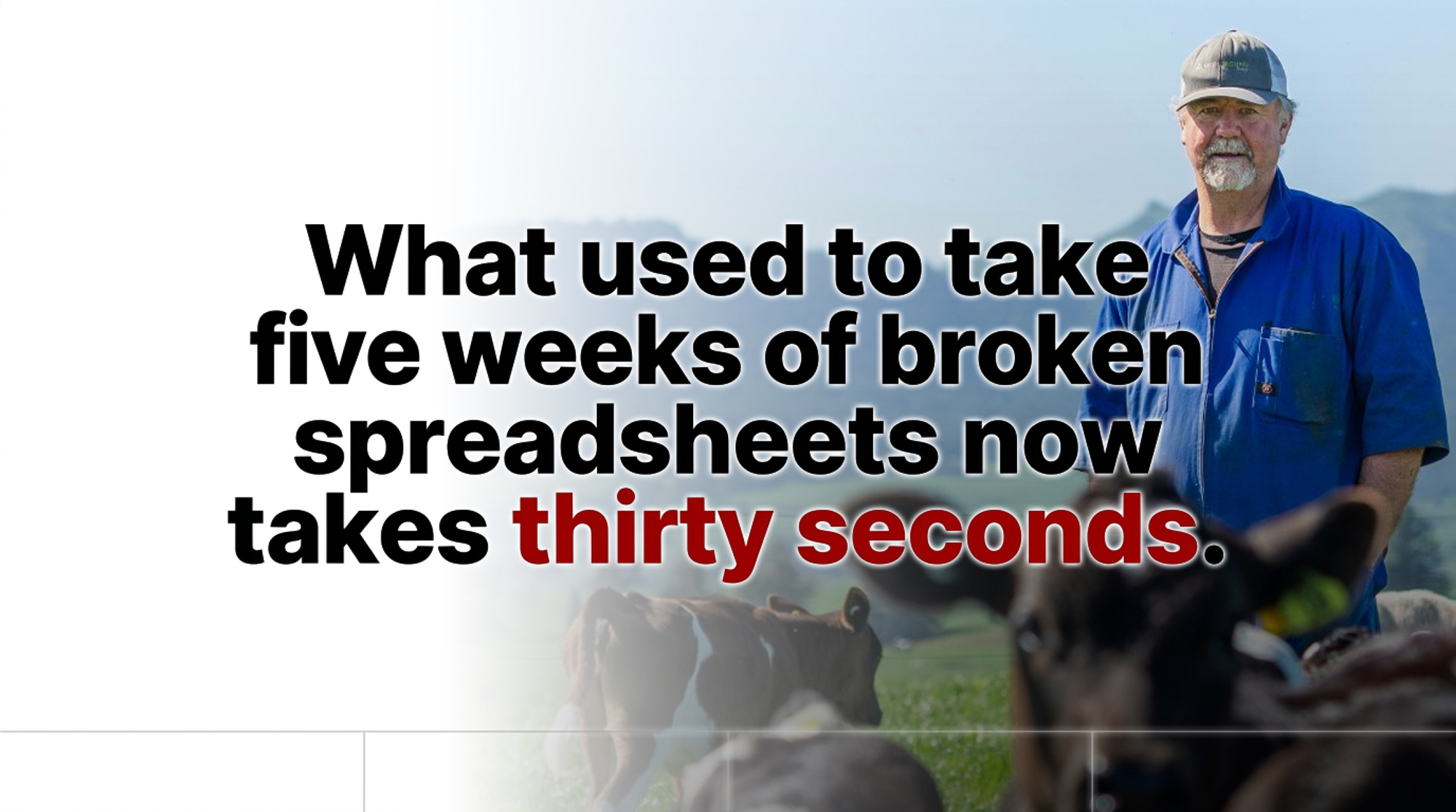
Then a second thought hit him, sharper than the first.
And I’ve just woken a beast that every breeding company globally has played close to their chest for decades. What have I done?
It was two in the morning by the time he shut the laptop. He had to be up in a couple of hours to milk.
Look, I know. Everybody’s got their ChatGPT-just-changed-my-life story these days. I get it. But stay with me. This one’s different, and you’ll see why.
Meet the Man Behind Perfect Cow
That Friday night idea turned, over the next couple of years, into the thing Matthew now calls Perfect Cow Breeding Solutions. The “Tinder for cows” line? That was a joke he cooked up to get the Kiwi press to pay attention. Worked a treat. NZ Herald ran it. Farmers Weekly ran it. Fieldays 2025 named him a finalist in their Innovation Awards. He’s done just about every ag podcast in the country. A few thousand Kiwi cows are walking around right now with mating reports that came out of his system — most of them in the South Island, where the herds get big and the dollar decisions get real.
But here’s the bit the headlines kept glossing over.
He’s Not a Coder
Matthew isn’t some tech bloke who happened into dairy. He’s a 50-50 sharemilker at the base of a mountain range, working someone else’s ground under an arrangement you almost never see in North America. The owner provides the farm. Matthew provides the cows and the labour. They split the milk cheque down the middle. That owner, credit to them, held steady through the six months Matthew effectively disappeared into his laptop. Matthew was already known and respected around the Matamata sharemilker scene, which is probably the only reason he got the rope he needed to run with this.
As for his tech background? He’s good with Excel the way the rest of us are good with Excel. Functional. Stubborn. Suspicious of anything asking for $30 US a month out of his pocket.
He paid the $30.
Six Months of YouTube and Bad Prompts
Then he got to work in the way farmers get to work on anything — by chipping at it. YouTube tutorials after evening milking. Podcasts on in the ute while he shifted cows. Prompts copy-pasted, rewritten, rephrased, then handed back to the AI with the question can you help me ask you better questions? Bit by bit. Over six months.
“You don’t need to write code with AI,” he says. Flat as you like. “It does that for you.”
What he did need was the stuff nobody in an LIC office could give him. A Waikato sharemilker’s gut. The kind of thing that’s not written down anywhere. Why putting an American Holstein bull over a KiwiCross cow is a straight line to a shed full of expensive, oversized disappointments. Why a System 1 farm — that’s Kiwi shorthand for all-grass, no bought-in feed, running up to System 5 which is partial TMR — why the guardrails you’d use on one of those will absolutely wreck the other. Why you can’t go chasing 35 kilos of liveweight in a single generation without snapping something you didn’t even realise was load-bearing.
He had all that in his bones. He’d lived it. He just didn’t have a tool that could hold it all at once.
And honestly? Nobody does. Not a human. You try to hold 400 cows by 26 traits by eight generations of ancestry by a dozen bulls in your working memory, and you’ll crack. That’s not laziness. That’s physics.
So he built one.
How Perfect Cow Actually Works
Strip the Tinder joke off and here’s the real job.
One File. 900 Cows. Before Lunch.
A South Island farmer rings Matthew. He’s running 900 cows and he’s got a nagging suspicion last season’s matings weren’t quite right. The farmer goes into MINDA — that’s LIC’s central herd database, and here’s the punchline most North Americans haven’t clocked yet: it covers 93% of every dairy animal in the country — and he exports a CSV.
Phenotypic data. Full genomic profile. Production history. Health records. Liveweights. Every mastitis case, every uterine infection, every lame day, every lactation curve going right back to the day the cow was born. One file. Standardised. Downloadable.
Matthew gets the file. Jumps on a video call with the farmer. Twenty, thirty minutes talking through what the farmer actually wants. More solids? Better breeding back? Drop the SCC? Tighten gestation length? Protect longevity?
Twenty-Six Traits, and LIC on the Other End of the Phone
Then the system goes to work.
Cross-references the cow data against the bull catalogues Matthew has direct relationships with. Runs compatibility across 26 traits per animal. Then writes the mating report.
Here’s where the partnership with LIC matters more than people realise. When Perfect Cow proposes a bull team for a herd, Matthew runs the proposed team straight back through LIC, and they tell him very, very quickly which bulls can or can’t be used against that specific herd’s ancestry. Could he build a bull-by-bull ancestry database for every client himself — grand-sire, MGS, dam, the lot? Sure. It’s a bit more work, and frankly nobody’s asked. The LIC kinship check is fast, accurate, and built off the national pedigree. No reason to reinvent it.
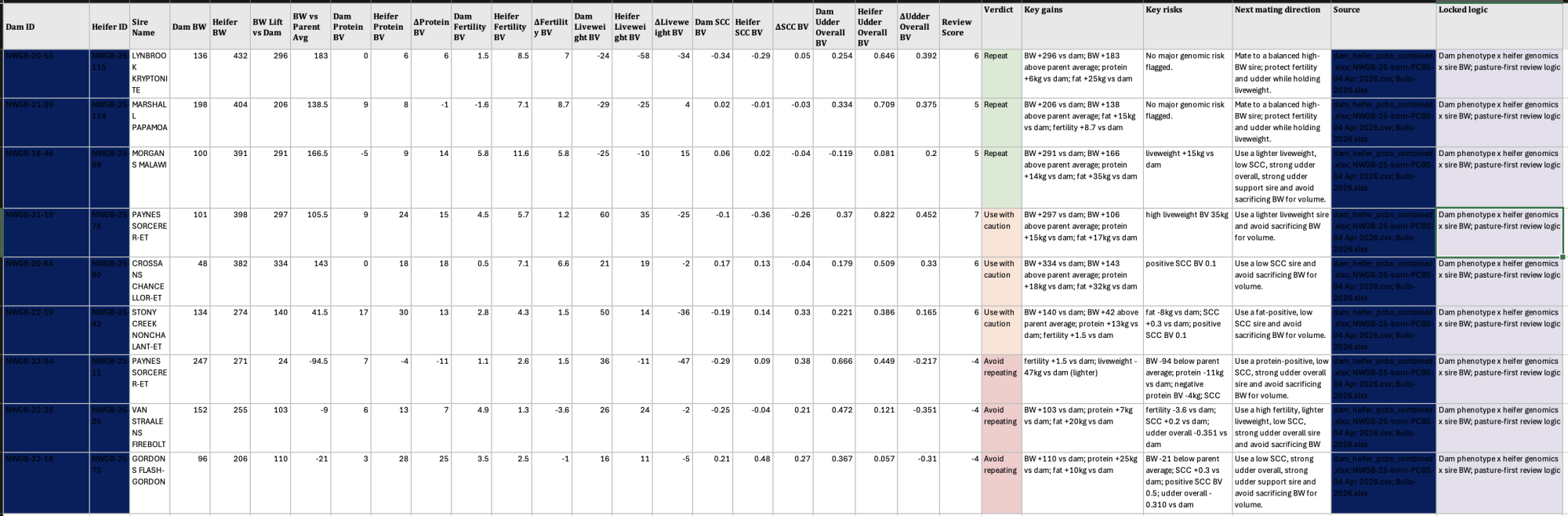
His own 400-cow herd? About half an hour. The South Island job on 900? Done before lunch.
The old way took months. Matthew knows. He lived it. And at the end of those months, he says, there was always a quiet voice at the back of his head asking whether any of the work was really right.
“If you’ve got 400 cows and you try to do it yourself, you’re going to spend months on it. And even then — are you ever really going to be completely satisfied with the answers you came up with?”
That voice has gone quiet for the first time in his farming life.
What That Looks Like From the Other Side of the Inbox
This is the part you don’t get from a press release. You get it from the people sitting in their own kitchens, watching the report come back.
Tom B, a Perfect Cow client, put it like this:
“PCBS turned my MINDA herd data into clear, detailed results within minutes — including individual cow recommendations, potential culls, and a selective AB breeding plan tailored to my herd. It is fast, practical, and easy to use, with technical commentary that makes it a valuable sounding board for better breeding and management decisions.”
And Matthew’s wife, Carolyn Osborne, who watched the whole thing land in their kitchen on that first night:
“I was oblivious to the magic that was unfolding. By morning, Matthew came back from the shed buzzing — the AI platform had delivered results that we had been working on for 5 years. It has now, without question, won the Employee of the Month award.”
Employee of the Month. There’s the line.
The North American Translation — Sexed Semen Meets Beef-on-Dairy
Here’s the part that should prick up North American ears, given where the breeding conversation sits right now in 2026. The same multi-trait engine that sorts a 900-cow KiwiCross herd in a morning is exactly the tool a Wisconsin or Ontario operator needs to triage the sexed-semen-vs-beef-on-dairy call at the cow level. Which dams get a conventional dairy sire. Which get sexed straws. Which move to a Limousin or Angus cross.
That decision tree has dominated fresh-pen strategy for 18 months now. And hardly anybody is making it with this kind of analytical horsepower behind them. Most farms are still eyeballing it off a DHIA report.
Why the KiwiCross Is the Animal at the Centre of This
You need to understand the cow before you understand why any of this matters.
60% of a National Herd, 70 Years in the Making
The KiwiCross — roughly 60% of New Zealand’s 5.91-million-cow national herd — isn’t an accident. She’s a long, patient breeding project. Holstein-Friesian crossed to Jersey, selected continuously since the 1950s, officially trademarked as a breed by LIC back in 2005. The modern KiwiCross carries 378 kg more milk and 28.7 kg more milk solids than the foundational parental average. That’s compounding gain — exactly the kind of generational patience work North American breeders spent 50 years layering into the Holstein.
She’s middle-weight. Around 450 kilos. Fertile. Tough. Built to pick her own feed off a wet paddock 365 days a year and keep going.
And she’s exactly the cow who breaks under aggressive single-trait selection.
The Seven-Kilo Rule
“People come to me and say I want to breed bigger cows,” Matthew says. “And we go back and look at their data, their system, their location, how much feed they’re actually bringing onto the farm. And we ask — is this really going to work for your farm?”
More often than not, no.
“Bigger cows don’t necessarily mean more milk in New Zealand. There’s more to it than that. We farm outdoors.”
This is the spine of Perfect Cow. And it’s what separates Matthew’s work from the reckless techno-optimism the rest of the industry’s about to drown in. The system is built so you can’t go backwards. Traits get repaired or enhanced one small step at a time. Seven kilos of liveweight this season. Not thirty-five.
“Mating cows can go both ways,” he says. “You can repair traits, or you can enhance them. But we’ve designed the system so you’re not going to go backwards.”
She’s Not a Commodity
This is where his philosophy about the animal herself starts to show. It’s the bit I wish more breeding programmes would copy.
“We’re in an age where we’ve got extremely highly productive animals. Extremely valuable animals. We can’t treat them as a commodity the way we have in the past. Think about it — from calving to full lactation in six weeks, and then on and on, year after year, in our environment. That’s an incredible animal. We need to look after her. We need to make sure the data we’re getting from her is accurate. Because her progeny is going to affect the next generation. And the one after that.”
That’s not PR talk. That’s a man who gets up in the dark to milk 400 cows and knows exactly what it costs to replace one.
As Matthew puts it — they’re performing a Rugby World Cup Final every day. Every day.
Longevity isn’t a buzzword in his system. It’s something he built the AI to protect. And that matters more than ever in 2026, with the methane pricing conversation heating up on both sides of the Tasman and the EU already putting numbers on the table. A pasture-based system running incremental, longevity-protective genetic progress isn’t just dairy philosophy anymore. It’s climate positioning — and the smart operators know it.
The Proof Was Standing in a Paddock
You can argue philosophy all day. The cows in the paddock don’t lie.
The First Cohort on the Ground
During our conversation, about 23% of the herd — Matthew’s target replacement rate, the first full cohort bred off Perfect Cow matings — was grazing right behind his shoulder. Black-and-white, cross-coloured, smaller than a North American Holstein calf at the same age. A couple of them stretched out in the autumn sun. One or two lifted their heads at the sound of a quad bike somewhere over the ridge.
He walks that mob most days. Knows which came off which sire. And listening to him talk about them, you can hear he hasn’t quite lost the wonder of it yet.
Running the Numbers Backwards
Before those calves went off to grazing, he did something that two years ago would’ve been pure science fiction. He pulled the genomic data on every one of them. Married it to the full lifetime record of each dam — size, grand-sire, lactation history, every health event, calving dates, first-service inseminations, every mastitis case, every lameness. Cross-referenced the sire IDs. Then asked the system to tell him, in reverse, how his mating programme had actually performed.
Half an hour.
What came back was the kind of verdict no human consultant could hand you in a month. This mating worked. This one was a dud. Don’t use that bull again. This sire corrected a weakness three generations deep on the maternal side.
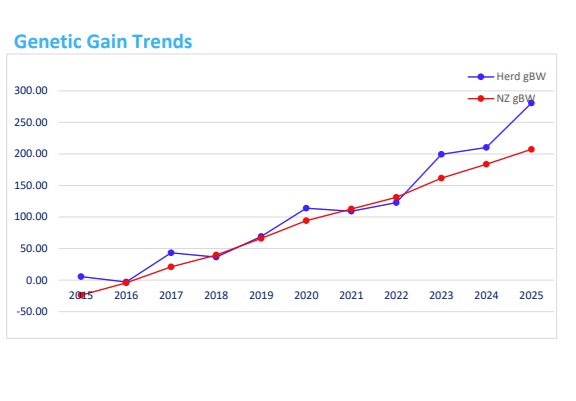
The herd genetic gain trajectory off those matings — Matthew has the chart on his laptop. The line bends.
What LIC’s Own Analysis Is Picking Up
LIC’s own analysis of Perfect Cow-mated herds is flagging something the industry needs to watch. They’re seeing lifted milk solid components and improved fertility without a matching rise in milk volume. In a pasture-based system, where every extra litre costs you in feed demand, that’s the trifecta. More solids. Better breeding back. Animals still sized for the paddock they’re standing in.
Now — the early trade-press numbers you might’ve seen thrown around, 12% faster genetic progress, 18% fewer stillbirths — Matthew treats those with the caution they deserve, and so should we. Those are early figures. Whether they hold up under further independent research is something he’d want to keep an eye on rather than bank on. The long-tail stuff, mastitis resistance, functional survival — that won’t tell its full story for another five to eight years.
Keep an eye on it. Don’t put weight on it yet.
But the genomic trajectory against the national herd is already bending the right way.
“We’re seeing the gains.”
In a country that on June 20, 2025 reset its entire genetic base cow from 2005 to 2015 — effectively declaring the average cow of a generation ago is no longer the benchmark — a line like that lands differently than it would anywhere else in the world.
The whole national herd is running.
Matthew’s herd is running faster.
What This Means If You’re Milking in Wisconsin, Ontario, or Texas
Right. So here’s the question for you if you’re reading this from a free stall in Wisconsin, a robot shed in Ontario, or a 3,000-cow operation outside Hereford.
What do you actually do with this story?
The Wrong Answer
On first read, the easy way out is this: well, New Zealand’s different. MINDA’s different. The KiwiCross is different. Good on Matthew, doesn’t apply to me.
That’s the wrong answer.
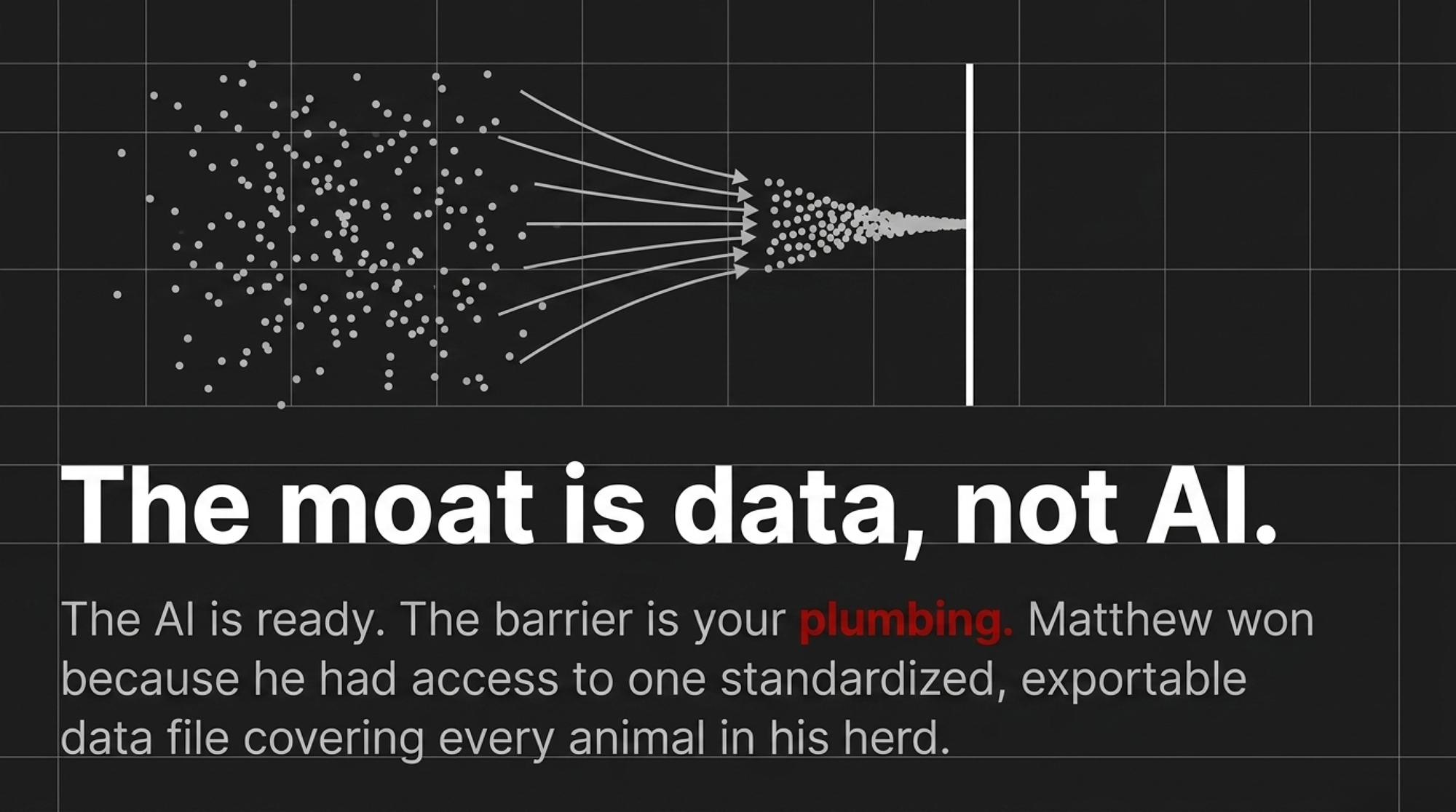
The Real Moat Is Data, Not AI
Here’s the right one. The reason Matthew pulled this off isn’t because he’s smarter than the rest of us. It’s because he had access to one standardised, exportable, farmer-owned data file covering every animal in his herd. That’s the whole advantage. That’s the entire moat New Zealand has over North American dairy in this particular race.
And we don’t have it.
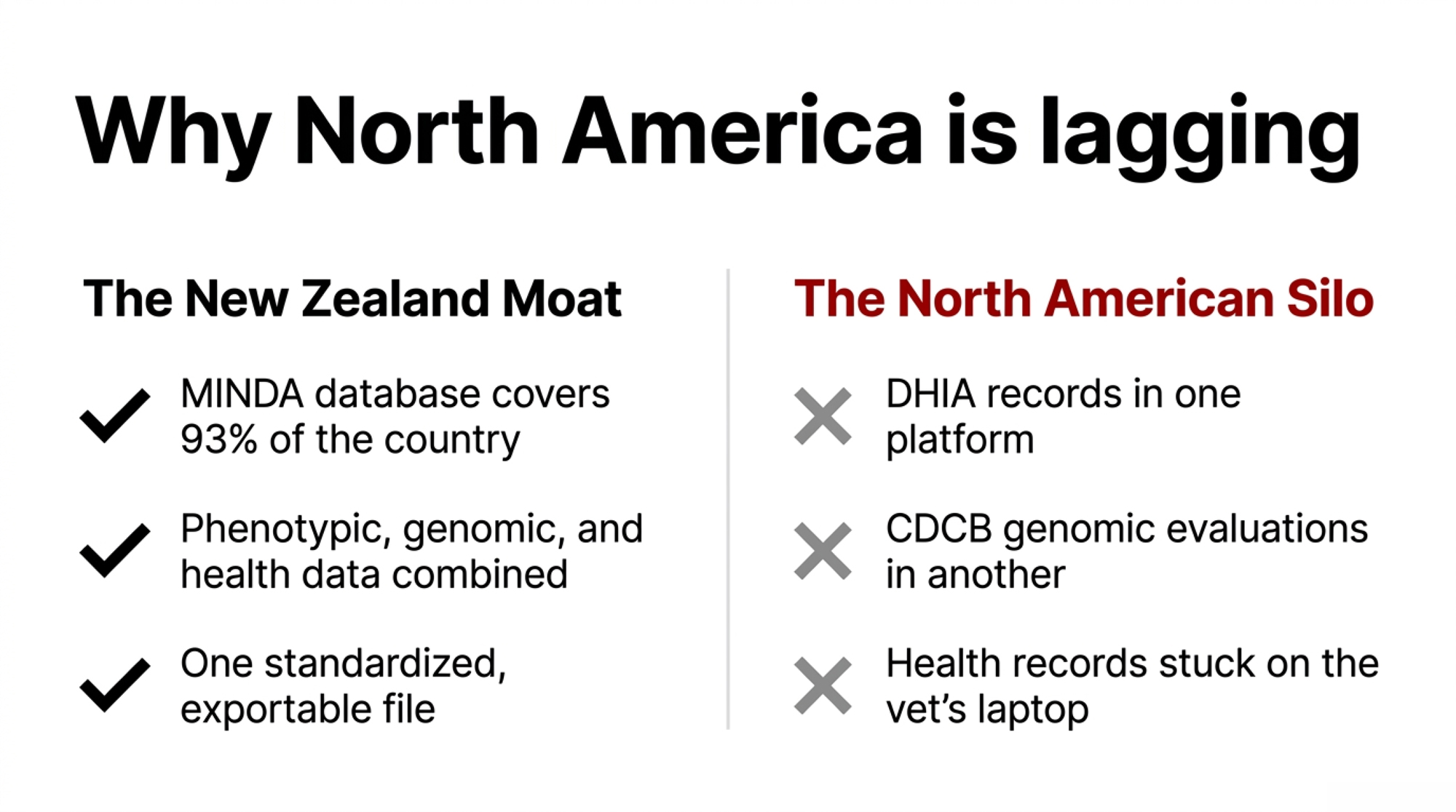
We’ve got DHIA records in one place. CDCB genomic evaluations in another. Herd management software somewhere else. Parlour data sitting in a server nobody ever touches. Health records stuck on the vet’s computer. And beef-on-dairy sire data scattered across a half-dozen AI companies that — let’s be honest — don’t love the idea of sharing.
Or as Matthew himself frames it: the greatest risk to your national herd is not the farmer and their hard work on breeding. It’s the segregated platforms — the off-ramps on the genetics highway.
That’s the line. Pin it on the office wall.
Work out of the University of Wisconsin, and the Dairy Brain project in particular led by Dr. Victor Cabrera, has been making this exact case for years now. Data fragmentation is the single biggest thing holding back precision breeding on this continent. The barrier isn’t the AI. The AI is ready. The barrier is the plumbing, and it’s a political problem dressed up as a technical one.
What to Do Monday Morning
The practical takeaway for a Bullvine reader goes like this.
Audit what data you actually own. What you can export. What your breeding company controls. Ring your genetics rep on Monday and ask them, point blank, whether you can get a single clean file combining your genomic evaluations, your DHIA records, and your health events. If the answer’s no, ask why. Because the Kiwi sharemilker running mating reports for 900-cow South Island herds on a $30-a-month ChatGPT subscription is doing it with your cows’ worth of data — organised in a way you currently can’t get at.
The cows on your farm are ready. The AI is ready.
The plumbing isn’t.
Fix that, and Perfect Cow — or its North American cousin — shows up in your parlour faster than anyone on the industry side wants to admit.
The Day LIC’s Entire Exec Team Turned Up at His Kitchen Table
Which brings us to the part of the story that still makes Matthew shake his head.
The Email Nobody Expected
You’d expect LIC to have treated him as a competitive threat. A sharemilker builds a custom app that does what Customate does — their flagship mating tool — and arguably does more. Standard corporate playbook says: lawyers, cease-and-desist, sorted by Tuesday.
Instead, the email landed.
The Chief Executive wanted to come out to the farm. Brought the whole exec team. Head of Genetics. Science lead. Technology department. The people who actually write the MINDA dashboard itself. They all sat around Matthew’s kitchen table while he showed them what he’d built. His wife Carolyn poked her head in halfway through to say hello — the sort of small-farm New Zealand moment you don’t really see reproduced anywhere else in the global dairy world.
Five Minutes vs a Whole Career
“They were taken aback at the speed,” Matthew says. “I told one of them — you’ve spent your entire career researching and experimenting with genetics. And I’ve just done it in five minutes.“
That’s the kind of line that could’ve ended the conversation right there. Didn’t.
“They were really enthusiastic. They said — this is really, really good. Congratulations.“
Then came the question Matthew wasn’t ready for.
What can we do to help?
“I was totally unprepared for that question,” he says. “I’m not an entrepreneur. I’m a dairy farmer trying to breed the perfect cow.”
LIC now shares additional bull data with him direct, and runs the kinship checks on his proposed bull teams. Customate offered you eight traits you could weight. Perfect Cow runs the full spectrum — 26. That’s not a competitor relationship. That’s an industry to its credit recognising that a door just opened it didn’t know was there, and deciding to walk through it.
The Sharemilker Who Stopped Chasing the Farm
Something quiet has shifted for Matthew since that kitchen meeting.
The Classic Arc, Redirected
Five years ago, you’d have asked where his career was headed and he’d have given you the classic sharemilker arc. Build equity. Buy the farm. Hand something to the kids. Same story you’ve heard a hundred times, from the North Island to North Dakota.
Ask him now. Something’s different.
“My focus has moved a little bit — from farm ownership to actually creating the perfect cow. Fine-tuning the system so we’re getting profit per hectare on a 450-kilo animal doing 500 kilos of milk solids. That’d be an amazing achievement. Done all through AI, in a very short period.”
Compressing 50 Years Into 5
Short period is right. New Zealand’s legendary breeders have been building their herds for 80 years. Some of the best families trace right back to foundation cows calved before the Second World War. Those breeders are gaining fast through genomics now too — no argument there. But Matthew’s point, and you can hear the quiet wonder in his voice when he makes it, is that he’s compressing 50 years of their work into three to five.
Not because he’s better than they are.
Because the tool let him.
The Uncomfortable Truth for the Rest of the Industry
Here’s the part the industry needs to sit with for a minute.
The Moat Is Already Gone
The old moat — proprietary software, specialised consultants, centralised analytical power held by the big genetics companies — is eroding. Not in a decade. Not in five years. This quarter.
The raw material for precision breeding is data. Whoever has clean, standardised, farmer-accessible data wins. Whoever builds the tool on top of it matters less than the fact that a sharemilker can now build it himself. In a kitchen. After evening milking. On a subscription that costs less than a case of mastitis treatment.
The Cows Win Either Way
And the cows at the end of the chain — those incredible animals Matthew refuses to treat as a commodity, the ones running their own Rugby World Cup Final every day — benefit either way. Better matches. Fewer disappointing calves. Longer productive lives. Less genetic damage being repaired one generation downstream.
If you’re running a dairy in 2026 — whether it’s 60 Holsteins in a tie-stall in Wisconsin or 5,000 cows in the Texas Panhandle — the question isn’t whether AI is going to change how you breed. The question is whether the data you need is sitting somewhere you can actually get at it.
Matthew Zonderop answered that question the night he uploaded a busted spreadsheet to a chatbot at 10:30 PM while the rugby was on.
The rest of us are still figuring out where ours live.
One Mating at a Time
The Kaimais are quiet tonight. Carolyn’s asleep. And somewhere on the Waikato side of that range, a cow who hasn’t been born yet is already mapped in a report, matched to exactly the bull she was meant to meet.
Tinder for cows, maybe.
But really — something closer to what breeders have been chasing since we first started keeping records.
The perfect cow.
Or as close as a patient, stubborn, self-taught sharemilker from Matamata can get her. One mating at a time.
Key Takeaways
- The moat was never the AI — it’s the data. Matthew pulled this off because MINDA hands him one clean, exportable file on every animal. If your DHIA, genomic, health, and parlour records live in five silos, that’s the real thing holding you back.
- Use it to repair or build traits in increments, not to swing for the fences. Chasing 35 kg of liveweight in one generation breaks a cow; adding 7 kg a season doesn’t. The tool’s only as disciplined as the goals you set with it.
- The sexed-semen-vs-beef-on-dairy call is exactly the kind of cow-level triage this kind of multi-trait engine is built for — and most farms are still eyeballing it off a report.
- Don’t wait for a vendor to build this for you. Ring your genetics rep Monday and ask if you can get one combined file of your genomics, DHIA, and health data. If the answer’s no, ask why.
Learn More
- When Your “Elite” Genetics Start Costing You Real Money — Run this audit before your next mating: every 1% bump in inbreeding quietly drains $24 per cow, and Italian genomic data pegs the milk loss at 61 kg. Arms you with the diversity checks Perfect Cow’s five-generation guardrail is built to enforce.
- The $1,350 Replacement Advantage — Follows the money on why genomic progress at $75 Net Merit a year now makes younger cows beat your loyal third-lactation producers, and why the tech only pencils above 400 cows — the scale question every operation must answer in the next 3–5 years.
- The Next Frontier: What’s Really Coming for Dairy Cattle Breeding (2025-2030) — Maps the CRISPR, designer-milk, and feed-efficiency breakthroughs landing by 2030, delivering $87,500–$393,750 in annual savings per 1,000 cows. Where Perfect Cow optimizes today’s bulls, this charts the traits you’ll be selecting for next.
The Sunday Read Dairy Professionals Don’t Skip.

Every week, thousands of producers, breeders, and industry insiders open Bullvine Weekly for genetics insights, market shifts, and profit strategies they won’t find anywhere else. One email. Five minutes. Smarter decisions all week.
