







Archive for Dairy Markets – Page 14

Facing the Heat: Thriving in Global Dairy Amidst Climate Challenges

How are global dairy farmers facing climate and competition hurdles? Are innovative strategies enough to ensure a sustainable future?
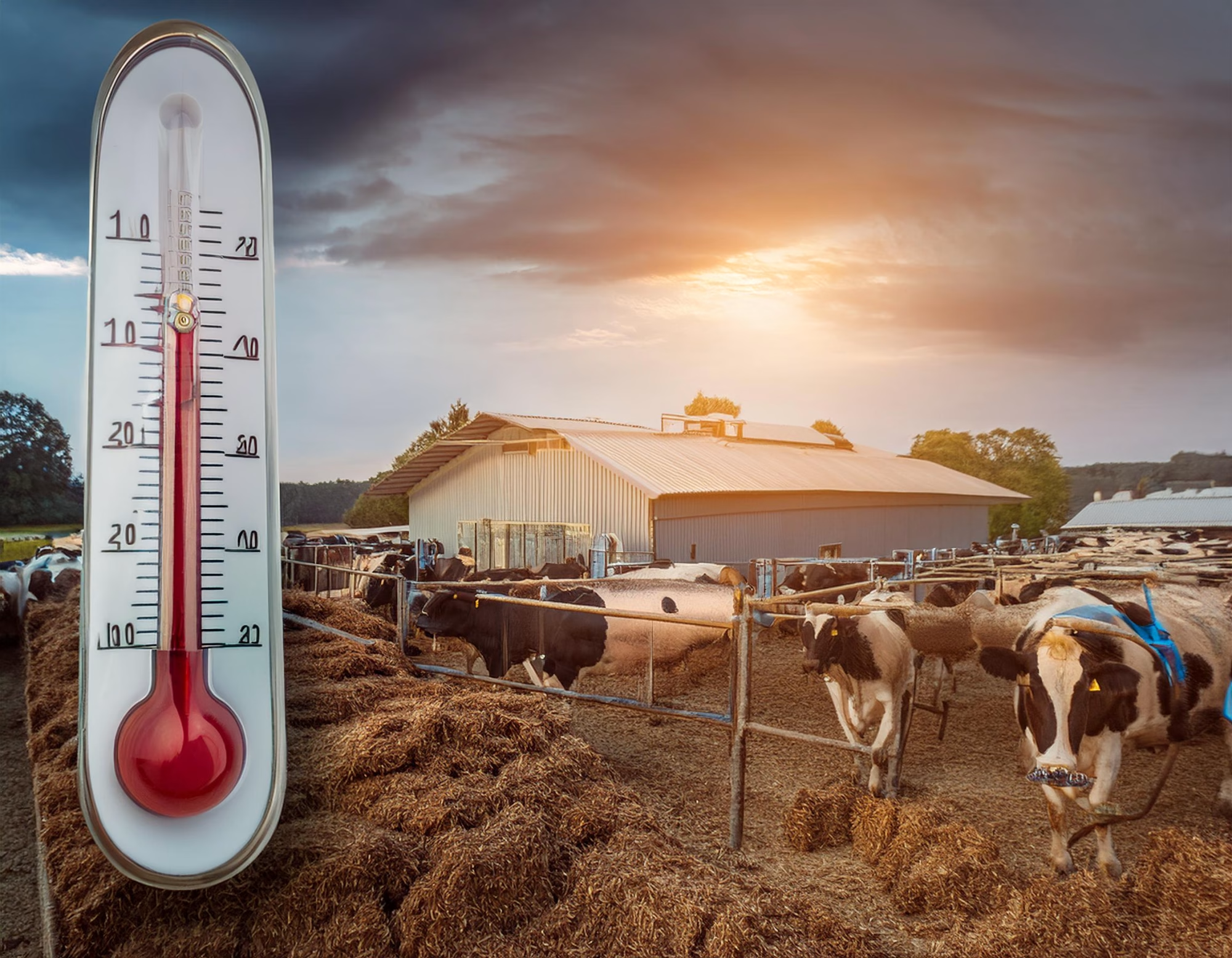
dairy farming challenges, global dairy summit, innovative dairy solutions, sustainable dairy production, dairy industry collaboration, climate impact on dairy, dairy technology advancements, milk production growth, dairy nutrition essentials, international dairy federation

Can the world’s dairy farmers sustain their businesses in a rapidly changing climate while meeting the demands of a burgeoning global population? This question was central to the International Dairy Federation (IDF) World Dairy Summit in Paris, where leading industry experts tackled the looming challenges and untapped opportunities in global dairy farming as discussions at the summit underscored the critical need for innovative solutions and international collaboration, a key speaker emphasized that the transformation of dairy farming is not just an industry concern but a global priority. Amid rising temperatures and evolving markets, the summit provided a platform for sharing insights on how different regions can adapt and harness these changes to drive growth and sustainability.

Milking Opportunities: The Dairy Industry’s Pathway to Feeding 10 Billion 

The world’s population is increasing, predicted to reach 10 billion by 2050. This swift growth presents a formidable challenge: ensuring that everyone, everywhere, has access to sufficient, safe, and nutritious food. In this quest for food security, dairy farming plays a pivotal role, providing critical sources of nutrition essential to diets around the globe. 

Dairy products are not just about milk and cheese; they are a vital source of essential nutrients, including calcium, vitamins, and proteins. As such, dairy farming becomes indispensable in meeting the dietary needs of billions, especially as people aspire to healthier eating habits. But here’s the catch: how do we increase production sustainably without compromising our environment?

The answer lies in embracing innovation. 

Globally, the dairy industry is at a crossroads, compelled to find more innovative solutions that align with our escalating demands. Innovation in breeding, feeding, and milking practices are already transforming traditional approaches. Technologies that optimize supply chain efficiency and enhance product quality could be our necessary game-changers. Think genetic advancements, feed efficiency, and technologies that reduce greenhouse gas emissions. 

Are we, as an industry, ready to rise to the occasion? Navigating this complex terrain will require collaboration, creative thinking, and a willingness to adapt. Solutions may involve policy shifts, research investments, or new partnerships. But whatever form they take, these innovations are not just necessary—they are essential. As we chart this course, let’s embrace the imperative for change and pioneer a future where dairy nourishes and sustains our planet.

South America’s Dairy Revolution: From Small Farms to Production Giants

Marcelo Carvalho, a critical voice at the International Dairy Federation World Dairy Summit, offered a fascinating glimpse into the transformation of milk production in South America. From his insights, the region is clearly amid a significant shift. Brazil is a cornerstone, contributing more than half of the continent’s milk supply. The numbers don’t lie—a decade ago, small-scale farms dominated the landscape, with 60% producing just 27% of the region’s output. Fast forward to today, and this has changed dramatically. Now, a select few farms churning out more than 10,000 liters daily are responsible for a third of total production. 

But these gains aren’t without their hurdles. Climate variability hits South American dairy farmers hard, with phenomena like La Niña and El Niño wreaking havoc on production stability. In addition to the severe floods in Brazil this year, it’s a wonder these farmers manage to keep the milk flowing. 

The trend towards more significant, more consolidated farming operations is unmistakable. Yet, by global standards, most farms are still relatively small, with an average daily output of just 437 liters. As these more prominent players gain ground, what will happen to the myriad of smaller farms? It seems only time will tell. But one thing’s sure: carving a path to opportunity amid these challenges requires resilience and innovation. 

North America’s Dairy Dilemma: Growth Amidst Climate Challenges

Dr. Andrew Novakovic from Cornell University spotlights North America’s remarkable 1.02% per capita production growth, which positions the continent favorably against global growth trends. This uptick in production places North America second only to Asia and starkly ahead of other regions like Africa and Oceania. 

Despite the promise this growth holds, it’s challenging. Climate change looms over the continent, threatening to alter traditional farming regions drastically. In Canada, warmer temperatures are expected to shift beneficial agricultural conditions further north and west. Meanwhile, the U.S. will see similar transformations, with the southeastern U.S.’s hotter climes moving northward, while California’s famed Central Valley weather patterns may migrate toward the Pacific Northwest. 

Yet, with these challenges come opportunities. North America’s natural advantage in ample rainfall could act as a buffer. The Eastern U.S. and Canada, known for their generous precipitation, may find solace in this consistency. This advantage isn’t merely about dodging dry spells but also ensuring sustainable farming amidst regional climate shifts.

Antipodean Dairies: Unraveling the Complexities of a Changing Climate

Joanne Bills illuminates the parallels and distinctions between Australia’s and New Zealand’s dairy landscapes. Both nations have remarkably stabilized milk production, pivoting towards higher-value dairy products to bolster their market positions. Yet, the scenarios aren’t different. 

While similar strategies are employed, such as increased cheese production, Australia caters to domestic demands. In contrast, New Zealand has sharpened its focus on exports. Such strategic differences underscore the unique market dynamics each country navigates. 

Climate impacts, however, cast a shadow over both dairy industries. Australia grapples with limited government pressure to drive changes despite facing severe climate repercussions. On the other hand, New Zealand’s farmers, equipped with the infrastructure and skills, are increasingly responsive to commercial drivers pushing for greenhouse gas reductions. Yet, they face the potential pitfalls of policy overreactions amid significant community pressures. 

Water policy is a critical concern on both sides of the Tasman Sea. New Zealand imposes winter grazing restrictions, directly impacting milk production capabilities. Meanwhile, Australia contends with water scarcity, which results in dwindling water availability for dairying, particularly in irrigation-dependent regions.

Europe’s Dairy Predicament: Survival of the Fittest Amid Rising Pressures

Milica Kocic delivers a stark overview of the current state in Europe, where sustainability constraints and intense competition for land are reshaping the dairy landscape. Farmers’ profitability in 2022 felt like a long-awaited respite after years of struggle. Yet, rising costs and diminishing land availability overshadow these gains, forcing many smaller farms to confront an uncertain future. 

Smaller farms, particularly those with fewer than 100 dairy cows, are precarious. Kocic notes that these operations are particularly vulnerable to shifting economic and regulatory tides. With increasing land prices and newer, more efficient farming practices gaining popularity, smaller farms need help to stay afloat amid escalating expenses. Robust, cost-effective policy solutions are critical to their survival. 

However, the path forward could be more straightforward. Kocic warns that without proactive policy interventions focused on reducing overheads and optimizing resources, many of these farms might be forced out of business entirely. Comprehensive yet affordable policy measures could provide a crucial lifeline, ensuring that farms of all sizes can navigate this challenging competitive landscape. 

Africa’s Dairy Conundrum: Navigating a Complex Web of Challenges and Opportunities

As the sun rises over Africa’s vast landscapes, the challenges faced by the dairy industry become increasingly apparent, echoing Bio Goura Soule’s observations. Low productivity remains a fundamental hurdle. In regions dominated by pastoral practices, the output per dairy cow is notoriously low, stifling the potential to meet burgeoning demand. 

The cost factor looms, casting a shadow over the industry’s growth. Rapidly escalating animal feed and healthcare expenses increase producers’ financial stress, constraining their ability to expand and innovate. Soule emphasizes collection difficulties, another thorn in the side of progress. The diverse and fragmented supply chain and inadequate infrastructure present logistical nightmares, hindering efforts to streamline milk collection. 

Imports, chiefly powdered milk, further complicate this intricate tapestry. While these imports initially satisfy immediate consumer needs, they inadvertently stall investments in the nascent stages of the value chain, causing long-term stagnation in local production capabilities. The precarious balance between meeting consumer demand and fostering local growth remains a quintessential conundrum for Africa’s dairy sector. 

Asia’s Dairy Dynamics: China’s Bold Revitalization and Southeast Asia’s Struggles

Li YiFan has shared noteworthy insights on China’s ambitious dairy industry revitalization plan, outlining strategic goals for 2025. This includes a significant boost in raw milk production, targeting 41 million metric tons, and a concerted effort to reduce feed costs, pivotal to maintaining competitive pricing. Notably, there is a strong focus on large-scale farming, with over 75% of farms housing more than 100 cows, thus promoting higher efficiency and productivity. The initiative also aims to enhance cattle breeding capacities and encourage dairy enterprises to establish farms, fostering direct integration of dairy farming and processing. 

As for Southeast Asia, the region contends with unique challenges that starkly contrast with China’s advancements. The intense heat stress prevalent in Southeast Asia poses a substantial constraint to dairy farming, affecting the well-being and productivity of dairy cows. Such climatic conditions make it difficult for local producers to compete, further complicated by fierce market competition. Imported dairy products, often cheaper and perceived as superior quality, dominate the market, making it an uphill battle for regional producers to secure their foothold. Consumer preference for these imports exacerbates the struggle, hindering the growth potential of local dairy operations.

India’s Dairy Narrative: Empowered Women and Economic Hurdles 

Sudha Narayana vividly describes India’s dairy landscape. Women are the primary caregivers in animal rearing, accounting for 60% of the labor force invested in this sector. Their role isn’t just supportive; it’s pivotal, as they contribute significantly to the dairy industry’s operations and decision-making processes. 

However, these contributions strain as rising milk prices challenge the sector. The economic barriers beset many Indian households and prevent more than half of the population from affording a healthy diet—a cultural aspiration deeply rooted in the community’s desire for wellness. This financial hurdle isn’t just about numbers; it’s about accessing nutrition and maintaining health within economic confines. This scenario underscores the need for more inclusive strategies that bridge the gap between aspiration and reality, ensuring that the labor force, led prominently by women, can thrive in a more supportive economic environment.

The Bottom Line

The global dairy industry is at a critical juncture, with each region facing unique challenges and opportunities. From the fluctuating farm sizes and production rates in South America to the climate shifts impacting North America, the path forward requires innovation and resilience. Meanwhile, in Europe, survival hinges on adapting to tight economic and policy pressures. At the same time, Africa struggles with infrastructure and productivity issues. In Asia, particularly in China and India, the focus is on self-sufficiency and leveraging cultural shifts. Australia’s and New Zealand’s climatic adversities demand responsive strategies. What binds these diverse challenges is the undeniable need for collaboration across borders. Whether through sharing sustainable practices, developing technology, or forming supportive policies, the answer lies in working together to secure a prosperous future. Let’s ignite this conversation—how can you contribute to the change? Share your thoughts and insights in the comments below, or spread awareness by sharing this article. Together, we can shape the future of dairy farming.

Summary:

The global dairy industry is on the edge of transformation, addressing climatic shifts and fierce competition amid a booming global population. Insights from the International Dairy Federation World Dairy Summit emphasize the urgent need for sustainable practices. Industry experts discuss how regions like South America and Asia manage challenges specific to their climates while strategies unfold in North America, Europe, and beyond. The question remains: can the dairy sector innovate swiftly to guarantee food security for 10 billion people by 2050? Embracing innovations, from genetic advancements to feed efficiency and reducing emissions, is crucial. Climate variability affects South American farmers, while North America’s per capita production growth is notable. International collaboration is vital for a sustainable future.

Key Takeaways:

  • The global dairy industry is navigating complex challenges, including climate variability, market competition, policy changes, and economic constraints.
  • Collaborative efforts among global regions are essential for a sustainable future in dairy production.
  • South America has significant trends towards larger consolidated dairy farms amidst climate variability challenges.
  • North America’s ample rainfall provides potential benefits despite shifting climate conditions favoring certain regions.
  • Australia and New Zealand emphasize higher-value dairy products and strong trade linkages, though they face severe climate impacts and water policy issues.
  • European dairies face a shrinking raw milk pool and must adapt to sustainability constraints and policy uncertainties.
  • Africa faces low productivity and high costs in dairy production but has potential for growth through targeted initiatives.
  • China’s dairy sector aims for self-sufficiency with government-backed large-scale farms, while Southeast Asia struggles with market fragmentation.
  • economic barriers impact India’s dairy production, though it shows potential growth through increased crossbred cattle and commercialization of dairying.

Learn more:

Join the Revolution!

Bullvine Daily is your essential e-zine for staying ahead in the dairy industry. With over 30,000 subscribers, we bring you the week’s top news, helping you manage tasks efficiently. Stay informed about milk production, tech adoption, and more, so you can concentrate on your dairy operations. 
NewsSubscribe
First
Last
Consent

Dairy Market Insight: Challenging Trends and Key Updates for October 31st, 2024

Uncover October 2024 dairy trends. How does bird flu affect your farm? Find crucial insights and strategies to tackle these challenges.

Summary:

The dairy market on October 31st, 2024, paints a picture of complexity for industry stakeholders as it weaves together unexpected stock variations and emergent health concerns. U.S. cheese stocks have plummeted 7.3% year-over-year, a factor poised to impact market prices in the months ahead. Conversely, butter stocks have swelled by 13.6%, indicating a solid supply that might ease next year’s price forecasts. Adding to the intrigue is the troubling development of avian influenza now affecting dairy cows in Utah, prompting the USDA to ramp up its testing and monitoring efforts nationwide. The situation beckons dairy farmers and industry professionals to reevaluate their strategies amidst market volatility and biosecurity challenges.

Key Takeaways:

  • U.S. cheese stocks significantly decreased by 33 million pounds, suggesting potential upward price movement in the short term despite market weakness.
  • Butter inventories increased by 7 million pounds, resulting in lowered price forecasts for Q4 2025 despite steady current prices.
  • The emergence of avian influenza in dairy cows poses a severe biosecurity threat, leading to increased USDA involvement in testing and tracking to curb its spread.
  • Global dairy markets show regional disparities, with EU and U.S. spot prices generally stable to higher, whereas French and Polish production faces challenges from adverse weather conditions.
  • Adapting to volatile market conditions necessitates strategic resilience and proactive measures among dairy farmers and professionals.
dairy market trends, cheese stock decline, butter price forecast, avian influenza impact, dairy farmer strategies, biosecurity in dairy farming, milk production challenges, market stability in dairy, dairy industry resilience, robotic milking technology

September brought a surprising turn in the U.S. dairy market, as cheese stocks unexpectedly plummeted by 7.3% year-over-year, in stark contrast to the 13.6% surge in butter stocks. This unforeseen shift, likened to a ‘living organism—constantly in motion, adapting, and demanding our attention to navigate its complex changes,’ is now compounded by a significant health challenge. The bird flu outbreak in Utah is affecting dairy cows, prompting swift action from the USDA. The dairy sector is in flux, necessitating vigilant monitoring and strategic adjustment. 

Dairy Dynamics: The Diverging Paths of Cheese and Butter Stocks 

As of October 2024, the dairy market landscape presents a nuanced picture. A notable development is the 7.3% year-on-year reduction in U.S. cheese stocks by the end of September, which were significantly below forecast, showing a decrease of 33 million pounds. Despite this shrinkage, the market’s response remains tepid, with recent CME spot market activities hinting at a lack of buying interest. Conversely, U.S. butter stocks have diverged with a 13.6% increase over the previous year, contributing to larger-than-expected inventories. This substantial growth in butter stocks contrasts cheese stocks, underscoring differing dynamics within the dairy sector.

The Ripple Effect of Avian Influenza in Dairy: A New Challenge for Biosecurity

The ripple effect of the avian influenza outbreak reaching dairy cows in Utah is a significant and concerning development for the industry. While bird flu outbreaks have traditionally been associated with poultry, the recent findings in dairy herds signal a new trajectory that could reshape disease management tactics. The appearance of avian influenza in cows raises questions about cross-species transmission and points to broader biosecurity issues within the agricultural sectors.

The USDA’s response to the avian influenza outbreak has been swift and decisive. Recognizing the gravity of the situation, they have increased surveillance and testing measures. Their plan involves initiating comprehensive testing at milk processing facilities to identify potential cases promptly. If the testing results are positive, the USDA intends to trace the infection back to its source farm(s) to effectively contain and mitigate the virus’s spread. This measure is paramount to prevent widespread disruptions within the dairy supply chain and maintain consumer confidence in dairy products. 

This outbreak presents dairy farmers with a new layer of operational challenges. Biosecurity protocols will likely become more stringent, requiring farmers to invest in more robust protective measures. Testing and trace-back procedures may also incur additional expenses. Moreover, the threat of herd infections could impact milk production volumes, directly influencing market dynamics, pricing, and farm profitability. 

While the USDA’s proactive approach aims to curtail the spread of the virus, the situation underscores the need for continued vigilance and innovation in disease prevention strategies. Understanding these implications is essential for dairy sector professionals to navigate the evolving landscape. It’s crucial to rethink how we view cross-species disease potential and what that means for future biosecurity frameworks in animal agriculture.

Peculiar Paradoxes in Dairy Pricing

The dairy pricing landscape reveals a peculiar paradox, particularly within the cheese sector. Despite a significant drop in U.S. cheese stocks—down 33 million pounds—prices have not demonstrated the expected buoyancy. This lack of upward movement in CME spot market prices, traditionally anticipated when inventories plummet, suggests underlying market hesitancies or external pressures suppressing growth. Analysts speculate that dampened demand could be a contributing factor, possibly due to broader economic pressures or changes in consumer preferences. 

Conversely, butter prices present a more straightforward narrative. The steady to slightly higher trend in both U.S. and EU markets aligns with increased stock levels reported at the end of September, which were notably 13.6% higher than forecasts. This surplus maintains competitive pricing, indicating a stabilization period as the market balances supply with demand. Forecasts for the concluding months of 2024 suggest butter prices will likely remain around the $2.60 mark, with minimal fluctuations expected, barring unforeseen supply chain interruptions or dramatic shifts in milk fat outputs. 

As for powders, the firm prices in nonfat dry milk (NFDM) and whey reflect consistent demand alongside tight global supplies. Historical patterns, coupled with recent production slowdowns in vital European regions such as Poland and wet weather challenges in France, suggest these prices may hold or gently increase in the short term. The steadfast nature of these commodities highlights their integral role in maintaining overall market equilibrium. 

With these price dynamics in mind, stakeholders should closely monitor evolving external variables, including potential regulatory changes due to biosecurity threats like avian influenza. These variables may exert an unforeseen influence on market stability. We all must remain vigilant and proactive in our roles to ensure the resilience of our industry.

Global Interplay: The Ripple Effects of Regional Dairy Variations

The complex tapestry of regional dairy production paints a captivating picture of varied global influences. France, for instance, is grappling with slowing dairy collections, primarily due to a persistent wet weather spell. This decline disrupts local markets and sends ripples through the international dairy supply chain, potentially tightening global supplies and nudging prices upwards when demand outstrips availability. Meanwhile, California, another powerhouse of dairy production, reports weaker-than-expected outputs, fueling speculation over future price adjustments. The Polish dairy sector, facing similar production shortcomings as California, compounds these concerns by contributing to the overall uncertainty in European dairy supply levels. 

These regional anomalies underscore a broader narrative: the dairy industry is intrinsically interconnected. An output decline in one region, especially significant players like France or California, can quickly reverberate internationally, impacting prices and availability in markets thousands of miles away. Producers and traders worldwide must remain vigilant, adapting strategies to accommodate fluctuating supplies and the resultant economic pressures. 

Each region faces unique challenges, from climatic conditions in France to operational hurdles in California and Poland. The global dairy market can expect a dynamic period ahead. Market players must stay informed and agile, ready to pivot in response to these evolving regional dynamics, lest they be caught off guard in an increasingly unpredictable market landscape.

Strategic Resilience: Navigating Dairy Market Volatility with Adaptive Approaches

Dairy farmers must adopt strategies that bolster resilience and manage risks in an industry facing fluctuating prices and potential disruptions from the bird flu outbreak. Here are several recommendations: 

  • Diversification: Consider diversifying your product offerings. If cheese stocks are low and butter stocks are high, adjusting production portfolios might be an excellent way to capitalize on market demands and reduce dependency on a single product.
  • Biosecurity Measures: Enhance biosecurity protocols to protect farm operations from avian influenza. Update staff regularly on new guidelines, sanitize all vehicles and equipment entering the farm, and limit farm visits to essential personnel.
  • Market Analysis: Stay informed about market trends and forecasts. Use analytical tools and platforms to monitor pricing trends, which can help make informed decisions about when to buy feed, sell stock, or expand operations.
  • Financial Planning: Establish contingency plans to cushion unexpected costs due to market shifts or health emergencies. This might include securing lines of credit or setting up reserve funds.
  • Collaborate and Network: Join dairy cooperatives or associations that can provide significant support during volatility, including shared resources and market intelligence.
  • Technology Adoption: Implement technologies such as robotic milkers or automated feeding systems to improve efficiency and decrease reliance on labor, which is at risk of health disruptions.

Implementing these strategies can help dairy farmers better navigate current challenges and position themselves for success in a rapidly changing industry.

The Bottom Line

As we’ve delved into the complexities of the current dairy market, several key takeaways emerge: the diverging paths of cheese and butter stocks indicate distinct supply-demand dynamics. At the same time, the spread of avian influenza emphasizes the need for enhanced biosecurity measures across the industry. The pricing peculiarities further underline the intricate interplay of regional variations and global market forces. Adaptability and strategic resilience are crucial for navigating the ever-evolving landscape in these uncertain times. Stay informed, stay flexible, and keep your finger on the pulse of industry shifts.

We invite you to share your insights, experiences, or questions below. Engage with fellow professionals, spark discussions, and let’s collaboratively face the challenges and seize the opportunities within the dairy sector.

Learn more:

Join the Revolution!

Bullvine Daily is your essential e-zine for staying ahead in the dairy industry. With over 30,000 subscribers, we bring you the week’s top news, helping you manage tasks efficiently. Stay informed about milk production, tech adoption, and more, so you can concentrate on your dairy operations. 

NewsSubscribe
First
Last
Consent

CME Dairy Markets Report: Navigating Cheese, Butter, and Futures Fluctuations for October 30th, 2024

Get the CME dairy market update. How do cheese, butter, and futures influence your strategy? Stay informed to lead in the dairy industry.

Summary:

On October 30th, 2024, the CME Dairy Markets report highlighted a mix of activity, with block cheese prices dipping slightly and barrel prices rising by 3.5 cents, revealing a complex landscape influenced by multiple signals. Concerns over potential disruptions arose due to avian flu cases in California and Utah, potentially affecting demand trends. December and January Class III futures reached two-month lows, whereas Class IV futures presented a consistent upward trajectory. The spot butter market demonstrated resilience, bolstered by international market influences such as the increase in SGX/NZX powder prices following solid results in the latest GDT Pulse, indicating ongoing strategic adjustments within the market.

Key takeaways:

  • The trading activity in the November-December Class III spread shows significant movements, indicating a strategic focus on short-term market dynamics.
  • Class III and Cheese Futures present mixed signals, reflecting cautious yet active trading patterns among market participants.
  • The NFDM market is experiencing volatility, driven by international influences and fluctuating spot prices, emphasizing the need for strategic navigation.
  • European dairy products maintain a premium price, sustaining global trade interest and serving as a competitive challenge for other regions.
  • Butter’s market resilience is highlighted by its rebound from previous lows, supported by strategic futures trading and robust open interest.
  • Fluctuations in market spreads may signal potential shifts in broader market fundamentals, requiring close observation from stakeholders.
  • Overall, bullish market traction and solid buyer-seller interactions show tempered price fluctuations shortly.
dairy markets, spot cheese segment, block prices, barrel prices, avian flu impact, Class III futures, Nov/Dec spread trading, Class IV futures, spot butter market, international dairy prices

On October 30th, 2024, the dairy markets were in flux, challenging industry norms and sparking speculation. However, the market’s resilience is a testament to its stability. Have you considered how fluctuating cheese and butter prices could impact global trade and your operation’s profitability? As block prices dip by half a cent, barrels rise to $1.9250 per pound, and butter prices advance to $2.7050 per pound. Understanding these market dynamics is crucial for informed business decisions, especially when prices are this volatile.

Fluctuating Trends and External Challenges Shape Dairy Market Dynamics

The market conditions present a mixed bag of activities, especially in the spot cheese segment. Block prices decreased slightly, slipping by half a cent, while barrel prices increased by 3.5 cents. This diverging trend reflects a complex market landscape in which buyers and sellers respond differently to various signals. 

Adding to this complexity, external factors such as the recent avian flu cases reported in California and Utah have cast a shadow over market sentiment. Such outbreaks typically heighten concerns over potential disruptions, impacting demand trends as the year-end approaches. Market participants remain vigilant, assessing how these health-related developments might further influence consumer demand and market dynamics in the dairy sector.

Strategic Trading Patterns: Navigating Class III Futures’ Two-Month Lows

Examining the recent performance of Class III futures, prices for December and January contracts have hit two-month lows. This decline aligns closely with key technical support levels, suggesting potential stabilization points that traders are likely monitoring. The robust trading volume, with over 2,400 contracts exchanged, highlights a significant engagement from market participants. This activity was notably driven by the Nov/Dec spread trading, which saw an impressive 500 trades executed in just one day. 

The dynamics of the Nov/Dec spread trading have had a palpable impact on open interest, showing a unique pattern. By rolling positions from November to December, traders have maintained a steady open interest overall, only increasing by three contracts. However, the shifting interest from November to December indicates a strategic repositioning by traders to optimize their exposure to price movements. This strategic spread trading suggests carefully watching near-term price shifts, with participants positioning themselves to manage potential volatility.

Exploring Divergent Paths: Class III’s Cautious Moves vs. Class IV’s Steady Ascendancy

The Class III futures experienced a complex landscape as the nearby contract slightly advanced to $20.57 per hundredweight, marking a minor increase of five cents. However, the upward movement was juxtaposed with a decline in Q1 prices, which descended to $19.63 per hundredweight, shedding 14 cents. This mixed performance highlights a potential recalibration within the Class III space, indicating a cautious market sentiment trying to balance immediate gains against longer-term uncertainties. 

Conversely, Class IV futures demonstrated a more uniform positive trend. November futures cemented their standing at $21.04 per hundredweight, climbing an additional three cents, while Q1 futures also saw an incremental rise to $21.21 per hundredweight, adding three cents. These steady gains suggest that Class IV products might benefit from more robust demand or tighter supply scenarios, contrasting the more volatile Class III trends. 

The divergence in Class III and IV futures performance could indicate underlying shifts in market demand patterns. While Class III markets are wrestling with variabilities and competitive pressures, Class IV products are riding a wave of steady, albeit modest, positivity. The potential impact on the dairy market could manifest in tactical adjustments by producers and traders, resulting in a strategic shift toward maximizing opportunities within the more stable Class IV domain.

Spot Butter’s Valiant Rebound: A Testament to Market Resilience and Strategic Futures Play 

The spot butter market is exhibiting significant resilience. It recovered from last week’s lows, with prices rising by 1.5 cents to $2.705 per pound. This rebound not only injects optimism into future trading activities but also presents potential profit opportunities. Notably, the futures market has witnessed a commendable level of liquidity throughout 2025, bolstered by the rise in spot prices and strategic trading trends. 

One of the intriguing aspects of current market activities is the initiation of a cash-and-carry trade. This strategy becomes viable when spot prices hover around $2.70 while deferred futures beyond January surpass $2.80 per pound. The cash-and-carry trade is significant as it creates opportunities for market players to lock in profits by buying at current spot prices and selling in the futures market at higher rates. This trend has attracted new market participants on both ends, with buyers eager to secure prices below the speculated $3.00 threshold and sellers strategically leveraging the market’s forward carry. 

The influx of new buyers and sellers testifies to the market’s robustness and traders’ ever-evolving strategies. These new entrants infuse vitality into the trading environment, presenting a dynamic marketplace where informed price locking and speculative selling coexist. Consequently, this lively interaction between buyers and sellers improves the market’s health. 

Furthermore, the recovery in butter open interest is worthy of mention. Across all open contracts, we are almost back to levels reminiscent of 2020 and 2022, highlighting sustained interest and active participation in the market. While open interest does not inherently indicate a directional bias, it underscores a well-balanced arena where willing buyers and sellers find common ground.

Subtle Movements in NFDM Prices: A Cautious Yet Active Market Navigates International Influence

Spot Nonfat Dry Milk (NFDM) prices have displayed subtle dynamism in recent sessions. They climbed to $1.3950 during trading before settling marginally lower at $1.3850. This slight dip occurred over seven trades, indicating a cautious yet active market. Futures activity surrounding NFDM showed mixed patterns, with price changes holding close to a one-cent fluctuation, reflecting an overall cautious investor sentiment. 

The influence of international markets can’t be overlooked, as seen with the SGX/NZX powder prices continuing to strengthen following a robust performance in the latest GDT Pulse. This international surge propels domestic considerations, presenting potential upward pressure on future NFDM pricing trends. Although domestic futures traded with limited volume—81 contracts post a vigorous Tuesday session—the global market movements highlight a pivotal influence on dairy pricing strategies.

European Dairy’s Premium Edge: A Global Trade Catalyst and Innovative Challenge for Rivals

In our ever-evolving global dairy market, European butter and cheese continue to command significant premiums compared to their counterparts in New Zealand and the United States. This premium positions the European Union (EU) as a crucial player in the international dairy landscape. EU cheese prices are currently averaging $2.46 per pound, markedly higher than New Zealand’s $2.13 per pound and the U.S.’s $1.91 per pound. As for butter, the EU’s average is $3.74 per pound, significantly outpricing New Zealand’s $2.87 per pound and the U.S.’s $2.69 per pound, with all prices adjusted for 80% butterfat. This premium edge reflects the quality and demand for European dairy products. It presents an innovative challenge for rivals to match or surpass these standards to compete in the global market. 

This distinctive price gap has increasingly made the EU a focal point in global trade discussions. The high pricing structure reflects EU dairy products’ perceived quality and stringent regulatory standards, underscoring Europe’s competitive advantage over its global counterparts. Such disparities in pricing invite strategic export opportunities for EU producers, who are poised to capitalize on favorable exchange rates and burgeoning demand in emerging markets where quality is at a premium. 

The implications for global trade dynamics are profound. On the one hand, the EU’s competitive pricing may draw new trading partnerships, especially in regions where consumers are willing to pay more for premium quality. On the other hand, it challenges New Zealand and the U.S. producers to innovate, possibly driving them to enhance efficiency or pivot towards niche markets to maintain relevance. As these dynamics unfold, industry stakeholders must remain vigilant and poised to adapt to shifting consumer preferences and strategic international trade policies.

The Bottom Line

As 2024 unfolds, the dairy market presents a complex tapestry of challenges and opportunities. From fluctuating cheese prices affected by avian flu outbreaks to strategic maneuvers in the Class III futures market, each trend paints a picture of an industry at a critical junction. Butter prices are rebounding, highlighting the resilience and adaptability of market participants. At the same time, Nonfat Dry Milk (NFDM) displays subtle movements amidst international market influences. European dairy products, maintaining a premium edge, serve as both a catalyst and a challenge in the global market landscape. 

These shifts and strategies prompt us to ask: How prepared is your business to navigate these evolving trends? The intimation of a shifting market suggests pivotal moments where strategic decisions could have lasting impacts. Reflect on your place in this dynamic environment—are you positioning yourself for success? 

We invite you to share your thoughts and engage with this community of dairy professionals. Comment below with your insights, share this article with your colleagues, and foster a dialogue that propels us toward informed and proactive decision-making. Your voice is crucial in shaping the discourse around these developing market trends.

Learn more:

Join the Revolution!

Bullvine Daily is your essential e-zine for staying ahead in the dairy industry. With over 30,000 subscribers, we bring you the week’s top news, helping you manage tasks efficiently. Stay informed about milk production, tech adoption, and more, so you can concentrate on your dairy operations. 

NewsSubscribe
First
Last
Consent

China’s Raw Milk Surge: How Increased Production is Reshaping the Dairy Landscape

Uncover the impact of China’s 2024 raw milk boom on the dairy sector. What are the implications for global markets and local farms? Find out more here.

Summary:

As China gears up for an unprecedented surge in raw milk production in 2024, driven by an expanding dairy cow herd and enhanced production efficiencies, the global dairy market is poised for significant ripple effects. Notably, a raw milk surplus of 15,000 metric tonnes per day was reported in March 2024, marking a potential recalibration in domestic and international markets. This increase could lead to declining milk imports, influenced by stagnant demand in specific sectors, competitive domestic production, and changing socio-economic dynamics. The growth presents economic shifts within the regional dairy landscape, with smaller farms facing challenges amid low milk prices. China’s strategic investment in dairy capabilities aims to cement its global status and influence future trade dynamics. At the same time, the surplus of raw milk reshapes market dynamics and affects the import of fluid milk, whole milk powder, and skimmed milk powder. The implications extend to economic and logistical dimensions, capturing the attention of industry observers worldwide.

Key Takeaways:

  • China’s raw milk production is projected to increase in 2024, attributed to a growing dairy cow herd.
  • Imports of fluid milk and powders are expected to decline due to rising domestic production.
  • Lower raw milk prices drive small and medium-sized dairy farms out of the market despite an increased average cattle inventory.
  • Herd expansion continues as low beef prices reduce incentives to cull cows.
  • Milk consumption in China has declined due to economic factors and an aging population.
  • Whole and skim milk powder production is rising, with imports declining.
  • Economic conditions are impacting cheese and butter imports, which are expected to decrease.
  • China’s trade disputes with the EU may affect niche dairy product imports, but the oversupply issues persist.
  • Opportunities remain for international dairy firms, with China encouraging US dairy company expansion.
China dairy industry, raw milk production 2024, dairy cow herd expansion, economic shifts dairy sector, low milk prices challenges, market dynamics consolidation, global milk market influence, fluid milk imports China, whole milk powder demand, skimmed milk powder surplus

In 2024, China’s raw milk production surge marks a pivotal shift in the global dairy landscape, defying traditional market expectations and setting a new trajectory. With this increase, China solidifies its position as a critical player in the world’s dairy production arena, affecting everything from international trade balances to local consumer choices. This article delves into the underlying factors driving this surge, examines the broader implications for the global dairy industry, and highlights how this development could reshape market dynamics. Expect to gain insights into production trends, potential challenges, and what this means for future dairy investments abroad. Are you ready to rethink the global dairy narrative? 

China’s Dairy Expansion: A Game Changer for Global Markets 

China’s dairy industry is a significant player in the global market, securing its position as the third-largest milk producer worldwide. As we look toward 2024, predictions indicate a substantial increase in raw milk production. This growth is primarily attributed to the expansion of the dairy cow herd and advancements in production efficiencies. 

The anticipated rise in raw milk output poses several implications for the industry. Firstly, it suggests a potential decline in China’s dependency on dairy imports, remarkably fluid milk and milk powders. These reductions align with the country’s objective of effectively bolstering domestic production to meet local demands. This shift could have significant implications for global trade dynamics, potentially leading to a decrease in demand for dairy products from other countries and reshaping the global dairy market. 

Furthermore, the surge in production could lead to economic shifts within the regional dairy landscape. While more prominent dairy players may benefit from scaling operations, smaller farms might face challenges due to low milk prices. However, this scenario also allows smaller farms to innovate and adapt to the changing market conditions. This could provoke a shake-up in market dynamics, potentially driving further sector consolidation and fostering a more competitive and resilient industry. 

Overall, China’s strategic foresight and investment in enhancing its dairy capabilities underscore its ambitions to cement its status in the global milk market and influence future trade dynamics. These actions are driven by a combination of factors, including the country’s growing population, increasing demand for dairy products, and its desire to reduce dependency on imports and boost domestic production. 

China’s Internal Dairy Surge: Redefining Import Necessities

The increase in domestic milk production in China is poised to significantly impact the import landscape, particularly concerning fluid milk, whole milk powder (WMP), and skimmed milk powder (SMP). As domestic production ramps up, the reliance on imported dairy products is expected to wane. This shift is primarily attributed to the higher production volumes, which have resulted in a raw milk surplus among major Chinese dairy processors. 

Fluid milk imports are projected to decline as domestic ultra-high-temperature (UHT) processing capabilities expand and demand for UHT milk remains stable. The USDA GAIN report underscores this anticipated decrease in import volumes, with fluid milk imports having already declined by over 10% in the first quarter of 2024 compared to the previous year. This reduction highlights the efficacy of local production in meeting the existing demand without needing supplementary imports. 

The scenario regarding whole milk powder echoes the fluid milk narrative. Increased production capacities and higher ending inventory volumes suggest a reduced need to import WMP. The trend is unmistakable: China’s domestic markets are cultivating the capability to sustain demand independently, although domestic retail consumption might taper slightly, especially in non-commercial sectors. 

Skim milk powder production is expected to grow modestly. Yet, the cumulative effect of increased domestic production and low consumption demand keeps import needs minimal. With SMP imports decreasing from 112,000 metric tons to 80,000 in the first quarter of 2024, the data delineates a declining import trajectory. 

Overall, the ongoing expansion of raw milk production in China elucidates a broader movement towards self-reliance, curtailing the country’s dependency on the international dairy import market. Stable domestic demand and bolstering local production initiatives encourage this evolution.

Surplus Shockwaves: China’s Raw Milk Boom Reshaping Market Dynamics

The surplus of raw milk in China among major dairy processors is profoundly reshaping market dynamics. As the country’s raw milk production grows, it has led to an impressive surplus, especially noticeable in early 2024, when figures hit 15,000 metric tonnes daily. This surplus is closely linked to the decline in raw milk prices, a trend observable since the start of the year and showing an even more pronounced drop compared to 2023. This pricing downfall poses significant challenges for small and medium-sized dairy farms. 

Sustaining operations in such a price environment is increasingly untenable for these smaller entities. Many cannot compete as prices plummet, leading to a market exit. This departure of small and medium-sized farms further consolidates the market, effectively diminishing diversity and competition. However, it’s not just these mid-players who feel the impact. Despite their initial buffer, large dairy farms must also navigate the complexities of adjusting inventories and strategies in response to lower price points. 

The broader market dynamics pivot as a result. The increased production and declining prices incentivize larger dairies to maintain or grow their herds, largely unfazed by the price drops due to their scale and integrated operations. This herd expansion, driven partly by the low incentive to reduce dairy cow inventories due to unappealing beef prices, underscores a unique period in China’s dairy market. It highlights a critical interplay between production economics and market saturation, setting the stage for potential future shifts as the market seeks a new equilibrium. The potential for these future shifts adds an element of intrigue to the industry’s dynamic nature. 

The Paradox of Expansion: Herd Growth Amidst a Price Decline

As we delve into the core reasons behind the intriguing trend of herd expansion amidst declining milk prices, it’s essential to highlight the market dynamics in play. Although the typical market response to dropping prices might suggest a reduction in herd size to balance supply and demand, the scenario in China paints a different picture. One of the primary reasons for continued herd expansion is the lack of sufficient incentives for dairy processors to pare down cow inventories. This situation is exacerbated by persistently low beef prices, which have created minimal motivation for farmers to cull dairy cows and sell them for beef. 

But what underpins these low beef prices? It’s primarily a supply-demand imbalance that has put downward pressure on pricing since 2023 and persists into 2024. When beef prices are competitive, dairy farmers might strategically cull less productive cows and sell them as beef to manage herd sizes and enhance profitability. However, under current economic conditions, this strategy is a notable shift. With beef prices far from lucrative, the calculus changes, dissuading farmers from opting for cull-and-sale operations. 

Additionally, an intriguing aspect of this trend is the impact of market exits by smaller dairy farms. Economically strapped due to the continued downturn in raw milk prices, several smaller operators cannot sustain operations. They find themselves compelled to liquidate their herds. However, many of these animals are transferred to larger, more resilient farms rather than culling the cows. These larger farms, possibly more equipped to absorb the short-term losses, are acquiring cows, contributing further to herd expansion. These more prominent entities could capitalize on future market turnarounds by consolidating their herds, securing their scale advantage.

China’s Dairy Dilemma: Navigating Socio-Economic Shifts

The decline in milk consumption per capita in China is a multifaceted issue deeply intertwined with the country’s current socio-economic landscape. Recent data indicates a drop from 14.4 kg per capita in 2021 to 12.4 kg in 2022, a trend largely attributed to economic sluggishness. As China grapples with economic challenges, consumers appear to opt out of purchasing premium foods like dairy products, resulting in a consumption downturn. 

Coupled with economic factors is the demographic shift; an aging population means a decrease in the overall demand for dairy, which traditionally has higher consumption among younger demographics. This population change affects retail dynamics, altering consumption patterns across the market. 

The repercussions of reduced consumption are evident in dairy imports. Statistics reveal a noticeable 13% year-on-year decline, reaching 1.75 million metric tons in the first eight months of 2024. The lower need for imports directly results from sufficient domestic production—propelled by increased raw milk output—and the weakened demand stemming from economic conditions. 

Such a shift in consumption patterns and import volumes highlights a significant recalibration of the dairy sector. It reflects how domestic economic factors and demographic changes guide the future of dairy production and import needs in China, challenging global dairy suppliers to re-evaluate their strategies in the Asian giant’s market.

Dairy Dynamics: China’s Production Surge and Import Adjustments

The production and import trends for dairy products such as whole milk powder (WMP), skim milk powder (SMP), cheese, butter, and whey products are undergoing notable transformations in China. As domestic raw milk production increases, several ripple effects will manifest across various dairy segments. 

Increased volumes of fluid milk production are propelling whole milk powder production to new highs. The surge in domestic WMP production is anticipated to come with a corresponding decline in WMP imports. The higher carry-in stocks from 2023 raise the total WMP supply in 2024, exceeding previous years’ levels. Skim milk powder production is set to experience modest growth from 2023, driven by China’s increased raw milk supply and declining prices. 

The landscape for cheese and butter remains relatively stable, with limited domestic cheese production lingering at 2023 levels. Retail sales are predicted to decline despite increased consumption across the hotel, restaurant, and institutional sectors. Economic headwinds, which have a pronounced effect on high-end products like imported cheese, are expected to moderate cheese and butter imports. Meanwhile, butter production is forecast to grow as processors are encouraged by profitability linked to an overall rise in processed dairy products. 

Whey and whey product imports are on a downward trajectory due to diminished demand from the food and feed industries. While food use moderates due to a declining birth rate, demand for feed is tempered by a contraction in piglet inventory. In Q1 2024, wheat imports significantly dropped year over year.

China’s Dairy Paradox: Harnessing International Opportunities Amidst Domestic Abundance

Despite China’s current raw milk oversupply, international dairy suppliers should recognize the vast potential within the Chinese market. This opportunity stems from several factors, including evolving consumer preferences and the continuous market opening to foreign enterprises. The surge in domestic production hasn’t completely negated the appetite for specific imported dairy products that resonate with Chinese consumers, such as high-end cheeses and specialty dairy items. 

Industry experts, like Charlie McElhone from Dairy Australia, have identified significant growth possibilities. He notes that China remains a prime market for their dairy exports, reflecting confidence in the ongoing demand for international dairy products amidst the country’s internal production boom [source]. Similarly, Wang Shouwen, China’s vice minister of commerce, extended an invitation to global dairy companies, including those from the US, to broaden their operations within China. This welcoming stance illustrates China’s openness to international collaboration, suggesting the country’s intent on balancing domestic production with foreign expertise and products that cater to specific consumer niches. 

However, international suppliers must navigate challenges, including fluctuating demand dynamics and China’s strategic economic adjustments. Reducing certain dairy imports forces suppliers to remain adaptable and innovative, providing value-added products that distinguish themselves from local offerings. As the dairy market oscillates, agile responses and the nurturing of solid trade relationships become pivotal in leveraging growth avenues in this ever-evolving landscape.

The Bottom Line

China’s surge in raw milk production is poised to reshape the country’s dairy landscape significantly. As domestic output rises, we witness a noticeable decline in milk imports, signaling a shift towards self-sufficiency. This expanded production influences supply chains within China. It sends ripples across the global dairy market, particularly affecting major exporters like New Zealand and the EU. The paradox of herd expansion amidst falling milk prices presents a complex dynamic where economic pressures and market strategies intertwine uniquely. Additionally, the nuanced responses in the cheese, butter, and milk powder sectors highlight the intricate balance between local production capabilities and import needs. 

This evolution invites us to ponder the broader implications: Will China’s self-reliance approach ripple into more sectors? How might this influence global dairy prices and trade dynamics? Your insights and thoughts are highly valued as we traverse these intriguing times. We encourage you to share your perspectives and engage in the conversation. What do you think the future holds for China’s dairy industry and its role on the world stage?

Learn more:

Join the Revolution!

Bullvine Daily is your essential e-zine for staying ahead in the dairy industry. With over 30,000 subscribers, we bring you the week’s top news, helping you manage tasks efficiently. Stay informed about milk production, tech adoption, and more, so you can concentrate on your dairy operations. 

NewsSubscribe
First
Last
Consent

Cheese and Trade: The Impact of EU-China Tensions

See how EU-China trade tensions might change your dairy business. Ready for shifts in cheese exports?

Summary:

The EU and China’s ongoing trade measures have placed the dairy industry, especially the European cheese sector, in a complex spot. With the EU’s countervailing duties on Chinese electric vehicles, China’s potential retaliatory tariffs on EU agricultural imports like cheese and cream could reshape the market. Only 18% of China’s cheese imports come from the EU, but this disruption may increase competition for products like mozzarella. Moreover, China’s ambition to boost its cheese production adds a twist to the situation. This trade conflict could lead exporters to enhance capabilities and adapt strategies, affecting traditional giants like France and Italy. Dairy professionals must remain agile, leveraging technological innovations to navigate this evolving marketplace successfully. For further insights, check the detailed article.

Key Takeaways:

  • The EU’s imposition of countervailing duties on Chinese electric vehicle imports has potential ramifications for the agricultural sectors, particularly in dairy.
  • China’s possible retaliatory tariffs on EU cheese and cream could shift the dynamics within the dairy industry, impacting trade and pricing.
  • The current 18% share of EU cheese imports in China presents opportunities for non-EU countries to expand their market presence, especially in mozzarella.
  • China’s strategic interest in bolstering its own cheese production capacity may alter global dairy production landscapes and introduce new competition.
  • Dairy stakeholders need to be proactive in understanding these geopolitical shifts to seize opportunities and mitigate risks in the evolving market.
  • Engagement and dialogue are crucial for dairy professionals to adapt and potentially benefit from the changing trade environments.

Have you ever considered how a tug-of-war over electric vehicles between the European Union and China could send shockwaves through the dairy industry? Just yesterday, the European Commission made headlines by deciding to impose definitive countervailing duties on Chinese imports of electric vehicles, with tariffs ranging from 7.8% to 35.3%. This bold move aims to protect the EU’s auto industry, but what about the unintended consequences? It’s not just car enthusiasts who should pay attention; dairy farmers may soon feel the pinch as China mulls retaliatory tariffs on EU agricultural exports, including cherished staples like cheese and cream. “This latest turn in EU-China trade relations highlights the intricate web of global commerce and the unforeseen impacts that can ripple through various sectors,” a trade analyst observed. For those within the dairy industry, understanding these dynamics isn’t just about staying informed—it’s about preparing for potential shifts in market opportunities and challenges. So, what will the future hold for EU dairy exports be if this trade dispute escalates? Let’s dive into the details and explore possible outcomes that could reshape the landscape for dairy farmers and stakeholders in the industry.

Trade Tensions: Navigating the Dairy Ripples Amidst EU-China Tit-for-Tat

The unfolding scenario between the EU and China is a classic display of tit-for-tat trade policy maneuvers. The EU’s recent decision to slap definitive countervailing duties on Chinese electric vehicle imports indicates rising tensions between these economic giants. This action, which imposes additional tariffs ranging from 7.8% to as high as 35.3%, has not only sent ripples across the automotive industry but also laid the groundwork for potential retaliatory measures from China. 

One area of retaliation that dairy professionals should monitor closely is the agricultural sector, mainly dairy imports like cheese and cream. China has already hinted at possibly imposing tariffs on EU agricultural imports. This repercussion stems directly from the EU’s automotive tariffs. This would be a double whammy since the EU counts China among its significant cheese export markets, with about 18% of China’s cheese imports coming from European producers. 

The escalation in these tensions can be traced back to underlying concerns over trade imbalances and geopolitical alignments. The EU is apprehensive about losing its market hegemony in emerging sectors such as electric vehicles. On the other hand, China is determined to protect its burgeoning industries while maintaining a steady flow of agricultural products, crucial for its growing middle-class consumption. 

The implications of this escalating trade conflict could reverberate far beyond the EU and China. Industries across the globe might experience disruptions as supply chains are redirected, costs increase, and market access becomes more contentious. For the global dairy trade, this could mean increased competition among exporters eager to tap into China’s vast consumer market, leading to a potential reshuffling of trading alliances and strategies.

Cheese, Cream, and Trade: Are EU Dairy Farmers Ready for New Frontiers?

The potential imposition of Chinese tariffs on EU dairy exports such as cheese and cream creates uncertainty across the industry. With only 18% of China’s cheese imports currently hailing from the EU, the direct economic impact might seem initially modest. However, the broader implications deserve a closer inspection. 

First, it’s essential to acknowledge the competitive dynamics at play. While the EU holds only a fraction of the Chinese cheese import market, this niche percentage is not a simple quantity—it’s of strategic quality. Much of this is high-end specialty cheese crafted with expertise that is harder to replicate. This category isn’t simply about volume but about prestige and market differentiation. What would happen if more EU dairy farmers pivoted toward this niche? 

If tariffs are imposed, the ability of EU dairy producers to maintain competitive pricing will be a significant concern. This might push them to explore alternative markets that can appreciate their offerings without the burden of duties. Are we looking at potential new trade allies in regions like Southeast Asia or the Middle East? These areas have shown increasing dairy consumption trends, presenting possible windows of opportunity for EU exports. This potential for new trade alliances is crucial for EU dairy producers navigating the changing trade landscape. 

Moreover, the broader industry impacts should be noticed. Tariffs could incite a shift in operational focus, prompting EU producers to enhance domestic production capabilities and innovate product lines to cater to local consumer tastes. This could create a balancing act between exporting in traditional markets and growing local footprints. By embracing innovation in product offerings, the industry can turn these potential challenges into opportunities, inspiring and motivating stakeholders to adapt and thrive in a changing market. 

As the dust settles on these potential trade disputes, EU dairy farmers will be left to ponder their strategies. Whether it’s doubling down on the quality that has earned them a place in Chinese markets or cultivating new relationships elsewhere, there is no one-size-fits-all approach. As industry dynamics evolve, strategic planning becomes more crucial than ever. What would your move be if you were steering the ship? 

Engage with us in the comments below and share your thoughts. How do you foresee the EU dairy industry adapting to these potential changes in the trade winds?

Opportunities on the Horizon: How Non-EU Dairy Producers Can Shine in China’s Growing Cheese Market

With the EU facing potential tariffs on cheese and cream exports to China, non-EU dairy producers, especially in the US, are poised to capitalize on this shift. Imagine the scenario: the EU’s share in the Chinese cheese market dwindles, especially in segments like mozzarella. This gives non-EU producers an open field to increase their market presence. 

China has been ramping up its cheese consumption, and mozzarella, in particular, stands out due to its universal popularity in dishes like pizza. For US dairy producers, this could mean doubling their efforts to penetrate the market and cater to rising consumer demands. 

However, increased market share opportunities will likely lead to heightened competition. Non-EU producers must consider strategic pricing and quality enhancements to stand out. The ripple effect? While an aggressive push for better pricing could benefit consumers, it might squeeze profit margins unless balanced by efficient operations and innovations. 

Ultimately, the question remains: How should non-EU dairy producers position themselves amid these shifting sands? Will they focus on ramping production, investing in quality, or leveraging unique selling points to establish their place in the Chinese market?

China’s Cheese Ambitions: A Catalyst for Global Dairy Disruption?

China’s drive to bolster its domestic cheese production capabilities could herald significant shifts within the global dairy landscape. If China emerged as a cheese production powerhouse, the worldwide supply dynamics would transform, potentially leading to regional market disruptions and new trading paradigms. The question isn’t just when this will happen but how it will reshape the global dairy industry. Are traditional exporters ready for such a shift? 

Anticipating China’s potential for self-sufficiency in cheese production, dairy businesses worldwide may need to refine their strategic models. This could involve diversifying export portfolios or enhancing value-added offerings to maintain a competitive edge. Imagine an environment where traditional European exporters like France or Italy find their market shares challenged by existing competitors and the country that was once a primary import market. 

Supply Chain Evolution: Global supply chains may need to pivot towards more resilient models, reducing dependency on Chinese markets by exploring alternative avenues. Efficient supply chain management could become paramount, potentially prompting innovations in logistics and distribution. 

The potential inward shift in China’s cheese procurement could also pressure international dairy producers to innovate and find new markets, fundamentally altering export-driven growth strategies. Would prioritizing local production and shorter supply chains become the new norm? 

Faced with such transformative changes, dairy businesses must stay agile, closely monitor the evolving landscape, and embrace technological advancements to streamline production and distribution. This shift might be a wake-up call to invest in research and development and push the boundaries of cheese and dairy innovation. 

For the contemplative industry stakeholder, these developments pose both a challenge and an opportunity to reimagine business strategies in a world where change is the only constant.

Charting the Course: How Dairy Stakeholders Can Thrive Amidst EU-China Trade Uncertainties

Navigating the choppy waters of EU-China trade tensions requires more than just a survival strategy for dairy players; it’s about thriving amidst uncertainty. Here’s the compass to guide your journey: 

  • Diversify Export Markets: Have you considered looking beyond the traditional markets? By exploring emerging economies with a burgeoning appetite for dairy, you can mitigate the risks tied to any single market. For instance, Southeast Asia and Africa markets are showing significant growth in dairy demand.
  • Invest in Product Innovation: Is your product range compelling enough to capture the evolving taste buds of a global audience? Focusing on R&D can lead to high-margin, niche products like specialty cheeses. This leverages premium segments and can offset tariffs affecting more commoditized items.
  • Enhance Supply Chain Resilience: Have you mapped out alternative supply routes? A flexible supply chain minimizes the impact of trade disruptions and helps maintain constant product flow to customers. Technologies like AI for predictive analytics can anticipate potential bottlenecks and adjust plans in real time.
  • Engage in Strategic Partnerships: Consider forming alliances with local producers or distributors in target markets. These partnerships can provide market insights, reduce entry barriers, and even share costs associated with navigating local regulations.
  • Advocate for Policy Support: Are you leveraging industry bodies to push for supportive trade policies? Collective lobbying efforts can lead to beneficial policy adjustments, tariff exemptions, or subsidies that ease the economic burden on dairy exporters.

Share your thoughts on these strategies. What’s your approach to bustling trade dynamics? Let’s hear your insights in the comments below!

The Bottom Line

In conclusion, EU-China trade tensions have created a complex path for the global dairy industry, igniting challenges and opportunities. Dairy professionals must navigate these uncertain waters with agility. China’s potential retaliation against EU dairy products highlights the need for adaptability and strategic planning. The evolving trade landscape demands industry leaders rethink their market strategies and explore new frontiers beyond traditional boundaries. 

Beyond the immediate challenges, there is an undeniable potential for growth, particularly for non-EU producers eyeing the burgeoning cheese market in China. But the question remains: how will you leverage these shifts as stakeholders in the dairy industry to bolster your competitive edge? What innovative solutions can you implement to survive and thrive in this volatile trade environment? 

We invite you to reflect on these questions and consider what strategic pivots might be necessary for your business. Feel free to share your thoughts in the comments section below or engage with your peers by sharing this article. Let’s steer the dairy industry’s future toward a promising horizon.

Learn more:

Join the Revolution!

Bullvine Daily is your essential e-zine for staying ahead in the dairy industry. With over 30,000 subscribers, we bring you the week’s top news, helping you manage tasks efficiently. Stay informed about milk production, tech adoption, and more, so you can concentrate on your dairy operations. 

NewsSubscribe
First
Last
Consent

CME Dairy Market Insights: October 2024 Trends & Surprises You Need to Know

Ready to tackle October 2024’s CME Dairy Market trends? Uncover insights to steer your dairy business through the mixed futures and spot trades.

Summary:

In the CME Dairy Market Report for October 29th, 2024, the Class III and Cheese futures depict a mixed yet balanced scenario, with spot trades showing barrels up 2 cents and blocks dipping slightly. Notably, the December/January spread reached a record 255 trades, hinting at shifting equilibriums as spot supplies impact the exchanges. Meanwhile, the NFDM market experienced a morning surge that waned by afternoon, illustrating the day’s volatility. With the expiration of October Class III futures, November contracts maintain a position above $20/cwt, paving the way for forthcoming market shifts. The GlobalDairyTrade Pulse insightfully reveals gains in SMP and WMP, reflecting more significant international trends. As dairy farmers and industry professionals adapt to these nuanced shifts, strategic market positioning becomes paramount for leveraging current insights for future benefits.

Key Takeaways:

  • Class III and Cheese Futures displayed mixed signals with notable adjustments in trading behavior, particularly around barrels and blocks.
  • The December/January spread hit a record trading frequency, reflecting strategic market moves and supply adjustments that equalized previous imbalances.
  • Significant trading activity occurred in the November/December spread, indicating potential shifts and positioning amid uncertain market conditions.
  • The NFDM market experienced a sharp rise in morning trades, followed by a subdued performance in the afternoon, highlighting volatility.
  • The October Class III futures expired, positioning November as a pivotal month with prices above a notable threshold.
  • Stability efforts are seen amidst fluctuating dairy futures, suggesting careful strategic adjustments are ongoing.
  • GlobalDairyTrade Pulse reported increased milk powder prices, influencing market trends globally.
Class III milk futures, Class IV milk futures, dairy market trends, cheese futures, Nonfat Dry Milk prices, GlobalDairyTrade Pulse, CME blocks and barrels, dairy trading volume, milk price futures, dairy industry insights.

Did you know that the Class III and Class IV milk futures can be as volatile as any stock market? In the ever-shifting landscape of the CME dairy market, staying informed isn’t just advisable—it’s your key to navigating its complexities effectively and feeling in control. Today, we’re diving into the latest developments that every dairy farmer and industry professional should have on their radar. 

“Knowledge is power, especially in a market that affects your livelihood directly. Are you equipped with the insights you need to thrive?”

Steady Moves and Strategic Alignments: Navigating the Subtle Shifts in Class III and Cheese Futures

The current market trends in Class III and cheese futures present a mix of outcomes, reflecting a balanced spot trade, as evidenced by recent activities. The spot cheese average has remained within a 10-cent range over the last three weeks, indicating steadiness in market dynamics. This stability is marked by active participation from buyers and sellers who engage at these prices, contributing to a more balanced market environment. 

Interestingly, just yesterday, Class III Dec/Jan spreads set a record with 255 trades, showcasing how supply and demand, particularly with spot supplies, are being injected back into the exchange. On the cheese front, CME blocks and barrels are nearing convergence, with blocks dipping marginally to $1.8950 per pound and barrels edging up to $1.8900 per pound. This subtle dance of spot prices underscores the dynamic yet steady nature of the market. 

The statistics highlight that market players are keenly positioned, with spot trades reflecting ongoing adjustments. The volumes, such as the 400 trades within the Nov/Dec 24 spread, further signify a vibrant trading scene, mirroring market participants’ shifts and adjusted strategies to navigate these conditions. This strategic positioning keeps you engaged and proactive in the market.

Unraveling the December/January Spread: A Record Breaker with Game-Changing Dynamics

The remarkable activity surrounding the Class III Dec/Jan spreads has raised eyebrows, with a record trading volume of 255 times. Industry observers might wonder, what is driving this unprecedented volume? Primarily, it’s the shift in market dynamics concerning spot supplies and the balancing act between supply and demand. The once stark backwardation, where prices for later months were lower than those for earlier months, has diminished significantly. 

This shift is primarily attributed to the substantial loosening of spot supplies brought to the exchange. The inflow of these supplies has satisfied immediate market demands and led to a more even playing field. These spot transactions became more frequent and voluminous, so they balanced the supply-demand equation. Such movements have caused the backwardation, previously marked by higher December futures relative to January, to erase quickly, each price now efficiently reflecting current market realities. 

The interplay between these spreads and spot supplies highlights an essential aspect of futures trading: the real-time adjustment of market expectations based on available commodity flow. As we examine the current trends in the December/January spreads, we must recognize how raw market data and strategically timed spot transactions can eradicate historical pricing trends. In essence, the increasing transparency and availability of spot supplies serve as a corrective mechanism and a catalyst for fostering market equilibrium.

November/December Spread: Trading Volume Signals Strategic Market Positioning Amid Uncertainty

The high trading volume of the Nov/Dec 24 spread, which surpassed 400 trades, highlights a focal point of activity in the dairy market. This robust trading activity is noteworthy as it accounted for over half of the volume between Nov 24 and Jan 25, signaling a heightened interest and engagement from market participants during this period. But what does this mean for market sentiment and future expectations? 

Firstly, the voluminous trading in the spread indicates uncertainty and strategic positioning by traders keen on managing risk around year-end. The spread between November and December often reflects market expectations about milk supply and demand during the transition into winter months, a critical time for dairy production and consumption. When such a vast number of trades occur in this spread, participants actively hedge against potential volatility or take a stance based on speculative forecasts. 

Moreover, narrowing or expanding spreads can reveal market sentiment. A high volume with little price change might suggest a market consensus or comfort with expected supply and demand dynamics. Conversely, significant fluctuations would point toward divergent expectations and possibly forecast dramatic shifts in market fundamentals or macroeconomic variables that impact dairy production and pricing. 

By closely examining the Nov/Dec 24 spread activities, stakeholders gain insight into the collective market outlook, balancing speculative drives with genuine hedging needs. It encourages re-evaluating dairy market strategies, considering historical context and emerging trends to anticipate the dynamics heading into the new year.

NFDM Market Surge: Navigating Morning Strength and Afternoon Retreat

The Nonfat Dry Milk (NFDM) market saw a notable morning session strength, primarily bolstered by the fresh highs recorded in the GlobalDairyTrade (GDT) Pulse. This surge in the morning was evident as futures initially spiked by roughly 1-2 cents higher. However, the aggressive purchasing momentum waned as the day progressed, leading to a mixed closure for the futures market, with some contracts settling lower. This fluctuation underscores the sensitivity of NFDM prices to short-term market dynamics and external factors like GDT Pulse. 

The impact of the GDT Pulse was palpable. It provided a crucial upward thrust in NFDM prices, reflecting its significant role in guiding market direction and sentiment. The overall trading volume remained robust, with 209 contracts changing hands. This indicates sustained interest and engagement within the NFDM sector, pointing towards strategic positioning among market players despite the mixed outcome in futures trading.

October Expiration Signals Shift: November Class III Takes the Spotlight Amid Market Adjustments

The expiration of the October Class III futures contract marks a critical pivot point, leaving November as the only month in Class III currently trading above $20 per hundredweight. This transition signifies a narrowing focus on the upcoming period, concentrating market forces and speculation around November’s pricing landscape. With the NDPSR report expected to indicate a decline in cheese prices and stable butter and nonfat dry milk (NFDM) prices, there is potential for a downward adjustment in Class III futures pricing. 

The current state of November futures, which are positioned at $20.22 per hundredweight, reflects a fragile balance influenced by domestic market trends and international factors such as the Global Dairy Trade developments. If the NDPSR report confirms anticipated trends, we may witness a recalibration in market expectations, potentially softening the November contract’s standing. However, the recent market behavior demonstrates robust buyer and seller activity, suggesting that while the futures may adjust, significant fluctuations could be tempered by ongoing market engagement. This prepares you to adapt to potential market adjustments.

Stability Beckons Amid Fluctuations: Navigating Dairy Futures with Strategic Precision

Amidst the intricate dance of dairy futures, the performance of milk price futures reveals a tapestry of mixed outcomes. At the forefront, we witness a near-convergence of CME blocks and barrels. Blocks relinquished a half-cent to settle at $1.8950 per pound, while barrels increased by two cents to $1.8900 per pound. This narrowing gap signifies a stabilization in market forces, pointing towards a potential equilibrium that could affect pricing strategies. 

Relentless in its search for price stabilization, Spot butter regained most of its losses, settling at $2.6900 per pound, a gain of 1.5 cents. This fluctuation mirrors the uncertainties shadowing butter demand and supply and reinstates the commodity’s pivotal role in shaping Class IV futures. Though modest, the rise in spot butter prices provides upward momentum to Class IV futures, as evident from December futures ticking up 15 cents to $21.16 per hundredweight. 

Similarly, spot NDM received a modest boost, climbing to $1.3875 per pound—an increase that echoes the price movements observed in the GlobalDairyTrade Pulse auction. As NDM strengthens, it imparts an upward influence on Class IV futures, reinforcing the upward trajectory, with Q1 contracts reaching $21.24 per hundredweight, registering a nine-cent increase. 

In an environment where every price movement can ripple through the markets, these small yet strategic shifts in CME blocks, barrels, butter, and NDM exemplify the interconnected dynamics that dairy professionals must navigate. As the dairy market ponders its next move, the mixed performance in milk price futures leaves plenty to consider for the strategic decisions ahead. How do you foresee these fluctuations impacting your operations?

GlobalDairyTrade Pulse Insights:

Recent trends at the GlobalDairyTrade Pulse event have marked a notable shift in milk powder prices, particularly with Skim Milk Powder (SMP) and Whole Milk Powder (WMP). SMP saw a significant climb, reaching $2,860 per metric ton, equating to $1.30 per pound, representing a 2.0% increase from the previous event and a notable rise of 4.6% from Contract 2 at the latest main event. Similarly, WMP rose to $3,622 per metric ton, or $1.64 per pound, reflecting a 2.0% increase compared to the last Pulse and a 2.7% uptick versus Contract 2 at the most recent main auction. 

These percentage shifts illustrate a more robust demand cycle, which can be attributed to various factors, including seasonal demand fluctuations, stockpiling behavior, or shifts in competitive market dynamics. The increases in SMP and WMP prices may suggest tightening supply chains or increased buying pressure from key global importers, potentially influencing the pricing strategies of dairy farmers and professionals alike. 

The broader dairy market may feel the ripple effects of these price jumps. Higher milk powder prices could increase profitability for producers able to sustain high output levels. Conversely, this could mean heightened cost challenges for buyers and processors dependent on these commodities, pushing the industry to reassess production and operational strategies to maintain margins. As these dynamics unfold, stakeholders are encouraged to closely track upcoming auctions and price signals to respond aptly to evolving market conditions.

The Bottom Line

The intricate dance of Class III and Cheese futures reveals a dynamic market, with spot trades experiencing subtle but telling shifts. The record-breaking activity in December/January spreads indicates strategic maneuvers within the dairy ambit, with significant volume changes underscoring market positioning’s potential impact amid looming uncertainties. Meanwhile, NFDM’s morning surge offers insights into the evolving buyer-seller engagements that could shape forthcoming trends, even as the October expirations reposition November Class III in the market limelight. 

GlobalDairyTrade data remains a pivotal benchmark, offering crucial cues to navigate these fluctuating landscapes. As the market stands at these crossroads, staying informed isn’t just advisable—it’s essential for strategically navigating dairy futures and understanding potential profitability shifts. 

What are your thoughts on these emerging trends? Do they align with what you’re witnessing in the field? Let’s keep the conversation lively. Share this article, comment below, and discuss how these market movements influence your strategies in the days ahead. Are we heading towards a more stable market, or is this just the calm before another storm? Your insights could lead the way.

Learn more:

Join the Revolution!

Bullvine Daily is your essential e-zine for staying ahead in the dairy industry. With over 30,000 subscribers, we bring you the week’s top news, helping you manage tasks efficiently. Stay informed about milk production, tech adoption, and more, so you can concentrate on your dairy operations. 
NewsSubscribe
First
Last
Consent

Insights on Rising Fluid Milk Demand Despite Slump in Production

Unpack the surprising rise in fluid milk demand despite falling production. How’s this shift shaping the dairy market? Find out more.

Summary:

Welcome to the ever-evolving dairy world, where fluid milk consumption bucks the trend up against a background of declining production. As we dive into this report, fluid milk is making a solid comeback, outpacing population growth and showing a 1.6% increase in August compared to the previous year. On the other hand, milk production is slipping, marking a curious case for the industry. Export figures tell a success story, too, with over 17% of U.S. milk solids finding international markets for three months straight, a feat not seen since late 2022. The market dynamics are equally fascinating, with a notable rise in butter and cheese prices, even as traditional cheese production growth slows. Engaging with these dynamics, the dairy sector faces dual challenges of meeting rising consumer demands amid tighter production margins, as evident from the 14-month consecutive decline in milk production. This trend could lead to reduced revenues without compensatory high prices, while farmers encounter increased costs, potentially jeopardizing smaller family farms. The effects ripple through the supply chain, pushing innovations and supportive policies to stabilize and boost production in this dynamic landscape. As we delve deeper, here’s what to ponder: Is this a sustainable shift or a fleeting phenomenon?

Key Takeaways:

  • Fluid milk consumption continues to rise, even as raw milk production declines.
  • Annual per capita consumption of dairy products like yogurt, butter, and cheese is increasing.
  • The U.S. dairy industry saw significant export activity, with over 17% of milk solids exported for three consecutive months.
  • August marked the highest Dairy Margin Coverage margin since 2015, indicating safety-net solid performance.
  • National Dairy Product Sales Report revealed peak prices for essential dairy products in September 2024.
  • There is a noticeable divergence in trends between butter production growth and stagnating cheese production.
  • Federal Order class prices are affected by recent shifts in butter and cheese cash market prices.
dairy industry trends, fluid milk consumption, milk production decline, consumer preferences dairy, yogurt butter consumption, per capita dairy consumption, dairy supply chain challenges, dairy farm consolidation, milk pricing strategies, innovation in dairy farming

Why is fluid milk consumption rising even as milk production declines, creating a curious paradox? Despite a downward trend in raw milk output, consumer demand for fluid milk climbs, challenging and fascinating dairy farmers and industry experts. This dichotomy presents an opportunity for the industry to innovate and strategize effectively, empowering us to make proactive changes. Let’s explore the factors behind this trend and consider how the market can adapt to these evolving dynamics, knowing that strategic adaptations are within our reach.

YearTotal Fluid Milk Consumption (% Change)Milk Production (% Change)U.S. Dairy Exports (% of Solids)Average Milk Price ($/cwt)
2023+0.7%-0.8%16%$22.20
2024 (Projected)+1.6%-0.1%17%$23.60

Milk’s Curious Rise: Navigating the Shift in Consumer Trends

Fluid milk consumption has exhibited a significant uptick, with a 1.6% increase in August compared to the previous year, serving as a testament to the changing dynamics in consumer preferences. This surge reflects a broader trend across the dairy sector, where products like yogurt and butter have also witnessed marked consumption growth. However, this rise in fluid milk consumption might also lead to a decrease in the consumption of other dairy products, potentially impacting their production and pricing. Interestingly, these developments occur in the backdrop of a U.S. population growth rate that lags at just 0.57% over the same period. This disparity suggests a heightened per capita consumption of dairy products, indicating either a shift in dietary habits or possibly greater diversity and innovation in dairy offerings to entice more consumers. It’s a scenario that challenges our traditional understanding of market demands, urging the dairy industry to reevaluate its production strategies and consumer engagement.

Export Surge and Waning: A Tale of Peaks and Valleys

The year kicked off with a bang for U.S. dairy exports, showcasing strength not seen in winter months. In January, exports reached the third-highest level for the month, only to be surpassed by February’s record-breaking performance. This surge marked a promising beginning, substantiating the pivotal role of dairy in international trade. However, as swiftly as it surged, the export volumes waned over the next four months, dipping below the 17% mark of U.S. milk solids production exported. This could be due to changes in global demand, trade policies, or even weather conditions affecting production. This ebb and flow illustrates the unpredictable nature of global demand and the intricate balance of maintaining export momentum. 

Nonfat dry milk/skim milk powder is central to these export dynamics. As the most significant product category, its influence is substantial. Variations in demand and market trends can significantly impact the broader export figures. Essentially, nonfat dry milk/skim milk powder is a barometer for the U.S. dairy export market, moving the needle with its performance. 

While exports present a dynamic landscape, imports tell a different story. They remain a minor feature of the U.S. dairy economy, even when traced across historical data. July and August saw imports running close to 4% of U.S. milk solids production, ranking fifth and sixth highest over more than 15 years. Yet, despite these peaks, imports do not carry the same weight as exports, mainly due to the robust domestic production capabilities. This creates a uniquely American dairy narrative—heavily export-oriented, with imports playing a supplementary, albeit limited, role.

Milking the Dilemma: Navigating the Production Paradox

While the rise in fluid milk consumption is promising, the 14-month consecutive decline in milk production signals a pressing concern for the dairy industry. This prolonged downturn, in which production levels continually fall below the previous year, shows a sector facing substantial challenges. What does this mean for our dairy farmers and the broader market dynamics? 

The impact on dairy farmers is direct and tangible. Lower milk production can reduce revenues unless higher milk prices compensate. However, sustained production deficits can cause additional strain, as fixed costs must be spread over fewer pounds of milk. Farmers might find themselves in a tight spot, juggling increased operational costs, feed expenses, and the need to maintain herd health with dwindling outputs. The financial pressure could push some smaller family farms to the brink, prompting consolidation considerations or even exit from the industry. 

The ripple effects extend beyond the farms to the entire supply chain. A decrease in the raw milk supply can affect processors, who might face increased milk prices, leading to higher costs for end products. This could trickle down to consumers, who may notice fluctuations in the availability and pricing of dairy products. On a larger scale, such trends could challenge maintaining U.S. dairy’s competitiveness on the global stage, especially if production deficiencies lead to reduced export capabilities. 

How should the industry respond to these challenges? Diversification and innovation in farming practices and supportive policies might offer pathways to stabilize and boost production, instilling optimism and forward-thinking. As we navigate this changing landscape, the question remains: How will the collective efforts of producers, processors, and policymakers redefine the future of dairy farming in response to these persistent challenges?

Butter vs. Cheese: The Market Tug-of-War

The current landscape of dairy product production reveals intriguing dynamics that could have significant implications for the market. Cheese production, for instance, has experienced a deceleration in growth. From a robust increase in prior years, it has only increased by a mere 0.2% through August 2024 compared to the same period in 2023. This moderation starkly contrasts the soaring growth rates of 4.6% and 3% observed in the pandemic years of 2021 and 2022. Meanwhile, butter production presents an opposite trajectory. Having slumped during the pandemic, it has rebounded strongly, with a notable 5.3% growth year-to-date. 

But how do these antagonistic production trends ripple through the dairy market? At a glance, one might assume that the imbalance in production growth rates could shift consumer behaviors or market demands. Given the limited expansion in supply, stagnant cheese growth would suggest potential price stabilization or even a rise. Conversely, the uptick in butter output might depress prices due to increased availability, particularly if demand does not parallel supply growth. 

Moreover, these production shifts highlight the adaptability and priority shifts within the dairy sector. If butter continues to ascend while cheese lags, could we see a strategic pivot among dairy farmers and associated businesses toward a butter-favored production model? Exploring such correlations is vital for stakeholders anticipating future shifts and demands. 

Are these trends supply-driven, or are they reacting to growing consumer preferences? Consider the dietary shifts and culinary trends emerging from the pandemic, such as a surge in home cooking, which likely fuels butter’s rise. Outputs like these, prompted by both an economic backdrop and evolving consumer demands, pose intriguing questions to the market. This exploration thus warrants a more profound analysis as stakeholders recalibrate to the evolving dairy product production landscape.

Stock Strategies: The Hidden Hands Behind Dairy Demand

Have you ever considered how inventory levels directly impact commercial use and the dairy supply chain? Consider the recent movements in butter and cheese stocks. Butter stocks have seen a steady decline since their peak in May, but intriguingly, they’ve been climbing in an annual context. For instance, July showed a 7.4% increase year-over-year by volume. But here’s the kicker: when you measure by days of commercial use in stock, that increase is just 1.5% for the same month. This tells us that the relationship between inventory volume and commercial use is nuanced. As more consumers reach for butter, the baseline stock levels necessary to keep shelves full also rise. 

The cheese market tells a slightly different story. Since July 2023, cheese stocks have generally dropped. Could this be a sign of rising commercial use and demand exceeding production capacity? Or perhaps it hints at strategic adjustments within the supply chain to maintain balance amid fluctuating production rates and consumer preferences? 

Pricing Puzzles: Butter and Cheese Lead the Dairy Dance

The price dynamics within the dairy market often resemble a volatile dance, particularly with products like butter and cheese leading the charge. Notably, in September, the National Dairy Product Sales Report marked a considerable rise in butter and cheese wholesale prices—up $0.40/lb and $0.35/lb, respectively, compared to the previous year. Meanwhile, September’s retail prices were not as straightforward, with butter climbing by $0.60/lb, yet cheddar cheese decreased by $0.12/lb. 

Such fluctuations bear significant implications for both the market and consumers. From the producer’s standpoint, fluctuating wholesale prices can be a double-edged sword. While it offers the potential for higher revenue, it also introduces elements of unpredictability, affecting production planning and inventory management. Retail consumers face the brunt of these shifts, particularly in light of the Consumer Price Index for All Urban Consumers (CPI-U). Here’s where butter stands out: achieving a record-high CPI-U of 324.8 in September, ahead of general inflation. 

These CPI-U figures are essential for interpretative context. They offer a glimpse into the purchasing power required by consumers today compared to decades ago, emphasizing the pressure on household budgets, especially for staples like dairy. Butter’s hike surpasses even margarine in the CPI-U stakes, highlighting butter’s elevated status in consumer expenses. On the contrary, fluid milk’s CPI-U remains more stable at 258.7, a brighter spot for cost-conscious buyers than 219.5 in nonalcoholic beverages. 

In the grand scheme, these price movements reflect the immediate impact on consumer wallets and hint at underlying trends—perhaps a shift towards or away from certain products based on affordability and perceived value. As these trends develop, market players and consumers are urged to stay alert and adapt, ensuring supply aligns closely with demand while navigating the ever-changing pricing landscape.

Financial Currents in the Dairy Sector: Riding the Margin Wave or Weathering the Storm?

The recent shifts in milk and feed prices have certainly stirred the pot. With the Dairy Margin Coverage (DMC) program’s margin soaring to a remarkable $13.72 per cwt in August, the highest since this safety net’s inception in 2015, dairy farmers have much to ponder. This boost, driven by a substantial increase in the all-milk price to $23.60 per cwt, coupled with a drop in feed costs, begs the question: How will farmers navigate these financial waters? 

This upward margin trend signals a potential opportunity for savvy dairy producers to reinvest in their operations, consider expansion, or diversify risk. The decreased feed costs, primarily attributed to lower corn prices, offer a welcomed reprieve. They could facilitate an increase in feed quality or allow savings to be channeled into other operational areas. Yet, there’s an inherent challenge: maintaining profitability if these prices become volatile again. 

Furthermore, these price dynamics profoundly shape decision-making strategies. Farmers must weigh short-term gains against long-term sustainability. The heightened margins might tempt some to ride the wave of immediate profits without considering potential future fluctuations in market trends. A balanced approach, planning against both boom and bust cycles, will be crucial for enduring success in the competitive dairy landscape. 

The Bottom Line

The USDA forecasts and WASDE reports hint at a distinctly dynamic future for the dairy industry, suggesting that producers should brace themselves for daunting tasks and potential opportunities. With the expected dip in U.S. milk production to 225.8 billion pounds, questions loom: How will this decrease impact dairy farmers’ strategies? Meanwhile, WASDE’s projection indicates a slip in the average all-milk price to $22.80/cwt, factors bound to affect budgeting and long-term planning. 

As the market continues to evolve, with fluctuating production and prices, the implications for dairy operations are manifold. Depending on each farm’s or company’s position in the dairy ecosystem, these changes could herald adjustments in supply chain tactics, cost management, and product offerings. 

Now is the time to examine these forecasts and consider their impact on your operations. How might these trends shape your strategic decisions in the future? Are you considering strategies to mitigate potential challenges or capitalize on anticipated opportunities? Let’s continue this conversation in the comments below. Your insights and experiences could offer invaluable perspectives to others in our community navigating this complex landscape.

Learn more:

Join the Revolution!

Bullvine Daily is your essential e-zine for staying ahead in the dairy industry. With over 30,000 subscribers, we bring you the week’s top news, helping you manage tasks efficiently. Stay informed about milk production, tech adoption, and more, so you can concentrate on your dairy operations. 

NewsSubscribe
First
Last
Consent

Milk Output Surge: A Resilient Recovery Among Major Exporters in 2024

Dive into the 2024 milk production surge. What’s the impact on farmers and prices? Join the discussion and share your insights.

Summary:

The world’s leading dairy exporters, notably the United States and Germany, are experiencing a resurgence after previous declines. Revisions to earlier estimates reveal higher-than-expected output, with a 0.4% increase in U.S. milk production and a narrowed decline in Germany. Countries like Australia, New Zealand, and the United States contributed to offsetting deficits in Argentina and Europe, pushing aggregate milk output to rise by 0.2% compared to the previous year. While these figures suggest recovery and promise relief for tight global inventories, the industry must remain vigilant due to ongoing health challenges and young stock shortages. As global dairy prices stabilize amidst changing conditions, questions arise: Will Chinese demand remain unpredictable, and how can the industry adapt to safeguard against future vulnerabilities? As production figures increase, a balancing act is necessary; prices that spiked due to tight inventories have steadied, yet they haven’t returned to prior lows. Stakeholders should consider the opportunities and challenges ahead, as these dynamics will influence business strategies and global market positioning. 

Key Takeaways:

  • U.S. and German milk production estimates have been revised upwards, leading to an overall increase in milk output for August.
  • Despite production gains, levels still lag behind those recorded in 2021 and 2022.
  • A combination of factors, including component level gains in milk solids, protein, and butterfat, suggests a nuanced recovery.
  • The upward trend in production could keep dairy product prices stable, especially if Chinese demand does not increase significantly.
  • Challenges like disease pressures and a shortage of young stock remain significant hurdles for rapid production increases.

Have you observed the remarkable surge in milk production among the world’s leading dairy exporters following a year of stagnation? Recent reports underscore a substantial growth in milk output from significant exporters like the United States, Germany, Australia, and New Zealand. This surge in milk production is not just a mere statistic but a pivotal development with potential implications for the dairy industry, potentially influencing price patterns and global trade. Why is it crucial for dairy farmers and industry professionals to closely monitor these shifts? Because the outcomes of these changes could directly impact your business strategies for the upcoming year. The combined milk output from these five countries has surpassed August 2023 volumes by 0.2%, signaling a positive sign of recovery in the global dairy arena.

CountryAugust 2023 Milk Output (in Billion Liters)August 2024 Milk Output (in Billion Liters)Percentage Change
United States9.89.84+0.4%
Germany3.23.18-0.6%
Australia1.92.0+5.3%
New Zealand2.42.42+0.8%
Argentina1.41.33-5.0%

Milk Production Springs Back: Revisions Spark New Hope for Global Dairy

The recent data reveals a noteworthy rise in milk output among the world’s leading dairy exporters, cutting across the United States, Germany, Australia, and New Zealand. A pivotal factor driving this upward trajectory has been the significant revisions in production estimates. The USDA, for instance, has adjusted its figures for U.S. milk output to reflect a 0.4% increase from 2023, overturning initial predictions of a decline. Similarly, Eurostat revised Germany’s figures, narrowing its earlier report of a 5.4% year-over-year decline to just 1.3%. What does this tell us about the present state of dairy production? 

These revisions highlight how dynamic market assessments can reshuffle our understanding of production landscapes, an essential consideration for anyone deeply embedded in the dairy sector. The apparent growth among these major exporters could signal an easing of previous supply constraints and stabilizing global dairy inventories. However, this comes with its set of implications. As supply levels attempt to catch up with demand, dairy product values may not significantly climb as they did during the tight inventory phase. 

Interestingly, this shift also underscores the vital need for continuous monitoring and agile responses within the dairy industry. Producers and stakeholders must manage current production levels and anticipate market swings and policy changes that can alter output estimates. The industry stands poised at a crossroads, possibly indicating a stabilization of milk production trends. So, what are the broader ramifications for global dairy commodity markets, and how might producers need to pivot their strategies in light of these developments? It’s crucial to remember that proactive business strategies, rather than reactive ones, could set the stage for your next move.

Factors Driving the Surge

So, what’s stirring the milk pot and pushing production upwards among the top exporters? Understanding these factors is crucial for gaining valuable insights. Let’s examine it more closely. 

Improved Weather Conditions: Mother Nature sure has a way of playing favorites. This year, several regions experienced milder weather conditions, which, unsurprisingly, is like gold for pastures. Better grazing leads to happier cows, which tend to be more productive. Have you noticed any changes in your yield with the shifts in climate? It’s worth considering how weather patterns in your region might affect your output. 

Technological Advancements: Technology continues to be the backbone of modern agriculture. Innovations, from automated milking systems to precision feeding techniques, have enabled farmers to increase output and efficiency. Have you invested in any new tech lately? If not, what’s holding you back? The race to adopt these advancements might determine the next leader in dairy production. 

Government Policies: And then there’s the impact of government policies. Favorable subsidies, support for exportation, and investment incentives for sustainable practices can accelerate growth in dairy production. Have any recent policy changes influenced your business? Governments worldwide are stepping up efforts to support their agricultural sectors, and understanding these dynamics can be vital to maximizing benefits and ensuring compliance. 

Global Dairy Price Equilibrium: Navigating the Impact of Rising Milk Output and Chinese Demand

The resurgence in milk output among major exporters is having a noticeable impact on global dairy prices. As production figures inch up, there’s a balancing act that needs careful attention. Prices spiked due to tight inventories when milk output dipped but have now steadied. However, they haven’t plummeted back to previous lows. Why is that? 

Let’s examine the elephant in the room: Chinese demand. Traditionally, China has been a massive market for global dairy, consuming considerable volumes. However, poor demand over the past year has prevented prices from going through the roof despite tight supply conditions. In other words, even as inventories tightened and prices rose, they didn’t soar as high as they could have because China wasn’t buying the products it used to. 

With milk output on the rise, we’re seeing potential for an equilibrium in prices, but much hinges on Chinese import behavior. If their demand revives, we could look at a different ball game altogether, where prices could either stabilize or edge higher, depending on how much they buy. 

So, what does this mean for you, the dairy farmer or industry professional? It’s crucial to monitor these global dynamics when developing business strategies. Consider potential risks and opportunities. Should you ramp up production now or wait to see where demand flows? Either way, being proactive rather than reactive could set the stage for your next move. By staying informed and aware of these global dynamics, you can make strategic decisions that will shape the future of your business.

Addressing the ‘Elephants in the Barn’: Health Challenges and Young Stock Shortages 

As we revel in the rebound of milk output, it’s crucial to recognize the hurdles that threaten this growth trajectory. Let’s chat about the ‘elephants in the barn,’ namely disease pressures and the shortage of young stock. Are these challenges more than just a bump in the road? We understand that these are significant issues that require attention and solutions. 

For our friends in the U.S., dairy production is feeling the pinch from health issues. Diseases like bovine tuberculosis and mastitis are gnawing away at the profit margins. Producers are finding themselves in a relentless cycle of addressing health issues rather than focusing on boosting output. Does it seem like we’re fighting a losing battle? The shortage of young stock compounds these issues, creating a bottleneck in the supply chain. Without fresh cows ready to replace aging stock, sustainable growth is in the air. 

Meanwhile, European dairy farmers are singing the same blues across the pond. Diseases continue to hover like dark clouds, with foot-and-mouth disease still a threat. The scarcity of young stock isn’t just a statistic; it’s a real barnyard dilemma. The lack of replacements further complicates recovery from recent production downturns. Should we be worried about the future of European dairy? With such hurdles, any rapid expansion in output seems like wishful thinking. 

These ongoing challenges have producers on both sides of the Atlantic feeling uneasy. If these issues aren’t addressed, the rebound might halt. So, where do we go from here? We’d love to hear your thoughts on how you’re navigating these waters. Feel free to comment below!

Navigating the Future: Balancing Optimism with Vigilance in Global Dairy Markets

As we analyze the future of milk production, we’re riding a wave of cautious optimism. But with the surge in milk output among significant exporters, what does this mean for the global dairy industry over the next few years? Are we on the brink of a stable period, or is turbulence ahead? 

Critical factors determine the trajectory of milk production and pricing. For one, will the ongoing health challenges and shortage of young stock persist, limiting expansion? Farmers have historically bounced back with tenacity, but the hurdles keep growing. How will you ensure these persistent issues don’t keep your operation off guard? 

We also face the unpredictable winds of international demand. China’s appetite for dairy has been lukewarm, but what if its market dynamics shift and it ramps up imports? This could send ripples across global supply chains and pricing structures. Are you equipped to handle such market volatility, or does your business thrive on stable, predictable conditions? 

Another crucial consideration is environmental and regulatory changes that could impact production. With sustainability becoming a priority worldwide, how might new policies affect your production methods and costs? How prepared are you to adapt to potential legislative shifts aimed at reducing the industry’s carbon footprint? 

While current data points to modest gains in production, this growth is undeniably fragile. Each farmer, processor, and distributor in the dairy chain must consider how these variables will impact their position. What strategies are you adopting to mitigate risk and capitalize on opportunity in a market where one misstep can lead to significant financial consequences? 

The Bottom Line

The data paint a clear picture: The climb in milk output among top exporters, driven by strategic revisions in the U.S. and Germany, offers renewed hope for the global dairy market. Yet challenges remain, notably in health management and young stock availability, signaling caution amid optimistic projections. 

As the industry moves toward potential stabilization in global dairy prices, stakeholders must consider the complex interplay between supply dynamics and global demand, particularly from key players like China. 

As you reflect on these trends, ask yourself: What steps will you take in your operation to navigate these shifting tides in the global dairy landscape? We invite you to share your thoughts and predictions below—your insights could be invaluable as we collectively steer the dairy industry’s future.

Learn more:

Join the Revolution!

Bullvine Daily is your essential e-zine for staying ahead in the dairy industry. With over 30,000 subscribers, we bring you the week’s top news, helping you manage tasks efficiently. Stay informed about milk production, tech adoption, and more, so you can concentrate on your dairy operations. 

NewsSubscribe
First
Last
Consent

CME Dairy Market Update: Navigating Cheese Stability, NFDM Growth, and Corn Harvest Progress

Discover CME Dairy Market trends. How do cheese stability, NFDM growth, and corn harvest affect your dairy business strategy?

Summary:

The CME Dairy Market Report for October 28, 2024, spotlights subtle shifts in the dairy sector, where Class III and Cheese futures reflect stability amid eased selling pressures. The cheese market is undergoing a corrective phase, balancing new production capacity and export dynamics with stable prices hovering around $1.90 due to tight stocks and seasonal demand drop-offs. NFDM futures show modest gains driven by heightened Chinese demand and reinforcing supply from prominent exporters. Spot Butter indicates a slight rebound potential amidst reduced trade volumes, suggesting a strategic pause from aggressive selling. Additionally, favorable harvest conditions for corn and soybeans influence dairy feed economics, urging market participants to strategically navigate the complexities of a market shaped by domestic demand variability, potential production shifts, and ongoing concerns like the bird flu in California.

Key Takeaways:

  • Class III and Cheese futures experienced mixed movement due to reduced selling pressure observed recently.
  • Despite a correct period, the cheese market remains stable at around $1.90, influenced by low stock levels and export market dynamics.
  • The NFDM market responded positively to increased future prices, driven mainly by China’s demand, impacting global prices.
  • Spot Butter witnessed low trade volumes but maintained price stability in the mid-$2.60s range, hinting at a potential market bounce.
  • CME cheese prices remained consistent, indicating market consolidation, while Butter faced a slight price decline.
  • Milk futures showed mixed results, with Class III slightly rising while Class IV remained stable.
  • Favorable weather conditions significantly advanced corn and soybean harvest, shaping future feed economics for dairy production.
dairy market trends, cheese prices stability, Nonfat Dry Milk demand, international dairy trade, corn harvest impact, bird flu influence, futures prices analysis, Whole Milk Powder prices, Skim Milk Powder trends, dairy supply and demand balance

The tides of the CME dairy market are shifting, sparking curiosity and strategy among dairy farmers and industry professionals, with stable cheese prices, an uptick in Nonfat Dry Milk (NFDM) due to robust international demands from China, and commendable progress in corn harvests, thanks to favorable weather conditions. These elements shape current market conditions, offering both opportunities and challenges. Understanding these factors is crucial for dairy farmers navigating pricing and production intricacies and for industry professionals involved in trading or supplying inputs to dairy farms, as they must stay informed and responsive to ensure competitiveness in an evolving agricultural sector.

CommoditySpot PriceFutures Price (2024)Change
Cheese – Block$1.9000/lb$1.92/lbNo Change
Cheese – Barrel$1.8700/lb$1.88/lbNo Change
Butter$2.6750/lb$2.65/lb-2 cents
NFDM$1.30/lb$1.31/lb+2%
WMP$3,610/MT$3,630/MT+2.1%

Cheese Market’s Delicate Dance: Mixed Futures and the Impact of Stability

The current state of the cheese market presents a scenario of stability, where mixed futures, influenced by recent selling pressure, mark a slowing down of market fluctuations. This moderation in volatility is an effect of spot stability, where there is little futures premium to spot, even extending into 2025. Spot stability here serves as a balancing force; when the spot prices are stable, it implies that there isn’t a significant disconnect between current and future market valuations. As a result, traders often refrain from making aggressive forward trades, thus muting more extreme market movements.

Further complicating this landscape is the traditional seasonal slowdown in cheese demand. As we approach this period, with new production capacity coming online, market participants face unique challenges. Ordinarily, a seasonal drop in demand might exert bearish pressure on prices. However, with additional production capacity, suppliers might be better positioned to manage inventory without significant markdowns. While this seasonal slowdown may decrease demand, the increased production capacity helps stabilize prices. 

The ongoing influence of bird flu in California cannot be overlooked, either. While this has had specific effects on the market, its role appears less significant than the current dynamics of slow domestic demand and steady growth in cheese export sales. The market has effectively priced in the minor impact of this factor, focusing more on export activities, which have recently seen a slight uplift. While the bird flu in California has impacted the market, it is not a significant factor influencing market dynamics.

The cheese market currently has a delicate balance of around $1.90, where spot prices seem appropriate given the tight cheese stocks. This balance, which results from the current supply and demand dynamics, might shift if there is an unexpected surge or drop in either domestic or international markets. The delicate dance between supply, via new capacity, and demand, shaped by external factors such as export sales and diseases, continues to shape the cheese market narrative.

NFDM Market: Navigating a New Era of Supply and Demand Dynamics

The NFDM market has seen a modest uptick in futures prices, driven by various global and domestic influences. This recent bump follows trends observed in the Global Dairy Trade (GDT) Pulse auction, where Whole Milk Powder (WMP) prices rose to $3,610, a 2.1% increase from the previous auction. Skim Milk Powder (SMP) prices increased by 2% to $2,860 per metric ton, showcasing their highest levels since mid-2023. 

Such market dynamics can be attributed mainly to demand pressures, notably from China, where a rebound in dairy imports has been noted. This surge in demand comes when supply conditions in key exporting nations like New Zealand have started to show signs of improvement. These developments suggest a more balanced market, as growing supply capabilities may help counterbalance the heightened demand pressures. 

The interplay between Chinese demand and expanding supply in major dairy hubs results in a more complex market landscape. While demand remains robust, particularly from Asia, potential increases in production from established exporters provide a counterbalance that could stabilize prices. This situation requires close monitoring by stakeholders to adjust to evolving market conditions effectively.

Spot Butter Market: Navigating Through Thin Trade Waters and Testing Rebound Potential

The spot butter market has shown slight fluctuations, with prices starting the week at $2.6750 per pound, marking a decrease of two cents from previous levels. This adjustment coincided with a limited trade volume, evidenced by the transaction of just three lots on Monday. This reduced trading activity suggests a waning presence of aggressive sellers, indicating a potential stabilization or upward shift in spot prices. However, futures contracts have demonstrated a downward trend, with several reaching new lows. This situation has led to a diminishing forward curve premium, implying a market currently testing its strength and capacity to rebound. The potential for a rebound in the spot butter market is a hopeful sign for the industry, indicating the market’s resilience and potential for growth. 

While the spot butter market’s current levels suggest a potential bounce, the overall environment remains cautious, given the recent stabilization. The action, or lack thereof, reflects a market feeling its way forward amid prevailing conditions. As such, stakeholders should closely monitor international drivers and any shifts in domestic demand that could influence near-term trajectories. The continued low trading volumes also signify a temporary pause in market activity, providing a window for strategic positioning as futures prices sift through their lows.

A Bumper Harvest: Transformative Shifts for Dairy Feed Economics

The significant advancements in the corn and soybean harvests, primarily attributed to favorable weather conditions, are setting the stage for potentially transformative impacts on the dairy industry. The progress in the corn harvest has reached 81%, a considerable leap from the previous week’s 65%. Similarly, the soybean harvest is nearing completion at 89%, advancing from 81% last week. Such rapid harvesting strides reflect the efficiency of the current farming environment and promise to stabilize feed availability for dairy farmers. 

The implications for feed availability and cost are critical. As more corn and soybeans are harvested, the prospects for an ample feed supply look promising. This is particularly important for dairy farmers, who rely heavily on these grains for livestock nutrition. An abundant harvest generally translates to lower feed costs, providing potential financial relief for farmers grappling with fluctuating market conditions. The promise of lower feed costs is a reassuring sign for dairy farmers, offering a sense of security and less financial burden in the face of market uncertainties. 

Moreover, the impact on feed costs can extend to improved operational budgets for dairy farmers. Lower feed prices reduce overhead costs, allowing farmers to reinvest in herd health or farm improvements. This year’s promising harvest could serve as a buffer against other market uncertainties for the dairy industry, where input costs heavily influence profitability. 

The weather-fueled acceleration in corn and soybean harvests heralds a pivotal moment for dairy farmers. With the prospect of reduced feed costs and increased availability, the industry stands on the brink of a potential upswing. Stakeholders should keenly observe these developments, as they could set the tone for the coming months in dairy production.

The Bottom Line

As we wrap up this deeper dive into the October dairy markets, it’s clear that while the cheese market maintains its stability, its dynamics are intricately linked with emerging NFDM growth trends and the corn harvest’s substantial progress. The balancing act of cheese pricing amidst evolving supply demands and export activities indicates a marketplace in flux. Meanwhile, NFDM sees upward momentum primarily driven by external demand, underscoring the significance of market adaptability. Concurrently, the rapid advancement in corn harvest shifts the landscape for dairy feed economics, offering both opportunities and challenges for producers. 

Considering these interconnected elements, dairy sector professionals must consider how these developments could influence operational strategies and future decisions. We encourage you to delve into these insights and share your perspectives. How do these shifting market realities shape your strategies? Engage with us—comment, share your thoughts, and continue the conversation within the community.

Learn more:

Join the Revolution!

Bullvine Daily is your essential e-zine for staying ahead in the dairy industry. With over 30,000 subscribers, we bring you the week’s top news, helping you manage tasks efficiently. Stay informed about milk production, tech adoption, and more, so you can concentrate on your dairy operations. 

NewsSubscribe
First
Last
Consent

Korean Cheese Craze: Rising Demand Outpaces Local Supply

Is Korea’s cheese demand a boon or a burden? Can local producers keep up, or will imports reign supreme? See how this trend shapes the dairy sector.

Summary:

South Korea has become a hotspot for dairy opportunities, with soaring interest in cheese despite stagnant domestic milk production and a 168% increase in consumption over the last decade, spurred by Westernized diets and an aging population. This shift challenges the dairy industry due to high feed and labor costs, impacting margins and driving import dependence. Forecasts for 2025 predict a 5.9% growth to 180,000 metric tons. The rise in cheese popularity highlights global cultural exchange, as South Korea leads in the Asian cheese market. Yet, they face hurdles like limited herd sizes and traditional preferences for fluid milk. Opportunities exist for local producers to focus on specialized cheese products, embrace innovative farming techniques, and foster growth through collaboration with agricultural tech innovators or government subsidies. How will South Korea navigate this interplay of tradition and modernization in its dairy landscape?

Key Takeaways:

  • South Korea relies heavily on imported dairy products to meet its cheese demand, strongly favoring European, American, and Oceanian imports.
  • Despite high domestic milk prices, Korean dairy farmers face economic pressures due to rising costs, leading to reduced production and herd sizes.
  • Cheese consumption in South Korea has increased significantly, driven by a shift towards Westernized diets, contrasting with the declining demand for other dairy products.
  • Strategic opportunities exist for dairy farmers and industry professionals to capitalize on the growing cheese market in South Korea by understanding and adapting to local consumer trends.
cheese consumption South Korea, dairy industry challenges, aging population impact, fluid milk decline, Korean Dairy Committee, rising dairy production costs, niche cheese products, agricultural technology in dairy, sustainable dairy growth, Westernized diets in South Korea

Who would have thought that an unexpected superstar is rising in a country where dairy consumption is waning? South Korea is witnessing a curious trend: the demand for cheese is alive and practically thriving. While fluid milk and yogurt are taking a hit with the demographic shifts and aging population, cheese is basking in the spotlight. Cheese consumption in South Korea has soared by 168% over the last decade as Westernized diets gain traction. Despite faltering in 2023 and 2024 due to economic challenges, cheese consumption is forecast to grow next year, rising 5.9% to 180,000 MT. But what does this mean for the dairy industry at large? Is the surge in cheese consumption enough to offset the declining trends in other dairy segments? Think about the possibilities and challenges. As a professional in the dairy industry, these questions are not just hypothetical—they’re at the core of strategic planning in the future. Let’s dive deeper. 

The Milk Production Puzzle: Struggling to Stay Afloat 

South Korea’s domestic milk production seems to stagnate, and the reasons are not hard to decipher. While the nation produced an estimated 1.93 million metric tons in 2024, a slight dip to 1.92 million is anticipated in 2025 (USDA GAIN report). At first glance, these numbers might not appear significant, but the underlying trends are more telling. 

A critical factor contributing to this stagnation is the high cost of dairy production. Milk prices are set annually through collaboration between the government and the Korean Dairy Committee, with fluid milk priced at 79¢ per liter (nearly $35/cwt.) and milk for processing at 64¢ per liter (about $28/cwt.). Despite these seemingly favorable prices, rising costs for feed and labor are cutting into producers’ margins, leading to a sector retreat. 

Adding to this complexity is the demographic change sweeping through South Korea. The nation’s aging population needs to be more clamoring for dairy, remarkably fluid milk. This trend is expected to have [a specific impact on the dairy industry]. Population growth is slowing, which naturally puts the brakes on increasing demand. It’s a double whammy—a challenging economic environment with a shrinking consumer base.

The Cheese Boom: Why South Korea Can’t Get Enough

The cheese section of the Korean diet has undergone an explosive transformation. Why the buzz around cheese? In the last decade alone, cheese consumption in South Korea has skyrocketed by 168%, marking a significant cultural pivot towards more Westernized eating habits. This meteoric rise in cheese popularity signals much more than a mere dietary trend. It’s a reflection of broader patterns of global cultural exchange and adaptation. 

This upswing isn’t just a flash in the pan, either. In fact, despite a couple of challenging years in 2023 and 2024 due to high inflation and economic pressures, projections for 2025 still need to be clarified. Cheese consumption is expected to climb again, with forecasts predicting a 5.9% increase to about 180,000 metric tons. The economic challenges in these years were primarily due to [specific economic challenges]. Why? It’s mainly due to the limits on domestic cheese production—which currently can’t keep pace with this fervent demand—prompting increased imports from Europe, the United States, and Oceania. 

But hang on a minute, what’s fueling this cheese craze in the face of economic challenges? The answer likely lies in the irresistible allure of Western-style diets. South Koreans have embraced foods like pasta, pizza, and burgers, each with cheese as a culinary cornerstone. These changes in dietary preferences suggest a shift in personal tastes and a significant economic opportunity for international exporters. The case for dairy farmers and the businesses selling to them becomes a paramount question: How can they best pivot to meet the growing cheese demand while navigating the broader challenges facing the dairy industry, such as [specific broader challenges]? These challenges are not insurmountable but require careful consideration and strategic planning.

The Western Influence: Korea’s Cheesescape Evolves

The Western influence on South Korea’s cuisine is undeniable, with the cheese craze serving as a testament to this cultural shift. As Western tastes permeate the nation’s food landscape, South Koreans have embraced cheese enthusiastically, often perceived as a staple in European and American diets. The proliferation of fast food chains has played a crucial role in this transformation, with outlets like McDonald’s and Pizza Hut making cheese an everyday indulgence. Have you noticed the surge in cheese-topped Korean fried chicken? It’s not just a fad but a savory symbol of this cultural blend. 

Another driving force behind the burgeoning love for cheese is the rise of international cooking shows. Programs like Chef’s Table and MasterChef captivate audiences, showcasing diverse culinary styles and techniques where cheese is a frequent star. Inspired by such content, South Korean viewers have increasingly sought to replicate cheese-heavy recipes at home. One can’t overlook the popularity of tteokbokki, the traditional Korean rice cake dish gloriously reinvented with cheese fillings, appealing to both younger generations and adventurous palates. 

These dishes and trends highlight how cheese isn’t just an ingredient; it’s a cultural phenomenon, blending global influences with South Korea’s dynamic culinary traditions. The cheese craze isn’t merely a shift in taste; it’s an adoption of a global food language that invites endless possibilities for innovation and enjoyment. So, what’s next on South Korea’s cheese horizon? Will we see more fusion dishes or an entirely new category of cheese-laden delights? The potential is as rich and diverse as the cheese itself.

South Korea: The Dairy Dynamo of Asia

Regarding cheese consumption in Asia, South Korea is carving out its niche. The nation boasts one of the region’s highest per capita cheese consumption. Data reveals that South Koreans consume 3.2 kg of cheese per capita annually—a figure that dwarfs consumption in neighboring countries like Japan and China, where cheese consumption is around 2.4 kg and 0.1 kg, respectively. South Korea isn’t just nibbling at the cheese market; it’s taking a big bite. This positions South Korea as a leader in what could be described as Asia’s burgeoning cheese craze. 

But why is this significant for dairy farmers and industry professionals? With countries like China still catching up—significantly, given its population size—there’s plenty of room for growth and opportunity. Suppose you’re a supplier eyeing markets beyond South Korea. In that case, it makes sense to explore the potential in the broader Asian market where shifts towards Western diets are occurring. South Korea’s cheese demand could be the spark that lights a more significant regional trend, paving the way for cheese to become a staple across the continent. This move could significantly benefit countries with excess cheese production. So, who’s ready to meet this demand?

The Cheese Conundrum: Challenges and Opportunities in South Korean Production

Despite the surging appetite for cheese in South Korea, local cheese production seems caught in a complex web of constraints, unable to spin the desired amount to meet this demand. Why? The hurdles are multi-faceted, originating from both economic and logistical fronts. First off, the cost structure. It’s no secret that South Korean farmers face soaring feed and labor costs. These high expenses and relatively lofty milk prices, especially compared to global competitors, leave dairy farmers operating on slim margins. It’s like trying to win a tug-of-war with one hand tied behind your back. 

Next, let’s consider the constraint of herd size. With the national herd decreasing and limited land available for expansion due to urbanization, increasing production volumes becomes a real uphill battle. How can you produce more cheese with fewer cows? A challenge indeed. Furthermore, while the enthusiasm for cheese is high, tradition and scale favor fluid milk. Hence, the transition in focus towards cheese production hasn’t been as seamless or rapid. In simpler terms, fewer resources—both in the number of dairy cows and cultivation of forages—constrain these potential cheese supplies. 

But where some see roadblocks, opportunities await the bold. Could South Korean dairy farmers pivot toward more specialized, niche cheese products? Emphasizing unique, possibly regional flavors or artisan techniques, like the specialized cheese industries in Europe, might carve out a premium market. Additionally, embracing innovative farming techniques or technologies could improve efficiency and reduce costs. What if a more collaborative approach with agricultural tech innovators or government subsidy policies could foster sustainable growth? Just a thought. This presents a golden opportunity for local producers to redefine their space in the cheese market. 

South Korea’s Cheese Appetite: A Double-Edged Dependency

As South Korea’s appetite for cheese grows, so does its dependence on imports to meet this demand. What are the key players in this supply chain? Europe, the United States, and Oceania. These regions are not just casual contributors but the backbone of South Korean cheese consumption. But what makes this possible? It’s the free trade agreements. Thanks to these trade pacts, tariffs are reduced, making imports more cost-effective and encouraging a flow of foreign cheese into South Korean markets. 

However, this raises an important question: Can South Korea sustain its increasing reliance on imported cheese? While current trade policies facilitate this arrangement, any shift in international relations or changes in trade agreements could dramatically alter the cheese landscape in South Korea. With local production limited, might future diplomatic or economic changes leave the market vulnerable?

The Korean Cheese Craze: A Golden Opportunity for Dairy Farmers and Industry Professionals

The Korean cheese craze offers a golden opportunity for dairy farmers and industry professionals to expand their horizons. With demand for imported cheese soaring, isn’t it time for local industry to step up and get a piece of the pie—or should I say the cheese? 

One potential strategy is to increase local cheese production. This might involve adopting innovative dairy farming techniques or investing in modern cheese-making technology, which could help meet the surging demand. Do you think local farms can take on the challenge of ramping up production while maintaining quality? 

Diversifying product offerings is another avenue worth exploring. Farmers could tap into new markets by experimenting with cheeses that might appeal to Korean taste preferences—perhaps melding Western styles with local flavors. What about crafting cheeses incorporating native ingredients like kimchi or gochujang to create a unique fusion product? It’s food for thought when aiming to carve out a niche. 

There’s also room for collaboration. Could partnerships between farmers and culinary schools bolster innovation and training? This synergy might lead to products pique consumer interest and foster a craft cheese movement in Korea. 

Opportunities exist, but they require a shift in thinking and a willingness to take risks. Is the Korean market ready for a cheese revolution spearheaded by local producers? How can dairy professionals leverage these strategies to survive and thrive?

The Bottom Line

South Korea finds itself at an intriguing crossroads. On one side, milk production has hit a standstill, hindered by costs and an aging population. Conversely, the appetite for cheese has exploded, fueled by a shift towards Western diets. This contrast presents a unique challenge and opportunity for dairy farmers and industry professionals. Will South Korea find a way to boost domestic production, or will it continue to rely heavily on imports? How will these dynamics reshape the future landscape of the South Korean dairy industry? Share your thoughts and join the conversation in the comments below.

Learn more:

Join the Revolution!

Bullvine Daily is your essential e-zine for staying ahead in the dairy industry. With over 30,000 subscribers, we bring you the week’s top news, helping you manage tasks efficiently. Stay informed about milk production, tech adoption, and more, so you can concentrate on your dairy operations. 

NewsSubscribe
First
Last
Consent

Surging Dairy Dynamics: October 27th Global Dairy Market Update

Discover the latest dairy market trends. How will increased milk production and shifting cheese prices affect your farm’s profits this season?

Summary:

The latest USDA milk production report introduced unexpected optimism with a modest yet significant rise in national output for September, showing a 0.1% year-over-year increase and an upward revision for August. The national dairy herd remained at 9.328 million head, still 38,000 fewer than the previous year. Interestingly, there was a 0.5% increase in milk yield per cow, and improved component levels enhanced milk value. However, production results varied among key dairy states like California, Texas, and New York, revealing a complex landscape. Notably, California maintained steady output before the full impact of the H5N1 outbreak, highlighting the ongoing challenges dairy industry stakeholders face amidst changing regional dynamics.

Key Takeaways:

  • USDA’s Milk Production report revealed a surprising 0.1% growth in U.S. milk production for September, with an upward revision for August.
  • California’s milk production remained stable pre-H5N1 outbreak, while Texas and Idaho saw significant year-over-year gains of 4.9% and 1.8%, respectively.
  • Diverging regional production trends indicate mixed performance across key dairy states, suggesting varied economic and environmental impacts.
  • Cheese prices at CME declined as milk supplies increased, although cheese demand remained robust, driving down inventories for the seventh consecutive month.
  • Butter inventories are more extensive than last year, aided by high butterfat tests, but volatile butter pricing indicates market oversupply pressures.
  • California’s stricter regulations challenge nonfat dry milk production, yet international demand dynamics are crucial in pricing movements.
  • Global milk production figures show varying trends, with New Zealand experiencing robust growth while Argentina and the Netherlands reported declines.
  • Trade tensions are apparent with China’s ongoing import reductions, impacting global export markets and inventory management.
  • Harvest rates for U.S. corn and soybeans are ahead of historical averages, suggesting good feed availability but potential future market volatility.

When the dairy industry braced for another month of grim numbers, the USDA’s latest Milk Production report delivered an unexpected jolt of optimism. The report revealed that milk production in September had not only increased, but it had done so by a modest yet surprising 0.1%. This unexpected positive shift is like fresh air for dairy farmers and industry players, especially compared to the earlier anticipated decline. It serves as a reminder that even in the face of adversity, resilience can prevail. The report holds considerable significance, implying a potential easing pressure for farmers and challenging stakeholders to rethink strategies amid a market fraught with unpredictability.

Unveiling Resilience: September’s Surprising Dairy Uplift

The USDA Milk Production report unveiled some noteworthy trends, including a slight yet significant 0.1% year-over-year growth in September. A particularly intriguing aspect was the revised figures for August, which transformed a perceived decline into a 0.4% increase. This revision illuminates a more resilient production landscape than initially anticipated and reassures stakeholders of the industry’s ability to adapt and thrive in the face of challenges. 

One of the pivotal findings in the report is the stability of the national dairy herd size, which remained constant at 9.328 million heads compared to the previous month. Although 38 head fewer than during the same period last year, this consistency indicates stability amidst broader market fluctuations. It provides a sense of security and stability to stakeholders in the dairy industry. 

Compounding these insights is the 0.5% increase in milk yield per cow. This improvement is particularly relevant as it highlights ongoing efforts to optimize production efficiency. Additionally, the report emphasizes a rise in milk component levels, enhancing the overall manufacturing value of the milk—a critical factor for processors and producers aiming to maximize their returns. 

Navigating the Regional Tides: Divergent Dairy Dynamics Amidst State Variances

The performance of dairy production across critical states in September painted a mixed picture, revealing varied regional dynamics within the U.S. dairy industry. California, which holds a prominent position in national milk production, demonstrated a steady output compared to the previous year. Yet, this stability came before the full onset of the H5N1 outbreak, a highly contagious avian influenza that could significantly disrupt future figures if it spreads to dairy farms. 

Meanwhile, Wisconsin, renowned for its dairy farms, saw a 0.5% decline yearly, a signal of challenges that could broadly affect the Midwest. In contrast, other leading states exhibited robust growth, with Idaho posting a 1.8% increase. In comparison, Texas and New York showed substantial gains of 4.9% and 1.2%, respectively. 

These regional disparities underline the complexity of the U.S. dairy landscape. While some states grapple with production setbacks, others are thriving and expanding. This variation could stem from different regional challenges and opportunities, such as varying access to resources, impacts of animal health issues, and market demands. As production shifts geographically, dairy industry stakeholders must navigate these evolving dynamics, strategically planning for potential economic and operational impacts.

Cheese Market Shifts: Understanding Price Dynamics and Global Demand

As we gaze toward the cheese market, recent activity on the Chicago Mercantile Exchange (CME) paints a fascinating picture of volatility and market adjustment. Last week, we witnessed a noticeable decline in cheese prices. Cheddar barrels saw the most significant dip, dropping to $1.87 per pound by Friday, marking a 14¢ decrease from the previous week. Meanwhile, Cheddar blocks faced a modest downturn, closing at $1.90 per pound after shedding 2.5¢. 

This decrease, while stark, affects historical pricing behaviors. The block-barrel spread, an essential marker of price disparity, measures the price difference between Cheddar blocks and barrels. Its return to its usual norm of around 3¢ highlights a period of market correction in which the alignment of block and barrel prices returns to a stable continuum. 

Concurrently, cheese production continues to outpace previous years, yet inventories exhibit a downward trend. According to the latest USDA Cold Storage report, total cheese stocks are 1.375 billion pounds, reflecting a 7.3% year-over-year decrease. This contraction underscores a robust export demand pivotal in clearing product inventories. American-style cheeses, in particular, revealed a sharper stock decline, emblematic of their competitive production and export dynamics. 

The robust overseas appetite for cheese bolsters the domestic market stability, offsetting some of the price depressions observed at the CME. As stakeholders navigate these dynamics, understanding the interplay of production, price adjustments, and international demand will be critical for maintaining a forward-looking strategy in the volatile dairy landscape.

Butter Bounce Back: Inventory Swells, Market Dynamics Shift & NDM Faces Turbulence

The butter sector has witnessed a notable increase in inventories as of the end of September, accumulating to 302.995 million pounds. This marked a 13.6% rise compared to the prior year, suggesting a shift in market dynamics. The uptick in butter inventories is attributable to solid butterfat tests that have bolstered production. Recent months have seen manufacturers producing butter at a pace that outstrips their immediate ability to move this product through the market, causing stocks to swell. This inventory build-up has exerted downward pressure on butter prices. However, last week saw some price recovery as spot butter gained traction, closing at $2.695/lb. 

Conversely, the nonfat dry milk (NDM) market has faced production challenges, especially in California, where regulatory restrictions have impacted output. California’s situation is unique due to its stringent environmental and operational regulations, which have curtailed the state’s ability to ramp up NDM production even as milk supplies improve elsewhere. Additionally, the demand landscape for NDM paints a mixed picture. While some buyers reportedly have ample supplies, others grapple with shortages, leading to inconsistent market signals. Mexican buyers remain active, providing some support to demand, yet the overall sentiment remains cautious as traders navigate these complexities.

Global Dairy Volatility: Navigating Trade Dynamics and Market Forces

The international dairy market has exhibited notable volatility, reflecting the complexity of global trade dynamics. Regarding futures, EEX recorded 3,270 tonnes traded last week, with butter prices firming while SMP faced downward pressure. SGX reported a larger volume, with 14,905 tonnes transacted. WMP and SMP saw upticks in their average prices, increasing by 2.5% and 1.8%, respectively, indicating a resurgence in buyer confidence. 

E.U. quotations were mixed. French butter prices dropped significantly, whereas Dutch and German quotations showed resilience. Even with fluctuations, butter’s price remained 55% higher yearly. The French saw an increase in the SMP category, juxtaposed with a decrease in German quotations. 

The GDT Pulse Auction highlighted a modest uplift, with Fonterra’s WMP and SMP showing sequential price increments of 1.0% and 2.0%. This indicates recovery sentiments from previous auctions, suggesting a potential strengthening of demand. 

These trends underscore the diversity of market forces at play. Organizations navigating these waters must remain vigilant, as fluctuating prices and volumes can substantially impact future trading strategies and inventory management.

Global Dairy Production: A Symphony of Surges and Slumps

Recent data from major dairy-producing nations reveals a tapestry of growth and decline, exposing global market dynamics. In September, New Zealand’s milk collections surged by 4.1% year over year, showcasing robust growth in a pivotal export sector. Cumulative collections for 2024 reached 12.93 million tonnes, marking a 1% increase yearly, driven by favorable climatic conditions and advancing practices. 

Meanwhile, the U.K. also experienced a positive trend, with September milk production up 1.4% year-over-year, contributing to an increased cumulative output of 11.65 million tonnes for 2024. Australia’s dairy production paints a similar picture, with a 1.4% year-on-year increase, symbolizing a notable recovery and future solid potential, reinforced by cumulative gains of 3.4% year-to-year. 

Conversely, Argentina’s September production dropped 1.9%, contributing to a 9.5% cumulative downturn for 2024. This reflects more significant agricultural challenges and demands innovative strategies to renew growth. Similarly, the Netherlands’ September production decreased by 2.6%, continuing a trend of decreasing dairy production in 2024. 

Poland, bucking some regional challenges, reported a historical high. September production rose 2.6% yearly, contributing to a cumulative 3.5% increase. Such growth underscores effective expansion strategies within the dairy sector. 

These trends indicate varying production levels across critical players in the global dairy arena, affecting trade balances and inventory levels. New Zealand’s strong output will likely bolster exports, potentially influencing global prices. In contrast, production declines in Argentina and the Netherlands could result in tighter inventories and greater reliance on imports to meet local demand. 

Overall, this growth and decline among leading dairy producers manifest as challenges and opportunities in global trade. Inventory levels reflect the converging forces of local production capabilities and international demand. How these nations navigate their production landscapes will be critical in shaping global dairy market trends.

Trade Tensions: Dissecting the Divergence in Chinese Imports and New Zealand Exports

In recent months, the decline in Chinese dairy imports and the increase in New Zealand exports have painted an intriguing picture for the global dairy trade. For September, Chinese dairy imports fell significantly, with total milk equivalent imports down by 12.8% year over year. This marks the seventh consecutive month of decline, notably with whole milk powder (WMP) imports down by a staggering 45.2% compared to last year. Despite some recovery in infant milk formula (IMF) imports, the weakness in the WMP and skim milk powder (SMP) sectors underscores challenges in Chinese demand. 

Conversely, New Zealand reported a 3.4% increase in milk equivalent exports for September. This uptick came despite a downward revision of August figures, showing a much sharper decline than initially recorded. The robust milk production observed in recent months implies that inventories had a chance to rebuild. While WMP and SMP exports continued to lag due to weak demand from key markets like China and Algeria, other categories like butter, anhydrous milk fat (AMF), and cheese showed stronger performances. 

The ramifications of these disparate trends are significant for the global dairy landscape. With Chinese demand dwindling, surplus inventories could exert downward pressure on global prices, posing a potential challenge to producers reliant on this market. On the other hand, New Zealand’s ability to increase exports suggests a shift in demand from other regions or improved competitiveness in non-Chinese markets. Inventory levels in these exporting countries might further stabilize or even grow, depending on how they navigate these changing trade dynamics. 

The interplay between Chinese import contraction and New Zealand’s export expansion could reshape market equilibrium. Industry stakeholders must closely monitor these shifts and adjust strategies to mitigate risks associated with fluctuating demand and growing inventories. This delicate balance will dictate pricing trends and influence future trade policies in the global dairy trade arena.

The Bottom Line

Wrapping up, the dairy market is a landscape redefined by unexpected turns and looming uncertainties. Despite the uptick in September’s milk production, the market faces ongoing challenges with animal health issues and inconsistent regional outputs. The cheese sector sees price adjustments amidst unwavering demand, a dance between supply and global trade powers. Meanwhile, butter inventories rise, shaking the market dynamics, and NDM struggles under regional constraints. The global stage presents a tumultuous backdrop, with Chinese import declines and New Zealand’s contrasting export rise, reflecting broader economic and geopolitical shifts. This volatile environment underscores the need for industry stakeholders to remain vigilant, adapt strategies, and consider the ripples these changes may cast on future market dynamics. 

What does this uncertainty mean for your business, and how might it influence future dairy strategies? We invite you to share your insights or questions in the comments and help us decipher these evolving trends. Remember to share this article with your network to stir the conversation.

Learn more:

Join the Revolution!

Bullvine Daily is your essential e-zine for staying ahead in the dairy industry. With over 30,000 subscribers, we bring you the week’s top news, helping you manage tasks efficiently. Stay informed about milk production, tech adoption, and more, so you can concentrate on your dairy operations. 

NewsSubscribe
First
Last
Consent

Dairy Market Shake-Up: Understanding the Unexpected Milk Production Increase

Delve into the surprising uptick in US milk output. How does it impact dairy farmers? Uncover insights and challenges in the latest market analysis.

Summary:

In this week’s US Dairy Market Report, the USDA’s findings indicate a modest rebound in national milk production, ending a year-long decline with a 0.1% increase in September and revised August figures showing a 0.4% rise. The national dairy herd remains stable at 9.328 million head, with milk yield per cow up 0.5%, enhancing the milk’s manufacturing value. Regionally, Texas and Idaho show strong growth, exhibiting a 4.9% and 1.8% increase, respectively, while the H5N1 outbreak impacts California and Wisconsin, experiencing a 0.5% decline. Cheese prices have dipped due to easing milk supplies, yet demand maintains tight inventories, whereas butter supplies are increasing, contrasting with the cheese stock trends. Meanwhile, dry whey remains stable, and favorable weather boosts corn and soybean harvests, which are vital for dairy feed, despite ongoing price volatility. Readers are encouraged to delve into these findings further and share their insights.

Key Takeaways:

  • Milk production in the U.S. surprised by increasing 0.1% year over year in September, with the August figure revised to a 0.4% gain.
  • The national dairy herd remained stable from the previous month but is down by 38,000 head compared to last year.
  • Regional disparities exist, with California’s production steady, Wisconsin witnessing a decline, and Texas showing robust growth.
  • Cheese production remains high, yet inventories continue to shrink, indicating strong domestic and international demand.
  • Butter inventories have grown, reflecting strong production fueled by high butterfat levels, but market movement has slowed.
  • In the Nonfat Dry Milk sector, modest price movements contrast with significant trading activity; California restrictions pose challenges.
  • Whey markets stabilize with steady prices, driven by strong demand for higher protein products, keeping supplies balanced.
  • Favorable weather supports an ahead-of-schedule harvest for corn and soybeans, contributing to positive feed supply prospects.
US Dairy Market Report, USDA milk production, national dairy herd, milk yield per cow, Texas Idaho dairy growth, cheese prices decline, butter supplies increase, dry whey stability, corn soybean harvests, dairy feed prices volatility

What just happened? Dairy market analysts are abuzz after the USDA’s unexpected Milk Production report revealed a surprising upswing, reversing expectations with a notable turnaround. The report showed 0.1% year-over-year growth in September, supported by a revised 0.4% increase for August, suggesting a potential shift in U.S. dairy farmers‘ fortunes. But is this a sign of prolonged recovery or just a temporary peak before another dip?  Let’s see if this could mean closing the chapter on falling milk production or if more twists are ahead in the churn. 

MonTueWedThurFriCurrent Avg.Prior Week Avg.Weekly Volume
Butter2.73002.67752.65502.65002.69502.68152.641015
Cheddar Block1.92001.89001.92001.92001.90001.91001.92205
Cheddar Barrel1.98001.91001.90751.87501.87001.90851.93709
NDM Grade A1.38751.36001.36001.36001.37501.36851.359032
Dry Whey0.60250.60250.60250.60500.60500.60350.597013

Unexpected Revival: USDA Report Highlights Growth in Milk Production as Farmers Regain Momentum

The USDA’s latest Milk Production report reveals a slight uptick in year-over-year milk production, marking a 0.1% increase for September. In a surprising turn, August figures were amended from a loss to a 0.4% increase, shifting the narrative on recent production trends. The national dairy herd remains stable at 9.328 million head, although it is 38,000 head smaller than last year’s. 

The 0.5% rise in milk yield per cow is a crucial contributor to these figures. This increase boosts current production and opens up potential growth avenues for the future. Milk component levels have also grown, enhancing milk’s overall manufacturing value. These adjustments and enhancements underline significant trends in dairy production efficiency and potential growth avenues.

Regional Dynamics: Navigating Challenges and Seizing Opportunities in Dairy Production

The recent Mixed Regional Performance in milk production reveals statistical variance and underlying challenges and opportunities within key dairy states. California’s output remained unchanged compared to last year, but the impact of the H5N1 outbreak, a highly pathogenic avian influenza, casts a shadow on the future. This unforeseen factor threatens to disrupt production further in the coming months, potentially destabilizing the state’s substantial contribution to national totals. 

Wisconsin, on the other hand, saw a 0.5% decline in production. This downturn in the Upper Midwest underscores ongoing struggles with herd health and other operational challenges. However, Idaho, Texas, and New York provide a silver lining. Idaho’s production rise of 1.8%, coupled with Texas’s impressive 4.9% increase and New York’s modest 1.2% gain, suggest that regional dynamics are nuanced but pivotal in offsetting losses elsewhere. 

The varied performances highlight a delicate balancing act in the overall market. Gains in states like Texas and New York are vital, offering resilience against declines in other regions. These disparities also influence supply allocations, with areas of growth possibly playing a more significant role in fulfilling demand, especially during the upcoming holiday season. Regional differences could dictate milk pricing, availability, and export potential, urging farmers and industry professionals to remain agile and informed.

The Cheddar Conundrum: Navigating the Cascade of Surplus and Pricing Challenges in a Complex Market

The increased milk supplies have put downward pressure on cheese prices, a shift vividly illustrated by the decline in cheddar prices at the CME. When milk is more readily available, dairy processors can ramp up production, leading to an abundance of cheese, particularly cheddar, in the market. This supply spike and steady export demand make for a tricky balancing act. In the short term, an oversupply, as seen with the swelling cheese inventories despite robust demand, inevitably leads to price declines. 

Historically, muted activity in the cheese market often coincides with a narrow block-barrel spread, typically around the historical average of 3¢. This spread measures the price difference between cheddar blocks and barrels at the CME, reflecting supply-demand dynamics. When milk supplies increase and processors pivot towards higher cheese production, the resulting surplus prompts limited buy-and-hold strategies among traders—this week reflected such cautious market behavior, with only a handful of trading loads moving. Consequently, the cheddar market expressed its turmoil through price contractions, particularly in barrels, which saw more pronounced dips. These developments highlight the industry’s intricate dance with supply and pricing, demanding strategic foresight from all stakeholders involved.

Divergent Paths: Navigating the Contrasting Trends in Cheese and Butter Inventories

Cheese and butter inventories are heading in opposite directions, with cheese stocks consistently declining while butter inventories continue to grow. This divergence can be attributed to several key factors influencing each market differently. 

On one hand, cheese inventories have been shrinking for the seventh consecutive month, as evidenced by the USDA’s Cold Storage report. The robust demand for cheese, both domestically and internationally, particularly in strong export markets, is likely driving this trend. This solid demand helps offset any potential surplus, keeping inventory levels in check despite production running higher than in previous years. 

Conversely, butter inventories have grown year over year, underscoring a different set of dynamics. One significant factor fueling this increase is the high butterfat content in milk, which boosts butter production. Manufacturers struggle to match production with market demand, leading to increased stockpiles. This mismatch has been evident in the price fluctuations over the past month. 

While cheese stocks dwindle due to persistent consumer and export demand, butter inventories build as production outpaces market movement. These contrasting trends highlight dairy producers’ unique challenges and opportunities in balancing output with evolving market conditions.

Balancing Act: Navigating the Nonfat Dry Milk and Whey Market Dynamics Amidst Production Challenges

The nonfat dry milk (NDM) and whey markets are navigating their unique challenges and dynamics in the ever-complex dairy product landscape. This week, the NDM market saw a modest decrease, surrendering half a cent to close at $1.375/lb. Despite this minor dip, the trade was notably active, with 32 loads exchanging hands. While milk production gains some ground, California-specific restrictions, such as water usage regulations and environmental policies, might continue overshadowing NDM production capabilities. This bottleneck could persist, affecting supply and potentially influencing prices. 

Mexican buyers are a dynamic player in these movements. They still show significant activity in the NDM market, and their ongoing demand is crucial. Their demand could serve as a stabilizing force even amidst production uncertainties. Their consistent demand helps maintain a certain level of market activity and influences price stability in the NDM market. 

Meanwhile, the whey market is entangled in a dual scenario. On the one hand, the increased cheese production flows a substantial whey stream into the market. On the other hand, high demand for whey-derived protein products restricts the amount of raw whey available for drying. These counterbalancing factors have kept dry whey prices steady, ending the week at a comfortable 60.5¢ per pound, with a slight increase of just a quarter of a cent from the previous week. With 13 loads transacted at the CME, the market displays an equilibrium that reflects inherent supply and demand tensions.

Corn and Soybean Harvests: The Unsung Heroes of the Dairy Supply Chain

The backdrop of the current dairy market unfolds amidst a captivating agricultural landscape. As we delve deeper, the corn and soybean harvests emerge as pivotal players. This season, timely weather patterns have granted farmers a head start, leading to harvest figures that exceed historical averages. The USDA’s Crop Progress report sheds light on these developments, with 65% of corn and 81% of soybeans already being harvested, compared to their respective five-year averages of 52% and 67%. 

These bumper harvests are not just numbers on a page; they substantially impact feed supplies for dairy farms. An abundant harvest typically translates to more accessible and affordable feed options, which impacts production costs and can influence milk output across the country. This ripple effect is vital for dairy producers as they navigate market challenges. 

However, the landscape has its complexities. As corn futures take an upward turn, with the MAR25 corn contract reaching $4.35/bu., the financial calculus for feed procurement becomes more intricate. Meanwhile, the softening of soybean meal futures, settling at $310.20/ton for the JAN25 contract, offers a counterbalance, presenting a mixed bag of opportunities and challenges for dairy farmers keenly watching their bottom lines.

The Bottom Line

The USDA’s latest report unexpectedly reports a surge in September milk production, signaling a shift from the previous trend of declining output. This growth is coupled with regional variances, where some states, like Idaho and Texas, experience significant increases while others, such as Wisconsin, face reductions. The complexity of markets is evident, with cheese prices declining due to increased milk supply while butter inventories rise, reflecting divergent industry paths. 

These trends present both opportunities and challenges for dairy farmers. An increased milk supply could impact prices and revenue, but it also offers the prospect of increased production volume. Meanwhile, region-specific conditions and global market demands must be navigated strategically. 

As we witness these shifts, it’s crucial to contemplate how your dairy operations might adapt or take advantage of these emerging trends. What strategies could optimize production under these circumstances? Feel free to share your thoughts or engage with the community below. 

Learn more:

Join the Revolution!

Bullvine Daily is your essential e-zine for staying ahead in the dairy industry. With over 30,000 subscribers, we bring you the week’s top news, helping you manage tasks efficiently. Stay informed about milk production, tech adoption, and more, so you can concentrate on your dairy operations. 

NewsSubscribe
First
Last
Consent

US Cold Storage Report October 2024: Surprising Cheese Shortages and Unexpected Butter Surplus Impact Dairy Markets

Check out the latest US Cold Storage Report’s surprising cheese shortages and unexpected butter surplus. What do these changes mean for the dairy market?

Summary:

The latest U.S. Cold Storage Report reveals unexpected shifts with cheese stocks dropping 7.3% and a surprise increase in butter reserves. American cheese stocks fell by 29 million pounds, with USDA adjusting August figures by 6.6 million pounds. Conversely, butter stocks rose by 7 million pounds, sparking industry discussions on market adjustments. These disparities highlight dairy market volatility and suggest potential price fluctuations, prompting producers to revisit supply strategies. The report advocates for reduced regulation and increased market freedom, with trade agreements and tax policies encouraging technological and infrastructural advancements.

Key Takeaways:

  • US cheese stocks for September were 33 million pounds lower than forecast, with a 7.3% reduction from last year.
  • American-style cheese stocks are meager, 8% below last year’s.
  • The USDA revised August cheese stocks by 6.6 million pounds, indicating a tighter supply situation than expected.
  • Class III and Cheese futures have shown weakness but could see support if the spot cheese price tests $1.85 again.
  • Butter stocks exceeded forecasts by 7 million pounds at the end of September, with a revision increase of 1.1 million pounds for August.
  • The robust butter stocks suggest that the Q3 prices could have been lower, aligning Q4 futures with a $2.70 average as per the forecasted stocks/use ratio.
dairy industry trends, cheese stock decline, butter stock increase, American cheese shortage, USDA cheese revisions, dairy market dynamics, spot cheese prices, dairy farmer strategies, market regulation impact, trade agreements dairy sector

Are we witnessing a significant shift in the dairy industry? The latest U.S. Cold Storage report throws a few curveballs, with cheese stocks taking a nosedive and butter stocks piling up unexpectedly. How will these surprise trends impact dairy farmers and the market dynamics? Let’s dig into the numbers and consider what this could mean for the industry’s future. 

CategorySeptember 2024 Stocks (lbs.)Forecast (lbs.)Change from Last Year (%)
Cheese (Total)1,350 million1,383 million-7.3%
American Style Cheese750 million779 million-8%
Butter300 million293 million+2.4%

The Dairy Balancing Act: Cheese Shortfalls and Butter Surpluses Raise Eyebrows

The latest Cold Storage Report unveils a surprising shift in U.S. dairy stocks bound to stir discussion among industry insiders. September’s cheese stocks plummeted 33 million pounds, deviating significantly from forecasts and marking a striking 7.3% decrease compared to last year. This slump can be traced back to a 29 million-pound drop in American cheese, now 8% below year-ago levels. Intriguingly, the USDA also adjusted the August cheese stock figures downward by 6.6 million pounds, with American cheese alone being revised by 6.4 million. 

Conversely, butter stocks delivered an unexpected surplus, ending September 7 million pounds heavier than anticipated, with August figures revised upward by 1.1 million pounds. This increase in butter stocks implies that Q3 butter pricesmight have been overestimated, aligning more closely with Q4 futures, which predicted average prices around $2.70. 

These revisions and deviations highlight the dynamic nature of the dairy market and suggest potential price fluctuations in the future. With less cheese in storage than expected, the market could see upward pressure on cheese prices, while the surplus in butter might temper price hikes. The ongoing adjustments in dairy stocks are a clarion call for industry professionals to stay vigilant and adapt swiftly to the ever-shifting landscape.

American Cheese Shortage: Unraveling the Unexpected Dip

Many have been surprised by cheese shortages, especially in American-style cheese. Why are we facing this dip? Let’s examine the reasons. One reason could be the reduction in milk production or potential shifts in consumer preferences. Nevertheless, these declines have disrupted the balance of supply and demand, significantly influencing market dynamics. 

The fall in cheese stocks means fewer products meet the existing demand, creating a competitive atmosphere in the marketplace. With American-style cheese sitting 8% below year-ago levels, the shortage has added pressure on prices to climb. Yet, intriguingly, despite these low stock levels, September’s CME spot price didn’t rise as anticipated. Perhaps the market anticipated a rebound in supply or believed in increased imports—who knows? 

This shortage has weakened the tone of Class III and Cheese futures. You’ve noticed, right? Lower stocks should traditionally spur a positive market reaction due to anticipated scarcity. However, milk production data adds an air of hesitance, and futures fluctuate. 

Could we be peering at an opportunity, or would it nurture an undesired price volatility? These are questions that undoubtedly provoke thought. Look closely, and you’ll see that the market is poised to test $1.85 for spot cheese prices again. It’s also a call to arms for producers and stakeholders to evaluate their supply strategies and adapt to future demands.

An Unforeseen Butter Bonanza: Navigating the Surplus Surprises

The butter market is swirling with intrigue as the unexpected stock surplus ripples across the dairy industry. It’s a surprise that could have far-reaching implications. At the end of September, butter stocks came in 7 million lbs. heavier than anticipated. You would think this glut would have knocked down prices, yet the Q3 price trends held firmer than a freshly churned stick of butter. So, what’s the deal here? Where should dairy farmers focus their attention? 

First, the heavier stocks suggest that the butter market isn’t reacting as expected. Typically, when there’s an oversupply, we see prices drop — maybe not this time. Market dynamics seem to be defying gravity. How do we reconcile September’s surplus with the current Q4 forecast average of around $2.70? Could it mean that prices are likely to hover at this level or even soften further if stocks continue to climb? For the future, these benchmarks are about as solid as sun-melted butter on a hot pavement. Watch for Q4 numbers for more clues. 

For dairy farmers, the message is clear: Pay close attention to inventory levels and consumer demand changes. A glut could mean less urgency to churn out more products, possibly affecting long-term strategies and financial planning. But it’s not just farmers who are in the assessment seat. Companies selling to dairy farmers must also recalibrate their expectations. They might need to rethink their supply chains and reconsider their contract terms to adapt to this butter mountain. 

The broader dairy market, meanwhile, must prepare for potential volatility. Stock fluctuations can rock the dairy supply chain, influencing everything from feedstock purchase orders to refrigeration logistics. Farmers must stay alert and flexible to navigate these churn-filled waters. 

Navigating the Crossroads: Free-Market Approaches in a Volatile Dairy Landscape

These fluctuations in cheese and butter stocks signal a critical juncture for the dairy industry that warrants astute navigation of economic policies and regulatory frameworks. The reduced cheese stocks, juxtaposed with the unexpected butter surplus, highlight a volatile market landscape. This situation potentially calls for reduced regulation and increased market freedom. Decreasing overbearing regulations could enable dairy farmers and producers to more efficiently respond to these market dynamics, ensuring a more adaptable and responsive production process. 

Moreover, trade agreements significantly affect this scenario. The industry could capitalize on expanding international markets by negotiating better trade deals that favor American dairy products, thus mitigating domestic supply issues. Enhanced trade relations could be critical in stabilizing the market, potentially reinstating some aspects of previous agreements or establishing new ones with favorable terms for U.S. dairy products. 

Additionally, tax policies supporting business investments could incentivize technological advancements and infrastructure improvements within the dairy sector. This would help with better inventory management and more accurately predict market needs, offsetting any adverse effects seen in recent months. 

In essence, embracing policies that bolster free-market principles and enhance our standing in global trade could provide the dairy industry with the tools needed to transform current challenges into future opportunities.

The Bottom Line

In wrapping up this insightful analysis, it’s clear that the Cold Storage report has unveiled some unexpected shifts in the dairy market. With cheese stocks remarkably lower and butter stocks unexpectedly higher than anticipated, these dynamics challenge our expectations and invite a reevaluation of market strategies. These fluctuations are not just numbers but pivotal to how dairy professionals like you navigate market conditions. As you consider these findings, think about how they might impact decisions in production, pricing, and storage strategies within your operations. 

We encourage you to internalize this information and actively engage with it. What do these changes mean for your business, and how might they affect the landscape for dairy farmers nationwide? Share your thoughts in the comments below, and let your voice be part of the conversation. If you found this analysis insightful, share it with your network. Staying informed is crucial, but being adaptable is more important than ever in an industry as dynamic as ours. Let’s keep this discussion going and ensure we’re all ready to tackle whatever the market throws our way next.

Learn more:

Join the Revolution!

Bullvine Daily is your essential e-zine for staying ahead in the dairy industry. With over 30,000 subscribers, we bring you the week’s top news, helping you manage tasks efficiently. Stay informed about milk production, tech adoption, and more, so you can concentrate on your dairy operations. 

NewsSubscribe
First
Last
Consent

Why Mexico’s Cheese Appetite is a Boon for American Dairy Producers

How can U.S. dairy farmers benefit from Mexico’s rising cheese demand? Will you take advantage of this chance to supply American cheese?

Summary:

Cheese consumption in Mexico is rising, significantly driven by imports from the United States due to domestic demand and a preference for diverse cheese varieties. Mexico is expected to see a 4% increase in cheese consumption by 2024, with an 85% reliance on U.S. imports, prevalent in pizzas with shredded cheeses. This trend offers substantial opportunities for U.S. cheesemakers, bolstered by strategic trade policies enhancing economic collaboration between the two nations. The growing export market prompts innovative farming techniques and investments in higher-quality milk production. U.S. dairy farmers can benefit by forming strategic alliances with Mexican distributors and retailers, conducting joint marketing campaigns, and investing in supply chain efficiencies.

Key Takeaways:

  • Mexico’s cheese consumption is rapidly increasing, with expectations of a 4% rise next year.
  • The U.S. remains the leading cheese supplier to Mexico, fulfilling over 85% of Mexico’s cheese imports in the first half of this year.
  • Despite rising local milk production, Mexico still relies heavily on cheese imports to meet domestic demand.
  • U.S. cheesemakers can capitalize on Mexico’s unmet demand with strategic trade policies.
  • The versatility of cheese products and the expanding food service sector drive cheese consumption in Mexico.
  • Pizza tops the list of popular cheese-based foods, with shredded cheeses from the U.S. favored for toppings.
  • Mexico’s continued reliance on imports indicates a booming opportunity for U.S. dairy farmers.
cheese consumption Mexico, U.S. shredded cheeses, cheese exports, dairy farmers Mexico, cheese market strategies, Mexican food distributors, cheese import statistics, economic stability dairy, innovative farming techniques, supply chain efficiencies

Can you envision a future where Mexico’s love for cheese surpasses its fondness for tacos? This may seem improbable, but the burgeoning cheese consumption in Mexico is turning this into a reality. As cheese becomes a central part of Mexican cuisine, the opportunities for U.S. dairy farmers are vast and promising. The recent GAIN report states, ‘One of the most significant trends in the Mexican cheese market is the increasing consumer preference for a wider variety of cheeses.’ With cheese consumption in Mexico projected to surge by a remarkable 4% next year, driven in part by the popularity of U.S. shredded cheeses on pizzas, the potential for American dairy farmers to benefit from this trend is enormous. As cheese imports from the U.S. escalate, are dairy stakeholders ready to meet this demand? The stakes have never been higher for both nations as the cheese craze unfolds, promising a future of growth and success in the Mexican cheese market.

A Diverse Cheese Revolution: Mexico’s Evolving Palate and the Rise of U.S. Imports 

Mexico is experiencing a notable shift in cheese consumption patterns, driven by an increasing consumer preference for diverse cheeses. This trend reflects a broader global palate, where traditional tastes mingle with new, exciting options. The Global Agricultural Information Network (GAIN) report highlights this development, noting a surge in demand for varied cheese types among Mexican consumers. 

But what’s catapulting this growing appetite for different cheeses? Look no further than Mexico’s evolving food culture, prominently featuring pizza as a staple. Once just a humble dish, pizza has climbed to become the second-most consumed food item in the country, just behind tacos. As a result, the demand for U.S. shredded cheeses, which pizza makers prefer, has significantly increased. 

The GAIN report provides illuminating statistics to showcase this trend. In 2024, cheese consumption in Mexico is forecast to grow by 4%, reaching 649,000 metric tons. This represents a remarkable shift from previous years and underscores the burgeoning demand. 

Furthermore, with expanding exports and robust domestic demand, the Mexican cheese industry is poised for continued growth, affirming its significance in the region. As Mexico’s culinary landscape evolves, so does the opportunity for various cheese producers to tap into this vibrant market.

Mexico’s Cheese Boom: A Ripple Effect for U.S. Dairy Farmers

The uptick in cheese consumption in Mexico is a win for cheesemakers and a golden opportunity for U.S. dairy farmers. As the primary supplier, the U.S. stands to gain from this unprecedented boom in Mexican cheese demand. According to recent figures, Mexico imports around 85% of its cheese from the United States, indicating a deep and lucrative relationship. 

For U.S. dairy farmers, the rise in cheese exports is a cornerstone in securing economic stability amidst fluctuating domestic demands. By supplying Mexican markets, U.S. farmers can mitigate risks associated with potential downturns in domestic consumption. Furthermore, this growing export market encourages the adoption of innovative farming techniques and boosts investments in higher-quality milk production. This aligns with meeting Mexico’s demand for diverse cheese varieties, further cementing the U.S.’s market dominance. 

U.S. dairy farmers hold the key to their success in the thriving Mexican cheese market. They can solidify their position and capitalize on this growing market by forming strategic alliances with Mexican food distributors and retailers. Joint marketing campaigns can boost brand visibility and preference among Mexican consumers. Moreover, investing in improving supply chain efficiencies and building infrastructure that supports seamless exports can ensure that U.S. farmers remain the top choice for Mexican cheese importers. By leveraging these strategies in a burgeoning market like Mexico, U.S. dairy farmers can create more sustainable and profitable futures for themselves, feeling empowered and in control of their market position.

Challenges and Opportunities: Capitalizing on Mexico’s Cheese Demand

Meeting the surge in Mexico’s cheese consumption presents both a thrilling opportunity and a considerable challenge for U.S. dairy farmers. On one hand, an increased demand for imported cheese signifies a potentially lucrative expansion of the American cheese market. However, it also brings forth several hurdles that must be overcome to capitalize on this growing appetite. 

Challenges Ahead 

First and foremost, the U.S. dairy industry could face significant logistical and supply chain pressures. The infrastructure must adapt rapidly to meet the heightened demand, ensuring that quality and delivery timelines are not compromised. Any disruptions or inefficiencies might lead to missed opportunities and increased competition from other countries eager to cater to Mexico’s expanded cheese needs. 

Moreover, American farmers must adapt their production to align with the diverse preferences of the Mexican market. Cultural and culinary differences could necessitate changes in production techniques, cheese varieties, and even branding strategies to effectively capture Mexican consumers’ hearts and taste buds. 

Opportunities for Innovation and Expansion 

The current market dynamics present a golden opportunity for dairy farmers to innovate. Are there unexplored cheese technologies or processes that could optimize production? Consider including sustainable farming practices that boost efficiency and resonate with the growing global demand for eco-friendly products. This is a chance to lead by example and set new industry standards. By embracing innovation, U.S. dairy farmers can feel inspired and forward-thinking, ready to meet the challenges and opportunities of the evolving Mexican cheese market. 

Furthermore, expanding into the Mexican market could pave the way for introducing American technology in cheese production. Cutting-edge advancements like automation and AI in dairy farming might streamline processes, ensuring reliability and consistency in supplying to international markets. 

As we stand on the precipice of this cheese consumption revolution, U.S. dairy farmers and industry leaders must strategize effectively. The question is more than how to meet this demand; it is how the industry can reimagine itself. How will you leverage current trends to fortify your market position? The future holds immense promise, waiting for those ready to innovate and adapt.

Strategic Alliances and Economic Potential: The Role of Trade Policies in the U.S.-Mexico Cheese Boom

Trade policies and international relations are crucial in the booming cheese trade between the U.S. and Mexico. It’s essential to understand how free-market principles and astutely negotiated trade agreements can unlock immense economic potential for our dairy farmers. The cheese trade isn’t just a business deal; it’s a strategic alliance with our southern neighbor. Historically, policies have aimed at minimizing trade barriers and forming strong agreements that benefit American farmers. How do these policies support and expand this cheese boom? The key lies in maintaining robust, mutually advantageous economic bonds that support the interests of both nations while bolstering states like Wisconsin’s and California’s dairy sectors. 

In an era where protectionism is rising, it’s essential to assess how isolationist policies could disrupt this thriving market. Would imposing tariffs or reworking trade deals affect the continuous cheese flow to the South? The trade relationship with Mexico isn’t just about dairy products; it teaches how interconnected geopolitical strategies can boost or hinder our economic well-being. Additionally, consider the broader effects of this trade connection. How might political climates and policy shifts influence agriculture and areas like the automotive and tech industries? Mexico is a trading partner, and even slight policy changes can impact various economic sectors. 

This surge in cheese consumption in Mexico presents a golden opportunity for U.S. dairy farmers, a chance built on years of effective dialogue and diplomatic relations. As strategists and policymakers plan for the future, the focus should be crafting policies reinforcing international relations and ensuring these lucrative trade avenues remain strong.

The Bottom Line

As Mexico’s cheese consumption flourishes, the U.S. dairy industry is in a favorable position, poised to meet this burgeoning demand for further growth. Cheese imports from the United States constitute a substantial portion of Mexico’s cheese market, setting the stage for significant potential benefits to U.S. cheesemakers, as evidenced by the forecasted increase in production and imports.

However, it’s crucial to recognize the challenges and opportunities within this thriving market. The expanding palate of Mexican consumers, the prominence of cheese in both traditional and global cuisines, and the robust trade policies between the two nations all contribute to a complex yet promising landscape for American dairy exports. 

As we look to the future of the cheese trade between the U.S. and Mexico, the question remains: How can American dairy producers continue to innovate and adapt to meet and exceed Mexico’s growing appetites? Join the conversation and share your insights and thoughts on this dynamic market shift.

Learn more:

Join the Revolution!

Bullvine Daily is your essential e-zine for staying ahead in the dairy industry. With over 30,000 subscribers, we bring you the week’s top news, helping you manage tasks efficiently. Stay informed about milk production, tech adoption, and more, so you can concentrate on your dairy operations. 
NewsSubscribe
First
Last
Consent

Unveiling Dairy Dynamics: Profit Insights and Market Shifts for October 2024

Explore October 2024’s dairy market shifts. What effects will bird flu have on U.S. production? Delve into global trends and profit opportunities for dairy farmers.

Summary:

The dairy industry is navigating a complex and fluctuating landscape with worldwide production dynamics. The U.S. saw a slight uptick in dairy production in September, while New Zealand reported a substantial increase in milk solids, promising for exporters. Yet, China’s stark decline of 5.4% in Q3 reflects a broader trend of weak demand not mitigated by reduced supply. Production data remains robust across major dairy-exporting regions like Argentina; however, challenges such as the bird flu in California and adverse weather conditions in France may pose future risks. Seasonal factors affect cheese prices in the US and EU, with butter prices showing limited upward pressure. Farmers and industry professionals are encouraged to closely monitor markets for cheese, butter, and powders as these conditions indicate potential shifts. Global events, such as bird flu outbreaks and erratic weather patterns, complicate the production landscape and underscore the need for strategic foresight. The interplay between China’s decreased production and these global events could lead to market tightening and significant implications. As the global dairy market grapples with contrasts between leading exporters and weather unpredictability, strategic planning, and adaptability are crucial for maintaining profitability.

Key Takeaways:

  • Dairy production in major exporting regions such as the U.S., New Zealand, and Argentina exceeded forecasts for September.
  • China’s milk production saw a significant decline of over 5% in Q3, which could lead to a tighter market if production does not rebound quickly.
  • While U.S. cheese prices remain steady, they are expected to increase as stocks typically bottom out in November.
  • Butter prices in the U.S. and EU have fluctuated but have shown less bearish movement than anticipated.
  • The powders market witnessed mixed trends, with U.S. NFDM slightly stronger, steady EU SMP, and rising prices for U.S. WPC34 and dry whey.
dairy market trends, global dairy production, cheese prices stability, butter price fluctuations, China's milk production decline, weather impact on dairy, dairy supply chain challenges, bird flu outbreak effects, dairy market dynamics, strategic foresight in dairy industry

In a world where the tides of the dairy market shift with unpredictable ferocity, understanding its dynamics isn’t just beneficial—it’s essential for survival. With global production figures swaying from one corner to another, how informed are you about their implications on your profitability? A dairy industry analyst recently revealed, “The last four years have taught us that production data, especially from major players like China, should not be ignored.” Are you ready to navigate the shifting tides of the dairy market and make confident strides in your business decisions? Let’s explore what’s influencing market trends and how your bottom line can ride the waves effectively.

Striking Contrasts: Navigating the Global Dairy Production Landscape 

When examining the recent production trends from leading dairy exporters, striking contrasts emerge that merit attention. The United States, for instance, reported an unexpected increment in its dairy production by 0.1% year-over-year, with a more substantial 1.6% increase when component-adjusted figures are considered. This uptick comes despite looming challenges such as the bird flu in California that threaten to slow down October’s production growth. On the other hand, New Zealand has showcased a robust performance with an impressive 5.2% surge in milk solid production, surpassing forecasted figures. This indicates a promising outlook for New Zealand’s dairy sector amid global fluctuations. 

However, while the U.S. and New Zealand are making gains, weather unpredictability poses potential risks in Europe, notably France. These challenges are juxtaposed against China’s significant decline in milk production, down 5.4% in the third quarter. The drop highlights ongoing struggles within the Chinese dairy market, exacerbated by weak farm gate prices, which have not sufficed to balance out the reduced demand. This dynamic places China in a precarious position, as regaining production momentum will likely be gradual. Thus, the global dairy market finds itself at a pivotal juncture, with strengths in production among some key players against notable weaknesses and hurdles in others.

Glimpses of Stability Amidst Market Oscillations: Cheese, Butter, and Powders in Focus

Market dynamics in the dairy sector are drawing considerable attention, particularly concerning the trends observed in various dairy products. The current conditions reveal a slight weakness and stability in U.S. and EU cheese prices. This can largely be attributed to seasonal factors, with U.S. cheese stocks traditionally bottoming out in November and EU stocks following suit in December. Prices generally edge toward stability or slight elevation as we approach this critical juncture. 

Butter prices, on the other hand, present a different scenario. Given the more substantial supply than anticipated, the U.S. market shows a choppy trend, which can be intriguing. This abundance suggests that while prices may not see a downturn due to the time of the year, there’s limited upward pressure. 

Turning to powders, the Nonfat Dry Milk (NFDM) market in the U.S. has shown slight strength recently. Meanwhile, Skim Milk Powder (SMP) in the EU remains steady. Interestingly, the U.S. dry whey market displays steadiness with hints of an upward trend, diverging from the steady to lower trajectory observed in the EU. Notably, the U.S. Whey Protein Concentrate 34 (WPC34) has seen an uptick exceeding expectations over the past fortnight, indicating an area worth monitoring closely for future shifts.

Seismic Shifts in the Dairy Landscape: Unraveling Global Dynamics Amidst Challenges

The global dairy market is at a tipping point, with production trends indicating potential shifts that could reverberate across the industry. The notable downturn in Chinese milk production, down by 5.4% in Q3, is a crucial factor that could lead to the tightening of the market. This reduction, if sustained, could exacerbate supply issues as demand dynamics shift, potentially driving prices upward. Historically, when a major player like China reports such a significant drop, the ripple effects are felt worldwide, possibly ushering in a period of volatility in pricing. 

Moreover, the impact of global events like the bird flu outbreak, particularly in regions like California, adds another layer of complexity to the production landscape. This epidemic is expected to restrain the anticipated growth in October, highlighting how health crises can swiftly alter the supply chain. Simultaneously, erratic weather patterns, which have emerged as formidable disruptors, contribute to production uncertainties—notably in France, where climatic irregularities have raised concerns. 

The culmination of these factors necessitates a vigilant approach from market stakeholders. Producers and suppliers must navigate these challenges with agility, anticipating shifts and preparing for potential fluctuations in market conditions. The interplay between lower Chinese production and these global events underscores the need for strategic foresight, as the potential tightening of the market could have far-reaching implications for dairy producers worldwide.

Survival Tactics Amidst Tremors: Rethinking Strategies for Farm Profitability 

The fluctuating global dairy market paints a complex picture of farm profitability. As production data rolls in, showing a varied performance across countries, one question remains: How do these shifts impact you on the ground? Farmers in regions like the U.S. and New Zealand, where production is robust, might see hope. Yet, strategic navigation becomes critical with the looming shadow of potential slowdowns from issues like bird flu. 

Consider this: Can diversifying your product offering provide a buffer against these tremors? Expanding beyond traditional milk sales into cheese or butter might soften the blow of fluctuating milk prices. Diversification, after all, is not just a business strategy; it’s a survival tactic in volatile times.  

Moreover, optimizing production efficiency takes center stage. How can you utilize resources more effectively to lower costs while maintaining quality? Technological advances and enhanced feed management can significantly improve the margin. Embracing precision agriculture could become your ally in keeping production efficient amid these waves of change. 

Bear in mind that the world of dairy farming continuously turns. Now appears an opportune moment to scrutinize your strategies critically. Could altering your approach today lead to steadier profitability tomorrow? It’s time to reassess, reposition, and perhaps reinvent your operations to stay resilient in this ever-evolving market. Your next steps could determine whether you’re merely riding the waves or steering the ship. Where do you want your business to head amidst these global changes?

The Bottom Line

Analyzing the current state of the global dairy market, it’s evident that production across critical regions like the U.S., New Zealand, and Argentina is up, while Chinese production faces significant declines. Due to decreasing output, these shifts create a varied landscape, with potential tightness in some markets, notably China. Price trends in cheese, butter, and powders show mixed stability with seasonal influences, adding complexity to market behavior. The overarching challenge lies in the unpredictability of production and demand worldwide. 

For dairy farmers and industry professionals, staying ahead means monitoring these trends and responding agilely. Fluctuating weather dynamics, animal health issues like bird flu, and geopolitical factors demand an informed and strategic approach to ensure profitability. In a world where dairy markets can change rapidly, adapting remains paramount. 

As we navigate these turbulent waters, a crucial question remains: how will you position your dairy business to thrive in this evolving landscape?

Learn more:

Join the Revolution!

Bullvine Daily is your essential e-zine for staying ahead in the dairy industry. With over 30,000 subscribers, we bring you the week’s top news, helping you manage tasks efficiently. Stay informed about milk production, tech adoption, and more, so you can concentrate on your dairy operations. 

NewsSubscribe
First
Last
Consent

EU Milk Production Faces Decline in 2025

Explore 2025’s challenges and opportunities for EU dairy farmers as milk production falls. What’s your business strategy?

Summary:

As the USDA Global Agricultural Information Network reported, EU milk production is forecasted to see a marginal decline in 2025, down to 149.4 million metric tons. This decline stems from decreasing cow numbers, tight farmer margins, strict environmental regulations, and disease outbreaks among critical producers. While cheese production is set to increase due to strong domestic and export demand, this shift may impact the production of other dairy products like butter, non-fat dry milk (NFDM), and whole milk powder. The challenges faced by European dairy farmers are significant, with environmental rules requiring costly investments and diseases hampering production. Adapting through technological advancements and product diversification, such as focusing on specialty products like organic dairy and lactose-free milk, might offer relief. Dairy processors must make strategic choices to allocate limited milk resources efficiently, keeping an eye on the mounting demands and constraints.

Key Takeaways:

  • The EU is anticipating declining milk production in 2025 due to reduced cow numbers, low profit margins for farmers, and environmental regulations.
  • Disease outbreaks among major milk producers are contributing to the push of smaller farmers out of the market.
  • The projected milk production in 2025 is 149.4 million metric tons, indicating a slight decrease from the revised 2024 estimates.
  • A shift in consumer preferences is driving a decline in fluid milk consumption, projected to fall to 23.5 million metric tons by 2025.
  • EU dairy processors are expected to focus on cheese production, which is forecasted to rise by 0.6% to 10.8 million metric tons in 2025, potentially reducing the output of butter and milk powder.
EU dairy sector, milk production decline, USDA GAIN report, dairy farmer challenges, environmental regulations, cattle disease outbreaks, technological advancements in dairy, dairy product diversification, cheese production forecast, sustainable dairy practices.

As the EU braces for a subtle yet critical reduction in milk production in 2025, dairy farmers and industry professionals find themselves at a crossroads that could redefine the future of dairy farming. 

The anticipated decline to 149.4 million metric tons (MMT), as per the latest USDA Global Agricultural Information Network (GAIN) report, underscores an urgent call to adapt or lose out. Several challenges mark the road ahead: 

  • Low margins that squeeze farmer profits
  • Stringent environmental restrictions redefining operational norms
  • Increased disease outbreaks among livestock
YearTotal EU Milk Production (MMT)Cow’s Milk Production (MMT)Fluid Milk Domestic Consumption (MMT)Cheese Production (MMT)
2023149.1145.223.810.7
2024 (Estimate)149.6145.623.610.74
2025 (Forecast)149.4145.323.510.8

EU Dairy Sector: Navigating Through Economic Pressures and Regulatory Hurdles 

The latest insights from the USDA’s Global Agricultural Information Network (GAIN) report reveal a nuanced picture of EU milk production. As we approach 2025, the EU is bracing itself for a slight contraction in milk deliveries. In 2024, deliveries are projected to hover around 149.6 million metric tons (MMT), setting the stage for a marginal dip to 149.4 MMT in 2025. 

This anticipated decline isn’t merely a historical blip but a consequence of several intersecting challenges. Low farmer margins loom large, squeezing profitability and forcing tough choices on smaller producers. Environmental restrictions compound the issue as farmers grapple with compliance costs and operational constraints. Lastly, disease outbreaks among major milk-producing regions exacerbate these pressures, threatening herd health and productivity.

European Dairy Farmers Face a Maze of Challenges

European dairy farmers are navigating a labyrinth of challenges that threaten the very backbone of their operations. Chief among these are razor-thin margins, which have become the unfortunate norm. The costs of maintaining herds and meeting stringent production requirements often outpace the profits from milk sales, leaving farmers financially strapped. Particularly for smaller farms, absorbing the shock of market fluctuations or unexpected expenses becomes nearly insurmountable, leading some to cease operations. These challenges and the increasing pressure to comply with environmental regulations create a complex and demanding landscape for dairy farmers. 

Environmental regulations add another layer of complexity. Designed to mitigate agriculture’s impact on climate change, these regulations demand substantial investments in technology and practices that reduce emissions and improve waste management. While these are critical for sustainable development, the associated costs can be prohibitive, particularly for smaller farms with limited resources. The pressure to comply without adequate financial backing can push many to the brink, leaving the industry more concentrated and potentially less diverse. 

Adding to these woes, cattle disease outbreaks have further strained production capacities. Diseases like bovine tuberculosis or bovine viral diarrhea can quickly ravage herds, reducing milk output severely and inflating health crisis management costs. These outbreaks decrease the number of healthy cows and lead to additional veterinary expenses and potential livestock losses, exacerbating farmers’ financial hardships.

Strategic Adaptations: From Cutting-Edge Technology to Market Diversification

As the EU dairy sector struggles with economic pressures and regulatory hurdles, farmers are exploring strategic adaptations to navigate these challenges and capitalize on emerging market demands. One critical opportunity is increasing productivity through technological advancements. Employing precision agriculture techniques, utilizing advanced milking equipment, and implementing data-driven cattle management can enhance efficiency and output. 

Diversification is another viable strategy for dairy farmers seeking to mitigate risks associated with narrow product lines. By offering a broader spectrum of dairy products, including yogurt, specialty cheeses, and niche-market items like organic and lactose-free milk, farmers can reach new consumer segments and reduce dependency on traditional milk sales. 

Focusing on high-demand dairy products, particularly cheese, offers an enticing prospect. With EU cheese production projected to increase, aligning farm outputs with this trend can bolster financial returns. Cheese enjoys robust domestic consumption and holds significant export potential, providing avenues for growth beyond saturated local markets. This shift towards cheese production presents a promising opportunity for the EU dairy sector. 

In addition, engaging in sustainable practices can serve as both an adaptation strategy and a competitive advantage. Emphasizing environmentally friendly farming practices, such as reducing carbon footprints and improving animal welfare, meets rising consumer demands for sustainability and opens up premium pricing opportunities. By adopting these practices, dairy farmers can contribute to a more sustainable future and potentially increase their profits by tapping into the growing market for sustainable dairy products.

Cheese Takes Center Stage: Strategic Shifts Amidst EU Dairy Resource Constraints

The potential decline in milk production poses significant challenges for dairy processors, who must maximize the use of limited resources amid shrinking supplies. Dairy processors will have to make precise decisions about product allocation. With less milk available, prioritizing which products to focus on becomes critical. This tight supply environment underscores the importance of meticulous strategic planning in the dairy processing sector. 

One notable shift is the forecasted increase in cheese production. While cheese remains a dominant product within the EU dairy processing sector, such prioritization comes at the expense of other dairy segments like butter, non-fat dry milk (NFDM), and whole milk powder (WMP). This strategic pivot reflects current consumer demands and underscores the economic pressures that processors face: to produce higher-margin products that cater to both domestic consumption and robust export demand. 

Hence, the decision-making process becomes a balancing act. On the one hand, it involves carefully evaluating market trends and export opportunities; on the other hand, it requires ensuring that production meets regulatory standards and sustainable practices in response to the EU’s stringent environmental regulations. This complex landscape encourages innovations, perhaps in production technologies or diversifying markets, to sustain growth and maintain competitive edges in a tightening market.

Fluid Milk’s Downward Spiral: Adapting to New Consumer Preferences and Market Dynamics

In the EU dairy market, fluid milk consumption continues to decline, which has significant implications for the industry. EU consumers are leaning towards alternative beverages and dairy products, so domestic consumption of fluid milk is expected to drop slightly to 23.5 MMT by 2025. This decline underscores a shift in consumer preferences, aligning with trends seen in global markets, where plant-based and value-added derivatives like almond and oat milk are gaining traction. 

On the other hand, even as the demand for fluid milk decreases, factory use consumption mirrors this trend, with a projected minimal decrease of 0.2% in 2025. This slight dip challenges processors to adapt. They must prudently allocate milk to high-demand products, predominantly cheese, which continues to capture consumer interest locally and internationally. 

Such trends necessitate sharp pivots in EU dairy production strategies. Producers are anticipated to optimize yields from available milk to meet consumer appetite for cheese while balancing the production of traditional commodities like butter and milk powders. This may involve investing in technologies or exploring new markets to maximize value. 

The overarching market landscape reflects an ongoing adjustment phase. As dairy operations recalibrate these consumption patterns, the focus remains on intelligent resource allocation, boosting efficiencies, and navigating consumer-driven changes. European dairy farmers and processors must skillfully choreograph this dynamic dance to stay ahead in an evolving industry.

The Bottom Line

The EU dairy sector is under significant pressure from declining cow numbers, stringent environmental regulations, and disease outbreaks, all of which contribute to a forecasted decrease in milk production by 2025. While cheese production remains a focal point, benefiting from robust demand, producing other milk-based products like butter and milk powder will face challenges. With fluid milk consumption continuing downward, dairy processors must strategize to optimize milk allocation effectively. 

As the industry navigates these shifts, dairy professionals and farmers must adopt innovative strategies and explore market diversification and emerging technologies. What’s your take on these changes? How will you adapt to the evolving landscape of the EU milk industry? Please share your insights and engage with us in the comments below!

Learn more:

Join the Revolution!

Bullvine Daily is your essential e-zine for staying ahead in the dairy industry. With over 30,000 subscribers, we bring you the week’s top news, helping you manage tasks efficiently. Stay informed about milk production, tech adoption, and more, so you can concentrate on your dairy operations. 

NewsSubscribe
First
Last
Consent

Brazil’s Debate: Join China’s Belt and Road or Ease Trade Tensions with U.S. and EU?

Can Brazil ease trade tensions with the U.S. and EU, or will they join China’s Belt and Road Initiative? Find out the impact.

Summary:

Brazil is contemplating joining China’s Belt and Road Initiative (BRI) amid increasing global trade tensions. This move, spearheaded by Agriculture Minister Carlos Favaro, seeks to counteract protectionist measures from the U.S. and EU, sparking debate within the government on securing investments versus straining current alliances. U.S. Trade Representative Katherine Tai advises caution due to China’s growing influence in Latin America. As Brazil weighs its options, its decision pivots on balancing economic resilience with development goals, especially concerning its primary trading partner, China, impacting sectors like dairy reliant on foreign investments and market access. The internal debate mirrors broader questions on balancing prospects of new investments with maintaining strong ties with traditional allies for Brazil’s long-term economic and agricultural sustainability.

Key Takeaways:

  • Brazil is considering joining China’s Belt and Road Initiative (BRI) to counter U.S. and EU protectionist measures.
  • The move has sparked debate within President Lula’s administration, with some seeing it as a means to secure investments, while others fear potential strain on relations with the U.S. and EU.
  • U.S. Trade Representative Katherine Tai warned Brazil of the risks associated with China’s growing influence in Latin America, urging a careful assessment of economic impacts.
  • Brazil’s joining the BRI could give it access to significant financing and infrastructure projects, which aligns with the country’s development objectives.
  • China is increasingly becoming a prominent player in Latin America, as indicated by planned state visits and expanding influence in neighboring countries like Mexico.
  • Brazil’s dairy industry could benefit from enhanced infrastructure and investment opportunities through participation in the BRI.
  • The situation highlights a need to balance geopolitical partnerships and economic growth strategies while addressing potential risks and benefits.
Brazil, Belt and Road Initiative, China trade relations, U.S. EU trade dynamics, agricultural investments, dairy industry challenges, geopolitical strategy, international market access, economic sustainability, trade partnerships

Imagine standing at a crossroads, where one path leads to a significant global powerhouse with deep pockets, and the other maintains ties with longstanding trade allies. This is the very conundrum Brazil finds itself in as it weighs the decision of joining China’s Belt and Road Initiative (BRI) or preserving its significant trade relationships with the U.S. and EU. This choice for Brazil’s dairy industry is not just a simple diplomatic decision—it could be a potential game-changer, opening doors to unprecedented growth. An executive at a central Brazilian dairy cooperative said, “You can’t have your cake and eat it too,” emphasizing the strategic quandary. Why does this matter to dairy farmers? Consider the potential influx of investment and infrastructure development that the BRI offers. Can you afford to ignore such an opportunity for growth? However, turning towards China could also mean risking established markets in the U.S. and EU, leaving many to ask: Is the potential gain worth the gamble?

Paving Paths: Brazil’s Strategic Tango with China’s Belt and Road Initiative

The Belt and Road Initiative (BRI), launched by China in 2013, is a massive global development strategy to enhance regional connectivity and embrace a brighter economic future through infrastructure investments in nearly 70 countries across Asia, Europe, and Africa. The BRI’s significance lies in its ambition to create a modern Silk Road by fostering trade links and boosting growth, thus having the potential to transform global trade dynamics. 

Brazil’s current trade landscape is characterized by complex relationships with major global powers, notably the U.S., EU, and China. While the U.S. and the EU have historically been vital partners, Brazil has increasingly pivoted towards China over the last decade, with China now its primary trading partner. This shift significantly impacts various sectors, including the dairy industry, which relies on international investments and market access. 

Trade tensions have escalated recently, with the U.S. and the EU implementing protectionist measures that challenge Brazilian exports, including dairy. These barriers have intensified Brazil’s interest in the BRI, which seeks to secure alternative routes and partners that could mitigate the economic strain caused by these measures. As Brazil navigates these turbulent trade waters, the BRI is a strategic maneuver to safeguard its economic interests and foster growth opportunities in underserved sectors like dairy.

Navigating Diplomacy and Development: Brazil’s BRI Dilemma

The debate within Brazil’s government over the decision to join China’s Belt and Road Initiative (BRI) highlights a complex intersection of economic opportunity and geopolitical strategy. On one side of the discussion, Brazilian Agriculture Minister Carlos Favaro forefronts the argument that participation in the BRI could pave the way for substantial new investments, offering a promising outlook for Brazil’s economic future. He argues that Brazil could benefit from accessing significant financing and infrastructure projects that align with the nation’s development goals, potentially boosting the agricultural sector, among other industries. BRI programs can offer transformative benefits, positioning Brazil as a key player within the Chinese economic ecosystem. 

However, not all President Luiz Inacio Lula da Silva’s administration members are convinced. Critics of the move to join the BRI express concerns over the potential implications of this alignment on Brazil’s established economic relationships, particularly with the United States and the European Union. These Western partners may view Brazil’s entry into the BRI as a shift away from their mutual trade interests, possibly leading to strained diplomatic relations. There is apprehension that Brazil’s increased alignment with China could necessitate navigating complex international dynamics, with risks of new trade barriers or retaliatory protectionist measures. 

The internal debate reflects a broader question facing Brazil: How can the prospects of new investments be balanced with the need to maintain strong ties with traditional allies? These decisions could influence market access and competitive positioning for Brazil’s dairy industry and allied sectors. The government’s choice could ultimately reshape the economic landscape, impacting everything from trade policies to local production capabilities. As stakeholders and policymakers continue to deliberate, the ramifications of Brazil’s potential membership in the BRI remain a pivotal consideration for the country’s future.

Strategic Choices: Unveiling the Potential Benefits of Brazil’s Alignment with China Amid U.S. ConcernsU.S. Trade Representative Katherine Tai has been vocal about Brazil’s potential risks if it joins China’s Belt and Road Initiative (BRI). Her warnings at the Bloomberg B20 event in São Paulo underscored the importance of economic resilience and the need for Brazil to weigh the potential geopolitical implications of aligning more closely with China’s expansive infrastructure program. The U.S. views the BRI as a tool for China to increase its influence globally, especially in regions traditionally considered under the U.S. sphere of influence, like Latin America. 

U.S. Trade Representative Katherine Tai’s Perspective: The Potential Economic Impact of China’s Influence on Brazil 

This stance is part of a broader U.S. strategy to reinforce its trade priorities and partnerships within Latin America. Recent dialogues with Mexican counterparts to review and strengthen the U.S.-Mexico-Canada Agreement (USMCA) echo a similar sentiment of prioritizing resilient and reliable trade conditions. As China’s presence in Latin America, including Mexico’s manufacturing sector, continues to grow, the U.S. is keen to reaffirm its commitment to fostering stable economic ties.

Brazilian Milk Waves: Riding the Belt and Road Initiative to Dairy Industry Transformation 

Imagine the transformations awaiting Brazil’s dairy industry if the nation becomes part of China’s Belt and Road Initiative. Firstly, access to significant financing could supercharge development in the country’s infrastructure sector. Picture this: enhanced transportation networks, advanced storage facilities, and modern logistics solutions dotting the landscape. Such changes don’t just make life easier for those in the dairy business; they could also be game-changers. Efficiency gains could reduce product wastage and improve delivery times, which is music to any farmer’s ears. 

Then there’s the prospect of new markets. With China’s strategic pull, Brazil might witness an expanded global reach for its dairy products. Today’s novel cheese from a small farm in Brazil could become tomorrow’s delicacy on Shanghai’s dining tables. Think about that for a moment. New trade corridors facilitated by the BRI could bring fresh opportunities to Brazil’s export landscape. This is not just about selling more milk but multiplying choices, markets, and growth prospects, offering Brazil’s dairy industry a hopeful future. 

But what about innovation? Technological advancements tailored toward improving yield and enhancing sustainability could blossom with more investment. Farmers could gain access to the latest tools and technology, evolving from traditional practices to more modern, efficient methods. It’s more than just keeping up; it’s about setting the stage for future advancements in dairy production. 

Are you ready to milk these opportunities for all they’re worth? There’s a lot to consider, and while the path forward has challenges, the potential for a renaissance in Brazil’s dairy industry might be around the corner.

Brazil’s High-Stakes Dance: Balancing BRI Ambitions with Dairy Industry Realities 

The allure of joining China’s Belt and Road Initiative comes with several risks and challenges that demand Brazil’s careful consideration, especially regarding the agricultural sector and dairy farmers. With China’s substantial economic might and increasing investment footprint, Brazil could face the risk of overdependence on Chinese investments. This dependency could impact Brazil’s autonomy in making critical economic decisions, influencing trade policies, and expanding its agricultural export markets. 

Moreover, aligning closely with China might spark diplomatic tensions with Brazil’s traditional allies, namely the U.S. and the EU. Both have expressed concerns over China’s rising influence in global trade and geopolitics. This diplomatic shift could lead to an unfavorable trade environment for Brazil, with the U.S. and EU imposing tariffs or other restrictions that could directly impact Brazil’s agricultural exports. Dairy farmers, in particular, might feel the pinch if their access to these major markets is curtailed. 

Additionally, China may be dictating terms that serve its strategic interests, which might only sometimes align with Brazil’s domestic economic objectives. This situation could complicate Brazil’s agricultural policy framework, making it challenging for dairy farmers to plan and invest long-term. Decisions by foreign investors driven by priorities external to Brazil could lead to uneven growth, affecting the competitive landscape for local producers. 

The challenge will be balancing these international relationships while safeguarding the interests of domestic stakeholders like dairy farmers. How does Brazil ensure that its strategic decisions bolster rather than hinder the country’s dairy and agricultural sectors? That’s a question worth pondering, particularly given the long-term sustainability of Brazil’s economy and agricultural backbone. Wouldn’t you agree that these are thoughts worth debating in your next community meeting or industry forum?

Brazil’s Shift in Strategic Alliances: The Belt and Road Initiative as a Catalyst for Change in Geopolitical Dynamics

Brazil’s potential embrace of China’s Belt and Road Initiative (BRI) raises critical questions about the strategic balance of power in the Western Hemisphere. This pivot towards China could signal a significant shift in Brazil’s foreign policy trajectory, potentially conflicting with longstanding U.S. interests in the region. 

The BRI, spearheaded by China, aims to enhance regional connectivity through vast infrastructure projects and trade linkages, offering Brazil access to substantial investment capital and development opportunities. This aligns with China’s broader ambitions to extend its influence and build stronger economic ties with countries worldwide. However, for U.S. policymakers, particularly those on the Republican side of the aisle, this development may be viewed with skepticism, if not outright concern. 

Brazil has traditionally been a vital ally of the United States in Latin America. Its strategic importance cannot be overstated. As the largest economy in South America, Brazil plays a pivotal role in regional stability and economic integration. A shift in alignment towards China might dilute U.S. influence and create an economic and geopolitical vacuum that Beijing is more than eager to fill. 

Some might argue that Brazil’s deeper integration into the BRI could undermine collaborative efforts to counterbalance China’s rising geopolitical ambitions. This could compromise collective response mechanisms in addressing issues ranging from regional security to trade disputes that affect stakeholders such as U.S. dairy farmers. 

However, Brazil’s rationale for considering the BRI must be acknowledged. It offers an opportunity to diversify its economic partnerships amid rising protectionist measures from the U.S. and the EU. This pragmatic approach reflects modern trade realities, where nations seek to secure beneficial ties while mitigating economic vulnerabilities. 

Ultimately, Brazil’s decision is emblematic of the broader international challenge of balancing global powers. The task reinforces the U.S.-Brazil relationship while recognizing Brazil’s legitimate desire for diversified economic engagement. Crafting a policy response that strengthens Latin American alliances without forsaking U.S. strategic interests will be critical to maintaining the American geopolitical equilibrium.

The Bottom Line

Several critical aspects surface as we delve into Brazil’s contemplation of joining China’s Belt and Road Initiative. This move, potentially altering Brazil’s diplomatic and trade orientations, underscores the nuanced political dance between aligning with a global powerhouse and maintaining established Western relations. For the dairy industry, these shifts can affect everything from export opportunities to supply chain dynamics. Hence, industry stakeholders must anticipate and adapt to these changes, considering both immediate impacts and long-term strategic transformations. 

With these developments, one must ponder: How will Brazil’s decision shape global trade, particularly for nations heavily reliant on agricultural exports? Could this signify a broader reconfiguration of international trade alliances? Your insights are invaluable as we navigate these complex trade waters. Join the conversation! Share your perspectives on how Brazil’s potential path could redefine the global dairy landscape and impact trade strategies. Let’s open the floor for a robust discussion on ensuring our industry thrives amid global disruptions.

Learn more:

Join the Revolution!

Bullvine Daily is your essential e-zine for staying ahead in the dairy industry. With over 30,000 subscribers, we bring you the week’s top news, helping you manage tasks efficiently. Stay informed about milk production, tech adoption, and more, so you can concentrate on your dairy operations. 

NewsSubscribe
First
Last
Consent

CME Dairy Market Dynamics: Spot Cheese and Butter Price Trends Amidst Global Competition

Discover CME dairy market trends. Global cheese and butter prices affect your business. Check our expert analysis to stay ahead.

Summary:

As we delve into the CME Dairy Reports for October 23rd, 2024, a blend of optimism and caution greets dairy farmers and industry experts. Class III and Cheese futures find new traction, with over 2,500 Class III and nearly 700 Cheese futures trading, signaling a resurgence amidst fluctuating demand and global price disparities. The cheese market balances bearish perceptions with signs of domestic and international demand recovery. Simultaneously, the butter market grapples with equilibrium, encountering price swings, yet suggests global comparisons reveal striking price differences, with U.S. cheese at $1.90 per pound versus Europe’s $2.48 and New Zealand’s $2.13. Butter prices range from $2.69 in the U.S. to $3.74 in Europe, navigating complex factors domestically and abroad. Meanwhile, the NFDM market remains stable, though the California bird flu epidemic poses a potential disruption, with soft demand tempering market shifts, ultimately inviting deeper analysis and strategic consideration.

Key Takeaways:

  • Class III and Cheese futures show a positive shift despite bearish market sentiments, with significant trading volumes indicating increased investor interest.
  • The spot cheese market has reached a new equilibrium of around $1.90, balancing perceived price vulnerability and actual market demands.
  • Cheese market exports suggest improving demand despite non-competitive US pricing on a global scale.
  • The butter market seeks equilibrium, experiencing variability amidst ample cream supplies and fluctuating domestic and international demand.
  • The NFDM market remains stable yet vulnerably supported by underlying production impacts like the Bird Flu epidemic in California.
  • Global dairy price discrepancies highlight varied competitive positions. US pricing is more favorable in the cheese and milk powder markets, contrasted by higher butter costs.
  • Strategic flexibility, coupled with proactive engagement in market trends and network building, is paramount for dairy farmers and industry professionals to navigate market shifts.
dairy market trends, cheese prices stability, butter price dynamics, U.S. butter exports, European cheese pricing, New Zealand dairy market, NFDM market stability, milk production disruptions, global dairy competition, domestic demand for dairy

On this sunny October morning, as we look at the CME dairy market, something interesting is brewing. Spot cheese and butter prices are dancing to a new tune, underscoring their pivotal role amid fierce global competition. But what does this mean for those immersed in the dairy world, where every penny counts? As a dairy farmer or an industry professional, have you ever wondered how these price shifts might shape the future of your operations? 

In today’s interconnected markets, every dollar and cent in price fluctuation could be the difference between profit and peril. However, in the cheese market, these fluctuations also present profit opportunities, adding optimism to the market dynamics.

  • The U.S. spot cheese market stabilized at around $1.90 per pound.
  • European cheese prices are $2.48, with New Zealand trailing at $2.13.
  • Butter prices range widely across regions, from $2.69 in the U.S. to $3.74 in Europe.

Our journey into the recent CME dairy reports begins with a look at the latest numbers impacting the industry. Let’s dive into the data driving today’s insights. 

CommoditySpot Price (USD)Change (USD)Futures Price (Dec)Global Comparison (EU/NZ)
Class III Milk$20.58/hwt+0.14$20.58—
Cheese (Blocks)$1.92/lb+0.03$1.94EU: $2.48, NZ: $2.13
Cheese (Barrels)$1.9075/lb-0.0025$1.94EU: $2.48, NZ: $2.13
Butter$2.655/lb-0.0225$2.71EU: $3.74, NZ: $2.87
NFDM$1.36/lb——EU: $0.41, NZ: $0.51

Trading Surge Defies Bearish Trends in Class III and Cheese Futures

The current market dynamics for Class III and cheese futures show a noticeable uptick in trading volume, with over 2,500 Class III and nearly 700 cheese futures being exchanged. This increase highlights a rising interest from market players despite the lingering bearish sentiment. As prices in nearby futures have dipped, new buyers see this as an entry point. Open interest reflects this renewed engagement, although November Class III futures remain an exception. 

While the market buzzes with the perception of vulnerability due to recent price weaknesses, the underlying reality suggests stability near the $1.90 cheese spot price. Although prices have dropped significantly since early September, demand restrains from a bullish swing. This consolidation suggests that the market willingly clears products at this level, waiting for a justifiable need—quick cash conversion or fulfilling the last cheese requirement. 

Spot Cheese Market: A Balancing Act Between Perception and Reality

When examining the recent dynamics of the spot cheese market, it becomes evident that trading patterns have predominantly hovered around the $1.90 mark. This level isn’t just a figure on the trading charts; it represents a historical anchor, reflecting the extensive market memory associated with this pricing tier. The fluctuations around this price point highlight a broader narrative of cautious optimism tempered by market realities. This $1.90 mark is significant, representing a balance point where the market has historically found stability. 

The release of the September Milk Production report injected a fresh wave of bearish sentiment into the market ecosystem. With milk production figures surpassing expectations, market participants have recalibrated their outlooks, assessing potential vulnerabilities in cheese pricing. The report casts a shadow over the perceived stability, with many traders anticipating further price declines if surplus conditions persist. The report’s findings have led to a shift in market sentiment, with many now expecting a downward price trend if surplus conditions continue. 

Despite the perceptions fueled by the September Milk Production report, the cheese market is resilient. This resilience should reassure stakeholders about the market’s ability to weather potential challenges and maintain stability.

Cheese Market: A Delicate Balance Between Optimism and Caution

For the cheese market, sentiment is a nuanced dance between optimism and cautious watchfulness. As prices hang around the $1.90 mark, which many have recognized as a comfortable familiarity, there’s a growing belief that this stability is less about chance and more about a complex interplay of factors. 

One pivotal element in maintaining this equilibrium is rising domestic demand. As we approach the cooler months, a predictable uptick in consumption—think festive gatherings and comfort foods—naturally drives cheese sales. These seasonal trends subtly nudge domestic buyers to restock their shelves, hinting at a potential price uplift and instilling hope in the market’s future. 

Meanwhile, export markets are starting to regain relevance. Despite past challenges in international price competitiveness, anecdotal insights suggest a refreshing vigor in overseas demand. U.S. cheese is finding its place on foreign plates more than in recent months, perhaps prompted by strategic pricing or a revival in global appetite. 

Adding another layer to this steady landscape are the lighter inventories. Current stock levels are not overwhelming, providing a natural cushion against excessive price declines. ‘Lighter inventories’ refer to the current stock levels that are not excessive, which helps prevent a significant drop in prices due to oversupply. This reduced inventory is a subtle price support, ensuring that prices can maintain their current levels without the looming threat of oversupply. 

However, as we know, stability in commodity markets can be as fragile as a cheese souffle. A sudden surge in demand, whether domestic or international or any disruption in milk production could rapidly tilt the balance. This leaves us wondering: Is the cheese market on the verge of a stealth rally, or will it sustain this steady path into the new year?

The Butter Market: Finding Its Feet in a Turbulent Dance 

When we examine the butter market, we see a dance of search and equilibrium reminiscent of Wall Street’s volatile swings. Wednesday’s trading lull among butter buyers triggered a notable decline in the cash price, which fell by 2.25 cents. Yet despite this drop, we’re still hovering above the previous low of $2.61. So, what’s going on here? The market is in flux, seeking a level where buyers and sellers can comfortably meet once more. 

Now, here’s where it gets interesting. The market is feeling heavy, echoing a sentiment that it’s close to bottom. Fluctuations are expected to continue as the market tries to find its footing. Some domestic factors impacting this are ample cream supplies and the whisper of light demand, which has kept the market tentatively moving upward. Given these dynamics, the butter market is in a holding pattern, waiting, watching, and ready to pivot. 

Despite these domestic pressures, the international scene offers a glimmer of opportunity. U.S. butter prices could stir some export activity, albeit modestly. Although the U.S. isn’t light on global butter exports like cheese or NFDM, our prices could entice international buyers seeking alternatives to the pricier European options. With U.S. butter priced at $2.69 per pound, compared to Europe’s lofty $3.74, there’s room to grow U.S. exports if demand elsewhere tightens. 

The butter market’s dance is far from over. While domestic demand stays tepid, the string-pulling of international trade dynamics could lead to interesting, albeit cautious, moves in the coming weeks. As dairy professionals, watching domestic cream supplies and global price disparities could provide strategic insights for betting on the following market turns.

NFDM Market: Stability With a Side of Uncertainty

The NFDM market continues to exhibit a noteworthy level of stability, with the week’s trading activity reflecting a steady environment. Recent trades saw 11 spot loads maintaining a consistent price of $1.3600 per pound, illustrating the market’s resilience amidst fluctuating commodities. Despite a tapering of futures volume to 153 contracts, the patterns remained mixed, though mainly trending upwards, suggesting an undercurrent of cautious optimism. 

However, the bird flu epidemic in California has introduced a potential disruptor, now quietly acting as an underlying influence in the market. While the immediate repercussions haven’t triggered a dramatic shift, the epidemic’s interference with milk production could prime the market for volatility. California’s impact is significant, given that approximately 50% of U.S. NFDM/SMP originates from there. 

The persistent issue of soft or spotty demand also presents formidable obstacles. This demand slump counterbalances potential price hikes that might result from production stresses. Soft demand remains a headwind, keeping price escalation and substantial market shifts in check, at least for the moment. 

Yet, this unique juxtaposition—steady prices, looming competitive pressure from lower-cost international markets, notably Europe and New Zealand, and domestic production challenges—poses a pending puzzle for market participants. As these elements collide, will the NFDM market remain tethered by its stability, or are we on the brink of an imminent shift? 

The Price Puzzle: Navigating Global Discrepancies in Dairy Commodities

Regarding global competition, the prices of cheese and butter in the U.S., Europe, and New Zealand showcase stark differences that directly influence market dynamics. European cheese commands the highest price, $2.48 per pound, a significant lead over the U.S. price of $1.94 per pound and New Zealand’s at $2.13. This price disparity gives U.S. cheese a competitive edge in international trade, potentially driving up export demand as it becomes more attractive for global buyers seeking cost-effective solutions. 

Similarly, the butter market reveals intriguing contrasts. Europe maintains hefty butter prices at $3.74 per pound, leading the global stage, followed by New Zealand at $2.87 and the U.S. at $2.69. This positioning suggests that, while U.S. butter prices remain lower than Europe’s, they still present a strategic advantage against New Zealand, positioning American butter producers well to capitalize on price-sensitive markets. 

Turning to milk powder, the dynamics shift dramatically. U.S. nonfat dry milk (NDM) and skim milk powder (SMP) hold their ground at $0.60 per pound but face fierce competition from New Zealand, priced at $0.51, and Europe at the most competitive rate of $0.41. These variations in pricing potentially inhibit U.S. market share in Asia and other vital regions where price competitiveness is paramount. Consequently, American producers may need to explore value-added strategies or niche markets to sustain international appeal amidst these pricing challenges. 

Understanding these price discrepancies is essential for U.S. dairy farmers and professionals navigating a landscape teeming with opportunities and threats. The global marketplace is ever-evolving, and staying competitive requires astute awareness and strategic adaptation. 

The Bottom Line

The volatility seen in Class III and Cheese futures this week underscores the complexities and uncertainties prevailing in the global dairy market. Our discussion highlighted the tug-of-war between bullish perceptions and bearish realities within the U.S. cheese sector and a balancing act influenced by domestic and export demands. For butter, we observed a challenging pursuit of equilibrium amidst fluctuating prices, with ample cream supplies posing a persistent obstacle. Meanwhile, the NFDM market remains stable yet is subtly affected by factors like California’s Bird Flu epidemic, illustrating the intricate web of causes and effects that define dairy trading today. 

Furthermore, the stark price discrepancies among international players like Europe, the U.S., and New Zealand reaffirm the interconnected nature of global dairy markets, which pose opportunities and hurdles for U.S. producers. Such dynamics compel us to ask: Are we ready to adapt to these global pricing puzzles? 

The future holds possibilities for growth and resilience, but only if we remain attentive to these market currents. What are your thoughts on these developments? Do you see similar patterns in your operations or local markets? Let’s delve deeper into this discussion—share your insights in the comments below or with your network. Your perspectives are invaluable in navigating the ever-shifting landscape of dairy commodities.

Learn more:

Join the Revolution!

Bullvine Daily is your essential e-zine for staying ahead in the dairy industry. With over 30,000 subscribers, we bring you the week’s top news, helping you manage tasks efficiently. Stay informed about milk production, tech adoption, and more, so you can concentrate on your dairy operations. 

NewsSubscribe
First
Last
Consent

BRICS Expansion: Putin’s Vision of a Multipolar World and Its Impact on Global Agriculture

How might the growth of BRICS and Putin’s multipolar world vision impact global agriculture? What could this mean for the future of dairy farmers?

Summary:

The BRICS summit, which might seem distant from dairy farms, has significant implications for agriculture, including for dairy farmers. Vladimir Putin’s vision of a ‘multipolar world’ and a BRICS grain exchange isn’t just political rhetoric; it could modify market dynamics impacting our dairy barns. Reduced reliance on the US dollar could alter feed and commodity prices crucial to dairy operations. It’s time to consider new trading partnerships within BRICS, navigate price volatility, and adapt US agricultural strategies accordingly. This isn’t merely reshuffling geopolitical influence; it’s about the economic forces shaping our livelihoods. With new BRICS members like Brazil, China, and India, the proposed BRICS grain exchange aims to shield members from Western trade instability. It could influence global agriculture by challenging traditional markets, especially those dominated by the US and Europe. However, this shift to regional currencies might disrupt international markets and connections with Western partners, creating opportunities and competition for dairy producers.

Key Takeaways:

  • Russian President Vladimir Putin has proposed a BRICS grain exchange, potentially impacting global commodity trades.
  • Expanding the BRICS group to include several significant global players could signal a shift toward a “multipolar world” in international power dynamics.
  • The move aims to protect member countries from external interference and stabilize price volatility in global trade.
  • The proposition to migrate from the U.S. dollar to national currencies within the BRICS countries has received mixed reactions.
  • The BRICS’ expansion and strategic moves present opportunities and challenges for the agriculture sector, particularly dairy farmers worldwide.
BRICS global trade, Putin grain exchange, agricultural markets impact, dairy producers challenges, multipolar trade environment, grain market competition, currency conversion issues, regional currencies transition, BRICS expansion significance, economic alliances with BRICS.

Imagine the global dairy market abruptly altering its axis. Would you be prepared? Russian President Vladimir Putin hails the growth of the BRICS as a cornerstone of an emerging multipolar world. We are on the verge of significant geopolitical shifts. ‘ What does this imply for the dairy business and agriculture, especially when the currency in which you deal may be about to change?

With significant countries such as Brazil, China, and India joining forces, as well as new members Egypt and Saudi Arabia, this move has the potential to change trade patterns and impact agricultural markets worldwide. So, how prepared are you for this possible transformation, and what steps should you take to protect your interests in this changing landscape?

BRICS Expansion: Shaping a New Global Trade Order

The BRICS expansion has included Egypt, Ethiopia, Iran, Saudi Arabia, and the United Arab Emirates, strengthening the group’s position on the world stage. But what is Putin’s aim here? He discusses a multipolar world that deviates from the existing US-led system. In this world, authority is distributed among many important countries rather than centralized. This is a political and economic shake-up.

Putin’s idea for a BRICS grain exchange adds another element to this evolving dynamic. By establishing an exclusive trading platform, the BRICS nations might successfully protect themselves from the instability of today’s global trade systems, especially those controlled by Western powers. The move might reshape commerce in the Global South, stabilizing pricing and supply chains for member nations. It also impacts global commerce, hurting extensive imports and exports and the smaller economies of countries that rely significantly on these markets.

Ripple Effects on Global Agriculture: Opportunities and Challenges for Dairy Farmers 

The prospective implementation of a BRICS grain market might have far-reaching consequences for global agriculture, presenting both obstacles and possibilities. Let’s look at what this entails for trade dynamics, price, and market stability, specifically for dairy producers like you.

First, a grain exchange would provide a new center for purchasing and selling grain, possibly upsetting the United States and Europe’s conventional market domination. This has the potential to significantly reduce price volatility, which has left farmers worldwide vulnerable for far too long. By stabilizing grain prices, dairy producers can estimate feed costs, which may directly impact profit margins.

However, there is a corresponding change in market power. If the BRICS nations control a significant portion of the grain trade, they may influence pricing, increasing competition and uncertainty. Would you be prepared to pivot if Brazil or China unexpectedly decided to retain or release grain stockpiles?

Remember that changing from dollar-dominated commerce to local currencies may complicate operations. For example, assume you are exporting dairy goods. Currency conversion issues may arise, affecting your items’ worldwide competitiveness.

But don’t simply see hurdles. There is a silver lining here! New markets may open up for those willing to adapt. Participating in a multipolar trade environment may provide new export prospects and help knowledgeable farmers prosper in a diverse market scenario.

Facing the Currency Conundrum: What If BRICS Nations Ditch the Dollar?

The concept of BRICS members trading in their currencies rather than relying mainly on the U.S. dollar is akin to attempting to twist an axis established for decades. Consider your day-to-day operations suddenly changing from dollars to a collection of unknown banknotes. How does it feel in terms of risk? So, let’s start unpacking.

First, the potential advantages for dairy producers and allied companies may be enticing. Trading in local currencies may lessen exchange rate volatility, often translated into pricing uncertainty for livestock feed or equipment components. With more predictable expenses, long-term planning may become more accessible, and profit margins may stabilize.

However, this comes with a slew of complications. Consider the complexities of handling various currencies. It’s not only about comprehending various currencies; it’s about the potential impact of currency swings on your bottom line. It’s like adding more layers to the already difficult task of being profitable in agriculture.

Let’s examine the BRICS countries’ need for more support for this transition. Russia and China are eager for this change, thinking it will partially free them from American economic domination. Nonetheless, India and South Africa maintain a cautious attitude. They are concerned about alienating connections with big Western trade partners. With its vast agricultural base, Brazil is also in the spotlight as it weighs the consequences of such a monetary turn.

So, what does this combination signify for folks who make butter and milk cows? The environment, rich with possibilities and concerns, suggests that transitioning to BRICS currencies may require rethinking financial strategy and hedging procedures.

The BRICS Expansion: A Call to Action for U.S. Agricultural Strategy

The rise of BRICS presents a challenge and is a wake-up call for U.S. interests. With this group arguing for a multipolar world,’ we must ask: Are we on the verge of a new period in which American power declines? The transition from the U.S. dollar to regional currencies can disrupt international markets. This suggests that countries are departing from conventional Western banking systems. The threat of being excluded from crucial trade exchanges, such as the BRICS grain market, might tilt the scales against U.S. exports. So, what actions should the United States take? From a Republican position, it is vital to work for sound policy initiatives that strengthen alliances and nurture robust economic linkages with present friends and unsure BRICS members like India and the UAE, who may hesitate to cut relations with the United States entirely.

This might mean increasing diplomatic engagement, seeking bright trade accords that benefit the United States, and expanding the country’s economic footprint in untapped regions. This geopolitical upheaval needs a reassessment of market strategies for the agricultural industry, particularly dairy producers. The United States may have to intensify its efforts to compete with emerging competitors in areas we have not investigated thoroughly. There is an opportunity to promote innovation, implement sustainable agriculture practices, and diversify crops or goods to meet changing global requirements.

Nonetheless, as the basis transforms, it is critical to maintain the fundamentals of a free market. Despite changing geopolitical settings, the United States can preserve its position as a leader in agricultural innovation by rewarding farmers and industry professionals to stay competitive. This commitment to a free market system can provide a sense of stability and confidence in the face of geopolitical upheaval.

The Bottom Line

So, what does this all imply for dairy producers in this volatile global dance? With Putin’s broad vision of a multipolar world, the BRICS group’s growth changes the playing field. We’re talking about transitioning from Western dominance to a new age in which developing markets may use their combined power. The rippling effects on global agriculture may provide new market possibilities or hurdles to overcome. There is the ever-present issue of the dollar’s supremacy. What does it imply for U.S. farmers if the BRICS countries begin trading in their national currencies? Is this a demand for a strategic shift in the agriculture sector’s global engagement?

As these superglobal developments take shape, the American dairy environment is anything but static. As industry experts and dairy producers, we must plan forward. Get active and make your voice heard in these structural changes. What are your opinions on the expansion of BRICS? How will this affect our dairy industry?

Learn more:

Join the Revolution!

Bullvine Daily is your essential e-zine for staying ahead in the dairy industry. With over 30,000 subscribers, we bring you the week’s top news, helping you manage tasks efficiently. Stay informed about milk production, tech adoption, and more, so you can concentrate on your dairy operations. 

NewsSubscribe
First
Last
Consent

Chinese Dairy Demand Drops: What It Means for Global Dairy Markets

How will China’s shrinking dairy demand shift global markets? Are you ready to tackle the changes and find new opportunities?

Summary:

Is the traditional global dairy market ready for a shakeup? As China’s appetite for dairy products shows signs of weakening, this once-booming market might be on the brink of a transformation. Recent figures highlight a sharp decline in China’s imports of whole and skim milk powders, while cheese remains a rare bright spot with increased imports. This trend poses a significant challenge for exporters, especially for New Zealand, the world’s largest dairy supplier, forcing them to rethink their strategies and explore alternative markets. The fluctuations in Chinese demand underscore the intricate web of the global dairy trade, where dependency on a single market can lead to vulnerabilities. China’s economic slowdown has significantly decreased demand for dairy products, impacting global markets. The GDP growth figure of 4.6% for the July-to-September quarter was below Beijing’s growth target of 5%, reflecting broader economic challenges influencing consumer behavior. This downturn is particularly evident in the dairy sector, as Chinese consumers re-evaluate their spending priorities, leading to declining demand for imported dairy products. In September, China imported only 10,372 metric tons of whole milk powder (WMP), more than 45% less than a year ago. Skim milk powder (SMP) imports also dropped significantly, plummeting nearly 51% year over year to just 9,571 MT. However, China’s cheese imports surged to 12,565 MT, representing an impressive nearly 6% increase over the same month last year. New Zealand, a major supplier to China, may find itself at a crossroads as the drastic drop in China’s appetite for milk powders indicates it must adapt its strategies. Policymakers and industry stakeholders must strategize beyond traditional markets and explore new, more stable regions for their dairy exports.

Key Takeaways:

  • The Chinese economy is experiencing a slowdown, with growth rates not meeting Beijing’s targets, impacting the demand for dairy imports.
  • Whole milk powder and skim milk powder imports by China have dropped significantly to their lowest levels in recent years, indicating a shift in dairy consumption patterns.
  • Despite declining milk powder imports, cheese imports have increased, suggesting changing consumer preferences.
  • New Zealand, a major dairy exporter to China, may need to diversify its market focus due to reduced Chinese demand, potentially intensifying global competition in dairy products.
  • The current scenario underscores the vulnerability of global dairy markets to economic fluctuations in major importing countries like China.

Have you ever wondered what happens when the world’s largest consumer of dairy products starts to pull back on their appetite? As China’s economic growth continues to lag, its demand for dairy is taking a hit, leaving ripple effects across global markets. The strength of the Chinese economy has always been a bellwether for international trade patterns, and a slowdown in their dairy demand signals turbulent times ahead for exporters worldwide. “In September, China imported only 10,372 metric tons (MT) of whole milk powder (WMP), more than 45% less than a year ago.” Understanding these shifts is crucial for those deeply entrenched in the dairy industry. The dynamics aren’t just about numbers but strategy and adaptability. So, what does this mean for you, perhaps a farmer or a professional working with dairy exporters? Stay tuned as we dive deeper into the currents driving this change and what it might mean for markets beyond Beijing’s horizon. Remember, adaptability is key in these challenging times.

China’s Economic Slowdown and Its Ripple Effects on Global Dairy Markets 

A notable deceleration has marked China’s recent economic performance. The GDP growth figure of 4.6% for the July-to-September quarter was a dip from the previous quarter’s 4.7% growth. This slowdown, below Beijing’s growth target of 5%, reflects broader economic challenges influencing consumer behavior across the country. 

The impact of this economic downturn on consumer behavior is particularly evident in the dairy sector. With reduced purchasing power, Chinese consumers are re-evaluating their spending priorities, leading to declining demand for imported dairy products. This decrease is not solely due to economic factors but also compounded by changing consumer preferences and market dynamics within China. 

As disposable incomes are under pressure, consumers opt for cheaper local alternatives instead of high-priced imported goods. This shift in consumption patterns is causing ripples through the global dairy market, as suppliers who once relied heavily on China are now being forced to adapt to this significant downturn in demand.

Contrasting Trends in China’s Dairy Imports: Milk Powder Down, Cheese Up

Shifting dynamics in China’s dairy import trends have revealed considerable contrasts among various dairy categories. According to recent statistics, China imported a mere 10,372 metric tons (MT) of whole milk powder (WMP) in September, reflecting a striking decline of over 45% compared to last year. This marked the lowest import level for any month since 2016, mirroring the broader economic downturn. 

Furthermore, skim milk powder (SMP) imports demonstrated an even more pronounced drop, plummeting nearly 51% year over year to just 9,571 MT. This reinforces the downward trajectory of milk powder imports, with SMP purchases hitting their lowest level since 2016. 

Conversely, China’s cheese imports painted a different picture. They surged to 12,565 MT in September, representing an impressive nearly 6% increase over the same month last year. Year-to-date statistics cement cheese as a growing category, with imports ranking third highest on record, trailing only 2021 and 2023. 

Butter imports in September decreased by almost 8% compared to the previous year, amounting to 6,532 MT. Despite this, year-to-date butter imports rose by 4.4% to 75,664 MT, marking the third-highest total. 

Meanwhile, whey imports slightly fell below the levels from September a year ago. Nonetheless, they remain robust, registering as the third-highest on record, behind only 2021 and 2023.

New Zealand at a Crossroads: From Milk Powder to Cheese in Response to China’s Waning Demand

The diminished demand for dairy from China sends ripples across the global market, putting pressure on exporters to seek alternative markets. Notably, New Zealand, a major supplier to China, may find itself at a crossroads. The drastic drop in China’s appetite for milk powders—evident in the fall to their lowest levels since 2015 for WMP and 2016 for SMP—means New Zealand must adapt its strategies. 

One potential pivot for New Zealand in response to China’s waning demand is transitioning more milk production from powder to cheese. This strategy could address immediate powder demand reductions but comes with challenges. Chinese cheese imports show resilience, which offers a glimmer of opportunity but also points to intensified competition. As New Zealand and other exporters potentially ramp up cheese production, markets could become flooded, exerting downward pressure on prices. This could have significant implications for New Zealand’s dairy industry and its economy as a whole. 

This increased competition could strain profit margins and destabilize existing trade patterns. Exporters must weigh whether the shift from powder to cheese production merits the risk of increased operational costs and market saturation. Adaptability and agile market strategies will be crucial for New Zealand and other exporters navigating these turbulent waters. Could this be an opportunity in disguise or a precursor to more significant market upheavals?

Rethinking Global Dependency: China’s Economic Impact and Dairy Market Vulnerabilities

The current global dairy market draws attention to the broader ramifications of China’s economic policies and trade practices. It’s essential to ask how much influence a single country should wield over international markets. China’s economic slowdown and reduced demand for dairy products signal the fragility of overreliance on any one partner. 

Many argue that China’s economic strategies, including currency manipulation and state-sponsored industry subsidies, create imbalances that reverberate across global markets. These practices challenge the principles of fair trade and competitive equity. For dairy farmers and companies, this is a reminder to diversify markets and reduce dependency on markets like China, which can shift unpredictably based on internal policies. Diversifying markets for dairy exports is a crucial strategy for mitigating the impact of China’s economic slowdown on the global dairy market. 

Consider this: If China’s demand fluctuations can upend international dairy norms, what stops it from exerting similar pressures on other sectors? Policymakers and industry stakeholders must strategize beyond traditional markets and explore new, more stable regions for their dairy exports. 

The current scenario also calls for more robust international trade agreements that ensure fair play and prevent any nation from disproportionately affecting global supply chains. A reevaluation of trade partnerships could lead to a push for policies that level the playing field and generate a more resilient and diversified export strategy. 

Ultimately, this isn’t just about dairy but the giant geopolitical chessboard. Are we ready to adapt and counterbalance the uncertainties tied to China’s economic rhythm? It’s crucial for the sustainability of dairy markets and maintaining global economic equilibrium. What measures should be in place to mitigate such impacts in the future?

The Bottom Line

China’s economic deceleration and decreasing demand for dairy have sent shockwaves through global markets, highlighting vulnerabilities that could have enduring repercussions. While imports of milk powders have dwindled, the increase in cheese imports poses potential shifts, especially for nations like New Zealand, leading to intensified competition in global dairy supply chains. Dairy professionals worldwide must strategize and adapt to these changing dynamics, seeking diversification and new markets to mitigate risks. It’s crucial to consider the potential long-term effects of China’s economic slowdown on the global dairy market and to prepare for these changes. 

Now, we want to hear from you. How do you think these shifts will affect the dairy industry’s future? Are there strategies or innovations that could help buffer against these changes? Share your thoughts in the comments below, engage in discussions, and if you’ve found this article insightful, share it with colleagues and peers to broaden the conversation within the industry.

Learn more:

Join the Revolution!

Bullvine Daily is your essential e-zine for staying ahead in the dairy industry. With over 30,000 subscribers, we bring you the week’s top news, helping you manage tasks efficiently. Stay informed about milk production, tech adoption, and more, so you can concentrate on your dairy operations. 
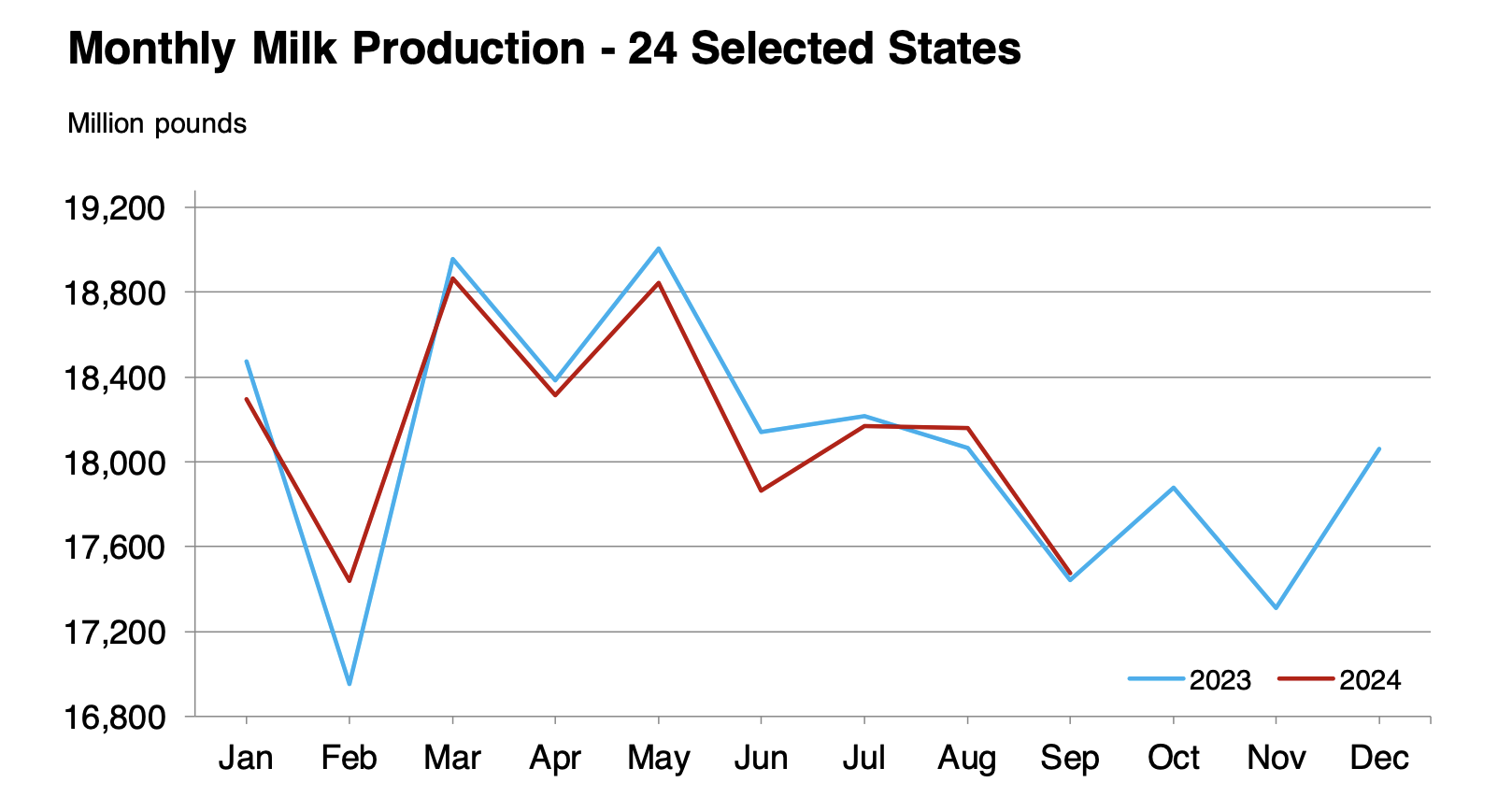
NewsSubscribe
First
Last
Consent

Dairy Market Surprise: September Milk Production Climbs, Butter Rallies Amid Mixed Commodity Prices

Discover the unexpected boost in September’s milk output and its ripple effects on dairy markets. How might this shift your business approach? Read our in-depth analysis.

Summary:

As we sift through the unfolding events in the dairy sector for October 21, 2024, it’s clear that the unexpected rise in September’s milk production has stirred market dynamics significantly. This upward shift defied prior expectations, catalyzing ripples across futures trading, cheese demand, and butter trends. With states like California and Wisconsin under scrutiny, the ever-evolving landscape of dairy production is witnessing remarkable changes. Globally, dairy dynamics are being shaped by both domestic conditions and international influences. While the USDA reported a 0.1% year-over-year increase in milk production, affecting national trends and flipping market strategies, the focus shifts towards keenly observing domestic demand cues and international competition. The U.S. dairy market stands at a crossroads of competitive pricing and fluctuating demand, compelling dairy farmers and professionals to reassess and strategize their future moves.

Key Takeaways:

  • September’s milk production increased by 0.1% year-over-year, surpassing forecasts and marking the first positive YoY number of the year.
  • USDA revised August’s milk production figures from -0.1% to +0.4%, attributing the change to an increase in cow numbers.
  • Wisconsin showed a better-than-expected performance in September despite prior weakness, while California’s production remained flat due to HPAI concerns.
  • CME Class III and Cheese futures saw pressure following the milk production report, potentially signaling a new wave of trading interest.
  • Spot butter prices rose by 7 cents with vigorous futures activities, hinting at possible recovery momentum.
  • GDT Pulse prices exhibited strength, increasing WMP and SMP prices, although NFDM futures have reacted negatively to improved milk production data.
  • U.S. dairy markets show mixed trends, with butter and nonfat dry milk prices rising but cheese prices experiencing declines.
  • New Zealand reported significant annual increases in milk and milk solids production for September, highlighting ongoing global supply dynamics.
  • Market vigilance remains crucial as dairy futures and spot market trends evolve amid production updates and global demand shifts.
milk production increase, USDA dairy report, Wisconsin California dairy market, Class III milk futures, cheese price movements, spot butter cheese market, dairy pricing strategies, international dairy demand, NFDM price fluctuations, dairy market volatility

What happens when the dairy industry’s forecast proves conservative, and milk production unexpectedly rises? The September Milk Production report did just that, showing a 0.1% year-over-year increase—the first positive shift we’ve seen all year! Such a turn of events sparks fresh intrigue: How will this surge shape the dairy market dynamics as we head into the cooler months, signaling that the dairy market’s undercurrents are far from predictable? Join us as we delve into these surprising developments and explore their potential impact on your dairy operations. This isn’t just another data point—it’s a call to action for producers and industry stakeholders, urging you to adapt your strategies based on these new insights.

Surprise Surge: A Dairy Rebound on the Horizon?

In its latest release, the USDA’s September Milk Production report revealed a nuanced picture of the dairy sector. The headline figure was a modest 0.1% year-over-year increase in milk production. This marks a pivotal moment, as it’s the first positive growth figure we’ve seen this year, suggesting a potential rebound in the sector. Additionally, the USDA revisited its numbers for August, adjusting the milk production from a slight decrease of 0.1% to an increase of 0.4%. This revision indicates more robust than anticipated output, primarily influenced by increased cow numbers. 

These figures hold significant weight in the dairy markets. For traders and producers alike, the unexpected uptick in milk production for September and the upward revision for August signal a shift in market dynamics. This shift challenges previous forecasts and might alter future market strategies. The data suggests that dairy production stabilizes despite earlier setbacks, hinting at improved efficiencies or favorable conditions. 

Market players reacted quickly, primarily in future markets. The release triggered an initial sell-off in Class III and Cheese futures, erasing any premium these futures had over spot prices. However, the objective measure of impact will unfold in the coming days as traders digest the significance of these figures amid fluctuating demand and supply variables worldwide.

State Spotlight: Wisconsin’s Resilience and California’s Production Puzzle

In analyzing state-specific performance, Wisconsin and California have emerged as focal points in understanding the current dairy market. Wisconsin, known for its dairy prowess, has demonstrated unexpected resilience. In September, a revision in the USDA’s data showed that its decline was milder than anticipated, with a 0.5% reduction rather than starker drops. This adjustment sparked a rethink of the state’s contribution to the national dairy landscape, implying a potential stabilizing influence on milk supplies. On the other hand, California’s production remained flat year-over-year for September, showcasing a stable output that defied concerns about heat and initial Avian Influenza disruptions. This resilience and stability in regional performance should reassure industry stakeholders about the market’s current state. 

Conversely, while initially perceived as potentially wobbling due to adverse conditions, California’s production remained flat year-over-year for September. This stalwart performance defied concerns about heat and initial Avian Influenza disruptions. However, as October progresses, reports indicate that Avian Influenza might exert a more pronounced effect, possibly curtailing future milk volumes. 

The interplay between these two key producers is significant for broader market dynamics. Wisconsin’s softer dip and California’s stable output impact national trends by collectively maintaining a steadier supply line than feared. This composure helps temper volatility in milk futures and product pricing, albeit with nuanced regional effects such as more robust cheese and butter demand where sourcing remains viable. The path these state productions take will be critical in shaping near-term market expectations and pricing strategies for stakeholders.

Market Whiplash: A Snap Decision in Dairy Futures

The market’s immediate reaction to the unexpected lift in milk production numbers was swift and decisive. Futures for Class III milk and cheese felt the brunt; soon after the report hit the wires, a knee-jerk sell-off was observed. The nearby futures, previously carrying a premium to the spot market, saw that advantage wiped clean. This reaction underscores the market’s sensitivity to slight shifts in foundational factors like production. 

The reduction in price premium signals a recalibration of expectations. Still, it highlights a familiar story in dairy markets: uncertainty and volatility. As the futures market adjusts to these new realities, traders and industry stakeholders are now wary of spot cheese price movements that may dictate the future course. 

Could we see more turmoil? If anecdotal evidence of improving cheese demand holds, it might stabilize or bolster futures prices. However, any substantial weakness in the spot market could trigger another wave of selling interest. The market has evolved into a more balanced two-sided trade, with prices mostly oscillating around current levels with room for surprises. Dairy farmers and analysts must focus on domestic demand signals and international pricing competition to better navigate these tumultuous times. By being prepared for potential market adjustments, industry stakeholders can confidently navigate future changes. 

Butter Breaks Free: Navigating the Cheese and Butter Rollercoaster

The recent trends in the spot butter and cheese markets reveal nuanced dynamics. The spot butter price surged by 7 cents, reaching $2.73 per pound, indicating a potential recovery after a previous dip. This rise suggests clearing the butter surplus that had recently swamped the market. The lighter trading volume reinforces this, pointing towards strategic restraint by sellers or a bounce back in demand. 

Meanwhile, cheese markets witnessed mixed movement. Cheese barrels sank below the $2 mark, concluding at $1.98 per pound, a 3-cent decline, while cheese blocks showed a minor decrease to $1.92 per pound. This drop reflects a broader market adjustment after several weeks of relative strength. Amidst eroding premiums in nearby futures, these prices illustrate a shift towards equilibrium between supply availability and buyer demand. 

Looking forward, the outlook for spot butter and cheese is becoming complex. The current stabilization and anecdotal reports of improving cheese demand suggest that the market is prepared for more balanced trading. However, U.S. markets could see further adjustments with global factors like demand fluctuations from key international players such as Mexico and potential shifts in production levels. An alignment between spot and futures prices might emerge, especially for butter, hinting at sustained prices under the $3.00 threshold.

Global Ripples: Dairy Dynamics in Transition

GDT Pulse prices have showcased relative strength globally, indicating a potential uplift in the international dairy market. Regular whole milk powder (WMP) saw a modest increase of 1.0% from the previous GDT event, signaling a steady demand trajectory. Simultaneously, skim milk powder (SMP) edged upwards by 2.0%, reaching a benchmark of $2,805 per metric ton ($1.27 per pound) [source]. These figures reflect a growing appetite for dairy products globally, possibly hinting at a recovery phase in international markets. 

Turning our attention to Mexican demand, we see a noticeable dip in activity this month. In recent months, this slowdown and weaker domestic consumption have put downward pressure on nonfat dry milk (NFDM) prices. The reduced premium of NFDM against international markets suggests a realignment driven by fluctuating demand dynamics in Mexico. 

As we navigate through October, Mexican import patterns will likely play a pivotal role. Their influence must be balanced, mainly in how it feeds into the broader pricing mechanisms that dictate NFDM valuations. With current trends suggesting a possible recalibration, dairy stakeholders should watch these international cues for strategic adjustments.

The Bottom Line

As we dissect the latest data, dairy farmers and industry professionals are challenged to navigate a landscape of unexpected shifts. September’s surprise increase in milk production signals a potential rebound, shaking up predictions and prompting a reevaluation of market dynamics. The spotlight on Wisconsin and California underscores the regional variability impacting overall production figures. Market reactions have been swift, with futures and spot prices reflecting the immediate impact of these reports, especially in the cheese and butter sectors. On a global scale, the U.S. dairy market finds itself in a unique position, with competitive pricing driving international interest yet facing the challenges of demand fluctuations. 

These developments highlight the importance of staying informed and adaptable in a volatile market. How do these shifts impact your strategies and decision-making? We invite you to dive deeper into these trends and share your thoughts. Engage with us in the comments below or share this article with peers who might find these insights valuable. Your perspectives are crucial in understanding how these trends unfold and influence our industry’s future.

Learn more:

Join the Revolution!

Bullvine Daily is your essential e-zine for staying ahead in the dairy industry. With over 30,000 subscribers, we bring you the week’s top news, helping you manage tasks efficiently. Stay informed about milk production, tech adoption, and more, so you can concentrate on your dairy operations. 

NewsSubscribe
First
Last
Consent

U.S. Milk Production Rebounds: Surprising Growth Amid Challenges and Opportunities

What’s behind the surprising uptick in U.S. milk production? Let’s dive into the implications for dairy farmers and the industry’s future challenges and opportunities.

Summary:

U.S. milk production has shown an unexpected uptick after over a year of decline. The latest USDA report highlights this slight growth, with September production up by 0.1% compared to last year and August’s projections revised to a 0.4% increase. While these trends might lead to lower milk and dairy product prices, challenges remain with avian influenza affecting California and poor forage in Wisconsin. Yet, states like Idaho, Texas, and New York display strong growth. Navigating these changes, the dairy sector must adapt and strategize for stability. Are we seeing a temporary surge or a long-term trend? Your insights on this shift are invaluable.

Key Takeaways:

  • The U.S. milk production experienced an unexpected increase in August and September 2024, likely influencing lower milk and dairy product prices.
  • Despite challenges such as avian influenza affecting California, milk output remained consistent with year-ago levels in the state.
  • Idaho, Texas, and New York reported notable year-over-year increases in milk production, contrasting with Wisconsin’s slight decline.
  • The U.S. dairy herd saw slight fluctuations but remained significantly smaller than the previous year’s figures.
  • Production metrics for the 24 significant states showcased a modest rise in both milk production and output per cow in September 2024 compared to the prior year.
  • The July-September quarter demonstrated a slight overall growth in U.S. milk production, continuing a cautious upward trend.

Predictability is a rare commodity in a world where the recent, unexpected surge in U.S. milk output stands out. After a period of declining yields, this sudden upturn prompts us to question whether it’s a fleeting trend or a new era for the dairy industry. What does this unforeseen increase mean for dairy producers and the broader agricultural landscape? Is it a temporary blip, or does it signal a sustained shift towards higher production levels? As we delve into the details, consider how this revitalization in milk production could impact your company’s plans and financial performance.

A New Chapter in Dairy Dynamics: Is the Milk Production Surge a Game Changer or a Temporary Spike?

The recent surge in milk output, observed between August and September, marks a significant shift in the U.S. dairy sector. After a period of stagnation, this increase could potentially reshape market dynamics and long-term industrial strategy, signaling a move towards higher productivity.

This rise may initially put downward pressure on milk and dairy product prices. When supply meets or exceeds demand, prices often fall. This may benefit consumers, but dairy farmers may need to help maintain profit margins. The critical issue remains for stakeholders: Is this rise a blip or the start of a new trend?

Several variables might determine whether this alteration is transient or permanent. Technological innovations, such as improvements in cow genetics and farm management approaches, help increase production. External elements, such as climatic and regulatory settings, will also significantly impact.

Only months of diligent observation and analysis will allow stakeholders to determine whether this milk production surge is a one-time or long-term trend. Dairy farmers and industry experts must remain vigilant, adapt their methods, and make necessary adjustments to capitalize on these changes.

Regional Resurgence: How States Adapt and Thrive Amidst Dairy Challenges

California’s dairy industry, famed for its regular production, experienced unexpected hurdles when avian influenza spread. Despite this, the state’s output levels remained consistent, demonstrating the durability and strength of California’s dairy infrastructure in the face of environmental challenges. This resistance begs the question of how epidemic management strategies may protect other places from similar risks.

Wisconsin, known as America’s Dairyland, had a 0.5% decrease in milk output. Who is the culprit? Inadequate pasture quality is a harsh reminder of how dairy yields naturally depend on feed quality. This situation emphasizes the importance of pasture management in sustaining output levels, indicating an increasing need for precision agricultural technology to detect and alleviate such concerns.

Idaho’s milk production has risen by a surprising 1.8%. This upsurge might be attributed to favorable meteorological circumstances and advances in agricultural equipment and methods, suggesting that Idaho’s approach could serve as a model for other states seeking development.

Despite the tragic setback of a big fire, Texas saw a remarkable 4.9% increase. This increase demonstrates the state’s capacity to recover and expand. It underscores the importance of resilience planning and recovery frameworks in assuring continuity in the face of unexpected interruptions and reassuring the industry.

In New York, output increased by 1.2%, most likely owing to advances in cow genetics and farm management practices. These components highlight the advantages of investing in technology and research, implying the possibility of continued productivity improvements in the state.

Subtle Shifts in the Dairy Herd: Navigating Between Optimism and Economic Constraints

As recent events show, the dairy herd in the United States increased by 9,000 head in August, slightly approaching the production frontier. In contrast to a constant herd size in September, this increase illustrates producers’ cautious optimism. They await long-term favorable circumstances or policy reforms before making significant investments.

Despite these short-term gains, the picture over a slightly longer time frame shows a falling trend, with the herd size 38,000 heads lower than in September 2023. This decrease highlights the effect of current economic restraints, which force dairy businesses to downsize as part of cost-cutting measures. This continual herd shrinkage may limit future output capacity if cow productivity improves.

These dynamic fluctuations in herd size are anticipated to have an essential influence in setting market patterns. A smaller herd limits prospective yield growth, which may reduce supply unless matched by greater productivity per cow. A consistent herd size, without overextension, protects against a saturated market, which might drive down prices. The future trajectory heavily depends on external variables like regulatory changes, feed prices, and the ebb and flow of global dairy demand.

Market analysts and industry players must decide whether this stable herd size represents a new standard in the U.S. dairy business or a forerunner to future growth. As environmental, economic, and regulatory factors change, attentive attention to herd dynamics will be critical for anticipating and negotiating future adjustments in dairy production outputs.

Efficiency Over Expansion: The Blueprint for Sustainable Dairy Growth

Dissecting the fundamental variables determining milk production reveals a story of incremental progress paired with stability, notably in the September statistics. The average yield per cow was an impressive 1,966 pounds, reflecting a numeric rise and suggesting qualitative improvements in agricultural operations and cow management. What does this reveal about the sector’s progress toward sustainability and efficiency?

Although the overall number of milk cows decreased slightly from August to September 2024, remaining at 8.89 million, the effects are far-reaching. Focusing on improving production per animal rather than increasing herd numbers provides a possible blueprint for long-term success. It promotes a less-is-more strategy, prudently using natural resources and reducing surpluses that might disrupt market dynamics.

This operation indicates a transition to a more sustainable dairy farming framework. Focusing on animal health, breeding strategies, and feed optimization may improve efficiency. However, how equipped are stakeholders to implement these sustainable practices for long-term success?

These measurements serve as both a reminder of previous resilience and a road map for future possibilities. The dairy industry is on the verge of a transformational phase in which efficiency is more than just a slogan but a viable road ahead. Are we prepared to welcome it?

Strategic Equilibrium: Is the Dairy Industry Treading a New Path with Production and Herd Balance?

The minor increase in milk output to 56.0 billion pounds during the July-September quarter represents a subtle but substantial change in the United States dairy sector. Although not spectacular, this rise represents a significant shift in the relationship between herd size and total output. The average number of milk cows, 9.33 million, offers insight into the industry’s efforts to preserve balance. It’s a planned balance, showing that producers may be more concerned with utilizing current resources than randomly raising herd numbers.

This stability in herd numbers and incremental productivity increases per cow implies a cautious but positive outlook for maintaining output levels. The fact that herd numbers have not swollen out of proportion provides a buffer against future price decreases caused by oversupply. Furthermore, this balanced strategy may build the basis for resilience to the economic and environmental stresses the dairy business has traditionally faced.

As the sector navigates these minor alterations, the fundamental issue remains: Are these developments signs of a more stable future, or are they only temporary adjustments? The emphasis on balancing herd size with production efficiency might indicate a viable route ahead, implying a possible shift in the industry’s operational procedures and future development strategy.

Charting the Future: Is Your Dairy Business Ready for Technological and Environmental Paradigms?

The dairy sector constantly changes, and foresight is required to stay ahead. Technological developments are one crucial trend transforming the sector. Continuous innovation in genetics and herd management technology has the potential to improve production efficiency and cost management significantly. Consider the capacity to use data-driven insights to fine-tune every element of your operations—do you have the tools to profit from them?

Meanwhile, the impending climate change must be addressed. Its effects are unpredictable, influencing everything from feed quality to water availability. Consider techniques to strengthen your agriculture. Integrating heat-resistant feed alternatives, minimizing water consumption, and reducing carbon impact are all positive measures. Have you started implementing such strategies?

Furthermore, the need to adopt sustainable practices is higher than ever. Pursuing sustainability is more than simply an ideal; it is a must for future-proofing your company against environmental and regulatory challenges. As external variables continue to impact the market, how can you guarantee your company’s viability and competitiveness?

The Bottom Line

The dairy sector constantly changes, and foresight is required to stay ahead. Technological developments are one crucial trend transforming the sector. Continuous innovation in genetics and herd management technology has the potential to improve production efficiency and cost management significantly. Consider the capacity to use data-driven insights to fine-tune every element of your operations—do you have the tools to profit from them?

Meanwhile, the impending climate change must be addressed. Its effects are unpredictable, influencing everything from feed quality to water availability. Consider techniques to strengthen your agriculture. Integrating heat-resistant feed alternatives, minimizing water consumption, and reducing carbon impact are all positive measures. Have you started implementing such strategies?

Furthermore, the need to adopt sustainable practices is higher than ever. Pursuing sustainability is more than simply an ideal; it is a must for future-proofing your company against environmental and regulatory challenges. As external variables continue to impact the market, how can you guarantee your company’s viability and competitiveness?

Adapting to these more significant trends is more than simply survival; it is also about placing your business to prosper in a changing economy. You can negotiate these changes and embrace chances that arise if you remain knowledgeable and adaptable. How can you adapt and develop as the industry evolves under these diverse influences?

Learn more:

Join the Revolution!

Bullvine Daily is your essential e-zine for staying ahead in the dairy industry. With over 30,000 subscribers, we bring you the week’s top news, helping you manage tasks efficiently. Stay informed about milk production, tech adoption, and more, so you can concentrate on your dairy operations. 
NewsSubscribe
First
Last
Consent

Weekly Global Dairy Market Jumps: Supply Concerns Amid Record Butter Sales and Weather Challenges

How will recent record butter sales, supply worries, and weather hurdles shape your dairy business strategies? Let’s dive in and find out.

Summary: 

October’s global dairy outlook is marked by intense market activity driven by factors affecting supply and demand. Despite declines in key indices like the Global Dairy Trade, CME spot markets saw price increases, fueled by supply concerns in regions such as California, where avian influenza and heat impact milk production. Optimism persists as U.S. cheese and butter markets find competitive advantages overseas, with record trades pointing to strength. Futures markets echo this sentiment with strong pricing plans for 2025. Strategic decision-making becomes crucial as the dairy industry contends with challenges like rising supply issues and geopolitical disruptions, particularly those involving Ukraine. Economic factors like moderate operating costs and milk component advancements boost production, while U.S. cheese exports thrive on competitive pricing. European dairy dynamics exhibit intriguing trends in butter, skim milk powder, and cheese.

Key Takeaways:

  • The surge in CME spot market prices highlights the volatile nature of the dairy industry, influenced by sudden supply concerns and external factors like avian influenza.
  • California’s dual challenges of avian influenza and persistent heat are significantly straining milk production, impacting both local and national markets.
  • Strong futures prices indicate a bullish outlook for early 2025, albeit with ongoing challenges in heifer availability and processing capacity.
  • Cheese emerges as a key player in domestic and international markets, with mozzarella and barrel Cheddar leading in response to changing consumer preferences.
  • Record-breaking butter trading underscores competitive US pricing and the potential for increased exports, amidst buoyant domestic demand.
  • The nonfat dry milk market remains stable as California’s production issues persist, yet demand wavers both domestically and internationally.
  • Global grain market fluctuations are subtly impacting dairy margins, with favorable grain prices supporting improved feed costs for dairy production.
  • Mixed results from the Global Dairy Trade auction reflect nuances in global market needs, signaling cautious optimism among participants.
  • European dairy trends show declining prices in several categories, yet strategic positioning keeps exports slightly up, especially to emerging markets like China.
  • Overall, the dairy market is navigating through a complex web of production challenges, market demands, and shifting international dynamics, pointing towards a cautious yet promising outlook.
dairy industry challenges, rising dairy prices, CME spot markets, milk production Midwest, Class III Class IV futures, U.S. cheese exports, mozzarella popularity, cheddar flavor variations, geopolitical grain trade, European dairy dynamics

Is the dairy business on the verge of a revolution? Last week’s massive price increases across all dairy commodities on the CME spot markets, a clear indicator of market volatility, may have hinted at this. These eye-catching improvements are driven by rising supply issues, with avian influenza making California’s milk production tighter than initially projected. Sweltering temperatures continue to limit productivity in this critical dairy state. In a historic twist, butter sales reached an all-time high of 161 loads, breaking the previous record by an astonishing 32 loads. What does this signify for the future of dairy production? In this context of catastrophic weather occurrences and frenzied purchasing habits, we go under the surface to uncover deeper insights and ramifications for people at the core of the business.

Weathering the Storm: California’s Dairy Dilemma Amidst CME Price Surge

The global dairy market is experiencing significant instability, with recent increases in all dairy commodity prices on the CME spot markets. A fresh wave of supply worries mainly drives these price increases. California, a key participant in the U.S. dairy industry, faces two significant challenges: the unanticipated severity of avian influenza’s effect on milk output, which has led to higher-than-expected death rates among impacted dairy cows, and relentless hot temperatures. The influenza epidemic has resulted in higher-than-expected death rates among impacted dairy cows. At the same time, the extreme heat has placed further pressure on the state’s total milk production. In contrast, some areas, like the Midwest, benefit from favorable meteorological conditions, increasing output levels.

California’s Dairy Industry Faces Supply Concerns Amidst Avian Influenza and Heat Wave 

California’s dairy sector is in jeopardy as renewed supply worries loom. The combination of avian influenza and persistently high temperatures severely challenges the milk supply. Avian influenza, first underestimated, causes higher-than-expected death rates in infected herds, reducing the available milk supply. California’s prolonged heat and this biological danger may affect milk output as cows battle heat stress and limited pasture.

On the other hand, circumstances in the Midwest provide a contrastingly brighter image. Cooler temperatures have made this location more conducive to dairy production. The availability of high-quality feed reinforces this optimistic view, increasing the amount and quality of milk produced. These optimum circumstances reduce production stress and help maintain constant milk component levels, resulting in a more stable supply line.

How does this affect dairy farmers? Are you ready to face these obstacles and profit from the opportunities? The contrast between California’s troubles and the Midwest’s benefits emphasizes the significance of flexibility and strategic planning in the ever-changing dairy market.

Riding the Wave: Unpacking the Upbeat Dairy Futures and Market Optimism

More considerable spot market prices cast a lengthy shadow over futures prices, giving the market a new sense of confidence. When we examine the financial trajectory of Class III and Class IV milk, we see that both are at exciting junctures. Class III futures rose beyond $20/cwt in the first quarter of 2025, while Class IV futures have consistently been above $21/cwt this year. These pricing levels reflect a bullish confidence that dairy farmers may profit from.

Several economic considerations are supporting the rise of dairy production. Moderate operating expenses continue offering producers favorable profits, driving up production. Furthermore, advances in milk component levels, particularly in colder Midwest areas, indicate a hopeful future. Despite the limits provided by restricted heifer supply and processing delays, the overall economic climate is still favorable enough to encourage producers to increase their production levels.

This situation invites a fundamental question: Are we seeing the start of a period of sustainable development, or are current favorable circumstances only a temporary respite in a historically volatile industry? Your opinions are crucial. Please leave your thoughts in the comments section below, and let’s start a positive discussion about the future of dairy farming!

Cheese on the Rise: Navigating Global Taste Trends and Domestic Innovations

There is much to think about regarding demand dynamics and the cheese market. U.S. cheese exports remain stable globally. This strong demand is partly due to competitive pricing, particularly when players like mozzarella and cheddar step up. Mozzarella, in particular, is seeing a surge in popularity, practically coinciding with the emergence of global meal packages and fast-casual restaurants. What’s causing this cheesy infatuation abroad? Have Americans discovered the secret to taste preferences worldwide?

Domestically, the story is more complicated. While mozzarella is growing in popularity, as seen by the persistent promotion of processed cheese mixes, cheddar sales remain mixed. Are we over cheddar? Unlikely. Instead, there’s a rising interest in flavor variations and texture. Cheddar is holding down the fort but needs to lead the route as it did in previous years. Could this be a call to innovate inside our borders?

And with the Christmas season approaching, the story tightens. Historically, this has been a good time for cheese sales due to increased parties and culinary experimentation at home. An increase in sales is nearly guaranteed; the issue is, how large will it be? Will mozzarella and cheddar dominate, or will other challengers steal some of the spotlight? Readers, how do you picture the cheese aisle at your local supermarkets this Christmas season?

Butter’s Breakthrough: Navigating Historic Trade Volumes and Global Strategy Shifts

This week, the butter market saw a flurry of activity, with 161 cargoes exchanged, marking a historic event. This enormous activity raises the question: what is causing such huge volumes? Supply issues in California, worsened by avian influenza and excessive heat, are also significant causes. They are changing market dynamics as investors scramble to secure stock.

However, the narrative still needs to finish here. Butter prices in the United States have become particularly appealing worldwide. Even when European prices fall from their highs, U.S. butter remains a formidable challenger. This competitive pricing is more than a reactive response; it is a purposeful move to capitalize on the existing global supply-demand balance. The potential for U.S. butter to increase its foreign market share is accurate and supported by convincing market data.

Despite all this activity, the price rise was a modest 3.5¢, closing at $2.66 per pound. This exemplifies the complicated buyer behavior—active yet price-sensitive. As market players manage this optimistic trend, the balance between stockpiling inventories and maintaining cost efficiency becomes clear.

With the churn still in full motion and cream supplies plentiful, this is a time of opportunity and difficulty. U.S. companies’ capacity to send items overseas reflects competitive pricing and a larger goal of boosting the U.S. presence in global markets. This narrative could change the traditional geographical strongholds of dairy exports.

Balancing Act: The Nonfat Dry Milk Market’s Steady Ride Amidst External Pressures

The nonfat dry milk (NDM) industry is an intriguing example of long-term stability in the face of external pressure. With stocks being noticeably tight, the spot price of NDM has scarcely changed, rising to $1.38/lb as of last Friday. Despite significant supply limits mainly resulting from California’s production issues, this stagnant price environment implies a market playing a cautious waiting game. Will tightening inventories eventually result in a more noticeable price movement, or will demand remain weak under present pressures?

Meanwhile, the dry whey market is an exciting example of supply-demand equilibrium. Last week’s minor price increase to 60.25¢ per pound reflects an underlying balance that has kept the market stable within a restricted range. Despite restricted supply and high protein space needs, the dry whey market seems to be positioned for possibly positive action. The scarcity of raw whey accessible for dry whey manufacturing owing to the strong demand for protein supplements is a fascinating dynamic. Are we about to see a massive shake-up in this dairy market segment?

Grain Storms: Navigating the Silent Impacts on Dairy Prosperity

The whirling winds of the grain markets have been a quiet collaborator in recent dairy storylines. Favorable weather conditions in crucial agricultural areas recently resulted in a minor easing of grain prices, which relieved dairy producers concerned about their milk margins. Lower feed costs imply more excellent financial space to handle other operational demands. But are we becoming too comfortable?

Geopolitical issues, notably those involving Ukraine, have long plagued the global grain trade. As assaults on grain storage and transportation facilities continue, there is a growing concern about widespread supply disruptions. This conflict creates an unstable floor for grain prices, endangering the delicate equilibrium that farmers now enjoy.

This unstable background requires dairy producers to be vigilant. The favorable milk margins, driven by low feed prices, may encounter problems as geopolitical issues in Eastern Europe impact grain price trends. The contrast between this possible volatility and the relatively calm feed cost picture indicates that intelligent financial planning and market monitoring will be critical for future success.

Navigating the Mixed Signals: Analyzing the Global Dairy Trade Auction Results

The Global Dairy Trade auction on October 15th revealed a problematic scenario for dairy commodities, with the index declining by 1.2%. Let’s examine this recent development. It wasn’t quite a watershed moment for dairy prices but a combination of tiny successes and failures.

Notably, the price of whole milk powder (WMP) has remained stable. Why does this matter? WMP isn’t simply another commodity; it accounts for more than half of the Global Dairy Trade index. So, while WMP prices stay steady, they effectively anchor the index, limiting further decreases. Stability signifies steady support and demand, reducing volatility in the market.

Meanwhile, documented price differences in other products could not significantly tilt the balance. Anhydrous milkfat and Cheddar cheese increased marginally, providing a beacon of hope in the mix. Cheddar cheese prices increased by 4.2% to $2.13 per pound, indicating continued interest, potentially spurred by solid overseas demand. However, butter and lactose levels fell, reflecting diverging patterns that offer a more complete picture of the market’s present situation.

These findings highlight the complex interplay between supply and demand across geographical geographies. Understanding WMP’s weight on the index may help dairy business professionals make better forecasts and strategic decisions. It’s a clear warning to market players to be watchful, if not nimble, since navigating these undulating waters requires a close eye on every moving part.

European Dairy Dynamics: Navigating the Butter, SMP, and Cheese Price Tides

The European dairy industry has displayed exciting trends, particularly in the butter, skim milk powder (SMP), and cheese sectors. A broad decreasing trend has emerged, with butter leading the way with a considerable decline. Over the last few weeks, average butter prices have fallen by €519, or 6.4%. SMP prices have also weakened, falling 2.9% within the same period, indicating a gloomy market attitude throughout the continent. Cheese markets have not been spared, with losses reported, notably in the mozzarella and cheddar variants.

These pricing changes have far-reaching ramifications, particularly for the global dairy sector. With European butter and SMP prices falling, there is a chance to compete against other major exporters, like the United States and New Zealand. Lower European pricing may encourage worldwide purchasing, boosting the region’s global butter and SMP market share. However, cheese exports produce inconsistent results, driven by home and foreign demand.

Ultimately, these price changes reflect the volatility and interconnectedness of global dairy markets. To guarantee competitiveness in an ever-changing marketplace, stakeholders should consider these dynamics when developing future trade strategies.

The Bottom Line

As we’ve examined the dairy business more closely this week, we’ve found that it’s fraught with issues and opportunities. The comeback of dairy commodity prices on the CME spot markets, along with California’s challenges with avian influenza and hot temperatures, complicates the situation for farmers. The Global Dairy Trade auction results provide contradictory signals, with certain commodities rising and others falling, reminding us of the fickle nature of global demand.

Meanwhile, cheese and butter are increasing, fueled by local innovation and worldwide rivalry. This provides dairy makers an excellent opportunity to capitalize on growing consumer preferences and possible new markets. The nonfat dry milk market’s stable but cautious outlook highlights the need for strategic planning to reduce risks, especially in California’s manufacturing heartland.

In the larger agricultural environment, grain prices provide a silver lining by increasing profit margins, even as global geopolitical concerns rise. European dairy dynamics highlight how intertwined these markets are, impacting everything from price to exports.

These variables raise the question of how dairy farmers and industry experts will modify their operations to flourish in this volatile market. Please share your ideas and solutions below or participate with the community; your insights and experiences will be essential as we navigate these stormy times together.

Learn more:

Join the Revolution!

Bullvine Daily is your essential e-zine for staying ahead in the dairy industry. With over 30,000 subscribers, we bring you the week’s top news, helping you manage tasks efficiently. Stay informed about milk production, tech adoption, and more, so you can concentrate on your dairy operations. 

NewsSubscribe
First
Last
Consent

Can Milk Prices Find Stability While Cheese and Butter Markets Fluctuate?

Can milk prices stay steady despite the chaos in the cheese and butter market? Could innovative risk management be the lifeline for dairy farmers?

Summary:

With the whirlpool of turbulence in cheese and butter prices, dairy farmers are pondering, “Can milk prices stabilize amid the chaos?” Recent months have seen fluctuations that challenge industry expectations, steering clear of the traditionally robust demand of October driven by holiday preparations. This article delves into the underlying forces unsettling the dairy market, explores strategic avenues for risk management, and questions how farmers can adapt to volatile shifts. The butter price has fallen 57.50 cents since August, and block cheese has declined by 42.75 cents since September—a possible calm before a storm or the new normal. Due to supply comfort and demand changes, the dairy industry is challenged to manage unpredictable cheese and butter price fluctuations. Current supply levels satisfy buyers, subsiding the drive to increase prices. Despite cheese stockpiles falling below last year’s levels, they align with demand, and abundant cream supply and vigorous churning keep butter production high, reducing price hikes. Recently, the spot market saw ninety tons of butter trade, yet prices dipped. Stakeholders must navigate these unusual waters and adapt strategies to unforeseen market dynamics, as milk supply remains more stable than anticipated, debunking myths of limited heifer supply. Risk management is critical for dairy producers to tackle milk, feed, and cattle price volatility, making solutions like Livestock Risk Protection vital for reducing financial instability and safeguarding investments.

Key Takeaways:

  • Butter and cheese prices have significantly declined, defying seasonal expectations.
  • Contrary to predictions, milk production has remained stable due to lower cow culling rates and increased per-cow output.
  • Buyers are not showing urgency in purchasing, suggesting a comfortable supply situation through the year’s end.
  • Cream supplies are plentiful, and butter plants operate at total capacity, further softening prices.
  • Effective risk management strategies, including Livestock Risk Protection insurance, are crucial for dairy operations amid price volatility.
  • Combining beef with dairy could be a viable approach to enhance the value of calves and bolster farm income.

Consider finding a stable foundation while the earth under your feet shakes and sways. That’s how many in the dairy business feel as they deal with the irregular dance of cheese and butter pricing. While most of us see a glass of milk as a fundamental nutritional necessity, the ramifications of its price stability—or lack thereof—are far from straightforward for dairy farmers and industry experts. In a world where butter and cheese markets are unpredictable, the issue is whether milk prices can find a footing in the middle of the storm. For those on the frontlines, managing this volatility is crucial for survival, development, and keeping the lights on.

ProductPrice on October 1st, 2024 (USD)Price on October 19th, 2024 (USD)Change (%)
Butter2.802.22-20.7%
Block Cheese1.901.48-22.1%
Barrel Cheese2.051.32-35.6%

The Paradox of Seasonal Expectations vs. Market Realities

The current market position for cheese and butter prices is a conundrum, with seasonal expectations colliding head-on with actual market performance. This time of year traditionally sees increased demand owing to the Christmas season, which often raises costs. However, the market is bucking these patterns. Butter prices have fallen by 57.50 cents from their peak on August 27th, hitting levels not seen since late January. Meanwhile, block cheese has fallen 42.75 cents since its high on September 11th, while barrel cheese has dropped 73.50 cents since September 18th.

What causes these fluctuations? A combination of supply comfort and demand changes has a significant impact. Buyers have been happy with present supply levels, and the drive to aggressively grab more has subsided. Although cheese stockpiles have fallen below last year’s levels, they match demand, making buyers less likely to increase prices. In the case of butter, an abundant cream supply and vigorous churning have maintained high production rates, reducing the need to raise prices.

Statistics provide clarity in this perplexing issue. For example, the spot market recently exchanged ninety tons of butter, yet prices continued to fall. Such measures define a situation in which abundant output and appropriate inventories coexist with constrained purchasing excitement, changing the traditional market story. The difficulty is how stakeholders navigate these unusual waters, maybe modifying their strategy in response to unforeseen market dynamics.

Breaking the Culling Myth: The Resiliency of the Milk Supply 

Let’s examine the milk supply problem. Despite several predictions, cow numbers were more consistent than projected, contradicting the chatter about a limited heifer supply leading to fewer cows. Contrary to predictions, the dairy industry’s resilience resulted in fewer cows being sent for culling, and milk output per cow increased compared to the previous year.

So, how does this affect the milk market and price stability? When fewer cows are culled, and milk output per cow is high, the overall milk supply is more stable. This supply resiliency prevents significant tightening in the market, even when cuts seem unavoidable. This stability in the milk supply ensures a secure market.

In the broader scheme of things, these variables add to a more complicated market dynamic. Instead of establishing stable footing and stability in the face of shortages, the dairy industry has shown its ability to navigate market dynamics. Stabilizing pricing swings becomes more complex when production factors are less of an urgent concern. As we’ve seen, any concept of supply-induced price increases has been tempered by continued production realities, necessitating a focus on broader market dynamics to achieve price stability.

The Buyer’s Comfort Zone: Riding the Wave of Supply

We uncover an intriguing relationship when we investigate the complexities of the butter and cheese markets. Buyer behavior is one critical cause of the current price decline. Buyers are OK with the present supply levels. Instead of rushing to lock in stock due to fears of shortage, they’ve chosen a more methodical approach, leveraging falling prices to meet their needs at a lower cost.

Additionally, inventory levels are essential. Despite decreased cheese inventories from the previous year, supply is adequate to fulfill current demand. This excess mitigates buyer panic, ensuring market stability and discouraging aggressive purchase behaviors.

The expected strong price support has not materialized for various reasons. Continuous activity in the butter market and adequate cream supply result in excessive churning, further depressing prices. When buyers can obtain supply at lower costs without concern for future increases, the market lacks the impetus to push prices upward. Prices may continue in a holding pattern for the foreseeable future unless supply methods, consumer demand, or production levels change significantly.

Is Risk Management Your Safety Net? Navigating Volatility in Dairy Farming 

When you think of risk management, do you picture a safety net that keeps pandemonium at bay? Dairy producers are constantly confronted with the volatility of milk, feed, and cattle prices. But don’t worry; there are excellent techniques for managing these hazards. Let us analyze them.

For starters, milk price fluctuation is not uncommon in our sector. One practical method is to use futures contracts and options, which may lock in milk prices and offer a cushion against volatile market fluctuations. Do you comprehend these tools, or should you engage with a market counselor to better appreciate their potential?

Feed costs are a different thing entirely. Corn and soybean prices fluctuate, necessitating preemptive steps. Forward contracting may be a lifesaver by enabling you to buy feed at fixed pricing. This might help to regulate your feed costs during unexpected spikes. Consider it a preemptive attack against feed price inflation.

Regarding cattle pricing, the beef-on-dairy idea has significantly increased calf value. This approach is simple: crossbreeding dairy cows with beef bulls creates calves with outstanding market value. Are you currently looking for ways to increase your business’s profitability?

Furthermore, including Livestock Risk Protection (LRP) insurance in your game plan is like adding another layer of defense. LRP protects the value of your beef and dairy calves during market downturns. By picking the proper coverage, you guarantee that your company’s future is protected, no matter what market storms may arise.

So, why not start using these tactics today? Combining good milk and feed price risk management, implementing beef-on-dairy techniques, and using LRP insurance might be the difference between weathering the storm and being overwhelmed. Comment below if you’ve discovered functional solutions, or share this with colleagues who could benefit from it. Let us keep the discussion going.

The Bottom Line

As we negotiate the uncertain seas of dairy markets, it is critical to recognize the unanticipated contradictions and the milk supply chain’s consistent resilience. We’ve seen that expectations don’t always match reality, particularly in the fluctuating butter and cheese markets. These swings highlight the necessity of being prepared rather than caught off guard by complacency in purchasing behavior. Stabilizing milk prices amidst this turmoil is more than a task; it is a strategic need.

Are dairy producers efficiently controlling their risks? Exploring various solutions, such as Livestock Risk Protection, is critical in reducing financial instability. Protecting your investments and ensuring a sustainable operation demand proactive risk management as market conditions evolve.

We welcome you to participate in our debate. How will these market factors affect your farm’s bottom line? What efforts are you making to deal with this volatility? Share your thoughts in the comments section below, or join the discussion on social media. Your expertise is essential, and your voice should be heard.

Learn more:

Join the Revolution!

Bullvine Daily is your essential e-zine for staying ahead in the dairy industry. With over 30,000 subscribers, we bring you the week’s top news, helping you manage tasks efficiently. Stay informed about milk production, tech adoption, and more, so you can concentrate on your dairy operations. 

NewsSubscribe
First
Last
Consent

New Zealand Challenges Canada’s Dairy Quotas: A New Chapter in Trade Tensions

Uncover how New Zealand‘s decisive action in its dairy trade conflict with Canada might impact the market. What does this mean for dairy experts?

Summary:

New Zealand is intensifying its dairy trade dispute with Canada, demanding fair access under the Comprehensive and Progressive Agreement for Trans-Pacific Partnership (CPTPP). This follows claims that Canada restricts tariff rate quotas for dairy products, allegedly breaching the trade agreement. Compliance remains a contentious issue despite a prior arbitration panel’s decision, interpreted as a dual victory. New Zealand’s Trade Minister Todd McClay emphasizes the need for Canada to fulfill its obligations, hinting at possible compensation if demands are unmet. New Zealand’s move to trigger mandatory discussions under the CPTPP reflects its commitment to ensuring fair TRQ allocations, which are crucial for altering market dynamics and safeguarding the interests of dairy farmers and industry experts.

Key Takeaways:

  • New Zealand is taking a firm stance to ensure fair access to Canada’s dairy market under the CPTPP.
  • The dispute centers around Canada’s allocation of TRQs, which New Zealand claims are biased towards Canadian companies.
  • Despite arbitration, New Zealand insists Canada has not honored the panel’s ruling.
  • This negotiation marks New Zealand’s first trade dispute within a free trade agreement framework.
  • Growing support from other CPTPP members like Australia and Japan highlights the broader ramifications within the trade bloc.
dairy tariff quotas, New Zealand Canada dispute, CPTPP trade relations, international trade agreements, dairy import policies, tariff-rate quotas, economic consequences dairy, fair trade agreements, dairy sector stakeholders, market dynamics dairy

Consider two dairy giants squaring off: New Zealand, the world leader in dairy exports, and Canada, a vital participant in international commerce. This high-stakes argument over dairy tariff quotas is more than a cross-border feud; it is a significant confrontation that can transform market dynamics and trade relations inside the Comprehensive and Progressive Agreement for Trans-Pacific Partnership. This debate can change the fabric of international dairy trade regulations, influencing pricing tactics, export prospects, and market competitiveness. “Canada may resolve this disagreement by fulfilling its CPTPP responsibilities to us. “If they continue to refuse, they owe us compensation,” says New Zealand’s Trade Minister Todd McClay. This issue underscores the delicate dance of international accords, emphasizing our industry’s weaknesses and benefits. If New Zealand succeeds, dairy markets may shake up, causing firms to reexamine their strategy and farmers to reconsider their market positions.

The CPTPP: Gateway to Expanded Dairy Markets or Brewing Conflict?

The Comprehensive and Progressive Agreement for Trans-Pacific Partnership (CPTPP) is an important trade agreement involving 11 Asia-Pacific nations. It promotes commerce by decreasing tariffs and building broad economic linkages between member countries. The CPTPP also allows the dairy sector to access a larger market by lowering barriers to dairy products, enabling producers to expand their worldwide reach.

The dispute between New Zealand and Canada began in 2022 when New Zealand made claims. New Zealand claims Canada is mismanaging its tariff-rate quotas (TRQs) under the CPTPP. TRQs allow a certain quantity of dairy products to be imported with low or no tariffs. New Zealand accuses Canada of preferring local enterprises when allocating these quotas, arguing that this violates the CPTPP’s agreed-upon conditions.

This issue highlights the complexity of international trade agreements and their enforcement. Such debates illustrate governments’ difficulties reconciling local interests with global duties and continuous tensions within trade blocs. These proceedings also highlight the need for fair trade agreements for dairy farmers and industry experts. Violations may have economic consequences.

New Zealand’s Bold Move: A Critical Juncture in Dairy Trade Relations

New Zealand’s decision to initiate obligatory discussions marks a watershed moment in its dairy trade dispute with Canada. By using this clause of the CPTPP, New Zealand signals its intention to step up efforts to correct what it sees as Canada’s noncompliance with the trade agreement. Trade Minister Todd McClay has been vociferous, stating that addressing this problem is critical for New Zealand’s interests and the CPTPP’s integrity. “Canada may resolve this disagreement by fulfilling its CPTPP responsibilities to us. “If they continue to refuse, they owe us compensation,” McClay said, underscoring the stakes.

The required conversations will begin within 15 days of New Zealand’s notice. This haste emphasizes the seriousness with which New Zealand is tackling the problem. In contrast, Canada’s posture remains one of calm confidence, as seen by earlier claims of conformity with the September 2023 arbitration tribunal judgment. However, New Zealand’s recent escalation has placed Canada in the limelight, forcing it to reconsider its dairy import policies and make compromises.

Dairy sector stakeholders should closely monitor these changes. The conclusion of these discussions might have far-reaching implications for Canada-New Zealand economic ties and the enforcement of international free trade agreements. Understanding the subtleties of these conflicts and possible remedies is crucial for dairy professionals to gain insight into future market dynamics and prospects.

Industry Sentiments Stirring Amidst New Zealand-Canada Dairy Dispute

Industry responses emerge as tensions in the dairy dispute between New Zealand and Canada increase. New Zealand dairy farmers and exporters are cautiously hopeful. Many consider this step important to ensure proper market access under trade agreements. John Smith, a dairy farmer from Waikato, says, “We’re hoping this will open doors for us since Canada’s rigid quotas have limited our expansion possibilities. It’s about time the agreement’s commitments were fulfilled.”

If New Zealand succeeds, the economic rewards might be significant. For example, the government may considerably expand dairy exports, thus boosting the national economy. This would assist major exporters and small and medium-sized manufacturers looking to expand into foreign markets.

Reactions on the Canadian side are varied. Some dairy producers are concerned about possibly increased competition. Ontario farmer Mary Taylor said, “Opening the market further could threaten our local industry, which has been protected and supported by the current quota system.” We need to consider the trade-offs carefully.

Trade groups such as Dairy Farmers of Canada are outspoken in their support for existing trade barriers. The reforms might destabilize the domestic sector, possibly affecting thousands of people’s lives. A representative for the group said, “We must maintain safeguards that ensure our farmers’ sustainability and the security of the Canadian dairy sector.”

Operationally, both nations’ dairy sectors may transform. For New Zealand, this might include increasing output and altering logistical techniques. Conversely, Canadian firms may feel pressure to innovate and become more competitive. The ongoing discussions bring dangers and possibilities, with parties closely monitoring each move, underlining the situation’s urgency.

Navigating the Double-Edged Sword of Global Trade: Freedom, Constraints, and the Dairy Market

At its root, the New Zealand-Canada dairy conflict exemplifies the difficulties of international trade agreements. It emphasizes conservatives’ underlying convictions in autonomous decision-making and free-market principles. As New Zealand pursues obligatory CPTPP discussions, assessing the trade-off between global accords and national interests is essential. Is a rule-based trade system beneficial or detrimental to national sovereignty?

Trade agreements offer a framework for resolving such conflicts, preferably by leveling the playing field for all parties concerned. However, they are a double-edged sword: although they tie nations to standard regulations, they might limit a country’s capacity to safeguard its indigenous businesses. This emphasizes the significance of tariffs and quotas in international trade—an essential instrument for protecting national economies but sometimes seen as barriers to free trade by global partners.

The prospective results of the discussions might impact the global dairy industry, both positively and negatively. On the one hand, successful talks that result in more market access for New Zealand may inspire other nations to follow suit, encouraging competition and pushing costs down. On the other hand, unsolved confrontations or unfavorable concessions may result in increasing protectionism. This could prompt a reassessment of worldwide trade agreements, potentially leading to a significant shift in the global dairy market.

The more significant ramifications for international commerce support a balanced approach. It is critical to adhere to the restrictions inherent in agreements such as the CPTPP while ensuring that these accords align with the economic needs of particular countries. Finally, settling this issue will give important insights into the effectiveness of present trading institutions, potentially influencing future policy choices in the global dairy market and beyond.

The Bottom Line

New Zealand’s ongoing spat with Canada highlights significant issues in the worldwide dairy trade. This disagreement underlines the ongoing challenges of the Comprehensive and Progressive Agreement for Trans-Pacific Partnership (CPTPP), in which tariff rate quotas are crucial yet controversial. New Zealand’s efforts to maintain compliance highlight the agreement’s significance and the role fair trade practices play in a global economy that benefits all parties.

This conflict has far-reaching repercussions for dairy farmers and industry experts. How these discussions play out may create precedents for enforcing future trade agreements and substantially impact market dynamics. As the crisis progresses, it will underscore the critical necessity for open and fair trading procedures.

When considering the long-term implications, one must question how global trade agreements may be constructed to better balance national interests with the advantages of free trade for the dairy sector and others.

Learn more:

Join the Revolution!

Bullvine Daily is your essential e-zine for staying ahead in the dairy industry. With over 30,000 subscribers, we bring you the week’s top news, helping you manage tasks efficiently. Stay informed about milk production, tech adoption, and more, so you can concentrate on your dairy operations. 
NewsSubscribe
First
Last
Consent

Dairy Market Rebound: Price Surges Amid Supply Concerns and Record Butter Trades

Check out the surge in dairy prices and historic butter trading. Will supply issues alter your strategy? Find out more now. 

Summary:

As dairy markets bounce back, rising prices defy expectations of necessary reductions to balance supply and demand, ending the dramatic declines of September as every product in the CME spot market showed upward movement. Supply concerns, particularly in California, are guiding these changes, with avian influenza and persistent high temperatures impacting production. Meanwhile, the Midwest’s cooler climate and quality feed are contributing positively. Futures markets reflect this bullish sentiment, encouraging expanded production despite ongoing challenges. With a record-breaking 161 tons of butter traded this week, manufacturers welcome potential new supplies amid robust international demand, highlighting a dynamic landscape for dairy commodities. In the face of these obstacles, the dairy market’s resilience underscores the industry’s adaptability and sustained global appetite.

Key Takeaways:

  • The dairy markets saw a significant rebound this week, contradicting previous expectations of necessary price reductions to adjust supply and demand.
  • Supply concerns are intensifying, particularly in California due to avian influenza and persistent high temperatures impacting milk production.
  • Futures prices for Class III and Class IV milk are rising, encouraging potential market expansion despite ongoing challenges with heifer availability and processing capacity.
  • Domestic and international cheese demand drives price increases, with mozzarella and processed cheese showing strong performance.
  • An unprecedented amount of butter traded, with U.S. butter remaining competitively priced internationally, hinting at potential export increases.
  • Nonfat dry milk (NDM) faces production challenges in California, while demand is weak, resulting in stable pricing.
  • Dry whey markets remain stable with bullish sentiment; high-protein demands limit dry whey production, supporting price stability.
  • Grain markets experience slight price softening due to favorable weather, contributing to positive milk margins over feed costs.
dairy market resurgence, butter trading record, Class III IV futures rise, dairy production Midwest, heifer availability challenges, butter manufacturing USA, nonfat dry milk output, dry whey market dynamics, grain market stability, dairy farmers confidence

This week’s dairy markets are humming with a stunning resurgence, highlighted by the trading of a record-breaking 161 tons of butter. This demonstrates the market’s vitality despite continued headwinds. Supply problems resulting from avian influenza outbreaks and persistently high temperatures in California show the complexities of these relationships. As the sector navigates these tumultuous seas, it may need strategic and operational modifications.

Despite the challenges, the dairy market is resilient and showcases new horizons, providing a sense of reassurance to all stakeholders.Looking at this week’s market activity, the dairy industry defies earlier expectations. A dynamic change contradicts the idea that lower prices were required to achieve supply-demand equilibrium. This week, the bulls established a stronger foothold in the market.

The increasing trend of CME spot market products reflects a fresh impetus in the dairy market, fostering a sense of optimism. Each dairy product has shown resiliency with a strong return, suggesting that the markets have adjusted and found equilibrium without decreasing prices.

Weather and Disease: Navigating Dual Storms in Dairy Production 

The revival of supply issues, principally caused by avian influenza’s effect on California dairy cows, adds significant uncertainty to the marketplace. This viral strain is causing higher-than-expected cow death rates, endangering output levels in the state’s enormous dairy sector. Simultaneously, California’s unrelenting high temperatures worsen the problem, further burdening milk production in an area already dealing with biological threats. Such meteorological circumstances hinder attempts to increase dairy production, a fact that dairy farmers must confront as they navigate these turbulent seas.

In contrast, the Midwest’s dairy output presents a promising picture, instilling a sense of hope. Cooler temperatures provide a more forgiving environment for cattle, enabling them to operate at better production levels. This disparity emphasizes the significance of regional differences in agricultural performance, with the Midwest’s climatic advantages playing a critical part in countering the obstacles encountered elsewhere.

Riding the Futures Wave: Navigating Opportunities and Challenges in Dairy Markets

With spot market prices rising this week, futures prices have followed suit, giving dairy farmers fresh optimism. Class III and IV futures, which are contracts for the future delivery of milk and cheese, have also seen significant rises. By Thursday’s end, Class III prices had reached the $20/cwt mark for the first quarter of 2025, while Class IV prices would remain over $21/cwt throughout the year. This increase in futures reflects market confidence and paves the way for more effective financial planning in the next year.

These price variations directly influence operational expenses and profit margins. Controlled operating expenses allow for strong and profitable margins. Such financial outlooks may motivate dairy producers to expand their businesses. However, growth has its challenges. Heifer availability and processing constraints continue to be significant challenges in the sector. Producers will likely evaluate these concerns against the attractive economic environment.

Farmers may find themselves in a balancing act, spurred by higher profits but impeded by logistical and supply-side restrictions. As these dynamics unfold, keeping a close watch on market trends and operational capacity will be critical to sustaining momentum. The interaction of these components will be a crucial aspect in deciding the industry’s destiny next year.

Cheese Dynamics: Navigating Scarcity and Seizing Opportunities

The demand side of the dairy market is fascinating, mainly when manufacturers are ready to pay a premium for spot milk. This readiness demonstrates a noticeable shortage and a strong desire to satisfy production targets. Despite economic challenges and competition, U.S. cheese sales continue to grow globally.

Domestically, the cheese market sends mixed signals. Mozzarella, a mainstay in many recipes, has remarkable sales numbers, providing a bright light in an otherwise volatile market. In addition, the popularity of meal packages has increased demand for barrel cheddar, a kind of processed cheese. Such changes suggest altering customer preferences, which producers must watch.

As we approach the Christmas season, demand is expected to increase significantly. Traditionally, this time of year sees an increase in cheese and dairy product consumption—families get together, parties are hosted, and dairy-rich recipes iconically warm homes and hearts. The industry is bracing for this surge, which it will certainly welcome as a chance to balance stocks and boost year-end sales.

Butter’s Steady Path Amidst Cream’s Shifting Landscape, While NDM Treads with Caution

Despite obstacles in certain areas, butter manufacturing in the United States continues to flourish, fuelled by a plentiful supply of cream. The continued supply of cream is due to rigorous butterfat testing, which ensures that even locations with milk production issues do not experience a significant cream shortage. Notably, there has been a noticeable change in cream distribution, as an increase in cream cheese manufacturing in the East has absorbed some of the supply. However, this diversion has not considerably reduced the total cream supply, with butter production remaining high.

In contrast, nonfat dry milk (NDM) output and inventories paint a different picture. Tighter production levels are mainly due to California’s milk supply limits, a significant NDM source. Coupled with this supply-side problem is a decline in demand from local and foreign purchasers, which has kept the price steady. While butter producers may continue to operate normally, NDM stakeholders confront a more cautious environment, with tighter supply and lower demand.

Whey Market: Steady as She Goes with Eye on Protein-Driven Dynamics

The dry whey market closed at 60.25¢ per pound, up slightly from the previous week. This price stability implies a well-balanced supply and demand dynamic, as seen by the market’s trading inside a limited range over many weeks. The balance reflects a good market attitude, with neither buyers nor sellers feeling compelled to make immediate changes.

The positive sentiment that persists in market conversations originates mainly from the impact of the high-protein category. Higher-concentration proteins are in great demand, which substantially influences whey stream dynamics. As companies extract more high-protein whey, the raw ingredients for regular dry whey become more limited. This continuous transition significantly decreases the supply of dry whey production, providing a stable floor at present pricing. This view predicts prices may remain stable or suffer upward pressure due to the expected low supply.

Weathering Geopolitical Storms: Grain Markets Find Respite and Dairy Farmers Gain

As we approach the grain market, this week’s events provide respite. Favorable weather has helped to expand areas and overcome the effects of global tensions. The continued unrest in Ukraine has cast a pall over the grain business, creating anxiety. However, despite the increased hazards to grain storage and transportation facilities, we saw a minor price decrease.

Low maize and soybean prices provide dairy farmers with hope during difficult times. The multi-year lows, with MAR25 corn at $4.2125/bu and JAN25 soybean meal at $314.90/ton, give them a significant advantage. Lower feed prices boost milk margins, giving dairy producers some financial breathing space. This promotes production economics and protects against the dairy industry’s various stresses.

The Bottom Line

The dairy market has shown resilience over the last week, with higher prices signaling increased confidence in supply security. This comes despite obstacles such as avian influenza and persistently high California temperatures, which impact productivity. Such dynamics highlight the need to monitor regional production peculiarities.

These advancements offer possibilities and problems for dairy farmers and industry experts. Solid profitability and competitive cheese pricing point to opportunities for strategic development despite continued processing delays and heifer supply difficulties. Consider the forthcoming Christmas season and greater demand, which may impact your business efforts.

Butter and cheese, mostly in barrels, have seen significant activity, reflecting strong local and worldwide demand. As an industry expert, you should explore profiting from these needs while actively managing supply chain interruptions, such as those in nonfat dry milk manufacturing.

Grain price stability gives a silver lining, leading to higher milk profits. However, the geopolitical situation might quickly alter these settings, necessitating a vigilant eye on global developments. As we continue, keeping a close eye on market dynamics will be critical in developing successful strategies and capitalizing on development possibilities in the ever-changing dairy business.

Learn more:

Join the Revolution!

Bullvine Daily is your essential e-zine for staying ahead in the dairy industry. With over 30,000 subscribers, we bring you the week’s top news, helping you manage tasks efficiently. Stay informed about milk production, tech adoption, and more, so you can concentrate on your dairy operations. 

NewsSubscribe
First
Last
Consent

October 2024 Global Dairy Futures: Expert Commentary and Conservative Insights

Delve into October 2024 dairy futures: milk, feed, and margins. How will EU and U.S. market changes affect your farm’s profit? Find insights here.

Summary:

October 17, 2024, dairy futures highlight the complexities and changing landscape facing dairy farmers due to milk production fluctuations, feed costs, and market margins. With German and Dutch statistics affecting EU27+UK totals, the industry experiences unpredictable shifts, notably a dip in German output and a surge of Dutch cheese exports to emerging markets. Across the Atlantic, the volatile nature of U.S. and EU dairy product prices—marked by early-week declines and end-of-week rallies—reflects the urgent need for strategic margin management. Embracing data accuracy, understanding market realities, and leveraging strategic opportunities are vital for adapting to these dynamics. By challenging statistics’ credibility and preparing for market roller coasters in cheese, butter, and powder, industry players can pivot towards stockpiling strategies, possibly augmenting profits. In managing margins, milk prices and feed costs remain critical. Dairy producers could benefit by staying informed through educational workshops and financial tools and engaging in industry forums, bolstering financial literacy and market analysis acumen.

Key Takeaways:

  • EU27+UK milk production shows a slight decrease, with Germany significantly impacting regional aggregates due to lower outputs.
  • Dutch cheese exports are booming, particularly to unconventional markets like Vietnam and Bangladesh.
  • U.S. and EU cheese and butter prices faced a downturn but found some recovery opportunities by the week’s end.
  • Lactose and whey prices in the U.S. experienced an upward trend, indicating potential margin management challenges for dairy farmers.
  • The dairy futures market displayed volatility but suggested stabilization towards the week’s conclusion.
dairy farming, milk futures, feed costs, market volatility, Eurostat statistics, cheese prices, powder market, margin management, financial software for farmers, agricultural education workshops

As October 2024 approaches, the dairy farming scene is evolving and speeding. Understanding milk, feed, and margin futures is advantageous and critical for guiding your firm to success. Current market dynamics indicate a season of volatility and opportunity, with output falling in critical locations such as the EU27+UK and mixed market signals. Dairy producers must be proactive in staying informed to navigate these unknown seas; ‘the more informed you are about market trends, the better equipped you’ll be to maximize your margins.’ This month provides a delicate balancing act in which every action is essential, from feed purchases to comprehending export statistics. Are you ready to navigate this financial maelstrom?

What’s Stirring in the EU27+UK Dairy Corridor? 

Let’s examine what’s heating the EU27+UK dairy scenario. You’ve undoubtedly seen a ripple across the pond regarding milk production patterns. According to Eurostat, German manufacturing unexpectedly fell by 5.4% in August. You may be wondering what this means for you.

This is when things get interesting. When a major player, such as Germany, coughs, the market suffers. As output declines, supply dynamics alter, possibly impacting everything from farmgate pricing to export choices. Now, hold that thinking. Consider how dependent we have become on enormous databases like Eurostat for our daily bread—err, milk. Can we always believe these numbers at face value?

Accuracy in data interpretation is more than just a sophisticated journalistic issue. In the dairy industry, this translates into making sound business choices. Mistakes here result in missing market indications and, eventually, possible losses. You must go deeper into the data sources while analyzing the market.

While this may seem dull, market positioning is all about perception. If German manufacturing patterns determine the future, isn’t it more important to understand what’s going on than to rely solely on statistics? In essence, keeping ahead requires a suspicious mindset. Each percentage decline is more than just a figure; it reflects market reality. As intimidating as it may seem, challenging data accuracy is part of protecting margins.

Unpacking the Dutch Dilemma: Is Cheese Leading a New Export Trajectory?

Despite the general stability of EU27+UK milk equivalent exports, which climbed by just 0.1% year on year in August, it is critical to dig deeper. The tale is based on unusual statistics from nations such as the Netherlands.

Consider the massive increase in Dutch cheese exports, with amounts flowing to unexpected locations such as Vietnam, Colombia, Chile, and Bangladesh. What is behind this abrupt export surge? Is it a purposeful market expansion or a response to changing demand patterns?

Such atypical export dynamics demand critical reflection on global market perspectives. For starters, they may raise concerns about the credibility of Eurostat statistics, implying possible anomalies or data reporting errors. As traders and market experts worldwide, we need to discuss whether these data correctly represent market reality or are only a blip.

Furthermore, inconsistencies in the presented data influence market expectations and price volatility. If the actual statistics diverge significantly, markets will respond with more volatility or excessive caution. As a result, these export data are significant for the EU27+UK area and worldwide, impacting dairy market patterns.

The Dairy Market Roller Coaster: Navigating Cheese, Butter, and Powder Fluctuations 

The recent roller coaster in the cheese, butter, and powder markets warrants a closer study. Prices began the week in the United States and the European Union. However, the markets found support at the close of the week. What may be causing the fluctuations? It could be a combination of supply challenges and shifting demand environments.

For cheese, end customers rushing for year-end coverage may buffer the decline. When cheese prices fall from their highs, you may question how this impacts your business. If prices stabilize, expanding cheese output may be in the future, providing a lifeline to margins that are being squeezed at every step. These fluctuations could be due to supply challenges such as weather-related disruptions or shifting demand environments like changes in consumer preferences or dietary trends.

Butter prices fell first in the United States and the European Union but then stabilized. This provides a silver lining. With the EU27+UK’s butter output down 6.8% year on year in August, scarcity might be your greatest friend, possibly driving up prices and, as a result, your profits.

Powder costs were also initially lower. However, like their dairy counterparts, they gained support throughout the week. The EU’s weaker-than-expected powder output, down 4.5% year on year in August, and rising dry whey and lactose prices in the United States paint a mixed but positive picture. Could this be a chance for strategic stockpiling to weather the waves of uncertainty? Strategic stockpiling involves storing surplus products at low prices to sell when prices rise, potentially increasing profits and providing a buffer against market volatility.

These pricing changes result from a complicated interplay between regional production data and end-user behaviors. It is critical to monitor these factors closely. As is usually the case, the details matter, and your ability to navigate these turbulent waters with agility might influence your farm’s profits. How will you change to take advantage of the current market dynamics?

The Feed Frenzy: Are You Managing Your Margins or Are They Managing You?

Have you observed how feed prices affect your dairy farm margins lately? It’s no secret that feed has long been a significant component of agricultural spending. Things have become more complicated with the futures market in play. How do these data affect your bottom line?

Let’s break it down. Futures markets are providing some insight into the direction of feed prices. In October, the trend advised us to expect varying expenses in the future months. It’s a heads-up, but what can you do about it? Understanding these tendencies can help your strategy. It is about remaining one step ahead.

Feed prices account for around 50% of a dairy farm’s overall expenditures, so any increase may dramatically reduce profit margins. Futures show probable price increases or decreases, so plan your purchases appropriately and consider forward contracting to lock in current pricing.

But how can you make this work to your advantage? Think about what your financial buffer looks like. Do you have space to withstand cost shocks, or is it time to look at other feed sources that provide high-quality nutrition at a cheaper cost? Another approach might be to optimize feed efficiency. Can simple changes in how you feed animals result in higher yields without raising costs?

Ultimately, navigating these turbulent financial seas demands insight and adaptability. Monitor the future, adapt strategy, and communicate freely with suppliers and consultants. Remember that although the dairy market might be unexpected, your approach to controlling feed costs does not have to be.

Weathering the Tides: Insights from the Ebb and Flow of Dairy Futures 

Dairy producers have seen significant ebbs and flows in milk, feed, and margin futures. Historically, milk prices have followed cyclical patterns affected by global supply-demand dynamics and seasonality. Milk futures, for example, often trend upward during periods of lower output or increasing end-of-year demand, only to fall back when new-year supply levels off.

Feed prices are volatile, driven mainly by the maize and soy markets. Weather, political circumstances, and biofuel demand all significantly impact these variables. Drought conditions in critical agricultural regions have increased feed prices, reducing dairy producers’ profit margins.

Margins have a robust negative link to milk prices and feed costs. When feed prices grow dramatically, margins narrow unless covered by similar milk price increases. Many dairy farmers use forward contracts to lock in feed costs, making margin management a strategic exercise.

Understanding these past undercurrents may help you manage the future’s tides more effectively. Are you utilizing all available methods to protect your firm from these fluctuations?

Actionable Tips 

  • Stay Informed with Educational Workshops: Attend workshops or webinars on financial management. Organizations like Extension offer programs tailored to agricultural professionals.
  • Utilize Financial Software: Invest in financial management software like QuickBooks or Farmers Edge. These tools simplify budgeting, tracking, and forecasting by providing real-time insights into your farm’s finances.
  • Leverage Ag-Specific Financial Advisors: Consider consulting with a financial advisor specializing in agriculture. They can offer tailored advice on futures markets and help you construct a profitable strategy.
  • Engage with Futures Market Platforms: Platforms like CME Group offer resources and tools that aid in understanding and utilizing futures markets effectively. Regularly engage with these platforms to stay updated on market trends.
  • Join Industry Forums and Discussion Groups: Participate in forums like Milkhouse or relevant LinkedIn groups. These spaces can connect you with peers and experts to share insights and strategies for financial management.
  • Review Financial Statements Regularly: Examine your financial statements regularly. Focus on cash flow, profit margins, and budget variances to keep your business on track.
  • Tap into Online Courses: Take advantage of online courses on financial literacy and market analysis offered by institutions like Coursera or edX. Many of these courses are designed for flexible, self-paced learning.

The Bottom Line

As we analyze these market moves, it’s critical to consider what’s next for your dairy company. The shifting tides in milk output, fueled by unusual German and Dutch statistics, demonstrate unpredictability at its peak—a reminder that market attentiveness pays off. Although grain prices may fluctuate fast, knowing their trend helps you make operational choices.

Consider riding the dairy market roller coaster, where cheese, butter, and powders vary more than a seesaw. Prices have just found support, but will it hold? This uncertainty calls for a planned strategy. Are your margins adequately secured, or are they sliding through the cracks? Evaluating each element, from supply patterns to export dynamics, may provide you with significant insight.

Being proactive is essential in this industry. Begin by reassessing your present tactics. Are there any possibilities that you need to take advantage of? Is it time to switch up your hedging strategy? Staying aware and anticipating developments can put you in a better position to profit in favorable situations while protecting against downturns. Keep an eye on the horizon, and let these insights help you build a more resilient and prosperous dairy farm in the coming months.

Learn more:

Join the Revolution!

Bullvine Daily is your essential e-zine for staying ahead in the dairy industry. With over 30,000 subscribers, we bring you the week’s top news, helping you manage tasks efficiently. Stay informed about milk production, tech adoption, and more, so you can concentrate on your dairy operations. 

NewsSubscribe
First
Last
Consent

Europe’s Milk Production Dips for Second Month: Impact on Prices and Global Opportunities

Europe’s milk production is dwindling, driving up prices. What does this mean for global dairy farms and exporters?

Summary:

In August, European milk production decreased by 1.3% from the previous year, marking its second month of decline. Challenges such as bluetongue disease and hot weather, which mainly affected Germany, played a role. As countries like France and Italy saw slight production increases compared to 2023, overall output remained subdued. This limited supply increased dairy commodity and milk prices, with butter prices notably surpassing $4/lb. While production is expected to remain low due to seasonal and climatic factors, this scenario may offer new opportunities to global exporters like the U.S. and New Zealand. Meanwhile, countries including the UK, Ireland, and the Netherlands recorded decreased output, with Germany’s staggering 5.5% drop pointing to broader infrastructural vulnerabilities within its dairy sector.

Key Takeaways:

  • Europe’s milk production declined for the second month, with a 1.3% drop in August compared to the previous year, highlighting significant industry challenges.
  • Bluetongue disease and hot weather mainly affected Germany, causing a 5.5% year-over-year reduction in milk flow.
  • August also saw reduced milk production in the UK, Ireland, and the Netherlands, though France and Italy managed modest growth from 2023 levels.
  • European dairy commodity and milk prices surged due to tighter milk supplies, with butter prices exceeding $4/lb.
  • Despite the upcoming cooling weather, substantial growth in European milk output is unlikely, providing opportunities for other global dairy exporters like the U.S. and New Zealand.
dairy production decline, European milk output, Germany milk decrease, Bluetongue disease impact, climate change dairy industry, milk supply challenges, dairy infrastructure weaknesses, seasonal milk production trends, European herd size reduction, global dairy market shifts

For the second consecutive month, Europe’s milk output has decreased significantly. This is not only a blip on the radar. The changing environment may have significant implications for dairy producers and their supply chain. Farmers risk narrower profit margins when milk prices vary, retailers and distributors may need to alter their tactics to deal with fewer stockpiles, and whole towns reliant on the dairy business may suffer economic hardship. The drop in milk output across Europe’s leading dairy nations is a periodic blip. Still, it might also herald a tectonic change in how the business must adjust to environmental and economic constraints. Could this position provide a unique opportunity for creative approaches? Or does it presage more difficult times ahead?

Milk Production Challenges: A Perfect Storm of Biological Threats and Climate Strain

According to August figures, European milk output fell by 1.3% compared to the same month in 2023, which should alarm everyone in the dairy business. This fall is more than just a blip on the radar; it reveals fundamental concerns that might have far-reaching consequences for Europe’s dairy sector.

Bluetongue sickness has emerged as a primary culprit in this slump. It has spread over Northern Europe, disrupting cow health and reducing the milk supply. This illness reminds us how sensitive agricultural outputs are to biological dangers despite farm management and veterinary research developments.

Adverse weather conditions exacerbated the situation. This summer’s exceptionally high temperatures in major dairy-producing areas tested farmers’ capacity to sustain ideal output levels. The heat affected the animals, affecting milk composition and quality.

The diminishing European herd exacerbates these urgent concerns with a more insidious, long-term danger. Herd sizes have been shrinking over the years, restricting farmers’ capacity to leverage volume expansion to overcome these challenges. With fewer cattle, Europe faces difficulties returning milk output to historic levels, threatening its position among global dairy powerhouses.

Germany’s Plunge Unveils Deeper Dairy Dilemmas 

Germany’s startling 5.5% decrease in milk output is more than simply a seasonal blip. This decrease illustrates fundamental challenges confronting the country’s dairy industry, compounded by a potent mix of high temperatures and the development of Bluetongue illness. These pressures highlight the weaknesses in Germany’s dairy infrastructure, raising complex considerations about resilience and flexibility in an increasingly uncertain climatic scenario.

Milk output is declining in more than just Germany. The United Kingdom suffered a 0.1% fall, while Ireland and the Netherlands witnessed more significant decreases of 2.2% and 3.9%, respectively. These statistics point to a more significant European trend in which environmental pressures and disease outbreaks are starting to influence production yields in these historically strong dairy states.

Interestingly, France and Italy defied the trend, significantly rising from 2023 levels. However, this tiny improvement hides a more significant issue: both nations have failed to recover from their production peaks two years ago. This disparity may indicate a respite rather than a complete recovery. To continue development in the following years, these nations must solve their persistent productivity difficulties while adapting to industry changes.

Riding the Wave: Commodity Price Surges Amidst Tightened Milk Supply

The change in European milk supply has created quite a stir in commodities markets. As the milk supply tightened, pricing remained flat. Butter, a key indicator for the dairy industry, grabbed headlines in September when it surpassed the $4/lb threshold but fell significantly. Milk prices trended continuously from July to September, highlighting the season’s influence on the market. The European Milk Observatory noted this price trend, citing a preliminary September cost of 0.4745€/L. Dairy Market News highlighted the gravity of the problem by reporting end-of-August spot milk prices ranging from mid-0.50€ to more than 0.60€/L. These data demonstrate the practical impacts of the region’s decreased milk supply, giving dairy farmers and producers a clear message: adaptation is essential in managing these price changes.

A Cold Forecast for Dairy: Navigating European Milk’s Seasonal Downtrend

As winter approaches, the yearly drop in European milk output follows the cyclical patterns recognizable to everyone in the dairy sector. Typically, this seasonal low occurs when European dairy producers reduce output after the high spring and early summer milking months. Cooler weather is expected to reduce the spread of Bluetongue disease, a biological enemy that has caused devastation.

However, let us not get carried away with hope. While milder temperatures may provide a break from Bluetongue, the path to vigorous milk production is fraught with obstacles. First, the European herd’s intrinsically declining size has long been a barrier to expansion. This tendency, inspired by a renewed emphasis on sustainable agricultural techniques and regulatory challenges, reshapes the landscape and requires study.

Furthermore, climate change has a long-term impact, with variable weather patterns undermining dependable and sustainable milk supply. It’s a vital dynamic: severe weather, whether hot or cold, influences pastures, affecting feed quality and milk supply. When you combine this with geopolitical variables that might throw feed prices and farm economics off balance, it’s easy to see why the needle on overall European milk output isn’t moving as quickly as some would want.

Finally, market signals such as tighter milk supply and subsequent commodity price changes should be considered. Milk and butter prices may fluctuate around favorable values, but Europe must prepare for a lack of raw production capacity and output levels to support development. For agribusinesses and dairy specialists, this means preparing for a future in which moderate improvements may become the new normal, and overseas actors such as the United States and New Zealand may take the lead in satisfying global demand.

The World Is Watching: Europe Grapples with a Milk Production Downturn 

The world is watching as Europe grapples with a downturn in milk production, and shrewd global players are poised to step up, for countries like the U.S. and New Zealand, Europe’s challenges represent significant opportunities to gain market share and expand their influence in the global dairy arena. 

U.S. and New Zealand: Ready to Step In 

Historically strong in dairy exports, the United States has superior technology and a solid infrastructure capable of boosting output to meet rising global demand. Their emphasis on efficiency and sustainability puts them well to capitalize on this opportunity. Meanwhile, New Zealand’s grass-fed systems and quality goods help it remain competitive. With both infrastructure and a reputation for quality, these countries are well-positioned to fill the void left by Europe.

Market Dynamics and Strategic Expansion 

As European milk output drops, demand for dairy products shifts rather than disappears. This change enables other global exporters to meet current demand while establishing a presence in new areas. The answer lies in intelligent logistics and knowing regional demands, which is critical for tapping into new customer bases.

Future Prospects: Navigating Supply Chains Post-Dip 

The decrease in European manufacturing is more than a difficulty; it is a wake-up call. As global dairy markets shift, there is an opportunity for the United States and New Zealand to innovate and lead. By concentrating on sustainable practices and quality improvements, these nations may further protect themselves against environmental and market issues while ensuring long-term industrial success.

The Bottom Line

Europe’s falling milk supply, exacerbated by disease and climatic concerns, has resulted in tighter supplies and increased commodity prices. With significant declines in important producing regions such as Germany and cautious development in others such as France, the future of European milk output remains uncertain. Meanwhile, global dynamics alter as chances arise for exporters outside of Europe to fill the vacuum.

The industry is at a crossroads. Will global exporters like the United States and New Zealand use this transition to reshape the dairy landscape, or will Europe’s dairy behemoths recover and retake their position? How will these developments affect global dairy trade and prices in the future? Considering these findings, the importance of innovation and adaptability in the industry’s future cannot be stressed.

Learn more:

Join the Revolution!

Bullvine Daily is your essential e-zine for staying ahead in the dairy industry. With over 30,000 subscribers, we bring you the week’s top news, helping you manage tasks efficiently. Stay informed about milk production, tech adoption, and more, so you can concentrate on your dairy operations. 

NewsSubscribe
First
Last
Consent

CME Dairy Markets Update: Strong Butter Demand and Mixed Cash Prices on October 16, 2024

Check out CME dairy trends. Strong butter demand? Mixed prices? Learn how these affect your strategy today.

Summary:

The Chicago Mercantile Exchange (CME) dairy markets are experiencing dynamic fluctuations, with cash dairy prices presenting a mixed picture. Butter has taken center stage, achieving record trade volumes and rising to $2.6350 per pound, even as it contends with historical highs. This surge reflects strong market demand and offers opportunities for producers to capitalize on by potentially increasing production. Meanwhile, European butter and cheese prices maintain a notable premium over U.S. and New Zealand prices, with the EU leading at $2.52 per pound. Such global pricing dynamics pose challenges and opportunities for U.S. dairy farmers, highlighting the need for informed and strategic decision-making. As these market shifts unfold, industry professionals must remain vigilant and ready to navigate the complexities of a fluctuating market landscape.

Key Takeaways:

  • Spot butter demonstrates a robust market presence, achieving its third-highest trading volume in CME history with an upward price trajectory.
  • Cheese prices experience gradual increases, with both blocks and barrels showing slight economic improvement.
  • Class III futures rise steadily, correlating with the upward movement of cheese prices, while Class IV futures display mixed results.
  • European butter and cheese maintain a price premium over U.S. products, reflecting global market dynamics and pricing disparities.
  • Milk production in the U.S. exhibits signs of growth despite disruptions like avian flu impacting output in critical regions such as California.
  • NFDM prices remain stable, with limited bullish factors to propel short-term growth amidst global challenges and stimulus uncertainties in China.
  • The dairy markets show resiliency, with specific segments confronting challenges head-on, demonstrating robust trade, and offering strategic opportunities for hedges and investments.
CME dairy markets, butter market trends, dairy price fluctuations, cheese pricing analysis, dairy production reports, spot butter market activity, Class III milk futures, global dairy pricing, US dairy production challenges, October 2024 dairy market

On October 16, 2024, the CME dairy markets again grabbed the spotlight with compelling movements that deserve further examination. While specific cash dairy prices remained mixed, demand for butter increased, setting the tone for the day. This dynamic market scenario raises the question: What insights can we derive from price swings, and how can they impact the dairy industry’s future? Let’s examine the details to understand better the causes driving these industry developments.

Surging Waves and Subtle Eddies: Navigating the Current of CME Dairy Markets

The Chicago Mercantile Exchange (CME) dairy markets are a fascinating terrain full of confusing signals and dramatic movements. On a day like today, cash dairy prices fluctuated, highlighting the complexity and fluidity of market dynamics. This mix of movements is visible across a wide range of dairy goods; while some, such as cheese blocks and barrels, see tiny price rises, others, such as dry whey, see slight decreases. The butter market, in particular, stands out for its high trade volumes, indicating strong demand despite shifting prices.

Such variations reflect more enormous patterns, in which certain market factors push prices upward while others push them downward. For example, increased trading activity can increase butter costs while nonfat dry milk remains stable. Today’s mixed market highlights the complex balance of supply and demand factors, international price patterns, and other economic indicators influencing dairy commodities.

Overall, CME dairy markets exhibit stability and volatility, requiring stakeholders to negotiate these nuanced market dynamics carefully. Local production reports and worldwide pricing patterns impact these fluctuations, making it critical for dairy professionals to remain educated and adaptable.

The Butter Bonanza: A Commanding Presence in Today’s Market

Butter demand confidently takes the stage as trading volume soars to new heights—not just any heights—the third-highest in CME history. This designation is not quickly gained, indicating a fierce customer appetite as tactile as the creamy richness of butter itself.

What distinguishes this rise is the consistent, nearly constant activity in the spot butter market, with 127 cargoes exchanged in the last week. Consider this: multiple parties fighting for a butter pie slice. This is more than just a market frenzy; it represents significant demand that has outpaced even in recent strong years.

As demand drives trade activity, prices automatically rise. With butter rising to $2.6350 a pound, up two cents despite heavy trading, the market is stabilizing and poised for further upward momentum. This is a classic example of supply straining to keep up with rising demand.

The consequences of such a persistent spike in demand are twofold. Producers may take advantage of favorable price conditions by ramping up production. Second, it lays the groundwork for prospective price increases since continued consumer and business interest indicates that the market is unlikely to relinquish its buttery cravings anytime soon.

As long as appetites remain insatiable, we may expect the spot butter market to maintain its current level, if not rise further. Market participants, including dairy farmers and investors, may see this as an opportunity to implement tactics corresponding to the current positive trend. After all, in the dynamic dance of supply and demand, effective planning can benefit both sides.

Cheese’s Quiet Climb: Analyzing the Drivers Behind Incremental Price Increases

The recent increase in cheese pricing for forty-pound blocks and barrels has piqued the interest of market analysts and industry participants alike. Blocks rose to $1.9425 and barrels to $1.93 per pound, indicating underlying tendencies in the dairy markets. But what motivates this stealthy rally?

The minor increase is primarily due to improved domestic demand and producers’ prudent inventory management. As customer preferences shift, the desire for cheese types with diverse flavors and textures becomes more prominent. This move pressures conventional block and barrel categories to maintain competitive pricing amidst diverse offerings.

Furthermore, export markets are becoming increasingly complex. The United States continues negotiating a situation where global cheese prices, impacted by higher European rates, compete with U.S. products. However, the minor increase in local prices could be a strategic move to maintain market share abroad while balancing domestic supply and demand.

Looking at more significant market dynamics, the cheese pricing revisions are consistent with a slight comeback in dairy product demand following periods of stagnation. As technical breakthroughs enhance production efficiency, producers are better positioned to capitalize on home and international prospects, causing cautious optimism in the industry.

While the present price increases in cheese blocks and barrels may seem small, they reflect a more significant industry rebalancing. As dairy producers and market participants see these transitions, understanding the dynamics driving them can provide significant insights into future planning and strategy.

Class III and IV Futures: Interconnected Paths and Divergent Stories 

Focusing on Class III and IV Futures: Class III milk futures are now riding the wave of rising cheese prices. Class III futures follow suit as cheese blocks and barrels rise in price. The nearest contract settled at $22.55 per hundredweight, with a modest increase in Q4 prices to $21.66. These movements are consistent with cheese market trends, illustrating the interconnectedness of dairy commodities.

For those keeping a careful eye on this, even little fluctuations in cheese prices should not be disregarded. If you manage dairy production, these details could be the key to predicting short-term contract fluctuations. Could this result in improved hedging tactics for you?

Class IV futures reveal a different story. They’ve presented a mixed tableau, reflecting market volatility. October futures fell marginally to $21.06 per hundredweight, while Q4 prices rose to $21.10. This paradox indicates underlying doubts or a holding expectation pattern.

These contrasting patterns in Class IV futures indicate an imminent forecasting difficulty. The varied results may keep some industry participants on their toes. Understanding these variations may be critical for workers in the field, particularly when setting long-term production targets.

These patterns significantly affect dairy farmers, producers, and market experts. The Class III pricing swings highlight the importance of cheese markets, indicating a viable area for strategic planning and concentration. Meanwhile, the mixed signals from Class IV futures demand careful attention, as they may include lessons about market volatility and future opportunities. Is it time to rethink your risk-management strategies? Perhaps. But one thing is clear: staying informed is critical.

Transatlantic and Transpacific Market Dynamics: Navigating Butter and Cheese Premiums

When we look across the Atlantic to European markets and then across the Pacific to New Zealand, we can see a clear trend emerge. European butter and cheese costs remain significantly higher than those in the United States and New Zealand. E.U. butter prices averaged $3.83 per pound this week, much exceeding New Zealand’s $2.87 and the United States $2.62 per pound (prices adjusted for 80% butterfat). A similar trend can be seen in cheese prices, with the E.U. leading at $2.52 a pound, compared to $2.13 in New Zealand and $1.92 in the United States.

Why are European dairy products so expensive? Several factors may be involved. One possible explanation is the perception of quality and history associated with European dairy products, which frequently influences customer choices and prices. Furthermore, the E.U.’s rigorous laws and policies may drive up production costs, which may be reflected in product pricing.

This worldwide pricing situation creates both obstacles and opportunities for U.S. dairy producers. On the one hand, the premium on European products provides a competitive advantage for U.S. companies by allowing them to offer lower prices. On the other hand, it may indicate an uphill battle in markets where the European dairy label is heavily contested.

Understanding international price patterns is critical for U.S. producers seeking to navigate global markets efficiently. The pricing difference also includes innovation and marketing tactics that showcase their particular assets, such as sustainability and local sourcing, to attract premium market segments domestically and internationally.

Riding the Roller Coaster of U.S. Milk Production: Opportunities Amid Challenges

Milk production trends in the United States have recently been volatile, with various factors influencing the ebb and flow. A major component has been a discernible improvement in output growth. During the summer, the United States dairy herd showed indications of recovery. By August, the trend showed a 0.4% reduction in the year-over-year herd drop and a 0.4% rise in milk production per cow. This remarkable reversal drove overall headline milk output, garnering attention as it nearly returned to positive territory after months of decline.

However, not everything is rosy in the dairy industry. California leads the nation in dairy production, and its difficulties with avian flu significantly influence milk output. The outbreak in late August most likely slowed growth, preventing what could have been a more vigorous production trajectory. As a result, an otherwise promising increasing trend was thrown off track.

However, the impending USDA Milk Production report contains a silver lining of possibilities. Historically, these quarterly reports have been more rigorous and may contain crucial adjustments, particularly over the summer months. The dairy product output numbers for July and August may indicate that earlier milk production figures were underestimated, implying that upward revisions are possible. However, while prior month revisions may boost September’s forecasts, California’s avian flu may still throw a shadow, reducing the optimum growth rate.

Butter’s Resilient Floor and NFDM’s Steadfast Dance: Market Analysis and Future Implications

The spot butter market continues to be active, with noteworthy resilience in the $2.60 to $2.65 price band. Over the last three sessions, 127 loads have transacted, establishing a solid price floor—at least for now. It’s an attractive time for buyers who may have hesitated to hedge their Q4 investments or transition into Q1, as price stability in the $2.70 to $2.75 region piques curiosity. However, pressures on the forward curve may emerge if the spot market maintains its current vigor.

In contrast, the NFDM (Nonfat Dry Milk) market is exceptionally stable, with October prices trading within a tiny one-cent band. This stability, however, obscures a complicated set of influences. A recent drop in futures prices could be attributed to disappointing results from the Global Dairy Trade (GDT) auction and robust milk production data from New Zealand. Dairy prices in the Northern Hemisphere generally fall, exacerbated by uncertainty over Chinese government stimulus efforts. Meanwhile, the United States has local issues, notably California’s avian flu outbreak. This state accounts for roughly half of the country’s SMP/NFDM output. This health issue may suddenly boost NFDM prices due to probable supply disruptions.

The Bottom Line

The complicated ballet of the dairy industry continues, with butter leading the charge and demonstrating extraordinary resilience to global pressures while cheese gradually gains a foothold. This increase in pricing dynamics and diverse trends in Class III and IV futures reveals a complex landscape rife with opportunities and problems. Transatlantic and transpacific dynamics, combined with variable U.S. milk production numbers, make it increasingly important for industry professionals to stay watchful and educated about these movements. As we look ahead, we must evaluate how changing global policies and environmental issues influence dairy markets’ supply and demand fundamentals. Staying aware of these shifts could make all the difference in navigating these tumultuous waters.

Learn more:

Join the Revolution!

Bullvine Daily is your essential e-zine for staying ahead in the dairy industry. With over 30,000 subscribers, we bring you the week’s top news, helping you manage tasks efficiently. Stay informed about milk production, tech adoption, and more, so you can concentrate on your dairy operations. 
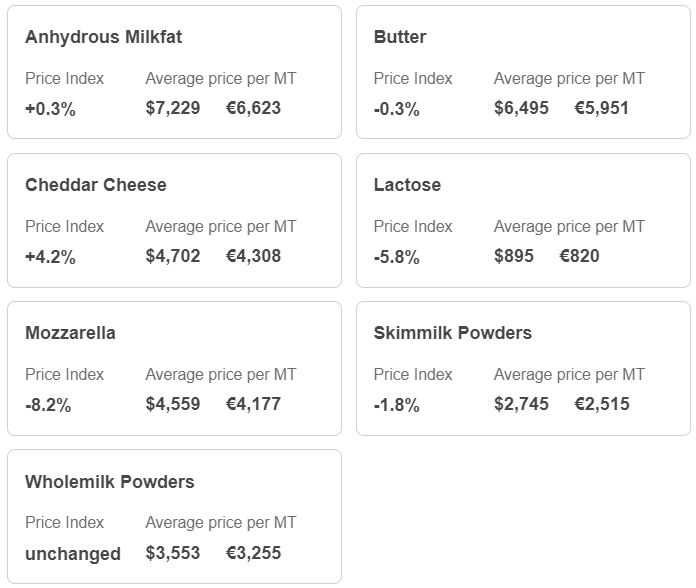
NewsSubscribe
First
Last
Consent

South American Dairy Challenges: Weather and Economic Instability Impact Milk Production

Explore how South America’s dairy exporters tackle weather and economic challenges. Can higher milk prices balance production issues? Dive into the industry’s future.

Summary:

As 2024 progresses, South America’s largest milk exporters grapple with challenging weather patterns and economic upheaval, causing a decline in milk production. The silver lining appears as soaring milk prices driven by reduced supply, unexpectedly bolstering profitability and potentially increasing volumes. In Argentina, significant currency devaluation and inflation compel producers to cut costs, reducing output. Meanwhile, Uruguay faces adverse weather conditions—excessive rainfall impacts pasture conditions, causing a substantial production drop. Despite these hurdles, hope remains as producers adapt and close the gap with prior year levels. Can these nations maintain their vital role in the global dairy supply chain?

Key Takeaways:

  • South American milk production faces significant challenges due to economic factors and adverse weather conditions, impacting overall output.
  • Argentina’s attempts to stabilize its economy have led to initial reductions in milk production but have also increased milk prices, benefiting producer margins.
  • Weather-related disruptions in Uruguay have temporarily decreased dairy output, yet rising milk prices have helped sustain profitability.
  • As global dairy demand grows, South America’s role in the international market becomes increasingly crucial, requiring strategic adjustments to production capabilities.
  • The resilience shown by Argentinian and Uruguayan producers reflects broader regional capacities to adapt and respond to external pressures.

Have you ever wondered how much your milk relies on South American exports? As global dairy demand rises, this thriving region is critical in meeting most of the world’s dairy requirements. However, South America’s key stakeholders are fighting unexpected weather and economic volatility, which are threatening to interrupt this critical supply route.

South America isn’t just a player; it’s a pivotal pillar of the global dairy supply chain. The storms that hit here cause waves on the world’s breakfast tables, underscoring the indispensable role of South American dairy farmers and industry professionals in meeting global demand.

Dairy farmers in South America face a perfect storm of difficulty. The challenges are real and severe, ranging from Argentina’s turbulent economic landscape spiraling into currency anarchy to Uruguay’s unexpected downpours, which converted fertile farms into flood zones. So, why does this matter to you as a dairy farmer or industry professional? Because these disruptions affect local economies and global markets, altering prices and availability in ways that have ramifications for your business decisions.

The Current Milk Production Landscape in South America 

Argentina and Uruguay, the leading milk exporters in South America, are grappling with unique challenges that significantly impact their production levels. A delicate dance between economics and the environment shapes the dairy landscape in these countries.

Implementing ambitious economic changes in Argentina resulted in a seismic shift: the consequent currency depreciation and a spike in inflation forced producers to lower costs. Dairy producers were compelled to adapt, resulting in an initial production decrease. However, there is a silver lining: Rising milk prices have raised producer margins, providing a glimmer of hope for future output growth.

Uruguay, on the other hand, presents unique challenges. The country’s dairy sector was off to a promising start early in the year. Still, excessive rainfall in critical dairy regions caused floods. These unfavorable weather circumstances impacted pasture quality, cow health, and comfort, decreasing productivity. Despite these hurdles, the subsequent increase in milk prices and acceptable operational costs has enabled producers to begin narrowing the production gap.

As global dairy demands rise, South American countries like Argentina and Uruguay are facing challenges and racing against time to overcome them and fulfill their potential in the global dairy market. Despite the odds, producers’ resilience and adaptability in these nations are inspiring and will be vital in navigating these turbulent times. 

Argentina’s Economic Roller Coaster: Dairy Producers Brace for Impact 

Argentina’s economic situation has been nothing short of a roller coaster in 2024. The aggressive economic policies introduced by the new president aimed to stabilize the economy but inadvertently introduced a slew of challenges for the agricultural sector, particularly dairy producers. A significant currency devaluation has been at the heart of the turmoil, exponentially increasing the cost of imported inputs. For dairy farmers, this meant sky-high feed prices, which they could no longer afford.

Inflation exacerbated these problems by reducing purchasing power at an alarming rate. To stay afloat, many farmers cut costs wherever possible. These steps included drying cows earlier than usual and reformulating feed rations to eliminate reliance on costly concentrates. Despite the necessary changes, milk output decreased by 13% in the year’s first half.

However, every cloud has a silver lining. As milk supplies dwindled, prices steeply climbed, relieving beleaguered farmers. The increase in milk prices pushed producer margins to levels not seen in years. This profit growth is a positive motivator for increasing milk output in the coming months. The industry watched cautiously as the production gap gradually narrowed, indicating potential stabilization and growth, instilling a sense of optimism and confidence in the future of South American dairy production.

Weathering the Storm: Uruguay’s Dairy Resilience in the Face of Natural Adversities

Uruguay’s dairy sector experienced a turbulent second quarter in 2024, grappling with excessive rainfall and severe flooding. These harsh weather conditions reduced pasture quality and harmed cow comfort and health. Flooded fields reduced the availability of high-quality forage, forcing cows to endure less-than-ideal grazing conditions.

Prolonged exposure to wet and muddy environments often increases hoof maladies and stress, significantly reducing milk yields. What’s the cumulative effect? Production fell by 10.6% during the peak months of April to June. Such disruptions challenge the resilience and adaptability of producers familiar with weather extremes.

With supplies constrained by these natural disasters, market forces reacted predictably. Milk prices experienced a surge, though they fell short of breaching last year’s highs. Despite this, price increases and moderate operating costs supported producer profits. This silver lining prompted some Uruguayan farmers to fight against the deteriorating trend. By July, they had begun to reduce output deficits, getting closer to the previous year’s figures.

These dynamics illustrate the intricate dance between nature and market forces that dairy producers must navigate, underscoring the importance of strategic resilience in an industry dependent on environmental conditions.

The Resilient Tango: Navigating Milk Market Swings in South America

It’s an exciting time to study market trends in the dairy business, particularly in South America. The decline in milk supply from crucial nations such as Argentina and Uruguay has, as expected, boosted milk prices. The market has quickly reacted to this decreased supply, emphasizing the heightened volatility and reliance on stable production levels. As worldwide demand rises, every drop in export numbers causes ripples that might increase prices. This optimistic trend in milk pricing protects profitability for producers who can maintain or expand output even in challenging situations.

Producers in Argentina and Uruguay are not sitting idle. They are continually adjusting their manufacturing techniques to compensate for the deficiencies they experienced earlier this year. In Argentina, dairy farmers adapt to economic uncertainty by streamlining their operations. Many focus on effective feed utilization and new pasture management practices to lessen their reliance on costly feed concentrates while maintaining productivity.

Meanwhile, Uruguayan farmers are reorganizing and capitalizing on the benefits of higher milk prices. They invest in enhancing farm infrastructure to withstand better-than-expected weather conditions, such as constructing drainage systems to combat previous flooding difficulties. Farmers are also using technology to improve their herd management procedures, hoping to close the production gap from the previous year.

As efforts are made to increase output while addressing these difficulties, the dairy industries of both countries are acutely aware of the delicate balance between cost management and yield maximization. By adapting and evolving, they’re optimistically positioning themselves to handle future fluctuations with greater agility and sophistication.

Global Ripples: South America’s Dairy Production Sways the World 

South America’s dairy exporters’ challenges resonate well beyond the continent, casting ripples across the global dairy market. Do you know how fluctuations in this region’s production can sway international dynamics? The effects can be far-reaching when South American countries like Argentina and Uruguay experience disrupted milk production. With lower milk outputs, global supply becomes constrained. International milk prices may increase as buyers compete for limited resources. This scenario can place upward pressure on dairy product costs worldwide, potentially reshaping market strategies for companies dealing in dairy commodities.

Furthermore, South America’s struggles underline the importance of regional resilience in maintaining a balanced global dairy supply chain. As dairy demand accelerates, primarily driven by growing populations and emerging markets, the burden on consistent exporters intensifies. Any hitches in South America’s ability to deliver can pose challenges for nations heavily reliant on imports to meet their domestic requirements. This situation amplifies the necessity for diversifying sources and highlights the importance of establishing robust contingency plans to navigate supply uncertainties.

Global dairy stakeholders must closely monitor these fluctuations, adapting their approaches to short-term volatility and long-term strategic planning. While deals and contracts are often secured for future supplies, unforeseen disruptions can compel rapid response adjustments. Hence, proactive engagement with South America’s dairy market could fortify a more resilient supply chain framework. How would your business adapt to such global changes? Recognizing and anticipating these swings will be critical for staying ahead in the dairy industry’s fluctuating tides.

The Bottom Line

The story of South American dairy exporters highlights a landscape beset by climate and economic challenges. Argentina’s rapid currency devaluation has resulted in a fragile balance of lower output and increased prices, while Uruguay is dealing with the effects of erratic weather patterns. Both countries, however, demonstrate resilience as manufacturers alter their operations to regain former levels.

As worldwide demand for dairy products rises, South American exporters’ need to overcome these restrictions becomes increasingly essential. Failure to adapt might affect the region’s economic health and disrupt global dairy supply chains. 

Thus, one must ask: will South America rise to the occasion and transform these challenges into opportunities, ensuring a steadier future for dairy production? Only time will tell if resourcefulness and change will propel this region forward in the global dairy industry.

Learn more:

Join the Revolution!

Bullvine Daily is your essential e-zine for staying ahead in the dairy industry. With over 30,000 subscribers, we bring you the week’s top news, helping you manage tasks efficiently. Stay informed about milk production, tech adoption, and more, so you can concentrate on your dairy operations. 

NewsSubscribe
First
Last
Consent

Global Dairy Trade Update: October 15 2024 Auction Sees Slight Price Declines and Market Shifts

Discover the recent changes in global dairy prices. How will the 0.3% dip affect your business? Get the latest insights and market analysis.

Summary:

The October 15th Global Dairy Trade auction highlighted a nuanced downturn in the dairy market with a slight 0.3% dip in the overall index. Whole milk powder remained constant, while mozzarella and lactose significantly declined, contrasting with cheddar’s 4.2% rise. These fluctuations reflect the challenges and strategic responses required from industry professionals. The European Union’s decision to impose tariffs on Chinese electric vehicles due to unfair subsidies has spurred China to retaliate by investigating European dairy subsidies, potentially reshaping the global market. This move, amidst the EU’s plans to export substantial amounts of milk and cream to China, indicates shifting dynamics that may lead to increased dairy costs for Chinese consumers and compel European exporters to adapt and innovate in their approaches.

Key Takeaways:

  • Global Dairy Trade price index decreased by 0.3%, with total sales reaching 38,956 metric tonnes.
  • Whole milk powder prices held steady, while cheddar saw the largest increase at 4.2%.
  • Significant price drops were observed in mozzarella and lactose, falling by 8.2% and 5.8%, respectively.
  • The New Zealand dairy industry remains robust despite slight global price fluctuations.
  • Market analysts note a lack of price volatility, suggesting stable buyer behavior within the dairy sector.
  • The Ornua Monthly Purchase Price Index rose in September, indicating improved market returns.
  • Lakeland Dairies announced an increase in base milk prices and supplier incentives, reflecting favorable market conditions.

Recent moves have highlighted the dairy industry as the economic chess match between the European Union and China heats up. With the EU imposing vital duties on Chinese electric vehicle imports, the ground is set for China to launch retaliatory investigations into European dairy subsidies, ushering in a new chapter in their simmering trade war. As the world’s biggest dairy exporter, Europe will sell 24% of its milk and 39% of its cream to China in the first half of 2024 alone. This is more than just a conflict of geopolitical superpowers; it is a scenario with far-reaching consequences for global dairy markets. Why should this matter to you as a dairy industry stakeholder? This trade friction might restructure the market landscape. Still, it also allows European farmers and exporters to diversify their methods, driving Chinese consumers to pay higher dairy costs. The stakes are higher than ever as these international alliances face unprecedented challenges, putting the strength and adaptability of dairy markets worldwide to the test.

ProductPrice ChangeAverage Price (US$/MT)
Whole Milk Powder0.0%3,553
Skim Milk Powder-1.8%2,754
Cheddar+4.2%4,702
Butter-0.3%6,495
Anhydrous Milk Fat+0.3%7,229
Lactose-5.8%895
Mozzarella-8.2%4,559

Retaliatory Games: EU’s Tariff Move and China’s Dairy Dilemma

The European Union’s decision to levy tariffs on Chinese electric vehicles represents a significant shift in the intensifying trade war between these global powerhouses. The EU justified its decision by citing the Chinese government’s subsidies to the electric vehicle market, which created an unequal playing field that harmed European producers. With 7.8% to 35.3% tariffs, the EU seeks to defend its automobile industry from unfair competition.

In reaction, China attacked the European dairy industry, an economic segment in which Europe wields considerable power as the world’s leading exporter. China’s investigation into over twenty subsidy programs purportedly aiding Europe’s dairy sector attempts to unearth any preferential treatment that could provide European dairy goods an advantage in the global market.

The countries backing the EU’s tariffs are a group of big dairy-producing countries—France, the Netherlands, Italy, and Poland—that see these measures as critical to protecting their industrial interests. Germany and Belgium, on the other hand, dissented, citing concerns about the potential consequences and strain on their export-led economies, particularly their automobile industry.

This trade dispute exemplifies the complex dynamics at work, in which economic protectionism collides with goals for market supremacy. It raises complex considerations about global trade ethics and the long-term viability of such policies, allowing the dairy and car businesses to navigate these geopolitical waters.

EU-China trade war, dairy subsidies, electric vehicle tariffs, global dairy markets, European dairy exports, retaliatory investigations, market diversification, dairy industry protection, trade friction consequences, Chinese consumer dairy costs

A Storm in a Milk Churn: How EU-China Trade Tensions Threaten Dairy Stability

The current spat between China and the EU over dairy subsidies is more than another chapter in their trade story; it is a potential interruption. China’s recent decision to investigate European dairy subsidies may shake up the business in ways we’re only beginning to understand. How does this impact dairy farmers and firms like yours?

Let’s examine the possible consequences. First, there is the risk that trading patterns will shift. With China investigating European dairy subsidies, it may levy tariffs on imports. This could prompt European dairy processors to turn and seek new markets. Are countries like Japan and South Korea ready to absorb the surplus? This move may eventually impact global dairy trade dynamics. If China were to impose tariffs on European dairy imports, it could significantly reduce the demand for European dairy products in China, leading to a surplus in the European market. This surplus could drive down prices and force European dairy processors to find new markets, disrupting the global dairy trade dynamics.

Pricing pressures also loom huge. If Europe fills other markets with dairy products that it cannot sell to China, we may see a global drop in pricing. While this sounds wonderful for customers, dairy farmers may suffer. Lower prices may reduce margins, adding financial stress to farmers already on a tightrope.

Furthermore, organizations that provide critical services and products to dairy producers should prepare for change. Farmers may tighten their belts with anticipated declines in dairy income, reducing demand for farm equipment, feed, and technological solutions. Could your business adapt to the new reality?

Finally, while dismissing these trade disputes as distant and abstract is tempting, they directly impact the ground. Staying informed, adaptive, and ready to pivot will be critical for dairy professionals navigating these turbulent waters. The ability to adapt to changing market conditions will be a critical factor in determining the success of dairy businesses in the face of these challenges.

New Horizons in Dairy: Navigating the Shift in Global Trade Winds

With the intensifying trade war between the EU and China, one must question where European dairy products will find new homes. As China shifts its focus on dairy imports, Asian, African, and Middle Eastern countries emerge as potential alternatives to Europe’s dairy heavyweights. This tectonic shift in trade networks might have a global impact, changing market dynamics. If Europe shifted its focus to new markets, it could disrupt the current global dairy trade dynamics. New competitors entering these sectors with competitive pricing may pressure global dairy prices. Remember, Europe’s share of the global dairy pie is not tiny; any change here has serious consequences.

Why does this matter? Breaking new ground in undeveloped markets brings opportunities and competition. These shifting trade channels have the potential to ripple world prices. New competitors entering these sectors with competitive pricing may pressure global dairy prices. Remember, Europe’s share of the global dairy pie is not tiny; any change here has serious consequences.

On the one hand, a greater market reach could reduce Europe’s reliance on China. Still, it may also increase competition for countries such as New Zealand and the United States. Furthermore, nations rich in natural resources but lacking in dairy production may see a leveling of the playing field as they get easier access to European dairy products. This redirection may provide a short-term boost with low-cost imports but raises long-term concerns regarding self-sufficiency and local industry development.

Will European dairy’s global expansion bring prosperity or risk? That remains the golden question. The dairy trade is on the verge of a revolutionary moment when maps may be unexpectedly rewritten. As this situation continues, dairy experts must keep their eyes open and their strategies flexible, ready to react to the shifting sands of today’s global market.

Taste Shift or Temporary Turmoil: The Future of European Dairy in China’s Cart

As the EU and China engage in this rising trade war, we must consider how it may affect Chinese consumer preferences. Rising pricing and limited availability may cause Chinese customers to reconsider purchasing European dairy. Are the days of plentiful French cheese and luscious Italian milk over?

Tariffs and trade restrictions inevitably lead to price hikes. European dairy goods, formerly considered premium imports in China, may now be priced beyond the reach of the typical customer. This fiscal pressure may prompt buyers to seek different suppliers or stop consumption entirely. Asian-local dairy farmers should leverage this chance to increase market share by positioning their goods as cost-effective alternatives. Could this cause a taste change away from Europe?

Another unknown factor in this trade war is availability. Chinese importing companies may find difficulties getting European dairy, resulting in shortages. Are these customers ready for such disruptions? While luxury food enthusiasts may continue to seek out their favorite European brands, the general public may shift to domestic products, enticed by price and accessibility. This trend may result in long-term shifts in consumption patterns, even if tariffs finally drop.

Finally, the unpredictability of this trade war forces us to assess the strength of European dairy’s market presence in China. Will loyalty to traditional flavors endure price increases and scarcity? Or will the Asian market adapt and seek satisfaction in closer-to-home, maybe less expensive dairy delights?

Charting New Courses: European Dairy’s Quest in Turbulent Trade Seas

As the EU and China dispute, European dairy exporters face rough trade conditions. Quick adaptation to these obstacles is essential. Market diversification is one of the most prominent strategies. Can European exporters expand their reach beyond China? Absolutely! Exploring new markets such as Southeast Asia, the Middle East, and Africa may mitigate the impact of lower Chinese demand. These locations have significant expansion potential due to growing middle classes and changing food trends.

However, diversification is only part of the picture. Another important aspect is cost management. Reducing overheads without sacrificing quality may help European businesses remain competitive. Could improving production methods, investing in energy-efficient technologies, or renegotiating supplier contracts make a difference? These solutions may lessen the immediate effects while fortifying the industry against future market instability.

Furthermore, increasing brand strength could open up new opportunities. By emphasizing the unique attributes of European dairy, such as heritage, quality, and sustainability, exporters can capture consumer loyalty in unexplored countries. Building solid and recognizable brands is not a defensive strategy but a proactive method of gaining a footing in the global market.

The volatile nature of the trade war catalyzes dairy industry innovation and resiliency. By focusing efforts on broadening markets, effectively managing expenses, and strengthening brand presence, European dairy experts can weather these challenges while potentially becoming more relevant than ever.

Echoes from the Past: How EU-China Trade History Frames Today’s Cheese Clash

Understanding the present EU-China trade crisis necessitates revisiting their long history of economic disagreements and diplomatic agreements. Trade between the European Union and China has increased dramatically since China’s economic reform in the late twentieth century, resulting in a partnership oscillating between collaboration and confrontation.

Trade conflicts have become commonplace in recent decades. A noteworthy chapter occurred in 2013 when the EU placed tariffs on Chinese solar panels. Beijing responded by investigating European wine imports. While these difficulties may appear unconnected to dairy, they signaled a pattern in which conflicts in one industry reverberated throughout others. This disagreement was eventually resolved after lengthy negotiations, with a price agreement on solar panels demonstrating the potential for de-escalation.

While only sometimes at the forefront, dairy commerce has had its share of tension. In 2015, disagreements emerged over EU-origin milk powder as alleged illicit subsidies were investigated under WTO guidelines. Critical to many European economies, the sector was hit hard when excess caused prices to fall. These skirmishes highlighted dairy’s fragility in the broader economic crossfire, warning stakeholders that global demand fluctuations can have a knock-on effect at farm gates.

History reminds us that, despite their intricacies, these trade disputes frequently occur in cycles. A combination of negotiation, strategy shifts, and, in some cases, lasting patience resolves them. Whether the present dairy conflict between two economic behemoths follows this script remains to be seen. However, based on previous experience, it is apparent that dairy producers will need to be vigilant, adaptable, and make strategic decisions as they navigate this geopolitical scenario.

The Bottom Line

In short, the EU-China trade war is rapidly expanding, with both sides engaged in a tug-of-war that has now included the critical dairy industry. As the European Union imposes tariffs on Chinese electric vehicles, China responds by inspecting European dairy imports. These measures jeopardize the stability of the global dairy trade, posing risks and problems for both exporters and importers. The rivalry between Europe and China over dairy exports and imports can impact prices and market share.

Consider the far-reaching ramifications of these trade decisions: How will they affect your company and the overall market dynamics? As a dairy farmer or industry professional, remaining informed and adaptive is critical in these uncertain times. Finally, this circumstance raises an important question: May the conclusion of this trade dispute change the face of international trade relations, affecting agricultural trade policies and practices worldwide?

Learn more:

Join the Revolution!

Bullvine Daily is your essential e-zine for staying ahead in the dairy industry. With over 30,000 subscribers, we bring you the week’s top news, helping you manage tasks efficiently. Stay informed about milk production, tech adoption, and more, so you can concentrate on your dairy operations. 

NewsSubscribe
First
Last
Consent

EU-China Trade Clash: A Dairy Industry Disruption Looms

The EU-China trade spat has crucial ripple effects on the dairy industry. How might it affect global markets and your business? Find the essential insights and strategies here.

Summary:

The trade tensions between the European Union and China have reached a boiling point, with the EU’s tariffs on Chinese electric vehicles prompting China to investigate European dairy subsidies. As both sides dig in, key European dairy-exporting nations rally around the tariffs while Chinese consumers consider alternative dairy markets. Europe, the world’s largest dairy exporter, plans to send 24% of its milk and 39% of its cream to China in the first half of 2024. This escalating trade spat might disrupt established supply chains, prompt consumer preference shifts, and pressure market values globally. With Europe’s ongoing probe into over twenty subsidy programs that purportedly benefit the dairy sector, dairy farmers and industry professionals must remain informed and agile, ready to tackle any ripple effects on supply, demand, and pricing.

Key Takeaways:

  • EU’s new tariffs on Chinese electric vehicles could trigger broader trade consequences impacting sectors beyond automotive, including dairy.
  • China’s investigation into European dairy subsidies is a retaliatory measure highlighting the interconnectedness of global trade disputes.
  • The European dairy industry should prepare for potential shifts in trade dynamics due to heightened tensions with China.
  • European dairy exporters may need to explore new markets if Chinese demand decreases due to these trade tensions.
  • The unfolding trade spat underscores the importance of staying informed about international trade trends for dairy farmers and industry professionals.
  • Strategic decisions taken now will be crucial in shaping the future of the global dairy trade.
EU-China trade war, electric vehicle tariffs, Chinese dairy investigations, European dairy subsidies, global dairy market impact, dairy export opportunities, trade friction consequences, dairy pricing fluctuations, agricultural market adaptation, European farmers' challenges

Recent moves have highlighted the dairy industry as the economic chess match between the European Union and China heats up. With the EU imposing vital duties on Chinese electric vehicle imports, the ground is set for China to launch retaliatory investigations into European dairy subsidies, ushering in a new chapter in their simmering trade war. As the world’s biggest dairy exporter, Europe will sell 24% of its milk and 39% of its cream to China in the first half of 2024 alone. This is more than just a conflict of geopolitical superpowers; it is a scenario with far-reaching consequences for global dairy markets. Why should this matter to you as a dairy industry stakeholder? This trade friction might restructure the market landscape. Still, it also presents an opportunity for European farmers and exporters to diversify their methods and potentially drive Chinese consumers to pay higher dairy costs. The stakes are higher than ever as these international alliances face unprecedented challenges, putting the strength and adaptability of dairy markets worldwide to the test.

Retaliatory Games: EU’s Tariff Move and China’s Dairy Dilemma

The European Union’s decision to levy tariffs on Chinese electric vehicles represents a significant shift in the intensifying trade war between these global powerhouses. The EU justified its decision by citing the Chinese government’s subsidies to the electric vehicle market, which created an unequal playing field that harmed European producers. With 7.8% to 35.3% tariffs, the EU seeks to defend its automobile industry from unfair competition.

In reaction, China attacked the European dairy industry, an economic segment in which Europe wields considerable power as the world’s leading exporter. China’s investigation into over twenty subsidy programs purportedly aiding Europe’s dairy sector attempts to unearth any preferential treatment that could provide European dairy goods an advantage in the global market.

The countries backing the EU’s tariffs are a group of big dairy-producing countries—France, the Netherlands, Italy, and Poland—that see these measures as critical to protecting their industrial interests. Germany and Belgium, on the other hand, dissented, citing concerns about the potential consequences and strain on their export-led economies, particularly their automobile industry.

This trade dispute exemplifies the complex dynamics at work, in which economic protectionism collides with goals for market supremacy. It raises complex considerations about global trade ethics and the long-term viability of such policies, allowing the dairy and car businesses to navigate these geopolitical waters.

A Storm in a Milk Churn: How EU-China Trade Tensions Threaten Dairy Stability

The current spat between China and the EU over dairy subsidies is more than another chapter in their trade story; it is a potential interruption. China’s recent decision to investigate European dairy subsidies may shake up the business in ways we’re only beginning to understand. How does this impact dairy farmers and firms like yours?

Let’s examine the possible consequences. First, there is the risk that trading patterns will shift. China may levy tariffs on European dairy imports, with China investigating European dairy subsidies. This could prompt European dairy processors to turn and seek new markets. Are countries like Japan and South Korea ready to absorb the surplus? This move may eventually impact global dairy trade dynamics. If China were to impose tariffs on European dairy imports, it could significantly reduce the demand for European dairy products in China, leading to a surplus in the European market. This surplus could drive down prices and force European dairy processors to find new markets, disrupting the global dairy trade dynamics.

Pricing pressures also loom huge. If Europe fills other markets with dairy products that it cannot sell to China, we may see a global drop in pricing. While this sounds wonderful for customers, dairy farmers may suffer. Lower prices may reduce margins, adding financial stress to farmers already on a tightrope.

Furthermore, organizations that provide critical services and products to dairy producers should prepare for change. Farmers may tighten their belts with anticipated declines in dairy income, reducing demand for farm equipment, feed, and technological solutions. Could your business adapt to the new reality?

Finally, while dismissing these trade disputes as distant and abstract is tempting, they directly impact the ground. Staying informed, adaptive, and ready to pivot will be critical for dairy professionals navigating these turbulent waters. The ability to adapt to changing market conditions will be a critical factor in determining the success of dairy businesses in the face of these challenges.

New Horizons in Dairy: Navigating the Shift in Global Trade Winds

With the intensifying trade war between the EU and China, one must question where European dairy products will find new homes. As China shifts its focus on dairy imports, Asian, African, and Middle Eastern countries emerge as potential alternatives to Europe’s dairy heavyweights. This tectonic shift in trade networks might have a global impact, changing market dynamics. If Europe shifted its focus to new markets, it could disrupt the current global dairy trade dynamics. New competitors entering these sectors with competitive pricing may pressure global dairy prices. Remember, Europe’s share of the global dairy pie is not tiny; any change here has serious consequences.

Why does this matter? Breaking new ground in undeveloped markets brings opportunities and competition. These shifting trade channels have the potential to ripple world prices. New competitors entering these sectors with competitive pricing may pressure global dairy prices. Remember, Europe’s share of the global dairy pie is not tiny; any change here has serious consequences.

On the one hand, a greater market reach could reduce Europe’s reliance on China. Still, it may also increase competition for countries such as New Zealand and the United States. Furthermore, nations rich in natural resources but lacking in dairy production may see a leveling of the playing field as they get easier access to European dairy products. This redirection may provide a short-term boost with low-cost imports but raises long-term concerns regarding self-sufficiency and local industry development.

Will European dairy’s global expansion bring prosperity or risk? That remains the golden question. For now, the dairy trade appears to be on the verge of a revolutionary moment in which maps may be rewritten unexpectedly. As this situation continues, dairy experts must keep their eyes open and their strategies flexible, ready to react to the shifting sands of today’s global market.

Taste Shift or Temporary Turmoil: The Future of European Dairy in China’s Cart

As the EU and China engage in this rising trade war, we must consider how it may affect Chinese consumer preferences. Rising pricing and limited availability may cause Chinese customers to reconsider purchasing European dairy. Are the days of plentiful French cheese and luscious Italian milk over?

Tariffs and trade restrictions inevitably lead to price hikes. European dairy goods, formerly considered premium imports in China, may now be priced beyond the reach of the typical customer. This fiscal pressure may prompt buyers to seek different suppliers or stop consumption entirely. Asian-local dairy farmers should leverage this chance to increase market share by positioning their goods as cost-effective alternatives. Could this cause a taste change away from Europe?

Another unknown factor in this trade war is availability. Chinese importing companies may find difficulties getting European dairy, resulting in shortages. Are these customers ready for such disruptions? While luxury food enthusiasts may continue to seek out their favorite European brands, the general public may shift to domestic products, enticed by price and accessibility. This trend may result in long-term shifts in consumption patterns, even if tariffs finally drop.

Finally, the unpredictability of this trade war forces us to assess the strength of European dairy’s market presence in China. Will loyalty to traditional flavors endure price increases and scarcity? Or will the Asian market adapt and seek satisfaction in closer-to-home, maybe less expensive dairy delights?

Charting New Courses: European Dairy’s Quest in Turbulent Trade Seas

As the EU and China dispute, European dairy exporters face rough trade conditions. Quick adaptation to these obstacles is essential. Market diversification is one of the most prominent strategies. Can European exporters expand their reach beyond China? Absolutely! Exploring new markets such as Southeast Asia, the Middle East, and Africa may mitigate the impact of lower Chinese demand. These locations have significant expansion potential due to growing middle classes and changing food trends.

However, diversification is only part of the picture. Another important aspect is cost management. Reducing overheads without sacrificing quality may help European businesses remain competitive. Could improving production methods, investing in energy-efficient technologies, or renegotiating supplier contracts make a difference? These solutions may lessen the immediate effects while fortifying the industry against future market instability.

Furthermore, increasing brand strength could open up new opportunities. By emphasizing the unique attributes of European dairy, such as heritage, quality, and sustainability, exporters can capture consumer loyalty in unexplored countries. Building solid and recognizable brands is not a defensive strategy but a proactive method of gaining a footing in the global market.

The volatile nature of the trade war catalyzes dairy industry innovation and resiliency. By focusing efforts on broadening markets, effectively managing expenses, and strengthening brand presence, European dairy experts can weather these challenges while potentially becoming more relevant than ever.

Echoes from the Past: How EU-China Trade History Frames Today’s Cheese Clash

Understanding the present EU-China trade crisis necessitates revisiting their long history of economic disagreements and diplomatic agreements. Trade between the European Union and China has increased dramatically since China’s economic reform in the late twentieth century, resulting in a partnership oscillating between collaboration and confrontation.

Trade conflicts have become commonplace in recent decades. A noteworthy chapter occurred in 2013 when the EU placed tariffs on Chinese solar panels. Beijing responded by investigating European wine imports. While these difficulties may appear unconnected to dairy, they signaled a pattern in which conflicts in one industry reverberated throughout others. This disagreement was eventually resolved after lengthy negotiations, with a price agreement on solar panels demonstrating the potential for de-escalation.

While only sometimes at the forefront, dairy commerce has had its share of tension. In 2015, disagreements emerged over EU-origin milk powder as alleged illicit subsidies were investigated under WTO guidelines. Critical to many European economies, the sector was hit hard when excess caused prices to fall. These skirmishes highlighted dairy’s fragility in the broader economic crossfire, warning stakeholders that global demand fluctuations can have a knock-on effect at farm gates.

History reminds us that, despite their intricacies, these trade disputes frequently occur in cycles. A combination of negotiation, strategy shifts, and, in some cases, lasting patience resolves them. Whether the present dairy conflict between two economic behemoths follows this script remains to be seen. However, based on previous experience, it is apparent that dairy producers will need to be vigilant, adaptable, and make strategic decisions as they navigate this geopolitical scenario.

The Bottom Line

In short, the EU-China trade war is rapidly expanding, with both sides engaged in a tug-of-war that has now included the critical dairy industry. As the European Union imposes tariffs on Chinese electric vehicles, China responds by inspecting European dairy imports. These measures jeopardize the stability of the global dairy trade, posing risks and problems for both exporters and importers. The rivalry between Europe and China over dairy exports and imports can impact prices and market share.

Consider the far-reaching ramifications of these trade decisions: How will they affect your company and the overall market dynamics? As a dairy farmer or industry professional, remaining informed and adaptive is critical in these uncertain times. Finally, this circumstance raises an important question: May the conclusion of this trade dispute change the face of international trade relations, affecting agricultural trade policies and practices worldwide?

Learn more:

Join the Revolution!

Bullvine Daily is your essential e-zine for staying ahead in the dairy industry. With over 30,000 subscribers, we bring you the week’s top news, helping you manage tasks efficiently. Stay informed about milk production, tech adoption, and more, so you can concentrate on your dairy operations. 
NewsSubscribe
First
Last
Consent

Fluid Milk’s Popularity Increases: Navigating the New Market Trends

Explore the reasons behind the resurgence in fluid milk sales following years of decline. How are evolving health trends and shifting consumer preferences transforming the dairy industry landscape?

Summary:

The U.S. fluid milk market is showing signs of resurgence after years of decline, with bottled milk sales climbing above previous year levels in the first seven months of 2024, thanks to the industry’s efforts in promoting milk’s health benefits and consumer preferences for full-fat and organic dairy products. Gym visits rose by 60%, fueling demand for protein-rich diets, and whole milk sales surged by 15% over the past decade, with a 21% increase in organic milk sales. These trends highlight a shift in consumer attitudes towards milk despite a competitive market with plant-based alternatives. The renewed focus on full-fat options and natural nutrition bolstered the dairy industry’s influence across food and health markets. At the same time, the increased bottling of fluid milk could drive costs up as it competes for raw materials.

Key Takeaways:

  • After years of decline, fluid milk sales in the U.S. have shown a notable increase in 2024, marking a reversal since the last significant demand spike in 2020 due to government initiatives.
  • There is a growing consumer interest in health and wellness, which may contribute to the increased demand for protein-rich dairy products.
  • Whole milk sales are experiencing a resurgence, attributed to changing perceptions about fats and the satiety benefits of full-fat dairy, with significant growth over the past decade.
  • Sales of organic and value-added milk products, such as high-protein and extended shelf-life options, are on the rise, catering to the demands of health-conscious and premium consumers.
  • The rise in fluid milk consumption is causing a shift in the dairy supply chain, affecting products like cheese and milk powder and offering potentially higher revenues for dairy producers.
fluid milk industry, organic milk growth, full-fat milk trends, plant-based milk competition, whey protein popularity, dairy market stability, whole milk sales increase, consumer preferences dairy, fitness wave milk consumption, retail pricing fluid milk

After a prolonged period of stagnation, the U.S. fluid milk industry has demonstrated remarkable resilience with a surprising resurgence in milk sales. This significant reversal from years of decline is not just a fleeting trend but a beacon of hope for dairy farmers and industry professionals. It signifies improved market stability and potentially increased revenues, showcasing how milk holds its ground in the competitive beverage market, catering to evolving consumer health preferences. Let’s explore how these trends are shaping the future of dairy, instilling a sense of reassurance in the industry’s adaptability.

YearFluid Milk Sales (Billions of Pounds)% Change from Previous Year
202047.5+1.5%
202146.8-1.5%
202246.2-1.3%
202346.0-0.4%
202446.3+0.6%

The Turnaround Tale: Can Fluid Milk Find Its Footing in a Competitive Market?

Fluid milk sales in the United States have declined in recent decades owing to changing tastes, increased dietary options, and stiff competition from alternative drinks such as plant-based milk. While people have long considered milk a must-have in their diets, more and more are questioning whether it is essential for good health. In addition, schools and houses began to offer more options, making individuals more knowledgeable and, at times, hesitant to choose.

During the economic instability induced by the epidemic, 2020 marked a significant shift in this consistent drop due to the government’s food giveaway program. This program distributed food boxes with milk, boosting sales and providing a refreshing reprieve from the average declining trend. However, this was a one-time occurrence rather than an indication that things were about to change for the better.

Fast-forward to 2024, and the landscape appears to be shifting. This year’s modest increase in fluid milk sales is noteworthy, driven by sustained market demand rather than short-term government interventions. This uptick suggests a potential shift in consumer attitudes toward milk, influenced by broader health trends and a renewed interest in the benefits of dairy fats and proteins. The rise in 2024 sets the stage for a more enduring change in consumer purchasing, fostering a sense of optimism about the industry’s future.

Unraveling the Dynamics: How Consumer Awareness is Breathing New Life into Fluid Milk Sales? The recent surge in fluid milk sales reveals that consumer consciousness and evolving preferences are at the core of this transformation. Data shows that for the first seven months of 2024, fluid milk consumption rose by 0.6% compared to the same period in 2023. This modest yet significant increase marks a pivotal shift after years of declining consumption patterns, highlighting the need for the industry to align with consumer needs.

Historically, the last notable surge in milk sales occurred in 2020, driven by government initiatives to include milk in food donation boxes. Excluding that anomaly, seeing an increase suggests a recovery in consumer interest not witnessed since before 2009.

Digging into the data further, full-fat and organic milk emerge as significant growth sectors. Whole milk sales rose substantially, while organic milk sales have more than doubled over the past ten years, demonstrating consumers’ willingness to prioritize quality and nutritional value over price. The emergence of health-conscious trends and nuanced nutritional advice favoring less-processed options has undoubtedly played a role here.

However, these figures are driven by more than traditional retail pathways. There is an observed shift towards purchasing milk with added health benefits—more protein or enhanced preservation techniques resulting in longer shelf life. These premium products are carving out their niche and expanding the consumer base, notably among those investing in health and wellness lifestyles.

Yet, the overall market landscape remains fiercely competitive. While fluid milk has gained ground, plant-based milk options, initially projected to fall by 8% this year, remain formidable. They are leveraging this. Emerging data is crucial for understanding shifts in demographic preferences, and consumption habits will keep this rebound on the rise instead of plateauing.

Pumping Iron and Pushing Milk: The Fitness Wave Fueling Dairy’s Revival

Everyone is aware of the recent surge in health and wellness initiatives. Have you considered how this shift is benefiting fluid milk sales? More and more individuals are going to the gym, with visits increasing by 60% in the past year [ABC Fitness]. You might wonder, “What’s the deal with this for dairy?” It’s all about protein.

Personal trainers are becoming increasingly popular among fitness enthusiasts, and protein is essential to muscle recovery and general fitness. These changes have also influenced what people eat, with many trainers recommending that clients consume more protein-rich foods, such as dairy. Dairy is making a comeback, but not as the must-have of our childhood; now, it’s all about being a go-to for health-conscious adults.

Whey protein concentrates and other dairy products are extremely popular, demonstrating people’s interest in fitness. People view milk and other dairy products as simple sources of protein that fit seamlessly into their health-conscious lifestyles. This tendency is also consistent with the assumption that full-fat dairy keeps you feeling fuller for longer. Milk remains a typical go-to companion as people adjust their meals for improved health and efficiency.

The dairy industry is experiencing a surge in fluid milk sales due to the combination of fitness trends and dietary modifications. This trend underscores the importance of the industry’s ability to adapt to consumer demands and societal changes. Are you, as dairy farmers and industry professionals, ready to seize this opportunity and stay ahead in this evolving market?

The Full-Fat Renaissance: Embracing Dairy’s Creamy Comeback

People have recently shown a preference for full-fat dairy products. This trend demonstrates how our understanding of nutrition is evolving, particularly regarding the various types of fats we consume. According to recent recommendations, not all saturated fats are as harmful to our health as previously thought. This realization significantly altered people’s perceptions of dairy products.

Whole milk, full of creamy richness, is making a comeback. Its delicious weight strikes the spot and effectively relieves hunger. This feature appeals to health-conscious people because a satisfied appetite produces fewer calories daily. Whole milk sales have increased by 15% during the last ten years.

On the other hand, low-fat milk has experienced a 29% reduction in popularity throughout the same period. This shift could be attributed to the realization that reducing fat does not necessarily result in better health outcomes. People are increasingly looking for foods that are high in nutrients and keep them whole, with a focus on quality rather than low-fat options. As the full-fat trend gains traction, dairy innovators are pushed to fulfill this new taste demand while maintaining nutritional integrity.

Organic Uprising and Value-Added Ventures: Meeting the Modern Milk Enthusiast

Let’s look at the exciting increase in organic and value-added milk. Organic milk sales have increased by 21% over the last ten years, which is significant. Incredibly, organic whole milk sales have doubled in that period. People are more aware of the benefits of organic milk and are willing to pay a premium for it.

So, let’s talk about value-added milk. These products have piqued the interest of those seeking more than just essential nutrients. Milk with higher protein or a longer shelf life is increasingly popular. Do you or your consumers think these features are cool? This trend indicates that consumers are becoming more knowledgeable and are prioritizing nutrition and convenience. Suppose you are a dairy farmer or work in the sector. In that case, understanding these preferences is critical to capitalizing on this burgeoning market.

Fluid Milk: A Rising Tide Lifts All Dairy Boats?

The resurgence of fluid milk sales is certainly shaking up the dairy business in some fundamental ways. As a result, the rise in milk bottling shifts more supply to fluid milk production. So, this shift implies fewer milk tankers are being dispatched to cheese plants or milk powder facilities. This circumstance results in a tighter milk supply for cheese makers, potentially driving up costs as they compete for raw materials. However, dairy farmers may benefit from this transition. There has been a slight movement, with demand for fluid milk beginning to balance out. This is better than the spot milk discounts we witnessed previously. The raw milk market is growing steadily and becoming more profitable.

Furthermore, farmers might generate more money from fluid milk than cheese and milk powder, which typically yield lesser returns. Higher retail pricing for fluid milk allows producers to earn more money, increasing their cash flow and profit margins. This is a significant benefit, especially given the limited margins associated with cheese production and the volatile milk powder market. With more individuals seeking organic and premium milk options, producers entering these markets are increasing revenues and positioning themselves for a brighter financial future.

The resurgence of fluid milk is boosting the dairy industry, offering new revenue streams and disrupting traditional production practices. Things are looking up for those in the proper position to capitalize on this expansion, indicating a brighter future for the industry. Is this the beginning of something new for fluid milk, altering its role within the industry? We’ll have to wait and see, but things look promising.

The Bottom Line

So, fluid milk is making a strong comeback, thanks to various consumer trends and a renewed appreciation for the health benefits of dairy. We’ve witnessed a shift toward healthier options, a preference for full-fat foods, and an increasing interest in organic and value-added items. This is an excellent opportunity for dairy farmers and industry professionals to rethink how they promote milk in a rapidly changing market. The key is to maintain this momentum by focusing on what customers want, adapting to changes in their preferences, and investing in innovative new items. 

Learn more:

Join the Revolution!

Bullvine Daily is your essential e-zine for staying ahead in the dairy industry. With over 30,000 subscribers, we bring you the week’s top news, helping you manage tasks efficiently. Stay informed about milk production, tech adoption, and more, so you can concentrate on your dairy operations. 

NewsSubscribe
First
Last
Consent

Dairy Dollars Surge: How New Zealand’s Industry Powers Economic Growth

New Zealand’s dairy industry fuels economic growth. Ready to learn about its billion-dollar impact?

Summary:

In the complex landscape of New Zealand’s dairy sector, where high interest rates and fluctuating milk prices have dominated headlines, there’s finally a glimmer of hope. Increased milk prices and strategic economic adjustments, as highlighted by industry leaders like Fonterra and DairyNZ, are expected to invigorate both the dairy industry and the broader economy. The anticipated revenue boost is crucial, increasing New Zealand’s dairy sector revenue by $640 million this season, allowing farmers to invest more securely in critical farming essentials such as feed and technology. This expected rise in economic activity, projected at $1.4 to $1.7 billion, underscores the dairy industry’s vital role in ensuring economic stability within the country. However, the growth story is not just in numbers; it’s in the farmers’ adaptability to cost changes, weather, and policies, highlighting their resilience. New Zealand’s dairy sector finds itself at a pivotal moment, offering new opportunities and challenging farmers to rethink strategies for sustainability.

Key Takeaways:

  • The New Zealand dairy sector is poised for a remarkable $640 million boost in direct revenue, potentially invigorating the broader economy by up to $1.7 billion.
  • The latest season’s predicted average milk price increase to $9.18 per kgMS signals renewed financial stability and opportunities for growth.
  • DairyNZ’s breakeven milk price remains steady, indicating that cost management is crucial as the sector edges towards surplus.
  • A recent OCR rate cut by the Reserve Bank to 4.75% suggests greater financial flexibility for farmers, promising long-term benefits and economic reinforcement.
  • Weather conditions present mixed outcomes: positive on the North Island and challenging in the South, reminding farmers to be adaptive and resilient.
  • Despite uncertainty in international markets and climate variability, a cautiously optimistic future for dairy farming in New Zealand seems achievable.
New Zealand dairy industry, milk price projections, Fonterra cooperatives, DairyNZ Econ Tracker, dairy revenue increase, dairy farmers investment, processing services demand, dairy logistics improvement, economic impact dairy sector, sustainable dairy farming practices.

With the economy in flux, New Zealand’s dairy farmers face several issues, including high borrowing rates, increased costs, and unpredictable milk prices. These obstacles keep coming up, making stability seem out of grasp. But, hey, there’s a bright side coming ahead. Milk prices have risen recently, but things are looking up with some positive economic news on the horizon. This positive news provides immediate relief and discusses how the dairy business can help New Zealand’s economy flourish. The anticipated increase in milk prices may spark new economic activity, delivering positive emotions from dairy farmers to the entire economy.

Hope on the Horizon: Navigating Economic Waves in New Zealand’s Dairy Sector 

The dairy business is adapting to economic developments. Farmers face high borrowing rates, growing input costs, and unexpected fluctuations in milk prices. Hello, some excellent news is coming up: Primary cooperatives such as Fonterra are raising their milk price projections, which is undoubtedly a welcome relief. Fonterra announced a midpoint price of $9 per kgMS and a special dividend payout, which benefits suppliers.

The September update from DairyNZ’s Econ Tracker appears optimistic regarding revenue expectations. New Zealand’s dairy sector will see its total revenue increase from $16.36 billion to $17 billion in the 2023-24 season, a significant revenue increase of $640 million. These figures demonstrate how crucial the sector is to farmers and the larger New Zealand economy.

Unlocking Economic Potential: Enhanced Revenue Fuels Sectoral Growth

Dairy farmers are enjoying a significant revenue increase as milk prices rise, giving them more money to spend. This cash boost allows farmers to invest more securely in their jobs, which benefits everyone. Consider how this new power relates directly to purchasing essential farming materials, such as feed, fertilizer, and the latest farming technology. These expenditures do more than keep things going; they can significantly increase productivity and efficiency in the field.

Farmers are seeing an increase in the demand for processing services as they spend more on quality and innovation in their operations. Producing more milk necessitates higher processing abilities, significantly improving industrial employment and job opportunities. Furthermore, increasing dairy output needs improved logistics for locally and internationally transporting products. This demand propels the transportation industry, bolstering the economy through new job creation and infrastructure development.

It’s critical to look into how this spending affects the economy as a whole. Every dollar farmers spend on supplies, improving processing capacities, or expanding logistics generates additional economic activity. This spending cycle significantly impacts local businesses, job creation, and economic growth.

The Ripple Effect: Dairy Echoes Across New Zealand’s Economy

The dairy business significantly impacts New Zealand’s economy, just as ocean waves pound every beach. We’ve investigated it, and it appears that economic activity will increase by $1.4 to $1.7 billion shortly, so it’s worth watching. Why is this industry so vital, even when the economy is slow?

Consider the dairy industry’s multiplier effect. Every dollar from the industry is like a farmer planting seeds in fertile soil. The industry’s impact extends beyond the farm gate, supporting various sectors such as farming supplies and transportation services. This interconnectedness creates additional jobs and opportunities, demonstrating the industry’s pivotal role in the New Zealand economy.

The dairy industry’s economic activity is not isolated; it provides a reliable support system during economic slowdowns. Unlike the volatile ups and downs of the technology or service industries, the dairy industry’s cycles are consistent. It is a firm foundation for New Zealand’s economy, demonstrating its resilience and stability.

Let’s relax for a bit and consider employment. The dairy business generates many jobs, both directly and indirectly. It helps keep rural towns vibrant and financially sound, especially when cities become overcrowded and expensive. Dairy binds the country together and ensures that everyone grows equally.

But wait, there’s more to the dairy growth story. It’s more than just numbers. It’s all about adapting to changes in costs, weather, and policies. Farmers demonstrate their tenacity by constantly seeking new methods of sustainability. Their resilience is truly inspiring.

The dairy industry is still vibrant. It’s all about New Zealand’s atmosphere and what sets it apart. As the economy experiences ups and downs, the dairy business demonstrates that growth is achievable despite uncertain circumstances. Its adaptability is a reassuring sign for the future.

Surplus in Sight: Dairy Farmers Poised for Prosperity

According to DairyNZ’s most recent breakeven milk price projection, which is around $8.15 per kgMS, dairy producers’ financial situation is improving. The breakeven point is when a farmer covers all operational costs, which anyone in the dairy industry must understand.

What’s intriguing is the noticeable difference between the predicted average revenue and the breakeven point. Farmers anticipate a probable excess, with the predicted milk price at $9.18 per kgMS. This additional revenue could help many farmers get back on their feet.

This extra money has the potential to alter the situation significantly. How about it, you ask? First and foremost, when farmers generate more money, they can finally address the maintenance concerns or investment plans they have been putting off, thereby increasing farm production. Next, more cash allows farmers to reinvest in technologies and practices that significantly improve farm efficiency and sustainability.

Furthermore, excess income does not just sit at the farm gate. It connects to the larger local economy. Prepare for increased demand from agricultural technology suppliers, equipment manufacturers, and service providers. This ripple effect demonstrates how interconnected the dairy sector is to the rest of the economy, making everyone feel part of a larger community.

This positive financial picture is based on expenditure, which can promote economic activity, spark innovation, and even create jobs throughout the dairy supply chain. Everyone benefits from this economic vitality, demonstrating the importance of dairy to the New Zealand economy.

Strategic Relief: Reserve Bank’s Rate Cut Offers New Opportunities for Dairy Farmers

The Reserve Bank has just cut the Official Cash Rate (OCR) by 50 basis points to 4.75%. This is a wise decision to alleviate the financial burden on industries such as dairy farming, where excessive borrowing rates significantly impact farmers’ income. Farmers often pay less each month for their loans when interest rates fall. This allows them more money to keep or reinvest in their operations, such as purchasing more feed, improving their equipment, or growing their business.

Lowering the OCR will undoubtedly benefit dairy farmers, who typically have large loans. It will also allow consumers to be more flexible with their budgets, simplifying the management of those bothersome high interest rates. So, while the rate drop sounds fantastic and immediately angers everyone, it may be some time before we feel the advantages in our daily lives. When monetary policy changes, particularly those involving interest rates, it typically takes some time for those changes to propagate across the financial system.

Farmers will likely experience a more evident impact on their borrowing costs during the 2025/26 season. Banks take time to adjust their lending rates in response to central bank policy, which is why we are witnessing such a gradual shift. They must keep up with changes in farmers’ existing and new loan alternatives. Meanwhile, farmers can take advantage of lower interest rates by thinking optimistically and planning.

Regional Dynamics: Weathering the Storms and Harvesting Opportunities

New Zealand has numerous variations in how grass grows and how much milk is produced by location. Farmers in the north have a lovely time with a steady milk supply, thanks to excellent grass growth and ample feed supplements. These regions are fully prepared as the year concludes and Christmas approaches.

On the other hand, the South Island has an entirely different vibe. The crazy wet weather has significantly impacted Otago and Southland. Farmers in these areas are coping with more than immediate damage; they also have difficulty acquiring feed and restoring their infrastructure. The severe rain has disrupted the paddocks, delaying grazing and reducing crop yields, throwing a kink in the overall productive cycle.

DairyNZ and other support groups are helping the areas facing these complex problems. They strive to help farmers recover swiftly and receive the long-term support they require, ensuring they have the resources and expertise they need to prosper. These groups collaborate to aid recovery efforts, mitigate negative consequences, and promote a steady recovery in the hardest-hit areas.

Weathering Uncertainty: Embracing Adaptability for a Stable Dairy Future

Dairy farming constantly changes; you should expect market and weather fluctuations to persist. Commodity markets worldwide can shift swiftly, influenced by global variables that no single farmer can control. Weather may be somewhat unpredictable, particularly in areas like New Zealand. It can shift swiftly, affecting grass growth and feed availability.

These ups and downs underline the importance of flexibility for dairy farmers. Being prepared to respond rapidly to these developments can separate you from those who get by. Planning, monitoring market trends, and investing in sound farming techniques can help farmers cope with the ups and downs of weather and market fluctuations.

Being prepared is critical, especially given the uncertainty surrounding international trade and weather conditions. Farmers should retain an open mind and roll with the punches, viewing change as a necessary part of the farming game. Suppose the dairy sector adapts and remains adaptable. In that case, it can deal with these uncertainties, assuring a stable future while benefiting the New Zealand economy.

The Bottom Line

Looking ahead for New Zealand’s dairy sector, it is clear that the predicted revenue boost will provide a welcome change of pace. The predicted increase to $17 billion is about more than just producing money; it demonstrates the dairy industry’s importance in keeping the economy robust. This progress demonstrates that not only is the financial situation improving, but the industry is also becoming increasingly adept at adapting and performing well in the face of change. We should consider what these positive developments signify for everyone concerned. Consider how these minor steps spur innovation and growth outside the farm, making dairy farming more resilient and assuring its continued importance to New Zealand’s economy. Let us use these developments as an opportunity to refocus on sustainability and wise improvements, ensuring that our dairy business thrives regardless.

Learn more:

Join the Revolution!

Bullvine Daily is your essential e-zine for staying ahead in the dairy industry. With over 30,000 subscribers, we bring you the week’s top news, helping you manage tasks efficiently. Stay informed about milk production, tech adoption, and more, so you can concentrate on your dairy operations. 

NewsSubscribe
First
Last
Consent

Slight Dip in Year-End Milk Prices: What Dairy Farmers Need to Know from October 2024 WASDE Report

Explore how the dip in milk prices might affect your farm. What do the 2024-2025 forecasts mean for your strategy? Learn more today!

Summary:

The USDA has adjusted its milk production forecast for 2024 and 2025, citing a slight decline due to reduced milk production per cow growth, which could impact dairy farmers‘ strategies. Imports of cheese and butter are anticipated to rise, possibly altering industry dynamics. Simultaneously, butter and cheese prices are expected to decrease, while NDM and whey prices might increase. Class III and Class IV milk price predictions are set lower due to these fluctuations, with the all-milk price forecasted at $22.80 per cwt for 2024 and $22.75 per cwt for 2025. This decrease might necessitate reevaluating financial strategies, prompting dairy producers to focus on efficient cost management and explore alternative income sources like organic or local specialty items.

Key Takeaways:

  • USDA’s milk production forecast for 2024 and 2025 shows a slight decrease, suggesting a slowdown in growth per cow.
  • Import forecasts indicate increased cheese and butter imports for 2024 and 2025, reflecting consumer demand trends.
  • Export predictions show stability for 2024, with potential increases in 2025, especially in butter exports.
  • Price forecasts present a mixed picture; while butter and cheese prices decline, whey and NDM rise due to strong demand.
  • Class III and Class IV milk prices are expected to drop, mainly influenced by changes in cheese and butter markets.
  • The all-milk price prediction is slightly reduced for 2024 and 2025, aiming at $22.80 per cwt and $22.75 per cwt, respectively.
  • Dairy professionals should consider these forecasts to adapt strategies and navigate potential market shifts.
dairy market insights, USDA WASDE report, all-milk price forecast, dairy production strategies, cost management for dairy producers, alternative income sources dairy, organic dairy products, cheese and butter price trends, dairy imports and exports, Class III and Class IV milk prices

The USDA’s October projection indicates some noteworthy shifts in milk production and prices that affect everyone in the dairy industry. This forecast is more than just information sharing; it also assists farmers and professionals in making informed decisions as they navigate the complex dairy industry. Based on current market patterns and future expectations, the all-milk price is estimated to reach around $22.80 per cwt in 2024 and $22.75 in 2025.

YearMilk Production (billion lbs.)All-Milk Price (per cwt)Change from Previous Forecast
2024225.8$22.80-100 million lbs. in production
2025227.7$22.75-200 million lbs. in production

Forecast Change: How the USDA’s Revised Milk Production Outlook Could Impact Your Strategy 

The latest USDA October WASDE report provides insight into the changing dairy market. The milk production predictions for 2024 and 2025 have changed slightly, primarily due to a decrease in the milk produced per cow. This transformation is critical, particularly given the daily complicated supply chain issues that dairy farmers and professionals face.

In 2024, the USDA expects milk production to fall by 100 million pounds, bringing the total to 225.8 billion pounds. The picture for 2025 appears to be similar, with a modest decline from the previous estimate of 227.9 billion pounds to 227.7 billion pounds. This anticipated cut is an essential component of the overall picture for those involved in dairy production and sales. It has an impact on both short-term production targets and long-term growth ambitions. So, how do you believe this will affect your herd management and investing strategies?

Pricing Trends: The Reality Behind the Numbers 

Pricing changes in dairy farming are more than data; they significantly impact day-to-day operations. So, what’s up with the slight decline in all-milk prices? How will it affect farmers like you?

Financial Planning on Unstable Ground Dairy producers must balance their budgets like a tightrope walker. Milk prices are expected to fall to $22.80 per cwt in 2024 and $22.75 in 2025, perhaps reducing margins. These smaller margins necessitate a more targeted approach to budgeting. Consider where you may minimize costs while maintaining the quality of your offerings.

Cost-Management Dilemma: Effective cost management is critical. We should examine every expense to see where we can save money, whether on feed, labor, or equipment maintenance. What are your plans for increasing efficiency? Do you believe investing in technology or environmentally friendly practices will save money in the long run? It’s truly about making sure every dollar counts.

You are making Money When It Counts. Making a profit is difficult but not impossible. Since milk prices are low, exploring alternative ways to earn money could be beneficial. Have you considered diversifying your dairy goods or venturing into intriguing niche areas such as organic or local specialty items? Here’s a technique to avoid the stress of a narrowing gap.

Getting used to these pricing estimates involves more than just preparing for the future. Hey, this is an opportunity to brainstorm and come up with new ideas. How will you turn these financial constraints into new opportunities for your dairy business?

Watching the Wind Shift in Dairy Imports and Exports 

Keeping an eye on changes in dairy imports and exports is critical for staying on track. Let’s see what we might expect in 2024 and 2025. If you’ve been banking on cheese and butter, the next several years seem promising, as imports will likely increase. Does this imply any market prospects you should consider?

While the import scene is bustling, fat-based export stories have a different vibe. We forecast constant fat-based exports in 2024, but be prepared for a pleasant surprise in 2025: butter exports may soar. This is an excellent opportunity to explore new avenues for advancement.

So, what’s the deal with skim-solids now? Imports for 2024 appear to be relatively constant, but they are projected to increase by 2025 due to an increase in cheese and other dairy products. The trade landscape has the potential to alter business strategies significantly.

Skim solids exports appear to rise in 2024, owing to the increased volume of nonfat dry milk (NDM) shipments. However, a competitive market may shake things up a bit by 2025. It is critical to grasp these dynamics.

Decoding Dairy Dynamics: Price Fluctuations in Butter, Cheese, NDM, and Whey

Looking at the price projection, the significant decline in butter and cheese prices captures the industry’s attention. The changes are occurring due to increased output and specific global market pressures. With milk producers increasing their cheese and butter production, the market is oversupplied, causing prices to fall. Changes also influence these pricing trends in the global economy, consumer preferences, and commerce.

On the other hand, the nonfat dry milk (NDM) and whey markets have a different feel. Both commodities are projected to face price increases due to high demand, particularly in global markets essential for food production. Rising demand in Asia and some areas of Europe for NDM and whey as protein components in nutritional products and animal feed is driving this trend.

The various conditions are integrated into the larger picture of Class III and Class IV milk price projections. Class III pricing, related to cheese markets, is falling because the decrease in cheese costs is more significant than the increase in whey prices. On the other hand, Class IV prices, linked to butter and NDM, are experiencing mixed signals: falling butter prices are lowering expectations while rising NDM prices are helping to lessen the blow.

This mix of commodity prices causes dairy producers and stakeholders to reconsider and possibly alter their plans. Dealing with these ups and downs necessitates maintaining a constant eye on the market and being involved, which can significantly impact how much money you make and the decisions you make for your business.

Charting the Course: Navigating Your Dairy Business Through Updated Forecasts

You might wonder what the latest forecasts mean for you and your operation. Since the USDA has reduced output predictions and hinted at lower milk prices, now is an excellent time to consider how to deal with these challenging times. Milk prices are expected to fall in 2024 and 2025, which may strain your margins slightly. However, you can handle the situation well with planning and wise adjustments.

Are you ready for these changes? You need to examine your production prices and identify areas where you can minimize costs without sacrificing quality. Consider ideas to improve how we feed, use energy, and manage our teams. Every penny saved is valuable.

This could be an excellent opportunity to change things up a bit. Have you ever considered looking into some specialized markets? Organic milk, cheese, and butter are frequently more expensive. Have you considered expanding into direct-to-consumer sales? It could be an excellent method to avoid traditional supply chains and gain more value for yourself.

Innovation might be the way to go. New technology can help you get things done faster and save money. Precision feeding systems and animal health monitoring are two examples of cutting-edge farming technology that can significantly increase efficiency.

Staying informed and adaptable is also critical. Monitoring global markets and trade trends might reveal exciting export opportunities, especially if your products have a competitive advantage. Also, look for policy changes that could alter routes, affecting global demand and supply balance.

Finally, while these forecasts may present obstacles, they also provide an opportunity to reconsider traditional methods. Is this a good time to change things and position your farm for future success? Follow these steps to stay on top and turn problems into opportunities.

Adapting for the Future: Harnessing Sustainability, Consumer Shifts, and Technology in Dairy Farming

The dairy sector is constantly developing, inspired by innovations that will revolutionize farming techniques after 2025. Are you prepared for the change?

Sustainability is gaining popularity nowadays. As consumers become more environmentally conscious, dairy farms must adopt more sustainable practices soon. These practices involve reducing greenhouse gas emissions and implementing intelligent water management systems. Farmers who adapt to these changes may find themselves in a favorable position in a green market, benefiting both the environment and their income.

Another significant tendency is that consumer preferences are shifting. Have you seen how popular alternative dairy products have become lately? As more people opt for plant-based alternatives, traditional dairy farms must adapt to stay competitive. Mixing up product alternatives by collaborating with alternative dairy producers is not just a wise decision; it is also something we must do.

Furthermore, technological advancements are offering new opportunities for farming. Precision farming and automated milking setups exemplify how technology may increase efficiency and productivity while lowering labor expenses. Keeping up with technology advancements can significantly improve your farm’s effectiveness and prevent you from falling behind in this fast-paced business.

The future of dairy farming is all about adaptability. Dairy farms may thrive beyond 2025 by embracing sustainability, staying current with market preferences, and leveraging technology. Are you ready to dig into these trends and ensure the long-term success of your dairy operation?

The Bottom Line

The most recent USDA estimates indicate an exciting future for the dairy sector in the following years. Milk output is changing slightly, but we’re seeing more cheese and butter arrive, indicating that consumers want different things now. Export patterns indicate exciting potential, particularly in the butter and NDM sectors. However, with cheese and butter prices lowering, there are certain hurdles to overcome, demonstrating the importance of adapting to changing circumstances. The change in all-milk prices suggests a slightly tighter margin, indicating that we should reconsider our strategy.

So, how will these shifts affect how you approach the evolving dairy markets in 2024 and 2025? Consider how price changes, import trends, and export opportunities influence your actions. Stay on top by revising your strategy and capitalizing on these developments’ opportunities. Are you prepared to take advantage of the changes? Let’s transform those insights into wise decisions for your dairy business.

Learn more:

Join the Revolution!

Bullvine Daily is your essential e-zine for staying ahead in the dairy industry. With over 30,000 subscribers, we bring you the week’s top news, helping you manage tasks efficiently. Stay informed about milk production, tech adoption, and more, so you can concentrate on your dairy operations. 

NewsSubscribe
First
Last
Consent

Understanding the September 2024 Dip in Dutch Dairy Production: What It Means for Farmers and Suppliers

Uncover the factors behind the September 2024 dip in Dutch dairy production. What implications does this hold for farmers and suppliers? Gain insights and explore future trends.

Summary:

The Dutch dairy industry is navigating choppy waters, with a 2.6% decline in September 2024 milk supply compared to last year, following a 4% drop in August. Yet, the story is not one of sheer quantity; improvements in milk’s fat content suggest a more complex narrative. Weather, feed availability, and EU regulations have impacted producers, suppliers, and linked businesses. Increased milk and shipping costs necessitate strategic financial analysis from farmers to cut costs without quality losses, while suppliers and supply chain professionals must innovate and adapt. As these dynamics unfold, consider their implications for your strategies and whether they demand resilience and adaptation to evolving market conditions. “The decrease in milk supply and steady fat levels highlight a complex dairy landscape that demands strategic adjustments from all stakeholders.“

Key Takeaways:

  • The Dutch dairy industry is experiencing a decrease in milk production compared to the previous year, with September 2024 witnessing a 2.6% decline.
  • Despite the reduction in milk supply, the fat content in milk has marginally increased, indicating a minor difference in fat production.
  • The total milk supply for the first three quarters of 2024 remains 2% below the same period in 2023, but the rate of decline appears to be slowing.
  • Economic factors and shifting market dynamics influence Dutch dairy production, presenting challenges and opportunities for industry stakeholders.
  • Dutch dairy farmers and processors must navigate financial challenges while exploring avenues for sustainable growth in a changing market environment.
Dutch dairy industry, milk supply decrease, agricultural technology, EU dairy policies, feed pricing impact, dairy production challenges, milk cost increase, transportation costs, supply chain innovation, animal welfare standards

As autumn settles over the Dutch countryside, we notice an unexpected shift in the dairy scene. September 2024 had a 2.6% decrease in milk supply from processors compared to the same month in 2023. This represents a significant shift in the dairy business, prompting us to reflect. Could this reduction indicate more significant systemic changes, or is it only a blip? As professionals connected to this thriving industry, we must consider what this drop means for our businesses, practices, and the future of dairy in the Netherlands. Let’s explore the elements at play and consider various ways of addressing and adapting to these changing patterns.

MonthYearMilk Supply (in million tonnes)Change (%)
September20231,093–
September20241,065-2.6%
August20241,050-4%

The Influential Landscape of Dutch Dairy: A Global Leader Amidst Local Challenges 

The Dutch dairy industry is renowned as a production powerhouse, leading the national economy and the global market. It is not just a local issue; it has a significant global impact. Dutch dairy is synonymous with excellence and innovation. Did you know the Netherlands is among the world’s leading dairy exporters? The Dutch dairy business generates billions of euros annually and exports to over 130 countries, contributing considerably to the country’s GDP.

However, the industry’s ebb and flow are influenced by various factors. The weather plays an important role. A warm spring or wet autumn can cause output-level fluctuations, affecting feed growth and quality. During a hard winter, cows use extra energy to stay warm, affecting their milk output.

Feed availability is another critical factor. With its agricultural wealth and technological advancements, the Netherlands frequently strikes a careful balance. Crop yields can impact feed pricing and quality, thus impacting milk output.

Then there are regulations. The European Union’s policies have a substantial impact on Dutch dairy output. Carbon emissions targets and animal welfare standards might cause dynamics to modify production levels and methods. Adapting to these can make the difference between profit and loss for dairy farmers.

With its deep-rooted legacy and forward-thinking strategy, the Dutch dairy industry navigates these challenges with resilience and adaptability. This should reassure us of the industry’s ability to maintain its steadfast status and secure a sustainable future.

September 2024: A Glimpse into the Shifting Tide of Dutch Dairy

September 2024 presented obstacles and insights into Dutch dairy farming. Let’s go into the specifics. The 2.6% fall in milk supply compared to September 2023 implies a notable decline, but this is an improvement over August’s more significant 4% drop. This change implies that, while output has not returned to pre-crisis levels, mitigation is decreasing, implying that stabilization is imminent.

The tighter margin in fat production highlights another crucial component of dairy output. Despite the general decrease in milk volume, a slightly more significant butterfat percentage has mitigated the impact, resulting in a relatively small reduction in fat supply. This nuance is crucial. While it may not fully compensate financially for reduced milk supplies, it exhibits adaptability, which could serve as a buffer against potential market demand swings.

How does this affect the following months? The evidence indicates cautious optimism. With production attrition lessening from earlier this year, production may level off or rebound. If the trend continues, production may approach equilibrium, nearly matching last year’s statistics. However, it is critical to be vigilant, as local and global market circumstances remain volatile.

Caught in the Current: Navigating the Economic Ripples of Milk Supply Decline

The recent drop in milk production has rippled throughout the economic landscape, impacting dairy producers and their suppliers. What might this mean for the industry? Reduced milk availability frequently results in higher milk costs. Suppliers may need help to fulfill contracts, possibly renegotiating conditions to reflect scarcity. This creates a complex problem for farmers who must balance production expenses against market demands. Do they feel the pressure tightening?

The broader market dynamics require a delicate balancing act. Higher milk costs have both advantages and disadvantages. On the one hand, they may assist producers who can sustain output levels, partially compensating for lower quantities. On the other hand, they may dissuade consumers, causing them to seek alternatives and influencing demand. Are suppliers prepared to pivot swiftly enough?

The ripple effects can also affect allied businesses such as feed providers, transportation, and retailing. A decrease in milk output may result in reduced feed demand, affecting those who rely on dairy farmers as a critical market. Furthermore, transportation sectors must deal with lower volumes, thus raising per-unit shipping costs. Retailers may need to adapt their contracts and shelf space strategy to shift supply levels. Given all of this, isn’t it evident that a small loss percentage can start a chain reaction of economic recalibration across the board?

Balancing the Books: Navigating Financial Challenges in Dutch Dairy

Decreased milk output can substantially impact the financial health of Dutch dairy farms. Lower output inevitably reduces revenue, which influences operational profitability. So, what should a farmer do when the figures don’t add up as expected? A rigorous financial analysis is required to identify areas where costs might be cut without compromising quality.

Many may need to make operational changes. Reviewing and potentially lowering feed costs, optimizing labor, or investing in efficiency-enhancing technologies are all viable steps. However, surviving present conditions alone is insufficient; one must also be prepared for future market adjustments.

Strategic planning is essential. Farmers should rethink their business methods and consider diversifying. Alternative revenue streams, such as agritourism or the manufacture of specialty dairy products, may provide a ray of hope in these challenging times. It is worth contemplating.

Furthermore, partnering with industry partners to share resources and insights can be helpful. Farmers’ associations provide platforms for knowledge exchange and collective bargaining, which can mitigate the effects of decreasing milk output.

Maintaining open contact with financial advisors and suppliers is critical to making these changes work. With their support and guidance, aware and adaptable farmers may better navigate this complex landscape and secure their operations for years.

Turning Adversity into Opportunity: Suppliers at the Crossroads of Dutch Dairy Evolution 

The recent decline in milk production poses a particular problem for suppliers to the Dutch dairy industry. With decreasing production levels, providers must reconsider their methods to satisfy dairy producers’ changing needs. But how should companies do this, and what changes in demand for their products and services should we anticipate?

First, we may witness a decrease in demand for specific feed ingredients or volume-based supplies that correspond directly to the production amount. Suppliers could offset this by providing customized solutions that maximize production efficiency for the remaining herd. Suppliers can prioritize value over volume by prioritizing goods that improve milk quality, such as specific feed additives or nutritional supplements.

Furthermore, vendors have an opportunity to deliver new technical solutions that assist farmers in sustaining or increasing productivity despite the slump. Technologies in farm management software or precision farming instruments may become critical. These advancements enable farmers to make data-driven decisions that improve herd management and resource efficiency.

Suppliers can also proactively offer critical support services when margins are limited. Flexible payment arrangements or financial coaching might be particularly beneficial. Economic challenges are real, and such support could enhance customer ties and help farmers’ companies survive in soft markets.

Finally, suppliers who adapt with resilience and ingenuity will survive and thrive. Suppliers can remain competitive by improving productivity, operational efficiency, and farmer assistance. This watershed moment prompts supply chain professionals to reconsider their responsibilities and effects and ensure they’re as supportive and innovative as possible in an ever-changing landscape.

Charting the Course for Sustainable Growth: Is the Dutch Dairy Industry on the Right Path?

As we explore the current picture of Dutch dairy production, one key question emerges: Are our current policies and market conditions genuinely sustainable in the long run? From a conservative standpoint, the recent drop in milk supply poses serious concerns that must be addressed. Let us take a step back and consider whether focusing on short-term benefits undermines the foundation for long-term success.

The current trend of lower milk output implies an undercurrent of instability that, if not addressed, might spread throughout the business. With processors claiming less milk than the previous year, it’s critical to consider whether present market policies adequately assist dairy producers. Are these methods promoting sustainability, or are they unintentionally introducing vulnerabilities? Stakeholders must view the situation prudently and foreseeably.

Dairy farmers and professionals must devise long-term policies to ensure growth and sustainability. Implementing adaptive strategies, investing in sustainable farming practices, and strengthening the supply chain to withstand potential disruptions could be critical. Are we prepared to leverage innovation while maintaining the dairy industry’s fundamental values?

In an ever-changing economic world, we must consider whether flexibility and forward thinking are fundamental to our strategy. Encouraging behaviors that foster stability can help the dairy industry. As we move forward, we must challenge ourselves to establish an ecosystem in which progress does not come at the expense of sustainability. Only thus can we assure the long-term prosperity of Dutch dairy for future generations.

The Bottom Line

The drop in Dutch dairy production in September 2024 represents both a difficulty and an opportunity for the sector. As previously discussed, while milk supply decreased, fat production remained relatively stable—a silver lining in the more considerable fall. This moment of transformation necessitates thorough study and strategic preparation. Understanding the underlying causes of these transitions will be critical for stakeholders seeking to maintain and expand their market presence.

The industry must stay vigilant and adaptable, with evidence pointing to a gradual leveling of the fall. Is this only a cyclical downturn, or does it represent a structural change necessitating fresh solutions? Dutch dairy professionals and stakeholders are at a critical moment. Now is the moment to reevaluate, strategize, and chart a route for long-term success and progress. Let us consider the following: What road will we take together to guarantee the future of Dutch dairy? How will you shape the story as a participant in this critical sector?

Learn more:

Join the Revolution!

Bullvine Daily is your essential e-zine for staying ahead in the dairy industry. With over 30,000 subscribers, we bring you the week’s top news, helping you manage tasks efficiently. Stay informed about milk production, tech adoption, and more, so you can concentrate on your dairy operations. 

NewsSubscribe
First
Last
Consent

Navigating Global Dairy Market Dynamics: Key Insights for October 14th, 2024

How will October 2024’s dairy market trends affect your business? Stay updated with insights and analysis.

Summary:

The global dairy market remains dynamic, with cheese and butter futures recently dipping by 1.1% and 1.9%, respectively, signaling potential pricing relief. U.S. August data from the USDA shows a mixed bag: cheese production increased to 38.630 million pounds per day, a 1.7% boost from August 2023, while Nonfat Dry Milk (NDM) and Skim Milk Powder (SMP) production dropped 10.1% year-over-year. The butter price decline stems from a production uptick and reduced demand, reflecting a market correction. Cheese prices also fell, influenced by butterfat and protein costs. Whey prices face pressure as producers shift focus to higher-protein products. This overview highlights a cautious yet optimistic atmosphere, as the complex global dairy landscape presents challenges and opportunities for stakeholders.

Key Takeaways:

  • The cheese and butter futures market is experiencing a decline, with prices dropping due to increased supply and softened demand.
  • USDA reports indicate fluctuations in dairy product production, with cheese slightly increasing while butter shows a notable rise in daily production.
  • Cheddar cheese exports have slowed, yet total U.S. cheese exports reached record levels in August due to strong demand from Mexico.
  • Whey powder production is restrained by high demand for whey protein concentrates, impacting exports and prices.
  • U.S. milk powder exports to Mexico improved dramatically despite weaker year-on-year export numbers.
  • Tight milk supplies are hindering nonfat dry milk production, with potential further reductions from factors such as avian influenza in California.
  • The U.S. corn crop yields have increased, leading to lower corn futures and affecting broader agricultural commodity prices.
  • Trading data from exchanges like EEX and SGX show mixed results, with butter and SMP futures prices declining across various markets.
  • European dairy products, particularly butter, and WMP are witnessing price decreases amidst slightly higher prices than last year.
  • New Zealand’s dairy cow slaughter numbers have dropped significantly, marking a low compared to historical records.
  • Poland continues to witness growth in milk and milk solid production, outperforming much of Europe regarding supply increases.
  • Milk collections in the EU show a slight year-over-year decline for August, with varied results among member countries.
  • New Zealand’s pasture growth index suggests favorable conditions for increased milk production in October.
Global Dairy Market Trends, Cheese and Butter Futures, Dairy Farmers Concerns, Butter Price Decline, Cheese Production Increase, USDA Dairy Products Report, Nonfat Dry Milk Production, Skim Milk Powder Trends, European Dairy Sector Challenges, New Zealand Dairy Statistics

The global dairy market has recently been all over the place, piquing the curiosity of dairy farmers and industry professionals. The six-month segments of cheese and butter futures have declined by 1.1% and 1.9%, respectively, leaving many wondering—and possibly concerned—about what will happen next. The ups and downs in pricing significantly impact everyone involved in dairy production and trading, reminding us of the adage “high prices cure high prices” as butter prices begin to fall from their record highs. How will changing prices affect dairy producers and the businesses that support them? Let’s look at the most recent data and trends to discover what techniques can be effective for adapting to this ever-changing climate.

Adjusting Sails Amid Price Shifts: Understanding the Cheese and Butter Conundrum 

The U.S. dairy sector is now seeing some pricing changes, particularly for cheese and butter. The recent significant decline in cheese and butter futures, which is unsurprising given the present market conditions, directly impacts the dairy market. This decline affects dairy farmers’ profitability and the entire industry’s cost structure.

Let’s examine what’s going on. Butter prices were initially prohibitively expensive. However, as the saying goes, ‘High prices cure high prices,’ which means that when prices are high, it encourages increased production, leading to a surplus and a subsequent decline in prices. This circumstance occurred when they increased production, resulting in more butter in stock and a slight decline in demand. Buyers expected decreased pricing and modified their plans accordingly.

Cheese prices have also been trending downward. The sophisticated Federal Milk Marketing Order calculations consider butterfat and protein costs essential in determining cheese pricing. The FMMO is a federal regulatory system that sets minimum prices for milk used in making cheese, and because cheese contains butterfat, butter prices play an essential role in these calculations. Thus, any changes in butter prices will undoubtedly impact the market.

Also, consider how these pricing changes may affect dairy farmers. The market strives for that ideal equilibrium where producing goods is feasible, but consumers still want to acquire them. Getting this balance perfect is undoubtedly challenging. The recent decline in pricing appears to indicate a modicum of calm in these chaotic times, implying that the dairy market may be in for some more accessible sailing soon.

USDA Dairy Insights: Cheese and Powder Play the Market Dance 

The USDA Dairy Products report for August provides a comprehensive overview of the dairy market’s trends, particularly in cheese and powder output. The data shows that overall cheese production is increasing, reaching 38.630 million pounds daily, a 1.7% increase from August 2023. American-style cheese output fell by 0.3% compared to the previous year but has recovered by 1.8% since July 2024.

Cheddar cheese, typically the main attraction due to its role in Federal Milk Marketing Order (FMMO) component pricing, has shown some intriguing changes. Even though daily production fell by 1.0% from last year, it increased by 3.3% from the previous month. This rise could significantly impact component costs because cheddar cheese is essential in determining protein prices. The ups and downs demonstrate how difficult pricing can be when cheese and butterfat values fluctuate.

However, powder production tells a very different story. Nonfat Dry Milk (NDM) and Skim Milk Powder (SMP) daily production fell 10.1% from the previous year. The decline in SMP output indicates weaker export demand, which could result in changes in the international market landscape.

Also, the decline in dry whey production should be monitored. With this cut, whey prices are under pressure and are already rising. They’re making a significant move to focus more on high-protein whey products, as converting production to whey protein concentrate (WPC) reduces conventional dry whey supplies. This development demonstrates that there is still a considerable demand for high-protein dairy products, which has the potential to disrupt the whey industry significantly.

Riding the Wave: U.S. Cheese Resilience and Milk Powder Challenges

The shift in U.S. cheese and milk powder exports demonstrates how the market is adapting to new demands, both domestic and international. Despite the challenges, the U.S. cheese market has shown remarkable resilience. Recently, U.S. cheese exports have been strong, with August numbers up 14% from last year and reaching record highs for the month. One primary reason for this development is the strong demand from Mexico, which imports a lot of U.S. cheese despite high domestic costs. This resilience is a testament to the adaptability of the U.S. cheese market.

Despite the challenges, there is also potential for market expansion. Due to rising domestic pricing and growing competition from Oceania’s increased milk powder production, milk powder exports could look better. So, August fell 0.4% from last year, but we expect a more significant loss of 7.9%. Once again, Mexico is critical, as its demand increases in the second half of the year, helping offset some early decreases in U.S. shipments. However, Oceania’s milk powder output has recently increased, and they are returning to those far-flung markets despite fierce competition. This rivalry from the Southern Hemisphere may continue to pressure U.S. exporters to adhere to competitive price methods while maintaining quality, which is critical for retaining and expanding market share in key foreign markets.

Crunch Time for European Dairy: Navigating Price Slumps and Market Dynamics

The European dairy sector is experiencing fascinating developments, primarily due to fluctuations in futures and pricing for essential items such as butter, SMP (Skim Milk Powder), and various cheese indices. Let’s look at these trends and what they signify for European dairy producers.

So, according to the most recent EEX futures data, butter prices have fallen by 2.0% in the October 24-May 25 strip average to €6,944. SMP futures fell by 1.1%, with the average price now at €2,602. So, the whey market has remained relatively stable.

The decline continues in Europe, with the butter index dropping 1.7% to €7,862. Interestingly, Dutch and French quotes reduced Dutch butter prices by 4.0%. SMP quotations fell 1.6%, owing primarily to declines in Germany and France.

Cheese prices followed the declining trend. The indices for Young Gouda, Mozzarella, and Cheddar Curd declined, although Mild Cheddar saw a slight increase. These changes indicate a problematic position for cheesemakers.

The position of European dairy producers is mixed. Lower futures and quote prices can reduce profit margins, so producers must tighten up their operations and possibly explore new markets. However, this situation also presents an opportunity for market share expansion. On the other hand, reducing input costs such as milk may assist in offsetting income losses, particularly for cheesemakers, as long as milk prices remain stable.

When we compare these dynamics to the U.S. market, we notice that butter and cheese prices are falling similarly, but there are some key distinctions. Despite modest declines, U.S. markets are holding up because of strong export demand, particularly for cheese, which may help stabilize prices. On the other hand, Europe’s export scene is relatively quiet, thanks partly to competition from other parts of the world, such as Oceania. European dairy producers are faced with a complex market environment. Some money-making issues are ahead, especially given the state of exports. The correct blend of savvy market positioning will be critical to navigating the current economic crisis.

Navigating New Zealand’s Evolving Dairy Dynamics: Strategic Moves Amid Emerging Trends

New Zealand’s dairy environment is constantly shifting, and the most recent statistics on cow slaughter and pasture growth are critical to the story. The decline in dairy cow slaughters in New Zealand in August, reaching a five-year low, is fascinating. A 36.8% decline in slaughter figures compared to the previous year indicates that things are changing. Dairy farmers may regard fewer slaughters as a wise approach to maintain or increase milk production, especially when pasture growth appears to be improving. The Pasture Growth Index is more significant than last year, and the five-year average suggests that milk output may increase when New Zealand’s peak season begins.

The worldwide scene is somewhat mixed. Fonterra’s Regular C2 WMP prices increased by 0.6% in the GDT Pulse Auction compared to the previous week, albeit falling slightly from earlier Pulse auction data. This shift reflects a subtle mood in the market, with buyers and sellers cautiously negotiating supply and demand fluctuations. So, the SGX Futures trade revealed some interesting trends. WMP trade was slightly firmer, but SMP suffered a drop, indicating underlying market pressures. Global trade data demonstrates an essential point: while pasture productivity impacts local production, international trade considerations continue to change the game for dairy supply chains worldwide.

The international trade scene significantly impacts market conditions when New Zealand capitalizes on pasture growth to increase milk output. This implies dairy farmers must monitor trends both locally and globally. What will the long-term implications of New Zealand’s domestic tendencies be? Will our grazing skills provide us with the advantage we require? These concerns reflect a more extensive discussion concerning the intricate links between production techniques and global market movements.

The Bottom Line

Dairy markets are dynamic, with prices fluctuating and demand constantly shifting. The cheese and butter sections demonstrate how complex the industry can be, driven by production statistics and export trends. We’ve discovered that international and domestic factors significantly alter the supply and demand curves. This circumstance requires industry professionals to remain intelligent and adaptable. Dairy professionals should closely monitor these market movements to ensure their plans align with the newest trends. Consider how your company can benefit from or respond to these changes. As you explore these findings, consider how the global dairy scene may alter if these trends continue and what changes your operations need to make to remain competitive.

Learn more:

Join the Revolution!

Bullvine Daily is your essential e-zine for staying ahead in the dairy industry. With over 30,000 subscribers, we bring you the week’s top news, helping you manage tasks efficiently. Stay informed about milk production, tech adoption, and more, so you can concentrate on your dairy operations. 

NewsSubscribe
First
Last
Consent

2024 Canadian Dairy Industry Optimism: A Resurgence Year for Producers to Thrive

Find out why 2024 is a pivotal year for dairy producers. Uncover the reasons behind rising optimism and industry growth. Ready to succeed? 

Summary:

The 2024 Canadian dairy industry is experiencing a renaissance eagerly awaited by producers, driven by lower feed costs and soaring consumer demand. This transformative year is fueled by favorable agricultural conditions, robust demand for dairy products, and strategic trade limitations that favor domestic production. As feed costs decline due to abundant crops, consumption of dairy staples like cheese and butter rises, further propelling the industry towards unprecedented productivity. Despite challenges from international trade agreements like CETA, CPTPP, and CUSMA, the Canadian dairy industry sees growth potential through quota hikes, incentive days, and reduced costs. Hence, the sector is on the right track for sustained growth and profitability, marking 2024 as an optimistic year based on resilience and adaptive strategies.

Key Takeaways:

  • Favorable weather has led to reduced feed costs, providing relief and optimism for dairy producers in 2024.
  • Demand for dairy products is surging, leading to multiple incentive days and quota increases in both eastern and western Canada.
  • Increased per capita consumption of cheese and butter is driving demand, while fluid milk consumption continues to decline.
  • Trade agreements have capped room for significant import increases, reinforcing the need to boost domestic production.
  • Spring rains and other favorable conditions have improved feed production, relieving previous struggles for adequate feed supply.
  • Record-high prices for culled cows and calves, along with soaring U.S. milk prices, are positively impacting the Canadian dairy sector.
  • Interest rates are falling, expected to continue into 2025, improving cash flow for dairy producers.
  • Despite a positive 2024, 2025 farmgate milk prices are expected to remain stable with no significant increases.
dairy business Canada, dairy industry growth 2024, feed costs dairy producers, Canadian dairy market trends, dairy production increase Canada, dairy quotas and incentives, Eastern Western Canada dairy, international trade dairy agreements, consumer demand dairy products, dairy profitability Canada

The dairy business in Canada was expected to rebound strongly in 2024 and has provided much-needed relief after a difficult few years. Producers facing reduced margins and increased prices are beginning to feel encouraged due to specific good improvements in the sector. We’re seeing some encouraging news, with feed costs lower than predicted due to good weather and consistent production. Furthermore, there is an increase in customer demand, which is driving up product output and sales. Not to mention, big quota hikes and incentive days are also being distributed to help boost productivity. “Dairy farmers have had quite the ride, feeling the weight of challenges throughout the industry.” This year looks promising because the market is beginning to change in our favor.

Metric20232024 Estimate% Change
Gross Margin (P5)$20.50/hl$22.75/hl11%
Gross Margin (WMP)$19.00/hl$21.30/hl12.1%
Cheese Consumption (tonnes)350,000365,0004.3%
Butter Consumption (tonnes)95,000100,5005.8%
Interest Rates4.5%3.9%-13.3%

Navigating the Winds of Change: How Feed Costs Drive the 2024 Dairy Revival 

Looking more closely at the 2024 dairy situation, the lower-than-expected feed costs have significantly improved gross profits for producers in Eastern and Western Canada. This relief from the financial difficulties we’ve been experiencing lately is a reassuring sign of the industry’s stability and potential for growth.

Eastern Canadian producers have noticed a significant decline in feed costs in the P5 zone. This is primarily owing to favorable weather and high agricultural yields down south. The United States has recently enjoyed excellent weather, resulting in a surplus of feed, mainly corn, causing surprise declines in feed costs. So, Eastern Canadian dairy producers are now witnessing higher gross margins, a welcome departure from the tighter margins they have previously experienced.

The situation is similar in Western Canada. The Western Milk Pool (WMP) has also benefited from decreasing feed input costs. Feed prices have plummeted due to the spring rains and the United States’ high production, which is terrific news for producers hoping to increase earnings. Thanks to this regional output boost, dairy producers may decrease expenses in ways they couldn’t previously, providing them with a competitive advantage and strengthening their financial position.

The robust production in the United States has significantly influenced the dairy industry. The surplus feed produced in the US has allowed Canadian producers to optimize their input costs. This international collaboration is a prime example of a connected agricultural approach, where weather patterns and production levels from various locations impact local markets. Such positive developments have bolstered confidence among Canadian dairy farmers, instilling optimism as they approach 2024.

Riding the Wave: Unprecedented Demand Drives Dairy Productivity Surge 

The dairy business is experiencing a massive boom in demand, driving producers to expand their reach and increase production. Several factors have combined to accelerate this rise, driving the industry to become more productive. The key to this momentum is the effective use of incentive days and the increase in quotas, which have spurred producers to raise their game.

Consumers are interested in dairy goods, as evidenced by increased purchases of cheese and butter. Canadian cheese consumption is rising, resulting in a significant increase in annual dairy production. At the same time, butter consumption has increased dramatically due to the increased population and a 33% increase in per capita consumption since 2000.

People are recognizing the growing demand. This year, the P5 has introduced eleven additional incentive days and eight days exclusively for organic producers, who have made a welcome return to production since late 2022. At the same time, quota hikes make things a little more challenging, which helps to stimulate domestic supply growth.

The Western Milk Pool (WMP) scene is quite vibrant. They just announced seven more incentive days, and a 2% increase in quotas demonstrates that they listen to customers’ needs. These initiatives align with market demands, ensuring the dairy industry is prepared and capable of adapting.

The strong demand for essential dairy products, particularly cheese and butter, underscores the importance of aligning strategies with customer desires. As producers navigate this ever-changing landscape, their strategies must cater to customers’ needs, laying the foundation for sustained growth and profitability.

Seizing Domestic Opportunities: Navigating Trade Limits to Boost Dairy Production 

With all of the requirements in international trade agreements like CETA, CPTPP, and CUSMA, it’s evident that local production must increase to meet the increased demand for dairy products. These agreements limit the amount of dairy that may enter Canada without tariffs, preventing considerable import growth. For example, the cheese import limitations under CETA provide little room for expansion, with only a small portion remaining unfilled last year. The CPTPP has set some pretty clear import limits. While there is room for expansion, prior trends imply that these quotas are only partially employed.

Furthermore, CUSMA’s most recent trends reveal that butter and cream imports are down, most likely because U.S. production has decreased due to increasing export quantities to foreign countries. This demonstrates that relying on imports to meet rising domestic demand may be dangerous. So, Canadian dairy producers have an exciting opportunity to increase production and fill gaps. Focusing on increasing local production is about more than simply meeting people’s current needs; it’s also about making the industry more resilient to the ups and downs of global supply and trade fluctuations.

Embracing Opportunity: The Favorable Circumstances Boosting Dairy Production in 2024 

As we examine the many causes of the favorable dairy prognosis in 2024, it is critical to highlight a few crucial variables. It’s not just about the numbers; a broader shift is underway that will benefit dairy producers.

First and foremost, favorable weather has greatly alleviated concerns regarding feed availability. 2024 is much better than previous years, providing some positive sentiments. Some decent moisture and a cooler growing season resulted in a superb first cut with plenty of feedstock. This development alleviates feed shortages, a significant concern for dairy farmers striving to maintain output levels.

Cattle prices also appear to be improving. This year, prices for culled cows and calves reached all-time highs. Despite a recent decrease, things are on track due to limited cattle availability. The market’s operation allows farmers to achieve better prices when selling their animals, a significant portion of their revenue that only sometimes receives the attention it deserves.

Interest rates, generally a source of concern, have been trending downward in recent months. This easing gives dairy producers a welcome cash flow respite, allowing them to invest in their operations and pay off outstanding loans.

Considering these factors—better feed possibilities, higher cattle prices, and a more relaxed borrowing rate environment—the industry’s outlook appears favorable and brimming with growth opportunities. These factors contribute to financial security and opportunity, encouraging producers to seize the moment and consider expanding their operations, inspiring a sense of motivation and drive.

Economic Tailwinds: U.S. Market Dynamics and Falling Interest Rates Propel Canadian Dairy Success

When looking at the economic landscape, a few key factors will shape the Canadian dairy business in 2024, particularly U.S. milk prices and interest rates. Milk prices in the United States have risen since April, exceeding the USDA’s predictions. This is significant for Canadian producers because approximately 15% of the Canadian blended milk price is derived from U.S. prices. When prices in the United States rise, Canadian dairy producers profit more, which boosts their revenues.

Interest rates significantly influence the industry’s destiny. Recent interest rate cuts have relieved producers by lowering borrowing costs. This trend appears sustainable until 2025, making financial conditions even better for dairy enterprises. Lower rates increase cash flow, allowing manufacturers to invest more wisely in their firms. This, together with strong demand and low feed prices, provides a positive picture for Canadian dairy producers who have faced years of reduced profits.

The strong U.S. market sentiments and reduced interest rates provide a good foundation for the Canadian dairy business to rebound and capitalize on new opportunities.

The Bottom Line

The positive emotions of 2024 have undoubtedly boosted the dairy business, providing new hope for producers. Lower feed costs have made things easier financially, and with consumer demand increasing and some wise quotas encouraging output, the business is on the right track. It’s interesting how local opportunities have been capitalized on despite trade concerns. With things like high U.S. milk prices and dropping interest rates, the financial prognosis looks promising. Looking back on what has happened, there appears to be a positive atmosphere ahead.

So, as we approach 2025, what difficulties and possibilities await us? Farmgate milk prices are expected to remain stable due to declining inflation and production costs. How can producers thrive in this shifting environment?

We look forward to delving more into the following dairy outlook, which could provide intriguing insights. Please keep us updated as things change.

Learn more:

Join the Revolution!

Bullvine Daily is your essential e-zine for staying ahead in the dairy industry. With over 30,000 subscribers, we bring you the week’s top news, helping you manage tasks efficiently. Stay informed about milk production, tech adoption, and more, so you can concentrate on your dairy operations. 

NewsSubscribe
First
Last
Consent

Russia’s Dairy Surge: Exploring the Moderate Growth and New Market Leader in 2024

Discover Russia’s dairy growth in 2024. Dive into moderate gains, emerging leaders, and industry insights. What’s the impact on dairy farmers and professionals?

Summary:

Russia’s dairy industry is experiencing moderate growth, with a notable 3% rise in raw milk production during the first half of 2024. This growth extends across various segments, such as a 23% leap in cream production and steady increments in cottage cheese, yoghurt, and ice cream. Despite economic fluctuations, stable raw milk prices have driven growth, as highlighted by Artem Belov, who stated, “Dairy production remains one of the few food sectors contributing to lower food inflation” [Soyuzmoloko]. This resilience bolsters production volumes and enhances financial health among key players, with Wimm-Bill-Dann becoming a dominant force, earning approximately RUB 136.7 billion. The top 30 dairy firms also saw financial growth, with net income rising by 10.1% to Rub 857 billion (US$9.44 billion).

Key Takeaways:

  • Russia’s dairy production displays moderate growth, with a 3% rise in raw milk output in the first half of 2024.
  • All dairy segments showed growth, with cream production experiencing a significant 23% increase.
  • Stable raw milk prices contributed to the industry’s stability and aided in controlling food inflation in 2023.
  • Wimm-Bill-Dann emerged as the largest player in the Russian dairy market, surpassing former Danone operations.
  • The Russian dairy industry’s financial health appears solid, with a collective net profit increase of 10.1% among the top manufacturers.
  • There’s a need for investment in technology and infrastructure to sustain raw milk sector competitiveness.
Russia dairy industry growth, raw milk output increase, cream production rise, cottage cheese market trends, yogurt sales growth, ice cream luxury products, Wimm-Bill-Dann market dominance, dairy sector pricing stability, Russian dairy firm profitability, dairy innovation and competition.

Have you ever considered what it takes for a country’s dairy industry to survive despite economic fluctuations and market changes? In 2024, Russia’s dairy industry improved, with raw milk output increasing by 3% to 13.2 million tons. This expansion is more than simply an increase in numbers; it demonstrates the resilience and innovation inherent to Russia’s agricultural industry. So, what does this modest increase mean for dairy farmers and industry professionals attempting to navigate this shifting landscape?

“It’s truly impressive how the Russian dairy industry is not just surviving, but thriving, amidst the economic challenges.” This resilience is a testament to the strategic foresight and adaptability of the industry’s key players.

As we dive further, we’ll discover how this expansion affects all aspects of the industry, from price adjustments to the developing roles of market leaders, providing you with insights that may influence your next business choice.

Product2023 Production (tonnes)2024 Production (tonnes)Growth Rate (%)
Raw Milk12.8 million13.2 million3%
Cream119,100146,50023%
Cottage Cheese306,800334,5009%
Yoghurt292,500330,60013%
Ice Cream228,400260,30014%
Sour Cream238,000242,9002%
Kefir396,400400,4001%

Riding the Wave of Growth: Strategic Opportunities in Russia’s Dairy Segments 

Looking at the Russian dairy business, you can observe fairly consistent development in many categories. The cream-producing industry is rapidly expanding, with a 23% rise to 146,500 tons. This growth not only reflects changing consumer preferences but also opens up opportunities for producers to innovate and diversify their product offerings.

Cottage cheese is on the increase, up 9% to 334,500 tons. Is this an indication that Russian diets are shifting towards more protein-rich dairy products? Producers may wish to capitalize on this trend by seeking innovative new product ideas or engaging marketing methods.

The yogurt category looks good, with a 13% increase to 330,600 tons. This increase may encourage yogurt manufacturers to explore niche markets or specialized products that cater to specific customer preferences or nutritional concerns. The success in this field demonstrates that consumers still demand these things, even when the market fluctuates.

It’s fascinating that the ice cream category has grown by 14% to 260,300 tons. Even if the economy is weak, there is a persistent need for such luxury things. Is this an opportunity for manufacturers to experiment with tastes or discover eco-friendly packaging to capture a larger market share?

These Soyuzmoloko statistics suggest that the Russian dairy business is growing. Smart strategic decisions might significantly increase these victories. However, everyone is still struggling to capitalize on this development potential while being sustainable and profitable in the long term.

The Price Puzzle: Stability Amidst Economic Fluctuations in Russia’s Dairy Sector

Fluctuations heavily influence Russia’s dairy industry in raw milk prices. These prices remained relatively stable for a long time, which helped alleviate pressure on manufacturing costs throughout the sector. That consistency is significant, particularly when considering the larger picture of an economy struggling with food inflation. Dairy output was a lifesaver, easing some of the food-related inflation pressures.

Stability in dairy prices is a unique feature compared to the ups and downs experienced with other necessities. For instance, eggs had a 61.4% price increase last year, significantly contributing to total food inflation. This distinction demonstrates how the dairy business uniquely maintains stability in the volatile world of food economics, providing a reliable and consistent source of nutrition for consumers.

As we approach 2024, we’ve observed a little increase in raw milk pricing. However, it’s crucial to note that this growth has been controlled. With everything going on in the economy, it’s noteworthy that, although many agricultural items are becoming more costly, dairy costs are only increasing slightly. This demonstrates that the dairy industry is holding up well, providing stability for consumers and farmers.

The dairy tale in Russia demonstrates how stability and development may coexist, even when the larger market is volatile. This equilibrium increases customer trust and investment while also stimulating industry innovation. Understanding these factors is critical for dairy professionals and farmers navigating the ever-changing market.

Wimm-Bill-Dann’s Ascension: Navigating Market Realignment and Strategic Dominance in Russia’s Dairy Sector

Wimm-Bill-Dann is creating ripples in Russia’s dairy industry, shaking the competition. They rose to the top of the market, earning roughly RUB 136.7 billion (about $1.51 billion), demonstrating a daring strategy that exploited market flaws.

This firm, formerly part of Health & Nutrition and Danone, saw significant changes when Danone announced its exit from Russia in 2023. The recent deconsolidation created more than a void; it also caused a rearrangement in several sectors, allowing Wimm-Bill-Dann to expand its footprint.

This departure sparked a chain reaction. It presented a unique opportunity for local enterprises to gain market share previously controlled by foreign names. So, this realignment has heightened the competitive spirit among local and regional enterprises striving to gain customer confidence and loyalty.

These developments have significant implications for Russia’s dairy business. Wimm-Bill-Dann is ramping up its game, and the market is all about increasing operations and diversifying product offerings. This contributes to a more robust sector that can withstand economic ups and downs, clearing the door for new players and investors in the future. The market is ripe for new entrants who can bring fresh perspectives and innovative solutions to the industry.

Finally, the changes in this market shake-up do more than shift who is at the top; they also disrupt competition and impact customer choices and innovation. We still don’t need to understand the long-term effects of competition and how the market will play out. Nevertheless, they are expected to provide both problems and possibilities for everyone concerned, both inside and outside of Russia.

Anchors in Economic Stability: Assessing the Financial Surge of Russia’s Leading Dairy Manufacturers

The financial performance of Russia’s top 30 dairy firms is substantial, indicating that the industry is prospering. Over the previous year, net income increased by 10.1% to Rub 857 billion (US$9.44 billion), demonstrating that these enterprises are emerging as solid operators in a challenging economic environment. This increase in profitability demonstrates that we have robust operations and clever market maneuvers, which is encouraging for future investments.

This financial expansion signifies a lot. First and foremost, it establishes a strong foundation for attracting domestic and foreign investors interested in businesses with consistent profitability. Furthermore, with more money flowing into the business, we may expect some exciting developments and growth, such as technological improvements, like automated milking systems, and environmentally friendly methods, such as sustainable packaging and waste reduction. These innovations can help the industry become more sustainable and efficient.

You can’t deny how much this affects industry stability. A solid financial environment contributes to lower consumer costs and a supply chain that can withstand shocks such as economic downturns or unforeseen global catastrophes. It would be intriguing to observe how these firms construct their plans and if they can sustain this growth momentum over time as the financial situation improves.

Wave of Financial Resilience: The Ripple Effects Shaping Russia’s Dairy Industry 

The Russian dairy business is developing, and there are specific issues that we must address. The Russian Agriculture Ministry has raised concerns about profitability. Stakeholders should monitor profitability rates as they approach levels that might jeopardize future investments. This condition makes it difficult to keep things operating smoothly while requiring funds for future expansion and technology updates. How can the industry continue to operate under these circumstances?

There is plenty of opportunity for innovation and development. Using cutting-edge technology such as automation and precision farming may help reduce expenses and improve efficiency. There’s also plenty of space to experiment with new product lines, such as popular lactose-free choices and probiotic-rich fermented foods. Mixing things up may attract new markets and provide new revenue streams. Would your business benefit from looking into these options?

Entering the export market is another strategy to expand. Russian farmers concentrating on overseas markets benefit significantly as the world’s dairy demand grows. This technique requires a solid commitment to quality and international standards. Still, it may be profitable for those willing to spend. Do you intend to take advantage of these opportunities?

While concerns such as profitability pressure might be frustrating, they also force us to be innovative and adapt. If you play your cards well, there is plenty of potential for those wishing to change things up in Russia’s dairy industry.

The Bottom Line

Russia’s dairy sector is doing well, as shown by a rise in raw milk output in various regions. This rise is driven by stable milk prices, which contrast sharply with the rising costs of other food products. The changes among market leaders, prompted by various strategic actions and adjustments, demonstrate that things are dynamic and competitive. Top manufacturers are performing well financially, which helps the industry remain robust even as other agricultural industries struggle to turn a profit.

It will be fascinating to observe how this development trajectory affects Russia’s position in the global dairy market, right? Do you believe it will shake up the worldwide dairy trade or inspire other sectors to seek economic stability in these uncertain times? The answers may alter how we see and interact with the global dairy landscape.

Learn more:

Join the Revolution!

Bullvine Daily is your essential e-zine for staying ahead in the dairy industry. With over 30,000 subscribers, we bring you the week’s top news, helping you manage tasks efficiently. Stay informed about milk production, tech adoption, and more, so you can concentrate on your dairy operations. 

NewsSubscribe
First
Last
Consent

Cheese Market Crisis: Price Plunge Hits Dairy Farmers Hard

Find out how falling cheese prices affect dairy farmers. Are you ready for these market changes?

Summary:

The cheese market is facing a seismic shift, particularly in Cheddar prices, as barrels have plummeted since reaching their peak just a few weeks ago. This downturn starkly contrasts their previous surge to record highs, driven by tight supplies. The economic principle, “high prices cure high prices,” is evident here, as the elevated costs cooled buyer enthusiasm, leading to a dramatic drop in demand. Cheddar barrels and blocks have suffered significant price declines. Production fell behind 2023 levels for much of the year, adding to the swings. Exports peaked in early 2024 when prices were favorable but have since waned. For dairy stakeholders, navigating these fluctuations requires strategic insight to maintain financial stability and seize opportunities in a rapidly changing market landscape. The market experienced this dramatic price drop since mid-September, mainly because of California’s tight supply and milk concerns. As prices rose from April, buyer interest shifted elsewhere, posing financial challenges for farmers balancing production costs and pricing swings. Farmers and industry professionals must monitor stabilization potential, especially with current milk supply pressures and issues like bird flu threatening stability.

Key Takeaways:

  • Cheddar cheese prices have experienced a significant drop since hitting record highs in September 2024.
  • Reduced demand has led to fewer transactions in the barrel market, indicating buyer withdrawal.
  • The initial price surge was caused by tight Cheddar supplies earlier in the year.
  • Cheddar exports were strong when prices were low but have declined as prices increased.
  • Current market conditions suggest stability, with tight milk supplies and seasonality expected to support prices.
  • New cheese production capacities may prevent prices from reaching previous highs.
cheese market trends, Cheddar price drop, dairy farmers financial concerns, milk supply issues California, cheese alternatives demand, seasonal demand spikes, dairy industry infrastructure investment, cheese pricing fluctuations, bird flu impact on dairy, holiday cheese sales boost

Have you ever seen the cheese market drop like this? Since mid-September, the cheese industry has been on quite the ride, with prices dropping from their peaks. Recently, CME Cheddar barrels, at a high of $2.6225/lb, have taken a big hit, dropping almost 76¢ per pound. This significant drop isn’t just something for market watchers to discuss; it’s a significant deal for dairy farmers nationwide. Despite this, dairy farmers have shown remarkable resilience in dealing with a market that looked good just a month back but now feels pretty uncertain. This downturn is more than just falling numbers; it’s shaking things up in the dairy sector, possibly impacting everything from production choices to global trade. With Cheddar supplies getting tighter and causing prices to drop, everyone needs to rethink their strategies in light of this surprise market change.

MonthCheddar Barrel Prices ($/lb)Cheddar Block Prices ($/lb)Cheddar Production Volume (% Change YoY)Cheddar Exports (% Change YoY)
January1.551.60-10%+3%
April1.601.65-10%+1%
June2.302.25-10%-1%
August2.452.30-1%-4%
September2.622.31N/A-5%

The Great Cheddar Slide: Dairy’s Unexpected Market Jolt

Since around mid-September, cheese prices have dropped, especially for Cheddar. On September 19, CME cheddar barrels hit a high of $2.6225 per pound. But they’ve dropped by almost 76¢, showing that many buyers are leaving the market. Cheddar blocks saw a bit of a dip, peaking at $2.315 per pound on September 11, 2024, before dropping nearly 39¢. This significant drop shows how unpredictable cheese prices can be and points out how market trends affect the dairy scene.

The Rollercoaster of Cheese Prices: A Dramatic Chapter in the Dairy Industry Saga 

This year’s ups and downs in cheese prices have been quite the wild ride in the dairy world. What’s behind all these ups and downs? At first, the jump to record-high prices was clearly due to a tight supply of Cheddar. Production fell way behind what we saw in 2023, leaving everyone in the market scrambling for that sought-after commodity. During those critical months, output dropped by as much as 10%, which helped fuel the rally. This shortfall kicked off a demand-driven frenzy, made even crazier by the worry of tight milk supplies in places like California.

But as we went through the year, we noticed something else: demand changed. They started with solid exports in the early months, thanks to some competitive pricing that drew international players. But as prices rose from April, buyers’ excitement worldwide faded away. The home market was all over the place, changing interest because of price concerns and people leaning more towards other cheeses or alternatives.

The mix of these factors led to the recent drop. As manufacturers stepped up to handle earlier demand spikes and adjusted to slower milk production, the market shifted, with more production coming in just as demand started to pull back. The combo of factors led to the price drop after summer, highlighting how tricky the balance is between supply and demand in the dairy market.

Economic Tidal Wave: Navigating the Ripple Effect on Dairy Farmers’ Financial Stability

The recent drop in barrel prices is hitting dairy farmers hard, making them worry about their financial outlook. When cheese prices drop, it hits farmers’ earnings pretty hard. With cheese prices dropping, processors aren’t as keen to shell out top dollar for milk, putting a squeeze on farmers who depend on those margins.

The steady rise in production costs makes the revenue squeeze even more challenging. Even with cheese prices dropping, costs for feed and labor won’t budge. Farmers have to juggle the steady costs of production with the ups and downs of pricing.

Picture riding this economic wave—juggling everyday tasks while planning for the future. It’s a balancing act that needs some grit and flexibility. Dairy farmers might find it challenging to put money into things like infrastructure and tech upgrades that are key for boosting their efficiency, especially with lower income coming in.

Getting used to these market ups and downs is more than just hanging in until prices bounce back. It’s about taking a fresh look at business models, finding ways to be more efficient, and mixing things up a bit to reduce risk. With all the stuff going on—like international trade changes and shifts in what people want at home—farmers are constantly tweaking their game plan, even though they can’t see what the market will look like down the road. This adaptability and flexibility are crucial to navigating the volatile cheese market, empowering farmers to stay prepared for the future.

Cheddar’s 2024 Dance: The Stirring Saga of Boom and Bust

Checking out the demand for Cheddar in 2024 shows some exciting ups and downs. Earlier this year, from February to May, exports took off, showing a solid demand worldwide. During this time, everything just clicked: prices were excellent and low, hanging around the mid-$1.50s per pound, which made U.S. Cheddar look pretty good internationally. International buyers jumped at the chance to grab some Cheddar at prices that were a total steal compared to what’s out there in global markets. The demand during this time showed that international stakeholders were making intelligent, future-focused buying choices.

But this upbeat phase wasn’t meant to stick around. When May came around, the excitement was slightly low due to rising cheese prices and changing market conditions. The crazy buying rush has hit the brakes. The price increase in April probably made international buyers a bit wary, given the tighter margins and not-so-great pricing. The first dip in exports is an intelligent step back, a way to adjust to the changing price situation.

The trends were influenced by what’s happening in the international market. The tricky balance of supply and demand, shaped by worldwide cheese stocks and currency changes, made things a bit more complicated. There were tons of export opportunities when prices were low. Still, American Cheddar got squeezed out in some markets as prices increased. This back-and-forth shows how global economic trends and pricing tactics affect the local dairy scene, showing that international markets significantly impact what happens at home.

Navigating the Horizon: Strategies for Stability in a Tumultuous Cheese Market

Dairy farmers and industry folks should keep an eye on a few essential things that might help stabilize cheese prices. Despite the current challenges, there is potential for stabilization. Demand and supply might worsen, with milk supplies getting tight, especially in California. The ongoing issues, like the bird flu, show how delicate the milk supply situation is. When there’s not enough milk, prices usually increase, which might help offset our recent dip. This potential for stabilization offers a glimmer of hope in the tumultuous cheese market.

A significant factor that could help keep prices steady is the seasonal spike in demand. With the holidays and football playoffs getting everyone excited, people start craving Cheddar, which is usually a go-to during this time. During this time, the uptick in buying usually lifts prices, relieving milk producers dealing with unpredictable market shifts.

Also, new cheese capacities might help keep price hikes in check. Even though this might initially seem like a warning about rising prices, it could help create a more stable market by keeping price swings in check.

Even though the current price drop might look scary, dairy farmers and industry folks should prepare for a market adjustment. The tight milk supplies and the increase in seasonal demand could mean some good news for price stability. Flexibility and watching new trends will be super important as we deal with this challenging economic situation. The dairy world is harsh, and we can get through these rough patches with intelligent management.

The Bottom Line

The dairy industry is at a crucial point right now, especially with all the ups and downs in the cheese market. We’ve noticed how crazy pricing, influenced by changes in supply and demand, can cause ripple effects all over the sector. With recent price drops and some uncertainties around local production issues and global market trends, dairy farmers and pros must stay alert and flexible.

This situation highlights how unpredictable the industry can be. As stakeholders, it’s super important to review risk management strategies and consider diversifying our operations. Will mixing product offerings and branching out into new markets help us bounce back from future challenges?

When we consider these questions, the critical part is being flexible and quick to respond. Figuring out the cheese market can be tricky, so it’s all about staying ahead by mixing old-school know-how with fresh ideas to ensure a solid and prosperous future.

Learn more:

Join the Revolution!

Bullvine Daily is your essential e-zine for staying ahead in the dairy industry. With over 30,000 subscribers, we bring you the week’s top news, helping you manage tasks efficiently. Stay informed about milk production, tech adoption, and more, so you can concentrate on your dairy operations. 

NewsSubscribe
First
Last
Consent
Send this to a friend



