







NMPF flagged 20% of dairy income. The contract your culls actually compete in didn’t move a dollar. Here’s the barn math on a 90-day window nobody has signed yet.
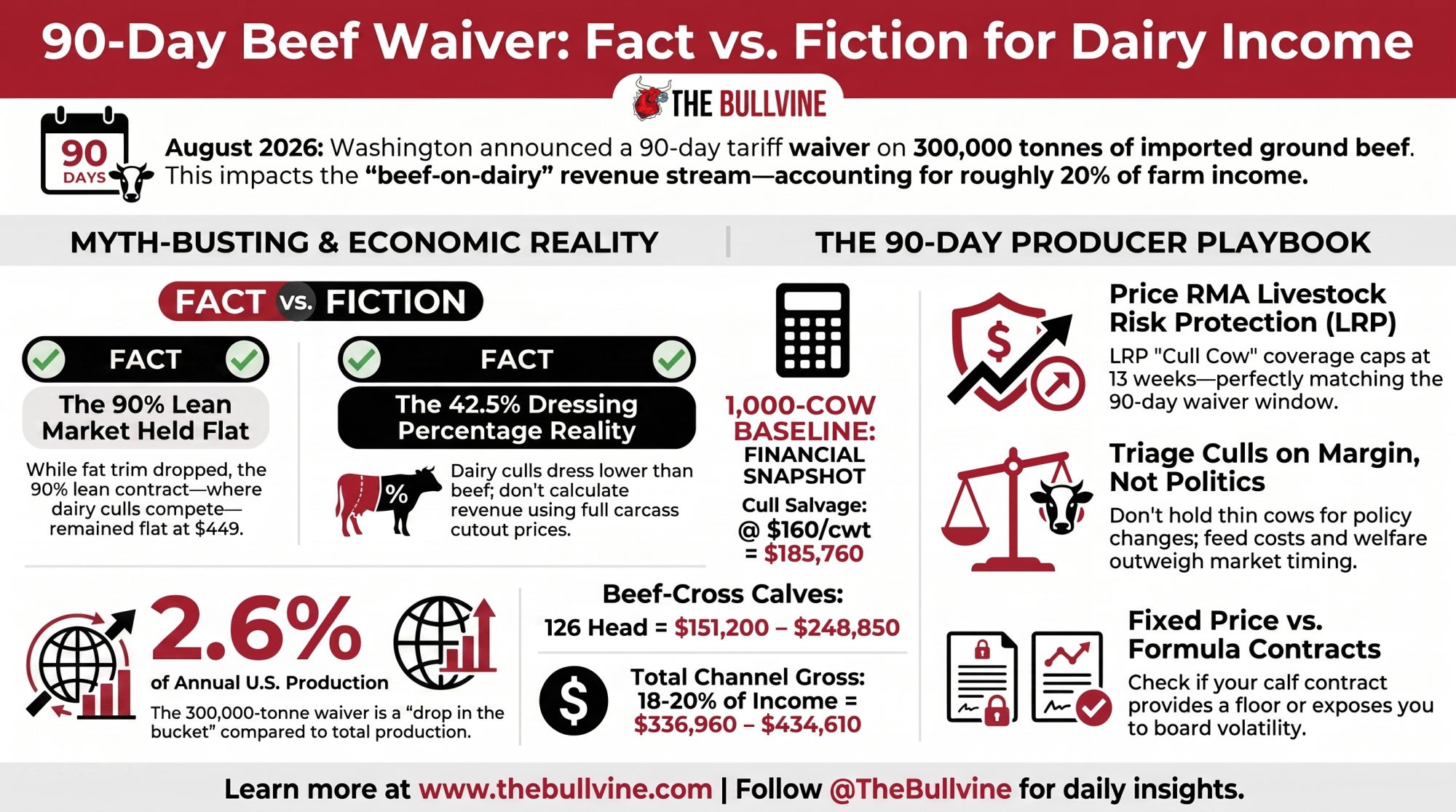
EXECUTIVE SUMMARY: The day Washington waived tariffs on 300,000 tonnes of imported ground beef, the 90% lean trim contract — the one your cull cows actually compete in — held dead flat at $449, while fat trim dropped $8. NMPF put dairy’s exposure at 20% of annual farm income in its August 24 statement, and the $13 billion figure that followed it through the trade press isn’t in that statement; independent reconstruction lands at $10.5 to $12.2 billion. On a 1,000-cow herd, roughly $337,000 to $435,000 of cull and beef-cross calf revenue moves through the 90-day window, with August auction trade running $160/cwt liveweight on culls and $1,200 to $1,975 a head on beef-cross calves. Cattle futures were already sliding well before August 21, so any softening in your cull check needs testing against the WASDE revision and the Tyson plant closures before you blame the waiver. Here’s the part almost nobody flagged: USDA’s Risk Management Agency built LRP coverage types specifically for beef-on-dairy calves and dairy cull cows, and the cull cow product caps at 13 weeks — 91 days against a 90-day waiver. A hedge at a fifth of your revenue isn’t a hedge anymore — it’s a second commodity position, priced by trade policy instead of by cheese.
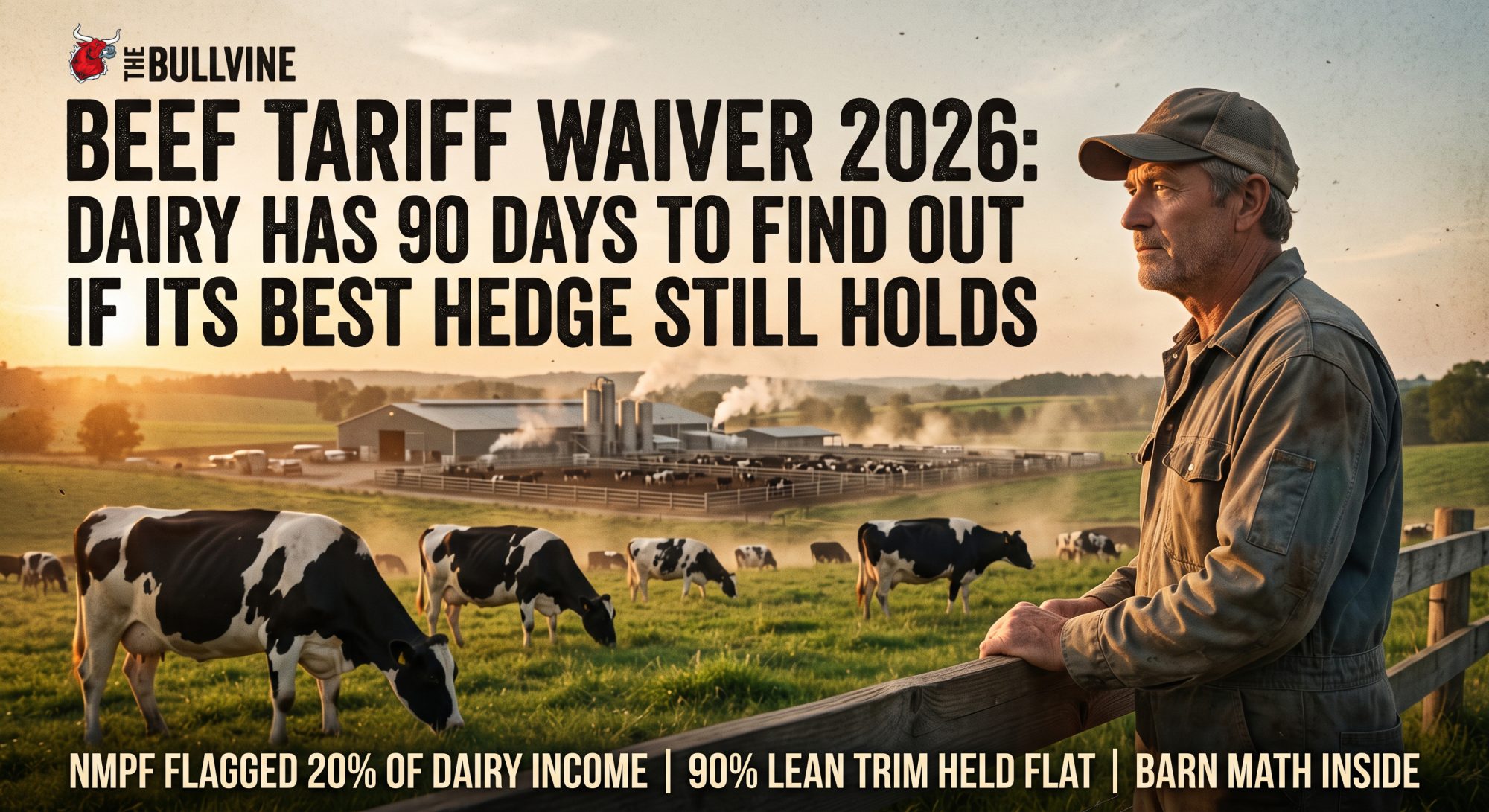
If beef-cross calves and cull cows make up 20% of your gross revenue, a fifth of your dairy’s income statement was just exposed to a trade policy window you had no say in. On August 21, Washington opened a 90-day tariff waiver on 300,000 metric tonnes of imported ground beef. But before you panic-sell culls or cut beef semen services, look at the actual contract data.
That 20% figure comes from the National Milk Producers Federation’s August 24, 2026 statement, and it’s a national aggregate — your own share is knowable from your settlement sheets and probably isn’t 20%. The same Friday the waiver landed, USDA’s Oklahoma auction report showed slaughter cows selling $5.00 to $7.00 lower than the week before. Whether those two facts are connected is the question this piece exists to answer.
A White House official told reporters an executive order would follow within two weeks. No signed order has appeared in the Federal Register as of this morning, and the White House hasn’t published a supplier list or an enforcement mechanism for its stated commitment that the imported beef will sell 25% below current market prices.
Policy status and market prices reflect publicly available U.S. information as of the morning of August 26, 2026. Prices are U.S. national unless a region is specified.
Two Signed Orders, One That Never Got a Signature
The waiver isn’t the story. The repetition is.
Washington has reached for beef import relief three times since February. A signed presidential proclamation on February 6 raised the 2026 beef tariff-rate quota by 80,000 metric tonnes, allocated entirely to Argentina, restricted to lean beef trimmings by HTS line, released in four quarterly tranches — published in the Federal Register on February 13. In May, the administration prepared a 200-day suspension of beef tariff-rate quotas across all exporting nations; the Wall Street Journal reported on May 10 that the signing was delayed, and The Hill reported on August 20 that the plan was shelved after pushback from the president’s inner circle.
Then August 21.
Northern Ag Network’s August 21 reporting frames the current action as the second executive order aimed at beef prices, because May never produced one.
Why the product scope matters more than the count. February targeted lean beef trimmings specifically, by HTS line. August covers “product for ground beef” — a phrase the White House hasn’t defined. May would have suspended beef TRQs across the board. February hit lean trim directly. August almost certainly does, though the White House hasn’t said so in writing, and lean trim is the product your cull cows compete against in the grind. That’s why this waiver lands differently on a dairy than on a cow-calf operation, and it’s the thread worth pulling if you’ve built beef-on-dairy revenue into your operating budget.
| Action Date | Volume & Scope | Product Definition | Legal Status |
| Feb 6, 2026 | +80,000 t TRQ, Argentina only, 4 quarterly tranches | Lean beef trimmings, specified by HTS line | Signed proclamation; Federal Register Feb 13 |
| May 2026 | TRQ suspension, all exporting nations, 200 days | Beef TRQs across the board | SHELVED — never signed |
| Aug 21, 2026 | 300,000 t waiver, 90 days | “Product for ground beef” — undefined by White House | Announced; no EO in Federal Register as of Aug 26 |
| Late Nov 2026 | Expiry if signed on stated timeline | Lapse, extend, or become template | Unknown — lands inside fall culling |
Running the Numbers: A 1,000-Cow Dairy’s 90-Day Beef Channel
Every figure in the middle column is either sourced or a labeled assumption. Fill the right column with your own, and the answer moves. The model assumes an even calving distribution across the year.
| Metric | 1,000-Cow Baseline Model | Your Herd |
| Annual cull rate / 90-day culls | 35% (assumption) / 86 head | |
| Cull liveweight & farmgate price | 1,350 lb @ $160/cwt = $2,160/head | |
| 90-day cull salvage gross | $185,760 | |
| Beef-semen share / calving rate | 60% / 85% (both assumptions) | |
| 90-day crossbred calves | 126 head | |
| Calf realized value | $1,200 – $1,975/head | |
| 90-day calf revenue | $151,200 – $248,850 | |
| Total 90-day beef channel gross | $336,960 – $434,610 | |
| 5–10% compression exposure | $16,848 – $43,461 |
On 300 cows, the same assumptions run roughly $101,000 to $130,000 through the channel. The percentage exposure is identical; the dollar figure isn’t.
Cull price is the midpoint of current national auction trade: USDA AMS National Daily Feeder and Stocker Summary, August 24, 2026, shows Boning 80-85% at $152.00–162.00 and Lean 85-90% at $143.00–146.00. Oklahoma National Stockyards on August 21 averaged $167.44 on Lean 85-90% and $166.75 on Breaker 75-80%.
Calf values reflect August 2026 beef-cross trade at Ohio auctions reported by Farm and Dairy: beef cross calves $1,200–$1,975/head, with top beef cross at $1,975, against dairy cross at $700–$1,175. Those are per-head prices on baby calves, not per-pound. If you sell by weight, that same report shows crossbreds by weight at $550–$700.
The compression range is a stress test, not a forecast. Nobody has isolated post-waiver farmgate movement from the decline already underway.
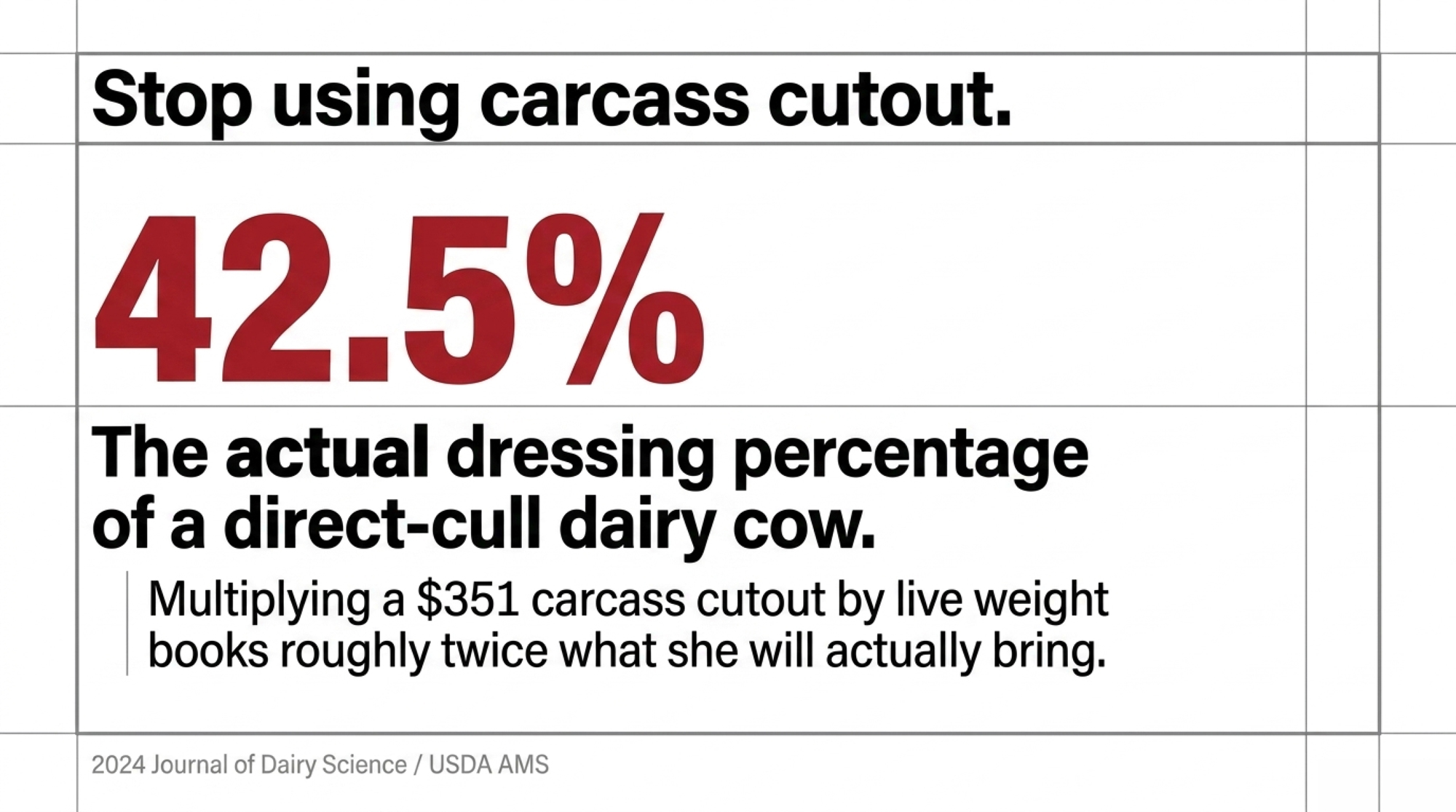
The pricing basis that trips up half the coverage. The national cutter cow carcass cutout ran $351.50/cwt on August 22, 2026 (USDA AMS Daily Cattle & Beef Summary). That’s a carcass value — and dairy culls don’t dress anywhere near their live weight. A 2024 Journal of Dairy Science study by Berdusco found direct-cull dairy cows averaged 42.5% dressing percentage, versus 49.1% for cows fed 60 days before slaughter. The broader literature puts dairy cow dressing percentage at 35% to 48% depending on gut fill, pregnancy status, udder weight, and trimmable defects. University of Maine Extension notes dairy cattle dress roughly 3% lower than beef cattle because of heavier bone and lighter muscling.
Run it: 1,350 lb at 42.5% is a 574 lb carcass. At $351.50/cwt, that’s $2,017 — in the neighborhood of the $2,160 liveweight figure, which is the point. Multiply cutout by live weight, and you’d book $4,745 a head. Plenty of coverage does exactly that.
Day-old calves run on a different clock than feeders. The $1,200–$1,975 range above is a per-head price on a wet newborn sold within days of birth. That’s a separate market from the feeder cattle futures dominating cattle headlines, with different buyers and different drivers. Feeder futures fell roughly 17% between May 1 and August 21, but no source has measured what that did to day-old values — so check your own last four settlement sheets against the range rather than assuming a matching decline.
Will Imported Ground Beef Actually Move Your Cull Cow Price?
The arithmetic runs cooler than the headlines, and the answer depends on your denominator.
300,000 metric tonnes converts to 661 million pounds. Against USDA’s 2026 beef production forecast of roughly 25.5 billion pounds, that’s 2.6% of annual U.S. beef production. On paper, a rounding error.
Annual is the wrong frame for a 90-day policy. Set the same volume against roughly one quarter’s production and it’s 10.4%. Against annual U.S. beef imports near 5.5 billion pounds, 12%. Analyst Scott Varilek pegged it at about 44 days of U.S. ground beef consumption, per AgWeb — the narrowest frame, and arguably the most honest, since ground beef is where this volume lands.
Small against all beef. Considerably larger against the 90-day lean-trim segment where your culls get priced. Independent trader Dan Norcini told Reuters on announcement day, “This is just a drop in the bucket. It really does nothing to fix the main issue which is a greatly reduced supply of cattle here in the U.S.”
The Trim Market Didn’t Believe It
Here’s the read almost nobody published, and it’s the most important number in this story.
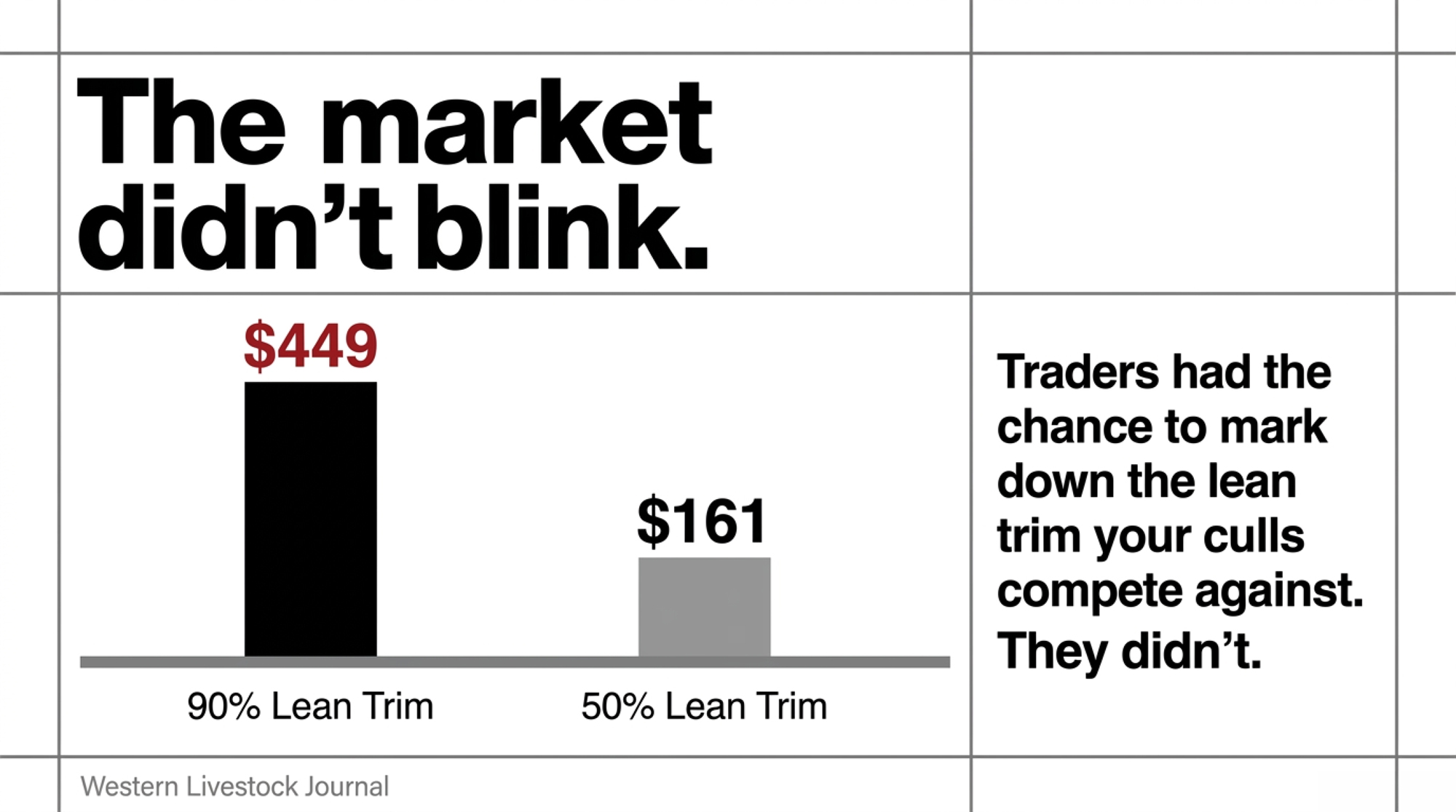
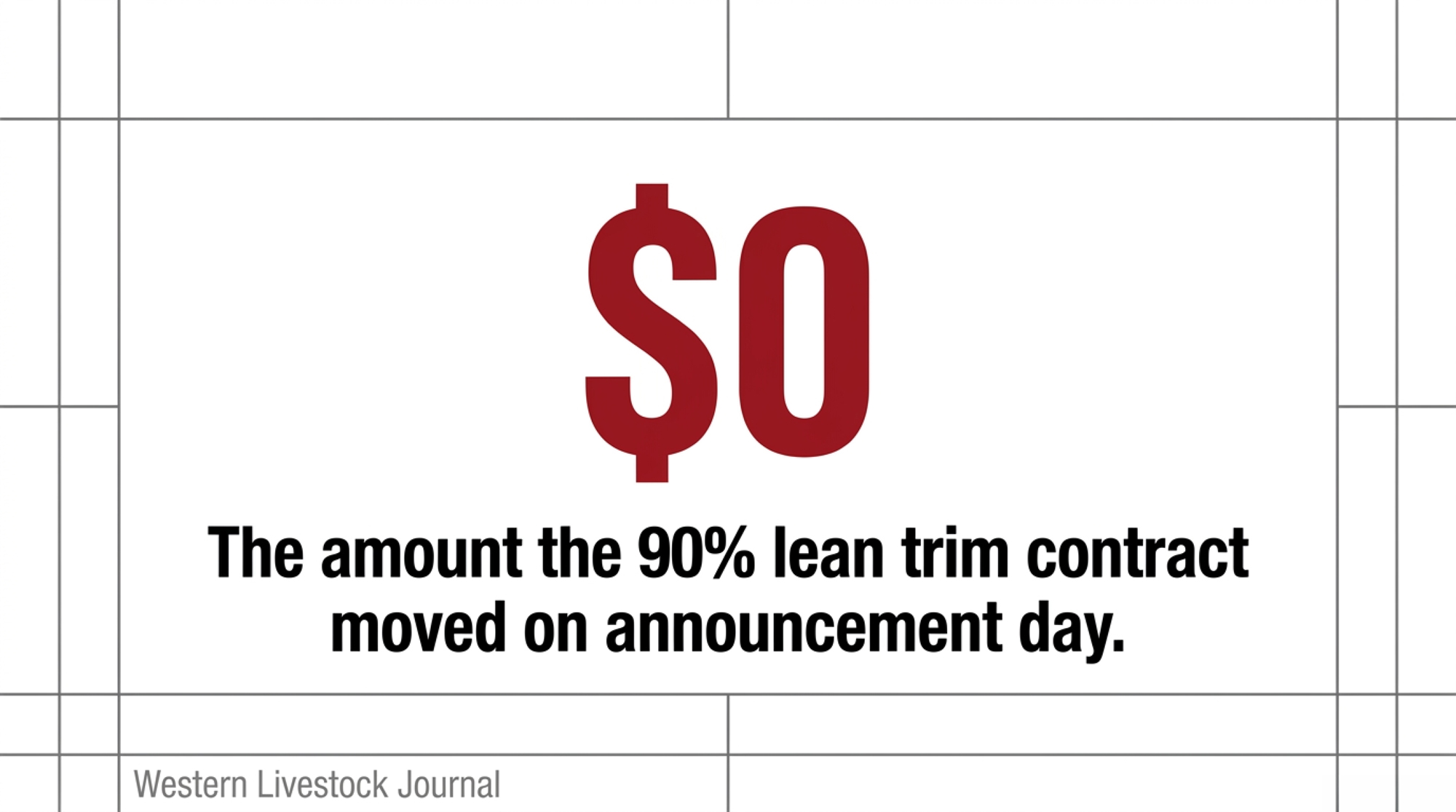
Per Western Livestock Journal, the 50% lean trim August contract lost $8 over the announcement week to close at $161, with September down $8 to $151. The 90% lean August contract held unchanged at $449. September gained $3.
That second contract is the one that matters to you. Cull cows are a primary source of 90% lean trimmings — the lean side of the grind, blended with fat trim to make ground beef, and the exact product category this waiver targets. Traders had every opportunity to mark it down on Friday. They didn’t move it.
Fat trim took the hit instead. Whatever the market priced on August 21, it wasn’t a lean-trim supply shock.
That’s the strongest evidence available that the alarm is running ahead of the arithmetic. One week of contract data from a single trade source isn’t a verdict — but it’s a direct market read on the specific product category NMPF flagged, and it points the other way.
Everyone Assumed August 21 Tanked the Cattle Market. Check the Dates.
Live cattle futures fell 17.1% and feeders 16.9% from their May 1 highs to the August 21 low, per Barchart technical analysis published August 20 — a technical derivation rather than an exchange settlement figure.
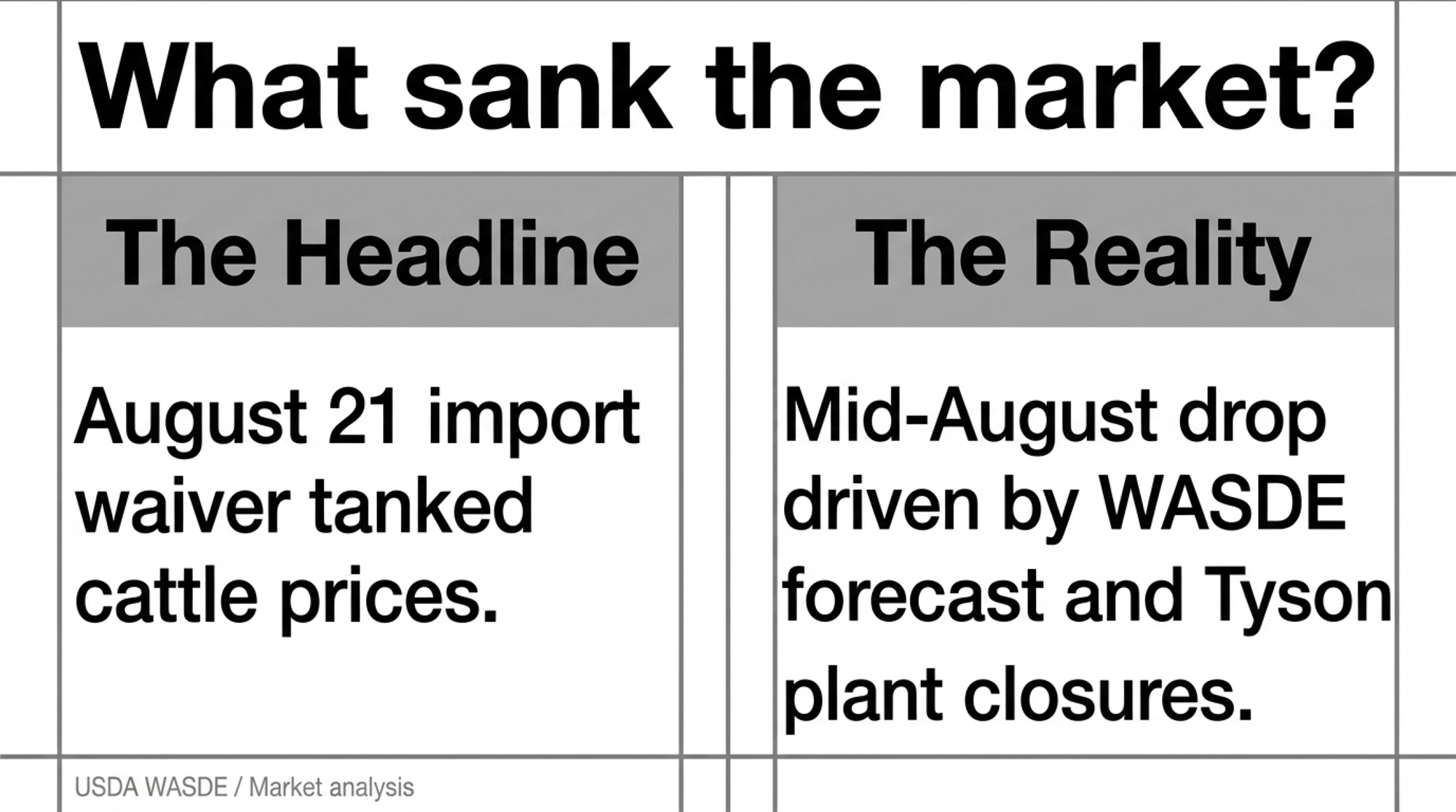
The mid-August leg down had nothing to do with import policy. USDA’s August 12 WASDE cut its 2026 fed steer price forecast by $5.75/cwt. Tyson Foods’ announced closures at Joslin, Illinois, and Eagle Mountain, Utah, along with its stated intent to sell the Pasco, Washington plant, were cited by Andrew Griffith of the University of Tennessee and Tim Petry, livestock marketing specialist at North Dakota State University Extension, as contributing to the decline, per Agriculture.com’s August 17 report.
Announcement day itself is genuinely murky. The honest move is to show the disagreement rather than pick the loudest version. AgWeek reported August live cattle down 30 cents and August feeders down 55 cents. Reuters described futures “tumbling to eight-month lows.” AgWeb said they “gapped lower on the open.” Drovers reported both contracts “clawed back the morning’s losses” by the close — on the same morning USDA’s Cattle on Feed report came in bullish at 11.1 million head, up 2% year over year.
Feeder trade shows where the real pressure sat. Joplin Regional Stockyards sold feeder steers steady to $10 lower that week; Oklahoma National Stockyards saw feeder steers and heifers $5–15 lower and calves $10–20 lower. Those declines run deeper than anything in the cull cow trade — and feeder cattle aren’t what this waiver touches. We covered the broader cattle-market selloff separately; that piece tracks the whole complex, while this one isolates what lands on a dairy’s income statement.
| Market Segment | Announcement-Week Move | Waiver Exposure | What Actually Drove It |
| 90% lean trim, Aug contract | $0.00 — unchanged at $449 | Direct — this is the target product | Market declined to price a supply shock |
| Slaughter / cull cows (OK) | −$5.00 to −$7.00/cwt | Direct — cull salvage value | Unisolated from pre-existing decline |
| Feeder steers (OK National) | −$5 to −$15/cwt; calves −$10 to −$20 | None — not a ground beef product | Aug 12 WASDE −$5.75/cwt; Tyson plant closures |
| Live cattle & feeder futures | −17.1% / −16.9% from May 1 highs | Indirect at most | Decline pre-dates Aug 21 by 16 weeks |
| Day-old beef-cross calves | Unmeasured | Indirect, via feeder board | No source has quantified the pass-through |
How a Percentage Became a $13 Billion Headline
NMPF quantified this exposure in percentages — 20% of farm income, 20% of beef production. No dollar total.
The $13 billion figure that’s followed the story since August 25, including in DairyHerd’s headline, isn’t in that statement. How a percentage becomes a dollar headline matters more than which outlet ran it first: the arithmetic requires a total-dairy-income denominator, and nobody publishing the number has shown one.
Two independent reconstructions get close without landing there. Working from a reported USDA-ERS February 2026 forecast of $42.5 billion in 2026 dairy cash receipts — down $6.2 billion from 2025, which back-solves 2025 milk receipts to roughly $48.7 billion — and treating beef as 20% of total farm income against milk’s 80%, the beef leg lands near $12.2 billion. A second method, applying HighGround Dairy’s estimate of roughly $4.50/cwt of beef income against 2026 milk production, comes out near $10.5 billion. That second figure is single-sourced commercial analysis, and the cull-versus-calf split inside it dates to 2022.
Both are forecasts and estimates, not audited baselines. They establish a range: $10.5 to $12.2 billion. The $13 billion figure sits above it. Not invented — a plausible estimate that rounds up, built on NMPF’s percentage by someone downstream, then repeated as though the trade group said it.
If that number is anywhere in your budget, replace it with your own percentage math.
NMPF represents dairy producers, so its statement is advocacy on their behalf. That’s its job. Worth noting once, since the percentages it cited hold up under independent reconstruction.
Is Your Beef Income Still a Hedge, or a Second Commodity?
Beef-on-dairy got sold as risk mitigation. Cross the bottom of the herd, capture a calf premium, cushion the milk check when Class III goes soft. It worked — calf values climbed from about $200 to more than $1,600 per head over five years, per the Center for Dairy Excellence in April 2026.
The herd grew right alongside it. USDA NASS reported 9.71 million U.S. milk cows in July 2026, up 199,000 head from July 2025, with production in the 24 major states up 2.3% year over year. ERS put 2026 all-milk at $19.85/cwt on August 19, revised down 15 cents. September 2026 Class III futures settled near $16.34 on August 26.
Stack those next to each other, and a loop appears. Beef income helped fund herd retention. That retention added milk. That added milk is part of what’s holding milk prices down — the exact problem beef income was supposed to buffer.
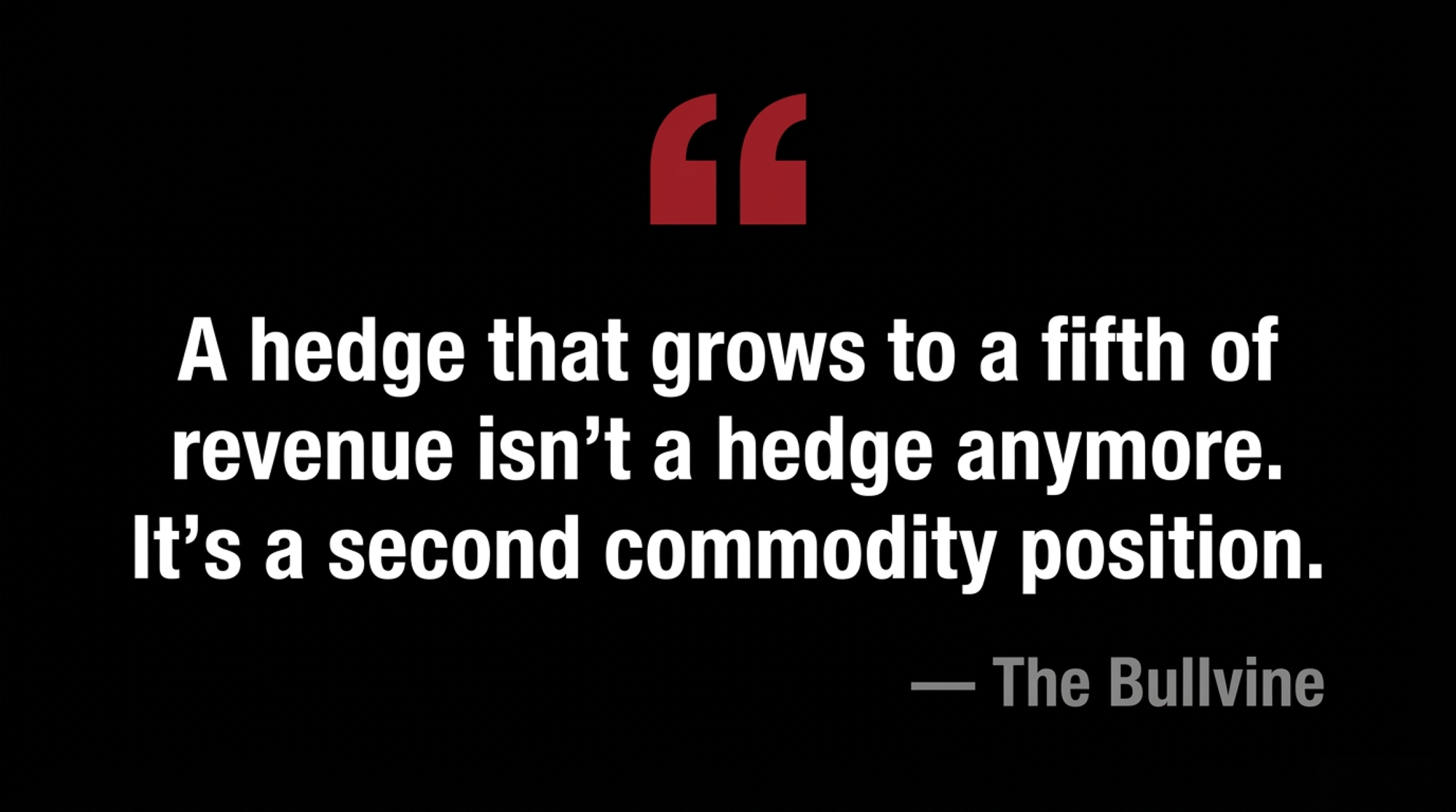
No single source states that chain. It’s the pattern that emerges when separately reported figures sit side by side, and it’s offered here as analysis, not as anyone’s published finding. The implication is still hard to unsee. A hedge that grows to a fifth of revenue isn’t a hedge anymore. It’s a second commodity position — and unlike your milk check, this one gets repriced by trade policy. Most operations built this revenue stream one calf at a time without ever underwriting it as a standalone position.
The 30/90/365-Day Playbook for Herds Carrying 20% Beef Revenue
30-Day: Price RMA Livestock Risk Protection on calves and culls
Action. USDA’s Risk Management Agency built coverage for exactly this exposure. Per RMA Product Management Bulletin PM-25-028, Livestock Risk Protection carries an Unborn Calves type covering beef and beef-on-dairy cross calves sold within two weeks of birth, target weight 60–99 lb, plus a separate Cull Cows type for dairy cull cows with a 13-week coverage limitation. Thirteen weeks is 91 days. The waiver runs 90.
Execution. Call a licensed crop insurance agent with your projected calf and cull volumes and pick a coverage level. Premium subsidies run 35% to 55% depending on level, with additional support for new and beginning producers. Coverage prices derive from CME feeder cattle futures; RMA updates them daily. Trigger: if your beef channel clears 18–20% of gross revenue, this stops being optional.
Risk. Premiums are cash out the door, and if prices hold, you bought coverage you didn’t need. Full dairy calves file under the predominantly-dairy type, not beef-cross — don’t let that get miscoded.
30-Day: Read the pricing clause in your calf contract
Action. Find out whether you’re on a fixed price or a formula tied to feeder cattle futures.
Execution. Pull the actual document, not your memory of it. Formula pricing means you inherited the board’s volatility — and feeders ran $5–15 lower at Oklahoma National the week of the announcement while cull cows moved $5–7.
Risk. A fixed floor gives up upside if the market firms into the fall run.
90-Day: Triage fall culling on welfare and margin, not the political calendar
Action. If the EO gets signed on the stated timeline, 90 days runs to roughly late November — putting expiry inside fall culling season. Sort your cull list by physical condition and production margin rather than by waiver dates.
Execution. Honest herd-health triage, and a hard read on which cows genuinely can’t wait. If a cow is thin enough to grade Lean or Light, the dressing-percentage discount is already working against you — per Oklahoma State Extension guidance, low-dressing cows are discounted $8 to $15/cwt against high-dressing cows, with the widest spreads on the thinnest grades.
Risk. A lame cow doesn’t wait for policy clarity. Holding her costs feed, risk, and eventually carcass value. Don’t turn a marketing call into a welfare problem.
90-Day: Recalculate beef-semen share against replacement cost
Action. Replacement dairy cows averaged $3,130 per head nationally in April 2026, up $270 from January, per USDA price reporting — a spread we broke down in our cull-cow replacement analysis.
Execution. Requires actual heifer inventory, projected cull rate, and a two-year forward view.
Risk. Cutting beef services to build heifers takes two years to show. You’d be making a 2028 herd decision on 2026 information, and the beef premium may well outlast this waiver.
365-Day: Separate salvage accounting from calf revenue
Action. Most operations track beef as one line. They’re two different exposures — imported lean trim hits salvage value directly, while calf values run off feeder futures and feedlot demand. Split them and track the ratio between what a cull brings and what her replacement costs.
Execution. A bookkeeping change and one conversation with whoever builds your financials. At $160/cwt liveweight on a 1,350 lb cull ($2,160/head) against $3,130 replacements, that ratio sits at 0.69. The 0.75 and 0.65 marks below are Bullvine working benchmarks, not industry standards — set your own against your actual replacement cost. Above roughly 0.75, with margin over feed holding, you have room to cull on production rather than defensively. Below 0.65, every cull decision becomes a capital decision.
Risk. The ratio moves on both numerator and denominator. A replacement-price spike can push you under 0.65 without cull prices falling at all — watch both sides.
365-Day: Consider whether feeding culls beats shipping them
Action. The same Berdusco work in the Journal of Dairy Science found 60 days of feeding before slaughter lifted hot carcass weight by 179 pounds and dressing percentage by 6.5 points over direct culls, with better marbling and tenderness.
Execution. Pen space, feed, and 60 days you’re not milking her. Run it against your own feed cost and the current Lean-to-Boning price spread before committing.
Risk. You’re feeding a cull cow at feedlot cost with no milk income against her. The spread has to cover the feed plus the opportunity cost of the stall, and a cow with a chronic problem may not finish.
365-Day: Watch the expiry harder than you watched the announcement
Three attempts in six months, two of them signed, none permanent. The repeat is the risk, not any single window.
What Happens When the 90 Days Run Out?
Three outcomes, and the record doesn’t tell you which. The waiver lapses and lean trim reverts to out-of-quota treatment. It extends, the way February staged tranches across a full year. Or it becomes a template — the tool this administration reaches for whenever retail beef prices make headlines.
That third one is worth pricing. February got signed. May got pulled. August got posted before it was drafted. You can’t forecast that pattern, but you can hedge it — which is why the LRP conversation matters more than the tariff conversation.
Key Takeaways
- The 90% lean trim contract — where your culls actually get priced — held flat at $449 the day the waiver dropped, while fat trim fell $8. Whatever the market priced on August 21, it wasn’t a lean-trim shock.
- Skip the $13 billion headline. NMPF said 20% of farm income, not a dollar figure, and independent reconstruction lands at $10.5 to $12.2 billion. Your own share comes off your settlement sheets, not a national average.
- If your beef channel clears 18–20% of gross revenue, price LRP on both calves and culls this month. The cull cow coverage caps at 13 weeks — 91 days against a 90-day waiver, which is closer to a fit than anything else on offer.
- Check whether you’re pricing culls off liveweight or somebody’s carcass cutout number. Dairy culls dress around 42.5% direct, so multiplying $351.50 cutout by live weight books roughly twice what she’ll bring.
- February signed, May pulled, August posted before it was drafted. None permanent, all aimed at lean trim. Watch the late-November expiry harder than you watched the announcement.
The Trade-Off at the Center of This
The 90% lean trim contract didn’t move on announcement day, which tells you the market isn’t pricing this as the shock the headlines described. That’s the case for calm. The case for caution is that this is the third try in six months at the same product, and nothing about the pattern says it stops.
You built the beef line to protect the milk check, and it worked well enough to become a fifth of your revenue and a second exposure — priced by trade policy instead of Class III. You gained margin. You gave up control over where it comes from.
Pull your last four calf settlement sheets and your last cull cow check. Are you pricing culls off liveweight or off somebody’s carcass cutout number — and does your calf contract hand you a floor, or hand you the board?
Complete references and supporting documentation are available upon request by contacting the editorial team at editor@thebullvine.com.
Learn More
- Beef-on-Dairy’s $500,000 Swing: What 72% of Farms Know That’s Costing You $1,000/Cow Every Year — Pinpoint the exact sire selection criteria and calf management protocols required to capture top-tier packer premiums and protect your farmgate calf checks when feeder markets soften.
- The Heifer Shortage Paradox: Why $3,000 Replacements Won’t Fix Dairy’s Pipeline Problem — Uncover the structural supply squeeze driving replacement heifer values above $3,100, arming you with the two-year inventory formulas needed before cutting back beef semen breeding lines.
- The End of the Purebred Dairy Cow? Why Gene-Edited Beef Sires Are Taking Over — Follow the money behind next-generation terminal genetic lines designed specifically for dairy dams, revealing how emerging myostatin and carcass-trait genetics will redefine calf contracts.
 The Sunday Read Dairy Professionals Don’t Skip.
 The Sunday Read Dairy Professionals Don’t Skip.
Every week, thousands of producers, breeders, and industry insiders open Bullvine Weekly for genetics insights, market shifts, and profit strategies they won’t find anywhere else. One email. Five minutes. Smarter decisions all week.
 Join the Revolution!



