











Blondin used partnerships. Jacobs made its prefix travel. Pierre Boulet trusted the cow before the catalog. Kueffner and Packard resisted show-ring excess. Budjon bred cattle that kept winning under new ownership. The real test is which systems produced another generation.
Ferme Jacobs could have protected Jacobs Lauthority Loana EX-96-2E after she swept the 2018 International Holstein Show. She won Senior Champion, Grand Champion, and Champion Bred & Owned for Ferme Jacobs and Pat Conroy.
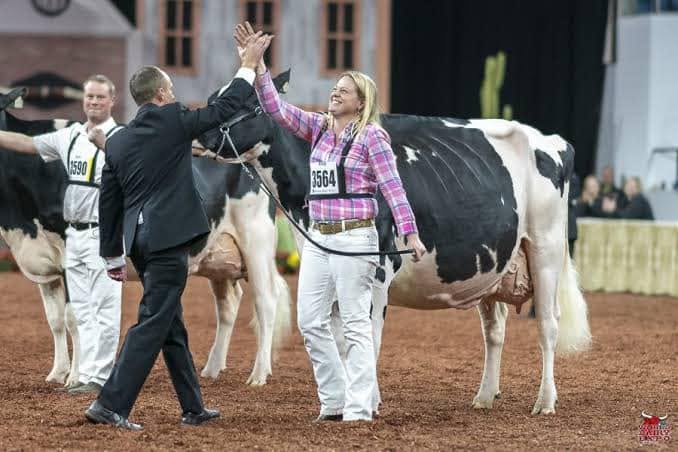
Instead, the family brought her back out at The Royal one month later.
Jacobs Windbrook Aimo EX-95 beat her.
Aimo took Grand Champion and Loana Reserve. It was the first Grand-and-Reserve sweep by homebred entries at the Royal Holstein Show since Agro Acres did it in 1969.
The Jacobs family knew the risk. Loana had been perfect at Madison. Aimo was ready to challenge her in Toronto. Once both cows walked in looking as good as the family could make them, the decision belonged to the judge.
Winning with one cow can happen. Breeding two cows capable of beating each other is a program.
That’s the standard behind these five operations. The question isn’t just which famous cows they owned, bred, developed, or showed. It’s what they kept, what they fixed, and whether the families kept producing after the champion photos were taken.
The 2026 International Holstein cows enter the World Dairy Expo Coliseum at 7 a.m. on October 2. The Parade of Champions and Supreme selections follow at 4 p.m. Ryan Krohlow of Poynette, Wisconsin, will make the official placings, with Kelly Barbee of Concord, North Carolina, as associate judge. The cattle will meet in one ring. The breeding systems behind them were built very differently. (Read our show preview here – World Dairy Expo 2026 Holstein Show Preview: 11th Place Is Now The Favorite)
What 2026 Already Revealed
The August 2026 Le Suprême Laitier Holstein Show gave a current read on three Quebec programs.
Ferme Jacobs won Premier Breeder and finished second for Premier Exhibitor. Blondin won Premier Exhibitor without placing among the top three breeders. Pierre Boulet was second for Premier Breeder and third for Premier Exhibitor.
Those banners measured three different things.
Jacobs made its prefix travel. Jacobs-bred cattle earned breeder points across several ownership groups.
Blondin assembled the string. Its owned and jointly owned cattle put up the strongest exhibitor total.
Boulet worked both sides. Pierstein cattle earned breeder points, and Boulet’s exhibited animals scored too.
The difference matters. Under Holstein Canada’s rules, Premier Breeder points follow the animal’s registered prefix, and no more than 10 females count. The cattle don’t have to stay in the breeder’s ownership. Premier Exhibitor counts no more than 10 females owned by the exhibitor, and jointly owned cattle count as a separate exhibitor.
World Dairy Expo uses different Holstein rules. Holstein Association USA defines the breeder as whoever owned the dam when she was serviced. It counts no more than six animals toward each Premier award and treats every distinct partnership as a separate breeder or exhibitor.
So the Le Suprême banner split points in a direction, but it doesn’t carry over directly to Madison. It shows how Jacobs, Blondin, and Boulet build competitive depth. It can’t predict how WDE’s breeder-of-record and partnership rules will add up the points.
World Dairy Expo doesn’t publish a full public Holstein entry list in advance. This article doesn’t claim that every operation or animal discussed here is entered for 2026. It looks at the breeding and management systems Madison has tested over time.
Ferme Blondin: Families and Partnerships
Blondin Skychief Supra EX-93-3E wasn’t a fashionable purchase. She came from one of the first purebred families Simon Lalande began developing after his father bought him a heifer at Holstein Canada’s 100th-anniversary sale in 1984.
The mating behind Supra says more than her show record. Her dam was Blondin Starbuck Superlass VG-87, a 17-star brood cow. Lalande believed Starbuck daughters generally had the legs he wanted but only average udders, and that Skychief could add the mammary system.
He made the mating to combine those strengths instead of doubling down on one fashionable trait.
That’s pedigree breeding at its most useful. Know what the female family already does, name what it’s missing, and pick a bull to fix that one thing.
Supra became Holstein Canada’s 2009 Cow of the Year. Bullvine’s 2013 profile called her a 24-star brood cow. Holstein Canada’s current record lists her at 35 stars, with the notation 12/163.
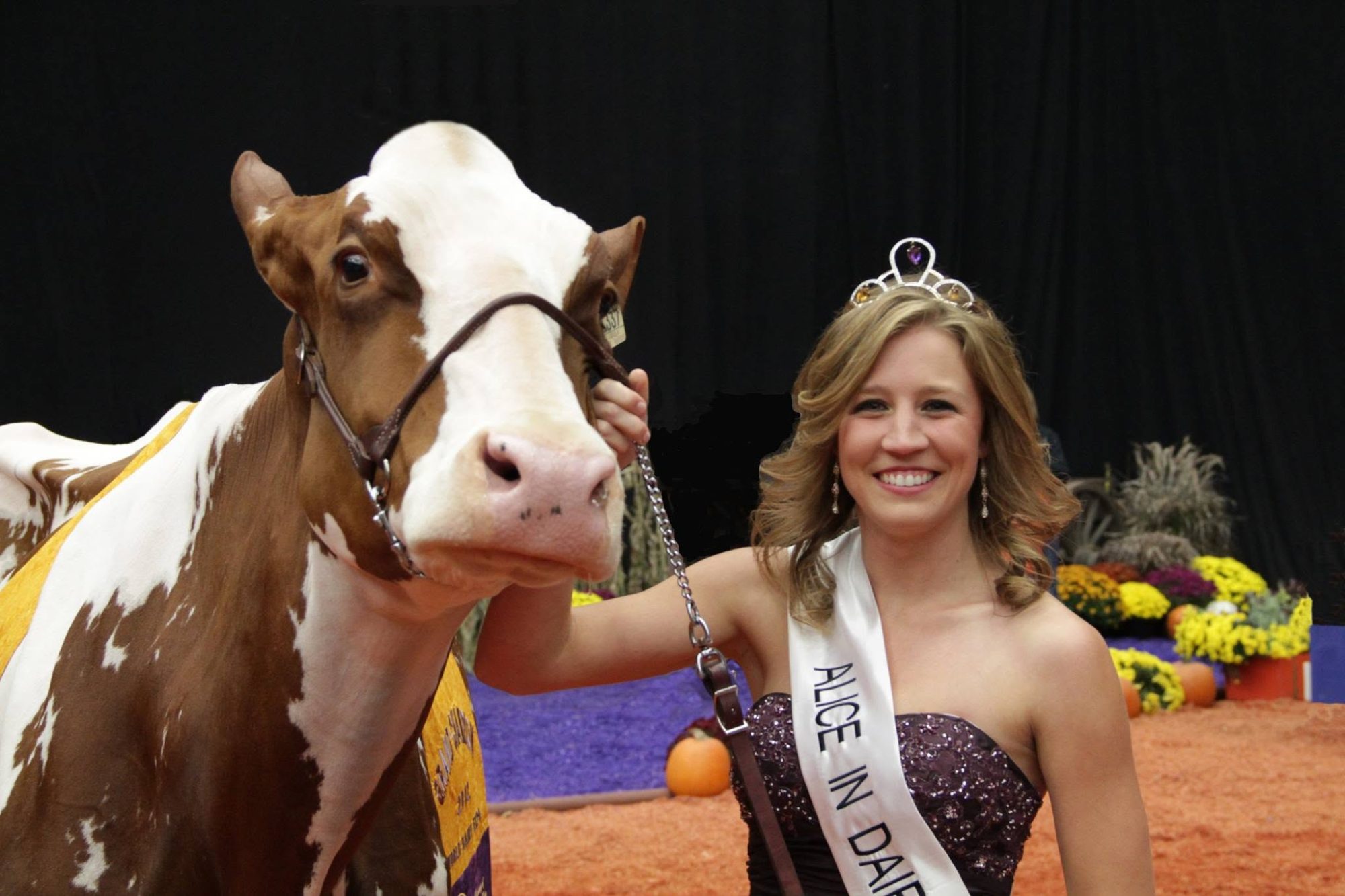
Her descendants make the stronger case. Blondin R Marker Supra VG-89, a Red Marker daughter of Skychief Supra, produced Blondin Redman Seisme-Red EX-97. Seisme was Grand Champion of the Red & White Show at World Dairy Expo in 2010 and 2012, and Supreme Champion at The Royal in 2010.
That’s transmission a breeder can see. Supra didn’t just classify high or win a Cow of the Year vote. A later generation took the family onto the biggest stages in North America.
Rockymountain Talent Licorice EX-95 was Blondin’s other route into an important family. Lalande bought her fresh as a senior 3-year-old at World Dairy Expo in 2010. He looked at the individual first, then her mammary system, legs, dairy strength, maternal family, and sire stack.
Licorice was a Talent tracing through Skychief and Rudolph daughters to Ravenswell Lydia EX-92. Lydia is the brood cow behind other influential show families, including Idee Lustre EX-95. Holstein Canada’s current record lists Licorice as an 8-star brood cow with 40 progeny in the calculation.
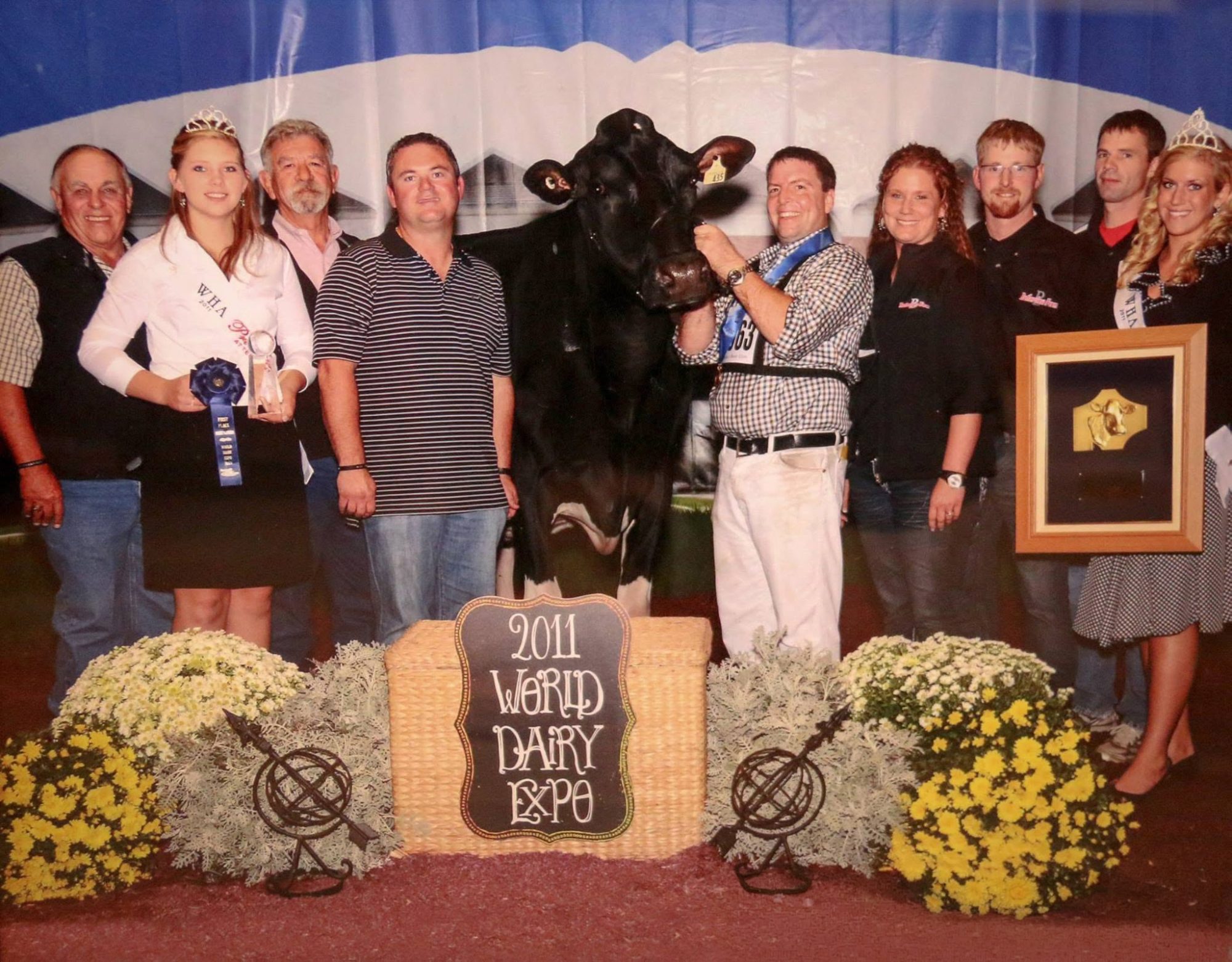
She was Intermediate Champion at The Royal in 2010. In 2011, she won the 4-year-old class and Reserve Senior Champion at World Dairy Expo. She sold for $420,000 in the 2011 International Intrigue Sale.
Supra and Licorice did different jobs. Supra proved Blondin could build a family from within. Licorice showed it could spot a cow from an established maternal line, develop her, and fit her into a bigger genetics and marketing program.
Partnerships extended that reach. In 2013, Blondin reported managing more than 225 partnership-owned animals. That came with the registrations, genomic tests, imports, exports, accounting, and partner communication attached to each one.
That’s also where the system can break. Every added partner can affect mating authority, flush schedules, show decisions, sale timing, and how returns are split. Access to a better cow family only matters if the owners can agree on what to do with it.
Ferme Jacobs: The Prefix Travels
Loana and Aimo showed that Ferme Jacobs could breed two cows good enough to fight for the same championship. The tougher test is whether the Jacobs prefix keeps working after cattle leave Cap-Santé.
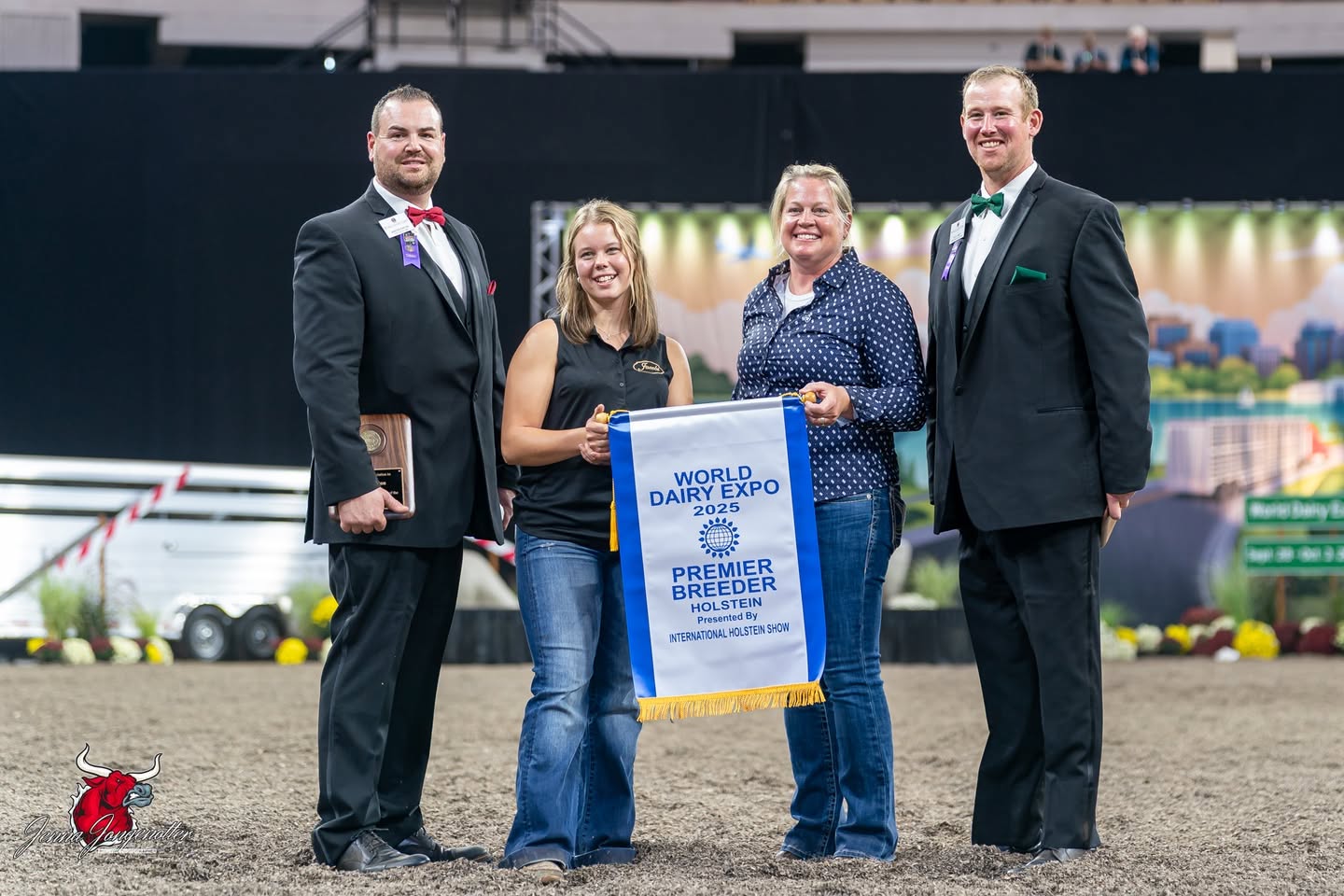
Recent results say it does. Ferme Jacobs won Premier Breeder at the 2025 International Holstein Show at World Dairy Expo. At Le Suprême Laitier in August 2026, it won Premier Breeder again and finished second for Premier Exhibitor.
The prefix earned points through cattle in several ownership groups. Jacobs Unix Britain was shown with Ferme Gillette and T-Wave. Milk&Honey Im A Sexy Baby, Jacobs Tatoo Branelle and Jacobs Sidekick Bee also carried Jacobs breeding into other owners’ strings.
That’s what a traveling prefix looks like. The breeder gives up day-to-day control over feeding, fitting and show decisions. The family still earns breeder credit in somebody else’s hands.
Inside the Jacobs herd, selection has never just been a chase for more type. The family told Bullvine it would use older proven sires when the cross justified it and wouldn’t use minus-milk bulls. It was adding milk because it felt the herd already had enough extreme type.
Loana and Aimo were that argument on four legs. Ysabel Jacobs leaned toward Loana’s balance. Yan Jacobs preferred more of Aimo’s extreme look. They wanted the same general kind of cow but didn’t agree on how far to push every trait.
That disagreement stops the Jacobs cow from becoming a caricature of whatever trait the market is paying for this year.
The family was just as deliberate about embryo work. Ferme Jacobs reported selling 500 embryos in 2018. It still avoided flushing cows that were being prepared for shows, because it didn’t want hormone work interfering with their campaigns.
That choice left embryo revenue on the table. Jacobs showed the cow first and flushed her later.
The wider family record shows why transmission matters more than one banner. Jacobs High Octane Babe EX-96-2E was Holstein Canada’s 2025 Cow of the Year. That came eight years after Jacobs Goldwyn Britany, from the same maternal family, won the honor for 2017.
Babe’s family also produced Jacobs Destiny Balla, Jacobs Lambda Baz and Jacobs Alligator Bawl. Bruins, Bullding and Bubble entered AI service through Semex.
That’s when a family becomes more than a show string. Cows, sale animals, and AI sons start carrying the same maternal line into different markets.
The weak point is control. Once a Jacobs animal is sold, the prefix travels, but management authority doesn’t. The breeder’s reputation can rise or suffer on decisions made in another barn.
Pierre Boulet: Cow Before Catalogue
Pierre Boulet starts with the animal, not the catalog.
If he doesn’t like the cow or heifer in front of him, he doesn’t look at the pedigree. Only after she passes that first inspection does he study the maternal family and sire stack.
The order matters. A fashionable pedigree can’t excuse an animal Boulet doesn’t want to work with. A good-looking individual doesn’t get a free pass either. The family still has to be consistent enough to suggest she’ll breed on.
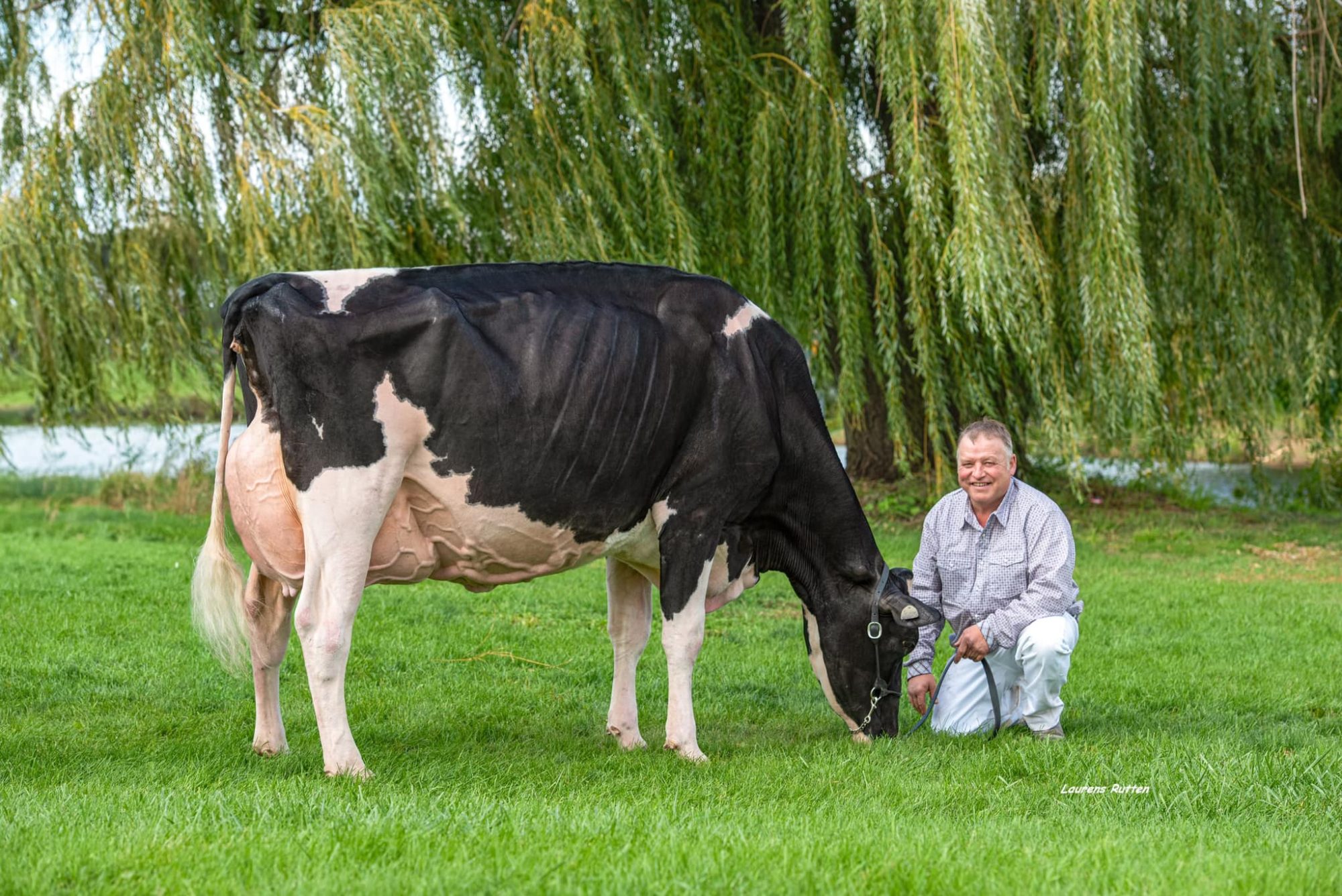
Viapax B C Madison VG 6* became one of his most important purchases because she created value beyond herself. Boulet bought her as a heifer. He then built the family by flushing Madison, her daughters, and her granddaughters.
Her value came from repeatability. One cow turned into several generations of mating, embryo, and marketing decisions.
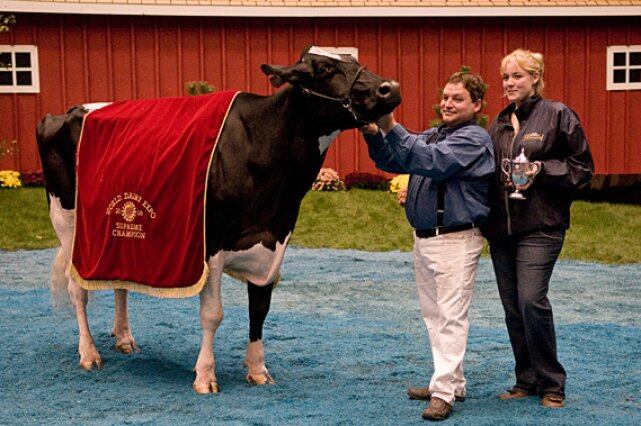
Thrulane James Rose EX-97 paid off differently. Rose was Grand and Supreme Champion at World Dairy Expo in 2008, shown by Boulet. Boulet said the attention she drew brought visitors to his farm and raised interest in cattle unrelated to her.
Rose shouldn’t be mistaken for a Pierstein-bred foundation cow. She gave Boulet’s program visibility, show-ring credibility, and market traffic. Madison gave it a family.
That distinction matters, because buying a champion and breeding a family aren’t the same achievement.
Boulet’s published advice reflects different levels of risk. A buyer with more capital can target a VG first-calf cow that has already made it through calving. A buyer with less money can get into an established family through embryos.
The entry price changes. The family still has to breed on.
The limit of that method is fertility. Boulet recalled paying $40,000 for a cow that could win shows but never produced an embryo or a calf. Phenotype, a consistent maternal line, and a proven sire stack reduce the risk. None of them guarantees that a purchase will produce enough embryos or descendants to earn back her cost.
The wider Pierstein record shows the system has worked again and again. Holstein Association USA’s judging biography notes that Boulet has used the Pierstein prefix since 1993 and has bred more than 200 Excellent cows.
That number takes the argument past one purchased star. Boulet’s eye helped build a whole population.
Kueffner & Packard: Function Over Fashion
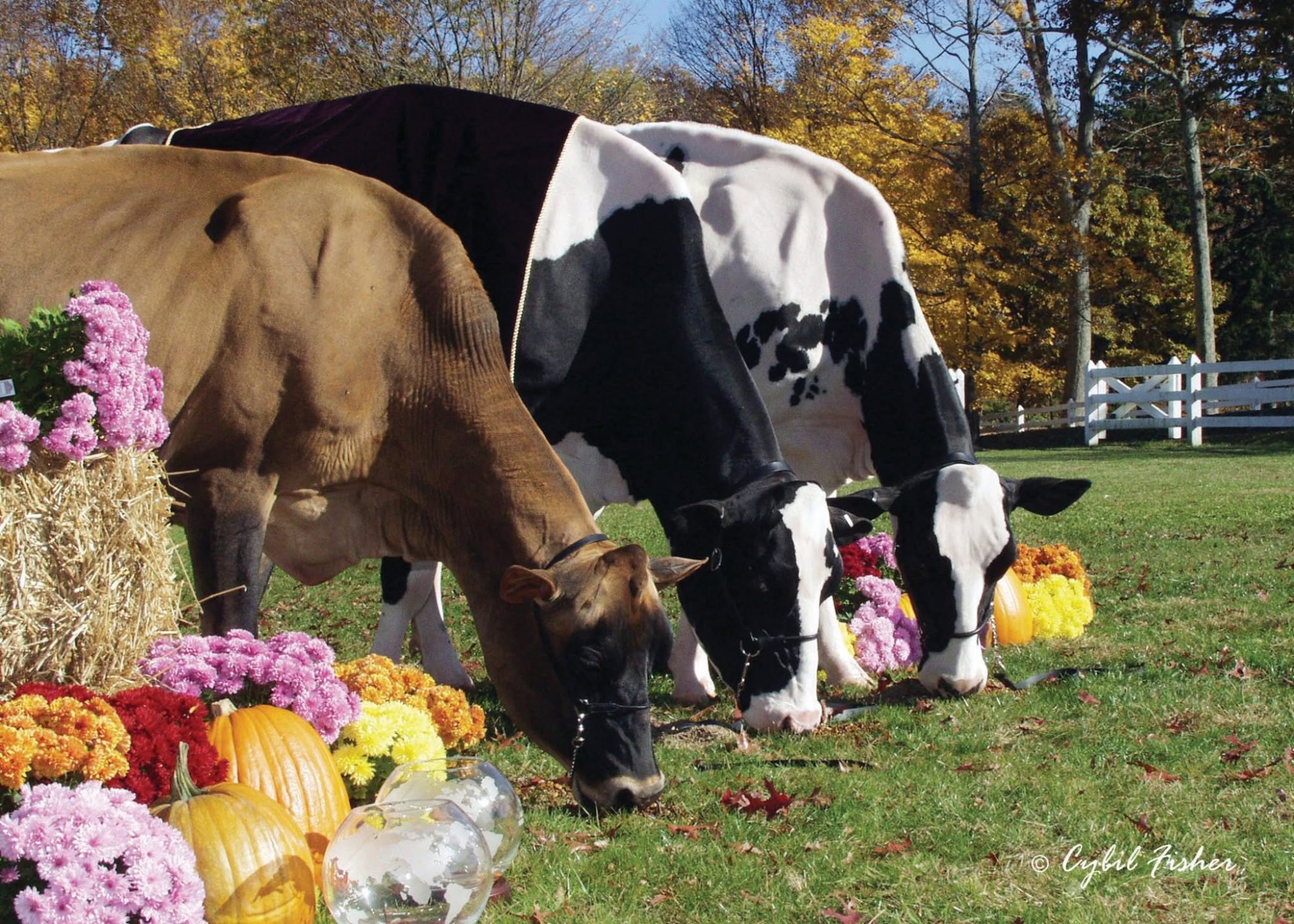
Ernie Kueffner has never hidden his worry that the show ring can reward the wrong version of a good trait.
He warned that the push for bigger rear udders led some exhibitors to bring cows in overfull, costing them crease definition and mammary quality. He put more weight on fore-udder attachment, teat placement, and feet and legs. Those are the parts that decide whether a cow comes back for another lactation.
In Kueffner’s view, the rear udder might catch the judge’s eye. The whole mammary system and sound locomotion are what keep a cow useful.
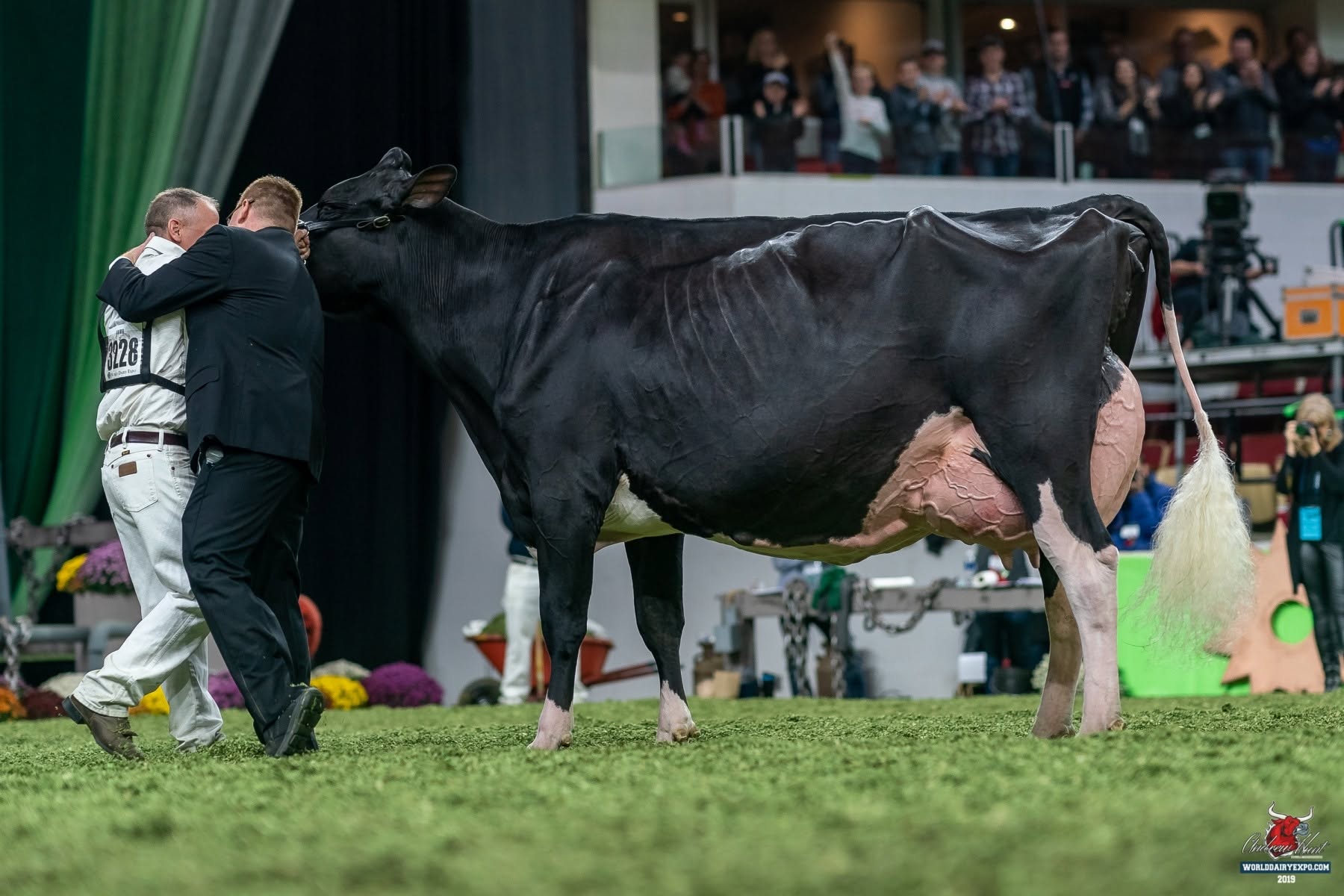
Tri-Day Ashlyn-ET, KHW Regiment Apple-Red-ET and Huronia Centurion Veronica became the clearest proof of that standard. Each was a major show winner. But Kueffner’s case for them rested on what came after, through sons and daughters.
Ashlyn Made Excellent Daughters
Tri-Day Ashlyn EX-96-2E was Supreme Champion at World Dairy Expo. She became one of the Holstein breed’s most prolific sources of high-classifying daughters, and current reporting credits her with 73 Excellent daughters worldwide.
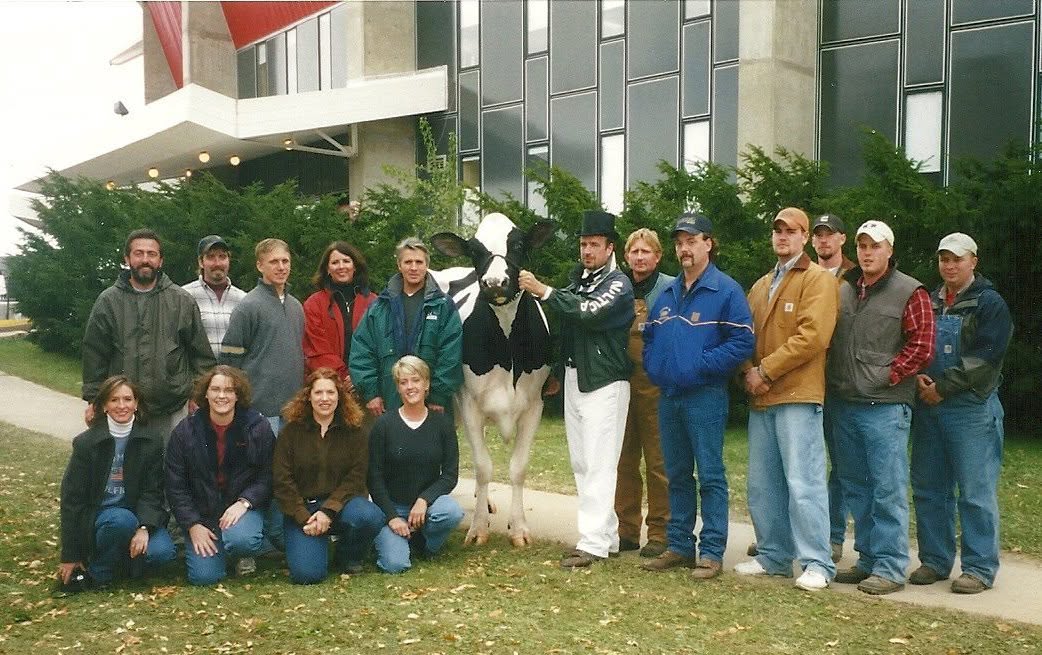
Her daughters included EO Siemers Ashlyns Angel EX-92 and EK-Oseeana Ambrosia EX-95-2E. Earlier records also list eight Excellent sons.
The exact classification total grew over time, but the pattern is clear. Ashlyn’s influence didn’t stop with one show-winning daughter or one AI son.
Apple Built a Red Dynasty
KHW Regiment Apple-Red became one of the defining cows of modern Red Holstein breeding. Her daughter MS Candy Apple-Red was Honorable Mention Grand Champion of the 2013 International Red & White Show. Apple’s clone, KHW Regiment Apple 3-Red, won Grand Champion at the same show.
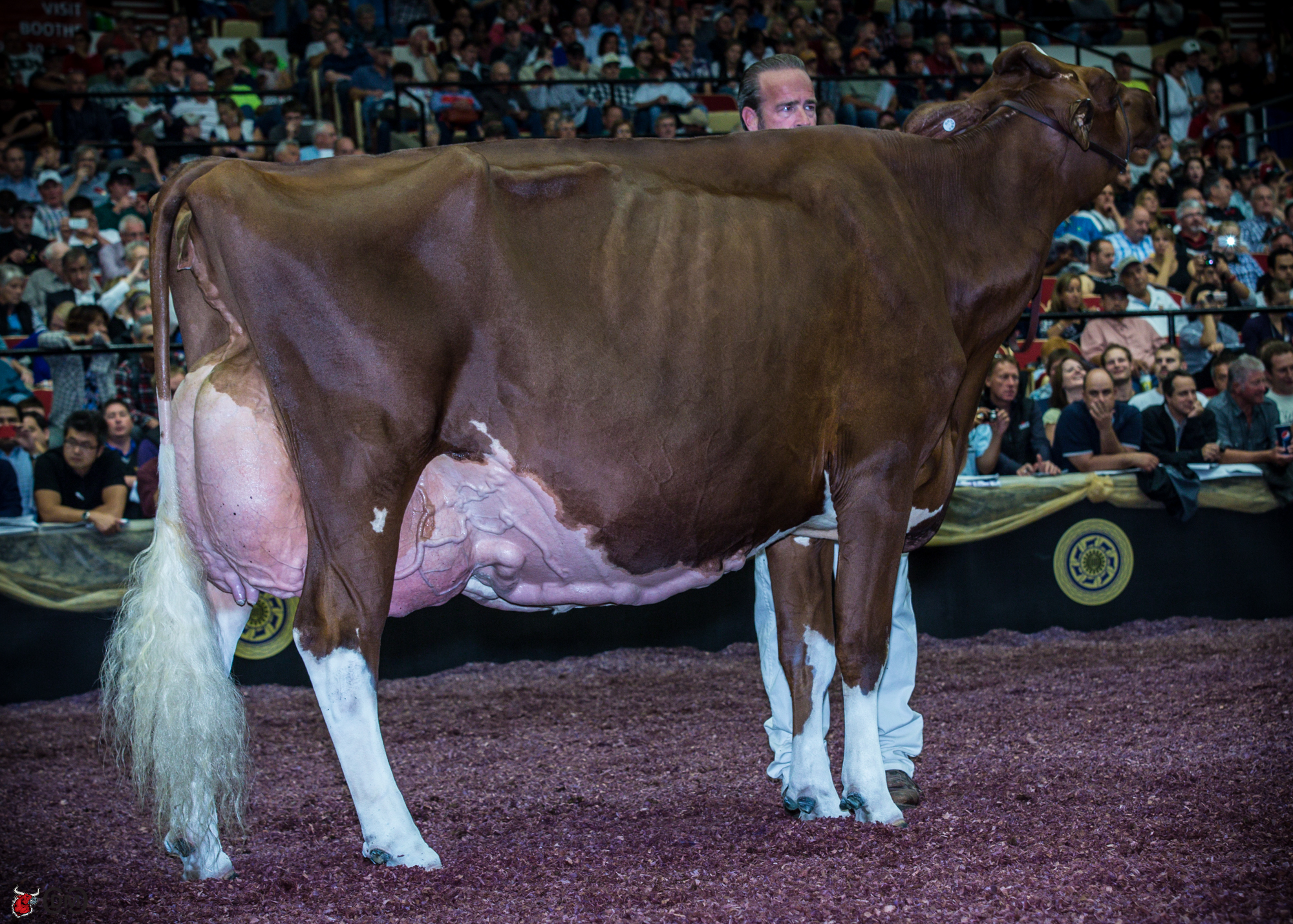
Apple’s influence also ran through her sons. Apples Absolute-Red and Mr Apples Armani-RC became widely used sires. They carried the family into herds that would never own an Apple daughter.
That combination matters. A show cow can give you another good-looking female. A breed-changing brood cow gives you daughters, sons, and whole families that keep showing up after her own campaign is over.
Veronica Worked Both Sexes
Huronia Centurion Veronica became a foundation of the modern Jersey show herd. Records list 110 registered sons and daughters. Four daughters scored EX-95: Elliots Golden Vista, Arethusa Primetime Déjà Vu, Arethusa Veronicas Dasher and Arethusa Veronicas Comet.
Her EX-96 daughter, Arethusa Response Vivid, was Grand Champion Jersey and Reserve Supreme Champion at World Dairy Expo in 2012.
Veronica’s sons included Vindication, Verbatim and Voltage. Their daughters added more WDE winners and All-American cattle to the family.
That’s why Ashlyn, Apple and Veronica belong together. Their breeds, pedigrees, and markets differed, but all three transmitted through more than one route.
Kueffner and Packard still had to live with the weakness built into their approach. The market doesn’t always reward functional restraint right away. When exaggerated udders or extreme frames are selling, skipping the trend can mean passing on animals that would bring short-term attention and money.
Their standard only wins the argument if the cattle stay sound and keep producing the next generation.

Budjon Farms: A Prefix That Bred On
Budjon Farms isn’t a boarding operation that happened to show good cows. The prefix built its reputation by breeding cattle that could win at the national level, and it repeated that across several animals and generations.
The foundation was Krull Broker Elegance EX-96, bought by Tom Cull and Joel Kietzman in 1996. Elegance became the taproot of a family that continued through Budjon-bred females. One of them was Budjon-JK Linjet Eileen EX-96-4E GMD DOM, whose official Canadian record lists six brood-cow stars and 30 progeny in the calculation.
The proof came in 2005.
That year, Budjon became the first U.S. prefix to have three different cows named Grand Champion, Best Bred & Owned, and Best Udder at three National Holstein Shows.
Budjon-JK Linjet Eileen did it at the Midwest Spring National Show. Budjon Redmarker Desire EX-95 did it at the International Holstein Show at World Dairy Expo. Budjon Stardust Anisa EX-96 completed the sweep at the Mideast Fall National Show in Louisville.
That wasn’t one great cow carrying a whole program.
It was three Budjon-bred cows winning three national shows in the same year.
Desire’s win in Madison is still the headline. The homebred Red Marker daughter was Grand Champion of the 2005 International Holstein Show. Budjon’s breeding record later grew to six World Dairy Expo Premier Breeder banners.
Those Premier Breeder awards matter because they credit the cattle Budjon bred, not just the animals in its string. They measure how far the breeding program reaches.
Budjon-Vail Drm Sunshine-ET EX-95-2E is the next generation of proof. Bred by Tom and Kelli Cull with Peter Vail, she was Grand Champion Bred & Owned at the 2021 Midwest Spring National Show.
Chandler and Calvin Bening later bought her, and she kept winning while still housed at Budjon Farms. Holstein Association USA named her its 2023 Star of the Breed. It’s the association’s highest individual honor, given to a cow that combines type and production.
Sunshine qualified with a fourth-lactation record of 42,130 pounds of milk, with 2,244 pounds of fat at 5.3% and 1,508 pounds of protein at 3.6%. When she won the award, her lifetime total was 145,590 pounds of milk.
Her show record includes Grand Champion and Reserve Supreme Champion at the 2022 North American International Livestock Exposition Junior Show. She followed that with Senior and Grand Champion in the open Mid-East Fall National Holstein Show. A second-place finish in the aged-cow class at the 2023 Midwest Spring National Show completed her show requirement for Star of the Breed.
That’s a traveling prefix in its own right. Budjon and Vail bred the cow, and another family later owned and showed her. The Budjon-Vail name stayed on a cow that combined national-show form with Star of the Breed production.
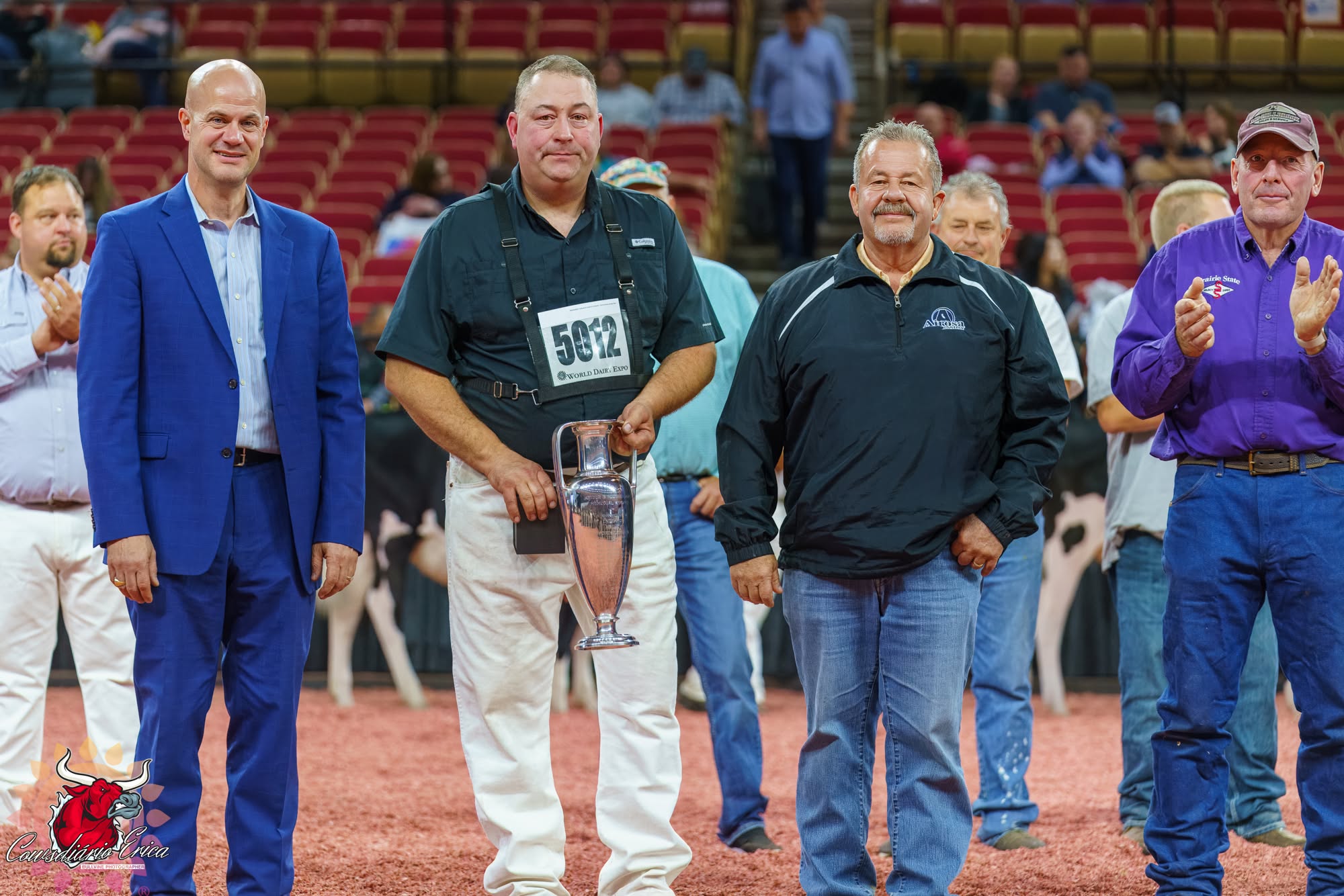
Budjon’s boarding and development business sits beside that breeding record. It doesn’t replace it. The operation uses the same observation, feeding, and recovery systems for its homebred cattle, partnership cattle, and cattle bred by clients.
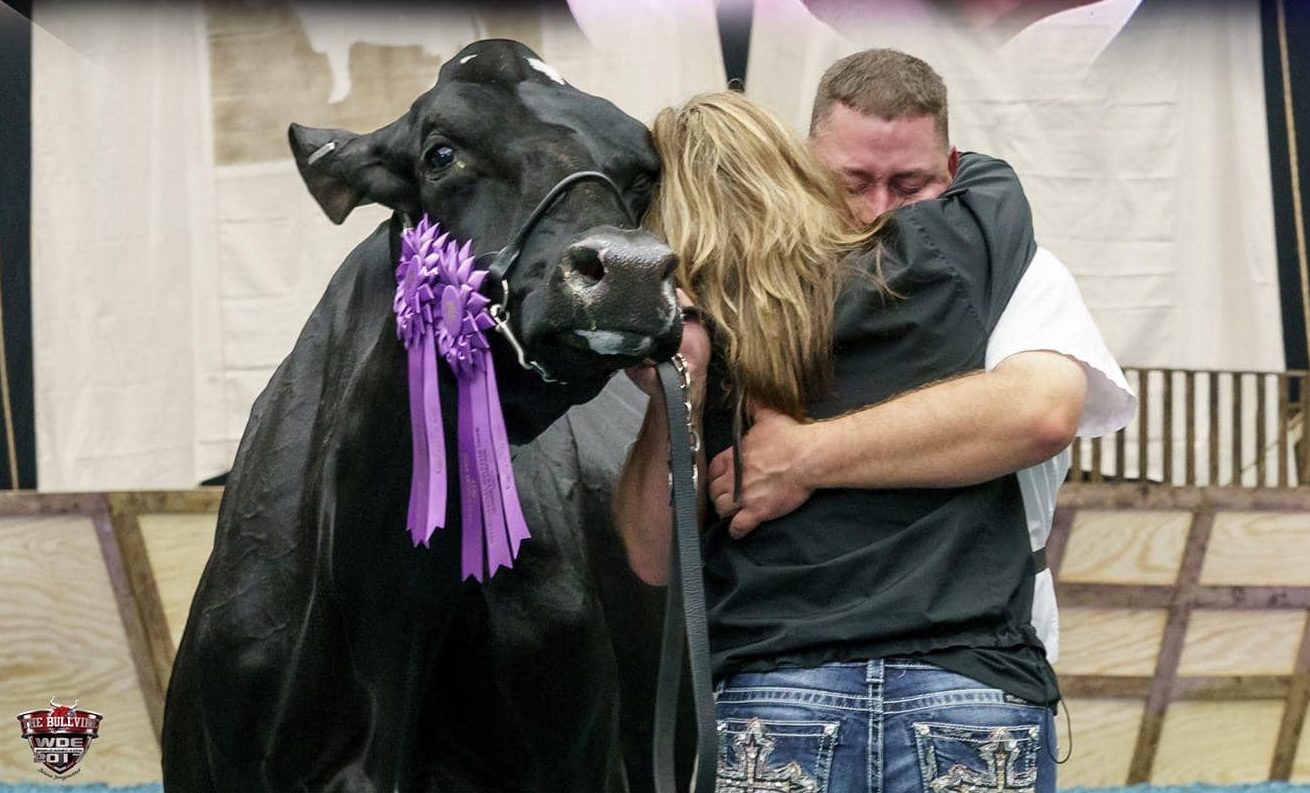
That system reached its peak in 2017, when Rosiers Blexy Goldwyn-ET won the six-year-old class, Senior and Grand Champion of the International Holstein Show and then Supreme Champion of World Dairy Expo for Budjon, Vail, Abbot, Van Excel and Woodmansee.
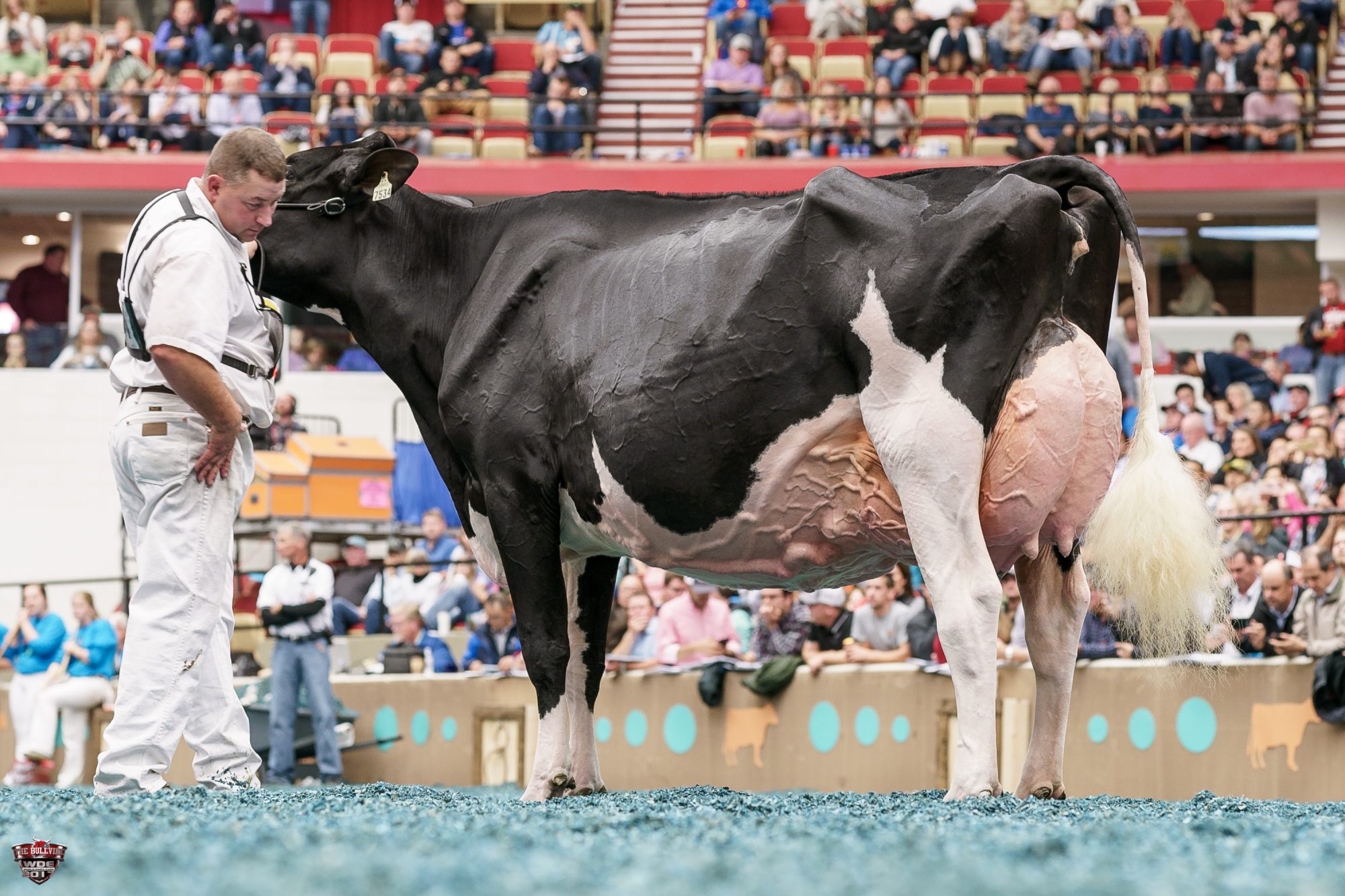
Blondin Goldwyn Subliminal-ETS EX-97-4E is a strong example of that management. Ferme Blondin bred her, and she was later owned by Budjon Farms with Peter and Lyn Vail. Budjon didn’t create her maternal genetics. What it did was help an injured cow recover, get back into production, and reach 310,707 pounds of lifetime milk.
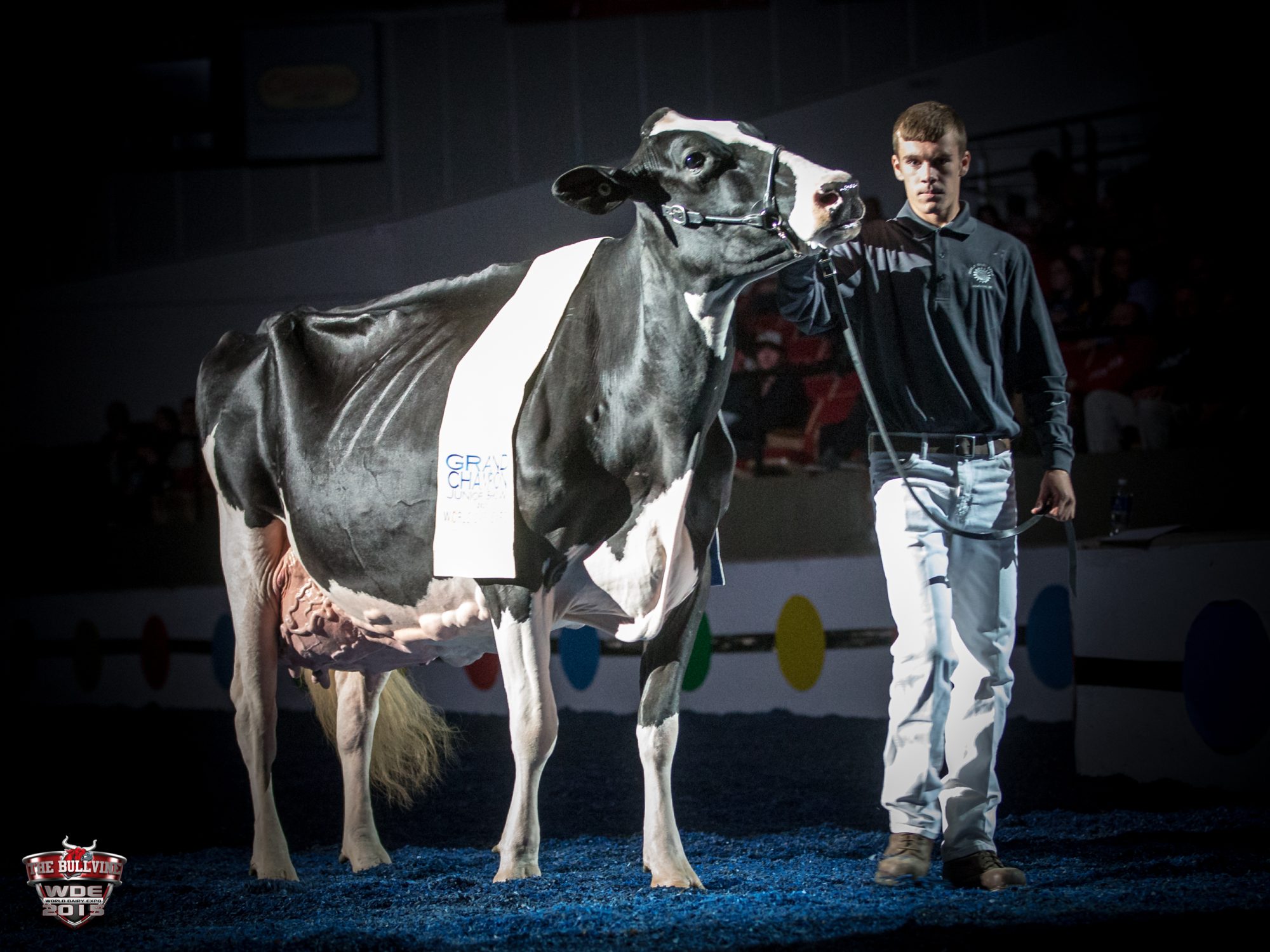
That gives both programs proper credit. Blondin bred Subliminal. Budjon and its partners developed her and kept her going through a remarkable career.
So Budjon’s record is bigger than either “breeder” or “boarder.” It has bred national champions under the Budjon and Budjon-Vail names. It has carried the Elegance family forward through later generations. And it has developed cattle bred by other herds to the top of the industry.
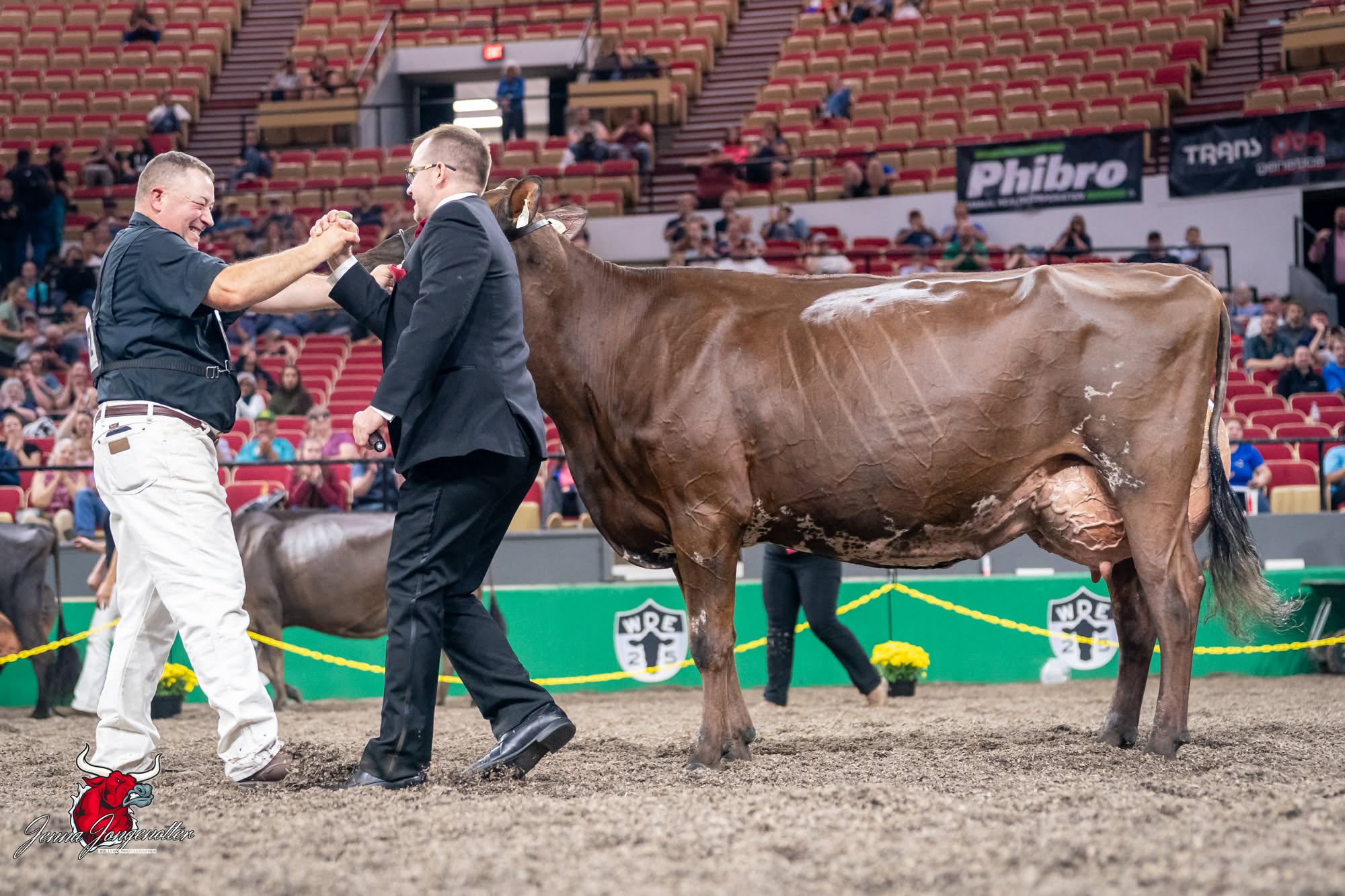
One champion can build a reputation. Three bred-and-owned national champions in one year, six WDE Premier Breeder banners and a Star of the Breed show that the prefix itself belongs in this conversation.
Which Family Are You Building?
Pick the three females getting the most breeding, show, or partnership money in your herd. For each one, write down the family trait you’re trying to keep, the fault you’re trying to fix, and the evidence that the mating can do both.
Then describe the daughter you expect the cross to produce.
Not the genomic number you hope to print. Not the sale average you hope to announce. Not the banner you hope to photograph.
The daughter.
If the only answer is “more marketable,” you have a sales plan. You don’t have a breeding plan yet.
When the Holstein cows enter the Coliseum on October 2, the easy question will be which cow can win.
The better question is whether the family, the mating, and the management behind her can produce another one.
Key Takeaways
- The 2026 Le Suprême banner split won’t predict Madison. Canadian Premier Breeder counts 10 females by registered prefix, while WDE counts six and credits whoever owned the dam at service.
- Jacobs won Premier Breeder at Le Suprême and placed second as exhibitor because its prefix scored in other owners’ strings. Judge your prefix by what wins when somebody else holds the halter.
- Boulet screens the cow before the pedigree, and that still didn’t stop him from paying $40,000 for a show cow that never produced an embryo or calf. A good eye and a deep sire stack lower the risk, but they can’t promise fertility.
- In 2005, three different Budjon-bred cows won Grand, Bred & Owned and Best Udder at three national shows. That’s proof the family transmits, which one champion can never give you.

- 7 Habits of Highly Successful Dairy Breeders — Arms you with the specific management routines separating profitable elite herds from average operations. Tracks the daily operational protocols that drive higher conception rates and lower cull rates across top-tier genetics programs.
- The Show Ring vs. The Commercial Dairyman — Follows the money on where show-ring type traits align—or collide—with commercial milk production margins. Evaluates the long-term economic shift toward functional conformation, measuring the exact cost of extreme stature in commercial freestall environments.
- Genomics vs. Progeny Testing: Which is Better? — Dismantles the traditional timeline of genetic advancement by weighing early genomic predictions against established progeny proofs. Exposes how accelerated generation intervals reduce maintenance overhead while identifying the true risk-to-reward ratio for your breeding budget.
 The Sunday Read Dairy Professionals Don’t Skip.
 The Sunday Read Dairy Professionals Don’t Skip.
Every week, thousands of producers, breeders, and industry insiders open Bullvine Weekly for genetics insights, market shifts, and profit strategies they won’t find anywhere else. One email. Five minutes. Smarter decisions all week.




