







Marc Comtois bought an 18-cow farm at 18. Fifty years later, one Comestar cow family has put at least 4.5 million doses into the world, and a 2003 border closure rebuilt the farm around milk.
On May 20, 2003, nine of every ten dollars Comestar Holstein earned came from selling genetics: bulls, embryos, heifers and cows. That day, Canada confirmed a case of BSE, and borders closed immediately to Canadian live animals and bovine products. The export business that had made Comestar one of the most famous prefixes in the breed stopped overnight.
That month, Marc Comtois and France Lemieux started bidding on milk quota. They have bid every month since, except one.
On September 13, 2026, the farm they started with 18 milking cows turned 50. Marc named it in 1976 for what he wanted it to become: come + star, the farm that wants to become a star. “That’s still our goal,” Marc told Le Bulletin des agriculteurs this month.
The banners are real: two Holstein Canada Cows of the Year, four millionaire AI sires and two Master Breeder shields. The more useful story is how a genetics house survived losing its main market, and what that cost in quota.
What 50 years changed, by the numbers
| Metric | Earlier record | Later record |
| Cows | 18 milking, 1976 · 119-cow herd, 2008 | 370 milking on six robots, 2021 |
| Milk quota | 630 kg butterfat/day, 2021 | Close to 800 kg/day, 2026 |
| Class Extra bulls bred | 8, 2008 | 14, the all-time record for any breeder, 2021 |
| All-Canadian nominations | 51, 2008 | 72, 2021 |
| Revenue mix | 90% genetics / 10% milk, 2003 | 90% milk / 10% genetics, 2021 |
The last row is the story. In under two decades, Comestar flipped its revenue mix end to end without giving up the genetics that built the name.
It started with 18 cows and a father’s example.
Marc was the seventh of nine children, raised at Ferme Comtoise in Victoriaville, Centre-du-Québec. He left school at 15 to work with cattle. At 18, he bought a Princeville farm milking 18 cows. “It was a modest farm,” Marc says.
He joined Holstein Canada on February 14, 1977, and married France Lemieux ten weeks later, on April 23. Julie, Jessy, Steve and Kathleen followed. The farm was in both their names from the start. By 2013, France and Julie were running the office and the paperwork for an operation that shipped embryos around the world.
The example at home was his father, Edgar Comtois, a Holstein Canada Master Breeder in 1985. “I had a passion for cows — really for the animals more than the land,” Marc says. “We started with not much, but we moved up fairly quickly by always buying better-quality animals. I was a genetics fan. I always looked at the bull crosses and the cow crosses. That’s what took us around the world.”
Aramis Marquis sold the prefix abroad in 1979
Three years in, Comestar Aramis Marquis won his class at the Royal Agricultural Winter Fair in Toronto and went All-Canadian, the farm’s first. Italian buyers paid $8,000 for him, serious money in 1979. The ribbon and the sale took the Comestar name outside Quebec.
That set the pattern for the next 24 years: win in the ring, then sell to the world. By 2021, that single All-Canadian had grown into 72 nominations: 11 All-Canadian, 10 Reserve and 15 Honorable Mention awards.
The $45,000 cow in 40% of a year’s herdbook
In 1985, Marc bought Elysa Anthony Lea EX-15*, a Willowholme Mark Anthony daughter, and bred her to Puget-Sound Sheik. Comestar Laurie Sheik-ET arrived December 1, 1986.
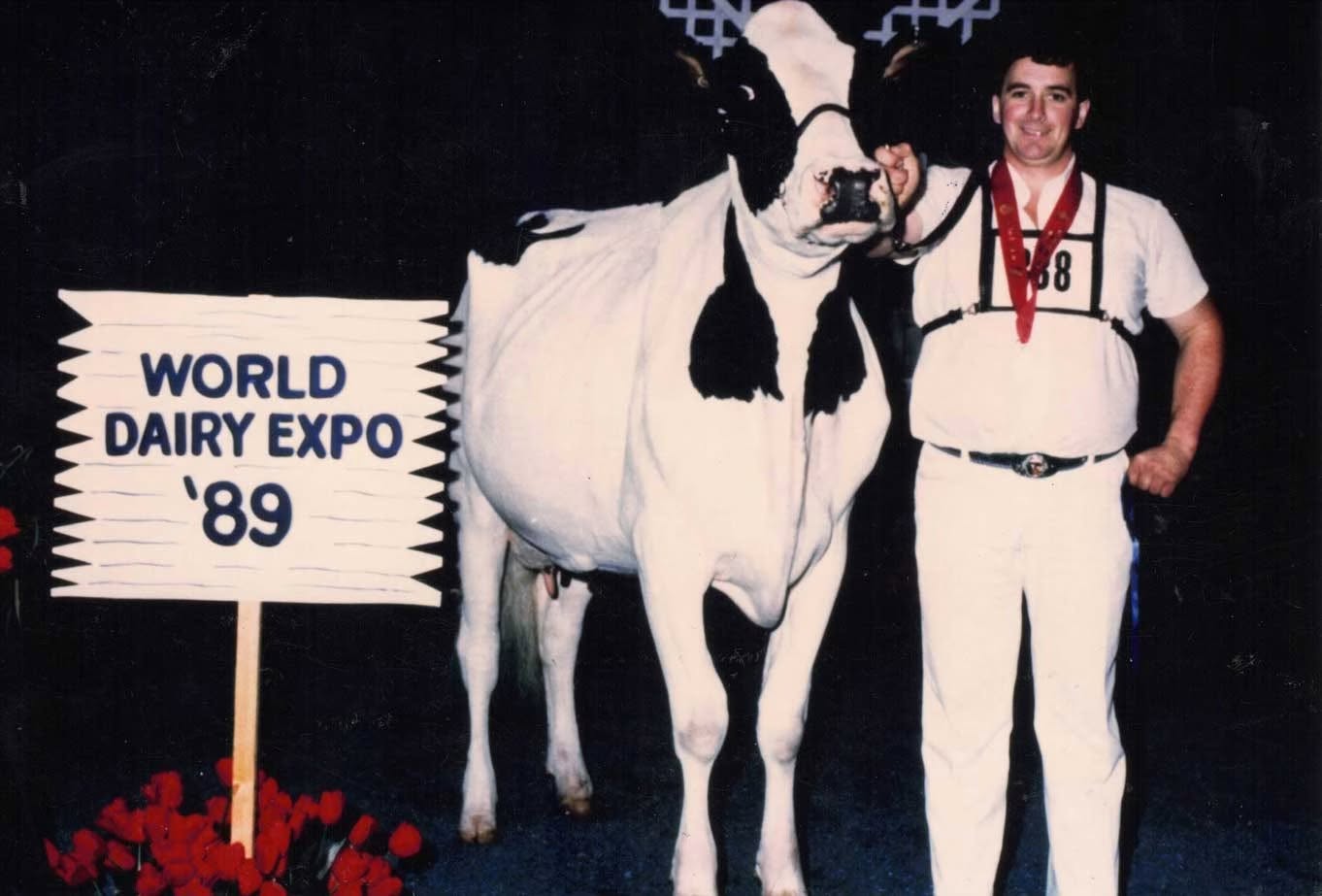
In 1989, she won the Senior Two-Year-Old class at Victoriaville, then went to World Dairy Expo, where she placed second and took the class’s Best Udder nod after the milk-out re-sort. That autumn, she topped Comestar’s first sale at $45,000. Eddy and Annie Pussemier of Bois Seigneur Holstein in Belgium bought half of her. Belgium wouldn’t take live Canadian cattle, so her genetics crossed the Atlantic as embryos. “Today, about 70% of our herd traces back to Laurie Sheik,” the Pussemier family says.
The mating that made her a legend was the one with To-Mar Blackstar. It produced two sons, Leader EX Extra and Lanky EX-Spain, and four famous daughters. Three stayed in Canada and went VG-87: Laura Black 24*, L’Or Black 16*, and Lausan Black 23*. The fourth, Black Laure de Bois Seigneur EX-90, was Grand Champion at Belgium’s 1996 National Show. Laura Black and L’Or Black each made the Cow of the Year final twice. Lausan Black is the only cow to put both a daughter, Lausian Astre, and a son, Stormatic, at No. 1 on Canada’s LPI lists. By 2006, Laurie Sheik sat in the pedigrees of 40% of the animals admitted to Holstein Canada’s herdbook that year.
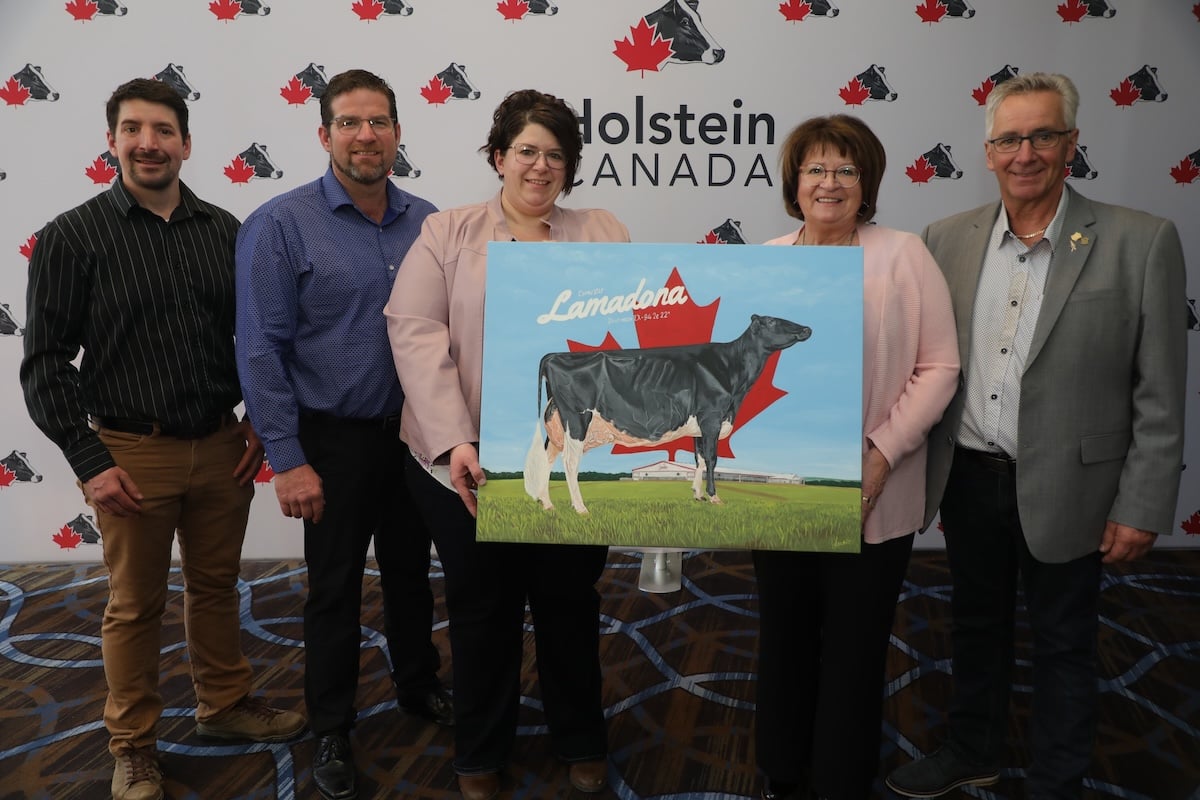
She was Holstein Canada’s first Cow of the Year in 1995 and died April 30, 2004. Her descendant Comestar Lamadona Doorman EX-94-2E took the same title for 2022, 27 years after she did.
Four millionaire sires add up to at least 4.5 million doses
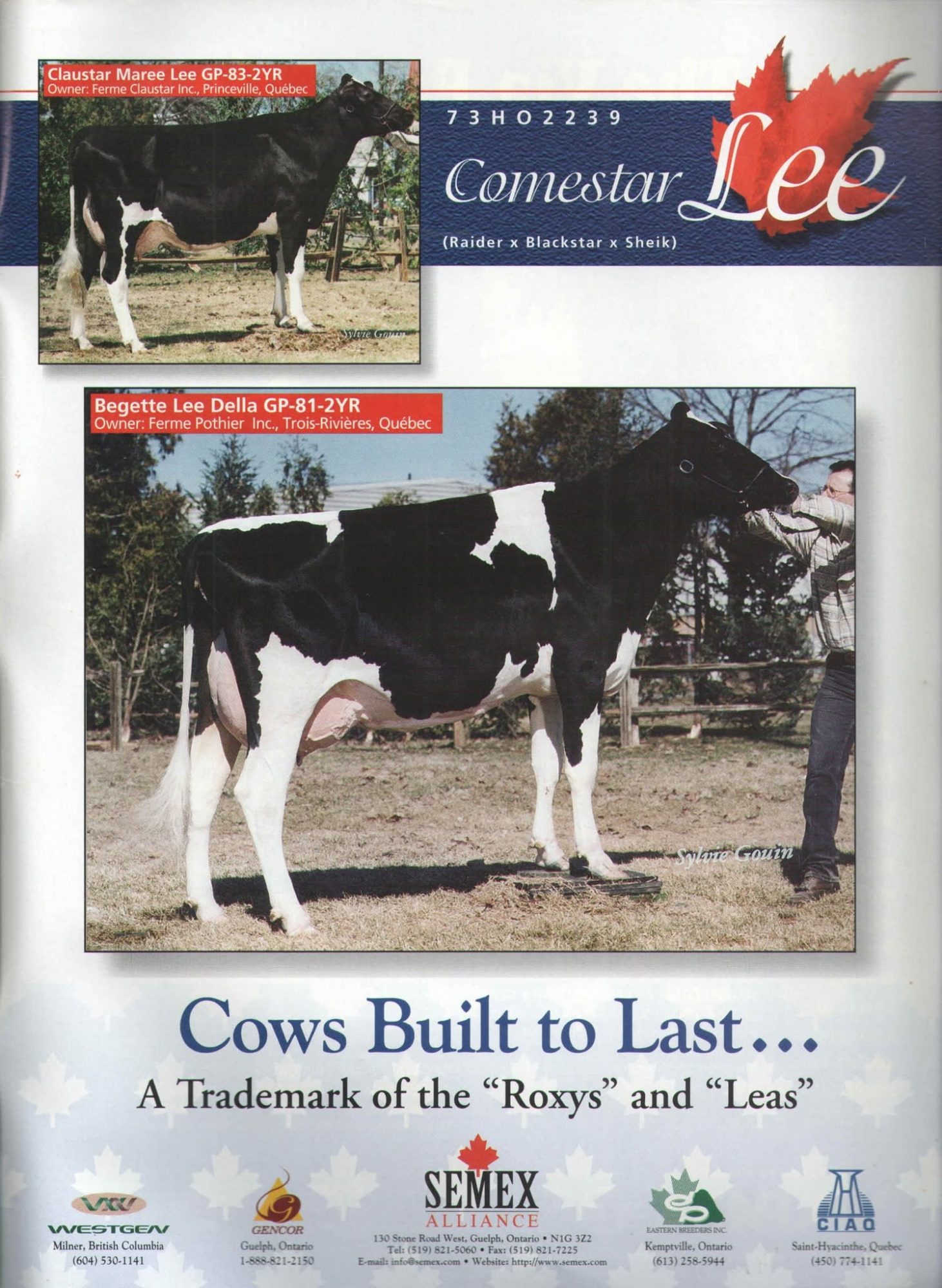
Comestar Lee 73HO2239 in a Semex Alliance ad: by Raider, out of Laura Black, Laurie Sheik’s Blackstar daughter. The pitch was “Cows Built to Last,” shown on two-year-old daughters Claustar Maree Lee GP-83 and Begette Lee Della GP-81.
“A big part of Comestar’s reputation is the bulls in the AI centres,” Marc says. “We’re the only ones in the world to have produced four millionaire bulls — bulls that produced more than a million doses. And we have one that’s a super-millionaire — more than 1.5 million doses.”
The four are Leader, Lee, Outside, and Lheros, every one a Laurie Sheik descendant.
Now the floor. Lee’s 1.5 million, plus at least one million each for the other three, comes to no fewer than 4.5 million doses from one cow’s son and grandsons. That’s a minimum, not an estimate.
Three of the four trace to a single daughter. Laura Black is the dam of Lee, his brother Top Gun, and Lheros EX-97 Extra, a former No. 1 LPI sire and Canada’s first 97-point bull. Outside, EX-95 Extra came from L’Or Black. Leader is Laurie Sheik’s own son.
Lee almost never got sampled. CIAQ tested him and Top Gun off a first-calf dam scored Good Plus 84, below the Very Good bar bull studs usually demanded. Both went Extra, and Lee became the family’s super-millionaire.
A partner at home freed Marc to sell the world.
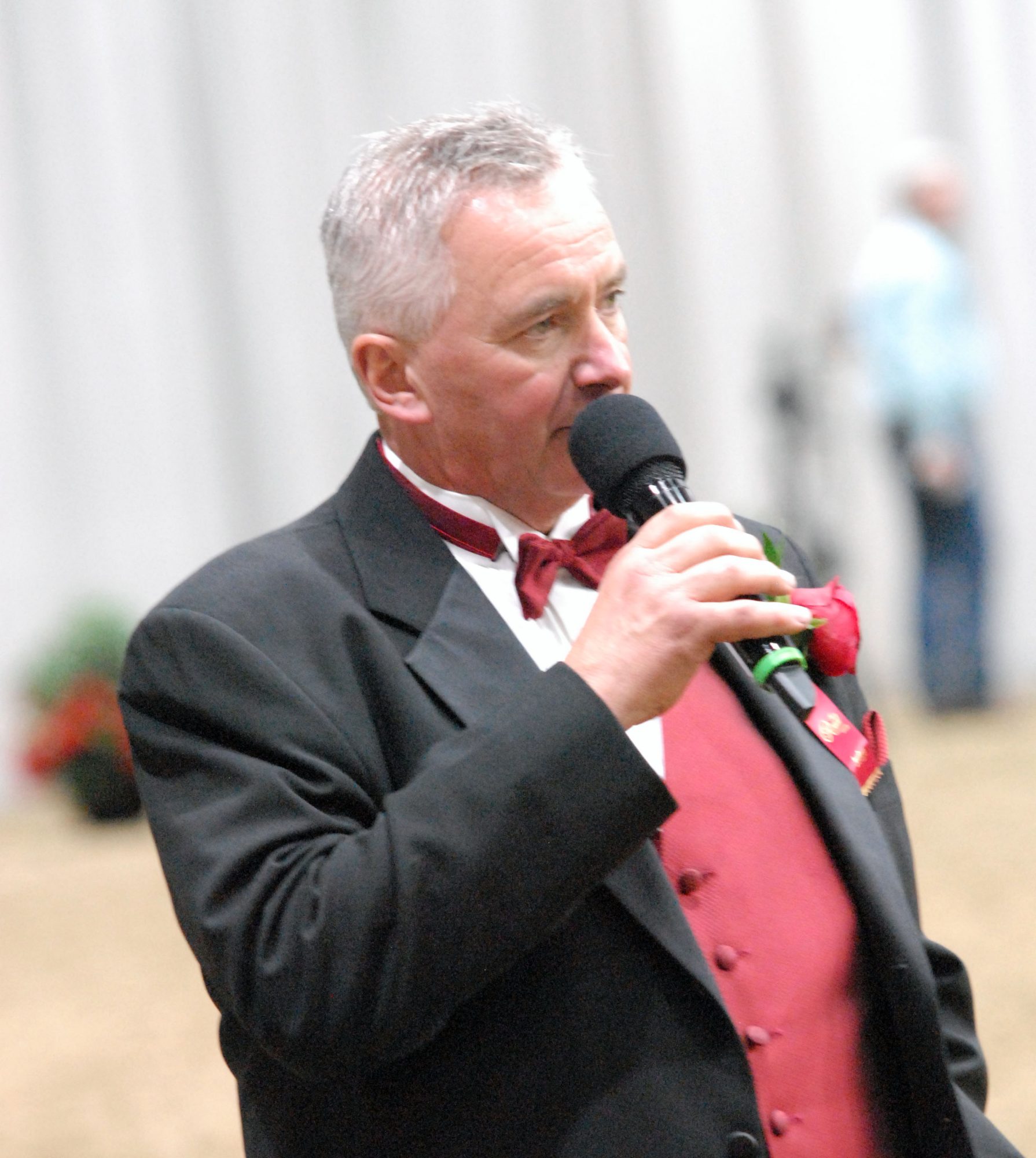
Marc Comtois gives his reasons as official judge of the 2016 National Holstein Show at the Royal Agricultural Winter Fair, his second time in that ring. He named Jacobs Gold Liann Grand Champion and called her “the cow of the future.”
Rewind to 1993, four years after Laurie Sheik’s $45,000 sale and two years before her Cow of the Year title. Overseas demand for Marc was pulling him off the farm. He and France sold half the business to Freddy and Nicole Steen, Belgian breeders who had settled in Quebec looking to buy a farm. With Freddy running things at home, Marc could travel without worrying about the farm.
The Steen years stacked up the results. The first Master Breeder shield came in 1995. In 1996, Marc won the Royal’s Curtis Clark award for exhibitor sportsmanship. A 100-cow barn went up in 1998. In 1999, Marc judged the Holstein show at the Royal. He’d take that ring again in 2016, and he has judged in more than 20 countries.
In 2000, Comestar hosted the Holstein Québec picnic for 8,000 visitors. The same year, the two-day Comestar Sale 2000 sold 269 head at an $8,036 average, topped by Comestar Model Lady VG-89 at $95,000. By 2021, Marc had sold more than 7,000 embryos into 33 countries.
May 20, 2003, turned a genetics house into a milk business
When the border shut, milk made up just 10% of Comestar’s revenue. Marc and France didn’t wait for exports to reopen. They started buying quota to rebalance the farm between milk and genetics.
“Since May 20, 2003, there’s been only one month we didn’t bid on milk quota,” Marc says. Twenty-three years of that discipline adds up to this:
Barn math: pricing the quota bet
- Current holding: close to 800 kg butterfat/day
- Quebec price cap: $24,000/kg/day. Article 30 of Quebec’s milk quota regulation rejects any offer above it.
- Value at the cap: 800 × $24,000 = about CA$19.2 million
- Growth since 2021: 630 kg to about 800 kg = about 170 kg, or 27%, roughly CA$4.1 million at the cap
- How scarce it is: on Quebec’s July 2026 exchange, buyers bid for 29,453.80 kg and got 588.74 kg, a 2.0% fill rate
Comestar’s gain since 2021 equals about 29% of everything sold on the entire provincial exchange that month.
The $19.2 million is a ceiling value, not a sale price. It ignores debt, doesn’t split holdings between Comestar and the family’s second company, and starts from a rounded “close to 800.” What the math does prove is that in a market filling 2% of bids, nobody reaches 800 kg by waiting for a good month.
Genomics rewrote the market, and Comestar bred against it
The second shock was genomics, which Semex dates to 2008. AI companies started producing their own bulls and wouldn’t release semen from their top young sires to breeders. Heifers mattered more than cows, the selling window for one shrank, and outside the elite genomic heifers there was no good market for the rest.
“Genomics changed the way I could do business,” Marc told Semex in 2021. “My sales changed. My job of making bulls didn’t exist anymore. It changed my vision.”
Comestar’s answer went against the grain. In 2021, the herd was still bred about 80% to proven bulls, 10–12% to young genomic sires, and the rest to beef, with sexed semen on every first and second breeding. The farm raised more heifers than it needed and sold the surplus as fresh heifers and second-lactation cows. Marc’s breeding target was a cow that calves three or more times, and he had raised four that reached 18 years old.
The cow family kept delivering on both sides of the switch. Comestar Lautamie Titanic VG-89 33* was Canada’s No. 1 LPI cow in 2006, 2007 and 2008. Lamadona, from the same Laurie Sheik line, won the Junior Three-Year-Old class and the Genetic & Production trophy at World Dairy Expo in 2016, went Reserve All-American that year, and was HM All-Canadian in 2015 and 2016. She’s the eighth generation of Laurie Sheik to classify VG or EX. The 2023 Comestar Legacy Sale still topped at $42,000.
Succession came before the robot barn.
Even before the genomic shockwaves hit the market, Comestar had already begun future-proofing its ownership. In 2007, Marc and France bought back the Steens’ half, since the Steen children weren’t interested in farming. Julie, her husband Julien Turmel, and Steve had told them they wanted in.
The family handed over the farm in stages. In 2010, it created Oli-Fay Holstein, named after the first two grandchildren, Olivier and Marie-Fay. In 2013, Julie, Steve, Kathleen and Julien became shareholders, and consultant Ann Louise Carson spent three months helping the family set roles, weekly meetings and decision rules.
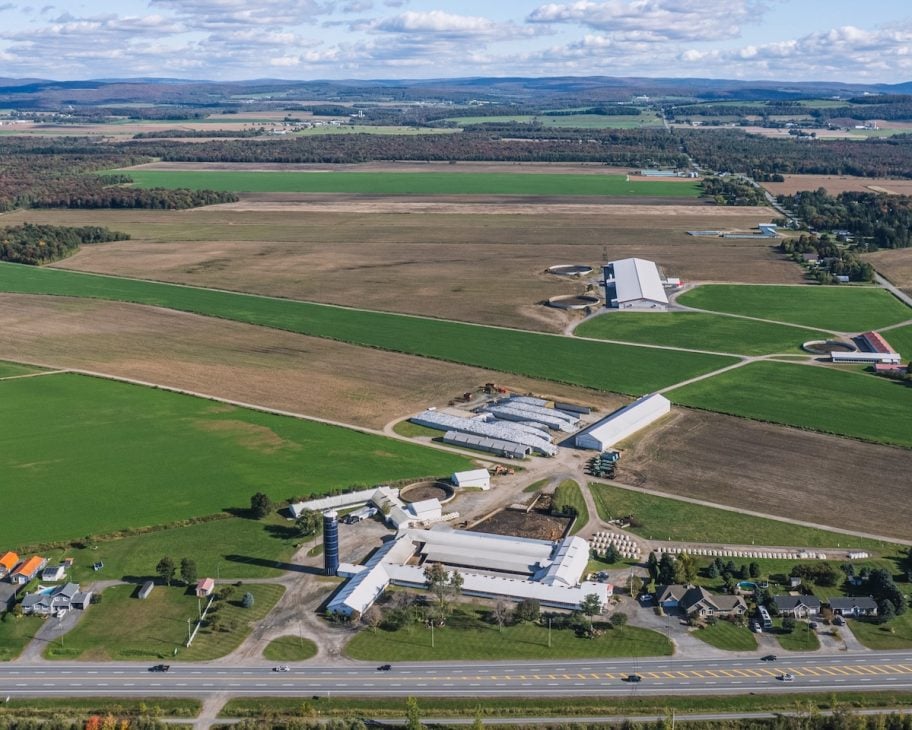
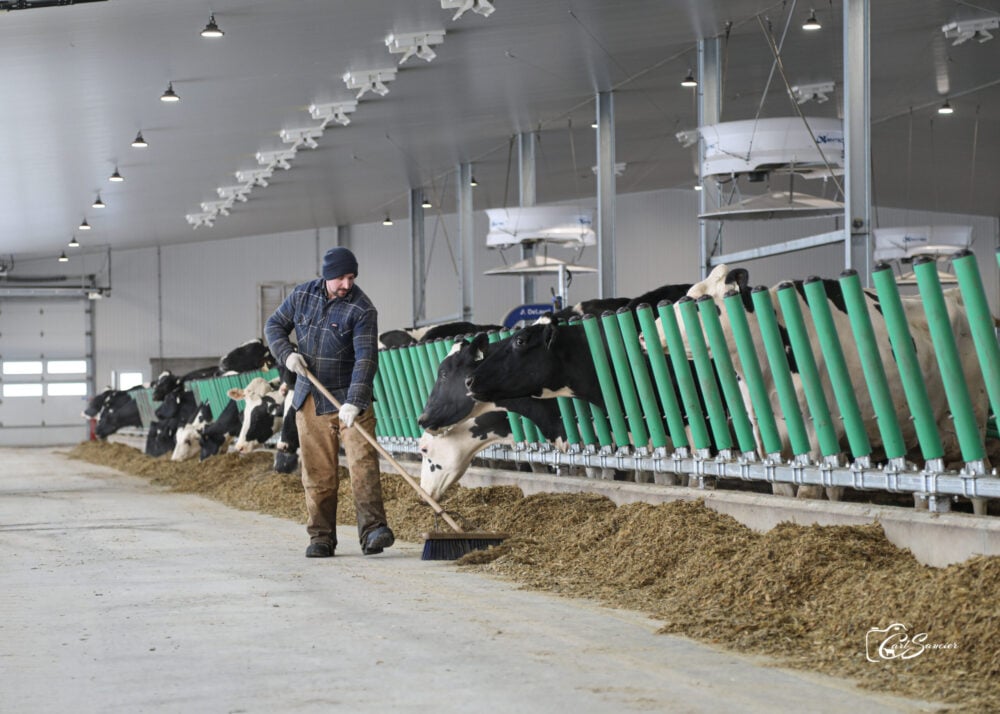
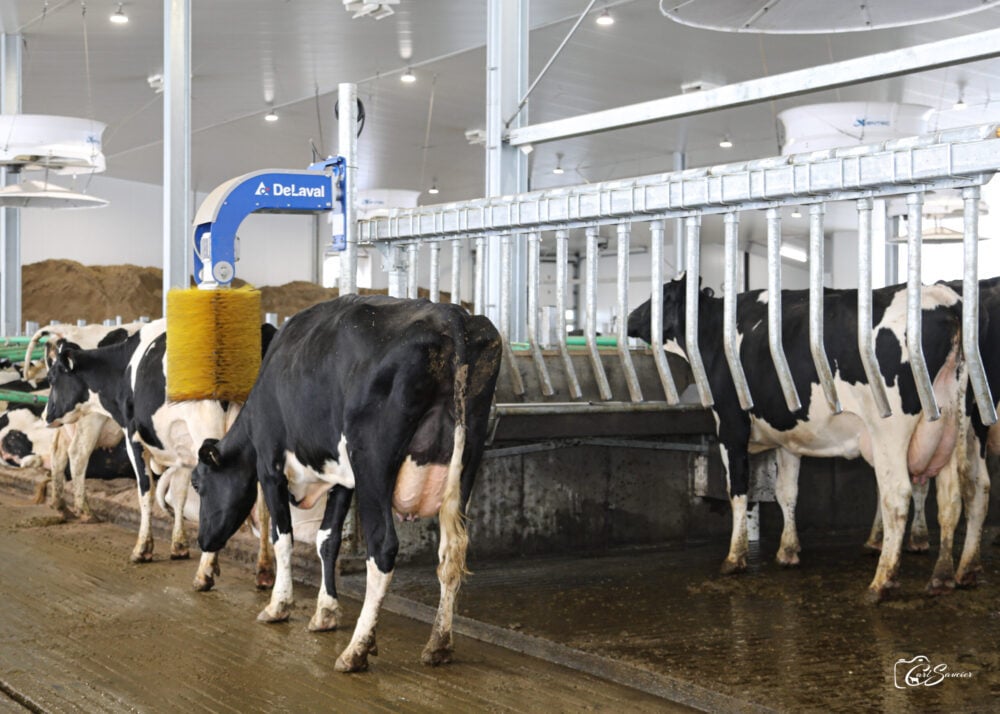
The barn came last. Cows started milking in the new robotic freestall on October 13, 2020: 722 by 142 feet, 586 sand-bedded stalls and room for eight DeLaval VMS 300 units. Natural herd growth filled it without a single purchased animal.
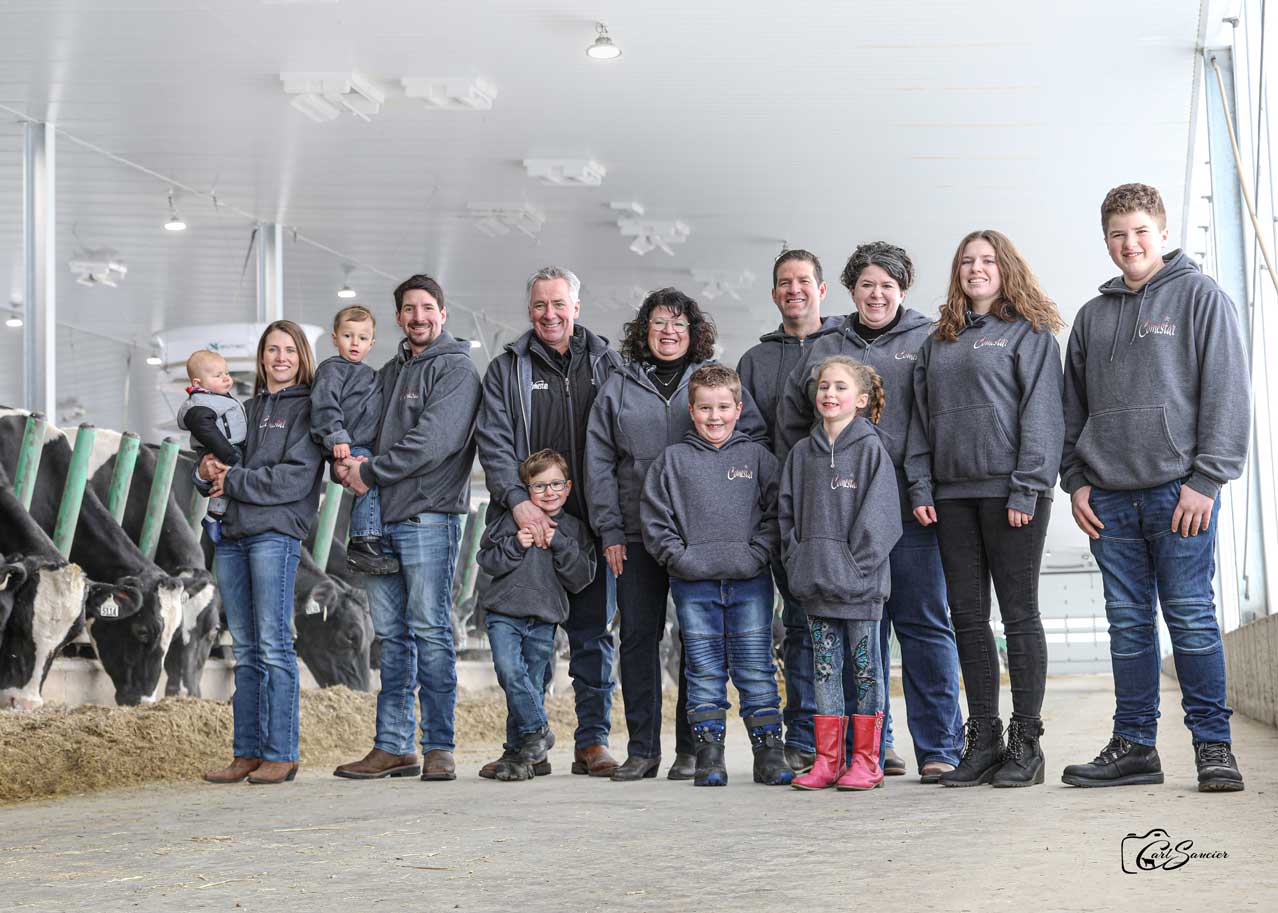
Steve runs the genetics now, and he’s excellent at it, Marc says. Julie handles herd management and the reporting that comes with it. Julien does the embryo transfer and runs the crops. Nicole Steen still keeps the books, 19 years after the partnership ended. Two of the four children, Julie and Steve, are in the business today, and the grandchildren are already showing an interest in farming.
Five decades of honors
- 1995, 2009: Holstein Canada Master Breeder
- 1996: Curtis Clark Award, Royal Agricultural Winter Fair
- 2007: Premier Breeder, Royal Agricultural Winter Fair
- 2008: National Dairy Shrine Distinguished Dairy Cattle Breeder, the 36th recipient and the second Canadian, after Roy Ormiston in 1989. “It goes to a breeder who has distinguished himself, who shows sportsmanship and who sets a good example,” France says.
- 2019: Canadian Agricultural Hall of Fame, nominated by Holstein Québec, Holstein Canada and Semex
- 2019: Voted Holstein International’s most influential breeder of the past 25 years
- 2022: Quebec Agricultural Hall of Fame
Ask Marc for his proudest achievement, and he doesn’t have to think long. “Being in the Agricultural Hall of Fame in Quebec and in Canada,” he says. “That sums it all up.”
What Comestar’s 50 years say to a breeder today
Stress-test your revenue concentration. In May 2003, 90% of Comestar’s income ran through export channels. If one border, one buyer, or one stud carries more than half your revenue, write down now what you’d do the week it closes.
Build a cow family, not a star cow. Laurie Sheik multiplied through four Blackstar daughters on two continents. One of them, Laura Black, gave AI three Extra bulls, including a super-millionaire her own first-lactation score nearly kept out of sampling. One great cow tops a sale. Several strong daughters make a breeding program.
In quota provinces, bid every month your cash flow can carry it. At a 2% fill rate, the herds that end up with kilograms are the ones in every exchange, not the ones timing it. Price each bid at the full cap (in Quebec, $24,000/kg) and run it past your lender first.
Settle ownership before you pour concrete. Comestar went from new entity (2010) to shares and outside facilitation (2013) to barn (2020). The barn was built for people who already owned the business.
Half a century after an 18-year-old named a Princeville farm for a star it hadn’t reached yet, Marc still says the goal hasn’t changed. By any measure the breed keeps, they reached it a long time ago. The family is still acting like they haven’t.
Learn More
- The Proof You Waited Three Years For Averaged a $72 Markdown — Arms you with the math to stop waiting on daughter proofs. Runs the Hold-to-Proof Cost Simulator to quantify the maintenance overhead per sire, exposing why acting on early genomic predictions outpaces the traditional sampling model.
- Transform Your Dairy Legacy: Strategic Succession Planning When Quota Outweighs Everything Else — Delivers a radical blueprint for transitioning your farm when production rights eclipse herd value. Follows the money on how structuring ownership transfers around operational efficiency benchmarks outsmarts the trap of financing inflated quota limits.
- Revolutionary Sperm Testing Exposes Hidden Bull Fertility Crisis — Secures your AI investment against hidden subfertility that conventional testing misses. Breaks down how time-dependent metabolic analysis catches rapidly deteriorating semen, preventing an $8,200 annual drain on your margins from extended calving intervals.
 The Sunday Read Dairy Professionals Don’t Skip.
 The Sunday Read Dairy Professionals Don’t Skip.
Every week, thousands of producers, breeders, and industry insiders open Bullvine Weekly for genetics insights, market shifts, and profit strategies they won’t find anywhere else. One email. Five minutes. Smarter decisions all week.




