







Archive for Dairy Markets – Page 15

Dairy Market Insights: August Production Surge and Export Trends Amidst Bird Flu Challenges in California

Unpack August’s dairy boom and export shifts. How is bird flu in California shaping the market? Find critical insights for dairy pros.

Summary:

August’s dairy market showcased opportunities and challenges as U.S. milk equivalent exports rose by 2.6%, driven by significant increases in cheese and butter production at 1.7% and 14.5%, respectively. However, Nonfat Dry Milk (NFDM) production dipped 10.1%, reflecting potential shifts in the market. The surge in Milk Protein Concentrate (MPC) with a remarkable 77.8% rise opens doors for diversified applications, yet complexities arise with abundant cream supplies affecting butter prices. Meanwhile, the troubling bird flu outbreak in California looms over future production, as the need to decipher spot and future pricing becomes essential for farmers to remain competitive amidst this evolving landscape.

Key Takeaways:

  • August showcased significant growth in dairy product production, notably with cheese and butter seeing double-digit increases.
  • Global cheese export trends provide U.S. dairy farmers a lucrative opportunity despite recent price declines.
  • The dairy market experienced divergent prices, with spot prices lowering and futures prices remaining robust.
  • California’s dairy sector is grappling with a bird flu outbreak, potentially impacting state and national milk production figures.
  • Abundant cream supply has led to a notable rise in butter production, yet prices continue to fall due to surplus.
  • NFDM production dropped, while domestic consumption declined steeply, contributing to inventory buildup.
  • Dairy professionals must remain vigilant and adapt to capitalize on emerging market opportunities and challenges.
dairy industry growth, cheese production increase, butter market trends, Milk Protein Concentrate expansion, nonfat dry milk decline, U.S. dairy exports, bird flu impact on dairy, cheese market changes, futures pricing in dairy, strategic planning for dairy farmers

In August, the dairy industry saw a surprising jump in production, going against what everyone expected and breaking new ground. Cheese production increased by 1.7%, and butter had a massive jump of 14.5%. This rise, though, comes with its challenges. The bird flu situation in California is getting serious, with almost 100 confirmed cases on dairy farms. It raises a fundamental question: how are these dynamics influencing the dairy market?

August was a testament to the dairy industry’s resilience, showcasing both growth and challenges. Understanding and adapting to the dairy scene has become more critical than ever amid these dynamics. Balancing production peaks with potential threats is a complex situation that could redefine the industry. Let’s explore how these forces reshape the market and the inspiring opportunities they present for everyone involved.

August’s Production Surge: A Double-Edged Sword for Dairy Farmers

August’s dairy production numbers show a surprising jump that has grabbed the interest of many folks in the industry. Essential dairy items like cheese, butter, yogurt, and ice cream saw some solid gains compared to what was expected. Cheese production increased by 1.7%, and butter took off with a 14.5% jump. So, yogurt and ice cream got a nice little boost, with yogurt up 7.7% and ice cream up 5.9%. This spike raises questions about what’s behind it. It could be due to increased demand, improved production techniques, other factors, and what it means for dairy farmers and others involved.

Milk Protein Concentrate (MPC) Takes the Spotlight 

One of the top performers, Milk Protein Concentrate, saw a fantastic growth of 77.8%. This boom could open up more chances for producers to get creative and expand their use of MPC in different food products. More and more people are looking for high-protein ingredients, which is excellent news for MPC to thrive.

Nonfat Dry Milk (NFDM) Struggles Amidst Growth

On the flip side, nonfat dry milk dropped by 10.1%, which could mean some changes in the market are happening. This downturn and the drop in domestic disappearance we’ve seen lately bring some challenges we must tackle. Farmers who depend on NFDM must roll with the punches and might want to check out different production methods or mix things up with what they offer.

What Does This Mean for the Industry? 

These production changes present a myriad of opportunities and challenges for dairy farmers. The increased output in popular products like MPC could pave the way for better markets. Simultaneously, other sectors, especially NFDM, might require some innovative changes. The industry’s ability to adapt, manage higher production levels while meeting market demands, and monitor inventory is essential. By doing so, farmers and companies can maintain stability and foster growth in this ever-evolving field.

Riding the Global Cheese Wave: An Unmissable Opportunity for U.S. Dairy Farmers

In August, U.S. milk equivalent exports increased by 2.6%. This rise isn’t just a number; it shows how much the world wants U.S. dairy products. But the real standout was cheese, with exports jumping 15.2% compared to last year. These numbers are a nudge for U.S. dairy farmers to seize new opportunities.

What’s up with the massive demand for U.S. cheese overseas? You can find the answer in the incredible variety and quality of products that American dairy farmers are famous for. As people worldwide get bolder with their food choices, the fantastic range of U.S. cheese hits the mark and goes beyond what they want. Mix that with solid trade deals and lower tariffs; you have an excellent recipe for boosting international sales.

These trends are shaking things up in the U.S. dairy market. Better export numbers show that American farmers are more than aren’t depending on local sales, which can be a bit hit or miss. They have a presence in international markets where people might shop differently. Dairy farmers can mix things up with their income and protect themselves from the ups and downs of the local market.

The robust cheese export numbers should catalyze dairy farmers to diversify and expand their product offerings. It’s crucial to continue riding this global demand wave by exploring new markets and niche segments. Farmers can also enhance their herd management and milk production processes. Establishing robust supply chains that can cater to local and global needs is paramount. This is an exciting time for the dairy industry, with ample opportunities for growth and innovation.

The U.S. dairy market has challenges, but tapping into the current global demand boom could shake things up for the industry. Dairy farmers must develop innovative strategies to stay competitive in this growing export market.

It is diverging Paths: Spot and Futures Prices in the Dairy Market.

Understanding how spot and futures prices relate is critical in any market, especially in the dairy world. Spot prices tell you the prices for cheese and butter, while futures contracts lock in prices for future delivery. The newest information shows that spot prices stay the same or go down while futures prices hold steady or climb up. That’s a pretty cool situation! What’s up with this?

Could this difference mean a shift in how the market vibes are on the way? When futures prices are above spot prices, it often suggests that the market feels optimistic about future price increases. The market crowd thinks there might be less supply or some more robust demand on the horizon. Since spot prices aren’t showing this now, we should consider what’s happening.

So, regarding cheese and butter, are we dealing with a short-term thing or something that could hang around for a bit? For now, the cream supply and solid butter production might hold off any price hikes. For now, the futures market could be watching some changes that aren’t obvious in the current supply situation. These tips can help dairy farmers deal with price fluctuations more smoothly.

Checking out these price changes can help producers and market analysts understand and prepare for what’s ahead in the market. History has shown that these differences can open up opportunities for strategy or highlight risks we should keep an eye on. It’s an excellent opportunity—maybe a brief—to consider adjusting business strategies to take advantage of these shifting market vibes.

California’s Dairy Industry Faces a New Threat: Bird Flu Outbreak Raises Concerns

California’s dairy scene is dealing with a surprise issue: almost 100 confirmed cases of bird flu. This outbreak could shake up the state’s milk production in October, potentially decreasing the broader U.S. dairy market. California has always been a big player in milk production, significantly impacting the national total. But right now, the health crisis will likely change things up, causing U.S. milk production to dip by about 0.5% after a steady year-on-year run.

How the market reacts to this situation shows a pretty exciting gap. Even though there’s a drop in output coming up, it seems like no one is really worried or freaking out about it right now. Traders and industry folks don’t seem too worried because there’s already a surplus of cream and butter that could soften the short-term supply hit. But if the bird flu situation worsens, the long-term effects could be severe. Dairy farmers and industry pros must stay sharp and plan competent to handle the current disruptions and prepare for future impacts. Is this a chance or a challenge to rethink how we do production?

Cheese Market: Navigating a Tempest or Skimming Uncharted Waters?

The U.S. and EU cheese market is experiencing some significant changes this season. In August, U.S. cheese production exceeded expectations, showing a tremendous increase of 1.7% compared to last year. Production went up simultaneously, and exports shot up by 15.2% compared to last year. Cheese consumption at home held firm, with a decent disappearance rate of 1.1%.

But as we roll into September and October, the market is figuring things out in some unknown territory. Cheese prices in the U.S. and EU have been decreasing lately, thanks to changes in production and maybe shifts in what consumers want or competition from abroad. Last week, CME blocks got a bit of support, but overall, the market vibe is feeling bearish. What’s this all about for dairy farmers and those involved? Are we seeing the start of a longer-term price stabilization or just a short-term bump?

With solid August numbers giving us some breathing room, the next step is to get a grip on how things are changing for the rest of the year. It’ll be interesting to see if these trends stick around or change, depending on how people spend their money, chances for exports, and any unexpected shifts in the global market. If you’re in the industry, keeping up with all the changes is critical to making the most of your investments and handling risks like a pro.

Butter Market Conundrum: The Surprising Effects of a Cream Surplus

Is it any surprise that with so much cream around, U.S. butter production jumped by a whopping 14.5% in August compared to last year? This spike has changed the butter market scene. So, why aren’t butter prices going up, too? The answer is all about the basic economic principles of supply and demand, which are at odds.

With all this cream around, butter production is kicking into high gear as processors take advantage of the extra raw materials. But here’s the thing: the market’s already packed with butter. There’s a lot of extra supply out there, pushing prices down since producers have to sell their stuff at lower prices to get people to buy more. This situation is different from how markets usually react when there’s a significant boost in production.

Butter prices have been slow lately and, in some cases, even dropping, which is strange given that production is doing so well. Too many products in the market can water down their value, making the perks of high production levels less noticeable. This situation has many folks in the industry feeling puzzled as they try to figure things out in these tricky times. Having less of something doesn’t just lead to lower prices; it also creates issues with storage and logistics, making things even trickier.

We must also consider what this cream oversupply might mean for the long haul. It might look like a bump in the road, but it could lead to better pricing and help U.S. butter reach more markets worldwide. This trend highlights how important it is to plan and think strategically when dealing with production booms, turning today’s challenges into opportunities for the future. Are producers ready to take on the challenge? We’ll have to wait and see.

Navigating the NFDM Labyrinth: Balancing Production and Demand in a Complex Market

The NFDM market has been on a pretty interesting path, with prices staying steady despite a noticeable production drop of 10.7% compared to last year in August. Usually, when production drops, prices go up, but that’s not happening here, which shows things are a bit complicated in the market. One big thing to note is the drop in domestic disappearance in July and August, with declines of 80.1% and 37.7%, respectively. The drop in demand caused a buildup of inventory, which helped keep the market stable and avoided price increases.

So, what’s the deal with the powder market going forward? The current inventory is building up, so the supply should handle sudden demand jumps pretty well, keeping prices steady. Producers should reconsider their game plan if the domestic disappearance trend continues. Does this mean we see a push for more exports or a rethink of production to match what people want right now? We’ll have to wait and see. Dairy farmers and industry folks need to keep an eye on these changes because even a tiny shift in how the market feels can mean significant changes in their game plan.

The Bottom Line

Looking at what’s happening, we see that the dairy industry is at a turning point with impressive production boosts and big market challenges. The significant increase in cheese and butter production is excellent. Still, it also shows how tricky it can be to handle supply when demand changes—something every savvy dairy farmer gets. California’s bird flu situation and the ups and downs of unpredictable futures markets make things even more complicated in an already shaky situation.

Even with the hurdles, it’s clear that there’s an excellent chance for clever positioning right now. The gap between spot and futures pricing could hint that market players should look past the short-term challenges and consider what’s coming down the road. With the world craving more cheese, U.S. dairy farmers can take advantage of excellent international chances if they play their cards right.

So, it’s not just about getting through the tough stuff but also making the most of what’s happening right now. Is the butter surplus pushing us to develop fresh ideas to boost demand, or will we keep dealing with this extra stock without a plan? Finding the right mix of uncertainty and opportunity makes us rethink our game plans, keeping the dairy industry strong and looking ahead.

Learn more:

Join the Revolution!

Bullvine Daily is your essential e-zine for staying ahead in the dairy industry. With over 30,000 subscribers, we bring you the week’s top news, helping you manage tasks efficiently. Stay informed about milk production, tech adoption, and more, so you can concentrate on your dairy operations. 

NewsSubscribe
First
Last
Consent

Butter Price Plunge: Navigating the Market’s Dramatic Shift

Why are butter prices dropping, and how does it affect dairy farmers? Discover insights and strategies now.

Summary:

The butter market’s tumultuous ride has seen U.S. prices spike above $3 per pound this summer, echoing past trends of high year-end prices, only to unexpectedly drop to $2.65 per pound as the holiday season nears. This volatility arises from robust domestic production and healthy inventories, in spite of strong demand and higher summer butterfat content in milk. As U.S. butter emerges more competitively priced globally, stakeholders face the challenge of navigating this dynamic landscape. Heightened global trade and environmental unpredictability contribute to the market’s volatility, with production up by 4.8%—a 14.5% jump in August compared to the previous year—and a surplus of 323.284 million pounds in storage suggesting a surplus-induced price drop. Dairy farmers must adeptly manage production, inventory, and risk to maintain profitability amid these price swings.

Key Takeaways:

  • The recent dip in butter prices is primarily due to increased butter production and strong inventories.
  • Despite high summer butter spot prices, a significant inventory build-up suggests a stable domestic supply chain.
  • Current U.S. butter prices create advantageous export opportunities, potentially stabilizing the market.
  • Understanding these price dynamics is crucial for dairy sector decision-makers and market strategists.
  • Close attention to the market developments is essential as the holiday season approaches, which traditionally affects demand significantly.
Butter market trends, Butter price fluctuations, U.S. butter production increase, Global butter trade dynamics, Dairy market risk management, Butter inventory strategies, Historical butter price analysis, Butter market surplus effects, International butter buyers, Future of U.S. butter industry

The butter market has had quite the ride, with prices dropping from record highs to levels we haven’t seen since early 2021. This significant change isn’t just a number; it’s a huge deal. The drop in price, from $3.1975 to $2.65 per pound, could shake things up for operations and profits, highlighting how urgent the situation is.

DateSpot Butter Price ($/lb.)
August 31, 2024$3.1975
September 15, 2024$2.95
September 30, 2024$2.75
October 7, 2024$2.65

Butter Market Rollercoaster: From Summer Highs to Autumn Lows

The butter market has been all over the place, with prices shooting up during the summer and then dropping recently. Butter prices on the U.S. CME spot market kicked off some ups and downs when they crossed the $3/lb mark on May 1. They stuck around that price for a good chunk of the summer, hitting a high of $3.1975/lb in late August. But as things got more relaxed, the market’s excitement faded too. The price took a nosedive, falling by 54¢ to hit a low of $2.65/lb. as of yesterday. This shows a significant drop and the lowest price since late January, a significant shift from our record-high prices.

Learning from the Past: Historical Echoes in Butter Price Fluctuations

When we check out the history of butter prices, it’s clear that the market has been all over the place. Back in January 2009, just over ten years ago, butter prices were dealing with some tough economic times and were pretty low. Looking back at recent years, we’ve seen some crazy record highs, all thanks to economic, political, and climate events. So, back in 2015 and 2016, butter prices shot up because everyone started wanting more fats as their views on health changed. Recently, butter prices shot up past $3/lb, like what we saw back in 2017.

But if you look at how things used to be and compare it to what’s happening now, the market is way more volatile. This is partly because global trade is moving faster, and the environmental effects on production are unpredictable. After a long stretch of high prices, the current drop feels like past ups and downs. Still, the quick drop in price—54¢ in just a month—catches the eye.

Butter markets have always been up and down, mainly because of supply and demand issues and outside factors like trade policies. The main thing is the complexity of today’s geopolitical tensions and supply chain issues. As dairy farmers and industry folks, understanding these market dynamics is crucial. It can help us develop intelligent ways to handle the ups and downs. Does this mean we will see more strategic stockpiling or mixing up of how we use crops in the future? We’ll see what happens, but our knowledge of the history can guide us in this process.

Domestic Swells and Creamy Surprises: Unpacking the Butter Price Dip

The recent dip in butter prices is mainly due to what’s happening in the domestic market—stuff experienced folks like you are watching. There’s been a big jump in butter production lately, with the first eight months of the year showing a 4.8% rise in output compared to last year. August had a remarkable 14.5% increase compared to last year. So, you might be curious about this sudden increase, right?

Robust butterfat tests have boosted production vibes. Even with the ups and downs of summer milk production, the high butterfat content has kept the cream flowing smoothly into the butter churns. This has kept the busy lines running and satisfied with what the market wants.

Also, looking at the current inventory situation helps make the price drop easier to understand. By the end of August, a solid 323.284 million pounds of butter was hanging out in storage, up 10.8% from last year. In the last few months, this steady stock buildup looks like a safety net that markets can rely on, at least for now. These healthy, or as some might call it, plentiful inventories show a market surplus, which usually means prices will drop.

Spotlight on U.S. Butter: Global Stage Emergence Amid Price Tumbles

With spot prices dropping, U.S. butter is gaining attention on the global stage. The attractive pricing could open up new export opportunities, hinting at a potential comeback for American butter. This change isn’t just about the stats; it’s a beacon of hope for the future of U.S. butter on the global market.

Could this change be a win-win for both producers and global buyers? It’s something to think about. U.S. producers usually focus on local tastes and might find new interests abroad. This situation could provide a helpful buffer against falling domestic prices. This market expansion isn’t just a one-time chance; it’s a smart move for the long haul.

International buyers might find this interesting. Now that cheaper American butter is available, they might reconsider how they source their ingredients. This might change how trade works and help U.S. producers achieve consistent sales while giving international buyers budget-friendly choices.

As we see this play out, the chance to settle down looks promising. The back-and-forth between what we have at home and what the world wants could be the trick to dealing with those price ups and downs. Watch; the market’s reaction will create new paths on local and global maps.

Navigating the Ripple Effects: Strategic Planning for Dairy Farmers Amidst Market TurbulenceIf you’re a dairy farmer, you’re probably thinking about how these crazy butter price changes affect your profits. Dealing with this crazy market requires intelligent planning and the ability to roll with the punches. So, what’s your plan to keep things steady with all these price ups and downs?

Alright, let’s chat about production management. With all this extra supply, finding a good balance between how much is being produced and what people want is super important. Think about working with processors to tweak your butterfat production to match what the market wants. This laid-back strategy might help ease the impact of oversupply on your earnings.

Managing inventory is super important, too. It’s wise to watch your stock levels closely when high production and prices drop. Rather than clinging to extra inventory and waiting for things to pick up, check out ways to cut down on stock. Consider looking into both local and global sales options. Hey, have you thought about reaching out to new markets? It could open up some new ways to make money!

Also, futures contracts or other risk management tools should be considered to secure reasonable prices before the markets change again. Talking to financial advisors or market experts might give you good insights into these options. Is it time to mix up your risk management strategies to help soften the blow from future market dips?

Ultimately, keeping up with what’s happening and reacting quickly to market vibes is super important. By watching these trends and thinking about how they could impact your decisions, you set yourself up to respond and plan better. How could adjusting to these market changes open fresh chances for your business to grow?

The Bottom Line

The crazy journey of the butter market keeps going in its wild way, drawing in dairy farmers and traders, too. The drop from high summer prices to lower autumn ones shows how unpredictable the industry can be. With production on the rise and solid inventories, things are looking better now. Still, the global scene suggests some excellent chances ahead for U.S. butter. As we deal with all this stuff, folks in the industry need to stay sharp and tweak their strategies to keep up with the changes. Are you all set to switch things up and take advantage of these changes to make sure your business thrives in the future?

Learn more:

Join the Revolution!

Bullvine Daily is your essential e-zine for staying ahead in the dairy industry. With over 30,000 subscribers, we bring you the week’s top news, helping you manage tasks efficiently. Stay informed about milk production, tech adoption, and more, so you can concentrate on your dairy operations. 

NewsSubscribe
First
Last
Consent

CME Dairy Market Shifts: October 8, 2024 – Key Insights for Dairy Professionals

Get the inside scoop on CME dairy market shifts. How will these affect your strategies? Stay in the know with expert insights.

Summary:

The dairy market is fluctuating, with Class III milk futures seeing a pause in their correction. Spot cheese and butter markets are bustling despite drops in cheese barrels and block prices. This points to strong overseas demand, notably in Mexico. Meanwhile, spot butter prices have plummeted to early 2024, though high trading activity hints at commercial interests. U.S. milk equivalent exports rise by 2.6%, backed by increases in cheese, NFDM/SMP, and dry whey shipments, while Mexico sees a 10% uptick in milk shipments and a 17% surge in cheese exports. China’s dairy scene is challenging, with a 4% decline in milk production and a 69% reduction in milk powder stocks amid oversupply issues. These developments present a mixed landscape, offering challenges and opportunities for strategic market maneuvers.

Key Takeaways:

  • The Class III market experienced a rebound, with spot cheese trades resuming, especially in barrels.
  • Spot whey prices are stable, but Q1 futures have seen sell-side interest, impacting dry whey production.
  • Spot butter hit its lowest since January, with increased futures activity indicating potential buying interest at lower prices.
  • U.S. milk equivalent exports increased by 2.6% in August; however, exports to China were weaker.
  • CME cash dairy prices mainly were lower, driven by significant declines in cheese barrels and blocks.
  • August cheese exports were robust, with notable increases year-over-year and significant shipments to Mexico.
  • China’s dairy market faces an oversupply with decreased milk production and milk powder consumption despite government support efforts.

As of October 8, 2024, the CME dairy markets are experiencing change. Understanding these changes is beneficial—it’s crucial. This article aims to shed light on the latest market developments, dissecting the ups and downs of cheese, butter, whey, and milk export prices. As a dairy professional, staying informed will help you make better decisions. 

The Chess Moves Behind Class III Market Shift: Are You Ready to Play?

The Class III market had an interesting twist recently, with the five-day correction stopping and everything finishing on a high note. So, what’s the deal with this for you? So, it looks like there might be a change in how the market feels, something you’ve likely been watching.

This increase was exciting because of the fresh buzz around cheese barrels. These are the first trades we’ve made since last Tuesday! When barrels are in play, it usually signals shifts in how the market’s working. Buyers could like these levels since prices are getting close to three-month lows and around the mid-1.80s. Picture finally scoring a sweet deal after waiting for days.

This activity lifted spot prices and impacted futures. More traders are closing their short positions and cashing in on profits instead of jumping into new buys. Did you notice that Class III open interest dropped by 269 contracts? The November contracts took a hit, too, going down by 236. It looks like traders are pulling back a bit, probably just waiting for more precise signals from the market before deciding what to do next.

Spot Cheese Prices: Rock Bottom Opportunities or Just the Beginning?

Cheese prices have been bouncing around a bit lately. Barrels fell to $1.88 per pound, dropping 5.25 cents and reaching their lowest price since July. Blocks took a hit, too, dropping by 2 cents to $1.9275. This drop follows a little spike in September, probably thanks to strong cheese exports in August. With both barrels and blocks feeling the pinch on prices, are buyers ready to take advantage of these historic lows in the next few weeks?

Whey’s spot market has been pretty steady, but we’ve noticed a little dip lately, with prices slipping slightly. There’s been some buzz on the sell-side for Q1 futures, hanging around the 60-cent mark lately. The ongoing strength in the high-protein market is still super important here. With high-protein products still super popular, dry whey production has been limited, leading to lower inventories, as shown in the latest dairy product production reports. Is this a short-term thing or a hint of what’s coming in the market?

Spot Butter Prices: A Slippery Slide or A Strategic Swoop? 

Butter prices have dropped quite a bit, hitting lows we haven’t seen since January 2024. This drop gets people talking. So, what’s up with the sudden drop? Is it setting up for more drops or creating a budget-friendly chance for savvy buyers?

With futures volume on the rise—over 531 contracts changing hands—and open interest growing, it shows a lot is going on in the market. When open interest goes up, it often shows that new traders are getting involved, which could mean there are some strong vibes in the market or, at the very least, a lot of buzz.

It’s pretty cool how a lively trade scene could hint at some possible buying action on the commercial side. Some companies or key players might see this dip as a great chance to snag prices at reasonable rates. This isn’t just a guess; it’s a well-thought-out idea based on increased volume and participation.

Sipping on Fresh Statistics: U.S. Milk Export Surge and Global Trade Dynamics Unveiled

Checking out the latest stats from August, U.S. milk equivalent exports are looking good, up by 2.6% from last year. This increase gave the dairy market an excellent lift, but some might be curious about which products made an impact.

Cheese, NFDM/SMP, and dry whey stood out, going beyond what was expected for exports. Cheese lovers will be happy to see that cheese exports boosted the numbers. The growing demand shows some cool market trends you should watch.

But it wasn’t all easygoing. Shipments to China, a big player in the global dairy scene, didn’t quite meet expectations. A 10% drop from last year had some people puzzled. Maybe you’re just thinking about what these numbers mean since they tell a complicated trade story.

On a happier note, let’s toast to our friends down south! Mexican markets look lively, with a 10% bump in milk equivalent shipments. Cheese exports shot up by 17%, showing a solid demand here to stay, not just for a season.

China’s Dairy Drama: A Supply Surplus Conundrum or a Growth Opportunity?

China’s dairy market is facing a tricky situation. In August, milk production dropped by 4% compared to last year, indicating significant changes in the industry overall. At the same time, milk powder stocks have dropped by 69%, indicating a significant cut in available inventory—essential for any market that depends on exports and local use.

So, what’s causing this drop? It looks like there’s a bit of an oversupply problem going on. Milk powder consumption is down by 8%, which shows that internal demand isn’t keeping up with production, resulting in a hefty stockpile. This situation can affect market prices and profits for producers and related businesses.

The Chinese government has rolled out many support policies to tackle these challenges and boost consumption. Even though the details of these policies are still under wraps, they probably aim to ramp up internal demand and maybe throw in some export perks, too. Remember that these measures might take a bit to kick in, so the market could be tricky until we see some fundamental changes. We should watch how this will impact the global dairy market, especially regarding pricing and export strategies.

The Bottom Line

There are a few interesting takeaways from checking out the latest CME Dairy Market Updates. Cheese prices are looking pretty low right now, which could be an excellent chance for those in the know to snag some deals. So, Class III market adjustments show how traders are playing their cards, but with no new buying happening, it feels like there’s a mix of hope and a need to stay alert. Even though butter prices dipped slightly, it might hint at some smart moves investors could consider. On the bright side, U.S. milk and cheese exports look good, even with global stuff like China’s oversupply throwing some challenges and chances our way.

Learn more:

Get the inside scoop on CME dairy market shifts. How will these affect your strategies? Stay in the know with expert insights.

Summary:

The dairy market is fluctuating, with Class III milk futures seeing a pause in their correction. Spot cheese and butter markets are bustling despite drops in cheese barrels and block prices. This points to strong overseas demand, notably in Mexico. Meanwhile, spot butter prices have plummeted to early 2024, though high trading activity hints at commercial interests. U.S. milk equivalent exports rise by 2.6%, backed by increases in cheese, NFDM/SMP, and dry whey shipments, while Mexico sees a 10% uptick in milk shipments and a 17% surge in cheese exports. China’s dairy scene is challenging, with a 4% decline in milk production and a 69% reduction in milk powder stocks amid oversupply issues. These developments present a mixed landscape, offering challenges and opportunities for strategic market maneuvers.

Key Takeaways:

  • The Class III market experienced a rebound, with spot cheese trades resuming, especially in barrels.
  • Spot whey prices are stable, but Q1 futures have seen sell-side interest, impacting dry whey production.
  • Spot butter hit its lowest since January, with increased futures activity indicating potential buying interest at lower prices.
  • U.S. milk equivalent exports increased by 2.6% in August; however, exports to China were weaker.
  • CME cash dairy prices mainly were lower, driven by significant declines in cheese barrels and blocks.
  • August cheese exports were robust, with notable increases year-over-year and significant shipments to Mexico.
  • China’s dairy market faces an oversupply with decreased milk production and milk powder consumption despite government support efforts.

As of October 8, 2024, the CME dairy markets are experiencing change. Understanding these changes is beneficial—it’s crucial. This article aims to shed light on the latest market developments, dissecting the ups and downs of cheese, butter, whey, and milk export prices. As a dairy professional, staying informed will help you make better decisions. 

The Chess Moves Behind Class III Market Shift: Are You Ready to Play?

The Class III market had an interesting twist recently, with the five-day correction stopping and everything finishing on a high note. So, what’s the deal with this for you? So, it looks like there might be a change in how the market feels, something you’ve likely been watching.

This increase was exciting because of the fresh buzz around cheese barrels. These are the first trades we’ve made since last Tuesday! When barrels are in play, it usually signals shifts in how the market’s working. Buyers could like these levels since prices are getting close to three-month lows and around the mid-1.80s. Picture finally scoring a sweet deal after waiting for days.

This activity lifted spot prices and impacted futures. More traders are closing their short positions and cashing in on profits instead of jumping into new buys. Did you notice that Class III open interest dropped by 269 contracts? The November contracts took a hit, too, going down by 236. It looks like traders are pulling back a bit, probably just waiting for more precise signals from the market before deciding what to do next.

Spot Cheese Prices: Rock Bottom Opportunities or Just the Beginning?

Cheese prices have been bouncing around a bit lately. Barrels fell to $1.88 per pound, dropping 5.25 cents and reaching their lowest price since July. Blocks took a hit, too, dropping by 2 cents to $1.9275. This drop follows a little spike in September, probably thanks to strong cheese exports in August. With both barrels and blocks feeling the pinch on prices, are buyers ready to take advantage of these historic lows in the next few weeks?

Whey’s spot market has been pretty steady, but we’ve noticed a little dip lately, with prices slipping slightly. There’s been some buzz on the sell-side for Q1 futures, hanging around the 60-cent mark lately. The ongoing strength in the high-protein market is still super important here. With high-protein products still super popular, dry whey production has been limited, leading to lower inventories, as shown in the latest dairy product production reports. Is this a short-term thing or a hint of what’s coming in the market?

Spot Butter Prices: A Slippery Slide or A Strategic Swoop? 

Butter prices have dropped quite a bit, hitting lows we haven’t seen since January 2024. This drop gets people talking. So, what’s up with the sudden drop? Is it setting up for more drops or creating a budget-friendly chance for savvy buyers?

With futures volume on the rise—over 531 contracts changing hands—and open interest growing, it shows a lot is going on in the market. When open interest goes up, it often shows that new traders are getting involved, which could mean there are some strong vibes in the market or, at the very least, a lot of buzz.

It’s pretty cool how a lively trade scene could hint at some possible buying action on the commercial side. Some companies or key players might see this dip as a great chance to snag prices at reasonable rates. This isn’t just a guess; it’s a well-thought-out idea based on increased volume and participation.

Sipping on Fresh Statistics: U.S. Milk Export Surge and Global Trade Dynamics Unveiled

Checking out the latest stats from August, U.S. milk equivalent exports are looking good, up by 2.6% from last year. This increase gave the dairy market an excellent lift, but some might be curious about which products made an impact.

Cheese, NFDM/SMP, and dry whey stood out, going beyond what was expected for exports. Cheese lovers will be happy to see that cheese exports boosted the numbers. The growing demand shows some cool market trends you should watch.

But it wasn’t all easygoing. Shipments to China, a big player in the global dairy scene, didn’t quite meet expectations. A 10% drop from last year had some people puzzled. Maybe you’re just thinking about what these numbers mean since they tell a complicated trade story.

On a happier note, let’s toast to our friends down south! Mexican markets look lively, with a 10% bump in milk equivalent shipments. Cheese exports shot up by 17%, showing a solid demand here to stay, not just for a season.

China’s Dairy Drama: A Supply Surplus Conundrum or a Growth Opportunity?

China’s dairy market is facing a tricky situation. In August, milk production dropped by 4% compared to last year, indicating significant changes in the industry overall. At the same time, milk powder stocks have dropped by 69%, indicating a significant cut in available inventory—essential for any market that depends on exports and local use.

So, what’s causing this drop? It looks like there’s a bit of an oversupply problem going on. Milk powder consumption is down by 8%, which shows that internal demand isn’t keeping up with production, resulting in a hefty stockpile. This situation can affect market prices and profits for producers and related businesses.

The Chinese government has rolled out many support policies to tackle these challenges and boost consumption. Even though the details of these policies are still under wraps, they probably aim to ramp up internal demand and maybe throw in some export perks, too. Remember that these measures might take a bit to kick in, so the market could be tricky until we see some fundamental changes. We should watch how this will impact the global dairy market, especially regarding pricing and export strategies.

The Bottom Line

There are a few interesting takeaways from checking out the latest CME Dairy Market Updates. Cheese prices are looking pretty low right now, which could be an excellent chance for those in the know to snag some deals. So, Class III market adjustments show how traders are playing their cards, but with no new buying happening, it feels like there’s a mix of hope and a need to stay alert. Even though butter prices dipped slightly, it might hint at some smart moves investors could consider. On the bright side, U.S. milk and cheese exports look good, even with global stuff like China’s oversupply throwing some challenges and chances our way.

Learn more:

Join the Revolution!

Bullvine Daily is your essential e-zine for staying ahead in the dairy industry. With over 30,000 subscribers, we bring you the week’s top news, helping you manage tasks efficiently. Stay informed about milk production, tech adoption, and more, so you can concentrate on your dairy operations. 

NewsSubscribe
First
Last
Consent

Why U.S. Cheese Exports Are Thriving and What It Means for Dairy Farmers

Uncover why U.S. cheese exports are booming and what it means for you. How will this trend affect your business? Find out today.

Summary

Last year, U.S. cheese exports broke records, primarily fueled by soaring demand from Mexico, reaching 90.6 million pounds in August—a 14% increase over the previous year. This surge, driven by Mexico’s strategic role and appetite for cheese, has helped stabilize U.S. inventories and prices, benefiting dairy producers amidst market volatility. However, the path has challenges, such as declining whey exports due to domestic demand, emphasizing the need for U.S. producers to adapt to global trends. This growth signals an opportunity and a call to remain vigilant against rising competition from regions like Oceania.

Key Takeaways:

  • U.S. cheese exports reached a record high in August, driven primarily by demand from Mexico.
  • The increase in cheese exports has balanced U.S. inventories and elevated late-summer cheese prices.
  • Whey powder exports also saw a notable rise, while whey protein concentrates faced a decrease in export volumes.
  • Despite a drop in total milk powder exports compared to the previous year, Mexico showed a significant uptick in imports in July and August.
  • The U.S. faces challenges in further markets due to rising milk powder production in Oceania, emphasizing Mexico’s critical role in sustained demand.
U.S. cheese exports, cheese market growth, dairy industry trends, cheese demand in Mexico, American cheese production, global cheese consumption, dairy market volatility, cheese export opportunities, international dairy trade, U.S. dairy producers

According to recent statistics, U.S. cheese exports increased by an impressive 14% in August alone, reaching a record of 90.6 million pounds. This development is mainly driven by strong demand from Mexico, a significant participant in the global dairy industry. For people in the dairy business, from farmers to growth-oriented professionals, this spike demonstrates the worldwide market’s love for U.S. dairy goods. This is a chance to capitalize on the momentum, develop intelligent connections, and keep U.S. cheese a worldwide staple.

MonthU.S. Cheese Exports (in million pounds)YoY Change (%)Exports to Mexico (in million pounds)
January72.510%25.4
February74.312%26.0
March76.015%27.8
April78.213%28.5
May80.616%29.2
June82.114%30.0
July85.018%32.4
August90.614%34.7

Cheese on the Rise: The Surge of U.S. Cheese Exports 

Let’s look at the current situation of U.S. cheese exports. The most recent numbers show a significant achievement: a 14% rise in export volumes in August, totaling an astonishing 90.6 million pounds. Substantial exports to Mexico are chiefly responsible for this new monthly high. In fact, from January to August, the United States shipped more cheese south of the border than it did the previous year and years before.

But why is this surge in U.S. cheese exports significant for dairy farmers in the United States and the companies they work with? The substantial shipments to Mexico have profoundly affected the management of U.S. cheese stocks. By exporting more cheese, especially to a critical market like Mexico, the United States has effectively regulated local supplies. This reduction in cheese stocks is a positive sign for maintaining market equilibrium.

Moreover, these exports have been pivotal in stabilizing cheese and Class III milk prices throughout the late summer. The demand from Mexico has contributed to price increases, providing a financial boost to U.S. dairy producers grappling with market volatility. This interplay of supply, demand, and price underscores the importance of export markets for our cheese business.

Data from Global Agricultural Systems backs up these claims, demonstrating that U.S. cheese exports are booming. For dairy players, these changes provide an opportunity to explore the complexity of global trade dynamics.

From Local Champion to Global Leader: The Historical Journey of U.S. Cheese Exports 

Understanding the historical history of U.S. cheese exports provides a helpful perspective on their current performance. Over the years, the American cheese business has grown dramatically from a primarily local market to a worldwide powerhouse. Initially, American cheese was eaten primarily inside national boundaries, with exports accounting for a modest output. However, American cheese gradually captured foreign appetites when global preferences changed, and international trade agreements were formed.

The advent of revolutionary technology, which expedited cheese manufacturing while considerably increasing quality, was a watershed point. These savvy marketing campaigns enabled U.S. firms to distinguish their goods and successfully enter new markets. Ambitious trade accords, such as NAFTA and successor agreements, have reduced obstacles and improved access to major markets such as Mexico and Canada.

Demographic changes and consumer tastes have also had a significant impact. Cheese consumption has increased worldwide as wages have risen and diets have become more diverse. Cheesemakers in the United States took advantage of these developments, creating a variety of cheeses to suit a wide range of preferences. Furthermore, the rise of gastronomical trends such as fast food and Western diets has increased demand for American cheese, especially in developing markets.

The rise of the U.S. cheese export business is a testament to the industry’s flexibility, strategic insight, and operational competence. The sector has flourished by continually adapting and reacting to global signals, converting obstacles into new possibilities. Recognizing this rich history will be critical for navigating future trends and maintaining long-term success in the global economy. This strategic insight should instill confidence in the leadership of the U.S. cheese export industry.

Mexico: A Strategic Ally in U.S. Cheese Export Boom 

Mexico is an essential participant in the U.S. cheese export market. Its closeness and intense hunger for cheese make it a perfect partner, strengthening the U.S. position in the global dairy trade. But why has this cooperation grown even more?

Soaring cheese prices have severely impacted Mexican processors. As cheese prices rise, several processors have increased imports, hoping to take advantage of the opportunity to meet local demand effectively. This deliberate decision has, in turn, boosted U.S. cheese exports to new heights, demonstrating a sophisticated dance of supply and demand that benefits both countries. This growth in U.S. cheese exports should inspire optimism about the industry’s future.

This development has significant ramifications for U.S. dairy producers. Increased exports to Mexico serve to keep inventories balanced and avoid excess stocks, which would otherwise lower local prices. This solid export market supports higher local cheese prices, protecting producers from the volatility of the global dairy market. As long as price dynamics remain favorable, the United States should expect Mexico to be a reliable ally, implying a bright future for American cheese producers.

Why U.S. Cheese Exports Matter to Every Dairy Farmer 

The vibrancy of U.S. cheese exports is more than just a fantastic number; it directly influences dairy farmers throughout the country. But how does this affect the farmer on the ground? First, evaluate price stability. Increased exports reduce the possibility of local market overstock, resulting in better price stability for milk. Predictive pricing provides dairy farmers with much-needed protection against market volatility.

Furthermore, when exports increase, so does demand for milk. Increased demand may indicate additional potential to increase your output, mainly if you are in a position to satisfy these expanding demands. Are you prepared to capitalize on this potential growth? What would increase your output look like?

Finally, evaluate how you may use these trends in your business. Are there any partnerships or collaborations that might help you expand your reach in this flourishing market? Would expanding your product offerings to include additional cheese kinds be a profitable route to pursue?

Challenges and Opportunities: Striking a Balance 

As promising as the U.S. cheese export trajectory seems, dairy producers must closely watch potential hurdles. Chief among them is competition from Oceania, notably Australia and New Zealand, which have increased their milk powder production. This growth increases competition in the same areas where U.S. goods have excelled.

Furthermore, worldwide demand may be volatile. Global marketplaces are constantly changing, with evolving consumer tastes and economic dynamics playing essential roles. How can you protect your company from these uncertainties? Strategic foresight ensures you are prepared for potential challenges and changes in the market.

On the other hand, countless chances are waiting to be taken. With Mexico proving to be a dependable partner, it is more important than ever for U.S. dairy producers to cultivate these partnerships. High cheese prices may have prompted this enthusiasm initially, but the key to sustainability is forming long-term trading ties.

But do not stop there. What if I told you that there are additional unexplored markets that might provide more profitable opportunities than Mexico? Focusing on South America or regions of Asia where protein consumption is quickly increasing may be worth your strategic attention.

Consider this a call to action. As destiny’s influencers, how may you match your production and marketing tactics to ride and mold the wave? Consider broadening your product line or investing in technology to improve manufacturing efficiency. The future of dairy is linked and full of opportunities for those willing to adapt and develop.

Whey to Go: Navigating the Peaks and Valleys of Whey Exports 

Looking at whey exports, the figures tell a compelling picture. Whey powder shipments skyrocketed, exceeding last year’s August statistics by 14.5%. This increase reflects increased interest and optimism in this market area. However, not all whey products are included in this joyful upsurge. Whey protein concentrate exports fell 7.5% from the previous year. The domestic demand for these concentrates seems insatiable, driving most of the production back inside our borders.

The story could be more straightforward in milk powder exports. August showed hints of stability, with 145 million pounds shipped—a figure that, although consistent, is down 0.4% from August 2023. Mexico’s unquenchable demand, with an excellent 9.1% year-on-year gain for the month, offers a more optimistic picture. This rising demand from our neighbor is crucial, offsetting a 7.9% reduction in total milk powder exports from January to August compared to the previous year. Mexico’s position is critical, particularly since their July and August import increases indicate a deliberate change in reaction to rising cheese prices, highlighting an interconnected market reliance that dairy producers should be aware of.

Charting New Courses: Navigating the Future of U.S. Cheese Exports

The future of U.S. cheese exports is promising, but the way ahead is anything from clear. As the importance of Mexican demand grows, dairy farmers and industry executives must monitor prospective trends and plan for change. Have you considered how the significant increase in Mexico’s demand for American cheese may alter your business strategies?

While Mexico remains a staunch ally, the international scene is changing. Competitors in Oceania, for example, are increasing output, and this tightening race has the potential to redefine established market strongholds. Could this indicate that U.S. manufacturers need to develop more dynamically than ever? And how do these worldwide events impact your competitive advantage?

As we navigate this changing market, we must remain responsive to customer requests and adaptable. Exploring product variety, creating strategic relationships, and scalability may be the keys to remaining competitive. Are you prepared to use these tactics to help your company survive in the face of these challenges?

The Bottom Line

Despite shifting demand and worldwide competition, U.S. cheese exports have shown surprising endurance, particularly with solid sales to Mexico. Despite problems in whey protein exports and milk powder shipments, the American dairy story is one of strength and strategic realignment. As Oceania increases its milk powder production, it is up to U.S. dairy producers to continuously improve and innovate.

The issue remains: how can the U.S. dairy sector maintain its competitive advantage as global markets shift? As these marketplaces develop, keeping educated isn’t just beneficial; it’s critical. Farmers and industry professionals must react proactively to capitalize on new possibilities and maintain their position in the changing world of dairy exports. Are you prepared to welcome this tsunami of change?

Learn more:

Join the Revolution!

Bullvine Daily is your essential e-zine for staying ahead in the dairy industry. With over 30,000 subscribers, we bring you the week’s top news, helping you manage tasks efficiently. Stay informed about milk production, tech adoption, and more, so you can concentrate on your dairy operations. 

NewsSubscribe
First
Last
Consent

Navigating the Chicago Cheese Market: Is It a New Bear Market or Just a Correction?

Is Chicago’s cheese market in a downturn or simply adjusting? Tap into strategies and insights for dairy experts now!

Summary:

The Chicago Mercantile Exchange (CME) is seeing fluctuating market trends in cheese and Class III futures, with a notable sell-off and speculative withdrawals potentially signaling a market correction rather than a bear market. Barrel cheese prices have fallen below blocks for the first time since August, posing questions about the market’s trajectory. Over 3,000 Class III futures have changed hands, creating a 531-contract decline in open interest, highlighting spot cheese’s volatility. Despite a 12% decline in November Class III prices since September, some experts view this as a chance for buy-side hedgers to secure favorable contracts before year-end. The current decline in cheese prices may challenge producers with reduced profit margins, but also offers a strategic entry point for purchasers and hedgers aiming to stabilize costs amidst uncertainty.

Key Takeaways:

  • The cheese market experienced a notable downturn, with speculative traders withdrawing and open interest declining, indicating potential opportunities for buy-side hedgers.
  • Spot barrel cheese has fallen below blocks for the first time since August, causing concern yet also suggesting possible demand responses due to lower prices.
  • Butter market shows signs of stabilization despite overall market volatility, with significant trading activity at the current price levels.
  • The NFDM (Nonfat Dry Milk) market remains stable, demonstrating resilience against external factors like the Bird Flu situation in California.
  • Class III and Cheese futures continue to sell-off, illustrating a market correction rather than a long-term bear market scenario.
  • Despite sell-offs, buyers might find current price levels attractive for locking in future contracts, especially through year-end.
Chicago cheese market, Class III futures, cheese price fluctuations, CME trends, dairy market dynamics, speculative retreats, open interest decline, cheese market volatility, dairy industry insights, hedging strategies

Have you ever observed the dairy market fluctuate and wondered if you were experiencing the beginning of a bear market or just a market correction? Keeping ahead of these trends is critical for strategic planning. The Chicago cheese market, notorious for its frequent swings, has lately piqued our interest. With Class III and Cheese futures seeing large sell-offs and spot barrel cheese falling below the block for the first time since early August, it’s time to reconsider. These changes may considerably affect our operations, necessitating an early evaluation.

“The lack of spot bids has pushed market bulls to retreat, leaving us questioning – what comes next?”

The Chicago Mercantile Exchange, a significant participant in the dairy industry, has lately shown some notable tendencies. Over 3,000 Class III futures have recently changed hands, resulting in a 531-contract decline in open interest. This change, indicating that investors are abandoning existing holdings rather than creating fresh sell-side activity, poses an important question: Are we on the verge of a new cheese bear market, or is this merely a necessary market correction?

Spot Cheese Prices: Temporary Dip or Long-Term Shift?

The Chicago cheese market has seen significant volatility, with lower spot cheese prices. Last week, block cheese prices remained stable at $1.9475, while barrel cheese prices fell slightly to $1.9325. These adjustments have led to a drop in neighboring Class III futures, putting pressure on the broader cheese market dynamics. These price changes point to a period of speculative repositioning and market corrections rather than a prolonged bear market.

The Chicago Mercantile Exchange (CME) is essential in determining national cheese prices since it is a hub for buyers and sellers to negotiate pricing via futures contracts. Price indications from the CME are critical for dairy farmers and allied companies since they immediately impact income streams and cost-cutting measures. When cheese prices fall, dairy producers may experience reduced profit margins, necessitating production or financial planning changes. On the other hand, businesses that serve dairy farmers may face variable demand due to price variations, altering inventory management, and pricing tactics.

In essence, the CME aids cheese price discovery and impacts market mood, which may affect trading behavior across various dairy commodities. Dairy experts must stay watchful, monitoring CME trends to properly manage the market’s intricacies. This attentiveness will keep us vigilant and responsive to market fluctuations.

Strategic Exits and Speculative Retreats: What Do They Mean for Dairy Futures?

The recent sell-off in Class III and cheese futures raises various issues regarding the market’s present state. Notably, the decline is not just a result of dairy trends but is heavily influenced by market players’ behavior. The noticeable drop in open interest suggests a planned departure by individuals who previously held long holdings. This pattern indicates market reluctance, prompting experts to ask whether it is a momentary downturn or a longer-term repositioning.

Speculative money has played a vital role in this slump. With speculators backing away, volatility has shifted to the negative. Their departure underscores more considerable worries about possible overvaluation and volatile demand dynamics that have yet to be resolved. As market triggers, speculators often amplify moves, and their exit may have far-reaching consequences for future price dynamics.

The downturn in cheese prices, especially from past highs, may have many repercussions for market players. Lower cheese prices reduce producer profit margins, forcing cost-cutting or process optimization methods. However, this fall creates a window of opportunity for purchasers and hedgers. They may use the cheaper pricing to lock in future contracts, stabilizing costs during the uncertainty. This strategic move can empower market players and instill a sense of optimism amid the market fluctuations.

Dairy experts and supply chain stakeholders must watch these shifts strategically. Risk management and foresight will be critical in navigating tumultuous market waves in this complicated context. By actively monitoring these shifts, stakeholders can stay engaged and proactive in their decision-making, ensuring they are well-prepared for any market changes.

Seize the Moment: A Prime Chance for Hedgers Amid Dairy Market Fluctuations

The recent market turbulence in dairy futures creates a unique opportunity for buy-side hedgers. With costs falling dramatically, consumers needing coverage through the year’s end may lock in low rates. This unanticipated fall should not be discounted entirely as the spot cheese market returns to more “reasonable” levels. Instead, it provides an opportunity for strategic purchase and hedging against future rises.

Although current demand has slowed, there is still room for a strong demand reaction. Historically, as prices fall to more reasonable levels, buyer interest increases. Understanding that the dip is driven chiefly by speculative investors pulling back rather than an overwhelming sell-side push shows room for recovery. Short-term price decreases may drive purchases that stabilize the market, causing demand to rise towards the end of the year.

If you’re seeking to fill roles, now could be the moment. Monitor these market movements and determine if they align with your risk management methods and operational requirements. The present dynamics may influence your decision-making and help you make better purchasing selections in the following months.

Cheese vs. Butter and NFDM: A Tale of Market Contrasts.

The present movements in the cheese business are an interesting reflection, and sometimes a stark contrast, to other dairy sectors such as Butter and nonfat dry milk. Let us look into these dynamics.

We’ve seen a significant sell-off due to speculative forces pulling out from the cheese market. This decline has also created possibilities for buy-side hedgers since prices remain more reasonable. On the other hand, Butter has shown tenacity, with spot prices gradually rising, underpinned by a visible trendline and vigorous two-sided trading activity. Butter prices remain stable despite pressures, indicating a market seeking equilibrium, unlike cheese prices, which are now fluctuating.

NFDM gives a different tale. While the cheese market experiences open interest and speculative move variations, NFDM has steadily increased in neighboring futures, indicating calm confidence. This industry is untouched by external turbulence, such as the Bird Flu in California, with a flat price trend, indicating either a solid demand base or ample supply to overcome interruptions.

Butter and NFDM show hints of stability that cheese presently lacks. Butter’s trendline support and NFDM’s constant price indicate established support levels or sustained demand that protects against unexpected drops. This might imply that cheese, which is experiencing a sell-off, would soon follow suit, stabilizing as demand spurs fresh bid interest.

These different actions indicate a possible turning moment in the cheese market. As we go into October, watchers will be looking to see whether cheese will follow in the footsteps of Butter and NFDM’s stability or continue on its present turbulent course. Understanding these market variations enables dairy experts to coordinate their tactics properly.

Are Market Sentiment and Speculation Driving the Dairy Markets?

Have you ever wondered what suddenly spins the wheels of the dairy markets? Much of it boils down to two great forces: market emotion and speculation. When traders and analysts interpret the market as bullish or bearish, it causes waves that may drastically change the pricing landscape. Recently, we saw how withdrawing speculative funds contributed to the sell-off in cheese futures. This is an obvious case of emotion and supposition at play.

Market mood often behaves like the weather—it may not affect the underlying environment. Still, it does influence how individuals respond to that scene. In the near term, this might result in volatility. For example, a rumor or a short-term shift in consumer preferences might cause speculators to enter or exit the market. Similarly, a rapid adjustment in macroeconomic variables, such as interest rates or trade agreements, may significantly influence the market.

While frequently regarded skeptically, speculating is essential to how markets work. It improves liquidity and price discovery. However, speculation may also result in exaggerated price swings, particularly when the herd mentality sets in. This is visible in recent cheese price adjustments and volatility in the Butter and NFDM markets.

How should dairy farmers and industry experts deal with these changes? First, it’s critical to remain current on more significant economic developments and consumer behavior since they often precede fluctuations in market sentiment. Understanding speculative patterns and when to hedge against them may transform volatility into opportunity.

Furthermore, tracking legislative developments, trade laws, and climate data might provide a strategic edge. Farmers and dairy industry experts may also gain insight into possible market moves by speaking with analysts and using data-driven insights. This allows them to foresee better and adjust to future developments rather than get swept along.

In essence, market mood and speculation are complicated but not mysterious. Dairy stakeholders may better navigate the turbulent seas of market pricing if they pay close attention to these aspects and learn to read their signals.

The Bottom Line

The article dives into the present status of the dairy market, concentrating on price swings in cheese, trader departures, and the contrasting performance of commodities such as Butter and nonfat dry milk. The debate critically evaluates whether these moves indicate a bear market or just a correction. A conservative viewpoint argues that, although short-term volatility persists, the market is more likely to face a correction than a persistent decline. This transitory period may provide strategic purchasing chances for individuals prepared to ride the swings. The robust dairy sector may rebound stronger as market sentiment and speculative activity drive these oscillations. The essential issue remains: Is now the moment to take strategic positions, or should we wait until we fully comprehend the broader economic developments affecting these commodities?

Learn more:

Join the Revolution!

Bullvine Daily is your essential e-zine for staying ahead in the dairy industry. With over 30,000 subscribers, we bring you the week’s top news, helping you manage tasks efficiently. Stay informed about milk production, tech adoption, and more, so you can concentrate on your dairy operations. 

NewsSubscribe
First
Last
Consent

Global Dairy Market Update October 7th 2024: Key Trends, Prices, and Insights for Dairy Farmers

How do current global dairy trends shape your approach to opportunities and challenges in today’s industry?

Summary:

The global dairy markets are witnessing notable fluctuations across futures, quotations, and exports, with the EEX and SGX futures marking diverse trading volumes and price movements influenced by demand and supply factors. Europe’s quotations indicate a downward trend in butter and SMP, while whey stabilizes and WMP grows, aligning with broader market dynamics that impact pricing strategies. European cheese indices remain rising, whereas GDT auction results present a mixed narrative of commodity increases and declines. Production insights reveal declines in Ireland and the USA, contrasting with Australia, Italy, and Fonterra (NZ) growth. As the market adapts to these shifts, dairy professionals must stay informed and agile to leverage opportunities and mitigate risks, emphasizing the importance of closely monitoring these trends for strategic business decisions.

Key Takeaways:

  • EEX futures experienced significant trading activity, with butter futures facing a sharp decline, indicating potential challenges in demand or oversupply.
  • SGX futures saw an increase in Whole Milk Powder (WMP) prices, reflecting varying demand trends across dairy segments.
  • European market data presents mixed outcomes with declines in butter and SMP prices, while Whey remained stable, showcasing a region grappling with market volatility.
  • Cheese indices in Europe are on an upward trajectory, demonstrating robust performance and rising year-over-year metrics, which could indicate shifting consumer preferences or production efficiencies.
  • GDT auction results highlight a complex landscape with a general increase in indices, particularly in WMP, amidst varying demand pressure across dairy categories.
  • Global milk production reveals diverse trends, with some regions showing growth in milk collections, whereas others, like Ireland, report declines, emphasizing ongoing supply and climatic conditions challenges.
  • U.S. dairy markets face dynamic changes, with cheese prices dropping, reflecting potential supply adjustments and market rebalancing efforts by buyers.

The EEX’s trading volume of 6,605 tons revealed a notable concentration of butter and skim milk powder (SMP). The SGX handled a higher volume, trading 11,478 tonnes, mostly in whole milk powder (WMP) and SMP. This demonstrates the significant trading activity and broad interest in commodity categories across different platforms.

“The main trend seen in the last week was the difference in market reactions to commodities such as butter, SMP, and WMP. EEX butter futures fell sharply, while SGX showed minor strength, highlighting regional reaction variances in major global markets.”

In Europe, EU Quotations provided a mixed picture. While butter prices fell, whey prices steadied, and WMP increased slightly, demonstrating the complex developments in the European dairy product market. These changes are consistent with more significant market dynamics, in which each product’s success informs future price plans and market expectations.

  • Butter: EEX futures fall, with varied patterns in EU quotations.
  • SMP: SGX strength; modest declines in European markets.
  • WMP: SGX gains, good WOQT trend.

Such complexity in market behavior highlights the need to be informed and adaptive. Dairy professionals are advised to constantly follow these trends since knowing them may provide significant insights into future market moves and strategic possibilities.

MarketProductVolume Traded (Tonnes)Price Change (%)Average Price
EEXButter3,450-4.1%€7,088
EEXSMP3,155-0.4%€2,632
EEXWheyN/A0.0%€953
SGXWMP8,718+1.68%$3,584
SGXSMP1,650-1.34%$2,899
SGXButter1,110+0.1%$6,388

Commodity Prices in Flux: Navigating the U.S. Dairy Market Dynamics

The current structure of the U.S. dairy market is a complex interplay of commodity pricing driven by various factors. As we examine cheese, butter, and powder, it becomes evident that each commodity reflects various market narratives.

Starting with cheese, prices have recently dropped despite early highs. This fall is likely due to lower export sales, indicating that the previous price was strong enough to dissuade overseas purchasers. However, this offers an interesting potential trend: when U.S. cheese prices stabilize, they may recover export impetus, subject to competitive worldwide pricing.

Turning our attention to butter, we see a declining trend balanced by significant buyer support at key price points, notably $2.68 per pound. The market dynamics here are driven by a combination of projected supply constraints in Q4 and actual availability, which seems to be more than expected. This disparity between imagined scarcity and reality may continue to put downward pressure on pricing until demand rises unexpectedly.

Finally, significant companies are continually lowering costs in the powder industry, notably NFDM/SMP. This shows the market is saturated, with sufficient supply matching modest import demand. If this pattern continues, powder prices may remain steady or fall further unless global market disruptions or other demand channels arise.

The US dairy industry consequently depends on a delicate balance of foreign demand, home output, and clever pricing methods. Future developments will depend on how these elements combine with significant economic movements and consumer behavior patterns. Monitoring these dynamics will be critical for parties seeking to capitalize on new possibilities.

Riding the Waves: Analyzing the EEX Dairy Derivatives Dynamic

The European Energy Exchange (EEX) futures market is dynamic, with recent data revealing considerable fluctuation across major dairy categories. Let us take a closer look at this week’s market activity.

The overall amount of transactions on the EEX last week was 6,605 tonnes, indicating vigorous activity in dairy derivatives. Most of these transactions were for butter, totaling 3,450 tons, with 3,155 transferred for Skim Milk Powder (SMP). Tuesday was the most busy trade day, with 1,730 tons changing hands. What may be behind this mid-week surge in trading? Do external market circumstances influence these judgments or result from traders’ strategic actions?

We found a significant fall in butter futures when we examined price fluctuations. The average price for the October 2024 to May 2025 strip fell to €7,088, a significant 4.1% decrease. This decline in butter prices might indicate an overstock or weaker demand, which is vital information for individuals in the dairy industry. SMP prices also fell, but more moderately, by 0.4%, for an average price of €2,632 during the same time. Interestingly, whey futures prices remained consistent at €953, implying a balanced market or stable demand-supply dynamics.

These changes have significant ramifications for dairy farmers and industry experts. A drop in butter and SMP prices may pressure profit margins, necessitating strategic modifications to production and pricing methods. Should producers consider diversification, or is volatility something to be expected? However, the consistency in whey price may provide some relief or opportunity as a buffer product despite the volatility in other areas.

Finally, monitoring these adjustments is critical for stakeholders in making informed choices. Understanding the fundamental causes of price changes may assist dairy professionals in handling the difficulties ahead, guaranteeing resilience and strategic foresight in an ever-changing dairy market.

SGX Futures: Navigating Price Fluctuations and Their Implications

Last week, the SGX futures market saw a variety of activity, including substantial trading in Whole Milk Powder (WMP), Skim Milk Powder (SMP), and Butter. Notably, WMP futures showed a little increase, trading higher at 1.68% over the October 24-May 25 contracts, with an average price of $3,584. This suggests increased demand, representing supply chain optimism or looming shortages. A movement in WMP pricing might influence global dairy supply, perhaps leading to increased production or limited inventory release by producers looking to profit from higher prices.

Conversely, SMP futures fell 1.34%, bringing the average price to $2,899. This decline might suggest a temporary oversupply or lower demand in particular areas. For global supply chain participants, this price movement may necessitate rethinking procurement methods or finding new markets with stable pricing.

Meanwhile, butter futures rose by only 0.1% to $6,388 on the Oct 24-May 25 curve. A stable price trend for butter reflects a balanced demand-supply dynamic; nonetheless, tiny variations like this should be closely monitored. Even minor swings might have ripple effects, perhaps leading to deliberate revisions in production or export obligations.

Analyzing these patterns provides crucial insights for stakeholders across the dairy supply chain, emphasizing the need for strategic foresight in navigating changing futures markets. Each day brings new market changes, so tracking price fluctuations is critical for preserving a competitive advantage.

Fragmented Fortunes: Navigating Europe’s Dairy Market Dynamics

This week, European dairy quotes have shown fragmented behavior, necessitating a deeper look at particular product movements. Butter prices fell by €260 (-3.1%) to €8,000. This reduction is substantial across critical markets, with German butter down 5% and Dutch butter down 1.2%. Nonetheless, it’s important to note that butter is still €3,403 (+74.0%) more than the previous year’s amount. This implies that, despite short-term volatility, long-term demand for butter remains high, impacted by persistent consumption habits among variable supply dynamics.

When we concentrate on skim milk powder (SMP), there is a minimal decline of €29 (-1.1%) to €2,578. SMP has a mixed regional effect, with the Dutch seeing a more dramatic decline. However, generally, SMP prices are €170 (+7.1%) higher year on year, demonstrating resilience in the face of current market issues and suggesting a protective hedge for farmers against uncertain market movements.

The whey market stayed constant at €882 during the week. This price point represents a 25.5% increase over the prior year. Whey’s stability in the face of such a rapid yearly increase suggests strong demand, most likely driven by its increasing use in animal feed and nutritional supplements. This might be a key source of economic stability for dairy farmers, providing a profitable alternative to regular liquid milk consumption.

Whole milk powder (WMP) rose by €10 (+0.2%) to €4,448, with French WMP driving the gain. WMP is a promising market category, with a solid annual growth rate of 29.6%, likely due to increased international demand, particularly from Asian economies with a high need for dairy products.

For European manufacturers, varied price changes indicate market resilience, supported by solid long-term fundamentals. Butter and SMP, despite recent dips, are supported by considerable year-over-year increases, indicating that producers can weather short-term volatility. Whey provides a steady option, while the rising trend in WMP creates a chance to capitalize on expanding worldwide demand. These dynamics weave a tapestry of opportunity and difficulty, requiring strategic changes and close attention to global market indications.

European Cheese Indices: Riding a Wave of Optimism and Growth

European cheese indexes are in a favorable trend, with the eleventh consecutive week of rise. Cheddar Curd, Mild Cheddar, Young Gouda, and Mozzarella cheeses have all suffered significant price rises. These increases, which range from 0.2% to a significant 1.4% increase, highlight the market’s strong demand.

Consider Cheddar Curd, which had a price increase of €71, or 1.4%, to €5,234. This reflects an astounding 41.5% increase over the previous year. Similarly, Mild Cheddar jumped by €53, or a 1.0% increase. Both cheddars are seeing extraordinary year-over-year growth, with Mild Cheddar up 39.7%.

Young Gouda prices rose by €11, representing a 0.2% increase. Its year-over-year increase is an impressive 34.1%. Mozzarella’s worth increased by €19, or 0.4%, and is currently 40.4% higher than the previous year’s data. These cheeses’ popularity reflects enormous market emotions and movements.

What causes are driving these price increases? A variety of factors have contributed to the rise. Consumer demand for European cheeses has increased, partly due to their high quality and unique tastes. Production restrictions, such as changes in milk supply and rising production costs, are also necessary. Furthermore, regional economic movements and foreign trade considerations may influence supply chains, leading to additional price increases.

Compared to the previous year, the indexes show consistent development and resilience. The pricing trajectories indicate that demand is constant and that the market is adaptable and sensitive to shifting consumer dynamics. When we look at European cheese indexes, we see a complicated industry developing yet prospering due to continuous demand and intelligent supply management.

Unearthing Shifts: GDT Auction Results Reveal Complex Dairy Narratives

The recent Global Dairy Trade (GDT) auction results show a complex picture for critical dairy products. The GDT index rose 1.2%, reflecting increased market strength. Whole Milk Powder (WMP) stood out with a 3.0% increase, bringing the average price to $3,559. This represents a change in demand patterns, indicating increased interest and possible expansion in worldwide consumption.

Meanwhile, Skim Milk Powder (SMP) fell 0.6% to an average winning price of $2,795. This downward swing might indicate a transitory adjustment in purchasing methods or a change in competitive pricing among significant exporters. Cheddar cheese increased by 3.6% to $4,606, increasing its popularity among overseas customers.

The ramifications of these findings go beyond current price patterns. WMP’s strong performance, despite a narrowing gap between the C1 and C2 tiers, demonstrates its critical role in anchoring international trade flows. Cheddar’s price resiliency is impressive, indicating changing market demands that may imply strategic alterations in dairy product allocations worldwide.

Global Milk Production: A Chessboard of Opportunities and Challenges in the Dairy Sector 

Examining global milk production shows remarkable characteristics that influence supply and price in the dairy business. China’s milk output has declined, with farmgate milk prices down 15.8% from last year. This slump may restrict global supply, increasing prices when demand outstrips local output.

Ireland sees a significant reduction in Europe, with milk collections falling by 4.7% yearly. This might disrupt the European supply chain and raise costs as companies shift to satisfy consumer demand.

Spain provides a more balanced picture; although August’s output fell by 0.5%, the total number for the year is up 1.8%, indicating stability and a moderate boost to supply that may assist buffer against deficits in adjacent areas such as Ireland.

Australia is seeing an uptick, with milk receipts up 3.8% this year. This rise might counteract Europe’s weaker growth and serve as a vital supply source, keeping prices stable despite shifting worldwide demand.

Italy’s dairy industry continues to expand, with milk output increasing by 1.7%. Consistent supply and growing demand ensure stable area pricing while mitigating volatility from production fluctuations elsewhere.

Across the Pacific, New Zealand’s dairy industry is thriving, with Fonterra’s collections increasing by 9.3% in August. This substantial increase is critical to preserving the global dairy supply, combating declines in places like Ireland, and maintaining competitive prices.

While regional disparities exist, ranging from reductions in China and Ireland to rises in Australia and New Zealand, the global dairy market responds to these differences, attempting to maintain a harmonic supply-demand balance in the face of variable regional production patterns.

The Bottom Line

The shifting characteristics of the global dairy markets, ranging from active futures trading to fluctuating commodity prices, highlight the problems and possibilities that dairy farmers and dealers face. Whether analyzing the trend of European cheese indexes or studying GDT auction outcomes, these changes provide critical decision-making information. As we manage this complexity, we must consider how these patterns may influence our company plans and operations. In a continually changing economy, flexibility is a valuable advantage. How will you remain competitive as the market changes?

Summary:

The global dairy markets are witnessing notable fluctuations across futures, quotations, and exports, with the EEX and SGX futures marking diverse trading volumes and price movements influenced by demand and supply factors. Europe’s quotations indicate a downward trend in butter and SMP, while whey stabilizes and WMP grows, aligning with broader market dynamics that impact pricing strategies. European cheese indices remain rising, whereas GDT auction results present a mixed narrative of commodity increases and declines. Production insights reveal declines in Ireland and the USA, contrasting with Australia, Italy, and Fonterra (NZ) growth. As the market adapts to these shifts, dairy professionals must stay informed and agile to leverage opportunities and mitigate risks, emphasizing the importance of closely monitoring these trends for strategic business decisions.

Key Takeaways:

  • EEX futures experienced significant trading activity, with butter futures facing a sharp decline, indicating potential challenges in demand or oversupply.
  • SGX futures saw an increase in Whole Milk Powder (WMP) prices, reflecting varying demand trends across dairy segments.
  • European market data presents mixed outcomes with declines in butter and SMP prices, while Whey remained stable, showcasing a region grappling with market volatility.
  • Cheese indices in Europe are on an upward trajectory, demonstrating robust performance and rising year-over-year metrics, which could indicate shifting consumer preferences or production efficiencies.
  • GDT auction results highlight a complex landscape with a general increase in indices, particularly in WMP, amidst varying demand pressure across dairy categories.
  • Global milk production reveals diverse trends, with some regions showing growth in milk collections, whereas others, like Ireland, report declines, emphasizing ongoing supply and climatic conditions challenges.
  • U.S. dairy markets face dynamic changes, with cheese prices dropping, reflecting potential supply adjustments and market rebalancing efforts by buyers.

Learn more:

Join the Revolution!

Bullvine Daily is your essential e-zine for staying ahead in the dairy industry. With over 30,000 subscribers, we bring you the week’s top news, helping you manage tasks efficiently. Stay informed about milk production, tech adoption, and more, so you can concentrate on your dairy operations. 
NewsSubscribe
First
Last
Consent

Bluetongue Takes a Bite Out of Europe’s July Milk Production

Explore Europe’s milk production dip in July. Are rising costs your challenge or opportunity?

Summary:

Europe’s dairy industry faces a challenging landscape as milk flows declined by 0.5% year-over-year in July 2024 — marking a critical shift. Germany, France, the United Kingdom, and the Netherlands, the continent’s top dairy producers, saw reductions, while only Italy reported an output growth. Key factors contributing to the decline include bluetongue disease and hot weather, both detrimental to production levels. As a result, dairy prices have surged across the EU, impacting local consumption and export potential. These dynamics offer the U.S. a possible opportunity to capitalize on the European shortfall. How will this ripple effect influence the global dairy market? “The pressure is mounting on dairy farmers to adapt quickly to shifting conditions. With every challenge comes an opportunity — but are we ready?” European milk collections fell by 0.5% compared to the previous year, significantly impacting dairy farmers. Bluetongue causes health and fertility issues for dairy cows, while the heat significantly impacts milk output. The decrease affects farmers who face challenges disrupting breeding plans and adding operational uncertainty. Lower milk quantities have economic consequences, as milk shipments may increase, leading to higher consumer prices and lower demand. Farmers must balance production costs with market prices, and limited supplies strain the supply chain, leading to contract uncertainty and narrower margins. Decreased supply leads to higher costs, with EU butter prices exceeding $4 per pound in mid-September, impacting cheddar and Gouda, making them more expensive to manufacture and buy. The decline in European milk production has far-reaching implications for global markets as higher costs reduce competitive advantages in foreign markets.

Key Takeaways:

  • European milk production declined in July 2024, impacted by Bluetongue disease and adverse weather conditions, hinting at potential further reductions.
  • Overall, year-to-date milk volumes remained slightly positive, up by 0.17%, but the trend suggests a possible downturn as the year progresses.
  • Milk prices in Europe are rising, with noticeable increases in butter and cheese costs, which could affect the region’s export competitiveness.
  • The drop in European supply offers a potential opportunity for U.S. producers to increase their market share globally.
  • Effective adaptation and strategic planning are essential for dairy professionals to navigate these market shifts successfully.
  • Networking and collaboration within the dairy community are crucial for building resilience amid ongoing market volatility.
European milk production, dairy market trends, Bluetongue disease impact, milk supply chain challenges, dairy farmer economic struggles, rising dairy prices, European butter costs, cheddar Gouda price increase, global dairy market implications, U.S. milk product competitiveness.

Have you ever considered how a little bug bite may affect a continent’s economy? That is precisely what happened to Europe’s milk output this summer. In July 2024, European milk collections fell by 0.5% compared to the previous year’s month, totaling 30.4 billion pounds. What’s causing this decline? Let’s dive deeper. The continuous expansion of Bluetongue, a disease carried by tiny midges with a taste for mischief, is wreaking havoc on dairy cows. These characteristics and July’s scorching heat substantially impact milk output. How do European dairy producers deal with these challenges? Understanding the dynamic fluctuations in global milk supply will help you navigate and adapt to the difficulties of this changing market.

How Does This Drop in Milk Output Impact Our Dedicated Dairy Farmers Across Europe? 

So, how does this decrease in milk production affect our committed and resilient dairy farmers in Europe? A drop in milk output, on the other hand, presents farmers with several challenges. First and foremost, the Bluetongue epidemic implies more than simply fewer liters of milk every day. It jeopardizes your herd’s health and fertility, disrupting breeding plans and adding unpredictability to your operations.

Lower milk quantities also have economic consequences that should be addressed. With milk shipments declining, prices may increase, which is good news. However, this might result in more excellent consumer prices and lower demand. Farmers must balance controlling production costs with shifting market prices.

Beyond the farm gates, limited supplies strain the whole supply chain, possibly leading to contract uncertainty and narrower margins. Do you find it challenging to deal with these complexities? You are not alone. Many farmers face comparable challenges but remember; strategic adaptations can be a powerful tool to retain profitability and sustainability in the face of these challenges.

Understanding the Ripple Effect of Decreased Milk Supply

Dive further into the present European dairy market, and we may detect a significant ripple effect caused by lower milk flows. As you already know, a milk supply drop immediately drives higher dairy costs, resulting in a different economic pattern. Europe’s drop in milk output in July has increased some important dairy product prices, giving us pause for concern.

Let us break it down: European butter prices surpassed $4 per pound in mid-September. Why the high price? When there’s less milk, there’s less butter; demand stays constant or increases, driving prices to new highs. This is the direct effect of supply-demand dynamics in the dairy industry.

Cheese lovers, brace yourself. Cheddar and Gouda prices have also risen beyond $2 per pound. Such increases may be ascribed to a declining milk supply, making these creamy treats more expensive to manufacture and, as a result, to buy. This raises the question: how will this affect customers and dairy retailers? They may need to reconsider their pricing strategy or sourcing possibilities.

Understanding the Ripple Effect of Decreased Milk Supply and the resulting global market dynamics is crucial. The rise in European milk prices may accidentally open the way for U.S. milk products to find a more competitive marketplace abroad, balancing the balances. This knowledge can empower you to make informed decisions in this fascinating moment for dairy farmers.

Global Consequences of Europe’s Milk Crisis: An Opportunity for U.S. Producers?

The fall in European milk supply is more than a local concern; it has far-reaching implications for global dairy markets. As milk supplies decline, E.U. dairy product prices such as butter and cheese rise. How does this affect global trade? Higher costs often reduce a region’s competitive advantage in foreign markets. As E.U. goods grow more costly, nations outside the union may turn abroad for cheaper alternatives, such as the United States.

Consider this: when the price of European dairy products increases significantly, it creates an opportunity for U.S. manufacturers to fill the gap. The United States, a historic leader in dairy exports, might grasp this chance to expand its worldwide market share. The United States can provide items traditionally purchased in Europe with competitive prices.

It’s an essential supply and demand situation. If European dairy prices rise, international customers may reconsider their buying methods. This might imply more business for U.S. dairy farmers and corporations, especially in countries relying on imports. Seizing this opportunity might help the U.S. dairy sector, providing long-term advantages as it grows its worldwide presence.

The European Milk Shortage: A Global Wake-up Call for Dairy Markets

The recent decline in European milk output is more than just a regional issue; it has repercussions throughout global dairy markets. You may question how these developments in Europe influence the whole dairy landscape. Let us look into this.

Milk prices in Europe are rising, posing a challenge for European exporters. Higher expenses may dissuade overseas customers, particularly those from price-sensitive regions. This circumstance may allow U.S. dairy farmers to gain a competitive price edge. The United States may fill the vacuum with E.U. items that are possibly priced out of specific markets, increasing export volumes and establishing new trade connections.

Consider the ripple impact on global supply networks. A movement in supplier dynamics might cause changes in trade routes and contract discussions, as well as impact currency exchange rates, influencing dairy product prices throughout the globe. There are many prospects, but as they say, fortune favors the prepared. Are U.S. manufacturers prepared to embrace this opportunity?

So, what should dairy professionals do right now? It is essential to follow these changes attentively and deliberate on how to take advantage of prospective opportunities. The existing situation may serve as a spur for strengthening America’s footprint in foreign dairy markets. Would you agree?

As We Look Towards the Future: Decisive Moments Ahead for European Dairy Farmers

Looking forward, European dairy producers confront a watershed moment. The decline in milk production, caused by illness and climatic difficulties, highlights the need for adaptable measures. So, what’s ahead?

First, disease management, especially control of Bluetongue, must be prioritized. Investing in successful immunization programs and robust monitoring systems will be critical. Is your farm prepared to cope with an outbreak? Early diagnosis and intervention may significantly reduce the effect on milk output.

Climate adaptation will be critical to ensuring production stability. Should more farms use heat mitigation methods or predictive technologies to anticipate weather changes? Some farmers already use novel ways to counteract increasing heat, such as cooling devices and pasture management.

Recovery requires resolving these current issues and building resilience. Diversification via eco-friendly practices or alternate revenue streams, like agritourism, might help mitigate future concerns. Are there any methods to innovate on your farm?

Looking worldwide, as the E.U. possibly tightens its hold on export markets due to higher milk costs, it opens the way for more U.S. dairy exports. Could this transition lead to new transnational cooperation and competitive dynamics? It’s an exciting time for individuals willing to adapt and take advantage of chances.

In conclusion, although the road to recovery may be complex, proactive health management and climate resilience measures might pave the way for a stable European dairy business. Examining how you, as a dairyman, will traverse these changing sands is essential.

The Bottom Line

European milk production is experiencing a downturn owing to health challenges such as Bluetongue and adverse climatic conditions. As a result, price increases for dairy products have surfaced, possibly changing worldwide markets as Europe risks being priced out of export competitiveness. This offers an opportunity for U.S. dairy farmers.

As the business navigates these turbulent seas, the resilience and strategy of dairy farmers throughout Europe will be critical. They are on the verge of revolution; their decisions might now reverberate across global dairy supply networks for years. Can Europe’s dairy business adapt to these changing demands, and how will this affect farmers worldwide?

Learn more:

Join the Revolution!

Bullvine Daily is your essential e-zine for staying ahead in the dairy industry. With over 30,000 subscribers, we bring you the week’s top news, helping you manage tasks efficiently. Stay informed about milk production, tech adoption, and more, so you can concentrate on your dairy operations. 

NewsSubscribe
First
Last
Consent

Weekly Dairy Outlook: October 7, 2024 – Navigating Falling Butter and Cheese Prices Amid Market Shifts

Discover the latest in dairy markets. What do falling butter and cheese prices mean for your business? Gain insights with our expert analysis.

Summary:

Last week’s dairy market outlook vividly depicted ongoing shifts within key product prices. Despite declining butter and cheese valuations on the CME cash markets, powder prices such as dry whey and nonfat dry milk bucked the downward trend, showing resilience in cash and futures markets. The Global Dairy Trade auction results from October 1st reflected a 1.2% rise, with notable increases in cheddar cheese, lactose, and whole milk powder prices. However, concerns linger as U.S. and EU cheese and butter prices continue downward, coinciding with seasonally high milk production. While the USDA reported overall price increases for September, including a significant surge in protein and Class III prices, the broader market sentiment remains cautious amidst fluctuating global demands and supply concerns.

Key Takeaways:

  • Dairy farmers face uncertain times with decreasing butter and cheese prices, yet powder markets show resilience.
  • The Global Dairy Trade index increased modestly, driven by higher cheddar cheese prices, lactose, and whole milk powder.
  • The USDA reports rising national dairy product prices, marking a surge in Class III and IV prices well above long-term averages.
  • Global markets display mixed trends, with North Asia’s ongoing interest in whole milk powder but reduced buying of other products.
  • Despite the season’s typical production slowdown, significant supply remains, contributing to market volatility.
  • Sellers and buyers exhibit caution due to increasing milk production expectations.
  • Strategic navigation of the complex dairy market is essential for farmers amidst falling commodity prices.
dairy market trends, butter cheese prices, dairy futures analysis, Global Dairy Trade auction, whole milk powder demand, lactose price increase, dairy product pricing report, dairy market stability, Australian milk output, dairy producer strategies

Have you ever felt you were struggling to keep up with the dairy market’s cyclone of changes? It’s a feeling shared by many in the business as butter and cheese prices continue to fall precipitously, threatening market stability. This weekly look at the dairy picture is more than simply a news update; it’s a toolbox for navigating these tumultuous seas. Staying educated about these changing trends is not just beneficial, it’s crucial for dairy farmers and industry experts. It’s the key to making strategic choices that may make or break your bottom line. Understanding and keeping ahead of these market factors allows you to take control of your company’s success.

Dairy CommodityPrice (US$/lb)Price Change (%)
Anhydrous Milkfat$3.27-0.1%
Butter$2.91-1.4%
Cheddar$2.09+3.8%
Lactose$0.43+6.7%
Mozzarella$2.25-7.7%
Skim Milk Powder$1.27-0.6%
Whole Milk Powder$1.61+3.0%

Weathering the Price Storm: Butter and Cheese Prices Fall, But Powder Holds Strong 

As of October 7, 2024, the dairy market shows a mixed picture. The most significant changes are the ongoing declines in butter and cheese prices on the CME cash markets. Butter futures have dropped by about 0.5%, while cheese futures have fallen even more, losing 2.3%. Despite losses, the powder industry remains resilient, with dry whey and nonfat dry milk remaining stable in both cash and futures markets.

This resilience indicates a strong demand for these items, as opposed to a weakening desire for butter and cheese. Monitoring how these patterns play out as we enter the seasonally tighter supply phase in the Northern Hemisphere, a period when milk production typically decreases due to weather conditions, is crucial.

GDT Auction Insights: A Modest Rise Masks Intriguing Movements

The last Global Dairy Trade (GDT) auction results indicate a modest 1.2% increase in the overall index. A deeper analysis uncovers interesting trends within various commodities. For instance, cheddar cheese prices jumped 3.8%, implying worldwide solid demand and likely tighter stocks, which might spark more interest from overseas purchasers. In contrast, whole milk powder (WMP), a vital driver of the GDT index, rose 3.0%, underscoring its critical role in setting market patterns and implying solid demand from major importers, notably North Asia, despite lower demand for other dairy products.

Lactose prices increased by 6.7%, suggesting rising demand for this dairy byproduct, potentially from baby formula and healthcare businesses. The complexity of supply chain dynamics, which refers to the various factors that influence the production and distribution of dairy products, is apparent here; variations in lactose demand may cascade across the market, influencing price tactics for related products. The market’s interdependence emphasizes the significance of studying and monitoring all elements of the dairy sector.

Such fluctuations in commodity performance underscore the complexities of the global dairy trade. While several variables impact regional pricing sets, these changes are the foundation for a larger story of market variations that match current supply expectations and strategic purchasing patterns. Understanding these microtrends is critical for organizations navigating the market to make educated decisions and prepare for the future. The evidence suggests caution but also an opportunity for those willing to adapt. A close watch on these events might be the difference between securing an advantageous position and getting swept up in market upheaval. Remember that these swings provide possibilities for development and achievement, inspiring confidence in the face of market uncertainty.

Surging Prices: A Boon for Producers or a Prelude to Caution?

The USDA’s new national dairy product pricing report thoroughly examines current market dynamics, highlighting considerable price increases in key categories. Notably, butter, protein, and Class III and IV milk prices increased significantly in September, above historical averages. For example, the Class III price jumped to $23.34 per hundredweight (cwt), a significant increase from August numbers, and the Class IV price also rose, maintaining substantially above its long-term average.

These high prices may have severe consequences for dairy farmers. On the one hand, rising butter and protein prices help farmers by increasing revenues, mainly because the protein price now covers the nutritional expenses associated with production. Protein prices are $2.92 per pound, reflecting strong market demand and a return to equilibrium within the historical price range.

Meanwhile, the rise in Class III and IV pricing indicates an excellent economic situation for milk producers, which might increase profits in the short term. Such prices have risen beyond their regular range, indicating that farmers may get a welcome break from volatile market circumstances. However, these increases elicit caution. They underline the necessity of strategic planning, as continuous price increases may ultimately shift customer demand and affect manufacturing decisions. This strategic planning can help mitigate risks and provide reassurance in uncertain market conditions.

While celebrating these increases, producers should remember that market volatility and seasonal variables may dampen this upward trend. Dairy producers must be watchful and sensitive to altering market signals, as historical data gives context for current market circumstances that highlight both opportunities and risks.

Global Shifts: The New Norm in Dairy Markets?

The worldwide dairy market undergoes dynamic movements mainly driven by regional production patterns. Australian milk output increased slightly in August, reaching 2.9%, with component adjustments rising to 3.0%. This rise in Australian production increases global milk availability, making market players concerned about potential supply surpluses.

In addition, cheese and butter prices in the United States and the European Union have fallen. These modifications often reflect regional market circumstances, where increased output or low demand might result in reduced pricing. The US and EU pricing changes suggest a more significant trend of decreased demand or a rebalancing of supply networks after the outbreak.

These regional production changes influence the present dairy market dynamics. Australia’s growth in milk production might put pressure on world pricing, mainly if other significant producers maintain or boost output levels. Furthermore, persistently low cheese and butter prices in key markets such as the United States and the European Union may indicate cautious buyer behavior, preferring to wait for prospective price corrections.

Looking forward, these tendencies indicate a mixed prognosis for future prices. Suppose Australian supply continues rising while the United States and Europe change prices. In that case, the market may face competitive pricing situations. It may provide possibilities for producers who can effectively react to these fluctuations while cautioning against over-reliance on favorable prior price levels. As the global market digests these patterns, stakeholders must remain alert to continuing regional shifts, which provide crucial indications for future choices.

Anticipation Meets Apprehension: Navigating the Mysterious Dairy Market

The dairy market is now experiencing negative sentiment, which is surprising considering the Northern Hemisphere’s seasonal tightness. While you may expect a seasonal price increase as the year comes to a close, the overall attitude is one of worry. Why the jitters?

Increasing milk output will make a substantial contribution. As manufacturers prepare to meet projected demand, additional supply may put downward pressure on pricing. This tendency is pronounced as we approach the year’s final quarter, which is traditionally a period of lower milk output.

Furthermore, purchasers are playing the waiting game. Their cautious stance arises from the uncertainty surrounding recent price movements. Instead of purchasing, many people choose to “sit on their hands,” waiting to see whether prices drop any more before entering the market. This reluctance complicates market dynamics and reinforces the negative picture.

Despite these circumstances, we cannot rule out the likelihood of a temporary price increase as the year-end celebrations approach. Holiday demand may continue to strengthen the market, particularly in cheese and butter areas where festive recipes drive consumption. However, the practical repercussions of this prospective spike have yet to be observed.

Although seasonal indicators indicate a probable increase, the weight of rising milk output and cautious consumer behavior create a situation where sellers must walk cautiously. The need for caution is critical as we go ahead, with all eyes focused on the following months to see if historical patterns or current market emotions will prevail.

Navigating the Turbulence: Strategic Steps for Dairy Farmers Amid Price Drops

In light of the recent drop in butter and cheese prices, many dairy producers are concerned about the impact on their profitability. Historically, these items have contributed considerably to farm earnings, so any price decrease may have an immediate and tangible impact on a farmer’s financial health. How can dairy producers navigate these turbulent waters?

One of the most serious issues is the effect on income. Lower butter and cheese prices may reduce profit margins, particularly for businesses that rely heavily on these items for revenue. Farmers may want to pursue cost-cutting initiatives to address this issue. This might include anything from increasing feed efficiency to lowering agricultural overhead expenses.

Another strategy might be to diversify product offers. Farmers should diversify their portfolios by expanding into value-added goods. For example, making specialized cheeses or concentrating on organic dairy products might help you grab niche markets and fetch premium pricing. Diversification strengthens revenue streams and protects against single-product market instability.

Furthermore, evaluating alternate markets is critical. Direct-to-consumer sales via farmers’ markets or internet platforms might result in a higher price realization than wholesale methods. Furthermore, joining cooperatives may improve market access and negotiating strength during these difficult times.

Finally, although dropping prices pose considerable problems for dairy producers, they also allow them to innovate and adapt. Farmers may limit the adverse effects by implementing strategic strategies and emerge more robust and resilient in the constantly changing dairy market.

The Bottom Line

As we look at the changing environment of the dairy business, it’s evident that current trends are creating a complicated picture. With butter and cheese prices plummeting while powder prices remain resilient, dairy producers and industry experts must stay watchful. The minor increase in the Global Dairy Trade index adds layers to this continuing story, with higher prices creating possibilities and calling for strategic prudence. Furthermore, the unexpected relaxation in butter and cheese prices during a traditionally tight season defies conventional wisdom.

For dairy producers, these variations are more than just figures on a screen; they are warning signs that need a rethinking of plans and procedures. How will you use these trends to strengthen your company and prepare for future setbacks? With milk supply building up and market sentiment trending toward caution, it is up to you to navigate these unpredictable seas wisely. As you map your route, consider the following: Are you ready to pivot with the market, or will your strategy be anchored in long-held practices? The future may be unclear, but your ability to adapt might decide your success in the coming months.

Learn more:

Join the Revolution!

Bullvine Daily is your essential e-zine for staying ahead in the dairy industry. With over 30,000 subscribers, we bring you the week’s top news, helping you manage tasks efficiently. Stay informed about milk production, tech adoption, and more, so you can concentrate on your dairy operations. 
NewsSubscribe
First
Last
Consent

Butter and Cheese Production Surge: How 2023’s Record-Breaking Output Shapes the Future

Explore how this year’s surge in butter and cheese influences your dairy farming. Ready to embrace the shift?

Summary:

The dairy industry is experiencing an unexpected shift, focusing on increased butter and cheese production, with record-breaking butter output and a surge in Italian-style cheese making headlines. This surge, driven by high prices and an abundant milk supply, poses new implications for dairy farmers and industry professionals. Notably, butter output rose by 14.5%, and cheese production hit 1.2 billion pounds, spotlighting a strategic purchaser approach during spring and summer to avoid price increases. The emphasis on mozzarella reflects growing consumer demand, although cheddar production saw a decline of 6.6% in the first eight months, raising costs and affecting buyer interest. Additionally, changes in whey processing require a careful balance between whey protein products and powder to successfully navigate the evolving market landscape.

Key Takeaways:

  • Butter output reached new monthly records from May to August 2024, driven by high prices and abundant cream.
  • U.S. cheese production increased, focusing on Italian-style cheeses, while Cheddar production declined.
  • Whey processors shifted focus to higher protein concentrates and isolates, reducing whey powder production.
  • Milk powder production declined significantly due to tighter supply and competitive manufacturing demands.
  • Future market trends predict continued heavy cheese production, affecting Class III and Class IV futures with expected shifts in pricing.
butter production increase 2023, cheese production trends, dairy market analysis, Mozzarella demand rise, Cheddar production decline, whey protein market evolution, dairy pricing strategies, Italian-style cheese popularity, dairy farmers market implications, milk supply and demand dynamics

Record-breaking butter and cheese production has characterized 2023, hitting new monthly marks and breaking down limits like never before. This is more than simply an outstanding performance on paper; it is a watershed moment for dairy farmers and the industry. The implications for markets and pricing might be substantial. But what does this imply for your dairy business? A revolution is underway, with butter output rising 14.5% and cheese production approaching 1.2 billion pounds. It’s crucial to adapt to these changes. Will you grasp the chance, or will the tide change the landscape of your business? Continue reading to learn more about these trends and how they may affect your company.

Butter Churns Thriving: The Summer Surge 

Let’s look further at the spike in butter manufacturing. High prices and sufficient milk supply increased butter production from May to August. Butter production in the United States skyrocketed over these months, setting new records. What drives this trend? When the cream is ample, manufacturing becomes more feasible, increasing supply. On the other hand, high prices encourage businesses to increase output to satisfy rising demand.

This record production has advantages, particularly as the autumn baking season approaches—when demand for butter surges. With more butter available, the market is better prepared to deal with the seasonal surge, eventually stabilizing prices and ensuring that stocks stay strong. This is excellent news for producers and consumers trying to meet their fall baking and culinary demands.

Interestingly, butter purchasers demonstrated exceptional strategic awareness by buying aggressively in spring and summer. Their preemptive purchase technique was intended to avoid the regular October price spikes witnessed in previous years. By obtaining supply beforehand, they could better negotiate the market and contribute to the competitive price environment. Such efforts highlight the crucial role of competent dairy specialists in surviving in a competitive sector.

Have You Noticed the Cheese Production Shift?

Have you seen a difference in U.S. cheese output this year? While cheese production is increasing, there is a noticeable trend toward Italian-style cheeses, notably Mozzarella. Why Mozzarella, you ask? It’s simple: consumer demand is surging. Production increased by 4.7% in August compared to the previous year. This development demonstrates shifting customer tastes and manufacturers’ capacity to accommodate these expectations.

But what about the essential favorite, Cheddar? It is a different tale here. Cheddar production has fallen behind last year’s results by 6.6% over the first eight months of the year. What’s driving the decline? Primarily, there is a change in production priorities, with more milk being allocated to the thriving Italian cheese industry. However, this change has resulted in a scarcity of fresh Cheddar, increasing costs and temporarily discouraging purchasers owing to sticker shock.

The shortfall has significantly impacted market dynamics. Cheddar prices rose sharply, hitting an all-time high last month. What was the result? A temporary departure of customers caused manufacturers to reconsider their strategies—a positive development. The market behaves like a living thing, responding and adjusting to these manufacturing patterns.

Whey Evolution: What’s Your Next Move? 

What does an increase in whey protein concentrates (WPCs) and isolates (WPIs) indicate for the market? Simply put, CPUs are reshaping the game. Converting whey into value-added goods has a tremendous impact on the industry. Can you feel it yet? The effect is palpable. WPCs with a mid-level protein concentration are up 4.4% from last year, while WPIs increased by 35.1%.

But there’s a catch: WPC and WPI manufacturing increase diverts raw material that would otherwise wind up in whey powder. As a result, whey powder output has been down 23.9% since August 2023. So, how does this affect whey powder stocks? They’re drying out, reaching their lowest point since January 2022 and down 34.8% from a year ago.

Prices fluctuate as availability tightens. The pressure on equities has steadied U.S. whey prices, providing a buffer against a drop too low. Are you prepared to adjust your approach in reaction to these changes? Knowing the balance between whey protein products and whey powder will be critical for successfully navigating the market as these dynamics develop. What are your plans of action?

Milk Powder Paradox: Navigating the Supply Lag

When faced with milk powder production issues, the impact of decreasing milk supply and rapid cheese manufacturing growth must be addressed. You’ve probably observed how these factors contradict the formerly consistent rise of milk powders like NDM and SMP.

So, what’s at the heart of this uproar? Milk supplies are becoming tighter. Fresh milk is sent straight to cheese makers, leaving less for powder. This circumstance has clogged the milk stream, significantly reducing the amount of milk accessible for powder manufacture.

The possible consequences for the milk powder sector have reached a peak. With milk powder production declining, particularly in the United States, a renewed emphasis on premium pricing techniques is developing. Changes in supply and demand will keep prices stable globally, particularly in foreign markets dealing with comparable restrictions.

As a dairy farmer or industry professional, you can consider how this dynamic will impact your buying strategy and investment priorities in the following years. Will your production priorities change? Or will there be a shift towards new markets?

While the current scenario seems complicated, the developing milk powder business offers a significant opportunity to readjust and innovate in adversity.

Strategic Outlook: Aligning with Market Movements

The existing circumstances pose important issues for dairy producers like yourself. The dramatic change in cheese manufacturing capacity will likely divert significant milk volumes away from milk powder production. This redirection directly impacts the future markets for Class III and Class IV.

Class III Futures: Industry forecasts indicate that rising cheese supply would drop Class III futures below $20 per hundredweight (cwt) by February 2025. This estimate likely reduced sales for cheese milk, adversely damaging cheese manufacturers’ profit margins.

Class IV Futures: Class IV futures are expected to remain over $21 per cwt from February to November 2025. According to Global Dairy Trade, the supply of nonfat dry milk (NDM) and skim milk powder (SMP) is expected to be restricted, creating a profitable opportunity for those positioned accordingly.

So, how should the projected market upheavals influence your decision-making? Strategic reallocation of resources might be critical. Given the high premium associated with Class IV contracts, shifting focus to milk powder manufacturing may be advantageous.

Planning for Tomorrow: Navigating the Evolving Dairy Industry 

The environment of butter and cheese manufacturing is dynamic and changing. As we’ve seen, the remarkable production in recent months has shifted expectations and price patterns for dairy products. The repercussions are far-reaching, with butter inventories comfortably higher than in prior years and cheese preferences shifting toward specific kinds such as Mozzarella. Constrained milk powder production complicates the situation, presenting strategic alternatives.

So, how will these events impact your future actions in the dairy industry? Will more excellent output lead to long-term market competitiveness, price, and demand changes? As you think about it, consider how aligning with these trends may boost the success of your business. In light of these market shifts, where do you see the most significant possibility for growth? It’s a time for introspection and strategic planning for those determined to remain ahead in the dairy sector.

The Bottom Line

Finally, we must assess the changes that have occurred in 2023. Butter and cheese prices have risen significantly due to smart bidding and increased demand. However, it is challenging sailing. The complexity of reduced Cheddar output and tighter milk powder supplies indicate an industry dealing with inventory and supply issues.

Imagine the future dairy landscape. How may your approach change when additional cheese manufacturing capacity becomes available? Are you prepared for the expected changes in Class III and IV? Consider how you will adjust as disease pressures increase and global considerations become more important. Will the emphasis on cheese change the overall milk market dynamics?

The bottom line is to keep an eye on emerging trends and be prepared to adjust. What proactive measures will you take now to be competitive tomorrow? The dairy sector is more than simply production; it’s about adapting to change with insight and agility.

Learn more:

Join the Revolution!

Bullvine Daily is your essential e-zine for staying ahead in the dairy industry. With over 30,000 subscribers, we bring you the week’s top news, helping you manage tasks efficiently. Stay informed about milk production, tech adoption, and more, so you can concentrate on your dairy operations. 
NewsSubscribe
First
Last
Consent

Cheese Market Plummets After Hitting Record Highs

Have you ever wondered why cheese markets are cooling after hitting record highs? Learn what dairy farmers need to know to navigate these shifts. How will this impact your business?

Summary:

This article analyzes the recent downtrend in cheese markets after record highs, focusing on the price movements of barrels and blocks. Key factors influencing cheese production, such as milk supply constraints and plant downtimes, are examined. The narrative also covers related dairy products like whey and butter. The market has seen significant declines, with barrels falling by 29.25¢ per pound and blocks to $2.11 a pound. Only eight block shipments were sold, and none were for barrels, attributing to a tight market due to a lack of accessible milk and specific production units stopping operations. At the end of August, cheese in storage reached 1.4 billion pounds, a 0.2% decline from the previous month. This indicates tight milk supply and planned plant downtime as critical drivers. The dairy industryfaces a complex market landscape, with cheddar manufacturing experiencing a slowdown while American-style cheese stocks increased. Strong export demand remains essential.

Key Takeaways:

  • Cheese markets show a cooling trend after hitting record highs, with barrels and blocks experiencing significant price drops.
  • Market activity has been muted, with a notable lack of trades in cheese blocks and barrels.
  • Cheese inventories are declining overall, contradicting typical seasonal trends and hinting at potential supply issues.
  • Cheddar production lagged over the summer, yet American-style cheese inventories slightly increased.
  • Robust export demand, especially from China, drives up dry whey prices and maintains its market momentum.
  • Despite the approaching peak holiday season, butter prices have significantly dropped, indicating confidence in inventory levels.
  • Nonfat dry milk production remains tight, yet international demand lifts supplier morale.
  • Overall feed costs for dairy farmers have dipped below $10/cwt for the first time since 2020, easing some financial pressures.
  • Global dairy production faces challenges, from European disease outbreaks to climatic impacts in Oceania and South America.
  • U.S. milk production is stabilizing slowly, but European outputs are under strain due to disease and adverse conditions.
  • Retail data indicates a rise in dairy advertisements, particularly for conventional cheese and organic milk products.
cheese market trends, milk supply issues, cheddar production decline, American cheese inventory, dairy industry dynamics, cheese pricing fluctuations, milk production statistics, Dairy Margin Coverage program, cheese export demand, factory downtime effects

The cheese market has been on a rollercoaster recently, reaching record highs before plummeting in recent days. While they bring uncertainty, these changes also present opportunities for dairy farmers and industry experts. Last week, barrels peaked at record levels but have since plummeted drastically by a startling 29.25¢ per pound, putting the dream run to an abrupt end. Let’s look at what this means for our industry and how it affects your bottom line, providing insights to help you navigate these stormy times.

Cheese Market: From Peaks to Plunges 

Recently, the cheese industry has seen significant changes. Barrels fell by 29.25¢ to $2.2975 per pound this week after reaching an all-time high. Blocks fell to $2.11 a pound, down 12.75¢ from the previous week.

So, what exactly is the block-barrel spread? It’s the price difference between block and barrel cheese, and it’s currently reversed, standing at 18.75¢. Typically, blocks are more expensive than barrels, so this reversal is a unique and promising sign for the market. It suggests that there’s a higher demand and less supply for barrels than blocks, which could have various implications for cheese makers and purchasers.

This week, market action was somewhat muted. Only eight shipments of blocks were sold, with none for barrels. This is not due to a shortage of cheese but rather to a limited milk supply and factory shutdowns, which keep the market on edge. At the end of August, cheese in storage reached 1.4 billion pounds, a 0.2% decline from the previous month.

Despite the price decreases, the market remains tight, owing to a lack of accessible milk and certain production units stopping operations. However, this is a sign of market stability, a delicate balance that keeps manufacturers and purchasers on their toes but also ensures a secure market environment.

Cheese Inventory Insights: A Closer Look at Recent Trends 

Cheese inventories have been on a rollercoaster recently, with a considerable drop that has raised some concerns. At the end of August, cheese in storage totaled 1.4 billion pounds, a 0.2% decrease from the previous month. This decline may seem small, but it is considerable compared to previous statistics. Cheese supplies typically fall between July and August owing to lower milk quantities; however, this year’s August drop was just 3.105 million pounds, far lower than the five-year average loss of 13.693 million pounds. In other words, despite predicted declines, this year’s results are unusually modest.

So, what’s driving the divergence from the norm? Tight milk supply and planned plant downtime are critical. Milk quantities have decreased, affecting cheese manufacturing, particularly during the vital summer months. Some factories even decided to suspend operations, significantly tightening the market temporarily.

Furthermore, this is not a new tendency. Cheese inventories have steadily decreased over the last six months, strikingly contrasting traditional seasonal tendencies. By the end of August, inventories were 6.4% lower than the previous year. Though cheddar output has lagged and prices have skyrocketed, American-style cheese stockpiles rose slightly in August to 799.925 million pounds, a 1.1% rise over July but still 6.2% lower than the previous year. Stocks of other types of cheese, notably Italian kinds, declined 2% from the previous month and are down 6.8% year on year.

Unraveling the Cheddar vs. American-Style Cheese Paradox

The supply and demand dynamics in the cheese industry have lately shown several intriguing patterns and paradoxes, particularly in the case of Cheddar and American-style cheese. While cheddar production has slowed throughout the summer, inventory levels for American-style cheeses have unexpectedly increased. This disparity may seem perplexing at first, but let us go further to uncover the mystery.

Cheddar output is slowing due to various causes, including limited milk supply and planned downtime by processing factories. These dynamics automatically limit the amount of Cheddar being produced. According to current statistics, the lag in Cheddar output has not been accompanied by a corresponding decrease in demand, particularly for exports. Experts believe that the worldwide market for Cheddar remains strong and that lower output may occasionally raise costs, creating a double-edged sword for the business.

In contrast, the increase in American-style cheese stocks, mainly kinds such as Colby and Monterey Jack, seems counterintuitive given the general scarcity of milk supply. However, this may be explained by considering the overall demand landscape. Domestic demand has increased, owing to the popularity of fast food and quick service restaurants. These businesses extensively use American-style cheeses in their offers to get clients to return to their restaurants. Promotions and meal packages in these categories have dramatically increased cheese consumption.

Consider the numbers: supplies of American-style cheese increased to 799.925 million pounds at the end of August, up 1.1% from July. However, these equities were still down 6.2% from the previous year. Meanwhile, cheese inventories have decreased by 6.4% compared to the previous year. This suggests that the year-over-year trend remains tight, although inventories are increasing soon.

Export demand is also an essential factor. The increasing pricing of American-style cheeses has not discouraged overseas customers, but they may dampen excitement if the trend continues. The worldwide market, notably Southeast Asia and Eastern Europe, is eager to buy high-quality cheese from the United States.

The problem involves a delicate balance between production capacity and demand drivers. Cheese producers must negotiate this complicated market by adapting their tactics to successfully fulfill local and international demand. The sustained strength of demand from QSRs and the consistent attention of global importers serve as the foundation for market dynamics.

The Cheddar Conundrum vs. American-Style Cheese Surge 

One would question why cheddar manufacturing has slowed while supplies of American-style cheese have increased. The dynamics are complicated but informative. On the one hand, Cheddar manufacturing has encountered challenges owing to limited milk supply and factory downtime. Meanwhile, American-style cheeses, which are more accessible to scale in production given present limits, have experienced a minor inventory rise. American-style cheese stockpiles increased to 799.925 million pounds in August, up 1.1% from July but still 6.2% below year-on-year.

Strong export demand is essential in this context. Despite increased pricing that may diminish excitement, overseas consumers continue to seek American cheese. For example, Chinese demand for dry whey skyrocketed, fueled by a recovery in China’s pig industry, which is a significant user of whey products. In August, China imported 62,855 metric tons of low-protein whey, a 26.5% rise year over year.

Domestically, fast food and quick-service restaurants are significant contributors. Chains are increasing meal offers to get consumers back, driving rising demand for cheese. This pattern is consistent with the more significant fact that, although cheese supplies are down overall, American-style cheeses have increased.

Remember that figures from the end of August revealed a stark contrast: total cheese stocks were down 6.4% compared to the previous year. What is this telling us? Essentially, although immediate supply dynamics are tight and irregular, the long-term trend indicates that the cheese industry is supported by solid demand—both globally and locally.

Whey Market Dynamics: Navigating Between Abundance and Scarcity 

In today’s market, the availability of whey poses an interesting contradiction. On the one hand, plenty of whey is accessible for processing. However, the demand for higher protein goods such as whey protein isolate depletes part of the supply. What does this mean to you? While we have the primary material, market forces prefer to convert it into more specialized items.

The export market, particularly from China, has shown strong demand. China’s revival in the pork industry has increased demand for whey products, particularly for piglet feed. In summary, Chinese dry whey imports increased by 26.5% year on year in August, reaching 62,855 metric tons. This increase demonstrates how more significant economic issues like cattle recovery may influence demand for apparently unrelated items.

The CME has seen dry whey prices maintain solid this week, gaining a cent to $0.5975 per pound. Seven cargoes changed hands, demonstrating the consistent demand. Such stability is a two-edged sword: it gives consistent rewards while indicating low supply flexibility.

As you negotiate these market dynamics, evaluate how they affect your operations. Could you diversify into higher protein whey products or concentrate on the conventional dry whey market? The decision might impact your market position in an increasingly complicated dairy marketplace.

The Butter Market’s Astonishing Plunge: What’s Behind the Numbers? 

The butter market has seen an unexpected fall lately, prompting concerns throughout the dairy sector. Butter spot prices fell to $2.7325/lb this week, the lowest since February and a 24¢ decline from the previous Friday. This considerable drop may appear perplexing, but various variables contribute to this downward trend.

First, let’s discuss inventories. Butter stockpiles were 323.284 million pounds at the end of August, an 8.4% decrease from the previous month. This may be consistent with seasonal tendencies but indicates a 10.8% rise above last year’s levels. So, why are prices plummeting? It seems that producers and merchants are confident with their present inventory levels. They feel they can safely satisfy their commercial obligations through the year’s final quarter, even as the busy holiday and baking seasons approach.

Another essential element is the excellent result in butterfat testing. Despite the generally restricted milk output, butterfat tests have been perfect. This has led to an increase in both cream availability and butter output. Surprisingly, the supply of cream has resulted in more flexible multiples, allowing churns to continue their operations.

Given these characteristics, it’s evident that the recent price drop is more than just a bearish indication. Instead, it shows a well-supplied market in which producers and merchants are confident enough to navigate and handle their demands effectively. It’s a balancing act, relying on the more muscular butterfat tests and enough cream supply to keep the churns working while retaining enough inventory to get through the hectic season ahead.

Nonfat Dry Milk: Tight Supply, Surging Global Demand

Nonfat dry milk (NDM) faces a fascinating conflict between limited supply and high demand from foreign markets. Despite limited availability, countries like Mexico, Southeast Asia, and the Middle East aggressively pursue U.S. NDM to satisfy their requirements. This increase in overseas demand offers a critical lifeline for US providers with constrained manufacturing capacity.

The spot market price of NDM ended the week at $1.3575/lb., a 2.25¢ reduction compared to the previous Friday. This reduction happened while 35 cargoes were traded, highlighting the delicate balance between supply and demand. While limited supply remains an urgent concern, the international market’s demand for NDM may keep prices high in the medium future.

With Mexico returning to the picture to source powder for cheese vat fortification, U.S. exports have received an additional boost. This increased demand from nations suffering domestic manufacturing issues bodes well for American providers but also highlights the need to resolve supply constraints.

As we manage these market dynamics, the essential issue remains: Can US manufacturers increase production to meet rising demand, or will restricted supply continue to dominate the market landscape?

Shifting Tides: Milk Production and Feed Costs 

Milk production and feed prices have lately undergone significant adjustments. According to the most recent figures, milk output in the 24 Central States reached 18.1 billion pounds in August, representing a 0.1% rise over the previous year. Meanwhile, as estimated by the Dairy Margin Coverage (DMC) program, average feed prices fell to $9.88 per cwt in August. Feed prices have dropped below $10 per cwt for the first time since 2020, with a 59¢ decrease from the previous month.

In addition to decreased feed costs, the All-Milk price increased by 80¢ to $23.60 per cwt. These data led to a higher margin under the DMC scheme, which reached $13.72 per cwt. This considerable margin reflects the highest recorded value since the program’s debut in 2019. The increase in the margin indicates that dairy producers’ operating expenses have grown more sustainable despite variable market demands.

In this setting, it is critical to understand the link between feed costs and milk prices. Farmers are in a stronger financial position as feed costs fall and milk prices increase. This balance allows for excellent strategic planning and investment in dairy farming operations. The DMC program’s function in stabilizing these factors cannot be overstated; it serves as a buffer, providing for more consistent and predictable margins and allowing dairy farmers to manage risk more effectively.

Although the overall trends in milk production have shown only minor improvements, the significant decrease in feed costs and the rise in milk prices reflect a positive picture for dairy producers. These elements and the DMC program help the sector handle market swings with more confidence and financial stability.

Global Dairy Dynamics: Navigating Uncertainties and Opportunities 

When we look at the global dairy market, we can see that various international variables influence trends and supply-demand dynamics. Europe, Oceania, and South America are essential locations where manufacturing patterns and unique problems are causing rippling effects across the industry.

In Europe, milk output has been somewhat unpredictable. For example, weekly milk collections in Germany have been lower than the previous year, although French collections have topped last year’s records. However, the spread of bluetongue illness creates uncertainties. This illness, recently found in herds in Sweden and Austria, is spreading from its north-central European roots, threatening milk production in the coming months.

Oceania also presents a mixed picture. August was hot in Australia, with heavy rains in certain areas, such as the Queensland coast. However, Western Australia saw continuing dry weather, increasing the need for additional feed and raising hay costs. In contrast, New Zealand recorded a year-over-year gain in milk solids output in August, suggesting a strong start to the production season.

South America confronts its own set of challenges. Winter warmth and dryness are putting a burden on dairy farms as they approach the peak production season. The extensive continental dairy regions hope for spring rains, but most predictions predict continued dry and mild temperatures. A return of La Niña may cause droughts in Argentina and portions of Brazil, hurting milk production.

These transnational issues add to the complexity of the global dairy industry. With disease outbreaks, changing weather patterns, and varied production levels, stakeholders must remain nimble and educated to navigate this complex terrain properly.

The Bottom Line

Following an all-time high, the recent drop in cheese markets demonstrates the ever-changing character of dairy commodities. Barrels and blocks showed significant price decreases, while cheese stockpiles fell against expected seasonal tendencies. Despite a gap in Cheddar manufacturing, American-style cheese stockpiles have unexpectedly grown. Export demand is high, but it might fall if prices increase more.

Meanwhile, butter prices have fallen, and butterfat tests in milk have increased output, indicating confidence in inventory levels to fulfill Q4 demand. The nonfat dry milk industry remains tight but is seeing growth from rising foreign demand, notably from Mexico and Southeast Asia. Furthermore, changing milk production patterns throughout the world and feed cost dynamics point to a mixed prognosis, with disease outbreaks affecting European output and early season rises in New Zealand.

Staying updated about market changes is critical for dairy farmers and industry professionals. These alterations directly impact production planning, pricing tactics, and international trade competitiveness. As we negotiate these changes, it is critical to examine how your organization will adapt to the changing environment of the dairy industry. Anticipating and adapting to these swings may be the key to staying ahead.

Learn more: 

Join the Revolution!

Bullvine Daily is your essential e-zine for staying ahead in the dairy industry. With over 30,000 subscribers, we bring you the week’s top news, helping you manage tasks efficiently. Stay informed about milk production, tech adoption, and more, so you can concentrate on your dairy operations. 

NewsSubscribe
First
Last
Consent

Dairy Market Dynamics: Key Insights on Global Milk Production, Export Trends, and Price Movements

Get critical insights on milk production, exports, and prices. How will these affect your dairy business? Read our expert analysis now.

Summary:

The dairy industry is amid significant shifts and uncertainties. In August, New Zealand’s milk solids production increased by 10%, while U.S. headline milk production dipped slightly by 0.1% but saw a component-adjusted rise of 1.8%. On the downside, New Zealand’s exports and Chinese imports fell short of expectations, declining by 13% and 2.8%, respectively. The market’s behavior has been erratic: Whole Milk Powder (WMP) prices rose more than anticipated, yet prices for most other products have remained steady or dropped. U.S. butter stocks exceeded forecasts again, even as illnesses like bird flu and Bluetongue pose risks to production in various regions. Are we witnessing a market pause before a final bullish push, or have we passed the peak? The answer may vary by product and region.

Key Takeaways:

  • New Zealand’s milk solids production showed a robust increase of 10% in August.
  • U.S. milk production slightly decreased by 0.1%, although component adjustments indicated a 1.8% rise.
  • New Zealand’s exports fell by 13% in August, signifying lower-than-expected performance.
  • Chinese imports weakened, dropping by 2.8% in the same period.
  • GDT Pulse saw a notable increase in whole milk powder prices, contrary to the steady to lower trends for other products.
  • Concerns about unsold butter stocks continue, with U.S. butter stocks in August larger than anticipated.
  • The U.S. cheese market experienced turbulence, with buyers stepping back, leading to falling prices for blocks and barrels.
  • NFDM/SMP prices softened in both the U.S. and EU, signaling a bearish shift in market sentiment.
  • Seasonal and global factors such as bird flu in California and Bluetongue in Europe affect production and market stability.

Imagine sailing a ship through choppy waves; that’s how the dairy market feels. Milk output is increasing in specific locations while decreasing in others. Export patterns are altering, with unanticipated changes in essential markets such as China and New Zealand. Prices? They are fluctuating more than ever. Understanding these processes is not simply necessary; it is critical. This article will examine the most current worldwide milk production figures, export patterns, and price variations. Let us get you ahead of the curve.

CategoryRegionChangeRemarks
Milk Solids ProductionNew Zealand+10%Better than expected
Headline Milk ProductionU.S.-0.1%Component adjusted +1.8%
ExportsNew Zealand-13%Weaker than forecast
ImportsChina-2.8%Weaker than expected
Butter StocksU.S.N/ALarger than forecast

Milk Production Trends: Navigating the Shifts in New Zealand and the U.S. 

As we look at worldwide milk production patterns, two key areas stand out: New Zealand and the United States. Recently, New Zealand recorded a remarkable 10% rise in milk solids output in August. This increase in production is more than just a figure; it is a vital sign of the country’s thriving dairy industry, which continues to set the pace for global milk supply.

In contrast, headline milk output fell 0.1% in the United States in August. However, when controlling for components, the image changes, suggesting a 1.8% gain. This complex change shows that U.S. milk’s quality and richness have increased, although total volume may seem stable.

What do these developments mean for the worldwide market? With New Zealand boosting production, milk prices might fall as supply matches or surpass demand. However, the situation in the United States adds another degree of difficulty. The rise in component-adjusted production suggests that the United States may compensate for volume by producing higher-value goods, such as premium cheeses and specialized dairy components.

These processes have various geographical implications. For example, rising New Zealand exports may pressure European markets, increase competition, and change price tactics. Meanwhile, the U.S. market’s emphasis on quality over quantity may position dairy goods as a specialty, premium offers, shielding them from worldwide price volatility. This means that even if the overall volume of U.S. dairy exports remains stable, focusing on high-quality products could potentially drive up prices in specific markets.

Overall, the interaction between volume and value in these crucial areas emphasizes the significance of strategic manufacturing and marketing. Dairy farmers and industry experts should pay particular attention to these patterns, as they will likely affect market movements and opportunities in the coming months. By staying focused and adapting your strategies, you can confidently navigate the changing dairy market.

Global Trade Dynamics: New Zealand’s Export Decline and China’s Import Drop

New Zealand’s latest export statistics indicate a dramatic 13% fall, surprising many, considering the market’s usually positive outlook. What does this signify for the world supply? Dairy goods from one of the world’s top suppliers are becoming more scarce.

Meanwhile, China’s imports have dropped by 2.8%. While this may seem minor initially, it has far-reaching repercussions when considering China’s status as a significant dairy consumer. A drop in Chinese demand might indicate shifting consumer habits or economic forces.

What does the combined dynamic of decreased exports from New Zealand and lower imports into China mean for global supply and demand? For starters, if supply exceeds demand, the market may soften. This change may temporarily lower prices for dairy customers. On the other hand, manufacturers may face narrower margins and financial constraints.

Unexpected Surges Amidst a Shifting Dairy Market: Analyzing Whole Milk Powder’s Leap 

The latest pricing fluctuations in the dairy sector have caused quite a commotion. Whole Milk Powder (WMP) has seen an unexpected price increase on the world stage, contradicting industry expectations. This increase in the GDT Pulse index has left many questioning if we’ve entered a new market trend or whether this was an outlier. Other dairy goods, like cheese, butter, and powders, have consistently reduced costs, indicating a change in the market.

Why did WMP grow when others stagnated or even declined? Let’s look at some critical elements. First, New Zealand’s milk solids output increased by an astonishing 10% in August. While additional supply might cause downward pressure, worldwide demand for WMP from developing markets may have absorbed this extra volume, sending prices upward. In contrast, component-adjusted milk output in the United States increased by 1.8%, showing adequate supply levels.

However, the broader market may be cooling down. Cheese, for example, saw U.S. stocks fall 6.4% from the previous year, and lower-than-expected August statistics did nothing to boost sentiment. Buyers backed off, lowering prices for blocks and barrels as offers dried up.

Butter prices also fell, finishing at $2.79 ($6,150/M.T.) on the CME, the lowest level since March. Market observers may ascribe this to a variety of things. One explanation is that domestic demand was front-loaded early this year, resulting in less hunger today. Furthermore, larger-than-expected U.S. butter supplies in August boosted the perception of a well-supplied market, reducing pricing pressure.

Powders, notably NFDM and SMP, have softened in the U.S. and E.U. markets, with CME futures taking a significant knock. Since the beginning of September, attitude seems to have moved to a pessimistic stance. This shift may be attributed to lower global trade dynamics, as seen by New Zealand’s 13% export reduction and a smaller-than-expected 2.8% drop in Chinese imports.

These dairy market fluctuations indicate that, although specific sectors, such as WMP, are experiencing unexpected growth, others are dealing with supply and demand adjustments. Is the market merely pausing another boom, or have we reached the peak? Only time will tell—along with rigorous monitoring of output, stockpiles, and global commerce.

Market Sentiment: Breather or Peak? 

Let’s discuss the market mood. Are we merely taking a break before another push higher, or have we reached the peak? Currently, it’s a mixed bag. U.S. butter supplies were higher than predicted in August, possibly due to a spike in domestic demand. That is hardly the bullish signal that many were expecting.

However, there is more at play. Bird flu is quickly spreading across California, which is a significant concern. The same is true for Bluetongue in Europe. These variables will undoubtedly impact output and, as a result, pricing in the future. While specific markets may be slowing down, others may experience more activity.

The critical issue is whether we’ll see another spike or settle down. It’s a difficult decision. On the one hand, the continuous year-end Christmas demand usually results in higher pricing, as consumers tend to buy more dairy products during this festive season. On the other hand, rising stock levels, notably in butter, signal that the market may have peaked and is now poised to rebalance.

So, we are at a crossroads. Is this the quiet before the storm or the start of a plateau? Only time will tell, but remaining watchful about these vital aspects is essential for making educated judgments in the coming months.

U.S. Cheese Market in Flux: Buyer’s Strike Creates Uncertainty 

The current state of the cheese market in the United States has several opportunities for analysis. Recently, U.S. cheese purchasers took a considerable step back, effectively going on strike. This move reflects strategic prudence due to dropping pricing for cheese blocks and barrels. Rising offers and a noticeable lack of bids mainly caused this week’s fall. The attitude indicates resistant purchase behavior as buyers wait for better market circumstances.

New figures show that U.S. cheese supplies were 7 million pounds fewer than expected in August. They fell by 6.4% from the previous year, which was accentuated by the downward adjustment in July. This decline points to a more precarious supply position than previously thought. Lower supply typically raises prices, but the present buyer strike has disturbed this natural market reaction.

So, what does this imply for the U.S. cheese market? Lower stock levels often indicate increased market pressures, which might contribute to future price recoveries. However, the current price situation may worsen if buyers stay on the sidelines. The power dynamic has altered somewhat; sellers are dealing with demand uncertainty.

The market is tug-of-war between current supply limits and buyer reluctance. As we proceed, the price volatility risk remains substantial, determined by how soon and to what degree buyers re-engage. The cheese market in the United States may continue to be volatile due to changing purchasing habits and underlying supply dynamics.

Butter Market Puzzles: Is the Seasonal Trend Buckling? 

Turning our focus to the butter market, recent developments have left many industry observers perplexed. CME spot butter ended Thursday at $2.79 ($6,150/M.T.), its lowest price since early March—a notable development given seasonal tendencies. Typically, we anticipate butter prices to climb as we approach the end-of-year holidays due to increasing demand.

But what’s behind this surprising decline? One potential reason is that domestic demand was higher than usual this year. Perhaps customers stockpiled up significantly earlier this year, expecting price increases and supply chain problems that still need to materialize. Consequently, a slowdown in buying may be placing downward pressure on pricing.

The future of the butter market remains to be determined. Seasonal tendencies indicate that costs should rise as Christmas baking and cooking increase. Still, current market dynamics raise doubt about this tendency. Factors such as current avian flu outbreaks in California and bluetongue in Europe may affect supplies further, possibly hiking prices.

However, we must also examine whether the market is resting before another upward surge or if we are nearing the conclusion of a bullish cycle. Late-year demand will be critical to monitor. Will customers empty their stashes, forcing fresh purchases, or have we reached a corner?

Powder Market: Shifting Sands and Emerging Challenges 

Powders have also seen notable changes. The costs of nonfat dry milk (NFDM) and skim milk powder (SMP) have fallen in both the United States and the European Union. This isn’t just a slight adjustment; CME futures have dropped significantly over the last two days, signaling a substantial shift in market opinion. Since September, the prognosis has shifted to the pessimistic side, particularly in the U.S. This move raises various issues.

Are purchasers speculating on future oversupply? Perhaps recent production increases in New Zealand and the United States have addressed some of the supply limitations that had previously driven prices higher. How does this affect dairy producers and suppliers?

Price cuts may have a double-edged effect. On the one hand, reduced prices may stimulate demand, clearing stockpiles. However, as input prices rise, manufacturers may face narrower margins. If prices continue to fall, stakeholders must plan for probable financial difficulties or seek cost-cutting strategies to retain profitability.

The hostile move indicates deeper market concerns about maintaining higher prices in the face of variable output and unpredictable demand patterns worldwide. If these price declines shake market confidence further, we may witness a market correction or a longer-term trend. Only time—and the forthcoming Christmas demand—will tell if this negative mindset persists or shifts back to positive.

Seizing Opportunities in a Complex Market: Your Game Plan 

The present market dynamics are complex, but if you look at your business, you will find several chances. Begin by adequately controlling expenses, such as bulk purchasing feed and conserving energy. Diversify your goods beyond milk, explore using technology to increase production, and keep up with market developments. Create financial resilience via contingency savings and avoid high indebtedness. Finally, prioritize quality; better items often result in higher pricing and more devoted consumers. In 2024, flexibility and proactive initiatives are more than just buzzwords; they are required to be competitive in the ever-changing dairy industry. Stay aware and agile, and always seek operational efficiencies.

The Bottom Line

The present dairy sector environment shows a combination of stronger-than-expected milk output in New Zealand and the United States, comparatively weak Chinese imports, and volatile commodity prices. The strike in the U.S. cheese market and the sudden fluctuations in butter and powder pricing show the unpredictability of dairy markets. Consider how these trends may affect your daily operations and bottom line as the year advances. Are you ready to negotiate these changes, or must you adapt your methods to remain ahead? The future of the dairy industry depends on our capacity to adapt and make sound choices. What actions would you take to guarantee that your firm flourishes in the face of global market fluctuations?

Learn more:

Join the Revolution!

Bullvine Daily is your essential e-zine for staying ahead in the dairy industry. With over 30,000 subscribers, we bring you the week’s top news, helping you manage tasks efficiently. Stay informed about milk production, tech adoption, and more, so you can concentrate on your dairy operations. 

NewsSubscribe
First
Last
Consent

Sliding Prices, Futures Outlook, and EU Costs: September 25th 2024 Dairy Market Update

Stay up-to-date on dairy market trends. Learn why prices are dropping and what the future may hold. How will high EU costs affect your business?

Summary:

The dairy market experienced notable declines this week, with cash prices on the Chicago Mercantile Exchange continuing their downward trend. While dry whey increased slightly to $0.5950, blocks, barrels, and butter saw significant drops, settling at $2.1750, $2.4275, and $2.86, respectively, while nonfat dry milk remained unchanged at $1.3775. European dairy prices remain higher than global competitors, adding to the competitive landscape. Futures markets showed mixed results, with Class III futures climbing to $22.60 per hundredweight and Class IV futures falling to $21.76 per hundredweight. An anticipated USDA Cold Storage report is expected to provide further insights, but current data suggests a bearish outlook for butter prices heading into Q4.

Key Takeaways:

  • Cash dairy prices on the Chicago Mercantile Exchange continue to decline, with specific drops in whey, blocks, barrels, and butter prices.
  • The US dairy market is volatile, particularly in the butter and cheese sectors, facing significant price declines and sell-offs.
  • European cheese and butter remain significantly more expensive than their US and New Zealand counterparts, potentially affecting competitive positioning.
  • Despite the bearish trend in spot butter prices, Class III futures have seen slight gains, indicating a complex market dynamic.
  • The upcoming USDA Cold Storage report is expected to show changes in cheese and butter stocks, which could impact future price movements.
  • The market shows robust trading volumes and a rise in open interest, reflecting active participation and potential future price fluctuations.
  • Market participants closely monitor the balance between spot and futures prices, anticipating potential corrections and convergence.
dairy prices decline, Chicago Mercantile Exchange, European cheese costs, dairy futures changes, butter futures drop, cheese futures instability, global dairy competitiveness, low-cost dairy alternatives, inventory strategy adaptation, market dynamics analysis

The recent decline in cash dairy prices on the Chicago Mercantile Exchange has sparked anxiety and discussion among dairy farmers and experts. Dry whey saw a modest rise, but other vital commodities, such as blocks and barrels, fell. Butter also experienced a decrease. These changes, though seemingly minor, can have a significant and immediate impact on the industry. Understanding these market dynamics is crucial for dairy farmers and industry experts. It informs your decisions and empowers you to plan your operations and adjust your strategies to remain competitive. You can better protect your bottom line by being proactive and planning ahead. Let’s explore these changes and what they mean for you.

CommodityPrice (per lb)Change ($)Volume
Dry Whey$0.5950+0.0050Not traded
Blocks$2.1750-0.0150Not traded
Barrels$2.4275-0.1175Not traded
Butter$2.8600-0.04Eight sales
Nonfat Dry Milk$1.3775Unchanged13 sales

Cash Dairy Prices: What’s Happening? 

Let’s look at the most recent changes in CME cash dairy prices and what they tell us about the market. On Wednesday, dried whey prices rose slightly, from $0.0050 to $0.5950. Meanwhile, blocks fell $0.0150 to close at $2.1750, while barrels fell more significantly, down $0.1175 to $2.4275. On the butter front, the market eased as spot butter dipped $0.04 to $2.86, with eight sales transactions ranging from $2.86 to $2.8750. Finally, nonfat dry milk remained stable at $1.3775, backed by thirteen sales ranging from $1.3750 to $1.3825.

What do the price fluctuations tell us? The constant increase in dry whey reflects a minor demand increase. However, reducing block and barrel cheese prices might indicate an oversupply or declining demand. The drop in butter prices is a negative trend, implying that supply exceeds current demand, a feeling backed by the high trade volume. Even with vigorous trade, the consistent price of nonfat dry milk shows that the market dynamics in that category are balanced. These moves indicate a market under pressure, with negative trends in crucial dairy commodities. Dairy farmers might need to adjust their production levels to match the current demand. For industry experts, it suggests the need for innovative marketing strategies to stimulate demand. These are just a few examples of how understanding market dynamics can directly impact your operations and strategies.

The Price Premium of European Dairy: A Competitive Disadvantage?

When it comes to dairy prices, Europe stands out. European cheese costs $2.61 a pound, significantly more than $2.37 in the US and $2.01 in New Zealand. Similarly, European butter costs $4.18 a pound, vs. $2.90 in the US and New Zealand. These significant disparities warrant a more profound examination of the factors at play. The European dairy market is known for its high-quality products and stringent regulations, contributing to higher prices. However, these higher prices also put European dairy at a competitive disadvantage in the global market.

Why do European dairy products cost more? Several variables are in play. One major cause is the increased cost of manufacturing. European farmers confront increased rules on animal welfare and environmental measures, which, although good in many ways, increase their operating expenses. Second, EU subsidies and trade policies may distort market pricing, increasing domestic dairy prices.

These rising prices have a knock-on impact on global commerce. Despite being a significant participant in the global dairy industry, Europe has a competitive disadvantage due to higher pricing. This reduces European dairy’s global competitiveness and impacts importers searching for low-cost alternatives. Consequently, nations with lower-priced dairy products, such as the United States and New Zealand, often gain a more extensive worldwide market share.

Although Europe’s dedication to quality and sustainability in dairy production is admirable, it comes at a higher cost, affecting local and worldwide markets. This dynamic is critical for dairy professionals to follow. It affects trade patterns and keeps you connected to the competitive positioning in an increasingly globalized world.

Let’s Dive into the Current State of Dairy Futures and What the Recent Trends Might Mean for the Market Moving Forward. The recent trends in dairy futures could potentially significantly impact the market. Dairy farmers and industry experts must stay alert and prepared for potential changes. Let’s look at the present situation of dairy futures and what recent changes may indicate for the market.

While current butter prices have plunged, Class III futures have risen to $22.60 per hundredweight, up 15 cents. In contrast, Class IV futures fell by 24 cents to close at $21.76 a hundredweight. This difference reflects varied market expectations for various dairy product groups.

Butter futures have dropped to $2.8920 a pound, mirroring current prices. This reduction is consistent with the current price’s downward trend, indicating unfavorable market sentiment. There has been conjecture that the $2.80 level may serve as a support level, perhaps stopping additional falls in the short future. However, given the overall market patterns and increased transaction volumes, we may see more decline.

Similarly, cheese futures are showing signals of instability. Barrel cheese futures fell significantly, dropping 11.75 cents to $2.4275 a pound, slightly over the $2.40 offer. Block cheese futures have also fallen, but at a slower pace, suggesting reduced demand in the last week. As sellers of fresh cheese attempt to offload surplus stock, we may see more excellent trading activity in these futures contracts.

NFDM futures have also seen substantial selling, resulting in 1-2 cent price cuts. Despite this, the spot market for NFDM has remained consistent, resulting in a short time for market players to reevaluate US NFDM futures in light of worldwide pricing.

What is the takeaway from all of these moving parts? Market players will consider these patterns when the USDA issues its August Cold Storage report, which we do not anticipate will include big surprises. The USDA’s report is a crucial indicator of the current state of the dairy market, and its findings can significantly influence market sentiment and trading activity. With cheese and butter supplies changing, the future of Class III and IV futures will rely heavily on market responses to shifting supply and demand dynamics.

Monitor key support levels, such as $2.80 for butter and $2.40 for barrel cheese. Any big moves above these levels may set the tone for future trading activity. If the negative trend continues, dairy futures may fall further as we enter the year’s fourth quarter.

Unpacking the Slide in Spot Butter Prices: What’s Driving the Decline? 

Understanding the recent drop in spot butter prices necessitates investigating the underlying causes of these shifts. The ongoing decline to $2.86 a pound reflects broader market dynamics in which supply seems to exceed demand. Given butter’s historical steadiness, this is a remarkable adjustment.

More significant trading volumes and growing open interest provide helpful information. A record spike to the fifth-highest butter volume, with 838 contracts traded, indicates increased trading activity and interest in market positioning. Decreasing prices coincide with increased volumes, and open interest often indicates a pessimistic sentiment—a hint that traders expect more significant drops.

The price fell to $2.86 after eight deals were performed in a tight range of $2.86 to $2.8750. This narrow trading range reflects the market’s efforts to establish fresh equilibrium points. It’s worth noting that the latest drop has boosted futures selling, with open interest rising by 405 contracts. This pattern strengthens the gloomy forecast, implying that prices would fall further in the fourth quarter (Q4).

Looking forward, traders should keep an eye on critical price levels, notably the $2.80 mark, which some say might serve as a support level. However, given the pessimistic tone and the following Cold Storage report, some price volatility is likely. The cold storage data will likely impact market sentiment, support existing trends, or cause short-term price fluctuations.

The significant trading volumes and increased open interest suggest market players are aggressively reassessing their positions, most likely in preparation for more downward pressure. Understanding these patterns is critical for both dairy experts and farmers. The continued change indicates a challenging market environment in which clever positioning and constant observation of trade activity will be critical for success in the coming months.

USDA Cold Storage Report: What to Watch For and How to Adapt 

The USDA will issue its August Cold Storage report at 2 p.m. today. While we don’t expect any earth-shattering disclosures, it’s critical to watch the anticipated changes in cheese and butter stockpiles. Our predictions see cheese stockpiles falling 5.9% from last year, closely mirroring the 5.8% drop we experienced in July. Meanwhile, butter stockpiles are expected to expand by 8.9%, somewhat higher than the 7.4% increase in July.

How does this affect dairy farmers and industry professionals? Essentially, dropping cheese inventories indicates a tighter supply, which may boost prices in the future. However, increasing butter supplies may put more negative pressure on prices, extending the downward trend.

If you are a dairy farmer, these changes may recommend increasing production efficiency and investigating hedging measures to offset future price volatility. For industry professionals, especially those in sales and logistics, it may suggest adapting inventory strategy and seeking new markets to mitigate the negative consequences of price shifts.

Finally, although the data give a glimpse, knowing their consequences can help you better negotiate the future dairy market’s complexity. Keep your plans adaptable and informed—being proactive is your best strategy as Q4 approaches.

The Bottom Line

Recent dairy market developments reflect a world of price volatility and active futures trading. Cash dairy prices have fallen, with significant declines in spot butter and cheese prices. While European dairy maintains a price premium, offering significant competitive disadvantages, the US market has its issues. Futures markets are pessimistic, notably for butter, despite rising trade volumes and open interest.

Keeping up with market trends and studies, such as the USDA Cold Storage report, is critical for making intelligent choices in this unpredictable climate. As we look to the future, we must ask how global economic developments and legislative changes affect dairy producers and the overall market. Your awareness and agility will be critical in navigating these hazardous seas. Are you prepared for what comes next?

Learn more:

Join the Revolution!

Bullvine Daily is your essential e-zine for staying ahead in the dairy industry. With over 30,000 subscribers, we bring you the week’s top news, helping you manage tasks efficiently. Stay informed about milk production, tech adoption, and more, so you can concentrate on your dairy operations. 

NewsSubscribe
First
Last
Consent

New Zealand Dairy Powerhouse: Record Milk Production and Rising Profits

New Zealand’s dairy industry is setting new records with increased milk production and higher profits. What does this mean for dairy farmers and the market?

Summary:

New Zealand‘s dairy sector is experiencing significant growth this season, with milk production and solids up 7.6% and 8.3%, respectively. This growth is fueled by favorable weather in the North Island and a strong performance by Fonterra, which has announced increased milk prices and substantial dividends. August saw a rise to 2.9 billion pounds of milk due to ideal conditions, and Fonterra’s final milk price for 2023-24 at $7.83/kgMS, with a proposed 55¢ dividend. The updated Farmgate milk price for 2024-25 is expected to range between $8.25 and $9.75/kgMS. The industry is set for continued prosperity with rising global dairy prices and free trade agreements.

Key Takeaways:

  • Milk production in New Zealand is up by 7.6%, and milk solids are up by 8.3% compared to the previous season.
  • Fonterra announced a final milk price of $7.83/kgMS for the 2023-24 fiscal year, with a dividend of 55¢ per share.
  • The forecasted farmgate milk price for 2024-25 ranges from $8.25 to $9.75/kgMS, indicating a positive outlook.
  • New Zealand dairy prices are rising, driven by global market trends, with recent skim and whole milk powder prices hitting significant highs.
  • Focus on the business-to-business segments of Foodservice and Ingredients suggests strategic shifts within Fonterra.
  • Producers are experiencing higher paychecks due to favorable market conditions and increased milk production.
New Zealand dairy industry, milk production increase, Fonterra milk price, dairy profitability 2023, global dairy market, free trade agreements, skim milk powder prices, dairy employment New Zealand, geopolitical impact on dairy, Kiwi farmers profits

Have you ever wondered what it takes to produce approximately 2.9 billion pounds of milk monthly? That is precisely what New Zealand’s dairy farmers did in August, setting a new industry standard that is not just impressive, but also significant. Furthermore, milk solids increased by more than 10% over the same month last year. Kiwi dairy farmers are reaping the rewards of their hard work, as shown not just by statistics. What does New Zealand’s increasing milk output and profitability imply for you and your business?

MonthMilk Production (Billion Pounds)Milk Solids (Million Pounds)YoY Change in Milk Production (%)YoY Change in Milk Solids (%)
August 20232.66248––
August 20242.92739%10%

Three Months In New Zealand’s Dairy Sector Breaks Records

Only three months into the milking season, there has been a considerable increase in output—milk production is up 7.6%, and milk solids are up 8.3% from the 2023-24 season. That’s a massive jump for the industry!

To put things in perspective, Kiwi cows generated roughly 2.9 billion pounds of milk in August alone. That is a massive 9% rise over August 2023. Milk solids increased by 10% from the previous August, reaching over 273 million pounds. According to Dairy Market News, the increase in output is primarily attributable to excellent weather conditions on the North Island.

These figures are more than statistics; they represent New Zealand’s dairy sector’s strength and promise. With such encouraging data, producers have reason to be enthusiastic this season.

Ideal Weather: The Secret Sauce Behind North Island’s Milk Surge 

What’s causing the fantastic increase in milk quantities, particularly on the North Island? It is primarily due to the weather, a factor that we should all appreciate. Favorable weather can make or break a season, and Mother Nature has been exceptionally kind this year. The mild temperatures and abundant rains have created an excellent climate for pastures to thrive. Good pastures result in healthy and productive cows, and this is a significant factor in the industry’s current success.

You know how a rigid feeding regimen might affect milk supply, right? The natural availability of high-quality fodder has decreased the need for additional feed, saving farmers money and providing cows with better diets. This combination of high-quality pasture and cheaper feed costs paves the way for greater milk output.

Furthermore, a consistent environment decreases stress for the animals. More constant circumstances result in fewer extremes, which may harm a herd’s health and output. Happy, healthy cows generate more milk. It’s a simple yet profound equation: more excellent weather = higher pastures and milk yield.

Imagine running a dairy farm without regularly dealing with adverse weather. This degree of consistency significantly contributes to the record-breaking productivity we are seeing. Consequently, New Zealand’s good fortune with the weather has immediately translated into larger tanks and better yields.

More Milk, More Money: Fonterra’s Record Payout to Kiwi Farmers

It’s no secret that more production frequently results in bigger paychecks, and this season’s record-breaking productivity is no exception. Let us break it down: Fonterra has set a final milk price of $7.83 per kilogram of milk solids (kgMS) for the 2023-24 season, a strong figure already indicating excellent profitability. In addition, the company is proposing a 55¢ dividend per share, potentially increasing total profits to $8.38/kgMS for producers.

CEO Miles Hurrell expressed his satisfaction, stating, “Despite a drop in earnings from fiscal year 2023, we maintained the positive momentum in fiscal year 2024 and delivered earnings at the top end of our forecast range” [source]. The cooperative’s method is paying off handsomely for Kiwi dairy producers.

Looking Ahead: What’s Driving the Updated Farmgate Milk Price for 2024-25? 

What is driving the latest farmgate milk price for the 2024-25 season, which is expected to range between $8.25 and $9.75 per kgMS? The results show a 50¢ gain at both ends of the spectrum, indicating a surge of confidence in the business. But there’s more to this tale.

For Fonterra, this pricing approach is more than simply good fortune. It demonstrates a robust and strategic emphasis on their B2B areas, such as Foodservice and Ingredients. By focusing on these high-margin sectors and divesting some of its worldwide consumer brands, Fonterra hopes to improve its financial health and provide even higher returns to its members.

So, what exactly does this imply for you? Higher prices indicate more active markets and demand, resulting in more significant wages. North Island’s output miracles may become the norm if weather conditions remain favorable. That’s not just excellent news; it’s a bright future for dairy producers trying to make the most of their efforts.

Global Trade Winds: Navigating New Zealand’s Dairy Boom

The global dairy market is dynamic and constantly evolving. With its recent increase in milk production, New Zealand plays an important role. Have you considered how international trade agreements and geopolitics influence our industry?

New Zealand’s global influence is also evident in its free trade agreements, including those with China and the Pacific Alliance. These agreements provide access to markets with lower tariffs and restrictions, a significant advantage in the complex dairy sector. For example, tariffs imposed by Middle Eastern nations on European Union (EU) dairy exports create opportunities for New Zealand to fill the gap, demonstrating the country’s global reach in the industry.

However, not everything is smooth sailing. Geopolitical disputes between key global entities such as the United States and China increase market instability. These conflicts may impact everything from taxes to shipping routes, disrupting trade operations. Nonetheless, New Zealand’s dairy industry has proven its resilience, successfully navigating these rough seas and enhancing its worldwide status. This resilience should reassure us all about the industry’s future.

But how does New Zealand’s dairy industry rank globally? The island country is famous for its high-quality, grass-fed dairy products, which have grown very popular. Countries turn to New Zealand for quantity and quality, particularly whole milk powder and butter.

In a situation where global demand for dairy is expanding, New Zealand’s capacity to produce more milk while strengthening trade links puts it in a strong position. The potential for future growth is exciting, especially when other areas struggle with decreased production. This optimistic outlook is something we can all look forward to.

Will New Zealand continue to set records and surpass its competitors? Only time will tell, but the present signs seem encouraging.

Riding the Wave: A Look at Global Dairy Prices 

Let’s discuss global dairy pricing. There has been a considerable increase over the previous several months. Skim milk powder, for example, reached its highest price since February 2023 at last week’s sale. Whole milk powder prices rose dramatically, reaching more than $3,400/MT in two of the previous three Global Dairy Trade events. That is the highest level seen since December 2022.

So, what exactly does this imply for New Zealand? Kiwi dairy prices are somewhat lower than worldwide norms but benefit from the global price spike. This tendency might be beneficial for New Zealand’s growers. Despite increased output, global supply remains limited. If this trend continues, prices might rise even more, increasing earnings for New Zealand’s dairy producers.

Milking Prosperity: Dairy’s Crucial Role in New Zealand’s Economy 

Dairy is a significant contributor to New Zealand’s economy. Have you ever considered how important this industry is? Let’s go into some numbers. The dairy business employs more than 40,000 people and indirectly supports 50,000 jobs. Dairy production employs roughly 5% of the country’s workforce.

The industry’s contribution to GDP is similarly substantial. In 2023, the dairy industry contributed roughly NZD 18 billion to New Zealand’s GDP or almost 6% of total economic production. The economic impact is even more significant when you include the ripple effect on allied businesses like feed, equipment, and transportation.

Exports are where the dairy business thrives. Dairy products account for around 28% of New Zealand’s total exports, bringing in more than NZD 20 billion yearly. Dairy accounts for over one-third of New Zealand’s total export revenue. It is not an exaggeration to argue that dairy’s success feeds the whole economy.

Would New Zealand be the same without its thriving dairy industry? Certainly not. The industry’s high productivity and considerable export value are critical to ensuring economic stability and expansion. With global dairy demand increasing, the success of New Zealand’s dairy farmers is inextricably linked to the country’s economic fortunes.

The Bottom Line

The dairy sector in New Zealand is celebrating several remarkable successes. The near future is positive, with milk output and solids much higher than the previous season, and the excellent North Island weather is facilitating this expansion. Fonterra has sweetened the deal with record rewards and a strong projection for the next season, indicating a positive outlook. Rising global dairy prices also help Kiwi farmers, indicating even higher profits.

The excitement around New Zealand’s dairy industry is undeniable. But, with global industries constantly altering, one has to wonder: Can New Zealand maintain its rising pace in the face of global uncertainties?

Learn more: 

Join the Revolution!

Bullvine Daily is your essential e-zine for staying ahead in the dairy industry. With over 30,000 subscribers, we bring you the week’s top news, helping you manage tasks efficiently. Stay informed about milk production, tech adoption, and more, so you can concentrate on your dairy operations. 

NewsSubscribe
First
Last
Consent

How USMCA Boosted U.S. Dairy Exports to Mexico by 59%

How did USMCA boost U.S. dairy exports to Mexico by 59%? What does this mean for dairy farmers? Discover key insights and future opportunities.

Summary:

Have you ever wondered why Mexico has become such a crucial market for U.S. dairy producers? The answer lies in trade policies, particularly the United States-Mexico-Canada Agreement (USMCA). From 2014 to 2023, U.S. dairy exports to Mexico surged by an impressive 59%, thanks to strategic agreements like the USMCA, which replaced NAFTA. These policies develop new markets and increase demand for U.S. dairy products. Mexico’s proximity and favorable trade conditions have significantly contributed to this growth. However, the future outlook faces challenges due to the recent depreciation of the Mexican peso. This could reduce Mexico’s buying power and make U.S. dairy products more costly and less competitive.

Key Takeaways:

  • USMCA replaced NAFTA, significantly increasing U.S. dairy exports to Mexico.
  • From 2014 to 2023, U.S. dairy exports to Mexico surged by 59%.
  • Trade policies like USMCA help develop new markets, increasing demand for U.S. dairy products.
  • More than one-third of U.S. nonfat dry milk and skim milk powder exports go to Mexico, up to half by 2023.
  • Mexico is the top international customer for U.S. cheese, with exports rising nearly 80% between 2014 and 2023.
  • The Mexican peso’s fluctuating value may impact future dairy exports, but the established partnership remains strong.
  • 2024 is on track to be another record year for U.S. dairy exports to Mexico despite potential challenges.

Did you know that between 2014 and 2023, U.S. dairy exports to Mexico increased by 59%? This increase, from little less than a billion pounds in 2014 to over 1.6 billion pounds in 2023, emphasizes the critical significance of the Mexican market for American dairy producers. Trade policies like USMCA and NAFTA help dairy farmers in the United States by creating new product markets and raising demand. The United States-Mexico-Canada Agreement (USMCA) is critical to this success story, fostering a robust economic relationship and ensuring that U.S. dairy products stay competitive in Mexico’s expanding market.

USMCA: A Game-Changer for U.S. Dairy Farmers 

The United States-Mexico-Canada Agreement (USMCA) replaced the North American Free Trade Agreement (NAFTA) on July 1, 2020. This contemporary trade agreement seeks to establish a more balanced and reciprocal trading climate among the three countries concerned. NAFTA has been in force since 1994, altering the North American trading environment. Still, it has also been criticized for its impact on manufacturing employment and its outmoded provisions in light of technological improvements and new economic realities.

The USMCA has updated and comprehensive laws governing digital commerce, worker rights, and environmental norms. The accord has significantly impacted the dairy business, benefiting U.S. dairy farmers.

Key provisions include: 

  • Increased Market Access: The USMCA expands U.S. dairy producers’ access to the Canadian market while removing Canada’s Class 7 pricing scheme. This strategy formerly permitted Canadian dairy farmers to undercut American rivals by artificially lowering milk prices.
  • Tariff Reductions: The accord decreases dairy tariffs, making U.S. commodities more competitive in Mexico and Canada.
  • Regulatory Alignment: The USMCA aligns sanitary and phytosanitary procedures to guarantee that health and safety requirements do not unfairly impede commerce. This alignment enables U.S. dairy goods to flow more efficiently and with less bureaucratic friction.
  • Enforcement Mechanisms: The USMCA establishes more robust enforcement tools. These measures guarantee that the agreement’s obligations are followed, safeguarding U.S. dairy farmers from unfair trade practices.

Overall, the USMCA is a significant advance over NAFTA in critical aspects, including updated rules that reflect contemporary economic realities. These improvements for the dairy business in the United States promise new prospects for expansion, better market stability, and the possibility of a more fair playing field in North America.

The USMCA’s Role in Driving U.S. Dairy Exports to Mexico

The remarkable increase in U.S. dairy exports to Mexico may be directly related to the implementation of the USMCA. Between 2014 and 2023, the United States experienced a 59% growth in dairy exports to its southern neighbor, climbing from slightly under 1 billion pounds in 2014 to over 1.6 billion pounds by 2023. This increase highlights the importance of the USMCA as an accelerator for extending market access and strengthening trade connections. The USMCA’s provisions, such as increased market access and tariff reductions, have significantly influenced this growth.

Trade policies like USMCA and NAFTA help dairy farmers in the United States by creating new product markets and raising demand. These agreements are a crucial reason U.S. dairy exports to Mexico have expanded over the last decade, and they help explain why U.S. dairy will do better in these countries in 2024 than in Asian destinations. The USMCA’s provisions, such as increased market access and tariff reductions, have driven this growth. For instance, the increased market access to Canada and the removal of Canada’s Class 7 pricing scheme have opened up new opportunities for U.S. dairy producers. The tariff reductions have made U.S. commodities more competitive in Mexico and Canada, increasing exports.

Between 2014 and 2023, U.S. dairy exports increased by 19%, totaling 942 million pounds. The Mexican market has emerged as an essential growth driver within this environment. Notably, from January to July 2024, dairy exports to Mexico increased by almost 950 million pounds, a 2% rise over the previous year. Mexico has outpaced other main export markets in importing dairy from the United States, making it a crucial partner for U.S. dairy.

According to USDA statistics, Mexico imported 35% of the 2.56 billion pounds of nonfat dry milk and skim milk powder produced in the United States last year. This interchange was enabled by Mexico’s proximity and advantageous trade accords, bolstering its position as a leading consumer of dairy goods from the United States. This bilateral commerce is lucrative and necessary for the long-term health of the United States dairy industry.

The growing trend in cheese exports is also remarkable. From 2014 to 2023, cheese exports to Mexico increased by about 80%, reaching around 327 million pounds last year. This enormous expansion is reflected in the USMCA’s effective reworking of trade dynamics. This year’s exports to Mexico have increased dramatically, with five of the seven months in the top five in volume. Year-to-date through July, U.S. cheese shipments to Mexico were over 40% higher than the previous year.

While currency variations, such as the devaluation of the Mexican peso, may present obstacles, the strategic benefits of proximity and advantageous trade conditions continue to ensure Mexico’s position as a critical participant in the U.S. dairy export market. As a result, the prospects for U.S. dairy exports to Mexico are positive in the future, thanks to USMCA.

U.S. Dairy Titans: NDM, SMP, and Cheese Dominate Exports to Mexico 

Let’s drill down into the specifics of which U.S. dairy products are leading the charge in exports to Mexico. The data speaks volumes about the impact of these critical commodities:

The first two options are nonfat dry milk (NDM) and skim powder. According to USDA statistics, a whopping 35% of the 2.56 billion pounds of nonfat dry milk and skim milk powder produced in the United States last year ended up in Mexican markets. This isn’t a fluke; Mexico’s proportion of U.S. nonfat and skim milk powder exports in the last decade has increased from around one-third to almost half by 2023 [USDA]. This significant gain corresponds to a 50% increase in total U.S. powder exports overseas during the same time. In practice, these powders serve many functions in Mexican food production, including strengthening cheese vats, improving other culinary applications, and even being reconstituted into drinking milk.

Next on the list is cheese, another major dairy export from the United States to Mexico. From 2014 to 2023, cheese exports to Mexico increased by about 80%, reaching roughly 327 million pounds last year. Historically, Mexico accounted for just 20% of U.S. cheese exports in 2014. Fast forward to last year, when the proportion has grown to 35% [USDA]. Notably, 2024 is shaping to be another golden year, with U.S. cheese shipments to Mexico roughly 40% higher than last year in the first seven months. Despite anticipated slowdowns caused by increased cheese costs, underlying demand remains strong. If cheese exports plateau, demand for NDM and SMP is expected to cover any gaps, particularly as Mexican processors shift to utilizing these commodities to supplement their cheese manufacturing capacity.

This in-depth analysis of NDM, SMP, and cheese exports emphasizes the importance of these commodities in maintaining and developing the US-Mexico dairy trade. With advantageous trade agreements and geographic advantages, U.S. dairy farmers are well-positioned to satisfy Mexico’s changing demands.

Geographical Proximity: Fueling a Seamless U.S.-Mexico Dairy Trade

The physical closeness of the United States and Mexico has considerably simplified operations, lowering transportation time and costs and making it simpler and less expensive for U.S. dairy farmers to send their goods to Mexican markets. This proximity promotes a symbiotic economic relationship in which fresh items may travel quickly, assuring quality and efficiency.

Economically, the Mexican market is ready for U.S. dairy, owing to a growing middle class with greater buying power and dietary trends toward protein-rich foods like milk. The USMCA has reinforced this partnership by assuring tariff-free trade in critical dairy goods.

However, the Mexican peso’s shifting value is crucial. When the peso falls in value, Mexican customers pay more for American goods, impeding exports. In contrast, a rising peso makes American dairy more inexpensive, increasing trade. The peso recently touched its lowest exchange rate in almost two years, raising concerns for U.S. exporters. However, existing trade agreements and proximity provide a buffer, ensuring a solid and optimistic trading future.

Future Outlook for U.S. Dairy Exports to Mexico

Looking forward, U.S. dairy exports to Mexico show promise, but the road ahead is challenging. Currency exchange rate volatility is a significant concern. The recent depreciation of the Mexican peso versus the U.S. dollar may reduce Mexico’s buying power, making U.S. dairy goods more costly and less competitive. This volatility may undermine the steady growth trajectory that U.S. dairy exporters have enjoyed. In times of a lower peso, Mexican purchasers may seek cheaper alternatives or cut their total dairy consumption, affecting export volumes.

However, demand for nonfat dry milk (NDM) and skim milk powder (SMP) in Mexico remains strong. These products are used in various culinary applications, including strengthening cheese vats and reconstituting into drinking milk. Mexico has been the most extensive US NDM and SMP market during the last decade, and this trend seems to continue. As Mexico’s food processing sector matures and expands, the need for high-quality dairy components is anticipated to stay high.

Furthermore, the USMCA’s geographical closeness and low tariffs provide U.S. dairy exporters a significant edge. The agreement assures that U.S. dairy goods may access the Mexican market with little restrictions, maintaining a dependable and efficient trading relationship. This privileged access sustains present trade volumes and paves the way for future development as Mexican consumer tastes and industry demands shift.

Another positive development is the diversity of dairy products exported to Mexico. While NDM and SMP remain at the forefront, there is a significant possibility for expansion in other categories, such as cheese and whey products. U.S. exporters may adopt specific methods to meet the changing wants and tastes of Mexico’s customer base and food sector.

While currency swings constitute a significant risk, the ongoing demand for NDM and SMP, together with the advantages of the USMCA, suggest a bright future for U.S. dairy exports to Mexico. Stakeholders should stay watchful and adaptable, exploiting the trade agreement’s benefits while managing economic factors to maintain and improve their market position.

The Bottom Line

From the increase in dairy exports spurred by trade agreements such as USMCA to the critical function of geographical proximity, the United States dairy industry’s connection with Mexico has proved beneficial. Its substantial success in the nonfat dry, skim milk powder, and cheese sectors shows the partnership’s relevance. As we look forward, one concern remains: how can U.S. dairy farmers and industry experts capitalize on these prospects in the face of unpredictable economic conditions? Your proactive efforts could affect the future of U.S. dairy exports.

Learn more:

Join the Revolution!

Bullvine Daily is your essential e-zine for staying ahead in the dairy industry. With over 30,000 subscribers, we bring you the week’s top news, helping you manage tasks efficiently. Stay informed about milk production, tech adoption, and more, so you can concentrate on your dairy operations. 

NewsSubscribe
First
Last
Consent

CME Dairy Prices Drop: September 24th 2024

Cash dairy prices mostly dropped on the Chicago Mercantile Exchange this Tuesday, sending ripples throughout the industry. Let’s break it down. 

Let’s begin with dry whey. It saw a slight uptick, increasing by $0.0025 to settle at $0.59. One sale was made at that price, signaling a minor but notable shift. However, the overall trend in the market is bearish. Blocks dropped by $0.01, resting at $2.19, while barrels took a harder hit, decreasing by $0.0450 to close at $2.5450. Butter also slid down by $0.04, finally reaching $2.90, with one sale closing at that price. 

Are you curious about nonfat dry milk? It, too, faced a downturn. Prices fell by $0.0025 to $1.3775, with seven sales moving between $1.3750 and $1.38. The data speaks volumes about current market sentiment, raising the question of whether we are heading toward a prolonged bearish phase that requires immediate attention. 

  • Dry Whey: Up $0.0025 at $0.59
  • Blocks: Down $0.01 at $2.19
  • Barrels: Down $0.0450 at $2.5450
  • Butter: Down $0.04 at $2.90
  • Nonfat Dry Milk: Down $0.0025 at $1.3775

Spot cheese continues to lose ground, with barrels and blocks both seeing significant dips. Zero lots were exchanged, adding to the uncertainty. Butter followed suit, closing at a lower $2.9000 per pound. 

Futures mirrored this trend, with Q4 Class III prices closing at $22.45 per hundredweight, 45 cents down, while Q4 Class IV futures slid to $21.99, losing 17 cents. Both Germany and the UK reported declines in milk production, contributing to the market’s bearish tone. However, in contrast, France saw a year-over-year increase, providing a glimmer of hope and potential for market recovery. 

Will Increased Profits for Dairy Farmers Lead to Higher Milk Production?

Will more profits for dairy farmers result in more milk production? Explore the key factors shaping the future of milk output and its impact on the industry.

Summary:

The latest USDA Milk Production report reveals a slight increase of 0.1% in August compared to the previous year, suggesting a complex outlook for dairy farmers. While the modest uptick is attributed to improved weather and reduced Highly Pathogenic Avian Influenza (HPAI) impact, the future remains uncertain—notable gains in California, South Dakota, and Texas contrasting with New Mexico’s significant decline. Economic factors, environmental conditions, and disease outbreaks will continue to shape production trends, raising the critical question: will rising profits lead to more milk?

Key Takeaways:

  • A slight increase in milk production was seen in August, but future increases may be limited by new challenges such as disease outbreaks.
  • California, South Dakota, and Texas showed positive growth, while New Mexico experienced a significant decline.
  • The financial outlook for farms is crucial in determining if increased profits will lead to more milk production.
  • Environmental conditions and disease outbreaks, including Highly Pathogenic Avian Influenza (HPAI), significantly shape milk production trends.
  • Continued monitoring of economic, environmental, and health factors is essential for the dairy industry’s future.

At a turning point, the dairy sector must balance on the tightrope of little increase and financial instability. Comparatively, the August USDA Milk Production data showed a slight rise of 0.1% compared to last month. Although this rise seems minor, it begs a critical issue: Will more earnings in dairy farmers’ pocketbooks finally translate into more milk production? But now that HPAI is in California, the increasing momentum might be decreasing here in September; strangely, one of the states leading the way upward in August is slowing down here. As industry analysts, economists, and stakeholders, it is essential that we closely examine these dynamics as we probe the elements influencing the sector. The intricate mosaic formed by weather conditions, disease outbreaks, and dairy farms’ general financial situation will decide if higher profitability can propel a more significant increase in milk output.

Profit Margins and Milk Production: A Dance Through Decades of Change 

Dairy farm profit margins and milk output have long been subjects of considerable research and discussion. Let’s turn back now. Changes in policies, the environment, and the economy since 1997 have affected milk output by producers. Often, there was an apparent increase in output when profit margins skyrocketed during good times for the economy. Driven by a better financial situation, farmers invested in better feed, technologies, and facilities, immediately increasing milk production.

For example, the USDA noted notable increases in milk output during the early 2000s economic boom, which matched more significant profit margins [USDA Data Products]. Likewise, the dairy boom in 2014—characterized by very high milk prices—saw output drop significantly as profits provided the required funding for growth and innovation.

Still, it can be a complex equation. Environmental factors, world demand, and health crises may upset this link. The financial crisis 2008 serves as a sobering reminder of how rapidly fortunes may turn upside down, resulting in an unexpected decline in output and profits even in light of past increases.

Knowing these past developments helps us to see things from a different angle. Although more revenues usually translate into more milk production, unforeseen events might change this direction. Balancing hope and caution and monitoring the many elements influencing this ever-changing sector will be imperative.

Stable Yet Shifting: What Do Current Milk Production Trends Tell Us?

August’s most recent USDA Milk Production report shows a complex terrain for the dairy sector based on present production patterns. Milk output showed slight variation from last year’s level, reflecting stability and a steady increase.

The average cow output in the 24 central states was 2,036 lbs. in August, up 8 lbs. from August 2023. These numbers point to a modest but notable increase in individual cow output.

Regional performance analysis offers further information. Historically, as a powerhouse in dairy output, California saw a 2.0% year-over-year growth. With corresponding rates of 8.5% and 7.8%, South Dakota and Texas also showed outstanding increases. On the other hand, New Mexico had a notable drop—11.3% from the year before.

Though small, these numbers highlight the need to monitor environmental and economic variables impacting milk output. The dairy industry must change and react to these factors in the future to maintain and maybe increase production.

The Unpredictable Dance of Weather and Health: Navigating Dairy’s Volatile Landscape

Examining the August data shows how closely health emergencies like Highly Pathogenic Avian Influenza (HPAI) interact with environmental circumstances. Milder weather probably filled in the output shortfall significantly. Furthermore, the areas with fewer HPAI outbreaks showed higher production numbers, which supports the theory that knowledge of environmental and health issues is essential to comprehending output fluctuations.

Now that HPAI is in California, the increasing momentum might slow in September; paradoxically, one of the states leading the way upward in August, California, was up 2.0% year over year. This shows the often shifting dynamics in the dairy sector, where even states displaying positive development might encounter obstacles preventing continuous output expansion.

HPAI and Beyond: Navigating the Complex Web of Dairy Production Challenges 

Future milk production assessment calls for carefully considering numerous issues and constraints affecting the sector’s direction. One major worry is that highly pathogenic avian influenza (HPAI) invades essential states like California. Given its recent 2.0% year-over-year rise in output, HPAI’s presence in California raises alarming questions. Should HPAI afflict other areas, the accompanying biosecurity policies and limitations may stop the increasing tendency.

Likewise, other states exhibiting notable positive increases might have problems should HPAI or related problems surface. For example, Texas had a 7.8% rise in output, while South Dakota recorded a fantastic 8.5%. These improvements, nevertheless, might be lost should adverse circumstances develop. On the other hand, states like New Mexico recorded a notable drop of 11.3% year over year, suggesting that certain regions are already suffering under current demands.

Environmental conditions, illness outbreaks, and economic changes are essential factors that need careful observation. Dairy players must be alert to these elements to negotiate any downturns and properly seize new prospects.

The Economic Tightrope: Can Financial Health Drive Milk Production? 

Given the nature of the present economy, one cannot stress the financial situation of dairy farms. Rising operating expenses, changing milk prices, and erratic environmental conditions affect a dairy farm’s financial situation and determine its general output. Farmers struggle with these financial difficulties constantly. Hence, wise financial management is essential for survival and expansion.

Will more milk output follow from more excellent money in farmers’ pockets? This question exposes a fundamental industrial disagreement. Increased profitability theoretically provides farmers the means to invest in better technology, premium feed, and improved herd health—qualities that may increase milk supply.

The response may be more complex, however. The supply of heifers—young female cows not yet calved—is a major restricting issue even if the financial situation improves. Without enough heifers to grow herds, even the most financially strong farms might have trouble increasing output. This dynamic calls for a comprehensive perspective wherein interactions among financial stability, herd expansion capacity, and external factors like disease outbreaks and environmental circumstances shape the future of milk production.

Monitoring these economic indicators and their interactions with other production variables is vital for dairy stakeholders. A key component of the dairy sector’s complicated machinery is that farms’ financial situation affects everything from daily operations to long-term strategic planning.

Navigating Future Challenges: Economic Health, Environmental Impact, and Disease Management 

The future requires thoroughly examining several vital factors as milk production trends hover in a fragile equilibrium. The economic conditions will probably be rather significant. Will we find a direct link to higher milk output as farm financials improve? History points to a good trend, but recent unheard-of disturbances have tempered our hope.

One must recognize environmental factors. Weather patterns have become increasingly erratic. Extreme temperatures and drenches may stress animals, directly affecting milk output. Mother Nature still has a powerful influence even with developments in agricultural management and technologies. Recall the 2022 heat wave? It cut output in a few critical states. Still, good circumstances this past summer helped to cause a little increase. Will these patterns hold now?

Still, another wild card is disease outbreaks. Although Highly Pathogenic Avian Influenza (HPAI) has some lessening effect, its re-emergence in California warns us of its continuous menace. Lessons from prior infections underline the need for constant awareness and strong biosecurity policies. Are farms more suited today than ten years ago to control such hazards? Though the sector is still split, some industry insiders would say yes.

The combination of better economic times, mild weather, and efficient disease control will help the dairy business to be positioned for cautious hope. Still, one has to be realistic. The way ahead is anything from simple, even if heifer availability limits things. Navigating these problematic challenges will depend on being informed and agile. What, then, in your opinion, will be the most challenging obstacle for the dairy sector ahead?

The Bottom Line

The dairy sector finds itself at a crossroads, where small changes in milk output suggest probable industrial transformation. The figures for August show how dynamically linked environmental circumstances, disorders like HPAI, and economic issues are. However, continuous difficulties limit this potential. Looking forward, one wonders: Will milk output rise noticeably if dairy farmers discover more money in their pockets? Alternatively, are other factors, including heifer availability and disease outbreaks, that will finally define the limits?

Learn more:

Join the Revolution!

Bullvine Daily is your essential e-zine for staying ahead in the dairy industry. With over 30,000 subscribers, we bring you the week’s top news, helping you manage tasks efficiently. Stay informed about milk production, tech adoption, and more, so you can concentrate on your dairy operations. 

NewsSubscribe
First
Last
Consent

China’s Dairy Market Struggles: Imports Plummet While Whey Demand Surges

Why are China’s dairy imports falling while whey demand rises? Discover the impact on global dairy markets and your business strategy. Read more.

Summary:

Despite being the world’s largest dairy importer, China’s demand lags behind expectations. August saw a significant drop in milk powder imports, with whole milk powder down by 31.7% and skim milk powder falling by 23.5% year-over-year. While cheese imports also declined, the market for whey products presents a contrasting story. Driven by a recovery in the Chinese hog sector, low-protein whey imports surged by 25.7%, and high-protein whey products saw an impressive 60% increase. The underperforming Chinese economy, marred by weak retail sales and industrial production, casts a shadow over future dairy demand. However, as the domestic dairy sector struggles, there might be room for a rebound in imports.

Key Takeaways:

  • China’s dairy imports significantly declined across categories, with milk powder and cheese imports falling sharply in August.
  • Despite the overall downturn, whey imports surged due to increased demand from the recovering hog sector.
  • China’s economic challenges impact dairy demand, including weak retail sales and industrial production.
  • The government is striving to meet its GDP growth target of 5% for 2024 amidst financial turmoil.
  • There is cautious optimism for a rebound in dairy demand as margins deteriorate and milk production slows.

Consider the world’s most populated nation striving to satisfy its desire for milk. It’s hard to believe. Yet, this is precisely what is occurring in China. Despite being the world’s largest dairy importer, China’s demand for milk products has dropped unexpectedly. In August, the country’s dairy imports fell sharply, with whole milk powder (WMP) dropping by an astounding 31.7%. At the same time, imports of cheese and skim milk powder fell sharply. But here’s an intriguing twist: as demand for milk and cheese fell, China’s imports of whey products increased considerably. Shipments of low-protein whey products, such as dry whey and permeate, increased by 25.7% as the hog industry recovered. Still, high-protein whey products increased by an astounding 60%. This creates an exciting contrast and highlights the intricacies of the Chinese dairy industry. Can China’s dairy industry recover from weak economic indicators and a volatile real estate market?

China’s Dairy Slowdown: A Wake-Up Call for Global Markets 

China, the world’s largest dairy importer, is showing symptoms of significant slowing. August revealed alarming trends: whole milk powder (WMP) imports fell to a paltry 19,657 metric tons (MT), a shocking 31.7% year-on-year reduction—the lowest result for August since 2016. Similarly, skim milk powder imports fell 23.5% to 16,133 MT. Even cheese imports fell 20.1% to 14,060 MT.

The decrease in these imports causes ripples across the global dairy industry, underscoring the interconnectedness of the global economy. For nations that rely primarily on dairy exports, the fall in China—their biggest market—could pose economic concerns. Lower demand from such a large customer may result in excess supply in the global market, thus pushing down dairy prices globally. The consequences are far-reaching, ranging from lower profitability for dairy producers to future global trade policy alterations. This emphasizes the global economy’s interconnectivity, with a glitch in one place triggering broad turmoil.

Observing these patterns, we must evaluate how countries will manage this slump. Will they look for alternate markets or change production levels? These strategic decisions will determine the future of global dairy commerce, affecting everything from pricing structures to trade policy. Finally, the present status of China’s dairy imports is a wake-up call, prompting players to reconsider their strategy in a volatile global market.

Whey Demand Surges Amidst China’s Dairy Slump: The Hog Sector’s Influence

Whey imports have increased significantly, an intriguing exception to China’s typically slow dairy consumption. This spike is mainly driven by a resurgence in China’s hog industry. Low-protein whey products play an essential part in piglet diets. This demand drove imports of low-protein whey products, including dry whey and permeate, to 63,561 MT in August, a significant 25.7% rise over the same month last year. Additionally, demand for high-protein whey products has increased significantly. In August, high-protein whey purchases totaled 3,945 MT, a staggering 60% increase over the previous year. So, why is demand for whey increasing amid a generally poor dairy market? The solution lies in the unique characteristics of whey as a product. Unlike other dairy products, whey is vital in traditional human diets and animal feed. The revival of China’s hog industry after African Swine Fever has fueled this need. While economic fluctuations may influence family dairy consumption, the demands of agriculture and livestock remain critical and largely inelastic.

Economic Ripples Beyond Dairy: The Bigger Picture 

The Chinese economy’s problems extend beyond the dairy industry, and comprehending these more significant economic concerns is critical for anybody monitoring global demand. First, examine the sluggish retail sales. With Chinese consumers tightening their wallets, discretionary expenditures are inevitably declining. That implies fewer consumers are ready to spend money on luxury dairy products such as cheese or high-quality milk. It’s a straightforward cause-and-effect.

Then there’s the problem of slow industrial output. When manufacturers slow down, the consequences spread far and wide, affecting every supply chain section, including the dairy industry. Many dairy products, particularly value-added ones, depend on vigorous industrial activity. Yogurt and cheese production, for example, necessitates the use of specific equipment and materials that are part of larger industrial systems. A hitch in the system affects everything, even your local dairy aisle.

Perhaps the most destabilizing aspect is the continuous turbulence in China’s real estate market. Real estate has always been a critical driver of economic development in China, acting as a reservoir for large amounts of wealth. So, when this sector falters, it shocks the economy, making consumers and companies nervous. This uncertainty reduces consumer confidence and overall expenditure, notably on dairy goods.

These variables create a challenging environment for China’s dairy demand and import patterns. When the economy suffers, demand falls, as seen by import data. The declining trends we witness are not simply statistics but indications of more significant economic problems. However, these problems also provide opportunities. Improved economic circumstances or specific government measures might reverse the trend, leading to a recovery in demand for imported dairy products.

China’s Dairy Market: Cautious Optimism Amid Economic Uncertainty 

Several crucial elements influence the prospective future of China’s dairy business. Will the apparent resurgence in dairy demand, fueled by decreasing margins and slower milk output, continue? Recent involvement at Global Dairy Trade meetings offers a ray of hope. Chinese purchasers have been noticeably more active, indicating possible changes. But does this activity suggest an actual recovery? Given current economic conditions, the rise may be more about strategic repositioning and inventory management than a full-fledged market revival. Dairy experts should pay careful attention to these changes. A prolonged rise in dairy imports may indicate better demand as economic circumstances improve. Until then, the tale is one of cautious hope and strategic watch.

The Bottom Line

Despite the considerable hurdles China’s dairy imports face, including significant reductions in whole milk powder, skim milk powder and cheese imports, there is still room for hope. The significant increase in whey imports, driven by the revival of the Chinese hog sector, is a testament to the market’s resilience.

Despite the more considerable economic challenges, there is a sense of cautious optimism that China’s dairy consumption will recover. As dairy industry margins narrow and milk output slows, there are signs of potential recovery, as indicated by recent participation at Global Dairy Trade events. However, it is still too early to declare it a trend.

The critical issue remains: Will China’s dairy sector regain its former splendor, or are these recovery signals temporary? The response will have far-reaching consequences, not just for China’s dairy industry but also for global dairy markets. Stay tuned.

Learn more:

Join the Revolution!

Bullvine Daily is your essential e-zine for staying ahead in the dairy industry. With over 30,000 subscribers, we bring you the week’s top news, helping you manage tasks efficiently. Stay informed about milk production, tech adoption, and more, so you can concentrate on your dairy operations. 

NewsSubscribe
First
Last
Consent

CME Dairy Market Report for September 23rd, 2024: Stability, Dips, and Consolidations

The dairy market showed some exciting moves on Monday, September 23, 2024, and we’ve got the scoop. So, let’s dive in and see how the numbers stack up. 

To begin with, cash dairy prices dipped amidst limited trading on the floor. 

  • Dry whey held steady at $0.5875.
  • Block cheese slipped by $0.0375, closing at $2.20, with one sale touching $2.21.
  • Barrel cheese also remained untouched at $2.59.
  • Butter wavered, dropping by $0.0325 to end at $2.94, with trades registered at $2.94 and $2.9425.
  • Nonfat dry milk remained stable at $1.38, with a single sale at $1.3850.

Let’s quickly look at yesterday’s cash dairy prices on the Chicago Mercantile Exchange. Dry whey held steady at $0.5875, signaling no change in market momentum. For cheese, blocks dropped by $0.0375 to end at $2.20, with a single trade recorded at $2.21. Meanwhile, barrels remained unchanged at $2.59. 

Butter also saw a dip, falling $0.0325 to close at $2.94, marked by two trades at $2.94 and $2.9425. Nonfat dry milk showed no price movement, staying flat at $1.38, with one sale executed at $1.3850. These figures highlight mixed performances across different dairy products, giving us insights into current market sentiments. 

Regarding Q4 Class III and Cheese contracts, the tug-of-war between bulls and bears rages on. The market remains bullish, but it has entered a sideways consolidation phase. Some softening in spot prices primarily drives this. For instance, a single block load traded at $2.20 yesterday, while the barrel market offer hovered lower without any trades. 

Market participants expect continued spot price weakness. However, it’s noteworthy that aggressive spot barrel offerings have yet to materialize. Sellers have had the liberty to offer barrel prices more assertively but have only managed a modest drop of 3.25 cents in the barrel price over the past two days. If this downward momentum doesn’t accelerate soon, we could see renewed strength in nearby Class III and Cheese futures prices. Keep a keen eye on these developments because they offer crucial indicators for future pricing trends. 

Spot butter prices faced significant sell-side pressure to start the week, falling 3.25 cents on two trades. This decline pushed butter prices to a five-month low, and there’s more at play than just market fluctuations. Typically, you’d expect seasonal strength through September, but this year is different. 

An external factor that’s hard to ignore is the bird flu outbreak in California. The USDA recently reported 18 more cases, pushing the 14-day total to 34. Given that California accounts for 30% of the total US butter production, any disruptions there can have ripple effects across the market. 

The unexpected decline in butter prices amidst this scenario is noteworthy. Butter futures also saw a surge in volume, with 601 contracts traded yesterday, indicating renewed interest and perhaps a reaction to these unfolding events. Most of this activity focused on the nearby October and November contracts, hinting that market participants are bracing for more volatility in the short term. 

So, how should you interpret these shifts? If the bird flu situation worsens or continues, it will likely support butter prices due to constrained supply. However, the correction we’re seeing might also be a prelude to market stabilization. Either way, keep an eye on the bird flu developments in California—they’re pivotal for future price movements in the butter market. 

The nonfat dry milk market has also been in a consolidation phase. Have you noticed that spot prices have stuck within a narrow two-cent range for the past few weeks? That’s right; it’s been a bit like watching paint dry. However, don’t let the slow pace fool you. This consolidation often precedes a significant move. 

Recently, futures volumes have jumped. Following weak volume last Friday, we saw 224 contracts traded yesterday, with open interest climbing by 65 contracts. What does this tell you? It indicates that despite the range-bound trading, this market still has solid underlying interest. 

The overall sentiment remains cautiously bullish. Sellers pushing prices lower have encountered willing buyers, suggesting underlying solid demand. We don’t expect this trend to change much in the short term. So, if you’re trading or planning to trade nonfat dry milk, keep your eyes peeled for any shifts in buyer activity—it could be your early warning signal for the next big move. 

Shifting gears to the broader agricultural market, let’s talk about corn and soybean export inspections and sales. Why does this matter to you? Corn and soybeans are crucial feed components for dairy cows. So, fluctuations in these markets can directly impact your bottom line. 

Last week’s corn export inspections were a pleasant surprise, hitting 43.3 million bushels. This exceeded trade estimates ranging from 18.7 to 35.4 million bushels. Consequently, we’ve seen a rally. This uptick likely springs from both new buying and short covering. Corn prices have hovered in the $4.00-$4.15 range for two weeks, influenced by uncertainty around the US harvest and weather conditions in South America. Notably, dryness in northern and central Brazil is slowing the planting of their main corn crop. 

Meanwhile, soybeans are making waves, too. A private export sale of 165,000 metric tons to “unknown” destinations has everyone buzzing. The trade usually guesses these types of sales are heading to China. China might be stockpiling with lower US prices and potential worries over South America’s crop. 

So, how do these grains impact the dairy market? First off, higher feed costs mean higher production costs for you. If corn and soybean prices increase, expect your expenses to rise. Given the tight interplay between feed and milk production, any significant shifts here can affect milk prices and your overall profitability. Stay vigilant—major moves in the grain markets could signal the next shift in the dairy sector.

In summary, the dairy market is currently experiencing some notable shifts. The lower cash prices for blocks, barrels, and butter indicate a possible weakening trend, while consolidations in Class III and nonfat dry milk futures suggest uncertainty. Additionally, the influence of grain markets on dairy cannot be ignored—rising feed costs could lead to higher production expenses for dairy farmers. 

Join the Revolution!

Bullvine Daily is your essential e-zine for staying ahead in the dairy industry. With over 30,000 subscribers, we bring you the week’s top news, helping you manage tasks efficiently. Stay informed about milk production, tech adoption, and more, so you can concentrate on your dairy operations. 

NewsSubscribe
First
Last
Consent

EU vs. China: Dairy Trade Clash Escalates at WTO

How will the EU’s challenge to China’s dairy probe at the WTO impact your business? Are trade tensions affecting your dairy operations?

Summary:

The European Commission has initiated a challenge at the World Trade Organization (WTO) against China’s investigation into EU dairy products—a move sparked by recent EU tariffs on Chinese electric vehicles. This marks a strategic shift for the EU, which typically waits for investigations to unfold before action. The Commission’s decision underscores its concern over China’s baseless trade defense measures pattern. “The EU’s action was prompted by an emerging pattern of China initiating trade defense measures, based on questionable allegations and insufficient evidence, within a short period,” says the Commission. China, asserting its responsibility to protect domestic industries, launched an anti-subsidy probe targeting EU dairy products like liquid milk and cheese. In response, the EU maintains that its subsidy schemes comply with international rules and do not harm China’s dairy sector. The ongoing tit-for-tat measures, including China’s investigations into EU pork and brandy, highlight escalating tensions between these two major economic powers. The EU claims that China’s inquiry into European dairy subsidies lacks reliable proof and is a punitive action following the EU imposing tariffs on Chinese electric cars for the first time. China’s retaliatory inquiry into EU dairy goods highlights the country’s reliance on protecting specific industries from external pressures while preserving domestic economic stability. Tariffs protect the EU’s developing green technology industry, essential for long-term economic stability. At the same time, China focused on expanding its economic portfolio, finds itself in retaliatory actions against significant European subsidies to prevent a domino effect of similar restrictive policies from other trade partners. The EU-China trade conflict is part of a more significant trend of trade tensions that have risen over the last decade, with both parties employing trade policy as an economic strategy. The EU’s strategic WTO maneuver against China’s Dairy Probe is a deep dive into the complex and controversial realm of international relations between the world’s two biggest economies.

Key Takeaways:

  • The EU has launched a challenge at the WTO against China’s probe into EU dairy subsidies, marking the first time it has acted at the start of an investigation.
  • China’s investigation into EU dairy products, which began after the EU imposed tariffs on Chinese electric vehicles, has prompted the EU’s retaliatory action.
  • The WTO process includes a 60-day consultation period; if unresolved, the EU will request an adjudicating panel, which could take over a year to conclude.
  • China defends its investigation as based on domestic industry requests and Chinese law, claiming it needs to protect its local dairy sector.
  • The EU is confident that its dairy subsidies comply with international rules and do not harm China’s dairy industry.
  • This trade dispute is part of broader tensions involving EU measures against Chinese electric vehicles and China’s investigations into EU-branded goods.

The dairy sector has become a pivotal battleground in the ongoing trade conflict between the EU and China. The EU’s bold move to contest China’s dairy product inquiry at the World Trade Organization (WTO) is not just a bureaucratic dispute; it’s a decision with profound implications. This battle can potentially reshape global trade relations, directly impacting your firm.

This WTO case is a testament to the EU’s unwavering dedication to safeguarding its agriculture industry from what it perceives as unfounded claims from China. The EU’s argument that China’s investigation into European dairy subsidies lacks credible evidence and is a punitive measure is compelling. This comes after the EU imposed tariffs on Chinese electric cars, marking the first time the EU has taken such preemptive action.

The EU’s stance on China’s inquiry into EU dairy is clear. The EU believes China’s investigation is based on shaky claims and insufficient evidence. As a result, the EU is committed to challenging it vigorously in all available forums. EU Trade Commissioner Valdis Dombrovskis has explicitly called on China to bring this investigation to a swift conclusion, underscoring the EU’s position.

However, this is a common incidence. It is part of a larger story of rising trade tensions between two economic powerhouses. The EU and China are entangled in a complicated economic conflict, from persistent battles over electric cars to anti-dumping probes into brandy and pork. Understanding the larger context is necessary and critical for any dairy farmer or professional navigating these trying times.

Understanding the Trade Chessboard: Tariffs, EVs, and Dairy Subsidies 

It is critical to understand the context in which the European Union’s (EU) recent actions occurred, specifically introducing import duties on Chinese electric cars. This decision was not a surprise; it was part of a more significant effort to combat what Brussels sees as unfair competition presented by China’s state-subsidized sectors. The pressure has been building, with European manufacturers warning about a flood of cheaper Chinese electric cars entering their market, undercutting pricing and endangering local industries.

So why did China respond with a probe into EU dairy subsidies? It’s a typical tit-for-tat move in global commercial relations, with one action leading to another. China hopes to offset the economic effect of European tariffs on its electric car industry by analyzing the EU’s agricultural subsidies, particularly those aimed at dairy goods. The Chinese government says this step would defend its indigenous dairy sector from the possible damage caused by subsidized European exports.

The EU sees protecting its electric car industry as more than just economic protection; it is also about supporting innovation, sustainability, and long-term development. In contrast, China’s retaliatory inquiry into dairy goods highlights the country’s reliance on protecting specific industries from outside pressures while preserving domestic economic stability.

These trade restrictions have significant repercussions for both areas. Tariffs protect the EU’s developing green technology industry, essential to its long-term economic stability. Meanwhile, China, which is focused on expanding its economic portfolio, finds itself where retaliatory actions against significant European subsidies are required to prevent a possible domino effect of similar restrictive policies from other trade partners.

The EU-China Trade Chess Game: More Than Just a Dairy Dispute

The EU-China economic relationship has always been complicated, with mutual reliance and continual tension. The fight for economic dominance and market access is at the core of this relationship. The dairy conflict is not an isolated episode; it is part of a more significant trend of trade tensions that have risen over the last decade.

Both parties are willing to employ trade policy as an economic strategy. For example, when the EU imposed import taxes on Chinese electric cars, it attempted to defend its automotive sector from subsidized Chinese competition. As a result, China’s retaliatory inquiry into EU dairy goods might be seen as a tit-for-tat reaction, highlighting a giant fight for market domination and economic influence.

Furthermore, this debate exemplifies the rising tendency of protectionism on both sides. The EU has been more concerned about Chinese state subsidies and their influence on European industry. Conversely, China has been more active in safeguarding its local market, conducting counter-investigations into EU imports. These tactics resemble a massive geopolitical chess game in which trade policies are used as weapons.

Dairy experts must comprehend these more critical economic and political aspects. It’s not just about milk and cheese tariffs; it’s about how two global powerhouses are placing themselves in a rapidly shifting economic environment. The stakes are enormous, and the repercussions of current trade conflicts may affect everything from market pricing to global supply lines.

So, when you read news about the EU opposing China’s dairy product inquiry at the WTO, remember that it’s more than simply a trade dispute—it’s a window into the complex and frequently controversial realm of international relations between the world’s two biggest economies.

The EU’s Strategic WTO Maneuver Against China’s Dairy Probe: A Deep Dive 

The European Union’s World Trade Organization (WTO) case is a strategic response to China’s investigation into EU dairy goods. This challenge begins with a statutory 60-day consultation period during which all sides are expected to participate in negotiation to establish a mutually acceptable solution. Assume the talks fail to settle the problem. In that event, the EU has said it would propose forming a WTO adjudicating panel, which may prolong the procedures for more than a year before making any decisions.

The EU’s justification for this challenge is that it believes China’s inquiry is based on dubious charges and inadequate proof, compromising the probe’s validity. The European Commission has boldly said that its dairy subsidy programs comply entirely with international regulations and do not hurt China’s dairy industry. According to EU Trade Commissioner Valdis Dombrovskis, “the Chinese investigation on EU dairy is based on questionable allegations and insufficient evidence; therefore, we will continue challenging it vigorously in all available venues while calling on China to bring it immediately to an end.” This trust underscores the EU’s view that its agriculture policies and practices are fair and legal on a global scale.

China’s Swift Response: Defending Domestic Dairy Interests Amidst EU’s WTO Challenge

China quickly replied to the EU’s WTO complaint, expressing sadness at the development in a statement from its trade ministry. Beijing highlighted that the probe was conducted by Chinese law and was launched at the request of its dairy sector, which claims to have been impacted by EU subsidies. “China has a responsibility to protect the legitimate rights and interests of its domestic industries,” the ministry said, explaining the investigation as a necessary move to protect its home market from what it sees as unfair competition.

How Will This Trade Dispute Impact Your Dairy Business? 

This WTO clash between the EU and China might have enormous implications for the dairy industry. First, there’s the possibility of market disruption. If China imposes taxes or limits on EU dairy imports, European dairy producers may lose a big market. This would result in an oversupply in the local market, lowering prices and reducing profit margins.

Let us notice the rippling effect. When one significant market coughs, others get the sniffles. Reduced European exports to China may compel EU dairy farmers to seek alternate markets, perhaps undercutting local prices in new locations and sparking a race to the bottom pricing battle. Inversely, Chinese domestic dairy farmers may see a short increase in demand, perhaps stabilizing or even rising local prices. However, this may be a temporary benefit if customers fight back against increased costs or the Chinese supply cannot keep up with demand.

Then there’s the issue of logistics and market access. Navigating new marketplaces is not as straightforward as flicking a switch. Regulatory restrictions, import limitations, and unknown customer tastes may all provide substantial difficulties. For example, EU dairy companies seeking to expand into new Asian markets may face stricter food safety regulations or negotiating power with less existing trade links.

Finally, think about the long-term effects. Will this clash foster innovation or efficiency in the dairy industry? Or will it lead to further consolidation since only the most resilient businesses can withstand protracted market uncertainty? Dairy professionals should adapt, diversify, and investigate technology developments to offset possible losses.

The significant conclusion here is that unpredictability rules. Keep your finger on the pulse of these trends, be proactive in your market strategy, and be ready for rapid changes in the global dairy scene. This predicament is a stark reminder of the interconnectivity of global commerce and its repercussions on local economies.

Unmasking the Broader Game: How the EU-China Dairy Dispute Reflects Global Trade Tensions

At first look, the dairy issue between the EU and China may seem to be an isolated episode, but it is far from that. In truth, this conflict is a microcosm of the more considerable trade tensions festering between two economic behemoths. For example, the EU recently placed tariffs on Chinese electric automobiles, which displeased Beijing. Never one to sit still, China immediately initiated a study into European items such as dairy, brandy, and pig.

But why now? Why dairy, of all things? When we dig further, it’s evident that these movements are part of a larger tit-for-tat plan. Both sides are flexing their muscles, seeking to get the advantage. The stakes are enormous, and each additional inquiry or tariff complicates an intricate economic relationship. Remember China’s anti-dumping probes on EU brandy and pork? Those are still in play, contributing to the growing scenario.

So, how does this impact you and your dairy business? Well, these more significant trade disputes have a knock-on impact. The choices taken by these global powerhouses may affect market dynamics, pricing, and even supply chains. Understanding the more extensive background will allow you to better prepare for the inevitable ripple effects.

Trade Experts Weigh In: What’s at Stake in the EU-China Dairy Dispute? 

Industry experts and officials have spoken about the intensifying trade war, offering significant insights into the reasons for and possible results for the EU and China. EU Trade Commissioner Valdis Dombrovskis has been vociferous about the EU’s resolve to challenge what he sees as unwarranted inquiries by China. “China’s inquiry into EU dairy is based on shaky assertions and inadequate proof. As a result, we will continue fiercely contesting it in all possible forums while urging China to stop it,” Dombrovskis remarked [Euractiv].

Strategically, both sides are at risk. For the EU, this WTO complaint serves two purposes: preserving its dairy sector and sending a strong message against what it perceives as a trend of retaliatory inquiries by China. The EU’s preemptive move might establish a new precedent for dealing with early objections to trade conflicts. Furthermore, European dairy producers are keenly monitoring this issue since the decision might substantially influence their market access and economic sustainability.

On the other hand, China’s rapid defensive stance demonstrates its willingness to protect indigenous sectors. The Chinese government defends its activities, citing local regulations and industry demands. This may be part of a more extensive campaign to combat the EU’s tariffs on Chinese electric cars. According to industry analyst Song Wei from Beijing Foreign Studies University’s College of International Relations, “China’s response is not just about dairy; it’s about setting a precedent to deter future trade actions by the EU that could harm China’s economic interests” [SABC News].

The more significant consequences of this debate are also worth considering. If the EU succeeds at the WTO, it may encourage other countries facing similar probes to push China more vigorously. Conversely, if China’s probe is maintained, it may legitimize its strategy of employing trade defense tools in reaction to international levies. As this complicated chess match between two economic powerhouses plays out, dairy farmers and industry stakeholders must prepare themselves for significant trade pattern shifts.

The critical message for industry professionals is to be aware and prepared. The EU-China dairy issue is a growing tale that might create important precedents in international trade. Monitor WTO proceedings attentively, communicate with industry groups, and plan for any trade policy alterations that may influence your business operations.

The Bottom Line

The EU’s courageous decision to fight China’s dairy product inquiry at the WTO exemplifies the complex dance of international commerce. From imposing tariffs on electric cars to dealing with claims of unfair subsidies, both areas are caught up in a complicated web of economic plans and defensive measures. The EU’s confidence in its dairy subsidies and assertive posture pave the way for a lengthy conflict with potentially far-reaching consequences for trade dynamics.

China’s rapid reaction demonstrates its desire to protect its indigenous industry, causing friction. With both parties standing fast, the conclusion of this issue is not limited to dairy; it reflects broader global trade patterns and protectionist policies.

How can dairy professionals prepare for the probable consequences of such international trade disputes? What proactive steps can you take to protect your company from the repercussions of these global economic conflicts? The future of international trade is unknown, but understanding its implications for the dairy business is critical. How will you manage these rough waters?

Learn more: 

Join the Revolution!

Bullvine Daily is your essential e-zine for staying ahead in the dairy industry. With over 30,000 subscribers, we bring you the week’s top news, helping you manage tasks efficiently. Stay informed about milk production, tech adoption, and more, so you can concentrate on your dairy operations. 
NewsSubscribe
First
Last
Consent

Global Dairy Market Weekly Recap: Insights and Analysis for Sept 23rd, 2024

Want to stay ahead in the dairy industry? Check out our weekly recap on global dairy market shifts for the week ending Sept 23, 2024.

Summary:

Another volatile week in global dairy markets has ended, featuring significant price movements and production shifts that are critical to monitor. The CME cash market saw barrel prices surge while block prices faltered, and butter prices took a steep dive, impacting butterfat prices across the board. The USDA’s August Milk Production report highlights a slight decline in U.S. milk production, with regional variations pointing to strategic adjustments needed in specific states. Meanwhile, the Global Dairy Trade (GDT) index experienced a modest uplift as European butter hit a five-year high and New Zealand’s August milk collection surged by 9%, underlining the importance of staying informed in today’s ever-fluctuating market environment.

Key Takeaways:

  • Butter prices on the CME dropped significantly, hinting at a potential peak and future declines in butterfat prices.
  • USDA’s August Milk Production report shows a slight year-to-year decline in milk production and cow numbers in the United States.
  • The Global Dairy Trade index rose by 0.8%, driven by gains in Cheddar, lactose, mozzarella, and milk powders, while fat-based commodities fell.
  • EEX futures experienced varied activity, with butter showing slight gains and SMP declining by 1.7%.
  • SGX futures saw high trading volumes, with WMP prices rising by 1.5% and other commodities showing minor changes.
  • EU dairy quotations reached new highs, particularly in the butter market, reflecting a positive trend over the past eight weeks.
  • European cheese indices continued their upward trend with significant year-over-year increases across all varieties.
  • New Zealand reported a 9.0% year-to-year increase in August milk collections, indicating robust dairy production growth.
  • France observed a 1.3% rise in July milk production, while Germany and Belgium showed mixed results, with some declines in milk production but gains in cheese and specific dairy products.
dairy market volatility, cheese prices trends, butter price decline, US milk production insights, Global Dairy Trade index, European dairy market demand, milk output decrease, dairy commodity prices, cheese and mozzarella growth, EEX futures trading

This week, the CME cash market experienced significant volatility, a development of utmost importance to all industry professionals. Swings in butter prices affected butterfat pricing across federal milk marketing orders, and there were notable changes in USDA milk production statistics, all of which demand our immediate attention.

Here’s a snapshot of what we’ll cover in this update: 

  • Dramatic changes in butter and butterfat prices
  • Key insights from the USDA’s August Milk Production report
  • Global Dairy Trade index fluctuations and what they mean for you
  • European market performance, including EEX and EU Quotations
  • Milk collection data from New Zealand, France, Germany, and Belgium

So, let’s analyze the most critical dairy industry trends worldwide for the week ending September 22, 2024.

Global Dairy Markets: A Week of Contrasts – Gains and Declines for September 23rd, 2024

MarketProductPrice MovementVolume TradedAverage Price
CME Cash MarketButter-16 ¢/lbN/A$3/lb
EEX FuturesButter+0.5%1,435 tonnes€7,725
EEX FuturesSMP-1.7%1,200 tonnes€2,680
SGX FuturesWMP+1.5%8,157 tonnes$3,518
SGX FuturesSMP-0.1%6,316 tonnes$2,926
EU QuotationsButter+1.5%N/A€8,067
EU QuotationsSMP+0.9%N/A€2,610
GDT AuctionWMP+1.5%38,814 tonnes$3,448
GDT AuctionSMP+2.2%38,814 tonnes$2,809
New ZealandMilk Production+9.0% y/y1,418ktN/A
FranceMilk Production+1.3% y/y1.94 million tonnesN/A

The worldwide dairy market saw a combination of profits and losses for the week ending September 23, 2024. Notably, barrel cheese prices rose on the CME cash market, but block prices declined. Butter prices fell sharply, echoing a larger pattern of dropping butter futures, indicating that traders feel the top has been achieved.

US milk output fell somewhat nationwide and in the top 24 dairy states, continuing a pattern of declining cow numbers year after year. This is consistent with broader trends seen in the EU and Oceania.

The Global Dairy Trade index rose by 0.8% globally, with noteworthy price rises for cheddar cheese, skim, and whole milk powder. However, fat-based dairy commodities such as AMF and butter saw reductions. These fluctuations are influenced by various factors, including global demand, production levels, and geopolitical events, which we will delve into in this report.

The European dairy markets were more cheerful, with price rises across a wide range of dairy goods, particularly butter and cheese. This indicates high demand and possible supply restrictions.

The EEX Butter futures index gained marginally in futures trading, while SMP fell, showing that traders’ confidence levels varied. In contrast, SGX trading activity remained stable, with slight rises in WMP.

Due to shifting pricing, production changes, and geographical differences, the dairy business has problems and possibilities.

CME Cash Market: Turbulence and Trends That Demand Your Attention

CommodityPrice ChangeWeekly Average Price
Barrel Cheese+15¢/lb$2.25/lb
Block Cheese-7¢/lb$2.50/lb
Butter-16¢/lb$2.80/lb

The CME cash market fluctuated significantly last week, paving the way for significant changes in the dairy industry. Barrel prices rose again, maintaining a pattern that many have carefully followed. In contrast, block prices declined, indicating a split in the cheese market that might indicate differing supply and demand dynamics within various product categories.

The most noticeable change was the substantial decrease in cash butter costs, which decreased roughly 16¢ per pound. This move is critical for the business since butter prices affect butterfat pricing in all four Federal Milk Marketing Orders (FMMO) classes. The six-month strip of butter futures has also fallen sharply, indicating that traders feel butter prices have peaked.

But how does this affect butterfat prices? Even though the average butterfat price is still about $3 per pound, which is historically high, the recent dip indicates a sustained fall in the coming months. Producers should prepare for a possibly less favorable market scenario. It is critical to keep current on market developments and alter strategy appropriately to limit the effect of pricing shifts.

USDA August Milk Production Report: Regional Trends and Strategic Implications

Last week, the USDA issued its August Milk Production report, a document of immense value to the dairy industry. It provides crucial insights into the dairy business, including the revised July milk output for the 24 central states, which was 18.2 billion pounds, a 0.3% decrease from July 2023. August output in all 50 states was estimated at 18.815 billion pounds, a 0.1% decrease from the previous year.

When comparing month-to-month statistics, July milk output was revised by 1 million pounds, while August production levels remained comparable with the revised July values. The number of milk cows nationally was 9.325 million, 40,000 less than last year but constant from last month, indicating a steady but shrinking herd.

Diving deeper into regional trends, seven states among the 24 reported year-to-year increases in cow numbers, with South Dakota and Texas notably adding more than 10,000 cows each. The data also highlighted a regional dichotomy, which can be attributed to climate, local regulations, and market conditions. 

  • The Western States saw marked declines in production in New Mexico and Arizona, whereas California posted an increase. 
  • All states—Kansas, South Dakota, and Texas—registered production growth in the central region. 
  • Milk production dropped significantly in the Corn Belt states, especially Illinois, Minnesota, and Wisconsin. 
  • Northeast states reported declines, with Vermont experiencing a sharp 5.1% reduction.
  • Florida and Georgia production remained stable in the Mid-Atlantic and Southeast regions, while Virginia saw a significant 4.2% drop.  

The USDA statistics reveal a complicated picture with differing patterns across areas, emphasizing the need for farmers to adapt their tactics to local circumstances and broader market changes. This adaptability is not just a strategy but a necessity in the ever-changing dairy industry.

Regional Milk Production Insights 

StateMilk Production (Million lbs)Change from August 2023 (%)
California3,700+0.5%
Wisconsin2,640-1.0%
New York1,370-2.0%
Idaho1,332+1.0%
Texas1,280+3.0%

Western Region: Milk output fell significantly in New Mexico and Arizona, whereas California witnessed an increase. The remaining states in this area were reasonably stable. It is critical to carefully monitor New Mexico and Arizona since their declines may indicate more significant concerns in the Western dairy industry.

Central Region: This area had favorable development, with all states (Kansas, South Dakota, and Texas) reporting increasing output. Notably, South Dakota and Texas each acquired more than 10,000 cows, indicating a significant increase in dairy operations. These states are making substantial contributions to national milk production.

Corn Belt: Milk output has generally dropped in this area, with notable losses in Illinois, Minnesota, and Wisconsin. This pattern may suggest feed supply issues or growing production costs. Producers in the Corn Belt may need to reconsider their approaches to overcoming these obstacles.

Northeast: All three states in this area had a decrease in milk output. Vermont suffered the most substantial dip at -5.1%, resulting in an 11 million-pound loss. This significant decline raises worries about the sustainability of dairy production in the Northeast in the present climate.

Mid-Atlantic: Virginia reported a significant 4.2% reduction in milk output, which might be attributed to regional market constraints or economic issues dairy producers face. It contrasts sharply with the stability witnessed in surrounding states.

Southeast: Florida and Georgia maintained constant milk production levels. This consistency demonstrates the robustness of dairy operations in the Southeast, but monitoring any future developments that may disrupt this equilibrium is essential.

GDT Auction Insights: Navigating Through Gains and Declines 

The Global Dairy Trade (GDT) auction on September 17 produced mixed results for numerous dairy commodities. The GDT index rose by 0.8%, resulting in an average winning price of $3,883. This slight rise reflects a cautiously hopeful market outlook. WMP (Whole Milk Powder) led the group with a 1.5% index uplift, resulting in an average price of $3,448. Interestingly, the Fonterra WMP-Regular forward curve showed a backwardation trend, with a $270 gap between C1 and C3. Despite the overall rising trend, not all dairy commodities performed similarly. AMF (Anhydrous Milk Fat) and butter had small reductions of 1.2% and 1.7%, respectively. This decline might indicate a change in taste for different dairy fats or a transient supply-demand mismatch.

In contrast, SMP (Skim Milk Powder) had a 2.2% rise, reaching an average of $2,809. This increase is also reflected in Fonterra’s NZ Medium Heat forward curve, which shows a relatively flat contango. Cheese and mozzarella had notable growth rates of 2.9% and 4.5%, respectively. With cheddar fetching an average price of $4,441 and mozzarella fetching $5,351, these improvements highlight the strong demand and perhaps limited supply in these categories. Lactose witnessed a solid 3.5% increase, reaching an average of $896. The GDT auction witnessed considerable participation, with 38,814 tons sold and 185 bidders participating. This high level of interaction, along with the subtle price swings across many commodities, provides significant knowledge for dairy farmers and industry experts as they navigate this uncertain market scenario.

EEX Futures: Butter Leads While SMP Treads Cautiously 

In EEX futures trading, 2,635 tons were exchanged during the last week across several dairy commodities. Butter futures were the most active category, with 1,435 tonnes changing hands, followed by SMP (skim milk powder), which traded 1,200 tons. Thursday was particularly busy, with 1,350 tons of dairy contracts moved in a single day.

Butter futures showed some dispersion across contract durations. The average price for the Sep24-Apr25 strip climbed 0.5% to €7,725. Traders are bullish about butter’s short-term performance. Still, caution should be used due to recent volatility in cash market pricing.

In contrast, SMP futures declined. The average price for the September 24-April 25 declined by 1.7% to €2,680. This reduction indicates dealers’ cautious stance on future skim milk powder demand.

Whey futures were essentially constant. The average price throughout the September 24-April 25 period showed no notable fluctuation and held its position. This steadiness might reflect a balanced market attitude for whey, with no significant bullish or negative tendencies.

While there is some optimism for butter, cautious trade in SMP and stability in whey reflect a more nuanced view of dairy futures. Market players must monitor these developments when developing their plans.

SGX Futures Surge: High Trading Volumes Define the Week

SGX futures saw a busy week, with 14,958 tons changing hands. WMP showed strong demand, with 8,157 lots traded, representing a tiny but noticeable 1.5% rise, bringing the average price to $3,518. SMP activity was again robust, with 6,316 lots traded, albeit prices fell by 0.1% to an average of $2,926. The AMF futures market was flat, with 300 lots traded, holding the average price at $6,947. Butter futures witnessed the action, with 185 lots traded, but the news wasn’t good for everyone—prices fell by 1.1%, bringing the average price to $6,525.

EU Dairy Quotations: Butter Hits 5-Year High Amid Market Volatility 

Analyzing the monthly fluctuations in EU dairy prices shows some intriguing tendencies. Butter prices jumped significantly, rising €117 (+1.5%) to €8,067, a five-year high. Key markets reflected this increase: Dutch butter increased €50 (+0.6%) to €8,100, French butter rose €100 (+1.3%) to €7,950, and German butter jumped €200 (+2.5%) to €8,150. Butter has risen by €1,402 in the previous eight weeks, reaching €3,557 (+78.9%) over last year’s levels.

Skim Milk Powder (SMP) has likewise seen an increase of €22 (+0.9%), reaching €2,610. The improvements were led by Dutch SMP, which increased €30 (+1.2%) to €2,600, and French SMP, which increased €50 (+1.9%) to €2,620. However, the German SMP quote declined by €15 (-0.6%) to €2,610. SMP prices have risen by €275 in the past eight weeks, reaching €373 (+16.7%) over the previous year.

Whey prices followed suit, rising by €30 (+3.7%) to €842. Dutch whey rose €10 (+1.1%) to €890, German whey rose €30 (+3.8%) to €815, and French whey jumped €50 (+6.5%) to €820. Whey’s average price is currently €162 (+23.8%) higher yearly.

Whole Milk Powder (WMP) also increased, up €103 (+2.4%) to €4,372. The German WMP quote rose €50 (+1.1%) to €4,475, the French quotation surged €230 (+5.7%) to €4,260, and the Dutch WMP rose €30 (+0.7%) to €4,380. WMP’s consistent ascent demonstrates its strong market position.

These considerable price changes for butter, SMP, whey, and WMP indicate a dynamic and turbulent EU dairy market, reflecting regional demand swings and broader economic considerations.

European Cheese Market: Surging Indices Signal Strong Recovery and Confidence

Last week, the European cheese market showed a positive outlook, with rises in all four main cheese indexes. Cheddar curd led with a stunning rise of €218 (+4.5%), propelling the index to €5,063—this significant year-over-year increase of 38.6% demonstrates a robust demand rebound. Similarly, mild cheddar exhibited upward momentum, rising €185 (+3.8%) to €5,078. Prices for mild cheddar have risen 36.9% yearly, indicating strong market confidence.

Young Gouda did not trail far behind, climbing by €118 (+2.5%) to €4,784. This raises its yearly growth to 35.8%, highlighting customer demand for this versatile cheese. Meanwhile, mozzarella prices increased by €136 (+2.9%) to €4,789. Mozzarella has grown 40.6% yearly, owing to its broad use in the retail and food service industries.

The European cheese market showed a solid upward trend across all indices, indicating high demand and excellent market circumstances.

New Zealand Dairy Production Surges: August Milk Collection Up by 9%

In August, New Zealand’s milk collection was 1,418kt, a 9.0% rise yearly. The output total for the 2024 season is 1,956kt, a 7.7% increase over the previous season. Milk solids (MS) output increased by 10.0% year on year in August, reaching 123.8 million kgMS. Milk solids output in 2024 has totaled 967 million kg, up 1.2% yearly, with season-to-date milk solids at 171.59 million kg, up 8.3% yearly. These figures show a significant increase in liquid milk and milk solids output in New Zealand, demonstrating significant development and productivity in the dairy industry.

French Milk Production Data: Analyzing July’s Figures and Year-over-Year Trends 

French milk output increased by 1.3% in July compared to the previous year, totaling 1.94 million tons. This strong pace brings the total milk collection for 2024 to 14.38 million tons, up 1.3% yearly.

In July, 139,000 tons of milk solids were collected, with a fat content of 3.95% and a protein content of 3.21%, representing a 1.4% rise from the year before. Consequently, total milk solid collections for 2024 are currently 1.06 million tons, representing a 1.1% increase over the previous year.

These numbers show a strong and consistent increase trend in French milk production in both volume and quality. Dairy producers in France are reporting increased production, indicating possibilities for increasing milk processing and transport capacities. As the year proceeds, it is critical to watch whether these patterns continue since they provide a solid platform for future strategic planning for dairy.

Germany’s July Dairy Metrics: Butter and Cheese Shine Amidst Mixed Production Trends

According to BZL, Germany produced 2.77 million tons of milk in July, a 1.3% decline from the previous year. Despite the July fall, total milk output for 2024 remained stable at 19.40 million tons, the same year on year.

Butter production in July was up 2.9% year on year, reaching 38 thousand tons. However, annual butter output fell by 0.7% to 294 thousand tons.

On the SMP (Skim Milk Powder) front, July showed a slight increase of 0.3% year on year, totaling 26 thousand tons. However, SMP output fell 6.9% in 2024 to 206 thousand tons.

The cheese industry fared better, with a 2.3% year-over-year gain in July, reaching 214.5 thousand tons. Overall, cheese output increased by 3.3% yearly to 1.49 million tons.

Although German milk output fell slightly in July, the dairy industry exhibited diverse product trends. Butter and cheese output increased, but total SMP production decreased significantly, indicating subtle adjustments in the business.

Belgium’s Dairy Metrics: July Sees Decline, But Year-to-Date Trends Inspire Optimism

In July, Belgium produced 396,000 tons of milk, a 1.0% decrease from the previous year. Despite the month’s fall, total milk output in 2024 is 2.81 million tons, representing a 0.8% gain yearly. Milk fat content was 4.02%, with protein level being 3.36%. This resulted in a July milk solid collection of 29,000 tons, representing a 1.1% decline year over year. However, total milk solid collections for the year reached 215,000 tons, down 0.4% from the previous year. These results provide a complex picture of Belgian milk production, with generally favorable increases in cumulative indicators despite volatility in monthly data.

The Bottom Line

What does all of this imply for you, a dairy industry professional? Let us break it down.

This week’s market activity was a rollercoaster: CME cash markets experienced volatility, with butter and barrel prices bouncing like a seesaw. The USDA’s Milk Output Report revealed a modest reduction in total milk output and herd size, while some areas showed hopeful increases. Internationally, both EEX and SGX futures showed a variety of performance tendencies, with butter outperforming other items despite more volatility.

Exchange trading and EU dairy quotes mirrored this up-and-down pattern, with butter prices reaching new highs and Skim Milk Powder and whey showing mixed tendencies. Meanwhile, New Zealand’s milk output has increased dramatically, indicating a potential trend for global milk gathering.

However, with these modifications, planning your next move becomes more complex. You’ll need to consider how these swings may affect your business carefully. Is it time to plan for probable butterfat price declines? How do trade volume spikes affect your supply chain decisions? Do regional milk production patterns in your area resemble the national landscape?

As you negotiate the constantly shifting dairy market, these are essential questions to ask. Staying informed is critical. Monitor future developments and market evaluations to create data-driven judgments consistent with the changing industry.

Remember that your foresight and agility might be the difference between surviving and excelling in this volatile world.

Stay tuned for further insights and analysis as we discuss recent dairy industry trends and statistics.

Learn more:

Join the Revolution!

Bullvine Daily is your essential e-zine for staying ahead in the dairy industry. With over 30,000 subscribers, we bring you the week’s top news, helping you manage tasks efficiently. Stay informed about milk production, tech adoption, and more, so you can concentrate on your dairy operations. 

NewsSubscribe
First
Last
Consent

How the Dollar’s Fall Boosts U.S. Dairy Exports and Challenges Trade with Mexico

Uncover the intricate relationship between a weaker dollar, U.S. dairy exports, and trade with Mexico. Our expert insights will illuminate the impact on your business, providing you with a deeper understanding and confidence in navigating these complex dynamics.

Summary:

The ebb and flow of the dollar’s value make waves across the global dairy market. For U.S. dairy producers, a weaker dollar means an enhanced competitive edge abroad, potentially boosting export prospects and market share in key regions like Europe and New Zealand. Conversely, American consumers face pricier imports, possibly leading to a reduction in U.S. dairy imports. On the other hand, economic turbulence in Mexico, compounded by concerns over President-elect Claudia Sheinbaum’s policies, raises questions about the sustainability of U.S. dairy exports to our southern neighbor. As the peso weakens, the purchasing power of Mexican consumers declines, presenting U.S. dairy exporters with both challenges and opportunities. The dollar’s value is crucial in global commerce, influencing pricing and competitiveness by making American dairy goods more internationally competitive. A weaker dollar makes dollar-priced goods more affordable to international purchasers, making them more appealing to overseas customers. This potential for increased market share should inspire optimism for U.S. dairy exporters. The dollar’s depreciation provides a rare opportunity for U.S. dairy farmers to increase their worldwide reach and use their currency-driven competitiveness to manage economic uncertainty and sustain substantial export volumes. The ripple effect of a weaker dollar means fewer dairy imports as American customers’ buying power declines, making imported items more costly.

Key Takeaways:

  • The recent decline in the dollar’s value enhances the competitiveness of U.S. dairy products on the global market.
  • U.S. dairy imports may decrease due to the weaker dollar, potentially benefiting domestic producers.
  • Economic policies and currency fluctuations in Mexico create both opportunities and challenges for U.S. dairy exports to the region.
  • The Federal Reserve’s monetary policy shifts significantly impact the dollar’s value and, by extension, the global competitiveness of U.S. dairy exports.
  • Farmers and dairy professionals should stay informed about forex trends and economic policy changes to effectively navigate the evolving market landscape.
dollar value impact, U.S. dairy exports, weaker dollar advantages, international dairy competitiveness, dairy import decrease, currency-driven competitiveness, global dairy market shift, American dairy goods pricing, dairy export increases 2024, U.S. dairy farmers opportunities

Have you noticed the recent shifts in the dairy market? You’re not alone. The dollar’s value is a crucial factor in global commerce, influencing pricing and competitiveness. Recent fluctuations in the dollar’s value have had a significant impact on U.S. dairy exports and imports. Since June, a 5% decrease in the dollar index has made U.S. dairy goods more attractive to overseas markets while increasing import costs. Why does this matter to you? Currency fluctuations can have a substantial effect on the profitability of dairy farmers and industry experts in the United States. However, understanding these factors can equip you to navigate the complex world of international commerce.

CurrencyChange Against USD (1 Year)Impact on U.S. Dairy ExportsImpact on U.S. Dairy Imports
Euro (EUR)-6%PositiveNegative
New Zealand Dollar (NZD)-4%PositiveNegative
Mexican Peso (MXN)+10%NegativePositive

How a Weaker Dollar Supercharges U.S. Dairy Exports 

The recent decrease in the dollar index has significant consequences for U.S. dairy exports. Since June, the dollar index has declined 5%, making American dairy goods more internationally competitive. But how can a lower dollar improve competitiveness?

When the dollar falls, purchasing the same quantity of U.S. products takes fewer foreign currency units. Essentially, dollar-priced things become more affordable to international purchasers. For example, dairy goods such as cheese, milk, and butter, vital U.S. exports, are suddenly more appealing to overseas customers.

Consider this: if a European customer were to compare the pricing of dairy goods from the United States to those from the European Union or New Zealand, the prices would be around 4% to 6% more than they would have been if exchange rates remained stable. This equates to savings for international customers when buying American-made dairy, offering a strong economic incentive to buy American goods [Statista].

Furthermore, this pricing advantage may help U.S. dairy exporters gain market share, especially when other major producers, such as the E.U., face output constraints or rising prices. A great example is Europe’s current dairy supply challenges, which make American products more affordable and, in some cases, the only feasible alternative. This potential for increased market share should inspire optimism and hope for U.S. dairy exporters.

This transformation is more than just a theoretical concept; it has practical implications. U.S. dairy exports have already seen a minor boost in demand in major regions. For example, Mexico maintains a significant export market despite current economic worries under President-elect Claudia Sheinbaum, mainly due to the peso’s currency fluctuations and decreasing buying power. As a result, the weaker currency provides some protection against these issues. This information should make you feel informed and prepared for market conditions.

The dollar’s depreciation provides a rare opportunity for U.S. dairy farmers to increase their worldwide reach. The next stage is for these manufacturers to use their currency-driven competitiveness to manage economic uncertainty and sustain substantial export volumes.

The Ripple Effect: Weaker Dollar Means Fewer Dairy Imports

As the dollar falls in value, American customers’ buying power declines, making imported items more costly. This, in turn, might lead to a decrease in U.S. dairy imports. Consider a California shopkeeper who cheaply got a high-quality cheese from France last year. With the weakened currency, the same cheese is now substantially more expensive. With these increased expenses, the shop may lower its stock of foreign cheeses or switch to local, more affordable competitors. This situation mirrors a more significant trend: lower currency dynamics make it less appealing for U.S. firms and consumers to buy foreign dairy goods.

Consider the effect of yogurt imports from Greece, a popular choice among health-conscious customers. Suppose Greek yogurt costs increase owing to an unfavorable exchange rate. In that case, American retailers may reduce orders, resulting in fewer Greek yogurt selections on store shelves. This move impacts customer preferences and helps U.S. dairy farmers, who can fill the gap with locally-made yogurt. This potential for U.S. dairy farmers to fill the gap and meet customer needs should make them feel valued and important.

It’s worth noting that this dynamic doesn’t only apply to expensive or niche items. Even everyday dairy products like butter and milk powder may witness a decline in import volume as prices increase. For example, suppose milk powder from New Zealand becomes more expensive. In that case, U.S. producers may reduce imports and shift to local sources, increasing demand for US-produced milk powder.

A dropping dollar has a domino effect: higher prices for imported commodities lead to lower import quantities, lowering U.S. dairy imports. For American dairy farmers, this might mean opportunity, giving them a competitive advantage in a local market where imports previously dominated.

Seizing the Competitive Edge: How Depreciation of the Dollar is Catapulting U.S. Dairy Exporters Ahead

Comparative Advantage: With the dollar’s devaluation, U.S. dairy goods have earned a significant price advantage over their European and Kiwi competitors. As currency swings cause a 4% to 6% decrease in price for American-made dairy goods, U.S. exporters may now offer more competitive rates worldwide. This pricing advantage might help U.S. dairy to gain a more significant market share, particularly in light of European dairy shortages. Because of the lower buying power caused by currency fluctuations, American goods are preferred by many overseas purchasers, assisting in the maintenance and future expansion of U.S. dairy export volumes.

Several U.S. dairy goods experienced substantial export increases in August 2024, partly due to the dollar’s drop in value. Let’s look at which items are driving this spike.

  • Cheese: The United States has always been a leader in cheese manufacturing, but the recent drop in the currency has boosted exports. U.S. cheese exports increased by 12% in August compared to last year’s, with Japan, South Korea, and Mexico being significant consumers. According to the United States Dairy Export Council, the increase in cheese exports is directly due to the price competitiveness obtained by the lower dollar [USDEC].
  • Milk Powder: Milk powder exports have also increased significantly. Exports rose 15% in August 2024, driven by strong Southeast Asian and African demand. These areas are increasingly turning to the United States for dependable dairy supply, and advantageous exchange rates have further exacerbated this tendency. Exporters’ case studies show substantial contract wins with customers in the Philippines and Kenya, which they attribute to the lower dollar.
  • Whey Protein: Among the dairy exports from the United States, whey protein has stood out. Notably, whey protein exports to China and the E.U. have increased by 18% and 20%, respectively. According to testimonials from industry experts such as Global Dairy Trade, the currency advantage has made U.S. whey protein more inexpensive and appealing to global purchasers.

These data and case studies show a clear trend: the dollar’s declining value is more than a macroeconomic event; it’s a fundamental element generating spectacular profits for U.S. dairy exporters. American dairy farmers may continue to grow their worldwide presence by capitalizing on their monetary advantage.

The Fed’s Rate Hikes: How They Supercharged the Dollar 

In 2022, the Federal Reserve adopted a callous approach to combating increasing inflation. By raising interest rates, the U.S. central bank significantly boosted the currency. How did this occur? Higher interest rates naturally attract international investors seeking higher returns on their investments, bringing more money into the U.S. economy and, as a result, increasing the dollar’s value.

This period of dollar strength lasted long into the first half of 2024, putting the U.S. dollar on a pedestal next to several other major currencies. According to the U.S. Dollar Index, the greenback reached some of its highs during this period, demonstrating how vital the Fed’s actions were. This hawkish approach reduced imports while raising exports, resulting in a double-edged sword for the American economy.

However, the economic environment began to alter as inflationary pressures subsided, and the economy showed signs of balance. Sensing these trends, the Federal Reserve started to suggest interest rate reduction. Starting in early 2024, this dovish tilt resulted in a significant decrease in the dollar’s value. The dollar index has fallen by almost 5% since its high, reflecting a more significant international trend of relaxing monetary policies as central banks across the globe began cutting interest rates.

Where does this leave us now? With a weakened dollar, the competitive dynamics of global commerce have shifted. Because of the comparatively lower costs for American commodities overseas, this drop creates fresh chances for U.S. dairy exporters to gain market share. In contrast, U.S. customers may perceive higher-priced imports, making local items more desirable. Monetary policies are crucial in defining trade landscapes, prompting industry experts to consider their impact.

Shifting Sands in the Global Dairy Market: Opportunities and Challenges Amid Currency Fluctuations 

The competitive environment shows a dynamic movement in market share among the major dairy exporters, including the United States, New Zealand, and the European Union. Historically, New Zealand and the European Union have been the leading dairy exporters, noted for producing high-quality products at reasonable costs. However, the recent decline in the dollar’s value has significantly changed these dynamics.

With its robust dairy business, New Zealand has long benefited from its favorable climate and effective production techniques. Similarly, the European Union benefits from a diversified dairy product portfolio and a solid reputation for quality. Nonetheless, the weakening of the United States dollar has shifted the playing field. American dairy products, now more inexpensive worldwide, have grown in popularity among global customers, providing a cost-effective alternative to their European and Kiwi counterparts.

Specifically, crucial areas such as Southeast Asia and the Middle East, formerly dominated by New Zealand and E.U. exports, are now seeing a considerable surge in U.S. dairy goods. According to current trade statistics, U.S. dairy export volumes to these areas increased by almost 8% in the last quarter alone [source: Dairy Export Council]. This transition emphasizes the competitive advantage of current foreign currency rates. It demonstrates the durability and flexibility of U.S. dairy exporters in capitalizing on favorable economic circumstances.

In the face of these shifting dynamics, the European Union and New Zealand may need to rethink their tactics for maintaining market dominance. For example, competitively priced American dairy imports put extra pressure on the E.U.’s dairy sector, which is already dealing with production issues and regulatory limits. Similarly, New Zealand must deal with currency swings while exploring new markets or improving production efficiency to remain competitive.

The dollar’s depreciation has changed the competitive environment, enabling U.S. dairy exports to gain substantial momentum against previously dominating players such as New Zealand and the E.U. As market circumstances change, stakeholders must be aware and adaptive to profit from these adjustments. What methods would you use to handle the unstable global dairy market?

Mexico’s Economic Turbulence: Navigating the Challenges and Opportunities for U.S. Dairy Exports

When we look at the Mexican economy, various variables come into play, notably the Bank of Mexico’s recent choices and the policies that President-elect Claudia Sheinbaum is expected to pursue. To begin, the Bank of Mexico reduced interest rates significantly twice this year, first in March and again in August. Lower interest rates often boost economic activity by making borrowing more affordable. Still, in Mexico, they have had the unforeseen result of pushing down the peso.

So, why would it happen? Lower interest rates make a currency less appealing to overseas investors seeking more significant returns. As investments decline, so does the demand for the currency, resulting in its devaluation. Combine that with market anxieties about the incoming administration’s economic plans, which have raised investor fears about stability and fiscal discipline, and you’ve got a formula for a lower peso.

The impending administration of President-elect Claudia Sheinbaum complicates matters even further. While she has promised to address inequality and increase public expenditure, there is genuine concern about how her initiatives will be financed. Investors are skeptical, and their pessimism puts more downward pressure on the peso. Consequently, the currency has depreciated dramatically, losing almost 10% of its value versus the dollar since last year [source: Bloomberg].

This economic picture is critical for the United States’ dairy export business. As the peso weakens, Mexican customers increasingly pay more for imports, particularly dairy goods from the United States. So, although the United States may be enjoying a worldwide advantage owing to a lower currency, Mexico may soon provide a more tough market.

Pesos and Pitfalls: Navigating the Challenge of U.S. Dairy Exports to Mexico 

The peso’s depreciation presents significant hurdles for U.S. dairy exports to Mexico. The 10% decrease in buying power implies that Mexican consumers can pay less, limiting their capacity to purchase imported items priced in dollars. This leads to more competition and decreased demand in a vital market for U.S. dairy farmers.

Challenges: American dairy exporters may encounter growing price sensitivity among Mexican clients. Previously inexpensive items may suddenly be deemed luxury items. Mexican importers may also look for cheaper options, such as local suppliers or lower-cost manufacturers in other nations.

However, this circumstance has potential. Exporters from the United States might increase their focus on quality and branding, stressing American dairy products’ better standards and safety. While the price may be a deterrent, many buyers will find that the perceived superior quality makes it worthwhile. Furthermore, tailoring marketing methods to appeal to budget-conscious customers might offer new opportunities.

Strategically, developing ties with local distributors who understand market dynamics may provide U.S. dairy exporters an advantage. Collaborative efforts guarantee that American goods remain on shelves despite economic challenges. Although the peso’s depreciation presents obstacles, it also allows for rethinking policies, ensuring that U.S. dairy retains its stronghold in Mexico.

The Bottom Line

The currency market changes the U.S. dairy exports and imports scenario. A weakened currency propels U.S. goods to the forefront of global marketplaces, making imports less enticing owing to increased prices. U.S. dairy exporters see chances and challenges as our central banks adjust interest rates and overseas players like Mexico suffer economic turbulence. The peso’s declining buying power due to political upheavals under President-elect Claudia Sheinbaum complicates matters further. How will your company respond to these shifting economic conditions?

Learn more:

Join the Revolution!

Bullvine Daily is your essential e-zine for staying ahead in the dairy industry. With over 30,000 subscribers, we bring you the week’s top news, helping you manage tasks efficiently. Stay informed about milk production, tech adoption, and more, so you can concentrate on your dairy operations. 

NewsSubscribe
First
Last
Consent

U.S. Milk Production Decline Continues for 14th Consecutive Month

Why has U.S. milk production declined for 14 consecutive months? What challenges are dairy farmers facing, and how can they adapt to sustain their operations?

Summary:

August marked the 14th consecutive month of falling U.S. milk production compared to the previous year, with output dipping by 0.1%  despite a slight uptick in butterfat production. This ongoing decline raises questions about the sustainability of current practices and the resilience of dairy farms facing fewer heifers and harsher climate conditions. While dairy producers strive to keep barns full, the average dairy cow is older and less productive, indicating the need for innovative solutions. Though regional outputs show gains—California at 2%, Texas at 7.8%, and Florida at 0.6%—national yields continue to fall short, emphasizing the challenges ahead.

Key Takeaways:

  • U.S. milk production in August dropped 0.1% compared to the previous year, marking the 14th consecutive month of decline.
  • The decline in August was the smallest within the 14-month span, but it still marks a problematic trend.
  • Despite holding steady cow numbers from July to August, the U.S. had 40,000 fewer milk cows compared to the previous year.
  • Arizona experienced a decrease in milk yields, while California, Texas, and Florida showed improvements.
  • Nationally, the average U.S. milk cow produced 4 lbs. less milk in August than in the same month in 2023.
  • Persistent low dairy slaughter and avian influenza have resulted in an older and less productive dairy herd.

The consistent decline in milk output over the past fourteen months is not just a statistic; it’s a pressing issue that demands our attention. This prolonged slump is more than a blip on the radar; it’s a wake-up call for dairy farmers and industry experts. This article delves into the figures and trends affecting dairy operations, including cow numbers and milk output, as well as the more significant ramifications for processors and the supply chain. Understanding these trends is critical for dairy farmers trying to adapt and prosper; the more you know, the more prepared you will be to protect your future.

MonthMilk Production (Billion Pounds)Production Change (% YoY)
July 202318.5-0.3%
August 202318.8-1.0%
September 202318.3-0.4%
October 202318.6-0.7%
November 202318.1-0.5%
December 202318.7-0.2%
January 202418.4-0.8%
February 202417.9-0.6%
March 202419.1-0.5%
April 202418.2-0.9%
May 202418.9-0.3%
June 202418.4-0.7%
July 202418.6-0.1%
August 202418.8-0.1%

Milk Production: A Deep Dive into the Numbers 

To understand the present situation of milk production in the United States, we must examine the most recent data. In August, the United States produced 18.8 billion pounds of milk, representing a 0.1% decrease from the previous year. This statistic is part of a troubling pattern since August was the 14th month in which milk output fell short of the previous year’s amounts.

In context, the August decline is the smallest in this downward trend. However, it is essential to note that milk output was already 1% lower in August 2022 than the previous year. This identifies a recurring problem in the industry.

Furthermore, although higher milk component levels indicate that processors may have more dairy nutrients, this is not all good news. Butterfat production may have reached August 2022 levels, but milk solids output is expected to remain lower than two years ago. This raises concerns about dairy farms’ long-term sustainability and production throughout these changes.

From 2018 to 2022, milk output increased by around 2% yearly. This recent departure from the trend suggests that the sector may need to rethink its tactics and processes to maintain sustainable development. However, this also presents an opportunity for innovation and growth in the industry.

Regional Milk Production: Climate as a Silent Player

Examining geographical differences in milk production reveals some fascinating tendencies. California recorded a 2% increase in milk production, Texas experienced a staggering 7.8% increase, and even Florida, with its traditionally challenging environment, produced a slight 0.6% gain. These advances contrast significantly with the drop in Arizona, where milk production fell below the previous year’s.

So, what’s driving these geographical differences? It all comes down to climatic circumstances. The South and West saw extreme heat last year, significantly affecting milk output. This year’s heat was not without challenges, but it paled compared to the high temperatures predicted for 2022. The warmer environment allowed cows to produce more milk year after year, particularly in Texas and California.

However, the continued high temperatures in Arizona strained the dairy animals, resulting in lower milk output. This clearly demonstrates how regional climates may make or break output rates. Warmer-climate producers may need to spend more on cooling systems and other heat-mitigation techniques to maintain or increase future milk output.

These regional differences remind us that although national averages give a broad picture, local realities can reveal a more complex narrative. Understanding these variances may help dairy farmers and other companies better adjust their tactics to regional demands.

Decoding the Decline: Why Are Milk Yields Falling? 

We must ask ourselves: What variables are causing the decline in milk yields? It’s not just one issue; it’s a slew of obstacles. First, let us examine the scorching weather. Cows do not tolerate heat well, especially when it is hot for an extended period. The weather fluctuates, but milk production suffers when temperatures are continuously high. It’s like a marathon runner attempting to compete without a good diet; it’s unsustainable.

Then there’s the scarcity of heifers. I don’t need to remind you that maintaining, let alone increasing, milk output is complex without a consistent intake of young cows. Let’s speak about statistics. Heifer supplies have decreased. Thus, farmers depend on older cows.  And speaking of older cows, the average age of dairy cows has increased. Who implies we’re dealing with animals who are inherently underproductive. It’s more than simply having fewer gallons per cow; it’s also about the quality and consistency of those yields.

Finally, we cannot dismiss the importance of avian influenza. You may question, “What does bird flu do with cows?” But consider the interconnectedness of agricultural life. Avian influenza may wreak havoc on agricultural ecosystems. Health scares may alter management techniques and impact milk production, either directly or indirectly.

So we’ve got the ideal storm: hot weather, fewer heifers, aged cows, and avian influenza. It is, without question, a challenging atmosphere. However, recognizing these elements will allow us to plan more successfully in the future. We’re all in this together, and it’s time to think critically about overcoming these challenges.

What These Trends Mean for Dairy Farmers 

So, how do these developments affect dairy farmers? The implications are far-reaching. At the same time, an aged herd may indicate more experience and lower output. Milk yields are directly affected by the number of heifers and the age of the cattle. For many, this means a daily fight to sustain output levels.

Consider the economic impact: Reduced milk yields result in less product to sell. Farmers are dealing with the challenges of lower income and growing operating expenditures. Inflation needs to help, too. Feed costs have risen, and utilities show no indications of dropping. This economic downturn may make breaking even tricky, especially when generating a profit alone.

Despite these challenges, dairy producers are famed for their perseverance. They are not just facing these issues but actively finding solutions. Some are using modern farming methods. For example, automating milking and feeding systems may improve efficiency while lowering labor expenses. Others prioritize herd management tactics, refining feeding planning, and investing in cow comfort to increase output. Some even diversify their revenue sources by offering value-added goods such as cheese, yogurt, and agritourism. Their resilience and adaptability are truly commendable.

However, these adjustments have their own set of obstacles. Technological investments involve substantial resources, and rapid profits are rarely assured. Furthermore, diversifying might reduce resource availability. Some farmers, however, can survive because of government aid programs and cooperative initiatives.

Ultimately, these patterns are more than numbers on a page. They illustrate the real-world issues and changes that dairy producers confront every day. The industry can overcome this challenging moment by being inventive and adaptable.

Strategies for a Sustainable Future in U.S. Milk Production 

Looking forward, the future of U.S. milk production is dependent on many crucial elements. First and foremost, every approach should focus on improving cow health and production. Implementing sophisticated veterinarian care and unique breeding strategies may dramatically improve herd health. Regular health checks, appropriate diet, and ideal living circumstances are critical for sustaining a profitable dairy herd.

Another method worth examining is expanding heifer availability. Supply constraints have hampered herd replacements, directly affecting milk output. Dairy producers may boost their heifer population and milk output by investing in reproductive technology and increasing breeding efficiency. Embryo transfer and in-vitro fertilization are two methods that, although initially expensive, may provide long-term advantages by maintaining a consistent supply of high-quality heifers.

Technology and data analytics may have a transformational impact. Precision dairy farming tools, which monitor numerous real-time health and production data, enable early problem diagnosis and better decision-making. Embracing these technologies may result in more sustainable and productive operations.

Market dynamics also need consideration. Dairy producers must remain adaptable, responding to changing market needs and seeking new income sources such as organic milk or specialty dairy products. Engaging with policymakers to establish supportive agriculture policies may offer the needed buffer against market volatility.

Strategic cooperation and information exchange among dairy farmers, academics, and agricultural technology businesses may spur innovation and best practices. Associations and cooperatives may be essential in creating a collaborative environment by ensuring that critical resources and information are available to all stakeholders.

Finally, correcting the present fall in U.S. milk output requires a diversified strategy that seeks higher efficiency and sustainability. With determined effort and wise investments, the sector may survive and prosper in the following years.

The Bottom Line

The future of milk production in the United States is still being determined. We’ve witnessed 14 consecutive months of dropping milk output, posing severe issues for dairy producers nationwide. Significant contributors are to regional climatic variations and an aged cow herd owing to fewer heifers. While some states, such as California and Texas, have managed to raise production, the overall national picture remains a worry.

Why does this matter? Reduced milk yields indicate smaller profit margins for producers and possibly higher consumer costs. The pressure on current dairy cows to produce more can only go so far, primarily when they work in less-than-optimal circumstances.

So, where are we going from here? Dairy producers must innovate and adapt to ensure long-term production. Can the industry find the strength to overcome these obstacles, or are we on the verge of a significant shift in dairy farming?

Learn more:

Join the Revolution!

Bullvine Daily is your essential e-zine for staying ahead in the dairy industry. With over 30,000 subscribers, we bring you the week’s top news, helping you manage tasks efficiently. Stay informed about milk production, tech adoption, and more, so you can concentrate on your dairy operations. 
NewsSubscribe
First
Last
Consent

EU Dairy Prices Surge Amidst Global Market Fluctuations and Bird Flu Concerns

EU dairy prices are surging. Are you ready for the impact on your dairy business? Find out more.

Summary:

Are you keeping up with the latest dairy market trends? The recent Dairy Future Markets report for September 19, 2024, reveals a complex landscape of shifting prices and market dynamics. European Union dairy prices surged due to strong demand, while CME spot prices for cheese and butter dropped, impacted by bird flu in California. Global Dairy Trade (GDT) prices showed mixed results, with increases in whole milk powder (WMP) and skim milk powder (SMP) but declines in butter and anhydrous milk fat (AMF). The EU27+UK’s July milk production decreased by 0.5% year-over-year, cheese production rose by 3.1%, and butter, SMP, and WMP saw declines. The spreading of bird flu is a significant challenge, potentially affecting future dairy production.

Key Takeaways:

  • The EU dairy sector saw an overall price rise, with only spot milk showing some inconsistency in certain areas.
  • CME spot prices for butter fell below $3.00, while spot barrels hit a new record high.
  • GDT prices showed mixed results, with powders and cheese increasing, though not as significant as anticipated, and butter/AMF prices declining.
  • July global import data was robust, but softening GDT prices suggest a cooling market at higher price levels.
  • Upcoming data on August milk production for New Zealand and the U.S. are forecasted to be positive, while China’s import forecasts remain steady or slightly increasing.
  • Bird flu outbreaks in California are a significant concern, potentially affecting future cheese and butter production despite possible short-term improvements in U.S. milk production.
  • CME cheese markets see tight barrel supplies, driving prices upward significantly, while block prices dropped slightly.
  • Spot NFDM prices on the CME dipped slightly, with buyers actively absorbing new offers, whereas GDT SMP showed minimal growth.

The dairy industry is currently experiencing a whirlwind of change, driven by global market fluctuations and the concerning spread of avian flu. Dairy farmers and industry professionals must grasp these shifts as they empower them to navigate this uncertain world confidently. This article delves into the most recent statistics and trends as of September 19, 2024, offering comprehensive insights and analysis to equip you with the knowledge needed to make informed decisions. We’ll explore the surge in EU dairy pricing, the decline in CME spot prices, the mixed outcomes from Global Dairy Trade (GDT) events, and the influence of avian flu on cheese and butter prices, providing you with the information you need to navigate these turbulent times.

Surge in EU Dairy Prices: What You Need to Know 

The European Union dairy industry has lately seen a significant price increase across the board, a positive development for dairy producers and the broader market. This price increase may be attributable to various causes, including manufacturing changes and more significant market dynamics.

Let’s look at the stats to gain a better perspective. Total milk output in the EU27+UK was expected to be 0.5% lower year on year in July, with a 0.4% decline after adjusting for components. This decline in milk yield directly adds to price increases, as lesser supply meets stable demand.

The results in terms of dairy product production are varied. Cheese output increased by 3.1% in July, indicating strong demand and a possible shift toward higher-profit items. Butter output declined by 0.1%, but Skimmed Milk Powder (SMP) and Whole Milk Powder (WMP) production fell significantly by 5.8% and 6.8%, respectively (source: Euromilk). These figures reflect a change in production concentration and underscore the sector’s continual balancing act of supply and demand.

So, what implications do these shifts have for dairy producers and the larger market? Higher pricing may provide a silver lining for producers that can sustain or enhance output despite fluctuating demand and expenses. However, the decrease in milk yield and the drop in butter and milk powder output indicate that not all farmers profit equally. Some may need help to satisfy production quotas or market demands, resulting in financial hardship.

These changes are likely to bring about volatility in the broader market. Consumers and companies reliant on dairy products may face increased costs, which could trickle down to retail prices. Supply chain disruptions, particularly those from significant production cuts, may create opportunities for other global players. This evolving landscape presents possibilities and challenges for those involved in the EU dairy industry, necessitating a heightened sense of alertness and preparedness.

Why Are CME Spot Prices for Butter and Cheese Declining? 

The CME spot prices for butter and cheese have lately fallen significantly, necessitating more investigation. Butter prices, in particular, fell below $3.00, closing at $2.97 on Thursday. Given historical demand trends, this decrease is entirely unexpected. What reasons might be generating this decrease? A crucial factor is the relative availability of bulk butter on the market. Despite this decrease, the prevalence of avian flu in California continues to throw a long shadow on future production capacity.

Cheese prices are also shown in a mixed picture. While CME blocks fell slightly, barrels rose to a new high of $2.6225 on Wednesday. This gap indicates that market dynamics are very complicated right now. Tight barrel supply adds to these high prices, yet it is unclear how long this condition may last. When cheese supplies in the United States run low, prices tend to skyrocket, making it an essential factor to monitor.

So, what does this imply for the US dairy market? For starters, volatility indicates variable supply-demand relationships. David Anderson, an extension economist at Texas A&M AgriLife Extension Service, said that “the spread of bird flu could potentially hamper production in the short term, leading to even more price instability.”

Dairy farmers and related enterprises must closely monitor these price fluctuations. The decrease in butter output due to avian flu and the uncertain cheese supply could lead to significant market changes in the coming months. Proactively monitoring both local and global trends is crucial for successfully anticipating market developments.

Unpacking the Mixed Bag of GDT Auction Results: What’s Behind the Numbers? 

Analyzing the most recent Global Dairy Trade (GDT) auction data indicates an intriguing range of price changes. While the total GDT index increased by 0.8%, not all dairy commodities participated in the trend. Prices for whole milk powder (WMP) and skim milk powder (SMP) have risen, with WMP leading the way. Cheese also saw a minor increase.

However, only some of the news was good. Butter and Anhydrous Milk Fat (AMF) prices fell, which is unexpected considering the overall trend in dairy commodities. What is causing these distinct trends?

WMP and SMP are often the most actively traded goods on the GDT platform, and price spikes may be attributable to solid demand from crucial importing nations. The constancy of WMP, in particular, demonstrates its critical position in the global dairy supply chain, particularly in places such as China, where milk consumption is increasing.

However, the reduction in butter and AMF prices poses some concerns. One possible explanation is the effect of the avian flu outbreak in key dairy-producing areas such as California. Market players may have factored in the projected butter production and consumption interruption.

So, what does this signify for the global dairy trade? The conflicting findings indicate a complicated ecosystem where not all dairy products face the same market pressures. Higher WMP and SMP pricing may encourage manufacturers to shift their attention to these powders, resulting in an overstock if demand declines. Meanwhile, declining butter and AMF prices may indicate a transitory weakening in a market with limited supply and robust demand.

In sum, the GDT data show a market at a crossroads. Producers and traders should carefully monitor these patterns, as they can affect production choices and trade flows in future months.

Navigating the Bird Flu Challenge: How It Impacts Your Dairy Farm 

The effect of avian flu on dairy output and costs is becoming more serious, especially in California. Dairy producers face several obstacles as the virus spreads, ranging from increased operational expenses to delays in milk supply. So, what does this imply for you?

The immediate worry is that the spread of avian flu would most certainly reduce the supply of vital nutrients for dairy cattle. Many dairy businesses rely on chicken waste for feed, which may become scarce or costly if the bird flu pandemic progresses. This increase in feed prices may cause a decline in milk output, further reducing profit margins.

Second, there’s the labor question. Farms afflicted by avian flu may have to confine staff, resulting in labor shortages and hampering manufacturing operations. Maintaining a healthy herd may be challenging, leading to decreased operating efficiency on dairy farms.

In the immediate term, dairy prices are expected to be volatile. Butter and cheese markets are already under pressure and may see further declines if supply becomes curtailed. This is notably visible in current CME spot butter prices, which have fallen to $2.97. However, if cheese stays in great demand, prices may remain higher, resulting in an unusual market dynamic.

The spread of avian flu may result in more strict biosecurity measures in the dairy business. This might result in more significant compliance costs and structural modifications in agricultural operations to avoid future outbreaks. Such modifications may include investing in more secure feeding systems or using modern technologies to monitor herd health.

While the future may seem bleak, proactive efforts might help alleviate some of these issues. Improved biosecurity, variety of feed sources, and investment in technology may function as buffers against the harmful effects of avian flu on dairy output. What steps is your organization now taking to protect itself from these threats? Your actions may influence your farm’s future resilience in these unpredictable times.

The Dairy Market’s Intricate Dynamics: From EU Price Surge to Bird Flu Concerns

The dairy market presents a complicated environment on September 19, 2024. EU dairy prices have usually risen, contrasting with lower CME spot prices and varied results from the most recent GDT auction. Cheese prices are erratic, with CME spot barrels setting a new record high while blocks have weakened marginally. Analysts are surprised by the butter market’s slide below $3.00 on the CME spot market, even though bulk butter is comparatively plentiful. Powders saw a slight dip in CME spot nonfat dry milk (NFDM), although buyers remained active. GDT skim milk powder (SMP) increased over the previous event but performed less than projected compared to the previous week’s Pulse. Furthermore, the continuous spread of avian flu in California creates worries about future production capacity, which may impact the supply chain and pricing in the coming months.

Current Market Trends: Regional Pricing Divergences and Their Long-Term Implications 

Current market patterns indicate price disparities among areas with substantial long-term effects. Higher EU dairy prices suggest high demand and tighter supply in Europe. This may lead global purchasers to seek more economical solutions abroad, disrupting existing supply networks. If European dairy producers can sustain production levels, they may experience higher profit margins. Still, they must be wary of anticipated feed and labor cost rises.

On the other hand, lower CME spot prices for butter and cheese indicate weaker demand or surplus supply in the United States. This might pressure American dairy producers to reduce production costs or develop product offers to remain competitive. It is critical to determine if these pricing trends are short-term variations or signs of long-term changes in global consumption patterns.

What should you be keeping an eye on? First, pay attention to fresh data releases, especially those from New Zealand and the United States, where output will likely be robust in August. Second, watch Chinese import patterns since even a slight rise might stabilize or move world prices. Finally, be cautious of the ongoing spread of avian flu in major agricultural regions like California, which may affect local markets and production plans. These considerations will help dairy farmers and industry experts navigate the following months more effectively.

Navigating Dairy Market Fluctuations Amid Rising EU Prices and Bird Flu Concerns 

Dairy producers must adopt a strategic and adaptable strategy in the present market, characterized by increasing EU dairy prices, mixed GDT auction outcomes, and the spread of avian flu, all of which harm domestic output.  Here are some actionable recommendations: 

  1. Diversify Your Product Line: Given the volatility in specific dairy segments like butter and cheese, explore diversifying your offerings. Consider incorporating value-added products such as flavored milk, yogurt, or even non-dairy alternatives to hedge against fluctuations in traditional dairy prices.
  2. Leverage Technology for Precision Farming: Implement advanced farming technologies, from IoT devices to data analytics, to increase efficiency and reduce waste. These technologies can help optimize milk production amid uncertain conditions, ensuring you meet demand while conserving resources.
  3. Monitor Feed and Commodity Markets: Monitor feed costs, which often correlate with dairy prices. By locking in feed prices when they’re low or considering alternative feed options, you can mitigate some of the financial impacts of fluctuating dairy prices. 
  4. Enhance Biosecurity Measures: With the ongoing threat of bird flu, it’s crucial to bolster biosecurity protocols. This includes restricting farm access, ensuring cleanliness, and monitoring livestock health closely to prevent outbreaks and protect your herd.
  5. Collaborate with Other Farmers: Consider forming cooperatives or partnerships with neighboring farms to share resources and knowledge. This collective approach allows for more significant purchasing power, shared risk, and a united front in navigating market uncertainties.
  6. Stay Informed and Adapted: Regularly review reports from reliable sources such as the CME, GDT, and EU dairy production statistics to stay ahead of market trends. Adapt your strategies accordingly, whether that means adjusting production levels or exploring new markets. 
  7. Financial Planning and Risk Management: Work with financial advisors to develop r
  8. obust risk management plans. This might include utilizing futures contracts to lock in prices or securing insurance to cover potential losses from events like disease outbreaks. 

Implementing these strategies can help you better navigate the complex dynamics of the current dairy market and protect your operations against unforeseen challenges.

The Bottom Line

To summarize, the dairy markets are offering a mixed bag in September. European dairy prices are rising, indicating possible possibilities. Meanwhile, CME spot prices for butter and cheese are declining due to various market factors, including the worrying spread of avian flu. The GDT auction results depict a complicated reality, with highs and lows, emphasizing the need for intelligent market navigation. With the increase in the avian flu, the impact on future output is unknown.

It would be ideal if you remained informed and proactively altered your strategy. To navigate these volatile times, use technology to diversify your goods and strengthen biosecurity safeguards. Have you considered how these market trends may directly affect your business? Staying ahead in this volatile economy needs both response and strategic thinking. What actions would you take to guarantee that your dairy farm flourishes despite these challenges?

Learn more:

Join the Revolution!

Bullvine Daily is your essential e-zine for staying ahead in the dairy industry. With over 30,000 subscribers, we bring you the week’s top news, helping you manage tasks efficiently. Stay informed about milk production, tech adoption, and more, so you can concentrate on your dairy operations. 
NewsSubscribe
First
Last
Consent

Record-High CME Barrel Prices Shake Up Dairy Market

Learn how CME barrel prices hit $2.6225/lb. And USDA’s new proposals affect dairy producers. What does this mean for your milk prices?

Summary:

This article delves into the recent surge in CME barrel prices, which have hit a record high of $2.6225/lb., driven by supply concerns, particularly in Cheddar production. It explains how the inverted block-barrel price spread impacts producer milk prices, especially against the backdrop of proposed USDA reforms to the Federal Milk Marketing Orders. The piece also discusses the potential regional disparities in how these price changes affect different parts of the dairy industry and provides a forecast for future market conditions. Comprehensive analyses and insights offer a clear understanding of the current dynamics within the dairy sector. The USDA’s planned barrel pricing increases are expected to impact producer milk prices significantly. Supply issues, particularly the drop in Cheddar output, drive these shifts. The USDA’s Dairy Products report shows a 5.8% decline in cheddar production in July compared to the previous year, while cheese volumes increased by 1.9%. This suggests producers are producing Mozzarella and other cheese varieties for export markets rather than Cheddar. The restricted milk market exacerbates the problem, as domestic demand for Cheddar remains modest.

Key Takeaways:

  • CME barrel prices surged to a record $2.6225/lb., driven primarily by supply concerns, particularly in Cheddar.
  • The spread between barrel and block prices reached an all-time high, indicating significant market volatility.
  • Cheddar production has decreased by 5.8% year-over-year as manufacturers shift focus to Mozzarella and other cheese styles for export.
  • USDA’s proposal to remove the barrel price from milk price calculations could significantly impact producer milk prices, especially in an inverted block-barrel price spread.
  • Federal Milk Marketing Order (FMMO) reforms aim to streamline pricing, potentially taking effect in late 2024 or 2026.
  • Despite tight milk supplies and strong export demand, historical price norms are expected to return when FMMO reforms are implemented.

CME barrel prices have reached an all-time high of $2.6225 per pound, up 23.75¢ from the previous week. This historical pricing point represents changing market conditions, which might substantially influence your operations and bottom line. Supply worries, particularly in Cheddar, are pushing up costs, and the USDA’s planned barrel pricing increases are expected to have an even more significant impact on producer milk prices. Are you ready to manage current market fluctuations?

ProductCurrent PricePrevious WeekYear Ago
CME Barrel Cheese$2.6225/lb$2.385/lb$1.8250/lb
CME Cheddar Block Cheese$1.9575/lb$1.84/lb$1.99/lb
Butter$3.00/lb$2.95/lb$2.40/lb

Barrels Blast Off: CME Barrel Prices Surge to Record Highs 

The present market position displays a substantial rise in CME barrel prices, which have reached new highs. This spike is especially remarkable since barrels concluded the recent spot trading at a record $2.6225/lb., a substantial jump of 23.75¢ from the previous week. Furthermore, the market has seen an unprecedented inverted block-barrel spread, with barrel prices outperforming block prices. The spread reached an all-time high of 37.75¢ before narrowing somewhat.

Several reasons are driving these shifts. Supply issues loom huge, particularly considering the significant drop in Cheddar output. According to the USDA’s most recent Dairy Products report, cheddar production declined by 5.8% in July compared to the previous year, while cheese volumes increased by 1.9%. This trend implies that producers increasingly produce Mozzarella and other cheese varieties, primarily for export markets, rather than Cheddar. This deliberate change helps to raise barrel prices since fewer Cheddars means a tighter barrel supply.

Furthermore, the restricted milk market exacerbates the problem. Domestic demand for Cheddar remains modest; producers often produce blocks rather than barrels. This preference derives from blocks that need less milk and are more suited to overseas purchasers’ demands. As a result, the significant move toward different cheese kinds and limited milk supply keep CME barrel prices on the rise.

Understanding the Historical Context of CME Barrel Prices 

Consider previous market movements to comprehend the importance of the present record-high CME barrel prices. CME barrel prices fluctuate according to supply and demand, seasonal output, and customer preferences.

One of the most recent prominent peaks came in May 2020, when CME barrel prices reached approximately $2.50 per pound. This increase was caused mainly by pandemic-related interruptions, such as labor shortages and logistical issues, adversely impacting cheese production and delivery. Prices inevitably rose as the market attempted to respond to these extraordinary circumstances.

Similarly, in March 2014, barrel prices rose to roughly $2.30/lb. Owing to strong export demand and limited milk supply. During that time, overseas purchasers, notably those from Asia, drove prices higher to ensure a steady cheese supply in the face of global uncertainty.

It’s also worth mentioning that seasonal influences might cause transitory changes. For example, increased dairy output in the spring and autumn often puts downward pressure on pricing. Still, summer and winter frequently bring tighter supply and higher costs.

Given this historical context, the current CME barrel price is $2.6225/lb. This price is notable for its numerical amount and the unusual collection of conditions that have driven it. With Cheddar production facing major cutbacks and other market forces, the spike underlines deeper, more structural issues in the dairy business, making it a scenario to monitor carefully.

The Inverted Block-Barrel Price Spread: Industry-Wide Implications for Producer Milk Prices

The inverted block-barrel price spread significantly impacts producer milk pricing in the dairy sector. Typically, milk pricing formulae consider the value of cheese blocks and barrels to determine a fair price for farmers. This dual examination gives a balanced perspective on overall market circumstances. However, what happens when the typical pricing connection between blocks and barrels shifts as substantially as it has now?

Let us explain why integrating blocks and barrels in milk pricing formulas is essential. Block prices have historically been higher than barrel costs, averaging roughly 3 cents per pound. When the USDA established these pricing methods, the goal was to include a diverse perspective on the cheese market in the milk price model. Producers benefited from this broad strategy since it reduced price volatility and offered a stable pricing structure.

However, the current circumstance poses a particular issue. The concept becomes a double-edged sword, with barrels costing substantially more than blocks. On the one hand, it raises milk costs in the near term since barrels command higher prices. However, the short-term benefit may continue. Suppose the USDA’s proposed Federal Milk Marketing Orders (FMMO) amendments are implemented. In that case, the barrel price will be omitted from the calculation. This implies that producers may be disadvantaged during inverted spreads like now.

Instead of benefiting from higher-priced barrels, milk costs might fall since the formula bases rates on lower block prices. This departure from past standards may have a detrimental financial impact on producers using a pricing scheme that combines blocks and barrels.

As we anticipate FMMO adjustments, producers must keep informed and prepared for any changes. Historical norms indicate that block prices often have the upper hand, but these exceptional times need caution. Producers should appropriately prepare for swings and strategy, maybe concentrating more on block production to align with the changing price paradigm.

Regional Disparities: How CME Barrel Price Surges Impact the Dairy Heartland Versus the West Coast

The increase in CME barrel pricing appears unevenly across areas, affecting some more than others. The pricing constraint mainly affects the Midwest, often known as the dairy heartland. Dairy producers in this region are already dealing with rising feed prices and limited milk supply. This increase in barrel prices, caused by Cheddar production movements, exacerbates their financial situation.

In contrast, the West Coast, where Mozzarella accounts for a more significant percentage of production, has a less drastic effect. Western growers benefit from sustained robust export demand, especially to Asia, which mitigates some of the pricing pressures in the Midwest. Although both areas have issues, the Midwest bears a more significant burden because of its dependence on Cheddar manufacturing and local markets.

Furthermore, planned modifications to the Federal Milk Marketing Orders (FMMO) may further distort regional dynamics. If enacted, the FMMO amendments may help Midwest farmers by stabilizing milk prices. However, any comfort depends on how the future inverted block-barrel spreads evolve. This concentrated anguish emphasizes the need for region-specific tactics to manage these volatile markets.

Federal Milk Marketing Reforms: Streamlining Pricing for a More Predictable Future

The USDA’s plan to eliminate the barrel price from Federal Milk Marketing Orders (FMMO) calculations derives from a desire to match milk pricing with current market realities better. By concentrating entirely on block pricing, the USDA hopes to offer a more accurate depiction of the market value of Cheddar cheese since nearly 90% of Cheddar is manufactured in blocks rather than barrels.

This suggestion aims to alleviate the difference that sometimes develops from incorporating barrel pricing, which may sometimes result in an inverted block-barrel spread. Such abnormalities may lead to skewed milk prices, which hurt farmers. By removing barrel prices from the equation, the USDA hopes to provide a more predictable and equitable milk pricing system, ensuring that prices reflect the reality of cheese production and demand.

These amendments are scheduled to go into effect if approved by late next year or in 2026. Milk prices are expected to rise overall since block prices have typically maintained a premium above barrel prices. However, the move may temporarily cut milk costs during exceptional block-barrel price inversions, such as the present one. If market circumstances settle, the long-term impacts are expected to favor producers by promoting a more stable and transparent pricing structure.

Looking Ahead: Navigating the Future of CME Barrel Prices and the Dairy Market 

Several vital variables influence the future of CME barrel pricing and the overall dairy market environment. First, restricted milk supply will continue to put upward pressure on prices. Due to increased expenses and workforce shortages, dairy producers need help increasing herd numbers and improving productivity. As a result, we should anticipate that milk and, by extension, cheese supplies will continue to be restricted, keeping prices high.

Second, strong export demand creates a significant floor beneath present market prices. With overseas consumers exhibiting a strong preference for American cheese variants such as Mozzarella, manufacturers may continue to favor these kinds over Cheddar, thus limiting Cheddar supply. Growing populations and altering dietary patterns in emerging countries fuel the worldwide demand for dairy products. This pattern is consistent with USDA statistics, demonstrating a production shift toward export-friendly cheeses.

Reforms to the Federal Milk Marketing Order (FMMO) have the potential to be a game changer. These adjustments are planned to recalibrate the calculation methodologies by the end of next year or in 2026, stabilizing pricing dynamics between blocks and barrels. Blocks have always been priced more than barrels, and this tendency is expected to continue unless significant market disruptions exist. Once these legislative changes take effect, the market will likely see more predictable pricing structures, giving dairy farmers and processors more certainty in their financial forecasting and operational planning.

Vigilance is still essential for conservatives. The volatility in current markets indicates that, although high barrel prices might provide short-term benefits, they also introduce uncertainty and danger. Dairy farmers and industry experts should be prepared for both scenarios: strong pricing in the short term and a reversal of historical norms after the FMMO reform. Strategic planning, including diversification of production and market engagement initiatives, will be critical to effectively navigating these challenging times.

While supply restrictions and high demand may characterize the near future, the long-term forecast indicates a return to balance. This will most likely assist a sector that relies on stability and predictability. Dairy producers and industry stakeholders may benefit from remaining knowledgeable and adaptive in the face of shifting tides.

The Bottom Line

The recent spike in CME barrel prices and the accompanying record highs have rocked the dairy market. The expanding block-barrel price differential, caused by supply concerns and particular market decisions made by manufacturers, is changing producer milk pricing. As the USDA considers changes to Federal Milk Marketing Orders that may omit barrel prices from milk pricing calculations, the sector is on the verge of considerable upheaval.

With these variables at play, dairy farmers and industry experts must remain current on market trends and regulatory changes. These characteristics may substantially impact price and profitability.

How will the changing market circumstances and future regulatory adjustments affect your operations? Staying ahead of these trends may be the key to effectively navigating the future.

Learn more:

Join the Revolution!

Bullvine Daily is your essential e-zine for staying ahead in the dairy industry. With over 30,000 subscribers, we bring you the week’s top news, helping you manage tasks efficiently. Stay informed about milk production, tech adoption, and more, so you can concentrate on your dairy operations. 

NewsSubscribe
First
Last
Consent

USDA Revises Milk Production Forecasts for 2024-2025: Higher Prices Amid Lower Output

Learn how USDA’s revised 2024-2025 milk forecasts could boost dairy prices. Will it affect your profits? Discover more.

Summary:

The USDA’s latest market outlook for September 2024 delivers a crucial update: milk production forecasts for 2024 and 2025 have been revised downward due to lower milk per cow yields, yet all-milk prices are expected to rise. The average number of milk cows, milk per cow, and total milk production numbers see reductions, but the forecasted all-milk price for 2024 has been pushed up to $23.05 per hundredweight, a $0.70 increase from last month. In 2025, the price is expected to reach $23.45 per hundredweight. These changes underscore the need for strategic planning in the dairy industry, balancing profitability and sustainability in light of high export demand and cheaper feed costs. The average number of milk cows for 2024 is predicted to be 9.335 million with the milk output per cow reduced to 24,200 pounds. For 2025, the USDA predicts a constant number of dairy cows at 9.360 million but estimates a reduced milk output per cow by 30 pounds, resulting in a total U.S. milk output of 227.9 billion pounds.

Key Takeaways:

  • The USDA’s forecasts for milk production in 2024 and 2025 have been revised downward due to lower milk per cow estimates.
  • Wholesale prices for all dairy products in 2024 and 2025 have been adjusted upward, reflecting recent market trends.
  • The all-milk price for 2024 is now projected to be $23.05 per cwt, up $0.75 from the previous forecast; for 2025, it is forecasted at $23.45 per cwt.
  • July 2024 saw a decrease in U.S. milk production by 0.4% compared to July 2023, though milk fat production continues to increase.
  • The Dairy Margin Coverage (DMC) program reported the highest farm-milk margin of the year at $12.33 per cwt in July 2024.
  • Feed costs for dairy farmers have decreased significantly in July 2024, with corn, alfalfa hay, and soybean meal prices all lower year-over-year.
  • U.S. dairy exports surged in July 2024, driven by increased shipments of cheese, skim milk products, and dry whey.
  • Domestic consumption of dairy products has declined, partly due to challenges in the food service sector.
  • Projections for 2025 indicate continued higher prices for dairy products, but potential limitations in export competitiveness due to those higher prices.
dairy industry trends, USDA milk production predictions, milk prices forecast 2024, dairy cow statistics, milk output per cow, dairy market challenges, profitability in dairy farming, dairy consumption trends, dairy imports 2025, strategic planning in dairy

The USDA’s most recent modification to milk production predictions for 2024 and 2025 provides an essential lens through which dairy farmers and industry experts must assess the changing scenario. Lower milk production predictions of 225.9 billion pounds in 2024 and a rise in all-milk prices to $23.05 per hundredweight (cwt) highlight the need for strategic planning. Anticipated milk production decreases in 2025, along with price rises to $23.45 per cwt, underscore the significance of taking a proactive approach to balancing profitability and sustainability in market upheavals.

ProductPrice (Aug 10)Price (Sep 7)Change
Butter$3.0962/lb$3.1652/lb+$0.0690/lb
Cheddar Cheese (40-pound blocks)$1.9448/lb$2.1074/lb+$0.1626/lb
Cheddar Cheese (500-pound barrels, 38% moisture)$1.9993/lb$2.2587/lb+$0.2594/lb
Nonfat Dry Milk (NDM)$1.2194/lb$1.2639/lb+$0.0445/lb
Dry Whey$0.4763/lb$0.5177/lb+$0.0414/lb

USDA Forecast Revisions: A Closer Look at the 2024 Dairy Outlook

The USDA’s updated 2024 predictions include many notable changes that will substantially affect the dairy business. According to the most recent statistics, the average number of milk cows is predicted to be 9.335 million, a minor decrease of 5,000 head. Furthermore, the milk output per cow has been reduced to 24,200 pounds, a loss of 30 pounds per cow. As a result, total milk output is expected to be 225.9 billion pounds, down by 0.4 billion pounds from prior estimates.

These negative adjustments are based on current inventory and production data. Lower-than-expected performance measures from dairy cows throughout the country have prompted the USDA to revise its estimates. These modifications are consistent with what many dairy producers may have seen firsthand: a problematic year for milk output. Feed quality, herd health, and environmental circumstances have affected these altered statistics. Given these factors, the USDA’s diligent efforts to present a more accurate and realistic prognosis for the following year should reassure the industry.

Surging All-Milk Price Forecast: The Silver Lining in a Challenging Year

The updated all-milk price projection for 2024 is $23.05 per hundredweight, representing a $0.75 increase over the prior estimate. This price increase results from several causes, the most significant of which are recent changes in dairy product pricing. For example, the USDA’s National Dairy Products Sales Report showed considerable gains in several dairy commodities during the week ending August 10 and the week ending September 7, 2024. Prices for 40-pound blocks of cheddar cheese rose by 16.26 cents per pound, while 500-pound barrels rose by 25.94 cents per pound. Butter prices increased by 6.90 cents per pound, while nonfat dry milk and dry whey jumped by 4.45 cents and 4.14 cents per pound, respectively.

A tighter milk supply, resulting from lower milk estimates per cow, has also contributed to rising costs. With US milk output down to 225.9 billion pounds, the market is reacting by raising prices to balance supply and demand. External factors, such as high export demand and relatively cheap feed costs, have fueled the rise in milk prices. Dairy producers’ margins are expected to increase as product prices rise. However, the scarcity of dairy heifers may limit herd growth in the medium future.

USDA’s 2025 Dairy Projections: Navigating Challenges and Opportunities

The USDA’s updated predictions for 2025 forecast a constant number of dairy cows at 9.360 million, unchanged from previous estimates. However, the estimated milk output per cow has been reduced by 30 pounds to 24,345 pounds. As a result, the total U.S. milk output in 2025 is expected to be 227.9 billion pounds, down 0.3 billion pounds from last month’s prediction. These changes indicate a potential challenge for dairy farmers, as a lower milk supply may lead to higher farmgate prices, helping to buffer margins against growing operating expenses. However, it also implies increased competition among farmers to enhance efficiency and output within the restrictions set by these forecasts.

What’s causing these changes? Experts blame various variables for the lower milk-per-cow prediction. To begin, a downward trend in productivity growth has been noted. Farmers find it more challenging to increase milk output due to feed quality constraints and herd management measures. The prior negative adjustments in milk-per-cow for 2024 established a precedent, lowering expectations for significant gains in later years.

The repercussions of these changes are profound. For dairy producers, the lower prediction indicates a lower milk supply, which may lead to higher farmgate prices, helping to buffer margins against growing operating expenses. However, it also implies increased competition among farmers to enhance efficiency and output within the restrictions set by these forecasts. This potential for increased competition should motivate farmers to strive for greater efficiency and productivity.

For the industry, decreasing output means higher wholesale and retail dairy product costs. Consumers may confront increased costs, dampening demand, although overseas solid markets may offset any domestic consumption decreases. Furthermore, processors and dairy-related firms must carefully traverse this scenario, devising strategies to adapt to a market with restricted supply but greater price volatility.

Looking forward, stakeholders must constantly monitor these developments and plan appropriately. Whether you’re a dairy farmer planning your next move or a dairy supply chain specialist, strategic planning is paramount. Understanding these characteristics and planning accordingly will be critical to not just surviving but flourishing in the changing market climate in 2025.

Rising Wholesale Dairy Prices: A Double-Edged Sword for the Industry

Wholesale dairy product prices have lately risen, following more significant market trends. For example, between early August and early September 2024, the price of 40-pound blocks of Cheddar cheese increased by 16.26 cents per pound, while 500-pound Cheddar cheese barrels witnessed an even more significant rise of 25.94 cents per pound. Butter prices also increased by 6.90 cents per pound. Similarly, the price of dry whey climbed by 4.14 cents per pound, while nonfat dry milk (NDM) rose by 4.45 cents per pound.

The total impact of these price increases is multifaceted. Higher dairy product prices may increase farmers’ incomes, balancing some financial difficulties caused by decreased production levels. On the other hand, increased expenses may result in higher consumer prices and influence demand, particularly in sensitive areas such as food service. Furthermore, increasing wholesale costs may make U.S. dairy products less competitive globally, reducing export quantities. This could have significant implications for the dairy supply chain, as increased wholesale prices provide immediate financial comfort for manufacturers and pose hazards that need careful management and strategic planning.

July 2024: A Month of Mixed Results for U.S. Milk Production and Margins

The most recent USDA figures show that U.S. milk output in July 2024 was 18.915 billion pounds, a 0.4% decrease from July 2023. The average number of milk cows was 9.325 million, a 43,000 decrease from the previous year but a 5,000 gain over the previous month. Milk output per cow increased slightly to 2,028 pounds, up 1 pound yearly.

Milk-component percentages continue to rise. The milk-fat test for July raised to 4.07% from 3.99% in July 2023. Similarly, the nonfat-solids test increased 8.95% from 8.92% the prior year.

The Dairy Margin Coverage (DMC) program recorded the most significant farm-milk margin of the year in July, at $12.33 per hundredweight (cwt), staying over the $9.50 per cwt Tier 1 coverage standard for the fifth month in a row. This margin was $8.81 per cwt larger than in July 2023, primarily due to lower feed costs and higher all-milk pricing. The DMC program’s farm-milk margin is a crucial factor in dairy farmers’ profitability, and its increase in July 2024 is a positive sign for the industry.

Feeding Your Bottom Line: How Lower Feed Costs Are Boosting Dairy Margins

Feed costs are a vital component in determining dairy profits. In July 2024, the USDA reported a significant decrease in the cost of critical feed components. Corn prices fell to $4.24 per bushel, a considerable fall of $1.98 from the previous year. Similarly, alfalfa hay prices fell significantly, reaching $183.00 per short ton, a $63 decrease from the previous year. Furthermore, the price of soybean meal decreased to $364.3 per short ton, down $78.85 from July 2023.

These lower feed costs have a direct beneficial influence on dairy profitability. Lower feed prices cut dairy producers’ input costs, enabling them to maintain or even enhance profitability despite variations in milk prices. For example, in July, the Dairy Margin Coverage (DMC) program showed farm-milk margins of more than $12.33 per hundredweight, the most significant margin this year. This significant gain is mainly driven by decreased feed costs and an increase in all-milk prices, which averaged $22.80 per hundredweight, up $5.50 from July 2023.

The drop in feed costs brings much-needed financial respite to dairy producers. With feed being one of the most significant costs in dairy farming, these reductions help farm resilience and stability, particularly in a market context marked by fluctuating dairy product prices and shifting production dynamics.

July 2024: Surging U.S. Dairy Exports Reflect Robust Global Demand

In July 2024, U.S. dairy exports skyrocketed to 4.306 billion pounds on a milk-equivalent skim-solids basis, up 331 million pounds from July 2023. Exports of milk fat totaled 1.055 billion pounds, an increase of 80 million pounds over the previous year. Increased exports of cheese, skim milk, and dry whey are driving this increase. Conversely, lactose exports fell.

Imports rose significantly due to increased butter, baby formula, and casein imports. On a milk-fat basis, in July 2024, imports reached 806 million pounds, up 190 million pounds from the previous year. On a skim-solids basis, imports were 584 million pounds, up 12 million pounds from July 2023.

What does this entail for the local and foreign markets? The considerable increase in U.S. dairy exports reflects the high worldwide demand for American dairy goods like cheese and dry whey. The import growth of butter and specialist items such as baby formula indicates a tightening local supply and high consumer demand that domestic manufacturing needs to fulfill.

Rising import levels may indicate future pricing pressures on locally produced dairy products, necessitating savvy navigation by dairy farmers and industry partners. The increasing worldwide presence of U.S. dairy products highlights the country’s competitiveness. Still, it is essential to note that global demand and policies may fluctuate.

Tackling Declining Domestic Dairy Consumption: Strategies in an Evolving Food Service Landscape 

The recent drop in domestic dairy consumption, notably in the food service sector, poses a severe threat to the dairy industry. Several reasons have contributed to this slump, including lower consumer spending, growing operating expenses, and shifting consumer tastes.

One important consideration is the performance of the food service industry. The National Restaurant Association’s Restaurant Performance Index (RPI) shows a persistent declining trend until 2024. This reduction shows that eateries are experiencing significant headwinds. Consumers’ disposable income has reduced, resulting in less eating out and directly influencing demand for dairy products used in food service. Furthermore, growing food and operational expenses have caused many restaurants to change their menus, typically opting for less expensive dairy-free product equivalents.

In addition, changing consumer tastes are having an impact. There is a rising preference for plant-based diets and lactose-free goods, which has reduced demand for conventional dairy products. Consumers’ shopping decisions increasingly reflect these ideals as they grow more health-sensitive and ecologically conscientious.

The effects on the dairy business are diverse. Lower domestic consumption suggests that there is a surplus supply in the market. Even if wholesale prices for dairy products have increased, this surplus could reduce costs. However, the sector must strike a difficult balance between preserving profitability and meeting shifting demand. The decrease in domestic consumption, notably fat and solids, indicates that dairy farmers and allied enterprises may face financial difficulties.

Finally, to minimize this decrease, the industry may need to innovate by creating new dairy products that align with current consumer trends or by marketing and educating consumers to make old goods more appealing. Furthermore, increasing exports may assist in offsetting declining local demand.

What Do the 2024 Dairy Projections Tell Us? 

When examining the dairy market forecast for 2024, specific predictions for several market aspects, such as imports, exports, domestic usage, and wholesale pricing, need to be considered. What do these projections tell us about the next year?

According to the USDA’s most recent statistics, milk-fat imports are forecast to rise to 9.0 billion pounds in 2024, boosted by increased imports of butter and butter derivatives, which will balance losses in cheese and other dairy products. Concurrently, skim-solids imports are stable at 6.9 billion pounds.

Conversely, dairy exports are expected to increase owing to high worldwide demand, notably for nonfat dry milk, casein, and lactose. Exports of milk fat are forecast to reach 11.6 billion pounds, while skim-solids are expected to reach 48.9 billion pounds.

Domestic usage presents an exciting narrative. The prediction predicts a modest decrease in domestic consumption, owing to tighter milk supply and increased dairy product pricing. Domestic consumption is predicted to fall to 222.6 billion pounds on a milk-fat basis, compared to 183.1 billion pounds on a skim-solids basis.

Wholesale pricing is another critical factor. With increased expected dairy prices, wholesale pricing predictions for essential items such as Cheddar cheese, dry whey, butter, and NDM have been revised upward. Cheddar cheese, for example, is expected to cost $1.930 per pound (+10.50 cents), dry whey at $0.475 per pound (+0.50 cents), butter at $3.000 per pound (+1.00 cents), and NDM at $1.220 per pound (+2.5 cents).

The variables influencing these estimates stem from a complex interaction of local and global developments. Reduced milk per cow growth forecasts and stable dairy cows results in tighter supply. This tightening supply is accompanied by strong export demand and stable prices for dairy products nationally and worldwide. Furthermore, shifting feed prices complicates the equation, affecting dairy profits and production choices.

These estimates significantly influence the sector. Higher wholesale prices may improve manufacturers’ incomes. Still, they also indicate higher costs for local customers and perhaps worse competitiveness in foreign markets. The challenge for dairy producers is to optimize production efficiency and capitalize on good market circumstances without overextending resources in anticipation of price fluctuations.

Are you prepared to negotiate these dynamics next year? The dairy market in 2024 requires careful strategic planning and adaptation. Stay informed, be proactive, and ensure your operations align with evolving trends.

Looking Ahead to 2025: Opportunities and Obstacles in the Dairy Market 

Looking forward to 2025, the dairy business faces both possibilities and challenges. Let’s examine the comprehensive prediction for the year, breaking down the critical parts of imports, exports, domestic usage, and wholesale pricing.

Imports: As domestic dairy product prices rise, we anticipate increased imports as U.S. purchasers seek more cost-effective alternatives. The 2025 prediction predicts milk-fat imports of 8.6 billion pounds, while skim-solids imports are expected to be 7.1 billion pounds. The demand for cheese, butter, butterfat, and milk protein is anticipated to fuel this increase.

Exports: While domestic prices may increase imports, they may also make U.S. dairy goods less competitive globally. Consequently, exports on a skim-solids basis are predicted to decline slightly to 49.8 billion pounds. In contrast, milk-fat basis exports are predicted to be stable at 11.3 billion pounds. The challenge will be to balance competitive pricing with rising worldwide demand, especially for higher-end items such as nonfat dry milk and casein.

Domestic usage: The prediction anticipates that domestic usage in 2025 will vary according to product category. Milk-fat-based domestic usage is predicted to fall slightly to 224.4 billion pounds. In comparison, skim-solids-based consumption is expected to climb to 184.0 billion pounds. This indicates strong domestic demand for high-protein whey products and other dairy solids, which offsets the decline in milk-fat-based product consumption.

Wholesale Prices: Projections show that wholesale prices will rise across the board. Cheddar cheese costs are predicted to rise to $1.94 per pound, butter to $3.005, and nonfat dry milk to $1.235 per pound. Dry whey will witness a modest price hike to $0.485 per pound. As a result, the Class III and IV milk price estimates will be adjusted higher, reaching $19.60 and $21.20 per cwt, respectively. The all-milk price is expected to grow steadily to $23.45 per cwt in 2025, driven by strong demand and tighter supply.

What does this imply for you as a dairy professional in 2025? The challenges will include controlling growing expenses and balancing supply and demand dynamics. However, possibilities exist for capitalizing on high-margin exports and adjusting to altering domestic consumption trends. To optimize your earnings, prioritize efficiency, explore new markets, and use the most recent industry knowledge.

The Bottom Line

As we navigate these uncertain times in the dairy sector, it is critical to understand the significant points from the USDA’s most recent predictions and market data. Consistent milk production decreases, and all-milk prices increase, emphasizing the significance of adaptability and knowledge. Understanding these patterns enables you to adjust your tactics appropriately, protect your margins, and seize opportunities when they emerge. Accept the precise facts and estimates to improve your company operations and make sound judgments. Stay watchful and educated, and plan for a successful future in the ever-changing dairy industry.

Learn more: 

Join the Revolution!

Bullvine Daily is your essential e-zine for staying ahead in the dairy industry. With over 30,000 subscribers, we bring you the week’s top news, helping you manage tasks efficiently. Stay informed about milk production, tech adoption, and more, so you can concentrate on your dairy operations. 
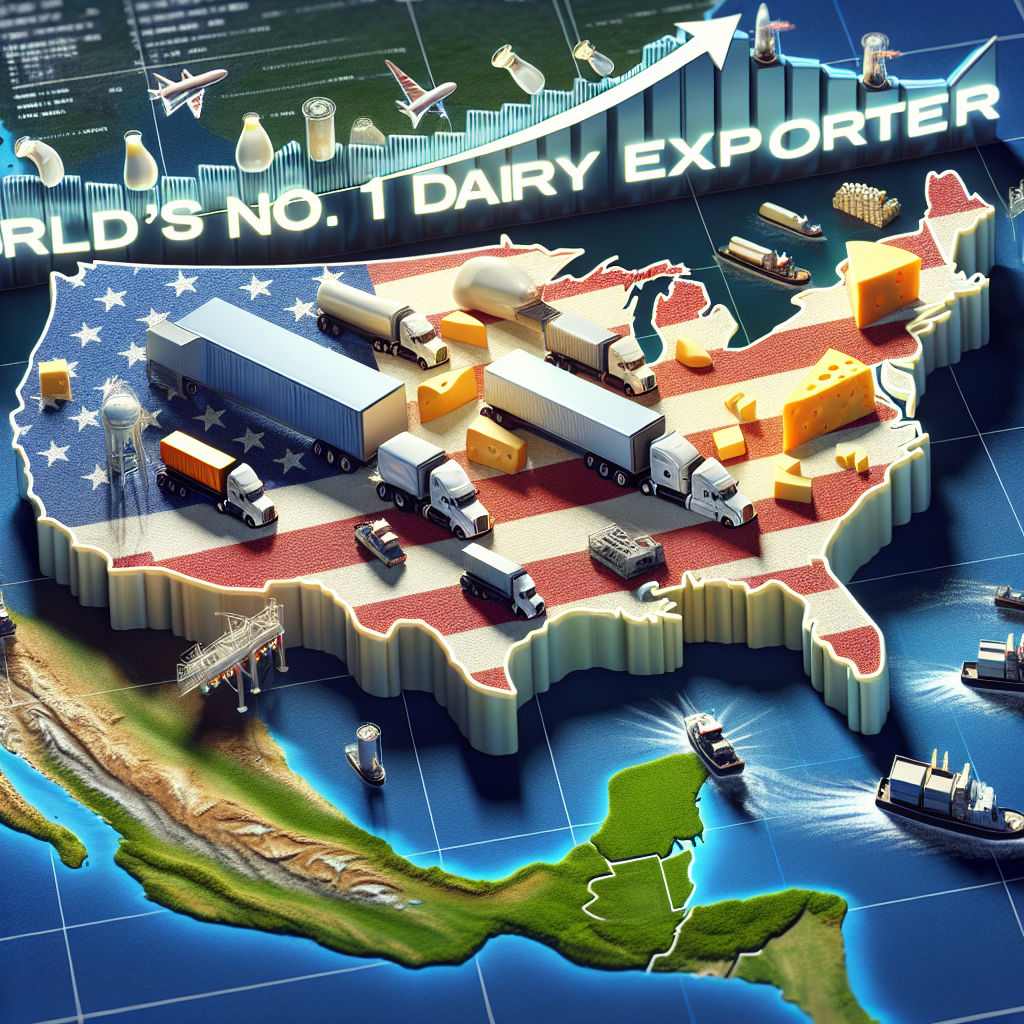
NewsSubscribe
First
Last
Consent

U.S. Dairy Industry Demands Immediate Action Against Colombia’s Unjust Milk Powder Tariffs

Learn why the U.S. dairy industry demands swift government action against Colombia’s unjust milk powder tariffs. How will this impact American dairy farmers?

Summary:

The U.S. Dairy Export Council (USDEC) and National Milk Producers Federation (NMPF) are raising concerns as Colombia plans to impose a 4.86% tariff on U.S. milk powder exports, citing unsubstantiated claims of undue subsidies. These organizations argue that such tariffs threaten to disrupt a longstanding dairy trade relationship, impacting both economies by affecting dairy farmers, exporters, and broader supply chains. Krysta Harden, president and CEO of USDEC, emphasized the need for prompt and decisive U.S. government action, condemning Colombia’s politically motivated, protectionist measures, which jeopardize U.S. economic interests and harm Colombian companies that rely on affordable, high-quality U.S. dairy products.

Key Takeaways:

  • The U.S. Dairy Export Council (USDEC) and National Milk Producers Federation (NMPF) urge U.S. government intervention.
  • Colombia’s government plans to implement a 4.86% tariff on U.S. milk powder exports.
  • Both USDEC and NMPF assert that U.S. milk powder exports are not subsidized.
  • Colombia acknowledged multiple factors affecting its dairy sector, disputing the need for tariffs.
  • Preliminary tariffs could destabilize the U.S.-Colombian dairy trade relationship built over decades.
  • Industry leaders criticize Colombia’s approach, citing it as politically motivated and protectionist.
  • Past instances indicate Colombia’s pattern of imposing similar trade barriers on other U.S. exports.
  • Investigation processes will include evidence collection and public hearings.
  • Tariffs, if finalized, could last up to five years, with reviews pending.
U.S. dairy exports, Colombia milk powder tariffs, USDEC NMPF response, dairy industry protectionism, U.S. milk powder subsidies, Colombian trade barriers, economic impact dairy sector, international dairy market, dairy export statistics, U.S. Colombia trade relations.

Imagine opening the morning news and discovering that a critical trade partner has implemented tariffs that jeopardize your livelihood. This is the reality that dairy producers in the United States face today, as the United States Dairy Export Council (USDEC) and National Milk Producers Federation (NMPF) express their deep dissatisfaction with Colombia’s preliminary verdict targeting U.S. milk powder exports. “Unfortunately, the Colombian government has chosen to use these politically motivated allegations to impose protectionist trade barriers, which will ultimately affect not only U.S. exporters but Colombian companies and workers who rely on U.S. dairy products and ingredients,” said Krysta Harden, CEO of USDEC. The preliminary finding imposes an extra 4.86% duty on U.S. milk powder exports to Colombia, potentially affecting production choices, investment plans, and job security for dairy farmers and industry experts. This could lead to reduced production, stalled investment, and job losses in the U.S. dairy sector.

Trade Dispute Jeopardizes Decades-Long U.S.-Colombian Dairy Partnership 

The United States dairy sector has long connected positively with Colombia, delivering high-quality milk powder and other dairy products to the country’s developing dairy market. However, this relationship is under tremendous pressure due to a recent preliminary verdict by the Colombian Government. This verdict, which puts a 4.86% tax on U.S. milk powder exports, is based on charges that the U.S. government unfairly subsidizes these exports.

The core of the problem is Colombia’s argument that subsidies offered to U.S. dairy farmers drive down market prices for milk powder, putting Colombian producers at a competitive disadvantage. The United States Dairy Export Council (USDEC) and the National Milk Producers Federation (NMPF) have strenuously denied these assertions, stressing that no evidence supports them.

Despite the absence of supporting data, Colombia has moved on with its decision, thus acting as a protectionist policy. This decision jeopardizes U.S. dairy exporters’ economic interests while potentially affecting Colombian sectors and customers who depend on low-cost, high-quality U.S. dairy goods. The USDEC and the NMPF see this levy as part of Colombia’s more significant, misguided attempt to protect its sectors via unfair trade tactics.

Unpacking the Economic Ties: How U.S. Dairy Exports Fuel Both Nations 

The U.S. dairy sector participates in both home and international markets. In 2020 alone, U.S. dairy exports totaled $6.6 billion, with over $92 million in milk powder exported to Colombia, making it one of the top destinations for this commodity [Source: USDA]. This demonstrates the critical economic tie between the United States and Colombia in the dairy industry.

U.S. dairy goods significantly contribute to the Colombian market, accounting for roughly 20% of total milk powder imports [source: ITC Trade Map]. Such figures highlight the interconnectedness of the two countries’ dairy sectors and the possible disruptions created by the proposed tariffs.

Economically, the dairy business in the United States is a powerhouse, delivering more than $628 billion to the economy each year and sustaining approximately 3 million employees [source: IDFA]. This emphasizes the importance and broader economic repercussions of Colombia’s decision to levy further taxes on U.S. milk powder.

Given these data, the proposed 4.86% tax may significantly impact U.S. dairy exporters and Colombian enterprises that depend on U.S. dairy goods. The importance of government involvement cannot be emphasized enough.

Industry Leaders Speak Out: Unfair Tariffs Threaten U.S.-Colombian Trade Relations 

Stakeholders in the U.S. dairy industry are very concerned about the implications of Colombia’s decision. Krysta Harden, President and CEO of USDEC, stated, “It’s unfortunate that the Colombian government has chosen to use these politically motivated allegations to impose protectionist trade barriers, which will ultimately harm not only U.S. exporters but also Colombian companies and workers who rely on U.S. dairy products and ingredients.”

President and CEO of NMPF, Gregg Doud, echoed this, saying, “Today’s preliminary findings show once again that the current Colombian government does not respect its trade commitments.” Instead of cooperating with the United States government and the dairy sector to settle this problem mutually beneficially, Colombia has opted to proceed with this meritless probe. The U.S. government must utilize every available instrument to combat the unjustified levies on U.S. milk powder”.

These leaders emphasize the tariffs’ unfair character and more significant economic and political implications. Their comments highlight the potential damage to U.S. and Colombian interests, notably Colombian businesses and workers who rely on a stable and open trading relationship with U.S. dairy exports.

An Imminent Economic Ripple Effect: How Colombia’s 4.86% Tariff on U.S. Milk Powder Transcends Immediate Trade Tensions

The placement of an extra 4.86% tax on U.S. milk powder shipments to Colombia goes beyond current trade issues; it represents a more significant economic disruption that might affect both American and Colombian markets. These duties impose an extra financial burden on U.S. dairy producers and exporters, potentially reducing profit margins. Given that the United States shipped over $2.3 billion in dairy goods to Latin America in 2021 alone, with Colombia being a key partner, these tariffs may dramatically lower the amount of U.S. dairy exports, jeopardizing domestic income streams (USDEC).

On the Colombian side, local businesses and workers that depend on U.S. dairy goods fear higher pricing and possible shortages. The United States provides high-quality dairy ingredients for Colombia’s food manufacturing industries. Increased tariffs may raise manufacturing costs for Colombian enterprises, making their products less domestically and globally competitive. Consequently, Colombian consumers may see increased pricing, and local businesses may suffer significant operational issues. This could lead to reduced competitiveness, increased consumer prices, and operational challenges for Colombian businesses.

Furthermore, economic interdependence between the United States and Colombia extends beyond dairy. Previous disputes, such as Colombia’s strict restrictions against U.S. ethanol and chicken, point to a trend of trade barriers that might jeopardize the two countries’ long-standing economic partnership. If left unresolved, these moves may force a reevaluation of trade policy, perhaps leading to retaliatory tariffs from the United States, growing into a more significant trade battle affecting many sectors. This could lead to a broader trade conflict, potentially affecting multiple sectors and significantly deteriorating the U.S.-Colombia trade relationship.

The stakes are significant for both nations. According to the USDA Economic Research Service, trade obstacles often result in retaliatory measures, which reduce international commerce by up to 20% over five years. These tariffs add to the industry’s already complicated and risky situation, which includes shifting global dairy prices, international trade conflicts, and supply chain disruptions.

Although the proposed tariffs’ immediate impact may seem restricted to the dairy industry, the long-term economic consequences might be far-reaching. The U.S. and Colombian economies stand to lose significantly, emphasizing the critical need for diplomatic settlement and cooperative trade policies.

Swift and Strategic Response: Leveraging Diplomacy and Retaliation to Protect U.S. Dairy Interests 

The problem requires fast and decisive action from U.S. trade authorities. But what can the U.S. government do to oppose Colombia’s unreasonable tariffs? Leveraging diplomatic networks is critical. The United States may take this problem to international trade authorities like the World Trade Organization (WTO) to seek a settlement based on existing trade agreements. They may also contemplate retaliatory taxes or sanctions on Colombian imports as a strategic reaction.

The need for such actions cannot be emphasized. This is about more than just trade policy; it is also about American dairy farmers’ livelihoods and the integrity of global trade processes. The United States safeguards its economic interests and fair trade ideals by ensuring that trade regulations are obeyed and enforced.

As a dairy industry expert, think about the more significant ramifications. How may these activities impact your firm, either directly or indirectly? Now is the moment to push for fair trade practices and policies that provide a level playing field for everybody. We must keep foreign governments responsible and uphold the rules underlying global trade.

Not an Isolated Case: Colombia’s Pattern of Protectionist Measures Against U.S. Exports

Imposing a 4.86% levy on U.S. milk powder is uncommon. Colombia has already implemented similar protectionist restrictions against other U.S. commodities. For example, in recent years, Colombia imposed taxes on U.S. ethanol shipments despite a lack of factual evidence to support such steps. Furthermore, Colombia has imposed unjustified import prohibitions on U.S. chicken and beef, citing safety and regulatory concerns without sufficient evidence. These frequent measures indicate a tendency to utilize trade barriers to protect local companies from foreign competition rather than address fundamental difficulties inside their sectors. This repeating practice contradicts the spirit of fair trade agreements and points to a more significant trend of protectionism affecting numerous U.S. agriculture and export sectors. [Source: USDEC; NMPF]

The Path Forward: Evidence, Hearings, and Potential Long-Term Tariffs

The Colombian authorities will acquire further evidence as the probe moves on. This phase tries to back up the accusations made against U.S. dairy exports. Near the conclusion of this evidence period, a public hearing will be held in which stakeholders may submit their views for or against adopting these tariffs.

The provisional 4.86% tax on U.S. milk powder will last four months. If the study finds the tariffs justified, this preliminary step might become a definitive decision. Such a ruling might apply tariffs for up to five years before requiring a reconsideration.

Frequently Asked Questions 

What are the main reasons behind Colombia’s new tariffs on U.S. milk powder? 

Colombia’s Government says that U.S. milk powder exports are heavily subsidized, resulting in unfair competition for Colombian dairy farmers. The U.S. Dairy Export Council (USDEC) and the National Milk Producers Federation (NMPF) say these allegations are unfounded and politically driven.

How will the tariffs affect U.S. dairy exporters? 

The increased duty of 4.86% will raise prices for U.S. dairy exporters, making their goods less competitive in the Colombian market. This might result in lower market share and financial losses for American dairy producers and exporters.

What impact will the tariffs have on the Colombian dairy industry? 

While the tariffs benefit Colombian dairy farmers, industry analysts believe they may affect Colombian businesses and workers dependent on low-cost U.S. dairy goods and additives. The protectionist action may disrupt supply chains and raise expenses for local enterprises.

What actions are U.S. dairy organizations and officials taking in response? 

USDEC and NMPF urge U.S. trade authorities to contest Colombia’s decision and protect American dairy interests. They underline the need for a prompt and intelligent reaction to communicate that such protectionist measures will not be allowed.

Is there any precedent for Colombia imposing similar trade barriers on U.S. products? 

Colombia has already filed litigation against U.S. ethanol exports and prohibited imports of U.S. chicken and meat. This pattern reflects a more significant trend of protectionist actions against U.S. exports.

What are the next steps in the tariff investigation? 

The Colombian Government will gather further information and convene a public hearing to weigh arguments in the case. The provisional tariff will be in effect for four months during the study. Tariffs may be maintained for up to five years after a final ruling.

The Bottom Line

The U.S. dairy sector faces a big challenge as Colombia’s planned 4.86% tax on U.S. milk powder jeopardizes economic and commercial ties between the two countries. Leading industry voices from USDEC and NMPF have voiced deep dissatisfaction with Colombia’s unfounded subsidy accusations and protectionist practices, which risk decades of cooperation.

The need for immediate government action cannot be emphasized. As Colombia progresses with its meritless probe, the effect on American dairy producers and exporters may be significant, perhaps reverberating across other sectors owing to a history of discriminatory policies. U.S. trade authorities must use all available resources to combat these discriminatory levies while adhering to existing trade agreements.

Finally, fair trade is a foundational premise for long-term economic cooperation. Ignoring such protectionist activities might have long-term ramifications, jeopardizing the integrity of international trade agreements and damaging companies that rely on these critical economic transactions. Will the U.S. government rise to the occasion and protect the interests of the dairy sector, or will inactivity pave the way for further unjustified trade barriers?

Learn more:

Join the Revolution!

Bullvine Daily is your essential e-zine for staying ahead in the dairy industry. With over 30,000 subscribers, we bring you the week’s top news, helping you manage tasks efficiently. Stay informed about milk production, tech adoption, and more, so you can concentrate on your dairy operations. 

NewsSubscribe
First
Last
Consent

How the U.S. Can Become the World’s No. 1 Dairy Exporter: Strategies and Challenges

Can the U.S. surpass New Zealand and the EU to become the top dairy exporter? Discover the strategies and challenges ahead for American dairy farmers.

Summary:

Currently, the U.S. ranks third in the world for dairy exports, trailing behind New Zealand and the European Union. But what will it take for American dairy to climb to the top? Krysta Harden, president and CEO of the U.S. Dairy Export Council (USDEC), believes the U.S. has what it takes. With increased productivity, cutting-edge technologies, and a commitment to sustainability, the U.S. dairy industry could soon surpass its competitors. However, significant challenges, including trade barriers and local community resistance, could impede this progress. The U.S. Dairy Export Council has played a crucial role in changing the landscape of American dairy exports since its inception in 1995. The key strengths of the U.S. dairy industry include abundant natural resources, technological advances, and strong government support. To capitalize on emerging markets, U.S. dairy producers and exporters should develop ties with these markets, build trade connections, and encourage cooperation with local companies and governments to develop dairy products customized to regional taste preferences and nutritional requirements. Effective branding is also essential for U.S. dairy products to appeal to health-conscious customers worldwide.

Key Takeaways:

  • The U.S. ranks as the third-largest dairy exporter, behind New Zealand and the European Union.
  • Increasing global demand and new technologies position the U.S. for potential growth in dairy exports.
  • Government support and favorable policies provide competitive advantages for U.S. dairy producers.
  • Challenges include community encroachment, protectionist trade barriers, and industry consolidation.
  • Emerging markets and changing dietary habits offer new opportunities for U.S. dairy products.
  • Young people entering the dairy industry bring optimism and energy to future growth prospects.
U.S. dairy industry, dairy exports growth, U.S. Dairy Export Council, global dairy market, dairy production technology, government support for dairy, trade challenges in dairy, emerging dairy markets, dairy marketing strategies, sustainable dairy practices.

Have you ever wondered what it would take for U.S. dairy to overtake the present global export leaders? Right now, New Zealand and the European Union lead, but there is speculation in the business that America may soon take the top rank. With U.S. dairy exports on the rise, now is an exciting moment to get engaged in this industry. “It is a fascinating time to be in dairy, frankly, in our country,” says Krysta Harden, President and CEO of the United States Dairy Export Council. She thinks the United States is poised to become the world’s top dairy exporter. The dairy business in the United States is well-positioned to face future difficulties because of significant natural resources and technological improvements. But what would it take for U.S. dairy to claim the top spot?

Dairy ExporterAnnual Export Value (in billions USD, 2023)Primary Export Products
New Zealand$6.8Milk powder, butter, cheese
European Union$5.5Cheese, milk, cream
United States$2.6Cheese, whey, milk powder

From No. 3 to No. 1: Can the U.S. Close the Dairy Export Gap?

The United States ranks third in the worldwide dairy export market, following New Zealand and the European Union. For example, despite its smaller agricultural base, New Zealand dominated the globe in dairy exports, valued at $6.8 billion in 2023. The European Union, exploiting its enormous dairy sector across many member states, outperformed the United States. However, the United States is just a little behind, with $2.6 billion in dairy exports recorded for the same year. This information clearly shows the industry’s current standing, keeping the audience informed and aware.

While the United States recorded $2.6 billion in dairy exports in the same year, these figures indicate a significant potential for expansion. The United States has made an impressive leap from exporting just 3-5% of its total dairy output in the mid-1990s to 16-20%. This substantial growth trajectory not only demonstrates the potential for future gains but also instills a sense of excitement about the industry’s growth and its future position in the worldwide market.

Trade restrictions and regulatory concerns still exist at home and in target countries despite advances. However, combining improved technological adoption, government assistance, and a reenergized, younger workforce allows the U.S. dairy sector to bridge the gap with its main rivals.

USDEC’s Journey: From Humble Beginnings to Export Powerhouse

Since the United States Dairy Export Council (USDEC) started its mission in 1995, the landscape of American dairy exports has changed dramatically. When USDEC began, it exported 3-5% of the country’s dairy output. Fast forward to today, and that percentage has risen by 16-20%. This remarkable expansion not only demonstrates the dairy industry’s tenacity, creativity, and commitment to expanding into foreign markets but also underscores the crucial role of USDEC in this growth, instilling confidence in the industry’s leadership.

The U.S. Dairy Industry’s Key Strengths: Natural Resources, Technological Advancements, and Government Support. These pillars of strength underpin the industry’s current position and provide a solid foundation for future growth and success, instilling confidence and reassurance in the industry’s competitive position. These pillars of strength underpin the industry’s current position and provide a solid foundation for future growth and success, instilling confidence and reassurance in the industry’s competitive position.  The dairy business in the United States has many vital advantages that position it for significant expansion worldwide. What distinguishes American dairy is natural resources, technical advances, and strong government backing.

  • Natural Resources
    The vast area of the United States offers abundant natural resources required for dairy production. “We are a big country with a lot of natural resources, including land, water, and proximity to markets,” says Krysta Harden, highlighting the United States’ geographical advantages. This availability enables diversified and large-scale dairy production throughout many states.
  • Technological Advancements
    The American dairy sector has made significant progress in embracing new technology. The industry is leading the way in innovation, from milking process automation to data-driven methods to herd management. “Our dairy farmers are very adaptive to new technologies and innovations,” Harden says. These improvements increase production and enhance sustainability, making American dairy more competitive globally.
  • Government Support
    Unlike other rivals, U.S. dairy producers receive substantial government support. Various initiatives and incentives reduce barriers and open up new markets. “We also have much help from our government with incentives, instead of the stick that some of our competitors are feeling,” points out Harden. The USDA, in particular, is essential in promoting American dairy exports, making U.S. goods more available abroad.

Combining these strengths—natural resources, technical breakthroughs, and government support—puts the United States dairy sector in a solid position to grow its worldwide presence and perhaps become the world’s biggest dairy exporter.

Challenges to Overcome: Encroachment and Trade Barriers 

Transitioning the U.S. dairy sector from third-largest to number-one exporter will take work. Encroachment is a substantial difficulty. Krysta Harden puts it best: “I think as folks move to the country and don’t understand that dairying happens every day, and you have to deal with waste products, and you have issues, sometimes it’s just that simple in your community.” This demonstrates the rising tension between increased residential areas and dairy farms.

Another critical concern is various nations’ imposition of trade obstacles and protectionist measures. According to Harden: “They are putting up artificial barriers on our products that are not just tariffs, but also other standards and other issues limiting us being able to get into markets.” These non-tariff obstacles vary from high product standards to complicated certification processes, often intended to protect local sectors from competition.

For example, the European Union’s strict Geographic Indication (G.I.) regulations may ban American items from entering their market unless they match precise locality-specific standards. Such protectionist laws impede the free movement of U.S. dairy goods to profitable international markets.

Furthermore, tackling these concerns would need new solutions and solid diplomatic initiatives. According to Harden, “We must be inventive. We must collaborate with other governments and processors from other nations.” This entails tailoring product offerings to satisfy diverse foreign requirements and cultivating solid international connections to traverse these regulatory environments efficiently.

Identifying and Capitalizing on Emerging Markets 

The dairy business in the United States has enormous growth potential, but where are the following adequate opportunities? Consider Southeast Asia, Sub-Saharan Africa, and even the Middle East. These regions are witnessing significant population expansion and a growing middle class, which raises demand for dairy products.

What measures should U.S. dairy producers and exporters consider? First, it is critical to develop ties with these markets. Building good trade connections may help you negotiate local rules and gain confidence from new consumers. Encourage cooperation with local companies and governments to develop dairy products customized to regional taste preferences and nutritional requirements.

Remember to underestimate the power of marketing. Effective branding may help U.S. dairy products stand out in crowded markets. Highlighting American dairy’s quality, safety, and nutritional advantages may appeal to health-conscious customers worldwide.

Now, let us speak about logistics. Efficient supply networks are crucial. Concentrate on optimizing routes, lowering transportation costs, and maintaining product freshness. Using modern technologies for monitoring and management may have a significant impact.

But here’s the kicker: communication and education are game changers. Krysta Harden believes that helping customers understand how to include dairy in their diets is critical. Educating chefs, food service professionals, and consumers on the variety and advantages of dairy products may significantly increase demand.

Consider hosting dairy-tasting events and culinary showcases and collaborating with local chefs to demonstrate how American dairy can be a mainstay in various cuisines. These activities foster a cultural link, making U.S. dairy more known and appealing.

The path to becoming the world’s leading dairy exporter is fraught with hurdles. Nonetheless, with the appropriate strategy and an emphasis on education, the U.S. dairy business may capitalize on new prospects and dominate the worldwide market.

Riding the Wave of Shifting Dietary Habits 

Ever wonder how global trends are changing the dairy industry? You are not alone. Globally, there is an increasing need for protein and health-conscious diets, which is changing customer tastes. The International Dairy Federation reports a rise in high-protein diets primarily relying on dairy products.

Why does this matter? This development may represent a significant opportunity for dairy producers in the United States. Consumers increasingly seek nutrient-dense foods like cheese, yogurt, and whey protein. These goods are high in critical amino acids, providing the health boost that many people want. According to the Global Dairy Market Report (2022), demand for dairy protein products is growing at a 3.5% annual rate, especially in Asia and Latin America. That’s a market asking to be explored.

But it isn’t just about protein. There is a more significant trend toward health foods that stress natural, organic, and sustainable components. With its dedication to sustainability and innovation, U.S. dairy is ideally positioned to capture this market. Implementations such as sustainable agricultural techniques and organic certifications help persuade health-conscious buyers.

Consider the thriving yogurt business in China or the rising cheese consumption in South Korea. These are not simply trends but indicators of the future of U.S. dairy exports. By harmonizing with these worldwide dietary developments, the U.S. dairy business may increase its market share and reach the top rank.

Competitive Edges and Hurdles: Comparing U.S. Dairy with New Zealand and the E.U.

There are clear competitive advantages and drawbacks when comparing the U.S. dairy sector to New Zealand and the European Union. Understanding these may help us determine what the United States needs to do to rise to the top.

Production Costs 

  • U.S.: The U.S. benefits from economies of scale due to its vast land resources and technological advancements, which can lead to lower production costs per unit.
  • New Zealand: New Zealand has a highly efficient grass-fed system, which reduces feed costs and contributes to lower overall production expenses. 
  • European Union: The E.U. grapples with higher input costs due to stringent regulations and smaller average farm sizes, making production more expensive than the U.S. and New Zealand. 

Quality Standards 

  • U.S.: U.S. dairy products are often praised for their consistent quality. The USDA sets standards to ensure high safety and quality, appealing to international buyers.
  • New Zealand: New Zealand has an excellent reputation for grass-fed dairy products. Their clean, green image resonates well with health-conscious consumers. 
  • European Union: The E.U.’s stringent quality controls and diverse product offerings are strong selling points in the global market. However, navigating these regulations can sometimes be costly. 

Logistical Efficiencies 

  • U.S.: The U.S. boasts advanced transportation and infrastructure systems, giving it a logistical edge. However, the country’s sheer size can lead to inefficiencies when moving products from coast to coast.
  • New Zealand: Despite its smaller size, New Zealand has efficient dairy collection and export systems. However, being geographically isolated can increase shipping times and costs. 
  • European Union: The E.U. benefits from its proximity to many European consumer markets, decreasing transportation costs and delivery times. However, varying regulations across member countries can lead to logistical complications. 

By solving these issues—particularly lowering production costs, maintaining high-quality standards, and improving logistical efficiencies—the United States may better position itself as the world’s top dairy exporter. 

Trade Policies and International Relations: Paving the Way for U.S. Dairy Exports 

Trade policy and foreign relations are critical factors in increasing U.S. dairy exports. Trade agreements, taxes, and geopolitical considerations may all help or hinder U.S. dairy products’ entry into other markets. For example, advantageous trade agreements may reduce tariffs, making U.S. goods more competitive in price compared to local items in target nations.

The United States Dairy Export Council (USDEC) is heavily negotiating these agreements. Current trade discussions with nations such as China, Japan, and even the United Kingdom might have a significant influence. For example, a recent deal with Japan reduced duties on U.S. cheese, allowing for a more competitive market price and higher export volume.

Tariffs are just one part of the puzzle. Bilateral ties and regional stability are two geopolitical issues that influence market behavior. Trade disputes, such as those between the United States and China, may lead to retaliatory tariffs, considerably influencing export volumes. On the other hand, solid diplomatic connections may help streamline commercial flows and market penetration.

Furthermore, non-tariff obstacles such as different quality requirements and import limits restrict market access. The USDEC strives to match international standards, which might eventually relieve these limitations. The prospective ratification of new agreements, such as the United States-Mexico-Canada Agreement (USMCA), holds hope for the future, delivering faster procedures and lowering obstacles to U.S. dairy exports.

These agreements’ difficulties highlight the need for a deliberate, educated approach to international commerce. As new agreements are completed, they may drastically alter the environment for U.S. dairy exports, pushing us closer to the top rank internationally.

Youthful Enthusiasm: The Future of U.S. Dairy 

Let us now focus on the growing interest among younger generations in the dairy business. Have you recently observed a rise in young excitement on dairy farms? Industry executives, such as Krysta Harden, undoubtedly have, and they view this as a foundation for future success.

“Our youth want to be a part of the progress. They want to contribute to global nutrition, and they view dairy as a terrific opportunity to do so,” Harden said. Young people provide new insights, inventive ideas, and a solid dedication to sustainability. These talents are crucial as the sector faces difficulties and attempts to expand its worldwide reach.

This fresh surge of excitement promises continuity and progress. With dairy technology constantly evolving, younger farmers are very tech-savvy and fast to accept new advances. This agility guarantees that the U.S. dairy sector keeps up with global competition while leading innovation and environmental practices.

Furthermore, many young individuals joining the profession want to contribute to their local and global communities. Their grasp of sustainable methods ideally aligns with customer preferences for ethically manufactured and ecologically friendly items. This generates a positive feedback loop in which conscientious manufacturing matches market desires, increasing customer trust and boosting sales.

So, what is the endgame here? Suppose these young visionaries keep up their momentum. In that case, the U.S. dairy sector might not only reduce the export gap with heavyweights like New Zealand and the European Union but outperform them. It’s an exciting period entire with promise and opportunity. As these ambitious people take the reins, we should expect the U.S. dairy business to become more dynamic, robust, and internationally powerful.

The Bottom Line

The United States dairy business is at a crossroads. With abundant natural resources, a government that promotes agricultural expansion, and an energetic younger generation ready to push the business ahead, the United States has the potential to become the world’s biggest dairy exporter. However, issues like encroachment and trade obstacles must be tackled first. As American dairy producers continue to innovate and adapt, the question remains: Are we prepared to grasp the opportunity and propel U.S. dairy to the top of the global market? Only time will tell, but the groundwork is clearly in place for a bright and wealthy future.

Learn more: 

Join the Revolution!

Bullvine Daily is your essential e-zine for staying ahead in the dairy industry. With over 30,000 subscribers, we bring you the week’s top news, helping you manage tasks efficiently. Stay informed about milk production, tech adoption, and more, so you can concentrate on your dairy operations. 

NewsSubscribe
First
Last
Consent

New Zealand Milk Payout Soars: Record Cheese and Butter Profits

New Zealand’s milk payout hit record highs in September 2024. What does this mean for dairy farmers and global markets? Dive into our expert analysis.

Summary:

Is your dairy business ready for a boost? The latest milk payout report from New Zealand has brought encouraging news amidst global challenges. The September 18, 2024, report highlights a notable surge in milk streams, with butter, AMF, and SMP emerging as the most profitable products, pushing estimated payouts to NZD 9.51/kg. Fonterra’s revised forecast underscores a positive trend, with the season-to-date GDT average increasing to NZD 9.44/kg MS. While North Asian purchases have declined, the Middle East and North America are increasing their buying activity. The upcoming US Federal Reserve rate cuts could cause turbulence in Kiwi markets. StoneX estimates the milk priceto be $9.21, while the SGX/NZX MKP is at $9.05, and the latest GDT auction result shows a 0.8% increase. US milk production slipped, the EU showed modest growth, and Argentina exceeded expectations for the third month. Despite WMP remaining less lucrative, with an NZD 9.51/kg payment, the market situation is favorable for a stable future.

Key Takeaways:

  • Milk stream values increased overall, with butter, AMF, and SMP remaining top destinations.
  • Cheese saw the most significant value increase, positioning it as the second most profitable milk destination.
  • The latest GDT auction indicates a potential payout of NZD 9.51/kg, boosted by a slight increase in SMP and WMP prices.
  • Fonterra raised its seasonal milk price forecast, and GDT results brought the season-to-date average to NZD 9.44/kg MS.
  • North Asian purchases decreased from last year but still dominate purchase volumes, particularly for SMP.
  • The Middle East and North America increased their dairy purchase volumes compared to last year and the last event.
  • Impending US Federal Reserve rate cuts could impact Kiwi markets, adding potential near-term volatility.
  • US milk production for July dropped by 0.4%, while EU production in June saw a 0.7% uptick.
  • Argentina’s milk production for July performed better than expected for the third consecutive month.
  • Global dairy imports for June fell by 5.6%, though demand remained resilient overall, with China showing unexpected strength.

This season, all eyes are on New Zealand’s dairy sector, which has achieved record earnings. Fonterra’s milk price range projection for this season, indicating an approximate payment of NZD 9.51/kg, has sparked considerable interest. The most recent projection from Fonterra provides insights into the dynamics of global demand and a comparison of milk output in the US, EU, and Argentina. Join us as we delve into these changes and their broader implications for the dairy industry and other sectors.

Milk Streams Surge: Butter, AMF, and SMP Lead the Pack; Cheese Shines Brightly

The value of milk streams has significantly increased, signaling promising developments for dairy producers. The three most lucrative products, skim milk powder (SMP), butter, and anhydrous milk fat (AMF), remain profitable. The rise in SMP value has offset the fall in butter and AMF values, maintaining their category’s value.

Over this time, cheese has been a standout performer, with the most gain in value. Cheese, in particular, had a 0.32 NZD/kg increase in value, solidifying its ranking as the second-most lucrative destination for milk.

Conversely, despite a gain of 0.11 NZD/kg in this event, whole milk powder (WMP) remains the least lucrative destination. The latest GDT auction results, in particular, would provide an anticipated payment of NZD 9.51/kg, suggesting that dairy producers who concentrate on these lucrative milk sources have a bright future.

The Latest GDT Auction: A Mixed Bag for NZ Dairy Farmers 

The most recent GDT auction results mixedly impacted dairy producers in New Zealand. Notably, due to modest increases in the price of powder, particularly SMP and WMP, the expected payment is a respectable NZD 9.51/kg. Our season-to-date GDT average increased by NZD 0.01/kg, reaching NZD 9.44/kg MS. This modest but welcome increase is particularly significant given the market volatility.

However, only some dairy products were successful. The fat markets witnessed some falls, but the GDT index was up 0.8%, less than anticipated. Butter and anhydrous milk fat (AMF) decreased by 1.7% and 1.2%, respectively. Considering their typical profitability, these lower statistics are a bit worrying.

Conversely, the powder markets performed relatively well. Whole milk powder (WMP) climbed by 1.5%, while skim milk powder (SMP) increased by 2.2%. Fonterra’s most recent projection indicates that these price increases for powder were sufficient to keep the price of milk falling into these categories stable.

Remarkably, while investing less than the previous year, North Asian purchasers still make up over half of the total purchases. However, areas such as the Middle East and North America saw increased buying volumes compared to last year and the previous event. This indicates a change in the demand for dairy products worldwide, which may have longer-term effects on marketing tactics.

The general market situation is favorable even if there is considerable volatility in some dairy products. The season-to-date GDT average has slightly increased, while SMP and WMP have performed well. These developments point to a more stable payment environment in the future. What say you, then? Are these encouraging enough results to maintain the momentum?

Regional Dynamics in Dairy Purchases: North Asia’s SMP Dependence and Rising Middle Eastern and North American Demand

The recent GDT event offers an intriguing glimpse into regional purchasing tendencies. Even though North Asia’s purchase volumes decreased from the previous year, they still made up more than half of all purchases. One of the main ingredients in this amount is skim milk powder (SMP). North Asia’s continuous dependence on SMP underscores its pivotal position in its import strategy for dairy products.

However, this pattern was not seen in North America or the Middle East. Both areas’ purchasing volumes rose not only from the prior event but also from the preceding year. This increase points to both an increase in demand and a calculated move to secure dairy goods in the face of volatile international markets. The way buying habits have changed in these various marketplaces highlights how the dairy industry constantly changes according to local and international economic signals.

Challenges Beyond the Numbers: Labor Shortages, Rising Costs, and Regulatory Pressures 

Despite the encouraging statistics, dairy producers nonetheless face several formidable obstacles. One of the primary problems is the ongoing labor shortage. The sector dramatically depends on trained laborers, and locating them is becoming increasingly difficult. Immigrant labor is increasingly essential to many farms, but restrictive immigration laws have made the issue worse. Some farmers use automation and robots to bridge the gap, but not all can afford these solutions.

Increasing input prices are another major obstacle. The cost of gasoline and electricity is still relatively high, and feed costs have skyrocketed. Due to these elevated costs, farmers are left with smaller profit margins. Some have embraced more environmentally friendly strategies to reduce long-term expenses, including enhancing feed efficiency and using renewable energy. Nevertheless, there is a significant up-front cost associated with this shift.

Regulatory constraints provide an additional level of intricacy. Environmental laws about water use and methane emissions are becoming more stringent, particularly in the European Union and New Zealand areas. Although these laws aim to make the sector more sustainable, they require expensive modifications and compliance procedures. Many farmers are interacting with legislators to strike a compromise that safeguards their livelihoods and the environment.

The dairy sector is well-positioned to meet future challenges and opportunities. Innovations in diet and genetics have the potential to enhance resilience and production. Business organizations and policymakers are advocating for improved labor laws and support networks. Even in the face of an uncertain future, dairy producers are demonstrating remarkable adaptability and perseverance. This adaptability instills optimism about the industry’s ability to navigate future changes.

Fed Rate Cuts: A Turning Point for Kiwi Dairy? 

The anticipated rate reduction by the US Federal Reserve could significantly impact Kiwi markets. The Federal Reserve has indicated a potential rate cut of 200 basis points by the end of 2025, which could lead to short-term volatility. But what does this mean for dairy producers in New Zealand? Lower US rates could lead to a decline in the US currency, strengthening the NZ dollar. If the Kiwi currency appreciates, New Zealand’s dairy exports could become more expensive for consumers abroad, potentially reducing demand. This information equips dairy professionals with the knowledge they need to navigate potential market shifts.

The Reserve Bank of New Zealand (RBNZ) needs help at home. In light of an early indication of a Q2 economic contraction, the RBNZ may prioritize growth over inflation in subsequent sessions, approving massive rate cuts of up to 50 basis points. Slashing interest rates might reduce borrowing costs for the dairy sector, enabling farmers to spend more on growth and productivity. However, there is a double-edged sword: export competitiveness may decline if these cutbacks result in a higher New Zealand currency.

Trends in the world economy also have a lasting impact. EU milk output increased by 0.7% in June, indicating a resurgence in the industry. In the meantime, Argentina’s output is declining, although more slowly. Global supply variations may impact worldwide dairy pricing. The slight improvement in Chinese imports for July and August, which are above expectations, still adds another complication. New Zealand dairy producers stand to gain from increased global demand, higher prices, and market stability in China.

Amidst this complex dance of domestic and international economic factors, the dairy sector in New Zealand will need to watch international market trends closely, as well as RBNZ’s rate choices and Federal Reserve policies. Farmers must be knowledgeable and flexible to overcome these obstacles and take advantage of new possibilities.

US Milk Production Faces Uphill Battle with Herd Size and Milk Yield Declines

The July statistics are consistent with the declining pattern of US milk output. The USDA’s lower adjustments to June statistics and a 0.4% drop from the previous year’s levels have created a problematic situation for the dairy sector. According to the adjustments, the herd size and cow milk output have been significantly reduced. The USDA has increased the herd size by 15,000 head, bringing attention to a more significant problem: a lack of replacement heifers.

Due to lower herd numbers, fewer cows are available to satisfy the needs of milk production, and this problem is made worse by the absence of healthy replacement heifers. This is a significant problem for dairy producers. It becomes harder to sustain production levels if there aren’t enough replacement heifers. Due to this shortage, producers are forced to depend primarily on the current herd, which might put stress on resources and cause sustainability problems in the long run.

Furthermore, while July’s milk’s high solids content contributed to a 1.4% increase in component-adjusted production, it was hardly enough to offset the overall drop in raw milk output. These tendencies have wider ramifications, which are concerning. Lower milk yields and dwindling herds threaten many dairy farms’ capacity to remain profitable and operate as a means of production. The industry must overcome this significant obstacle to maintain development and stability in the future. The shortage of replacement heifers is not simply a temporary issue.

The current patterns in US milk production highlight the growing difficulties dairy producers face. The changes made by the USDA suggest a continuous battle to sustain milk production and herd numbers, which is made worse by the crucial problem of replacement heifers. This environment presents the sector with significant obstacles and chances for strategic changes and breakthroughs.

EU Dairy Farmers Poised for Growth: June 2024 Brings Renewed Optimism

Promising trends have been seen in the EU milk production scenario, especially in June 2024. There has been a notable rise in fat and protein levels over the previous year, resulting in a 1.3% year-over-year increase in component-adjusted output. Considering the four months of stagnation before, this is a noteworthy reversal.

European dairy producers have excellent margins, partly because of rising butter prices and falling feed prices. We expect further expansion in EU milk output with these attractive margins. Analysts anticipate more robust growth starting in September as the market digests significant losses from the prior year.

According to the most recent figures, the headline milk output for the EU27+UK in June increased by 0.7% over the previous year, slightly better than anticipated. These indicators point to an increasing level of stability and profitability for farmers in the EU dairy industry.

Argentina’s Dairy Sector: Defying All Odds Amid Economic Turbulence

Argentine milk production has seen a wild ride this year but has also shown some unexpected resiliency. The year-over-year decrease in milk output in July was 4.8%, surpassing the expectation of -6.1%. The component adjustment reduces the decline to only 4.4% YoY. The dairy sector is taking notice of this third month’s continuous outperformance.

Why is this performance better than anticipated? The main drivers are record margins and high milk prices. Argentine dairy producers have been able to take advantage of these favorable circumstances at a time when many predicted they would face difficulties. Despite difficult meteorological and economic circumstances, farmers are encouraged to increase output by increasing margins, which not only helps them break even but propels them into profitability.

The prognosis for milk production in Argentina through 2024 is still cautiously hopeful. Even if the present trend points to further progress, it’s crucial to remember that total yearly output may still be less than 5% of what it was in prior years. Headwinds arise from high input costs and possible market changes. But if the climate of favorable margins continues, don’t be shocked if Argentina once again astounds the market with its tenacity.

Global Dairy Imports: June Dips but Resilience Shines Through 

June saw a decline in global dairy imports, down 5.6% from the previous year. The Global Dairy Import Demand Index, which does not include volatile economies such as China, Russia, and Venezuela, exhibits a similar pattern. Even with the current state of the GDP, the price of dairy products, and crude oil, June’s import data surpassed projections. This implies that demand is still relatively strong, even with the dip in the second quarter.

There might be a few variables at work in this situation. Global GDP growth rates are modest, indicating somewhat consistent but not exceptionally robust consumer spending power. The cost of dairy has varied, with specific products doing well while others have not. Crude oil prices have fluctuated, which affects transportation costs and total import charges.

The tale becomes intriguing regarding China, the biggest importer of dairy products worldwide. Chinese imports outperformed forecasts in July and early indications for August. However, the stability of China’s domestic market is still up for debate. Although better than anticipated, this result doesn’t wholly allay worries about continued demand in the area. Although the global dairy industry is resilient, keeping a careful eye on the dynamics as they continue to be complicated is still essential.

The Bottom Line

Finally, the dairy sector in New Zealand is experiencing tremendous success. That is shown by record payments and notable increases in milk streams, especially for butter, AMF, SMP, and cheese. This growing trend is reinforced by Fonterra’s favorable prognosis and the most recent GDT auction results. However, we are reminded that nothing in this sector is static because of regional dynamics and variations in the worldwide market.

What does this signify for the dairy industry’s future? What effects may rate reductions and changes in the world economy have on your business? It’s more important than ever to keep up with current developments. Consider how these changes affect your tactics and ensure you’re ready to adjust. Dairy has a bright but uncertain future, so taking the initiative will be essential. Continue reading, be involved, and be ready for whatever comes next in this fast-paced field.

Learn more: 

Join the Revolution!

Bullvine Daily is your essential e-zine for staying ahead in the dairy industry. With over 30,000 subscribers, we bring you the week’s top news, helping you manage tasks efficiently. Stay informed about milk production, tech adoption, and more, so you can concentrate on your dairy operations. 
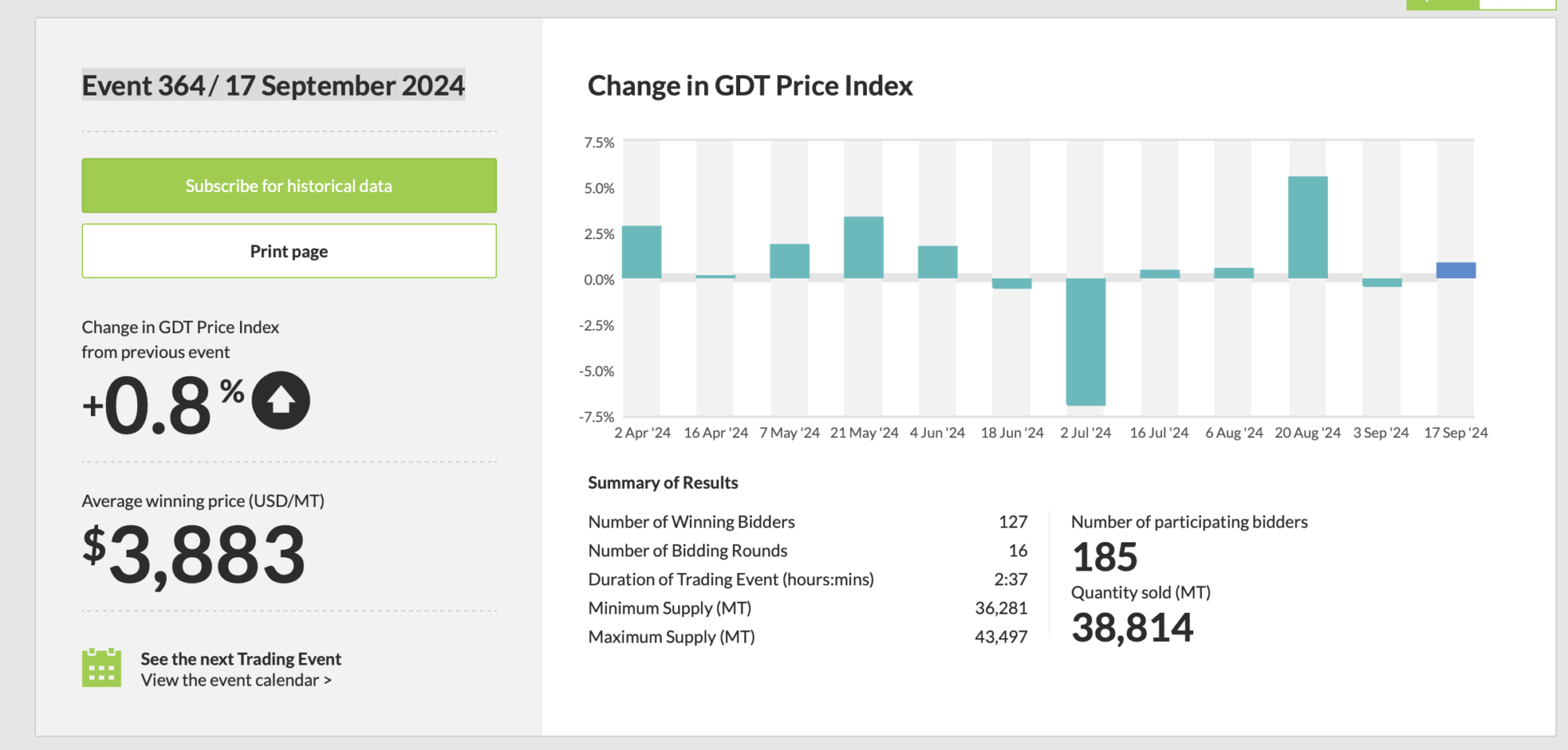
NewsSubscribe
First
Last
Consent

Australia Dairy Boom: Short-Term Gains Amid Long-Term Challenges

Australia’s dairy sector faces short-term gains and long-term hurdles. Can boosting milk yields counteract declining farm numbers and drought?

Summary:

Australia’s dairy industry started the 2024-25 season on a positive note, with July milk collections up by 1.6% compared to the previous year, according to Dairy Australia. This marks a continuation of last season’s growth, where milk production saw a 3% increase after years of stagnation. While higher farmgate milk prices fueled the boost, the Australian Bureau of Agricultural and Resource Economics and Sciences (ABARES) projects that prices will fall to $8.70/kg of milk solids for the new season, potentially challenging farms and opening doors for increased exports. Despite expectations of a slight decline in total milk production due to reductions in farm and cow numbers, yield improvements could partially offset these losses, indicating that the industry is poised to adapt.

Key Takeaways:

  • Milk production in Australia saw a 1.6% increase in the first month of the 2024-25 season compared to July 2023.
  • The 2023-24 season marked the first year of growth since 2020-21, setting a new benchmark for the Australian dairy industry.
  • Farmgate milk prices are estimated to decrease by approximately 8% in the 2024-25 season, reaching $8.70/kg of milk solids.
  • Lower domestic prices could open opportunities for increased dairy exports while reducing imports.
  • Despite the initial uptick, ABARES forecasts a 1% decrease in total milk collections for the 2024-25 season.
  • A continuous decline in the number of farms and dairy cattle poses ongoing challenges for the industry.
  • Long-term forecasts indicate reduced production due to fewer cows, drought-affected pastures, and retiring producers.

Australia’s milk output is rising, marking the first significant increase since 2017-18. From Dairy Australia: “July’s nearly 1.28 billion pounds of milk was a 1.6% increase over the same period last year, a promising start to the 2024-25 season.” This substantial growth provides crucial insights for dairy farmers and the companies that support them. It’s a testament to the resilience of the Australian dairy industry. But amidst this positive news, a question lingers: What does this signal for the future of the Australian dairy industry?

Riding the Wave: Aussie Dairy Industry Sees Promising Surge 

Australia has started the 2024-25 milk production season on a good note. According to Dairy Australia, milk collections increased by 1.6% in July compared to the previous month. This amounts to roughly 1.28 billion pounds of milk, indicating a solid start to the current season.

This growth is not occurring in isolation. Consider last season’s 3% growth, which ended a multi-year period of stagnation. It was the first time since the 2020-21 season that Australia saw a yearly increase in milk output. Even more striking, it was the first time a seasonal total increased by more than 1% since 2017-18.

These results represent more than simply a statistical gain; they signal an era of revival for Australia’s dairy sector. Higher farmgate milk prices in the 2023-24 season prompted producers to increase output to satisfy increased demand. As processors attempted to optimize capacity, they successfully lobbied for record-breaking milk prices, which fueled the industry’s significant expansion.

The Economics of Milk Production: What Do Lower Prices Mean? 

Economic variables influence the dynamics of milk production. Higher farmgate milk prices have boosted output, notably during the 2023-24 season, when prices reached record highs. These high prices have encouraged farmers to increase output, producing higher milk quantities as processors seek to fill their capacity.

It’s crucial to note that the Australian Bureau of Agricultural and Resource Economics and Sciences (ABARES) predicts a significant drop in farmgate milk prices in 2024-25, hovering around $8.70 per kilogram of milk solids. This anticipated 8% dip from the previous year’s highs, more in line with the five-year average, could pose challenges for the industry.

The consequences of this pricing change are numerous. Lower milk costs make Australian dairy products more competitive in the global market, thereby increasing exports that had previously declined owing to high pricing. On the other hand, decreased competition for milk due to rising quantities and the closure of certain processing plants may make it difficult for farmers to adjust to the changing environment. According to ABARES, although the general projection predicts a modest decrease in milk collection this season, incremental improvements in output may balance some production losses due to greater efficiency and agricultural techniques.

Lower Milk Prices: A Boon for Export Markets and Local Producers 

While dropping local milk prices may present challenges, it also provides a silver lining for Australia’s dairy export business. With record-high farmgate prices in 2023-24 eroding the country’s competitive advantage in the world arena, a drop to $8.70/kg of milk solids might revive export potential. Lower costs make Australian milk more appealing to overseas customers, potentially leading to increasing export quantities.

This transformation occurs at a crucial moment. High domestic pricing has significantly declined exports, making Australian milk too expensive for many overseas markets to justify. As a result, the local market saw increased dairy imports, putting native farmers under pressure to compete with cheaper imported milk. The imminent price decline may cause a reversal of this trend. Domestic manufacturers may reclaim market share both at home and abroad.

The Australian Bureau of Agricultural and Resource Economics and Sciences (ABARES) predicts a 1% decline in total milk collections despite increased production. However, this does not necessarily spell doom. The expected lower prices may successfully balance the scales by increasing export volumes. This could create a more robust trade climate, where more significant exports offset the effects of decreased domestic output, offering hope for the industry’s future.

Ultimately, this shift in pricing approach might save Australia’s dairy industry. It increases Australian dairy’s worldwide competitiveness and reduces reliance on imports, stabilizing the business in volatile home and international markets.

Australia’s Unique Position in the Global Dairy Market: A Comparative Analysis

Australia has a unique and crucial position in the global dairy sector. Recent comparisons between Australia, New Zealand, and the United States show fascinating dynamics despite the nation’s long-standing role.

According to the International Dairy Federation, New Zealand dominates global dairy exports, accounting for around 30% of the global market share. In contrast, the United States has carved a sizable 14% stake, demonstrating its rising market position. On the other hand, Australia has a relatively modest 6% share of the world market, boosted by solid dairy farming and renowned exports but also challenged by rising production costs and a variable environment.

Australia’s share has fluctuated over the previous decade, driven by domestic variables such as drought and external influences such as global price fluctuations. Despite lesser numbers, Australian dairy products are valued for their high quality, giving them a competitive advantage. In contrast, New Zealand’s sector depends on steady, large-scale output aided by good grazing conditions and effective supply systems.

Export patterns help to explain these discrepancies. Australia’s dairy export growth has averaged roughly 1.9% yearly, sharply contrasting New Zealand’s outstanding 5% yearly increase. The United States follows similar tendencies as Australia, with a 2% growth rate, but benefits from a prominent local market that reduces international volatility. This implies that any fall in Australian output will significantly influence the global supply chain, especially in Asia, where Australian dairy is in high demand.

Although Australia’s share of the global dairy industry is lower than that of heavyweights such as New Zealand and the United States, it remains an important participant. The country’s dedication to quality and sustainability assures a loyal client base, even as it faces the difficulties of the contemporary dairy market.

Challenges on the Horizon: Navigating the Future of Aussie Dairy

Despite a promising start to the season, the Australian dairy sector confronts several difficulties that might dampen its early excitement. The continued fall in the number of farms and cows is a significant worry. As more producers retire and fewer new farmers replace them, the industry’s operating base shrinks.

Furthermore, dry conditions have burdened pastures, which are critical for sustaining high milk output. Drought reduces the quality and availability of feed and puts extra strain on cattle, lowering milk output. In this challenging context, the importance of sustainability and the need for creative agricultural techniques are underscored. These are not just solutions but inspirations for the industry’s future.

According to ABARES, total milk collections this season may be down 1% from the previous year. However, there is a silver lining: milk yields are predicted to increase by 0.3%, slightly offsetting the lower production. While this slight improvement in production is promising, it is evident that the path ahead will need careful planning and adaptability.

What exactly does this imply for you? As a dairy farmer or industry professional, you must be aware and prepared to react to these changing situations. Consider the possible effect on your business and prepare appropriately.

The Bottom Line

Australia’s dairy business is riding a wave of short-term success, with a solid start to the 2024-25 season. Higher farmgate prices from last year prompted this increase, but lower prices are on the horizon, possibly increasing export options. However, decreased prices bring significant issues, such as falling farm numbers, dwindling cow herds, and environmental pressures like drought. How can Australian dairy producers adapt as the business confronts great opportunities and terrible challenges? Considering what tactics will assure profitability and sustainability in the years ahead is essential. These critical choices will determine the future of Australia’s dairy sector.

Learn more: 

Join the Revolution!

Bullvine Daily is your essential e-zine for staying ahead in the dairy industry. With over 30,000 subscribers, we bring you the week’s top news, helping you manage tasks efficiently. Stay informed about milk production, tech adoption, and more, so you can concentrate on your dairy operations. 

NewsSubscribe
First
Last
Consent

0.8% Increase in Prices, Highlights from the Latest Global Dairy Trade Event 364

Explore the latest trends from Global Dairy Trade Event 364. How will a small price hike impact your dairy business? Read our expert analysis now.

global dairy trade, mozzarella cheese prices, lactose market trends, cheddar cheese increase, skim milk powder prices, whole milk powder trends, dairy market stability, dairy commodity prices, export dairy market, food service industry demand

Summary:

On September 17, 2024, the Global Dairy Trade (GDT) event 364 saw a modest increase in the price index by 0.8%, reflecting a cautiously optimistic market trend. Significant gains were noted in Mozzarella cheese (up 4.5% to $5,351/metric ton), lactose (up 3.5% to $896/metric ton), and modest increases in skim and whole milk powders, while butter and anhydrous milk fat prices saw a decline. 

Key Takeaways:

  • Global Dairy Trade index rose by 0.8% in the latest auction.
  • Notable price increases for mozzarella, lactose, and cheddar cheese.
  • Whole milk powder and skim milk powder also saw price hikes.
  • Butter and anhydrous milk fat prices decreased.
  • 127 winning bidders purchased a total of 38,814 metric tons of dairy products.
  • Irish milk processors have raised August milk prices in response to market dynamics.
  • Increases driven by strengthening cheese markets and positive dairy market recovery.
  • The latest auction continued to show constrained global dairy supply.
global dairy trade, mozzarella cheese prices, lactose market trends, cheddar cheese increase, skim milk powder prices, whole milk powder trends, dairy market stability, dairy commodity prices, export dairy market, food service industry demand

On Tuesday, the Global Dairy Trade (GDT) index rose 0.8%, a seemingly tiny shift with substantial repercussions. The September 17, 2024, auction resulted in a 4.5% increase in mozzarella cheese costs, a 3.5% increase in lactose, and mild increases in skim and whole milk powder. On the negative, butter and anhydrous milk fat prices dropped. With 127 successful bidders acquiring 38,814 metric tons of dairy products in 16 bidding rounds, the most recent GDT event provides enough to analyze. Our careful analysis of these results will provide you with a comprehensive understanding of what these numbers mean to you.

Here’s a detailed breakdown of the price changes for various dairy products. 

ProductPrice Change (%)New Price (per metric ton)New Price (per pound)
Mozzarella Cheese+4.5%$5,351$2.42
Lactose+3.5%$896$0.40
Cheddar Cheese+2.9%$4,441$2.01
Skim Milk Powder+2.2%$2,809$1.27
Whole Milk Powder+1.5%$3,448$1.56
Anhydrous Milk Fat-1.2%$7,220$3.27
Butter-1.7%$6,546$2.96

Auction Insights: Modest Gains Fuel Dairy Market Stability

The Global Dairy Trade (GDT) Event 364 took place on September 17, 2024. A total of 185 bidders competed, with 127 winning offers. The event sold 38,814 metric tons of dairy goods during 16 bidding rounds. The GDT index increased by 0.8% from 1,142 to 1,150 points. This minor increase signifies a sustained stability trend in the global dairy market, instilling cautious optimism for farmers and investors.

Fundamental Price Changes: A Closer Look 

In this trading session, mozzarella cheese had the most significant price gain, rising by 4.5% to $5,351 per metric ton ($2.42 per pound). This is a considerable increase over the last auction, demonstrating strong demand for this versatile commodity.

Lactose followed soon after with a 3.5% hike, raising its price to $896 per metric ton ($0.40/pound), a healthy increase over the previous event.

Cheddar cheese prices increased significantly, up 2.9% to $4,441 per metric ton ($2.01 per pound). The cheddar category is doing vigorously, showing strong market fundamentals.

Skim milk powder (SMP) prices rose by 2.2% to $2,809 per metric ton ($1.27 per pound), a positive indicator given SMP’s vital position in the dairy sector.

Whole milk powder (WMP) contributed to the total price rise by 1.5%. It is now valued at $3,448 per metric ton ($1.56 per pound). Although small, this increase highlights the consistent need for WMP.

Detailed Analysis of Each Product 

  • Mozzarella Cheese: The 4.5 percent increase in mozzarella pricing to $5,351 per metric ton indicates strong demand. Key factors include rising worldwide consumption, driven mainly by the food service industry. Mozzarella’s versatility in culinary uses, including pizzas and salads, makes it popular throughout North America and Europe. Export markets with favorable trade circumstances also help to drive this growing trend.
  • Lactose: Lactose witnessed a 3.5% rise, reaching $896 per metric ton. This is primarily due to the increased use of lactose in newborn formula and sports nutrition products. The growing health awareness of consumers has enlarged the lactose market, notably in Asia and the Middle East. Furthermore, the steady demand from the pharmaceutical industry supports its market price.
  • Cheddar Cheese: Cheddar prices rose 2.9% to $4,441 per metric ton. Cheddar is durable due to its shelf-stable qualities, vast customer base, and consistent demand from the retail and food service industry. The recent demand for premium and aged cheddar variations has also raised the average price.
  • Skim Milk Powder (SMP): SMP prices climbed by 2.2%, reaching $2,809 per metric ton. The increase may be attributed to essential export nations experiencing supply restrictions due to severe weather conditions hurting milk production. Furthermore, rising demand from Southeast Asia and Africa for high-protein dairy products is crucial.
  • Whole Milk Powder (WMP): The 1.5% increase in WMP to $3,448 per metric ton is due to strong import demand from China and Latin America, where whole milk powder is standard in many diets. Geopolitical issues and beneficial trade agreements contribute to these price increases.

Factors Behind Price Decreases 

  • Anhydrous Milk Fat (AMF): Prices for AMF declined 1.2% to $7,220 per metric ton. This decline is partly due to increasing production and storage in key dairy-producing nations, which resulted in a surplus. Furthermore, evolving consumer preferences toward plant-based fat substitutes in critical countries such as the United States and Europe put downward pressure on AMF pricing.
  • Butter: Butter prices fell 1.7% to $6,546 per metric ton, indicating an oversupply. Increased milk fat yields owing to better dairy nutrition practices and stock conservation from prior eras contribute to this reduction. Butter replacements’ increasing market penetration impacts their conventional market share.

The Ripple Effect: How Global Dairy Trade Prices Shape Local Markets 

Changes in global dairy trade (GDT) auction prices substantially impact regional markets. Take the Irish milk processors as an example. The slight increase in pricing at the most recent GDT event caused firms such as Dairygold and Carbery to raise their milk prices for August supply. Why? Because they see good tendencies in global market dynamics and want to take advantage of them.

Dairygold raised the stated milk price by 1.19c/l, excluding VAT, to 43.65c/l. This is not a haphazard change but a deliberate reaction to the market’s ongoing excellent returns and vigorous purchasing activity. A spokeswoman stated: “Dairy market returns continue to be positive, with market prices improving as buying activity increases and global supply remains constrained.”

Similarly, Carbery moved substantially by increasing its introductory milk price for August by 3c/l, minus VAT, to 44.28c/l. What is their rationale? Cheese markets are becoming more robust, and the dairy business is recovering and doing well overall. “This increase in milk price is driven by strengthening markets for cheese and continuing positive dairy market recovery and performance,” according to Carbery.

These regional price modifications by Dairygold and Carbery highlight the interdependence of global market movements and local pricing tactics. It demonstrates that even small changes in auction prices may have a knock-on impact, affecting grassroots choices.

Market Implications: What These Price Changes Mean for You 

The modest uptick in the GDT price index, particularly in mozzarella and lactose, signals a cautious yet positive trend in the dairy sector. This should instill a sense of optimism and hope for you, the dairy farmer or the supplier to the industry, as it suggests a potential for increased profitability and growth in the near future. 

  • A Boost for Dairy Farmers: Higher pricing for mozzarella and lactose provides some respite to dairy producers. Farmers should anticipate increased income streams as cheddar, skim, and whole milk powder gain popularity. These small price increases help dairy producers sustain their earnings. It is an encouraging indicator in the face of global supply restrictions.
  • Opportunities for Suppliers: Companies that sell dairy products, such as feed, equipment, and technology, stand to benefit as farmers become more willing to spend. The recent increase in milk pricing by processors such as Dairygold and Carbery supports this attitude. With a more robust market for cheese and milk powders, producers will most likely reinvest in their enterprises. This creates a fertile environment for providers to deliver sophisticated solutions.
  • Beneath the Surface: Analyzing Demand and Supply: While price rises are desirable, analyzing the underlying causes is essential. Prices are growing as demand gradually increases against a background of tight supply. However, the drops in anhydrous milk fat and butter prices remind us that the market is still unpredictable. Disrupted manufacturing cycles continue to impact global supply networks, influencing inventory levels and, as a result, pricing.

The Bottom Line

The recent Global Dairy Trade auction showed a slight overall gain of 0.8% in the price index, led by significant increases in mozzarella and lactose prices, among other things. While certain items like butter and anhydrous milk fat saw price drops, the increase suggests a steady market condition. This auction demonstrates the volatile nature of global dairy pricing and the vital necessity for industry stakeholders to monitor such occurrences actively.

Learn more:

Join the Revolution!

Bullvine Daily is your essential e-zine for staying ahead in the dairy industry. With over 30,000 subscribers, we bring you the week’s top news, helping you manage tasks efficiently. Stay informed about milk production, tech adoption, and more, so you can concentrate on your dairy operations. 

NewsSubscribe
First
Last
Consent

Record High Spot Milk Prices and Strong Exports Propel Margins

How are record-high spot milk prices and booming exports shaping dairy margins this September? Let’s find out!

Summary:

In mid-September 2024, dairy margins slightly improved as milk prices rose and feed costs remained stable. Spot milk prices hit their highest since 2010, with processors paying up to $4/cwt over Class prices due to limited availability. Dairy product prices, particularly butter and cheese, continue to bolster market strength, fueled by international demands and reduced production. The U.S. set records with cheese exports to Mexico and significant increases in whey and nonfat dry milk shipments to China and Mexico. This could signal a transformational period for the dairy industry, combining higher milk prices with robust export demand and ensuring a market for dairy products.

Key Takeaways:

  • Dairy margins improved slightly in early September due to rising milk prices and stable feed costs.
  • Spot milk availability is limited, pushing premiums up to $4/cwt. Over Class prices—the highest mid-September level since 2010.
  • Butter prices have remained above $3.00/lb. Since late May, European prices have exceeded $4.00/lb. Due to bluetongue disease.
  • Cheese prices are firm; spot barrels hit a 15-year mid-September high of $2.49/lb., and blocks trade at $2.30/lb.
  • Year-to-date, cheddar production is down 8% compared to 2023, but international solid demand continues to boost exports.
  • The U.S. exported over 100 million pounds of cheese per month in March, April, and May, with June and July exceeding 85 million pounds.
  • Mexico imported nearly 250 million pounds of cheese in the first half of the year, a 39% increase from 2023, and set monthly records for 14 consecutive months.
  • July whey exports increased by 22.4% year-over-year, driven by a 34% rise in shipments to China.
  • U.S. nonfat dry milk (NDM) exports reached a 14-month high in July, exceeding July 2023 figures by 10%; shipments to Mexico also set a monthly record, up 20%.
  • Producers are adopting new margin coverage strategies to capitalize on historically strong margins and future improvement potential.

Dairy producers and industry experts, it’s time to take notice. Spot milk prices have reached record highs this month, with premiums of up to $4/cwt—a level not seen since 2010. At the same time, dairy exports are increasing, with cheese shipments to Mexico breaking records for 14 months. Why should you care? Because these developments pave the way for a potentially transformational time in the dairy business. Higher milk prices imply higher margins and robust export demand, guaranteeing a market for your product and supporting long-term growth. So, what does all of this imply for you? More substantial milk prices may dramatically enhance your profit line, while healthy overseas demand is a buffer against local market swings. Are you prepared to make the most of this promising outlook?

MonthSpot Milk Price (USD/cwt)Cheese Exports to Mexico (Million lbs)Butter Price (USD/lb)
January$16.5036$2.98
February$17.2038$3.00
March$18.0040$3.02
April$18.8042$3.04
May$19.5045$3.05
June$20.0047$3.07
July$21.0049$3.09
August$21.5050$3.10
September$22.0053$3.12

September: A Mixed Bag for Dairy Farmers. 

Dairy margins were relatively consistent, with a little upward trend in the first half of the month. This tight balance emerges as milk prices rise while feed costs stay stable or slightly higher.

The restricted supply of spot milk should be continuously monitored. Processors are feeling the squeeze, with surcharges of much to $4 per hundredweight above Class pricing. This statistic represents the highest spot price for milk in mid-September since 2010. It’s a clear indication that demand is driving prices to new highs.

So, what exactly does this imply for you? If you are a dairy farmer, higher spot milk prices may help offset some of your increasing feed expenditures. However, higher premiums indicate a restricted milk supply, which may influence your operations.

Spot Milk Prices: What’s Driving the Unusual Surge?

You’ve surely noticed that spot milk prices are still a big subject. Currently, processors pay premiums of up to $4/cwt over Class pricing. This is more than just a little uptick; it’s a significant leap. We haven’t seen mid-September spot prices this high since 2010. Why is there such a spike? The scarcity of spot milk pushes up these prices significantly. This is a significant departure from previous data when premiums of this level were uncommon. This tendency must be closely monitored since it affects profitability and long-term planning.

Price Peaks: Butter and Cheese Take Center Stage 

Let’s examine dairy product pricing. Butter, for example, has been around $3.00 per pound in CME transactions since late May. Meanwhile, European butter costs have risen even higher, exceeding $4.00 a pound, partly due to the influence of bluetongue disease on cow health. Cheese prices have a similar story. Spot cheese barrels reached a 15-year high of $2.49/lb in mid-September, while cheese blocks remained solid at $2.30/lb.

What does this all mean to you? These higher costs are a two-edged sword. On the one hand, they increase your income potential, but the cost constraints on customers may reduce demand over time. The trick is balancing your plans to maximize current high profits while being prepared for market corrections.

Let’s Broaden Our Perspective: How Do U.S. Dairy Margins Stack Up Internationally? 

Now, let’s broaden our perspective. How do dairy margins in the U.S. stack up against those in other parts of the world? 

Europe: European dairy producers have experienced their issues across the Atlantic. At the same time, butter prices rose to more than $4.00 a pound. Due to the effects of bluetongue illness, typical milk costs have remained about €0.35/liter, or around $15.80/cwt [European Commission]. The sickness has limited output, supporting rising pricing and increasing production expenses, reducing profits.

New Zealand: Dairy margins in New Zealand tell a different tale. The Fonterra Cooperative Group, which accounts for a substantial portion of global dairy exports, revealed farmgate milk prices of NZD 8.20/kgMS for the 2023-2024 season, equivalent to around $15.40/cwt [Fonterra]. Despite the high prices, farmers face rising feed expenses, which influence total profits.

Australia: Drought conditions in Australia have had a tremendous impact. The average milk price increased to AUD 6.80/kgMS or around $18.00/cwt [Dairy Australia]. Severe weather has reduced feed supply and quality, raising costs and decreasing farmer profitability.

The comparison research finds that, although U.S. dairy margins are strong, mainly owing to more robust export demand and higher product prices, overseas rivals confront diverse but equally compelling market drivers. So, how does this affect your competitive positioning? Understanding these worldwide trends is critical for seizing opportunities and managing operating risks.

Strong U.S. Dairy Exports Fuel Growth

U.S. dairy exports have been on a solid upward trend. Take cheese exports as an example. In March, April, and May, the United States exported more than 100 million pounds of cheese monthly. Even in the traditionally quiet months of June and July, exports exceeded 85 million pounds. Mexico has been a particularly robust market, setting new monthly records for 14 months. Cheese shipments to Mexico increased by 39% in the first six months of the year, totaling roughly 250 million pounds.

Cheese isn’t the only thing making headlines. Whey exports increased by 22.4% year on year in July, mainly led by a 34% rise in shipments to China. Nonfat dry milk (NDM) exports from the United States also improved, hitting a 14-month high in July. This result marks a 10% rise over July 2023, with Mexico establishing a new record for NDM imports, up 20% yearly.

These numbers show the expanding worldwide demand for American dairy products and highlight the necessity of maximizing your export plans. Are you capitalizing on these trends?

You Might Be Wondering: How Do These Market Conditions Directly Impact Your Margins? 

You may wonder how market circumstances and export success affect your profitability as a dairy farmer. However, the sustained increase in milk prices and robust export demand are a mixed blessing. On the one hand, increasing milk prices are typically good news since they provide the opportunity for increased revenue. However, restricted spot milk supply and rising feed prices further strained your profit margins.

Many dairy producers proactively deal with these difficulties using new margin coverage and flexible marketing tactics. Have you explored these options? Use historically large margins to lock in favorable pricing and secure your revenue. At the same time, flexible solutions provide for possible margin increases. This dual strategy provides a safety blanket while yet allowing for expansion.

We encourage monitoring market movements and making educated choices to balance risk and reward. Don’t depend on projected price swings; actively manage your risk to ensure earnings. What measures do you presently use to manage your margins? Please share your ideas and observations in the comments section.

The Bottom Line

September has been a mixed bag for dairy producers. On the one hand, higher milk prices and strong demand for dairy products such as butter and cheese have fueled some optimism. Export markets, notably to Mexico and China, continue to function well, which benefits the sector.

However, the other side of the coin presents obstacles. Spot milk prices have risen sharply, raising processors’ operating expenses. Meanwhile, stable or slightly growing feed prices put pressure on profits. The market dynamics create a complicated picture, so farmers must be watchful.

So, what comes next for dairy margins? Can we anticipate additional progress, or will the market throw more curveballs? Stay educated, adjust quickly, and continually search for ways to improve your strategy as you navigate this changing terrain. Long-term success will depend on your ability to adapt quickly to market fluctuations.

Learn more:

Join the Revolution!

Bullvine Daily is your essential e-zine for staying ahead in the dairy industry. With over 30,000 subscribers, we bring you the week’s top news, helping you manage tasks efficiently. Stay informed about milk production, tech adoption, and more, so you can concentrate on your dairy operations. 

NewsSubscribe
First
Last
Consent

September 16th 2024 CME Dairy Market Report: Mixed Dairy Prices & Early Midwest Harvest Trends

The Chicago Mercantile Exchange (CME) saw mixed cash dairy prices on Monday, leaving many in the industry wondering what’s next. Whether managing a farm or supplying to one, these fluctuations can impact your operations directly. So, let’s dive into the details and see what they mean for you. 

Here’s a quick rundown of Monday’s activity: 

  • Dry Whey: Down $0.0150 to $0.59 per pound. Two sales were recorded.
  • Cheese Blocks: Up $0.0250 to $2.30 per pound. One sale was recorded.
  • Cheese Barrels: Up $0.0050 to $2.49 per pound. No sales were recorded.
  • Butter: Down $0.06 to $3.07 per pound. Three sales recorded, ranging from $3.07 to $3.10.
  • Nonfat Dry Milk: Down $0.0025 to $1.39 per pound. Five sales recorded, ranging from $1.3950 to $1.3975.

Butter prices slipped to their lowest since June, closing at $3.0700 per pound. The drop doesn’t just reflect on the numbers but on the broader market sentiment. Meanwhile, whey dipped by 1.5 cents, landing at $0.5900 per pound. On the other side of the spectrum, cheese prices showed resilience. Blocks and barrels saw upticks, closing at $2.3000 and $2.4900 per pound, respectively. 

Daily CME Cash Dairy Product Prices ($/lb.)

 FinalChange ¢/lb.TradesBidsOffers
Butter3.07-6321
Cheddar Block2.32.5100
Cheddar Barrel2.490.5012
NDM Grade A1.39-0.25524
Dry Whey0.59-1.5223

 Weekly CME Cash Dairy Product Prices ($/lb.)

 MonCurrent Avg.Prior Week Avg.Weekly Volume
Butter3.073.073.1513
Cheddar Block2.32.32.2891
Cheddar Barrel2.492.492.3860
NDM Grade A1.391.391.3925
Dry Whey0.590.590.5932

 CME Futures Settlement Prices

 Mon
Class III (OCT) $/CWT23.64
Class IV (OCT) $/CWT.22.76
Cheese (OCT) $/LB.2.246
Blocks (OCT)$/LB.2.24
Dry Whey (OCT) $/LB.0.575
NDM (OCT) $/LB.1.368
Butter (OCT) $/LB.3.0773
Corn (SEP) $/BU.4.42
Corn (DEC) $/BU.4.475
Soybeans (NOV ’24) $/BU.10.05
Soybeans (NOV ’25) $/BU.10.55
Soybean Meal (OCT) $/TON319.8
Soybean Meal (DEC) $/TON323.8
Live Cattle (OCT) $/CWT.177.3

Weekly Dairy Market Recap: Global Trends and Key Insights – Monday, 16 September 2024

Stay ahead in the dairy market with our weekly recap. Check out key trends and stats from global markets. Ready to optimize your dairy strategy?

Summary:

Welcome to your one-stop source for global dairy market insights for the week of Monday, 16 September 2024. We’ve seen dynamic trading activity on EEX and SGX futures, notable gains in European quotations, and significant movements in cheese markets. The GDT Pulse Auction reflected modest gains, while GDT TE364 auction previews suggest stability. Danish dairy sectors are navigating production declines in national trends, and the USDA’s September WASDE report indicates tightening milk supplies ahead. Plus, US and Australian dairy exports are surging well above expectations, showcasing international solid demand. Stay tuned as we delve deeper into these trends, offering actionable insights and expert analysis.

Key Takeaways:

  • EEX futures saw a mixed performance with slight gains in butter but declines in SMP and whey.
  • SGX futures showed strength in WMP and SMP despite a minor dip in butter.
  • European quotations continued to rise, marking the sixth consecutive week of gains across all dairy products.
  • Cheese indices showed strong performance, with Cheddar and Gouda leading the increases.
  • GDT Pulse Auction reported modest gains, reflecting the dynamic nature of market activities.
  • GDT TE364 auction preview indicated stability in WMP and SMP volumes, showing no changes in total forecasted volumes.
  • The Danish dairy sector faced production declines but maintained quality metrics in milk composition.
  • USDA revised its September WASDE report, indicating a tightening milk supply due to lower cow inventory and slower milk production per cow.
  • US dairy exports surged 9.5% in July, driven by strong international demand.
  • Australian dairy exports outpaced expectations, with a significant increase of 23.0% from last year.
dairy market trends, dairy price volatility, European dairy exchange, butter price increase, skimmed milk powder trends, cheese market improvements, global dairy trade auction, US dairy exports, Australian dairy industry performance, dairy supply chain challenges

Have you ever wondered how the global dairy market volatility affects your bottom line? Staying current with these changes is crucial for dairy farmers and industry experts. Today is Monday, September 16, 2024, and in this weekly overview, we’ll look at the latest happenings in global dairy markets. Understanding market trends may help you make better manufacturing, marketing, and pricing choices. By staying on top of global dairy circumstances, you may better handle problems and exploit opportunities as they occur. In the volatile world of dairy, being proactive rather than reactive can make all the difference in your profitability and long-term sustainability. Your role in the industry is crucial, and strategic decision-making is more critical than ever.

MarketProductVolume Traded (Tonnes)Average PricePrice Change (%)
EEXButter1,320€7,687+0.3%
EEXSMP1,505€2,725-1.1%
SGXWMP11,795$3,458+0.6%
SGXSMP4,535$2,903+0.9%
EUButterVarious€7,950+0.3%
EUSMPVarious€2,588+2.2%
EUWheyVarious€812+1.5%
EUWMPVarious€4,268+2.5%

EEX Week in Review: Dynamic Trading and Mixed Market Signals

Last week, the European Energy Exchange (EEX) witnessed significant trading, with 2,825 tonnes of dairy goods changing hands. Wednesday emerged as the most considerable trade day, with activity peaking at 1,125 tons. This surge in trading volumes underscores the dynamic nature of the market, a factor that can directly influence your business decisions and strategies.

The performance of essential dairy products on the EEX was varied. Butter futures prices diverged among contracts, with the average cost of the Sep24-Apr25 strip rising 0.3% to €7,687. Skimmed Milk Powder (SMP) saw a negative trend, with the average price falling by 1.1% to €2,725 throughout the same time. Similarly, Whey fell 0.4%, ending the week with an average price of €959.

A variety of market conditions influences these price changes. The minor increase in butter prices might reflect strong demand or tighter supply. Still, the softening in SMP and whey prices could indicate plentiful supply or weak demand. Market players should pay particular attention to these patterns, which may indicate more significant alterations in dairy market dynamics.

SGX Futures Activity: Gauging Global Dairy Market Trends 

The SGX Futures activity is a crucial indicator for the global dairy industry, particularly for items such as whole milk powder (WMP), skim milk powder (SMP), anhydrous milk fat (AMF), and butter. Last week, the total volume traded on the Singapore Exchange was 16,930 tonnes, providing a comprehensive snapshot of the market’s health and potential trends. Here’s a closer look at the specifics: 

  • WMP: The standout performer on SGX, with 11,795 tonnes traded. WMP showed a slight firmness over the Sep 24-Apr25 curve, up 0.6% to an average price of $3,458.
  • SMP: Not far behind, with 4,535 tonnes traded. SMP displayed a stronger upward trend, up 0.9% over the Sep24-Apr25 contracts to settle at $2,903.
  • AMF: Traded volumes were smaller but still noteworthy, with a 0.7% rise over its Sep 24-Apr25 contracts, reaching an average price of $7,028.
  • Butter: Although a smaller volume of 600 tonnes traded, Butter was down by 0.3% over the same period, landing at an average price of $6,611.

We see some significant variances when comparing these patterns to those of the European Energy Exchange (EEX). EEX Butter futures had variable outcomes across contracts but ended with a modest gain (+0.3%) to an average price of €7,687. Meanwhile, EEX SMP fell 1.1% to €2,725. The Whey market fell 0.4% on the EEX, finishing at €959.

The SGX market demonstrated an overall increase trend for most dairy products, with a strong interest in WMP and SMP. In contrast, the EEX market had varied results, showing the nuances of the global dairy trade. These disparities illustrate the significance of regional and market-specific factors in determining price trends and trading volumes.

European Quotations on the Rise: A Detailed Analysis 

Let’s examine the current European quotes. This is the sixth week of solid momentum, with price hikes for all significant dairy products.

  • Butter
    The butter index increased by €27 (+0.3%) to €7,950, setting a new 5-year high. Dutch butter increased by €100 (1.3%) to €8,050. French butter likewise increased by €80 (+1.0%), reaching €7,850, while German butter fell by €100 (-1.2%) to €7,950. Over the previous seven weeks, the average butter price has risen by €1,285 and is currently up €3,547 (+80.6%) year on year. This substantial increase points to a robust demand rebound and a tight supply situation in the butter market.
  • SMP (Skim Milk Powder)
    Skim Milk Powder (SMP) had its sixth consecutive comeback, with the average price rising by €56 (+2.2%) to €2,588. The Dutch SMP increased by €40 (+1.6%) to €2,570, the German SMP followed suit at €2,625, and the French SMP increased by €90 (+3.6%) to €2,570. The average SMP price has increased yearly by €373(+16.8%). These improvements suggest a strong demand rebound and perhaps constraining supply in the SMP market.
  • Whey
    The whey index rose by €12 (1.5%), raising the average price to €812. Dutch whey climbed by €20 (2.3%) to €880, German whey by €10 (1.3%) to €785, and French whey by €5 (0.7%) to €770. Year on year, whey prices have risen by €174 (+27.3%). This higher trend reflects solid market fundamentals and increased demand for whey products.
  • WMP (Whole Milk Powder)
    The WMP index rose by €103 (2.5%) to €4,268. German WMP climbed by €140 (+3.3%) to €4,425, while the French index rose by €100 (+2.5%) to €4,030, and Dutch WMP gained by €70 (+1.6%) to €4,350. Year on year, the average WMP price has risen by €1,020 (+31.4%). This demonstrates a tighter worldwide market for whole milk powder, fueled by strong international demand.

The rise in these dairy product indicators indicates intense market circumstances defined by high demand and limited supply. This trend is encouraging for European dairy producers and processors but also suggests that downstream markets may face increased costs. Monitoring these pricing changes will be critical for industry stakeholders navigating this volatile market climate.

Cheese Markets Surge: Cheddar and Gouda Lead the Pack 

This week, European cheese indicators improved across the board. Cheddar Curd saw an outstanding gain of €116, or 2.5%, to €4,845. Over the last year, this index has risen by €1,144, or 30.9%. Mild Cheddar also performed well, increasing by €172, or 3.6%, to €4,893. This increases its annual gain to €1,117, representing an astounding 29.6% increase.

The Young Gouda index climbed by €78, or 1.7%, to €4,666. Young Gouda’s sales are up €1,213, or 35.1%, yearly. Similarly, the Mozzarella index rose €61, or 1.3%, to €4,653. This equates to an annual rise of €1,286, a staggering 38.2%.

What’s driving these tremendous gains? Several variables are in play. The European market has benefitted from consistent strong demand for native and imported cheese products. Strong export markets have increased prices, particularly in Asia and North America. Production expenses, including feed and labor, have increased, increasing prices. The combination of solid demand and higher production costs supports the rising trend of cheese indices.

GDT Pulse Auction: Modest Gains Reflect Market Dynamics 

The recent Global Dairy Trade (GDT) Pulse Auction PA060 witnessed moderate increases in essential items. The average winning price for Fonterra Regular C2 Whole Milk Powder (WMP) was $3,430, up $25 (+0.7%) from the previous GDT auction but $130 lower (-3.7%) than the prior pulse sale. Skim Milk Powder (SMP) achieved an average winning price of $2,800, up $70 (+2.6%) from the previous GDT auction and $120 (+4.9%) from the prior pulse event. A total of 2,209 tonnes were sold across all items, with 47 bids taking part, compared to the preceding pulse, which sold 1,972 tonnes with 51 bidders. The importance of these recent findings underscores SMP’s sustained good trajectory, with GDT and GDT pulse auctions increasing for the sixth time in a row. This trend may indicate a boost in market confidence and demand for SMP.

WMP, on the other hand, has increased somewhat, indicating a more conservative bounce, which might reflect a cautious buyer mood in the larger dairy market. The aggregate amount of items sold and the number of bids imply a constant market involvement. Still, the subtle price variations hint at divergent market dynamics for distinct dairy products. This information is critical for dairy professionals making sound judgments in a volatile market.

GDT TE364 Auction Preview: Stability in WMP and SMP Volumes Amid Market Dynamics 

Looking forward to the GDT TE364 auction, the amounts of essential items such as WMP, SMP, and cream are being closely monitored. Fonterra will offer 21,145 tonnes of WMP at this auction, matching the level of the last auction and corresponding with the most recent projection. WMP volumes will increase slightly to 22,232 tonnes for the two October auctions but will fall to 20,910 and 20,907 for the November events. This steadiness may limit any considerable price fluctuations in the near run. However, the November cut may put upward pressure on prices as Christmas demand picks up.

SMP quantities are consistent with the forecast, with no changes to TE364, keeping the market quiet and predictable. Cream group quantities are stable, with a high of 5,935 tonnes available and an annual projection of 99,895. The consistent supply of cream may avoid significant price increases, albeit this is strongly dependent on demand changes.

The overall picture indicates that the market will likely remain balanced shortly, barring any unforeseen swings in global demand or supply chain disruptions. With primary volumes staying consistent, we may not see significant price swings, creating a reasonably predictable market scenario for dairy professionals.

Danish Dairy Sector: Navigating Production Declines and Quality Metrics

According to the most recent estimates, Danish milk output in July 2024 was 493,000 tons, a 1.0% decrease from the previous year. While overall collections number 3.37 million tons, indicating a flat trend, the decrease in July is noteworthy. Milkfat content was 4.21%, with a protein level of 3.55%. This provides the month’s total milk. Solid collections fell to 38,000 tons, a 0.3% decrease from the previous year. Year-to-date, cumulative milk solid collections are 270,000 tons, a 0.2% decline from a year earlier.

Reducing milk output and solid collections might indicate a more significant problem for the Danish dairy industry. Lower production rates impact the supply chain, increasing costs for local and foreign customers. Furthermore, if these trends persist, dairy producers may need to apply efficiency measures or change herd management procedures to maintain output levels. The steady amounts of milk fat and protein signal that quality is stable, which is good news for dairy farmers concentrating on high-value products. One thing is sure: the Danish dairy business must actively watch these changes to strategically adapt to the changing production situation and prevent any market effects.

USDA’s September WASDE Report: Revised Forecasts Indicate Tightening Milk Supply Ahead

The USDA’s September WASDE report lowered its expectations for US milk output. Two thousand twenty-four projections are now at 102.5 million tonnes, down 0.2% from 2023. Production predictions for 2025 were also reduced to 103.4 million tonnes, indicating a 0.9% rise above 2024 levels. These reductions result from decreased expected cow inventory and a slow increase in milk output per cow. This slower rise in milk per cow is predicted to continue until 2025.

The revised production projection has increased cheese, butter, NDM, and whey prices, driven by recent price gains and the expectation of restricted milk supplies. Furthermore, export forecasts for fat and skim are rising owing to projected increases in dairy product exports.

US Dairy Exports Surge in July: Strong International Demand and Market Dynamics 

US dairy exports increased significantly in July, with milk equivalent exports up 9.5% over the previous year. This growth exceeds the +2.2% estimate, demonstrating worldwide solid demand for US dairy goods. Examining the various items, albeit somewhat lower than predicted, cheese exports increased by 10.1% over the previous year. However, the true standout was NFDM/SMP exports, which increased by 10.8% yearly, above expectations.

What do these numbers show? The higher-than-expected rise in exports indicates that US dairy products have a solid competitive position worldwide. Considering the present market circumstances, this development is exceptionally positive, indicating strong demand from overseas customers. The increase in NFDM/SMP exports suggests a growing dependence on these items, which might indicate a change in customer preferences or new market possibilities.

The consequences for the United States dairy business are enormous. For starters, continuous export growth may reduce local market constraints and boost milk prices, helping dairy producers throughout the country. Second, the success across product categories, such as cheese and NFDM/SMP, emphasizes the need for a diversified product range to suit changing global demands. Finally, these patterns encourage hope for the future, indicating that the US dairy sector can capitalize on its strengths in a developing international market.

Australian Dairy Exports Outpace Expectations: A Closer Look at Market Dynamics 

Australia’s dairy industry has had a strong export performance. Milk equivalent exports increased by 23.0% year on year in July, beating expectations of a -11.4% fall. This substantial export increase suggests possible changes in local demand and inventory levels.

Interestingly, although exports to China dropped by 61%, other top ten destinations showed a double-digit increase. This broad export landscape demonstrates strong demand from overseas markets despite a significant reduction in one of Australia’s top dairy customers.

Looking more closely, China’s mixed performance showed dropping data for WMP, SMP, and fluid milk but an unexpected increase in cheese, butter, and whey protein isolate imports. This slight fluctuation reflects changes in these groups’ consumption habits or stock modifications.

Domestically, flat to declining consumption rates indicate that dairy products are being reallocated to fulfill foreign demand, which may influence local market dynamics. If the current export pattern continues, domestic stockpiles may be further strained, necessitating prudent resource management.

The Bottom Line

Many vital insights emerge as we negotiate the ever-changing global dairy market scenario. The intense trading activity on the EEX and SGX reflects a lively market with minor price changes for dairy products. European quotations continue to rise, reaching new records and demonstrating solid demand. Furthermore, the cheese industry is expanding rapidly, especially for Cheddar and Gouda, which may indicate altering customer tastes. Meanwhile, the GDT Pulse Auction reveals a market battling with moderate increases and consistent volume.

The USDA’s updated predictions in the September WASDE Report indicate a tighter milk supply ahead, prompting us to oversee production and export patterns. The solid gain in US dairy exports and the unexpected spike in Australian dairy exports demonstrate the markets’ durability and flexibility. However, changeable domestic consumption patterns and complicated export dynamics, particularly with large importers like China, complicate the overall picture.

So, what does all of this imply for your business? These patterns provide valuable information that may help you make strategic choices about production planning, market positioning, and investment in new technologies. As the global dairy industry presents possibilities and difficulties, being aware and flexible will be critical for navigating this complicated environment.

How will you use market dynamics to improve your operations and remain ahead of the curve? Please share your ideas and tactics with us on the Bullvine community platform.

Learn more:

Join the Revolution!

Bullvine Daily is your essential e-zine for staying ahead in the dairy industry. With over 30,000 subscribers, we bring you the week’s top news, helping you manage tasks efficiently. Stay informed about milk production, tech adoption, and more, so you can concentrate on your dairy operations. 

NewsSubscribe
First
Last
Consent

Weekly Dairy Outlook: Surging Cheese Prices Amidst Declining Production – Key Trends & Insights for Sept 15th, 2024

Why are cheese prices climbing when production is falling? What does this mean for your dairy business? Get the latest insights for September 15, 2024.

Summary:

Welcome to the Weekly Dairy Outlook for September 15th, 2024. This week, we observe notable changes in the cheddar cheese market, highlighted by a surge in barrel prices on the CME cash market. Domestically, cheddar cheese production is declining, creating a limited supply environment that has pushed futures prices upwards. The USDA’s latest report indicates mixed results across different dairy products, with daily cheese and butter production experiencing fluctuations and powder production showing a significant downtrend. With the dry whey market experiencing a remarkable price increase due to plummeting production levels, dairy farmers face a volatile landscape. Understanding these trends and responding strategically is crucial to navigating this dynamic market.

Key Takeaways:

  • Cheddar cheese supply remains tight, causing a surge in barrel prices on the CME cash market.
  • Cheese futures rose by six ¢/lb, while butter futures dropped by 2.7 ¢/lb, impacting the implied six-month protein strip to increase by 23 ¢/lb.
  • USDA reported a 1.9% increase in total cheese production in July 2024 compared to July 2023 but a 0.6% decline from June 2024.
  • Cheddar cheese production has decreased significantly from last year and the previous month, affecting component pricing in the FMMOs.
  • In July, the daily production of Nonfat Dry Milk (NDM) and Skim Milk Powder (SMP) declined by 10.4% combined year over year.
  • Daily butter production was up compared to July 2023 but significantly down from June 2024.
  • Dry whey production fell sharply, explaining the recent spike in dry whey prices.
  • Unexpected decline in whey protein concentrate production due to changes in the processing stream.

Have you felt the pressure of the recent surge in cheddar prices this week? This is not just a statistical blip; it’s a seismic shift reverberating throughout the dairy sector. With domestic cheddar cheese output declining, traders are bracing for a sustained shortage. This isn’t just a short-term issue; it’s a long-term change that could affect everything from farm operations to consumer prices. A 6¢/lb increase in cheese futures for the next six months signals a persistent tightening of cheddar supplies. So, what does this mean for you and the entire dairy industry? Let’s delve into the facts to understand the full impact of this price surge.

ProductDaily Production (July 2024)Change from July 2023Change from June 2024
Total Cheese38.412 million lbs/day+1.9%-0.6%
American-style Cheese3.074 million lbs/day-1.6%+0.6%
Cheddar Cheese2.97 million lbs/day (estimated)↓ (significantly)-1.9%
Skim Milk Powder (SMP)—-10.4%≈0%
Butter—↑↓
Dry Whey—↓ (substantially)↓

Cheddar Market Dynamics: Surge, Scarcity, and Strategic Moves 

The cheese market has been extremely active lately, with barrel prices on the CME cash market rising significantly. This move is consistent with emerging indications of declining domestic cheddar cheese output. You may question what is causing these developments.

Traders are responding to various causes, the most notable of which is a shortage of cheddar cheese. Given the relatively shallow cash markets, even little changes in supply and demand may cause considerable price variations. The recent jump in barrel prices implies that traders expect this tight supply scenario to persist for the foreseeable future. Cheese futures for six months have risen by 6¢/lb, indicating market restrictions in the long run.

The USDA’s July Dairy Products report sheds further light on the situation. The figures reveal a noticeable decrease in daily cheddar cheese output compared to last year and the prior month. This decrease emphasizes the ongoing product shortage, which concerns those constantly following the market. The supply problem is crucial since cheddar is essential for component pricing in Federal Milk Marketing Orders (FMMOs). Traders are wagering that the issues causing low output will not resolve fast, resulting in these price increases. This could lead to higher consumer prices, affecting your business and the market as a whole.

Understanding these factors provides a better sense of why market players anticipate prolonged supply constraints. The ripple effects are apparent, and awareness may help you navigate these rough seas more efficiently.

USDA Dairy Products Report: Deciphering the Shifts in Cheese Production 

It identifies possible supply chain challenges that dairy farmers and industry stakeholders must solve quickly to stabilize and improve market conditions.

Regarding American-style cheese, the daily production figures reflect a slight rise of 0.6% from June 2024 but a 1.6% decrease compared to July last year. While central to the American diet, this specific type of cheese has shown a modestly inconsistent production pattern over recent months.

However, the most critical takeaway from this data concerns cheddar cheese. This staple’s production fell noticeably, year over year and month over month. Cheddar cheese output declined from July 2023 and saw a 1.9% drop from June 2024. This decrease is significant as cheddar cheese is pivotal in component pricing within Federal Milk Marketing Orders (FMMOs). The ongoing tightness in the cheddar cheese supply is likely causing ripples across the market, contributing to the observed price volatility.

This divergence in cheddar cheese production from the broader cheese output trend suggests industry-specific challenges, including input costs, labor availability, or shifts in consumer demand. The significant decline in cheddar underscores the importance of closely monitoring production trends directly impacting pricing mechanisms and market stability. Your vigilance in this area is crucial for the industry’s future.

Overall, while general cheese production shows resilience with a slight upward trend, the significant drop in cheddar cheese production raises red flags. It highlights potential supply chain issues that dairy farmers and industry stakeholders must address promptly to stabilize and enhance market conditions.

Butter Gains Amid Powder Pressures: Navigating the Dairy Sector’s Divergent Trends 

The patterns provide fascinating information about butter and powder manufacturing. Daily butter output increased compared to July 2023, demonstrating resiliency and expanding demand in the local market. This growth suits people in the butter industry since it reflects strong customer preferences and perhaps improved processing efficiency.

In contrast, the powder industry presents an entirely different image. Production of nonfat dry milk (NDM) and skim milk powder (SMP) fell 10.4% from July of the previous year. While SMP production has been stable since June 2024, the reduction indicates a tightness in supplies that might affect local and international markets. This trend may indicate changing demand pressures, necessitating strategic responses from dairy farmers supplying milk for these powders.

The Whey Factor: Prices Soar Amid Production Plunge 

The most recent figures on whey production raise a few questions. Notably, the sharp decrease in dry and whey protein concentrate output in July piques your interest. You’re probably wondering what this means for you and the industry.

Let us break it down. Dry whey output fell in July compared to last year and the prior month, causing a spike in dry whey pricing. It’s hardly unexpected. When supply is low, fundamental economics tells us prices will increase, particularly in a sensitive market.

The more surprising trend is a decrease in whey protein concentrate output. Conventional thinking held that the stream of wet whey would be more effectively steered toward greater protein concentrates, but the facts indicate a different tale. This kind of variance might indicate various issues, such as operational inefficiencies or fluctuations in market demand. Regardless, the conclusion undermines market stability, making it more challenging to forecast future price changes.

There are several meanings here. On the one hand, rising dry whey pricing may assist producers in the near term by increasing margins in an otherwise challenging market. However, the uncertainty complicates an already turbulent market. If you’re in the whey industry, whether manufacturing or sourcing, this is a trend you can’t afford to overlook.

Market instability makes strategic decisions even more critical. Are you contemplating changing your manufacturing to match these trends? Do you have any backup plans for pricing fluctuations? It is essential to keep these questions in mind as you plan for the future.

Strategic Steps for Dairy Farmers in a Volatile Market 

Looking forward, our findings suggest a more complicated and competitive dairy market. The rise in cheddar prices, fueled by a scarcity of supply, signals that volatility will persist. Farmers may see increased income if they can capitalize on the rising pricing. However, maintaining profits requires good manufacturing cost management.

Furthermore, the minor drop in cheese output, particularly in essential kinds such as cheddar, indicates the necessity for strategic modifications. Dairy producers must now optimize their operations by diversifying their dairy product offerings or investing in new technology to improve efficiency and production. For instance, they could consider producing more of other types of cheese or investing in automated milking systems to increase production. These strategic moves can help them navigate the changing market conditions.

The significant decline in NDM and SMP output might provide new export opportunities on the powder front. While this is a great opportunity, it also carries substantial risk. Export markets are highly competitive and susceptible to global economic swings, such as trade regulations and currency exchange rates.

Butter’s uneven performance necessitates a cautious balancing. While daily output increases compared to last year, the recent monthly fall suggests that stocking tactics are crucial. Farmers and industry experts should carefully track inventory levels to minimize overstock and waste.

Finally, the whey market demonstrates the uncertainty of dairy output. With dry whey output down and prices rising, dairy processors may investigate if reallocating wet whey streams will alleviate supply concerns and fulfill market needs more efficiently. This necessitates a flexible supply chain and a thorough awareness of industry trends.

In conclusion, remaining ahead in the dairy industry requires adaptation, strategic planning, and innovation. Whether it’s shifting manufacturing emphasis, improving export capabilities, or streamlining supply chains, the path ahead is fraught with problems and opportunities.

Broader Economic Forces at Play: What Dairy Farmers Need to Know 

Understanding the more significant economic dynamics influencing dairy output and pricing is critical. Let’s look at some of the essential variables that are driving our industry today.

Feed Costs

Feed prices remain a big worry for dairy producers. Feed costs have risen due to commodity price fluctuations and disruptions caused by climate change. High maize and soybean prices have especially stressed profits. Are your input costs higher than last year? If so, you are not alone. A collaborative approach to managing these expenditures might be a game changer.

Labor Shortages 

Labor shortages affect several industries, including dairy farming. The sector faces two challenges: an aging workforce and a scarcity of fresh workers. According to the USDA, the agriculture sector’s available workforce has decreased 7% over the last year [source link]. How are you tackling this challenge? Automation and better work conditions may relieve some, but the transformation will not occur quickly.

Global Trade Dynamics

Global trade dynamics are another essential aspect. Tariffs, international trade agreements, and geopolitical concerns may significantly change the environment. For example, current trade talks with China and the European Union have substantial ramifications. Because American dairy exports are significant, any interruption might affect the whole supply chain. Keeping an eye on these trends will allow you to anticipate and adjust.

These broader economic considerations create a challenging but manageable situation. Understanding and addressing these issues may help your business prepare for the road ahead. How are you going to address these difficulties in your business?

Let’s Talk About What These Market Tremors Mean for Your Bottom Line 

Let’s speak about how these market shocks affect your bottom line. With the rise in cheese prices, many dairy producers may see an excellent opportunity. Higher cheddar prices may increase income in the near term, making it more straightforward to meet operational expenses and invest in much-needed renovations. But, before you start rejoicing, consider the long term.

Declining cheese output is more than a transient blip; it has far-reaching consequences that might harm your farm’s profitability. If we continue along this route, scarcity in the market may push prices further higher. While this seems to be a positive development, it also increases market volatility. Such instability may make planning and forecasting very difficult. Long-term scarcity may also improve competitiveness and lead to more laws and control.

What exactly does this imply for you? It is critical to use the present high pricing strategically. Consider allocating part of the excess cash to resilience-building efforts. Diversification, investment in technology, and improving operational efficiency may be your best options for navigating future risks. Remember that taking a proactive approach today might result in more accessible sailing later.

The Bottom Line

Reflecting on recent market developments, the dairy industry is experiencing tremendous instability and strategic adjustments. Cheddar cheese output is declining significantly, resulting in a price increase and signaling that supply will remain tight. According to a recent USDA study, cheese and butter production has fluctuated. Still, the output of dry whey and skim milk powder has decreased significantly. To successfully navigate the present situation, dairy producers must prepare ahead of time and make intelligent modifications.

As we look forward, evaluate how continued supply restrictions and altering production patterns will impact the dairy industry’s future terrain. Will innovation help to offset these issues, or will established techniques hold up? Your current tactics will dictate your future success.

Learn more:

Join the Revolution!

Bullvine Daily is your essential e-zine for staying ahead in the dairy industry. With over 30,000 subscribers, we bring you the week’s top news, helping you manage tasks efficiently. Stay informed about milk production, tech adoption, and more, so you can concentrate on your dairy operations. 

NewsSubscribe
First
Last
Consent

September 2024 World Agricultural Supply and Demand Estimates: Lower Production, Stronger Dairy Prices Predicted

Find out how fewer cows and strong demand could shape the 2024 dairy market. Will rising prices impact your farm’s bottom line? Learn more.

Summary:

The USDA’s recent World Agricultural Supply and Demand Estimates (WASDE) report has generated significant buzz within the dairy sector. With milk production forecasts for 2024 and 2025 seeing notable reductions due to dwindling cow inventories and slower growth in milk production per cow, dairy farmers face a challenging landscape ahead. Despite these hurdles, substantial domestic and international demand for dairy products is expected to keep commodity prices robust. Notably, increases scheduled in cheese, butter, and nonfat dry milk prices are projected to bolster Class III and IV milk prices. Projected milk production for 2024 has been lowered by 400 million pounds to 225.9 billion pounds, while 2025 sees a reduction of 300 million pounds to 227.9 billion pounds. This intricate balance of declining production and resilient demand underscores the evolving dynamics of the dairy industry. Feed costs also play a critical role, with slight adjustments in corn yield and soybean production forecasts adding another layer of complexity for dairy operators. Meanwhile, the trade landscape continues to shift, with increased imports and fluctuating export competitiveness shaping future market strategies.

Key Takeaways:

  • Milk production forecasts for 2024 and 2025 have been lowered due to decreased cow inventories and slower milk production growth per cow.
  • Despite lower milk production, demand for dairy products remains strong, keeping commodity prices high.
  • Cheese, butter, nonfat dry milk, and whey prices will show modest increases in 2024 and 2025.
  • The average farm price for corn has slightly decreased, impacting feed costs for dairy producers.
  • Import and export forecasts reflect strong domestic and international demand for dairy products but tighter milk supplies.
  • Class III and Class IV milk price forecasts have been raised, leading to an optimistic all-milk price outlook of $23.45 per cwt for 2025.
  • Producers must navigate reduced production levels alongside rising prices to maintain profitability.
dairy supply and demand, USDA milk output forecast, cheese price increase, butter price forecast, dairy farming profitability, nonfat dry milk prices, dry whey market trends, dairy production challenges, feed management for dairy, animal health in dairy farming

The release of the USDA’s September 2024 World Dairy Supply and Demand Estimates, a pivotal event for dairy farmers and industry experts, occurred yesterday. This research, which forecasts a significant decrease in milk output in 2024 and 2025, along with a rise in dairy costs, is crucial for anyone involved in the dairy business. It equips you with the necessary insights to comprehend and navigate the evolving dynamics of the dairy industry. Why is this information vital? Here are some compelling reasons: Milk output is projected to drop by 400 million pounds in 2024 and 300 million pounds in 2025, potentially leading to a shift in the industry’s landscape; cheese prices have surged to $1.94 per pound, and butter has reached $3.005; the all-milk price has mirrored these increases, potentially making dairy farming more lucrative despite the decline in production.

A Double Blow: The USDA’s Milk Production Forecast Sends Ripples Through the Dairy Sector 

The USDA’s revised milk production prediction for 2024 and 2025 has raised significant concerns for the dairy sector. The expected increase in milk output to 225.9 billion pounds in 2024, up 400 million from the previous estimate, and the subsequent decrease by 300 million pounds in 2025 to a revised estimate of 227.9 billion are vital factors. These adjustments are primarily attributed to lower cow stocks and a slower growth rate in milk output per cow, underscoring the need for strategic planning to navigate these changes.

Lower cow inventories indicate a fundamental change in dairy farm operations. Could it be related to higher culling rates or economic factors that make dairy farming less viable for small operations? This decrease will undoubtedly impact milk production volume.

Furthermore, the slower rate of milk production per cow adds another degree of difficulty. While technical developments and better livestock management have traditionally resulted in gains in milk output per cow, current trends imply a plateau. Is this a transitory event, or do we see the limitations of dairy farming practices?

According to USDA estimates, these dynamics are not mere conjectures. They underscore significant shifts in the dairy industry that will influence future commodity pricing and market strategy. This underscores the need for proactive strategic planning. Dairy farmers and industry stakeholders must consider these estimates when preparing for the coming years, enabling them to make informed decisions and stay ahead of the curve.

Strong Demand Keeps Dairy Commodity Prices Buoyant Despite Lower Production

Despite the USDA’s downward revisions for milk production in 2024 and 2025, it’s crucial to consider the anticipated demand and price hikes for dairy products. The encouraging news is that robust demand persists, particularly for essential commodities like cheese, butter, nonfat dry milk (NDM), and dry whey. This resilience in the face of reduced output should instill confidence in the stability and strength of the dairy market.

According to the World Agricultural Supply and Demand Estimates, this year’s cheese price has risen by more than ten cents to $1.93 per pound. Butter follows suit, with a small price hike to $3.00 per pound. These price rises have directly impacted Class III and IV milk prices, which have risen significantly. The Class III price has increased to $19.45 per hundredweight, while the Class IV price is $21.00 per hundredweight.

Looking forward, next year’s forecasts indicate a more significant increase. Cheese prices are predicted to reach $1.94 per pound, with butter at $3.005. Meanwhile, dry whey costs $0.485 per pound, while nonfat dry milk costs $1.235. Following implementing the FMMO pricing formula modifications, these commodity prices convert into component prices of $3.367 for butterfat, $1.8944 for protein, $0.9981 for nonfat solids, and $0.2263 for miscellaneous solids. As a result, the Class III milk price is expected to be $19.13, with the Class IV price set at $20.75.

These price adjustments have a ripple effect across the dairy sector. Individual dairy producers may stand to gain from higher commodity prices, mitigating some of the disadvantages of reduced milk supply. Farmers can anticipate increased income streams, particularly from cheese and butter items that enjoy robust demand and price stability.

On a more significant market scale, the constant growth in dairy prices reflects the continued local and foreign demand. The increased predictions for fat-based exports and high dairy product prices indicate a robust hunger for U.S. dairy worldwide. While the slower milk increase per cow is concerning, the excellent forecast for price and demand provides hope for the dairy business.

Have you considered how these projections may affect your operations? The following year will bring new problems and possibilities, particularly with the predicted increase in dairy product pricing. Now is the time to plan and modify to navigate these changes effectively.

Balancing Act: Navigating Reduced Production and Rising Prices in the Dairy Industry 

The effects of decreasing output and increased pricing on dairy producers vary, presenting both difficulties and possibilities. On the one hand, the expected fall in milk output may pressure farmers who depend on volume to be profitable. Higher dairy commodity prices like cheese and butter may boost income per unit sold. Still, this potential benefit is limited.

Lower animal stocks and decreased milk output per cow will pressure producers to improve their herd management procedures. Efficient feed management becomes critical. Farmers may counteract the consequences of lower production per cow by using high-quality feed and precision feeding procedures. Prioritizing animal health and production may significantly improve outcomes. One farmer said, “Each cow’s output is now more critical than ever.”

Efficient energy and waste management may help to offset growing operating expenses. With commodity prices expected to rise modestly, dairy producers must work on reducing inefficiencies. Investing in technology to monitor and improve production indicators may provide a competitive advantage. Specifically, milking robots and data analytics innovations are altering agricultural operations throughout the nation.

The higher pricing also provides farmers with a chance to develop value-added goods. Producing specialized cheeses or organic dairy products might target specific audiences prepared to pay a premium. For example, artisan cheesemakers have prospered under comparable circumstances, relying on the desire for one-of-a-kind, high-quality goods. Furthermore, entering the direct-to-consumer market via farm-to-table sales channels might result in new income streams.

Given the constant maize and soybean price expectations, farmers may diversify their income by combining crop farming and dairy businesses. A well-rounded strategy helps protect against market volatility. According to the USDA’s forecasts, holistic management of farm resources, such as crop output and animals, may help to maintain total farm revenue during unpredictable times.

Navigating these developments will need both strategic planning and flexibility. Farmers should keep up with market developments and use available data and technology to make educated choices. Active membership in agricultural cooperatives also gives collective negotiating power and the sharing of best practices, providing resilience to market fluctuations.

The Feed Equation: Navigating Corn and Soybean Price Fluctuations 

Corn and soybeans are essential components of dairy cow feed. Therefore, production and price estimates are critical for dairy producers. According to the USDA’s most current WASDE report, the predicted corn yield has risen to 183.6 bushels per acre, with a total output of 15.186 billion bushels. This modest increase in production brought the average farm price down to $4.10 per bushel. Conversely, soybean output is forecast to fall slightly to 4.586 billion bushels. At the same time, prices stay stable at $10.80 per bushel, with soybean meal priced at $320 per ton.

How do the feed costs affect your dairy operations? With feed accounting for more than 50% of total dairy farm expenditures, even slight changes in maize and soybean prices may greatly influence profitability. Lower maize prices may relieve some, but flat or rising soybean costs may outweigh these advantages.

Managing feed costs correctly becomes critical. Consider techniques such as bulk buying feed when costs are low or looking at other sources that maintain nutritional balance while conserving money. Improving herd efficiency via genetics and feeding methods may increase milk output per cow and distribute feed expenses over a more significant amount of milk.

Do you need help balancing feed costs and production? Share your solutions in the comments section below, or attend our forthcoming webinar on improving dairy operations in a volatile feed environment.

Trading Places: How Import and Export Dynamics are Shaping the Dairy Industry’s Future 

The latest USDA study details the worldwide dairy market’s trade and import/export dynamics. This year’s fat basis import projection shows a significant increase, impacted by previous trade statistics and local solid demand, particularly for high-value items such as butter and cheese. How is this increased demand affecting our markets, and what does it imply for you as a dairy farmer?

For starters, the strong demand for dairy drives up commodity prices, emphasizing the critical importance of imports in closing the supply imbalance. The prediction for skim-solids base imports in 2024 is unchanged, but fat and skim-solids imports are expected to increase in 2025. This increase reflects tighter milk supply and rising domestic dairy product costs, prompting the sector to turn outside to fulfill internal demand.

When we consider exports, the tale is similarly striking. The estimate for 2024 predicts growth in fat-based and skim-solids-based exports, driven by robust worldwide demand. However, 2025 projects a more subtle shift: while fat-based exports stay stable, skim-solids exports are predicted to fall significantly due to declining global market price competitiveness.

So, how does this affect you, our distinguished farmers and industry professionals? Higher export levels imply that overseas markets are interested in U.S. dairy goods, creating profitable prospects to capitalize on. However, you must also prepare for increased competition and instability, particularly if global price competitiveness becomes an issue.

Furthermore, the commercial tug-of-war stresses the need for strategic preparation. Farmers must negotiate a terrain of shifting pricing and changing demand as domestic supplies become scarce. Monitoring worldwide market trends and appropriately altering production plans will be critical.

Understanding the commerce and import/export dynamics becomes critical. They impact your bottom line and affect the dairy market environment. Engage in debates, remain informed, and use industry projections to make sound choices. The future may hold obstacles, but with educated perspectives, possibilities abound.

USDA Estimates: A Complex, Yet Optimistic Outlook for Dairy in 2024-2025 

The USDA’s predictions for 2024 and 2025 depict a cautiously hopeful but nuanced picture of the dairy business. Milk output will fall owing to decreasing cow stocks and a slowdown in milk production increase per cow. Farmers may anticipate a tighter supply chain and commodity prices to stabilize due to the market’s balanced supply and demand circumstances.

Despite lower milk supply, the demand for dairy products remains strong. This mix of supply limits and high demand is expected to keep commodities prices up. For example, cheese and butter prices will rise somewhat due to restricted supplies. The projected Class III and Class IV prices follow suit, with minor but considerably higher adjustments, suggesting a more lucrative scenario for dairy farmers.

On the international front, strong worldwide demand will support U.S. dairy exports, especially in 2024, while price competitiveness may fade significantly by 2025. This trend indicates that local dairy farmers must be innovative to supply home demand while profiting from overseas potential.

Farmers should prepare for a complex terrain in which controlling production efficiency, cost management, and market adaptation will be essential. Although increasing dairy prices are expected to improve profits, the industry’s overall health depends on farmers’ ability to manage tighter supply circumstances.

From a conservative standpoint, the path ahead requires cautious preparation and deliberate investment. Producers must stay alert to market signals and respond promptly to supply and demand dynamics changes. Efficient resource management, especially regarding feed costs, will be critical. The expected gradual rise in milk prices provides a silver lining, potentially increasing profitability despite the complex production situation.

The dairy industry’s prospects for 2024 and 2025 are mixed but manageable. Lower output may raise concerns, but strong demand and savvy market positioning may transform these obstacles into opportunities for development and sustainability.

The Bottom Line

The forecasts foresee challenging times ahead. Lower milk production predictions for 2024 and 2025 and rising commodity costs indicate that dairy farmers and allied specialists will face narrower margins. Strong demand may support prices, but the complicated dance of imports and exports and shifting maize and soybean prices confuse the picture. To flourish, flexibility and excellent market knowledge would be required.

Are you ready to navigate these tumultuous waters? Staying educated and agile might be your most excellent tactic. Monitor USDA statistics and market trends carefully to stay ahead of the competition and guarantee your operations remain strong in an ever-changing marketplace.

Learn more:

Join the Revolution!

Bullvine Daily is your essential e-zine for staying ahead in the dairy industry. With over 30,000 subscribers, we bring you the week’s top news, helping you manage tasks efficiently. Stay informed about milk production, tech adoption, and more, so you can concentrate on your dairy operations. 

NewsSubscribe
First
Last
Consent

US Dairy Prices on the Rise: What Farmers Should Know

Discover how rising dairy prices could benefit farmers. Will strong demand and reduced supply keep prices high through 2025? Learn more.

Summary:

Are you ready for a deep dive into the current state of the dairy market? Today, we’ll explore the forces driving dairy prices upwards and what they mean for your farm. With no expected increase in milk production through at least 2025, the USDA forecasts a promising future for dairy farmers. The USDA has raised the all-milk price for this year by 75 cents to $23.05 per hundredweight and expects further strength into 2025 with a forecast of $23.45 per hundredweight. Dairy prices are rising, with stable prices and robust demand beyond 2025. This tightening supply means higher butter, cheese, nonfat dry milk, and whey prices, including Class III and Class IV. Reduced cow numbers and slower output growth per cow are likely contributors. Additionally, global market patterns, trade policy, and geopolitical events significantly impact dairy pricing, while tariffs and new trade agreements play crucial roles. To capitalize on these market shifts, farmers should monitor milk production trends and adjust their strategies accordingly, incorporating technological advancements and staying compliant with evolving regulations.

Key Takeaways:

  • The USDA predicts no increase in milk production until at least 2025 due to lower cow numbers and slower production growth per cow.
  • Butter, cheese, nonfat dry milk, and whey prices are expected to remain strong into 2024 and 2025.
  • The Class III and Class IV milk prices have been raised in response to recent price strength and reduced milk supply.
  • The all-milk price forecast for 2024 improved by 75 cents, reaching $23.05 per hundredweight, with a further 60-cent increase anticipated for 2025.
  • Strong demand is projected to persist, positively impacting milk product prices and benefiting farmers financially.

Dairy prices are rising, and if you work in the business, you’ve seen an increase in your bottom line. Recent USDA data supports this trend, with an eye-opening analysis indicating stable pricing and robust demand long beyond 2025. This isn’t a blip; it’s a substantial change that might influence the future of dairy production. The USDA reports, “Expectations for butter, cheese, nonfat dry milk, and whey prices were raised for 2024 due to recent price strength and a reduced milk supply”. The paper identifies various variables contributing to the hopeful forecast, including reduced cow numbers, slower output growth per cow, and robust demand for dairy products. So, how can a dairy farmer benefit from these trends? What tactics can help your farm succeed in this changing market landscape?

Dairy Product2024 Price Forecast2025 Price Forecast
Cheddar Cheese$1.620 per lb$1.680 per lb
Dry Whey$0.425 per lb$0.440 per lb
Butter$2.925 per lb$3.000 per lb
Nonfat Dry Milk (NDM)$1.180 per lb$1.200 per lb
All Milk Price$23.05 per cwt$23.45 per cwt

Decoding the Dairy Market Surge: Understanding the Forces Behind Rising Prices 

When we look at the present status of the dairy market, it’s clear that we’re in the middle of a period of rising prices. According to the most recent USDA data, a substantial and credible source, the cost of all milk has increased significantly, hitting $23.05 per hundredweight. This is a significant milestone for dairy producers who have lately faced changing market circumstances.

Several causes contribute to this upsurge. First, there is a decrease in cow numbers, which naturally decreases total milk output. But there are other issues: production per cow isn’t rising as quickly as previously. These variables combine to generate a tighter supply situation, an essential feature in the present market dynamics.

Why are cow numbers decreasing? Several factors, including aging herds and economic constraints, prompted some farmers to cut herd size. Then, you see slower increases in productivity per cow. Advances in technology and dairy practices need to translate into significant output gains, thus limiting supplies.

This cycle of limiting supply against stable or growing demand creates the conditions for increased pricing. Farmers now benefit from the strength of the price, which may help offset other operational concerns. Understanding these essential characteristics offers a better view of the dairy market’s current state and what may lie ahead.

Global Market Trends: Navigating International Demand and Supply Dynamics 

When we look outside our boundaries, global dairy market patterns provide a plethora of information on the causes of price swings. Understanding the worldwide demand and supply dynamics is critical. For example, developing regions in Asia and Africa are witnessing a rapid rise in dairy consumption. This encourages more exports from major dairy producers such as the United States, New Zealand, and the European Union, resulting in higher prices overall.

However, trade policy and geopolitical events considerably impact dairy pricing. Consider the current trade tensions between the US and China. Tariffs may establish obstacles to market entry, resulting in domestic excess supply and reduced pricing. Alternatively, new trade agreements might provide opportunities and boost demand. Monitor changing trade environments for possible effects on dairy pricing.

In addition, geopolitical volatility complicates matters. Conflict zones may disrupt supply networks, generating shortages and pushing prices higher. Consider the current tensions in Ukraine and their impact on global food prices. Such instances highlight the complex network of forces affecting dairy pricing. To navigate these challenges, it’s crucial to diversify your supply sources and maintain a robust risk management strategy.

Staying informed about global market patterns, trade regulations, and geopolitical events can offer a broader perspective on the increase in dairy prices. Not only do local variables influence our terrain, but so does a complex, linked global economy. How prepared are you for navigating these rough waters? By staying informed, you can feel empowered and knowledgeable, ready to make the best decisions for your business.

Preparing for the Future: Navigating Challenges and Seizing Opportunities in the Dairy Market 

The dairy market landscape suggests a mix of challenges and opportunities. Farmers should closely monitor several key indicators to make informed decisions about their operations and investments. 

  • Milk Production Trends: The USDA has signaled that milk production will not surge significantly through at least 2025 due to lower cow numbers and slower productivity growth per cow. Monitoring these trends will help farmers anticipate supply constraints and adjust their production strategies accordingly.
  • Price Projections: As recently evidenced, expectations for butter, cheese, nonfat dry milk, and whey prices have been raised, reflecting current price strength and reduced supply. Farmers should consistently review price forecasts for these products to align their pricing strategies and maximize profitability.
  • Feed Costs: Another crucial factor is feed cost, which directly impacts production costs. Fluctuations in feed prices can erode margins, so monitoring feed market trends and exploring cost-efficient feed solutions will be essential.
  • Global Demand: The international market plays a vital role in the dairy industry’s dynamics. Keeping abreast of global demand trends, trade policies, and currency exchange rates will help farmers better position their products worldwide.
  • Regulatory Changes: Stay informed about upcoming regulations affecting dairy farming practices, including environmental policies, labor laws, and animal welfare standards. Proactively adapting to these changes can ensure compliance and sustainability in operations.
  • Technological Advancements: Innovations in dairy farming technology, from automated milking systems to advanced data analytics, can drive efficiencies and reduce costs. Investing in and adopting these technologies could provide a competitive edge.

By staying vigilant and informed about these critical indicators, dairy farmers can navigate the market’s complexities, seize growth opportunities, and sustain their operations through the industry’s ups and downs.

Rising Dairy Prices: Beyond the Chart, Real Benefits for Farmers 

The sustained high dairy prices are more than simply a statistic on a graph; they provide significant advantages to dairy producers. Have you considered how this pricing strength may affect your bottom line? Higher butter, cheese and nonfat dry milk prices enhance income from farm to market. For instance, a 10% increase in dairy prices could lead to a 15% increase in your farm’s revenue. The USDA’s anticipated increase in all milk prices to $23.45 per hundredweight by 2025 is a statistic we cannot ignore [USDA Report].

Higher pricing may boost profits, enabling you to invest more in your business. Are you contemplating improving your equipment or growing your herd? With increased money, these possibilities become more viable. However, it is also necessary to think strategically. How would these prospective income increases impact your long-term sustainability? Will you invest in technology to improve efficiency or save for future uncertainties?

A balanced approach is required while making decisions under favorable market circumstances. Consider how increased income may assist you in managing obligations, such as loans for equipment or land. By optimizing your cash flow, you may better fulfill your existing responsibilities and prepare for future development. What modifications to your operations make the most sense right now? Perhaps expanding your product line or improving your marketing efforts? Remember, a balanced approach gives you control and reassurance in these changing times.

Addressing Hurdles Amid Optimism: Rising Costs, Labor Shortages, and Market Volatility 

Despite the optimistic forecast for dairy prices, several issues might dampen this confidence. Rising feed prices remain a significant worry. With global commodity prices shifting, the cost of feed materials like maize and soybeans may increase abruptly. Have you thought about how to control these expenses? Exploring other feed sources or locking in prices via futures contracts might assist.

Labor shortages are another serious concern. Many dairy farms struggle to attract and keep qualified workers. Are you experiencing this on your farm? Investing in automation and technology may help you alleviate specific labor difficulties, but bear in mind the upfront expenses and learning curve involved with these solutions.

Finally, market turbulence looms over the agriculture industry. Consumer tastes, trade policy, and changes in the global economic situation may significantly influence pricing. How prepared are you for unexpected market shifts? Diversifying your product offerings and building strong client connections might give some protection against these unpredictability shifts.

As we traverse these possible roadblocks, proactivity and flexibility are essential. Staying knowledgeable and open to new tactics can help protect your farm’s future in an ever-changing world.

The Bottom Line

As we negotiate the changing environment of the dairy sector, it is evident that the current market rise presents both possibilities and challenges. Strong demand and limited supply have raised butter, cheese, nonfat dry milk, and whey prices, giving dairy producers a nice financial boost. The USDA’s updated predictions emphasize this possibility, predicting a continuous increase in Class III and Class IV prices through 2025.

However, while we celebrate these achievements, we must stay alert. Rising operating expenses, workforce constraints, and market volatility present substantial difficulties requiring strategic planning. The advantages of these price rises may be temporary if we are not prepared to confront these challenges head-on.

So, how do you plan to prepare your farm for the future? Consider broadening your product offers, investing in efficient technology, and hiring dependable employees. Today’s choices may be the key to success in tomorrow’s market. Let us use these findings to take action and secure our farms’ long-term success.

Learn more: 

Join the Revolution!

Bullvine Daily is your essential e-zine for staying ahead in the dairy industry. With over 30,000 subscribers, we bring you the week’s top news, helping you manage tasks efficiently. Stay informed about milk production, tech adoption, and more, so you can concentrate on your dairy operations. 
NewsSubscribe
First
Last
Consent

High Interest Rates and Disease Outbreaks Stall Dairy Industry Growth: Dairy Market Report For the Week Ending September 13th, 2024

Learn how high interest rates and outbreaks are hitting dairy growth. What steps can farmers take to overcome these hurdles?

Summary:

The dairy industry faces unprecedented challenges, including high interest rates, disease outbreaks, and fluctuating market dynamics. These issues inhibit growth and stability, with dairy farmers in the Northern Hemisphere struggling with heifer shortages, avian influenza in the United States, and Europe battling bluetongue disease. The Chinese dairy sector also has low consumer demand and government interventions to balance milk production. Understanding these concerns is not just important, it’s crucial for the industry’s long-term development and stability. Policy initiatives that lower borrowing rates or provide subsidies for necessary equipment could be game changers. Farmers, processors, and market analysts must navigate these obstacles to ensure sustainability in an unpredictable market.

Key Takeaways:

  • High interest rates delay crucial investments for long-term growth in the dairy industry.
  • Disease outbreaks, such as heifer shortages, avian influenza, and bluetongue disease, affect dairy production in the US and Europe.
  • China’s dairy market is experiencing a downturn due to low milk prices and government intervention to reduce herd sizes.
  • Global dairy prices, including cheese, butter, and milk powder, have seen significant fluctuations, with European markets experiencing sharp increases.
  • Farmers face mixed financial impacts with excellent margins due to high dairy prices balanced by fluctuating feed costs.
  • Future milk production forecasts are lower due to reduced cow inventories and slower growth in milk per cow.
  • Seasonal trends and government policies influence global dairy markets and production levels.

The sector is grappling with significant challenges, including financial barriers and disease outbreaks, which are proving formidable. Yet, dairy producers in the Northern Hemisphere are demonstrating remarkable resilience in the face of heifer shortages and avian influenza. Despite high interest rates and the emergence of bluetongue disease in Europe, they are finding ways to navigate these obstacles and sustain their milk production. Even amidst the chaos in China’s dairy business, with plummeting prices due to excess and low demand, these producers stand firm. Understanding these concerns is not just critical, but it’s also a testament to your farm’s long-term development and stability. It equips you to make informed decisions that will keep your dairy company robust in an unpredictable market.

High Interest Rates: A Stumbling Block for Dairy Farmers

Have you ever attempted to keep a tight budget while running a demanding farm? If so, you understand the challenge. High lending rates make it even more difficult for dairy producers to invest in the infrastructure and technologies required for long-term development.

Consider this: In the United States, the average interest rate on agricultural loans has risen to roughly 5.5% from 3.5% a few years ago [American Agricultural Bureau]. This surge may seem minor, but it is like a millstone around the neck for many farmers. More excellent interest rates result in higher borrowing costs, making funding large-scale purchases such as new barns, milking parlors, or modern dairy equipment hard.

For example, a farmer wishing to invest $500,000 in a new milking parlor would now have to pay an extra $10,000 per year in interest payments, assuming a 2% interest rate rise. This situation may be scary, particularly for small to medium-sized businesses already operating on razor-thin margins.

The pinch is real.

Statistics confirm this financial burden. According to USDA data, just 22% of dairy producers expect to make significant capital expenditures in the next year, down from 35% only two years ago [USDA]. These data portray a harsh picture: excessive loan rates force farmers to postpone crucial repairs.

What does this indicate for the future?

Delaying these expenditures may alleviate farmers’ short-term suffering, but the long-term consequences are significant. Farms that do not keep up with technology may face inefficiency and increased expenses. This delay may also impact milk quality and output, lowering profits.

It’s like attempting to run a marathon with an injured ankle. You may finish the marathon but never perform to your full potential.

Furthermore, the ripple effect goes beyond individual farms. Reduced investment in infrastructure and technology slows overall sector development, impacting everything from milk supply to consumer pricing. It’s a communal challenge that might slow down the whole industry.

So what is the solution? Policy initiatives that lower borrowing rates or give subsidies for necessary equipment might be game changers. Farmers want financial flexibility to keep up with fast technological improvements while maintaining sustainable operations.

With rising borrowing rates, the dairy business is plainly at a crossroads. The decisions we make now will affect the landscape of tomorrow.

Global Disease Outbreaks Challenge Dairy Farmers

Disease outbreaks have a significant influence on global milk output and herd health. Avian influenza makes it difficult for dairy producers in the United States to maintain and develop their enterprises.  Avian flu has hit American dairy farmers hard this season.

Bluetongue sickness presents a significant problem in Europe. The USDA’s Dairy Market News reports that “bluetongue disease is causing marked reductions in milk output as infected cows suffer from health and fertility issues that can last up to three months.” This illness causes havoc in herd health, forcing some farmers to make tough decisions. “We had to cull a portion of our livestock,” explains Laurent Dubois, a French dairy farmer. “Waiting for recovery wasn’t an option given the prolonged symptoms and economic strain.”

While immunizations have reduced the effects on sheep, they have not been as successful on cattle, extending the catastrophe. The expansion of bluetongue in the United Kingdom, France, Belgium, the Netherlands, and Germany highlights the need for efficient disease management methods. Farmers expect a hard winter to eradicate the disease-carrying midges, but concerns about future breakouts remain.

China’s Dairy Conundrum: How Market Fluctuations and Government Interventions Shape Global Dynamics 

The recent volatility in China’s dairy industry, characterized by falling milk prices and sluggish consumer demand, is a crucial factor influencing global market dynamics. After years of rapid expansion, China now confronts a market slump that has pushed the Ministry of Agriculture to take price-stabilizing measures, such as optimizing herd structures and reducing milk production. This situation has substantial implications for the global dairy market, affecting everything from milk powder costs to consumer demand.

These changes have a substantial impact on the worldwide dairy market. China’s decreased milk supply has marginally raised global milk powder costs. During August and September, Chinese importers raised their purchases of milk powder, raising worldwide prices even as global traders remain apprehensive about China’s general economic outlook.

The market reaction to China’s internal modifications highlights the global dairy industry’s complex interdependence. While China’s changes provide a glimpse of price recovery for milk powder, the more significant issue of consumer demand remains. This tenuous equilibrium, where small changes in one part of the world can significantly affect the global market, demonstrates how quickly global market circumstances may vary in response to a large player’s economic policies and spending habits.

As dairy producers see global events, they must stay adaptable and aware. The changing situation in China is a heartbreaking reminder of the interrelated nature of contemporary agriculture, where local changes may rapidly influence global markets.

Recent Price Trends: Navigating the Volatility in Cheese, Butter, and Milk Powder 

Recent price movements in critical dairy products such as cheese, butter, and milk powder provide a clear picture of market instability and its influence on farmer margins. Let’s break it down by area to understand better the changes you see on the ground.

European Cheese and Butter: Skyrocketing Costs 

The abrupt drop in milk supply in Europe, mainly owing to disease outbreaks such as bluetongue, has resulted in considerable price increases for dairy products. The price of European Emmental cheese increased by 5.7% in only one month. Whey prices aren’t far behind, rising 10.8% to their highest level since late 2022 [USDA Dairy Market News]. Due to a recent spike, German skim milk powder costs have increased by 10.3%. But the show’s star is butter, which has skyrocketed; German butter has reached an all-time high of more than $4 a pound, up 13.8% from the previous month.

Chicago’s Aligning Market: A Comparative Analysis 

Stateside, the Chicago Mercantile Exchange (CME) showcases a similar trend. Butter did dip by 4.5 cents to $3.13 per pound, but other products moved up nearly in lockstep with their European counterparts. Spot Cheddar blocks climbed to $2.275, barrels shot up 21 cents to $2.485, and nonfat dry milk ascended to $1.3925 [CME Group Cash Markets, 9/13]. 

Impact on Farmers’ Margins and Strategies 

Dairy farmers need help making decisions at present prices. Margins are excellent, particularly if feed costs continue to be low. For example, the USDA anticipates a national average maize production of 183.6 bushels per acre, causing corn futures to fall below $4 [USDA’s World Agricultural Supply and Demand Anticipates report]. However, demand for soy processing and corn for ethanol has helped to balance the scales, keeping inputs reasonably priced for the time being.

Farmers’ tactics are appropriately cautious and hopeful. Many people will reinvest their present winnings to protect against future volatility. Others may reduce output or broaden their product offers to minimize hazards. According to market projections, worldwide solid demand and tighter milk supply are driving higher cheese, butter, and milk powder prices in 2024, with total milk prices expected to average $23.05 and rise to $23.45 per cwt in 2025 [USDA September Supply and Demand Estimates].

Although current pricing patterns provide opportunities for strong margins, the volatile nature of global and local markets requires cautious planning and adaptable solutions. Dairy producers face both challenges and opportunities, requiring data-driven decision-making skills.

Feed Costs and Agricultural Inputs: Navigating the Financial Impact 

Are increasing feed prices reducing your margins? Let’s look at the present state of maize and soybean prices and how they affect your bottom line.

Corn and soybean prices have fluctuated dramatically. According to the USDA’s most recent report, the national average corn output reached a record-breaking 183.6 bushels per acre, briefly driving maize futures below $4 [USDA Report]. However, growing demand for soy crushing, ethanol production, and exports increased prices. December corn sells at $4.1375 a bushel, while November soybeans remain unchanged at $10.065.

How can these swings affect your profitability? However, more excellent feed prices may substantially reduce profitability. When maize prices rise, dairy producers face increased operating expenses, which may reduce earnings. Feed price increases are small, necessitating clever changes. Alternate feed sources may be required to alleviate financial constraints or feed efficiency may be improved.

Despite these hurdles, there is a silver lining. A tighter global milk supply has pushed up milk prices, providing a cushion against growing input costs. The USDA forecasts increased milk prices in 2024 and 2025 owing to robust local and foreign demand [USDA WASDE Report]. Dairy producers may enjoy increased profits if feed prices are stable or declining.

So, how are you going to manage these tumultuous waters? Keeping a close watch on market changes and modifying feed methods might mean the difference. As always, be educated and adaptable.

The Triple Threat: How High Interest Rates, Disease, and Market Volatility are Reshaping Dairy Farming 

The confluence of high borrowing rates, disease outbreaks, and market instability is more than a temporary setback; it fundamentally changes the dairy business. As these difficulties materialize, dairy producers must prepare for long-term consequences that may change business models and agricultural techniques.

First, the delay in capital expenditures owing to high loan rates impedes manufacturers’ capacity to upgrade and grow their businesses. Adequate investment now may lead to increased efficiency and production. Farmers, for example, may struggle to compete in a global market where efficiency is crucial if they do not have the finances to replace milking equipment or enhance barn amenities.

Second, repeated outbreaks of illnesses like avian influenza and bluetongue pose ongoing hazards to animal health and milk production. The unpredictable nature of these disorders makes it difficult to maintain consistent production levels. Over time, this may result in a more cautious approach to herd management, thereby restricting business development and innovation.

Furthermore, the complicated dynamics of the Chinese dairy industry provide an extra element of uncertainty. China’s position as a significant player may impact global milk powder pricing, hurting export-driven markets. Smaller, less diverse farms may struggle to adjust to such variations. Therefore, resilience and adaptation are critical for survival.

Moving forward, farmers will need to become more adaptable and strategic. Diversifying revenue sources, finding new markets, and investing in illness prevention will be critical. The capacity to foresee and adjust to these changing obstacles may separate successful operations from those that fail.

Although the current environment creates significant challenges, it provides opportunities for those ready to innovate and adapt. The long-term consequences may be substantial, altering how the dairy sector runs. Still, preemptive initiatives and wise investments may help farmers remain ahead of the game.

Looking Ahead: Navigating an Unpredictable Future for Dairy Farming 

The economic picture for dairy producers needs to be clarified. Dairy prices may fluctuate due to volatile market circumstances, including local and international causes. Disease outbreaks such as avian influenza and bluetongue, governmental policy alterations (particularly in China), and shifting feed prices are all significant factors that influence market dynamics.

Bluetongue illness has already impacted milk production in Europe, driving costs for dairy goods such as butter to record high levels. China’s recent milk production cuts may soon decrease global milk supplies. The weakening Chinese economy might increase prices and create concerns about demand stability.

In such an uncertain world, getting ahead of the curve is essential. Diversifying income sources is one approach to mitigate economic shocks. Consider adding value-added goods to your range, such as cheese or yogurt, or looking at additional income streams like agri-tourism or renewable energy projects on your farm.

Improving operational efficiency also helps mitigate pricing volatility. Invest in technologies that will increase production and eliminate waste. Automated milking systems, precision agriculture, and sophisticated feed management systems may all help make your company more robust and lucrative.

Monitoring industry trends and projections also helps you make more educated judgments. Futures contracts, for example, may help you hedge against price changes by locking in product pricing ahead of time.

Although the economic outlook for dairy farming is riddled with possible difficulties, a proactive strategy focused on diversification and efficiency may lead to a more secure and profitable future.

The Bottom Line

The dairy business faces many issues, ranging from high borrowing rates restricting investment and expansion to European disease outbreaks limiting milk output. Furthermore, China’s market swings and government involvement complicate global dynamics, causing unanticipated price and demand changes. Recent trends show a dynamic environment, with prices fluctuating significantly between cheese, butter, and milk powder, affecting producers’ profits.

During these uncertain times, remaining educated and adaptive is valuable and necessary. The capacity to adjust strategy in reaction to world events and market changes might be the difference between prospering and surviving.

So, how will you face these challenges? Will you grasp chances to change your processes and improve your margins, or risk falling behind in a quickly evolving industry? To stay ahead, you must continually learn and make proactive decisions. Are you prepared to seize the helm and navigate through these uncertain waters?

Learn more:

Join the Revolution!

Bullvine Daily is your essential e-zine for staying ahead in the dairy industry. With over 30,000 subscribers, we bring you the week’s top news, helping you manage tasks efficiently. Stay informed about milk production, tech adoption, and more, so you can concentrate on your dairy operations. 

NewsSubscribe
First
Last
Consent

CME Dairy Market Report for September 13th, 2024: Barrel Prices Soar to Highest Since 2020, Class III Futures Rally

The CME barrels market hit its highest price mark since November 2020, jumping by 5 cents to reach $2.4850 per pound. But what does that mean for you? 

Let’s break it down. High barrel prices can signal strong demand, which could be an opportunity or a challenge, depending on your position. While barrels surged, spot blocks only shifted slightly, down half a cent to $2.2750 per pound. So, should you be bullish on barrels or cautious about blocks?

This latest rise represents a robust market condition that hasn’t been seen in almost four years. And the momentum didn’t stop there. Butter prices came back, climbing 4.5 cents to $3.1300 per pound. Monitoring these fluctuations is always a good idea, as they can affect your pricing strategy. The impact on Q4 Class III contracts was immediate, bumping prices by 14 cents to $23.17 per hundredweight. This is a significant jump when you consider that futures were up by 98 cents just a week ago. 

Here’s a quick look at the numbers: 

  • Butter: $3.1300 per pound, up 4.5 cents
  • Cheddar Block: $2.2750 per pound, down 0.5 cents
  • Cheddar Barrel: $2.4850 per pound, up 5 cents
  • NDM Grade A: $1.3925 per pound, down 0.25 cents
  • Dry Whey: $0.6050 per pound, up 1.5 cents

Let’s not forget the USDA’s update on spot milk prices in the Upper Midwest. They’ve hit a midpoint of $2.50 per hundredweight over class, the highest for Week 37 since 2010. The top range reached as high as +$4.00, significantly above last year’s midpoint of +$1.00 and the five-year average of $0.05. What does this drastic rise tell you about the market’s future?

Daily CME Cash Dairy Product Prices ($/lb.)

 FinalChange ¢/lb.TradesBidsOffers
Butter3.134.5041
Cheddar Block2.275-0.5300
Cheddar Barrel2.4855021
NDM Grade A1.3925-0.25124
Dry Whey0.6051.5311

Weekly CME Cash Dairy Product Prices ($/lb.)

 MonTueWedThurFriCurrent Avg.Prior Week Avg.Weekly Volume
Butter3.193.1753.1753.0853.133.1513.159412
Cheddar Block2.272.3052.3152.282.2752.2892.23639
Cheddar Barrel2.2852.342.3852.4352.4852.3862.25883
NDM Grade A1.381.3951.39751.3951.39251.3921.35531
Dry Whey0.590.590.590.590.6050.5930.57259

 CME Futures Settlement Prices

 MonTueWedThurFri
Class III (SEP) $/CWT.22.9723.1223.1523.1823.22
Class IV (SEP) $/CWT.22.822.9422.8522.8522.63
Cheese (SEP) $/LB.2.2882.3252.3252.3172.333
Blocks (SEP)$/LB.2.1552.212.212.212.21
Dry Whey (SEP) $/LB.0.560.56250.56250.56530.5675
NDM (SEP) $/LB.1.3451.351.351.34451.352
Butter (SEP) $/LB.3.2043.19983.173.133.16
Corn (SEP) $/BU.3.84253.813.813.8754.43
Corn (DEC) $/BU.4.07254.044.054.06754.1375
Soybeans (NOV ’24) $/BU.109.8169.8169.8161.005
Soybeans (NOV ’25) $/BU.10.18759.9729.9729.9721.0575
Soybean Meal (OCT) $/TON318.1310.8313316.1318.5
Soybean Meal (DEC) $/TON325.3317.8320.2323.6323
Live Cattle (OCT) $/CWT.176.95176.28176.28178.13177.58

Join the Revolution!

Bullvine Daily is your essential e-zine for staying ahead in the dairy industry. With over 30,000 subscribers, we bring you the week’s top news, helping you manage tasks efficiently. Stay informed about milk production, tech adoption, and more, so you can concentrate on your dairy operations. 
NewsSubscribe
First
Last
Consent

Essential Dairy Market Insights: What’s Driving Cheese, Butter, and Powder Prices on September 13th, 2024

Get the inside scoop on the dairy market for September 13th, 2024. Find out what’s driving cheese, butter, and powder prices, and see how these trends could impact your dairy business. Read on for the latest insights.

Summary:

Global Dairy Trade (GDT) market trends and futures indicate a robust upcoming GDT event, hinting at favorable conditions. Concurrently, U.S. cheese, butter, and powder productions have exceeded expectations for July, supported by increased domestic and export demand. Cheese and butter saw significant increases in domestic disappearance rates, reflecting strong market absorption. As we dive deeper into the details, the overall production boost and fluctuating inventories are pivotal in shaping the current and future market landscape. The rise in cheese output in the U.S. suggests that more excellent supply puts downward pressure on pricing, but increasing demand in the U.S. and overseas markets has offset this impact. Industry analysts are monitoring changes in domestic consumption patterns, export dynamics, or unforeseen advances in production. The cheese industry will remain strong soon, but prices may stabilize. However, volatility is predicted as market participants react to supply and demand swings. Finally, the E.U. butter and Skim Milk Powder (SMP) market has reached record highs due to the Bluetongue virus.

Key Takeaways:

  • Unexpected U.S. cheese production and domestic demand strength support a bullish market outlook.
  • Despite higher production, lower-than-forecast cheese inventories indicate robust consumption and export dynamics.
  • The butter market faces pressure from high production, but upcoming holidays might elevate prices.
  • NFDM prices have increased, reflecting supply concerns and international price trends.
  • The impact of the Bluetongue virus on EU milk production may be less severe than initially feared.
  • EU butter prices remain high with tight supplies, but a seasonal sell-off is expected eventually.
  • Supply anxieties and more robust U.S. and New Zealand markets drive firm EU SMP prices.
dairy industry growth, cheese prices, butter prices, milk output, CME spot prices, domestic consumption patterns, export dynamics, Skim Milk Powder market, market volatility, dairy production optimization

The dairy business, a resilient industry, is thriving, and keeping an eye on the constantly changing trends in cheese, butter, and powder costs is critical. In July, U.S. cheese, butter, and powder output exceeded expectations, with domestic disappearance rates for cheese and butter increasing significantly. Despite early pessimistic forecasts, CME spot cheese prices rose to 12-month highs, fueled by robust local and export demand. Butter prices may increase before Christmas due to cheese production adjustments, but NFDM has stabilized at $1.40 this week. These insights are more than data; they are critical performance indicators that help you make educated choices and strengthen your short- and long-term strategy.

Cheese Prices Soar: What’s Driving the Market? 

The recent increase in CME spot cheese prices has attracted the industry’s attention. We’re seeing prices reach fresh 12-month highs. Several variables contribute to the rally. First, cheese output in the United States rose by 1.9% in July, above forecasts. While this increase may indicate a possible excess, the reverse occurred. Robust domestic demand, up 0.8%, combined with a significant 10% gain in exports, resulted in a 5.8% fall in cheese stockpiles.

What does this signify for the cheese industry in the future? Higher-than-expected output suggests that more excellent supply puts downward pressure on pricing. However, increasing demand in the U.S. and overseas markets has offset this impact. As inventories fall, upward pressure on prices may persist if demand stays flat or increases.

Looking forward, industry analysts are carefully monitoring a few issues. Changes in domestic consumption patterns, changes in export dynamics, or unforeseen advances in production might all impact the present trend. However, given the available data and patterns, the cheese industry will remain strong, at least in the near term. Prices may stabilize, but volatility is predicted as market participants react to supply and demand swings.

Butter Producers Face Squeeze, But Holiday Demand May Offer Reprieve

Butter producers have lately faced a strain, with CME spot butter prices under pressure last Thursday. The fundamental cause of this slump is rising output. While initially favorable, this boom in production has resulted in increased inventory levels, overwhelming the market and putting downward pressure on pricing. However, this situation is not fixed in stone. A significant shift in milk output toward cheese is projected in the coming months, potentially transforming the landscape.

Milk going to cheese necessarily equals less milk available for butter manufacturing. This redirection might reduce production, so supply is tightened. As the year-end holidays approach, demand increases, paving the way for a price bounce. As customers prepare for Christmas baking and cooking, market demand should increase prices, perhaps offering a year-end bonus to producers who have survived recent difficulties.

Powder Prices Spike: What’s Fueling the Surge? 

The powder market has received considerable attention, particularly with the recent increase in CME spot NFDM prices, which reached $1.40 this week. What’s causing this rise? Concerns about supply and rising pricing in the U.S. and New Zealand are vital factors.

First, let us consider supply concerns. Persistent worries about milk powder shortages have prompted speculators and purchasers to exercise caution. While inventories are not dangerously low at the present moment, market sentiment predicts that supply will tighten in the following months. Buyers may overestimate their requirements, leading to price inflation.

On the international front, powder prices have risen in New Zealand, one of the world’s largest dairy producers. Similarly, the U.S. market is enjoying an increase. When two large dairy sector participants demonstrate more aggressive pricing, global market patterns are unavoidably influenced.

What can we anticipate in the future? The market’s cautious position will likely remain relatively high unless there is a significant change in supply dynamics or international trade policy. If you’re looking for NFDM, the present costs might soon be a forerunner of significantly higher rates. As we near the end of the year, seasonal influences may magnify these tendencies. So, keep your plans flexible and keep updated with weekly market information.

E.U. Butter and SMP Market

Initially, we expected the Bluetongue virus to reduce milk output by roughly 2.5% in the Netherlands, Germany, and Belgium and by 1.5% in France. However, after interacting with many industry professionals and experts, the effect will be less severe than previously feared. The E.U. butter market has reached record highs and has been very volatile. Despite this, it is evident that supplies are minimal. This shortage should keep prices high for a long, but a seasonal sell-off may occur later this year. The market for Skim Milk Powder (SMP) in the E.U. is not as tight, but prices are rising due to supply worries and higher costs in the United States and New Zealand. This delicate balance keeps everyone in the sector on their toes, so it is critical to be vigilant.

Navigating Market Volatility: Your Playbook for Success

With the current market conditions presenting both challenges and opportunities, here are some practical strategies to consider: 

  • Optimize Production Focus: Given the recent increase in cheese prices, consider changing milk output to cheesemaking. The strong local demand and expanding export markets may be a profitable opportunity.
  • Monitor Butter Inventories: While butter production has been strong, keep an eye on inventory levels, as the anticipated move back to cheese production may limit butter supply. Preparing for this change may assist in maintaining balanced output while also capitalizing on higher butter prices throughout the Christmas season.
  • Stay Agile with Powdered Milk Products: Pricing Non-Fat Dry Milk (NFDM) demands a flexible strategy. Monitor both the U.S. and New Zealand markets, as supply concerns may cause prices to rise further. Adjusting inventory levels and manufacturing schedules might help you capitalize on price increases.
  • Prepare for EU Market Volatility: The European butter market is turbulent yet crucial. Stay current with market circumstances and the possible effects of the Bluetongue virus on milk output. Diversifying product offerings and having flexible production plans may reduce the risks associated with this instability.
  • Leverage Market Insights: To acquire the most recent information, attend industry conferences, and speak with market analysts. Recent talks at the EU Market Outlook conference emphasized the need to be updated about local and international market circumstances.

Making well-informed decisions by leveraging these strategies can help dairy farmers and industry professionals effectively navigate the current market conditions. Stay proactive, adaptable, and informed to capitalize on potential opportunities in this evolving landscape.

The Bottom Line

To summarize our discussion, cheese prices have risen due to greater output, robust local demand, and outstanding export numbers. While confronting present pressures, butter producers may find comfort over the next Christmas season. Powder prices have risen sharply, reflecting market dynamics and supply concerns, notably in the E.U. The E.U. market for butter and SMP remains tight and unpredictable, demanding careful monitoring.

Staying up to date on these trends is not only practical but also critical to your business operations. The market’s ebb and flow might influence your profitability and strategy. So, watch these trends and take proactive steps to adapt.

As we proceed, consider how you will use this market data to strengthen your company plan. Stay current on the newest trends, and don’t be caught off guard by market changes. Your proactive attitude may be the key to managing these turbulent times effectively.

Learn more: 

Join the Revolution!

Bullvine Daily is your essential e-zine for staying ahead in the dairy industry. With over 30,000 subscribers, we bring you the week’s top news, helping you manage tasks efficiently. Stay informed about milk production, tech adoption, and more, so you can concentrate on your dairy operations. 

NewsSubscribe
First
Last
Consent

China’s Dairy Boom Slows: Is This the End of Production Growth?

Is China’s dairy boom ending? Explore why milk production is slowing and what this means for the dairy sector. Read our expert analysis. 

Summary:

China’s prolonged period of rapid dairy production growth appears to be nearing its end. According to RA bore search’s quarterly dairy outlook, the nation’s milk production increased by 3.4% in the first half of 2024, down from 7.5% in 2023. Projections indicate this growth will slow even further to potentially 2% in the year’s second half. The causes range from capacity reductions and efficiency measures to declining import volumes and domestic demand. Small-scale dairy farmers are leaving the business, and large farms are culling inefficient cows, temporarily reducing milk production. The unpredictable nature of China’s dairy business, including fluctuating feed prices and strict environmental rules, increases production costs. The forecast for 2025 is even more concerning, with RaboResearch expecting a 0.5% decline in milk output, bearing potential ripple effects on global markets.

Key Takeaways:

  • China’s milk production is slowing significantly and is expected to drop further from 3.4% in early 2024 to just 2% in the year’s second half.
  • Capacity reductions and the culling of inefficient cows are significant factors contributing to the projected decline in milk output.
  • Demand for Chinese dairy products is decreasing, with net import volumes down by 18% yearly in the first half of 2024.
  • Imports of crucial dairy products like skim and whole milk powder have significantly declined.
  • Despite this overall dip, butter and cheese imports have grown, indicating a shift in consumer preferences.
  • RaboResearch forecasts a potential halt in milk production growth in 2025, with a projected 0.5% decline year-over-year.
  • The decrease in production could introduce an “upside risk” to import forecasts if domestic consumption recovers faster than expected.

China’s once-rapid growing dairy sector is currently experiencing a significant downturn. With a 3.4% growth in the first half of 2024, down from 7.5% last year, this trend is not just a local issue. It can disrupt dairy markets worldwide, affecting milk pricing and international commerce. According to RaboResearch, ‘capacity reductions have started in China, and the dairy sector is adopting efforts to help control output to avoid prices from sliding further.’ Join us as we delve into the causes behind China’s milk production slowdown, its direct and indirect impact on global dairy trade, and probable future developments. It explores structural changes in China’s dairy industry, evolving local and imported goods demand patterns, and more significant economic factors. Understanding these future trends will help stakeholders plan for the shifting dairy sector scenario.

China’s Dairy Production Growth: A Waning Era? – Insights from RaboResearch, a trusted source in the dairy industry

RaboResearch’s quarterly dairy outlook offers critical insights into the possible problems confronting China’s dairy sector. In the first half of 2024, China’s milk output increased by 3.4%, a considerable decrease from the 7.5% rise in 2023. This research raises significant concerns about China’s dairy industry’s future and global effects. However, RaboResearch predicts that growth will drop further, with just a 2% rise, indicating a potential for growth in China’s dairy output and fostering optimism.

The Underlying Causes of China’s Slowing Milk Production: A Need for Comprehensive Analysis and Understanding 

Despite the significant variables contributing to the slowing of China’s milk production increase, the dairy sector is trying to reduce output, averting an overstock that may drive prices down. This strategic approach is critical for market stability, even if it means slower output growth. It highlights the industry’s resilience and adaptation to adversity, providing reassurance about its future.

Furthermore, small-scale dairy farmers are gradually leaving the business. Smaller businesses often struggle to compete with larger, more efficient farms, reducing milk yield. This tendency will continue as the market prefers more considerable, efficient dairy farms.

In parallel, significant farms in China are eliminating unproductive cows to optimize their operations further. This culling procedure is a more substantial attempt to increase production and save expenses. However, it also causes a transient decrease in milk production quantities.

Finally, the rise in milk supply per cow is slowing down. Large-scale farms in China have achieved efficiency levels similar to the world’s most modern dairy. As these farms approach peak efficiency, additional increases become more complex, resulting in a general slowing in output growth.

From Humble Beginnings to Global Stature: The Evolution of China’s Dairy Industry 

To understand the implications of the present possible downturn, examine the historical backdrop of China’s dairy business. A few decades ago, China’s dairy industry was primitive, primarily small-scale companies with little reach and effect. The early 2000s were a transformational time. Rising earnings and urbanization drove more significant demand for dairy products, causing the government to implement various supporting measures to modernize and grow the industry.

During these years, China invested significantly in large-scale dairy farms and used new technology to boost output. After meeting local demand, China became a significant participant in the global dairy business in 2013.

However, the sector has encountered its own set of obstacles. The 2008 melamine crisis, a significant event that harmed local manufacturers’ image and increased import dependency, was a turning point. After overcoming the crisis, the industry resumed fast development and became self-sufficient. The improvements were especially remarkable during the last decade, as indicated by high double-digit growth in numerous years.

Nonetheless, China’s dairy business remains unpredictable. Fluctuating feed prices, disease outbreaks, and strict environmental rules, often leading to increased production costs and operational challenges, have created uneven terrain. While large-scale farms benefited from economies of scale and technical developments, small-scale farmers battled to stay profitable, often encountering financial troubles.

This historical background highlights the present situation of China’s dairy sector. What we’re seeing today is more than a typical fluctuation; it is a vital crossroads for an industry that alternates between significant development and substantial setbacks. Understanding these evolutionary milestones and obstacles is crucial for stakeholders to be well-informed about the present slowdown and provides a valuable perspective for forecasting future patterns.

Ripples Across the Global Market: China’s Declining Dairy Demand 

China’s decreased demand for dairy products has caused ripples in the worldwide economy. The most notable decrease has been in net dairy product import volumes, which declined by an astounding 18% year on year in the first half of 2024. Skim milk powder (SMP) imports fell 36.6% to 132,000 metric tons (MT) owing to increased local supply and lower demand. Whole milk powder (WMP) imports fell 9.6% to 250,000 MT as China worked through its large local reserves. This demand reduction is a worldwide problem that must be addressed immediately and strategically.

The tendency goes beyond simply SMP and WMP. Imports of liquid milk and cream, yogurt, newborn milk formula, and whey powder were all dropping. The only exceptions were butter and cheese imports, which increased. RaboResearch predicts a 12% loss in China’s net dairy imports for the entire year, which is more gloomy than an earlier forecast of an 8% drop.

So, how does this affect the global dairy market? Reduced demand from China, a critical consumer, has already impacted world pricing and trade patterns. To counteract the effects of this slowdown, dairy farmers throughout the globe may need to modify their strategy, such as exploring new markets or diversifying their product offerings. This tendency presents a tremendous challenge for farmers and businesses that depend significantly on exports to China, requiring them to remain adaptable and inventive in an ever-changing market.

Declining dairy demand in China is a worldwide worry that may shift market patterns and require industry participants to reconsider their strategies. As the world’s biggest consumer of dairy products, China’s declining imports indicate possible instability for the global dairy business.

Global Dairy Dynamics: How Does China Stack Up Against Major Producers? 

To put China’s predicament into perspective, consider other major dairy-producing nations such as the United States, New Zealand, and the European Union. Over the last decade, the United States has steadily expanded milk output. In 2023 alone, milk production in the United States increased by 1.7%, following its steady growth pattern. This stability is primarily due to modern agricultural methods and solid economic infrastructure assisting dairy producers (US Dairy Export Council).

New Zealand offers an intriguing contrast. While it is a modest worldwide participant, it is nonetheless one of the top dairy exporters. Despite periodic setbacks due to weather and global market volatility, New Zealand’s dairy sector has shown extraordinary resilience. The nation capitalizes on its efficient pasture-based system, offering it a cost advantage in production (DairyNZ).

The European Union, another major dairy producer, provides still another perspective. Milk output in the EU has grown moderately, with a 0.8% rise projected for 2023. Policies under the Common Agricultural Policy (CAP) and advancements in dairy production have contributed to a constant output. However, the area regularly faces legislative changes and environmental limits, which strain its industrial capacity (European Commission).

China’s slowing milk production growth and diminishing dairy demand indicate a significant turning point, particularly considering its fast rise over the previous two decades. Unlike its peers, China confronts unique problems, such as small-scale agriculture inefficiencies and variable domestic demand, which limit its capacity to maintain development. With these worldwide comparisons, China’s situation becomes more apparent—it is entering a period that will demand strategic changes and innovations to stay competitive internationally.

Forecasting 2025: China’s Dairy Landscape Under the Microscope

Looking forward to 2025, RaboResearch portrays a bleak picture of China’s dairy output. The predictions show a substantial shift, with milk production growth anticipated to slow yearly to a slight 0.5% reduction. Why does this matter?

Dairy farmers and stakeholders should pay attention. The diminishing dairy herd will unavoidably increase production costs, which might further issue small-scale operators already under pressure to cull inefficient cows. Aside from supply difficulties, demand does not offer a more positive picture. Poor demand patterns seen in 2024 are projected to carry over into the early months of 2025, substantially reducing the requirement for dairy imports.

But not all is doom and gloom. The RaboResearch perspective offers an exciting possibility: the “upside risk” of import estimates. This danger stems from the probable confluence of two factors: a faster-than-expected decline in milk supply and a projected rebound in demand. Suppose local output tightens faster than projected as consumer demand recovers. In that case, we may witness a shift back toward more significant dairy imports.

This is a double-edged situation for the global dairy industry. Companies selling to dairy farmers must be agile and ready for any result. Managing the uncertainty of China’s dairy sector would need agility and intelligent thinking. Are you prepared to adapt?

The Bottom Line

China’s dairy output growth, once a strong foundation of the global dairy industry, is slowing dramatically. The first half of 2024 experienced a considerable drop in growth, and estimates show that this trend will continue, perhaps leading to a modest dip in 2025. Demand for dairy in China is also dropping, with significant decreases in imports of vital items such as skim and whole milk powder. This might mean substantial changes for global dairy farmers and industry experts, who may confront volatile markets and changing demand.

As we look forward, we must consider how this paradigm change in China affects global dairy trading patterns. What tactics could dairy farmers and other industry stakeholders use to prepare for these changes? The potential reduction of China’s dairy market forces us to reconsider the future of the global dairy sector. Are we ready for the global rippling effects that this slowdown may cause?

Learn more:

Join the Revolution!

Bullvine Daily is your essential e-zine for staying ahead in the dairy industry. With over 30,000 subscribers, we bring you the week’s top news, helping you manage tasks efficiently. Stay informed about milk production, tech adoption, and more, so you can concentrate on your dairy operations. 

NewsSubscribe
First
Last
Consent
Send this to a friend




