




Archive for GDT auction results

Butterfat Finds a Floor, Powders Keep Sliding: This Week’s Global Dairy Market Recap (Oct 27, 2025)

Milk keeps flowing, but markets aren’t keeping up — here’s why butter still wins while powder takes the hit.

EXECUTIVE SUMMARY: Milk keeps flowing, and that’s both the good and the bad news this week. Global markets are clearly split: butterfat found support, while powders keep sliding under the weight of spring flushes from New Zealand and South America. The GDT fell for a fifth straight time, confirming that buyers remain hesitant despite stronger global GDP signals. European cheese prices softened again, squeezed by heavy milk flows and stiff export competition from the U.S. Meanwhile, domestic U.S. butter and whey showed small but meaningful rebounds, hinting that seasonal demand is still alive. The story heading into Q4 is crucial but straightforward — fats are holding the line, but milk powder markets are testing just how low they can go.

The global dairy market feels a bit like a full bulk tank these days — there’s plenty of volume, but the challenge lies in finding enough demand to keep things moving. As seasonal production swells across the Southern Hemisphere and buyers take a more cautious approach, markets are struggling to find equilibrium. The story this week is one of contrast: fats holding firm, proteins still under pressure, and a tug-of-war between optimism and oversupply.

EEX Futures – Butter Builds Strength

Volume on the European Energy Exchange (EEX) reached 1,730 tonnes last week, spread across butter, skim milk powder, and whey. Butter led the pack, climbing 1.6% to €5,226 for the Oct 25–May 26 strip.

What’s interesting here is how butter continues to defy broader weakness. European cream supplies remain comfortable, but steady retail demand and ongoing export inquiries — particularly for high-fat butter used in industrial formulations — are helping maintain price momentum (EEX, Oct 2025). Skim milk powder (SMP) slipped 0.2% to €2,163, showing that supply comfort and limited tenders are keeping buyers sidelined. Whey, meanwhile, gained 2.0%, settling around €975, driven by active demand for protein fortification in feed and human nutrition sectors.

SGX Futures – Fat Prices Hold Ground

Across the Singapore Exchange (SGX), 13,123 tonnes traded last week — the majority in Whole Milk Powder (WMP), which eased 0.4% to $3,546. SMP crept up 0.2% to $2,591, while Anhydrous Milk Fat (AMF) added 1.0%, finishing at $6,666.

It’s worth noting that AMF’s firm tone isn’t just about premium dairy fats — it’s about diversification. Food manufacturers are migrating toward AMF for better shelf stability and consistency, widening the AMF–butter spread to $376 per tonne. That gap signals stronger demand in processed and export channels versus commodity butter sales.

Butter on SGX slipped 1.4% to $6,420, reflecting the usual shoulder-season slowdown before Q4 holiday orders gain traction. The NZX milk price futures market traded 426 lots (2.56 million kgMS), keeping farm gate projections near $10/kgMS, supported by the weaker New Zealand dollar.

European Quotations – Region by Region Reality

The EU Butter Index dipped €39 (–0.7%) to €5,390, but the national picture tells more of the story. Dutch butter fell sharply (–3.4%), French butter rose 1.2%, and German butter held steady. The SMP Index fell 1.2% to €2,097, weighed by slow export booking and cautious EU buyers. By contrast, whey improved 1.7% to €912, another sign that protein derivatives continue to offer bright spots amid the softness.

Year-over-year, SMP has dropped more than 15%, while butter remains nearly 30% below 2024 levels. The key here is that fats are still profitable to produce, while powder processors are watching their margins shrink (EU Commission Market Observatory).

EEX Cheese Index – A Tough Stretch
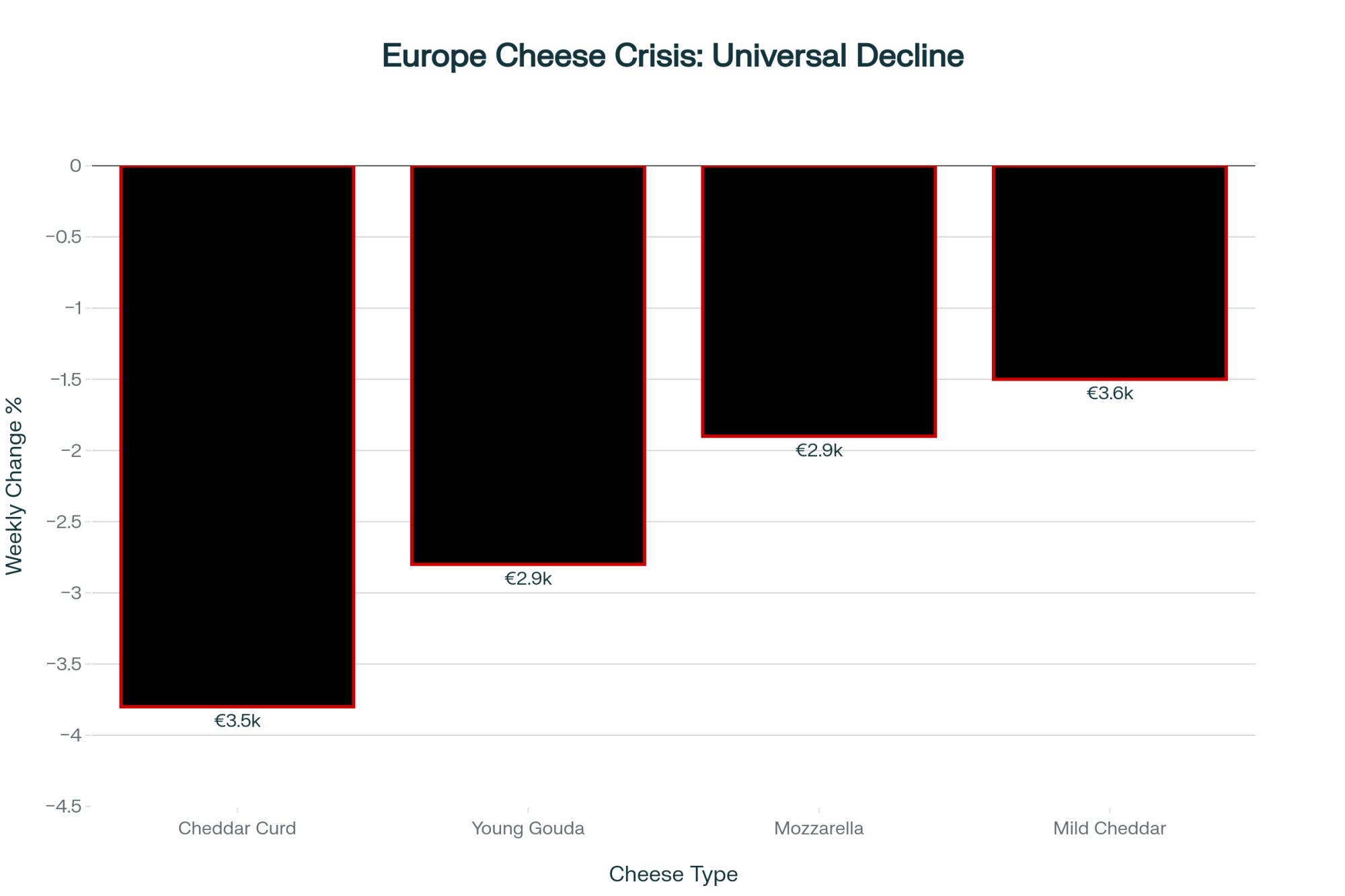
vef

Cheese prices continue to grind lower. Cheddar Curd fell by 3.8% to €3,501Mild Cheddar lost 1.5% to €3,636Young Gouda dropped 2.8% to €2,909, and Mozzarella eased 1.9% to €2,928.

What’s driving this? In short, too much milk, not enough elasticity downstream. European processors have faced strong milk deliveries and limited export momentum, particularly as the U.S. continues to compete aggressively in cheese exports with lower prices and a steadier currency.

GDT Auction – Fifth Consecutive Decline

Fats (Butter & AMF) maintain price stability while powders (WMP & SMP) slide for five consecutive auctions, revealing the fundamental market split: butterfat wins as oversupply crushes powder values

The Global Dairy Trade (GDT) Price Index fell another 1.4% to $3,881, its fifth straight dip — a clear indicator that the global balance between supply and consumption is still correcting.

Whole milk powder dropped 2.4% to $3,610, and skim milk powder declined 1.6% to $2,559. By contrast, AMF rose 1.5% to $7,038, maintaining its premium over butter. Butter fell slightly (–0.8% to $6,662). That persistent AMF premium shows sustained appetite for high-purity fats, particularly in Asian and Middle Eastern markets (GDT Event 390, Oct 2025).

Cheddar and mozzarella prices fell 1.9% and 5.3%, respectively. Volumes sold at the event totaled 40,621 tonnes, down modestly from the previous auction.

Southern Hemisphere – Production Ramps Up

Spring flush delivers production surge across the Southern Hemisphere: Argentina leads with nearly 12% solids growth, New Zealand milk solids jump 3.4%, and Dutch collections rise 6.7%—all combining to flood global markets and pressure powder prices downward

Down south, spring flush is living up to its name. New Zealand’s September milk collection hit 2.67 million tonnes, up 2.5%, while milk solids jumped 3.4% year over year (DCANZ, Oct 2025). A weaker NZD continues to bolster local payouts, and with PKE (palm kernel expeller) imports up 35%, many herds are maintaining condition through the flush.

Argentina’s production rose 9.9% year over year in September, and solids were up 11.7%, driven by improved pasture and feed efficiency under stable weather (OCLA Argentina, Sept 2025). Meanwhile, the Netherlands reported +6.7%milk collections and a stronger butterfat yield, signaling broad European abundance.

These gains are great news for efficiency metrics but apply downward pressure on global dairy pricing, particularly across SMP and WMP.

Trade and Demand – China Sends Mixed Signals

China’s September imports reveal calculated market strategy: massive 65% surge in butter and 41% jump in WMP contrasts sharply with 12.5% drop in SMP, proving buyers are restocking premium fats while avoiding oversupplied powders

China’s September milk-equivalent imports rose 4.7% year over year — but that number hides the nuance. WMP imports surged 41%, a recovery from last year’s depressed base, while SMP fell 12.5% and butter jumped an impressive 64.7% (Chinese Customs Data, Oct 2025).

This suggests that Chinese buyers are being tactical. They’re restocking high-fat categories but remain cautious on large-volume powders. New Zealand exports, up 8.7% y/y, captured much of that growth, though SMP flows remain uneven. Demand is stabilizing—not accelerating yet.

U.S. Markets – Glimmers of Recovery

ProductWeekly ChangeCurrent PriceMarket Signal
Dry Whey$+3.5¢$$\$0.69/\text{lb}$Strong protein
Butter$+0.75¢$$\$1.6025/\text{lb}$Holiday build
Cheddar Blocks$+0.25¢$$\$1.7775/\text{lb}$Moderate food
Nonfat Dry Milk$+\$0.05$$\$1.16/\text{lb}$Steady demand

Domestic dairy markets found small pockets of strength. CME cheddar blocks ticked up 0.25¢ to $1.7775/lbbutter gained 0.75¢ to $1.6025/lb, and nonfat dry milk rose a nickel to $1.16/lbDry whey continued to climb, up 3.5¢ to $0.69/lb, thanks to unflagging demand for high-protein ingredients (USDA Dairy Market News, Oct 2025).

Cream supplies remain ample, butter churns are busy, and foodservice activity is moderate. As one Wisconsin marketing manager put it this week, “We’re not seeing panic buying, but holiday pipeline building is real.” Feed remains a bright spot, with DEC25 corn at $4.28/bu and JAN26 soybeans at $10.62/bu, though both trended higher late in the week.

The Bottom Line

Looking ahead, the key takeaway this week is the growing divide between resilient fats and fragile powders. Butter and AMF continue to attract strong retail and manufacturing interest, offering some price floor protection. But with milk collections swinging higher across the Southern Hemisphere, SMP and WMP are likely to remain under pressure through the year’s end.

Short-term volatility may persist, especially if China’s buying remains uneven. Still, there’s cautious optimism. Farm-level profitability in regions like New Zealand and the Midwest is holding better than last year — proof that leaner operations, feed cost management, and smarter hedging have made this downturn more manageable.

As always, milk will find a home — but the home it finds this season might be one more driven by butterfat than by bulk powder. And that’s a story worth watching as we head toward the new year.

Key Takeaways:

  • Fats are holding firm, powders aren’t. Butter and AMF prices found support, but SMP and WMP remain under pressure from surging milk supply.
  • GDT slipped again (-1.4%), its fifth straight decline — a reminder that buyer confidence isn’t back yet, even as global GDP nudges higher.
  • Europe’s cheese values slid once more, squeezed by full silos, steady milk flows, and competitive U.S. export pricing.
  • Southern Hemisphere production is booming — New Zealand up 2.5%, Argentina nearly 10% higher — ensuring plenty of product but few price rallies.
  • In the U.S., butter and whey are bright spots, lifted by retail holiday demand and strong protein interest.

Complete references and supporting documentation are available upon request by contacting the editorial team at editor@thebullvine.com.

Learn More:

Join the Revolution!

Join over 30,000 successful dairy professionals who rely on Bullvine Weekly for their competitive edge. Delivered directly to your inbox each week, our exclusive industry insights help you make smarter decisions while saving precious hours every week. Never miss critical updates on milk production trends, breakthrough technologies, and profit-boosting strategies that top producers are already implementing. Subscribe now to transform your dairy operation’s efficiency and profitability—your future success is just one click away.

NewsSubscribe
First
Last
Consent

Global Dairy Trade Surges 1.6%: Lactose Skyrockets 22% While Powder Markets Falter

Lactose soars 22% as GDT index climbs 1.6% – Asia’s hungry buyers drive prices while Oceania’s spring flush looms. Mixed signals demand smart strategies.

EXECUTIVE SUMMARY: The April 15 GDT auction saw dairy markets rally with a 1.6% price index gain – the second consecutive increase since mid-March. While lactose skyrocketed 22% and mozzarella jumped 5.4%, skim milk powder and cheddar faltered, exposing market fragmentation. Intense bidding from 181 participants absorbed 16,718MT of product, signaling strong Asian/Middle Eastern demand despite geopolitical tensions. Analysts warn Oceania’s seasonal milk surge could reverse gains, urging producers to balance optimism with caution. The results highlight a critical juncture: specialty ingredients thrive while commodity powders struggle. Strategic alignment with high-value components like lactose becomes essential as trade wars and supply shifts reshape profitability landscapes.

KEY TAKEAWAYS:

  • Lactose dominates: 22% price surge reflects pharma/infant formula demand shifts
  • Buyers battle scarcity: 115 winning bids secured 16,718MT near minimum supply levels
  • Regional drivers: Asia/Middle East hunger offsets US-China trade war risks
  • Oceania warning: Impending spring flush threatens to dampen recent price gains
  • Market split: High-value fats/specialties rise (AMF +2.1%) while SMP/cheddar decline (-2.3%)
Global Dairy Trade, GDT auction results, lactose price surge, dairy market trends, dairy commodity prices

Tuesday’s Global Dairy Trade (GDT) auction delivered much-needed adrenaline for dairy farmers worldwide, with the Price Index climbing 1.6% to reach €3,854 per metric ton. This marks the second consecutive increase since mid-March, accumulating a 2.7% gain that suggests demand fundamentals are strengthening despite the looming shadow of Oceania’s spring flush. But don’t pop the champagne just yet – today’s results revealed dramatic price variations across product categories that expose the fragmented reality of our global markets.

While lactose prices exploded by an eye-popping 22%, skim milk powder and cheddar posted disappointing declines, creating a market landscape as uneven as a poorly graded freestall barn. This mixed performance across dairy commodities paints a complex picture that demands strategic thinking from producers who want to position themselves ahead of the curve.

AUCTION BREAKDOWN: THE WINNERS AND LOSERS YOU NEED TO KNOW

Tuesday’s GDT Trading Event #378 results revealed a dairy market moving in multiple directions simultaneously – much like a fresh heifer with a calcium deficiency. Five categories posted gains while two experienced declines, underscoring the complex supply and demand dynamics influencing different segments of the global dairy market.

Lactose emerged as the undisputed champion, posting an extraordinary 22% price surge to reach €1,210 per metric ton. This dramatic increase starkly contrasts the single-digit movements seen across other product categories and suggests specific market factors are driving exceptional demand for this dairy component. Just as a high-producing Holstein separates herself from the herd during peak lactation, lactose has broken away from the pack with a performance that demands attention. The pharmaceutical industry’s growing lactose requirements for drug delivery systems and increased demand from infant formula manufacturers likely contributed to this remarkable price jump.

Mozzarella demonstrated impressive strength as the second-best performer, climbing 5.4% to €4,187 per metric ton. This substantial increase reflects the global food service sector’s continued recovery and pizza’s unrelenting popularity across expanding international markets. Whole Milk Powder (WMP), a critical benchmark product for the auction, posted a solid 2.8% gain to reach €3,666 per metric ton. As a key ingredient for recombined milk products in regions with limited fresh milk infrastructure, WMP’s positive performance signals improving sentiment among buyers in developing markets – similar to how a rising somatic cell count signals potential mastitis issues before clinical symptoms appear.

Dairy fats continued their positive trajectory, though with more modest gains. Anhydrous Milk Fat (AMF) increased by 2.1% to €6,011 per metric ton, while butter rose 1.5% to €6,750 per ton. These results suggest the rehabilitation of dairy fat’s reputation among consumers continues to support demand despite the premium prices these products command – much like how premium genetics command higher prices despite the additional investment required.

On the downside, Skim Milk Powder (SMP) recorded a 2.3% decrease, settling at €2,457 per metric ton. This decline stands in stark contrast to previous auctions where SMP showed strength. For instance, the February 4, 2025 auction saw SMP prices rise 4.7%. The current downturn may reflect shifting production patterns or competitive pressure from alternative protein sources. Similarly, cheddar prices retreated by 1.8% to €4,327 per metric ton, breaking from the positive momentum observed in earlier 2025 auctions, where it had gained 3.7% in February.

Price Performance by Product (April 15, 2025)

ProductPrice ChangeCurrent Price
Lactose+22.0%€1,210/t
Mozzarella+5.4%€4,187/t
Whole Milk Powder+2.8%€3,666/t
Anhydrous Milk Fat+2.1%€6,011/t
Butter+1.5%€6,750/t
Skim Milk Powder-2.3%€2,457/t
Cheddar-1.8%€4,327/t

The absence of Butter Milk Powder data for this auction creates a small gap in market intelligence. However, this product typically represents a smaller proportion of overall dairy trade volumes – much like a single cow’s production data might be missing from the monthly DHIA report. Still, it doesn’t invalidate the herd’s overall performance.

MARKET DYNAMICS: BUYERS SCRAMBLE FOR LIMITED SUPPLY

Let’s cut through the noise and get to what matters: buyers are hungry, and supply is tight. The operational metrics from Tuesday’s auction show robust market engagement and intense competition for available products. The auction attracted 181 participating bidders, with 115 securing winning bids – reflecting a 63.5% success rate. This high level of participation suggests broad-based interest across the global dairy supply chain, similar to how a well-attended bull sale indicates a strong interest in superior genetics.

The auction process was lengthy and competitive, lasting 2 hours and 33 minutes and requiring 18 bidding rounds to conclude. These extended negotiations point to determined buyer interest and active price discovery, hallmarks of a market with genuine underlying demand – not unlike the persistent activity in a rotary parlor during peak milking hours.

Perhaps most telling was the relationship between supply and sales. The total quantity sold reached 16,718 metric tons, remarkably close to the minimum supply volume of 16,066 metric tons offered for the event. This near-perfect alignment between minimum offering and actual sales suggests sellers presented relatively little volume above their base commitments, and buyers absorbed almost this constrained supply. Such dynamics typically create conditions for price strength, as evidenced by the overall index increase – similar to how limited heifer availability drives replacement costs higher during herd expansion phases.

The average winning price in USD terms reached $4,385 per metric ton, highlighting the international nature of the auction and the need for participants to navigate currency considerations alongside pure commodity valuations. This dual reporting in Euros (€3,854) and US Dollars provides essential context for global stakeholders assessing the financial implications across different currency environments – much like how dairy producers must track both component and fluid milk prices to understand their milk check fully.

These operational metrics collectively suggest a market characterized by tight supply meeting determined demand – conditions conducive to price support and potential future gains if supply constraints persist, similar to how a balanced feed ration optimizes production and component levels.

HISTORICAL CONTEXT: IS THIS THE START OF A REAL RALLY?

Tuesday’s auction results gain significance when viewed within the context of recent GDT events. The 1.6% increase marks the second consecutive rise since mid-March, generating a cumulative gain of 2.7%. This developing pattern of sequential increases carries more weight than a single isolated event might suggest, potentially indicating a strengthening market undercurrent – much like how consecutive months of improving pregnancy rates signal improving reproductive management rather than random variation.

Looking back further, we can observe the volatile nature of GDT results throughout early 2025 and late 2024. The February 4, 2025 auction delivered a substantial 3.7% increase, characterized as the “second GDT trading event in a row with a rising index.” That event saw particularly strong gains in lactose (+17.7%), skim milk powder (+4.7%), and whole milk powder (+4.1%). January’s auction posted a more modest result. Going back to August 2024, the market showed exceptional strength, with the GDT Price Index jumping 5.5%, described as “the largest percentage rise since March 2021.” That surge was led by whole milk powder, which increased by 7.2%.

This historical perspective reveals that while Tuesday’s 1.6% gain is modest compared to some recent peaks, it contributes to a generally positive trend line punctuated by occasional volatility – not unlike a lactation curve with its peaks, persistence, and occasional dips.

The persistence of lactose as a consistent outperformer deserves special attention. The February auction saw lactose prices increase by 17.7%, while Tuesday’s auction recorded an even more dramatic 22% surge. This sustained strength suggests structural factors supporting lactose values rather than mere speculative activity or short-term supply disruptions – similar to how consistent genetic selection for components gradually improves a herd’s butterfat and protein levels over generations.

GLOBAL FACTORS: THE STORM CLOUDS ON THE HORIZON

Tuesday’s GDT auction results emerge against a complex backdrop of international forces shaping dairy markets. The intense competition among buyers suggests resilient underlying demand even as international tensions create potential headwinds. The escalating trade war between the US and China underscores how broader economic conflicts can influence dairy trade flows and buying patterns – much like how a single case of Johne’s disease can disrupt an entire herd’s management plan.

Looking forward, analysts caution about potential “downward pressure” emerging in coming weeks, linked directly to expected “seasonal production increases from Oceania.” This projected supply expansion from key exporting regions like New Zealand and Australia represents a perennial pattern that can temporarily dampen price momentum during peak production periods – similar to how the spring flush in the Northern Hemisphere typically pressures farmgate prices despite processors running at full capacity.

These competing factors – strengthening demand versus expanding supply – create a balanced market outlook. The current positive signals are encouraging but remain susceptible to disruption from both predictable seasonal patterns and unpredictable geopolitical events – not unlike how a well-managed dairy operation can still be vulnerable to both anticipated seasonal challenges and unexpected disease outbreaks.

Meanwhile, parallel developments in related dairy markets add context to the GDT results. The CME dairy markets on April 14, 2025 (the day before the GDT auction) showed an intriguing split, with cheese prices climbing significantly while butter and powder markets remained static. This division mirrors some of the product-specific divergence seen in the GDT results. It highlights how different segments of the dairy complex can follow distinct trajectories based on their unique supply-demand dynamics – similar to how different cow groups within the same herd can show varying production responses to the same management changes.

Let’s be blunt: the Trump administration’s aggressive trade stance with China looms large over dairy markets. With the escalating trade war between these economic superpowers, dairy exports could become either a bargaining chip or collateral damage. Smart producers are watching these developments closely, as they could dramatically reshape global trade flows virtually overnight.

STRATEGIC IMPLICATIONS: WHAT SMART PRODUCERS SHOULD DO NOW

Tuesday’s GDT results offer encouragement and strategic considerations for dairy producers worldwide. The overall price increase and strong buyer participation suggest improving fundamental demand for dairy commodities. This provides a potential foundation for farm-level milk price support – much like how a solid forage base provides the foundation for efficient milk production.

The dramatic divergence in product performance – from lactose’s 22% surge to SMP’s 2.3% decline – underscores the importance of understanding which dairy components drive farmgate pricing in different regions. Producers whose milk checks are heavily influenced by protein values may face different outcomes than those in markets where butterfat or specialty components carry greater weight – similar to how different feeding strategies might optimize either volume or components depending on payment structures.

For forward-thinking farmers, several strategic considerations emerge:

Price Risk Management

With the GDT events showing continued volatility alongside a generally improving trend, producers should evaluate opportunities to lock in favorable prices through forward contracts, futures markets, or other risk management tools. The mixed signals from different product categories suggest selectively protecting components showing the greatest strength while maintaining flexibility on those facing pressure – not unlike how selective dry cow therapy targets specific animals rather than blanket treatment.

Let’s face it – too many dairy producers still approach price risk management as an optional luxury rather than a business essential. In today’s volatile markets, failing to lock in favorable prices when they appear is like leaving your barn doors open during a tornado. The smart money is moving now to protect margins while maintaining flexibility to capitalize on potential upside.

Production Optimization

The exceptional premium currently commanded by lactose (+22%) and the solid performance of whole milk powder (+2.8%) suggest value in optimizing milk composition where possible. While genetic selection works over longer timeframes, nutritional strategies can influence component levels within the current lactation – similar to how adjusting the forage-to-concentrate ratio can shift milk component levels within days.

Market Positioning

Farms selling into processing streams focused on export markets should carefully monitor shifting international demand. The noted strength from Asian and Middle Eastern buyers suggests producers aligned with processors serving these regions may benefit from improved demand transmission through the supply chain – much like how farms supplying specialty markets like A2 or grass-fed milk can capture premium prices when consumer demand strengthens.

Cost Control Vigilance

Despite improving prices, the cautionary notes about potential seasonal pressure and ongoing geopolitical tensions highlight the importance of maintaining disciplined cost structures. Farms with lower breakeven points will be better positioned to weather potential volatility if downward pressure materializes in the coming weeks – similar to how maintaining proper body condition scores helps cows weather transition periods with fewer metabolic disorders.

WHAT’S DRIVING LACTOSE’S REMARKABLE SURGE?

The 22% price explosion for lactose deserves special attention from dairy industry stakeholders. This dramatic increase follows a 17.7% gain in February, establishing a pattern of exceptional performance that far outpaces other dairy commodities. Several factors likely contribute to this remarkable strength:

  1. Pharmaceutical Demand: The pharmaceutical industry relies heavily on lactose as an excipient (inactive ingredient) in tablet formulations. Recent supply chain disruptions and increased medication production may drive heightened demand – similar to how specialized feed additives become scarce during supply chain disruptions.
  2. Infant Formula Production: China’s relaxation of its one-child policy and growing middle class across Asia has fueled infant formula demand, where lactose serves as a critical ingredient – not unlike how specialized calf milk replacers rely on specific dairy components for optimal performance.
  3. Functional Food Applications: The growing market for protein-fortified foods and beverages often incorporates lactose and lactose derivatives for their functional properties – similar to how precision feeding of amino acids optimizes milk protein synthesis.
  4. Supply Constraints: Production limitations or logistical challenges may restrict lactose availability, creating a supply-demand imbalance that drives prices higher – much like how limited heifer availability during expansion phases drives replacement costs upward.

For dairy producers, this trend raises intriguing questions about potential premiums for milk with higher lactose content and whether processing technology investments focusing on lactose extraction and refinement might offer new revenue opportunities. While most payment systems don’t directly reward lactose content, the component’s surging value may eventually influence processor strategies and potentially create new premium opportunities for forward-thinking producers – similar to how component pricing gradually evolved to reward butterfat and protein.

The uncomfortable truth most industry analysts won’t tell you is that our payment systems are woefully behind market realities. While processors reap windfall profits from lactose’s remarkable price surge, dairy farmers producing the raw material see virtually none of this upside. This disconnect between market value and farm-level compensation represents another example of how the industry’s outdated pricing structures fail to align incentives throughout the supply chain properly.

LOOKING AHEAD: KEY MARKET INDICATORS TO WATCH

As dairy farmers digest Tuesday’s GDT results and plan their strategies for the coming months, several critical indicators will help gauge whether the current positive momentum can be sustained:

  1. Oceanian Production Data: Milk production figures from New Zealand and Australia in the coming weeks will reveal whether the anticipated seasonal increase materializes at projected levels or faces constraints – similar to how monitoring dry matter intake helps predict potential milk production shifts.
  2. Chinese Buying Patterns: China’s purchasing behavior at upcoming GDT events will provide crucial insights into whether the world’s largest dairy importer is rebuilding inventories or remaining cautious amid economic challenges – not unlike how monitoring rumination minutes helps predict potential health issues before clinical symptoms appear.
  3. US-China Trade Relations: Any developments in the ongoing trade tensions could significantly impact global dairy trade flows and price dynamics – similar to how a single case of a reportable disease can disrupt export certifications.
  4. European Milk Production: As the Northern Hemisphere spring flush progresses, European production volumes will influence global supply balances and potentially pressure certain product categories – much like how a neighboring farm’s expansion can affect local milk hauling routes and processing capacity.
  5. Oil Prices and Logistics Costs: Transportation and energy costs significantly impact dairy trade economics; monitoring these factors provides context for price movements – similar to how feed costs directly affect milk production profitability.

By keeping a close eye on these indicators while maintaining flexible operational and risk management strategies, dairy producers can position themselves to capitalize on market opportunities while protecting against potential downside risks in this dynamic global marketplace – just as successful herd managers balance aggressive production goals with sound preventative health protocols.

THE BOTTOM LINE

Tuesday’s GDT auction results suggest the global dairy market is gradually finding its footing after a period of uncertainty. The 1.6% overall price increase, combined with exceptional strength in lactose and solid performance in whole milk powder, indicates improving demand fundamentals that could eventually translate to stronger farmgate prices. However, just as a cow’s transition period requires careful management despite the promise of peak milk ahead, dairy producers should maintain disciplined cost structures and risk management strategies as seasonal supply increases loom.

The divergent performance across product categories highlights the importance of understanding your milk market’s specific component valuation – because, in today’s complex dairy economy, what you’re paid for matters as much as how much you produce. Smart producers will use this market intelligence to position themselves ahead of the curve, locking in favorable prices where appropriate while maintaining the operational flexibility to capitalize on emerging opportunities.

Let’s be crystal clear: this market isn’t delivering uniform good news across all dairy categories. The winners and losers in today’s dairy economy will be determined by production efficiency and strategic alignment with the right market segments and components. Those who continue to produce commodity milk without understanding these nuanced market signals risk being left behind as the industry continues its relentless evolution toward greater specialization and value-added production.

Learn more:

Join the Revolution!

Join over 30,000 successful dairy professionals who rely on Bullvine Daily for their competitive edge. Delivered directly to your inbox each week, our exclusive industry insights help you make smarter decisions while saving precious hours every week. Never miss critical updates on milk production trends, breakthrough technologies, and profit-boosting strategies that top producers are already implementing. Subscribe now to transform your dairy operation’s efficiency and profitability—your future success is just one click away.

NewsSubscribe
First
Last
Consent

GDT’s Q1 Slump Meets Genetic Surge: Dairy’s Profit Paradox Unpacked

Dairy’s profit paradox: GDT prices rise, but are farmers cashing in? Explore how genetics and global trends redefine milk margins in 2025.

EXECUTIVE SUMMARY: The latest Global Dairy Trade auction broke a months-long losing streak with a 1.1% index rise, yet the results reveal deeper industry challenges. While skim milk powder surged 5.9%, butter and other key commodities fell, highlighting uneven recovery across dairy markets. Meanwhile, genetic advancements are reshaping profitability by prioritizing component yields like butterfat and protein over raw volume. Countries like New Zealand and Australia showcase contrasting models of crisis response, from cooperative stability to retail-driven vertical integration. However, escalating feed costs threaten to erase gains for high-genetic herds, exposing the disconnect between commodity price increases and farmgate profitability. Dairy producers must navigate volatile short-term markets while leveraging genetic strategies to secure long-term margins.

KEY TAKEAWAYS:

  • Auction Insights: GDT index rose 1.1%, but uneven product performance signals fragile market recovery.
  • Genetic Revolution: High-component herds achieve profitability despite stagnant commodity prices.
  • Global Models: NZ’s cooperative pricing vs Australia’s retail-driven vertical integration offer contrasting solutions.
  • Profit Disconnect: Rising feed costs threaten margins even as auction prices climb.
  • Action Plan: Producers should focus on genetic audits, contract flexibility, and component-focused production strategies.
GDT auction results, dairy genetics innovation, milk component profitability, global dairy markets, sustainable dairy farming

The dairy sector’s opening months of 2025 have revealed a stark contradiction – while global commodity markets wobble, genetic breakthroughs are quietly rewriting milk’s economic DNA. This collision of short-term volatility and long-term transformation demands urgent analysis from every producer holding a milking claw.

Breaking News: Q1 Auction Sets Stage for Turbulent Year

January’s Global Dairy Trade auction delivered a 1.4% index decline, continuing 2024’s downward trend despite pockets of strength in mozzarella (+3.6%) and butter. With 143 successful bidders moving 17,643 tonnes, the results confirmed three critical realities:

  1. Protein Power: Skim milk powder’s 5.9% drop contrasts sharply with cheese gains, exposing shifting demand patterns
  2. Geopolitical Drag: China’s uneven recovery and Southeast Asia’s import fluctuations continue destabilizing traditional markets
  3. Processor Calculus: Rabobank’s “balanced but brittle” assessment masks looming supply chain reconfigurations

The real story lies beneath these numbers – a fundamental mismatch between commodity pricing mechanisms and on-farm profitability drivers.

Feature Deep Dive: Genetics Rewrite the Profit Equation

While markets falter, U.S. herds are achieving once-unthinkable component averages – 4.23% butterfat and 3.29% protein – through genomic leaps accounting for 70% of recent gains . This revolution demands recalculating every aspect of dairy economics:

The New Milk Math

This updated genetic index prioritizes component value over raw volume, reflecting market realities where 1lb of fat now outearns 2.3kg of protein . Western Megadairies and Midwest family farms converge on three strategies:

  1. Sexed Semen Stratification: 61% of U.S. herds now use elite genetics on the top 30% of cows
  2. Embryo Acceleration: The top 5% of females contribute 40% of genetic progress through IVF programs
  3. Feed Cost Hedging: $3.20/lb fat values justify premium forage investments

Global-Local Collision: Two Models Emerge

New Zealand’s Cooperative Calculus

Fonterra’s milk price manual reveals a risk-sharing model where:

  • 73% of commodity returns flow directly to farmers
  • Processors absorb currency/transport volatility
  • “Permanent supply shocks” trigger automatic renegotiations

Australia’s Vertical Experiment

The Saputo-Coles $70M plant deal creates a stark countermodel:

  • Retailers now control 22% of NSW/Victoria processing
  • Five-year tolling agreements lock in supply chains
  • ACCC approval despite 14% raw milk buyer reduction

These competing approaches – cooperative stability vs vertical integration – frame dairy’s global crossroads.

Controversy Corner: The Price-Profit Disconnect

Challenge Convention: “Strong auctions don’t equal strong margins”

While GDT’s mozzarella bounce made headlines, feed costs have erased 63% of those gains for component-focused herds. This equation explains why 41% of high-genetic herds maintained profits despite Q1’s index drop – their component surge offset stagnant prices.

Your Profit Playbook

  1. Genetic Audit
    1. Re-run breeding decisions through NM$ 2025’s feed efficiency lens
    1. Target 4.5% butterfat thresholds through genomic culling
  2. Contract Calculus
    1. Weigh Fonterra-style risk sharing against Coles-like vertical offers
    1. Model 5-year feed cost scenarios against component potential
  3. Market Hedge
    1. Allocate 30% of production to cheese-focused components
    1. Explore specialty fat premiums through AMF partnerships

The Bullvine Bottom Line

Dairy’s 2025 inflection point demands a dual vision: navigate quarterly auctions while building a decade-long genetic advantage. As markets reward component density over raw volume, the herds that thrive will treat every heifer as a futures contract and every AI straw as a strategic asset.

Learn more:

GDT Alert: Dairy Index Down 0.5% as Lactose Surges Record 14%, Creating Strategic Opportunities for Producers

Dairy markets shaken: GDT index dips, but lactose skyrockets 14%! Discover how savvy producers can exploit this product divergence for maximum profit.

EXECUTIVE SUMMARY: The latest Global Dairy Trade auction reveals a complex market landscape, with the overall index down 0.5% masking dramatic product-specific divergences. Lactose surged an unprecedented 14%, while mozzarella and butter showed strong gains. However, whole milk powder declined 2.2%, pressuring the index. Domestic U.S. markets paint a contrasting picture, with CME cheddar blocks plummeting 9.50 cents in a single session. Meanwhile, feed costs have plunged, with corn prices down 8% in two weeks, fundamentally altering production economics. This market bifurcation creates both challenges and opportunities, demanding strategic responses from producers in component optimization, risk management, and feed cost capture.

KEY TAKEAWAYS:

  • Lactose prices surged 14% to $1,158/MT, the largest single-auction gain in over three years
  • GDT butter commands a 46% premium over CME prices, creating significant export opportunities
  • CME cheddar blocks collapsed 9.50 cents to $1.7750/lb, signaling domestic market weakness
  • Corn prices have fallen 8% in two weeks, potentially reducing feed costs by $0.85-$1.00/cwt
  • Progressive producers should focus on component optimization, risk management recalibration, and strategic feed cost capture
Dairy market trends, GDT auction results, lactose price surge, cheese market volatility, feed cost reduction

The Global Dairy Trade (GDT) index recorded its second consecutive decline on Tuesday, March 4, 2025, slipping 0.5% to settle at an average price of $4,209 per metric ton. This headline figure obscures a market characterized by dramatic product-specific divergence that savvy producers are already positioning to exploit. Lactose prices surged by an unprecedented 14% to $1,158 per metric ton, the most significant single-auction gain for this product in over three years. Meanwhile, mozzarella cheese jumped 7.9% to $4,477 per metric ton, and butter strengthened 2.7% to $7,577 per metric ton, directly contradicting the weakness in the overall index.

Key Dairy Product Performance: Specialized Categories Outshine Commodities

The March 4 GDT auction results tell a compelling story of market bifurcation that challenges traditional analysis frameworks. Lactose emerged as the undisputed performance leader with its exceptional 14% surge to $1,158 per metric ton ($0.52 per pound), shattering expectations and establishing new pricing territory. This dramatic movement demands historical context—the last comparable single-auction gain for lactose occurred in January 2022 at 8.6%, making today’s jump genuinely unprecedented.

The 7.9% leap in mozzarella cheese prices to $4,477 per metric ton ($2.03 per pound) represents another standout performance with essential implications for milk allocation decisions. This significant increase aligns with broader industry production shifts in The Bullvine’s February market analysis, highlighting how Italian-style cheese production has surpassed 6 billion pounds annually.

For critical context on specialized cheese valuation, Canadian Class 3(d) pricing—designed explicitly for pizza restaurant applications—provides valuable comparative data:

Milk ClassButterfat ($/kg)Proteins ($/kg)Other solids ($/kg)
3(d)11.35659.70350.8921

Price Gap Alert: Unprecedented 46% Butter Premium Creates Export Opportunity

The disconnect between GDT auction prices and CME market values creates compelling opportunities for internationalized dairy businesses. This direct comparison starkly illustrates the substantial premiums available in global markets:

ProductGDT Price ($/lb)CME Price ($/lb)Price PremiumPremium (%)
Butter$3.43$2.35$1.0846%
Cheddar$2.22$1.78$0.4425%
SMP/NDM$1.24$1.20$0.043%

This international premium structure represents a fundamental shift from historical patterns when U.S. domestic prices frequently exceeded global values. The unprecedented 46% butter premium particularly warrants attention from progressive producers and processors capable of accessing international markets.

Domestic Market Warning: CME Cheese Blocks Collapse 9.50¢ in Single Session

The CME dairy markets on March 3 revealed a troubling domestic market weakness that directly contradicts the selective strength seen in the GDT auction. CME cheddar blocks plummeted 9.50 cents to close at $1.7750 per pound, while barrels declined 2.50 cents to $1.7800 per pound. This dramatic block price collapse—one of the most significant single-day declines in recent months—demands serious attention from cheese-oriented producers.

The CME trading activity table below provides crucial insight into market depth and participation levels:

ProductFinalChange ¢/lb.TradesBidsOffers
Butter2.3450NC012
Cheddar Block1.7750-9.50403
Cheddar Barrel1.7800-2.50201
NDM Grade A1.2000NC022
Dry Whey0.5100-1.50014

Feed Cost Revolution: Corn Prices Plunge 8% in Two Weeks

Feed markets have undergone a dramatic bearish transformation that fundamentally alters dairy production economics. Corn futures for March 2025 collapsed to $4.53 per bushel on March 3, plunging from $4.83 on February 27—a 6.2% decline in just three trading sessions. Similarly, soybean futures for May 2025 dropped to $10.25 per bushel from $10.48 the previous week.

To properly contextualize this feed cost revolution, it’s critical to recognize that corn prices were over $4.93/bushel in mid-February, according to The Bullvine’s February market analysis. Prices have now declined by more than 8% in just two weeks. This represents a potential feed cost reduction of approximately $0.85-$1.00 per hundredweight of milk produced for typical rations—a margin enhancement opportunity that deserves immediate management attention.

International Context: Canadian Pricing Reveals Strategic Component Opportunities

Canadian Special Milk Class Prices provide an additional international context for how component values influence feed strategy decisions:

Milk ClassButterfat ($/kg)Proteins ($/kg)Other solids ($/kg)
5(a)9.34597.38131.7080
5(b)9.34593.80753.8075
5(c)10.75042.90702.9070

The substantial variation in protein valuation across these subclasses—from $7.3813/kg in 5(a) to $2.9070/kg in 5(c)—demonstrates how market-specific pricing can dramatically alter the economics of component production, further emphasizing the importance of strategic feed management.

Market Outlook: Block-Barrel Inversion Signals Structural Shift

Are producers focusing too narrowly on GDT indices while missing critical signals from the dramatic block-barrel price convergence? This rare market inversion suggests fundamental shifts in cheese manufacturing capacity that could reshape pricing structures for months. The block-barrel spread—traditionally maintaining a 3-5 cent premium for blocks—has fundamentally inverted, with barrels now commanding a 0.5 cent premium.

Feed market dynamics create a particularly challenging forecasting environment. The dramatic corn price decline from nearly $5.00/bushel in mid-February to $4.53 by early March fundamentally alters production economics. This feed cost reduction arrives at a critical decision point for northern hemisphere producers entering spring production season. With Class III milk futures hovering near .71/cwt for March and feed costs declining substantially, margins appear more favorable than projected just weeks ago.

3-Step Action Plan for Progressive Dairy Producers

Forward-thinking producers should implement these three defensive strategies given the current market signals:

1. Component Optimization Strategy

The 14% lactose price surge, 7.9% mozzarella increase, and substantial protein premiums in specialized market segments demand a comprehensive reevaluation of feeding programs. Progressive producers should immediately implement precision feeding systems that maximize valuable components, evaluate mid-lactation diet adjustments to enhance protein and specialized component production, and strategically use rumen-protected amino acids to capture substantial protein premiums.

2. Risk Management Recalibration

The dramatic 9.50-cent decline in the CME cheese price in a single session demands immediate risk management attention. Producers should evaluate forward contracting opportunities while Class III futures remain above $18.50/cwt, consider fence strategies that provide downside protection while allowing participation in potential upside, and implement strategic incremental coverage approaches rather than single-point decisions.

3. Feed Cost Capture Strategy

The collapse in corn prices from nearly $5.00/bushel to $4.53 creates a critical opportunity to lock in favorable input costs. Action steps include securing forward contracts for at least 50% of 2025 feed needs at current price levels, evaluating on-farm storage expansion to capitalize on seasonal pricing opportunities, and implementing strategic ration reformulation to optimize component production based on current market signals.

Bottom Line: Product Divergence Creates Selective Opportunity

The March 4, 2025, Global Dairy Trade auction results reveal a market characterized by product-specific divergence, which creates challenges and opportunities for strategic operators. The headline 0.5% index decline masks extraordinary product-specific performance variations, from lactose’s remarkable 14% surge to whole milk powder’s concerning 2.2% decline.

The dramatic disconnects between GDT and CME prices—particularly the 46% butter premium—create compelling opportunities for internationally oriented businesses. Simultaneously, domestic challenges evidenced by the 9.50 cent block cheese price collapse and unusual barrel-over-block inversion signal problematic structural changes in U.S. cheese manufacturing that could reshape pricing dynamics for months.

Progressive producers who implement strategic component optimization, risk management recalibration, and feed cost capture strategies will be best positioned to navigate this complex market environment characterized by unprecedented product-specific divergence.

LEARN MORE:

Join the Revolution!

Bullvine Daily is your essential e-zine for staying ahead in the dairy industry. With over 30,000 subscribers, we bring you the week’s top news, helping you manage tasks efficiently. Stay informed about milk production, tech adoption, and more, so you can concentrate on your dairy operations.

NewsSubscribe
First
Last
Consent

Global Dairy Market Update October 7th 2024: Key Trends, Prices, and Insights for Dairy Farmers

How do current global dairy trends shape your approach to opportunities and challenges in today’s industry?

Summary:

The global dairy markets are witnessing notable fluctuations across futures, quotations, and exports, with the EEX and SGX futures marking diverse trading volumes and price movements influenced by demand and supply factors. Europe’s quotations indicate a downward trend in butter and SMP, while whey stabilizes and WMP grows, aligning with broader market dynamics that impact pricing strategies. European cheese indices remain rising, whereas GDT auction results present a mixed narrative of commodity increases and declines. Production insights reveal declines in Ireland and the USA, contrasting with Australia, Italy, and Fonterra (NZ) growth. As the market adapts to these shifts, dairy professionals must stay informed and agile to leverage opportunities and mitigate risks, emphasizing the importance of closely monitoring these trends for strategic business decisions.

Key Takeaways:

  • EEX futures experienced significant trading activity, with butter futures facing a sharp decline, indicating potential challenges in demand or oversupply.
  • SGX futures saw an increase in Whole Milk Powder (WMP) prices, reflecting varying demand trends across dairy segments.
  • European market data presents mixed outcomes with declines in butter and SMP prices, while Whey remained stable, showcasing a region grappling with market volatility.
  • Cheese indices in Europe are on an upward trajectory, demonstrating robust performance and rising year-over-year metrics, which could indicate shifting consumer preferences or production efficiencies.
  • GDT auction results highlight a complex landscape with a general increase in indices, particularly in WMP, amidst varying demand pressure across dairy categories.
  • Global milk production reveals diverse trends, with some regions showing growth in milk collections, whereas others, like Ireland, report declines, emphasizing ongoing supply and climatic conditions challenges.
  • U.S. dairy markets face dynamic changes, with cheese prices dropping, reflecting potential supply adjustments and market rebalancing efforts by buyers.

The EEX’s trading volume of 6,605 tons revealed a notable concentration of butter and skim milk powder (SMP). The SGX handled a higher volume, trading 11,478 tonnes, mostly in whole milk powder (WMP) and SMP. This demonstrates the significant trading activity and broad interest in commodity categories across different platforms.

“The main trend seen in the last week was the difference in market reactions to commodities such as butter, SMP, and WMP. EEX butter futures fell sharply, while SGX showed minor strength, highlighting regional reaction variances in major global markets.”

In Europe, EU Quotations provided a mixed picture. While butter prices fell, whey prices steadied, and WMP increased slightly, demonstrating the complex developments in the European dairy product market. These changes are consistent with more significant market dynamics, in which each product’s success informs future price plans and market expectations.

  • Butter: EEX futures fall, with varied patterns in EU quotations.
  • SMP: SGX strength; modest declines in European markets.
  • WMP: SGX gains, good WOQT trend.

Such complexity in market behavior highlights the need to be informed and adaptive. Dairy professionals are advised to constantly follow these trends since knowing them may provide significant insights into future market moves and strategic possibilities.

MarketProductVolume Traded (Tonnes)Price Change (%)Average Price
EEXButter3,450-4.1%€7,088
EEXSMP3,155-0.4%€2,632
EEXWheyN/A0.0%€953
SGXWMP8,718+1.68%$3,584
SGXSMP1,650-1.34%$2,899
SGXButter1,110+0.1%$6,388

Commodity Prices in Flux: Navigating the U.S. Dairy Market Dynamics

The current structure of the U.S. dairy market is a complex interplay of commodity pricing driven by various factors. As we examine cheese, butter, and powder, it becomes evident that each commodity reflects various market narratives.

Starting with cheese, prices have recently dropped despite early highs. This fall is likely due to lower export sales, indicating that the previous price was strong enough to dissuade overseas purchasers. However, this offers an interesting potential trend: when U.S. cheese prices stabilize, they may recover export impetus, subject to competitive worldwide pricing.

Turning our attention to butter, we see a declining trend balanced by significant buyer support at key price points, notably $2.68 per pound. The market dynamics here are driven by a combination of projected supply constraints in Q4 and actual availability, which seems to be more than expected. This disparity between imagined scarcity and reality may continue to put downward pressure on pricing until demand rises unexpectedly.

Finally, significant companies are continually lowering costs in the powder industry, notably NFDM/SMP. This shows the market is saturated, with sufficient supply matching modest import demand. If this pattern continues, powder prices may remain steady or fall further unless global market disruptions or other demand channels arise.

The US dairy industry consequently depends on a delicate balance of foreign demand, home output, and clever pricing methods. Future developments will depend on how these elements combine with significant economic movements and consumer behavior patterns. Monitoring these dynamics will be critical for parties seeking to capitalize on new possibilities.

Riding the Waves: Analyzing the EEX Dairy Derivatives Dynamic

The European Energy Exchange (EEX) futures market is dynamic, with recent data revealing considerable fluctuation across major dairy categories. Let us take a closer look at this week’s market activity.

The overall amount of transactions on the EEX last week was 6,605 tonnes, indicating vigorous activity in dairy derivatives. Most of these transactions were for butter, totaling 3,450 tons, with 3,155 transferred for Skim Milk Powder (SMP). Tuesday was the most busy trade day, with 1,730 tons changing hands. What may be behind this mid-week surge in trading? Do external market circumstances influence these judgments or result from traders’ strategic actions?

We found a significant fall in butter futures when we examined price fluctuations. The average price for the October 2024 to May 2025 strip fell to €7,088, a significant 4.1% decrease. This decline in butter prices might indicate an overstock or weaker demand, which is vital information for individuals in the dairy industry. SMP prices also fell, but more moderately, by 0.4%, for an average price of €2,632 during the same time. Interestingly, whey futures prices remained consistent at €953, implying a balanced market or stable demand-supply dynamics.

These changes have significant ramifications for dairy farmers and industry experts. A drop in butter and SMP prices may pressure profit margins, necessitating strategic modifications to production and pricing methods. Should producers consider diversification, or is volatility something to be expected? However, the consistency in whey price may provide some relief or opportunity as a buffer product despite the volatility in other areas.

Finally, monitoring these adjustments is critical for stakeholders in making informed choices. Understanding the fundamental causes of price changes may assist dairy professionals in handling the difficulties ahead, guaranteeing resilience and strategic foresight in an ever-changing dairy market.

SGX Futures: Navigating Price Fluctuations and Their Implications

Last week, the SGX futures market saw a variety of activity, including substantial trading in Whole Milk Powder (WMP), Skim Milk Powder (SMP), and Butter. Notably, WMP futures showed a little increase, trading higher at 1.68% over the October 24-May 25 contracts, with an average price of $3,584. This suggests increased demand, representing supply chain optimism or looming shortages. A movement in WMP pricing might influence global dairy supply, perhaps leading to increased production or limited inventory release by producers looking to profit from higher prices.

Conversely, SMP futures fell 1.34%, bringing the average price to $2,899. This decline might suggest a temporary oversupply or lower demand in particular areas. For global supply chain participants, this price movement may necessitate rethinking procurement methods or finding new markets with stable pricing.

Meanwhile, butter futures rose by only 0.1% to $6,388 on the Oct 24-May 25 curve. A stable price trend for butter reflects a balanced demand-supply dynamic; nonetheless, tiny variations like this should be closely monitored. Even minor swings might have ripple effects, perhaps leading to deliberate revisions in production or export obligations.

Analyzing these patterns provides crucial insights for stakeholders across the dairy supply chain, emphasizing the need for strategic foresight in navigating changing futures markets. Each day brings new market changes, so tracking price fluctuations is critical for preserving a competitive advantage.

Fragmented Fortunes: Navigating Europe’s Dairy Market Dynamics

This week, European dairy quotes have shown fragmented behavior, necessitating a deeper look at particular product movements. Butter prices fell by €260 (-3.1%) to €8,000. This reduction is substantial across critical markets, with German butter down 5% and Dutch butter down 1.2%. Nonetheless, it’s important to note that butter is still €3,403 (+74.0%) more than the previous year’s amount. This implies that, despite short-term volatility, long-term demand for butter remains high, impacted by persistent consumption habits among variable supply dynamics.

When we concentrate on skim milk powder (SMP), there is a minimal decline of €29 (-1.1%) to €2,578. SMP has a mixed regional effect, with the Dutch seeing a more dramatic decline. However, generally, SMP prices are €170 (+7.1%) higher year on year, demonstrating resilience in the face of current market issues and suggesting a protective hedge for farmers against uncertain market movements.

The whey market stayed constant at €882 during the week. This price point represents a 25.5% increase over the prior year. Whey’s stability in the face of such a rapid yearly increase suggests strong demand, most likely driven by its increasing use in animal feed and nutritional supplements. This might be a key source of economic stability for dairy farmers, providing a profitable alternative to regular liquid milk consumption.

Whole milk powder (WMP) rose by €10 (+0.2%) to €4,448, with French WMP driving the gain. WMP is a promising market category, with a solid annual growth rate of 29.6%, likely due to increased international demand, particularly from Asian economies with a high need for dairy products.

For European manufacturers, varied price changes indicate market resilience, supported by solid long-term fundamentals. Butter and SMP, despite recent dips, are supported by considerable year-over-year increases, indicating that producers can weather short-term volatility. Whey provides a steady option, while the rising trend in WMP creates a chance to capitalize on expanding worldwide demand. These dynamics weave a tapestry of opportunity and difficulty, requiring strategic changes and close attention to global market indications.

European Cheese Indices: Riding a Wave of Optimism and Growth

European cheese indexes are in a favorable trend, with the eleventh consecutive week of rise. Cheddar Curd, Mild Cheddar, Young Gouda, and Mozzarella cheeses have all suffered significant price rises. These increases, which range from 0.2% to a significant 1.4% increase, highlight the market’s strong demand.

Consider Cheddar Curd, which had a price increase of €71, or 1.4%, to €5,234. This reflects an astounding 41.5% increase over the previous year. Similarly, Mild Cheddar jumped by €53, or a 1.0% increase. Both cheddars are seeing extraordinary year-over-year growth, with Mild Cheddar up 39.7%.

Young Gouda prices rose by €11, representing a 0.2% increase. Its year-over-year increase is an impressive 34.1%. Mozzarella’s worth increased by €19, or 0.4%, and is currently 40.4% higher than the previous year’s data. These cheeses’ popularity reflects enormous market emotions and movements.

What causes are driving these price increases? A variety of factors have contributed to the rise. Consumer demand for European cheeses has increased, partly due to their high quality and unique tastes. Production restrictions, such as changes in milk supply and rising production costs, are also necessary. Furthermore, regional economic movements and foreign trade considerations may influence supply chains, leading to additional price increases.

Compared to the previous year, the indexes show consistent development and resilience. The pricing trajectories indicate that demand is constant and that the market is adaptable and sensitive to shifting consumer dynamics. When we look at European cheese indexes, we see a complicated industry developing yet prospering due to continuous demand and intelligent supply management.

Unearthing Shifts: GDT Auction Results Reveal Complex Dairy Narratives

The recent Global Dairy Trade (GDT) auction results show a complex picture for critical dairy products. The GDT index rose 1.2%, reflecting increased market strength. Whole Milk Powder (WMP) stood out with a 3.0% increase, bringing the average price to $3,559. This represents a change in demand patterns, indicating increased interest and possible expansion in worldwide consumption.

Meanwhile, Skim Milk Powder (SMP) fell 0.6% to an average winning price of $2,795. This downward swing might indicate a transitory adjustment in purchasing methods or a change in competitive pricing among significant exporters. Cheddar cheese increased by 3.6% to $4,606, increasing its popularity among overseas customers.

The ramifications of these findings go beyond current price patterns. WMP’s strong performance, despite a narrowing gap between the C1 and C2 tiers, demonstrates its critical role in anchoring international trade flows. Cheddar’s price resiliency is impressive, indicating changing market demands that may imply strategic alterations in dairy product allocations worldwide.

Global Milk Production: A Chessboard of Opportunities and Challenges in the Dairy Sector 

Examining global milk production shows remarkable characteristics that influence supply and price in the dairy business. China’s milk output has declined, with farmgate milk prices down 15.8% from last year. This slump may restrict global supply, increasing prices when demand outstrips local output.

Ireland sees a significant reduction in Europe, with milk collections falling by 4.7% yearly. This might disrupt the European supply chain and raise costs as companies shift to satisfy consumer demand.

Spain provides a more balanced picture; although August’s output fell by 0.5%, the total number for the year is up 1.8%, indicating stability and a moderate boost to supply that may assist buffer against deficits in adjacent areas such as Ireland.

Australia is seeing an uptick, with milk receipts up 3.8% this year. This rise might counteract Europe’s weaker growth and serve as a vital supply source, keeping prices stable despite shifting worldwide demand.

Italy’s dairy industry continues to expand, with milk output increasing by 1.7%. Consistent supply and growing demand ensure stable area pricing while mitigating volatility from production fluctuations elsewhere.

Across the Pacific, New Zealand’s dairy industry is thriving, with Fonterra’s collections increasing by 9.3% in August. This substantial increase is critical to preserving the global dairy supply, combating declines in places like Ireland, and maintaining competitive prices.

While regional disparities exist, ranging from reductions in China and Ireland to rises in Australia and New Zealand, the global dairy market responds to these differences, attempting to maintain a harmonic supply-demand balance in the face of variable regional production patterns.

The Bottom Line

The shifting characteristics of the global dairy markets, ranging from active futures trading to fluctuating commodity prices, highlight the problems and possibilities that dairy farmers and dealers face. Whether analyzing the trend of European cheese indexes or studying GDT auction outcomes, these changes provide critical decision-making information. As we manage this complexity, we must consider how these patterns may influence our company plans and operations. In a continually changing economy, flexibility is a valuable advantage. How will you remain competitive as the market changes?

Summary:

The global dairy markets are witnessing notable fluctuations across futures, quotations, and exports, with the EEX and SGX futures marking diverse trading volumes and price movements influenced by demand and supply factors. Europe’s quotations indicate a downward trend in butter and SMP, while whey stabilizes and WMP grows, aligning with broader market dynamics that impact pricing strategies. European cheese indices remain rising, whereas GDT auction results present a mixed narrative of commodity increases and declines. Production insights reveal declines in Ireland and the USA, contrasting with Australia, Italy, and Fonterra (NZ) growth. As the market adapts to these shifts, dairy professionals must stay informed and agile to leverage opportunities and mitigate risks, emphasizing the importance of closely monitoring these trends for strategic business decisions.

Key Takeaways:

  • EEX futures experienced significant trading activity, with butter futures facing a sharp decline, indicating potential challenges in demand or oversupply.
  • SGX futures saw an increase in Whole Milk Powder (WMP) prices, reflecting varying demand trends across dairy segments.
  • European market data presents mixed outcomes with declines in butter and SMP prices, while Whey remained stable, showcasing a region grappling with market volatility.
  • Cheese indices in Europe are on an upward trajectory, demonstrating robust performance and rising year-over-year metrics, which could indicate shifting consumer preferences or production efficiencies.
  • GDT auction results highlight a complex landscape with a general increase in indices, particularly in WMP, amidst varying demand pressure across dairy categories.
  • Global milk production reveals diverse trends, with some regions showing growth in milk collections, whereas others, like Ireland, report declines, emphasizing ongoing supply and climatic conditions challenges.
  • U.S. dairy markets face dynamic changes, with cheese prices dropping, reflecting potential supply adjustments and market rebalancing efforts by buyers.

Learn more:

Join the Revolution!

Bullvine Daily is your essential e-zine for staying ahead in the dairy industry. With over 30,000 subscribers, we bring you the week’s top news, helping you manage tasks efficiently. Stay informed about milk production, tech adoption, and more, so you can concentrate on your dairy operations. 

NewsSubscribe
First
Last
Consent

New Zealand Milk Payout Soars: Record Cheese and Butter Profits

New Zealand’s milk payout hit record highs in September 2024. What does this mean for dairy farmers and global markets? Dive into our expert analysis.

Summary:

Is your dairy business ready for a boost? The latest milk payout report from New Zealand has brought encouraging news amidst global challenges. The September 18, 2024, report highlights a notable surge in milk streams, with butter, AMF, and SMP emerging as the most profitable products, pushing estimated payouts to NZD 9.51/kg. Fonterra’s revised forecast underscores a positive trend, with the season-to-date GDT average increasing to NZD 9.44/kg MS. While North Asian purchases have declined, the Middle East and North America are increasing their buying activity. The upcoming US Federal Reserve rate cuts could cause turbulence in Kiwi markets. StoneX estimates the milk priceto be $9.21, while the SGX/NZX MKP is at $9.05, and the latest GDT auction result shows a 0.8% increase. US milk production slipped, the EU showed modest growth, and Argentina exceeded expectations for the third month. Despite WMP remaining less lucrative, with an NZD 9.51/kg payment, the market situation is favorable for a stable future.

Key Takeaways:

  • Milk stream values increased overall, with butter, AMF, and SMP remaining top destinations.
  • Cheese saw the most significant value increase, positioning it as the second most profitable milk destination.
  • The latest GDT auction indicates a potential payout of NZD 9.51/kg, boosted by a slight increase in SMP and WMP prices.
  • Fonterra raised its seasonal milk price forecast, and GDT results brought the season-to-date average to NZD 9.44/kg MS.
  • North Asian purchases decreased from last year but still dominate purchase volumes, particularly for SMP.
  • The Middle East and North America increased their dairy purchase volumes compared to last year and the last event.
  • Impending US Federal Reserve rate cuts could impact Kiwi markets, adding potential near-term volatility.
  • US milk production for July dropped by 0.4%, while EU production in June saw a 0.7% uptick.
  • Argentina’s milk production for July performed better than expected for the third consecutive month.
  • Global dairy imports for June fell by 5.6%, though demand remained resilient overall, with China showing unexpected strength.

This season, all eyes are on New Zealand’s dairy sector, which has achieved record earnings. Fonterra’s milk price range projection for this season, indicating an approximate payment of NZD 9.51/kg, has sparked considerable interest. The most recent projection from Fonterra provides insights into the dynamics of global demand and a comparison of milk output in the US, EU, and Argentina. Join us as we delve into these changes and their broader implications for the dairy industry and other sectors.

Milk Streams Surge: Butter, AMF, and SMP Lead the Pack; Cheese Shines Brightly

The value of milk streams has significantly increased, signaling promising developments for dairy producers. The three most lucrative products, skim milk powder (SMP), butter, and anhydrous milk fat (AMF), remain profitable. The rise in SMP value has offset the fall in butter and AMF values, maintaining their category’s value.

Over this time, cheese has been a standout performer, with the most gain in value. Cheese, in particular, had a 0.32 NZD/kg increase in value, solidifying its ranking as the second-most lucrative destination for milk.

Conversely, despite a gain of 0.11 NZD/kg in this event, whole milk powder (WMP) remains the least lucrative destination. The latest GDT auction results, in particular, would provide an anticipated payment of NZD 9.51/kg, suggesting that dairy producers who concentrate on these lucrative milk sources have a bright future.

The Latest GDT Auction: A Mixed Bag for NZ Dairy Farmers 

The most recent GDT auction results mixedly impacted dairy producers in New Zealand. Notably, due to modest increases in the price of powder, particularly SMP and WMP, the expected payment is a respectable NZD 9.51/kg. Our season-to-date GDT average increased by NZD 0.01/kg, reaching NZD 9.44/kg MS. This modest but welcome increase is particularly significant given the market volatility.

However, only some dairy products were successful. The fat markets witnessed some falls, but the GDT index was up 0.8%, less than anticipated. Butter and anhydrous milk fat (AMF) decreased by 1.7% and 1.2%, respectively. Considering their typical profitability, these lower statistics are a bit worrying.

Conversely, the powder markets performed relatively well. Whole milk powder (WMP) climbed by 1.5%, while skim milk powder (SMP) increased by 2.2%. Fonterra’s most recent projection indicates that these price increases for powder were sufficient to keep the price of milk falling into these categories stable.

Remarkably, while investing less than the previous year, North Asian purchasers still make up over half of the total purchases. However, areas such as the Middle East and North America saw increased buying volumes compared to last year and the previous event. This indicates a change in the demand for dairy products worldwide, which may have longer-term effects on marketing tactics.

The general market situation is favorable even if there is considerable volatility in some dairy products. The season-to-date GDT average has slightly increased, while SMP and WMP have performed well. These developments point to a more stable payment environment in the future. What say you, then? Are these encouraging enough results to maintain the momentum?

Regional Dynamics in Dairy Purchases: North Asia’s SMP Dependence and Rising Middle Eastern and North American Demand

The recent GDT event offers an intriguing glimpse into regional purchasing tendencies. Even though North Asia’s purchase volumes decreased from the previous year, they still made up more than half of all purchases. One of the main ingredients in this amount is skim milk powder (SMP). North Asia’s continuous dependence on SMP underscores its pivotal position in its import strategy for dairy products.

However, this pattern was not seen in North America or the Middle East. Both areas’ purchasing volumes rose not only from the prior event but also from the preceding year. This increase points to both an increase in demand and a calculated move to secure dairy goods in the face of volatile international markets. The way buying habits have changed in these various marketplaces highlights how the dairy industry constantly changes according to local and international economic signals.

Challenges Beyond the Numbers: Labor Shortages, Rising Costs, and Regulatory Pressures 

Despite the encouraging statistics, dairy producers nonetheless face several formidable obstacles. One of the primary problems is the ongoing labor shortage. The sector dramatically depends on trained laborers, and locating them is becoming increasingly difficult. Immigrant labor is increasingly essential to many farms, but restrictive immigration laws have made the issue worse. Some farmers use automation and robots to bridge the gap, but not all can afford these solutions.

Increasing input prices are another major obstacle. The cost of gasoline and electricity is still relatively high, and feed costs have skyrocketed. Due to these elevated costs, farmers are left with smaller profit margins. Some have embraced more environmentally friendly strategies to reduce long-term expenses, including enhancing feed efficiency and using renewable energy. Nevertheless, there is a significant up-front cost associated with this shift.

Regulatory constraints provide an additional level of intricacy. Environmental laws about water use and methane emissions are becoming more stringent, particularly in the European Union and New Zealand areas. Although these laws aim to make the sector more sustainable, they require expensive modifications and compliance procedures. Many farmers are interacting with legislators to strike a compromise that safeguards their livelihoods and the environment.

The dairy sector is well-positioned to meet future challenges and opportunities. Innovations in diet and genetics have the potential to enhance resilience and production. Business organizations and policymakers are advocating for improved labor laws and support networks. Even in the face of an uncertain future, dairy producers are demonstrating remarkable adaptability and perseverance. This adaptability instills optimism about the industry’s ability to navigate future changes.

Fed Rate Cuts: A Turning Point for Kiwi Dairy? 

The anticipated rate reduction by the US Federal Reserve could significantly impact Kiwi markets. The Federal Reserve has indicated a potential rate cut of 200 basis points by the end of 2025, which could lead to short-term volatility. But what does this mean for dairy producers in New Zealand? Lower US rates could lead to a decline in the US currency, strengthening the NZ dollar. If the Kiwi currency appreciates, New Zealand’s dairy exports could become more expensive for consumers abroad, potentially reducing demand. This information equips dairy professionals with the knowledge they need to navigate potential market shifts.

The Reserve Bank of New Zealand (RBNZ) needs help at home. In light of an early indication of a Q2 economic contraction, the RBNZ may prioritize growth over inflation in subsequent sessions, approving massive rate cuts of up to 50 basis points. Slashing interest rates might reduce borrowing costs for the dairy sector, enabling farmers to spend more on growth and productivity. However, there is a double-edged sword: export competitiveness may decline if these cutbacks result in a higher New Zealand currency.

Trends in the world economy also have a lasting impact. EU milk output increased by 0.7% in June, indicating a resurgence in the industry. In the meantime, Argentina’s output is declining, although more slowly. Global supply variations may impact worldwide dairy pricing. The slight improvement in Chinese imports for July and August, which are above expectations, still adds another complication. New Zealand dairy producers stand to gain from increased global demand, higher prices, and market stability in China.

Amidst this complex dance of domestic and international economic factors, the dairy sector in New Zealand will need to watch international market trends closely, as well as RBNZ’s rate choices and Federal Reserve policies. Farmers must be knowledgeable and flexible to overcome these obstacles and take advantage of new possibilities.

US Milk Production Faces Uphill Battle with Herd Size and Milk Yield Declines

The July statistics are consistent with the declining pattern of US milk output. The USDA’s lower adjustments to June statistics and a 0.4% drop from the previous year’s levels have created a problematic situation for the dairy sector. According to the adjustments, the herd size and cow milk output have been significantly reduced. The USDA has increased the herd size by 15,000 head, bringing attention to a more significant problem: a lack of replacement heifers.

Due to lower herd numbers, fewer cows are available to satisfy the needs of milk production, and this problem is made worse by the absence of healthy replacement heifers. This is a significant problem for dairy producers. It becomes harder to sustain production levels if there aren’t enough replacement heifers. Due to this shortage, producers are forced to depend primarily on the current herd, which might put stress on resources and cause sustainability problems in the long run.

Furthermore, while July’s milk’s high solids content contributed to a 1.4% increase in component-adjusted production, it was hardly enough to offset the overall drop in raw milk output. These tendencies have wider ramifications, which are concerning. Lower milk yields and dwindling herds threaten many dairy farms’ capacity to remain profitable and operate as a means of production. The industry must overcome this significant obstacle to maintain development and stability in the future. The shortage of replacement heifers is not simply a temporary issue.

The current patterns in US milk production highlight the growing difficulties dairy producers face. The changes made by the USDA suggest a continuous battle to sustain milk production and herd numbers, which is made worse by the crucial problem of replacement heifers. This environment presents the sector with significant obstacles and chances for strategic changes and breakthroughs.

EU Dairy Farmers Poised for Growth: June 2024 Brings Renewed Optimism

Promising trends have been seen in the EU milk production scenario, especially in June 2024. There has been a notable rise in fat and protein levels over the previous year, resulting in a 1.3% year-over-year increase in component-adjusted output. Considering the four months of stagnation before, this is a noteworthy reversal.

European dairy producers have excellent margins, partly because of rising butter prices and falling feed prices. We expect further expansion in EU milk output with these attractive margins. Analysts anticipate more robust growth starting in September as the market digests significant losses from the prior year.

According to the most recent figures, the headline milk output for the EU27+UK in June increased by 0.7% over the previous year, slightly better than anticipated. These indicators point to an increasing level of stability and profitability for farmers in the EU dairy industry.

Argentina’s Dairy Sector: Defying All Odds Amid Economic Turbulence

Argentine milk production has seen a wild ride this year but has also shown some unexpected resiliency. The year-over-year decrease in milk output in July was 4.8%, surpassing the expectation of -6.1%. The component adjustment reduces the decline to only 4.4% YoY. The dairy sector is taking notice of this third month’s continuous outperformance.

Why is this performance better than anticipated? The main drivers are record margins and high milk prices. Argentine dairy producers have been able to take advantage of these favorable circumstances at a time when many predicted they would face difficulties. Despite difficult meteorological and economic circumstances, farmers are encouraged to increase output by increasing margins, which not only helps them break even but propels them into profitability.

The prognosis for milk production in Argentina through 2024 is still cautiously hopeful. Even if the present trend points to further progress, it’s crucial to remember that total yearly output may still be less than 5% of what it was in prior years. Headwinds arise from high input costs and possible market changes. But if the climate of favorable margins continues, don’t be shocked if Argentina once again astounds the market with its tenacity.

Global Dairy Imports: June Dips but Resilience Shines Through 

June saw a decline in global dairy imports, down 5.6% from the previous year. The Global Dairy Import Demand Index, which does not include volatile economies such as China, Russia, and Venezuela, exhibits a similar pattern. Even with the current state of the GDP, the price of dairy products, and crude oil, June’s import data surpassed projections. This implies that demand is still relatively strong, even with the dip in the second quarter.

There might be a few variables at work in this situation. Global GDP growth rates are modest, indicating somewhat consistent but not exceptionally robust consumer spending power. The cost of dairy has varied, with specific products doing well while others have not. Crude oil prices have fluctuated, which affects transportation costs and total import charges.

The tale becomes intriguing regarding China, the biggest importer of dairy products worldwide. Chinese imports outperformed forecasts in July and early indications for August. However, the stability of China’s domestic market is still up for debate. Although better than anticipated, this result doesn’t wholly allay worries about continued demand in the area. Although the global dairy industry is resilient, keeping a careful eye on the dynamics as they continue to be complicated is still essential.

The Bottom Line

Finally, the dairy sector in New Zealand is experiencing tremendous success. That is shown by record payments and notable increases in milk streams, especially for butter, AMF, SMP, and cheese. This growing trend is reinforced by Fonterra’s favorable prognosis and the most recent GDT auction results. However, we are reminded that nothing in this sector is static because of regional dynamics and variations in the worldwide market.

What does this signify for the dairy industry’s future? What effects may rate reductions and changes in the world economy have on your business? It’s more important than ever to keep up with current developments. Consider how these changes affect your tactics and ensure you’re ready to adjust. Dairy has a bright but uncertain future, so taking the initiative will be essential. Continue reading, be involved, and be ready for whatever comes next in this fast-paced field.

Learn more: 

Join the Revolution!

Bullvine Daily is your essential e-zine for staying ahead in the dairy industry. With over 30,000 subscribers, we bring you the week’s top news, helping you manage tasks efficiently. Stay informed about milk production, tech adoption, and more, so you can concentrate on your dairy operations. 

NewsSubscribe
First
Last
Consent

Send this to a friend