


Archive for global dairy competitiveness

This Was Never About the Cattle: What the TD 4-H Classic Really Teaches at 5:47 AM

Half these farms won’t exist in 20 years. But watch these kids at 5:47 AM—they’re not learning to show cows. They’re learning to lead an industry.
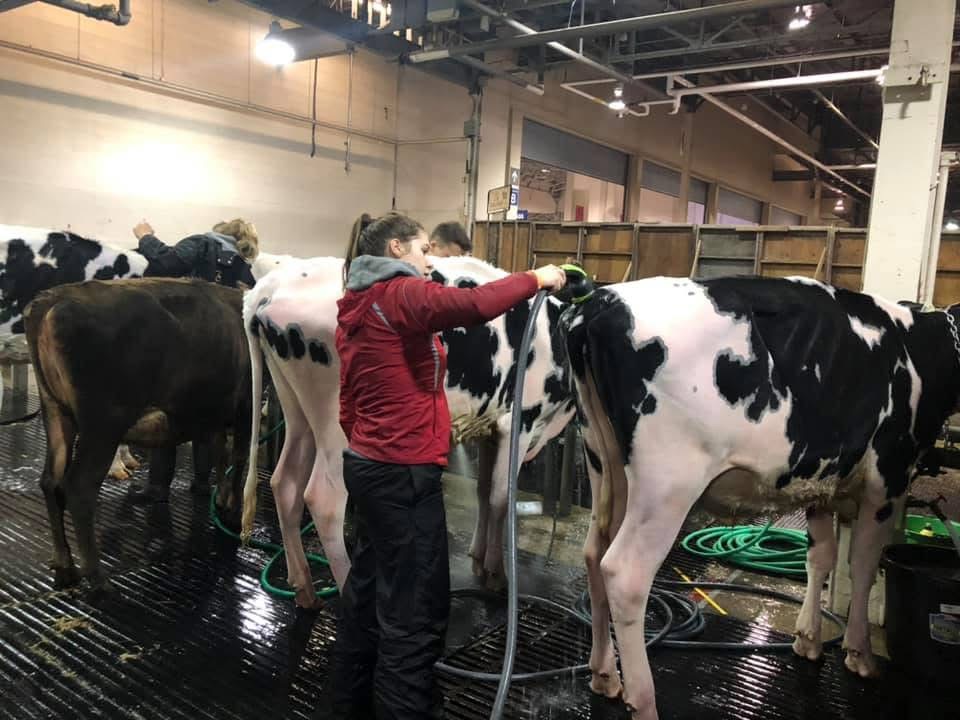
You see kids washing cattle. I see Canada’s next dairy CEOs learning their most valuable skill: helping competitors when nobody’s keeping score. That teenager in the red jacket? They don’t know it yet, but in 15 years they’ll build a genetics company with someone washing calves three stalls over. The rival they’re about to help with a stuck zipper? Future business partner.

I’ll never forget standing in that wash rack before dawn, exhausted and covered in soap, when the truth finally hit me: This was never about the cattle.

It was about who we become when nobody’s watching.

I was fourteen, third year competing at what was then called the Scotiabank Hays Classic. I’d just placed third in Intermediate Showmanship—respectable, not remarkable. But what moved me most wasn’t the ribbon. It was what happened in those quiet hours before the crowds arrived, before the judges appeared, before anything counted.

Younger members from another county team started seeking me out during those early-morning wash sessions. Not because anyone told them to. But because in those cold morning wash racks, we all learned the same truth: You survive this together, or you don’t survive it at all.

“Can you help me?” they’d ask. “How do you stay calm when everything goes wrong?”

That’s when the weight of it landed—the kind of responsibility that changes you. I wasn’t just competing anymore. I was becoming someone others looked to when the pressure got real.
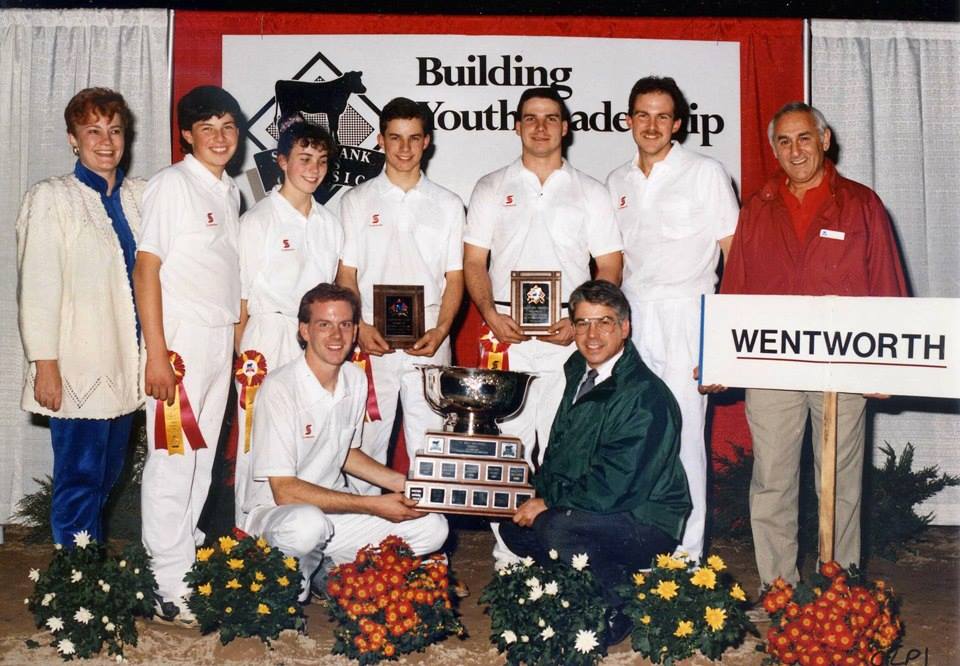
Our Wentworth County team, celebrating our Premier Hays Classic win, was in my second year competing at what was then called the Scotiabank Hays Classic. The pride in this moment went beyond the ribbons; it was about the teamwork and leadership that earned us that “Building Youth Leadership” banner.

The Winter Everything Almost Fell Apart

The courage it took to walk away from security still catches my breath when I think about it.

By my late twenties, I had everything society says matters. Six-figure consulting salary. Professional prestige. A clear path forward. Three generations of our family had built a Master Breeder operation in southern Ontario. Dad spent nearly three decades revolutionizing Holstein Canada’s genetic evaluation system. His philosophy wasn’t just words on his office wall: “Lead, follow, or get out of the way.”

But there I was. Following. Following someone else’s dream while mine withered.

My wife’s faith saved me. When I told her I couldn’t do it anymore—couldn’t keep trading my soul for a paycheck—she didn’t panic about the money we’d lose. She believed we’d figure it out together.

So I came home and started building from nothing. A marketing agency from our kitchen table. Within five years, we’d grown to serve four Fortune 500 companies. But even that success felt hollow. The pull back to dairy—to the industry that raised me—was too strong to ignore.

Why David Beats Goliath in Canadian Dairy

Here’s what shouldn’t make sense but does.

Canada has roughly 9,000 dairy farms, according to Agriculture Canada’s latest count. The United States? Over 30,000. We have 1.4 million dairy cattle. They have 9.4 million.

By every logical measure, we should be irrelevant. A footnote in global dairy genetics.

Instead—and this still amazes me—Canada exports between $155 and $178 million in dairy genetics annually. Our Holstein genetics consistently rank in the top three globally. We achieve the world’s best carbon efficiency at 48% below global averages.

How does a country a fraction of the size punch so far above its weight?

Look at who’s leading Canadian dairy. The vast majority came through 4-H programs like the Classic. That’s not a coincidence. That’s what happens when you systematically build leaders from age twelve up.

Curtis McNeil proved it. Won the Classic Grand Championship in 2005, the same week he captured Holstein Canada’s President’s Cup—first person ever to claim both. Today, he’s earned three Master Breeder shields, serves on Semex Alliance’s executive board. When he returned to judge the 2024 Classic showmanship, watching 300 teenagers compete, he called it “the best showmanship class I have ever seen in my life.”

Tyler Canning, 2022 Grand Champion. Nadia Uhr, 2024 Champion, after five years of competing. The pattern repeats across hundreds of Classic alumni now leading every major dairy organization in Canada.
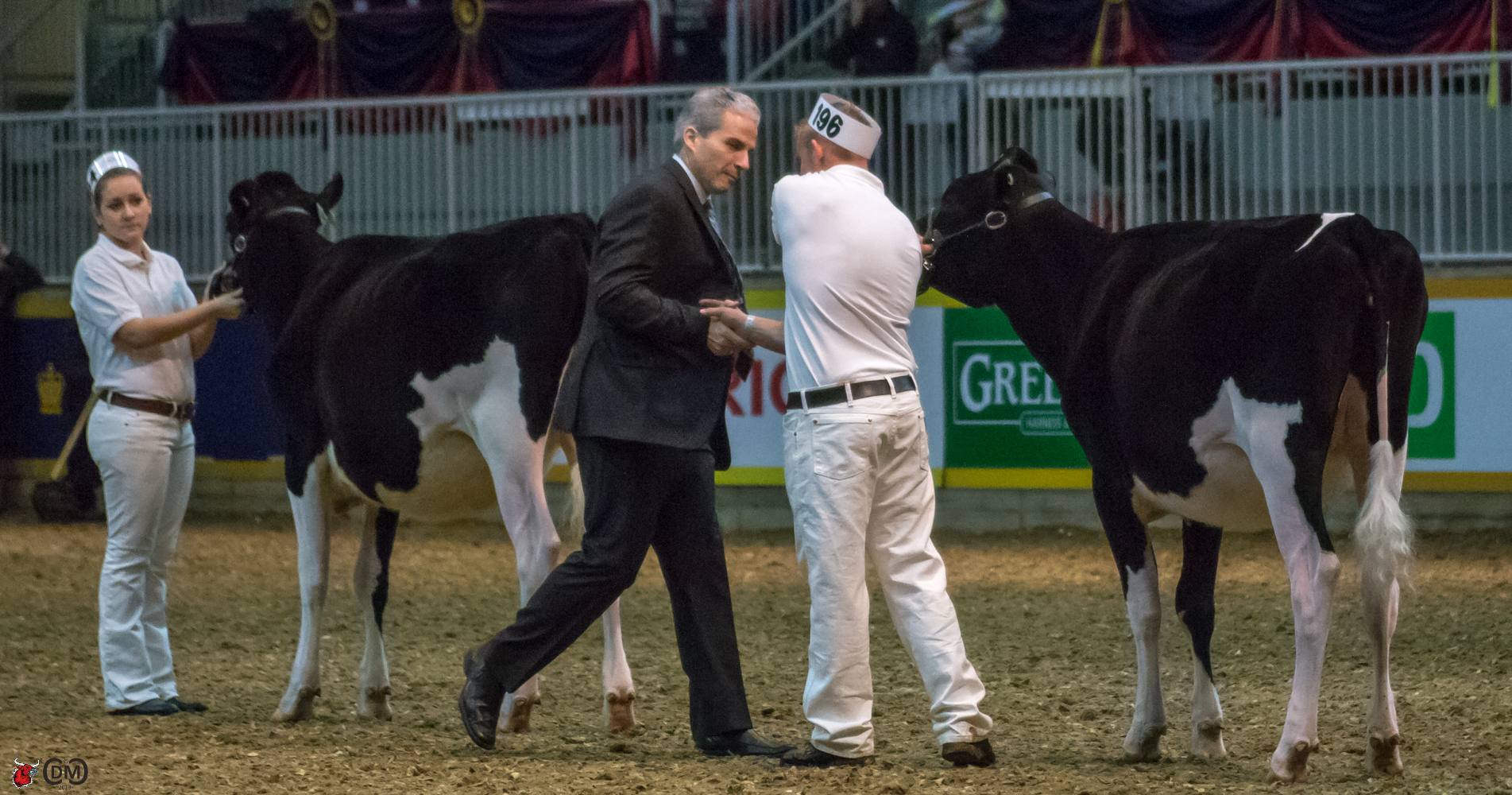
My brother, Paul, then CEO of URUS, judging the TD Canadian 4-H Dairy Classic. Here, he’s congratulating Peter Leach from Kawartha Lakes, the Grand Champion Showman. Seeing Paul, a Classic alumnus, return to judge and recognize the next generation of leaders vividly illustrates how this network comes full circle and continues to shape the industry’s future. 

The Conversation That Keeps Me Awake

But here’s the hard truth these kids deserve to hear, even though it hurts to say it.

Based on current consolidation trends, industry analysts project that approximately half the dairy farms operating today won’t exist when these teenagers are thirty-five. Not because farmers failed. Because the economics became impossible for mid-size operations.

In the United States, mega-dairies with 2,500+ cows now produce 46% of milk while representing just 3% of operations. Technology isn’t optional anymore—robotic milking, AI monitoring, and precision agriculture demand millions in investment that most farms simply can’t afford.

The world these kids are entering is exponentially harder than what I faced.

So what do I tell those 300 teenagers preparing for the 2025 Classic, knowing what’s ahead?

Don’t be afraid to change the world. Use what you’re learning here to take on the world. And remember—the bend in the road is not the end of the road unless you fail to make the turn.

Some will leave dairy. That’s not giving up—it’s using the judgment skills we learned right here. Sometimes the bravest decision is recognizing when to pivot toward where your skills create more impact.

What Really Happens at 5:47 AM

Standing at the Royal Winter Fair last November, watching the 41st annual TD Canadian 4-H Dairy Classic, I saw myself in every teenager preparing their calf in those pre-dawn hours.

The wash racks at dawn tell the real story. Three hundred teenagers from counties across Canada, all preparing for classes that start in two hours. Premier County championships hang on every point. The competition is fierce.

But watch what actually happens: Competitors from rival counties stop their own preparations to help someone who is struggling. They share equipment without being asked. They teach techniques to direct competitors. They offer encouragement when frustration peaks.

Nobody mandates this. No rules require it.

This is simply who we are. Who we’ve always been.

Those people beside you at 5:47 AM become your professional network for the next forty years. When you need someone who understands the weight of impossible decisions, when you need truth without judgment, you call someone you showed against decades ago. That trust—you can’t manufacture it in boardrooms or build it through LinkedIn. It’s forged when you’re all exhausted, scared, and determined not to let each other fail.

Why I Had to Build The Bullvine

The moment that changed everything came when I was thirty-five. February 2012. Two weeks from initial idea to launching The Bullvine’s first article.

For that entire first year, I did not seek advertisers. Complete editorial freedom mattered more than financial security. People thought I’d lost my mind. Looking back, maybe I had.

But every skill I needed to make it work came from those years competing at the Classic. Making split-second decisions when your calf won’t cooperate and five hundred people are watching. Getting up the next morning after not doing as well as you had hoped. Walking back into that ring knowing you might fail again.

That’s the real training. Not for showing cattle—for life.

Today, The Bullvine reaches over 400,000 monthly readers. It’s become dairy’s most essential, most provocative platform. But what matters more is what it represents: proof that skills learned at fifteen in a show ring can build something at thirty-five that changes an entire industry’s conversation.

The Network That Will Save Everything

What happens at the Classic doesn’t stay at the Classic. It builds the collaborative tissue that makes Canadian dairy globally competitive despite our size.

When Canadian dairy organizations pioneered genomic selection—doubling genetic progress rates—it succeeded because people who’d competed as teenagers trusted each other as adults. Research institutions, AI organizations, breed associations, and progressive breeders are all collaborating across traditional boundaries.

That web of trust, built at 5:47 AM in wash racks over shared exhaustion and determination, drives Canada’s outsized global impact. You can trace nearly every major innovation in Canadian dairy back to relationships formed in 4-H.

What These Kids Really Need to Know

Parents watching their children compete face an impossible question: How do you prepare kids for an industry that might not exist when they’re ready to take over?

Here’s what my journey taught me: You’re not preparing them for dairy farming. You’re preparing them to navigate complexity and uncertainty with grace. Whether they lead dairy operations, genetics companies, technology startups, or ventures we can’t yet imagine—they’re learning to drive change rather than be consumed by it.

For ten years competing, I thought I was learning to show cattle.

I was actually learning to make impossible decisions with incomplete information. To find hope when logic says quit. To lift others when you’re barely standing yourself. To persist when persistence seems pointless.

These aren’t cattle skills. They’re survival skills. The same ones that let you leave a secure job with young kids depending on you. Launch a media platform that everyone says will fail. Tell uncomfortable truths that an industry needs to hear. And somehow find a way to make it all work.

My parents always said 4-H was our stepping stone for learning. From projects that taught responsibility to giving reasons that built confidence and public speaking skills, 4-H became the cornerstone of everything that came after.

The Real Legacy Forged at 5:47 AM

Standing at the Royal last November, I saw myself in every teenager preparing their calf in those pre-dawn hours.

5:47 AM. Three hundred teenagers from across Canada. Premier County championships hang on every point. The competition is fierce.

But watch what actually happens.

I saw a young woman from western Ontario helping a first-timer from the Maritimes who couldn’t get all the soap out of her calf. I saw a senior competitor from Ontario lend clipping equipment to someone from Alberta whose clippers failed.

Nobody mandates this. No rules require it. No one is keeping score.

This is simply who we are.

Those people beside you at 5:47 AM become your professional network for the next forty years. When you need someone who understands the weight of impossible decisions, you call someone you showed against decades ago. That trust—you can’t manufacture it in boardrooms. It’s forged when you’re all exhausted, scared, and determined not to let each other fail.

Three hundred teenagers. One cold November morning. The future of an industry that statistics say shouldn’t survive.

But we will. We always have. Not through miracles or magical market corrections.

Through each other.

That’s the harvest that matters most—not in the field or barn, but in the people we become together.

The road will bend. It always does. But if you use what you learn here—really use it—you’ll make the turn. Trust me on this. I’ve made that turn several times now, and each time I’ve drawn on skills learned standing exactly where these kids stand today.

In a world that often forgets, this is what we’re really teaching in those wash racks at dawn: How to be the person someone else needs when everything feels impossible.

The cattle were always just the excuse to bring us together.

The humans we become in those moments before dawn—that’s the real legacy.

KEY TAKEAWAYS 

  • Your competition at 5:47 AM becomes your career safety net at 35: The teenager you help in the wash rack today calls you with the opportunity that saves your farm in 2040
  • Canada’s secret weapon costs nothing: We export $178M in genetics with 1/3 the farms because rivals helping rivals at dawn creates trust that boardrooms can’t buy
  • The skills that matter aren’t about cattle: Walking into the ring after public failure, making decisions while 500 watch, lifting others when you’re drowning—that’s the real curriculum
  • “The bend in the road is not the end”: When half of dairy farms vanish, Classic alumni thrive because at 14 they learned the difference between quitting and pivoting
  • The cattle were always just the excuse: Building humans who understand collective success beats individual achievement—that’s why 4-H kids run Canadian dairy

Join the Revolution!

Join over 30,000 successful dairy professionals who rely on Bullvine Weekly for their competitive edge. Delivered directly to your inbox each week, our exclusive industry insights help you make smarter decisions while saving precious hours every week. Never miss critical updates on milk production trends, breakthrough technologies, and profit-boosting strategies that top producers are already implementing. Subscribe now to transform your dairy operation’s efficiency and profitability—your future success is just one click away.

NewsSubscribe
First
Last
Consent

Sliding Prices, Futures Outlook, and EU Costs: September 25th 2024 Dairy Market Update

Stay up-to-date on dairy market trends. Learn why prices are dropping and what the future may hold. How will high EU costs affect your business?

Summary:

The dairy market experienced notable declines this week, with cash prices on the Chicago Mercantile Exchange continuing their downward trend. While dry whey increased slightly to $0.5950, blocks, barrels, and butter saw significant drops, settling at $2.1750, $2.4275, and $2.86, respectively, while nonfat dry milk remained unchanged at $1.3775. European dairy prices remain higher than global competitors, adding to the competitive landscape. Futures markets showed mixed results, with Class III futures climbing to $22.60 per hundredweight and Class IV futures falling to $21.76 per hundredweight. An anticipated USDA Cold Storage report is expected to provide further insights, but current data suggests a bearish outlook for butter prices heading into Q4.

Key Takeaways:

  • Cash dairy prices on the Chicago Mercantile Exchange continue to decline, with specific drops in whey, blocks, barrels, and butter prices.
  • The US dairy market is volatile, particularly in the butter and cheese sectors, facing significant price declines and sell-offs.
  • European cheese and butter remain significantly more expensive than their US and New Zealand counterparts, potentially affecting competitive positioning.
  • Despite the bearish trend in spot butter prices, Class III futures have seen slight gains, indicating a complex market dynamic.
  • The upcoming USDA Cold Storage report is expected to show changes in cheese and butter stocks, which could impact future price movements.
  • The market shows robust trading volumes and a rise in open interest, reflecting active participation and potential future price fluctuations.
  • Market participants closely monitor the balance between spot and futures prices, anticipating potential corrections and convergence.
dairy prices decline, Chicago Mercantile Exchange, European cheese costs, dairy futures changes, butter futures drop, cheese futures instability, global dairy competitiveness, low-cost dairy alternatives, inventory strategy adaptation, market dynamics analysis

The recent decline in cash dairy prices on the Chicago Mercantile Exchange has sparked anxiety and discussion among dairy farmers and experts. Dry whey saw a modest rise, but other vital commodities, such as blocks and barrels, fell. Butter also experienced a decrease. These changes, though seemingly minor, can have a significant and immediate impact on the industry. Understanding these market dynamics is crucial for dairy farmers and industry experts. It informs your decisions and empowers you to plan your operations and adjust your strategies to remain competitive. You can better protect your bottom line by being proactive and planning ahead. Let’s explore these changes and what they mean for you.

CommodityPrice (per lb)Change ($)Volume
Dry Whey$0.5950+0.0050Not traded
Blocks$2.1750-0.0150Not traded
Barrels$2.4275-0.1175Not traded
Butter$2.8600-0.04Eight sales
Nonfat Dry Milk$1.3775Unchanged13 sales

Cash Dairy Prices: What’s Happening? 

Let’s look at the most recent changes in CME cash dairy prices and what they tell us about the market. On Wednesday, dried whey prices rose slightly, from $0.0050 to $0.5950. Meanwhile, blocks fell $0.0150 to close at $2.1750, while barrels fell more significantly, down $0.1175 to $2.4275. On the butter front, the market eased as spot butter dipped $0.04 to $2.86, with eight sales transactions ranging from $2.86 to $2.8750. Finally, nonfat dry milk remained stable at $1.3775, backed by thirteen sales ranging from $1.3750 to $1.3825.

What do the price fluctuations tell us? The constant increase in dry whey reflects a minor demand increase. However, reducing block and barrel cheese prices might indicate an oversupply or declining demand. The drop in butter prices is a negative trend, implying that supply exceeds current demand, a feeling backed by the high trade volume. Even with vigorous trade, the consistent price of nonfat dry milk shows that the market dynamics in that category are balanced. These moves indicate a market under pressure, with negative trends in crucial dairy commodities. Dairy farmers might need to adjust their production levels to match the current demand. For industry experts, it suggests the need for innovative marketing strategies to stimulate demand. These are just a few examples of how understanding market dynamics can directly impact your operations and strategies.

The Price Premium of European Dairy: A Competitive Disadvantage?

When it comes to dairy prices, Europe stands out. European cheese costs $2.61 a pound, significantly more than $2.37 in the US and $2.01 in New Zealand. Similarly, European butter costs $4.18 a pound, vs. $2.90 in the US and New Zealand. These significant disparities warrant a more profound examination of the factors at play. The European dairy market is known for its high-quality products and stringent regulations, contributing to higher prices. However, these higher prices also put European dairy at a competitive disadvantage in the global market.

Why do European dairy products cost more? Several variables are in play. One major cause is the increased cost of manufacturing. European farmers confront increased rules on animal welfare and environmental measures, which, although good in many ways, increase their operating expenses. Second, EU subsidies and trade policies may distort market pricing, increasing domestic dairy prices.

These rising prices have a knock-on impact on global commerce. Despite being a significant participant in the global dairy industry, Europe has a competitive disadvantage due to higher pricing. This reduces European dairy’s global competitiveness and impacts importers searching for low-cost alternatives. Consequently, nations with lower-priced dairy products, such as the United States and New Zealand, often gain a more extensive worldwide market share.

Although Europe’s dedication to quality and sustainability in dairy production is admirable, it comes at a higher cost, affecting local and worldwide markets. This dynamic is critical for dairy professionals to follow. It affects trade patterns and keeps you connected to the competitive positioning in an increasingly globalized world.

Let’s Dive into the Current State of Dairy Futures and What the Recent Trends Might Mean for the Market Moving Forward. The recent trends in dairy futures could potentially significantly impact the market. Dairy farmers and industry experts must stay alert and prepared for potential changes. Let’s look at the present situation of dairy futures and what recent changes may indicate for the market.

While current butter prices have plunged, Class III futures have risen to $22.60 per hundredweight, up 15 cents. In contrast, Class IV futures fell by 24 cents to close at $21.76 a hundredweight. This difference reflects varied market expectations for various dairy product groups.

Butter futures have dropped to $2.8920 a pound, mirroring current prices. This reduction is consistent with the current price’s downward trend, indicating unfavorable market sentiment. There has been conjecture that the $2.80 level may serve as a support level, perhaps stopping additional falls in the short future. However, given the overall market patterns and increased transaction volumes, we may see more decline.

Similarly, cheese futures are showing signals of instability. Barrel cheese futures fell significantly, dropping 11.75 cents to $2.4275 a pound, slightly over the $2.40 offer. Block cheese futures have also fallen, but at a slower pace, suggesting reduced demand in the last week. As sellers of fresh cheese attempt to offload surplus stock, we may see more excellent trading activity in these futures contracts.

NFDM futures have also seen substantial selling, resulting in 1-2 cent price cuts. Despite this, the spot market for NFDM has remained consistent, resulting in a short time for market players to reevaluate US NFDM futures in light of worldwide pricing.

What is the takeaway from all of these moving parts? Market players will consider these patterns when the USDA issues its August Cold Storage report, which we do not anticipate will include big surprises. The USDA’s report is a crucial indicator of the current state of the dairy market, and its findings can significantly influence market sentiment and trading activity. With cheese and butter supplies changing, the future of Class III and IV futures will rely heavily on market responses to shifting supply and demand dynamics.

Monitor key support levels, such as $2.80 for butter and $2.40 for barrel cheese. Any big moves above these levels may set the tone for future trading activity. If the negative trend continues, dairy futures may fall further as we enter the year’s fourth quarter.

Unpacking the Slide in Spot Butter Prices: What’s Driving the Decline? 

Understanding the recent drop in spot butter prices necessitates investigating the underlying causes of these shifts. The ongoing decline to $2.86 a pound reflects broader market dynamics in which supply seems to exceed demand. Given butter’s historical steadiness, this is a remarkable adjustment.

More significant trading volumes and growing open interest provide helpful information. A record spike to the fifth-highest butter volume, with 838 contracts traded, indicates increased trading activity and interest in market positioning. Decreasing prices coincide with increased volumes, and open interest often indicates a pessimistic sentiment—a hint that traders expect more significant drops.

The price fell to $2.86 after eight deals were performed in a tight range of $2.86 to $2.8750. This narrow trading range reflects the market’s efforts to establish fresh equilibrium points. It’s worth noting that the latest drop has boosted futures selling, with open interest rising by 405 contracts. This pattern strengthens the gloomy forecast, implying that prices would fall further in the fourth quarter (Q4).

Looking forward, traders should keep an eye on critical price levels, notably the $2.80 mark, which some say might serve as a support level. However, given the pessimistic tone and the following Cold Storage report, some price volatility is likely. The cold storage data will likely impact market sentiment, support existing trends, or cause short-term price fluctuations.

The significant trading volumes and increased open interest suggest market players are aggressively reassessing their positions, most likely in preparation for more downward pressure. Understanding these patterns is critical for both dairy experts and farmers. The continued change indicates a challenging market environment in which clever positioning and constant observation of trade activity will be critical for success in the coming months.

USDA Cold Storage Report: What to Watch For and How to Adapt 

The USDA will issue its August Cold Storage report at 2 p.m. today. While we don’t expect any earth-shattering disclosures, it’s critical to watch the anticipated changes in cheese and butter stockpiles. Our predictions see cheese stockpiles falling 5.9% from last year, closely mirroring the 5.8% drop we experienced in July. Meanwhile, butter stockpiles are expected to expand by 8.9%, somewhat higher than the 7.4% increase in July.

How does this affect dairy farmers and industry professionals? Essentially, dropping cheese inventories indicates a tighter supply, which may boost prices in the future. However, increasing butter supplies may put more negative pressure on prices, extending the downward trend.

If you are a dairy farmer, these changes may recommend increasing production efficiency and investigating hedging measures to offset future price volatility. For industry professionals, especially those in sales and logistics, it may suggest adapting inventory strategy and seeking new markets to mitigate the negative consequences of price shifts.

Finally, although the data give a glimpse, knowing their consequences can help you better negotiate the future dairy market’s complexity. Keep your plans adaptable and informed—being proactive is your best strategy as Q4 approaches.

The Bottom Line

Recent dairy market developments reflect a world of price volatility and active futures trading. Cash dairy prices have fallen, with significant declines in spot butter and cheese prices. While European dairy maintains a price premium, offering significant competitive disadvantages, the US market has its issues. Futures markets are pessimistic, notably for butter, despite rising trade volumes and open interest.

Keeping up with market trends and studies, such as the USDA Cold Storage report, is critical for making intelligent choices in this unpredictable climate. As we look to the future, we must ask how global economic developments and legislative changes affect dairy producers and the overall market. Your awareness and agility will be critical in navigating these hazardous seas. Are you prepared for what comes next?

Learn more:

Join the Revolution!

Bullvine Daily is your essential e-zine for staying ahead in the dairy industry. With over 30,000 subscribers, we bring you the week’s top news, helping you manage tasks efficiently. Stay informed about milk production, tech adoption, and more, so you can concentrate on your dairy operations. 

NewsSubscribe
First
Last
Consent

Send this to a friend