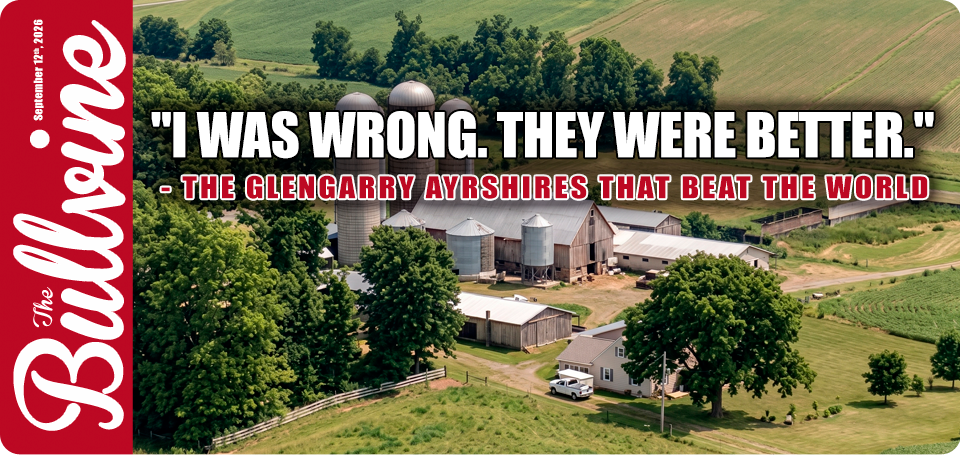





A 180-acre farm near Lancaster, Ontario. A Scottish cow bought with her best calf already inside her. And the bull who turned a half-dozen villages by the Quebec line into the source of the Ayrshire breed.
The telephone calls came the following year, and each one asked the same thing.
Ayrshire breeders across the American Northeast were ringing officials at Waterloo, Iowa — home of the National Dairy Cattle Congress, the show that mattered most on that side of the border until the dairy associations pulled their support in 1965 and took the big shows to Madison. The callers weren’t asking about entry deadlines or stall assignments.
Are the LaFranchis coming to Waterloo this year?
Yes, they are.
We won’t be there, then. What’s the use?
Grown men who’d given their lives to Ayrshire cattle, men whose prefixes carried real weight — Lippitt, Meredith, the staid old Northeastern establishments — deciding it wasn’t worth loading the truck. All because three brothers from Calistoga, California had come to Iowa the previous fall with Oak Ridge Farm and walked out with seven class winners and most of the grand championships.
Norman Nabholz, who wrote Millionaires in the Cornfields about the herds that dominated Waterloo and who never owned an Ayrshire in his life, said it about as plainly as anybody could: “Probably the finest group of dairy cattle that ever existed.”
Here’s the part nobody said out loud on those phone calls, because everybody already knew it.
The LaFranchis hadn’t invented those cattle. They’d bought the engine. Six of their herd sires were bred at one place — a farm in Glengarry County, Eastern Ontario, four miles northwest of the village of Lancaster, where people still spoke with Scottish burrs and the Ayrshire cow was, as the old accounts have it, religion. Some of their foundation females came from there too.
The prefix was Glengarry. And this is how a family of Scottish immigrants working 180 acres, hauling cows to the bull on a stoneboat behind a pair of Belgians, ended up supplying the genetics that emptied the trucks of an entire show circuit.
ACT I: THE SCOTS BY THE QUEBEC LINE
Livestock historian E.W. Morwick, who preserved most of what we know about this farm, heard the legend as a schoolboy in short pants. Somewhere down by the Quebec border, he was told, was a tight little community — half a dozen small villages — where all the good Ayrshires came from. Names got mentioned. Bonnie Brae. Burnside. Cherry Bank. Mapleshade. But the name he heard most was Glengarry.
Then, as a teenager hauling to the Canadian National Exhibition with Holstein show herds, he stopped to listen every time the Ayrshire results came over the public address. Selwood. Sanholm. Selwood again. Never Glengarry. Never Mapleshade.
So he said what any honest kid would say: maybe those herds down by the Quebec border aren’t as good as people claim.
His verdict, written decades later, runs three words. They were better.
Now, the thing about the Ayrshire in that era — you have to picture what these people actually had standing in the tie-stalls. This was the only major dairy breed to come out of the British Isles, developed in the county of Ayr in southwestern Scotland. Red and white, medium-framed, mature cows running just over a thousand pounds. Long, light horns with dark tips, back when nobody dehorned. Remarkably straight toplines carried level over the rump, and udders good enough that breeders bragged about them in print. Milk of fine curd texture that made first-rate cheese — which mattered enormously to Scottish farmers and, later, to the men shipping into Montreal.
Scottish settlers brought them over in the early 1800s. The Quebec importers organized in 1870, Ontario’s breeders in 1872, and the two amalgamated in 1898 into the association that still registers the breed today. So by the time this story starts, Canadian Ayrshire breeding had herd books, institutions, and a settled habit of going back to the old country for fresh blood.
John Cumming came out of Kintyre, Argyllshire, in 1825 and settled at Allan’s Corners near Ormstown, in the Châteauguay Valley southwest of Montreal. His son Donald was born there on April 18, 1844.
Donald’s name first appears in Volume 2 of the Ayrshire herd book, as owner of a female called Snowball 3854, born May 6, 1886, bought from James Cottingham of Ormstown. Volumes 3, 4, and 5 list many more.
About two decades after those first Ayrshires, Donald moved the whole outfit across the St. Lawrence into Glengarry County and took up 180 acres in the McLennan Settlement. Ten children. The eldest son was Malcolm — Mac to everyone. The youngest was Donald Jr.
Those two are where a good herd becomes a dynasty.
When the old man retired in 1915 — he’d die in 1927 at 83 — he split the farms and the herds between them. Donald Jr. took the home place. Mac set up on the next concession. Their father wanted two separate operations, and on paper that’s exactly what he got.
The brothers had other ideas.
They’d own the herd sires in partnership. They’d ship milk to Montreal under one contract. Every calf born on either farm would be registered under the Glengarry prefix, bred by Cumming Bros., and anything shown at a fair went into the ring under that single name.
One prefix. One reputation. Two households doing the chores.
And this is where it gets complicated, because the arrangement bred friction as reliably as it bred cattle. The bulls lived at Donald’s farm. That meant Mac had to bring his cows down to Donald’s yard — usually on a stoneboat, that flat sled farmers dragged over bare ground or snow, hitched behind a team of Belgians.
Donald met him at the barn.
And Donald paid strict attention to which cows got bred to which bull. If Mac showed up with one he didn’t like, Donald told him to take her home.
Picture it. Your brother has hitched the team, loaded a cow, driven her down the road — and you’re standing in the doorway telling him to turn around.
That isn’t stubbornness for its own sake. That’s a standard being enforced at the one place standards usually collapse: where saying no costs you something personal. Everything Glengarry became grew out of that refusal.
And don’t mistake Mac for the junior partner in the argument. He held the presidency of the local Ayrshire club from 1931 to 1948, the better part of two decades, and by 1941 he was standing in the middle of the ring at the CNE as the man placing the Ayrshire classes — the same show where young Morwick had listened in vain for the Glengarry name. Think about the endorsement buried in that. The breeder who got sent home from his brother’s barn door was the breeder Canada’s biggest fair trusted to sort everybody else’s cattle.
Two men with the eye, then. Neither one folding.
The Scottish Pipeline
What separates Glengarry from a hundred other capable farms is that the Cummings never settled for the genetics that happened to be nearby. Year after year, they imported from Scotland themselves or bought out of other men’s shipments.
Understand what an import meant then. No semen tank, no embryo, no genomic test to tell you what you’d bought. You paid for a living animal, put her on a ship, and prayed. Sometimes she carried the next generation inside her, and that gamble was the whole point.
Their 1927 shipment brought in Dalfibble Narcissus. In 1928 she made 22,050 pounds of milk on yearly test — the highest cow in Canada that year, any breed. Ayrshire herd averages of that era ran nearer 10,000 pounds over a full lactation, so she was better than double her breed’s ordinary. Townhead Julia and Hobsland Nancy came over in the same lot, and both founded families that mattered.
But the cow who paid for that whole era a thousand times over came later, and she reached Glengarry by a roundabout road through one of the great Canadian herds.
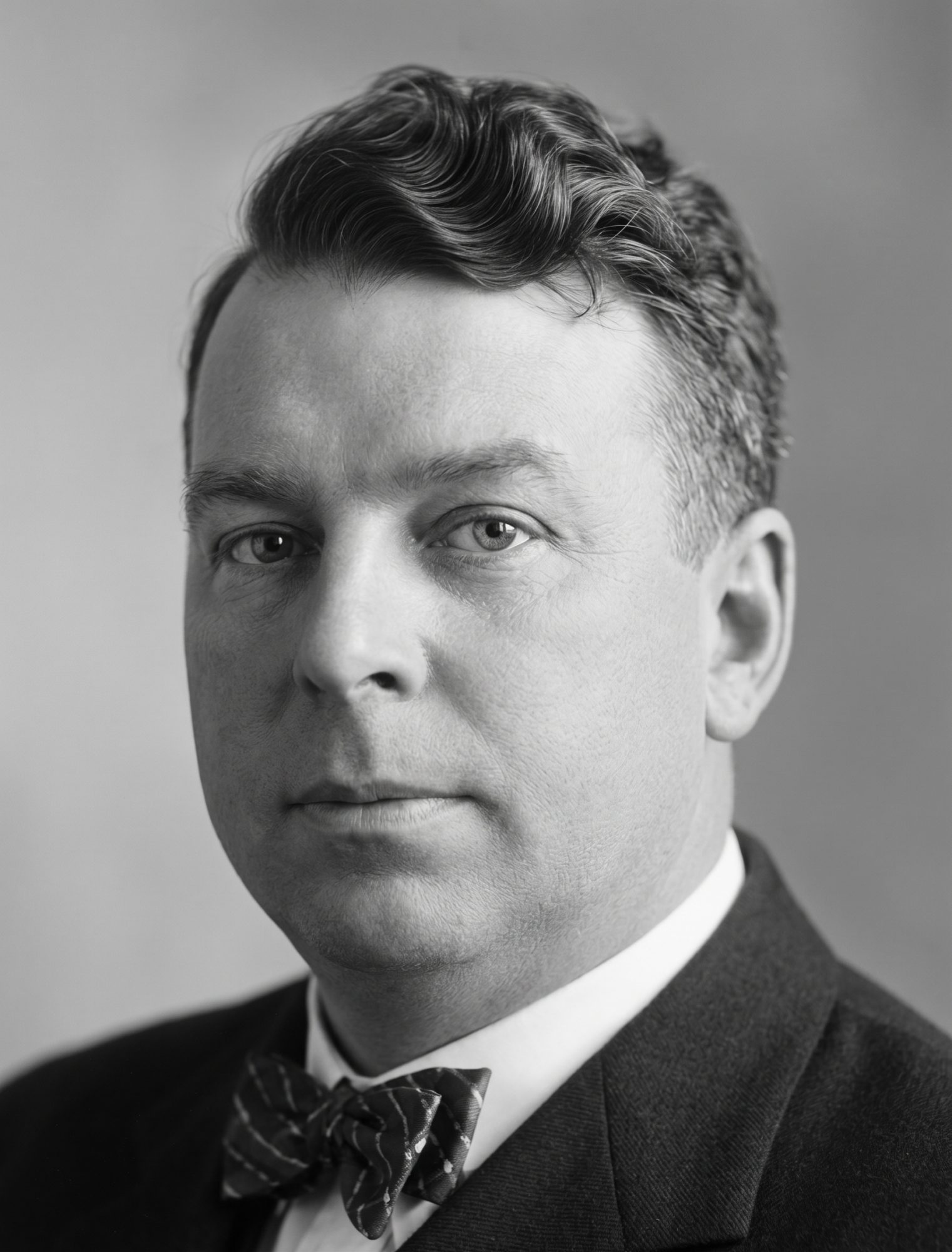
The Honourable Frank C. Biggs, proprietor of Glen Campbell Farm near Dundas, and Ontario’s Minister of Public Works and Highways from 1919 to 1923. His 1936 order for a dozen Scottish heifers is what sent Adam Montgomerie into the Threave barnyard. Biggs never owned the yearling he found there — the Cummings bought Threave Flirt 2nd when she landed.
Frank C. Biggs — the Honourable F.C. Biggs — served as Ontario’s Minister of Public Works and Highways in the Drury government from November 1919 to July 1923, the man under whose watch the province’s paved highway system got started. He kept Ayrshires at Glen Campbell Farm out past Dundas, and they were known on both sides of the line. His cow Ardgowan Valda, bought from her Scottish breeder Sir Hugh Shaw Stewart, took grand champion at the CNE in 1936 and then laid down 31,156 pounds of milk and 1,356 pounds of fat as an eight-year-old — a world championship Ayrshire record.
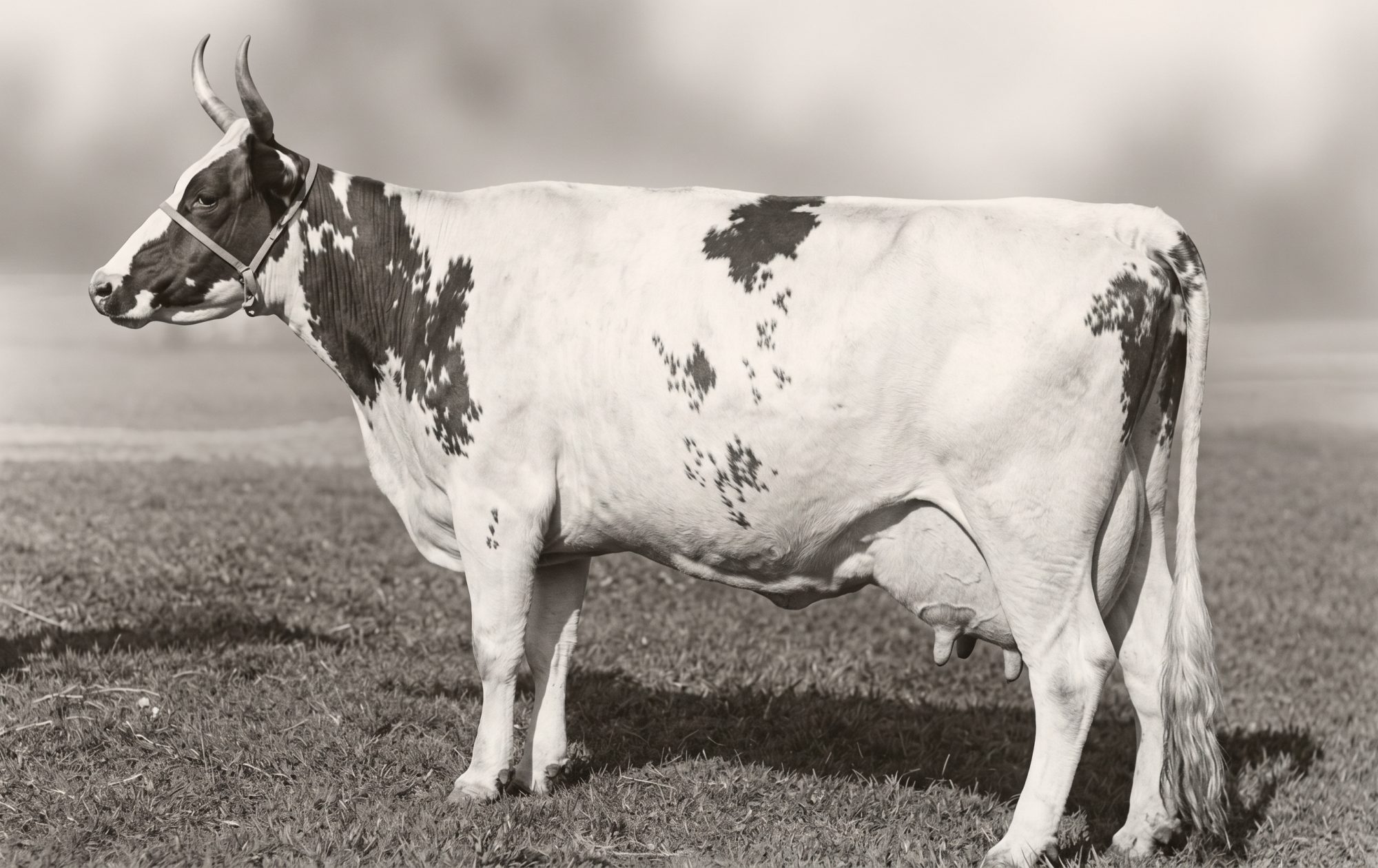
Biggs sent his son Dick to Scotland to buy, and used agents there, too. One agent was Adam Montgomerie of Lessnessock, the man the Ayrshire world would eventually call the Laird — and then, simply, the Ayrshire King.
In 1936, Biggs ordered a dozen heifers. Montgomerie, hunting something above the ordinary, went first to Colonel Houldsworth’s Threave herd at Kirkmichael in South Ayrshire.
In that barnyard he stopped walking.
Style and dairyness — that’s all the record gives us for what pulled him up in front of a yearling heifer. It doesn’t say which line caught him first. But in a Scottish barnyard in 1936, dairyness meant an open, angular sort of femininity, a level top on an animal still growing into herself, and an udder attached high and tight enough to promise she’d still be sound at ten. Whatever he saw, he stood there long enough to ask about her breeding.
Her dam was Threave Flake 3rd, the herdsman told him, and her sire was Lessnessock Corra Boy — a bull Montgomerie had bred himself out of Linhead Cora Linn 2nd, one of the celebrated cows of the 1930s, by Lessnessock Sunny Jim.
Her name was Threave Flirt 2nd.
Montgomerie bought her. And while she stood waiting for her ship, he bred her to his own herd sire, Burton Atlantic, a son of Lessnessock Atlantic.
That mating was anything but casual. Sunny Jim was Flirt’s paternal grandsire, and Sunny Jim had also sired Lessnessock Atlantic — so the calf she’d carry across the Atlantic came with two crosses to one bull. Concentrated on purpose. Montgomerie’s own sale catalog spells out the thinking: line breeding to intensify a double cross of the great cow Friendlesshead Nannie White Legs and her three sons, of whom Sunny Jim was one. The catalog claimed that cow had wider influence on Ayrshires worldwide through her sons than any other female, living or dead.
Flirt landed in Canada. The Cummings bought her.
And in early 1937, in a Glengarry County barn, she dropped the bull calf she’d been carrying since Scotland.
They registered him as Glengarry Sir Burton.
Here’s a thing worth pausing on. The same year Montgomerie stood in that Threave barnyard, a Calistoga high-schooler named Henry LaFranchi bought two Ayrshire heifers for an FFA project. Neither had any way of knowing the other existed. Twenty-four years later, their two decisions collided in an Iowa show ring.
ACT II: TWO BULLS AND A SWEEP
Sir Burton wasn’t the first great bull those brothers owned. He was the second half of a one-two punch — and the first half had already taught them a lesson they paid for once and never forgot.
Edgerstounes Sir Oliver was born in 1925 in Princeton, New Jersey, on the farm of Mrs. John Winant. His sire was Hobsland Air Pilot. His dam, Garloff Miss Olive, had topped the three-year-old class at the parish show in Ayr before Winant imported her.
A Lancaster-born herdsman named Ray Watt was working at Edgerstoune then — the Watts were another Scottish family who’d come over about when the Cummings did, settled in Châteauguay County, then crossed the river and founded Mapleshade. The story that’s come down is that Watt pulled Mrs. Winant’s son off a runaway horse, and the grateful mother handed him the bull calf.
Watt brought him home and showed him in the yearling class at the 1926 Royal Winter Fair. Picture him leading that bull out afterward — a young herdsman with a staff in one hand and the best gift he’d ever been given on the other end of the lead, walking past the rail where two brothers from Glengarry County had stopped to watch.
They took him home after the show for $700 — serious money in 1926 for two men splitting one milk cheque. And understand what they were buying: a yearling bull with no daughters anywhere, judged entirely on how he looked walking in a ring. If he’d bred nothing worth keeping, there was no A.I. contract to bail them out and no way to spread the loss. They’d have paid a serious piece of a year’s milk cheque for a mistake and gone on milking.
Two years later, Sir Oliver stood senior and grand champion at that same Royal.
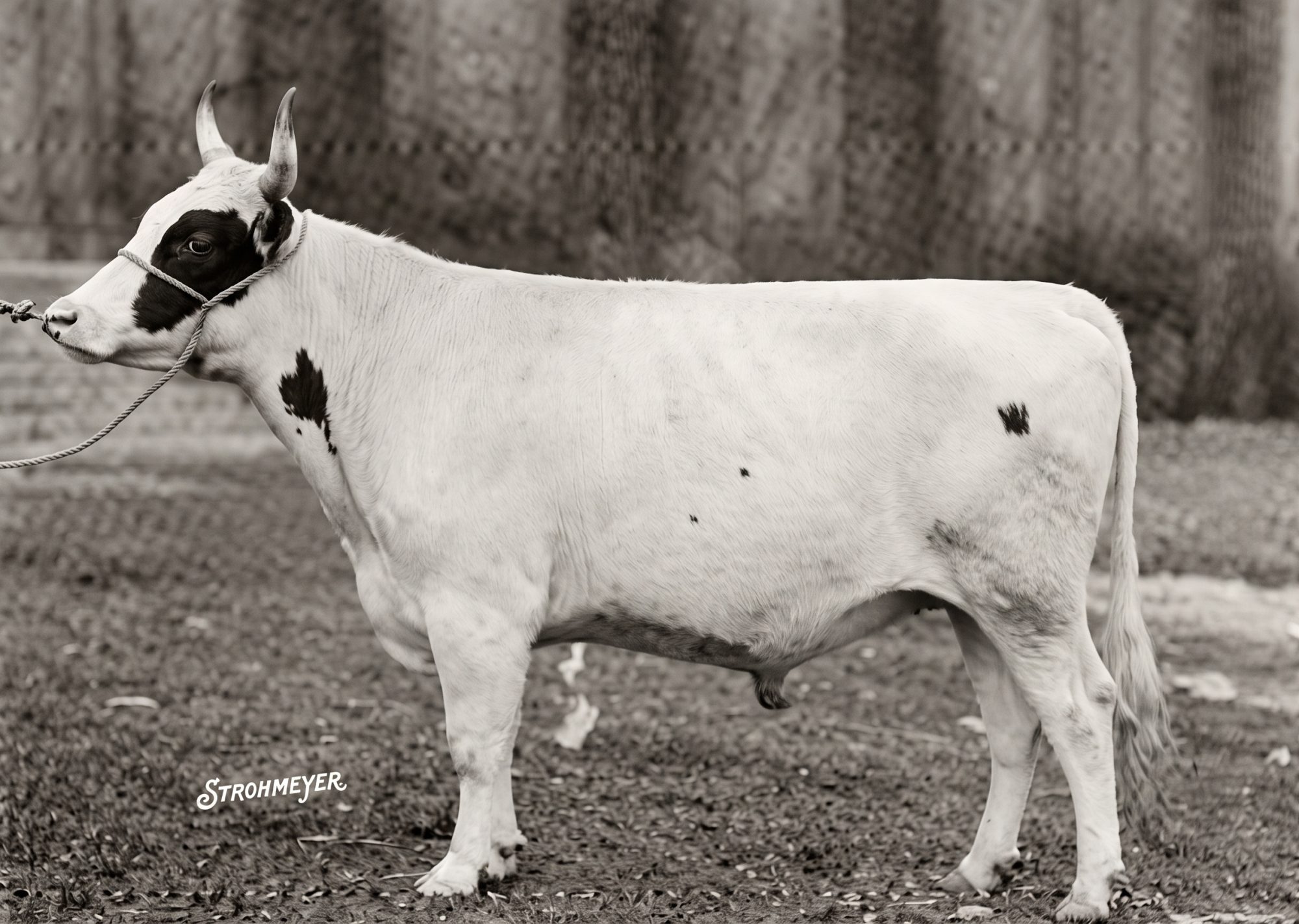
But here’s the line that tells you what kind of breeders these were. Years afterward Donald said acquiring Sir Oliver “was a great boon for our herds” — then added, “but perhaps not so good for him.” Two earlier herd sires had left daughters that weren’t what they should have been, and Sir Oliver got mated to some of them. “Had he been mated with better cows,” Donald said, “he would have made an even better showing.”
A man crediting his bull and convicting himself in the same breath. You don’t hear that often, then or now.
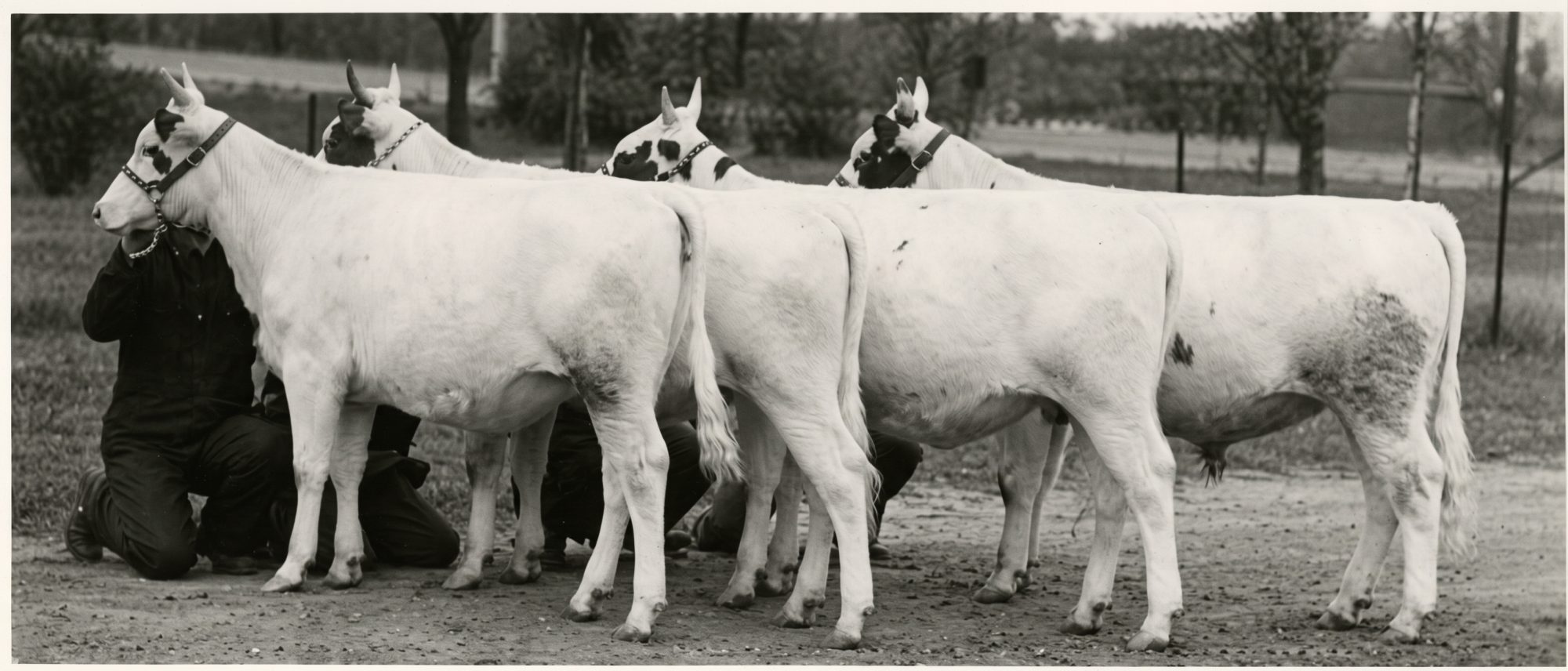
His daughters had presence anyway. Four of them stood second as a get of sire at the 1929 Royal — that’s the class where a bull is judged on a group of his daughters shown together, the oldest and most brutal test of whether a sire can repeat himself. One of those four was Glengarry Lady Cony, and she was inbred: her dam, Glengarry Olivers Cony, was another Sir Oliver daughter. Much of the Cumming reputation was built on her work.
So when Threave Flirt’s son came along, Glengarry had better cows waiting than Sir Oliver ever got. They’d learned it the expensive way.
Burton Earns a Ribbon, Then Earns His Name
As a senior calf, Glengarry Sir Burton placed second in a class of 17 at the 1937 Royal.
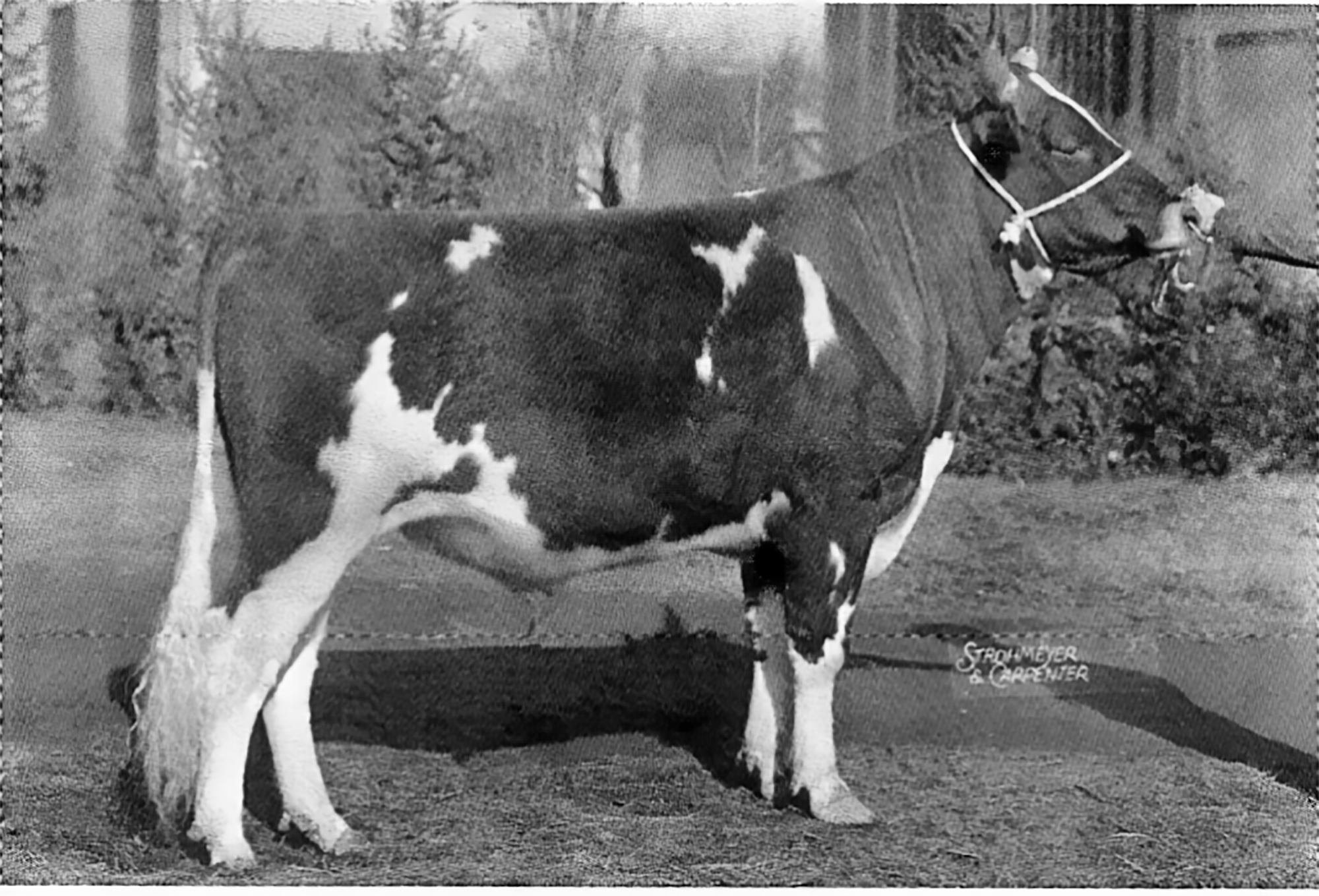
He came back the next fall, won the senior yearling class, and stood reserve grand champion at a show with 300 head of Ayrshires entered.
Three hundred. That one number tells you how deep this breed ran in Canada then, and how little a single banner proved.
Because a show bull wins for an afternoon. A breeding bull keeps winning long after he’s gone, through sons and grandsons and matings made by strangers who never laid eyes on him.
The cross that did it was Sir Burton on Glengarry Lady Cony, the inbred Sir Oliver daughter. Their son was Glengarry Conys Burton, and with him the two Glengarry sire lines fused into one.
This is what the old men meant by “nicking.” Not stacking good pedigrees and hoping. Finding two lines whose transmission patterns complete each other, one supplying exactly what the other lacks. Sir Oliver’s visual appeal and established female families, meeting Sir Burton’s concentrated Scottish inheritance.
It worked so well that Morwick called Sir Burton’s sons the most influential group of paternal brothers in Ayrshire history.
Conys Burton served at Glengarry first, then sold at maturity to the Stansell family’s Selwood Farm at Aylmer — Selwood, one of those prefixes young Morwick used to hear announced at the CNE while Glengarry went unmentioned. There he sired Selwood Gretas Burton and Selwood Coras Burton and a long line of heavy producers topped by Glengarry Betty Ann, dam of Selwood Bettys Commander. And because Commander’s sire was Selwood Coras Burton, that bull came out a Conys Burton double grandson.
Read that twice if you like. Glengarry cattle were now improving the herd that used to beat them.
Then there was Glengarry Bit O’Fashion, and breeders argued for years over whether he or Conys Burton was the better bull. Nobody ever settled it, partly because Bit O’Fashion went east instead of west. He saw heavy service in the leading Prince Edward Island herds and finished out his working life on Colonel F.I. Andrew’s farm — a Glengarry bull ending his days on Island soil, leaving daughters in barns a thousand kilometers from the stoneboat road.
And Glengarry Burton Prince sired Glen Campbell Lou Burton — Biggs’s cow — grand champion at Waterloo in 1949. First time a Glengarry bull sired a U.S. national winner.
Nobody in Iowa knew it yet. That was the opening shot.
Toronto, 1953
The Royal again. Sir Burton had last stood in that ring as a senior yearling back in 1938, fifteen years earlier, and his own showing days were long behind him.
His progeny hadn’t been idle.
When the judging finished, Sir Burton’s offspring had the grand championship in the male division. And the grand championship in the female division. Then both reserves. Then the get of sire.
Every summit in the show. One sire family.
You can read that as a ribbon count, and plenty did. But watch what a Canadian Ayrshire man would have done with the information on the drive home from Toronto. If one bull’s descendants have just swept the national show, next spring’s breeding decision isn’t complicated.
You get Burton blood, or you get beaten by it.
Which is precisely what happened. At the 1955 Royal, Conys Burton sired the winning senior get for Colonel S.C. Oland of the brewing family. White Pansys Burton, a Sir Burton grandson, was second in the senior get for Cumming Bros. and first in the junior get for S.S. Rose & Sons — and a substantial share of the individual class winners that day were Sir Burton grandsons and granddaughters.
At the 1956 Royal, Glengarry Pansys Burton — Sir Burton’s great-grandson, by White Pansys Burton — won his second grand championship in a row for Richard Bros. of Red Deer, Alberta. The same afternoon, he sired the junior and reserve junior champion males and the first-prize junior get, and he and three half-sisters made up his own sire’s winning senior get.
Alberta. Prince Edward Island. Ontario. And the American Midwest coming up fast.
Sir Burton had stopped being an animal in a pedigree. He’d become the frame the breed was being built on.
| Foundation Animal | Key Progeny | Legacy / Modern Impact |
| Glengarry Sir Burton | Glengarry Conys Burton | 1953 Royal Sweep; transformed Selwood herd |
| Glengarry Dora (EX-93) | Glengarry Lloyd Royal | 4,000 calves in Year 1 of ABS; 3x Waterloo Grand Champions |
| Glengarry Dora (EX-93) | Glengarry Worthy Conquest | Shipped to Oak Ridge (CA); sire of Connie Kathleen |
| Oak Ridge Bruis Bonnie | Palmyra Tri-Star Burdette-ET | 7x Premier Sire at World Dairy Expo (2013–2019) |
The Cows Behind the Bulls
Sire dynasties get the headlines. Female families make them possible, and Threave Flirt 2nd wasn’t finished.
Bred back to her own grandson — Glengarry Nancys Burton — Flirt produced Glengarry Renee, classified Excellent. Renee gave three Excellent daughters — Excellent being the top grade a trained association classifier could award on conformation. And in an era when a classifier reached your farm maybe twice a year if you were lucky, an Excellent cow was a destination. Neighbors drove over to look at her.
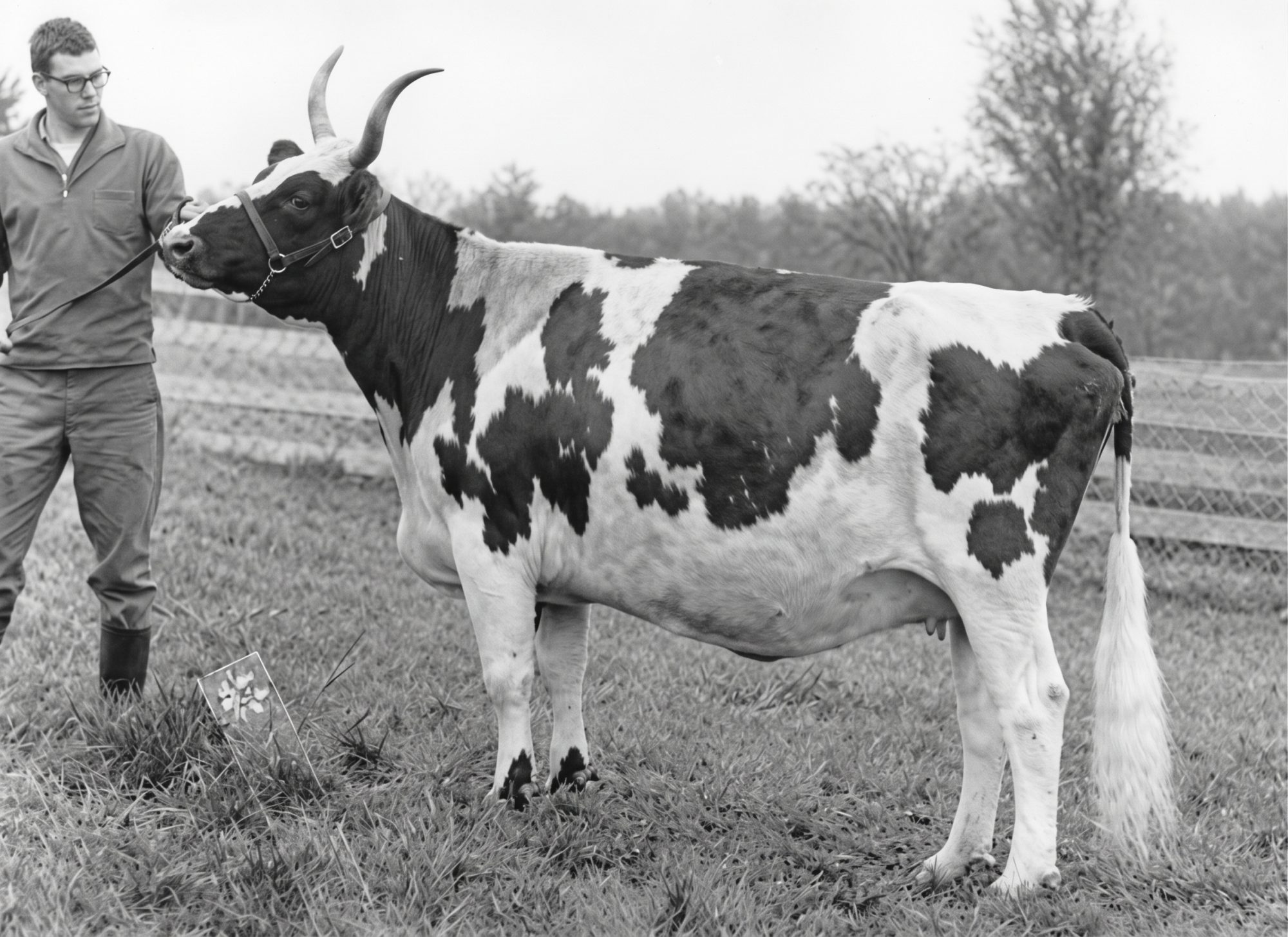
Renee’s best was Glengarry Dora, EX-93, sired by Cherry Bank Brown Bomber — a bull bred by A.E. McArthur of Howick, Quebec, who stood at Glengarry through the 1940s and left Dora, Glengarry Pearl Star and Kinnettles Bomber Alona of Selwood fame. A clipping in the Glengarry County Archives goes further and calls Dora the world’s highest lifetime milk producer, bred by Cumming Brothers of Lancaster. That one deserves chasing through the herd books before anybody carves it in stone. Her sons secured her place regardless.
She had four exceptional ones. Two changed the map.
Glengarry Lloyd Royal, by the imported Lessnessock Lloyd, started in Paul McDonald’s Mackayr herd in Illinois. Then his first sixteen classified daughters came in averaging 89.9 points. Nine Excellent, seven Very Good.
Sixteen for sixteen, not a poor one in the group. American Breeders Service bought him on the spot.
And here the whole story shifts gear, because artificial insemination had arrived. In his first year of service in Wisconsin, Lloyd Royal sired 4,000 registered offspring.
Four thousand. In twelve months. Out of a cow family that had been traveling between two brothers’ farms behind a team of horses thirty years earlier. His daughters won grand champion at Waterloo in 1969, 1971 and 1973.
Dora’s other great son was Glengarry Worthy Conquest, born November 12, 1953, by the imported East Raws Lucky Way.
He’s the one who went to California.
Calistoga
Massimino LaFranchi left Switzerland in 1888 at fourteen and milked cows around Sonoma County until he’d saved enough to buy land. In 1912 he bought 500 acres outside Calistoga, in Knights Valley, and named the place for the oaks on the hillsides. Horses, chickens, pigs, cattle. An ordinary farm of its time.
The Ayrshires started with the youngest boys. Henry bought his two heifers in 1936. His brothers Al and Nick joined him, and the three of them spent the next four decades building one of the most respected herds in the country — traveling to fairs and expositions by boxcar, of all things, and taking top honors wherever the boxcar stopped.
They also broke with tradition in a way that says something about them. The Ayrshire’s horns were the breed’s glory. Henry got hurt by a set of them, and Oak Ridge became one of the first herds anywhere to dehorn.
But the cattle themselves came largely from Canada. Six Glengarry herd sires. Glengarry Pearl Star as a foundation cow. Glengarry Bondsman — the Nancys Burton son — sired Oak Ridge Bonnie Bluebird, grand champion female at Waterloo in 1960.
Worthy Conquest came down from Canada in 1957, and the California paper that noticed him the following January described him the way a herdsman would: dark-colored and short-tempered. His most influential daughter was Oak Ridge Connie Kathleen, grand champion at Waterloo in 1962 — and look hard at her pedigree, because it’s the old nick running again. Her maternal grandsire was Oak Ridge Oracle, himself a grandson of Glengarry Conys Burton.
Mated to Oak Ridge Lightning, Connie Kathleen produced Oak Ridge Flashy Kathleen, Oak Ridge Flashy Klondike and Oak Ridge Flashy Kellogg. Pull up Klondike in a bull-search database this morning and there it still sits — Connie Kathleen as dam, Glengarry Worthy Conquest as maternal grandsire.
The recognition came before the ribbons. In 1959 the LaFranchis took the Constructive Breeder Award. In 1960 came another honor requiring excellence in both production and type — the fourth such award Oak Ridge had earned.
Then the fall of 1960 at Waterloo. Seven class winners. Most of the grand championships. Then the telephone calls.
And they weren’t done. In 1975, Oak Ridge Kellys Rosid became the first cow of any breed other than Holstein named Supreme Champion at World Dairy Expo. A red-and-white Ayrshire out of Knights Valley, standing above every cow in Madison.
ACT III: WHAT LASTED
Not everything here is ribbons, and the cow who proves it never set foot in Iowa.
Shirley Ura was a White Pansys Burton daughter the Cummings bought as a 17-month-old heifer. They went back later for her full sisters, Stella Ula and Burtons Barbara Ann.
Shirley Ura became the first Canadian Ayrshire to produce over 200,000 pounds of milk in her lifetime.
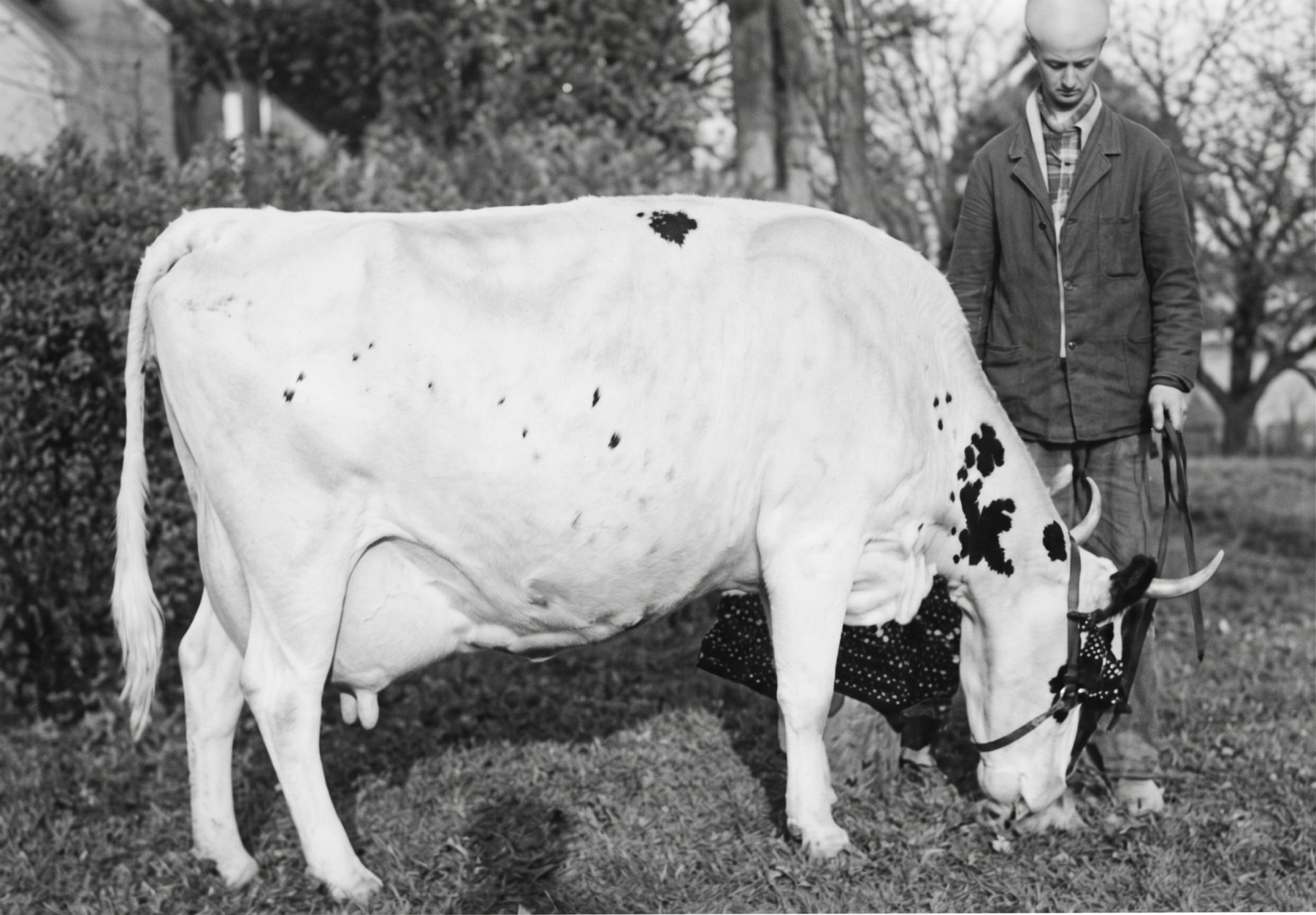
Her last record: 21,978 pounds of milk and 840 pounds of fat. At seventeen years of age. Family recollection says she was still calving at twenty.
Picture what that looks like in a tie-stall barn — an old red-and-white cow rising hind end first the way they do, still filling a pail twice a day while heifers born after her granddaughters file past on the way to the water bowl. One imagines a hand running down that topline more often than strictly necessary.
Set her against the cows you culled at six because a foot or an udder quit. Show winners prove an ideal exists for one afternoon under one judge. Cows like Shirley Ura prove it survives twenty winters on real feed in a working barn. The Cummings bred both, and if you want the whole argument in one animal, she’s it.
They kept them like it mattered, too. In MacNaughton Cumming’s day two full-time hired men brushed the cows every day through the winter and washed tails every second day — which delighted the Montreal milk inspectors when they turned up unannounced.
The Man Who Told the Ayrshire King He Was Wrong
Adam Montgomerie — the Laird of Lessnessock, breeder of the bull who sired Threave Flirt and of the bull behind her calf, whose 1946 sale moved 49 bull calves at an average of 2,267 with a top of 8,176 in Scottish money — used to visit Glengarry Stock Farm.
MacNaughton Cumming, Mac’s son, was not overawed.
“He was a smart cattleman, no doubt,” MacNaughton said, “but not nearly as clever as he thought he was. Going down the row, he would point to cows he considered our best. But usually he was way off the mark.”
There it is. The most famous Ayrshire breeder on earth walks your barn, picks out your best cows, and a farmer from Glengarry County says he had the wrong ones.
Call that arrogance if you want. I’d call it the settled confidence of a family that had been reading these cattle for three generations and had the herd book to back it.
MacNaughton was that way about everything. He kept a Quebec milk quota while farming in Ontario, and justified it with a line his family never forgot: “If you own a Cadillac, you don’t switch to a Chevrolet.” He talked about free-stall housing before dairy leaders knew what he meant. He tile-drained every acre and got scorned for “burying good money in the ground” — then landed in the hospital with an ulcer from the stress of being the man who did it anyway.
When quota became the currency of Canadian dairying, he drove every month to a smoke-filled, French-speaking hall at Ste. Martine to bid. Farm leaders sneered to his kids about why their father bothered expanding when a man could make a fine living milking thirty.
At 86, standing in the bank in his barn clothes, out of patience with waiting, he hollered through a half-open door loud enough for the whole lobby: “We got the quota so we need $250,000.”
How long do you want me to term it?
“I’m 86. So I don’t give a damn.”
Somebody once asked him whether he ever went home regretting what he’d said at Ayrshire meetings. He thought about it. “No, but I’ve come home regretting not saying more.”
Three Endings
Malcolm Cumming died in 1967, and the herd he’d built with his brother didn’t carry on as one piece. When Donald and MacNaughton went their separate ways, the original Glengarry breeding operation stopped. MacNaughton started fresh under a prefix that carried his father’s name — Glen Malcolm — and that herd is still breeding Ayrshires today. The second unit, later run by Donald’s son Norman, sold as a going concern in the mid-1970s.
That’s how these things actually end. Not a dispersal poster and one dramatic afternoon, but farms dividing, prefixes pausing, brothers deciding.
The Biggs place had gone the other way, and faster. The Honourable F.C. Biggs died in the spring of 1942, and two years later his sons Dick and Tad dispersed Glen Campbell under advertising that called it Canada’s superior all-time Ayrshire herd dispersal. The 134 head averaged $385.50.
And Oak Ridge? On the first Saturday in August 1975 — the same year Kellys Rosid stood Supreme at Madison — the LaFranchi brothers held a dispersal and sold nearly all the Ayrshires. Beef cattle moved into those barns, mostly registered Black Angus, and they’re there yet. Think about that timing. The herd that had frightened the Northeast into staying home was sold at the very top.
Great herds are fragile that way. They last exactly as long as somebody keeps choosing to keep them.
Ian Cumming, MacNaughton’s son and, for years, a columnist in the Ontario Farmer, brought the Glengarry name back on a nearby farm. In 2010 he sold and moved to New York State — 23 miles, farm to farm — where his own son Mac took over.
In 2004, Ayrshire Canada handed MacNaughton a lifetime membership. On the night of that banquet, twenty minutes from Cornwall, better than 200 Ayrshire cows on three modern farms belonging to his three sons were being milked, with grandsons already coming on behind them.
He died at milking time on a Tuesday morning in December 2014, at 92, in the house his grandfather built — where he’d lived for 90 of those years, the first two in a whitewashed log cabin whose photograph hung on the wall. The barn was across the road. The lights came on that morning, as they always had.
His son wrote the plainest epitaph a farm family can write. Dad was a farmer.
Hagerstown, Maryland
Here’s where the thread comes out the other side.
Ralph Shank Sr. built his Ayrshire herd in western Maryland out of almost nothing — he and his brothers, short of funds, buying blemished cattle and the “behind the ring animals” that hadn’t sold. His father had started the farm’s Ginger family with a purchase back in the 1940s. Ralph Sr.’s ambitions weren’t modest, though: one of the largest Ayrshire herds in the country, a number one genetic bull and cow, and bulls sold to A.I.
In 1975 — the same year Oak Ridge dispersed — the family made what his daughter, Mary Shank Creek, still calls one of their best buys ever at the National Sale.
An Oak Ridge cow. Her name was Oak Ridge Bruis Bonnie.
“She made anything ‘B’ in the herd,” Mary says. “She made tremendous females and males, and is the foundation dam of Burdette.”
Three years later, Bruis Bonnie was standing senior and grand champion female for Palmyra Farm, and decades on, she still turns up on the roster of great cows in the All-American Dairy Show’s history. But it’s that last clause of Mary’s that matters.
Burdette. Palmyra Tri-Star Burdette-ET.
If you’ve stood at the Ayrshire ring at World Dairy Expo any time this century, you know the name. He was Premier Sire at Expo seven years running, 2013 through 2019, before another Palmyra bull, Palmyra Berkely Reagan, finally knocked him off.
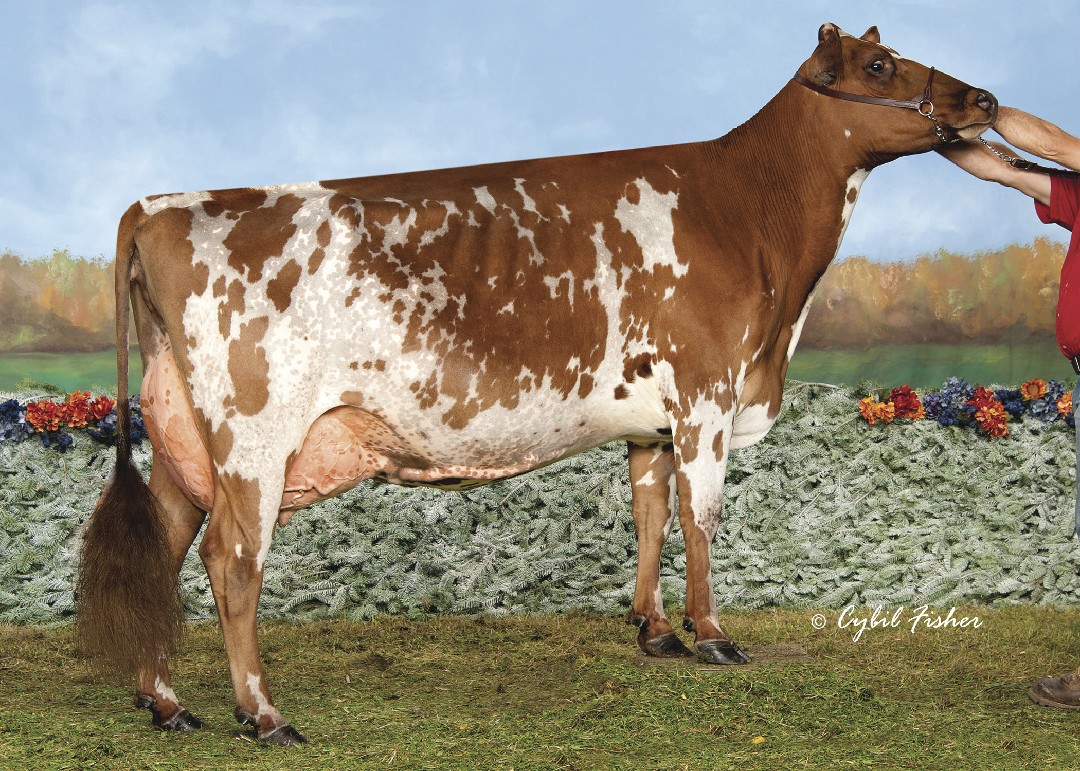
And the same family that bought that Oak Ridge cow bred Palmyra Berkely P Ruth-ET, EX-94. Grand Champion at World Dairy Expo in 2017 and again in 2018. Unanimous All-American both years. A record over 32,000 pounds of milk with 1,256 fat and 960 protein, and the number one Elite cow of the breed at the time. Nine of the fourteen closest animals in her pedigree were Palmyra-bred. Her daughter Ruthless took Grand Champion in 2022.
Add up what that farm has done and the numbers stop being ordinary: 83 Ayrshire bulls sent to A.I., 162 All-American nominations with 52 named All-American, thirteen Premier Breeder banners at Madison, ten cows ranked number one on the breed’s Elite list, the Ayrshire Master Breeder Award in 2011 and the Whitey McKown Master Breeder Award in 2022.
Now, I want to be straight about the limit here. Trace Bruis Bonnie back through Oak Ridge Bruis and the maternal lines of Knights Valley, and the Glengarry imprint isn’t hypothetical—it is cemented across generations of maternal strength that culminated in Burdette. What isn’t in question is where she was bred. She came out of the Oak Ridge herd, and the Oak Ridge herd was built on six Glengarry sires and Glengarry foundation females. Oak Ridge’s own people put it plainly years later: most Ayrshires from coast to coast carry some lineage back to that California herd.
So follow the chain. A yearling heifer in a Kirkmichael barnyard in 1936. A calf born in Glengarry County in 1937. Six bulls shipped to Knights Valley. A cow sold out of California in 1975 and hauled to Maryland. And a bull born in 2005 who owned the Premier Sire banner at Madison for seven straight years.
That’s not a coincidence. That’s a breeding program outliving three of the farms that carried it.
Where You’ll Find Them Now
So what’s left, beyond trophies jammed in a bookcase and curled black-and-white show photos in a drawer?
Start with what Morwick concluded after all his digging: most present-day Ayrshires trace back to Threave Flirt 2nd, through her son Glengarry Sir Burton and her granddaughter Glengarry Dora. One imported Scottish yearling, bought because an agent liked the way she was made, standing behind a breed.
But the part you can actually use is the method.
The Cummings linebred hard. Flirt to her own grandson. Sir Burton onto an inbred Sir Oliver daughter. Worthy Conquest onto a cow with Conys Burton stacked behind her. What they never did was linebreed without correcting, and they never bred a cow they didn’t respect — which is the whole reason Donald sent his own brother’s cows back down the road. Concentrate on what works. Cull without sentiment. Then find an outcross in Scotland when the herd needs one, and keep going back, right through the 1950s and 60s, when Ayrshire sale managers still wouldn’t dream of holding a major auction without a few imported animals in the catalog.
Look where that discipline left the breed. Among Canada’s four major dairy breeds, Ayrshire heifers born in 2025 carry the lowest average inbreeding — roughly 7.1 percent, against 10.3 percent in Holsteins. Ayrshire breeders kept the base wide while intensifying what worked. That’s the Glengarry playbook, running a century after two brothers wrote it on a farm road, whether the people using it know whose it is or not.
The tools have changed past recognition. Genomic evaluations. Herd books you can search from a phone in the parlor. Sires from three continents available before breakfast.
What hasn’t changed is what Donald Cumming was doing in that barn doorway in the 1920s. Somebody still has to decide which cow is good enough. No index has ever made that call for you.
Key Takeaways
- Glengarry’s rule wasn’t linebreeding — it was linebreeding with a correction: Flirt bred back to her own grandson, then an imported outcross when the herd needed one. Concentrate what works, then fix what it costs.
- Ayrshire heifers born in Canada in 2025 average roughly 7.1 percent inbreeding against 10.3 in Holsteins — a wide base with hard selection inside it, which is the trade the Cummings were making in 1937.
- The herd chain is documented even where the pedigree isn’t: Glengarry sires built Oak Ridge, and an Oak Ridge cow bought at the 1975 National Sale is the foundation dam of Palmyra Tri-Star Burdette-ET.
- Donald Cumming turned his own brother’s cows away at the barn door if they weren’t good enough. Every index since has priced that judgment; none has made it for you.
This isn’t Toronto or Waterloo
There’s a moment in this story I keep coming back to, and it isn’t Toronto or Waterloo.
It’s two brothers on a farm road in Glengarry County. Mac has hitched the Belgians, loaded a cow on the stoneboat, and driven her down to his brother’s yard because that’s where the bulls are kept. Donald comes out and looks her over. And if she isn’t good enough, she goes home unbred. Brother or no brother.
Everything else came out of that. The Scottish imports. The banners at the Royal. Shirley Ura still filling a pail at seventeen. A California show string that made hard men stay home. An old cow in Maryland who made everything with a B in her name. Four thousand calves in one Wisconsin year, from a cow family that used to travel by horse-drawn sled.
Take Glengarry out of the twentieth century, and the Ayrshire breed is measurably poorer. Oak Ridge is a good herd, not a great one. Waterloo in 1960 is just another show. The sire lines of the fifties and sixties lose their spine, and cows in barns on two continents carry a thinner pedigree.
They came out of Kintyre with nothing but a way of looking at cattle, and they handed a Scottish breed back to the world deeper and truer than they’d received it.
In the end, the Cummings left what every real breeder hopes to leave. Not a trophy. A standard. It’s still in the pedigrees, still in the show ring at Madison every fall, and it still asks the only question that ever mattered on that Glengarry County road:
Is she good enough?
Continue the Story
- Yellow Briar Farms: The Cows Are Sold But The Memories Are Priceless – Built in the same era of pure red-and-white devotion, this portrait captures what happens when multi-generational Ontario families hang up the halters, proving that the real wealth left behind was never the sale average, but the standard they kept.
- The Maternal Mastermind: How Douglas Dunton’s Breeding Philosophy Revolutionized Genetics – Step inside the world the Cummings were navigating, where master breeders practiced “breeding warm”—using disciplined, corrective linebreeding and ruthless culling on maternal families long before computer indexes existed to validate their eye.
- Vieux Village Gentleman Joy: From Grand Champion to EX-97 – Tracing the line from those early Quebec-Ontario border herds straight to the modern tanbark, this look at an EX-97 international icon shows how the relentless pursuit of dairy strength and functional udders still commands center stage.
 The Sunday Read Dairy Professionals Don’t Skip.
 The Sunday Read Dairy Professionals Don’t Skip.
Every week, thousands of producers, breeders, and industry insiders open Bullvine Weekly for genetics insights, market shifts, and profit strategies they won’t find anywhere else. One email. Five minutes. Smarter decisions all week.