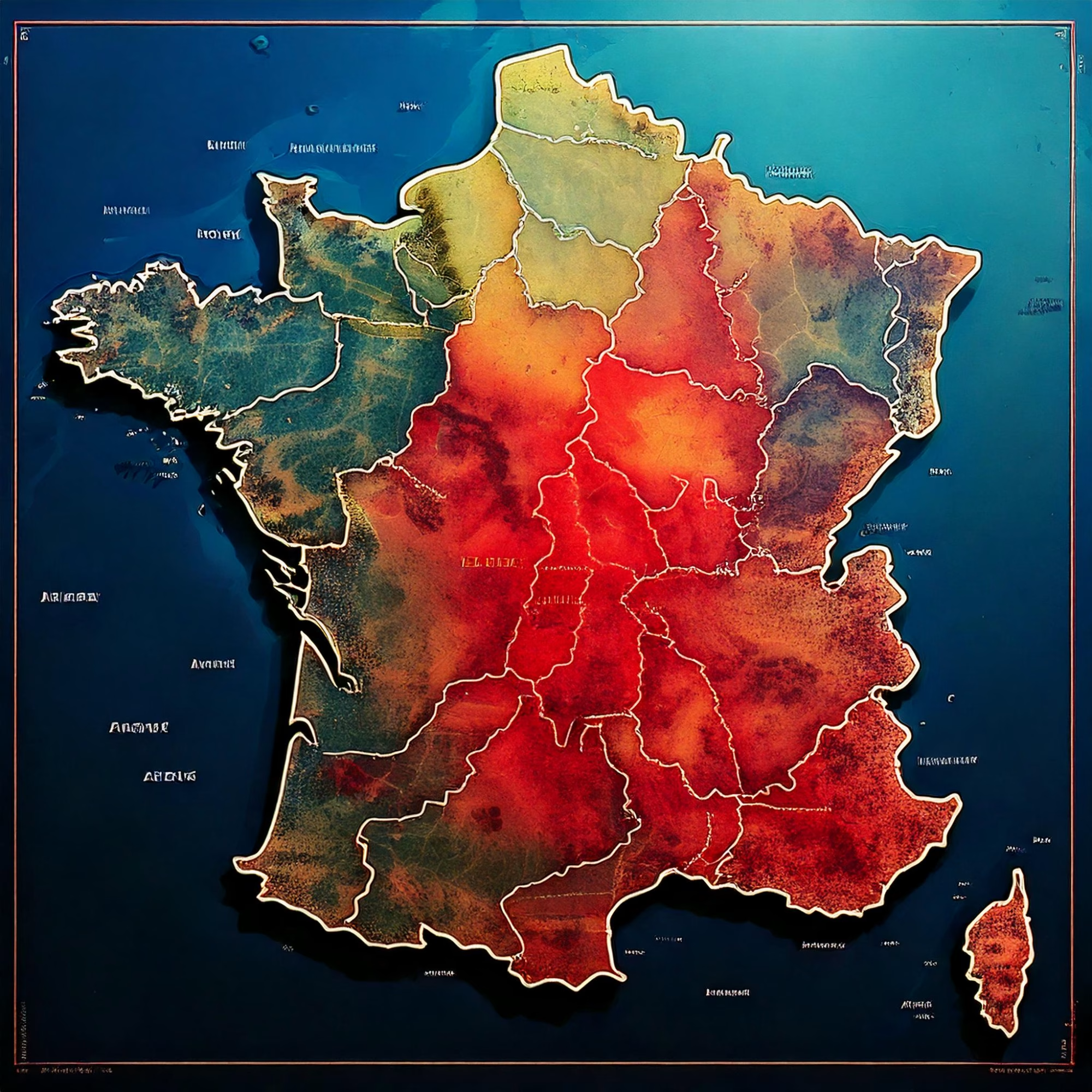
78% of Vermont in severe drought—but innovative farms cut crisis costs 60-80% through collaborative water and feed management
EXECUTIVE SUMMARY: Vermont’s unprecedented drought—affecting 78% of the state according to the U.S. Drought Monitor—is creating a real-time laboratory for dairy climate adaptation that could reshape how operations nationwide manage weather risk. While some farms are spending $80,000 to $100,000 on emergency water hauling and out-of-state feed purchases, forward-thinking operations are building collaborative water storage systems and multi-region feed networks that cut crisis costs by 60-80% and provide long-term resilience benefits. Recent USDA Census data shows Vermont has lost 429 dairy farms over the past decade, with Vermont Public Radio reporting that most closures were smaller operations unable to invest in climate-resilient infrastructure. What’s emerging from this crisis goes beyond emergency response—farms that treat water and feed as managed assets rather than emergency purchases are developing systems for consistent fresh cow management, stable butterfat performance, and predictable cash flow even during extreme weather. The strategies being tested in Vermont—shared infrastructure, diversified sourcing, and cooperative risk management—offer practical blueprints for dairy regions nationwide facing increasing climate variability. These approaches don’t necessarily mean higher costs or compromised production; done thoughtfully, they create better systems, stronger partnerships, and competitive advantages for operations willing to plan for variability instead of hoping for normal weather patterns.

Vermont producers are facing their toughest drought in decades, and what they’re learning could change how all of us think about managing climate risk on our operations.
You know, watching what’s happening in Vermont right now has me thinking about things we don’t usually worry about in other regions. When 78% of Vermont sits in severe drought according to the U.S. Drought Monitor this September, that’s not just Vermont’s problem… it’s a preview of what many of us might face sooner than we’d like.

What’s really striking about Vermont’s situation isn’t just the severity of the drought itself, but how differently farms are responding to it. While CBS News reported that some operations are spending $80,000 to $100,000 on emergency measures like water hauling and out-of-state feed purchases, others are using this crisis to explore different approaches that might make them stronger long-term.
This builds on what we’ve seen in other regions during extreme weather events. The farms that come through stronger are usually those that view crisis as an opportunity to rethink their approach, not just survive until conditions return to normal.
Collaborative Planning Checklist:
- How secure is your operation’s water supply during extended dry periods?
- Do you have relationships with feed suppliers outside your immediate region?
- What infrastructure investments might pay off before the next climate challenge hits?
- Are there neighboring operations interested in collaborative approaches to resource management?
- Have you discussed drought management plans with your lender or financial advisor?
Emergency Water Reality
Let me paint you a picture of what water hauling actually means for a dairy operation. You probably know this already, but when your wells run dry and you’re looking at trucking water just to keep your herd hydrated, those expenses add up faster than most people realize.
Emergency water hauling costs vary dramatically based on distance and availability, but it’s always substantially more expensive than your normal supply. Consider this: a Holstein needs about 50 gallons daily during lactation. For a 300-cow herd, that’s 15,000 gallons every single day. Even for a few weeks… well, you can do the math.
What’s encouraging about Vermont’s situation is how some producers are getting ahead of this challenge instead of just reacting to it. Some Vermont producers are exploring collaborative approaches to water storage that could help multiple operations during dry periods.
The collaborative approach makes financial sense when you think it through. Spreading infrastructure costs across several operations changes the economics entirely. Instead of each farm scrambling during drought, they might have reserves built in advance. Not cheap up front—it never is—but potentially better than paying emergency rates when your back’s against the wall.
Now, I know what some of you are thinking. Shared infrastructure sounds great in theory, but finding four to six neighbors who can agree on maintenance schedules and cost splits? That’s not always easy. Some operations might be better off investing in individual solutions, especially if you’ve got challenging relationships with nearby farms or very different management philosophies.
For smaller operations—say under 200 cows—the coordination might actually be easier when you know everyone in your area personally. On the other hand, larger operations might have more capital flexibility but face bigger challenges in finding enough partners to make shared approaches worthwhile.
Feed Markets Under Stress
Here’s something we’ve all seen before: when drought hits a region hard, local feed prices can spike substantially. Everyone’s competing for the same limited hay supply in a stressed market, and prices reflect that reality pretty quickly.
What seems smart about how some Vermont operations are approaching this is that they’re not waiting for crisis pricing to hit. Some farms are reportedly exploring relationships with suppliers in different regions—places where weather patterns don’t mirror Vermont’s current drought conditions.
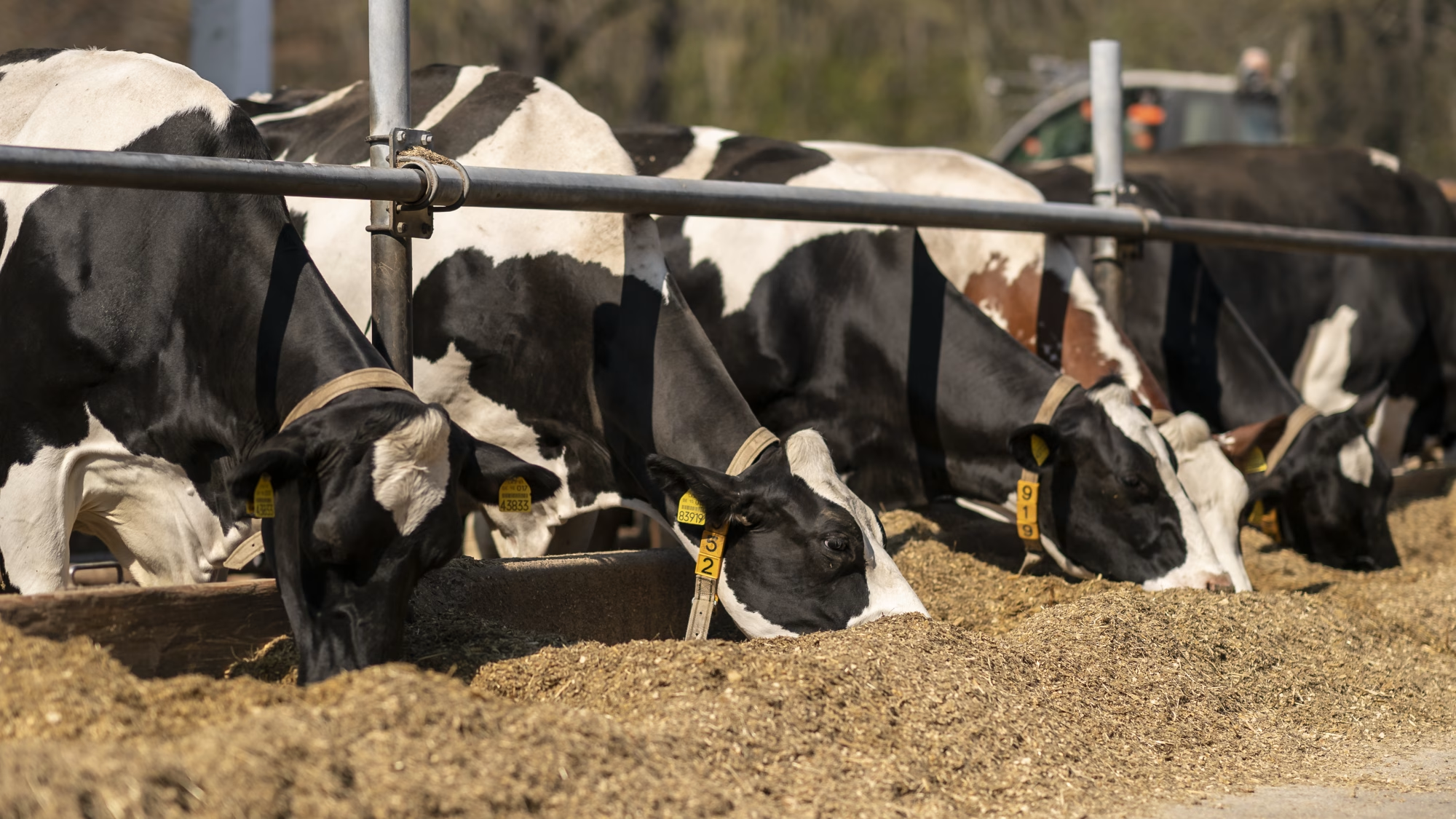
This approach may also benefit more than just cost management. Having diversified feed sources can help maintain more consistent rations, which is important for milk quality and butterfat performance. When you’re scrambling for whatever hay you can find locally—and we’ve all been there at some point—consistency becomes a real challenge during fresh cow management and throughout the transition period.
What’s interesting here is how this connects to broader dairy risk management trends. In Wisconsin, some operations have been developing similar multi-region sourcing relationships for years, not because of drought but because of price volatility. In California’s Central Valley, where drought cycles are more predictable, dairies have been coordinating feed purchases across different climate zones as standard practice.
The cultural shift required isn’t trivial, though. Many dairy families have bought feed from the same local suppliers for generations. Now, some are having to learn about multi-region sourcing and risk management approaches they previously never needed.
Cultural Adaptation in Practice
From what we’re hearing, it’s working for those who make the transition—though it’s not without its learning curve. The operations that are adapting aren’t trying to become commodity traders. They’re just exploring better tools to manage their input costs.
Some areas are reportedly holding regular meetings where producers review market conditions together and make cooperative decisions. It takes what could feel like intimidating financial complexity and turns it into familiar collaborative problem-solving.
This approach acknowledges a crucial aspect of how we actually work in agriculture. Farmers are generally pretty good at adaptation when the tools are designed for our decision-making processes, not how financial experts think we should operate.
The cooperative approach has its trade-offs, too, though. You’re giving up some independence, and—let’s be honest—any time you’re sharing infrastructure or purchasing with other operations, you’re also sharing potential headaches. Equipment issues, disagreements over maintenance, different priorities during busy seasons… these things come with the territory.
But I’ve noticed that regions with strong cooperative traditions—like parts of the upper Midwest—seem to adapt to these collaborative approaches more easily than areas where individual farm management has been the norm.
Infrastructure Changes Everything
Something that might surprise you: farms that invest in drought-resilient systems often report benefits that extend well beyond water and feed security.
When you’re not worried about running out of water next week, you can focus on longer-term improvements to fresh cow management, breeding programs, and facility upgrades. Think about it—if your water supply is secure, you can invest in cooling systems, maintain steady protocols during the transition period, and keep your parlor operations consistent.
All those management practices that affect production but get compromised when you’re in crisis mode? They become viable again.
The financial planning shifts, too. Instead of keeping cash reserves for emergency hauling, you can budget for infrastructure improvements that actually grow your operation. There’s some discussion in lending circles about factoring drought preparedness into credit decisions, though that’s still developing.
This development suggests a broader perspective on how lenders are beginning to view climate risk management. Agricultural lending has traditionally focused on current cash flow and collateral value. But when climate variability becomes a regular business factor rather than an occasional emergency, loan underwriting might need to account for how well operations can handle weather extremes.
Of course, not every operation has the financial cushion to invest in infrastructure before a crisis hits. If you’re already running tight margins, putting money into drought systems when you might not see a return for years… that’s a genuinely tough call. Sometimes, the tanker truck approach, expensive as it is, might be the only realistic option.
For operations running dry lot systems in traditionally arid regions, these conversations might feel familiar. But for farms in places like Vermont or Pennsylvania, where reliable rainfall has been the norm, thinking about water as a managed asset rather than a given resource represents a fundamental shift.
The Industry Divide
What’s becoming clear from Vermont’s experience—and this applies to all of us facing more variable weather—is that operations seem to be dividing into two categories. Those that can build resilience systems, and those that can’t.
The numbers tell this story pretty starkly. According to the USDA Census of Agriculture, Vermont has lost 429 dairy farms over the past decade, dropping from 868 to 439 operations. Vermont Public Radio reported this spring that most closures were smaller operations that couldn’t invest in the infrastructure needed to handle climate volatility.

That’s not meant to sound harsh—it’s simply what the data shows us. The farms that appear to be surviving and growing are finding ways to treat climate challenges as planned business decisions rather than external disasters.
Like it or not, unpredictable weather seems to be our new reality. The question becomes how we adapt our management to handle more extremes—and what that means for operations of different sizes and regions.
Whether you’re running a 150-cow operation in Wisconsin or a 1,500-cow dry lot system in California, the principle remains the same: the farms that plan for variability instead of hoping for normal patterns are positioning themselves better for whatever comes next.
I’ve been thinking about this in the context of other industries that have faced similar transitions. Aviation learned to plan for weather variability as standard practice. Construction builds contingencies into project timelines. Agriculture might be reaching a point where climate adaptation moves from optional to essential.
Policy Reality Check
Here’s something that affects all of us, regardless of where we’re milking: federal disaster assistance remains designed for discrete events, not the ongoing climate stress that’s becoming more common.
Vermont needs eight consecutive weeks of severe drought to trigger federal disaster declarations, but farms face cash flow impacts from day one of dry conditions. The assistance comes after losses occur, often leaving gaps that private lenders won’t bridge.
Meanwhile, some of the most effective responses being explored—building shared infrastructure, developing multi-region sourcing networks—receive no federal support, despite their potential to reduce disaster costs and improve food security.
This gap between policy frameworks and operational reality is something we all need to consider as weather patterns become less predictable across regions. Policy tends to lag behind innovation, but that doesn’t mean we can wait for Washington to catch up before adapting our management approaches.
Regional Applications
Vermont’s situation might feel remote if you’re milking in Wisconsin, California, or Pennsylvania. But whether you’re dealing with heat stress in the Southeast, unpredictable rainfall in the Northeast, or extended dry periods across the Plains, most of us are seeing weather patterns that don’t match what our fathers planned for.
The management approaches that seem to be emerging in Vermont—shared infrastructure, diversified sourcing, cooperative risk management—these principles might translate across different types of climate challenges and operational scales.
What’s encouraging is that these aren’t necessarily expensive or complicated systems. They’re mostly about better planning, stronger partnerships with other producers, and thinking about inputs like water and feed as assets you manage rather than commodities you purchase when needed.
In the Southwest, that might mean collaborative water storage and heat stress management. In the upper Midwest, it could be shared facilities for handling extreme weather events or coordinated feed purchasing during price spikes. In the Southeast, cooperative approaches to managing humidity and heat stress might become more valuable as summer conditions become more extreme.
The specific solutions vary by region, but the underlying principle—planning for variability instead of reacting to crisis—applies everywhere.
The Bottom Line
After watching Vermont’s experience and similar challenges in other regions facing climate stress, a few observations stand out:
Cooperative approaches often work better than going it alone—when they work at all. Whether it’s shared water storage, group purchasing agreements, or coordinating with neighboring operations on backup plans, spreading risk across multiple farms can make everyone more resilient. The key word there is “can”—success depends heavily on having the right partners and clear agreements.
Infrastructure investments may pay off over time, but they work best when planned before a crisis hits. Emergency spending is always expensive; preventive investment usually provides better returns if you can afford the upfront costs.
The farms that appear to be thriving through Vermont’s drought are treating it as an opportunity to build better systems, not just survive until normal weather returns.
What’s got me curious about Vermont’s experience is whether these approaches will work as well when other regions face their own climate challenges. Drought in Vermont looks different from drought in Texas or California—different timeline, different scale, different support infrastructure available.
And here’s what’s really worth considering: the strategies emerging from Vermont aren’t just about drought. They’re about building more resilient operations that can handle whatever climate variability brings next.
Climate adaptation doesn’t necessarily mean higher costs or compromised production. Done thoughtfully, it might mean better systems, stronger partnerships, and more predictable cash flow—even when the weather stops being predictable.
I’m curious what other producers are seeing in their regions. Are you exploring similar approaches? Different strategies that might work better for your climate patterns? This kind of sharing is how we all get better at handling whatever comes next.
Because if this season has taught us anything, it’s that “normal” weather patterns might be changing faster than our management systems. The operations that figure this out first and start adapting accordingly are likely to have real competitive advantages going forward.
The question isn’t whether climate variability will continue—it’s whether we’ll build the systems to manage it before the next crisis forces our hand.
KEY TAKEAWAYS:
- Collaborative water storage delivers measurable ROI: Shared pond systems spread infrastructure costs across multiple farms, potentially cutting emergency water hauling from $80,000-$100,000 to manageable levels while providing long-term supply security for consistent fresh cow management and cooling system operations.
- Multi-region feed sourcing stabilizes costs and quality: Vermont farms exploring relationships with suppliers in different climate zones report maintaining consistent rations during local shortages, protecting butterfat performance and milk quality when regional feed markets spike 40-50% above normal.
- Climate adaptation creates competitive advantages: Operations investing in drought-resilient systems gain access to preferential lending rates, maintain production consistency during weather extremes, and free up cash reserves for growth investments rather than emergency expenses—positioning them for long-term success as weather variability increases.
- Regional cooperation scales better than individual solutions: Whether facing drought in Vermont, heat stress in the Southeast, or extreme weather in the Midwest, farms that build partnerships for shared infrastructure and coordinated purchasing distribute risk more effectively than those attempting individual solutions.
- Federal policy lags behind farm-level innovation: While disaster assistance requires eight consecutive weeks of severe drought, the most effective responses—building shared infrastructure and developing multi-region sourcing networks—receive no federal support despite proven ability to reduce disaster costs and improve regional food security.
Complete references and supporting documentation are available upon request by contacting the editorial team at editor@thebullvine.com.
Learn More:
- 7 Common TMR Mixer Mistakes and How to Avoid Them – This tactical how-to guide provides actionable steps for optimizing feed consistency, which is critical for maintaining consistent rations and milk production during feed shortages caused by drought. It offers a practical way to manage one of the article’s core challenges.
- Water Isn’t Overhead—It’s Your Secret Weapon for 2025’s Tight Margins – This article presents a strategic market analysis of water as a production multiplier, not just a commodity. It provides hard data on how water quality and trough space directly impact milk production and profitability, helping producers identify a hidden profit leak in their operations.
- Gene Editing in Dairy Cows: A Revolutionary Approach to Reducing Methane Emissions – This piece offers a forward-looking perspective on how advanced technology, like CRISPR gene editing, is creating solutions for climate-related challenges. It explores how these emerging innovations can build long-term herd resilience and open up new markets for the industry.
 The Sunday Read Dairy Professionals Don’t Skip.
 The Sunday Read Dairy Professionals Don’t Skip.
Every week, thousands of producers, breeders, and industry insiders open Bullvine Weekly for genetics insights, market shifts, and profit strategies they won’t find anywhere else. One email. Five minutes. Smarter decisions all week.