



From shaping 20-generation genetics to bringing healthcare-level analytics to farm strategy, eight women show how they built careers in modern dairy. Plus: a practical starting point for outsiders weighing a career in ag, and blunt lessons for the farm owners trying to hire them.
Margaret Johnson grew up on a dairy where her family milked 27 cows, and she assumed her career would take her somewhere else. She studied agricultural communications, completed an internship, and started picturing a life off the farm. But throughout college she’d also worked on a much larger dairy, and she loved it. She realized she missed farming. Today she farms with her husband, Michael, and father-in-law, Jon, at Trailside Holsteins in Fountain, Minnesota, and holds a master’s degree in agronomy.
“I think one of the things I wish people understood more is that dairy farmers have educations, and many of us had other options and opportunities,” she told U.S. Dairy. “We chose to be dairy farmers.”
The women in dairy profiled here chose it too, and their work varies widely. One helps steer a herd’s breeding program. One brought a healthcare-administration career to farm business strategy. Others read cow data before breakfast, manage land over fragile groundwater, run their own business, or help manage a herd of about 1,600 cows without having grown up on a farm. Here’s how each of them got there, what she does, and what keeps her in it.
About the campaign: Seven of these women are featured in Portraits of Modern Dairy, which Dairy Management Inc. (DMI), the dairy checkoff organization funded by U.S. dairy farmers and dairy importers, launched on October 12, 2026. Good Morning America carried a segmenton the campaign the same morning; ABC News identifies Dairy Does More as a sponsor of “GMA.” The seven women’s profiles and quotes come from the campaign’s farm pages. The eighth, Courtney Banach, is The Bullvine’s additional example, drawn from a separately published profile. Census figures are USDA’s. The analysis and career routes are The Bullvine’s.
The Women, and the Work They Chose
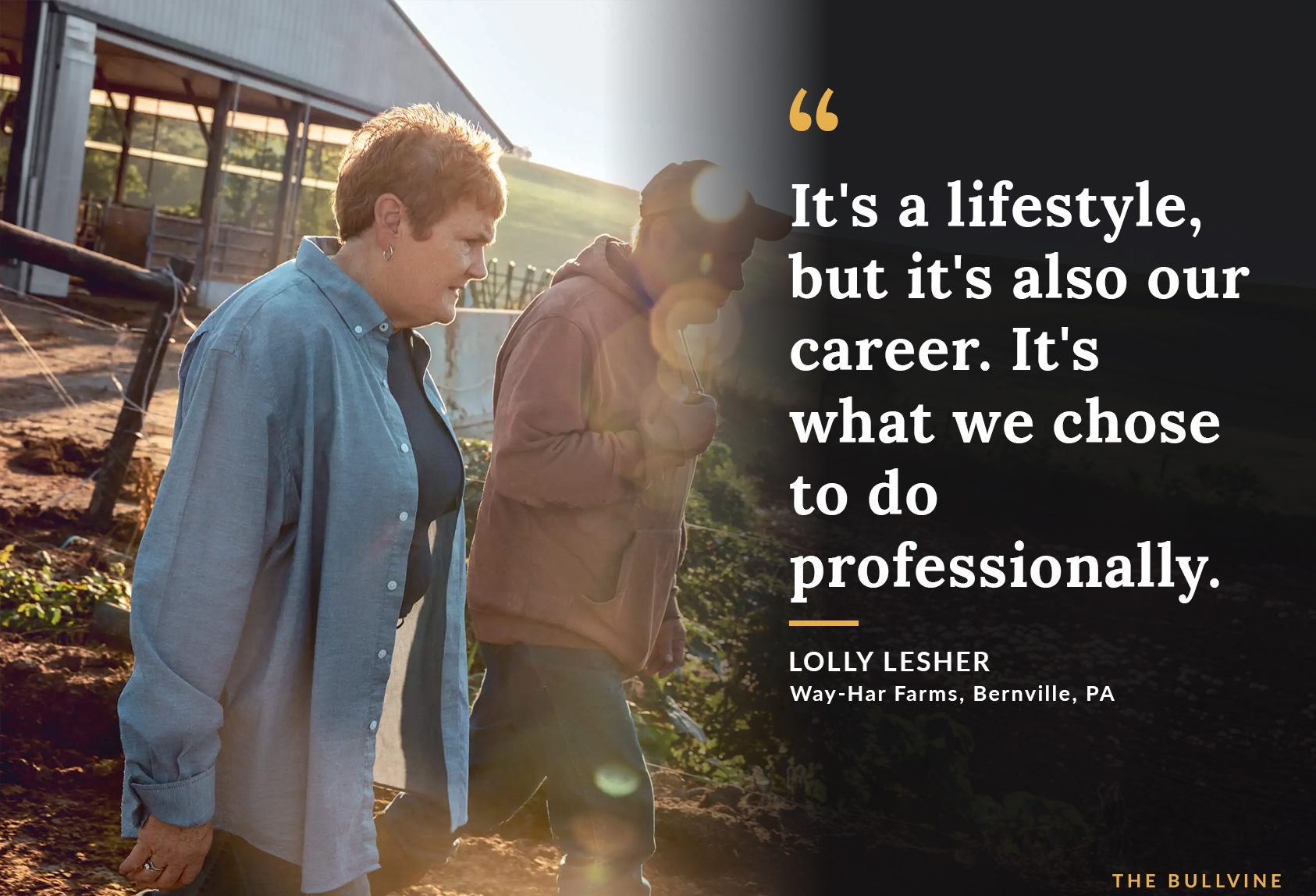
Lolly Lesher – Way-Har Farms, Bernville, PA
Lolly Lesher and her husband, William, took over Way-Har Farms, a dairy of about 350 cows with a farm market the family opened in 1970. She’s co-owner of Way-Har Farms and Farm Market, has spent decades connecting people directly to the farm through that market, and chairs the National Dairy Board, according to the DMI launch release. Part of what she values is the community around the farm: former teenage employees have come back years later to work there again, the farm’s profile notes. “I think it speaks volumes that people want to come back and work for us – or that now their grandchildren are working for us,” she says.
“It’s a lifestyle, but it’s also our career. It’s what we chose to do professionally.” — Lolly Lesher
Jaylene Lesher – Way-Har Farms, Bernville, PA
Jaylene grew up milking cows, raising calves and showing cattle through 4-H. She didn’t come straight home after school. She went to college and spent several years working on another dairy before returning with, in her profile’s words, “new experiences and a fresh perspective.” Today she helps guide Way-Har’s genetics and breeding program, per the farm’s profile. Every cow carries an identification number, and the family can trace some maternal lines back nearly 20 generations. Those records inform today’s breeding decisions. It’s long-term work: the matings she helps choose can influence which cow families the herd builds on for generations.
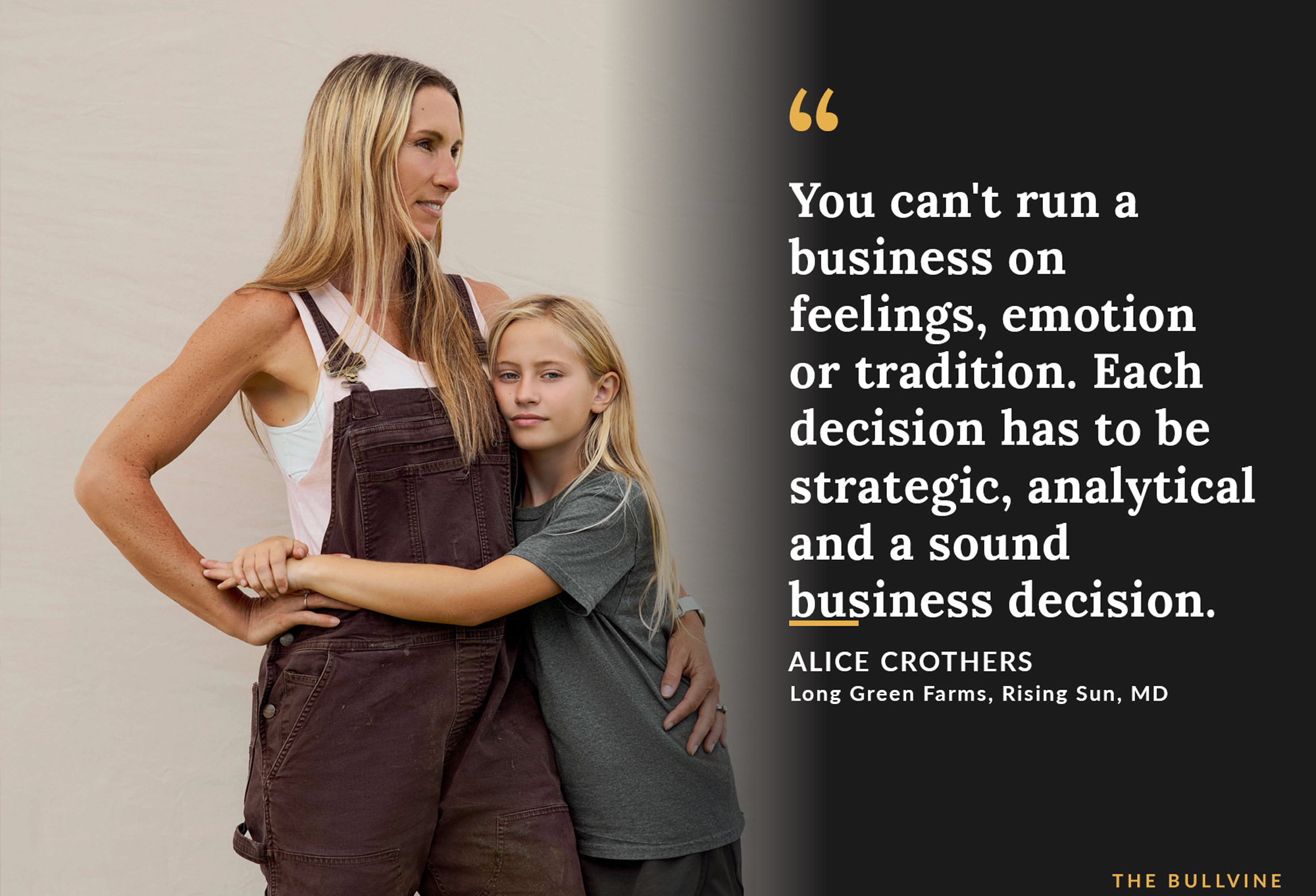
Alice Crothers – Long Green Farms, Rising Sun, MD
Alice Crothers didn’t grow up on a dairy. She built her skills in business strategy and operations in healthcare administration. In 2015, she and her husband, Caleb, moved their young family more than 600 miles to his family’s eighth-generation farm. When she talks about the 160-cow farm, she starts with financial decisions and technology. Since 2015, the family has added a methane digester that produces renewable electricity, recycled more than 90% of its sand bedding, and expanded cover cropping. DMI’s release describes Alice applying business strategy to decisions from finances to that digester. She frames those projects as long-term investments, not side projects: “If it benefits the land, soil and water, it ultimately benefits our business.”
“You can’t run a business on feelings, emotion or tradition. Each decision has to be strategic, analytical and a sound business decision.” — Alice Crothers
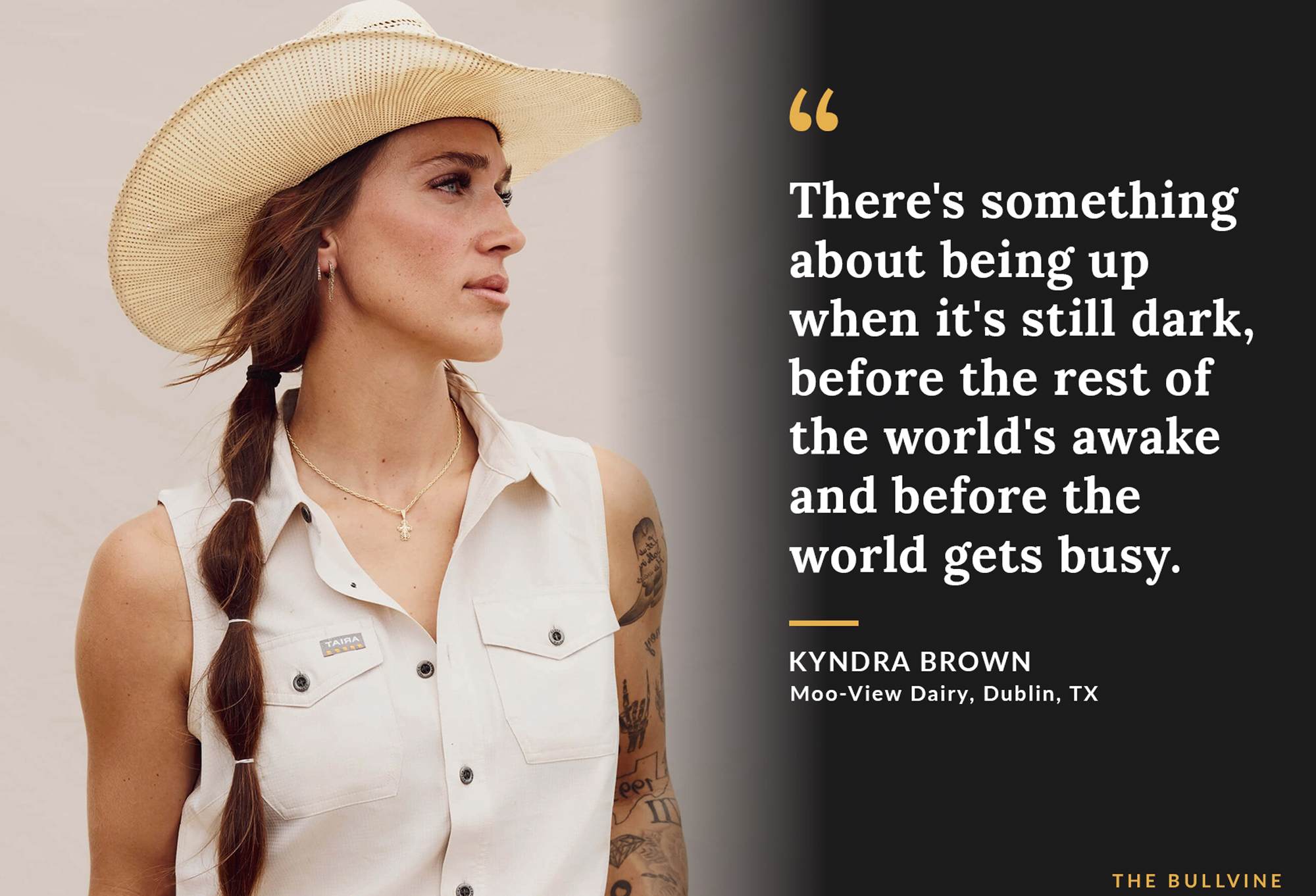
Kyndra Brown – Moo-View Dairy, Dublin, TX
Kyndra Brown is a fourth-generation dairy farmer who spent years after high school moving cows and cleaning pens without knowing why. “I was just doing it,” she says. She stepped away and found she missed being outside, the physical work and, most of all, the animals, her profile says. She came back more curious. Now she describes her job in one word, monitoring: learning what’s normal for each cow and spotting the one that isn’t. She finds it hard to leave at the end of the day. On a last drive around the dairy, she’ll notice a flush tank that needs attention or a mister that needs fixing to keep cows cool in the Texas heat. And the early mornings she once just pushed through are now some of her favorite hours.
“There’s something about being up when it’s still dark, before the rest of the world’s awake and before the world gets busy.” — Kyndra Brown
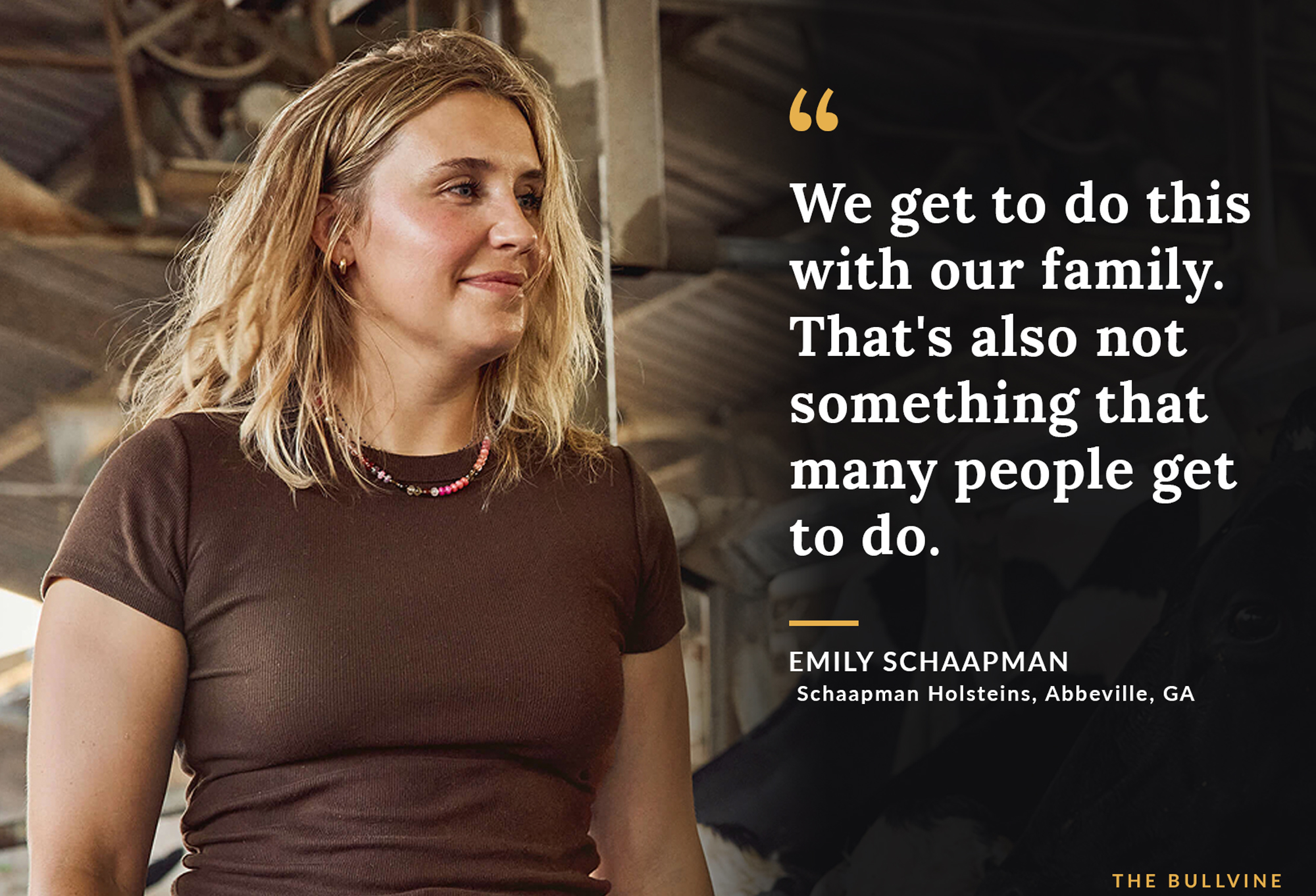
Emily Schaapman – Schaapman Holsteins, Abbeville, GA
Emily Schaapman studied Agricultural Business Management at Penn State, then moved to Georgia, where her now-husband, Ruben, grew up on his family’s dairy. The couple later worked around dairy farms in Florida, and she admits, “I felt a little lost in what I was trying to do.” So she built something of her own. In 2018, she launched Dairy Girl Fitness, which grew from an Instagram page into a coaching business through which she has helped hundreds of women in dairy and agriculture with fitness and nutrition, her profile says. In 2025, she and Ruben, a dairy nutritionist, returned to his family’s farm, which milks about 1,200 cows, where she works across the operation and tells its story publicly. Her profile doesn’t gloss over the hard parts: early mornings, late nights, missed events. What makes it worth it for her is working alongside her family.
“We get to do this with our family. That’s also not something that many people get to do.” — Emily Schaapman
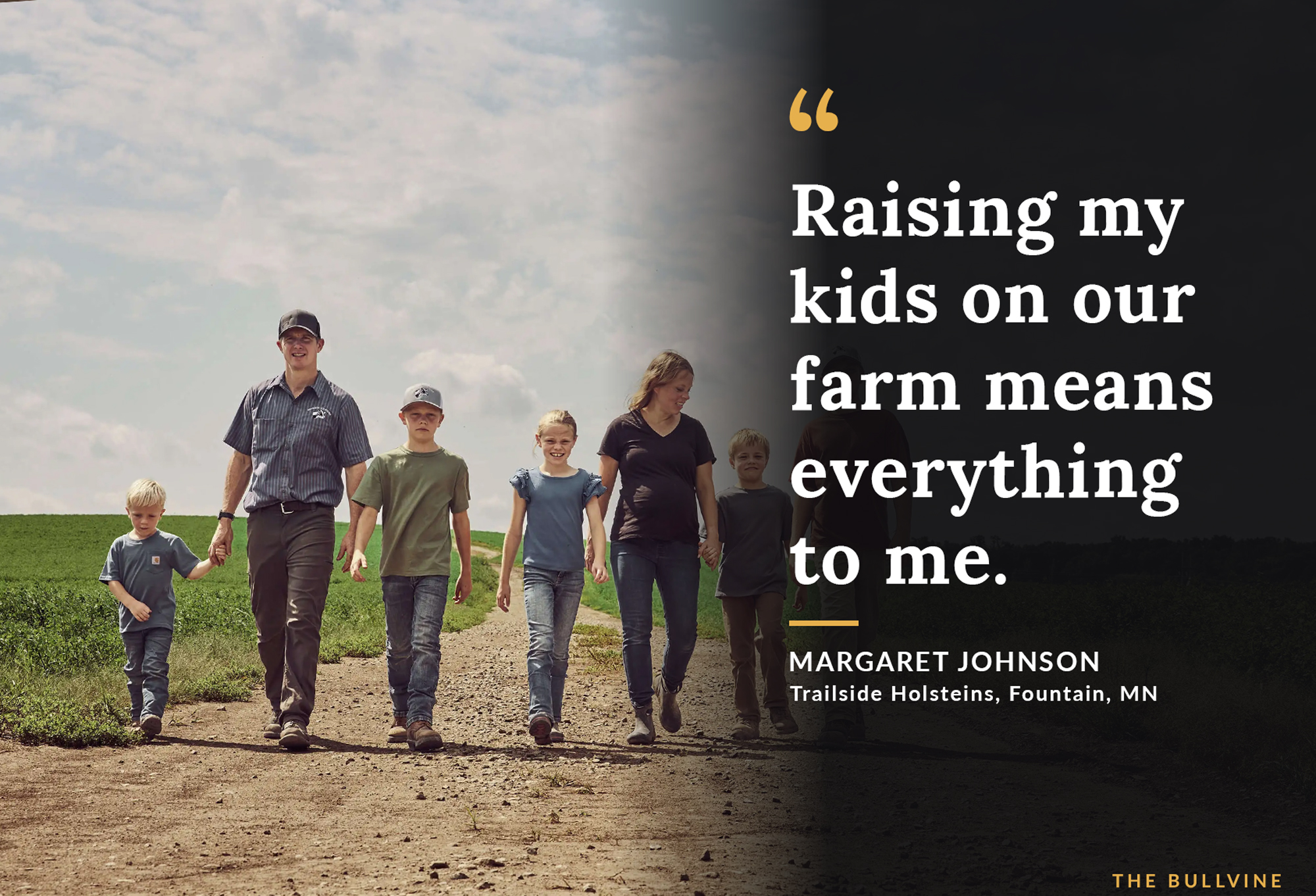
Margaret Johnson – Trailside Holsteins, Fountain, MN
Margaret brings her knowledge of soil, crops and water to the farm, as DMI’s release puts it, and Trailside needs it. The farm sits on karst ground in southeast Minnesota, where sinkholes can connect directly to groundwater, her profile explains. The family grows its own crops, raises its own heifers and returns manure to the land, and every cow wears a monitoring tag she calls “kind of like a Fitbit for the cow.” She and Michael are working through succession planning now. For Margaret, part of the satisfaction is seeing the whole system work together: “We get to see everything come full circle on our farm.”
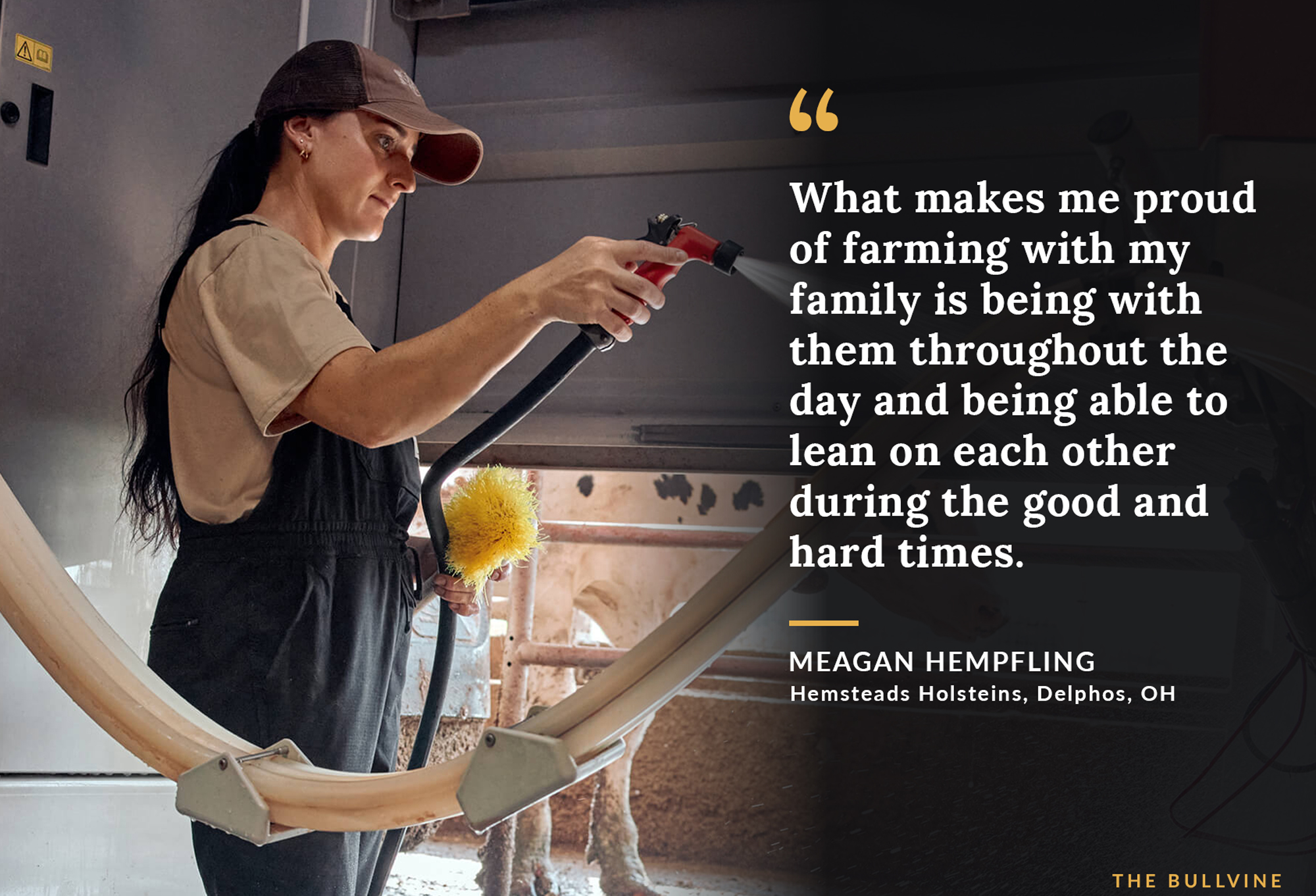
Meagan Hempfling – Hemsteads Holsteins, Delphos, OH
Meagan Hempfling is the sixth generation on her family’s farm and works alongside her grandfather, father and brother. She starts each morning with the calves, a job she especially enjoys because she sees each calf as part of the herd’s future. Four robotic milking systems serve about 250 Holsteins and record information such as milk production and milking speed at every visit, per her profile. She checks that data several times a day, because a change can point to a health problem sooner. The robots also gave the family flexibility: they can shift milking times around fieldwork or family events. What she’s proudest of, though, is the people beside her.
“What makes me proud of farming with my family is being with them throughout the day and being able to lean on each other during the good and hard times.” — Meagan Hempfling
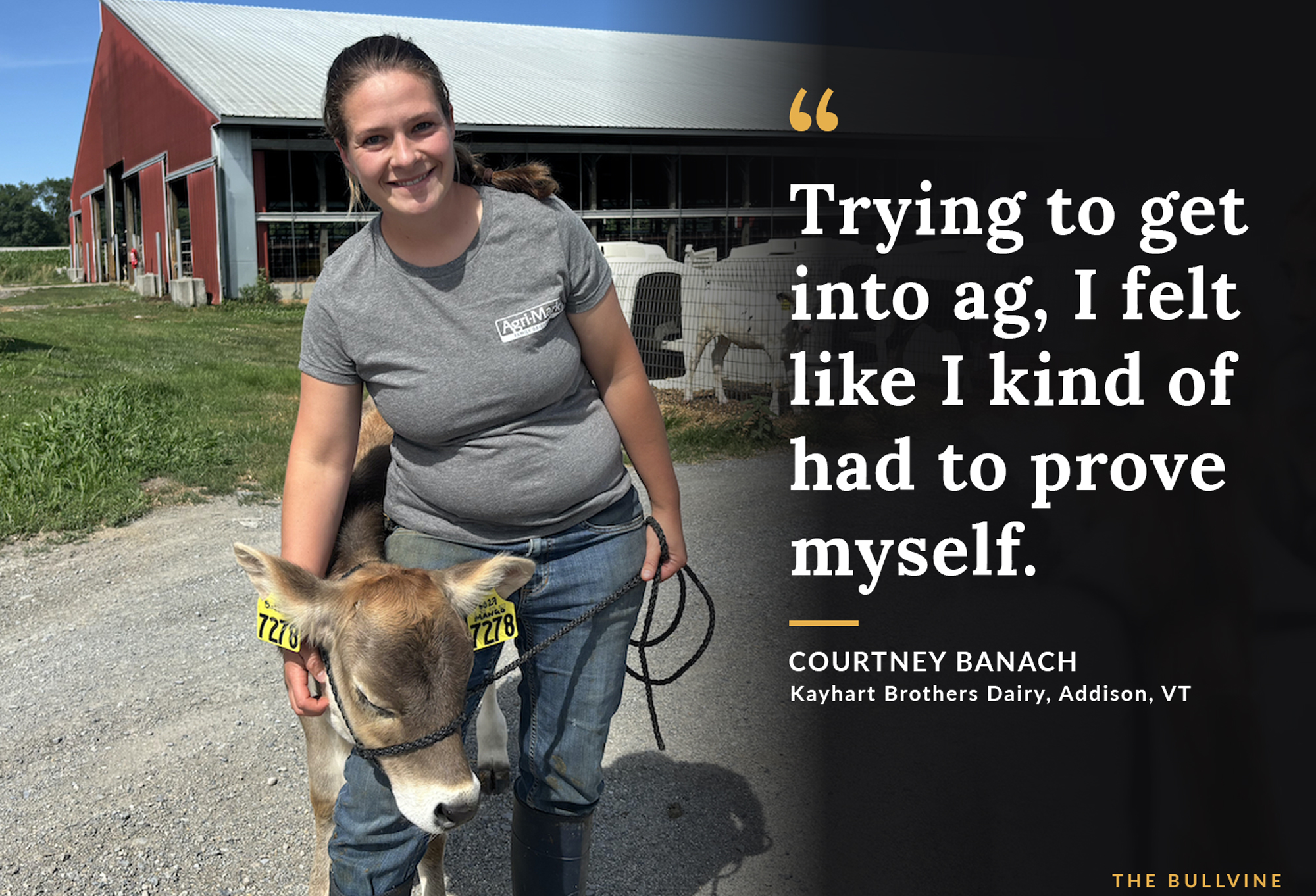
Courtney Banach – Kayhart Brothers Dairy, Addison, VT
Courtney Banach didn’t grow up on a farm. She first got involved in Vermont agriculture through a camp at Shelburne Farms while growing up in South Burlington, the Addison Independent reported. She joined Kayhart Brothers Dairy in January 2018 with one semester of college left and worked there through 2020, then spent four and a half years managing a herd at Daona Farm in Shoreham. In June 2026, she returned to Kayhart, where she oversees the health, breeding and well-being of a herd of about 1,600 cows, according to a profile published by Phoenix Feeds & Nutrition, the farm’s feed supplier. The Addison Independent describes her as a co-herdsman there. She’s one of the Vermont Agricultural Hall of Fame’s 2026 inductees, recognized as Emerging Leader. At Daona, she hosted more than 700 elementary students on a farm tour. She’s candid about starting as an outsider: “Trying to get into ag, I felt like I kind of had to prove myself.” Now, she says, “We’re not quite seen as an outsider anymore.”
Where Women in Dairy Stand Today
Women made up 30% of producers on specialized U.S. dairy farms in both the 2017 and 2022Census of Agriculture highlights. Across all U.S. agriculture, the 2022 figure was 36%. Total dairy producers fell about 34% over those years, from 74,988 to 49,468, as the number of specialized dairy farms fell from 37,750 to 23,153. Applying the 30% share, Bullvine estimates roughly 22,500 women dairy producers in 2017 and roughly 14,800 in 2022. Because the share held, that estimated drop simply mirrors the decline in producers overall. The census can’t show who left, who started, or why. It also counts people involved in running specialized dairy farms, not every woman who works in dairy.
There’s a bright spot for anyone thinking about getting in: 17% of all dairy producers were under 35 in 2022, nearly twice the 9% for agriculture overall.
If You Didn’t Grow Up on a Dairy
All seven campaign women farm within family operations. Courtney didn’t, and her path shows that a woman without a family farm can reach herd management. These routes are U.S.-based, and placements depend on location and availability.
| Your Starting Point | Where to Look |
| No farm background | Registered apprenticeships: Pennsylvania’s Dairy Herd Manager Apprenticeship, or the grazing-focused Dairy Grazing Apprenticeship (see its job board). Or look for a paid entry role on a dairy that offers structured training. |
| Already working on a dairy | Pennsylvania’s apprenticeship is open to existing employees as well as new hires. Ask your employer about it. |
| Returning to a family farm | Annie’s Project for farm business and succession education. Agree on pay, authority and long-term plans up front. |
| Bringing another profession | Transferable skills plus farm training: business, finance, analytics and agronomy carry over, as Alice’s and Margaret’s careers show, alongside hands-on learning about cows and crops. |
| Aiming for ownership | Build experience and a business plan first. The Dairy Grazing Apprenticeship describes itself as a guided pathway to independent farm ownership. |
Program requirements at a glance:
- Pennsylvania Dairy Herd Manager Apprenticeship: registered with the state Department of Labor and Industry. Applicants must be 18 or older and hold a high school diploma or GED; farm experience is preferred but not required. The program requires at least 3,000 hours of paid on-the-job training plus 216 hours of unpaid related technical instruction. Ask how that instruction is scheduled and whether it carries costs. The Bullvine covered the program’s first two graduates in April.
- Dairy Grazing Apprenticeship: paid and registered with the U.S. Department of Labor. It runs for two years with a mentor on a managed-grazing dairy and lists more than 200 mentors in 16 states.
To meet women across all of these routes, contact Dairy Girl Network or ask about mentoring and local events. If travel and coverage allow, its Forward TogetHER national conference runs October 27–29, 2026, in Lexington, Kentucky.
What to Ask Before You Take a Dairy Job
Passion gets you in the door. The terms of the job decide whether you stay.
- Cash wage and hours. What’s the hourly wage or salary, and what weekly hours and shift pattern come with it, including weekends?
- Raises and benefits. How do raises work, and what benefits come with the job? Which are guaranteed in writing, and which are informal? A benefit only counts if you’ll use it and understand its conditions.
- Housing, if offered. What are the terms, are any deductions taken, and what happens to the housing when the job ends?
- Training and reviews. Who teaches you, and how is your progress reviewed?
- Time off and coverage. Who covers absences, days off and family events? Robots gave Hemsteads flexibility. Clear staffing plans and shared responsibilities can create flexibility too, without the capital cost.
- Safety and respect. What safety training comes first, and how do you raise a concern about safety or treatment?
- Advancement. What does the next role look like? An apprentice “took over a lot of the reproduction work and excelled” and took charge of evening milking, Katie Sattazahn of Zahncroft Dairy, one of the program’s employer farms, told the Center for Dairy Excellence.
Buying a farm isn’t the first step for a beginner. When ownership comes into view, USDA’s Farm Service Agency offers a Down Payment Loan program for beginning farmers. Confirm current eligibility and terms with your local FSA office and a lender.
For Farm Owners: Earn the Talent
If you want skilled women managing your robots or leading your genetics program, a vague promise of “experience” won’t cut it. Several of the women in this story arrived with degrees or outside careers. Alice came from healthcare administration, and Margaret holds a master’s in agronomy. Strong candidates have options. Your offer has to give them a reason to choose your dairy.
- Define responsibilities and authority. Spell out what she manages, what she decides on her own, and what goes to the owners. At Schaapman Holsteins, herd health, calves, maintenance, nutrition and daily operations each have a named family member responsible.
- Share the numbers her job needs. Future managers need the financial information relevant to their decisions. The Pennsylvania apprenticeship expects host farms to expose apprentices to “financial information and management team meetings” as part of their training, per the Center for Dairy Excellence.
- Pay competitively, in writing. Spell out the wage, raise schedule, benefits and any housing terms.
- Show the path forward. That might mean more responsibility, better pay, more autonomy or, for some, a route to equity. People stay for different reasons. Advancement, fair pay and meaningful work matter as much as ownership.
- Cover the time. Training, conferences and days off only happen when someone covers the chores.
The farm that does this has a recruiting edge. The farm that doesn’t runs a greater risk of losing the people it trained.
Your First Step Into Dairy
Margaret had other options and chose dairy anyway. Here’s how to find out whether it could be your choice, too.
- Pick the work that pulls you: breeding, calves, herd health, crops, data, business or communications.
- Talk to a woman who does it. Dairy Girl Network, Annie’s Project or your extension office can connect you.
- Look for a paid role or a training program, such as an apprenticeship or a paid entry job with structured training.
- Ask how the job grows: what would you manage in a year, and decide in three?
Eight women found their way into dairy careers through different doors. Pick one route to explore, ask good questions, and you’ll be making the choice on your own terms.
Key Takeaways
- Leadership in dairy runs at every level. Lolly Lesher chairs the National Dairy Board, while her daughter Jaylene helps guide breeding decisions on the same Pennsylvania farm.
- You don’t need a family farm to start. Courtney Banach never grew up on one and now helps manage about 1,600 cows. Pennsylvania’s herd manager apprenticeship prefers farm experience but doesn’t require it.
- Women made up 30% of producers on specialized U.S. dairy farms in both 2017 and 2022, roughly 14,800 women by Bullvine’s estimate. The share has held; moving it is the work.
- Ask what keeps someone in dairy, not just what it pays. For Meagan Hempfling, it’s leaning on family through good and hard times; for Kyndra Brown, the hours before the world gets busy.
 The Sunday Read Dairy Professionals Don’t Skip.
 The Sunday Read Dairy Professionals Don’t Skip.
Every week, thousands of producers, breeders, and industry insiders open Bullvine Weekly for genetics insights, market shifts, and profit strategies they won’t find anywhere else. One email. Five minutes. Smarter decisions all week.
Learn More
- 5 Hard Truths About Labor and Robotic Milking ROI Under 500 Cows — Equip your management team to evaluate automation quotes by calculating true hourly labor costs against hybrid alternatives. This breakdown arms you with the math to achieve robotic efficiency using activity monitors, avoiding a million-dollar debt.
- Mastering Dairy Farm Succession Planning: A Step-By-Step Guide — Beating the seventy-percent failure rate for second-generation farms demands formalizing land titles, establishing equity pathways, and building conflict resolution protocols. This strategic framework dismantles the communication barriers that destroy family operations during ownership handoffs.
- AI for AI: Why Your Breeding Program Might Be Stuck in the Dark Ages — Artificial intelligence systems currently identify optimal matings and predict subclinical health issues forty-eight hours before physical symptoms appear. This disruptor analysis reveals how algorithmic semen selection cuts days open and injects twenty-three thousand dollars into annual herd margins.