










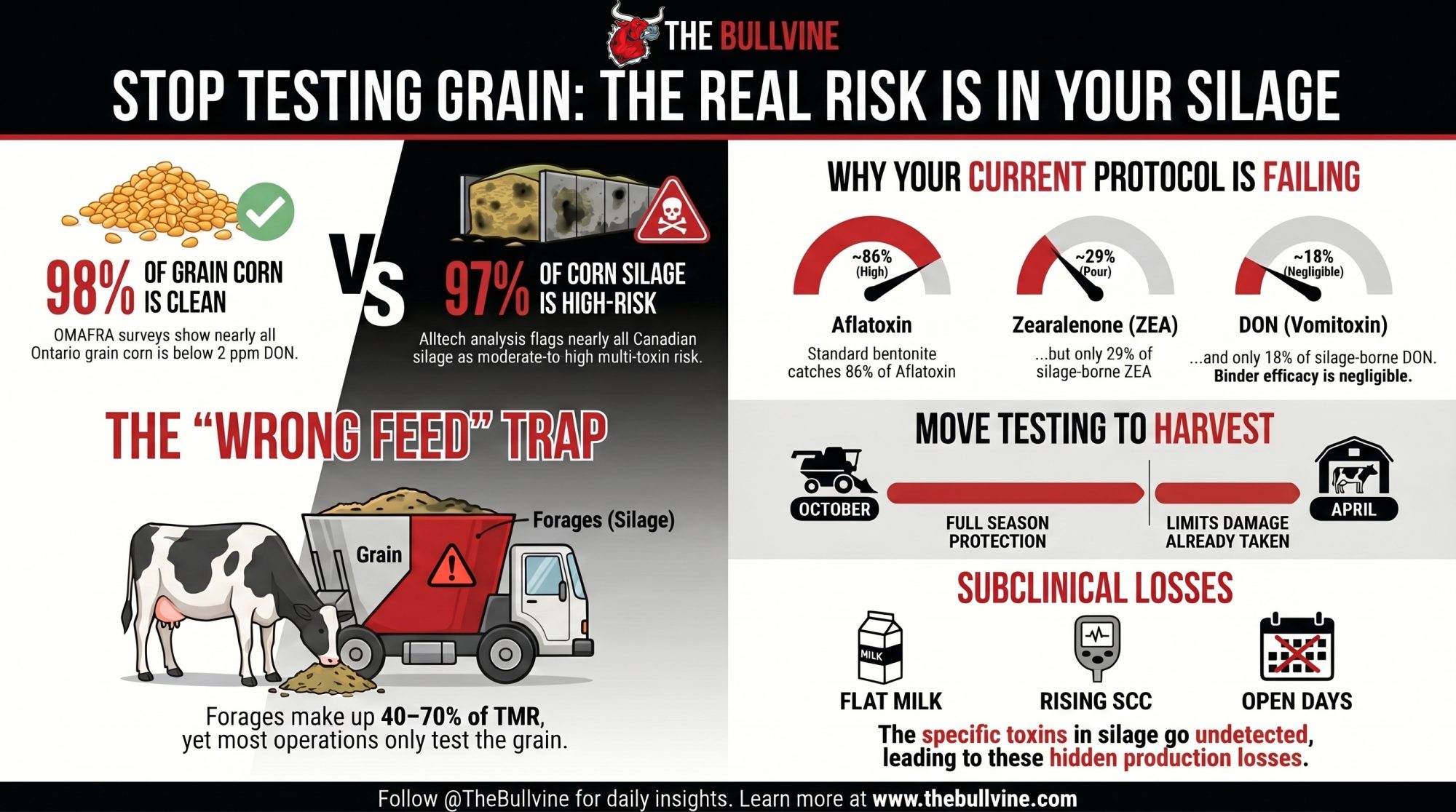
Alltech’s 2025 data hit 97% moderate-to-high multi-toxin risk on Canadian corn silage. Ontario grain corn? 98% clean below 2 ppm DON. Same fields. Different feed. Different decision.
Executive Summary: Alltech’s 2025 Canadian Harvest Analysis flagged 97% of Canadian corn silage samples as moderate-to-high multi-toxin risk on the REQ model, while OMAFRA’s October 2025 Ontario survey returned 98% of 231 grain corn samples below 2 ppm DON — one of the cleanest grain corn years on recent record. The contamination didn’t disappear; it concentrated in forages, where 69% of national samples carried DON, 79% carried zearalenone, and 54% carried T2/HT2. That matters because forages are 40 to 70% of every TMR you mix. The standard protocol — single-toxin grain ELISA plus bentonite — catches 86% of aflatoxin but only 18% of DON and 29% of ZEA, per Kihal et al.’s 2022 meta-analysis. On a 2.2 ppm DON corn silage at 12 kg DM in a 26 kg DMI ration, dietary DON lands at 1.02 ppm — just over CFIA’s 1 ppm limit — and a 0.5 kg DM swap fixes it; add 0.6 ppm haylage and the same swap doesn’t, which is the call most operations never make because they never tested the haylage. Subclinical losses show up as flat milk, creeping SCC without a mastitis pathogen, and days open extending past the repro program’s window — a pattern hiding in plain sight on herds still feeding 2025-crop silage. The 30-day move is a composite multi-toxin panel on every 2025-crop forage in active feeding before this month’s next ration review; the 2026 move is shifting that test to harvest, so the result lands in November and protects a full feeding season instead of limiting damage in April.
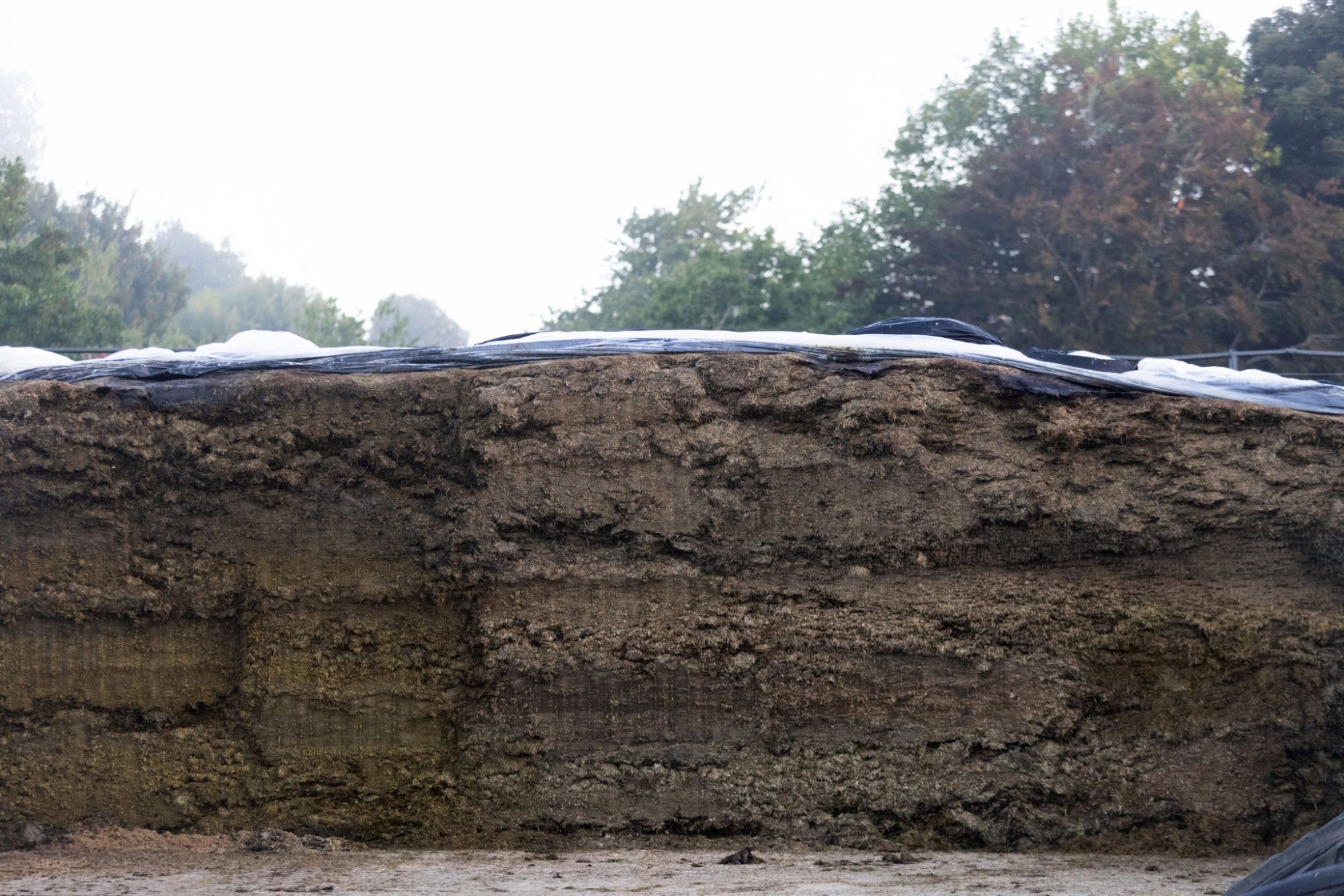
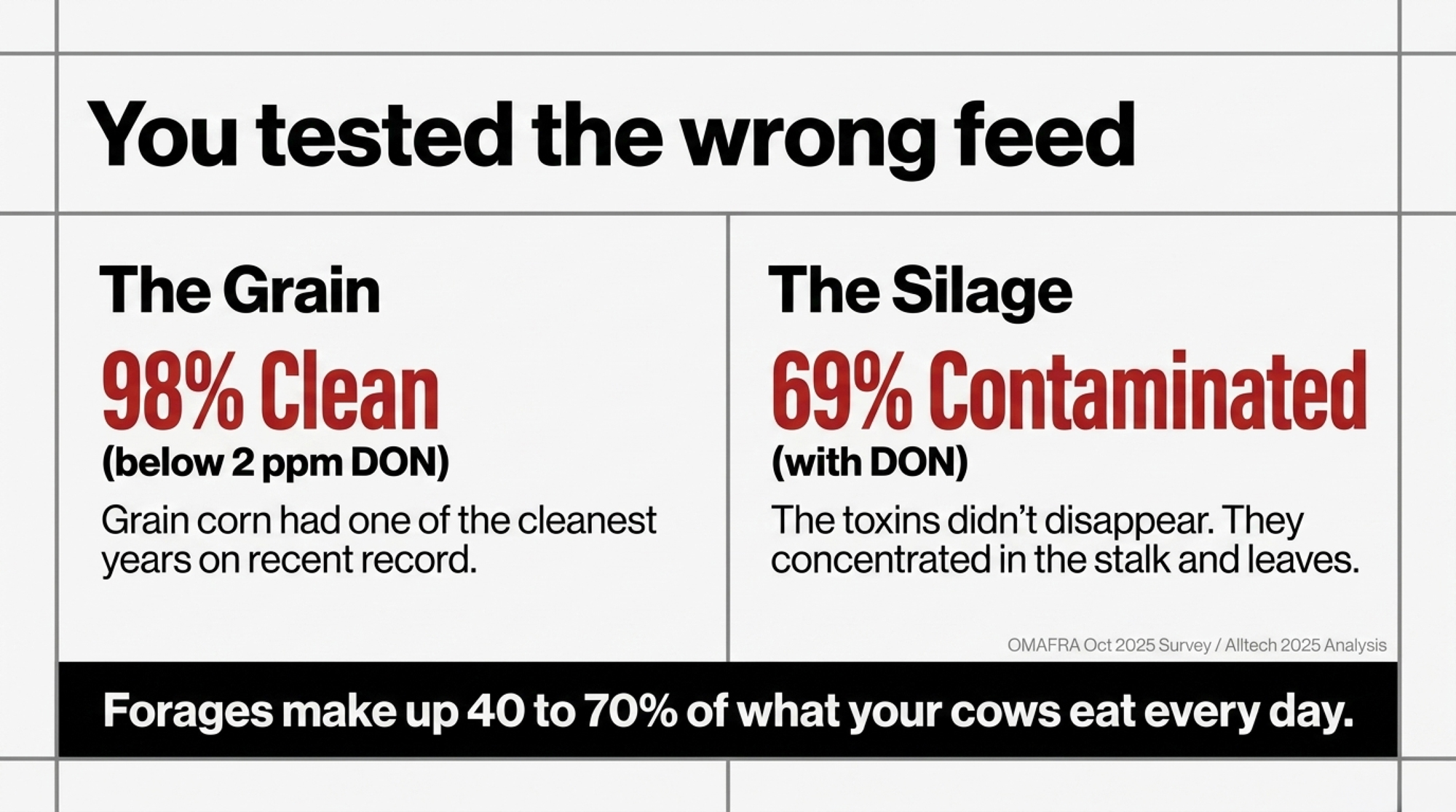
If you tested grain corn last fall, got a passing DON number, and moved on, you weren’t wrong about the grain. You were looking at the wrong feed. Field Crop News’s October 29, 2025, Ontario grain corn ear mould and DON survey by Ben Rosser returned 98% of 231 Ontario grain corn samples — collected September 22 through October 3 — below 2 ppm DON. One of the cleanest Ontario grain corn results on recent record.
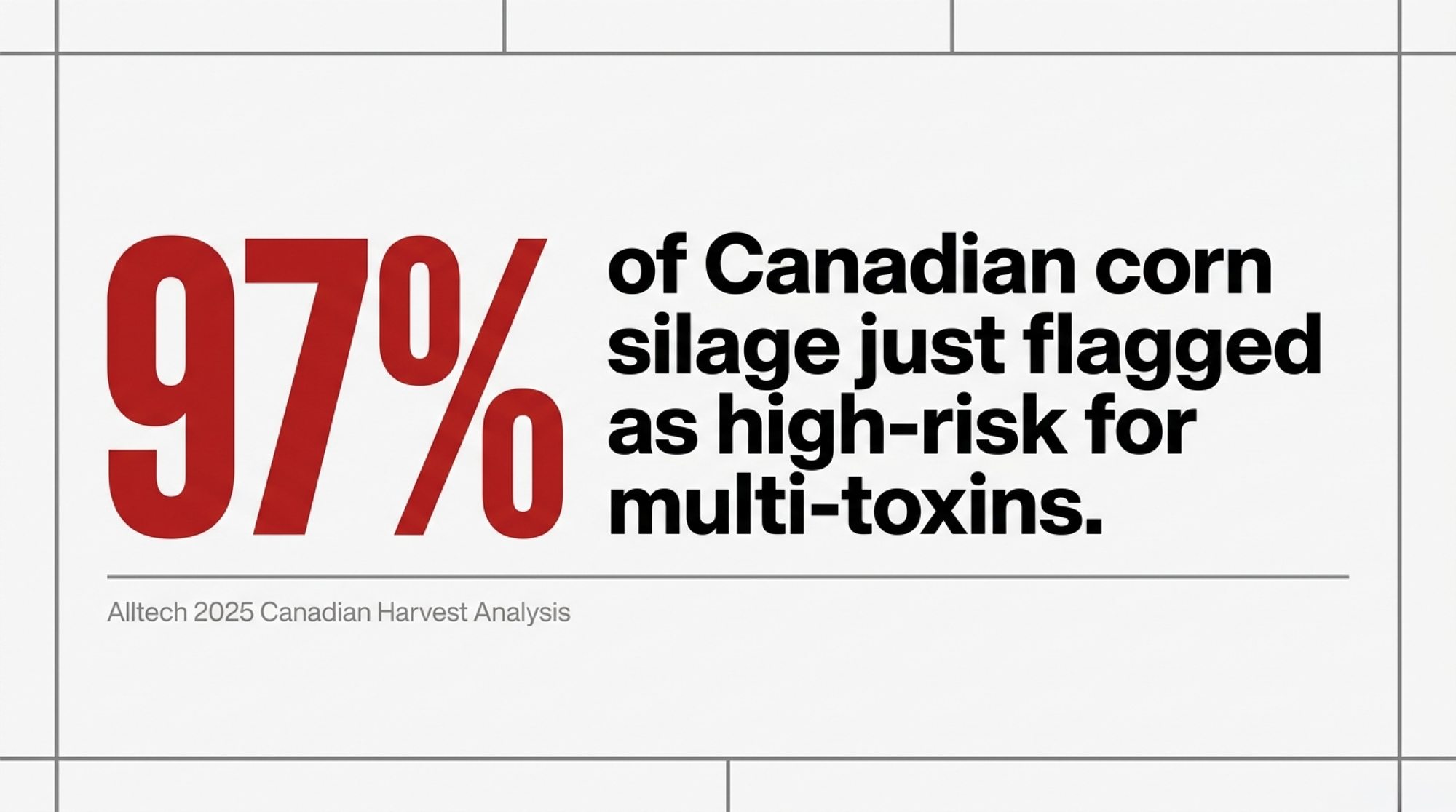
Now look at what came off the same fields as forage. The Alltech 2025 Canadian Harvest Analysis — 800 Canadian crop and forage samples collected July through December 2025 — found national forage-wide occurrence of DON in 69% of samples, zearalenone in 79%, and T2/HT2 in 54%. Run that data through Alltech’s proprietary Risk Equivalent Quantity model — a multi-toxin weighting system, not a regulatory threshold — and 97% of Canadian corn silage samples rated moderate-to-high risk. Alltech’s Quebec special report layered the regional detail: 76 Quebec corn silage samples returned an unusual 76% occurrence across all three Fusarium toxin classes — DON, ZEA, and T2/HT2 — pointing to widespread tri-toxin co-contamination rather than dominance by any single toxin. Progressive Dairy’s May 14, 2026, Canadian harvest analysis by Alexandra Weaver confirmed Ontario showed Fusarium occurrence rates of 73 to 85% in corn silage, with DON maximum concentrations up to 21 ppm.
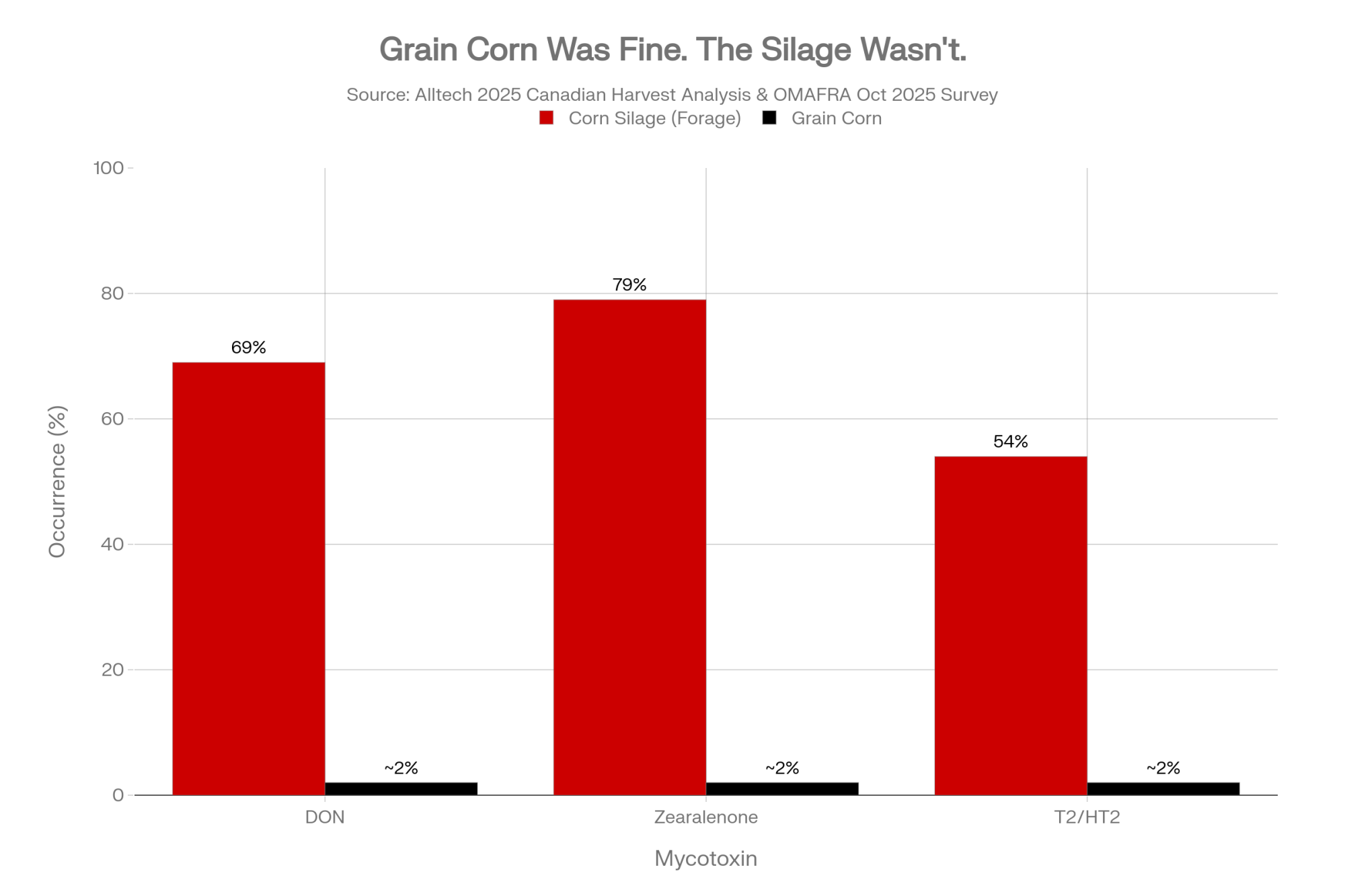
While this data tracks Canadian bunkers, the biological reality crosses every border. A late-season weather shift can leave ears pristine while Fusarium runs rampant through the stalk and leaves. If you’re farming in the US Midwest or Northeast, the geography changes — the diagnostic trap doesn’t. Alltech’s 2025 U.S. Harvest Analysis, covering more than 1,000 U.S. crop and feed samples collected July through December 2025, found corn silage averaged 5.5 mycotoxins per sample, predominantly Fusarium species.
The grain tested fine. The forages didn’t. And forages are 40 to 70% of what your cows are eating every day.
Is Your Mycotoxin Protocol Looking at the Wrong Feed?
This isn’t a feed quality crisis. It’s a diagnostic frame pointing at the wrong commodity.
The standard protocol — test grain corn, run a single-toxin DON ELISA, add a clay-based binder if the number looks elevated — was built for an aflatoxin-and-grain-DON contamination world. That isn’t 2025. The contamination is in corn silage, haylage, and later-cut grass forages. And it’s almost always more than one toxin at a time.
If you’re running 200 to 600 cows in Ontario, Quebec, Manitoba, or anywhere across the US Midwest and Northeast right now, the symptoms may be hiding in plain sight. Flat milk. SCC creeping up without an obvious mastitis pathogen. Days open extending past where the repro program said they should land. Each one individually has a dozen explanations. Together, on a herd feeding 2025-crop forages, they form a pattern.
Why the Standard Binder Isn’t Doing What You Think
The chemistry is straightforward, but it rarely gets walked through end-to-end. Per Kihal et al.’s 2022 meta-analysis of 68 peer-reviewed binder efficacy studies in Animal Feed Science and Technology, the geometry of the toxin determines whether your clay binder catches it or lets it walk through to the cow.
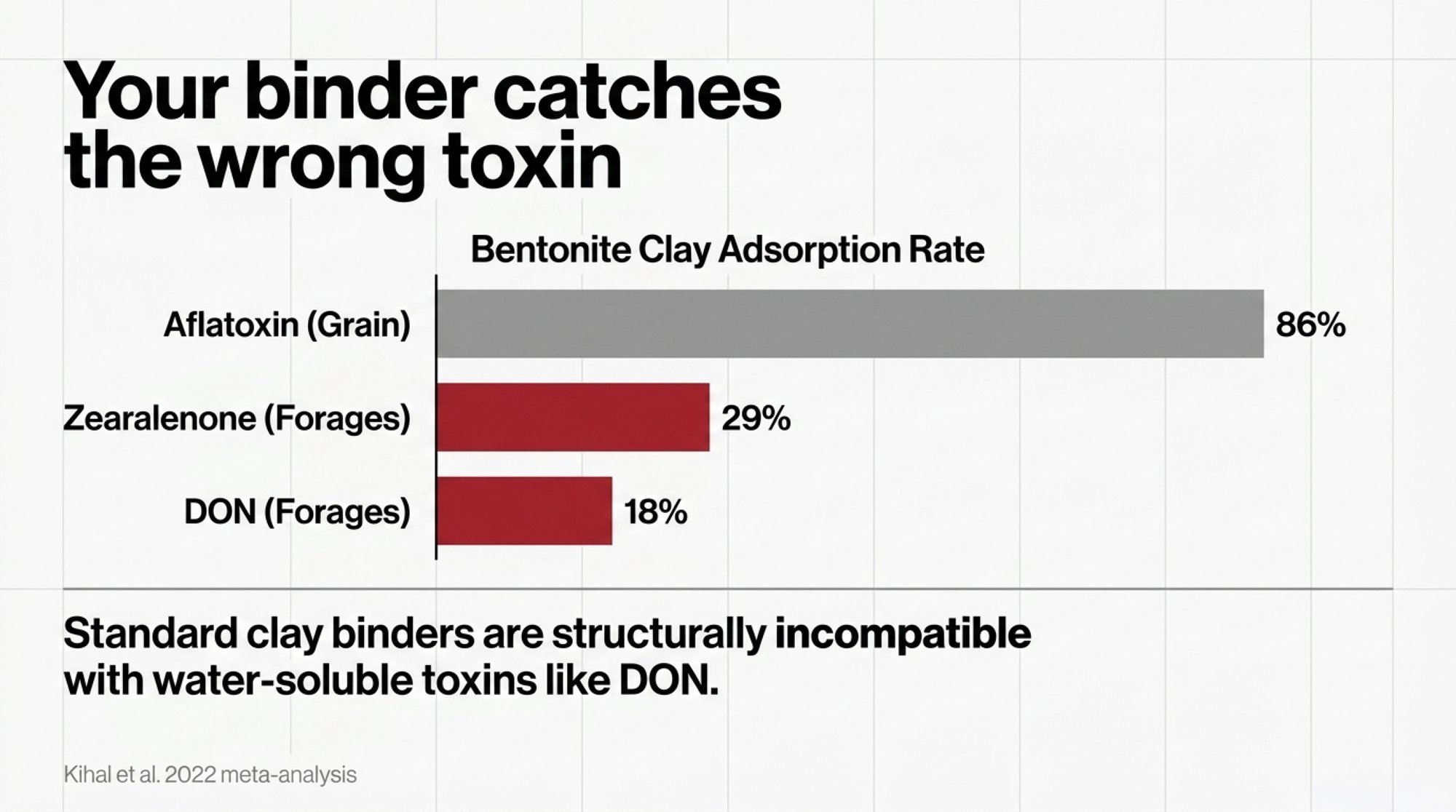
| Mycotoxin | Primary 2025 Source | Bentonite Efficacy | 2025 Canadian Forage Occurrence | Regulatory Limit (CFIA RG-8 dairy) |
|---|---|---|---|---|
| Aflatoxin | Grain / stored concentrate | 86% | Low (<5% forage samples) | 20 ppb total diet |
| Zearalenone (ZEA) | Corn silage / forages | 29% ⚠️ | 79% of national samples | No specific dairy limit; estrogenic effects at >100 ppb |
| DON (Vomitoxin) | Corn silage / forages | 18% 🔴 | 69% of national samples | 1 ppm total diet DM |
| T2/HT2 | Forages / late-cut grass | Minimal (<15%) | 54% of national samples | No specific Canadian dairy limit |
Aflatoxin fits into the interlayer galleries of montmorillonite clay almost like a key in a lock. DON is a non-planar trichothecene with an epoxide and multiple hydroxyl groups — polar, water-soluble, and structurally incompatible with the ionic adsorption clay relies on. At rumen pH, water competes successfully for the binding sites. The DON stays in solution. The clay catches almost none of it.
Zearalenone has its own twist. Microbial activity in the rumen converts ZEA to alpha-zearalenol, a metabolite with significantly higher estrogen receptor affinity than the parent compound. The lab number on the feed report describes what you fed. What’s actually hitting the cow’s reproductive system is more potent than that.
For operations whose 2025 multi-toxin panel comes back showing aflatoxin as the dominant contaminant — a real but small share of Canadian forages — bentonite stays the right first-line tool. The argument here isn’t that clay binders don’t work. It’s that they’re being deployed against the wrong toxin in 2025 forages.
The Multi-Toxin Math No One Is Running
| Scenario | DON (ppm) | ZEA (ppm) | T2/HT2 (ppm) | Single-Toxin Pass/Fail | Multi-Toxin REQ Risk Rating |
|---|---|---|---|---|---|
| Silage A — single toxin dominant | 1.8 | 0.05 | 0.03 | ⚠️ FAIL (DON >1 ppm) | High |
| Silage B — co-contamination | 0.7 | 0.40 | 0.20 | ✅ PASS (all below threshold) | 🔴 High |
| Silage C — tri-toxin low level | 0.5 | 0.30 | 0.25 | ✅ PASS | 🔴 Moderate–High |
| Silage D — clean baseline | 0.2 | 0.08 | 0.05 | ✅ PASS | Low |
| Quebec avg (76-sample survey) | ~1.2 | ~0.35 | ~0.15 | ⚠️ BORDERLINE | 🔴 High (76% tri-toxin co-contam) |
This is the conceptual gap underneath everything else.
DON and ZEA come from the same fungal genera — Fusarium graminearum, F. culmorum — and the two toxins co-occur frequently in Canadian forage data. Industry survey reporting from DSM-Firmenich’s PROcheck Canadian corn silage panel has shown a substantial share of recent samples — well above two-thirds — containing two or more mycotoxins simultaneously. That co-occurrence pattern is the signal the workflow has to catch.
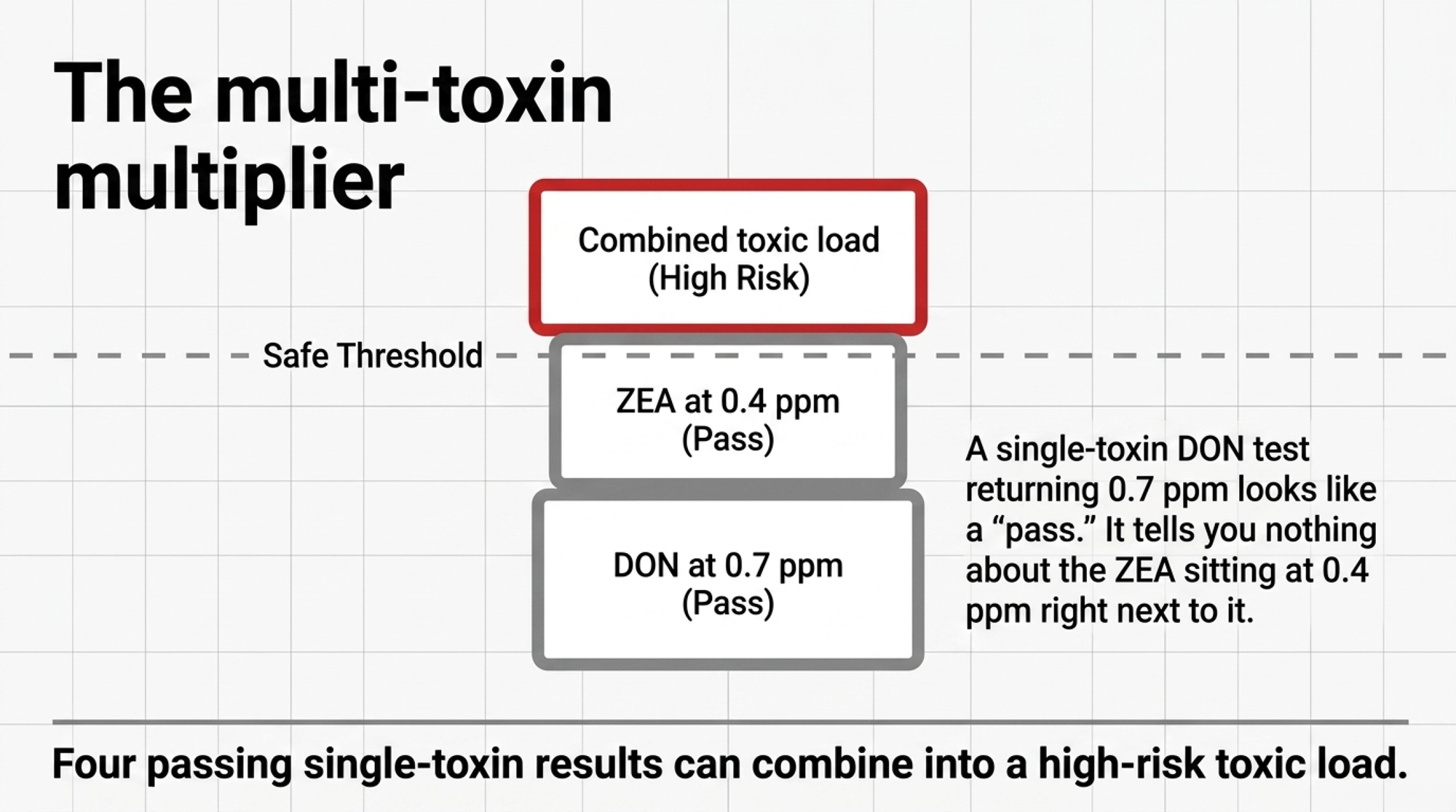
Here’s why a single-toxin assay misses it. A DON ELISA returning 0.7 ppm shows a passing result. It tells you nothing about whether ZEA is sitting at 0.4 ppm in the same sample, pushing combined exposure past an effective threshold the regulatory framework doesn’t capture. Run four single-toxin tests on the same silage, get four passing results, and the multi-toxin REQ model could still rate that silage as high risk. Not because anyone made a mistake — because the additive exposure is happening in a space the workflow doesn’t measure.
Running the Dilution Math
Here’s what an actual decision looks like when the lab finally returns a multi-toxin panel.
Say corn silage tests at 2.2 ppm DON, dry matter basis. Inclusion is 12 kg DM/cow/day on a total DMI of 26 kg. The corn silage’s contribution to total dietary DON is 2.2 × (12/26) = 1.02 ppm — just above the CFIA RG-8 recommended maximum of 1 ppm DON in total diet dry matter for lactating dairy.
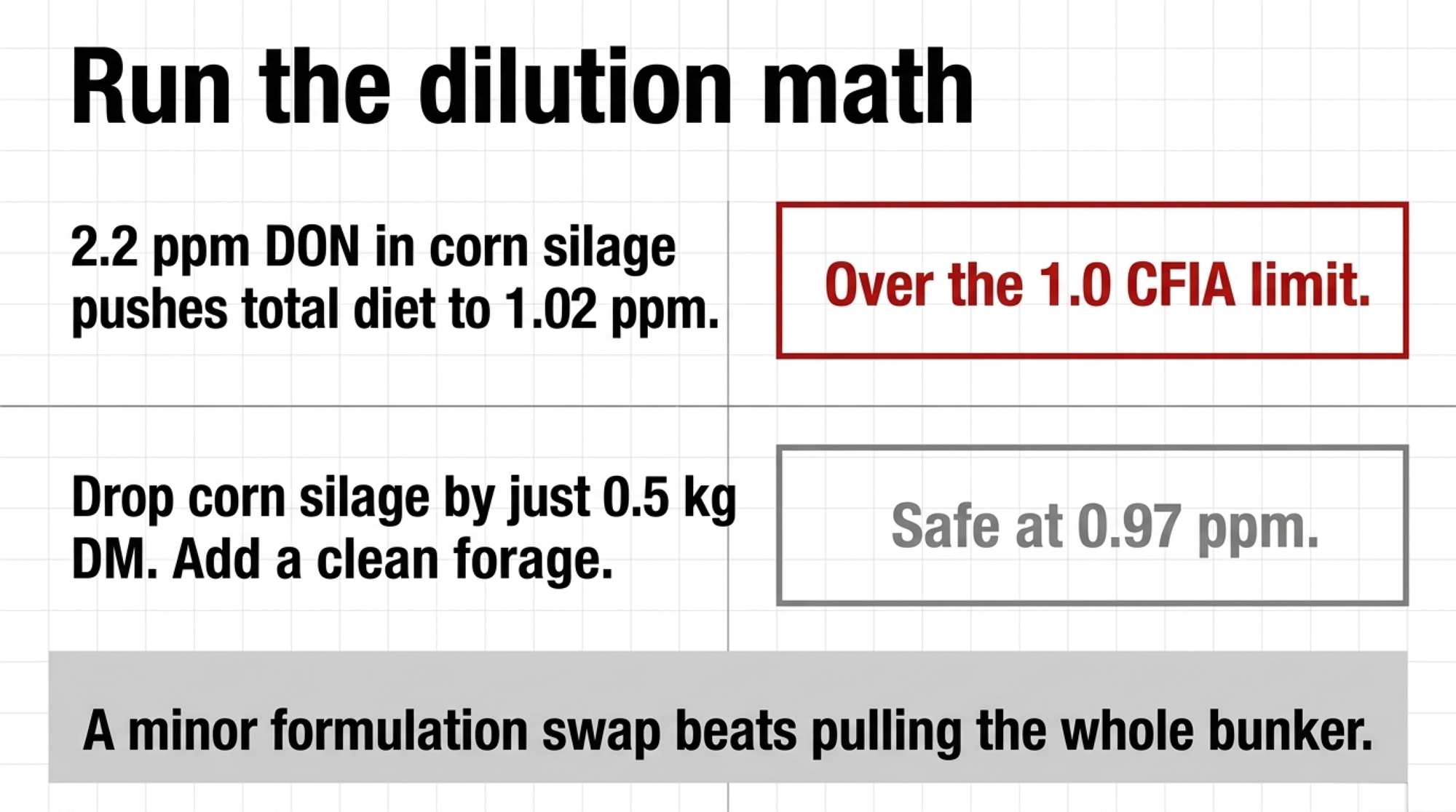
Pulling the silage feels like the safe call. It’s also expensive, disruptive, and on a 1.02 ppm result, probably unnecessary. Drop corn silage to 11.5 kg DM, replace the difference with a confirmed-clean forage at 26 kg total DMI, and the math runs 2.2 × (11.5/26) = 0.97 ppm. A minor formulation change with a working safety margin against day-to-day mixing variability — not a feed crisis.
Now add haylage testing at 0.6 ppm DON, included at 5 kg DM. That contributes 0.6 × (5/26) = 0.115 ppm. Suddenly the same corn silage adjustment isn’t enough — required corn silage drops to about 10.5 kg DM, which is a real ration change requiring a confirmed-clean replacement source. The decision flipped because of one ingredient most operations never test.
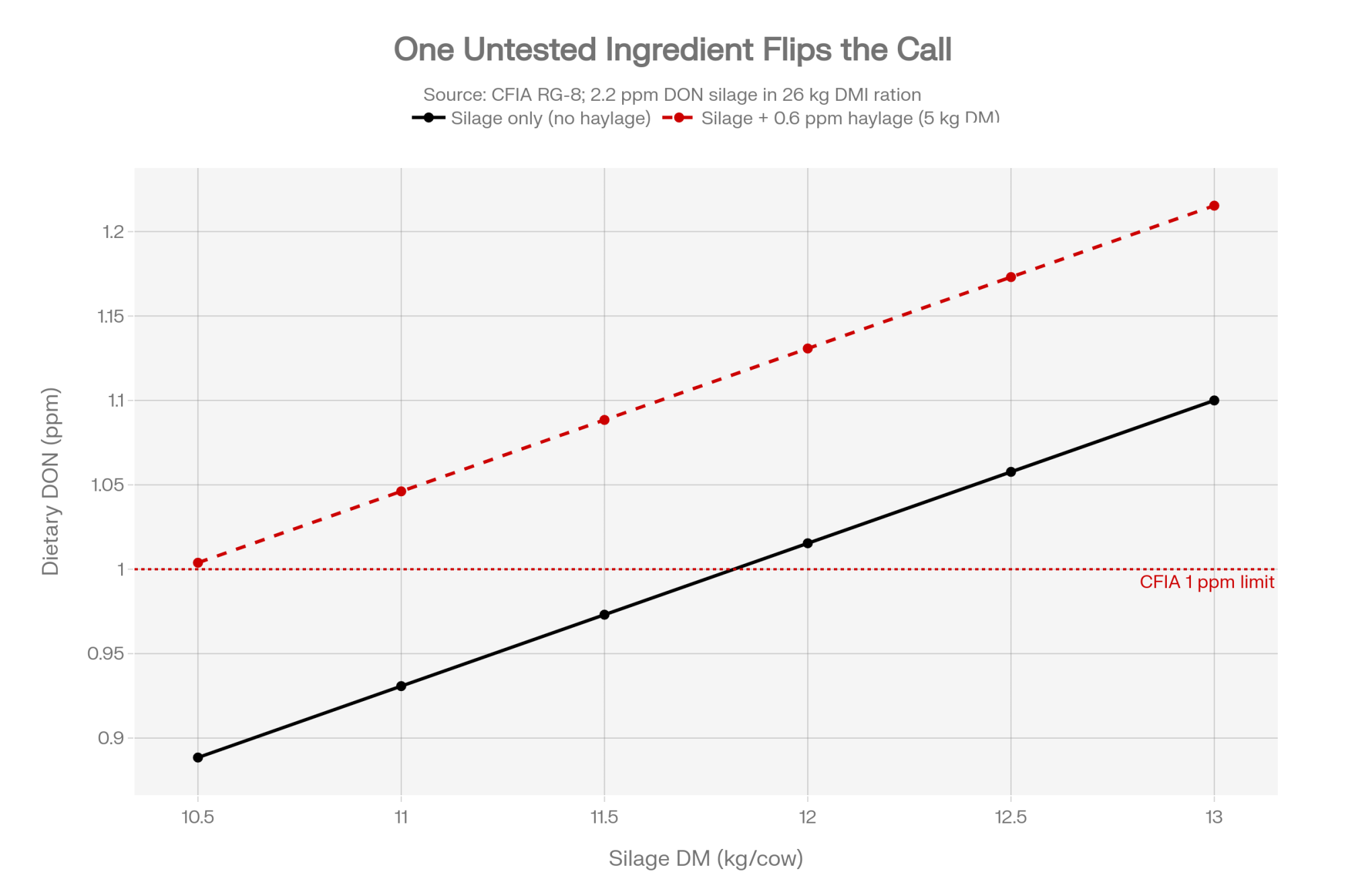
That’s the calculation that separates intervention from theatre — the same upstream-decision discipline that drives ration efficiency in high-producing Canadian herds. Without it, nutritionists either over-react and pull a silage that a small adjustment would have fixed, or under-react and stay on a contaminated pile with a clay binder program delivering 18% DON protection.
Four Paths, Depending on Where You Sit Today
| Option | Best Fit | Cost Signal | What It Catches | Key Risk If Skipped | Priority |
|---|---|---|---|---|---|
| 1 — 8-sub-sample composite ELISA (DON+ZEA+T2) | All operations feeding 2025-crop silage now | Low ($80–150/panel) | Sampling error eliminated; individual toxin levels confirmed | Single grab sample = wasted lab fee; false security | Do this month |
| 2 — Match chemistry to toxin profile (YCW, biotransformation, ZEA hydrolase) | Operations with confirmed co-contamination | Medium ($0.15–0.40/cow/day depending on stack) | DON de-epoxidation, ZEA hydrolysis, rumen-stable binding | Stacking products for a toxin profile you don’t have | After panel results |
| 3 — Harvest-phase testing (August–October 2026) | All operations — full feeding season protection | Low (same panel, better timing) | Full season managed before damage; ration set in November | April result only limits damage already taken | 2026 gold standard |
| 4 — Full multi-modal program (YCW + bioTransform + antioxidants) | Large herds 300+ cows where subclinical losses compound | Higher ($0.35–0.60/cow/day) | Multi-toxin + oxidative stress + immune compromise | Deploying without test data = no performance benchmark | After harvest panel, for high-risk herds |
Option 1: The Minimum Defensible Upgrade. Implement an 8-sub-sample composite ELISA protocol at feed-out, covering DON, ZEA, and T2/HT2. Sampling error accounts for the bulk of total mycotoxin test uncertainty under DSM-Firmenich and Romer Labs sampling guidance. The Risk: Skip the composite protocol, and a single grab sample makes the lab fee a complete waste.
Option 2: Match Chemistry to Toxin Profile. Deploy targeted interventions based on lab reports — yeast cell wall components for ZEA, biotransformation products containing Saccharomyces cerevisiae cell wall preparations for DON de-epoxidation, ZEA hydrolase enzyme chemistry where ZEA is the dominant toxin and repro numbers are slipping. Clay stays in the program for the small share of samples carrying aflatoxin. The Risk: Stacking products without a panel means buying chemistry your herd doesn’t need.
Option 3: Harvest-Phase Testing (The Gold Standard). Pull composites from incoming truckloads before sealing the bunker. Results land by November, giving you months to adjust rations before damage occurs. Same upstream principle that drives transition pen and dry pen returns — different feed window.
Option 4: The Full Multi-Modal Program. Combine YCW, biotransformation enzymes, ZEA-active chemistry, and targeted antioxidant support (vitamin E, selenium). Best fit for larger high-producing herds where subclinical losses compound quickly across the lactation pen — and where a forthcoming Bullvine ROI walk-through on a 400-cow herd at 2026 milk prices will pencil out the actual program math. The Risk: Deploying without testing means you don’t know whether the program is working or whether the herd was never contaminated to begin with.
The 30-Day Action
This fall, build mycotoxin testing into your harvest protocol the same way you build dry matter sampling into chopping decisions. Pull 8-sub-sample composites from the first loads of each forage going into the bunker. Multi-toxin panel — DON, ZEA, T2/HT2, fumonisin, aflatoxin. Result in hand by November. Ration designed against the actual contamination profile, not against last year’s assumptions.
The right-now version, for May 2026 readers feeding 2025-crop forage: before this month’s next ration review, pull a composite multi-toxin panel on every 2025-crop forage in active feeding. Today’s lab result lets you adjust this month’s ration. The fall harvest test is for next year’s losses. Periparturient and early-life immune compromise lower the effective tolerance threshold below the regulatory number — fresh cow pens and early calves carry tighter margins than the herd average suggests.
What This Means for Your Operation
- If grain corn is your only mycotoxin test, you’re protocol-blind in 2025. Ontario’s 98% clean grain corn result is real. It does not describe the silage in the bunker, and the same diagnostic trap applies wherever 2025-crop forages are being fed.
- If your binder is bentonite-based and the lab confirms DON or ZEA as the dominant toxins, the program is delivering 18 to 29% of the protection it was bought for.
- If two or more toxins land on the report — even individually below action levels — assume the dietary effect is closer to the additive total than the highest single number.
- If total dietary DON sits between 1.0 and 1.3 ppm, run the dilution math before pulling the silage. A 0.5 to 1.5 kg DM adjustment is often the right answer.
- If you change one thing this year, move forage testing to harvest. The October result gives you the entire feeding season to manage. The April result only limits damage already taken.
Key Takeaways
- If your only 2025 mycotoxin test was on grain corn, you’ve tested the cleanest commodity in the system.Pull a multi-toxin forage panel before the next ration review.
- If your binder is bentonite-based and DON or ZEA dominates the lab report, you’re getting 18–29% of the protection you’re paying for. Match chemistry to toxin profile or accept the gap.
- If two or more toxins hit the report, assume an additive dietary effect. Single-toxin “below threshold” results don’t describe what the cow is metabolizing.
- If dietary DON is 1.0–1.3 ppm, run dilution math before pulling silage. A 0.5–1.5 kg DM adjustment usually beats a feed-source switch.
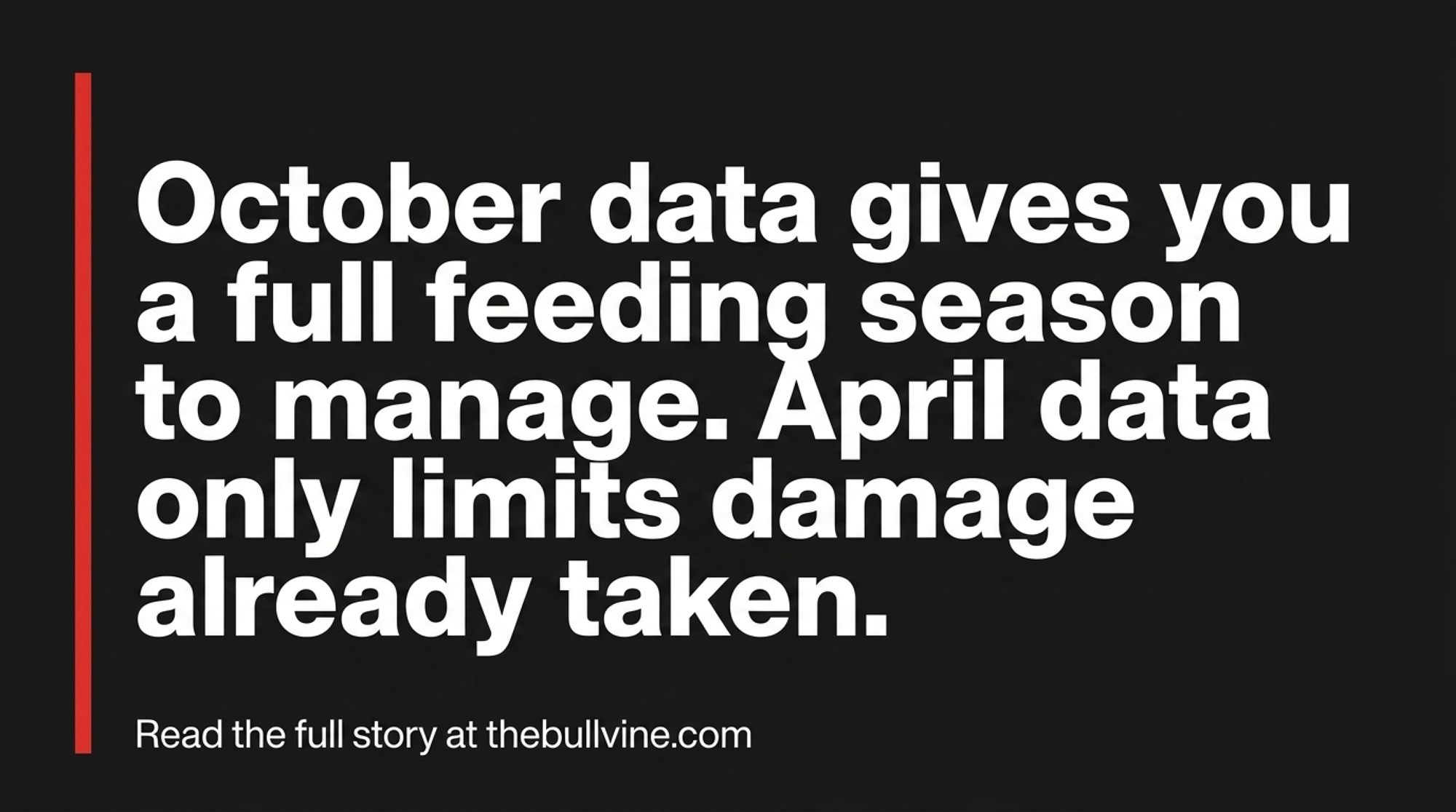
- If you change one thing this cycle, move forage testing to harvest. October data gives a full feeding season to manage; April data only limits damage already taken.
The Decision You Make This Fall
The 2025-crop losses weren’t primarily a science problem. The science is published. The contamination data is published. The binder efficacy data is published. What didn’t catch up was the management calendar — protocols still scheduling mycotoxin assessment as a diagnostic response after clinical signs, instead of a feeding-program input before the first scoop hits the mixer.
When the 2026 corn silage comes off the chopper this September or October, the question isn’t whether to test. It’s whether you’ll know what’s in the pile before it’s sealed, or whether you’ll find out next April when the milk cheque tells you something the cows have known all winter.
Run Your Numbers
Forage Quality Value Calculator — Punch in your 2025-crop corn silage and haylage lab numbers to see net margin per cow per day, annual herd impact, and where each forage actually belongs in the ration before you run the dilution math against your DON results. Cross-check the calculator’s output against a multi-toxin panel — fermentation profile and mycotoxins aren’t modeled in the tool itself.
Complete references and supporting documentation are available upon request by contacting the editorial team at editor@thebullvine.com.
Learn More
- $60 Silage, $220 Delivered: The 28% Hidden Premium on a 500-Cow Bunker — Exposes the hidden shrink costs inflating your feed sheet. Re-pricing forages on delivered dry matter reveals a 28% premium that ration software routinely misses, giving you the immediate math to plug an $0.89 daily leak per cow.
- Life After BMR: The $103000 Corn Silage Decision Behind 4 Pounds of Milk per Cow — By 2030, Corteva will completely phase out BMR corn silage lines. Follow the money on top-end conventional hybrids, chop height, and plant populations to seamlessly replace a 2-point ration NDFd drop and protect $103,000 in annual milk revenue.
- The Mycotoxin Challenge: What Dairy Producers Are Quietly Paying For — Blood biomarker testing proves that up to 80% of actual herd exposure evades traditional feed bunker diagnostics. Upgrading to a multi-modal defense strategy prevents silent subclinical drag and captures ROI figures exceeding 200% in high-producing pens.
 The Sunday Read Dairy Professionals Don’t Skip.
 The Sunday Read Dairy Professionals Don’t Skip.
Every week, thousands of producers, breeders, and industry insiders open Bullvine Weekly for genetics insights, market shifts, and profit strategies they won’t find anywhere else. One email. Five minutes. Smarter decisions all week.




