



A 400‑cow herd ships about $16,800/yr into a $431.8M checkoff built around pizza cheese and exports. Wegner builds trust on a phone for $0. We ran the 8¢/cwt math.
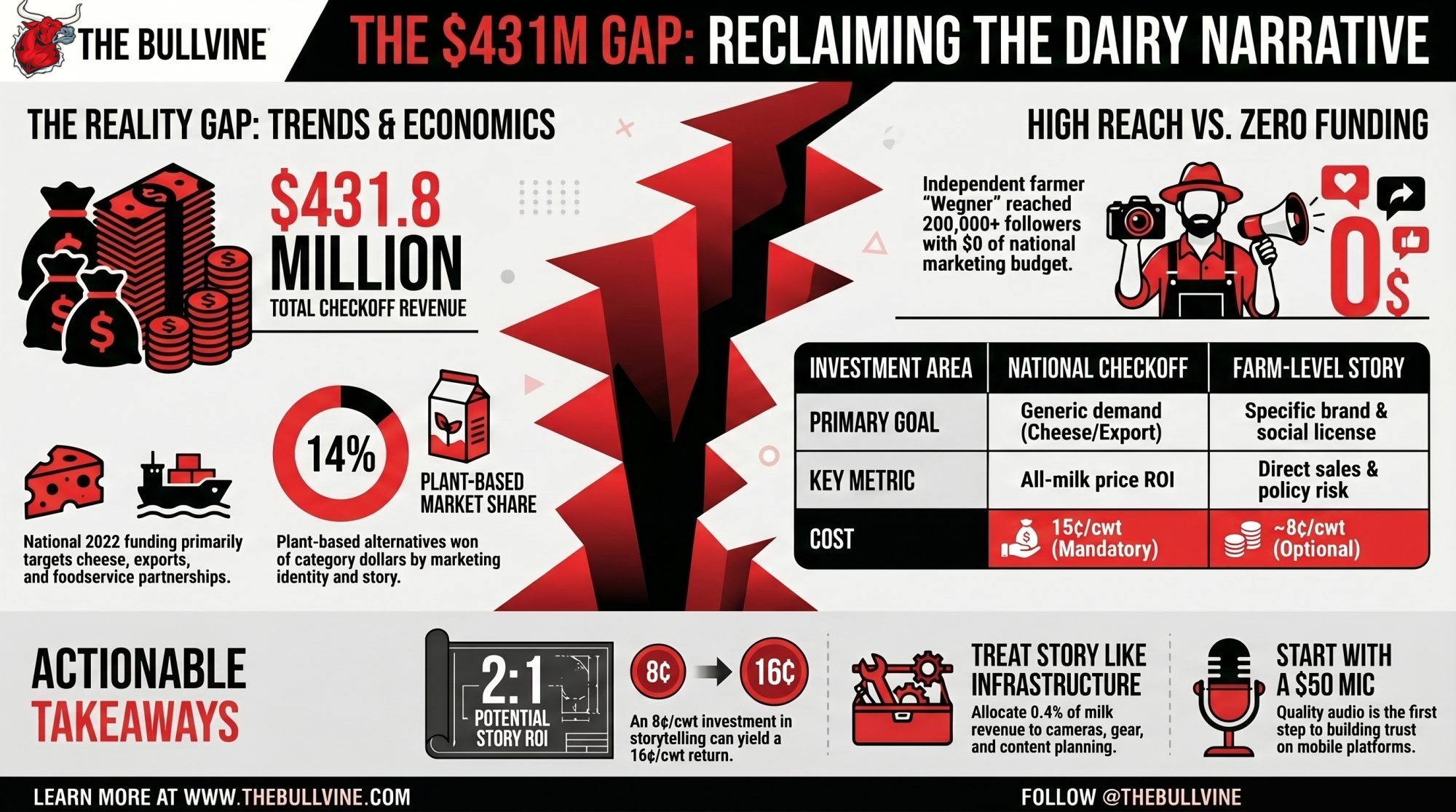
Executive Summary — The U.S. dairy checkoff pulled in $431.8M in 2022, about $352.1M of it from producers at 15¢/cwt. Capps’ published model credits the system with roughly $1/cwt of all‑milk lift, but the bulk of that lift sits in cheese, exports, and foodservice — not the jug. Plant‑based milk now holds about 14% of category dollars (GFI 2024). A 400‑cow herd shipping 112,000 cwt sends ~$16,800/yr into checkoff promotion. A 0.4%‑of‑revenue farm‑level story budget pencils out to about 8¢/cwt and a plausible 16¢/cwt return. Four paths follow, each with a 30‑day first step.

Editor’s note: Editorial analysis based on public USDA, DMI, AFBF, GFI, EIT, CCFI, CRDC, and corporate disclosures available as of publication. Where Bullvine offers interpretation of the data, we say so.
Annaliese Wegner runs “Modern Day Farm Chick” from her family’s Wisconsin dairy, posting Reels and short videos to a combined following of more than 200,000 people across Instagram, Facebook, and TikTok. Her public feed shows calves being fed, kids around the barn, and the occasional manure‑splattered moment that doesn’t make it into a corporate dairy ad. (Read more: From Farm Boots to Facebook Fame: How Annaliese Wegner is Changing the Face of Dairy)
Followers report shifting from worry about GMOs to asking for real milk from real cows and saying they feel like they know a dairy family. None of that time, gear, or reach shows up anywhere in the national dairy marketing budget. Wegner has built the platform independently of any checkoff or industry funding.
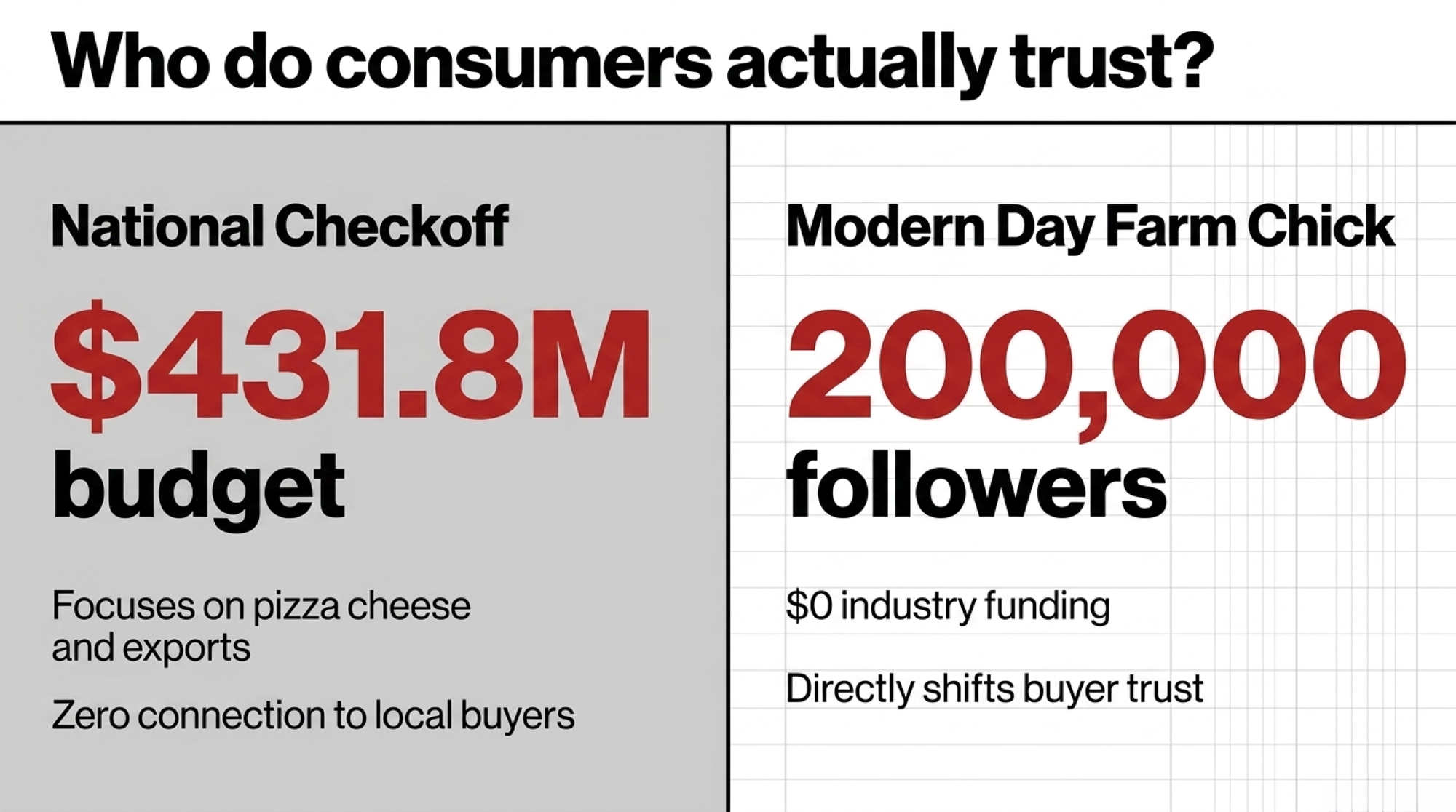
The national dairy checkoff, meanwhile, collected $431.8 million in 2022 from producers and importers, the most recent total reported to Congress. Economists can tell you how much extra cheese a QSR partner moved because of those dollars and how much that lifted the all‑milk price. They can’t tell you what a single Wegner post — or a Hoof GP video from a hoof‑trimming chute in Scotland — did for fluid milk, plant‑based defections, or policy risk in your county.
That’s the gap this story pokes at.
Why Does This $431.8 Million Gap Matter Now?
On paper, dairy’s marketing machine looks impressive.
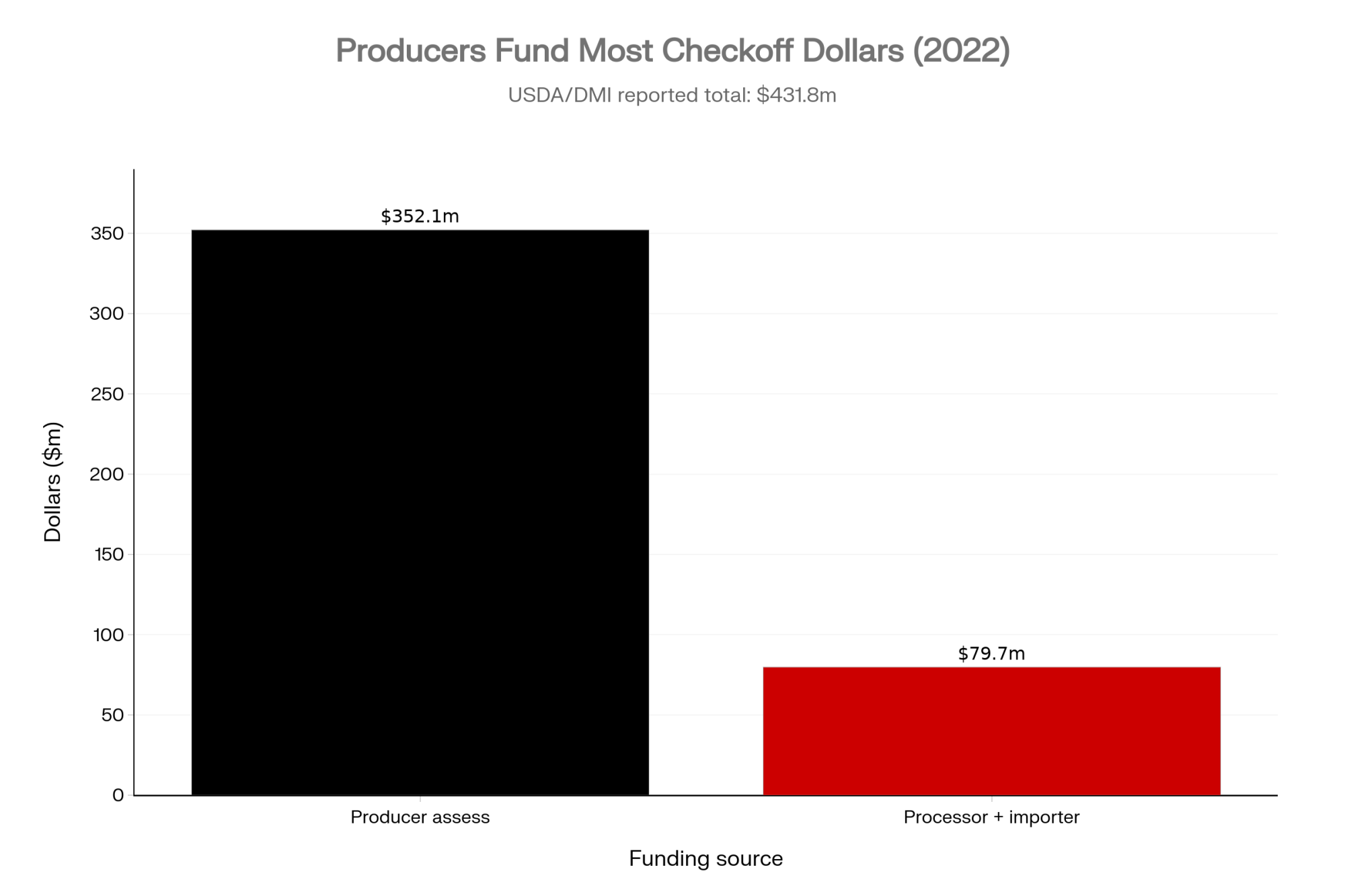
USDA’s most recent Report to Congress and DMI’s audited statements show the national checkoff system took in $431.8 million in 2022 — about $352.1 million from producers at 15¢/cwt, plus $79.7 million from fluid milk processors and importers. DMI’s 2024 pro forma shows program investments of roughly $121.4 million, with major buckets including:
- Export: about $31.8 million, including $25.0 million for USDEC and $6.8 million for international partners.
- Reputation: about $30.5 million across sustainability, farmer relations and outreach, strategic intelligence, impact funding, and planning.
- Sustainability: around $11.6 million inside that reputation bucket.
Texas A&M economist Oral Capps ran the big checkoff ROI model for the 2009–2024 period. His analysis, summarized by DMI and USDA, suggests checkoff programs generated roughly $6 billion in cumulative economic value, delivered roughly a 3.5:1 return on foodservice partnerships under Capps’ attribution model, and left the average all‑milk price around $1/cwt higher than in a no‑checkoff world. DMI’s published position emphasizes that this aggregate all‑milk lift accrues across the producer base regardless of product mix; we treat that as the official view, and this article focuses on how the aggregate breaks down for fluid‑heavy herds.
Those are serious numbers worth respecting.
But here’s where it gets uncomfortable for mid‑size herds. In our reading of Capps’ product‑category breakdown, the bulk of the modeled benefit — likely the majority and possibly more than two‑thirds — comes from cheese, exports, and foodservice rather than fluid milk. (That’s Bullvine’s interpretation of the published category split, not a figure Capps or DMI publishes that way.)
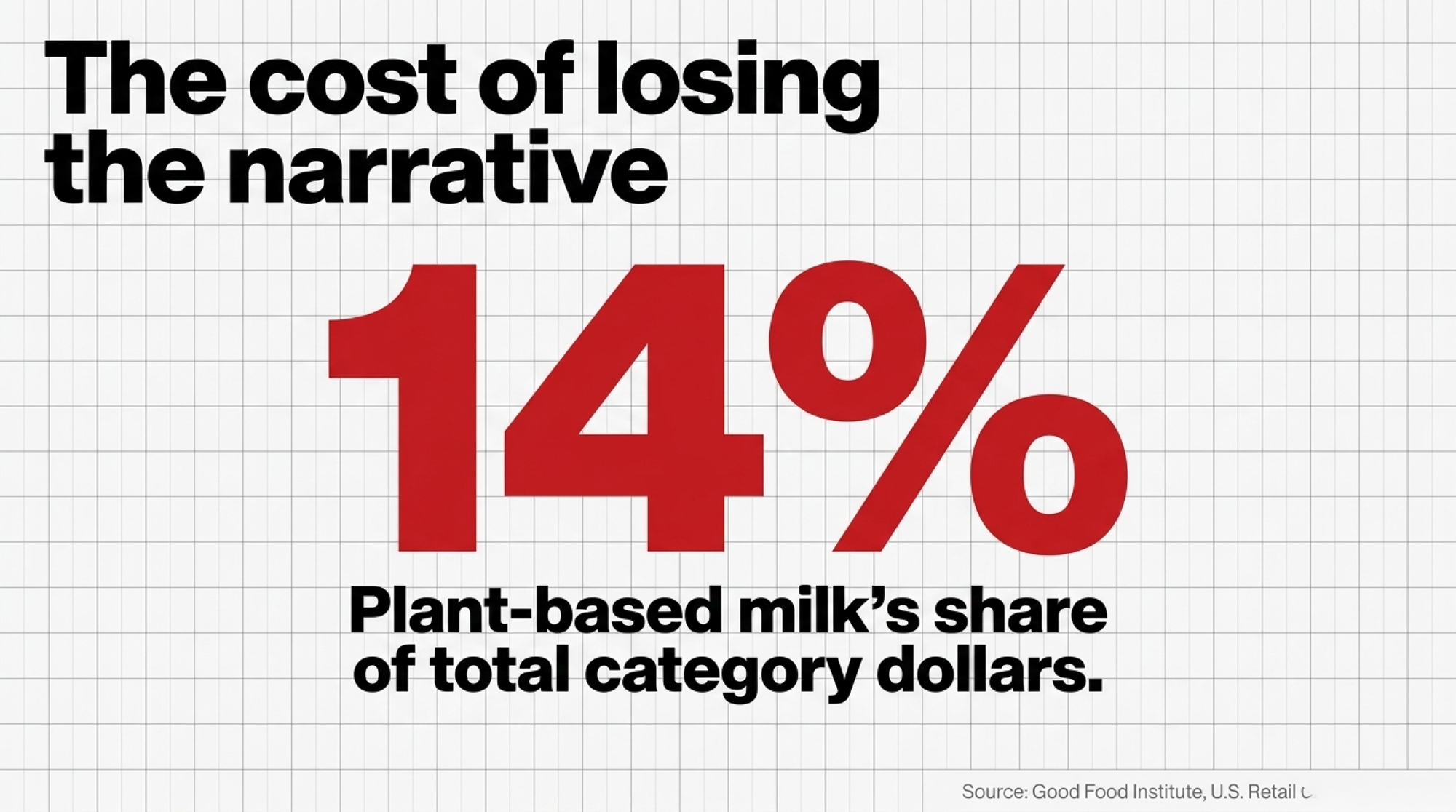
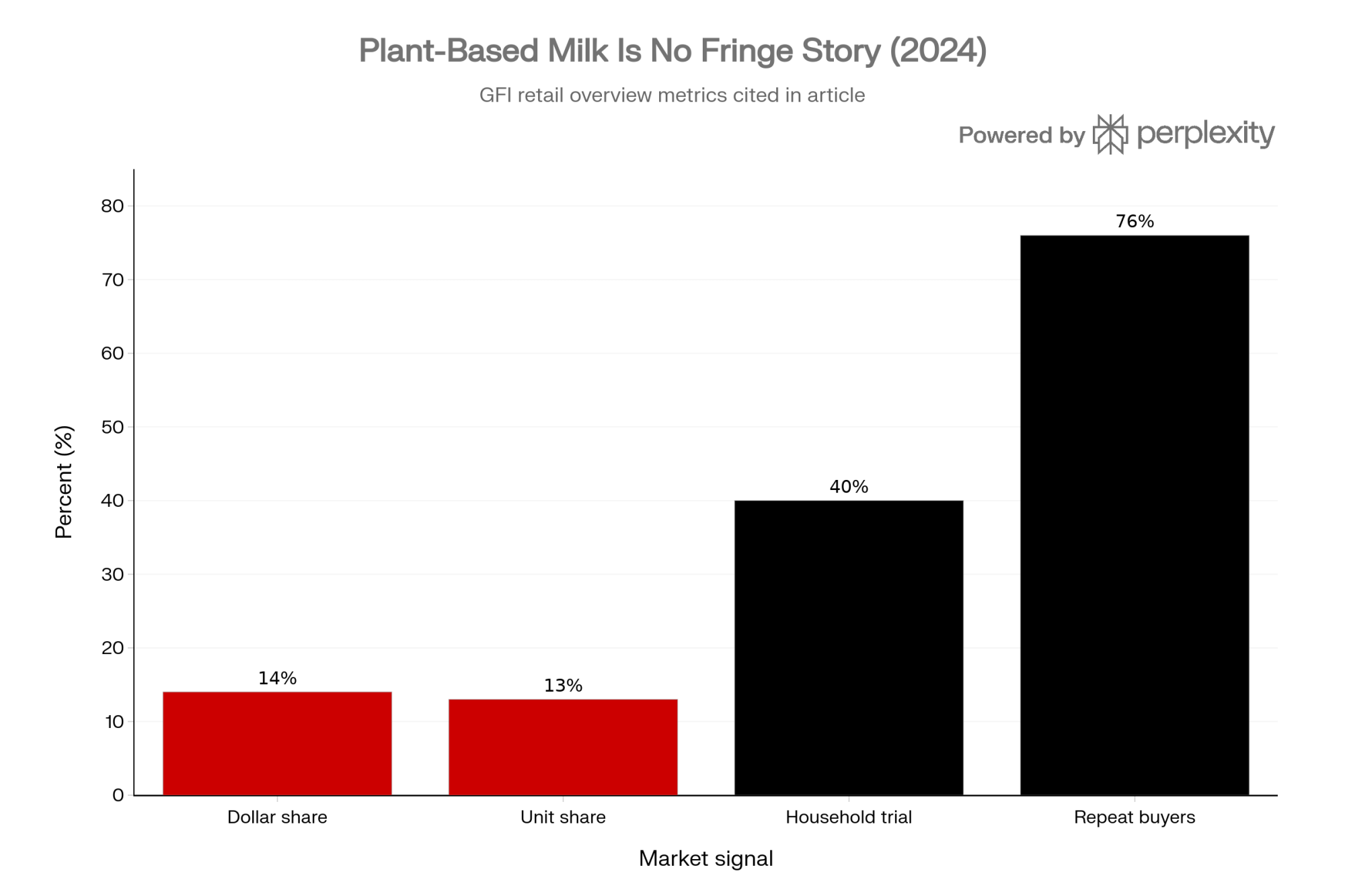
Plant‑based brands quietly grabbed a good chunk of the cooler while that was happening. And dairy noticed too late. The Good Food Institute’s 2024 U.S. retail overview shows plant‑based milk now making up about 14% of total milk category dollar sales and around 13% of unit sales. Four in ten U.S. households purchased plant‑based milk at least once in 2024, and 76% of those households purchased it more than once. That growth didn’t come from better protein or lower price. It came from brands like Oatly and Chobani treating story as infrastructure — climate, identity, lactose‑free, “for people like us” — and funding it aggressively.
Oatly’s 2023 financials show selling, general, and administrative expenses of about $80.7 million in Q4 alone, with branding, advertising, and marketing called out as a significant focus in investor communications. Analyst commentary consistently describes Oatly as a marketing‑heavy business, with selling and marketing costs taking a larger share of revenue than you’d ever see in a typical commodity category.
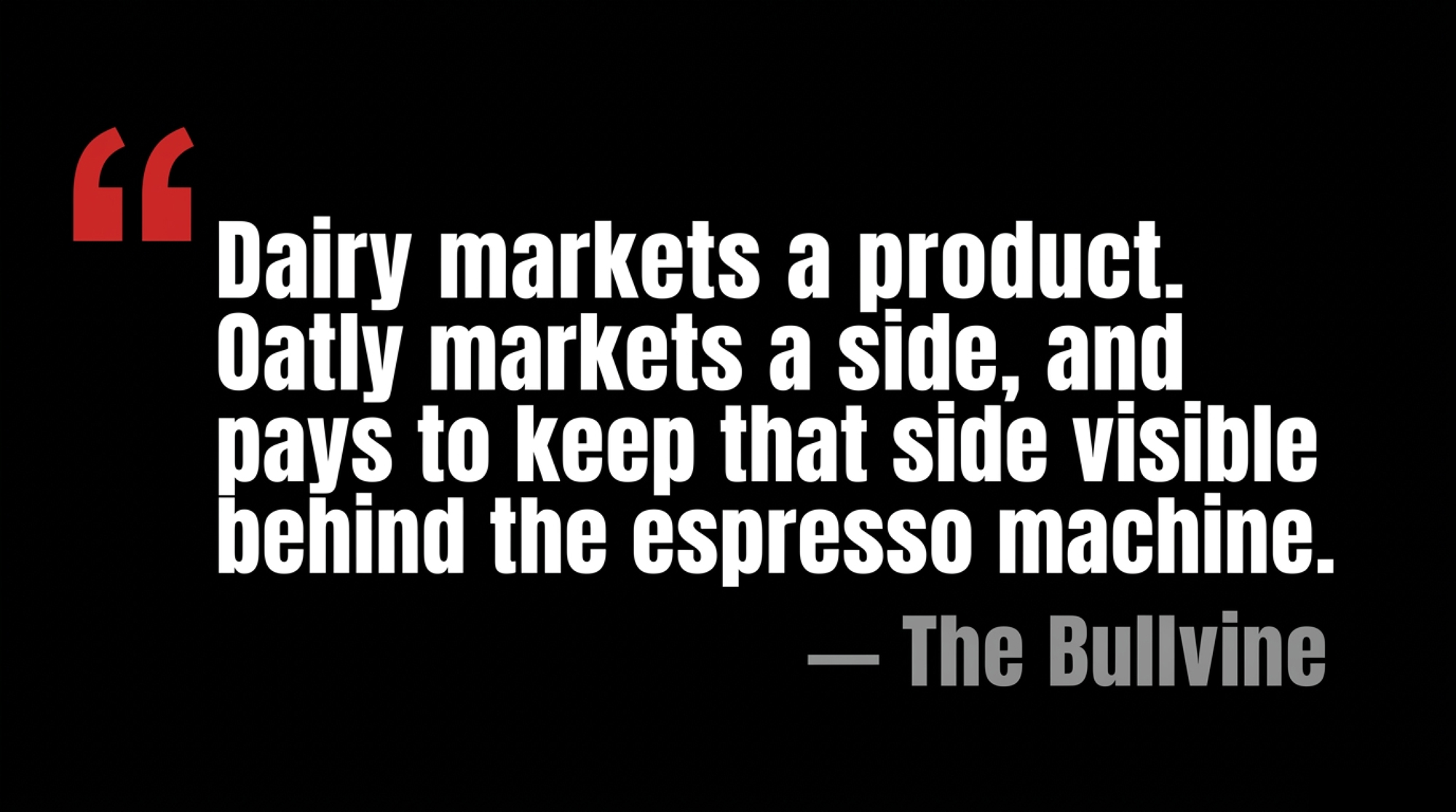
Oatly markets an identity — climate, café culture, lactose‑free — and pays to keep that identity visible in coffee shops, barista training programs, and barista competitions. Dairy markets a product. Oatly markets a side, and pays to keep that side visible behind the espresso machine.
Dairy’s national system, by comparison, measures at 30,000 feet. It can model “pizza cheese plus exports” down to the milk‑fat equivalent and simulate all‑milk impacts. But it doesn’t track what happens when a young family in town follows a dairy farm on Instagram and decides not to grab oat milk this week.
That blind spot matters more than ever in a world where your blend price and policy risk are shaped by stories your farm didn’t write.
How This Plays Out on Real Farms
You don’t get a line on your milk cheque that says “penalty for losing the narrative.” You get a softer Class I basis and one more “for sale” sign down the road.
Central FMMO data shows a weighted average Class I utilization of 27.03% in 2022, down 3.76 percentage points from 2021, per the Central Order’s 2022 statistical bulletin. For decades, fluid’s share of the pool was much higher; now Class III dominates in many orders. Fluid milk has steadily lost share to bottled water, soft drinks, and plant‑based alternatives.
American Farm Bureau Federation analysis of the 2018 Farm Bill’s change to the Class I price formula — implemented in May 2019 — estimates that switching from the “higher of” to the “average of” Class III and IV produced a $403 million net loss in Class I value compared to the previous formula over the first 19 months, with much of that value flowing to processors rather than producers under the new formula.
Now think about what those policy and demand shifts cost in production terms — and what dairy’s voice is up against.
A Hoof GP video shot with a GoPro and a phone in a hoof‑trimming chute regularly draws viewer numbers in the hundreds of thousands to millions — comparable to or beyond the reach of many national TV spots — on a production budget that wouldn’t cover one corporate stylist. The funding from your checkoff for that kind of work is essentially zero.
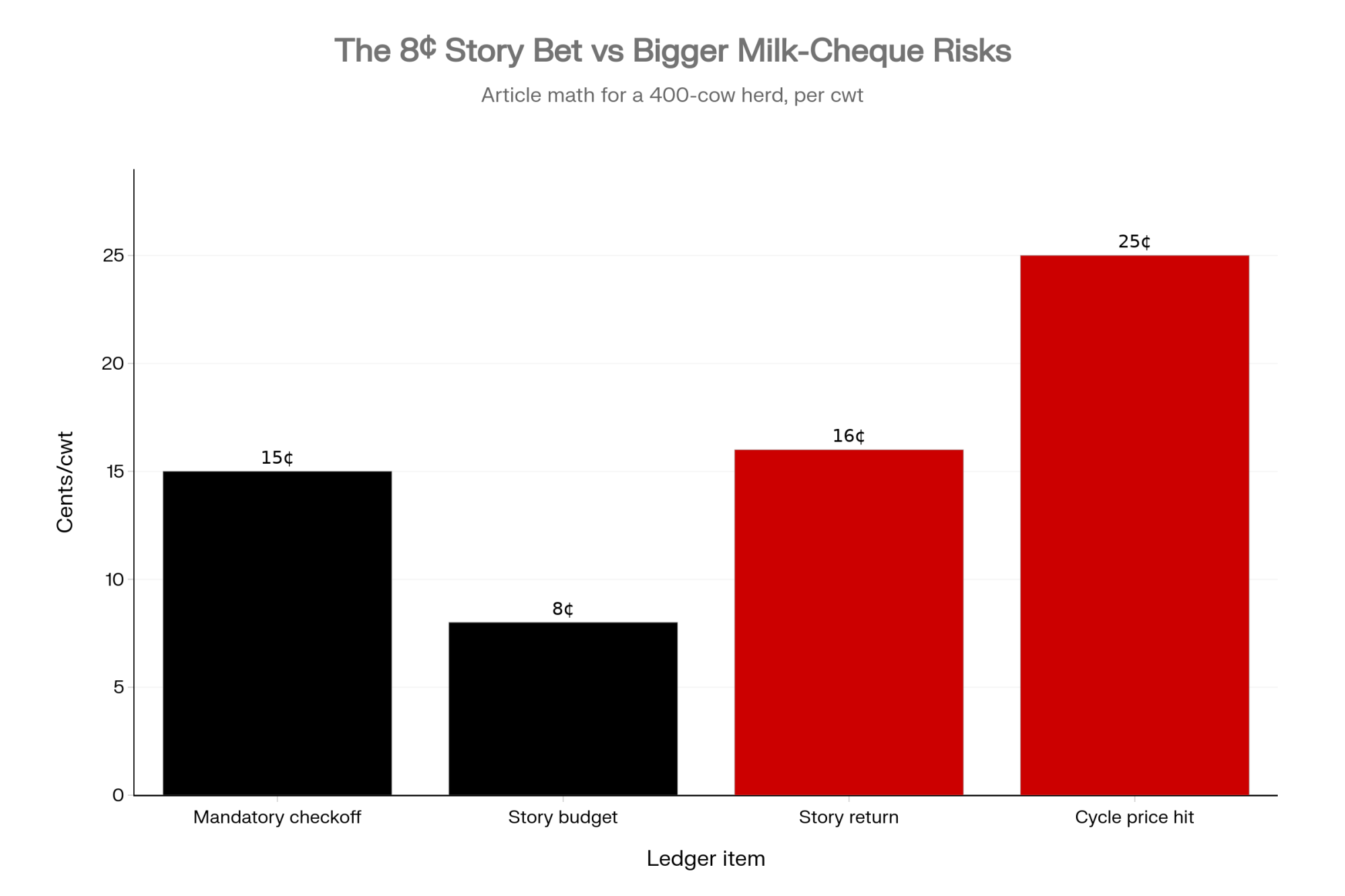
Take a 400‑cow operation shipping about 112,000 cwt per year. At an illustrative $20/cwt gross, that’s roughly $2.24 million in milk revenue. If fluid demand erosion and policy tweaks combine to shave even 25¢/cwt across a multi‑year price cycle, you’re looking at:
- 112,000 cwt × $0.25 = $28,000 in a year that hits the bottom edge of that cycle.
That’s a family’s living, or the room you thought you had for a piece of used equipment. And it’s the kind of squeeze that doesn’t make headlines. It just accumulates until you hit the “sell or massively expand” fork in the road.
Now layer on trust.
EIT Food’s Trust Report showed about two‑thirds of European consumers (67%) trust farmers, well ahead of manufacturers and government agencies. Same pattern from Canada’s CCFI and from Mintel’s sustainability work: farmers consistently top the list, while big food companies trail.
The irony is expensive. The people consumers already trust most are the least funded and least measured part of dairy’s communication strategy — and that gap shows up in lost Class I share, weaker pricing power, and policy battles dairy didn’t even know it had until it lost them.
What Exactly Are You Buying With 15¢/cwt?
| Investment Area | National Checkoff Focus | Farm‑Level “Story” Focus |
| Primary Goal | Generic demand (cheese/export) | Specific brand / social license |
| Key Metric | All‑milk price ROI | Direct sales / retention / policy risk |
| Content Style | Generic / brand‑level (DMI/USDEC) | Farm‑level / first‑person (“Modern Day Farm Chick”) |
| Cost | 15¢/cwt (mandatory) | ~8¢/cwt (optional infrastructure) |
| Time Horizon | 5–10 years to attribute lift | 12–18 months to first measurable return |
It’s fair to ask what your mandatory 15¢/cwt is actually purchasing — and what a farm‑level story budget would look like beside it.
USDA and DMI reports show the national assessment plus state and regional programs put the U.S. checkoff system well over $400 million a year in producer and importer money. The national piece funnels into these broad buckets:
- Foodservice partnerships: Embedded food scientists and joint menu work with Domino’s, Pizza Hut, McDonald’s, Taco Bell, and others.
- Exports: USDEC‑led market development, trade missions, technical support, and in‑market promotion.
- Domestic marketing and health/nutrition: School programs, e‑commerce promotions, retail pilots, and some fluid innovation projects.
- Reputation and sustainability: Industry‑level messaging on dairy’s environmental footprint and animal care.
Capps’ model says those investments buy you about $1/cwt in higher all‑milk price vs a world without the checkoff over 2009–2024. That’s real money. But on a per‑cwt checkoff ROI basis, our reading of Capps’ product‑category breakdown is that the dominant share of the modeled economic lift comes from expansion in cheese, exports, and foodservice — the pizza cheese and whey stream, not the jug in the dairy case. Fluid‑specific innovations — like new milk products or school pilots — account for a much smaller slice of the pie. Meanwhile, Wegner’s 200,000+ followers and The Hoof GP’s million‑view chute videos are doing trust‑building work for free that no national agency line item is buying.
“You don’t get a line on your milk cheque that says ‘penalty for losing the narrative.’ You get a softer Class I basis and one more ‘for sale’ sign down the road.”
For a large, high‑component herd shipping most milk into Class III/IV plants and export channels, the current allocation makes sense. You’re riding the rising tide.
For a 300–800 cow family herd with heavy Class I exposure, you’re funding the same system, but the benefits hit you at a distance. They filter through pool calculations and processor decisions. It’s hard to see — in your own ledger — how many cents of your 15¢ came back beyond “some.”
What the budget does not include, in any explicit way, is:
- A line for farm‑level storytelling infrastructure: training, equipment grants, or production stipends for farmers who’ve already proven they can build trust at scale.
- A metric for “incremental fluid gallons or retained dairy shoppers per 10,000 followers of a real farmer account.”
Right now, those sit in the “nice extras” column. Not something the national budget is built around.
How Much Does Waiting 30 Days on Your Story Actually Cost?
Let’s run the barn math on treating story like a feed additive.
Same 400‑cow herd, 112,000 cwt per year, grossing around $2.24 million at $20/cwt.
If you decide to allocate 0.4% of revenue to narrative infrastructure — basically a small line item alongside repairs and software — you’re talking:
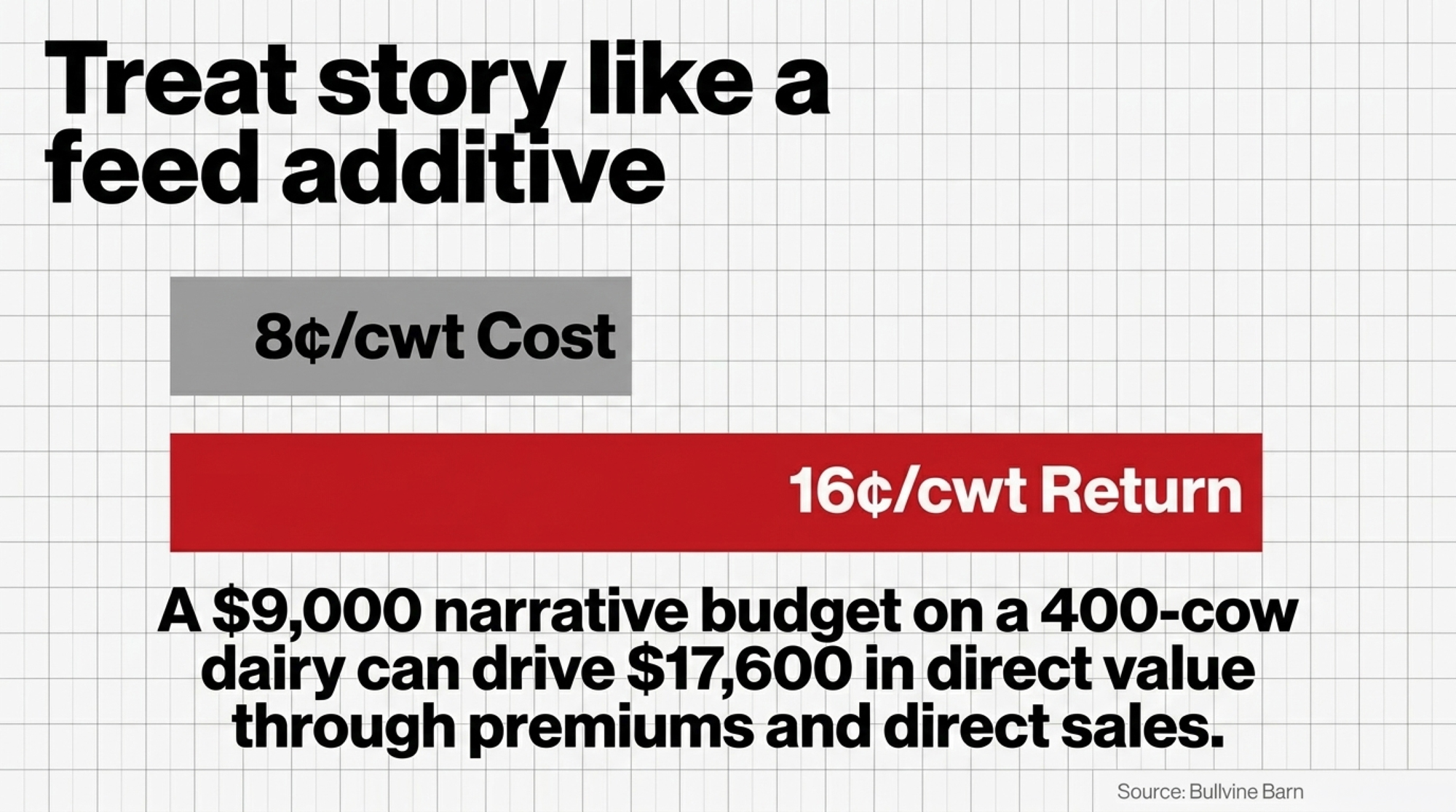
- 0.004 × $2.24M ≈ $8,960, call it $9,000/year.
- Divide by 112,000 cwt, and it’s about 8¢/cwt.
What can $9,000 realistically buy?
- Roughly $2,500 in one‑time gear: a decent camera, mic, tripod, phone gimbal, and editing apps.
- About $2,000–3,000 for a local freelancer, ag communications grad, or small shop to define your audience and map a three‑month content plan tied to real goals (tours, beef, creamery partners).
- Around $3,500 to pay a local student five hours a week at roughly $16–$20/hour for 35 weeks to film, edit, and post under your direction — which lines up with current Wisconsin student wage ranges.
Now give that investment 12–18 months and attach it to actual offers, not just pretty pictures. Promote two or three farm open days, beef box pre‑orders, or seasonal events. Build a simple email or text list to bring people back. Talk with a local grocer or small processor about a premium product with your farm’s name on it.
Say, conservatively, that by the end of the year you’ve:
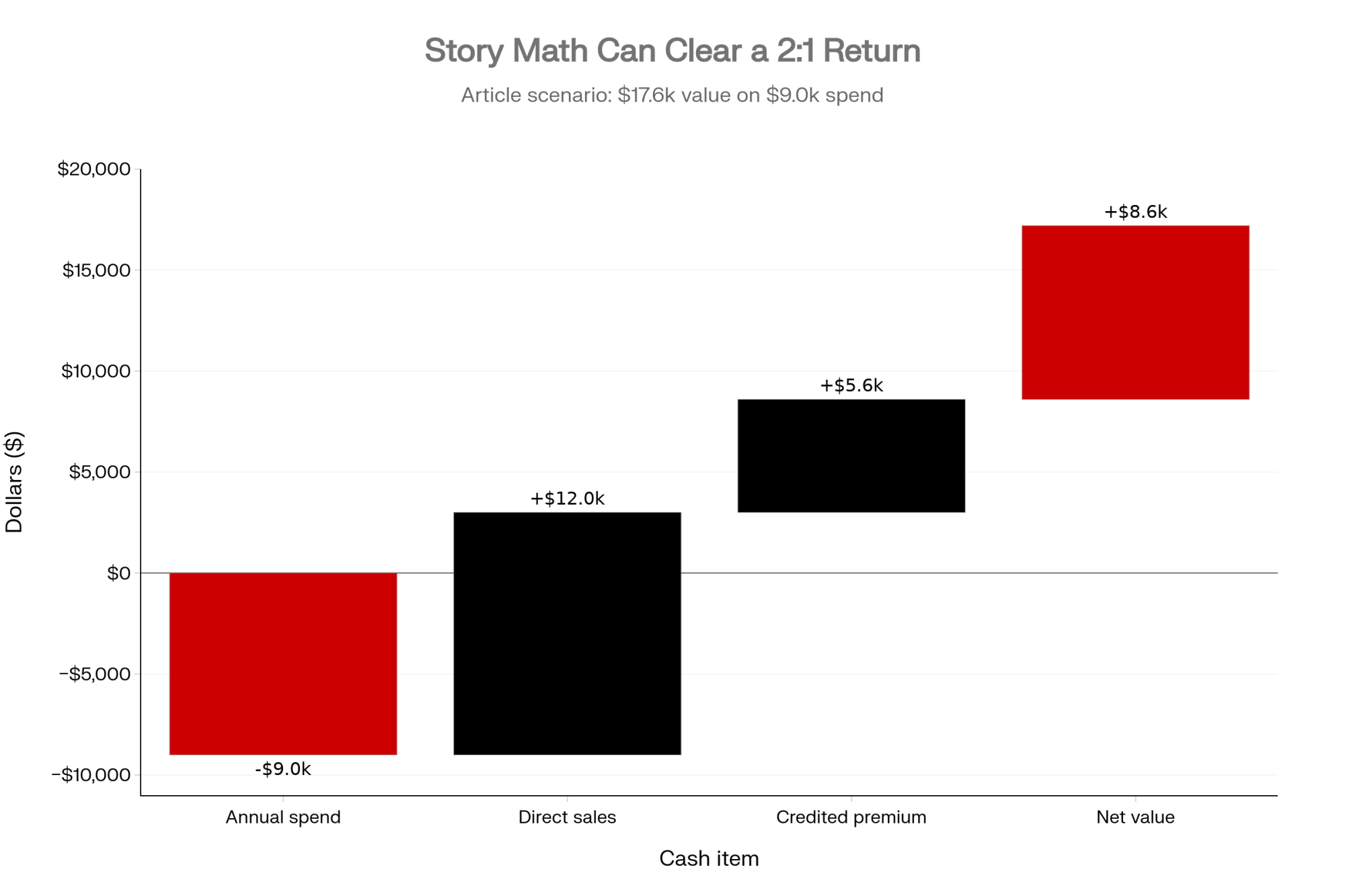
- Added $12,000 in extra on‑farm or direct‑to‑consumer sales (farm store, beef, events).
- Secured a $1/cwt premium on just 10% of your milk through a local creamery or special program: 11,200 cwt × $1 = $11,200/year.
Even if you only credit half of that premium to your story and visibility — and the rest to product specs or timing — you’re at:
- $12,000 + $5,600 = $17,600 in incremental value.
Against a $9,000 spend, that’s roughly a 2:1 return and about 16¢/cwt back on an 8¢/cwt investment.
Is it guaranteed? No. The data here is still thin and will vary farm to farm. But that’s the point. As soon as you write the numbers down, “story” stops being a fuzzy feelings project and becomes one more lever in your survival math.
The real cost of waiting 30 more days isn’t “losing the algorithm.” It’s one more month where your only story is the generic one being told about “big dairy” by people who’ve never scraped a pen.
Is Your Farm’s Story Still Treated Like PR — or Infrastructure?
On your farm, you already treat some things as non‑negotiable infrastructure.
You wouldn’t throw feed together without knowing the cost per cow per day. You wouldn’t sign a milk contract without reading the premium structure. Story rarely gets that respect.
Part of it is how the system trained you. Four decades of checkoff communications have framed the deal the same way for producers: you fund generic promotion, and DMI runs the marketing ROI on behalf of the industry. That framing puts story out there — in boardrooms, agency decks, and fast‑food test kitchens — not in your lane.
Part of it is time. Research on farmers who add agritourism, online marketing, or direct sales is pretty consistent: when it works, it can meaningfully boost income and spread risk. The biggest barriers are human capital — comfort on camera, basic marketing skills — and hours in a day that’s already full. Liability and regulation worries are real once you start inviting the public down the lane. For a 400‑cow herd already short on labor, “become a part‑time media company” can sound like a sick joke.
And yet, the Australian cotton industry shows what it looks like when a sector decides story is part of its license to operate, not a bonus.
Starting in 1991, cotton growers — through Cotton Australia and the Cotton Research and Development Corporation (CRDC) — commissioned independent environmental assessments of the entire Australian cotton industry. Those audits looked hard at water, pesticides, biodiversity, and community impacts. The most recent fourth assessment, completed in 2023–24, included 16 recommendations. The industry publicly accepted every one and laid out how it would respond.
Those audits aren’t PR pieces. They’re a backbone. They give brands and regulators confidence that Australian cotton can back up its “sustainable” story with data and continuous improvement. In return, cotton protects export access and earns premiums in markets where ESG metrics now decide who stays on the supplier list.
Dairy has similar science in its corner on efficiency and emissions per litre. What it hasn’t done — yet — is build that kind of sector‑wide audit and farm‑level storytelling backbone into its economic strategy. Wegner’s public work shows it’s possible from a phone. Hoof GP’s public work shows it’s possible from a chute. The question is whether the $431.8 million system will catch up to what farmers with cameras already figured out.
Options and Trade‑Offs for Farmers
You’re not going to fix the checkoff structure from your kitchen table. But you can decide whether your own story is just something your co‑op uses in a brochure or a piece of infrastructure you measure.
Here are four paths farms are using or seriously considering — with when they make sense, where they can backfire, and the first concrete step for each.
| Path | Best Fit | Realistic Annual Spend | First 30-Day Move | Biggest Risk |
| Treat story as a line item | 200–1,120 cow herd with a premium/direct path | 5–10¢/cwt, roughly ,600–,200 on 112,000 cwt | Put one specific offer or event on the calendar | Vanity metrics with no margin |
| Build a local narrative co-op | 3+ nearby dairies facing the same local pressure | ,000–,000 per farm | Schedule a one-hour kitchen-table meeting | Personality clashes kill momentum |
| Push checkoff accountability | Herds writing five-figure checkoff checks | 15¢/cwt already mandatory; ,800 on 112,000 cwt | Total 12 months of deductions and bring the number to a meeting | Getting framed as rage, not reform |
| Stay commodity, protect social license | Efficient commodity-focused farms avoiding side businesses | Low cash cost, but consistent time required | Update the farm Facebook cover photo and About section | Becoming the faceless “bad actor” locally |
Path 1: Treat Story Like a 0.25–0.5% Line Item (Start Within 30 Days)
When it makes sense: You’re a 200–1,120 cow herd with a reasonably stable core business, feeling margin pressure but not in active crisis, and you’ve got at least one realistic path to direct or premium revenue — a farm store, beef sales, on‑farm events, or a small local processor that cares about story.
What it requires:
- Committing 0.25–0.5% of milk revenue (roughly 5–10¢/cwt) to narrative infrastructure for at least two to three years.
- Picking 1–2 platforms where your buyers live (Facebook/Instagram for local families, TikTok/IG Reels for younger and wider audiences).
- Posting 2–3 times per week with a simple ratio — like the public Wegner pattern: real‑life posts dominate, with the occasional educational ask.
- This month: Put one specific offer or event on the calendar in the next 30 days. Not someday. An actual date. Then do the math afterward.
First step (today): Buy a $50 wireless lapel mic. Audio quality is roughly half of how viewers judge a video’s worth, and a phone plus a clip‑on mic out‑performs a $500 camera with bad sound every time.
Risks/limits: If nobody on the farm actually wants to be visible, it’ll feel forced and probably flop. If you never connect the posts to a specific ask — tours, beef, a premium product — you’ll rack up vanity metrics and no margin. And you have to be willing to shut it down or change tack after 18–24 months if the numbers don’t move.
Path 2: Build a Local “Narrative Co‑op” With Neighbors
When it makes sense: You’ve got three or more dairies within driving distance that see the same pressure from plant‑based chatter, local politics, or new environmental rules — and you’re willing to sit at a table together.
What it requires:
- Each farm kicking in $2,000–3,000/year into a shared pot.
- Hiring a local storyteller — a videographer, ag student, or small marketing shop — who actually understands farms.
- Launching shared channels (e.g., a “Dairy in Our County” page) plus a simple website and email list.
- Rotating features and events so each farm gets its turn being the face of dairy for local media and schools.
First step (this month): Pick up the phone and put three neighbors on the calendar for a one‑hour meeting at one of your kitchens. No agenda beyond: “Are we tired of having no voice locally?”
Risks/limits: You’ll need ground rules on what’s fair game on camera and what isn’t. Personality clashes can kill it; someone has to be the adult in the room. You’ll still be at the mercy of national policy, but you’ll be a lot harder to ignore locally.
Path 3: Push for Checkoff Accountability — With Numbers, Not Rage
When it makes sense: Your annual checkoff line and co‑op patronage are big enough to make you swallow hard, and you’re tired of hearing aggregate ROI numbers that don’t feel like they land on your milk cheque.
What it requires:
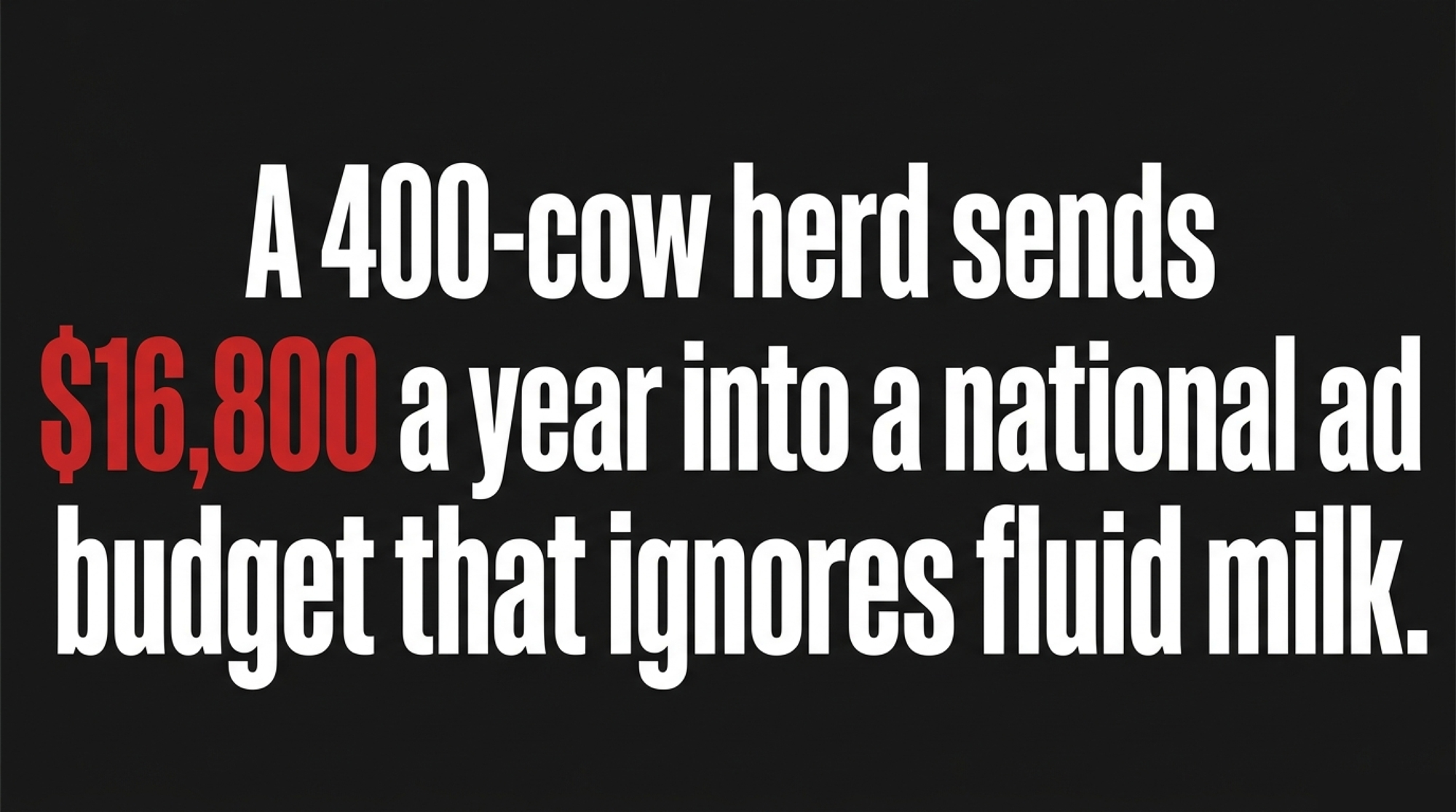
- Knowing your own contribution: a 400‑cow herd at 112,000 cwt is sending around $16,800/year into national and state promotion at 15¢/cwt.
- Showing up to meetings with specific, calm questions about per‑cwt benefit by region, fluid vs cheese/export attribution, and what percent of the budget directly supports farmer‑led storytelling.
- Suggesting small but concrete changes, like carving out 2–3% of the budget as a pilot “farmer storyteller” fund with transparent metrics.
First step (this week): Pull your last 12 months of milk cheques, total the checkoff deductions, and write that exact number on a sticky note. That’s your seat at the table — and your first slide at the next board meeting.
Risks/limits: You’ll hit political resistance from folks who feel the checkoff is already under attack. You won’t flip the system overnight. But you may open the door to programs that don’t exist today. And if you go in guns blazing, you’ll be the story, not the solution.
Path 4: Stay in the Commodity Lane — Protect Your Social License
When it makes sense: You’ve decided your best shot at survival is to be ruthlessly efficient, stay in the commodity stream, and not build side businesses. You’re not interested in building a personal brand. But you still don’t want to wake up one morning and see your farm in a one‑sided activist video.
What it requires:
- Saying yes to the basics: school tours, FFA/4‑H visits, local media when they call.
- Keeping one simple public channel (even a basic Facebook page) updated with who you are, what you do, and some evidence you care about cows and community.
- Understanding what your processor and co‑op are promising on sustainability and animal care so your practices match the story they’re telling with your milk.
First step (today): Update the cover photo and “About” section on your farm’s Facebook page. If a local reporter, regulator, or angry neighbor lands there tonight, what they see in 10 seconds is your social license.
Risks/limits: You won’t directly monetize story. That’s a choice you’re making with your eyes open. You’re still exposed to narrative‑driven policy and retailer decisions. But you’re far less likely to be the faceless “bad actor” when the local debate heats up.
Key Takeaways
- If your checkoff contribution is north of roughly $10–20K/year, treat it like any other major spend: ask your board or rep for per‑cwt ROI broken out by fluid vs cheese/export, not just an all‑milk average.
- If you can’t see a plausible path to turn 5–10¢/cwt of story budget into something like 15–20¢/cwt of added revenue or reduced risk within 2–3 years, start smaller and treat it as a test — don’t mortgage the farm to become an influencer.
- If you already have a six‑figure follower base or a packed tour schedule without a budget, that’s a signal — it may be time to formalize a 0.25–0.5% revenue line item and run the math instead of treating it as unpaid overtime.
- If three or more farms in your county are worried about the same plant‑based and policy chatter, stop fighting alone — a modest narrative co‑op budget can buy shared production help and more leverage with local media and retailers.
- If you’d rather stay anonymous, at least protect your social license: be visible enough locally that people who vote and show up at hearings know there are real families and real cows behind the word “dairy.”
So What Does This Mean for Your Milk Cheque?
“Dairy markets a product. Oatly markets a side, and pays to keep that side visible behind the espresso machine.”
Plant‑based brands have already proven that measured narrative — backed by real money — can take roughly 14% of the U.S. milk category dollar share, where it sits as of 2024. You can’t flip a $431.8 million checkoff machine from one farm. You also don’t have to sit quietly while a system funded by your assessment concentrates returns in cheese and export categories that may not match your milk cheque.
Next time you look at your milk cheque, remember: You’re already paying for a story. Whether it’s one that actually helps you survive is now a choice.
What’s the first sticky‑note number you’d put in front of your co‑op board?
Complete references and supporting documentation are available upon request by contacting the editorial team at editor@thebullvine.com.
Learn More
- Marketing Your Farm: Why Your Story is Your Greatest Asset — Arms you with the psychological tools to identify which parts of your farm life resonate most with urban consumers. Master the art of authentic connection to protect your social license without a corporate marketing budget.
- The Dairy Industry in 2026: Trends to Watch — Exposes the looming economic shifts that will redefine milk checks and consumer expectations over the next decade. Positions your operation to capitalize on emerging trends before they become mandatory compliance hurdles in the global supply chain.
- Niche Marketing: Is it the Answer for the Family Farm? — Dismantles the myth that commodity production is the only viable path for survival by analyzing successful niche-market case studies. Delivers the hard math on diversifying your income streams to insulate equity from extreme market volatility.
The Sunday Read Dairy Professionals Don’t Skip.

Every week, thousands of producers, breeders, and industry insiders open Bullvine Weekly for genetics insights, market shifts, and profit strategies they won’t find anywhere else. One email. Five minutes. Smarter decisions all week.