





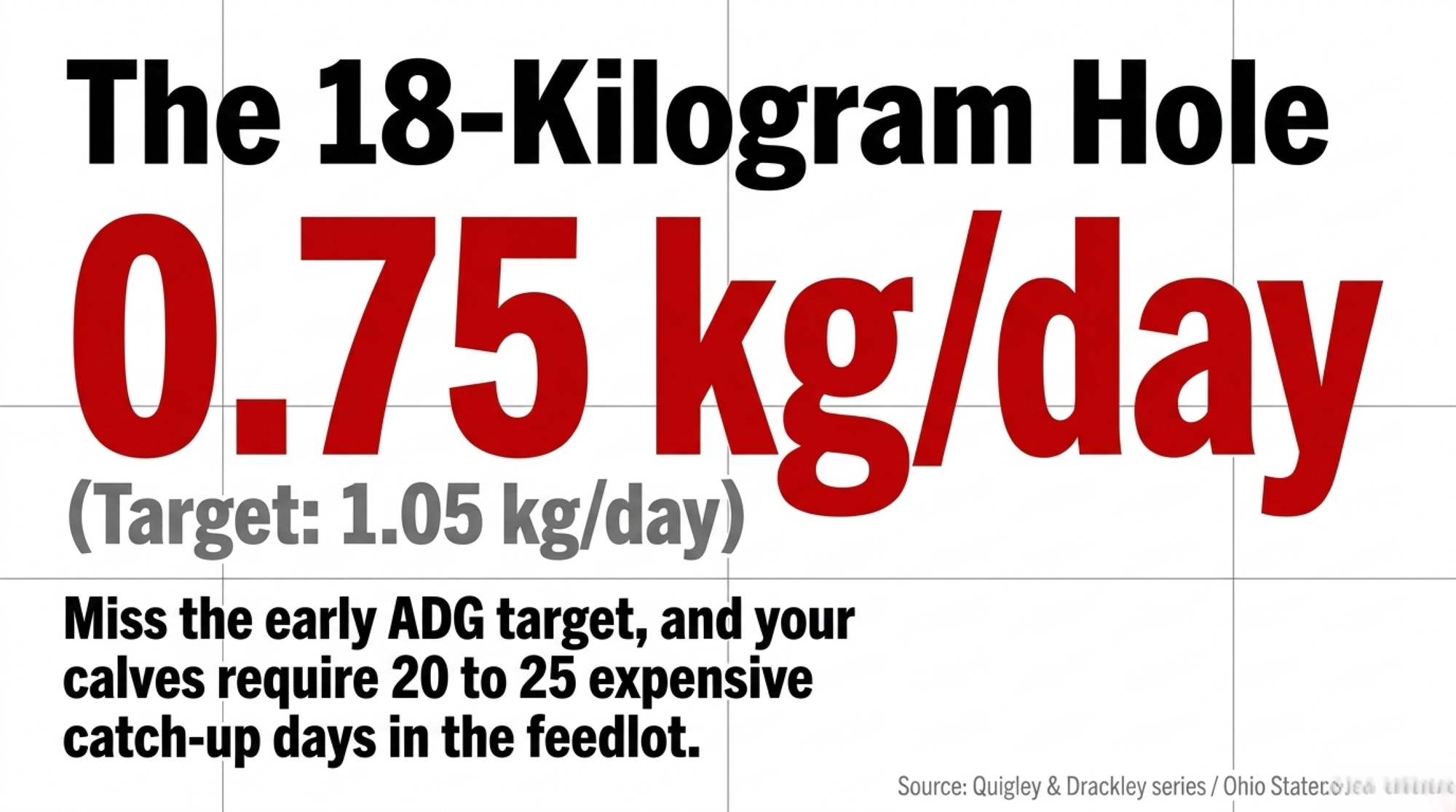
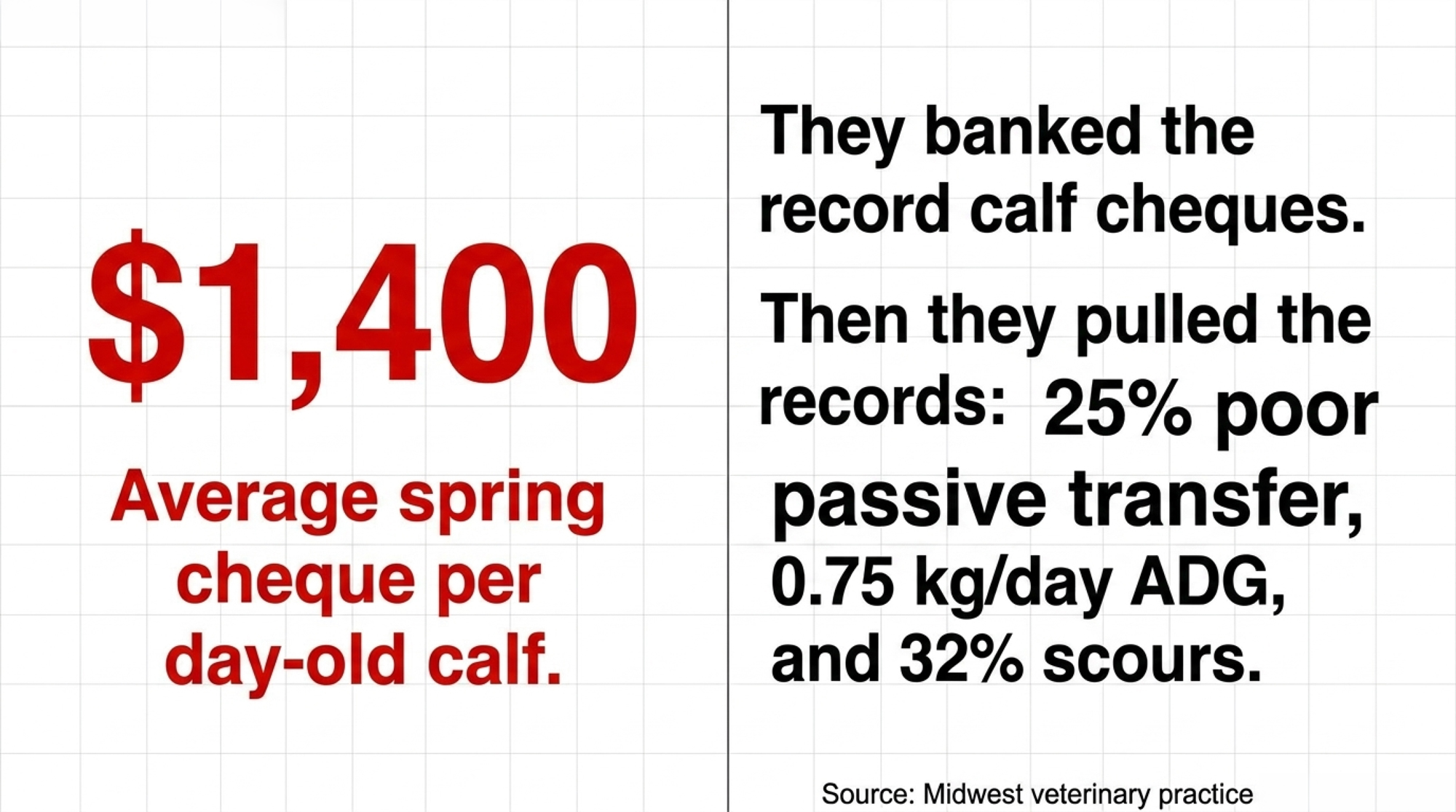
A 1,200-cow Wisconsin dairy banked every $1,400 calf cheque this spring — then pulled six months of records: 25% poor passive transfer, 0.75 kg/day ADG, 32% scours. The feedlot saw it first.
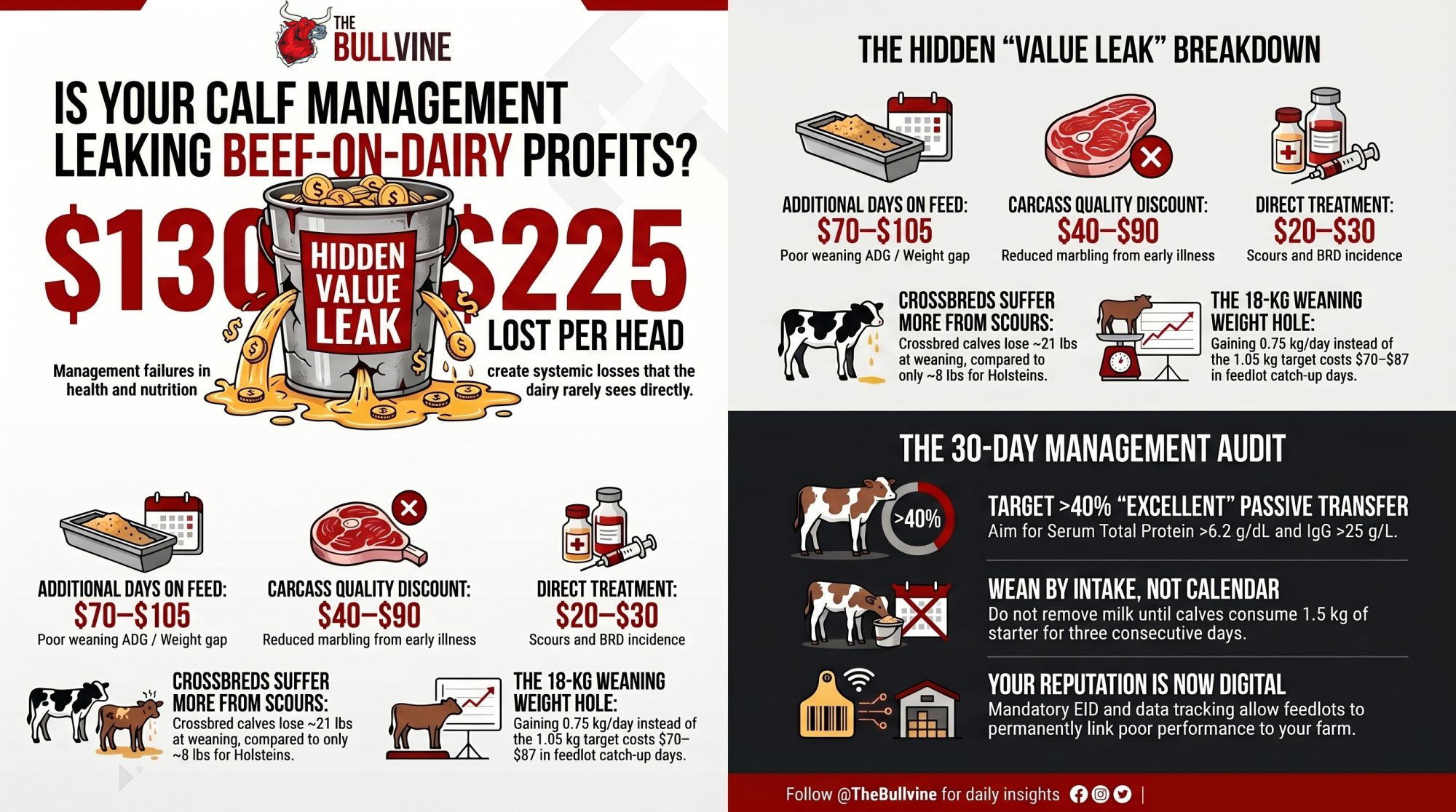
Executive Summary: Day-old beef-on-dairy bull calves are moving off US dairies at $1,350–$1,500 this spring — roughly $400–$600 above straight Holstein bulls per USDA-AMS weekly reporting — and that cheque is propping up margins while the North American heifer hangover drives replacement cost higher. But the same genetics are auditing calf programs in real time: Texas Tech Beef on Dairy Symposium data show crossbreds with scours lose roughly 21 lbs at weaning versus about 8 lbs for Holsteins, and a 0.75 kg/day pre-weaning ADG (vs. a realistic 1.05 kg target) leaves an 18-kg weaning-weight hole that costs the downstream chain $70–$87 per head in catch-up days alone. Stack treatment costs, extra days on feed, and a 10–20-point grid-discount hit on upper Choice and Prime, and the hidden bill runs $130–$225 per head — roughly $44,000 a year on 250 calves, $88,000 on 500. The dairy rarely sees it directly; it shows up as $50–$80 lighter bids the next auction, and USDA’s November 2024 ADT rule plus Source & Age Verification now make that reputation data permanent. Producers with under 40% of calves in “excellent” passive transfer (serum TP >6.2 g/dL, IgG >25 g/L per Lombard et al. 2020) or 60-day scours above 25% are funding elite genetics for someone else. The 30-day move is a serum-TP audit — Brix on every colostrum, blood on two days of calves a week — before the next SimAngus or terminal-sire order. If you can’t pull passive transfer, ADG split, and scours rate in one report by Monday, you don’t have a beef-on-dairy program — you have a hope.
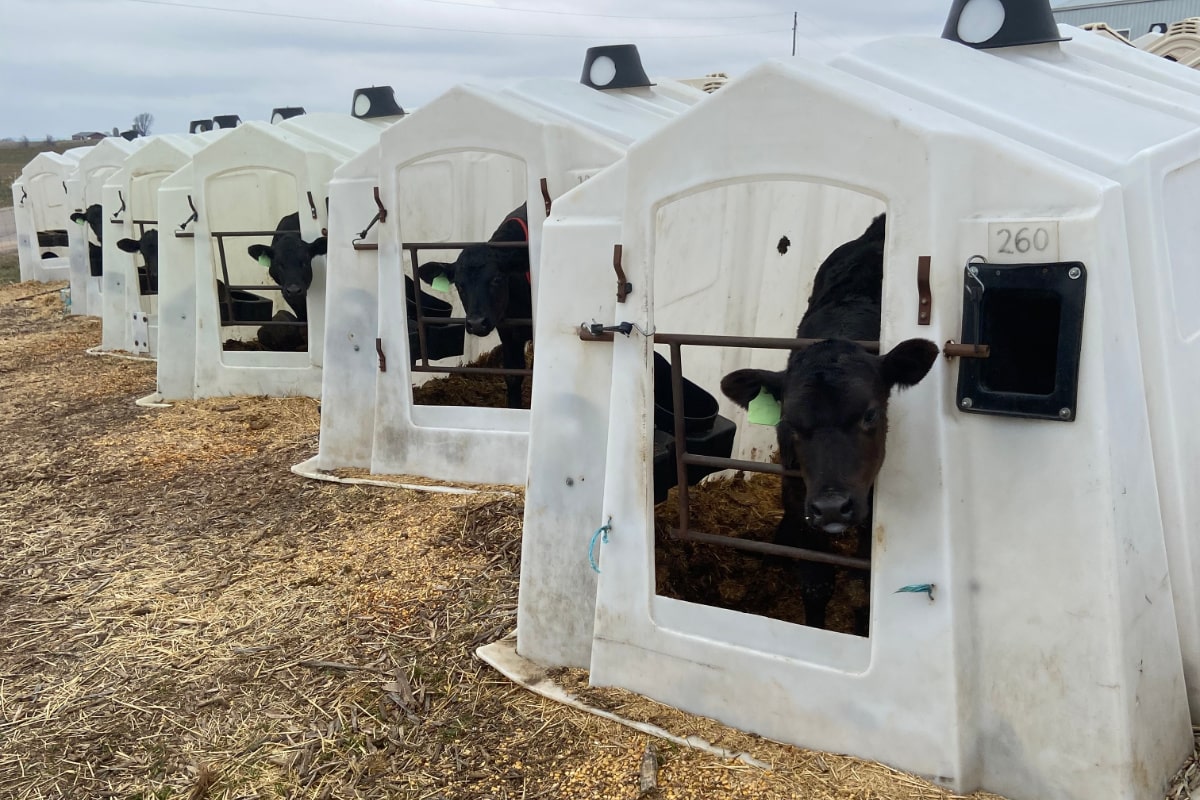
Veterinarians working south-central Wisconsin’s mid-size dairies keep walking into the same story on farm after farm. What follows is a composite of three operations from one Upper Midwest practice — stitched together so no single farm is identifiable, but every number is a real number pulled from real records. On a 1,200-cow dairy in that group, day-old beef-on-dairy bull calves were moving off the property in the ,350–,500 range per head this spring, consistent with USDA-AMS weekly dairy calf and feeder cattle reporting showing beef-on-dairy day-old premiums running roughly 0–0 above straight Holstein bull calves through the first half of 2026. The milk cheque was thin. Beef-on-dairy revenue was doing the heavy lifting. “These crossbreds hardly ever get sick,” the owner told his vet.
Then they pulled six months of records. Passive transfer: 25% of calves in the “poor” category on serum total protein. Pre-weaning average daily gain on the beef-on-dairy calves: 0.75 kg/day — dead-even with his Holsteins. Scours treatments: 32% of calves hit at least once in the first 60 days. Every number he was proud of turned out to be a number he’d never actually pulled. That’s what beef-on-dairy does in 2026. It doesn’t just pay a premium. It audits your calf program whether you want it to or not.
The $1,400 Honeymoon Is Over
Beef semen on dairy cows isn’t a side hustle anymore. It’s a structural piece of the US dairy revenue model. NAAB year-end semen sales reports have tracked beef semen units sold for dairy use in the multi-million-unit range annually since 2021, and USDA reporting from 2022 onward has documented a steady climb in the share of US dairy cows bred to beef sires.
That’s the math that makes a $1,400 calf possible on the front step. And here’s the piece most dairies haven’t processed yet: the beef-on-dairy calf cheque is propping up margins because the North American heifer hangover — documented in USDA NASS January Cattle inventory reports and Rabobank Dairy Quarterly analysis through 2025 — is simultaneously driving replacement costs higher. You are more dependent on that crossbred revenue in 2026 than you were in 2023, not less.
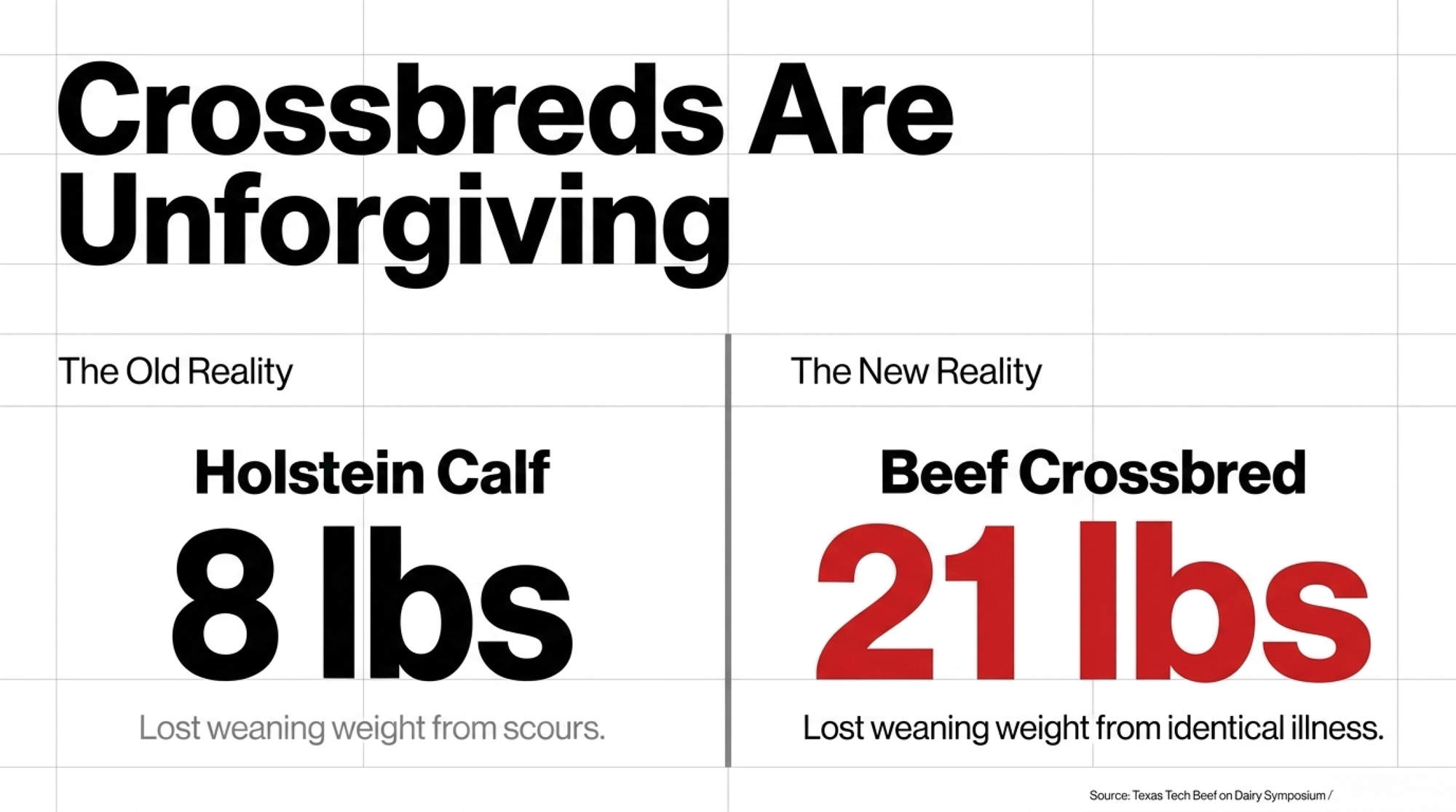
When a Holstein bull calf was worth $200, sloppy colostrum was annoying. When he’s worth $1,400, the same sloppy colostrum is a direct hit to your second-largest revenue line. And the crossbreds themselves are unforgiving in a way Holsteins never were. Research presented through the Texas Tech Beef on Dairy Symposium series has reported that crossbred calves with scours lost roughly 21 lbs of weaning weight versus about 8 lbs for Holsteins hit with the same illness, a finding consistent with the Journal of Dairy Science work of Windeyer et al. (2014) on early-life disease effects on dairy calf weight gain. Higher ceiling. Steeper fall.
The herds most exposed aren’t the ones just starting out. They’re the ones that got comfortable. Mid-size dairies running beef-on-dairy for two or three seasons, still using colostrum and weaning protocols built for Holstein replacements, still weaning on a calendar instead of by starter intake. Those are the farms cashing calf cheques today and losing reputation battles in the feedlot six months from now.
How This Plays Out on Real Farms
On that 1,200-cow operation, the maternity routine hadn’t changed in a decade. Colostrum got fed “when we get to it.” Brix was measured sometimes. Serum total protein — the blood test that tells you whether the antibodies actually made it into the calf — was never pulled, ever. Scours treatments lived in a notebook in the vet’s truck, a pattern Ontario Veterinary College survey work has flagged as widespread: a large share of surveyed herds either don’t record individual calf treatments at all or record them in a format that can’t be analyzed after the fact.
The calf buyer had already noticed, even if the dairy hadn’t. Bids on the last two groups were running $50–$80 a head below what comparable neighbors with tighter calf numbers were getting out of the same auction barns that week. The owner blamed “the market.” The market wasn’t the problem.
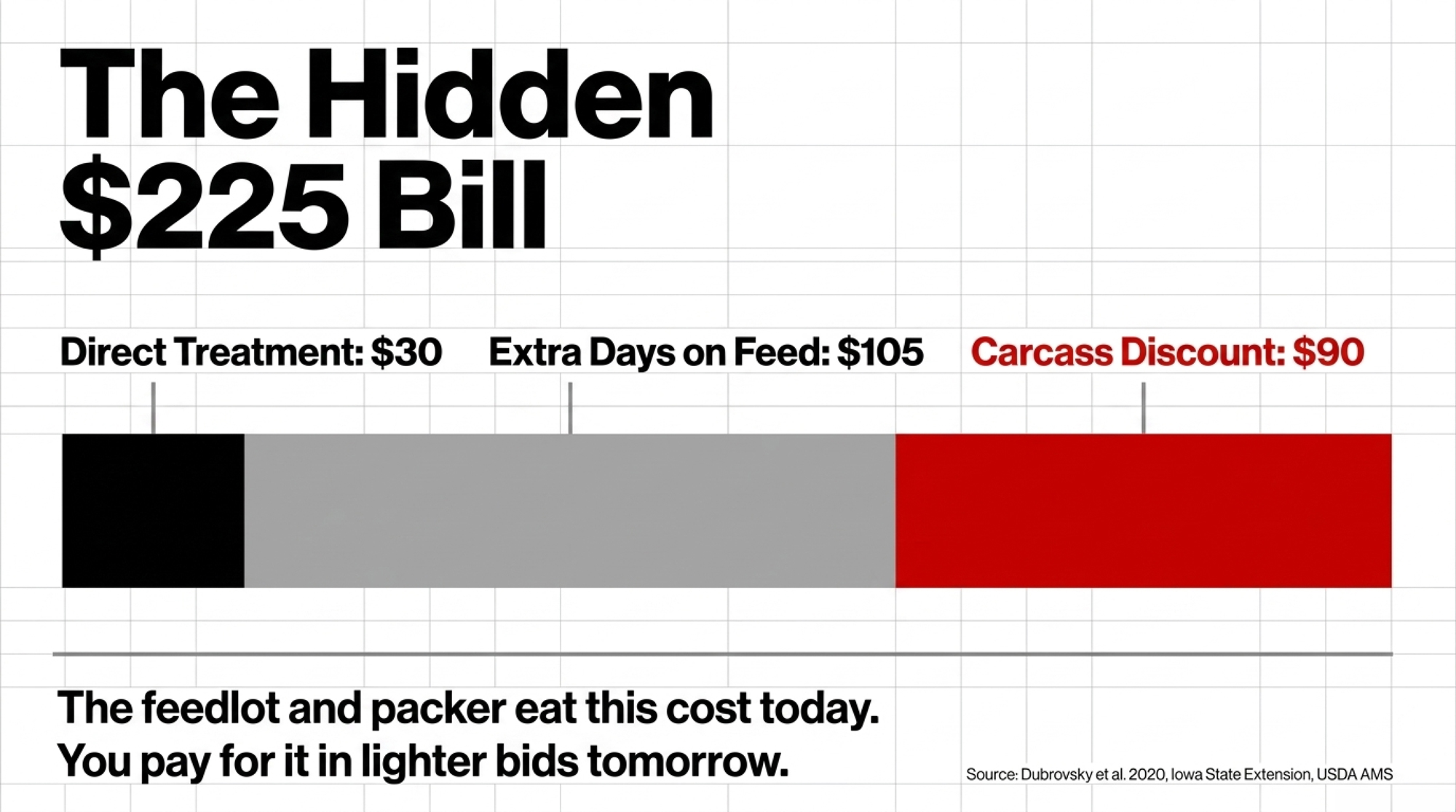
The Hidden Bill, at a Glance
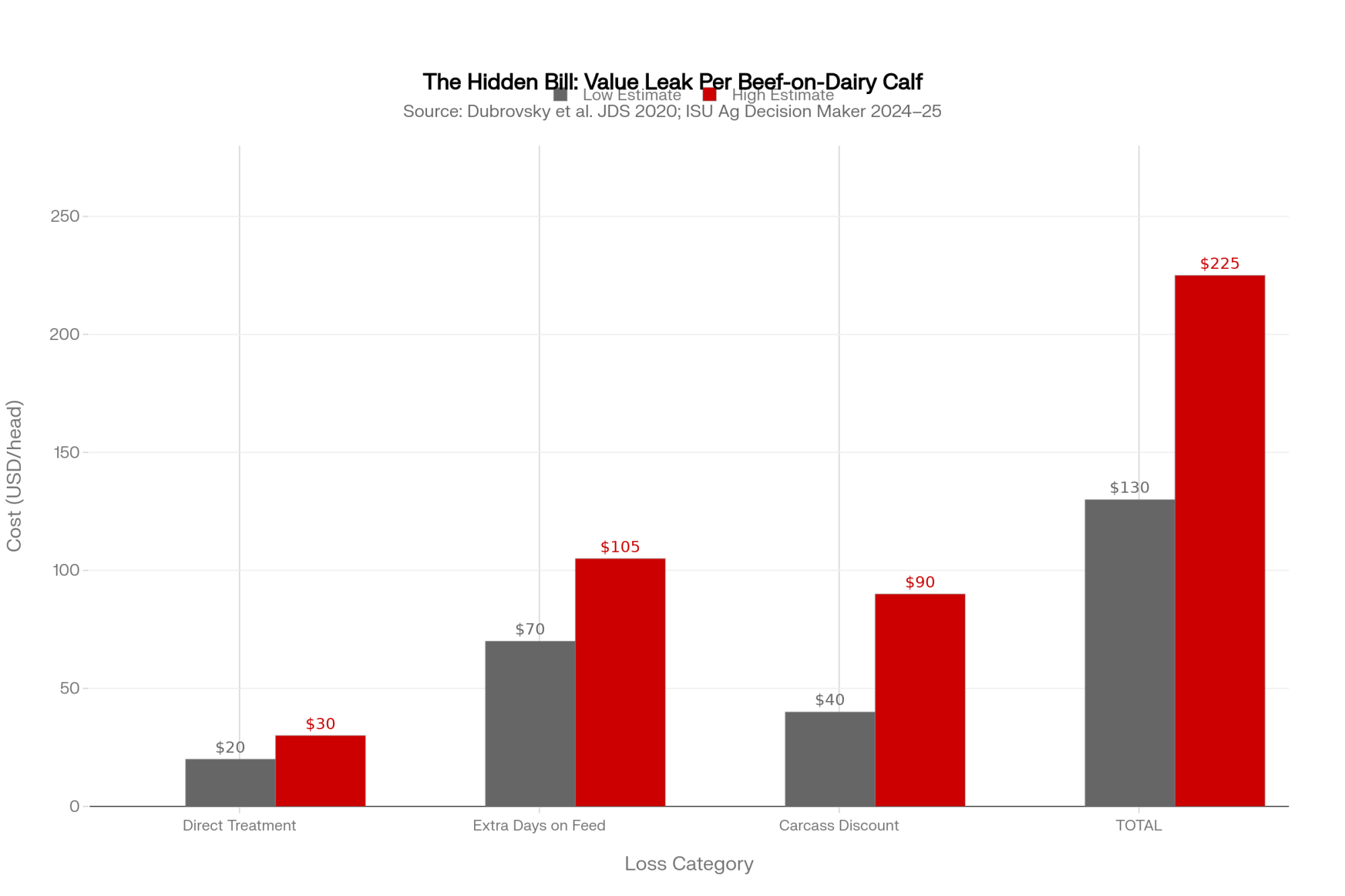
| Loss Category | Estimated Cost (per head) | Root Cause |
| Direct treatment | $20–$30 | Scours/BRD incidence |
| Additional days on feed | $70–$105 | Poor weaning ADG / 21-lb weight gap |
| Carcass quality discount | $40–$90 | Reduced marbling from early-life illness |
| Total value leak | $130–$225 | Systemic management failure |
Treatment-cost band draws on the Journal of Dairy Science calf-illness economic modeling published by Dubrovsky et al. (2020) and related USDA-ARS work. Days-on-feed costs assume Iowa State Extension’s 2024–2025 Ag Decision Maker custom calf-feeding and yardage surveys, which reported total daily cost of gain in the $3.00–$4.00/day range. The grid-discount band assumes upper Choice and Prime premiums in the $20–$35/cwt range reported through USDA AMS LM_CT155 National Weekly Direct Slaughter Cattle — Premiums and Discounts during 2024–2025.
On a 250-calf operation, the midpoint of that table is roughly $44,000 a year; on 500 beef-on-dairy calves, it’s roughly $88,000. The awkward part? The dairy never sees most of it directly. The feedlot eats the extra days on feed. The packer eats the lighter, lower-grading carcass. You get a $50–$80 lighter bid next round, tell yourself the buyers got cheap, and lose next year’s bid the same way.
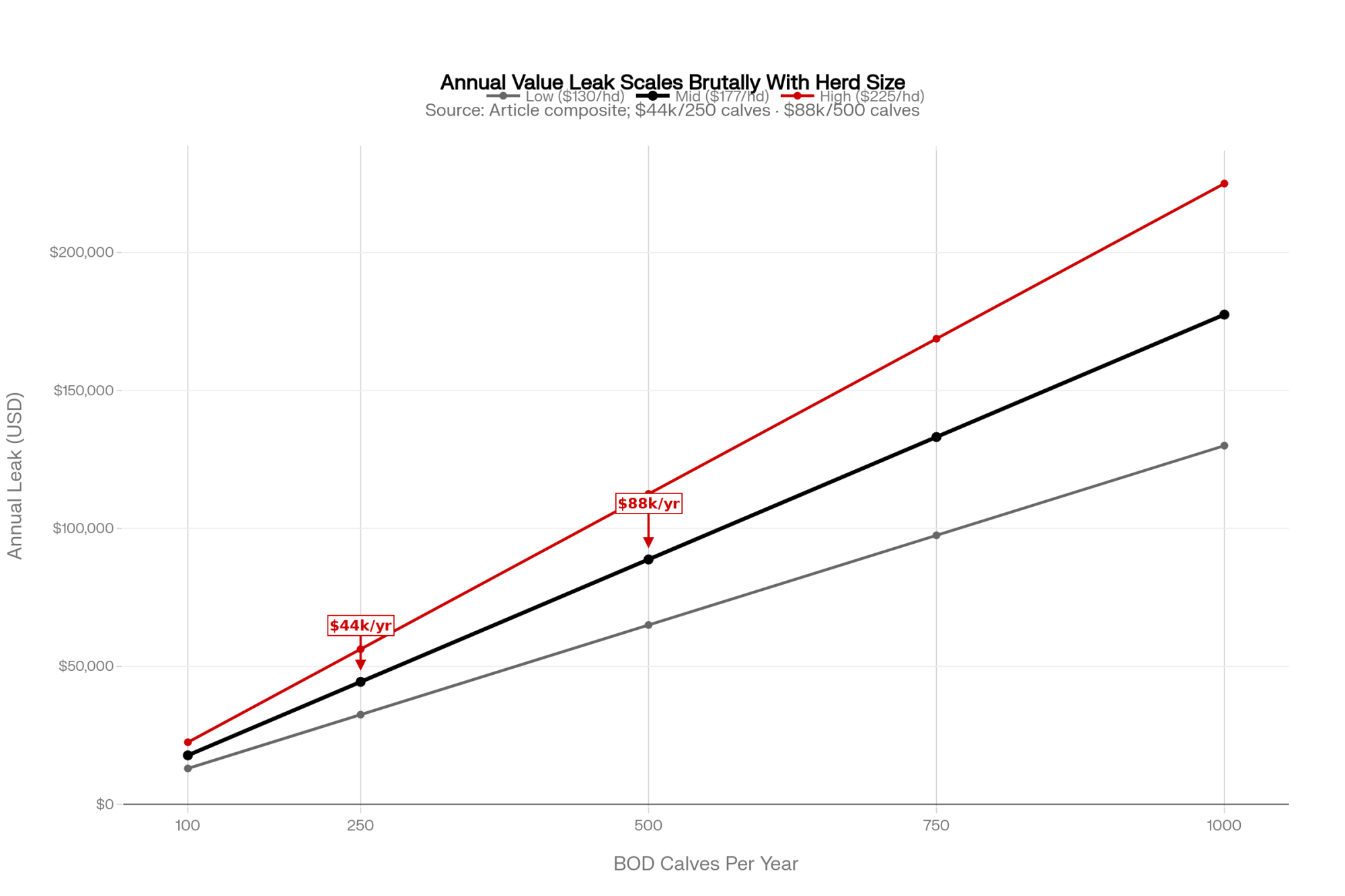
Colostrum to Carcass: Where the 0.75 kg/day Gap Actually Costs You
Three things separate herds banking the beef-on-dairy premium from herds quietly leaking it, and none of them live on a genomic test.
Passive transfer is the foundation. USDA NAHMS Dairy 2014 found a substantial share of preweaned heifer calves failed to achieve adequate passive transfer, and Lombard et al. (2020) in the Journal of Dairy Science has since reclassified the targets. Calves with failed passive transfer carry 1.5–2× the risk of diarrhea and pneumonia. Industry guidelines used by Penn State Extension’s CalfCare program, Michigan State Extension, and the Dairy Calf & Heifer Association Gold Standards III now aim for at least 40% of calves in the “excellent” bucket — serum total protein above 6.2 g/dL, IgG above 25 g/L. Plenty of farms running “good Brix” colostrum still have 30–40% of calves sitting in fair or poor when you actually pull blood. Brix tells you about the liquid. Serum TP tells you whether the calf got what you think you gave her.
| Passive Transfer Category | Serum TP (g/dL) | IgG (g/L) | Disease Risk vs Excellent | % Farms Hitting 40%+ “Excellent” Target |
|---|---|---|---|---|
| Excellent | >6.2 | >25 | Baseline | <50% of US herds |
| Good | 5.8–6.2 | 18–25 | 1.2–1.4× | Target threshold |
| Fair | 5.1–5.7 | 10–17 | 1.5–1.8× | ⚠ Common default |
| Poor | <5.1 | <10 | 2.0–2.5× | 25% of article herd calves |
Starter, not milk, drives weaning weight. The Quigley and Drackley line of Journal of Dairy Science research — Drackley (2008) and the Quigley starter-intake series — has shown for two decades that age at first starter intake and starter consumed by 21–28 days are among the strongest predictors of weaning weight. Elite beef-on-dairy programs target 0.9–1.1 kg/day pre-weaning ADG — realistic when calves are eating 0.3–0.5 kg/day of starter by the end of week three and pushing past 1.5 kg/day before the milk comes off.
Here’s what that gap actually costs. If your calves are gaining 0.75 kg/day instead of 1.05 kg/day, the weaning-weight gap over 60 days is (1.05 − 0.75) × 60 = 18 kg. At yardage and feed costs of $3.50/day, that 18-kg deficit takes roughly 20–25 days to close in the feedlot, costing the chain about $70 to $87 in catch-up time alone.
At yardage and feed costs of $3.50/day$3.50/day, that 18 kg deficit takes roughly 20–25 days to close in the feedlot, costing the chain about $70$70 to $87$87 in catch-up time alone. That recovery window assumes typical beef-on-dairy compensatory gain rates reported in Ohio State’s beef × Holstein vs straight Holstein feedlot work (Fluharty et al. and the subsequent OSU beef-on-dairy feedlot study series). The carcass side makes it worse. Ohio State’s growth-performance and carcass-traits data showed measurable advantages for crossbreds on gain, feed efficiency, and carcass value — but those advantages erode when calves arrive with poor early growth or lingering respiratory damage. Penn State extension work on bovine respiratory disease and lung consolidation has linked early BRD to reduced marbling and lower quality-grade outcomes. Lose 10–20 percentage points of calves out of upper Choice and Prime at current grid spreads and the expected-value hit across the lot runs roughly $40–$90 per head. Your day-old cheque looked the same. Your actual value to the chain did not.
The feedback loop is the permanent one. A feedlot typically needs one turn of your calves — 6 to 12 months — to decide whether you’re what your marketing said. They see arrival treatments, gain in the first 60–90 days, then the close-out at harvest. Feeder-cattle research out of Kansas State (Schroeder et al.), UW-Madison, and Superior Livestock tele-auction price analyses has shown consistently that buyers discount negative reputations faster than they reward positive ones — and they rarely tell sellers why.
Why Feedlots Remember — and How EID Makes It Permanent
The reputation problem isn’t anecdotal anymore. It’s digital.
USDA’s Animal Disease Traceability final rule, which made electronic identification mandatory for breeding cattle and bison moving interstate effective November 2024, has accelerated what commercial feedyards were already doing: matching arrival health, gain in the first 60–90 days, and carcass close-out data back to the source dairy through EID tags and lot paperwork. Source and Age Verification programs under USDA Process Verified Programs and equivalent certifications have made those audit trails saleable. A feedlot’s “problem lot” database used to live in a yard manager’s head. It now lives in a database with your farm name next to it.
You don’t get blacklisted with a phone call. You get blacklisted with a quieter bid and a skipped auction. By the time you notice the pattern, the data upstream has already decided for the buyers.
| Metric | What the Dairy Thinks | What the Feedlot Records | Data Now Permanent Since |
|---|---|---|---|
| Passive transfer rate | “We feed 4L colostrum” | 25% of calves in “poor” category | Nov 2024 (USDA ADT rule) |
| Pre-wean ADG | “Crossbreds are growing great” | 0.75 kg/day — at Holstein floor | Per-lot EID arrival data |
| 60-day scours rate | “We treat when needed” | 32% treated ≥ once | Source & Age Verification PVP |
| Calf health reputation | “Buyers just got cheap” | $50–$80/head bid discount | Lot history, digital & permanent |
| Carcass outcome | “Not our problem after sale” | 10–20pt upper Choice/Prime loss | USDA AMS LM_CT155 grid data |
| Feedlot feedback | “Nobody tells us anything” | One turn = permanent source score | Kansas State/UW-Madison buyer research |
How Much Is a 0.75 kg/day ADG Really Costing You?
Run the numbers on your own herd and the answer isn’t a rounding error. At 0.75 kg/day instead of 0.95–1.1 kg/day, you’re 15–20 kg light at weaning before you factor any post-weaning slump. Against 2026 calf values of $1,350–$1,500, the leak table above puts $130–$225 of value per calf at risk — a meaningful share of the premium the market is currently paying you for crossbred genetics. That math stays ugly whether corn is $4 or $5.
Is Your Calf Program Ready for $1,400 Genetics?
Beef-on-dairy calves were built to outperform. That’s why buyers pay for them. But the outperformance is conditional — on colostrum that actually gets into the calf, on starter that actually gets eaten, on weaning decisions that respect what the rumen is doing rather than what the calendar says.
The honest question isn’t whether your genetics rep sold you the right bull. It’s whether your maternity pen, your colostrum bucket, and your starter pail are holding up their end. A 25% “poor” passive transfer rate on a $200 Holstein bull calf was a rounding error. The same 25% on a $1,400 crossbred is a different conversation, and it’s one the feedlot is already having about you — just not with you.
Options and Trade-Offs for Producers
| Path | Core Action | Timeline | Cost | Risk if Ignored | Key Metric |
|---|---|---|---|---|---|
| 1 — Colostrum Audit | Brix + serum TP protocol | 30 days | Low (~$3–8/calf) | Continued value leak | ≥40% calves in “Excellent” |
| 2 — Wean by Starter | 1.5 kg/day intake threshold | 60–90 days | Low (extra MR on slow calves) | 18-kg weaning-wt hole | Starter intake Week 3–4 |
| 3 — Segment Breeding | 30–40% sexed dairy, 50–60% beef | Ongoing | Medium (genomic testing) | ⚠ Heifer shortage by 2028 | Replacement rate vs cull rate |
| 4 — Feedlot Feedback | Annual data debrief with buyer | Annual | None (relationship cost) | Permanent reputation damage | Arrival health + carcass grades |
Path 1 — The “Stop Lying to Yourself” Colostrum Audit (do this within 30 days)
When it fits: any herd that can’t tell you, off the top of its head, the percentage of calves sitting in “excellent” passive transfer.
What it requires: Brix on every first-milking colostrum, a written SOP for volume and timing (4 L within 2 hours of birth, no exceptions), and a rolling serum TP check on a sample of calves at 24–48 hours of age. Pull blood on every calf born across two days a week and run the panel.
Risk and limit: it surfaces problems fast, which means someone has to own the fix. The refractometer is useless if nobody changes what happens between the cow and the calf.
Path 2 — Wean by Starter Intake, Not by Calendar
When it fits: any dairy still pulling milk on a fixed calendar — 42 days, 56 days — regardless of what calves are actually eating.
What it requires: starter in front of calves by day 3–4, buckets dumped and refreshed daily, and a simple rule the barn team can live by: no full milk removal until calves are eating roughly 1.5 kg/day of starter for three consecutive days.
Risk and limit: you’ll extend the milk window on some calves, which costs a few dollars in milk replacer per head in the short run. On $1,400 calves, that’s a bargain.
Path 3 — Segment Your Breeding Instead of Blanket-Beefing It
When it fits: herds using beef semen as a dumping ground for every “low” cow without a genomic plan behind the decision.
What it requires: a genomic framework that puts sexed dairy on roughly the top 30–40% of cows and beef on the bottom 50–60%, with clear calving-ease rules for heifers. Using Angus on first-calf heifers and reserving terminal breeds (Simmental, Charolais, Limousin) for mature cows isn’t a style choice — it’s dystocia management. Watch replacement inventory hard; the heifer hangover reshaping 2026 breeding plans came from over-beefing two and three years ago.
Risk and limit: if your replacement math is off, you’ll fix your calf revenue and break your cow supply at the same time.
Path 4 — Close the Feedlot Feedback Loop
When it fits: any dairy selling more than a truckload of beef-on-dairy calves a year and getting no carcass data back.
What it requires: one structured annual debrief with your primary calf buyer or receiving feedlot — arrival health, gain in the first 60 days, days on feed, carcass weights, grades. EID tagging at birth and BVD-PI ear-notching remove two of the biggest buyer objections at once.
Risk and limit: some buyers won’t share numbers. Sell to the ones who will. The data is worth more than a $20/head bid bump from someone who treats your calves as a black box.
Key Takeaways
- If fewer than 40% of your last 30 calves land in “excellent” passive transfer on serum TP, your colostrum program is your first problem — regardless of what Brix says on the bucket.
- If your beef-on-dairy pre-weaning ADG isn’t clearly ahead of your Holstein ADG, stop blaming genetics. The crossbreds give you a higher ceiling; management is what’s pinning you to the Holstein floor.
- If your 60-day scours treatment rate is above 25%, treat it as a five-alarm fire. In the Texas Tech Beef on Dairy Symposium dataset, every case costs roughly triple the weaning-weight penalty a Holstein pays.
- If your starter buckets are dusty, caked, or sorted tomorrow morning, your calves aren’t eating enough to hit elite ADG — no matter what the bag label promises.
- If you’re still weaning on a calendar, switch to a 1.5 kg/day starter-intake threshold for three consecutive days before full milk removal.
- If your primary calf buyer won’t share arrival health, days on feed, or carcass data once a year, assume the worst about how your calves are actually performing — and find a buyer who will.
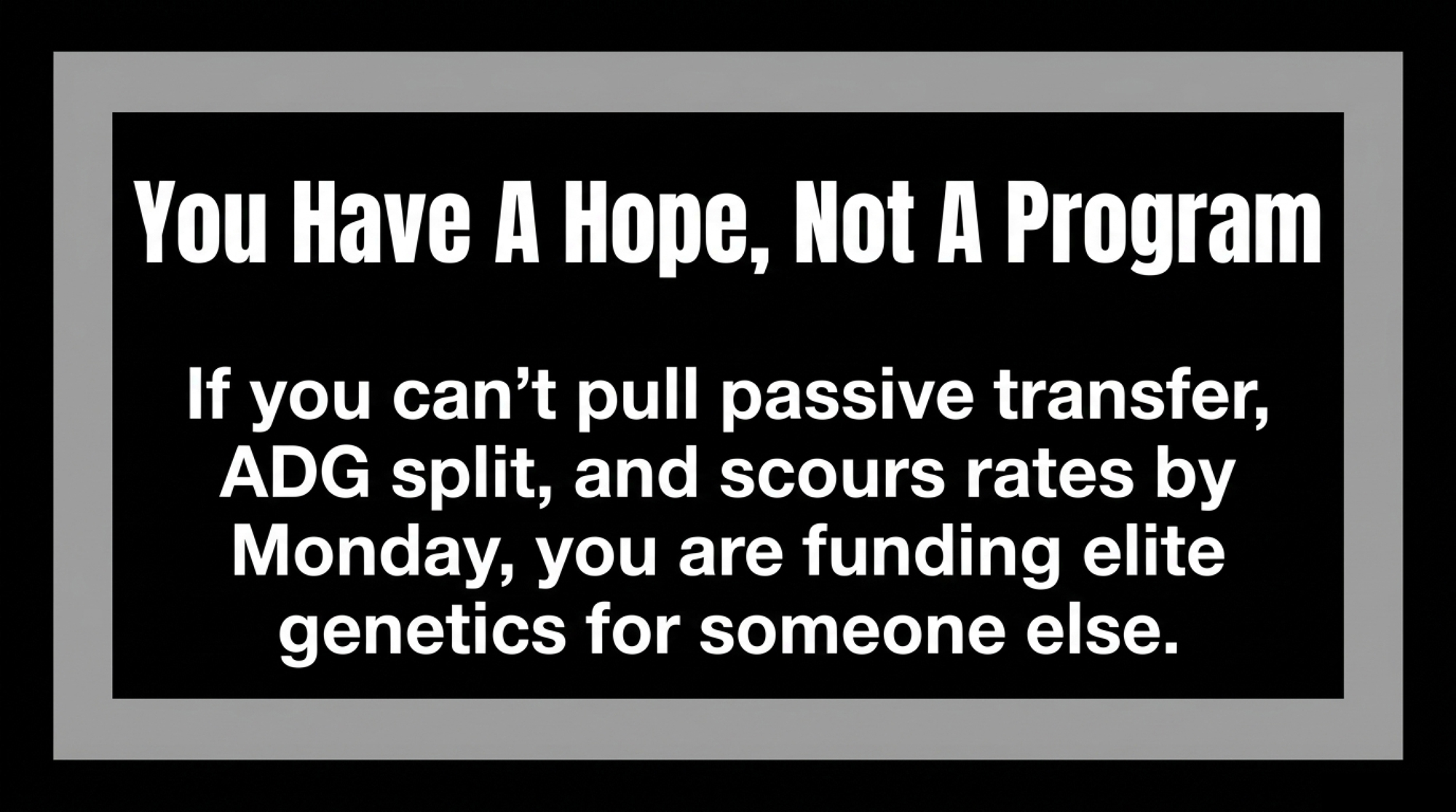
- If you can’t pull passive transfer, pre-weaning ADG split, and scours treatment percentage in the same report by next Monday, you don’t have a beef-on-dairy program. You have a hope.
Your Next Step
Don’t order your next batch of SimAngus or terminal-sire semen until you’ve audited your serum total protein.If you’re under 40% “excellent,” you aren’t ready for elite genetics — you’re funding them for someone else.
This week, put a refractometer, a serum TP kit, and a scale in the calf pens. Pull two days of blood and one week of starter intakes. Then decide whether your calf program deserves your breeding program.
Somewhere downstream, a feedlot is already building a picture of your calves from data you don’t see. The only move that fixes that is deciding to see it first. The week-by-week starter curve and the full colostrum-to-carcass cost model live in Bullvine Weekly and the next Tier 2 playbook — that’s the piece to read before your next sire order.
Run Your Numbers
Calf Feed ROI Tool — Before you pull another $50 off the calf program, run your colostrum, starter, and pre-weaning ADG through the Calf Feed ROI Tool and see whether the cheaper plan is actually funding that $1,400 crossbred — or quietly draining it.
Complete references and supporting documentation are available upon request by contacting the editorial team at editor@thebullvine.com.
Learn More
- The $3,000 Heifer Hangover: How Beef-on-Dairy Emptied Your Pipeline and Left the U.S. 800,000 Head Short— Secure your 2027 herd capacity by exposing the 800,000-head replacement deficit currently hidden in national inventory data. Arms you with market intelligence to navigate $3,000 price tags before the supply window slams shut.
- Beef-on-Dairy’s $6,215 Secret: Why 72% of Herds Are Playing It Wrong — Capture your share of the $6,215 monthly performance gap by revealing the reproductive guardrails top earners use. Delivers a blueprint for matching beef semen deployment to specific pregnancy rate tiers and genetic markers.
- Boosting Dairy Farm Profits: Using Embryo Transfer and Male-Sexed Beef Semen — Accelerate genetic progress by dismantling the cost barriers of embryo transfer and male-sexed beef semen. Illustrates how leveraging hybrid vigor generates up to 200% higher premiums for your crossbred day-old calves.
 The Sunday Read Dairy Professionals Don’t Skip.
 The Sunday Read Dairy Professionals Don’t Skip.
Every week, thousands of producers, breeders, and industry insiders open Bullvine Weekly for genetics insights, market shifts, and profit strategies they won’t find anywhere else. One email. Five minutes. Smarter decisions all week.