Archive for dairy farmers – Page 2

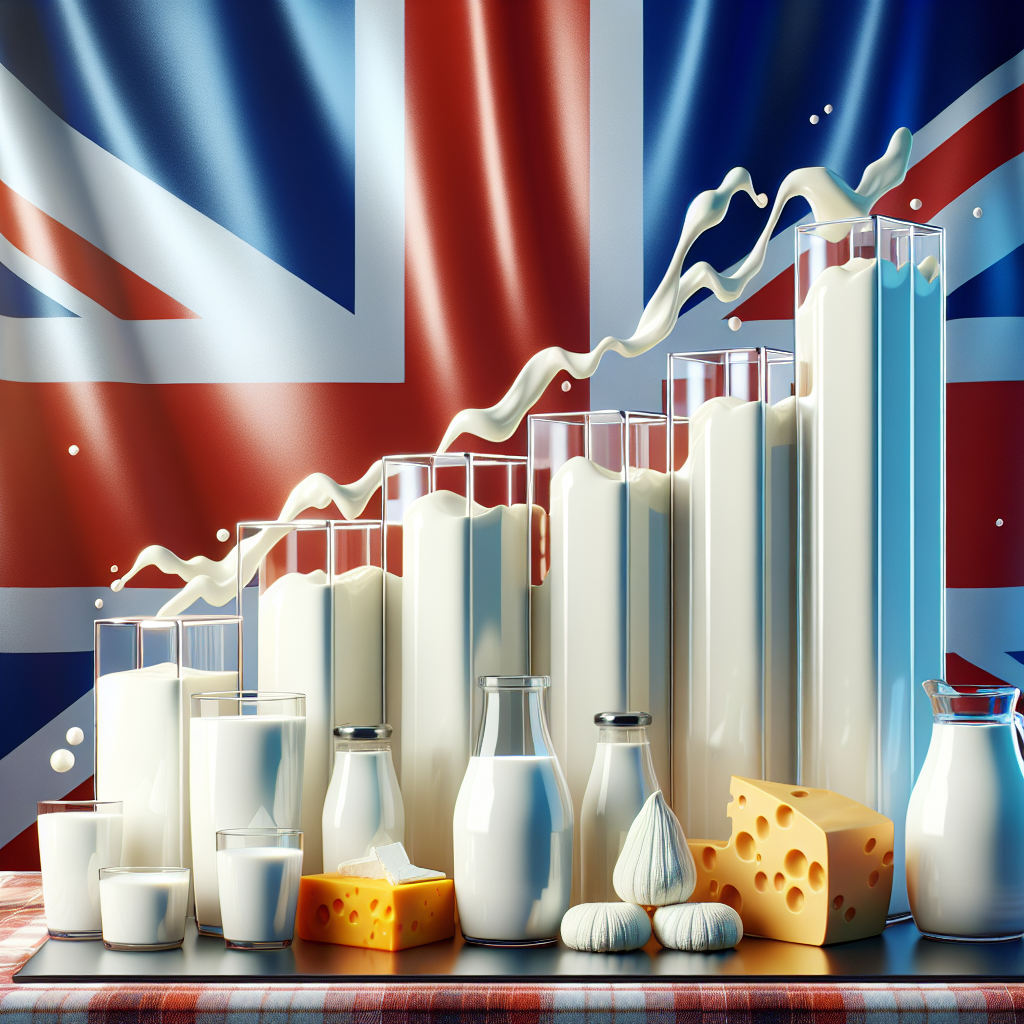
UK Milk Prices Surge to 43p/litre

UK milk prices surge to 43p/liter. What does this mean for dairy farmers? Ready to navigate the market and boost your profits?

Summary: UK dairy farmers are set to benefit from a lift in farmgate milk prices to 43p/liter, a significant milestone for dairy farmers. This growth is driven by increased demand for butter, cream, and cheese and a tightening milk supply. The Global Dairy Trade auction saw wholesale dairy values increase by 5.5%, favoring dairy farmers. However, this rise in demand correlates with a decrease in milk availability in the UK, with deliveries averaging fewer than 32 million liters per day at the end of August. Higher farmgate prices provide immediate financial relief and increased profitability for dairy producers, but they also make it difficult to manage supply and demand effectively. As demand for butter, milk, and cheese rises, producers must ensure their production systems can fulfill it without overburdening resources. Company-specific price adjustments to address the growing demand include Arla Foods increasing its milk price by 0.89p/liter to 43.33p/liter for regular production, Muller paying producers an October price of 41.25p/liter, Barbers Cheesemakers increasing milk payments to 43.03p per regular production liter, First Milk raising its price to 42.6p/liter, and Organic Herd raising its organic milk price to 56p/liter.

  • Farmgate milk prices increased to 43p/litre due to rising demand for dairy products.
  • Global Dairy Trade auction recorded a 5.5% rise in wholesale dairy values.
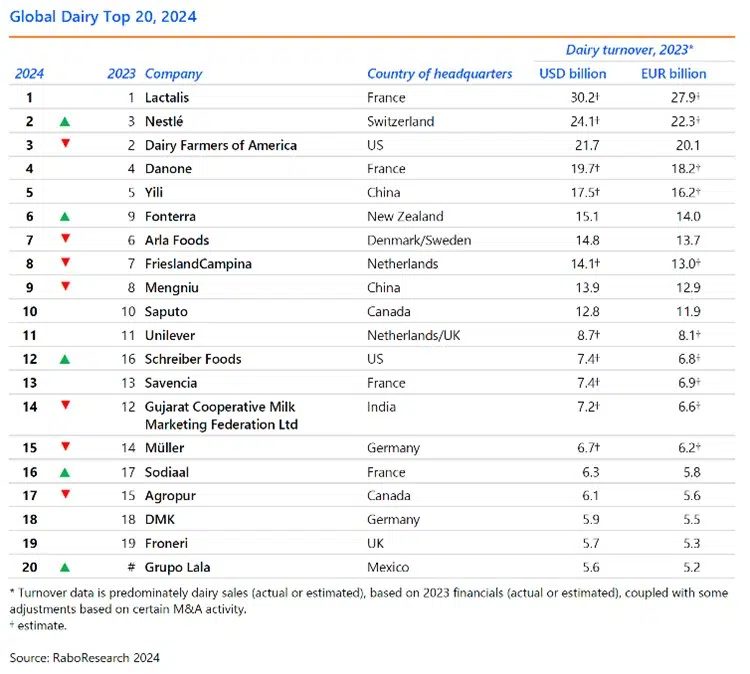
  • Companies like Arla, Muller, Barbers Cheesemakers, and First Milk announced price hikes for September and October.
  • Tightening milk supplies have been a significant factor in price increases.
  • Producers have an opportunity to enhance profitability and production efficiency.
Farmgate milk prices, UK, 43p per liter, dairy farmers, increased demand, butter, cream, cheese, milk supply, Global Dairy Trade auction, wholesale dairy values, higher prices, financial relief, profitability, supply and demand, milk availability, decrease, deliveries, balance, overproduction, resources, retail sales, stable milk supplies, price adjustments, Arla Foods, Muller, Barbers Cheesemakers, Milk, Organic Herd, price increase.

Farmgate milk prices in the UK have risen to an astonishing 43p per liter, representing a key milestone for dairy farmers. Critical reasons driving this growth include increased demand for butter, cream, and cheese and a noteworthy tightening of milk supply. “Strong demand for butter and cream in the EU market is driving prices to near-record levels”— Nick Holt-Martyn, Principal Consultant at The Dairy Group. The recent Global Dairy Trade auction saw wholesale dairy values increase by 5.5%, indicating that market dynamics favor dairy farmers. As you negotiate this shifting terrain, you may question what it means for your dairy farm.

Surge in Farmgate Prices: The Autumn Uplift 

As we examine the present status of the dairy industry, it is clear that dairy producers are seeing a considerable increase in milk prices. Farmgate prices rose to 43p/liter in September and October, indicating a prosperous season for dairy production.

Butter, cream, and cheese are in high demand, increasing prices. Nick Holt-Martyn, chief consultant at The Dairy Group, said, “Strong demand for butter and cream in the EU market is driving on to near record levels.” His findings are consistent with a more significant trend in which processors are keen to stockpile milk quantities for the fall months.

Supporting this story, the most recent Global Dairy Trade auction on August 20 recorded a 5.5% rise in wholesale dairy values, with significant price increases for butter and milk powders. The growth in worldwide demand has driven significant profits for processors.

This rise in demand for dairy products correlates with a decrease in milk availability in the UK. Since the spring flush, UK milk deliveries have averaged fewer than 32 million liters per day at the end of August, representing a 0.9% decline from the previous year. This shrinking supply has unwittingly led to price rises as processors try to fulfill increased market demand.

Transforming Challenges into Opportunities 

The immediate effect of the price increase on dairy producers cannot be understated. Higher farmgate prices provide immediate financial relief and increased profitability. For many farmers, this additional earnings is a welcome lift after difficult seasons typified by variable milk supply and growing operating expenses. According to Arthur Fearnall, Arla Foods’ board director, “Global milk supplies continue to be stable while retail sales continue to grow.”

However, it is not all easy sailing. While higher prices bring some relief, they also make it difficult to manage supply and demand effectively. Richard Collins, Muller’s head of agriculture, emphasizes this balance, noting, “We’re pleased to see market stability, and following a 1.25p/liter increase to our farmgate milk price in September, we are in a position to increase it again by 1p/liter in October.” We understand the continuous strains on our providing farmers, and we will continue to monitor supply and demand.”

As demand for butter, milk, and cheese rises, producers must guarantee that their production systems can fulfill it without overburdening resources. It’s a tricky balance between profiting from increased pricing and avoiding overproduction. This cautious management will be critical in navigating the following months, ensuring that the advantages of the price increase are fully realized while limiting possible hazards.

Company-Specific Price Adjustments: A Closer Look 

Let’s look at the company-specific pricing adjustments to see how each major player responds to the growing demand for dairy products.

Arla has increased its milk price by 0.89p/liter to 43.33p/liter for regular production later in September. The business credits this gain to a steady global milk supply, consistent retail sales growth, and strong demand for fat-heavy goods, particularly butter.

Muller has reacted favorably to the market’s steadiness. The business intends to pay its producers an October price of 41.25p/liter, including the advantage premium. Muller will raise farmgate milk prices by another 1p/liter in October after a 1.25p/liter increase in September. This initiative demonstrates Muller’s commitment to providing farmers despite continued market difficulties.

Barbers Cheesemakers has recently reported an increase in its milk payments. In October, producers who supply this famous cheesemaker will get 43.03p per regular production liter.

First, Milk follows suit, raising its price by 0.6p/liter to 42.6p/liter for a regular production liter, including the member premium. Mike Smith, vice-chairman and farmer director, said that this increase is a welcome respite given the difficult on-farm circumstances of the spring and summer.

Organic Herd stands out with a significant rise, indicating that it would raise its organic milk price by 2p/liter on October 1 to 56p/liter. This considerable increase demonstrates the continuous demand and value put on organic milk in the present market.

Market Dynamics: Riding the Wave of EU Demand 

Several variables impact dairy market dynamics, most notably the EU’s constantly fluctuating demand. Farmgate prices in the UK have risen due to increased demand for dairy products like butter and cream, driven by consumer preferences and a shortage of milk. This situation has provided a beneficial climate for UK dairy producers, who have seen price increases into 2024. Demand from the EU remains a key factor, driving volume and stabilizing prices at higher levels.

What will the future hold for dairy farmers? Industry analysts recommend a cautiously positive attitude. Arthur Fearnall, Arla Foods’ amba board director, underscores the stability of global milk supply while highlighting the continued development of retail sales. Although slower than in past years, this rise signals that demand for dairy products will remain strong, perhaps keeping the market robust. The seasonal decrease in milk consumption adds another layer of complication, likely maintaining stable prices in the foreseeable future.

However, it is critical to recognize the uncertainties and possible hazards accompanying this promising trend. Tightening milk supplies, especially since the spring flush, may put processors under pressure if demand continues to outrun supply. Furthermore, significant interruptions in global supply chains or economic downturns in important areas might dramatically alter the situation. Muller’s Richard Collins understands these constraints and reiterates the need to monitor market developments in the coming months attentively.

Although high farmgate prices and increasing EU demand provide a bright scenario for UK dairy farmers, they must stay alert. Seasonal influences, supply limits, and macroeconomic variables will all influence the market’s trajectory. Staying aware and adaptive will be essential for dairy producers looking to take advantage of current good circumstances while also bracing for market changes.

Practical Tips for Farmers 

With farmgate milk prices increasing, now is an excellent moment for dairy farmers to optimize their operations and capitalize on market opportunities.  Here are some practical tips that can help: 

Enhance Milk Production Efficiency 

Focus on keeping your herd healthy and productive. Regular veterinarian examinations and proper feeding planning are essential. Use high-quality feed to guarantee your cows produce milk to their total capacity. Consider investing in technology, such as automated milking systems, to help procedures run more smoothly and efficiently.

Cost Management 

Reducing expenditures in this favorable price climate may help you optimize your revenues. Bulk purchases of feed and supplies may save money. Energy-efficient devices may help cut electric expenses. Reviewing your spending regularly and discovering areas where you may save money without sacrificing quality is prudent.

Leverage Higher Prices 

Securing contracts with processors for a steady income can help you take advantage of increasing milk prices. Expanding your product offers, such as exploring organic or specialized milk products, which may fetch even higher pricing, is also essential. Keep an eye on market developments and adapt your approach appropriately.

Stay Informed 

Market circumstances might change quickly. Stay up to speed on industry news, attend local dairy farming conferences, and connect with other farmers to exchange ideas. Joining industry organizations or associations may also give helpful knowledge and assistance.

Be Adaptable 

Flexibility is essential for managing the turbulent dairy market. If required, be prepared to change your production levels and expand into other markets. Continuously assess the success of your agricultural operations and be ready to adjust to remain competitive.

The Bottom Line

The recent increase in farmgate milk prices is a watershed moment for dairy producers. With prices rising due to greater demand and limited supply, a unique chance exists to improve profits. Key businesses such as Arla, Muller, Barbers Cheesemakers, and First Milk have all announced significant price increases, underscoring the favorable market conditions. To accept these changes, we must maximize production efficiency, control costs, leverage more excellent pricing, keep educated, and remain adaptable.

How will you make the most of this opportunity? What actions would you take to guarantee that your farm flourishes in these favorable market conditions?

Learn more: 

Join the Revolution!

Bullvine Daily is your essential e-zine for staying ahead in the dairy industry. With over 30,000 subscribers, we bring you the week’s top news, helping you manage tasks efficiently. Stay informed about milk production, tech adoption, and more, so you can concentrate on your dairy operations. 

NewsSubscribe
First
Last
Consent

Record-Breaking DMC Margins: What Dairy Farmers Need to Know Now

Learn how record DMC margins can boost your dairy farm’s profits. Understand feed costs, milk prices, and future expectations.

Summary: July 2024 saw dairy farmers benefit from the highest Dairy Margin Coverage (DMC) margin since May 2022, driven by decreased feed costs. The USDA National Agricultural Statistics Service (NASS) reported a DMC margin of $12.33 per cwt, providing much-needed relief after months of tighter margins. This boost in revenue underscores the importance of the DMC program, which helps farmers balance revenue and feed expenditures. With larger margins, producers can reinvest earnings into farm operations, enhancing their financial health. Projections for the rest of the year remain optimistic, with anticipated margins reaching $15.70 per cwt in November.

  • July 2024 experienced the highest Dairy Margin Coverage (DMC) margin since May 2022, primarily due to decreased feed costs.
  • The DMC margin USDA National Agricultural Statistics Service (NASS) reported was $12.33 per cwt.
  • Higher margins offer crucial financial relief for dairy farmers, allowing them to reinvest in their operations.
  • Projections for upcoming months remain positive, with margins expected to reach $15.70 per cwt by November.
Dairy Margin Coverage program, financial safety net, dairy farmers, low milk prices, high feed costs, DMC margin, revenue over feed costs, dairy producers, balance revenue, feed expenditures, regional variations, milk prices, Georgia, Florida, South Dakota, Iowa, Minnesota, informed choices, participation, farm's financial future, decrease in feed costs, larger DMC margins, profitability, return on milk output, additional earnings, reinvest, farm operations, upgrading equipment, cutting-edge equipment, projections, November

Imagine having the finest financial safety net for your dairy farm starting in May 2022. Sounds promising. July’s Dairy Margin Coverage (DMC) margin was $12.33 per cwt, a record high and the most advantageous revenue over feed costs in over a year. Dairy farmers should capitalize on declining feed prices to enhance profitability and minimize risks. Whether you’ve been in the dairy business for decades or are just starting, recognizing and capitalizing on these margins may significantly impact your bottom line. So, why should this news grab your attention? Let’s get into the specifics.

July 2024 Dairy Margin Coverage (DMC) Data
DMC Margin$12.33 per cwt
Milk Price$22.80 per cwt
Alfalfa Hay Price$237 per ton
Corn Price$4.24 per bushel
Soybean Meal Price$364.30 per ton
Total Feed Costs$10.47 per cwt

Why the Dairy Margin Coverage (DMC) Program is Your Farm’s Best Friend in Hard Times

The Dairy Margin Coverage (DMC) program is a reliable safety net for dairy producers, offering a balanced approach to revenue and feed expenditures. Launched to provide financial assistance during low milk prices and high feed costs, the DMC program brings stability to the dairy market by ensuring that farmers can meet their production costs. The program provides monthly margin forecasts by calculating the difference between the national all-milk price and average feed costs, empowering farmers to make informed decisions.

The DMC program has consistently proven its worth by providing significant financial aid during challenging times. The July margin of $12.33 per hundredweight is exceptionally bright, the highest reported since May 2022. This milestone represents a positive shift, offering dairy producers a much-needed boost in profitability.

Current Statistics: A Snapshot of July 2024 

For a detailed look at July 2024, there’s a lot to be optimistic about in the numbers: 

  • DMC Margin: The Dairy Margin Coverage margin hit $12.33 per cwt, the highest since May 2022.
  • Milk Price: The all-milk price remained stable at $22.80 per cwt, unchanged from June.
  • Feed Costs: A significant drop in feed costs has brought some financial relief:
    • Alfalfa hay: Down to $237 per ton, a $19 decrease from June.
    • Corn: Lowered to $4.24 per bushel, down 24 cents from last month.
    • Soybean meal: Decreased to $364.30 per ton, reflecting a drop of $19.80.

From Dismal to Delightful: How July 2024’s Margin Recovery Stands Strong 

It’s interesting to observe how July 2024’s margin compares to other of our more difficult months. Fast forward to May 2023, when the margin fell to $4.83 per cwt, and the recovery is dramatic. What a difference one year can make! By July 2024, we’d seen a strong rebound, with the DMC margin reaching $12.33 per cwt.

So, what is causing this positive shift? A significant decrease in feed prices is a central element of the narrative. Corn prices fell from $4.48 per bushel in June to $4.24 in July. Likewise, alfalfa hay and soybean meal prices fell, hitting low levels since early 2021. These decreases reduced feed expenditures to $10.47 per cwt, down 67 cents from June.

But it’s more than simply food. Milk prices have remained constant, contributing significantly to the positive margin. July’s all-milk price remained stable at $22.80 per cwt, matching June’s cost but representing a $5.50 gain from the previous year. The price stability and lower feed costs provided a more lucrative situation for dairy producers.

So, looking at your company and the data in front of you, it’s evident that monitoring market trends and feed prices may substantially impact your bottom line. The DMC margin for July 2024 serves as a reminder of how rapidly fortunes may change in the dairy sector and the need to remain informed and proactive.

Regional Variations and Their Impact on Margins

Have you noticed how milk prices fluctuate greatly depending on where your farm is located? Let’s examine some geographical disparities generating debate in the dairy sector.

For instance, Georgia and Florida had the most substantial rises in milk prices in July. Georgia recorded a $1.20 rise to $27.10 per cwt, while Florida followed closely at $27 per cwt, up $1.10. States such as South Dakota, Iowa, and Minnesota had even more significant year-over-year increases.

  • South Dakota: A phenomenal increase of $7.50 per cwt from July 2023 to July 2024
  • Iowa: A noteworthy jump of $7.30 per cwt year-over-year
  • Minnesota: Close on Iowa’s heels with a $7.10 per cwt increase

But what do these variations mean for your farm’s bottom line? 

The considerable disparities in state-level milk pricing directly influence DMC margins. When milk prices rise, the margin over feed costs widens, providing an excellent chance for farmers in higher-priced states to increase their profitability. In contrast, states with lesser or no gains see their margins compress, which may indicate that farmers need to think differently to retain profitability.

Understanding these regional patterns empowers you to make more informed decisions about participating in programs like the DMC or planning for your farm’s financial future. Keeping track of these geographical variations is critical to staying ahead and could be crucial to your farm’s success.

You’ve Likely Noticed a Welcome Shift in Your Feed Costs Recently 

Let’s examine why this occurs and how it affects your bottom line. First and foremost, grain prices have dropped significantly. The average cost per bushel fell to $4.24 in July, the lowest since January 2021. This decrease means you’re paying less for one of the most critical components of dairy cow feed.

Next, alfalfa hay prices dropped. In July, the average cost per ton was $237, down $19 from the previous month and $51 less than a year before. The last time we saw these rates was mid-2021, translating into significant savings on high-quality feed for your herd.

Finally, soybean meal prices have fallen to $364.30 per ton from $384.10 in June. Many people were relieved when feed prices dropped to levels similar to those in early 2024.

So, how does this impact the Dairy Margin Coverage (DMC) program? Said, this is fantastic news. Lower feed prices immediately translate into larger DMC margins. These lower expenditures helped boost the July DMC margin to $12.33 per cwt. This increases your revenue above feed expenses, making your financial situation more tolerable.

In essence, decreased feed prices benefit your farm by creating a buffer and giving you more financial breathing space.

What Do These Record-Breaking Margins Mean for Dairy Farmers Like You? Let’s Break it Down. 

First and foremost, higher margins have a direct influence on profitability. Higher margins indicate that you are making a higher return on your milk output after paying your feed expenditures. These additional earnings may be reinvested into your farm operations, whether to upgrade equipment, improve cow welfare, or provide a financial buffer for future uncertainties.

Next, let’s discuss decision-making. You can make strategic decisions that improve your farm’s efficiency and output when margins are high. You may have been considering increasing your herd or investing in cutting-edge equipment; larger margins may give you the confidence to make those moves.

Finally, think about your overall financial health. Better margins increase your cash flow, allowing you to satisfy your commitments on schedule. This might also result in improved loan conditions from lenders, providing more financial flexibility to operate your operations successfully.

These strong margins provide immediate comfort and a path to your dairy farm’s long-term development and financial security. Monitor these numbers and use them as a benchmark for your farm’s economic strategy and ambitions.

What’s on the Horizon for Dairy Margin Coverage? 

The Dairy Margin Coverage (DMC) program expects significantly better margins for the remainder of the year. According to current statistics, margins will likely hit a program high of $15.70 per cwt in November. This projection is based on feed costs of $10.48 per cwt and all-milk prices of $26.18 per cwt.

However, it’s important to remember that these predictions are subject to change. Several factors could influence the final numbers, including: 

  • Feed Costs: Any fluctuations in the prices of crucial feed components like corn, soybean meal, and alfalfa hay can significantly impact the margins.
  • Milk Prices: Global and domestic demand for milk and dairy products can drive milk prices up or down.
  • Market Conditions: Economic trends, trade policies, and unforeseen events, such as natural disasters or political changes, can also affect the market.
  • Climate Conditions: Weather patterns affecting crop yields can affect feed availability and cost changes.

It’s critical to be educated about these possible factors. Monitor market information and contact industry experts to make more proactive choices for your dairy farm. Remember that information is power, particularly in a dynamic business like dairy farming.

The Bottom Line

July 2024 has seen a hopeful upturn for dairy producers, with the Dairy Margin Coverage (DMC) margin hitting its highest since May 2022. This favorable margin is partly due to a significant fall in feed costs and robust milk prices. Central dairy states have witnessed different levels of improvement, with some seeing substantial rises in milk prices.

Feed prices have fallen to their lowest level since 2021, helping to improve margins even more. The DMC program has proved to be a dependable support system, with several dairy farms enrolling and benefitting from its payouts. Predicted margins over the following months point to steady improvement, providing a silver lining for dairy producers.

As you negotiate the difficulties of dairy farming, have you considered how remaining updated on DMC margins can affect your operations? Keeping an eye on these margins and staying current with industry developments might be critical. The future of dairy farming depends on intelligent choices and timely information—are you prepared to capitalize on these opportunities?

Learn more:

The Crucial Role of Health Traits in Dairy Cattle Breeding

Learn how focusing on health traits in dairy cattle breeding can elevate your dairy production. Ready to improve herd health and optimize your farm’s potential?

Summary: Dairy cattle breeding is a multifaceted endeavor where health traits play a crucial role in ensuring the long-term viability and productivity of herds. Understanding the significance of these traits—which encompass factors such as mastitis resistance, fertility, and hoof health—enables farmers to make informed decisions that optimize animal welfare and economic returns. By integrating genetic selection and advanced breeding strategies, dairy farmers can enhance not only the health and longevity of their cattle but also operational profitability. Prioritizing health traits in breeding programs ensures herd productivity and well-being, with genetic selection methods offering significant economic benefits.

  • Health traits are essential for the sustainability and productivity of dairy herds.
  • Key health traits include mastitis resistance, fertility, and hoof health.
  • Informed breeding decisions can enhance animal welfare and economic performance.
  • Integrating genetic selection and advanced breeding strategies improves health and profitability.
  • Prioritizing health traits in breeding programs boosts herd productivity and well-being.
  • Genetic selection methods offer notable economic advantages for dairy farming operations.
health features, dairy cow breeding, disease resistance, somatic cell count, fertility, ease of calving, dairy farmers, welfare, commercial sustainability, profitability, mastitis prevention, herd health, production rates, financial stability, metabolic health, successful breeding operations, physiological processes, longevity, general health, adaptation, productivity, well-being, genetic problems, Estimated Breeding Values, genomic selection, economic benefits, farmers

Technology advances and forward-thinking breeding practices have traditionally driven the dairy industry’s progress. Yet, in our unwavering pursuit of better genetics and maximum yields, have we potentially jeopardized the health and well-being of our dairy herds? As industry stewards, we must approach this critical issue with uncompromising vigilance. This essay discusses health features in dairy cow breeding and encourages dairy producers to reconsider their objectives and approaches. From disease resistance and lifespan to fertility and ease of calving, we’ll examine how these characteristics affect your dairy’s production, ethical criteria, and economic sustainability. Before digging further, one must ask: what are health qualities, and why are they important? How should these features be included in a contemporary, ethical dairy breeding framework? Your choices and actions may significantly impact the health and welfare of your dairy herds. Please reflect on your activities and envisage a new future for dairy farming, one in which health qualities are central to your operations, promising significant economic gains that can enhance your business’s profitability.

Understanding Health Traits in Dairy Cattle:

Understanding health features in dairy cattle necessitates thoroughly examining the many variables that impact bovine health and well-being. These health features include a variety of criteria, including disease resistance, which refers to cattle’s capacity to fight or recover from infections without requiring significant medical intervention. A high level of disease resistance can significantly reduce the occurrence of common illnesses like mastitis, thereby improving the overall health and productivity of your dairy herd. The somatic cell count (SCC) is vital since it indicates milk quality and udder health. Elevated SCC levels typically indicate the presence of mastitis, a common illness in dairy cows. This impacts the cows’ health and the quality of their milk. Reducing SCC is critical for enhancing both milk quality and animal health.

More than 60% of dairy producers now consider health features in their breeding selections. This is a substantial change in the business, suggesting a growing appreciation for the relevance of health attributes in dairy cow breeding. The incidence of mastitis, or the frequency of mastitis infections, is another important health factor. Mastitis prevention is critical for herd health, maximizing production rates, and ensuring financial stability.

Metabolic health and fertility are both critical components in successful breeding operations. Metabolic health maintains the balance of physiological processes, while fertility directly influences reproductive success, herd sustainability, and farm scalability. Longevity, representing dairy cattle’s lifetime and productive period, assesses general health, disease resistance, and adaptation. Cattle that are resistant to mastitis or lameness tend to live longer. Dairy farmers who properly grasp these health qualities are better able to combine high milk outputs with functional traits associated with adaptability, welfare, and resilience—a need in today’s developing dairy sector.

Understanding Health Traits for Herd Management:

Exploring this critical subject, the link between health features and herd management becomes apparent. As a dairy farmer, it’s your responsibility to prioritize health as the first goal. The welfare of your cows is not just an ethical issue but also a foundation for your farm’s commercial sustainability and profitability. By understanding and managing health traits effectively, you can be proactive in ensuring the productivity and well-being of your herd.

Furthermore, breeding for health features considerably improves the herd’s resilience. Approximately 50% of dairy cow problems are genetic. Robust cows have increased tolerance to the infections that plague agricultural areas, reducing the frequency and severity of debilitating ailments. This immediately boosts the dairy farm’s profits. Failing to include health features in breeding techniques risks the agricultural enterprise’s economic survival.

Prioritizing health features improves cattle well-being while increasing farm output and profitability. However, it is crucial to understand that the procedure may include inevitable trade-offs or problems. Should dairy farming experts prioritize health features in their breeding programs? Such a focus improves our cattle, enhances our companies, and boosts the sector.

Economic Impact of Health Traits:

Consider the severe financial consequences when dairy cattle’s health features are impaired. Specific health abnormalities cause significant economic disruptions on dairy farms, primarily by influencing key factors, including milk outputs, culling rates, treatment costs, and overall reproductive efficiency. Can you understand the depth of such economic upheaval? Genetic selection for health qualities may save veterinarian expenditures up to 30%. Let us examine this subject more attentively. Consider a dairy farm where existing health concerns cause a decrease in milk yield. As a result, these health issues need expensive treatments, which raise veterinarian costs—a tremendously unfavorable and onerous condition for any dairy farm. Wouldn’t you agree?

Secondary economic consequences include decreased reproductive efficiency, which slows herd growth rates and, eventually, limits milk production capacity. These circumstances burden the farm’s financial resources, significantly reducing profitability. Improving health features may boost milk supply by 10- 25%. But what if we reversed this situation? What if we made purposeful steps to improve the health features of dairy cattle? Isn’t this an issue worth considering? Improved health features might significantly reduce veterinarian expenditures, easing economic stresses. However, realizing that this may need some upfront expenses or fees is crucial.

Preventing diseases would minimize milk production losses, opening the door to enhanced economic success. Cows with more significant health features generate higher-quality milk containing up to 15% more protein. Furthermore, breakthroughs in health features may extend cows’ productive lifespans. This eliminates the need for early culling and increases herd profitability over time. Spending time, effort, and money on enhancing health features may provide significant economic advantages to dairy farms. It is critical to examine the long-term benefits of these investments.

Genetic Selection for Health Traits:

In the fast-changing dairy business, the introduction of genetic selection methods, notably Estimated Breeding Values (EBVs) and genomic selection, represents a significant opportunity for farmers. These techniques allow you to select and propagate cattle with better genetic qualities, particularly health aspects. This not only improves breeding operations but also promises significant economic benefits, giving you a reason to be optimistic and motivated about the future of your farm.

EBVs decode cattle genetic potential, revealing animals’ hidden skills regarding their offspring’s health and production. This essential information enables farmers to make educated decisions, improving the overall health of individual cattle and herds. The advent of genomic selection ushers in a new age of breeding technology, diving deeply into the inner elements of an animal’s genetic architecture. Genomic prediction allows for the exact discovery and use of critical DNA variations that anticipate an animal’s phenotype with unprecedented precision and dependability, considerably beyond the capabilities of older approaches.

The combined use of these genetic selection approaches has transformed breeding programs worldwide, pushing the search for improved health qualities in dairy cows. Identifying genetic markers connected to improved health features and smoothly incorporating them into breeding goals, which was previously a substantial problem, has become an opportunity for further improvement. This thorough attention to health features improves animal well-being and increases their resistance to disease risks.

Selection Indexes in Breeding Programs

Beyond single feature selection, the complex domain of selection indexes offers a balanced improvement of genetic value. Preventable illnesses account for around 40% of dairy cow mortality, underscoring the need for such comprehensive measures. Selection indices promote overall genetic development by assessing each trait’s unique quality against its economic value and potential genetic benefits. This technique goes beyond isolated changes, generating cumulative improvement across productivity and health qualities while ensuring that each trait’s costs and benefits are matched.

Globally, breeding initiatives are changing toward pioneering features like disease resistance, animal welfare, longevity, and even methane emission reductions. This more extensive approach predicts a future in which animal agriculture progresses from just economic to sustainable and ethical, with a strong emphasis on health features. The financial calculation is carefully addressed to ensure that the costs and benefits of each attribute are balanced.

Europe, a pioneer in this field, is pushing the boundaries of genetic selection for these cutting-edge features, even while worldwide acceptance remains restricted. This poses an important question: will we use the chance to improve the performance of breeding programs by using more extensive and innovative selection indexes?

Heritability of Health Traits

Understanding the heritability of health characteristics is critical in dairy cow breeding. Heritability estimations reveal the fraction of genetic variation that contributes to the observed differences in these qualities among individuals. According to research, heritability estimates for handling temperament features in dairy cattle are relatively high, indicating the importance of genetic variables. As a result, these qualities play an important role in complete multi-trait selection programs, with the potential to improve cattle temperament during handling and milking.

The heritability estimates for maternal and temperament qualities range from low to moderate, indicating a good opportunity for genetic improvement via selective breeding. Modern breeding programs have focused on the genetic examination of health features, using contemporary approaches like likelihood and Bayesian analysis to estimate exact heritability. These are essential for maximizing herd health and production.

While genetics are essential, environmental and managerial variables must also be addressed. Even if a cow is genetically inclined to excellent features, adequate management may prevent it from failing. As a result, the integration of gene selection and best practices in livestock management is critical. How can industry experts use cattle’s genetic potential to increase dairy output and improve animal welfare? As we better understand the complex interaction between genetics and the environment, the answer to this question will define the dairy industry’s future.

Balancing Health Traits with Productivity Traits:

Dairy producers have a recurring issue in balancing the economic imperatives of high milk output and the overall health of their cows. Can these seemingly opposing goals be reconciled to provide mutual benefits? The unambiguous answer is yes. One must examine the complex interaction between dairy cattle’s health and productive attributes to understand this. Undoubtedly, increasing milk output is critical to profitability in dairy farming. However, focusing just on production qualities may mistakenly neglect cow health and well-being, jeopardizing sustainability and herd productivity.

Addressing this complicated dilemma requires consciously incorporating health features into breeding choices. Dairy producers may adopt a more holistic method for choosing ideal genetic combinations by equally weighing health robustness and production qualities. Emphasizing traits such as adaptation, welfare, and resilience broadens breed selection criteria, fostering a more balanced and resilient herd. Optimizing animal health cultivates a sustainable future in which high productivity is achieved without sacrificing essential health traits.

For dairy producers who want to develop a sustainable and profitable enterprise, combining health qualities and production must go beyond lip service and become the cornerstone of successful farming. This breeding method represents a deep awareness of the interrelationship of health and profitability, anticipating a farming future that preserves the integrity of health features while maintaining high production in dairy cattle.

Considerations for Breeding Programs:

Adding health features into breeding plans requires a cautious and methodical approach in dairy cow breeding. These factors must be founded on the dairy producer’s individual management goals, environmental circumstances, and market needs. Isn’t developing a tailored and context-specific approach for managing breeding programs necessary?

Furthermore, advances in genetic evaluations are changing our approach to health features in cow breeding since these programs emphasize genetic assessments for health characteristics. Interesting. Isn’t it true that, although some breeding programs have made significant strides in integrating these qualities into their goals, the path to complete improvement is still ongoing? Genetic improvement techniques strive to maximize selection contributions while minimizing inbreeding. Balancing genetic advantages with the negative repercussions of inbreeding is not something to take lightly. Conscientious dairy producers use mitigation strategies, such as mating software and extension professional advice, to conserve genetic variety while assuring continual genetic progress. Aren’t these tactics essential for preserving genetic diversity while making steady evolutionary progress?

Establishing more complex and productive breeding programs relies on a pragmatic approach to animal breeding that prioritizes animal welfare. The redefining of selection indices and breeding objectives is becoming more critical, requiring incorporating qualities associated with animal welfare, health, resilience, longevity, and environmental sustainability. Thus, it is evident that dairies’ long-term viability depends on breeding goals that improve animal health and welfare, productive efficiency, environmental impact, food quality, and safety, all while attempting to limit the loss of genetic variety.

Collaboration with Breeding Experts and Genetic Suppliers:

Strong partnerships with breeding specialists, genetic suppliers, and veterinarians unlock a wealth of in-depth expertise, giving dairy producers tremendous benefits. These stakeholders provide access to critical genetic data, fundamental breeding values, and cutting-edge genomic techniques for health trait selection. However, it is vital to question whether we are leveraging this enormous pool of experience.

Collaboration with industry experts undoubtedly leads to a more specialized and successful breeding plan that addresses your herd’s health and production requirements. Nonetheless, the interaction between farmers and consultants goes beyond selecting the best breeding stock and treating illnesses. A dynamic and ongoing discussion with these specialists may aid in the early detection of possible problems, breed-specific features, and preventive health concerns. Consider inbreeding, for example. Are we completely aware of the hazards connected with it, as well as the various mitigation strategies? Have we optimized the use of mating software systems, using the expertise of extension professionals to guide these efforts?

Recent advances in genetic testing have created tremendous potential for selective breeding to treat congenital impairments and illnesses. Here, too, close contact with industry specialists is essential. But how often do we push ourselves to keep up with these advancements and actively incorporate them into our breeding programs? Is the secret to a healthier and more productive herd within our grasp, requiring only our aggressive pursuit of these opportunities?

The Bottom Line

The relevance of health qualities is prominent in the great mosaic of dairy cow breeding. This initiative reflects an ongoing journey of exploration, understanding, and application. Our joint responsibility is to use the knowledge gained from previous experiences, moving us toward a future that offers more profitability and higher ethical standards for all stakeholders.

Learn more: 

USDA Forecast: Promising Growth Ahead for U.S. Dairy Exports in 2025

Discover the USDA’s promising forecast for U.S. dairy exports in 2025. How will this impact your dairy farm? Keep reading to find out.

Summary: The USDA’s latest report projects steady growth in U.S. dairy exports for fiscal years 2024 and 2025, with expectations of $8 billion and $8.1 billion, respectively. While overall dairy imports and exports show minor fluctuations, there’s a notable increase in cheese and nonfat dry milk demand globally. Challenges such as currency strength and rising freight rates remain, but opportunities in underexplored markets like Southeast Asia and the Middle East hold promise. This growth, driven by increasing cheese prices and ongoing demand for nonfat dry milk and lactose imports, offers a practical opportunity for dairy farmers to expand their market reach. Dairy farmers should focus on improving product quality, cost management, market diversification, building relationships, and staying informed about current financial trends and projections to navigate these economic changes.

  • USDA projects steady growth in U.S. dairy exports for fiscal years 2024 and 2025, with expectations of $8 billion and $8.1 billion, respectively.
  • Global demand for cheese and nonfat dry milk is increasing.
  • Challenges include currency strength and rising freight rates.
  • Underexplored markets like Southeast Asia and the Middle East offer promising opportunities.
  • To capitalize on growth, farmers should focus on product quality, cost management, market diversification, relationship-building, and staying informed about current economic trends.
USDA, U.S. dairy exports, fiscal year 2025, rising global demand, American dairy products, cheese, nonfat dry milk, lactose, worldwide cheese prices, nonfat dry milk imports, lactose imports, dairy farmers, market reach, fiscal year 2024, stable prognosis, rising cheese prices, increased income, strong demand, dairy export values, dairy producers, profitability, U.S. dollar, maritime freight prices, ocean freight rates, cost-effective shipping solutions, diversify export markets, currency hedging, product quality, cost management, market diversification, building relationships, economic trends, economic projections, preparation, adaptation, risks, economic climate.

Are you prepared to capitalize on the impending prospects in dairy exports? According to the USDA’s most recent prediction, U.S. dairy exports would reach an astonishing $8.1 billion in fiscal year 2025. This increase is more than just a figure; it reflects the growing worldwide demand for high-quality American dairy products such as cheese, nonfat dry milk, and lactose. Increased worldwide demand is driving increased cheese exports, nonfat dry milk remains a popular option in various global markets, and new markets are opening up for US dairy goods. As a dairy farmer, these estimates are more than just abstract facts; they offer a practical opportunity to increase your market reach. How prepared are you to capitalize on these future opportunities?

Forecasted Gains: An Optimistic Outlook for U.S. Dairy Exports in 2024

The present situation of U.S. dairy exports in fiscal year 2024 indicates a stable and favorable prognosis. According to the USDA’s most recent quarterly data, dairy exports total $5.9 billion. The USDA anticipates these figures to total $8 billion by the conclusion of the fiscal year. This prognosis stays consistent with past projections, indicating confidence in the market’s durability.

Several reasons contribute to this increasing trend, including rising worldwide cheese prices, which have piqued the curiosity of overseas purchasers. Furthermore, there is ongoing demand for nonfat dry milk and lactose imports. Together, these components offer a positive picture for the future of US dairy exports, implying that fiscal year 2024 might be a year of significant success and development for the sector.

Promising Projections: USDA Anticipates $8.1 Billion in U.S. Dairy Exports for Fiscal Year 2025

As we look forward to fiscal year 2025, the USDA predicts a positive growth in U.S. dairy exports to $8.1 billion. Several essential reasons contribute to this significant rise. Rising worldwide cheese prices have routinely produced increased income for US dairy exporters. Furthermore, a strong and consistent demand for nonfat dry milk and lactose imports still supports the expected increase in dairy export values. These factors contribute to the favorable prognosis for the US dairy sector, indicating significant market potential and ongoing demand from worldwide buyers.

A Golden Opportunity: Capitalizing on Rising Export Demands 

These bullish export estimates not only provide a bright future for dairy producers but also a promising increase in profitability. Higher worldwide cheese costs and an increased taste for nonfat dry milk and lactose indicate a significant rise in demand for farm-direct goods. This rise in exports may result in more stable and higher milk prices, offering a financial buffer during economic uncertainty.

Furthermore, as overseas customers turn their attention to American dairy, the opportunity to broaden their market reach expands. This is an excellent chance to form new alliances and strengthen current ones, making your company more robust and prospering in a competitive global market. Increased export demand may result in greater use of your production capacity, a lower excess, and more predictable cash flow—all critical components of a sustainable and strategic agricultural enterprise.

Overcoming Obstacles: Navigating Currency Fluctuations and Ocean Freight Rates 

The strong projection for US dairy exports may seem optimistic, but it is essential to examine the obstacles that might stand in our way. Farmers must handle two critical difficulties to capitalize on these opportunities appropriately: the rising value of the US dollar and variable maritime freight prices.

Fluctuating Ocean Freight Rates: Rising ocean freight charges pressure dairy export profitability. Higher transportation expenses might reduce profits, making it critical to investigate cost-effective shipping solutions. One practical recommendation is to sign long-term contracts with dependable transportation partners to lock in more consistent costs. Diversifying your export markets may also help reduce the risks associated with regional shipping cost variances. For instance, consider using bulk shipping or consolidating shipments to reduce per-unit costs. As for currency hedging, financial instruments like forward contracts or options can lock in current exchange rates, protecting your income from future currency swings.

Appreciating U.S. Dollar: A rising currency makes American dairy goods more costly for foreign consumers, possibly depressing demand. While you don’t have complete control over this, currency hedging is one brilliant technique to consider. In simple terms, currency hedging is a strategy that allows you to lock in current exchange rates using financial instruments. This protects your income from future currency swings, ensuring you can still make a profit even if the value of the U.S. dollar increases.

Furthermore, building ties with overseas customers might be crucial. By offering exceptional customer service and upholding high-quality standards, you can create loyalty that can survive price hikes caused by currency fluctuations. Don’t underestimate the value of engaging in trade missions or using government initiatives to boost agricultural exports.

While these problems complicate the environment, being proactive and intelligent may help you manage difficult times. Staying educated and adaptable may help dairy farms prosper in the global market.

Together We Thrive: Strengthening Our Dairy Community Amidst Export Growth

Isn’t it fantastic to see our industry’s exports continue to rise despite several challenges? However, we must remember that success is driven by our community’s strength and resilience, not simply the numbers. As dairy farmers, we are part of a distinct and close-knit community united by shared values and a common aim to supply high-quality dairy products globally. Sharing best practices, assisting, and cooperating when feasible may significantly impact the process. Have you explored networking with other farmers or joining a local cooperative to improve your operations? Consider the advantages of sharing insights into efficient manufacturing procedures, such as implementing automated milking systems or using sustainable farming practices, and market-trading tactics, like participating in trade shows or leveraging social media for product promotion. Together, we can strengthen and flourish the dairy farming community, ensuring every farmer has an equal opportunity to succeed in the face of increased demand and changing market circumstances. Let us support one another, understanding that we all benefit when one of us succeeds.

The Double-Edged Sword of a Stronger U.S. Dollar: Navigating Challenges and Opportunities 

The strengthening of the US dollar is a two-edged sword for dairy producers. On the one hand, a higher dollar can purchase more on the global market, lowering the cost of imported inputs like equipment, feed additives, and fertilizers. However, this implies that US dairy goods will become more costly for overseas purchasers. This may make our exports less competitive since overseas purchasers may seek cheaper alternatives from other nations. So, how does this affect you, the typical dairy farmer?

First, recognize that demand for U.S. dairy goods may fall modestly as foreign consumers seek more economical alternatives. However, do not panic. The worldwide market for American dairy, exceptionally high-quality cheese, and new lactose products remains high. This reassurance should make you feel secure and prepared for potential changes in the market.

Here are some practical steps to navigate these economic changes: 

  • Enhance Product Quality: Focus on producing high-quality milk and dairy products. Higher-quality commodities often fetch higher prices, especially in competitive marketplaces.
  • Cost Management: Tighten your operations to control expenditures better. Look for methods to reduce energy, labor, and feed costs while maintaining herd health and milk quality.
  • Market Diversification: Research local markets or specialty product lines that may influence global pricing fluctuations. Organic milk, specialist cheeses, and dairy-based health products may provide more consistent results.
  • Build Relationships: Build stronger ties with buyers and cooperatives. Long-term contracts and strong client bases might provide more stability during turbulent times.
  • Stay Informed: Monitor current economic trends and projections. Being aware of prospective adjustments allows you to make proactive choices rather than reactive ones.

By being adaptive and carefully managing your farm’s operations, you can weather economic swings while prospering in the dynamic world of dairy farming.

The Dollar Dilemma: How Strengthening U.S. Currency Impacts Dairy Exports 

The rise of the US currency has far-reaching consequences for dairy exports. When the currency appreciates, American items become more costly for international consumers, reducing demand. This situation presents a problem to dairy producers that depend on overseas markets to sell milk, cheese, and other goods. So, what does this imply for you, the dairy farmer? Fewer foreign purchasers might imply cheaper pricing for your items, thus reducing your profit margins.

However, knowing the economic environment might help you negotiate these shifts more successfully.  Here are some practical steps you can take: 

  • Diversify Your Markets: Relying on only one or a few markets might be dangerous. Expand your consumer base to encompass both local and foreign customers. In this manner, a decline in one area will not be as detrimental to your total firm.
  • Focus on Value-Added Products: Instead of selling raw milk, try making value-added goods such as cheese, yogurt, or lactose-free milk. These goods often have a better profit margin and may be less prone to price changes.
  • Reduce Costs: Look for methods to make your processes more efficient. Whether via automated milking systems, improved feed management, or energy-saving technology, cutting costs may help you weather economic downturns.
  • Stay Informed: Monitor financial news and reports that discuss currency fluctuations, trade policy, and global economic situations. Being aware of prospective changes allows you to make better-informed judgments.

Navigating the complexity of a strong US dollar may be difficult. Still, with intelligent preparation and adaptation, you may reduce some risks and continue succeeding in today’s harsh economic climate. Remember, resilience and flexibility are essential for converting obstacles into opportunities.

The Bottom Line

In summary, the USDA’s most recent projection portrays a positive picture for U.S. dairy exports, predicting strong growth through 2025, with total dairy exports anticipated to reach $8.1 billion. While there are challenges, such as shifting currency values and rising freight charges, the potential to capitalize on increased worldwide demand for cheese, nonfat dry milk, and lactose remains substantial. As a dairy farmer, this positive outlook should encourage you to consider how your farm may fit with these developing export markets.

How can you position your farm to maximize these attractive export opportunities? Stay current on market developments, improve manufacturing methods, and seek advice on handling export logistics. Being proactive and competent may help your farm prosper despite increasing export demands and contribute to the dairy community’s strength. Let us use this chance to safeguard our industry’s long-term success.

Learn more: 

Cloned Cow’s Milk May Hit Canadian Dairy Shelves Unnoticed, Expert Warns.

Did you know milk from cloned cows might soon be on Canadian shelves without you knowing? Find out what this means for dairy farmers and consumers.

Summary:  Imagine pouring a glass of milk from your dairy farm only to discover it might have come from a cloned cow. This unsettling reality is what Dr. Sylvain Charlebois, a respected food and farming expert, warns could soon be the norm in Canada. Charlebois has raised concerns that Health Canada’s recent, low-profile consultations might lead to milk, eggs, and meat from cloned animals appearing on the market without consumers knowing. If you’re a dairy farmer, the impact of this shift could be profound—touching on everything from consumer trust to the ethics of food production. Health Canada is reviewing its policies on commodities obtained from cloned animals, including milk, and these products are classified as “novel foods” under Food and Drug Administration regulations. The interim policy classifies cloned animal feeds as “novel foods” due to technological unknowns. If the interim regulation becomes permanent, dairy producers may face a rapidly changing competitive environment. This controversy has highlighted the importance of transparency, customer knowledge, and balancing innovation with consumer rights. Cloning costs pose a significant threat to conventional dairy production, making obligatory labeling a cornerstone of openness. Dairy farmers must make a critical decision: should they embrace or resist cloning technology?

  • Cloned cow milk might soon enter the Canadian market without consumers knowing.
  • The shift could impact consumer trust and the ethics of food production.
  • Health Canada’s interim policy classifies cloned animal products as “novel foods.”
  • The competitive environment for dairy producers may change rapidly if the interim regulation becomes permanent.
  • Transparency and obligatory labeling are seen as crucial for maintaining consumer trust.
  • Cloning costs could pose significant challenges to conventional dairy production.
  • Dairy farmers need to decide whether to embrace or resist cloning technology.
cloned cow milk, customers' knowledge, farms, dairy sector, Health Canada, policies, commodities, cloned animals, milk, novel foods, Food and Drug Administration, regulations, interim policy, conservative, technological unknowns, permanent, dairy producers, competitive environment, controversy, transparency, customer knowledge, innovation, consumer rights, cloning costs, conventional dairy production, public scrutiny, obligatory labeling, openness, dairy farmers, cloning technology

Dr. Sylvain Charlebois, senior director of the Agri-Food Analytics Lab at Dalhousie University in Nova Scotia, warns that cloned cow milk might be sold without customers’ knowledge. This issue could significantly impact your farm and the dairy sector, potentially affecting consumer trust, market dynamics, and regulatory policies. Let’s explore what this means for you and the broader dairy industry.

Health Canada Consultation: The Current State of Cloned Cow Milk

Cloned cow milk is currently unavailable in Canada. Health Canada is still reviewing its policies on commodities obtained from cloned animals, including milk. Until more is known, cloned animal products are classified as “novel foods” under Food and Drug Administration regulations. The public and industry comment process is still underway, and a final decision on distributing and labeling cloned cow milk has yet to be reached.

Health Canada opened the floor for public and business comment, which concluded on May 25. They planned to amend their ‘Policy on foods obtained from cloned animals via somatic cell nuclear transfer (SCNT) and their offspring.’ The interim policy is conservative, classifying cloned animal feeds as ‘novel foods’ due to the technological unknowns. This process thoroughly reviews scientific evidence and public and industry feedback and considers potential risks and benefits. What does this imply for you?

While the policy emphasizes health and safety, claiming that cloned products offer no more danger than conventionally produced animals, staying current with these changes is critical. Many people are concerned about food safety and animal welfare.

The Interim Policy: What It Means for Dairy Farmers

Understanding the interim regulation regarding cloned animal products is crucial for dairy producers. According to this regulation, foods created from cloned animals using somatic cell nuclear transfer (SCNT), a process where the nucleus of a somatic cell is transferred into an egg cell with its nucleus removed, are considered ‘novel food.’ This means that items like milk from cloned cows (and their offspring) are considered novel and untested in the marketplace.

What exactly does this imply for you? This means that, although science may support the safety of these cloned items, there needs to be more clarity about how consumers will accept them. Dairy producers must understand that, even if these products are scientifically safe, consumers may not accept them. Your farm’s reputation may suffer if cloned milk mixes with ordinary milk in the supply chain without proper labeling.

Furthermore, regulatory ambiguity exists since the policy still needs to be consulted on. Suppose the interim regulation becomes permanent and permits the sale of unlabeled cloned milk. In that case, dairy producers may confront a rapidly changing competitive environment. Depending on customer response and market needs, such developments may provide both possibilities and threats.

Is Cloned Cow Milk Safe? Health Canada’s Perspective

Health Canada says that meals derived from cloned animals are classified as “novel foods,” which means they must undergo thorough safety testing before being released to the market. The agency’s interim guideline emphasizes thoroughly evaluating cloned animal products, such as milk, meat, and eggs, to identify possible risks compared to traditionally grown equivalents.

Based on current scientific evidence, the public consultation stage found no discernible differences in safety, health, or environmental effects between cloned and non-cloned items. In its summary, Health Canada said that healthy cloned animals and their offspring do not display new features that would make their products harmful to consume. This is consistent with the judgments reached by other worldwide agencies, such as the US Food and Drug Administration and the European Food Safety Authority, which have confirmed the safety of these goods.

Despite these guarantees, the prospect of cloned goods on the market worries consumers and farmers. It is worth emphasizing that customer acceptability is vital in agriculture. Dairy producers should know how these changes affect customer trust and market dynamics. Your opinion and active involvement in continuing discussions are not just important, but integral to building regulations that reflect safety requirements and public mood.

The Importance of Mandatory Labeling in Dairy Products

Imagine reaching for your favorite milk brand and wondering whether it came from a cloned cow. Without statutory labeling, this may happen. As a dairy farmer, customer trust is not just important; it’s your livelihood, and openness is essential to retaining it. The weight of this responsibility and the potential impact on your operations cannot be overstated.

A food analytics specialist, Dr. Sylvain Charlebois, cautions that customers would only accept cloned animal products with unambiguous labeling. Remember the reaction against genetically engineered salmon? The same might happen with dairy if customers believe they have been deceived. Unlabeled cloned goods may contaminate all dairy. Shoppers know food origins; any uncertainty may prompt them to scrutinize all dairy options, including yours.

Finally, openness and correct labeling are about more than just compliance; they are about maintaining the confidence between you and your customers. Advocating for mandated labeling is critical to preserving the authenticity that distinguishes your goods. Without clear labeling, how can buyers make educated decisions? Keeping your consumers informed and comforted is vital.

Lessons from Genetically Modified Salmon: What Dairy Farmers Can Learn

Consider genetically modified (GM) fish to illustrate the possible concerns with cloned cow milk. Despite safety guarantees from multiple regulatory authorities, AquaBounty’s GM salmon was met with widespread public distrust and commercial rejection. This incident is a warning tale: even if Health Canada approves cloned cow milk, customer confidence is not assured.

The lessons from GM salmon emphasize the importance of openness and unambiguous labeling for conventional dairy farmers. Consumers want to know what they put in their bodies and may only accept items with verified information. This hesitation goes beyond safety to include ethics, naturalness, and trust.

The outcry against GM salmon impacted AquaBounty and the seafood business. Dairy producers should be aware that cloned milk might affect the whole dairy business, not just those who sell cloned goods. Staying educated, clearly declaring your opinion, and communicating openly with your clients will be critical as the controversy over cloned cow milk continues. Being proactive may help you retain customer confidence and defend your farm’s image, but it’s also about the collective responsibility and shared consequences for the entire dairy industry.

Consumer Perception: The Potential Impact on Your Dairy Farm

This is where things may get complex for dairy producers. Have you considered how your consumers might respond if they discovered their milk originated from a cloned cow? Imagine explaining this to customers who may still be concerned despite assurances from Health Canada and scientific authorities. The response might be comparable to that experienced by manufacturers of genetically modified organisms (GMOs). It’s a difficult position to be in—balancing innovation with customer trust.

Let’s be honest: today’s customers are more aware and concerned about where their food comes from. They can influence market dynamics. Suppose people believe cloned animal products are unnatural or harmful. In that case, dairy producers may need more scientific proof to maintain and grow their client base. You may have to devote more time and money to educate your clients, or worse, lose them to rivals that use traditional agricultural practices.

The story of genetically engineered fish is a cautionary tale. Despite being confirmed safe, retailers immediately rejected the product due to customer concerns. Would you want to explore comparable waters? The stakes are high, and it may be up to you to push for clear labeling and open processes to develop and maintain customer confidence. The path ahead may seem frightening, but knowing these dynamics can help you prepare for what comes next.

Cloning Costs: Will They Lower Retail Prices?

Dairy producers must strike the right balance between innovation and customer trust. While cloning technology may provide new opportunities, its uncertain reception by consumers might represent a substantial danger to conventional dairy production. As genetically engineered salmon drew criticism, cloned cow milk may face comparable public scrutiny, making obligatory labeling a cornerstone of openness.

Furthermore, the expense of cloning is not insignificant. Cloning is still costly, and assertions that technology would lower manufacturing and retail costs are questionable. Farmers may need convincing proof of cost reductions to avoid additional financial burdens, exacerbating an already complex economic picture.

Finally, Health Canada’s response to this problem will pave the way for future dairy farming operations in Canada—failure to account for consumer preferences and rights damages public confidence while jeopardizing conventional dairy farmers’ livelihoods. As the business changes, remaining knowledgeable and active about these regulations becomes more critical. Are you prepared to manage these changes?

The Future of Dairy Farming: Embracing or Resisting Cloning Technology?

As a dairy farmer, you must make a critical decision: should you use cloning technology or conventional methods? Cloning promises to increase herd productivity by mimicking each cow’s most outstanding qualities. This might result in increased milk outputs, improved disease resistance, and more efficiency. However, the technique raises ethical and practical difficulties, such as the high prevalence of fatal congenital impairments in cloned animals, which may influence the public image of the dairy sector.

Furthermore, cloning costs are significant, and these expenditures may not result in decreased retail pricing. This presents a hurdle in competing with traditional dairy products. Introducing cloned items to the market may result in a public reaction comparable to mistrust regarding genetically engineered species. Organic and organically produced dairy products remain popular among customers due to their perceived transparency and authenticity.

Finally, selecting whether to use cloning technology requires considering consumer views, regulatory environments, and practical ramifications for farm management. Continued communication among the agricultural community is critical for managing these changing difficulties. Whether you support cloning or prefer tradition, the future of dairy farming is in the hands of people who care for the fields and cows daily.

The Bottom Line

Dairy producers in Canada are at a crossroads as they consider the possibility of cloned cow milk entering the market. Health Canada’s conditional support and requests for obligatory labeling point to a fundamental change in the dairy business, affecting production costs, customer trust, and market dynamics. Transparency, customer knowledge, and balancing innovation with consumer rights are critical. Farmers must decide whether to use cloning technology or stick with conventional ways, ensuring that future dairy farming innovations respect technical breakthroughs and customer confidence.

Learn more:

Why Do Dairy Cattle Exhibitors Wear White? The Surprising Tradition Explained

Why do dairy cattle exhibitors wear white? Uncover the fascinating history and reasons behind this tradition.

Have you ever pondered the historical significance of dairy farmers donning white attire at cow fairs? With its roots stretching back over a century, this practice holds a profound significance beyond mere aesthetics. Understanding these historical underpinnings can offer a deeper connection to the enduring traditions that have shaped the dairy sector we know today.

dairy farmers, cow fairs, white clothing, tradition, cleanliness, professionalism, public faith, milk, dairy products, William Dempster Hoard, Hoard's Dairyman, technology, vacuum systems, milking technologies, exhibitors, symbolic representations, National Dairy Show, Chicago, 1906, best practices, rules, high standards, appearance, cow, cleanliness, quality, poll, conventions, generations, techniques, technology

We’ve been discussing it a lot lately, especially since some women opted to wear black to the Swiss Expo, and social media went wild. The Quebec Holstein Association then tried it in their spring show, with some exhibitors finding it a refreshing change while others felt it deviated from tradition.

Join us as we explore this easy clothing decision’s rich history and unexpected motivations, such as the symbolism of purity and the practicality of maintaining cleanliness. By the conclusion of this piece, you may see that clean white outfit in a whole new light.

dairy farmers, cow fairs, white clothing, tradition, cleanliness, professionalism, public faith, milk, dairy products, William Dempster Hoard, Hoard's Dairyman, technology, vacuum systems, milking technologies, exhibitors, symbolic representations, National Dairy Show, Chicago, 1906, best practices, rules, high standards, appearance, cow, cleanliness, quality, poll, conventions, generations, techniques, technology

From Cleanliness to Tradition: The Century-Long Legacy of Dairy Exhibitors Wearing White, a practice that has significantly shaped the dairy industry. 

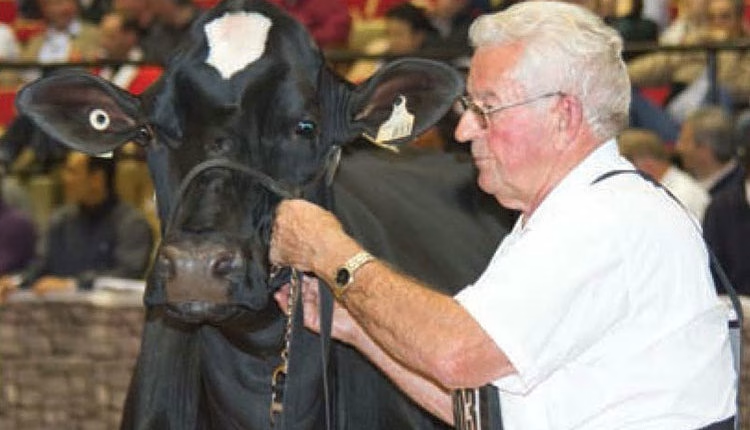
Wearing white in dairy cow exhibits dates back over a century. This legacy reflects the dairy industry’s commitment to cleanliness and professionalism, bolstering public faith in milk and dairy products.

One crucial individual is William Dempster Hoard, the publisher of Hoard’s Dairyman, a reputable dairy business newspaper founded in the late 1800s. Hoard intensely fought for cleanliness and excellent dairy farming standards, laying the groundwork for a common show practice.

dairy farmers, cow fairs, white clothing, tradition, cleanliness, professionalism, public faith, milk, dairy products, William Dempster Hoard, Hoard's Dairyman, technology, vacuum systems, milking technologies, exhibitors, symbolic representations, National Dairy Show, Chicago, 1906, best practices, rules, high standards, appearance, cow, cleanliness, quality, poll, conventions, generations, techniques, technology

The method acquired more traction in the early twentieth century. As technology, such as vacuum systems and other milking technologies, started to change dairy production, the significance of cleanliness became even more vital. Exhibitors wearing white become symbolic representations of these high standards.

The inaugural National Dairy Show in Chicago in 1906 also significantly impacted. This event brought together dairy producers nationwide to showcase best practices and establish rules, including the use of white clothes for exhibitors. This marked a turning point in adopting the tradition across the country.

This tradition has stood the test of time, representing the professionalism and precise care that have come to define the dairy sector. Understanding this rich history helps to explain why dairy cow exhibitors wear white, not only as a uniform but as a lasting emblem of commitment to quality and excellence.

Let’s Talk About Practical Reasons Behind This Long-Standing Tradition 

Let’s delve into the practical reasons behind this enduring tradition. Why do dairy cattle exhibitors opt for white? It’s not just for the visual appeal. The choice of white clothing serves a practical purpose: it makes it easier to spot dirt and contaminants. Imagine spending a day with animals; it’s a messy job. The white fabric quickly reveals filth, enabling staff to address cleaning issues promptly. This vigilance is crucial as it ensures optimal hygiene and guards against infections.

dairy farmers, cow fairs, white clothing, tradition, cleanliness, professionalism, public faith, milk, dairy products, William Dempster Hoard, Hoard's Dairyman, technology, vacuum systems, milking technologies, exhibitors, symbolic representations, National Dairy Show, Chicago, 1906, best practices, rules, high standards, appearance, cow, cleanliness, quality, poll, conventions, generations, techniques, technology

“Wearing white helps us maintain the highest standards of cleanliness,” the legendary showman Bert Stewart once told me. His sentiment is shared across the business. This practice demonstrates a farmer’s devotion to quality and cleanliness. No farmer wants to display an animal that does not seem beautiful; the same is true for their wardrobe.

The choice of white apparel is a practical and symbolic expression of our commitment to keeping an immaculate atmosphere. When you see a dairy exhibitor dressed in white, you’re seeing more than just tradition; it’s a monument to their devotion to producing high-quality milk and safeguarding the health of their animals.

dairy farmers, cow fairs, white clothing, tradition, cleanliness, professionalism, public faith, milk, dairy products, William Dempster Hoard, Hoard's Dairyman, technology, vacuum systems, milking technologies, exhibitors, symbolic representations, National Dairy Show, Chicago, 1906, best practices, rules, high standards, appearance, cow, cleanliness, quality, poll, conventions, generations, techniques, technology

Why White? Discover the Symbolism and Dedication in Dairy Exhibitors’ Attire 

When you see the striking white attire, you might wonder if there’s more to it than meets the eye. And you’d be right. White clothing is not just functional; it carries significant symbolic meaning. White has long been associated with purity and quality, values that dairy producers hold dear. It’s a color that signifies a commitment to high standards, not just in the appearance of the cow but also in the cleanliness and quality of the dairy products themselves.

The farmers’ commitment to their profession and animals is also reflected in the color white. Wearing clean white attire shows great care and regard for the livestock. These farmers do more than handle livestock; they also nurture them, keeping them healthy and stress-free. This passion is evident to everybody who passes through the display rooms and observes farmers engaging with their well-groomed livestock. It is an unsaid assurance to spectators and judges that everything about their organization is top-notch.

The custom of wearing white varies somewhat based on geography and cultural background. Farmers, for example, may stick to pure white in certain places but use cream or off-white in others. Regardless of the variances, the core stays the same: a display of purity, quality, and steadfast commitment to perfection.

Modern Evolution: Adapting Tradition with Contemporary Touches 

Fast forward to now, and you will see that the custom of dairy exhibitors wearing white has changed dramatically. While the fundamental causes remain firmly ingrained in history, current procedures have evolved to accommodate new materials and styles. For example, exhibitors today often choose long-lasting, stain-resistant materials that can withstand the rigors of a fair or show, making them more straightforward to clean and maintain. Modern textiles, such as polyester mixes, have replaced pure cotton uniforms from the past, blending history and utility.

But how can contemporary farmers mix tradition and practicality? It’s simple—they innovate while remaining true to their heritage. Today’s clothing often incorporates innovative cuts and patterns that increase mobility and comfort without abandoning the traditional white appearance. Some farmers even use breathable clothes or moisture-wicking technologies to keep them comfortable while working long hours at exhibitions.

Surprisingly, this custom is still alive. According to a recent poll, 90% of dairy producers still wear white at cow exhibitions, with just a few countries, like France, not following this guideline. This displays a strong regard for conventions handed down through generations, even as they accept new techniques and technology. Adherence to this custom demonstrates a community spirit and shared identity among dairy farmers, establishing a connection between the past and the present.

Pride in White: A Symbol of Tradition and Dedication in Dairy Farming 

Ask any dairy farmer, and they’ll tell you that wearing white for displays gives them genuine pride. This legacy is more than aesthetics; it is firmly anchored in community and shared ideals.

“It’s about not only tradition but also upholding standards,” Mary-Eve, a seasoned dairy showman, tells me.

“It not only looks classy, but we are telling the world we are serious about what we do,” says Alexa, a brilliant young performer.

These testimonies and social media trends show the centuries-old tradition’s ability to build a feeling of community and belonging. Wearing white is more than a clothing rule; it is a mark of pride in the dairy-producing community.

The Hunt for White Apparel: Challenges and Triumphs

Finding white pants is not as easy as walking into any clothes shop. If you’re a dairy farmer, you’ll understand how difficult it is to find long-lasting, well-fitting white trousers in shops or online. Is it just me, or does it seem like a hunt every time?

Even when you’ve found the right pair, the next big problem is keeping them clean. When your everyday surroundings include mud, feed, and animal droppings, it almost seems like a magic trick to retain that spotless white. Regardless of how often you wash them, stains resist all detergents and elbow grease. It looks like one stride forward, two steps back.

It’s pretty odd, given that white was selected to represent cleanliness and professionalism. Keeping those whites pristine requires dedication and patience, which may be stressful. “It’s like maintaining a white picket fence in a dust storm,” explains Mellisa, a mother of three aspiring entertainers from Wisconsin. However, the continual struggle is worthwhile for many since it demonstrates their commitment to preserving tradition and quality in dairy production. Each stain you successfully remove may be seen as a tiny win, demonstrating your unshakable dedication to your trade.

The Bottom Line

The custom of dairy cow exhibitors wearing white extends well beyond aesthetics. It is based on a dedication to cleanliness and a long-standing history. The motivations for wearing white range from displaying pride and professionalism to achieving practical advantages such as early detection of health conditions. This combination of heritage and contemporary adaption represents the changing nature of dairy farming, emphasizing the devotion and enthusiasm of individuals who wear the uniform. So, the next time you see a dairy exhibitor wearing white, you’ll know it’s more than simply a uniform—it’s a badge of pride. How will you continue to sustain and develop agricultural traditions?

Summary:

Have you ever wondered why dairy cattle exhibitors are always dressed in white? This article dives deep into the rich history and practical reasons behind this iconic choice of attire. From cleanliness and tradition to symbolism and practicality, we explore every aspect to understand why white clothing has become synonymous with dairy farming. You’ll discover surprising facts, historical insights, and modern adaptations that keep this tradition alive and relevant today. Dairy farmers at cow fairs traditionally wear white clothing, a practice dating back over a century. This practice reflects the dairy industry’s commitment to cleanliness and professionalism, bolstering public faith in milk and dairy products. William Dempster Hoard, publisher of Hoard’s Dairyman, played a crucial role in laying the groundwork for this practice. The method gained traction in the early twentieth century as technology like vacuum systems changed dairy production. The inaugural National Dairy Show in Chicago in 1906 significantly impacted the practice, bringing together dairy producers nationwide to showcase best practices and establish rules, including using white clothes for exhibitors. A recent poll showed that 90% of dairy producers still wear white at cow exhibitions. So, what does it take to don the pristine white and proudly represent the dairy industry? Keep reading to find out. 

  • White clothing for dairy exhibitors is a tradition dating back over a century, symbolizing cleanliness and professionalism.
  • William Dempster Hoard, publisher of Hoard’s Dairyman, was instrumental in establishing this practice.
  • The practice gained prominence in the early 20th century alongside advances in dairy technology, such as vacuum systems.
  • The National Dairy Show in 1906 played a significant role in standardizing the use of white attire for exhibitors.
  • A recent poll indicates that 90% of dairy producers continue to wear white at cow exhibitions, demonstrating its enduring relevance.

Learn more:

CME Cash Dairy Market: Butter and Nonfat Dry Milk Prices Surge Higher, Cheese Prices Hold Steady

cash dairy market, Chicago Mercantile Exchange, dry whey prices, cheese blocks, cheese barrels, butter price increase, nonfat dry milk, dairy market trends, Class IV futures, EU milk production, dairy farmers, dairy industry news

If you’ve been following the Chicago Mercantile Exchange, you may have noticed some exciting developments on Tuesday. The combination of constant and rising pricing presents a lot to analyze. Dive in with us and discover what it all means for you.

Dry whey is stable at $0.5650, with two sales confirming the figure. It symbolizes steadiness, which you could appreciate in these uncertain times. Meanwhile, cheese blocks and barrels remained steady at $2.14 and $2.25, respectively. There are no new transactions to announce here, but sometimes, no news is good.

And then there is butter. Butter prices have risen by $0.0225 to $3.1975, setting new yearly highs. That’s a significant increase, with thirteen sales from $3.1975 to $3.22. Nonfat dry milk (NDM) climbed by $0.0175, reaching $1.3150. Thirteen transactions were also registered, with values ranging from $1.3050 to $1.3175. These moves might indicate a strong trend that will continue for some time.

Daily CME Cash Dairy Product Prices ($/lb.)

FinalChange ¢/lb.TradesBidsOffers
Butter3.1975+2.251343
Cheddar Block2.1400NC000
Cheddar Barrel2.2500NC002
NDM Grade A1.3150+1.751337
Dry Whey0.5650NC244

Weekly CME Cash Dairy Product Prices ($/lb.)

MonTueCurrent Avg.Prior Week Avg.Weekly Volume
Butter3.1753.19753.18633.15916
Cheddar Block2.142.142.142.0827
Cheddar Barrel2.252.252.252.2251
NDM Grade A1.29751.3151.30631.27927
Dry Whey0.5650.5650.5650.5612

Weekly CME Cash Dairy Product Prices ($/lb.)

MonTueCurrent Avg.Prior Week Avg.Weekly Volume
Butter3.1753.19753.18633.15916
Cheddar Block2.142.142.142.0827
Cheddar Barrel2.252.252.252.2251
NDM Grade A1.29751.3151.30631.27927
Dry Whey0.5650.5650.5650.5612

CME Futures Settlement Prices

MonTue
Class III (SEP) $/CWT.22.5422.55
Class IV (SEP) $/CWT.22.2722.59
Cheese (SEP) $/LB.2.2052.194
Blocks (SEP)$/LB.2.142.14
Dry Whey (SEP) $/LB.0.540.54
NDM (SEP) $/LB.1.27751.3045
Butter (SEP) $/LB.3.19953.2175
Corn (SEP) $/BU.4.243.6725
Corn (DEC) $/BU.3.863.925
Soybeans (SEP) $/BU.9.60759.695
Soybeans (NOV) $/BU.9.819.8775
Soybean Meal (SEP) $/TON312.2317.3
Soybean Meal (DEC) $/TON308.1312.4
Live Cattle (OCT) $/CWT.176.98179.18

Trading commodities futures and options entails considerable risk. Investors must carefully balance these risks with their financial status. Although we obtained the material from credible sources, it has not been independently confirmed. This article represents the author’s viewpoint, not necessarily that of The Bullvine, and is meant as a solicitation. Remember that previous performance does not guarantee future outcomes.

Whole Milk Makes a Comeback in Tennessee Schools

See how Tennessee’s move to offer school whole milk benefits local dairy farmers. Will this raise milk consumption among kids?

Summary: Tennessee is taking a bold step to include whole milk in its school meal programs. This initiative presents a golden opportunity for you. By boosting milk consumption among children, you’re helping the next generation grow stronger and opening new avenues for your dairy business. Are you curious about how this decision could transform the dairy landscape? Let’s delve into why whole milk is making a comeback and what it means for you. Tennessee’s move to provide whole milk in schools is a game-changer for nutrition and the dairy industry. Whole milk offers health benefits for children, including improved weight control and vitamin absorption. Schools choose whole milk to provide a broader spectrum of critical nutrients, and nutrition experts argue that nutrient-dense dairy can help kids establish healthy eating habits. Increased demand for entire milk could lead to higher sales, consistent pricing, and financial stability for Tennessee’s dairy producers. Success stories from other states show that reintroducing whole milk in classrooms can produce better nutritional results. This transition signifies a turning point for the dairy business, potentially resulting in improved agricultural methods, output levels, and employment rates. The Tennessee Dairy Association believes this move could revitalize the dairy industry, increasing production and job creation.

  • Tennessee’s new initiative to include whole milk in school meal programs may significantly boost milk consumption among children.
  • Whole milk offers numerous health benefits, such as improved weight control and better vitamin absorption.
  • This change presents a substantial opportunity for dairy farmers with potential increased sales and financial stability.
  • Providing whole milk aligns with efforts to offer a more comprehensive range of critical nutrients in school nutrition programs.
  • Success stories from other states indicate that reintroducing whole milk can lead to healthier eating habits among kids.
  • The move could lead to enhanced agricultural methods, increased production, and higher employment rates in the dairy industry.
  • The Tennessee Dairy Association anticipates this initiative will rejuvenate the state’s dairy industry, potentially spurring job creation.
dairy farmers, whole milk in schools, Tennessee dairy initiative, milk consumption increase, school nutrition, dairy industry boost, local dairy farmers, economic impact dairy, whole milk benefits, healthy school options

Whole milk is making a triumphant comeback to Tennessee classrooms! The proposed reform could impact dairy producers in the state significantly. “The reintroduction of whole milk in schools is not only a win for children’s nutrition; it’s also a boon for local farmers who rely on dairy for a living,” said the Tennessee Department of Agriculture. But what does this imply to you, and why should you care? Let us delve in and find out.

The Shift to Whole Milk: What’s Behind It? 

Why the rapid return to whole milk? Recent research has shown that whole milk has several health advantages for children, including enhanced weight control and vitamin absorption (97 Milk). Schools choose whole milk to provide a broader spectrum of critical nutrients for developing children.

Supporters such as Nina Teicholz and Walt Moore claim that whole milk is more suitable for a balanced diet than low-fat alternatives. According to the Nutrition Coalition, nutrient-dense dairy may help children establish healthy eating habits.

This project addresses the increased desire for natural, less processed food choices. More parents and nutrition professionals realize the advantages of having higher-fat dairy in their children’s diets. Tennessee sets an example for improved eating habits nationwide by reintroducing nutrient-rich whole milk to school cafeterias.

Why Whole Milk is the New Hero in School Nutrition 

Have you ever wondered why whole milk is such a popular subject in school nutrition? It’s about the flavor and the nutritional powerhouse packed into each glass.

Calcium and Vitamin D: Whole milk has high calcium and vitamin D levels required for healthy bones and teeth. According to The Nutrition Coalition, these nutrients are essential throughout the embryonic stage.

Healthy Fats: Whole milk, unlike skim milk, includes beneficial fats. These lipids are essential for brain development and general growth. Pediatrician Dr. Nina Teicholz says, “Healthy fats in whole milk are crucial for cognitive function and development in children.”

According to nutrition expert Walt Moore, “Ensuring kids receive nutrient-dense options like whole milk can help combat nutrient deficiencies seen in many children today.”

Offering whole milk in schools can significantly improve children’s health. It supplies necessary nutrients and promotes general growth and development.

Economic Boost on the Horizon for Tennessee’s Dairy Farmers 

This program has the potential to benefit Tennessee’s dairy producers significantly. The increased demand for whole milk could lead to higher sales, consistent pricing, and financial stability. It’s a win-win scenario for farmers and the community, bringing a sense of optimism and hope for the future.

More milk consumption means more business for local dairy producers. Consider the potential consequences for your agriculture. How does stable pricing benefit your bottom line? With schools selling whole milk, you have a steady market for your goods. According to dairy industry advocacy organizations such as the American Dairy Coalition and the Edge Dairy Farmer Cooperative, this approach could address kids’ underconsumption of essential milk nutrients, laying the groundwork for similar projects nationwide. With the passage of this law, there is optimism for more economic stability for dairy producers on a larger scale.

Success Stories from Other States: A Glimpse into the Future?

We’ve seen fantastic success stories from other states that took comparable initiatives. Take Wisconsin as an example. After reinstating whole milk in their classrooms, they saw a 15% rise in milk consumption among pupils [Dairy Farmers of Wisconsin]. This illustrates the initiative’s potential beneficial influence on milk intake and reinforces the goal of giving healthful alternatives to children. However, only Wisconsin reaps these advantages. In Pennsylvania, school districts that reintroduced whole milk had a 10% increase in milk purchases within the first year [Milk Delivers]. Students’ preference for full-fat dairy products may lead to improved nutritional results.

Furthermore, the American Dairy Coalition reported that states that provide varied milk alternatives saw pupils making better choices overall [American Dairy Coalition Report]. With whole milk back in the game, kids may drink more of it and gain essential minerals like calcium and vitamin D.

The experience in these states confirms Tennessee’s decision. A possible rise in children’s milk intake immediately benefits local dairy farmers. Every additional gallon of milk drank substantially influences farm earnings, helping stabilize and develop the sector.

This is a win-win situation. Kids get the nourishment they need, and dairy producers have increasing demand. Let us watch Tennessee’s growth and be prepared to celebrate comparable accomplishments.

A Ripple Effect: Transforming the Dairy Industry from Farm to Table 

So, what does this transition signify for the dairy business in general? It’s more than milk in classrooms; it’s a turning point for dairy producers. By integrating whole milk into the school system, we may observe improvements in agricultural methods, output levels, and even employment rates.

Consider this: if schools want more whole milk, farmers must expand. This might include upgrading equipment, improving feeding procedures, and extending their herds. Increased output creates additional employment, from farmhand to distribution and logistics. It is a broad boost for the sector, not just one component. This could potentially lead to creating [specific number] new jobs in the dairy industry.

According to the Tennessee Dairy Association, “This move could revitalize the dairy industry in our state, leading to increased production and job creation.” Dairy farmers prosper when schools purchase more milk, and communities gain from increased economic activity. Furthermore, increased collaboration among local farmers, resulting in pooled resources and improved market placement, is possible.

On a production level, this program may push farmers to adopt more environmentally friendly and efficient procedures. With increased demand, dairy producers must constantly innovate to stay up while preserving quality. This could lead to a more sustainable and environmentally friendly dairy industry in Tennessee. Consider it a virtuous cycle in which demand drives improvement, creating more demand.

Overall, this is fantastic news not just for Tennessee’s youth but also for the agricultural industry. Do you believe this is a win-win situation?

The Bottom Line

Returning whole milk to Tennessee schools is more than a legislative shift; it represents a lifeline for local dairy producers and a step toward improved nutrition for our children. Let us support this endeavor and witness our community grow as we go ahead. What are your thoughts? Could this be the beginning of a dairy revolution in Tennessee?

Learn more: 

Rising NDM Prices: What Dairy Farmers Need to Know Now

Rising NDM prices are impacting dairy farmers. Are you ready for the market shift? Stay ahead in the dairy industry with these insights.

Summary: The price increase for nonfat dry milk (NDM) has significantly impacted dairy farmers, as prices slipped out of a limited band for the first time since January 2023. Milk powder production has been weak, with 1.2 billion pounds of NDM and skim milk powder produced in the U.S. between January and June, a 16.2% decrease from the previous year and the lowest output since 2013. However, cheesemakers’ demand has remained robust, leading to less milk available for drying. Manufacturers have had to tap into their inventories to satisfy business obligations, with NDM stockpiles at 273.184 million pounds at the end of June, down 6.2% from the previous year and the lowest midsummer volume since 2016. The surge in NDM prices indicates a change in the balance, with global market forces influencing pricing beyond U.S. borders.

  • NDM prices broke their stable range for the first time since January 2023.
  • Milk powder production fell by 16.2%, marking the lowest output since 2013.
  • Cheesemakers’ high demand has led to less milk available for drying.
  • NDM inventories dropped by 6.2%, the lowest midsummer stock since 2016.
  • The recent price rise suggests a shift in the balance, potentially leading to further increases.
  • Global market dynamics are playing a significant role in U.S. NDM pricing.
nonfat dry milk price increase, dairy farmers, milk powder production, NDM stockpiles, cheesemakers demand, U.S. NDM exports, domestic usage, worldwide prices, global market forces, European Union, New Zealand, Australia

Have you noticed a recent increase in prices for nonfat dry milk (NDM)? If you are a dairy farmer, this adjustment may substantially impact your company. For 400 straight spot sessions, NDM prices stayed within a limited band. Prices slipped out of these limitations last week, the first time since January 2023. What does this mean to you? Let’s look at what’s driving these developments and what you need to know to remain ahead.

MetricValue
NDM Price Range (Previous 400 Sessions)$1.0575/lb – $1.2650/lb
Recent NDM High Price$1.2975/lb
NDM and SMP Production1.2 billion lbs
Production Decrease (Year-over-Year)16.2%
Manufacturer’s Stocks (End of June)273.184 million lbs
Stock Decrease (Year-over-Year)6.2%
U.S. NDM Exports (First Half of the Year)830 million lbs
Export Decrease (Year-over-Year)11.6%
Domestic Disappearance of Dry Skim Milk297.7 million lbs
Domestic Decrease (Year-over-Year)36%

Tough Year for Milk Powder: Production Hits a Decade Low

Milk powder production has been weak this year. US producers produced 1.2 billion pounds of NDM and skim milk powder (SMP) from January to June. This is 16.2% lower than the previous year. It also had the lowest output during this time since 2013. Milk output has slowed this year, but cheesemakers’ demand has remained robust.
As a consequence, there has been less milk available for drying. Manufacturers have had to tap into their inventories to satisfy business obligations. At the end of June, NDM stockpiles were 273.184 million pounds, down 6.2% from the previous year and the lowest midsummer volume since 2016.

Simultaneously, supply and demand have struggled. U.S. NDM exports fell 11.6% in the first half of the year, while domestic usage of dry skim milk fell 36% compared to the same time the previous year. Despite this, last week’s surge in NDM prices indicates a change in the balance. As worldwide prices rise and inventories stay low, NDM prices may continue to grow in the following weeks and months.

It has been a challenging year for milk powder manufacturing. U.S. producers produced 1.2 billion pounds of NDM and skim milk powder (SMP) between January and June, a 16.2% decrease over the previous year. This collapse has had the lowest output since 2013. With milk production in decline and cheesemakers using the vast majority of the available supply, there is little milk left for dryers. Faced with a shortfall, producers must delve into their reserves to meet commercial obligations.

Inventory Insights: Digging into Stocks 

Manufacturers have had to depend on their inventories to satisfy promises. At the end of June, NDM stockpiles were 273.184 million pounds, down 6.2% from the previous year and the lowest midsummer volume since 2016. What does this indicate for the future supply?

With stockpiles depleting, the picture isn’t so promising. Lower stockpiles might result in tighter supply and, therefore, higher costs. As these stockpiles deplete, an unanticipated rise in demand might drive NDM prices higher.

Are you ready for possible market shifts? Monitor your inventory levels and consider strategic planning to get through these unpredictable times.

Demand Dynamics Revealed

Demand dynamics are altering, and the data speaks loudly. U.S. NDM exports totaled 830 million pounds in the first half of the year, a significant 11.6% decrease from the previous year. Even more strikingly, household use has decreased substantially, with dry skim milk consumption down 36%. You may be asking how these developments impact costs. Worldwide solid price growth and declining inventory levels imply that NDM prices may climb in the following weeks and months. Tighter market conditions may result from limited supply and moderate demand increases. Now is the moment to pay special attention to these growing patterns.

Global Market Forces: Influencing NDM Prices Beyond U.S. Borders

Looking outside U.S. boundaries, global market developments have an equal role in setting NDM pricing. Countries that dominate the NDM and SMP markets include the European Union, New Zealand, and Australia. The EU, for example, is a significant producer and exporter of these goods. Due to weather or feed costs, international prices might rise when production levels fall.

New Zealand, famed for its extensive dairy exports, also plays an important role. Seasonal fluctuations impact their output, which affects world supply. China and Southeast Asia are significant users of milk powder. Any changes in their import needs, whether due to local production or consumer choices, might have a worldwide impact.

These overseas movements can potentially have a rippling effect on US markets. If large manufacturers experience difficulties, global supply may tighten, resulting in higher local costs. In contrast, a decline in demand from significant importers might reduce pricing pressures. Understanding global dynamics is critical for forecasting NDM pricing developments in the United States.

The Bottom Line

Until recently, lower supply and demand have effectively balanced each other out, keeping prices steady. However, last week’s tiny uptick indicates a change. With worldwide prices rising and short stocks, NDM prices may grow in the following weeks and months. The recent swings in NDM pricing may indicate a new trend. As a dairy farmer, you must be aware and adaptive. Keep an eye on market movements and be prepared to change your strategy. The future of NDM pricing is unpredictable, but taking preemptive steps will help you manage these changes effectively. Are you ready?

Learn more: 

Global Dairy Top 20 Report: How Strategic Shifts and Modest Gains Are Shaping the Future of the Dairy Industry

Discover how modest gains and strategic shifts are shaping the dairy industry’s future. Read more.

Summary: Are you curious about the latest trends in the global dairy industry? RaboResearch’s annual Global Dairy Top 20 report reveals a year marked by modest gains and strategic shifts among the world’s leading dairy companies, with a 0.3% increase in combined turnover in US dollar terms, a significant drop from the previous year’s 8.1% growth. Lactalis continues to dominate, while Nestlé has leapfrogged Dairy Farmers of America due to fluctuating milk prices. Due to favorable foreign exchange changes, Mexico’s Grupo Lala debuted in the top 20. The report also highlights limited M&A activity, with upcoming deals poised to reshape the industry’s landscape. The dairy industry continues to experience limited merger and acquisition (M&A) activity, with Danone’s divestment of Russian business and the shedding of its Horizon Organic and Wallaby brands being notable exceptions. Insights into these strategic shifts and modest gains offer essential information for any dairy industry stakeholder.

  • Global Dairy Top 20 report shows a 0.3% increase in combined turnover for leading dairy companies in US dollar terms.
  • Lactalis remains the number one dairy company for the third year.
  • Nestlé climbs to second place, surpassing Dairy Farmers of America due to weaker milk prices.
  • Grupo Lala makes its debut in the top 20, driven by strong organic growth and favorable foreign exchange rates.
  • Mergers and acquisitions activity remains limited, with notable exceptions like Danone’s divestments.
  • Upcoming deals, including Unilever’s ice cream business divestment, suggest potential industry rankings changes.
RaboResearch, Global Dairy Top 20, financial health, strategy developments, market dynamics, dairy industry, turnover, Lactalis, record revenue, Grupo Lala, mergers and acquisitions, Nestlé, Dairy Farmers of America, milk costs, competitive, core competencies, smart acquisitions, Grupo Lala, Mexican dairy company, foreign currency, organic revenue growth, M&A activity, Danone, sustainability, long-term development, dairy farmers, industry stakeholders, market plans, prospects, development, stability.

How do the leading dairy sector firms handle these difficult times? The RaboResearch Global Dairy Top 20 study is now out, providing an intimate look at the highs and lows of the world’s biggest dairy firms. This yearly study focuses on the financial health, strategy developments, and market dynamics affecting the sector.

This year’s figures, while reflecting the present environment, also underscore the dairy industry’s resilience. Despite a modest 0.3% increase in combined turnover, a sharp contrast to the previous year’s 8.1% rise, the industry continues to navigate challenges. From fluctuating foreign exchange rates to developing mergers and acquisitions (M&A) activity, these insights are critical for anybody involved in dairy production and sales.

Here are some essential highlights you should not miss:

  • Lactalis has kept the top rank for the third consecutive year with record revenue.
  • Grupo Lala entered the Top 20, boosted by positive FX developments.
  • M&A activity remains muted but strategic, with several important anticipated transactions.
  • Dairy firms in the United States prioritize internal development, with more than USD 7 billion set aside for new facility building and expansion.

“The Global Dairy Top 20 report is an invaluable resource for understanding the broader trends impacting the dairy sector worldwide,” according to an analyst at RaboResearch.

Stay with us as we investigate what these results indicate for your company and how you may adjust to the industry’s changing environment.

Global Dairy Industry: Modest Gains and Strategic Shifts Highlighted in 2023 Report

RaboResearch’s annual Global Dairy Top 20 study indicates a year of moderate advances and strategic moves in the dairy industry. The total sales of the world’s biggest dairy firms increased by 0.3% in US dollars, a dramatic contrast to the previous year’s 8.1% gain. While reduced milk prices in 2023 significantly slowed revenue growth, the industry’s potential for growth remains high. This slump mainly impacted European cooperatives, with seven firms globally reporting reduced sales in their currencies.

Furthermore, the year saw little merger and acquisition (M&A) activity, contributing to moderate growth. Compared to past years, when strategic acquisitions often supported growth, 2023 saw fewer. The limited M&A activity mirrored a more significant industry trend in which corporations refocused on core activities rather than extending their portfolios. This strategic recalibration offers a comprehensive picture of the industry’s current state and its cautious confidence about the future.

Lactalis Leads the Pack 

Lactalis did it again! For the third year, the French dairy behemoth tops the Global Dairy Top 20 list. How did they do this? By exceeding USD 30 billion in yearly dairy-related income, a record for any dairy firm.

Lactalis’ success is based on two fundamental pillars: organic expansion and intelligent acquisitions. They’ve extended their footprint in developed and developing regions, capitalizing on global demand for dairy products. This technique has increased revenue and strengthened their market position.

In addition to its organic solid development, Lactalis has successfully negotiated the acquisition environment. Over the years, they’ve made significant acquisitions to expand its product line and geographical reach. Their strategic acquisitions have increased value, allowing them to retain a solid competitive advantage.

So, what lessons can other firms take from Lactalis? Focus on developing your core competencies while open to smart acquisitions that provide long-term advantages. Lactalis has perfected the delicate balance required to remain ahead of the curve.

Nestlé Climbs, DFA Slides: The FX Factor

While Lactalis remained at the top, Nestlé and Dairy Farmers of America saw significant rank shifts. Nestlé, for example, rose to second position, mainly aided by lower milk costs. Dairy Farmers of America, on the other hand, dropped to third place, indicating the same financial challenges.

But what triggered these changes? The shifting foreign currency (FX) rates had a significant effect. The value of the US dollar fluctuated, affecting the income of these worldwide titans. For Nestlé, good FX movements mitigated the impact of reduced milk prices, allowing them to retain excellent sales in USD. Dairy Farmers of America were not as lucky since lower domestic milk prices hurt hard, and any prospective FX advantages were insufficient to preserve their former position.

The complicated interaction between milk prices and foreign exchange rates explains how global variables may impact localized results. Keeping an eye on these developments is more important than ever to be competitive in the worldwide dairy industry.

Grupo Lala Joins the Global Elite: A Triumph of Strategy and Strength

Grupo Lala of Mexico has made its maiden appearance in the Global Dairy Top 20, a significant achievement. What propelled them to this top list? A mix of favorable foreign currency (FX) developments and organic solid revenue growth. The Mexican peso’s 11.8% increase versus the US dollar significantly impacted this situation. Grupo Lala had a 6% increase in organic sales growth in Mexican pesos, propelling their performance and ousting Ireland’s Glanbia off the list. This result emphasizes the value of local market strength and careful budget management. Are you intrigued by the tactics they used? It’s an enthralling account of negotiating the intricate global dairy market.

Refocusing for the Future: A Strategic Shift in Dairy M&A Activities

The dairy business continues to see modest merger and acquisition (M&A) activity. Danone’s recent divestiture of its Russian operations and discontinuation of its Horizon Organic and Wallaby brands are significant instances. Why is there this restraint? It is part of a more important trend in which corporations concentrate on their core activities, striving for more simplified processes and better efficiency.

For example, Danone is not alone in its strategy adjustment. Many dairy companies are returning to basics, eliminating less lucrative or non-core sectors. This tendency indicates a desire to focus on what they do best: producing high-quality milk, cheese, and other dairy products. It represents a shift towards sustainability and long-term development.

While this may result in fewer dramatic headlines about industry-changing acquisitions, it indicates a thoughtful recalibration geared at long-term performance rather than fast benefits. Understanding this transformation enables dairy farmers and industry stakeholders to integrate with more extensive market plans and capitalize on new prospects for development and stability.

Ready for Some Industry Shake-Ups? 

Consider impending transactions that might significantly alter the Global Dairy Top 20 standings:

Unilever’s Ice Cream Exit 

Unilever is one of the big players making headlines. They intend to offload their ice cream company, which might have far-reaching consequences. Consider the scaling prospects for an acquired firm! This change underscores Unilever’s approach of focusing on its core capabilities, possibly opening up more market space for current and new dairy giants.

Fonterra’s Core Focus 

Then there’s Fonterra, which is planning to exit its consumer business. They’re getting back to basics and focusing on their core activities. This strategic choice reflects a broader industry trend: businesses are narrowing their focus to create more excellent value and adapt to changing market circumstances.

Sustainability and Strategic Pivots 

These developments point to a broader narrative: an industry realigning itself. Sustainability has become more critical in these strategic pivots. As Unilever and Fonterra alter their sails, they navigate market movements and an increasing need for sustainable operations.

What does this mean to you? Maintain a watchful eye on the industry scene. These transitions might lead to new collaborations, inventions, and market positioning possibilities. Who will come out on top next? Only time will tell.

US Dairy Industry’s Interior Makeover: Is Bigger Always Better?

When it comes to US dairy firms, they are altering gears. Instead of pursuing acquisitions, they’re focusing their efforts internally. Consider this a primary home renovation job. With more than $7 billion set aside for new plant development and expansions from 2023 to 2026, the emphasis is squarely on increasing production capacity, particularly in cheese. This internal growth strategy demonstrates a commitment to improving operations and responding to market needs.

The Bottom Line

This year’s Global Dairy Top 20 study highlights moderate improvements and smart reorganizations. Lower milk prices and little M&A activity have led many businesses to prioritize internal development and core operations. Significant firms like Lactalis and Nestlé dominate, while newcomers like Grupo Lala make noteworthy debuts. Upcoming transactions and strategic pivots indicate that the dairy landscape may soon evolve.

Dairy farmers must remain aware of these developments. Strategic adjustments, particularly those involving mergers and acquisitions, have the potential to alter market dynamics drastically. Are you prepared to adapt and prosper amid these changing trends? The dairy industry’s future will provide problems and possibilities; you’re ready to seize them.

Learn more: 

CME Cash Dairy Prices Rise – August 26, 2024

The Chicago Mercantile Exchange (CME) kicked off the week with several essential dairy commodities rising and wondering what’s trending higher and how it might impact your operation. Let’s dive into the specifics. 

 MonTueWedThurFriCurrent Avg.Prior Week Avg.Weekly Volume
Butter3.17503.17503.15903
Cheddar Block2.14002.14002.08207
Cheddar Barrel2.25002.25002.22501
NDM Grade A1.29751.29751.279014
Dry Whey0.56500.56500.56100

Firstly, dry whey stayed steady at $0.5650. Stability is always a relief. Now, onto the changes. Cheese blocks saw a modest rise of $0.01025, bringing the price to $2.14 per pound across seven sales. Cheddar barrels significantly jumped, going up $0.15 to hit $2.25 with a single trade at that price, largely thanks to USDA’s bullish Cold Storage report. Blocks shot up $0.1025 to reach $2.1400 per pound, the highest price since January 2023.

  • Butter climbed by $0.0450 to $3.1750, with three sales ranging from $3.16 to $3.18.
  • Nonfat dry milk increased by $0.0150, now at $1.2975 after fourteen sales in the range of $1.29 to $1.2975.

Boosting Calf Health and Growth: The Pros and Cons of Transition Milk vs. Milk Replacer

Explore if transition milk or milk replacer is better for your calves’ health and growth. Which one works best?

Summary: Have you ever wondered if there’s a better way to feed your young dairy calves? Many farmers are turning their attention to Transition Milk (TM). This special milk, produced from the second to the sixth milking after calving, packs more energy, protein, and essential bioactive compounds than mature milk. But does it offer significant advantages over traditional milk replacer (MR)? Calves fed TM have shown a growth increase of 0.3 kg/day, enhanced digestion, improved eye, ear, and nasal health scores, and increased body weight gain, heart girth, and hip height [Shiraz University Study]. However, TM has practical challenges like its perishable nature, variable daily supply, and more labor-intensive processes. Balancing these factors can help determine if TM is the right choice for quicker growth rates and better health scores for your calves or if MR’s simplicity and consistency make it the better option.

  • Transition Milk (TM) is used from the second to the sixth milking after calving.
  • TM contains higher energy, protein, and bioactive compounds than mature milk.
  • Feeding TM can increase calves’ growth by 0.3 kg/day.
  • TM-fed calves show enhanced digestion and better overall health scores.
  • Improved calf health includes better eye, ear, and nasal health, increased body weight gain, heart girth, and hip height.
  • TM has practical challenges, such as its perishable nature and variable daily supply.
  • Choosing between TM and Milk Replacer (MR) involves weighing quicker growth and health benefits against the simplicity and consistency of MR.
transition milk, TM, nutritious milk, second and sixth milkings, calving, calories, protein, immunoglobulins, beneficial substances, mature milk, caloric-dense, protein-rich, growth and well-being, newborn calves, growth rates, digestion, eye health, ear health, nasal health, milk replacer, MR, perishable nature, variable daily supply, processes, monitoring, advantages, disadvantages, dairy farmers, healthier calves, milk formula, nutritional profile, cow's milk, labor-intensive, handling, preservation needs, farm setup, growth rates, health scores, practical obstacles, intermittent supplies, simplicity, consistency, dairy producers

Have you ever wondered what may help your dairy calves get a jump start in life? As a dairy farmer, you understand their early health and development are critical. But did you realize that the milk you give them may make all the difference? Transition milk (TM), generated between the second and sixth milkings after calving, contains more calories, protein, immunoglobulins, and beneficial substances than mature milk. Conversely, milk replacer (MR) is a popular option. However, calves given TM grew 0.3 kg/day faster than those fed MR, owing to improved digestion and nutritional absorption. Understanding these distinctions may help you make better choices for your herd.

So, What Exactly is Transition Milk? 

So, what precisely constitutes transition milk? It is the nutritious milk produced between the second and sixth milking after a cow gives birth. During this brief period, transition milk has a distinct makeup that sets it apart from mature milk.

Transition milk is more caloric-dense, protein-rich, and contains more immunoglobulins than mature milk. These components are critical to the growth and well-being of newborn calves. The added energy encourages calves to grow more vigorously, while the extra protein aids muscular growth. Immunoglobulins strengthen calves’ immune systems, enabling them to fight off viruses and health difficulties early in life.

Understanding this explains why there is a rising interest in utilizing the advantages of transition milk in dairy production. Transition milk significantly increases growth rates and improves overall calf health.

Let’s Dig into the Benefits of Feeding Transition Milk (TM) to Your Calves 

Let’s examine the advantages of providing your calves with transition milk (TM).

First, consider growth rates. Shiraz University found that feeding calves 4.3 liters of TM per day for three days resulted in 0.3 kg/day more development than milk replacer (MR) [source]. That represents a significant increase due to the calves digesting their diet more effectively.

Digestion is another area where TM excels. The calves on TM demonstrated enhanced digestion, which is crucial for absorbing nutrients required for development and general health. Improved digestion frequently results in a more robust, healthier animal.

Last but not least, let us consider health indices. A Shiraz University research indicated that calves fed TM had improved eye, ear, and nasal health ratings compared to those given MR. These improvements in health indicators result in fewer problems and possibly decreased veterinarian bills.

Feeding TM to young calves has various benefits. If you have access to this nutrient-dense milk, it may be worth including in your feeding plan.

The Practical Hurdles of Using Transition Milk (TM) 

While the advantages of providing Transition Milk (TM) to your calves are apparent, we must recognize the obstacles that come with it. Have you ever thought about the practical challenges you could face?

Unlike milk replacer (MR), TM is a perishable product. To keep it fresh, use proper refrigeration or other preservation procedures. Can you manage this additional requirement?

Variable Daily Supply: TM is only accessible between the second and sixth milking following calving. This restricted time frame might result in irregular supply. How will you handle feeding schedules if supplies fluctuate?

Increased Labor: Preparing and managing TM requires more processes and monitoring than MR. This extra work could impact you if you are already slim. Is your staff prepared for the added workload?

While TM has many benefits, evaluating these practical issues can help you better select your dairy farm. Balancing the advantages and disadvantages of TM may result in healthier, flourishing calves.

Why Milk Replacer Is a Go-To for Many Dairy Farmers

Let’s look at milk replacers and why they are so popular among dairy producers. Milk replacer (MR) is a formula that mimics the nutritional profile of cow’s milk, making it a viable option for feeding calves. The convenience factor is one of the primary reasons for its appeal. Unlike transition milk, which may be variable in availability, milk replacer is a constant and dependable solution. This constancy guarantees that your calves are always satisfied, regardless of the time or circumstance.

The convenience of usage is also unparalleled—no need to chill or store the product indefinitely. You combine it, and it’s ready to use. This basic strategy may save you time and work while ensuring your calves get the necessary nourishment.

Transition Milk vs. Milk Replacer: A Comparative Breakdown

AspectTransition Milk (TM)Milk Replacer (MR)
Nutrition ValueHigher in energy, protein, and bioactive compoundsStandardized and consistent in nutrient content
Growth BenefitsIncreased growth rate, body weight gain, heart girth, and hip heightAdequate for growth but lower performance compared to TM
Health BenefitsImproved eye, ear, and nasal healthGood overall health but not as strong as TM in specific areas
Gut FunctionSupports better gut health and functionStandard gut health support is not as enhanced as TM
Supply ConsistencyVariable daily supply, dependent on fresh cow milkingConsistent and reliable supply
Storage and PreservationPerishable require proper storage and handlingLess perishable; more accessible to store and manage
Labor and ManagementMore labor-intensive due to handling and preservation needsLess labor-intensive; easier to prepare and feed

Cost-Benefit Analysis: Transition Milk (TM) vs Milk Replacer (MR)

Production Costs 

Let us start with production. Transition Milk (TM) is a byproduct of your current milking process, especially the second to sixth milkings after calving; hence, no direct production expense is involved. However, the reality of farming is that your TM supply will change according to your calving calendar. Milk Replacer (MR) is in constant supply. However, it is an extra purchase with continuous expenses determined by your formula and provider. On average, you may spend between $1.50 and $2 per calf every day on MR  [Cornell Dairy Extension

Storage and Labor Costs 

Storage and labor will come next. Transition Milk requires special handling since it is perishable and must be chilled quickly to retain quality. This might include purchasing more refrigerated units and arranging manpower for milking, collecting, and storage. On the other hand, MR is available in a dry, easy-to-store form that is less labor-intensive but usually needs mixing before feeding. The convenience of MR storage may save you essential time and labor expenses in the long run.

Health and Growth Benefits 

Now consider the financial benefits: more excellent health and growth. According to studies, calves given TM develop at 0.3 kg/day faster than those fed MR. These TM-fed calves also had superior general health, which might result in cheaper vet expenses, lower mortality rates, and more long-term production. These improvements might result in significant financial gains. Healthy and faster-growing calves may achieve weaning and market weights sooner, resulting in a faster return on investment  [SpringerLink Study

In the end, the option is not apparent. Transition milk may provide considerable health and development advantages but requires more complicated Management and a fluctuating supply. Milk Replacer is consistent and straightforward to store, although it may not be as nutritionally dense as TM. Consider these considerations carefully to decide the best method for your operation’s requirements and circumstances.

Making the Smart Choice: Transition Milk or Milk Replacer for Your Calves? 

When choosing between Transition Milk (TM) and Milk Replacer (MR), consider what makes the most sense for your farm’s unique setup. Are you aiming for quicker growth rates and better health scores? If so, TM might be the better option for you. However, ask yourself these key questions: 

  • Do you have the labor to manage feeding TM? TM requires careful storage and handling to prevent spoilage.
  • Is your daily supply of TM consistent? Inconsistent availability can disrupt the benefits of feeding TM to your calves.
  • What are your goals? If quick growth and overall health of calves are top priorities, the additional effort of feeding TM could be worthwhile.

So, how do you implement TM efficiently if you choose to go down that route? Here are some practical tips: 

  1. Identify a Reliable Source of TM: Ensure you consistently collect TM from your herd.
  2. Proper Storage: Refrigeration or freezing methods to preserve TM’s quality. Remember, TM is perishable!
  3. Determine a Feeding Schedule: Create a consistent feeding routine to maximize TM’s benefits. Research highlights better growth rates for calves on reliable feeding schedules.
  4. Monitor Health and Growth: Monitor your calves’ progress. Note improvements in weight gain, gut health, and overall vitality.

If TM seems too big of a logistical burden, don’t worry. MR provides a more accessible and regulated feeding method. While it may not offer the same quick growth advantages as TM, its constancy may result in efficient and consistent calf development.

Ultimately, the decision concerns what best fits your farm’s resources, labor skills, and goals. Consider what is practicable for you and make any required modifications to promote your calves’ health and development.

The Bottom Line

To summarize, providing transition milk (TM) to your calves has several advantages, ranging from increased growth rates to better health outcomes, all supported by extensive research. However, weighing these benefits against practical obstacles such as preservation concerns and intermittent supplies is critical. Despite the possibility of decreased development, milk replacer (MR) remains a mainstay for many dairy producers due to its simplicity and consistency.

Consider the nutritional and economic implications while deciding on a herd management strategy. Could the benefits of TM warrant the extra work, or does the reliable nature of MR better suit your farm’s needs?

So, what are your next steps for improving calf health and growth? Dive deeper into your farm’s conditions, and be bold and experiment or seek guidance from other farmers. Remember that the most outstanding selection corresponds with your objectives and available resources.

Learn more: 

Why Cheese Stocks Are Plummeting

Cheese stocks are plummeting. What should dairy farmers know now? Ready for the impact on your business? Read on.

Summary: Have you been keeping up with the surprising changes in cheese stocks this summer? U.S. cheese supplies have significantly dwindled, with July changes breaking traditional seasonal trends. According to the USDA’s Cold Storage report, cheese inventories fell a staggering 51 million pounds from February to July, setting the stage for a complex market. American-style cheeses, including Cheddar, hit their lowest point since November 2020 due to slowed production and robust exports. Butter stocks also experienced a historic dip, declining 23 million pounds from June to July. Despite these dwindling supplies, butter stocks are still 7.4% higher year-over-year, potentially easing worries for the fall baking season. However, tensions remain high as record purchases at the CME spot market indicate ongoing buyer anxiety. Dairy producers must stay adaptive, strategically managing resources and anticipating future fluctuations in supply and demand.

  • US cheese supplies fell sharply this summer, defying usual seasonal trends.
  • Cheese inventories decreased by 51 million pounds from February to July.
  • American-style cheeses, like Cheddar, hit their lowest levels since November 2020.
  • Butter stocks dropped by 23 million pounds from June to July, marking a historic low.
  • Despite the dip, butter stocks are 7.4% higher compared to last year.
  • Record purchases at the CME spot market show ongoing buyer anxiety.
  • Dairy producers must adapt by managing resources and anticipating supply and demand fluctuations.
decline in cheese stocks, United States, American-style cheese, inventories, Cheddar, lowest point, November 2020, fewer cows, milk yield, raw material, cheese manufacture, exports, supplies, international demand, robust, spot Cheddar values, fresh cheese stocks, tightening, predicted, domestic supplies, market pressures, strategic planning, company strategy, long-term influence, future output, price, long-term viability, dairy producers, changing market conditions, proactive management, resources, fluctuations, supply and demand, international trade policies, tariffs, trade deals, declining exports, dairy farmers, external influences, diversify, dairy business, customer trends, success

Have you observed the recent decline in cheese stocks? This is not simply a blip but a pattern that impacts your dairy farm’s bottom line. Cheese supply in the United States plummeted by 51 million pounds in six months, contradicting regular seasonal trends. Why is this important to you?

As a dairy farmer, these variations may influence your operations. Lower inventories indicate that cheese prices will be erratic. Are you prepared for this? With solid exports and lower production of Cheddar, your product may be in more demand. Have you observed an increase in spot Cheddar values? Fresh cheese supplies are running low.

The dairy business is experiencing significant shifts in inventory and production rates. To thrive in this ever-changing market, farmers must stay informed and adaptable. Active planning and staying on top of trends are crucial. Let’s delve into what these figures mean for your business, empowering you to make informed decisions.

Are You Aware of the Surprising Cheese Stock Situation This Summer?

It is not a tiny fluctuation! According to the USDA’s Cold Storage report, the United States warehouses had 1.4 billion pounds of cheese at the end of July. Interestingly, cheese supplies regularly grow by around 30 million pounds between February and July. This year, however, we saw a startling reduction of 51 million pounds during the same period. Such a counter-seasonal pattern is causing concerns across the sector and putting tremendous pressure on the cheese market. Have you felt the effect yet?

What’s Behind the Sharp Decline in Cheddar Cheese Inventories?

Let’s discuss American-style cheese inventories, notably Cheddar. Over the previous year, these inventories have dropped significantly, falling in ten of the last twelve months. In July, they reached their lowest point since November 2020.

So, what is driving this trend? It’s the result of sluggish Cheddar production and high export demand. With fewer cows providing milk and February’s milk yield down 1.3%, less raw material is available for cheese manufacture. This has been a challenging year for Cheddar fans and producers alike.

Furthermore, strong exports have severely constrained supplies. International demand for American-style cheeses has been robust, depleting large amounts that might otherwise bolster domestic supplies. These factors have driven American-style cheese inventories, especially Cheddar, to levels many people find concerning.

If this trend continues, we might see even more severe shortages and price increases, exacerbating the already difficult situation for dairy farmers and the sector as a whole.

Spike in Spot Cheddar Values: What Does It Mean for Your Dairy Farming Operations?

Have you seen the dramatic increase in spot Cheddar values? This surprising spike shows that fresh cheese stocks are tightening faster than predicted. Dairy producers face a double-edged sword.

Why is this significant? It indicates greater demand amid diminishing supply, which might lead to higher pricing for your items. However, it presents difficulties in sustaining regular output rates. A low cheese supply may exacerbate market pressures, so remaining aware and agile in your operations is critical.

Moreover, this trend could have a lasting impact on future output and price. If the trends of decreasing milk output and herd reductions persist, costs could rise significantly. While this may be beneficial in the short term, long-term sustainability may require strategic planning and adjustments to your business strategy, underscoring the urgency of planning for the future.

Are you ready to respond to the changing market conditions? Staying ahead requires proactive management of your resources and anticipation of future fluctuations in supply and demand. This will make you feel more prepared and in control of your operations.

July’s Historic Butter Stock Dip: Should You Be Worried or Relieved?

Butter stockpiles fell by 23 million pounds in July compared to June, the worst reduction since 2013. What exactly does this imply for you? Despite the significant fall, the prognosis is not all bad. Butter stockpiles are considered ample as the autumn baking season approaches, thanks to a considerable increase in supply last spring. However, it is challenging to ignore customer apprehension, exacerbated by memories of butter shortages and price increases in the previous two Christmas seasons. These concerns resulted in a record-breaking 103 cargoes of butter being purchased in the CME spot market last week alone.

Broader Economic Factors at Play: Inflation, Supply Chain, and Labor Shortages

Let’s take a step back and examine the larger economic picture. Have you considered how inflation may be playing a part here? When inflation rises, so do input costs, including feed, fuel, and labor. All of these additional charges might reduce your profits and slow down production.

But that is not all. You’ve undoubtedly experienced the repercussions of supply chain interruptions. Since the epidemic, supply systems have only partially recovered. Transportation delays and limited resources influence how soon cheese is delivered from your farm to the market.

Then there’s the labor shortage. Finding competent workers has grown more challenging. Labor shortages may delay production plans and raise operating expenses, reducing the supply of cheese on the market.

Understanding these aspects might help you prepare more effectively and make more educated choices. Whether you’re modifying your manufacturing plan or exploring new markets, keeping the larger picture in mind may make a huge impact.

Could International Trade Policies Be the Hidden Force Behind Cheese Inventory Issues?

Understanding how international trade policies influence the cheese inventory issue is critical. Have you considered how tariffs and trade deals may tip the scales? Retaliatory tariffs, especially those imposed during trade conflicts, are sometimes the unspoken perpetrators of declining exports. For example, tariff conflicts with key trade partners such as Mexico and China weighed heavily on U.S. cheese exports.

Furthermore, trade agreements—or the absence thereof—can open up new markets or close current ones. The USMCA, which replaced NAFTA, altered the North American dairy trade, affecting cheese inventories.

Let’s remember worldwide demand swings. Economic downturns or health problems in critical international markets may significantly impact the amount of U.S. cheese exported. Last year, cheese exports increased to South Korea and Japan, reducing part of the local excess [source]. However, a drop in demand from these areas might reverse this trend.

Monitoring external influences may assist farmers in better understanding and navigating the market’s complexity. While these factors are beyond one’s control, remaining aware may help one prepare for both short-term changes and long-term goals.

Consumer Trends: Is It Time to Diversify Your Dairy Business?

As a dairy farmer, you’ve seen a change in customer tastes. More individuals are turning to plant-based diets and organic items. This tendency has a direct influence on cheese consumption. According to a Nielsen survey, sales of plant-based cheese replacements increased by 18% in 2022 alone. At the same time, there is a rising demand for organic cheese, reflecting consumers’ increased desire for better, more sustainable food alternatives.

This move most certainly contributes to the recent decline in conventional cheese stockpiles. While U.S. warehouse counts are down, it is critical to understand that customer behaviors are changing. Dairy producers that respond to these developments by expanding into organic or plant-based alternatives may discover new possibilities in this shifting market scenario.

Are you thinking about introducing organic cheese to your product line? Or leveraging plant-based trends? Keeping an eye on customer preferences will help you remain ahead of the competition and optimize revenue during these difficult times.

Strategizing Amidst Falling Cheese and Butter Stocks: A Dairy Farmer’s Guide

Managing these significant fluctuations in cheese and butter stockpiles requires an intelligent strategy. For dairy farmers, it is critical to understand how these supply shifts affect the market and their operations.

Lower cheese stocks often result in higher prices, as seen by the recent surge in spot Cheddar values. More excellent pricing might enhance your income, but it also entails more extraordinary input expenses if you use cheese as a feed supplement. Adjust your budgeting techniques appropriately, and consider using forward contracts to lock in pricing.

Expect variations on the demand side. Retailers and food service businesses could change their buying habits. It is critical to be flexible and in regular contact with your customers so that you can change production plans to suit shifting requests.

With butter stockpiles also dropping, inventory management is crucial. Historically, restricted butter supplies throughout the Christmas season have resulted in price increases. If you produce butter, plan ahead of time to ensure that your output is managed effectively throughout these critical seasons. Consider raising output or storing excess during peak production times in preparation for increased demand.

Implement a balanced production approach to effectively manage these changes. Diversify your product line to reduce risk and investigate value-added options. Keep up with market trends and industry information to make data-driven choices. Industry forums and networks may provide further information and help.

The difficulties ahead are evident, but preemptive methods may help you capitalize on market changes. Stay knowledgeable, adaptable, and, most importantly, connected to the industry.

The Bottom Line

In conclusion, the U.S. cheese supply has dropped dramatically this summer, especially American-style cheeses such as Cheddar. This unexpected dip and an unusual surge in spot Cheddar pricing indicate a tightening of fresh cheese inventory. Butter stockpiles have also seen a record plunge, although they look ample for the next baking season.

These adjustments illustrate the dairy industry’s persistent problems and uncertainty. Dairy farmers must be up to date on industry developments. Understanding the situation allows you to plan better and prepare your farm for potential market changes.

Stay up to speed and modify your operations; you’ll be more prepared to deal with variable cheese and butter inventories. Here’s to using knowledge to create a more resilient dairy farming future.

Learn more:

Dairy States Hold the Key: How Kamala Harris Is Leading the Race to the White House

Kamala Harris is now leading in key dairy states. What does this mean for the 2024 election and dairy farmers? Keep reading to find out.

Summary: The 2024 US presidential election is heating up, with dairy-producing states taking center stage. Initially, President Biden was trailing in key states like Pennsylvania, Wisconsin, and Michigan, where former President Trump held a slight lead. However, with Vice President Kamala Harris now the Democratic nominee, the dynamics have shifted. According to a recent New York Times/Siena College poll, Harris leads in Michigan, Pennsylvania, and Wisconsin by a slim margin. She’s also gaining ground in Arizona, North Carolina, Nevada, and Georgia. Political expert Lynn Vavreck from UCLA stresses that the race is still wide open, suggesting that any shift could be pivotal. The outcome in these critical states will likely decide the presidency, making every vote crucial. The 2024 election could significantly impact dairy farmers. Harris’ potential policies include climate action and expanding financing for sustainable agriculture. Her labor and trade proposals could influence costs and workforce stability. While environmental rules could tighten, her support for small and medium farms might offer much-needed assistance. Balancing ecological responsibility and economic viability will be key.

  • President Biden initially trailed in key dairy states; former President Trump had a slight lead.
  • With Kamala Harris as the Democratic nominee, dynamics have shifted with her leading in Michigan, Pennsylvania, and Wisconsin.
  • Harris is also gaining ground in Arizona, North Carolina, Nevada, and Georgia.
  • Political expert Lynn Vavreck suggests the race remains wide open and any shift could be pivotal.
  • The election outcome in key states will likely decide the presidency, making every vote crucial.
  • Harris’ potential policies include climate action and expanding financing for sustainable agriculture.
  • Her labor and trade proposals could impact costs and workforce stability for dairy farmers.
  • While environmental regulations might tighten under Harris, small and medium farms could receive more support.
  • Balancing ecological responsibility with economic viability will be essential.
2024 US presidential election, dairy farmers, Pennsylvania, Wisconsin, Michigan, Kamala Harris, swing states, electoral dynamics, policy reforms, climate policy, methane emissions, sustainable agriculture, government financing, green technologies, labor proposals, immigration restrictions, minimum wage, labor rules, small and medium-sized farmers, trade policies, environmental restrictions, economic viability, biofuel programs.

Have you ever considered the profound influence your vote could have on the future of our country? This question is particularly pertinent for dairy farmers across the critical states of Pennsylvania, Wisconsin, and Michigan. These states, known for their dairy production, also hold the key to determining the future leadership of the United States . As we delve into the latest polling data, one fact becomes increasingly clear: Kamala Harris’ potential lead in these crucial dairy-producing states could be a game-changer for the 2024 US presidential election. ‘The trends are crucial, but November is still a long way off. In a close election, any factor could alter the result in a state or overall,’ warns Lynn Vavreck, Marvin Hoffenberg Professor of American Politics and Public Policy at UCLA.

The Shifting Landscape: Battleground States and the 2024 Election

Have you observed any changes in the battleground states as we approach the election? It’s been quite the whirlwind. According to a recent New York Times/Siena College survey conducted from August 5-9, Democratic candidate Kamala Harris leads by 4% in the critical dairy-producing states of Michigan, Pennsylvania, and Wisconsin, with a 50% to 46% edge over her opponent. This move has the potential to reshape the electoral dynamics.

And that is not all. According to the same survey from August 8 to 15, Harris has made significant gains in the Sun Belt. For example, she leads Arizona 50% to 45% and North Carolina 49% to 47%. These improvements are significant because they reflect increasing support in usually swing states.

Impact on Dairy Farmers: Election Results Matter

So, what does a Harris administration mean for you as a dairy farmer? Election results may pave the way for policy reforms that either support or threaten your everyday operations and long-term viability. Let’s look at what is ahead.

First up is climate policy. Harris has been outspoken about taking dramatic action to combat climate change. This might lead to more robust controls on methane emissions, which make up a significant component of emissions from animals like cattle. While this is a barrier, it has the potential to spur innovation. For instance, stricter regulations could push us towards adopting more sustainable practices that will ultimately benefit the environment and industry. However, it’s important to note that these changes might also increase operating costs and require significant adjustments in farming practices.

Furthermore, Harris’ administration may expand government financing for sustainable agricultural efforts, which could significantly benefit the dairy business. According to Lynn Vavreck of UCLA, ‘Federal investment in green technologies could make it easier for farmers to transition without bearing the full cost themselves.’ This potential support offers a glimmer of hope for the future of dairy farming.

Furthermore, Harris’ labor proposals might directly affect you. Plans to alter immigration restrictions might lead to a more stable workforce, which is critical for labor-intensive dairy farming businesses. For instance, Chegg’s pledge to train 100,000 Hondurans by 2030 emphasizes the significance of improving immigration regulations to ensure a competent workforce. However, it’s important to consider the potential impact of these changes on operating costs and the overall structure of the dairy farming workforce.

However, only some things are going well. Potential rises in the minimum wage and harsher labor rules may raise operating expenses. However, many claim that improved working conditions increase productivity—investing in your personnel may pay dividends.

So, what is the bottom line? The 2024 election is a watershed moment for dairy producers. Stay aware, adapt, and seek possibilities within the problems. According to Medeiros, farming has always required adaptability. “This election will be no different.”

What’s Next for Dairy Farmers in the 2024 Election? 

As we navigate this volatile election season, we must understand dairy farmers’ issues and objectives in vital states. Pennsylvania, Wisconsin, and Michigan are more than simply political battlegrounds; they are also the dairy production hubs of the United States. So, what does Kamala Harris’ leadership mean for you?

First, let’s discuss agricultural subsidies. Many dairy producers depend on these subsidies to maintain financial stability. Harris, who has previously backed extended relief packages, may advocate for more extensive assistance for small and medium-sized farmers. Her attitude might directly influence your bottom line, offering a buffer in unpredictable market circumstances.

Trade policies are also a significant source of worry. Harris proposes renegotiating trade agreements to safeguard American farmers better. If you are concerned about foreign competition and unfair trade practices, her administration might benefit you. Improved trade agreements provide new markets and level the field with foreign dairy imports.

Environmental restrictions often cause disagreement. Harris has been passionate about pursuing green policies, which may result in tighter environmental rules for dairy farms. While some contend this may raise operating expenses, others feel it represents a long-term road to sustainable agricultural techniques. It’s important to consider the potential impact of these changes on operating costs and the overall structure of the dairy farming industry. For example, her backing for biofuel programs might increase demand for dairy byproducts, which could be a potential opportunity for the industry.

Finally, the policies and initiatives of a Harris government may provide both possibilities and problems. What are your thoughts? Do these policies reflect your objectives as a dairy farmer?

Expert Opinions: The High-Stakes Game

Understanding the political scene is as crucial as understanding the newest market developments for dairy producers throughout America. Political analyst Lynn Vavreck, the Marvin Hoffenberg Professor of American Politics and Public Policy at UCLA, provides vital insights into the present political landscape. This knowledge empowers farmers to make informed decisions about their future.

Vavreck emphasizes the razor-thin margins: “This election was expected to be a close one, and the recent swing toward Harris has tightened up the race,” she says. “It looks as it should: like a very close contest.” Her sentiments resonate with every farmer who has seen the markets swing on a knife’s edge.

But here’s the kicker: the campaign is still in its early stages, and November is far off. Vavreck concurs: “In a close election, literally anything could change the result in a state or overall.” So, what does this imply for central dairy-producing states such as Wisconsin, Michigan, and Pennsylvania? These states are more than battlegrounds; they are the linchpins of the 2024 presidential election.

Vavreck asserts: “The winner of the 2024 election will more than likely need to win all of these states to become president.” For dairy farmers, this is more than just political rhetoric; it is a demand to be aware and active, as the stakes could not be more significant.

The Power Trio: Why Wisconsin, Michigan, and Pennsylvania Can Decide the Presidency

Regarding the Electoral College, Wisconsin, Michigan, and Pennsylvania are often crucial to any presidential election plan. Why are these states so important? Their combined 46 electoral votes may make or break a candidate’s route to victory, which requires 270 votes.

Historically, these were the ultimate swing states. Consider the 2016 election, when Donald Trump won Michigan by 0.23%, Wisconsin by 0.76%, and Pennsylvania by 0.72%—margins that combined gave him the president. In 2020, Joe Biden recaptured these states with close victories, changing the Electoral College balance again. This variation emphasizes their importance as battlegrounds where elections are contested and often won or lost.

So, why are these states so dynamic? Demographically, they are a mix of urban and rural communities and industrial and agricultural sectors, making them microcosms of national trends. Because of this variety, politicians must address various voter issues, including job growth, healthcare, and environmental policy.

Recent polling data has shown how close the 2024 race remains in certain states. According to an August New York Times/Siena College survey, Harris leads by only 4% in all three categories. This narrow advantage emphasizes how unpredictable and significant these nations remain.

Understanding the electoral dynamics in Wisconsin, Michigan, and Pennsylvania is more than simply electoral strategy; it is critical for any candidate seeking the presidency. These states are essential to those of us in the dairy business since the result of this ever-critical contest affects our lives.

Rust Belt Roulette: How Dairy States Are Shaping Presidential Elections

Historically, dairy states such as Wisconsin, Pennsylvania, and Michigan have had a significant role in deciding the result of US presidential elections. These states, dubbed the “Rust Belt,” have shifted between Democratic and Republican inclinations. For example, in 2016, these central dairy states were essential in Donald Trump’s unexpected victory, as he converted them from their previous Democratic support in 2012 when President Obama achieved a triumph.

Dairy producers’ voting tendencies have also shifted significantly. Rural voters, including many dairy sector workers, traditionally supported the Republican Party. However, economic issues in the dairy business, such as shifting milk prices, trade policy, and labor shortages, have begun influencing voting habits. Disillusioned by recent trade battles that harmed their bottom line, some farmers reevaluated their political allegiances. In 2020, Joe Biden recovered Pennsylvania and Michigan, although barely.

As we approach the 2024 election, these historical developments provide critical insights. Dairy farmers, who are increasingly outspoken about climate change, dairy subsidies, and immigration policy, might significantly impact the election results. The data showing Vice President Kamala Harris leading in these states implies that current economic and policy challenges are more relevant to dairy farmers’ objectives than ever.

Understanding these past tendencies allows us to forecast the current election cycle. Dairy farmers’ votes will be widely watched if history repeats itself as they react to critical concerns directly affecting their livelihoods.

The Bottom Line

As we negotiate the convoluted path to the 2024 election, it’s evident that dairy-producing states like Wisconsin, Michigan, and Pennsylvania hold the keys to the presidency. Kamala Harris’ latest poll rise highlights the importance and volatility of these contested states. Your vote is crucial in this contest, which is razor-thin. So, dairy producers, will your vote tip the scales?

Learn more:

Why Plant-Based Foods Might Be Bad for Your Heart: Surprising New Study Reveals the Truth

Ultra-processed plant foods could be hurting your heart. Do you know the hidden dangers? Find out more from a surprising new study.

Summary: New research published in Lancet Regional Health-Europe reveals ultra-processed plant-based foods can increase the risk of heart disease and stroke. They analyzed data from 126,000 UK Biobank participants and found high consumption of these foods correlates with severe health issues. The Nova system identifies ultra-processed foods by their extensive ingredient list and artificial additives. In contrast, most dairy products are minimally processed and rank high on the Nova scale for healthiness, suggesting informed consumers might lean more towards dairy. Key findings include: for every 10% increase in calories from plant-based ultra-processed foods, the risk of developing heart disease rose by 5% and coronary heart disease by 6%. Informed choices like reading ingredient labels, choosing whole foods, and avoiding convenience snacks can help maintain a healthy diet. Dairy farmers play a crucial role in shaping the industry’s future, and emphasizing the health benefits of minimally processed dairy products can steer consumers towards healthier options.

  • Ultra-processed plant-based foods can increase the risk of heart disease and stroke.
  • The study analyzed data from 126,000 UK Biobank participants.
  • High consumption of ultra-processed foods correlates with severe health issues.
  • The Nova system identifies ultra-processed foods by their extensive ingredient list and artificial additives.
  • Most dairy products are minimally processed and rank high on the Nova scale for healthiness.
  • For every 10% increase in calories from plant-based ultra-processed foods, heart disease risk rises by 5% and coronary heart disease by 6%.
  • Informed choices like reading ingredient labels and choosing whole foods can maintain a healthy diet.
  • Dairy farmers can influence the industry’s future by emphasizing the health benefits of minimally processed dairy products.
study, Lancet Regional Health-Europe, ultra-processed plant-based meals, heart disease, stroke, nutritional value, plant-based diets, essential nutrients, fiber, antioxidants, chronic illnesses, calories, risk, coronary heart disease, dairy farmers, shaping the future, dairy industry, minimally processed dairy products, Nova scale, milk, yogurt, cheeses, original nutrients, healthier choices, ingredient labels, whole foods, convenience snacks, marketing claims, shop the perimeter, cook at home, artificial additives, hazards, stroke, conventional dairy products

Are plant-based diets as nutritious as they appear? A new study published in Lancet Regional Health-Europe shows unexpected findings that may revolutionize everything dairy producers thought they knew about their competitors. This study found that eating ultra-processed plant-based meals dramatically increases the risk of heart disease and stroke. So, what does this imply for dairy farmers? As a dairy farmer, you play a crucial role in shaping the future of your company and the dairy industry as a whole. Learn why these results are relevant, how they might affect consumer decisions, and what steps you can take to capitalize on this knowledge, such as emphasizing the health advantages of minimally processed dairy products. According to the Lancet Regional Health-Europe research, “For every 10% increase in calories consumed from plant-based ultra-processed foods, the risk of developing heart disease rose 5%, while the risk of developing coronary heart disease climbed 6%.” Stay with us as we unpack this critical information that might determine the future of your dairy farming company.

Plant-Based Pitfalls: New Study Shatters Health Myths 

For many years, nutritionists and health professionals felt that plant-based meals were intrinsically healthier. The idea is simple: plants are high in essential nutrients, fiber, and antioxidants, which help avoid chronic illnesses. However, discoveries challenge this long-held notion.

So, how do we define ultra-processed plant-based foods? These items have undergone substantial industrial processing and include a variety of additional additives. Plant-based snacks, alternative milk, protein bars, vegan burgers, and sausages are prime examples of this category. These products often use additives to improve flavor, texture, and shelf life. They usually include ingredients such as soy protein isolate and artificial flavors, which are only sometimes utilized in home cooking.

These ultra-processed plant-based diets pose severe health hazards. According to research published in The Lancet Regional Health-Europe, there is a clear correlation between excessive intake of certain foods and an elevated risk of severe health problems such as heart disease and stroke. This should raise a red flag for all of us, as every 10% increase in calories from these ultra-processed meals increases your risk of getting heart disease by 5% and coronary heart disease by 6%.

So, the next time you choose a plant-based alternative, remember that you can make healthy choices. Instead of grabbing a protein bar or alternative milk, concentrate on natural, minimally processed meals to boost your health.

The Nova System Breakdown: Where Do Your Foods Fall?

Look at the Nova system to see where various meals rank on this scale. The Nova system categorizes foods based on the extent and purpose of their processing: 

  1. Unprocessed or Minimally Processed Foods: These natural foods have been modified by drying, grinding, or fermentation. Think about fresh fruits, veggies, milk, basic yogurt, and cheese. For instance, consider choosing plain yogurt over flavored ones, as they often contain added sugars. Most dairy products fall neatly into this category and are among the healthiest options.
  2. Processed Culinary Ingredients: This category includes compounds from entire foods, such as seed oils, cane sugar, and grain flour. These components are often used for preparing homemade meals.
  3. Processed Foods: Canned vegetables, freshly baked bread, and basic cheeses are processed to improve their durability and taste. They generally have two or three components.
  4. Ultra-Processed Foods: This category comprises meals that have been extensively changed by adding various components, such as artificial additives, preservatives, and flavors. Some examples are plant-based snacks, convenience meals, nondairy milk, and protein bars. This category includes ultra-processed plant-based foods with a much more significant health effect than lightly processed equivalents.

Understanding this mechanism explains why not all plant-based foods provide equal benefits. Remember that most dairy products, whether unprocessed or minor processed, are in the healthiest category, making them an excellent option for individuals concerned about their health.

Nutrition Wars: Why Dairy Products Outshine Their Plant-Based Counterparts 

Not all foods are nutritionally equivalent. Have you ever wondered what distinguishes dairy products from healthy eating?

First, discuss milk, simple yogurt, and various cheeses. These dairy products are minimally processed and are among the healthiest on the Nova scale. Minimally processed foods retain most of their original nutrients, a massive advantage for your diet.

  • Rich in Nutrients: Dairy products include critical minerals such as calcium, vitamin D, and potassium, all necessary for bone health and general well-being.
  • Promotes Heart Health: According to studies, eating dairy may reduce your chance of developing heart disease. According to the American Heart Association, “low-fat dairy, in particular, has been associated with lower levels of heart disease” [American Heart Association].
  • Supports Weight Management: Consuming dairy as part of a well-balanced diet may help with weight control. Dairy products’ high protein content helps keep you satiated for longer, minimizing the chance of overeating.

Please don’t take my word for it; listen to the experts. Nutritionist Jane Doe, Ph.D., notes that dairy products are a great source of essential nutrients. They provide high-quality protein and contribute to a well-balanced diet. [Nutritional Science University]. 

Furthermore, many delighted customers vouch for the advantages of dairy. A long-time dairy lover, Sarah says, “Ever since I started incorporating more milk and yogurt into my diet, I’ve felt more energetic, and my bone health has improved tremendously.”

Understanding dairy’s myriad health advantages should reassure you that these minimally processed treasures should be a fixture in your diet. Whether in milk, yogurt, or cheese, dairy is not just a delightful but also a healthful option you can confidently choose.

Master the Art of Smart Shopping: Your Guide to Healthier Choices

  • Read Ingredient Labels: Pay close attention to ingredient listings. Ultra-processed goods contain long lists of unusual chemicals, including additives, preservatives, and artificial flavors. If you find the ingredient challenging to pronounce, it’s probably ultra-processed.
  • Choose Whole Foods: Choose meals straight from nature. Excellent options include fresh fruits, vegetables, whole grains, and natural dairy items like milk, plain yogurt, and cheese.
  • Avoid Convenience Snacks: Ultra-processed items include ready-to-eat plant-based meals, alternative milk, and vegan snack bars. Continue to eat fresh fruit, nuts, and seeds.
  • Be Wary of Marketing Claims: Words like “plant-based” or “healthy” might be deceptive. Review the nutrition information and ingredient list to confirm health claims.
  • Shop the Perimeter: While processed food items abound in grocery stores’ interior aisles, fresh vegetables, dairy, and unprocessed meats often occupy the outside aisles.
  • Cook at Home: Cooking your meals lets you regulate what goes into your diet. Avoid ready-made sauces and mixes; use entire ingredients.
  • Incorporate Minimally Processed Dairy: Add basic cheeses, unflavored milk, and plain yogurt to your diet. Usually less processed and more nutritious, they are also
  • Limit Artificial Additives: Avoid items with artificial sweeteners, colors, and tastes. These are classic markers of ultra-processed meals.

The Bottom Line

Not all food derived from plants is made equally. The most recent studies clarify the possible hazards connected to eating ultra-processed foods, which can significantly increase the risk of stroke and heart disease. This is the perfect opportunity for a dairy farmer to emphasize the advantages of conventional dairy products, which usually fall into the healthier, least processed category on the Nova scale.

Do you know how the plant-based foods you choose could affect your health? The data points to the need to emphasize the actual nutritional worth and see beyond the marketing hoopla. Increasing dairy products in your diet may provide substantial health advantages and help to dispel many false ideas about plant-based substitutes.

Learn more: 

How Feed Additives Can Cut Methane Emissions on Dairy Farms up to 60%

Find out how new feed additives can cut methane emissions on dairy farms. Ready to make your dairy farm more sustainable and profitable?

Summary:  Methane emissions from dairy farms are a significant issue. This potent greenhouse gas plays a huge role in climate change. Reducing it requires innovative nutrition strategies and feed additives. Farmers can significantly cut methane emissions by adjusting dairy cow diets while boosting farm profitability. Did you know methane accounts for 40% of agricultural greenhouse gas emissions in the US? Farmers can use feed additives and macroalgae to improve digestion and tackle this. Switching to high-quality forages like corn silage can reduce methane yield by up to 61% and increase milk yield by 3 kg/day. However, balancing these benefits with potential downsides like lower milk fat yield and profitability impacts is crucial.

  • Methane emissions are a significant issue for dairy farms, impacting climate change.
  • Adjusting dairy cow diets can cut methane emissions and boost farm profitability.
  • Methane accounts for 40% of agricultural greenhouse gas emissions in the US.
  • Feed additives and macroalgae can improve digestion and reduce methane emissions.
  • Switching to high-quality forages like corn silage can reduce methane yield by up to 61% and increase milk yield by 3 kg/day.
  • Balance these benefits with potential downsides like lower milk fat yield and impacts on profitability.
methane emissions, greenhouse gas, dairy producers, agricultural greenhouse gas emissions, United States, carbon footprint, climate change, feed additives, 3-nitrooxypropanol, macroalgae, Asparagopsis taxiformis, dairy farmers, digestion, health, diet, dairy cows, feed decisions, starch, methane yield, milk yield, high-quality forages, corn silage, brown mid-rib, BMR corn silage, milk fat yield, farm profitability, butterfat

Did you realize that what you feed your cows may help rescue the environment? Yes, you read it correctly. Dairy producers like you are at the forefront of fighting climate change. With the urgent need to reduce methane emissions growing by the day, novel feed additives might be the game changer we have been waiting for [Ocko et al., 2021]. Methane, a greenhouse gas 28 times stronger than carbon dioxide, contributes considerably to global warming. Addressing livestock methane emissions may significantly lower animal products’ carbon footprint while also helping mitigate climate change. So, what if a simple change in your cows’ diet could dramatically improve your farm’s environmental impact? The potential is excellent. Let us explore the intriguing realm of nutrition and feed additives to reduce enteric methane emissions. Are you ready to look at how feeding your herd intelligently might help?

Methane Matters: Why It is Crucial for Dairy Farms

Let us discuss methane. It is a significant problem, mainly when it originates from dairy farms. Why? Methane is a potent greenhouse gas that traps significantly more heat in the atmosphere than carbon dioxide. While it does not stay as long as CO2, its short-term effects are much more severe.

Methane emissions from dairy cows contribute significantly to the issue. Methane from dairy cows accounts for 40% of total agricultural greenhouse gas emissions in the United States [USEPA, 2022]. That is a significant portion. Every cow’s digestive tract generates methane, eventually released into the environment and contributing to climate change.

So why should we care? Reducing these emissions may significantly influence total greenhouse gas levels. Addressing methane can decrease global warming, which will dramatically affect us. This is where nutrition and feed additive innovations come into play, with potential options to reduce emissions.

Innovative Feed Additives: A Game-Changer for Dairy Farming

Dairy farmers are entering a game-changing territory when we speak about novel feed additives. These chemicals are added to cow feed to address one of the industry’s most pressing environmental issues: methane emissions.

Consider 3-nitrooxypropanol (3-NOP), for instance. This supplement has shown promising effectiveness in reducing methane generation in the rumen. It is meticulously designed to inhibit the enzyme responsible for methane production. Recent research suggests that adding 3-NOP to cow feed could reduce methane emissions by up to 30% (Hristov et al., 2022). This is a significant step towards a more sustainable future for dairy farming.

Macroalgae, especially species such as Asparagopsis taxiformis, provide another intriguing approach. The red seaweed includes bromoform, a chemical that affects the rumen’s methane production process. Trials have shown that these seaweeds may reduce methane by up to 98% in certain circumstances (Lean et al., 2021).

As you can see, the proper feed additives improve your herd’s digestion and health and help reduce greenhouse gas emissions. This is a win-win for dairy producers who prioritize sustainability.

Have You Ever Wondered How Tweaking Your Dairy Cows’ Diet Can Help Reduce Methane Emissions?

Have you ever wondered how changing your dairy cow’s diet might help minimize methane emissions? It is about saving petrol and making better-informed, efficient feed decisions. Let us look at how diet modification tactics, such as boosting dietary starch or employing high-quality forages, may substantially impact.

Boosting Dietary Starch

One proven method to cut methane emissions is upping the starch content in your cows’ diet. Starch promotes propionate production in the rumen, which uses hydrogen that would otherwise be converted into methane. For instance, studies have shown that increasing dietary starch from 17% to 22% can significantly reduce methane yield by up to 61% (Olijhoek et al., 2022). Another exciting study found that a 30% increase in dietary starch boosted milk yield by around 3 kg/day while cutting methane emissions (Silvestre et al., 2022).

Embracing High-Quality Forages

Quality forages, like corn silage and brown mid-rib (BMR) corn silage, also play a critical role in methane reduction. Corn silage, which has a higher starch content than legume forages, has been shown to lower methane yield by about 15% when replacing alfalfa silage (Hassanat et al., 2013). BMR corn silage reduces methane emissions and boosts digestibility, increasing feed intake and milk production (Hassanat et al., 2017).

Potential Trade-Offs

However, it is essential to balance these benefits against potential downsides. For example, while increasing dietary starch can reduce methane, it can also lead to a drop in milk fat yield. A study showed that for every 5% increase in dietary starch (from 25% to 30%), methane yield decreased by about 1 g/kg DMI, resulting in a 0.25 percentage unit drop in milk fat content. This drop in milk fat content could potentially impact your farm’s profitability, mainly if your milk pricing is based on butterfat content. Similar trade-offs can occur with high-starch forages, so it’s essential to consider these factors when making feed decisions.

Dietary modification provides a realistic way for dairy farms to reduce methane emissions. You may have a significant environmental effect by carefully increasing dietary starch and employing high-quality forages. Remember to assess the advantages against any trade-offs in milk composition to keep your farm both environmentally friendly and profitable.

Feed Additives: Boosting Efficiency and Profitability

Feed additives promise to lower methane emissions while also providing significant economic advantages. These supplements may immediately benefit your bottom line by increasing feed efficiency and milk output.

Consider this: Better feed efficiency means your cows get more nutrients for the same quantity of feed. This results in cheaper feed expenditures for the same, or even more significant, milk production levels. According to statistics, some additives may improve feed efficiency by up to 15%. Consider the cost savings across an entire herd and a year; the figures may grow.

Furthermore, higher milk production is a significant advantage. Studies have shown that certain feed additives may significantly increase milk output. For example, certain supplements have been shown to boost milk output by up to 6%. This rise is more than a volume gain; it frequently includes enhanced milk quality, which may command higher market pricing.

Furthermore, certain supplements may improve your herd’s general health and production, lowering veterinary bills and boosting lifespan. Healthier cows are more productive and less prone to diseases requiring expensive treatments and downtime.

When contemplating investing in feed additives, weighing the upfront expenditures against the possible savings and advantages is critical. Yes, there is an initial cost, but the return on investment may be significant when considering increased efficiency, milk output, and overall herd health.

Profitability is essential for maintaining a sustainable dairy farm, and feed additives’ financial benefits make them an appealing alternative. They not only promote environmental aims, but they also provide a practical solution for increasing agricultural efficiency and output.

Ready to Take Action on Reducing Methane Emissions on Your Farm?

Are you ready to take action to minimize methane emissions on your farm? I have some practical advice to assist you in making the most of these tactics while keeping track of expenses, availability, and the effects on milk output and profitability.

Choose the Right Feed Additives Wisely

  • 3-NOP: This methane inhibitor may significantly reduce emissions, but its cost must be evaluated. A bulk purchase may lower overall expenditures. To get better prices, ask vendors about long-term contracts.
  • Corn Silage: Including additional corn silage in the diet may be beneficial but may diminish milk fat content. Monitor your herd’s performance to establish the ideal balance for maximum output.
  • Alternative Forages: Experiment with wheat, triticale, and sorghum silage. Begin with minor additions to assess the influence on your herd’s milk supply and adapt appropriately.

Balancing Costs and Benefits

  • Initial Investment: Certain feed additives might be expensive. Calculate the return on investment by considering the possible increase in milk output and enhanced efficiency in methane reduction.
  • Long-Term Gains: While the initial expenses may be more significant, the long-term advantages of lower emissions and maybe enhanced herd health might offset the initial investment. Perform a cost-benefit analysis to make an educated choice.
  • Availability: Maintain a consistent supply of desired feed additives and forages. Work with dependable suppliers to avoid delays in your feeding schedule.

Monitoring and Adjustments

  • Regular Monitoring: Maintain records of milk output, feed consumption, and methane emissions. Use the data to optimize diets and additive amounts.
  • Trial and Error: It is OK to experiment. Not every strategy will be effective immediately. Depending on your herd’s specific reaction, adjustments will provide the most significant outcomes.
  • Consult Experts: Work with animal nutritionists or dairy experts to develop food plans for your farm. Their knowledge may assist you in navigating the possibilities and determining which is the most excellent match for your organization.

Impact on Profitability

  • Milk Production: Some dietary adjustments may lower methane emissions while simultaneously affecting milk fat content. Monitor your herd to ensure that total milk output stays consistent or increases.
  • Farm Profitability: Weigh the cost of feed additives against potential savings in feed efficiency, decreased health risks, and possible incentives for cutting greenhouse gas emissions.

Remember that each farm is unique, and what works for one may not work for another. Begin modestly, observe, and modify as required to get the ideal balance for your agriculture. Implementing these ideas intelligently may lead to a more sustainable and successful dairy enterprise.

Challenges and Questions: Navigating the Complex Landscape of Methane Mitigation in Dairy Farming

While existing feed additives and diet modification tactics promise to lower methane emissions, they have obstacles. For example, the feasibility of applying bromoform-based macroalgae on a large scale remains to be determined, owing to variable effects over time and the potential adaptability of rumen microorganisms. Furthermore, adjusting diets to boost concentrate inclusion or starch levels might reduce milk fat output and farm profitability.

The long-term impacts of these tactics are an essential topic that needs additional investigation. While 3-nitrooxypropanol has demonstrated considerable decreases in methane emissions, its effectiveness may wane with time, emphasizing the need for long-term research spanning numerous lactations. Similarly, the interplay of various feed additives is not entirely understood—could mixing them provide synergistic advantages, or might specific combinations counteract each other’s effects?

Furthermore, we need to investigate how changes in animal diets impact manure composition and consequent greenhouse gas emissions. This aspect is relatively understudied, yet it is critical for a comprehensive strategy to decrease dairy farming’s carbon impact.

Your Questions Answered: Feed Additives & Methane Reduction

What are feed additives, and how do they work to reduce methane emissions?

Feed additives are compounds introduced into dairy cows’ everyday meals to enhance their health, productivity, and environmental impact. Specific additives, such as 3-nitrooxypropanol (3-NOP), target methane-producing microbes in the cow’s rumen, lowering methane emissions during digestion.

Will using feed additives harm my cows?

When used carefully and by the rules, feed additives such as 3-NOP are safe for cows. Many studies have demonstrated that these compounds minimize methane emissions while improving milk output and composition.

Are feed additives cost-effective?

While there may be an initial expenditure, utilizing feed additives may result in long-term cost savings and enhanced profitability. Higher milk production and increased efficiency often balance the expenses associated with feed additives.

Do feed additives affect the quality of milk?

Feed additives do not have a detrimental influence on milk quality. In rare circumstances, they have been demonstrated to marginally enhance milk composition by boosting milk fat content. However, continued monitoring should ensure that additions do not compromise milk quality or safety.

How quickly can I expect to see results from using these additives?

The outcomes might vary, but many farmers see methane reductions and increased milk production within a few weeks of using feed additives. Consistent usage is essential for gaining and sustaining these advantages.

Can feed additives be used with all types of dairy cows?

Feed additives such as 3-NOP have been evaluated and shown to benefit various dairy breeds, including Holstein and Jersey cows. It is always a good idea to contact a nutritionist to customize the addition for your unique herd.

Do I need to change my entire feeding regimen to use feed additives?

Not necessarily. Feed additives may often be introduced into current feeding regimens with minor changes. Monitoring and adjusting the food to achieve the best possible outcomes and animal health is critical.

Where can I find more information on using feed additives for methane reduction?

For more detailed information, visit reputable agricultural research institutions and extension services websites, such as the USDA National Institute of Food and Agriculture or your local agricultural extension office.

The Bottom Line

Reducing methane emissions on dairy farms is more than simply an environmental need; it’s also a chance to improve farm efficiency and production. We investigated how new feed additives and targeted diet tweaks may drastically cut methane emissions. These modifications help make the world a better place while improving milk output and herd health. As the industry transitions to more sustainable methods, it is apparent that every dairy farm has a role to play. So, are you ready to make a change that will help both your farm and the environment?

Learn more:

Dairy Prices Surge: GDT Index Jumps 5.5%

Find out how the 5.5% jump in the GDT index affects your farm’s profits and planning. Why is it important? Keep reading to learn more.

Summary: The Global Dairy Trade (GDT) index experienced a significant 5.5% increase, marking its third consecutive rise following a sharp decline in July. The recent GDT auction saw 181 bidders participating, resulting in an average winning price of $3,920 per metric tonne. Despite a slight drop in cheddar prices, other dairy products like whole milk powder, mozzarella, and anhydrous milk fat saw notable price increases. This price surge comes amid global milk supply challenges, with forecasts indicating only a marginal increase in the coming months. Dairy processors like Dairygold and Tirlán have responded by encouraging suppliers to maximize milk production to meet rising demand.

  • The GDT index has increased for the third consecutive time, recovering from a significant drop in July.
  • The latest auction saw active participation with 181 bidders, leading to an average winning price of $3,920 per metric tonne.
  • Most dairy products saw price increases, except for a slight decrease in cheddar prices.
  • Global milk supply faces challenges with only a marginal increase expected in the near term.
  • Dairy processors like Dairygold and Tirlán are urging suppliers to boost milk production due to rising demand.
Global Dairy Trade, pricing index, increase, consecutive gain, trading activities, minor gains, steady recovery, GDT trading event, players, dairy products, metric tonnes, winning bidders, average winning price, uptick, promising trend, dairy farmers, maximize returns, forthcoming auctions, opportunity, dairy producers, higher pricing, financial rewards, milk, invest, business, update equipment, boost feed quality, global milk supply, grow, southern hemisphere, seasonal production boom, total supply, consistent, prior year, global milk supply projection, slight increase, output, small growth, weather fluctuation, feed quality, economic demands, significant issues, seasonal production ramp-ups, southern hemisphere, New Zealand, Australia, market dynamics, monitor variables, market volatility, capitalize on opportunities, mitigate risks.

The Global Dairy Trade (GDT) pricing index rose an impressive 5.5%, marking the third consecutive gain. You are not alone if you’re scratching your head and wondering what this implies for your dairy farm. This surge may have far-reaching consequences for your business. How will this impact your bottom line? What tactics should you use to optimize your gains? Let’s examine these questions to guarantee you don’t fall behind in this fast-changing industry.

Market Springs Back: GDT Index Climbs 5.5%, Signals Strong Recovery

The Global Dairy Trade (GDT) pricing index is up 5.5%, indicating the third straight gain in recent trading activities. This significant increase comes after minor gains on July 16 and August 6, indicating a steady recovery. It’s worth noting that the index fell over 7% on July 2, so this new rally strongly reflects market resilience and confidence.

Bidding Frenzy: 181 Players Compete for Nearly 35,000MT of Dairy Products

The latest GDT trading event showcased an impressive level of activity and competition. One hundred eighty-one bidders participated in the auction, which spanned 18 bidding rounds and lasted almost three hours. By the end of the event, 34,916 metric tonnes (MT) of dairy products were sold to 112 winning bidders. The average winning price reached $3,920 per metric tonne (MT), reflecting a notable increase of 6.5% compared to the previous auction on August 6. This uptick signals a promising trend for dairy farmers looking to maximize their returns in forthcoming auctions. 

Resilient Comeback: GDT Index Bounces Back Following July’s Sharp Decline

The GDT index has recovered well after a severe plunge of over 7% on July 2. Since then, the index has made consistent, if tiny, advances in the two successive auctions conducted on July 16 and August 6. These little rises pave the way for a massive jump in the most recent trading event. Specifically, the small increases in July and early August established the groundwork for recovery, indicating market steadiness and increased trader confidence. This gradual progress culminated in a robust 5.5% increase, indicating a good recovery trajectory for the GDT index. Resilience in dairy markets may indicate a steady prognosis in the coming months.

Navigating the Price Surge

The recent increase in the GDT price index is more than just a number; it represents an opportunity for dairy producers. After months of instability, a 5.5% gain indicates a market rebound that every farmer should pay attention to. But what does this imply on the ground?

For starters, higher pricing implies more financial rewards for your milk. This allows you to invest in your business by updating equipment or boosting feed quality. Tirlán chair John Murphy notes the issue: “Butter and cream prices have risen significantly in recent weeks due to scarcity.”

The global milk supply is expected to grow, mainly due to the southern hemisphere’s forthcoming seasonal production boom. However, the total supply is predicted to be consistent with the prior year. Given the existing scenario, the main message for dairy producers is to improve production methods and continuously monitor component levels. The market is primed for growth, and taking early actions might help you optimize your gains during this optimistic moment.

Global Milk Supply: Modest Uptick Amid Challenges and Opportunities

Looking forward, the global milk supply projection shows a slight increase in output. However, the growth is projected to be small. Weather fluctuation, feed quality, and economic demands remain significant issues. In Europe, severe weather and feeding circumstances have influenced milk component levels, notably butterfat.

Seasonal production ramp-ups in the southern hemisphere, particularly in New Zealand and Australia, will significantly impact market dynamics. Historically, this era witnessed a boom in milk production, which might substantially impact global supply systems. According to industry analysts, this increase in supply may sustain present prices or apply downward pressure if supply increases faster than demand.

But let’s not forget about the other essential aspects. Global demand is strong, fueled by both consumer requirements and industrial uses. Any disruptions in supply networks or significant demand increases might tip the balance, increasing prices. Furthermore, geopolitical factors, economic policies, and international treaties will impact the environment.

Finally, dairy producers must constantly watch these variables in the coming months to handle market volatility. As the global dairy industry develops, being aware and agile can help you capitalize on opportunities while mitigating risks.

The Bottom Line

The latest Global Dairy Trade event shows a positive resurgence, with the index up 5.5% and most dairy product prices rising. This increasing trend is a relief following the last dip in July, caused by an intense bidding climate and increased product demand. Despite the decline in cheddar prices, overall market signs indicate a solid rebound, aided by constrained supply and growing demand. The fluctuating dynamics of global milk supply and seasonal production fluctuations in the southern hemisphere can affect market patterns considerably. This time emphasizes the significance of being informed and carefully modifying your activities to maximize rewards. Use these market updates to fine-tune your strategy, ensuring you remain ahead in this competitive marketplace.

Learn more: 

Why 90% of Americans Are Missing Out on the Benefits of Dairy (And How You Can Fix It)

Why do 90% of Americans miss out on dairy benefits? Learn how to overcome the common barriers. Are you getting enough dairy? Find out now.

Summary: Most Americans fall short of consuming the recommended daily amounts. Despite recognizing dairy’s health benefits, barriers like lack of awareness about lactose-free options, spoilage concerns, and “passive avoidance” hinder intake. Cheese, butter, milk, and yogurt are favorites due to taste and protein content. Education and outreach can bridge the dairy gap by highlighting lactose-free products and encouraging consistent intake. Dairy is rich in calcium and vitamin D, essential for bone health. 65% know about its immune-boosting and heart health benefits. However, many avoid dairy due to expiration concerns and lack of awareness about lactose-free milk. Nearly two in three Americans have never consumed lactose-free milk, which is problematic for lactose-sensitive groups like Latinos, Blacks, and Asian/Pacific Islanders. Raising awareness about lactose-free alternatives through social media and education is crucial. Farmers and professionals can engage communities through campaigns like MilkPEP’s “Milk Life” and the National Dairy Council’s programs.

  • 90% of Americans do not meet the U.S. Dietary Guidelines for dairy consumption.
  • Lack of awareness about lactose-free dairy products is a significant barrier to consumption.
  • 19% of consumers avoid milk due to spoilage concerns.
  • Cheese is the most frequently consumed dairy product, with 90% of respondents eating it weekly.
  • Protein content and taste are the main drivers for purchasing dairy products.
  • 65% of Americans are aware of dairy’s immune-boosting benefits.
  • Education about lactose-free options and outreach efforts can bridge the dairy consumption gap.
  • Latinos, Blacks, and Asian/Pacific Islanders report higher rates of lactose sensitivity and lower consumption of lactose-free products.
  • Campaigns like MilkPEP’s “Milk Life” and National Dairy Council programs are practical community engagement tools.
Americans, dairy, dairy farmers, calcium, vitamin D, bone health, osteoporosis, immune-boosting benefits, vitamins A and D, high-quality proteins, heart health, lactose-free products, expiration dates, passive avoidance, lactose-free milk, lactose-free flavored milk, lactose-free products, lactose sensitivity, Latinos, Blacks, Asian/Pacific Islanders, raising awareness, social media, freshness, taste, protein content, protein intake, education, dairy consumption gap, MilkPEP, Milk Life campaign, National Dairy Council, outreach programs

Imagine this: 90% of Americans are losing out on the tremendous health advantages of dairy. Surprising, right? Why do so many individuals not get enough dairy in their diets? This number may leave dairy farmers perplexed. Dive in as we explore the hurdles and potential for increasing dairy consumption in today’s market.

Let’s break it down: 

  • Bone Health: Most people (90%) think dairy is excellent for our bones, and they are correct. Dairy products contain high levels of calcium and vitamin D, essential for bone health and the prevention of osteoporosis.
  • Immune System: Surprisingly, 65% of individuals know about dairy’s immune-boosting benefits. Dairy products provide nutrients such as vitamins A and D and high-quality proteins, all contributing to a healthy immunological response.
  • Heart Health: Here’s a shocking statistic: 54% of survey respondents believe dairy benefits your heart. Dairy products include vital nutrients such as potassium and magnesium, which assist in maintaining normal blood pressure and heart function.

With all these advantages, including dairy in your diet is a no-brainer. It may help your bones, immune system, and heart while providing a well-balanced intake of critical nutrients.

Barriers to Dairy Consumption 

So, why aren’t more people consuming enough dairy? Let’s dig into the main reasons: 

  • Lack of Awareness About Lactose-Free Products: Many individuals are unaware of lactose-free choices. According to the IFIC poll, 64% of Americans had never had lactose-free milk. Latinos, Blacks, and Asian/Pacific Islanders have even greater rates of non-consumption, with more than 50% having never tried these goods.
  • Concerns About Expiration Dates: Another vital obstacle is product spoiling. Around 19% of customers avoid milk because they are concerned it will spoil before using it. This anxiety causes hesitation and decreased intake.
  • Passive Avoidance: Interestingly, 37% of respondents said they have no particular reason for lowering their dairy consumption. This “passive avoidance” indicates a lack of participation or understanding of the advantages of dairy products.

Addressing these hurdles via education and outreach may significantly increase dairy consumption. Highlighting the advantages and promoting lactose-free options might transform the market.

If You’re One of Many Who Think Lactose Sensitivity Means Saying Goodbye to Dairy, Think Again! 

If you’re among many who believe lactose sensitivity implies you can’t eat dairy, think again! Lactose-free dairy products allow you to enjoy all of the advantages of milk, cheese, and yogurt without the unpleasant symptoms. But first, let’s define lactose-free dairy.

Lactose-Free Dairy 101 

Lactose-free dairy products are created by directly incorporating lactase, an enzyme that breaks down lactose, into milk. This mechanism neutralizes lactose and makes it simpler to digest. You get the same flavor and nutritional advantages as traditional dairy without the intestinal issues.

  • Same Nutrients: You’ll still get essential nutrients like calcium, vitamin D, and protein.
  • Variety: There’s something for everyone, from lactose-free milk and cheese to yogurt and ice cream.
  • Accessibility: Available in most grocery stores alongside regular dairy products.

Why Aren’t More People Choosing Lactose-Free? 

Despite these benefits, the recent IFIC survey uncovered a startling gap in awareness. 

  • Nearly two in three Americans (64%) have never consumed lactose-free milk
  • An even higher percentage have never tried lactose-free flavored milk (76%) or other lactose-free products (68%)

This is particularly problematic for the populations with a greater incidence of lactose sensitivity: Latinos, Blacks, and Asian/Pacific Islanders. More than half of these people had never tried lactose-free goods.

Closing the Gap 

Imagine boosting dairy consumption simply by informing people about lactose-free alternatives! Our objective should be to raise awareness about the availability and advantages of these goods. Every effort counts, whether organizing a local event or spreading information on social media. The aim is to make lactose-free dairy more widely available so everyone can benefit.

So, why not try lactose-free milk? Your body and taste senses will appreciate you.

Overcoming Expiration Concerns 

Are you scared that your dairy products may deteriorate before you can utilize them? You are not alone. Spoilage is a significant problem, but numerous methods exist to address it and keep your dairy fresh.

  • Refrigerate Properly: To minimize continuous temperature swings, always keep milk, yogurt, and cheese in the back of the fridge where it is most relaxed, away from the door.
  • Smart Portioning: Consider purchasing smaller quantities if you can’t finish bigger containers before they expire. This may help prevent waste while ensuring you always have fresh dairy.
  • Freezing: If you purchase bulk, freezing milk and cheese may considerably increase their shelf life. Just remember to keep them in sealed, freezer-safe containers.
  • Check Packaging: Modern packaging methods, such as vacuum-sealed bags and Tetra Pak containers, help dairy products last longer by minimizing their exposure to air and light.
  • Labeling: Always check the expiration dates when purchasing items and utilize older ones first. Examining the “sell by” and “use by” dates to determine freshness.

With these simple methods plus current innovations in packaging and refrigeration, you can keep your dairy fresh for an extended period. Enjoy your milk, cheese, and yogurt without concern!

Breaking the Cycle of Passive Avoidance: Simple and Tasty Ways to Make Dairy a Daily Habit 

Passive avoidance is more widespread than you may realize and sneakily influences your dairy intake. This occurs when there is no stated cause for decreasing dairy consumption; it just happens. Perhaps dairy isn’t at the top of your meal planning list, or you forget to have it on hand. Let’s break the cycle. Incorporating dairy into your routine does not have to be complicated; it can be relatively easy and pleasant!

Here are some effortless ways to add dairy to your daily diet: 

  • Start with breakfast: Swap your usual toast for a yogurt parfait. Layer Greek yogurt with your favorite fruits and a sprinkle of granola.
  • Snack thoughtful: Keep cheese sticks or yogurt cups in your fridge for an easy grab-and-go snack.
  • Lunchtime boost: Add a slice of cheese to your sandwich or toss some shredded cheese into your salad.
  • For an afternoon pick-me-up, Enjoy a glass of milk or a smoothie. Blend milk, a banana, and a handful of berries for a nutrient-packed drink.
  • Dinner delight: Incorporate dairy into your dinner by sprinkling cheese over your baked potato or mixing it into your pasta sauce.

Need some meal inspiration? Here are a few easy-to-make dairy-rich meals and snacks: 

  • Mac and cheese: A classic comfort food that’s also a great way to ensure you get enough dairy.
  • Cottage cheese with fruit: Mix cottage cheese with fresh pineapple or peaches for a delicious, protein-packed snack.
  • Chocolate milk: This isn’t just for kids! Indulge in a glass of chocolate milk post-workout for a quick protein fix.
  • Pancakes or waffles: Use milk in your batter for fluffier results, and top with a dollop of Greek yogurt.
  • Baked goods: Incorporate milk or yogurt into your muffins, bread, or cakes for added calcium and a moist texture.

These modifications will help you overcome passive avoidance and quickly introduce dairy into your routine. Your bones, immune system, and heart will thank you.

Taste and Protein: The Dynamic Duo Driving Dairy Consumption 

Did you know that the most common reasons consumers choose dairy products are flavor and protein content? What tastes better than a creamy cheese or a glass of cold milk? But it’s not simply the taste that draws people in; it’s also about nourishing their bodies.

According to a recent survey, almost half of Americans (48%) consciously try to increase their protein intake. That’s a big deal! Dairy plays a crucial role in this effort. Here’s a quick look at how dairy stacks up: 

  • Yogurt: 48% of yogurt lovers choose it for the protein.
  • Milk: 45% of milk drinkers appreciate its protein punch.
  • Cheese: 39% of cheese aficionados value its protein content.

So, whether you’re eating a thick Greek yogurt or a slice of cheddar, you’re not only indulging in a delicious pleasure but also making a good decision. “I had no idea how much protein I lacked until I began integrating more dairy into my diet. I feel more invigorated and fulfilled throughout the day,” says Jessica, a cheese lover from Ohio.

The numbers are evident, but human tales bring it home. So, the next time you go grocery shopping, remember that dairy is delicious and high in protein.

Why Cheese, Butter, Milk, and Yogurt Deserve a Spot in Your Daily Diet

Cheese: Cheese, the king of dairy products, takes the top spot, with 90% of respondents liking it every week. It is adaptable and easy to integrate into your everyday meals. Try a traditional cheese and fruit combo for a classy snack, or add some shredded cheese to your salads for added taste. If you want to make your sandwiches more gourmet, add a piece of brie or gouda. Not only does cheese increase your protein intake, but it also improves the flavor of many recipes.

Butter: An impressive 85% of individuals eat butter every week, demonstrating its need in most kitchens. Beyond the apparent application on toast, butter may improve the taste of baked items, sautéed veggies, and even sauces. Have you ever made compound butter by combining it with herbs and spices? It may be a simple method to flavor meat, seafood, or even fresh bread.

Milk: Around 75% of responders consume milk once a week. Many rely on it for breakfast, coffee, or a refreshing drink of water. If you’re concerned about spoiling, try purchasing in smaller amounts, or look into lactose-free products if you or your family members are sensitive. Milk may also produce creamy soups, homemade yogurt, and wonderful milk-based sweets such as pudding or flan.

Yogurt: With 60% of people consuming yogurt weekly, it’s evident that this dairy product has a devoted following. But did you realize that yogurt isn’t only for breakfast? It may be used as a nutritious smoothie foundation, a tangy topping for spicy foods, or a replacement for sour cream in dips and sauces. Yogurt is a good source of probiotics and protein, making it easy to maintain a healthy diet.

Education: The Key to Closing the Dairy Consumption Gap 

Education is the key to closing the gap between recognizing dairy’s advantages and actual usage. Many individuals are unaware of the beneficial effects that dairy may have on their health. So, how can dairy farmers and industry professionals interact with their communities and make a difference?

  • Media Campaigns: Share captivating tales, recipes, and infographics on the advantages of dairy via social media, local newspapers, and even radio advertisements. Highlight professional perspectives and real-life testimonies.
  • Healthcare Partnerships: Disseminate the message with local physicians, nutritionists, and pediatricians. Organize workshops and seminars for healthcare experts to explain the benefits of dairy. Set up leaflets or information booths at clinics and hospitals.
  • Community Events: Organize or support local events, including fairs, farmers’ markets, and school festivities. Offer complimentary samples, culinary demonstrations, and informational workshops. Interactive events such as ‘Meet the Farmer’ days may primarily involve families.

Take a leaf from programs like MilkPEP’s “Milk Life” campaign, which raised awareness about milk’s protein content. Another example is the National Dairy Council’s outreach programs focus on community engagement and education. 

Implementing these measures will increase dairy consumption while creating a more knowledgeable and health-conscious community. The work you put into education now may result in healthier generations later.

The Bottom Line

We’ve identified three significant impediments that hinder Americans from fulfilling their dairy requirements. Lactose intolerance, anxiety about expiry dates, and passive avoidance are all normal but surmountable hurdles. You’ve seen how vital flavor and protein content are motivators and the widespread appeal of cheese, butter, milk, and yogurt.

Increasing your dairy intake is more than simply checking a box; it also benefits your bone, immune system, and heart health. With so many advantages at risk, it is necessary to adopt a proactive stance.

So what can you do? If you have lactose intolerance, start by looking into lactose-free alternatives. Experiment with several dairy products to determine your preferences. Most importantly, I want to share my understanding of dairy and its advantages with others. Your support might be all someone needs to make dairy a regular habit.

The bottom line is to embrace the wide dairy world and allow its advantages to improve your health and well-being.

Learn more:

Dairy Future Markets Start the Week Higher at the CME

How will this week’s dairy price surge impact your farm? Are you ready for changes in milk futures and crop conditions? Keep reading to stay informed.

Summary: The dairy market saw steady to higher cash prices on the Chicago Mercantile Exchange (CME) with butter and nonfat dry milk seeing minor increases while cheese prices stayed steady. The September Class III futures contract rose by 39 cents to $22.30 per hundredweight, and crop conditions for corn and soybeans remain favorable, holding above the five-year average. Despite these improvements, margins for dairy farms remain tight. Regular updates on market conditions and industry developments are crucial for farmers to stay informed. The CME reported a significant increase in milk futures and cash dairy prices, with butter prices hitting a new year-to-date high. These changes affect profit margins and strategic planning for dairy farmers, highlighting the importance of capitalizing on opportunities and navigating risks to stay profitable.

  • Cash dairy prices were generally higher on the CME, with notable increases in butter and nonfat dry milk prices.
  • September Class III futures contract saw a significant rise, reaching $22.30 per hundredweight.
  • Crop conditions for corn and soybeans remain favorable, well above the five-year average.
  • Despite market improvements, dairy farmers continue to face tight margins.
  • Strategic planning and regular updates on market conditions are essential for navigating risks and capitalizing on opportunities.
  • Butter prices hit a new year-to-date high, reflecting positive market momentum.
Chicago Mercantile Exchange, CME, milk futures, cash dairy prices, butter prices, year-to-date high, September Class III futures contract, dry whey, cheese blocks, cheese barrels, Nonfat Dry Milk, NDM prices, dairy farmers, profit margins, strategic planning, revenue, stable cheese prices, higher Class III futures, cost management, export opportunities, favorable crop conditions, market volatility, reduced herd sizes, hedging strategies, market variations, price strategy, dairy futures, options, price volatility, dairy pricing, bottom line, market news, industry professionals, farm objectives, caution, strong crop conditions, dynamic industry, risk of loss, commodity futures, financial situation.

The Chicago Mercantile Exchange (CME) showed a significant increase in milk futures, and cash dairy prices also witnessed strong action to begin the week, with butter prices reaching a new year-to-date high. Consider what these implications are for your profit margins and strategic planning! The September Class III futures contract climbed 39 cents to $22.30 per hundredweight. Dry whey remained stable at $0.55, forty-pound cheese blocks at $2.10, cheese barrels at $2.2550, butter at $3.1850, and nonfat dry milk at $1.2650. With concerns about higher crop conditions adding another layer to the market environment, staying current is more critical than ever. Staying educated isn’t only good for dairy farmers; it’s also necessary for success in a competitive market.

Bullish Butter and Nonfat Dry Milk: Market Trends You Can’t Ignore

  • Dry Whey: Prices held steady at $0.55 with no market activity recorded, indicating stability in this segment.
  • Cheese Blocks: Remained unchanged at $2.10. This lack of movement highlights a period of price stability. No transactions were reported, signifying a balanced supply and demand.
  • Cheese Barrels: They are similarly stable, maintaining their price at $2.2550. The absence of sales confirms market equilibrium.
  • Butter: Saw a modest increase of $0.0050, reaching $3.1850, with six transactions recorded between $3.1850 and $3.2025. This rise sets a new year-to-date high, showing a promising trend.
  • Nonfat Dry Milk (NDM): Prices rose by $0.01 to $1.2650, with three sales reported, ranging from $1.26 to $1.2650. This minor uptick also represents a new year-to-date high, reflecting growing demand.

It is worth noting that both butter and NDM have reached their top prices for the year, indicating critical market trends for both products. Market players should keep a careful eye on these developments since they might signify more significant swings in supply and demand.

For more context on the dairy market trends, you can explore our detailed US Dairy Farmers’ Revenue and Expenditure Rise Slightly in March and stay updated with the latest Big Milk Checks and Low Feed Costs stories.

The Ripple Effect of Recent Market Movements on Dairy Farming 

The recent market movements have significant implications for dairy farmers. Let’s break down the potential benefits and challenges: 

  • Increased Revenue: With butter and nonfat dry milk reaching new year-to-date highs, farmers can capitalize on higher market prices.
  • Stable Cheese Prices: While cheese prices have remained unchanged, stability can provide a predictable source of income for those heavily invested in cheese production.
  • Higher Class III Futures: The rise in Class III futures suggests an optimistic outlook for milk prices, potentially leading to better contract deals for farmers.
  • Managing Costs: As market prices rise, feed and other inputs may also increase. Effective cost management becomes crucial to maintaining profitability.
  • Export Opportunities: With cheese exports up by 20.5% from the previous year, there’s potential to explore international markets, enhancing revenue streams.
  • Crop Conditions: Favorable crop conditions for corn and soybeans could mean more affordable feed options, positively impacting profit margins.
  • Market Volatility: Despite the current highs, market volatility is a constant challenge. Farmers need to stay informed and possibly use hedging strategies to mitigate risks.
  • Reduced Herd Sizes: The reduction in the U.S. dairy herd could lead to less competition in the market but may also reflect broader economic pressures on farmers.

Ultimately, these market trends offer both opportunities and challenges. Staying agile and informed will be vital to navigating this dynamic landscape.

The Bottom Line

Recent changes in dairy pricing, notably for butter and nonfat dry milk, indicate crucial adjustments that may affect your bottom line. While spot market activity remained reasonably consistent, the rise in Class III futures and strong crop conditions highlight the importance of caution. As margins remain tight despite increased milk prices and lower feed costs, market dynamics provide both possibilities and problems.

Consider how these movements will impact your agriculture. Proactively monitoring your price strategy and keeping up with market variations may make a significant impact. Mechanisms such as dairy futures and options may help limit price volatility, although their applicability will vary based on your unique business.

It’s crucial not to navigate these market changes alone. Keep abreast of the latest market news and engage with industry professionals to develop plans that align with your farm’s objectives. Your next steps could be the key to success in this dynamic industry. Stay informed, stay active, and seize the opportunities that come your way.

The risk of loss in trading commodity futures and options is significant. Investors must evaluate these risks considering their financial situation. While the information is deemed reliable, it has not been independently verified. The views expressed are solely those of the author and do not necessarily reflect those of The Bullvine. This content is meant for solicitation purposes. Remember, past performance doesn’t guarantee future results.

Learn more:

Proposed Federal Milk Marketing Order (FMO) Update “Make Allowances” Could Drastically Cut Dairy Farmers’ Profits

How will the new USDA rule on milk processing allowances affect your dairy farm profits? Are you ready for changes in milk prices?

Summary: As the USDA proposes to adjust the ‘make allowances’ under Federal Order 30, dairy farmers might see lower milk prices. This change aims to help processors cover their increased manufacturing costs but risks cutting farmers’ margins. The interconnectedness of dairy producers, processors, and consumers makes this balance crucial. Federal Milk Marketing Orders have historically played a key role in stabilizing the industry, ensuring fair prices for all parties to sustain the future of dairy farming. According to the National Milk Producers Federation, processing milk costs have risen by 50% since 2008. Processors argue that the current allowances do not match today’s economic conditions and need updating. If processors get more funds to cover expenses, farmers might get less for their raw milk, putting pressure on farmers juggling fluctuating milk prices and sustainability issues. Lower earnings could hinder their ability to invest in better equipment or sustainable practices.

  • USDA’s proposed adjustment to ‘make allowances’ could lower milk prices for dairy farmers.
  • This change is intended to aid processors in covering escalating manufacturing costs.
  • Balance between dairy producers and processors is essential for fair profit distribution in the industry.
  • Federal Milk Marketing Orders have historically stabilized the dairy industry, ensuring fair pricing.
  • Milk processing costs have surged by 50% since 2008, according to the National Milk Producers Federation.
  • Updating make allowances could burden farmers, impacting their ability to invest in equipment and sustainable practices.
USDA regulation, dairy farmers, earnings, milk processors, make allowances, increased production costs, raw milk, National Milk Producers Federation, processing milk, economic reality, financial impact, milk prices, sustainability, product offerings, energy efficiency, milk quality, federal milk marketing orders, industry developments, fair future.

Are you a dairy farmer trying to make ends meet? Brace yourself since a new USDA regulation may reduce your hard-earned earnings. This directive seeks to increase milk processors’ make allowances.’ But how does this affect you? Why should you care? Let us break it down. Let’s discuss what these planned changes imply for you, the dairy industry’s heart and soul. We’ll look at whether the new ‘ make allowances’ under Federal Order 30 protects the interests of processors at the cost of farmers. Does this approach result in cheaper milk costs for you? The critical point here is fairness—whether this shift disproportionately advantages one side of the business. We’ll talk about the logic behind the additional allowances, the financial burden farmers may experience, and the significant consequences for the dairy industry. 

Now, Let’s Break Down What ‘Make Allowances’ Actually Are 

Now, let’s define ‘ make accommodations.’ In layman’s words, make allowances are the expenditures that processors pay while turning raw milk into various products such as cheese, yogurt, and other dairy goods. Consider it the amount they charge for their services. This price covers a variety of expenditures associated with raw milk processing, such as personnel, equipment, and other operational costs. The plan intends to provide processors greater latitude in covering increased production costs by raising these allowances. However, this might imply that less money is available for the farmers who supply the raw milk in the first place.

According to the USDA, existing make allowances have not been adjusted in over a decade despite increased production costs. Processors are trying to balance the books as market prices fluctuate and overheads—such as energy, labor, and transportation—increase. According to the National Milk Producers Federation’s research, the cost of processing milk has grown by about 50% since 2008. With these rising costs, processors claim that the present limits no longer reflect economic reality, requiring the suggested changes.

Are you feeling a Bit Anxious About What These Changes Could Mean for Your Bottom Line? 

Of course, you’re right to be concerned. Any change in make allowances directly impacts the bottom line. Let’s talk numbers. According to the USDA, the proposed changes would increase the make allowances for cheese by $0.10 per pound, butter by $0.15 per pound, and nonfat dry milk by $0.10 per pound. What does that mean for you? Essentially, the processor’s cut increases for every hundredweight (cwt) of milk, which could decrease the amount you get paid by an estimated $0.70 to $1.10 per cwt. That’s not pocket change, especially when dealing with already thin margins. 

It’s worth noting that the average dairy farm, according to recent data, produces about 23,000 pounds of milk per cow per year. So, for a herd of 100 cows, you’re looking at potential annual losses ranging from $16,100 to $25,300. Can you absorb that hit without making some tough choices?

So, What Does All This Mean for You, the Dairy Farmer? 

Whether the make allowances are altered favorably or adversely, the financial rippling impact cannot be overlooked. You may receive less if milk processors get more of the pie to pay their expenses. Yes, we are talking about farmers possibly receiving reduced raw milk prices.

But who bears the burden if processors begin to take a larger share to pay these costs? Often, it is you. This might imply tightening an already tight budget. The real challenge for farmers is balancing this added pressure while already contending with fluctuating milk prices and sustainability considerations  . The potential impact on the dairy industry’s sustainability is a crucial aspect to consider in this discussion.

Consider this: if you’re paid less for your milk, how does that affect your capacity to invest back into your farm, maybe in better equipment or more sustainable practices? Every dollar matters, and with a modified make allowance, those dollars may be fewer and further between.

You’re Not Alone. Here’s How to Prepare for This Possible Shake-Up. 

You are not alone. But don’t fear; there are things you can do to prepare for this possible shake-up.

First, have you considered broadening your product offerings? Consider going beyond milk. Cheese, yogurt, and milk-based drinks may provide additional income streams and reduce your reliance on raw milk costs.

Another wise decision is to decrease expenditures intelligently. Could you improve the energy efficiency of your operations? Invest in technology to lower labor expenses. Sometimes, modest changes might result in huge savings.

It is also critical to be informed and engaged with industry associations. Connect with your local cooperative or industry organization. These groups may provide crucial assistance and campaign for fair treatment on your behalf.

Are you optimizing milk quality? Higher-quality milk may attract higher prices, offsetting the effect of lower base pricing. Quality testing and upgrades may be direct-return investments.

Remember: information is power. The more proactive and prepared you are, the more able you will be to deal with these changes. So, have you considered what measures to take next?

The Historical Backbone: How FMMOs Shaped Dairy Farming Into What It Is Today

The Agricultural Marketing Agreement Act 1937 introduced federal milk marketing orders (FMMOs). Their primary goal was to keep milk prices stable for producers while providing customers with an adequate supply of fresh milk. Over time, these directives have established minimum rates that processors must pay dairy farmers for their milk depending on how it will be utilized, such as in fluid products or processed items like cheese and yogurt. This pricing system seeks to balance the interests of both farmers and processors by reducing the volatility that has long plagued the dairy business.

These orders help farmers plan their activities by establishing a floor price that protects against market price fluctuations. They also provide a more reliable milk supply that meets customer demand across several locations. However, the system is sometimes criticized for its complexity, especially by smaller farmers who may lack the means to traverse price algorithms. Fixed pricing may not accurately represent current market circumstances, resulting in inefficiencies.

Understanding this history explains why modifications to make accommodations are so crucial. Adjusting these allowances might disrupt the delicate balance that FMMOs strive to maintain, thereby complicating life for dairy producers under economic challenges.

The Bottom Line

The adoption of Federal Order 30 intends to increase the ‘ make allowances’ for processors, possibly lowering the prices farmers get for milk. Despite the presence of several specialists and farmers at the proposed hearings, the subject remains controversial. The discussion over fair pricing, profitability, and dairy farming’s sustainability is constantly developing. Farmers must be aware and involved in industry developments to fight for their interests and ensure a fair future. The issue remains: how will you change to maintain your profits?

Learn more:

The Hidden Dangers of Ergot Poisoning: Is Your Dairy Herd at Risk?

Is your dairy herd safe? Learn about ergot poisoning and how to protect your cattle from this hidden danger. Keep reading to safeguard your farm.

Summary: Ergot poisoning poses a significant threat to dairy farmers, causing milk production to decrease by up to 50% and leading to mortality rates in cattle affected by severe poisoning. Ergot, a fungus that develops on certain grasses and cereals, including rye, can cause serious health problems for dairy cattle. Ergot has been a significant concern in agriculture since the Middle Ages, and recent outbreaks serve as a reminder to practice diligent feed control. To safeguard your herd, understanding the hazards and identifying symptoms early on is crucial. Regular inspections of fields and storage areas, taking proactive steps to avoid contamination, such as rotating crops, keeping storage areas dry and well-ventilated, and conducting regular feed tests, can significantly reduce the risk of ergot poisoning. Research shows that around 10% of dairy cow herds in the United States have been found to exhibit signs of ergot poisoning, with some areas reporting a prevalence rate as high as 20%.

  • Identification: Learn to spot ergot in your fields before it enters the feed.
  • Early Signs: Look for unexpected symptoms such as reduced milk production and lameness.
  • Contamination Sources: Understand how ergot gets into your cattle feed.
  • Impact on Dairy Production: Recognize the severe consequences of untreated ergot poisoning.
  • Prevalence: Realize that ergot poisoning is more common than you think.
  • Prevention Methods: Discover practical strategies to protect your herd from this silent killer.
ergot poisoning, dairy farmers, milk production, decrease, mortality rates, severe poisoning, fungus, grasses, cereals, rye, health problems, agriculture, Middle Ages, outbreaks, feed control, safeguard, hazards, symptoms, inspecting fields, storage areas, contamination, rotating crops, dry, well-ventilated, feed tests, risk reduction, signs, reduced milk production, lameness, behavioral changes, gastrointestinal issues, respiratory distress, relaxed, moist conditions, USDA research, cereal grains, infected, climatic conditions, monitoring, poisonous sclerotia, silage, hay, health risks, feed testing, fungus pest, dairy cow herds, United States, prevalence rate, precautions, checking fields, livestock, storage spaces, veterinarian, chemical treatments, interventions.
dav

Imagine the financial blow of losing half your herd in a single night. As a dairy farmer, your cattle are more than just animals; they’re the backbone of your business. Each cow represents income, milk, and pride. But have you considered the potential dangers lurking in their pasture? How often do you check up on your herd’s health? Are you confident they’re free from hidden threats? Today, we’re diving into the severe issue of ergot poisoning. This unseen danger could be right under your calves’ hooves, risking their health. 

Ergot poisoning can reduce milk production by up to 50%. Mortality rates in cattle affected by severe ergot poisoning can reach 10%. And the economic impactErgot contamination in pastures can lead to annual losses of up to $100,000 per farm. Let’s uncover this threat and protect your herd—and your livelihood.

First Things First, What Exactly Is Ergot? 

First things first: what precisely is ergot? It is a fungus that develops on some grasses and cereals, including rye. While it may seem just another plant issue, this tiny intruder delivers a decisive blow.

Dairy cattle absorb ergot-contaminated feed, which contains harmful chemicals known as ergot alkaloids. These poisons have the potential to cause serious health problems. You may find that your cows are producing less milk, growing slower, and experiencing reproductive issues. This is not something to take lightly.

Ergot poisoning has long been a significant worry. In the Middle Ages, it induced a disease known as “St. Anthony’s fire” in humans, which resulted in agonizing symptoms and, in some cases, death. Even though we’re far beyond those days, ergot poisoning remains a serious concern in agriculture today. Outbreaks in recent decades have been a solid reminder to practice diligent feed control.

So, how do you safeguard your herd? Understanding the hazards and identifying symptoms early on is crucial. Monitor your feed supplies by regularly inspecting the fields and storage areas. Take proactive steps to avoid contamination, such as rotating crops, keeping storage areas dry and well-ventilated, and conducting regular feed tests. By being vigilant and proactive, you can significantly reduce the risk of ergot poisoning in your herd.

The Silent Signs of Ergot Poisoning You Can’t Ignore 

  • Reduced Milk Production: One of the first signs is a drop in your herd’s milk yield.
  • Lameness: Keep an eye out for any unusual walking patterns or difficulty moving.
  • Behavioral Changes: Agitation, restlessness, or unusual behavior can be red flags.
  • Circulatory Issues: Symptoms like cold extremities or swollen limbs can indicate poor blood flow.
  • Gangrene: In severe cases, extremities like tails and ears might show signs of gangrene.
  • Digestive Problems: Reduced appetite, diarrhea, or other gastrointestinal issues.
  • Respiratory Distress: Difficulty breathing or labored breathing could be symptoms.

So, How Does Ergot Sneak Into Your Cattle Feed? 

So how can ergot get into your cow feed? It all begins on the field. Ergot is a fungus that mainly affects grains and grasses. The fungus replaces the grains with intricate, black structures termed sclerotia, which are subsequently incorporated into the collected feed. Rye, wheat, and barley are especially sensitive. However, ergot may also attach to grasses such as fescue and brome.

This fungus invader’s affinity for precise climatic conditions makes it very difficult to control. Ergot thrives in relaxed, moist conditions. A wet spring followed by a chilly summer produces ideal conditions for ergot development. USDA research found up to 20% of cereal grains may become infected with ergot under favorable climatic circumstances.

Isn’t that shocking? And it’s not just about losing some of your feed crops; there are also health dangers to your cattle. Ergot contamination may be prevalent, and without careful monitoring, these poisonous sclerotia might end up in silage or hay. Regular feed testing is required to guarantee that your cows are not unintentionally consuming this fungus pest.

Ergot Poisoning Isn’t Just an Invisible Threat; It Can Wreak Havoc on Your Dairy Production 

Ergot poisoning is more than an unseen concern; it can devastate dairy productivity. Do you ever wonder why your milk production isn’t reaching expectations? Perhaps there’s a hidden culprit. Ergot poisoning can reduce milk production by up to 50%. Additionally, mortality rates in cattle affected by severe ergot poisoning can reach 10%.

Ergot reduces volume and lowers milk quality. It may cause milk to have less fat and protein. Non-compliance with quality requirements might reduce your product’s appeal to purchasers and result in fines from commercial milk processors.

The economic hit from ergot poisoning can’t be underestimated. A reduced milk supply means less revenue and poor milk quality could lead to losing contracts or needing pricey treatments. Typically, a dairy operation dealing with ergot contamination might see annual losses between $10,000 to $50,000, depending on the severity of the issue. These economic losses can sometimes climb to $100,000 per farm yearly. That’s a hefty sum, especially for small to mid-sized farmers already working on razor-thin margins. These financial hits can seriously impact the health of your farm’s finances, making prevention and control of ergot poisoning an essential part of your farm management strategy.

Ergot Poisoning: A More Common Issue Than You Might Think 

Ergot poisoning is more prevalent than you would realize. Research discovered that around 10% of dairy cow herds in the United States exhibited indications of ergot poisoning (https://www.extension.umn.edu). Even more concerning, some areas have reported a prevalence rate as high as 20% (https://www.sciencedirect.com). These findings underline the need to be cautious against this quiet menace hiding in your livestock feed.

Prevention and Control: Your Best Defense Against Ergot Poisoning 

Ergot must be prevented and controlled. So, what can you do about this? Your actions can make a significant difference in protecting your herd and your business.

First and foremost, check your fields frequently. Ergot grows in humid environments and on certain kinds of grasses and cereals. Be cautious, particularly during the rainy season.

Rotate your crops. This simple procedure may minimize the likelihood of ergot infection. Various crops aid in the breakdown of the fungus’ lifecycle.

Check your feed before it reaches your livestock. It is about what grows on your land and what you bring to the farm. Choose reliable vendors and carefully verify their credentials.

When it comes to storage, keeping your feed dry is essential. Ergot thrives in wet situations, so keep your storage spaces well-ventilated, dry, and clean. Inspect these locations regularly for the presence of mold or fungal development.

Chemical treatments and interventions are available to lessen the consequences if you suspect contamination. Activated charcoal, for example, may bind toxins in the stomach, reducing absorption. Always consult your veterinarian before beginning any therapy.

Taking these precautions protects not only your cattle from ergot toxicity but also your dairy output and bottom line. Why take the risk when prevention is so simple?

The Bottom Line

Ergot poisoning poses a subtle but severe hazard to your dairy animals. We’ve covered everything from understanding what ergot is to identifying the subtle indicators of poisoning, how it ends up in cow feed, and how it affects dairy output. Prevention and control tactics are your most powerful partners in this war.

Being proactive and alert may mean all the difference. Regularly monitor your feed, be educated, and respond quickly if you observe any signs in your herd. After all, your livelihood is contingent on the health and production of your cattle.

Have you examined your feed and cattle’s health today? It may be time for a deeper look.

Learn more:

Discover How Stabilizing Global Food Prices Could Impact Dairy Farmer’s Bottom Line

Find out how stable global food prices could affect your dairy farm‘s profits. Ready to adapt and grow your bottom line?

Summary: Global food prices have shown signs of stabilizing after months of fluctuations, offering hope to dairy farmers facing market uncertainties. In July, the Food and Agricultural Organization’s (FAO) Food Price Index (FFPI) dipped slightly to 120.8 points, while the Dairy Price Index (DPI) slipped by 0.1% due to lower milk powder prices. Stabilizing prices may boost demand, but dairy farmers must remain vigilant in a volatile market influenced by fluctuating cereal, vegetable oil, and meat prices. Understanding the effects of the July DPI adjustment is crucial for making intelligent business choices, as cheese and butter prices rose, largely offsetting the decline in milk powder prices.

  • FAO’s Food Price Index dipped slightly to 120.8 points in July 2024 after a period of rising prices.
  • The Dairy Price Index saw a minor decline of 0.1% in July, mainly due to lower milk powder prices.
  • Despite the drop in milk powder prices, cheese and butter prices increased, offsetting the decline in the Dairy Price Index.
  • Stabilizing global food prices could boost consumer demand, benefiting dairy farmers.
  • Dairy farmers must remain cautious and adaptable due to ongoing market volatility.
  • Shifts in cereal, vegetable oil, and meat prices contribute to the complex and interconnected global food market.
  • Monitoring and understanding these market trends are essential for making informed business decisions.
global food prices, dairy farmers, Food Price Index, July food prices, dairy farm profits, dairy price index, milk powder prices, cheese prices, butter prices, cereal prices, vegetable oil prices, meat price index, sugar prices, economic impact on dairy farms, dairy farming strategies, global market stabilization, ripple effects on dairy farms, dairy industryinsights, adapting dairy farms, future of dairy farming

Have you ever wondered when food costs might eventually stop rising? Well, dairy producers, that time has come. Global food prices have steadied following months of turmoil, which might mean significant changes for your company. But what does this imply for farmers like you? The Food and Agricultural Organization’s (FAO) Food Price Index (FFPI) shows that stabilizing food prices may significantly influence dairy producers. The FFPI fell to 120.8 points in July, a small drop amid shifting patterns earlier this year. If you dig further, you’ll see that the Dairy Price Index (DPI) has also slightly decreased. The FAO said, “The Dairy Price Index slipped to 127.7 points, down 0.1% from June, influenced by dampened demand but offset by moderately rising cheese and butter prices.” Despite this, the DPI remained 7.2% higher than the previous year. Understanding the complexities of these pricing swings is not only necessary; it is also beneficial to dairy producers. Rapid changes in global food prices may directly influence feed costs, milk prices, and, ultimately, the profitability of your business. With the economic environment continuing to provide challenges for consumers and producers, it is essential to plan and adapt.

IndexJuly 2023June 2023July 2022
Food Price Index (FFPI)120.8 points121.0 points124.6 points
Dairy Price Index (DPI)127.7 points127.8 points119.1 points
Cereal Price Index-3.8%N/AN/A
Vegetable Oil Price Index+2.4%N/AN/A
Meat Price Index+1.2%N/AN/A
Sugar Price Index+0.7%N/AN/A

Global Food Market Stabilizes: What July’s Price Dip Means for Dairy Farmers

The recent stability of the global food market, notably the minor drop in the FAO’s Food Price Index (FFPI) to 120.8 points in July, is a significant development. This move signals a break from the consistent rises seen between February and June, providing optimism for consumers globally as they traverse a challenging economic environment. Despite the minor dip, it is essential to remember that prices remain below last year’s levels and are far from the high seen in 2022. This trend is especially relevant since it implies a more significant reduction in global food prices, but with specific categories, such as dairy and cereals, displaying inconsistent results.

The Dairy Price Tango: Navigating the July Shifts in Milk Powder, Cheese, and Butter 

Understanding the effects of the July Dairy Price Index (DPI) adjustment is critical for dairy producers. The DPI fell to 127.7 points, a slight 0.1% decline from June. While this shift may not seem substantial initially, the underlying reasons reveal a more complex picture. This change gives vital market information that may help you make intelligent business choices.

One critical factor in lower dairy prices was a significant drop in demand for milk powder. According to the Food and Agriculture Organization (FAO), the drop in June milk powder prices was caused by a fall in buying activity. This may be linked to various market phenomena, such as fluctuations in export volumes and customer preferences. Furthermore, several areas facing economic issues have reduced milk powder imports, impacting total demand [FAO Report].

However, not all parts of the dairy category followed this declining tendency. Cheese and butter prices rose, largely offsetting the decline in milk powder prices. The dairy industry’s resiliency in the face of market problems reflects dairy farmers’ hard work and devotion. Cheese prices have risen due to consistent demand from local and international markets, strong consumption patterns, and good trading circumstances. Butter prices increased due to low availability and strong demand in important markets, as reported by FAO.

Regardless of these variations, it is critical to remember the larger historical context. The current DPI of 127.7 points indicates a 7.2% increase over the previous year. This increase suggests a positive trend in the dairy industry despite the recent minor dip. Just over a year ago, in June 2022, the DPI peaked at 158.2 points, demonstrating both volatility and resilience in the dairy industry. This historical comparison shows the relative stability established recently despite market pressures and economic uncertainty.

Understanding the subtleties of the market is crucial for dairy producers. The minor DPI drop, caused by varied trends in dairy products, underscores the importance of strategic planning and market adaptation. As industries such as cheese and butter continue to perform well, there is an opportunity to profit in these high-demand regions. Simultaneously, staying updated about demand patterns for items such as milk powder can help you make better production and marketing choices. This emphasis on strategic planning and market adaptation empowers dairy producers to navigate the market confidently and quickly.

Navigating Price Stability: What Dairy Farmers Need to Know 

The recent stability of global food prices, particularly the minor drop in dairy prices, brings various potential benefits for dairy producers. This stability breathes new life into an otherwise unpredictable market, offering a sense of optimism. Farmers may see an increase in demand if customers become more ready to purchase milk powder due to cheaper pricing. This increasing demand may benefit farmers’ income sources, providing a hopeful outlook.

Another critical advantage is pricing predictability. After dealing with sharp changes over the last two years, farmers may now confidently manage their budgets. Predictable pricing simplifies day-to-day operations and allows for long-term investments in efficiency and sustainability.

However, it is essential to evaluate the problems as well. While cheese and butter prices have boosted the dairy index, they also add complexity. Farmers specializing in milk powder may need help to balance the benefits of rising demand and the realities of decreased prices. Furthermore, any rapid rise in input costs—such as feed and energy—could negate the advantages of steady dairy pricing. For instance, a sudden increase in feed costs could significantly reduce your profit margins, highlighting the need for careful cost management.

As a result, although the stability of dairy prices provides much-needed relief, dairy producers must stay alert. To properly traverse this new, more stable terrain, businesses must monitor market developments and alter their strategy.

Interconnected Economic Shifts: The Ripple Effects of Global Food Price Stabilization on Dairy Farming

The recent stability of global food prices occurs within a larger and more complicated economic environment. While the Dairy Price Index fell somewhat, changes in other significant categories substantially affected the total Food Price Index. For example, cereal prices fell by 3.8% due to optimistic supply predictions that put downward pressure on the market. However, higher prices in other industries almost entirely offset this respite. Vegetable oil prices have risen by 2.4%, reaching their highest level since February last year. Concurrently, the meat price index grew for the sixth straight month, up 1.2%. Sugar prices also rose by 0.7%.

How can these developments indirectly affect dairy farming, you ask? Lower grain pricing may lower feed bills for dairy producers, offering much-needed relief in production costs. However, rising prices for vegetable oil, meat, and sugar indicate broader inflationary pressures, which may raise operating expenses in other sectors. Higher meat prices, for example, may increase the cost of breeding and keeping cattle, reducing milk production efficiency. Similarly, rising sugar prices may increase costs for dairy products that need sweetening, such as flavored milk and yogurt.

Given these interwoven dynamics, dairy producers must monitor more significant pricing movements in the dairy industry and throughout the whole food supply chain. Understanding these changes may provide valuable insights into future cost swings, allowing for more effective financial planning and operational efficiency.

Stabilized Food Prices Ripple Through Global Markets: Implications Beyond Dairy Farming 

Stabilized food prices have a far-reaching impact on the global economy beyond dairy farming. When prices stabilize and the concern around rising expenses fades, consumer behavior turns toward higher spending. Households may begin investing more money in different food goods, increasing total demand. Increased consumer confidence may create a positive feedback loop, promoting purchase behaviors that promote a more robust food market.

Globally stable pricing allows for more predictable trading ties. Countries that rely significantly on imported food can better plan their spending and protect supply networks without worrying about erratic price surges. This equilibrium may promote a more competitive market environment, ensuring prices are fair and accessible globally. This consistency may lead to a more consistent income stream for exporters, which is critical for investments and development.

These trends are likely to help the agriculture industry as a whole. Predictable pricing might encourage farmers to invest in technology, crop diversification, or sustainable practices previously considered too hazardous under fluctuating circumstances. This might increase production and efficiency, resulting in total sector development.

For dairy producers, these broader economic trends are especially significant. Farmers should anticipate more consistent demand for dairy products as prices stabilize, alleviating some financial strains encountered during difficult times. This atmosphere may also enable more extensive economic planning and investment in farm upgrades, such as modern milking equipment or improved animal welfare standards, resulting in better production and profitability. Furthermore, since global markets are interdependent, stable food prices may assist farmers in shielding themselves from external economic shocks, creating a buffer for more constant operations. As the agricultural market stabilizes, the benefits may spread to all stakeholders, including dairy producers, producing a more resilient and prosperous agrarian environment.

Peering Ahead: Mixed Signals and Cautious Optimism for Dairy Farmers

As we look forward, dairy producers should brace themselves for a world of contradictory signals and cautious optimism. The slight drop in July’s Food Price Index indicates that fundamental issues persist, although short-term pressures may lessen.

Global demand for milk powder, cheese, and butter plays a significant role. If demand stays weak, downward pressure on milk powder prices may continue, as witnessed in June. However, the strong performance of the cheese and butter sectors may continue to support total dairy prices, offering a cushion against substantial falls.

Another critical factor is the overall economic situation. Inflationary pressures and shifting currency values may affect input prices and buying power, impacting manufacturing costs and consumer demand. Climate conditions and geopolitical factors like trade policy and international relations will significantly impact market dynamics.

Farmers should monitor alternate markets and change customer tastes. Growing interest in plant-based dairy substitutes may affect market share and demand trends. Maintaining agility and responsiveness to these developments will be critical in navigating the future.

Although global food price stability provides temporary respite, dairy producers must stay attentive and adaptable. Monitoring market trends, economic movements, and consumer behavior will be critical to ensuring stability and growth in the coming months.

Unraveling the Risks: What Could Disrupt Dairy Farmers Amid Price Stability? 

However, this welcome era of stability has its hazards and concerns. Let us address some of the most significant issues that might destabilize this fragile balance.

Geopolitical conflicts are a significant source of anxiety. Disruptions in global commerce, whether due to warfare, trade disputes, or political instability, may swiftly result in unpredictable food prices. Given the continuing issues in Ukraine and portions of the Middle East, dairy producers must remain current on international events and maintain flexible supply networks.

Climate change also has a significant influence. Extreme weather events, ranging from lengthy droughts to sudden frosts, may decimate agricultural output and feed availability, affecting milk supply. To reduce these risks, farmers could invest in resilient agrarian methods, such as drought-resistant crops or improved irrigation systems.

Then, there is the possibility of an economic slump. Global recessions may reduce consumer spending, decreasing demand for dairy products. In such cases, diversifying income sources by investigating value-added items such as artisanal cheeses or organic milk might provide a buffer against economic shocks.

Preparation is crucial. By being watchful and adaptive, dairy producers may negotiate these uncertainties and better prepare for future issues. Proactive efforts taken now may ensure the profitability of their farms for years to come.

The Bottom Line

The current stability of global food prices is both a comfort and a problem for dairy producers. The slight decrease in the Food Price Index (FFPI) and Dairy Price Index (DPI) may provide some breathing room; however, the nuanced shifts within the dairy sector, such as the balancing act between lower milk powder prices and higher cheese and butter prices, highlight the market’s complexities. The interrelated economic swings, which include decreased grain prices but growing expenses in other areas such as vegetable oil and meat, highlight the ongoing instability and the significance of strategic preparation.

Now is the moment for dairy producers to evaluate their businesses critically. Can you use technical breakthroughs and sustainable practices to save expenses and increase productivity? Can you diversify your product offers to protect against particular commodity price fluctuations? These are questions worth considering. Adapting to these changes is more than survival; it’s about establishing yourself for long-term success in a constantly changing market environment.

Learn more: 

Why Brazil’s Milk Prices Have Hit Record Highs

Learn why Brazil’s milk prices are rising and how it impacts dairy farmers. What can you do to stay profitable? Keep reading to find out.

Summary:  Milk prices in Brazil have surged dramatically in 2024, climbing to $2.75 per liter, a 39.9% increase since October. This spike, driven by early-year strong production followed by a decline due to weather and consolidation trends, has resulted in improved margins for farmers despite broader economic challenges. Brazil’s dependence on imports, especially for cheese and skim milk powder, is impacting global dairy markets, while record-high milk prices are causing concern among dairy producers. However, slow economic growth and rising inflation are leading to increased consumer sensitivity and higher milk prices.

  • Brazil’s milk prices reached $2.75 per liter in 2024.
  • Milk prices increased by 39.9% since October 2023.
  • Initial strong production early in the year dwindled due to weather and consolidation.
  • Improved margins for farmers despite economic challenges.
  • Heavy reliance on dairy imports, especially cheese and skim milk powder.
  • Impact on global dairy markets due to Brazil’s import demand.
  • Concerns about record-high milk prices affecting dairy producers.
  • Slow economic growth and rising inflation increasing consumer sensitivity to prices.

Brazil’s milk prices have reached record highs in the first half of 2024, leaving many dairy producers optimistic and puzzled. With milk prices expected to rise to $2.75 (R) a liter by June, there’s a noticeable buzz in the air. Have you seen increasing milk costs and wondered what this means for your farm? Higher milk prices indicate improved margins, but they also provide their issues. The rise has been a stunning 39.9% hike; it’s a double-edged sword: higher producer profits while running expenses remain unchanged or somewhat higher. Can this rising trend continue, or are we due for a market correction?

Brazil’s Milk Prices Skyrocket: What Farmers Need to Know

Milk prices in Brazil have recently increased significantly. Since October, farmgate milk prices in local currency have increased by 39.9%. This gain is replicated in US dollars, with a more minor but significant increase of 31.4%. As of June, the price per liter has hit a record $2.75 (R), demonstrating the power and endurance of this trend. These increased costs result from seasonal output decreases and more significant economic concerns.

Weather, Production Declines, and Industry Consolidation: The Triple Threat 

Several reasons have led to the dramatic increase in milk costs in Brazil. Seasonal output decreases have had a substantial impact. Milk production often decreases at different periods of the year, and this cyclical decline frequently drives up costs.

Furthermore, weather conditions have hindered manufacturing operations. Milk production fell by 0.3% and 0.9% in May and June, respectively. This reduction follows a solid start to the year when output increased by 2.5% over the previous year. These swings demonstrate how weather factors affect dairy farming.

Consolidation tendencies in the business have also affected pricing. As smaller farms consolidate or quit the market, the total capacity for milk production has been constrained. This consolidation often results in diminished competition and may push prices higher as surviving firms struggle to satisfy demand.

Rising Milk Prices: A Silver Lining for Dairy Farmers

This increased trend in milk pricing has certainly boosted producer profitability. Brazilian dairy producers are in a good situation, with operating expenses generally unchanged. Feed costs have stayed low due to an excellent local crop and reduced international grain prices, which has been beneficial in the face of increasing milk prices. Furthermore, although energy costs have improved somewhat, they have not substantially impacted total expenditures.

Improved margins provide much-needed respite to farmers who have encountered several obstacles recently. Not only do these higher margins give financial breathing space, but they also foster an atmosphere conducive to increasing milk output. With better prices maintaining profitability, farmers may reinvest in their businesses, assisting in the recovery and possible development of milk production for the rest of this year.

Brazil’s Economic Outlook: Navigating the Storm of Stagnation and Inflation 

Brazil’s economy is experiencing lackluster development and rising inflation. According to the International Monetary Fund, the country’s GDP is anticipated to increase by only 2.1% in 2024, down from 2.9% the previous year. Rising inflation is another critical problem, leading to increased consumer concern. When costs rise, and earnings stagnate, families must spend more strategically. Higher prices for staples such as dairy goods may drive customers to cut down, lowering demand. This price sensitivity may have far-reaching consequences, influencing everything from local dairy sales to international commerce. Understanding these economic forces, often referred to as the ‘storm of stagnation and inflation ‘, is critical for dairy producers navigating rugged terrain.

Soaring Imports: The Unseen Impact of Brazil’s Rising Milk Prices

As local milk costs rose, Brazilian processors increasingly relied on imported suppliers to supply demand for dairy products. This import spike is driven by a need for more competitively priced dairy products. Notably, cheese imports increased by 46.3% in the first seven months, with Mozzarella in high demand. This rise emphasizes diversifying supply sources to address local production issues.

The tendency does not stop with cheese. Imports of skim milk powder and high-protein whey products have also increased significantly, by 34.5% and 36.3%, respectively, through July. These figures demonstrate the significant demand for the dairy components required for processed dairy products and nutritional supplements.

Interestingly, although overall import numbers have increased, whole milk powder offers a different trend. Despite a year-to-date loss of 11.6%, the most recent month saw a 6.9% gain, suggesting a resurgence in demand. This recent increase implies that market dynamics are constantly evolving, and demand for whole milk powder might be on the verge of recovering.

High Milk Prices: Catalyst for a Dairy Revolution? 

Rising milk prices in Brazil may seem like a double-edged sword, but the long-term consequences on the dairy sector should be examined. High prices, if maintained, can lead to significant beneficial changes. For example, farmers may find themselves in a better financial position to invest in their businesses. Consider upgrading your equipment, increasing efficiency, and investing in cutting-edge technology like automated milking systems or sophisticated feed management software.

These expenditures may result in increased output and higher-quality milk. Adopting modern technology is more than simply keeping up with the times; it is about staying ahead of the curve and ensuring that Brazilian dairy farms are globally competitive. Farmers may be more interested in sustainable agricultural techniques if they know that high milk prices would cover the initial expenditure.

Furthermore, as individual farms become stronger, the business may see more coordinated attempts for expansion. Consider cooperatives exercising more power or industry groups lobbying more effectively for agricultural demands. With higher margins, there is more opportunity to invest in research and development, perhaps fostering breakthroughs that will influence the future of dairy farming in Brazil. Indeed, we might see a changed dairy industry that combines resilience, innovation, and sustainability.

In a macroeconomic sense, persistent high milk prices may impact the industry’s structural structure. Consolidation tendencies may result in more efficient and technologically sophisticated farms. Still, increased economies of scale drive industry development and stability.

The present situation invites the question: Are Brazilian dairy producers prepared to grab this chance for long-term growth? How prepared are you to invest in your future and the future of Brazil’s dairy industry? The horizon is not just promising; it’s brimming with potential for a strong, inventive, and sustainable future for the dairy business. With the correct steps, this future is within reach.

Global Ripple Effects of Brazil’s Dairy Import Boom 

Brazil’s insatiable need for dairy imports has reverberated across global dairy markets, exacerbating supply difficulties. As one of South America’s top dairy importers, Brazil’s rising demand has strained international supply, resulting in a considerable price increase internationally. This global ripple effect underscores the interconnectedness of the dairy industry and how actions in one part of the world can significantly impact prices in another.

Recent market behavior demonstrates this influence. Cheddar prices, for example, have risen dramatically, with CME barrel prices hitting $2.255 per pound and block prices soaring to $2.10. Butter has also significantly increased, rising to $3.18 a pound amid solid trading volume. Nonfat dry milk prices closed the week at $1.255 per pound, while dry whey, the only commodity to lose value, remained at a steady 55¢ per pound.

This worldwide price increase underscores the interdependence of international dairy markets and Brazil’s significant effect on import trends. As Brazilian processors seek competitively priced dairy products from overseas, they increase pressure on global supply chains, raising prices and affecting stakeholders ranging from farmers to consumers globally.

Brazil’s Milk Prices in a Global Context: How Does It Stack Up? 

To understand Brazil’s position in the global market, compare milk prices to those of other major dairy-producing nations. Brazil’s milk price reached $2.75 per liter in June 2024, equal to around $22.49 per hundredweight. To put this in perspective, consider how it compares to other major competitors in the dairy business.

Milk prices in the United States have fluctuated significantly. Still, according to current statistics, the cost per hundredweight is around $20.15 [USDA]. Brazil’s milk prices are much higher than the US average, making Brazilian dairy goods less competitive worldwide.

Meanwhile, in the European Union, farmgate milk prices have averaged about €36.00 per 100 kilos, or roughly $18.80 per 100 [European Commission]. Again, Brazilian prices exceed these levels, providing more significant returns for local farmers but presenting a challenge to cheaper imports.

New Zealand, another dairy powerhouse, has recorded farmgate prices of about NZD 8.00 per kilogram of milk solids, which equates to over $21.50 per hundredweight [Statistics New Zealand]. The marginal difference here suggests a competitive approach but demonstrates the impact of international pricing procedures and currency rates.

The implications of these pricing differences are significant. Higher local pricing in Brazil may lead to greater imports, as seen by a 46.3% rise in cheese imports year to date. It exemplifies a more significant trend in which global dairy markets are intertwined, and local circumstances force farmers and processors to seek cost-effective alternatives elsewhere.

As Brazilian manufacturers enjoy higher pricing and margins, this rise’s long-term viability depends on their ability to negotiate international dynamics. Global pricing changes, affected by production shifts and economic policies in other key dairy nations, will inevitably affect Brazil’s dairy environment.

The Bottom Line

As previously discussed, Brazil’s milk prices have risen considerably due to production decreases and seasonal considerations. Despite increasing operational expenses, producer margins remain consistent, giving some relief to farmers. However, the country’s economic woes and inflation threaten consumer demand and overall market stability. Furthermore, the massive increase in dairy imports highlights the need to understand how global trends affect local markets. How will you respond to the shifting market conditions? The future of dairy farming in Brazil will rely on your ability to adapt to these changing challenges and possibilities.

Learn more:

Is Your Child Missing Out? The Surprising Truth About Lactose-Free Milk in Schools

Are you curious if school lactose-free milk affects your child’s nutrition? Find out how it impacts their health and if they’re missing essential nutrients.

Summary: Did you know that over 50% of the world’s lactose-intolerant people struggle because schools often lack lactose-free milk? A recent analysis by Prime Consulting revealed that only 0.6% of the milk offered in schools is lactose-free, while 8% of the country’s milk supply is lactose-free. This gap puts the spotlight on dairy farmers and parents to ensure lactose-intolerant kids get the nutrients they need. So, what exactly is lactose-free milk? It’s regular cow’s milk with the lactose removed or broken down into simpler sugars. This makes it easier to digest and helps prevent uncomfortable issues like bloating, gas, and diarrhea. Both types of milk provide essential nutrients like calcium, vitamin D, protein, and potassium that are vital for growing kids. However, some debate exists about the variety of tastes and vitamin options in lactose-free milk. Schools often adhere to guidelines from organizations such as the USDA’s National School Lunch Program (NSLP) to meet dietary requirements and promote overall nutrition. It’s important to understand the nutritional differences between lactose-free and regular milk, as this knowledge is vital to supporting children’s health and development.

  • Over 50% of the world’s lactose-intolerant individuals face limited access to lactose-free milk in schools.
  • Only 0.6% of milk offered in schools is lactose-free, despite 8% of national milk being lactose-free.
  • Lactose-free milk is regular cow’s milk with lactose removed or broken down, making it easier to digest.
  • Essential nutrients like calcium, vitamin D, protein, and potassium are in lactose-free and regular milk.
  • Debate remains on whether lactose-free milk offers fewer flavor options and different vitamin sources.
  • Schools adhere to dietary guidelines set by USDA’s National School Lunch Program (NSLP).
  • Alternative dairy options should be considered if lactose-free milk is unavailable to maintain a balanced diet.
  • Understanding the nutritional differences between lactose-free and conventional milk is vital for children’s health and development.

Over 50% of the world’s lactose-intolerant individuals are affected by the limited availability of lactose-free milk in schools. A recent analysis by Prime Consulting found that only 0.6% of schools’ milk is lactose-free, compared to 8% of the country’s milk. This disparity underscores the responsibility of dairy farmers and parents to ensure their children are receiving all the necessary nutrients from lactose-free milk.

What is lactose-free milk? 

Lactose-free milk is exactly what it sounds like milk without lactose. So, what exactly is lactose? It’s a sugar that naturally occurs in milk and other dairy products. Some children (and adults) cannot metabolize this sugar effectively. This ailment is known as lactose intolerance.

How does lactose-free milk vary from conventional milk? Lactose-free milk is just cow’s milk with the lactose removed or broken down into more straightforward carbohydrates such as glucose and galactose. Typically, an enzyme known as lactase is added during manufacture. The milk tastes like milk but is easier to digest for lactose-intolerant individuals.

Why do you need this option? If a youngster is lactose intolerant, drinking ordinary milk might cause stomach issues, including bloating, gas, and diarrhea. A lactose-free choice guarantees the infant receives all the nutrients regular milk provides while avoiding unpleasant side effects.

Lactose-free vs. Regular Milk: What’s the Nutritional Difference?

The nutritional benefits of lactose-free milk are significant. It provides essential minerals such as calcium, vitamin D, protein, and potassium, all crucial for your child’s growth and development. These nutritional advantages make it a valuable addition to school nutrition programs.

According to the USDA, a cup of regular cow’s milk contains approximately: 

  • Calcium: 305 mg
  • Vitamin D: 2.9 mcg
  • Protein: 8 grams
  • Potassium: 366 mg

In comparison, a cup of lactose-free milk generally matches these values closely: 

  • Calcium: 300 mg
  • Vitamin D: 2.9 mcg
  • Protein: 8 grams
  • Potassium: 358 mg

The critical difference is that lactose-free milk includes the enzyme lactase, which aids in the breakdown of lactose, making it more straightforward for lactose-intolerant people to digest. Lactose-free milk retains the same vitamins and minerals as conventional milk.

According to the National Institutes of Health, both lactose-free and ordinary cow’s milk contain around 30% of the daily intake for calcium and 15-20% of the daily value for vitamin D, depending on the brand (https://ods.od.nih.gov/factsheets/Calcium-HealthProfessional/).

Finally, lactose-free milk will not deprive your children of the critical nutrients in ordinary milk. They will continue to get the same nutritional advantages, guaranteeing their health and strength.

Have You Ever Wondered If Switching to Lactose-Free Milk Might Affect Your Child’s Health?

Have you ever considered how switching to lactose-free milk may influence your child’s health? It is a typical issue for both parents and dairy producers. Lactose-free milk is an excellent choice for individuals who are lactose intolerant. Still, examining its influence on general health and nutritional consumption is essential.

First, it’s important to note that lactose-free milk has the same nutritional profile as ordinary milk. It contains equal amounts of vital minerals such as calcium, vitamin D, and protein. You may be sure your youngster gets enough essential nutrients for healthy development and bones. According to the American Journal of Clinical Nutrition, both forms of milk contribute similarly to the recommended daily allowance of these nutrients.

However, there has been some dispute regarding whether children who drink lactose-free milk have fewer taste options and possible vitamin sources. However, research indicates that youngsters prefer lactose-free cow’s milk to plant-based alternatives such as soy drinks, which may have different nutritional advantages (DOI: 10.3402/for.v60.32527). There are also issues regarding the cost and accessibility. Lactose-free choices might be more expensive than ordinary milk, affecting a family’s budget. However, this does not imply that you should compromise your child’s diet. Exploring several brands and product alternatives may help you strike a balance between your budget and your child’s health.

The Push for Inclusive Nutrition in Schools

Many schools have realized the necessity of including lactose-free milk in their lunch plans, ensuring that lactose-intolerant children can still get milk’s advantages without pain. Schools often follow rules established by organizations such as the USDA’s National School Lunch Program (NSLP), which strives to meet various dietary demands while encouraging overall nutrition. These standards require schools to provide lactose-free milk as part of their lunch selections. The efforts of school nutrition program coordinators in implementing these standards are highly appreciated, as they ensure that all children, regardless of lactose sensitivity, obtain vital minerals such as calcium and vitamin D.

The availability of lactose-free milk varies depending on the school district and its resources. Parents may need to tell the school of their child’s dietary requirements to ensure that lactose-free choices are available. However, many school districts now feature lactose-free milk in their beverage menus. Despite these efforts, limitations remain, such as fewer taste options in lactose-free milk than in ordinary milk. This may influence children’s propensity to adopt lactose-free choices. However, studies show youngsters prefer lactose-free cow’s milk over soy and other plant-based alternatives [DOI: 10.1007/s00223-015-0062-x, 10.3402/fnr.v60.32527].

While including lactose-free milk in school programs is a significant step towards inclusive nutrition, it’s crucial to maintain consistent availability and palatability for all children. This requires ongoing efforts and advocacy.

Is Lactose-Free Milk Enough for My Child? Addressing Nutritional Concerns

It’s normal for parents to be concerned about their child’s diet. Are you afraid that lactose-free milk may deprive your infant of critical nutrients? It is a reasonable issue, particularly given the significance of dairy for developing children. The good news is that most lactose-free products are supplemented with the same vitamins and minerals. You still receive the calcium, vitamin D, and protein essential for bone formation and general health. This should give you confidence in your child’s diet.

Children may be demanding, and enjoying their milk is half the fight. Experiment with various brands and natural flavorings such as vanilla splash or chocolate powder. In that manner, kids obtain their vitamins without sacrificing flavor. Cost might also be a consideration. Lactose-free milk is usually a little more expensive. Purchasing in bulk or using store brands may assist. Furthermore, some schools provide lactose-free milk at no additional cost, so verify with your child’s school nutrition program.

If lactose-free milk is not possible, try other dairy options to ensure your child’s diet is balanced. Fortified soy milk or other plant-based milk may help bridge the gap. Just make sure they’re supplemented with the proper nutrients. Including a range of dairy products, such as cheese and yogurt, may also assist with daily needs. Finally, the objective is to maintain the proper nutrient balance without compromising your child’s dairy consumption.

The Bottom Line

Understanding the nutritional variations between lactose-free and conventional milk ensures your children obtain the necessary nutrients. While lactose-free milk is a feasible option for lactose-intolerant children, both varieties provide equal advantages, including essential elements such as calcium and vitamin D. Are you confident your child’s nutritional requirements are being met? Keeping up to date and making educated decisions may significantly impact your child’s health and development.

Learn more: 

Record Butter Trades and Soaring Cheese Prices: What Dairy Farmers Need to Know!

How do record butter trades and rising cheese prices affect your farm? Read on to find out.

Summary: Dairy farmers are optimistic about the economic outlook, with a 1% increase in retail sales in July and a 2.9% rise in the Consumer Price Index. This suggests a slowing inflation and a 0.1% increase in the Producer Price Index due to decreasing service costs. This could lead to the Federal Reserve decreasing interest rates, potentially reducing borrowing rates and providing new investment opportunities. Increases in cheese blocks and barrels have led to a surge in butter transactions, impacting Class III and ‘all cheese’ futures. However, mixed economic statistics cause uncertainty for dairy farmers, as people and companies tighten their belts, leading to decreased demand for dairy products. Internationally, uncertainty may slow down exports as customers wait for more stable economic conditions. Dairy farmers should pay off debt, save money, be cautious with investments, and stay informed about market developments.

  • U.S. retail sales increased by 1% in July, beating expectations.
  • The Consumer Price Index (CPI) rose by 2.9% year-over-year, indicating slowing inflation.
  • Goldman Sachs has raised the probability of a recession to 41%, up from 29% earlier this year.
  • Surges in cheese and butter trades could bring both opportunities and challenges for dairy farmers.
  • Potential lower borrowing rates as the Federal Reserve might cut interest rates due to slowing inflation.
  • Mixed economic data prompts caution in investments and the need to stay informed about market developments.

Did you see the record-breaking butter transactions in Chicago yesterday? Yes, you heard it correctly! A record 51 cargoes of spot butter changed hands, causing headlines and driving spot prices to $3.1450 per pound. This unprecedented activity in the butter market could indicate a surge in demand, potentially leading to higher profits for dairy farmers. And don’t forget about the skyrocketing cheese prices—blocks may cost up to $2.1000 per pound. These high cheese prices could also mean increased revenue for dairy farmers. Have you ever thought about what these developments entail for your dairy farm? In times like these, remaining informed might mean the difference for your company. The present economic environment is a rollercoaster, and being current on the latest trends and statistics can help you manage it effectively. Let’s examine what’s happening and why it’s essential for your dairy company.

Economic IndicatorValuePrevious ValueChange
July Retail Sales+1.0%-0.2%+1.2%
Consumer Price Index (CPI)+2.9%-0.2%+3.1%
Producer Price Index (PPI)+0.1%-0.4%+0.5%
Class III Milk Futures (Sep)$21.30$21.34-0.04
Spot Butter Price$3.1450/lb$3.1200/lb+0.0250/lb
Spot Cheese Blocks$2.1000/lb$2.0275/lb+0.0725/lb
Spot Cheese Barrels$2.2500/lb$2.1650/lb+0.0850/lb

Have You Been Following the Latest Economic Developments? 

Have you been following recent economic developments? The recent news has been excellent, which bodes well for our farmers and the market. July recorded a healthy 1% increase in retail sales, much above the expected 0.3%. The Consumer Price Index (CPI) climbed 2.9% yearly, reaching its lowest level since March 2021 and indicating that inflation may finally be slowing. Furthermore, the Producer Price Index (PPI) increased by just 0.1% from June due to decreasing service costs, below expectations.

What does this mean to you? It may clear the way for the Federal Reserve to decrease interest rates at its forthcoming September meeting. This potential interest rate decrease might reduce borrowing rates, making it cheaper for you to finance your operations and potentially providing new investment opportunities. Watch these developments; they might boost the dairy business’s needs!

What’s Going On with the Dairy Markets Lately? 

ProductPrice per PoundChangeVolume
Spot Butter$3.1450+0.02551 loads
Spot Cheese (Blocks)$2.1000+0.07254 loads
Spot Cheese (Barrels)$2.2500+0.0851 load
Class III Futures (Sep)$22.05 / cwt+0.75Limit Up
Class III Futures (Oct)$22.40 / cwt+0.75Limit Up

What’s going on in the dairy markets lately? If you’ve been following recent patterns, there’s some exciting news! CME cheese markets have continued their upward trend, with cheese blocks and barrels showing considerable increases. Blocks of cheese jumped to $2.10 per pound, up $0.0725, while barrels witnessed an even more enormous surge, up 8.5 cents to $2.25 per pound.

But that is not all. Butter transactions grabbed news for their historic volume. Yes, you read it right: 51 cargoes of spot butter changed hands in a single day, establishing a new record since daily trading started in 2006. This spike lifted spot butter prices to $3.1450 a pound, up 2.5 cents.

So, what does this imply for Class III and ‘all cheese’ futures? September and October Class III contracts increased to $22.05 and $22.40 per hundredweight, respectively, reaching the maximum (+75 cents). Similarly, the ‘all cheese’ futures hit the limit (+7.5 cents) at $2.1480 and $2.1780 per pound, respectively.

This fantastic activity in the dairy markets indicates that demand is skyrocketing, accompanied by a strong push in retail and export markets. If you’re in the dairy industry, it’s time to be vigilant and change your plans in reaction to these changing patterns. By staying informed and adapting your strategies, you can navigate these market shifts with confidence.

Mixed Economic Data: A Roller Coaster for Dairy Farmers 

Mixed economic statistics might be like riding a roller coaster, right? One minute, you’re up; the next, you’re down. Goldman Sachs has even raised the chance of a recession to 41%. So, what does this uncertainty imply for you, the dairy farmer?

For starters, when people and companies are concerned about the future, they tighten their belts. Instead of eating out, individuals are cooking more at home. This move impacts food service sales, lowering demand for the dairy products you offer to restaurants and cafés.

Internationally, uncertainty also slows down exports. If customers overseas wait for more stable economic circumstances, they may purchase less imported cheese and butter. This low demand might hurt your bottom line.

Monitoring market developments and adapting accordingly is critical in times like these. Proactive behavior may help you withstand the storm of economic instability.

Feeling the Uncertainty? You’re Not Alone. 

However, there are strategies to traverse these turbulent seas.

1. Pay Off Debt: Start by addressing high-interest debts. It relieves financial stress and frees up cash flow for future use.

2. Save Money: Establishing a cash reserve is critical. Plan for at least three to six months of operational expenditures. This may be a lifeline in uncertain times.

3. Be Cautious with Investments: Avoid making significant capital expenditures until essential. Before committing, thoroughly evaluate the ROI.

4. Stay Informed: Follow market developments and economic indicators. Understanding what’s going on may help you make better judgments. Websites such as the U.S. Bureau of Labor Statistics provide helpful information.

Remember, the goal is to remain adaptable and prepared for whatever happens next. Financial restraint today might pay out handsomely later.

The Bottom Line

We’ve witnessed an increase in U.S. retail sales and a tiny rise in the Consumer Price Index, which has boosted stock markets and foreshadowed a possible Federal Reserve interest rate drop. Nonetheless, contradictory economic indications have led many to wonder what lies next. Dairy markets fluctuate, with significant changes in CME spot cheese and butter volumes. The data emphasizes the problems and possibilities associated with economic uncertainty.

Staying educated and adaptive is essential as you manage these challenges. With shifting pricing and changing customer behavior, planning is vital. So, how will you prepare your farm for the following difficulties and opportunities?

Trading commodity futures and options come with substantial risk. Think about your financial situation carefully before diving in. While we believe our sources are reliable, we have yet to verify all the information independently. These are the author’s opinions and not necessarily those of The Bullvine. This is meant for informational purposes, not to guarantee future results.

Learn more: 

New August 2024 CDCB Evaluations: Updates, Changes & Impact for Dairy Breeders

Are you curious about how the August CDCB updates will impact your herd? Learn what changes in yield traits and heifer livability mean for your farm’s future.

Summary: Have you been keeping up with the latest updates in dairy farming evaluations? August 2024 brought significant changes to the CDCB evaluations, impacting everything from yield traits like Milk, Fat, and Protein to Heifer Livability. Are you curious about how these updates could affect your herd? These changes are designed to make evaluations more accurate and reflective of current herd conditions: the introduction of the 305-AA standard for yield measurement, significant shifts in PTAs for different breeds, updated Heifer Livability values, and new SNP List and BBR reference population updates affecting crossbred evaluations. Understanding these changes can offer invaluable insights for making more informed breeding decisions. The 305-AA standardization uses a 36-month average age for yield data, improving PTAs for Holsteins but not for Jerseys. These improvements aim to enhance the precision and accuracy of genetic tests, allowing dairy producers to make better-informed choices about their herd’s future. The latest SNP and BBR updates have resulted in variations that could financially impact dairy farms with crossbred animals. Are you interested in how this might play out for you? Keep reading to gain more insights.

  • August 2024 updates in CDCB evaluations introduce significant changes affecting Milk, Fat, Protein, and Heifer Livability traits.
  • The 305-AA standardized yield measurement now uses a 36-month average age, which impacts Predicted Transmitting Abilities (PTAs).
  • Holsteins observed an increase in PTAs for Milk, Fat, and Protein, while Jerseys saw a decline.
  • Updated Heifer Livability values reflect two years of additional data, enhancing reliability.
  • SNP List and BBR reference population updates bring notable changes for crossbred animal evaluations.
  • These changes aim to provide more accurate and contemporary genetic assessments to aid in better breeding decisions.
CDC evaluations, dairy farmers, August 2024, genetic evaluations, yield traits, Heifer Livability, Breed Base Representation, Lifetime Net Merit, 305-AA, Milk Fat Protein, regional adjustments, Holsteins, Jersey PTAs, Brown Swiss, Guernsey, Ayrshire bulls, Productive Life, Cow Livability, SNP List, BBR Reference Population, crossbred animals, Holstein haplotype, Jersey Neuropathy, fertility, breeding decisions, herd management.

Have you ever wondered how the newest genetic evaluation updates may affect your herd? Or what would these upgrades imply for your future breeding decisions? If you answered yes, you’ve come to the correct spot. This August, the Council on Dairy Cattle Breeding (CDCB) announced several significant modifications in genetic assessments that would impact the dairy farming environment. We’re discussing new standards like the 305-AA yield measurement, Heifer Livability updates, SNP list revisions, and Breed Base Representation (BBR) values. These may seem complex, but stay with me—understanding them might be a game changer for your farm. These adjustments are more than modest modifications; they significantly influence the parameters you use to make essential breeding and management choices. I’ll review each one, from how Holsteins are increasing in milk, fat, and protein to why Jersey PTAs are declining.

You’ll also learn about the rippling effects on qualities such as Productive Life and Cow Livability. The August 2024 genetic examinations resulted in momentous developments that might change how you see your herd’s genetic potential. This is important because, let’s face it, keeping on top of genetic examinations will improve your herd’s production and, ultimately, your bottom line and open up new possibilities for growth and improvement on your farm. Intrigued? Let’s dig in and see what these changes imply for you and your farm.

The August 2024 CDCB Evaluations Brought Several Noteworthy Updates. Let’s Break Them Down: 

The August 2024 CDCB evaluations brought several noteworthy updates. Let’s break them down: 

  • 305-AA Standardized Yield Measurement: This revision establishes a new standard for yield records, moving from 305-ME mature equivalent to a 36-month average age. It also revises age, parity, and season adjustment factors. This standardization is more precise in capturing environmental variables and is breed-specific.
  • Heifer Livability: The revised Heifer Livability ratings incorporate two years’ worth of lost data and additional editing criteria tailored to herd circumstances. This increases dependability and influences linked qualities such as Productive Life (PL) and Cow Livability (LIV).
  • SNP List and BBR Reference Population Updates: These changes include a new SNP list and a BBR reference population update, affecting purebred and crossbred animals’ status and genetic assessments. This modification has raised assessment variability, particularly in hybrid animals genotyped at low density or with incomplete pedigrees.

Why the 305-AA Change Matters for Your Dairy Farm’s Future 

The launch of 305-AA has sparked interest among dairy producers. This is a gradual change but a substantial shift in how yield data are standardized. So, what precisely is 305-AA? Essentially, it is a technique of standardizing yield data that uses a 36-month average age rather than the older 305-ME (mature equivalent). This implies that the new approach considers the average age, parity, and seasonal modifications for five climatic areas in the United States. These improvements are intended to provide a more realistic picture of environmental variances. It is also breed-specific; therefore, the influence varies according to the breed.

Why does this matter? Accurate yield data is critical for making educated breeding and herd management choices. The new changes consider more specific environmental characteristics, providing a more precise evaluation customized to each breed.

Let’s get specific. For Holsteins, the 305-AA modification improved the Predicted Transmitting Ability (PTA) for Milk, Fat, and Protein. This has resulted in a minor increase in the Lifetime Net Merit $ (NM$) index, which typically ranges from +10 to +15 NM$, depending on whether we’re talking genetic or proven bull groupings. This is a welcome improvement for anyone interested in Holsteins.

On the other hand, the Jerseys have not fared well. Their PTAs for milk, fat, and protein decreased significantly—by around 100, -6, and -6 pounds, respectively. As a result, their NM$ index declined by an average of -70 to -50 NM$. Jersey breeders may be concerned about the long-term economic worth of their herds. Understanding the reasons for these changes in the Jersey breed is essential, as they can influence future breeding decisions.

You may ask why these adjustments were made. The fundamental goal is to improve the precision and accuracy of genetic tests, allowing you to make more informed choices about the future of your herd. While the change may be difficult for certain breeds, notably Jerseys, the ultimate objective is to use more accurate data to increase productivity and profitability. This reassurance should give you the confidence to make the best decisions for your herd.

Spotlight on Heifer Livability: Unpacking the CDCB Updates 

The most recent CDCB revisions concentrate on heifer longevity values. Incorporating two years’ worth of previously overlooked data has resulted in larger-than-usual adjustments. Consider this: all of those missed records are suddenly coming into play! This change contributes to a better picture of heifer longevity, boosting animal dependability.

But that is not all. New editing criteria also focus more on herd circumstances. Although this is a modest change, it has a significant effect. Dairy producers like you can make better choices with more thorough and accurate data.

These Heifer Livability alterations also affect linked attributes. Productive Life (PL) indicates a minor average reduction of roughly -0.2. Cow Livability (LIV) is also indirectly impacted. How does this affect your day-to-day operations? Reliable data allows you to trust these assessments, knowing that the figures you’re looking at are more realistic representations of your herds.

SNP List and BBR Updates: What’s the Impact on Your Crossbred Animals? 

The newest upgrades to the SNP list and BBR reference population have resulted in significant modifications. What’s fascinating is how these updates affect crossbred animals and the variation in their judgments. The reduced SNP list provides a more focused view of genetic markers, resulting in more accurate statistics.

However, increased accuracy leads to more considerable variability in crossbred assessments. Animals genotyped at low density or with inadequate pedigrees are especially vulnerable. In these circumstances, variations in BBR levels may substantially impact whether they are purebred or mixed. This directly affects the final Predicted Transmitting Abilities (PTAs) for crossbred animals, resulting in a wider variety of assessment outcomes.

The haplotype status has also changed due to the SNP list update. Specifically, changes to HH6 (the sixth Holstein haplotype regulating fertility) and JNS (Jersey Neuropathy with Splayed Forelimbs) have been improved to integrate more direct data. This implies that your herd’s genetic assessments are more accurate than ever. Be prepared for unexpected changes in particular animal ranks, but rest assured that you are now equipped with the most precise information to adapt to these changes.

Picture This: You’re Making Breeding Decisions and Planning for the Future of Your Herd 

The most recent revisions to the CDCB assessments might be game-changers. How, you ask? Let’s dig in.

First, the new standardized yield measurement, 305-AA, significantly impacts yield attributes. An increase in Predicted Transmitting Ability (PTA) for Milk, Fat, and Protein may lead you to consider breeding Holsteins. “The slight upward trend of about +10 to +15 NM$ depending on the bull group can improve your herd’s overall productivity,” says industry expert Paul VanRaden [source]. In contrast, the significant fall in PTAs may cause you to rethink utilizing Jerseys for yield-based objectives for Jersey cattle.

The latest revisions to Heifer Livability include larger-than-usual modifications due to incorporating two years’ worth of missing information. This may influence your judgment on which heifers to keep or cull. Since Productive Life (PL) declined by an average of -0.2, you may choose heifers with higher livability ratings to maintain a more productive and long-living herd.

These modifications may have a financial impact on your income sources. For example, the new SNP list and BBR reference population updates may induce heterogeneity in crossbred animal assessments, particularly for those genotyped at low density or with incomplete pedigrees. If your farm uses mixed animals, you should reconsider the economic sustainability of retaining or growing this segment of your herd.

Consider the implications of HH6 and JNS haplotype status updates. With these new genetic insights, choosing animals that test negative for certain illnesses may become a priority, affecting your financial plans. Jay Megonigal emphasizes the need for rigorous herd management, citing recent studies that show high relationships between changes.

What’s the bottom line? These updates need dynamic changes to breeding techniques, herd management, and financial estimates. As a dairy farmer, remaining knowledgeable and adaptable is critical for adjusting to changing requirements and maintaining a healthy enterprise.

The Bottom Line

To wrap it up, the August 2024 CDCB evaluations have introduced significant changes essential for your farm’s sustainability and profitability. These adjustments can impact your herd’s genetic evaluations and overall performance, from the 305-AA standardized yield measurement to Heifer Livability, SNP lists, and BBR values updates. Staying informed about these updates can help you navigate the changes and plan effective breeding decisions. So, how will you adapt to these new evaluations to ensure your herd’s success? Keeping a close eye on these evaluations and understanding their implications can give you a competitive edge. Remember, your proactive approach could mean the difference between thriving and just getting by.

Learn more:

Beat the Heat: Crucial Safety Tips for Dairy Farmers During Heatwaves

Uncover the risks of heatwaves for dairy farmers. Protect yourself from heat-related illnesses. Are you ready for the next heatwave?

Summary: Ever felt the relentless heat during long hours on your dairy farm? As summer’s sun blazes, the risks of heat exhaustion, heat cramps, and heat stroke grow, threatening farmers’ and farm workers’ health. Rising heat waves have increased these risks, making it crucial to understand symptoms and first aid. Heat exhaustion happens with prolonged heat exposure without enough water or salt; heat cramps can strike even with regular water consumption—balance water and salt intake with electrolyte solutions and salty snacks, check urine color, and avoid caffeine and alcohol. Heat stroke is marked by high body temperature and reduced sweating; early action, hydration, proper clothing, and rest can prevent it. Learn to spot early signs and take preventive measures to protect yourself.

  • Recognize the symptoms of heat exhaustion: headaches, dizziness, weakness, nausea, and fainting.
  • Identify heat cramps with muscle spasms, dizziness, and tiredness despite water intake.
  • Understand heat stroke dangers: high body temperature, lack of sweating, irritability, and confusion.
  • Ensure adequate hydration; drink water regularly and compliment with electrolytes if necessary.
  • Take preventative measures: perform heavy tasks during cooler parts of the day and wear light clothing.
  • Rest in shaded areas frequently to allow your body ample time to cool down.
  • Avoid caffeine and alcohol as they dehydrate the body and increase the risk of heat-related illnesses.
  • Be alert and ready to act; move overheating individuals to cooler spots and call emergency services if needed.

Have you ever felt dizzy or weary after a long day in the sun? You are not alone. With the growing frequency of heat waves, the risks of extreme heat have become increasingly important, particularly for dairy producers like yourself. Continuous exposure to high heat and humidity might pose significant health hazards. This article will highlight these possible threats and provide the information you need to protect yourself and your coworkers from heat-related diseases. Awareness is the first step in staying safe, whether from heat exhaustion, cramps, or a life-threatening heat stroke. The key to preserving your health is understanding the signs and symptoms of heat-related diseases and how to avoid getting them.

The Heat Equation 

So, why are farmers and agricultural laborers in greater danger during hot weather? Think about it: You’re working hard in the fields beneath the scorching heat. It’s no secret that agricultural labor often involves long hours and rigorous exertion. Now mix it with high heat and humidity. What will you get? A recipe for heat-related disease.

Continuous exposure to these circumstances may have significant health consequences. This is how it works. When your body is exposed to extreme temperatures for an extended length of time, it works harder to maintain an average internal temperature. Usually, your body does this by sweating. However, sweat evaporates more slowly in high humidity, making it difficult for your body to chill.

Over time, this may result in a variety of heat-related disorders. For example, heat exhaustion occurs when you lose too much water and salt via perspiration without replenishing them. You can experience dizziness, weakness, or even confusion. If it becomes hot enough, this may lead to heat stroke, in which your body’s cooling processes fail.

The nature of agricultural work—being outside, performing heavy labor, and often lacking simple access to shade and water—places farmers and farm laborers at a considerable disadvantage when dealing with the heat. However, recognizing these dangers and knowing how to mitigate them is within your power. This knowledge empowers you to take the necessary precautions to protect yourself and your team.

Unmasking the Silent Threat: Heat Exhaustion 

So, let’s look at one of the most frequent yet hazardous heat-related illnesses: heat exhaustion. Have you ever felt completely exhausted after spending hours in the sun, maybe even dizzy? That’s your body raising a giant red flag.

Heat exhaustion occurs when you are exposed to extreme temperatures for an extended period and do not consume enough water or salts. Your body is overheated and screaming out for rescue.

  • Headaches
  • Dizziness or lightheadedness
  • Weakness
  • Thirstiness
  • Mood changes (irritability, confusion)
  • Feeling nauseous or vomiting
  • Dark-colored urine or decreased urine production
  • Fainting
  • Pale, clammy skin

Anyone who has experienced these symptoms understands that they are unpleasant and potentially frightening. But it’s not just about recognizing these signs in yourself. Imagine you’re out in the field and notice a coworker showing these symptoms. Recognizing these signs in others and taking action could be the difference between a minor incident and a severe health emergency. That is a wake-up call you cannot ignore.

Why is this happening? It’s all about water and salt. Your body loses them via sweat, and things may spiral out of control if not replaced. Adequate water and salt consumption is not simply a recommendation; it is vital. Do you recall the last time you were parched but pushed through anyway? Not a good idea!

Keep a water bottle nearby and consume it regularly rather than sporadically. Consider munching on something salty when spending long hours in the heat. Your future self in the field will thank you.

Beware the Hidden Hazard: Heat Cramps 

Heat cramps creep up on folks who feel drinking water would keep them hydrated on hot days. These muscular aches, produced by an imbalance of water and salt in the body, often appear after ingesting significant quantities without replacing salt levels. You will likely have dizziness, fatigue, vomiting, and muscular spasms.

To avoid heat cramps, keep your water and salt consumption balanced. One practical method is to include electrolyte solutions into your hydration regimen. Unlike regular water, these beverages include the salts your muscles need to perform correctly. Additionally, consider these tips: 

  • Drink electrolyte solutions or sports drinks that replenish lost salts.
  • Prepare salty snacks throughout the day, especially if you’re sweating heavily.
  • Monitor your urine color—dark yellow urine can indicate dehydration.
  • Avoid caffeinated and alcoholic beverages, as they can increase water loss.

Following these precautions can dramatically lower your chance of experiencing heat cramps. Remember, prevention begins with you. Taking these necessary precautions protects yourself and your team from the risks of heat-related diseases.

Heat Stroke: The Swift and Silent Killer 

Heat stroke is a significant disease that may quickly worsen, presenting a severe risk to life. It is distinguished by a very high body temperature and a significantly diminished ability to sweat. Symptoms may vary from dry, pale skin—or hot, red skin that looks like a sunburn—to severe mood swings such as disorientation and agitation, convulsions, and even unresponsiveness or collapse.

Immediate attention is crucial: Act swiftly if you suspect someone suffers from heat stroke. Here’s what you need to do: 

  • Move the person to a calm, shaded area.
  • Loosen and remove any heavy clothing to help cool them down.
  • If they are alert and not nauseous, ensure they drink cool water in small sips every 15 minutes.
  • Use a wet cloth or mist spray to cool their skin, and fan them if possible.
  • If there is no sweating, place ice packs under their armpits and in the groin area for severe cases.
  • Most importantly, call 911 or local emergency services immediately.

Remember, heat stroke demands immediate medical attention. Your rapid reaction could be the crucial difference between life and death. If you suspect someone suffers from heat stroke, this sense of urgency should guide your actions.

Essential First Aid Steps: Cooling Down and Hydration 

  • Move to a Cooler Area: Transfer the sufferer immediately to a pleasant, shaded spot.
  • Positioning: If the individual feels dizzy or lightheaded, have them lie down on their back with their feet elevated.
  • Loosen Clothing: Remove or remove heavy garments to improve air circulation.
  • Hydration: If the individual is conscious and able to drink without becoming queasy, provide tiny sips of chilled water every 15 minutes.
  • Rest and Monitor: Allow the person to relax and regularly monitor their symptoms. If they seem nauseated, position them on their side to avoid choking.
  • Cool the Body: Dampen the skin with a moist towel or a cold spray mist. Fanning may also aid the cooling process.
  • Special Attention for Heat Stroke: If available, insert cold packs beneath the armpits and groin, where heat is effectively expelled.
  • Call Emergency Services: For all situations of heat stroke and any condition in which the individual does not improve within a few minutes, dial 911 or your local emergency services.

Proactive Measures: Heat Illness Prevention Tips to Safeguard Your Well-Being

Nobody wants to face the terrible repercussions of heat-related diseases, so let’s discuss preventive measures. First, plan your most important work for the most remarkable period of the day. Early mornings and late nights may have a significant impact. Wearing lightweight, loose-fitting, breathable clothes, such as cotton, helps keep your body cool by allowing air to flow.

Frequent pauses in shaded or cool locations are essential. This is about more than simply comfort; it is also about your health. Allow your body time to calm down. And while you’re at it, keep hydrated. Even if you don’t feel thirsty, drink tiny quantities of water every 15 to 20 minutes. This may assist in avoiding both heat exhaustion and heat cramps. It’s also a good idea to avoid coffee and alcohol, which may dehydrate you and raise your risk of heat-related issues. So, the next time you’re out in the field, remember these guidelines. Your body will reward you.

The Bottom Line

The dangers of heat-related diseases among farmers and farmworkers are high yet often underestimated. From the incapacitating effects of heat exhaustion and heat cramps to the potentially deadly implications of heat stroke, identifying symptoms early and adopting proactive measures—such as keeping hydrated, wearing appropriate clothes, and getting enough rest—can make all the difference. Remember that your health is your most important asset; how will you safeguard it this summer?

Learn more: 

Powdered Milk Showdown: Colombia’s Tariff Threat Could Hit U.S. Dairy Hard

Are tariffs on U.S. powdered milk exports to Colombia looming? What could this mean for dairy farmers? Let’s dive into the industry response and potential impacts.

Summary: Colombia threatens to impose tariffs on U.S. powdered milk exports, claiming these products benefit from unfair subsidies. In response, U.S. dairy organizations are urging the government to challenge these allegations and prepare countermeasures. They argue the claims lack merit and emphasize that powdered milk and fluid milk are fundamentally different. The stakes are high, with U.S. dairy exports to Colombia worth $70 million in 2023 hanging in the balance. Protectionist sentiments in Latin America are growing, putting the future of U.S. dairy exports at risk. U.S. legislators have voiced their concerns, stressing the importance of maintaining a cooperative trade relationship with Colombia and warning against baseless investigations. With emerging markets crucial for the U.S. dairy industry’s growth, this dispute could have significant economic repercussions. The American Dairy Export Council and the National Milk Producers Federation are calling for American leaders to act now to protect these crucial trade partnerships in light of the Colombian Ministry of Commerce, Industry, and Tourism’s inquiry into U.S. powdered milk exports.

  • Colombia plans to impose tariffs on U.S. powdered milk, alleging unfair subsidies.
  • U.S. dairy groups are urging the government to contest these claims and prepare countermeasures.
  • Dispute puts $70 million worth of U.S. dairy exports to Colombia at risk in 2023.
  • Current protectionist trends in Latin America could threaten U.S. dairy export growth.
  • U.S. legislators stress the need for cooperation and warn against unfounded investigations.
  • Emerging markets in Latin America are crucial for the future U.S. dairy industry.
  • Economic impact could be significant if trade disruptions with Colombia occur.
  • American Dairy Export Council and National Milk Producers Federation call for proactive measures to protect trade partnerships.

The recent threat by Colombia to impose tariffs on U.S. powdered milk exports is a pressing issue that could significantly impact your business and reshape the dairy sector in the country. The American Dairy Export Council and the National Milk Producers Federation are urgently appealing to American leaders to take action. U.S. Dairy Export Council spokesperson Shawna Morris emphasized, “There is no basis for these claims.” If Colombia proceeds with these countervailing duties, it could lead to severe disruptions in a crucial $70 million market in a major Latin American nation. Are you prepared for the potential consequences on our market?

The U.S. Dairy Sector: Urgent Action Required Amid Colombian Tariff TurbulenceAn intensifying trade dispute involves the government of Colombia, American dairy organizations, and government officials from the United States. The disagreement is on the possibility of tariffs and an inquiry launched by Colombia about purported subsidies on the export of powdered milk from the United States. Colombia and the United States were the main actors in this scenario, starting in mid-July. The stakes are high since long-standing trade partnerships might be disrupted by growing protectionist attitudes and possible economic consequences. U.S. dairy organizations and government officials are advocating a strategic reaction to Colombia’s accusations via letters, investigations, and other means as the conflict develops.

Colombia Sets Sights on U.S. Powdered Milk: Subsidy Claims and Tariff Threats 

The Ministry of Commerce, Industry, and Tourism of Colombia has opened an inquiry into U.S. powdered milk exports, alleging direct or indirect government subsidies. This study has raised the possibility of countervailing duties on these exports; however, American dairy organizations contend this is an unnecessary and baseless step.

The U.S. Dairy Export Council and the National Milk Producers Federation have responded to the accusations in a letter sent to U.S. Agriculture Secretary Tom Vilsack and U.S. Trade Representative Katherine Tai, stating that they are unfounded. “U.S. powdered milk products do not benefit from direct or indirect U.S. subsidies,” the letter said. The parties stressed that the Colombia experiment was defective since physical and functional distinctions between powdered and fluid milk negate any claims of substitutability in food production operations.

“The case fails to meet Colombia’s requirements for demonstrating that the product under investigation is a ‘like product’ to the one manufactured by the domestic industry claiming injury,” the letter said, highlighting the conflicting logic in Colombia’s approach. The dairy associations will highlight the different customer bases and manufacturing processes for powdered milk versus fluid milk to undermine the claim that U.S. milk powder exports hurt Colombia’s local economy.

U.S. dairy organizations aggressively push their representatives to oppose any possible tariff imposition. At the same time, the Colombian government continues its probe. They emphasize the relevance of “leveraging all available tools” to lessen these tariffs’ potential harm to the American dairy sector, especially in light of the developing markets’ strategic importance in Latin America.

U.S. Dairy Groups Contend Subsidy Claims and Highlight Key Differences in Milk Products and Markets

The U.S. Dairy Sector: Facing Unfounded Allegations and Potential Market Disruption American dairy organizations fiercely contend that Colombia’s allegations are unfounded since American powdered milk does not receive direct or indirect subsidies. They stress that powdered and fluid milk cannot be used interchangeably in the food production industry because of their different physical characteristics. The two items also differ significantly in terms of manufacture, distribution, and customer base. The potential disruption to the U.S. dairy sector is significant.

For example, Colombia’s broad and diversified food processing industry has a very different infrastructure for manufacturing and transporting milk powder than for fluid milk. Colombian fluid milk serves a variety of end users, primarily consumers. In contrast, U.S. milk powder essentially serves producers in the food business. This difference further refutes the Colombian government’s claim that milk powder imports from the United States have caused domestic harm.

High Stakes: $70 Million in U.S. Milk Powder Exports to Colombia at Risk in 2023 Trade Dispute

Dairy producers, processors, and exporters in the United States sent over $8.1 billion worth of dairy products abroad in 2023. The milk powder export to Colombia alone accounted for nearly $70 million. These figures underscore the significant financial risks that the U.S. dairy sector faces in this trade dispute.

Could Latin America’s Rising Protectionism Sink U.S. Dairy Exports? 

The possible intensification of protectionist policies in Latin America portends trouble for the United States dairy sector. Suppose countries enact protectionist measures to safeguard their sectors. In that case, U.S. exporters may face access limitations, high tariffs, and non-tariff obstacles, impeding the previously strong trade dynamics.

The American dairy industry, which heavily relies on foreign markets for growth and profitability, is playing with high stakes. The dairy sector exported more than $8.1 billion worth of goods abroad in 2023, showcasing its extensive global reach and the crucial role that international markets play in its business strategy. Latin America, in particular, has been identified as an emerging market with significant potential for future growth and new revenue streams.

However, the Colombian inquiry into American milk powder exports highlights a worrisome trend of protectionism that may spread across the continent. If other nations follow Colombia’s example, launch comparable inquiries, or impose tariffs, U.S. dairy exports might be severely harmed. This may lead to lower profits for U.S. farmers and processors, a decline in market share, and a general risk to the sector’s stability and expansion potential.

Furthermore, the ramifications go beyond only short-term financial losses. Protectionist trade obstacles can destroy long-standing trade ties, damage mutual trust, and impede cooperative efforts, which often spur business innovation and efficiency. Open markets and fair trade practices are essential for the U.S. dairy industry to compete worldwide; thus, any move toward protectionism threatens the industry’s operational culture and long-term sustainability.

In light of these difficulties, opposing protectionist inclinations becomes essential to protecting access to growing markets. Stakeholders in the sector must push for strong trade agreements and diplomatic initiatives to guarantee that trade routes worldwide stay open. Given its dependence on foreign commerce, the U.S. dairy industry’s future primarily rests on its capacity to remain afloat in vital growth markets while navigating these protectionist currents.

U.S. Congressional Outcry: Swift and Strong Against Colombia’s Probing of Milk Powder Exports

Congress responded quickly and forcefully to Colombia’s probe into American milk powder shipments. In a letter to Colombian Ambassador Luis Gilberto Murillo, U.S. Representatives Jim Costa, Adrian Smith, Jimmy Panetta, and Dusty Johnson highlighted the long-standing and cooperative partnership between the U.S. and Colombian dairy industries. They emphasized current agreements and continuing partnerships to exchange knowledge and promote laws that benefit both nations.

The lawmakers warned that such activities may jeopardize trade cooperation and facilitation between the two countries. They voiced grave worries about the possible detrimental effects of protectionist inquiries. They said that conducting irrational inquiries would upend the structure of the dairy trade, which benefits both Colombia and the United States.

They also emphasized how crucial it is for the United States to react forcefully when Colombia imposes countervailing tariffs. The letter demanded a solid position to make it plain to all trading partners that illegitimate efforts to obstruct imports by abusing trade policy instruments would not be accepted.

U.S.-Colombia Dairy Trade: A Decade of Collaboration Faces New Challenges 

Colombia and the United States have a long history of positive and active commerce, particularly in the dairy industry. The main framework for this cooperation is the Trade Promotion Agreement (CTPA) between the United States and Colombia, passed in 2012. The CTPA opened the Colombian market and made it simpler for American dairy producers to export their products by removing trade restrictions on U.S. dairy products, including tariffs. Because of this deal, there has been much trade, with the United States being Colombia’s go-to source for dairy goods like milk powder and helping to fulfill the country’s increasing demand.

This partnership has fostered technological collaboration and information exchange between the dairy industries of the two nations throughout the years, contributing to economic progress. The trade has benefited both countries, with significant U.S. dairy exports to Colombia. But on occasion, difficulties have arisen, putting this bilateral relationship’s resiliency and spirit of cooperation to the test. These difficulties have included claims of unfair trade practices and protectionist policies.

So, the present disagreement is set against a background of traditionally productive but sometimes tense trade ties, highlighted by Colombia’s probe into purported U.S. subsidies on powdered milk. Comprehending this history is essential because it highlights the stakes for American dairy farmers and their Colombian counterparts, emphasizing the urgency with which the sector and politicians must confront and resolve these problems.

Significant Economic Repercussions Loom for U.S. Dairy Farmers Amid Colombian Tariff Threats

Colombia may impose taxes on American powdered milk exports, which may have serious economic effects on U.S. dairy producers. First and foremost, a significant income stream that may be at risk is the $70 million worth of milk powder sold to Colombia. Such reductions in revenue have the potential to affect farm income significantly and put many small—to medium-sized dairy enterprises in a precarious financial situation.

Another essential consideration is production costs. Because the dairy business runs on thin profit margins, producers may be forced to reduce costs in other areas if export income declines. This might include lowering the number of herds, making fewer infrastructure expenditures, or even terminating employees. Such actions could thus decrease total output and effectiveness.

Furthermore, the implementation of tariffs may change the dynamics of the market. To get rid of extra milk powder, American dairies may have to look for other markets, which might result in an excess in different areas. Lower market pricing due to this excess supply might further reduce profitability. On the other hand, if Colombia can’t find any overseas suppliers to fulfill its demands for milk powder, it may forge new trade agreements that eventually exclude American exports.

The short-term financial loss is secondary to the longer-term stability and competitiveness of the American dairy industry in the international market, essentially the focus of the proposed tariffs. The future of the business depends on keeping open and equitable trade connections as developing countries become increasingly important for development.

The Bottom Line

The continuing conflict between the United States and Colombia around the export of powdered milk from the former highlights the nuance and vulnerability of international trade relations, particularly in developing economies such as Latin America. The U.S. dairy sector’s strong opposition to unfair tariffs emphasizes the necessity for solid defenses against illegitimate trade barriers. U.S. authorities must respond forcefully to protect present trade interests and create a precedent for future trade discussions, given that U.S. milk powder exports valued at $70 million are at risk.

The lesson is evident as the sector navigates these choppy waters: being vigilant and prepared to oppose protectionist policies is critical. The outcome of this confrontation with Colombia will be a signpost for the viability and expansion of American dairy producers’ and exporters’ global market presence. Thus, ensuring that American dairy interests are carefully safeguarded is imperative, reaffirming the dedication to fair and unrestricted trade.

Learn more: 

Why You Can’t Miss the Golden Age of Dairying at World Dairy Expo 2024!

Explore the future of dairying at the World Dairy Expo 2024! Check out innovations, meet experts, and celebrate excellence. Ready to join the Golden Age?

Summary: World Dairy Expo 2024, set from October 1-4, showcases the Golden Age of dairying, drawing parallels with Hollywood’s technological advancements in film. This year features over 600 companies presenting the newest innovations in genetics, feed, calf care, etc. Attendees can expect interactive sessions, expert advice, and networking with global producers from 100 countries. Key awards will honor industry contributors, while the cattle show will highlight some of the greatest dairy cattle in the world. The 40th anniversary of the World Forage Analysis Superbowl promises top-notch forage samples and seminars. New highlights include an upgraded Supreme Junior Champion Ceremony and a subscription-based ExpoTV for remote viewing.

  • World Dairy Expo 2024 celebrates the Golden Age of dairy, focusing on technological advancements.
  • Over 600 companies will showcase innovations in dairy management, including genetics, feed, and calf care.
  • Attendees can participate in interactive sessions, gain expert insights, and network with producers from 100 countries.
  • Awards will honor significant contributors to the dairy industry, including International Person of the Year and Dairy Producer of the Year.
  • The cattle show will feature top breeds, with nearly 2,600 animals competing for the Supreme Champion title.
  • The World Forage Analysis Superbowl celebrates its 40th anniversary with high-quality forage samples and educational seminars.
  • New features include an upgraded Supreme Junior Champion Ceremony and a subscription-based ExpoTV for remote viewers.

The World Dairy Expo, a remarkable event that heralds the Golden Age of dairying, is an unparalleled learning opportunity! This year’s Expo, scheduled from October 1-4, 2024, will feature approximately 600 companies showcasing cutting-edge milking equipment and sophisticated genetic research. It’s a one-of-a-kind chance to learn from worldwide dairy finance, regulatory, and sustainability specialists. The Expo will also showcase must-see trends, major recognition prizes, fascinating cattle displays, and instructive seminars like the World Forage Analysis Superbowl. Stay tuned; you’re in for a unique and enriching learning experience!

Have you ever heard of the Golden Age of Hollywood? 

Imagine a transformation in the dairy industry, akin to the Golden Age of Hollywood, when movies began talking and exploding into bright colors, changing how tales were delivered on screen. This year’s World Dairy Expo has a concept similar to that but for the dairy business. They’re calling it “The Golden Age of Dairying,” an idea that’s more than just a name; it’s a call to action, a motivation for dairy farming’s future. This event is not just about showcasing innovations; it’s about inspiring the next generation of dairy farmers. You do not want to miss it.

This gorgeous motif is made possible by modern technologies. Advanced technology is transforming dairy production, much as sound and technicolor altered the silver screen. Ever wonder how the most recent advances in genetics, manure management, and calf care are changing the industry? That is precisely what the Expo is about this year.

Think about it for a second. During Hollywood’s Golden Age, technological advancements made films more entertaining, gorgeous, and accessible to viewers worldwide. Modern dairy technology improves farm efficiency, productivity, and sustainability. The possibilities seem limitless, ranging from 3D simulation modeling and Bovaer 10, which significantly cuts methane emissions, to remote monitoring of milking parlors.

Ready to Transform Your Dairy Farming World? 

Are you enthusiastic about the dairy industry’s innovative trends? This year’s World Dairy Expo will bring together over 600 enterprises to display cutting-edge advances. Consider the possibilities of the latest in genetics, manure management, feed and forage, calf care, milking equipment, housing, and cow comfort. Consider how these advancements may improve your daily operations, making them more efficient and successful. It’s a promising look into the future of dairy farming and a unique chance to network with other dairy farmers and professionals worldwide.

It’s about having the latest technology and learning how to manage your dairy cows to increase overall farm output effectively. Innovative data collecting and usage techniques and technologies will be prominently shown, delivering essential insights that will assist you in making better choices.

Consider this: more inventive farming with data at your fingertips, allowing you to optimize your herd’s health and productivity. These technologies are intended to drive your farm into the future, keeping it competitive and sustainable in an ever-changing sector. Take advantage of this unique chance to learn, develop, and network with other dairy farmers and professionals worldwide. By attending, you can gain practical insights and strategies to increase your farm’s output and efficiency.

World Dairy Expo Spotlights 

Recognition awards play a pivotal role in the World Dairy Expo, embodying the event’s celebration of excellence and innovation within the dairy industry. These awards aren’t just about trophies and titles; they spotlight individuals and teams whose relentless dedication and groundbreaking work push the boundaries of dairy farming. 

For 2024, the honorees include: 

  • International Person of the Year: Paul Larmer, former CEO of Semex, Ontario, Canada
  • Industry Persons of the Year: Jim Barmore, Marty Faldet, and King Hickman, founders of GPS Dairy Consulting of Minnesota, USA
  • Dairy Producers of the Year: Mike, Ed, Barb, Sandy Larson, and Jim Trustem of Larson Acres, from Wisconsin, USA

The honor will be placed on Wednesday evening, October 2, during the distinguished honor Banquet in The Tanbark at the Expo. It is a ticketed event, so get your tickets at www.worlddairyexpo.com by September 20, 2024.

Step into the Ultimate Dairy Showdown: Where Excellence Meets Passion

Imagine strolling into a world where North America’s best dairy cattle battle for the coveted Supreme Champion title. The excitement is apparent as over 2,600 animals march before the judges, representing the world’s best from seven distinct breeds. With over 1,800 exhibitors from 36 U.S. states and five Canadian provinces, you can sense each participant’s prestige and dedication to the event.

This is more than simply a competition; it displays dairy farming expertise. The barns are bustling with activity and provide a unique setting to meet breeders, see the lovely animals, and acquire vital insights. And suppose you want to invest in champion bloodlines. In that case, there are plenty of options here—both via private sales and the four breed sales conducted throughout the week.

Celebrating 40 Years of Forage Excellence: The World Forage Analysis Superbowl

This year marks the 40th anniversary of the World Forage Analysis Superbowl, which has focused on increasing dairy forage quality for four decades. With eight distinct categories, the event encourages forage producers to present their best forages. Over 300 submissions are examined annually, and entrants compete for over $26,000 in awards.

Winning samples will be displayed in the Trade Center during the exhibition, and farmers will be honored at the Brevant Seeds Forage Superbowl Luncheon on October 2. This event is more than simply a competition; it is about developing the whole field of dairy foraging.

In addition to the Super Bowl, renowned forage research specialists will provide cutting-edge knowledge at entertaining lectures from October 2 to 4. These seminars provide a wealth of information, owing to the participation of industry experts such as Dairyland Laboratories, Hay & Forage Grower, the U.S. Dairy Forage Research Center, the University of Wisconsin, and the World Dairy Expo. Attendees may expect to hear about the most recent advances in forage management from some of the industry’s sharpest minds.

Exciting New Features and Changes Await! 

This year’s World Dairy Expo will introduce exciting new features and adjustments you will take advantage of. One of the attractions is the updated Supreme Junior Champion Ceremony. Imagine the greatest heifers strutting their thing under the limelight in a high-energy event on Thursday, October 3, immediately after the International Holstein Heifer Show. It promises to be a memorable event!

But that is not all. Can’t get to Madison? Not a problem! ExpoTV is getting interactive. For the first time, ExpoTV subscribers may watch live coverage of the Expo from the comfort of their own homes. It’s not enough to merely observe; you must also participate in the activity, even from a distance. This interactive feature lets you engage with the event in real time, making it a truly immersive experience.

The Bottom Line

The World Dairy Expo 2024 promises to be a must-see event for anybody in the dairy sector. Everyone may find something to enjoy, from cutting-edge technology and innovative trends to industry leader awards and breathtaking livestock exhibitions. This Expo has everything, from learning about the newest research to networking with specialists worldwide. The blend of in-person and virtual encounters allows you to engage no matter where you are. So, why not mark your calendars and join the Golden Age of dairying?

For the most up-to-date information and to plan your visit, check out the official website at www.worlddairyexpo.com. Get ready to experience the future of dairy farming!

Learn more:

Real Syn Takes Over RZG Genomic Indexes – Sire Proof Central August 2024

dairy farmers, German indexes, Eurogenes, Interbull Genomic ranking, Real Syn, Alaska, Argentum, RZG ranking, Simply Red, Mask Red, Party P, Skill Red, Redwood, DG Maserati, AI-Total, Camden *RC, BTS Avea-Red, Koepon Skyliner Redbull Red, RZE (Type), Feet & Legs, Mammary System, August genetic evaluations, Holstein, Jersey, genetic evaluations, genetic gain, genomics, Holstein Net Merit, Cheese Merit, Total Performance Index, Holstein Association USA

Real Syn, a Rover son, is leading the B&W RZG Interbull Genomic ranking for the third time, with an impressive +166 RZG. Right behind, we have the Arizona brothers—Alaska at +163 RZG and Argentum at +161 RZG. Over in the R&W Interbull Genomic ranking, Simply Red takes the top spot at +159 RZG. He is followed closely by Malaga Red, a Mask Red son, with +158 RZG. Party P, Skill Red, and Redwood are sharing the third spot, all at +157 RZG.

The Future Looks Bright for U.S. Dairy Farmers – But Are You Ready for the Hidden Hurdles?

Can U.S. dairy farmers thrive despite growth challenges and high costs? Discover their strategies and the role of export markets in our latest article.

Summary: Have you ever wondered what the future holds for the U.S.? While many dairy farmers are turning profits, high costs and short supplies of heifer replacements could pose roadblocks. As the demand for milk in the U.S. grows, it becomes increasingly vital. The central is buzzing with opportunities, thanks to projects like the Lupino factory in Lubbock, Texas, and the Hilmar facility in Dodge City, Kansas. One potential solution is using breeding technology to increase heifer calves, though the costs and development time remain concerns.

  • Most dairy farmers turned profits over the past 5 years, and many plan to expand operations within the next five years.
  • Heifer replacements are in short supply, posing challenges to increased milk production.
  • Export markets have become critical due to the anticipated surge in milk processing capabilities.
  • Dairy farmers are optimistic and adaptable, willing to meet the market demands head-on.
  • Increased competition from the European Union and New Zealand globally.
U.S. dairy industry, rapid growth, expansion, producers, profits, challenges, high cost, scarcity, heifer replacements, threat, southern area, shortfall, milk production, new facilities, central United States, opportunities, Lupino factory, Lubbock, Texas, Hilmar facility, Dodge City, Kansas, breeding technology, sexed semen, heifer calves, investment, time, concern, Michael Dykes, President and CEO, International Dairy Foods Association (IDFA), adaptation, resilience, market pressures, fulfilling expanding need, optimizing feeding procedures, working with rations.

Did you know that, despite the volatility, many dairy producers in the United States have generated a profit in the last five years? This resiliency demonstrates the industry’s strength and reassures us about its future. But what comes next for the U.S. dairy industry? Many dairy producers plan to expand in the following years, using billions of dollars set aside for development. However, the route has hurdles. The high cost and scarcity of heifer replacements threaten to impede this promising trend.

Furthermore, rising production capacity highlights the dairy industry’s potential for significant expansion in the United States. This optimism is bolstered by the significance of expanding beyond home boundaries and entering foreign markets. The southern area, in particular, will experience a shortfall. Millions of pounds of milk must be produced every day to serve new facilities opening in that area. Are you prepared to negotiate future growth, impending hurdles, and the importance of export markets? The future of U.S. dairy is packed with opportunities, but it also presents challenges that need strategic preparation and resilience.

U.S. Dairy’s Golden Era: Growth, Challenges, and Global Opportunities

The dairy business in the United States is undergoing rapid development and expansion. In recent years, profitability has been a notable trend among dairy producers, with over 70% reporting profits in the last five years. This favorable economic climate is paving the way for big growth ambitions. Over half of the dairy farmers polled want to expand their operations during the next five years, citing the industry’s strong market demand and bright future.

Substantial financial investments support the commitment to growth. Billions of dollars are invested in the business and allocated for future development projects and advancements. These investments are projected to boost production capacities, increase efficiency, and help create new processing units. Significant increases are on the horizon in crucial places such as Texas and Kansas, where large-scale industries use millions of pounds of milk every day. This implies a planned effort to expand operations and fulfill market needs, which might improve the overall competitiveness of the U.S. dairy business on both local and international levels.

The central United States is bustling with possibilities, thanks to huge developments such as the Lupino factory in Lubbock, Texas, and the Hilmar facility in Dodge City, Kansas. These initiatives are more than expansions; they reflect a daily demand for millions of pounds of milk. Consider the logistical challenges, the quantity of cows required, and the revolutionary effect this may have on local economies. For dairy producers, this means opportunity. Can you imagine the size of operations necessary to provide an extra 8 million pounds of milk every day? These places have a strong feeling of momentum, ready to reshape the dairy landscape.

Facing the Heifer Hurdle: The Challenge of Expanding U.S. Dairy Herds

One of the most critical issues confronting the U.S. dairy business is the high cost and scarcity of heifer replacements. These young female cows, known as heifers, are vital to sustaining and increasing herds. However, their supply is now restricted, posing a barrier to increasing milk output.

Imagine planning a significant expansion only to discover that the crucial components—heifers—are rare and costly. This puts an extra financial burden on farmers and hinders the expansion process. Even the best-equipped farms cannot scale up productivity as intended unless they get a consistent supply of heifers.

One possible answer to the heifer replacement challenge is modern breeding technology, such as sexed semen. This technology allows for the selection of the sex of the calf, increasing the likelihood of heifer calves being born. While this may alleviate the problem somewhat, there are more effective remedies. Given the investment in such technology and the time it takes for heifers to develop, this dilemma will likely remain a significant worry in the immediate future.

Unyielding Optimism: How U.S. Dairy Farmers Rise to Market Demands

Michael Dykes, President and CEO of the International Dairy Foods Association (IDFA), is optimistic about dairy farmers’ adaptation and resilience in the face of market pressures. “I know dairy farmers; if the market is there, they will grow,” he firmly claims, emphasizing the industry’s proactive approach. Large dairy producers, mainly, are keen to grow as demand rises.

Dykes discusses numerous options that farmers might use to fulfill this expanding need. “If there’s a market demand for the milk, they’ll find a way to start producing more heifers with sexed semen,” he suggests. This new reproductive technique enables more female calves, critical for improving milk production. Furthermore, farmers will change their feeding procedures to optimize diets and increase cow milk production.

The combination of these tactics exemplifies the inventive spirit of American dairy producers. “They’ll find a way to make the terms they will work with rations; they’ll increase the milk production per cow,” Dykes elaborates. His steadfast faith in the dairy industry’s inventiveness shines through: “I’m a firm believer that dairy farmers respond to market signals, and I believe the milk will be there.”

Export Markets: The Lifeline for U.S. Dairy’s Future Growth

The significance of export markets cannot be emphasized, particularly given the expected rise in milk output. Stephen Cain, Senior Director of Economic Research and Analysis at the National Milk Producers Federation (NMPF), echoes this opinion, stating that the growing ability to process milk locally may soon outpace local demand. Therefore, The industry needs to look towards the export market to move some of this additional capacity.

Finding new overseas markets is not simply a strategy for dairy producers in the United States; it is a need. Cain underlines that in the absence of these markets, domestic processing facilities may need to improve operational efficiency. Plants may be required to shorten runtimes or even close if they cannot perform properly. This is especially problematic considering the quantity of additional processing capabilities predicted to become available shortly.

Furthermore, Cain cautions that failure to establish a significant presence in the global market may result in prematurely closing less efficient operations. He clarifies: “The export market will be key for moving some of this product overseas.” The dairy sector in the United States may maintain its expansion while mitigating overproduction concerns by expanding into overseas markets. This strategy shift will be critical as America confronts stiffer competition from dairy farmers in the European Union and New Zealand.

Turning the Tide: How U.S. Dairy Can Win on the Global Stage

The worldwide stage is unquestionably competitive, with the European Union and New Zealand dominating the dairy business. Both locations have long-established marketplaces and are recognized for their efficient manufacturing processes. This creates a double challenge for U.S. dairy: not only must they achieve rigorous international standards, but they must also outperform well-established rivals.

However, this competition is not impossible. The U.S. dairy business has distinct advantages that may be used to carve out and grow market share abroad. For example, technology developments and production process innovations give dairy farmers in the United States a considerable advantage in terms of efficiency and productivity. Integrated supply chains, aided by cutting-edge agricultural technology, simplify operations, save prices, and improve quality control.

To summarize, although competition from the E.U. and New Zealand is fierce, the U.S. dairy business has plenty of opportunities to overcome these obstacles. Embracing innovation, pushing for favorable regulations, and emphasizing their dedication to quality and sustainability will help U.S. dairy farmers compete and grow worldwide.

Consumer Trends: How Dairy Farmers Are Adapting to the Rise of Plant-Based and Organic Products

Consumer patterns rapidly change, and the U.S. dairy business feels the effects. Have you seen the increasing availability of plant-based milk substitutes and organic dairy products? This isn’t a passing trend. According to a Plant-Based Foods Association estimate, the plant-based milk industry increased by 6% in 2020, reaching a remarkable $2.5 billion in sales [PBFA Report]. Furthermore, the organic dairy business is developing significantly, with sales expected to increase by 5.5% in 2020 to $6.8 billion[OTA Report].

So, how does this affect conventional dairy farmers? So, adaptability is the name of the game. Assume you’ve been a dairy farmer for decades and must broaden your offerings. The good news is that many farmers are rising to the occasion. To meet increasing customer demand, several businesses are transitioning to organic systems. Others are even turning to plant-based alternatives, such as oat or almond milk, to remain competitive in this changing market.

But it’s more than simply diversifying offerings; it’s also about recognizing customer preferences. Consumers nowadays are increasingly aware of environmental issues and animal welfare. According to a Nielsen poll, 73% of worldwide consumers would definitely or probably modify their purchase patterns to decrease their ecological effects [Nielsen Survey]. This change encourages dairy producers to use more sustainable techniques and technologies to increase efficiency and reduce carbon emissions.

The Human Factor: Why Workforce Development is Crucial for the Dairy Industry

One of the most significant concerns facing the dairy sector in the United States as it prepares to expand is a workforce shortage. Have you ever wondered who would manage the growing herd of cows or run the sophisticated gear on these expanding farms? According to recent research, more than 60% of dairy farms have a significant scarcity of experienced staff. This scarcity is more than a minor glitch; it may drastically delay development and reduce productivity.

So, what is being done to remedy this? Various efforts are targeted at training and keeping talented workers. The Dairy Workforce Training Initiative, a University of Wisconsin-Madison initiative, is making waves. “Our goal is to equip future dairy workers with the skills needed to excel in a modern dairy farm setting,” says Dr. Emily Walker, program coordinator [UW Madison].

Furthermore, teamwork is necessary. Industry leaders collaborate with educational institutions to provide hands-on training modules that include old methodologies, modern technology, and sustainable practices. Jim Collins, CEO of Collins Dairy Farms, highlights the importance of technology in maintaining competitiveness. According to Collins Dairy, technology is only as effective as its operators. Programs like this are helpful now and are laying a solid basis for the future of U.S. dairy by investing in human capital and assuring long-term success.

The Bottom Line

The U.S. dairy sector is poised for significant development, propelled by new investments and the building of large-scale processing units. However, this hopeful future is challenging. Dairy producers face considerable hurdles due to the high cost of heifer replacements and the need to boost milk output. However, the tenacity and flexibility of U.S. dairy farmers come through since they are recognized for efficiently responding to market needs. Furthermore, as local production capacity increases, finding overseas markets for excess milk and dairy products becomes critical. To compete with global players such as the European Union and New Zealand, dairy producers in the United States must be strategic, inventive, and collaborative. Are you prepared to grab these possibilities while navigating the challenges? The future of dairy is in your hands.

Learn more:

Is the Summer Heat Finally Over? Dairy Farmers See Milk Production Stabilize but Challenges Remain!

Is the summer heat finally over? Discover how dairy farmers see milk production stabilize and what their ongoing challenges are in the changing market.

Summary: As summer draws close, dairy milk production is stabilizing, but the market remains tight, especially for spot milk, which commands premium prices. Cream supplies stay restricted even though butter production has increased. There is a stark contrast in exports: butter has significantly risen, while nonfat dry milk (NDM) exports continue to struggle. Cheese prices have shown resilience after a dip due to fluctuations in milk supply. Whey prices, after reaching multi-year highs, are now declining. Meanwhile, grain and feed prices have seen volatility, impacting producer margins. Farmers must navigate these shifts as fall approaches to capitalize on any market opportunities amid ongoing uncertainties.

  • Spot milk remains in high demand, with premiums averaging $1.25 over Class III prices in the Central U.S.
  • Butter production increased by 2.8% yearly to 169.2 million pounds in June.
  • Despite higher butter production, cream supplies are tight, prompting strategies like micro-fixing.
  • Butter exports surged by 31.8% yearly, with notable demand from Canada.
  • NDM exports struggled with a 10% decline in June compared to last year.
  • Cheese production fell by 1.4% in June, with American types like Cheddar seeing the most significant drops.
  • Cheddar block prices recovered from $1.84/lb on Monday to $1.9575/lb by Friday.
  • Whey protein isolate production rose 34% yearly, while dry whey production decreased by 7.5%.
  • Grain and feed prices experienced volatility but ended the week lower, potentially benefiting farmer margins.
Tranquil Texas meadow at sunrise with hay bales strewn across the landscape

Have you felt the high summer heat strain your cows and your patience? This summer has been a trial by fire for dairy producers, with high temperatures disrupting milk production. The persistent heat stressed out herds and taxed resources, causing productivity drops and narrowing margins. However, as the season progresses and temperatures stabilize, the question remains: are we through, or are there more challenges ahead? Despite some reprieve from the extreme heat, many dairy producers are still dealing with the effects. Tight milk supply and increasing prices exacerbate the continuing issues, keeping everyone on their toes as demand patterns change at the end of summer and the start of autumn. Your perseverance in the face of these hurdles is highly admirable.

ProductJune 2023 Production% Change Year Over YearSpot Price (End of Week)
Milk$1.25 over Class III prices
Butter169.2 million lbs+2.8%$3.0975/lb
Nonfat Dry Milk (NDM)188.3 million lbs-15.1%$1.20/lb
Cheddar Blocks1.161 billion lbs-1.4%$1.9575/lb
Dry Whey-7.5%$0.5625/lb

Can You Feel It? The Subtle Shift Signaling the End of Summer 

Could you sense it? The slight change in the air indicates the end of summer. Dairy producers around the country are breathing a sigh of relief as the blazing heat starts to subside, returning milk production to normal seasonal levels. However, not everything is going well just yet.

In certain parts of the nation, persistently high temperatures are reducing milk supply, creating a challenge to producers. Despite this, the business is resilient, with farmers working to satisfy demand. The spot milk market is very competitive, with producers paying a premium for more fabulous cargoes. For example, spot premiums in the Central United States are averaging $1.25 more than Class III pricing, up from last year.

This tight milk market is exacerbated by impending bottling facilities preparing for the school year. The strain is on, and as a dairy farmer, you probably feel it physically and metaphorically. How are you handling these fluctuations? Do these changes affect your production and costs?

Spot Milk Becomes the Season’s ‘White Gold’ as Demand Skyrockets

MonthClass III Milk Price ($/cwt)
May 2024$18.23
June 2024$18.06
July 2024$18.84
August 2024$19.30

Spot milk remains a popular item as the summer comes to an end. Many places have limited supply, forcing firms to pay a premium for more shipments. How much more, you ask? Dairy Market News reports that spot premiums in the Central United States average $1.25 over Class III pricing. That’s a 25-cent increase from last year. This increase is not a coincidence; it directly results from the persistent heat and humidity wreaking havoc on milk production. Given these challenges, it’s no surprise that demand and prices are soaring as the autumn season approaches.

The Never-Ending Demand: Cream Supplies Stay Tight Despite Butter Production Boost

Despite an increase in the butterfat composition of the milk supply, cream supplies have been somewhat limited this summer. It’s a mixed bag; although greater component levels have increased butter output, the availability of additional cream loads remains limited. Butter output in June increased by 2.8% yearly to 169.2 million pounds. Nonetheless, butter manufacturers nationwide strongly need an increased cream supply to satisfy production demands. The need for cream is never-ending—as soon as it rises, it’s gone, leaving everyone hungry for more.

The Resilient Butter Market: Stability Amid Seasonal Shifts 

Week EndingButter Market Price ($/lb)
June 7, 2024$2.75
June 14, 2024$2.85
June 21, 2024$2.90
June 28, 2024$2.95
July 5, 2024$3.00
July 12, 2024$3.05
July 19, 2024$3.10
July 26, 2024$3.07
August 2, 2024$3.09
August 9, 2024$3.10

The butter market has remained remarkably stable despite the periodic ebb and flow. The spot price at the Chicago Mercantile Exchange (CME) finished at $3.0975, down 0.75¢ from the previous week. While these data point to a relatively steady industry, there are still worries regarding future demand. With the baking and holiday season approaching, stakeholders will be watching closely to see whether retail activity picks up to match the expected increase in consumer demand. Will the market remain stable, or will there be a mad rush to buy more stocks? Stay tuned as the next several months expose the fundamental dynamics at work.

Butter’s Star Rises While NDM Fades: A Tale of Two Exports 

MonthButter Exports (million pounds)NDM Exports (million pounds)
June6.8134.4
Year-over-Year Change+31.8%-10%

Butter and nonfat dry milk (NDM) exports present a stark difference. Butter’s success has been nothing short of amazing, with exports up 31.8% in June, primarily due to rising demand from Canada. In concrete terms, it amounts to up to 6.8 million pounds sent overseas.

However, NDM exports are failing. They fell 10% compared to the same month last year, resulting in the lowest June volume since 2019. The United States shipped just 134.4 million pounds of NDM in June.

While a strong market drives butter exports, the NDM industry struggles with low demand. This lackluster performance has kept NDM spot prices relatively stable, preventing a substantial surge. Furthermore, the year-to-date results for NDM exports are down 11.6% from the previous year.

The NDM Puzzle: Low Supply Matches Tepid Demand, Keeping Prices Static

Week EndingNDM Spot Price ($/lb)
August 9, 20241.20
August 2, 20241.24
July 26, 20241.22
July 19, 20241.25
July 12, 20241.18
July 5, 20241.21

The supply and demand dynamics for nonfat dry milk (NDM) have been intriguing. Demand has been tepid, but so has the supply. In June, combined production of NDM and skim milk powder totaled only 188.3 million pounds, marking a significant 15.1% decrease from last year. However, this decline hasn’t yet led to a price surge, primarily because demand hasn’t picked up its pace. 

The spot price for NDM seems trapped in a tight range. Despite last week’s brief price rally, the NDM spot price dipped on four out of five trading days, losing 4 cents over the week to close at $1.20 per pound. During this period, 27 powder loads were traded, a notably high activity, with 17 loads moving on Tuesday alone. The low supply and weak demand keep everyone guessing when the market might see a dynamic shift.

Cheese’s Comeback Story: From Dips to Resilience and Everything In Between

ProductBeginning of Week Price (Aug 5, 2024)End of Week Price (Aug 9, 2024)Price Change
Cheddar Blocks$1.84/lb$1.9575/lb+10.75¢
Cheddar Barrels$1.93/lb$2.005/lb+7.5¢

Recently, cheese markets have shown to be quite resilient. Despite a decrease to $1.84/lb on Monday—the lowest since May—cheddar block prices returned to $1.9575/lb on Friday, representing a 10.75¢ rise from the previous week.

Overall, cheese exports started to drop in June. U.S. exporters delivered 85.7 million pounds of cheese overseas, a 9.1% rise yearly but lower than prior months’ record highs. Mexican demand remained strong, with 31.6 million pounds shipped, but down from May’s record of 40.4 million pounds.

Production data also show a slight decline. June witnessed a 1.4% year-over-year decrease to 1.161 billion pounds, with American cheeses, notably Cheddar, bearing the brunt of the downturn. Despite these obstacles, the cheese market’s essential stability remains, providing a bright spot in an otherwise complicated environment of shifting pricing and variable export levels.

Whey’s Wild Ride: From Multi-Year Highs to a Slow Descent 

Week EndingSpot Price per Pound (¢)
August 9, 202456.25
August 2, 202461.00
July 26, 202458.00
July 19, 202453.00
July 12, 202455.75
July 5, 202460.00

Despite prior highs, the dry whey market has significantly decreased this week. From Tuesday to Friday, the spot price progressively declined. By the end of the week, it had been reduced to 56.25¢ per pound, down 4.75¢ from the previous Friday.

Several causes have contributed to the current decline. Reduced cheese production has had a substantial influence on the whey stream. As cheese manufacturing slows, the supply of whey—a byproduct—dwindles. Manufacturers are also concentrating more on high-protein goods such as whey protein isolates, with production up 34% yearly in June.

Furthermore, export demand for whey remains high. Recovering pork prices in China has sparked a rebound in hog breeding, increasing demand for dry whey and permeate as piglet feed. This strong demand has helped to maintain market tension even as prices fall. The following weeks will indicate whether these dynamics have stabilized or continue distorting pricing.

Let’s Talk Grains and Feed: Did You Notice the Recent Jolt in Corn and Soybean Futures? 

DateCorn Futures (DEC24)Soybean Futures (DEC24)
August 5, 2024$4.02/bu$10.25/bu
August 6, 2024$4.01/bu$10.22/bu
August 7, 2024$4.00/bu$10.18/bu
August 8, 2024$3.99/bu$10.10/bu
August 9, 2024$3.97/bu$10.08/bu

Let’s discuss cereals and feed. Did you see the recent spike in maize and soybean futures? Monday’s market pandemonium spiked, but don’t get too excited—it didn’t stay. By Thursday, DEC24 corn futures had dropped to $3.97/bu, down nearly a cent from the previous week’s closing. Soybeans settled at $10.0825/bu., down roughly 20¢ from last Friday.

Despite the market instability, the drop in grain and feed costs is encouraging. Lower pricing might offer producer profits the boost they urgently need. When your inputs are less expensive, you may boost your earnings. Could this imply brighter days for your bottom line? We will have to wait and see.

Brace Yourself for Fall: Market Dynamics and Environmental Factors That Could Shake Things Up 

As we enter the winter months, dairy producers can expect a combination of market dynamics and environmental variables. The recent stability of milk output suggests that things are returning to normal, but don’t get too comfortable. Experts believe that demand for spot milk will stay strong owing to increasing bottling operations once schools resume. This might keep milk premiums high, reducing profit margins even further. Cream supplies are anticipated to remain limited, especially as butter production increases. While this may benefit butter producers, people relying on cream can expect continued shortages and increased prices.

Do not anticipate a significant increase in nonfat dry milk (NDM). Prices will remain stable as supply and demand are in a holding pattern. However, there is a ray of light as several Southeast Asian regions see growing demand. Despite recent turbulence in global stocks, cheese markets seem to have stabilized. The present prices are stable, but increased prices may ultimately reduce demand. Keep a watch on exports; they’ve dropped but remain robust, especially in Mexico.

Finally, the grain and feed markets have seen short rises before returning to their previous levels. This change may reduce feed prices, which is always good news as we approach a season in which every penny matters. Dairy producers should be careful. The market is a complicated web of possibilities and problems, ranging from limited cream supply to steady cheese pricing and fluctuating grain markets. Prepare for a tumultuous few months, and keep an eye on market signals to navigate this complex terrain effectively.

Surviving the Roller Coaster: How Dairy Farmers Can Profit Amid Market Chaos 

The current market circumstances have critical economic ramifications for dairy producers. Price fluctuations in milk, butter, cheese, and other dairy products may substantially influence farm profitability. As spot milk becomes the season’s ‘white gold’, with manufacturers paying premiums for more loads, milk sales income may rise. On the other hand, tighter supplies may put farmers under pressure, particularly in the heat of late summer. High butter prices provide some comfort but create concerns about future demand as retail activity for the baking and holiday season gradually increases.

So, how can farmers deal with these economic challenges? Diversify product offers to ensure consistent cash sources. Instead of focusing on a single dairy product, diversify into butter, cheese, and whey protein isolates. Diversification may protect against price volatility in any particular category. Stay informed about industry developments and export prospects. Recognize demand increases in Southeast Asia for milk powder or rising butter demand from Canada to use resources more wisely.

Invest in technology and process upgrades to boost manufacturing efficiency. Use data analytics to forecast trends, stress-resistant feed to keep yields high during harsh weather, and invest in sustainable practices to satisfy regulatory requirements. Farmers may effectively handle economic changes by taking a proactive strategy that includes diversification, trend research, and strategic investments.

The Bottom Line

As we go through these cyclical adjustments, essential conclusions emerge. Milk production has mostly returned to normal. However, regional heat remains a cause of disturbance. The struggle for spot milk heats up, with cream and cheese markets showing mild resistance. Butter production expands after the summer, but NDM fails to gain momentum. Despite price volatility, the cheese business has experienced a spectacular recovery, although grain and feed costs vary, reflecting the more significant market uncertainty. So, what does this mean for you, a dairy farmer? It is essential to remain alert and adaptable. Are your operations prepared to endure market swings and capitalize on new opportunities? Stay informed and adaptive, and keep an eye on market trends. The dairy industry is continuously evolving; being prepared might make a difference. What strategies will you use to flourish in these uncertain times?

Learn more: 

Global Milk Supplies Expect to be Stable for the Remainder of 2024

How global milk production trends in 2024 might affect your dairy farm. Are you ready for changes in supply and demand? Read on to learn more.

Summary: Global milk production in 2024 is forecasted to remain stable, with a minor decline of 0.1%. Variability will be observed across different regions, with Australia showing significant growth and Argentina facing severe declines. Declining herd sizes in the US and Europe will stabilize, while input and output prices may improve margins for farmers. Despite rising prices, consumer demand, especially from China, remains weak, contributing to a slower market recovery. Better weather and cost stabilization are expected to boost production in some regions. Regional milk production trends show Australia and the EU growth rates of 3.8% and 0.6%, respectively, while the US, Argentina, the UK, and New Zealand face decreases. Australian farmers are hopeful, with rising milk output in the first half of 2024 and an anticipated 2.0% gain in the second half.

  • Global milk production will remain stable, with a minor decline of 0.1% in 2024.
  • Significant regional variations expected in production trends.
  • Australia shows notable growth at 3.8%; Argentina faces a severe decline of 7.4%.
  • US and European herd sizes stabilizing despite previous declines.
  • Possible margin improvements for dairy farmers due to stabilizing input and output prices.
  • Continued weak consumer demand, especially from China, slowing market recovery.
  • Better weather and cost stabilization might boost production in certain regions.
  • Mixed regional forecasts: modest growth in the EU (0.6%) and Australia (2.0%), moderate declines in the US, UK, and New Zealand.
dairy farmers, milk production, global milk supplies, 2024 milk forecast, dairy farm supply chain, milk price trends, regional milk production, dairy market stability, China milk demand, EU dairy trends, Australian milk production, US dairy forecast, New Zealand milk industry, Rabobank milk prices, dairy farming tips, feed costs management, dairy herd health, milk input costs, dairy consumption trends, sustainable dairy farming, dairy market fluctuations, El Nino impact on dairy, milk demand and supply, dairy farm profitability, future of dairy farming, dairy industry insights

Envision a year when an unanticipated shift in global milk output rocks the dairy sector. It is more important than ever for dairy farmers like you to be educated about what’s coming up in 2024. Global milk supply is expected to remain stable, but the production outlook paints a different picture. The dairy business is confronting a challenging problem as certain areas are seeing reductions, and others are seeing minor gains. Low prices compared to last year and no change in demand on the demand side are caused by disappointing demand for imports from China. In 2024, a lot will change. Will you be ready? Your ability to make a living may depend on your ability to recognize these changes and adjust appropriately.

Region2023 Growth (%)2024 Forecast Growth (%)
Australia3.8%2.0%
US0.2%0.2%
EU0.6%0.4%
UK-0.7%-0.7%
New Zealand-0.7%-0.7%
Argentina-7.4%-7.4%

What Stable Global Milk Production Means for You

The prognosis for worldwide milk production in 2024 is expected to be constant, with a small annual reduction of 0.1%. This slight decrease is compared to the 0.1% growth seen in 2023 and is a reduction from the previous prediction of 0.25 percent growth. Nevertheless, there is a noticeable lack of consistency across critical areas, which different patterns in milk production may explain. The dairy market may be somewhat undersupplied, with certain regions seeing moderate expansion and others seeing decreases.

Regional Milk Production: Winners and Losers of 2024 

When we break down the results in the first six months of 2024 by area, a clear trend emerges. While most areas experienced a general decrease in milk output, there were bright spots of growth. Australia and the European Union stood out with their 3.8% and 0.6% growth rates, respectively. These figures, driven by better weather, increased farmer confidence, and stabilizing factors, offer a glimmer of hope in an otherwise challenging landscape.

Conversely, several critical areas saw decreases. A decline in milk production in the United States, Argentina, the United Kingdom, and New Zealand highlighted the difficulties experienced by these countries. There was a slight decrease of 0.7% in the United Kingdom and 0.7% in New Zealand. Argentina’s precarious economic state was a significant factor in the country’s more severe predicament, which saw a 7.4 percent decline.

These geographical differences highlight the complexity of the global milk production dynamics. Even with a minor undersupply in the international dairy market, the need for a comprehensive understanding is clear. To successfully navigate this ever-changing market environment, dairy producers must familiarize themselves with these subtleties. This knowledge will not only keep them informed but also equip them to make strategic decisions.

Key Exporting Regions’ Forecast for 2024 

Looking at the projections for 2024, we can see that in key exporting areas, milk production is characterized by small increases and significant decreases. With a 2.0% expected gain, Australia is in the lead. This is promising news, driven by improved weather, stable input prices, and a lift in farmer morale. The US is projected to advance little with a 0.2% gain, while the EU is projected to expand modestly with a 0.4% increase, even though dairy cow herds have been steadily declining.

Not every area, however, is seeing growth. An expected mild drop of 0.7% will affect the UK and ANZ. El Niño’s lack of precipitation has dramatically affected the cost and availability of feed in New Zealand. The worst-case scenario is that milk output would fall 7.4 percent annually due to Argentina’s difficult economic circumstances.

These forecasts demonstrate the dynamic variables impacting milk production in each location and the unpredictability of worldwide milk production. Dairy producers must carefully monitor these changes to navigate the uncertain market circumstances that lie ahead.

Factors Shaping Global Milk Production Trends

Changes in herd numbers are a significant element impacting milk production patterns. Significantly, the decrease in herd size has slowed in the United States. There will likely be a reasonable basis for consistent milk production in 2024, thanks to the continued stability of cow populations. Similarly, Europe’s dairy cow herd is declining at a slower pace of -0.5%. Nevertheless, the EU milk supply is expected to be primarily unchanged due to consistent input and output costs, even if it will show a slight increase of 0.4% for the year.

Natural disasters pose problems for New Zealand. The north island has been hit especially hard by the lack of rainfall caused by the El Nino impact. Due to rising prices and reduced feed supply, the current situation is far from optimal for dairy production. Although output is down, it could be somewhat offset by an uptick in milk prices and better weather.

Improved weather and stable input prices have made Australian farmers hopeful about the future. Rising milk output of 3.8% in the first half of 2024 and an anticipated 2.0% in the second half indicate this optimistic outlook. Improved farmer morale and stable input prices are the main drivers of this growing trend.

What’s Really Behind the Fluctuating Milk Prices and Demand? 

Therefore, the question becomes, why do milk prices and demand swing so wildly? Market dynamics are the key. One disappointing thing is the demand for products imported from China this year. Those days when China was the dairy market’s silver bullet are long gone—at least not at the moment. There is an overstock problem globally since, contrary to expectations, demand in China has remained flat.

Due to this lack of demand-side change, prices have remained relatively low in comparison to prior years. Even though prices are beginning to rise again, which is good news for dairy producers, there is some bad news. High input prices are still eating away at those margins. The cost of feed, gasoline, and labor is increasing.

Consequently, high input costs are the naysayers, even while increasing prices seem to cause celebration. To maximize their meager profits, farmers must constantly strike a delicate balance. Despite the job’s difficulty, you can better weather market fluctuations with a firm grasp of these dynamics.

Plant-Based Alternatives: The Rising Tide Shaping Milk Demand 

When trying to make sense of the factors influencing milk demand, one cannot ignore the growing number of plant-based milk substitutes. Is oat, almond, and soy milk more prevalent at your local grocery store? You have company. The conventional dairy industry is seeing the effects of the unprecedented demand for these alternatives to dairy products. A Nielsen study from 2024 shows that sales of plant-based milk replacements increased by 6% year-over-year, while sales of cow’s milk decreased by 2%. Health and environmental issues motivate many customers to choose this option.

As if the high input costs and unpredictable milk prices weren’t enough, this trend stresses dairy producers more. The dairy industry is seeing this change, not just milk. Traditional dairy farmers are realizing they need to innovate and vary their services more and more due to the intense competition in the market. Is that anything you’ve been considering lately?

Despite the difficulties posed by the plant-based approach, it does provide a chance to reconsider and maybe revitalize agricultural methods. The key to maintaining and perhaps expanding your company in these dynamic times may lie in adapting to consumer trends and being adaptable.

Future Outlook: Dairy Stability Amidst High Costs and Slow Recovery 

It would seem that the dairy landscape will settle down for the rest of 2024. Expectations of a pricing equilibrium between inputs and outputs bode well for dairy producers’ profit margins. This equilibrium may provide much-needed financial respite due to the persistently high input costs.

In addition, dairy consumption in the EU is anticipated to remain unchanged. The area hopes customers can keep their dairy consumption levels unchanged as food inflation increases. This consistency, backed by a slight increase in milk production despite a decrease in the number of dairy cows, implies that dairy producers in the European Union should expect a time of relative peace.

Be cautious, however, since Rabobank expects a more gradual rebound in market prices. While prices are rising, they could not go up as quickly as expected due to the persistent lack of strong consumer demand in most countries and China’s domestic production growth. In the end, dairy producers have a tough time navigating a complicated global market about to reach equilibrium, where more significant margins are possible but only with temperate price recovery.

Thriving in Unpredictable Markets: Actionable Tips for Dairy Farmers

Let’s discuss what this means for you, the dairy farmer. How can you navigate these fluctuating markets and still come out on top? Here are some actionable tips: 

Improve Herd Health 

  • Regular Health Checks: Consistent veterinary check-ups can catch potential health issues early, preventing them from escalating. Aim for a monthly health inspection.
  • Nutrition Management: Ensure your cows receive a balanced diet tailored to their needs. High-quality feed and supplements can make a difference in milk production and overall health. 
  • Comfort and Cleanliness: A clean and comfortable environment reduces stress and the likelihood of disease. Keep barns clean and well-ventilated. 

Manage Feed Costs 

  • Bulk Purchasing: Buying feed in bulk can significantly reduce costs. Collaborate with other local farmers to increase your purchasing power.
  • Alternative Feed Sources: Explore alternative feed options that could be more cost-effective yet nutritious. Agricultural by-products and locally available feed can sometimes offer savings. 
  • Efficient Feeding Practices: Utilize precise feeding techniques to minimize waste and ensure each cow receives the proper nutrients. Automated feeding systems can help in this regard. 

Navigate Market Fluctuations 

  • Stay Informed: Regularly monitor market trends and forecasts. The more informed you are, the better you can plan. Reliable sources like Rabobank’s reports can be very insightful. 
  • Diversify Your Income: Consider diversifying your income sources. Producing and selling dairy-related products like cheese or yogurt can provide additional revenue streams
  • Risk Management Plans: Develop a risk management strategy. This could include insuring against market volatility or investing in futures contracts to lock in prices. 

Focusing on these areas can help you better weather the ups and downs of global milk production trends and secure a more stable future for your farm. 

Remember, the key to success is staying proactive and adaptable. Like any other business, dairy farming requires savvy planning and flexibility.

The Bottom Line 

That concludes it. With just a little decrease expected globally, milk output will remain stable. Some areas are thriving, like Australia, while others, like Argentina, are struggling because of the economy. The environment will be molded by input prices, weather patterns, and unpredictable demand, particularly from influential nations like China. Farmers are being kept on their toes because prices could increase, and the process seems to be going slowly. The most important thing to remember is that being educated and flexible is crucial. Many elements, including weather and customer habits, impact the dairy business, which is dynamic and ever-evolving. In dairy farming, being informed isn’t only about being current—it’s about being one step ahead. Thus, in 2024, how will you adjust to these shifts?

Learn more: 

6 Trends in the AI Industry That Every Dairy Farmer Needs to Know

Discover how economic changes and new breeding practices are affecting global bovine semen sales and boosting dairy farm profits.

Summary: Are you curious about the latest buzz in the global bovine semen market? The 2023 trends reveal a roller coaster ride for dairy and beef semen sales, shaped by economic twists, innovative breeding techniques, and shifting geopolitical landscapes. As we delve into the details, a 4% drop in total semen sales marks the second consecutive year of decline; domestic dairy semen sales fell by 5%, while beef semen sales increased slightly; critical markets like China and Russia faced economic and geopolitical challenges, reshaping export dynamics; notably, gender-selected dairy semen and heterospermic beef semen usage surged, reflecting strategic shifts in reproductive practices. Despite challenges, the overall value of exported semen reached a record $306 million, driven by a rise in average blend prices. “The high value of young beef crossbred calves makes it very appealing to dairy producers to produce F1 calves for the feedlots amidst rising costs of raising a heifer,” explained Jay Weiker, president of NAAB.

  • Despite a 4% total decline, the value of exported semen soared to a record $306 million.
  • Domestic dairy semen sales continued to fall by 5%, while beef semen sales saw a minor increase.
  • Economic and geopolitical struggles in critical markets like China and Russia significantly impacted export volumes.
  • Innovations such as gender-selected dairy semen and heterospermic beef semen demonstrated notable growth.
  • Producers increasingly turned to crossbred calves to offset the rising costs of raising heifers.
Unlock dairy profits by exploring the latest trends in global bovine semen sales. How are economic shifts and new breeding practices impacting your farm's success?

The cow semen business is continually developing, owing to technological advancements, market needs, and creative reproductive procedures. U.S. producers are capitalizing on new chances to accelerate genetic development and herd profitability. The National Association of Animal Breeders (NAAB) statistics give insight into current and upcoming trends. Dairy farmers must be up to date on industry developments. It allows you to traverse the market more successfully. It guarantees you use the finest reproductive techniques to attain your financial objectives. So, what key trends will impact the worldwide bovine semen market in 2023? Let’s delve in and look at the elements influencing the future of your dairy and beef businesses.

Category2023 Sales (in million units)% Change from 2022
Total Units Sold66-4%
Dairy Units (Domestic + Export)46.9-5%
Beef Units (Domestic + Export)19.2-2%
Domestic Dairy Units15.5-4%
Domestic Beef Units9.4+400k units
Dairy Exports29-8%
Beef Exports4.5-6%
Gender Selected Dairy Units (Domestic + Export)8.4+518k units
Heterospermic Beef Units1.8New

Slumping in Bovine Semen Sales

The year 2023 has seen substantial developments in the bovine sperm business. According to the National Association of Animal Breeders (NAAB), overall unit sales fell 4%, indicating that a slump was building after COVID-19. Economic uncertainty and geopolitical concerns have played a significant influence. For example, domestic dairy semen sales fell by 4%, continuing their four-year decline. Dairy producers’ shift to beef genetics and higher production expenses have contributed to the decline. On the other hand, the domestic beef semen market broke the trend, increasing by 400,000 units, mainly owing to the incorporation of beef genetics into dairy herds to generate higher-quality crossbred calves.

Globally, factors such as China’s economic downturn and Russia’s geopolitical concerns have reduced demand for imported sperm. Despite these challenges, the overall value of exported semen reached a record $306 million, representing an increase in average blend prices. Overall, the landscape is characterized by strategic changes and a drive for novel reproductive techniques, such as the increased use of gender-selected and heterospermic sperm.

Total bovine semen sales fell 4% in 2023 to 66 million units. Dairy units declined by 5%, losing around 2.5 million units and totaling 46.9 million. Beef units were just a little behind, with a 2% decrease that eliminated 400,000 units, culminating in 19.2 million units sold. Both industries are suffering, but the causes for these declines are complex: the post-COVID economic crisis, increased manufacturing costs, and changing foreign demand. Adaptability and creativity are more crucial than ever.

Domestic Dairy Sales Are Sliding, But There’s a Beefy Silver Lining 

Let’s chat about what’s going on at home. The stats don’t lie: domestic dairy semen sales are gradually falling. Over the last four years, we’ve witnessed a 3.7 million unit decline. This year was no better, with sales sliding by 700,000 to 15.5 million. This troubling trend raises many issues about the future of dairy production in the United States.

On the other hand, the domestic beef semen market presents a different picture. It has shown remarkable resilience, with a growth of 400,000 units in 2023, reaching 9.4 million. This increase is primarily driven by dairy farmers who have turned to beef genetics to maximize their herds. And it’s paying off: 7.9 million beef units were used in dairy animals. Why? The combination of beef and dairy genetics produces high-value crossbred calves. These calves thrive in feedlots and command higher market prices, providing a reassuring outlook for the beef semen market.

So, what is the approach for this shift? It all comes down to economics. Raising heifers is costly; getting them to their first calving requires significant resources. Producers may increase the value of their calves for beef production by adding cattle genetics, providing them with a financial safety net. Using beef semen in dairy herds may balance the requirement for replacement heifers and create money from high-value crossbred calves.

Global Politics and Economics Shake Up the Bovine Semen Market

Have you ever considered how the global pulse of politics and economics might shake up even the bovine sperm market? It’s intriguing. Let us start with China. China, formerly a dairy import powerhouse, has seen a significant decrease in demand for foreign genetics due to the economic downturn. This downturn, primarily driven by [specific economic factors], has led to A substantial drop in U.S. bovine semen exports to this critical market, compelling producers to seek alternate markets for their goods.

Now, let us focus our attention on Russia. Geopolitical concerns and the weight of economic sanctions have also dampened the market. The result? A significant decrease in agricultural imports, especially U.S. bovine sperm. These sanctions have effectively shut off what was previously a vibrant market, adding another degree of difficulty for U.S. exporters.

And then there is Brazil. While the country’s cattle sector is a worldwide powerhouse, transitioning to beef production, notably Zebu-type genetics, has decreased reliance on traditional bovine semen imports. This strategic move, driven by [specific reasons], implies fewer options for U.S. exporters to enter Brazil’s market, further complicating the export environment. These instances demonstrate how intertwined the bovine semen market is with global economic and political trends. From economic downturns to strategic moves in livestock breeding, every turn of the globe influences the demand and supply of bovine genetics.

Gender-Selected Dairy Semen Is Becoming the New Norm 

Now, let’s explore the changing landscape of bovine semen types. Have you noticed the strategic nature of our breeding choices? One of the most significant developments 2023 is the increasing popularity of gender-selected dairy semen. Producers are increasingly opting for this type because it enhances the likelihood of having female progeny, which is crucial for replacing old dairy cows and boosting milk production. According to the 2023 Semen Sales Report, domestic consumption of gender-selected dairy semen surged by 7%, totaling 518,000 units! Imagine the potential for refining your herd’s genetic composition and enhancing overall efficiency, instilling a sense of optimism in the industry’s future.

But that is not all. Have you ever heard of heterospermic beef semen? This innovative product combines sperm from different bulls to increase genetic diversity within the herd. In 2023, this type of semen gained significant traction, with 1.8 million units sold. Why is this shift significant? It provides a strategic advantage by reducing the risk of genetic abnormalities and enhancing herd performance. Using heterospermic sperm increases the likelihood of superior offspring characteristics, improving overall herd health and production.

The strategic reasons for these adjustments are evident. By using gender-selected sperm, dairy producers can accurately plan for future herd needs, guaranteeing that they produce the exact number of replacement heifers required. At the same time, the use of heterospermic sperm represents a more significant trend toward genetic innovation to create more robust, productive, and genetically diverse herds. These strategies address urgent economic needs while laying the groundwork for long-term herd management.

The Rise of Heterospermic Beed Semen

Among new advances in reproductive management, the increased usage of heterospermic sperm stands out. Heterospermic semen, a mixture of sperm from many bulls, is gaining popularity because of its capacity to add genetic variety and improve herd health.

Producers are increasingly using heterospermic semen to lessen the danger of genetic abnormalities by integrating the genetic features of many bulls. This mixing guarantees no one genetic line dominates, increasing genetic diversity and promoting reproductive success and disease resistance. This simplified administration promotes consistent and desired results, making the investment profitable.

Finally, the utilization of heterospermic semen represents a fundamental change in reproductive control approaches. Producers may improve their operations’ efficiency and production by using genetic variety and focused breeding tactics, as well as the genetic resilience of their herds.

Crossbred Bulls Have Rocketed to the Top

Did you know mixed bulls have become the third-largest dairy breed in the current NAAB dairy cross-reference database? What’s remarkable is that these bulls, born and reared in the United States, are seldom exported to other markets that prefer purebred or dual-purpose animals. Crossbreeding has taken off since 2020, with a significant increase in the sale of dairy crossbred semen. We have also noticed increased beef crossbred semen sales, which began in 2018. In the dairy industry, Holstein-Jersey crosses predominate, but beef crossbreds are mainly labeled composites.

The United States is the only area where crossbreds are evaluated genomically due to dependable anticipated transmitting ability and expected progeny differences. This allows mixed bulls to compete with purebreds in terms of marketing. U.S. producers prioritize commercial cow profitability instead of focusing on a specific breed. But remember to consider the value of purebred connections. They continue to play an essential part in the United States’ genetic assessment system, which has traditionally depended on phenotypic data from breed organizations and the Dairy Herd Improvement Association (DHIA).

The Bottom Line

Overall, the 2023 Bovine Semen Sales Report presents many problems and possibilities. We’ve witnessed a noticeable decrease in overall unit sales but a significant rise in high-value categories such as gender-selected and heterospermic semen. Global economic forces continue to influence the industry. Still, creative breeding tactics and technology are emerging as critical instruments for remaining competitive. Are you using gender-selected sperm to maximize your herd’s composition? Have you explored the economic advantages of introducing cattle genetics into your dairy operation? These tactics may be the key to achieving improved efficiency and profitability. So, what will your next step be?

Learn more:

US Spot Cheese Continues to Rise: Essential Insights for Dairy Farmers

Discover the reasons behind the surge in US cheese prices and how dairy farmers can proactively maintain their global competitiveness. Understanding these dynamics is crucial for the future of your business.

Summary: Understanding pricing specifics in various regions is crucial in the highly competitive global dairy market. US cheese prices are almost on par with New Zealand but lag behind Europe, while butter prices significantly spread across regions. However, the US faces more challenges with higher NDM/SMP and dry whey prices than New Zealand and Europe. These price differences reflect where American dairy farmers might need to adjust strategies to maintain a competitive edge.

  • Spot cheese prices rose: blocks at $1.9650/lb and barrels at $1.9500/lb.
  • Dry whey and NDM saw minimal drops, while butter prices stayed stable at $3.1025/lb.
  • Class III futures rebounded: September futures at $20.80 per cwt, Q4 at $20.58.
  • US cheese is marginally cheaper than New Zealand’s but less competitive than Europe’s.
  • Butter prices show a wider spread: New Zealand’s cheapest at $2.87/lb, US at $3.10/lb, EU at $3.46/lb.
  • The US is less competitive in NDM/SMP and dry whey than New Zealand and Europe.
  • NDM/SMP in the US at $1.23/lb versus New Zealand’s $1.12/lb and Europe’s $1.18/lb.
  • Dry whey prices: US at $0.60/lb compared to $0.46/lb in New Zealand and $0.32/lb in Europe.

Have you been following the latest developments in the dairy industry? The recent spike in spot cheese prices has sparked discussions among dairy producers. Spot blocks now command $1.9650 a pound, a 6.5-cent increase. Barrels are not far behind, climbing four cents to $1.9500 per pound. While other changes in the dairy market were less pronounced, spot dry whey dipped marginally to $0.5900 per pound and nonfat dry milk (NDM) to $1.2300 per pound.

Why is this significant? The surge in spot cheese pricing, especially if you’re considering Class III contracts, is a game-changer. September futures are now at $20.80 per hundredweight, up 56 cents. Even Q4 futures have risen, closing at $20.58. In simple terms, these figures could have a direct impact on your financial performance.

A recently released analysis states, “In the global marketplace, US cheese at $1.93 per pound is just barely below New Zealand’s $1.94.”This shows that the price difference is shrinking, which might influence competition.

But how does the United States compare globally? Here’s a basic overview:

  • Cheese costs $1.93 per pound in the United States, $1.94 per pound in New Zealand, and $2.16 per pound in Europe.
  • Butter costs $3.10 per pound in the United States, $2.87 per pound in New Zealand, and $3.46 per pound in Europe.
  • NDM/SMP: $1.23/lb in the United States; $1.12/lb in New Zealand; $1.18/lb in Europe.

Dry whey costs $0.60 per pound in the United States, $0.46 per pound in New Zealand, and $0.32 per pound in Europe.
While the United States remains competitive in the cheese and butter industries, NDM/SMP and dry whey face increased competition. The figures indicate where opportunities and problems exist; knowing them is critical for strategic planning.

Learn more:

Surging Cheese and Lactose Prices in Latest Global Dairy Trade Event 361

Why are dairy farmers stunned by the latest surge in cheese and lactose prices? How will this affect your bottom line? Read to find out.

The recent Global Dairy Trade Event 361 has left dairy producers reeling as cheese and lactose prices soared unexpectedly, with the GDT Price Index rising 0.5%. Lactose rose 16.1% (US$928/MT), mozzarella rose 8.4% (US$4,580/MT), and cheddar rose 1.3% (US$4,275/MT), whereas butter and skim milk powder fell 2.4% and 2.7%, respectively.

ProductIndex ChangeAverage Price (US$/MT)Average Price (€/MT)
AMF+1.2%$6,912€6,303
Butter-2.4%$6,489€5,917
BMP+3.4%$2,756€2,513
Ched+1.3%$4,275€3,898
LAC+16.1%$928€846
MOZZ+8.4%$4,580€4,177
SMP-2.7%$2,539€2,315
WMP+2.4%$3,259€2,972

At the center of the event, the GDT Price Index rose by 0.5%. The actual shock came with the significant price increases for cheese and lactose. Cheddar cheese prices increased by 1.3% to an average of US$4,275/MT (€3,898/MT), while lactose costs soared by 16.1% to US$928/MT (€846/MT). These reforms will undoubtedly have an impact on dairy producers throughout the globe.

Other dairy items received mixed reviews during the event. Anhydrous milk fat (AMF) prices rose by 1.2%, averaging US$6,912/MT (€6,303/MT). However, butter prices fell by 2.4%, with an average price of US$6,489/MT (€5,917/MT). Buttermilk powder (BMP) increased by 3.4%, averaging US$2,756/MT (€2,513/MT). Meanwhile, mozzarella prices rose 8.4% to US$4,580/MT (€4,177). Skim milk powder (SMP) and whole milk powder (WMP) had varied outcomes, with SMP falling 2.7% to US$2,539/MT (€2,315) and WMP rising 2.4% to US$3,259/MT (€2,972).

So, what does this imply for you, the dairy farmer? Increasing cheese and lactose prices may increase your income if you manufacture them. However, rising expenditures may impact your production expenses. Are you ready to navigate these changes? It is critical to remain informed and adjust your plans properly.

The Global Dairy Trade (GDT) events are crucial in determining worldwide dairy pricing and functioning as a predictor of market trends. Fonterra, a central dairy cooperative, plays an integral part in these events by supplying crucial price bids. The varied findings of the recent GDT Event 361 reflect the dynamic character of the global dairy industry, which is constantly impacted by various variables, including supply chain interruptions, changing consumer wants, and global economic situations.

The Global Dairy Trade event has resulted in substantial changes, particularly with rising cheese and lactose costs. As a dairy farmer, remaining knowledgeable and adaptive is essential for managing these swings. How will you adapt your methods to take advantage of these market shifts? To stay ahead, monitor upcoming events and industry trends.

Summary:

The Global Dairy Trade Event 361 has concluded with modest fluctuations in the GDT Price Index, which increased by 0.5%. Notable changes include a 1.2% increase in Anhydrous Milk Fat (AMF) and a significant 16.1% rise in Lactose (LAC), with other dairy products like Butter and Skim Milk Powder (SMP) experiencing declines. Fonterra’s data reveals average price adjustments across various products, with the Lactose index’s surge standing out. These developments highlight the complexities and ongoing shifts within the global dairy market amid persistent challenges from the COVID-19 pandemic and varying impacts across different regions, including New Zealand, China, and major European countries.

Key Takeaways

  • GDT Event 361 concluded with a slight increase in the GDT Price Index, up by 0.5%.
  • Significant increases were recorded for Lactose (up 16.1%) and Mozzarella (up 8.4%).
  • Prices for Butter and Skim Milk Powder experienced declines, down by 2.4% and 2.7%, respectively.
  • Cheddar and Whole Milk Powder saw modest price increases of 1.3% and 2.4% respectively.
  • Technological advancements, consumer behavior, and globalization are key drivers in the evolving dairy market.
  • Emerging markets offer growth opportunities but also bring challenges like local regulations and competition.
  • Adaptation and innovation are crucial for manufacturers to meet changing consumer preferences and succeed in the market.

Learn more: 

Bird Flu Hits Michigan Dairy Herd—Farmers Brace for Impact

Bird flu hits Michigan dairy herds! Learn how to protect your livestock and livelihood. Discover key steps every farmer must take. Read on for more.

Summary: Recently, bird flu has struck another Michigan dairy herd, heightening statewide worries. This outbreak was identified through rigorous testing and emphasizes the critical need for robust biosecurity measures. Symptoms in affected cows include respiratory issues, reduced milk production, and lethargy. To shield your dairy farm, limit herd access, allow only essential staff, disinfect before and after animal interaction, monitor for illness, work closely with a veterinarian, plan for vaccines and treatments, and prioritize early detection. Authorities urge farmers to implement stringent protocols to protect their herds and prevent further spread.

  • Recent outbreak of bird flu in another Michigan dairy herd has raised alarm statewide.
  • Symptoms in affected cows include respiratory issues, reduced milk production, and lethargy.
  • Strict biosecurity measures are essential to protect dairy farms from further spread.
  • Key protective steps: limit herd access, permit only essential staff, and disinfect thoroughly.
  • Regular health monitoring and cooperation with veterinarians are crucial for early detection and treatment.
  • Authorities emphasize the urgency of implementing stringent protocols to safeguard dairy herds.

Imagine the devastating realization that your livelihood is under immediate threat. With each new case of avian flu discovered in our dairy herds, Michigan’s dairy farmers face a dire situation. This is not just a wake-up call but a stark warning for all of us in the dairy industry. The looming threat over our industry is causing farmers to question their herds’ safety and their businesses’ profitability, creating an unprecedented sense of urgency. The potential economic losses and the well-being of our livestock are now our primary concerns. Another bird flu pandemic could have severe consequences, including significant financial losses and substantial harm to the dairy sector. This escalating crisis demands swift action and our undivided attention.

Dairy HerdLocationNumber of Infected CowsTotal Number of CowsEconomic Loss (Estimated)
Herd AGratiot County15200$150,000
Herd BVan Buren County20250$200,000
Herd CAllegan County12180$120,000
Herd DKent County10210$100,000
Herd EBarry County18230$180,000

Bird Flu Strikes Again: Michigan Dairy Herds Under Siege!

The avian flu has once again affected another dairy herd in Michigan. The troubling revelation occurred in early August 2024. The Kalamazoo County dairy herd under inquiry was determined to be infected with the virus, which created widespread concern in the local agricultural community.

Farmers are particularly concerned about this pandemic because of the potential for rapid viral propagation, the effect on their animals’ health, and the financial ramifications. Standard testing techniques developed by state agricultural agencies aid in identifying this virus, ensuring the early detection of any irregularities in herd health.

The Storm Looms: Avian Flu’s Grip Tightens on Michigan’s Dairy Farms

The outbreak causes significant harm to the dairy industry. Based on preliminary data, MDARD reports that several dozen cows display symptoms such as respiratory problems, decreased milk supply, and lethargy. Veterinarians are making significant efforts to limit the spread and cure ill animals.

“We want to remove the affected animals and submit them to extensive testing. We also utilize antiviral medications as a prophylactic measure. One was a veterinarian who specialized in infectious diseases. Health officials have tightened biosecurity regulations, restricting animal movement and raising sanitary requirements.

The CDC emphasizes, “Preventing spread to other farms is critical. We have successfully contained the situation and are closely monitoring it. Farmers are urged to be vigilant and report any unusual symptoms immediately. By working together, we can reduce the impact of the pandemic and protect our herds.” This message underscores each farmer’s power and responsibility in preventing the spread of avian flu. Early detection and reporting are recommended and crucial in our collective efforts to combat this crisis.

The Hidden Costs of Bird Flu: Why Dairy Farmers Must Stay Vigilant! 

The impact of avian flu on dairy farmers is not just significant; it’s potentially devastating. The virus not only harms our cattle, our primary source of revenue but also leads to enormous economic consequences, from animal loss to decreased productivity and increased biosecurity costs. A single outbreak could result in the slaughter of entire herds, causing a drastic financial hit. This ripple effect could disrupt local businesses and supply networks, ultimately affecting consumer milk costs. The burden of preventive interventions and testing is an additional strain. The financial implications of this crisis are grave, underscoring the urgent need for action.

To avoid infection, dairy farmers must adhere to strict biosecurity protocols, including limiting access to calves, wearing protective clothes, cleaning instruments, and changing feeding and watering practices. Regular health exams and prompt action at the first sign of sickness are critical.

Fortunately, state farm departments and federal entities such as the USDA offer regulations, financial aid, and disaster response teams. Programs such as the Livestock Indemnity Program (LIP) assist harmed farmers by compensating for disease-related animal losses, reducing their financial burden.

Maintaining knowledge and initiative is critical in these challenging times. Firm health policy and effective resource allocation may assist in differentiating between managing an epidemic and coping with catastrophic losses.

Shield Your Dairy Farm from Bird Flu: Essential Biosecurity Protocols You Can’t Afford to Ignore! 

Take great precautions to safeguard your farm against bird flu. First, limit access to your herd, allowing only essential staff members inside your dairy premises. Before and after animal engagement, all visitors and personnel should wash their hands and disinfect their shoes. Create zones designed expressly to prevent cross-contamination.

Monitoring is crucial for maintaining the health of the herd. Look for signs of sickness, such as odd behavior, respiratory problems, or dramatic drops in milk flow. To detect early viral signs, collect and assess samples regularly. Make a reliable diagnostic to get valuable insights about the health of your herd.

Work with a trained veterinarian who understands dairy production. Plan your vaccines and treatments based on regular health assessments. Your veterinarian may advise you on specific biosecurity strategies to prevent avian influenza.

Early detection is crucial. If you feel there is an outbreak, contact animal health experts immediately. To prevent infection, segregate affected animals and thoroughly clean their surroundings.

Your best defenses are attention and preparation. Combining these methods may help your dairy operation avoid the negative consequences of avian flu.

Bird Flu: An Unseen Threat Escalating in Michigan Dairy Farms! 

Bird flu, often known as avian influenza, is a highly contagious virus that primarily affects birds but may also infect animals and humans. It spreads by contact with contaminated surfaces or ill birds. In birds, symptoms might vary from respiratory problems to reduced egg production to untimely death. Avian influenza has the potential to create significant financial losses for farmers.

Over the years, Michigan has had many bird flu outbreaks, most of which have significantly impacted dairy farms. Only 27 dairy farms have been affected this year. Scientists seek to understand better how the virus mutates and spreads. The CDC and other public health agencies are developing improved testing and biosecurity procedures to combat the virus.

Farmers are constantly being educated about the need for strict biosecurity measures to prevent further outbreaks.

The Bottom Line

Finally, the troubling resurgence of avian flu in Michigan’s dairy farms serves as a wake-up call for farmers to be vigilant and prioritize biosecurity. Strong health regulations and continuous updates on the most current public health guidelines are critical as this aggressive virus spreads. The stakes are high for both the broader agricultural sector and your animals. Be informed and act quickly to safeguard your herd from this unseen menace. Your following choices might decide the fate of your farm. Act now to ensure you are not the next victim in this expanding crisis.

Learn more:

China’s Super Cows: The Genetic Breakthrough Every Dairy Farmer Needs to Know About

China’s new super cows could skyrocket your herd’s milk production. Ready to see how?

Summary: China is making waves with their ‘super cows,’ dairy cows engineered to produce significantly higher milk yields. This breakthrough, led by Yaping Jin and conducted at Northwest A&F University, utilizes advanced cloning and genetic modification techniques to boost dairy production. Born healthy in Lingwu City, these calves are part of an ambitious plan to create over 1,000 super cows, reducing China’s reliance on imported cattle. While promising, adopting such technology poses challenges, particularly for US dairy farmers who must navigate complex breeding methodologies and potential regulatory hurdles. Overall, China’s advancements could signal a transformational shift in dairy farming worldwide, presenting new possibilities and considerations for stakeholders in the industry.

  • China has successfully cloned cows that can produce exceptionally high quantities of milk.
  • These “super cows” produce around 50% more milk compared to average cows.
  • Breakthrough in genetic modification and cloning played a crucial role in this development.
  • Potential benefits include reduced need for imports, lower farming costs, and increased milk supply.
  • Challenges such as ethical concerns, cost, and technological barriers may impact adoption in the US.

Meet China’s super cows: genetic wonders poised to transform dairy production. Consider having dairy cows in your herd that can produce almost twice as much milk as your top cows while being healthier and more resilient. Doesn’t this seem too incredible to be true? No, it is not. Chinese scientists have used cutting-edge genetic engineering to clone cows that could dramatically change the dairy farming landscape as we know it, providing incredible milk production (up to 18 tons of milk per year, roughly twice the average yield), improved health due to resistance to common diseases, and increased efficiency with less feed and fewer resources required. Advances in genetic cloning technology may soon be accessible internationally, enabling you to increase the production and efficiency of your herd significantly. According to an industry analyst, “The potential for these super cows is enormous.” Imagine tripling your milk output without increasing your overhead expenditures.” Discover how this invention may boost your farm’s milk output. Read on to learn more.

Decoding the Science: Cloning and Genetic Modification Made Simple 

To help you comprehend the “super cow” concept, let’s go over the fundamentals of cloning and genetic alteration. Cloning is the process of creating a photocopy of a live thing. Scientists extract cells from an adult animal, such as a cow’s ear, and utilize them to generate an exact genetic replica of the original animal. This technique entails introducing the donor animal’s DNA into an egg cell with its DNA removed. The egg then develops into an embryo, which grows into a new mammal genetically similar to the donor.

In contrast, genetic alteration entails directly altering an organism’s DNA. Consider modifying the text of a document. Scientists may add, delete, or modify individual genes to give the animal new traits. For example, they may change genes to make cows more disease-resistant or to enhance milk output. These genetic alterations are passed down to future generations, resulting in a new breed of highly efficient dairy cows.

Both cloning and genetic alteration require modern biotechnologies. These enable us to continually recreate our livestock’s most outstanding qualities, resulting in large yields and good health. While these procedures may seem like something out of a science fiction film, they are based on scientific study and have enormous potential to change how we farm.

Understanding these principles is critical as they become more widely used in agriculture. As a dairy farmer, staying current on these innovations might help you remain ahead of the competition and capitalize on future technologies.

Navigating the Roadblocks to Adopting Super Cows around the World

Implementing this super cow technology may seem like a dream. Still, it comes with hurdles and worries, particularly in the United States, Canada, and the EU. First, there are the regulatory difficulties. The FDA restricts genetically modified organisms (GMOs) and cloned animals.

Now, let us talk about ethical issues. Cloning is not without controversy. Some claim that it is playing God or messing excessively with nature. Others are worried about the cloned animals’ well-being and the possibility of unexpected health complications. Before using this technology, it is essential to consider the ethical implications.

Global Genetic Advancements: Beyond China’s Super Cows!

Scientists are not content with cloning super cows in China. The emphasis is also on breakthroughs with other animals and crops. Genetic improvements for maize, soybeans, broiler chickens, and breeding pigs are now being researched intensively. Northwest A&F University’s remarkable endeavor involves cloning racehorses and even cherished pets. These activities are part of a more significant effort to use cloning and genetic technology to promote food security and self-reliance in agriculture. Keep an eye on these advancements, as they can change dairy farming and cattle management in the United States!

The Bottom Line

Consider improving your dairy output by adding super cows capable of producing 50% more milk than your present herd. This technological breakthrough has considerable advantages, including less reliance on foreign breeds, possible cost savings, and higher yield. The main conclusion is obvious: adopting genetic innovations may transform your dairy operation. Stay current on the newest genetic discoveries and evaluate how incorporating these technologies may benefit your business. According to thought leader Peter Drucker, “The best way to predict the future is to create it.” Why not be at the forefront of the dairy revolution?

Learn more: 

How Canadian Dairy Farmers Can Cash In on Carbon Markets

Learn how Canadian dairy farmers can profit from carbon markets. Ready to turn eco-friendly efforts into financial gains?

Summary: Canada’s dairy farmers are increasingly adopting greener practices and selling their carbon credits to reduce their environmental impact. Carbon markets are marketplaces for buying and selling carbon credits, which turn carbon emission reductions into cash incentives. By participating in these markets, dairy producers can significantly reduce their carbon emissions and increase their profitability. Carbon credits and offsets are crucial for dairy producers, as they indicate a one-metric-ton decrease in carbon dioxide emissions. Companies buy carbon offsets to compensate for their emissions, supporting programs that absorb or decrease carbon emissions. These credits are sold in compliance markets, governed by government rules, and voluntary markets, where firms may purchase credits to satisfy corporate sustainability objectives. Various practices can help generate carbon credits, such as cover cropping, no-till or reduced-till farming, rotational grazing, manure management, and agroforestry. Participating in carbon markets can balance the ecological footprint while increasing profitability, contributing to environmental sustainability and economic benefits. To transform a dairy farm with carbon credits, assess your current carbon footprint, identify reduction opportunities, implement sustainable practices, document and monitor improvements, engage with certification programs, generate carbon credits, and list and sell certified carbon credits in carbon markets.

  • Carbon credits offer a lucrative revenue stream by incentivizing eco-friendly farming practices.
  • Implementing sustainable farming techniques not only mitigates climate change but also enhances soil health and productivity.
  • Dairy farmers can capitalize on government incentives aimed at reducing carbon footprints, further boosting profitability.
  • Certification and partnerships with reputable organizations ensure maximum returns and credibility in carbon markets.
  • Staying abreast of market trends and regulatory changes is crucial for long-term success in the carbon economy.

Consider converting an invisible consequence of your dairy farming activities into a profitable cash stream. Intrigued? You should be. As more businesses commit to decreasing their carbon footprints, carbon markets allow dairy farmers in Canada to embrace greener techniques and sell their carbon credits. This isn’t only excellent for the environment; it may be a hidden treasure for individuals navigating these marketplaces successfully. Canadian dairy farmers play an essential role in environmental sustainability, and by understanding and proactively participating in carbon markets, you may help dramatically reduce carbon emissions. More importantly, this can lead to a significant increase in your profitability. This essay will walk you through the complexity of these marketplaces, providing insights into the methods necessary to join, ideas for increasing your financial returns, and strategies for integrating these techniques into your present agricultural operations.

Deciphering Carbon Markets: A Primer for Dairy Farmers 

Understanding carbon markets is not just a step; it’s a crucial journey that dairy producers must navigate successfully. Carbon markets are marketplaces for buying and selling carbon credits. These markets work by turning carbon emission reductions into cash incentives. When a farm lowers its carbon footprint, it creates carbon credits, which may be sold to other businesses that need to offset their emissions. Understanding the nuances of these marketplaces is critical to being well-informed and prepared to engage successfully, ensuring that you take full advantage of this opportunity.

Understanding carbon credits and offsets is critical for dairy producers. A carbon credit indicates a one-metric-ton decrease in carbon dioxide emissions, which may be achieved via various ecologically beneficial agricultural methods. Companies, on the other hand, buy carbon offsets to compensate for their emissions. They support programs that absorb or decrease carbon emissions, such as reforestation or soil carbon sequestration. This more comprehensive awareness of the carbon market may help farmers make more educated choices about participating.

These credits are sold in two markets: compliance markets, governed by government rules, and voluntary markets, where firms may purchase credits to satisfy corporate sustainability objectives. Participating in these marketplaces may help dairy producers reduce their environmental impact while providing an extra money source.

Unlocking Wealth While Saving the Planet: How Carbon Credits Revolutionize Dairy Farming 

Carbon credits are a novel tool for reconciling environmental stewardship and economic incentives. A carbon credit is one ton of carbon dioxide (CO2) or its equivalent in other greenhouse gases that have been avoided or removed from the environment. Understanding the complexities of carbon credits, especially the science of carbon sequestration, may help dairy producers contribute to a more sustainable future while increasing their profits.

Carbon sequestration is how agricultural operations collect and store atmospheric CO2 in the soil or biomass. This natural method is mainly achieved by photosynthesis, in which plants take CO2 and transform it into organic matter. When done correctly, agricultural techniques may significantly increase the amount of carbon stored in the soil, transforming farms into carbon sinks.

Several specific practices can aid in generating carbon credits: 

  • Cover Cropping: Planting cover crops in the off-season may help farmers increase soil organic matter and decrease CO2 emissions. These crops also benefit soil health, reduce erosion, and boost biodiversity.
  • No-Till or Reduced-Till Farming: Minimizing soil disturbance contributes to preserving soil carbon reserves. Traditional plowing may release stored carbon into the atmosphere, while no-till practices keep it sequestered.
  • Rotational Grazing: This entails moving animals between pastures to allow for vegetation regeneration. Healthy pastures trap more carbon, which adds to the total carbon offset.
  • Manure Management: Handling and using manure may minimize methane emissions (a potent greenhouse gas) while increasing soil fertility. Anaerobic digestion is one technique for capturing and using methane as a sustainable energy source.
  • Agroforestry: Integrating trees and shrubs into agricultural systems increases carbon sequestration. Trees store carbon in their biomass and roots, contributing considerably to long-term carbon sequestration.

By implementing these techniques, dairy producers help to reduce global greenhouse gas emissions and create valuable carbon credits that may be exchanged in carbon markets. These credits provide an additional source of revenue, bolstering the farm’s financial stability while emphasizing its dedication to environmental sustainability.

Balancing the Ecological Footprint While Enhancing Profitability 

Balancing the ecological impact while increasing profitability may seem complicated, but the twin advantages of participating in carbon markets make this objective attainable. Dairy producers like yourself have the potential to contribute to environmental sustainability while also reaping economic benefits. By implementing methods that minimize greenhouse gas emissions, such as methane collection for energy generation, you may reduce your farm’s carbon footprint while possibly increasing profitability.

Furthermore, several governments and corporations provide carbon credits as a financial incentive for proven emission reductions. Participating in these carbon markets or establishing Scope 3 reduction programs ensures that your environmental efforts provide immediate economic benefits. In addition to directly selling carbon credits, energy savings and improved soil health from methods such as carbon sequestration may result in significant long-term cost savings, giving financial stability. So, by tackling climate change, you protect the environment for future generations while unlocking a profitable cash stream that strengthens your farm’s economic status.

From Environmental Stewardship to Profit: Why Canadian Dairy Farmers Should Dive Into Carbon Markets Now!

Aside from the obvious environmental benefits, carbon markets provide other advantages to Canadian dairy producers. The prospect of generating additional income sources is one of the most enticing motivators. Farmers may create extra cash by selling carbon credits, which can be reinvested in more sustainable projects or used to improve agricultural operations. This improves the farm’s financial health and promotes a more cyclical and regenerative agrarian model.

Agronomically, these projects promote measures that improve soil health, increase water usage efficiency, and minimize dependency on synthetic inputs, all contributing to farm sustainability. Rotational grazing, cover cropping, and optimal manure management are ecologically friendly practices that help to build more resilient agricultural ecosystems. Enhanced soil fertility and biodiversity ultimately lead to higher crop yields and animal output, resulting in a win-win situation for the farm and the environment.

Furthermore, carbon market participation improves Canadian dairy farmers’ public perception. Consumers nowadays are more concerned about how their dietary choices affect the environment. Dairy producers may attract more conscious customers by proving their commitment to lowering greenhouse gas emissions and adopting sustainable practices. This boosts consumer loyalty and increases the total brand value of Canadian dairy products in a highly competitive industry.

Incorporating carbon markets into dairy farming operations is a strategic step that boosts economic resilience, environmental stewardship, and public image, thus cementing the dairy sector’s position as a pioneer in sustainable agriculture.

Unlock Hidden Wealth: Transform Your Dairy Farm with Carbon Credits! 

  1. Assess Current Carbon Footprints: The first step for Canadian dairy farmers interested in carbon markets is thoroughly assessing their current carbon footprint. This involves measuring the greenhouse gas emissions (GHGs) generated by their farming operations, including carbon dioxide (CO2), methane (CH4), and nitrous oxide (N2).
  2. Identify Reduction Opportunities: Once the carbon footprint is assessed, the next step is identifying opportunities for reduction. Standard practices include optimizing feed efficiency to reduce methane emissions, adopting manure management systems that capture or reduce methane, and implementing soil management techniques that enhance carbon sequestration.
  3. Implement Sustainable Practices: Begin integrating the identified reduction practices into daily operations. For instance, consider investing in anaerobic digesters for manure management to produce biogas or transitioning to no-till farming to improve soil carbon storage.
  4. Document and Monitor Improvements: Meticulously document all changes and monitor the results over time. Accurate record-keeping is crucial for verifying emission reductions and is required to earn carbon credits.
  5. Engage with Certification Programs: Farmers must engage with authorized certification programs to enter the carbon market. Organizations such as VCS (Verified Carbon Standard) or Gold Standard can verify and certify the emission reductions, ensuring they meet market standards.
  6. Generate Carbon Credits: The verified emission reductions can be turned into carbon credits upon certification. Each credit represents one metric ton of CO2 reduced or sequestered.
  7. Sell Carbon Credits: Finally, list and sell your certified carbon credits in carbon markets. Platforms such as the Chicago Climate Exchange or through private brokerages can facilitate the sale. Engaging with buyers looking to offset their carbon footprints can yield competitive prices, contributing to environmental sustainability and farm profitability.

Government Incentives: Your Ticket to Eco-Friendly and Economically Vibrant Dairy Farming 

The Canadian government has implemented various initiatives and incentives to assist dairy farmers in minimizing carbon emissions and actively engaging in carbon markets. For example, the Agricultural Clean Technology (ACT) Program supports farmers who invest in technology that decreases greenhouse gas emissions and promotes energy efficiency. The Canadian Agricultural Partnership (CAP) offers subsidies for programs promoting environmental sustainability, such as carbon capture and soil storage. Furthermore, the Canadian Dairy Commission (CDC) has been implementing programs such as the Dairy Farmers of Canada’s “Net Zero by 2050” target, which seeks to dramatically reduce dairy farming’s carbon footprint by providing different assistance and tools for measuring and validating carbon credits. On a provincial level, Ontario and British Columbia have specialized programs to reduce greenhouse gas emissions in agriculture, providing financial assistance and technical advice to farmers engaging in carbon offset schemes. These extensive initiatives encourage dairy producers to adopt environmentally friendly methods and open the basis for significant economic benefits via carbon trading markets.

Maximize Your Carbon Potential: Tools, Certifications, and Partnerships for Dairy Farmers 

Maximizing your carbon potential entails more than simply implementing eco-friendly practices; it also entails using the correct tools and building strategic alliances to assist you in meeting environmental and economic objectives.

  • Carbon Footprint Calculators: Utilize tools like the Cool Farm Tool to estimate your farm’s emissions and potential carbon sequestration.
  • Certification Bodies: Partner with organizations such as Verra and Gold Standard to certify your carbon credits and ensure they meet market standards.
  • Industry Groups: Get involved with groups like the Dairy Farmers of Canada and the International Dairy Federation to stay informed on best practices and policy developments.
  • Government Resources: Leverage federal and provincial resources available through websites like the Government of Canada Carbon Pollution Pricing platform.
  • Consulting Services: Engage consulting firms such as CIBO Technologies for expert advice and personalized strategies tailored to your farm’s unique needs.

Triumph Over Trials: Navigating the Complexities of Carbon Markets in Dairy Farming 

Although lucrative, incorporating carbon markets into the dairy farming environment has various hurdles that dairy producers must negotiate carefully. Market volatility is a crucial barrier since shifting carbon credit values may cause financial instability. Farmers may find themselves in a scenario where the expected return from carbon credits does not cover the investment, creating financial distress.

Another major topic is the certification procedure. Establishing eligibility to trade carbon credits requires adherence to tight and frequently complex rules. The certification landscape includes a variety of standards and techniques, each requiring thorough documentation and third-party verification. This takes time and requires knowledge that may go beyond typical agricultural procedures.

The early expenses of adopting carbon-reduction initiatives exacerbate the issues. Transitioning to more sustainable practices sometimes requires a considerable initial investment in technology, equipment, and training. For example, implementing precision agricultural methods or changing manure management systems incurs significant upfront costs. While these investments provide long-term benefits, the immediate cost burden may dissuade many farmers.

Despite these hurdles, dairy farmers’ efforts to engage in carbon markets offer great potential for altering their economic and environmental impact. Farmers may successfully negotiate the obstacles and realize the many rewards by carefully assessing these challenges and getting appropriate help.

The Promising Future of Carbon Markets: A Golden Opportunity for Canadian Dairy Farmers 

As we look forward, the trajectory of carbon markets represents both a developing opportunity and a problem for Canadian dairy producers. Current trends point to the continuous spread of carbon pricing systems, with more nations and subnational jurisdictions projected to implement or improve their carbon pricing policies. This increase creates a profitable opportunity for dairy producers to monetize their carbon reductions more than ever.

With the price of government offset credits expected to grow by $15 per tCO2e by 2030, the financial repercussions for dairy producers might be significant. This growth reflects a rising realization of the worth of carbon credits, which drives up demand. Farmers that use carbon management strategies will increase their profitability and market competitiveness.

However, it is essential to anticipate harsh regulatory changes. As governments tighten environmental rules, compliance with stringent sustainability criteria will become unavoidable. However, this regulatory environment has a silver lining, with several government incentives ready to smooth the economic shift to eco-friendly companies.

Furthermore, the growing market for carbon insets has unexplored potential. While less well-known than offsets, insets allow direct investment in on-farm initiatives that absorb carbon and improve sustainability. This might result in considerable cost reductions and income increases for forward-thinking dairy producers.

Finally, combining developing legislation with the rising demand for carbon credits predicts a dynamic future. Canadian dairy farmers who successfully navigate these changes will contribute to global environmental objectives while identifying lucrative avenues and converting their farms into models of sustainability and economic resilience.

The Bottom Line

Carbon markets provide a revolutionary opportunity for dairy producers to align their operations with sustainability objectives while generating new income streams, balancing ecological footprints, and considerably increasing profit margins. Understanding how carbon credits operate, utilizing government incentives, gaining the necessary tools and certifications, and navigating market difficulties may help you establish yourself as a sustainability leader. The hidden gains are there for the taking—join the sustainable revolution and enjoy the benefits of being an early adopter in the carbon market arena. The future of dairy farming is linked to environmental stewardship and economic resilience, creating an excellent opportunity for those willing to innovate and adapt.

Learn more: 

Hidden Control: How Federal Orders Govern US Milk Supply

Ever wondered why most of your milk is regulated by federal orders? Learn how this impacts your dairy farm with key facts and stats.

Summary: Curious about how most of the milk in the United States is marketed? You might be surprised to learn that a whopping 70% is sold through Federal Milk Marketing Orders (FMMOs). This system has been a game-changer for dairy farmers, providing stability, fair prices, and consistent income. Since their inception in 1937, FMMOs have ensured that both producers and consumers benefit. With over 130 billion pounds of milk involved annually, representing over 60% of U.S. milk production, FMMOs play a crucial role.  The U.S. Department of Agriculture enforces these regulations to maintain fair market practices. In 2023, almost 70% of all milk sold in the U.S. was promoted via FMMOs, underscoring their influence. All handlers in an FMMO-covered region must pay the same minimum for milk of a particular class, ensuring transparency and fairness in the sector. 

  • Federal Milk Marketing Orders (FMMOs) handle about 70% of milk sold in the U.S., providing stability and fair prices for dairy farmers.
  • FMMOs were established in 1937 to ensure that both producers and consumers benefit from the milk marketing system.
  • Over 130 billion pounds of milk, accounting for more than 60% of U.S. milk production, are marketed through FMMOs annually.
  • The U.S. Department of Agriculture enforces FMMO regulations to uphold fair market practices.
  • In 2023, FMMOs significantly influenced the dairy sector, with almost 70% of all milk sales going through this system.
  • Transparency and fairness are achieved as all handlers in an FMMO region must pay the same minimum for milk of a particular class.

Have you ever wondered who controls your milk? The answer will surprise you! For dairy farmers, knowing milk prices and regulations is more than just a curiosity; it is critical to their enterprises’ survival and profitability. With the bulk of milk passing via federal directives, understanding the complexities of these regulatory procedures may impact your bottom line. “The Federal Milk Marketing Orders (FMMOs) handle over 130 billion pounds of milk annually, representing more than 60% of the total U.S. milk production.” Understanding these standards is more than simply complying with them; it is also about using them to achieve fair pricing and market stability.

Ever wondered why most of your milk is regulated by federal orders? You might be surprised to learn just how crucial Federal Milk Marketing Orders (FMMOs) are to the dairy industry. These orders don’t just set the standard price for milk; they’re the backbone that keeps dairy farms like yours thriving. Let’s dive into some key facts and stats that reveal the importance of FMMOs in the dairy market. 

YearPercentage of Milk Marketed Through FMMOsAverage Milk Price Under FMMOs (USD/cwt)
202065%18.25
202168%19.10
202270%20.35
202370%21.50

The Lifeline That Saved Dairy Farmers: How FMMOs Brought Stability to a Struggling Industry

During the Great Depression of the 1930s, dairy producers faced a dismal economic situation. Milk prices plunged, making it more difficult for farmers to maintain their businesses. The United States government implemented Federal Milk Marketing Orders (FMMOs) as part of the Agricultural Marketing Agreement Act of 1937 to address this. The goal was to stabilize the unpredictable milk market, keeping prices fair for dairy farmers and consumers.

FMMOs created a controlled system for classifying milk depending on its ultimate use, which is still in use today. This method classified milk into four separate types, allowing producers to obtain minimum prices. By stabilizing prices via these categories, FMMOs offered a safety net for dairy producers, allowing them to continue producing milk without fear of unanticipated market sags.

Over time, FMMOs have evolved to provide more than just price stability. They were intended to provide a fair market environment, allowing dairy producers to compete on an equal footing. This method forced dairy processors to pay a fixed price for milk of comparable quality, regardless of its intended use. This strategy promoted fair competition and offered customers a consistent supply of milk products at competitive costs. The continued evolution of FMMOs demonstrates their adaptability and their ongoing significance to the industry’s economic health.

The Secret Behind Milk Prices: How FMMOs Maintain Dairy Farmers’ Livelihoods 

Federal Milk Marketing Orders (FMMOs) specify minimum milk prices that dairy processors must pay depending on the product’s intended use.  This process is grounded in a classified pricing system, which categorizes milk into four distinct classes: 

  • Class I: Fluid Milk (e.g., whole milk, skim milk)
  • Class II: Perishable Manufactured Products (e.g., yogurt, ice cream)
  • Class III: Hard Cheese and Whey Products
  • Class IV: Butter and Powdered Milk

The United States Department of Agriculture (USDA) plays a crucial role in enforcing these regulations, ensuring fair market practices and secure wages for dairy producers. The USDA determines the minimum monthly pricing for each milk class, a process heavily influenced by market conditions and regional supply-and-demand dynamics. This enforcement by the USDA is a key factor in the success of FMMOs in stabilizing the dairy market.

FMMOs provide a financial safety net for dairy producers. They safeguard farmers from uncertain market situations by ensuring a minimum price and consistent cash source. This stability is critical since market prices for dairy products might vary due to changes in consumer preferences, international trade rules, and feed and input costs.

Furthermore, FMMOs promote openness and justice in the sector. All handlers (processors and distributors) in an FMMO-covered region must pay the same minimum for milk of a particular class, leveling the playing field. This homogeneity eliminates pricing manipulation and encourages a more equal income distribution among farmers, enabling them to continue operations and invest in upgrades.

In context, almost 70% of all milk sold in the United States in 2023 was promoted via FMMOs, indicating the system’s widespread influence. This coverage demonstrates how important FMMOs have become in protecting farmer incomes and stabilizing the dairy industry.

In essence, FMMOs contribute to establishing a dependable framework in an often unpredictable industry. By matching milk prices with the market value of the finished product and maintaining strict monitoring, the USDA gives dairy farmers the economic assistance they need to prosper in a competitive environment.

According to the USDA, an Impressive 70% of All Milk Sold in the United States Was Marketed Through Federal Milk Marketing Orders (FMMOs) as of 2023. 

According to the USDA, 70% of the milk sold in the United States in 2023 was marketed under Federal Milk Marketing Orders (FMMOs). This regulatory system is more than simply keeping prices stable; it provides the foundation of market stability for a large section of the agriculture business (source: USDA).

The influence of FMMOs on the dairy market is significant. FMMOs provide farmers with a safety net in uncertain market situations by ensuring a minimum price based on end-product consumption. The categorized pricing system categorizes milk into Classes I through IV. It guarantees that farmers are compensated independently of market changes. For example, Class I milk is designated for fluid consumption and often commands the highest price, creating a profitable income stream that subsidizes lower-value applications such as cheese (Class III) and butter/powder (Class IV).

The impact of FMMOs on dairy farmers’ livelihoods is significant. These regulations help farmers manage their finances more effectively by stabilizing prices, allowing them to invest securely in their enterprises without fear of sudden market reductions. In 2023, pooled milk revenues under these directives totaled 158.4 billion pounds, benefiting 22,035 dairy farms. This broad acceptance emphasizes the significance of FMMOs in guaranteeing market liquidity, enough cash flow, and, ultimately, the viability of dairy farming as a livelihood.

How Regional FMMOs Shape Local Dairy Markets and Boost Farmer Profits 

The variability of FMMOs across geographies reflects the specific dairy dynamics of various places. For example, in the Northeast, the FMMO prioritizes fluid milk (Class I) owing to the high population density and metropolitan markets, guaranteeing that dairy producers earn a premium for liquid milk. In contrast, locations such as the Upper Midwest are more focused on manufacturing classes (Class III and IV), which cater to manufacturing cheese, butter, and dry milk solids. This unity with local market demands helps dairy producers maintain stable pricing and distribution.

One prominent example is the California FMMO, which was implemented in 2018 and significantly altered the situation for local dairy producers. California’s FMMO, well-known for its significant cheese production, strongly emphasizes Class III milk prices, which align with the state’s substantial cheese market. Consequently, California rates are often more beneficial than in areas with various class usage focuses.

Another example is from the Southeast, where the perishable quality of fluid milk and limited local availability drive significant Class I differentials. This often results in a sizeable pay-price advantage for milk intended for fluid consumption compared to areas focused on manufactured purposes. These geographical variances may influence a dairy farmer’s choice about where and how to sell their milk, emphasizing the need to know local FMMO legislation and its consequences for pricing and distribution.

Why Every Dairy Farmer Should Thank FMMOs for Keeping Their Business Afloat! 

One of the critical advantages of Federal Milk Marketing Orders (FMMOs) for dairy producers is the increased price stability they provide. FMMOs protect farmers from abrupt market swings caused by supply-demand mismatches or international trade dynamics by setting minimum milk prices depending on end use. For example, during the economic turbulence caused by the COVID-19 epidemic, FMMOs played a crucial stabilizing role. As demand patterns changed substantially due to school and restaurant closures, FMMOs guaranteed that dairy producers continued to get a fair price for their milk, averting a market collapse.

In addition to price stability, FMMOs provide dairy producers with considerable market access benefits. FMMOs allow even small-scale farmers to participate in larger markets that would otherwise be out of reach by pooling milk from numerous suppliers and distributing it among several processors. This pooling arrangement provides a more predictable financial flow and boosts trust in long-term planning. According to USDA statistics, a fantastic 158.4 billion pounds of milk were pooled and distributed under FMMOs in 2023, helping 22,035 dairy producers nationwide (USDA).

Furthermore, FMMOs have a proven track record of protecting farmers during market turbulence. For example, after foreign trade conflicts that resulted in retaliatory tariffs on American dairy goods, FMMOs kept the home market viable for farmers. FMMOs have always served as a buffer against external economic shocks by maintaining stable marketing connections and providing a fair division of income, preserving the lives of numerous dairy producers.

Critics Cry Foul: The Hidden Pitfalls of FMMOs Every Dairy Farmer Needs to Know!

The Federal Milk Marketing Orders (FMMOs) are not without criticism, with many citing the system’s complexity and the possibility of market distortions. One significant concern is that the complex pricing formulae and rules may need to be clarified for many farmers, making it difficult to comprehend how milk prices are established completely. This intricacy may create an unequal playing field, favoring more prominent producers with the resources to navigate the system properly.

Furthermore, some farmers believe that FMMOs disrupt the market by establishing artificially high or low prices that may not represent genuine supply and demand dynamics. In certain circumstances, this might result in overproduction or underproduction, which harms both farmers and consumers. Economists have remarked that imposing minimum prices may undermine farmers’ natural incentives to be more efficient and sensitive to market signals.

Critics also point to FMMOs’ bureaucratic character, which may cause delays in pricing releases and revisions. These delays may limit farmers’ capacity to make timely and informed choices regarding their operations. Furthermore, there is criticism about the fairness of pooling and reallocation systems, which are intended to balance inequities but may often seem opaque and unfair to individual producers.

Regardless of these problems, it is critical to understand that FMMOs are intended to address the volatility and unpredictability inherent in dairy markets. While the system may have shortcomings, it has also offered decades of stability and protection for farmers from dramatic market fluctuations. The current discussion emphasizes the need for continual examination and future revisions to guarantee that FMMOs can adapt to the dairy industry’s changing situation.

The Future of Federal Milk Marketing Orders (FMMOs) Remains a Hot Topic Among Dairy Industry Stakeholders 

The future of Federal Milk Marketing Orders (FMMOs) is a contentious subject among dairy industry stakeholders, particularly as the dairy farming environment changes. One possible change under consideration is the reorganization of class pricing. While the current classified price structure has stabilized, some consider it to be out of date. According to the USDA Agricultural Marketing Service, modifications to pricing algorithms to better reflect current market circumstances and cost structures are being considered.

Industry experts, like Dr. Marin Bozic of the University of Minnesota, believe that revising these formulae better reflects the value of milk utilized in diverse products. According to Bozic, “adopting more flexible, market-responsive pricing models could benefit producers and processors.”

Furthermore, current legislative initiatives seek to alleviate regional inequities while increasing the economic sustainability of smaller dairy farms. The Dairy Pride Act, reintroduced in Congress, intends to defend the meaning of dairy words, perhaps increasing demand for fluid milk—a sector that has witnessed diminishing use via FMMOs, now at 25.5% in 2023, down from prior years.

Another subject under investigation is FMMO consolidation. With just 11 orders, compared to 83 in the early 1960s, the future may see additional consolidation to simplify operations and cut administrative expenses. Furthermore, improved digital monitoring and sophisticated analytics might provide more transparent and timely data, optimizing the milk marketing process.

Finally, the future of FMMOs will depend on combining the requirement for stability with the desire for modernization. Working with legislative authorities, industry experts, and the agricultural community will be critical in managing these changes. Mr. John Wilson, Senior Vice President of Dairy Farmers of America, puts it succinctly: “Modernizing FMMOs is not just about keeping up with the times; it’s about ensuring the longevity and sustainability of American dairy farming.”

The Bottom Line

Federal Milk Marketing Orders (FMMOs) have helped to provide stability and predictability in the dairy business, operating virtually as a safety net for dairy producers. FMMOs contribute to regional economic sustainability by guaranteeing that all producers are compensated reasonably well via organized pricing and revenue-sharing. Understanding these rules may significantly impact your bottom line, facilitating strategic decision-making. As we look to the future, remaining knowledgeable about FMMOs is critical; in dairy farming, “knowledge isn’t just power—it’s profit.” It is essential to dairy farming’s future success.

Learn more:

Send this to a friend