





Archive for Corn Silage

Triângulo Mineiro Dairy’s Sorghum Silage Trap: The 360‑Liter‑a‑Day Reality Check

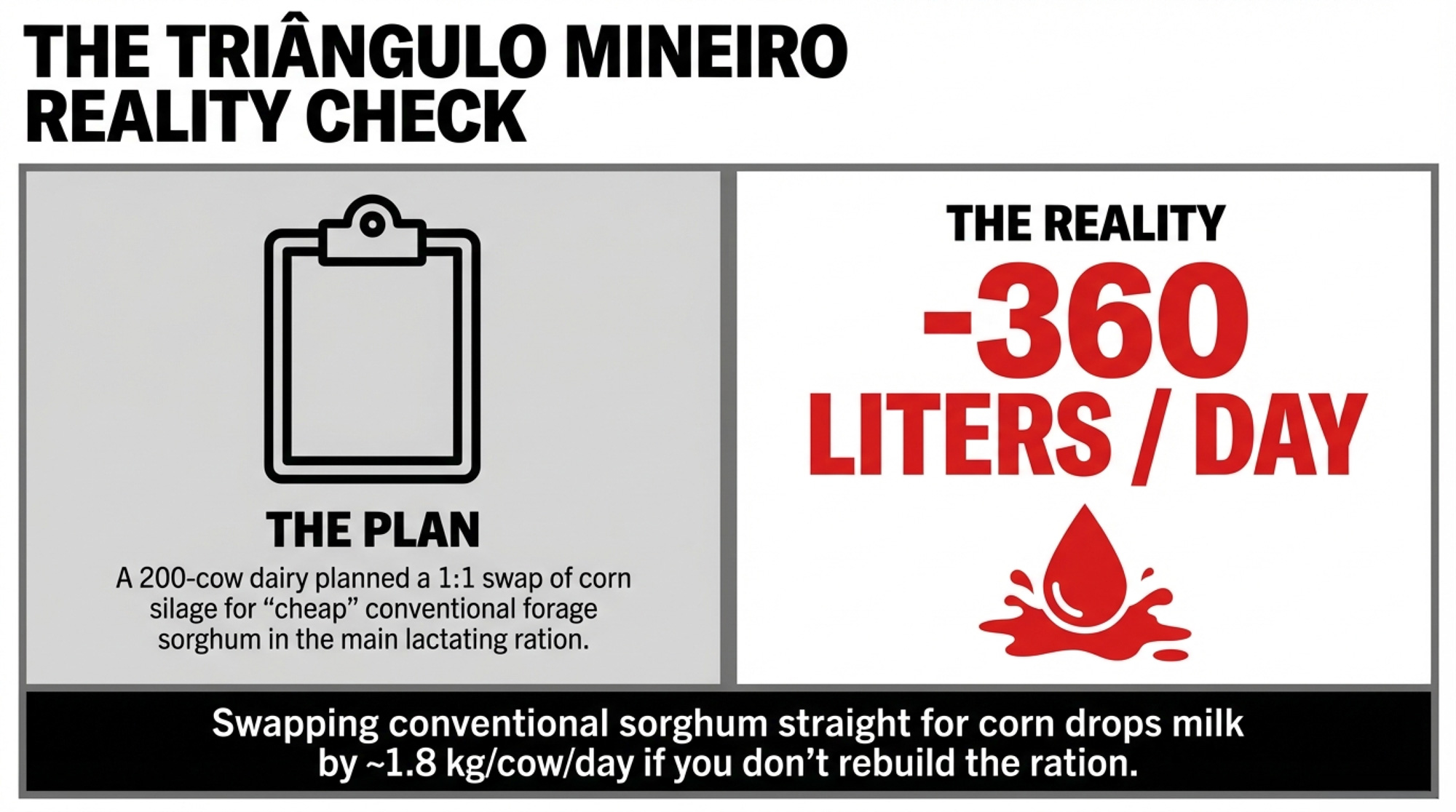
A 200-cow dairy outside Uberlândia ran the numbers on swapping corn silage for sorghum. The gap: 360 liters a day — and that was before they opened the bunker.

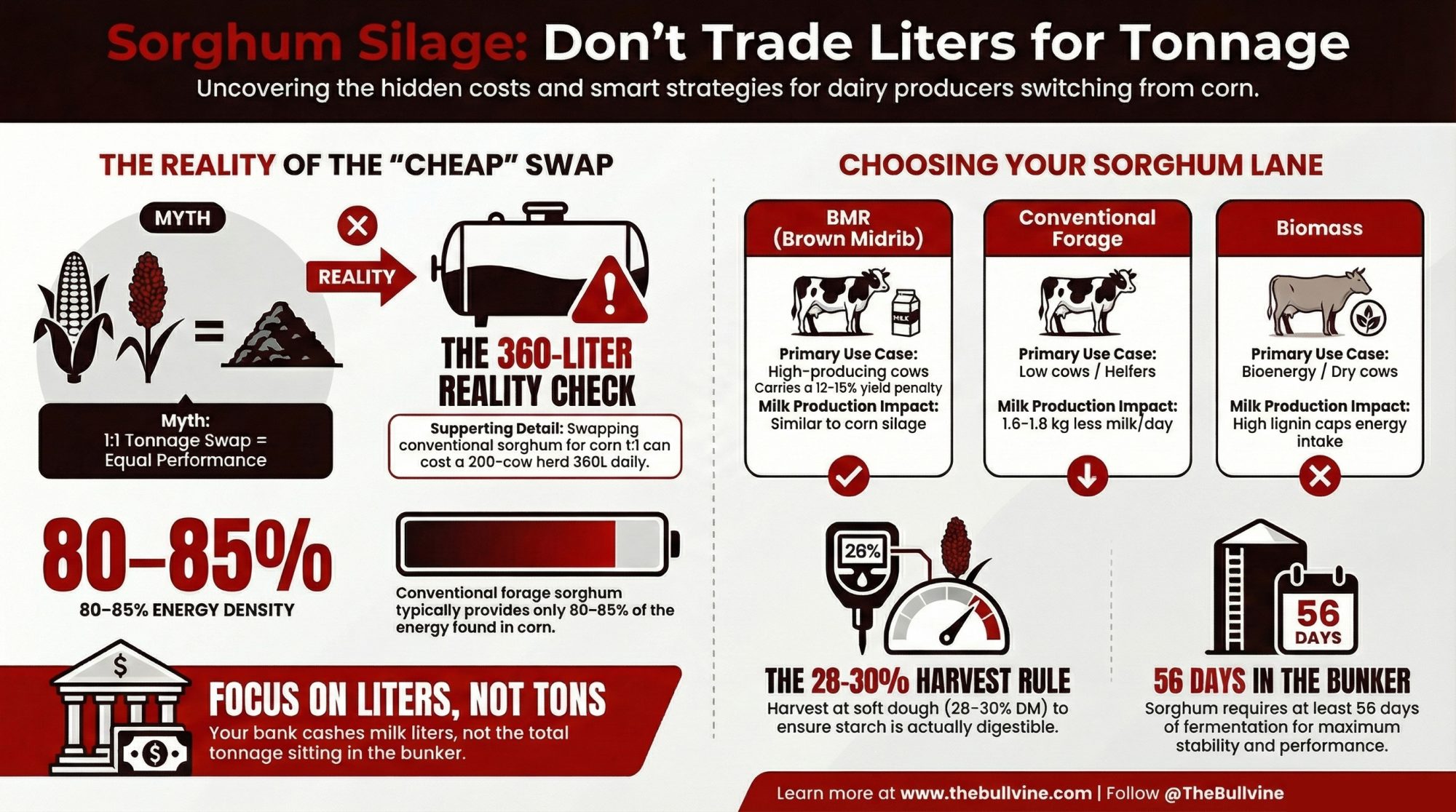
Executive Summary: A 200‑cow dairy in Brazil’s Triângulo Mineiro nearly gave up 360 liters of milk per day by treating “cheap” sorghum silage as a 1:1 swap for corn. The article walks through current Brazilian and international research showing conventional forage sorghum typically runs at roughly 80–85% of corn silage’s energy and can drop milk by about 1.6–1.8 kg/cow/day if you don’t rebuild the ration. It breaks sorghum into grain, forage, sweet, biomass, and BMR types and shows where each actually fits — including why biomass sorghum’s high lignin makes it a tonnage tool, not feed for 40-liter cows. BMR sorghum can hang with corn on milk in well‑managed diets, but brings a 12–15% yield penalty and a higher seed bill, so it only pencils out as a premium forage, not “cheap corn.” The piece also lays out harvest and fermentation rules specific to sorghum — soft dough at ~28–30% DM, serious processing, and roughly 56 days in the bunker — so you’re not throwing starch out the back end. Finally, it offers four “sorghum lanes” (split‑group, BMR partial replacement, one‑TMR moderate inclusion, or walk‑away) and a 30‑day assignment: pull 12 months of records, calculate feed cost per liter, and see which lane your herd can actually manage on paper.
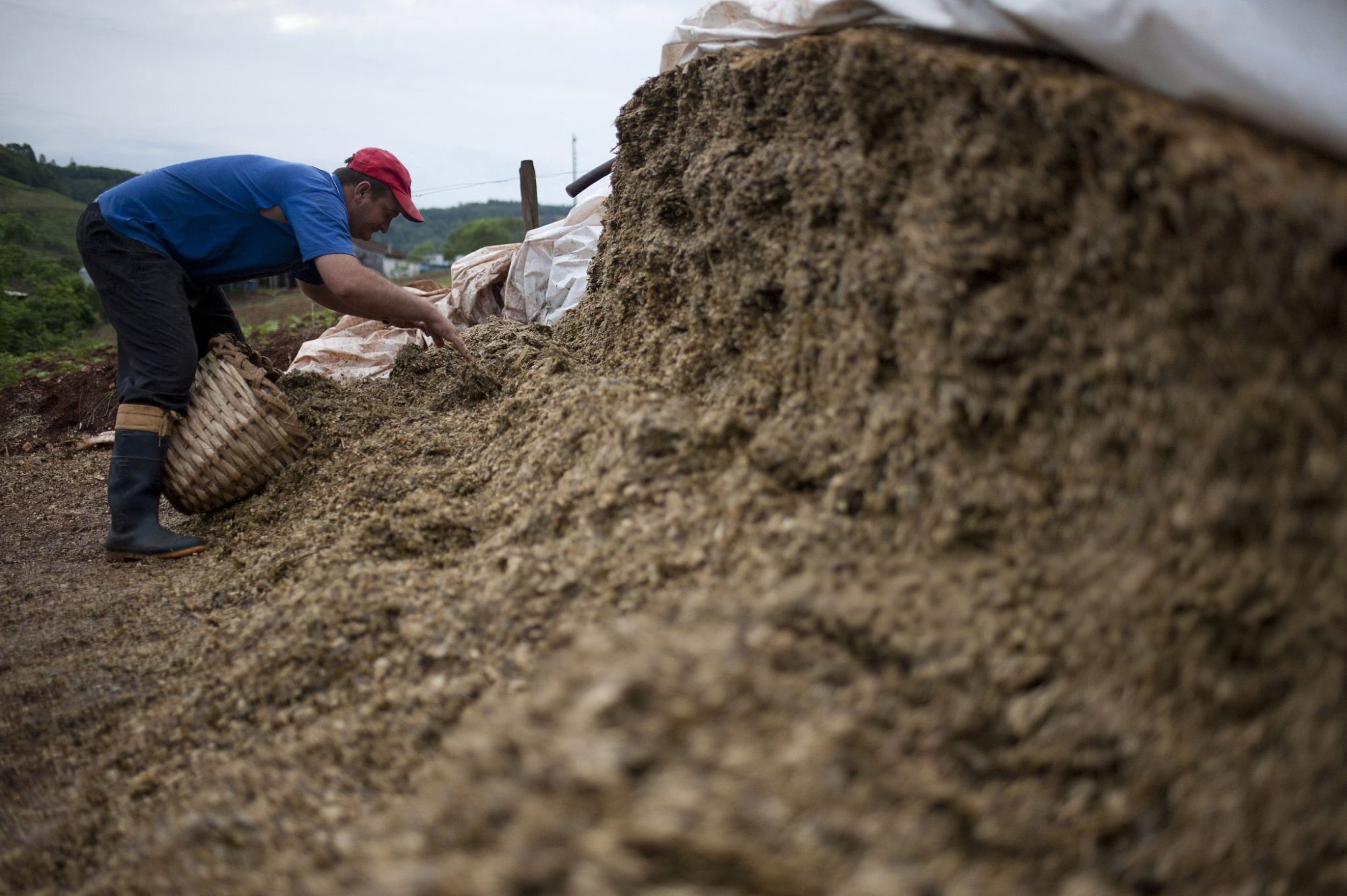
Sorghum vs corn silage

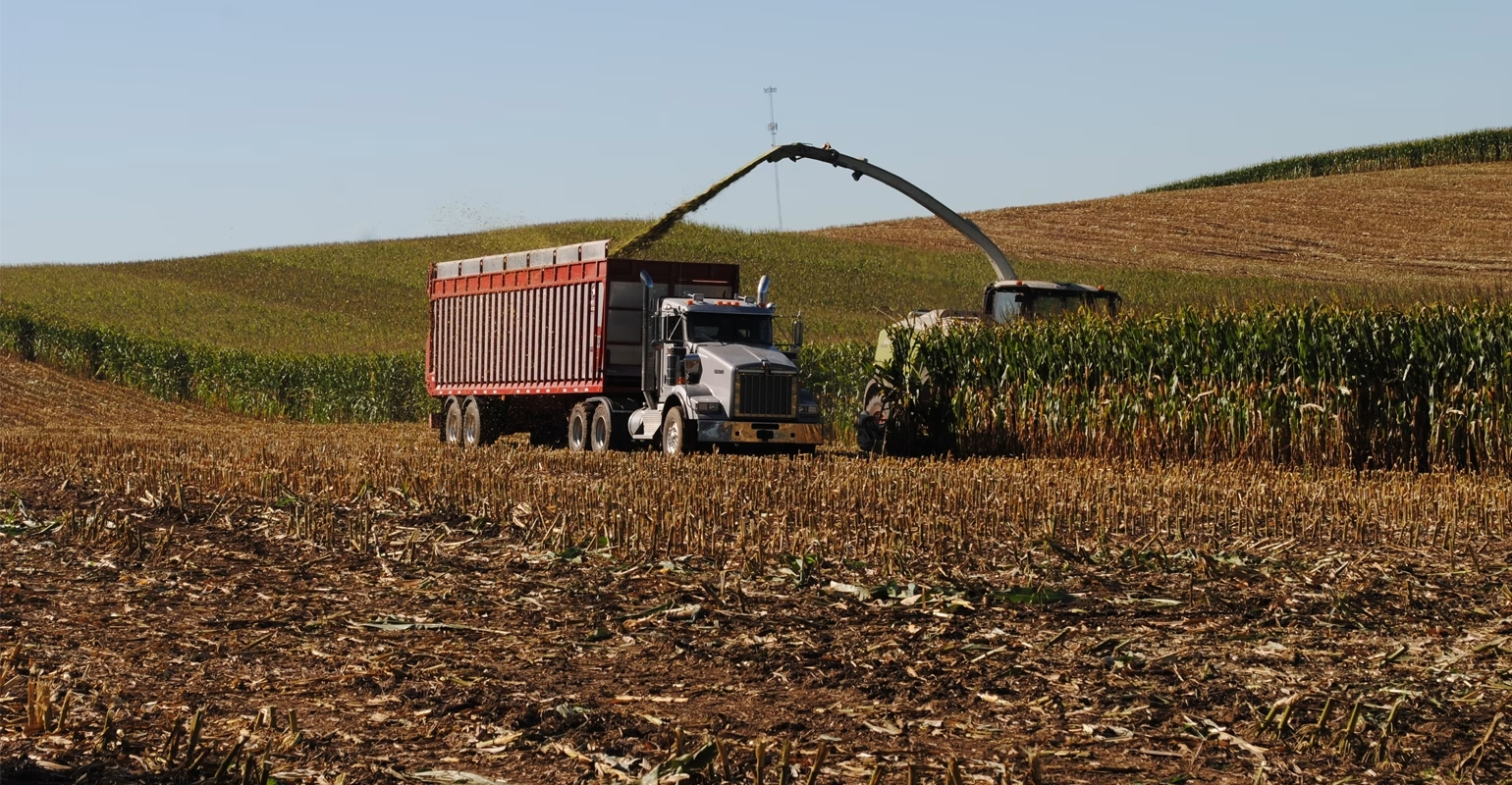
When a small dairy outside Uberlândia decided to lean harder on sorghum silage a couple of seasons ago, the move felt pretty logical. Sorghum would fill the bunkers when second‑crop corn missed rain, cut the seed bill, and keep corn reserved for the high group.

Then the family sat down with their nutritionist and ran the barn math. Swapping conventional forage sorghum straight in for corn, 1:1 in the main lactating ration, would cost them roughly 360 liters of milk every day on a 200‑cow herd — about 1.8 kg less milk per cow per day than a comparable corn‑silage diet. That 1.8‑kg gap lines up with a 2019 Journal of Dairy Science meta‑analysis that compared conventional sorghum, brown‑midrib (BMR) sorghum, and corn silages at the same dry matter intake.
They never made that full swap. But that number stuck. And it’s exactly why “cheap” sorghum silage is suddenly a hot, uncomfortable topic in a lot of Brazilian‑style climates.

What’s Really at Stake with Sorghum Silage in Brazil?

Brazil isn’t dabbling in sorghum anymore. According to recent CONAB‑aligned and USDA/FAS analyses, sorghum planted area climbed to around 1.5 million hectares in 2024/25, up about 6.5% from the previous season, with production projected near 5 million tons, roughly 12% more than 2023/24. Growth has been driven hard by the Cerrado and other water‑stressed regions where double‑crop corn is increasingly a weather gamble instead of a sure bet.

From the agronomy side, Embrapa’s national sorghum program and Brazilian economic studies all circle the same points. Sorghum:

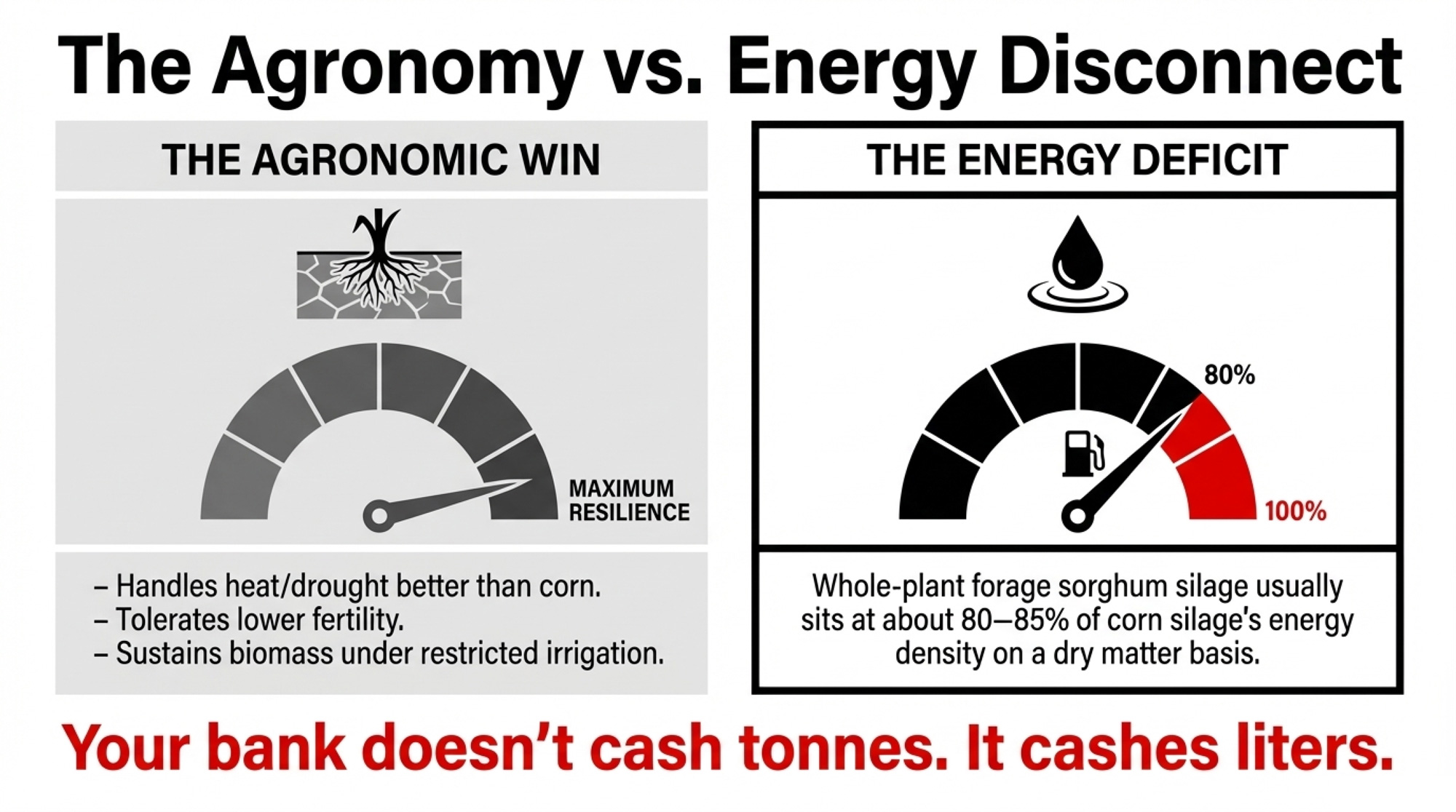
  • Handles heat and drought better than corn.
  • Tolerates lower fertility and marginal soils.
  • Often needs less fertilizer and crop protection to stay viable.

Work under restricted irrigation shows sorghum maintaining biomass production where corn yields drop sharply, with some trials reporting sorghum sustaining comparable biomass while using considerably less water, depending on hybrid and soil.

But your bank doesn’t cash tonnes. It cashes liters.
Feeding trials and meta‑analyses give a consistent story when both crops are harvested and ensiled properly:

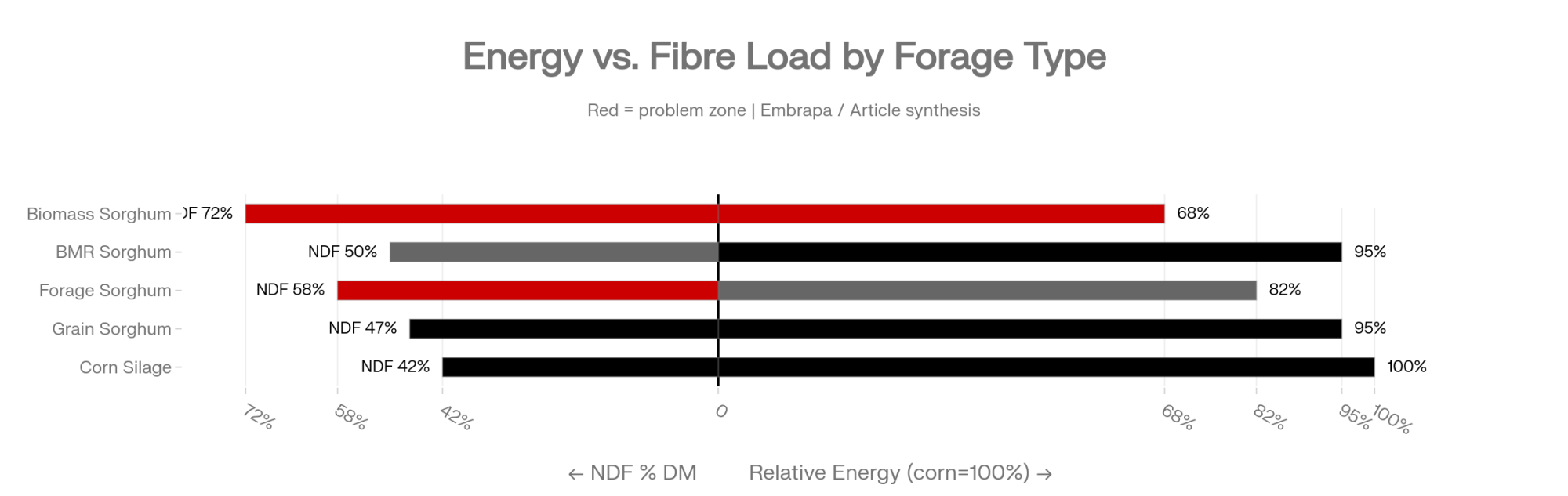
  • Whole‑plant forage sorghum silage usually sits at about 80–85% of corn silage’s energy density on a dry matter basis.
  • Across multiple experiments, cows on conventional sorghum silage diets produced roughly 1.6–1.8 kg less milk per day than cows on corn‑silage diets at similar dry matter intake.

Do that math on a 200‑cow herd, and you’re staring at something very close to 360 liters of milk per day if you treat conventional forage sorghum like a one‑for‑one corn replacement and don’t rebuild the ration.

The Triângulo family didn’t fully go there. They kept corn silage anchored in the high‑group ration and parked sorghum with low cows and heifers. That’s the only reason the 360-liter number stayed on paper and not in their milk sheets.

That’s the heart of the sorghum silage story right now. It’s not “good vs bad.” It’s whether you’re measuring it in tonnes per hectare or feed cost per liter of milk.

Are You Growing the Right Sorghum for the Right Cows?
One of the quickest ways to get burned is talking about “sorghum” like it’s one crop. Embrapa doesn’t even do that. Their breeding work splits sorghum into at least five main types:

  • Grain sorghum — shorter plants, high grain proportion, lower whole‑plant yield, high energy density.
  • Forage sorghum — taller plants, strong fresh‑matter yields, more fiber, less starch than grain sorghum or corn.
  • Sweet sorghum — juicy, high‑sugar stems often used for juice or biofuels.
  • Biomass sorghum — very tall bioenergy types bred for fiber and tonnage.
  • Broom sorghum — niche type for panicles.

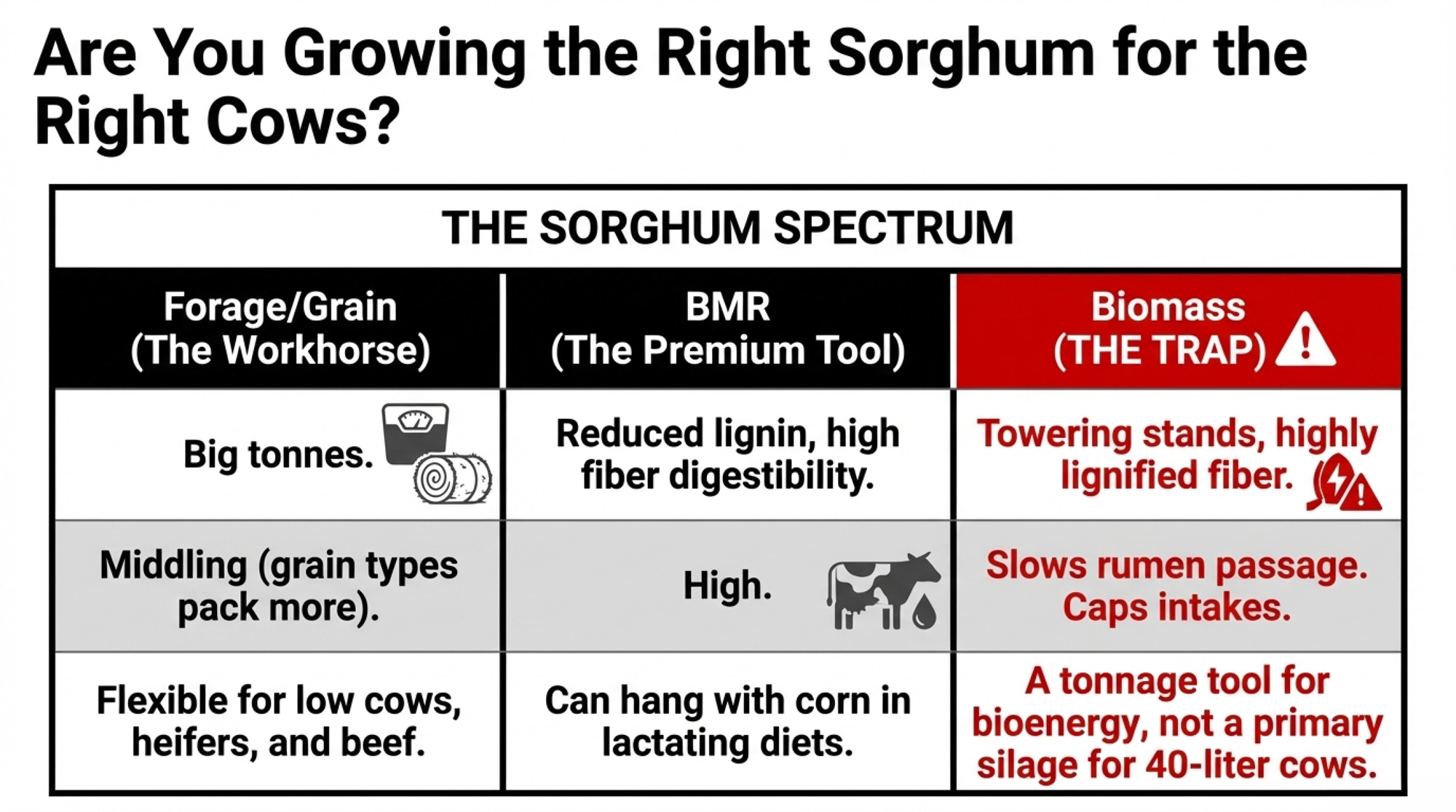
On Brazilian dairy farms, the ones that really show up in bunkers are forage sorghum and some dual‑purpose grain sorghum. Grain sorghum silage gives up tonnage but packs more energy per kilogram of dry matter thanks to the head. Forage sorghum is the workhorse compromise: big tonnes, middling energy, flexible enough for low cows, heifers, and beef.

Biomass sorghum is a different animal. Embrapa and recent genotype work under tropical conditions show that, compared with forage sorghum, biomass types tend to bring:

  • Very high fresh‑matter yields from very tall plants.
  • Very high NDFlow crude protein, and higher lignin.

That lignified fiber doesn’t just look impressive across the field. It sits in the rumen, slows passage, and caps how much energy a 40-liter cow can eat. High lignin drags down fiber digestibility; more of that massive biomass passes through the cow without doing much work.

From the road, biomass sorghum looks brilliant — towering stands, heavy wagons, deep bunkers. At the bunk, it can feel more like a trap when intakes slide, and you see stem fiber coming out the back end.

Brazilian researchers are straightforward about this. Right now, biomass sorghum is best treated as:

  • tonnage tool for low‑demand cattle or bioenergy, or
  • secondary forage that you use carefully in dairy rations when you’re ready to pay for extra grain.

The dairies that are genuinely happy with sorghum tend to do one simple thing: match the sorghum type to the job.
Can BMR Sorghum Really Get Close to Corn Silage?

The brown‑midrib (BMR) trait is where sorghum stops being just “cheap tonnage” and starts looking like a serious dairy forage.

BMR sorghum has a mutation that reduces lignin in the plant. Less lignin usually means more digestible fiber, which can support higher intakes and more milk. In 2019, Sanchez‑Duarte and colleagues published a meta‑analysis of nine experiments looking at cows fed:

  • Conventional sorghum silage (CSS)
  • Conventional corn silage (CCS)
  • BMR sorghum silage (BMRSS)

They found:

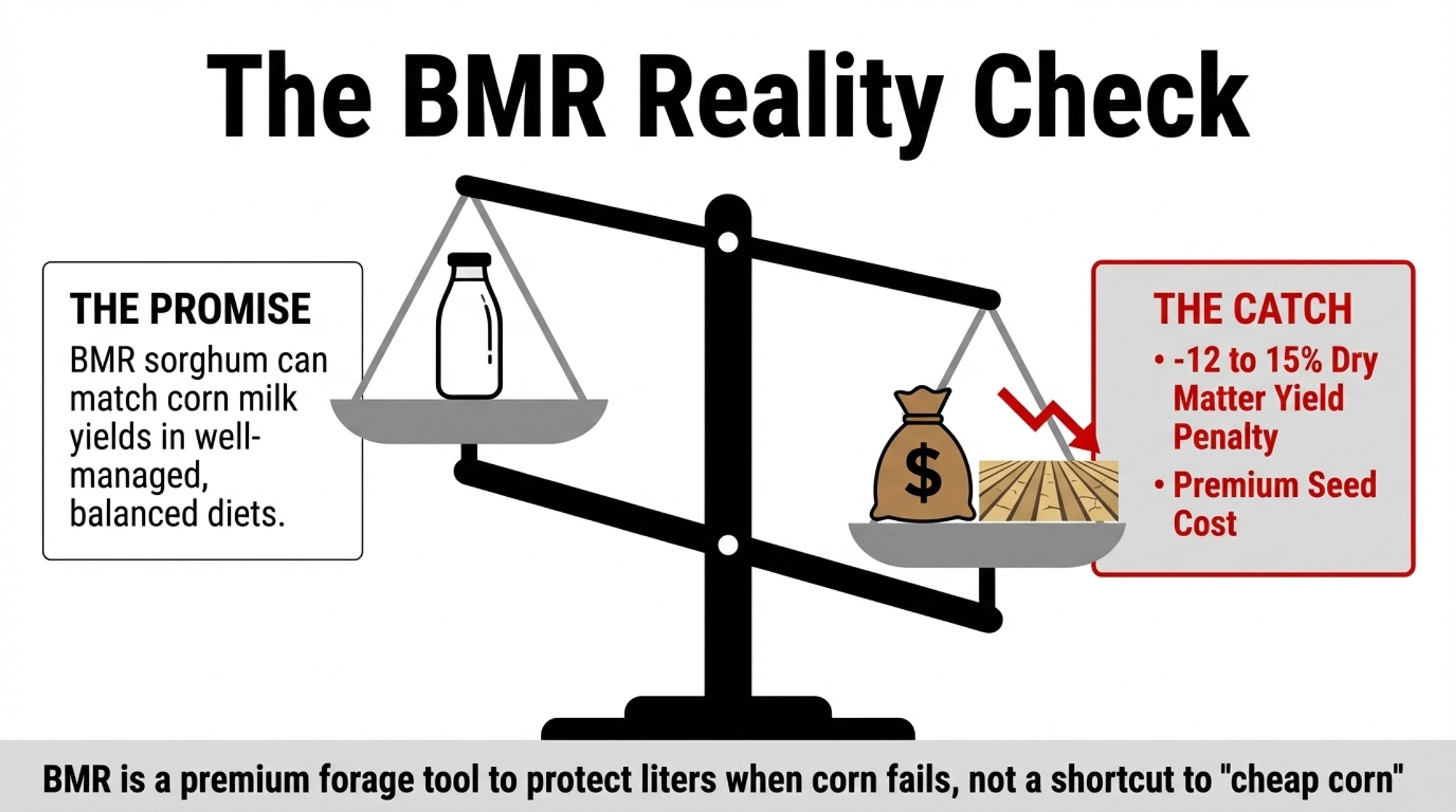
  • Cows on BMR sorghum silage produced similar milk yield to cows on corn silage when diets were properly balanced for energy and nutrients.
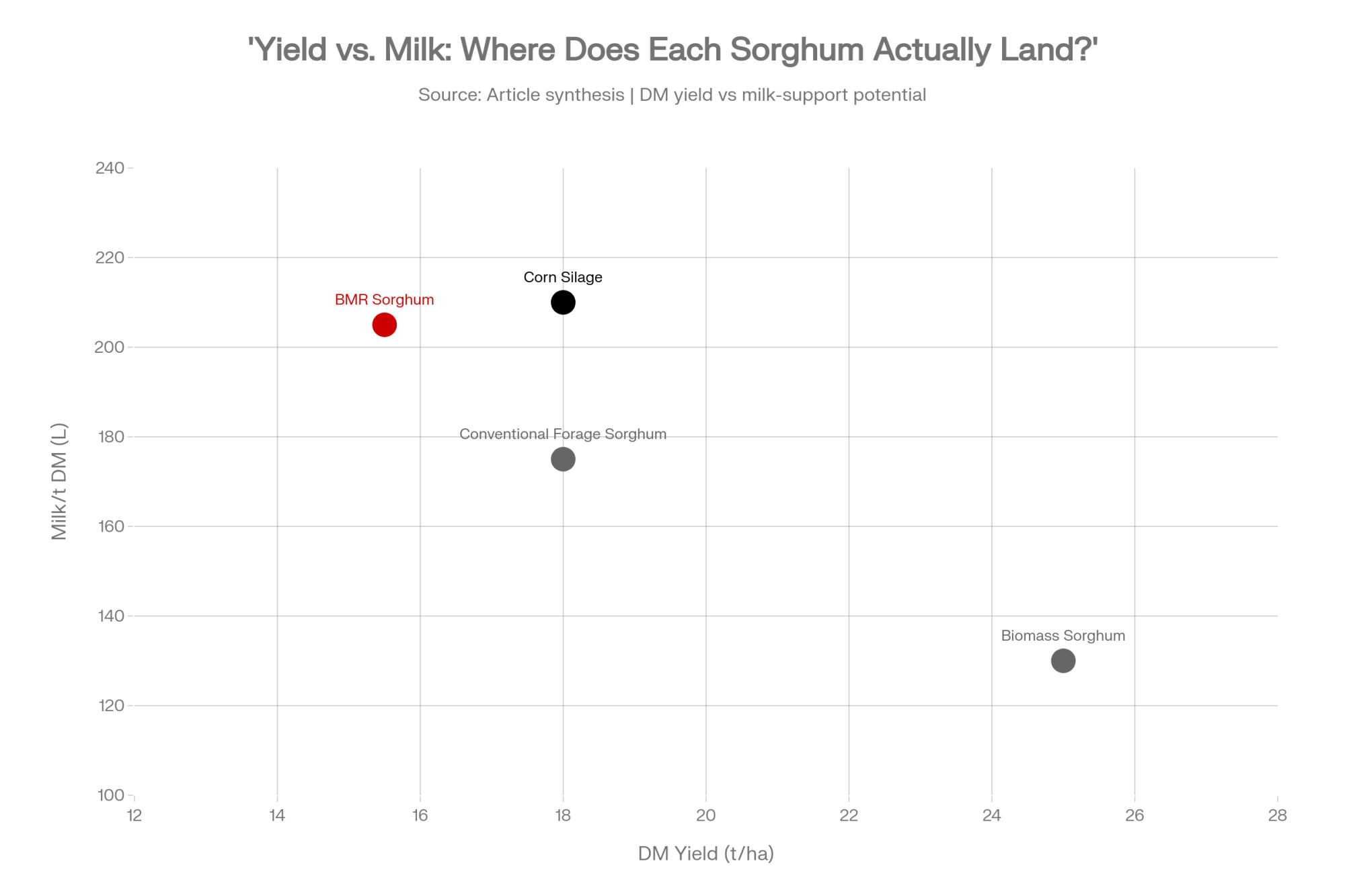
  • Compared with BMR diets, cows on conventional sorghum silage produced about 1.64 kg/day less milk and had 0.09 percentage points lower milk‑fat concentration, with lower fat yield.
  • BMR sorghum diets tended to lift milk fat percentage slightly and drop protein percentage slightly compared with corn silage diets, but total milk and component yields were in the same neighborhood.

U.S. university work says roughly the same thing. Trials from the Upper Midwest and the South report that diets based on BMR forage sorghum silage can deliver similar DMI and milk yield to corn‑silage diets when maturity, kernel processing, and ration starch are managed well.
So yes, under the right management, BMR forage sorghum can get very close to corn silage on milk — and in plenty of trials, essentially match it. But there’s fine print that matters in Brazilian‑type systems:

  • A 2025 meta‑analysis on BMR sorghum reports about a 12–15% reduction in dry matter yield for BMR lines compared with non‑BMR sorghums across trials.
  • BMR seed usually carries a premium price over conventional forage sorghum.
  • Embrapa emphasizes that BMR breeding is active, but commercial hybrid availability and adaptation still vary by region and seed supplier.

Put that together, and your cost per tonne of BMR sorghum silage can land similar to or higher than corn silage, depending on yield and seed deals. For a high‑output herd dealing with drought or input costs, that can still be a smart trade if BMR sorghum helps protect liters when corn fails. But it only makes sense if you treat BMR as a premium forage tool, not a shortcut to “cheap corn.”
Are You Letting Corn Protocols Ruin Your Sorghum Silage?

The next failure point isn’t genetics. It’s harvest and fermentation.

With corn, pushing toward ⅔–¾ milkline usually buys more starch, and a decent kernel processor will bust open even hard kernels. Harvesting around 32–35% dry matter fits the crop and the bunker.

Sorghum doesn’t behave the same. If you chase more starch past soft dough into hard dough without serious processing horsepower, total starch might tick up on the lab sheet, but starch digestibility heads the wrong way. Sorghum berries are smaller and harder than corn kernels. If a processor doesn’t crack them, they come out the back end as expensive bird feed — exactly what a lot of people see in manure behind poorly harvested forage sorghum.
Brazilian and U.S. work on sorghum maturity and silage quality points to a different target.

  • A Brazilian study on sorghum BRS‑610 found that ensiling between the milky/dough and dough stages gave very good fermentation and nutritive value.
  • Forage sorghum trials in Texas and other hot regions show soft‑dough harvest balances yield with lower NDF and better energy.
  • That typically lines up with whole‑plant dry matter in the high‑20s to around 30%, rather than pushing to 35% and beyond.

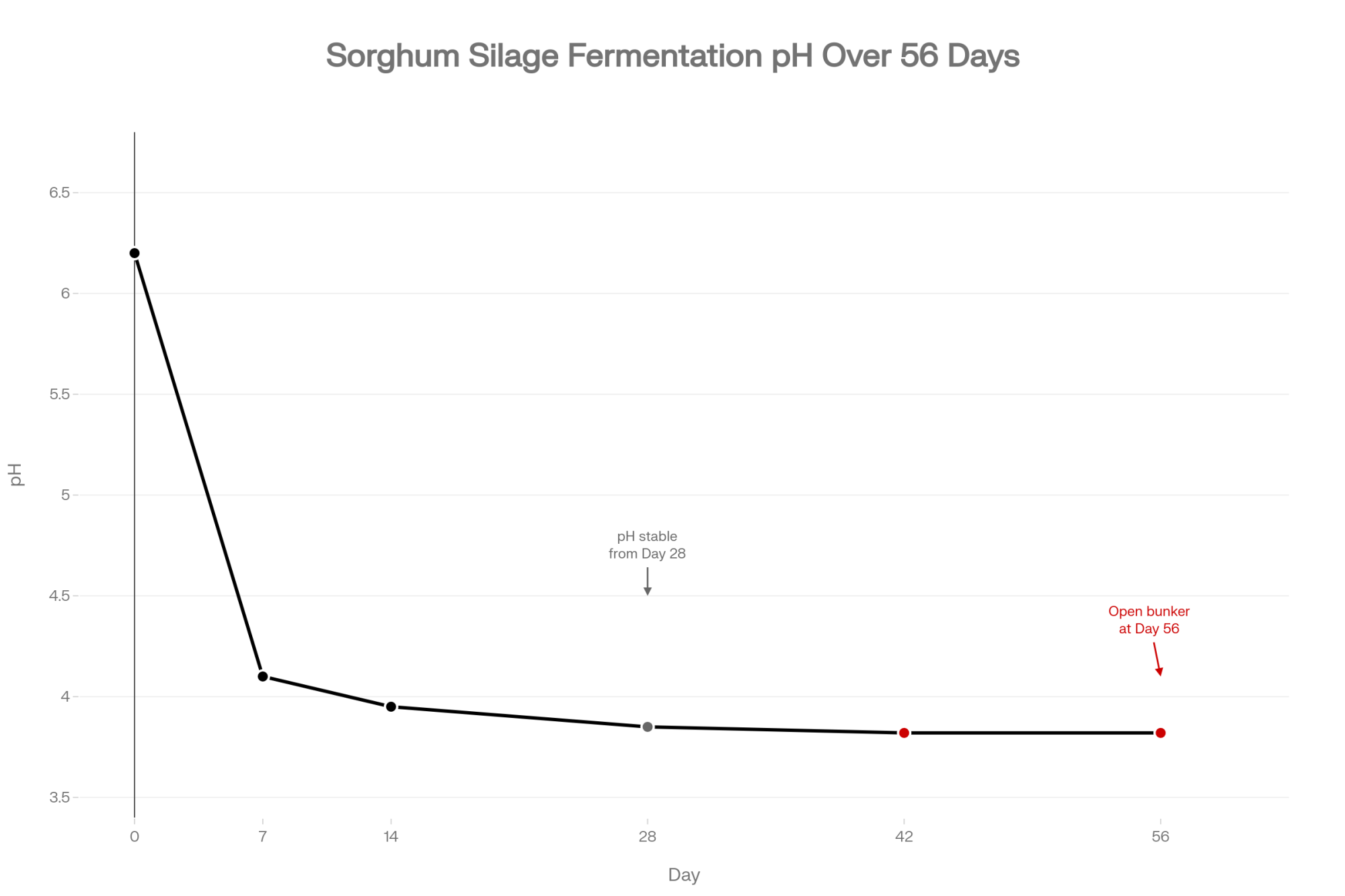
On fermentation time, a 2022 study following sorghum stalk silage from Day 0 to Day 56 found that pH reached its lowest point by Day 7 and fermentation parameters stayed stable from about Day 28 through Day 56, with good preservation and low dry matter losses. A 2021 study on whole‑plant sorghum silage reported improved aerobic stability and heterofermentative co‑fermentation at 56 days when inoculated with Lactobacillus plantarum and L. buchneri. A 2018 trial with sorghum silages showed that adding L. buchneri reduced yeast populations and increased aerobic stability, confirming the role of heterofermentative inoculants.

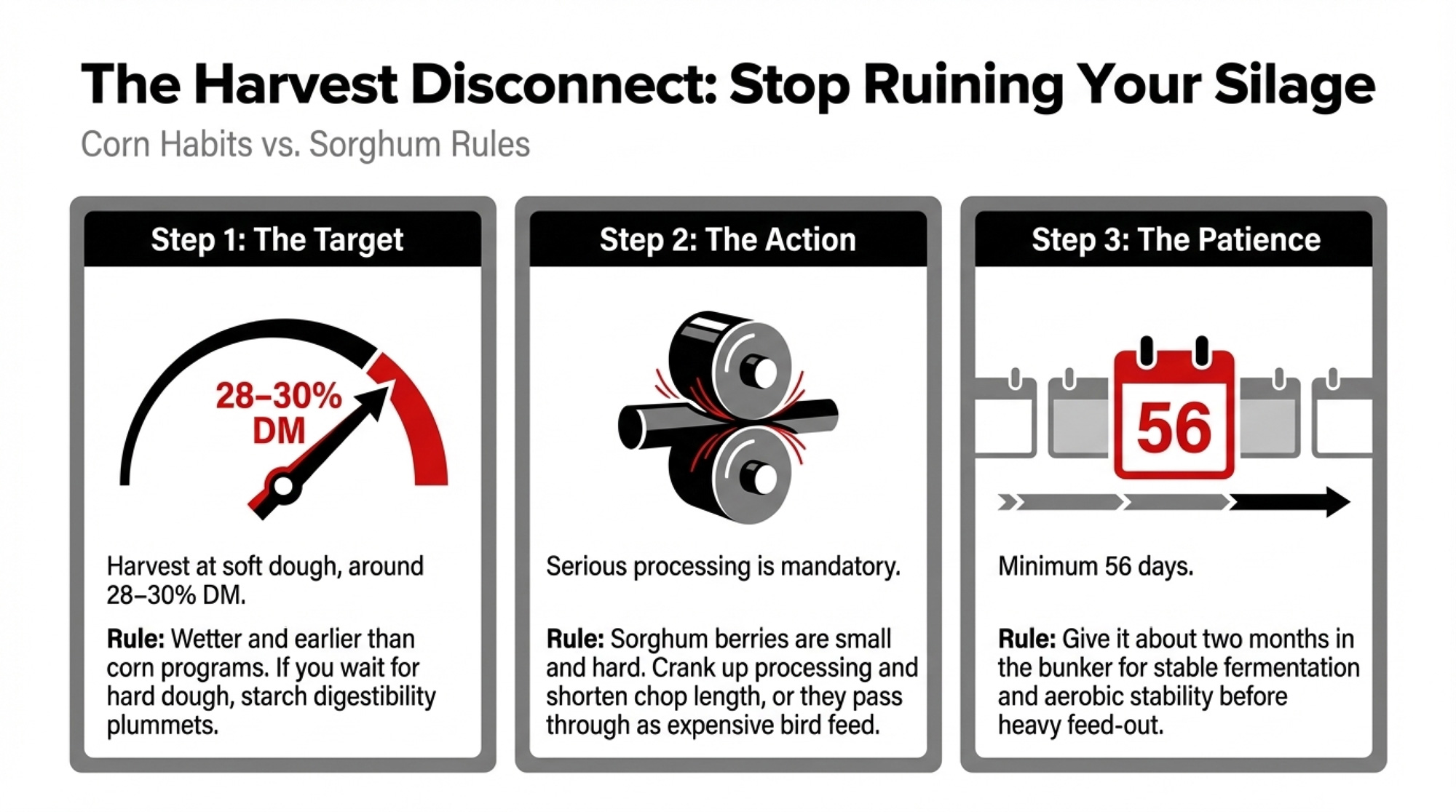
Taken together, they all point to the same practical window: aim to harvest at soft dough around 28–30% DM, then give sorghum silage about two months in the silo before you really lean on it.

If you’re already committed to sorghum, the protocol that protects your investment looks like this:

  • Aim for soft dough at about 28–30% dry matter. Earlier and wetter than a lot of corn programs, but where berries are still crackable, and starch is usable.
  • Crank up processing and shorten chop length. Tighten roll gaps and chop finer so more berries are actually opened. If you don’t have a processor, chop shorter to improve exposure and packing.
  • Give it time in the bunker. Plan on at least 56 days of fermentation before heavy feed‑out; multiple studies around 56–60 days show stable sorghum silages with strong fermentation profiles and better aerobic stability when inoculated.
  • Use the right inoculant on sweet or high‑sugar types. Research on whole‑plant sorghum and sweet sorghum silages shows that heterofermentative lactic acid bacteria, especially strains containing L. buchneri, increase acetic acid, suppress yeasts, and extend aerobic stability.

No harvest protocol will turn conventional forage sorghum into BMR or corn. But a sloppy harvest can easily give away another chunk of value between the field and the face.
Where Sorghum Actually Fits: Triângulo, Mato Grosso, the South, and Cariri

The Triângulo family that did the 360-liter math isn’t the only one treating sorghum as “insurance.” A 2024 characterization of corn silage from dairy farms in the Triângulo Mineiro region found that many herds were already leaving performance on the table because of silage quality issues and recommended more targeted technical assistance and better forage management. In that context, using sorghum to guarantee bunker volume and control per‑hectare costs while keeping corn silage concentrated in high‑producing groups is a pattern that lines up with how nutritionists describe their strategies in similar Brazilian climates.

In Mato Grosso and other parts of the Cerrado, sorghum has a natural lane in integrated crop‑livestock systems and as a second‑crop option behind soybeans. A 2022 longitudinal study of Brazilian food production shows cropping systems in the Midwest shifting toward more resilient, lower‑input species as heat and water stress trends intensify. Climate‑impact modeling on corn/soy double‑cropping indicates that future drought scenarios hit second‑crop corn yields especially hard in these regions. When late corn hits flowering and grain fill under high temperatures and erratic rain, its yield potential drops off fast — while sorghum’s physiology gives it more room to cope.

In parts of southern Brazil, agronomists like Dr. Arthur Behling Neto have seen a different picture. He notes that in the south of Brazil, sorghum “does not work properly,” while it performs much better in drier eastern regions like north of Minas Gerais and south of Bahia, where rainfall is more limiting. The lesson isn’t “never plant sorghum in the south.” It’s “don’t assume a Cerrado or Cariri playbook will work the same way in a completely different climate without local data.”

In Cariri, Paraíba, sorghum isn’t a nice‑to‑have option; it’s the backbone. A 2014 survey of 100 dairy farms in Caturité and Boqueirão found 88% cultivated sorghum as silage forage for feeding dairy cows, making sorghum forage the most commonly used silage type there. Under that kind of rainfall pattern and soil, “just grow more corn” isn’t realistic. Those producers still have to respect sorghum’s fiber and energy limits like anyone else — they don’t have many second chances if they bet wrong.

Across those regions, the common thread is simple. Sorghum works when it reduces drought and input risk without wrecking your feed cost per liter of milk. It fails when you buy it in tonnes and feed it like corn.

Which Sorghum Lane Are You Actually In?

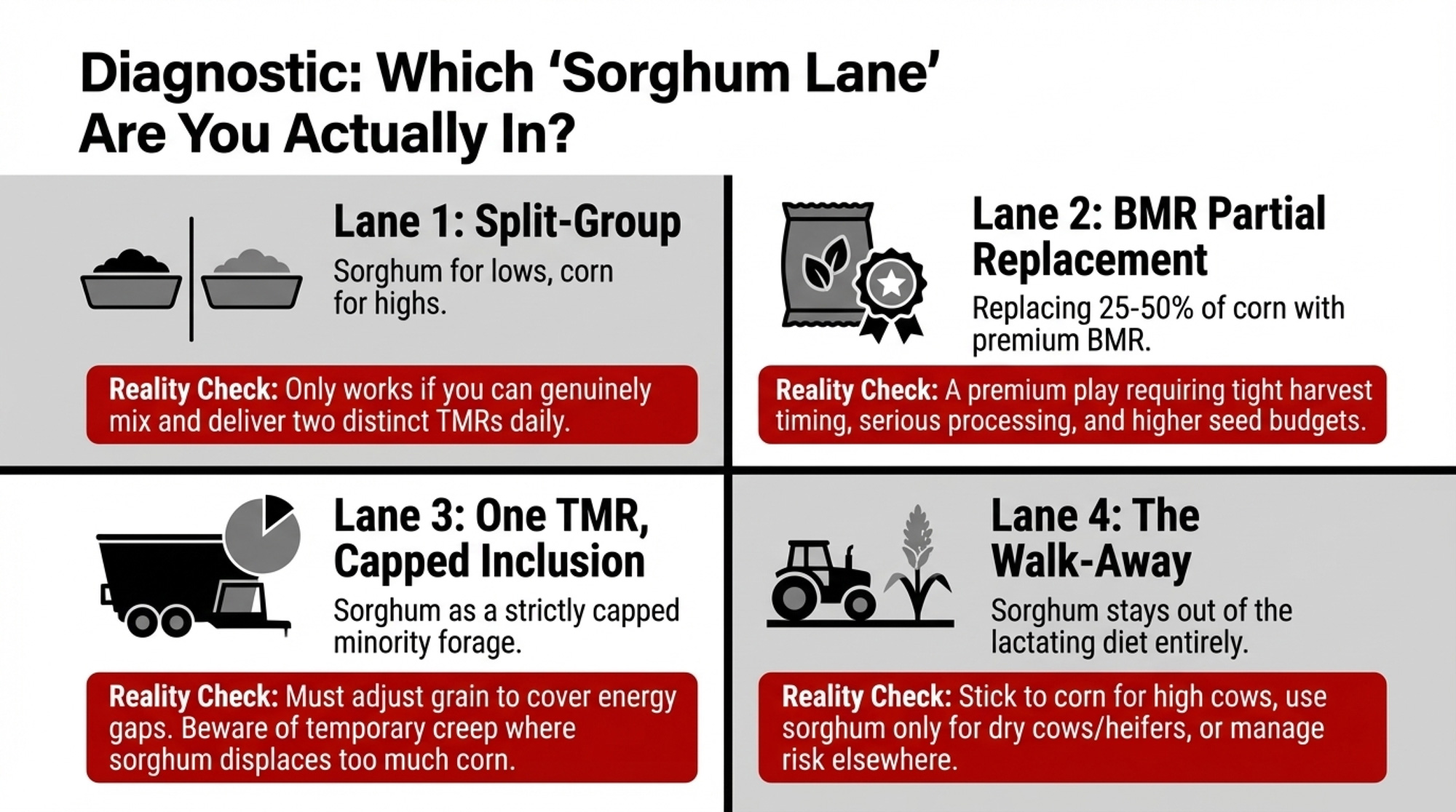
Listen to enough producers and nutritionists talk through their forage programs, and four clear “sorghum lanes” show up. It’s worth being honest with yourself about which one your farm actually lives in — not which one you recite when the seed rep pulls in.
Lane 1: Split‑Group — Sorghum for Lows, Corn for Highs

This is the lane many Triângulo‑type dairies aim for.

  • Corn silage stays anchored in the high‑group ration.
  • Conventional forage sorghum feeds low producers, late‑lactation cows, heifers, and dry cows.

It only really works if:

  • You truly feed two distinct TMRs every day.
  • Your pen layout actually keeps high and low cows separate.
  • Your nutritionist actively rebuilds both rations when silage inventories shift.

On an 80–120‑cow herd with two pens and disciplined feeding, that’s achievable. On a “one TMR and hope the lows eat less” operation, it’s fiction. If you can’t reliably run two rations, you’re not in this lane — even if your whiteboard says so.

Lane 2: BMR Sorghum as Partial Corn Replacement

Here, you’re using BMR forage sorghum to replace maybe 25–50% of corn silage in the high‑group ration.

The 2019 meta‑analysis and newer BMR work say this can hold milk production at corn‑silage levels when diets are handled properly. But BMR sorghum:

  • Brings roughly a 12–15% yield penalty in dry matter vs conventional sorghum lines across trials.
  • Costs more in seed.
  • Needs tight harvest timing and serious processing to cash in on its fiber digestibility.

This lane fits if you’re fighting drought and forage cost:

  • You can consistently source BMR hybrids adapted to your region.
  • You have processing capacity for small, hard berries.
  • You’re ready to manage cutting dates and fermentation like a hawk.

It’s a premium play. Treat it like one.

Lane 3: One TMR, Some Sorghum, No Drama

Plenty of mid‑size herds land here, whether they admit it or not.

They run one main lactating TMR and use sorghum as a minority forage, with corn or other high‑energy options still anchoring the ration. They cap sorghum inclusion rates and tweak concentrates as inventory changes.

This lane works if:

  • You’re honest that you’re a one‑TMR outfit because of labor or barn design.
  • You set a realistic max sorghum percentage in the lactating ration and stick to it.
  • You and your nutritionist actually adjust grain and other forages when sorghum replaces corn in the pile.

The main risk is “temporary” creep: sorghum quietly displaces more corn than planned “just for this month,” and the ration never gets rebuilt. Your bulk tank tells the story later.

Lane 4: Walk‑Away — Sorghum Stays Out of the High Group

The last lane is the walk‑away: sorghum doesn’t go near high‑cow diets.

That’s a perfectly valid decision when:

  • You’re in a region where corn silage consistently performs and drought risk is manageable.
  • Your current silage program already hits your feed cost per liter targets.
  • You’re not under pressure to plant sorghum just because it’s on the flyer.

Even in this lane, sorghum might still earn a spot with dry cows, heifers, or beef animals. But you’re clear that, in your climate and infrastructure, corn is the better dairy forage bet — and you’ll manage weather and cost risk with other tools.

In the next 30 days, the most useful move you can make is simple:

  • Pull the last 12 months of milk and feed records.
  • With your nutritionist or advisor, calculate feed cost per liter of milk for your current setup.
  • Then ask one direct question:

“If we brought sorghum into this system — in a lane that actually fits our pens and labor — what would feed cost per liter look like with the ration you’d really build?”

If nobody can answer that clearly on paper, you’re not ready to plant sorghum for your dairy cows yet.

LaneWho It Actually FitsCore Requirement⚠️ Red FlagFeed Cost/Litre Risk
Lane 1: Split-Group80–120-cow herds with 2 real pens and daily TMR disciplineTrue two-ration feeding every dayIf you run “one TMR and hope lows eat less” — you’re not in this laneLow, if executed; HIGH if pen separation fails
Lane 2: BMR Partial ReplacementHigh-output herds fighting drought or input costs; strong processing equipmentBMR-adapted hybrid available locally; tight harvest timing and fermentation12–15% DM yield penalty + premium seed = cost/tonne often equals cornNeutral to low — only if BMR protects litres corn cannot
Lane 3: One-TMR Moderate InclusionMid-size herds with labor or barn constraints; honest single-ration operationsHard cap on sorghum % in ration; active ration rebuilding as inventory changes“Temporary” creep — sorghum quietly displaces more corn than planned, ration never rebuiltMedium-HIGH if inclusion drifts; Low if cap is respected
Lane 4: Walk-AwayRegions where corn silage consistently performs; current feed cost/litre already on targetNothing — sorghum stays out of the high group entirelyPlanting sorghum because it’s “on the flyer” — not because the numbers say soLowest risk — manage weather/cost with other tools

What This Means for Your Operation

  • Judge sorghum on feed cost per liter, not R$/tonne. Before you chase “cheap” tonnage, work with your nutritionist to run at least one real ration scenario in which sorghum replaces part of your corn silage, and see what happens to liters and feed cost per liter on paper.
  • Be brutally honest about how many TMRs you can actually run. If barn layout and labor effectively give you a single lactating ration, forget complex split‑group sorghum strategies. You’re either in the moderate‑sorghum single‑TMR lane or the walk‑away lane.
  • Know exactly which sorghum you’re planting. Before you buy seed, confirm whether the hybrid is grain, forage, sweet, biomass, or BMR. For high‑producing cows, forage and BMR sorghums are your main options; biomass types are usually tonnage tools for low‑demand cattle or bioenergy, not a primary silage for 40-liter cows.
  • Match harvest and fermentation to sorghum, not corn habits. If your crew is going to wait until hard dough, as we do with corn, and your processor isn’t dialed in, you should expect more undigested berries and lower starch digestibility. Target soft dough around 28–30% dry matter, and plan on about two months of fermentationbefore you feed sorghum heavily.
  • Treat BMR sorghum as a premium tool, not a shortcut. BMR forage sorghum can come very close to corn silage on milk in well‑managed diets, but the 12–15% yield penalty and higher seed cost mean your cost per tonne often climbs. It makes sense when it protects litres you can’t afford to lose, not when it’s sold as “cheap corn.”
  • Use this month for barn math, not brochure math. In the next 30 days, actually sit down with your numbers and run at least one sorghum scenario in each lane that could realistically fit your herd. If the answer on feed cost per litre or expected milk change feels fuzzy, you’ve got more homework before you drop a sorghum planter in the ground.
Key Takeaways

If you don’t know your current feed cost per litre, adding sorghum to your system is a blind bet — that’s the first report you should pull before you plant a hectare.

If your barn and labor setup only support one main lactating TMR, either cap sorghum inclusion in that ration at a level your nutritionist is comfortable putting on paper, or keep sorghum out of the high group entirely and use it for lows, dry cows, and beef animals.

If the hybrid on the quote sheet is a biomass sorghum, assume it’s a tonnage‑first forage for low‑demand animals, not a primary silage for your top group, unless you’re willing to buy a lot more grain to cover its fiber load.

If you have access to BMR forage sorghum hybrids adapted to your region, treat them as a premium: they can get very close to corn-on-the-ear in milk under the right management, but they won’t be cheap, and they won’t rescue a ration that’s already short on energy.

Next time someone offers you a screaming deal on sorghum seed, don’t just ask, “How many tonnes can I get?” Ask: “Where, exactly, in my herd can this forage live without costing me liters?” If you can’t answer that on one sheet of paper, it might not be such a bargain.

Learn More

Unlocking the Potential of Tailored Nutrition with Automated Milking Systems

Boost your dairy farm’s efficiency with nutritional strategies for automated milking systems. Discover how diet impacts milk production and milking behavior.

Imagine a system that not only milks your cows precisely but also provides them with specialized feed, all while freeing up your time. This is the reality of Automated Milking Systems (AMS), a disruptive technology transforming the dairy sector. As more farms use these technologies, improving their efficiency has become critical. AMS simplifies milking and delivers valuable data for better herd management and production. The efficiency of AMS is highly related to the farm’s nutritional strategy. Nutritional techniques are the foundation of productivity. When used with AMS, the proper feed formulations can significantly increase milk output and enhance quality, making it a powerful tool for dairy farmers. Join us as we investigate nutritional practices on AMS-equipped dairy farms, emphasizing critical food components and their influence on milk production and milking habits, allowing you to maximize your AMS.

Automated Milking Systems: Revolutionizing Dairy Farming for Better Productivity and Welfare 

AMS has changed dairy production, providing enormous advantages to farmers. It increases flexibility, reduces the need for a set milking schedule, and enhances work-life balance. However, it’s important to note that AMS presents challenges, such as the initial installation cost and potential technical issues. AMS also collects information on each cow’s milk output, composition, and health, which aids in improved herd management. Furthermore, AMS may boost milk production by allowing more frequent milking and decreasing the stress associated with conventional milking regimens.

AMS aids dairy producers by allowing them to manage their time and eliminate the requirement for a set milking schedule. This promotes work-life balance and collects data on each cow’s milk output, composition, and health, allowing for improved herd management. For instance, AMS can provide real-time data on milk yield, fat, and protein content and even detect early signs of health issues in cows.

There are two kinds of AMS systems: free-flow and guided-flow. Cows may visit the milking units anytime using free-flow systems, which generally leads to improved milking frequency and milk output. However, careful management is essential to prevent congestion. Guided-flow systems employ lanes and gates to steer cows, improve milking unit utilization, and shorten wait times. They may reach different voluntary milking levels than free-flow systems.

Milking behavior varies per system. Free-flow systems promote more frequent milking, which may increase milk output but result in more milking refusals if not adequately controlled. On the other hand, guided-flow systems provide a regulated environment, minimizing refusals and giving you a sense of control over the milking process.

As a dairy producer, understanding the specifics of each AMS type and how it affects cow behavior and milking performance is crucial. This knowledge empowers you to choose the optimal strategy, leading to increased production, animal care, and sustainability in dairy farming. It’s about being in the know and making informed decisions.

Optimizing Dairy Cow Nutrition with Partial Mixed Rations (PMR) and Automated Milking Systems (AMS) 

Partial Mixed Rations (PMR) are essential for dairy cow nutrition, particularly on farms equipped with Automated Milking Systems (AMS). PMR gives cows a semi-complete diet at the feed bunk, supplemented with concentrated feeds at the AMS. This dual technique promotes cow health and production by providing a balanced intake of vital nutrients.

A PMR contains forages, cereals, proteins, vitamins, and minerals. Critical nutrients like corn and barley silage provide fermentable carbohydrates for increased milk output. Higher ether extract (EE) levels in PMR have been related to higher milk production because they provide the energy required for lactation.

The PMR’s constituents significantly impact the composition of milk. Forage varieties such as haylage and corn silage influence milk protein percentages, while the PMR to AMS concentrate ratio influences milk fat levels. A higher PMR-to-AMS concentrate ratio increases milk fat content, ensuring dairy products satisfy quality criteria.

Overall, well-formulated PMR improves dairy herd nutrition and directly influences milk production efficiency and composition. This approach is critical for AMS-equipped farms, where precision nutrition control improves production and herd welfare.

The Role of Concentrate Feed in Enhancing Automated Milking System Efficiency

The concentrate feed provided to the cows is crucial to any automated milking system (AMS). This concentrate is a strategic tool for influencing cow behavior, increasing milking efficiency, and providing nutrients. The precisely balanced nutritional content of the AMS concentrate is critical in motivating cows to attend milking stations more often, resulting in increased milk output.

Importance of Concentrate in AMS 

The concentration given by the AMS motivates cows to enter the milking unit. This continual intake guarantees that milking sessions are evenly distributed throughout the day, considerably increasing milk output and consistency. Customizing the time and amount of concentrate for each cow, depending on their demands and lactation stage, improves feeding efficiency and responsiveness.

Impact on Milking Frequency 

The nutrient-rich concentrate in the AMS is intended to be very tasty, causing cows to seek it out many times daily. According to research, farms using free-flow cow traffic systems often see higher milking rates, partly influenced by the appeal of the AMS concentrate. Farmers may take advantage of the cows’ natural eating behavior by providing a balanced and delicious combination, which leads to more frequent trips to the milking station and, as a result, increased output.

Influence on Milk Yield and Components 

The nutritious composition of AMS concentrate is strongly related to milk production and significant components such as fat and protein levels. Concentrates high in starch and energy may increase milk output by supplying necessary nutrients for cows to maintain high production levels. Specific elements, such as barley fodder, have been shown to contribute more favorably to milk output than other fodder.

Furthermore, the balance of nutrients might influence milk composition. A more excellent PMR-to-AMS concentrate ratio is generally associated with higher milk fat levels. Simultaneously, the whole diet’s net energy for lactation may increase both fat and protein levels in milk. In contrast, an imbalance, such as excessive non-fiber carbohydrate (NFC) content in the partially mixed diet, might harm milking behavior and milk composition.

The strategic formulation of the concentrates available at the AMS is crucial to attaining peak dairy output. Understanding and utilizing its nutritional effect may help farmers improve milking efficiency and quality.

Navigating Nutritional Complexity: Key Dietary Factors That Influence Milk Yield and Milking Behavior in Automated Milking Systems

Research published in the Journal of Dairy Science underlines the importance of food on milk production and milking behavior in dairy farms that use Automated Milking Systems (AMS). Ether extract (EE) in the Partial Mixed Ratio (PMR) had a favorable connection with milk production. A one-percentage-point increase in EE increased milk production by 0.97 kg/day, demonstrating the importance of including fat in the diet to promote milk supply.

Key Nutritional FactorImpact on Milk Production/Milking BehaviorSpecific Findings
PMR Ether Extract (EE) ConcentrationPositive on Milk Yield+0.97 kg/day per percentage point increase
Barley Silage as Major Forage SourcePositive on Milk Yield+2.18 kg/day compared to haylage
Corn Silage as Major Forage SourceTendency to Increase Milk Yield+1.23 kg/day compared to haylage
PMR-to-AMS Concentrate RatioPositive on Milk Fat Content+0.02 percentage points per unit increase
Total Diet Net Energy for LactationPositive on Milk Fat Content+0.046 percentage points per 0.1 Mcal/kg increase
Forage Percentage of PMRPositive on Milk Protein Content+0.003 percentage points per percentage point increase
Total Diet Starch PercentagePositive on Milk Protein Content+0.009 percentage points per percentage point increase
Free-Flow Cow Traffic SystemPositive on Milking Frequency+0.62 milkings/day
Feed Push-Up FrequencyPositive on Milking Frequency+0.013 milkings/day per additional feed push-up
Barley Silage as Major Forage SourcePositive on Milking Refusal Frequency+0.58 refusals/day compared to haylage or corn silage

Non-fiber carbohydrates have a dual function. While higher NFC concentration increased milk supply, it decreased milk fat and milking frequency. Each percentage point increase in NFC lowered the milk fat % and the frequency of daily milking. This highlights the necessity for a careful balance of NFC to minimize deleterious effects on milk composition and milking frequency.

The choice of feed (barley hay, maize silage, or haylage) was equally important. Farms that used barley silage had a much higher milk output (+2.18 kg/day) than haylage. Corn silage increased milk production (+1.23 kg/day), although it was related to reduced milk protein levels. This shows a trade-off between increased milk volume and protein content.

These data emphasize the complexities of diet design in dairy farming with AMS. Each component—ether extract, NFC, and forage type—uniquely impacts milk production and quality, necessitating a comprehensive nutrition management strategy.

Understanding the Multifaceted Nutritional Dynamics on Farms with Automated Milking Systems (AMS) 

Understanding the diverse nutritional dynamics of AMS farms is critical to optimizing milk yield and quality. Here’s what our study found: 

Milk Yield: Higher milk yields were linked to increased ether extract (EE) in the PMR, boosting yield by 0.97 kg/day per percentage point. Barley silage increased yield by 2.18 kg/day compared to haylage, with corn silage also adding 1.23 kg/day. 

Milk Fat Content: Milk fat rose with a higher PMR-to-AMS concentrate ratio and total diet energy but decreased with more non-fiber carbohydrates (NFC) in the PMR. 

Milk Protein Content: More forage in the PMR and higher starch levels improved protein content. However, corn silage slightly reduced protein compared to haylage. 

Practical Recommendations: 

  • Enhance Ether Extract: Boost EE in PMR to increase milk yield while ensuring cow health.
  • Optimize Forage Choices: Use barley or corn silage over haylage for higher yields.
  • Adjust PMR-to-AMS Ratio: Increase this ratio to enhance milk fat content.
  • Manage Non-Fiber Carbohydrates: Control NFC in PMR to maintain milk fat content.
  • Prioritize Forage Content: Increase forage in PMR to boost milk protein and starch levels.

By refining diets and monitoring essential nutrients, AMS farms can maximize milk production, fat, and protein content, enhancing overall productivity and dairy quality.

Decoding Milking Behavior: A Window into Herd Management Efficiency in AMS-Equipped Farms 

Milking behavior in dairy cows is a crucial indicator of herd management efficacy, particularly on automated milking systems (AMS) farms. The research found that the average milking frequency was 2.77 times per day, significantly impacted by the cow traffic system. Farms using free-flow systems produced 0.62 more milk per day. This implies that allowing cows to walk freely increases milking frequency and productivity.

Feed push-ups were also important, with each extra push-up resulting in 0.013 more milking each day. Dr. Trevor DeVries found that frequent feed push-ups lead to increased milk output, highlighting the need to provide regular availability of fresh feed to encourage cows to visit the AMS more often.

However, greater non-fiber carbohydrate (NFC) content in the partial mixed ration (PMR) and a higher forage proportion in the total diet reduced milking frequency. Each percentage point increase in forage corresponded with a 0.017 reduction in daily milking, indicating that high-fiber diets may delay digestion and minimize AMS visits.

The research indicated an average of 1.49 refusals per day regarding refusal frequency. Higher refusal rates were associated with free-flow systems and barley silage diets, with increases of 0.84 and 0.58 refusals per day, respectively, compared to corn silage or haylage. This shows a possible disadvantage of specific traffic patterns and feed kinds, which may result in more cows not being milked.

These findings emphasize the need for deliberate feeding control in AMS situations. Frequent feed push-ups and proper fodder selection are critical for improving milking behavior and farm output.

Actionable Nutritional Strategies for Enhancing Milk Production and Welfare in AMS-Equipped Dairy Farms 

For dairy farmers using Automated Milking Systems (AMS), fine-tuning nutrition is crucial for boosting milk production and improving cow welfare. Here are some practical tips: 

  • Balanced Diets: Ensure your Partial Mixed Ration (PMR) is balanced with proper energy, fiber, and protein. Use a mix of forages like corn or barley silage, which can boost milk yield.
  • Quality Concentrate Feed: The concentrate feed at the AMS should complement the PMR. High-quality concentrate with suitable starch and energy levels promotes efficient milk production.
  • Regular Feed Push-Ups: Increase feed push-ups to encourage higher milking frequency and feed intake and ensure cows always have access to fresh feed.
  • Monitor Milking Behavior: Use AMS data to track milking frequency, refusals, and patterns. Adjust cow traffic setups for optimal results.
  • Seasonal Adjustments: Adjust feed formulations for seasonal forage quality changes and regularly test forage and PMR to ensure consistency.
  • Expert Insights: Consult dairy nutritionists and stay updated with the latest research to refine your nutritional strategies.
  • Data-Driven Decisions: Use AMS data to inform diet formulation and feeding management, leveraging correlations to improve milking behavior.

Implementing these strategies can enhance AMS efficiency and farm productivity. Continuous monitoring and expert advice will ensure optimal nutrition and milking performance.

The Bottom Line

The research on nutritional strategies in dairy farms using Automated Milking Systems (AMS) emphasizes the importance of personalized meals in improving production and milking behavior. Key results show that Partial Mixed Ration (PMR) ether extract, forage sources such as barley and maize silage, and dietary ratios contribute to higher milk output and quality. Furthermore, nutritional parameters considerably impact milking frequency and behavior, emphasizing the need for accurate feeding procedures.

Adopting evidence-based methods is critical for dairy producers. Customized diets, optimized PMR-to-AMS concentrate ratios, and careful pasture selection may improve milk output and herd management considerably. Optimizing feeding procedures to fulfill cow nutritional demands may result in cost-effective and successful dairy farms. The results support rigorous feed management, urging farmers to use suggested methods to fully benefit from AMS technology for increased farm output and animal comfort.

Key Insights:

  • Positive Impact of Ether Extract (EE): Higher concentrations of EE in Partial Mixed Rations (PMR) significantly boost milk production by approximately 0.97 kg per day for each percentage point increase in EE.
  • Forage Type Matters: Dairy farms utilizing barley silage as the major forage source produce about 2.18 kg more milk per day compared to those using haylage, while corn silage also shows a significant positive impact with an increase of 1.23 kg per day.
  • Optimizing Milk Fat Content: Greater milk fat content is linked with a higher PMR-to-AMS concentrate ratio and higher total diet net energy for lactation, albeit with a lower percentage of Non-Fiber Carbohydrates (NFC) in the PMR.
  • Influence on Milk Protein Content: Higher forage percentage and starch content in the PMR are positively associated with milk protein content, while the use of corn silage as a major forage source has a negative impact.
  • Milking Frequency Enhancement: Free-flow cow traffic systems and increased feed push-up frequency enhance milking frequency, although higher forage percentages and NFC content in PMR can reduce it.
  • Milking Refusal Factors: Farms with free-flow cow traffic and those feeding barley silage experience higher rates of milking refusals compared to guided flow systems and farms feeding corn silage or haylage.

Summary:

The study provides valuable insights into the nutritional strategies and dietary factors that significantly impact milk production and milking behavior on dairy farms equipped with Automated Milking Systems (AMS). By analyzing data and employing multivariable regression models, the research highlights the importance of precise nutrient formulations and feeding management practices. Key findings demonstrate that milk yield and quality are positively influenced by specific dietary components such as barley silage and partial mixed ration ether extract concentration, while factors like free-flow cow traffic systems and frequent feed push-ups enhance milking frequency, albeit with some trade-offs in milking refusals. These insights equip dairy farmers with actionable strategies to optimize both productivity and animal welfare on their AMS-equipped farms.

Learn more:

Join the Revolution!

Bullvine Daily is your essential e-zine for staying ahead in the dairy industry. With over 30,000 subscribers, we bring you the week’s top news, helping you manage tasks efficiently. Stay informed about milk production, tech adoption, and more, so you can concentrate on your dairy operations. 

NewsSubscribe
First
Last
Consent

Mastering Fall Forage: Proven Strategies for Dairy Farmers to Overcome Seasonal Challenges

Conquer fall forage challenges with expert strategies. Discover ways to enhance feed digestibility and support cow health. Ready to elevate your herd’s productivity?

Summary: Welcome to the challenge of keeping your herd healthy and productive during fall forage transitions. Corn silage harvest season is more than just timing; it’s about dealing with weather, plant maturity, and dry matter unpredictability. As a dairy farmer, you know the ideal: corn at 35% dry matter, fields perfectly dry, and a bunker silo ready to ferment the new crop into digestible gold over six months. But reality brings hurdles like less digestible fresh corn silage, insufficient land, and economic constraints. So, how can you ensure your cows get the nutrients they need amid these challenges? Use probiotics to improve feed digestibility and support the immune system, adopt strategic financial planning to buffer against unexpected conditions, diversify forage options to enhance resilience, and fine-tune feed rations to keep your cows thriving through the fall. Proactive management measures, such as maintaining silage inventory from the previous year and starting probiotic supplementation early, prepare the herd for improved health and production. Consistency is critical to maximizing the long-term benefits of probiotics.

  • Ensure timely corn silage harvest by balancing plant maturity and dry matter content.
  • Utilize probiotics to enhance feed digestibility and support cow immune systems.
  • Implement strategic financial planning to manage economic and environmental challenges.
  • Diversify forage options to increase farm resilience and reduce reliance on corn silage alone.
  • Fine-tune feed rations for optimal cow health and productivity during fall transitions.
  • Maintain the previous year’s silage inventory and start probiotic supplementation early for smoother transitions.
  • Consistency in probiotic use is crucial for maximizing long-term herd health benefits.
autumn forage season, dairy producers, milk production, farm financial stability, harvest conditions, unpredictable weather, crop maturity, fermentation timing, dry matter concentration, fodder preservation, milk production efficiency, silage quality, herd health, management methods, dietary treatments, targeted probiotics, digestibility, nutritional availability, productivity, corn silage, total tract-neutral detergent fiber, production efficiency, increased milk output, lactation phase, proactive management measures, silage inventory, probiotic supplementation, immunological function, long-term benefits of probiotics

As the cool autumn air settles, the importance of the corn silage harvest season becomes paramount for dairy producers. This period, filled with opportunities and challenges, plays a crucial role not only in milk production but also in the financial stability of your farm. The autumn foraging season is a key contributor to your farm’s financial health. Despite the unpredictable weather, crop maturity, and fermentation timing challenges, there are strategies to enhance feed digestibility and bolster your herd’s immune system. Are you prepared for this crucial season? Let’s delve into some ways to guide you through this period.

Mastering the Timing: Balancing Plant Maturity and Dry Matter in Corn Silage Harvest 

Understanding the timing of the corn silage harvest is not just crucial for maintaining peak feed quality and cow health, but also for maximizing your financial returns. The two main parameters, plant maturity and overall plant dry matter, often don’t align perfectly, making it a challenging and intricate process to predict the ideal harvest time. However, with the right strategies, you can master this timing and reap the financial benefits.

Plant maturity is when the corn plant has completed its full developmental potential, as shown by the production of the corn cob and the hardening of the kernels. Whole plant dry matter, on the other hand, determines the moisture content of the complete plant, from stem to seed. Producers should strive for a dry matter concentration of roughly 35% to enable optimal fodder preservation and milk production efficiency.

However, the situation could be better. Weather patterns may be unpredictable, thwarting even the best-laid preparations. A sudden precipitation may raise moisture levels, delaying harvest. Still, an unexpected dry spell might result in too developed plants with the high dry matter, making them less edible. In many circumstances, these unexpected conditions require farmers to make difficult choices, often settling on the lesser of two evils to save their crops.

The absence of synchronization between plant development and dry matter content is difficult. Farmers often find themselves racing against the clock, attempting to harvest at the optimal time. Understanding these complexities and planning for fluctuation may significantly affect the quality of silage produced, eventually affecting the herd’s health and production.

Reality Check: Bridging the Gap Between Ideal Conditions and Real Challenges 

Consider the ideal scenario: you harvest corn at precisely 35% dry matter on a bright, sunny day. Your fields are dry, your equipment operates smoothly, and the silage is flawlessly packed into a bunker silo designed for ideal feed-out conditions. In this perfect case, your silage ferments for six months straight, yielding maximal starch digestibility. What is the payoff? High-quality feed that promotes milk production and overall herd health.

However, we know that reality seldom aligns precisely. Weather patterns are unpredictable, fields may be excessively wet or dry, and mechanical malfunctions might happen at the worst moments. Many of us confront the issue of filling silos with low-quality dry matter corn silage. As a result, silage is not wholly fermented by the time it reaches the feed bunk. So, what is the most realistic route forward?

Management methods and dietary treatments are critical for closing the gap between the ideal and the actual. Incorporating targeted probiotics may increase the digestibility of crop silage, increasing nutritional availability and productivity. This strategy reduces the disadvantages of feeding less digestible silage while promoting consistent herd performance.

Balancing Act: Tackling the Digestibility Drop in Fresh Corn Silage 

Many dairy producers may face a significant hurdle while feeding this year’s new crop, corn silage. The new silage is often less digestible than the previous year’s more extensively fermented crop. This decrease in digestibility might result in lower nutritional availability, affecting milk production and overall herd health. It’s a delicate balance to optimize feed quality when dealing with silage that is still fermenting.

One successful technique for addressing these concerns is including targeted probiotics in your feeding plan. These probiotics may improve the digestibility of total tract-neutral detergent fiber (NDF) and starch, allowing your cows to absorb more nutrients. Improved production efficiency leads to increased milk output and components. Research backs up these advantages, proving that improved digestibility translates to more accessible energy for the cow, which is critical during the difficult lactation phase.

The critical point is not just about addressing urgent dietary difficulties; it’s about establishing proactive management measures. These include keeping some silage inventory from the previous year to combine with the fresh crop and beginning probiotic supplementation early. By adopting these proactive efforts, you can reassure yourself that your herd is prepared for improved health and production, even if the feed is less than optimal.

The Power of Probiotics: Unlocking Nutrient Potential and Boosting Dairy Efficiency 

Probiotics may significantly improve the digestibility of total tract-neutral detergent fiber (NDF) and starch. Probiotic products enhance rumen fermentation by promoting microbial equilibrium inside the cow’s digestive tract. This leads to a more effective digestion of fiber and carbohydrates, directly translating into improved nutritional absorption.

Introducing targeted probiotics may significantly increase the digestibility of these critical components. According to studies, better digestibility equals more energy accessible to the cow, resulting in higher total production efficiency. For example, cows that are given probiotics produce more milk and milk components. In a controlled trial, dairy cows given a probiotic supplement had a significantly higher fat-corrected milk output and protein yield than the control group (Smith et al., 2020).

Furthermore, the benefits of enhanced digestibility go beyond milk production. Improved nutrient absorption promotes overall cow health, perhaps leading to more extended lactation periods and an enhanced herd lifetime. Probiotics enhance energy and immunological function, producing a more resilient and productive dairy business.

The Hidden Danger: How Poor Fermentation Puts Your Herd at Risk 

Improperly fermented corn silage offers serious dangers, including the spread of infections, molds, and toxins. When corn silage does not ferment properly owing to excess moisture or dryness, it fails to establish an environment restricting the hazardous agents. Consequently, your cows may consume feed that affects their health, resulting in lower milk output and overall herd profitability.

So, how do probiotics fit into this picture? Probiotics improve gastrointestinal function by preserving tight junction integrity. Think of these junctions as gatekeepers; when they work correctly, they restrict the ability of hazardous bacteria and poisons to enter the bloodstream and cause havoc. Probiotics encourage robust gut health and help maintain your herd in top shape.

Furthermore, healthy probiotic bacteria release bacteriocins, proteins, or peptides that serve as natural antibiotics. Bacteriocins block dangerous bacteria, reducing infections and health difficulties. This natural defensive response promotes better gut flora, benefiting the cow’s health.

But the advantages don’t end there. Probiotics are also crucial for improving immunological function. A robust immune system enables cows to adapt more effectively to various situations. When confronted with infections, neutrophils—your cow’s first line of defense—secrete antibacterial enzymes and reactive oxygen species to destroy threats. Probiotics support this response, ensuring neutrophils function optimally. Meanwhile, native T-cells develop into specialized cells that generate cytokines, facilitating a coordinated immune response.

Incorporating probiotics into your herd’s diet establishes a strong foundation for health, allowing your cows to flourish even in the face of problems such as inadequately fermented corn silage.

Consistency is Key: Maximizing the Long-term Benefits of Probiotics 

Consistency is essential for gaining all of the advantages that probiotics provide. Lactating and dry cows may keep their digestive and immunological systems steady and robust by introducing probiotics regularly throughout the year. This isn’t just about short-term results; the magic occurs with consistent usage.

The study emphasizes that the most significant benefits emerge after three to four weeks of consistent probiotic administration. This interval allows for establishing beneficial bacterial communities in the gut, which improves digestion, nutritional absorption, and immunological function. As we all know, a healthy cow is more productive.

Consider the cumulative influence during the entire breastfeeding period. Continuous usage helps cows adjust to new meals and handle stresses, increasing herd profitability. So, although the initial cost may seem significant, the long-term benefits—increased milk supply, higher component quality, and overall herd health—outweigh it.

Strategic Financial Planning: Cushioning Against the Unpredictable 

Regarding autumn forage management, financial preparation is as necessary as collecting and storing. The unpredictability of weather and shifting market prices may cause severe financial distress. However, with a systematic strategy, you may reduce these risks and ensure the economic sustainability of your dairy farm.

Budgeting for Unpredictable Weather and Market Prices

Weather unpredictability may disrupt your harvest plans, reducing fodder quality and increasing prices. To prepare for this, set aside a percentage of your budget as a contingency reserve. This fund should cover possible expenses such as emergency purchases of supplementary feed, more labor for faster harvests, and repairs to weather-damaged equipment.

Market pricing for feed components and milk might fluctuate, influencing your bottom line. Use past data to forecast price patterns and lay up reserves during high milk price periods to protect against low-price cycles. When feasible, use forward contracts to lock in pricing for critical inputs and outputs, helping to stabilize your financial outlook.

Securing Financial Assistance 

Investigate opportunities for loans or grants that offer a financial safety net during difficult times. The USDA, for example, offers programs expressly tailored for agricultural producers, such as the Farm Loan Programs, which address a wide range of requirements, from operating expenditures to equipment acquisitions. Grants at the state level may also help to pay the costs of new agricultural techniques or catastrophe recovery.

Consider establishing a line of credit with your financial institution. This provides you with flexible access to finances at essential periods without the lengthy approval procedure of traditional loans. Build a solid connection with your lender; they can offer personalized financial options that fit your farm’s operating cycle.

Finally, keeping detailed and up-to-date records of your farm’s financial status is critical. These documents provide a clear picture of your financial situation and make you a better candidate for loans or grants. Detailed paperwork may speed up the application process and boost your chances of receiving the required money.

By proactively controlling your financial risks via careful preparation and using accessible financial tools, you can quickly negotiate the difficulties of autumn forage management.

Thinking Beyond Corn: Diversifying Forage Options for Resilience 

When corn silage isn’t a feasible choice, whether due to inconsistent weather or unanticipated events, it’s critical to have alternate fodder options in place; looking into other crops like sorghum, alfalfa, or small grains may provide solid alternatives for dairy farms.

Sorghum: When drought circumstances make maize production difficult, sorghum might come to the rescue. This crop flourishes in dry, hot areas where corn fails. Sorghum also uses less water and nitrogen, making it an inexpensive alternative. However, due to its reduced calorie content compared to corn silage, ration formulations may need to be adjusted to fulfill your herd’s nutritional requirements.

Alfalfa: Alfalfa is another good fodder choice, known for its high protein content and digestibility. It may help your dairy herd produce more milk and stay healthier. On the negative, alfalfa needs well-managed, rich soils and enough rainfall or irrigation, which may raise management intensity and expenses. Furthermore, picking alfalfa at the proper growing stage is critical to capturing its full nutritional potential.

Small Grains: Crops such as barley, oats, and triticale may fill the void during corn silage shortages. These grains may be sown in the autumn and harvested in the spring, providing a timely feed source to support dairy operations. While they benefit from fitting into double-cropping systems and promoting soil health, they often have lower fiber digestibility and energy levels than corn silage, which may affect milk output and need balancers in the diet.

Incorporating these alternative forages into your approach requires a precise balance of nutritional profiles and an awareness of your farm’s unique environment. Diversifying your forage alternatives may offer a safety net, increasing resistance to unforeseen weather and economic variations. Planning allows you to guarantee that your herd continues to get high-quality feed, regardless of the obstacles that arise.

Fine-Tuning Your Fall Feed Rations: How to Keep Your Cows Thriving 

Monitoring and adjusting feed rations during the fall is essential for maintaining optimal cow health and milk production. Here are some actionable tips to help you stay on top of your forage game: 

  • Regular Forage Testing: Conduct forage analysis regularly, particularly following changes in the forage supply. This will provide you with a nutritious composition, including protein, fiber, and mineral content, necessary for making educated judgments.
  • Interpret the Results: Carefully consider the figures for Neutral Detergent Fiber (NDF) and Acid Detergent Fiber (ADF), which reflect the forage’s digestibility. High NDF and ADF levels might limit consumption and milk output.
  • Adjust Rations Accordingly: Adjust the grain-to-forage ratio in your Total Mixed Ration (TMR) using the forage analysis. Consider adding a protein supplement if the forage has a low protein level. In contrast, if the starch level is excessive, you may need to limit grain supplements to prevent stomach difficulties.
  • Monitor Cow Performance: Track milk output, body condition ratings, and general cow health. Use this information to make additional adjustments to the rations. Suppose you detect a decrease in milk output or changes in cow behavior. In that case, it may be time to reassess your forage analysis and make modifications.
  • Consult with a Nutritionist: Regularly consult with a dairy nutritionist to assess forage analysis data and make exact feed modifications. Their experience may assist you in improving feed efficiency and cow health throughout the difficult autumn months.
  • Maintain Consistency: Ensure the TMR is mixed uniformly and consistently throughout feedings. Inconsistent feeds might cause cows to sort, which affects nutritional intake and overall performance.

By integrating these practical ideas, you can make real-time modifications to your feeding methods based on concrete forage analysis data, thereby improving cow health and milk output in the autumn.

The Bottom Line

The autumn forage season requires more than just typical practices—mastering timing, using probiotics, and protecting your herd’s health. We’ve looked at the delicate balance between plant maturity and dry matter, the realities of less-than-ideal environments, and strategies for improving feed digestibility. Probiotics are essential for improving nutritional intake and immunological response, and regular feeding regimens provide year-round advantages.

Proactive management and specialized nutritional solutions are not simply suggestions; they are required to address the issues of autumn forage. As the harvest approaches, the question arises: Are you prepared to implement these methods on your farm?

Learn more:

Join the Revolution!

Bullvine Daily is your essential e-zine for staying ahead in the dairy industry. With over 30,000 subscribers, we bring you the week’s top news, helping you manage tasks efficiently. Stay informed about milk production, tech adoption, and more, so you can concentrate on your dairy operations. 

NewsSubscribe
First
Last
Consent

How Feed Additives Can Cut Methane Emissions on Dairy Farms up to 60%

Find out how new feed additives can cut methane emissions on dairy farms. Ready to make your dairy farm more sustainable and profitable?

Summary:  Methane emissions from dairy farms are a significant issue. This potent greenhouse gas plays a huge role in climate change. Reducing it requires innovative nutrition strategies and feed additives. Farmers can significantly cut methane emissions by adjusting dairy cow diets while boosting farm profitability. Did you know methane accounts for 40% of agricultural greenhouse gas emissions in the US? Farmers can use feed additives and macroalgae to improve digestion and tackle this. Switching to high-quality forages like corn silage can reduce methane yield by up to 61% and increase milk yield by 3 kg/day. However, balancing these benefits with potential downsides like lower milk fat yield and profitability impacts is crucial.

  • Methane emissions are a significant issue for dairy farms, impacting climate change.
  • Adjusting dairy cow diets can cut methane emissions and boost farm profitability.
  • Methane accounts for 40% of agricultural greenhouse gas emissions in the US.
  • Feed additives and macroalgae can improve digestion and reduce methane emissions.
  • Switching to high-quality forages like corn silage can reduce methane yield by up to 61% and increase milk yield by 3 kg/day.
  • Balance these benefits with potential downsides like lower milk fat yield and impacts on profitability.
methane emissions, greenhouse gas, dairy producers, agricultural greenhouse gas emissions, United States, carbon footprint, climate change, feed additives, 3-nitrooxypropanol, macroalgae, Asparagopsis taxiformis, dairy farmers, digestion, health, diet, dairy cows, feed decisions, starch, methane yield, milk yield, high-quality forages, corn silage, brown mid-rib, BMR corn silage, milk fat yield, farm profitability, butterfat

Did you realize that what you feed your cows may help rescue the environment? Yes, you read it correctly. Dairy producers like you are at the forefront of fighting climate change. With the urgent need to reduce methane emissions growing by the day, novel feed additives might be the game changer we have been waiting for [Ocko et al., 2021]. Methane, a greenhouse gas 28 times stronger than carbon dioxide, contributes considerably to global warming. Addressing livestock methane emissions may significantly lower animal products’ carbon footprint while also helping mitigate climate change. So, what if a simple change in your cows’ diet could dramatically improve your farm’s environmental impact? The potential is excellent. Let us explore the intriguing realm of nutrition and feed additives to reduce enteric methane emissions. Are you ready to look at how feeding your herd intelligently might help?

Methane Matters: Why It is Crucial for Dairy Farms

Let us discuss methane. It is a significant problem, mainly when it originates from dairy farms. Why? Methane is a potent greenhouse gas that traps significantly more heat in the atmosphere than carbon dioxide. While it does not stay as long as CO2, its short-term effects are much more severe.

Methane emissions from dairy cows contribute significantly to the issue. Methane from dairy cows accounts for 40% of total agricultural greenhouse gas emissions in the United States [USEPA, 2022]. That is a significant portion. Every cow’s digestive tract generates methane, eventually released into the environment and contributing to climate change.

So why should we care? Reducing these emissions may significantly influence total greenhouse gas levels. Addressing methane can decrease global warming, which will dramatically affect us. This is where nutrition and feed additive innovations come into play, with potential options to reduce emissions.

Innovative Feed Additives: A Game-Changer for Dairy Farming

Dairy farmers are entering a game-changing territory when we speak about novel feed additives. These chemicals are added to cow feed to address one of the industry’s most pressing environmental issues: methane emissions.

Consider 3-nitrooxypropanol (3-NOP), for instance. This supplement has shown promising effectiveness in reducing methane generation in the rumen. It is meticulously designed to inhibit the enzyme responsible for methane production. Recent research suggests that adding 3-NOP to cow feed could reduce methane emissions by up to 30% (Hristov et al., 2022). This is a significant step towards a more sustainable future for dairy farming.

Macroalgae, especially species such as Asparagopsis taxiformis, provide another intriguing approach. The red seaweed includes bromoform, a chemical that affects the rumen’s methane production process. Trials have shown that these seaweeds may reduce methane by up to 98% in certain circumstances (Lean et al., 2021).

As you can see, the proper feed additives improve your herd’s digestion and health and help reduce greenhouse gas emissions. This is a win-win for dairy producers who prioritize sustainability.

Have You Ever Wondered How Tweaking Your Dairy Cows’ Diet Can Help Reduce Methane Emissions?

Have you ever wondered how changing your dairy cow’s diet might help minimize methane emissions? It is about saving petrol and making better-informed, efficient feed decisions. Let us look at how diet modification tactics, such as boosting dietary starch or employing high-quality forages, may substantially impact.

Boosting Dietary Starch

One proven method to cut methane emissions is upping the starch content in your cows’ diet. Starch promotes propionate production in the rumen, which uses hydrogen that would otherwise be converted into methane. For instance, studies have shown that increasing dietary starch from 17% to 22% can significantly reduce methane yield by up to 61% (Olijhoek et al., 2022). Another exciting study found that a 30% increase in dietary starch boosted milk yield by around 3 kg/day while cutting methane emissions (Silvestre et al., 2022).

Embracing High-Quality Forages

Quality forages, like corn silage and brown mid-rib (BMR) corn silage, also play a critical role in methane reduction. Corn silage, which has a higher starch content than legume forages, has been shown to lower methane yield by about 15% when replacing alfalfa silage (Hassanat et al., 2013). BMR corn silage reduces methane emissions and boosts digestibility, increasing feed intake and milk production (Hassanat et al., 2017).

Potential Trade-Offs

However, it is essential to balance these benefits against potential downsides. For example, while increasing dietary starch can reduce methane, it can also lead to a drop in milk fat yield. A study showed that for every 5% increase in dietary starch (from 25% to 30%), methane yield decreased by about 1 g/kg DMI, resulting in a 0.25 percentage unit drop in milk fat content. This drop in milk fat content could potentially impact your farm’s profitability, mainly if your milk pricing is based on butterfat content. Similar trade-offs can occur with high-starch forages, so it’s essential to consider these factors when making feed decisions.

Dietary modification provides a realistic way for dairy farms to reduce methane emissions. You may have a significant environmental effect by carefully increasing dietary starch and employing high-quality forages. Remember to assess the advantages against any trade-offs in milk composition to keep your farm both environmentally friendly and profitable.

Feed Additives: Boosting Efficiency and Profitability

Feed additives promise to lower methane emissions while also providing significant economic advantages. These supplements may immediately benefit your bottom line by increasing feed efficiency and milk output.

Consider this: Better feed efficiency means your cows get more nutrients for the same quantity of feed. This results in cheaper feed expenditures for the same, or even more significant, milk production levels. According to statistics, some additives may improve feed efficiency by up to 15%. Consider the cost savings across an entire herd and a year; the figures may grow.

Furthermore, higher milk production is a significant advantage. Studies have shown that certain feed additives may significantly increase milk output. For example, certain supplements have been shown to boost milk output by up to 6%. This rise is more than a volume gain; it frequently includes enhanced milk quality, which may command higher market pricing.

Furthermore, certain supplements may improve your herd’s general health and production, lowering veterinary bills and boosting lifespan. Healthier cows are more productive and less prone to diseases requiring expensive treatments and downtime.

When contemplating investing in feed additives, weighing the upfront expenditures against the possible savings and advantages is critical. Yes, there is an initial cost, but the return on investment may be significant when considering increased efficiency, milk output, and overall herd health.

Profitability is essential for maintaining a sustainable dairy farm, and feed additives’ financial benefits make them an appealing alternative. They not only promote environmental aims, but they also provide a practical solution for increasing agricultural efficiency and output.

Ready to Take Action on Reducing Methane Emissions on Your Farm?

Are you ready to take action to minimize methane emissions on your farm? I have some practical advice to assist you in making the most of these tactics while keeping track of expenses, availability, and the effects on milk output and profitability.

Choose the Right Feed Additives Wisely

  • 3-NOP: This methane inhibitor may significantly reduce emissions, but its cost must be evaluated. A bulk purchase may lower overall expenditures. To get better prices, ask vendors about long-term contracts.
  • Corn Silage: Including additional corn silage in the diet may be beneficial but may diminish milk fat content. Monitor your herd’s performance to establish the ideal balance for maximum output.
  • Alternative Forages: Experiment with wheat, triticale, and sorghum silage. Begin with minor additions to assess the influence on your herd’s milk supply and adapt appropriately.

Balancing Costs and Benefits

  • Initial Investment: Certain feed additives might be expensive. Calculate the return on investment by considering the possible increase in milk output and enhanced efficiency in methane reduction.
  • Long-Term Gains: While the initial expenses may be more significant, the long-term advantages of lower emissions and maybe enhanced herd health might offset the initial investment. Perform a cost-benefit analysis to make an educated choice.
  • Availability: Maintain a consistent supply of desired feed additives and forages. Work with dependable suppliers to avoid delays in your feeding schedule.

Monitoring and Adjustments

  • Regular Monitoring: Maintain records of milk output, feed consumption, and methane emissions. Use the data to optimize diets and additive amounts.
  • Trial and Error: It is OK to experiment. Not every strategy will be effective immediately. Depending on your herd’s specific reaction, adjustments will provide the most significant outcomes.
  • Consult Experts: Work with animal nutritionists or dairy experts to develop food plans for your farm. Their knowledge may assist you in navigating the possibilities and determining which is the most excellent match for your organization.

Impact on Profitability

  • Milk Production: Some dietary adjustments may lower methane emissions while simultaneously affecting milk fat content. Monitor your herd to ensure that total milk output stays consistent or increases.
  • Farm Profitability: Weigh the cost of feed additives against potential savings in feed efficiency, decreased health risks, and possible incentives for cutting greenhouse gas emissions.

Remember that each farm is unique, and what works for one may not work for another. Begin modestly, observe, and modify as required to get the ideal balance for your agriculture. Implementing these ideas intelligently may lead to a more sustainable and successful dairy enterprise.

Challenges and Questions: Navigating the Complex Landscape of Methane Mitigation in Dairy Farming

While existing feed additives and diet modification tactics promise to lower methane emissions, they have obstacles. For example, the feasibility of applying bromoform-based macroalgae on a large scale remains to be determined, owing to variable effects over time and the potential adaptability of rumen microorganisms. Furthermore, adjusting diets to boost concentrate inclusion or starch levels might reduce milk fat output and farm profitability.

The long-term impacts of these tactics are an essential topic that needs additional investigation. While 3-nitrooxypropanol has demonstrated considerable decreases in methane emissions, its effectiveness may wane with time, emphasizing the need for long-term research spanning numerous lactations. Similarly, the interplay of various feed additives is not entirely understood—could mixing them provide synergistic advantages, or might specific combinations counteract each other’s effects?

Furthermore, we need to investigate how changes in animal diets impact manure composition and consequent greenhouse gas emissions. This aspect is relatively understudied, yet it is critical for a comprehensive strategy to decrease dairy farming’s carbon impact.

Your Questions Answered: Feed Additives & Methane Reduction

What are feed additives, and how do they work to reduce methane emissions?

Feed additives are compounds introduced into dairy cows’ everyday meals to enhance their health, productivity, and environmental impact. Specific additives, such as 3-nitrooxypropanol (3-NOP), target methane-producing microbes in the cow’s rumen, lowering methane emissions during digestion.

Will using feed additives harm my cows?

When used carefully and by the rules, feed additives such as 3-NOP are safe for cows. Many studies have demonstrated that these compounds minimize methane emissions while improving milk output and composition.

Are feed additives cost-effective?

While there may be an initial expenditure, utilizing feed additives may result in long-term cost savings and enhanced profitability. Higher milk production and increased efficiency often balance the expenses associated with feed additives.

Do feed additives affect the quality of milk?

Feed additives do not have a detrimental influence on milk quality. In rare circumstances, they have been demonstrated to marginally enhance milk composition by boosting milk fat content. However, continued monitoring should ensure that additions do not compromise milk quality or safety.

How quickly can I expect to see results from using these additives?

The outcomes might vary, but many farmers see methane reductions and increased milk production within a few weeks of using feed additives. Consistent usage is essential for gaining and sustaining these advantages.

Can feed additives be used with all types of dairy cows?

Feed additives such as 3-NOP have been evaluated and shown to benefit various dairy breeds, including Holstein and Jersey cows. It is always a good idea to contact a nutritionist to customize the addition for your unique herd.

Do I need to change my entire feeding regimen to use feed additives?

Not necessarily. Feed additives may often be introduced into current feeding regimens with minor changes. Monitoring and adjusting the food to achieve the best possible outcomes and animal health is critical.

Where can I find more information on using feed additives for methane reduction?

For more detailed information, visit reputable agricultural research institutions and extension services websites, such as the USDA National Institute of Food and Agriculture or your local agricultural extension office.

The Bottom Line

Reducing methane emissions on dairy farms is more than simply an environmental need; it’s also a chance to improve farm efficiency and production. We investigated how new feed additives and targeted diet tweaks may drastically cut methane emissions. These modifications help make the world a better place while improving milk output and herd health. As the industry transitions to more sustainable methods, it is apparent that every dairy farm has a role to play. So, are you ready to make a change that will help both your farm and the environment?

Learn more:

Optimizing Dairy Farm Efficiency: The Role of Corn Silage, Cover Crops, and Perennial Hay in Sustainable Feed Rotations

Learn how using corn silage, cover crops, and perennial hay on dairy farms can improve productivity and sustainability. Are you ready to upgrade your feed rotation?

In dairy farming, obtaining maximum efficiency is critical. Balancing milk production and environmental sustainability is a difficulty that all dairy producers confront. Corn silage, cover crops, and perennial hay are essential to maintaining this equilibrium. These factors may transform dairy farming techniques, improving production and soil health. Dairy producers’ crop rotation and pasture selection choices will have long-term consequences. Dairy farmers who read this essay will learn how to balance these components for a more efficient, profitable, and sustainable enterprise. The solutions mentioned are practical measures to change dairy farming, assuring farm success today and in the future.

Crop TypeAnnual Yield (tons/acre)Fiber Content (%)Energy Value (Mcal/lb)Inclusion Rate in Diet (%)
Corn Silage20380.7265
Perennial Grass Hay5600.5225
Legume Hay4420.6410
Winter Cereal Grains14550.6815

Corn Silage: A Dual-Purpose Powerhouse for Dairy Nutritional Excellence and Operational Efficiency 

Corn silage is a nutritional powerhouse for dairy cows, serving as fodder and grain. This unique combination delivers the digestible fiber and energy necessary for the high metabolism of lactating dairy cows, thereby increasing milk output. Its high production per acre ensures a consistent and predictable feed supply, which is crucial for the health and productivity of the herd. Corn silage instills confidence in feeding choices by meeting the nutritional needs of dairy cows and enhancing the economic efficiency of dairy production.

Challenges Arising from the Decline of Perennial Grass and Legume Crops in Dairy Farming 

The reduction in perennial grass and legume crops on dairy farms is a significant issue that requires addressing. These crops supplemented cow diets with essential elements that corn silage-based systems often lack. Their lowering may influence cow health and milk output. Perennial plants have deep roots that promote soil structure, water retention, and organic matter. Switching to annuals, such as corn silage, exposes land to erosion if cover crops are not adequately maintained.

Without perennials, weed and pest control become more complex. The frequent mowing of these grasses disturbs insect cycles. In contrast, monoculture corn silage necessitates using additional herbicides and pesticides, increasing prices and creating environmental issues.

Farm resource management is more complex, with fewer perennials. These crops often provide much-needed respite to the soil, so it organically improves its health. Without them, farmers must apply cover crops and manure more often to maintain soil quality while balancing costs and sustainability.

Maximizing Yield and Balanced Nutrition: The Rise of Winter Cereal Grains in Dairy Farming 

In recent years, the use of winter cereal grains like triticale and winter rye as double crops with corn silage has gained popularity, particularly in colder locations. This strategy has various advantages, including increased land usage by cultivating two crops yearly. Winter cereals, seeded after corn silage harvest, develop well before winter and give an extra feed crop in early spring. Furthermore, these grains help dairy calves eat a more regular and balanced diet by offering diversity and supplementing corn silage with high fiber content and digestibility. Additionally, winter cereals contribute to soil health by providing ground cover throughout the winter, minimizing soil erosion and nutrient runoff.

Nonetheless, this method has obstacles. Timing is critical; late planting might impede establishment before winter, while precise harvesting is required for maximum nutrient quality and timely replanting. There is also a danger of soil compaction from several harvests throughout the year, which might impair soil structure. Winter grain management involves expertise in various agronomic approaches, which adds another degree of complexity for farmers.

Despite the challenges, the practice of using winter cereal grains as double crops with corn silage is gaining momentum. Dairy producers who adopt this approach are part of a progressive movement, contributing to improved production and sustainability by combining high yields and nutritional consistency with proper scheduling and soil management.

Soil Health Concerns in Dairy Farming: Navigating the Challenges of Corn Silage and Sustainable Practices 

Soil health considerations are crucial in dairy production, particularly given the dependence on corn silage, which produces little waste after harvest. This absence of residue reduces soil structure and fertility, raising erosion and nutrient-leaching hazards. Cover crops such as winter rye or triticale are vital for mitigating these impacts. These crops offer soil cover during the fallow season, minimize erosion, and promote water penetration. They also supply organic matter via their biomass, which improves soil structure and microbial activity.

Manure also improves soil health by providing essential minerals and organic materials. It contains nitrogen, phosphate, and potassium, stimulating biological activity and fostering a robust ecology. Manure contributes to a more balanced soil environment when paired with cover crops, alleviating some detrimental effects of continual corn silage farming.

However, more than covering crops with manure alone is required. A diversified crop rotation, including perennial hay crops, is necessary for long-term soil health. Perennials have deep root systems, which improve soil structure and stability. Balancing soil conservation efforts with the high needs of dairy nutrition necessitates a careful and knowledgeable approach to crop rotation and soil management.

The Ecological Significance of Diverse Crop Rotations in Dairy Farming 

Diverse agricultural rotations, particularly with perennial hay crops, provide significant environmental advantages by improving soil health. With their vast root systems, perennial crops improve soil structure and fertility by encouraging microbial activity and organic matter buildup. This improves water penetration and retention, particularly during droughts and heavy rains. Furthermore, different rotations interrupt pest and disease cycles, lowering chemical intervention and promoting a resilient agroecosystem. Crop rotation makes the environment less conducive to pests and diseases, improving biological control and reducing pesticide’s environmental effects. Legumes in rotation increase soil nitrogen via biological fixation, saving input costs while reducing nutrient leaching and water pollution. Perennials’ deep roots help to avoid soil erosion, which is essential for soil fertility. Diverse crop rotations increase soil health, structure, insect pressure, and natural nitrogen levels, resulting in a more sustainable and productive agricultural system. Investing in such rotations enables dairy producers to obtain high yields while protecting their land resources for the long run.

Frequent Hayfield Mowing: A Crucial Component of Sustainable Farming Practices 

Hayfield mowing regularly is an integral part of sustainable agricultural techniques. Cutting hay at ideal intervals prevents weeds from spawning and spreading, decreasing the need for chemical pesticides and promoting a more environmentally friendly atmosphere. Regular mowing also disrupts monoculture insect life cycles, reducing pest numbers and promoting better crops. Integrating regular mowing into hayfield management increases production and promotes ecological care, resulting in a more balanced agricultural environment.

Strategic Crop Rotation: The Keystone of Balancing Sustainability and Dairy Production Goals 

Balancing farm resources requires a strategic approach combining ecological sustainability with milk production objectives. Crop rotation, particularly with the inclusion of cover crops like winter cereal grains, is a powerful tool for achieving this balance. By preventing soil erosion and increasing soil organic matter when planted and managed correctly, diverse crop rotations empower dairy farmers in their farming practices.

Crop diversification is critical for ensuring constant milk production, promoting nutrient cycling, and lowering dependency on external inputs. Understanding crop interactions and how they affect farm ecology and dairy yield is crucial. Crop rotations must be carefully planned and executed to achieve the best mix of environmental practices and milk production efficiency.

The Bottom Line

Consider balancing corn silage with sustainable measures such as cover crops and crop rotation when reevaluating dairy farming tactics. While corn silage’s productivity and nutritional content are critical for dairy diets, the fall in perennial grass and legume acreage creates issues. A multifaceted strategy is required to ensure soil health and long-term production.

The advantages of corn silage, the hazards associated with monocultures, and the strategic use of winter cereal grains are all important factors. These approaches increase production and nutrition while requiring careful maintenance. Diverse crop rotations, particularly perennials, improve soil health and interrupt pest cycles.

Balancing high-yield crops with sustainable practices is critical. Integrating corn silage, cover crops, and rotations improves soil health and promotes long-term dairy production. Farmers must develop solutions that benefit both the farm and the environment. Embracing diverse agricultural systems is critical for meeting dairy production targets and promoting environmental stewardship. Innovate, diversify, and commit to measures that will guarantee the sustainability of the dairy business and the land.

Key Takeaways:

  • Corn silage integrates both digestible fiber and energy into cow diets, enhancing nutritional efficiency.
  • The productivity per acre and feed consistency of corn silage are essential factors for maintaining healthy dairy cows.
  • The decline of perennial grass and legume crops in dairy farming poses challenges for crop diversity and soil health.
  • There is a rising trend toward incorporating winter cereal grains, such as triticale and winter rye, as double crops with corn silage, providing better yields and consistent nutrition.
  • Timing is critical when using winter cereal grains to avoid poor-quality feed.
  • Soil health is a significant concern, with corn silage offering minimal residue; cover crops and manure can mitigate some of these issues.
  • Diverse crop rotations, especially those that include perennial hay crops, contribute to ecological benefits and soil health.
  • Mowing hayfields frequently helps manage weeds and pests, improving farm sustainability.
  • Strategic crop rotation balances ecological factors with milk production goals, optimizing farm resources.

Summary:

Dairy farming is a vital industry that requires balancing milk production with environmental sustainability. Producers must consider factors like corn silage, cover crops, and perennial hay to improve production and soil health. The choice of crop rotation and pasture selection has long-term consequences on the farm’s success. Corn silage is a dual-purpose powerhouse for dairy cows, providing digestible fiber, energy, milk output, and a consistent feed supply. However, the decline of perennial grass and legume crops poses challenges like soil erosion, complex weed and pest control, and increased costs due to additional herbicides and pesticides. The rise of winter cereal grains like triticale and winter rye as double crops with corn silage offers a more regular and balanced diet for dairy calves. Different agricultural rotations, particularly with perennial hay crops, provide environmental advantages by improving soil health, encouraging microbial activity, improving water penetration and retention, interrupting pest and disease cycles, and reducing chemical intervention.

Learn more:

How High-Oleic Soybeans Could Increase Your Herds Profitability by $33,000/year

Discover how high-oleic soybeans can boost dairy profits by increasing milkfat production and farm profitability. Could this be the game-changer for dairy farmers?

Dairy farming is evolving with innovative feed strategies to maximize productivity and profitability. Among these innovations are high-oleic soybeans (HOS), which are gaining attention for their potential to enhance milk production and improve farm economics. But what exactly are high-oleic soybeans, and how do they integrate into dairy farming? 

High-oleic soybeans are genetically modified to contain more monounsaturated fats, specifically oleic acid. This type of fat is known to be heart-healthy for humans and beneficial for livestock feed. It provides a concentrated source of energy and is easily digestible, making it an ideal feed ingredient for dairy cows. HOS also offers advantages like improved heat stability and longer shelf life, making them attractive to various industries, including dairy farming

The dairy industry traditionally relies on a mix of corn silage, alfalfa, and soybean meal. Still, these come with challenges like fluctuating feed costs. High-oleic soybeans present an innovative alternative that can potentially increase milk fat content and enhance milk value. Recent studies suggest that substituting 5% of ration dry matter with HOS could significantly increase milk income less feed costs (MILFC), offering a promising opportunity for dairy farmers

Integrating high-oleic soybeans into dairy rations could revolutionize milk production methods and enhance farm profitability. This analysis explores how HOS could become a game-changer for the dairy industry.

The Rise of High-Oleic Soybeans

Integrating high-oleic soybeans (HOS) into dairy rations offers more than cost benefits. A review of five feeding trials, conducted by reputable research institutions, highlights a promising trend: HOS can boost both economic and nutritional returns in dairy production. These trials involved large sample sizes and rigorous data collection methods, ensuring the reliability of the results. By incorporating HOS, a key metric, milk income less feed costs (MILFC) significantly improve, optimizing profitability while maintaining high milk quality. 

Substituting 5% of ration dry matter with whole HOS (about 1.4 kg per cow daily) boosts milkfat yields. It enhances MILFC by up to $0.27 per cow daily. This translates to an increased average milk value of $0.29 per 45.4 kg for cows producing 41 kg daily, highlighting HOS’s positive impact on farm revenues. 

Notably, the correlation between MILFC and butter prices supports the financial viability of HOS adoption. Despite market fluctuations, the trials show a positive MILFC trend, particularly with butter prices from January 2014 to September 2020, providing stability for dairy farmers navigating volatile markets. 

Envision the potential for significant annual profitability increases, such as [$33,000] for a farm with 500 cows. Despite the possibility of slightly reduced butterfat prices due to increased supplies, the overall economic benefits at the farm level remain substantial. This underscores the pivotal role of high-oleic soybeans (HOS) in not just enhancing dairy profitability, but also in promoting sustainability.

How High-Oleic Soybeans Improve Milk Production

High-oleic soybeans (HOS) have emerged as a potent enhancer of milk production by altering dairy cow rations. Integrating HOS into the diet, mainly substituting 5% of the ration dry matter, significantly improves milkfat output. This change boosts milk income less feed costs (MILFC), a critical metric for assessing dairy farm profitability. 

The key to this enhancement is the fatty acid profile of HOS, which offers a higher concentration of oleic acid than conventional soybeans. Oleic acid, a monounsaturated fat, is more stable and efficiently absorbed in dairy cows‘ digestive systems. This improved absorption rate increases milk fat yield, directly correlating with the overall value of milk produced. Economically, every 1.4 kg of HOS consumed per cow per day can increase MILFC by up to $0.27, driving dairy farm revenues upward. 

Beyond individual farm profitability, widespread adoption of HOS across the US dairy industry could significantly boost butterfat supply, influencing market dynamics. This increase in supply may cause a slight decline in butterfat prices. However, the rise in MILFC offsets these market fluctuations, enhancing overall farm economics. Moreover, the increased supply of high-quality butterfat can open up new market opportunities, further boosting the dairy industry’s profitability. 

This economic advantage is consistent across various butter price ranges, as historical data from January 2014 to September 2020 indicates. Despite fluctuating butter market conditions, HOS consistently positively impacts MILFC, demonstrating its value as a strategic feed ingredient. Thus, dairy producers adopting HOS gain immediate financial benefits and boost their resilience against market volatility, ensuring stable growth in the competitive dairy sector.

Environmental Impact

Integrating high-oleic soybeans (HOS) into dairy rations offers notable environmental benefits:

  1. HOS can reduce greenhouse gas emissions by enhancing milk production efficiency, thus lowering emissions per liter of milk.
  2. HOS cultivation demands significantly less water compared to conventional feed crops, conserving vital water resources.
  3. Using HOS diminishes the need for deforestation since these soybeans are typically grown in crop rotation, promoting sustainable agriculture and preserving forest ecosystems.

Potential Challenges: Addressing the Costs and Supply of HOS

While the benefits of high-oleic soybeans are clear, there are some challenges to consider when adopting them into dairy rations. Transitioning to HOS requires changes in feeding protocols and a clear understanding of its benefits over traditional feed. Convincing farmers to adopt HOS necessitates comprehensive education on its economic advantages, demonstrated through consistent results from feeding trials. The learning curve and hesitation to change established practices can hinder adoption, making targeted outreach essential. 

Resistance from traditional soybean growers also presents a hurdle. These producers may be reluctant to switch crops due to perceived risks like market acceptance and yield stability. Established soybean markets make farmers hesitant to disrupt existing supply chains, and concerns about sustained HOS demand warrant efforts to build robust market linkages and guarantees. 

Regulatory challenges further complicate the widespread use of HOS in dairy rations. However, it’s important to note that HOS has undergone rigorous safety testing and has been approved for use in livestock feed by regulatory agencies. Navigating agricultural and food safety regulations requires compliance with various standards, which can be time-consuming and costly. Addressing these hurdles through collaboration with regulatory bodies and advocating for supportive policies is crucial. Ensuring HOS meets safety and nutrition standards is essential for gaining approval and trust from regulatory agencies and end-users.

The Bottom Line

Including high-oleic soybeans (HOS) in dairy rations offers notable economic benefits. By substituting just 5% of ration dry matter with whole HOS, dairy operations can enhance their milk incomeless feed costs (MILFC) by up to $0.27 per cow per day. This translates to a significant increase in farm profitability. Moreover, the use of HOS can optimize the dairy industry’s overall efficiency, leading to increased competitiveness and sustainability. 

Despite these promising results, it’s clear that more research is needed to fully understand the long-term impacts and optimize usage rates. This underscores the crucial role of dairy farmers, industry stakeholders, and researchers in collaborating to adopt and refine high-oleic soybeans (HOS) feeding strategies. Your continued efforts are essential for ensuring the sustained success of HOS in the dairy industry. 

High-oleic soybeans hold the potential to revolutionize milk production by boosting milkfat levels and economic outcomes. As agricultural innovation advances, integrating HOS into dairy farming could mark a new productivity, profitability, and sustainability era. The path to widespread adoption is just beginning, promising a future where dairy farming thrives.

Key Takeaways:

  • High-oleic soybeans (HOS) can significantly enhance farm profitability by increasing milk income less feed costs (MILFC).
  • Replacing 5% of dairy ration dry matter with HOS can result in a notable rise in milk fat production and overall milk value.
  • The economic benefits of using HOS are highly correlated with butter prices, remaining positive during periods of average butter prices observed from January 2014 to September 2020.
  • Integrating HOS into dairy feeds could potentially add $33,000 annually for a dairy operation with 500 milking cows.
  • Widespread adoption of HOS in US dairy farms is likely to increase butterfat supplies, slightly affecting market prices but not negating the economic gains at the farm level.

Summary: High-oleic soybeans (HOS) are genetically modified to contain more monounsaturated fats, specifically oleic acid, which is heart-healthy for humans and beneficial for livestock feed. HOS offers advantages like improved heat stability and longer shelf life, making it attractive to dairy farming. Traditional dairy feeds, such as corn silage, alfalfa, and soybean meal, face challenges like fluctuating feed costs. HOS presents an innovative alternative that can increase milk fat content and milk value. Recent studies suggest that substituting 5% of ration dry matter with HOS could significantly increase milk income less feed costs (MILFC), offering a promising opportunity for dairy farmers. Integrating HOS into dairy rations could revolutionize milk production methods and enhance farm profitability. The key to this enhancement is the fatty acid profile of HOS, which offers a higher concentration of oleic acid than conventional soybeans. Oleic acid is more stable and efficiently absorbed in dairy cows’ digestive systems, increasing milk fat yield and directly correlating with milk value. Economically, every 1.4 kg of HOS consumed per cow per day can increase MILFC by up to $0.27, driving dairy farm revenues upward.

How Early Forage in Diets Boosts Performance and Behavior in Dairy Calves: New Findings

Explore the transformative impact of introducing forage early in dairy calf diets on their performance and behavior. Eager to learn about the distinct advantages of various forage sources? Continue reading to uncover these insights.

A calf’s early diet in dairy farming is not just a routine, but a crucial step towards shaping its future health and productivity. Research illuminates that the type of forage in a calf’s diet can significantly impact its development. By adjusting feed, we can unlock the potential for enhanced growth and well-being. This study delves into how different forage sources in total mixed rations (TMR) can influence dairy calves, offering a glimpse into a future where performance, metabolism, and behavior are revolutionized by our understanding of early forage inclusion. 

The study , titled ‘Forage sources in total mixed rations early in life influence performance, metabolites, and behavior of dairy calves ‘, published in the Journal of Dairy Science, examines the effects of various forage types on young dairy calves. By studying forty-eight Holstein calves, the researchers meticulously evaluated the impact of different forage sources—like Tifton hay and corn silage—on performance, metabolic health, and behavior, ensuring the findings are robust and reliable.

The Power of Early Forage: Setting Calves Up for Success

This study unequivocally underscores the importance of introducing forage early in a calf’s diet. The integration of forage, often overshadowed by traditional feeding methods, yields promising results for growth performance and overall health. The method and timing of forage introduction are pivotal for how effectively dairy calves utilize these fibrous materials. 

Young calves start grazing naturally as early as the second week of life, showing an instinctual preference for forage. This early consumption significantly enhances rumen development and nutrient absorption. Research from the early 2000s highlights the benefits of lower levels of forage inclusion, setting the stage for optimizing calf diets. Studies consistently find that calves offered forage, especially in mixed rations, exhibit increased solid feed intake and improved metabolic responses. 

This study builds on that understanding, showing that calves receiving TMR with forage maintain solid feed intake and have elevated β-hydroxybutyrate concentrations, indicating efficient metabolic processes. Additionally, forage inclusion encourages longer rumination times, a sign of better digestive health and behavioral satisfaction. 

These insights call for a shift in calf-rearing practices. Traditional methods often use grain-heavy starters without forage, but evidence now supports the essential role of fiber. Calves consuming alfalfa hay, for example, show higher starter feed intake than those given other forage types, suggesting that fine-tuning forage sources can maximize benefits. 

On commercial dairy farms, where the norm often excludes forage pre-weaning, feeding protocols need an urgent reevaluation. The integration of quality forage could significantly enhance growth performance and metabolic health, providing a solid foundation for calves’ future productivity. As the industry pivots towards evidence-based feeding strategies, advocating for early forage inclusion becomes not just important, but imperative for optimal dairy calf performance.

Diverse Forage Sources and Their Unique Benefits

Forage SourceUnique Benefits
Tifton Hay (Medium Quality)Supports increased solid feed intake, improves rumination time, and provides fibers essential for digestion.
Tifton Hay (Low Quality)Encourages higher solid feed consumption and enhances rumination, despite lower digestibility compared to medium quality hay.
Corn SilageBoosts solid feed intake, provides a balanced nutrient profile, and enhances digestibility and palatability.

Both ensiled and dry sources showed distinct advantages among the forage options tested. Regardless of quality, Tifton hay significantly enhanced solid feed intake during crucial developmental periods. Corn silage also improved feeding behavior, underscoring the value of diverse forages in calf nutrition. 

These findings align with prior research, such as Castells et al., which highlighted that various forages could equally boost intake and gains without harming feed efficiency or nutrient digestibility. Quality is influential, but the presence of forage itself is vital for healthy development. 

The study noted higher β-hydroxybutyrate levels and increased rumination times in calves fed TMR with forage, indicating better rumen fermentation and metabolic activity. These markers illustrate how forages positively impact rumen development and digestive health, connecting metabolic outcomes with improved behavior. 

Furthermore, the methods of forage inclusion, like total mixed rations, significantly influence outcomes. Different forages interact uniquely with the diet, affecting particle size, physical form, and nutrient content. This complexity necessitates a nuanced approach to forage integration, considering the calf’s developmental stage and dietary goals. 

Ultimately, incorporating diverse forage sources offers benefits beyond nutrition. These forages promote metabolic health, efficient rumination, and proper eating behavior, supporting robust calf growth. Dairy producers should consider these benefits to optimize their feeding programs.

Understanding the Performance and Behavior of Dairy Calves

Incorporating various forage sources in Total Mixed Rations (TMR) enhances growth rates through improved feed efficiency and metabolic health. The study showed that while forages in TMR didn’t significantly change average daily gain or body weight, they did increase solid feed intake, laying a solid foundation for healthy growth. Additionally, higher β-hydroxybutyrate concentrations in calves receiving forage-inclusive diets signified enhanced metabolic health. 

Feed efficiency, a critical aspect of livestock management, improved significantly with diverse forage sources in TMR. This positive trend indicates more effective nutrient utilization, which is crucial for the economic viability of dairy farming. Calves on such TMR diets also exhibited prolonged rumination, a sign of good digestive health and fiber utilization. 

Forage inclusion also influenced behavioral patterns. Calves on forage-inclusive diets showed extended rumination periods associated with better digestive efficiency and general well-being. Despite no significant differences in time spent on various activities, the extended rumination time highlights the necessity of forage for optimal rumen development. 

In essence, including forage in early-life diets for dairy calves boosts growth rates, feed efficiency, and overall health. Strategic forage inclusion in pre- and postweaning diets fosters resilient, healthy, and high-performing dairy cattle. These insights are crucial as we optimize feeding regimens for the benefit of both livestock and dairy producers.

New Findings in Early Forage Inclusion 

ParameterForage Inclusion (MH, LH, CS)No Forage (CON)
Solid Feed Intake (wk 7 & 8)IncreasedLower
Postweaning Feed IntakeHigherLower
Average Daily Gain (ADG)No significant differenceNo significant difference
Body Weight (BW)No significant differenceNo significant difference
Feed Efficiency (FE)LowerHigher
β-Hydroxybutyrate ConcentrationHigherLower
Rumination TimeHigherLower
NDF Intake (Week 8)HigherLower

Recent research highlights the benefits of early forage inclusion in the diets of dairy calves. Studies and meta-analyses confirm that dietary fiber from forage positively influences pre- and post-weaned calf performance. 

Comparing calves fed forage with those on a forage-free diet shows significant behavior and feed efficiency improvements. Forage-fed calves have increased rumination and better nutrient digestion, as seen from a higher neutral detergent fiber intake from week 8. 

The implications for dairy calf management practices are evident. Including forage in the diet enhances feed intake and supports healthier growth. These findings advocate for early dietary forage to optimize metabolic and developmental outcomes.

The Bottom Line

Research highlights the critical role of early forage inclusion in dairy calf development. Adding forage to their diet meets immediate nutritional needs. It promotes beneficial behaviors like increased rumination time, which is essential for long-term health and productivity. Higher β-hydroxybutyrate levels indicate better metabolic adaptation, underscoring the importance of fiber for gut health and rumen development. 

Dairy farmers and nutritionists should reconsider including forage in early calf nutrition to boost feed intake, behavior, and growth. Implementing this requires tailored approaches considering forage quality and proportion in mixed rations. 

Future research should explore the long-term impacts of early forage inclusion on growth and health. It will be crucial to investigate the relationship between gut fill, average daily gain (ADG), and different forage types on metabolic indicators over time. Understanding sustained rumination from early forage can optimize calf nutrition, ensuring smooth transitions into high-yielding dairy cows.

Key Takeaways:

  • Introducing forage early in calves’ diets can significantly enhance rumen development and nutrient absorption.
  • Calves receiving TMR with included forage maintained higher solid feed intake compared to those without forage.
  • The diets containing medium quality hay (MH), low quality hay (LH), and corn silage (CS) all showed increased solid feed intake pre- and postweaning.
  • Despite no significant differences in average daily gain and body weight (BW), forage groups exhibited higher feed efficiency with the CON diet.
  • Calves on TMR-containing forage had elevated β-hydroxybutyrate concentrations, indicating efficient metabolic processes.
  • Supplemental forage led to longer rumination times, signifying better digestive health and behavioral satisfaction.

Summary: A study published in the Journal of Dairy Science suggests that introducing forage early in a calf’s diet can improve growth performance and overall health. Young calves start grazing naturally as early as the second week of life, showing an instinctual preference for forage. This early consumption significantly enhances rumen development and nutrient absorption. Research from the early 2000s has consistently found that calves offered forage, especially in mixed rations, exhibit increased solid feed intake and improved metabolic responses. This study builds on that understanding, showing that calves receiving total mixed rations (TMR) with forage maintain solid feed intake and have elevated β-hydroxybutyrate concentrations, indicating efficient metabolic processes. Forage inclusion encourages longer rumination times, a sign of better digestive health and behavioral satisfaction. The study calls for a shift in calf-rearing practices, as traditional methods often use grain-heavy starters without forage. Integrating quality forage could significantly enhance growth performance and metabolic health, providing a solid foundation for calves’ future productivity.

Send this to a friend